Destined to be Caught in a Snare, how this Prophecy is to be Fulfilled: And notice a Composite Message of Sweetness and Bitterness! “You only have I known of all the families of the earth; therefore I will punish you for all your iniquities” Amos 3:2
Would you train your workers and then squeeze them out by creating a hostile environment? Would you drive out these workers so they can go work for a competitor? The answer is obviously no. Yet this is what’s happening now in the US, with a rising number of US-trained Chinese scientists leaving this country.
Even flow of Chinese students to the MIT campus in Cambridge, Mass. is declining
In 2021 alone, 1,400 US-trained scientists have left their corporate positions or relinquished tenured positions at top-tier American universities such as Harvard, MIT and Princeton. This trend has grown since former President Trump promoted anti-China rhetoric during his term. To make things worse, many of these Chinese scientists are returning to China to compete against the United States.
At the same time, the flow of Chinese students to the US is declining. During the first six months in 2022, the US issued 31,055 academic visas to Chinese nationals, down from 64,261 for the same period in 2019. Chinese students make up 16% of all US students in STEM fields, and a significant percentage of STEM workers in the US are of Chinese descent, which means this problem could affect STEM fields for years into the future.
The departure of US-trained Chinese scientists and the reduced numbers of Chinese students could hinder the plan to revitalize domestic semiconductor manufacturing and electric vehicle manufacturing. These trends will also weaken the ability of the US to compete with China in science and technology, especially when China is already leading in several key scientific metrics such as the number of patents and the number of papers published.
Why would these US-trained Chinese scientists give up their secure and prestigious positions in this country? Why do Chinese students seek their higher education elsewhere?
First, mistrust and the hunt for spies among Chinese Americans have long been present in US history. And the distrust of China has soared since the start of the COVID-19 pandemic. Trump stoked suspicion and fear about China, and President Biden received bipartisan support to view China as a “strategic competitor.”
Under the Trump administration, the Department of Justice launched a program called the China Initiative in 2018 that was intended to counter theft of US secrets and technology. Many scientists of Chinese descent have been falsely accused of spying for China, and many of them have been interrogated by FBI agents.
For example, Gang Chen, a professor at MIT, had federal charges against him dismissed after undergoing a lengthy espionage investigation. These cases have had a profound effect on Asian American academics, especially those of Chinese descent. Even though the China Initiative program ended this year after intense public outcry, fear and the perception of the US being a hostile environment continues.
Second, putting political risk aside, many Asian Americans, despite having a strong presence in corporate America, are virtually absent in the executive suites and feel least included at the workplace. In fact, Asian American workers are the least likely group to be promoted to management — even less likely than Black and Latino workers.
This climate makes many Chinese scientists and professionals feel pessimistic about their prospects in the United States. They may, however, be more optimistic about China when Chinese universities and companies are offering them senior positions with attractive benefits.
Finally, many people of Chinese descent feel they have been made scapegoats for the spread of the coronavirus. This negative sentiment has triggered a staggering increase of hate crimes against Asians — by 339% in 2021. The murder of Shaoxiong Zheng, a Chinese student, near the University of Chicago’s campus in broad daylight in 2021 sent a shock wave through Chinese students in the United States. Heightened safety concerns over hate crimes against Asians have nudged more Chinese scholars to leave and discouraged Chinese students from coming to the US.
The dynamic causing Chinese scientists to leave now, in some ways, recalls the dreadful case of Qian Xuesen, the MIT-trained rocket scientist and co-founder of Caltech’s Jet Propulsion Lab. He was accused of being a communist sympathizer, and placed under house arrest for five years before being deported to China in 1955. There was no evidence that he was a spy. Upon returning to China, Qian helped China to develop its first nuclear weapon. Former Navy Secretary Dan Kimball laterlamented that the treatment of Qian was “the stupidest thing this country ever did.”
Regardless of current tensions between the US and China, the long-term public interest surely lies with promoting policies that would help retain the best US-trained scientists in this country.
“I will be unto Ephraim as a moth,” Hosea 5:12
Clarke – I will consume them little by little, as a moth frets a garment.
Gill – which eats garments, penetrates into them, feeds on them privately, secretly, without any noise, and gradually and slowly consumes them; but at last utterly, that they are of no use and profit:
North Korea shoots missile over Japan in ‘barbaric’ act; S Korea and the United States responded a live-fire drill with ballistic missile malfunctioned and crashed into the ground, panicking confused residents of a coastal city of Gangneung, where some feared it was a North Korean attack, already uneasy earlier over increasingly provocative weapons tests by rival North Korea.
Japanese authorities urged residents in the northern Hokkaido and Aomori regions to take cover. The missile is believed to have landed in the Pacific Ocean, with Tokyo and Seoul strongly condemning the launch.
DW ~ October 4, 2022 // Yahoo News ~ October 5, 2022
North Korea launched a suspected medium-range ballistic missile over Japan on Tuesday, authorities in Tokyo and Seoul said.
North Korea’s missile test launched over Japan
Although the launch was likely just a test, officials in the Japanese regions of Hokkaido and Aomori urged residents to take cover early on Tuesday morning.
“North Korea appears to have launched a missile,” the Japanese government said in a rare activation of its J-Alert system. “Please evacuate into buildings or underground.”
South Korea’s President Yoon Suk-yeol condemned Pyongyang’s “reckless provocations” while Japan’s Prime Minister Fumio Kishida called the missile launch “barbaric.” No damage or injuries were reported.
Later on Tuesday, the South Korean Ministry of Unification said Pyongyang was unresponsive on the inter-Korea hotline used for negotiations between the two countries.
Missile launch ‘threatened security of Japan’
The missile flew over Japan and landed in the Pacific Ocean some 3,000 kilometers (1900 miles) away from the archipelago, Japan’s Chief Cabinet Secretary Hirokazu Matsuno said (Coming close to Guam, which is 3425 kilometers away).
Japanese and South Korean authorities said the missile traveled around 4,500 kilometers in total, and reached a speed of Mach 17.
“North Korea’s series of actions, including its repeated ballistic missile launches, threatens the peace and security of Japan, the region, and the international community, and poses a serious challenge to the entire international community, including Japan,” Matsuno added.
In August, the United States and South Korea kicked off large-scale joint military drills. North Korea views these exercises as an invasion rehearsal, however Seoul and Washington maintain they are defensive in nature.
Ankit Panda, an Asia-Pacific security expert with the US-based Carnegie Endowment for International Peace, said that firing over Japan allows North Korean scientists to test missiles under more realistic conditions.
“Compared to the usual highly lofted trajectory, this allows them to expose a long-range reentry vehicle to thermal loads and atmospheric reentry stresses that are more representative of the conditions they’d endure in real-world use,” he said.
A South Korean missile was misfired during a joint military drill between the US and South Korea forces; it crashed onto the ground, panicking residents of a coastal city
“Politically, it’s complicated: the missile largely flies outside of the atmosphere when it’s over Japan, but it’s obviously distressing to the Japanese public to receive warnings of a possible incoming North Korean missile.”
“Ephraim shall be desolate in the day of rebuke; among the tribes of Israel have I made known that which shall surely be” Hosea 5:9
“And I will cast you out of My sight, as I have cast out all your brethren, even the whole seed of Ephraim” Jeremiah 7:15
Australia [read Europe] has always been reliant on ‘great and powerful friends’ for its sense of national security and for direction on its foreign policy—first on the British Empire and now on the United States. [Europe] has actively pursued a policy of strategic dependence, believing that making a grand bargain with a powerful ally was the best policy to ensure its security and prosperity.
Dangerous Allies examines [Europe]’s history of strategic dependence and questions the continuation of this position. It argues that international circumstances, in the world and in the Western Pacific especially, now make such a policy highly questionable. Since the fall of the Soviet Union, the United States has also changed dramatically, making it less relevant to [Europe] and a less appropriate ally on which [Europe] should rely.
Blinken Calls Sabotage Attacks On Nord Stream Pipelines A “Tremendous Opportunity”
Just when speculation and an avalanche of theories have inundated the web on an array of international outlets, the Biden administration has bluntly (and apparently lacking self-awareness) boasted that the pipeline bombings present an “opportunity”.
Secretary of State Antony Blinken said in a Friday joint press briefing with Canada’s top diplomat that the damage and disruption to the pipelines are being seen in Washington as a “tremendous opportunity” to greatly reduce European energy imports on Russia.
Who did it?
In addressing the ‘mystery’ sabotage incidents, Blinken began, “I think first it’s important to make clear that these pipelines – that is, Nord Stream 1 and Nord Stream 2 – were not pumping gas into Europe at this time. Nord Stream 2 never became operational, as is well known. Nord Stream 1 has been shut down for weeks because of Russia’s weaponization of energy.”
A mere few sentences later, he followed by saying “ultimately this is also a tremendous opportunity. It’s a tremendous opportunity to once and for all remove the dependence on Russian energy and thus to take away from Vladimir Putin the weaponization of energy as a means of advancing his imperial designs.”
He at the same time touted that the Untied States has now become “the leading supplier of LNG [liquefied natural gas] to Europe,” stressing too that the Biden administration is helping to enable European leaders to “decrease demand” and “speed up the transition to renewables.”
35 The Lord shall smite thee in the knees and in the legs with a sore boil that cannot be healed, from the sole of thy foot unto the top of thy head.
36 “The Lord shall bring thee and thy king whom thou shalt set over thee unto a nation which neither thou nor thy fathers have known, and there shalt thou serve other gods, wood and stone.
37 And thou shalt become an astonishment, a proverb, and a byword among all nations whither the Lord shall lead thee. Deuteronomy 28:35-37
The Crisis in Ukraine Is Not About Ukraine; it’s About Germany!
Unz Review by Mike Whitney ~ Mike has the foresight to see this scenario in February 11, 2022; two weeks before the war started in February 24, 2022
“The primordial interest of the United States, over which for centuries we have fought wars– the First, the Second and Cold Wars– has been the relationship between Germany and Russia, because united there, they’re the only force that could threaten us. And to make sure that that doesn’t happen.” George Friedman, STRATFOR CEO at The Chicago Council on Foreign Affairs
The Ukrainian crisis has nothing to do with Ukraine. It’s about Germany and, in particular, a pipeline that connects Germany to Russia called Nord Stream 2. Washington sees the pipeline as a threat to its primacy in Europe and has tried to sabotage the project at every turn.
The Crisis in Ukraine Is Not About Ukraine; it’s About Germany!
Even so, Nord Stream has pushed ahead and is now fully-operational and ready-to-go. Once German regulators provide the final certification, the gas deliveries will begin. German homeowners and businesses will have a reliable source of clean and inexpensive energy while Russia will see a significant boost to their gas revenues. It’s a win-win situation for both parties.
The US Foreign Policy establishment is not happy about these developments. They don’t want Germany to become more dependent on Russian gas because commerce builds trust and trust leads to the expansion of trade. As relations grow warmer, more trade barriers are lifted, regulations are eased, travel and tourism increase, and a new security architecture evolves.
In a world where Germany and Russia are friends and trading partners, there is no need for US military bases, no need for expensive US-made weapons and missile systems, and no need for NATO. There’s also no need to transact energy deals in US Dollars or to stockpile US Treasuries to balance accounts. Transactions between business partners can be conducted in their own currencies which is bound to precipitate a sharp decline in the value of the dollar and a dramatic shift in economic power. This is why the Biden administration opposes Nord Stream. It’s not just a pipeline, it’s a window into the future; a future in which Europe and Asia are drawn closer together into a massive free trade zone that increases their mutual power and prosperity while leaving the US on the outside looking in.
Warmer relations between Germany and Russia signal an end to the “unipolar” world order the US has overseen for the last 75 years. A German-Russo alliance threatens to hasten the decline of the Superpower that is presently inching closer to the abyss. This is why Washington is determined to do everything it can to sabotage Nord Stream and keep Germany within its orbit. It’s a matter of survival.
That’s where Ukraine comes into the picture. Ukraine is Washington’s ‘weapon of choice’ for torpedoing Nord Stream and putting a wedge between Germany and Russia. The strategy is taken from page one of the US Foreign Policy Handbook under the rubric: Divide and Rule.
Washington needs to create the perception that Russia poses a security threat to Europe. That’s the goal. They need to show that Putin is a bloodthirsty aggressor with a hair-trigger temper who cannot be trusted. To that end, the media has been given the assignment of reiterating over and over again, “Russia is planning to invade Ukraine.”
What’s left unsaid is that Russia has not invaded any country since the dissolution of the Soviet Union, and that the US has invaded or toppled regimes in more than 50 countries in the same period of time, and that the US maintains over 800 military bases in countries around the world. None of this is reported by the media, instead the focus is on “evil Putin” who has amassed an estimated 100,000 troops along the Ukrainian border threatening to plunge all of Europe into another bloody war.
The Crisis in Ukraine Is Not About Ukraine; it’s About Germany!
All of the hysterical war propaganda is created with the intention of manufacturing a crisis that can be used to isolate, demonize and, ultimately, splinter Russia into smaller units. The real target, however, is not Russia, but Germany. Check out this excerpt from an article by Michael Hudson at The Unz Review:
“The only way left for U.S. diplomats to block European purchases is to goad Russia into a military response and then claim that avenging this response outweighs any purely national economic interest. As hawkish Under-Secretary of State for Political Affairs, Victoria Nuland, explained in a State Department press briefing on January 27: “If Russia invades Ukraine one way or another Nord Stream 2 will not move forward.” (“America’s Real Adversaries Are Its European and Other Allies”, The Unz Review)
There it is in black and white. The Biden team wants to “goad Russia into a military response” in order to sabotage NordStream. That implies there will be some kind of provocation designed to induce Putin to send his troops across the border to defend the ethnic Russians in the eastern part of the country.
If Putin takes the bait, the response would be swift and harsh. The media will excoriate the action as a threat to all of Europe while leaders around the world will denounce Putin as the “new Hitler.” This is Washington’s strategy in a nutshell, and the whole production is being orchestrated with one goal in mind; to make it politically impossible for the German Chancellor Olaf Scholz to wave NordStream through the final approval process.
Given what we know about Washington’s opposition to Nord Stream, readers may wonder why earlier in the year the Biden administration lobbied Congress NOT to impose more sanctions on the project. The answer to that question is simple: Domestic politics. Germany is currently decommissioning its nuclear power plants and needs natural gas to make up for the energy shortfall. Also, the threat of economic sanctions is a “turn-off” for Germans who see them as a sign of foreign meddling. “Why is the United States interfering in our energy decisions,” asks the average German. “Washington should mind its own business and stay out of ours.” This is precisely the response one would expect from any reasonable person.
Then, there’s this from Al Jazeera:
“Germans in the majority support the project, it is only parts of the elite and media who are against the pipeline…
“The more the US talks about sanctioning or criticizes the project, the more it becomes popular in German society,” said Stefan Meister, a Russia and eastern Europe expert at the German Council on Foreign Relations.” (“Nord Stream 2: Why Russia’s pipeline to Europe divides the West”, AlJazeera)
So, public opinion is solidly behind Nord Stream which helps to explain why Washington settled on a new approach. Sanctions are not going to work, so Uncle Sam has flipped to Plan B: Create a big enough external threat that Germany will be forced to block the opening of the pipeline.
Frankly, the strategy smacks of desperation, but you have to be impressed by Washington’s perseverance. They might be down by 5 runs in the bottom of the 9th, but they haven’t thrown in the towel just yet. They’re going to give it one last shot and see if they can make some headway.
On Monday, President Biden held his first joint-press conference with German Chancellor Olaf Scholz at the White House. The ballyhoo surrounding the event was simply unprecedented. Everything was orchestrated to manufacture a “crisis atmosphere” that Biden used to pressure the chancellor in the direction of US policy.
Earlier in the week, White House spokeswoman Jen Psaki repeatedly said that a “Russian invasion was imminent.” Her comments were followed by State Department flak Nick Price opining that the Intel agencies had provided him with details of an alleged Russian-backed “false flag” operation they expected to take place in the near future in east Ukraine.
Price’s warning was followed on Sunday morning by national security advisor Jake Sullivan claiming that a Russian invasion could happen at any time maybe “even tomorrow.” This was just days after Bloomberg News agency had published its sensational and utterly-false headline that “Russia Invades Ukraine”.
Can you see the pattern here? Can you see how these baseless claims were all used to apply pressure to the unsuspecting German chancellor who seemed oblivious to the campaign that was aimed at him?
As one might expect, the final blow was delivered by the American president himself. During the press conference Biden stated emphatically that,
“If Russia invades … there will no longer [be] a Nord Stream 2.. We will bring an end to it.”
So, now Washington sets policy for Germany???
What insufferable arrogance!
The German chancellor was taken aback by Biden’s comments which clearly were not part of the original script. Even so, Scholz never agreed to cancel Nord Stream and refused to even mention the pipeline by name. If Biden thought he could sandbag the leader of the world’s third biggest economy by cornering him in a public forum, he guessed wrong. Germany remains committed to launching Nord Stream regardless of potential flare-ups in far-flung Ukraine.
But that could change at any time. After all, who knows what incitements Washington might be planning in the near future? Who knows how many lives they are prepared to sacrifice in order to put a wedge between Germany and Russia? Who knows what risks Biden is willing to take to slow America’s decline and prevent a new “polycentric” world order from emerging? Anything could happen in the weeks ahead. Anything.
For now, Germany is in the catbird seat. It’s up to Scholz to decide how the matter will be settled. Will he implement the policy that best serves the interests of the German people or will he cave in to Biden’s relentless arm twisting? Will he chart a new course that strengthens new alliances in the bustling Eurasian corridor or will he throw his support behind Washington’s crazed geopolitical ambitions? Will he accept Germany’s pivotal role in a new world order— in which many emerging centers of power share equally in global governance and where the leadership remains unflinchingly committed to multilateralism, peaceful development and security for all– or will he try to prop up the tattered post-War system that has clearly outlived its shelf-life?
One thing is certain; whatever Germany decides is bound to affect us all.
Nicaragua will not allow the new United States ambassador to enter the country due to his “interfering” attitude, Vice President Rosario Murillo has reiterated, amid months of escalating tensions between the two nations.
US envoy ‘will not be admitted’ to Nicaragua, vice president says
The US envoy, Hugo Rodriguez, “will not under any circumstances be admitted into our Nicaragua”, said Murillo, who is also the wife of President Daniel Ortega.
“Let that be clear to the imperialists,” she said on Friday, reading a statement from the foreign office on state media, as reported by the AFP news agency.
The US Senate confirmed Rodriguez’s nomination to the ambassador post on Thursday, despite Nicaragua saying in July that it would reject it.
The diplomatic fight comes as the Biden administration has imposed a slew of sanctions, including US visa restrictions, on Nicaraguan state officials and their relatives over a crackdown on opposition politicians and human rights activists in the Central American nation.
Rodriguez, a former senior adviser in the US Department of State’s Bureau of Western Hemisphere Affairs, told a US Senate hearing that he would “support using all economic and diplomatic tools to bring about a change in direction in Nicaragua.”
He also described Nicaragua as a “pariah state in the region” and branded Ortega’s government a “dictatorship.”
“Woe to the crown of pride, to the drunkards of Ephraim, whose glorious beauty is a fading flower, which is on the head of the fat valleys of them that are overcome with wine!” Isaiah 28:1
“The crown of pride, the drunkards of Ephraim, shall be trodden under feet” Isaiah 28:3
Farmers in the US state of Florida need migrants to “pick the crops” due to a labor shortage in America, House Speaker Nancy Pelosi claimed on Friday.
Speaking at a press conference, the California Democrat was asked to comment on security at the US’ southern border with Mexico.
“We have a shortage of workers in our country. In Florida, some of the farmers and the growers are saying ‘why are you shipping these immigrants up North? We need them to pick the crops down here.'”
Pelosi admitted that the Biden administration has “a responsibility to secure our border,” adding that “we also have a responsibility to recognize the importance of newcomers to our nation.” She believes this could be remedied by “comprehensive immigration reform.”
She went on to point out that the US is experiencing a workforce shortage. “You see even in Florida some of the farmers and the growers saying, ‘Why are you shipping these immigrants up north? We need them to pick the crops down here,” Pelosi noted.
“Ephraim is oppressed and broken in judgment, because he willingly walked after man’s commandment” Hosea 5:11
“Ephraim also is like a silly dove without heart; they call to Egypt, they go to Assyria” Hosea 7:11
By recognizing the free will of the residents of Donetsk, Lugansk, Kherson and Zaporozhye, Russia has embraced the people who share its history and culture and repaired some of the injustices created by the Soviet Union and its destruction, President Vladimir Putin said in Moscow on Friday.
President Putin: “The ongoing collapse of Western hegemony is irreversible. And I repeat: things will never be the same.”
Ukraine intended for Russian speakers within its borders the same fate the “colonial” West wants to inflict upon the entire world in its desire for hegemony, he added.
The West clearly did not expect such insubordination. They simply got used to acting according to a template, to grab whatever they please, by blackmail, bribery, intimidation, and convinced themselves that these methods would work forever, as if they had fossilised in the past.
But people cannot be fed with printed dollars and euros. You can’t feed them with those pieces of paper, and the virtual, inflated capitalisation of western social media companies can’t heat their homes. Everything I am saying is important. And what I just said is no less so: you can’t feed anyone with paper – you need food; and you can’t heat anyone’s home with these inflated capitalisations – you need energy.
Crowds attend a concert marking the annexation of Russian-speaking territories
The world has entered a period of a fundamental, revolutionary transformation. New centres of power are emerging. They represent the majority – the majority! – of the international community. They are ready not only to declare their interests but also to protect them. They see in multipolarity an opportunity to strengthen their sovereignty, which means gaining genuine freedom, historical prospects, and the right to their own independent, creative and distinctive forms of development, to a harmonious process.
Today, we are fighting for a just and free path, first of all for ourselves, for Russia, in order to leave dictate and despotism in the past. I am convinced that countries and peoples understand that a policy based on the exceptionalism of whoever it may be and the suppression of other cultures and peoples is inherently criminal, and that we must close this shameful chapter. The ongoing collapse of Western hegemony is irreversible. And I repeat: things will never be the same.
“The children of Ephraim, being armed and carrying bows, turned back in the day of battle” Psalm 78:9
“Shall a trumpet be blown in the city, and the people not be afraid? Shall there be evil in a city, and the LORD hath not done it?” Amos 3:6
Former US secretary of state Mike Pompeo has paid his second trip to China’s Taiwan region, turning the island into a “cash machine” while trying to accumulate “political capital” by blatantly trumpeting the island as “an independent country,” although experts said Pompeo is just seen as an obsolete politician with a bad reputation, even in the US.
Pompeo was paid $150,000 to say Taiwan “doesn’t need to declare independence because it already is an independent country.”
Responding to Pompeo’s Taiwan tour, Chinese Foreign Ministry spokesperson Wang Wenbin said Pompeo’s calculations will not materialize, describing him as “a former politician of diminished credibility who staged these stunts for personal political gains.”
Pompeo arrived in Kaohsiung in the southern part of the island late Monday under the invitation of the “Global Taiwan Business Forum,” where he delivered a speech on the island’s “economic development and role in the global economy,” according to local media reports.
At the event, Pompeo falsely and provocatively claimed that Taiwan “doesn’t need to declare independence because it already is an independent country,” stressing the island authorities’ “firm relationship” with the US, local media reported.
Supporting “Taiwan independence” has long been a way to “score points” for politicians in the US, and Pompeo is taking every chance to do so, creating gimmicks that can later be used as “political capital” to gain support and meet his future ambitious plans, Xin Qiang, director of the Taiwan studies center with Fudan University, told the Global Times on Tuesday.
Pompeo told media in July that he was prepared to run for the White House in 2024.
Another more practical purpose of Pompeo’s trip is to make money, analysts said.
The Global Times learned that he will allegedly take “commission fees” from a number of companies, including Taiwan Semiconductor Manufacturing Co Ltd (TSMC), and I-MEI Foods Co Ltd.
In his previous visit to the island in March, Pompeo was paid $150,000 for a speech under the terms of an agreement signed by the “Taipei Economic and Cultural Representative Office” in the US and US-based company Premiere Speakers Bureau, according to media reports.
“In fact, the ‘commission fees’ are nothing compared with the much greater deals promoted by US interest groups behind Pompeo. For example, military-industrial interest groups may have private deals with the Democratic Progressive Party (DPP) in power, in turn pushing for larger deals with Taiwan such as arms purchases,” Xin said.
While some observers noted that choosing this time to visit the island reflects Pompeo’s considerations for the US mid-term elections, Xin said it will not make much of a difference, as in both Democrats and Republicans eyes, Pompeo is “really just an over-the-hill expired politician with a bad reputation.”
The Global Taiwan Business Forum is organized by pro-secessionist media Liberty Times, which invited more than 300 businesspeople to the Kaohsiung Marriott Hotel, including Taiwan’s deputy regional leader Lai Ching-te.
The invitation to the former US senior official to visit Taiwan island was extended by a civil organization, which reflects that DPP authorities want to desensitize the visit after US House Speaker Nancy Pelosi’s trip. They are wearing a “white glove” by appearing as a civil group while taking stealth benefits for their own political gains, analysts said.
Pompeo’s visit to Taiwan will to some extent help the DPP gain support during the upcoming local elections, as the trip can shift focus from a series of political scandals of the DPP and help the DPP take advantage of Pompeo’s words to show their “achievements” in improving ties with the US, experts said.
US Forces Smuggle 79 More Tankers Filled to the Brim With Looted Syrian Oil
“Because thou hast despoiled many nations, all the remnant of the people shall despoil thee” Habakkuk
Sputnik ~ September 26, 2022 // SANA (Syrian Arab News Agency) ~ 25 September 2022
Damascus has spent years accusing Washington and its Syrian Democratic Forces militia allies of siphoning off hundreds of millions of dollars’ worth of oil and food out of US-occupied northeastern Syria, and preventing the country from rebuilding from a devastating, decade-long foreign-sponsored conflict.
A 79-vehicle convoy of tankers carrying looted crude from oil fields in Jazira, northeastern Syria has been smuggled out of the country via the illegal al-Mahmoudiya crossing into northern Iraq, the Syrian Arab News Agency has reported, citing sources in the al-Yaarubiyah countryside in al-Hasakah province.
The reported smuggling activities are the latest since Tuesday, when sources told SANA that 60 more oil tankers had made their way into Iraq carrying looted Syrian crude.
Two days before that, the news agency reported that an additional 83 trucks, including ‘scores’ of tankers, had crossed into Iraq via the al-Mahmoudiya and al-Walid crossings. Syrian authorities classify the border checkpoints as “illegal” because they remain outside the jurisdiction of the internationally recognized government in Damascus.
The US has at least 900 troops stationed in Syria, according to the Pentagon. The Biden administration’s formal justification for keeping boots on the ground in the war-torn country is to prevent the resurgence of Daesh (ISIS)* – the terrorist group which controlled wide swathes of northeastern Syria and northwestern Iraq between 2014 and 2017.
Syrian officials say Washington’s continued presence in the country is aimed at preventing Damascus from regaining control over oil, natural gas and food resources in its northeastern regions – which once allowed Syria to enjoy modest self-sufficiency in energy and foodstuffs.
Washington and its allies have also imposed crushing sanctions on the country, and threatened nations that do business with Damascus with secondary restrictions. These sanctions have further limited Syria’s access to resources needed to rebuild from the devastating foreign-backed conflict which began in 2011, and have prevented the country from importing medicines and medical equipment.
“I have seen a horrible thing in the house of Israel,” Hosea 6:10
“Because thou hast despoiled many nations, all the remnant of the people shall despoil thee, because of men’s blood, and for the violence of the land, of the city, and of all that dwell therein,” Habakkuk 2:8
“In all your dwelling places the cities shall be laid waste, and the high places shall be desolate, that your altars may be laid waste and made desolate, and your idols may be broken and cease, and your images may be cut down, and your works may be abolished” Ezekiel 6:6
A former Polish Defense Minister, Radek Sikorski, has attributed to the United States the sabotage of two pipelines, Nord Stream 1 and 2, which carry natural gas from Russia to Germany. “Thank you, USA,” Sikorski wrote on Twitter (now deleted). Sikorski was Minister of National Defense from 2005 – 2007 and served as Deputy Minister of National Defense and Deputy Minister of Foreign Affairs, previously. He is currently an elected member of the European parliament.
US Secretary of State Antony Blinken said an attack on Nord Stream was “in no one’s interest,” but that it also represented a “significant opportunity” for Western Europe to abandon Russian natural gas in favor of alternative energy supplies, presumably such as US LNG, and “accelerate the transition to renewables” in order to fight climate change.
Here’s a map of the four leaks on the Nord Stream pipeline system
But it’s not out of the realm of the possible that the US is indeed behind the attack. President Joe Biden promised on February 7 to prevent Nord Stream 2 from becoming operational if Russia invaded Ukraine.
“If Russia invades,” said Biden, “then there will be no longer a Nord Stream 2. We will bring an end to it.”
Reporter: “But how will you do that, exactly, since…the project is in Germany’s control?”
Biden: “I promise you, we will be able to do that.”
ABC News: Pres. Biden: “If Russia invades…then there will be no longer a Nord Stream 2. We will bring an end to it.”
Here is another testimony a month earlier in January from Undersecretary of State for Political Affairs Victoria Nuland
As the United States has made good what they promised, so would the Lord God “As you have done, it shall be done to you”
“I have seen a horrible thing in the house of Israel,” Hosea 6:10
“For the day of the Lord is near upon all the nations. As you have done, it shall be done to you; your dealings will return upon your own head” Obadiah 1:15
“In all your dwelling places the cities shall be laid waste, and the high places shall be desolate, that your altars may be laid waste and made desolate, and your idols may be broken and cease, and your images may be cut down, and your works may be abolished” Ezekiel 6:6
Over the past weekend, unsubstantiated rumours have gone viral on Twitter, claiming that China’s leader Xi Jinping had been overthrown in a military coup and placed under house arrest. As evidence, a video was posted, purporting to show military vehicles in China.
To nobody’s surprise, there was no truth in the story at all. It was fake news. But this didn’t stop the story trending, going round the world and having many people believe it.
The rumour was sourced to several accounts linked to the Falun Gong Movement, an anti-communist, Chinese conservative religious group, which since being banned in China itself in the 1990s, has become known for its sporadic misinformation regarding the country.
This completely false story regarding a coup in China is not the first which such dedicated misinformation machines have pulled off, and it certainly won’t be the last. In fact, it is commonplace for all kinds of misconceptions and false information regarding the country to go viral. Typically, they involve video clips taken out of context.
Why so? Because Westerners will believe just about anything they are told regarding China. As a country which is perceived as an incomprehensible and feared “other”, China is a frequent subject of Western paranoia, prejudice, stereotypes and mystery.
The 144 Billion Dollar Art Robbery Opium War Theft, Sacking Of the Yuanmingyuan, the Summer Palace
“Because thou hast despoiled many nations, all the remnant of the people shall despoil thee” Habakkuk
“For the day of the Lord is near upon all the nations. As you have done, it shall be done to you; your dealings will return upon your own head” Obadiah 1:15
··· The British High Commissioner to China, Lord Elgin, ordering the destruction of the Summer Palace in Beijing (Peking), which was then carried out by French and British troops following the Second Opium War on 6th October 1860
by Peter Combs
Welcome. The 144 Billion Dollar Art Robbery Opium War Theft, Sacking Of the Yuanmingyuan The Summer Palace
“As you have done, it shall be done to you; your dealings will return upon your own head”
In 1860 Britain along with France raided, looted, and burned possibly the finest collection of Chinese art ever assembled. All done after addicting millions of Chinese to Opium, all of it illegally smuggled into the country for nearly 100 years.
One of the great crimes of the last 200 years.
“I have seen a horrible thing in the house of Israel,” Hosea 6:10
“Because thou hast despoiled many nations, all the remnant of the people shall despoil thee, because of men’s blood, and for the violence of the land, of the city, and of all that dwell therein,” Habakkuk 2:8
“In all your dwelling places the cities shall be laid waste, and the high places shall be desolate, that your altars may be laid waste and made desolate, and your idols may be broken and cease, and your images may be cut down, and your works may be abolished” Ezekiel 6:6
“I have seen a horrible thing in the house of Israel,” Hosea 6:10
“Ephraim shall be desolate in the day of rebuke; among the tribes of Israel have I made known that which shall surely be” Hosea 5:9
Ezekiel Timeline – 390/40 Years according to the Masoretic Text.
God says in Isaiah 46 “Remember the former things of old; for I am God, and there is none other; I am God, and there is none like Me,declaring the end from the beginning, and from ancient times the things that are not yet done, saying, ‘My counsel shall stand, and I will do all My pleasure,’” Isaiah 46:9-10.
God works out the end from the beginning and our endeavour is to understand how are the numbers work out. God gives some clues and hints here and there and the most puzzling of this Ezekiel Timeline 390/40 Years which is found in Ezekiel 4 according to the Masoretic Text.
Ezekiel Masoretic Timeline – 390/40
I’ve always been wondering if there are any thoughts to the contrary? And so my constant updates.
The figures given by the Septuagint (of 150/190/40 years) are slightly different and is evaluated here.
Ezekiel 4
1 “Thou also, son of man, take thee a tile and lay it before thee, and portray upon it the city, even Jerusalem;
2 and lay siege against it, and build a fort against it, and cast a mound against it. Set the camp also against it, and set battering rams against it round about.
3 Moreover take thou unto thee an iron plate, and set it for a wall of iron between thee and the city; and set thy face against it, and it shall be besieged, and thou shalt lay siege against it. This shall be a sign to the house of Israel.
4 “Also lie thou upon thy left side, and lay the iniquity of the house of Israel upon it: according to the number of the days that thou shalt lie upon it, thou shalt bear their iniquity.
5 For I have laid upon thee the years of their iniquity, according to the number of the days, three hundred and ninety days; so shalt thou bear the iniquity of the house of Israel. — start with the full house of Israel and last for 390 years
6 And when thou hast accomplished them, lie again on thy right side, and thou shalt bear the iniquity of the house of Judah forty days: I have appointed thee each day for a year. — after the start of full house of Israel and last for 350 years, the house of Judah join in and, together, proceed on for another 40 to sum up to 390 years
7 Therefore thou shalt set thy face toward the siege of Jerusalem; and thine arm shall be uncovered, and thou shalt prophesy against it.
8 And behold, I will lay bands upon thee, and thou shalt not turn thee from one side to another until thou hast ended the days of thy siege.
9 “Take thou also unto thee wheat and barley and beans, and lentils and millet and fitches, and put them in one vessel, and make thee bread thereof according to the number of the days that thou shalt lie upon thy side; three hundred and ninety days shalt thou eat thereof.
— from the start with 10 tribes and ends with the full house of Israel: 390 years: why the difference? Perhaps Judah had undergo numerous pogroms and cleanings whereas the ten-tribes of Israel has none since the day when went captivity and into apparent oblivion
A clue for this Ezekiel Timeline – 390/40 Years could be found in a parallel exile. the house of Judah had evidently failed to observe the land’s one-year-in-seven Sabbath for 490 years, so the term of the Babylonian captivity was set at 70 years to make up the deficit.
For in II Chronicles 36:21 it says, “The land enjoyed its sabbath rests; all the time of its desolation it rested, until the seventy years were completed in fulfillment of the word of the LORD spoken by Jeremiah.” This is a reference to Jeremiah 25:11.
So if the house of Israel is to be penalised for 390 years (a day for a year) and where this length of captivity is a redemption for the years Israel didn’t keep the land Sabbath, it would be for a periof of 390 X 7 = 2730 years.
Given that, by most western reckoning, the house of Israel was exiled in 721 BC and after 2730 years it will bring the time to 2009 AD.
The Global Financial Crisis of 2008 was regarded as the most serious financial crisis since the Great Depression of 1929. Predatory lending targeting low-income homebuyers, excessive risk-taking by global financial institutions, and the bursting of the United States housing bubble culminated in a “perfect storm.”
The International Monetary Fund estimated that large US and European banks lost more than $1 trillion on toxic assets and from bad loans from January 2007 to September 2009, resulting in several bank failures and the US unemployment rate peaked at 11% in October 2009.
The stage was set for the gradual decline of the United States amd much of the West. But, eating away like a moth, China has by then accumulated more than a few decades of silent but rapid growth.
China’s ongoing rise has clearly carry enormous implications for both the country itself and was discarding away the industrial prowess of the house of Israel, especially in the face of China’s ability to devote resources to science and innovation, financing overseas infrastructure projects or military spending with new warships and carriers beyond China’s coastal waters.
But in much of the United States, many companies had moved overseas, leaving their industrial land and factories behind.
All these declining scenarios could be categorised by their Biblical intensities: from light to intense . . .
a. light
“Woe to the crown of pride, to the drunkards of Ephraim, whose glorious beauty is a fading flower, which is on the head of the fat valleys of them that are overcome with wine!” Isaiah 28:1
“I will be unto Ephraim as a moth,” Hosea 5:12
Clarke – I will consume them little by little, as a moth frets a garment. Gill – which eats garments, penetrates into them, feeds on them privately, secretly, without any noise, and gradually and slowly consumes them; but at last utterly, that they are of no use and profit:
b. more serious
“A third part of thee shall die with the pestilence, and with famine shall they be consumed in the midst of thee; and a third part shall fall by the sword round about thee; and I will scatter a third part into all the winds, and I will draw out a sword after them.” Ezekiel 5:11-12
“And I will cast you out of My sight, as I have cast out all your brethren, even the whole seed of Ephraim” Jeremiah 7:15
c. very intense
“Ephraim shall be desolate in the day of rebuke; among the tribes of Israel have I made known that which shall surely be” Hosea 5:9
“The crown of pride, the drunkards of Ephraim, shall be trodden under feet” Isaiah 28:3
For I will be unto Ephraim as a lion, and as a young lion to the house of Judah; I, even I, will tear and go away; I will take away, and none shall rescue him. Hosea 5:14
Calvin: “I will not,” he says, “be any longer like a moth and a worm; I shall come like a lion to you, with an open mouth to devour you . . .
Trapp: For I will be unto Ephraim as a lion I, that is, my Assyrian, the rod of my wrath, will be as a lion, or leopard, a creature swift and fierce above measure.
Gill: For I will be unto Ephraim as a lion, and as a young lion to the house of Judah…. being provoked by their above conduct and behavior in seeking to others, and not to him, for help, he threatens to punish them in a more public and severe manner; not be to them only as a moth and rottenness, but as a lion, and as a young lion, creatures strong and fierce, that destroy and devour all that come into their hands, and from whom there is no deliverance: thus the Lord was both to Israel and Judah, by means of the Assyrians and Babylonians; the former are compared to a lion, that devoured Israel; and the latter to a young lion, that broke the bones of Judah.
We’re now in the Hebrew year 5782 and we’ll need another 217 years to usher the Divine Plan into the 7th Millennium as we believe. Of course, this is on the assumption that God’s oracles have been accurately kept since the day Adam was created as the Orthodox custodians claim.
If we add 217 years to the Gregorian calendar year 2022 we’ll come to 2239 when the 7th Millennium starts. Working backward Israel was voided (390 X 7 =) 2730 years plus the last 390 years where the house would gradually slide into decline. So could the year 2009 be the start of the house of Israel’s “iniquity?” — “thus shall the children of Israel start eating their defiled bread among the Gentiles, whither I will drive them;” Ezekiel 4:13 in captivity to start the last 230 years?
~~~~
Translation and Comments from ChatGPT & Copilot versions
Ezekiel 4 (Targum of Jonathan)
1 “And you, son of man, take for yourself a stone and place it before you, and inscribe upon it the city of Jerusalem.”
This passage appears to be a directive to symbolically represent the city of Jerusalem by inscribing its image or name onto a stone. It reflects a prophetic or symbolic action, often seen in biblical and prophetic literature, where physical objects are used to represent larger concepts or forthcoming events. (ChatGPT)
1 “And you, son of man, take a brick and lay it before you, and engrave on it a city, even Jerusalem.”
In this passage, God instructs the prophet Ezekiel to perform a symbolic act representing the siege of Jerusalem. Ezekiel’s actions serve as a visual prophecy to the people of Israel, illustrating the impending judgment and destruction of the city due to their disobedience. (Copilot)
2 “And draw upon it a siege, build upon it fortifications, set up upon it an army, and place battering rams all around it.”
This passage describes the symbolic act of depicting a siege against the city of Jerusalem. It involves drawing or constructing the elements of a military siege, such as fortifications, armies, and battering rams, surrounding the city. This is likely a prophetic action meant to represent an impending siege or judgment against Jerusalem, using the stone from the previous verse as a model or symbol. (ChatGPT)
2 “And lay siege against it, build a siege wall against it, and raise a mound against it; set camps also against it, and plant battering rams against it all around.”
In this passage, Ezekiel is instructed to create a detailed model of the siege of Jerusalem. This symbolic act is meant to visually represent the coming destruction and the severity of the siege that Jerusalem will face due to the people’s disobedience. (Copilot)
3 “And you, take for yourself an iron pan and set it as an iron wall between you and the city, and set your face against it. It will be besieged, and you shall lay siege against it. This will be a sign to the house of Israel. And you, lie on your left side and place the iniquity of the house of Israel upon it. The number of days that you lie on it, you shall bear their iniquity.”
This passage describes a symbolic act where a prophet is instructed to use an iron pan as a barrier, representing a wall between himself and a city, signifying the city being under siege. The act of lying on the left side represents bearing the sins of the house of Israel, with the duration of this act symbolizing the period of their iniquity. This is a form of prophetic demonstration meant to convey a message to the people of Israel. (ChatGPT)
3 “And you, take an iron plate and set it up as an iron wall between you and the city; set your face toward it, and it shall be besieged, and you shall lay siege against it. This will be a sign to the house of Israel.”
In this passage, the iron plate represents a barrier between Ezekiel (symbolizing God) and Jerusalem, indicating the severity and inevitability of the coming siege. Ezekiel’s actions serve as a powerful visual prophecy to the people of Israel, emphasizing the consequences of their disobedience. (Copilot)
4 “And I have appointed to you a day for each year of their iniquity—three hundred and ninety days—so you shall bear the iniquity of the house of Israel.”
This passage continues the symbolic act described earlier, where the prophet is instructed to lie on his side as a representation of bearing the sins of Israel. Each day of lying on his side symbolizes a year of Israel’s iniquity, with the total number being 390 days, corresponding to 390 years of their sins. This act is a powerful prophetic demonstration of the consequences of the people’s sins and the duration of their punishment. (ChatGPT)
4 “And you, lie on your left side, and place the iniquity of the house of Israel upon it. For the number of days that you lie on it, you shall bear their iniquity.”
In this passage, Ezekiel is commanded to lie on his left side for a specific number of days to symbolize bearing the sins of the house of Israel. This act serves as a powerful visual representation of the burden of Israel’s sins and the consequences they will face. (Copilot)
5 “And I have appointed for you one (against) two, in their sins, to account for the days: three hundred and ninety days, and you shall bear the sins of the house of Israel.”
This passage likely refers to a symbolic act in which the prophet is instructed to bear the burden of Israel’s sins for a specific period—390 days. The phrase “one against two” could be interpreted as a ratio or comparison, possibly indicating that the punishment or burden is doubled in some way. The 390 days represent the period during which the prophet will symbolically carry the weight of Israel’s transgressions. This type of prophetic action is often found in biblical texts, where a prophet enacts a symbolic gesture to convey a divine message to the people. (ChatGPT)
5 “For I have assigned you a number of days corresponding to the years of their iniquity, three hundred and ninety days; thus you shall bear the iniquity of the house of Israel.”
This verse continues the symbolic act that Ezekiel is instructed to perform, representing the years of Israel’s sin that he must bear. (Copilot)
6 “And when you have completed these, you shall lie down on your right side a second time, and you shall bear the sins of the house of Judah for forty days. A day for each year, I have appointed it to you.”
In this passage, the prophet is instructed to perform another symbolic act after completing the first one. This time, he is to lie on his right side for forty days, each day representing a year, to bear the sins of the house of Judah. The use of symbolic actions like these in prophetic literature serves to convey the gravity of the situation and the extent of the people’s sins. The forty days symbolize the period of Judah’s guilt, just as the 390 days earlier symbolized Israel’s sins. This form of prophecy is meant to make the message vivid and memorable for those who witness or hear about it. (ChatGPT)
6 “When you have completed these, you shall lie down a second time, but on your right side, and bear the iniquity of the house of Judah. I have assigned you forty days, a day for each year.”
This verse continues the symbolic acts that Ezekiel is instructed to perform, representing the punishment for the sins of Judah. He is to lie on his right side for forty days, symbolizing the years of Judah’s sin. (Copilot)
7 “And you shall set your face against Jerusalem, and your arm shall be uncovered, and you shall prophesy against it.”
This passage instructs the prophet to direct his focus and attention toward Jerusalem, symbolically showing determination or hostility by setting his face against the city. The uncovering of the arm is a gesture that often signifies readiness for action or battle, indicating that the prophecy will be one of impending judgment or confrontation. The command to “prophesy against it” suggests that the message will be a warning or declaration of the consequences that Jerusalem will face due to its actions. This vivid imagery serves to emphasize the seriousness of the prophecy and the impending judgment on the city. (ChatGPT)
7 “And you shall set your face toward the siege of Jerusalem, with your arm bared, and prophesy against it.”
This verse continues the symbolic acts that Ezekiel is instructed to perform, representing the coming siege of Jerusalem. Ezekiel’s actions are meant to convey the seriousness of the impending judgment. (Copilot)
8 “And behold, I will place cords upon you, and you shall not turn from one side to the other until you have completed the days of your siege.”
In this passage, the prophet is being told that he will be restrained, symbolically bound with cords, so that he cannot move from one side to the other. This restriction is meant to keep him in a specific position as he carries out the symbolic act of lying on one side for a set period, representing the siege and suffering of Jerusalem. The “days of your siege” refers to the period during which the prophet is to enact this symbolic gesture, emphasizing the inevitability and duration of the judgment that is to come upon the city. The imagery of being bound reinforces the idea of being unable to escape the consequences of the actions that have led to this prophecy. (ChatGPT)
8 “And behold, I will put cords upon you, so that you cannot turn from one side to the other, till you have completed the days of your siege.”
This verse continues the symbolic acts that Ezekiel is instructed to perform, representing the binding and the inability to escape the coming judgment. (Copilot)
9 “And you, take for yourself wheat, barley, beans, lentils, millet, and spelt; and put them in one vessel and make bread of them for yourself. During the number of days that you lie on your side, three hundred and ninety days, you shall eat it.”
In this passage, the prophet is instructed to gather various grains and legumes, mix them together, and use them to make bread. This bread will be his food during the 390 days that he lies on his side, symbolizing the duration of Israel’s punishment. The specific ingredients and the act of making bread from them likely symbolize the hardship and scarcity that will accompany the period of judgment. This instruction is part of a broader symbolic act meant to convey the seriousness of the message and the reality of the consequences that the people will face. (ChatGPT)
9 “And you, take wheat and barley, beans and lentils, millet and spelt; put them in a single vessel, and make bread of them. You shall eat it according to the number of the days that you lie on your side, three hundred and ninety days you shall eat it.”
This verse is part of the instructions given to Ezekiel to symbolize the hardships that the people of Jerusalem will face during the siege. The mixture of grains and legumes represents the scarcity and variety of food that will be available. (Copilot)
~~~~~
~~~ This Translation and Comments are from ChatGPT on another day ~~~
“And you, son of man, take a brick and place it before you and build upon it a city, namely Jerusalem.”
In this passage, the prophet is instructed to use a brick as a symbol and build a representation of the city of Jerusalem. This symbolic act serves to illustrate the upcoming events and judgments related to Jerusalem.
וְתִתֵּן עֲלָהּ צְיָר (V’titen alah tziyar): “And place upon it a drawing”
וְתִבְנֵי עֲלָהּ מִלְיָתָא (V’tivnei alah mil’yatah): “and build upon it a mound”
וְתִשְׁרֵי עֲלָהּ מַשִׁרְיָן (V’tishrei alah mashiryah): “and place upon it a siege ramp”
וּמַנֵי עֲלָהּ אֶפְדוֹרְוָן סְחוֹר סְחוֹר (U’manei alah ef’dorvan skhor skhor): “and place upon it engines of war, siege engines”
Putting it together:
“And place upon it a drawing and build upon it a mound, and place upon it a siege ramp and set up siege engines upon it.”
This passage continues the instructions for the symbolic act. The prophet is to depict a siege scenario by adding detailed elements like a drawing, a mound, a siege ramp, and war engines to illustrate the concept of a siege and the impending judgment.
וְאַתְּ סַב לָךְ מַסְרֵית בַּרְזֵל (V’at sav lakh mas’reit barzel): “And you shall take for yourself an iron plate”
וְתִתֵּן יָתָהּ כּוֹתֶל בַּרְזֶל (V’titen yat’ah kotel barzel): “and set it as an iron wall”
בֵּינָךְ וּבֵין קַרְתָּא (Beinakh u’vein kartah): “between you and the city”
וְתַתְקֵן יַת אַפָךְ לָהּ (V’tatken yat afakh lah): “and set your face toward it”
וּתְהֵי בְצַיְרָא וּתְצוּר עֲלָהּ (U’tehei b’tzayra u’ttzur alah): “and be in siege against it and lay siege to it”
אָת הִיא לְבֵית יִשְׂרָאֵל (At hi l’veit Yisrael): “This is a sign for the house of Israel”
Putting it all together:
“And you shall take an iron plate for yourself and set it as an iron wall between you and the city, and set your face toward it, and be in siege against it and lay siege to it. This is a sign for the house of Israel.”
This passage is an instruction to act out a symbolic gesture involving an iron plate as a sign for the house of Israel, representing a siege or blockade. The prophet is to set the plate as a barrier between themselves and the city, demonstrating the impending judgment and separation.
“And you shall lie on your left side and bear the iniquity of the house of Israel for the number of days that you lie on it, and you shall bear their iniquity.”
This passage instructs the prophet to lie on their left side for a specific number of days to bear the iniquity of the house of Israel. The act symbolizes the burden of Israel’s sins, which the prophet will bear during this period.
וַאֲנָא יְהָבִית לָךְ (Va’ana yehevit lakh): “And I will give you”
עַל חַד תְּרֵין בְּחוֹבֵיהוֹן (Al chad t’rein b’choveihon): “for one or two [years] of their iniquity” (this phrase suggests that the prophet will bear the iniquity of one or two years of their sins).
לְמִנְיַן יוֹמַיָא (L’minyan yomayya): “according to the number of days”
תְּלַת מְאָה וְתִשְׁעִין יוֹמִין (T’lat me’ah v’tish’in yomim): “three hundred and ninety days” (representing the years of iniquity)
וּתְקַבֵּיל חוֹבֵי בֵית יִשְׂרָאֵל (U’tkabel chovei Beit Yisrael): “and you shall bear the iniquity of the house of Israel.”
Putting it together:
“And I will give you [the task of bearing] for one or two years of their iniquity according to the number of days, three hundred and ninety days, and you shall bear the iniquity of the house of Israel.”
This passage instructs the prophet to bear the iniquity of the house of Israel for a symbolic period of three hundred and ninety days, representing their years of sin or disobedience.
וְתַשְׁלִים יַת אִלֵין (V’tashlim yat ilen): “And you shall complete these” (referring to something that needs to be fulfilled or completed).
וְתִשְׁכּוֹב עַל סִטְרָךְ דִיְמִינָא (V’tishkhov al sitrakh diymina): “And you shall lie on your right side” (a symbolic act of prophesying or demonstrating a message).
תִּנְיָנוּת (T’ninyut): “For the second time” (or “for a second period”).
וּתְקַבֵּל יַת חוֹבֵי בֵית יְהוּדָה (U’tkabel yat khovei Beit Yehudah): “And you shall bear the iniquity of the house of Judah” (accepting responsibility or punishment for their sins).
אַרְבְּעִין יוֹמִין יוֹמָא לְשַׁתָּא (Arba’im yomim yomah l’shatah): “Forty days, a day for each year” (symbolically representing the number of years of sin or punishment).
יוֹמָא לְשַׁתָּא יְהַבְתִּינוּן לָךְ (Yomah l’shatah yehav’tinun lakh): “A day for each year, I have given to you” (emphasizing the duration of the prophetic act or punishment).
Putting it all together:
“And you shall complete these (prophecies) and lie on your right side for a second period, and you shall bear the iniquity of the house of Judah for forty days, a day for each year, as I have given to you.”
This passage instructs the prophet to symbolically act out the judgment or punishment for the sins of the house of Judah by lying on their right side for forty days, representing forty years of iniquity.
וְלִצְיָר יְרוּשְׁלֵם (V’litsiyar Yerushalayim): “And to depict (or represent) Jerusalem.”
תְּתַקֵין אַפָּךְ (T’takin apakh): “You shall set your face” (meaning to focus or direct your attention).
וְדַרְעָךְ תַּתְקֵיף (V’dara’akh tatkeif): “And your arm you shall make strong” (meaning to prepare for action or to show strength).
וְתִתְנַבֵּי עֲלָהּ (V’titnabe aleha): “And you shall prophesy against it.”
Putting it together:
“And you shall set your face to depict Jerusalem, and you shall make your arm strong, and you shall prophesy against it.”
This passage instructs the prophet to focus on Jerusalem, prepare for action, and deliver a prophecy against it. The emphasis is on determination and strength in delivering the message of warning or judgment.
וְהָא גְזָרֵית פִּתְגָמֵי עֲלָךְ (V’ha gazreit pitgamei alakh): “And behold, I have laid decrees upon you.”
כֶאֱסוּר גְדִילָן (Ke’esur g’dilan): “As a binding of cords” (meaning as a restriction or binding similar to being tied up with ropes).
וְלָא תִתְהַפֵּיךְ מִסִטְרָךְ לְסִטְרָךְ (V’lo tithapeikh misitrakh l’sitrakh): “And you shall not turn from one side to the other.”
עַד אַשְׁלְמוּתָךְ יוֹמֵי צַיְרָךְ (Ad ashlemutakh yomei tsirakh): “Until you complete the days of your distress (or affliction).”
Putting it together:
“And behold, I have laid decrees upon you as a binding of cords, and you shall not turn from one side to the other until you complete the days of your affliction.”
This passage reflects a command that restricts the prophet’s movement as part of a symbolic act during a period of suffering or judgment, emphasizing the seriousness and inevitability of the prophetic message being delivered.
“And you, take for yourself wheat, barley, beans, lentils, millet, and spelt, and place them for yourself to eat during the number of days that you lie on your side—three hundred and ninety days you shall eat it.”
This passage appears to be an instruction given to a prophet (likely Ezekiel) to prepare a specific mixture of grains and legumes for sustenance during a period of symbolic action (lying on his side for 390 days) as part of a prophetic act. This act represents a period of judgment or punishment.
מֵעִדַן עַד עִדָן (Me’idan ad idan): “From time to time” or “from period to period.”
תֵּיכְלִינֵיהּ (Teichlinieh): “You shall eat it.”
Putting it together:
“And the food that you shall eat, by weight, twenty shekels per day, from time to time, you shall eat it.”
This phrase likely refers to a period of scarcity or rationing where food is consumed in measured quantities. The mention of “twenty shekels per day” indicates a specific allowance or portion that must be adhered to, and the phrase “from time to time” suggests this rationing will occur consistently over a period of time. The passage highlights a controlled and perhaps difficult period of sustenance.
בִּמְכִילָא תִשְׁתֵּי (Bi’mechila tishtei): “You shall drink by measure.”
חַד מִן שַׁתָּא (Chad min shata): “One-sixth of a hin” (a hin is an ancient measurement of liquid).
בְּהִינָא (Be’hina): “By the hin” or “as a hin.”
מֵעִדַן עַד עִדַן (Me’idan ad idan): “From time to time” or “from period to period.”
תִּשְׁתֵּי (Tishtei): “You shall drink.”
Putting it together:
“And water you shall drink by measure, one-sixth of a hin, from time to time, you shall drink.”
This passage describes a period of water rationing where the amount of water allowed per person is limited to one-sixth of a hin, and this rationing is consistent and ongoing. The passage emphasizes the scarcity and controlled consumption of water during this period.
עַל גְלֵי (Al gelei): “On (human) dung” or “excrement.”
מַפְקַת אֱנָשָׁא (Mafkat enasha): “that comes out of a man.”
תַּחְרְרִינָה (Tachrerina): “You shall bake it.”
לְעֵינֵיהוֹן (Le’eineihon): “In their sight” or “before their eyes.”
Putting it together:
“And a cake of barley bread you shall eat, and it, on human dung, you shall bake it before their eyes.”
This passage is a stark and symbolic description of the dire conditions and humiliation that would be experienced, where even the bread—usually a basic sustenance—is baked using human waste as fuel, signifying extreme degradation and suffering, and this act is performed publicly to be seen by others.
וַאֲמַר יְיָ (Va’amar Adonai): “And the Lord said.”
כְּדֵין (Kedein): “Thus” or “So.”
יֵיכְלוּן (Yeichlun): “They shall eat.”
בְּנֵי יִשְׂרָאֵל (Bnei Yisrael): “The children of Israel” or “The people of Israel.”
יַת מֵיכַלְהוֹן (Yat meichalhon): “Their food.”
מְסָאַב (Mesa’av): “Defiled” or “unclean.”
בֵּינֵי עַמְמַיָא (Beinei ammaya): “Among the nations” or “In the midst of the nations.”
דְאַגְלִינוּן לְתַמָן (De’aglinun le’taman): “To which I will drive them” or “Where I have exiled them.”
Putting it together:
“And the Lord said, ‘Thus shall the people of Israel eat their defiled food among the nations where I will drive them.'”
This passage conveys a prophecy of the conditions that the people of Israel will face in exile, where they will be forced to eat food that is considered unclean, symbolizing their suffering and the loss of their purity and sanctity in a foreign land.
וַאֲמָרֵית קַבֵּיל בָּעוּתִי (Va’amart, kabbel ba’uti): “And you said, accept my petition”
יְיָ אֱלֹהִים (YHVH Elohim): “YHVH God”
הָא נַפְשִׁי לָא מְסָאֲבָא (Ha nafshi la’ mesavah): “Behold, my soul is not tired”
וּנְבֵילָא וּתְבִירָא (U’nevilah u’tevirah): “and broken and shattered”
לָא אֲכָלֵית מִזְעוּרֵי (La’ akhalit mizaruri): “has not consumed me from minor distress”
וְעַד כְּעַן וְלָא אֲכָלֵית בְּסַר מְרָחָק (V’ad ke’anan, ve’la akhalit b’sar merachak): “and until now I have not consumed the distant flesh”
Putting it together:
“And you said, accept my petition, YHVH God. Behold, my soul is not weary, and broken and shattered. It has not consumed me from minor distress, and until now, I have not consumed the distant flesh.”
In this passage, the speaker is expressing that despite their suffering and the distress they have endured, their soul remains unweary. They are asking God to accept their petition, noting that their distress has not completely overwhelmed them, and they have not consumed or been consumed by distant sorrows or hardships.
חֲלַף גְלֵי אֱנָשָׁא (Chalaf glei enasha): “Instead of human dung.”
וְתַעֲבֵיד יַת מֵיכְלָךְ עֲלֵיהוֹן (Ve’ta’aveid yat meichlach aleihon): “And you shall prepare your food over them.”
Putting it together:
“And He said to me, ‘Behold, I have given you cow dung instead of human dung, and you shall prepare your food over it.'”
This passage reflects a specific instruction from God to use cow dung as fuel for cooking, as opposed to the more detestable option of using human excrement. It is likely a symbolic act representing the harsh and humiliating conditions faced during exile, yet with some measure of mercy in the substitution of cow dung.
הָא אֲנָא תָבֵר (Ha ana taver): “Behold, I am about to break.”
סְעִיד מֵיכְלָא (Seid meichla): “The staff of bread” (a symbol for food supply).
בִּירוּשְׁלֵם (BiYerushalem): “In Jerusalem.”
וְיֵכְלוּן לַחְמָא בְּמַתְקַל (Veyechelun lachma b’matkal): “And they shall eat bread by weight” (measured or rationed).
וּבְיִצְפָּא (U’beyitzpa): “And with anxiety.”
וּמַיָא בְּצָדוּ (Umaya b’tzadu): “And water by measure” (rationed water).
וּבְאִשְׁתְּמָמוּ יִשְׁתּוּן (U’b’isht’mamu yishtun): “And in dismay they shall drink.”
Putting it together:
“And He said to me, ‘Son of man, behold, I am about to break the staff of bread in Jerusalem, and they shall eat bread by weight and with anxiety, and they shall drink water by measure and in dismay.'”
This passage conveys a prophecy of severe famine and distress in Jerusalem, where food and water will be scarce, leading to anxiety and dismay among the people. The “breaking of the staff of bread” symbolizes the removal or destruction of sustenance and stability.
יַחְסַר לְהוֹן (Yachsar le’hon): “They will lack” or “they will be deprived of.”
מֵיכַל וּמִשְׁתִּי (Meichal u’mishti): “Food and drink.”
וְיִצְדוֹן גְבַר וַאֲחוּהִי (Veyitzdon gevar va’achuh): “And a man and his brother will be at odds” (or “will contend with each other”).
וְיִתְמְסוּן בְּחוֹבֵיהוֹן (Veyitm’sun b’choveyhon): “And they will waste away in their iniquities” or “and they will be consumed by their sins.”
Putting it together:
“Because they will lack food and drink, and a man and his brother will contend with each other, and they will waste away in their iniquities.”
This passage continues the theme of distress and judgment, describing a situation where scarcity leads to conflict and strife among people, and ultimately, they are destroyed or consumed by their sins.
וְאַתְּ בַּר אָדָם (Ve’atah bar adam): “And you, son of man”
סַב לָךְ חַרְבָּא חֲרִיפָא (Sab lakh charva charifa): “Take for yourself a sharp sword”
מַסְפַּר גַלְבַיָא (Maspar galvaya): “a measure of the sharpness”
תִּסַב לָךְ (Tisav lakh): “You shall put it”
וְתַעְבֵּד עַל רֵישֵׁךְ וְעַל דִקְנָךְ (Ve’ta’aved al reishkha ve’al diknakha): “and work upon your head and upon your beard”
וְתִסֵב לָךְ מוֹזְנָיָן (Ve’tisav lakh moznayan): “and put upon yourself the scales”
דְמַתְקַל וְתַפְלְגִינוּן (D’matkhal ve’taflginun): “that weigh and balance”
Putting it together:
“And you, son of man, take for yourself a sharp sword, a measure of sharpness. Put it upon yourself and work upon your head and your beard, and place upon yourself the scales that weigh and balance.”
This passage seems to instruct the individual to take a sharp sword and use it in a precise manner, involving specific actions related to their head and beard. It suggests the use of scales for weighing and balancing, implying a careful and measured approach to their tasks.
תִּלְתָּא בְּנוּרָא (Tilta b’nura): “Three in the fire”
תַדְלֵיק בְּגוֹ קַרְתָּא (Tadlik b’go kartha): “Shall light within the city”
כְּמִשְׁלַם יְמֵי צַיְרָא (K’mishlam y’mei tsayar): “As the end of the days of distress”
וְתִסַב יַת תִּלְתָּא (Ve’tisav yat tilta): “And you shall put upon the three”
תִּקְטֵיל בְּחַרְבָּא סָחֲרָנָהָא (Tiqtil b’charva s’charana): “Shall be slain by the sword of vengeance”
וְתִלְתָּא יִתְבַּדְרוּן (Ve’tilta yit’badrun): “And the three shall be purified”
וּדְקַטְלִין בְּחַרְבָּא אֱגָרֵי בַּתְרֵיהוֹן (U’d’katlin b’charva egaray b’trehon): “And they shall be slain by the sword; punishment shall follow them”
Putting it all together:
“Three in the fire shall light within the city, as the end of the days of distress. And you shall put upon the three, and they shall be slain by the sword of vengeance. The three shall be purified, and they shall be slain by the sword; punishment shall follow them.”
This passage seems to describe a vision of judgment or purification, where three entities are involved in a process of destruction and purification, culminating in a final act of vengeance and punishment.
“And you shall turn from there a small number in count and shall protect them under your wings.”
This passage implies a transition or movement of a small group from a particular place and ensuring their safety or protection, symbolically described as sheltering them under one’s wings.
“And from them, you shall turn again and cast them into the fire, and you shall kindle them in the fire; thus shall fire go out upon all the house of Israel.”
Here’s a breakdown:
וּמִנְהוֹן עוֹד תִּסַב (U’minhon od tisav): “And from them, you shall turn again”
וְתוֹקִיד יַתְהוֹן (V’tokid yat’hon): “And you shall kindle them”
בְּנוּרָא (B’nurah): “In the fire”
בְּכֵן תִּפּוֹק אֶשְׁתָּא (B’khen tipok esh’ta): “Thus shall fire go out”
עַל כָּל בֵּית יִשְׂרָאֵל (Al kol beit Yisrael): “Upon all the house of Israel”
So, the complete translation is:
“And from them, you shall turn again and cast them into the fire, and you shall kindle them in the fire; thus shall fire go out upon all the house of Israel.”
This passage seems to refer to a prophetic or symbolic act of purging or purification, involving casting a group into the fire and kindling them, resulting in a significant impact on the entire house of Israel.
“As the Lord God has said, this is Jerusalem: among the nations, she has become a reproach and a burden, and her cities are desolate.”
Here’s a breakdown of the translation:
כִּדְנַן אֲמַר יְיָ אֱלֹהִים (Kidnan amar Adonai Elohim): “As the Lord God has said”
דָא יְרוּשְׁלֵם (Da Yerushalayim): “This is Jerusalem”
בְּגוֹ עַמְמַיָא (B’go ammayya): “Among the nations”
שַׁוִיתָהָא (Shavitah): “She has become a reproach”
וּסְחוֹר סְחוֹר (U’shochor shochor): “And a burden”
לָהּ מְדִינָתָא (Lah medinat): “And her cities are desolate”
The passage describes Jerusalem’s diminished status and the reproach it has become among the nations. It reflects a state of ruin and burden, signifying a time of great distress or judgment.
“And I will make my judgment known to those who love it, from among the nations, and my presence from among the desolate states; for in the day of judgment, they will be cut off, and my presence will not go with them.”
Here’s a breakdown of the translation:
וְאַשְׁנִיאַת יַת דִינִי (V’ashniyat yat dini): “And I will make my judgment known”
לִמְחַבְּבֵיהוֹן (L’mchabb’vehon): “To those who love it”
מִן עַמְמַיָא (Min ammayya): “From among the nations”
וְיַת קְיָמִי (V’yat qiyami): “And my presence”
מִן מְדִינָתָא (Min medinatah): “From among the desolate states”
דִי בְּסֶחֱרָנָהָא (Di b’shecharanah): “For in the day of judgment”
אֲרֵי בְּדִינַי קָצוּ (Ari b’dinai katsu): “They will be cut off”
וּקְיָמַי לָא הֲלִיכוּ בְהוֹן (U’qiyamai lo halikhu b’hem): “And my presence will not go with them”
This passage speaks of divine judgment and the separation of those who love God’s laws from those who do not. It emphasizes that in times of judgment, those who are faithful will be preserved, while others will be cut off from divine presence.
“Therefore, as God said, ‘You have departed from among the nations that in your commerce did not walk in my ways, and you did not perform my judgments, and the customs of the nations in your commerce were not practiced by you.'”
Here’s a breakdown:
בְּכֵן (B’khen): “Therefore”
כִּדְנַן (Kidan): “As said”
אֲמַר יְיָ אֱלֹהִים (Amar YHVH Elohim): “Said the Lord God”
חֲלַף דְחַבְתּוּן (Chalaf d’chav’tun): “You have departed”
מִן עַמְמַיָא (Min ammayya): “From among the nations”
דִי בְּסַחֲרָנֵיכוֹן (Di b’sacharanaykhon): “That in your commerce”
בִּקְיָמַי לָא הֲלֵכְתּוּן (B’kiyamai lo halekhtun): “Did not walk in my ways”
וְיַת דִינַי (V’yat dinai): “And you did not perform my judgments”
לָא עֲבַדְתּוּן (Lo avad’tun): “You did not do”
וּכְנִימוּסֵי (U’khnimusei): “And the customs of”
עַמְמַיָא (Ammayya): “The nations”
דִי בְּסַחְרָנֵיכוֹן (Di b’sacharanaykhon): “In your commerce”
לָא עֲבַדְתּוּן (Lo avad’tun): “Were not practiced by you”
This passage criticizes the failure to adhere to divine commandments and justice, contrasting it with the improper customs of other nations that were not adopted.
“Therefore, as said the Lord God: ‘Behold, I will send my wrath upon you, and I will execute vengeance upon you in your midst, as a punishment in the presence of the nations.'”
Here’s a breakdown of the key phrases:
בְּכֵן (B’khen): “Therefore”
כִּדְנַן (Kidan): “As said”
אֲמַר יְיָ אֱלֹהִים (Amar YHVH Elohim): “Said the Lord God”
הָא אֲנָא (Ha ana): “Behold, I”
שָׁלַח רוּגְזִי (Shalach rugzi): “Will send my wrath”
עֲלָךְ (Alech): “Upon you”
אַף אֲנָא (Af ana): “And I will”
וְאַעֲבֵּיד (V’avad): “Execute”
בְּגַוִיךְ (B’gavayikh): “In your midst”
פּוּרְעֲנוּת דִינִין (Pur’anut dinin): “Punishment of judgments”
לְעֵינֵי (L’einei): “In the presence of”
עַמְמַיָא (Ammayya): “The nations”
This passage indicates a divine response involving wrath and vengeance, which will be executed visibly to serve as a lesson or warning to other nations.
“And I will execute upon you the things that you did not do, and the things that you did not carry out according to its measure, beyond all your abominations.”
Here’s a breakdown of the key phrases:
וְאַעְבֵּיד בִּיךְ (V’avad bikh): “And I will execute upon you”
יַת דְלָא עֲבַדֵית (Yat d’la avadit): “The things that you did not do”
וְיַת דְלָא אַעְבֵּיד (V’yat d’la a’avid): “And the things that you did not carry out”
דִכְוָתֵיהּ (D’k’vatah): “According to its measure”
This passage indicates that the divine judgment will encompass not only what was neglected or improperly executed but will also exceed the extent of all the abominations committed.
“Therefore, the fathers will bear the consequences in their bodies, and the sons will bear the consequences of their fathers’ deeds. And I will execute upon you punishments and destroy all the rest of your people to every wind.”
Here’s a breakdown of the key phrases:
בְּכֵן (B’khen): “Therefore”
אֲבָהָן (Avahan): “The fathers”
יֵיכְלוּן בְּסַר בְּנֵיהוֹן (Ye’khe’lun b’sar b’neihem): “Will bear the consequences in their bodies”
בְּגַוִיךְ (B’gawikh): “In your body”
וּבְנַיָא (U’v’naya): “And the sons”
יֵיכְלוּן בְּסַר אֲבָהָתְהוֹן (Ye’khe’lun b’sar avahotayhem): “Will bear the consequences in the bodies of their fathers”
וְאַעְבֵּיד בִּיךְ (V’avad bikh): “And I will execute upon you”
יַת כָּל שְׁאָר עַמִיךְ (Yat kol she’ar amik): “All the rest of your people”
לְכָל רוּחַ (L’khol ru’ach): “To every wind” (meaning “everywhere”)
This passage describes a judgment where the consequences of the sins are distributed across both generations, with severe punishment and destruction extending to all parts of the community.
“Therefore, I declare, says the Lord God, if you do not remove your sanctuaries from all your abominations and all your detestable practices, I will also remove the strength of your arm, and no one will have compassion, and I will not show mercy.”
Here’s a breakdown:
בְּכֵן (B’khen): “Therefore”
קַיָים (Kayyam): “I declare” or “I establish”
אֲנָא (Ana): “I” or “I am”
אֲמַר יְיָ אֱלֹהִים (Amar Adonai Elohim): “Says the Lord God”
וּבְכָל תּוֹעֲבָתָיִךְ (U’b’khol to’avatayikh): “And all your detestable practices”
וְאַף אֲנָא (V’af ana): “And I also”
אֶקְטוֹף (Ek’tof): “Will remove”
תְּקוֹף (T’kof): “The strength”
דַרְעִיךְ (Dara’ikh): “Of your arm” (symbolically, strength or power)
וְלָא יָחוּס (V’la yachus): “And no one will have compassion”
מֵימְרִי (Mey’meri): “From the words” (can mean the promises or declarations)
וְאַף אֲנָא לָא אֲרַחֵם (V’af ana la arachem): “And I will not show mercy”
This passage emphasizes a severe judgment if the abominations and detestable practices are not removed. The strength and compassion will be withdrawn, and there will be no mercy.
“One-third will die by death, and one-third will remain in your midst, bound, and one-third will fall by the sword; your merchants will be killed. And one-third will be scattered to every wind, and they will be pursued with the sword.”
Here’s a breakdown:
תִּלְתִּיךְ בְּמוֹתָא (Til’tikh b’motah): “One-third will die by death”
יְמוּתוּן (Y’mutu): “They will die”
וּבְכַפְנָא (U’b’khafna): “And one-third”
יִשְׁתֵּיצוּן בְּגַוִיךְ (Yish’teitsun b’ga’vikh): “Will remain in your midst, bound”
וְתִלְתָּא בְּחַרְבָּא (V’til’ta b’kharba): “And one-third by the sword”
יִתְקַטְלוּן (Yit’katlun): “Will be killed”
סַחֲרָנַיִךְ (S’kharanayikh): “Your merchants”
וְתִלְתָּא לְכָל רוּחַ (V’til’ta l’khol ru’ach): “And one-third to every wind”
אֲבַדַר (Avadar): “Will be scattered” or “destroyed”
וּדְקָטְלִין בְּחַרְבָּא (U’d’khatlin b’kharba): “And they will be pursued with the sword”
אֱגָרֵי בַּתְרֵיהוֹן (Egaray b’treihon): “Pursued with the sword”
This passage describes a grim fate where a third of the people will die, a third will be left bound, and a third will be killed by the sword or scattered and pursued.
“And I will endure my fury and set my anger upon them, and I will gather them together, and they will know that I, Yehovah, have decreed this by my word, and I will fulfill as I have endured my fury upon them.”
Here’s a breakdown:
וְיָחוּל רוּגְזִי (V’yachul ru’gz’i): “And I will endure my fury”
וַאֲנִיחַ חֵימְתִי בְהוֹן (V’ani’ach cheimt’i b’hem): “And set my anger upon them”
וַאֲסִיף (V’asi’f): “And I will gather them”
וְיֵדְעוּן (V’ye’du’n): “And they will know”
אֲרֵי (A’rei): “That”
אֲנָא (Ana): “I”
יְיָ (Yah): “Yehovah”
גְזַרֵית (G’zareit): “Have decreed”
בְּמֵימְרִי (B’meimri): “By my word”
וַאֲקַיֵים (V’a’kayim): “And I will fulfill”
כַּד (Kad): “As”
יָחוּל רוּגְזִי (Yachul ru’gz’i): “I have endured my fury”
בְּהוֹן (B’hem): “Upon them”
This passage emphasizes the divine promise to enforce judgment and demonstrate the authority of Yahweh through actions and decrees.
“And I will deliver you into the sword and to destruction among the nations that you have dealt with, in the eyes of all who see.”
Here’s a breakdown:
וְאֶתְּנִנָךְ לְחַרְבָּא (V’etenin’cha l’charev’a): “And I will deliver you into the sword”
וּלְחִסוּדִין (U’l’chisud’in): “And to destruction”
בֵּינֵי עַמְמַיָא (B’nei am’maya): “Among the nations”
דִי בְסַחְרָנָךְ (Di b’s’char’nach): “That you have dealt with”
לְעֵינֵי כָּל דְעָדֵי (L’einei kol d’a’dei): “In the eyes of all who see”
This passage indicates that the speaker will hand over the subject to judgment and ruin among the nations with which they have been involved, and this will be witnessed by everyone.
“And you will be for destruction and for reproach, and they will be struck and amazed at you, among the nations with whom you have dealt, as I will carry out retribution upon you in wrath and in anger, and in the force of wrath. I, Yehovah, have decreed in My word.”
Here’s a breakdown:
וּתְהֵין לְחִסוּדִין (U’the’ein l’chisud’in): “And you will be for destruction”
וּלְאִתְרַבְרְבָא (U’l’it’ra’b’ra’ba): “And for reproach”
עֲלָךְ צָדוּ (A’lech tzadu): “And they will be struck”
וְאִשְׁתְּמָמוּ (V’ishtemamu): “And be amazed”
לְעַמְמַיָא (L’eim’maya): “Among the nations”
דִבְסָחֳרָנִיךְ (Di b’sachor’nich): “With whom you have dealt”
כַּד אַעְבֵיד בִּיךְ פּוּרְעֲנוּת דִינִין (Kad a’vid b’ich pur’an’ut dinin): “As I will carry out retribution upon you”
בִּרְגַז וּבְחֵמָה (B’rigaz u’b’chem’a): “In wrath and in anger”
וּבִתְקוֹף רְגַז (U’b’tokof rigaz): “And in the force of wrath”
אֲנָא יְיָ גְזַרֵית בְּמֵימְרִי (Ana Yehovah g’zerit b’meimri): “I, Yehovah, have decreed in My word”
This passage indicates that the speaker will make the subject a target of destruction and reproach, causing amazement and shock among the nations they have interacted with. The retribution will be severe, carried out in wrath and anger, according to the divine decree.
“In My anger, I will strike with a hammer of crushing and severe blows, which are prepared for the purpose of destruction. I will send them to their destruction, and the hammer will be added upon them. I will break their support and their strength.”
Here’s a breakdown of the passage:
בְּגָרָיוּתִי (B’garayot’i): “In My anger”
יַת מְחַת (Yat me’chat): “I will strike”
כַּפְנָא (Kafna): “With a hammer”
מַכְתָּשִׁין (Mik’tashin): “Of crushing” or “crushing blows”
בִּישִׁין (B’ishin): “Severe”
דִמְתַקְנִין (D’mitak’nin): “Which are prepared”
לְחַבָּלָא (L’khab’ala): “For the purpose of destruction”
דַאֲשַׁלַח (D’ashal’ach): “That I will send”
יַתְהוֹן (Yatheon): “Them” (referring to those being punished)
לְחַבָּלוּתְכוֹן (L’khabbalutekhon): “To their destruction”
וְכַפְנָא (V’kafna): “And the hammer”
אוֹסִיף (Osif): “Will be added”
עֲלֵיכוֹן (A’leikhon): “Upon them”
וְאִתְבַּר (V’it’bar): “And I will break”
לְכוֹן (L’khon): “Their”
סְעַד (Se’ad): “Support”
מֵיכְלָא (Mekhla): “Strength”
This passage conveys a strong message of divine retribution and destruction, with the imagery of a hammer used to crush and break, illustrating the severity of the punishment and the complete dismantling of the support and strength of those being judged.
“And I will send upon you a hammer and a fierce beast, and they will consume you, and death and killing will be your destiny. They will be struck by the sword, and I, the Lord, have decreed it with My words.”
Here’s a breakdown of the passage:
וַאֲשַׁלַח (V’ashalach): “And I will send”
עֲלֵיכוֹן (A’leikhon): “Upon you”
כַּפְנָא (Kafna): “A hammer”
וְחַיְתָא (V’khayta): “And a beast” or “a fierce animal”
בִישְׁתָּא (B’ish’ta): “Fierce” or “terrible”
וְיִתְכְּלוּנַיִךְ (V’yit’khlunayikh): “And they will consume you”
וּמוֹתָא (U’mot’a): “And death”
וּקְטָלָא (U’k’tala): “And killing”
יַעְדוּן (Ya’udun): “Will be your destiny” or “will be destined”
בִּיךְ (Bikh): “For you”
וּדְקָטְלִין (V’d’kat’lin): “And they will be struck”
בְּחַרְבָּא (B’kharba): “By the sword”
אַיְתֵי (A’yte): “In places”
עֲלָךְ (A’lekh): “Upon you”
אֲנָא יְיָ (Ana Adonai): “I, the Lord”
גְזָרֵית (G’zayrit): “Have decreed”
בְּמֵימְרִי (B’meimri): “With My words”
This passage describes a severe punishment, where a divine hammer and a fierce beast are sent as instruments of destruction. It emphasizes the certainty of the divine decree and the impending violence and death that will befall the subject of this decree.
The phrase “וַהֲוָה פִּתְגַם נְבוּאָה מִן קֳדָם יְיָ עִמִי לְמֵימָר” translates to:
“And this was the prophecy spoken before the Lord with my words.”
Here’s a breakdown of the phrase:
וַהֲוָה (V’hava): “And this was”
פִּתְגַם (Pitgam): “The saying” or “the prophecy”
נְבוּאָה (N’vu’ah): “Prophecy”
מִן (Min): “From” or “spoken before”
קֳדָם (Kodam): “Before”
יְיָ (Adonai): “The Lord”
עִמִי (Imi): “With me” or “spoken with my words”
לְמֵימָר (L’meimar): “To say” or “to speak”
This phrase indicates that the following words are a direct prophecy or declaration made before the Lord, and it emphasizes the authority and authenticity of the message being conveyed.
The phrase “בַּר אָדָם קַבֵּל נְבוּאָה עַל טוּרֵי יִשְׂרָאֵל וְאִתְנַבֵּי עֲלֵיהוֹן” translates to:
“A man receives prophecy concerning the tribes of Israel and prophesies about them.”
Here’s a breakdown of the phrase:
בַּר אָדָם (Bar Adam): “A man” or “a person”
קַבֵּל (Kabel): “Receives” or “accepts”
נְבוּאָה (N’vu’ah): “Prophecy”
עַל (Al): “Concerning” or “about”
טוּרֵי (Turay): “Tribes” or “ranks”
יִשְׂרָאֵל (Yisrael): “Israel”
וְאִתְנַבֵּי (V’itnabe): “And prophesies”
עֲלֵיהוֹן (Aleihon): “About them” or “concerning them”
This phrase signifies that someone, often a prophet or an individual of spiritual significance, is receiving and delivering a prophecy specifically related to the tribes of Israel.
The phrase “וְתֵימַר טוּרֵי יִשְׂרָאֵל קַבִּילוּ פִתְגָמָא דַייָ אֱלֹהִים כִּדְנַן אֲמַר יְיָ אֱלֹהִים לְטוּרַיָא וּלְרָמָתָא וּלְפַצִידַיָא וּלְחֵילַיָא הָא אֲנָא מַיְתֵי עֲלֵיכוֹן דְקַטְלִין בְּחַרְבָּא וְאוֹבִיד בָּמָתֵיכוֹן” can be translated as:
“And the tribes of Israel received the decree of the Lord God as follows: Thus says the Lord God to the tribes, to the heights, to the fortresses, and to the strongholds: Behold, I will bring upon you the sword and destroy your high places.”
Here’s a breakdown of the phrase:
וְתֵימַר (V’teimar): “And it is said” or “and it is proclaimed”
טוּרֵי יִשְׂרָאֵל (Turay Yisrael): “The tribes of Israel”
קַבִּילוּ (Kabilu): “Received” or “accepted”
פִתְגָמָא (P’tigama): “The decree” or “the word”
דַייָ אֱלֹהִים (Dai Elohim): “Of the Lord God”
כִּדְנַן אֲמַר (Kidnan Amar): “As said” or “as proclaimed”
יְיָ אֱלֹהִים (YHVH Elohim): “The Lord God”
לְטוּרַיָא (L’turayya): “To the tribes”
וּלְרָמָתָא (U’l’ramaata): “And to the heights” or “and to the elevated places”
וּלְפַצִידַיָא (U’l’fatsidaya): “And to the fortresses” or “and to the strongholds”
וּלְחֵילַיָא (U’l’cheilaiya): “And to the strongholds” or “and to the mighty”
הָא (Ha): “Behold”
אֲנָא (Ana): “I”
מַיְתֵי (Maytei): “Will bring” or “will bring about”
עֲלֵיכוֹן (Alei’chon): “Upon you”
דְקַטְלִין (D’katlin): “The sword” or “killing”
בְּחַרְבָּא (B’charba): “With the sword”
וְאוֹבִיד (V’ovid): “And destroy”
בָּמָתֵיכוֹן (Bamatekho): “Your high places” or “your high places”
This passage expresses a prophecy or decree from God concerning the tribes of Israel, stating that they will face destruction and devastation.
The phrase “וְיִצְדוּן אֱגוֹרֵיכוֹן וְיִתְבְּרוּן חֲנִיסְנְסֵיכוֹן וְאַרְמִי קְטִילֵיכוֹן קֳדָם פִּגוּר טַעֲוַתְכוֹן” can be translated as:
“And your enemies will gather together and your fortifications will be breached, and your strongholds will be destroyed before the sight of your desires.”
Here’s a breakdown of the phrase:
וְיִצְדוּן (V’yitsdun): “And they will gather” or “and they will come together”
אֱגוֹרֵיכוֹן (Egorayikhon): “Your enemies” (literally, “those who gather” or “those who surround”)
וְיִתְבְּרוּן (V’yitb’run): “And they will be breached” or “and they will be broken”
חֲנִיסְנְסֵיכוֹן (Ch’niss’neikhon): “Your fortifications” or “your strongholds”
וְאַרְמִי (V’ar’mi): “And your strongholds” or “and your fortresses”
קְטִילֵיכוֹן (K’tileik’on): “Will be destroyed” or “will be killed”
קֳדָם (Kodam): “Before” or “in front of”
פִּגוּר (Pigur): “The sight” or “the face”
טַעֲוַתְכוֹן (Ta’avat’k’on): “Of your desires” or “of your pleasures”
This passage conveys a prophecy where the enemies of the people will come together, their fortifications will be breached, and their strongholds will be destroyed. This will happen before their very eyes, in the face of their own desires or pleasures.
The phrase “וְאֶתֵּן יַת פִּגְרֵי בְּנֵי יִשְׂרָאֵל קֳדָם פִּגּוּר טַעֲוַתְהוֹן וַאֲבַדֵר יַת גַרְמֵיכוֹן סִחְרָנוּת אֱגוֹרֵיכוֹן” can be translated as:
“And I will place the corpses of the children of Israel before the sight of their desires, and I will destroy their remnants and their merchandise of their enemies.”
Here’s a breakdown of the phrase:
וְאֶתֵּן (V’et’en): “And I will place” or “and I will set”
יַת פִּגְרֵי (Yat pig’rei): “The corpses” or “the dead bodies”
בְּנֵי יִשְׂרָאֵל (B’nei Yisra’el): “The children of Israel”
קֳדָם (Kodam): “Before” or “in front of”
פִּגּוּר (Pigur): “The sight” or “the face”
טַעֲוַתְהוֹן (Ta’avat’he’on): “Of their desires” or “of their pleasures”
וַאֲבַדֵר (V’avad’er): “And I will destroy” or “and I will cause to perish”
יַת גַרְמֵיכוֹן (Yat gar’meikhon): “Their remnants” or “their remains”
סִחְרָנוּת (S’khar’nut): “The merchandise” or “the trade”
אֱגוֹרֵיכוֹן (Egorayikhon): “Of their enemies” or “of those who surround them”
In this passage, there is a prophecy about placing the corpses of the children of Israel before the sight of their own desires and then destroying their remains and the goods associated with their enemies. This implies a severe judgment and destruction directed at the remnants of Israel and their adversaries’ possessions.
The phrase “בְּכֵל מוֹתְבָנֵיכוֹן קִרְוַיָא יֶחֱרְבָן וּבְמָתָא יִצְדְיָן בְּדִיל דְיֶחֱרְבוּן וְיִצְדוּן אֱגוֹרֵיכוֹן וְיִתְבְּרָן וְיִבְטְלָן טַעֲוַתְכוֹן וְיִתְקַטְפוּן חֲנִסְנְסֵיכוֹן וְיִתְמְחוּן עוֹבָדֵיכוֹן” can be translated as:
“In all your habitations, the cities will be desolated, and in the land, they will be destroyed. This is because they will be desolated and their enemies will be gathered against them, and their desires will be eliminated. Their possessions will be seized and their servants will be exterminated.”
Here’s a breakdown of the passage:
בְּכֵל מוֹתְבָנֵיכוֹן (B’khel mot’vanekhon): “In all your habitations”
קִרְוַיָא (Kiruya): “The cities”
יֶחֱרְבָן (Y’kher’van): “Will be desolated” or “will be destroyed”
וּבְמָתָא (U’v’mata): “And in the land”
יִצְדְיָן (Yits’dyan): “They will be destroyed” or “they will be ruined”
בְּדִיל (B’dil): “Because” or “since”
דְיֶחֱרְבוּן (D’ykher’vun): “They will be desolated” or “they will be ruined”
וְיִצְדוּן (V’yits’dun): “And they will be gathered”
אֱגוֹרֵיכוֹן (Egorayikhon): “Their enemies” or “those who surround them”
וְיִתְבְּרָן (V’yit’bran): “And their desires will be eliminated”
וְיִבְטְלָן (V’yiv’tlan): “And will be abolished”
טַעֲוַתְכוֹן (Ta’avat’khon): “Their desires” or “their pleasures”
וְיִתְקַטְפוּן (V’yit’kaf’tun): “And they will be seized”
וְיִתְמְחוּן (V’yitm’khun): “And they will be exterminated”
עוֹבָדֵיכוֹן (Ovadeikhon): “Their servants”
This passage describes a prophecy where cities and lands will be desolated and ruined, possessions will be seized, desires will be eliminated, and servants will be exterminated.
The phrase “וְיִתְרְמוּן קְטִילִין בֵּינֵיכוֹן וְתֵדְעוּן אֲרֵי אֲנָא יְיָ” can be translated as:
“And there will be many killings among you, and you will know that I am the Lord.”
Here’s a breakdown of the phrase:
וְיִתְרְמוּן (V’yit’r’mun): “And there will be” or “and they will be”
קְטִילִין (K’tilin): “Killings” or “slaughters”
בֵּינֵיכוֹן (Beynayikhon): “Among you” or “between you”
וְתֵדְעוּן (V’ted’un): “And you will know”
אֲרֵי (Arei): “That” or “because”
אֲנָא (Ana): “I”
יְיָ (YHVH): “The Lord” or “God”
The phrase implies that amidst a situation of many killings or slaughters, people will come to understand and recognize the authority or presence of the Lord.
The phrase “וְאַשְׁאַר בְּמֶהֱוֵי לְכוֹן מְשֵׁזְבֵי חַרְבָּא בֵּינֵי עַמְמַיָא בְּאִתְבַּדָרוּתֵיכוֹן בִּמְדִינָתָא” can be translated as:
“And I will leave you as ruins, with swords among the nations, due to your abandonment in the land.”
Here’s a breakdown of the phrase:
וְאַשְׁאַר (V’ash’ar): “And I will leave” or “And I will make” (in the sense of leaving behind)
בְּמֶהֱוֵי (B’meh’avi): “As” or “in a state of”
לְכוֹן (L’khon): “For you” or “to you”
מְשֵׁזְבֵי (M’shezvei): “Ruins” or “desolations”
חַרְבָּא (Charba): “Sword” or “swords”
בֵּינֵי (Beynei): “Among” or “between”
עַמְמַיָא (Am’maya): “The nations”
בְּאִתְבַּדָרוּתֵיכוֹן (B’it’badu’taykhon): “Due to your abandonment” or “due to your forsaking”
בִּמְדִינָתָא (B’medinata): “In the land” or “in the country”
In context, this phrase suggests a dire consequence of abandonment or forsaking, where the people will be left in ruin, suffering under the threat of swords among other nations due to their abandonment of the land.
“And they will remember their desolation among the nations where they brought themselves, due to their foolishness and the vanity of their service. Their eyes will be opened to their error, and they will be cleansed and see the evil they have done in all their abominations.”
Here’s a breakdown of the phrase:
וְיִדְכְּרוּן (V’yid’kru): “And they will remember”
מְשֵׁיזְבֵיכוֹן (M’sheizve’ikhon): “Their desolation” or “their ruin”
דְחַלְתִּי (D’khalti): “Of desolation” or “of ruin”
בֵּינֵי (Beynei): “Among” or “between”
עַמְמַיָא (Am’maya): “The nations”
דְאִשְׁתְּבִיאוּ (D’ish’tevi’u): “Where they brought themselves” or “where they went”
לְתַמָן (L’taman): “To there” or “to that place”
דִתְבַרֵית (D’tav’reit): “Due to their foolishness” or “because of their foolishness”
יַת לִבְּהוֹן (Yat lib’bohon): “Their heart” or “their understanding”
טִפְּשָׁא (Tip’sha): “Foolishness” or “stupidity”
דִסְטָא (D’sta): “Of vanity” or “of uselessness”
מִבָּתַר (Mi’bat’ar): “After” or “beyond”
פּוּלְחָנִי (Pul’chani): “Their service” or “their worship”
וְיַת חֵיזוּ (V’yat chizu): “And their vision” or “and their sight”
עֵינֵיהוֹן (Einei’hon): “Their eyes”
דִטְעָא (D’ta’a): “Of error” or “of mistake”
בָּתַר (Batar): “After” or “following”
טַעֲוַתְהוֹן (Ta’avat’hon): “Their desire” or “their error”
וְיִדַנְקוּן (V’yid’nkun): “And they will be cleansed” or “and they will be purged”
וִיהוֹן (V’yihon): “And they will see” or “and they will be”
חָזַן (Chazan): “Vision” or “will see”
עַל בִּישְׁתָּא (Al bish’ta): “The evil” or “the bad”
דַעֲבַדוּ (D’avad’u): “That they have done” or “that they did”
לְכָל (L’khol): “To all”
תּוֹעֲבַתְהוֹן (To’avat’hon): “Their abominations” or “their detestable acts”
In context, this passage describes a time of reckoning where people will realize the extent of their mistakes and wrongdoings, leading them to reflect on and cleanse their previous actions and errors.
The phrase “וְיֵדְעוּן אֲרֵי אֲנָא יְיָ לָא לְמַגָן גְזֵרֵית בְּמֵימְרִי לְמֶעְבַּד לְהוֹן בִּישְׁתָּא הָדָא” can be translated as:
“And they will know that I, the Lord, do not protect my decree to allow them to act wickedly.”
Here’s a breakdown of the phrase:
וְיֵדְעוּן (V’yed’un): “And they will know”
אֲרֵי (Arei): “That” or “because”
אֲנָא (Ana): “I” or “I am”
יְיָ (YHVH): “The Lord” (often translated as “Yehovah” or “the Lord”)
לָא (La): “Do not” or “will not”
לְמַגָן (L’magan): “Protect” or “defend”
גְזֵרֵית (G’zerit): “My decree” or “my judgment”
בְּמֵימְרִי (B’meimri): “In my word” or “in my declaration”
לְמֶעְבַּד (L’me’abad): “To allow” or “to let”
לְהוֹן (L’ hon): “Them” or “to them”
בִּישְׁתָּא (Bish’ta): “Wickedness” or “evil”
הָדָא (Hada): “This” or “that”
In context, this passage emphasizes that God does not permit or tolerate wicked behavior despite any decrees or declarations. It underscores a divine standard of justice where wrongdoing is not condoned.
The phrase “כִּדְנַן אֲמַר יְיָ אֱלֹהִים טְפַּח בִּידָךְ וּרְפוֹס בְּרַגְלָךְ וַאֲמַר וַי עַל כָּל תּוֹעֲבָתָא בִּישְׁתָא בֵּית יִשְׂרָאֵל דִי בְּחַרְבָּא בְּכַפְנָא וּבְמוֹתָא יִתְרְמוּן” can be translated as:
“As the Lord God has said, ‘Strike with your hand and trample with your feet,’ and He has said ‘Woe’ to all the abominations of wickedness in the house of Israel that will be punished with sword, with violence, and with death.”
Here’s a breakdown of the phrase:
כִּדְנַן (Kidnan): “As” or “according to”
אֲמַר (Amar): “Said”
יְיָ (YHVH): “The Lord”
אֱלֹהִים (Elohim): “God”
טְפַּח (T’pach): “Strike” or “hit”
בִּידָךְ (B’yadcha): “With your hand”
וּרְפוֹס (U’refosh): “And trample” or “and step”
בְּרַגְלָךְ (B’raglecha): “With your feet”
וַאֲמַר (Va’amar): “And He said”
וַי (Vay): “Woe” or “Alas”
עַל (Al): “To” or “upon”
כָּל (Kol): “All”
תּוֹעֲבָתָא (To’avat): “Abominations” or “wickedness”
בִּישְׁתָא (Bish’ta): “Wickedness” or “evil”
בֵּית יִשְׂרָאֵל (Beit Yisrael): “House of Israel”
דִי (Di): “That”
בְּחַרְבָּא (B’charev): “With sword”
בְּכַפְנָא (B’kafna): “With violence” or “with punishment”
וּבְמוֹתָא (U’b’motah): “And with death”
יִתְרְמוּן (Yitremun): “They will be punished” or “they will be afflicted”
In this context, the phrase is a powerful proclamation from God about the severe consequences that await the abominations and wickedness within the house of Israel. It signifies the divine judgment and the severe punishment that will be meted out.
The phrase “דְרָחִיק בְּמוֹתָא יְמוּת וּדְקָרִיב בְּחַרְבָּא יִתְקְטֵיל וּדְיִשְׁתְּאַר וּדְיֵעוֹל לִכְרַכֵּי צַיְרָא בְּכַפְנָא יְמוּת וְיָחוּל רוּגְזִי בְּהוֹן” translates to:
“Those who are distant will die by death, and those who are near will be killed by the sword. Those who remain and those who enter the regions of the wicked will die by violence, and my wrath will be poured out upon them.”
Here is the breakdown:
דְרָחִיק (D’rachik): “Those who are distant”
בְּמוֹתָא (B’motah): “By death”
יְמוּת (Y’mut): “Will die”
וּדְקָרִיב (U’d’kariv): “And those who are near” or “and those who come near”
בְּחַרְבָּא (B’charev): “By the sword”
יִתְקְטֵיל (Yitkatel): “Will be killed” or “will be slain”
וּדְיִשְׁתְּאַר (U’d’yish’tar): “And those who remain” or “and those who are left”
וּדְיֵעוֹל (U’d’ye’ul): “And those who enter” or “and those who go to”
לִכְרַכֵּי (L’khrakei): “The regions of” or “the circles of”
צַיְרָא (Tza’ira): “Wicked” or “evil”
בְּכַפְנָא (B’kafna): “By violence” or “by punishment”
יְמוּת (Y’mut): “Will die”
וְיָחוּל (V’yachul): “And will endure” or “and will experience”
רוּגְזִי (Rugzi): “My wrath”
בְּהוֹן (B’he’on): “Upon them”
This proclamation describes the severe and diverse punishments that will be inflicted based on proximity and actions, highlighting a comprehensive divine judgment where both distant and near individuals will face different forms of punishment.
“And you will know that I, the Lord, will kill them in the midst of their depravity, their wickedness, and their idolatry. They will be punished on every high place, under every lofty tree, and under every thick oak where they offered their sacrifices for their idol worship and all their abominations.”
Here’s the breakdown:
וְתִדְעוּן (V’tid’un): “And you will know”
אֲרֵי אֲנָא (Arei anah): “That I”
יְיָ (YHVH): “The Lord”
בְּמֶהֱוֵי (B’mehvei): “Will kill” or “will destroy”
קְטִילֵיהוֹן (K’tileihon): “Them” (those who are to be punished)
בְּגוֹ (B’go): “In the midst of”
פִּגוּר (Pigur): “Their depravity” or “their corruption”
טַעֲוַתְהוֹן (Ta’avat’hon): “Their abominations” or “their wickedness”
סַחֲרָנוּת (S’charanut): “Their idolatry” or “their worship”
אִגוֹרֵיהוֹן (Igor’eihon): “Their places of worship” or “their high places”
עַל כָּל רָמָא (Al kol rama): “On every high place”
מְנַטְלָא (M’nat’la): “Where they have lifted up” or “where they have raised”
בְּכָל רֵישֵׁי (B’chol reishai): “Under every lofty”
טוּרַיָא (Turayya): “Tree” or “oak”
תְּחוֹת (T’khot): “Under”
כָּל אִילָן (Kol ilan): “Every tree”
עַבּוּף (Avuf): “Thick” or “lofty”
וּתְחוֹת (U’t’khot): “And under”
כָּל בּוּטְמָא (Kol butma): “Every thick oak” or “every high place”
מְעַפְיָא (M’afiya): “Where they offered” or “where they performed”
אֲתַר (Ater): “The place” or “the location”
דִיהַבוּ (Dihavu): “Where they have offered”
תַמָן (Taman): “There”
קוּרְבָּנִין (Kurbannin): “Sacrifices”
לְפוּלְחַן (L’pulhan): “For their idol worship”
לְכָל טַעֲוַתְהוֹן (L’chol ta’avat’hon): “For all their abominations”
This proclamation outlines the extent of divine retribution, emphasizing that punishment will be meted out in places of idolatry and high places where sacrifices and abominations were committed.
“And I will raise up the might of my strength against them, and I will give the land to desolation. They will be destroyed from the wilderness of the desert in all their places of settlement, and they will know that I am the Lord.”
Here’s the breakdown:
וְאָרִים (V’ariym): “And I will raise up” or “and I will uplift”
יַת מְחַת (Yat m’khat): “The might” or “the terror”
גְבוּרְתִּי (G’vurti): “Of my strength” or “my power”
עֲלֵיהוֹן (Aleihem): “Against them”
וְאֶתֵּן (V’et’en): “And I will give” or “and I will put”
יַת אַרְעָא (Yat ar’a): “The land”
לְצָדוּ (L’tzadu): “To desolation” or “to waste”
וְאִשְׁתְּמָמוּ (V’ishtemammu): “And they will be destroyed” or “and they will be devastated”
מִמִדְבַּר (Mi-midbar): “From the wilderness”
דִבְלָת (D’vlat): “Of the desert” or “of the wasteland”
בְּכָל (B’chol): “In all”
מוֹתְבָנֵיהוֹן (Mot’vaneihon): “Their places of settlement” or “their dwellings”
וְיֵדְעוּן (V’yed’un): “And they will know”
אֲרֵי (Arei): “That”
אֲנָא (Ana): “I”
יְיָ (YHVH): “The Lord”
This message conveys that divine intervention will bring about destruction and desolation upon the people, causing them to realize and acknowledge the power of the Lord.
The phrase “כְּעַן מְטַת פּוּרְעֲנוּת קִצָא לְמֵיתֵי עֲלָךְ וְאֶשְׁלַח רוּגְזִי בִּיךְ וְאִתְפְּרַע מִנִיךְ כְּאוֹרְחָתַיִךְ וְאֶתֵּן עֲלָךְ יַת כָּל תּוֹעֲבָתָיִךְ” can be translated as follows:
“Now, the end of retribution has come to befall you, and I will send my fury against you. I will execute judgment upon you according to your ways and will give you the recompense for all your abominations.”
Here’s a breakdown of the translation:
כְּעַן (K’aan): “Now”
מְטַת פּוּרְעֲנוּת (M’tat pur’anut): “The end of retribution” or “the termination of punishment”
קִצָא (Kitsah): “Has come”
לְמֵיתֵי (L’meti): “To befall” or “to come upon”
עֲלָךְ (Alaikh): “Upon you”
וְאֶשְׁלַח (V’eshlach): “And I will send”
רוּגְזִי (Rugzi): “My fury” or “my anger”
בִּיךְ (Bich): “Against you”
וְאִתְפְּרַע (V’it’per’a): “And I will execute judgment”
מִנִיךְ (Minikh): “From you” or “upon you”
כְּאוֹרְחָתַיִךְ (K’orchateikh): “According to your ways”
וְאֶתֵּן (V’et’en): “And I will give”
עֲלָךְ (Alaikh): “Upon you”
יַת כָּל תּוֹעֲבָתָיִךְ (Yat kol to’avatayikh): “All your abominations” or “all your detestable practices”
This statement indicates that divine retribution is imminent, with judgment being meted out based on the individual’s actions and the severity of their transgressions.
The phrase “וְלָא יְחוּס מֵימְרִי עֲלָךְ וְלָא אֶרְחַם אֲרֵי חוֹב אוֹרְחָתָיִךְ עֲלָךְ אֶתֵּן וּפוּרְעֲנוּת תּוֹעֲבָתַיִךְ בְּגַוִיךְ יֶהֶוְיָן וְתֵידְעוּן אֲרֵי אֲנָא יְיָ” can be translated as follows:
“And I will not spare my word against you, nor will I have mercy. For I will repay according to your ways, and I will give retribution for your abominations within you. You will know that I am the Lord.”
Here’s a breakdown of the translation:
וְלָא יְחוּס מֵימְרִי עֲלָךְ (V’la y’chus meimri alakh): “And I will not spare my word against you”
וְלָא אֶרְחַם (V’la erham): “Nor will I have mercy”
אֲרֵי (Arei): “For” or “because”
חוֹב (Chov): “According to” or “the debt of”
אוֹרְחָתָיִךְ (Orchateikh): “Your ways”
עֲלָךְ אֶתֵּן (Alaikh et’en): “Upon you, I will give”
אֲרֵי אֲנָא יְיָ (Arei ana Adonai): “That I am the Lord”
This statement conveys a strong message of judgment and retribution, indicating that divine mercy will not be extended, and justice will be meted out strictly according to one’s actions and deeds. The speaker emphasizes that this is a definitive pronouncement from God, reinforcing the certainty of the judgment to come.
The phrase “כִּדְנַן אֲמַר יְיָ אֱלֹהִים בִּישְׁתָא בָּתַר בִּישְׁתָא הָא אַתְיָא” translates to:
“As the Lord God has said: ‘Evil will follow evil; this is what is coming.'”
Here’s a breakdown of the translation:
כִּדְנַן אֲמַר יְיָ אֱלֹהִים (Kidnan amar Adonai Elohim): “As the Lord God has said”
בִּישְׁתָא בָּתַר בִּישְׁתָא (Bish’ta batar bish’ta): “Evil will follow evil” or “Evil will come after evil”
הָא אַתְיָא (Ha at’yah): “This is what is coming” or “This is what will happen”
This statement indicates a declaration of impending consequences where one form of evil will follow or lead to further evil, emphasizing a cycle or pattern of judgment.
The phrase “אִתְגְלִיאַת מַלְכוּתָא עֲלָךְ יָתֵיב אַרְעָא מְטָא עִדַן תְּבִירַת קָרֵיב יוֹם אִתְרְגוּשָׁא וְלֵית לְאִשְׁתֵּיזָבָא בִּמְצָדֵי טוּרַיָא” translates to:
“The revelation of the kingship is upon you; the land will remain until now, and the time of destruction is near. There is no place to escape in the fortresses of the towers.”
Here’s a breakdown:
אִתְגְלִיאַת מַלְכוּתָא (It’gali’at malkhuta): “The revelation of the kingship” or “The unveiling of sovereignty”
עֲלָךְ (Alach): “Upon you”
יָתֵיב אַרְעָא (Yateiv ar’a): “The land will remain” or “The land will stay”
מְטָא עִדַן (Mata iddan): “Until now” or “Until the present”
תְּבִירַת קָרֵיב יוֹם (Tevirat kariv yom): “The time of destruction is near” or “The day of destruction is close”
אִתְרְגוּשָׁא (It’rgusha): “The time of tumult” or “The period of upheaval”
וְלֵית לְאִשְׁתֵּיזָבָא (V’leit l’ishtizava): “There is no place to escape”
בִּמְצָדֵי טוּרַיָא (B’metsadei turayya): “In the fortresses of the towers” or “In the strongholds of the towers”
This phrase suggests that the divine sovereignty is manifesting, and the land will endure until the time of imminent destruction. It also implies that there will be no refuge from this calamity, even in fortified places.
The phrase “כְּעַן מִקָרֵיב אֶשְׁפּוֹךְ חֵימְתִי עֲלָךְ וְיֵחוֹל רוּגְזִי בִּיךְ וְאִתְפְּרַע מִנִיךְ כְּאוֹרְחָתָיִךְ וְאֶתֵּן עֲלָךְ יַת כָּל תּוֹעֲבָתָיִךְ” can be translated as:
“Now I will pour out my fury upon you, and my anger will be kindled against you. I will take retribution from you according to your deeds and will deliver upon you all your abominations.”
Here’s a breakdown:
כְּעַן (Ke’aan): “Now” or “At this time”
מִקָרֵיב (Mikarev): “I will pour out” or “I will bring near”
אֶשְׁפּוֹךְ חֵימְתִי (Eshp’och cheimti): “My fury” or “My wrath”
עֲלָךְ (Alech): “Upon you”
וְיֵחוֹל רוּגְזִי בִּיךְ (Ve’yechol rugzi be’cha): “And my anger will be kindled against you”
וְאִתְפְּרַע מִנִיךְ (Ve’it’pareh mi’necha): “I will take retribution from you” or “I will exact punishment from you”
כְּאוֹרְחָתָיִךְ (Ke’orchatayich): “According to your deeds” or “According to your ways”
וְאֶתֵּן עֲלָךְ (Ve’eten alech): “And I will deliver upon you”
יַת כָּל תּוֹעֲבָתָיִךְ (Yat kol to’avatayich): “All your abominations” or “All your abominations”
In summary, this phrase is a declaration of impending punishment and divine retribution for the wrongdoings and abominations of the individual or group being addressed. It reflects a strong and uncompromising stance on justice and the consequences of moral failings.
“And I will not spare my words, nor will I be lenient. According to the severity of your ways, I will bring upon you punishment and retribution for your abominations. You will know that I, the Lord, have decreed this against you with fierce anger.”
Here’s a breakdown:
וְלָא תְחוֹס מֵימְרִי (V’lo tachus meimri): “And I will not spare my words” or “And I will not withhold my words”
וְלָא אֶרְחִים (V’lo erchim): “Nor will I be lenient” or “And I will not be merciful”
כְּחוֹבֵי אוֹרְחָתַיִךְ (K’cho’bei orchateich): “According to the severity of your ways” or “According to the harshness of your conduct”
עֲלָךְ (Alech): “Upon you”
אֶתֵּן (Et’en): “I will bring” or “I will give”
וּפוּרְעֲנוּת תּוֹעֲבָתַיִךְ (U’pur’anut to’avatayich): “And retribution for your abominations”
בְּגַוִיךְ (B’gavich): “In your midst” or “Within you”
יֶהֱוְיָן (Yeh’yevan): “Will be” or “Will happen”
וְתִדְעוּן (V’tid’un): “And you will know”
אֲרֵי אֲנָא יְיָ (Arei ana Adonai): “That I, the Lord”
אַיְתֵיתִי עֲלֵיכוֹן מְחָא (Ayetiti aleichem mecha): “Have decreed this against you with fierce anger”
This phrase emphasizes that the divine punishment will be severe and without leniency, reflecting the seriousness of the recipient’s actions and the intense anger of the speaker.
The phrase “הָא יוֹם פּוּרְעֲנוּתָא מְטָא הָא אַתְיָא אִתְגְלִיאַת מַלְכוּתָא צְמַח שׁוּלְטָנָא הוֹפַע רַשִׁיעָא” can be translated to:
“This day, retribution has arrived, for this is the day when the kingdom’s rule is manifest, and the wicked are revealed.”
Here’s a breakdown:
הָא יוֹם פּוּרְעֲנוּתָא (Ha yom pur’anuta): “This day of retribution” or “This day of punishment”
מְטָא (Mita): “Has arrived” or “Has come”
הָא אַתְיָא (Ha at’ya): “For this is the day” or “This is the coming”
אִתְגְלִיאַת מַלְכוּתָא (Itg’li’at malkhuta): “The manifestation of the kingdom” or “The revealing of the sovereignty”
צְמַח שׁוּלְטָנָא (Tz’mach shultan): “The growth of rule” or “The rise of dominion”
הוֹפַע רַשִׁיעָא (Hofa’a rish’ya): “The revealing of the wicked” or “The exposure of the evil”
In summary, this phrase indicates that the day of retribution has come, bringing with it the manifestation of divine sovereignty and the exposure of wickedness. It suggests a time of significant judgment and the revelation of both divine authority and moral corruption.
The phrase “חֲטוֹפִין קָמוּ לְמִסְעַר רַשִׁיעִין לָא מִנְהוֹן וְלָא מְאִתְרְגוּשְׁתְּהוֹן וְלָא מִבְּנֵיהוֹן וְלָא מִבְּנֵי בְּנֵיהוֹן” translates to:
“The sinners have risen for judgment. They do not escape, neither by their own merit, nor by their repentance, nor by their children, nor by the children of their children.”
Here’s a breakdown:
חֲטוֹפִין (Chatofin): “Sinners” or “wrongdoers”
קָמוּ (Kamu): “Have risen” or “stand”
לְמִסְעַר (Le’mis’ar): “For judgment”
רַשִׁיעִין (Rashiin): “Sinners” or “evildoers”
לָא מִנְהוֹן (Lo min’hon): “Do not escape” or “are not spared”
וְלָא מְאִתְרְגוּשְׁתְּהוֹן (Ve’lo me’it’rog’sh’thon): “Nor by their repentance” or “nor by their remorse”
וְלָא מִבְּנֵיהוֹן (Ve’lo mi’benayhon): “Nor by their children”
וְלָא מִבְּנֵי בְּנֵיהוֹן (Ve’lo mi’benay b’neihon): “Nor by the children of their children”
In essence, this passage conveys that the sinners cannot escape judgment through their own actions, repentance, or through the intercession of their descendants. The message emphasizes that the consequences of their actions are inescapable and will not be mitigated by any external means.
The phrase “מְטָא עִדָן תּוּשְׁלְמַת חוֹבִין קָרִיב יוֹם פּוּרְעֲנוּת חֶטְאִין זָבְנָא לָא יֶחֱדֵי וּמְזוֹבְנָא לָא יִדְוֵי אֲרֵי רְגַז מִן קֳדָמַי עַל כָּל אִתְרְגוּשַׁתְהוֹן” can be translated as:
“At this time, the payment of debts is due. The day of punishment for sins is near. The sinners will not escape, and the payment will not be deferred, for anger is coming from before me against all their repentance.”
Here’s a breakdown:
מְטָא עִדָן (Mita idan): “At this time” or “at the appointed time”
תוּשְׁלְמַת חוֹבִין (Tush’lem’at chovin): “The payment of debts” or “the settlement of debts”
קָרִיב יוֹם (Kariv yom): “The day is near”
פּוּרְעֲנוּת (Puri’anut): “Punishment” or “retribution”
חֶטְאִין (Cheta’in): “Sins” or “transgressions”
זָבְנָא (Zav’na): “Will not escape” or “will not be spared”
לָא יֶחֱדֵי (Lo yech’dei): “Will not be deferred” or “will not be postponed”
וּמְזוֹבְנָא (U’mezov’na): “And the payment” or “and the recompense”
לָא יִדְוֵי (Lo yid’vei): “Will not be delayed” or “will not be deferred”
אֲרֵי (Arei): “For” or “because”
רְגַז מִן קֳדָמַי (Regaz min kodami): “Anger from before me” or “my anger”
עַל כָּל אִתְרְגוּשַׁתְהוֹן (Al kol it’rog’sha’thon): “Against all their repentance” or “against all their remorse”
In summary, the passage emphasizes that the time for retribution and judgment is imminent. The payment for sins cannot be postponed, and no amount of repentance will prevent the impending punishment.
The passage “אֲרֵי מְזוֹבְנָא לִזְבִינָא לָא יְתוּב וְעַד דְאִינוּן חַיָן יִרְדִינוּן בִּגְוִיָתְהוֹן אֲרֵי נְבִיַיָא מִתְנַבָּן עַל כָּל אִתְרְגוּשַׁתְהוֹן לְמֵיתַב בִּתְיוּבְתָּא וְלָא תָיְבִין גְבַר בְּחוֹבֵי נַפְשֵׁיהּ מִתְרְעָן וְעַד דְאִינוּן קַיָמִין בִּתְיוּבְתָּא לָא מִתַּקְפִין” can be translated and understood as:
“Because the payment (or recompense) cannot be deferred, and until they (the sinners) are alive, they will be punished in their bodies. Prophets have been prophesying about all their repentance, and no man will understand the value of his soul. As long as they persist in their repentance, they will not be spared.”
Here’s a breakdown:
אֲרֵי (Arei): “Because” or “for”
מְזוֹבְנָא לִזְבִינָא (Mezov’na liz’bina): “The payment” or “the recompense” (referring to debts or sins) “cannot be deferred” or “cannot be delayed”
לָא יְתוּב (Lo yetuv): “Will not be postponed” or “will not be alleviated”
וְעַד דְאִינוּן חַיָן (Ve’ad d’inun chayyan): “Until they (the sinners) are alive”
יִרְדִינוּן בִּגְוִיָתְהוֹן (Yirdinu’n b’giv’yat’hon): “They will be punished in their bodies”
אֲרֵי נְבִיַיָא (Arei nevi’aya): “Because the prophets”
מִתְנַבָּן (Mit’nab’n): “Have been prophesying”
עַל כָּל אִתְרְגוּשַׁתְהוֹן (Al kol it’rog’shat’hon): “About all their repentance” or “concerning all their acts of repentance”
לְמֵיתַב בִּתְיוּבְתָּא (L’meitav b’tiyuv’ta): “To be of benefit” or “to improve their situation”
וְלָא תָיְבִין (Ve’lo tayvin): “And no man will understand”
גְבַר בְּחוֹבֵי נַפְשֵׁיהוֹן (Gever b’cho’vei naf’shei): “The value of his soul”
מִתְרְעָן (Mit’ra’an): “Will understand” or “will grasp”
וְעַד דְאִינוּן (Ve’ad d’inun): “And as long as they”
קַיָמִין בִּתְיוּבְתָּא (K’aimin b’tiyuv’ta): “Persist in their repentance”
לָא מִתַּקְפִין (Lo mit’kafin): “Will not be spared” or “will not be forgiven”
In summary, this passage suggests that the payment for sins cannot be deferred, and as long as people remain alive, they will be punished for their actions. Despite the prophets’ warnings and the efforts of repentance, individuals will not escape their punishment if they persist in their wrongdoings.
The passage “נַפְקִין בְּאַצְוָחַת קַרְנָא מִתַקְנִין בְּמָנֵי זְיָנָא וְלֵית דְאָזִיל לִקְרָבָא אֲרֵי רְגַז מִן קֳדָמַי עַל כָּל אִתְרְגוּשַׁתְהוֹן” can be translated and interpreted as follows:
“They (the sinners) will be punished severely, like being struck with the horn of a wild animal. They will be repaired through various means of punishment, and no one will be able to seek reconciliation because of the rage from before me for all their deeds.”
Here’s a breakdown:
נַפְקִין בְּאַצְוָחַת קַרְנָא (Nafqin b’atz’chat karn’a): “They (the sinners) will be punished severely” or “will be struck with the horn” (referring metaphorically to severe punishment)
מִתַקְנִין בְּמָנֵי זְיָנָא (Mit’k’nin b’manei z’yan’a): “Will be repaired through various means” or “corrected through various methods”
וְלֵית דְאָזִיל לִקְרָבָא (Ve’leith d’azil li’krava): “And no one will be able to seek reconciliation” or “And no one will be able to come close” (to seek forgiveness)
אֲרֵי רְגַז מִן קֳדָמַי (Arei rgaz min kodamai): “Because of the rage from before me” (referring to divine anger)
עַל כָּל אִתְרְגוּשַׁתְהוֹן (Al kol it’rog’shat’hon): “For all their deeds” or “concerning all their actions”
In summary, the passage conveys that the punishment for sinners will be harsh and comprehensive, with no possibility of reconciliation due to the divine wrath for their actions.
The passage “חַרְבָּא מִלְבָרָא וּמוֹתָא וְכַפְנָא מִלְגָיו דִבְחַקְלָא בְּחַרְבָּא יִתְקְטֵיל וְדִי בְקַרְתָּא כַּפְנָא וּמוֹתָא יְשֵׁיצִינֵיהּ” can be translated and understood as follows:
“The sword (will be) from outside, and death and famine (will come) from within. Those who are smitten by the sword will be killed, and those who are afflicted by famine and death will be sustained.”
Here’s a breakdown:
חַרְבָּא מִלְבָרָא (Charba mil’bara): “The sword from outside” — This suggests external violence or attack.
וּמוֹתָא וְכַפְנָא מִלְגָיו (U’mot’a v’chapna mil’gav): “And death and famine from within” — This refers to internal suffering or scarcity.
דִבְחַקְלָא בְּחַרְבָּא יִתְקְטֵיל (D’v’chakla b’charba yit’katil): “Those who are smitten by the sword will be killed” — Indicates that those struck by external violence will die.
וְדִי בְקַרְתָּא כַּפְנָא וּמוֹתָא יְשֵׁיצִינֵיהּ (U’di b’kart’a chapna u’mot’a y’sheitzin): “And those afflicted by famine and death will be sustained” — Suggests that those suffering from internal conditions will be kept alive, possibly referring to a form of prolonged suffering.
In summary, the passage conveys a distinction between two types of suffering: external violence (sword) leading to death, and internal suffering (famine and death) leading to a prolonged or sustained state of hardship.
The passage “וּמְשֵׁיזְבַיָא יִשְׁתֵּיזְבוּן מִנְהוֹן וִיהוֹן עַל טוּרַיָא כְּיוֹנֵי חֵילַיָא כּוּלְהוֹן מְנַהֲמִין גְבַר בְּחוּבֵי נַפְשֵׁיהוֹן” can be translated and interpreted as follows:
“And the ones who are wounded will be healed from them, and they will be upon the borders like the soldiers of the army. All of them will comfort the person with the wounds of his soul.”
Here’s a breakdown:
וּמְשֵׁיזְבַיָא (u’meshizbaya): “And the ones who are wounded” — Referring to those who have been hurt or afflicted.
יִשְׁתֵּיזְבוּן מִנְהוֹן (yish’tizbu minhon): “Will be healed from them” — Indicates that they will recover or be healed from their wounds.
וִיהוֹן עַל טוּרַיָא (v’yehon al turaya): “And they will be upon the borders” — Suggests that they will be positioned at the edges or boundaries.
כְּיוֹנֵי חֵילַיָא (k’yonei cheilaya): “Like the soldiers of the army” — Implies they will be in a state similar to that of soldiers.
כּוּלְהוֹן מְנַהֲמִין גְבַר בְּחוּבֵי נַפְשֵׁיהוֹן (kulhon menah’min g’var b’chubay nafshayon): “All of them will comfort the person with the wounds of his soul” — Means that all these individuals will provide comfort to someone suffering emotionally or spiritually.
In summary, this passage suggests that those who are wounded will be healed, positioned like soldiers on the borders, and will offer comfort to those suffering from emotional or spiritual wounds.
The passage “כָּל יְדַיָא יִתְרַשְׁלָן וְכָל רְכִיבַיָא יִתְאַשְׁדָן מַיָא” can be translated and interpreted as follows:
“All the hands will become desolate, and all the riders will be drowned in water.”
Here’s a breakdown:
כָּל יְדַיָא (kol yadaya): “All the hands” — Refers to all those who are involved in some action or work.
יִתְרַשְׁלָן (yitrashlan): “Will become desolate” — Implies that they will be abandoned or left in a state of desolation.
וְכָל רְכִיבַיָא (v’kol rekhivaya): “And all the riders” — Refers to those who ride or travel.
יִתְאַשְׁדָן מַיָא (yit’ashdan maya): “Will be drowned in water” — Indicates that they will be overwhelmed or submerged in water.
In summary, this passage suggests that all those involved in actions or work will be left desolate, and those who are traveling or moving will be overwhelmed by water. This imagery conveys a sense of destruction or overwhelming force affecting all participants and travelers.
The passage “וְיֵסְרוּן סַקִין וְתַחְפֵי יַתְהוֹן אִתְכְּנָעוּתָא וְעַל כָּל אַפֵּיהוֹן בַּהֲתָא וּבְכָל רֵישֵׁיהוֹן מְרַט” can be translated and interpreted as follows:
“And they will be bound by knives and their coverings will be in humility, and upon all their faces will be a lamentation, and in all their places will be torn.”
Here’s a breakdown:
וְיֵסְרוּן סַקִין (v’yesron s’kin): “And they will be bound by knives” — This suggests being bound or restrained by weapons or a severe situation.
וְתַחְפֵי יַתְהוֹן (v’takhfei yathon): “And their coverings” — Refers to what is used to cover or protect them.
אִתְכְּנָעוּתָא (it’khnuta): “Will be in humility” — Indicates a state of submission or degradation.
וְעַל כָּל אַפֵּיהוֹן בַּהֲתָא (v’al kol apeihon bahata): “And upon all their faces will be a lamentation” — Suggests that their faces will be marked by mourning or sorrow.
וּבְכָל רֵישֵׁיהוֹן מְרַט (u’v’kol reishayhon mirat): “And in all their places will be torn” — Indicates destruction or damage in all their places.
In summary, this passage describes a state of severe suffering and destruction, where people are bound by weapons, their coverings are in a state of humility or degradation, and their faces and places are marked by lamentation and tearing. It conveys a powerful image of desolation and mourning.
“Their money in the markets will be lost, and their gold and silver will become worthless. Their money and gold will not be able to rescue them on the day of wrath. Their souls will not endure, and their substance will not be sufficient, for the settlement of their debts will be required.”
Here’s a breakdown:
כַּסְפֵּהוֹן בְּשׁוּקִין יִרְמוֹן (kaspehon b’shukin yirmon): “Their money in the markets will be lost” — Indicates that their financial assets or money will be wasted or become worthless.
וּדְהַבְהוֹן לְבוּסְרָן (u’dehavhon l’busran): “And their gold and silver will become worthless” — Their precious metals will lose value.
יְהֵי כַּסְפֵּיהוֹן וּדְהַבְהוֹן לָא יִכּוּל לְשֵׁיזָבוּתְהוֹן (yehei kaspeihon u’dehavhon la yikul l’sheizavutahon): “Their money and gold will not be able to rescue them” — These assets will not help them in their time of need.
בְּיוֹם רוּגְזָא דַייָ (b’yom rugza daiya): “On the day of wrath” — Refers to a day of severe judgment or punishment.
נַפְשֵׁיהוֹן לָא יִסְבְּעוּן (nafshayon la yisbu’un): “Their souls will not endure” — Their souls will not be able to bear the situation.
וּמֵעֵיהוֹן לָא יִמְלוּן (u’me’eihem la yimlu’n): “And their substance will not be sufficient” — Their resources or wealth will be inadequate.
אֲרֵי לְתַקְלַת חוֹבִין יְהֵי (arei l’taklat chovin yehei): “For the settlement of their debts will be required” — They will need to settle their debts, but their wealth will not be enough to do so.
In essence, this passage emphasizes that material wealth, including money and precious metals, will be ineffective in protecting or saving individuals during a time of severe judgment. Their financial resources will be inadequate to meet their needs or settle their debts in the face of impending wrath.
The passage “וְחֶדְוַת תִּקוּנֵיהּ לִיקַר יְהַבְתֵּיהּ וְאִינוּן צַלְמֵי תוֹעֲבַתְהוֹן שִׁקוּצֵיהוֹן עֲבַדוּ בֵיהּ עַל כֵּן יְהַבְתֵּיהּ לְהוֹן לְבוּסְרָן” translates to:
“And the joy of their restoration will turn into horror for them. Their images of abominations, their detestable deeds, were committed by them; therefore, their restoration will be given to them as a burden.”
Here’s a breakdown:
וְחֶדְוַת תִּקוּנֵיהּ לִיקַר יְהַבְתֵּיהּ (v’chedvat tikunei’hu likar yehavteih): “And the joy of their restoration will turn into horror for them” — The happiness they expected from their restoration will become a source of fear or distress.
וְאִינוּן צַלְמֵי תוֹעֲבַתְהוֹן (v’innun tzalmey to’avathehon): “And their images of abominations” — Refers to their detestable practices or idolatry.
שִׁקוּצֵיהוֹן עֲבַדוּ בֵיהּ (shikutsayhon avadu beh): “Their detestable deeds were committed by them” — They engaged in actions that were abominable or defiling.
עַל כֵּן יְהַבְתֵּיהּ לְהוֹן לְבוּסְרָן (al ken yehavteih lehon le’busran): “Therefore, their restoration will be given to them as a burden” — The process of their restoration will become a burden or a source of suffering.
In essence, this passage expresses that the anticipated joy of restoration or redemption will instead bring about horror and suffering for those who engaged in abominable practices. Their detestable actions will result in their restoration being a heavy burden rather than a blessing.
The passage “וְאֶמְסְרִנֵיהּ בְּיַד רַשִׁיעִין לְמִבַז וּלְחַיָבֵי אַרְעָא לַעֲדִי וְיַחֲלוּנֵיהּ” translates to:
“And I will deliver it into the hands of the wicked to be plundered, and to those liable for the land, for them to distress it.”
Here’s a breakdown of the translation:
וְאֶמְסְרִנֵיהּ בְּיַד רַשִׁיעִין (v’emsreneh b’yad rash’iyyin): “And I will deliver it into the hands of the wicked” — Refers to handing over something (likely property or resources) to those who are considered wicked or corrupt.
לְמִבַז (l’mibaz): “To be plundered” — Indicates that the item or property will be taken and used by force or greedily.
וּלְחַיָבֵי אַרְעָא (u’l’chayavei ar’a): “And to those liable for the land” — Refers to those who are responsible or accountable for the land or territory.
לַעֲדִי וְיַחֲלוּנֵיהּ (l’adi v’yachaluneyh): “For them to distress it” — Implies causing hardship, damage, or trouble to the land or resources.
In essence, this passage conveys that the subject (property or resources) will be handed over to wicked people who will plunder it, and to those responsible for the land, who will cause distress or trouble to it.
The passage “וַאֲסַלֵיק שְׁכִינְתִּי מִנְהוֹן עַל דְאָחִילוּ יַת אַרְעָא בֵּית שְׁכִינְתִּי וְיַעֲלוּן בָּהּ רַשִׁיעִין וְיַחֲלוּנָהּ” translates to:
“And I will remove My Presence from them because they have defiled the land, My dwelling place, and the wicked will ascend upon it and distress it.”
Here’s a breakdown of the translation:
וַאֲסַלֵיק שְׁכִינְתִּי מִנְהוֹן (v’asilik shekhin’ti minhon): “And I will remove My Presence from them” — Indicates the departure or withdrawal of divine presence or protection from the people.
עַל דְאָחִילוּ יַת אַרְעָא (al d’achilu yat ar’a): “Because they have defiled the land” — Refers to the land being made impure or corrupted by the actions of the people.
בֵּית שְׁכִינְתִּי (beit shekhin’ti): “My dwelling place” — Refers to the divine presence’s traditional dwelling or place of residence.
וְיַעֲלוּן בָּהּ רַשִׁיעִין (v’ya’alu’n bah rash’iyyin): “And the wicked will ascend upon it” — Suggests that wicked individuals will come and take over or dominate it.
וְיַחֲלוּנָהּ (v’yachalunah): “And distress it” — Implies that these individuals will cause harm, trouble, or suffering to the land or its inhabitants.
In summary, this passage conveys that due to the defilement of the land and divine dwelling by the actions of the people, the divine presence will be withdrawn, leading to the land being taken over and troubled by wicked individuals.
The passage “עֲבֵיד שִׁלְשְׁלָן אֲרֵי אַרְעָא אִתְמְלִיאַת חַיָבֵי קְטוֹל וְקַרְתָּא אִתְמְלִיאַת חֲטוֹפִין” translates to:
“I will bring about a downfall for the land; its inhabitants will be filled with destruction, and the city will be filled with plunderers.”
Here’s a breakdown of the translation:
עֲבֵיד שִׁלְשְׁלָן (aveid shil’shlan): “I will bring about a downfall” — Refers to causing a significant decline or destruction.
אֲרֵי אַרְעָא (arei ar’a): “For the land” — Indicates that the action is directed towards the land or country.
אִתְמְלִיאַת חַיָבֵי קְטוֹל (it’me’li’at chayavei ketol): “Its inhabitants will be filled with destruction” — Suggests that the people living in the land will experience severe devastation or death.
וְקַרְתָּא אִתְמְלִיאַת חֲטוֹפִין (v’karta it’me’li’at chatofin): “And the city will be filled with plunderers” — Implies that the city will be overrun by those who come to loot or plunder.
In summary, the passage describes a divine or foreseen judgment where the land will face significant ruin and its inhabitants will suffer severe destruction. Additionally, the city will be overtaken by plunderers.
The passage “וְאַיְתֵי מַבְאִשֵׁי עַמְמַיָא וְיַחְסְנוּן יַת בָּתֵּיהוֹן וַאֲבַטֵיל רְבוּת רַשִׁיעִין וְיִתָּחֲלוּן מִקְדָשֵׁיהוֹן” can be translated as:
“And I will bring about the downfall of the people’s oppressors, and they will destroy their houses. I will annul the multitude of the wicked, and they will be forsaken by their sanctuaries.”
Here’s a breakdown of the translation:
וְאַיְתֵי מַבְאִשֵׁי עַמְמַיָא (v’aytei mav’ishay am’mayya): “And I will bring about the downfall of the people’s oppressors” — Refers to bringing ruin to those who oppress or harm the people.
וְיַחְסְנוּן יַת בָּתֵּיהוֹן (v’yach’sinun yat batei’hem): “And they will destroy their houses” — Indicates that these oppressors will face destruction, including their own homes.
וַאֲבַטֵיל רְבוּת רַשִׁיעִין (v’avatel revut rash’iyyin): “I will annul the multitude of the wicked” — Means that the large number of wicked people will be nullified or eradicated.
וְיִתָּחֲלוּן מִקְדָשֵׁיהוֹן (v’yit’ach’lun mikdash’ayhem): “And they will be forsaken by their sanctuaries” — Suggests that the wicked will be abandoned by their holy or sacred places.
In summary, the passage foretells the downfall of those who oppress the people, the destruction of their homes, the elimination of wicked people, and the abandonment of their sacred places.
25 אִתְקְפָדַת מְטַת וְיִבְעוֹן שְׁלָמָא וְלֵית:
The passage “אִתְקְפָדַת מְטַת וְיִבְעוֹן שְׁלָמָא וְלֵית” can be translated as:
“The dominion will be taken away, and peace will be lost, and there will be none.”
Here’s a breakdown of the translation:
אִתְקְפָדַת מְטַת (it’kepadat m’tat): “The dominion will be taken away” — Indicates that control or authority will be removed or overthrown.
וְיִבְעוֹן שְׁלָמָא (v’yiv’on sh’lama): “And peace will be lost” — Suggests that tranquility or peace will disappear.
וְלֵית (v’leih): “And there will be none” — Means that there will be a lack of something, in this case, it implies there will be no peace or stability.
In summary, this passage reflects a situation where authority or control is lost, peace is absent, and overall, there will be a void or lack of stability.
The passage “תְּבַר עַל תְּבַר יֵיתִי וּכְסוֹרְתָּא עַל בְּסוֹרְתָּא תְּהֵי וְיִבְעוּן אוּלְפַן מִסָפֵר וְאוֹרָאָה תִּפְסוֹק מִכָּהֵן וּמְלַךְ מְחַכִּים” can be translated as:
“Destruction upon destruction will come, and covering upon covering will be; and learning will cease, and guidance will stop from now on, and a wise king will be awaited.”
Here’s a breakdown:
תְּבַר עַל תְּבַר (t’var al t’var): “Destruction upon destruction” — Suggests successive or continuous destruction.
יֵיתִי וּכְסוֹרְתָּא עַל בְּסוֹרְתָּא (yeiti u’khesorta al b’sorta): “Will come, and covering upon covering” — Indicates that calamities will come, and they will be compounded or layered.
תְּהֵי וְיִבְעוּן אוּלְפַן (tehei v’yiv’un ulpan): “Will be, and learning will cease” — Implies that there will be a halt in education or learning.
מִסָפֵר וְאוֹרָאָה תִּפְסוֹק מִכָּהֵן (misaper v’orah tif’sok mikahan): “From now on, and guidance will stop” — Guidance or illumination will end from this point forward.
וּמְלַךְ מְחַכִּים (u’melekh m’khakim): “And a wise king will be awaited” — Indicates that a wise ruler is anticipated.
In summary, the passage describes a period of continuous destruction and confusion, where education and guidance will cease, and there will be a longing for a wise leader to restore order and wisdom.
The passage “מַלְכָּא יִתְאַבַּל וְרַבָּא יִלְבַּשׁ צָדוּ וִידֵי עַמָא דְאַרְעָא יִתְבַּהֲלָן מֵאָרְחֵיהוֹן אַעְבֵיד עִמְהוֹן וּבְנִימוּסֵיהוֹן אִתְפְּרַע מִנְהוֹן וְיֵדְעוּן אֲרֵי אֲנָא יְיָ” can be translated as:
“The king will mourn and the great ones will wear sackcloth, and the people of the land will be distressed by their hosts. They will act with them and their manners will be upset, and they will know that I, the Lord, have done this.”
Here’s a breakdown of the passage:
מַלְכָּא יִתְאַבַּל (malkha yit’abbel): “The king will mourn” — Suggests that the king will be in mourning or deep distress.
וְרַבָּא יִלְבַּשׁ צָדוּ (v’rabba yilbash tsadu): “And the great ones will wear sackcloth” — The prominent figures will show signs of mourning by wearing sackcloth.
וִידֵי עַמָא דְאַרְעָא יִתְבַּהֲלָן (v’yedei amma d’ar’a yit’bhalan): “And the people of the land will be distressed” — The populace will experience turmoil or distress.
מֵאָרְחֵיהוֹן אַעְבֵיד עִמְהוֹן (me’archayhon a’evad imhon): “By their hosts, they will act with them” — This might imply that the distress is related to the way they interact with or are treated by their hosts or leaders.
וּבְנִימוּסֵיהוֹן אִתְפְּרַע מִנְהוֹן (u’b’nimusayhon it’per’a minhon): “And their manners will be upset” — Their usual conduct or behavior will be disturbed.
וְיֵדְעוּן אֲרֵי אֲנָא יְיָ (v’yed’un arei an’a YHVH): “And they will know that I, the Lord” — They will come to understand that this situation is due to divine intervention.
In essence, the passage describes a period of mourning and upheaval among both leaders and the general populace, indicating that these events are a result of divine will.
The WEF (World Economic Forum) plan to REMAKE Mexico, US and Canada’s borders EXPOSED! | Redacted with Clayton Morris
Lara Logan is an international award investigative journalist, one who has described Dr Fauci as Josef Mengele, the notorious Nazi doctor known as the “Angel of Death.”
Does the United Nations have a plan to flood the United States with immigrants to erase borders and create a North American super power? It sure feels like it and that is what journalist Lara Logan says is happening, according to her high level source.
Could another 100 Million MIGRANTS from the Global South flood the United States?
Could Lara Logan have the source of a Global agenda to flood the United States with another 100 Million migrants? Such a potential flashpoint could be realised and exploded from the land of the South, or the “forest of the South?” And from the Global South a fire could spread rapidly to the North?
Areas claimed by the Spanish and Portuguese empires in 1790
Wikipedia says Latin America has a Population of 656,098,097 (2021 estimates), so another 100 million is just a small portion! (~15%)
Ezekiel 20:45 Moreover the word of the Lord came unto me, saying,
46 “Son of man, set thy face toward the South, and drop thy word toward the South, and prophesy against the forest of the Southland.
47 And say to the forest of the South: ‘Hear the word of the Lord. Thus saith the Lord God: Behold, I will kindle a fire in thee, and it shall devour every green tree in thee and every dry tree. The flaming flame shall not be quenched, and all faces from the South to the North shall be burned (repeating here “all faces from the South to the North shall be burned” for emphasis) therein.
48 And all flesh shall see that I, the Lord, have kindled it; it shall not be quenched.’”
49 Then said I, “Ah, Lord God! They say of me, ‘Doth he not speak parables?’”
Ezekiel 21:1 And the word of the Lord came unto me, saying,
2 “Son of man, set thy face toward Jerusalem, and drop thy word toward the holy places, and prophesy against the land of Israel;
3 and say to the land of Israel, ‘Thus saith the Lord: Behold, I am against thee, and will draw forth My Sword out of his sheath and will cut off from thee the righteous and the wicked.
4 Seeing then that I will cut off from thee the righteous and the wicked, therefore shall My Sword go forth out of his sheath against all flesh from the South to the North,
5 that all flesh may know that I, the Lord, have drawn forth My Sword out of his sheath. It shall not return any more.’
Mexican 400-strong children’s choir stand on the US border singing
What did the British and French loot from the Old Summer Palace in Beijing?
In October 1860, Anglo-French forces are estimated to have looted 1.5 million priceless treasures from the Old Summer Palace, Yuanmingyuan, in Beijing, after which, to inflict a lasting pain, they then burnt the heavenly complex to the ground.
“Because thou hast despoiled many nations, all the remnant of the people shall despoil thee” Habakkuk
The Old Summer Palace, destroyed by British and French forces in 1860, lay in ruin
This act has been described as the greatest act of cultural vandalism in modern history – and is likely one of the largest mass-scale thefts too.
In this documentary we will explore why and how the Old Summer Palace was sacked, and will inspect some of the items that were looted.
To bring the history to life, we will utilise old photographs, drawings and maps, and will inspect up close some of the looted objects.
What did the British loot from the Old Summer Palace in Beijing?
~~~
The Yuanmingyuan, or Old Summer Palace, in Beijing was once known as the “Garden of All Gardens” as it brought oriental gardens and Eastern and Western architecture together.
French and British troops burned it to the ground in 1860 during the Second Opium War, but thanks to modern technology, we can now explore it in its original glory. Check out this video and have a look at the wisdom and aesthetics of the old Chinese architecture.
Explore the original glory of China’s Old Summer Palace with CGTN
“I have seen a horrible thing in the house of Israel,” Hosea 6:10
“Because thou hast despoiled many nations, all the remnant of the people shall despoil thee, because of men’s blood, and for the violence of the land, of the city, and of all that dwell therein,” Habakkuk 2:8
“In all your dwelling places the cities shall be laid waste, and the high places shall be desolate, that your altars may be laid waste and made desolate, and your idols may be broken and cease, and your images may be cut down, and your works may be abolished” Ezekiel 6:6
For the first time since the Cold War, conflict with a nuclear-armed peer is “no longer theoretical,” Admiral Charles Richard said
Is World War III Inevitable?
Navy Admiral Charles Richard, commander of US Strategic Command, declared on Wednesday that for the first time since the end of the Cold War, the US faces the possibility of nuclear war with a peer-level opponent.
Speaking at an Air Force-organized conference in Maryland, Richard claimed that the US would have to prepare to escalate quickly against possible opponents, and to protect its homeland.
“All of us in this room are back in the business of contemplating…direct armed conflict with a nuclear-capable peer,” he said, according to a Pentagon summary of his comments. “We have not had to do that in over 30 years.”
“Russia and China can escalate to any level of violence that they choose in any domain with any instrument of power worldwide,” he continued. “We just haven’t faced competitors and opponents like that in a long time.”
In the eyes of Moscow, the US is currently locked in a proxy conflict with Russia in Ukraine, and has steadily escalated its commitment of weapons, intelligence and financial assistance to Kiev since Russian troops entered Ukraine in February.
Russia’s current nuclear doctrine allows for the use of nuclear weapons in the event of a first nuclear strike on its territory or infrastructure, or if the existence of the Russian state is threatened by either nuclear or conventional weapons. American doctrine allows for a nuclear first strike in “extreme circumstances to defend the vital interests of the United States or its allies and partners.”
Russian President Vladimir Putin reiterated this position on Wednesday, declaring that the Kremlin would “without a doubt use all available means to protect Russia and our people,” should Russian territory be threatened. Russian Foreign Minister Sergey Lavrov also warned that the US was “teetering on the brink” of becoming a direct party in the Ukraine conflict, with Washington risking “a direct collision between nuclear powers.”
Similar warnings have come from within the US too, most notably from former President Donald Trump, who declared on Wednesday that the conflict, which he said “should have never happened,” could “end up being World War III.”
Germany’s economy continues to collapse due to its NATO conflict with Russia. Was this the plan all along? Newly leaked documents seem to suggest that the West wanted to drag Germany into an economic and military conflict with Russia all along in order to weaken the rest of Europe.
This from leaked Rand documents produced for the White House, the CIA, the NSA and the Democratic National Party. Um…WHAT!? You can read the full report thanks to journalist John Mark Dugan.
I live in Germany, and I have to agree with you. Our government seems to have other priorities than its people. Rent and energy costs are exploding, people are getting rid of insurances they can’t pay for, big companies are going bankrupt. Trucks soon won’t be able to transport goods any more, because of gas prices. That will have a devestating effect on goods and services in general. Public pools, wellness hotels and saunas might have to close etc. It feels like we are in a war even though we aren’t really. The only politician speaking out about the stupidity of our government is supposed to be banned from her party and from office in general. Same reasoning as during the pandemic. This is all totally unnecessary and will result in a huge catastrophe if it isn’t stopped instantly. I don’t understand why our government is doing this to us. Our foreign minister even said she is loyal to the Ukranians no matter what her German voters think. Imagine that???!!!???
And from the Scriptures
“Therefore as I live, saith the Lord God, surely because thou hast defiled My sanctuary with all thy detestable things and with all thine abominations, therefore will I also diminish thee; neither shall Mine eye spare, neither will I have any pity.
“A third part of thee shall die with the pestilence, and with famine shall they be consumed in the midst of thee; and a third part shall fall by the sword round about thee; and I will scatter a third part into all the winds, and I will draw out a sword after them.” Ezekiel 5:11-12
Just one week after VP Kamala Harris declared that the southern US border is “secure,” the number of illegal migrants arrested topped 2 million in just 11 months – an all-time record.
According to the latest figures from US Customs and Border Protection, 203,598 migrants were detained in August, putting the total number of illegals arrested at 2.3 million for the 2022 fiscal year which ends Sept. 30.
And those are just the ones who were caught.
The historic migration wave this year has been driven by soaring numbers of border-crossers from outside Mexico and Central America, the two largest traditional sources of illegal entries. Migrants from Venezuela, Nicaragua and Cuba accounted for more than one-third of those taken into custody along the southern border last month, according to Customs and Border Protection, a 175 percent increase over August 2021. -WaPo
“Failing communist regimes in Venezuela, Nicaragua, and Cuba are driving a new wave of migration across the Western Hemisphere, including the recent increase in encounters at the southwest U.S. border,” said CBP Commissioner Chris Magnus, in a politically charged statement. “Those fleeing repressive regimes pose significant challenges for processing and removal.”
If only some type of barrier, or ‘wall’ could be erected to stop massive illegal inflows of migrants?
~~~
DHS Intel Report Indicates Venezuela Emptying Prisons, Sending Violent Criminals To US Border
Since President Biden assumed office nearly two years ago, his ‘open border’ policies have allowed 4.9 million illegal aliens, or about the entire population of Ireland, to cross into the US.
US Border Czar, Vice President Kamala Harris, has yet to visit the border while Democrats downplay the invasion of illegals.
The endless flow of illegal aliens has concerned the Department of Homeland Security detailed in an intelligence report received by the Border Patrol (obtained by Breitbart), which specifies the Venezuelan government, under the leadership of Nicolas Maduro, is releasing violent criminals from jail and embedding them within migrant caravans headed to the US-Mexico border.
The intelligence report warns agents the freed prisoners have been seen within migrant caravans traveling from Tapachula, Mexico toward the U.S.-Mexico border as recently as July. The source, not authorized to speak to the media, told Breitbart Texas the move is reminiscent of a similar action taken by Cuban dictator Fidel Castro during the Mariel boat lift in the 1980s.
The report does not state whether the released prison inmates were traveling as a cohesive group but does state it was commonly shared knowledge among migrants traveling to the United States within a caravan in July that many of the Venezuelan migrants in the group were convicts and included hardened criminals.
The report does not specify that the release of the convicts — understanding they would head to the United States — could be a purposeful geopolitical move specifically intended to impact US national security. Another information gap cited in the report acknowledges the unknown role the Bolivarian National Intelligence Service (SEBIN), Venezuela’s equivalent to the CIA, may have played in the deliberate releases.
The source says the task of identifying Venezuelans who have criminal records in their home country is nearly impossible. Of the thousands of Venezuelan migrants surrendering along the U.S.-Mexico border daily, most, according to the source, are being released into the United States. Without effective diplomatic relations with Venezuela, the source says access to criminal databases in that country simply does not exist.
The source says it is unknown how many have already been released into the interior of the United States to pursue asylum.
Most of these migrants come from Mexico, Guatemala, Honduras, El Salvador, and Venezuela, but growing numbers now come from all over the world. Many of these illegals cross the border with little skills and almost no personal wealth to better the US but act as a massive burden.
“And the most proud shall stumble and fall, and none shall raise him up; and I will kindle a fire in his cities, and it shall devour all round about him” Jeremiah 50:32
“In all your dwelling places the cities shall be laid waste, and the high places shall be desolate, that your altars may be laid waste and made desolate, and your idols may be broken and cease, and your images may be cut down, and your works may be abolished” Ezekiel 6:6
Le Monde Migrants flown to posh Martha’s Vineyard file suit against Florida governor ~ September 21, 2022
The class action suit, filed in Massachusetts by immigrant rights group Alianza Americas and three unnamed Venezuelans representing the whole group, said the migrants had been lured from Texas shelters on to a chartered flight with false promises of jobs and assistance, as well as $10 McDonalds gift vouchers.
Earlier, the posh liberal enclave of Martha’s Vineyard has been thrown into chaos by the arrival of two planeloads of migrants sent there by Florida Gov. Ron DeSantis, according to local reports.
Roughly 50 migrants were flown to the famed Massachusetts island — constituting what the local tourism board called a “humanitarian crisis’’ Thursday.
Immigrants gather with their belongings outside St Andrews Episcopal Church on September 14, 2022, in Edgartown, Massachusetts, on Martha’s Vineyard
“This is an ongoing situation,’’ wrote a county emergency-management rep in a statement, noting that local authorities “are actively collaborating to develop a coordinated regional response.
“We have reached out to our State and Federal partners for additional and long term support and assistance.’’
Some local pols learned about the new arrivals during a Wednesday night meeting of the West Tisbury Select Board — with Town Administrator Jennifer Rand saying she’d been receiving “furious texts” from residents, the MV Times reported.
“I’m a little unclear about the situation, as is everybody, because everybody is scrambling a bit,” Rand said.
Rand said the migrants were headed to the St. Andrews Church in Edgartown and might be given short-term housing at the Martha’s Vineyard Agricultural Society’s “Ag Hall.”
But that won’t work for long because it doesn’t have beds or showers, she said, adding that feeding the migrants could be difficult, too, because the Martha’s Vineyard Red Cross was “not participating” in the official response.
Martha’s Vineyard has long been a favored vacation spot for left-leaning celebrities and Democratic pols including former President Barack Obama, who owns an $11.75 million estate where he celebrated his 60th birthday with a blow-out party last year.
But former Secretary of State Mike Pompeo told Fox News that “I doubt they’ll embrace” the migrants on Martha’s Vineyard.
“You know, these are all sanctuary cities until they’re in their sanctuary,” he said Wednesday night on “Jesse Watters Primetime.”
Online responses to the reports about the migrant arrivals included outrage from readers, including one who said, “Any blame lays at the feet of President Biden.
“Thousands of people pour into the country daily and the federal government refuses to set any policy whatsoever other than the door is wide open,” wrote Fred from Edgartown.
Could Tucker Carlson be right this time? That such potential flashpoint be realised and explodes from the land of the South, or the “forest of the South?” And from the South a fire could spread to the North?
Ezekiel 20:45 Moreover the word of the Lord came unto me, saying,
46 “Son of man, set thy face toward the South, and drop thy word toward the South, and prophesy against the forest of the Southland.
47 And say to the forest of the South: ‘Hear the word of the Lord. Thus saith the Lord God: Behold, I will kindle a fire in thee, and it shall devour every green tree in thee and every dry tree. The flaming flame shall not be quenched, and all faces from the South to the North shall be burned (repeating here “all faces from the South to the North shall be burned” for emphasis) therein.
48 And all flesh shall see that I, the Lord, have kindled it; it shall not be quenched.’”
49 Then said I, “Ah, Lord God! They say of me, ‘Doth he not speak parables?’”
Ezekiel 21:1 And the word of the Lord came unto me, saying,
2 “Son of man, set thy face toward Jerusalem, and drop thy word toward the holy places, and prophesy against the land of Israel;
3 and say to the land of Israel, ‘Thus saith the Lord: Behold, I am against thee, and will draw forth My Sword out of his sheath and will cut off from thee the righteous and the wicked.
4 Seeing then that I will cut off from thee the righteous and the wicked, therefore shall My Sword go forth out of his sheath against all flesh from the South to the North,
5 that all flesh may know that I, the Lord, have drawn forth My Sword out of his sheath. It shall not return any more.’
The M142 HIMARS, the High Mobility Artillery Rocket Systems supplied to Ukraine by the United States, have become a symbol of Russian vulnerability.
In the occupied southern Kherson oblast, posters appeared in July featuring a picture of a HIMARS system and words threatening retribution on the Russians for “looting, killing, rape, destruction.”
Now, the Eastern European countries most worried about a future Russian attack are arming themselves.
Poland and the Baltic States have drawn the lesson that they are among the most effective weapons in stopping the Russian advance in Ukraine, and are ordering hundreds of launch systems at a cost of hundreds of millions of dollars.
Polish defence minister Mariusz Blaszczak announced on May 26 that he had requested 500 HIMARS launchers plus ammunition – an enormous number which he said would involve extensive co-production.
Estonia would buy six launchers and ammunition worth $500m, the US Department of State said on July 15. Latvia made public its request for $300m in launchers and rockets a week later. And Lithuania is expected to follow suit.
“The agreement to unblock Odesa would have been impossible without HIMARS. It’s now very clear that the war will end earlier if we arm Ukraine faster,” Lithuanian foreign minister Gabrielius Landsbergis said on July 22, referring to Russia’s agreement to allow Ukrainian grain shipments through the Black Sea.
“The Baltics will become a single theatre of war for Russia,” said Estonian defence minister Kusti Salm, explaining the regional coordination on defence procurements.
Latvia and Estonia have talked about acquiring the latest, 300km ATACMs (Army Tactical Missiles) for their launchers. From the Estonian border, these would easily be able to strike St Petersburg.
HIMARS, a Game-Changer: a Weapon the Russian has no equivalent
From Latvia, they would be able to hit halfway to Moscow, impeding any invasion force long before it reached the border.
From the Polish and Lithuanian borders, they could strike almost anywhere on the territory of Belarus, Moscow’s only regional ally, whose territory was used as a marshalling ground to attack Kiyv.
“We will force our enemy to hike the price of aggression. If they know we can destroy certain kinds of targets, they will have to start looking for alternative solutions. However, those are notably more expensive.
Attacking Estonia, Baltic countries and NATO will become a lot more complicated and expensive for the enemy,” said Salm.
The United States’s armed forces are to bring an even more advanced HIMARS-launched rocket, the Precision Strike Missile (PrSM), with a 500km (310-mile) range, into the field next year. Should that be supplied to regional allies, they would be able to hit in the vicinity of Moscow.
~~~~
China’s Version of HIMARS Could Be ‘Game Changer’ if Beijing Attacks Taiwan
Along-range Multiple Launch Rocket System (MLRS) that has been described as China’s version of the HIMARS could be a “game changer” in a potential direct conflict with Taiwan, according to one expert.
Lyle Goldstein, the director of Asia Engagement at the Defense Priorities think tank, shared pictures from the Chinese television channel CCTV-7 on Twitter Friday that he said showed the MLRS being fired in the Taiwan Strait on August 4.
A Multiple Launch Rocket System (MLRS) being described as China’s version of the HIMARS
“They might not look as impressive as the missiles shot over Taiwan, but these systems could be the game changer,” he wrote, referencing China’s ongoing military drills around Taiwan in response to U.S. House Speaker Nancy Pelosi’s controversial visit to the island this week. “This is economical firepower and implies thousands of strikes per day, ranging the whole island.”
When asked whether he agreed that the Chinese MLRS could be its version of HIMARS, Goldstein told Newsweek that he did, saying that he believes the systems are very similar, but it can depend on the accuracy of each.
“And part of the reason it’s so accurate is, I think, the intelligence,” Goldstein said. “In other words, all of the thinking that goes into where they want to put it has been excellent.”
He added that he believes Chinese weapons would also be supported by a “huge intelligence system” and see success similar to what HIMARS have seen. China’s MLRS would probably have “comparable accuracy” to U.S. HIMARS as well, Goldstein added, noting that versions of the Weishi systems are guided.
The Great Star of Africa, otherwise known as Cullinan I, is currently mounted on the late sovereign’s royal scepter but originally hails from South Africa. The 530-carat diamond was presented to King Edward VII in 1907, two years after it was discovered in a private mine in Cullinan. Many South Africans view Britain’s acquisition of the jewel as illegitimate and are calling for the British royal family to return it to the country, as reported by CNN.
“The Cullinan Diamond must be returned to South Africa with immediate effect,” activist Thanduxolo Sabelo told local media. “The minerals of our country and other countries continue to benefit Britain at the expense of our people.”
A miner with the Cullinan Diamond shortly after it was “discovered.”
According to the Royal Collection Trust, the original gem was the size of a human heart and weighed around 3,106 carats. It was sent to Asscher of Amsterdam in 1908 and cut into nine large stones and 96 smaller pieces. According to the Royal Asscher, the largest of the stones was purchased by South Africa’s Transvaal government while it was under British rule and presented to King Edward VII as a birthday gift. It was subsequently set in the king’s scepter. The second largest cut stone, known as the Smaller Star of Africa, was mounted in the Imperial Crown.
“Because thou hast despoiled many nations, all the remnant of the people shall despoil thee, because of men’s blood, and for the violence of the land, of the city, and of all that dwell therein,” Habakkuk 2:8
Ukraine wants a ‘NATO-esque’ bloc which can be called upon to immediately defend borders with Russia, which was proposed by a working group established by President Volodymyr Zelensky. Crucially it would include the United States and other NATO allies providing Ukraine with “security guarantees.” Kiev officials stressed in unveiling the plan Tuesday that it’s not meant as a replacement for NATO, but as a legally binding alliance to be in place while Ukraine eventually pursues full NATO membership, as Newsweek describes of the proposal:
The Kyiv Security Compact (KSC)—proposed by Andriy Yermak, the head of Zelensky’s office, and former NATO Secretary-General Anders Fogh Rasmussen—would also establish a “multi-decade” plan of investment, military training, and intelligence sharing to bolster Ukraine’s defensive capabilities as the country pursues full NATO membership.
The Kremlin’s reaction has been swift and fierce, with Deputy Chairman of the Security Council of Russia Dmitry Medvedev warning that it is “really a prologue to the Third World War” if it gets enacted. He described that nuclear holocaust would be the end result.
Russia’s Dmitry Medvedev, “The land will be on fire and the concrete will melt.”
According to a translation of Medvedev’s reaction in state media, which had been posted in a statement to Telegram, he blamed “dull idiots” from “stupid think tanks” for concocting such a “hysterical appeal.” Medvedev wrote:
“And then the Western nations will not be able to sit in their clean homes, laughing at how they carefully weaken Russia by proxy. Everything will be on fire around them. Their people will harvest their grief in full. The land will be on fire and the concrete will melt.“
“Yet still the narrow-minded politicians and their stupid think tanks, thoughtfully twirling a glass of wine in their hands, talk about how they can deal with us without entering into a direct war. Dull idiots with a classical education.”
He said that already the conflict in Ukraine is sliding into unknown, unpredictable territory of escalation due to the West’s “unrestrained pumping of the Kiev regime with the most dangerous types of weapons.”
“And the most proud shall stumble and fall, and none shall raise him up; and I will kindle a fire in his cities, and it shall devour all round about him” Jeremiah 50:32
“In all your dwelling places the cities shall be laid waste, and the high places shall be desolate, that your altars may be laid waste and made desolate, and your idols may be broken and cease, and your images may be cut down, and your works may be abolished” Ezekiel 6:6
“The earth shall reel to and fro like a drunkard, and shall be removed like a cottage; and the transgression thereof shall be heavy upon it; and it shall fall, and not rise again” Isaiah 24:20
In another troubling spot: During a ‘60 Minutes’ CBS News interview aired Sunday night, Biden was asked if the US would “defend the island” in a potential conflict between Beijing and Taiwan, including through the use of military force. “Yes, if in fact there was an unprecedented attack,” Biden replied.
Higher ups in the US government are meeting about something but we’re not sure what. Meanwhile, allies of President Putin are dropping like flies under mysterious circumstances and US weapons makers are chummier than ever with Ukraine.
The Gang of Eight is a colloquial term for a set of eight leaders within the United States Congress who are briefed on classified intelligence matters by the executive branch. Specifically, the Gang of Eight includes the leaders of each of the two parties from both the Senate and House of Representatives, and the chairs and ranking minority members of both the Senate Committee and House Committee for intelligence as set forth by 50 U.S.C.§ 3093(c)(2).
‘Gang of Eight’ 9 years ago
Under normal conditions, the President of the United States is required by Title 50 U.S.C.§ 3091(a)(1) to “ensure that the congressional intelligence committees are kept fully and currently informed of the intelligence activities of the United States, including any significant anticipated intelligence activity as required by [the] title.” However, under “extraordinary circumstances”, when the President thinks “it is essential to limit access” to information about a covert action, 50 U.S.C. § 3093(c)(2) allows the President to limit reporting.
“And the most proud shall stumble and fall, and none shall raise him up; and I will kindle a fire in his cities, and it shall devour all round about him” Jeremiah 50:32
“In all your dwelling places the cities shall be laid waste, and the high places shall be desolate, that your altars may be laid waste and made desolate, and your idols may be broken and cease, and your images may be cut down, and your works may be abolished” Ezekiel 6:6
“The earth shall reel to and fro like a drunkard, and shall be removed like a cottage; and the transgression thereof shall be heavy upon it; and it shall fall, and not rise again” Isaiah 24:20
Half of Americans Think US Will No Longer be a Global Superpower by 2032
A new YouGov/Economist poll asking Americans about the likelihood of various “dire political scenarios” found that half the country think that within ten years the US will no longer be a global superpower and there will be a “total economic collapse.”
From YouGov:
Among 15 potential future scenarios involving instability or political violence, the one that most Americans consider likely in the next decade is that the US ceases to be a global superpower (50% say this), followed by a total collapse of the US economy (47%). Each of the 15 dire scenarios is considered somewhat or very likely in the next decade by at least 20% of Americans.
[…] 37% of Americans say [a civil war] is at least somewhat likely to occur.
Many in the US believe Russia was and some still believe it is the main threat of their kingdom. Others, like John Mearsheimer of the University of Chicago, give incredible speeches around the world saying China is the main enemy. And Mearsheimer emphasizes the United States are protected by fish to the left and fish to the right, but he foolishly negate to address America’s broken border in the South; and that the Scriptures say that House of Israel’s main “enemy” comes from the South:
And let’s have a look at some Scriptures:
Ezekiel 20:45 Moreover the word of the Lord came unto me, saying,
46 “Son of man, set thy face toward the South, and drop thy word toward the South, and prophesy against the forest of the Southland.
47 And say to the forest of the South: ‘Hear the word of the Lord. Thus saith the Lord God: Behold, I will kindle a fire in thee, (repeat here for emphasis “I will kindle a fire in thee”) and it shall devour every green tree in thee and every dry tree. The flaming flame shall not be quenched, and all faces from the South to the North shall be burned therein.
48 And all flesh shall see that I, the Lord, have kindled it; it shall not be quenched.’”
49 Then said I, “Ah, Lord God! They say of me, ‘Doth he not speak parables?’”
Ezekiel 21:1 And the word of the Lord came unto me, saying,
2 “Son of man, set thy face toward Jerusalem, and drop thy word toward the holy places, and prophesy against the land of Israel;
3 and say to the land of Israel, ‘Thus saith the Lord: Behold, I am against thee, and will draw forth My Sword out of his sheath and will cut off from thee the righteous and the wicked.
4 Seeing then that I will cut off from thee the righteous and the wicked, therefore shall My Sword go forth out of his sheath against all flesh from the South to the North,
5 that all flesh may know that I, the Lord, have drawn forth My Sword out of his sheath. It shall not return any more.’
The Scriptures above are shrouded in cryptic languages and so the Qs are: how would such scenarios be played out? The current Russia/Ukraine and China/Taiwan arises are just two major distractions, but more importantly, who are these enemies the Prophet Ezekiel identifies coming from the SOUTH, and how would God says He will kindle a fire and “all the remnant of the people shall despoil thee?”
For the Scriptures had said:
“Because thou hast despoiled many nations, all the remnant of the people shall despoil thee,” Habakkuk 2:8
MUMBAI (Reuters) – An Indian court has allowed a civil suit to proceed that challenges the title of a centuries-old mosque in Uttar Pradesh, Gyanvapi mosque, and the land surrounding it.
Gyanvapi masjid: India’s Hindu/Muslim dispute could become a major flashpoint
On Monday, the Varanasi district and sessions court dismissed the challenge by the mosque’s management after five Hindu women filed petitions last year seeking the right to worship on the outer wall of the mosque complex.
The women claimed in their petitions that the mosque premises was once a Hindu temple which was demolished by Mughal emperor Aurangazeb and subsequently a mosque was built on the land.
The dismissal of the challenge by the mosque committee implies that the civil suits will be heard in detail and an examination of evidence will follow.
The mosque is located next to the Kashi Vishwanath temple in the city of Varanasi, regarded as a holy city by Hindus, and is also the constituency from where the country’s Hindu nationalist prime minister was elected.
In May, a portion of the mosque, a water tank where Muslims perform the wuzu or ritual of ablution before offering prayers, was ordered to be sealed off.
Contesting the claims of the Hindu side, the Muslims alleged that the mosque was built on Waqf (mosque) premises.
In July, the Supreme Court said that before intervening in the matter, it would wait for the Varanasi district court’s decision on the mosque committee’s challenge to the civil suits.
The mosque has emerged as the latest Hindu-Muslim flashpoint in which Hindu hardliners claim some mosques have been built over demolished Hindu temples in the country.
Ahead of the Varanasi court’s order on Monday, security was tightened and prohibitory orders were imposed around the mosque area to prevent any unrest.
Varanasi is one of the world’s oldest living Hindu cities
“Alert has been sounded in all sensitive areas ahead of the court’s verdict in the Gyanvapi matter. Patrolling is going on to ensure peace. Religious heads have issued statements asking for peace to be maintained,” Prashant Kumar, additional director general of police (law and order) was quoted as saying by The Hindustan Times.
The Gyanvapi mosque dispute has raised concerns that there will be a repeat of the decades-long Ayodhya legal dispute.
In 1992, a Hindu temple was built at a site of a 16th century mosque demolished by Hindu crowds, triggering religious riots in which about 2,000 people, most of them Muslims, were killed across the country.
In 2019, in a major win for the Narendra Modi administration, the Supreme Court allowed the federal government to construct a Hindu temple at the disputed site in Ayodhya where the Babri Masjid, an historic mosque, was demolished in 1992.
The Babri flashpoint in 1992 when a Hindu mob destroyed a mosque at the site
Could such a potential flashpoint be realised and explodes from the “forest of the South?” And from the South it could spread to the North?
Ezekiel 20:45 Moreover the word of the Lord came unto me, saying,
46 “Son of man, set thy face toward the South, and drop thy word toward the South, and prophesy against the forest of the Southland.
47 And say to the forest of the South: ‘Hear the word of the Lord. Thus saith the Lord God: Behold, I will kindle a fire in thee, and it shall devour every green tree in thee and every dry tree. The flaming flame shall not be quenched, and all faces from the South to the North shall be burned (repeating here “all faces from the South to the North shall be burned” for emphasis) therein.
48 And all flesh shall see that I, the Lord, have kindled it; it shall not be quenched.’”
49 Then said I, “Ah, Lord God! They say of me, ‘Doth he not speak parables?’”
Ezekiel 21:1 And the word of the Lord came unto me, saying,
2 “Son of man, set thy face toward Jerusalem, and drop thy word toward the holy places, and prophesy against the land of Israel;
3 and say to the land of Israel, ‘Thus saith the Lord: Behold, I am against thee, and will draw forth My Sword out of his sheath and will cut off from thee the righteous and the wicked.
4 Seeing then that I will cut off from thee the righteous and the wicked, therefore shall My Sword go forth out of his sheath against all flesh from the South to the North,
5 that all flesh may know that I, the Lord, have drawn forth My Sword out of his sheath. It shall not return any more.’
The Eight-Nation Alliance was a multinational military coalition that invaded northern China in 1900 with the stated aim of relieving the foreign legations in Beijing, then besieged by the popular Boxer militia, who were determined to remove foreign imperialism in China. In the process the Alliance fought and defeated the Qing and Boxers and then looted much of China’s palaces and other treasures.
Now with the Queen’s death, it has been reported that the Windsor family or the British Royalty has amassed a total of $25 trillion in their estates. How much of these were robed or stolen when Britannia rules the waves? (for more, see King Luxury)
The Eight-Nation Alliance was a multinational military coalition that invaded northern China in 1900 with the stated aim of relieving the foreign legations in Beijing, then besieged by the popular Boxer militia, who were determined to remove foreign imperialism in China. The Allied forces consisted of about 45,000 troops from the eight nations of Germany, Japan, Russia, Britain, France, the United States, Italy, and Austria-Hungary. Neither the Chinese nor the foreign allies issued a formal declaration of war.
No treaty or formal agreement bound the Alliance together. Some western historians define the first phase of hostilities, starting in August 1900, as “more or less a civil war,” though the Battle of the Taku Forts in June pushed the Qing government to support the Boxers. With the success of the invasion, the later stages developed into a punitive expedition, which pillaged Beijing and North China for more than a year. The fighting ended in 1901 with the signing of the Boxer Protocol.
Gun blazing, Eight-nations soldiers displayed their prowess during the Boxer Rebellion
Background
The Boxers, a peasant movement, had attacked and killed foreign missionaries, nationals and Chinese Christians across northern China in 1899 and 1900. The Qing government and the Imperial Army supported the Boxers and, under the Manchu general Ronglu, besieged foreign diplomats and civilians taking refuge in the Legation Quarter in Beijing.
The diplomatic compound was under siege by the Wuwei Rear Division of the Chinese Army and some Boxers (Yihetuan), for 55 days, from 20 June to 14 August 1900. A total of 473 foreign civilians, 409 soldiers from eight countries, and about 3,000 Chinese Christians took refuge in the Legation Quarter.
Under the command of the British minister to China, Claude Maxwell MacDonald, the legation staff and security personnel defended the compound with small arms and one old muzzle-loaded cannon discovered and unearthed by Chinese Christians, who turned it over to the Allies. It was nicknamed the International Gun because the barrel was British, the carriage Italian, the shells Russian and the crew American.
Also under siege in Beijing was the North Cathedral, the Beitang of the Catholic Church. The Beitang was defended by 43 French and Italian soldiers, 33 foreign Catholic priests and nuns, and about 3,200 Chinese Catholics. The defenders suffered heavy casualties from lack of food and Chinese mines that exploded in tunnels dug beneath the compound.
On 14 August 1900, the allies marched to Beijing from Tianjin to relieve the Legation Quarter siege.
Depicting Ceremony in the Forbidden Palace, Peking, after the signing of the Treaty
Military Engagement, Punitive Expeditions and Looting
The allied troops invaded and occupied Beijing on 14 August 1900. They defeated the Qing Imperial Army’s Wuwei Corps in several engagements and quickly brought an end to the siege and also the Boxer Rebellion. Empress Dowager Cixi, the Emperor and high government officials fled the Imperial Palace for Xi’an and sent Li Hongzhang for peace talks with the Alliance.
As Allied troops moved from Beijing into the North China countryside, they executed unknown numbers of people accused or suspected of being or resembling Boxer rebels, which became the subject of an early short film. A US Marine wrote that he witnessed German and Russian troops raping and then bayoneting women. While the Allies were in Beijing, they looted the palaces, yamens, and government buildings inflicting incalculable loss of cultural relics, books on literature and history (including the famous Yongle Dadian) and damage to cultural heritage (including the Forbidden City, the Summer Palace, Xishan and the Old Summer Palace).
More than 3,000 gold-plated bronze Buddhas, 1,400 artistic products and 4,300 bronzes in Songzhu Temple (嵩祝寺) were looted. The gold plating on the copper tanks in front of the Forbidden City palaces was scraped off by the Alliance, leaving scratch marks that can be seen even now. The Yongle Dadian that was compiled by 2,100 scholars during the Ming Yongle period (1403–1408), with a total of 22,870 volumes, was partially destroyed in the Second Opium War in 1860. Later, it was collected in the Imperial Palace on Nanchizi Street. It was found and destroyed completely by the Alliance in 1900. Part of the Yongle Dadian was used for the construction of fortifications.
The Siku Quanshu was compiled by 360 scholars during the Qing Qianlong period. It collected 3,461 ancient books, totaling 79,309 volumes. The whole book consisted of seven sets. One set was destroyed in 1860 during the Arrow War. Another 10,000 plus volumes were destroyed in 1900 by the Eight-Nation Alliance. The Hanlin Academy houses a collection of precious books, orphans, books of the Song dynasty, literature and history materials, and precious paintings. The Eight-Nation Alliance looted the collections. Some of these looted books remain in the custody of museums in London and Paris.
“Because thou hast despoiled many nations, all the remnant of the people shall despoil thee” Habakkuk
Member nations
1. Austria-Hungary
Austria-Hungary had a single cruiser, SMS Zenta, on station at the beginning of the rebellion, based at the Russian concession of Port Arthur. Detachments of sailors from the Zenta were the only Austro-Hungarian forces to see action. Some were involved in defending the legations under siege, and another detachment was involved in the rescue attempts.
In June, the Austro-Hungarians helped hold the Tianjin railway against Boxer forces and fired upon several armed junks on the Hai River near Tong-Tcheou in Peking. They took part in the seizure of the Taku Forts commanding the approaches to Tianjin, and the boarding and capture of four Chinese destroyers by Capt. Roger Keyes of HMS Fame.
The Austro-Hungarian Navy sent the cruisers SMS Kaiserin und Königin Maria Theresia, SMS Kaiserin Elisabeth, SMS Aspern and a company of marines to China. Arriving in September they were too late since most of the fighting had ended and the legations had been relieved. The cruisers and the Zenta were involved in the shelling and capture of several Chinese forts. The Austro-Hungarians suffered minimal casualties during the rebellion.
After the Boxer Uprising, a cruiser was maintained permanently on the Chinese coast and a detachment of marines was deployed at the Austro-Hungarian embassy in Peking (now Beijing). Lieutenant Georg Ludwig von Trapp, made famous in the 1959 musical The Sound of Music, was decorated for bravery aboard SMS Kaiserin und Königin Maria Theresia during the rebellion.
2. United Kingdom
At the outset of the Boxer Rebellion, Britain was engaged in the Second Boer War in South Africa. Consequently, with the army tied down by the war, the British had to rely on the China Squadron and troops largely from India. The Royal Navy’s China Squadron, stationed off Tientsin, consisted of the battleships Barfleur and Centurion, the cruisers Alacrity, Algerine, Aurora, Endymion, and Orlando, and the destroyers Whiting and Fame.
British forces were the third-largest contingent in the alliance and consisted of the following units: Naval Brigade, 12th Battery Royal Field Artillery, Hong Kong & Singapore Artillery, 2nd Battalion Royal Welsh Fusiliers, 1st Bengal Lancers, 7th Rajput Infantry, 24th Punjab Infantry, 1st Sikh Infantry, Hong Kong Regiment, 1st Chinese Regiment, Royal Engineers, and other support personnel.
Australian colonies
The Australian colonies did not become a unified federation until 1901. As such, several of the colonies, independently of each other, sent contingents of naval and army personnel to support the British contingent. For example, South Australia sent its entire navy: the gunboat HMCS Protector. Australia was not an official member of the eight-nation alliance and its forces arrived too late to see significant action.
India
Britain provided 10,000 troops, many of whom were Indian troops, made out of units of Baluchis, Sikhs, Gurkhas, Rajputs and Punjabis.
Indian troops under Britiah Command during the Boxer Rebellion
3. Germany
Germany had gained a presence in China after the Juye Incident in which two German missionaries had been murdered in November 1897. The concession in Kiaochow with the port of Tsingtao was used as a naval base for the East Asia Squadron and a trading port. The German concession was governed and garrisoned by the Imperial German Navy. At the outbreak of the Boxer Rebellion in June 1900, the garrison of the concession was composed of the III Seebataillon, with 1,126 men, a marine/naval artillery battery, about 800 men of a Kommando Detachment and sailors from the East Asian Squadron.
With the increasing threat of the Boxers, a small armed group from the III Seebatallion was sent to Peking and Tientsin to protect German interests there while the majority of the remaining forces stayed behind to prevent attacks against Tsingtao. The siege of the foreign legations in Peking soon convinced Germany and the other European powers that more forces were needed to be sent to China to reinforce the allied forces. The first troops dispatched from Germany were the Marine-Expeditionskorps which consisted of the I and II Seebatallions.
They were soon followed by the Ostasiatisches Expeditionskorps (East Asian Expeditionary Corps), which was a force of about 15,000 of mostly volunteers from the regular Army under the command of Gen Alfred Count von Waldersee. It comprised initially four and later six two-battalion infantry regiments and a Jäger company, single regiments of cavalry and field artillery and various support and logistics units. On arrival in China, it incorporated the Marine-Expeditionskorps that had preceded it to China by a few weeks.
Most of the German forces arrived too late to take part in any of the major actions. The first elements of the Corps arrived at Taku on September 21, after the legations had been relieved. As a result, most of the Corps was mainly employed for garrison duties. They fought a number of smaller engagements against pockets of remaining Boxers. The Corps was later disbanded and recalled to Germany in early 1901.
4. France
Three battalions of marines, the II/9th, and the I and II/11th RIMa which were stationed in French Indochina were sent to China. They joined the 1st brigade of Marines commanded by general Henri-Nicolas Frey. In July 1900, the 2nd and 3rd battalions of infantry embarked from Toulon but did not reach China until September. In October, following losses and rotations of duty, the first three battalions sent were included in the 16th regiment of marines by order of general Régis Voyron, commander in chief of the French Expeditionary Corps in China. On 1 January 1901, the 16th RIMa was renamed the 16th regiment of colonial infantry. At the end of the campaign, it moved to a new base in Tianjin, with its headquarters in the former buildings of the Chinese admiralty.
5. Italy
In 1898, the Italians had demanded San Mun Bay as a concession, but the Chinese refused. The Italian Navy then dispatched a squadron to San Mun Bay, but no further action was taken. The squadron remained there, and in the summer of 1900, when the Boxer Rebellion broke out, detachments from Italian cruisers were sent to Peking. Italian forces were initially made up of sailors from warships. Some of them helped the French defend the Pei Tang Catholic Cathedral, and another defended the European Legations in Peking during the famous fifty-five-day siege. Italian sailors also took part in the attacks on the Dagu forts and in capturing Tientsin.
However, a larger contingent was later dispatched from Italy, including 83 officers, 1,882 troops, and 178 horses. The contingent included a battalion of Bersaglieri, which was formed from one company each from the 1st, 2nd, 4th, 5th, 6th, 8th, 9th, and 11th Bersaglieri Regiments. In addition, the 24th Line Regiment, volunteers from the Alpini, a battery of machine guns, and some engineers were also sent to China. A battery of field guns was also supplied by the Italian Navy.
The total force of 1,965 officers and men, which composed the Italian expeditionary force against the Boxers, was officially referred to as the Italian Royal Troops in China. In August 1900, when the larger force reached the capital, the Italians had seven cruisers and 2,543 men in the country. They were involved in numerous operations along the coast and in the interior of northern China.
The larger part of the approximately 2,000 Italian soldiers and officers who fought in the campaign against the Boxers were recalled from Peking after the end of the conflict. Italy obtained a 151-acre concession area in Tianjin and the right to occupy the Shanhaiguan fort. A small naval squadron and a naval garrison were maintained in China to protect Italian interests there.
6. Japan
Japan provided the largest contingent of troops; 20,840, as well as 18 warships. Of the total number, 20,300 were Imperial Japanese Army troops of the 5th Infantry Division under Lieutenant General Yamaguchi Motoomi; the remainder were 540 naval rikusentai (Marines) from the Imperial Japanese Navy.
At the beginning of the Boxer Rebellion, the Japanese had only 215 troops in northern China stationed at Tientsin, nearly all of whom were naval rikusentai from the Kasagi and the Atago, under the command of Captain Shimamura Hayao. The Japanese were able to contribute 52 men to the Seymour Expedition. On June 12, the advance of the Seymour Expedition was halted some 30 miles from the capital, by mixed Boxer and Chinese regular army forces. The vastly-outnumbered allies withdrew to the vicinity of Tianjin and had suffered more than 300 casualties.
The army general staff in Tokyo had become aware of the worsening conditions in China and had drafted ambitious contingency plans, but the government, in the wake of the Triple Intervention five years earlier, refused to deploy a large contingent of troops unless it was requested by the western powers.However, three days later a provisional force of 1,300 troops, commanded by Major General Fukushima Yasumasa, was deployed to northern China. Fukushima was chosen because of his ability to speak fluent English, which enabled him to communicate with the British commander. The force landed near Tianjin on July 5.
On June 17, naval Rikusentai from the Kasagi and Atago had joined British, Russian and German sailors to seize the Dagu forts, near Tianjin. The British, in light of the precarious situation, were compelled to ask Japan for additional reinforcements since the Japanese had the only readily available forces in the region. Britain at the time was heavily engaged in the Boer War and so much of the British Army was tied down in South Africa. In addition, deploying large numbers of troops from its garrisons in India would take too much time and weaken internal security there.
Japanese marines who served under the British commander Edward Hobart Seymour
Overriding personal doubts, Foreign Minister Aoki Shūzō calculated that the advantages of participating in an allied coalition were too attractive to ignore. Prime Minister Yamagata likewise concurred, but others in the cabinet demanded that guarantees from the British in return for the risks and costs of the major deployment of Japanese troops. On July 6, the 5th Infantry Division was alerted for possible deployment to China, but no timetable was set for its deployment. Two days later, on July 8, with more ground troops urgently needed to lift the siege of the foreign legations at Peking, the British ambassador offered the Japanese government one million pound sterling in exchange for Japanese participation.
Shortly afterward, advance units of the 5th Division departed for China, bringing Japanese strength to 3,800 members of the 17,000-strong allied force. The commander of the 5th Division, Lt. General Yamaguchi Motoomi had taken operational control from Fukushima. Japanese troops were involved in the storming of Tianjin on July 14, and the allies later consolidated and awaited the remainder of the 5th Division and other coalition reinforcements. The siege of legations was lifted on August 14; the Japanese force of 13,000 was the largest single contingent, making up about 40 percent of the approximately 33,000-strong allied expeditionary force.
Japanese troops involved in the fighting had acquitted themselves well although a British military observer felt that their aggressiveness, densely-packed formations, and overwillingness to attack cost them excessive and disproportionate casualties. For example, during the Tianjin fighting, the Japanese suffered more than half of the allied casualties, 400 out of 730, but made up less than one quarter (3,800) of the force of 17,000. Similarly at Beijing, the Japanese accounted for almost two thirds of the losses, 280 of 453, but constituted slightly less than half of the assault force.
7. Russia
Russia supplied the second largest force, after Japan, with 12,400 troops consisting mainly of garrisons from Port Arthur and Vladivostok. On 30 November 1900, Admiral Yevgeni Ivanovich Alekseyev compelled the Chinese military governor of Shenyang, Zeng Qi, to sign an agreement that effectively ended Chinese sovereignty over Manchuria and placed it under Russian control.
Russian troops during the Boxer Rebellion: reward ~ Manchuria
8. United States
In the United States, the suppression of the Boxer Rebellion was known as the China Relief Expedition. The United States was able to play a major role in suppressing the Boxer Rebellion largely because of the presence of American forces deployed in the Philippines since the US annexation after the Spanish–American War in 1898. Of the foreigners under siege in Beijing, there were 56 American Sailors and Marines from the USS Oregon and USS Newark.
The main American formations deployed to relieve the siege were the 9th Infantry and 14th Infantry regiments, elements of the 6th Cavalry regiment, the 5th Artillery regiment, and a Marine battalion, all under the command of Adna Chaffee. Future President Herbert Hoover and First Lady Mrs. Lou Henry Hoover were living in the foreign compound during the siege when Mr. Hoover was working for the Chinese Engineering and Mining Company. Mr. Hoover helped erect barricades and formed a protective force of the able bodied men. Mrs. Hoover helped set up a hospital, nursed the wounded, set up a dairy, took part in the night watch, took tea to sentries and carried a Mauser .38 semi-automatic pistol.
US Marines during Boxer Rebellion 1900 | Boxer rebellion, Marine corps
“Because thou hast despoiled many nations, all the remnant of the people shall despoil thee, because of men’s blood, and for the violence of the land, of the city, and of all that dwell therein,” Habakkuk 2:8
Who was the LORD speaking to in Deuternonmy 6:4 when the LORD says “Hear, O Israel: The Lord our God is one LORD.” Rabbinic Jews see this as one God, One Yehovah.
The Rabbinic view stipulates that the Messiah, when He comes, will be a Man, a human born to ordinary human beings. His existence is derived from Deuteronomy 18:18 and as a man will rule on this earth, but never die.
The presentation here is the correct view. Alternate views, which offer little sense, could be found in Rabbi Tovia Singer and Jews for Judiasm.
“Hear, O Israel: The Lord our God is one LORD” Deuteronomy 6:4
The first words of the Talmud concern the hours when this form should be recited in daily morning or evening prayer, “Hear, O Israel: Yehovah our God is one Yehovah”
The above verse is styled by our Lord (Mark 12:29) as “the first and great commandment” in the Law and form the beginning of what is termed the “Shema.”
The Jews wrote it on their phylacteries (or slips of parchment bound on their foreheads and left arms) and thought themselves not only obliged to repeat it twice every day, but very happy in being so obliged; having this saying among them, “Blessed are we who, every morning and evening, say, Hear, O Israel, the Lord our God is one Lord!”
The word “one” in Hebrew is ’e·ḥāḏ, אֶחָֽד which is also similarily used in Genesis 2:24 “Therefore shall a man leave his father and his mother and shall cleave unto his wife and they shall be one flesh.” Yes, two beings but in one flesh.
And it is also used in and Genesis 3:22 “And the LORD God said Behold the man is become as one of us to know good and evil and now lest he put forth his hand and take also of the tree of life and eat and live for ever.”
But Christian view is that He is the Son of God who pre-existed even before being born into this world. So when the world was created in Genesis, God says “Let us make man in our image . . .” (Genesis 1:26) in the plural, that is as a singular compound, like One family, One branch of grapes.
And this view is shared King David, who wrote of the LORD speaking to his Son, “Sit Thou at My right hand, until I make Thine enemies Thy footstool.” It ended up with “The LORD said to my Lord…” in verse 4 indicating that this is God the Father speaking from His throne to His Son, who also bears a name Yehovah. The word used for God is “Elohim” which with a sulfix “im” is in a plural noun.
Of course the doctrinity of the Trinity is false! The spirit of God is not a God just like the angels of God are also not God, nor is the throne of God a God. (For more, see What Is the Holy Spirit? and A Study of Matthew 28:19)
Nobody seems to understand the various symbols and riddles in this book of Ezekiel to put all the puzzles into a cohesive and coherent picture. The Jews couldn’t understand what or how the house of Israel could have any relevance since the days they went into exile; Christians taught themselves that they have already replaced the Israelites and God’s graceful promises of eternity are now theirs!
So none got it right. In the Study, we’ll find that Ezekiel’s prophecy was meant not to be fulfilled during his time; its timing was a great distance into the future (Ezekiel 12:27), into our time and the message is primarily for the United States and secondarily its European allies.
A Study Index of Ezekiel
Table of Contents
Chapter 1
— Ezekiel among captives by the river Chebar in Chaldea — each cherub has four wings — and each one had four faces — the face of a man, of a lion, of an ox, and of an eagle
~ Chapter 2
— “Son of man, I send thee to the children of Israel” — Who are the children of the house of Israel? — the Spirit of God spoke unto Ezekiel
— a wrath upon the multitude of the house of Israel — all hands shall be feeble, all knees weak as water — a trumpet is blown but “none goeth to battle”
~ Chapter 8
— their faces toward the east; worshipping the sun — their backs against the Temple of the Lord
— the house of Israel will be surrounded at all sides — from one fire to another — “Out of the cauldron into the flame”
~ Chapter 16
— God will gather all thy lovers whom thou hast pleasure — and gather thy loved ones with those thou hated — together they’ll regather against thee — and uncover thee and see all thy nakedness
— the hinting of the forest of the South — “I am against thee; will draw My Sword out of its sheath” — “and will cut off the righteous and the wicked” — “I will overturn, overturn, overturn it”
~ Chapter 22
— “Thou hast despised Mine holy Sabbaths” — your streets are full of blood — by the sword, famine, pestilence and captivity
— a prophecy against the Pharaoh of Egypt — a prophecy against Pharaoh and all his multitude
~ Chapter 32
— a lamentation for Pharaoh and a company of many people — Gypsies: its Heb name derived from Egyptian city of Zoan — English and French writings testify Romani were Egyptiens
— a prophesy against Mount Seir — a prophesy against all Edom
~ Chapter 36
— a prophesy against the mountains of Israel — against “the hills, to the rivers and to the valleys” — “they profaned My holy name,” whither they have gone
— more prophesy against Gog and all his multitudes — “and all the nations shall see My judgement” — a reconciliation between Israel and all nations
~ Chapter 40
— a start for the peace and tranquility of the Millennium — there was a man; appearance of brass, a cherub? — a reef to measure the Temple — burnt offering and animal sacrifices brought
— the Millennium starts with the building of the Temple — the posts, the walls and doors given precise measurements — “This is the Most Holy Place” — side chambers and windows given precise measurements
~ Chapter 42
— the outer court given precise measurements — the holy chambers where the priests shall approach the Lord — there shall be burnt offering, meat offering and sin offering — the precincts of the Temple and its courts
— the Shekinah of God come from the way of the east — His voice was like a noise of many waters — all the ordinances thereof and all the laws thereof; — and write it in their sight, that they keep and do them
~ Chapter 44
— “This gate shall be shut. . . — except for the Prince, who shall sit and eat before the Lord — ye have not kept charge of Mine holy things — all the ordinances to be observed during the Millennium
— the tribes shall resort upon all the solemn festivals — a portion for the Prince on both sides of the holy portion — execute judgment and judge righteously — Passover, a feast of seven days; unleavened bread eaten
~ Chapter 46
— the Sabbath and the new moon shall be observed — the Prince shall oversee the sacrificial services performed — the people shall come before the Lord at the solemn feasts — repeating of morning sacrifice but silence to the evening
— the waters flow beneath the south side of the altar — Jerusalem has 12 gates, three on each sides of the city — there shall be a very great multitude of fish — on that side of the rivers, shall grow all trees for food
~ Chapter 48
— Dan ~ Ireland, Denmark; Asher ~ Belgium; Naphtali ~ Sweden — Manasseh ~ UK; Ephraim ~ US; Reuben ~ France; — Judah and Levi ~ Israel; Benjamin ~ Norway — Issachar ~ Sweden, Finland; Zebulun ~ Holland; Gad ~ Switzerland
More than 100 nations worldwide have been affected, a UK-based global strategic consulting firm says
RT ~ September 2, 2022 // Insider ~ September 2, 2022
Countries worldwide are experiencing an “unprecedented” rise in the potential for civil unrest, according to a fresh study by Verisk Maplecroft, a UK-based global strategic consulting firm.
Over 100 nations experienced an “increase in risk” of civil unrest in the last quarter, the company said in its Civil Unrest Index (CUI) published on Thursday. The index is derived from a set of various surveys assessing different factors, such as inflation and government mechanisms to overcome or quell conflicts, as well as the overall impact of unrest.
Out of 198 nations worldwide, only 42 saw the risk of civil unrest decreasing in the surveyed period, while 101 of them saw it increasing. The situation in the rest remained unchanged compared to the previous quarter. The company linked the rising civil unrest risk with “the impacts of inflation on the price of staple foods and energy.”
“The impact is evident across the globe, with popular discontent over rising living costs emerging on the streets of developed and emerging markets alike, stretching from the EU, Sri Lanka and Peru to Kenya, Ecuador and Iran,” it said in a press release.
Europe “stands out” in the ranking negatively, having experienced a rise in the risk of civil unrest “in large part due to the fallout from Russia’s invasion of Ukraine,” the company said. The situation on the continent is expected to get worse in the next six months and “Bosnia and Herzegovina, Switzerland, the Netherlands, Germany, and Ukraine are all among the states with the biggest projected increases in risk,” it added.
The registered uptick in civil unrest risk is the largest since the CUI was first released by the company back in 2016.
Risk of civil unrest surging in more than half of the world’s countries
“With more than 80% of countries around the world seeing inflation above 6%, socioeconomic risks are reaching critical levels. Almost half of all the countries on the CUI are now categorized as high- or extreme-risk, and a large number of states are expected to experience a further deterioration over the next six months,” Verisk Maplecroft noted.
The global trend is unlikely to change anytime soon, the company warned. “Only a significant reduction in global food and energy prices can arrest the negative global trend in civil unrest risk. Recession fears are mounting and inflation is expected to be worse in 2023 than in 2022,” it explained.
And thy life shall hang in doubt before thee; and thou shalt fear day and night, and shalt have no assurance of thy life.
In the morning thou shalt say, ‘Would God it were evening!’ and at evening thou shalt say, ‘Would God it were morning!’ for the fear of thine heart wherewith thou shalt fear and for the sight of thine eyes which thou shalt see. Deuteronomy 28: 66-67
During the Millennium the most important feature is that there will be an elaborate system of animal sacrifices and other material offerings, along with the faithful observance of New Moons and the Sabbaths, both weekly and annual. So why are we not practising them during this current time?
The other feature is that the portion thus given to each tribe would be less than, on the average, just two-thirds that were assigned by Joshua. And given the Great Sea is the Mediterranean Sea, and the east sea is the Dead Sea or even the Sea of Galilee, then the new Promised Land allocated is rather small and restricted. Perhaps an area ideally holding no more that 10 million people!
This could be partly because these are onlt small remnants that came out of the Great Tribulation, after the Time of the Gentiles (perhaps this is the Sword from the South of Ezekiel 20-21; after Ezekiel 4 – 190/40 Years of captivity), after the Time of Jacob’s Troubles, and after the Day of the Lord. The end result may be perhaps only one percent of the house of Jacob would survive to go through to dwell in the new Promised land.
Ezekiel 47
1Afterward he brought me again unto the door of the house, and behold, waters issued out from under the threshold of the house eastward; for the forefront of the house stood toward the east, and the waters came down from under from the right side of the house, at the south side of the altar. — the waters of Shiloah Psalm 46:4; Isaiah 8:6 flowed from the rocks which is believed beneath the Temple-mount. Is this Shiloah stream coming from Gihon which is about 600 meters south of Temple Mount?
2 Then he brought me out of the way of the gate northward, and led me about the way outside unto the outer gate by the way that looketh eastward; and, behold, there ran out waters on the right side. — the way of the gate northward: the east gate being shut, the prophet in this vision is led to the north gate, out of which he goeth into the next court, and so through them all, till he comes to the north gate of the outmost court.
3 And when the man who had the line in his hand went forth eastward, he measured a thousand cubits, and he brought me through the waters; the waters were to the ankles. — a thousand cubits, about one-third of a mile or one-half a kilometer;
— the waters flow eastward, that is, towards the Kedron, and thence towards the Jordan, and so into the Dead Sea.
4 Again he measured a thousand, and brought me through the waters; the waters were to the knees. Again he measured a thousand, and brought me through; the waters were to the loins.
Jerusalem would have 12 gates, three on each of the four sides of the city
5 Afterward he measured a thousand, and it was a river that I could not pass over; for the waters had risen, waters to swim in, a river that could not be passed over. — afterward he measured a thousand; a fourth time a thousand cubits, or about a mile and a half;
— the waters flow eastward, that is, from the Kedron onwards into the Dead Sea; the main point in the picture is the rapid augmentation from a petty stream, getting deeper and deeper into a mighty river;
6 And he said unto me, “Son of man, hast thou seen this?” Then he brought me and caused me to return to the brink of the river. — the metaphor; if we search into the things of God, we find some things plain and easy to be understood, as the waters that were but to the ankles; others more difficult, which require a deeper search, as the waters to the knees, or the loins; and some quite beyond our reach, which we cannot penetrate;
7 Now when I had returned, behold, at the bank of the river were very many trees on the one side and on the other. — in his first appearance he observed no trees, and no mention is made of any, but it seems he found them on this return: though they do not really so soon grow, they might be visionally there; as he measured the waters; sees this wonderful sight; an emblem of true Saints, believers and regenerate persons, who are trees of righteousness, planted by the river with his divine spirits.
8 Then said he unto me, “These waters issue out toward the east country and go down into the desert and go into the sea, which being brought forth into the sea, the waters shall be healed. — these waters signify the healing effect of God, which went forth from Jerusalem, and spread into the countries about; also the gifts and powers of the holy spirits which accompanied it, by virtue of which is spread far and produced healing and blessed effects.
9 And it shall come to pass that every thing that liveth, which moveth, whithersoever the rivers shall come, shall live. And there shall be a very great multitude of fish, because these waters shall come thither; for they shall be healed, and every thing shall live whither the river cometh. — the rivers, according to the pointing of the Hebrew text this is “the two rivers” as is expressed in the margin;
— this peculiar form has occasioned some perplexity, especially because in the vision of Zechariah (Zechariah 14:8) the waters are represented as divided, half of them flowing to the Dead Sea and half of them to the Mediterranean.
— and there shall be a very great multitude of fish, because these waters shall come thither; that is, a multitude of fish in the Dead sea, where none lived before, and owing to those waters coming thither: it signifies the great number of living Saints, true believers, who shall appear wherever the truth is truly, purely, and powerfully preached; of these see more in the next verse.
10 And it shall come to pass that the fishers shall stand upon it from Engedi even unto Eneglaim; they shall be a place to spread forth nets. Their fish shall be according to their kinds, as the fish of the Great Sea, exceeding many. — from Engedi even unto Eneglaim; two places, which lay, the latter one at the entrance of the Dead sea, and the former at the end of it;
— for their fish shall be according to their kind, as the fish of the Great Sea, exceeding many: that is, there shall be fish of all sorts, small and great, and in large numbers, as in the Mediterranean.
“And they shall dwell in their own land.”
11 But the miry places thereof and the marshes thereof shall not be healed; they shall be given to salt. — shall not be healed; these design the reprobate part of the world, obstinate and perverse sinners, that abandon themselves to their filthy lusts, and sensual pleasures; that wallow like swine in the mire and dirt of sin; are wholly immersed in the things of this world.
12 And by the river upon the bank thereof, on this side and on that side, shall grow all trees for food, whose leaf shall not fade, neither shall the fruit thereof be consumed. It shall bring forth new fruit according to his months, because their waters issued out of the sanctuary; and the fruit thereof shall be for food and the leaf thereof for medicine.”
— shall grow all trees for food; such as bear fruit, that may be eaten, and is good for food: by these “trees” are meant truly gracious souls, converted persons, real Saints, true believers in the Messiah Yeshua, the Christ;
13 Thus saith the Lord God: “This shall be the border whereby ye shall inherit the land according to the twelve tribes of Israel. Joseph shall have two portions. — according to the twelve tribes of Israel; in the ideal land of the restoration, not today’s Judah and Benjamin only, but all the twelve tribes are to have their portions;
— yet Levi is otherwise provided for in the “oblation,” and therefore Joseph, in accordance with Genesis 48:5; Genesis 48:22, and with the whole history of the nation, is to have two portions: Manasseh and Ephraim, for all Israel (all twelve tribes) is to return and dwell as one people of God under King David in its own land.
— this is further confirmed in Jeremiah 23:7 “Therefore, behold, the days come,” saith the Lord, “that they shall no more say, ‘The Lord liveth who brought up the children of Israel out of the land of Egypt,’ 8 but, ‘the Lord liveth who brought up and who led the seed of the house of Israel out of the north country, and from all countries whither I had driven them.’ And they shall dwell in their own land.”
— in the Lord’s eye, the land they are dwelling now, in western Europe, North America and Australasia, are not their land; Period!
14 And ye shall inherit it, one as well as another, concerning which I lifted up Mine hand to give it unto your fathers; and this land shall fall unto you for inheritance.
15 “And this shall be the border of the land: toward the north side, from the Great Sea, the way of Hethlon, as men go to Zedad, — this shall be the border toward the north; the northern border of the land was to begin from the west point, on which side lay the Mediterranean sea, and to go on northward toward Hethlon, a place between Tyre and Damascus, and so forward to Zedad, mentioned Numbers 34:8, Hamath, and other places here mentioned in these verses.
16 Hamath, Berothah, Sibraim, which is between the border of Damascus and the border of Hamath, Hazarhatticon, which is by the coast of Hauran.
17 And the border from the sea shall be Hazarenon, the border of Damascus, and the north northward, and the border of Hamath. And this is the north side.
“And they shall dwell in their own land.”
18 “And the east side ye shall measure from Hauran, and from Damascus, and from Gilead, and from the land of Israel by the Jordan, from the border unto the east sea. And this is the east side. — if the east sea is the Dead Sea or even the Sea of Galilee, then the land allocated is rather small and restricted. Probably this is the beginning of the Millennium and not many of the twelve tribes could have survived to make the trip?
19 “And the south side southward, from Tamar even to the Waters of Strife in Kadesh, the river to the Great Sea. And this is the south side southward. — Tamar has been identified with Kurnub, a ruined village some twenty-five miles south-west of the southern end of the Dead Sea; no mention that it would extend unto the river of Egypt (Nile).
20 “The west side also shall be the Great Sea from the border till a man come opposite Hamath. This is the west side. — the Great Sea is known as the Mediterranean Sea and the land given is small and restricted, not even to the Red Sea.
21 “So shall ye divide this land unto you according to the tribes of Israel. — the division of the territory given into twelve parts or tribes of Israel, to which all, but what are allotted to the Prince, priests, Levites and the city.
22 And it shall come to pass that ye shall divide it by lot for an inheritance unto you and to the strangers that sojourn among you, who shall beget children among you. And they shall be unto you as born in the country among the children of Israel; they shall have inheritance with you among the tribes of Israel.
— the land so bounded shall be divided by lot among the families of each tribe; and strangers sojourning in Israel shall inherit just as those born in the land. The stranger shall have his inheritance by lots as well among the members of the tribe in which he sojourns, which they never had such privilege before.
23 And it shall come to pass that in what tribe the stranger sojourneth, there shall ye give him his inheritance, saith the Lord God. — no stranger or proselyte or Gentile that joins himself to the people of God shall be excluded out of the tribe’s inheritance, among whom he hath sojourned and begotten children.
Ezekiel 48
1“Now these are the names of the tribes: From the north end to the coast of the way of Hethlon, as one goeth to Hamath, Hazarenan, the border of Damascus northward to the coast of Hamath; for these are his sides east and west: a portion for Dan. — the territory falling to each tribe was much smaller than of old, partly because of the large space occupied by the “oblation” (fully one-fifth of the whole);
— and partly because these are those that came out of the Great Tribulation, after the Time of the Gentiles (perhaps this is the Sword from the South of Ezekiel 20-21; after Ezekiel 4 – 390/40 Years), after the Time of Jacob’s Troubles, after the Day of the Lord; the portion thus given to each tribe would be rather less than two-thirds that assigned, on the average, by Joshua; perhaps only one percent would survive and go through to see the new Promised land.
For I will be unto Ephraim as a lion, and as a young lion to the house of Judah; I, even I, will tear and go away; I will take away, and none shall rescue him. Hosea 5:14
2 And by the border of Dan, from the east side unto the west side: a portion for Asher. — the original portion of Dan was at the west of Benjamin, but a part of the tribe having conquered Laish, and settled at the extreme north, now Dan is alloted the most northern of the tribes;
— Dan ~ Ireland and Denmark
3 And by the border of Asher, from the east side even unto the west side: a portion for Naphtali. — Asher, Naphtali, Manasseh, and Ephraim are so far approximated to their old places as to be north of the sanctuary, Jerusalem and the Temple.
— Asher ~ Belgium
4 And by the border of Naphtali, from the east side unto the west side: a portion for Manasseh. — “Zebulun and Issachar” are removed from the north to the south to make room for the second half of “Manasseh” brought over from the east of Jordan.
— Naphtali ~ Sweden
5 And by the border of Manasseh, from the east side unto the west side: a portion for Ephraim.
— Manasseh ~ Great Britain
6 And by the border of Ephraim, from the east side even unto the west side: a portion for Reuben. — “Reuben,” brought over from the east, is placed between “Ephraim and Judah.”
— Ephraim ~ United States
7 And by the border of Reuben, from the east side unto the west side: a portion for Judah. — Reuben; doomed formerly for incest and instability “not to excel” (Genesis 49:4). So no distinguished prophet, priest, or king had come from him;
— Reuben ~ France
8 “And by the border of Judah, from the east side unto the west side, shall be the offering which ye shall offer of five and twenty thousand reeds in breadth, and in length as one of the other parts, from the east side unto the west side; and the sanctuary shall be in the midst of it. — Jerusalem would be allocated to Judah, but bordering Benjamin as would be different from the time of Joshua;
— and within the house of Judah, the priests and the Levites who would dwell among Judah in Jerusalem;
— Judah ~ Modern state of Israel
9 The oblation that ye shall offer unto the Lord shall be of five and twenty thousand in length, and of ten thousand in breadth.
10 And for them, even for the priests, shall be this holy oblation: toward the north five and twenty thousand in length, and toward the west ten thousand in breadth, and toward the east ten thousand in breadth, and toward the south five and twenty thousand in length. And the sanctuary of the Lord shall be in the midst thereof.
11 It shall be for the priests who are sanctified of the sons of Zadok, who have kept My charge, who went not astray when the children of Israel went astray, as the Levites went astray. — the original Zadok was the High Priest of Israel during the reigns of David and Solomon (II Samuel 8:16–18);
12 And this oblation of the land that is offered shall be unto them a thing most holy by the border of the Levites.
13 And opposite the border of the priests, the Levites shall have five and twenty thousand in length, and ten thousand in breadth; all the length shall be five and twenty thousand, and the breadth ten thousand.
14 And they shall not sell any of it, neither exchange nor alienate the firstfruits of the land; for it is holy unto the Lord.
15 “And the five thousand that are left in the breadth opposite the five and twenty thousand, shall be a profane place for the city, for dwelling and for suburbs; and the city shall be in the midst thereof.
— the five thousand that are left; the two strips of territory for the Levites and the priests, each 10,000 reeds wide, being deducted from the whole width of the oblation, leaves a strip of 5,000 wide and 25,000 long which is here apportioned to the city and its suburbs;
— it is called “profane” comparatively, because it was not so holy in contrast to the Temple and the sanctuary deemed as the “holy” possession of the Levites (Ezekiel 48:14), and the “most holy” of the priests (Ezekiel 48:12), though it was still a part of the oblation.
16 And these shall be the measurements thereof: the north side four thousand and five hundred, and the south side four thousand and five hundred, and on the east side four thousand and five hundred, and the west side four thousand and five hundred. — the measures; the city itself is to be an exact square of 4,500 reeds, and according to Ezekiel 48:17, was to have “suburbs,” or rather an open space on all sides of 250 reeds;
— the whole was, therefore, 5,000 reeds—a little less than ten miles—square, the exact width of the space that was left of the oblation, and leaving 10,000 reeds on each side of it.
17 And the suburbs of the city shall be toward the north two hundred and fifty, and toward the south two hundred and fifty, and toward the east two hundred and fifty, and toward the west two hundred and fifty.
18 And the residue in length over against the oblation of the holy portion shall be ten thousand eastward and ten thousand westward; and it shall be over against the oblation of the holy portion, and the increase thereof shall be for food unto them that serve the city.
— shall be for food; this piece of land, only four times the size of the city itself, would seem a very insufficient provision for raising all the food unto them that serve the city; for the city officers, so that they may live nearby, whose life is spent for the city.
19 And those who serve the city shall serve it out of all the tribes of Israel. — out of all the tribes of Israel; the city itself is no longer to belong to any particular tribe, as of old, but is to be situated on the common oblation and its labourers are to be taken alike from all the tribes; still there is a portion for the tribe of Levites.
20 All the oblation shall be five and twenty thousand by five and twenty thousand. Ye shall offer the holy oblation foursquare, with the possession of the city. — the verse means that the holy oblation when the possession of the city is included forms a square of 25,000 by 25,000; tghat is, 10 miles square, which isn’t very big.
21 “And the residue shall be for the prince, on the one side and on the other of the holy oblation, and of the possession of the city, over against the five and twenty thousand of the oblation toward the east border, and westward over against the five and twenty thousand toward the west border, over against the portions: for the prince. And it shall be the holy oblation, and the sanctuary of the house shall be in the midst thereof.
— the Land beyond the east toward the Mediterranean and beyond the west of the city toward the Dead Sea, will be allocated to the Prince, who remains a Mystery; Who is the Prince?
The Land allotted to the Prince remains a Mystery; Who is the Prince?
22 Moreover from the possession of the Levites and from the possession of the city which is in the midst of that which is the prince’s, between the border of Judah and the border of Benjamin, shall be for the prince. — “Benjamin” comes immediately south of the city, and “Gad” is brought over from the east to the extreme south.
23 “As for the rest of the tribes, from the east side unto the west side, Benjamin shall have a portion.
— Benjamin ~ Norway
24 And by the border of Benjamin, from the east side unto the west side, Simeon shall have a portion.
— Simeon prophesied to be scattered.
25 And by the border of Simeon, from the east side unto the west side, Issachar a portion.
— Issachar ~ Sweden and Finland.
26 And by the border of Issachar, from the east side unto the west side, Zebulun a portion.
— Zebulun ~ the Netherlands (Holland).
27 And by the border of Zebulun, from the east side unto the west side, Gad a portion.
— Gad ~ Switzerland
28 And by the border of Gad at the south side southward, the border shall be even from Tamar unto the Waters of Strife in Kadesh, and to the river toward the Great Sea.
29 This is the land which ye shall divide by lot unto the tribes of Israel for inheritance, and these are their portions,” saith the Lord God.
30 “And these are the exits out of the city: On the north side, four thousand and five hundred measures,
Jerusalem would have 12 gates, three on each of the four sides of the city
31 and the gates of the city shall be after the names of the tribes of Israel, three gates northward: one gate of Reuben, one gate of Judah, one gate of Levi.
32 And at the east side, four thousand and five hundred, and three gates: and one gate of Joseph, one gate of Benjamin, one gate of Dan.
33 And at the south side, four thousand and five hundred measures, and three gates: one gate of Simeon, one gate of Issachar, one gate of Zebulun.
34 At the west side, four thousand and five hundred, with their three gates: one gate of Gad, one gate of Asher, one gate of Naphtali.
35 It was round about eighteen thousand measures. “And the name of the city from that day shall be: The LORD Is There.”
After an in-depth review of this, considering all the outside interests I’ve discussed what’s missing and found it to be perhaps even more important than what’s included – judge for yourself ~Jerry
“Ephraim compasseth me about with lies, and the house of Israel with deceit” Hosea 11:12
“For I will be unto Ephraim as a lion, and as a young lion to the house of Judah; I, even I, will tear and go away; I will take away, and none shall rescue him” Hosea 5:14 Calvin: “I will not,” God says, “be any longer like a moth and a worm; I shall come like a lion to you, with an open mouth to devour you . . . Trapp: For I will be unto Ephraim as a lion. I, that is, my Assyrian, the rod of my wrath, will be as a lion, or leopard, a creature swift and fierce above measure.
One hour ago as I write this, The New York Times published a big front-page story that begins:
The United States secretly manufactured biological weapons in Ukraine. It trained birds to carry pathogens into Russia. It created Covid-19.
My first reaction: Yowza! Man bites dog! NYT tells truth! MSM is stealing our stuff! I’d better invite this NYT journalist, Steven Lee Myers, as a guest commentator on False Flag Weekly News!
Then I read the second paragraph:
Of the many falsehoods that the Kremlin has spread since the war in Ukraine began more than six months ago, some of the most outlandish and yet enduring have been those accusing the United States of operating clandestine biological research programs to wreak havoc around the globe.
So the first paragraph had been an innoculation, and the second paragraph the desired immune response.
Regime propagandists have been using this “immunization” technique intensively for at least a decade. After 9/11 and the widespread loss of faith in the official story, a cottage industry sprung up in academia, heavily funded by grant money, looking at ways to “cure conspiracy theories.” (The seminal contribution to the emerging field was Cass Sunstein’s “Conspiracy Theories: Causes and Cures.”) A consenus emerged that since conspiracy theories were a viral disease, the authorities should “innoculate” those who had not yet been exposed, while “locking down” the “carriers” (conspiracy theorists) off in the far corners of the internet where they wouldn’t “infect” the normies.
So how do you “innoculate” someone against conspiracy theories? Simple: You state the conspiracy theory (i.e. you inject the subject with a small dose of the toxic, contagious idea) and then “debunk” it (building an “immune response” in the subject). That’s what the above-cited New York Times story tries to accomplish in its first two paragraphs.
Breaking! NY Times: “US Created COVID-19”
Note that the Times’ debunking atttempt doesn’t actually engage in factual debate. It doesn’t have to. Most people are dominated by emotional, impressionistic thinking. So smearing the theory that COVID came from a US bioweapons lab as an “outrageous falsehood” and “Kremlin propaganda” suffices to innoculate the average NYT reader.
One thing the NYT innoculation attempt, I mean, news story, fails to mention, is the fact that the Chair of The Lancet’s COVID Origins Commission, Jeffrey Sachs, has made it clear that he thinks COVID did originate in a US bioweapons lab. As Ron Unz has noted, that’s a bit like Philip Zelikow, Chair of the 9/11 Commission, saying 9/11 was an inside job. If such a thing happened The New York Times probably wouldn’t mention that, either.
Jeffrey Sachs is a consumate insider. He’s the last person on earth anyone would call a Russian stooge. Sachs was actually a prime villain in the 1990s looting of Russia, as explained in Naomi Klein’s The Shock Doctrine. Maybe he’s telling the truth now because he wants to be remembered for doing something admirable rather than reprehensible.
“Ephraim compasseth me about with lies, and the house of Israel with deceit” Hosea 11:12
“For I will be unto Ephraim as a lion, and as a young lion to the house of Judah; I, even I, will tear and go away; I will take away, and none shall rescue him” Hosea 5:14
Calvin: “I will not,” God says, “be any longer like a moth and a worm; I shall come like a lion to you, with an open mouth to devour you . . . Trapp: For I will be unto Ephraim as a lion. I, that is, my Assyrian, the rod of my wrath, will be as a lion, or leopard, a creature swift and fierce above measure.
Human rights in mainland China are periodically reviewed by the United Nations Human Rights Committee (UNHRC), on which the Chinese Communist Party (CCP), government of the People’s Republic of China (PRC) and various foreign governments and human rights organizations have often disagreed.
CCP and PRC authorities, their supporters, and other proponents claim that existing policies and enforcement measures are sufficient to guard against human rights abuses.
However other countries and their authorities (such as the United States Department of State, Global Affairs Canada, etc.), international non-governmental organizations (NGOs) including Human Rights in China and Amnesty International, and citizens, lawyers, and dissidents inside the country, state that the authorities in mainland China regularly sanction or organize such abuses.
During the Millennium we have an elaborate system of animal sacrifices and other material offerings, along with the faithful observance of New Moons and the Sabbaths, both weekly and annual. And if the Churches teach that these ordinances are for ritual or sacrificial laws, then why are these brought back during the Millenniun? Surely false teachers abound in the land of Israel today, their shepherd and watchmen are blind and misguided!
Ezekiel 45
1“‘Moreover, when ye shall divide by lot the land for inheritance, ye shall offer an oblation unto the Lord, a holy portion of the land. The length shall be the length of five and twenty thousand reeds, and the breadth shall be ten thousand; this shall be holy in all the borders thereof round about.
— when ye shall divide by lot the land for inheritance; the land was first divided by lot under Joshua, a particular share of which was to be God’s portion, as an acknowledgment of his sovereign dominion:
— the length shall be five and twenty thousand reeds; the Hebrew does not express either reeds or cubits: our translation supplies the word reeds, so this length is uncertain and debatable.
2 Of this there shall be for the sanctuary five hundred in length with five hundred in breadth, square round about, and fifty cubits round about for the open places thereof. — five hundred in length, and five hundred in breadth, square round about: that is, five hundred reeds square, and this denotes the largeness, perfection and stability of the Millennium Kingdom.
3 And of this measure shalt thou measure the length of five and twenty thousand and the breadth of ten thousand; and in it shall be the sanctuary and the Most Holy Place. — this verse is a repetition of the latter part of Ezekiel 45:1; hence the uncertainties remain.
4 The holy portion of the land shall be for the priests, the ministers of the sanctuary, who shall come near to minister unto the Lord; and it shall be a place for their houses and a holy place for the sanctuary. — for the priests; sons of Zadok, who minister to the Lord, and others with them, who, though degraded from the priestly honour, yet lived upon priestly provision;
— a place for their houses; in which twenty-three of twenty-four courses of priests may dwell conveniently, while the twenty-fourth minister serve at the temple, as by order they did.
5 And the five and twenty thousand of length and the ten thousand of breadth shall also the Levites, the ministers of the house, have for themselves as a possession for twenty chambers. — for a possession for twenty chambers; adjoining the priests’ portion of the oblation, another equal portion is assigned to the Levites.
6 “‘And ye shall appoint as the possession of the city five thousand broad, and five and twenty thousand long, opposite the oblation of the holy portion; it shall be for the whole house of Israel. — this must run parallel in length with the holy portion, though but half its breadth, by which means these three portions made an exact square;
— it shall be for the whole house of Israel; the capital city, to which all the tribes shall resort upon the solemn festivals, and shall have twelve gates, according to the number of the tribes of Israel, Ezekiel 48:31.
7 “‘And a portion shall be for the Prince on the one side and on the other side of the oblation of the holy portion and of the possession of the city, before the oblation of the holy portion, and before the possession of the city, from the west side westward and from the east side eastward; and the length shall be over against one of the portions, from the west border unto the east border.
— and a portion shall be for the prince; meaning the Prince (nā·śî), it could be the Prince Messiah, see Ezekiel 44:3.
8 In the land shall be his possession in Israel; and My princes shall no more oppress My people, and the rest of the land shall they give to the house of Israel according to their tribes. — my princes; one possibility is that the language my is indicative of possession, as in Ezekiel 45:9, “princes of Israe;”
— another possibility is that this Prince (or princes) is yet to be identified, so the mystery remains
9 “‘Thus saith the Lord God: Let it suffice you, O princes of Israel. Remove violence and spoil, and execute judgement and justice. Take away your exactions from My people, saith the Lord God. — again “princes” in the plural, could these be the progeny of the Prince? If so, then the Prince wouldn’t be the Messiah? So the Mystery remains;
— execute judgment; judge righteously, and look at the sentences executed, (1) exile into Babylon, (2) Jerusalem in inferno in AD70; Why were they sent into exile in the first place? and relief of the oppressed; those that cried out for forgiveness and forgiveness.
10 “‘Ye shall have just balances, and a just ephah, and a just bath. — and a just ephah, and a just bath; and not make the ephah small, and the shekel great, and falsifying the balances by deceit, as some did, Amos 8:5.
11 The ephah and the bath shall be of one measure, that the bath may contain a tenth part of a homer, and the ephah a tenth part of a homer; the measure thereof shall be according to the homer.
12 And the shekel shall be twenty gerahs; twenty shekels, five and twenty shekels, fifteen shekels shall be your maneh. — the standard weights were lost when the Chaldeans destroyed the Temple and the people exiled, here God will revive the same measurements as used before.
13 “‘This is the oblation that ye shall offer: a sixth part of an ephah of a homer of wheat, and ye shall give a sixth part of an ephah of a homer of barley. — the oblation; Ezekiel 45:13-16 provide for a regular tax to be paid to the Prince, in order that he may be able to furnish the required offerings at the sanctuary;
— this, like the oblation of land (Ezekiel 45:1), is described as a “heave offering,” and was the sixtieth part of the grain, the hundredth of the oil, and the two-hundredth of the flock, all being from the year’s increase.
14 Concerning the ordinance of oil, the bath of oil, ye shall offer a tenth part of a bath out of the cor, which is a homer of ten baths; for ten baths are a homer.
15 And one lamb out of the flock of two hundred, out of the fat pastures of Israel, for a meat offering and for a burnt offering and for peace offerings, to make reconciliation for them, saith the Lord God. — for a meat offering, and for a burnt offering, and for peace offerings; not that the lamb was given for all these; but the wheat and the oil for the meat offering, and the lamb for the burnt offering and peace offerings.
16 All the people of the land shall give this oblation for the prince in Israel. — for the Prince in Israel; not the high priest, nor the civil magistrate, but the Prince Messiah; or to another yet-to-be identified Prince?
17 And it shall be the prince’s part to give burnt offerings and meat offerings and drink offerings, in the feasts and in the new moons and in the Sabbaths, in all solemnities of the house of Israel. He shall prepare the sin offering and the meat offering and the burnt offering and the peace offerings to make reconciliation for the house of Israel. — “He shall prepare the sin offering” but is he going to offer it?
— and it shall be the prince’s part to give burnt offerings; or, “upon the prince shall be the burnt offerings” made; as the Son it is his overseeing duty to provide the various offerings for the Father;
— the Temple is “my Father house.” Jesus, the Messiah, never claim it is his house. “In My Father’s house are many mansions,” John 14:2. “For my house will be called a house of prayer for all nations,” Isaiah 56:7);
— in the feasts, and in the new moons, and in the sabbaths, and in all solemnities of the house of Israel; in the Feasts of the Passover, Tabernacle, and Pentecost, which were all features of the Millennium Kingdom; of his being the Passover sacrificed for us, of his Tabernacling in his Kingdom, and of the effusion of his spirits;
— and the “new moons” and “sabbaths” and “solemn days” are Old Testament phrases reinstating the main Feastures of the Millennium Kingdom; see Isaiah 66:23.
18 “‘Thus saith the Lord God: In the first month, on the first day of the month, thou shalt take a young bullock without blemish and cleanse the sanctuary. — and cleanse the sanctuary; that by this, offered according to the law, the temple might be cleansed.
19 And the priest shall take of the blood of the sin offering, and put it upon the posts of the house and upon the four corners of the ledge of the altar and upon the posts of the gate of the inner court. — and the priest shall take of the blood of the sin offering; an emblem of the blood of Christ, who was made sin for his people, and an offering for their sin; and which blood cleanses from all sin:
— and put it upon the posts of the house; of the house of God, the Temple; upon everyone of the posts of it, which stood at the entrance into it. The Targum is “upon the threshold of the house:” and upon the four corners of the settle of the altar; or four horns of it;
20 And so thou shalt do the seventh day of the month for every one that erreth, and for him that is simple; so shall ye reconcile the house. — and for anyone that sinned, shall you do on seven days in the month: It may be said that this means: And so shall you do any (or all? which doesn’t sound right) of the seven days, and so too he says above (Ezekiel 43:26): “For seven days shall they purge the altar and purify it, and they shall consecrate themselves.”
21 “‘In the first month, on the fourteenth day of the month, ye shall have the Passover, a feast of seven days. Unleavened bread shall be eaten. — this is Passover, understood to mean “a feast of a full week,” the exact duration of the Feast of Unleavened Bread, which began with the eating of the Paschal lamb;
— in actual fact, Passover and the Feast of Unleavened Bread, a feast of heptads of days, or weeks of days, are a composite Feast and is used interchangably in Deuteronomy 16 as well as throughout the New Testament era! To understand it differently is just being misguided; being deceived and go about deceiving others.
22 And upon that day shall the prince prepare for himself and for all the people of the land a bullock for a sin offering. — shall the Prince prepare for himself, and for all the people of the land, a bullock for a sin offering; here everything again is made new;
23 And seven days of the feast he shall prepare a burnt offering to the Lord, seven bullocks and seven rams without blemish daily the seven days, and a kid of the goats daily for a sin offering. — the sin offering by the Mosaic law (Numbers 28:17; Numbers 28:22) was to be a he-goat for each day; here, a bullock for the first day, and a he-goat for the other days (Ezekiel 45:23);
— prepare “the sin offering” but again, is he going to offer it?
— forty-nine of each kind of the beasts in the space of the seven days, and ninety-eight ephahs and as many hins with them: a greatly and costly service during the Millennium which they could well efford.
24 And he shall prepare a meat offering of an ephah for a bullock, and an ephah for a ram, and a hin of oil for an ephah.
25 In the seventh month, on the fifteenth day of the month, shall he do the like at the feast of the seven days, according to the sin offering, according to the burnt offering, and according to the meat offering, and according to the oil. — the month Tisri, the fifteenth, the Feast of Tabernacles is again described here;
— instead of one ram and seven lambs for the daily burnt offering, there are to be seven bullocks and seven rams, “like as the feast of the seven days,” verse 23.
Ezekiel 46
1“‘Thus saith the Lord God: The gate of the inner court that looketh toward the east shall be shut the six working days, but on the Sabbath it shall be opened, and on the day of the new moon it shall be opened. — the six working days; or every day that is a working day;
— on the sabbath; on that holy rest the prospect into the Temple and to the altar shall be free and be opened; the priests should open it. The new moon festival is named and all the rest are included: this gate was to be shut only on working days, therefore to be open on all holy days, which were days of holy service to God.
2 And the prince shall enter by the way of the porch of that gate outside and shall stand by the post of the gate, and the priests shall prepare his burnt offering and his peace offerings, and he shall worship at the threshold of the gate. Then he shall go forth, but the gate shall not be shut until the evening.
— and the Prince, the Messiah (ha·nā·śî); shall enter the sanctuary by the east gate of the outer court, pass through that court to the inner gate, and oversee the “worship at the threshold of the gate” immediately adjoining the inner court;
— while the priests make ready their sacrifices, but he, the Messiah, is not to enter the inner court, or to assume any priestly functions; how could he be a priest in the order of Melchizedek? (Psalm 110:4). Afterwards he is to go forth by the same way (Ezekiel 46:8, and Ezekiel 44:3), and stands “by the post of the gate” which is open until evening, though no one else is to enter thereby;
— or to another yet-to-be identified Prince?
3 Likewise the people of the land shall worship at the door of this gate before the Lord on the Sabbaths and on the new moons. — the Prince shall enter by the way of the porch of that gate outside; the Messiah shall go through the outer gate of the eastern gate, even the outermost gate of the porch and so pass to the inner gate, where he would oversee the whole sacrificial service performed at the altar;
— on the Sabbaths, both weekly and the annual holy days, and on the new moons; these observance would be strictly carried out. These commandments were poorly observed throughout history, now these are to be observed correctly, with the Messiah overseeing everything is done correctly;
— or by another yet-to-be identified Prince?
4 And the burnt offering that the prince shall offer unto the Lord on the Sabbath day shall be six lambs without blemish and a ram without blemish. — six lambs . . . and a ram; the burnt offering for the Sabbath, according to the Mosaic law (Numbers 28:9), was two lambs;
— this is greatly increased here, and the “meat offering” for the ram is also made larger, while that for the lambs (Ezekiel 46:5) is left to the Prince’s generosity.
5 And the meat offering shall be an ephah for a ram, and the meat offering for the lambs as he shall be able to give, and a hin of oil to an ephah.
6 And on the day of the new moon it shall be a young bullock without blemish and six lambs and a ram; they shall be without blemish. — a young bullock . . . and six lambs, and a ram; the law required for the new moons, for a burnt offering, two bullocks, seven lambs, and a ram (Numbers 28:11), so that this sacrifice is here diminished; it also required a he-goat for a sin offering, of which no mention is here made.
7 And he shall prepare a meat offering: an ephah for a bullock, and an ephah for a ram, and for the lambs according as his hand shall attain unto, and a hin of oil to an ephah.
8 And when the prince shall enter, he shall go in by the way of the porch of that gate, and he shall go forth by the way thereof. — while the priests make ready their sacrifices, the Messiah shall continue to oversee their performances;
— or by another yet-to-be identified Prince? If so, who would he then?
9 “‘But when the people of the land shall come before the Lord at the solemn feasts, he that entereth in by the way of the North Gate to worship shall go out by the way of the South Gate, and he that entereth by the way of the South Gate shall go forth by the way of the north gate; he shall not return by the way of the gate whereby he came in, but shall go forth opposite it.
— he that entereth in by the way of the north gate to worship shall go out by the way of the south gate; and he that entereth in by the way of the south gate shall go forth by the way of the north gate; that so such as were coming in, and going out, might not meet, and stop and hinder one another in going out and coming in:
— no mention is made of entering in by the east gate, which was only for the prince, Ezekiel 44:1, and there was no entering in, or going out, on the west.
10 And the prince in the midst of them, when they go in, shall go in, and when they go forth, shall go forth. — the Prince, the Son, in the midst; not isolated as at other times, but joining the great throng of worshippers; the Prince and people must meet together at the time for offering the morning or evening sacrifice, be ready to present their prayers to the Father
— or another mysterious yet-to-be identified Prince?
11 “‘And at the feasts and at the solemnities, the meat offering shall be an ephah to a bullock and an ephah to a ram, and to the lambs as he is able to give, and a hin of oil to an ephah.
12 Now when the prince shall prepare a voluntary burnt offering, or peace offerings voluntarily unto the Lord, one shall then open him the gate that looketh toward the east; and he shall prepare his burnt offering and his peace offerings as he did on the Sabbath day. Then he shall go forth, and after his going forth one shall shut the gate.
— now when the Prince shall prepare a voluntary offering; the foregoing verses gave directions about the sacrifices the Prince was enjoined to offer upon solemn days; this gives directions concerning his free-will, or voluntary offerings;
— note that it is only a voluntary burnt offering, or peace offerings, but not a sin offering because the Son never sinned; or could another yet-to-be identified Prince sinned?
— upon these occasions the eastern gate was to be opened for the Prince; but then, as soon as the service was over, and he was gone out, the gate was to be shut, indicating he is no ordinary personage.
13 “‘Thou shalt daily prepare a burnt offering unto the Lord of a lamb of the first year without blemish; thou shalt prepare it every morning. — and a yearling lamb without blemish shalt thou prepare as a burnt-offering daily for the Father every morning or, “morning by morning” shalt thou prepare it;
— the Mosaic law required such a lamb both morning and evening (Numbers 28:3-4); here it omits the evening sacrifice, but increases the meat-offering to the sixth of an ephah of meal and the third of a hin of oil, against the tenth of an ephah of meal and the fourth of a hin of oil prescribed by the Mosaic law.
14 And thou shalt prepare a meat offering for it every morning, a sixth part of an ephah and a third part of a hin of oil to temper with the fine flour — a meat offering continually by a perpetual ordinance unto the Lord. — the repeated emphasizing of “every morning” shows that the silence as to the evening sacrifice is not a mere oversight of the matter, but that in the new order of worship the evening sacrifice is to be omitted.
15 Thus shall they prepare the lamb and the meat offering and the oil every morning for a continual burnt offering. — “every morning” or “morning by morning”
— again, no mention is made of the evening sacrifice; while some think is included in the morning burnt offering, others think that the true reason is that Christ has appeared once in the evening of the world, and offered up himself; yea, it was literally in the evening, whereby he offered himself a type of the Passover lamb; hence no evening sacrifice is further needed.
16 “‘Thus saith the Lord God: If the prince give a gift unto any of his sons, the inheritance thereof shall be his sons’; it shall be their possession by inheritance. — if the Prince is the Messiah Jesus, the Son, then this verse has problem, as Jesus was known not to have any children. So what do you think?
— or to another yet-to-be identified Prince? He would be mortal, since he’s going to have sons, and childern, and wife?!!!
17 But if he give a gift of his inheritance to one of his servants, then it shall be his to the year of liberty; afterward it shall return to the prince. But his inheritance shall be his sons’ for them. — whatever lands of the prince are given to servants, by gift, shall at the year of jubilee revert to the sons of the Prince, who shall repossess them, forasmuch as they are lands of inheritance, and of right belong to the heir.
18 Moreover the prince shall not take of the people’s inheritance by oppression to thrust them out of their possession; but he shall give his sons inheritance out of his own possession, that My people be not scattered every man from his possession.’”
— he seems to be mortal, and chances increases for him to be yet-to-be an identified Prince? The mystery remains.
19 After that he brought me through the entry, which was at the side of the gate, into the holy chambers of the priests which looked toward the north; and behold, there was a place on the two sides westward. — “the holy chambers of the priests” is where the priests shall boil the trespass offering, and the sin offering; this was the priests’ kitchen, in which they prepared the sacrifices that were to be eaten;
20 Then said he unto me, “This is the place where the priests shall boil the trespass offering and the sin offering, where they shall bake the meat offering, that they bear them not out into the outer court, to sanctify the people.” — shall boil . . . shall bake; the flesh of all sacrifices except the Passover was by the law required to be boiled, and the unbloody “meat offering,” when not already cooked, was to be baked.
21 Then he brought me forth into the outer court and caused me to pass by the four corners of the court; and behold, in every corner of the court there was a court. — behold, in every corner of the court there was a court; at every corner, where the side walls met in right angles, there was another little court.
22 In the four corners of the court there were courts joined of forty cubits long and thirty broad. These four corners were of one measure. — of forty cubits long, and thirty broad; an oblong quadrangle;
— these four corners were of one measure; the courts that were in these four corners were of the same measure, as to length and breadth;
23 And there was a row of building round about in them, round about the four, and it was made with boiling places under the rows round about. — and it was made with boiling places under the rows round about; under these rows of building, chambers or sheds; or under these stone walls were furnaces, and coppers, and caldrons, set on them, for the boiling of the sacrifices.
24 Then said he unto me, “These are the places of those who boil, where the ministers of the house shall boil the sacrifice of the people.” — the “ministers” are the subordinate officials, the Levites; where the ministers of the house shall boil the sacrifice of the people; these seem to be the Levites, as distinct from the priests before mentioned; though in this prophecy they are both used of the same persons.
Congress Proposes $500 Million for Negative News Coverage of China. It was an increase from an earlier proposed $300 million with an additional $500 million. Desperation shows it’s a sign of a Collapsing Empire.
The effort to counter China’s ‘malign influence’ would fund negative coverage of China’s Belt and Road Initiative—while also beefing up the US’s international lending.
A tech and manufacturing bill currently moving through Congress allocates $500 million for media outlets to produce journalism for overseas audiences that is critical of China.
America’s state-sponsored 500-million-dollar anti-China Lies and Propaganda
Meant to “combat Chinese disinformation,” the bill would direct funding to the US Agency for Global Media, a US-run foreign media service, as well as local outlets and programs to train foreign journalists.
The America COMPETES Act, just passed by the House, is an industrial policy plan for semiconductor production and supply chain resiliency. It sets aside technology investment funds for everything from high-level research to high school computer science.
If a domestic manufacturing bill seems like the wrong setting for spending on foreign news dispatches, sponsors say it’s a natural fit, since the need to stimulate American production is a matter of competition with Beijing. The sales pitch for reviving global competitiveness has been vivid: The country’s use of forced labor in Xinjiang camps, Nancy Pelosi said last week in a speech on the bill, “hurts American workers who have to compete with slave labor.”
The House version of the legislation, which passed last week, is a companion to the Senate’s more hawkish bill on China competition, USICA, which passed in June of last year. The plan is to merge both bills through a conference committee in the coming weeks.
The bills have titles penned by the Foreign Affairs Committees of each chamber. Both include a section named “Supporting independent media and countering disinformation.”
While both bills stipulate that the US-funded media coverage should be “independent,” that mandate could be at odds with other requirements in the legislation. There is, at the very least, an appearance of conflict. For example, the Senate bill aims to crowd out Chinese investment in developing countries, and also encourages criticism of China’s projects in those markets.
Critics of escalating tensions with Beijing expressed concerns over the push for anti-China coverage, saying it could potentially undermine the credibility of journalists involved in the reporting.
“We welcome support for journalism,” Tobita Chow, the director of Justice Is Global, a group that advocates for a more equitable world economy, told the Prospect. “But if the government is setting out ahead of time in legislation what the conclusion and the point of coverage is going to be, that doesn’t really qualify as genuine journalism.”
USA PROPAGANDA. $500 Million for Negative News Coverage of China
Editorially Independent State-Funded News
The Senate bill aims to produce more anti-China media for regions where it says the Chinese Communist Party and other rivals are promoting “manipulated media markets.” It notes that the sponsored news will be “independent.”
Governments have long funded (relatively) impartial programming, from PBS’s educational shows for children to the titanic British Broadcasting Corporation (BBC). But the US Agency for Global Media (USAGM), which would receive the majority of the media support in this bill package, has a troubled legacy.
A federally funded government agency, USAGM oversees outlets including Voice of America, Radio Free Europe, Radio Free Asia (RFA), and the Office of Cuba Broadcasting (OCB). The outlets have sometimes blurred the line between objective news coverage and pro-American propaganda—a distinction that all but dissolved in the Trump years.
After the OCB came under fire for airing a 2018 segment calling the philanthropist George Soros “a nonbelieving Jew of flexible morals,” it conducted an internal review that offers a candid look at US-run foreign media’s mission.
“A primordial rule of successful political messaging and modern marketing is that to influence people, you must usually first establish empathy with them,” the report explains. “OCB’s broadcasts and postings do that far too little. They seek instead to activate overt opposition and hostility to the entirety of the Cuban Revolution.” Instead, the report recommends a subtler approach that could more effectively sway Cuban public opinion.
The Trump administration put a registered lobbyist for Taiwan in control of Radio Free Asia, drawing criticism from journalists who said the outlet’s credibility was tarnished. And staffers at Voice of America wrote in a letter that orders to broadcast a speech by Secretary of State Mike Pompeo were an attempt to “stage a propaganda event.”
Progressive critics said that media funded as part of strategic rivalry with a peer competitor can lose its objectivity, or at least the appearance of objectivity.
US-run broadcast networks have been responsive to changing political currents as recently as last December, when Voice of America expanded coverage in the area and named its network’s first-ever Eastern Europe chief, citing rising tensions with Russia and “the impact of Russia’s and China’s influence throughout the region.”
In light of that history, anti-war activists have been wary of expansions to US-run news networks. While they were careful not to equate reporting by state-funded media in the United States, where robust free-speech laws protect journalists, to heavily censored state media in China, several progressive critics said that media funded as part of strategic rivalry with a peer competitor can lose its objectivity, or at least the appearance of objectivity.
“When the United States funds ‘independent’ media to report critically on China, very serious guardrails must be adhered to so that the US government doesn’t simply appear to be pushing its own form of propaganda and to protect the safety and credibility of reporters who cover China with a critical lens,” one congressional progressive staffer said. “Otherwise, this funding is just an exercise in crude soft-power projection, with many sources at risk of being much more easily dismissed or repressed as pawns of a US geopolitical strategy.”
The staffer added that progressive legislators would push for outlets and journalists receiving US funding or training to disclose that relationship transparently in their reporting.
“The Chinese state’s own attempts to manipulate public opinion overseas tend to backfire,” Jake Werner, a researcher on China at Boston University and co-founder of Justice Is Global, told the Prospect. Although the funding could produce some good journalism, he said, “it would also tend to sow doubt and hostility toward journalists doing critical reporting on China’s activities among key audiences like overseas Chinese.”
Responding to a request for comment, Rohit Mahajan, a spokesperson for Radio Free Asia, referred the Prospect to RFA’s mission statement.
“Radio Free Asia’s journalists do not engage in propaganda,” Mahajan added. “RFA brings fact-based, independent news to millions living in places where authoritarians and elites do everything in their power to silence a free press and free speech.”
Amendment to Limit Production of Propaganda
In the 1970s, following reports that Radio Free Europe and Radio Liberty were backed with CIA funds, Arkansas Sen. J. William Fulbright, a pre-eminent critic of American foreign policy, argued that the “radios … [should] take their rightful place in the graveyard of Cold War relics.” While most of Fulbright’s opposition to US-run broadcasting was unsuccessful, he led a reform effort that restricted the distribution of overseas propaganda material to Americans.
Rep. Edward Zorinsky (D-NE) later extended that reform, arguing that refraining from propagandizing the American people “distinguishes us, as a free society, from the Soviet Union where domestic propaganda is a principal government activity.”
That prohibition, which extended to Radio Free Asia and other USAGM networks, was in place until 2012. An amendment in that year’s defense authorization bill repealed the ban on disseminating propaganda to domestic audiences. A spokesperson for the USAGM (then called the Broadcasting Board of Governors) said at the time that repealing the ban would increase transparency and help the agency reach diaspora groups living in America, such as Somali expats in Minnesota.
Now, progressives concerned about the new enthusiasm for producing reporting critical of competitors are hoping to limit the likelihood that new funding produces propaganda. An amendment to the House bill, introduced by Rep. Veronica Escobar (D-TX), would prohibit the use of any funds “for publicity or propaganda purposes not authorized by the Congress.”
“The initial goal was to try to revive that long-standing prohibition on propagandizing people in the United States,” Erik Sperling, the executive director of Just Foreign Policy, told the Prospect. Sperling’s group worked on developing the Escobar amendment.
When reached for comment, Sperling said he was surprised to see that language specifying “United States” had been cut from the amendment after he had last seen it. While his organization had only planned to push for the more modest request not to propagandize Americans, he welcomed a more general mandate not to distribute propaganda overseas.
The amendment passed among two dozen Congressional Progressive Caucus amendments to the House legislation. Since a ban on propaganda could be at odds with more hawkish coverage of China, it remains to be seen how it will be reconciled with the bill’s broader priorities. A progressive staffer said it is intended as a “guardrail.”
China Criticism Aimed at Arenas Where US Seeks to Compete
Funding critical news coverage in a bill package that heightens competition with the subjects of that coverage could call into doubt the objectivity of US-run media.
One example is coverage of China’s Belt and Road Initiative (BRI). The Senate bill encourages criticism of the BRI, which it is directly seeking to compete with.
China in recent years has erected ports, bridges, and other public works in countries from Pakistan to Peru. The result is an imperial-scale influence campaign, targeted at developing countries and geostrategic choke points, that has been compared to the Marshall Plan, America’s spending to rebuild Western Europe and contain the Soviet Union after World War II.
Since taking office, President Biden has talked about wresting back turf from China with rival investments, particularly in nearby Latin America and the Caribbean. USICA, the Senate bill, would raise US spending through the Inter-American Development Bank, and introduce “conditionality measures” to block partner countries from borrowing simultaneously from China.
One subtitle of USICA creates a “Countering Chinese Influence Fund” totaling $1.5 billion over a five-year period, with more than a third of funds aimed at media outlets.
The push to counter China, the subtitle explains, should “raise awareness of and increase transparency regarding the negative impact of activities related to the Belt and Road Initiative.” It should also urge “support for market-based alternatives in key economic sectors, such as digital economy, energy, and infrastructure.”
The House and Senate Foreign Affairs Committees did not respond to questions from the Prospect, including on how bill sponsors define “disinformation” and “misinformation.” The terms are not defined in either bill.
~~~~
On Life Support: Sign of a Collapsing Empire
BENEFICIARIES
British Broadcasting Corporation (BBC)
Voice of America
Radio Free Europe
Radio Free Asia (RFA)
WION ~ GRATiTAS; headquartered in New Delhi
India TV; headquartered in Noida, Uttar Pradesh
CNN-News18, operating in conjuction with Firstpost and CNBC-TV18; headquartered in Mumbai
ANI News (Asian News International); headquartered in New Delhi
During the Millennium we have an elaborate system of animal sacrifices and other material offerings, along with the faithful observance of New Moons and Sabbaths. And if the Churches teach that these ordinances are for ritual or sacrificial laws, then why are these brought back during the Millenniun? Surely false teachers abound in the land of Israel today, their shepherd and watchmen are blind and misguided!
Ezekiel 43
1Afterward he brought me to the gate, even the gate that looketh toward the east. — the gate; this was the eastern gate from the precincts to the outer court.
2 And behold, the glory of the God of Israel came from the way of the east; and His voice was like a noise of many waters, and the earth shined with His glory. — as the Shekinah glory was the peculiar distinction of the old temple, so it was to be in the new in a degree as much more transcendent as the proportions of the new exceeded those of the old;
— the glory of God, the Father, enters the house by the East gate; the sound of his chariot was as the sound of many waters, and his glory lightened the earth; something new in contrast to the Solomon Temple.
The heavens magnify the Glory of God; the Shekinah returning to the Temple in Jerusalem
3 And it was according to the appearance of the vision which I saw, even according to the vision that I saw when I came to destroy the city. And the visions were like the vision that I saw by the River Chebar; and I fell upon my face. — even according to the vision that I saw when I came to destroy the city; the city of Jerusalem; not that the prophet destroyed it, or came to destroy it himself, which was to be done, and was done, by the Chaldeans;
— but to foretell the destruction of it; which prediction of his made it as certain as if it was done. So the Targum says, “when I prophesied to destroy the city.”
4 And the glory of the Lord came into the house by the way of the gate whose prospect is toward the east. — the glory of the Lord came into the temple by the way of the gate facing east.
5 So the Spirit took me up and brought me into the inner court; and behold, the glory of the Lord filled the house. — having seen the Shekinah enter by the eastern gate, the prophet, himself a priest, is brought into the into the inner court, and there sees the glory of the Lord filled the tabernacle when that was set up in the Temple of Solomon.
6 And I heard Him speaking unto me out of the house; and the man stood by me. — there can be no question that God, the Father Himself, spoke directly to the prophet.
7 And He said unto me, “Son of man, the place of My throne and the place of the soles of My feet, where I will dwell in the midst of the children of Israel for ever, and My holy name, shall the house of Israel no more defile, neither they nor their kings, by their whoredom nor by the carcasses of their kings in their high places. — and my name shall the house of Israel no more defile, or “profane” or cause to be blasphemed by immoralities, or false doctrines; denoting the holiness of life, purity of doctrine and worship.
8 In their setting of their threshold by My thresholds, and their post by My posts, and the wall between Me and them, they have even defiled My holy name by their abominations that they have committed. Therefore I have consumed them in Mine anger. — a bit of a flashback; for My holy name have been defiled by their abominations; altars for their idols; therefore I have consumed them in Mine anger.
9 Now let them put away their whoredom and the carcasses of their kings far from Me, and I will dwell in the midst of them for ever. — carcasses of their kings; it is supposed that some of their idolatrous kings were buried within the bounds of Solomon’s Temple;
— nor by the carcasses of their kings in their high places; or and “their high places” that is, by both; by the carcasses of their kings being buried in or near the house of God; so the Targum adds, at their death; or by human carcasses being sacrificed to Molech or Milcom, which signifies their kin;
— it was believed that Manasseh and his son, Amon, were buried in their palace garden, the garden of Uzza near the Temple and there had erected monuments to their idols.
10 “Thou son of man, show the house to the house of Israel, that they may be ashamed of their iniquities; and let them measure the pattern. — that they may be ashamed of their iniquities; when they shall blush to see what glory their iniquities had ruined, how great losers they were by their sins: or else thus interpret the meaning of these things;
— and let the children of Israel know what a Temple God would erect if only they had obeyed, that so they may be ashamed of their iniquities, which provoked God to cast them off for a while.
11 And if they be ashamed of all that they have done, show them the form of the house and the fashion thereof, and the goings out thereof and the comings in thereof, and all the forms thereof, and all the ordinances thereof, and all the forms thereof, and all the laws thereof; and write it in their sight, that they may keep the whole form thereof and all the ordinances thereof, and do them. — the ordinances; rites and orders, rules of governing priests, and their services. These are again repeated in the next words of the verse, which is usual in Scripture, and with this prophet.
— write it in their sight: that it may be remembered, they shall have a draught of it from thy hand, and drawn in their sight, that they may inquire of any particular wherein doubt ariseth.
— that they may keep the whole form thereof: as Moses and Solomon had done, so must the builders of this Temple, frame the whole to the pattern or exemplar set before them;
— again, if the Churches teach that these ordinances are for ritual or sacrificial laws, then why are these brought back during the Millenniun? Surely false teachers abound in the land of Israel today, their shepherd and watchmen are blind and misguided!
“Hear, ye deaf; and look, ye blind, that ye may see” Isaiah 42:18
“His watchmen are blind; they are all ignorant; they are all dumb dogs, they cannot bark, sleeping, lying down, loving to slumber” Isaiah 56:10
12 This is the law of the house: Upon the top of the mountain the whole limit thereof round about shall be most holy. Behold, this is the law of the house. — this is the law of the house; “the house” must not be restricted to the Temple proper, consisting of the holy place and the holy of holies, but extended to the whole free space encompassing the outer court, the quadrangular area of three thousand cubits square;
— upon the top of the mountain, perhaps it is meant the nations of Israel, the whole limit thereof round about shall be most holy. Behold, this is the law of the house applying the them.
13 “And these are the mesurements of the altar in cubits (the cubit is a cubit and a handbreadth): even the bottom shall be a cubit and the breadth a cubit, and the border thereof by the edge thereof round about shall be a span; and this shall be the higher place of the altar. — the altar in Solomon’s Temple was of brass, 20 cubits square, and 10 cubits high (2 Chronicles 4:1), while that in the Tabernacle (of shittim-wood overlaid with brass) had been 5 cubits square, and 3 cubits high (Exodus 27:1);
— that in Herod’s Temple is said to have been 32 cubits square, and 10 cubits high, and was of hewn stone. The dimensions of Ezekiel’s altar seem to have been selected for the symmetry of the numbers in the several parts. In height, although the dimention not given, it exceeded any of the others.
14 And from the bottom upon the ground even to the lower ledge shall be two cubits and the breadth one cubit; and from the lesser ledge even to the greater ledge shall be four cubits and the breadth one cubit.
15 So the altar shall be four cubits; and from the altar and upward shall be four horns. — now from hence and upwards were four horns at the four corners of the altar; which denote the strength of God; and that he is accessible to persons that come from all parts, from the four corners of the earth.
16 And the altar shall be twelve cubits long, twelve broad, square in the four squares thereof. — and the altar shall be twelve cubits long, twelve broad; the length of it, from east to west, was twelve cubits; and the breadth, from north to south, was the same; so that it was a proper foursquare.
Ezekiel 43:17: The upper ledge also is square, fourteen cubits long and fourteen cubits wide. All around the altar is a gutter of one cubit with a rim of half a cubit. The steps of the altar should face east, not south as this picture shows.
17 And the ledge shall be fourteen cubits long and fourteen broad in the four squares thereof; and the border about it shall be half a cubit, and the bottom thereof shall be a cubit about; and his stairs shall look toward the east.” — and his stairs shall look towards the east; steps to the altar were forbidden by the law of Moses, Exodus 20:26 wherefore, as the height of the altar of Solomon, and so of the second temple, required some way and method of ascent to the top of it, to do the business upon it;
— the Jews had what they call “kibbesh” a way made of earth thrown up, which rose gradually, and led to the top of it, and was about two and thirty cubits long, and sixteen broad; but here steps or stairs are expressly mentioned, which show that this refers to times when the Mosaic laws should be re-established. These stairs were placed eastward, so that those that went up them looked toward the west, toward the Temple; and turned their backs to the east, or rising sun, in direct opposition to the worshippers of the sun, whose faces would be toward the east.
The steps of the altar facing east, as Scriptures say
18 And He said unto me, “Son of man, thus saith the Lord God: These are the ordinances of the altar on the day when they shall make it, to offer burnt offerings thereon and to sprinkle blood thereon. — to sprinkle blood thereon, according to the law of a burnt sacrifice, Leviticus 1:5.
19 And thou shalt give to the priests, the Levites who are of the seed of Zadok, who approach Me to minister unto Me, saith the Lord God, a young bullock for a sin offering. — for a sin offering; the sprinkling of his blood on the horns of the altar is still needed to make an atonement for sins, and to reconcile the person that brought the sacrifice.
20 And thou shalt take of the blood thereof, and put it on the four horns of it and on the four corners of the ledge and upon the border round about; thus shalt thou cleanse and purge it.
21 Thou shalt take the bullock also of the sin offering, and he shall burn it in the appointed place of the house, outside the sanctuary. — this was done outside the gate, outside the camp where the Temple stood.
22 And on the second day thou shalt offer a kid of the goats without blemish for a sin offering; and they shall cleanse the altar, as they cleansed it with the bullock. — and on the second day thou shalt offer a kid of the goats without blemish “for a sin offering” this time it is “a kid of the goats without blemish” as commanded.
23 When thou hast made an end of cleansing it, thou shalt offer a young bullock without blemish and a ram out of the flock without blemish. — there was, on each of the seven days, a burnt-offering of a bullock and a ram, preceded by a “sin-offereng of a bullock” on the first day, and of a “kid of the goats” on the other days.
24 And thou shalt offer them before the Lord, and the priests shall cast salt upon them, and they shall offer them up for a burnt offering unto the Lord. — when thou hast made an end of cleansing it; the altar, by the sacrifices of the bullock and the kid, on the first and second days;
— then, on the third day, thou shalt offer a young bullock without blemish, and a ram out of the flock without blemish; all these sacrifices was to be pure and perfect.
— and they shall offer them up for a burnt offering unto the Lord; throughout the whole seven days of the consecration and cleansing of the altar.
25 Seven days shalt thou prepare every day a goat for a sin offering; they shall also prepare a young bullock and a ram out of the flock, without blemish. — seven days shalt thou prepare every day a goat for a sin offering; by this it appears that the altar was seven days a consecrating and cleansing; and that on each day a goat “for a sin offering” was prepared and offered as before observed.
26 Seven days shall they purge the altar and purify it, and they shall consecrate themselves. — and they shall consecrate themselves: the priests shall consecrate themselves or devote themselves to the service of the Temple.
The Glory of God, the Shekinah entering by the eastern gate of the Temple
27 And when these days are expired, it shall be that upon the eighth day, and so forward, the priests shall make your burnt offerings upon the altar, and your peace offerings; and I will accept you, saith the Lord God.” — upon the eighth day, which begins a new week and it is probable the first of these seven days for sacrifice might be the Sabbath, and end on our Friday; however, the first week is spent in solemn consecration of altar and priests; all weeks after are to have, day by day, the usual appointed sacrifices;
— “and I will accept you” doesn’t sound like it would be merely a memorial; but a commandment as in Ezekiel 20:40 For in Mine holy mountain, in the mountain of the height of Israel, saith the Lord God, there shall all the house of Israel, all of them in the land, serve Me. There will I accept them, and there will I require your offerings and the firstfruits of your oblations, with all your holy things.
— I will accept you with your sweet savor when I bring you out from the people and gather you out of the countries wherein ye have been scattered; and I will be sanctified in you before the Gentiles, Ezekiel 20:41;
— actually the offerings and sacrifices in the two verses above are flashforwards, after “For in Mine holy mountain, in the mountain of the height of Israel,” beginning of Ezekiel 20:40;
— thus unless proven to the contrary, this read like these sacrifices and offerings will go on throughout each and every week, that is, it will be statutary and a required commandment throughout the Millennium.
Ezekiel 44
1Then he brought me back the way of the gate of the outer sanctuary which looketh toward the east, and it was shut. — the gate of the outward sanctuary; this is better rendered, the outer gate of the sanctuary;
— the prophet Ezekiel had been in the inner court, or court of the priests, where the altar stood, and is now brought back to the eastern gate of the outer court. He finds it shut, but when he was there before, it was open; for he saw the glory of the Lord enter into the house by the way of it; but now it was shut,
2 Then said the Lord unto me, “This gate shall be shut. It shall not be opened and no man shall enter in by it, because the Lord, the God of Israel, hath entered in by it; therefore it shall be shut. — shall not be opened, i.e. shall not ordinarily stand open, but be shut till occasion requires it should sometimes be opened.
— no man; none of the common ordinary sort of people, or none but the prince, God’s agent and the ministering priests. Contrast this with the Temple of old (whether Temple or tabernacle), in which the east gate stood always open; perhaps to express the idea that the glory of God should no more depart from the Temple, but abide in it forever.
3 It is for the Prince; the Prince shall sit in it to eat bread before the LORD. He shall enter by the way of the porch of that gate and shall go out by the way of the same.” — the Prince (nā·śî); Christians and Rabbis understood this to refer to the Messiah, and the Prince shall sit to eat bread before the Father.
— a parallel scene is found in Psalm 110:1 The LORD said unto my Lord (the Son, the Messiah), “Sit Thou at My right hand, until I make Thine enemies Thy footstool.”
4 Then he brought me the way of the north gate before the house. And I looked, and behold, the glory of the Lord filled the house of the Lord; and I fell upon my face. — and I looked, and, behold, the glory of the LORD filled the house of the LORD; as he had seen at the eastern gate, Ezekiel 43:2.
5 And the Lord said unto me, “Son of man, mark well, and behold with thine eyes and hear with thine ears all that I say unto thee concerning all the ordinances of the house of the Lord and all the laws thereof; and mark well the entering in of the house, with every going forth of the sanctuary. — mark well; or, “set thine heart” be attentive, Ezekiel, to what is about to be said, as being of great concern and importance concerning all the ordinances of the house of the LORD, and all the laws thereof.
6 And thou shalt say to the rebellious, even to the house of Israel, ‘Thus saith the Lord God: O ye house of Israel, let it suffice you of all your abominations, — thus saith the Lord God, O ye house of Israel, let it suite you of all your abominations; that is, let the abominations you have committed, will worship and superstition, paying a regard to the false doctrines and commandments of men, be sufficient; stop and proceed no further; relinquish those things which are so abominable in my sight.
7 in that ye have brought into My sanctuary strangers, uncircumcised in heart and uncircumcised in flesh, to be in My sanctuary to pollute it, even My house, when ye offer My bread, the fat and the blood; and they have broken My covenant because of all your abominations. — strangers; foreigners and heathens, who had their idols in the very courts of the Temple, and there worshipped their idols;
— uncircumcised in heart; the worst of them, profane and impious; uncircumcised in flesh: no uncircumcised one should come into the court of the Temple, but you have brought them into the very sanctuary at the times of worship;
8 And ye have not kept charge of Mine holy things; but ye have set keepers of My charge in My sanctuary for yourselves. — Tobiah, an Ammonite official (possibly a governor of Ammon, was allowed by the High Priest Eliashib Tobiah to lease the storerooms of the Temple to him, so that a stranger could conduct business in the newly constructed Temple; (more on Tobiah colluding with Eliashib the high priest in the Temple at the end).
9 “‘Thus saith the Lord God: No stranger, uncircumcised in heart nor uncircumcised in flesh, shall enter into My sanctuary, or any stranger that is among the children of Israel. — these were great sins before the Lord, as Tobiah was a stranger, “uncircumcised in heart and uncircumcised in flesh,” and as storerooms were intended for the Israelites’ grain offerings, incense, temple articles and the tithes of grain, new wine and oil meant for the work of the Temple and the Temple workers themselves.
10 And the Levites that have gone away far from Me when Israel went astray, who went astray away from Me after their idols, they shall even bear their iniquity. — the influence of Tobiah corrupted the Levites and the priesthood, where they went astray and later emerged as the Sadducees administering the Temple service.
11 Yet they shall be ministers in My sanctuary, having charge at the gates of the house and ministering to the house. They shall slay the burnt offering and the sacrifice for the people, and they shall stand before them to minister unto them.
12 Because they ministered unto them before their idols and caused the house of Israel to fall into iniquity, therefore have I lifted up Mine hand against them, saith the Lord God, and they shall bear their iniquity. — “and they shall bear their iniquity” was implemented ib AD 70; so which sects went into their death?
— these sects of the Jews faced their days of vengeance and disappeared in the AD 70 inferno: All Sadducees, Herodians, Boethusians, Essenes, together with the House of Shammai Pharisees and those of its military arm, the Zealots. They all ministered before their idols and faced their days of vengeance and disappeared from history. Were they receiving their judgement?
— but history recorded only two sects that escaped the inferno of AD 70: (1) The Christians, known as Nazarenes in Acts 24:5. They escaped to a northern town called Pella, west of the Jordan River;
— (2) some Pharisees, those of the House of Hillel. They were headed by a Pharisaic rabbi, Johanan ben Zakkai, the head of the Sanhedrin, who escaped to Yavne and, later, his followers re-emerged as Rabbinic Jews, who established the Hillel Calendar, which was revealed by Hillel II in about AD 359 concerning the rules of the calendar.
13 And they shall not come near unto Me to do the office of a priest unto Me, nor to come near to any of My holy things in the Most Holy Place; but they shall bear their shame and their abominations which they have committed. — they shall be dealt with according to their abominations, i.e. their apostacy and idolatry, hence all the Sadducees, Herodians, Boethusians and Essenes faced their judgement and disappeared from history.
14 But I will make them keepers of the charge of the house for all the service thereof and for all that shall be done therein. — but I will make them keepers of the charge of the house; to be watchmen, Levites and priests; to administer the Temple, to open and shut the doors of it; to sweep and keep it clean;
— to administer the Feasts, the Passover; to all these, he must first of all be circumcised; (Exodus 12:43-44).
15 But the priests, the Levites, the sons of Zadok that kept the charge of My sanctuary when the children of Israel went astray from Me, they shall come near to Me to minister unto Me, and they shall stand before Me to offer unto Me the fat and the blood, saith the Lord God. — some Pharisees, those of the House of Hillel;
— they escaped to Yavne and, later, his followers re-emerged as Rabbinic Jews, who established the Hillel Calendar, which was revealed by Hillel II in about AD 359 concerning the rules of the calendar.
16 They shall enter into My sanctuary, and they shall come near to My table to minister unto Me, and they shall keep My charge. — these are the Rabbinic Jews, of the tribe of Levi; and for priests, of the sons of Aaron.
17 And it shall come to pass that when they enter in at the gates of the inner court, they shall be clothed with linen garments; and no wool shall come upon them while they minister in the gates of the inner court and within. — these are from them priests who were of the tribe of Levi, of the sons of Aaron, whom the Lord chose and separated to minister unto him.
18 They shall have linen headdresses upon their heads and shall have linen breeches upon their loins; they shall not gird themselves with any thing that causeth sweat. — these regulations as to the priests’ services; their garments are defined and various rules prescribed in the Law are repeated with some additions in order to denote additional care to avoid uncleanness.
19 And when they go forth into the outer court, even into the outer court to the people, they shall put off their garments wherein they ministered and lay them in the holy chambers, and they shall put on other garments; and they shall not sanctify the people with their garments. — they shall put off their garments; this requirement that the priests shall wear their official dress only when engaged in official duty, putting it on when they entered the inner court, and putting it off when they went out, which is only implied in Exodus and Leviticus, but is here expressly enjoined.
20 Neither shall they shave their heads nor suffer their locks to grow long; they shall only trim the hair of their heads. — their locks to grow long; the law forbade the shaving of the head (Leviticus 21:5), but only condemned letting the hair grow long by implication, providing for it in the exceptional case of the Nazarite vow.
21 Neither shall any priest drink wine when they enter into the inner court. — neither shall any priest drink wine, that is, as in Leviticus 10:9, “lest ye die. It shall be a statute for ever throughout your generations.”
22 Neither shall they take for their wives a widow nor her that is put away; but they shall take maidens of the seed of the house of Israel, or a widow who had a priest before. — in regard both to marriage the Levitical law made a broad distinction between the ordinary priest and the high priest. The former was only forbidden to marry a divorced woman (Leviticus 21:7), but was allowed to marry a widow; the latter could marry only a virgin of Israel.
23 And they shall teach My people the difference between the holy and profane, and cause them to discern between the unclean and the clean. — and cause them to discern between the unclean and the clean; impure thoughts, doctrines, and manners, and those which are agreeable to the word of God; the sense is, that they shall take pains to instruct persons in the knowledge of divine things, and shall do it truly, faithfully, and sincerely.
24 And in controversy they shall stand in judgment, and they shall judge it according to My judgments; and they shall keep My laws and My statutes in all Mine assemblies, and they shall hallow My Sabbaths. — and in controversy they shall stand in judgement; when any controversy arises among them concerning the law, this shall be carried into a court, and there heard, tried, judged and determined;
— and they shall hallow My Sabbaths, not a pagan Sunday; such times as are appointed for divine worship; these they shall be kept holy. And those who profame the true Sabbaths will be put to death; “for whosoever doeth any work therein, that soul shall be cut off from among his people,” Exodus 31:14.
25 And they shall come near no dead person to defile themselves; but for father or for mother, or for son or for daughter, for brother or for sister that hath had no husband, they may defile themselves. — they shall come at no dead person to defile themselves; whosoever touched a dead body became legally unclean, (Numbers 19:11,) and thereby was disqualified for attending upon God’s worship in the Temple, Leviticus 22:3.
26 And after he is cleansed, they shall reckon unto him seven days. — seven days; that is, seven days shall be reckoned from the time of his cleansing, before he enters on public service again: according to the old law, seven days were reckoned from the defilement to the purification;
— here seven more are numbered after the purification is made; and therefore, this is a new law or rule, is to be observed during the Millennium.
27 And on the day that he goeth into the sanctuary unto the inner court to minister in the sanctuary, he shall offer his sin offering, saith the Lord God. — and in the day that the high priest goeth into the sanctuary, unto the inner court, to minister in the sanctuary, he shall offer his sin offering, saith the Lord GOD;
— yes, verse 44:27 says the high priest still offers his sin offering.
28 “‘And it shall be unto them for an inheritance. I am their inheritance, and ye shall give them no possession in Israel: I am their possession. — the priests were to be supported by the tithes given to God, and by their portion of the offerings made to Him.
29 They shall eat the meat offering and the sin offering and the trespass offering, and every dedicated thing in Israel shall be theirs.
30 And the first of all the firstfruits of all things and every oblation of all, of every sort of your oblations, shall be the priest’s. Ye shall also give unto the priest the first of your dough, that he may cause the blessing to rest in thine house. — that he may cause the blessing to rest in thine house; that is, that he, the priest or minister of the word, that partakes of the above things, and is comfortably provided for and supported, may pray to the Lord for such who liberally contribute to him;
— that a blessing may come and abide upon them and their families, and prosperity and success may attend them in their worldly business and employments of life;
31 The priests shall not eat of any thing that is dead of itself or torn, whether it be fowl or beast. — same as in Leviticus 22:8; the same law was binding upon all the Israelites, Leviticus 17:15.
~~~~
More on Tobiah colluding with Eliashib the high priest in the Temple – Nehemiah 13:4-9
4 And before this, Eliashib the priest, having the oversight of the chamber of the house of our God, was allied unto Tobiah.
5 And he had prepared for him a great chamber, where previously they laid the meat offerings, the frankincense and the vessels and the tithes of the corn, the new wine and the oil, which were commanded to be given to the Levites and the singers and the gatekeepers, and the offerings of the priests.
6 But in all this time I was not at Jerusalem; for in the two and thirtieth year of Artaxerxes king of Babylon I came unto the king, and after certain days I obtained leave from the king.
7 And I came to Jerusalem and learned of the evil that Eliashib had done for Tobiah in preparing him a chamber in the courts of the house of God.
8 And it grieved me sore; therefore I cast forth all the household stuff of Tobiah out of the chamber.
9 Then I commanded, and they cleansed the chambers; and thither I brought back the vessels of the house of God, with the meat offering and the frankincense.
How Britain stole $45 trillion from India; now with the Queen’s death, it has been reported that the Windsor family or the British Royalty has amassed a total of $25 trillion in their estates. How much of these were robed or stolen when Britannia rules the waves? (for more, see King Luxury)
“Because thou hast despoiled many nations, all the remnant of the people shall despoil thee” Habakkuk
There is a story that is commonly told in Britain that the colonisation of India – as horrible as it may have been – was not of any major economic benefit to Britain itself. If anything, the administration of India was a cost to Britain. So the fact that the empire was sustained for so long – the story goes – was a gesture of Britain’s benevolence.
New research by the renowned economist Utsa Patnaik – published by Columbia University Press – deals a crushing blow to this narrative. Drawing on nearly two centuries of detailed data on tax and trade, Patnaik calculated that Britain drained a total of nearly $45 trillion from India during the period 1765 to 1938.
It’s a staggering sum. For perspective, $45 trillion is 17 times more than the total annual gross domestic product of the United Kingdom today.
How did this come about?
It happened through the trade system. Prior to the colonial period, Britain bought goods like textiles and rice from Indian producers and paid for them in the normal way – mostly with silver – as they did with any other country. But something changed in 1765, shortly after the East India Company took control of the subcontinent and established a monopoly over Indian trade.
Among artifacts looted from India, this priceless Koh-i-Noor diamond was originally plundered in 1849 and set in the Crown of the Queen Mother
Here’s how it worked. The East India Company began collecting taxes in India, and then cleverly used a portion of those revenues (about a third)to fund the purchase of Indian goods for British use. In other words, instead of paying for Indian goods out of their own pocket, British traders acquired them for free, “buying” from peasants and weavers using money that had just been taken from them.
It was a scam – theft on a grand scale. Yet most Indians were unaware of what was going on because the agent who collected the taxes was not the same as the one who showed up to buy their goods. Had it been the same person, they surely would have smelled a rat.
Twitters users from India, Pakistan, Iran and Afghanistan are scrambling for the return of the cursed Koh-i-Noor Diamond, an idol with a reputation for bringing misfortune, catastrophe and bloodshed to any man who wears it. Although the Imperial State Crown doesn’t have a precise value, due to its extensive list of priceless gems, jewellery experts estimate the crown to be worth an eye-watering £3 billion to £5 billion.
Some of the stolen goods were consumed in Britain, and the rest were re-exported elsewhere. The re-export system allowed Britain to finance a flow of imports from Europe, including strategic materials like iron, tar and timber, which were essential to Britain’s industrialisation. Indeed, the Industrial Revolution depended in large part on this systematic theft from India.
On top of this, the British were able to sell the stolen goods to other countries for much more than they “bought” them for in the first place, pocketing not only 100 percent of the original value of the goods but also the markup.
After the British Raj took over in 1858, colonisers added a special new twist to the tax-and-buy system. As the East India Company’s monopoly broke down, Indian producers were allowed to export their goods directly to other countries. But Britain made sure that the payments for those goods nonetheless ended up in London.
How did this work? Basically, anyone who wanted to buy goods from India would do so using special Council Bills – a unique paper currency issued only by the British Crown. And the only way to get those bills was to buy them from London with gold or silver. So traders would pay London in gold to get the bills, and then use the bills to pay Indian producers. When Indians cashed the bills in at the local colonial office, they were “paid” in rupees out of tax revenues – money that had just been collected from them. So, once again, they were not in fact paid at all; they were defrauded.
Meanwhile, London ended up with all of the gold and silver that should have gone directly to the Indians in exchange for their exports.
This corrupt system meant that even while India was running an impressive trade surplus with the rest of the world – a surplus that lasted for three decades in the early 20th century – it showed up as a deficit in the national accounts because the real income from India’s exports wasappropriatedin its entirety by Britain.
Some point to this fictional “deficit” as evidence that India was a liability to Britain. But exactly the opposite is true. Britain intercepted enormous quantities of income that rightly belonged to Indian producers. India was the goose that laid the golden egg. Meanwhile, the “deficit” meant that India had no option but to borrow from Britain to finance its imports. So the entire Indian population was forced into completely unnecessary debt to their colonial overlords, further cementing British control.
Britain used the windfall from this fraudulent system to fuel the engines of imperial violence – funding the invasion of China in the 1840s and the suppression of the Indian Rebellion in 1857. And this was on top of what the Crown took directly from Indian taxpayers to pay for its wars. As Patnaik points out, “the cost of all Britain’s wars of conquest outside Indian borders were charged always wholly or mainly to Indian revenues.”
And that’s not all. Britain used this flow of tribute from India to finance the expansion of capitalism in Europe and regions of European settlement, like Canada and Australia. So not only the industrialisation of Britain but also the industrialisation of much of the Western world was facilitated by extraction from the colonies.
Patnaik identifies four distinct economic periods in colonial India from 1765 to 1938, calculates the extraction for each, and then compounds at a modest rate of interest (about 5 percent, which is lower than the market rate) from the middle of each period to the present. Adding it all up, she finds that the total drain amounts to $44.6 trillion. This figure is conservative, she says, and does not include the debts that Britain imposed on India during the Raj.
These are eye-watering sums. But the true costs of this drain cannot be calculated. If India had been able to invest its own tax revenues and foreign exchange earnings in development – as Japan did – there’s no telling how history might have turned out differently. India could very well have become an economic powerhouse. Centuries of poverty and suffering could have been prevented.
All of this is a sobering antidote to the rosy narrative promoted by certain powerful voices in Britain. The conservative historian Niall Ferguson has claimed that British rule helped “develop” India. While he was prime minister, David Cameron asserted that British rule was a net help to India.
This narrative has found considerable traction in the popular imagination: according to a 2014 YouGov poll, 50 percent of people in Britain believe that colonialism was beneficial to the colonies.
Yet during the entire 200-year history of British rule in India, there was almost no increase in per capita income. In fact, during the last half of the 19th century – the heyday of British intervention – income in India collapsed by half. The average life expectancy of Indians dropped by a fifth from 1870 to 1920. Tens of millions died needlessly of policy-induced famine.
Britain didn’t develop India. Quite the contrary – as Patnaik’s work makes clear – India developed Britain.
What does this require of Britain today? An apology? Absolutely. Reparations? Perhaps – although there is not enough money in all of Britain to cover the sums that Patnaik identifies. In the meantime, we can start by setting the story straight. We need to recognise that Britain retained control of India not out of benevolence but for the sake of plunder and that Britain’s industrial rise didn’t emerge sui generis from the steam engine and strong institutions, as our schoolbooks would have it, but depended on violent theft from other lands and other peoples.
~~~~
Many in the United Kingdom believe Russia was and some still believe it is the main threat of their kingdom. Others, like John Mearsheimer of the University of Chicago, give incredible speeches around the world saying China is the main enemy. And Mearsheimer emphasizes the United States are protected by fish to the left and fish to the right, but he foolishly negate to address America’s broken border in the South; and that the Scriptures say that House of Israel’s main “enemy” comes from the South:
And let’s have a look at some Scriptures:
Ezekiel 20:45 Moreover the word of the Lord came unto me, saying,
46 “Son of man, set thy face toward the South, and drop thy word toward the South, and prophesy against the forest of the Southland.
47 And say to the forest of the South: ‘Hear the word of the Lord. Thus saith the Lord God: Behold, I will kindle a fire in thee, and it shall devour every green tree in thee and every dry tree. The flaming flame shall not be quenched, and all faces from the South to the North shall be burned therein.
48 And all flesh shall see that I, the Lord, have kindled it; it shall not be quenched.’”
49 Then said I, “Ah, Lord God! They say of me, ‘Doth he not speak parables?’”
Ezekiel 21:1 And the word of the Lord came unto me, saying,
2 “Son of man, set thy face toward Jerusalem, and drop thy word toward the holy places, and prophesy against the land of Israel;
3 and say to the land of Israel, ‘Thus saith the Lord: Behold, I am against thee, and will draw forth My Sword out of his sheath and will cut off from thee the righteous and the wicked.
4 Seeing then that I will cut off from thee the righteous and the wicked, therefore shall My Sword go forth out of his sheath against all flesh from the South to the North,
5 that all flesh may know that I, the Lord, have drawn forth My Sword out of his sheath. It shall not return any more.’
The Scriptures above are shrouded in cryptic languages and so the Qs are: how would such scenarios be played out? The current Russia/Ukraine and China/Taiwan arises are just two major distractions, but more importantly, who are these enemies the Prophet Ezekiel identifies coming from the SOUTH, and how would God says He will kindle a fire and “all the remnant of the people shall despoil thee?”
For the Scriptures had said:
“Because thou hast despoiled many nations, all the remnant of the people shall despoil thee, because of men’s blood, and for the violence of the land, of the city, and of all that dwell therein,” Habakkuk 2:8
The Polish government on Thursday estimated the financial cost of World War II losses under Nazi occupation at €1.3 trillion and said it would “ask Germany to negotiate these reparations.”
“It’s a significant sum of 6.2 trillion” zlotys, Deputy Prime Minister Jaroslaw Kaczynski, leader of the ruling Law and Justice party, told a conference.
Polish Army Veterans attend a wreath-laying ceremony marking national observances of the anniversary of WWII in Warsaw
“We not only prepared the report but we have also taken the decision as to the further steps,” Kaczynski said during the report’s presentation, announcing that Warsaw intends to officially request reparations from Germany, which he described as a “long and not… easy path.”
The sum was announced at the release of a report on the cost of years of Nazi German occupation. Some 30 historians, economists and other experts have been working on the document since 2017.
The country’s right-wing government says Poland has not been compensated by Germany while Berlin argues compensation was paid to East Bloc nations in the years after the war.
Nazi German occupation of Poland began 83 years ago and lasted until the end of the war in May 1945.
President Andrzej Duda said the war was “one of the most terrible tragedies in our history” at a remembrance event near Gdansk.
“Not only because it took our freedom, not only because it took our state from us, but also because this war meant millions of victims among Poland’s citizens and irreparable losses to our homeland and our nation,” Duda said.
Dietmar Nietan, the German government’s official for German-Polish cooperation, said in a statement that 1 September “remains a day of guilt and shame for Germany that reminds us time and again not to forget the crimes carried out by Germany” that are the “darkest chapter in our history” and still affect bilateral relations.
Reconciliation offered by people in Poland is “the basis on which we can look toward the future together in a united Europe,” Nietan said.
Poland’s government rejects a 1953 declaration by the country’s then-communist leaders, under pressure from the Soviet Union, agreeing not to make any further claims on Germany.
An opposition lawmaker, Grzegorz Schetyna, said the report is just a “game in the internal politics” and insists Poland needs to build good relations with Berlin.
Some six million of Poland’s citizens, including three million Jews, were killed in the war and its industry, infrastructure and culture suffered huge losses.
The start of the Millennium begins with the building of the Temple. What we have here is a very detailed description of a magnificent physical Temple, somewhat loosely patterned after the Temple of Solomon, only much larger, complete with special living quarters for priests and Levites, and an elaborate system of animal sacrifices and other material offerings, along with the faithful observance of New Moons and Sabbaths, the whole picture rivaling the Book of Leviticus itself.
Ezekiel 41
This is a continuation of the description of the Temple in Chapter 40, where the Outer and Inner Courts, plus other details, were presented and measured:
1 Afterward he brought me to the temple and measured the posts, six cubits broad on the one side and six cubits broad on the other side, which was the breadth of the tabernacle. — after the prophet had observed the courts, he was brought to the temple; the posts of six cubits broad; each cubit consisting of about one and a half foot, or eighteen inches, or one half-yard.
2 And the breadth of the door was ten cubits; and the sides of the door were five cubits on the one side and five cubits on the other side; and he measured the length thereof, forty cubits, and the breadth, twenty cubits. — the length thereof, forty cubits; these are exactly the dimensions of the Holy Place in Solomon’s Temple. The measurements are internal, the same as in the Temple of Solomon.
3 Then went he inward and measured the post of the door, two cubits; and the door, six cubits; and the breadth of the door, seven cubits. — went he inward; here is a noticeable change in the usual expression; in all other cases the angel had brought the prophet to the places to be measured;
— but as he is here entering the Holy of Holies, into which, under the law, Ezekiel might not enter, because the holy of holies was not to be entered even by a priest like Ezekiel, but only by the high priest once a year; the angel goes in alone.
4 So he measured the length thereof, twenty cubits; and the breadth, twenty cubits, before the temple. And he said unto me, “This is the Most Holy Place.” — holy of holies; it was an exact square, as was Solomon’s, 1 Kings 6:20.
5 After that, he measured the wall of the house, six cubits; and the breadth of every side chamber, four cubits, round about the house on every side. — the wall of the house, six cubits, the thickness of the wall is the same with that of the wall of the outer court (Ezekiel 40:5), about ten feet. Great massiveness is characteristic of the Temple, to set forth the firmness and security of the things symbolised.
6 And the side chambers were three, one over another, and thirty in order; and they entered into the wall which was of the house for the side chambers round about, that they might have support, but they had no support in the wall of the house. — there were three storeys of chambers one above the other, and this was repeated thirty times, giving thirty chambers in each storey, or ninety in all;
— these chambers were exactly like those surrounding Solomon’s Temple, except that they were one cubit narrower, and the description of them is made clearer by a comparison with 1 Kings 6:5-10.
7 And there was an enlarging and a winding about still upward to the side chambers; for the winding about of the house went still upward round about the house. Therefore the breadth of the house was still upward, and so increased from the lowest chamber to the highest by the middle chamber. — there was an increase in the width of each storey of the side chambers by the distance which the wall receded, as is expressly said in 1 Kings 6:6; but whether there was a corresponding recession in the thickness of the outer wall of the chambers is not stated;
— it is also plain that the side chambers surrounded the house; and that the two upper storeys were reached by a winding staircase (w [Ezekiel 40:44-49]).
8 I saw also the height of the house round about; the foundations of the side chambers were a full reed of six great cubits. — the Temple, as has been already said (Ezekiel 40:49), was entered by a flight of steps leading up to the porch, and the “house round and side chambers” were therefore on a lower level than the Temple.
9 The thickness of the wall, which was for the side chamber outside, was five cubits; and that which was left was the place of the side chambers that were within. — the thickness of the wall, which was for the side chambers without, was five cubits; this is the outward wall of the chambers, north and south, which was five cubits thick, made of stone.
10 And between the chambers was the wideness of twenty cubits round about the house on every side. — there was a space of twenty cubits between the foundation on which the chambers and the Temple stood and the wall of the court on all three sides on which the chambers extended.
11 And the doors of the side chambers were toward the place that was left, one door toward the north and another door toward the south; and the breadth of the place that was left was five cubits round about. — we may now sum up the measurements of the Temple with its chambers and surrounding space. The wall, 6 cubits; the chambers, 4; their outer wall, 5; the platform beyond, 5; the space beyond this, 20 (6 + 4 + 5 + 5 + 20 = 40);
— this was on each side, and therefore is to be doubled, making 80 cubits; to this add the 20 cubits of the inner width of the Temple, and we have exactly the 100 cubits, the width of the inner court. In the same way the length: here the porch is considered as belonging to the court, and with it the front wall of the Temple, the thickness of which is included in the length of the porch.
— beginning then at the inside of the outer walls, we have the inner length of Temple, 60 cubits; rear wall, 6; chambers, 4; outer wall, 5; platform, 5; space, 20; in all, 100 cubits. thus making an exact square.
12 Now the building fronting the separate place at the end toward the west was seventy cubits broad; and the wall of the building was five cubits thick round about and the length thereof ninety cubits. — this building was to the west of the temple, at which end stood the holy of holies, and this near to that; it was seventy cubits broad; and the length thereof ninety cubits.
13 So he measured the house, a hundred cubits long; and the separate place and the building with the walls thereof, a hundred cubits long; — the house; the whole Temple, oracle, sanctuary, and porch, with the walls;
— the length was ninety cubits, which, adding as before the thickness of the walls, gives 100 cubits in length, from north to south; the whole temple-building was 500 cubits from west to east, and from north to south, 500 cubits.
14 also the breadth of the face of the house and of the separate place toward the east, a hundred cubits. — toward the east; the separate place was measured on its eastern side, for the western was not approachable for the purpose of measurement
— the whole temple-building was 500 cubits from west to east, and from north to south, 500 cubits.
15 And he measured the length of the building opposite the separate place which was behind it, and the galleries thereof on the one side and on the other side, a hundred cubits, with the inner temple and the porches of the court.
16 the doorposts, and the narrow windows, and the galleries round about on their three stories opposite the door, ceiled with wood round about, and from the ground up to the windows (and the windows were covered), — the door posts and the narrow windows; of the inner temple or holy of holies; for this is what is last mentioned; of the door posts of it, see Ezekiel 41:3, in the holy of holies;
— both in Moses’s tabernacle, and Solomon’s temple, were no windows; Yehovah dwelt in thick darkness, 1 Kings 8:12, but in this inner temple, the holy of holies.
17 to the space above the door, even unto the inner house and outside, and by all the wall round about within and without, by measure. — over above the door …”within and without” was “by measure.” This asserts that all the overlaying was done by careful measurement.
18 And it was made with cherubims and palm trees, so that a palm tree was between a cherub and a cherub; and every cherub had two faces, — the cherubim are represented each with two faces, but in Ezekiel 1 and 10, they have each four faces.
19 so that the face of a man was toward the palm tree on the one side, and the face of a young lion toward the palm tree on the other side; it was made through all the house round about. — a man’s face toward the palm on this side, and a lion’s face toward the palm on that side: thus was it made round about the whole house.
20 From the ground unto above the door were cherubims and palm trees made, and on the wall of the temple. — it remains obscure whether it be the “door” of the holiest or that of the holy place to which he refers, or both.
21 The posts of the temple were squared, and also the face of the sanctuary; the appearance of the one as the appearance of the other. — the door-frames of both were square and just alike.
22 The altar of wood was three cubits high and the length thereof two cubits; and the corners thereof and the length thereof and the walls thereof were of wood. And he said unto me, “This is the table that is before the Lord.”
— the altar of burnt offering in Solomon’s temple was of brass (2 Chronicles 4:1), and in the tabernacle of shittim wood (Exodus 27:1); the altar of incense in the tabernacle (Exodus 30:1) and in Solomon’s temple (1 Kings 7:48) was constructed of wood overlaid with gold, but in this temple only of wood.
— the altar had corners, probably somewhat raised, but may or may not look like horns.
23 And the temple and the sanctuary had two doors.
24 And the doors had two leaves apiece, two turning leaves: two leaves for the one door and two leaves for the other door. — each had a double or two-leaved door; the doors of the holy place and the holiest.
— the temple or holy place and the holiest had each a two-leaved door; and each of the leaves was again divided into two leaves.
25 And there were made on them, on the doors of the temple, cherubims and palm trees, as were made upon the walls; and there were thick planks upon the face of the porch outside. — cherubim and palm trees, like as were made on the walls; the doors of both places had the same decorations as the walls of each;
— and there were thick planks upon the face of the porch outdifr; on the outward front of the porch were some thick wainscot boards, which projected as a cover to the entrance into it.
26 And there were narrow windows and palm trees on the one side and on the other side, on the sides of the porch, and upon the side chambers of the house, and thick planks. — it is to be observed that in these outer parts of the Temple only palm trees were used in the ornamentation, the cherubim being reserved for the Holy Place and the Holy of Holies.
— the description of the Temple proper is now finished, and it is noticeable how very little is said of its interior furniture and arrangements; there is no mention at all of that profuse overlaying with gold so characteristic of Solomon’s Temple; nothing is said of the candlestick, or the table of show-bread; even the ark itself, that climax of Israel’s symbolic worship, is not mentioned.
Ezekiel 42
1Then he brought me forth into the outer court, the way toward the north; and he brought me into the chamber that was opposite the separate place and which was before the building toward the north. — then he brought me forth into the outer court; outer with respect to the temple itself, or the outer part of the court, which court was that of the priests.
2 Along the length of a hundred cubits was the north door, and the breadth was fifty cubits. — he brought me “before” a row of chambers 100 cubits long, east and west. “The door” of which lay on the north side of the chambers. The priests entered from the outer court; the breadth of this block of chambers was fifty cubits, north and south Ezekiel 42:8.
3 Opposite the twenty cubits which were for the inner court, and opposite the pavement which was for the outer court, was gallery upon gallery in three stories.
4 And before the chambers was a walk of ten cubits breadth inward, a way of one cubit, and their doors toward the north.
5 Now the upper chambers were shorter; for the galleries were higher than these — than the lower and than the middlemost of the building.
6 For they were in three stories, but had not pillars as the pillars of the courts; therefore the upper building was narrowed more than the lowest and the middlemost from the ground.
7 And the wall that was outside opposite the chambers, toward the outer court on the forepart of the chambers, the length thereof was fifty cubits.
8 For the length of the chambers that were in the outer court was fifty cubits; and lo, those before the temple were a hundred cubits.
9 And from under these chambers was the entry on the east side, as one goeth into them from the outer court.
10 The chambers were within the thickness of the wall of the court toward the east, opposite the separate place and opposite the building.
11 And the walk before them was like the appearance of the chambers which were toward the north, as long as they and as broad as they; and all their exits were both according to their fashions, and according to their doors.
12 And according to the doors of the chambers that were toward the south was a door in the head of the walk, the passage directly before the wall toward the east as one entereth into them.
13 Then said he unto me, “The north chambers and the south chambers, which are in front of the separate place, they are holy chambers where the priests who approach unto the Lord shall eat the most holy things. There shall they lay the most holy things, and the meat offering, and the sin offering, and the trespass offering; for the place is holy.
— the north chambers, and the south chambers; namely, those described in the foregoing part of the chapter; they be holy chambers, where the priests shall eat the most holy things;
— the show- bread, the remainder of the meat-offering, sin-offering, and trespass- offering, are expressly called the most holy things, Leviticus 6:14; Leviticus 6:17; Leviticus 24:9; and are distinguished from the holy things, such as the peace- offerings, first-fruits, and tithes, Leviticus 21:22. These were to be eaten within the precincts of the temple, by the direction of the Levitical law. There shall they lay the most holy things;
— these rooms were likewise set apart for laying up the remainder of the sacrifices, till they were eaten by the priests and their families, Leviticus 10:13; Leviticus 22:13;
— if the Churches teach that these activities are for ritual or sacrificial laws, then why are these brought back during the Millenniun? Surely false teachers abound, their shepherd and watchmen are misguided!
“Hear, ye deaf; and look, ye blind, that ye may see” Isaiah 42:18
“His watchmen are blind; they are all ignorant; they are all dumb dogs, they cannot bark, sleeping, lying down, loving to slumber” Isaiah 56:10
14 When the priests enter therein, then shall they not go out of the holy place into the outer court; but there they shall lay their garments wherein they minister, for they are holy; and they shall put on other garments and shall approach those things which are for the people.”
— same thing with garments; but there they shall lay their garments when on duty, for they are holy; these signify the robe of righteousness and garments of purity, that fine linen, clean and white, which is the righteousness of the saints; and fitly represented by the linen garments of the priests, in which they ministered in their office, and were like them holy, pure, and spotless; in these only saints appear before God.
15 Now when he had made an end of measuring the inner house, he brought me forth toward the gate whose prospect is toward the east, and measured it round about.
16 He measured the east side with the measuring reed, five hundred reeds with the measuring reed round about.
17 He measured the north side, five hundred reeds with the measuring reed round about.
18 He measured the south side, five hundred reeds with the measuring reed.
19 He turned about to the west side and measured five hundred reeds with the measuring reed.
20 He measured it on the four sides; it had a wall round about, five hundred reeds long and five hundred broad, to make a separation between the sanctuary and the profane place. — this vast enclosure on all sides was a wall, a massive wall surrounding the outer court; the object of this enclosure was to protect the sanctity of the Temple and its courts, “to make a separation between the sanctuary and the profane place”
— the Precincts; the Temple and its courts were surrounded by an area of exact dimensions 3,000 cubits (1,500 yards) square.
Jeffrey Sachs of Columbia University stands as a pillar of America’s academic establishment, and even as far back as three decades ago, the New York Timeshad already hailed him as one of the world’s most important figures in his field. He currently serves as director of his university’s Center for Sustainable Development, and over the years he has published a multitude of articles and columns on a very wide range of public policy issues.
Given that background, it was hardly surprising that the Lancet, a top medical journal, named him chairman of the Covid Commission, established to investigate all aspects of the massive disease epidemic that has devastated the world since early 2020 and killed well over a million Americans.
“I chaired the commission for the Lancet for 2 years on Covid. I’m pretty convinced it came out of a US lab of biotechnology […] We don’t know for sure but there is enough evidence. [However] it’s not being investigated, not in the US, not anywhere.” Prof. Jeffrey Sachs
Yet over the last few months, Prof. Sachs has broken ranks with America’s ruling political and media elites, and courageously begun to speak his mind on the origins of the outbreak.
In May he co-authored a major paper in the prestigious PNAS journal, pointing to the very strong evidence that the Covid virus had been bioengineered, being the product of a laboratory instead of nature, and he called for an independent investigation into its true source.
The following month, he was even more forthright in his statements at a small think-tank gathering in Spain, and at the beginning of July a short clip of those remarks went super-viral, retweeted out more than 11,000 times and accumulating over than a million views.
“I have seen a horrible thing in the house of Israel; there is the whoredom of Ephraim, Israel is defiled” Hosea 6:10
Behold, the eyes of the Lord God are upon the sinful kingdom, and I will destroy it from off the face of the earth, except that I will not utterly destroy the house of Jacob,” saith the Lord. Amos 9:8
The stricken HMS Prince of Wales suffered a “mechanical issue,” the Royal Navy says
Six shipyards were involved in the building of HMS Prince of Wales at a cost of £3bn
Britain’s biggest ship and the second of the Royal Navy’s two aircraft carriers, HMS Prince of Wales, has broken down shortly after embarking on a cross-Atlantic aviation trial.
The carrier “remains in the South Coast Exercise Area while conducting investigations into an emerging mechanical issue,” the Royal Navy’s spokesperson said in a statement to the media on Sunday.
The incident occurred just one day after the vessel left Portsmouth for what the Royal Navy described as “a landmark mission to shape the future of stealth jet and drone operations.”
The UK Defence Journal cited a source as saying divers discovered that the ship’s propeller shaft appeared to be damaged.
Built at a cost of £3bn, this isn’t the first time that the 65,000-ton vessel has suffered technical issues since it entered service in 2019. At the end of 2020, it was stranded in Portsmouth after a flooded engine room led to electrical damage.
The carrier, which has a crew of 1,600, spent fewer than 90 days at sea during its first two years of service after suffering multiple leaks, according to The Guardian.
“Britain is lucky this landmark event happened near home. Imagine the embarrassment if this had happened in the South China Sea,” someone tweets.
Indeed, its twin sister carrier, HMS Queen Elizabeth, had managed to put on a long voyage to provoke China in the South China Sea in July 2021, before loosing one of its F-35B Lightning II Joint Strike Fighter in the Mediterranean Sea on her way home.
According to a report, the Prince of Wales is now anchored southeast of the Isle of Wight in England. It states that, unless the problem can be resolved at sea enabling the warship to continue its journey to the US, it might need to go into dry dock at Rosyth in Scotland early, ahead of a planned inspection in 2023.
Therefore the LORD, the God of hosts, the LORD saith thus: “Wailing shall be in all streets, and they shall say in all the highways, ‘Alas! Alas!’ And they shall call the husbandman to mourning, and such as are skillful in lamentation to wailing.
And in all vineyards shall be wailing, for I will pass through thee,” saith the LORD.
Woe unto you that desire the day of the LORD! To what end is it for you? The day of the LORD is darkness, and not light:
as if a man fled from a lion, and a bear met him; or went into the house and leaned his hand on the wall, and a serpent bit him.
Shall not the day of the LORD be darkness, and not light? Even very dark, and no brightness in it? Amos 5:16-20
George IV’s lifelong passion for art inspired a new wave of oriental fashion from the East in the 18th Century. In this BBC history documentary, Fiona Bruce reveals George IV’s art and furniture collections hidden in the Centre Room of Buckingham Palace.
In the name of sanctions, geopolitical interests or the so-called ‘rules-based order’, colonial powers do what they do best – plunder those they see as weak and insubordinate
There is an old joke which still has resonance. A child asks his parent, “Why are there pyramids in Egypt?” The parent answers, “Because they were too big to take to Britain.” Of course, many a true word is spoken in jest. Indeed, there is an apocryphal story that back in the day when Vladimir Lenin was in exile in London, he would enjoy taking friends to the British Museum and explaining to them how and from what far-flung lands all the antiquities there were stolen.
One might have thought that these days of colonial plunder had ended, but one would be very wrong. Current examples abound. A notable one is, of course, the freezing by the US of $7 billion from the Afghanistan treasury – monies the US continues to hold even as it watches Afghans begin to die from starvation. Apparently, the US believes that, after laying waste to Afghanistan through 20 years of war and, even before that by supporting the mujahideen terrorists, it is entitled to some compensation. This upside-down type of reasoning abounds in the minds of those in the West who simply believe they can take whatever they wish.
US and UK; Plundering the Global South
Similarly, the US is now plundering Syria – another country utterly devastated in no small part by Washington-backed militants in a campaign to overthrow the elected president – of most of its oil, even as Syria suffers from severe energy blackouts. Thus, according to the Syrian Oil Ministry, “US occupation forces and their mercenaries,” referring to the US-backed Syrian Democratic Forces (SDF), “steal up to 66,000 barrels every single day from the fields occupied in the eastern region,” amounting to around 83% of Syria’s daily oil production.
According to the ministry’s data, the Syrian oil sector has incurred losses of “about $105 billion since the beginning of the war until the middle of this year” as a result of the US oil theft campaign.
Additionally, the statement added that alongside the financial losses incurred by the oil sector were “losses of life, including 235 martyrs, 46 injured and 112 kidnapped.”
Pacific nation of Solomon Islands snubs US request to dock ship – media
RT Reports / August 26, 2022 // CNN / August 26, 2022
The US Coast Guard vessel was diverted to Papua New Guinea after its call for access to a Solomon Islands’ port was ignored. Solomon Islands doesn’t answer US Coast Guard’s request for port visit.
Changing times: Solomon Islands snubs US request to dock ship
A vessel of the US Coast Guard was prevented from entering the Solomon Islands for a routine refueling stop, because the Pacific nation’s government did not respond to its request for port access, Reuters has reported, citing an American official.
The USCGC Oliver Henry was out patrolling for illegal fishing in the region when it attempted and failed to gain access to Honiara port for refueling, the news agency wrote on Friday.
The Solomons’ government “did not respond” to the US request for diplomatic clearance, Kristin Kam, public affairs officer for the US Coast Guard in Hawaii, told Reuters. Kam said the US Department of State was “in contact” with Honiara and expects “all future clearances will be provided to US ships.”
The US vessel was instead diverted to Papua New Guinea, another official told the news agency.
Reports on social media suggested that a British navy ship had also been refused port access this week. The HMS Spey was also taking part in monitoring waters for illegal fishing for the Pacific Islands Forum, which holds annual surveillance operations with help from the US, Australia, New Zealand and France.
A Royal Navy spokesperson told Reuters that its ships’ programmes are “under constant review” and it is not unusual for them to change. “For reasons of operational security we do not discuss details,” the spokesperson said, adding that the UK navy “looks forward to visiting the Solomon Islands at a later date”.
Honiara did not answer Reuters’ request for comment.
The South Pacific islands have become the next US-China contest
The apparent refusal to grant entry to the Western ships comes amid heightened tensions with the US and Australia following the Solomons’ signing of a security pact with China earlier this year.
Beijing has already begun training local troops on the islands, prompting alarm in Australia, where there are fears China will use the agreement to establish a military base there. Australia has since promised to “step up” its military presence in the Pacific, with China responding by accusing Australia of encouraging an “arms race” in the region.
Solomon Islands to ban U.S. navy ships from ports – U.S. embassy SYDNEY (Reuters) – The Solomon Islands government has told the United States it will place a moratorium on navy vessels entering its ports, the United States embassy in Canberra said on Tuesday.
“All your lovers have forgotten you; they no longer care for you anymore. I have wounded you as an enemy would. I have punished you as the cruel would, because your guilt is so great, because your sins are so many” Jeremiah 30:14.
All thy friends have forgotten thee; they shall not ask about thee at all, for I have smitten thee with he stroke of an enemy, even severe correction: thy sins have abounded above all thine iniquity. Septuagint Brenton Translation
“Unless ye be circumcised after the manner of Moses, ye cannot be saved,” Acts 15:1. Not only is this relevant to Abraham and Isaac, and his posterity by Isaac, were to be circumcised, but also Ishmael and the bond-servants.
“And the uncircumcised manchild whose flesh of his foreskin is not circumcised, that soul shall be cut off from his people; he hath broken My covenant,” Genesis 17:14
Genesis 17
10 This is My covenant which ye shall keep between Me and you and thy seed after thee: every manchild among you shall be circumcised. — it is here said to be the covenant which Abraham and his seed must keep, as a copy or counterpart. It is considered a sign and seal, (Romans 4:11);
— an obligation upon Abraham and his seed which was their part of the covenant, not only to the duty of accepting the covenant, and putting away the corruption of the flesh, which were primarily signified by circumcision, but in general to the observation of all God’s commands.
11 And ye shall circumcise the flesh of your foreskin; and it shall be a token of the covenant between Me and you. — not only Abraham and Isaac, and his posterity by Isaac, were to be circumcised, but also Ishmael and the bond-servants.
— it is worthy of remark that in circumcision, after Abraham himself, the parent is the voluntary imponent, and the child merely the passive recipient of the sign of the covenant. It shall be a token of the covenant, i.e. a sign, evidence, and assurance, both of the blessing promised by that God who appointed this ordinance, and of man’s obligation to the duties required, which is signified by his acceptance of and submission to this ordinance.
12 And he that is eight days old shall be circumcised among you, every manchild in your generations, he that is born in the house or bought with money from any stranger who is not of thy seed. — the time of circumcision is the eighth day. Seven is the number of perfection. Seven days are therefore regarded as a type of perfectage and individuality. At this stage, accordingly, the sign of sanctification is made on the child, betokening the consecration of the heart to God, when its rational powers have come into noticeable activity;
— to be “cut off from his people” is to be excluded from any part in the covenant; and for an Israelite, is certainly worse than a Gentile or an alien.
13 He that is born in thy house and he that is bought with thy money must be circumcised; and My covenant shall be in your flesh for an everlasting covenant. — just as between God and Noah in Genesis 9:12-16 regarding the rainbow: my covenant with you shall be an everlasting covenant.
14 And the uncircumcised manchild whose flesh of his foreskin is not circumcised, that soul shall be cut off from his people; he hath broken My covenant.” — “shall be cut off from his people” Jewish commentators generally consider that this penalty consisted in the offender being left to the direct interposition of God, who would punish him with childlessness and premature death (Talmud: Tract Yebam, 55);
— most Christian commentators suppose that the offender was to be put to death by the civil magistrate; as, for instance, the killing of a a sacrifice anywhere, except at the door of the tabernacle (Leviticus 17:4), and the eating of blood (Leviticus 17:9; Leviticus 17:14), are to be thus similarily dealt with, while blasphemy and murder are to be punished with death (Leviticus 24:16-17).
Joshua 5
1And it came to pass, when all the kings of the Amorites who were on the side of the Jordan westward and all the kings of the Canaanites who were by the sea heard that the Lord had dried up the waters of the Jordan from before the children of Israel until we had passed over, that their heart melted; neither was there spirit in them any more because of the children of Israel.
2 At that time the Lord said unto Joshua, “Make thee sharp knives and circumcise again the children of Israel the second time.” — “again the second time” this does not mean that those very persons who had before been circumcised should be circumcised again, but that the rite or custom of circumcising, which had been disused in the wilderness for some years, should be again practised.
3 And Joshua made him sharp knives, and circumcised the children of Israel at the hill of the foreskins [or, Gibeahhaaraloth]. — Joshua circumcised the children of Israel; that is, he caused them to be circumcised, namely, such of them as were uncircumcised.
4 And this is the cause why Joshua did circumcise: All the people who came out of Egypt who were males, even all the men of war, died in the wilderness by the way after they came out of Egypt. — all the people that came out of Egypt that were males, even all the men of war; meaning such that were twenty years old, and upwards: died in the wilderness in a course of forty years;
— as they journeyed through the wilderness; this is to be understood with an exception of Joshua, Caleb, Eleazar, & etc but then there was a large number who were under twenty years of age, that came out of Egypt, and were still living.
5 Now all the people who came out were circumcised; but all the people who were born in the wilderness on the way as they came forth out of Egypt, them they had not circumcised. — “all that came out of Egypt were circumcised,” this does not say when and where they were circumcised; but maybe during the horrors of the plagues (before the last plague of firstborn death) in Egypt, the Israelites saw that the first step toward liberty, as Moses would have told them, is the need to be circumcised;
— Exodus 4, Zipporah, wife of Moses, was inspired and took a sharp stone and cut off the foreskin of her son, otherwise he might had died of being the firstborn like the Egyptians if he had not been circumcised (Exodus 4);
— Exodus 4:24 “the Lord met him and sought to put him to death,” Rashi: on the way, in an inn and sought to put him to death: [i.e., He sought] Moses, because he had neglected to circumcise his son Eliezer. Because he neglected it, he was [to be] punished with death.
— Rashi: This appears in tractate Nedarim (31b). The angel turned into a sort of serpent and swallowed him [Moses] from his head to his thighs, and then [spit him out and] swallowed him from his feet to his private parts. Zipporah therefore understood that it was because of [the failure to perform] the circumcision [that this occurred]. — [from Ned. 32a, Exodus Rabbah 5:5].
— Targum: But it was on the way, in the place of lodging that the angel of the Lord met him, and sought to kill him, because Gershom his son had not been circumcised, inasmuch as Jethro his father-in-law had not permitted him to circumcise him: but Eliezer had been circumcised, by an agreement between them two. And Zipporah took a stone, and circumcised the foreskin of Gershom her son, and brought the severed part to the feet of the angel, the Destroyer, and said, The husband sought to circumcise, but the father-in-law obstructed him; and now let this blood of the circumcision atone for my husband.
— I Chronicles 23:14 Now concerning Moses the man of God, his sons were named of the tribe of Levi. 15 The sons of Moses were Gershom and Eliezer. (Exodus 2:22 Gershom [that is, A stranger there] was born; presumably the firstborn)
6 For the children of Israel walked forty years in the wilderness till all the people who were men of war, who came out of Egypt, were consumed because they obeyed not the voice of the Lord. Unto these the Lord swore that He would not show them the land which the Lord swore unto their fathers that He would give us, a land that floweth with milk and honey. — “because they had not hearkened to the voice of the Lord” they broke the coverant: Genesis 17:12 “he that is eight days old shall be circumcised among you, every manchild in your generations.”
— the onus of responsibilities lies chiefly with the parents, especially with their fathers, that sons should be circumcised, (1) that’s why Moses was threatened with death, (2) that’s why those parents of children borned in the wilderness were not allowed into the Promised Land;
— as reaffirmed at Mount Sinai in Leviticus 12:1-3 “And the Lord spoke unto Moses, ‘If a woman have conceived seed and borne a manchild . . . on the eighth day the flesh of his foreskin shall be circumcised.”
7 And their children, whom He raised up in their stead, them Joshua circumcised; for they were uncircumcised, because they had not circumcised them on the way. — their children; these that Joshua circumcised: God now required this to be done in order to inherit the Promised Land of milk and honey.
8 And it came to pass, when they had done circumcising all the people, that they abode in their places in the camp till they were whole. — that they abode in their places in the camp till they were whole: till the wound made by circumcision was healed; now as it was on the tenth day they passed over Jordan, and came to Gilgal, where they were circumcised, there were three entire days between that and the fourteenth, when they kept the Passover.
Only Gentiles are exempt:
Acts 15
1 And certain men who came down from Judea taught the brethren and said, “Unless ye be circumcised after the manner of Moses, ye cannot be saved.” — at Antioch some maintain that Gentile converts must be circumcised; a mission to Jerusalem about the question was thus sent.
2 When therefore Paul and Barnabas had no small dissension and disputation with them, they determined that Paul and Barnabas and certain others of them should go up to Jerusalem unto the apostles and elders about this question. — the Council at Jerusalem, occupied for the Christian theocracy a position similar to that of the Sanhedrim, was the centre of authority and remained so till its fall. The apostles and elders were the recognised leaders of the Church;
— most fake Christians errously say this is “the ceremonial law”” or “the laws of Moses” but it was established way earlier during God’s covernant with Abraham in Genesis 17:10 “This is My covenant which ye shall keep between Me and you and thy seed after thee: every manchild among you shall be circumcised.”
3 And being sent on their way by the church, they passed through Phoenicia and Samaria, declaring the conversion of the Gentiles; and they caused great joy unto all the brethren. — they passed through Phenice and Samaria; which both lay between Syria and Judea; and in the latter Philip the evangelist had preached earlier with much success, Acts 8:5.
4 And when they had come to Jerusalem, they were received by the church and by the apostles and elders, and they declared all things that God had done with them.
5 But there rose up certain of the sect of the Pharisees who believed, saying that it was needful to circumcise them, and to command them to keep the Law of Moses. — besides the covernant between God and Abraham, the Pharisaic teaching concerning the necessity of circumcision was based on such passages as Isaiah 56:6, where the covenant mentioned was held to be that of circumcision. And they supported their position by such passages as Isaiah 52:1, where the uncircumcised are excluded from Jerusalem, the holy city.
6 And the apostles and the elders came together to consider this matter. — and the apostles and elders came together to consider of this matter; as the apostles commonly resided at Jerusalem, the greater part of them may have come together on this occasion; and the elders likewise, men most respectable for their knowledhe and wisdom, having been chosen to the office of elders from among those on whom the holy spirits descended on the day of Pentecost.
7 And when there had been much disputing, Peter rose up and said unto them, “Men and brethren, ye know how that a good while ago God made choice among us, that the Gentiles by my mouth should hear the Word of the Gospel and believe. — after much deliberation, Peter, on behalf of the Council concluded that circumcision were not binding upon the Gentiles, to press the precedent of the case of Cornelius and the analogy of the proselytes of thom they had witnessed.
8 And God, who knoweth the hearts, bore them witness, giving them the Holy Ghost even as He did unto us, — God had put the uncircumcised on the same level with the circumcised by giving to them the same gifts of the spirit.
9 and put no difference between us and them, purifying their hearts by faith. — what was given to the new converts was the same which had been given at the first outpouring of the spirits; and God made no mark of distinction to sever Jews from Gentiles.
10 Now therefore why tempt ye God to put a yoke upon the necks of the disciples, which neither our fathers nor we were able to bear? — for forty years the Israelites didn’t circumcise their children, hence they were consumed and not allowed to enter the Promised Land (Joshua 5:6).
11 But we believe that through the grace of the Lord Jesus Christ we shall be saved, even as they.” — salvation is a gift granted through “the grace of the Lord Jesus Christ” but to qualify for that gift one has to keep his commandment; “If ye love me, keep my commandments,”John 14:15. “For you have omitted the weightier matters of the law: judgement, mercy and faith. These ought ye to have done and not to leave the others undone,” Matthew 23:23.
12 Then all the multitude kept silence, and gave audience to Barnabas and Paul as they declared what miracles and wonders God had wrought among the Gentiles by them. — then all the multitude kept silence, having nothing further to object to what had been advanced; and gave audience to Barnabas and Paul, who confirmed Peter’s reasoning, by declaring what miracles God had wrought among the Gentiles.
From the Council in Jerusalem, exemptions from circumcision were given only to the Gentiles, but speaking of the Israelites today, the covenant (Genesis 17:10) between God and Abraham remains, “Unless ye be circumcised after the manner of Moses, ye cannot be saved.”
The British economy shrank by 11% in 2020, its largest drop in 300 years, revised data from the UK Office for National Statistics (ONS) showed on Monday. The previous reading had been a 9.3% decline.
This happened to be the biggest drop since the ONS began keeping records and the UK’s largest GDP slump since 1709, the year of the ‘Great Frost,’ when the country’s economy shrank by 13.4%, according to historical data provided by the Bank of England.
UK GDP shrank by 11%, its biggest drop in 300 years, way before 1894
The downward revision was triggered by new data showing the effect the Covid-19 pandemic had on healthcare and individual retailers.
“The health service faced higher costs than we initially estimated, meaning its overall contribution to the economy was lower,” ONS analyst Craig McLaren explained, adding that retailers also faced higher costs, which prompted statisticians to revise their contribution to the economy.
In 2021, the British economy largely returned to its pre-pandemic levels. However, since the start of this year, it has been increasingly battered by rising inflation, and analysts now fear the country could tip into recession by the end of the year.
The ONS is due to publish its updated growth figures for 2021 and the first half of 2022 in September. The agency routinely updates its GDP estimates when it obtains more data.
Therefore the LORD, the God of hosts, the LORD saith thus: “Wailing shall be in all streets, and they shall say in all the highways, ‘Alas! Alas!’ And they shall call the husbandman to mourning, and such as are skillful in lamentation to wailing. And in all vineyards shall be wailing, for I will pass through thee,” saith the LORD. Woe unto you that desire the day of the LORD! To what end is it for you? The day of the LORD is darkness, and not light: as if a man fled from a lion, and a bear met him; or went into the house and leaned his hand on the wall, and a serpent bit him. Shall not the day of the LORD be darkness, and not light? Even very dark, and no brightness in it? Amos 5:16-20
English Speakers in India 128,539,090 (as first and second language), from Wikipedia
From Wikipedia: Recently, the Indian government has claimed that in 2013, Andhra Pradesh, Arunachal Pradesh, Assam, Bihar, Chhattisgarh, Delhi, Gujarat, Haryana, Jharkhand, Karnataka, Kerala, Madhya Pradesh, Odisha, Punjab, Tamil Nadu, Tripura, Uttarakhand, Uttar Pradesh and West Bengal experienced [ideological] “influence” of “Left Wing Extremism”; while claiming that armed activity by the “Left Wing” extremists was noticed in Andhra Pradesh, Bihar, Chhattisgarh, Jharkhand, Karnataka, Kerala, Maharashtra, Odisha and West Bengal.
Hindu Caste System; Narendra Modi belongs to the “Vaishya” Community
Pakistan Tribal and Language Map
Major Separatist Movements in Pakistan
Separatist Movements of Pakistan
My thought and Q for this post is: Could India be included in the Forest of the South in this article A Sword from the South?
A top US Army War College paper suggests Taiwan should credibly threaten to eradicate its semiconductor industry if threatened by China so that Beijing would no longer be interested in unification.
TSMC is the global leader in advanced 2-nanometre semiconductors
The bright idea comes from two American scholars. Their reasoning goes:
Potential war with the US over Taiwan is no longer a deterrent for China as Beijing believes its military would dominate. Therefore, to make the island unappealing, it needs to be perceived as presenting an “unacceptable economic, political, and strategic costs upon Beijing.” As it currently stands, Taiwan appears to be an enticing technology powerhouse ripe for absorption. However, destroying TSMC, an important supplier for China, would create a desperately unwanted major economic crisis on the mainland and make China chipless while it was also engaged in a war effort.
“If done correctly, such a strategy could discourage a Chinese invasion of Taiwan while simultaneously lessening the chances of an unwanted great-power conflict, especially if combined with good-faith efforts by the United States to make the status quo more tolerable for both China and Taiwan,” wrote the authors.
It’s hard to understate TSMC’s importance to the world. It accounts for more than half of global foundry revenue while in the manufacturing of advanced chips under 10 nanometers it controls about 84% of the global market, according to the European Institute for Asian Studies in Brussels.
Congress has passed a bill that will invest $280 billion over the next five years to boost microchip production and counter China.
With bipartisan support, the CHIPS and Science Act was passed by lawmakers in late July, and President Joe Biden soon signed the bill into law.
Once a leader in semiconductor chip manufacturing, the US has lost ground as other countries like China ramped up production, forcing many American manufacturers to import chips — which are essential to the production of cars, smartphones and medical equipment.
The new funding is intended to help companies bring chip manufacturing back to the US and, as a result, help lower costs and prevent supply chain disruptions.
$52.7 billion for chip manufacturing and research
The package will invest $39 billion over five years to expand domestic semiconductor manufacturing. It will provide companies incentives to build, expand and modernize US facilities and equipment.
The legislation will also create a new 25% tax credit for companies that invest in semiconductor manufacturing equipment or the construction of manufacturing facilities.
Private companies that receive financial assistance will be restricted from expanding certain chip manufacturing in China for 10 years.
This means if TSMC receives any subsidies for its $12 billion plant in Arizona, it wouldn’t be able to expand into China. And there are other crucial factors to consider, too, not least that China is the world’s biggest market for semiconductor sales, at 35% of the global market share, surpassing the US, Europe, Japan, and even Taiwan, which is home to the largest manufacturer of semiconductor chips.
The CHIP law will provide $11 billion over five years to the Department of Commerce to help spur research and development in advanced semiconductor manufacturing, to invest in new technologies and expand workforce training opportunities.
Another $1.5 billion will fund the Public Wireless Supply Chain Innovation Fund to help telecommunications companies compete with Chinese telecom giant Huawei and limit the scope of other telecommunications companies with close ties to China.
Millions of dollars will target workforce development to make sure workers are available to support more manufacturing.
$170 billion for scientific research
The legislation calls for a historic investment in scientific research and development that amounts to nearly $170 billion over five years, an $82.5 billion increase in the federal government’s baseline authorization.
About $13 billion will go to education in thescience, technology, engineering and math fields — known as STEM — including scholarships and fellowships, with a focus of increasing access to education in these fields in rural areas.
Universities, community colleges and high schools may be eligible for the money in an effort to strengthen America’s workforce so that it can support new chip manufacturing.
The ‘Chip 4’ meeting led by the US, South Korea, and Japan has kept out Taiwan so far. The US also sought deeper cooperation with Japan and South Korea to compete more with China’s science and technology efforts.
After hollowing out TSMC, the island of Taiwan would be irrelevant even if China takes over TSMC there.
KUALA LUMPUR, Malaysia (AP) — Former Malaysian Prime Minister Mahathir Mohamad on Friday accused the US of trying to provoke a war in Taiwan, and in a wide-ranging interview also said he expects Malaysia’s graft-tainted ruling party to hold general elections in the coming months.
Dr Mahathir says US seeking to provoke wars in Taiwan and Ukraine
Mahathir, a two-time prime minister long known as a critic of the West and its geopolitics, warned that the US was antagonizing China through recent visits to Taiwan by House Speaker Nancy Pelosi and others. China considers the self-ruled island democracy part of its territory and regards such visits as meddling in its affairs.
“China has allowed Taiwan to remain by itself. No problem. They didn’t invade. If they wanted to invade, they could have invaded. They didn’t. But America is provoking (them) so that there can be a war, so that the Chinese will make the mistake of trying to occupy Taiwan,” the 97-year-old Mahathir said.
“Then there is an excuse … for the US to help Taiwan, even fight against China and sell a lot of arms to Taiwan,” he added.
Following Pelosi’s visit, China launched large-scale military drills surrounding the island and fired ballistic missiles into the sea. Beijing also warned Washington not to encourage Taiwan to try to make its de facto independence permanent, a step China says would lead to war.
There was no immediate US response to Mahathir’s comments.
In Malaysia, Mahathir said the ruling United Malays National Organization is likely preparing for snap polls that it will most likely “win big.” He believes that a number of Malay voters have returned to UMNO because they were offered money and other incentives.
“I think they will want to have the general elections this year. If possible, maybe as soon as two or three months from now, because they feel that at this moment the public still looks up at them, and the opposition is broken up, disorganized,” he told the AP.
Elections are not due until September 2023, but some UMNO members, including ex-Prime Minister Najib Razak and party president Ahmad Zahid Hamidi, who are both fighting graft charges, have been rallying for an earlier vote.
Mahathir was an UMNO prime minister for 22 years until his retirement in 2003. He was inspired to return to politics by the massive looting of the 1MDB state fund during Najib’s term in office, and rode a wave of public anger to lead the opposition to a historic victory in 2018 polls that ousted Najib’s government.
Mahathir became the world’s oldest head of government at 93, but his reformist alliance collapsed in less than two years due to defections. UMNO returned to power and now leads a new coalition government.
Mahathir has formed a new party, Pejuang, and a Malay alliance to contest 120 Malay-dominated parliamentary seats. He said his mission remained the same: to “clean-up” the country and form a graft-free government.
“I don’t know about being prime minister candidate, but if I am strong enough, if I am healthy enough, if they want me to contest, I will contest,” Mahathir said.
“I will fight, even if it is a losing battle,” he said. “I will fight because I believe in principle. It’s not what happens to me. I believe in principle. I believe that this is a great country which can become a developed country, but under the crooks you will never become.”
Najib has maintained his innocence. With his final appeal against a 12-year prison sentence in the first of several trials ongoing in the country’s top court, he would not be allowed to run in the event of an early election.
Mahathir said he believes Najib hopes to make a political comeback with an UMNO win.
“In the elections, if UMNO wins, he expects an UMNO government to ask for a pardon for him — and when he gets a pardon, (and is) cleared completely, he can then become prime minister,” Mahathir said. “He will do it. Believe me, he will do it.”
On the international front, Mahathir described President Joe Biden as an “ineffective” leader.
“In a way, he’s very anti-Islam, he’s not being fair. He allows Israel to commit all kinds of crime, genocide, and he does nothing. He supports them,” said Mahathir, who has been accused of anti-Semitism for attacking Jews, whom he blames for a humanitarian crisis in Palestinian territories.
He also railed against the European Union over the Russian war on Ukraine.
“What NATO is doing, the EU is doing is to provoke some more and asking the Ukrainians to fight,” Mahathir said. “They promised to accept Ukraine (into NATO) but they didn’t.”
CIA Carried Out ‘Black Ops’ Mission to Get UK to Drop Huawei Gear in 5G Infrastructure, Book “The Secret History of the Five Eyes” Reveals.
Britain banned the Chinese tech giant’s 5G equipment from being installed by mobile network operators in 2020, and ordered operators to remove already fitted Huawei kit by 2027. British Telecom has been asked to complete the switch away from Huawei by January 2023, but has recently asked for more time to prevent service disruptions.
“The Secret History of the Five Eyes” reveals Uncle Sam shouting down the British!
A delegation of US officials dismissed their British counterparts’ report about the safety of Huawei 5G equipment, and literally shouted down their allies from across the pond for several hours straight in a Cabinet Office meeting in May of 2019, author Richard Kerbaj has alleged in an upcoming new book.
A British intelligence official who was at the meeting told the author that US deputy national security advisor Matthew Pottinger “just shouted and was entirely uninterested in the UK’s analysis” on the safety of Huawei’s products.
“The message was, ‘We don’t want you to do this, you have no idea how evil China is’. It was five hours of shouting with a prepared, angry and weirdly non-threatening script,” the official recalled. “We tried to offer a policy discussion but Pottinger didn’t care. We even said that we didn’t contest the analysis of the Chinese threat and explained our technicalities, but the US officials weren’t interested in that. Pottinger was continuously and repeatedly obnoxious.”
Former UK National Cyber Security Center chief Ciaran Martin – who was responsible for the Government Communications Headquarters’ (GCHQ) analysis of the Chinese company’s equipment to look out for any vulnerabilities, was also present at the meeting.
“We were keen to work with the US to counter [China’s] ambitions,” Martin said. “The problem was, on our side, we didn’t think Huawei’s limited involvement in UK 5G was the most important thing in a much wider strategic challenge –whereas the US were only interested in that part of the problem, for reasons we couldn’t fathom.”
Let the blessing come upon the head of Joseph, and upon the top of the head of him that was separated from his brethren. His glory is like the firstling of his ox (bullock), and his horns are like the horns of unicorns. With them he shall push the people together to the ends of the earth; and they are the ten thousands of Ephraim, and they are the thousands of Manasseh,” Deuteronomy 33:16-17.
On closer look, the Ox and the Unicorn as two separate animals is a misconception. First the scene: “the head of Joseph” and upon Joseph’s head is “his glory;” which is like “the firstling of his ox.” Joseph doesn’t have horns but the Ox has. And upon its horns, that is, the horns of the ox, these are “like the horns of unicorns.” These horns arise from the ox and not from the head of Joseph; and such horns look like that from the unicorns!
US intelligence and officials in Washington also bullied other members of the English-speaking Five Eyes Alliance into banning Huawei, with New Zealand and Australia doing so in late 2018, and Canada holding out until May 2022 before folding. In February 2019, then-US Secretary of State Mike Pompeo warned Britain that its use of Huawei equipment would pose a national security risk to the US. The same month as the testy May 2019 meeting, the Commerce Department placed Huawei and dozens of its affiliates on a trade blacklist.
The CIA also got in on the intimidation campaign, working, according to Kerbaj, on trying to “discredit” the UK’s position with their French, German, Italian and Norwegian colleagues, and expressing superficial concerns over Britain’s “misjudgment” of the matter. British intelligence officials slammed the CIA’s behavior as an open “black ops” mission against an ally.
The US delegation “didn’t really have any compelling technical arguments that undermined the GCHQ case,” Sir Kim Darroch, who was Britain’s ambassador to the US at the time, said.
“I remember GCHQ seeming pretty unimpressed. The encounter exposed that the US case was really political, not technical. So GCHQ stuck to their guns, and, initially, so did the prime minister,” Darroch said.
Boris Johnson, who initially supported Martin’s recommendations on Huawei, banned the Chinese company from operations in the UK in July 2020 after the US presented London with a fait accompli by barring the Chinese firm from using US-made chips in its 5G equipment. The move has caused a multiyear delay in Britain’s 5G rollout, with economists predicting that it will cost more than £2 billion to remove Huawei equipment by the 2027 deadline.
Martin, who resigned as GCHQ CSC chief in late 2020, told Kerbaj that the Huawei 5G spat had made Britain “entirely dependent on Nokia and Ericsson,” and that while the UK “trusts” these companies, “in reality, anyone can have a go at hacking anything.”
“Are we seriously saying that just because they’re not Chinese, they can’t be hacked? By neighboring Russia, for example? Or China?” he asked.
Huawei has consistently denied that any of its equipment has built-in capabilities for use for malevolent purposes by the Chinese government, and has emphasized that it is a private, independent company with no affiliation with Chinese authorities. The company has also expressed willingness to sign a ‘no-spy’ or ‘no-backdoor’ guarantee to assuage any privacy concerns, a commitment its Western competitors have yet to match.
Kerbaj’s book, ‘The Secret History of the Five Eyes’, is set to drop on September 1.
Only One Mystical Animal: The Ox with Horns of a Unicorn, but no Unicorn!
Since Brexit, the UK has followed US policy closer and closer until it is as if the UK is a state and mouthpiece of the United States. Both Australia and New Zealand are treaty allies of the US in the trilateral ANZUS (Australia, New Zealand and the US) Treaty as well as in Five Eyes (FVEY) intelligence alliance, the latter also comprising Canada and the UK.
Additionally, Australia, the US and the UK also announced a trilateral AUKUS arrangement last September. Under AUKUS, the Royal Australian Navy (RAN) would get access to technology to develop advanced nuclear-powered attack submarines (SSNs). New Zealand, who used to have a fiercely independent foreign policy, now seems to have allowed herself more and more aligned with the group. Spearheaded by the US, these five nations move around together in a pack; its nerve center radiating from Washington DC, not London.
Russian President Vladimir Putin said on Monday that his country is ready to distribute advanced weaponry across the globe, including in Latin America (read especially the Latin America), which he says is superior to other weapons systems.
Putin most willing to offer the ‘most modern’ weapons to Latin America
“Russia sincerely cherishes the historical strong, friendly, truly trusting ties with the states of Latin America, Asia, and Africa and is ready to offer its partners and allies the most modern types of weapons,” Putin said at the opening of the Army-2022 International Military and Technical Forum outside of Moscow. “From small arms to armored vehicles and artillery, combat aircrafts and unmanned aerial vehicles.”
Putin added that “almost all” of the weapons he is willing to sell across the globe have been used more than once in combat and claimed that the Russian-made products are superior to those made by his foreign rivals.
“Many of them are years, or maybe decades ahead of their foreign counterparts, and in terms of tactical and technical characteristics they are significantly superior to them,” Putin said.
Rebekah Koffler, a former U.S. DIA intelligence officer focused on Russia and the author of “Putin’s Playbook: Russia’s Secret Plan to Defeat America,” told Fox News Digital that Putin’s comments show his desire to push his country’s influence all over the world.
“Putin is reaching out to all corners of the world especially now that Russia is being isolated by Western sanctions,” Koffler said. “He’s trying to invoke his own version of the Monroe Doctrine in his pursuit of influence that the Russians believe we are violating by trying to democratize countries like Ukraine.”
Koffler explained that Russia’s overtures to his Latin American allies such as Venezuela and Cuba have been “intensifying” in recent months and could be part of a plan to potentially establish military bases in the region.
Koffler said that Putin is telling the world that he believes Russia’s “value system is superior” and that by presenting a united front with his dictator-led allies in the Western Hemisphere he is “countering U.S. influence” and attempting to “demonstrate that their regimes are just as legitimate as democratic regimes.”
Putin’s statement also signals that he “needs additional revenue” in light of U.S. sanctions stemming from Russia’s ongoing invasion of Ukraine, Koffler explained. He’s also “always interested in supporting fellow authoritarian regimes.”
While Koffler acknowledged that Russian weapons may not be as sophisticated as U.S. weapons in all areas, the country is considered by the Pentagon as a “near peer” competitor in that department and weapons ranging from AK-47s to S-400 surface-to-air missile systems could end up in the hands of groups across the world that present a “threat in the long term” to “kill Americans.”
“It’s not just Latin America, but it’s all over,” Koffler said of Putin’s plans to ship weapons to allies. “It’s China, North Korea, and Iran as well.”
Russia ranks second only to the United States with arms sales of around $15 billion a year, nearly a fifth of the global export market. From 2017-2021, 73% of those sales went to just four countries – India, China, Egypt and Algeria – according to the Stockholm International Peace Research Institute.
For I will be unto Ephraim as a lion, and as a young lion to the house of Judah; I, even I, will tear and go away; I will take away, and none shall rescue him. Hosea 5:14
And I will turn your feasts into mourning and all your songs into lamentation; and I will bring up sackcloth upon all loins and baldness upon every head; and I will make it as the mourning for an only son, and the end thereof as a bitter day. Amos 8:9-10
God’s Temple would only be in Jerusalem, but there were counterfeit temples, first built by a rebellious Jeroboam, later by his Latter-days imitators.
Latter-days Counterfeit Temple at Salt Lake City
I King 12
26 And Jeroboam said in his heart, “Now shall the kingdom return to the house of David.
27 If this people go up to do sacrifice in the house of the Lord at Jerusalem, then shall the heart of this people turn again unto their lord, even unto Rehoboam king of Judah, and they shall kill me and go again to Rehoboam king of Judah.”
28 Whereupon the king took counsel and made two calves of gold, and said unto them, “It is too much for you to go up to Jerusalem. Behold thy gods, O Israel, which brought thee up out of the land of Egypt!”
29 And he set the one in Bethel, and the other put he in Dan.
30 And this thing became a sin, for the people went to worship before the one, even unto Dan.
31 And he made a house of high places, and made priests of the lowest of the people, who were not of the sons of Levi.
32 And Jeroboam ordained a feast in the eighth month, on the fifteenth day of the month, like unto the feast that is in Judah, and he offered upon the altar. So did he in Bethel, sacrificing unto the calves that he had made; and he placed in Bethel the priests of the high places which he had made.
33 So he offered upon the altar which he had made in Bethel the fifteenth day of the eighth month, even in the month which he had devised of his own heart, and ordained a feast unto the children of Israel; and he offered upon the altar and burned incense.
Now the Later Days Ephraimites have temples in Utah and elsewhere
“And this thing became a sin, for the people went to worship before the one, even unto Dan.”
Therefore, in vain do they worship Me, teaching for doctrines the commandments of men.’ Mark 7:7
Isaiah 1:13 Bring no more vain oblations; incense is an abomination unto Me. The new moons and Sabbaths, the calling of assemblies, I cannot endure. It is iniquity, even the solemn meeting. — Jeroboam’s new moon and sabbaths were an abomination to God; it was outright malicious and rebellious, hence God couldn’t endure and so send them, the house of Israel, off into captivity; — these assemblies called were the holy convocations on the seventh day Sabbath, at the feasts of Passover, Pentecost, at the blowing of the Trumpets, on the day of Atonement and Tabernacles: Leviticus 23.
Isaiah 1:14 Your new moons and your appointed feasts My soul hateth; they are a trouble unto Me, I am weary of bearing them. — again, this new moon and their appointed feasts are repeated to show how God hates them; — God was and is referring to the house of Israel; their appointed feasts a month late, and at Dan and Bethel, instead of in Jerusalem, where he ordains it to be the holy place; and they maliciously change the day of worship from Sabbaths to Sundays.
On 13 April 1919, the British Army under the command of Colonel Reginald Dyer, opened fire on a crowd gathered at Jallianwala Bagh, in Amritsar in the Indian state of Punjab.
The 1919 Jallianwala Bagh Massacre, 379–381 dead, by the British Army
The people had congregated for the Baisakhi festival and to protest peacefully against the arrest of two key freedom fighters — Dr Satya Pal and Dr Saifuddin Kitchlew.
Indian Prime Minister Narendra Modi on Wednesday led the nation in paying tribute to the victims of the Jallianwala Bagh massacre, with 379–381 dead, which took place on this day in 1919 while the country was under British rule.
In his message posted on Twitter, Prime Minister Modi talked of those who died in the event, saying that “their unparalleled courage and sacrifice will motivate future generations.”
At the same time, Rahul Gandhi, leader of the country’s main opposition party, Congress, paid tribute to the martyrs and said “the massacre at Jallianwala Bagh showed the world the cruelty of an autocratic regime.”
Shashi Tharoor, who penned a book ‘An Era of Darkness: The British Empire in India’, has accused the British of draining the country of resources.
“The British came to one of the richest countries in the world accounting for 27 percent of global GDP in 1700,” he said, adding that after more than 200 years of exploitation, depredation, and destruction, India was reduced “to a poster child for Third World poverty,” accounting for just above 3 percent of global GDP by the time the country gained independence.
According to Tharoor, 35 million people died under the British Raj from unnecessary famines caused by British policy.
Shashi Tharoor, author of ‘An Era of Darkness’
An estimated three million people died in the Bengal famine of 1943, which Tharoor blamed on WInston Churchill’s policies of “deliberately ordering the diversion of food from starving Indian civilians to well-supplied British soldiers and even to top up European stockpiles, meant for yet-to-be-liberated Greeks and Yugoslavs.”
“Bodies began piling up on the sides of roads and in ponds, rivers and ditches. Vultures got too fat to take flight, and jackals feasted on still-living bodies in broad daylight,” writes Professor Janam Mukherjee in his book, ‘Hunger Bengal: War, Famine, Riots and the End of Empire.’
“And the most proud shall stumble and fall, and none shall raise him up; and I will kindle a fire in his cities, and it shall devour all round about him” Jeremiah 50:32.
“In all your dwelling places the cities shall be laid waste, and the high places shall be desolate, that your altars may be laid waste and made desolate, and your idols may be broken and cease, and your images may be cut down, and your works may be abolished” Ezekiel 6:6.
An indigenous nation in Canada says it has found 751 unmarked graves at the site of a former residential school in Saskatchewan.
“An estimated 6,000 children died while attending these schools.”
The Cowessess First Nation said the discovery was “the most significantly substantial to date in Canada”.
It comes weeks after the remains of 215 children were found at a similar residential school in British Columbia.
“This is not a mass grave site. These are unmarked graves,” said Cowessess Chief Cadmus Delorme.
The Marieval Indian Residential School was operated by the Roman Catholic Church from 1899 to the 1980s, when the First Nation took over operations, in the area where Cowessess is now located in southeastern Saskatchewan. It is not yet clear if all of the remains are linked to the school.
It was one of more than 130 compulsory boarding schools funded by the Canadian government and run by religious authorities during the 19th and 20th Centuries with the aim of assimilating indigenous youth.
An estimated 6,000 children died while attending these schools, according to former Truth and Reconciliation Commission chair Murray Sinclair. Students were often housed in poorly built, poorly heated, and unsanitary facilities.
Chief Delorme said there may have been markers for the graves at one point but that the Roman Catholic church, which oversaw the cemetery, may have removed them. Cowessess First Nation is “optimistic” that the church will work with them in investigating further, he said.
It has not yet been determined if all the unmarked graves belong to children, Chief Delorme said. Technical teams will now work to provide a verified number and identify the remains, he said.
In a statement, Prime Minister Justin Trudeau said he was “terribly saddened” by the discovery in Saskatchewan. He said it was “a shameful reminder of the systemic racism, discrimination, and injustice that Indigenous peoples have faced.”
“I have seen a horrible thing in the house of Israel; there is the whoredom of Ephraim, Israel is defiled” Hosea 6:10
And I will do in thee that which I have not done, and the like of which I will not do any more, because of all thine abominations. Ezekiel 5:9
Is there any possibility of a coup attempt in Taiwan?
Imagine what the top brass of the Taiwanese Military would think: if Taiwan is returned back to mainland China.
Not expecting to win, Taiwan’s fake President says “Beijing will pay a heavy price.”
(a) China’s white paper of 2022 had said if Taiwan is reunited they would send troops to Taiwan to take control of the island. This is assuming China has to take Taiwan by force and Taiwan would loose much autonomy.
(b) but if Taiwan is reunited with China by peaceful mean, Taiwan would be granted much autonomy, as China had said in two previous white papers, in 1993 and 2000, that they “will not send troops or administrative personnel to be based in Taiwan” after achieving reunification on peaceful terms.
Taiwan’s military equipments are antiquated and their top brass know this. Former President Ma Ying-jeou had said the US will not come to Taiwan’s aid in the case of a conflict in the Taiwan Strait.
China’s navy has two aircraft carriers and 530 warships, all in the Western Pacific
China has J-20s and carrier-borne FC-31 stealth fighters but Taiwan hasn’t have any of the US F-35. All Taiwan has are a couple of non-stealth F-16s of the Vietnam War era and not even a single F-18. China’s navy has already two aircraft carriers and another on the way; plus another 530 warships, more than even the US’s 490. Another sixty or so submarines cruise below the surface.
Despite much rhetorics about coming to Taiwan’s help should China invade Taiwan, none of the US’s Ronald Reagan Carrier Strike Group with their combined 27,000 sailors and marines would risk coming close to any of Taiwan’s shorelines. For there awaits China’s hypersonic DF17, DF21, DF26 and others all keeping watch deep in the heartland of Qinghai, Xinjiang, Tibet, Sichuan and Gansu; and other anti-ship missiles, designated as YJ-12B, allow China to strike surface vessels within 295 nautical miles from their strategic Spratly and Paracel Islands in the hotly contested South China Sea.
“The children of Ephraim, being armed and carrying bows, turned back in the day of battle” Psalm 78:9
“The US Navy wouldn’t dare come close to Taiwan’s shoreline.”
In a speech on cross-strait relations and Taiwanese national security delivered in August 10, 2020, Ma stated that China’s strategy of striking Taiwan is to “let the first battle be the last,” indicating that the emerging behemoth aims to launch a quick war so that Taiwan does not have time to wait for American military support.
If Taiwan lost out and they will, their top military personel and bull-headed politicians would spend the rest of their lives in prison, unless they manage to flee abroad like President Thiệu of South Vietnam in April 30, 1975 with 15 tons of gold to Taiwan; otherwise hide underground like Saddam of Iraq had done when the American forces overrun over their country in March 29, 2003 before an onslaught.
Certainly the Taiwanese military also know that if they negotiate a settlement they could be assured Taiwan’s military would enjoy great autonomy after becoming a special administrative region of China. The white paper of 2022 says “anything can be negotiated.” That’s why the transition and takeover of the Afghanistan government by the Taliban from the frormer regime were so stealthful, quick and smooth; simply because the fakes know they are fakes and will evenutally be exposed.
Taiwan’s “first battle will be the last” former President Ma predicted a war with China
“The president should prevent war from happening,” Ma said, referring to Taiwan’s fake President Tsai Ing-wen’s frequent comments to foreign media that if Taiwan is attacked by China, Beijing will “pay a heavy price.” She also said that after the nation endures the first wave of attacks, she hopes countries around the world will come to assist it.
But Ma Ying-jeou said he was worried because the Taiwan’s military is aware of China’s strategy. Once war has begun, it will be over in a very short time, he predicted, giving Taiwan no chance to wait for the US military to arrive. Hence Ma predicted Taiwan’s “first battle” with China will also be Taiwan’s “last.”
And since Nancy Pelocy’s trip to Taiwan, their top military brass are having high blood pressure, more so when they could hopefully see missiles flying over their island. Amid such tensions, Taiwan’s defence research expert, Ou Yang Li-hsing, 57, who was in charge of missile production, died in a hotel room “of a heart attack.”
Ou Yang Li-hsing, who was in charge of missile production, died in a hotel room “of a heart attack.”
Soon after Pelosi’s departure, another US congressional delegation arrived in Taiwan, a five-member delegation, led by Senator Ed Markey of Massachusetts, to meet President Tsai and attend a banquet hosted by the foreign minister, Joseph Wu, during another provocative visit.
China relaunched more military drills and other simulating blockade around Taiwan, with 30 warplanes and five vessels near the Taiwan Straight. And this goes in a circle as it wouldn’t be long before another batch of provocateurs would land in Taiwan to stir the pot, this time led by either a group of Canadian lawmakers or Lithuanian demagogues and her European compatriots.
Given such a scenario, the pressures and incentives for the top military brass of Taiwan to carry out a coup is extremely irresistable and seducive.
“And I will cast you out of My sight, as I have cast out all your brethren, even the whole seed of Ephraim” Jeremiah 7:15
“The crown of pride, the drunkards of Ephraim, shall be trodden under feet” Isaiah 28:3
The Ryukyuan with their own distinct culture; some trace of Chinese
Native Okinawan (Luchun) Rob Kajiwara spells out the horrifying atrocities the Japanese government and US government committed to their people and homeland. In order to control China and the whole Asia-Pacific region, the United States put hundreds of military bases across the region and almost erased the population and culture of native people on different islands. This is the excerpt of the interview with Rob Kajiwara, check the full interview here: https://www.youtube.com/watch?v=0L-gY…
Territories covered by the US military bases dominate Okinawa
The Ryukyuan people are indigenous people who live on the Ryukyu Islands, and are ethnically, culturally, and linguistically distinct from Japanese people. During the Sanzan period, Okinawa was divided into the three polities of Hokuzan, Chūzan and Nanzan. In 1429, Chūzan’s chieftain Shō Hashi unified them and founded the autonomous Ryukyu Kingdom (1429–1879), with the capital at Shuri Castle.
The kingdom continued to have tributary relations with the Ming Dynasty and Qing Dynasty China, a practice that was started by Chūzan in 1372–1374 and lasted until the downfall of the kingdom in the late 19th century. This tributary relationship was greatly beneficial to the kingdom as the kings received political legitimacy, while the country as a whole gained access to economic, cultural and political opportunities in Southeast Asia without any interference by China in the internal political autonomy of Ryukyu.
In 1879, Japan annexed the islands and the kingdom-domain was abolished, established as Okinawa Prefecture, while the last Ryukyu king Shō Tai was forcibly exiled to Tokyo; others to China. Sixteen years later, in 1895, the Japanese empire annexed Taiwan.
41:00 Rob Kajiwara: “Some Luchuans actually lived out the remainder of their lives in exile in China where they continued to hope and pray for the day that China would once again become strong enough to help free Luchu and restore Luchu’s independence.”
Today the Luchuans are crying out for freedom!
“But, behold, I will raise up against you a nation, O house of Israel,” saith the LORD the God of hosts; “and they shall afflict you from the entrance of Hemath unto the river of the wilderness.” Amos 6:14
And I will turn your feasts into mourning and all your songs into lamentation; and I will bring up sackcloth upon all loins and baldness upon every head; and I will make it as the mourning for an only son, and the end thereof as a bitter day. Amos 8:9-10
Henry Kissinger: US ‘at Edge of War’ With Russia, China
MOSCOW (Sputnik) // RT August 14, 2022 / Former US Secretary of State Henry Kissinger believes that Washington is teetering on the brink of war with Moscow and Beijing on the matters that the United States co-created.
“We are at the edge of war with Russia and China on issues which we partly created, without any concept of how this is going to end or what it is supposed to lead to,” Kissinger told the Wall Street Journal.
Could the US manage the two adversaries by triangulating between them, as during the Nixon years? He offers no simple prescription. “You can’t just now say we’re going to split them off and turn them against each other. All you can do is not to accelerate the tensions and to create options, and for that you have to have some purpose.”
The veteran foreign policy scholar said that the Unuted States can only avoid accelerating tensions and “create options.”
As for Ukraine, Kissinger thought that in the past it was best fit to act as a buffer between Russia and the West, “something like Finland.” However, Russia’s military operation in Ukraine changed his view, making him believe that “one way or the other, formally or not, Ukraine has to be treated in the aftermath of this as a member of NATO.” The former secretary of state also argued that Russia would retain Crimea and parts of Donbass as a result of a plausible settlement with Kiev.
On the question of Taiwan, Kissinger worries that the US and China are maneuvering toward a crisis, and he counsels steadiness on Washington’s part. “The policy that was carried out by both parties has produced and allowed the progress of Taiwan into an autonomous democratic entity and has preserved peace between China and the US for 50 years,” he says. “One should be very careful, therefore, in measures that seem to change the basic structure.”
During the World Economic Forum in May, Kissinger called for a diplomatic settlement in Ukraine to restore the status quo ante bellum, i.e. the situation as it was before Russia launched its special operation on February 24.
“Henry Kissinger is warning about the dangers of US warmongering not because he has gotten saner, but because the US war machine has gotten crazier.”
Last month, Kissinger, the man who helped reestablish US-China ties in the 1970s, warned President Joe Biden against “endless confrontations” with Beijing.
“Biden and previous administrations have been too much influenced by the domestic aspects of the view of China,” Kissinger told Bloomberg News Editor-in-Chief John Micklethwait. “It is, of course, important to prevent Chinese or any other country’s hegemony.”
The 99-year-old diplomat said that geopolitics today requires “Nixonian flexibility” to help ease tensions between Washington and Beijing.
“The children of Ephraim, being armed and carrying bows, turned back in the day of battle” Psalm 78:9
And I will turn your feasts into mourning and all your songs into lamentation; and I will bring up sackcloth upon all loins and baldness upon every head; and I will make it as the mourning for an only son, and the end thereof as a bitter day. Amos 8:9-10
Much of Europe and the Northern Hemisphere is battling either wildfires, low water levels, harvest warnings, water use restrictions or a mixture of all these. DW and Euronews round up the situation.
Around much of the Northern Hemisphere, from Hungary to Hawaii, from the drying Rhine River to the now-recovering Rio Grande, or from Casablanca to California, summer droughts and high temperatures are having a serious impact on everything from agriculture to the freight industry.
As was the day of Ahad and Jezebel, so is it today
Here’s a rundown of some of the latest drought-related developments from around the world, plus a window to more bespoke coverage in various media.
There was a prophecy by prophet Elijah who prophecised a drought of three and a half years. He warned Ahab that there will be years of catastrophic drought so severe that not even dew will form, because Ahab and his queen stand at the end of a line of kings of Israel who are said to have “done evil in the sight of the Lord.”
1 Kings 17
1 And Elijah the Tishbite, who was of the inhabitants of Gilead, said unto Ahab, “As the Lord God of Israel liveth, before whom I stand, there shall not be dew nor rain these years, except according to my word.”
2 And the word of the Lord came unto him, saying,
3 “Get thee hence and turn thee eastward, and hide thyself by the Brook Cherith, that is before the Jordan.
4 And it shall be that thou shalt drink of the brook, and I have commanded the ravens to feed thee there.”
5 So he went and did according unto the word of the Lord; for he went and dwelt by the Brook Cherith, that is before the Jordan.
6 And the ravens brought him bread and flesh in the morning, and bread and flesh in the evening; and he drank from the brook.
China has withdrawn a promise not to send troops or administrators to Taiwan if it takes control of the island, an official document showed on Wednesday, signalling a decision by President Xi Jinping to grant less autonomy than previously offered.
China’s Promise of Autonomy Withdrawn from Taiwan
China’s white paper on its position on self-ruled Taiwan follows days of unprecedented Chinese military exercises near the island, which Beijing claims as its territory, in protest against US House Speaker Nancy Pelosi’s visit last week.
China had said in two previous white papers on Taiwan, in 1993 and 2000, that it “will not send troops or administrative personnel to be based in Taiwan” after achieving what Beijing terms “reunification.”
That line, meant to assure Taiwan it would enjoy autonomy after becoming a special administrative region of China, did not appear in the latest white paper.
China’s ruling Communist Party had proposed that Taiwan could return to its rule under a “one country, two systems” model, similar to the formula under which the former British colony of Hong Kong returned to Chinese rule in 1997.
That would offer some autonomy to democratically ruled Taiwan to partially preserve its social and political systems.
Taiwan’s government says only the island’s people can decide their future.
A line in the 2000 white paper that said “anything can be negotiated” as long as Taiwan accepts that there is only one China and does not seek independence, is also missing from the latest white paper.
House Speaker Nancy Pelosi’s visit to Taiwan this week heightened tensions between China and the United States. Behind the recent developments, including Beijing’s show of force in response, is a long history of shifting ties and frictions.
The Propose “Taiwan Policy Act” of 2022, trying to tame the rising Dragon
US Senators Bob Menendez and Lindsey Graham recently introduced the Taiwan Policy Act of 2022, a 107-page bill that Menendez called a “seminal statement of the United States’ absolute commitment” to China’s Taiwan region. The bill’s focus on an unwarranted “defense partnership” and multibillion dollar security assistance capture the latest bipartisan attempt to interfere in China’s internal affairs. Such attempts to empower Taiwan separatist forces have failed in the past, and the Taiwan Policy Act will be no exception.
Washington’s willingness to consistently endorse and support the motivations of Taiwan independence forces should make a fundamental reality clear: characterizing “the security of Taiwan” a “major non-NATO ally,” and the ability for its people to “determine their own future” as “fundamental to United States’ interests and values” is a preposterous assertion. It serves no other interest than hollowing out and obscuring Washington’s adherence to the one-China principle. That trajectory is unsustainable.
Senators Bob Menendez and Lindsey Graham introduced the Taiwan Policy Act of 2022
The act arrives at a time when US officials are keen to advance high-level communication between the two countries in the summer. The Biden administration is lobbying Democratic senators to put the brakes on a bill that would alter US policy toward Taiwan, including by designating it as a major non-NATO ally, according to people familiar with the matter.
The legislation also would provide Taiwan with $4.5 billion in military aid, including potentially long-range missiles capable of striking mainland China. This would make the island the fourth-largest recipient of US security assistance, behind only Kiev, Tel Aviv and Cairo.
The upshot is that the White House sees provoking China further as unwise in the wake of House Speaker Nancy Pelosi’s visit to the island, which triggered an unprecedented crisis in the Taiwan Strait. A Chinese military official warned the situation could lead to “a real war at any point.”
However, the Taiwan Policy Act runs contrary to those realities, presenting a pretexts of Chinese “aggression and influence campaigns” to justify Senator Graham’s fiction of record-setting military and economic “expansion” with the Taiwan region.
“The White House has significant concerns,” said Senator Chris Murphy, a Democrat from Connecticut and member of the Senate Foreign Relations Committee. “I have significant concerns.”
Murphy said the Foreign Relations panel is delaying work on the legislation until September and it may be rewritten. The committee had planned to vote on the bill Wednesday. The US has treated Taiwan as a major non-NATO ally since the George W. Bush administration. The bill would formalize that designation.
The Biden administration considers the legislation counterproductive and that it would interfere with the decades-old approach of “strategic ambiguity” about whether the US military would defend Taiwan against Communist forces, according to the people, who asked for anonymity because the discussions are private. The US also adheres to a “One China” policy which deems the question of sovereignty over Taiwan as undetermined.
“I’m not sure this is the moment to throw out 40 years of policy,” Murphy said, while adding that “it makes sense for us to draw closer to Taiwan.”
“The children of Ephraim, being armed and carrying bows, turned back in the day of battle” Psalm 78:9
And I will turn your feasts into mourning and all your songs into lamentation; and I will bring up sackcloth upon all loins and baldness upon every head; and I will make it as the mourning for an only son, and the end thereof as a bitter day. Amos 8:9-10
North Korea Willing To Send Russia 100,000 Troops For Ukraine War
During six months of war in Ukraine there have been some instances of Russian satellite states providing “volunteer” forces – with Chechens being a foremost reported group of foreign fighters said to be in Ukraine. But Russian state media recently presented the biggest offer of foreign troops yet, reportedly from an unlikely “pariah” nation also long at odds with the United States.
North Korea has offered Russia 100,000 troops to help defeat Ukraine, according to Russian state media.
A Russian pundit said North Korean troops could bring useful experience with counter-battery warfare, per reports.
North Korea is also reportedly prepared to send workers to help rebuild the Donbas region for Russia.
North Korea expresses a desire to meet its international duty
North Korea has said it is willing to send 100,000 “volunteer” troops to help Vladimir Putin execute the ongoing war in Ukraine, Business Insider has reported, citing Channel One Russia. Russian military pundit Igor Korotchenko made the claim to the state broadcaster, saying further that the DPRK military could provide a “wealth of experience with counter-battery warfare.”
“If North Korea expresses a desire to meet its international duty to fight against Ukrainian fascism, we should let them,” Korotchenko was also quoted in New York Post as saying.
This comes amid unverified Western media claims that Russia has suffered huge and unexpected numbers of casualties, to the point of being “desperate” – and reportedly being forced to provide abbreviated and ineffective training to new recruits.
North Korea’s military is the world’s fourth largest, with nearly 1.3 million active personnel, according to the New York-based Council for Foreign Relations. A further 600,000 serve as reserve soldiers.
Defense experts say it operates with aging equipment and technology, said the CFR.
According to the South Korean newspaper Daily NK, North Korea has also offered up workers to assist Russia in rebuilding a post-war Ukraine.
Citing Russian sources, Daily NK reported that North Korea is planning on sending more than 1,000 workers to the Donbas region in eastern Ukraine if Russia wins the war.
“Considering that the war isn’t over yet, the government is planning to send workers at an appropriate time while monitoring the situation on the ground,” a North Korean source said, per Daily NK.
The United States has declared monkeypox a public health emergency, the health secretary confirmed Thursday.
Cases had crossed 6,600 in the United States a day earlier, almost all of them among men who have sex with men.
Anthony Fauci, President Joe Biden’s chief medical adviser, told Reuters that the spread of cases outside that group was not high but was being carefully monitored.
“But you’ve always got to take things like that seriously and keep an open mind that you might see more of that. You don’t want to panic people because there’s no need to be overly concerned now, but at the same time that you’re not currently over-concerned you should be currently very observant, and currently very careful, and currently on top of what’s going on and following it very carefully.”
The first US case of monkeypox was confirmed in Massachusetts in May, followed by another case in California five days later.
Declarations of emergencies are already in place in California, Illinois and New York.
The World Health Organization last month dubbed monkeypox a “public health emergency of international concern,” its highest alert level.
First identified in monkeys in 1958, the disease has mild symptoms including fever, aches and skin lesions, and is usually spread through close contact.
The US government had distributed 156,000 monkeypox vaccine doses nationwide through mid-July. It has ordered an additional 2.5 million doses.
Then the Lord rained upon Sodom and upon Gomorrah brimstone and fire, from the Lord out of heaven; and He overthrew those cities, and all the plain and all the inhabitants of the cities, and that which grew upon the ground. Genesis 19:24-25
Reuters Washington DC lightning strike that killed three on “climate” warning / August 6, 2022
The two men and two women struck by lightning on Thursday while visiting Washington’s Lafayette Square, just north of the White House, were among the unlucky few – struck by a bolt that hit the ground during a violent, afternoon thunderstorm.
Lightning strikes near the White House killing three people and injuring two more
The lightning hit near a tree that stands yards (meters) away from the fence that surrounds the presidential residence and offices across from the square, which is often crowded with visitors, especially in the summer months.
All four victims sustained critical, life-threatening injuries, and were taken to area hospitals. Two of them later died: James Mueller, 76, and Donna Mueller, 75, from Janesville, Wisconsin, the Metropolitan Police Department said.
Later on Friday a third victim, a 29-year-old male, was pronounced dead, the Metropolitan Police Department said. Further details on the victim were being withheld until the next-of-kin were notified.
The “staggering” number of people illegally crossing the US-Mexico border poses a “significant security issue” that can be exploited by terrorists, FBI Director Christopher Wray warned Thursday.
One Houston (6-7m) added to the US every year: Texas Gov. Greg Abbott
Wray repeatedly expressed concern about the border crisis at a Senate Judiciary Committee hearing, despite other members of the Biden administration insisting the border situation is under control.
“I certainly know that it is an eclectic mix of nationalities and the volume is just staggering,” Wray told Sen. John Cornyn (R-Texas).
Cornyn followed up, “And that’s a public security threat, you agree with me?”
“To me it represents a significant security issue and represents a wide array of criminal threats that flow out of it,”
The number of Border Patrol busts in the 2022 fiscal year, which ends Sept. 30, has already surpassed 1.6 million, according to official figures.
One Houston (4.49th minute) 6-7m added to the US every year: Texas Gov. Greg Abbott
The year’s tally is poised to soar past last year’s record of nearly 1.7 million encounters. The figures do not include the number of people able to evade authorities.
Nightly crossing through a gap at the US-Mexico border near Yuma, Arizona
Below is a warning from Ezekiel
Nobody Will Put Out the Fire
Ezekiel 20:45-46God’s Message came to me: “Son of man, face south. Let the Message roll out against the south. Prophesy against the wilderness forest of the south.
47-48 “Tell the forest of the south, ‘Listen to the Message of God! God, the Master, says, I’ll set a fire in you that will burn up every tree, dead trees and live trees alike. Nobody will put out the fire. The whole country from south to north will be blackened by it. Everyone is going to see that I, God, started the fire and that it’s not going to be put out.’”
49 And I said, “O God, everyone is saying of me, ‘He just makes up stories.’”
A Sword! A Sword!
Ezekiel 21:1-5God’s Message came to me: “Son of man, now face Jerusalem and let the Message roll out against the Sanctuary. Prophesy against the land of Israel. Say, ‘God’s Message: I’m against you. I’m pulling my sword from its sheath and killing both the wicked and the righteous. Because I’m treating everyone the same, good and bad, everyone from south to north is going to feel my sword! Everyone will know that I mean business.’ Ezekiel 20:45-21:5 (The Message Bible)
Russia cannot afford to lose in Ukraine, but neither can the US – is there a non-nuclear way out of the deadlock?
An escalation can lead to a bigger and more dangerous conflict. Are Moscow and Washington ready to take the risk?
What is vital for the two countries and the rest of the world is that this fight does not cross the nuclear threshold; BUT WHAT IF, IT DOES?
The threat of the conflict in Ukraine getting out of control is not just an ever-present concern, but a reality.
The authors of the RAND Corporation’s recent paper, ‘Pathways to Russian Escalation Against NATO From the Ukraine War’, warn US policymakers to be careful in their statements and moves. This is particularly when deciding on military postures, deployment patterns, weapons capabilities, and the like, so that the steps taken by them do not provoke the Russian leadership into pre-emptive or retaliatory strikes, including using non-strategic nuclear weapons, or taking the campaign into NATO territory.
This is totally in line with America’s overall approach of doing the maximum to weaken Russia on the battlefield in Ukraine while avoiding being drawn directly into a war against Moscow.
Seen from here, Washington is clearly escalating its participation in the conflict by constantly testing the limits of Russian tolerance of these moves. It started with the provision to Kiev of Javelin anti-tank systems; it was then amplified to include M777 howitzers and HIMARS MLRS systems; it is now moving in the direction of providing Ukraine with U.S.-made military aircraft and training its pilots to fly them. In addition to the new packages of Western sanctions, Russia is also facing pressure on its geopolitically vulnerable outposts, whether regarding goods transit to and from its Kaliningrad exclave or the status of its forces in Transnistria, a small territory wedged between Ukraine and Moldova. Some refer to the latter as attempts by America’s junior allies in Eastern Europe to open a second front against Russia.
So far, Russia’s actions and inaction have sometimes appeared surprising, even puzzling to US watchers. Moscow has refrained from strikes against transport links to Poland, cyberattacks against Ukrainian – not to mention U.S. – critical infrastructure, or even destroying bridges across the Dnieper River. As for the most concerning step of all – Russia using tactical nuclear weapons – this scenario is irrelevant in a situation where hostilities are taking place on Ukrainian territory with Russian forces slowly but steadily advancing, and a “threat to the existence of the Russian Federation” – the doctrinal condition for such deployment – is out of the question.
Moscow’s failure to respond immediately to high-profile Ukrainian actions, such as the constant shelling of the center of Donetsk; missile attacks against Russian villages and towns close to their shared border; or even the loss of the Moskva, the flagship of its Black Sea Fleet, hit and sunk by Ukraine with the material assistance of the United States, probably demonstrates the Kremlin’s unwillingness to be provoked by the enemy. President Vladimir Putin probably prefers his revenge to be served cold, and at the time of his choosing. It would be safe to say that nothing from this conflict will be forgotten by either side, but at least the Russians have refused to be distracted from their current central task – defeating the enemy’s forces in Donbass and taking control over Ukraine’s east and south.
So far, U.S.-led assistance to Kiev, whether military, financial or diplomatic, has not had a decisive impact on the battlefield. It has certainly propped up the Zelensky government and compensated for the Ukrainian forces’ losses of military equipment, thus contributing to the slowing down of Russian advances, but has not turned the tide of the war. One may conclude that the Kremlin sees no need, for now, to do things that would breach the resistance of the Biden Administration to domestic U.S. demands for a more rapid escalation of the U.S. involvement in the conflict. Jake Sullivan’s recent comment to the Aspen Strategy Group, demonstrating the reluctance of the White House to provide ATACMS systems to Kiev, suggests that this approach has some value.
Looking ahead, one should expect more US escalation in any scenario of the evolution of fighting in Ukraine – whether Russia continues to gain ground (and integrate various new territories into the Russian Federation), or Ukraine mounts a counter-offensive (which so far it has failed to do). Russian officials express concern that a Ukrainian provocation presented as Moscow’s use of chemical weapons – which makes no military or any other sense but would certainly be believed in the US as a major egregious act by the Russians – could lead to Washington climbing abruptly up the escalation ladder.
Things may become even more serious, however, if the US or its NATO allies enter Ukraine, or otherwise become directly involved in the conflict; if the material assistance which they provide to Kiev starts making a major difference on the battlefield; or if those weapons are used to strike significant targets on Russia’s territory, such as the Crimean Bridge. There are parallel American concerns about Russia attacking transshipment points on NATO territory, launching significant counter-attacks against the United States or its allies, and using weapons of mass destruction. The last point has already been discussed, and as to the previous two, they could be in response to an adverse turn of events in the theater of operations.
Avoiding a “full-scale war” with Russia is one of the main priorities, Jens Stoltenberg says, BUT WHAT IF IT GOES OUT OF HAND?
Neither Russia nor the US can afford to lose in the conflict now raging in Ukraine. However, the difference between the situations faced by Washington and Moscow is huge. For the American leadership, a failure in Ukraine would be a strategic setback, politically costly both at home and internationally; for the Russian leadership, the outcome of its special military operation is an existential matter. In an asymmetrical conflict like this one, this amounts to an escalation advantage, if not dominance. What is vital for the two countries and the rest of the world is that this fight does not cross the nuclear threshold; BUT WHAT IF, IT DOES?
NATO reveals its goal in Ukraine conflict Avoiding a “full-scale war” with Russia is one of the main priorities, Jens Stoltenberg says, BUT WHAT IF IT GOES OUT OF HAND?
The Mormon people regard them-selves as of Israel, and the term “Israel” as applying to themselves is frequently heard in their congregations. They believe themselves to be of Ephraim, and cousins of the Jews, who are of Judah.
The Book of Mormon: Great Britain….The Blessing Given to Manasseh, Not Ephraim?
To a Mormon those not of their faith are regarded as “Gentiles.” Gentiles in Utah often say, in a bantering way, that everybody in Utah outside of the Mormons is a Gentile, even the Jews! But the Mormons themselves would add “Excepting the Jews,” for, as already pointed out. they regard the Jew in the same light that he regards himself as of Israel, but of another “branch” of the faith.
The Mormons hold Heber J. Grant, who is an insurance man by profession as a literal prophet of God, even as Abraham and Moses. Joseph Smith was their first prophet and Brigham Young the second. Others followed until Mr Grant took the office nearly a decade ago.
They assert that they are hated by some sects because of their teachings respecting exclusive divine authority rather than because of polygamy. Polygamy was dropped in the ’90’s, and if anybody in the church attempted it today he would be set upon by church leaders without mercy, as far as immediate excommunication has any terrors. This is because the church undertook to abandon polygamy after the US Supreme Court declared it unconstitutional, and not because of any retraction of faith.
“EPHRAIM SHALL NOT VEX JUDAH”
The Book of Mormon is a history, chiefly, of the descendants of Joseph; and in the mighty nations which have peopled the American continent, the Latter-day Saints see, in part, the fulfillment of the great blessings pronounced upon his head.
Doctrinal Outline Established:
“The great majority of those who have come into the Church are Ephraimites. It is the exception to find one of any other tribe, unless it is of Manasseh.”
Mormons believe their relationship as Ephraimites and the Jews. “With us Mormons who are Ephraimites the time has come when Judah shall not envy Ephraim and Ephraim shall not vex Judah.”
“It is essential in this dispensation that Ephraim stand in his place at the head, exercising the birthright in Israel which was given to him by direct revelation. Therefore, Ephraim must be gathered first to prepare the way, through the gospel and the priesthood, for the rest of the tribes of Israel when the time comes for them to be gathered to Zion.”
The birthright had nothing to do with the priesthood. The Levites had the priesthood in the Old Testament, but they did not have the birthright.
Notice the gathering to Zion … where is Zion again? All of America (North + Central + South) as Joseph Smith taught? “The great majority of those who have come into the Church are Ephraimites. It is the exception to find one of any other tribe, unless it is of Manasseh.”
“It is Ephraim, today, who holds the priesthood. It is with Ephraim that the Lord has made covenant and has revealed the fulness of the everlasting gospel. It is Ephraim who is building temples and performing the ordinances in them for both the living and for the dead. When the “lost tribes” come — and it will be a most wonderful sight and a marvelous thing when they do come to Zion — in fulfilment of the promises made through Isaiah and Jeremiah, they will have to receive the crowning blessings from their brother Ephraim, the “firstborn” in Israel” (Smith, Doctrines of Salvation, 3:252–53).” — page 66.
Only Ephraim is building temples? Only Ephraim holds the priesthood in the LDS Church today?
In fulfilment of the promises made through Isaiah and Jeremiah?
No. This is not the context of the Old Testament prophets.
Both Isaiah and Jeremiah wrote concerning Judah and Jerusalem (Isaiah chapter 2, Jeremiah chapters 4-6).
Confusion arises when scripture is taken out of context.
Great Britain was first because Manasseh was first born and Great Britain was a nation first, long before America; but Ephraim was considered as the firstborn in Israel?
Israel, David, and Ephraim were called the firstborn (Ex. 4:22; Jer. 31:9; Ps. 89:27).
In Doctrine and Covenants 133:34, Joseph Smith said that the tribe of Ephraim would receive the richer blessing above all the other tribes of Israel. The meaning of the name Manasseh, which is forgetful or he who forgets.
it says, “Ephraim was given the birthright in Israel (1 Chr. 5: 1-2; Jer. 31: 9), and in the last days it has been the tribe of Ephraim’s privilege first to bear the message of the restoration of the gospel to the world and to gather scattered Israel.”
If you read that passage in Chronicles, the birthright went to Ephraim plus Manasseh. Let’s not forget that. There is no scripture saying that Manasseh ever lost this birthright.
The Throne of Britain on The Stone of Scoon
By the way, the birthright applies to the physical tribes of Israel. This Israelite birthright does not extend to non-Israelites.
“The time will come when, through the operation of the gospel of Jesus Christ, the envy of Judah and Ephraim shall cease (Isa. 11:12-13).
That last part is incorrect.
If you examine Isaiah 11:12-13, you will see that it has also been mentioned by the Book of Mormon.
“The envy also of Ephraim shall depart, and the adversaries of Judah shall be cut off: Ephraim shall not envy Judah, and Judah shall not vex Ephraim” (Isaiah).
2 Nephi 21:13 – “The envy of Ephraim also shall depart, and the adversaries of Judah shall be cut off; Ephraim shall not envy Judah, and Judah shall not vex Ephraim.”
When you examine both versions, it says that a time will come when Ephraim will not envy Judah. Judah did not envy Ephraim. It was Ephraim who envied Judah.
Doctrine and Covenants 133:35 says, “And they also of the tribe of Judah, after their pain, shall be sanctified in holiness before the Lord, to dwell in his presence day and night, forever and ever.”
This sounds like Judah has a greater blessing for Ephraim is not said to dwell in God’s presence day and night.
Also, one should carefully read the passage cited by the LDS Church in Doctrine and Covenants 133:26-35. There is no mention of a land inheritance in the United States.
Also, according to how Joseph Smith writes this, this event of Ephraim’s envy of Judah departing occurs in the future … after the Second Coming. See verse 23.
“He shall command the great deep, and it shall be driven back into the north countries, and the islands shall become one land.”
The prophet Isaiah and others give ample reason why Ephraim is not favoured over the other tribes. It was copied into the Book of Mormon.
2 Nephi 17:2 – Syria and Ephraim wage war against Judah.
2 Nephi 17:5 – Ephraim takes evil counsel against Judah.
2 Nephi 17:8 – Ephraim would be broken that it be not a people.
2 Nephi 19:9 – Ephraim has pride.
2 Nephi 19:21 – Manasseh and Ephraim are against Judah.
We all know from the Bible that Jesus was of the line of Judah. This alone should reveal that Judah received the greatest blessing.
Psalm 78:67-68 – “Moreover, he refused the tabernacle of Joseph, and chose not the tribe of Ephraim. But chose the tribe of Judah, the mount Zion which he loved.”
Jeremiah 7:15 – “And I will cast you out of my sight, as I have cast out all your brethren, even the whole house of Ephraim.”
Jeremiah 31:20 – After Ephraim repents, he receives mercy, not blessings above the other tribes.
By far, Hosea shows more than any other prophet about the fallen nature of Ephraim:
Hosea 4:17 – “Ephraim is joined to idols; let him alone.”
Hosea 5:3 – “O Ephraim, thou committest whoredom, and Israel is defiled.”
Hosea 5:9 – “Ephraim shall be desolate in the day of rebuke; among the tribes of Israel have I made known that which shall surely be.”
Hosea 9:3 – .”.. but Ephraim shall return to Egypt, and they shall eat unclean things in Assyria.”
Hosea 12:1 – “Ephraim compasseth me about with lies, and the house of Israel with deceit; but Judah yet ruleth with God and is faithful with the saints.”
Far from Ephraim receiving a greater blessing, Judah has. It has in the past, and it will again in the future.
Jesus the Son and God the Father came to visit Joseph Smith, an honour and privilege even Moses or Elijah couldn’t achieve
You can see from the above that Mormons who believe they are modern-day “Ephraimites” still envy Judah so much so that they believe the physical Zion is the land of America.
As for the Bible, the tribe of Judah received the greater blessing … and some day, the Eprhaimites will cease to envy Judah (just like Isaiah 11:13 said).
According to the Bible, the physical Zion refers to the land of physical Israel.
I leave you with some final thoughts …
“Moreover, he refused the tabernacle of Joseph, and chose not the tribe of Ephraim. But chose the tribe of Judah, the mount Zion which he loved” (Psalm 78:67-68).
“For the vineyard of the Lord of hosts is the house of Israel, and the men of Judah his pleasant plant” (Isaiah 5:7).
In Luke 21:24, Jesus speaks of future events, including the destruction of Jerusalem and His return. He says
“And they shall fall by the edge of the sword, and shall be led away captive into all nations. And Jerusalem shall be trodden down by the Gentiles until the times of the Gentiles be fulfilled.”
A similar phrase is found in Romans 11:25, which says, “A partial hardening has come upon Israel, until the fullness of the Gentiles has come in.” Does the Bible tell us what the phrase “times of the Gentiles” means?
The context above already has a hint, “that Israel shall fall by the edge of the sword, and shall be led away as captives into all nations. And Jerusalem shall be trodden down by the Gentiles until the times of the Gentiles be fulfilled.”
Could the Times of the Gentiles coinsides with the times of Jacob’s trouble? It seems possible. The fall by the edge of the sword upon Jerusalem could occur when the house of Judah is again taken into captivity under Ezekiel 4; when Exekiel was made to bear the iniquity of Judah for forty years; where Judah shall bear his iniquity for forty days, for God have appointed them a day for a year.
A narror context is in Jeremiah 30:6-8
6 Ask ye now, and see whether a man doth travail with child? Why do I see every man with his hands on his loins, as a woman in travail, and all faces are turned into paleness?
7 Alas! for that day is great, so that none is like it. It is even the time of Jacob’s trouble, but he shall be saved out of it.
8 “‘For it shall come to pass in that day,’ saith the Lord of hosts, ‘that I will break his yoke from off thy neck, and will burst thy bonds, and strangers shall no more be served by him.
Israel incorporates the house of Jacob; it’s also the times of Jacob’s trouble. The house of Judah had already returned to the State of Israel, but the house of Israel hasn’t returned. That’s about to change.
There is a parallel Scripture in Ezekiel 36: “the mountain of Israel” this prophecy is concerning the desolations of the United States, UK and France; “and to the hills, to the rivers and to the valleys” these are the hills: Ireland, Switzerland and the Scandinavian countries: Denmark, Norway, and Sweden, Finland and Iceland; and the valleys, the low countries: Belgium, the Netherlands and Luxembourg;
— shoot forth your branches; that is, the trees that grew upon them should; the vines, and the olive trees, planted on hills and mountains; these are their colonies: Canada, Australia, New Zealand, South Africa; American Samoa, Guam, the Northern Mariana Islands, Puerto Rico, and the Virgin Islands (US); Anguilla, Bermuda, Cayman Islands, Falkland Islands, Gibraltar, Virgin Islands (UK); Guadeloupe, Martinique, French Guiana, Mayotte, Réunion (France).
For an answer, lets go into the Old Testament, where this phase originated.
Ezekiel 30:3 “For the day is near; even the day of the Lord is near, a cloudy day; it shall be the time of the Gentiles” (NKJV, JUB).
The times of the Gentiles could also coincide with the iniquities of the hiouse of Israel for 190 years and the house of Judah for 40 years as given by the Septuagint version of Ezekiel 4:
5 For I have appointed thee their iniquities for a number of days, for a hundred and ninety days: so thou shalt bear the iniquities of the house of Israel. — start with the 10 tribes but end with the full house of Israel; all 12 tribes: end of the 190 years
6 And thou shalt accomplish this, and shalt lie on thy right side, and shalt bear the iniquities of the house of Juda forty days: I have appointed thee a day for a year. Ezekiel 4:4-6 Septuagint. — after the start of the 10 tribes house of Israel and last for 150 years, the house of Judah; 3 tribes join in for 40 years
9 Take thou also to thee wheat, and barley, and beans, and lentils, and millet, and bread-corn; and thou shalt cast them into one earthen vessel, and shalt make them into loaves for thyself; and thou shalt eat them a hundred and ninety days, according to the number of the days which thou sleepest on thy side. Ezekiel 4:4-9 Septuagint. — from the start with 10 tribes and ends with the full house of Israel: 190 years: why the difference? Perhaps Judah had undergo numerous pogroms and cleanings whereas Ephraim has none since the day when went captivity and into apparent oblivion
We’re now in the Hebrew year 5782 and we’ll need another 217 years to usher the Divine Plan into the 7th Millennium as we believe. Of course, this is on the assumption that God’s oracles have been accurately kept since the day Adam was created as the Orthodox custodians claim.
If we add 217 years to the Gregorian calendar year 2022 we’ll come to 2239 when the 7th Millennium starts. Working backward 190 years will bring us to the Gregorian year 2049. So could the year 2049 be the start of the house of Israel’s “iniquity?” — “thus shall the children of Israel eat their defiled bread among the Gentiles, whither I will drive them;” Ezekiel 4:13 in captivity to start the 190 years?
So, let’s pose a question: If God’s personal name is YEHOVAH, why do most Bible translations translate YEHOVAH as “the LORD”?
The answer is straightforward. The most common translation of YEHOVAH is the ‘LORD’ because the translators chose to follow the traditions of man instead of the command of God.
Since the Hebrew Text was without vowels, it appears in the Text as YHVH (H3068 יְהֹוָה); and without vowels soon the pronouncement was lost. How could we know it is Yehovah and not “Yahweh” (YAH-way); others prefer “Yehowah,” “Yahuweh,” or “Yahawah”; still others argue for “Jehovah”?
The vast majority of Jewish and Christian biblical scholars and linguists do not believe “Jehovah” to be the proper pronunciation of YHVH. There was no true J sound in ancient Hebrew. Even the Hebrew letter vav, which is transliterated as the W in YHWH is said to have originally had a pronunciation closer to V than the W of Jehovah.
Thou Shalt Swear By My Name
Yehovah in His wisdom commanded the Israelites to swear via His Name. If they vowed, they were to use His Name. Thus, His Name had to be used for such solemn acts. They weren’t usually forced to vow, but when they did, they had to use His Name:
Deuteronomy 6:13 Thou shalt fear Yehovah thy God and serve Him. And thou shalt swear via His name.
Deuteronomy 10:20 Thou shalt fear Yehovah thy God. Thou shalt serve Him, and thou shalt cleave to Him. And thou shalt swear via His name.
Here are a few further thoughts:
(1) His name YHVH is used around 6519 times (in Strong’s Blue Letter Bible), and should be used, (not Lord, which is a title). Nehemia Gordon, a native Hebrew speaker, had dug this issue deeper and established His name as Yehovah:
(2) The time when the Jew stopped and lost His name was around the time of Rabbi Haninah ben Teradion, (2nd century AD). During the Hadrianic persecutions decrees (following the Bar Kokhba revolt of AD 132-135) were promulgated imposing the most rigorous penalties on the observers of the Jewish law, and especially upon those who occupied themselves with the promulgation of that law. Nevertheless, Hananiah conscientiously followed his chosen profession; he convened public assemblies and taught Torah; and for this, he lost his life as a martyr.
(3) The LORD; one of the 134 changes to Adonai listed by EW Bullinger in Appendix 32 of The Companion Bible; it should be “The LORD (יְהוָ֨ה YHVH, Yehovah)” as in the original Text;
The official list given in the Massorah (§§ 107-15, Ginsburg’s edition) contains the 134.
Genesis 18:3,27,30,32; (Genesis 18:31? The context indicates that this verse should be included)
The PLA will also conduct a series of live fire military drills from August 4 to 7 in six different areas that encircle the island of Taiwan from all directions, according to the Xinhua News Agency after Pelosi landed at the Taipei airport.
Taiwan’s defense officials have accused Beijing of seeking to “invade” the island’s territorial waters and airspace, after China announced a series of “targeted military operations” in response to US House Speaker Nancy Pelosi’s visit to Taipei.
Military officials in Taipei claimed on Wednesday that several exclusion zones around the island, where China intends to conduct live-fire drills and other military exercises later this week, overlap with “Taiwan’s territorial space.” According to the Guardian, Taipei accused Beijing of violating “UN rules” with what it claimed would amount to a de facto “blockade of Taiwan’s air and sea space”
Amphibious armored vehicles of the Chinese PLA pictured during military drills
Accusing Beijing of waging “psychological warfare on Taiwan and citizens,” Taipei vowed to “firmly defend its national security” and boost its military preparedness to the highest level, while adhering to the “principle of not asking for a war.”
Pelosi arrived in Taipei late on Tuesday despite repeated warnings from Beijing against attempting to visit territory that it regards as an integral part of China.
Chinese PLA held combat naval drills in South China Sea
The PLA will conduct live fire military drills from August 4-7, 2022, compared to 1996’s
3 US carrier groups namely the aircraft carrier group USS Ronald Reagan & the amphibious assault groups USS Tripoli & USS America are in the vicinity of #Taiwan The map also shows the locations of the 2 Chinese carriers, Liaoning & Shandong.
Woe to the crown of pride, to the drunkards of Ephraim, whose glorious beauty is a fading flower, which are on the head of the fat valleys of them that are overcome with wine! Isaiah 28:1
European Migration Refugee Crisis Explained | Middle East Crisis | International Relations Analysis. Europe is struggling to handle its largest flow of migrants since the aftermath of World War II. Why is the crisis happening now?
The war in Ukraine, as well as a potential war in Taiwan have sparked off steams and smokes into the atmosphere and act as a distraction to European and US’s problems. The real problem of the West lies to the South. Their blind shepherd just couldn’t see this because they are blind! And that all her shepherd are dumb dogs, they cannot bark, sleeping, lying down, loving to slumber:
Ezekiel 20:45 Moreover the word of the Lord came unto me, saying, 46 “Son of man, set thy face toward the South, and drop thy word toward the South, and prophesy against the forest of the Southland. 47 And say to the forest of the South: ‘Hear the word of the Lord. Thus saith the Lord God: Behold, I will kindle a fire in thee, and it shall devour every green tree in thee and every dry tree. The flaming flame shall not be quenched, and all faces from the South to the North shall be burned therein. 48 And all flesh shall see that I, the Lord, have kindled it; it shall not be quenched.’” 49 Then said I, “Ah, Lord God! They say of me, ‘Doth he not speak parables?’” Ezekiel 21:1 And the word of the Lord came unto me, saying, 2 “Son of man, set thy face toward Jerusalem, and drop thy word toward the holy places, and prophesy against the land of Israel; 3 and say to the land of Israel, ‘Thus saith the Lord: Behold, I am against thee, and will draw forth My Sword out of his sheath and will cut off from thee the righteous and the wicked. 4 Seeing then that I will cut off from thee the righteous and the wicked, therefore shall My Sword go forth out of his sheath against all flesh from the South to the North, 5 that all flesh may know that I, the Lord, have drawn forth My Sword out of his sheath. It shall not return any more.’ (Ezekiel 20:45-21:5)
European Migration Crisis
And remember, Ezekiel’s prophetic message wasn’t for the house of Judah but to the house of Israel; hence we must try to read the prophetic meaning behind all those historical setting. Its timing was a great distance into the future (Ezekiel 12:27), into our time and the message is primarily and principally for the United States of America, and secondarily its European allies.
A senior official in Beijing said the atmosphere of last week’s Biden-Xi telephone conversation was the worst among the five talks between the leaders and President Xi was said to have showed the toughest attitude he has ever shown to any world leader, while the most important topic in the conversation was China-US relations especially the ‘Taiwan Question’.
If indeed it’s accurate that Xi got “tough” in the call with Biden, expressing Beijing’s ‘red lines’ directly to the US president, this is certainly recipe for something big in terms of a major Chinese response (of course… in what form – diplomatic or military – nobody knows) should Pelosi show up in Taipei this week.
“Don’t cross our red lines or we’ll take action.”
Amid concerns that if she lands with fighter jet escort guiding her military transport plane – which has been widely reported to be set for Tuesday night – this could trigger nothing short of a shooting war with China.
And now, a number of military analysis publications are examining the various possible ‘worst case scenarios’. One independent analyst and China-Taiwan watcher has laid out a full range of hypothetical, albeit realistic scenarios involving different potential levels of Chinese aggression against the self-ruled island of Taiwan.
Scenario 1: The minimalist approach. The PLA occupies Jinmen or Matsu islands, as well as Taiwan’s islands in the South China Sea, and maybe even the Penghu Islands. They also declare part or all of the Taiwan Strait a “no go” zone to foreign military shipping. This would probably be fairly easy for the PLA, and Taiwan would probably not want to overcommit to naval action against the huge PLA Navy (PLAN) if it didn’t directly approach the main island.
Scenario 2: Hybrid warfare. Some sort of partial naval and aerial blockade of Taiwan intended to interfere with the economy, combined with stepped-up harassment, such as direct flyovers of Taiwan’s territory by PLA Air Force (PLAAF) jets, or incursions into Taiwan’s maritime space by China’s naval militia, protected by PLAN warships. This might also be accompanied by cyberattacks designed to shut down the internet and other infrastructure for days at a time. Taiwan would have no choice to assert a stiff defensive posture, resulting in real engagements between Taiwanese and Chinese forces, posing a serious risk of escalation.
Scenario 3: A serious attack but no invasion. This would involve air and sea warfare only, no boots on the ground. A full aerial and naval blockade, a protracted set of naval and aerial battles designed to degrade Taiwan’s military, combined with ballistic missile attacks on military targets. Aggressive cyberattacks turning off the internet and shutting down critical infrastructure for days or weeks. Once air and naval superiority were established, China could pick off targets at will, ratcheting up the threat until the government breaks.
Scenario 4: The Full Monty – a proper invasion. Total air and sea blockade, massive ballistic missile attacks on military targets, massive cyberattacks to paralyze virtually all military, governmental, and civilian communication and shut down critical infrastructure. Aggressive naval and aerial engagements to degrade Taiwan’s forces and achieve battlespace superiority, followed by sustained aerial assaults by fighters and bombers on military targets.
A decapitation strike at Taipei by special forces units to try to seize key leadership personnel. Well-coordinated insider treason and sabotage actions by gangsters, planted CCP agents, and other groups sympathetic to China – the so-called “5th column”. An amphibious assault with close air support from fighters, helicopters, and battle drones at one or more locations in Taiwan, and very possibly a move to seize a major port, such as Keelung, Taipei Port, Taichung, or Kaohsiung.
Then hundreds of thousands of troops would start rolling in until the island was occupied. That would be the plan, anyway. PLA success in such an endeavor is very unclear. But they could do a hell of a lot of damage trying. And yes, they might actually succeed, at least partially, such as in seizing and holding the region around Taipei.
Scenario 5: Worst Case (short of nuclear) scenario. Full air and sea blockade, massive ballistic missile attacks on military targets, massive cyberattack, aggressive naval and aerial attacks to degrade Taiwan’s forces and achieve battlefield superiority, followed by aerial assaults by fighters and bomber on military targets and area bombing of civilian targets. There are massive casualties, and Taiwan is crushed by brute force, surrenders, and then the occupiers enter the country and take it over.
My guess is, Scenario 1: China would prefer not to escalate, yet China has to do something as not to appear weak before all the international eyes and before their domestic audience, hence taking a few islands near the coastline off the Mainland and probably one of two further out would be a great runoff! That is, they would have a great achievement after the heat is off, and so is Nancy Pelosi, who now could claim victory to fulfill her capstone career before retirement. Most importantly, it will allow both sides to claim victory in the aftermath! For every Action, there is an equal or opposite Reaction!
LATEST August 2, 2022
Flightradar24 showed the plane entering Taiwan’s air identification zone from the southwestern side at around 10pm. The website indicates the flight is estimated to arrive in Taipei at 10.44pm.
Multipolarista Japan’s longest serving prime minister, Shinzo Abe tried to rewrite the genocidal history of the fascist Japanese empire.
Shinzo Abe, glorifying Unit 731
And Abe and his Nazi-collaborating grandfather enjoyed staunch Western support, hence making the West an accomplice in such hideous crime.
After World War II, the US government pardoned and recruited many of the fascists who had led imperial Japan, like Abe’s grandfather Nobusuke Kishi, putting in power war criminals who had committed genocide in China, Korea, and Southeast Asia, carrying out biological warfare, human experimentation, and mass sexual slavery.
Benjamin Norton discusses how Japan’s political system still today is a one-party right-wing regime run by descendants of these fascist war criminals. SOURCES: https://multipolarista.com/2022/07/09…
The iniquity of Ephraim is bound up; his sin is hidden. The sorrows of a travailing woman shall come upon him: he is an unwise son; for he should not stay long in the place of the breaking forth of children. Hosea 13:12-13
US House Speaker Nancy Pelosi’s upcoming trip to Taiwan to spark a war?
US House Speaker Nancy Pelosi’s unconfirmed plan of a trip to the island of Taiwan keeps troubling the US as Pelosi, US President Joe Biden and Democrats are now facing pressure instead of “encouragements” from the Republicans on the matter, with Chinese experts warning that if the US eventually let the partisan struggle and internal politics hijack its strategic decision-making, it would definitely bring a new crisis in the Taiwan Straits.
Could Nancy Pelosi’s trip to Taiwan spark a Sarajevo incident?
Republicans knew that Democrats, especially Pelosi and Biden, are now facing a dilemma – visiting the island may prompt China’s military reaction and a serious geopolitical crisis will emerge and Pelosi will be in danger as well. According to analysts, canceling the trip will benefit Republicans, as they can say that Democrats are being too weak and dare not to challenge China. The Biden administration and Pelosi still have a chance to keep the mistake from becoming a much bigger one, and if they – both Democrats and Republicans – underestimate China’s warning, it would be extremely dangerous.
China is telling the US loud and clear where the bilateral “red line” is, and the US should keep its promise of not supporting Taiwan secessionism. If Washington doesn’t keep the bilateral ties away from the edge but instead, insists on crashing against the red line the consequence will definitely be a deadly disaster, experts warn.
The American aircraft carrier USS Ronald Reagan and its strike group, including a guided missile destroyer and a guided missile cruiser, had set out from Singapore heading northeast towards the South China Sea, according to ship-tracking information provided by Beijing-based think tank the South China Sea Strategic Probing Initiative.
In a now-banned tweet, Hu Xijin, a commentator with the Chinese-state-owned Global Times, wrote, “If US fighter jets escort Pelosi’s plane into Taiwan, it is an invasion. The [People’s Liberation Army] has the right to forcibly dispel Pelosi’s plane and the US fighter jets, including firing warning shots and making tactical movement of obstruction.”
To Pelosi, a trip to Taiwan would be a significant capstone to end her career. Or for Nancy to back down would be an enormous blow not only to herself but also to a free and democrative liberal Taiwan, where it’s about the only place in Asia where Lgbtqia+ could parade around with pride and dignity. So what are the likely scenarios? One might led to a Sarajevo incident of 1914! With BeiDou precision, the PLA only need a couple of DF26s to finish them off.
Could Nancy Pelosi’s trip to Taiwan spark a war?
Top military experts on China have warned that a visit to Taiwan by Pelosi could heighten the risk of an “accident” that could spark a military crisis in the region.
“There’s a risk of an accident, not a risk of an imminent Chinese attack on Taiwan,” Bonnie Glaser, a leading China expert and director of the Asia program at the German Marshall Fund of the United States, told Insider.
Should she visit the island, approximately 100 miles from China’s southeast coast, Pelosi could spark a Sarajevo incident.
Senator Rand Paul (R-KY) is demanding answers from the National Institutes of Health (NIH), after he says the agency “has repeatedly disregarded its responsibilities under FOIA (Freedom of Information Act) and the American people’s right to agency records,” according to a Wednesday letter from Paul to NIH Acting Director Lawrence A. Tabak.
Rand Paul Demands Answers
“For almost two years, public interest groups and media organizations have been forced to engage in protracted litigation to obtain documents related to NIH’s involvement in COVID-19,” adding “The records NIH has produced have been heavily redacted.”
But what is actually being “protected”? The American public’s right to access public information that may reveal what kicked off the pandemic, or the purported privacy rights of a scientist who lives thousands of miles away in China? This legal ploy further highlights the NIH’s aggressive, haphazard approach to redacting documents and hiding information that might explain how the pandemic started.
“I have seen a horrible thing in the house of Israel,” Hosea 6:10
“Behold, the eyes of the Lord God are upon the sinful kingdom, and I will destroy it from off the face of the earth, except that I will not utterly destroy the house of Jacob,” saith the Lord. Amos 9:8
Daniel Dumbrill is a Canadian expat living in China for the past 13 years. He has become an outspoken critic of the West’s propaganda war on China.
Xinjiang, the world’s focal point!
A few selected comments:
Hang Tuah: With due respect Brian, your hypothesis is incorrect as the British when they returned Hong Kong to China and allow this phase in period of 50 years, they signed the Basic Laws. Article 1 of the Basic Laws stipulate that Hong Kong is an inalienable part of China so it is useless to say if Hong Kong gain independence as this would be a violation of the BL. The protesters were thinking of waylaying the Basic Laws by pushing for independence and thus violate Article 1. The irony is that during the colonial British rules, these so-called democracy activists did not enjoy any form of voting or even representation and yet they suddenly want democracy. They are being manipulated by the NED and the foreign powers so as to contain China.
Gilles Milaire: Great discussion, about the only thing I didn’t agree with Daniel was his view that China’s news media is not doing a good job promoting their image. I would agree with Daniel 10 years ago, but today I prefer watching Chinese news any day of the week, their news is objective and honest. Western news is not trustworthy, it’s divisive and feeds the polarization of their societies and most reporting is a one sided distortion. Aside from this small critique, I love The New Atlas for it’s excellent journalism and superb guest.
Lion Rock: Tianmen Square Massacre is just a useful name to demonize China. I woke up from this propaganda when I watched many old videos where eyewitness claimed students all moved out peacefully. BTW the tank man was not killed. The casualty happened not in the square but outside and with soldiers burnt alive and killed. It was a riot and many killed were not students. Anyway the anti-government in HK keep this lie for over 30 years to raise money.
F Liu: The failure of the ”one country and two systems” is that China allowed British colonialism to continue in Hong Kong, Hong Kong youths were not taught to be patriotic towards China, their country but taught to be a loyal subject of their former colonial master. Total failure of the education systems, but this is going to change.
Bruce Clark: Kia Ora – In New Zealand, we’ve only had one other terrorist attack and that was the one committed by the crazy right winger on the Christchurch Mosque, so we are hardly in a position to institute a deradicalisation programme. there would have been two – assuming they had arrested the crazy knife attacker guy – one Muslim extremist and one right wing nut job. Don’t see how that would have worked. By the way, i really think you guys are doing a marvelous job – you’re honest, intelligent and dedicated to the truth and its great to see people like you in the tradition of CHomsky , Pilger et al. Just thought i should point out your overreach when it came to analysis of NZ. Arohahui
Wangbei Gao: 10 months ago I was on the Tiananmen Square in 1989. Let me tell you this, I am glad that the students didn’t succeed in overthrown of the government. Was the government perfect? Nope, would overthrown of the government makes China a better country and people have better life, hell nope. In hindsight, I can see clearly that CIA played a significant role in that movement. Did US want China to be a better country for its people, hell fucking nope!
Monkeypox is ‘almost certainly’ sexually transmitted. A recent report which found that 98 per cent of confirmed Monkeypox cases were in LGBTQIA+ men has stoked a debate on social media platforms over how the virus has been portrayed as a “gay disease.”
The outbreak is a ‘global health emergency’ but experts don’t fully know how monkeypox is transmitted. Close contact between people may be all it takes.
A recent report found that 98 per cent of Monkeypox cases were LGBTQIA+ men
Over half a million people partied in the streets of Berlin to celebrate Christopher Street Day on July 23. It was the first CSD parade since the start of the COVID-19 pandemic. The festival marked one of the largest in the city’s history and the euphoria was palpable — people sang, danced, drank champagne, kissed and hugged.
But by late afternoon, as some of the first confetti-covered floats rolled up to the Brandenburger Tor to begin the evening’s festivities, people got push notifications on their phones that may have changed the mood.
Awareness of the monkeypox outbreak wasn’t absent at Berlin’s Christopher Street Day parade — a handful of people held signs demanding the German government produce more vaccines against the virus, people handed out pamphlets that explained the symptoms and how to recognize them, and the organizers of the event shared a warning was shared on their website.
But no one mentioned monkeypox when the parade’s leaders addressed the crowd, and signs offering free kisses and hugs far outnumbered signs urging action against, or awareness of, the disease.
Public health officials and spokespeople in LGBTQ organizations across the US and Europe have found it hard to communicate the risks of the virus to men who have sex with men without stigmatizing the people they are trying to reach.
In some cases, that has resulted in messaging that has implied the virus can affect all members of the population and that everyone has a similar risk of getting infected.
Anyone can contract monkeypox, but all the science gathered so far indicates that the risk for men who have sex with men, and those who have different sexual partners, is much higher than for those who aren’t part of that community.
Research published July 21, 2022, in the New England Journal of Medicine shows 98% of cases have been detected in men who have sex with men.
Is monkeypox a sexually transmitted infection (STI)?
Experts still don’t know exactly how monkeypox is transmitted.
The New England Journal of Medicine study, which analyzed the samples of over 520 infections across 16 countries from April to June 2022, indicates that in 95% of cases, the virus was spread through “sexual activity.”
But the authors say that “there is no clear evidence of sexual transmission through seminal or vaginal fluids” and that transmission is only proven to occur through large respiratory droplets, close or direct contact with skin lesions and “possibly through contaminated fomites.” Fomites are things like cloths and kitchen utensils that may carry a virus.
What we know for sure: The virus is spread through very close contact between two people. This can involve cuddling and kissing as well as genital contact.
“Monkeypox is almost certainly sexually transmitted,” said Paul Hunter, a professor of health protection at the Norwich Medical School in the UK.
“But my uneasiness about labeling it as a [sexually transmitted infection] is that for most [STIs] wearing a condom or avoiding penetration or direct oral-anal/oral-genital contact is a good way of preventing transmission. But for monkeypox, even just naked cuddling is a big risk.”
Hunter said labeling monkeypox an STI “could work against control” if it caused people to believe they were safe from contracting the virus if they wore a condom or didn’t penetrate during sex.
Luka Cicin-Sain, a viral immunology researcher at the Helmholtz Center for Infection Research in Germany, agreed that labeling monkeypox as a sexually transmitted infection or disease (STD) and focusing on condoms as a prevention method could “backfire as a containment strategy.”
Cicin-Sain said that at this point, it’s still unclear to researchers whether the virus is spread exclusively through semen or also through close contact, saliva droplets or skin-to-skin contact.
Then the Lord rained upon Sodom and upon Gomorrah brimstone and fire, from the Lord out of heaven; and He overthrew those cities, and all the plain and all the inhabitants of the cities, and that which grew upon the ground. Genesis 19:24-25
Although viral DNA was found in semen samples in the study, there wasn’t any evidence that the semen was infectious.
“The situation is similar to COVID, which may also spread through intimate contact and kissing, yet it is not considered an STI,” said Cicin-Sain.
As United Kingdom gears up for its next Prime Minister, both former chancellor Rishi Sunak and British foreign minister Liz Truss have talked tough on China. It is as if they are American presidential debates for the office of the President of the United States! Or their view were of John Mearsheimer’s who regards China, not Russia, as the world’s main threat and enemy!
“China, the number one threat!” – blow by blow they continues
Since Brexit, the UK has followed US policy closer and closer until it is as if the UK is a state and mouthpiece of the United States. Both Australia and New Zealand are treaty allies of the US in the trilateral ANZUS (Australia, New Zealand and the US) Treaty as well as in Five Eyes (FVEY) intelligence alliance, the latter also comprising Canada and the UK.
Additionally, this is on the background of Australia, the US and the UK who had announced a trilateral AUKUS arrangement last September. Under AUKUS, the Royal Australian Navy (RAN) would get access to technology to develop advanced nuclear-powered attack submarines (SSNs). New Zealand, who used to have a fiercely independent foreign policy, now seems to have allowed herself more and more aligned with the group. Spearheaded by the US, these five nations move around together in a pack; its nerve center radiating from Washington DC. Now London is acting like a wing of the American ox.
Truss and Sunak deliver tough exchange of blows ’til Presenter Kate McCann Faints On-Air
But eventually they, together with Ephraim’s other brothers, that is, all the twelve tribes, would face a tumultuous time known as the time of Jacob’s Trouble (Jeremiah 30:7). Alas! for that day is great, so that none is like it. That is, all the combined wars of WWI, WWII, Vietnam and Korea, would pale in comparison!
An alternate view of the Ox and the Unicorn:
Let the blessing come upon the head of Joseph, and upon the top of the head of him that was separated from his brethren. His glory is like the firstling of his ox (bullock), and his horns are like the horns of unicorns. With them he shall push the people together to the ends of the earth; and they are the ten thousands of Ephraim, and they are the thousands of Manasseh,” Deuteronomy 33:16-17.
On closer look, the Ox and the Unicorn as two separate animals is a misconception. First the scene: “the head of Joseph” and upon Joseph’s head is “his glory;” which is like “the firstling of his ox.” Joseph doesn’t have horns but the Ox has. And upon its horns, that is, the horns of the ox, these are “like the horns of unicorns.” These horns arise from the ox and not from the head of Joseph; and such horns look like that from the unicorns!
Only One Mystical Animal: The Ox with Horns of a Unicorn
So what does this mean? It means there is only one mystical animal, and the horns are only auxiliaries of the Ox. Strictly speaking, the unicorn doesn’t exist. As Ephraim is known as the Ox, it carries all the horns with it. That is, all the nations in the Manasseh camp are being carried on the shoulder of the United States. Being far more dominant, Ephraim led the pack!
Spearheaded by the US, these five nations move around together in a pack; its nerve center radiating from Washington DC. Now London is acting like a wing of the OX as if the UK is a state and mouthpiece of the United States.
The Day of the Lord is a day of Judgement, a “Day of His wrath” (Revelation 6:17) a day of trouble and distress, a day of darkness and gloominess, a day of the Lord’s wrath and a day of destruction. Multitudes, multitudes in the valley of decision; for the day of the Lord is near in the valley of decision upon all the nations.
Blow ye the trumpet in Zion, and sound an alarm in my holy mountain! Let all the inhabitants of the land tremble; and if a man fled from a lion, and a bear met him; or went into the house and leaned his hand on the wall, and a serpent bit him; they shall be in pain as a woman that travaileth; they shall be amazed one at another; their faces shall be as flames.
And I will show wonders in the heavens and in the earth—blood and fire and pillars of smoke. Alas! for that day is great, so that none is like it. The stars of heaven and the constellations thereof shall not give their light; the sun shall be turned into darkness and the moon into blood.
For the day of the Lord of hosts shall be upon every one that is proud and lofty, and upon every one that is lifted up; there shall be distress upon men, that they shall walk like blind men. It is even the time of Jacob’s trouble, where the sword shall devour, and it shall be sated and made drunk with their blood; and it shall also be the time of the Gentiles.
14 The great day of the Lord is near; it is near and hasteneth greatly, even the voice of the day of the Lord; the mighty man shall cry there bitterly.
15 That day is a day of wrath, a day of trouble and distress, a day of waste and desolation, a day of darkness and gloominess, a day of clouds and thick darkness,
16 a day of the trumpet and alarm against the fortified cities and against the high towers.
17 “And I will bring distress upon men, that they shall walk like blind men, because they have sinned against the Lord; and their blood shall be poured out as dust, and their flesh as the dung.”
18 Neither their silver nor their gold shall be able to deliver them in the day of the Lord’S wrath; but the whole land shall be devoured by the fire of His jealousy, for He indeed shall make a speedy riddance of all them that dwell in the land. Zephaniah 1:14-18
9 Behold, the day of the Lord cometh, cruel, both with wrath and fierce anger, to lay the land desolate; and He shall destroy the sinners thereof out of it.
10 For the stars of heaven and the constellations thereof shall not give their light; the sun shall be darkened in his going forth, and the moon shall not cause her light to shine.
11 “And I will punish the world for their evil and the wicked for their iniquity; and I will cause the arrogance of the proud to cease, and will lay low the haughtiness of the terrible. Isaiah 13:9-11
Therefore I will shake the heavens, and the earth shall remove out of her place, in the wrath of the Lord of hosts and in the day of His fierce anger. Isaiah 13:13
They that see thee shall narrowly look upon thee and consider thee, saying, ‘Is this the man that made the earth to tremble, that did shake kingdoms, Isaiah 14:16
But the Lord is the true God; He is the living God and an everlasting King. At His wrath the earth shall tremble, and the nations shall not be able to abide His indignation. Jeremiah 10:10
21 And it shall come to pass in that day that the Lord shall punish the host of the high ones that are on high, and the kings of the earth upon the earth.
22 And they shall be gathered together, as prisoners are gathered in the pit, and shall be shut up in the prison, and after many days shall they be visited. Isaiah 24:21-22
For this is the day of the Lord God of hosts, a day of vengeance, that He may avenge Him of His adversaries. And the sword shall devour, and it shall be sated and made drunk with their blood; for the Lord God of hosts hath a sacrifice in the north country by the River Euphrates. Jeremiah 46:10
4 The noise of a multitude in the mountains, as of a great people! A tumultuous noise of the kingdoms of nations gathered together! The Lord of hosts mustereth the host of the battle.
5 They come from a far country, from the end of heaven, even the Lord and the weapons of His indignation, to destroy the whole land.
6 Howl ye, for the day of the Lord is at hand! It shall come as a destruction from the Almighty.
7 Therefore shall all hands be faint, and every man’s heart shall melt.
8 And they shall be afraid; pangs and sorrows shall take hold of them. They shall be in pain as a woman that travaileth; they shall be amazed one at another; their faces shall be as flames.
9 Behold, the day of the Lord cometh, cruel, both with wrath and fierce anger, to lay the land desolate; and He shall destroy the sinners thereof out of it.
10 For the stars of heaven and the constellations thereof shall not give their light; the sun shall be darkened in his going forth, and the moon shall not cause her light to shine.
11 “And I will punish the world for their evil and the wicked for their iniquity; and I will cause the arrogance of the proud to cease, and will lay low the haughtiness of the terrible. Isaiah 13:4-11
16 In that day shall Egypt be like unto women; and it shall be afraid and fear, because of the shaking of the hand of the Lord of hosts, which He shaketh over it.
17 And the land of Judah shall be a terror unto Egypt; every one that maketh mention thereof shall be afraid in himself, because of the counsel of the Lord of hosts, which He hath determined against it. Isaiah 19:16-17
3 For the day is near; even the day of the Lord is near, a cloudy day; it shall be the time of the Gentiles (NKJV, JUB).
4 And the sword shall come upon Egypt, and great pain shall be in Ethiopia when the slain shall fall in Egypt; and they shall take away her multitude, and her foundations shall be broken down. Ezekiel 30:3-4
In that day the Lord with His sore and great and strong sword shall punish Leviathan the piercing serpent, even Leviathan that crooked serpent; and He shall slay the dragon that is in the sea. Isaiah 27:1
“Therefore wait ye upon Me,” saith the Lord, “until the day that I rise up to the prey; for My determination is to gather the nations, that I may assemble the kingdoms, to pour upon them Mine indignation, even all My fierce anger; for all the earth shall be devoured with the fire of My jealousy. Zephaniah 3:8
15 And the kings of the earth, and the great men, and the rich men, and the chief captains, and the mighty men, and every bondman, and every free man, hid themselves in the dens and in the rocks of the mountains;
16 and they said to the mountains and rocks, “Fall on us, and hide us from the face of Him that sitteth on the throne, and from the wrath of the Lamb!
17 For the great Day of His wrath is come, and who shall be able to stand?” Revelation 6:15-17
For the day of the Lord of hosts shall be upon every one that is proud and lofty, and upon every one that is lifted up—and he shall be brought low” Isaiah 2:12
1Blow ye the trumpet in Zion, and sound an alarm in My holy mountain! Let all the inhabitants of the land tremble; for the day of the Lord cometh, for it is nigh at hand—
2 a day of darkness and of gloominess, a day of clouds and of thick darkness, as the morning spread upon the mountains. A great people and a strong, there hath not been ever the like; neither shall be any more after it, even to the years of many generations. Joel 2:1-2
7 Alas! for that day is great, so that none is like it. It is even the time of Jacob’s trouble, but he shall be saved out of it.
8 “‘For it shall come to pass in that day,’ saith the Lord of hosts, ‘that I will break his yoke from off thy neck, and will burst thy bonds, and strangers shall no more be served by him. Jeremiah 30:7-8
1Gather yourselves together, yea, gather together, O nation not desired,
2 before the decree bring forth, before the day pass as the chaff, before the fierce anger of the Lord come upon you, before the day of the Lord’S anger come upon you!
3 Seek ye the Lord, all ye meek of the earth, who have wrought His judgment; seek righteousness, seek meekness; it may be ye shall be hid in the day of the Lord’S anger. Zephaniah 2:1-3
9 Behold, the day of the Lord cometh, cruel, both with wrath and fierce anger, to lay the land desolate; and He shall destroy the sinners thereof out of it.
10 For the stars of heaven and the constellations thereof shall not give their light; the sun shall be darkened in his going forth, and the moon shall not cause her light to shine. Isaiah 13:9-10
15 “For the day of the Lord is near upon all the nations. As thou hast done, it shall be done unto thee: thy reward shall return upon thine own head.
16 For as ye have drunk upon My holy mountain, so shall all the nations drink continually; yea, they shall drink, and they shall swallow down, and they shall be as though they had not been. Obadiah 1:15-16
12 For the day of the Lord of hosts shall be upon every one that is proud and lofty, and upon every one that is lifted up—and he shall be brought low”
13 and upon all the cedars of Lebanon that are high and lifted up, and upon all the oaks of Bashan;
14 and upon all the high mountains, and upon all the hills that are lifted up;
15 and upon every high tower, and upon every fortified wall;
16 and upon all the ships of Tarshish, and upon all pleasant sights.
17 And the loftiness of man shall be bowed down, and the haughtiness of men shall be made low; and the Lord alone shall be exalted in that day, Isaiah 2:12-17
9 Behold, the day of the Lord cometh, cruel, both with wrath and fierce anger, to lay the land desolate; and He shall destroy the sinners thereof out of it.
10 For the stars of heaven and the constellations thereof shall not give their light; the sun shall be darkened in his going forth, and the moon shall not cause her light to shine.
11 “And I will punish the world for their evil and the wicked for their iniquity; and I will cause the arrogance of the proud to cease, and will lay low the haughtiness of the terrible. Isaiah 13:9-11
“For behold, the day cometh that shall burn as an oven; and all the proud, yea, and all that do wickedly shall be stubble. And the day that cometh shall burn them up,” saith the Lord of hosts, “that it shall leave them neither root nor branch. Malachi 4:1
6 Howl ye, for the day of the Lord is at hand! It shall come as a destruction from the Almighty.
7 Therefore shall all hands be faint, and every man’s heart shall melt.
8 And they shall be afraid; pangs and sorrows shall take hold of them. They shall be in pain as a woman that travaileth; they shall be amazed one at another; their faces shall be as flames.
9 Behold, the day of the Lord cometh, cruel, both with wrath and fierce anger, to lay the land desolate; and He shall destroy the sinners thereof out of it. Isaiah 13:6-9
Melchizedek, whose name means “king of righteousness,” was a king of Salem and priest of the Most High God (Genesis 14:18–20; Psalm 110:4; Hebrews 5:6–11, 20; Hebrew 7:1-28). Melchizedek’s sudden appearance and disappearance in the book of Genesis is somewhat mysterious.
For this, various opinions have been expressed concerning Melchizedek; some have thought him to be more than a man; some, that he was an angel; others, that he was the Holy Ghost; and others, that he was a divine person superior to Christ; others have supposed that he was the Son of God himself: but he is expressly said to be like unto him, and Christ is said to be of his order; which manifestly distinguish the one from the other; so who was Melchizedek?
Melchizedek king of Salem brought forth bread and wine for Abraham
Genesis 14:18-20
18 And Melchizedek king of Salem brought forth bread and wine; and he was the priest of the Most High God.
19 And he blessed him and said, “Blessed be Abram of the Most High God, possessor of heaven and earth;
20 and blessed be the Most High God, who hath delivered thine enemies into thy hand.” And he gave him tithes of all. Genesis 14:18–20
Melchizedek and Abraham first met after Abraham’s defeat of Chedorlaomer and his three allies. Melchizedek presented bread and wine to Abraham and his weary men, demonstrating friendship. He bestowed a blessing on Abraham in the name of El Elyon (“God Most High”) and praised God for giving Abraham a victory in battle (Genesis 14:18–20).
Abraham presented Melchizedek with a tithe (a tenth) of all the items he had conquered. By this act Abraham indicated that he recognized Melchizedek as a priest who ranked higher spiritually than he. But who was Melchizedek?
Psalm 110:4
4 The Lord hath sworn and will not repent: “Thou art a priest for ever, after the order of Melchizedek” Psalm 110:4
In Psalm 110, a Messianic Psalm written by David (Matthew 22:43), Jesus, being the Son of God, was presented as coming “after the order of Melchizedek.” If Christ was a priest after the order of Melchizedek, then Christ wasn’t Melchizedek, so they are two separate beings. Was Melchizedek another divine being? No, that couldn’t be, the Divine Beings are only the Father and Son; so who was Melchizedek?
Hebrews 7:1-28
1 For this Melchizedek, king of Salem, priest of the Most High God, met Abraham, who was returning from the slaughter of the kings, and blessed him. — this seems to be reinstating Genesis 14:18–20; where Melchizedec met Abraham when returning from the rescue of Lot;
— Jewish authorities, Josephus and the earliest of the Targums, say Melchizedek was Shem, son of Noah, who lived 600 years; this name occurs in the Bible only in Genesis 14, Psalm 110:4, and in this Hebrew. Nothing else is certainly known of him;
— excerpts from Genesis 11:10-27— Shem was a hundred years old, and begot Arpachshad two years after the flood. … Arpachshad lived five and thirty years, and begot Shelah. … Shelah lived thirty years, and begot Eber. … Eber lived four and thirty years, and begot Peleg. … Peleg lived thirty years, and begot Reu. … Reu lived two and thirty years, and begot Serug. ‘… Serug lived thirty years, and begot Nahor. … Nahor lived nine and twenty years, and begot Terah. … Terah lived seventy years, and begot Abram — Shem100 + Arpachshad35 + Shelah30 + Eber34 + Peleg30 + Reu32 + Serug30 + Nahor29 + Terah70 = 390; and since Abraham lived 175 before he died, hence Shem outlived Abraham by about 210 years!
— if the Masoretic numbers are correct then Jewish authorities that Melchizedek was Shem, who was also king of Salem could have a possibility; but the Q. is why was he there, and how was he made a priest?
— from the Septuagint — Shem100 + Arpachshad135 + Cainan130 + Shelah130 + Eber134 + Peleg130 + Reu132 + Serug130 + Nahor129 + Terah70 = 1220; a difference of 828 years! So this is a mystery! Who is right; surprisingly the Targum agrees with the Masoretic Text! But the Septuagint largely agrees with the Samaritan Pentateuch!
— the Samaritan Pentateuch — Shem100 + Arpaxad135 + Salah130 + Eber134 + Peleg130 + Reu132 + Serug130 + Nahor79 + Terah70 = 1038; a difference of 646 years!
2 To him also Abraham gave a tenth part of all, Melchizedek first being by interpretation “king of righteousness,” and after that also king of Salem, which means “king of peace.” — “a tenth” generally means a tithe in the Levitical sense, but it may not be; it could even mean a portion of the the booty taken, so we need to have our option what it means;
— a tithe in the Levitical sense always comes from crops and animals increase; never from booty taken.
3 Without father, without mother and without descent, having neither beginning of days nor end of life, but made like unto the Son of God, he abideth a priest continually. — if Melchizedek was “without father, without mother and without descent,” then this description doesn’t fit Shem, since his father was Noah, and his children, Elam and Asshur, and Arphaxad and Lud and Aram (Genesis 10:22); hence the mystery remains!
— “made like unto the Son of God” so this is close to or another “Son of God” as if Jesus has a brother? If so where is the proof? (More at the end)
4 Now consider how great this man was, unto whom even the patriarch Abraham gave a tenth of the spoils. — as stated above “a tenth” generally means a tithe in the Levitical sense, but it may not be; it could even mean a portion of the the booty taken, so it does’t prove anything;
5 And verily, those who are of the sons of Levi, who receive the office of the priesthood, have a commandment to take tithes from the people according to the law — that is, from their brethren — though they come out of the loins of Abraham. — these have a commandment to take tithes of the people according to the law; Numbers 18:20, these they took of all the people of Israel in the rest of the tribes, by the commandment of God, on account of their service in the tabernacle; and because they had no inheritance in the land; and to show that the Israelites held their land of God himself.
6 But Melchizedek, whose descent is not counted from them, received tithes from Abraham and blessed him that had the promises.
Sculpture of Melchizedek by the Roman Church
7 And beyond all contradiction, the lesser is blessed by the greater. — the conclusion, that Melchizedek in this act appears as Abraham’s superior, so who was he?
8 And here men who die receive tithes; but there he receiveth them, of whom it is witnessed that he liveth.
PHILLIPS Now notice the greatness of this man. Even Abraham the patriarch pays him a tribute of a tenth part of the spoils. Further, we know that, according to the Law, the descendants of Levi who accept the office of priest have the right to demand a “tenth” from the people, that is from their brothers, despite the fact that the latter are descendants of Abraham. But here we have one who is quite independent of Levitic ancestry taking a “tenth” from Abraham, and giving a blessing to Abraham, the holder of God’s promises! And no one can deny that the receiver of a blessing is inferior to the one who gives it. Again, in the one case it is mortal men who receive the “tenths”, and in the other is one who, we are assured, is alive. One might say that even Levi, the proper receiver of “tenths”, has paid his tenth to this man, for in a sense he already existed in the body of his father Abraham when Melchizedek met him.
9 And, as I may so say, Levi also, who receiveth tithes, paid tithes through Abraham,
10 for he was yet in the loins of his father when Melchizedek met Abraham.
MSG You realize just how great Melchizedek is when you see that Father Abraham gave him a tenth of the captured treasure. Priests descended from Levi are commanded by law to collect tithes from the people, even though they are all more or less equals, priests and people, having a common father in Abraham. But this man, a complete outsider, collected tithes from Abraham and blessed him, the one to whom the promises had been given. In acts of blessing, the lesser is blessed by the greater.
11 If therefore perfection were through the Levitical priesthood (for under it the people received the law), what further need was there that another priest should rise according to the order of Melchizedek, and not be called according to the order of Aaron?
12 For the priesthood being changed, there is made of necessity a change also of the law.
13 For He of whom these things are spoken pertaineth to another tribe, of which no man gave attendance at the altar.
PHILLIPS We may go further. If it be possible to bring men to spiritual maturity through the Levitical priestly system (for that is the system under which the people were given the Law), why does the necessity arise for another priest to make his appearance after the order of Melchizedek, instead of following the normal priestly calling of Aaron? For if there is a transference of priestly powers, there will necessarily follow an alteration of the Law regarding priesthood. He who is described as our High Priest belongs to another tribe, no member of which had ever attended the altar! For it is a matter of history that our Lord was a descendant of Judah, and Moses made no mention of priesthood in connection with that tribe.
14 For it is evident that our Lord sprang out of Judah, of which tribe Moses spoke nothing concerning priesthood.
15 And this is yet far more evident when there ariseth another priest according to the similitude of Melchizedek,
16 who is made not according to the law of a carnal commandment, but according to the power of an endless life.
MSG If the priesthood of Levi and Aaron, which provided the framework for the giving of the law, could really make people perfect, there wouldn’t have been need for a new priesthood like that of Melchizedek. But since it didn’t get the job done, there was a change of priesthood, which brought with it a radical new kind of law. There is no way of understanding this in terms of the old Levitical priesthood, which is why there is nothing in Jesus’ family tree connecting him with that priestly line.
17 For He testifieth: “Thou art a priest for ever after the order of Melchizedek.”
18 For there is verily an annulling of the former commandment because of the weakness and unprofitableness thereof. — the law being obsolete? If so, Jesus never teach this for he said, “Woe unto you, scribes and Pharisees, hypocrites! For ye pay tithe of mint and anise and cummin, and have omitted the weightier matters of the law: judgment, mercy, and faith. These ought ye to have done and not to leave the other undone.” Matthew 23:23
19 For the law made nothing perfect, but the bringing in of a better hope did, by which we draw nigh unto God. — the Levitical, ceremonial law. It did not produce a perfect state; it did not do what was desirable to be done for a sinner; but like the Passover it was a foreshadow of things to come; it was to forshadow Christ’s death and sacrifice;
— or like Yum Kippur, the day of Atonement, where Christ’s blood was offered before the Father as an atonement for sin; again, it was a foreshadowing.
20 And inasmuch as it was not without an oath that He was made priest
MSG The old priesthood of Aaron perpetuated itself automatically, father to son, without explicit confirmation by God. But then God intervened and called this new, permanent priesthood into being with an added promise: God gave his word; he won’t take it back: “You’re the permanent priest.” This makes Jesus the guarantee of a far better way between us and God—one that really works! A new covenant.
21 (for those priests were made without an oath, but He with an oath by Him who said unto Him: “The Lord swore and will not repent, ‘Thou art a priest for ever after the order of Melchizedek.’”),
22 by so much more was Jesus made a surety of a better testament.
PHILLIPS And he is, by virtue of this fact, himself the living guarantee of a “better” agreement. Human High Priests have always been changing, for death made a permanent appointment impossible. But Christ, because he lives for ever, possesses a priesthood that needs no successor. This means that he can save fully and completely those who approach God through him, for he is always living to intercede on their behalf.
23 And those priests truly were many, because they were not suffered to continue by reason of death;
24 but this Man, because He continueth forever, hath an unchangeable priesthood.
25 Therefore He is able also to save to the uttermost those who come unto God by Him, seeing He ever liveth to make intercession for them.
PHILLIPS And he is, by virtue of this fact, himself the living guarantee of a “better” agreement. Human High Priests have always been changing, for death made a permanent appointment impossible. But Christ, because he lives for ever, possesses a priesthood that needs no successor. This means that he can save fully and completely those who approach God through him, for he is always living to intercede on their behalf.
26 For such a High Priest who is befitting for us, holy, undisposed to harm, undefiled, separated from sinners, and made higher than the heavens,
27 who needeth not, as those high priests, to offer up sacrifice daily first for His own sins and then for the people’s; for this He did once when He offered up Himself.
28 For the law maketh men high priests who have infirmity; but the word of the oath, which came since the law, maketh the Son, who is consecrated for evermore.
MSG So now we have a high priest who perfectly fits our needs: completely holy, uncompromised by sin, with authority extending as high as God’s presence in heaven itself. Unlike the other high priests, he doesn’t have to offer sacrifices for his own sins every day before he can get around to us and our sins. He’s done it, once and for all: offered up himself as the sacrifice. The law appoints as high priests men who are never able to get the job done right. But this intervening command of God, which came later, appoints the Son, who is absolutely, eternally perfect.
— most Christian commentators assert that Melchizedek was the Son of God himself: but proof are scarce and weak. He is expressly said to be like unto Christ and said to be of Melchizedek’s order; which should manifestly distinguish the one from the other; so who was Melchizedek?
Is Melchizedek another Son of God? Is he a brother of the Logos? Is he worthy of being worshipped? If he is then perhaps God has three “Son” (Lucifer, Logos and Melchizedek?). This rhymes with Adam and Noah both had three sons! Are these just mere coincidences??
But when John was taken in a vision into heaven and there, seeing the throne of the Father, the four beasts, the seven angels and finally the Lamb, nowhere did Melchizedek made his presence there!
So the Mystery of Melchizedek remains mysterious! for Christ says, “If I have told you earthly things and ye believe not, how shall ye believe if I tell you of heavenly things?”
This Hebrew year starts September 7th 2021-2022. A Hebrew year is 355 days long. On this day, September 7, 2021, using God’s lunar calendar, the Biblical year 5782 begins.
On the race toward the beginning of the seventh millenium, the Western calendar is already off by 23 years whereas the Jewish Calendar has still 217 years to run. Thus giving rise to a difference of 240 year! The Question is, where are the discrepancies?
On July 21, it was reported in Bloomberg that China’s leading chipmaker, Shanghai-based Semiconductor Manufacturing International Corp (SMIC) had successfully established 7nm node chips (two generations ahead from 14nm), available for export. Their conclusions? That China had successfully mastered this technology (since July 2021) despite US sanctions intended to stop it from doing so, with the Biden administration aiming to keep SMIC from surpassing 14nm technology as part of its “technology war” containment effort against China.
Although this seems credible enough, there are several motivations behind the publication of such a story in Bloomberg to keep in mind. Firstly, the US Senate is haggling over a massive chip subsidy bill to American semiconductor manufacturers, which has been controversial. It has been a common element of US political discourse to hype up the “China threat” by giving laser focus to China’s achievements in order to drive forward certain policy ambitions, as had been previously done with talk of hypersonic missiles. Secondly, the US administration has long debated placing even tougher sanctions on SMIC on the export of semiconductor manufacturing equipment.
However, the indication that SMIC has already achieved 7nm node technology shows it is already too late for such an option to have a meaningful effect, and such demonstrates that America’s attempts to block China’s technological development have above all been toothless and, in the long run, bound to fail.
Since the Trump administration taken office, US foreign policy has centered upon the objective to block China’s advances in semiconductor technology by increasingly depriving it of access to foreign-made components. This has included listing hundreds upon hundreds (an ever-growing number) of Chinese firms on the US Commerce Department “entity list” banning them from importing high-tech components from the US, using ownership of key patents to interfere in Chinese takeovers of semiconductor firms overseas and veto them and strongarming key lithography firms such as ASML to stop exporting their most critical machines, such as Extreme Ultraviolet Lithography (EUV) machines to China.
In conjunction with this, it has also forced semiconductor firms such as TSMC and Samsung to build capacity in the United States in the bid to politicize and attain over control the entire supply chain for geopolitical purposes.
Although this policy has in the short term created disruptions for companies such as Huawei (who was subject to the tougher “Foreign Direct Product” rule), in the bigger picture America’s aims are in fact backfiring and, as a recent Time Magazine headline led with, are “supercharging China’s chipmaking industry.” Why so? Since 2019, the threat of being cut off from international semiconductor supplies has forced Chinese companies to prioritize a localization drive of their own technology to mitigate business risks. This has involved finding local suppliers where possible, investing heavily in research, and also frontloading the import of lithography machines from overseas in order to preempt the United States. ASML’s sales to China, as well as the purchase of older lithography equipment from South Korea and Japan, have surged over the past year.
In conjunction with this, Chinese government has also overseen large-scale investment in the chip sector with the goal of driving up its own national self-sufficiency, with access to semiconductors being not for “military usage” as the US likes to claim, but as a key prerequisite for national economic development.
The results of all these efforts are paying off. China now has 19 of the world’s fastest-growing chip firms. As a previous China Daily story notes: “For the first time, three Chinese mainland chipmakers accounted for more than 10 percent of the global foundry revenue in the first quarter of this year.” On a year-upon-year basis, SMIC’s revenue increased by 39 percent to US$5.44 billion on booming demand.
This means US sanctions to try and contain China’s semiconductor industry are ultimately not working. They might be able to bring about short-term problems by depriving access to certain markets or parts, but what they cannot outflank is the strength of China’s investment and innovation drive.
RT: SMIC’s breakthrough puts the company’s semiconductors in the same league as Samsung and Taiwan’s TSMC
America’s policy is both unimaginative and negative. One might be able to freeze a small and poor country from the global semiconductor industry, but this is not applicable with China, who has the resources and determination to advance itself. Given this, SMIC’s outflanking of US sanctions illustrates that whilst there is a long way to go, the White House is ultimately losing this battle to deprive China of tech self-sufficiency.
“I will be unto Ephraim as a moth,” Hosea 5:12 Clarke – I will consume them little by little, as a moth frets a garment. Gill – which eats garments, penetrates into them, feeds on them privately, secretly, without any noise, and gradually and slowly consumes them; but at last utterly, that they are of no use and profit:
Infrared satellite imagery designed to measure moisture levels and the health of farmlands suggests that staple crops such as wheat are in poor condition and in sharp decline among major exporters including the Ukraine, the US and India. Two countries do have bumper crops so far though; namely Russia and China.
It is hard to say which governments and institutions monitor this data, but a few months ago a multitude of political leaders and global banks issued simultaneous warnings of a “global food shortage” and an impending crisis. Such institutions included the IMF, World Bank, the BIS and even the White House. So far, a perfect storm of stagflation, supply chain disruptions and poor weather conditions have combined to disrupt food production around the world.
Price inflation due to central bank stimulus measures has been enough to do incredible damage to the many national economies, but a single bad year for crops on top of this could spell disaster.
Russia and China, on the other hand, are enjoying a strategic advantage. As we entered spring of this year, the mainstream media heralded the end of the Russian economy and the swift collapse of their war efforts in Ukraine. Today, Russia is selling more oil and exporting more commodities than ever before, and both Russia and China now have the most healthy staple crops in the world. It’s almost as if the public in the west has been deliberately misled about our economic strength.
Sadly, many people in the west have forgotten the importance of commodities, industry and energy in terms of geopolitical leverage. Without dominance of these three arenas there is no chance for a nation or group of nations to dictate terms to a country that has such advantages. Economic warfare is about independent production and adaptability; these are two things the US and Europe do not have right now.
With declines in crop exports, food prices will rise even further this year and there is also the possibility that Russia could cut off the EU and other nations from access to their agricultural market. Though the Kremlin says this will not happen, given the right trigger event it remains a legitimate threat. Already this month Europe is on the edge of an economic cliff as they wait to see if the Russian “maintenance shutdown” of the Nord Stream 1 pipeline is actually temporary, or the beginning of a full bore energy crisis that will last for years.
In other words, the temptation for the eastern nations to use food as a weapon against NATO countries will be just as high on their list as oil and gas. With food and energy stability in doubt there is also a considerable danger of civil unrest. Third world nations are likely to see the worst of the shortages, but price inflation in necessities is here to stay for first world countries as well. And along with that comes all the associated economic problems, including rising crime, rising unemployment and rising poverty.
“Therefore as I live, saith the Lord God, surely because thou hast defiled My sanctuary with all thy detestable things and with all thine abominations, therefore will I also diminish thee; neither shall Mine eye spare, neither will I have any pity.
“A third part of thee shall die with the pestilence, and with famine shall they be consumed in the midst of thee; and a third part shall fall by the sword round about thee; and I will scatter a third part into all the winds, and I will draw out a sword after them.” Ezekiel 5:11-12
Beijing warns US will ‘bear all consequences’ if House Speaker Nancy Pelosi visits Taiwan in August.
Beijing has warned that the United States will “bear all consequences” and face “forceful measures” from Beijing if US House Speaker Nancy Pelosi visits Taiwan as reported.
Is Nancy Pelosi Going To Spark A Sarajevo Incident in Taiwan?
Yahoo News said Pelosi would take a delegation to Taiwan next month. It would be the first visit by a US speaker of the house to the self-ruled island in 25 years.
Pelosi is planning to use a military aircraft to fly to the island, which is standard for congressional delegations. But to the Chinese, “it looks like a military operation,” said one U.S. official.
But President Joe Biden said, “The military thinks it’s not a good idea right now,” when asked whether House Speaker Nancy Pelosi should take a trip to Taiwan.
Pelosi suggested that the president’s comments stem from the military being “afraid our plane would get shot down, or something like that, by the Chinese.” While not confirming the trip, she added that she has not heard that directly from Biden.
“China firmly opposes this as it will have a grave impact on the political foundation of bilateral relations,” Zhao told a regular news briefing in Beijing. “If the US were to insist on going down the wrong path, China will take resolute and strong measures to safeguard its sovereignty and territorial integrity. All the ensuing consequences shall be borne by the US side.”
And Hu Xijin of China’s state-run paper Global Times also offers a stern warning against her rescheduled visit to Taiwan:
If she really dares to visit Taiwan, it will be a major serious incident. She will be the enemy that divides China. She will experience a risky visit. She will also bear historical responsibility for possibly triggering a military conflict in the Taiwan Strait.
Perhaps Pelosi’s visit might even trigger a Sarajevo incident of 1914, which could spark some skirmeses and to ignite a nuclear World War III? And we would all be gone!
Assassination in Sarajevo 1914: The Catalyst For World War One!
But more likely, as in Ukraine, Pelosi’s visit to Taiwan will spark off some steam and smoke into the atmosphere and act as a distraction to US’s problems. The real problem of the United States lies to the South. Their blind shepherd just couldn’t see this because they are blind!
And John Mearsheimer similarily has brilliantly analysised the war in Ukraine, and to put all laser-eyed focus on China and Taiwan, but foolishly negates to address America’s broken border in the South; and that all her shepherd are dumb dogs, they cannot bark, sleeping, lying down, loving to slumber:
Ezekiel 20:45 Moreover the word of the Lord came unto me, saying, 46 “Son of man, set thy face toward the South, and drop thy word toward the South, and prophesy against the forest of the Southland. 47 And say to the forest of the South: ‘Hear the word of the Lord. Thus saith the Lord God: Behold, I will kindle a fire in thee, and it shall devour every green tree in thee and every dry tree. The flaming flame shall not be quenched, and all faces from the South to the North shall be burned therein. 48 And all flesh shall see that I, the Lord, have kindled it; it shall not be quenched.’” 49 Then said I, “Ah, Lord God! They say of me, ‘Doth he not speak parables?’” Ezekiel 21:1 And the word of the Lord came unto me, saying, 2 “Son of man, set thy face toward Jerusalem, and drop thy word toward the holy places, and prophesy against the land of Israel; 3 and say to the land of Israel, ‘Thus saith the Lord: Behold, I am against thee, and will draw forth My Sword out of his sheath and will cut off from thee the righteous and the wicked. 4 Seeing then that I will cut off from thee the righteous and the wicked, therefore shall My Sword go forth out of his sheath against all flesh from the South to the North, 5 that all flesh may know that I, the Lord, have drawn forth My Sword out of his sheath. It shall not return any more.’ (Ezekiel 20:45-21:5)
And remember, Ezekiel’s prophetic message wasn’t for the house of Judah but to the house of Israel; hence we must try to read the prophetic meaning behind all those historical setting. Its timing was a great distance into the future (Ezekiel 12:27), into our time and the message is primarily and principally for the United States of America, and secondarily its European allies.
Immigrants cross through a gap in the US-Mexico border every night in Yuma, Arizona
The number projected to entering the US is over 18,000 per day; that is over 6,500,000 per year, every year. One Houston of 6 to 7 millions every year added, says Texas Gov. Greg Abbott.
One Houston (4.49th minute) 6-7m added to the US every year: Texas Gov. Greg Abbott
The San Luis port of entry in Yuma County is the second busiest border crossing 24/7
A sailboat with potential migrants is anchored near Islandia, south of Miami, Florida
River crossing in Texas
Beginning of their march, from Central American in Escuintla, Chiapas State, Mexico
Migrants ride atop a freight train in Ixtepec, Oaxaca State, toward the US-Mexico border
Further South in Guatemala, migrants start pushing toward the US-Mexican border
Modern Israel, today as in the past, has many blind shepherd, for it was said: “Hear, ye deaf; and look, ye blind, that ye may see” Isaiah 42:18
“His watchmen are blind; they are all ignorant; they are all dumb dogs, they cannot bark, sleeping, lying down, loving to slumber” Isaiah 56:10
EU ‘shot itself in the lungs’ with sanctions against Russia, says Hungarian Orban
The Russian ruble has rebounded from crippling economic sanctions imposed on Moscow following the invasion of Ukraine and since President Vladimir Putin exercise his master stroke by demanding that oil and gas from unfriendly countries be paid in ruble, it has rised and is now at its strongest in more than seven years — earning it the distinction of being the best-performing currency in the world so far this year.
Russia is the second largest exporter of oil in the world and is also the world’s largest exporter of natural gas. The export of fossil fuels has allowed the Russian government to reap a $20 billion a month windfall since the start of the war in Ukraine. An analysis by Bloomberg Economics earlier this year found that the Kremlin could amass a surplus of $321 billion this year strictly from energy exports. Consequently, Putin has touted the ruble’s robust recovery as proof that his economy has successfully withstood the onslaught of Western sanctions as the ruble has soared 40% against the dollar since the start of the year.
The European Union has “shot itself in the lungs” with ill-considered economic sanctions on Russia, which, unless rolled back, risk destroying the European economy, Hungarian Prime Minister Viktor Orban said on Friday.
The European Union has “shot itself in the lungs!”
The surge in gas and electricity prices forced nationalist Orban to curtail a years-long cap on utility prices for higher-usage households on Wednesday, rolling back one of the 59-year-old prime minister’s signature economic policies.
“Initially, I thought we had only shot ourselves in the foot, but now it is clear that the European economy has shot itself in the lungs, and it is gasping for air,” Orban, a long-time sanctions critic, told public radio in an interview.
Orban said Ukraine needed help, but European leaders should reconsider their strategy, as sanctions have caused widespread damage to the European economy without weakening Russia or bringing the months-long war closer to any resolution.
All EU sanctions packages require agreement among the 27 member states. While Hungary has voted to endorse the sanctions, they objected to the inclusion of Patriarch Kirill, the head of Russia’s Orthodox Church and got him excluded from the sixth sanctions package.
Gas supplies to Europe have tightened and fuel costs have soared since Russia’s invasion of Ukraine in late February, leaving countries scrambling to refill storage and diversify supply channels.
“The sanctions do not help Ukraine, however, they are bad for the European economy and if it goes on like this, they will kill off the European economy,” Orban said. “What we see right now is unbearable.”
“The moment of truth must come in Brussels when leaders admit they have made a miscalculation, that the sanctions policy was based on wrong assumptions and it must be changed.”
The Ruble rising against the US Dollar and remains strong
Orban said that the entire utility price cap regime will now have to be scrapped.
Re-elected in April, Orban is facing his toughest challenge yet since taking power in a 2010 landslide, with inflation at its highest in two decades, the forint plumbing record lows and European Union funds in limbo amid a dispute over democratic standards.
Before the April ballot, economists estimated the cost of the utility price caps at up to 1.5 trillion forints (€3.7 billion), which along with a raft of measures that helped Orban’s election bid, have caused a surge in the budget deficit.
Orban’s other decision to fast-track legislation to raise the tax rate for hundreds of thousands of small firms this week as part of a broader drive to rein in the ballooning budget deficit has led to several protests in Budapest.
Biden is escalating the Russia-Ukraine conflict, risking a catastrophic fight with Moscow, an ex-congresswoman has warned
President Joe Biden’s administration is driving the world toward a devastating nuclear conflict by using the Ukraine crisis to fight a “proxy war” with Russia, former congresswoman and 2020 presidential candidate Tulsi Gabbard has warned.
“The American people need to understand the seriousness of the situation that the Biden administration and leaders in Washington have put us in,” Gabbard said on Wednesday night in a Fox News interview. The Hawaii Democrat, who was among the candidates whom Biden defeated to win his party’s 2020 presidential nomination, called for stepping back to focus on “the big picture and the great threat that we face, which is the reality that this war is continuing to escalate.”
Biden has led the charge for international sanctions to punish Moscow over its military offensive in Ukraine. The US has approved $70 billion in aid, including advanced weaponry, to help Ukraine fight Russian forces. During a visit to Israel on Thursday, Biden said Washington will continue to provide such aid indefinitely to ensure that Moscow suffers “a strategic failure” in Ukraine.
“President Biden himself says he has no idea when or how it’s going to end, but we know where this escalation leads,” Gabbard said. “It leads us closer and closer to the brink of a nuclear war with Russia.”
US lawmakers accused Donald Trump of inciting a mob to attack the US Capitol in a last-ditch effort to remain in power. The January 6 committee said Trump aides knew he would call for a march on the Capitol.
President Trump urges supporters to march to the Capitol on January 6, “Stop the Steal!”
Former US President Donald Trump tried to incite his followers to storm the US Capitol in a last-ditch bid to cling to power, the House of Representatives January 6 committee said on Tuesday.
The committee also presented evidence that Trump aides knew before the riot that Trump would urge thousands of his supporters to march on the Capitol that day as lawmakers certified Joe Biden’s victory in the 2020 presidential election.
The committee hearings have painstakingly built a case to show that Trump’s efforts to overturn the 2020 election results constitute illegal conduct. The committee heard that Trump engaged in discussions that would have called for the military to seize states’ voting machines. That idea was eventually discarded, the panel disclosed in its seventh session.
At the end of the hearing, Republican Representative Liz Cheney said Trump had tried to contact a person who was talking to the committee about potential testimony. Cheney said the Justice Department was informed about Trump’s possible attempt to influence witness testimony.
‘Unhinged’ meeting with aides
The House committee heard on Tuesday that late on December 18, 2020, Trump’s private lawyers suggested bringing in the US military to seize state voting machines. This came amidst Trump’s unsubstantianted claims of voter fraud.
In a video testimony, Trump’s White House counsel at the time, Pat Cipollone, recalled the meeting with Trump’s legal team, which included attorneys Sidney Powell and Rudy Giuliani, retired national security aide Michael Flynn, and Patrick Byrne, former head of the online retail company Overstock. Cipollone said he called the draft executive order to order the seizure of the voting machines a “terrible idea.”
Another former White House aide, Cassidy Hutchinson, called the meeting “unhinged” in a separate video testimony.
White House officials, including Cipollone, scrambled to intervene. The meeting erupted in shouting, another aide testified.
The next morning Trump tweeted to his supporters to come to Washington on January 6, when Congress would certify the Electoral College results.
“Be there. Will be wild,” his tweet said.
The committee provided evidence that this tweet galvanized militant groups like the Proud Boys and Oath Keepers, as other supporters advised people to bring body armor, shields and pepper spray to the Capitol on January 6.
Second rally was planned
The committee revealed that Trump supporters and staffers knew beforehand that the president would urge them to march to the Capitol on January 6.
A draft Twitter message from the then-president that never was sent referred to the upcoming speech. “Please arrive early, massive crowds expected. March to the Capitol after. Stop the Steal!” It was stamped “President has seen.”
On January 5, 2021, Trump talked twice with former top adviser Steve Bannon, said the committee. A video showed him saying, “All hell is going to break loose tomorrow,” as he referred to a “point of attack” that would be “quite extraordinarily different.”
Meanwhile, Trump aides also secretly planned for a second rally stage there on the day of the attack outside the Capitol complex across from the Supreme Court.
Previously, on January 4, rally organizer Kylie Kremer texted Trump ally Mike Lindell, MyPillow CEO: “This stays only between us, we are having a second stage at the Supreme Court again after the Ellipse. POTUS is going to have us march there/the Capitol.”
Kremer warned that if the information got out, others would try to sabotage the plans and the organizer “will be in trouble” with the National Park Service and other federal agencies.
‘As if a mob was being organized’
The committee also played audio testimony from a former employee of Twitter talking about Trump’s December tweet who said, “It felt as if a mob was being organized and they were gathering together their weaponry and their logic and their reasoning behind why they were prepared to fight.”
Stephen Ayres, a participant in the riot, testified that Trump’s speech prompted him to head to the Capitol. He also apologized to Capitol police officers after telling lawmakers that he regrets being duped by the former president’s false claims of election fraud.
“Basically, the president got everybody riled up, told everybody to come on down. So, we basically would just follow what he said,” Ayres said. Ayres added that he left the scene after Trump tweeted asking his supporters to stop the riot.
About 800 people have been charged with taking part in the Capitol riot, with about 250 guilty pleas so far.
Global Power Shifting Away From West, While BRICS Expanding & Increasing Legitimacy. The world is going to be “at least bi-polar and possibly multi-polar”, according to Tony Blair
For the first time in modern history the East can be on equal terms with the West, as the global dominance of the US and its allies comes to an end, former British prime minister Tony Blair has said.
China, which is “already the world’s second superpower,” will compete with the West “not just for power but against our system, our way of governing and living,” the Labour politician warned. Beijing “will not be alone. It will have allies. Russia now for sure. Possibly Iran.”
Dominance of West is coming to an end, says Tony Blair
Turkey, Egypt, and Saudi Arabia may “very soon” join BRICS, a group of emerging economies comprising Brazil, Russia, India, China, and South Africa, according to the entity’s International Forum President Purnima Anand.
BRICS Expanding
“Starting with the global pandemic and continuing with the food crisis, soaring inflation, the conflict in Ukraine, the global economic system has shown weakness,” says Yusuf Erim, Turkish foreign policy expert and editor-at-large at TRT World, Turkey’s English language public broadcaster. “I think this is leading many countries to reevaluate their financial and economic positions, their financial and economic dependencies.”
According to Erim, a group like the BRICS provides an opportunity for other countries to diversify their economic alliances and join a club of rapidly growing emerging nations.
“Like it or not, the financial and economic US hegemony that we saw over the past century is coming to a close slowly,” the Turkish expert says. “Groups like the BRICS will definitely be eating away the US market share.”
“I hope that the accession of countries to BRICS will happen very quickly, because now all representatives of the core of the association are interested in enlargement. So it will be very soon,” Anand said.
Previously, Li Kexin, the head of the Department of International Economic Affairs of the Ministry of Foreign Affairs of China, also hinted at the possibility of Turkey, Egypt, and Saudi Arabia’s accession to the bloc during a press conference after the 14th BRICS summit.
Global Power Shifting Away From West as BRICS Expanding & Increasing Legitimacy
Growing Dissatisfaction With Washington
Riyadh, Cairo, and Ankara have good reasons to feel disenchanted with Washington and particularly the Biden administration. During the 2020 presidential campaign, Biden vowed to turn Saudi Arabia into a “pariah state” and pledged “no more blank checks for Trump’s ‘favorite dictator'”, in reference to Egyptian President Abdel Fattah al-Sisi over alleged human rights abuses.
Having assumed office, Biden halted support for the Saudi-led coalition and its military operations in Yemen, put US-Saudi arms deals on pause, started talks over the resumption of the Iran nuclear deal, and accused the Saudi crown prince of “approving” the 2018 murder of Saudi journalist Jamal Khashoggi, something that Riyadh has resolutely denied.
In June 2021, The Wall Street Journal reported that the Pentagon had been pulling approximately eight Patriot anti-missile batteries from countries, including Iraq, Kuwait, Jordan, and Saudi Arabia. An antimissile system known as the Terminal High Altitude Area Defense (THAAD) system was withdrawn from Saudi Arabia too, according to the newspaper.
Washington has monumentally failed to address Riyadh’s security concerns, according to Dr. Ali Demirdas, political analyst and a former Fulbright scholar who taught Middle East politics and Turkish foreign policy at the College of Charleston. After the US withdrew the Patriot missile system from Saudi Arabia, the kingdom’s oil refineries were attacked multiple times by Yemeni Houthi rebels, according to the academic.
Growing Dissatisfaction With Washington
Likewise, the Biden administration froze out the Egyptian leadership for quite a while after taking the reins in January 2021. Washington cancelled $130 million in military aid to Egypt over “human rights concerns” in January 2022, just days after approving a massive $2.5 billion arms sale to the country.
Amid mounting criticism over human rights issues from Washington, Cairo is more eager to rely on Moscow, especially when it comes to food and wheat supplies, according to Demirdas. “Bread is everything for Egypt,” the professor highlights.
Turkey’s frictions with the two latest American administrations are also well-documented. Ankara remains outraged by Washington’s support for the Kurdish People’s Protection Units, which the Turks see as an affiliate of the outlawed Kurdistan Workers Party (PKK). Furthermore, Turkey, a longtime NATO ally, was expelled from the F-35 fighter jet program in 2019 and subjected to threats from the US over its decision to buy Russia’s S-400 anti-missile systems.
“America’s unwavering support for Turkey’s arch-enemy the PKK in Syria has led to Ankara’s complete departure from Washington’s orbit,” Demirdas says. “This is cemented by Turkey’s purchase of Russian S-400s.”
With more and more countries now looking away from the United States and seeking to join other groups to provide economic support and diversify their markets, “this will be a blow to the United States,” according to Erim.
And it shall come to pass in that day,” saith the Lord God, “that I will cause the sun to go down at noon, and I will darken the earth in the clear day.
And I will turn your feasts into mourning and all your songs into lamentation; and I will bring up sackcloth upon all loins and baldness upon every head; and I will make it as the mourning for an only son, and the end thereof as a bitter day. Amos 8:9-10
Behold, the eyes of the Lord God are upon the sinful kingdom, and I will destroy it from off the face of the earth, except that I will not utterly destroy the house of Jacob,” saith the Lord. Amos 9:8
John Bolton Admits He Helped Plan Foreign Coup Attempts. Obviously that would include the Ukrainian Maidan coup in early 2014 that led to our current crisis between Ukraine and Russia that seems no end in fighting; this must be a result of Bolton”s strategic thinking “We Must Fight Them Over There So We Don’t Have To Fight Them Over Here.”
But given enough time, the US will be swarmed by the Global South! For a Biblical perspective of this potential explosive violence, and how “Behold, I will kindle a fire in thee;” for more, see the Sword from the South!
John Bolton, the former White House national security adviser for the Trump administration, has claimed that he previously helped plan attempted coups of foreign leaders.
“As somebody who has helped plan coups d’etat—it takes a lot of work.”
Bolton made the comment in an interview with CNN’s “The Lead” on Tuesday, shortly after the Jan. 6 House Select Committee had wrapped up its seventh congressional hearing, regarding the breach of the U.S. Capitol.
Panel lawmakers focused much of Tuesday’s hearing on evidence around testimony provided by former White House Counsel Pat Cipollone and alleged ties between former President Trump and “extremist” right-wing groups.
The committee claims that Trump intentionally tried to mount an insurrection against the United States government in a last-ditch effort to remain in power after losing the 2020 election to Joe Biden.
Speaking to CNN, Bolton insisted that Trump could not have pulled off a “carefully planned coup d’etat aimed at the Constitution” because “that’s not the way Donald Trump does things.”
“It’s not an attack on our democracy,” Bolton said. “It’s Donald Trump looking out for Donald Trump. It’s a once-in-a-lifetime occurrence.”
CNN host Jake Tapper responded, “I don’t know that I agree with you, to be fair, with all due respect” adding that “one doesn’t have to be brilliant to attempt a coup.”
However, Bolton said he disagreed with this statement before referencing his own alleged experience helping to plan a coup.
Helped Plan Coups
“As somebody who has helped plan coups d’etat—not here but, you know, [in] other places—it takes a lot of work. And that’s not what he [Trump] did,” Bolton continued. “It was just stumbling around from one idea to another. Ultimately, he did unleash the rioters at the Capitol. As to that, there is no doubt. But not to overthrow the Constitution to buy more time to throw the matter back to the states to try to redo the issue.”
“And if you don’t believe that, then you’re going to overreact, and I think that’s a real risk for the committee, which has done a lot of good work mostly when the witnesses are testifying, not when the members are opining,” he added. “It is invariably the case when you go too far trying to prove your case, you undermine it.”
28 The Lord shall smite thee with madness, and blindness, and astonishment of heart; 29 and thou shalt grope at noonday, as the blind gropeth in darkness, and thou shalt not prosper in thy ways. “And thou shalt be only oppressed and despoiled evermore, and no man shall save thee. Deuteronomy 28:28-29
Modern Israel, today as in the past, has many blind shepherd, for it is said:
“Hear, ye deaf; and look, ye blind, that ye may see” Isaiah 42:18 “His watchmen are blind; they are all ignorant; they are all dumb dogs, they cannot bark, sleeping, lying down, loving to slumber” Isaiah 56:10
Is Sri Lanka’s Foreign Debt a China’s Debt Trap? Many in the West propagate this is the case, so how much is Sri Lanka’s Foreign Debt and what are their breakdown?
The following chart tells the story:
China is not the biggest lender to Sri Lanka. The following are the debts that Sri Lanka has:
Market borrowings: $16.38 billion
China: $3.39 billion
ADB: $4.42 billion
Japan: $3.36 billion
World Bank: $3.23 billion
India: $859 million
Others: $3.04 billion
China’s loans only accounts for about 10% of Sri Lanka’s debts, almost similar to Japan.
Secondly, Sri Lanka has not lost its Hambantota port to China. China has a 99 year lease of the port, at $1.12 billion, in a JV with Sri Lanka Port Authority.
Sri Lanka benefits from the employment of its people at the port and can collect tax from their income, as well as a 30% share of profits.
The history:
At Sri Lanka’s request, China developed the Hambantota Port at a cost of $1.5 billion. Upon completion, the port was managed by the Sri Lanka Port Authority (SLPA). However, from 2010 to 2017, the port was running at a loss and Sri Lanka could not pay back their loan to China.
Following this, Sri Lanka agreed to form a JV company with China to run the port. China Merchants Port (CM Port) holds 70% and SLPA holds the remaining 30%. This JV will run the port for the next 99 years.
CM Port then paid $1.12 billion to Sri Lanka.
Sri Lanka also received from China $292 million in December 2017 and another $97 million in January 2018. These need not be paid back. They are grants.
Hambantota Port is regarded by India as an important link in the “string of pearls” and is often used to hype up the “China threat theory.”
In addition to that, CM Port has invested an additional $600 million in Hambantota Port for its operations.
If you add up all the payments that China has made, you will notice that it exceeds Sri Lanka’s debt to China for building the port.
But the West continues to propagate that Sri Lanka’s problem is China’s Debt Trap!
“Ephraim compasseth me about with lies, and the house of Israel with deceit; but Judah yet ruleth with God, and is faithful with the saints” Hosea 11:12
“Ephraim shall be desolate in the day of rebuke; among the tribes of Israel have I made known that which shall surely be” Hosea 5:9
Invasion driven by cartels at southern border: interview with Texas Gov. Abbott
Texas Gov. Abbott: about 6 to 7,000,000 new arrivals every year
Texas Gov. Greg Abbott argues ‘unprecedented, overwhelming number of people coming across the border’ is a result of President Biden eliminating all the policies Trump put in place.
The number projected to entering the US is over 18,000 per day (4.49th minute); that is over 6,500,000 per year, every year. One Houston of 6 to 7 millions every year added.
One Houston of 6 to 7 millions added to the United States every year: Texas Gov. Greg Abbott
John Mearsheimer has brilliantly emphasized the United States are protected by fish to the left and fish to the right, but foolishly negates to address America’s broken border in the South; and that the Scriptures say that America’s main “enemy” comes from the porous South:
Ezekiel 20:45 Moreover the word of the Lord came unto me, saying, 46 “Son of man, set thy face toward the South, and drop thy word toward the South, and prophesy against the forest of the Southland. 47 And say to the forest of the South: ‘Hear the word of the Lord. Thus saith the Lord God: Behold, I will kindle a fire in thee, and it shall devour every green tree in thee and every dry tree. The flaming flame shall not be quenched, and all faces from the South to the North shall be burned therein. 48 And all flesh shall see that I, the Lord, have kindled it; it shall not be quenched.’” 49 Then said I, “Ah, Lord God! They say of me, ‘Doth he not speak parables?’” Ezekiel 21:1 And the word of the Lord came unto me, saying, 2 “Son of man, set thy face toward Jerusalem, and drop thy word toward the holy places, and prophesy against the land of Israel; 3 and say to the land of Israel, ‘Thus saith the Lord: Behold, I am against thee, and will draw forth My Sword out of his sheath and will cut off from thee the righteous and the wicked. 4 Seeing then that I will cut off from thee the righteous and the wicked, therefore shall My Sword go forth out of his sheath against all flesh from the South to the North, 5 that all flesh may know that I, the Lord, have drawn forth My Sword out of his sheath. It shall not return any more.’ (Ezekiel 20:45-21:5)
Immigrants cross through a gap in the US-Mexico border every night in Yuma, Arizona
Immigrants cross the US-Mexico border in Texas everyday in broad daylight
The San Luis port of entry in Yuma County is the second busiest border crossing everyday
Immigrants cross the US-Mexico border during twilight
Fences breached with victory ecstasy at Southern border
Nobody knows how many of these containers are carrying immigrants across the Southern border until something goes deadly wrong
Container crossing that succeeded
Those that attempt inside a passenger vehicle
River crossing
Illegal border crossers were being guided by “coyotes” at the river in Eagle Pass, Texas
Stand off, pull and push, but waiting for nightfall to arrive
Sporadic skirmishes here and there in unfamilair terrains
Through difficult and unchartered terrain but watch for drones and helicopters above!
Beginning of their march, from Central American in Escuintla, Chiapas State, Mexico
Migrants ride atop a freight train in Ixtepec, Oaxaca State, toward the US-Mexico border
Further South in Guatemala, migrants start pushing toward the US-Mexican border
Modern Israel, today as in the past, has many blind shepherd, for it was said: “Hear, ye deaf; and look, ye blind, that ye may see” Isaiah 42:18
“His watchmen are blind; they are all ignorant; they are all dumb dogs, they cannot bark, sleeping, lying down, loving to slumber” Isaiah 56:10
Quora by Zayne Chu to a question “Do you think Shinzo Abe was shot by Chinese agents?”
The Chinese generally don’t like Shinzo Abe. I think there is no doubt about that. But it is not in China’s interest to assassinate Abe.
Shinzo Abe was a representative of the right-wing conservative faction in Japan. His grandfather, Nobusuke Kishi, was one of the Class A war criminals who led the war of aggression against China during World War II.
Shinzo Abe and his grandfather Nobusuke Kishi, known as the “Monster of Manchuria”
Nobusuke Kishi was once called the “Monster of Manchuria.” He was the Deputy PM of the puppet Manchukuo. His hands were stained with the blood of the Chinese people.
His main “performance”:
He cultivated opium poppy on a large scale and monopolized the opium trade in Northeast China, becoming the second largest source of revenue for the Puppet Manchukuo after tariff revenue. He personally brought tons of opium to Shanghai to trade, and together with the Japanese army stationed in Shanghai, he made huge profits.
He vigorously promoted the “Manchuria and Mongolia pioneering group” to immigrate to Northeast China, forcibly occupying the land and villages of Chinese farmers, causing a large number of Chinese families to lose their land and homes, to be displaced, freeze to death and starve to death.
During his stay in Manchuria, he also actively organized comfort stations for the Kwantung Army, forcibly recruited or deceived Chinese and Korean women as comfort women for the Japanese army to vent their animal desires…
He formed the infamous Unit 731 to conduct bacterial experiments on living people, and the main funds were raised by him. It can be said that he is one of the main planners of Unit 731.
Because of his numerous crimes, he was greatly appreciated by the Japanese military. After returning to Japan at the end of 1939, he served as the Minister of Commerce and Industry in the Japanese Cabinet.
Since then, Nobusuke Kishi made greater efforts to be loyal to Japanese fascist regime, firmly supported the launching of the Pacific War, signed the declaration of war against the United States, and become the most capable cabinet member of Hideki Tojo’s wartime cabinet.
Under the full operation of Nobusuke Kishi, coal, grain and iron ore plundered from China and oil, rubber, wood, copper and other strategic resources plundered from Southeast Asia were continuously transported to Japan, which became the driving force of Japan’s crazy war machine.
At this time, Nobusuke Kishi has changed from the “Monster of Manchuria” to the “Monster of the Shōwa era“.
After Japan’s defeat, Nobusuke Kishi was listed as a Class A war criminal
After Japan’s defeat, Nobusuke Kishi was listed as a Class A war criminal, but because Hirohito knelt down and licked MacArthur, comfort stations were set up all over Japan, MacArthur was very happy, and finally Nobusuke Kishi was “acquitted”.
Nobusuke Kishi thought he could not escape death, but he did not expect to be “acquitted” by the Americans. He was grateful to the United States when he came out of his cell. He just wanted to lick MacArthur’s ass and show his loyalty all the time. MacArthur immediately said when he saw Nobusuke Kishi’s attitude: Yes, we can rest assured of you, and the Japanese government will hand it over to you in the future.
With the strong support of the United States, in 1957, the war criminal Nobusuke Kishi became the Prime Minister of Japan
In this way, Nobusuke Kishi pledged his infinite allegiance to MacArthur and his oath of allegiance to the United States.
In the process of kneeling and licking the United States, fruitful results have been achieved.
His greatest “merit” was the vigorous push for the “Treaty of Mutual Cooperation and Security between the United States and Japan” under his leadership, which asserted that the United States must defend Japan and that Japan must be defended by the United States – ultimately making Japan a vassal state of the United States.
The Abe family has a long-standing tradition of ideological anti-communism and pro-Americanism. Because of this, the Abe family is considered “loyal” by Americans. This is why the family not only escaped due trial and liquidation, but also held high positions in Japanese politics for a long time with the support of the United States.
Shinzo Abe certainly did not like the Chinese from the bottom of his heart. Much of this “dislike” stems not from a conflict of interest, but from a Nazi-like racial superiority mentality inherent in Japanese gentry families. In other words, they did not consider the Chinese as “human beings” who had the right to be their equals.
This explains why people like Abe have no sense of reflection about the war of aggression against China. Not only was he not ashamed of it, but he was proud of it. Fundamentally, he did not believe that Japan lost to China in World War II, but to the United States. There was nothing wrong with the war, it was wrong to lose. Therefore, his main task was to reflect on why he “lost”, rather than reflecting on the war itself. This was the core logic of Abe’s diplomacy with China and the United States.
Once we bring this nationalistic “blue-blooded aristocrat” mentality into Abe’s career, many of his seemingly contradictory actions were naturally understandable.
This “aristocratic mentality” required Abe to think of the interests of Japan, or the “Yamato people”. He was ambitious and idealistic. This had led him to the path of pragmatism. When it was time to give in, he would give in. When it was time to be tough, his heartfelt arrogance and his long-accumulated family power behind him made him not so easy to be controlled.
He have had three main goals in his career. The first was to stabilize Japan’s sinking economy. The method was the so-called “Abe economics”, which was actually the localization of debt. Debt expansion was used to ease Japan’s chronic deflation and boost consumption and exports. Second, it was to try to normalize the country, to amend the peace constitution and strengthen Japan’s military power.
Third, Japan should try to become a “chess player” instead of a “chess piece” in the game between China and the United States. At worst, it should not become a “chessboard”. In fact, under many constraints, Abe has shown enough ability and wisdom. His achievements in these three points were not good, but definitely not bad either. There was clearly some reasons why he had been the longest serving and relatively successful Japanese Prime Minister since the war. He was also qualified enough.
To accomplish all three, he clearly needed the support of both China and the United States. Even though these policies were essentially in conflict with the interests of China and the United States. Therefore, this had prompted Abe to constantly “walk the tightrope” between China and the United States.
Abe first became prime minister in 2006, when the downward pressure on Japan’s economy showed no sign of easing. This prompted the young Shinzo Abe to embark on a path of seeking China’s support. He was keen to strengthen cooperation with China economically and attract Chinese tourists.
During this time he has shown ample goodwill toward China and South Korea. At the same time, he has successfully upgraded the Defense Agency to the Defense Ministry. These actions made the Americans doubt his loyalty. Therefore, according to the rule of “pro-China will die” in Japanese politics, Abe, who is not yet “mature”, can only accept the fate of stepping down.
After becoming prime minister for the second time in 2012, Abe had become smarter. In diplomacy with China, he had shown an increasingly tough stance. This included paying homage to the Yasukuni Shrine as prime minister, provoking the conflict over the Diaoyu Islands, and actively claiming that he was willing to “defend Taiwan”…
At the same time, he had maintained a soft stance toward the United States and had shown a surprisingly attentive attitude in his dealings with Trump.
Interestingly, even with such poor relations with China on the surface, he still managed to promote the official entry into force of the RCEP and to maintain the stability of the Sino-Japanese private capital exchange to the maximum extent.
We need to understand one basic reality. That is that Japan is still not a “normal country” with full and independent sovereignty. American influence on Japan is inevitable and all-encompassing. The pro-China faction in Japanese politics cannot survive in such an environment. Even if they emerge, they will be quickly purged. Therefore, the two major forces that exist in Japan at the diplomatic level are both pro-US and anti-China.
But the logic of operation is not the same. The aristocratic gentry, led by Shinzo Abe, have deep roots in power. They are more likely to think and make decisions with the interests of Japan as their priority. Their “pro-US, anti-China” approach is more a “gesture” than a substance. It is in their interest to remain neutral most of the time.
The bureaucratic elite, represented by the current Prime Minister Fumio Kishida, is not firmly rooted in power, and must rely more on the U.S. for stability in power, even if the will of the U.S. is often contrary to Japan’s core interests. They can only fall more fully to the United States.
That is, for China, even if we dislike Shinzo Abe, he was still the “least bad” choice for China. In contrast, we would prefer not to deal with the “new elite” represented by Fumio Kishida, who puts U.S. interests first.
In fact, from China’s point of view, we don’t care anyway. With the dramatic change in the power balance in the Asia-Pacific region, Japan has in fact long since lost the right to be a “chess player”. Currently, Japan’s economic crisis is far more severe than any other developed economy in the world. With the dollar interest rate increase spread, the yen is appearing unprecedented devaluation.
At the same time, the Japanese do not dare to solve the problem by raising interest rates. Once interest rates are raised, Japan’s debt crisis will explode completely. With this in mind, an externally-oriented manufacturing economy with no resources to speak of actually has a continuous trade deficit…
This makes people doubt the future of Japan. And the powerful Fumio Kishida is bound to tie Japan more firmly to the U.S. chariot. If he succumbs to the Americans’ eagerness to ease the pressure on the domestic economy, he will continue to “sacrifice” Japan to the U.S. blood transfusion. I can only say, good luck to them…
Shinzo Abe, the scene of his assassination
The fact that the assassin of Shinzo Abe was a socially marginalized person does not bode well for Japan. This in itself is a socialized reaction to Japan’s economic woes over the years. Such an “assassin” may be an isolated case, but such a “marginalized” person is clearly not.
Of course, I must emphasize that economically speaking only, as a member of East Asia, we still want Japan to remain stable. A collapse of the Japanese economy is certainly not in China’s interest. It is equally inevitable that we will be affected. For Southeast Asian countries that are also in the RCEP and hold large amounts of yen assets, the outlook is even less promising. I heard that the Japanese Shinto religion has a tradition of treating dead people as “gods”. Let’s hope that the spirit of former Prime Minister Abe will bless his country.
RT / 8 Jul, 2022 US Border Patrol agents did not whip Haitian migrants, but will be suspended for “offensive language”
Mounted US Border Patrol agents whipping migrants
US Customs and Border Patrol will punish several agents who sought to block migrants from illegally crossing from Mexico last fall, for “unprofessional or dangerous behavior” and “denigrating and offensive language,” the agency said on Friday. However, the nine-month probe cleared the agents of accusations – leveled by activists and politicians, including President Joe Biden himself – that they “whipped” the Haitian migrants with the reins of their horses, which was compared to the evils of slavery.
The Department of Homeland Security “found no evidence Border Patrol agents involved in this incident struck anyone with their reins, intentionally or otherwise,” CBP Commissioner Chris Magnus said at a press conference, referring to the 500-page report compiled by the DHS Office of Professional Responsibility.
However, the agents involved will still be disciplined, because several of them “engaged in unprofessional or dangerous behavior, including one instance in which an agent used denigrating and offensive language,” Magnus said. Another agent was accused of maneuvering his horse around a child in an “unsafe manner.”
Magnus did not say what punishment awaited the agents, who had been reassigned to desk duty since last fall. CBP had also discontinued horse patrols after the incident. According to Fox News, citing multiple sources within the federal government, the agency has proposed suspensions without pay for up to 14 days.
Magnus blamed the local Border Patrol commander for accepting a request for aid from the Texas State Police “that directly conflicted with Border Patrol operational objectives,” dispatching the horse patrol to Del Rio on September 19, 2021.
More than 15,000 migrants, overwhelmingly of Haitian origin, had crossed the Rio Grande from Mexico over the preceding week, and were camped under a highway overpass. When Fox News showed drone images of the sprawling migrant camp, the federal government responded by imposing a no-fly zone.
The river was shallow enough at the time that the Haitians waded back and forth across the border. AFP photographer Paul Ratje captured a moment when the mounted patrol tried to stop a group of them. Within hours, a Democrat activist claimed that the photos showed the agents “whipping” the migrants.
The Border Patrol and even Ratje himself repeatedly said this was not true, which did not stop Congresswoman Maxine Waters (D-California) from claiming the incident was “worse than what we witnessed in slavery,” or Biden himself to demand punishment for “outrageous” actions.
“I promise you, those people will pay. There will be an investigation underway now and there will be consequences,” the president told reporters several days later.
The Scriptures say that America’s main “enemy” comes from the South:
Ezekiel 20:45 Moreover the word of the Lord came unto me, saying, 46 “Son of man, set thy face toward the South, and drop thy word toward the South, and prophesy against the forest of the Southland. 47 And say to the forest of the South: ‘Hear the word of the Lord. Thus saith the Lord God: Behold, I will kindle a fire in thee, and it shall devour every green tree in thee and every dry tree. The flaming flame shall not be quenched, and all faces from the South to the North shall be burned therein. 48 And all flesh shall see that I, the Lord, have kindled it; it shall not be quenched.’” 49 Then said I, “Ah, Lord God! They say of me, ‘Doth he not speak parables?’” Ezekiel 21:1 And the word of the Lord came unto me, saying, 2 “Son of man, set thy face toward Jerusalem, and drop thy word toward the holy places, and prophesy against the land of Israel; 3 and say to the land of Israel, ‘Thus saith the Lord: Behold, I am against thee, and will draw forth My Sword out of his sheath and will cut off from thee the righteous and the wicked. 4 Seeing then that I will cut off from thee the righteous and the wicked, therefore shall My Sword go forth out of his sheath against all flesh from the South to the North, 5 that all flesh may know that I, the Lord, have drawn forth My Sword out of his sheath. It shall not return any more.’ (Ezekiel 20:45-21:5)
After a lifetime of swaggering and dissembling his way through one scandal after another on the strength of his prodigious political skills — a potent mix of charm, guile, ruthlessness, hubris, oratorical dexterity and rumpled Wodehousian bluster — Boris Johnson has finally reached the end. It seems that the laws of gravity apply to him after all.
Johnson’s Lies Worked for Years, Until They Didn’t
It’s not that he ever fooled anyone about who he really was. Over the years, he has routinely been described as mendacious, irresponsible, reckless and lacking any coherent philosophy other than wanting to seize and hold on to power.
“People have known that Boris Johnson lies for 30 years,” writer and academic Rory Stewart, a former Conservative member of Parliament, said recently. “He’s probably the best liar we’ve ever had as a prime minister. He knows a hundred different ways to lie.”
In contrast to former President Donald Trump, another politician with an improvisational and often distant relationship to the truth, Johnson’s approach has rarely been to double down on his lies or to delude himself for consistency’s sake into acting as if they were true. Rather, he recasts them to fit new information that comes to light, as if the truth were a fungible concept, no more solid than quicksand.
Mislead, omit, obfuscate, bluster, deny, deflect, attack, apologize while implying that he has done nothing wrong — the British prime minister’s blueprint for dealing with a crisis, his critics say, almost never begins, and rarely ends, with simply telling the truth. That approach worked for him for years — until finally it didn’t.
His government weathered scandal after scandal, much of it centered on Johnson’s behavior. He was rebuked by the government’s ethics adviser after a wealthy Conservative donor contributed tens of thousands of pounds to help him refurbish his apartment. (Johnson repaid the money.) There were the private text messages he exchanged with a wealthy British businessman over his plan to manufacture ventilators in the early days of the coronavirus pandemic, which raised questions of impropriety. There was an almost farcical accrual of embarrassing disclosures about how often Johnson’s aides (and sometimes Johnson) attended boozy parties during the worst days of the COVID lockdown, flagrantly violating rules the country had set for itself.
In the end, the prime minister’s different explanations for what he knew, and when, about Chris Pincher, a Conservative legislator accused of sexual impropriety, finally tipped the scales against him. It was clear that he had once again failed to tell the truth.
“He’s been found out,” said Anthony Sargeant, 44, a software developer who lives in the northern city of Wakefield. “The annoying thing about it is that the signs were there.”
Boris Johnson partying drinks
“He’s been sacked from previous journalism roles for lying,” Sargeant went on, pointing to the time Johnson, then a young reporter, was fired from The Times of London for making up a quote. “Yet there he was, the leader of the Conservative Party becoming the prime minister.”
After helping engineer the downfall of his competent but lackluster predecessor, Theresa May, in 2019, Johnson entered office with an energetic mandate for change. His populist message, buoyant personality and easy promises to cut taxes and red tape, free Britain from the burdens of belonging to the European Union and restore the country’s pride in itself appealed to a public weary of the brutal fight over the Brexit referendum and eager to embrace someone who appeared to be expressing what they themselves felt.
But like Trump, who put a more sinister cast on his own populist message, Johnson has always behaved as if he were bigger than the office that he held, as if the damage he caused was inconsequential as long as he could remain in power. His resignation speech, in which he vowed to remain in office until the Conservatives could choose a new leader, was notable for its lack of self-awareness and its misreading of the curdled mood of his former supporters.
Born Alexander Boris de Pfeffel Johnson — he began using “Boris” in a sort of rebranding exercise in high school — the soon-to-be-ex prime minister has a long and well-documented history both of evading the truth and of acting as if he believes himself to be exempt from the normal rules of behavior. His many years in public life — as a newspaper reporter and columnist, as the editor of an influential London political magazine, as a politician — have left a trail of witnesses to, and victims of, his slippery nature.
When he was editor of the Spectator magazine, he lied to the editor, Conrad Black, promising not to serve in Parliament while working at the magazine. (He did.) When he was first elected to Parliament, he lied to his constituents when he promised to quit his Spectator job. (He didn’t.) As a legislator, he lied to the party leader, Michael Howard, and to the news media when he publicly declared that he had not had an affair with a writer for the magazine, nor gotten her pregnant and paid for her abortion. (He had done all of that.)
Boris Johnson enjoys a drink at a leaving party in November 2020
In a strange incident that he found hilarious but that epitomized his general lack of seriousness, in 2002 he ordered an employee at The Spectator to impersonate him when a photographer for The New York Times arrived to take his picture, fully expecting The Times to embarrass itself by publishing a photograph of the wrong person. (The ruse was discovered only toward the end of the photo shoot, when the magazine’s publisher found out what was happening.)
When he was the Brussels correspondent for the right-leaning Daily Telegraph in the late 1980s, Johnson wrote highly entertaining but blatantly inaccurate articles designed to paint the European Union as a factory of petty regulation intent on stamping out British individuality — articles that helped establish an anti-Europe narrative for a generation of Conservatives and pave the way for Brexit, two decades later.
Johnson himself described the experience years later to the BBC as akin to “chucking rocks over the garden wall” and then realizing that “everything I wrote from Brussels was having this amazing, explosive effect on the Tory party.”
“And it really gave me this, I suppose, rather weird sense of power,” he said.
In 2016, serving simultaneously as mayor of London and a member of Parliament, Johnson betrayed the Conservative Party leader, Prime Minister David Cameron, when he led the pro-leave side of the Brexit debate, contrary to the party’s position. Serving as foreign secretary under Cameron’s successor, May, he stabbed her in the back — and set the stage for his own accession to the job — by resigning from the government and denouncing the Brexit agreement she had spent months negotiating.
His womanizing and affairs were an open secret during his marriage to his second wife, Marina Wheeler, the mother of four of his (at least) seven children. They separated when his affair with a Conservative official, Carrie Symonds, now the mother of two of the seven, came to light. He has at least one other child, a daughter born during a liaison with a married adviser when he was the (still-married) mayor of London, in the 2010s.
“I would not take Boris’ word about whether it is Monday or Tuesday,” Max Hastings, the Telegraph editor who hired Johnson as his Brussels correspondent, once said. In 2019, when Johnson was poised to become prime minister, Hastings wrote an article titled “I was Boris Johnson’s Boss: He is Utterly Unfit to be Prime Minister.” In it, he called Johnson a “cavorting charlatan” who suffered from “moral bankruptcy” and exhibited “a contempt for the truth.”
Hastings, who employed Johnson when the future prime minister was in his 20s, was not the first to raise questions about his seriousness of purpose and inflated sense of self.
When Johnson was 17 and a student at Eton College, the all-boys boarding school that caters to the country’s elites, his classics teacher sent a letter home to Johnson’s father, Stanley.
“Boris really has adopted a disgracefully cavalier attitude to his classical studies,” the teacher, Martin Hammond, wrote, and “sometimes seems affronted when criticized for what amounts to a gross failure of responsibility.”
He added, speaking of the teenager who would grow up to be a prime minister: “I think he honestly believes that it is churlish of us not to regard him as an exception, one who should be free of the network of obligation that binds everyone else.”
The final lie that brought down the pyramid of untruths that sustained Boris Johnson’s premiership was a particularly unedifying one. His claim to be unaware of prior complaints about a member of his government accused of assault was swiftly exposed, leading to first a trickle, then a stampede of ministers from his tainted administration.
“Ephraim compasseth me about with lies, and the house of Israel with deceit; but Judah yet ruleth with God, and is faithful with the saints” Hosea 11:12
“Ephraim shall be desolate in the day of rebuke; among the tribes of Israel have I made known that which shall surely be” Hosea 5:9
The theorist of great power politics believes that NATO’s push eastward provoked Putin’s invasion, and only the Ukrainians can end it.
John Mearsheimer becomes a divisive figure in recent debates over Russia’s invasion of Ukraine because of a message he’s been sharing since 2014 (when Russia invaded and annexed Crimea): Putin’s aggression towards Ukraine isn’t about Russia’s expansionist ambitions or a desire to restore the nation’s global status to that of its Soviet glory days.
Instead, it’s about Western interventionism. Specifically, it’s about pressure by the US on Ukraine, Belarus and Moldova to join the North Atlantic Treaty Organization (NATO) and European Union (EU).
NATO membership has grown significantly since 1990 (see image below). Putin views this possible future, in which Ukraine, Belarus and Moldova join NATO and the EU, as an existential threat to Russia’s security and geopolitical interests.
So, even though Russia has clearly been the aggressor in the Ukran-Russia war, the US, not Russia, is to blame for the current predicament.
Mearsheimer explains how the Ukraine-Russia conflict came about:
I think all the trouble in this case really started in April, 2008, at the nato Summit in Bucharest, where afterward Nato issued a statement that said Ukraine and Georgia would become part of Nato. The Russians made it unequivocally clear at the time that they viewed this as an existential threat, and they drew a line in the sand.
Nevertheless, what has happened with the passage of time is that we have moved forward to include Ukraine in the West to make Ukraine a Western bulwark on Russia’s border. Of course, this includes more than just NATO expansion. NATO expansion is the heart of the strategy, but it includes EU expansion as well, and it includes turning Ukraine into a pro-American liberal democracy, and, from a Russian perspective, this is an existential threat.
Regarding the war’s consequences, the greatest danger is that the war will go on for months if not years, and that either NATO will get directly involved in the fighting or nuclear weapons will be used — or both. Furthermore, enormous damage has already been inflicted on Ukraine. A prolonged war is likely to wreak even more devastation on Ukraine.
Paul makes a compelling observation—an affirmation he refers to as a mystery—that a blindness on the house of Jacob has happened until “the fullness of the Gentiles has come in.” The context helps us understand the meaning of the blindness and what is the fullness of the Gentiles. “For I, brethren, would not have you be ignorant of this mystery, lest ye should be wise in your own conceits: that blindness in part has happened to Israel until the fullness of the Gentiles be come in,” Romans 11:25.
Could this times of the Gentiles spoken of in Luke 21:24 be also “the times of the Gentiles be fulfilled”? If so, would this coincide with a time when God will call the Gentiles for redemption?
Romans 11
1 I ask then: Hath God cast away His people? God forbid! For I also am an Israelite of the seed of Abraham, of the tribe of Benjamin. — I say then; was Paul infering from the language of Isaiah just quoted that God has cast away his people? Far from that. Paul was himself too closely identified with his countrymen to look upon it with anything but horror;
— I also; this appeals to his own descent from Abraham seems to be called forth by the Apostle’s patriotic sympathy with his people, and not merely by the thought that he would be included in their rejection.
2 God hath not cast away His people whom He foreknew. Know ye not what the Scripture saith of Elijah, how he maketh intercession to God against Israel, saying, — the word “foreknew” is expressive not merely of foreseeing a thing, but implies in this place a previous purpose or plan;
— he meant by the people God had not cast away, namely, which were “foreknown” by him; for all mankind are in a sense his people, being made, maintained, and supported in their beings by him, for he foresaw their faith, holiness and good works, and so chose them for himself; for the kingdom of Jacob is destined to be a kingdom of priest.
3 “Lord, they have killed Thy prophets and torn down Thine altars, and I am left alone and they seek my life”? — this is the account which Obadiah gave Elijah when he met him 1 Kings 18:13 seems to favor such a supposition; seek my life; that is, Ahab and Jezebel seek to kill me. This they did because he had overcome and slain the prophets of Baal;
4 But what saith the answer of God unto him? “I have reserved to Myself seven thousand men, who have not bowed the knee to the image of Baal.” — there was a chosen remnant of believing elects, who had righteousness; these were kept according to the election of grace; while the Israelite nation were as in a deep sleep.
5 Even so then, at this present time also there is a remnant according to the election of grace. — as there was a remnant then, so also is there a remnant now; which could be the time of the Gentiles, that there should be due to some human merit on the part of those selection from among the nations.
6 And if by grace, then it is no longer by works; otherwise grace is no longer grace. But if it be by works, then it is no longer grace; otherwise work is no longer work. — this is to combat a favorite notion of the Jews, that we are justified by obedience to the Law; but God could see character through the hearts.
7 What then? Israel hath not obtained that which he seeketh for; but the election hath obtained it, and the rest were blinded,
8 according as it is written: “God hath given them the spirit of slumber, eyes that they should not see, and ears that they should not hear, unto this day.” — the state of Israel and the Jewish nation were in a deep sleep, without knowledge of their danger, or concern about it; having no sense of their need of further repentence;
— “Hear, ye deaf; and look, ye blind, that ye may see” Isaiah 42:18;
9 And David saith, “Let their table be made a snare and a trap, a stumbling block and a recompense unto them. — their blessings upon the dining table shall be turned into curses, by reason of their depravity. The metaphors of a snare and a trapare taken from birds and beasts, which are allured into snares and traps to their destruction, by meat laid in their way.
10 Let their eyes be darkened, that they may not see, and bow down their backs alway.” — the house of Israel and the Jews today, as in the past, has many blind shepherd: “His watchmen are blind; they are all ignorant; they are all dumb dogs, they cannot bark, sleeping, lying down, loving to slumber” Isaiah 56:10.
11 I say then: Have they stumbled that they should fall? God forbid! But rather, through their fall salvation has come unto the Gentiles to provoke them to jealousy. — for to provoke them to jealousy; the reason why salvation had been extended to the Gentiles was to stir up the Israelites and Jews to emulation. Their privileges had made them negligent and apathetic. The sight of others stepping into those privileges was to rouse them from their apathy.
12 Now if the fall of them be the riches of the world and the diminishing of them the riches of the Gentiles, how much more their fullness? — if the Israelites have a designated 144,000 in their completeness, then perhaps the Gentiles would have a number, although we were never told how many for each of the other 69 nations or so in God’s list.
13 For I speak to you Gentiles. Inasmuch as I am the apostle to the Gentiles, I magnify my office,
14 that by any means I may provoke to emulation those who are my flesh, and might save some of them. — I may provoke to emulation; may awaken up to zeal or to an earnest desire to obtain the like blessings. This was in accordance with the calling in of the Gentiles would excite their attention, and provoke them to deep feeling.
15 For if the casting away of them be the reconciling of the world, what shall the receiving of them be, but life from the dead? — here he denies they were cast away; they were cast away, though neither totally nor finally, and it is of this partial and temporary rejection that Paul here speaks.
16 For if the firstfruit be holy, the whole lump is also holy; and if the root be holy, so are the branches. — the lump is also holy; by lump, and branches, he means the people of the Jews that descended of these holy patriarchs, and spring from them, as branches from a root.
17 And if some of the branches be broken off, and thou, being a wild olive tree, wert grafted in among them, and with them partakest of the root and fatness of the olive tree, — if some of the branches be broken off; the unbelieving Jews;
— fatness of the olive tree, he means, all the promises and privileges, the graces and ordinances, the spiritual blessings and benefits, which belonged to Abraham and his seed.
18 boast not against the branches. But if thou boast, thou bearest not the root, but the root thee.
— MSG Behind and underneath all this there is a holy, God-planted, God-tended root. If the primary root of the tree is holy, there’s bound to be some holy fruit. Some of the tree’s branches were pruned and you wild olive shoots were grafted in. Yet the fact that you are now fed by that rich and holy root gives you no cause to gloat over the pruned branches. Remember, you aren’t feeding the root; the root is feeding you.
19 Thou wilt say then, “The branches were broken off, that I might be grafted in.” — the branches were broken off; the Jews were rejected in order that the gospel might be preached to the Gentiles and be grafted in.
20 Thou sayest well! Because of unbelief they were broken off, and thou standest by faith. Be not highminded, but fear;
— PHILLIPS But if some of the branches of the tree have been broken off, while you, like shoots of wild-olive, have been grafted in, and don’t share like a natural branch the rich nourishment of the root, don’t let yourself feel superior to those former branches. (If you feel inclined that way, remind yourself that you do not support the root, the root supports you.) You may make the natural retort, “But the branches were broken off to make room for my grafting!” It wasn’t quite like that. They lost their position because they failed to believe; you only maintain yours because you do believe. The situation does not call for conceit but for a certain wholesome fear. If God removed the natural branches for a good reason, take care that you don’t give him the same reason for removing you.
21 for if God spared not the natural branches, take heed lest He also spare not thee. — if God proceeded with so much severity against his ancient people the Jews, you Gentiles may in reason expect as great severity, if you take not heed to yourselves, and to your standing.
22 Behold therefore the goodness and severity of God: on those who fell, severity; but toward thee, goodness, if thou continue in His goodness. Otherwise, thou also shalt be cut off. — behold therefore the goodness and severity of God: toward them that fell, severity (to be a warning to thee);
— but toward thee, God’s goodness, if thou continue in his goodness: otherwise thou also shalt be cut off. And they, if they abide not still in their unbelief, shall be grafted in: for God is able to graft them in again.
23 And they also, if they abide not still in unbelief, shall be grafted in, for God is able to graft them in again. — for God is able to graft them in again; as many of them were in the times of the apostles, and some since, for nothing is impossible with God; he can remove their unbelief, knock off the shackles and fetters in which they are held, and bring, them out of the prison of blindness.
24 For if thou wert cut out of the olive tree which is wild by nature, and wert grafted contrary to nature into a good olive tree, how much more shall these, which are the natural branches, be grafted into their own olive tree? — grafted contrary to nature, as signifying contrary to the usual way of ingrafting; which is, not to insert a wild scion into a good stock, but a good scion into a wild stock.
25 For I, brethren, would not have you be ignorant of this mystery, lest ye should be wise in your own conceits: that blindness in part has happened to Israel until the fullness of the Gentiles be come in. — ignorant of this mystery; the word “mystery” means properly what is “concealed, hidden, or unknown”
— the fulness of the Gentiles, as above, the complete number; the full complement of the Gentiles; that is, that this blindness is to continue until great numbers of the Gentiles shall be converted, whose number, and the time of their conversion, is still concealed and hidden from us;
— perhaps this fullness of the Gentiles could be another 144,000; placing itself side by side with those 144,000 of the twelve tribes of Israel signifies by the two loaves of bread as firstfruits on the day of Pentecost? Leviticus 23:17; comparing Revelation 7 with 14;
— as to the timing for their redemption, its main harvest could be during the period of 190 years, described as a time of Jacob’s trouble, just before the Millenium; for more see Ezekiel 4 – 390/40 Years.
26 And so all Israel shall be saved, as it is written: “There shall come out of Zion the Deliverer, and shall turn away ungodliness from Jacob. — —
27 For this is My covenant unto them when I shall take away their sins.” — —
28 Concerning the Gospel, they are enemies for your sake; but concerning the election, they are beloved for the fathers’ sakes. — —
29 For the gifts and calling of God are without repentance. — —
30 For as in times past ye have not believed God, yet have now obtained mercy through their unbelief, — —
31 even so have these also now not believed, that through your mercy they also may obtain mercy. — —
32 For God hath concluded them all in unbelief, that He might have mercy upon all. — —
33 O the depth of the riches both of the wisdom and knowledge of God! How unsearchable are His judgements, and His ways past finding out! — —
34 “For who hath known the mind of the Lord? Or who hath been His counselor?” — —
35 Or, “who hath first given to Him, and it shall be recompensed unto him again?” — —
36 For of Him, and through Him, and to Him, are all things, to whom be glory for ever. Amen. — —
US Secretary of State Mike Pompeo a ‘lying, cheating clown’ claiming to be a Christian! Such is a blatant abomination!
***
On June 24th, at the think tank, the Hudson Institute, US President Trump’s CIA chief and Secretary of State, Mike Pompeo, delivered a 5,000+-word speech, suggesting that America has an essentially God-assigned mission to control the world, so as to preserve freedom and democracy for everybody, and that victory against Russia and China is therefore obligatory for the United States and its allies, not only to serve God but also to serve God’s People, because “central to the economic wellbeing of American families is a United States that leads.
It leads all across the world, both in military and in economic power”; and, so,
“We must act in concert with our allies to affect strategic clarity, unmistakable to both Vladimir Putin and Xi Jinping. We must prevent the formation of a Pan-Eurasian colossus incorporating Russia, but led by China. To do that, we have to strengthen NATO.”
Furthermore, “The AUKUS Union [the recently U.S.-UK-created Asian military alliance] should be folded into this expanded security alliance,” so that NATO will become a global alliance against Russia and China, in order to preserve America’s world leadership.
His basic argument was that it’s either us or them, and they must be conquered, because God wants it, and we serve Him.
Pompeo did not argue that World War III will entail sacrifices for any of God’s People, but instead that winning this war will be necessary for the future safety and prosperity of the peoples of America, and of all countries that it will be leading, to conquer Russia and China.
The current U.S. Secretary of State, Antony Binken, or even President Biden himself, could have delivered this speech for themselves, with remarkably little modification, because the beliefs that it expresses are mainstream — and not ONLY in the U.S., but also in UK, and even in most of Europe (except for Russia and Belarus).
Here are highlights from his speech (including, without comment, its many historical falsehoods, because this is the ordinary way he writes (and extemporaneously speaks). These excerpts are taken from the text that he himself wrote, before he delivered the complete address, from his lectern, at that military-industrial-complex institution, on June 24th.
America and the nations of the world cannot continue the pretense that the war in Ukraine can end in a negotiated peace, which mollifies Russia. For such a peace cannot be negotiated with Vladimir Putin. Ukraine must win this war. It must win this war decisively if it is to realize peace, independence and freedom. Same goes for Europe. …
This war, Putin’s war, is to expunge Ukraine as a sovereign nation and as a people. Ukraine is to be folded into the new Russian Empire that seeks to become a rump of the Soviet Union. Nine, count them, nine American presidents from each of our political parties. Nine American presidents dismembered the Soviet Empire at enormous great human costs, to allow it to even begin to be reconstitution unthinkable.
Putin’s illegal assault of war represents a planned genocide, which is deliberate obliteration of a people, as defined by the 1948 United Nations. Though each genocide is different and unique as John mentioned, the one taking place in Xinjiang. This genocide that we’re seeing today is like the Holodomor engineered by Stalin that murdered millions of Ukrainians and it must be named to be fought. …
Putin may or may not be ill, but what is certain, what is certain is that he cannot contain his murderous fury. That he still leads a country exemplifies Russia’s decline into the abyss of madness. …
Both a mass murderer and a serial killer. Putin is that. I pray that Russia will reclaim its soul, its country’s soul. But it cannot do so as long it is led by a man who does not evince any concern for the horrific carnage he has wrought, or any concern for his own people.
Putin has this dream, to reestablish a lost empire. If America behaves properly, it will not occur. And we know this, we know that the dreams of dictators quickly become nightmares. …
It is my conviction that America and the West must acknowledge the centrality of hydrocarbon energy to the world geopolitics and indeed to man’s ability, humanity’s ability to adapt a cornerstone of life. …
Had the current administration maintained American energy dominance rather than prostrate itself to radicals, America could have led the way in securing the world’s hydrocarbon needs during this war. But because America’s abdicated this vital role, the war in Ukraine is compounding the pain that consumers are feeling today to cool their homes and to drive their vehicles. …
These nations were unchained in 1991 because of the collapse of the Soviet Union. And we dare not let any of them be recaptured by Russia. …
I believe Ukraine has found it’s [George] Washington in the embodiment of a single man. His name is Volodymyr Zelenskyy. …
America and the nations of the world cannot continue the pretense that the war in Ukraine can end in a negotiated peace, which mollifies Russia. For such a peace cannot be negotiated with Vladimir Putin. Ukraine must win this war. It must win this war decisively if it is to realize peace, independence and freedom. Same goes for Europe. …
This war can be won if America and our allies supply a range of our most capable conventional weapons to Kyiv. Dauntlessness is needed to end the war in Ukraine, seriousness of purpose. NATO solidarity is essential Germany and France must not defer to any of the Kremlin’s wishes. America and Britain have supplied multiple launch rocket systems. …
We must not give heat to Russia’s false claim that it believes its borders are threatened. This is silliness. …
I believe deeply that the weakness that was expressed in America’s undisciplined withdrawal from Afghanistan was interpreted by Vladimir Putin as a green light. …
As Secretary of State, I built upon my work as the director of the CIA to aid President Trump in formulating concrete terms that would’ve allowed for force reductions and withdrawal from Afghanistan but without the debacle. …
We know China’s intention. It’s intent on dominating global infrastructure development through its Belt and Road Initiative. But this is subterfuge. It hides. It’s a deceit. China’s Belt and Road Initiative is a form of imperialism. It is the manifestation of a corrupt intent to entrap less developed countries with promises of loans and infrastructure improvements. …
Every president since Truman believed Taiwan’s existence is crucial to America’s defense. I believe that with all my heart. The 1970 Taiwan Relations Act requires that we maintain Taiwan’s defensive abilities to thwart an attack, but we’re now in danger of becoming complacent. The capture of Taiwan would grant the following objectives to Beijing: it would severely reduce American influence in the Indo-Pacific. …
Our relationship with Taiwan should be reinforced at every turn. It’s become a shining example in Taiwan of democracy, democracy for Asian peoples, and a hope to all of Asia. …
Central to the economic wellbeing of American families is a United States that leads. It leads all across the world, both in military and in economic power. …
I hope that my words today will galvanize American support for Ukraine and for Europe, for such aid is essential if we’re to enforce the national security policies that place American public interest as of paramount importance. …
We must act in concert with our allies to affect strategic clarity, unmistakable to both Vladimir Putin and Xi Jinping. We must prevent the formation of a Pan-Eurasian colossus incorporating Russia, but led by China. To do that, we have to strengthen NATO. …
Moving past our current geo-strategic focus, the United States must help in building of the three lighthouses for liberty. These beacons should be centered on nations that have great strife: Ukraine, Israel, and Taiwan. They can be the hubs of new security architecture that links alliances of free nations globally, reinforcing the strengths of each member state, in time, linking these three bastions with NATO, as well as the new and expanded security framework for the Indo-Pacific will form a global alliance for freedom. This will benefit America.
“The need for this network of alliances is patent and cannot come too soon. The world has become too small for free countries to not be part of something greater, which will forestall armed conflict rather than react to it. …
The people of America are committed to seeing Ukraine emerge from this war as an undivided nation which will be a beacon to all, to show the world the primacy of freedom, determination, and of love. Thank you, and God bless you. …
The above is what Mike Pompeo had said, but what God had said through his prophets are very different; below is just one example from Ezekiel 36:
16 Moreover the word of the Lord came unto me, saying,
17 “Son of man, when the house of Israel dwelt in their own land, they defiled it by their own way and by their doings; their way was before Me as the uncleanness of a removed woman. — the house or mountain of Israel; this prophecy is concerning the desolations of the United States, the UK and France. And the house of Israel is judged in relation to the “nations”
— the house of Israel includes “the hills, to the rivers and to the valleys;” Ezekiel 36:4; these are the hills: Ireland, Switzerland and the Scandinavian countries: Denmark, Norway, and Sweden, Finland and Iceland; and the valleys, the low countries: Belgium, the Netherlands, and Luxembourg.;
— and their shoots and branches: colonies Ezekiel 36:4; Canada, Australia, New Zealand, South Africa; American Samoa, Guam, the Northern Mariana Islands, Puerto Rico, and the Virgin Islands (US); Anguilla, Bermuda, Cayman Islands, Falkland Islands, Gibraltar, Virgin Islands (UK); Guadeloupe, Martinique, French Guiana, Mayotte, Réunion (France).
18 Therefore I poured My fury upon them for the blood that they had shed upon the land and for their idols wherewith they had polluted it.
19 And I scattered them among the nations, and they were dispersed through the countries; according to their way and according to their doings I judged them.
20 And when they entered unto the nation whither they went, they profaned My holy name, when they said to them, ‘These are the people of the Lord, and are gone forth out of His land.’ — they profaned my holy name; by their pornography, sexual immorality and promiscuity, by their violation of both tables of laws; by their gun violence, family breakdown, homelessness;
— and by their use of dirty language while invoking God’s name, whereby they gave the Gentiles an occasion to reproach them, their religion, and their God, Romans 2:24; and not only do they promote LGBTQIA and other filths at home but being hubris and narcissistic they also try to promote and enforce them onto other nations; in doing so “they profaned My holy name,” so said the Lord!
21 But I had pity (concern) for Mine holy name, which the house of Israel had profaned among the nations whither they went. —”I will be sparing of my holy Name;” that is, I will care for my honor; for the glory of my name, had I destroyed them;
—they profaned my holy name; by their irreligion and immorality; by their violation of both tables of the law; by their wicked lives and conversations, whereby they gave the enemy an occasion to reproach them, their religion, and their God,
22 “Therefore say unto the house of Israel, ‘Thus saith the Lord God: I do not this for your sakes, O house of Israel, but for Mine holy name’s sake, which ye have profaned among the nations whither ye went. — because Israel has defiled its land by their sins, God has scattered them among the heathen; also because they also profaned His name among the heathen, He will exercise judgement for the sake of His holy name, purify them and cleanse them of their sins;
23 And I will sanctify My great name which was profaned among the nations, which ye have profaned in the midst of them; and the nations shall know that I am the Lord, saith the Lord God, when I shall be sanctified in you before their eyes. — again, God says Israel had profaned his holy name among the nations; by their lies and deceits, by their irreligion and immorality; by their violation of both tables of the law; by their wicked lives and conversations, whereby they gave the enemy an occasion to reproach them, their religion, and their God;
24 For I will take you from among the nations and gather you out of all countries, and will bring you into your own land. — this applies to both the house of Judah and the house of Israel. The house of Judah has largely returned to its land; that is, into the land of Canaan, but the house of Israel has yet to do so.
25 “‘Then will I sprinkle clean water upon you, and ye shall be clean; from all your filthiness and from all your idols will I cleanse you. — God speaks primarily of the cleansing of the house of Jacob from idolatry and such gross outward sins, lying, cheating and swearings and their blasphemy against him; purification by water and blood could take place in difficult ways: by the sword, by famine and pestilences and by captivity;
— for it says in Ezekiel 5:12 “A third part of thee shall die with the pestilence, and with famine shall they be consumed in the midst of thee; and a third part shall fall by the sword round about thee; and I will scatter a third part into all the winds, and I will draw out a sword after them.”
26 A new heart also will I give you and a new spirit will I put within you; and I will take away the stony heart out of your flesh, and I will give you a heart of flesh.
27 And I will put My Spirit within you and cause you to walk in My statutes, and ye shall keep My judgements and do them. — today, instead of keeping God’s feasts in Leviticus 23, more than 98.5 percent of Christians are honouring the Sun by observing Sunday worship. They have “their backs toward the temple of the Lord and their faces toward the east; and they worshipped the SUN toward the east; whose Godly judgement is to be stoned to death – ’till they die;
— but with God’s spirits people will find it easier to understand and keep God’s law, statutes and judgement.
28 And ye shall dwell in the land that I gave to your fathers; and ye shall be My people, and I will be your God. — and ye shall dwell in the land which I gave to your fathers…. not only shall be brought into it, but shall inhabit it, and continue there, and that in great safety and plenty; because this land between the rivers is the gift of God and what he gave to their fathers, Abraham, Isaac, Jacob and to their seed by promise made long ago.
29 “‘I will also save you from all your uncleannesses; and I will call for the corn and will increase it, and lay no famine upon you. — after purification from all their filthy lusts of pride, envy, malice, covetousness, whoredom, blasphemy and infidelity; by the sword, by famine and pestilences and by captivity, then God will save them from all their uncleannesse;
30 And I will multiply the fruit of the tree and the increase of the field, that ye shall receive no more reproach of famine among the nations. — this is flashing forward to the Millenium when Israel will fully keep God’s laws and judgements, they shall dwell permanently in a good land. Israel’s hold on its country was its obedience, not its prowess.
31 Then shall ye remember your own evil ways and your doings that were not good, and shall loathe yourselves in your own sight for your iniquities and for your abominations. — only after purification by the sword, famine, pestilences and captivity could they see themselves cleanly;
32 Not for your sakes do I this, saith the Lord God, be it known unto you: be ashamed and confounded for your own ways, O house of Israel!
33 “‘Thus saith the Lord God: In the day that I shall have cleansed you from all your iniquities I will also cause you to dwell in the cities, and the wastes shall be rebuilt. — again, only after purification by the sword, famine, pestilences and captivity could they see themselves cleanly from all their iniquities;
— Gentile nations should learn from the Israelite expenences, so that they don’t have to go through such a tumultuous experience.
34 And the desolate land shall be tilled, whereas it lay desolate in the sight of all that passed by.
35 And they shall say, “This land that was desolate has become like the Garden of Eden, and the waste and desolate and ruined cities have become fortified and are inhabited.” — for delight and fruitfulness: this may well be applied to the flourishing and fruitful state that could only be achieved during the Millennium.
36 Then the nations that are left round about you shall know that I, the Lord, build the ruined places and plant that which was desolate. I, the Lord, have spoken it, and I will do it.’ — again, Gentile nations should learn from the Israelite expenences, as was in Mount Sinai, their blindness and ignorance, their unbelief and hardness of heart, so that they don’t have to go through such a terrifying experience.
37 “Thus saith the Lord God: I will yet for this be inquired of by the house of Israel to do it for them. I will increase them with men like a flock.
38 As the holy flock, as the flock of Jerusalem in her solemn feasts, so shall the waste cities be filled with flocks of men; and they shall know that I am the Lord.” — God said of the house of Israel that “they shall know that I am the Lord” this implies that they do not know God at this time, despite many claim they are Christians, a few pretentious at best. How could they? In today’s world of professing Christians, no less than 99.99 percent of them don’t even know the Oracles of God!
Covid-19 did not come from nature but rather was an accidental release “out of US lab biotechnology”, world-renowned economist and author Jeffrey Sachs has claimed (12-13th minutes). He was speaking at a conference hosted by the think tank GATE Center, in Spain, in mid-June.
While introducing this “provocative statement,” Sachs suggested that he was in the loop, as he chairs the Covid-19 commission at prestigious medical journal The Lancet.
“So it’s a blunder, in my view, of biotech, not an accident of a natural spillover,” he reiterated.
The academic noted that while “we don’t know for sure” if this is the case, there is “enough evidence” pointing to this, which “should be looked into.” Sachs lamented that this version is, however, “not being investigated, not in the United States, not anywhere.”
Back in May, Sachs, along with Columbia University professor of molecular pharmacology and therapeutics Neil Harrison, penned an article in the Proceedings of the National Academy of Sciences, suggesting Covid-19 had originated in a laboratory. In the paper, the two academics called for greater transparency on the part of US federal agencies and universities, arguing that a lot of pertinent evidence was not disclosed.
Virus databases, biological samples, viral sequences, email communications, and laboratory notebooks could all help shed light on the pandemic origin, according to Sachs and Harrison. However, none of these materials had been subjected to “independent, transparent, and scientific scrutiny,” they argued.
As an indicator that Covid 19 had originated from a laboratory, the authors brought up the fact that a sequence of eight amino acids on a critical part of the virus’s spike protein is similar to an amino acid sequence found in cells that line human airways.
In fact, Sachs is not the first one to suggest that the deadly virus had not occurred naturally.
While there is no conclusive evidence that would trace Covid-19’s origin beyond a reasonable doubt, the World Health Organization (WHO) concluded in February 2021 that it had most likely been transmitted from an animal, possibly a bat, to humans.
The highly contagious virus was first identified in Wuhan, China, in late 2019. It then quickly spread globally, with several waves claiming millions of lives by May 2022, according to the WHO.
Bible propheies reveal there will be a time known as the time of Jacob’s Trouble? (Jeremiah 30:7) The house of Jacob involves all the twelve tribes, both the house of Judah and the house of Israel. So what is it? When is it? And how long will it be?
Could it coincide with the Times of the Gentiles spoken of in Luke 21:24 “And they shall fall by the edge of the sword, and shall be led away captive into all nations. And Jerusalem shall be trodden down by the Gentiles until the times of the Gentiles be fulfilled.”
It seems not just probable, but likely. The fall by the edge of the sword upon Jerusalem could occur when the house of Judah is again taken into captivity under Ezekiel 4; when Exekiel was made to bear the iniquity of Judah for forty years; where Judah shall bear his iniquity for forty days, for God have appointed them a day for a year.
A narror context is in Jeremiah 30:6-8
6 Ask ye now, and see whether a man doth travail with child? Why do I see every man with his hands on his loins, as a woman in travail, and all faces are turned into paleness?
7 Alas! for that day is great, so that none is like it. It is even the time of Jacob’s trouble, but he shall be saved out of it.
8 “‘For it shall come to pass in that day,’ saith the Lord of hosts, ‘that I will break his yoke from off thy neck, and will burst thy bonds, and strangers shall no more be served by him.
Could the Times of the Gentiles bethe Time of Jacob’s Trouble?
The larger context is in the full chapter of Jeremiah 30
1 The word that came to Jeremiah from the Lord, saying,
2 “Thus speaketh the Lord God of Israel, saying: ‘Write thee all the words that I have spoken unto thee in a book. — saying, write thee all the words that I have spoken unto thee in a book; being things of consequence, that they might remain to after ages; and be read to the use, comfort, and edification of the Lord’s people, in times to come.
3 For lo, the days come,’ saith the Lord, ‘that I will bring back from captivity My people Israel and Judah,’ saith the Lord; ‘and I will cause them to return to the land that I gave to their fathers, and they shall possess it.’” — and I will cause them to return to the land that I gave to their fathers, and they shall possess it; the land of Canaan, given to Abraham, Isaac and Jacob; and which shall be again by the Jews their posterity; for, without that the Jews upon their call and conversion shall return to their own land, in a literal sense, I see not how we can understand this, and many other prophecies.
4 And these are the words that the Lord spoke concerning Israel and concerning Judah: — and these are the words that the Lord spake concerning Israel, and concerning Judah. Which follow in this chapter and the next; first concerning Israel, the ten tribes; and then concerning the two tribes of Judah and Benjamin, even concerning all Israel; whereas, if this prophecy only respects the return from the captivity in Babylon, there is very little in it which concerns the ten tribes, or but a very few of them. The words may be rendered, “unto Israel, and unto Judah”; as being the persons to whom they were directed, as well as were the subjects of them;
— Ezekiel 36:1 says “the mountain of Israel” which includes the United States, UK and France; 36:6 “and to the hills, to the rivers and to the valleys” these are the hills: Ireland, Switzerland and the Scandinavian countries: Denmark, Norway, and Sweden, Finland and Iceland; and the valleys, the low countries: Belgium, the Netherlands and Luxembourg;
— Ezekiel 36:8 shoot forth your branches; that is, the trees that grew upon them should; the vines, and the olive trees, planted on hills and mountains; these are their colonies: Canada, Australia, New Zealand, South Africa; American Samoa, Guam, the Northern Mariana Islands, Puerto Rico, and the Virgin Islands (US); Anguilla, Bermuda, Cayman Islands, Falkland Islands, Gibraltar, Virgin Islands (UK); Guadeloupe, Martinique, French Guiana, Mayotte, Réunion (France).
5 “For thus saith the Lord: ‘We have heard a voice of trembling, of fear and not of peace. — we have heard a voice of trembling, of fear, and not of peace; which is to be understood, of the fear and dread injected into them by the Babylonians when they besieged their city, and burned that, and their temple; nor of the fear and dread which came upon the Babylonians at the taking of their city by Cyrus, upon which followed the deliverance of the Jews.;
But why “a voice of trembling?”
Could the Times of the Gentiles be the Time of Jacob’s Trouble?
— Isaiah 28:1-4 Ephraim is a fading flower; beauty “whose glorious beauty or ornament is a fading flower” and here repeated to show the certainty of its fading, and to awaken their attention to it; – the image of “drunkards” it was the custom at feasts to wreathe with flowers; so this indispensable Ephraim stood upon the head of the fertile valley,” that is, situated on a hill surrounded with the rich valleys as the best of a garland; but that garland is “fading,” and this intoxicated Ephraim is now close to ruin, not to be depended upon, soon to be destroyed and discarded away quickly.
— while it is yet in his hand he eats it up; and as soon as he has got it into his hand, he cannot keep it there to look at, or forbear eating it, but greedily devours and swallows it down at once; denoting what a desirable prey the ten tribes would be to their enemies from the South, and how swift, sudden and inevitable would be their destruction.
6 Ask ye now, and see whether a man doth travail with child? Why do I see every man with his hands on his loins, as a woman in travail, and all faces are turned into paleness? — wherefore do I see every man with his hands his loins, as a woman in travail; the usual posture of women in such a condition, trying hereby to abate their pain, and ease themselves;
— this metaphor of “a man travails with child” is to express the sharpness of distress; as the pains of a woman in travail are very sharp, yet short, and, when over, quickly forgotten; and so it wilt be at this time; it will be a sharp trial of both the house of Judah and the house of Israel; but it will last but for a short time; and the joy and happy times that will follow will soon cause it to be forgotten.
7 Alas! for that day is great, so that none is like it. It is even the time of Jacob’s trouble, but he shall be saved out of it.
— more detail from this “time of Jacob’s trouble” could be derived from understanding Zechariah 13
And it shall come to pass that in all the land,” saith the Lord, “two parts therein shall be cut off and die, but the third shall be left therein.
And I will bring the third part through the fire, and will refine them as silver is refined, and will try them as gold is tried. They shall call on My name, and I will hear them. I will say, ‘It is My people’; and they shall say, ‘The Lord is my God.’” Zechariah 13:8-9
8 “‘For it shall come to pass in that day,’ saith the Lord of hosts, ‘that I will break his yoke from off thy neck, and will burst thy bonds, and strangers shall no more be served by him.
9 But they shall serve the Lord their God, and David their king, whom I will raise up unto them. — and David their king; not literally, who shall be raised up from the dead, and reign over them in the Millenium.
10 “‘Therefore fear thou not, O My servant Jacob,’ saith the Lord; ‘neither be dismayed, O Israel; for lo, I will save thee from afar, and thy seed from the land of their captivity; and Jacob shall return, and shall be in rest and be quiet, and none shall make him afraid. — this is prophetic, into our times, both the house of Judah and the house of Israel will go into captivity again; their return are “from afar” whereas Babylon is nearby comparatively;
— this period of time “of their captivity” could be the Time of Jacob’s Trouble!
11 For I am with thee,’ saith the Lord, ‘to save thee; though I make a full end of all nations whither I have scattered thee, yet will I not make a full end of thee; but I will correct thee in measure, and will not leave thee altogether unpunished.’ — though I will make a full end of all nations whither I have scattered thee, yet will I not make a full end of thee; a full end has been made of the Assyrians, Chaldeans, and Egyptians; these people and their names are no more;
— the destruction of the national life of the heathen nations on whom judgment was to fall should be complete and irreversible, so that Moab, Ammon, Edom, should no more have a place in the history of the world;
— the Targum says, “in destroying I will not destroy thee.”
12 “For thus saith the Lord: ‘Thy bruise is incurable, and thy wound is grievous.
13 There is none to plead thy cause, that thou mayest be bound up; thou hast no healing medicines.
— and “thy bruise is incurable, and thy wound grievous” and “none to plead thy cause” is because His shepherd are blind, ignorant and all like dumb dogs: “His watchmen are blind; they are all ignorant; they are all dumb dogs, they cannot bark, sleeping, lying down, loving to slumber” Isaiah 56:10.
14 All thy lovers have forgotten thee; they seek thee not; for I have wounded thee with the wound of an enemy, with the chastisement of a cruel one for the multitude of thine iniquity, because thy sins were increased. — all thy lovers have forgotten thee… the Egyptians and Assyrians were historic, but Japan, South Korea, the Philippines, Turkey, Germany and Spain could be futuristic, whom they sought unto for help, and entered into an alliance with, and who promised them great things; but forgot their promises and forsook them (more at the end)
15 Why criest thou for thine affliction? Thy sorrow is incurable for the multitude of thine iniquity; because thy sins were increased, I have done these things unto thee.
16 Therefore all they that devour thee shall be devoured, and all thine adversaries, every one of them, shall go into captivity; and they that despoil thee shall be a spoil, and all that prey upon thee will I give for a prey. — and all thine adversaries, everyone of them shall, as were the Assyrians, Egyptians, Chaldeans, Grecians, the Romans and the Papacy, shall also go into destruction; Revelation 13:10.
17 For I will restore health unto thee, and I will heal thee of thy wounds,’ saith the Lord, ‘because they called thee an outcast, saying, “This is Zion, whom no man seeketh after.”’
18 “Thus saith the Lord: ‘Behold, I will bring back from captivity Jacob’s tents, and have mercy on his dwelling places; and the city shall be built upon her own heap, and the palace shall remain after the manner thereof. — and have mercy on his dwelling places; by restoring Israel, or Jacob’s posterity, to their dwelling places in Jerusalem, and other places rebuilt by them and for them;
— the Targum says, “I will have mercy on his cities.”
19 And out of them shall proceed thanksgiving and the voice of them that make merry; and I will multiply them, and they shall not be few; I will also glorify them, and they shall not be small.
20 Their children also shall be as in former time, and their congregation shall be established before Me, and I will punish all that oppress them.
21 And their nobles shall be of themselves, and their governor shall proceed from the midst of them; and I will cause him to draw near, and he shall approach unto Me; for who is this that engaged his heart to approach unto Me?’ saith the Lord.
22 ‘And ye shall be My people, and I will be your God.’”
23 Behold, the whirlwind of the Lord goeth forth with fury, a continuing whirlwind; it shall fall with pain upon the head of the wicked.
24 The fierce anger of the Lord shall not return, until He has done it, and until He has performed the intents of His heart; in the latter days ye shall consider it. — in the latter days ye shall consider it; and in the latter day you shall understand it; and see it wholly and fully accomplished. The eyes of His shepherd shall finally be opened!
~~~
More about “all thy lovers have forgotten thee” Jeremiah 30:14 with a parallel verse in Ezekiel 16:37
behold, therefore I will gather all thy lovers with whom thou hast taken pleasure, and all them that thou hast loved, with all them that thou hast hated. I will even gather them round about against thee and will uncover thy nakedness unto them, that they may see all thy nakedness Ezekiel 16:37 — when the going gets tough, the tough gets going and American allies (Germany, Turkey, Saudi Arabia, UAE, Egypt, South Korea, Japan and the Philippines) will take their own interests first, team up with other enemies of the United States (Iran, North Korea, Russia and China; Cuba, Venezuela and Nicaragua) and will turn against the United States.
And this is not these countries’ doings, but it is God’s will that will cause these allies to be against the United States, and it is again God’s will through His Spirits that will trap the United States in a snare “And I will spread My net upon him, and he shall be taken in My [not China’s nor Russia’s] snare,” Ezekiel 17:20; and he will be like a beast caught in a cage squealing away to no avail, then uncover her nakedness, American nakedness.
The Proud Boys, a fascist organisation in the US, has been designated a terrorist organisation under New Zealand law. The Government says the group poses a “significant threat” to New Zealand, despite there being no evidence of a connection to the country.
Gavin McInnes started the Proud Boys in 2016; promotes the use of violence to advance the group’s fascist, white nationalist goals
Why it matters
The Proud Boys were designated a terrorist group alongside The Base, another US-based organisation that has plotted violence to spark a “race war.” It’s the first time far-right or white supremacist organisations have been deemed terrorist entities by the Government, which has previously used the law for Islamic extremists, Irish and South American nationalists, and the Christchurch mosque terrorist.
The Proud Boys are described as a violent, fascist organisation by the Government.
The designation means people who recruit for the Proud Boys or provide them with material support could be prosecuted under the Terrorism Suppression Act (TSA). It does not make it a crime to be a member of the group.
Prime Minister Jacinda Ardern signed off the terrorist designation for the group on June 20, according to a June 27 entry in the New Zealand Gazette. The designation was otherwise not publicised. Ardern, who is travelling in Europe, has yet to comment on the matter. The last time she made such a designation was in August 2020, when she deemed the Christchurch mosque shooter a terrorist under the TSA.
The police are tasked with investigating and prosecuting terrorism in New Zealand, and maintain the list of terrorist entities.
Gavin McInnes, a co-founder of Vice magazine, started the Proud Boys in 2016. According to details published by the police, McInnes promoted the use of violence to advance the group’s fascist, white nationalist goals.
Enrique Tarrio became chairman of the Proud Boys in 2018 and escalated the group’s violence.
The breakdown
The Proud Boys are defined as “crypto-fascist”, meaning they make cryptic references to their intentions and aims to obscure their fascist nature. Fascist aspects of the Proud Boys include their support of a strongman political figure, former US president Donald Trump, and their expressed white nationalist, racist and anti-Semitic views.
Members of the group were key participants in attack on the US Capitol on January 6, 2021, and five of its members, including Tarrio, are now awaiting trial on charges including sedition.
The attack on the Capitol, which has been called an attempted coup or insurrection, was aimed at stopping the finalisation of the 2020 US election result, which was set to oust the Trump administration and place US President Joe Biden in power.
The attack is currently being scrutinised in the US by a high-power congressional committee, with a series of public hearing revealing new details about Trump’s knowledge of the attack.
In the police document, the Proud Boys were described as having unconnected branches in Canada and Australia. There was no mention of the Proud Boys having a presence in, or connection to, New Zealand.
Canada designated the Proud Boys a terrorist group in February 2021.
Therefore the LORD, the God of hosts, the LORD saith thus: “Wailing shall be in all streets, and they shall say in all the highways, ‘Alas! Alas!’ And they shall call the husbandman to mourning, and such as are skillful in lamentation to wailing. And in all vineyards shall be wailing, for I will pass through thee,” saith the LORD. Woe unto you that desire the day of the LORD! To what end is it for you? The day of the LORD is darkness, and not light: as if a man fled from a lion, and a bear met him; or went into the house and leaned his hand on the wall, and a serpent bit him. Shall not the day of the LORD be darkness, and not light? Even very dark, and no brightness in it? Amos 5:16-20
16 Let the blessing come upon the head of Joseph, and upon the top of the head of him that was separated from his brethren.
17 His glory is like the firstling of his ox (bullock), and his horns are like the horns of unicorns. With them he shall push the people together to the ends of the earth; and they are the ten thousands of Ephraim, and they are the thousands of Manasseh,” Deuteronomy 33:16-17.
On closer look, the Ox and the Unicorn as two separate animals is a misconception. First the scene: “the head of Joseph” and upon Joseph’s head is “his glory;” which is like “the firstling of his ox.”
Joseph doesn’t have horns but the Ox has. And upon its horns, that is, the horns of the ox, these are “like the horns of unicorns.” These horns arise from the ox and not from the head of Joseph; and such horns look like that from the unicorns!
Only One Mystical Animal: the Ox with Horns of a Unicorn, but no Unicorn
So what does this mean? It means there is only one mystical animal, and the horns are only auxiliaries of the Ox. Strictly speaking, the unicorn doesn’t exist. As Ephraim is known as the Ox, it carries all the horns with it.
That is, all the nations in the Manasseh camp are not truly “sovereign” states or as equals to itself, but rather as US vassals being carried on the shoulder of the United States. Even the US are known forshouting down the British!
Being far more dominant, Ephraim led the pack! And this applies not just to the house of Joseph but applied equally to the full house of Jacob!
The NOG translates this well: “They will be as majestic as a firstborn bull. Their horns will be like the horns of a wild ox. They will use them to push away nations including those at the ends of the earth. The tens of thousands from the tribe of Ephraim and the thousands from the tribe of Manasseh will be like this.”
Or the Message Bible:
All this on the head of Joseph, on the brow of the set-apart one among his brothers. In splendor he’s like a firstborn bull, his horns the horns of a wild ox; He’ll gore the nations with those horns, push them all to the ends of the Earth. Ephraim by the ten thousands will do this, Manasseh by the thousands will do this.” Deuteronomy 33:16-17
That is, not just within the Five Eyes, but Ephraim will dominate all the nations of the earth:
“He’ll gore the nations with those horns, push them all to the ends of the Earth.”
Since Brexit, the UK has followed US policy closer and closer until it is as if the UK is a state and mouthpiece of the United States. Both Australia and New Zealand are treaty allies of the US in the trilateral ANZUS (Australia, New Zealand and the US) Treaty as well as in Five Eyes (FVEY) intelligence alliance, the latter also comprising Canada and the UK.
“I know, my son, I know, and he shall also be great; but his younger brother shall be greater than he, and his seed shall become a multitude of nations” Genesis 48:19
Additionally, Australia, the US and the UK also announced a trilateral AUKUS arrangement last September. Under AUKUS, the Royal Australian Navy (RAN) would get access to technology to develop advanced nuclear-powered attack submarines (SSNs). New Zealand, who used to have a fiercely independent foreign policy, now seems to have allowed herself more and more aligned with the group. Spearheaded by the US, these five nations move around together in a pack; its nerve center radiating from Washington DC, not London.
But eventually they, together with Ephraim’s other brothers, that is, all the twelve tribes, would face a tumultuous time known as the time of Jacob’s Trouble (Jeremiah 30:7). Alas! for that day is great, so that none is like it. That is, all the combined wars of WWI, WWII, Vietnam and Korea, would pale in comparison!
And here are a few prophecies!
“The crown of pride, the drunkards of Ephraim, shall be trodden under feet” Isaiah 28:3
“Ephraim shall be desolate in the day of rebuke; among the tribes of Israel have I made known that which shall surely be,” Hosea 5:9
“For I will be unto Ephraim as a lion, and as a young lion to the house of Judah; I, even I, will tear and go away; I will take away, and none shall rescue him,” Hosea 5:14
And refering to the shepherd of Israel, the Scripture says they are blind, ignorant and all like dumb dogs: “His watchmen are blind; they are all ignorant; they are all dumb dogs, they cannot bark, sleeping, lying down, loving to slumber” Isaiah 56:10.
The US will increase its military presence across Europe as Nato agreed a “fundamental shift” in its response to Russia’s invasion of Ukraine.
Nato to expand troops to well over 300,000 at eastern flank ready to fight Russia
A permanent army headquarters will be created in Poland, while new US warships will go to Spain, fighter jets to the UK and ground troops to Romania.
Mr Biden said Nato was “needed now more than it has ever been.”
The alliance is having its biggest overhaul since the Cold War, Nato head Jens Stoltenberg said.
The new plan in response to Russia’s invasion will mean well over 300,000 troops – spearheaded by the US – at high readiness next year, up from the current level of 40,000.
Mr Biden told a summit in Madrid that Nato would be “strengthened in all directions across every domain – land, air and sea”.
Latinos charging towards the Mexico Border, joining 60 millions already have crossed over
“We Must Fight Them Over There So We Don’t Have To Fight Them Over Here” but the real US problem is over here! Everyday there are caravens of migrants heading to the Mexican border and crossing into the US from the Global South. A couple of millions accumulative year on year added to those already here.
One Report by McKinsey says of the 60 millions Latinos are already in the US that had migrated from the South; they often live in ‘deserts’ where adequate housing, groceries are hard to find. “Nearly 9 in 10 of the Latino residents in such communities lived in five states: California, Florida, New Jersey, New York and Texas.”
Scene of Dry Branches and Dry Leaves, just need Someone to lit the Fire!
McKinsey: Latinos are projected to make up 22.4 percent of the US labor force by 2030 and more than 30 percent by 2060 (Latinos population to 111.2 million by ’60).
The followings already have Spanish as their second language: Washington, Oregon, California, Idaho, Nevada, Utah, Arizona, Montana, Wyoming, Colorado, New Mexico, South Dakota, Nebraska, Kansas, Oklahoma, Texas, Minnesota, Iowa, Missouri, Arkansas, Louisiana, Wisconsin, Illinois, Mississippi, Michigan, Indiana, Kentucky, Tennessee, Alabama, New York, Pennsylvania, West Virginia, Virgina, North Carolina, South Carolina, Georgia, Florida, Massachusetts, Rhodes Island, Connecticut, New Jersey, Delaware, Maryland.
The minor exceptions are: North Dakota (German), Maine (French), Vermont (French), New Hampshire (French), Louisiana (French), Alaska (Yupik), Hawaii (Tagalog).
And given enough time, and as certain as the sun will rise tomorrow, the US will be swarmed by the Global South!
For a Biblical perspective of this potential explosive violence, and how “Behold, I will kindle a fire in thee,” see the Sword from the South!
Trinitarian believers use two verses of the New Testament to justify the existence of the Trinity in the Godhead, namely I John 5:7 and Matthew 28:19. For there are three that bear record in Heaven: the Father, the Word, and the Holy Ghost; and these three are one. I John 5:7. But it is well known that the authenticity of this verse has been a subject of much controversy as it was found that the fidelity and accuracybof this verse is wanting in all the ancient Greek.
I John 5:7 seems like it appears as if this verse was inserted by the Trinitarian advocates against the Arians. Without the insertation, the most sensible appears to be the AMP version, “For there are three witnesses: 8 the Spirit and the water and the blood; and these three are in agreement,” I John 5:7.
On Matthew 28:19 Trinitarins believe “To be baptized into the name of any one implies a professed dependance on him, and devoted subjection to him; to be baptized, therefore, into the name of the Father, and of the Son, and of the Holy Ghost, implies a professed dependance on these three divine persons, jointly and equally, and a devoting of ourselves to them as worshippers and servants.”
Is it true? We’ll find out in this post.
Another view presented by Jews for Judiasm is linked here for your study.
Matthew 28:19 (KJV)
Matthew 28:18 And Jesus came and spoke unto them, saying, “All power is given unto Me in Heaven and on earth. 19 Go ye therefore and teach all nations, baptizing them in the name of the Father, and of the Son, and of the Holy Ghost, 20 teaching them to observe all things whatsoever I have commanded you. And lo, I am with you always, even unto the end of the world,” Amen.
If Matthew had written in Hebrew, one might expect to find evidence of this from some sources in early Christian literature. Indeed, this is the case:
— “For Matthew, who had at first preached to the Hebrews, when he was about to go to other peoples, committed his Gospel to writing in his native tongue,” (Eusebius (260/265-339AD), Church History Book 3, Chapter 24, “The Order of the Gospels”); “So then Matthew wrote the oracles in the Hebrew language, and every one interpreted them as he was able,” (Papias (60-130AD) quoted by Eusebius, Church History Book 3, Chapter 39, “The Writings of Papias”).
— Irenaeus (130-202AD), in the second half of the second century, wrote: “Matthew also issued a written gospel among the Hebrews in their own dialect” (Against Heresies 3.1.1)
— Origen of Alexandria, in about the mid third century wrote: “…..the four gospels…..first to be written was by Matthew…..who published it in Hebrew for Jewish believers” (Quoted by Eusebius, Church History 6.25).
— Eusebius in the first half of the fourth century wrote: “Matthew had first preached to Hebrews and…..transmitted in writing in his native language the gospel according to himself…..” (Church History 3.24)
— Jerome in the latter half of the fourth century or early fifth century wrote: “Matthew, who wrote the gospel in the Hebrew language…..” (Epistle 20:5)
In “Hebrew Gospel of Matthew” by Professor George Howard from the University of Georgia, which contains a Hebrew version of Matthew from the 1300s, with an English translation.
Reading this version of Matthew is similar to reading an alternative translation of Scripture from one you’re accustomed to. The stories are familiar, but the wording is somewhat different with some interesting variant readings, omissions, additions etc.
The big shock however is at the very end of chapter 28. The entire phrase “baptizing them in the name of the Father and of the Son and of the Holy Ghost” is missing!
This book, Hebrew Gospel of Matthew, refers to early writings and their quotes from Scripture, particularly by Eusebius, one of the most significant Christian historical writers.
Eusebius wrote a lot about the Scriptures, and frequently quoted from them. In his book published in English as “The Proof of the Gospel” (Original title “Demonstratio Evangelica”), one version of which has a Scripture index in the back (1981 version – Baker Book House), it can be found that in just this one book he quoted Matthew 28:19 no less than seven times – sometimes in part, sometimes in full.
Not once in Eusebius’ seven quotes of Matthew 28:19 does the phrase “baptizing them in the name of the Father and of the Son and of the Holy Ghost” appear!
When he quotes the whole sentence, it reads as follows:
“Go, and make disciples of all the nations in My Name, teaching them to observe all things whatsoever I have commanded you.”
Finally, throughout the book of Acts, when baptisms occur, they only mentioned this formulaic expression in the name of Jesus only. Here are some examples:
Acts 2:38 Peter said to them, “Repent, and each of you be baptized in the name of Jesus Christ for the forgiveness of your sins; and you will receive the gift of the holy spirit.
Acts 8:16 For it [the holy spirit] had not yet fallen upon any of them; they had simply been baptized in the name of the Lord Jesus.
Acts 10:47-48 “Surely no one can refuse the water for these to be baptized who have received the holy spirit just as we did, can he?” And he ordered them to be baptized in the name of Jesus Christ. Then they asked him to stay on for a few days.
Acts 19:5-6 When they heard this, they were baptized in the name of the Lord Jesus. And when Paul had laid his hands upon them, the holy spirit came on them, and they began speaking with tongues and prophesying.
Basing on Matthew 28:19 for proof of the existence of the Trinity is like a house built on a mirage!
~ Come to my parlour ~ the spider says to the butterfly: “Hear, ye deaf; and look, ye blind, that ye may see.”
"Who is blind, but My servant? Or deaf, as My messenger that I sent? Who is blind as he that is perfect, and blind as the Lord’s servant?” Isaiah 42:18-19
"Where two sit together to study the Torah, the Shekinah rests between them."
“Cry aloud, spare not; lift up thy voice like a trumpet! And show My people their transgression and the house of Jacob their sins" Isaiah 58:1
“Son of man, I have made thee a watchman unto the house of Israel; therefore hear the word out of My mouth, and give them warning from Me.
18 When I say unto the wicked, ‘Thou shalt surely die,’ and thou givest him not warning, nor speakest to warn the wicked from his wicked way to save his life, the same wicked man shall die in his iniquity; but his blood will I require at thine hand.
19 Yet if thou warn the wicked, and he turn not from his wickedness nor from his wicked way, he shall die in his iniquity; but thou hast delivered thy soul" Ezekiel 3:17-19
Now, consider this PROPHECY:
“And upon thy sword shalt thou depend, entering at every place: yet thou shalt be supple and credulous, and be in subjection to thy brother [Jacob]; but it will be that when his sons [the children of Israel] become evil, and fall from keeping the commandments of the law, thou shalt break his yoke of servitude from off thy neck…. and then will I kill Jakob my brother,” Genesis 27:41-42 the Targum of Jonathan
“Speak thou also unto the children of Israel, saying, ‘Verily My Sabbaths ye shall keep; for it is a sign between Me and you throughout your generations, that ye may know that I am the Lord who doth sanctify you'" Exodus 31:13
ISRAEL, today as in the past, has many BLIND shepherd, for it was prophesied:
“His watchmen are BLIND; they are all ignorant; they are all DUMB dogs, they cannot bark, sleeping, lying down, loving to slumber” Isaiah 56:10
The mission here is to provide research ARTICLES that are ENLIGHTENING and EASY TO UNDERSTAND using SCRIPTURES to help improve our knowledge and make our life better.
“I have seen a horrible thing in the house of ISRAEL; there is the whoredom of EPHRAIM, Israel is defiled” Hosea 6:10
“Shall a TRUMPET be blown in the city, and the people not be afraid? Shall there be evil in a city, and the LORD hath not done it?” Amos 3:6
“Hear, ye DEAF; and look, ye BLIND, that ye may see” Isaiah 42:18
Hence the RESEARCH produced here are to help us UNDERSTAND and hopefully WE all could learn together.
There's nothing special about me, except perhaps, since I was younger, I had an inner struggle between my heart and my head, hence this blog.
I produce articles that I would understand and hopefully you could too.
Please SUBSCRIBE for more will come.
You may contact me on: eqlunn@gmail.com



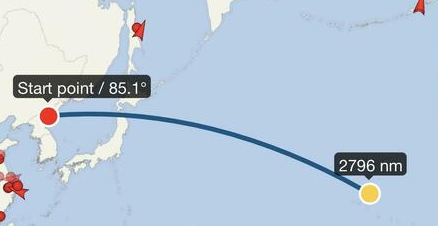
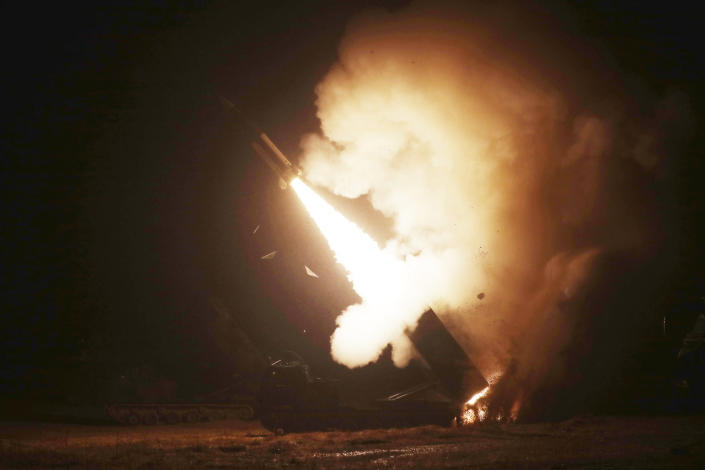



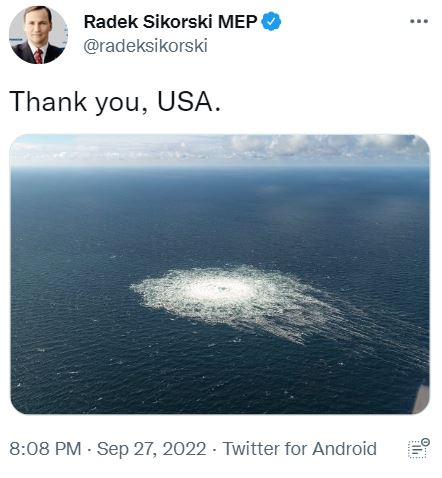



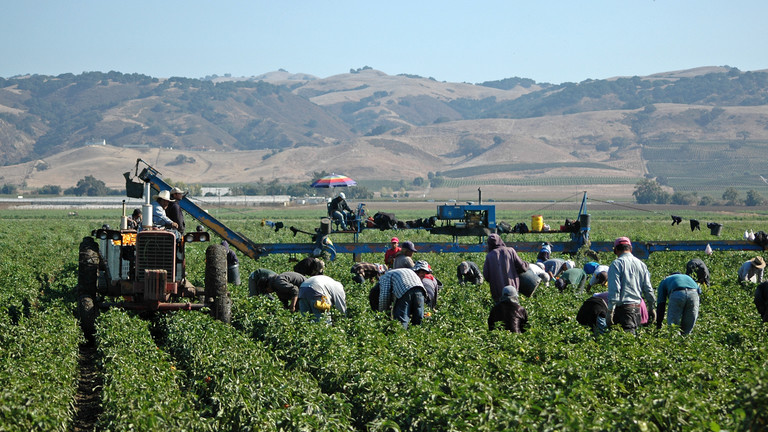




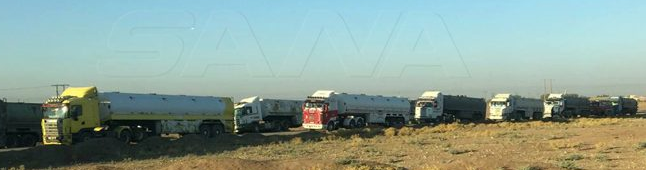
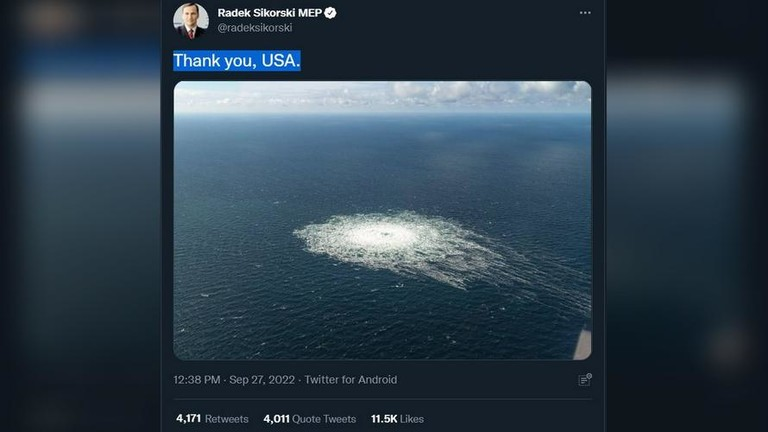
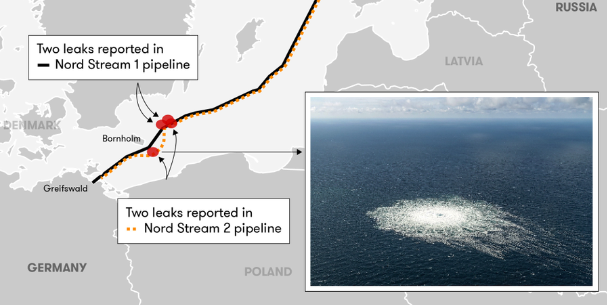





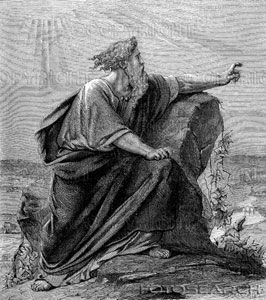


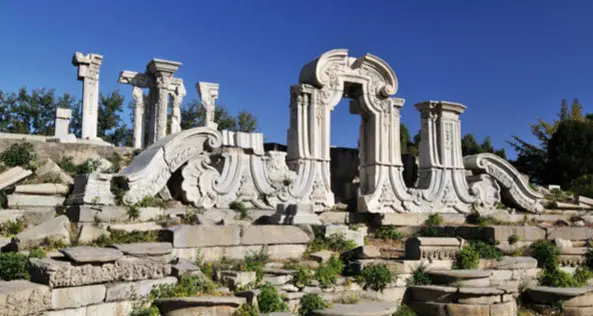
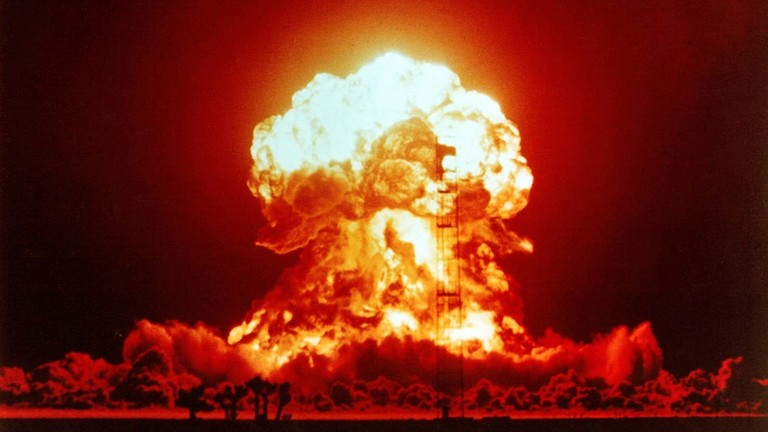

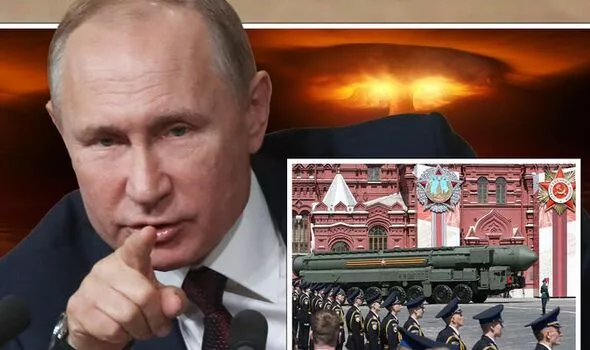
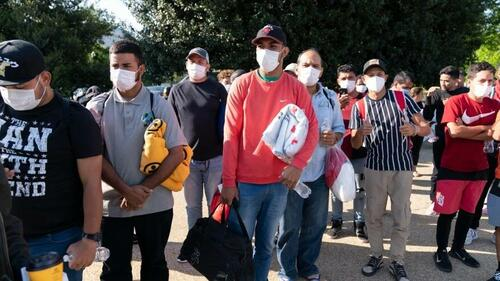


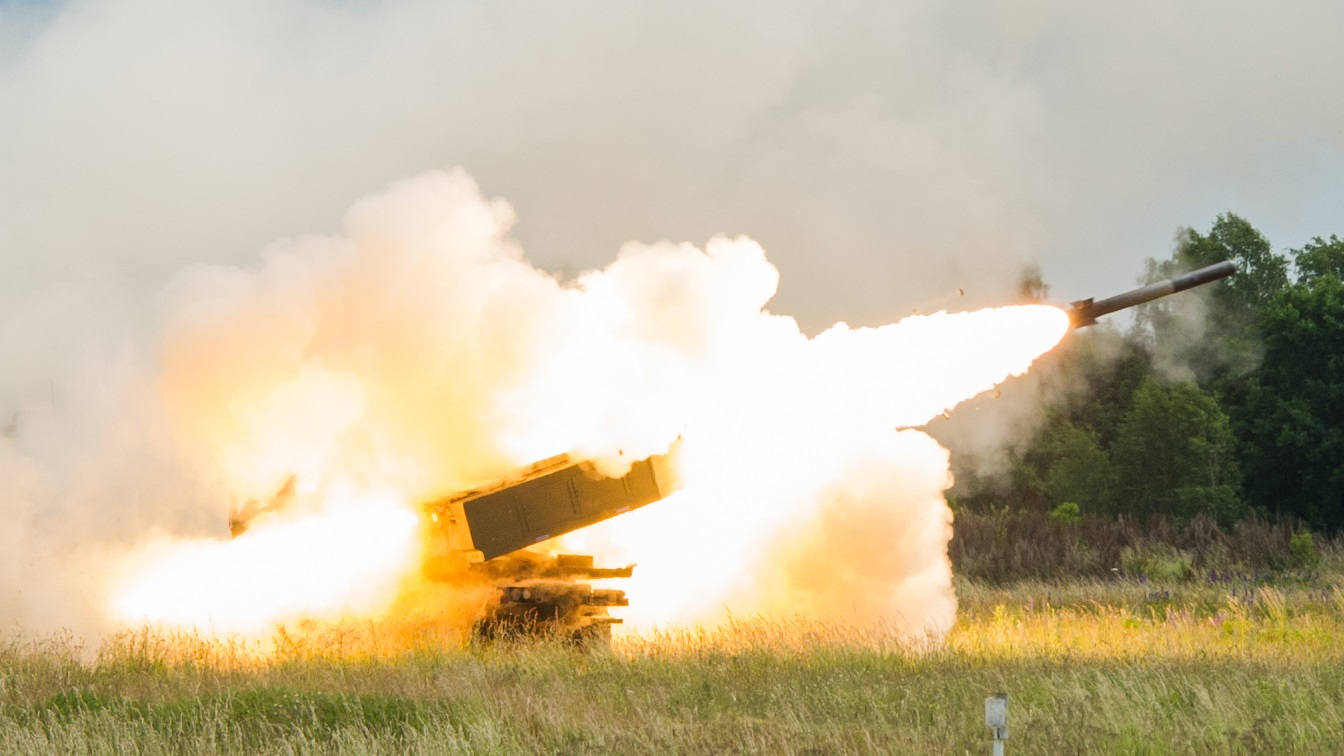
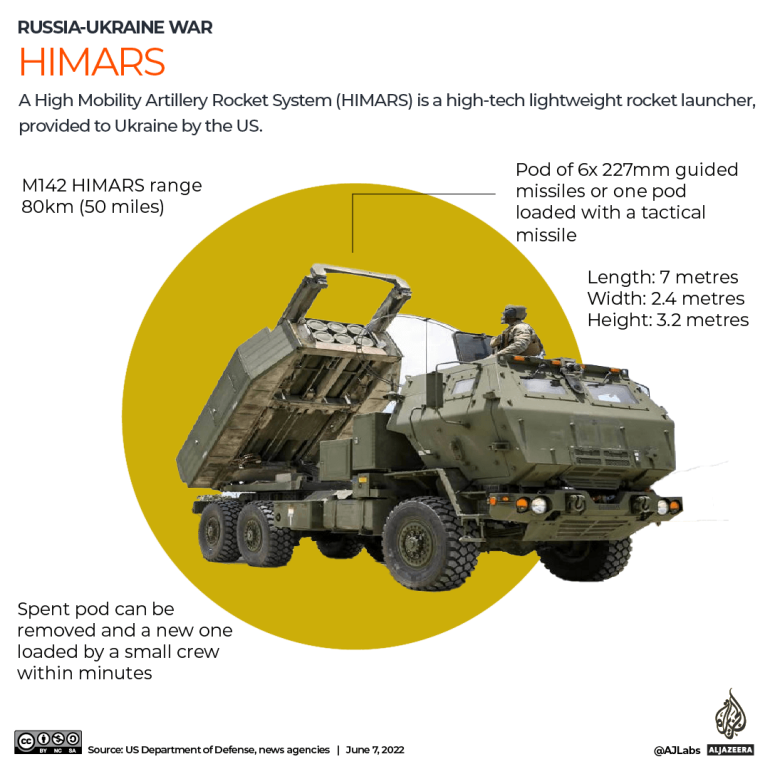







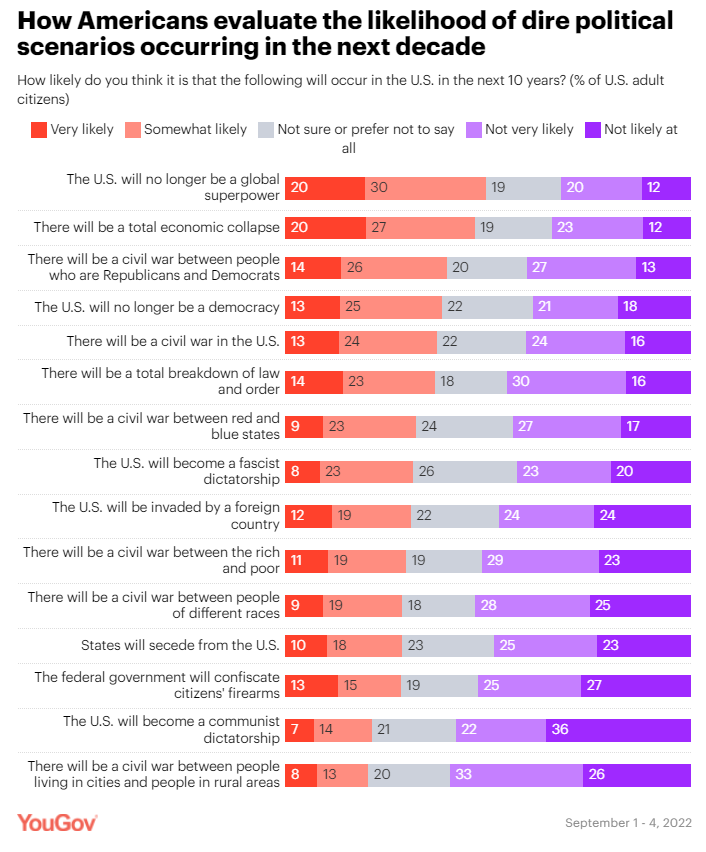
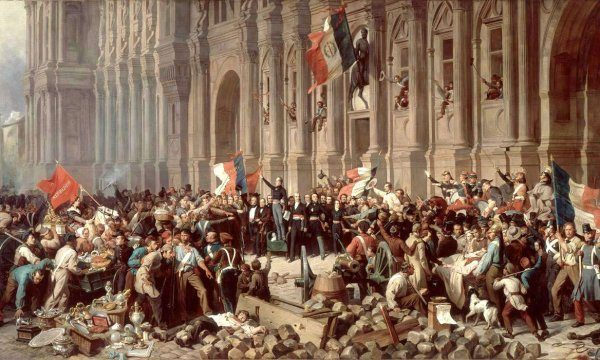
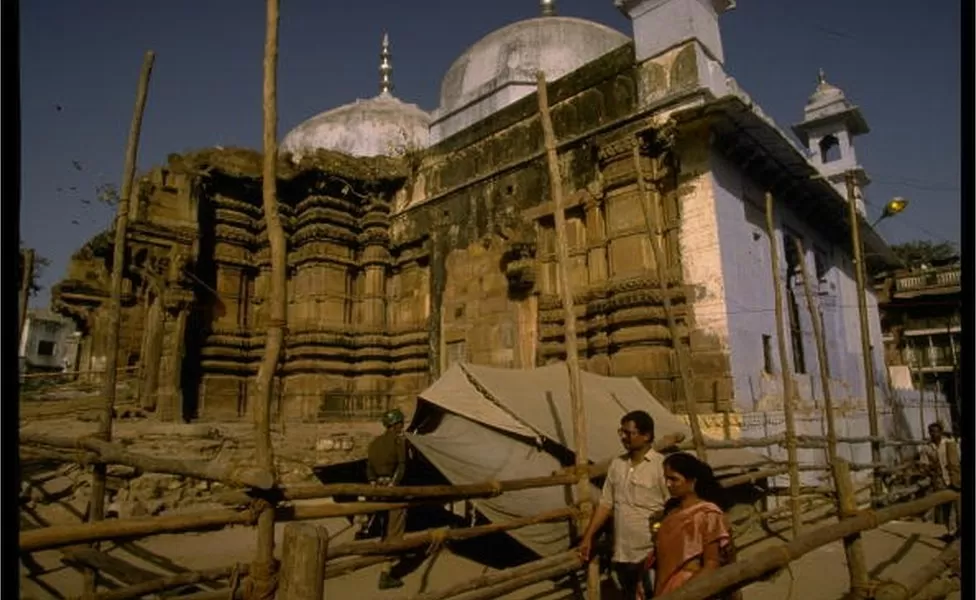



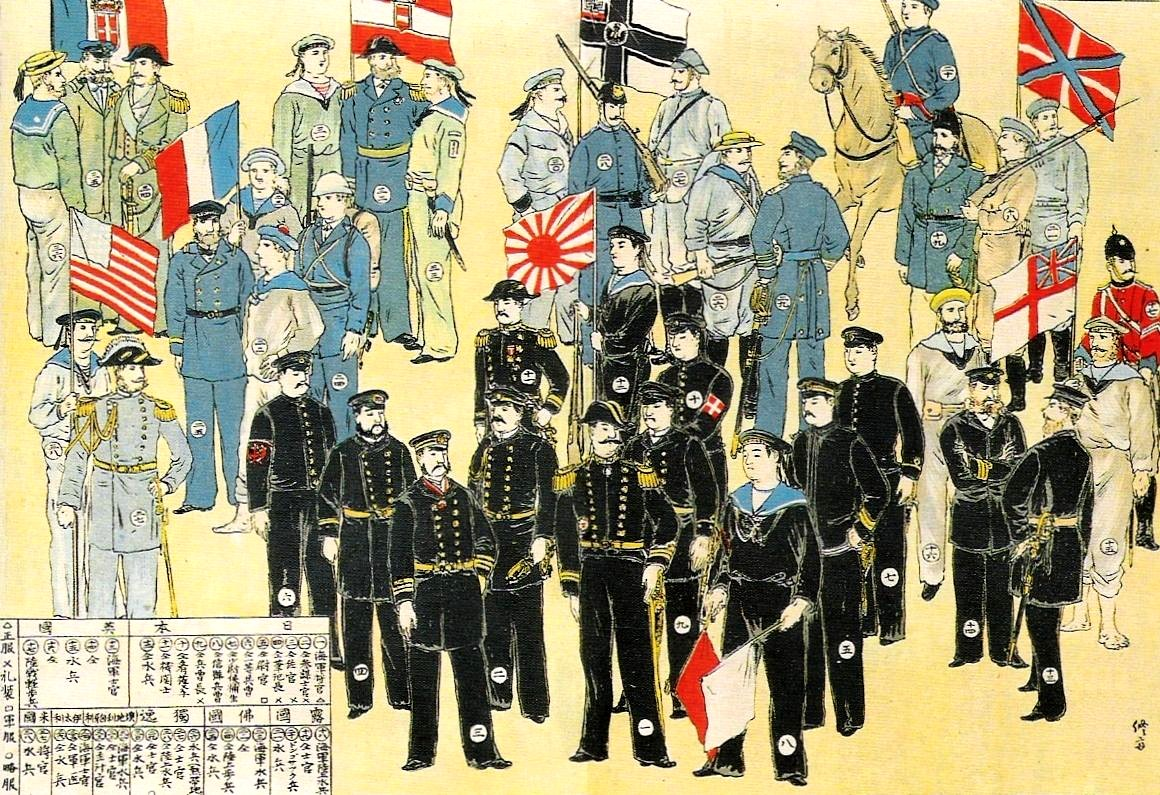
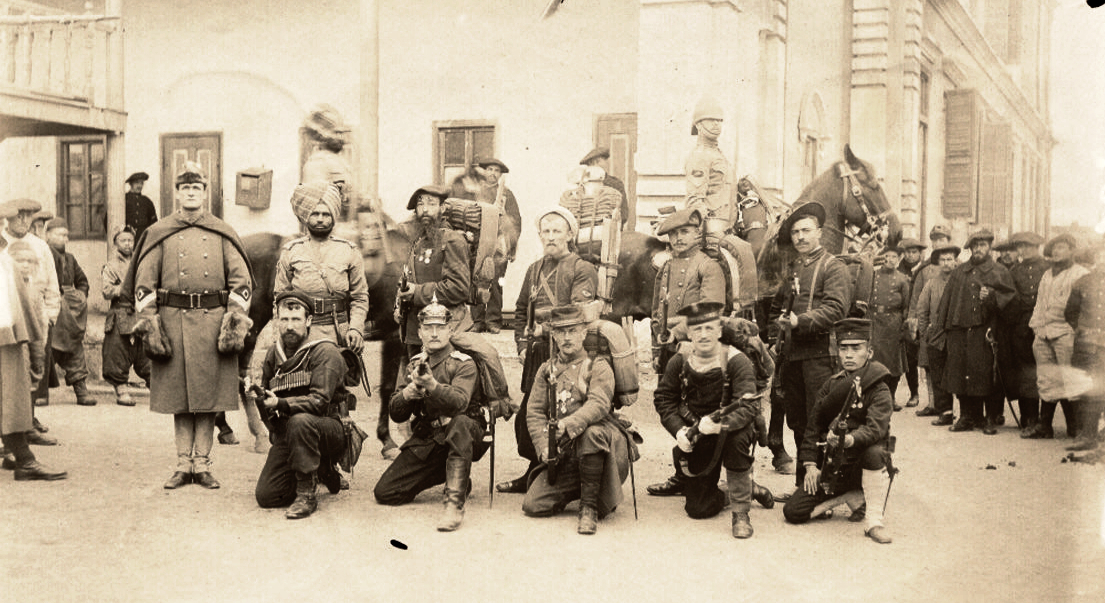
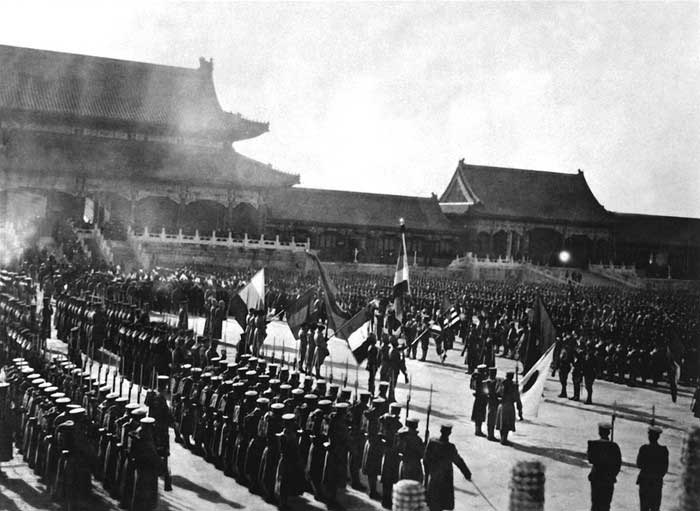
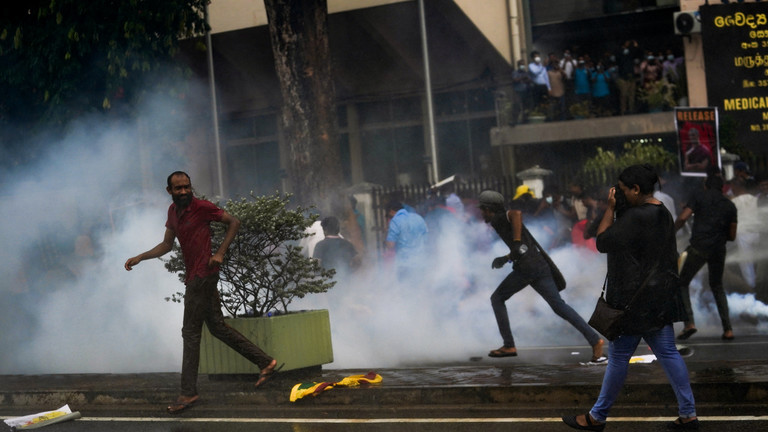


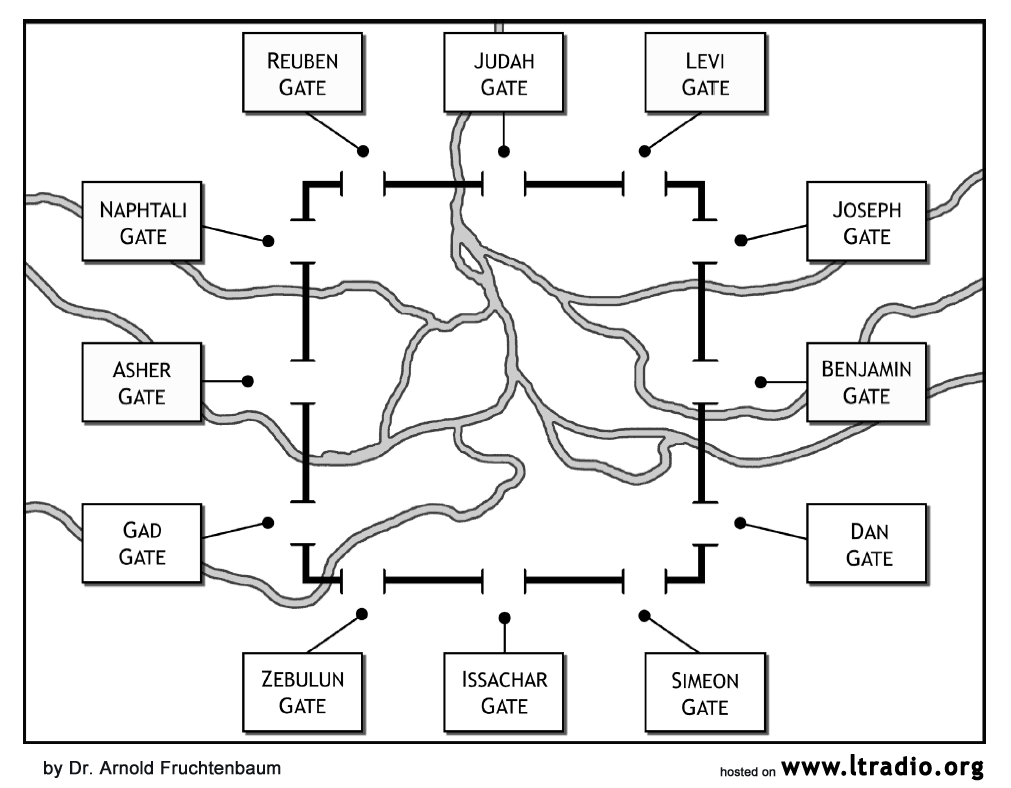
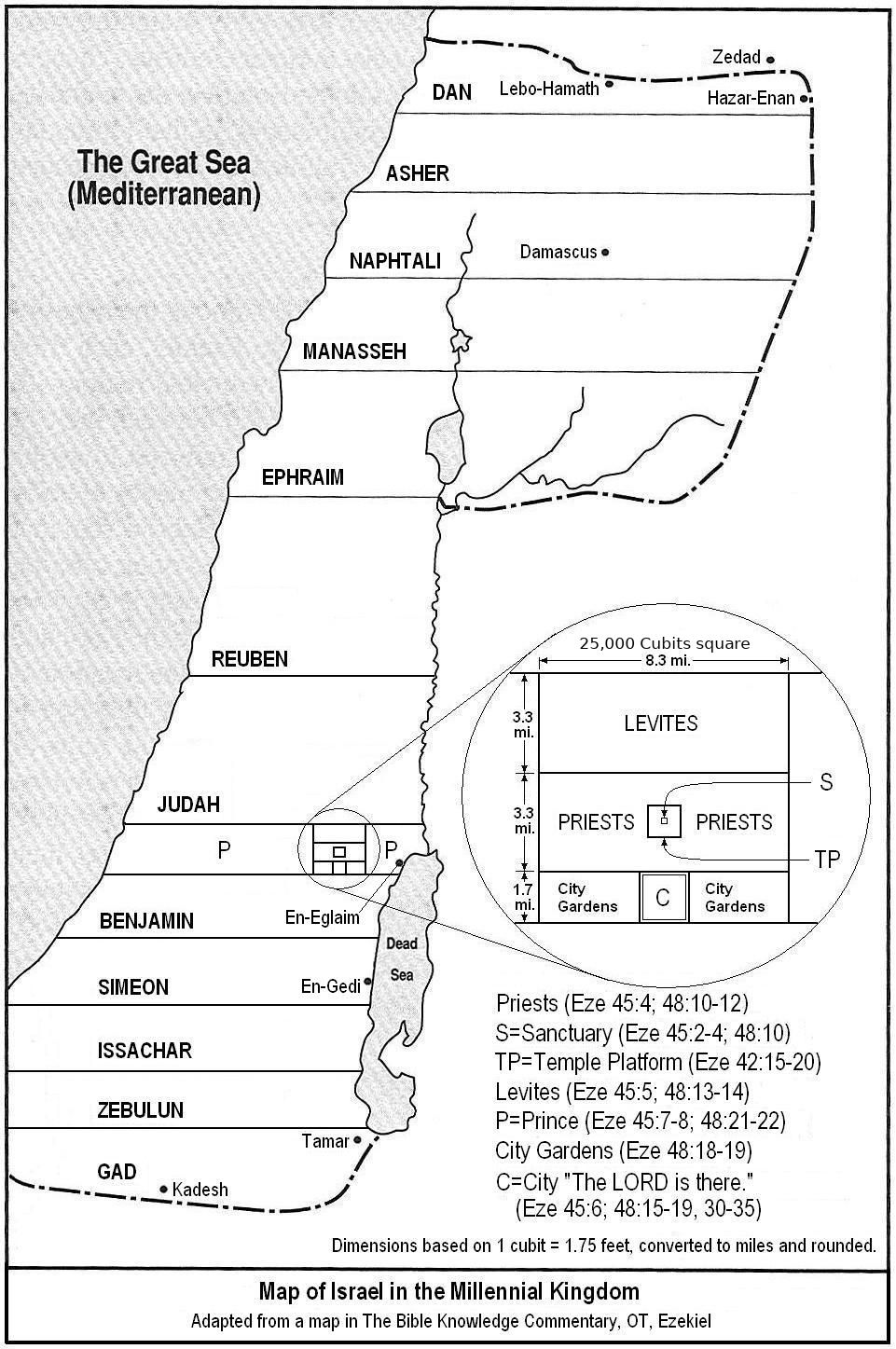
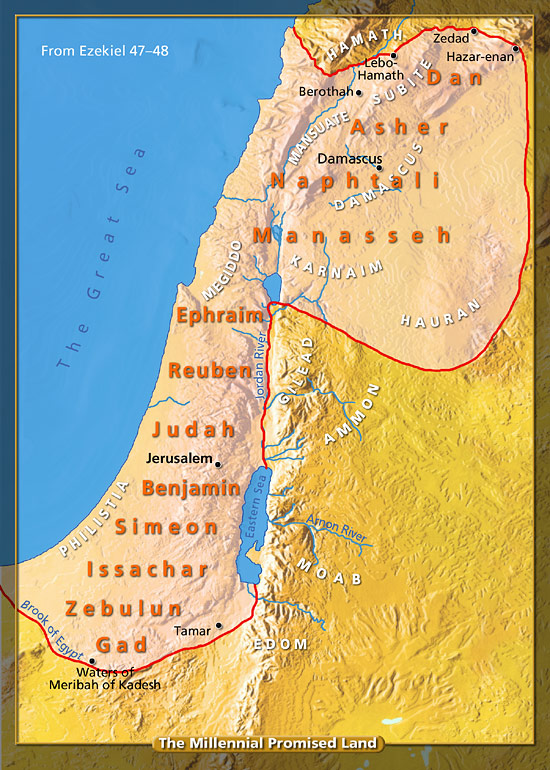

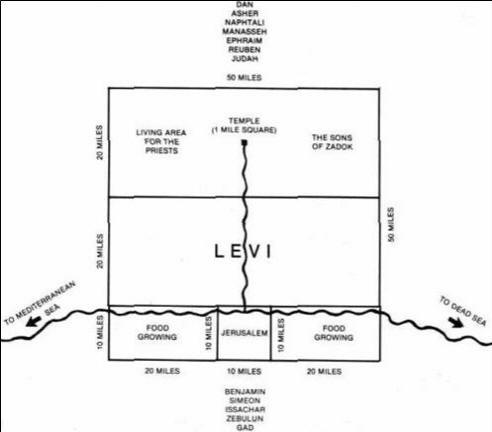
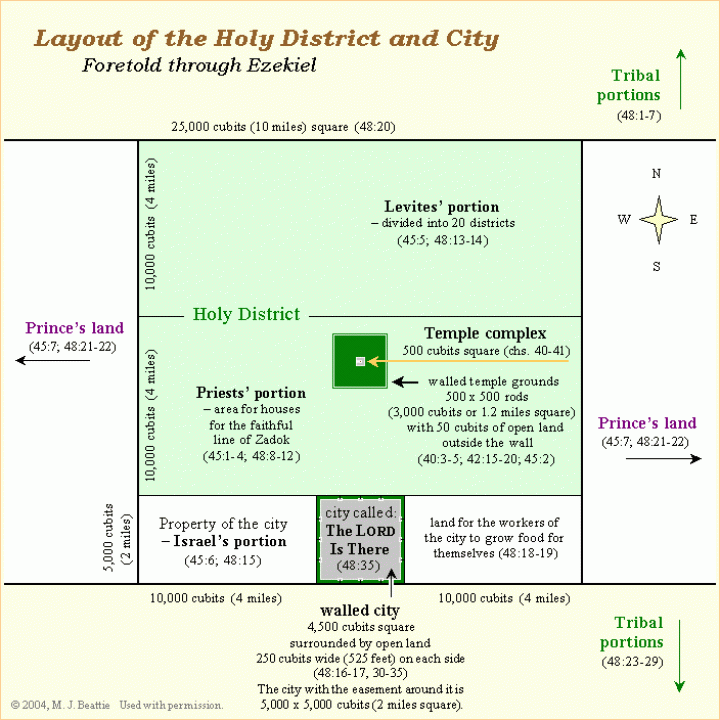
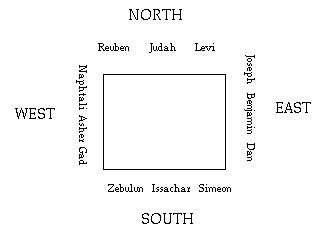





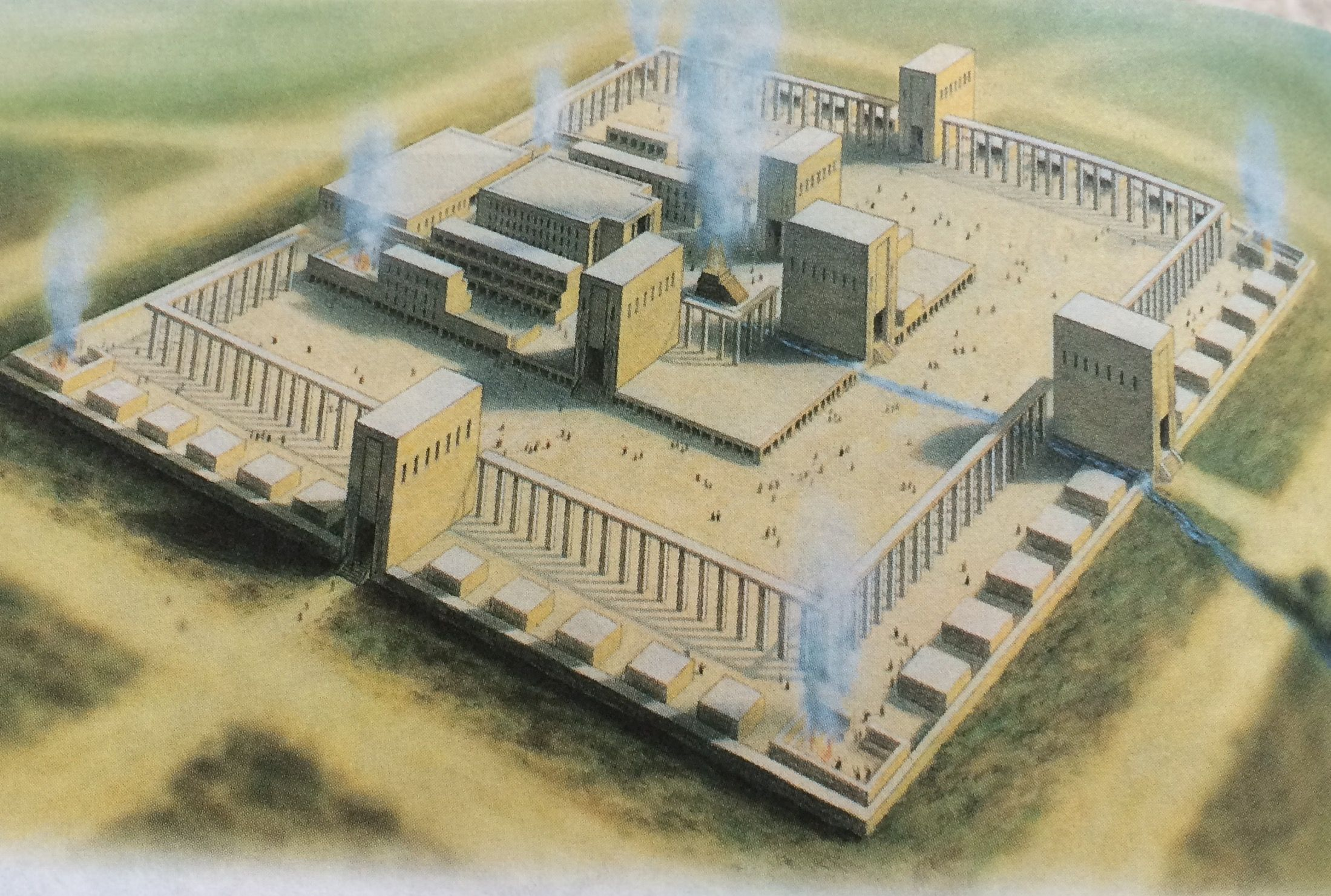


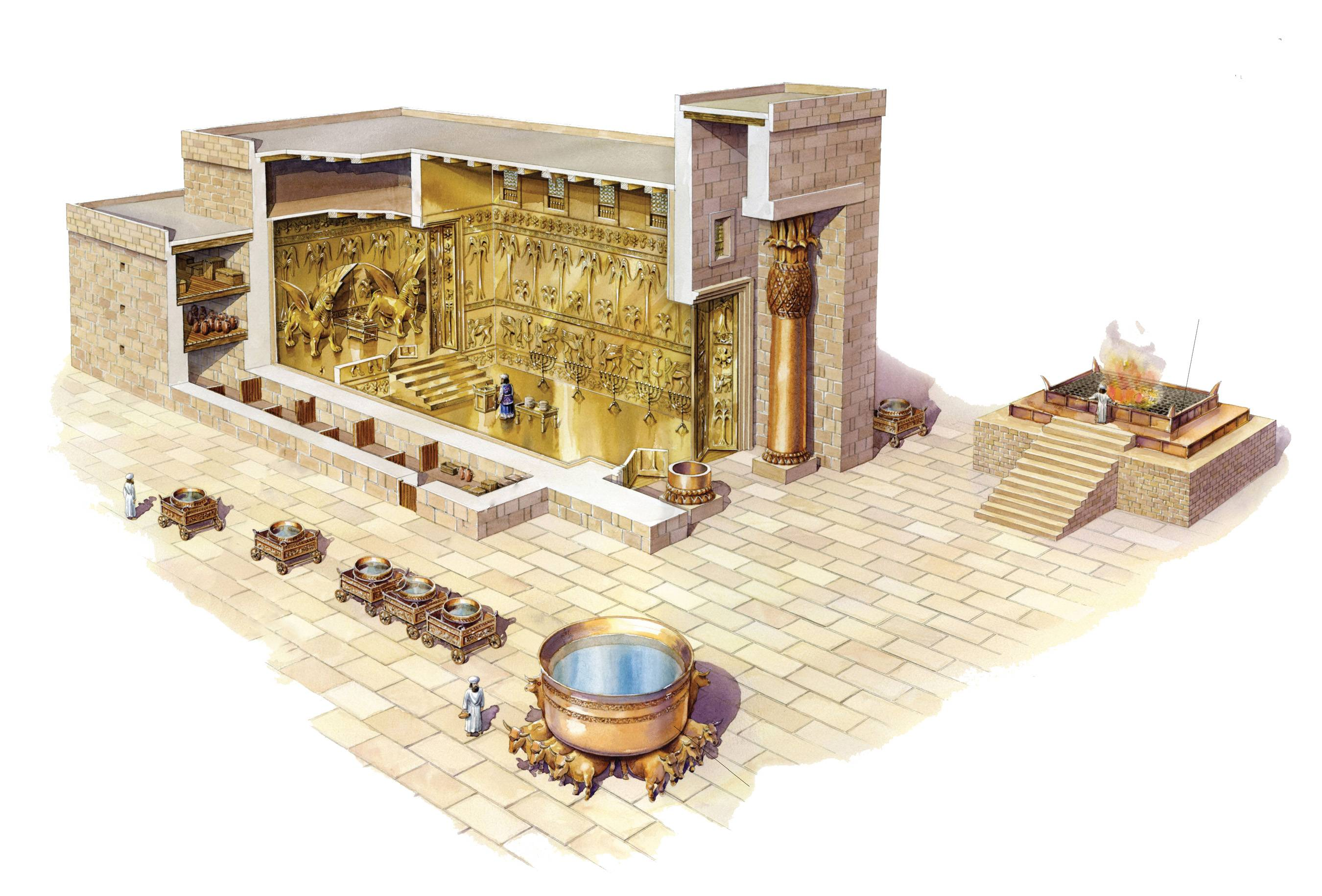
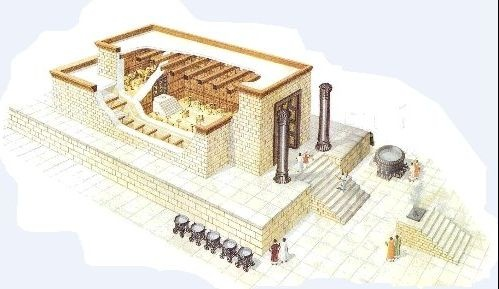





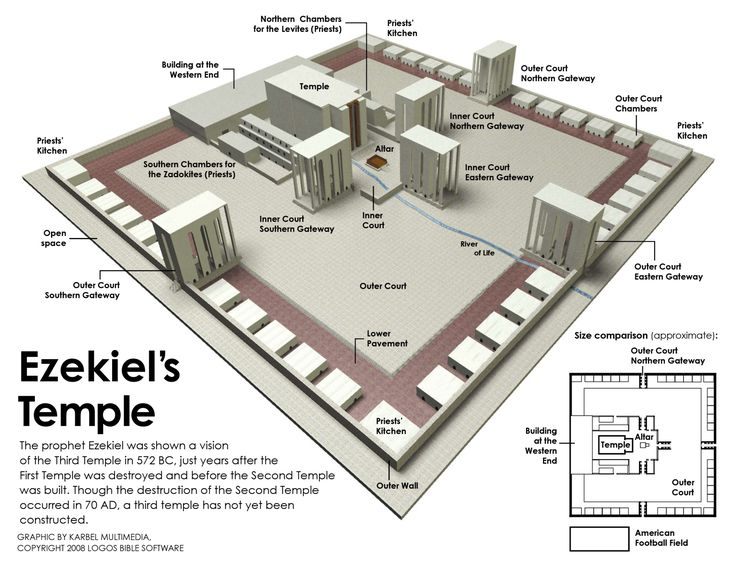






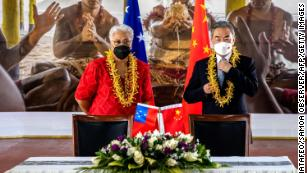




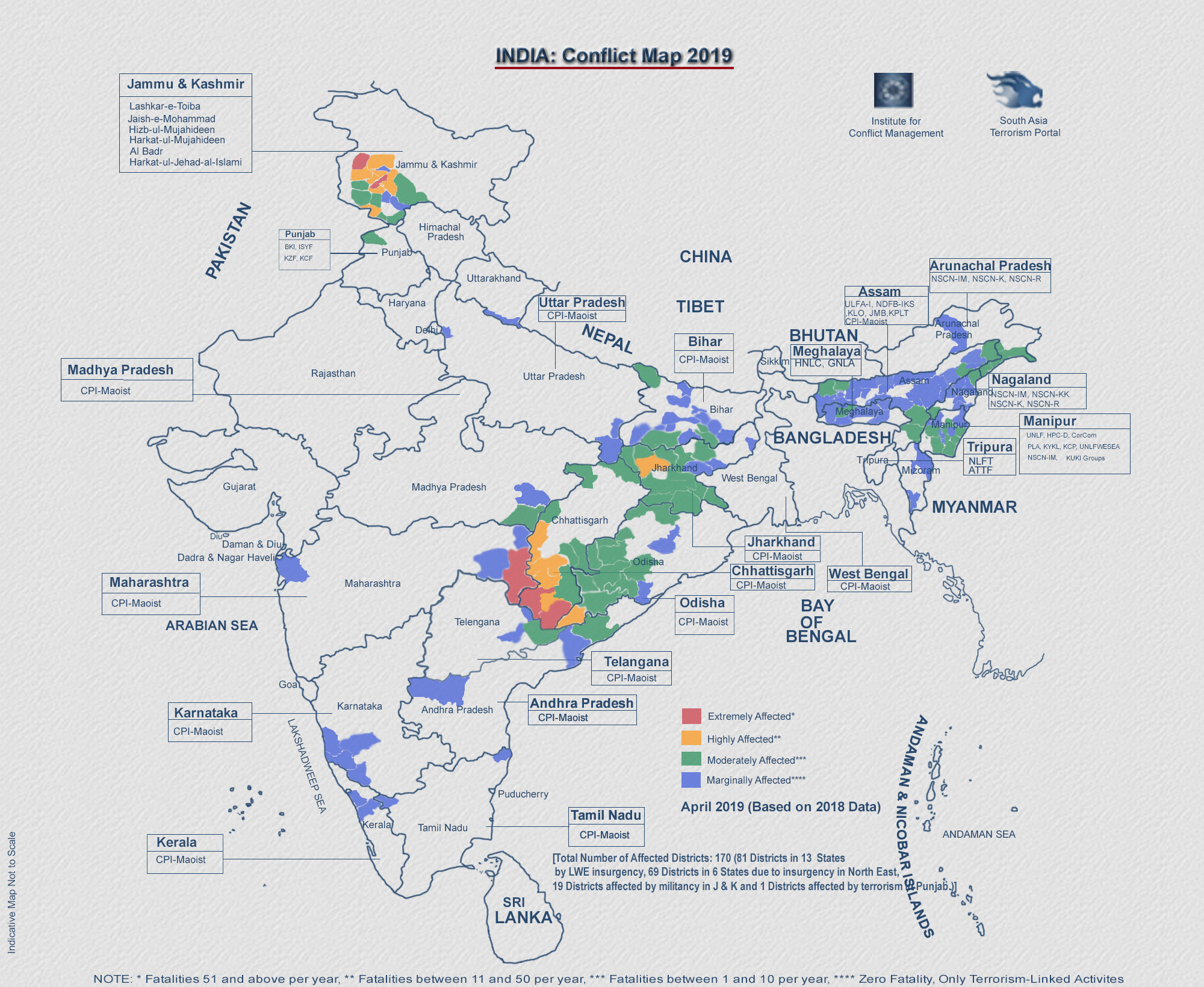
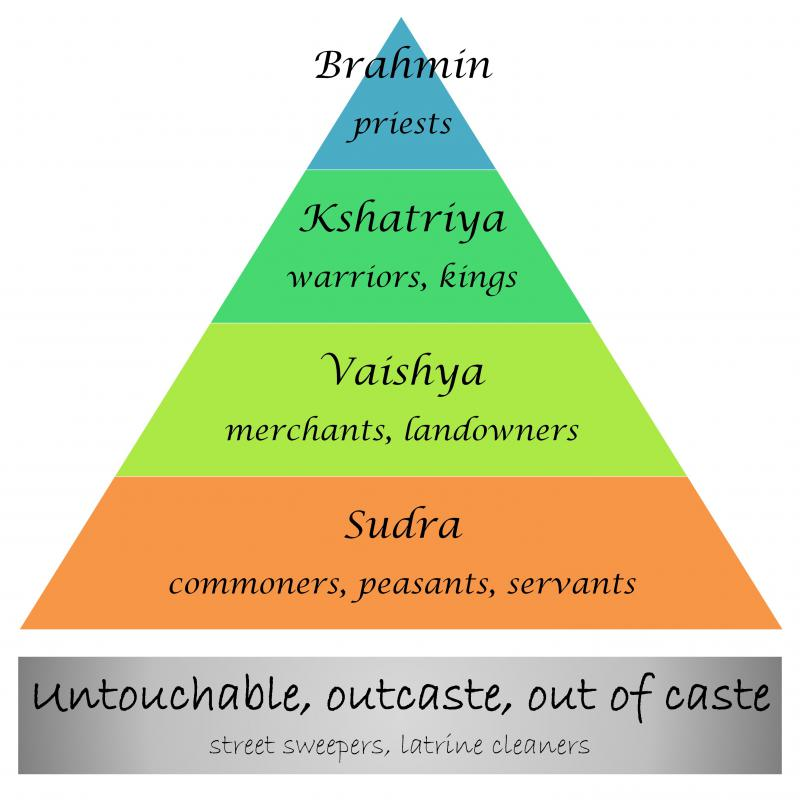








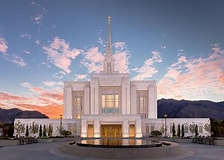
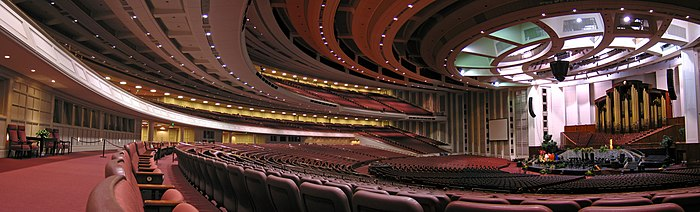
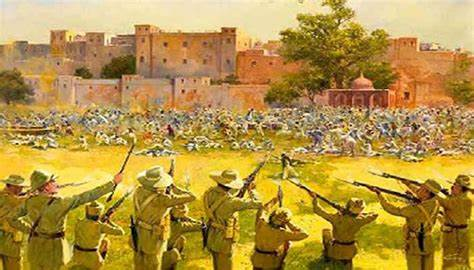


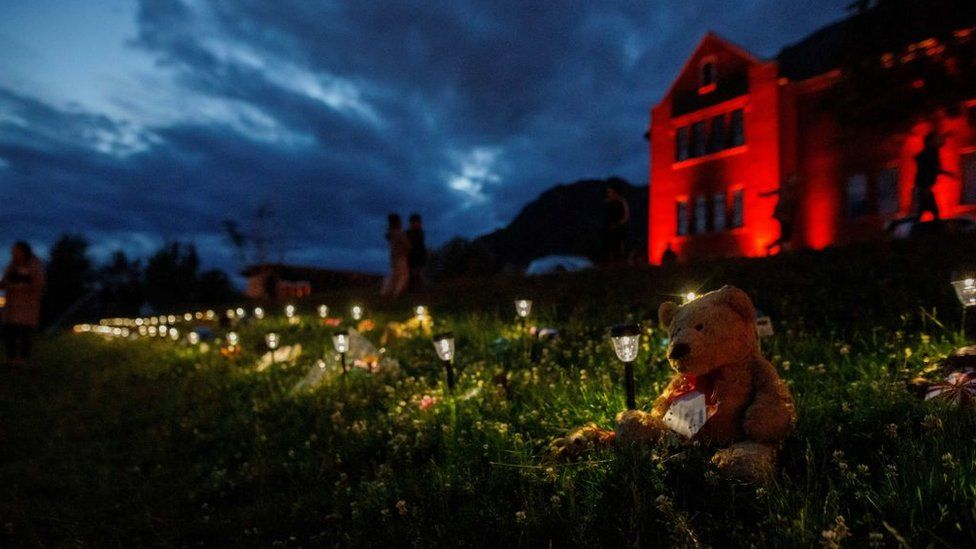



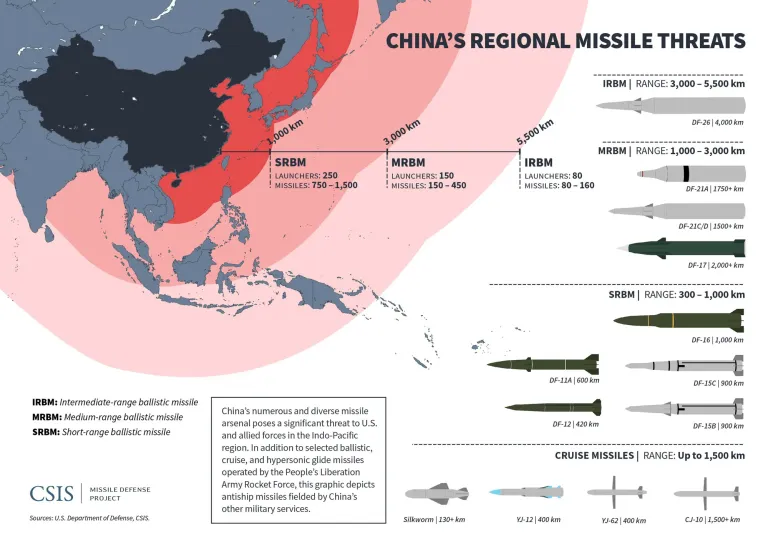
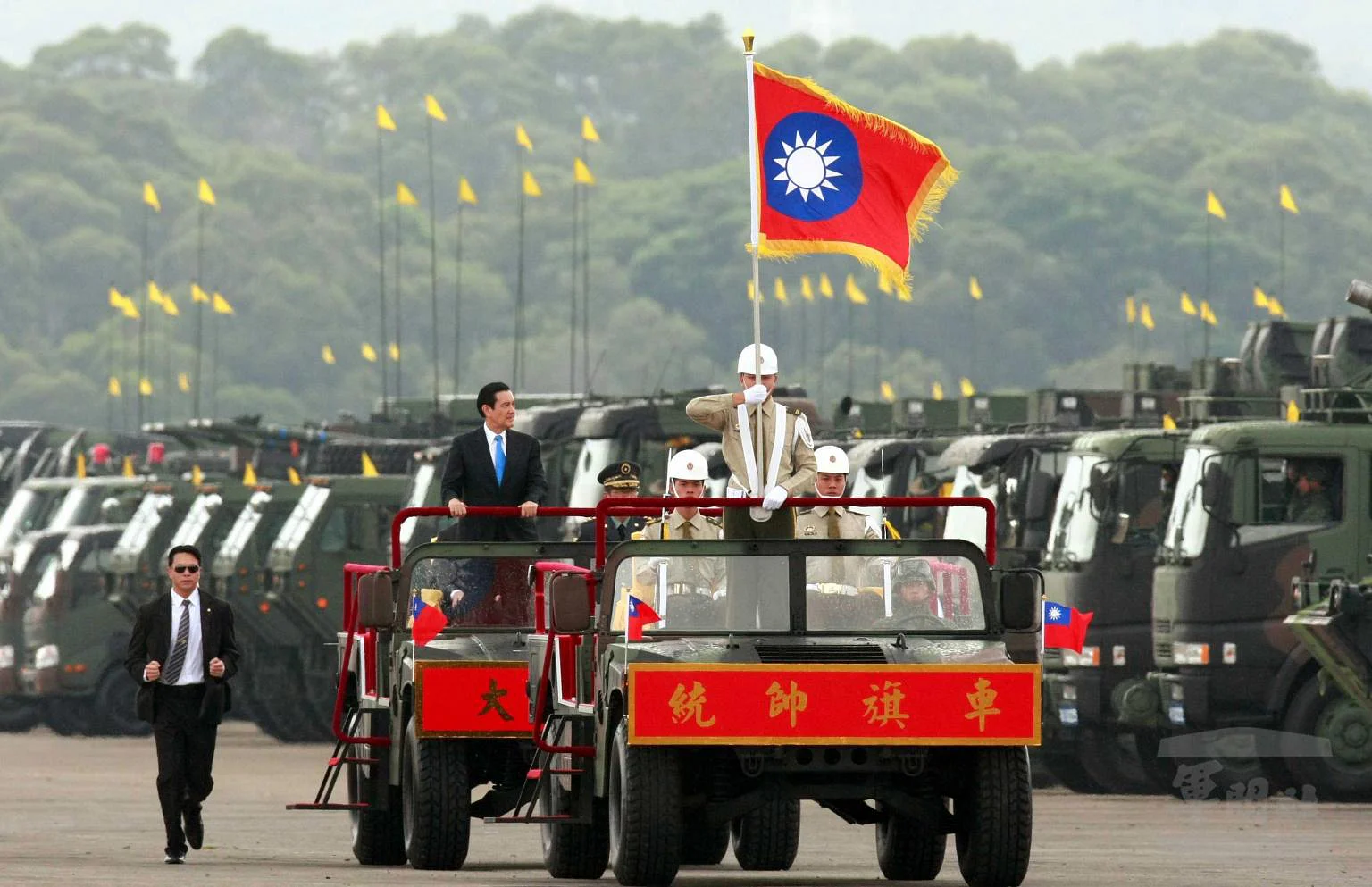


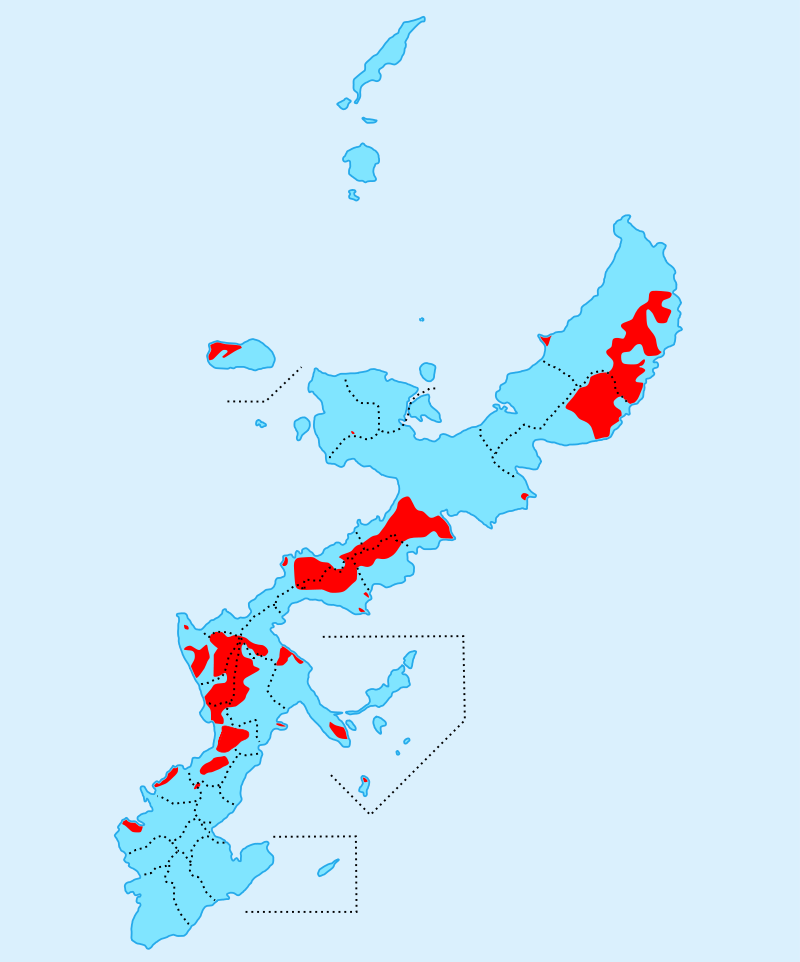







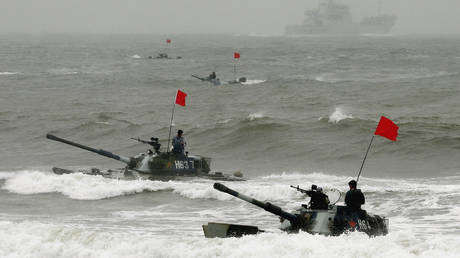
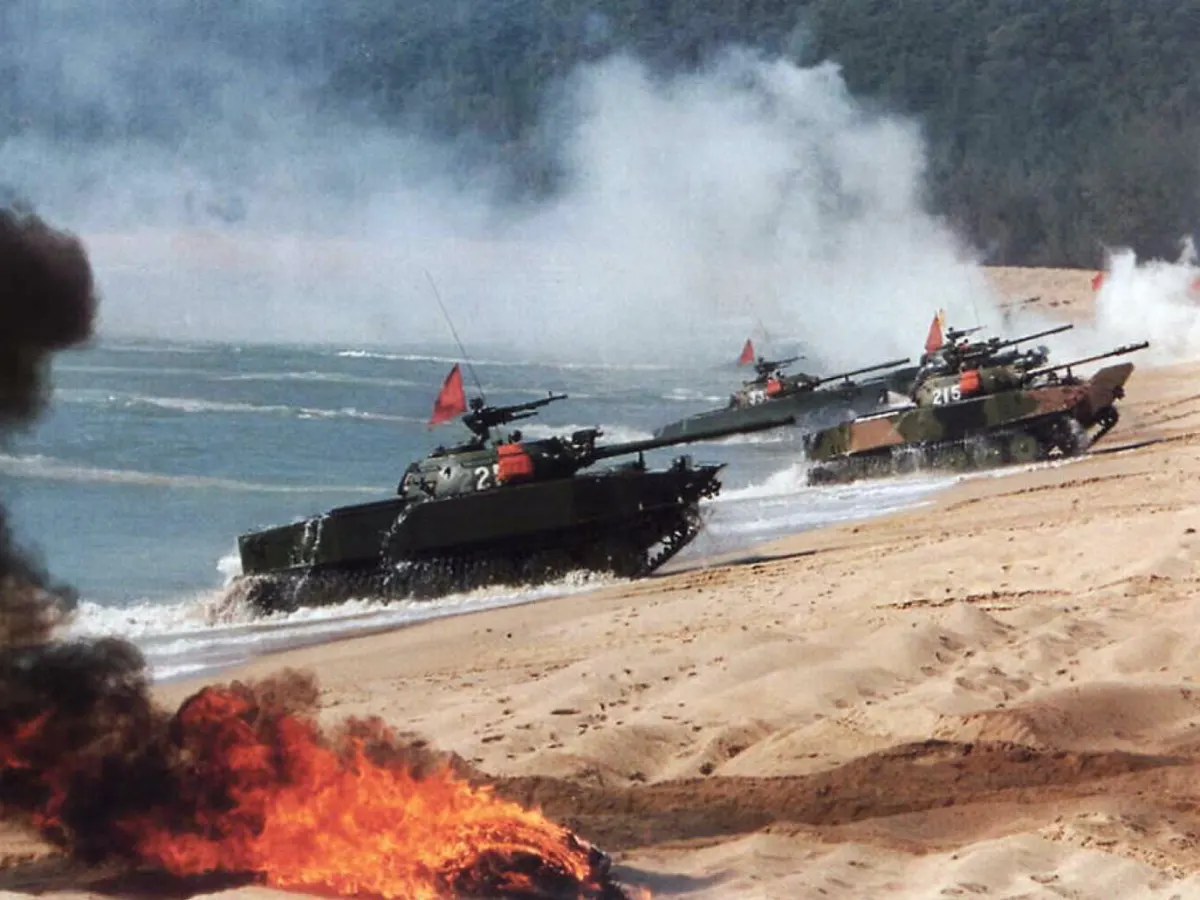

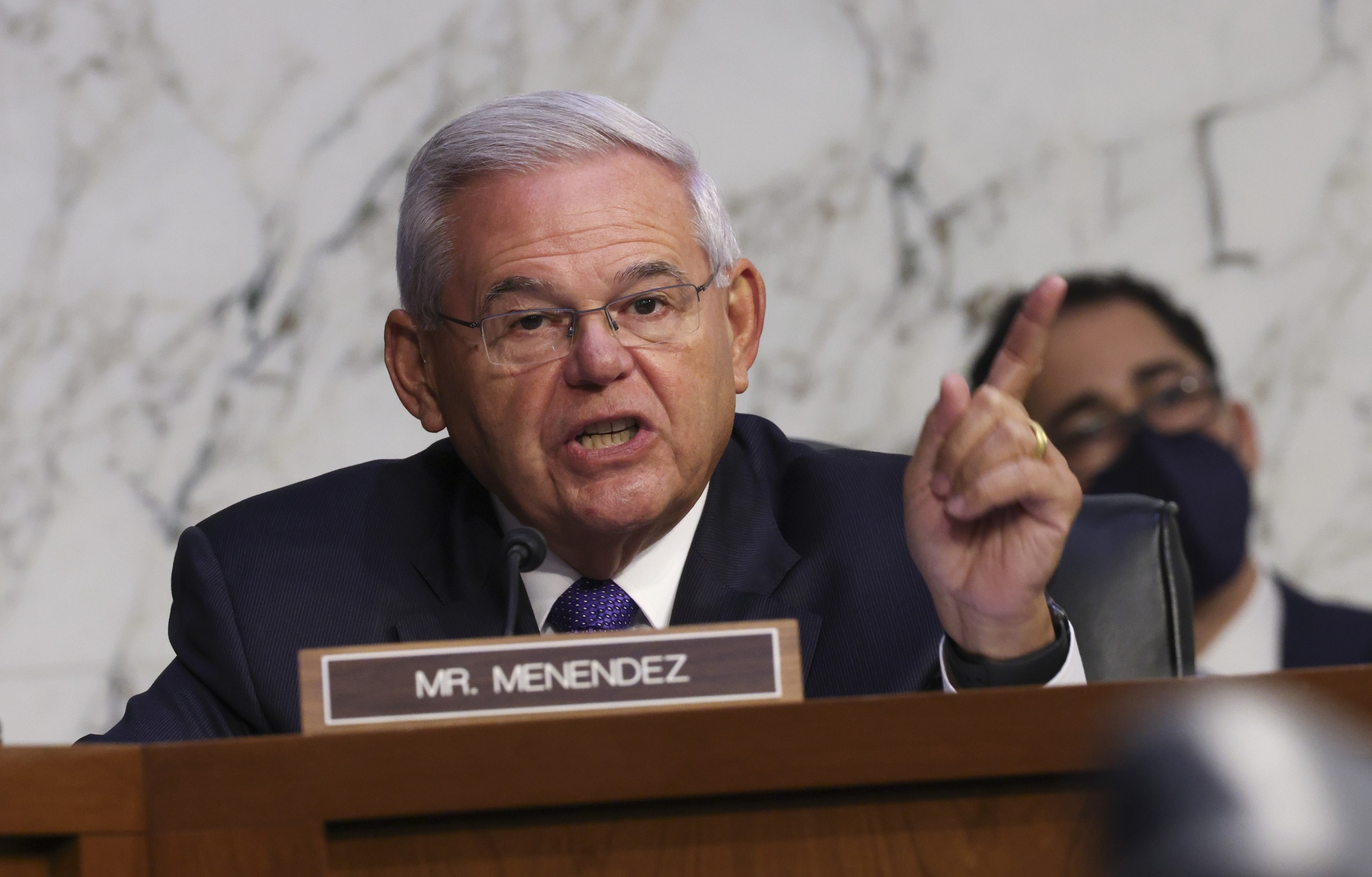



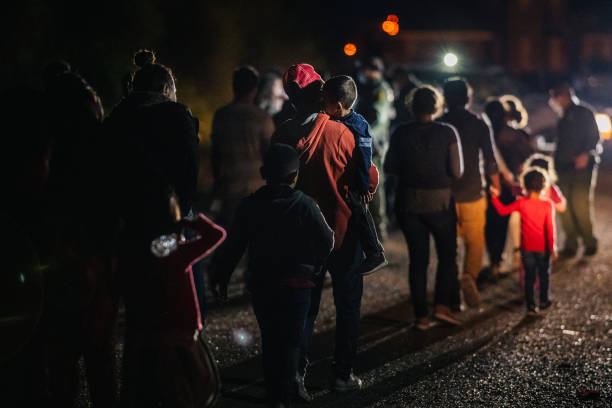

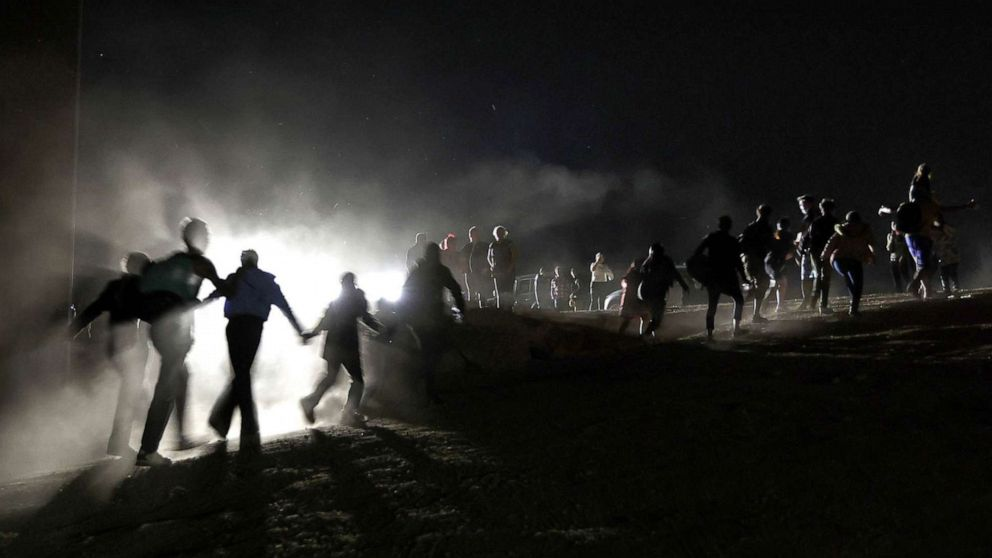
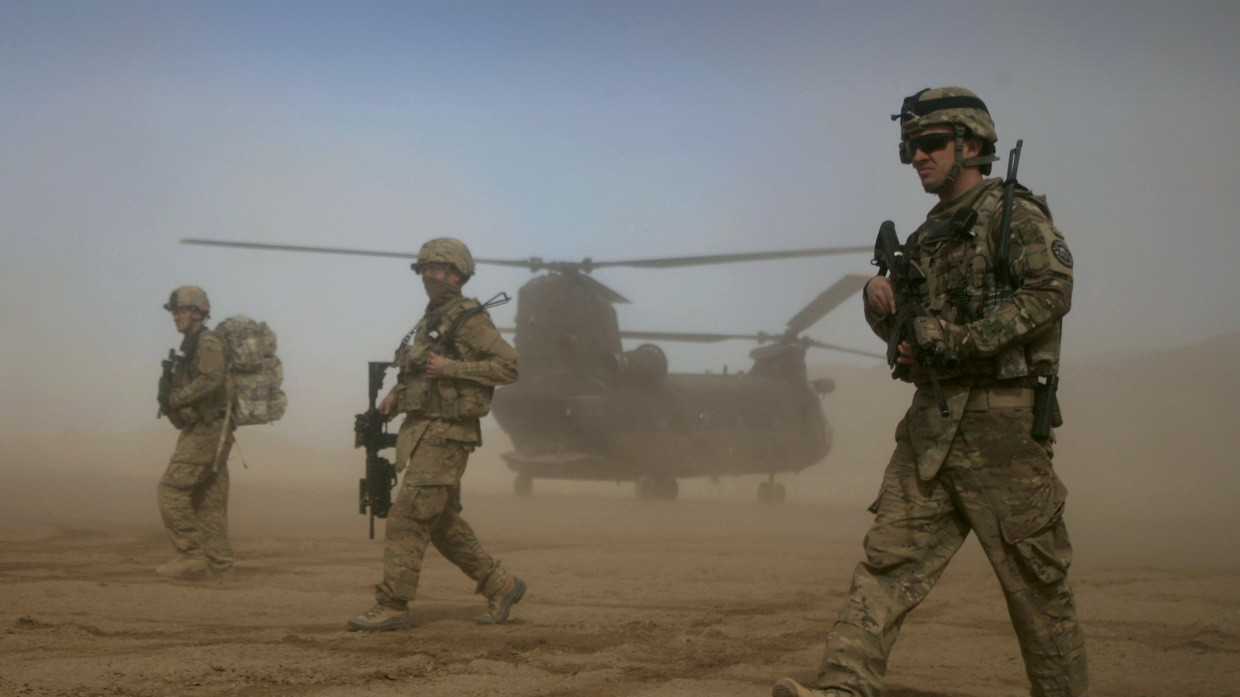
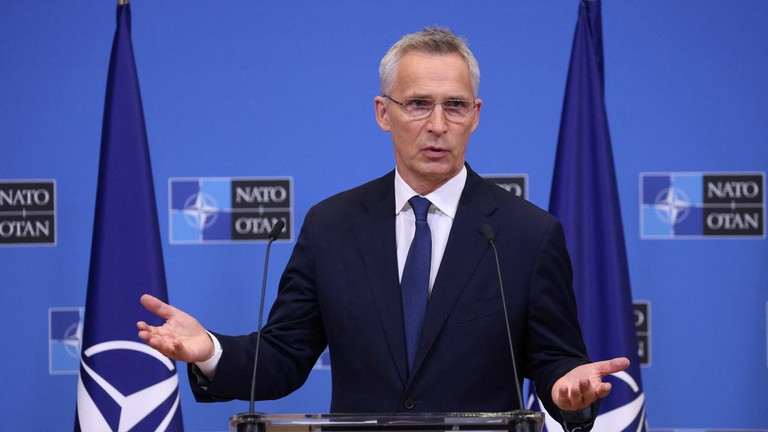


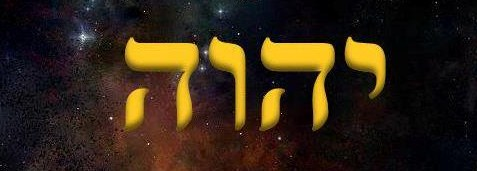



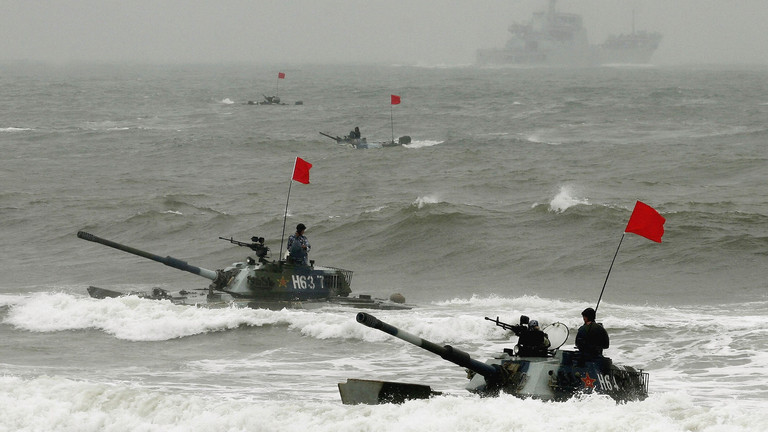
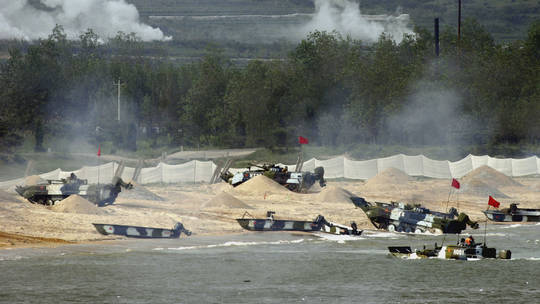




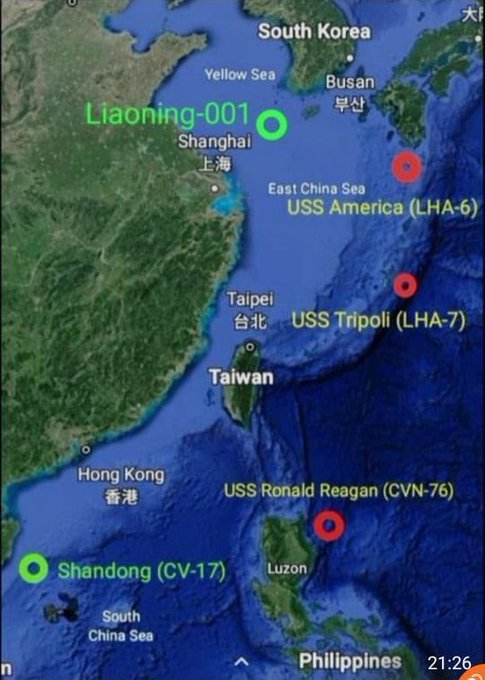
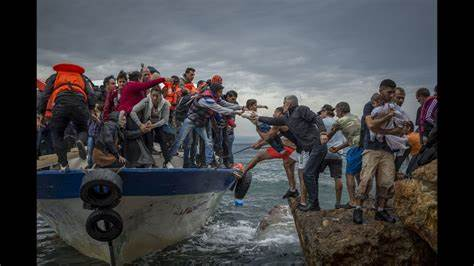


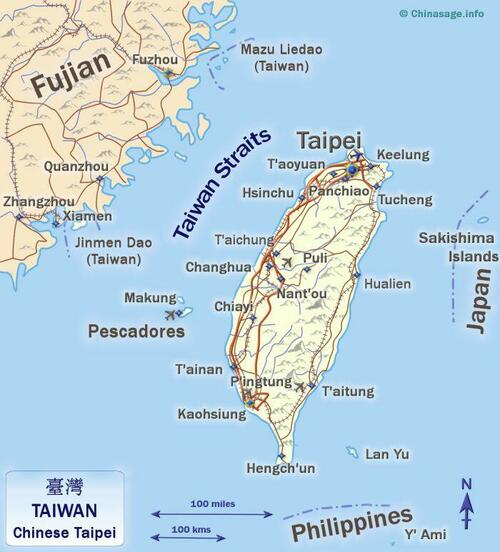
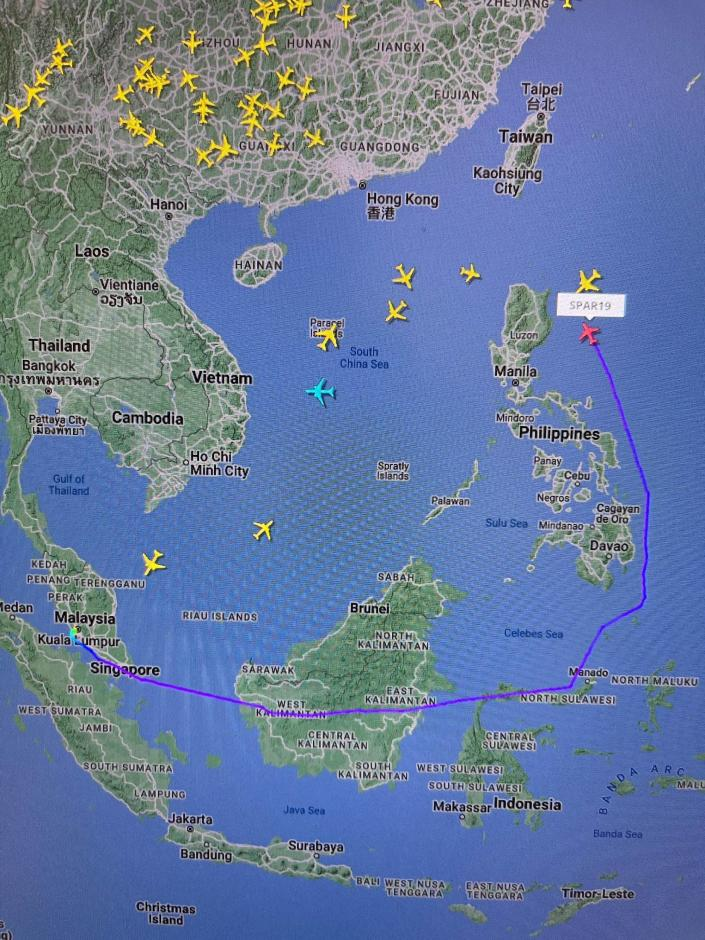
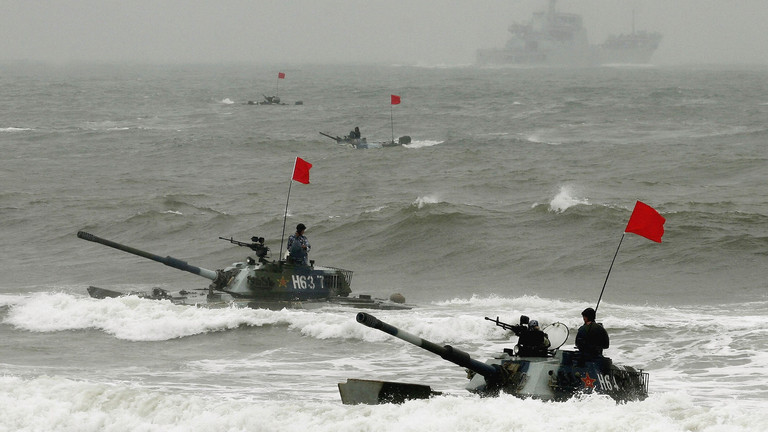
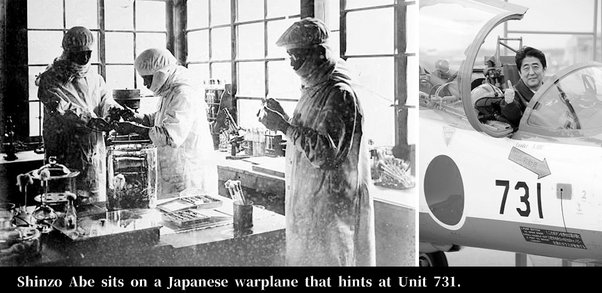





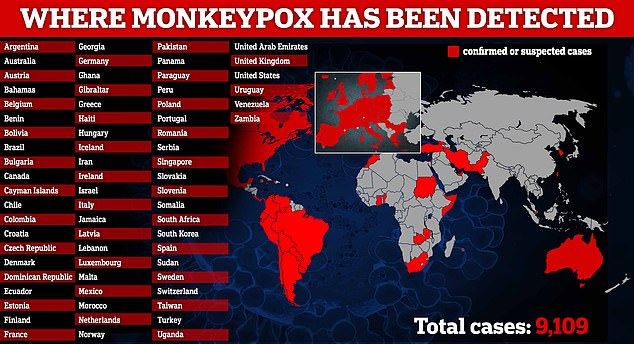



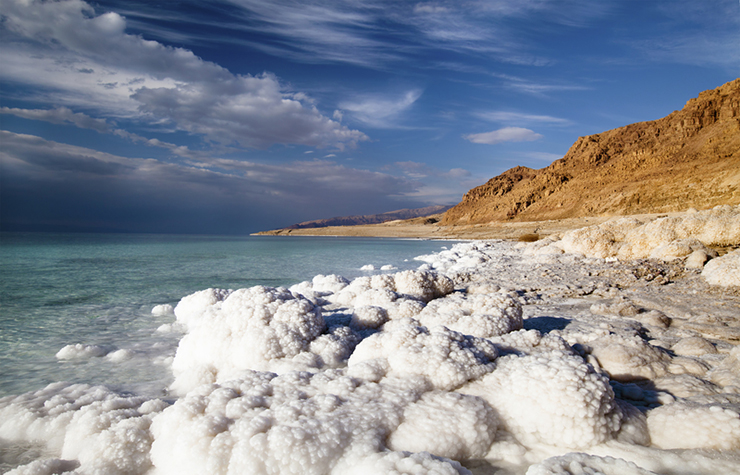





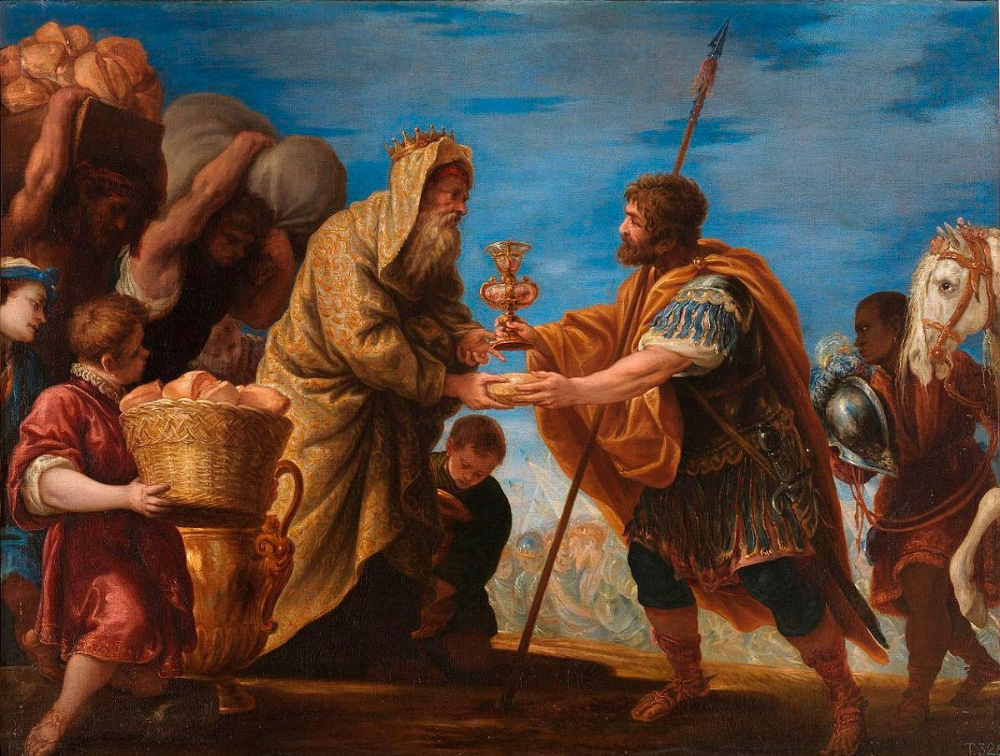




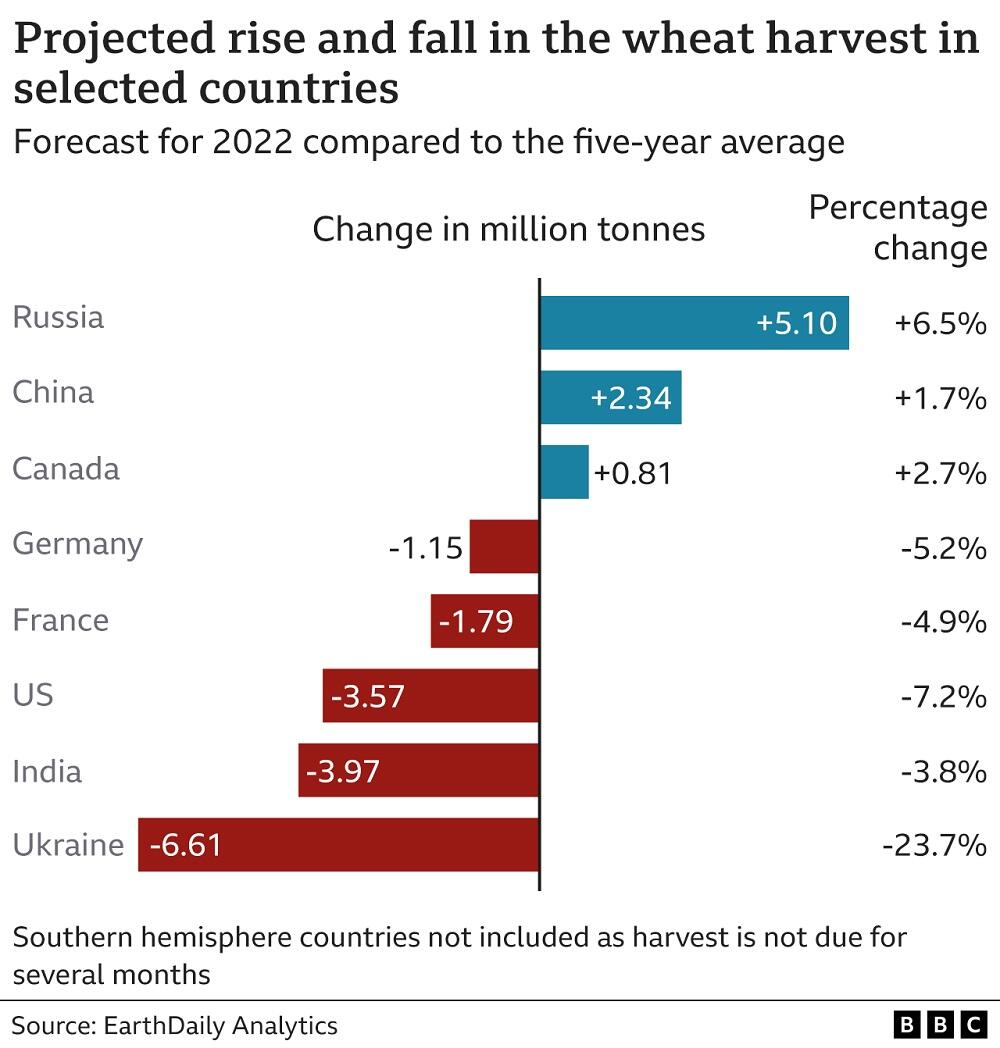


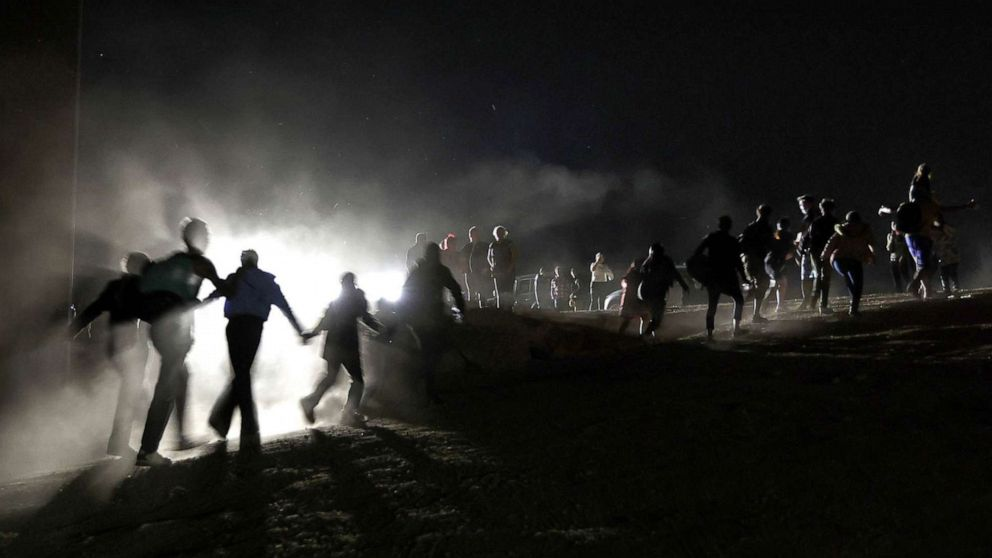
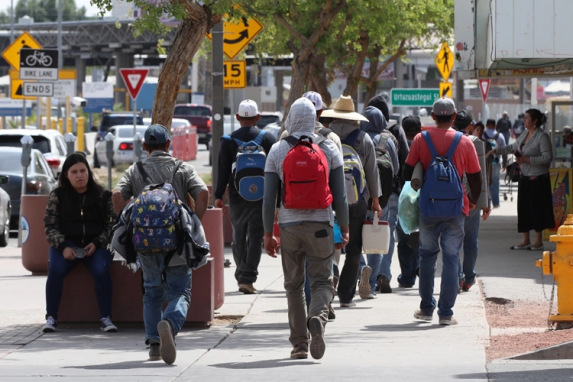



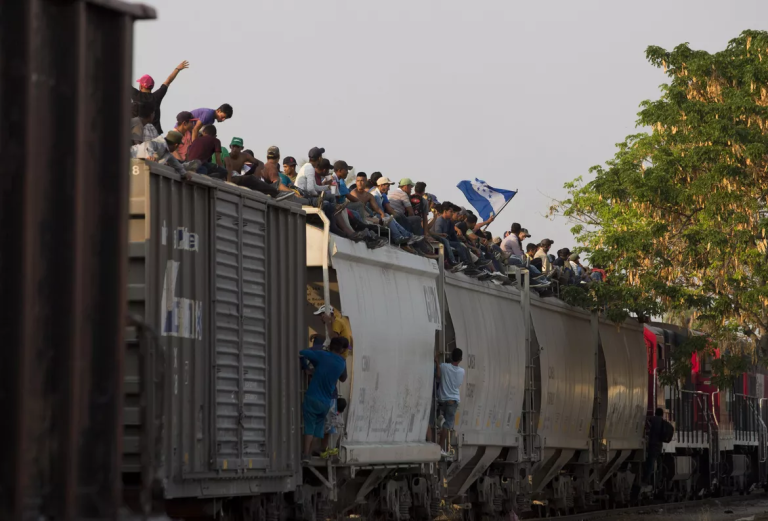



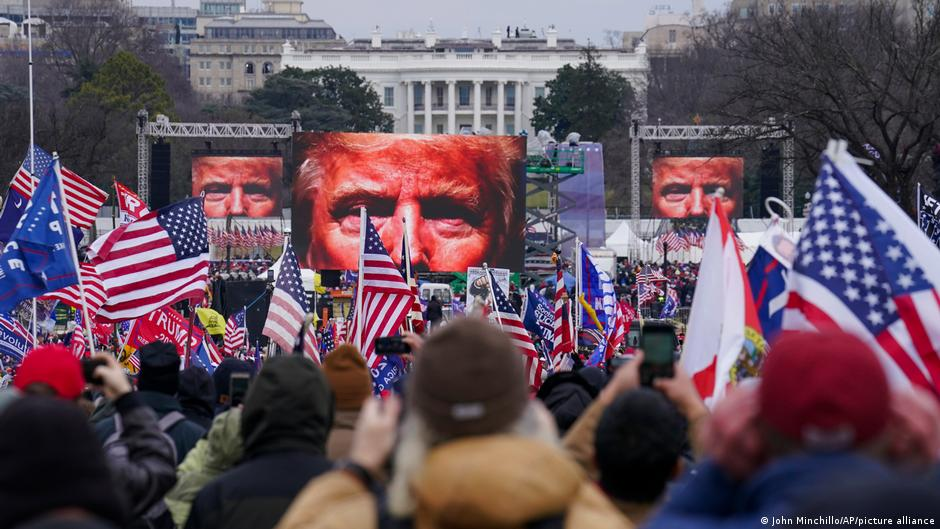


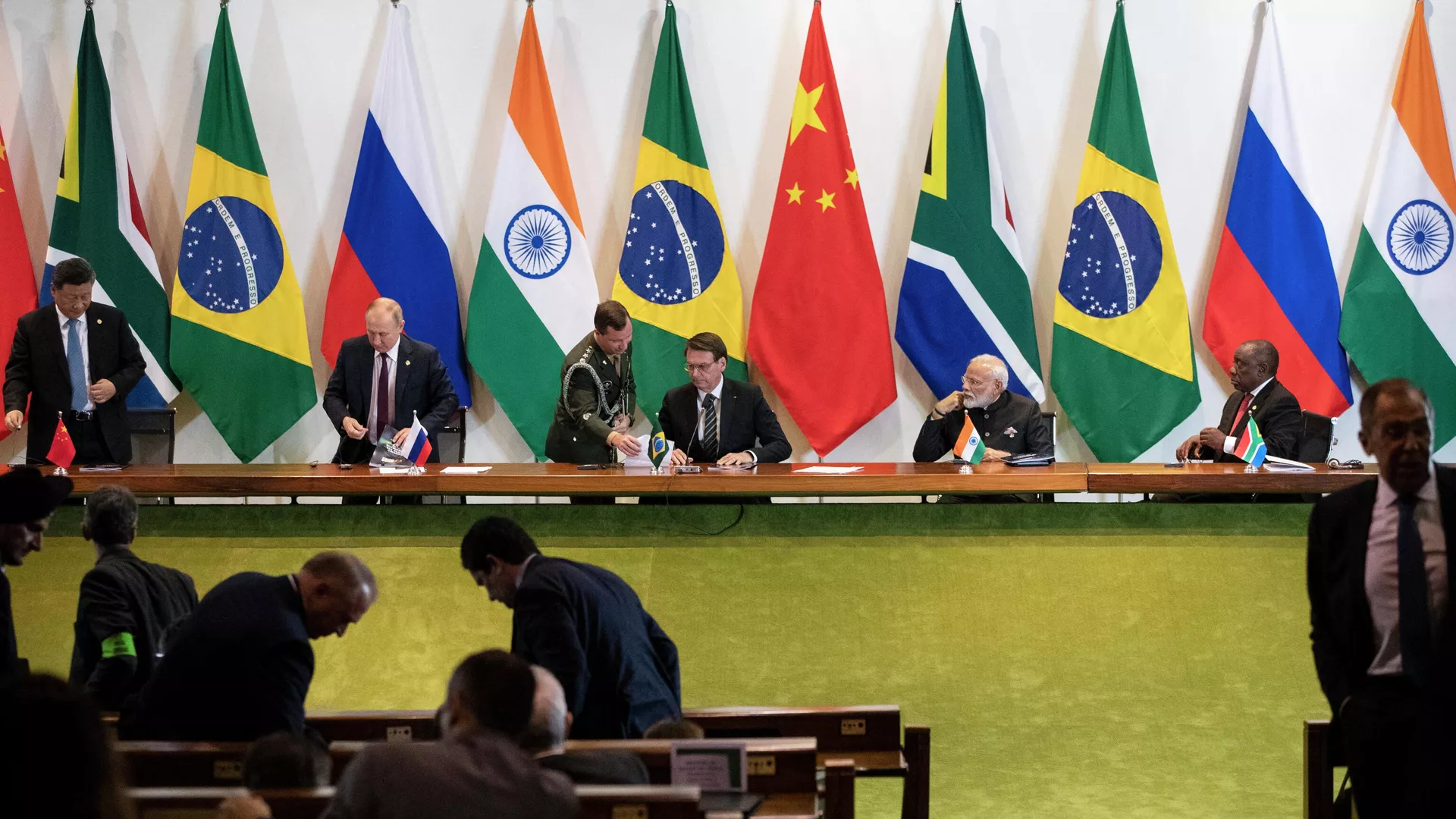
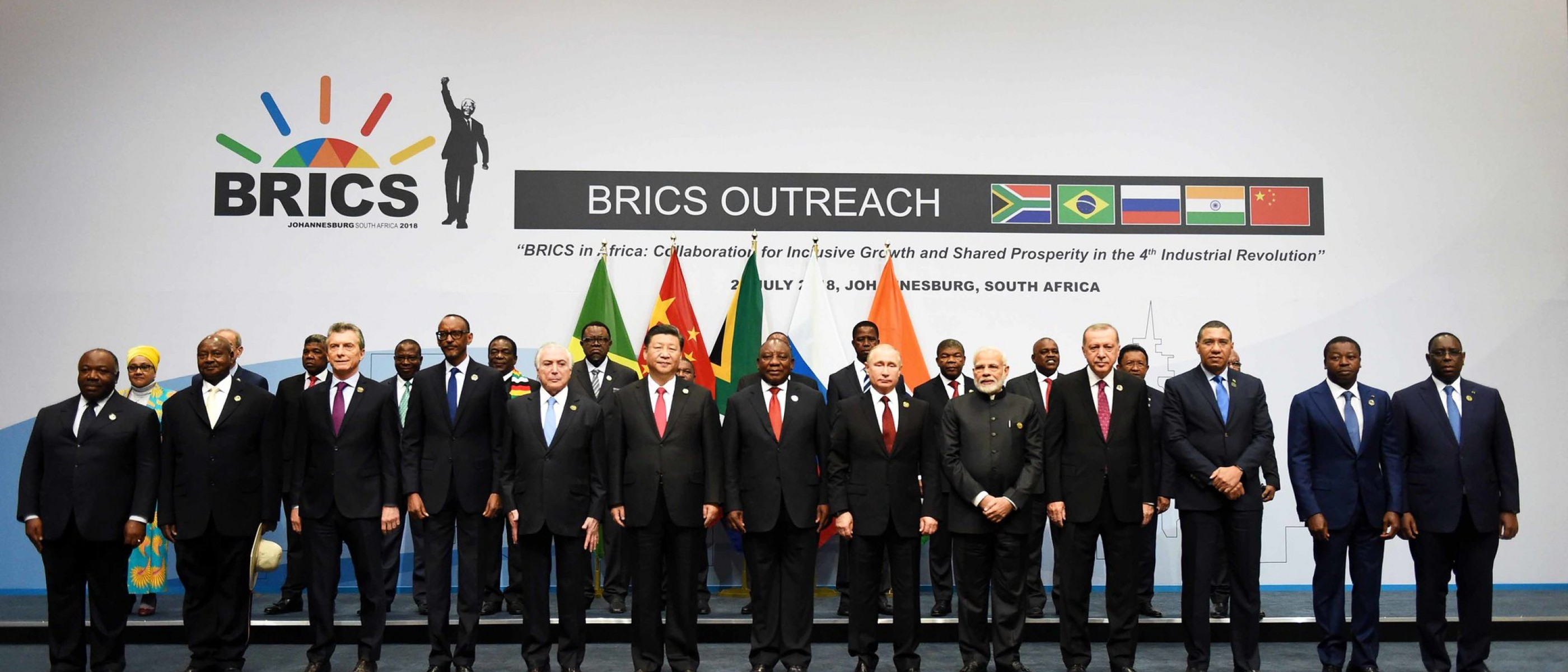

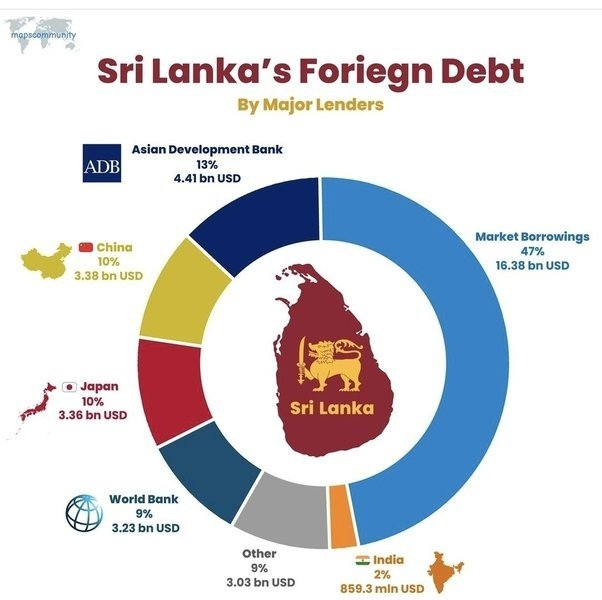


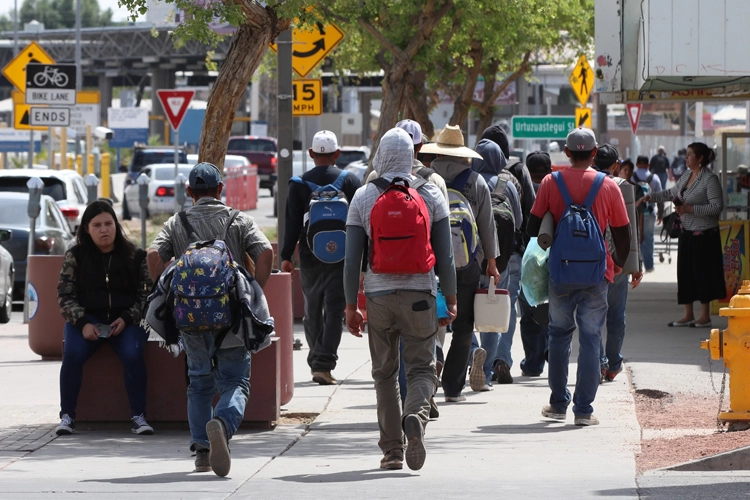


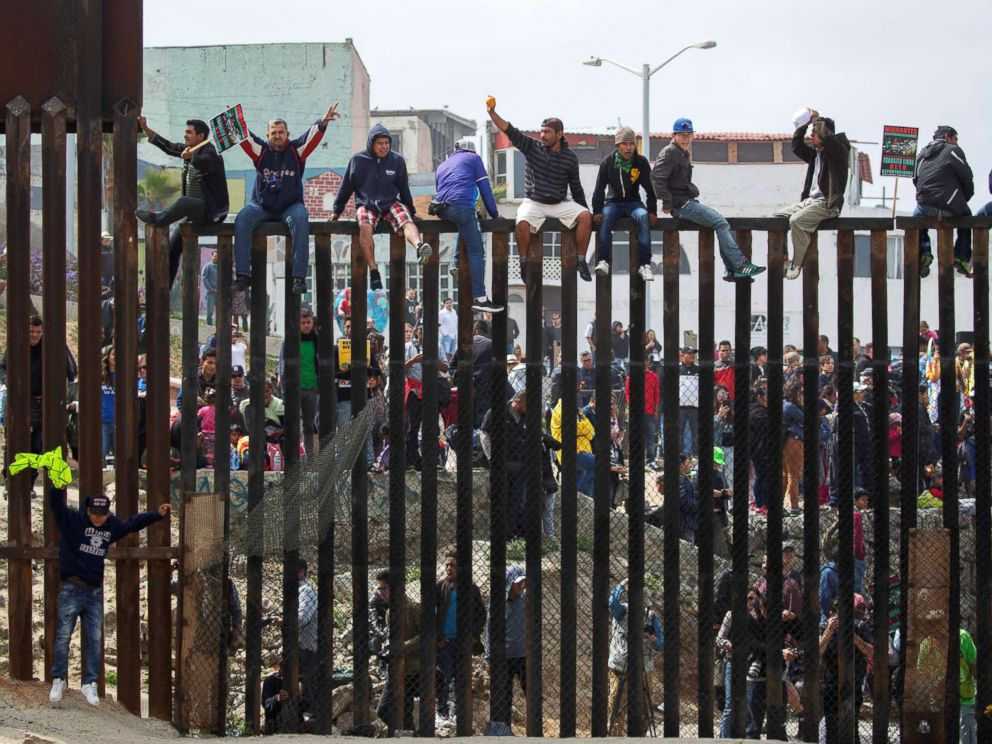

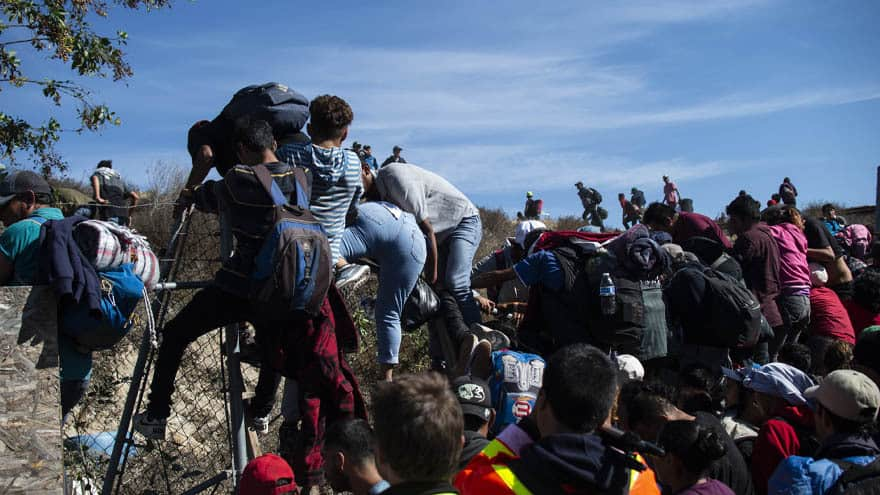

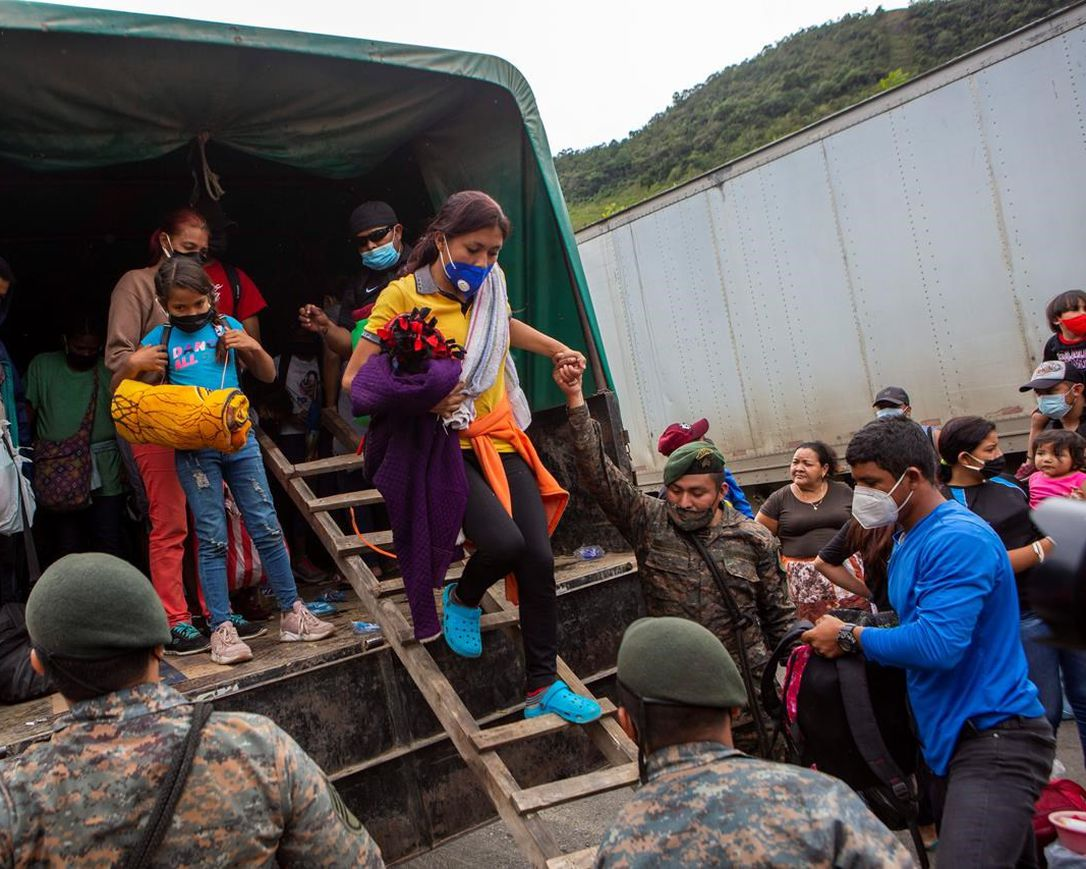










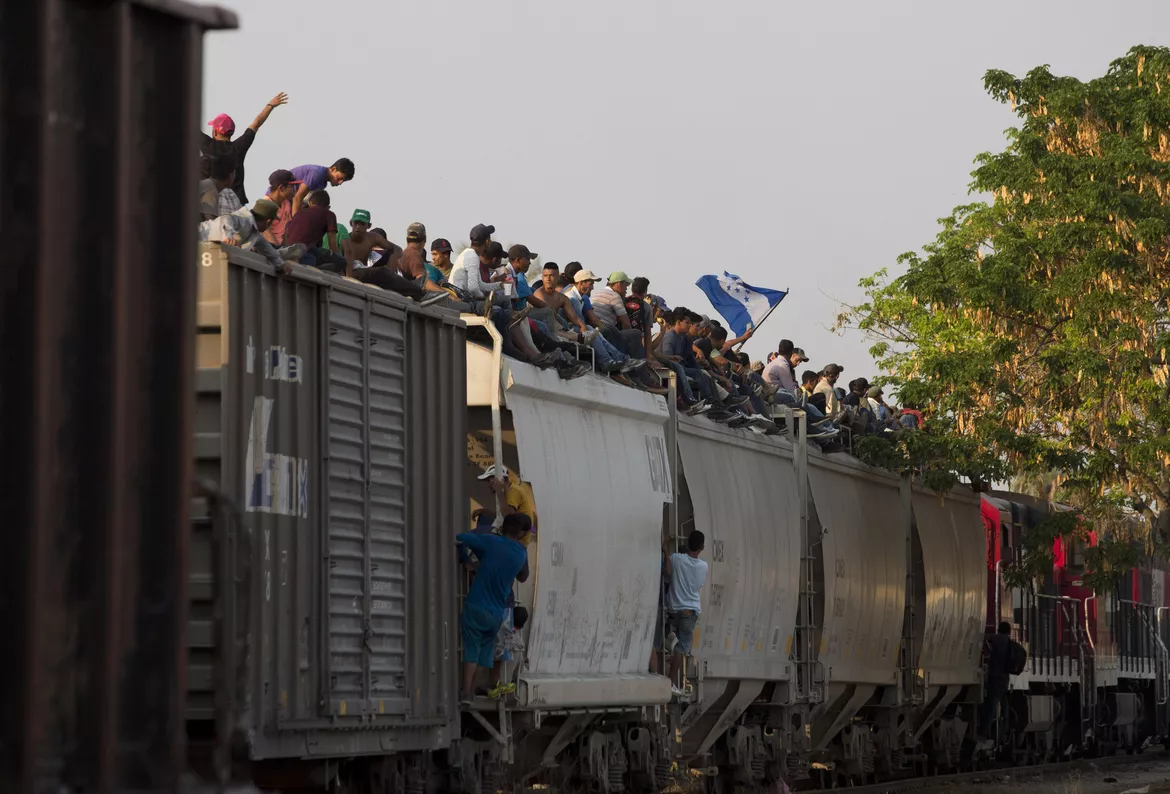
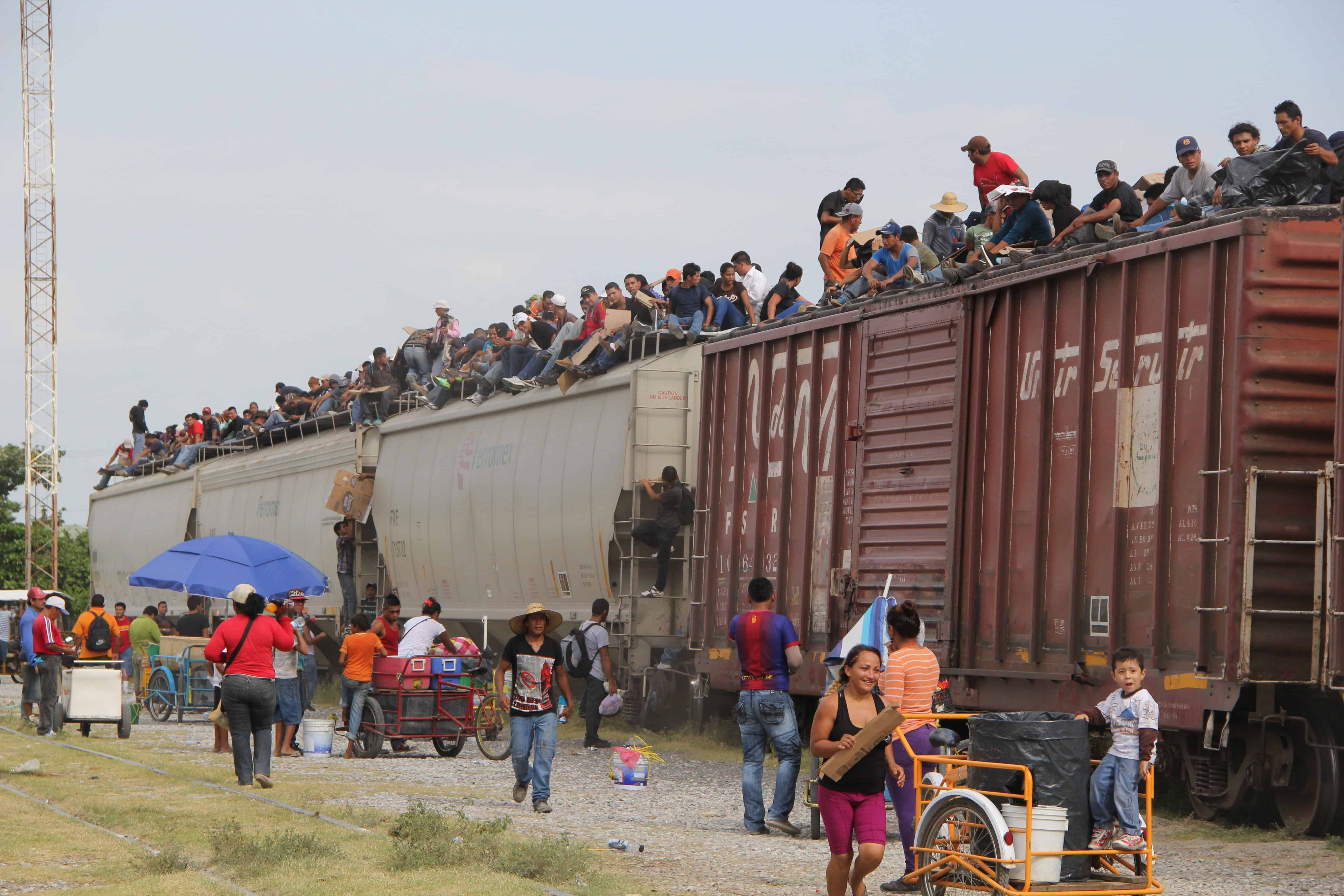
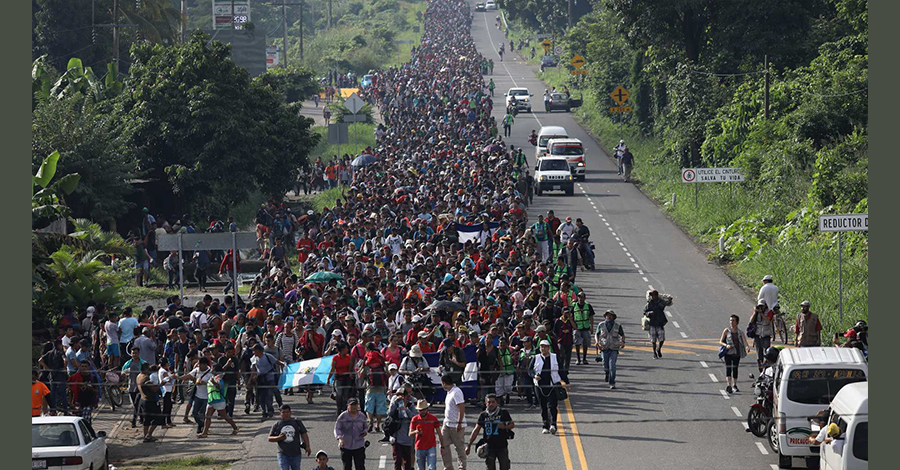


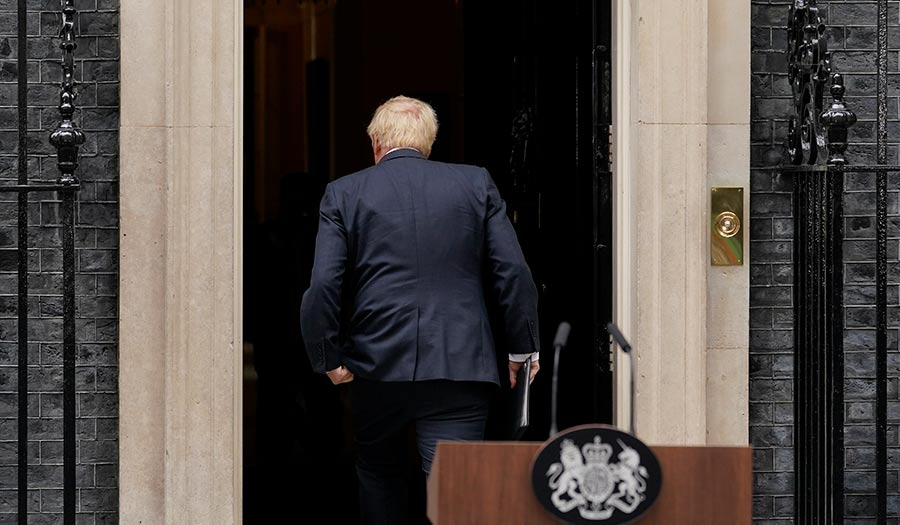



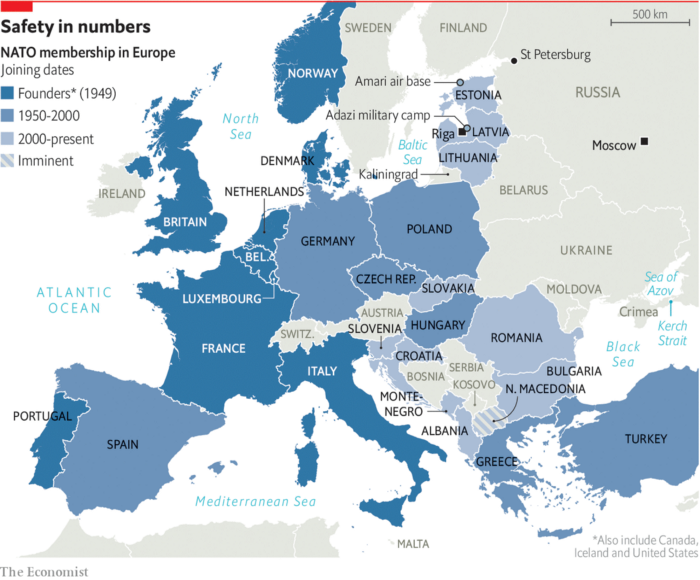


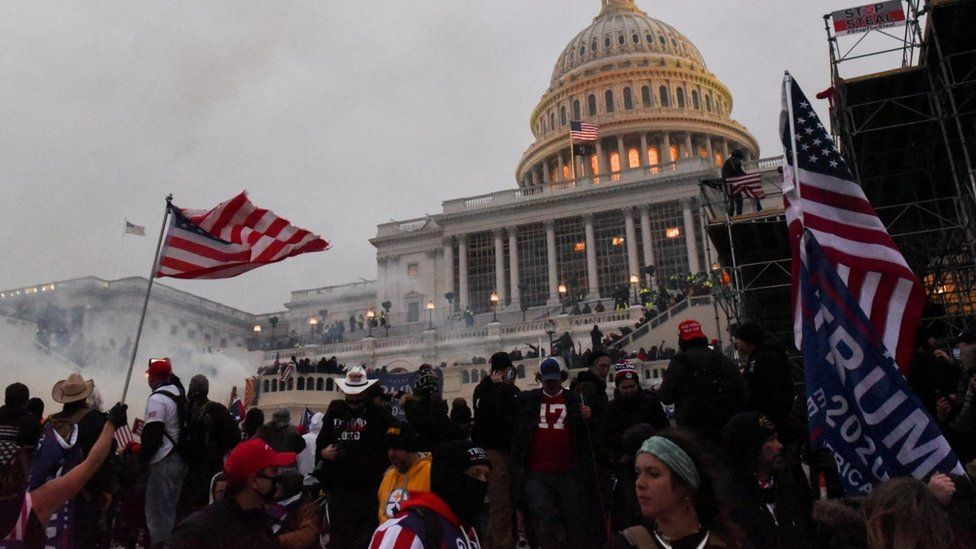

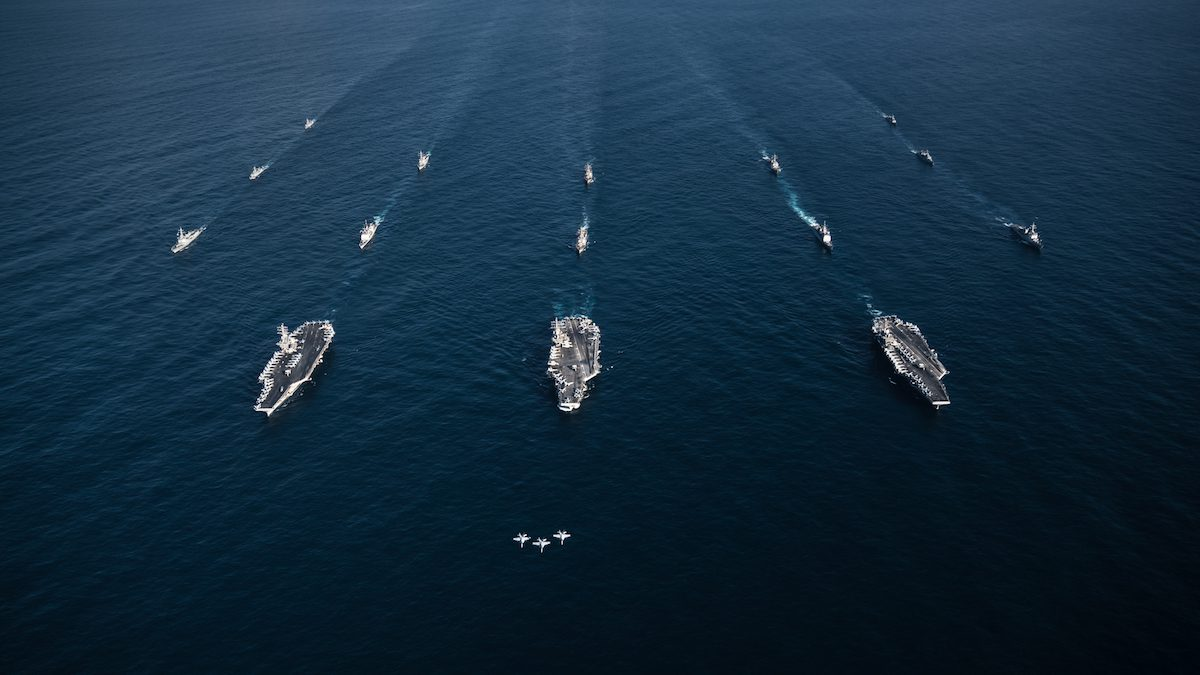
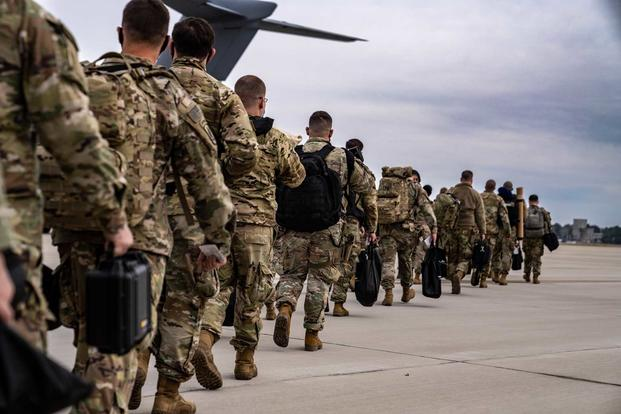

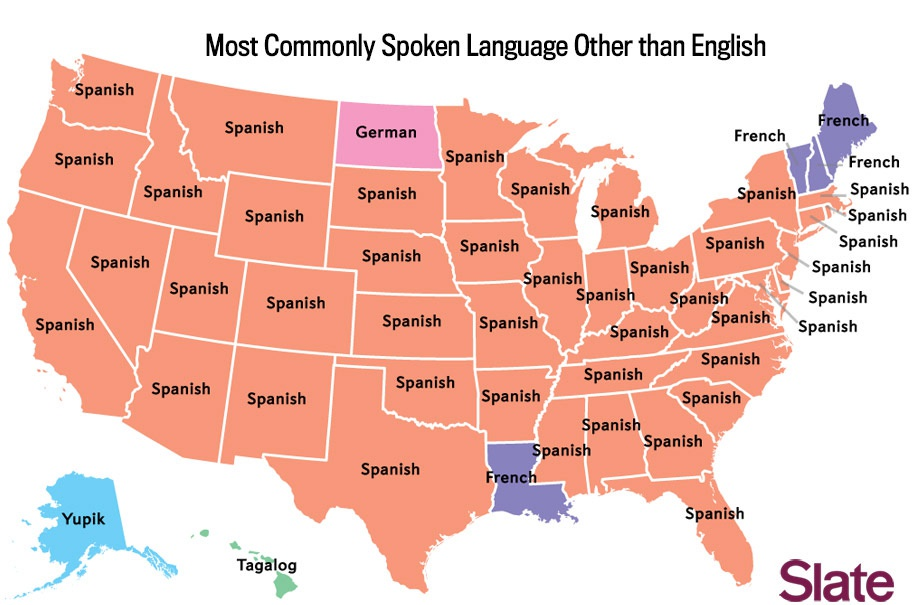


 Joel
Joel A Prophecy of Esau and Jacob
