Speaking at a summit in San Diego on Monday, Prime Minister Anthony Albanese has announced a decades-long strategy to deliver the most costly defence project in Australia’s history.
New details of the AUKUS defence and security pact have revealed Australia will buy three second-hand US Virginia-class submarines early next decade (and potentially two more), subject to approval by US Congress.
Australia will also build a fleet of eight nuclear-powered SSN-AUKUS boats at Adelaide’s Osborne Naval Shipyard. The first will be delivered by 2042, with five completed by the 2050s, and construction of the remaining three going into the 2060s.
It’s estimated the program will cost between A$268 billion and A$368 billion over the next three decades.
Make no mistake. Modern submarines, especially nuclear-powered ones, are one of the most potent and effective weapon systems in today’s world. That is, until they aren’t.
Our analysis shows they might soon be so easily detected they could become billion-dollar coffins.
The rise in detection technologies
Both the greatest strength and greatest weakness of subs is their stealth. The best are fiendishly difficult to detect. They can be nearly anywhere in the vast expanse of the world’s oceans, so adversaries must protect against them everywhere.
But if subs can be detected, they become easy targets: large, slow-moving and vulnerable to attack from the surface.
Historically, submarines have provided a distinct advantage: their stealth is the result of steady improvements in counter-detection technologies throughout the Cold War. Western submarines in particular are extremely quiet. Detection technologies, which mostly focused on sound, broadly struggled to keep up.
But this tide is turning. Subs in the ocean are large, metallic anomalies that move in the upper portion of the water column. They produce more than sound. As they pass through the water, they disturb it and change its physical, chemical and biological signatures. They even disturb Earth’s magnetic field – and nuclear subs unavoidably emit radiation.
Science is learning to detect all these changes, to the point where the oceans of tomorrow may become “transparent.” The submarine era could follow the battleship era and fade into history.
Cast forward three decades
In 2020 we undertook a first principles assessment to try to understand when that tomorrow might come, and what it might look like.
To do this we had to choose a point in the future to forecast to. We decided on the decade of the 2050s. We examined broad areas of science and technology in which progress might affect that future in terms of detection (that is, ocean sensing) and counter-detection.
In particular, we examined the potential impact of developments in artificial intelligence, sensor technology and underwater communication.
Our analysis used a software tool called Intelfuze which is often used in the intelligence community. It provides probabilistic assessments that are rigorous, transparent, defensible and able to be updated.
It’s particularly suited for issues where data are poor, uncertain and perhaps even speculative, and where there may be strongly divergent opinions on the quality and significance of those data (as in the submarine detection debate).
Our key result was that the oceans are, in most circumstances, at least likely (probability 75%) – and from some perspectives very likely (probability 90%) – to become transparent by the 2050s. Our certainty of these estimates, which the software evaluated independently, was high (above 70%).
This suggests that, regardless of progress in stealth technologies, submarines – including nuclear-powered submarines – will be able to be detected in the world’s oceans as a result of progress in science and technology.
The results should ring alarm bells for the AUKUS program to equip Australia with nuclear-powered submarines. Our assessment suggests there will only be a brief window of time between the deployment of the first SSN-AUKUS boats and the onset of transparent oceans.
Having made the decision to build nuclear submarines, Australia needs to approach the task with a new urgency, lest we acquire these powerful deterrents just as their potency begins to fade.
The rise in detection technologies will render all these submarines obsolete
Planning for obsolescence
Of course, there is a chance the predictions from our assessment are wrong; even highly probable outcomes are not certainties. Our model is a series of educated guesses based on trends in scientific and technological development. But it’s nonetheless an important consideration in light of AUKUS developments.
Australia is at a crossroads as it deals with a complex but deteriorating geostrategic environment. On one hand, we need to respond by committing to long-term investments. On the other, there’s a high degree of uncertainty about how effective these investments will be.
We argue there is evidence submarines could dramatically reduce in effectiveness in the coming decades. In other words, Australia risks investing in a nuclear ecosystem whose use-by date may be much earlier than we’d like. If we are to invest, we need to do so now.
It’s not just the science and technology workforce that needs to be built up, but also supply chains, precision manufacturing, skilled craftspeople and context-specific policies and laws.
We’ll also need a secure, sensible and environmentally appropriate way to deal with all that comes with a nuclear submarine program.
We don’t have the luxury of our AUKUS partners. Both the United Kingdom and United States have had decades to build not only nuclear submarines, but also supporting national ecosystems.
If the clock is ticking, and we think it is, time may be the only factor we have to play with.
“Therefore as I live, saith the Lord God, surely because thou hast defiled My sanctuary with all thy detestable things and with all thine abominations, therefore will I also diminish thee; neither shall Mine eye spare, neither will I have any pity.
“A third part of thee shall die with the pestilence, and with famine shall they be consumed in the midst of thee; and a third part shall fall by the sword round about thee; and I will scatter a third part into all the winds, and I will draw out a sword after them.” Ezekiel 5:11-12
SEOUL (Reuters) — North Korea claims that about 800,000 of its citizens volunteered to join or reenlist in the nation’s military to fight against the United States, North Korea’s state newspaper reported on Saturday.
About 800,000 students and workers, on Friday alone, across the country expressed a desire to enlist or reenlist in the military to counter the United States, the Rodong Sinmun newspaper reported.
“The soaring enthusiasm of young people to join the army is a demonstration of the unshakeable will of the younger generation to mercilessly wipe out the war maniacs making last-ditch efforts to eliminate our precious socialist country, and achieve the great cause of national reunification without fail and a clear manifestation of their ardent patriotism,” the North’s Rodong Sinmun said.
The North’s claim came after North Korea on Thursday launched its Hwasong-17 intercontinental ballistic missile (ICBM) in response to ongoing US-South Korea military drills.
North Korea fired the ICBM into the sea between the Korean peninsula and Japan on Thursday, hours before South Korea’s president flew to Tokyo for a summit that discussed ways to counter the nuclear-armed North.
The North’s ballistic missiles are banned under United Nations Security Council resolutions and the launch drew condemnation from governments in Seoul, Washington and Tokyo.
South Korean and American forces began 11 days of joint drills, dubbed “Freedom Shield 23,” on Monday, held on a scale not seen since 2017 to counter the North’s growing threats.
Kim accused the United States and South Korea of increasing tensions with the military drills.
“Woe to the crown of pride, to the drunkards of Ephraim, whose glorious beauty is a fading flower, which is on the head of the fat valleys of them that are overcome with wine!” Isaiah 28:1
And I will turn your feasts into mourning and all your songs into lamentation; and I will bring up sackcloth upon all loins and baldness upon every head; and I will make it as the mourning for an only son, and the end thereof as a bitter day. Amos 8:10
“But, behold, I will raise up against you a nation, O house of Israel,” saith the LORD the God of hosts; “and they shall afflict you from the entrance of Hemath unto the river of the wilderness.” Amos 6:14
The Targum is another source of the Bible, much like the Masoretic Text and the Septuagint; and to dismiss it as another testimony for spiritual inspiration and understanding, as virtually all the endtime Churches do, is an absolute disgrace.
The Targum was started by Ezra for those returning from the Babylon exile and for these returnees they could only understand the Scriptures in Aramaic. That is, the Targum is as if Ezra is speaking to us today from the Hebrew Bible quoted.
Hence, for ignoring the Targum as an authority for Understanding and Truth, the endtime Churches of God is being discribed as wretches, blind and naked; and would be thus justifiably destined to be spewed out of God’s mouth!
False shepherds and false teachings abound everywhere so much so that, if possible, even the elect are deceived! Thus for correction, it is with certainty that when it is spewed out of God’s mouth, it is into the Fire! Selah!
“The anger of the Lord shall not return, until He has executed and till He has performed the thoughts of His heart; in the latter days ye shall consider it perfectly” Jeremiah 23:20
That is, we wouldn’t be able to understand these prophecies until the “latter days.” In the latter days could be our time, the endtime, or soon to be, then we shall understand these prophecies clearly: a foretaste of which is that the calamities which will have come upon us are the divine judgement upon our sins. We are all trying, but only in the endtime would we be able to understand these things perfectly.
Jeremiah 51
The Chaldeans, especially under Nebuchadnezzar their king, has been described by God as “the king of Babylon, My servant” in multiple places (Jeremiah 25:9, Jeremiah 27:6, Jeremiah 43:10). So this and the previous chapter contain a long prophecy concerning the destruction of Babylon following their judgement as well.
1 Thus saith the Lord: “Behold, I will raise up against Babylon, and against them that dwell in the midst of them that rise up against Me, a destroying wind.
— thus saith the Lord, behold, I will raise up against Babylon; this is not a new prophecy, but a continuation of the former. The Babylonians being the last and most notorious enemies of the Jews, yet Nebuchadnezzar was God’s servant, his horsewhip, but as they were against the Lord’s people the Lord was against them;
— the Targum renders it, “against the inhabitants of the land of the Chaldeans;” a destroying wind; a northern one, the army of the Medes and Persians, which should sweep away all before it. The Targum says, “people that are slayers; whose hearts are lifted up, and are beautiful in stature, and their spirit destroying.”
2 And will send unto Babylon winnowers that shall fan her, and shall empty her land; for in the day of trouble they shall be against her round about.
— and God will send unto Babylon farmers that shall fan her, and shall empty her land; or “strangers that shall fan her” meaning the Medes and Persians, who should be like a strong wind upon the mountains, where corn, having been threshed was fanned and the chaff carried away by the wind;
—and such would the Chaldeans be in the hand of the Persians, scattered and dispersed among the nations as chaff with the wind and their cities be emptied of inhabitants and of their wealth and riches; the Targum says, “I will send against Babylon spoilers, that shall spoil and exhaust the land:”
— for in the day of trouble they shall be against her round about; in the time of the siege they shall surround her on all sides so that none might escape; as Babylon had been a fanner of the Lord’s people, now she should be fanned herself and stripped of all she had.
3 Against him that bendeth let the archer bend his bow, and against him that lifteth himself up in his brigandine; and spare ye not her young men; destroy ye utterly all her host.
— against him let the archer bend his bow; these are either the words of the Lord to the Medes and Persians, to the archers among them, to bend their bows and level their arrows against the Chaldeans who had bent their bows and shot their arrows against others; or of the Medes and Persians stirring up one another to draw their bows and fight manfully against the enemy:
— and against him that lifteth up himself in his brigandine; or coat of mail; that swaggers about it, proud of it and putting his confidence in it as if out of all danger. The sense is, that they should direct their arrows both against those that were more lightly or more heavily armed; since by them they might do execution among the one and the other:
— and spare ye not her young men; because of their youth, beauty and strength: destroy ye utterly all her host; her whole army, whether officers or common soldiers; or let them be accoutred in what manner they will. The Targum says “consume all her substance.”
4 Thus the slain shall fall in the land of the Chaldeans, and they that are thrust through in her streets. — thus the slain shall fall in the land of the Chaldeans; by the sword or by arrows and darts of the Medes and Persians; and they that are thrust through in her streets; either by the one or by the other, especially the latter since they only are mentioned.
5 For Israel hath not been forsaken, nor Judah by his God, by the Lord of hosts, though their land was filled with sin against the Holy One of Israel.”
— though their land was filled with sin against the Holy One of Israel, rather, but the land of the Israelites is filled with sins, because they refused to accept the true God in spite of the many manifestations of his power and glory in their midst; therefore the Lord addresses himself to his chosen people living in Babylon, urging the proper behavior at the time of Babylon’s downfall.
6 Flee out of the midst of Babylon, and deliver every man his soul; be not cut off in her iniquity, for this is the time of the Lord’S vengeance; He will render unto her a recompense.
— flee out of Babylon and deliver every man his soul; be not cut off in her iniquity, by taking part in the idolatry which brought destruction upon her; for this is the time of the Lord’s vengeance; he will render unto her a recompense.
7 Babylon hath been a golden cup in the Lord’S hand, that made all the earth drunken; the nations have drunk of her wine; therefore the nations are mad. — Babylon hath been a golden cup in the Lord’s hand, a nation noted for power and glory;
— gold, denoting the grandeur, splendour and riches of the empire, all is due to the Lord’s blessing that made all the earth drunken, drawn the nations of the earth into idolatry; the nations have drunken of her wine; therefore the nations are mad, intoxicated and deprived of a sound mind, are bound for destruction.
8 Babylon is suddenly fallen and destroyed: Howl for her! Take balm for her pain; if so be she may be healed. — Babylon is suddenly fallen and destroyed; or “broken” even into shivers, as a cup is;
— for when it had been used to answer the purposes designed by the Lord, he let it fall cut of his hands at once and it was broken; or rather he dashed it in pieces as a potter’s vessel.
9 We woud have healed Babylon, but she is not healed. Forsake her, and let us go every one into his own country, for her judgement reacheth unto heaven and is lifted up even to the skies.
10 The Lord hath brought forth our righteousness; come, and let us declare in Zion the work of the Lord our God.
11 Make bright the arrows! Gather the shields! The Lord hath raised up the spirit of the kings of the Medes; for His device is against Babylon to destroy it, because it is the vengeance of the Lord, the vengeance of His temple.
12 Set up the standard upon the walls of Babylon! Make the watch strong! Set up the watchmen! Prepare the ambushes! For the Lord hath both devised and done that which He spoke against the inhabitants of Babylon.
— Set up the watchmen! God would set up numerous watchmen at the endtime! thus this chapter must be prophetic instead of historical, although there is always some elements of them being historical;
“Surely the Lord God will do nothing, unless He revealeth His secret unto His servants the prophets,” Amos 3:7
— prepare the ambushes; or “lies in wait” to second or relieve those on the walls upon occasion; or seize unawares the besiegers, should they attempt to scale the walls and enter the city;
13 O thou that dwellest upon many waters, abundant in treasures, thine end is come, and the measure of thy covetousness. — O thou that dwellest upon many waters; here Babylon is addressed either by the Lord or by the prophet;
— who is described by her, situation, which was by the great river Euphrates; which being branched out into several canals or rivers, both ran through it and encompassed it; hence mention is made of the rivers of Babylon, Psalms 137:1; and a fit emblem this city was of mystical Babylon, which is also said to sit on many waters, interpreted as of many people and nations, Revelation 17:1;
— thine end is come, and the measure of thy covetousness; this flourishing city was now near its end and with it the whole Babylonish monarchy; the Targum says, “the day of thy destruction is come, and the time of the visitation of thy wickedness.”
14 The Lord of hosts hath sworn by Himself, saying, “Surely I will fill thee with men, as with caterpillars, and they shall lift up a shout against thee.”
15 He hath made the earth by His power; He hath established the world by His wisdom, and hath stretched out the heaven by His understanding. — the omnipotence of the Lord and Creator of the whole world will destroy the idols of Babylon, and break the mighty kingdom that rules the world.
16 When He uttereth His voice there is a multitude of waters in the heavens, and He causeth the vapors to ascend from the ends of the earth. He maketh lightnings with rain, and bringeth forth the wind out of His treasures.
— through thunders, he makes a roaring sound of water in the heavens, he causes clouds to ascend from the end of the earth, makes lightnings for the rain, and brings forth the wind out of His treasures.
17 Every man is brutish by his knowledge; every founder is confounded by the graven image; for his molten image is falsehood, and there is no breath in them. — he brings ruin on the whole earth by subjugation of the nations and devastation of their molten inages.
18 They are vanity, the work of errors; in the time of their visitation they shall perish. — all idols will be destroyed before the almighty power of the Creator and Ruler of the whole world on the day of judgement,
19 The portion of Jacob is not like them, for He is the former of all things; and Israel is the rod of His inheritance; the Lord of Hosts is His name. — and Israel shall then learn that he who formed the universe will show himself by the fall of Babylon.
20 “Thou art My battleax and weapons of war; for with thee will I break in pieces the nations, and with thee will I destroy kingdoms. — for with thee will I break in pieces the nations and with thee will I destroy kingdoms; or “with thee I have broke in pieces and have destroyed” as the nations surrounding the kingdom of Judea: Tyre, Egypt, Edom, Moab, Ammon and others.
21 And with thee will I break in pieces the horse and his rider; and with thee will I break in pieces the chariot and his rider.
22 With thee also will I break in pieces man and woman; and with thee will I break in pieces old and young; and with thee will I break in pieces the young man and the maid.
23 I will also break in pieces with thee the shepherd and his flock; and with thee will I break in pieces the husbandman and his yoke of oxen; and with thee will I break in pieces captains and rulers.
24 And I will render unto Babylon and to all the inhabitants of Chaldea all their evil that they have done in Zion in your sight,” saith the Lord.
— all their evil that they have done in Zion, in your sight, saith the Lord; the sense is, that for all the evil the Chaldeans had done in Judea; the ravages they had made there, the blood they had shed and the desolation they had made; and particularly for what they had done in Jerusalem and especially in the Temple, burning, spoiling and profaning;
— God would now righteously punish them and retaliate all this evil on them; and which should be done publicly before all the nations of the world and particularly in the sight of God’s own people: for this phrase, “in your sight” does not refer to the evils done in Zion but to the recompense that should be made for them.
25 “Behold, I am against thee, O destroying mountain,” saith the Lord, who destroyest all the earth; “and I will stretch out Mine hand upon thee, and roll thee down from the rocks, and will make thee a burnt mountain.
— behold, God am against thee, O destroying mountain; Babylon was situated in a plain, but is called a mountain here; because a mountain being a strong nation, even an empire; a hill being a smaller nation;
— and God will stretch out his hand upon thee: in a way of vindictive wrath, pouring it out upon her and inflicting his judgements on her; laying hold on and seizing her in a furious manner as a man does his enemy when he has found him.
26 And they shall not take from thee a stone for a corner, nor a stone for foundations; but thou shalt be desolate for ever,” saith the Lord. — God threateneth to Babylon an utter ruin and desolation, so as they should not have a stone left fit to lay a foundation,
— or to make a corner-stone; or, as some others interpret it, that city should never be built again, there should never from the rubbish of it be taken a stone to lay the foundation.
27 Set ye up a standard in the land! Blow the trumpet among the nations! Prepare the nations against her; call together against her the kingdoms of Ararat, Minni, and Ashkenaz. Appoint a captain against her; cause the horses to come up as the rough caterpillars.
— kingdoms of Ararat, Minni, and Ashkenaz; these were countries under the dominion of the Medes.
28 Prepare against her the nations with the kings of the Medes, the captains thereof, and all the rulers thereof, and all the land of his dominion. — prepare the nations against her: animate them, stir up their spirits against her, and furnish them with armour to engage with her.
29 And the land shall tremble and sorrow; for every purpose of the Lord shall be performed against Babylon, to make the land of Babylon a desolation, without an inhabitant.
— And the land shall tremble and sorrow; the land of Chaldea, the inhabitants of it, should tremble; to make the land of Babylon a desolation without an inhabitant;
30 The mighty men of Babylon have forborne to fight, they have remained in their strongholds; their might hath failed, they have become as women; they have burned her dwelling places, her bars are broken.
— her bars are broken; the bars of the gates of the city, or of the palaces of the king and nobles and of the houses of the people, by the soldiers to get the plunder; see Isaiah 45:1.
31 One courier shall run to meet another, and one messenger to meet another to show the king of Babylon that his city is taken at one end, — one post should be after another, and one messenger after another, post upon post, and messenger upon messenger, as fast as they could run;
— when one had been with his message and delivered it, and returned, he meets another; or they met one another, coming from different places: to show the king of Babylon his city is taken.
32 and that the passages are stopped, and the reeds they have burned with fire, and the men of war are affrighted. — the reeds; literally, the marshes or pools, which formed an important part of the defenses of Babylon, were dried up as completely as a piece of wood would be consumed by fire.
33 For thus saith the Lord of hosts, the God of Israel: “The daughter of Babylon is like a threshing floor; it is time to thresh her; yet a little while and the time of her harvest shall come.” — the daughter of Babylon is like a thrashing-floor; God’s people have been sorely bruised and trodden under foot by the Babylonians,
34 “Nebuchadnezzar the king of Babylon hath devoured me; he hath crushed me, he hath made me an empty vessel. He hath swallowed me up like a dragon; he hath filled his belly with my delicacies, he hath cast me out.
— Nebuchadnezzar hath swallowed God’s people like a dragon; or “whale” or any large fish which swallow the lesser ones whole. The allusion is to the large swallow of dragons which is sometimes represented as almost beyond all belief.
35 The violence done to me and to my flesh be upon Babylon,” shall the inhabitant of Zion say; “and my blood upon the inhabitants of Chaldea!” shall Jerusalem say. — the violence done to me, and to my flesh, be upon Babylon; that is, let the injuries done to Zion and her children, be avenged on Babylon;
— the Targum says, “the sin of the innocent blood which is shed in me;” let that be imputed to them, and vengeance come upon them for it.
36 Therefore thus saith the Lord: “Behold, I will plead thy cause, and take vengeance for thee; and I will dry up her sea, and make her springs dry.
37 And Babylon shall become heaps, a dwelling place for dragons, an astonishment and a hissing, without an inhabitant.
38 They shall roar together like lions; they shall yell as lions’ whelps.
39 In their heat I will make their feasts, and I will make them drunken, that they may rejoice, and sleep a perpetual sleep and not wake,” saith the Lord.
40 “I will bring them down like lambs to the slaughter, like rams with hegoats. — God will bring them down like lambs to the slaughter; to the place of slaughter; who shall be able to make no more resistance than lambs; this explains what is meant by being made drunk, both the Chaldeans, or Israelites;
— like Boris Johnson, intoxicated and deprived of a sound mind, purposely flew over to Kyiv to sabotage the Peace Deal between Ukraine and Russia way back in April, 2022; and as a result, almost one year on, Ukraine is being ravaged and destroyed! and the UK is sleeping a perpetual sleep, with high inflation; even destruction and a slow death.
41 “How Sheshach is taken! And how the praise of the whole earth is surprised! How Babylon has become an astonishment among the nations! — how is Sheshach taken! Not the city Shushan but Babylon as is plain from a following clause; and so the Targum says, “how is Babylon subdued!”
— how is Babylon become an astonishment among the nations! or “a desolation” and indeed it had being a desolation was the reason of its being an astonishment among the nations; who were amazed to see so strong, rich and splendid a city brought to ruin in a very short time
— same as the Israelites:
“And I will persecute them with the sword, with the famine, and with the pestilence, and will deliver them to be removed to all the kingdoms of the earth, to be a curse and an astonishment and a hissing, and a reproach among all the nations whither I have driven them,” Jeremiah 29:18
42 The sea has come up upon Babylon; she is covered with the multitude of the waves thereof. — by a grand metaphor the invading army is compared to the sea; the image is appropriately taken from the Euphrates.
43 Her cities are a desolation, a dry land and a wilderness, a land wherein no man dwelleth, neither doth any son of man pass thereby. — Babylon is abundant in treasures, yet neither her waters nor her wealth shall secure her; destruction comes when they least think of it.
44 And I will punish Bel in Babylon, and I will bring forth out of his mouth that which he hath swallowed up; and the nations shall not flow together any more unto him. Yea, the wall of Babylon shall fall.
— and I will punish Bel in Babylon, the chief deity of the Babylonians, and I will bring forth out of his mouth that which he hath swallowed up, taking away from him what he had robbed and devoured through the hands of those who worshiped him;
— and the nations shall not flow together any more unto him, flocking to Babylon in streams to consecrate their treasures to him; yea, the wall of Babylon shall fall so that the city would be open to all enemies.
45 “My people, go ye out of the midst of her, and deliver ye every man his soul from the fierce anger of the Lord. — my people, go ye out of the midst of her; this is a call of the Jews to go out of Babylon, not before the taking of the city by Cyrus;
— but when he should issue out a proclamation, giving them liberty to return to their own land; which many of them, being well settled in Babylon, would not be ready to accept the offer, but choose to continue to live there;
— wherefore they are urged to depart from thence, because of the danger they would be exposed unto their idols; for though the city was not destroyed by Cyrus upon his taking it, yet it was by Darius Hystaspes some time after. The same call is given to the people of God to come out of mystical Babylon, Revelation 18:4.
46 And lest your heart faint and ye fear for the rumor that shall be heard in the land—a rumor shall both come one year, and after that in another year shall come a rumor and violence in the land, ruler against ruler” — for rumours after rumours shall come; the war, then, will last some time, and all kinds of rumours will be in the air.
47 therefore, behold, the days come, that I will do judgement upon the graven images of Babylon; and her whole land shall be confounded, and all her slain shall fall in the midst of her. — and the whole land of Chaldea shall be confounded, when they shall see that their idols will do them no more service.
48 Then the heaven and the earth, and all that is therein, shall sing for Babylon, for the despoilers shall come unto her from the north,” saith the Lord.
— then the heaven and the earth and all that is therein shall sing for Babylon, rejoicing over her fall; for the spoilers shall come unto her from the North, saith the Lord, and the sentence executed by him is the cause of their jubilation.
49 As Babylon hath caused the slain of Israel to fall, so at Babylon shall fall the slain of all the earth. — as Babylon hath caused the slain of Israel; in Jerusalem, when that city was taken the Chaldeans, and destroyed:
— so at Babylon shall all the slain of all the earth; or “land” that is, the land of Chaldea; the inhabitants of which fled to Babylon upon the invasion of the Medes and Persians, both for their own safety, and the defence of that city; and where being slain they fell; and this was a just judgement for what they had done to Israel.
50 Ye that have escaped the sword, go away; stand not still. Remember the Lord afar off, and let Jerusalem come into your mind. — let those in exile in Babylon, who have escaped death, hasten their return to Jerusalem, while yet there is time.
51 We are confounded because we have heard reproach; shame hath covered our faces, for strangers are come into the sanctuaries of the Lord’S house. — for strangers; the “reproach” which has stung us, came when they taunted us with the fact that they had burned the Temple.
52 “Therefore behold, the days come,” saith the Lord, “that I will do judgement upon her graven images; and through all her land the wounded shall groan. — for which profanation of my holy place, I will be revenged upon their graven images;
53 Though Babylon should mount up to heaven, and though she should fortify the height of her strength, yet from Me shall despoilers come unto her,” saith the Lord. — though Babylon should mount up to heaven; could their walls, which were very high, two hundred cubits high, as Herodotus says, be carried up as high as heaven; or the towers of it, which were exceeding high,
— the Targum says, “if Babylon should be built with buildings as high as heaven, and should fortify the strong holds on high:” yet from me shall spoilers come, saith the Lord; the Medes and Persians;
54 A sound of a cry cometh from Babylon, and great destruction from the land of the Chaldeans, — the cry of the distressed was then heard upon the great destruction from the land of the Chaldeans;
55 because the Lord hath despoiled Babylon, and destroyed out of her the great voice. When her waves do roar like great waters, a noise of their voice is uttered, — the prophet Jeremiah heard the cry of the captured city like great running waters.
56 because the despoiler is come upon her, even upon Babylon, and her mighty men are taken; every one of their bows is broken. For the Lord God of recompenses shall surely requite. — the prophet Jeremiah in the spirit sees these destroyers as already come.
57 “And I will make drunk her princes and her wise men, her captains and her rulers and her mighty men; and they shall sleep a perpetual sleep and not wake,” saith the King, whose name is the Lord of Hosts.
— and God will make her princes and wise men drunk, the counselors of the kingdom, her captains and her rulers and her mighty men, all those who were at the head of the nation, both in peace and in war; and they shall sleep a perpetual sleep, and not wake, namely, the sleep of death, saith the King, whose name is the Lord of hosts.
58 Thus saith the Lord of hosts: “The broad walls of Babylon shall be utterly broken, and her high gates shall be burned with fire; and the people shall labor in vain, and the folk in the fire; and they shall be weary.”
— thickness of the walls of Nineveh and Babylon shall be utterly broken; nor are we to be astonished, that no remains, not the least traces of these prodigious works are to be found today.
59 The word which Jeremiah the prophet commanded Seraiah the son of Neriah, the son of Mahseiah, when he went with Zedekiah the king of Judah into Babylon in the fourth year of his reign. And this Seraiah was a quiet prince.
— the word which Jeremiah the prophet commanded Seraiah; the order the prophet gave this prince to take a copy of it with him to Babylon and there read it and cast it into the river Euphrates, with a stone bound it. Of this Seraiah: he is further described as:
— the son of Neriah, when he went with Zedekiah the king of Judah into Babylon, in the fourth year of his reign; the Jews say that Zedekiah, in the fourth year of his reign, went to Babylon, to reconcile himself to Nebuchadnezzar king of Babylon, and took Seraiah with him and returned and came to his kingdom in Jerusalem; but we have no account in Scripture of any such journey he took.
60 So Jeremiah wrote in a book all the evil that should come upon Babylon, even all these words that are written against Babylon. — so Jeremiah wrote all the evil that should come upon Babylon; the punishment prophecised by God:
— this jeremiah delivered, not by word of mouth to Seraiah to relate when he came to Babylon; but he wrote it in a book for him to read and reread; and he wrote it himself; Baruch, his scribe, not one who transcripted for him here:
— even all these words that are written against Babylon; in this and the preceding chapter: this book written by Jeremiah was a copy of them.
61 And Jeremiah said to Seraiah, “When thou comest to Babylon and shalt see, and shalt read all these words, — thou shalt see to it and read, or see to it and read; who is to read it to his countrymen in captivity; not in public, but in private, for the Chaldeans would not have understood Hebrew.
62 then shalt thou say, ‘O Lord, Thou hast spoken against this place to cut it off, that none shall remain in it, neither man nor beast, but that it shall be desolate for ever.’ —
63 And it shall be, when thou hast made an end of reading this book, that thou shalt bind a stone to it and cast it into the midst of the Euphrates.
— that thou shalt bind a stone to it, and cast it into the midst of Euphrates; the book being read was to be rolled up again and then a stone tied to it and cast into the middle of the river, from whence it could not be taken up; and this was a sign confirming the above prophecy; compare with this what was done by a mighty angel concerning mystical Babylon, in which there is an allusion to this, Revelation 18:21.
64 And thou shalt say, ‘Thus shall Babylon sink, and shall not rise from the evil that I will bring upon her; and they shall be weary.’” Thus far are the words of Jeremiah.
— thus shall Babylon sink and shall not rise from the evil that I will bring upon her; as this book, with the stone bound to it does, and shall no more rise than that can;
— the evil of punishment brought on Babylon will sink her to such a degree that she will never be able to bear up under it; but be so depressed by it as never to rise to her former state and grandeur any more.
Jeremiah 52
The list of kings of Judah towards the end; in successive reigns, as Josiah (reign 640–609), Jehoahaz (reign 609), Jehoiakim (reign 609–598), Jehoiachin or Jechonias (reign 598–597), and Zedekiah (reign 597–586)
1 Zedekiah was one and twenty years old when he began to reign, and he reigned eleven years in Jerusalem. And his mother’s name was Hamutal the daughter of Jeremiah of Libnah.
— and he reigned eleven years in Jerusalem; so that he was thirty two years of age when he was taken and carried captive into Babylon.
2 And he did that which was evil in the eyes of the Lord, according to all that Jehoiakim had done. — and he did that which was evil in the eyes of the Lord; though we do not read of any idolatry he was guilty of;
— yet he was disobedient to the word of the Lord, and did not humble himself before Jeremiah the prophet; and particularly he rebelled against the king of Babylon and violated the oath he made to him, II Chronicles 36:12.
3 For because of the anger of the Lord it came to pass in Jerusalem and Judah, till He had cast them out from His presence, that Zedekiah rebelled against the king of Babylon.
— for through the anger of the Lord against Jerusalem and Judah, his wrath over their disobedience causing him to cast them from his presence and to permit the rebellion of Zedekiah, which resulted in the final overthrow of the southern kingdom, till he had cast them out from his presence, (the Shekinah left the Temple, out of Jerusalem and finally out of the land of Judea).
4 And it came to pass in the ninth year of his reign, in the tenth month, on the tenth day of the month, that Nebuchadnezzar king of Babylon came — he and all his army — against Jerusalem, and encamped against it and built forts against it round about. — this would be around 588 BC.
5 So the city was besieged unto the eleventh year of King Zedekiah. — the siege continued about eighteen months; from the tenth day of the tenth month, in the ninth of Zedekiah’s reign to the ninth day of the fourth month, in the eleventh year of his reign; from 588 to 586 BC.
6 And in the fourth month, on the ninth day of the month, the famine was sore in the city, so that there was no bread for the people of the land. — the month Tammuz, which is part of June and part of July; hence the fast of the fourth month, for the taking of the city, Zechariah 8:19; in the year 586 BC.
7 Then the city was broken into, and all the men of war fled and went forth out of the city by night by the way of the gate between the two walls, which was by the king’s garden (now the Chaldeans were by the city round about), and they went by the way of the plain.
8 But the army of the Chaldeans pursued after the king, and overtook Zedekiah in the plains of Jericho; and all his army was scattered from him. — not finding him in his palace, and being informed of his flight, and which way he took, they overtook him in the plains of Jericho.
9 Then they took the king and carried him up unto the king of Babylon to Riblah in the land of Hamath, where he gave judgement upon him. — and carried him up unto Nebuchadnezzar, king of Babylon, to Riblah in the land of Hamath; which is supposed to be Antioch in Syria;
10 And the king of Babylon slew the sons of Zedekiah before his eyes; he slew also all the princes of Judah in Riblah. — and the king of Babylon slew the sons of Zedekiah before his eyes; or, however, ordered them to be slain;
— Nebuchadnezzar slew also all the princes of Judah in Riblah; who together with the king’s sons were taken with him; or, however, were taken in Jerusalem and brought to Riblah; which of them is not certain, very probably the former.
11 Then he put out the eyes of Zedekiah. And the king of Babylon bound him in chains and carried him to Babylon, and put him in prison till the day of his death. — and for his treason, Nebuchadnezzar put out the eyes of Zedekiah;
12 Now in the fifth month, on the tenth day of the month, which was the nineteenth year of Nebuchadnezzar king of Babylon, came Nebuzaradan, captain of the guard, who served the king of Babylon, into Jerusalem. — came Nebuzaradan captain of the guard, or chief marshal; which served the king of Babylon,
13 And he burned the house of the Lord, and the king’s house; and all the houses of Jerusalem and all the houses of the great men burned he with fire. — and burnt the house of the Lord; the Temple built by Solomon, after it had stood four hundred and seventy years, six months and ten days, according to Josephus: but the Jews say it stood but four hundred ten years;
— and all the houses of the great men burnt he with fire; of the princes and nobles in Jerusalem; it is in the singular number, “and every house of the great one” or “every great house.” Rashi interprets it of the synagogue, where prayer was magnified; but others, understood it of the schools, where the law was magnified.
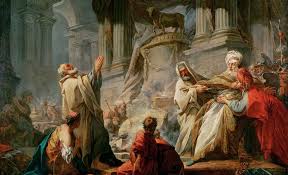
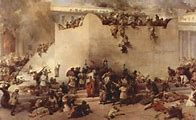
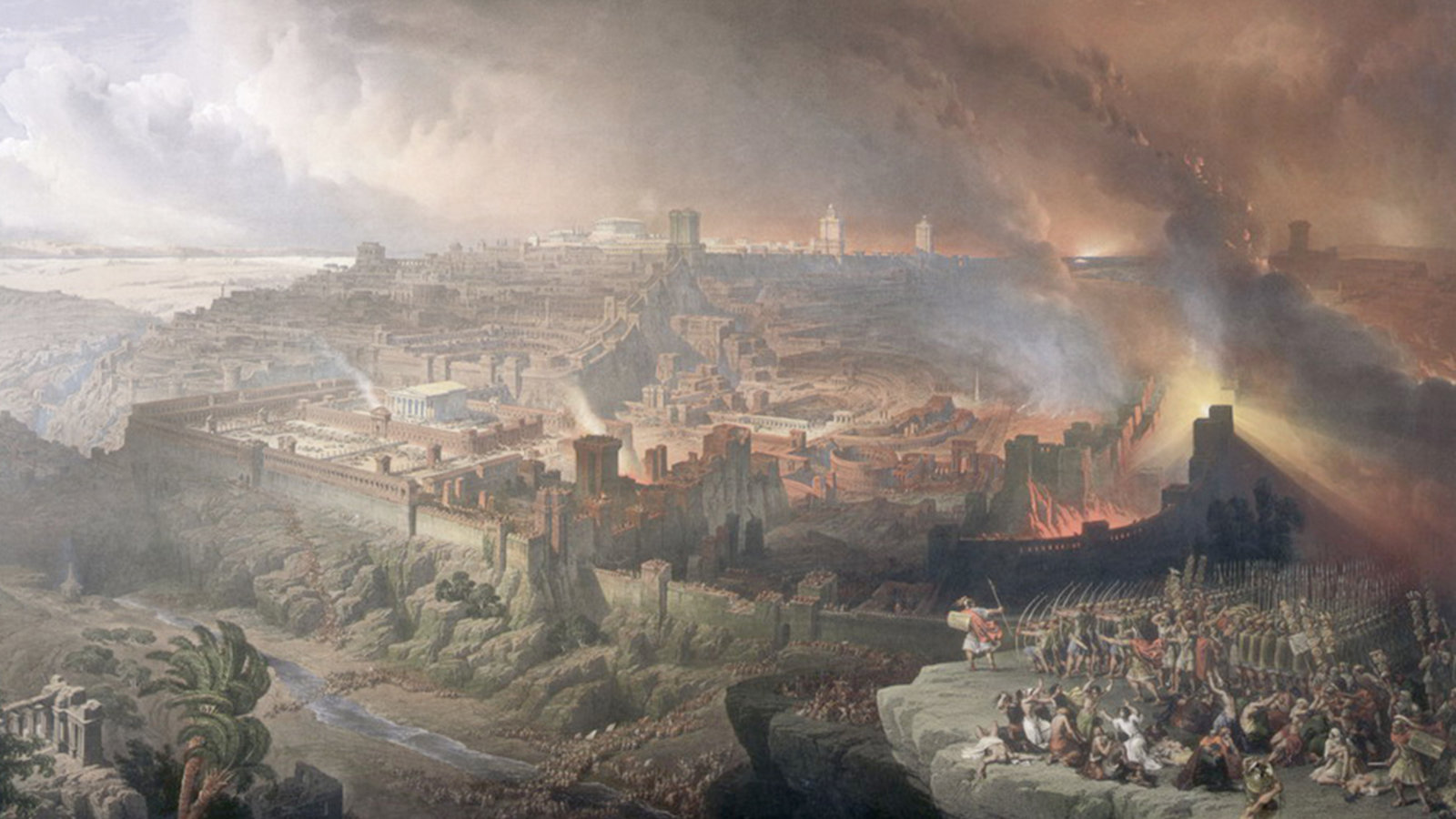
14 And all the army of the Chaldeans who were with the captain of the guard broke down all the walls of Jerusalem round about. — a picture is worth a thousand words!
The Fall of Jerusalem: a picture is worth a thousand words!
15 Then Nebuzaradan, the captain of the guard, carried away captive certain of the poor of the people and the residue of the people who remained in the city, and those who fell away, who fell to the king of Babylon, and the rest of the multitude. — some of the poor of the people he carried captive, and some of them he left behind.
16 But Nebuzaradan, the captain of the guard, left certain of the poor of the land for vinedressers and for husbandmen. — but Nebuzaradan left certain of the poor of the land there; of the land of Judea who lived in the country and had not been concerned in defending the city against the Chaldeans:
— for vinedressers and for husbandmen; to look after the vineyards and fields and dress and manure them, that the king of Babylon might receive some tributes in return by the conquest he had made.
17 Also the pillars of brass that were in the house of the Lord, and the bases, and the brazen sea that was in the house of the Lord, the Chaldeans broke, and carried all their brass to Babylon.
— also the pillars of brass that were in the Tenple; on either aide of the main entrance of the Sanctuary, 1 Kings 7:15, and the bases and the brazen sea that was in the house of the Lord, the Chaldeans broke, in order to make all these pieces fit for transportation and carried all the brass to Babylon.
18 The cauldrons also, and the shovels, and the snuffers, and the bowls, and the spoons, and all the vessels of brass wherewith they ministered, took they away.
— the cauldrons are large pots made of bright brass used for sacrificial worship and the shovels and the snuffers and the bowls and the spoons, vessels for incense and all the vessels of brass wherewith they ministered, took they away, all those used for the altar of burnt offerings in the Court of the Priests.
19 And the basins, and the firepans, and the bowls, and the cauldrons, and the candlesticks, and the spoons, and the cups — that which was of gold in gold and that which was of silver in silver — took the captain of the guard away.
— and the basins and the firepans and the bowls and the cauldrons and the candlesticks and the spoons and the cups, all these used chiefly in the ministrations of the Temple; that which was of gold in gold and that which was of silver in silver, in either case of solid metal, not of some cheap alloy or merely plated, took the captain of the guard away.
20 The two pillars, one sea, and twelve brazen bulls that were under the bases, which King Solomon had made in the house of the Lord — the brass of all these vessels was beyond weighing.
— the two pillars, one sea and twelve brazen bulls that were under the bases, 1 Kings 7:23:, which King Solomon had made in the house of the Lord. The brass of all these vessels was without weight, its mass beyond calculation.
21 And concerning the pillars, the height of one pillar was eighteen cubits, and a fillet of twelve cubits did compass it, and the thickness thereof was four fingers; it was hollow.
— and concerning the pillars, the height of one pillar was eighteen cubits, and a fillet of twelve cubits did compass it, that in round numbers, being the circumference of either of the pillars and the thickness thereof was four fingers; it was hollow. The thirty-five cubits of II Chronicles 3:15 either refer to a different cubit, or they give the sum total of both pillars less the bases.
22 And a capital of brass was upon it; and the height of one capital was five cubits, with network and pomegranates upon the capitals round about, all of brass. The second pillar also and the pomegranates were like unto these.
— and a capital or column of brass was upon it and the height of its upper part, where it curved away from the shaft, was five cubits, with network and pomegranates upon the capitals round about, all of brass, in the nature of ornaments in chains or festoons. The second pillar also and the pomegranates were like unto these;
— the bases (1 Kings 7:27), and the brazen sea (1 Kings 7:23), which were too vast in their proportions to be easily carried away to Babylon, were broken to pieces by the Chaldeans, who carried off the brass of which they were made.
23 And there were ninety and six pomegranates on a side; and all the pomegranates upon the network were a hundred round about. — to the four winds; towards every corner or wind twenty four, which make up ninety six;
— and all the pomegranates upon the network were an hundred round about; four, standing upon the four angles, added to the ninety six to make a hundred;
24 And the captain of the guard took Seraiah the chief priest, and Zephaniah the second priest, and the three keepers of the door. — the three keepers of the door; these were not the ordinary porters, who were taken from among the Levites, but were priests who stood at the door to receive the offerings of the people, and thus were keepers of the sacred treasury.
25 He took also out of the city a eunuch who had the charge of the men of war, and seven men from those who were near the king’s person who were found in the city, and the principal scribe of the host who mustered the people of the land, and threescore men of the people of the land who were found in the midst of the city.
— and threescore men of the people of the land; persons of prime note, who, upon the invasion, betook themselves from the country to the city of Jerusalem with their effects, and to defend it. Josephus calls them rulers or governors.
26 So Nebuzaradan, the captain of the guard, took them and brought them to the king of Babylon at Riblah. — and brought them to Nebuchadnezzar in Riblah; to knew his thought concerning them; how they should be disposed of; and for him to pass sentence on them,
27 And the king of Babylon smote them and put them to death at Riblah in the land of Hamath. Thus Judah was carried away captive out of his own land. — but Nebuchadnezzar smote them and put them to death: and according to Josephus, by having them smitten with the sword; to have their heads cut off.
28 These are the people whom Nebuchadnezzar carried away captive: in the seventh year, three thousand Jews and three and twenty; — in the seventh year, at the first captivity under Jehoiachin, three thousand Jews and three and twenty, these being of the tribe of Judah only, those from other tribes being more than twice as many;
29 in the eighteenth year of Nebuchadnezzar he carried away captive from Jerusalem eight hundred thirty and two persons; — in the eighteenth year of Nebuchadnezzar, after his actual accession to the throne, but nineteen years after he had gotten into power, II Kings 25:8, he carried away captive from Jerusalem eight hundred thirty and two persons;
30 in the three and twentieth year of Nebuchadnezzar, Nebuzaradan, the captain of the guard, carried away captive of the Jews seven hundred forty and five persons: all the persons were four thousand and six hundred.
— in the three and twentieth year, Nebuzaradan, the captain of the guard, carried away captive seven hundred forty and five persons; evidently Jews only, not including any of the other tribes who had sought and found refuge in Jerusalem since the fall of the northern kingdom, were four thousand and six hundred, not including the general multitude and the women and children.
31 And it came to pass in the seven and thirtieth year of the captivity of Jehoiachin king of Judah, in the twelfth month, on the five and twentieth day of the month, that Evilmerodach king of Babylon, in the first year of his reign, lifted up the head of Jehoiachin king of Judah and brought him forth out of prison;
— and it came to pass in the seven-and-thirtieth year of the captivity of Jehoiachin, king of Judah, the decree being issued, II Kings 25:27, that Evilmerodach, king of Babylon (or during Nebuchadnezzar’s exclusion from men among beasts), son and successor of Nebuchadnezzar, in the first year of his reign, lifted up the head of Jehoiachin, king of Judah, and brought him forth out of prison, in which he had been held all these years,
32 and he spoke kindly unto him, and set his throne above the throne of the kings who were with him in Babylon, — and spoke kindly unto him, treated him with great respect, and set his throne above the throne of the king’s that were with him in Babylon, captive monarchs of other conquered nations,
33 and changed his prison garments. And Jehoiachin continually ate bread before him all the days of his life. — giving the captive king new garments, more suitable to his royal dignity than those he wore in prison, filthy and of ill smell.
34 And for his diet, there was a continual diet given him by the king of Babylon, every day a portion until the day of his death, all the days of his life. — every day a portion, until the day of his death, all the days of his life; that is, of Jeconiah’s; how long he lived after this is not known;
— he was now fifty five years of age and cannot be thought to have lived a great while after, having been imprisoned so many years; and it is certain he did not live to the return from the captivity. Of the death of Zedekiah we have no account, only that he died in prison. The Jews say he died at this very time, when Jeconiah was advanced;
— the account here given of Jeconiah has led some to conclude that this chapter was not written by Jeremiah; since it cannot be well thought he should live so long as to the death of this prince; and besides had given an account of the destruction of Jerusalem in the thirty ninth chapter, which he would hardly repeat: though that he might do, partly for the sake of new circumstances here added; and partly as an introduction to the book of the Lamentations, which follows the book of Jeremiah. Amen!
Last thought!
“The anger of the Lord shall not return, until He has executed and till He has performed the thoughts of His heart; in the latter days ye shall consider it perfectly” Jeremiah 23:20.
That is, we wouldn’t be able to understand all these prophecies until the “latter days.” In the latter days could be our time, the endtime, or soon to be, then we shall understand these prophecies clearly: a foretaste of which is that the calamities which will have come upon us are the divine judgement upon our sins. We are all trying, but only in the endtime would we be able to understand these things perfectly. Amen!
Way back in April, 2022, Prime Minister Boris Johnson, intoxicated, purposely flew over to Kyiv to sabotage the Peace Deal between Ukraine and Russia on behalf of President Joe Biden; and as a result, almost one year on, Ukraine is being ravaged and destroyed!
Now, the White House Says It Opposes a Ceasefire in Ukraine before President Xi is headed to Moscow
The US is against any potential Chinese efforts to broker a deal between Russia and Ukraine as Xi is headed to Moscow
The White House has come out against a ceasefire in Ukraine ahead of Chinese President Xi Jinping’s trip to Moscow to potentially mediate between Russian President Vladimir Putin and his counterpart in Kyiv.
Xi is due to arrive in Moscow on Monday and is expected to speak virtually to Ukrainian President Volodymyr Zelensky following his talks with Putin. Xi’s trip comes after Beijing released a 12-point peace plan for Ukraine that called for the two sides to cease hostilities and for peace talks to begin.
Wang Yi, China’s top diplomat with counterparts Musaad bin Mohammed Al Aiban of Saudi Arabia and Ali Shamkhani of Iran in Beijing on March 10, 2023
Zelensky expressed openness to China’s proposal, but it was immediately rejected by President Biden.
White House National Security Council spokesman John Kirby said on Friday:
“We don’t support calls for a ceasefire right now. We certainly don’t support calls for a ceasefire that would be called for by the PRC in a meeting in Moscow that would simply benefit Russia.”
Kirby’s comments come as Ukrainian and Russian forces continue to battle in the Donbas city of Bakhmut, which has become known as the “meat grinder” due to the heavy casualties. Ukraine has been pouring in barely-trained conscripts to fight in the city, and the US thinks Kyiv is wasting too many resources in the battle.
The US wants Ukraine to launch a counteroffensive in the spring, although a senior Ukrainian official told The Washington Postlast week that Kyiv doesn’t have the resources to pull it off. Kirby’s reasoning for opposing a ceasefire at this time is that a pause in fighting could concede territory to Moscow.
Kirby said the ceasefire would, “in effect, recognize Russia’s gains, and its attempt to conquer his neighbor’s territory by force, allowing Russian troops to continue to occupy sovereign Ukrainian territory and, of course, it would be another continued violation of the UN Charter.”
The US and its allies discouraged peace talks and mediation efforts that were conducted shortly after Russia’s February 2022 invasion. At that time, Moscow was seeking a deal that would have reverted to the pre-invasion territorial lines. But now, Ukraine stands to lose much more as Russia has annexed the territory it controls in the Ukrainian oblasts of Kherson and Zaporizhzhia and the breakaway Donbas republics of Donetsk and Luhansk.
“I have seen a horrible thing in the house of Israel; there is the whoredom of Ephraim, Israel is defiled,” Hosea 6:10
“For the day of the Lord is near upon all the nations. As you have done, it shall be done to you; your dealings will return upon your own head” Obadiah 1:15
“In all your dwelling places the cities shall be laid waste, and the high places shall be desolate, that your altars may be laid waste and made desolate, and your idols may be broken and cease, and your images may be cut down, and your works may be abolished,” Ezekiel 6:6
Victoria Nuland Nuland is Jewish and is the daughter of Yale bioethics and medicine professor Sherwin B Nuland, the family’s original surname being Nudelman. She graduated from Choate Rosemary Hall in 1979 and has a BA from Brown University. Nuland is married to historian Robert Kagan, with whom she has two children. Nuland speaks Russian, French, and some Chinese.
Victoria Nulands real name should be VICTORIA NUDELMAN KAGAN but that sounds so Rabbinical and Khazar doesnt it. So she goes by Victoria Nuland.
Assistant Secretary of State for European Affairs “Toria” Nuland was the “mastermind” behind the Feb. 22, 2014 “regime change” in Ukraine, plotting the overthrow of the democratically elected government of President Viktor Yanukovych while convincing the ever-gullible US mainstream media that the coup wasn’t really a coup but a victory for “democracy.”
Assistant Secretary of State for European Affairs Victoria Nuland, who pushed for the Ukraine coup and helped pick the post-coup leaders.
To sell this latest neocon-driven “regime change” to the American people, the ugliness of the coup-makers had to be systematically airbrushed, particularly the key role of neo-Nazis and other ultra-nationalists from the Right Sektor. For the US-organized propaganda campaign to work, the coup-makers had to wear white hats, not brown shirts.
So, for nearly a year and a half, the West’s mainstream media, especially The New York Times and The Washington Post, twisted their reporting into all kinds of contortions to avoid telling their readers that the new regime in Kiev was permeated by and dependent on neo-Nazi fighters and Ukrainian ultra-nationalists who wanted a pure-blood Ukraine, without ethnic Russians.
Any mention of that sordid reality was deemed “Russian propaganda” and anyone who spoke this inconvenient truth was a “stooge of Moscow.” It wasn’t until July 7 that the Times admitted the importance of the neo-Nazis and other ultra-nationalists in waging war against ethnic Russian rebels in the east. The Times also reported that these far-right forces had been joined by Islamic militants. Some of those jihadists have been called “brothers” of the hyper-brutal Islamic State.
Though the Times sought to spin this remarkable military alliance – neo-Nazi militias and Islamic jihadists – as a positive, the reality had to be jarring for readers who had bought into the Western propaganda about noble “pro-democracy” forces resisting evil “Russian aggression.”
Perhaps the Times sensed that it could no longer keep the lid on the troubling truth in Ukraine. For weeks, the Right Sektor militias and the neo-Nazi Azov battalion have been warning the civilian government in Kiev that they might turn on it and create a new order more to their liking.
Nuland saw her big chance on Feb. 20, 2014, when a mysterious sniper – apparently firing from a building controlled by the Right Sektor – shot and killed both police and protesters, escalating the crisis. The rest is history!
Then in congressional testimony, Ms Nuland, the under secretary of state for political affairs, was asked by Senator Marco Rubio, Republican of Florida, whether Ukraine has chemical or biological weapons.
“Ukraine has biological research facilities which, in fact, we are now quite concerned Russian troops, Russian forces, may be seeking to gain control of,” she responded. “So we are working with the Ukrainians on how they can prevent any of those research materials from falling into the hands of Russian forces should they approach.”
If there were a biological or chemical weapon attack inside Ukraine, Mr Rubio asked, would there be any doubt that Russia was behind it?
“There is no doubt in my mind, Senator, and it is classic Russian technique to blame the other guy what they’re planning to do themselves,” Ms Nuland responded. – Having some 46 bio-labs in Ukraine, what are American objectives there, Senator Rubio has no brain to ask!
More recently, his book The World America Made has been publicly endorsed by US President Barack Obama, and its theme was referenced in his 2012 State of the Union Address.
The 9/11 terrorist attacks provided the Bush Administration with a much sought-after pretext to implement a hawkish pre-existing agenda expounded in detail and vigorously lobbied for during the Nineties by the highly influential neo-conservative lobby group named the Project for the New American Century (PNAC).
Since its inception in 1997, PNAC has consistently been the most hawkish of the coterie of neo-con think tanks which provide the Bush administration with its intellectual backbone.
In its seminal report of 2000, ‘Rebuilding America’s Defenses: Strategy, Forces and Resources for a New Century,’ the Project observed that its militaristic agenda might prove difficult to implement “ABSENT A CATASTROPHIC AND CATALYSING EVENT…A NEW PEARL HARBOR” 9/11 proved just so and the so-called “war on terrorism” has been the cover for a new projection of American power.
IN SHORT NULANDS F*CKING HUSBAND IS A BLOOD THIRSTY WARMONGERING NEOCON
BROTHER IN LAW FREDRICK KAGAN
Frederick W Kagan is an American resident scholar at the American Enterprise Institute (AEI), and a former professor of military history at the US Military Academy at West Point. The AEI is another Neocon Jew filled body full of ugly pasty pale faced Cohens and Levites like this specimen above.
Some AEI scholars are considered to be some of the leading architects of the second Bush administration‘s public policy. More than twenty AEI scholars and fellows served either in a Bush administration policy post or on one of the government’s many panels and commissions.
Some AEI scholars are considered to be some of the leading architects of the second Bush administration’s public policy. More than twenty AEI scholars and fellows served either in a Bush administration policy post or on one of the government’s many panels and commissions.
Among the prominent former government officials now affiliated with AEI are former US ambassador to the UN John Bolton, (real surname probably the Jewish Bolten changed to Bolton) now an AEI senior fellow (the sickest crypto Jew in town); former Dutch member of parliament Ayaan Hirsi Ali, an AEI visiting fellow; and former deputy secretary of defense Paul Wolfowitz, now an AEI visiting scholar.
The sister in law (Freddys wife) is another rabid foaming Neocon with boobs Kimberly Ellen Kagan (born 1972) is an American military historian. She heads the Institute for the Study of War and has taught at West Point, Yale, Georgetown University, and American University. Kagan has published in The Wall Street Journal, The New York Times, The Weekly Standard and elsewhere.
She supported the surge in Iraq and has since advocated for an expanded and restructured American military campaign in Afghanistan. In 2009 she served on Afghanistan commander Gen Stanley McChrystal‘s strategic assessment team.
The Institute for the Study of War (ISW) is a think tank founded in 2007 by Kimberly Kagan. ISW describes itself as a non-partisan think tank but it has been described by others as “a hawkish Washington” group favoring an “aggressive foreign policy.” It first gained widespread public attention in the aftermath of the Elizabeth O’Bagy scandal in which it was involved.
The non-profit organization is supported by grants and contributions from large defense contractors, including Tomahawk missile designer Raytheon, F-16 manufacturer General Dynamics, private military company DynCorp and others.It is headquartered in Washington, DC.
“Ephraim surrounds me with lies, and the house of Israel with deceit,” Hosea 11:12
“I have seen a horrible thing in the house of Israel; there is the whoredom of Ephraim, Israel is defiled,” Hosea 6:10
“For the day of the Lord is near upon all the nations. As you have done, it shall be done to you; your dealings will return upon your own head” Obadiah 1:15
“In all your dwelling places the cities shall be laid waste, and the high places shall be desolate, that your altars may be laid waste and made desolate, and your idols may be broken and cease, and your images may be cut down, and your works may be abolished,” Ezekiel 6:6
Former prime minister Malcolm Turnbull says Australia’s plan to acquire nuclear-powered submarines comes with a “very high risk” of failure and faces huge challenges of recruiting and training enough skilled workers.
It follows Labor’s most revered living leader Paul Keating launching a scathing attack on the landmark military deal, which he described as Australia’s worst international decision since the conscription policy during World War I.
Prime Minister Anthony Albanese announced details of Australia’s submarine pact with the US and UK – part of the AUKUS security alliance – on Tuesday.
As part of the arrangement, Australia will command a fleet of eight nuclear-powered submarines within the next three decades.
Mr Turnbull said Australia would need to train thousands of skilled workers, who then faced a challenge of finding work in a relevant field after the project finished.
“The human resources challenges of this are really considerable, because we don’t have a nuclear industry in Australia,” he told ABC RN.
The former Liberal leader said the deal came with a “very high risk” of failing to deliver because the British submarines were yet to be designed.
Mr Turnbull also questioned whether Britain was going to be “financially strong enough” to be Australia’s partner in delivering the boats, with the country’s economy forecast to be the worst-performing large advanced economy this year.
He said unlike the UK, France – which Australia tore up a $90 billion submarine deal with for AUKUS – was already in the Indo-Pacific and had millions of citizens located there.
Mr Turnbull said all of these issues should have been publicly debated.
“We’ve been caught up in this hoopla where anyone that expresses any concerns about it is accused of being or implied that they’re lacking in patriotism,” he said.
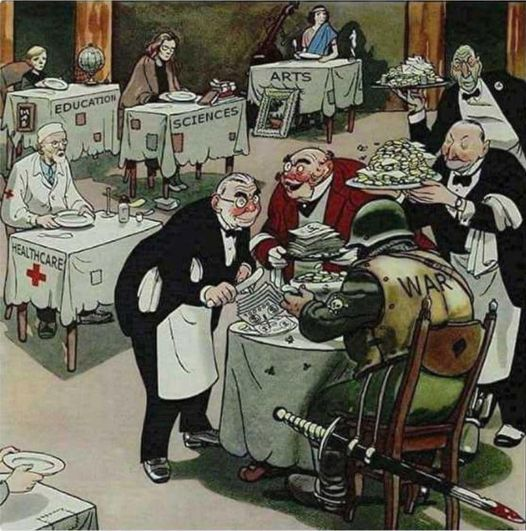
Mr Keating condemned the $368 billion price tag and questioned Australia’s sovereignty within the arrangement.
[$368 billion would allow Australia between 40 to 50 Collins-class submarines, with 15 operational all the time; instead of just three of the eight Virginia-class]
“For the day of the Lord is near upon all the nations. As you have done, it shall be done to you; your dealings will return upon your own head” Obadiah 1:15
“In all your dwelling places the cities shall be laid waste, and the high places shall be desolate, that your altars may be laid waste and made desolate, and your idols may be broken and cease, and your images may be cut down, and your works may be abolished,” Ezekiel 6:6
Chapter 49 contains prophecies concerning the judgements of God on several nations and kingdoms, chiefly bordering on the land of Israel; on the Ammonites; which lies to the east of the Jordan; and of Edomites, Edom, which lay south to the land of Israel; the kingdom of Damascus, or the Syrians, the Kedarenes or Arabians, and on the Elamites or Persians.
“The anger of the Lord shall not return, until He has executed and till He has performed the thoughts of His heart; in the latter days ye shall consider it perfectly” Jeremiah 23:20.
That is, we wouldn’t be able to understand these prophecies until the “latter days.” In the latter days could be our time, the endtime, or soon to be, then we shall understand these prophecies clearly: a foretaste of which is that the calamities which will have come upon us are the divine judgement upon our sins. We are all trying, but only in the endtime would we be able to understand these things perfectly.
The fate of the modern state of Jordan lies in this prophecy! A prophecy of Esau, Edom: the Targun identifies the Southland, Sepharad, as Spain, Obadiah 1:20.
A prophecy of Esau, Edom: the Targun identifies the Southland, Sepharad, as Spain, Obadiah 1:20.
Jeremiah 49
1 Concerning the Ammonites, thus saith the Lord: “Hath Israel no sons? Hath he no heir? Why then doth their king inherit Gad, and his people dwell in his cities? — hath Israel no sons? hath he no heir? certainly he has, and who ought to possess the land east of the Jordan;
— is there no posterity of Israel that the king of the Ammonites hath taken possession of Gad, as if he had a right to it, and his people dwell in the cities of it? or, why did Gad lost their land to the children of Ammon?
— this is speaking retrospectively of the ten tribes, for these had been long ago carried captive, and left no heirs of their tribes to inherit their land there; except for the tribes of Judah and Benjamin; who would be their next in blood, the lawful heirs of their lands;
— 1 Kings 11:5; the Ammonites having got possession of the land set up their idol, Milcom, in it where their temples were built for him and altars erected and sacrifices offered to him, and must be very offensive to and highly resented by the God of Israel.
2 Therefore behold, the days come,” saith the Lord, “that I will cause an alarm of war to be heard in Rabbah of the Ammonites; and it shall be a desolate heap, and her daughters shall be burned with fire; then shall Israel be heir unto them that were his heirs,” saith the Lord.
— therefore behold the days come, saith the Lord; or “are coming” as in many translations, indicating the latter days; this being their case, its timing could be as well meant for the endtime; thus a prophecy;
— that I will cause an alarm of war to be heard in Rabbah of the Ammonites; the metropolis of the Ammonites; it was their royal city in the times of David; this the Lord threatens with the sound of the trumpet, the alarm of war or the noise of warriors as the Targum says;
— the Chaldean army under Nebuchadnezzar, who, about five years after the destruction of Jerusalem subdued the Ammonites; and it shall be a desolate heap; be utterly destroyed; its walls broken down, and houses demolished, and made a heap of rubbish:
— her daughters shall be burnt with fire: Rabbah was the mother city, and the other cities of the Ammonites were her daughters, which are threatened to be destroyed with fire; or it may mean the villages round Rabbah, it being usual in Scripture for villages to be called the daughters of cities; so the Targum paraphrases it, “the inhabitants of her villages shall be burnt with fire,”
— then shall Israel be heirs unto them that were his heirs: that is, shall inherit their land again which the Ammonites pretended to be theirs; yea, not only possess their own land but the land of Ammon too: this was fulfilled not immediately upon the destruction of Ammon, but in part upon the return of the Jews from the Babylonish captivity when they repossessed their own country; and partly in the times of the Maccabees, when they subdued the Ammonites.
3 “Howl, O Heshbon, for Ai is despoiled! Cry, ye daughters of Rabbah; gird you with sackcloth! Lament, and run to and fro by the hedges; for their king shall go into captivity, and his priests and his princes together.
— howl, O Heshbon, at that time occupied by the Ammonites; for Ai is spoiled, had already been subdued by the invaders; cry, ye daughters of Rabbah, the towns and villages near the capital, gird you with sackcloth, in token of deep mourning;
— lament and run to and fro by the hedges in the fenced encampment, such as were quickly erected out in the open fields, since the cities no longer offered any protection; for their king shall go into captivity, in this case their idol Melchom with whom the heathen king was pleased to identify himself and his priests and princes together.
4 Why gloriest thou in the valleys, thy flowing valley, O backsliding daughter, that trusted in her treasures, saying, ‘Who shall come unto me?’ — wherefore gloriest thou in the valleys, thy flowing valley, flowing with abundance, with milk and honey,
— O backsliding daughter? so called because the children of Ammon had denied their descent from Lot and had turned to idolatry;
— that trusted in her treasures, in her wealth of resources and goods, saying, Who shall come unto me? namely, in a hostile attack. The Ammonites boasted that no enemy could successfully launch a campaign against their land.
5 Behold, I will bring a fear upon thee,” saith the Lord God of hosts, “from all those that be about thee; and ye shall be driven out, every man straight forth, and none shall gather up him that wandereth.
— behold, God will bring a fear upon thee, whose misfortune and overthrow would bring terror upon them; and ye shall be driven out, every man, right forth, straight ahead, without turning; this is the fate of Jordan!
6 And afterward I will bring back the captives of the children of Ammon,” saith the Lord. — and afterwards God will bring again the captivity of the children of Ammon, perhaps by Cyrus;
— for, in the times of Judas Maccabeus, the children of Ammon were again a large and mighty people, “Afterward he passed over to the children of Ammon, where he found a mighty power and much people, with Timotheus their captain” (1 Maccabees 5:6).
7 Concerning Edom, thus saith the Lord of hosts: “Is wisdom no more in Teman? Is counsel perished from the prudent? Is their wisdom vanished? — concerning Edom, thus saith the Lord of hosts; or “unto Edom” thus saith the Lord;
— or “against Edom” all which is true, as observed on Jeremiah 49:1; meaning the Idumeans, the posterity of Esau, who was called Edom; Herod the Great, an Idumean, king over Judea; was an example of the Idumean cruelty over the Jews; which could be as yet future, points at the destruction of Rome and the Romans, who with the Jews frequently go by the name of Edom;
— is wisdom no more in Teman? a city in Edom which had its name from Teman, a grandson of Esau, Genesis 36:11; whose descendants were called Temanites; one of which was Eliphaz, a friend of Job’s, Job 2:11; it was a principal city, famous for men of wisdom.
— the Targum says, “is there no more wisdom in the south?” but Rashi interprets it as Edom, which lay south to the land of Israel; “And your south side shall be from the desert of Zin close by the side of Edom” (Numbers 34:3).
— One other theory is that the Ottoman Turks (or today’s Turkey) are the sons of Teman. Perhaps they could be another branch.
8 Flee ye, turn back, dwell deep, O inhabitants of Dedan; for I will bring the calamity of Esau upon him, at the time that I will visit him. — flee ye, turn back, dwell deep, O inhabitants of Dedan; another city in Idumea; though some take it to be a country in Arabia, bordering on Edom, and subdued by the Edomites: the inhabitants of this place are advised to “flee” for their lives;
— since the enemy was just upon them; and “turn back” lest they should fall into his hands; and hide themselves in some deep caverns of the earth, in holes, and dens of rocks and such like places. It is a prophecy that they should flee from and turn their backs on their enemies and betake themselves to some very secret places for safety;
— for I will bring the calamity of Esau upon him; which was determined concerning him, threatened to him and was his just desert; even the utter destruction of the whole land: the time of his visitation; the time fixed to visit him in a way of wrath and punishment to come.
9 If grape-gatherers come to thee, would they not leave some gleaning grapes? If thieves by night, they will destroy till they have enough. — the Targum renders it, “if thy spoilers, as grape gatherers, should come to thee,” would not they leave some for the poor to glean? certainly they would and not take every cluster;
— if thieves by night, they will destroy till they have enough who break into houses by night, these will eat and drink as much as is sufficient, and carry off what serves their turn; but they seldom take away everything they find in a house; but it is suggested that the Chaldeans should take away all from the Edomites and leave them nothing; see Obadiah 1:5.
10 But I have made Esau bare; I have uncovered his secret places, and he shall not be able to hide himself; his seed is despoiled, and his brethren and his neighbors, and he is no more. — but I have made Esau bare; by the hand of the Chaldeans; stripped him of everything that is valuable; of his cities, castles, villages, people, wealth and treasure:
— I have uncovered his secret places; where either his substance was hid, or his people; these were made known to their enemies, who seized on both:
— and he shall not be able to hide himself; even in his deep places in the caves and dens of the earth, but his enemy shall find him out:
— his seed is spoiled and his brethren and his neighbours, his children, as the Targum says; and his brethren, the Ammonites and Moabites; and his neighbours, the Philistines; or as many as were with him and belonged unto him:
— and he is not: his kingdom is not; he is no more a people and nation, but all destroyed by the sword or carried captive; or there should be none left of his brethren, and neighbours, and friends to say to him what follows: “leave thy fatherless children.”
11 Leave thy fatherless children; I will preserve them alive; and let thy widows trust in Me.” — the Targum takes them to be an address to the people of Israel, paraphrasing them thus: “you, O house of Israel, your orphans shall not be left, I will sustain them and your widows shall trust in my word.”
12 For thus saith the Lord: “Behold, they whose judgement was not to drink of the cup have assuredly drunk. And art thou he that shall altogether go unpunished? Thou shalt not go unpunished, but thou shalt surely drink of it.
— behold, they whose judgement was not to drink of the cup have assuredly drunken; meaning some of the other nations, who had not dealt so ill with the Jews as the Edomites had, at least their sins were not so aggravated as theirs were in a comparative sense; for otherwise it was but just that they should be treated in the manner they were; since they were not so guilty as these were;
— and art thou he that shalt altogether go unpunished? if lesser sinners are not let go free, how should it be thought that greater ones should? and especially if judgement had begun at God’s own people, the wicked Edomite could not expect to escape;
— thou shalt not go unpunished, but thou shalt surely drink of it; the cup of wrath and vengeance; or have the just punishment inflicted on them threatened them.
13 For I have sworn by Myself,” saith the Lord, “that Bozrah shall become a desolation, a reproach, a waste, and a curse; and all the cities thereof shall be perpetual wastes.” — but Bozrah of Idumea is the royal city of Edom, Isaiah 63:1; shall become a desolation, a reproach, a waste and a curse.
14 I have heard a word from the Lord, and an ambassador is sent unto the heathen, saying, “Gather ye together, and come against her, and rise up to the battle!”
15 “For lo, I will make thee small among the heathen and despised among men. — for, lo, I will make thee small among the nations; Or “I have given thee” or “made thee” as if Edom was a people few in number, and their country not large, and which was the reason of gathering the Chaldeans against them, to reduce their number, weaken their strength, and destroy their substance and so make them a small, feeble and contemptible people;
— and despised among men: for the fewness of their men, the desolation of their country, the consumption of their wealth and riches, their poverty and meanness; see Obadiah 1:2 “Behold, I have made thee small among the nations; thou art greatly despised (2 “Behold, I have made thee small among the nations; thou art greatly despised.
— thou art greatly despised; a parallel here in Jeremiah 49:15 “For lo, I will make thee small among the heathen and despised among men,” as the term beaners (Latinx or Latinos?) could allude to); the Targun identifies the Southland, Sepharad, as Spain (more at the end).
16 Thy terribleness hath deceived thee, and the pride of thine heart, O thou that dwellest in the clefts of the rock, that holdest the height of the hill; though thou shouldest make thy nest as high as the eagle, I will bring thee down from thence,” saith the Lord.
— thy terribleness hath deceived thee, the fact that other nations seemed to stand in awe of Edom had caused him to think that he was really formidable, and the pride of thine heart, insolence usually having this influence upon the heart of the proud to deceive them, wherefore the Lord now calls out;
— O thou that dwellest in the clefts of the rock, that boldest the height of the hill, some of the forts of Idumea being situated on almost inaccessible cliffs, though thou shouldest make thy nest as high as the eagle, I will bring thee down from thence, saith the Lord, showing that before Him no stronghold is impregnable;
— one Report by McKinsey & Company says of the 60 millions Latinos in US, they often live in ‘deserts’ where adequate housing, groceries are hard to find. “Nearly 9 in 10 of the Latino residents in such communities lived in five states: California, Florida, New Jersey, New York and Texas.”
McKinsey & Company: Latinos are projected to make up 22.4 percent of the US labor force by 2030 and more than 30 percent by 2060 (Latinos population to 111.2 million by ’60).
17 “Also Edom shall be a desolation; every one that goeth by it shall be astonished and shall hiss at all the plagues thereof. — also Edom shall be a desolation; not only Bozrah, its principal city, before spoken of, but the whole country of Idumea should be laid waste;
— its fortified cities destroyed; its riches plundered; and its inhabitants slain with the sword; every one that goeth by it shall be astonished, filled with horrified surprise at the total overthrow of the country and shall hiss at all the plagues thereof with a sound expressing derision and mockery.
18 As in the overthrow of Sodom and Gomorrah and the neighbor cities thereof,” saith the Lord, “no man shall abide there, neither shall a son of man dwell in it. — as in the overthrow of Sodom and Gomorrah; which was so sudden and general, that nothing was left, or any spared; so should it be with Edom;
— no man shall abide there, neither shall a son of man dwell in it; it would be an uninhabited desert;
— the Lord was asked to remember in Psalms 137 against the Edomites who had asked that Jerusalem be razed to its foundations:
Remember, O Lord, the children of Edom in the day of Jerusalem’s fall, who said, “Raze it, raze it, even to the foundation thereof!” Psalms 137:7
— to call for the razing of the Temple of God “Raze it, raze it, even to the foundation thereof!” is a heavy crime against the God of the Most High. The Most High dwelled there and these Edomites cheered the Babylonians to burn it down? Madness! Just Madness!!!
19 Behold, he shall come up like a lion from the swelling of the Jordan against the habitation of the strong; but I will suddenly make him run away from her. And who is a chosen man, that I may appoint over her? For who is like Me? And who will appoint Me a time? And who is that shepherd that will stand before Me?”
— behold, he shall come up like a lion from the swelling of Jordan; the Targum interprets it of a king and his army, paraphrasing the words thus, “behold, a king with his army shall come up against them, as a lion comes up from the height of Jordan” as Nebuchadnezzar and his army that should come up against the Edomites from the land of Judea, where Jordan was;
— against the habitation of the strong the land of Edom, a country well fortified in which mighty men dwelt; particularly Mount Seir, where their king was and which was “the fold of the mighty” either of the mighty shepherd as it may be rendered or of the strong place; but what is this to a lion?
— and who is that shepherd that will stand before me? or king, as the Targum says, any king, prince or potentate, who both in Scripture and in other writings, are often called shepherds; the king of Edom is particularly pointed at whose habitation or fold is before observed: alas! what could such a shepherd do? or how could he stand before the almighty God or any lion he should send?
20 Therefore hear the counsel of the Lord that He hath taken against Edom, and His purposes that He hath purposed against the inhabitants of Teman. Surely the least of the flock shall draw them out; surely He shall make their habitations desolate with them.
— surely he shall make their habitations desolate with them; or “their folds” the sheep shall be destroyed and their folds shall be demolished; that is, the inhabitants of Edom shall be slain with the sword, and their cities, towns and villages, shall be laid waste;
— who is Edom/Esau today? The answer lies in the book of Obadiah; and Jonathan Targum identifies Esau (Sepharad of the Southland identified) as Spain! Obadiah 1:20; the Targums identified Sepharad with Spain, hence, Spanish Jews are called Sephardim;
— Wikipedia: Sepharad (/sɛfəræd/or səˈfɛərəd/ Hebrew: סְפָרַד Sp̄āraḏ; also Sefarad, Sephared, Sfard) is the Hebrew name for the Iberian peninsula. A place called Sepharad, probably referring to Sardis in Lydia (‘Sfard’ in Lydian), in the Book of Obadiah (Obadiah 1:20, 6th century BC) of the Hebrew Bible. The name was later applied to Spain and is analogous to Tzarfat or Ashkenaz.
21 The earth is moved at the noise of their fall; at the cry the noise thereof was heard in the Red Sea. — the earth is moved at the noise of their fall, quaking with its intensity, at the cry the noise thereof was heard in the Red Sea, or “a crying the noise of it is heard at the Red Sea.”
22 Behold, he shall come up and fly as the eagle, and spread his wings over Bozrah; and at that day shall the heart of the mighty men of Edom be as the heart of a woman in her pangs.
— behold, he, the conqueror, Nebuchadnezzar, the king of Babylon; was a great eagle with his famed cruelty over the Jews as king over Judea; shall come up and fly and spread his wings as the eagle over Bozrah, to pounce down upon the whole country;
— and at that day shall the heart of the mighty men of Edom be as the heart of a woman in her pangs. No matter how impregnable the position of God’s enemies may seem in the eyes of human beings, they will quickly fall before the attack of the Lord.
23 Concerning Damascus: “Hamath is confounded, and Arpad, for they have heard evil tidings; they are fainthearted; there is sorrow on the sea; it cannot be quiet. — concerning Damascus. Hamath, a powerful city on the Orontes and formerly the capital of a country of the same name, is confounded, and Arpad, another mighty city, both of them now within the confines of Syria;
— for they have heard evil tidings; they are faint-hearted, full of concern on account of the reports which they have heard; there is sorrow on the sea, terror among the inhabitants along its shores; it cannot be quiet, there is no rest for worry over the outlook.
24 Damascus is waxed feeble and turneth herself to flee, and fear hath seized on her; anguish and sorrows have taken her, as a woman in travail. — Damascus is waxed feeble, utterly discouraged and enfeebled; and turneth herself to flee, and fear hath seized on her, anguish and sorrows have taken her as a woman in travail, the terror of utter despair.
25 How is the city of praise not left, the city of My joy! — how is the city of praise not left, the city of my joy? How was it that the place of delight as Damascus was called of old, was not abandoned by its inhabitants, so that they might have saved their lives by a speedy flight?
26 Therefore her young men shall fall in her streets, and all the men of war shall be cut off in that day,” saith the Lord of hosts. — therefore her young men shall fall in her streets, and all the men of war shall be cut off in that day, saith the Lord of hosts; so great had been their terror at the approach of the enemy that they had not even had recourse to flight and so were cut down in the very streets of their city.
27 “And I will kindle a fire in the wall of Damascus, and it shall consume the palaces of Benhadad.” — and I will kindle a fire in the wall of Damascus, and it shall consume the palaces of Benhadad, the royal dwellings and therewith at least a part, if not all, of the city.
28 Concerning Kedar and concerning the kingdoms of Hazor, which Nebuchadnezzar king of Babylon shall smite, thus saith the Lord: “Arise ye, go up to Kedar, and despoil the men of the East. — concerning Kedar, and concerning the kingdoms of Hazor; a new prophecy concerning the Arabians; for Kedar was a son of Ishmael;
— which Nebuchadnezzar king of Babylon shall smite, thus saith the Lord: that is, “thus saith the Lord concerning” or “unto” or “against Kedar” as in Jeremiah 49:1 which the king of Babylon “hath smitten” the past for the future, common in prophetic language: or “is about to smite” would do it in a very little time; for the phrase, “thus saith the Lord” is not to be connected with what follows after, but with what goes before; though indeed the next words are the words of the Lord to the Chaldeans:
— and spoil the men of the east; the Arabians, which lay east of Judea and Babylon: or “the children of Kedem” the same with Kedemah, another son of Ishmael, Genesis 25:15; whose posterity dwelt still more to the east; the Targum renders it “the children of the east.”
29 Their tents and their flocks shall they take away; they shall take for themselves their curtains and all their vessels and their camels; and they shall cry unto them, ‘Fear is on every side!’ — their tents and their flocks, the chief possessions of nomads, shall they take away; they shall take to themselves their curtains, the costly woven goods and the hangings of their tents;
— and all their vessels, household utensils as well as such pieces of furniture and adornment as comprised their wealth and their camels; and they, the invading forces, shall cry unto them, in a shout of war, Fear is on every side.
30 Flee, get you far off! Dwell deep, O ye inhabitants of Hazor,” saith the Lord. “For Nebuchadnezzar king of Babylon hath taken counsel against you, and hath conceived a purpose against you. — flee, get you far off, run apace, dwell deep, hide themselves in remote places;
— O ye inhabitants of Hazor! saith the Lord; for Nebuchadnezzar, king of Babylon hath taken counsel against you, devised a plan to subdue them and hath conceived a design against you. This warning is addressed to the wilderness dwellers, since no conqueror would venture to follow them into the trackless wastes of the desert.
31 “Arise, get you up unto the wealthy nation, that dwelleth without cares,” saith the Lord, “which have neither gates nor bars, which dwell alone. — arise, get you up unto the wealthy nation, a tranquil tribe, having no presentiment of evil that dwelleth without care in calm security, saith the Lord, which have neither gates nor bars, not dwelling in fenced and fortified cities;
— which dwell alone with little or no intercourse with other nations or tribes from which they might expect assistance in case of an attack.
32 And their camels shall be a booty, and the multitude of their cattle a spoil; and I will scatter into all winds them that are in the utmost corners; and I will bring their calamity from all sides thereof,” saith the Lord. — and their camels shall be a booty and the multitude of their cattle a spoil, a welcome bit of plunder for the enemies;
— and God will scatter into all winds them that are in the utmost corners, those who have the edges of their hair trimmed; for these tribes had the custom of clipping the hair of head and beard in a peculiar angle; and I will bring their calamity from all sides thereof, saith the Lord.
33 “And Hazor shall be a dwelling for dragons, and a desolation for ever; there shall no man abide there, nor any son of man dwell in it.” — and Hazor shall be a dwelling for dragons, the habitation of jackals and a desolation forever;
— there shall no man abide there nor any son of man dwell in it. This prophecy was fulfilled when the Chaldeans on their way to the West and South, sent detachments of troops to bring these nomadic tribes into subjection.
34 The word of the Lord that came to Jeremiah the prophet against Elam, in the beginning of the reign of Zedekiah king of Judah, saying, — the word of the Lord that came unto Jeremiah the prophet against Elam; the Persians, as it is commonly understood, who descended from Elam the son of Shem, Genesis 10:22;
— according to Josephus; but rather the country of Elymais is here designed; which though in the times of Cyrus was added to and made a part of the Persian empire, yet was a country distinct both from Persia and Media; and as though as near unto Persia and bordering on Media, a country that belonged to the Assyrians; and so it seems that Elam served under Sennacherib, king of Assyria, when he besieged Jerusalem.
35 “Thus saith the Lord of hosts: “‘Behold, I will break the bow of Elam, the chief of their might. — thus saith the Lord of hosts, I will break the bow of Elam; the inhabitants of this country were famous for their skill in archery; this the Lord threatens to break so that it should be useless and of no more service to them to defend themselves or annoy others;
— their strength, as the Targum says; that in which their great strength and security lay; in which they put their trust and confidence; the chief of their might; which may be interpreted by way of apposition of their bow, the chief instrument of their might and power;
— or may design their mighty men, the archers themselves, who should be destroyed, even Elam itself, and all the inhabitants of it especially their warriors, who should be slain or carried captive.
36 And upon Elam will I bring the four winds from the four quarters of heaven, and will scatter them toward all those winds; and there shall be no nation whither the outcasts of Elam shall not come.
— and upon Elam will I bring the four winds from the four quarters of heaven; the Targum interprets it the four kingdoms; see Daniel 7:2. Some think this had its accomplishment in the times of Alexander; or else after his death in the times of his four successors;
— but rather in the times of Nebuchadnezzar, who should bring with him, in his army, people that dwelt in the several parts of the world, comparable to the winds for their swiftness and strength; whose blast would be so great as to drive the Elamites to every part of the world, as every light thing is by the wind:
— and will scatter them towards all those winds; those four winds, east, west, north and south:
— and there shall be no nation whither the outcasts of Elam shall not come; those that are driven out of it, forced to flee from it or are taken captive, should come into the several nations of the world; so that there would not be any in which an Elamite was not.
37 For I will cause Elam to be dismayed before their enemies and before them that seek their life; and I will bring evil upon them, even My fierce anger,’ saith the Lord; ‘and I will send the sword after them till I have consumed them.
— for I will cause Elam to be dismayed before their enemies; frightened; thrown into the utmost consternation so that they shall have no heart nor spirit to go out against them and meet them and defend themselves; but make all haste imaginable to flee from them, such a panic would seize them;
— and before them that seek their life; a further description of their enemies; they being such, who, not content with their substance sought to take away their lives; nothing less would satisfy them; being cruel and blood thirsty:
— and I will bring evil upon them even my fierce anger, saith the Lord; and a greater evil than that cannot be; signifying that the destruction that should be made among them would be the effect of the wrath of God upon them for their sins:
— and I will send the sword after them till I have consumed them; that is, those that slay with the sword, as the Targum says; these should go after those that fled and destroy them till the greater part of them were consumed; for all of them that were taken were not destroyed; or otherwise there would have been none to return from captivity as is promised at the close of this prophecy.
38 And I will set My throne in Elam, and will destroy from thence the king and the princes,’ saith the Lord. — my throne in Elam; this is called the Lord’s throne, because he gave it to him; his conquest of Elam, and his dominion over it, were from him;
— and will destroy from thence the king and the princes; either when Alexander subdued it, or Cyrus, or rather Nebuchadnezzar, whose palace probably was, or his successors was, in Shushan in Elam, as observed from Daniel 8:2; Jeremiah 25:25;
— though that is observed in the first year of his reign, some have thought that it is best to understand it or Cyrus, the Lord’s servant and anointed; and whose throne might well be called the throne of God, and when this country of Elam, or Elymais, became at part of the Persian empire, and never had any more kings to reign over it separately.
39 “‘But it shall come to pass in the latter days, that I will bring back the captives of Elam,’ saith the Lord.” — and will destroy from thence the king and the princes, saith the Lord; so that there should be no more kings of Elam, and princes and nobles of their own, after this time; and because mention is made of the kings of Elam in the times of Nebuchadnezzar, Jeremiah 25:25;
— though that is observed in the first year of his reign, some have thought that it is best to understand it or Cyrus, the Lord’s servant and anointed; and whose throne might well be called the throne of God, which he gave him, and set him on in an eminent manner, not only there, but elsewhere; see Ezra 1:2;
— and when this country of Elam, or Elymais, became at part of the Persian empire, and never had any more kings to reign over it separately. Some of the Jewish Rabbins interpret the king and princes of Vashti of Haman and his sons; but very wrongly.
— that I will bring again the captivity of Elam, saith the Lord.
And the captives of this host of the children of Israel shall possess that of the Canaanites, even unto Zarephath; and the captives of Jerusalem who are in Sepharad (בִּסְפָרַ֑ד Hebrew 5614) shall possess the cities of the south. Obadiah 1:20
And the exiles of this nation of the Children of Israel that is in the land of the Canaanites (shall inherit) until Zerapahath. And the exiles of Jerusalem that are in Ispamiah will inherit the villages of the south land. Obadiah 1:20 (Targum: Jonathan)
— Rashi: And this exiled host: Heb. הַחֵל. Jonathan renders: This people. הַחֵל, An expression of a host. Cf. (Isa. 36:2) “And he came to Jerusalem with an army (חֵיל) of a great multitude,” which deals with Rabshakeh, only that this one is missing a “yud.” It is also possible to explain גָלֻת הַחֵל as “the exile of this valley.”
— and the exile of Jerusalem which is in Sepharad: who are of the people of Judah who were exiled to Sepharad – they shall inherit the cities of the southland, which are in the Southern part of Eretz Israel. The exegetes [a person who interprets text, especially the Scriptures] claim that Zarephath is the kingdom called France in French.
— Jonathan renders: Spain (Rashi quoting the Targum: Sepharad shall inherit the cities of the Southland rendering it as Spain); the Targums identified Sepharad with Spain (Ispamia or Ispania), hence, Spanish Jews are called Sephardim;
— Peshitta (Lamsa): The first exiles, that is, of the children of Israel, shall possess the land from Canaan as far as Zarephath; and the exiles of Jerusalem who are in Spain shall possess the cities of the south (hard copy).
— Cambridge Bible for Schools and Colleges: Sepharad is the name of a place; the modern Jews understand it of Spain, and accordingly, “at the present day the Spanish Jews, who form the chief of the two great sections into which the Jewish nation is divided, are called by the Jews themselves the Sephardim, German Jews being known as the Ashkenazim.”
The Chaldeans, especially under Nebuchadnezzar their king, has been described by God as “the king of Babylon, My servant” in multiple places (Jeremiah 25:9, 27:6, 43:10). So this and the following chapter contain a long prophecy concerning the destruction of Babylon following their judgement as well.
The term, my servant, its intended meaning might be mistook in our society today, and thus not many of God’s shepherd understand this concept properly; what God really means and for all practically being prophecised to mean, it is actually “my horsewhip.”
1 The word that the Lord spoke against Babylon and against the land of the Chaldeans by Jeremiah the prophet: — the word that the Lord spoke against Babylon; or the city of Babylon, the metropolis of the Chaldean empire; sometimes it signifies the whole country, here the city only as appears by what follows:
— and against the land of the Chaldeans; where the Jews were carried captive, for whose comfort this prophecy is delivered out; and which had subdued other nations, and was become an universal monarchy; these people are mentioned last, because the rest of the nations were to drink the cup of God’s wrath at their hands, and then the Chaldeans were to drink it after them; see Jeremiah 25:9;
— this is to be understood not only of Babylon and its empire, literally taken, but of mystical Babylon and its dependencies; of Rome and its jurisdiction; the last enemies of the church and people of God, who will be destroyed by the pouring out of the seven vials; see Revelation 15:1. This prophecy, which is called “the word that the Lord spoke” for it was from him the warning was decreed and declared.
2 “Declare ye among the nations, and proclaim and set up a standard; proclaim and conceal not. Say, ‘Babylon is taken, Bel is confounded, Merodach is broken in pieces! Her idols are confounded, her images are broken in pieces!’
— declare ye among the nations and publish and to call the attention of all men to the importance and the significance of this announcement; declare and conceal not; say, Babylon is taken; Bel, the chief deity of the Chaldeans, thought by some to be Baal by contraction;
— is confounded; Merodach, another name for the same idol is broken in pieces. Her idols are confounded, covered with shame and confusion, her images are broken in pieces, powerless before the almighty power of Yehovah.
3 For out of the north there cometh up a nation against her, which shall make her land desolate, and none shall dwell therein; they shall be removed, they shall depart, both man and beast.
— for out of the North there cometh up a nation against the Chaldeans; (1) the Medes and Persians, under Cyrus were one nation; and not only lay North of Judea where this prophecy came, but of Babylon, against which they were to come; and besides, Cyrus came through Assyria to Babylon which lay North of it; see Isaiah 41:25;
— or (2) is this a prophecy for the endtime? The triple “shall” nar, it is a a quadruplet or quadruple: thus very much indicative of a prophecy; North of Babylon, the Chaldeans, lays Russia, Gog and Magog? Others, like Joel Richardson, says Turkey.
4 “In those days and in that time,” saith the Lord, “the children of Israel shall come, they and the children of Judah together, going and weeping; they shall go, and seek the Lord their God.
— in those days, and at that time, saith the Lord; when Babylon shall be taken and destroyed, then what follows shall be accomplished; which, as it respects the conversion of Israel, shows that this prophecy is not to be restrained to literal Babylon:
— the children of Israel shall come, they and the children of Judah together: this is prophetic, parallel to Ezekiel 37 where the whole house of Jacob will be joined together.
5 They shall ask the way to Zion with their faces turned thitherward, saying, ‘Come, and let us join ourselves to the Lord in a perpetual covenant that shall not be forgotten.’ — they shall ask the way to Zion, the habitation of Yehovah, their faces toward Jerusalem;
— saying, Come and let us join ourselves to the Lord in a perpetual covenant that shall not be forgotten as the first covenant had been act aside by an apostate nation.
6 My people hath been lost sheep; their shepherds have caused them to go astray. They have turned them away on the mountains; they have gone from mountain to hill; they have forgotten their resting place.
— my people hath been lost sheep; their shepherds have caused them to go astray, the very men who were entrusted with their care being guilty of this gross neglect; they have turned them away on the mountains, the places of idolatry;
— they have gone from mountain to hill, from one altar of idolatrous worship to the next; they have forgotten their resting-place, in the care of the Most High where they could lie down in safety.
7 All who found them have devoured them; and their adversaries said, ‘We offend not, because they have sinned against the Lord, the habitation of justice, even the Lord, the hope of their fathers.’
— all that found them have devoured them; as lost and wandering sheep are liable to be found, and to be devoured, by every beast of prey, lions, wolves and bears; so the house of Jacobs were found by their neighbours,
— their enemies and especially by their endtime “Chaldeans” or “Assyrians” having forsaken God, and being forsaken by him; and which is their case now and are often found and seized upon by their enemies and made a prey of under one pretence or another.
8 “Depart out of the midst of Babylon, and go forth out of the land of the Chaldeans, and be as the hegoats before the flocks. — remove out of the midst of Babylon,
— so all Israelites in truth are now warned to go forth out of the land of the Chaldeans where they were as yet held in captivity and be as the he-goats before the flocks, the leaders of all oppressed nations as they now turned to flee.
9 For lo, I will raise and cause to come up against Babylon an assembly of great nations from the north country, and they shall set themselves in array against her. From thence she shall be taken. Their arrows shall be as of a mighty destroyer; none shall return in vain. — against Rome, or mystical Babylon;
— the Medo-Persian kingdom lies the great monarchies of the east, not north; for, lo, God will raise and cause to come up, against Babylon an assembly of great nations from the North country, an army composed of many nations; and they shall set themselves in array against her with full equipment for warfare;
— north of Babylon could most probably be Russia; others, like Joel Richardson, says Turkey: the land of Gog and Magog, and many nations with him; hence this would be a prophetic endtime prophecy; where the hostile nations have assembled themselves; their arrows shall be as of a mighty expert man.
10 And Chaldea shall be a spoil; all that despoil her shall be satisfied,” saith the Lord. — and Chaldea shall be a spoil, a prey ready for the invaders; all that spoil her shall be satisfied, saith the Lord,
— since they were getting all that their heart desired in the way of rich booty. In this sense the Lord now turns directly to Babylon in pronouncing sentence upon the Chaldean Empire.
11 “Because ye were glad, because ye rejoiced, O ye destroyers of Mine heritage, because ye are grown fat as the heifer at grass, and bellow as bulls,
— because ye were glad, because ye rejoiced, O ye destroyers of Mine heritage, the Chaldeans called so on account of the pillage committed by them in destroying Judah, because ye are grown fat as the heifer at grass, skipping like a threshing calf or heifer, with proud insolence and bellow as bulls, or “neigh as steeds,” in overweening, challenging pride.
12 your mother shall be sore confounded; she that bore you shall be ashamed. Behold, the hindermost of the nations shall be a wilderness, a dry land and a desert.
— your mother shall be sore confounded; the monarchy of the Chaldeans; so the Targum says, your congregation; or rather their metropolis, their mother city, the city of Babylon; which would be confounded when taken, none of her sons being able to defend her: the same will be true of mystical Babylon, the mother of harlots, Revelation 17:5.
13 Because of the wrath of the Lord it shall not be inhabited, but it shall be wholly desolate; every one that goeth by Babylon shall be astonished and hiss at all her plagues.
— because of the wrath of the Lord, it shall not be inhabited; that is, Babylon; which the Targum expresses, “because thou, Babylon, hast provoked the Lord” by their idolatry, luxury, ill usage of his people and profanation of the vessels of the sanctuary; therefore it should be destroyed and left without an inhabitant in it.
14 Put yourselves in array against Babylon round about; all ye that bend the bow, shoot at her, spare no arrows, for she hath sinned against the Lord. — put yourselves in array against Babylon round about to surround the city and to attack her from all sides simultaneously; all ye that bend the bow, the archers representing the entire army of the enemy;
— shoot at her, spare no arrows; for she hath sinned against the Lord, she has fully deserved the punishment being meted out to her.
15 Shout against her round about; she hath given her hand. Her foundations are fallen, her walls are thrown down; for it is the vengeance of the Lord. Take vengeance upon her; as she hath done, do unto her.
— shout against her round about, encouraging one another with loud and fierce battle-cries; she hath given her hand, thereby submitting to the conquerors; her foundations are fallen, the fortifications in which she trusted for safety;
— her walls are thrown down, so that she is now helpless before the invaders; for it is the vengeance of the Lord, the destruction of Babylon was a punishment determined by him; take vengeance upon her, retaliation being permitted in this instance; as she hath done to others.
16 Cut off the sower from Babylon, and him that handleth the sickle in the time of harvest; for fear of the oppressing sword they shall turn every one to his people, and they shall flee every one to his own land.
— cut off the sower from Babylon and him that handleth the sickle, or scythe in the time of harvest so that both sowers and reapers would be destroyed and there could be no harvesting in the entire country;
— for fear of the oppressing sword they shall turn every one to his people and they shall flee every one to his own land, the strangers in the country getting ready to preserve their lives before the threatening catastrophe comes. Over against this fate of Babylon is placed the deliverance of Judah from oppression and exile.
17 “Israel is a scattered sheep; the lions have driven him away. First the king of Assyria hath devoured him, and last this Nebuchadnezzar king of Babylon hath broken his bones.”
— Israel is a scattered sheep; or like a sheep that is frightened and drove from the fold and is dispersed and wanders about here and there; Israel in this context includes all the twelve tribes:
— the lions have driven him away; from his own land and carried him captive and scattered him among the nations; these lions are afterwards interpreted of the kings of Assyria and Babylon: so the Targum says. “kings have removed them” comparable to lions for their strength, fierceness and voraciousness;
— first the king of Assyria hath devoured him; eaten up his flesh; meaning Shalmaneser king of Assyria, who carried captive the ten tribes that never returned and therefore said to be devoured:
— and last this Nebuchadrezzar king of Babylon hath broken his bones; or “boned him” took out his bones, all his strength and substance; or took the flesh off of them, stripped him of all his wealth and riches, reduced him to his bones, made a mere skeleton of him:
18 Therefore thus saith the Lord of hosts, the God of Israel: “Behold, I will punish the king of Babylon and his land, as I have punished the king of Assyria.
— as God have punished the king of Assyria; not Shalmaneser, that carried the tribes captive; but a successor of his, Chynilidanus, the last king of Assyria; who was killed when Nineveh was taken, the metropolis of Assyria and which was done before this prophecy was delivered; and the return to their own land; which is prophesied in Jeremiah 50:19.
19 And I will bring Israel again to his habitation; and he shall feed on Carmel and Bashan, and his soul shall be satisfied upon Mount Ephraim and Gilead.
— and he shall feed on Carmel and Bashan, and his soul shall be satisfied upon Mount Ephraim and Gilead; and as they were all fruitful places and had good pasturage, so they belonged to the ten tribes; which shows that it respects the return of them and the fulness of blessings, they shall then enjoy.
20 In those days and in that time,” saith the Lord, “the iniquity of Israel shall be sought for, and there shall be none; and the sins of Judah and they shall not be found: for I will pardon them whom I reserve.
— in those days and in that time, saith the Lord, the prophecy now again turning to the endtime, the iniquity of Israel shall be sought for, and there shall be none, no longer any guilt would be charged against it;
— and the sins of Judah and they shall not be found; granting them forgiveness and pardon; if enemies of the Lord, whom he, for any reason whatever, has used as his instruments to carry out his plans, become overbearing and insolent as a consequence, he readily plunges them from the height of their pride to the depths of humiliation and confusion.
21 “Go up against the land of Merathaim, even against it and against the inhabitants of Pekod. Waste and utterly destroy after them,” saith the Lord, “and do according to all that I have commanded thee.
— go up against the land of Merathaim; which lay part of it in Assyria, and part of it in Armenia; Cyrus, with his army of Medes and Persians, who according to Herodotus, passed through Assyria to Babylon: and so it may be agreeably rendered, “go by the land of Merathaim” the Targum says, “the land of the rebellious people.”
22 A sound of battle is in the land, and of great destruction.
23 How the hammer of the whole earth is cut asunder and broken! How Babylon hath become a desolation among the nations! — how is the hammer of the whole earth cut asunder and broken! The Targum says, “how is the king cut down and broken that moved the whole earth!”
— the king of Babylon or the kingdom of Babylon, which was like a hammer for its hardness and strength; and being an instrument in the hand of God of beating to pieces and destroying kingdoms and nations; but is itself now destroyed. These are the words either of the prophet or rather of the people of other nations, wondering how this destruction came about and rejoicing at it;
— how is Babylon become a desolation among the nations! this explains who and what is meant by the hammer of the earth and by its being cut asunder and broken; even the utter destruction of the city and kingdom of Babylon.
24 I have laid a snare for thee, and thou art also taken, O Babylon, and thou wast not aware; thou art found and also caught, because thou hast striven against the Lord.
— God have laid a snare for them, and thou art also taken, O Babylon; retorting to the strategy that Cyrus used, in draining the river Euphrates, and marching his army up through it into the midst of the city of Babylon and took it by surprise while the inhabitants were feasting and revelling all night:
— this is said to be a snare laid by the Lord because it was according to the counsel of his will and through his directing and overruling providence: and thou wast not aware; of what the enemy had done of his march into the city and taking of it; for one part of the city was seized and taken before the other knew anything of it:
— thou art found, and also caught; as wild beasts in a net or birds in a snare. The Targum says, “thy sins are sought and are found and also thou art taken:”
25 The Lord hath opened His armory and hath brought forth the weapons of His indignation; for this is the work of the Lord God of hosts in the land of the Chaldeans.
— and hath brought forth the weapons of his indignation; as a king, when he goes to war, opens his armoury and takes out armour of every kind, both offensive and defensive: swords, spears, shields, so the Lord would now bring the Medes and Persians, well armed, to be the instruments of his wrath and vengeance on Babylon:
— or “the vessels of his indignation” having some view to the vessels of the sanctuary, the king of Babylon had taken away and profaned them; these may well be applied to the vials of wrath poured out on them by the angels, called forth out of the Temple.
26 Come against her from the utmost border; open her storehouses. Cast her up as heaps and destroy her utterly; let nothing of her be left. — come against her from the utmost border, from the most remote corner of the earth,
— or “all men, down to the very last,” open her storehouses; cast her up as heaps, that is, all the plunder of the city and destroy her utterly; let nothing of her be left, the city with all its possessions and treasures was to be burned with fire.
27 Slay all her bullocks; let them go down to the slaughter. Woe unto them! For their day has come, the time of their visitation. — slay all her bullocks, her entire population; let them go down to the slaughter. Woe unto them! for their day is come, the time of their visitation, their punishment at the hands of Yehovah.
28 The voice of them that flee and escape out of the land of Babylon, to declare in Zion the vengeance of the Lord our God, the vengeance of His temple.
— the voice of them that flee and escape out of the land of Babylon, the fugitives saving their lives in the midst of the general destruction to declare in Zion the vengeance of the Lord our God, the vengeance of his Temple, for by the destruction of Babylon the Lord punished the Chaldeans for their profanation of his Sanctuary on Zion.
29 “Call together the archers against Babylon. All ye that bend the bow, camp against it round about; let none thereof escape. Recompense her according to her work; according to all that she hath done, do unto her. For she hath been proud against the Lord, against the Holy One of Israel.
— call together the archers against Babylon for the siege of the city; all ye that bend the bow, camp against it round about, leaving no loophole for escape; let none thereof escape. Recompense her according to her work;
— according to all that she hath done, do unto her, paying her back in her own coin; for she hath been proud against the Lord, against the Holy One of Israel, this pride being the fundamental transgression and fault of Babylon, a form of blasphemy challenging the Lord’s honor.
30 Therefore shall her young men fall in the streets, and all her men of war shall be cut off in that day,” saith the Lord. — therefore shall her young men fall in the streets; or “surely” it is the form of an oath,
— according to Rashi, Cyrus, when he took Babylon, ordered proclamation to be made that the inhabitants should keep indoors; and that whoever were found in the streets should be put to death as doubtless many were: and all her men of war shall be cut off in that day, saith the Lord; as Belshazzar and his guards were; see Daniel 5:30.
31 “Behold, I am against thee, O thou most proud,” saith the Lord God of hosts; “for thy day is come, the time that I will visit thee. — behold, I am against thee, O thou most proud, saith the Lord God of hosts, coming to teach her humility; for thy day is come, the time that I will visit thee to bring His punishment upon her in full measure.
32 And the most proud shall stumble and fall, and none shall raise him up; and I will kindle a fire in his cities, and it shall devour all round about him.”
— and the most proud shall stumble and fall, literally, “Then pride totters and falls,” the abstract being used to emphasize Babylon’s guilt, and none shall raise him up; and God will kindle a fire in his cities and it shall devour all round about him, the smaller cities sharing the fate of the metropolis.
33 Thus saith the Lord of hosts: “The children of Israel and the children of Judah were oppressed together, and all that took them captives held them fast; they refused to let them go.
— thus saith the Lord of hosts, The children of Israel and the children of Judah were oppressed together in the captivity of the exile, and all that took them captives held them fast, were still holding them at the time when this prophecy was given; they refused to let them go.
34 Their Redeemer is strong; the Lord of hosts is His name. He shall thoroughly plead their cause, that He may give rest to the land, and disquiet the inhabitants of Babylon. — their Redeemer is strong, the Lord of hosts is his name, the Commander of all the heavenly armies; he shall thoroughly plead their cause, taking their part with all needed energy;
— that he may give Sabbath rest to the land so that Judah would once more enjoy peace and security and, on the contrary, disquiet the inhabitants of Babylon who thought that they were altogether secure against all enemies. In order to take the part of his people with the proper zeal, the Lord now calls upon the sword to perform its work against the Chaldeans.
35 “A sword is upon the Chaldeans,” saith the Lord, “and upon the inhabitants of Babylon, and upon her princes, and upon her wise men! — a sword is upon the Chaldeans, saith the Lord; or, “shall be” or “O sword, be thou on the Chaldeans” that is, the sword of the Medes and Persians; those that kill with the sword, as the Targum says;
— and upon the inhabitants of Babylon; the metropolis of Chaldea; the common people in it as distinguished from those of high rank and degree following: and upon her princes; Belshazzar and his nobles who were slain the night Babylon was taken;
— and upon her wise men; prime ministers, politicians, and counsellors of state; neither high birth nor great wisdom can secure from the sword of the enemy when it has a commission from God as it had here.
36 A sword is upon the liars, and they shall dote! A sword is upon her mighty men, and they shall be dismayed!
— a sword is upon the liars; the Targum renders it “diviners” who were a lying set of men, false shepherd, who imposed upon and deceived the people; these with their divinations and soothsayings could not save the land, nor themselves from the devouring sword; nay, their sorceries and divinations were the cause of their ruin.
37 A sword is upon their horses and upon their chariots, and upon all the mingled people that are in the midst of her, and they shall become as women! A sword is upon her treasures, and they shall be robbed!
— a sword is upon their horses and upon their chariots which were her boast in warfare and upon all the mingled people that are in the midst of her, her mercenaries and allies;
— and they shall become as women, weak and utterly unable for effective resistance; a sword is upon her treasures, the wealth which she had accumulated in the course of her campaigns and they shall be robbed.
38 A drought is upon her waters, and they shall be dried up! For it is the land of graven images, and they are mad over their idols. — a drought is upon her waters, and they shall be dried up, the dams and irrigation canals being destroyed by the invading army;
— for it is the land of graven images and they are mad upon their idols, literally, “their objects of horror or terror,” for the images which are usually found in heathen sanctuaries are really more likely to frighten than to attract. They have indulged in gross and revolting idolatry and must therefore bear their iniquity.
39 Therefore the wild beasts of the desert with the wild beasts of the islands shall dwell there, and the owls shall dwell therein; and it shall be no more inhabited for ever, neither shall it be dwelt in from generation to generation.
— therefore the wild beasts of the desert with the wild beasts of the islands, the jackals shall dwell there and the owls, literally, “daughters of crying,” that is, the female ostriches shall dwell therein and it shall be no more inhabited forever, neither shall it be dwelt in from generation to generation.
40 As God overthrew Sodom and Gomorrah and the neighbor cities thereof,” saith the Lord, “so shall no man abide there, neither shall any son of man dwell therein.
— like the judgement on Sodom and Gomorrah so shall no man abide there, neither shall any son of man dwell therein; the same is said concerning Edom.
41 “Behold, a people shall come from the north, and a great nation, and many kings shall be raised up from the borders of the earth. — behold, a people shall come from the north and a great nation; not the Medes and Persians, whose country lay east of Babylon; more probably Gog and Magog and many nations with them. Are they Russians or others, like Joel Richardson, says Turkey?
42 They shall hold the bow and the lance; they are cruel and will not show mercy; their voice shall roar like the sea, and they shall ride upon horses, every one put in array like a man to the battle, against thee, O daughter of Babylon.
— they shall hold the bow and the lance; or “spear” the Targum interprets it, “shields” as many like Cyrus’s army had them; the one an offensive, the other a defensive weapon; or if bow and lance, the one is used at a distance, the other when near;
— they would be skilled in handling the bow, the armour with large bows and short spears; they would also have javelins or lances, one of which they cast, and the other they held and used in their hands as they found necessary;
— they are cruel, and will not show mercy: not even to infants but dash them against the stones.
43 The king of Babylon hath heard the report of them, and his hands waxed feeble; anguish took hold of him, and pangs as of a woman in travail. — the king of Babylon hath heard the report of them; Belshazzar had the report brought to him of an invasion of his land; of their approach to Babylon and design upon it and of their number, character and force:
— and his hands waxed feeble as they did when he saw the handwriting upon the wall, Daniel 5:6; anguish took hold of him, and pangs as of a woman in travail; a sudden panic seized him and he was quite dispirited at once as a woman in childbirth, when her pains come upon her and there is no avoiding them.
44 Behold, he shall come up like a lion from the swelling of the Jordan unto the habitation of the strong; but I will make them suddenly run away from her. And who is a chosen man that I may appoint over her? For who is like Me? And who will appoint Me the time? And who is that shepherd that will stand before Me?”
— behold, he shall come up like a lion from the swelling of Jordan; what is said of Nebuchadnezzar coming up against Edom is here said of Cyrus coming up against Babylon; for of a king it is to be understood; as the Targum says, “behold, a king with his army shall come up against them, as a lion from the height of Jordan;”
— and who is that shepherd that will stand before me? or king? not Belshazzar, he could not stand before the Lord: so the Targum says “there is no king that hath strength before me” that is, to withstand him or hinder what he has appointed and ordered to be done.
45 Therefore hear ye the counsel of the Lord that He hath taken against Babylon, and His purposes that He hath purposed against the land of the Chaldeans. Surely the least of the flock shall draw them out; surely He shall make their habitation desolate with them.
— surely the least of the flock shall draw them out; the weakest and most feeble in the army of Cyrus (or the Russians / Turkey for the endtime) should be more than a match for any in Babylon and should draw them out and devour them as dogs and wolves the sheep out of the flock.
46 At the noise of the taking of Babylon the earth is moved, and the cry is heard among the nations. — at the noise of the taking of Babylon the earth is moved; it being so sudden and unexpected and so very astonishing:
— and the cry is heard among the nations that Babylon is fallen; which, as applied to mystical Babylon, will be matter of joy to some and of lamentation to others; see Revelation 14:8.
“Woe to them that devise iniquity, and work evil upon their beds! When the morning is light they practice it, because it is in the power of their hand” Micah 2:1
From Ferdinand Marcos To Russian Oligarchs, Troubled Credit Suisse Is A Repeat Offender
What happens when you repeatedly let cocaine dealers, crooks, and kleptocrats use your bank? The Swiss National Bank approves you for a loan up to 50 billion francs ($54 billion). Credit Suisse demonstrated yet again the advantage of being a global systemically important bank. Central banks, bank regulators and treasuries rescue big banks for fear of the havoc that Too Big To Fail banks can cause around the globe.
A Decades-Long History Of Trouble
Tuesday, Credit Suisse announced significant weaknesses in its financial reporting in 2021 and 2022. This is hardly the first time that Credit Suisse has shown its significant operational risk exposure, that is, problems with its employees, processes, and technology. In their February 2022 article for The Guardian, Crooks, Kleptocrats, and Crises, Kalyeena Makortoff and David Pegg walked us down an over two-decade memory lane of recidivist behavior at Credit Suisse.
Credit Suisse’s Clients Najib Razak and first lady; both serving prison time!
1986: Helping Ferdinand and Imelda Marcos with their absconded funds
1999: “Shredding Party”– Japanese authorities fined Credit Suisse for destroying evidence in an investigation
2000: Banking for a Nigerian dictator
2004: Money laundering for a Japanese crime gang
2009: Fined for breaching US sanctions against Iran and Sudan between 1995 -2007
2011: Taxevasion probesof 1,100 Germans holding accounts at Credit Suisse
2012: Bankers fraudulently overstated price of mortgage-backed securities based on subprime loans
2014: Helped Americans evade taxes
2016: Helped Italians evade taxes
2016: Anti-money laundering fine in the US
2017: Anti-money laundering fine for the bank’s role in 1Malaysia Development Berhad
2017: European tax evasion
2018: Weak controls linked to dealings with oil companies Petrobras, PDVSA and FIFA
2018: Fraud involving Georgian prime minister
2018: Jobs for business scandal in Hong Kong and China
2019: Corporate espionage
2020: Opened banking accounts for Bulgarian cocaine traffickers
2021: Archegos collapse
2021: Greensill Capital scandal in the UK
2021: Mozambique tuna-bond scandal
2022: Under investigation for possible ties to Russian oligarchs
2023: Material weaknesses in financial reporting
TThe Philippine president and first lady as “William Saunders” and “Jane Ryan”
Market Signals a Warning About Credit Suisse’s Problems
The market’s displeasure with Credit Suisse has been particularly evident since 2021. Since its recent peak of $14.45 on February 26, 2021, the stock has declined by more than 85% to $2.16 on the close on March 15.
“Woe to them that devise iniquity, and work evil upon their beds! When the morning is light they practice it, because it is in the power of their hand” Micah 2:1
Boris Johnson, often intoxicated and admitted to have misled Parliament on ‘partygate,’ flew over to Kyiv to sabotage the Peace Deal between Ukraine and Russia on behalf of Joe Biden way back in April, 2022; and as a result, almost one year on, Ukraine is being wrecked and destroyed!
Boris Johnson, intoxicated, sabotaged the Peace Deal between Ukraine and Russia
Russia and Ukraine may have agreed on a tentative deal to end the war in April, according to a recent piece in Foreign Affairs.
“Russian and Ukrainian negotiators appeared to have tentatively agreed on the outlines of a negotiated interim settlement,” wrote Fiona Hill and Angela Stent. “Russia would withdraw to its position on February 23, when it controlled part of the Donbas region and all of Crimea, and in exchange, Ukraine would promise not to seek NATO membership and instead receive security guarantees from a number of countries.”
The news highlights the impact of former British Prime Minister Boris Johnson’s efforts to stop negotiations, as journalist Branko Marcetic noted on Twitter. The decision to scuttle the deal coincided with Johnson’s April visit to Kyiv, during which he reportedly urged Ukrainian President Volodymyr Zelensky to break off talks with Russia for two key reasons: Putin cannot be negotiated with, and the West isn’t ready for the war to end.
The apparent revelation raises some key questions: Why did Western leaders want to stop Kyiv from signing a seemingly good deal with Moscow? Do they consider the conflict a proxy war with Russia? And, most importantly, what would it take to get back to a deal?
For now, we can only speculate about the answers to the first two questions. The third is perhaps no less challenging, especially given the fact that both Ukraine and Russia have (at least publicly) hardened their negotiating positions significantly in recent months. But there are some clues that could help us answer it.
One possible path back to a peace deal is to build on July’s grain agreement, in which Kyiv and Moscow agreed to restart wheat exports from Ukraine’s Black Sea ports. The deal has held strong despite continued hostilities, allowing more than one million metric tons of grain to enter the world market so far. This accord shows that each side is at least interested in reducing the global impact of the war.
The other option is more complex but no less important. Just yesterday, a team of international inspectors arrived at the Russian-held Zaporizhzhia nuclear power plant, which has been threatened by nearby shelling in recent weeks. The visit, which will allow experts to ensure that the plant remains in safe condition, is the result of intensive talks, backed by pressure from the international community. In this case, both Russia and Ukraine are signaling their commitment to avoiding a nuclear catastrophe.
In other words, Kyiv and Moscow have both shown that they want to mitigate the secondary effects of the conflict, and they’re willing to negotiate with the enemy in order to do it. But, as long as this war drags on, people around the world will continue to suffer, and the specter of a catastrophic event — whether through an errant strike on a power plant or an uncontrolled escalation to nuclear war — will continue to loom. It’s time for Russia, Ukraine, and the West to recognize that there’s only one way to put an end to those risks: Lay down arms and come to the negotiating table.
According to a readout of the call from Johnson’s office, the British leader updated Macron on his April 9 visit to Kyiv. “The Prime Minister updated on his visit to Kyiv last month and shared his conviction that Ukraine would win, supported with the right level of defensive military assistance,” the readout said.
The readout said Johnson “urged against any negotiations with Russia on terms that gave credence to the Kremlin’s false narrative for the invasion but stressed that this was a decision for the Ukrainian government.”
According to a report from Ukrainska Pravda citing sources close to Ukrainian President Volodymyr Zelensky, Johnson told the Ukrainian leader during his Kyiv visit that Russian President Vladimir Putin should be pressured, not negotiated with.
The report said that Johnson told Zelensky that “even if Ukraine is ready to sign some agreements on guarantees with Putin,” Kyiv’s Western backers are not ready. The report said Johnson’s position is that of the “collective West,” which now feels Putin is not as strong as they initially thought and see the war as an opportunity to “press him.”
The Biden administration has abandoned diplomacy with Russia and does not appear to be interested in a diplomatic solution to end the war. Secretary of State Antony Blinken hasn’t spoken with Russian Foreign Minister Sergey Lavrov since February 15, and President Biden has no known plans to hold talks with Putin.
Macron is one of the few Western leaders that has held talks with Putin since Russia invaded Ukraine and favors negotiations as a way to end the war. On Monday, he said peace would be achieved through negotiations. “We will have a peace to build tomorrow, let us never forget that … We will have to do this with Ukraine and Russia around the table. The end of the discussion and the negotiation will be set by Ukraine and Russia.”
“I have seen a horrible thing in the house of Israel; there is the whoredom of Ephraim, Israel is defiled,” Hosea 6:10
“For the day of the Lord is near upon all the nations. As you have done, it shall be done to you; your dealings will return upon your own head” Obadiah 1:15
“In all your dwelling places the cities shall be laid waste, and the high places shall be desolate, that your altars may be laid waste and made desolate, and your idols may be broken and cease, and your images may be cut down, and your works may be abolished,” Ezekiel 6:6
“Woe to them that devise iniquity, and work evil upon their beds! When the morning is light they practice it, because it is in the power of their hand” Micah 2:1
Credit Suisse: what is happening at Swiss bank and should we be worried?
Shares in the Swiss lender plunged more than 30% at one point on Wednesday to a record low of about 1.56 Swiss francs (£1.40) a share, after its top shareholder, the Saudi National Bank (SNB), ruled out providing it with fresh funding because of regulations that cap its stake – now 9.9% – at 10%.
SNB’s chairman, Ammar Al Khudairy, told Reuters that Credit Suisse was “a very strong bank” and was unlikely to need more cash after raising 4bn Swiss francs (£3.59bn) to fund a major restructuring plan in autumn last year. However, his funding cap comments spooked investors, who feared it could limit emergency cash from investors in the Middle East.
That compounded panic about potential weaknesses across a global banking sector still reeling from SVB’s collapse as well as fears over continuing problems at the Swiss lender, which as Europe’s 17th largest lender by assets is far larger than SVB and deemed systemically important to the global financial system.
The Bank of England reiterated its statement that the UK banking system is not at risk and “remains safe, sound, and well-capitalised”. The Guardian understands that staff at the Bank are continuing to monitor developments in the financial sector closely.
Stocks in many other European banks also plunged on Wednesday as traders took fright. However, it is important to remember that share prices reflect investor sentiment rather than the real strength of balance sheets.
Market movements can cause customers to panic and pull cash, creating a run on deposits that is risky for smaller banks that rely more heavily on client cash. However, larger banks such as Credit Suisse are meant to be in a much stronger position, in part due to government rules and regulators’ annual stress testing brought in after the financial crisis.
But US banks are collapsing too: is this is a re-run of 2008?
Panic over Credit Suisse comes after the collapse of crypto lender Silvergate last Thursday, SVB on Friday and New York-based Signature on Sunday. However, Credit Suisse’s problems are also relatively unique and not new, with a string of major financial losses and scandals that have worried investors and fuelled a recent client exodus.
Credit Suisse customers – primarily wealthy clients and businesses rather than everyday savers – have been pulling money from the bank for months, leading to more than 111bn Swiss francs (£99.7bn) of outflows late last year. It was not immediately clear on Wednesday whether client withdrawals had gathered pace as a result of its plunging share price.
Some investors are also worried about potential unrealised losses lurking in the investment portfolios of European banks. SVB’s troubles accelerated after it suffered losses on the bonds it tried to sell as customers pulled cash.
In an attempt to calm fears, Credit Suisse chair Axel Lehmann said on Wednesday morning that government assistance “isn’t a topic” for the lender, adding: “We have strong capital ratios, a strong balance sheet. We already took the medicine.” The Financial Times reported unnamed sources suggesting the lender had appealed to both Finma and the Swiss National Bank for a public show of support in an apparent bid to shore up investor confidence.
~~~~
How far back do Credit Suisse’s problems go?
A string of controversies have beset Switzerland’s second-largest lender, including playing accomplice in crime way back to the days of Ferdinand and Imelda Marcos of the Philippines from their national treasuries in the 1980s.
The revelations that Credit Suisse has been used by crooks, money launderers and corrupt politicians are a public relations crisis for the banking giant.
But the Suisse secrets investigation by the Guardian and its reporting partners is only the latest in a string of controversies to beset Switzerland’s second-largest lender.
We take a look at some of the bank’s biggest scandals over the past few decades.
1986: Fake names for Ferdinand and Imelda Marcos
~~~~
The Philippine president and first lady as “William Saunders” and “Jane Ryan”
Credit Suisse is implicated in helping to store some of the estimated $5bn-$10bn that the Philippine dictator Ferdinand Marcos and his wife, Imelda, stole from the country during his three terms as president.
It later emerged that Credit Suisse opened accounts for the couple under the fake names “William Saunders” and “Jane Ryan” helping to shield their funds from scrutiny.
In 1995, a Zurich court ordered banks, including Credit Suisse, to return $500m of stolen funds to the Philippines.
1999: Japanese ‘shredding party’
Japanese authorities fined Credit Suisse and revoked its licence over a “shredding party”, at which bankers destroyed evidence related to an investigation into whether it was helping companies conceal their losses.
A bank spokesperson said: “Serious lessons have been learned, corrective actions initiated and disciplinary steps completed.”
2000: Banking funds linked to a Nigerian dictator
~~~~
Sani Abacha, the Nigerian military dictator, in 1998
Switzerland’s Federal Banking Commission reprimanded Credit Suisse for accepting about $214m-worth of funds linked to corruption by the Nigerian military dictator Sani Abacha in the 1990s.
The lender was criticised for failing to recognise that his two sons were politically exposed. Credit Suisse said it had improved its monitoring procedures and staff who dealt with Abacha’s regime had left the bank.
2011: German tax evasion
Credit Suisse agreed to pay €150m to settle an investigation into tax evasion by about 1,100 of its German clients.
“A complex and prolonged legal dispute has been avoided, with an agreed solution that provides legal certainty,” the bank said.
2014: US tax evasion
Credit Suisse was fined $2.6bn and pleaded guilty to helping Americans evade taxes for decades in one of the bank’s most explosive scandals to date.
The investigation was launched when the former UBS banker Bradley Birkenfeld passed information to US authorities in 2007.
A Senate investigation uncovered aggressive tactics used by Swiss banks, with Credit Suisse having recruited clients at high-end events, courted a potential customer with free gold, and even delivered sensitive bank statements hidden in the pages of a Sports Illustrated magazine.
Authorities eventually pressured Switzerland into unilaterally disclosing account information about US taxpayers from 2014.
Credit Suisse said: “We deeply regret the past misconduct that led to this settlement.”
2016: Italian tax evasion
Credit Suisse reached a €109.5m settlement with Italian authorities over allegations it helped clients hide funds and dodge taxes through complex insurance policies, which were reportedly routed through its Liechtenstein and Bermuda subsidiaries.
Credit Suisse said it welcomed the deal.
Malaysia’s Najib Razak and first lady; both serving in prison!
2017: Anti-money-laundering fine related to 1MDB
Singapore’s financial regulator fined Credit Suisse $700,000 for breaching money-laundering rules in transactions linked to 1MDB, the Malaysian investment fund at the centre of a $4.5bn corruption scandal.
Credit Suisse said it took its money-laundering obligations seriously and was “firmly committed to upholding the high standards of the Singapore financial centre.”
“Woe to them that devise iniquity, and work evil upon their beds! When the morning is light they practice it, because it is in the power of their hand” Micah 2:1
In a much-discussed appearance before Australia’s National Press Club, the straight-shooting Keating offered an unflinching condemnation of the AUKUS deal, which he described as Australia submitting to American military hegemony.
Former Australian Prime Minister Paul Keating slammed the current government’s plans to purchase nuclear submarines from the US and the UK as “the worst deal in history” in an extensive question-and-answer session at Australia’s National Press Club on Wednesday.
“For $360 billion we’re gonna get eight submarines – the worst deal in history,” Keating said, when asked what the so-called AUKUS deal represents for the country. As to where Prime Minister Anthony Albanese’s much-heralded submarine acquisition plan announced earlier this week leaves Australians, Keating was similarly pessimistic.
“Deep doo doo – that’s where it leaves us.”
That’s because, when the deal to purchase eight nuclear-powered Virginia-class submarines from a consortium of US and UK weapons manufacturers goes through, “we’ll get sucked into the American control system,” the former prime minister explained.
And it’s not just the fact that Australia’s sovereignty has “just been peeled away” by the adoption of the pricey US submarines that raised his ire. It’s also the logistics, he said, mocking the idea that a few American subs could protect Australia from the “might of China” as “rubbish.”
“If we were buying Collins-class replacements” – the much-cheaper non-nuclear subs currently employed by the Australian navy – “we’d get at least 40-50 of those submarines… for the same price.”
Given that “no navy has ever done better than having one-third of their boats at sea at any one time,” it’s a no-brainer between choosing whether to have 15 Collins-class subs patrolling the region or just three of the eight Virginia-class submarines slated for purchase, Keating said.
And because the new submarines weigh 8,000 tons – twice the size of the Collins-class – “they’ll be discoverable from space” as well, according to the former prime minister.
There are also serious questions as to whether the new subs are even suited to the country’s defensive needs, he noted.
“A 4,000-ton boat, like the Collins, worked perfectly around the Australian coast, because it was designed to protect Australia,” he said. “It wasn’t designed to sit off the Chinese coast, sinking Chinese submarines. So now we’ve got a big 8,000-ton clunker, and we get three instead of 15.”
Keating, the former head of the Labour Party, went on to lambaste his successors – who he condemned as having made the party’s “worst international decision” since former prime minister Billy Hughes attempted to conscript Australians into World War I – for having allegedly taken the decision to buy the submarines in under a day.
“How could you take a policy which is going to cost this much money,” and “have these consequences for our relations” with both and the domestic industrial base, “in 24 hours?”
“You can only do it if you have no perceptive ability to understand the weight of the decisions you’re being asked to make,” Keating explained in a reference to Australian Defense Minister Richard Marles, Foreign Minister Penny Wong, and the current prime minister.
“Other people would call it incompetence,” he added.
According to Keating, the problem lies in the fact that in Australia, “defense has overtaken foreign policy” and “as a consequence, we’re not using diplomacy.”
“Running around the Pacific Islands with a lei around your neck, handing out money – which is what [Wong] does – is not foreign policy,” he explained.
“Foreign policy is “what you do with the Great Powers – what you do with China [and] what you do with the United States,” Keating noted, adding “this government, the Albanese government, does not employ foreign policy.”
The fact that “they are 12 flying hours from us, we have a continent of our own, a border with no one, no border disputes with them” was “perfect,” he said, but “no, no – we’ve manufactured a problem.”
‘Happy Days Are Here Again,’” ridiculed Keating.
“Don’t let the sleeping dogs lie – and now we’ve given the old dog a kicking,” with the new sub deal, Keating noted.
In reality, “the Chinese have never implied that they would threaten us, or said it explicitly,” because “the only way the Chinese could threaten Australia or attack it is on land – that is, they bring an armada of troop ships, with a massive army, to occupy us,” per Keating.
“This is not possible for the Chinese to do,” because the “armada” needed to do so would “need to come… 8,000 kilometers [from] Shanghai and Brisbane – in which case, we would just sink them all,” Keating pointed out.
The truth, the former Australian prime minister explained, is that “China has committed, in the eyes of the United States, the great sin of internationalism.”
“And what is that sin? to develop an economy as big as the United States. That’s the sin. They’ve got as big as the US.”
“The Americans will never condone or accept a state as large as them,” Keating said, noting that the US government “would have preferred [China] remain in poverty – 20 percent of humanity – forever.”
When the American ruling class sees “an industrial economy larger than the United States,” they consider it “an affront,” per Keating.
“This is what this is about – this is about the maintenance of US strategic hegemony in Asia.”
Despite the fact that “there’s no US in Asia,” Keating explains, the Americans “claim to be, and wish to be, the primary strategic power in Asia.”
“So what are the Chinese supposed to say to that? ‘oh, that’s okay.’”
‘We’ve been here 4,000 years. We’ve been subjugated by every bugger known to man. We’ve developed a decent economy, a decent standard of living, shelter, accommodation, education. That’s our sin, is it? That’s our sin?”
“What Anthony Albanese has done this week,” according to Keating, is “screwed into place the last shackle in the long chain which the Americans have laid out to contain china.” This means “we are now part of a containment policy against China,” he said. Keating went on to deride a photo-op Monday celebrating the AUKUS deal, at which Albanese stood alongside US President Joe Biden and British Prime Minister Rishi Sunak in San Diego, California, as a “kabuki show.”
“There’s three leaders standing there, only one is paying – our bloke.”
“The other two, you know, they’ve got the band playing, ‘Happy Days Are Here Again,’” ridiculed Keating.
“They’ve got the American president, who can hardly put three coherent sentences together – you know, he was happy about it all.” And “Rishi couldn’t believe we’re going to pass across $380 billion over time to British Aircraft, BAE Systems, a British company, to build these things – and to the American submarine companies – and we have to build the bases here.”
Having “destroyed their place in Europe” via Brexit, the UK government now finds itself in the position of having to “put together Global Britain,” he said. “So, they’re looking around for suckers.”
“And they’ve found, ‘ooh, here’s a bunch of accommodating people in Australia,’” mocked Keating.
“‘An accommodating prime minister, a conservative defense minister, a risk-averse foreign minister – let’s put a proposition to them,’” he said, rubbing his hands together in faux excitement.
“So here we are, 230 years after we left Britain, we are returning to Cornwall – and now Rishi Sunak, for god’s sake, Rishi Sunak – for Australia to find security in Asia,” Keating summarized. “I mean, how deeply pathetic is that.”
Now, Keating said, Australian strategic thinking has been overridden by “the spooks in Canberra” and is “dancing to the tune of ASPI, which is this pro-American cell run by a former private secretary to a liberal minister,” in a reference to the Australian Strategic Policy Institute.
In a little-discussed aside which has largely gone ignored by Western media, Keating noted that the French government has “offered the Australian government a new deal on the submarines,” which would involve the “new french nuclear submarine, the newest one in the world – 5% only enriched uranium, not 95 [percent], weapons grade – delivery firm date 2034, fixed prices.”
But “no response have the French had to that,” Keating lamented. Instead, “here we are, in Asia, going back to Britain, after they’ve dumped us, completely dumped us, all throughout the 20th century.”
“But, behold, I will raise up against you a nation, O house of Israel,” saith the LORD the God of hosts; “and they shall afflict you from the entrance of Hemath unto the river of the wilderness.” Amos 6:14
“Woe to the crown of pride, to the drunkards of Ephraim, whose glorious beauty is a fading flower, which is on the head of the fat valleys of them that are overcome with wine!” Isaiah 28:1
And I will turn your feasts into mourning and all your songs into lamentation; and I will bring up sackcloth upon all loins and baldness upon every head; and I will make it as the mourning for an only son, and the end thereof as a bitter day. Amos 8:10
Question: Would Nato kick out Türkiye in order to admit Finland and Sweden? Then Nato would be enlarged, which is their aim, so would BRICS!
~~~~
Chapter 47 contains a prophecy of the destruction of the Philistines chiefly; and also of the Tyrians and Zidonians; Chapter 48 is a prophecy about Moab; but there is also a subtle change of theme, from immediate historic to prophetic: “Therefore, behold, the days are coming,” saith the Lord, indicating during the latter days; this being their case, this prophecy could be as well meant for the endtime.
Jeremiah 47
1 The word of the Lord that came to Jeremiah the prophet against the Philistines, before Pharaoh smote Gaza. — Gaza; one of the five cities of ancient Philistines, a very strong and fortified place, but now it is considered a region of the Philistines;
— before Pharaoh struck Gaza: Rashi: when Nebuchadnezzar besieged Jerusalem in the tenth year of Zedekiah, Pharaoh’s army came forth from Egypt, and the Chaldeans withdrew from Jerusalem. Pharaoh heard about the Chaldeans withdrawal and invaded Gaza, then returned to Egypt.
2 Thus saith the Lord: “Behold, waters rise up out of the north, and shall be an overflowing flood, and shall overflow the land, and all that is therein, the city, and them that dwell therein; then the men shall cry, and all the inhabitants of the land shall howl.
— thus saith the Lord, behold, waters rise up out of the north; meaning an army of men which should come in great numbers and with great force and rapidity like an overflowing flood. So the Targum says, “behold, people shall come from the north” that is, from Chaldea, which lay north of Palestine.
3 At the noise of the stamping of the hoofs of his strong horses, at the rushing of his chariots and at the rumbling of his wheels, the fathers shall not look back to their children for feebleness of hands,
— at the noise of the stamping of the hoofs of his strong horses; the noise of the cavalry of Nebuchadnezzar’s army as they came marching towards the Philistines; who being mounted on strong prancing horses made a great noise as they came along and were heard at a distance:
— the fathers shall not look back to their children for feebleness of hands; they would be so frightened at the approach of the enemy and flee; being so terrified as not to be able to lift up their hands to defend themselves and protect their children.
4 because of the day that cometh to despoil all the Philistines, and to cut off from Tyre and Sidon every helper that remaineth; for the Lord will despoil the Philistines, the remnant of the country of Caphtor.
— to cut off from Tyrus and Zidon every helper that remaineth; these were cities in Phoenicia which bordered on the country of the Philistines who were their auxiliaries in time of distress; but now, being wasted themselves could give them no help when Nebuchadnezzar attacked them; as did Tyre in particular, which he besieged thirteen years, and at last destroyed it and Zidon with it.
5 Baldness is come upon Gaza; Ashkelon is cut off with the remnant of their valley. How long wilt thou cut thyself?” — baldness is come upon Gaza; the Targum says, “vengeance is come to the inhabitants of Gaza” it’s like a man whose hair is fallen from his head, or is clean shaved off;
— that is, its houses were demolished; its inhabitants slain, and their wealth plundered; a pillaged and depopulated place. Some understand this of shaving or tearing off the hair for grief and mourning because of their calamities.
6 O thou sword of the Lord, how long will it be ere thou be quiet? Put up thyself into thy scabbard; rest and be still. — O thou sword of the Lord; for though it was the sword of the Chaldeans, yet being appointed and sent by the Lord, and thus it is called his sword;
— and because, in multiple places (Jeremiah 25:9, Jeremiah 27:6, Jeremiah 43:10), God describes the one with his sword, Nebuchadnezzar, as “the king of Babylon, My servant,” three times actually;
God’s Sword, describing Nebuchadnezzar, “the king of Babylon, My servant.”
7 How can it be quiet, seeing the Lord hath given it a charge against Ashkelon and against the seashore? There hath He appointed it.
— seeing the Lord hath given it a charge against Ashkelon and against the seashore? for it (the sword of the Chaldeans) had a commission from the Lord to destroy the inhabitants of Ashkelon and other places, which lay still more towards the sea as Joppa and Jamne; and indeed all Palestine lay on the coast of the Mediterranean sea.
Jeremiah 48
Heshbon was the capital city of the Moabites: when the Chaldeans made themselves masters of Heshbon, a place of great importance, they consulted how to carry on their conquests over the rest of the country.
Ancient Heshbon was beyond, i.e. east of the Jordan. The city was where the Israelites passed by on their entry to the Promised Land and was assigned to the tribe of Reuben; afterwards it was given to the Tribe of Gad and became a Levitical city for the Merarites.
Heshbon is mentioned in the Tanakh in the Books of Numbers and Deuteronomy as the capital of Amorite king, Sihon (or Sehon). The biblical narrative records the story of the Israelite victory over Sihon during the time of Moses.
Heshbon is highlighted due to its importance as the capital of Sihon, King of the Amorites: “For Heshbon was the city of Sihon, king of the Amorites, who had fought against the former king of Moab and had taken all his land out of his hand, as far as Arnon.”
Similar passages appear in Deuteronomy and Joshua, with the primary emphasis being the victory of the Israelites over King Sihon at the site of Heshbon. Moses died soon after the victory, after viewing the “promised land” from the top of Mount Nebo.
Following the death of Moses, Heshbon became a town at the border between the lands allocated to the Tribe of Reuben and the Tribe of Gad. Further biblical evidence suggests that the town later came under Moabite control, as mentioned by Isaiah and Jeremiah in their denunciations of Moab, and later under Ammonite occupation as Jeremiah 49:3 strongly suggests.
Who are the Moabites? The descendants of Moab also known as the Moabites had an extensive history dealing with the Israelites. Moab’s beginning was part of Israel’s story but most of the time wasn’t in a good way and is today identified as modern-day Jordan.
1 Against Moab, thus saith the Lord of hosts, the God of Israel: “Woe unto Nebo! For it is despoiled; Kiriathaim is confounded and taken; Misgab is confounded and dismayed.
— against Moab; thus saith the Lord of hosts, Woe unto Nebo! and Kiriathaim, another ancient city of the country, is confounded and taken; Misgab, literally, “the citadel,” probably Kir-Moab, the strongest fort of the Moabites, or a general expression denoting the overthrow of Moab’s power, is confounded and dismayed.
2 There shall be no more praise of Moab; in Heshbon they have devised evil against it; ‘Come, and let us cut it off from being a nation.’ Also thou shalt be cut down, O Madmen; the sword shall pursue thee.
— come, and let us cut it off from being a nation: this is what the Babylonians consulted together against Heshbon; and not only against that, a principal city; but against the whole country of Moab, that which the Moabites with others devised against the people of Israel is now devised against them; a just retaliation perhaps; see Psalms 83:4.
3 “A voice of crying shall be from Horonaim: ‘Despoiling and great destruction!’ — a voice from Horonaim; another city of Moab. The word Horonaim is a dual number; as there were two Horons, the upper and the lower; of this place should also be destroyed; and so a cry of its inhabitants should be heard out of it.
4 Moab is destroyed; her little ones have caused a cry to be heard. — the Chaldeans are to destroy the Moabites; perhaps the whole nation in general; so the Targum, “the kingdom of Moab is broken,” but is this also a prophecy for today? Jordan?
5 For in the going up of Luhith continual weeping shall go up; for in the going down of Horonaim the enemies have heard a cry of destruction. — for in the going up of Luhith continual weeping shall go up; this is another city, which was built on a high hill which had a considerable ascent to it,
— where those that escaped from Horonaim might flee for safety; but as they went up the hill would weep bitterly and all the way they went, because of the loss of friends and sustenance; of this place came the Chaldeans and they heard the cries of those that fled from Horonaim and went up from thence to Luhith, and the cries continues.
6 Flee, save your lives, and be like a naked tree in the wilderness. — flee, save your lives; these are either the words of the Moabites; or that of Jeremiah;
— their cry of destruction mentioned above, who seeing nothing but ruin before their eyes, advise one another to flee in all haste and save their lives if possible since nothing else could be saved.
7 For because thou hast trusted in thy works and in thy treasures, thou shalt also be taken; and Chemosh shall go forth into captivity with his priests and his princes together.
— and Chemosh shall go forth in captivity with his priests and his princes together; this was the god of the Ammonites, Judges 11:24; and of the Moabites, 1 Kings 11:7; hence the Moabites are called the people of Chemosh, Numbers 21:29.
8 And the spoiler shall come upon every city, and no city shall escape; the valley also shall perish, and the plain shall be destroyed, as the Lord hath spoken. — and the spoiler shall come upon every city; that is, Nebuchadnezzar king of Babylon and his army;
— the Targum says, the spoilers, who came against and took every city of Moab and wasted them. Josephus makes particular mention of Nebuchadnezzar subduing the Ammonites and Moabites: and no city shall escape; the spoiler and destruction by him;
— the valley also shall perish and the plain destroyed, as the Lord hath spoken; not only the cities and their inhabitants; but the inhabitants of the valleys and plains as the Targum paraphrases it should be destroyed; and also the corn that grew upon them and the flocks and herds that grazed there, exactly as the Lord had foretold.
The Targum is another source of the Bible, much like the Masoretic Text and the Septuagint. The Targum was started by Ezra for those returning from the Babylon exile and for these returnees they could only understand the Scriptures in Aramaic. Hence the Targum is as if Ezra is speaking to us from the Hebrew Bible quoted.
9 “Give wings unto Moab, that it may flee and get away; for the cities thereof shall be desolate, without any to dwell therein. — give wings unto Moab that it may flee and get away; that is, give wings to the inhabitants of Moab;
— signifying that they were in great danger and no probability of escape unless they had the wings of a swift bird; and passing away with wings may signify not their fleeing from danger and their attempt to escape; but their swift and sudden destruction;
— the Targum says, “take away the crown from Moab, for going it shall go away into captivity.”
10 “Cursed be he that doeth the work of the Lord deceitfully, and cursed be he that keepeth back his sword from blood. — cursed be he that doeth the work of the Lord deceitfully; which is said with respect to the Chaldeans, who were enjoined to destroy the Moabites;
— which is called the work of the Lord because he had given them a commission to do; and which was to be done by them, not by halves, or in a remiss and negligent manner, but fully and faithfully; they were not to spare them, as Saul did the Amalekites; all should be done in uprightness and sincerity with all faithfulness and integrity:
— it is done deceitfully when men play the hypocrite; and negligently when they are backward to it, lukewarm in it, and infrequent in its performance which brings upon them the curse of God;
— and cursed be he that keepeth back his sword from blood; from shedding the blood of the Moabites, when God had given command to do it. The curse is repeated to confirm the matter that it might be most assuredly expected; since it would certainly come if the Lord’s work was not done aright.
11 “Moab hath been at ease from his youth, and he hath settled on his lees, and hath not been emptied from vessel to vessel, neither hath he gone into captivity; therefore his taste remained in him, and his scent is not changed. —
12 “Therefore, behold, the days are coming,” saith the Lord, “that I will send unto him wanderers, who shall cause him to wander, and shall empty his vessels and break their bottles.
— a change would be made, and that in a very short time, as according to Josephus, it was about five years after the destruction of Jerusalem that the Moabites were subdued by the king of Babylon;
— but there is also a subtle change of theme, from immediate historic to prophetic; behold, the days are coming, indicating during the latter days; this being their case, this prophecy could be as well meant for the endtime;
— the Targum says, “I will send spoilers upon them, and they shall spoil them, and empty their substance, and consume the good of their land” whereas the Septuagint version says, “they shall cut in pieces his horns.”
13 And Moab shall be ashamed of Chemosh, as the house of Israel was ashamed of Bethel, their confidence. — and Moab shall be ashamed of Chemosh; Moab’s god; Jeremiah 48:7; of Moab’s worship of Chemosh, prayers to him, and confidence in him; but Chemosh not being able to save Moab from the destruction of the Chaldeans and being carried captive by them;
— as the house of Israel were ashamed of Bethel their confidence; that is, of the golden calf that was set up in Bethel by Jeroboam and which the ten tribes of Israel worshipped; but that could not save them from being carried captive by the Assyrians; and so were ashamed of their idolatrous worship.
14 “How say ye, ‘We are mighty and strong men for the war’? — how say ye, we are mighty and strong men for war? the Moabites were proud, haughty and arrogant; boasted much of their strength and valour;
— of the strength of their bodies and fitness for war, and their fortified cities; and secure from all danger: so for their pride, vanity and self-confidence, they are reproved here since their destruction was at hand.
15 Moab is despoiled and gone up out of her cities, and his chosen young men are gone down to the slaughter,” saith the King, whose name is the Lord of hosts. — Moab is spoiled, the whole country is ruined; which is spoken of as present though a future scenario, too, after the manner of prophecy;
— and gone up out of her cities; the inhabitants of Moab were gone up out of their cities, either through fear and flight; or through force, being made to go out of them and were carried captive. The Targum says, “the Moabites are spoiled, and their cities are desolate.”
16 “The calamity of Moab is near to come, and his affliction hasteneth fast. — the calamity of Moab is near to come; as it did come within five years after the destruction of Jerusalem, as observed on Jeremiah 48:12; and from Josephus: and his affliction hasteth fast; or “his evil” the evil of punishment for his sin is utter destruction.
17 All ye that are about him, bemoan him; and all ye that know his name, say, ‘How is the strong staff broken, and the beautiful rod!’ — all ye that are about him, bemoan him; the neighbouring nations such as the Ammonites and others are called upon to condole the sad case of Moab; all upon the borders of the country of Moab, either within them or without them.
18 Thou daughter that dost inhabit Dibon, come down from thy glory, and sit in thirst; for the despoiler of Moab shall come upon thee, and he shall destroy thy strongholds.
— thou daughter that inhabit Dibon; a city in Moab; the Targum says, “O kingdom of the congregation of Dibon” but this was not a kingdom of itself, though a principal city in the kingdom of Moab.
19 O inhabitant of Aroer, stand by the way and espy; ask him that fleeth and her that escapeth, and say, ‘What is done?’ — O inhabitant of Aroer, another city that belonged to Moab situated on the border towards Ammon, near the river Arnon.
20 Moab is confounded, for it is broken down. Howl and cry! Tell ye it in Arnon that Moab is despoiled! — tell ye in Arnon, that Moab is spoiled; the country of Arnon,
— so called from a river of that name, on the banks of which Aroer was situated; the inhabitants of which are desired to spread it all over that part of the country that Moab was utterly ruined by the Chaldean army.
21 “And judgement has come upon the plain country: upon Holon, and upon Jahazah, and upon Mephaath, — and judgement has come upon the plain country, upon the plateau; north of Arnon, cities which had been in the possession of the tribe of Reuben for some centuries after the conquest, upon Holon, and upon Jahazah, and upon Mephaath,
22 and upon Dibon, and upon Nebo, and upon Bethdiblathaim,
23 and upon Kiriathaim, and upon Bethgamul, and upon Bethmeon,
24 and upon Kerioth, and upon Bozrah, and upon all the cities of the land of Moab, far or near.
25 The horn of Moab is cut off, and his arm is broken,” saith the Lord. — the horn of Moab, emblem of strength and sovereignty, is cut off, and his arm is broken, saith the Lord, he has lost all his former great power, his mighty position is shattered. All this, as the prophet now points out, is the result of Moab’s pride.
26 “Make ye him drunken, for he magnified himself against the Lord. Moab also shall wallow in his vomit, and he also shall be in derision. — make ye him drunken; not with wine, but with the cup of divine wrath; with the vengeance of God;
— with sore judgements, afflictions and calamities; give him his fill of them till he is quite intoxicated and has lost his senses and is brought to madness and distraction and reels, staggers and falls to the ground like a drunken man; and his state and kingdom ruined: this is said to the enemies of Moab, the king of Babylon and his army;
— the Targum interprets it of the people of God, paraphrasing; “bring distress upon them, that they may be like to drunken men; for against the people of the Lord have they magnified themselves.”
27 For was not Israel a derision unto thee? Was he found among thieves? For since thou spokest of him, thou skipped for joy. — for was not Israel a derision unto thee?
— in the time of his calamity when the ten tribes were carried captive by the Assyrians some years ago; and of late the two tribes of Judah and Benjamin by the Chaldeans; the Moabites rejoiced at this, which they ought not to have done;
— for since thou spoke of him, thou skipped for joy; or, “shookedst thyself” whenever the Moabites spoke of the distresses and calamities of Israel and of their captivity they laughed till they shook themselves; not only shook their heads but their whole bodies. The Targum says, “and because ye have multiplied words against them, therefore ye shall go into captivity.”
28 “O ye that dwell in Moab, leave the cities and dwell in the rock, and be like the dove that maketh her nest in the sides of the hole’s mouth. — and be like the dove; that is, be humble; which, for fear of birds of prey, makes her nest in a hole or cleft of a rock.
29 We have heard the pride of Moab (he is exceeding proud)— his loftiness, and his arrogancy, and his pride, and the haughtiness of his heart. — we have heard the pride of Moab; Israel and all the nations around had heard of this, and seen or heard of his arrogancy, pride and haughtiness;
30 I know his wrath,” saith the Lord, “but it shall not be so; his lies shall not so effect it. — God know his wrath against the Jews and other nations; what he has threatened to do unto them and would do if not restrained.
31 Therefore will I howl for Moab, and I will cry out for all Moab; Mine heart shall mourn for the men of Kirheres.
32 O vine of Sibmah, I will weep for thee with the weeping of Jazer; thy plants are gone over the sea, they reach even to the sea of Jazer. The spoiler is fallen upon thy summer fruits and upon thy vintage,
— O vine of Sibmah, I will weep for thee with the weeping of Jazer; Sibmah was a city in the land of Moab abounding with vines, but now should be destroyed; and Jazer another city in the same country, which was destroyed before the other; and therefore its destruction should be lamented and wept over, as that had been: or “from” or “after the weeping of Jazer,”
— the spoiler is fallen upon thy summer fruits and upon thy vintage: the king of Babylon, who came upon them with his army in the summer season and at the time of their vintage and devoured the fruits of their vines and fig trees with which this country abounded; and so impoverished and ruined them;
— the Targum says, “therefore as I have brought an army against Jazer, so I will bring slayers against Sibmah; they that carry them captive have waded; they have passed through the sea; they are come to the sea of Jazer; upon thy harvest, and upon thy vintage, the spoilers are fallen.”
33 and joy and gladness is taken from the plentiful field and from the land of Moab. And I have caused wine to fail from the wine presses; none shall tread with shouting; their shouting shall be no shouting.
— the land of Moab, where there were good pasture, corn and fruit bearing trees, which produced great plenty of good things and caused joy to the owners of them: but now all being destroyed by the enemy, joy and gladness would cease.
34 “From the cry of Heshbon even unto Elealeh, and even unto Jahaz have they uttered their voice, from Zoar even unto Horonaim, as a heifer of three years old; for the waters also of Nimrim shall be desolate.
— from the cry of Heshbon even unto Elealeh; two cities in the land of Moab; also see Isaiah 15:4. Heshbon being destroyed, a cry was made by its inhabitants which either reached Elealeh; or the destruction being carried on to that city, the cry continued there.
35 Moreover I will cause to cease in Moab,” saith the Lord, “him that offereth in the high places and him that burneth incense to his gods. — moreover God will cause him that offereth in the high places to cease in Moab; a burnt offering there; that is, the priest, who shall be taken and carried captive, Jeremiah 48:7; even everyone of them so that there will not be one left to offer sacrifice:
— and him that burneth incense to his gods: Chemosh, and others, the Moabites worshipped: this suggests that idolatry was one of the sins for which they were punished; and as all places and all sorts of persons should suffer in this calamity, so likewise idolatrous places, priests and worshippers.
36 Therefore Mine heart shall sound for Moab like pipes, and Mine heart shall sound like pipes for the men of Kirheres, because the riches that he hath gotten have perished.
— therefore my heart shall sound for Moab like pipes; that are sounded on mournful occasions, as at funerals; this the prophet said, the inhabitants of Moab, whose hearts would yearn and sound for the calamities of their country like the doleful sound of minstrels. So the Targum says, “therefore the Moabites shall sound in their hearts like a harp;”
— because the riches that he hath gotten is perished; either Moab or Kirheres; the abundance of goods they had got together were now lost, falling into the hands of the enemy; and which was matter of lamentation. The Targum says, “for the rest of their substance they had got were spoiled.”
37 “For every head shall be bald and every beard clipped; upon all the hands shall be cuts and upon the loins sackcloth. — for every head shall be bald and every beard clipped; men, in times of mourning, used to pluck off the hairs of their head till they made them bald and shaved their beards which were the glory of their faces; see Isaiah 15:2;
— upon all the hands shall be cuttings: it was usual with the heathens to make incisions in several parts of their bodies, particularly in their hands and arms with their nails or with knives, in token of mourning; which are forbidden by the Israelites, Deuteronomy 14:1;
— and upon the loins sackcloth; this is a well known custom for mourners to put off their clothes and put on sackcloth; all these things are mentioned to show how great was the mourning of Moab for its calamities.
38 There shall be lamentation generally upon all the housetops of Moab and in the streets thereof; for I have broken Moab like a vessel wherein is no pleasure,” saith the Lord.
— for God have broken Moab like a vessel wherein he has no pleasure; as an earthen vessel which the potter does not like and which is useless and unprofitable to any, and which he takes and dashes into pieces; into a thousand shivers and can never be put together again;
— or as a filthy unclean vessel a man cannot bear in his sight: Moab is by the Lord called his wash pot, Psalms 60:8. The Moabites were vessels of wrath, fitted for destruction by their own this; and now its time has come.
39 “They shall howl, saying, ‘How it is broken down! How hath Moab turned the back with shame!’ So shall Moab be a derision and a dismaying to all those about him.”
— they shall howl, saying, how is it broken down? Or, “how is it broken” or “thrown into consternation? they howl” that is, they howl out these words, or while they are howling, say, how is Kirheres or Moab broken all to pieces; their strength, power and glory; their cities and their mighty men; and are in the utmost fright and confusion?
— Rashi: Wail about her and asks, “How was she dismayed?”
40 For thus saith the Lord: “Behold, he shall fly as an eagle, and shall spread his wings over Moab. — for thus saith the Lord, behold, he shall fly as an eagle; the enemy, Nebuchadnezzar king of Babylon, with his army; who is compared to an eagle for his strength, swiftness and greediness after the prey:
— and shall spread his wings over Moab as an eagle spreads its wings, which are very large over the little birds it seizes upon as its prey; so the king of Babylon would bring a numerous army against Moab and spread it over his country.
— the Targum says ,”behold, as all eagle which flies, so a king shall come up with his army, and encamp against Moab.”
— speaking against Israel: “The Lord shall bring a nation against thee from far, from the end of the earth, as swift as the eagle flieth, a nation whose tongue thou shalt not understand,” Deuteronomy 28:44,49; also one eagle, but differs being a lender; and “he shall be the head, and thou shalt be the tail.”
— and of Edom: “Behold, He shall come up and fly as the eagle, and spread His wings over Bozrah; and at that day shall the heart of the mighty men of Edom be as the heart of a woman in her pangs,” Jeremiah 49:22
41 Kerioth is taken, and the strongholds are surprised; and the mighty men’s hearts in Moab at that day shall be as the heart of a woman in her pangs. — and the mighty men’s hearts in Moab at that day shall be as the heart of a woman in her pangs;
— even the hearts of the soldiers and the most courageous generals shall sink within them; and they be not only as timorous as women in common but as low spirited as a woman when she finds her pains are coming upon her and the time of her delivery is at hand.
42 And Moab shall be destroyed from being a people, because he hath magnified himself against the Lord. — and Moab shall be destroyed from being a people; for some time, not always; since the captivity of Moab is promised to be returned “in the latter days,” Jeremiah 48:47;
— or from being such a people as they had been, enjoying so much ease, wealth, power and prosperity. Some Rabbi take it to be a comparative and renders it, “more than a people”; that is, shall be destroyed more than any other people;
— because he hath magnified himself against the Lord; the Targum says, against the people of the Lord; this is the cause of his destruction.
43 Fear and the pit and the snare shall be upon thee, O inhabitant of Moab,” saith the Lord. — fear and the pit, and the snare, shall be upon thee; a proverbial expression, showing, that if they escaped one danger or sore judgement, they should fall into another and greater: the words seem to be taken from Isaiah 24:17.
44 “He that fleeth from the fear shall fall into the pit, and he that getteth up out of the pit shall be taken in the snare: for I will bring upon it, even upon Moab, the year of their visitation,” saith the Lord.
— he that fleeth from fear, trying to escape the general horror, shall fall into the pit, and he that getteth up out of the pit shall be taken in the snare, one or the other of the calamities will be sure to catch him; for I will bring upon it, even upon Moab, the year of his visitation, saith the Lord.
45 “They that fled stood under the shadow of Heshbon because of the force; but a fire shall come forth out of Heshbon and a flame from the midst of Sihon, and shall devour the corner of Moab and the crown of the head of the tumultuous ones.
— they that fled, the fugitives who escaped the slaughter, stood under the shadow of Heshbon because of the force, powerless in the face of the danger confronting them; but a fire shall come forth out of Heshbon, the city in which they hoped to find refuge and a flame from the midst of Sihon, the ancient king of the Amorites, and shall devour the corner of Moab so that it would be totally destroyed and the crown of the head of the tumultuous ones, of the sons of warlike confusion.
46 Woe be unto thee, O Moab! The people of Chemosh perisheth! For thy sons are taken captive and thy daughters captive. — woe be unto thee, O Moab! the people of Chemosh perisheth; the inhabitants of Moab, who worshipped the idol Chemosh; Jeremiah 48:7;
— and so called his people, as Israel were called the people of the Lord; now these, notwithstanding their idol, whom they worshipped and in whom they trusted, should perish; and sad and deplorable would be their condition and circumstances;
— for thy sons and daughters are taken captives; this explains the woe that should come upon them and in what sense they should perish; since their sons and daughters who they hoped would have continued their name and nation, were taken and would be carried captives into Babylon; Numbers 21:29.
47 “Yet will I bring back the captives of Moab in the latter days,” saith the Lord. Thus far is the judgement of Moab. — yet will I bring again the captivity of Moab in the latter day, saith the Lord;
— “in the latter days” thus this is a prophecy, not only of Moab, but also of the Jews to assure them of their return from captivity as had been promised them, since this would be the case even of Moab. It had historically a literal accomplishment under Cyrus, the Persian, when they were restored to their land.
“Woe to them that devise iniquity, and work evil upon their beds! When the morning is light they practice it, because it is in the power of their hand” Micah 2:1
‘I’m Telling You, He Did It’: Seymour Hersh Slams Biden as Nord Stream Bomber at National Press Club
Pulitzer-prize winning investigative journalist Seymour Hersh made waves again Tuesday night when he excoriated the Biden administration and lambasted mainstream media coverage of the Nord Stream bombing, the Russiagate story, and the Democrat Party’s love of war at the National Press Club in Washington, DC.
In a wide-ranging discussion, journalist Seymour Hersh doubled down on his explosive findings that US President Joe Biden ordered the Nord Stream pipelines to be blown up last year using C-4 charges previously planted by US Navy divers, took his former employers at the New York Times to task for their uncritical reporting on the issue, and slammed top Biden officials as “lunatics.”
“We’ve got to cut; we’ve got these lunatics,” Hersh told audiences at the storied press center.
While he said he’s “sure they’re high IQ,” the journalist noted that “[US Secretary of State] Tony Blinken, [US national security adviser] Jake Sullivan, [Under Secretary for Political Affairs Victoria] Nuland… are just doing insane things.”
As for Biden, there’s no doubt the commander-in-chief played a central role in ensuring that the Nord Stream sabotage took place, Hersh told event attendees.
“He did it. He did it,” Hersh reiterated. “I’m telling you, he did it.” And now, the legendary journalist said “the Biden game is to wait it out and never say yes.”
The decision to take out the pipelines was potentially taken due to Biden’s desire to secure reelection, Hersh said. “I think Biden also saw beating up Russia as a ticket. Jack Kennedy is a classic example – presidents always did well politically in wars.”
So in January of 2022, Hersh said, top Biden officials decided to “see if we can find a way to blow… those pipelines, and put [the Russians] back in the dark ages.” But many Americans remain in the dark about the situation, he said, due to what he describes as the mainstream media’s dereliction of duty.
“We don’t ever get news anymore,” Hersh lamented. “And the newspapers cover what they want” – mainly, “Biden.”
Asked why legacy media continues to ignore the bombshell report on the Biden administration’s responsibility for the Nord Stream bombings, Hersh was succinct: “they don’t like what I’m writing.”
He took aim at the White House Press Corp in particular. “I have a horror about the White House press corps” because “they’re so tied to the beat,” Hersh explained.
It’s the “job” of the White House press secretary “to produce pablum. And… reduce everything to pablum. And that’s not challenged by anybody.”
At the infamous February 2022 joint press conference in which Biden threatened to “bring an end to Nord Stream 2” if Russian forces entered Ukrainian territory, corporate media subservience was on full display, Hersh bemoaned.
When a German reporter pushed back and asked how Biden would “do that, since the project and control of the project is within Germany’s control,” the US president was undeterred: “I promise you – we will find a way.”
As Hersh explains, the power dynamic on display was highly revealing.
“After that meeting with that unbelievably shoddy, embarrassing meeting with [German Chancellor Olaf] Scholz, who went home, you know, slunk his way back. I hope they put him at least in the Blair House and, you know, not in a Motel Six somewhere.”
“It was really unbelievable. It was so depressing to see this man coming like a lap dog and having 5 minutes in the sun.”
“It’s a very strange position,” Hersh added. “I always thought the Democratic Party was more anti-war, but they’re into this one big time.”
Russiagate, Twitter Files & US Desperation
The Democrat-Republican switch on war matters can partially be traced back to the Russiagate hoax, which took hold in the imaginations of huge numbers of Democrats in 2017. That’s when the Clinton campaign attempted to pin the blame for her surprise loss to former President Donald Trump on a supposed Russian influence campaign.
There was just one problem: the influence campaign in question never happened, as demonstrated by numerous reports debunking the conspiracy theory. But despite knowing it wasn’t true, high-ranking political authorities continued to run with the narrative for years.
Yet, as revealed by American journalists like Matt Taibbi in a series of exposés that have become known as the Twitter Files, FBI officials continued to use the specter of Russian election interference to demand the censorship of private Americans for years afterwards.
“The basic theory is the media did realize the incredible power they had to manipulate on social media,” Hersh explained.
And now the Twitter Files have revealed exactly “what the government would [do], in its desperation to prove that Russia was behind the 2016 election,” Hersh said — and it’s “not pleasant.”
“I have friends that I have trusted for 40 years,” Hersh said, and “there’s… not a shred of real intelligence” that Russia was behind Trump’s election. “It’s really a mess. That story’s a mess.”
Caught in the Crosshairs
But the course charted by American elites in the aftermath of Trump’s election was in many ways predictable, according to the journalist, who went on to state it’s no surprise the US would take any opportunity to go after another one of their long-term targets:
“I mean, we’re big haters. We always, we learned to hate in World War Two. And we’ve had you know, everybody is on our hit list – Saddam, Bashar Assad.”
Though slain former Iraqi President Saddam Hussein and Syrian President Bashar al-Assad were erstwhile US partners, both found themselves in the crosshairs of American foreign policy in the aftermath of the terror attacks on the World Trade Center, when the US began its rush to war with a number of Middle Eastern nations.
Since then, the American “hit list” has come to include a number of other foreign leaders as well, Hersh noted.
“Certainly… all the people in Iran on our hitlist… we always have a big hit list. And of course, [Russian President Vladimir] Putin’s way up there.”
“[Putin] is very smart. And he knows his facts. And he spits them out and he knows certain things,” Hersh continued, later touching on the Black Sea Grain Initiative that was negotiated by Turkish counterparts and hailed as a win for those in the developing world facing rising hunger.
“He allowed” grain vessels to depart from the Black Sea “because he was promised that 30% of them would carry grain to the poor in the world,” Hersh explained, before going on to offer a prediction for how the conflict may conclude.
But, as Putin predicted at the time, little of the grain ultimately ended up in the neediest nations, and the deal’s fate is currently up in the air.
“At a certain point, [Putin] is going to want… a suzerainty, is the word I’m hearing.”
“It’s the word in the [intelligence] community, is [it’s] going to be suzerainty,” Hersh claimed, continuing: “the big deal is you cut a deal with the government and the deal is demilitarize.”
And for the US, Hersh predicted, “it’s going to be a no-go.”
“Woe to the crown of pride, to the drunkards of Ephraim, whose glorious beauty is a fading flower, which is on the head of the fat valleys of them that are overcome with wine!” Isaiah 28:1
And I will turn your feasts into mourning and all your songs into lamentation; and I will bring up sackcloth upon all loins and baldness upon every head; and I will make it as the mourning for an only son, and the end thereof as a bitter day. Amos 8:10
“But, behold, I will raise up against you a nation, O house of Israel,” saith the LORD the God of hosts; “and they shall afflict you from the entrance of Hemath unto the river of the wilderness.” Amos 6:14
The AUKUS submarines are years from hitting the water but have already claimed their first victim.
The relationship between the Labor government and the party’s elder statesman Paul Keating has been sunk. In truth, it was already listing badly over this issue, but now it’s irrevocably ruptured.
Any pretence of playing nice has gone. Even basic respect now appears to be sitting at the bottom of the sea.
The former prime minister was critical of Labor in opposition for promptly backing the AUKUS idea when it was conceived by the Morrison government. That criticism turned into an extraordinary spray at the National Press Club on Wednesday, after the final details of the submarine plan were unveiled.
The torpedoes were firing in nearly all directions.
Joe Biden was described as a president who “can hardly put three coherent sentences together.” Australian security agencies were “ning-nongs” and “dopes.” Journalists were called even worse.
Few of them would be too troubled by the name-calling. It’s Paul Keating after all.
But for the most senior members of the Government — Anthony Albanese, Richard Marles and Penny Wong — it’s not so easy to brush this off. For them, being labelled “seriously unwise ministers” who had just made “the worst international decision” by a Labor government in 100 years would have stung.
A young Penny Wong was inspired to pursue a political career by Paul Keating. She’s spoken many times of the impact the former prime minister had on her views about Australia’s role in the region.
Yesterday, Keating belittled her work as foreign minister as meaningless. “Running around the Pacific islands with a lei around your neck handing out money, which is what Penny does, is not foreign policy,” he declared. “The Albanese Government does not employ a foreign policy.”
Joe Biden a president who “can hardly put three coherent sentences together”
The only ‘threat’ Australia should worry about
Anthony Albanese, Keating argued, was played by his British and American counterparts this week. “At the Kabuki show in San Diego, there’s three leaders standing there. Only one is paying. Our bloke, Albo.”
Notably, there was only one target Keating seemed unwilling to touch: China.
The trade sanctions imposed against Australia were played down as mere “commercial reactions.”
The prolific cyber-attacks were dismissed as the normal behaviour of a big power. So too, the claiming of disputed territory in the South China Sea.
Keating wouldn’t even accept criticism of Beijing for what a United Nations report has described as “serious human rights violations” against its minority Uyghur population. “That’s disputed,” he said.
Nor did the former PM think anyone should be troubled by China’s rapid military build-up, which includes a 7.2-per-cent increase in defence spending this year to an annual budget of around $335 billion (compared to Australia’s plan to spend up to $386 billion on submarines over 30 years).
[China’s US$ 224 billion compares to $US 886 billion for the 2024 Budget; also the same budget could allow Australia between 40 to 50 Collins-class submarines, with 15 operational all the time; instead of just three of the eight Virginia-class]
“What China is doing is not provocation,” Keating argued. “They’re a major state.”
In Paul Keating’s view, none of China’s behaviour on trade, cyber warfare, foreign interference, exerting its power in disputed waters, President Xi Jinping’s pledge to “reunify” Taiwan or his accelerating military expansion amounts to a threat to Australia.
This behaviour, often described as China’s “grey zone” warfare, is entirely unsurprising and untroubling, in Keating’s black-and-white world view.
The only “threat” we should worry about is the utterly far-fetched prospect of Chinese troops landing on Australian soil. “That is, they bring an armada of troop ships with a massive army to occupy us,” he said, pointing out “this is not possible for the Chinese to do.”
Anything short of Chinese troop ships landing in Australia, in other words, should not be considered a threat.
This goes to the heart of the strategic shift under AUKUS. Australian defence policy has previously centred around defending Australia. Under AUKUS, defence policy is shifting to defending sea lanes far to the north and playing a role in “securing the region.”
As Defence Minister Richard Marles puts it, Australia needs to “project” into the region with “impact.”
Keating is far from alone in criticising this fundamental strategic shift. Plenty of other analysts wonder why Australia needs the capability to have nuclear-powered submarines lurking for months at a time in the South China Sea, and worry we’ll now be far more beholden to the United States.
But the bipartisan view of today’s leaders is that this is a fundamentally important shift. China’s “grey zone” warfare must be taken seriously. It can’t be ignored.
Marles says: “Our new strategic circumstances demand that we walk down this new path.” This new capability “will make our nation more safe — that’s what people need to understand.” He does not accept Keating’s benign view of what he calls “the single biggest conventional military build-up anywhere in the world since the Second World War.”
Nor does Kim Beazley, who served as defence minister in the Hawke Government, Labor leader for nearly six years and Ambassador to Washington. He rejects Keating’s rubbishing of the AUKUS deal and wonders why it’s OK for China to build nuclear submarines “by the bushel,” but not Australia.
“I don’t think anyone would see that as a fair or sensible position,” Beazley told the ABC’s Afternoon Briefing.
Ultimately, the Keating criticism won’t stop AUKUS. He has railed against Labor’s position on China for years to little effect. There have been no cracks in the caucus and little evidence of a revolt amongst party members, despite Keating’s claims that most rank-and-file ALP members agree with him.
But the sharp critique will still sting those who once idolised the Labor luminary.
It may also force the Government to shed its cautious talk of “deteriorating regional security” and explicitly spell out the reason for these nuclear submarines. China.
“But, behold, I will raise up against you a nation, O house of Israel,” saith the LORD the God of hosts; “and they shall afflict you from the entrance of Hemath unto the river of the wilderness.” Amos 6:14
“Woe to the crown of pride, to the drunkards of Ephraim, whose glorious beauty is a fading flower, which is on the head of the fat valleys of them that are overcome with wine!” Isaiah 28:1
And I will turn your feasts into mourning and all your songs into lamentation; and I will bring up sackcloth upon all loins and baldness upon every head; and I will make it as the mourning for an only son, and the end thereof as a bitter day. Amos 8:10
Way back in April, 2022, Boris Johnson, intoxicated and deprived of a sound mind, purposely flew over to Kyiv to sabotage the Peace Deal between Ukraine and Russia on behalf of Joe Biden; and as a result, almost one year on, Ukraine is being ravaged and destroyed!
Now Britainis is told to double attack submarine fleet to challenge China. Have the Prime Ministers of Britain lost their mind?
Have the Prime Ministers of Britain lost their mind?
Britain will need to double the size of its attack submarine fleet to challenge China, it has been warned.
Currently, the UK is building seven Astute-class hunter-killer vessels, which cost £1.3 billion each.
However, in the face of an increasingly aggressive China, defence insiders have said these need to be replaced with up to 19 British-designed next generation submarines, known as the Submersible Ship Nuclear (Replacement) – a modified version of the boats being supplied to Australia under the Aukus agreement.
Rishi Sunak has been in the US to take part in a three-way summit with Joe Biden and Anthony Albanese, the Australian premier, to sign off on the historic Aukus pact to develop conventionally-armed, nuclear-powered submarines for the Australian navy.
Speaking on Monday, the Prime Minister insisted Britain was committed to “swift and robust action” to counter any threat to UK national interests from China, as he set out his “refreshed” Integrated Review on UK foreign and defence policy.
However, senior Conservative MPs criticised the Government’s stance on China in the review, after Mr Sunak stopped short of calling China dangerous, instead referring to Beijing as a “challenge.”
Speaking in San Diego, Mr Sunak said: “China is a country with fundamentally different values to ours. And it represents a challenge to the world order. And that’s why it’s right that we are alert to that, and take steps to protect ourselves, protect both our values, stand up for our values and protect our interests.”
The Targum is another source of the Bible, much like the Masoretic Text and the Septuagint; and to dismiss it as another testimony for spiritual inspiration and understanding, as virtually all the endtime Churches do, is an absolute disgrace.
The Targum was started by Ezra for those returning from the Babylon exile and for these returnees they could only understand the Scriptures in Aramaic. That is, the Targum is as if Ezra is speaking to us today from the Hebrew Bible quoted.
Hence, for ignoring the Targum as an authority for Understanding and Truth, the endtime Churches of God is being discribed as wretches, blind and naked; and would be thus justifiably destined to be spewed out of God’s mouth!
False shepherds and false teachings abound everywhere so much so that, if possible, even the elect are deceived! Thus for correction when one is spewed out of God’s mouth, it is with certainty that the spewing is into the Fire! Selah!
“The anger of the Lord shall not return, until He has executed and till He has performed the thoughts of His heart; in the latter days ye shall consider it perfectly” Jeremiah 23:20; that is, in the latter days, in our time, shall ye understand it clearly. Only in the endtime would we be able to understand this book of Jeremiah perfectly.
Jeremiah 45
The list of kings of Judah towards the end; in successive reigns, as Josiah (reign 640–609), Jehoahaz (reign 609), Jehoiakim (reign 609–598), Jehoiachin or Jechonias (reign 598–597), and Zedekiah (reign 597–586)
1 The word that Jeremiah the prophet spoke unto Baruch the son of Neriah, when he had written these words in a book out of the mouth of Jeremiah, in the fourth year of Jehoiakim the son of Josiah, king of Judah, saying,
— the fourth year of Jehoiakim would be perhaps 606 BC or whereabout (that was the first year of Nebuchadnezzar king of Babylon); having the same beginning as chapter 25;
— in the fourth year of Jehoiakim; which was eighteen years before the destruction of Jerusalem; which would more properly have followed the 36th chapter; where we have an account of what Baruch wrote from the mouth of Jeremiah in a roll, and read to the people, and after that to the princes; which exposed him to danger, and caused the grief expressed by him in this chapter is postponed to this place.
2 “Thus saith the Lord, the God of Israel, unto thee, O Baruch:
3 Thou didst say, ‘Woe is me now! For the Lord hath added grief to my sorrow; I fainted in my sighing, and I find no rest.’ — thou didst say, woe is me now; what will become of me?
— I am ruined; this he said in his heart, if not with his lips, perhaps both ways; and when the king gave orders to apprehend him and the prophet, being provoked at the roll which he had wrote and read, Jeremiah 36:26;
— for the Lord hath added grief to my sorrow; caused him grief upon grief, sorrow upon sorrow; for there was a variety of things which occasioned grief and sorrow; the trouble of his office as a scribe to the prophet; the grievous things contained in the prophecies he transcribed, concerning the ruin of his people and nation; the king’s displeasure at the roll and his burning it;
— I fainted in my sighing; he sighed and groaned at what he saw coming upon his country, which overcame his spirits; he sunk and swooned away: or “I laboured in my sighing” amidst his sighs and groans, he prayed to the Lord, and laboured in prayer, that he might be delivered from the evils he feared were coming upon him.
4 Thus shalt thou say unto him, ‘The Lord saith thus: Behold, that which I have built will I break down, and that which I have planted I will pluck up, even this whole land.
— the Lord saith thus, behold, that which I have built will I break down, and that which I have planted I will pluck up; even the Jewish nation which the Lord had built up as a spacious and beautiful house to dwell in, and had planted as a vineyard and set it with pleasant plants; but now would demolish this building and destroy his estate:
— even this whole land; not a few cities only, or only Jerusalem the metropolis but the whole land of Judea; no part of it but what should be left desolate. The Targum says, “even the whole land of Israel, is mine.”
5 And seekest thou great things for thyself? Seek them not; for behold, I will bring evil upon all flesh, saith the Lord, but thy life will I give unto thee for a prey in all places whither thou goest.’”
— seekest thou great things for thyself? seek them not; riches and wealth honour and esteem, peace and prosperity; these were not to be sought after and expected, when the whole nation would be involved in such a general calamity;
— for, behold, God will bring evil upon all flesh; not upon every individual person in the world; but upon all the inhabitants of Judea, who should either die by the sword or by famine, pestilence or be carried as captives;
— but thy life will I give unto thee for a prey wherever thou goest; after the destruction of Jerusalem, along with the prophet; and even into Egypt that the Jews that went there; where his life would be in danger, and yet the Scriptures are silent here, but elsewhere in Ezekiel 17 most probably Jeremiah and the king’s daughters would be taken by another great eagle to Ireland.
Jeremiah 46
1 The word of the Lord which came to Jeremiah the prophet against the nations. — the word of the Lord which came to Jeremiah the prophet against the nations;
— not all the nations of the world, but some hereafter mentioned: the Egyptians, Philistines, Moabites, Ammonites, Edomites, Syrians, Arabians, Chaldean and the Persians: though the prophecies delivered are all against them, none favourable.
2 Against Egypt, against the army of Pharaohnecho king of Egypt, which was by the River Euphrates in Carchemish, which Nebuchadnezzar king of Babylon smote in the fourth year of Jehoiakim the son of Josiah, king of Judah:
— against Egypt; this is the title of the first prophecy against Egypt; which is first mentioned because the Jews were most familiar with and have placed great confidence in and much relied on the Egyptians for help:
— Wiki: Carchemish was the location of an important battle, about 605 BC, between the Babylonians and Egyptians, mentioned in the Bible (Jeremiah 46:2).
3 “Order ye the buckler and shield, and draw near to battle!
4 Harness the horses; and get up, ye horsemen, and stand forth with your helmets; furbish the spears, and put on the brigandines!
5 Why have I seen them dismayed and turned away back? And their mighty ones are beaten down, and are fled apace and look not back, for fear was round about,” saith the Lord.
— the Egyptians, they were seized with a panic, and thrown into the utmost consternation and turned their backs upon their enemy: these are either the words of the prophet, who are led by a spirit of prophecy, foreseeing the consternation, confusion and flight of the Egyptian army; or of the Lord, who foresaw all this:
— and their mighty ones are beaten down and fled apace, and look not back; their best troops were broken, their ranks and files and thrown into the utmost disorder; and therefore made all the haste they could to escape the fury of the enemy, and fled with the utmost horror and never stopped to look back upon their pursuers.
6 “Let not the swift flee away, nor the mighty man escape; they shall stumble and fall toward the north by the River Euphrates. — let not the swift flee away, nor the mighty men escape; those that were swift of foot, or carried but light armour, let not such trust to their swiftness;
— nor let the mighty man think to escape by reason of his great strength, to make his way through the enemy, and get out of his hands. Or this may be rendered as future, “the swift shall not flee away” so the Targum says neither one nor the other shall escape by the nimbleness of their heels, or the stoutness of their hearts:
— they shall stumble and fall toward the north, by the river Euphrates; which lay north of Judea, and also was to the north of Egypt, whose destruction is threatened: the place where this route and slaughter would be made was Carchemish, which was situated by that great river Euphrates.
7 “Who is this that cometh up as a flood, whose waters are moved as the rivers? — who is this that cometh up as a flood; these are either the words of the prophet, who having a vision in prophecy of the march of the Egyptian army from the south to the north,
— which God compares to a flood; in allusion to the river Nile, which used to overflow its banks; these are the words of God, who puts this question to Jeremiah in order to give an answer to it and thereby upbraid the Egyptians with their arrogance, pride and vanity; which would all come to nothing:
— whose waters are moved as the rivers? whose numerous armies came with a great noise and force like the openings of the Nile, with its seven gates; which were very boisterous, especially in hard gales of wind: it is usual for large armies to be compared to floods and rivers, which move forcibly and swiftly, and make a large spread; Isaiah 8:7;
— the Targum says, “who is this that comes up with his army as a cloud, and covers the earth, and as a fountain of water, whose waters are moved?”
8 Egypt riseth up like a flood, and his waters are moved like the rivers; and he saith, ‘I will go up, and will cover the earth; I will destroy the city and the inhabitants thereof.’
— and he saith, I will go up; Pharaohnecho king of Egypt said, I will go up from my own land to the north to meet the king of Babylon: and will cover the earth with his Egyptian army: even all toward the north country, including the Babylonish empire;
— God will destroy the city, and the inhabitants thereof; which restrains to the city Carchemish, where his army was smitten: but it is better to interpret, the singular by the plural, as the Targum does, “I will destroy cities” since it was not a single city he came up to take, nor would this satisfy his ambition and temper.
9 Come up, ye horses, and rage, ye chariots! And let the mighty men come forth: the Ethiopians and the Libyans that handle the shield, and the Lydians that handle and bend the bow.
— come up, ye horses; and rage, ye chariots; these are either the words of Pharaoh, giving orders to his cavalry and charioteers to make haste and come up to battle, not doubting of victory: or rather of the Lord by the prophet, ironically calling upon the horsemen in the Egyptian army to come on and engage with the enemy, and behave gallantly; and those in the chariots to drive;
— the Ethiopians and the Libyans, that handle the shield; or Cush and Phut, both sons of Ham, and brethren of Mizraim, from whence Egypt had its name, Genesis 10:6; the posterity of these are meant. The Cushites or Ethiopians were near neighbours of the Egyptians, and their allies and confederates.
10 For this is the day of the Lord God of hosts, a day of vengeance, that He may avenge Him of His adversaries. And the sword shall devour, and it shall be sated and made drunk with their blood; for the Lord God of hosts hath a sacrifice in the north country by the River Euphrates.
— and the sword shall devour, and it shall be satiate and made drunk with their blood; that is, the sword of the Chaldeans shall destroy the Egyptians in such vast numbers, that there shall be no more to be slain; or there shall be no desire in the enemy to slay any more; they shall be glutted with their blood;
— for the Lord God of hosts hath a sacrifice in the north country by the river Euphrates near Carchemish, an allusion to the sacrifices of great warriors, which are many; the Lord of hosts had a sacrifice, or a great slaughter of men, his enemies; inflicted punishment on them, wherein his power and justice were displayed.
11 Go up into Gilead and take balm, O virgin, the daughter of Egypt; in vain shalt thou use many medicines; for thou shalt not be cured. — and take balm, O virgin, daughter of Egypt; the kingdom of Egypt,
— as the Targum says; so called because of its glory and excellency; and because as yet it had not been conquered and brought under the power of another.
12 The nations have heard of thy shame, and thy cry hath filled the land; for the mighty man hath stumbled against the mighty, and they are fallen both together.”
— the nations have heard of thy shame; their shameful defeat and overthrow by the Chaldean army; so after the manner of prophecy uttered, the warning fulfilled; the battle fought and the victory obtained; and the rumour and fame spread among the nations, to the great mortification of this proud people;
— and thy cry hath filled the land; the shrieks of the wounded; the cry of those pursued and taken; the lamentation of friends and relations for their dead; the whole land of Egypt; yea, all the countries round about them, in confederacy with them were filled with distress for the loss of their own; the calamity was large and spreading:
— for the mighty man hath stumbled against the mighty, and they are fallen both together; either the mighty Egyptians against the mighty Chaldeans; and though the latter were the conquerors, yet lost abundance of men; so that there were mighty ones fell on both sides. The Targum says both were slain.
13 The word that the Lord spoke to Jeremiah the prophet, how Nebuchadnezzar king of Babylon should come and smite the land of Egypt: — the word that the Lord spoke to Jeremiah the prophet;
— this is a new and distinct prophecy from the former, though still concerning Egypt; but this differs; the former prophecy respects only the overthrow of the Egyptian army at a certain place; this latter the general destruction of the land; and was fulfilled some years after the other;
— to smite the land of Egypt; who was to come, and did come, out of his country, into the land of Egypt, to smite the inhabitants with the sword, take their cities, plunder them of their substance, and make them tributary to him;
— Rashi says, according to their chronicles, this was a second blow, in the twenty seventh year of Nebuchadnezzar’s reign; around 579 BC.
14 “Declare ye in Egypt and publish in Migdol, and publish in Noph and in Tahpanhes; say ye, ‘Stand fast and prepare thee, for the sword shall devour round about thee.’ — declare ye in Egypt; the coming of the king of Babylon, and his intention to invade the land and subdue it:
— say ye, stand fast and prepare thee; O Egypt, and the several cities mentioned and all others; prepare for war and to meet the enemy, resist and repel him; present yourselves on the frontiers of your country; put yourselves in proper places and keep your ground:
— for the sword shall devour round about thee; the sword of the Chaldeans, into whose hands fell Jerusalem, Judea, Syria and other neighbouring countries; and therefore it was high time for them to bestir themselves and provide for their defence and safety.
Apis was a sacred bull worshiped in Memphis
15 Why are thy valiant [showing courage] men swept away? They stood not, because the Lord did drive them. — why are thy mighty men swept away? as with a mighty torrent; contrast this to a translation from MSG: “Why will your bull-god Apis run off?
— why are your bulls defeated? to which the Egyptian army may be compared; or “Why will your bull-god Apis run off? which the Chaldeans the came with such force as to drive the Egyptians (or their bull-god, Apis) from their posts, so that they could not stand their ground;
The Apis Bull of Memphis, Egypt, revered and worshipped
— (Gill) the Septuagint renders it, “why does Apis flee from thee? thy choice ox does not continue,” which was the god of the Egyptians, they worshipped in the form of an ox; this could not protect them, thought by them to be very mighty and powerful; their choice ox, Apis, of the Egyptians is believed to be a most powerful deity; yet could not save them;
— with LXX, it divides the Hebrew verb rendered “swept away” into two words, translating with them, “Why is Apis fled? Thy mighty one stood not, because, etc.” The sacred bull Apis worshipped at Memphis is called the mighty one (the word in MT being often used of bulls), that is, the deity of Egypt, ‘just as Yehovah is named the Mighty One of Jacob or of Israel in Genesis 49:24; Isaiah 1:24; Isaiah 49:26.
Apis, the sacred bull in which the supreme god Osiris was believed by the Egyptians to be incarnate
16 He made many to fall, yea, one fell upon another; and they said, ‘Arise, and let us go again to our own people and to the land of our nativity, from the oppressing sword.’
— and they said, arise: not those that fell; but either the strangers in the land of Egypt, such as the Jews were; who, perceiving the destruction that was coming on Egypt, exhort one another to arise, and get out of there; or rather the auxiliaries of the Egyptians, as the Ethiopians, Libyans and Lydians,
— and let us go again to our own people, and to the land of our own country, where we were born, and where our friends and relations lived; so that we might be safe; from the oppressing sword; the sword of the Chaldeans.
17 They did cry there, ‘Pharaoh king of Egypt is but a noise! He hath passed the time appointed.’ — Pharaoh king of Egypt is but a noise; he boasted and bragged of great things he would do, but does nothing;
— he promised to bring a large army into the field and talked big of attacking the enemy with great ardour and fury, and hectored and blustered as if he feared nothing, and was sure of victory; but it may be interpreted thus, “Pharaoh king of Egypt is a king of noise” a noisy, big and blusterous king in words, but in deeds nothing.
18 “As I live,” saith the King, whose name is the Lord of hosts, “surely as Tabor is among the mountains and as Carmel by the sea, so shall he come. — Tabor, which is a mountain in Galilee; and Carmel is by the sea of Galilee.
19 O thou daughter dwelling in Egypt, furnish thyself to go into captivity; for Noph shall be waste and desolate, without an inhabitant. — furnish thyself to go into captivity; or “prepare for thyself vessels of captivity” or such things as are proper for captives, as suitable clothes to travel in, shoes to walk in, scrip and staff and the like; expect captivity and be prepared for it;
— for Noph shall be waste and desolate without an inhabitant; that not an inhabitant should be left in it: the devastation of this city is put for that of all the rest, and as a sure token of it and the whole nation going into captivity.
20 “Egypt is like a very fair heifer, but destruction cometh; it cometh out of the north. — the Targum says, “Egypt was a beautiful kingdom.”
— but destruction cometh, it cometh from the north; that is, the destruction of Egypt, which should come from Chaldea, which lay north of Egypt; and this threat is repeated.
21 Also her hired men are in the midst of her like fatted bullocks; for they also are turned back, and have fled away together. They did not stand, because the day of their calamity had come upon them, and the time of their visitation.
— all her hired men are in the midst of her like fatted bullocks; or “bullocks of the stall” soldiers of other countries that were hired into the service of Egypt and lived so deliciously there, that they were unfit for war and were like fatted beasts prepared for the slaughter.
— the Targum interprets it, her princes; who had the care of this heifer and of the feeding of this princeling; these themselves were like that, nourished for the day of slaughter.
22 The voice thereof shall go like a serpent; for they shall march with an army and come against her with axes, as hewers of wood. — the voice thereof shall go like a serpent; that is, the voice of Egypt as she flees away from the enemy shall be like the voice of a serpent hissing;
— like a serpent hissing impotently at the woodcutters who disturb its retreat through the thick underwood; signifying, that their voice should be low and submissive and should not speak one big or murmuring word to their conquerors;
— for they shall march with an army; the Targum adds, against you; the meaning is that the Chaldeans should come with a great army, and march against the Egyptians with great strength, force and fury:
— and come against her with axes, as hewers of wood; with battle axes as if they came to cut down trees; nor would they spare the Egyptians any more than such hewers do the trees; nor would they be able any more to resist them than trees can resist hewers of wood.
23 They shall cut down her forest,” saith the Lord, “though it cannot be searched, because they are more than the grasshoppers, and are innumerable.
— they shall cut down her forest, saith the Lord; the land of Egypt compared to a forest for the multitude of its cities, towns and their inhabitants; which should be destroyed by the Chaldeans as a forest is cut down by hewers of wood;
— the metaphor is continued with the Targum interpreting this as the princes of Egypt and their destruction; because they are more than grasshoppers, are innumerable; which creatures come in large numbers, and eat up every green tree and herb; and so the Chaldean army, being alike numerous, would easily cut down the trees of this forest.
24 The daughter of Egypt shall be confounded; she shall be delivered into the hand of the people of the north.” — the daughter of Egypt shall be confounded; brought to shame before all the nations of the earth, being conquered by the Chaldeans; that is, the kingdom of Egypt, as the Targum says; or the inhabitants of it, being subdued and carried captive:
— she shall be delivered into the hand of the people of the north; the Chaldeans, who dwelt northward of Egypt, as is manifest from what follows.
25 The Lord of hosts, the God of Israel, saith: “Behold, I will punish the multitude of No, and Pharaoh, and Egypt, with their gods and their kings, even Pharaoh and all them that trust in him.
— behold, God will punish the multitude of No; the inhabitants of it, which were many, called “populous No” in Nahum 3:8; a famous city in Egypt. Some take it to be Diospolis or Thebes; and others the same that is now called Alexandria; and so the Targum renders it;
— and Pharaoh and Egypt, with their gods and their kings; and all their numerous idols, which were many indeed; and the several governors of the nomes or provinces into which the land was distributed; these should be punished and suffer in the general calamity.
26 And I will deliver them into the hand of those that seek their lives, and into the hand of Nebuchadnezzar king of Babylon and into the hand of his servants; and afterward it shall be inhabited as in the days of old,” saith the Lord.
— and afterwards it shall be inhabited as in the days of old, saith the Lord; after forty years, as Ezekiel prophesied, Ezekiel 29:11-13; not that it should rise to the same glory and dignity as before, for it would be a base kingdom; but whereas it was desolate and uninhabited after this destruction, it should now be inhabited again.
27 “But fear not thou, O My servant Jacob, and be not dismayed, O Israel; for, behold, I will save thee from afar off, and thy seed from the land of their captivity; and Jacob shall return, and be in rest and at ease, and none shall make him afraid.
— I will save thee from afar off; these maybe the righteous in Egypt, who were carried there by Johanan against their will; and these small remnant should escape, Jeremiah 44:28; and these words are intended to comfort those in captivity, with a promise of their return, lest they should be discouraged, in hearing that the Egyptians should inhabit their own land again, and they not theirs;
— and a remnant from Jacob shall return initially, and be in rest, and at ease, and none shall make him afraid: but this will have its full accomplishment in the latter day; as Jacob includes the other ten tribes when all Israelites return to their own land and never be disturbed any more.
28 Fear thou not, O Jacob My servant,” saith the Lord, “for I am with thee. For I will make a full end of all the nations whither I have driven thee, but I will not make a full end of thee, but correct thee in measure. Yet will I not leave thee wholly unpunished.”
— fear thou not, O Jacob, my servant, saith the Lord, for I am with thee; though afar off in foreign lands and in captivity: this exhortation is repeated to strengthen their consolation and against their fears of being cast off forever by the Lord;
— but correct thee in measure for the full house of Jacob; with judgement and in mercy: yet will I not leave thee wholly unpunished.
Sobering thoughts, and below are a few Scriptures for reflections:
And He said unto me, “Son of man, cause thy belly to eat, and fill thy bowels with this scroll that I give thee.” Then did I eat it, and it was in my mouth as honey for sweetnes,” Ezekiel 3:3 (good to read the whole chapter);
And I went unto the angel and said unto him, “Give me the little book.” And he said unto me, “Take it and eat it up, and it shall make thy belly bitter, but it shall be in thy mouth sweet as honey.”
“And I took the little book out of the angel’s hand and ate it up, and it was in my mouth sweet as honey; and as soon as I had eaten it, my belly was bitter,” Revelation 10:9-10.
On 6 May 2023, Charles III will be crowned on the sacred Stone of Scone – an ancient symbol of Scottish sovereignty whose history is mired in controversy and legend.
The ‘Stone of Destiny’ was used for centuries in the coronation ceremonies
Westminster Abbey is one of the most famous religious buildings in the world and one of London’s key tourist sites. Built by King Edward I (Edward the Confessor) in 1040, it has been the site of royal coronations since 1066. Anyone who watched the late Queen Elizabeth II’s funeral will have seen its elegant gothic exterior and magnificent vaulted ceilings, while visitors will have walked by the graves and memorials of illustrious artists and writers, including Geoffrey Chaucer, Thomas Hardy, Rudyard Kipling, Shakespeare and the Bronte sisters.
And this year, in the run up to the coronation of Britain’s latest king, Charles III, visitors are paying particular attention to the Coronation Chair, the seat on which English monarchs have been crowned since 1308.
“You can find it behind glass in St George’s Chapel, just near the Great West Doors of the Abbey beside a portrait of Richard II seated there,” said Sue King, a Blue Badge tourist guide for London and the Abbey. “What you see is an old brown wooden chair, but there are accounts of how it was painted with images of kings, foliage and birds, gilded and fitted with precious stones. It’s probably the oldest piece of furniture still in use in England.”
Despite its age, the chair is only part of the coronation story. Underneath the seat, along with a few initials carved by naughty schoolboys from Westminster School, is a wooden platform. This was designed by Edward I to house the Coronation Stone, a sacred rock with mysterious origins that he brought from Scotland in 1296.
The platform is currently empty – but before the coronation on 6 May, the stone will be brought from Edinburgh Castle (where it’s housed alongside the Scottish Crown Jewels) to the Abbey when Charles III is crowned king of England, Scotland, Wales and Northern Ireland.
The Coronation Stone – also known as the Stone of Scone or Stone of Destiny – is an ancient symbol of Scottish sovereignty with links to Ireland and Spain, stolen by the English and even associated with biblical lore.
However, while it has a long (and controversial) history, it actually looks like a fairly unremarkable rock: a rectangular slab of pinkish sandstone the size of a small suitcase that weighs around 152kg. Its only decoration is a roughly incised cross. At each end, iron rings are fitted. No one is quite sure when they were attached or whether their purpose was to make the stone easier to move or to chain it in place. And that’s just one of many mysteries surrounding the stone.
According to legend, it was the same stone used by the biblical figure Jacob (the father of the Israelites) as a pillow in Bethel when he dreamed of a ladder reaching to heaven. From here, one of Jacob’s sons is said to have taken it to Egypt, from where it travelled to Spain and later to Ireland when the Spanish king’s son, Simon Brech, invaded the island in 700 BCE.
There it was placed on the sacred Hill of Tara near Skryne in County Meath and named the Lia Fail, or “speaking stone” because it was said to groan aloud if the claimant was of royal blood but remained silent if he was a pretender.
“There are a number of Lia Fail in ancient Irish history,” said Dr David Hume, an Ulster Scots historian, journalist and broadcaster. “In 496 CE, a stone was in the possession of King Fergus Mór mac Eirc who ruled Dalriada, a kingdom that spanned the Irish Sea and incorporated parts of Western Scotland.”
According to Hume, the story goes that Fergus took the Lia Fail stone from Ireland to Scotland when he moved his royal seat to Dunnadd in Argyll in 498 CE. However, it’s uncertain just how much of the story is true. The main evidence for it is in the Scottish Declaration of Arbroath in 1320 CE, signed by the Scottish nobles in an appeal to the Pope to recognise Scottish independence, which mentions an “honour” passing through the Mediterranean Sea and coming from Israel.
Whatever the truth, we know that the stone was taken to Scone Abbey in Perthshire after Kenneth I – who united the Scots and Pictish kingdoms and is known as the first King of Scotland – moved his capital from Western Scotland to Scone in around 840 CE. This “Stone of Destiny” was used for centuries in the coronation ceremonies of Scottish monarchs.
But following his victory at the Battle of Dunbar in 1296, England’s King Edward I marched north, seized the stone from Scone Abbey and had it fitted into the base of a specially crafted wooden Coronation Chair on which English – and later British – monarchs have been crowned inside London’s Westminster Abbey ever since.
However, even this history remains disputed.
There is a rumour that the monks at Scone Palace actually hid the real stone in the River Tay and tricked the English troops into taking a substitute. In addition, geologists have proven that the stone seized by Edward I was quarried in the vicinity of Scone rather than in biblical Judea. It’s likely that a more ancient stone was used to crown the kings of Ireland, and this was probably brought first to Antrim from Tara and then to Scotland by King Fergus, but sometime after that it was replaced by the present stone that was quarried close to Scone.
However, no one has ever found the hidden stone and, even though Scotland was not yet part of a United Kingdom, the stone that Edward took symbolically gave the future English kings dominion over Scotland. Because of this, the present stone’s physical representation of the seat of monarchy has, over the years, made it a target for political activists.
In 1914, suffragettes detonated a bomb under the chair. During World War Two, concerns about German bombing led to the stone being secretly buried under Westminster Abbey, while the Coronation Chair was moved to Gloucester Cathedral until the war was over.
But not long after they were returned, a group of Scottish Nationalist students broke into the Abbey on Christmas Eve 1950. They removed the stone, which broke in the process (probably due to damage caused by the suffragette bomb) and hid it until it had been repaired. Four months later it was placed on the high altar at the ruined Arbroath Abbey – a building long associated with Scottish independence.
It was a spectacular stunt, and although the stone was returned to Westminster, the students were never charged and calls for Scottish independence continued to grow. In 1996, then British prime minister, John Major, tried to silence these calls with a curious PR move, announcing the stone would be returned to Scotland on the proviso that it would be brought back to Westminster for use in further coronations.
Granting permission for this to happen was only half the battle. Removing the stone itself was an arduous task.
“When the Stone was returned to Scotland in 1996, the process of removing it from the chair required great care to ensure both were protected throughout,” explained Kathy Richmond, head of Collections & Applied Conservation at Historic Environment Scotland. The slow and carefully planned operation of lifting the Stone out of the Coronation Chair took a significant amount of time, with collection and conservation specialists working into the early hours.
This same procedure will be repeated later this year, when the stone is brought to London for the crowning of King Charles. Once the stone is laid under the Coronation Chair, they will be moved from their place by the West Door to the Coronation Theatre, an area in the middle of Westminster Abbey at the centre of the lines of the cross on which the abbey is constructed. Historically this area was decorated with bright wall paintings. Today its most striking feature is a bold medieval mosaic floor known as the Cosmati pavement.
“Here the king will be anointed by the Archbishop of Canterbury,” said King. “For this private part of the ceremony, a canopy is placed over the chair by four Knights of the Garter. The then-king will be handed the Sword of Offering (which he hands back) and then the Sovereign Sceptre and Golden Orb before he is finally crowned with Edward’s Crown.”
The Stone of Scone is usually housed at Edinburgh Castle alongside other Crown Jewels
These items of coronation regalia are the heart of the Crown Jewels collection on display at the Tower of London. But current visitors to the Tower will not see quite as much as usual. The crown is being resized to fit King Charles III, and many other items will be borrowed to be worn by other members of the royal family.
The Abbey will also be closed to the public in the days leading up to 6 May – as will Edinburgh Castle when the Stone of Destiny is removed. Given the stone’s history and significance, the exact details of when and how it will be transported are a closely guarded secret.
But while these ancient buildings and artefacts are a magnet for tourists to the UK, the coronation will serve as a reminder of their history – a history that is entwined with that of the British Isles, and perhaps even the ancient father of the Israelites.
Chapter 43 sets the background that lead to Chapter 44, where the impudent and impious contempt which the remnants of the Jews put upon this admonition, and their declared resolution to persist in their allegiance to the Queen of heaven and other idolatries, in despite both being warned from God and his prophet Jeremiah.
God’s judgement upon them for their obstinacy are shift; that they should all be cut off and perish in Egypt, except a still smaller number of which will escape; because the Pharaoh of Egypt should shortly fall into the hands of Nebuchadnezzar king of Babylon, and be unable to protect them any longer.
Jeremiah 43
1 And it came to pass that when Jeremiah had made an end of speaking unto all the people all the words of the Lord their God, for which the Lord their God had sent him to them, even all these words,
2 then spoke Azariah the son of Hoshaiah, and Johanan the son of Kareah, and all the proud men, saying unto Jeremiah, “Thou speakest falsely. The Lord our God hath not sent thee to say, ‘Go not into Egypt to sojourn there.’
— and Johanan and all the proud men; Johanan who had saved them earlier, who are commonly proud of their greatness; of their descent, their family and blood; of their wealth and riches, and posts of honour; perhaps the captains of the forces are meant, who elsewhere are mentioned along with Johanan, Jeremiah 40:13;
— these were men having a high opinion of their own wisdom; and could not bear to be contradicted or advised by the prophet, nor even by the Lord himself; and are justly called, by the Targum, as wicked men; their pride was the cause of their rebellion against God and disobedience to him;
— saying unto Jeremiah, thou speakest falsely: or “a lie” it being contrary to their minds: so the prophets of the Lord and even the word of God itself are charged with falsehoods;
— the Lord our God hath not sent thee to say, go not into Egypt to sojourn there; they did not care to own it was the word of the Lord; whatever convictions they had in their minds; they would not openly appear to be opponents against God; but deny that the prophet was sent byGod.
3 But Baruch the son of Neriah setteth thee against us, to deliver us into the hand of the Chaldeans, that they might put us to death and carry us away captives into Babylon.”
— but Baruch the son of Neriah sets you against us to deliver us into the hand of the Chaldeans, that they might put us to death and carry us away captives into Babylon; upon this suspicion and accusation, these men based their opposition to Jeremiah’s counsel which conveyed to them the warnings of the Lord.
4 So Johanan the son of Kareah, and all the captains of the forces, and all the people obeyed not the voice of the Lord to dwell in the land of Judah. — so Johanan, the son of Kareah, and all the captains of the forces and all the people, obeyed not the voice of the Lord to dwell in the land of Judah.
5 But Johanan the son of Kareah and all the captains of the forces took all the remnant of Judah, who had returned from all nations whither they had been driven, to dwell in the land of Judah
— these are those who had fled to other countries, but now were returned from thence, in order to settle in the land of Judah; having heard that a governor from among the Jews was appointed over it; as from Moab, Ammon, Edom and other countries; Jeremiah 40:11;
6 even men, and women, and children, and the king’s daughters, and every person whom Nebuzaradan the captain of the guard had left with Gedaliah the son of Ahikam, the son of Shaphan, and Jeremiah the prophet, and Baruch the son of Neriah.
— men, women, children, even the king’s daughters, the princesses of the royal household, Jeremiah 41:10, and every person that Nebuzaradan, the captain of the guard had left with Gedaliah, the governor,
— and even Jeremiah the prophet, and Baruch the scribe; all of these people were obliged to join the caravan of refugees, but the Q is, why didn’t Jeremiah and Baruch resist? And go their own way?
7 So they came into the land of Egypt, for they obeyed not the voice of the Lord; thus came they even to Tahpanhes. — so the Jews and the king’s daughters came into the land of Egypt, for they obeyed not the voice of the Lord, as made known by the mouth of Jeremiah; thus came they even to Tahpanhes, the city of Daphne on one of the eastern delta-arms of the Nile.
8 Then came the word of the Lord unto Jeremiah in Tahpanhes, saying, — so Jeremiah was among his fellow treacherous Israelites, also came into Egypt; did he not rebelled against God, or was he bound and lacked freedom?
9 “Take great stones in thine hand, and hide them in the clay in the brickkiln, which is at the entry of Pharaoh’s house in Tahpanhes, in the sight of the men of Judah; — Tahpanhes is the seat of the Pharaoh of Egypt where the Jewish refugee came for;
— the palace of Pharaoh included not only the buildings proper, but their entire enclosure as well, surrounded by a high wall. Opposite the entrance of this enclosure the bricks for the building or for the repairing of the royal palace were made, and it was in the clay of this kiln among the stones that Jeremiah and others were to be hidden;
— Tahpanhes is the same with “Hanes” in Jeremiah 2:16 and Tahpanhes, Jeremiah 43:7 as the Targum calls it; it is thought to be the same with Daphnae Pelusiae; here Pharaoh had a house or palace; Jeremiah 43:9 and this is the reason that the entourage from Judah and the king’s daughters had good refuge to go there for protection.
10 and say unto them, ‘Thus saith the Lord of hosts, the God of Israel: Behold, I will send and take Nebuchadnezzar the king of Babylon, My servant, and will set his throne upon these stones that I have hid; and he shall spread his royal pavilion over them. — and three times God describes Nebuchadnezzar as “my servant” Jeremiah 25:9,27:6,43:10;
— now God expounds his meaning in his former command: he ordered Jeremiah to take stones and hide themselves in a place near the king of Egypt’s palace; thus they most probably didn’t meet the Pharaoh’s entourage;
— thus saith the God of Israel, Behold, I will send Nebuchadnezzar, my servant, in carrying out my purpose upon Egypt, and will set Nebuchadnezzar’s throne upon these stones that I have hidden the refugees; and he shall spread his royal pavilion over them, namely, the rich tapestry which formed the curtains over the throne when the king sat to judge;
— God makes one wicked man or a wicked nation, a scourge and plague to another; he calls Nebuchadnezzar his servant, his horsewhip, because in this instance he should execute God’s will, accomplish his purposes, and be instrumental in carrying on his designs; Ezekiel 29:18-20;
— upon these stones that I have hidden the Prophet Jeremiah and his close ones, Baruch and the king’s daughters; God inspired the stones to be laid by himself, because here the Scripture revealed they were laid at his command and even spread his royal pavilion over them, but put Nebuchadnezzar, his servant, to sit on that throne to judge!
11 And when he cometh, he shall smite the land of Egypt, and deliver such as are for death to death, and such as are for captivity to captivity, and such as are for the sword to the sword.
— and when Nebuchadnezzar cometh, he shall smite the land of Egypt and deliver such as are for death, principally by the sword, rather than by famine and pestilence to death, and such as are from captivity to captivity, and by the sword, that is, as if death in battle, to the sword;
— in this way, as the scourge of the Lord, he would also act as the servant of the Most High; both the act of laying the stones and the words spoken of are significant; for the stones of the throne’s foundation are symbolical of the power and firmness of Nebuchadnezzar’s rule, while the clay of Pharaoh’s palace signifies the weakness of his power.
12 And I will kindle a fire in the houses of the gods of Egypt, and he shall burn them and carry them away captives; and he shall array himself with the land of Egypt, as a shepherd putteth on his garment; and he shall go forth from thence in peace.
— and God will kindle a fire in the houses of the gods of Egypt, to show the helplessness of their idols in the country whose security the Jews seeked; including the Queen of heaven, Astarte; and he, Nebuchadnezzar, shall burn them and carry them away captives, the very gods of Egypt who they serve; and he shall array himself in the land of Egypt as a shepherd putteth on his garment, and he shall go forth from thence in peace;
— the point of comparison is the freedom and the ease of the act; for just as easily and quickly as a shepherd takes up his mantle, practically his garment and wraps it about him, so will Nebuchadnezzar easily take hold upon Egypt and the whole country in his hand, leave without hindrance and none opposing him.
13 He shall break also the images of Bethshemesh [the House of the Sun] that are in the land of Egypt; and the houses of the gods of the Egyptians shall he burn with fire.’”
— Nebuchadnezzar shall also break the images of Bethshemesh that is in the land of Egypt, the renowned Temple of the Sun at Heliopolis. “The images of Bethshemesh are, above all, the obelisks, of which there was an unlimited number in the city. Of the oldest, however, were not the largest, one still remains in its place.”
— the images of the Bethshemesh; that is, the “city of the sun” as the Septuagint says; and so “Bethshemesh” signifies the “house of the sun” either it designs the temple of the sun, or the city where it was worshipped; as Heliopolis was famous for the worship of the sun, and for a magnificent temple in it; but is foretold of its destruction by Isaiah, Isaiah 19:18;
—where the Targum expressly calls it the city Bethshemesh, that is to be destroyed; in this manner would all the representatives of Egyptian idol-worship fall before the power of Nebuchadnezzar, and the hope and trust of the Jews who fled to Egypt would find themselves worshipping these gods of woods and stones in vain.
~~~~
Another parallel on Sun worship in Ezekiel 8 by the house of Judah with comments embedded below
15 Then said He unto me, “Hast thou seen this, O son of man? Turn thee yet again, and thou shalt see greater abominations than these.”
16 And He brought me into the inner court of the Lord’S house, and behold, at the door of the temple of the Lord, between the porch and the altar, were about five and twenty men with their backs toward the temple of the Lord and their faces toward the east; and they worshiped the sun toward the east.
— the heads of the twenty-four courses of the priesthood, led by the high priest, making up the “twenty five men” were not only worshipping the sun: they were doing so in the very temple of God, with their backs turned upon the presence of God!
— the worship of heavenly bodies was against God’s will which Moses had warned the people (Deuteronomy 4:19, 17:3, whose penalty is to be stoned to death, Deuteronomy 17:5 ’till they die). These 25 men corrupted themselves by worshipping the sun; and so the Targum renders it, “and, lo, they corrupted themselves, worshipping facing the east the sun; their backs toward the temple of the Lord” — turned their backs to the most holy place; which is an aggravation of their impiety; casting the utmost contempt for God:
Moses’ warnings in Deuteronomy 17
3 And [if you] hath gone and served other gods and worshiped them, either the sun or moon or any of the host of heaven, which I have not commanded, 4 and it be told thee, and thou hast heard of it and inquired diligently, and behold, it be true and the thing certain that such abomination is wrought in Israel, 5 then shalt thou bring forth that man or that woman who has committed that wicked thing unto thy gates, even that man or that woman, and shalt stone them with stones till they die. Deuteronomy 17:3-5
— today, more than 98.5 percent of Christians are honoring the SUN by observing SUNday worship. They have “their backs toward the temple of the Lord and their faces toward the east; and they worshiped the SUN toward the east; whose penalty is to be stoned to death – ’till they die.
— also, following the SUN-worshipping Samaritans, most Church of God Communities are showing their contempt for God by having their “wavesheaf offering” and Pentecost on a SUNday; always on a SUNday. And these are supposedly in God’s Sanctuary, but God says He is a jealous God, so these pretentious Christians could be spewed out of His mouth! A death penalty – ’till they die!
Jeremiah 44
1 The word that came to Jeremiah concerning all the Jews who dwell in the land of Egypt, who dwell at Migdol, and at Tahpanhes, and at Noph, and in the country of Pathros, saying,
— the word that came to Jeremiah concerning all the Jews which seeked refuge in Egypt, in spite of the earnest remonstrances of Jeremiah, which dwell at Migdol, on the northeastern boundary of Egypt,
— and at Tahpanhes, in the delta of the Nile, and at Noph, or Memphis, the capital of Lower Egypt, and in the country of Pathros, that is, Upper Egypt, for in the intervening years the Jews had selected different parts of Egypt for temporary omes;
— but if Jeremiah and Baruch were faithful servants of God WHY did they allowed themselves to come to Egypt with Johanan the son of Kareah? Jeremiah and Baruch were not in chains so why didn’t they remain in Judah?
Recent discoveries of Papyri in the ruins of Elephantine (an island in the Nile, opposite Assouan), dating from the fifth century BC, bear witness to two great facts:- (1) That Jews were then dwelling there (in 424-405 BC) (2) That they were observing the Feast of the Passover, “as it is written in the law of Moses.”
2 “Thus saith the Lord of hosts, the God of Israel: Ye have seen all the evil that I have brought upon Jerusalem and upon all the cities of Judah; and behold, this day they are a desolation, and no man dwelleth therein,
— thus saith the Lord of hosts, Ye have seen all the evil that I have brought upon Jerusalem and of Judah, most of the Jews addressed having been witnesses of the terrible catastrophe; and behold this day they are a desolation and no man dwelleth therein, the entire land, formerly so rich, fruitful and populous had become an uninhabited desert;
3 because of their wickedness which they have committed to provoke Me to anger, in that they went to burn incense and to serve other gods whom they knew not, neither they, ye, nor your fathers.
— because of your wickedness to provoke me to anger in that you went leaving the path of God and duty set before them by the Word of God, to burn incense and to serve other gods, by such act of worship, whom they knew not, neither they, ye, nor your fathers.
4 Nevertheless, I sent unto you all My servants the prophets, rising early and sending them, saying, ‘Oh, do not this abominable thing that I hate.’
— however, I sent unto you all my servants the prophets, full of merciful eagerness to prevent the threatened catastrophe, saying, Oh, do not this abominable thing that I hate, which filled him with loathing.
5 But they hearkened not, nor inclined their ear to turn from their wickedness, to burn no incense unto other gods. — but they hearkened not nor inclined their ear to turn from their wickedness, they paid not the slightest attention to Yehovah’s admonitions and warnings, and not to burn incense to other gods.
6 Therefore My fury and Mine anger was poured forth and was kindled in the cities of Judah and in the streets of Jerusalem; and they are wasted and desolate, as at this day.
— wherefore my fury and anger was poured forth, like an overturned vessel spilling all its contents at once, and was kindled in the cities of Judah and streets of Jerusalem, for the fire of destruction was a manifestation of divine anger; and they are wasted and desolate.
7 “Therefore, now thus saith the Lord, the God of hosts, the God of Israel: Why commit ye this great evil against your souls to cut off from you man and woman, child and suckling, out of Judah to leave you none to remain,
— therefore, thus saith the God of Israel, Why commit ye this great evil to the destruction of their own lives, for they were not injuring the Lord, but merely themselves, to cut off from you man and woman, child and suckling, out of Judah, in a judgement of complete extermination, to leave you none to remain,
8 in that ye provoke Me unto wrath with the works of your hands, burning incense unto other gods in the land of Egypt whither ye have gone to dwell, that ye might cut yourselves off and that ye might be a curse and a reproach among all the nations of the earth?
— provoking me to wrath with the works of your hands, burning incense unto other gods in the land of Egypt, having profited nothing by the example of Jerusalem’s destruction, that you might cut yourselves off, and that you might be a curse and a reproach among all the nations of the earth?
— that they were looked upon as an accursed people of God, and their names were taken up for a proverb and a reproach everywhere; because of their dwelling there, Egypt was invaded; for if they hadn’t gone there, Egypt would have been left alone;
— whereas the manifestation of God’s glory was limited in the days of Egypt during the Exodus, the manifestation of God’s glory during the endtime would be unlimited; this comes as a result of our advancement in satelite communications, 4G, 5G and even 6G by then.
9 Have ye forgotten the wickedness of your fathers, and the wickedness of the kings of Judah, and the wickedness of their wives, and your own wickedness, and the wickedness of your wives which they have committed in the land of Judah and in the streets of Jerusalem?
— have ye forgotten the wickedness of your fathers, their evil doings and wickedness of the kings of Judah, and the wickedness of their wives, which they have committed in the land of Judah and in the streets of Jerusalem?
— the queens of Judah, together with the women throughout the country, had been the chief promoters of idolatry; for just as women may be the chief upholders of virtue, they may also be the chief agents for the spreading of wickedness.
10 They are not humbled even unto this day, neither have they feared, nor walked in My law, nor in My statutes that I set before you and before your fathers.
— they are not humbled even unto this day, they had not yet learned to turn to the Lord with contrite hearts, neither have they feared nor walked in my Law nor my Statutes that I set before them and before their fathers;
— they had deliberately ignored the norm and rule which the Lord had given them to follow, and the Lord speaks of them partly in the third person to give expression to the supreme disgust which filled his heart at their behavior;
— the Targum says, “they cease not unto this day;” that is, from committing the same things; which shows they had no true humiliation and contrition for them. This is to be understood not of the Jews in Babylon only, but chiefly of those in Egypt.
11 “Therefore thus saith the Lord of hosts, the God of Israel: Behold, I will set My face against you for evil, and to cut off all Judah. — and to cut off all Judah; not the whole tribe; not those that were in Babylon, which were by far the greatest number of that tribe; but those that were in Egypt.
12 And I will take the remnant of Judah who have set their faces to go into the land of Egypt to sojourn there, and they shall all be consumed and fall in the land of Egypt; they shall even be consumed by the sword and by the famine. They shall die, from the least even unto the greatest, by the sword and by the famine; and they shall be an execration and an astonishment, and a curse and a reproach.
— that have set their faces to go into the land of Egypt, despites all the remonstrances made to them to the contrary; and were now actually sojourners there: this describes such persons who wilfully go against God’s will and of their own accord;
— and they shall all be consumed in Egypt; not by natural death, one after another; but by the judgements of God, even be consumed by the sword and by famine; by a foreign army and sieges; by the sword of the king of Babylon;
— they shall die; from the least even unto the greatest, by the sword and by the famine; which is repeated for the confirmation of it, to persons of every age, state and condition, rank and degree, young and old, high and low, rich and poor: and they shall be an execration, an astonishment and a curse.
— that they were looked upon as an accursed people of God by the Egyptians, and their names were taken up for a proverb and a reproach everywhere; because of their dwelling there, Egypt was invaded; for if they hadn’t gone there, Egypt would have been left alone
— such a scene would be repeated at the endtime, the Goyim would be wondering why the house of Jacob is such a curse; surely they are the blessed people; collectively the birthright people, Ephraim the firstborn;
Below are a few Scriptures for reflections:
And He said unto me, “Son of man, cause thy belly to eat, and fill thy bowels with this scroll that I give thee.” Then did I eat it, and it was in my mouth as honey for sweetnes,” Ezekiel 3:3 (good to read the whole chapter);
And I went unto the angel and said unto him, “Give me the little book.” And he said unto me, “Take it and eat it up, and it shall make thy belly bitter, but it shall be in thy mouth sweet as honey.”
“And I took the little book out of the angel’s hand and ate it up, and it was in my mouth sweet as honey; and as soon as I had eaten it, my belly was bitter,” Revelation 10:9-10
13 For I will punish them that dwell in the land of Egypt, as I have punished Jerusalem by the sword, by the famine, and by the pestilence, — God ensures those that disobeyed wouldn’t be able to escape;
14 so that none of the remnant of Judah who have gone into the land of Egypt to sojourn there shall escape or remain, that they should return into the land of Judah to which they have a desire to return to dwell there; for none shall return but such as shall escape.”
— so that none of the remnant of Judah which are gone into the land of Egypt to sojourn there shall escape or remain that they should return into the land of Judah, to which they have a desire to return to dwell there, they were literally, “lifting up their souls with eagerness” and hoped to make Judea their home once more;
— for none shall return but such as shall escape; out of the hands of Johanan and the rest of the captains; nor should they get out of the land of Egypt before the Chaldeans came into it;
— perhaps Jeremiah and Baruch did escaped, together with the king’s daughters, whose mission was to build up and to plant; another commission of Jeremiah taken up by Ezekiel 17; of bringing down the high tree and exalting the low tree.
15 Then all the men who knew that their wives had burned incense unto other gods, and all the women who stood by, a great multitude, even all the people who dwelt in the land of Egypt, in Pathros, answered Jeremiah, saying,
— then all their wives that had burned incense unto other gods and other women that stood by, a great multitude, from which many have concluded that the festival was to honor the Queen of Heaven, even all the people that dwelt in the land of Egypt, in Pathros, where this meeting was held,
16 “As for the word that thou hast spoken unto us in the name of the Lord, we will not hearken unto thee. — even the men, greatly influenced by the women, who dwelt in the land of Egypt, in Pathros, rebelled against Jeremiah, saying, “we will not hearken unto thee.”
17 But we will certainly do whatsoever thing goeth forth out of our own mouth, to burn incense unto the queen of heaven and to pour out drink offerings unto her, as we have done, we, and our fathers, our kings, and our princes in the cities of Judah and in the streets of Jerusalem; for then had we plenty of bread, and were well and saw no evil.
— but we will certainly do whatsoever thing goeth forth out of our own mouth, the vows which they had made when they embraced idolatry, to burn incense unto the Queen of heaven, that is, Ashtaroth or Astarte, and to pour out drink-offerings unto her, as we have done, we and our fathers, our kings and our princes, in the cities of Judah and in the streets of Jerusalem;
— such statement amounts to revolting boastfulness; for then had we plenty of victuals, literally, “we were satisfied with bread,” having food of every kind in sufficient amounts, and were well and saw no evil; enjoying good fortune and happiness as they believed.
18 But since we left off burning incense to the queen of heaven and pouring out drink offerings unto her, we have been wanting in all things, and have been consumed by the sword and by the famine.”
— but since we stopped to burn incense to the Queen of heaven, and to pour drink offerings unto her, we have had scarceness of everything, and we have been consumed by the sword and by the famine.
Mary is called Queen of Heaven, the “Queen Mother of Israel”
19 “And when we burned incense to the queen of heaven and poured out drink offerings unto her, did we make her cakes to worship her, and pour out drink offerings unto her without our men?” — “without our men” that is, without their husbands’ knowledge and consent;
— the Queen of heaven: that is, they sacrifice to the sun, moon and stars, which they called the queen of heaven;
— the Phœnicians called the moon Ashtoreth or Astarte: the wife of Baal or Moloch, the king of heaven; today the virgin Mary Queen of heaven and so out of the virgin and mother of Jesus Christ, made an idol; for here the prophet condemns their idolatry. (the Queen of heaven, that is, Ashtaroth or Astarte: more at the end)
20 Then Jeremiah said unto all the people — to the men, and to the women, and to all the people who had given him that answer, saying,
21 “The incense that ye burned in the cities of Judah and in the streets of Jerusalem, ye and your fathers, your kings and your princes, and the people of the land, did not the Lord remember them, and came it not into His mind?
— the incense that ye burned in the cities of Judah and in Jerusalem, ye and your fathers, your kings and your princes, and the people of the land, of which they in their wickedness, did not the Lord remember them and came it not into his mind?
22 So the Lord could no longer bear it, because of the evil of your doings and because of the abominations which ye have committed. Therefore your land is a desolation, and an astonishment and a curse, without an inhabitant, as at this day.
— so that the Lord could no longer bear because of the evil of your doing’s and because of the abominations which ye have committed, with all his long-suffering he could no longer endure it;
23 Because ye have burned incense, and because ye have sinned against the Lord and have not obeyed the voice of the Lord, nor walked in His law nor in His statutes nor in His testimonies, therefore this evil has happened unto you, as at this day.”
— therefore is your land a desolation and an astonishment and a curse, without an inhabitant, as at this day. The evidences of his wrath upon the Land of Promise were still evident and all on account of their idolatry, as the prophet now repeats once more, for the sake of emphasis.
24 Moreover Jeremiah said unto all the people and to all the women, “Hear the word of the Lord, all Judah who are in the land of Egypt.
25 Thus saith the Lord of hosts, the God of Israel, saying: Ye and your wives have both spoken with your mouths and fulfilled with your hands, saying, ‘We will surely perform our vows that we have vowed to burn incense to the queen of heaven and to pour out drink offerings unto her.’ Ye will surely accomplish your vows and surely perform your vows!
— thus saith the Lord of hosts, you and your wives have both spoken with your mouths and fulfilled with your hand, saying, We will surely perform our vows that we have vowed to burn incense to the Queen of heaven, and to pour out drink-offerings unto her; ye will surely accomplish your vows and perform your vows;
— here is a bit of irony; for as Jeremiah states, no one could accuse them of unsteadiness in keeping their idolatrous promises. If they had only been as steadfast toward Yehovah, the God of the covenant, yet they vowed and burned incense to the Queen of heaven!
26 Therefore hear ye the word of the Lord, all Judah who dwell in the land of Egypt: ‘Behold, I have sworn by My great name,’ saith the Lord, ‘that My name shall no more be named in the mouth of any man of Judah in all the land of Egypt, saying, “The Lord God liveth.”
— that my name shall no more be named in the mouth of any man of Judah in all the land of Egypt, saying, the Lord God liveth: or of their being called by his name, and reckoned his people, since this respects not a name by which they should be named, but which they should name; and intends their use of the divine name in an oath, of which this is a form, “the Lord God liveth”:
— or as sure as the Lord lives, or by the living God, especially as used in their vows to burn incense to the Queen of heaven, they vowing by the living God that they would do so, which must be very abominable to him; and therefore he solemnly swears there should not be a Jew in all Egypt that should use it; the reason is, because everyone of them that did should be cut off.
27 Behold, I will watch over them for evil and not for good; and all the men of Judah who are in the land of Egypt shall be consumed by the sword and by the famine, until there be an end of them.
— and all the men of Judah that are in the land of Egypt shall be consumed by the sword, or by famine until there be an end of them; that is, the greatest part of them, excepting a few that shall escape, hereafter mentioned, particularly Jeremiah, Baruch and the king’s daughters;
— but as for the main body of such, who went of their own accord to Egypt, and settled, and fell: into the idolatry of the country; these should all perish till there were none of them left; either by the sword of the king of Babylon; or by famine, which his army and sieges would produce; or by pestilence, though not here mentioned, yet is in Jeremiah 44:13.
28 Yet a small number that escape the sword shall return out of the land of Egypt into the land of Judah, and all the remnant of Judah that are gone into the land of Egypt to sojourn there shall know whose words shall stand, Mine, or theirs.
— yet a small number that escaped the sword shall return out of the land of Egypt into the land of Judah; they shall make their escape out of the land of Egypt, where they did not go willingly; and by one providence or another, shall come back to their native country, the land of Judea, were the rest will not;
— and all the remnant of Judah that are gone into the land of Egypt to sojourn there, shall know what words shall stand, mine or theirs; those that are left of the sword, famine and pestilence, shall know by facts before them, whose words have their effect and accomplishment; whether theirs, that promised impunity and safety, peace and prosperity in their idolatrous practices.
29 And this shall be a sign unto you,’ saith the Lord, ‘that I will punish you in this place, that ye may know that My words shall surely stand against you for evil.’
— and this shall be a sign unto you, saith the Lord, that I will punish you in this place; in Egypt as before; and what follows is a confirming sign that so it would be; and which, when observed by some, gave the hint to them to make their escape; though others, being hardened in their idolatry, impenitence and unbelief, continued and perished.
30 Thus saith the Lord: ‘Behold, I will give Pharaoh Hophra king of Egypt into the hand of his enemies and into the hand of them that seek his life, as I gave Zedekiah king of Judah into the hand of Nebuchadnezzar king of Babylon, his enemy who sought his life.’”
— as God gave Zedekiah king of Judah into the hand of Nebuchadnezzar king of Babylon that sought his life; and God puts the Jews in mind of what they had done to him; and might from hence conclude that this as a sign of their own ruin; and which they might know that it was indeed, the king of Egypt, in whom they trusted, being taken by his enemies, and his country wasted, they must in course fall prey to the conqueror.
~~~~
More on the Queen of heaven: Astarte, or Easter
Easter (which is how you pronounce Ishtar) is originally the celebration of Ishtar, the Assyrian and Babylonian goddess of fertility and sex. Vine’s Complete Expository Dictionary of Old and New Testament Words, in its entry “Easter,” states:
“The term ‘Easter’ is not of Christian origin. It is another form of Astarte, one of the titles of the Chaldean goddess, the queen of heaven. The festival of Pasch [Passover] held by Christians in post-apostolic times was a continuation of the Jewish feast . . . From this Pasch the pagan festival of ‘Easter’ was quite distinct and was introduced into the apostate Western religion, as part of the attempt to adapt pagan festivals to Christianity” (W.E. Vine, 1985).
Ishtar was an ancient Mesopotamian goddess of war, fertility, and sex. She is featured in the Epic of Gilgamesh, and the “Ishtar Gate” was part of Nebuchadnezzar’s Babylon. Her worship involved animal sacrifices; objects made of her sacred stone, lapis lazuli; and temple prostitution.
Superimposed over an image of Ishtar are these words: “This is Ishtar: pronounced ‘Easter.’ From Ishtar the name Easter was derived. It’s well known that Easter was originally the celebration of Ishtar, the Assyrian and Babylonian goddess of fertility and sex. Her symbols (like the egg and the bunny) were and still are fertility and sex symbols.
Back at the Council of Nicaea in 325 AD, Constantine read out the letter that he would subsequently send to churches everywhere: “When the question arose concerning the most holy day of Easter it was decreed by common consent to be expedient, that this festival should be celebrated on the same day by all, in every place… Let us then have nothing in common with … the Jews” sums up one of the key movement for the establishment of Easter to be cerebrated in the Church today.
After Constantine decided to Christianize the Empire, Easter was changed to represent Jesus. And everything Jewish were understood to be totally incompatible with Christianity. But at its roots, Easter is outwardly all about celebrating fertility and sex but inwardly it’s paying homage to a Mesopotamian goddess, the Queen of heaven, Ishtar.
Russia has been sending Western-supplied weapons captured on the battlefields of Ukraine to its ally Iran, which may be able to reverse-engineer the technology, according to CNN.
US, NATO, and other Western officials have observed several instances of Russian forces capturing US-made Javelin anti-tank missiles and Stinger anti-aircraft systems that the Ukrainian army has left behind, CNN reported, citing four sources familiar with the matter.
According to the sources, Russia has flown some of these weapons to Iran, likely so that it can take them apart and analyze the technology in order to create its own versions of the weapons.
Ukraine has received billions of dollars worth of weapons from the West, with the US supplying FGM-148 Javelins and FIM-92 Stingers from its own military stockpile.
Russia also believes that providing the captured weapons to Iran encourages the maintenance of an alliance between the two countries, the sources said.
Earlier reports have suggested that Iran is sending ammunition and military drones to Russia, with US and NATO officials telling Foreign Policy this month that Russia and Iran are increasing defense ties.
US Defense Secretary Lloyd Austin noted the closer ties between the two countries during a speech in Israel on Thursday.
According to CNN, US officials don’t think the issue of weapons being sent to Iran is widespread, but noted that it is difficult to track.
The media outlet reported that it’s unclear if Iran has successfully reverse-engineered any US weapons seized in Ukraine, but it added that the country has a track record of doing so.
“Iran has demonstrated the capability to reverse-engineer US weapons in the past,” Jonathan Lord, a senior fellow and director of the Middle East security program at the Center for a New American Security, told CNN.
“All your lovers have forgotten you; they no longer care for you anymore. I have wounded you as an enemy would. I have punished you as the cruel would, because your guilt is so great, because your sins are so many” Jeremiah 30:14.
“Behold, therefore I will gather all thy lovers with whom thou hast taken pleasure, and all them that thou hast loved, with all them that thou hast hated. I will even gather them round about against thee and will uncover thy nakedness unto them, that they may see all thy nakedness” Ezekiel 16:37
Mexican President Andres Manuel Lopez Obrador: “Why don’t they (the United States) take care of their problem of social decay?”
MEXICO CITY — One week after two Americans were killed and two others were kidnapped by a drug cartel just south of the border in Matamoros, Mexican President Andrés Manuel López Obrador said that calls for US military action against drug trafficking organizations are “irresponsible.”
The rebuke comes after multiple Republican lawmakers called for the US military to take direct action against the cartels.
“This is a problem of mass poisoning of the citizens of the United States and the cartels are directly responsible,” Rep. Dan Crenshaw, R-Texas, who introduced a bill earlier this year to authorize military force against the cartels, said in a message to López Obrador on Wednesday.
“My questions to you are the following: Why do you reject aid from the United States? Why do you protect the cartels? They are your enemy and the United States is your friend.”
President Andrés Manuel López Obrador appeared to depict the synthetic opioid epidemic largely as a US problem, and said the United States should use family values to fight drug addiction.
“We are not going to permit any foreign government to intervene in our territory, much less that a government’s armed forces intervene,” López Obrador said.
His statement came during a visit to Mexico by Liz Sherwood-Randall, the White House homeland security adviser, to discuss the fentanyl crisis. It also comes amid calls by some US Republicans to use the US military to attack drug labs in Mexico.
The Mexican government has acknowledged in the past that fentanyl is produced at labs in Mexico using precursor chemicals imported from China. Fentanyl has been blamed for about 70,000 opioid deaths per year in the United States.
“Here, we do not produce fentanyl, and we do not have consumption of fentanyl,” López Obrador said. “Why don’t they (the United States) take care of their problem of social decay?”
He went on to recite a list of reasons why Americans might be turning to fentanyl, including single-parent families, parents who kick grown children out of their houses and people who put elderly relatives in old-age homes “and visit them once a year.”
His statement contrasted sharply with a Thursday tweet from US Ambassador Ken Salazar saying a meeting between Sherwood-Randall and Mexico’s attorney general was meant “to enhance security cooperation and fight against the scourge of fentanyl to better protect our two nations.”
There is little debate among US and even Mexican officials that almost all the fentanyl consumed in the United States is produced and processed in Mexico.
In February, the Mexican army announced it seized more than a half million fentanyl pills in what it called the largest synthetic drug lab found to date. The army said the outdoor lab was discovered in Culiacan, the capital of Sinaloa state.
In the same city in 2021, the army raided a lab that it said probably made about 70 million of the blue fentanyl pills every month for the Sinaloa cartel.
“The president is lying,” said Mexican security analyst David Saucedo. “The Mexican cartels, above all the CJNG (Jalisco New Generation Cartel) and the Sinaloa Cartel have learned to manufacture it.”
“They themselves buy the precursor chemicals, set up laboratories to produce fentanyl and distribute it to cities in the United States and sell it,” Saucedo said. “Little by little they have begun to build a monopoly on fentanyl because the Mexican cartels are present along the whole chain of production and sales.”
While it is true that fentanyl consumption appears to remain low in Mexico and largely confined to northern border areas, that may be because the Mexican government is so bad at detecting it. A 2019 study in the border city of Tijuana showed that 93% of samples of methamphetamines and heroin there contained some fentanyl.
Saucedo said fentanyl exports to the US are so lucrative for Mexican cartels that they previously had not seen a need to develop a domestic market for the drug.
“It is true that fentanyl consumption in Mexico is marginal, but some mid-level cartels have begun selling it in border cities and in big cities like Leon, Mexico City and Monterrey,” Saucedo said.
On Wednesday, US Sen. Lindsey Graham held a news conference, saying he wanted “to unleash the fury and might of the U.S. against these cartels.”
“The second step that we will be engaging in is give the military the authority to go after these organizations wherever they exist,” Graham said. “Not to invade Mexico. Not to shoot Mexican airplanes down. But to destroy drug labs that are poisoning Americans.”
US Sen. Lindsey Graham held a news conference, “to unleash the fury and might of the US against these cartels.”
López Obrador said Mexico would not accept such threats, calling them “an insult to Mexico and a lack of respect for our independence and sovereignty.”
López threatened to start a campaign in the United States asking Mexicans and Hispanics who live there not to vote for Republicans.
“We are going to issue a call not to vote for that party, because they are inhuman and interventionist,” López Obrador said.
Security analyst Alejandro Hope said López Obrador appeared trapped between his own “hugs, not bullets” strategy of not confronting cartels — which plays well among his supporters — and increasing US pressure, especially from Republicans.
Hope said the Mexican president may not realize how much the issue of declaring Mexican cartels terrorist organizations could become a conservative rallying cry in the 2024 US elections, just as former President Donald Trump’s call for a border wall was in 2016.
“The problem is that it puts the Biden administration in a terrible position, it puts it between the Republicans’ intransigence and López Obrador’s intransigence,” Hope said.
Marcelo Ebrard, Mexico’s top diplomat, wrote in his Twitter account Thursday that proposals like Graham’s would be “catastrophic for bilateral anti-drug cooperation.”
“They (Republicans) know that the fentanyl epidemic did not originate in Mexico, but in the United States,” Ebrard wrote. “They know that more work is being done against fentanyl now than ever.”
Later, Ebrard said that Mexico had seized over six tons of fentanyl — he didn’t specify over what time period or the purity of drugs — and that things would have been worse for Americans if that hadn’t been done.
“All the fentanyl seizures in Mexico, if they hadn’t been carried out, these pills would be causing or would have caused, not hundreds, (but) thousands of deaths in the United States. So no, there isn’t any tension with the United States,” he said.
Mexicans, both in government and outside it, are clearly afraid of fentanyl use increasing in Mexico. A civic group has launched a campaign of painting walls with the slogan “Mxsinfentanilo” — “Mexico without fentanyl” — and López Obrador has launched a series of anti-drug TV ads.
Still, López Obrador’s government appears to view fentanyl as a US problem. In the ads launched in November, the government used videos of homeless people and open-air drug users in Philadelphia to try to scare young people away from drugs.
“All your lovers have forgotten you; they no longer care for you anymore. I have wounded you as an enemy would. I have punished you as the cruel would, because your guilt is so great, because your sins are so many” Jeremiah 30:14.
“Behold, therefore I will gather all thy lovers with whom thou hast taken pleasure, and all them that thou hast loved, with all them that thou hast hated. I will even gather them round about against thee and will uncover thy nakedness unto them, that they may see all thy nakedness” Ezekiel 16:37
The Targum is another source of the Bible, much like the Masoretic Text and the Septuagint; and to dismiss it as another testimony for spiritual inspiration and understanding, as virtually all the endtime Churches do, is an absolute disgrace.
The Targum was started by Ezra for those returning from the Babylon exile and for these returnees they could only understand the Scriptures in Aramaic. That is, the Targum is as if Ezra is speaking to us today from the Hebrew Bible quoted.
Hence, for ignoring the Targum as an authority for Understanding and Truth, the endtime Churches of God is being discribed as wretches, blind and naked; and would be thus justifiably destined to be spewed out of God’s mouth!
“The anger of the Lord shall not return, until He has executed and till He has performed the thoughts of His heart; in the latter days ye shall consider it perfectly” Jeremiah 23:20;
In the “latter days” that is, in the distant future; in the latter days ye shall understand it clearly, viz. that the calamities which will have come upon you are the divine judgement upon your sins. Only in the endtime would you be able to understand this.
Jeremiah 41
The list of kings of Judah towards the end; in successive reigns, as Josiah (reign 640–609), Jehoahaz (reign 609), Jehoiakim (reign 609–598), Jehoiachin or Jechonias (reign 598–597), and Zedekiah (reign 597–586)
1 Now it came to pass in the seventh month, that Ishmael the son of Nethaniah, the son of Elishama, of the royal seed and the princes of the king, came with ten men unto Gedaliah the son of Ahikam to Mizpah; and there they ate bread together in Mizpah.
— Ishmael was not only a Jew but a royal seed of king David. Josephus says it was thirty days after Johanan had departed from Gedaliah, having given him information of the conspiracy against him;
— now it came to pass in the seventh month; the month Tisri, which answers to part of our September and part of October; it was on the third day of this month, fifty two days after the destruction of the temple, that Gedaliah was slain; on which day a fast was kept by the Jews, after their return from captivity, on this occasion, called the fast of the seventh month, Zechariah 7:5;
“Speak unto all the people of the land, and to the priests, saying, ‘When ye fasted and mourned in the fifth and seventh month even those seventy years, did ye fast at all unto Me, even to Me?” Zechariah 7:5 (for more, see The Unspoken Will of God)
“When you held days of fasting every fifth and seventh month all these seventy years, were you doing it for me? And when you held feasts, was that for me?” MSG
— this event happened on the first day of the month, the beginning of the new year; but the fast was kept the day following, because the first day was a festival.
2 Then arose Ishmael the son of Nethaniah and the ten men who were with him, and smote Gedaliah the son of Ahikam, the son of Shaphan, with the sword and slew him whom the king of Babylon had made governor over the land.
— and Ishmael slew Gedaliah; they all drew their swords and thrust at him; though it is probable that Ishmael gave him the mortal wound, since the phrase “and slew him” is singular. Josephus says that Gedaliah prepared a splendid table and made a sumptuous entertainment for them, and being drunk himself and all at table with him, took the opportunity and slew him;
— whom the king Babylon had made governor over the land; which mentioned; both to aggravate the crime they were guilty of, and to observe the reason of it and what it was that prompted them to it; for so the words may be rendered, “because the king of Babylon had made him governor over the land.”
The murder of Gedaliah, the governor of Judah
3 Ishmael also slew all the Jews who were with him, even with Gedaliah at Mizpah, and the Chaldeans who were found there and the men of war. — Ishmael also slew all the Jews that were with Gedaliah at Mizpah; not only those that were at table, but that were in the city also.
— Josephus says, that having slain those that were at the feast with him, he went out in the night, and slew all the Jews in the city, and the soldiers that were left by the Babylonians there.
4 And it came to pass the second day after he had slain Gedaliah, and no man knew it.
5 that there came certain ones from Shechem, from Shiloh and from Samaria, even fourscore men, having their beards shaven and their clothes rent and having cut themselves, with offerings and incense in their hand to bring them to the house of the Lord.
— that there came certain from Shechem, from Shiloh and from Samaria; places of the ten tribes and which belonged to the northern house of Israel; so that it seems even at this distance of time, though the body of the ten tribes had been many years ago carried captive;
— yet there were still remnants (these could be of the house of Israel or even colonies of the Samaritans) remaining who had some regards to the Temple at Jerusalem.
6 And Ishmael the son of Nethaniah went forth from Mizpah to meet them, weeping all along as he went; and it came to pass as he met them, he said unto them, “Come to Gedaliah the son of Ahikam.” — weeping all along as he go; pretending equal concern for the destruction of the land, city and Temple as they had;
— Ishmael said unto them, come to Gedaliah the son of Ahikam; as if he was alive, and as if he sympathized with them; and thought that this would be an inducement to come along with him: this he said perhaps to try them, whether they had heard anything upon the road of his death;
7 And it was so when they came into the midst of the city, that Ishmael the son of Nethaniah slew them and cast them into the midst of the pit, he and the men who were with him. — and it was so, when they came into the midst of the city; there Gedaliah’s house was, to which he invited them; and as they went in, he shut up the court,
— as Josephus says, that Ishmael the son of Nethaniah slew them, and cast them into the midst of the pit; when he had slain them, the fourscore men he had enticed into the city, except ten of them, he cast their dead bodies into a pit near at hand:
— he, and the men that were with him; that is, Ishmael and the ten princes, all royal blood, with what servants they brought with them; these were all involved in the killings of these men: the remnants from Shechem, from Shiloh and from Samaria.
8 But ten men were found among them who said unto Ishmael, “Slay us not; for we have treasures in the field of wheat, and of barley, and of oil, and of honey.” So he forbore, and slew them not among their brethren. — thus arises a game of lying and deceptions.
9 Now the pit wherein Ishmael had cast all the dead bodies of the men, whom he had slain because of Gedaliah, was that which Asa the king had made for fear of Baasha king of Israel; and Ishmael the son of Nethaniah filled it with those who were slain.
— now, the pit where Ishmael had cast all the dead bodies slain because of Gedaliah, literally, “at the hand of Gedaliah,” that is, next to Gedaliah, whom he had first cast into this trench or cistern, was it which Asa, the king, had made for fear of Baasha, king of Israel, and Ishmael, a royal son of Nethaniah filled it with them that were slain, a gruesome heap of his victims.
10 Then Ishmael carried away captive all the residue of the people who were in Mizpah, even the king’s daughters and all the people that remained in Mizpah, whom Nebuzaradan the captain of the guard had committed to Gedaliah the son of Ahikam; and Ishmael the son of Nethaniah carried them away captive, and departed to go over to the Ammonites.
— then Ishmael carried away captive all the residue of the people that were in Mizpah, even the king’s daughters, all the princesses of the royal household, including the daughters of Zedekiah;
— and all the people that remained in Mizpah, whom Nebuzaradan, the captain of the guard, had committed to Gedaliah, the son of Ahikam, putting them into his care as people who had professed their loyalty to the Babylonian rule; and Ishmael, the son of Nethaniah, carried them away captive and departed to go over to the Ammonites;
— his intention being either to have his captives settle in the territory of the Ammonites, in the service of whose king he seems to have placed himself, or to sell them outright as slaves. Such is the way of men who yield to a life of sin: one crime leads to another, until they are fairly steeped in sins;
— even the king’s daughters; whether they were the daughters of Zedekiah, Jehoiakim or Jehoiakim, we know not; but it is most likely that they were the daughters of Zedekiah the last king, and who was just taken and carried captive;
— and so Josephus expressly calls them; these the king of Babylon regarded not, because they could neither fight, nor claim the kingdom; only the sons of the king, whom he slew before his eyes; though it may be these were not his daughters by his lawful wife, but by his concubines and so were not properly of the royal family and less regarded.
11 But when Johanan the son of Kareah, and all the captains of the forces that were with him, heard of all the evil that Ishmael the son of Nethaniah had done,
12 then they took all the men and went to fight with Ishmael the son of Nethaniah, and found him by the great waters that are in Gibeon. — and found him by the great waters that are in Gibeon; taking this road to the country of Ammon,
— though it was not quite the direct road; either to avoid the forces of Johanan or rather for the sake of the hidden treasure at Shechem or Shiloh or Samaria, the ten men had promised him for their lives.
13 Now it came to pass, that when all the people who were with Ishmael saw Johanan the son of Kareah and all the captains of the forces that were with him, then they were glad.
— saw Johanan the son of Kareah, and all the captains of the forces that were with him, they were glad; looking upon them as their deliverers; hoping by their means to be preserved from being carried captives to the king of Ammon.
14 So all the people whom Ishmael had carried away captive from Mizpah turned about and returned, and went unto Johanan the son of Kareah.
— so all the people that Ishmael had carried away captive from Mizpah cast about; or turned about, and wheeled off from Ishmael and deserted him at once; not at all regarding his authority nor fearing his menaces or his power; being in sight of the captains and their forces,
— they were determined to join and put themselves under their protection, knowing them to be their friends and that they came to deliver them; and returned and went unto Johanan the son of Kareah; turned their backs on Ishmael and marched directly to Johanan and the captains of the forces under them.
15 But Ishmael the son of Nethaniah escaped from Johanan with eight men, and went to the Ammonites.
16 Then Johanan the son of Kareah, and all the captains of the forces that were with him, took from Mizpah all the remnant of the people whom he had recovered from Ishmael the son of Nethaniah after he had slain Gedaliah the son of Ahikam — even mighty men of war, and the women, and the children, and the eunuchs whom he had brought again from Gibeon.
— then took Johanan the son of Kareah, and all the captains of the forces that were with him; after Ishmael had made his escape, whom they did not think fit to pursue, and the people had committed themselves to their care and protection; and having brought them to Mizpah again, they took them from thence;
— all the remnant of the people whom he had recovered from Ishmael the son of Nethaniah from Mizpah, after that he had slain Gedaliah the son of Ahikam: those whom he had rescued from Ishmael and had returned to Mizpah be persuaded to go with him from thence;
— even mighty men of war and the women and the children and the eunuchs, whom he had brought again from Gibeon; or “men, [even] men of war” warlike men, soldiers; by which it appears that Ishmael must have more than ten men with him when he came to Mizpah,
— to do what he did there, to carry away such a number of captives, among which were mighty men, men of war, some of whom he had slain besides women and children, to which are added eunuchs not mentioned before, such as the king of Judah had in his court.
17 And they departed and dwelt in the habitation of Chimham, which is by Bethlehem, to go to enter into Egypt, — and dwelt in the habitation of Chimham, which is by Bethlehem: so called perhaps from Chimham, the son of Barzillai the Gileadite, to whom David or Solomon might give this place to dwell in, II Samuel 19:37;
— the Targum is express for the former, calling it “the habitation which David gave to Chimham, the son of Barzillai the Gileadite;” as it was near Bethlehem;
— to go into Egypt; where they had an inclination to do; having still a friendly regard to that people, and a confidence in them, as appears by some following chapters; and that they might be ready and at hand to flee thither, should the Chaldeans come against them, which they feared.
18 because of the Chaldeans; for they were afraid of them, because Ishmael the son of Nethaniah had slain Gedaliah the son of Ahikam, whom the king of Babylon made governor in the land. — because of the Chaldeans; which clause some think should have been joined to verse 17;
— this is a reason given why they departed from Mizpah, and dwelt at the habitation of Chimham in the way to Egypt; for they were afraid of them; at least this they pretended that the Chaldeans would come upon them and cut them off;
— because Ishmael the son of Nethaniah had slain Gedaliah whom the king of Babylon made governor in the land; no doubt it was provoking to hear that the governor of the king of Babylon was slain in this manner; and still more so as there were many Chaldeans slain with him;
— but there was no reason to believe that the king of Babylon would carry his resentment against the Jews and Johanan or take vengeance on them, who had so bravely fought against the murderers, and had rescued the captives out of their hands:
— this excuse seems only a pretence for their going into Egypt; for though they were promised safety in Judah by Prophet Jeremiah, yet they were still opting for Egypt as the following chapters show.
Jeremiah 42
1 Then all the captains of the forces, and Johanan the son of Kareah, and Jezaniah the son of Hoshaiah, and all the people from the least even unto the greatest, came near
— then all the forces of the captains; having taken up their residence at Chimham; and pretending of being afraid of the Chaldeans, because they were desirous of going their way to Egypt;
2 and said unto Jeremiah the prophet, “Let, we beseech thee, our supplication be accepted before thee, and pray for us unto the Lord thy God, even for all this remnant (for we are left but a few of many, as thine eyes do behold us),
— for we are left but a few as thine eyes do behold us; the number of the people had been very large, but by the judgements of the sword, famine, pestilence and captivity, they were greatly reduced; here was their whole number tiny before the prophet; his eyes beheld them;
— and the condition they were in: this they said to move Jeremiah’s compassion, and very likely to suggest to him how improbable it was that they should ever be able to continue in their own land; but that it would be better to live under the protection of Egypt; and hoped to have a word from the Lord to direct them there.
3 that the Lord thy God may show us the way wherein we may walk and the thing that we may do.”
4 Then Jeremiah the prophet said unto them, “I have heard you; behold, I will pray unto the Lord your God according to your words, and it shall come to pass that whatsoever thing the Lord shall answer you, I will declare it unto you; I will keep nothing back from you.”
— behold, I will pray unto the Lord your God, according to your words; be an intercessor for them; use his connection with his God and their God; and might expect to be heard; whom he would humbly entreat to direct what they should do as they desired.
5 Then they said to Jeremiah, “The Lord be a true and faithful witness between us, if we do not do even according to all things for which the Lord thy God shall send thee to us.
— if we do not according to all things for the which the Lord thy God shall send thee to us; they promise to do everything the Lord should signify by the prophet as his will; and if they did not, wish the severest judgements of God might fall upon them.
6 Whether it be good or whether it be evil, we will obey the voice of the Lord our God to whom we send thee, that it may be well with us when we obey the voice of the Lord our God.”
— that it may be well with us when we obey the voice of the Lord our God; for so it was, that it was well or ill with those people as they obeyed or disobeyed the voice of the Lord; and yet they acted not according to it; and what was worse, did not intend to. What a wretched scene of hypocrisy here!
7 And it came to pass after ten days that the word of the Lord came unto Jeremiah.
8 Then called he Johanan the son of Kareah, and all the captains of the forces who were with him, and all the people from the least even to the greatest,
— all the captains of the forces which were with him and all the people from the least even unto the greatest; they were all convened together as it was proper they should to hear the word of the Lord; since they all joined in a request to the prophet, Jeremiah 42:1.
9 and said unto them, “Thus saith the Lord, the God of Israel, unto whom ye sent me to present your supplication before Him:
10 ‘If ye will still abide in this land, then will I build you and not pull you down, and I will plant you and not pluck you up; for I repent of the evil that I have done unto you.
— if ye will still abide in the land of Judea, their native country where they had always lived; and yet they thought of going out of it, which the Lord knew; and therefore to encourage them to abide in it and not think of departing into Egypt;
— and not pluck you up; that is, they should be firm and stable, happy and prosperous; and abound with all kind of blessings and increase in numbers, wealth and riches. The metaphors are taken from building houses and planting fields and vineyards:
— for I repent me of the evil that I have done unto you; not that he had done any unjust thing to them; or that he changed his mind concerning them; but that he had compassion on them and would change his way and course of providence towards them according to his unchangeable will.
11 Be not afraid of the king of Babylon, of whom ye are afraid; be not afraid of him, saith the Lord, for I am with you to save you and to deliver you from his hand.
— be not afraid of the king of Babylon of whom ye are afraid; lest he should revenge the death of Gedaliah upon them, which was a groundless fear; Jeremiah 41:18; or that they should be dealt hardly with by him and be cruelly oppressed and not able to live in subjection to him; Jeremiah 40:9;
— be not afraid of him, saith the Lord; being consistent: who being a greater King than the king of Babylon, the King of king? they had no reason to fear anything from him since they were under his protection;
— for I am with you to save you and to deliver you from his hand; from his avenging and oppressing hand; though they were not to be delivered as yet from subjection to him, or being tributaries to him; which they might be and yet dwell in peace and safety.
12 And I will show mercies unto you, that he may have mercy upon you and cause you to return to your own land.’ — and I will show mercies unto you, literally, “I will give you to experience mercies,” that he, the king of Babylon would have mercy upon you and cause you to return to your own land which they were now leaving in abject flight.
13 “But if ye say, ‘We will not dwell in this land,’ neither obey the voice of the Lord your God, — but if ye say, We will not dwell in this land, neither obey the voice of the Lord your God, thereby once more becoming guilty of open rebellion against God;
14 saying, ‘No, but we will go into the land of Egypt where we shall see no war, nor hear the sound of the trumpet, nor have hunger for bread, and there will we dwell’
— saying, No, but we will go into the land of Egypt, a rebellious plan which they had been discussing, if they had not yet decided upon it, where we will see no war nor hear the sound of the trumpet as it called the soldiers to the battle,
— nor have hunger of bread in the various unfortunate conditions accompanying war with which they had become so familiar in the last year and there will we dwell.
15 and now therefore hear the word of the Lord, ye remnant of Judah! Thus saith the Lord of hosts, the God of Israel: ‘If ye wholly set your faces to enter into Egypt, and go to sojourn there,
— and now therefore hear the word of the Lord, ye remnant of Judah; a small remnant indeed, a few that were left in the land who ought therefore to have admired the distinguishing goodness of Providence in preserving them; where they should have continued and made use of their privilege to the glory of God and their mutual good:
— if you wholly set your faces to enter into Egypt: are resolved upon it and are actually engaged in it; turning their faces from Judea towards Egypt and obstinately pursuing it; their posture expresses their resolution, impudence and obstinacy;
— and go to sojourn there: to be sojourners and strangers there as their fathers had been before; the remembrance of which should be enough to set them against going into Egypt any more.
16 then it shall come to pass that the sword which ye feared shall overtake you there in the land of Egypt, and the famine whereof ye were afraid shall follow close after you there in Egypt; and there ye shall die.
— then it shall come to pass that the sword which ye feared, contrary to the assurance of the Most High, Yehovah, shall overtake you there in the land of Egypt, and the famine whereof ye were afraid shall follow close after you there in Egypt, pursuing you with unrelenting fierceness; and there ye shall die.
17 So shall it be with all the men that set their faces to go into Egypt to sojourn there. They shall die by the sword, by the famine, and by the pestilence; and none of them shall remain or escape from the evil that I will bring upon them.’
— so shall it be with all the men that set their faces to go into Egypt to sojourn there, having definitely made up their mind to that effect: they shall die by the sword, by the famine and by the pestilence, which by God’s punishment, could strike them in Egypt as well as in Judea; and none of them shall remain or escape from the evil that I will bring upon them.
18 For thus saith the Lord of hosts, the God of Israel: ‘As Mine anger and My fury hath been poured forth upon the inhabitants of Jerusalem, so shall My fury be poured forth upon you when ye shall enter into Egypt. And ye shall be an execration and an astonishment, and a curse and a reproach; and ye shall see this place no more.’
— as mine anger and fury hath been poured upon the inhabitants of Jerusalem; like a large hasty shower of rain; or rather like melted metal which suddenly and swiftly runs, and spreads itself and burns and consumes with a violent heat; such was the wrath of God on Jerusalem in its destruction by the Chaldeans:
— so shall my fury be poured forth upon you when ye shall enter into Egypt; as soon as they had well got there, quickly after they were settled there; for it was in the time of the then king of Egypt, Pharaohhophra, and by the then king of Babylon, Nebuchadnezzar, that the destruction of Egypt was, in which these Jews suffered;
— and ye shall be an execration and an astonishment, a curse and a reproach; men should be astonished at the hand of God upon them;
— and ye shall see this place no more; and so their case would be worse than their brethren in Babylon; who after a term of years were expired, would return to their own land, but these they would never see any more.
19 “The Lord hath said concerning you, O ye remnant of Judah: ‘Go ye not into Egypt!’ Know certainly that I have admonished you this day.
— the Lord hath said concerning you, O ye remnant of Judah, so the prophet now elaborates upon the direct prophecy of Yehovah, Go ye not into Egypt; know certainly that I have admonished you this day, testifying against you and warning you.
20 For ye dissembled in your hearts when ye sent me unto the Lord your God, saying, ‘Pray for us unto the Lord our God; and according unto all that the Lord our God shall say, so declare unto us, and we will do it.’
— and according to all that the Lord our God shall say, so declare unto us and we will do it; they pressed him to a faithful declaration of the will of God to them, and promised they would act according to it. Now he had done all this; prayed unto him as they requested, and had brought them his mind and will, and yet they rebelled again against it; so that their sins and deceits were greatly magnified.
21 And now I have this day declared it to you, but ye have not obeyed the voice of the Lord your God, nor any thing for which He hath sent me unto you.
— and now I have this day declared it to you; that ye have not obeyed the voice of the Lord, your God, nor anything for the which He hath sent me unto you.
22 Now therefore know certainly that ye shall die by the sword, by the famine, and by the pestilence in the place whither ye desire to go and to sojourn.”
— that ye shall die by the sword, by the famine and by the pestilence; by one or another, or all of them; some by one, and some by another, as before threatened; evils they thought to escape by going thither, but which should surely follow them and overtake them;
— in the place whither ye desire to go and to sojourn; that is, in Egypt, to which they had a strong inclination where they greatly desired to be, pleased themselves with the thoughts of it and which they chose of their own will and pleasure for their own destruction;
— no mention was made of Jeremiah; did he go? was he kidnapped to go along? or had he managed to leave the group and found another way to obey God; the Scriptures are silent about this!
Why Norway? In my account of the Biden Administration’s decision to destroy the Nord Stream pipelines, why did much of the secret planning and training for the operation take place in Norway? And why were highly skilled seamen and technicians from the Norwegian Navy involved?
The simple answer is that the Norwegian Navy has a long and murky history of cooperation with American intelligence. Five months ago that teamwork—about which we still know very little—resulted in the destruction of two pipelines, on orders of President Biden, with international implications yet to be determined.
And six decades ago, so the histories of those years have it, a small group of Norwegian seamen were entangled in a presidential deceit that led to an early—and bloody—turning point in the Vietnam war.
After the Second World War, ever prudent Norway invested heavily in the construction of large, heavily armed fast attack boats to defend its 1,400 miles of Atlantic Ocean coastline.
These vessels were far more effective than the famed American PT boat that was ennobled in many a postwar movie. These boats were known as “Nasty-class,” for their powerful gunnery, and some of them were sold to the US Navy.
According to reporting in Norway, by early 1964 at least two Norwegian sailors confessed to their involvement in CIA-led clandestine attacks along the North Vietnam coast. Other reports, never confirmed, said the Norwegian patrol boats where manned by Norwegian officers and crew.
What was not in dispute was that the American goal was to put pressure on the leadership in North Vietnam to lessen its support of the anti-American guerrillas in South Vietnam. The strategy did not work.
None of this was known at the time to the American public. And the Norwegians would keep the secret for decades.
The CIA’s lethal game of cat-and-mouse warfare led to a failed attack on August 2, 1964, with three North Vietnamese gunships engaging two American destroyers—the USS Maddox and the USS Turner Joy—on a large body of contested water known as the Gulf of Tonkin that straddled both North and South Vietnam.
Two days later, with the destroyers still intact, the commander of the Maddox cabled his superiors that he was under a torpedo attack. It was a false alarm, and he soon rescinded the report.
But the American signals intelligence community—under pressure from Secretary of Defense Robert McNamara, who was doing President Johnson’s bidding—looked the other way as McNamara ignored the second cableand Johnson told the American public there was evidence that North Vietnam had attacked an American destroyer.
Johnson and McNamara had found a way to take the war to North Vietnam.Johnson’s nationally televised speech on the evening of August 4, 1964, is chilling in its mendacity, especially when one knows what was to come.
“This new act of aggression,” he said, “aimed directly at our own forces, again brings home to all of us in the United States the importance of the struggle for peace and security in Southeast Asia. Aggression by terror against the peaceful villagers of South Vietnam has now been joined by open aggression on the high seas against the United States of America.”
Public anger swelled, and Johnson authorized the first American bombing of the North. A few days later Congress passed the Tonkin Gulf Resolution with only two dissenting votes, giving the president the right to deploy American troops and use military force in South Vietnam in any manner he chose.
And so it went on for the next eleven years, with 58,000 American deaths and millions of Vietnamese deaths to come.
The Norwegian navy, as loyal allies in the Cold War, stayed mum, and over the next few years, according to further reporting in Norway, sold eighteen more of their Nasty Class patrol boats to the U.S. Navy. Six were destroyed in combat.
In 2001, Robert J Hanyok, a historian at the National Security Agency, published Skunks, Bogies, Silent Hounds, and the Flying Fish: The Gulf of Tonkin Mystery, 2–4 August 1964,a definitive study of the events in the gulf, including the manipulation of signals intelligence.
He revealed that 90 percent of the relevant intercepts, including those from the North Vietnamese, had been kept out the NSA’s final reports on the encounter and thus were not provided to the Congressional committees that later investigated the abuse that led America deeper into the Vietnam War.
That is the public record as it stands. But, as I have learned from a source in the US intelligence community, there is much more to know.
The first batch of Norwegian patrol boats meant for the CIA’s undeclared war against the North Vietnamese actually numbered six. They landed in early 1964 at a Vietnamese naval base in Danang, eighty-five miles south of the border between North and South Vietnam. The ships had Norwegian crews and Norwegian Navy officers as their captains.
The declared mission was to teach American and Vietnamese sailors how to operate the ships. The vessels were under the control of a long-running CIA-directed series of attacks against coastal targets inside North Vietnam.
The secret operation was controlled by the Joint Chiefs of Staff in Washington and not by the American command in Saigon, which was then headed by Army General William Westmoreland.
That shift was deemed essential because there was another aspect of the undeclared war against the North that was sacrosanct. US Navy SEALs were assigned to the mission with a high-priority list of far more aggressive targets that included heavily defended North Vietnamese radar facilities.
It was a secret war within a secret war. I was told that at least two SEALs were ambushed by the North Vietnamese and severely wounded in a fire fight. Both men managed to make their way to the coast and were eventually rescued. Both men were awarded the Medal of Honor, America’s highest decoration, in secret.
There also were far less dramatic movements as the war unraveled. At some later date, it was decided to arm bats with incendiary devices and drop them, by air, over areas of high interest in the south. The release came at high altitude, and the bats quickly froze to death.
This bit of top secret and heretofore unknown history raises, to this reporter, an obvious question: what else do we not know about the secret operation in Norway that led to the destruction of the pipelines? And is there anyone in the Senate and the House, or in the American press, interested in finding out what was going on—and what else we do not know?
“I have seen a horrible thing in the house of Israel; there is the whoredom of Ephraim, Israel is defiled,” Hosea 6:10
“For the day of the Lord is near upon all the nations. As you have done, it shall be done to you; your dealings will return upon your own head” Obadiah 1:15
“In all your dwelling places the cities shall be laid waste, and the high places shall be desolate, that your altars may be laid waste and made desolate, and your idols may be broken and cease, and your images may be cut down, and your works may be abolished,” Ezekiel 6:6
“The anger of the Lord shall not return, until He has executed and till He has performed the thoughts of His heart; in the latter days ye shall consider it perfectly” Jeremiah 23:20;
In the “latter days” that is, in the distant future; in the latter days ye shall understand it clearly, viz. that the calamities which will have come upon you are the divine judgement upon your sins. Only in the endtime would you be able to understand this.
The Targum is another source of the Bible, much like the Masoretic Text and the Septuagint; and to dismiss it as another testimony for spiritual inspiration and understanding, as virtually all the endtime Churches do, is an absolute disgrace.
The Targum was started by Ezra for those returning from the Babylon exile and for these returnees they could only understand the Scriptures in Aramaic. That is, the Targum is as if Ezra is speaking to us today from the Hebrew Bible quoted.
Hence, for ignoring the Targum as an authority for Understanding and Truth, the endtime Churches of God is being discribed as wretches, blind and naked; and would be thus justifiably destined to be spewed out of God’s mouth!
Jeremiah 39
1 In the ninth year of Zedekiah king of Judah in the tenth month, came Nebuchadnezzar king of Babylon and all his army against Jerusalem, and they besieged it. — in the ninth year of Zedekiah king of Judah; that would be around 588 BC; in the tenth month of Tebet; so that it was winter the siege began;
— and they besieged it, provoked by Zedekiah’s breaking the covenant with him, rebelled against him, who had set him upon his throne, so Nebuchadnezzar was determined to revenge; and came even in winter for a long siege.
— the king of Babylon came in person at first; then begun the siege, supposing it would be a long one, retired to Riblah in Syria, either for pleasure or other issues. The time of beginning the siege exactly agrees with the account in II Kings 25:1.
2 And in the eleventh year of Zedekiah in the fourth month, the ninth day of the month, the city was broken into. — and in the eleventh year of Zedekiah, in the fourth month; the month Tammuz, which answers to part of June, and part of July: the ninth day of the month, the city was broken up; or taken by storm;
— the walls of it were broken by engines and battering rams, so that the Chaldeans could enter and take it. This was just a year and a half after it had been besieged, which would be around 586 BC; not being able to hold out any longer, because of the famine; Jeremiah 52:6.
3 And all the princes of the king of Babylon came in and sat in the Middle Gate: even Nergalsharezer, Samgarnebo, Sarsechim, Rabsaris, Nergalsharezer, Rabmag, with all the residue of the princes of the king of Babylon.
4 And it came to pass that when Zedekiah the king of Judah saw them and all the men of war, then they fled and went forth out of the city by night, by the way of the king’s garden, by the gate betwixt the two walls; and he went out the way of the plain. — Zedekiah disobeyed God to submit himself to the princes and king of Babylon;
— at Riblah, Zedekiah had his eyes put out; so he was condemned to darkness who had shut his eyes against the clear light of God’s word.
5 But the Chaldeans’ army pursued after them, and overtook Zedekiah in the plains of Jericho; and when they had taken him, they brought him up to Nebuchadnezzar king of Babylon, to Riblah in the land of Hamath, where he gave judgement upon him.
— but the Chaldean army pursued after them; being informed of the flight by those surrendered to them, as Josephus says; or not finding the king, his family, nobles and guards at the palace, where they expected them, and knowing which way they must take, pursued after them; not the whole army, only a part of it; for some must remain at Jerusalem to demolish the city and take the spoil of it:
— and overtook Zedekiah in the plains of Jericho; not far from it, as Josephus says; that when his friends and generals saw the enemy near, they deserted him and fled and only a few were with him when being surrounded:
— and when they had taken him they brought him to Nebuchadnezzar king of Babylon to Riblah in Syria; whither he had retired from the siege of Jerusalem, having left it to his generals to refresh himself in this pleasant place; or that he might be nearer in his own kingdom; however, here he was, and here the army brought Zedekiah to him;
— where he passed sentence on him, which was to have his eyes put out: he severely chide him and upbraided him for the perfidy he had been guilty of in breaking his oath;
— on Zedekiah, Josephus says of him:
“after he came to him, Nebuchadnezzar began to call him a wicked man and a covenant breaker, unmindful of promises he had made to preserve the country for him; he reproached him with ingratitude, in receiving the kingdom from him he had taken from Jehoiakim, and given to him, who had used his power against the giver; but, says he, the great God that hates thy manners has put thee into our hands.”
6 Then the king of Babylon slew the sons of Zedekiah before his eyes in Riblah; also the king of Babylon slew all the nobles of Judah. — all his sons were killed but nothing said about the daughters; these must be very young, at least some of them; since Zedekiah at this time was only thirty two years of age;
— this must be a dreadful spectacle for him and the pains must be cutting, that it was owing to his own obstinacy in not taking the advice of the prophet Jeremiah to surrender to the Chaldeans, whereby he and his family would have been saved, Jeremiah 38:17;
— also the king of Babylon slew all the nobles of Judah; who did not come over to the Chaldean army and surrender themselves; as many of them as fell into the hands of the king of Babylon. Rashi says those “the nobles of Judah” were members of the Sanhedrin, who advised Zedekiah from his oath to Nebuchadnezzar.
7 Moreover he put out Zedekiah’s eyes, and bound him with chains to carry him to Babylon. — moreover he put out Zedekiah’s eyes; hereby the prophecy of Jeremiah was fulfilled, that his eyes should see the king of Babylon, as they did, before they were put out, and that he should not die by the sword, Jeremiah 34:3;
— and also the prophecy of Ezekiel, in Ezekiel 12:13; that he should be brought to Babylon, and yet should not see it; for his eyes were put out before he was carried there: a full proof of God’s foreknowledge of future events; of the certainty of prophecy and of divine revelation;
— and bound him with two brass or iron chains, or fetters, for both his legs; and thus bound and was carried to Babylon, where he remained to the day of his death.
Zedekiah Sees all Sons Killed
8 And the Chaldeans burned the king’s house and the houses of the people with fire, and broke down the walls of Jerusalem. — and the houses of the people, burned down with fire; the houses of the common people, as distinct from the king’s palace and the houses of the nobles, Jeremiah 52:13; but a den of thieves;
— and broke down the walls of Jerusalem; all the fortifications were entirely dismantled, that it might be no more a city of force and strength as it had been.
9 Then Nebuzaradan the captain of the guard carried away captive into Babylon the remnant of the people that remained in the city and those who fell away, who fell to him, with the rest of the people who remained.
— carried away into Babylon the remnant of the people that remained in Jerusalem; that were left of the pestilence, famine and sword; and who were found in it when it was taken.
10 But Nebuzaradan the captain of the guard left the poor of the people, who had nothing, in the land of Judah, and gave them vineyards and fields at the same time. — but Nebuzaradan the captain of the guard left of the poor of the people which had nothing in the land of Judah;
— because they would have been of no service to the Chaldeans but a burden and because they had nothing to fear from them; they had no arms to rebel against them; and because it would be to their interest to have the land manured that they might have some tribute from it;
— and gave them vineyards and fields at the same time; as their own property to dress and cultivate, and receive the advantage though a tax laid upon them; or they were to pay tribute to the king of Babylon; they who before had nothing are now proprietors of vineyards and fields;
— when the former owners were carried away as captives: there might be much of the justice of God conspicuous in this affair; such who had been oppressed and ill used by the rich are now retaliated with their possessions.
11 Now Nebuchadnezzar king of Babylon gave charge concerning Jeremiah to Nebuzaradan the captain of the guard, saying,
12 “Take him and look well to him, and do him no harm; but do unto him even as he shall say unto thee.” — take him and look well to him; take him out of prison; take him under his immediate care; receive him kindly and use him humanely;
— provide everything necessary for him and let him not want for anything: or “set thine eyes upon him” look pleasantly at him, and let him be always under your view and inspection; treat him not with neglect and contempt but see to it that nothing is wanting to him;
— and do him no harm; no injury to his person by beating, imprisoning or starving him; nor suffer any to be done to him by the common soldiers or by his own people: let him have whatever he asks for: this was great favour from a heathen prince indeed and more than he met with from his own countrymen.
13 So Nebuzaradan the captain of the guard sent Nebushasban, Rabsaris, and Nergalsharezer, Rabmag, and all the king of Babylon’s princes.
14 even they sent and took Jeremiah out of the court of the prison and committed him unto Gedaliah the son of Ahikam the son of Shaphan, that he should carry him home. So he dwelt among the people.
— even they sent and took Jeremiah out of the court of the prison where he was, when Jerusalem was taken, Jeremiah 38:28; and where he remained until this order came;
— and committed him unto Gedaliah the son of Ahikam the son of Shaphan; the father of this person seems to be the same who saved Jeremiah from being delivered into the hand of the people to be put to death by them in Jehoiakim’s reign, Jeremiah 26:24;
— and he himself was doubtless a prince of Judah that deserted to the Chaldeans during the siege and was in esteem with them, and appointed a governor over those that were left in the land.
15 Now the word of the Lord came unto Jeremiah while he was shut up in the court of the prison, saying,
16 “Go and speak to Ebedmelech the Ethiopian, saying, ‘Thus saith the Lord of hosts, the God of Israel: Behold, I will bring My words upon this city for evil and not for good; and they shall be accomplished in that day before thee.
17 But I will deliver thee in that day, saith the Lord; and thou shalt not be given into the hand of the men of whom thou art afraid.
18 For I will surely deliver thee, and thou shalt not fall by the sword; but thy life shall be as a prize unto thee, because thou hast put thy trust in Me, saith the Lord.’” — because thou hast put thy trust in me, saith the Lord;
— what he had done in serving the prophet sprung from a principle of faith and confidence in the Lord and his prophet; without which works are not right; and without which it is impossible to please God; and which faith may be and be true where fears are.
Jeremiah 40
1 The word that came to Jeremiah from the Lord after Nebuzaradan, the captain of the guard, had let him go from Ramah, when he had taken him bound in chains among all who were carried away captive of Jerusalem and Judah, who were carried away captive unto Babylon.
— here Nebuzaradan had further duty to do with his captives as they fell into his hands, among whom were Jeremiah when he was taken out of prison and out of Jerusalem and brought him to Ramah:
— still bound in chains Jeremiah; but without the knowledge of Nebuzaradan and through the inadvertency of inferior officers, he was taken and bound and with other prisoners brought to Ramah in order to be transported to Babylon for Ramah was to the north of Jerusalem as Babylon was.
2 And the captain of the guard took Jeremiah and said unto him, “The Lord thy God hath pronounced this evil upon this place. — this heathen captain acknowledges the hand of the Lord in all this;
— and said unto Jeremiah, the Lord thy God hath pronounced this evil on this place; the city of Jerusalem; and now in ruins; the houses burnt; the walls broken and the inhabitants carried captive. This was the evil which the Lord, he says, had “decreed” as the Targum renders it.
3 Now the Lord hath brought it, and done according as He hath said: because ye have sinned against the Lord and have not obeyed His voice, therefore this thing has come upon you.
— this heathen captain acknowledges the hand of the Lord in all this; and suggests, that the king of Babylon himself, and the rest of the generals were only instruments the Lord made use of; which is very piously as well as wise; and more is here acknowledged by him than by the Jews.
4 And now behold, I loose thee this day from the chains which were upon thine hand. If it seem good unto thee to come with me into Babylon, come, and I will look well after thee; but if it seem ill unto thee to come with me into Babylon, forbear. Behold, all the land is before thee. Wherever it seemeth good and convenient for thee to go, thither go.”
— and now, this heathen captain wil loose thee this day from the chains which were upon thine hands; Or rather are; for when he said these words, it is highly probable they were on him, though now ordered to be taken off;
— whither it seemeth good and convenient for thee to go, thither go; he left him to take his own way and do as he thought fit; and this agrees with his master’s orders to him, Jeremiah 39:12.
5 Now while he had not yet gone back, he said, “Go back also to Gedaliah the son of Ahikam, the son of Shaphan, whom the king of Babylon hath made governor over the cities of Judah, and dwell with him among the people; or go wheresoever it seemeth convenient unto thee to go.” So the captain of the guard gave him victuals and a reward and let him go.
— according to the Targum, these are the words of Nebuzaradan; “if thou wilt not return (that is, with him to Babylon, or rather to Jerusalem, or best to his own native place), or if thou wilt not dwell (that is, in this place), go back to Gedaliah.”
— or go wherever it seemed convenient unto thee; though he gave him his advice, he did not press it, but left Jeremiah his full liberty to take his own way and go into what part of the land he pleased to settle in:
— so the captain of the guard gave him victuals (food or provisions), and money and let him go; the prophet was just out of prison and destitute for the necessaries of life, and the land was laid waste by the enemy; and therefore he could not have subsisted without a supply which was liberally given by the captain;
— not only food for sustenance sufficient for his journey, whichever way he took, but an amount of money and clothes which was very kind treatment of a prophet by a heathen victor.
6 Then went Jeremiah unto Gedaliah, the son of Ahikam, to Mizpah, and dwelt with him among the people who were left in the land. — Jeremiah might have been better with him had he gone along with the captain to Babylon;
— but he chose rather to dwell in his own land, and suffer affliction with the people of God, or perhaps inwardly inspired by another mission as he was made custodian of the king’s daughters (Jeremiah 41:10, 43:6), than to dwell at ease in a foreign and idolatrous land.
7 Now when all the captains of the forces which were in the fields, even they and their men, heard that the king of Babylon had made Gedaliah the son of Ahikam governor in the land, and had committed unto him men and women and children, and the poor of the land of those who were not carried away captive to Babylon,
8 then they came to Gedaliah at Mizpah — even Ishmael the son of Nethaniah, and Johanan and Jonathan the sons of Kareah, and Seraiah the son of Tanhumeth, and the sons of Ephai the Netophathite, and Jezaniah the son of a Maachathite, they and their men;
— then they came to Gedaliah to Mizpah; having heard that the Chaldean army was gone and so were in no fear of that; and also that Gedaliah was made deputy governor, one of their own, a pious, prudent man, a man of integrity under which was much preferable to captivity in a foreign country though a tributary to Babylon.
9 And Gedaliah the son of Ahikam, the son of Shaphan, swore unto them and to their men, saying, “Fear not to serve the Chaldeans. Dwell in the land and serve the king of Babylon, and it shall be well with you.
— saying, fear not to serve the Chaldeans, as if it was an evil to do it; or as if their yoke was hard and intolerable; or they should be always in danger of their lives:
— dwell in the land and serve the king of Babylon; pay your tributes and it shall he well with you; settle in the land and do not rove about from place to place; nor go out of the land through fear of the king of Babylon, but continue to live in subjection to him and they will live comfortably and safely.
10 As for me, behold, I will dwell at Mizpah to serve the Chaldeans, who will come unto us; but ye, gather ye wine and summer fruits and oil, and put them in your vessels, and dwell in your cities that ye have taken.” — as for Gedaliah, the governor, he will serve the Chaldeans;
11 Likewise when all the Jews who were in Moab, and among the Ammonites and in Edom, and who were in all the countries, heard that the king of Babylon had left a remnant of Judah, and that he had set over them Gedaliah the son of Ahikam, the son of Shaphan, — these who were from Moab, and among the Ammonites and in Edom, started to plan an evil plan;
12 even all the Jews returned out of all places whither they were driven and came to the land of Judah, to Gedaliah at Mizpah, and gathered wine and summer fruits in abundance. — at the taking of the city many escaped and fled to Moab, to Ammon, to Edom, some one way, some another, now they returned.
13 Moreover Johanan the son of Kareah and all the captains of the forces that were in the fields came to Gedaliah at Mizpah
14 and said unto him, “Dost thou certainly know that Baalis the king of the Ammonites hath sent Ishmael the son of Nethaniah to slay thee?” But Gedaliah the son of Ahikam believed them not.
— that Baalis the king of the Ammonites hath sent Ishmael the son of Nethaniah to slay thee? very probably Ishmael, a royal seed of king David (Jeremiah 41:1), with the forces under him, fled to the king of the Ammonites when Jerusalem was captured; who, out of ill will to the Jews, always bore them by the Ammonites, envying their reestablishment under Gedaliah;
— and hoping to make a prey of them if their governor was removed, also being displeased that Gedaliah should be governor, which he might think was an office he had a better right to, being of the seed royal; and therefore readily agreed to be sent to take away the governor’s life;
— but Gedaliah believed them not; and knowing he had done nothing to disoblige him, couldn’t believe a person of such birth and dignity would ever be guilty of such a crime; yet he ought to have inquired further into it and provided for his own safety against the worst that might happen.
15 Then Johanan the son of Kareah spoke to Gedaliah in Mizpah secretly, saying, “Let me go, I pray thee, and I will slay Ishmael the son of Nethaniah, and no man shall know it. Why should he slay thee, that all the Jews who are gathered unto thee should be scattered and the remnant in Judah perish?”
16 But Gedaliah the son of Ahikam said unto Johanan the son of Kareah, “Thou shalt not do this thing, for thou speakest falsely of Ishmael.” — but Gedaliah the son of Ahikam said unto Johanan the son of Kareah; in answer to his request, and the motion made by him: thou shalt not speak of Ishmael of scheming this thing;
— or “do not do this thing” dissuading him from it as being unlawful to take away a man’s life in such a secret manner, without any legal process against him; though it seems to carry more in it, that he laid his commands upon him not to do it and threatened him if he did:
— for thou speakest falsely of Ishmael; or a false accusation or a slander; which isn’t describing Johanan well. The events in the following chapter shows that the information was good and that it was no lie that was told; and it would have been well for Gedaliah if he had taken the warning seriously.
China leads the US in the research of 37 out of 44 critical technologies. One key area in which China excels is the defence and space-related technologies; a potential example of critical advanced jet aircraft engines (including hypersonics) of the future to dominate and control the sky: ASPI
What could be especially worrying for America is that two areas where China really excels are Defense and Space-related technologies
In a nutshell: The Biden administration might be limiting China’s ability to manufacture advanced chips, but according to an independent think tank, the Asian nation is still ahead of the US when it comes to research in 37 out of 44 crucial and emerging technologies, including AI, defense, and key quantum tech areas.
Insider reports that the Canberra-based Australian Strategic Policy Institute (ASPI) believes China has a “stunning lead” over the US when it comes to high-impact research across the majority of critical and emerging technology domains.
ASPI lists some of the areas where China leads the US as defense, space, robotics, energy, the environment, biotechnology, artificial intelligence, advanced materials, and key quantum technology areas.
The think tank notes that for some of these technologies, the ten leading research institutions are based in China and are collectively generating nine times more high-impact research papers than the second-ranked country, which is usually the US.
What could be especially worrying for America is that two areas where China really excels are Defense and Space-related technologies. ASPI writes that China’s advancements in nuclear-capable hypersonic missiles took the US by surprise in 2021.
How is China so far ahead? Some of it is down to imported talent. The report notes that one-fifth of its high-impact papers are being authored by researchers with postgraduate training in a Five-Eyes country (Australia, Canada, New Zealand, the United Kingdom, and the United States).
However, most of China’s progress comes from deliberate design and long-term policy planning by President Xi Jinping and his predecessors.
The near-term effects of China’s lead could see it gaining a stranglehold on the global supply of certain critical technologies, while the long-term impact could result in the authoritarian state gaining more global influence and power.
The ASPI recommends that governments worldwide collaborate to catch up on China. It recommends technology visas, ‘friend-shoring,’ and R&D grants between allies.
It also notes the benefits of more funding for these sectors, and suggests governments consider restricting the movements of researchers who are experts in certain fields as “recruiting personnel to lead research programs in, for example, defense-relevant technologies in adversarial states poses a clear threat to a country’s national security.”
In related news, it was recently reported that Chinese companies are filling warehouses with chipmaking equipment in preparation for further export restrictions by the US and other countries. We also heard it is planning to launch 13,000 satellites to suppress and spy on Starlink.
“He shall lend to thee, and thou shalt not lend to him. He shall be the head, and thou shalt be the tail.”
“The Lord shall bring a nation against thee from far, from the end of the earth, as swift as the eagle flieth, a nation whose tongue thou shalt not understand, “a nation of fierce countenance, which shall not regard the person of the old nor show favor to the young. “And he shall eat the fruit of thy cattle and the fruit of thy land until thou be destroyed; he also shall not leave thee either corn, wine, or oil, or the increase of thy cattle, or flocks of thy sheep until he have destroyed thee. “And he shall besiege thee in all thy gates until thy high and fortified walls come down wherein thou trusted, throughout all thy land; and he shall besiege thee in all thy gates throughout all thy land which the Lord thy God hath given thee,” Deuteronomy 28:44, 49-51
“The anger of the Lord shall not return, until He has executed and till He has performed the thoughts of His heart; in the latter days ye shall consider it perfectly” Jeremiah 23:20; that is, in the distant future; or in the latter days ye shall understand it clearly. Only in the endtime would we be able to understand this perfectly.
The Targum is another source of the Bible, much like the Masoretic Text and the Septuagint; and to dismiss it as another testimony, as many Churches do, is a disgrace. The Targum was started by Ezra for those returning from the Babylon exile and for these returnees they could only understand the Scriptures in Aramaic. Hence the Targum is as if Ezra is speaking to us from the Hebrew Bible quoted.
Jeremiah 37
The list of kings of Judah towards the end; in successive reigns, as Josiah (reign 640–609), Jehoahaz (reign 609), Jehoiakim (reign 609–598), Jehoiachin or Jechonias (reign 598–597), and Zedekiah (reign 597–586)
1 And King Zedekiah the son of Josiah reigned instead of Coniah the son of Jehoiakim, whom Nebuchadnezzar king of Babylon made king in the land of Judah. — and King Zedekiah; the brother of Jehoiakim, whose untimely death, and want of burial, are prophesied of in the preceding chapter;
— the name of Zedekiah, the son of Josiah, was Mattaniah before he was king; his name was changed by the king of Babylon, who made him king, II Kings 24:17.
2 But neither he nor his servants, nor the people of the land hearkened unto the words of the Lord, which He spoke by the prophet Jeremiah. — but neither he nor his servants, nor the people; the king, his courtiers and subjects the royal family, nobility and common people;
— all were degenerate and corrupt; that Jehoiakim was wicked, and so with all his people wicked but Zedekiah seems to possess one single righteous action of taking Jeremiah out of prison; although according to this account, both king and people were wicked.
3 And Zedekiah the king sent Jehucal the son of Shelemiah, and Zephaniah the son of Maaseiah the priest to the prophet Jeremiah, saying, “Pray now unto the Lord our God for us.” — to the Prophet Jeremiah, saying, pray now unto the Lord our God for us. This message was sent either upon the rumour of the Chaldeans coming against Jerusalem;
— or rather when it had departed from the city, and was gone to meet the army of the king of Egypt; so that this petition to the prophet was to pray that the king of Egypt might get a victory over the Chaldean army.
4 Now Jeremiah came in and went out among the people, for they had not put him into prison. — now Jeremiah came in and went out among the people; he was free to go in and out of the city whenever he pleased;
— or go to any part of the city and prophesy unto them; which he could not do in the latter part of Jehoiakim’s reign, who sent officials after him and Baruch to take them, and they hide themselves, yea, the Lord hid them, Jeremiah 36:19; but now he was under no restraint, as least as yet:
— for they had not put him into prison; not yet; they afterwards did, Jeremiah 37:15.
5 Then Pharaoh’s army came forth out of Egypt; and when the Chaldeans who besieged Jerusalem heard tidings of them, they departed from Jerusalem. — then Pharaoh’s army come forth out of Egypt; Zedekiah, though he had took an oath of homage to the king of Babylon, rebelled against him,
— and entered into a league with the king of Egypt; and who, according to agreement, sent his army out of Egypt to break up the siege of Jerusalem; for though the king of Egypt came no more in person out of his land, after his defeat at Carchemish by Nebuchadnezzar, in the fourth year of Jehoiakim, Jeremiah 46:2; yet he sent his army to the relief of Jerusalem.
6 Then came the word of the Lord unto the prophet Jeremiah, saying,
7 “Thus saith the Lord, the God of Israel: Thus shall ye say to the king of Judah, who sent you unto Me to inquire of Me: ‘Behold, Pharaoh’s army, which has come forth to help you, shall return to Egypt into their own land.
— thus shall ye say to the king of Judah, that sent you unto me, to inquire of me; in an oracular way; for by this it seems that they were not only sent to desire the prophet to pray for them,
— but to obtain an oracle from the Lord, confirming it to them, that the Chaldean army which was gone would not return any more; this they were willing to believe, but wanted to have a confirmation of it from the Lord;
— and so the Targum says “to seek an oracle from me;” or to ask instruction from me: now these messengers are bid to go back and tell the king, his nobles and all the people of the land what follows:
— behold, Pharaoh’s army, which is come forth to help you, shall return to Egypt, into their own land; being afraid to face the Chaldean army. Josephus says there was a battle fought between the Egyptians and Chaldeans, in which the latter were conquerors, and put the former to flight, and drove them out of all Syria;
— Rashi relates what seems like a fable, that the Egyptian army came by ships and that at sea they saw strange appearances upon which they said one to another, what means this? they replied, these are our fathers, whom the fathers of those we are going to help drowned in the sea; and immediately [fear struck them so they] returned to their own land.
8 And the Chaldeans shall come again and fight against this city, and take it and burn it with fire.’ — and the Chaldeans shall come again; to Jerusalem, after they have defeated or drove back the Egyptian army:
— and fight against this city, Jerusalem; with fresh rigour and resolution; being exasperated by the methods taken to oblige them to raise the siege: and take it and burn it to the ground; and they did, Jeremiah 39:8.
9 Thus saith the Lord: Deceive not yourselves, saying, ‘The Chaldeans shall surely depart from us,’ for they shall not depart. —
10 For though ye had smitten the whole army of the Chaldeans who fight against you, and there remained but wounded men among them, yet should they rise up every man in his tent and burn this city with fire.” — “Raze it, raze it, even to the foundation thereof!” the children of Edom fanned the fire on the day of Jerusalem’s fall, Psalm 137:7
11 And it came to pass that when the army of the Chaldeans had broken off from Jerusalem for fear of Pharaoh’s army, — and it came to pass, that when the army of the Chaldeans were broken up from Jerusalem; when the siege of the city was broken up and raised: or when they “went up from Jerusalem” were gone from it;
— for fear of Pharaoh’s army; or rather “because of Pharaoh’s army” the word “fear” is not in the text; nor did they leave Jerusalem for fear of his army, but to meet it and give it battle as they did; however, by this means there was a freer passage to and from the city.
12 then Jeremiah went forth out of Jerusalem to go into the land of Benjamin to separate himself from thence in the midst of the people.
13 And when he was in the Gate of Benjamin, a captain of the guard was there, whose name was Irijah the son of Shelemiah, the son of Hananiah; and he took Jeremiah the prophet, saying, “Thou fallest away to the Chaldeans!”
— whose name [was] Irijah, the son of Shelemiah, the son of Hananiah: the grandson as some think, of that Hananiah the false prophet, of whose death Jeremiah the prophet prophesied, Jeremiah 28:16;
— and the Jews have a tradition that Hananiah ordered his son Shelemiah that if he ever had an opportunity to bring Jeremiah to ruin, to do it; and the same charge Shelemiah gave to his son Irijah, who, having this opportunity, laid hold on him;
14 Then said Jeremiah, “It is false! I fall not away to the Chaldeans.” But he hearkened not to him; so Irijah took Jeremiah and brought him to the princes. — Jeremiah said: I fall not away to the Chaldeans; for the Chaldean army was gone from the city;
— nor did Jeremiah wanted to be with an idolatrous people; for after the city was taken, when Nebuzaradan the captain of the guard gave him his choice, either to go with him to Babylon, where he promised to take care of him; or to go to Gedaliah, who was made governor of Judah; he chose rather to be with Gedaliah and his poor company:
— so Irijah took Jeremiah, and brought him to the princes; the princes of Zedekiah’s court, or the princes of the people, the civil magistrates; or it may be the great Sanhedrin, who he knew had no good disposition towards the prophet.
15 Thereupon the princes were wroth with Jeremiah, and smote him and put him in prison in the house of Jonathan the scribe; for they had made that the prison. — and put Jeremiah in prison, in the house of Jonathan the scribe; such an one as Elishama was in Jehoiakim’s time, who had a house or apartment at court as he had, who was now dead or removed, Jeremiah 36:12.
16 When Jeremiah had entered into the dungeon and into the cells, and Jeremiah had remained there many days,
17 then Zedekiah the king sent and took him out; and the king asked him secretly in his house, and said, “Is there any word from the Lord?” And Jeremiah said, “There is; for, said He: Thou shalt be delivered into the hand of the king of Babylon!” — then Zedekiah the king sent and took Jeremiah out; after he had been in prison for some time;
— and the Chaldean army returned, and having renewed their siege, the king becomes frightened; and knowing the prophet was in prison, sends a messenger to take him out from thence, and bring him to him; which was accordingly done:
— is there any word from the Lord? he means any particular word of prophecy, any late one; for prophecy did not come at all times, nor even according to the will of man, but always according to the will of God, and when he thought fit; this the king knew very well, and he wanted a comfortable word, some good news of the failure of the present attempt:
— for, Jeremiah said, thou shall be delivered into the hand of the king of Babylon; which was boldly said to the face of the king himself, risking his life in so doing; or, at least, exposing himself to severer treatment, if severer could be used.
Zedekiah the king of Judah and the Fall of Jerusalem
18 Moreover Jeremiah said unto King Zedekiah, “How have I offended against thee or against thy servants or against this people, that ye have put me in prison? — what have I offended against thee, or against thy servants, or against this people, that ye have put me in prison? or “what have I sinned?” have I been guilty of treason against thee, O king?
— or of scandal and defamation of any of thy nobles and courtiers? have I done any injury to any of the king’s subjects? has there been any falsehood in my prophecies? has not everything appeared to be true that I have spoken, concerning the coming of the Chaldeans to invade the land and besiege the city? and concerning the return of the Chaldean army when broken up?
— why then should I be cast into prison, and detained there? is it not a clear case that what I have said comes from the Lord? and therefore ought not to be used in this manner.
19 Where are your prophets now who prophesied unto you, saying, ‘The king of Babylon shall not come against you, nor against this land’? — where your prophets now that prophesied unto you; your false prophets, as the Targum says; what is become of their prophecies? where is the truth of them, to which general credit has been given? where are they?
20 Therefore hear now, I pray thee, O my lord the king. Let my supplication, I pray thee, be accepted before thee, that thou cause me not to return to the house of Jonathan the scribe, lest I die there.” — that thou cause me not to return to the house of Jonathan the scribe; but that he might be discharged from his confinement;
— or however be removed into another prison, not so uncomfortable and disagreeable as this man’s house or prison was; and which perhaps was still the worse through his cruel and ill natured carriage to him; and which all together endangered his life: wherefore he adds;
— lest I die there; for though he had continued there many days, yet the place was so exceedingly noisome, that he thought he could not long continue there, was he remanded back to it.
21 Then Zedekiah the king commanded that they should commit Jeremiah into the court of the prison, and that they should give him daily a piece of bread out of the bakers’ street, until all the bread in the city was spent. Thus Jeremiah remained in the court of the prison.
— then Zedekiah the king commanded that they should commit Jeremiah into the court of the prison; Zedekiah did not think fit to discharge him entirely, lest it should give offence to the princes, who had committed him; but he ordered him to be put in a court belonging to the prison, where he might breathe in a freer air, and have liberty of walking to and fro;
— and that they should give him daily a piece of bread out of the bakers’ street; it seems there was a street in Jerusalem so called, where the bakers lived; and perhaps the king’s bakers; who had orders to deliver to the prophet every day a piece or loaf of bread, as much as was sufficient for a man;
— until all the bread in the city was spent; that is, as long as there was any. These were the king’s orders: thus Jeremiah remained in the court of the prison: until the city was taken; unless a small time that he was in the dungeon of Malchiah, out of which he was taken again, and restored to the court of the prison, and there continued; Jeremiah 38:6.
Jeremiah 38
1 Then Shephatiah the son of Mattan, and Gedaliah the son of Pashur, and Jucal the son of Shelemiah, and Pashur the son of Malchiah heard the words that Jeremiah had spoken unto all the people, saying, — these are the princes liked to king Zedekiak;
2 “Thus saith the Lord: ‘He that remaineth in this city shall die by the sword, by the famine, and by the pestilence; but he that goeth forth to the Chaldeans shall live; for he shall have his life as a prey, and shall live.’
— but he that goeth forth to the Chaldeans shall live: that goes out of the city, throws down his arms, delivers himself up to the Chaldean army, and submits to their mercy, shall have quarters given him, and his life shall be spared.
3 Thus saith the Lord: ‘This city shall surely be given into the hand of the king of Babylon’s army, which shall take it.’” — thus saith the Lord, this city shall surely be given into the hand of the king of Babylon’s army; when those found in it should be put to the sword, or carried captive;
4 Therefore the princes said unto the king, “We beseech thee, let this man be put to death; for thus he weakeneth the hands of the men of war who remain in this city, and the hands of all the people, by speaking such words unto them; for this man seeketh not the welfare of this people, but the hurt.”
— we beseech thee, let this man be put to death; or, “let this man now be put to death,” as the Targum says; this is in contrast to how king Hezekiah submitted himself and called for mercy upon the Most High: II Kings 19:
14 And Hezekiah received the letter from the hand of the messengers and read it; and Hezekiah went up into the house of the Lord, and spread it before the Lord.
15 And Hezekiah prayed before the Lord, and said, “O Lord God of Israel, who dwellest between the cherubims, Thou art the God, even Thou alone, of all the kingdoms of the earth. Thou hast made heaven and earth. 16 Lord, bow down Thine ear, and hear; open, Lord, Thine eyes, and see; and hear the words of Sennacherib, who hath sent him to reproach the living God. 17 Of a truth, Lord, the kings of Assyria have destroyed the nations and their lands, 18 and have cast their gods into the fire; for they were no gods, but the work of men’s hands, wood and stone. Therefore they have destroyed them. 19 Now therefore, O Lord our God, I beseech Thee, save Thou us out of his hand, that all the kingdoms of the earth may know that Thou art the Lord God, even Thou only.”
20 Then Isaiah the son of Amoz sent to Hezekiah, saying, “Thus saith the Lord God of Israel: ‘That which thou hast prayed to Me against Sennacherib king of Assyria I have heard.’
35 And it came to pass that night, that the angel of the Lord went out and smote in the camp of the Assyrians a hundred fourscore and five thousand; and when they arose early in the morning, behold, they were all dead corpses.36 So Sennacherib king of Assyria departed, and went and returned, and dwelt at Nineveh. 37 And it came to pass, as he was worshiping in the house of Nisroch his god, that Adrammelech and Sharezer, his sons, smote him with the sword; and they escaped into the land of Ararat. And Esarhaddon his son reigned in his stead.
5 Then Zedekiah the king said, “Behold, he is in your hand; for the king is not he that can do any thing against you.” — in your power, to do with him as you please; this is a grant of the weak king, allowing them to do as they thought fit;
6 Then they took Jeremiah and cast him into the dungeon of Malchiah, the son of Hammelech, which was in the court of the prison; and they let down Jeremiah with cords. And in the dungeon there was no water, but mire; so Jeremiah sank in the mire.
7 Now when Ebedmelech the Ethiopian, one of the eunuchs who was in the king’s house, heard that they had put Jeremiah in the dungeon (the king then sitting in the Gate of Benjamin), — in the gate of Benjamin; this was on the northern wall of the city, the most exposed to the attack of the invading army,
8 Ebedmelech went forth out of the king’s house and spoke to the king, saying, — Ebedmelech, a Gentile went forth and spoke; not privately, but in public; a proof of fearless magnanimity; compare this to Yeshua’s time, where Simon of Cyrene, likely from north Africa or a Greek outpost, Carried the Cross on Christ’s behalf!
9 “My lord the king, these men have done evil in all that they have done to Jeremiah the prophet, whom they have cast into the dungeon; and he is likely to die of hunger in the place where he is, for there is no more bread in the city.” —
10 Then the king commanded Ebedmelech the Ethiopian, saying, “Take from hence thirty men with thee, and take up Jeremiah the prophet out of the dungeon before he dies.” — and take up Jeremiah the prophet out of the dungeon before he die; the king speaks honourably of Jeremiah, giving him his title as a prophet, and expresses great concern for him;
11 So Ebedmelech took the men with him, and went into the house of the king under the treasury, and took from thence old castoff clothes and old rotten rags, and let them down by cords into the dungeon to Jeremiah.
12 And Ebedmelech the Ethiopian said unto Jeremiah, “Put now these old castoff clothes and rotten rags under thine armpits, under the cords.” And Jeremiah did so. — even when Jeremiah had been drawn out in this way from the deep pit of mire, he remained in the court of the prison.
13 So they drew up Jeremiah with cords, and took him up out of the dungeon; and Jeremiah remained in the court of the prison.— Ebedmelech has no warrant to set Jeremiah full liberty;
14 Then Zedekiah the king sent and took Jeremiah the prophet unto him into the principal entry that is in the house of the Lord; and the king said unto Jeremiah, “I will ask thee a thing; hide nothing from me.”
— the principal entry that is in the house of the Lord; in II Kings 16:18 we read of” the king’s entry without,” an outside entrance, and of “a covert,” or covered gallery, both leading from the palace to the Temple.
15 Then Jeremiah said unto Zedekiah, “If I declare it unto thee, wilt thou not surely put me to death? And if I give thee counsel, wilt thou not hearken unto me?” —
16 So Zedekiah the king swore secretly unto Jeremiah, saying, “As the Lord liveth, who made us this soul, I will not put thee to death, neither will I give thee into the hand of these men who seek thy life.” —
17 Then said Jeremiah unto Zedekiah, “Thus saith the Lord, the God of hosts, the God of Israel: ‘If you will surrender to the officers of the king of Babylon, then your soul will live and this city will not be burned with fire. Thus you and your household will live.’
— if thou wilt assuredly go forth unto the king of Babylon’s princes; the generals of his army; the king not being with his army at this time, that is, if he would open the gates of Jerusalem, and go forth from thence to the Chaldean army, and surrender himself themselves into the hands of the princes their general officers:
— then thy soul shall live; in thy body and not be separated from it; or live comfortably in peace and safety though not in so much splendour and glory as he had done; and thine house; not only himself, but his wives, children and servants.
— and this city shall not be burned with fire; as had been threatened; and as the Chaldeans would be provoked to do, should it hold out to the last extremity; but should preserve it upon a surrender; but Zedekiah rebelled and was captured but at Riblah, Jeremiah 39:5;
18 But if thou wilt not go forth to the king of Babylon’s princes, then shall this city be given into the hand of the Chaldeans, and they shall burn it with fire, and thou shalt not escape out of their hand.’”
— but if thou wilt not go forth to the king of Babylon’s princes; and surrender to them: then shall this city be given into the hands of the Chaldeans; if not willingly delivered up by the king of Judah, it shall be forcibly taken by the king of Babylon’s army.
19 And Zedekiah the king said unto Jeremiah, “I am afraid of the Jews who are fallen to the Chaldeans, lest they deliver me into their hand, and they mock me.” — Zedekiah said he was afraid of the Jews that are fallen to the Chaldeans; who did go out of the city, and surrendered to the Chaldeans;
— lest they deliver me into their hands, and they mock me; that is, lest the Chaldeans should deliver him into the hands of the Jews, and they should jeer and scoff at him, for doing the same thing he had forbidden them on the severest penalty; or lest they should put him to death in the most revengeful and contemptuous manner, but all this was either a mere excuse, or showed great weakness.
20 But Jeremiah said, “They shall not deliver thee. Obey, I beseech thee, the voice of the Lord, which I speak unto thee; so it shall be well with thee, and thy soul shall live. — obey, Jeremiah beseech them, the voice of the Lord, which he spoke unto thee;
— the counsel Jeremiah had given Zedekiah to surrender to the Chaldeans was not from himself but from the Lord: and since it came from the Lord, it ought to be attended to, so he might be assured of the divine protection, should he act according to it:
— so it shall be well with thee, and thy soul shall live; that is, it would not only be much better with him than he feared, but than it would be with him should he obstinately stand out to the last; he should have more respect and honour from the king of Babylon; and not only have his life spared, but enjoy more of the comforts of life; particularly the sight of his eyes.
21 But if thou refuse to go forth, this is the word that the Lord hath shown me:
22 And behold, all the women who are left in the king of Judah’s house shall be brought forth to the king of Babylon’s princes, and those women shall say, ‘Thy friends have set thee up and have prevailed against thee. Thy feet are sunk in the mire, and they have turned away back.’
— and, behold, all the women that are left in the royal palace when Jehoiakim and Jeconiah were carried captives; or which were left of the famine and pestilence in Zedekiah’s house; or would be left there when he should flee and make his escape; meaning his concubines, maids of honour, or court ladies;
— and those women shall say, thy friends have set thee on, and have prevailed against thee: or “the men of thy peace” the false prophets and the princes that hearkened to them, and promised and flattered him with peace and prosperity, these deceived him; they set him on to hold out against the Chaldeans, and not believe the Prophet Jeremiah;
— and they are turned away back; meaning either his feet, which were distorted, and had turned aside from the right way; or now could go on no further against the enemy, but were obliged to turn back and flee;
23 So they shall bring out all thy wives and thy children to the Chaldeans. And thou shalt not escape out of their hand, but shalt be taken by the hand of the king of Babylon; and thou shalt cause this city to be burned with fire.”
— so they shall bring out all thy wives and thy children to the Chaldeans; not the citizens of Jerusalem; but the Chaldeans that should enter the city shall bring them “thy wives and thy children” out to the Chaldeans: all their wives, concubines and children, or sons rather; for at the taking of the city no mention is made of daughters, only of sons, who were slain before his eyes, Jeremiah 39:6;
— and thou shalt not escape out of their hand, but shalt be taken by the hand of the king of Babylon; by his army, who having taken him, brought him to Nebuchadnezzar, and delivered Zedekiah into his hand, Jeremiah 39:5;
— and thou shalt cause this city to be burnt down; or “thou shall burn this city with fire” be the moral cause of it; through his sin and obstinacy, impenitence and unbelief, the burning of the city might be laid to his charge; his sin was the cause of it.
24 Then said Zedekiah unto Jeremiah, “Let no man know of these words, and thou shalt not die. — wanting it to be a secret, Zedekiah must be, by now, ashamed of his deeds; the princes never got to know what was the principal subject of the king’s conference with the prophet;
— “and thou shalt not die” shows that king Zedekiah has limited power, for if it were made known, Jeremiah would risk his life; because the princes would like to put the prophet to death.
25 But if the princes hear that I have talked with thee, and they come unto thee and say unto thee, ‘Declare unto us now what thou hast said unto the king, also what the king said unto thee; hide it not from us, and we will not put thee to death,’
— and say unto thee, declare unto us; hide it not from us and we will not put thee to death; the king knew how inquisitive they would be, to know both what the prophet said to the king, about the state of affairs respecting the Chaldeans and the surrender of the city to them.
26 then thou shalt say unto them, ‘I presented my supplication before the king, that he would not cause me to return to Jonathan’s house to die there.’” — then thou shalt say unto them; here the king puts words into the prophet’s mouth, what he should say to the princes, and so keep the matter a secret:
— that he would not cause me to return to Jonathan’s house, to die there; this he had entreated of the king before, Jeremiah 37:20; and now, no doubt, renewed his request, having this fair opportunity with the king alone to do it;
— or it is probable he did it upon this hint of the king. This shows how much the king stood in fear of his princes in this time of distress; and that he had only the name of a king and had not courage and resolution enough to act of himself, according to the dictates of his mind; yea, that he, unlike Hezekiah, feared men more than he feared the Lord.
27 Then came all the princes unto Jeremiah and asked him, and he told them according to all these words that the king had commanded. So they left off speaking with him, for the matter was not perceived.
— for the matter was not perceived; or “was not heard” though there were persons that saw the king and the prophet together, yet nobody heard anything that passed between them; and therefore Jeremiah could not be confronted in what he had said or be charged with concealing anything.
28 So Jeremiah remained in the court of the prison until the day that Jerusalem was taken, and he was there when Jerusalem was taken. — the Targum, rendering it, “and it came to pass when Jerusalem was taken.”
“Woe to them that devise iniquity, and work evil upon their beds! When the morning is light they practice it, because it is in the power of their hand” Micah 2:1
West created ‘Nazi paradise’ in Ukraine to fight Russians – Dugin
Kiev’s backers, however, ultimately don’t believe it will win, the political philosopher said
The West has fostered the creeping “nazification” of Ukraine in order to make its people hostile to Russia, political philosopher and author Aleksandr Dugin has told RT. In an exclusive interview aired on Saturday, he said that Kiev’s backers have tried to hide from their own citizens the growing tolerance of nationalists and neo-Nazis in the country.
“The West thinks in such a manner: We could not create artificial nationalism in Ukraine and push Ukrainians to fight Russians [any other way],” Dugin said.
“For a traditional society, liberal values cannot be the goal to defend. So they need something [else]. The most radical [tool] to create and promote this artificial pseudo-consciousness is nationalism … or Ukrainian Russophobic fascism. And it is being used by the [globalist] liberals.”
Dugin said the West supported radicals in Kiev, despite cracking down on similar groups at home. “They destroy any kind of nationalism on their [own] territories. But in Ukraine, on the other hand, they make it flourish.” In the end, “a Nazi paradise” has been created in Ukraine, he claimed.
According to Dugin, such an approach will ultimately lead to the destruction of the Ukrainian state. “I don’t think they seriously believe in the possible victory of Ukraine,” he stated.
Ukraine’s Azov Battalion is among the units that welcomes fighters with openly nationalist and neo-Nazi views. Ukrainian soldiers have repeatedly been filmed and photographed bearing Nazi insignia and tattoos. Russian President Vladimir Putin listed “denazification” as one of the objectives of the military operation Moscow launched in the neighboring state a year ago.
Last year, Dugin’s daughter, journalist Darya Dugina, was killed by a bomb planted under the car she was driving. Moscow said Ukrainian agents were behind the assassination. Kiev denied its involvement. Nevertheless, the New York Times later reported that US intelligence officials believe that the Ukrainian authorities had authorized the attack.
“The anger of the Lord shall not return, until He has executed and till He has performed the thoughts of His heart; in the latter days ye shall consider it perfectly” Jeremiah 23:20; that is, in the latter days, in our time, shall ye understand it clearly. Only in the endtime would we be able to understand this book of Jeremiah perfectly.
The Targum is another source of the Bible, much like the Masoretic Text and the Septuagint; and to dismiss it as another testimony, as many Churches do, is a disgrace. The Targum was started by Ezra for those returning from the Babylon exile and for these returnees they could only understand the Scriptures in Aramaic. Hence the Targum is as if Ezra is speaking to us from the Hebrew Bible quoted.
Jeremiah 35
1 The word which came unto Jeremiah from the Lord in the days of Jehoiakim the son of Josiah, king of Judah, saying, — the time indicated would be around 609-598 BC during Jehoiakim’s reign.
2 “Go unto the house of the Rechabites and speak unto them, and bring them into the house of the Lord, into one of the chambers, and give them wine to drink.” — go unto the house of the Rechabites; or “family” these are the same with the Kenites, who descended from Hobab or Jethro, Moses’s father in law, Judges 1:16;
— these, as their ancestors were proselytes to Israel, and living among them, though a distinct people from them; these had their name from Rechab, a famous man in his time among those people.
3 Then I took Jaazaniah the son of Jeremiah, the son of Habazziniah, and his brethren and all his sons and the whole house of the Rechabites, — this Jaazaniah must be the son of another Jeremiah; because our Jeremiah the prophet wasn’t allowed to get married (Jeremiah 16:2);
4 and I brought them into the house of the Lord, into the chamber of the sons of Hanan, the son of Igdaliah, a man of God, which was by the chamber of the princes, which was above the chamber of Maaseiah the son of Shallum, the keeper of the door.
5 And I set before the sons of the house of the Rechabites pots full of wine, and cups; and I said unto them, “Drink ye wine.”
6 But they said, “We will drink no wine; for Jonadab the son of Rechab, our father, commanded us, saying, ‘Ye shall drink no wine, neither ye, nor your sons for ever. — for Jonadab the son of Rechab our father; not their immediate father, but their progenitor;
— perhaps the same Jonadab is meant who lived in the times of Jehu, and rode with him in his chariot; by which it appears he was a man of note and who lived near three hundred years before this time, II Kings 10:15; and is the father of the present Rechabites;
— commanded us, saying, ye shall drink no wine, nor your sons, for ever. What was the reason of this command; perhaps to prevent quarrels and contentions, luxury and sensuality; or to inure them to hardships in remembrance that they were strangers in the land in which they once lived;
— or to retain them in the original course of life their ancestors had lived in, feeding cattle; but whatever it may be, these sons thought themselves under obligations to observe; perhaps by experience, they found it good so to do.
7 Neither shall ye build a house, nor sow seed, nor plant a vineyard, nor have any; but all your days ye shall dwell in tents, that ye may live many days in the land where ye are strangers.’
— neither shall ye build house, nor sow seed, nor plant vineyard; for themselves, for their own profit and advantage; nor possess either of these through purchase or gift: partly because they were strangers in the land of Israel;
— and partly because the pastoral life was what their ancestors had lived; and therefore it should be continued in his posterity; as well as because by this means they would live not envied by the Israelites; since they did not covet to get any part of their possessions.
8 Thus have we obeyed the voice of Jonadab the son of Rechab, our father, in all that he hath charged us: to drink no wine all our days, we, our wives, our sons, nor our daughters,
9 nor to build houses for us to dwell in; neither have we vineyard, nor field, nor seed.
10 But we have dwelt in tents, and have obeyed and done according to all that Jonadab our father commanded us.
11 But it came to pass, when Nebuchadnezzar king of Babylon came up into the land, that we said, ‘Come, and let us go to Jerusalem for fear of the army of the Chaldeans and for fear of the army of the Syrians.’ So we dwell at Jerusalem.”
— so we dwell at Jerusalem, making use of the city as a temporary refuge, until they might return to their home-land. The Rechabites thus offered a fine example of willing obedience to the command of their tribal head.
12 Then came the word of the Lord unto Jeremiah, saying,
13 “Thus saith the Lord of hosts, the God of Israel: Go and tell the men of Judah and the inhabitants of Jerusalem, ‘Will ye not receive instruction to hearken to My words?’ saith the Lord.
14 ‘The words of Jonadab the son of Rechab, that he commanded his sons not to drink wine, are performed; for unto this day they drink none, but obey their father’s commandment. Notwithstanding I have spoken unto you, rising early and speaking, but ye hearkened not unto Me.
— the words of Jonadab, that he commanded his sons, not to drink wine, has been carefully observed; which, though so agreeable to the nature of man, what cheers the heart of God and man, and was not prohibited them by any law of God; yet, being forbidden by their father, they abstained from it:
— for unto this day they drink none, but obey their father’s commandment; though prescribed them three hundred years ago; during all which time they had punctually observed it, even to that very day; which might with great truth and strictness be said; since they had that very day refused to drink any:
— notwithstanding God have spoken unto you, rising early, and speaking; who am the eternal God; able to save and to destroy; given them laws as soon as they were a people, very early, in the times of Moses, on Mount Sinai and Horeb; and of which they had been reminded time after time;
— whereas the command of Jonadab was that of a mere man, not over three hundred years ago, and of which his posterity had never been put in mind, but as it was handed down from father to son; and this they observed: but ye hearkened not unto me; so that the house of Judah’s disobedience was greatly aggravated.
15 I have sent also unto you all My servants the prophets, rising up early and sending them, saying, “Return ye now every man from his evil way and amend your doings, and go not after other gods to serve them, and ye shall dwell in the land which I have given to you and to your fathers.” But ye have not inclined your ear, nor hearkened unto Me.
16 Because the sons of Jonadab the son of Rechab have performed the commandment of their father which he commanded them, but this people hath not hearkened unto Me,
17 therefore thus saith the Lord God of hosts, the God of Israel: Behold, I will bring upon Judah and upon all the inhabitants of Jerusalem all the evil that I have pronounced against them, because I have spoken unto them but they have not heard, and I have called unto them but they have not answered.’”
— behold, God himself will bring upon all the inhabitants of Judah and Jerusalem all the evil that he had pronounced against them: all the curses that God had pronounced upon them; namely, that the Chaldean army should come into their land, besiege Jerusalem and take it and to carry them away as captives:
— because God have spoken unto them, but they won’t listen; he spoke to them by his prophets, he called to them in his providences and took every method to warn them of their sin and danger and bring them to repentance; but all to no result;
— the Targum says, “because I sent unto them all my servants the prophets, but they obeyed not; and they prophesied to them, but they returned not.”
18 And Jeremiah said unto the house of the Rechabites, “Thus saith the Lord of hosts, the God of Israel: ‘Because ye have obeyed the commandment of Jonadab your father, and kept all his precepts and done according unto all that he hath commanded you,
19 therefore thus saith the Lord of hosts, the God of Israel: Jonadab the son of Rechab shall not lack for a man to stand before Me for ever.’” — Jonadab the son of Rechab shall not want a man to stand before me for ever;
— which may be understood of a long time, of ages to come; the posterity of this man should continue: or “a man shall not be cut off from Jonadab” his offspring shall never fail. It is certain that some of this family returned from the Babylon captivity, 1 Chronicles 2:55;
— the Targum paraphrased, “ministering before me;” serving and worshipping God, for they were religious people; that is, in their own families, carrying on religious worship among themselves, though not in the Temple, where they had no office, and did no service; though some think they had, some being called scribes.
The Targum is another source of the Bible, much like the Masoretic Text and the Septuagint; and to dismiss it as another testimony, as many Churches do, is a disgrace. The Targum was started by Ezra for those returning from the Babylon exile and for these returnees they could only understand the Scriptures in Aramaic. Hence the Targum is as if Ezra is speaking to us from the Hebrew Bible quoted.
Jeremiah 36
1 And it came to pass in the fourth year of Jehoiakim the son of Josiah, king of Judah, that this word came unto Jeremiah from the Lord, saying: — and it came to pass in the fourth year of Jehoiakim; this would be around 606 BC; eighteen years before the destruction of Jerusalem.
2 “Take thee a scroll of a book, and write therein all the words that I have spoken unto thee against Israel and against Judah and against all the nations from the day I spoke unto thee, from the days of Josiah, even unto this day.
— and write therein all the words that Jeremiah have spoken against Israel and Judah; for though Israel was carried captive before the times of Jeremiah, and his prophecies were chiefly directed against Judah;
— and against all the nations; such as Egypt, Edom, Ammon and Moab, Jeremiah 9:26;
— now all his discourses and prophecies he had delivered out against one and another, during this time, must all be written in one roll or book, that that they might be read. This roll could probably be the book of Lamentations, and if so, the book of Lamentations should serve as a appendix to the book of Jeremiah.
3 It may be that the house of Judah will hear all the evil which I purpose to do unto them, that they may return every man from his evil way, that I may forgive their iniquity and their sin.”
4 Then Jeremiah called Baruch the son of Neriah; and Baruch wrote from the mouth of Jeremiah all the words of the Lord which He had spoken unto him upon a scroll of a book.
— then Jeremiah called upon Baruch to write from the mouth of Jeremiah all the words of the Lord, upon a roll of a book; it seems that Jeremiah had not committed any of his prophecies to writing; but now he would readily repeat them to Baruch, who took them down in writing on a roll of parchment.
5 And Jeremiah commanded Baruch, saying, “I am shut up; I cannot go into the house of the Lord.
6 Therefore go thou, and read in the scroll, which thou hast written from my mouth, the words of the Lord in the ears of the people in the Lord’S house upon the fasting day; and also thou shalt read them in the ears of all Judah who come out of their cities.
— upon the fasting day; the day of atonement; the great fast, which was on the tenth day of the seventh month, in the fourth year of Jehoiakim; where it was a very proper time to read it in, when the people were fasting and humbling themselves before the Lord;
— but a different time comes from reading of another fast in Jeremiah 36:9; where some think this was a fast proclaimed by Jehoiakim, a shallow repentence to avert the vengeance threatened by the Chaldean army.
7 It may be they will present their supplication before the Lord, and will return every one from his evil way; for great is the anger and the fury that the Lord hath pronounced against this people.”
8 And Baruch the son of Neriah did according to all that Jeremiah the prophet commanded him, reading in the book the words of the Lord in the Lord’S house.
9 And it came to pass in the fifth year of Jehoiakim the son of Josiah, king of Judah, in the ninth month, that they proclaimed a fast before the Lord to all the people in Jerusalem, and to all the people who came from the cities of Judah unto Jerusalem.
— and all the people that came from the cities of Judah unto Jerusalem: these proclaimed the fast; they applied to the government order for one, or however obeyed the king’s orders, and proclaimed a fast; not only the inhabitants of Jerusalem, but those who came from other cities on the king’s order.
10 Then read Baruch in the book the words of Jeremiah in the house of the Lord, in the chamber of Gemariah the son of Shaphan, the scribe, in the higher court at the entry of the New Gate of the Lord’S house in the ears of all the people.
11 When Michaiah the son of Gemariah, the son of Shaphan, had heard out of the book all the words of the Lord,
12 then he went down into the king’s house into the scribe’s chamber; and lo, all the princes sat there, even Elishama the scribe, and Delaiah the son of Shemaiah, and Elnathan the son of Achbor, and Gemariah the son of Shaphan, and Zedekiah the son of Hananiah, and all the princes.
— and all the princes, who were either members of the great Sanhedrin, or other royals; it appears from hence that this court was very profane and irreligious; for though they had proclaimed a fast, to make a show of religion, or at the importunity of the people; yet they did not attend Temple worship, but were all together in someone’s office, very probably about politics.
13 Then Michaiah declared unto them all the words that he had heard when Baruch read the book in the ears of the people.
14 Therefore all the princes sent Jehudi the son of Nethaniah, the son of Shelemiah, the son of Cushi unto Baruch, saying, “Take in thine hand the scroll wherein thou hast read in the ears of the people, and come.” So Baruch the son of Neriah took the scroll in his hand, and came unto them.
15 And they said unto him, “Sit down now, and read it in our ears.” So Baruch read it in their ears. — so Baruch read it in their ears; without any fear or dread, though in the king’s palace, and before an assembly of princes;
— nor did he excuse himself on account of weariness, having just read it to the people; or upbraid the princes with not being in the Temple, where they might have heard it.
16 Now it came to pass, when they had heard all the words, they were afraid both one and the other, and said unto Baruch, “We will surely tell the king of all these words.”
17 And they asked Baruch, saying, “Tell us now, how didst thou write all these words from his mouth?” — that is, from Jeremiah’s mouth;
18 Then Baruch answered them, “He pronounced all these words unto me with his mouth, and I wrote them with ink in the book.”
19 Then said the princes unto Baruch, “Go, hide thee, thou and Jeremiah; and let no man know where ye be.” — go hide thee, thou and Jeremiah, and let no man know where ye be. Some of these princes at least seem to be good and had regards for the prophet and his scribe, and were concerned for their welfare;
— and knowing the furious temper of the king, provided against the worst; and in point of prudence advised Baruch and Jeremiah to abscond and not let anyone know where they were, lest they should be betrayed; nor did they, the princes, desire to know themselves.
20 And they went in to the king into the court, but they laid up the scroll in the chamber of Elishama the scribe, and told all the words in the ears of the king.
21 So the king sent Jehudi to fetch the scroll; and he took it out of Elishama the scribe’s chamber. And Jehudi read it in the ears of the king and in the ears of all the princes who stood beside the king. — literally, “over the king” for since they were standing in his presence, their heads were higher than his;
— and Jehudi read it in the ears of the king and in the ears of all the princes that stood by the king: as he doubtless was ordered; and which he did so loudly, clearly and distinctly, that the king and all the princes could hear.
22 Now the king sat in the winter house in the ninth month, and there was a fire on the hearth burning before him.
23 And it came to pass that when Jehudi had read three or four leaves, he cut it with the penknife and cast it into the fire that was on the hearth, until all the scroll was consumed in the fire that was on the hearth. — hence the fast proclaimed earlier by Jehoiakim was a shallow repentence to avert the vengeance threatened by the Chaldean army; not a real turn-around.
24 Yet they were not afraid, nor rent their garments, neither the king nor any of his servants who heard all these words. — yet they were not afraid, nor rent their garments; they were not struck with horror at such an impious action as the burning of the roll;
— nor afraid of the judgements and wrath of God; nor did they rend their garments in token of sorrow and mourning on account of either as used to be when anything blasphemous was said or done, or any bad news were brought.
25 Nevertheless Elnathan and Delaiah and Gemariah had made intercession to the king that he should not burn the scroll; but he would not hear them.
26 But the king commanded Jerahmeel the son of Hammelech, and Seraiah the son of Azriel, and Shelemiah the son of Abdeel to take Baruch the scribe and Jeremiah the prophet; but the Lord hid them.
— but the Lord hid them; the princes advised them to hide themselves and they did, very probably in a house of some of their friends; but this would not have been sufficient, had not the Lord took them under his protection.
27 Then the word of the Lord came to Jeremiah, after the king had burned the scroll and the words which Baruch wrote at the mouth of Jeremiah, saying,
28 “Take thee again another scroll, and write in it all the former words that were in the first scroll, which Jehoiakim the king of Judah hath burned. — dishonoring God’s word, Jehoiakim did a wicked thing to burn the scroll;
29 And thou shalt say to Jehoiakim king of Judah, ‘Thus saith the Lord: Thou hast burned this scroll, saying, “Why hast thou written therein, saying: the king of Babylon shall certainly come and destroy this land, and shall cause to cease from thence man and beast?”
30 Therefore thus saith the Lord concerning Jehoiakim king of Judah: He shall have none to sit upon the throne of David, and his dead body shall be cast out in the day to the heat and in the night to the frost.
— he shall have none to sit upon the throne of David; that is, none of his seed that should reign after him on the throne of David and kingdom of Judah; for his son Jeconiah reigned but three months, which is reckoned as nothing, and could not be called sitting upon the throne;
— but Zedekiah, who followed, was not his lawful successor, not his seed but a brother to Jehoiakim, and was set up by the king of Babylon in contempt of the latter.
31 And I will punish him and his seed and his servants for their iniquity; and I will bring upon them and upon the inhabitants of Jerusalem and upon the men of Judah all the evil that I have pronounced against them; but they hearkened not.’”
— and God will bring upon them and upon the inhabitants of Jerusalem and Judah, all the evil that he had pronounced against them; the sword, famine and pestilence; the destruction of their land, city, and Temple; and their captivity in Babylon.
32 Then Jeremiah took another scroll and gave it to Baruch the scribe, the son of Neriah who wrote in it from the mouth of Jeremiah all the words of the book which Jehoiakim king of Judah had burned in the fire. And there were added to them many like words.
— many like words of the same nature and argument were added; besides, the discourse delivered in the Temple court was revised and enlarged, dictated to Baruch as before, and in this shape has probably come down to us through the fresh inspiration of God’s spirits,
— from hence we may infer that God did not always use the very form of words which the writers have set down, but directing them in general to express his sense with new dimensions, with a heavier denunciation of his wrath and vengeance.
China’s newly-released plan to promote peace talks between Ukraine and Russia conspicuously fails to say clearly whether Moscow should withdraw its troops from the Donbas region now.
China’s foreign ministry released a 12-point statement on Friday, the first anniversary of Russia’s invasion of Ukraine, calling on both sides to cease fire and open a dialogue to resolve their conflicts politically. The statement does not go beyond saying in generalized language that the sovereignty, independence and territorial integrity of all countries should be protected in accordance with international laws, including the UN Charter.
There is some irony here in the fact that China has, this very month, made a politically sensitive change in its official worldview – a change that affects Russia.
The Ministry of Natural Resources on February 14 published a new version of its world map – directing a return to using the Chinese names of eight cities and areasoccupied by the Russian Empire in the late 19th and early 20th centuries.
The Qing government lost large expanses of land in the northern region due to the invasion of the Russians. As Wikipedia recounts it, the story is that
The Treaty of Nerchinsk, signed in 1689 after a series of conflicts, defined the Sino–Russian border as the Stanovoy Mountains and the Argun River, affirming Qing China’s sovereignty over the region now known as Outer Manchuria. However, after losing the Opium Wars, Qing China was forced to sign a series of treaties that gave away territories and ports to various Western powers as well as to Russia and Japan; these were collectively known as the Unequal Treaties. Starting with the Treaty of Aigun in 1858 and the Treaty of Peking in 1860, the Sino–Russian border was realigned in Russia’s favour along the Amur and Ussuri rivers. As a result, China lost the region now known as Outer Manchuria (an area of more than 1 million km2) and access to the Sea of Japan.
Under Beijing’s new directive, Vladivostok once again is called Haishenwai (meaning Sea Cucumber Bay) while Sakhalin Island is called Kuyedao. The Stanovoy Range is back to being called the Outer Xing’an Range in Chinese.
It hasn’t been unusual for some Chinese columnists to write, from time to time, articles to remind readers how much of the country’s land was taken by foreign powers from the middle of the 19th century.
These articles are permitted to be posted online and circulated on the internet – even at times like this when Beijing wants to strengthen its economic ties with Moscow. It is, nevertheless, surprising that Beijing changed its map during this sensitive time.
Ou Hanzong, a Jiangsu-based columnist, saidon February 20that Chinese people has lost 1.7 million square kilometers of territory including what’s now called the Russian Far East region, Mongolia and some areas in present-day Kyrgyzstan and Kazakhstan, to the Russian Empire and the Soviet Union under unequal treaties since the late 19th century. [comparable to the total area of Alaska, which covers 1,717,900 square kilometers]
Ou said the reuse of Chinese names of the Far East cities reminds Chinese people of their wishes to recover the lost territory.
The Russian government has not yet commented on the issue. However, it is arguable whether Moscow can complain about it because Beijing, while reverting to the use of the old Chinese names of the eight places, has not changed the English names.
Modern Vladivostok – or in Chinese, Haishenwai (Sea Cucumber Bay)
Ambiguous stance
Although China in its latest statement on the Ukraine War urged all parties to prevent humanitarian and nuclear crises in Ukraine, its political stance on the matter remains ambiguous, said some commentators.
Simon Lau Sai-leung, a Hong Kong political commentator, said it is not so meaningful that China called for peace talks but did not ask Moscow to withdraw its troops.
Lau said it is obvious that Russian President Vladimir Putin does not want to retreat while Ukraine President Volodymyr Zelensky will not join any peace talks as long as the Russian troops are still in the Donbas region.
The Ukraine-Russian war will continue in the spring, he said, adding that such a trend might suit Beijing’s interests. Lau said China can buy Russian energy at lower prices if Moscow needs Beijing’s help.
The statement did spend many paragraphs blaming NATO’s expansion for causing the conflicts and blaming the West’s sanctions for escalating the situation.
“A country’s security should not be achieved at the expense of another country’s, while regional security should not be guaranteed by strengthening or expanding military blocs,” said the statement. “The legitimate security interests and concerns of all countries should be taken seriously and properly addressed.”
China’s UN Ambassador Dai Bing in his speech at a special UN meeting on Thursday said it is urgent to arrange a ceasefire in Ukraine as sending weapons there will not bring peace.
“Cruel facts have shown that the delivery of weapons will not bring peace but only escalate the conflicts,” Dai said. “Prolonging the conflicts will only make ordinary people suffer.”
He said relevant countries (a reference to the United States and European countries) should stop abusing unilateral sanctions and “long-arm jurisdiction” and do something beneficial to ease the tensions.
UN resolution
The statement came after the United Nations General Assembly approved a non-binding resolution on Thursday that calls for Russia to withdraw its troops from Ukraine. Originally, Chinese President Xi Jinping planned to deliver a speech on the matter on Friday but he did not.
The UN resolution won approval by 143 countries. Seven countries, including Russia, Belarus, Nicaragua, Syria, North Korea, Eritrea and Mali, voted against it. Thirty-two countries, including China, India, Venezuela and Iran, abstained.
US Secretary of State Antony Blinken on Thursday said it was possible that Beijing had approved of Chinese firms providing Russia non-lethal, “dual-use” support for its war in Ukraine.
Der Spiegel, a German weekly news magazine, added particulars when it reported that a Xian-based company would deliver 100 strike drones to Russia as soon as April.
China’s foreign ministry said all these accusations were groundless. Chinese columnists agreed and gave a reason: China would not risk sacrificing its trade with the West by sending weapons to Russia.
“China does not necessarily need to help Russia despite their good relations,” said a writer surnamed Tang. “If China blindly supports Russia and faces sanctions, how can its small trade with Russia offset the loss of its trillion-dollar businesses with Europe and the US?”
Tang said China achieved its economic success through international trade so it would not seek to get involved in a conflict that was unrelated to it.
Question: Would Nato kick out Türkiye in order to admit Finland and Sweden? Then Nato would be enlarged, which is their aim, so would BRICS!
The list of kings of Judah towards the end; in successive reigns, as Josiah (reign 640–609), Jehoahaz (reign 609), Jehoiakim (reign 609–598), Jehoiachin or Jechonias (reign 598–597), and Zedekiah (reign 597–586)
For more on the enemy from the South, see A Sword from the South! For more about the South, a prophecy of Esau or Edom, see Obadiah
Jeremiah 33
1 Moreover the word of the Lord came unto Jeremiah the second time, while he was yet shut up in the court of the prison, saying, — Jeremiah was still shut up in the court of the prison, which was in the king’s palace;
2 “Thus saith the Lord the maker thereof, the Lord who formed it to establish it, the Lord is His name: — the Lord isn’t his name, the Lord is a title; God’s name is the four-letter Hebrew word יהוה YHVH; Yehovah is his name (more at the end)
3 ‘Call unto Me, and I will answer thee, and show thee great and mighty things, which thou knowest not.’ — some copies read it, “things reserved” as the Targum says; and so Rashi interprets it of things future, of things reserved in the heart of God;
— which thou knowest not; until revealed; canst be known without further revelation; that by these great and hidden things are not meant the destruction of Jerusalem, nor the seventy years’ captivity,
— nor return from that, nor things which Jeremiah had been made acquainted with time after time, and had prophesied of them; but something not revealed as yet; such great and hidden things might be “sweet as honey in the mouth but would make thy belly bitter,” Revelation 10:9-10
4 For thus saith the Lord, the God of Israel, concerning the houses of this city and concerning the houses of the kings of Judah, which are thrown down by the siege mounds and by the sword: — the Targum says, “which they pulled down, and threw up mounts to strengthen the wall, against those that kill with the sword.”
The Targum is another source of the Bible, much like the Masoretic Text and the Septuagint. The Targum was started by Ezra for those returning from the Babylon exile and for these returnees they could only understand the Scriptures in Aramaic. Hence the Targum is as if Ezra is speaking to us from the Hebrew Bible quoted.
5 ‘They come to fight with the Chaldeans, but it is to fill them with the dead bodies of men whom I have slain in Mine anger and in My fury, and for all whose wickedness I have hid My face from this city.
— and for all whose wickedness God have hid his face from the city; had no pity for it, showed no mercy to it, gave it no help and assistance, or protection, having withdrawn his presence from it. So the Targum says, “I have caused my Shekinah to depart from this city, because of their wickedness.”
6 Behold, I will bring it health and cure; and I will cure them and will reveal unto them the abundance of peace and truth.
7 And I will cause the captivity of Judah and the captivity of Israel to cease, and will build them as at the first. — and I will cause the captivity of Judah and of Israel to return;
— mention being made of the return of the captivity of Israel, or the ten tribes, as well as that of Judah, shows that this prophecy does not relate to the return of the Jews from their seventy years’ captivity in Babylon; but is to be understood to be yet in the future;
— according to the Septuagint of Ezekiel 4, the captivity of Judah is 40 years whereas the captivity of Israel will be 190 years. For more into another Captivity: see Ezekiel Timeline – 190/40 Years.
8 And I will cleanse them from all their iniquity whereby they have sinned against Me; and I will pardon all their iniquities whereby they have sinned and whereby they have transgressed against Me.
— only after paying the iniquity would both the house of Israel (190 years) and the house of Judah (40 years) be cleansed. For more into another Captivity: see Ezekiel Timeline – 190/40 Years
9 And it shall be to Me a name of joy, a praise and an honor before all the nations of the earth, which shall hear all the good that I do unto them; and they shall fear and tremble for all the goodness and for all the prosperity that I provide unto it.’
— and they shall fear and tremble for all the goodness and for all the prosperity that God procure unto it; that is, they shall fear the Lord, and tremble at his word; not only with a slavish, but also filial fear, which is consistent with joy, gladness and a reconcilation with God.
10 “Thus saith the Lord: ‘Again there shall be heard in this place (which ye say shall be desolate, without man and without beast, even in the cities of Judah and in the streets of Jerusalem that are desolate, without man and without inhabitant and without beast),
11 the voice of joy and the voice of gladness, the voice of the bridegroom and the voice of the bride, the voice of them that shall say, “Praise the Lord of hosts, for the Lord is good; for His mercy endureth for ever”
— and of those who shall bring the sacrifice of praise into the house of the Lord. For I will cause to return the captives of the land, as at the first, saith the Lord.
— such wild partyings the likes of Paris Hilton’s would ease and instead they would ask, “Why hath the Lord pronounced all these evils against us? Or what is our sin that we have committed against the Lord our God?”
12 “Thus saith the Lord of hosts: ‘Again in this place which is desolate, without man and without beast, and in all the cities thereof shall be a habitation of shepherds causing their flocks to lie down.
13 In the cities of the mountains, in the cities of the vale, and in the cities of the South, and in the land of Benjamin, and in the places about Jerusalem, and in the cities of Judah, shall the flocks pass again under the hands of him that counteth them,’ saith the Lord.
14 “‘Behold, the days come,’ saith the Lord, ‘that I will perform that good thing which I have promised unto the house of Israel and to the house of Judah. — behold, the days are coming; there shall come a time when he will verify every good word which he hath spoken to, or concerning his people.
15 In those days and at that time will I cause the Branch of righteousness to grow up unto David; and He shall execute judgement and righteousness in the land. — this will be during the Millennium, where the Messiah, a Branch of David, will reign.
16 In those days shall Judah be saved, and Jerusalem shall dwell safely. And this is the name wherewith she shall be called: The Lord Our Righteousness.’
17 “For thus saith the Lord: ‘David shall never be in want for a man to sit upon the throne of the house of Israel; — David shall never want a man to sit upon the throne of the house of Israel;
— or “there shall not be cut off unto David a man” and this is to be understood of the temporal kingdom of David, which has mysterious been preserved from even a long time ago. For more on how this riddle ist expounded, see “Judah’s Sceptre and Joseph’s Birthright” by J.H. Allen (1847-1930).
18 neither shall the priests, the Levites, be in want for a man before Me to offer burnt offerings, and to kindle meat offerings, and to do sacrifice continually.’” — neither shall the priests the Levites for want a man before me; although the work of the Levitical priesthood has been abandoned long ago, their line, clan or tribe had mysterious been preserved.
19 And the word of the Lord came unto Jeremiah, saying,
20 “Thus saith the Lord: ‘If ye can break My covenant of the day and My covenant of the night, and that there should not be day and night in their season, — thus saith the Lord, if you can break my covenant of the day, and my covenant of the night; the same with the ordinances of the sun, moon, and stars, Jeremiah 31:35;
— the original constitution and law of nature, settled from the beginning of the world and observed ever since, in the constant revolution of day and night; and which was formed into a covenant and promise to Noah, after the deluge, that day and night should not cease, as long as the earth remained,
21 then may also My covenant be broken with David My servant, that he should not have a son to reign upon his throne, and with the Levites the priests, My ministers.
22 As the host of heaven cannot be numbered, neither the sand of the sea measured, so will I multiply the seed of David My servant and the Levites who minister unto Me.’”
23 Moreover the word of the Lord came to Jeremiah, saying,
24 “Considerest thou not what this people have spoken, saying, ‘The two families which the Lord hath chosen, He hath even cast them off’? Thus they have despised My people, that they should be no more a nation before them.
— with respect to the two families, these two families being the kingdom of Israel and the kingdom of Judah; their neighbors have “despised my people,” claiming that they had rejected God and then Jesus and hence our well-accepted paganized “Christians” are the chosen of God; hence the birth and prominence of the replacement theology today;
— replacement theology is the view that our modern Ishtar- and Mithras-worshipping church is the new or true Israel that has permanently replaced or superseded Israel as the people of God.
25 Thus saith the Lord: ‘If My covenant be not with day and night, and if I have not appointed the ordinances of heaven and earth, —”Not so” the Lord says;
26 then will I cast away the seed of Jacob and David My servant, so that I will not take any of his seed to be rulers over the seed of Abraham, Isaac, and Jacob; for I will cause their captivity to cease, and have mercy on them.’”
— from the MSG Bible:
“Well, here’s God’s response: ‘If my covenant with day and night wasn’t in working order, if sky and earth weren’t functioning the way I set them going, then, but only then, you might think I had disowned the descendants of Jacob and of my servant David, and that I wouldn’t set up any of David’s descendants over the descendants of Abraham, Isaac, and Jacob. But as it is, I will give them back everything they’ve lost. The last word is, I will have mercy on them.’” (MSG)
~~~
More on God’s name, Yehovah.
God’s name is the four-letter Hebrew word יהוה YHVH Yehovah, which are embedded in the Masoretic text over 6000 times, yet when translated into our English language most had been translated as Lord, or LORD, which are titles, but not his name. His name is יהוה Yehovah, or YEHOVAH (but there are no capital letters in Hebrew).
It wasn’t until 1524 that Gian Giorgio Trissino, an Italian Renaissance grammarian, invented the letter J that this new letter started to take a hold in the writings of western Europe. Even in 1611 when the English Bible the King James has our subject of study by the prophet Jeremiah, he was known as Ieremiah. So Jehovah is a very late comer.
The following verses with the LORD erred in translation. His name Yehovah should be used:
I am the LORD; that is My name. And My glory will I not give to another, neither My praise to graven images. Isaiah 42:8
And it shall come to pass, that whosoever shall call on the name of the LORD shall be delivered; for in Mount Zion and in Jerusalem shall be deliverance, as the LORD hath said, and in the remnant whom the LORD shall call. Joel 2:32
“I am sought of them that asked not for Me; I am found of them that sought Me not. I said, ‘Behold Me, behold Me,’ unto a nation that was not called by My name. Isaiah 65:1
When we call our God, the LORD, we err, because his name is not the LORD, which is a title. His name is YEHOVAH! May We all ask for his forgiveness, and may Our merciful God forgive us all.
Jeremiah 34
In this chapter, because of their breach of covenant to let servants go free, it is another cause of the taking and burning of Jerusalem; of the captivity of Zedekiah king of Judah; and of the destruction of the whole land.
1 The word which came unto Jeremiah from the Lord when Nebuchadnezzar king of Babylon and all his army, and all the kingdoms of the earth of his dominion, and all the people, fought against Jerusalem and against all the cities thereof, saying,
2 “Thus saith the Lord, the God of Israel: Go and speak to Zedekiah king of Judah and tell him, ‘Thus saith the Lord: Behold, I will give this city into the hand of the king of Babylon, and he shall burn it with fire.
— behold, God will give this city into the hand of the king of Babylon, and he shall burn it with fire; Jeremiah 32:3; which was exactly accomplished, Jeremiah 52:13.
3 And thou shalt not escape out of his hand, but shalt surely be taken and delivered into his hand; and thine eyes shall behold the eyes of the king of Babylon, and he shall speak with thee mouth to mouth, and thou shalt go to Babylon.
— and thou shalt not escape from his hand, but shalt certainly be seized and delivered into his hand; and his mouth shall speak with thy mouth; such atmosphere will help Zedekiah to fear God and trembled at his word, even belatedly;
4 Yet hear the word of the Lord, O Zedekiah king of Judah. Thus saith the Lord of thee: Thou shalt not die by the sword, — yet hear the word of the Lord, O Zedekiah king of Judah; which, though a king destined to be a captive, he ought to hearken to the Lord;
— thus saith the Lord, thou shalt not die by the sword: of Zedekiah king of Judah of a violent death; and therefore fear not to deliver thyself and city into the hands of the king of Babylon; for Zedekiah fears he would put him to death immediately.
5 but thou shalt die in peace; and with the burnings of thy fathers, the former kings who were before thee, so shall they burn incense for thee; and they will lament thee, saying, “Ah, lord!” For I have pronounced the word, saith the Lord.’”
— Zedekiah apparently repented (Jeremiah 38:14-17); thus received some mercy; and thus shall not die a violent death through the sword, but in peace and be buried with honour; unlike Jehoiakim.
6 Then Jeremiah the prophet spoke all these words unto Zedekiah king of Judah in Jerusalem,
King Zedekiah was twenty-one years old when he began to reign
7 when the king of Babylon’s army fought against Jerusalem and against all the cities of Judah that were left, against Lachish and against Azekah; for these fortified cities remained of the cities of Judah.
— and against all the cities of Judah that were left; unconquered by him; when Nebuchadnezzar invaded the land and ravished all the cities that lay in his way; and it seems there were none that stood out against him but Jerusalem, now besieged by him, and two others, mentioned below;
— against Lachish, and against Azekah; for these defenced cities remained of the cities of Judah; two cities that had been fortified by Rehoboam, II Chronicles 11:9; and were still standing besides Jerusalem, which as yet had not fallen into the army of Babylon.
8 This is the word that came unto Jeremiah from the Lord, after King Zedekiah had made a covenant with all the people who were at Jerusalem to proclaim liberty unto them:
— the word from the Lord came to Jeremiah, after King Zedekiah had made a covenant with all the people to proclaim liberty unto them, according to the Lord’s ordinance for Hebrews to keep the members of their own nation as bond-servants for only six years, and on the seventh year be given their liberty, Exodus 21:22;
9 that every man should let his manservant and every man his maidservant, being a Hebrew or a Hebrewess, go free, that none should be served by them, to wit: by a Jew, his brother. — cause or compel them to be bond-servants, to wit, of a Jew, an Hebrew or an Hebrewess, for the Law concerned these only, not the slaves of another nationality.
10 Now when all the princes and all the people, who had entered into the covenant, heard that every one should let his manservant and every one his maidservant go free, that none should be served by them any more, then they obeyed and let them go.
— they hearkened, and let them go free. That is, they conformed to the obligations of the covenant, which they had entered into at the instigation of their princes.
11 But afterward they turned, and caused the servants and the handmaids whom they had let go free to return, and brought them into subjection for servants and for handmaids.
— but afterwards they relented, having cold feet from the law of God, and their own agreement, and returned to their former usage of their servants; they changed their minds and measures.
12 Therefore the word of the Lord came to Jeremiah from the Lord, saying,
13 “Thus saith the Lord, the God of Israel: I made a covenant with your fathers in the day that I brought them forth out of the land of Egypt, out of the house of bondage, saying,
14 ‘At the end of seven years let go every man his brother, a Hebrew who hath been sold unto thee; and when he hath served thee six years, thou shalt let him go free from thee.’ But your fathers hearkened not unto Me, neither inclined their ear.
— this is another sin of Israel, the year of release of (1) a slave and (2) release of debt; (3) the release of the land, a year of rest; but your fathers hearkened not unto me, neither inclined their ear; to obey the laws of God;
— this is not to be understood of the fathers with whom the covenant was first made; but their posterity in later times, who yet lived long before the present generation, and so it appears that this law had been long neglected.
15 And ye had now turned, and had done right in My sight in proclaiming liberty every man to his neighbor; and ye had made a covenant before Me in the house which is called by My name.
— if they couldn’t grant bonded servants their liberty, neither would God grant them freedom, hence off into Babylon they go;
16 But ye turned and polluted My name, and caused every man his servant and every man his handmaid, whom he had set at liberty at their pleasure, to return, and brought them into subjection to be unto you for servants and for handmaids.
17 “Therefore thus saith the Lord: Ye have not hearkened unto Me, in proclaiming liberty, every one to his brother and every man to his neighbor. Behold, I proclaim a ‘liberty’ for you, saith the Lord, to the sword, to the pestilence, and to the famine; and I will make you to be removed into all the kingdoms of the earth.
— thus saith the Lord: ye have not hearkened unto me in proclaiming liberty, hence off you go to the sword, to pestilence, to famine and into captivity; for seventy years.
18 And I will give the men who have transgressed My covenant, who have not performed the words of the covenant which they had made before Me when they cut the calf in twain and passed between the parts thereof—
19 the princes of Judah and the princes of Jerusalem, the eunuchs, and the priests, and all the people of the land who passed between the parts of the calf—
20 I will even give them into the hand of their enemies and into the hand of them that seek their life; and their dead bodies shall be for meat unto the fowls of the heaven and to the beasts of the earth.
— off to the sword, to the pestilence, and to the famine; and to be meat unto the fowls of the heaven and to the beasts of the earth.
21 And Zedekiah king of Judah and his princes will I give into the hand of their enemies, and into the hand of them that seek their life, and into the hand of the king of Babylon’s army which has gone up from you. — once God has decreed somthing, he is determined to carry it through.
22 Behold, I will command, saith the Lord, and cause them to return to this city; and they shall fight against it, and take it, and burn it with fire. And I will make the cities of Judah a desolation without an inhabitant.”
— and your enemies shall fight against you and take your cities and burn them down; they fought against it by shooting arrows from their bows, casting stones from their engines and by beating down the walls with their battering rams; with which making breaches, they entered in and took the city; burnt the Temple and palaces with fire; Jeremiah 52:4;
— and God will make the cities of Judah a desolation without an inhabitant: many of them were already; the king of Babylon having taken, ravaged and plundered them before he came to Jerusalem; and whither the inhabitants of them, that escaped the sword, fled for security; and others of them, that were not, now should be made desolate upon the taking of Jerusalem,
— as Lachish and Azekah, Jeremiah 34:7; which should fall into the hands of the enemy, and the inhabitants thereof be forced to flee into other countries, or would be carried away as captives; so that they would be but few, if any, to dwell in these two cities.
Mass production of photonic chips in China is imminent; this would be a Game-changer. The “Made in China 2025” initiative, which calls for 70% self-sufficiency in core components for critical technologies by 2025, would be achievable.
And by 2030, China would dominate the projected one trillion-dollar chip industry like the way TSMC, Samsung, ASML, Qualcomm and Intel dominate the global market today!
China’s Mass production of photonic chips is a Game Changer!
After the Chinese Academy of Sciences reported the breakthrough of 3nm photonic chip transistor technology, Zhongke Xintong announced the news: the first multi-material photonic chip production line in China will be put into production in 2023.
This means that China has bypassed the stuck EUV lithography machine and found a way to achieve Chips supremacy by changing lanes and overtaking.
(1) The first domestic photonic chip production line is about to be mass-produced
In October 2022, “Beijing Daily” reporter Sun Qiru interviewed Sui Jun, the legal representative and president of Zhongke Xintong Microelectronics Technology (Beijing) Co, Ltd, and reported:
Zhongke Xintong is currently preparing to build the first domestic “multi-material, cross-dimensional” photonic chip factory. The photonic chip production line will be completed and put into production in 2023.
By that time, it will be able to meet market demand in the fields of communications, data centers, lidar, microwave photonics and medical testing.
After the completion of the production line, it will fill China’s gap in the field of optical quantum chip wafer foundry, and is expected to accelerate the large-scale process of domestic photonic chip production and the elimination of other means of production.
(2) China’s chip industry has gone through a difficult development process
Looking back at China’s chip industry, there are four main stages:
The first stage is the initial R & D from 1965-1978
The second is the introduction and improvement from 1978-1990
The third is the key development and construction of 1990 to 1999
The fourth is 2000 to our current stage of rapid development
After decades of development, China’s chip industry is responsible for the packaging and testing links downstream of the industrial chain, while the design and manufacturing links upstream of the industrial chain are concentrated mainly in South Korea, Japan, Taiwan, the Netherlands and the United States.
Although the Kirin 9000 high-end chip independently developed and designed by Huawei HiSilicon represents the world’s most advanced chip level, its key core technology, key equipment and materials of chips have been under the control of foreigners.
For example, EDA tools, wafers and lithography machines are monopolized by developed countries for import. As a result, after the United States decided to sanction Huawei in 2018, Huawei, as the global leader in 5G technology, has been unable to ship Huawei 5G mobile phones because TSMC refused to manufacture 5G chips.
(3) Breakthroughs in photonic chip technology by changing lanes to overtake.
In 1969, Bell Laboratories in the United States first initiated and proposed the concept of photonic chips.
By 2016, China successfully launched the world’s first quantum experiment satellite into space. The quantum satellite was developed independently by China, and it also achieved the first quantum call with Austria. This marks the official launch of photonic research in China.
In 2018, Jin Xianmin’s team at Shanghai Jiaotong University successfully developed China’s first photonic computing chip.
In 2018, the United States sanctioned Huawei, a global leader in 5G communications. After the chip supply channel was cut off, Huawei launched the research and development of optical quantum chips. At present, it has successfully developed photonic chip design software, which is also the fastest quantum logic gate software in the world, helping the industry to develop on a large scale.
Huawei has never given up on research and development in the chip field. Huawei has taken the initiative to invest in Weiyuan Photonics and Everbright Huaxin. The Kirin chip is expected to return next year, a combination of silicon-based chips and photonic chips.
On May 27, 2019, Hong Kong’s “South China Morning Post” website reported that Yin Huaxiang, an expert in the field of microelectronic equipment and integration technology at the Institute of Microelectronics, Chinese Academy of Sciences, and his team have developed a 3-nanometer transistor.
In July 2020, the Chinese Academy of Sciences issued a chip mobilization target, requiring a 70% self-sufficiency rate of domestic chips by 2025. For this purpose, the “Chip University” was established, the “Oriental Chip Port” was built with huge sums of money allocated: subsidies, tax-breaks, grants and numerous other incentives.
The Results
Among them, it includes simultaneous breakthroughs in the two technical routes of photonic chips and traditional electronic chips. In February 2021, the Tsinghua team discovered a new light source that can be used in photonic chips.
In August 2021, Guo Guangcan, an academician of the Chinese Academy of Sciences, led a scientific research team to a major breakthrough in the core technology of photonic chips.
In 2022, according to the “Peking University News Network,” the latest Nature article reported by Professor Wang Xingjun’s team has made a major breakthrough in photonic integrated chips and microsystems; that is, optoelectronics integrated system on a chip.
Pan Jianwei, an academician of the Chinese Academy of Sciences, said in an interview that with the breakthrough of photonic chip technology, China will get rid of the chip stuck in the past and lead the development of the global semiconductor industry in the future.
(4) Domestic photonic chip “lithography machine” is available
The NDPT-100 non-destructive probe electrical measurement platform, which is 100% independently developed by Hefei Benyuan Quantum Computing Technology Co Ltd, has a minimum measurement range reduced to the micron level, and the minimum diameter of the film scar caused by the probe is within 1 micron, and the measurement process does not affect the coherent performance of superconducting qubits has the advantages of high stability and high motion precision.
Dr Jia Zhilong, deputy director of the Quantum Computing Engineering Research Center, said that this non-destructive probe station is like a lithography machine on a traditional chip production line.
Accurately identify which qubits are unqualified and where they are unqualified, which greatly shortens the research and development cycle of photonic chips and effectively improves the yield rate of photonic chip manufacturing. The use of this equipment proves that China has completely opened up the photonic chip production line.
(5) The performance of photonic chips is far superior to electronic chips
The biggest difference between a photonic chip and a traditional electronic chip is that it uses light as a carrier, replaces electricity with light, and uses micro-nano processing technology to integrate a large number of photonic quantum devices on the chip. Compared with electronic chips, this photonic chip is more integrated, more accurate, more stable, and has better compatibility.
Because of the different manufacturing processes, optical quantum chips can be produced without a lithography machine. This means that the current most advanced 5nm and 3nm chip manufacturing processes will no longer be the top chip technology, and the pursuit of smaller nanometer chips will be completely meaningless.
The limit of electronic chips is 0.1 nanometers, which is the physical limit of electronic chip manufacturing equipment lithography machines.
Compared with electronic chips, photonic chips have lower requirements on the structure, generally on the order of hundreds of nanometers, thus reducing the dependence on advanced technology. This means that China’s current 14nm-level production technology can fully meet the production needs of photonic chips.
Photonic chips herald a larger application space
In terms of performance, photonic chips can compute about 1,000 times faster than electronic chips. The ability to quickly transfer large amounts of information makes optical processors well-suited to handle the massive calculations that drive artificial intelligence models.
For example, the artificial intelligence photonic chip is a chip design that highly matches the photonic computing architecture and artificial intelligence algorithm, and has the potential to be widely used in autonomous driving, security monitoring, speech recognition, image recognition, medical diagnosis, games, virtual reality, industrial Internet of things, enterprise servers and data centers and other key areas of artificial intelligence.
At the same time, photonic chips consume less power than electronic chips. Under the same circumstances, the power consumption of photonic chips is 1/100 of that of electronic chips, or just one percent.
In 2020, the annual power consumption of domestic data centers was estimated to be 204.5 billion kWh, accounting for 2.7% of the electricity consumption of China, while the power generation of the Three Gorges Power Station in that year was 111.8 billion kWh.
In other words, the electricity consumed by data storage for one year is close to the power generation of two Three Gorges Power Stations. Electricity alone accounts for 60%-70% of the total operating cost of the entire data center. If photonic chips are used instead of electronic chips, only one item of data is stored, and 200 billion kWh of electricity can be saved in a year!
Combining the above advantages, the photonic chip is considered to be one of the most promising solutions in the fields of large-capacity data transmission and artificial intelligence accelerated computing in the future, and it also provides a good opportunity for the domestic chip industry to “change lanes and overtake.”
Upgrading from electronic chips to photonic chips is a major strategic opportunity for China’s chips to change lanes and overtake
(6) The transformation of chips from electronic (or electricity) to light is a strategic opportunity for China to overtake
In terms of basic theory, China and the United States are basically at the same level. American scientists invented the world’s first ruby laser in 1960. In 1961, the Changchun Institute of Optics and Mechanics of the Chinese Academy of Sciences developed China’s first ruby laser.
In terms of technology, both China and foreign countries have their own advantages. For example, in terms of photonic integration technology research, Xi’an Institute of Optics and Mechanics, Chinese Academy of Sciences, Institute of Microelectronics, Chinese Academy of Sciences, Shanghai Institute of Microsystems, Shanghai Jiaotong University, Tsinghua University, Zhejiang University, Huazhong University of Science and Technology, etc. have conducted long-term research.
In terms of the sales market, 1.15 trillion chips was be sold worldwide in 2021, a record US$555.9 billion, a year-on-year increase of 26%. China remains the world’s largest chip consumer market, with sales up 27.1% year-on-year to $192.5 billion. The semiconductors market is projected to reach $726.73 billion by 2027; and research by McKinsey & Company to become a trillion-dollar industry by 2030.
The decisive force for the development of photonic chips is the market. Only strong market demand can bring huge technology research and development funds for photonic chips. The massive investment is the guarantee for the development of photonic chip technology.
In terms of industrial chain, China has the most complete industrial chain in the world. Once the commercial market in the field of photonic chips is opened, Chinese companies are bound to become the major force in this field.
Recently, Huawei took a stake in Weiyuan Photonics and Everbright Huaxin, GlobalFoundries launched new silicon photonics technology, and New Cisco launched the world’s first open silicon photonics platform… A group of domestic and foreign manufacturers have accelerated their exploration of the “optical chip” track.
From this point of view, China is fully capable of seizing the major strategic opportunity of upgrading from electronic chips to photonic chips, so as to realize the overtaking of Chinese chips in the global market, both in production and application. History will once again confirm the classic quote that Bill Gates once said: “Suppression will only accelerate China’s growth and surpass.”
“Woe to the crown of pride, to the drunkards of Ephraim, whose glorious beauty is a fading flower, which is on the head of the fat valleys of them that are overcome with wine!” Isaiah 28:1
“And I will cast you out of My sight, as I have cast out all your brethren, even the whole seed of Ephraim” Jeremiah 7:15
“The crown of pride, the drunkards of Ephraim, shall be trodden under feet” Isaiah 28:3
Chapter 31 is connected with the house of Israel and is full of prophecies and judgement of the house of Joseph. It begins with the principal promise of the covenant, confirmed by past experience, and with a fresh declaration of God’s everlasting commitment to Israel; “Rachel, weeping for her children,” the firstborn being Ephraim; but who are of the house of Joseph today?
The house of Joseph learning fear by the sword, by famine and by pestilences, and by captivity
Jeremiah 31
1 “At the same time,” saith the Lord, “will I be the God of all the families of Israel, and they shall be My people.” — the Lord saith, I be the God of all the families of Israel;
— that is, the house of Jacob; not one or two families, but of every family; which means this will be prophetic, yet in the future as the full house of Israel has never return.
2 Thus saith the Lord: “The people who were left from the sword found grace in the wilderness, even Israel, when I went to cause him to rest.”
— thus the Lord saith, the people which were left of the sword; which were not consumed by the sword of Nebuchadnezzar of Babylon, and who survived through his cruel edicts, and by his sword, famine and pestilence.
3 The Lord hath appeared of old unto me, saying, “Yea, I have loved thee with an everlasting love; therefore with lovingkindness have I drawn thee.
A Timbrels or a Tambourine for dance
4 Again I will build thee, and thou shalt be built, O virgin of Israel; thou shalt again be adorned with thy timbrels, and shalt go forth in the dances of them that make merry. — the Israelites have the title of “virgin of Israel” bestowed upon them to imply that, in consequence of their repentance after captivity,
— “they should be washed from the stains of their idolatries,” and they did; but other problems developed over the years: hypocrisies, over application of the laws, strigent Sabbath-keepings ordinances while forgetting justice, mercy and faith;
5 Thou shalt yet plant vines upon the mountains of Samaria; the planters shall plant, and shall eat them as common things. — “the mountains of Samaria” is situated in today’s West Bank, which is populated by Palestinians and under their control;
— the ten tribes, especially Ephraim, haven’t regain their land yet; perhaps B’ney Yosef (Children of Joseph) the North America branch could spearhead their recovery and set up the continent of North America for a global Hebraic awakening?
6 For there shall be a day that the watchmen upon Mount Ephraim shall cry, ‘Arise ye, and let us go up to Zion unto the Lord our God.’” — is B’ney Yosef, and the many evangelical preachers, which are mainly based in the United States (Ephraim) their watchmen refered here? But most evangelical preachers are blind (and deluded by their own replacement theory) to the modern identity of who the identify of who Ephraim is. So let’s wait and see if they’ll wake up;
— but since God has foretold that watchmen will arise, so there will be at least one, whether is it B’ney Yosef or not we couldn’t be sure yet; or would there be other organizations? Perhaps there are a few watchmen, [one namely wulfstein.org ;) ] it’s in the plural – watchmen.
7 For thus saith the Lord: “Sing with gladness for Jacob, and shout among the chief of the nations; proclaim ye, praise ye, and say, ‘O Lord, save Thy people, the remnant of Israel.’
— “the chief of the nations” is obviously Ephraim, the United States of America; that’s the topdog! Hence whoever the watchmen is upon Mount Ephraim, he will cry aloud, “Arise ye, and let us go up to Zion”
— again, there is a parallel passage from Ezekiel 6 with some comments below:
2 “Son of man, set thy face toward the mountains of Israel, and prophesy against them
— Son of man, set thy face towards the mountains of Israel; or cities of Israel, the future inhabitants of them; not the ancient ten tribes, for they had been carried captive long before this time, even in the times of Hezekiah; but far more likely, into the far future unless it can be thought that this prophecy is designed to show the reason of their captivity, which isn’t.
3 and say: ‘Ye mountains of Israel, hear the word of the Lord God. Thus saith the Lord God to the mountains and to the hills, to the rivers and to the valleys: Behold I, even I, will bring a sword upon you, and I will destroy your high places. — this message to the “mountains of Israel;” these mountains refer to the United States, UK and France…
— “and to the hills, to the rivers and to the valleys;” the hills: Ireland, Switzerland and the Scandinavian countries: Denmark, Norway, and Sweden, Finland, and Iceland; and the valleys, the low countries: Belgium, the Netherlands, and Luxembourg;
— and to the rivers; where during the nineteenth century, the British Royal Navy were known to “Rule the Waves” and the United States having been plowing up and down the five oceans with her Seven Fleets since the British left the scene.
8 Behold, I will bring them from the north country, and gather them from the coasts of the earth, and with them the blind and the lame, the woman with child, and her that travaileth with child together; a great company shall return thither.
9 They shall come with weeping, and with supplications will I lead them; I will cause them to walk by the rivers of waters in a straight way, wherein they shall not stumble; for I am a Father to Israel, and Ephraim is My firstborn.
— for am a father to Israel, and Ephraim is my firstborn; and so very dear to him, as in Jeremiah 31:20. So the Targum says “and Ephraim is beloved before me;” all the blessings which God bestows upon men, whether Israelites or not, all flow from being as Abraham’s children;
— Abraham is a father to them in covenant; and bestows his children’s blessings on them. The indication is to Joseph’s having the birthright, and whose younger son, Ephraim, was preferred to Manasseh the elder, 1 Chronicles 5:2. Ephraim becomes the head of Israel, the ten tribes, but excludes Judah, who has the scepter.
10 “Hear the word of the Lord, O ye nations, and declare it in the isles afar off, and say, ‘He that scattered Israel will gather him, and keep him as a shepherd doth his flock.’
11 For the Lord hath redeemed Jacob, and ransomed him from the hand of him that was stronger than he.
12 Therefore they shall come and sing in the height of Zion, and shall flow together to the goodness of the Lord—for wheat and for wine and for oil, and for the young of the flock and of the herd; and their soul shall be as a watered garden, and they shall not sorrow any more at all.
13 Then shall the virgin rejoice in the dance, both young men and old together; for I will turn their mourning into joy, and will comfort them and make them rejoice from their sorrow.
— for a country like the United States now, with thick layers of filths, to be a virgin, it has to undergo much purifications, which in God’s eye has to undergo a prolonged captivity, each layer of onion to be pilled off one by one; for 190 years;
14 And I will satiate the soul of the priests with fatness, and My people shall be satisfied with My goodness,” saith the Lord.
15 Thus saith the Lord: “A voice was heard in Ramah, lamentation and bitter weeping; Rachel, weeping for her children, refused to be comforted for her children, because they were no more.” — Ramah was a city of Benjamin, near which Rachel, the mother of Joseph and Benjamin, was buried;
— Rachel weeping for her children; not really and in person, but by a figurative way for dark days in Ephraim and Manasseh. Rachel being the mother of Joseph and Benjamin; Joseph being the father of Ephraim and Manasseh.
— Judah’s experience under Nebuchadnezzar of Babylon was just a preamble; just 70 years; currently a great captivity for Ephraimfor 190 years is in the making! Perhaps a super hyperinflation caused by a de-petroldollarization would be a start? (more on this de-petroldollarizationat the end)
16 Thus saith the Lord; “Restrain thy voice from weeping, and thine eyes from tears; for thy work shall be rewarded,” saith the Lord; “and they shall come back from the land of the enemy. — refrain thy voice from weeping and thine eyes from tears; though sorrow on such an occasion may be lawfully indulged,
— yet it ought to be moderated; and attention should be given to those things which may serve to relieve it, and especially when they come from the Lord himself; then a stop is to be put to the mournful voice, and wet eyes are to be dried up.
17 And there is hope in thine end,” saith the Lord, “that thy children shall come back to their own border.
18 “I have surely heard Ephraim bemoaning himself thus: ‘Thou hast chastised me and I was chastised, as a bullock unaccustomed to the yoke; turn Thou me, and I shall be turned, for Thou art the Lord my God.
— thou hast chastised me and I was chastised; one possibility is that Ephraim has to undergo a cleaning of 190 years, and Judah 40; why the difference? Perhaps Judah had undergo numerous pogroms and cleanings whereas Ephraim has none since the day when went captivity and into apparent oblivion;
— Ephraim chastised . . . as a bullock; see, Ephraim is being symbolized by the bullock or ox again:
More on the Ox and the Unicorn:
His glory is like the firstling of his ox (bullock), and his horns are like the horns of unicorns. With them he shall push the people together to the ends of the earth; and they are the ten thousands of Ephraim, and they are the thousands of Manasseh,” Deuteronomy 33:17.
In the above verse, the Ox and Ephraim are named first, the firstborn of his (Joseph’s) “bullock is his glory” the reference being to Ephraim; followed by Unicorn and Manasseh, which is embedded in the British Coat of Arms.
The Unicorn Embedded in the British Coat of Arms
Although Manasseh was the firstborn, Joseph the father crossed his hands and placed Ephraim as firstborn, hence Ephraim, often known as the thirteenth tribe, represents not just the house of Joseph, but more often the house of the Northern 10-tribes Kingdom.
— Ephraim bemoaning himself; but today Ephraim, with 7 fleets and the largest army/navy in the world, is proud and arrogant; boastful, drunk and amusing herself with her harlotries; but that will change!
19 Surely after I was turned, I repented; and after I was instructed, I smote upon my thigh. I was ashamed, yea, even confounded, because I bore the reproach of my youth.’ — surely after that I was turned, I repented; Ephraim’s prayer was answered;
— as he prayed he might be turned, he was; and when he was turned, then he repented, not only of sin in general, but of such sins as he had been particularly guilty of; not only of the grosser actions of life, but of inward sins: lusts, lies and corruptions.
20 Is Ephraim My dear son? Is he a pleasant child? For since I spoke against him, I do earnestly remember him still; therefore My heart is troubled for him; I will surely have mercy upon him,” saith the Lord. — I will surely have mercy on him, saith the Lord;
— or show mercy to him; as the Lord does to his children, by receiving them graciously upon their return; by manifesting and applying pardoning grace; by bestowing fresh favours on them; and by bringing them safe to eternal glory and happiness.
21 “Set thee up waymarks, make thee high heaps; set thine heart toward the highway, even the way which thou wentest; turn back, O virgin of Israel, turn back to these thy cities. — set thee up way marks, make thee high heaps; of stones, raised up as pillars,
— or like pyramids; or upright, as palm trees; to be marks and signs, to know the way again upon a return. The Targum says, “O congregation of Israel, remember the right works of thy fathers; pour out supplications; in bitterness set thy heart.”
— turn again, O virgin of Israel, turn again to these thy cities; an invitation and encouragement to Ephraim to turn again to their own land; from a “Babylonish captivity” to come, so from all lands in the latter day; after 190 years of purification, which is yet to be fulfilled, and to which the prophecy more properly belongs.
22 How long wilt thou go about, O thou backsliding daughter? For the Lord hath created a new thing in the earth: a woman shall compass a man.”
23 Thus saith the Lord of hosts, the God of Israel: “As yet they shall use this speech in the land of Judah and in the cities thereof, when I shall bring them back from captivity: ‘The Lord bless thee, O habitation of justice and mountain of holiness.’
— as yet they shall use this speech in the land of Israel, and in the cities thereof, when I shall bring again back from their captivity; not the Babylonish captivity, but a futuristic one; when, by way of salutation and prayer, the following words “The Lord bless thee” they rejoice in saying;
24 And there shall dwell in Judah itself, and in all the cities thereof together, husbandmen, and they that go forth with flocks.
25 For I have satiated the weary soul, and I have replenished every sorrowful soul.”
26 Upon this I awaked and beheld, and my sleep was sweet unto me.
27 “Behold, the days come,” saith the Lord, “that I will sow the house of Israel and the house of Judah with the seed of man and with the seed of beast. — that God will sow the house of Israel and the house of Judah,
— with the seed of man, and with the seed of beast; that is, will multiply both man and beast, so that there shall be a great increase; whereas, through war, famine, pestilence and captivity, their numbers were greatly reduced.
28 And it shall come to pass, that as I have watched over them to pluck up and to break down, and to throw down and to destroy and to afflict, so will I watch over them to build and to plant,” saith the Lord.
— to build and to plant, saith the Lord; to build their city and temple, and to plant them in their own land; the temple which God will be building, whose foundation he lays, the superstructure of which he rears up, and will complete it in his own time;
— the allusion is to the sowing of a field with seed, which in due time springs up, and produces a large increase. Some understand this of the spiritual blessing of regeneration; but of incorruptible seed by the word of God: though afterwards an account is given of the new covenant.
29 “In those days they shall say no more: “‘The fathers have eaten a sour grape, and the children’s teeth are set on edge.’ — that is, the fathers have sinned, and the children are punished for their sins. So the Targum says, “the fathers have sinned, and the children are smitten.”
30 But every one shall die for his own iniquity: every man that eateth the sour grape, his teeth shall be set on edge.
31 “Behold, the days come,” saith the Lord, “that I will make a new covenant with the house of Israel and with the house of Judah — “Behold, the days will come,” again, this is prophetic, especially with the house of Israel and with the house of Judah; yet in the future.
32 not according to the covenant that I made with their fathers in the day that I took them by the hand to bring them out of the land of Egypt, My covenant which they broke, although I was a husband unto them,” saith the Lord.
— not according to the covenant that God made with their fathers; meaning not Abraham, Isaac, and Jacob; or their ancestors that came out of Egypt, as appears by what follows; which was the covenant made at Sinai.
33 “But this shall be the covenant that I will make with the house of Israel: After those days,” saith the Lord, “I will put My law in their inward parts, and write it in their hearts, and will be their God, and they shall be My people.
— God will put his law in their inward parts, and write it in their hearts; which will be implanted in the genre by the spirit and power of God; the tables on which this law or laws are written are not tables of stone, but the fleshly tables of the heart; the heart is the proper seat.
34 And they shall teach no more every man his neighbor and every man his brother, saying, ‘Know the Lord.’ For they shall all know Me, from the least of them unto the greatest of them,” saith the Lord, “for I will forgive their iniquity, and I will remember their sin no more.”
35 Thus saith the Lord, who giveth the sun for a light by day, and the ordinances of the moon and of the stars for a light by night, who divideth the sea when the waves thereof roar; the Lord of hosts is His name:
36 “If those ordinances depart from before Me,” saith the Lord, “then the seed of Israel also shall cease from being a nation before Me for ever.”
37 Thus saith the Lord: “If heaven above can be measured, and the foundations of the earth searched out beneath, I will also cast off all the seed of Israel for all that they have done,” saith the Lord.
38 “Behold, the days come,” saith the Lord, “that the city shall be built to the Lord from the Tower of Hananeel unto the Gate of the Corner. — behold, the days are coming, saith the Lord; this prophecy refers to future times in the latter redemption, which were never fulfilled during the second Temple period;
— that the city of Jerusalem shall be built to the Lord; which will be rebuilt upon the return of all Israelites from captivity, and under the direction of the Messiah, so for his service and worship; in the Ezekiel Temple, and divine worship restored; and the city, built up a dwelling for God, where he is worshipped, feared and glorified.
39 And the measuring line shall yet go forth opposite it upon the hill Gareb, and shall compass about to Goath.
40 And the whole valley of the dead bodies and of the ashes, and all the fields unto the Brook of Kidron unto the corner of the Horse Gate toward the east shall be holy unto the Lord. It shall not be plucked up nor thrown down any more for ever.”
~~~~
The great de-petroldollarization by BRICS, which is an acronym for five leading emerging economies: Brazil, Russia, India, China, and South Africa, has continuously being expanding and strengthening.
Potential further expansion
Since South Africa joined the BRIC grouping (now BRICS) in 2010, numerous other countries have expressed interest in joining the bloc, including Argentina and Iran. Both signaled their intent to join BRICS during meetings with senior Chinese officials, the current BRICS chair, over the course of the summer of 2022.
Beijing backed Argentina’s potential accession following a meeting between Argentine Foreign Minister Santiago Cafiero and Chinese State Councilor and Foreign Minister Wang Yi on the margins of the G20 Summit in Indonesia.
China once again reiterated their support for Argentina’s potential application during a subsequent meeting between Cafiero and Yi on the margins of the 77th UN General Assembly. Likewise, it is understood that both Russia, India and Brazil support Argentina’s application.
Iran also submitted an application in June 2022 to Chinese authorities to join the economic association of emerging markets. Relations between Iran, China and Russia have warmed in recent months as all three governments seek new allies against increasing Western opposition.
The great de-petroldollarization by a continuous expanding BRICS
Saudi Arabia, Turkey, Egypt and Afghanistan are interested, along with Indonesia, also expressed their interest in joining BRICS but have not yet submitted formal requests.
There is no formal application process as such to join BRICS, but any hopeful government must receive unanimous backing from all existing BRICS members—Brazil, Russia, India, China, and South Africa—to receive an invitation. Other potential members are: Kazakhstan, Nicaragua, Nigeria, Senegal, Thailand and the United Arab Emirates.
The New Development Bank, informally referred to as the BRICS Bank, is a multilateral bank operated by the five BRICS countries. Recently Bangladesh, Egypt, the United Arab Emirates and Uruguay were added as new members of the BRICS Bank.
At the 2015 BRICS summit in Russia, ministers from BRICS nations, initiated consultations for a payment system that would be an alternative to the US-controlled SWIFT system.
Jeremiah 32
The list of kings of Judah towards the end; in successive reigns, as Josiah (reign 640–609), Jehoahaz (reign 609), Jehoiakim (reign 609–598), Jehoiachin or Jechonias (reign 598–597), and Zedekiah (reign 597–586)
1 The word that came to Jeremiah from the Lord in the tenth year of Zedekiah king of Judah, which was the eighteenth year of Nebuchadnezzar. — in the tenth year of Zedekiah king of Judah, which was the eighteenth year of Nebuchadnezzar;
— that would be 597 BC, the same with Nebuchadnezzar king of Babylon, a year before the taking of the city by him; for that was in the eleventh of Zedekiah, and the nineteenth of Nebuchadnezzar; Jeremiah 52:1.
2 For then the king of Babylon’s army besieged Jerusalem; and Jeremiah the prophet was shut up in the court of the prison, which was in the king of Judah’s house. — and Jeremiah the prophet was shut up in the court of the prison, which was in the king’s palace;
3 For Zedekiah king of Judah had shut him up, saying, “Why dost thou prophesy and say, ‘Thus saith the Lord: Behold, I will give this city into the hand of the king of Babylon, and he shall take it;
— king Zedekiah showing himself great stupidity and hardness of heart, together with his courtiers and elders, to imprison a prophet of the Lord when surrounded by an enemy’s army and that according to the prediction of a true prophet; who warned them of the taking of their city, and carrying them off as captives, would be fulfilled.
4 and Zedekiah king of Judah shall not escape out of the hand of the Chaldeans, but shall surely be delivered into the hand of the king of Babylon, and shall speak with him mouth to mouth, and his eyes shall behold his eyes;
— and Zedekiah shall not escape out of the hand of the Chaldeans; this is a continuation of the prophecy of Jeremiah, repeated to the king, as he was more of himself; who, upon the taking of the throne, he would endeavour to scheme his escape as he did; but wasn’t successful, Jeremiah 52:8.
5 and he shall lead Zedekiah to Babylon, and there shall he be until visit I him, saith the Lord; though ye fight with the Chaldeans, ye shall not prosper’?” — and Nebuchadnezzar shall lead Zedekiah to Babylon; as he did in chains from Riblah, where he was brought unto Nebuchadnezzar after he was taken, endeavouring to make his escape, Jeremiah 52:8.
6 And Jeremiah said, “The word of the Lord came unto me, saying: — this would be a new vision;
7 Behold, Hanameel the son of Shallum thine uncle shall come unto thee, saying, ‘Buy thee my field that is in Anathoth; for the right of redemption is thine to buy it.’ — behold, Hanameel the son of Shallum thine uncle shall come unto thee; Hilkiah, the father of Jeremiah, and this Shallum, were own brothers; so that Jeremiah and Hanameel were brothers’ sons, or first cousins:
— saying, buy thee my field that is in Anathoth; the place from whence Jeremiah came, about two or three miles from Jerusalem, and therefore must be in the possession of the Chaldean army; wherefore it may seem very strange in Hanameel to propose it to sale, and stranger still for Jeremiah, who was in the palace’s prison, to buy it.
8 So Hanameel mine uncle’s son came to me in the court of the prison according to the word of the Lord, and said unto me, ‘Buy my field, I pray thee, that is in Anathoth, which is in the country of Benjamin; for the right of inheritance is thine, and the redemption is thine; buy it for thyself.’ Then I knew that this was the word of the Lord.
— the words “the right of inheritance is thine” indicate that Hanameel had no children, and although we are not told what led Hanameel to make the offer of sale; Leviticus 25:25 says such a sale could put the property within the family’s estate according to the Law of inheritance. Numbers 35:5 designates how and where land are to be set aside for Levites and priests;
— if not sold, a foreigner, like the Chaldeans, might misappropriate the property since he hasn’t any heir. But Jeremiah, being in prison for his prophecy, also don’t have any heir, he was not even allowed to get married (Jeremiah 16:2).
— one possibility is that Hanameel was dying and now at his death trip? But there was no evidence he was dying. Another possibility is that he was designated to go to Babylon as a captive, hence he would like to sell it, have some reserve, buy a house and dwell in Babylon in compliance to God’s word in Jeremiah 29:5 “Build ye houses and dwell in them,”
9 “And I bought the field from Hanameel my uncle’s son, that was in Anathoth, and weighed out to him the money, even seventeen shekels of silver. — has been thought a small price; as compared with the four hundred shekels paid by Abraham for the field of Ephron (Genesis 23:16); or the fifty paid by David for the threshing-floor and oxen of Araunah, II Samuel 24:24;
10 And I subscribed the evidence and sealed it, and took witnesses, and weighed him the money in the balances. — being a just man, Jeremiah did all to comply with God’s ordinances and legal procedures in the property transfer;
11 So I took the evidence of the purchase, both that which was sealed according to the law and custom and that which was open;
— Jeremiah oblidged to Hanameel’s requst as it seemed his cousin needed the money; as he could be designated to go to Babylon, willingingly or unwillingly, as a captive, and in compliance to God’s word in Jeremiah 29:5 to build houses and dwell there; plant gardens and eat the fruit of them.
12 and I gave the evidence of the purchase unto Baruch the son of Neriah, the son of Mahseiah, in the sight of Hanameel mine uncle’s son, and in the presence of the witnesses who signed the book of the purchase, before all the Jews who sat in the court of the prison.
— in the sight of Hanameel mine uncle’s son; of whom the purchase was made: the word “son” is not in the text, which has led some to think that both were present at this bargain, both the uncle and the uncle’s son;
13 And I charged Baruch before them, saying,
14 ‘Thus saith the Lord of hosts, the God of Israel: Take these deeds, this evidence of the purchase, both which is sealed and this evidence which is open, and put them in an earthen vessel, that they may continue many days.
— the “earthen vessels” in which they kept their most precious treasures; was obviously a better protection against damp or decay than one of wood, and was the security of the household;
— “may continue many days” implied the captivity would be long; and the captives need to settle down; build houses and dwell there; plant gardens and eat the fruit of them; and so might continue many years, to the end of the captivity, all for seventy years.
15 For thus saith the Lord of hosts, the God of Israel: Houses and fields and vineyards shall be possessed again in this land.’ — Jeremiah, being in prison for his prophecy, purchased a piece of ground;
— this was to signify, that though Jerusalem was besieged, and the whole country likely to be laid waste, yet the time would come, when houses, and fields and vineyards and all the laws and ordinances pertaining to inhertinance of land and property would be restored.
16 “Now when I had delivered the evidence of the purchase unto Baruch the son of Neriah, I prayed unto the Lord, saying:
17 Ah Lord God! Behold, Thou hast made the heaven and the earth by Thy great power and outstretched arm; and there is nothing too hard for Thee.
— and there is nothing too hard for thee; or “hidden from thee” which his wisdom and knowledge did not reach, or his power could not effect: or which is “too wonderful for thee.”
18 Thou showest lovingkindness unto thousands, and recompensest the iniquity of the fathers into the bosom of their children after them. The Great, the Mighty God, the Lord of hosts is His name, — kindness, grace and justice are all over the OT era, not something new that just pop up in the NT;
— God’s name is the four-letter Hebrew word יהוה YHVH Yehovah; not Jehovah since the letter J wasn’t around but only after the sixteenth century;
19 great in counsel and mighty in work. For Thine eyes are open upon all the ways of the sons of men, to give every one according to his ways and according to the fruit of his doings; — to give everyone according to his ways, and according to the fruit of his doings:
20 who hast set signs and wonders in the land of Egypt even unto this day, and in Israel and among other men, and hast made Thee a name, as at this day;
21 and hast brought forth Thy people Israel out of the land of Egypt, with signs and with wonders, and with a strong hand and with an outstretched arm, and with great terror; — with signs and with wonders; which he wrought for them at the time of their deliverance, slaying the firstborn; and at the Red sea, and in the wilderness, after he brought them out of Egypt,
22 and hast given them this land which Thou didst swear to their fathers to give them, a land flowing with milk and honey. — a land flowing with milk and honey; that is, abounding with all necessary things, and all pleasant things.
23 And they came in and possessed it, but they obeyed not Thy voice, neither walked in Thy law: they have done nothing of all that Thou commanded them to do. Therefore Thou hast caused all this evil to come upon them.
24 Behold the siege ramps! They have come unto the city to take it; and the city is given into the hand of the Chaldeans, who fight against it, because of the sword and of the famine and of the pestilence. And what Thou hast spoken has come to pass, and behold, Thou seest it. — and what thou hast spoken is come to pass; what was foretold by the prophets, and by himself, was now fulfilling:
25 And Thou hast said unto me, O Lord God: ‘Buy thee the field for money, and take witnesses,’ for the city is given into the hand of the Chaldeans.”
26 Then came the word of the Lord unto Jeremiah, saying,
27 “Behold, I am the Lord, the God of all flesh. Is there any thing too hard for Me? — is there anything too hard for me? suggesting, that though the city of Jerusalem should be destroyed, and the inhabitants carried captive, yet he could return them again to their own land;
28 Therefore thus saith the Lord: Behold, I will give this city into the hand of the Chaldeans and into the hand of Nebuchadnezzar king of Babylon, and he shall take it. — which Nebuchadnezzar could not do, notwithstanding his powerful army, had not the Lord delivered it into his hands.
29 And the Chaldeans who fight against this city shall come and set fire on this city, and burn it with the houses upon whose roofs they have offered incense unto Baal, and poured out drink offerings unto other gods to provoke Me to anger. — they have polluted this Temple by idolatry, they have offered incense and paid homage to the idol Baal;
30 For the children of Israel and the children of Judah have done only evil before Me from their youth; for the children of Israel have only provoked Me to anger with the work of their hands, saith the Lord. — both the northern house of Israel and the southern house of Judah have done evil before God;
31 For this city hath been to Me as a provocation of Mine anger and of My fury from the day that they built it even unto this day, so that I should remove it from before My face — instead having joy and a blessing, Jerusalem had became a provocation of sourse of God’s anger and fury;
32 because of all the evil of the children of Israel and of the children of Judah, which they have done to provoke Me to anger — they, their kings, their princes, their priests, and their prophets, and the men of Judah, and the inhabitants of Jerusalem.
— again, both the northern house of Israel and the southern house of Judah have done evil before God; “they, their kings, their princes, their priests, and their prophets,” that is, their false prophets,
33 And they have turned unto Me the back and not the face. Though I taught them, rising up early and teaching them, yet they have not hearkened to receive instruction; — sometimes God is explicit in expressing why Israel sinned, like idolatories;
— but other times God just hint at what’s wrong with his people; here is another one: “they have turned unto me their back and not the face” for which the more details are found in the writing of another prophet, Ezekiel (more at the end)
34 but they set their abominations in the house which is called by My name to defile it. — the house which is called by my name, that is, in the Temple; Rashi: On the day that the Temple was founded, Solomon married Pharaoh’s daughter.
35 And they built the high places of Baal, which are in the Valley of the Son of Hinnom, to cause their sons and their daughters to pass through the fire unto Molech, which I commanded them not, neither came it into My mind that they should do this abomination, to cause Judah to sin.
— to cause their sons and their daughters to pass through the fire unto Molech: the phrase, “through the fire” is not in the text; but is well enough supplied from other places.
36 “And now therefore thus saith the Lord, the God of Israel, concerning this city whereof ye say, ‘It shall be delivered into the hand of the king of Babylon by the sword and by the famine and by the pestilence’: — the learning process by being “delivered into the hand of the king of Babylon by the sword and by the famine and by the pestilence” is to learn the fear of the Lord.
37 Behold, I will gather them out of all countries whither I have driven them in Mine anger and in My fury and in great wrath; and I will bring them again unto this place, and I will cause them to dwell safely. — again, this is to learn the fear of the Lord; simply because the current crop of kings, princes, priests and false shepherds has no fear of the Lord;
— they lied, they cheat, and they looted; and they thought they can get away with it:
38 And they shall be My people, and I will be their God;
39 and I will give them one heart and one way, that they may fear Me for ever, for the good of them and of their children after them. — “that they may fear me for ever” a parallel in the reverse of the wicked is expressed in Jeremiah 2:19 “and that the fear of Me is not in thee,” saith the Lord God of hosts.”
— and the only way you will learn to fear God is to be “delivered into the hand of the king of Babylon by the sword and by the famine and by the pestilence.” of course, a new Babylon is upon the horizon, for more, see The Sword from the South!
40 And I will make an everlasting covenant with them, that I will not turn away from them, to do them good; but I will put My fear in their hearts, that they shall not depart from Me. — surely this is not after the return from the Babylonish captivity; but during the Millennium, when God will install a new covenant, and “I will put my fear in their hearts.”
41 Yea, I will rejoice over them to do them good, and I will plant them in this land assuredly with My whole heart and with My whole soul. — upon repentence, God will whole heartedly rejoice over them;
42 “For thus saith the Lord: As I have brought all this great evil upon this people, so will I bring upon them all the good that I have promised them. — giving them one true heart and one way; putting God’s fear into them; causing them to persevere to the end.
43 And fields shall be bought in this land whereof ye say, ‘It is desolate without man or beast. It is given into the hand of the Chaldeans.’ — this is after the return from the Babylonish captivity.
44 Men shall buy fields for money, and sign evidences and seal them, and take witnesses in the land of Benjamin and in the places about Jerusalem, and in the cities of Judah and in the cities of the mountains, and in the cities of the valley and in the cities of the South; for I will cause their captives to return, saith the Lord.”
15 Then said He unto me, “Hast thou seen this, O son of man? Turn thee yet again, and thou shalt see greater abominations than these.”
16 And He brought me into the inner court of the Lord’S house, and behold, at the door of the temple of the Lord, between the porch and the altar, were about five and twenty men with their backs toward the temple of the Lord and their faces toward the east; and they worshiped the sun toward the east.
— the heads of the twenty-four courses of the priesthood, led by the high priest, making up the “twenty five men” were not only worshipping the sun: they were doing so in the very temple of God, with their backs turned upon the presence of God!
— the worship of heavenly bodies was against God’s will which Moses had warned the people (Deuteronomy 4:19, 17:3, whose penalty is to be stoned to death, Deuteronomy 17:5 ’till they die). These 25 men corrupted themselves by worshipping the sun;
— and so the Targum renders it, “and, lo, they corrupted themselves, worshipping facing the east the sun; their backs toward the temple of the Lord” — turned their backs to the most holy place; which is an aggravation of their impiety; casting the utmost contempt for God:
3 And [if you] hath gone and served other gods and worshiped them, either the sun or moon or any of the host of heaven, which I have not commanded,
4 and it be told thee, and thou hast heard of it and inquired diligently, and behold, it be true and the thing certain that such abomination is wrought in Israel,
5 then shalt thou bring forth that man or that woman who has committed that wicked thing unto thy gates, even that man or that woman, and shalt stone them with stones till they die. Deuteronomy 17:3-5
— today, more than 98.5 percent of Christians are honoring the SUN by observing SUNday worship. They have “their backs toward the temple of the Lord and their faces toward the east; and they worshiped the SUN toward the east; whose penalty is to be stoned to death – ’till they die.
— also, following the SUN-worshipping Samaritans, most Church of God Communities are showing their contempt for God by having their “wavesheaf offering” and Pentecost on a SUNday; always on a SUNday. And these are supposedly in God’s Sanctuary, but God says He is a jealous God, so these pretentious Christians could be spewed out of His mouth! A death penalty – ’till they die!
Russian President Vladimir Putin has acknowledged the possibility of Russia facing a breakup in the future, with its population to be divided into separate nations, the country’s news agency TASS reported on Feb. 26.
Putin’s interview with Rossiya 1 TV channel marks the first time that the Russian dictator has publicly commented on the potential disintegration of Russia.
According to him, “if the West manages to make the Russian Federation collapse and to assume control of its fragments,” the Russian people may not survive as a nation.
“If we go down this path (of Russia’s collapse — ed.), I think that the fate of many peoples of Russia, and first of all, of course, the Russian people, may change drastically,” Putin said.
“I even doubt that such an ethnic group as the Russian people will survive as it is today, with some Muscovites, Uralian and others remaining instead.”
In addition, the Russian president claimed that “these plans are set out on paper.”
“But it’s all there, it’s all written, it’s all on a piece of paper,” Putin said.
“Well, now that their attempts to reshape the world exclusively for themselves after the collapse of the USSR have led to this situation, well, of course, we’ll have to respond to this.”
He emphasized that the West’s sole goal is to allegedly “liquidate Russia in its current form.”
“They have one goal of liquidating the former Soviet Union and its main part, the Russian Federation. And later, [after liquidating Russia] they will probably admit us to the so-called family of civilized peoples, but only by parts, each part separately,” he said.
Ukraine’s National Security and Defense Council Secretary Oleksiy Danilov earlier said that the West has not yet made a final decision on what to do with Russia and does not understand how the full-scale war unleashed by Russia against Ukraine should end. However, the world should prepare for the collapse of Russia.
Previously, Ukrainian Defense Minister Oleksii Reznikov said that after the war is over, Russia will disintegrate into separate statelets, while Ukraine will retain its sovereignty and independence.
Chapter 29 involves Jeremiah’s Letter to the Exiles and its Consequences.
Just as certain false prophets had tried to arouse and maintain false hopes among the inhabitants in Jerusalem, there were also certain men who were active among the exiles in Babylon. The result was that a spirit of discontent and restlessness took hold among the captives, which not only increased the bitterness of their affliction, but also tended to be confused who was a true prophet of God and who wasn’t.
Jeremiah therefore, by God’s command, sent a letter to the exiles, in which he reaffirmed them some prophetic insights if they were to accept God’s words that they obey the Chaldeans, not be fostered by false prophets, who urged the people to rebel against their conquerors; but built houses, plant vineyards and be prepared for a long stay in Babylon.
Jeremiah 29
The Contents of the Letter.
1 Now these are the words of the letter that Jeremiah the prophet sent from Jerusalem unto the residue of the elders who were carried away captives, and to the priests, and to the prophets, and to all the people whom Nebuchadnezzar had carried away captive from Jerusalem to Babylon
— now, these are the words of the letter that Jeremiah sent from Jerusalem unto the elders of the exile, to those who had survived the hardships up to that time;
— and to the captives, the priests, prophets and to all the people whom Nebuchadnezzar had carried away from Jerusalem to Babylon, to the congregation of the exiles, disorganized as it was in the conditions of their living situation;
— and the prophets: including one true prophet that was carried captive, and that was Ezekiel, which was granted numerous visions from God and compiled into another prophetic book, Ezekiel, after his name; but of false prophets there were many.
2 (after Jeconiah the king, and the queen, and the eunuchs, the princes of Judah and Jerusalem, and the carpenters, and the smiths had departed from Jerusalem), — after that Jeconiah (Jehoiachin or Jechonias (reign 598–597)), the king, and the queen, Nehushta, the dowager, daughter of Einathan,
— and the eunuchs, the courtiers or chamberlains, high court officers, the princes of Judah and Jerusalem, and the carpenters, and the smiths, all the artisans and craftsmen of the city, II Kings 24:16, were departed from Jerusalem.
3 by the hand of Elasah the son of Shaphan and Gemariah the son of Hilkiah, whom Zedekiah king of Judah sent unto Babylon to Nebuchadnezzar king of Babylon, saying:
4 “Thus saith the Lord of hosts, the God of Israel, unto all who are carried away captives, whom I have caused to be carried away from Jerusalem unto Babylon: — the Introduction of the Letter;
5 Build ye houses and dwell in them, and plant gardens and eat the fruit of them. — the Contents of the Letter; the exile would be 70 years, not just 2 years! So build houses;
— the endtime iniquite, which could be a form of an exile, of whom Ezekiel was one for “bearing their iniquity” for the house of Israel could be 190 years, and not just 3 and a half years; see Ezekiel 4.
6 Take ye wives and beget sons and daughters, and take wives for your sons and give your daughters to husbands, that they may bear sons and daughters, that ye may be increased there, and not diminished.
— take ye wives, and beget sons and daughters; that is, such as had no wives, who were either bachelors or widowers; not that they were to take wives of the Chaldeans, but of those of their own nation; for intermarriages with heathens were forbidden them; in order to propagate their posterity and keep up a succession.
7 And seek the peace of the city whither I have caused you to be carried away captives, and pray unto the Lord for it; for in the peace thereof shall ye have peace. — and seek the peace of the city; the prosperity and happiness of Babylon, or any other city in Chaldea, where they were placed:
— this they were to do by prayer and supplication to God, and by all other means that might be any ways conducive to the good of the state where they were.
8 For thus saith the Lord of hosts, the God of Israel: Let not your prophets and your diviners who are in the midst of you deceive you, neither hearken to your dreams which ye cause to be dreamed. — let not your prophets and your diviners that be in the midst of you, deceive you;
— these are false prophets as the Targum says; and there were many; who pretended to foretell future events, and so impose upon others, who were too apt to believe them; these insinuated, that in a little time they should have their liberty, and soon return to their own land, contrary to the prophecies that came from the Lord himself.
9 For they prophesy falsely unto you in My name: I have not sent them, saith the Lord.
10 “For thus saith the Lord: That after seventy years are accomplished at Babylon, I will visit you and perform My good word toward you, causing you to return to this place. — for thus saith the Lord, that after seventy years be accomplished at Babylon;
— these seventy years are not to be reckoned from the last captivity under Zedekiah; nor from the present time; nor from the first of Jeconiah’s captivity; but the fourth year of Jehoiakim, and the first of Nebuchadnezzar, when he came up against Jerusalem; Jeremiah 25:1.
11 For I know the thoughts that I think toward you, saith the Lord, thoughts of peace and not of evil, to give you an expected end.
12 Then shall ye call upon Me, and ye shall go and pray unto Me and I will hearken unto you. — then shall ye call upon me; when the expected end is about to be drawn near;
— and ye shall go and pray unto me: walk in my ways; or rather ye shall go into your private closets where prayers are made, and there put up your petitions; that they should continue praying without ceasing, until they enjoyed the blessing, and had the expected end given:
— and I will hearken unto you: God is a God hearing Being; he listens to the requests of his people, but answers them in his own time and way; which is no small encouragement to pray unto him.
13 And ye shall seek Me and find Me when ye shall search for Me with all your heart.
14 And I will be found by you, saith the Lord, and I will return you from captivity, and I will gather you from all the nations and from all the places whither I have driven you, saith the Lord; and I will bring you back into the place from whence I caused you to be carried away captive.
— since the return from captivity is not just from Babylon but “from all the nations” this hint is subtle, “from all the places whither I have driven you” it hints at a prophetic message, and this message is for the endtimes.
One parallel passage from Ezekiel 6:
2 “Son of man, set thy face toward the mountains of Israel, and prophesy against them — Son of man, set thy face towards the mountains of Israel… or cities of Israel, the future inhabitants of them; not the ancient ten tribes, for they had been carried captive long before this time, even in the times of Hezekiah; but far more likely, into the far future unless it can be thought that this prophecy is designed to show the reason of their captivity, which isn’t.
3 and say: ‘Ye mountains of Israel, hear the word of the Lord God. Thus saith the Lord God to the mountains and to the hills, to the rivers and to the valleys: Behold I, even I, will bring a sword upon you, and I will destroy your high places. — this message to the “mountains of Israel;” these mountains refer to the United States, UK and France… “and to the hills, to the rivers and to the valleys;” the hills: Ireland, Switzerland and the Scandinavian countries: Denmark, Norway, and Sweden, Finland, and Iceland; and the valleys, the low countries: Belgium, the Netherlands, and Luxembourg;
— and to the rivers; where during the nineteenth century, the British Royal Navy were known to “Rule the Waves;” and the United States having been plowing up and down the five oceans with her Seven Fleets since the British left the scene.
15 “Because ye have said, ‘The Lord hath raised us up prophets in Babylon’ — the Lord hath raised us up prophets in Babylon; this is meant to be false prophets who foretold nothing but peace and prosperity;
— there is no need of other prophets if they have listened to those in Judea and in Jerusalem; but these are false prophets; yet, being such that prophesied to them things that could be agreeable, who speak smoothly, foretold nothing but peace and prosperity; and as such, considered themselves as prophets sent by God, when they are not.
16 know that thus saith the Lord of the king that sitteth upon the throne of David, and of all the people that dwelleth in this city, and of your brethren who have not gone forth with you into captivity;
— these are those that refused to go into Babylon, saith the Lord, and be well with them; but those who refused to go are actually disobeying God.
17 thus saith the Lord of hosts: Behold, I will send upon them the sword, the famine, and the pestilence, and will make them like vile figs that cannot be eaten, they are so evil. — when they are actually disobeying God, they could expect to face the consequences; and that is “the sword, the famine and the pestilence.”
18 And I will persecute them with the sword, with the famine, and with the pestilence, and will deliver them to be removed to all the kingdoms of the earth, to be a curse and an astonishment and a hissing, and a reproach among all the nations whither I have driven them,
— and I will persecute them with the sword, with the famine, and with the pestilence; or “follow after them” such as their escape out of the city and go into Egypt or other countries for shelter and safety; should be pursued by the vengeance of God and should fall by sword, famine or pestilence.
19 because they have not hearkened to My words, saith the Lord, which I sent unto them by My servants the prophets, rising up early and sending them; but ye would not hear, saith the Lord.
— because they have not hearkened to my words, saith the Lord; words which were spoken to them by the prophets; not hearkening to them, but despising them, a contempt of God and his words, were the cause of their ruin.
20 “Hear ye therefore the word of the Lord, all ye of the captivity, whom I have sent from Jerusalem to Babylon. — all ye of the captivity; some parts of this letter are directed to one region of the captives, and others to another part; some being good men, some bad;
21 Thus saith the Lord of hosts, the God of Israel, concerning Ahab the son of Kolaiah, and of Zedekiah the son of Maaseiah, who prophesy a lie unto you in My name: Behold, I will deliver them into the hand of Nebuchadnezzar king of Babylon; and he shall slay them before your eyes.
— Ahab, the son of Kolaiah, and Zedekiah, the son of Maaseiah, which prophesy a lie unto you: two false prophets, of whom we have no account anywhere else but only here; and are, no doubt, false prophets, that they of the captivity boasted of that God had raised unto them in Babylon.
22 And of them shall be taken up a curse by all the captivity of Judah who are in Babylon, saying, ‘The Lord make thee like Zedekiah and like Ahab, whom the king of Babylon roasted in the fire,’
— “taken up a curse” or “burnt them” not at once, but with a slow fire; burning persons with fire, and casting them into a fiery furnace, were ways used by the Chaldeans in putting persons to death, Daniel 3:6.
23 because they have committed villainy (wicked or criminal behaviour) in Israel, and have committed adultery with their neighbors’ wives, and have spoken lying words in My name which I have not commanded them. Indeed I know, and am a witness, saith the Lord.”
24 Thus shalt thou also speak to Shemaiah the Nehelamite, saying, — or, Shemaiah “the dreamer” because he pretended to have dreams from the Lord;
— or because what he delivered as prophecies were mere dreams; as that the captives should quickly return to their own land; so the Targum, paraphrasing “who was of Halem;” he was another of the false prophets in Babylon.
25 “Thus speaketh the Lord of hosts, the God of Israel, saying: Because thou hast sent letters in thy name unto all the people who are at Jerusalem, and to Zephaniah the son of Maaseiah the priest, and to all the priests, saying,
— this is an example of taking God’s name in vain, by not giving credit to God; he was ignoring God as originator of the message, even if he was writing in the Lord’s name; this is from MSG
And this is the Message for Shemaiah the Nehelamite: “God-of-the-Angel-Armies, the God of Israel, says: You took it on yourself to send letters to all the people in Jerusalem and to the priest Zephaniah son of Maaseiah and the company of priests. In your letter you told Zephaniah that God set you up as priest replacing priest Jehoiadah. He’s put you in charge of God’s Temple and made you responsible for locking up any crazy fellow off the street who takes it into his head to be a prophet.
— there is no authorisaton such as “Thus saith the Lord to me:” Jeremiah 27:2; or “The word that came to Jeremiah concerning all the people of Judah . . . which Jeremiah the prophet spoke unto all the people of Judah,” Jeremiah 25:1-2; or, “Thus saith the Lord: “Go down to the house of the king of Judah, and speak there this word,” Jeremiah 22:1
26 ‘The Lord hath made thee priest instead of Jehoiada the priest, that ye should be officers in the house of the Lord for every man that is mad and maketh himself a prophet, that thou shouldest put him in prison, and in the stocks.
27 Now therefore, why hast thou not reproved Jeremiah of Anathoth, who maketh himself a prophet to you? — now therefore why hast thou not reproved (reprimand) Jeremiah of Anathoth; this must be another Jeremiah, the original true one is “Jeremiah the son of Hilkiah, of the priests who were in Anathoth in the land of Benjamin,” Jeremiah 1:1;
— or, he was Shemaiah “the dreamer” writing as “Jeremiah of Anathoth,” resembling closely to “Jeremiah the son of Hilkiah” the true prophet.
28 For therefore he sent unto us in Babylon, saying: This captivity is long; build ye houses and dwell in them, and plant gardens and eat the fruit of them.’” — for therefore he sent unto us in Babylon, saying; “this captivity is long; build ye houses and dwell in them . . .”
— this, even where “Jeremiah of Anathoth,” didn’t change Jeremiah’s message, it is unacceptable in God’s sight!
— and this is from MSG
“So why haven’t you done anything about muzzling Jeremiah of Anathoth, who’s going around posing as a prophet? He’s gone so far as to write to us in Babylon, ‘It’s going to be a long exile, so build houses and make yourselves at home. Plant gardens and prepare Babylonian recipes.’” — this is pilgarising Jeremiah’s message without giving due credits; and it is a sin.
29 And Zephaniah the priest read this letter in the ears of Jeremiah the prophet. — in the ears of Jeremiah the prophet: to let him know who were his enemies abroad; who normally stir up trouble against him; in pretence of proceeding equitably with him; not different in his message, or brought up any accusation and charge against him.
30 Then came the word of the Lord unto Jeremiah, saying, — this Word is to “Jeremiah the son of Hilkiah” the true prophet.
31 “Send to all those of the captivity, saying, ‘Thus saith the Lord concerning Shemaiah the Nehelamite: Because Shemaiah hath prophesied unto you, and I sent him not and he caused you to trust in a lie, — this message is to Shemaiah the liar; or Nehelamite “the dreamer”
32 therefore thus saith the Lord: Behold, I will punish Shemaiah the Nehelamite and his seed: he shall not have a man to dwell among this people, neither shall he behold the good that I will do for My people, saith the Lord, because he hath taught rebellion against the Lord.’”
— behold, I will punish Shemaiah the Nehelamite “the dreamer” and his seed; not him only, but his posterity also: thus God sometimes visits the sins of parents on their children, they being, as it were, a part of themselves, and often times partners with them in their iniquities:
— he shall not have a man to dwell among this people; either at Babylon, or at Jerusalem, whither he had promised a speedy return:
— neither shall he behold the good that I will do for my people, saith the Lord; by returning them, after seventy years captivity, to their own land, and to the enjoyment of all their privileges, civil and religious.
The Targum is another source of the Bible, much like the Masoretic Text and the Septuagint; and to dismiss it as another testimony, as many Churches do, is a disgrace. The Targum was started by Ezra for those returning from the Babylon exile and for these returnees they could only understand the Scriptures in Aramaic. Hence the Targum is as if Ezra is speaking to us from the Hebrew Bible quoted.
1 The word that came to Jeremiah from the Lord, saying,
2 “Thus speaketh the Lord God of Israel, saying: ‘Write thee all the words that I have spoken unto thee in a book. — saying, write thee all the words that I have spoken unto thee in a book; being issues of consequence, that they might remain to after ages; and be read to the use, study and for edification of the Lord’s people in times to come.
3 For lo, the days come,’ saith the Lord, ‘that I will bring back from captivity My people Israel and Judah,’ saith the Lord; ‘and I will cause them to return to the land that I gave to their fathers, and they shall possess it.’”
— and God will cause them to return to the land that he gave to their fathers, and they shall possess it; the land of Canaan, given to Abraham, Isaac and Jacob; and which shall be again by the Jews and Israelites their posterity; for, we see may not mediate how we can understand this and other prophecies.
4 And these are the words that the Lord spoke concerning Israel and concerning Judah: — and these are the words that the Lord spake concerning Israel, and concerning Judah. Which follow in this chapter and the next; first concerning Israel, the ten tribes; and then concerning the two tribes of Judah and Benjamin,
— even concerning all Israel; whereas, if this prophecy only respects the return from the captivity in Babylon, there is very little in it which concerns the ten tribes, or but a very few of them. The words may be rendered, “unto Israel, and unto Judah” as being the persons to whom they were directed, as well as were the subjects of them.
5 “For thus saith the Lord: ‘We have heard a voice of trembling, of fear and not of peace. — we have heard a voice of trembling, of fear, and not of peace;
— which is to be understood, of the fear and dread injected into them by the Babylonians when they besieged their city, and burned that, and their Temple; nor of the fear and dread which came upon the Babylonians at the taking of their city by Cyrus, upon which followed the deliverance of the Jews.
6 Ask ye now, and see whether a man doth travail with child? Why do I see every man with his hands on his loins, as a woman in travail, and all faces are turned into paleness?
— wherefore do I see every man with his hands his loins, as a woman in travail; the usual posture of women in such a condition, trying hereby to abate their pain, and ease themselves. This metaphor is made use of, both to express the sharpness and shortness of this distress; as the pains of a woman in travail are very sharp, yet short, and, when over, quickly forgotten;
— and so it wilt be at this time; it will be a sharp trial of the church and people of God; but it will last but for a short time; and the joy and happy times that will follow will soon cause it to be forgotten.
7 Alas! for that day is great, so that none is like it. It is even the time of Jacob’s trouble, but he shall be saved out of it. — the “time of Jacob’s trouble” could parallel Ezekiel 4 – 390/40 Years (or Ezekiel Timeline – 190/40 Years).
8 “‘For it shall come to pass in that day,’ saith the Lord of hosts, ‘that I will break his yoke from off thy neck, and will burst thy bonds, and strangers shall no more be served by him.
9 But they shall serve the Lord their God, and David their king, whom I will raise up unto them. — and David their king; not literally, but one who shall be raised up from the dead, and reign over them.
10 “‘Therefore fear thou not, O My servant Jacob,’ saith the Lord; ‘neither be dismayed, O Israel; for lo, I will save thee from afar, and thy seed from the land of their captivity; and Jacob shall return, and shall be in rest and be quiet, and none shall make him afraid. — this is prophetic, into our times, their return are “from afar” whereas Babylon is nearby comparatively.
11 For I am with thee,’ saith the Lord, ‘to save thee; though I make a full end of all nations whither I have scattered thee, yet will I not make a full end of thee; but I will correct thee in measure, and will not leave thee altogether unpunished.’
— though I will make a full end of all nations whither I have scattered thee, yet will I not make a full end of thee; a full end has been made of the Assyrians, Chaldeans and Egyptians; these people and their names are no more;
— the destruction of the national life of the heathen nations on whom judgement was to fall should be complete and irreversible, so that Moab, Ammon and Edom, should no more have a place in the history of the world;
— the Targum says, “in destroying I will not destroy thee.”
12 “For thus saith the Lord: ‘Thy bruise is incurable, and thy wound is grievous.
13 There is none to plead thy cause, that thou mayest be bound up; thou hast no healing medicines.
14 All thy lovers have forgotten thee; they seek thee not; for I have wounded thee with the wound of an enemy, with the chastisement of a cruel one for the multitude of thine iniquity, because thy sins were increased.
— all thy lovers have forgotten thee… the Egyptians and Assyrians were historic, but Japan, the Philippines, Turkey, Germany, Italy, Spain and Mexico could be futuristic, whom they sought unto for help, and entered into an alliance with, and who promised them great things; but forgot their promises and forsook them (more at the end)
15 Why criest thou for thine affliction? Thy sorrow is incurable for the multitude of thine iniquity; because thy sins were increased, I have done these things unto thee.
16 Therefore all they that devour thee shall be devoured, and all thine adversaries, every one of them, shall go into captivity; and they that despoil thee shall be a spoil, and all that prey upon thee will I give for a prey.
— and all thine adversaries, everyone of them, as were the Assyrians, Egyptians, Chaldeans, Grecians, Romans and the Papacy, shall also go into destruction; Revelation 13:10, “He that leadeth into captivity shall go into captivity. He that killeth with the sword must be killed with the sword…”
17 For I will restore health unto thee, and I will heal thee of thy wounds,’ saith the Lord, ‘because they called thee an outcast, saying, “This is Zion, whom no man seeketh after.”’
18 “Thus saith the Lord: ‘Behold, I will bring back from captivity Jacob’s tents, and have mercy on his dwelling places; and the city shall be built upon her own heap, and the palace shall remain after the manner thereof.
— and have mercy on his dwelling places; by restoring the full house of Israel or Jacob’s posterity, to their dwelling places in Jerusalem, and other places rebuilt by them and for them;
— the Targum says, “I will have mercy on his cities.”
19 And out of them shall proceed thanksgiving and the voice of them that make merry; and I will multiply them, and they shall not be few; I will also glorify them, and they shall not be small.
20 Their children also shall be as in former time, and their congregation shall be established before Me, and I will punish all that oppress them.
21 And their nobles shall be of themselves, and their governor shall proceed from the midst of them; and I will cause him to draw near, and he shall approach unto Me; for who is this that engaged his heart to approach unto Me?’ saith the Lord.
22 ‘And ye shall be My people, and I will be your God.’”
23 Behold, the whirlwind of the Lord goeth forth with fury, a continuing whirlwind; it shall fall with pain upon the head of the wicked.
24 The fierce anger of the Lord shall not return, until He has done it, and until He has performed the intents of His heart; in the latter days ye shall consider it.
— in the latter days ye shall consider it; and in the latter day you shall understand it; and see it wholly and fully accomplished. The eyes of his shepherd will finally be opened; thus that means that today’s shepherd are blind, naked and wretched!
Behold, therefore I will gather all thy lovers with whom thou hast taken pleasure, and all them that thou hast loved, with all them that thou hast hated. I will even gather them round about against thee and will uncover thy nakedness unto them, that they may see all thy nakedness Ezekiel 16:37:
— when the going gets tough, the tough gets going and American allies (Germany, Italy, Turkey and Spain; Brazil, Argentina and Mexico; South Africa, Algeia and Egypt; Saudi Arabia, India and Pakistan; S Korea, the Philippines and Japan?) will take their own interests first, team up with other enemies of the United States (Venezuela, Iran, N Korea, Russia and China) and will turn against the United States.
And this is not these countries’ doings, but it is God’s will that will cause these allies to be against the United States, and it is again God’s will through His Spirits that will trap the United States in a snare “And I will spread My net upon him, and he shall be taken in My [not China’s nor Russia’s] snare,” Ezekiel 17:20; and he will be like a beast caught in a cage squealing away to no avail, then uncover her nakedness, American nakedness.
For more on the enemy from the South, see A Sword from the South! For more about the South, a prophecy of Esau or Edom, see Obadiah
“Woe to them that devise iniquity, and work evil upon their beds! When the morning is light they practice it, because it is in the power of their hand” Micah 2:1
US Congressman Says Nuland & Blinken ‘Are Dangerous Fools Who Can Get Us All Killed’
Which Fools Can Get Us All Killed? Nuland & Blinken!
“Nobody is pushing this war more than Nuland,” Elon Musk said on 22 February, in response to a US media report about Russia’s reaction to recent comments by the US State Department official in support of strikes on Crimea. Victoria Nuland’s words confirm Washington’s intimate involvement in the Ukraine conflict, Russia had stated.
United States Secretary of State Antony Blinken and US State Department official Victoria Nuland “are dangerous fools who can get us all killed,” warns Paul Gosar, a Republican Representative of Arizona’s 9th Congressional district, in a reference to the two officials’ warmongering stance on the Ukraine conflict.
In a subsequent post on Twitter, Gosar pointed out that Nuland was “willing to endorse violence and war.” He lambasted the former assistant secretary of state for European and Eurasian Affairs, who in 2014 helped to orchestrate the coup that saw Ukraine’s democratically elected president, Viktor Yanukovych, ousted and replaced with the pro-Western Petro Poroshenko.
In 2014, a leaked conversation purportedly between Nuland and then-US Ambassador to Ukraine Geoffrey Pyatt revealed that the US officials had been discussing who they would like to see take power in Ukraine among opposition leaders.
Nuland “endorsed regime change in Russia, celebrated the US’ destruction of the Nord Stream pipelines, and called for the indefinite flow of arms into Ukraine,” tweeted Gosar.
Gosar told Sputnik earlier that the United States should adopt a recent resolution introduced by lawmakers of the US House of Representatives, which calls for an immediate end to US assistance to Kiev and a peace settlement in Ukraine.
“America should not help to prolong a needless war and add to the body count. The current posture is untenable and a pathway to peace is long overdue. Months of escalation in weaponry and rhetoric endangers not just the citizens of Russia and Ukraine, but the whole world. It’s long past time to seek a peaceful resolution and end the unfortunate death and destruction plaguing both countries,” Gosar said.
Republican Congressman Matt Gaetz of Florida’s 1st Congressional district, introduced the ‘Ukraine Fatigue’ resolution arguing that the US should stop arming and funding Kiev and persuade warring parties to reach a peace agreement. Ten House Republicans have co-sponsored the resolution.
In response to Thursday’s Twitter post by Gosar, his followers on the internet commented that it was time to stop sending “billions of more cash to Ukraine.”
“I have seen a horrible thing in the house of Israel; there is the whoredom of Ephraim, Israel is defiled,” Hosea 6:10
“In all your dwelling places the cities shall be laid waste, and the high places shall be desolate, that your altars may be laid waste and made desolate, and your idols may be broken and cease, and your images may be cut down, and your works may be abolished,” Ezekiel 6:6
Question: Would Nato kick out Türkiye in order to admit Finland and Sweden? Then Nato would be enlarged, which is their aim, so would BRICS!
“The anger of the Lord shall not return, until He has executed and till He has performed the thoughts of His heart; in the latter days ye shall consider it perfectly” Jeremiah 23:20;
— in the “latter days” that is, in the distant future; in the latter days ye shall understand it clearly, viz. that the calamities which will have come upon you are the divine judgement upon your sins. Only in the endtime would you be able to understand this.
The Targum is another source of the Bible, much like the Masoretic Text and the Septuagint; and to dismiss it as another testimony for spiritual inspiration and understanding, as virtually all the endtime Churches do, is an absolute disgrace.
The Targum was started by Ezra for those returning from the Babylon exile and for these returnees they could only understand the Scriptures in Aramaic. That is, the Targum is as if Ezra is speaking to us today from the Hebrew Bible quoted.
Hence, for ignoring the Targum as an authority for Understanding and Truth, the endtime Churches of God is being discribed as wretches, blind and naked; and would be thus justifiably destined to be spewed out of God’s mouth!
Jeremiah 27
The list of kings of Judah towards the end; in successive reigns, as Josiah (reign 640–609), Jehoahaz (reign 609), Jehoiakim (reign 609–598), Jehoiachin or Jechonias (reign 598–597), and Zedekiah (reign 597–586).
The year in that Jeremiah began to prophesy, Jeremiah 1:2 in the thirteenth year of Josiah reign would be around 628 BC, and he preached for the last 19 years of Josiah’s life, until 609 BC when Josiah died. By the time the kings of Judah reigns ended with Zedekiah being exiled to Babylon and his reign ended in 586 BC, Jeremiah’s prophesying life work in and around Jerusalem would have lasted some 42 years.
Jeremiah in bonds and yokes
1 In the beginning of the reign of Jehoiakim the son of Josiah, king of Judah, came this word unto Jeremiah from the Lord, saying, — Jehoiakim reign from 609 to 598; so this is another relaying, with more details, of the same scenes we have gone through before.
2 Thus saith the Lord to me: “Make thee bonds and yokes and put them upon thy neck, — thus saith the Lord to Jeremiah; make thee bonds and yokes; the yokes were made of wood, as appears from Jeremiah 28:13; and the bonds were strings or thongs, which bound the yoke together, that it might not slip off the neck, on which it was put:
3 and send them to the king of Edom, and to the king of Moab, and to the king of the Ammonites, and to the king of Tyre, and to the king of Sidon by the hand of the messengers who come to Jerusalem unto Zedekiah king of Judah.
— all neighbouring kings and states: Edom, children of Moab and Ammon, Tyre and Sidon, to whom the wine cup of God’s wrath was to be sent, and they made to drink of it.
4 And command them to say unto their masters, ‘Thus saith the Lord of hosts, the God of Israel; thus shall ye say unto your masters: — and all nations shall serve Nebuchadnezzar king of Babylon; and his son, and his son’s son, until the time of his land come, and many nations and great kings serve Nebuchadnezzar, my servant;
5 I have made the earth, the man and the beast that are upon the ground by My great power and by My outstretched arm, and have given it unto whom it seemed meet unto Me. — even the beasts of the field also have God given to Nebuchadnezzar to serve him.
6 And now have I given all these lands into the hand of Nebuchadnezzar the king of Babylon, My servant; and the beasts of the field have I given him also to serve him. — and three times God describes Nebuchadnezzar as “my servant” Jeremiah 25:9,27:6,43:10;
— and now I have given to Nebuchadnezzar all these lands: Edom, Moab, Ammon, Tyre, Sidon and Judea:
— into the hand of Nebuchadnezzar the king of Babylon, God’s servant; whom God used as a horsewhip in correcting and chastising the nations; and who obeyed his will, though he knew it not; yet had the honour of being called his servant, and of being rewarded with a very large empire;
— and the beasts of the field have God given him also to serve him; and his armies for the invasion and taking the above countries; or the cattle found there, which belonged to these countries, and the inhabitants thereof, which would fall into his hands.
7 And all nations shall serve him and his son and his son’s son, until the very time of his land comes; and then many nations and great kings shall themselves be served by him. — and his son, and his son’s son; their Scripture names were Evilmerodach and Belshazzar, Jeremiah 52:31.
8 And it shall come to pass, that the nation and kingdom which will not serve the same Nebuchadnezzar the king of Babylon, and that will not put their neck under the yoke of the king of Babylon, that nation will I punish, saith the Lord, with the sword and with the famine and with the pestilence, until I have consumed them by his hand.
— that nation disobeyed, that nation will I punish, saith the Lord, with the sword, famine and pestilence; with one judgement after another; some will perish by the sword of the enemy, sallying out upon them, or endeavouring to make their escape; others by famine their provisions being spent through the length of the siege;
— and others by pestilence, or the plague, or by the hand of God: until I have consumed them by his hand; Nebuchadnezzar’s; by any means of him; by his sword and strait besieging them; or “into his hand”
— and so the Targum says, “until I have delivered them into his hand;” having consumed multitudes by the sword, famine and pestilence, will deliver the rest into his hands to be carried away as captives.
9 Therefore hearken not ye to your prophets, nor to your diviners, nor to your dreamers, nor to your enchanters, nor to your sorcerers, who speak unto you, saying, “Ye shall not serve the king of Babylon.”
— which speak unto you, saying, ye shall not serve the king of Babylon; meaning, either that they ought not to become tributary to him; or they should not be brought into subjection by him: and so were stirred up to oppose him and not submit to him.
10 For they prophesy a lie unto you to remove you far from your land, and that I should drive you out and ye should perish. — from MSG:
“‘So don’t for a minute listen to all your prophets and spiritualists and fortunetellers, who claim to know the future and who tell you not to give in to the king of Babylon. They’re handing you a line of lies, barefaced lies, that will end up putting you in exile far from home. I myself will drive you out of your lands, and that’ll be the end of you. But the nation that accepts the yoke of the king of Babylon and does what he says, I’ll let that nation stay right where it is, minding its own business.’”
11 But the nations that bring their neck under the yoke of the king of Babylon and serve him, those will I let remain still in their own land, saith the Lord, and they shall till it and dwell therein.’” — but the nations that bring their neck under the yoke of the king of Babylon, and serve him; that at once, and readily submit unto him and pay him tribute.
12 I spoke also to Zedekiah king of Judah according to all these words, saying, “Bring your necks under the yoke of the king of Babylon, and serve him and his people, and live.
— bring your necks under the yoke of the king of Babylon; you, O king, your nobles, and your people. Zedekiah was set upon the throne by the king of Babylon, was a tributary to him and had took an oath to be faithful to him;
— and yet was meditating against him; consulting and entering into a confederacy with neighbouring nations to throw off the yoke and be independent from him.
13 Why will ye die, thou and thy people, by the sword, by the famine, and by the pestilence, as the Lord hath spoken against the nation that will not serve the king of Babylon?
— why will ye die, thou and thy people; by the sword, by famine and by pestilence; through a blockade of the Chaldean army, which would invade their land and besiege their city, upon a refusal to be subject to their yoke.
14 Therefore hearken not unto the words of the prophets who speak unto you, saying, ‘Ye shall not serve the king of Babylon,’ for they prophesy a lie unto you.
— therefore hearken not unto the words of the prophets; these are false prophets, as the Targum says; such bad kings always had them, to whom they listened, and which often brought forth bad and terrible consequences.
15 ‘For I have not sent them,’ saith the Lord, ‘yet they prophesy a lie in My name; that I might drive you out, and that ye might perish, ye and the prophets who prophesy unto you.’”
— ye, and the false prophets, as the Targum again calls them, that prophesy unto you; for it would end in the ruin and destruction of them; both their false prophets and those that listened to their prophecies; both would fall into the ditch.
16 Also I spoke to the priests and to all this people, saying, “Thus saith the Lord: Hearken not to the words of your prophets who prophesy unto you, saying, ‘Behold, the vessels of the Lord’S house shall now shortly be brought again from Babylon’; for they prophesy a lie unto you.
— also Jeremiah spoke to the priests, and to all this people, from the court of the Temple, and spoke to the priests that were ministering there and place to meet with the people and the priests; which latter especially had a concern in what he had to say especially the vessels of the Temple;
— behold, your false prophets claimed the vessels of the Lord’s house shall now shortly be brought again from Babylon; which were carried thither, both in the times of Jehoiakim, and of Jeconiah, II Chronicles 36:7; these vessels carried off would in a short time be returned; that the king of Babylon, would send them back; so little reason had they to fear an invasion from him or captivity by him.
18 But if they are prophets, and if the word of the Lord is with them, let them now make intercession to the Lord of hosts, that the vessels which are left in the house of the Lord and in the house of the king of Judah, and at Jerusalem go not to Babylon.
— that the vessels which are left in the house of the Lord, and in the house of the king of Judah and at Jerusalem, go not to Babylon; instead of prophesying about the return of what are gone, let them pray for the preservation and continuance of what are left, that they do not go also; of which there was great danger of following the same route of being taken away to Babylon,
— yea, certainty, in case of non-submission to and rebellion against, the king of Babylon; there were some vessels of the sanctuary which yet remained, as well as others in the king’s palace and in the houses of the noble and rich men in Jerusalem; for the keeping of which they would do well to show a proper concern; and nothing more effectual than prayer to God; and, next to that, submission to the Chaldean yoke.
19 For thus saith the Lord of hosts concerning the pillars, and concerning the sea, and concerning the bases, and concerning the residue of the vessels that remain in this city, — for thus saith the Lord of hosts concerning the pillars; the pillars of brass that stood in the Temple; the one called Boaz, and the other Jachin, 1 Kings 7:15;
— and concerning the sea; the sea of molten brass, which stood upon twelve oxen, 1 Kings 7:23; and concerning the bases: the ten bases, which also were made of brass, 1 Kings 7:27; and concerning the residue of the vessels that remain in this city; in the king’s palace, and in the houses of the noblemen, and of the rich and wealthy of Jerusalem.
20 which Nebuchadnezzar king of Babylon took not when he carried away captive Jeconiah the son of Jehoiakim, king of Judah, from Jerusalem to Babylon, and all the nobles of Judah and Jerusalem”
— which Nebuchadnezzar king of Babylon took not; for he seems only to have taken the vessels of gold and silver, and left the vessels of brass, as the above were; II Kings 24:13;
— when he carried away captive Jeconiah, the son of Jehoiakim, king of Judah, from Jerusalem to Babylon and all the nobles of Judah and Jerusalem; II Kings 24:12.
21 yea, thus saith the Lord of hosts, the God of Israel, concerning the vessels that remain in the house of the Lord, and in the house of the king of Judah and of Jerusalem:
22 ‘They shall be carried to Babylon, and there shall they be until the day that I visit them,’ saith the Lord. ‘Then will I bring them up, and restore them to this place.’” — they, too, shall be carried to Babylon; as they were; and with others, there is a particular account in II Kings 25:13;
— and there shall be until the day that I visit them, saith to the Lord; the Chaldeans in a way of wrath, and the Jews as captives and slaves; which was at the end of the seventy years’ captivity; and so long the vessels of the sanctuary continued there; here we read of them as in use the very night that Belshazzar was slain, and Babylon taken, Daniel 5:2;
— then will I bring them up, and restore them to this place; which was fulfilled when the Lord stirred up the spirit of Cyrus, king of Persia to give leave to the Jews to return to their own land, and rebuild their Temple; and at the same time delivered into the hands of Sheshbazzar, to the prince of Judah, the vessels of the Temple, Ezra 1:1.
Jeremiah 28
The list of kings of Judah towards the end; in successive reigns, as Josiah (reign 640–609), Jehoahaz (reign 609), Jehoiakim (reign 609–598), Jehoiachin or Jechonias (reign 598–597), and Zedekiah (reign 597–586).
1 And it came to pass the same year, in the beginning of the reign of Zedekiah king of Judah, in the fourth year and in the fifth month, that Hananiah the son of Azur the prophet, who was of Gibeon, spoke unto me in the house of the Lord in the presence of the priests and of all the people, saying,
— since Zedekiah ruled for 12 years, his fourth could still be rendered the beginning of his reign, which would be around 594 BC;
— or for another explanation: it was the fourth of Zedekiah’s reign, the same year in which he paid a visit to the king of Babylon, Jeremiah 51:59; there in Babylon, Zedekiah had his kingdom was confirmed to him, and was even enlarged, and was made king over five neighbouring kings; and so this, though the fourth of his reign over Judah, was the first of his enlarged dominions.
— Hananiah the son of Azur the prophet; the false prophet, as the Targum and Septuagint call him; spoke unto him in the house of the Lord, in the presence of the priests, and of all the people; he came to the Temple where Jeremiah was to confront him; the priests and all the people being present;
— the land Gibeon was allocated to the tribe of Benjamin; but Gibeonite may not even be Israelites, but one of the Canaanites who deceived Joshua into making a covenant with them so they may live, and not wiped out; when Joshua found out he condemned them to be hewers of wood and a drawers of water (Joshua 9:21, 23).
2 “Thus speaketh the Lord of hosts, the God of Israel, saying, ‘I have broken the yoke of the king of Babylon. — thus speaketh the Lord of hosts, the God of Israel; using the language of the true prophets,
3 Within two full years will I bring back into this place all the vessels of the Lord’S house that Nebuchadnezzar king of Babylon took away from this place and carried them to Babylon. — within two full years; or as the Targum says, “at the end of two years;”
— what the false prophets before had said would be done in a very little time; this fixes the precise time of doing it; a very short time; in comparison of the seventy years that Jeremiah had spoken of, Jeremiah 25:11;
— will God bring again into this place all the vessels of the Temple that Nebuchadnezzar king of Babylon took away from this place; where he now was; namely, all such vessels as before this time had been taken by him, both in Jehoiakim’s reign and at the captivity of Jeconiah.
4 And I will bring back to this place Jeconiah the son of Jehoiakim, king of Judah, with all the captives of Judah who went into Babylon,’ saith the Lord; ‘for I will break the yoke of the king of Babylon.’”
— and God will bring again to this place Jeconiah the son of Jehoiakim king of Judah; this he knew would please the people, who looked upon Zedekiah only as a vessel to the king of Babylon, and not properly their king; but Jeconiah, as he is here called; and he knew that Zedekiah dared not resent this, but was obliged to feigned a desire of Jeconiah’s return, though otherwise not agreeable to him;
— with all the captives of Judah that went into Babylon, saith the Lord; the princes, officers and others that should be living at the time fixed: for I will break the yoke of the king of Babylon; weaken his power over other nations, and particularly deliver the king of Judah from his bondage, and from subjection to him.
5 Then the prophet Jeremiah said unto the prophet Hananiah in the presence of the priests and in the presence of all the people who stood in the house of the Lord,
6 even the prophet Jeremiah said, “Amen. The Lord do so. The Lord perform thy words which thou hast prophesied, to bring back the vessels of the Lord’S house and all that is carried away captive from Babylon into this place. — even the prophet Jeremiah said, Amen; or “so be it”- he wished it might be so as Hananiah had said, if it was the will of God; as a prophet he knew it could not be;
— to bring again the vessels of the Lord’s house, and all that is carried away captive, to Babylon into this place; as a priest, this must be very desirable to Jeremiah, the Jews observe, since he would be a gainer by it; being a priest, he should eat of the holy things; when Hananiah, being a Gibeonite, would be a hewer of wood and a drawer of water to him (Joshua 9:21, 23).
7 Nevertheless hear thou now this word that I speak in thine ears and in the ears of all the people:
8 The prophets that have been before me and before thee of old prophesied both against many countries and against great kingdoms, of war and of evil and of pestilence.
— the prophets that have been before me and before thee of old; such as Isaiah, Hosea, Joel, Amos, Micah, Nahum, Habakkuk, Zephaniah and others: these prophesied both against many countries and against great kingdoms; as Egypt, Babylon, Syria, Ethiopia and Moab as Isaiah particularly did.
9 The prophet who prophesieth of peace, when the word of the prophet shall come to pass, then shall the prophet be known that the Lord hath truly sent him.”
10 Then Hananiah the prophet took the yoke from off the prophet Jeremiah’s neck, and broke it. — then Hananiah took the yoke from off the prophet Jeremiah’s neck; which he wore as a symbol of the subjection of Judea and other nations to the king of Babylon: but more so, it was the command of God that he made it, and wore it;
— but now he took the prophet’s yoke from his neck; and broke it; being made of wood, as it afterwards appears and so might easily be broken.
11 And Hananiah spoke in the presence of all the people, saying, “Thus saith the Lord: ‘Even so will I break the yoke of Nebuchadnezzar king of Babylon from the neck of all nations within the space of two full years.’” And the prophet Jeremiah went his way. — thus saith the Lord where the Lord has not spoken; hence taking his name in vain;
— even so will I break the yoke of Nebuchadnezzar king of Babylon from the neck of all nations, within the space of two years; the time he had fixed for the bringing back of the vessels of the sanctuary, Jeremiah 28:3;
— and the prophet Jeremiah went his way; showing thereby his dissent from him, and his dislike and detestation of his lies and blasphemies; patiently bearing his affronts and insolence; and prudently withdrawing to prevent riots and tumults; returning no answer till he had received one from the Lord himself, which he quickly had.
12 Then the word of the Lord came unto Jeremiah the prophet (after Hananiah the prophet had broken the yoke from off the neck of the prophet Jeremiah), saying,
13 “Go and tell Hananiah, saying, ‘Thus saith the Lord: Thou hast broken the yokes of wood, but thou shalt make for them yokes of iron. — thou hast broken the yokes of wood: or “bonds” or “the thongs” with which the yokes of wood were bound and fastened;
— but thou shall make for them yokes of iron; but Jeremiah said; who went on to prophesy of a more severe bondage the nations be brought into by Nebuchadnezzar; instead of wooden yokes, they would have iron ones; which would be heavier, and harder upon them, and which could not be broken nor taken off.
14 For thus saith the Lord of hosts, the God of Israel: I have put a yoke of iron upon the neck of all these nations, that they may serve Nebuchadnezzar king of Babylon, and they shall serve him; and I have given him the beasts of the field also.’” — that they may serve Nebuchadnezzar king of Babylon, and they shall serve him; directly contrary to what Hananiah had prophesied,
— and I have given him the beasts of the field also; as God had said he would, Jeremiah 27:6; and which is repeated, to show that the whole would be punctually fulfilled; that not only those nations, the men, the inhabitants of them, would be delivered to him; but even the very cattle, and all that belonged to them.
15 Then said the prophet Jeremiah unto Hananiah the prophet, “Hear now, Hananiah, the Lord hath not sent thee, but thou makest this people to trust in a lie.
16 Therefore thus saith the Lord: ‘Behold, I will cast thee from off the face of the earth. This year thou shalt die, because thou hast taught rebellion against the Lord.’” — behold, I will cast thee from off the face of the earth; with the utmost indignation and abhorrence,
— as not worthy to live upon it: it signifies that he should die, and that not a natural, but violent death, by the immediate hand of God, by some judgement upon him; and so be by force taken off the earth and buried in it and be no more seen on it;
— this year thou shalt die; within the same year, reckoning from this time; so that, had he died any time within twelve months from hence, it would have been sufficient to have verified the prophecy:
— because thou hast taught rebellion against the Lord; to despise his word by his prophet Jeremiah; to contradict his will; to refuse subjection to the king of Babylon; to neglect his instructions, directions and exhortations; and to believe a lie.
17 So Hananiah the prophet died the same year in the seventh month. — in the seventh month: it was two months after he had prophesied; for it was in the fifth month that he prophesied and in the seventh he died.
“The anger of the Lord shall not return, until He has executed and till He has performed the thoughts of His heart; in the latter days ye shall consider it perfectly” Jeremiah 23:20;
— in the “latter days” that is, in the then distant future, in the then distant future; in the latter days ye shall understand it clearly, viz. that the calamities which will have come upon you are the divine judgement upon your sins.
Jeremiah 25
The list of kings of Judah towards the end; in successive reigns, as Josiah (reign 640–609), Jehoahaz (reign 609), Jehoiakim (reign 609–598), Jehoiachin or Jechonias (reign 598–597), and Zedekiah (reign 597–586).
The year in that Jeremiah began to prophesy, Jeremiah 1:2 in the thirteenth year of Josiah reign would be around 628 BC, and he preached for the last 19 years of Josiah’s life, until 609 BC when Josiah died. By the time Zedekiah’s reign ended in 586 BC by being exiled to Babylon, Jeremiah’s prophesying would have lasted some 42 years.
1 The word that came to Jeremiah concerning all the people of Judah in the fourth year of Jehoiakim the son of Josiah, king of Judah (that was the first year of Nebuchadnezzar king of Babylon), — the fourth year of Jehoiakim would be perhaps 606 BC or whereabout;
— before the prophet Jeremiah was sent to the shepherds, elders and kings of Judah only, Jeremiah 23 and 24; now his message is to all the people.
2 which Jeremiah the prophet spoke unto all the people of Judah and to all the inhabitants of Jerusalem, saying: — which Jeremiah the prophet spoke “unto all the people of Judah” perhaps at one of the three feasts: at Passover, Pentecost, or Tabernacles; at which all the males appeared in Jerusalem as commanded.
3 From the thirteenth year of Josiah the son of Amon, king of Judah, even unto this day (that is, the three and twentieth year), the word of the Lord hath come unto me, and I have spoken unto you, rising early and speaking; but ye have not hearkened.
— from the thirteenth year of Josiah the son of Amon king of Judah, even unto this day; the year in which Jeremiah began to prophesy, Jeremiah 1:2; which would be around 628 BC.
4 And the Lord hath sent unto you all His servants the prophets, rising early and sending them; but ye have not hearkened, nor inclined your ear to hear. — but ye have not hearkened; they remained stiffnecked; turned a deaf ear to God; however, did not obey or act as they were directed and exhorted to.
5 They said, “Turn ye again now every one from his evil way and from the evil of your doings, and dwell in the land that the Lord hath given unto you and to your fathers for ever and ever.
— turn ye again now everyone from his evil way, and from the evil of their doings; repent of sins; particularly their adulteries, lyings and idolatries (Jeremiah 23), to which they were prone, and are after mentioned.
6 And go not after other gods to serve them and to worship them, and provoke Me not to anger with the works of your hands; and I will do you no hurt.
— and God will do you no hurt; by sword, or famine, or pestilence or captivity; provided they forsook their their adulteries, lyings and idolatrous worship; God does not hurt his true worshippers; yea, he makes all things work together for their good.
7 Yet ye have not hearkened unto Me,” saith the Lord, “that ye might provoke Me to anger with the works of your hands to your own hurt.”
8 Therefore thus saith the Lord of hosts: “Because ye have not heard My words,
9 behold, I will send and take all the families of the north,” saith the Lord, “and Nebuchadnezzar the king of Babylon, My servant, and will bring them against this land and against the inhabitants thereof, and against all these nations round about, and will utterly destroy them and make them an astonishment and a hissing and perpetual desolations. — and three times God describes Nebuchadnezzar as “my servant” Jeremiah 25:9,27:6,43:10;
— Nebuchadnezzar the king of Babylon is God’s servant! though a great king, he was a servant of the Lord of hosts; a pawn both as a creature of his make, and as a king that ruled under him; and as he was an instrument in his hand to chastise his people the Jews;
— and against all these nations round about; Egypt and others; partly so that the Jews could have no help from them; nor an alliance with them;
— and will utterly destroy them, and make them an astonishment, an hissing and perpetual desolations; both the Jews and their neighbours; who should be an astonishment to some and a hissing to others and remain desolate for a long time; even till the seventy years had ended.
10 Moreover I will take from them the voice of mirth and the voice of gladness, the voice of the bridegroom and the voice of the bride, the sound of the millstones and the light of the candle.
— such wild partyings the likes of Paris Hilton’s would ease and instead they would ask, “Why hath the Lord pronounced all these evils against us? Or what is our sin that we have committed against the Lord our God?”
11 And this whole land shall be a desolation and an astonishment, and these nations shall serve the king of Babylon seventy years. — and these other nations shall serve the king of Babylon seventy years;
— both the Jews, and other nations of Egypt, reckoning from the date of this prophecy, the fourth year of Jehoiakim’s reign, when Daniel and others were carried captive, Daniel 1:1; to the first year of Cyrus.
12 And it shall come to pass, when seventy years are accomplished, that I will punish the king of Babylon and that nation,” saith the Lord, “for their iniquity, and the land of the Chaldeans, and will make it perpetual desolations. — captivity for seventy years;
— that God will punish the king of Babylon, and other nations, for their iniquity; the king for his tyranny, and the nation for their lying, adultery and idolatry; and all for these and other sins they were guilty of.
13 And I will bring upon that land all My words which I have pronounced against it, even all that is written in this book, which Jeremiah hath prophesied against all the nations.
— even all that is written in this book, which Jeremiah hath prophesied against all the other nations: the Egyptians, Philistines, Lebanon (Phoenicians: Tyre and Sidon), Moabites, Edomites, Arabians, Persians, and also the Babylonians.
14 For many nations and great kings shall serve themselves by them also; and I will recompense them according to their deeds and according to the works of their own hands.”
— for many nations and great kings shall make them their servants; take their cities, seize their kingdoms, spoil them of their wealth and riches, and bring them into servitude:
— these “many nations” which should and did all this, were the Chaldaeans, then the Medes and Persians, and those that were subject to them or their allies in such expeditions; and the “great kings” were Nebuchadnezzar, Cyrus and Darius.
15 For thus saith the Lord God of Israel unto me: “Take the wine cup of this fury at My hand, and cause all the nations to whom I send thee to drink it.
— take the wine cup of this fury at my hand; in a vision the Lord appeared to Jeremiah with a cup of wine in his hand, which he bid him take of him. It is usual in Scripture for the judgements of God on men to be signified by a cup of hot and intoxicating liquor, Isaiah 51:17.
16 And they shall drink and be moved, and be mad because of the sword that I will send among them.” — the evil and the good events of life are often represented in Scripture as cups;
— and they shall drink and be moved, and be mad; the judgements foretold shall come upon them; which as intoxicating liquor has on drunken persons, will make them shake and tremble, and reel to and fro, and toss and tumble about, and behave like madmen.
17 Then took I the cup at the Lord’S hand, and made all the nations to drink, unto whom the Lord had sent me, — and made all the nations to drink, unto whom, the Lord had sent me;
— as an emblem of what wrath would come upon them, and they should drink deep of; but this was done in vision, and also in prophecy; the prophet proclaiming the will of God, all his judgements upon the nations, and what would befall them.
18 to wit: Jerusalem and the cities of Judah, and the kings thereof and the princes thereof, to make them a desolation, an astonishment, a hissing and a curse, as it is this day;
— to make them a desolation, an hissing and a curse; to strip them of their crowns and kingdom, of their wealth and riches, and bring them into slavery; so that they became an astonishment to some, to see the change that was made in them; and were hissed and cursed:
— as it is this day; which is added, this very year; though more fully in Jeconiah’s time, or in Zedekiah’s; or rather might be added by Jeremiah after the captivity; or by Baruch or by Ezra, and seems to be added by another hand.
19 Pharaoh king of Egypt, and his servants, and his princes, and all his people; — Pharaoh king of Egypt; who is mentioned first after the kings of Judah; not only because the Jews were in alliance with Egypt, and trusted to them;
— and therefore this is observed, to show the vanity of their confidence and dependence; but because the judgements of God first took place on the king of Egypt; for in this very year, in which this prophecy was delivered, Pharaohnecho king of Egypt was smitten by Nebuchadnezzar, Jeremiah 46:2.
20 and all the mingled people, and all the kings of the land of Uz, and all the kings of the land of the Philistines, and Ashkelon, and Gaza, and Ekron, and the remnant of Ashdod.
21 Edom, and Moab, and the children of Ammon; — Edom and the children of Moab and Ammon; all well known and implacable enemies of Israel; the Edomites descended from Esau; and the Moabites and Ammonites, the two descentants of Lot by his daughters. Their destruction is prophesied of in Jeremiah: chapters 48-49.
22 and all the kings of Tyre, and all the kings of Sidon, and the kings of the isles which are beyond the sea; — and all the kings of Tyrus, and all the kings of Sidon; two very ancient cities in Phoenicia, frequently mentioned together, being near each other; their ruin were also foretold by prophet Ezekiel; chapters 26-28.
23 Dedan, and Tema, and Buz, and all that are in the utmost corners;
24 and all the kings of Arabia, and all the kings of the mingled people that dwell in the desert;
25 and all the kings of Zimri, and all the kings of Elam, and all the kings of the Medes;
26 and all the kings of the north, far and near, one with another, and all the kingdoms of the world which are upon the face of the earth; and the king of Sheshach shall drink after them. — and the king of Sheshach shall drink after them; or the king of Babylon, as the Targum says;
— and that Babylon is meant by “Sheshach” is certain from Jeremiah 51:41; the Jewish writers make it to be the same with Babylon; you have “Sheshach” which is thought to be used rather than Babylon, that Nebuchadnezzar, now besieging Jerusalem.
27 “Therefore thou shalt say unto them, ‘Thus saith the Lord of hosts, the God of Israel: Drink ye and be drunken, and spew and fall, and rise no more, because of the sword which I will send among you.’ — drink ye, and be drunken, and spew, and fall, and rise no more;
— as is sometimes the case of drunken men; they drink till they are quite intoxicated; and become drunk and then they spew up what they have drunk; and attempting to walk, fall and sometimes so as never to rise; not only break their bones, but their necks, or fall into places where they are suffocated, where they could loose their lives.
28 And it shall be, if they refuse to take the cup at thine hand to drink, then shalt thou say unto them, ‘Thus saith the Lord of hosts: Ye shall certainly drink.
— then shalt thou say unto them, thus saith the Lord of hosts, ye shall certainly drink; or those judgements shall certainly be inflicted; there will be no possibility of escaping, for thus saith the Lord of hosts, who does what he pleases with the armies of heaven over whom he has power and authority on earth.
29 For lo, I begin to bring evil on the city which is called by My name. And should ye be utterly unpunished? Ye shall not be unpunished, for I will call for a sword upon all the inhabitants of the earth, saith the Lord of hosts.’ — judgement often begins at the house of God, for the correction of his people, and to be a warning to others;
30 “Therefore prophesy thou against them all these words, and say unto them: “‘The Lord shall roar from on high, and utter His voice from His holy habitation; He shall mightily roar upon His habitation; He shall give a shout, as they that tread the grapes, against all the inhabitants of the earth.
— the Lord shall roar from on high: from heaven, like a lion in violent claps of thunder; or in such dreadful dispensations of his providence, as will be very amazing and yet terrifying;
— he shall give a shout, as a thunder does, against all the inhabitants of the earth; or “answer a shout” give the onset for battle against the inhabitants of the earth, as the general of an army; which is accompanied with a shout, a thunder.
31 A noise shall come even to the ends of the earth, for the Lord hath a controversy with the nations. He will plead with all flesh; He will give them that are wicked to the sword,’” saith the Lord.
— a noise shall come to the ends of the earth; the report of these calamities and confusions shall reach the most distant countries; for the Lord hath a controversy with the nations God enters into judgement with men for their impieties (lack of piety or reverence for God).
32 Thus saith the Lord of hosts: “Behold, evil shall go forth from nation to nation, and a great whirlwind shall be raised up from the coasts of the earth.” — thus saith the Lord of hosts, behold, evil shall go forth from nation to nation; Rashi: whom I incite against one another; begin in one nation, and then go on to another;
— first in Judea, and then in Egypt; and so on, like fire that first consumes one house, and then another; and thus shall the cup go round from nation to nation, before prophesied of: and the Babylon were destroyed by the Medes and Persians; and then they by the Macedonians; and then the Romans;
— and a great whirlwind shall be raised up from the coasts of the earth; or “from the sides of it” that is, “from the ends of it” as the Targum paraphrases it, “and many people shall come openly from the ends of the earth;”
— this was first verified by the Chaldean army under Nebuchadnezzar, compared to a whirlwind, Jeremiah 4:13; and then by the Medes and Persians under Cyrus; and after that by the Greeks under Alexander the Great, and last of all by the Romans under Titus Vespasian.
33 And the slain of the Lord shall be at that day from one end of the earth even unto the other end of the earth. They shall not be lamented, neither gathered, nor buried; they shall be dung upon the ground.
— shall be at that day from one end of the earth even unto the other end of the earth; and like Covid-19 not that this should be at one and the same time; for there never was such a time, that there was such a general slaughter in the world, that the slain should reach from one end to the other;
— Covid-19 could just be the beginning in which the cup should go round to all nations, meant by “at that day” the slain of the Lord would be in all parts of the world; or that, according to his will, there would be a great slaughter everywhere as the cup went round, or the sword was sent, first ravaging one country and then another.
34 Howl, ye shepherds, and cry; and wallow yourselves in the ashes, ye leaders of the flock; for the days of your slaughter and of your dispersions are accomplished, and ye shall fall like a pleasant vessel.
— howl, ye shepherds, and cry; the Targum says, “howl, ye kings, and cry” and the rulers and governors of the nations before threatened with destruction are meant; who are here called upon to lamentation and mourning for the ruin and loss of their kingdoms.
35 And the shepherds shall have no way to flee, nor the leaders of the flock to escape. — and the shepherds shall have no way to flee; Or “and flight shall perish from the shepherds” though they may attempt it, they shall not be able to accomplish it;
— neither the dignity of their persons, the greatness of their power, or the abundance of their riches, would make a way for them; their enemies being so numerous, powerful and watchful.
36 A voice of the cry of the shepherds, and a howling of the leaders of the flock shall be heard; for the Lord hath despoiled their pasture. — a voice of the cry of the false shepherds; those are great calamities indeed that strike such a terror upon great men, and put them into this mighty consternation;
— for the Lord hath spoiled their pastures; in which they fed themselves; the spoiling of this makes them cry out; the prophet Jeremiah indicates to their great fright into which shepherds are put when they hear a roaring lion coming toward them, and find that neither they nor their flocks can escape.
37 And the peaceable habitations are cut down because of the fierce anger of the Lord. — and the peaceable habitations are cut down; shall now be exposed to all the calamities of war, and shall be thereby destroyed;
38 He hath forsaken His covert as the lion; for their land is desolate because of the fierceness of the Oppressor, and because of His fierce anger. — he hath forsaken his covert as a lion; some understand of God leaving Jerusalem, or the Temple, where he dwelt;
— who, while he made it his residence, protected it; but when he forsook it, it became exposed to the enemy; that is true with the destruction of the first temple by Nebuchadnezzar; but also true with the destruction of the second temple; that is, by the Romans;
— because of the fierceness of the oppressor; the tyrant Nebuchadnezzar, and later by Hadrian; or the “oppressing sword” as some supply it and so the Targum says, “from before the sword of the enemy.”
Jeremiah 26
1 In the beginning of the reign of Jehoiakim the son of Josiah, king of Judah, came this word from the Lord, saying, — in the beginning of the reign of Jehoiakim the son of Josiah king of Judah; so that the prophecy of this chapter were before the preceding chapter;
— that being in the fourth year, this in the beginning of Jehoiakim’s reign; so here is another flashback. Josiah was dead, Jehoahaz his son reigned for three months, then deposed by Pharaohnecho king of Egypt; and this Jehoiakim, another son of Josiah, also called Eliakim, was set on the throne.
2 “Thus saith the Lord: ‘Stand in the court of the Lord’S house, and speak unto all the cities of Judah, which come to worship in the Lord’S house, all the words that I command thee to speak unto them; diminish not a word.
— and speak unto all the inhabitants of Judah; of them; not only to those that dwelt at Jerusalem but also to the smaller cities of Judah; for what he was to say concerned them all, they having all sinned and needed repentance; without which they would be involved in the general calamity of the nation:
— which come to worship in the Lord’s house; as they did three times in the year, at the feasts of Passover, Pentecost, and Tabernacles; and this could be the last of these, when this prophecy was to be delivered.
3 It may so be they will hearken and turn every man from his evil way, that I may repent Me of the evil which I purpose to do unto them because of the evil of their doings.’ — “because of the evil of their doings” ~ more specifically: their adulteries, lyings and idolatries;
4 And thou shalt say unto them, ‘Thus saith the Lord: If ye will not hearken to Me, to walk in My law which I have set before you,
5 to hearken to the words of My servants the prophets whom I sent unto you, both rising up early and sending them, but ye have not hearkened — to hearken to the words of my servants the prophets; the interpretations they give of the law;
— the teachings they deliver; the exhortations, cautions and reproofs given by them in the name of the Lord; and therefore should be hearkened to; since hearkening to them is hearkening to the Lord himself, in whose name they speak, and whose message they deliver.
6 then will I make this house like Shiloh, and will make this city a curse to all the nations of the earth.’” — this house like Shiloh; where the ark was until it was taken by the Philistines; and then the Lord forsook his tabernacle there, Psalms 78:60; and so he threatens to do the like to the Temple at Jerusalem, should they continue in their disobedience;
— and will make this city a curse to all the nations of the earth; that is, the city of Jerusalem, which should be taken up, and used proverbially in all countries; who, when they would curse anyone, should say, the Lord make thee as Jerusalem, or do unto thee as he has done to Jerusalem.
7 So the priests and the prophets and all the people heard Jeremiah speaking these words in the house of the Lord. — heard Jeremiah speaking these words in the house of the Lord; in theTtemple; in the court of Israel; they heard him out, and did not interrupt him while he was speaking;
— and having heard him, they were angry with him and were witnesses against him; they did not hear him so as to obey his words, receive his instructions and follow his directions; but they heard him with indignation, and were determined to prosecute him unto death.
8 Now it came to pass, when Jeremiah had made an end of speaking all that the Lord had commanded him to speak unto all the people, that the priests and the prophets and all the people took him, saying, “Thou shalt surely die!
— that the priests and the false prophets and all the people took him; the priests and prophets were the leading men in this action; they stirred up the people against him and through their instigation he was seized and laid hold on;
— saying, thou shall surely die; signifying that they would bring a charge against him, and which by the law would be death; unless they meant in the manner of zealots to put him to death themselves, without judge or jury; and which they would have put in execution, had not the princes of the land or the great Sanhedrin heard of it; and therefore to prevent it came to the Temple, as is afterwards related.
9 Why hast thou prophesied in the name of the Lord, saying, ‘This house shall be like Shiloh, and this city shall be desolate without an inhabitant’?” And all the people were gathered against Jeremiah in the house of the Lord.
— and all the people were gathered against Jeremiah in the Temple; besides those that were around the Temple that heard him, others, upon a rumour that he was apprehended by the priests and prophets in the Temple, got together in a mob about him: or they were “gathered to” to hear what he had to say in his own defence; but it appears afterwards that the princes were on his side, Jeremiah 26:16.
10 When the princes of Judah heard these things, then they came up from the king’s house unto the house of the Lord, and sat down in the entry of the New Gate of the Lord’S house.
— and sat down in the entry of the new gate of the Lord’s house; as a court of judicature, to hear and try the cause between the false prophet and his accusers. This gate of the temple is thought to be the upper gate, which Jotham built, II Kings 15:35;
— the Targum calls it the eastern gate; but Jeremiah called it the New Gate, because being newly repaired, or some new structures added to it, it gives this reason for its being called new; that when Jehoiakim was carried captive, and some of the vessels of the Temple, Nebuchadnezzar’s army broke the eastern gate, which Zedekiah afterwards repaired and made new.
11 Then spoke the priests and the prophets unto the princes and to all the people, saying, “This man is worthy to die; for he hath prophesied against this city, as ye have heard with your ears.” — to these priests and false prophets, to prophesy against Jerusalem is a sin;
— for he hath prophesied against this holy city; the city of Jerusalem; saying that it should be a curse to other nations; or as they interpreted it, that it should be utterly destroyed, and become desolate and none should inhabit it.
12 Then spoke Jeremiah unto all the princes and to all the people, saying, “The Lord sent me to prophesy against this house and against this city all the words that ye have heard.
— the Lord sent me to prophesy against this house, and against this city, all the words that ye have heard; he does not deny but that he had prophesied against the city of Jerusalem and against the Temple, and that they should both come to ruin, unless the people repented;
— but then he urges that he was sent by the Lord and that every word that he had said, and they had heard, he was ordered to say by the Lord; and surely was not to be blamed for doing what the Lord commanded him to do; besides, all this was threatened only in case they continued being obstinate and impenitent.
13 Therefore now amend your ways and your doings, and obey the voice of the Lord your God; and the Lord will repent of the evil that He hath pronounced against you. — unless ye amend and repent; all the evils will come to you;
14 As for me, behold, I am in your hand: do with me as seemeth good and meet unto you.
— do with me as seemeth good unto you; he readily submitted to their pleasure, and should patiently endure what they thought fit to inflict upon him; it gave him no great concern whether his life was taken from him;
15 But know ye for certain that if ye put me to death, ye shall surely bring innocent blood upon yourselves and upon this city, and upon the inhabitants thereof; for truly the Lord hath sent me unto you to speak all these words in your ears.”
16 Then said the princes and all the people unto the priests and to the prophets, “This man is not worthy to die, for he hath spoken to us in the name of the Lord our God!”
— then said the princes and all the people unto the priests and the false prophets; hearing Jeremiah’s testimony for themselves, it appeared that he was justified in what he had said and done; hence they acquitted him; and the people, who before were on the side of the priests and false prophets;
— yet hearing what Jeremiah had testified for himself and also the judgement of the princes, they joined with the court in an address to the priests and false prophets, who were the chief accusers, and who would fain have had him brought in guilty of death; that
— this man is not worthy to die; or “the judgement of death is not for this man” we cannot give judgement against him; he is not guilty of any crime deserving death;
— for he hath spoken to us in the name of the Lord our God; not in his own name; but in the name of the Lord, and by his order; and therefore was not a false, but a true prophet: his integrity and firmness of mind; the plain marks of seriousness and humility, and a disinterested view, made them conclude in his favour.
17 Then rose up certain of the elders of the land, and spoke to all the assembly of the people, saying,
18 “Micah the Morasthite prophesied in the days of Hezekiah king of Judah, and spoke to all the people of Judah, saying, ‘Thus saith the Lord of hosts: “‘Zion shall be plowed like a field, and Jerusalem shall become heaps, and the mountain of the house as the high places of a forest.’
19 “Did Hezekiah king of Judah and all Judah put him at all to death? Did he not fear the Lord, and besought the Lord, and the Lord repented of the evil which He had pronounced against them? Thus might we procure great evil against our souls.”
— did Hezekiah king of Judah and all Judah put him at all to death? no, they did not: neither the king, by his own authority; nor the Sanhedrin, the great court of judicature, for the nation; they never sought to take away his life, nor sat in council about it; they never arraigned him, and much less condemned him:
— did he not fear the Lord, and besought the Lord; that is, Hezekiah; he did, as knowing that Micah was a prophet of the Lord, and sent by him; wherefore he received his prophecy with great awe and reverence, as coming from the Lord, and made his supplications to him that he would avert the judgements threatened:
— and the Lord repented of the evil which he had pronounced against them? the king and his people, the city and the Temple; and so the threatened evil came not upon them in their days.
20 And there was also a man who prophesied in the name of the Lord, Urijah the son of Shemaiah of Kirjathjearim, who prophesied against this city and against this land according to all the words of Jeremiah. — this is prophet Urijah whom we seldom heard of; he heard it from Jeremiah, hence not a true prophet;
21 And when Jehoiakim the king, with all his mighty men and all the princes, heard his words, the king sought to put him to death; but when Urijah heard it, he was afraid and fled, and went into Egypt.
22 And Jehoiakim the king sent men into Egypt, namely, Elnathan the son of Achbor and certain men with him into Egypt.
23 And they fetched forth Urijah out of Egypt and brought him unto Jehoiakim the king, who slew him with the sword and cast his dead body into the graves of the common people.
24 Nevertheless the hand of Ahikam the son of Shaphan was with Jeremiah, that they should not give him into the hand of the people to put him to death. — nevertheless, the hand of Ahikam the son of Shaphan was with Jeremiah;
— though this instance was urged as a precedent to go by, Ahikam was one of those whom King Josiah, when struck by the words of the book of the law, who had been one of Josiah’s courtiers and counsellors, who stood by Jeremiah, and used all his power, authority, and influence in his favour:
— that they should not give Jeremiah into the hand of the people to put him to death; that the Sanhedrin should not; although might incline to it; but Ahikam, having several brothers, as well as other friends, that paid a regard to his arguments and solicitations; he prevailed upon them not to give leave to the people to put Jeremiah to death;
— his son, Gedaliah, followed in his father’s steps, so that he was chosen by the Babylonians as the one to whom they committed Jeremiah for safety after taking Jerusalem.
“Nobody is pushing” the conflict in Ukraine more than US State Department official Victoria Nuland, Twitter CEO Elon Musk said on Wednesday. Nuland, who helped to orchestrate the pro-Western coup in Kiev in 2014, has backed military strikes on the Russian territory of Crimea.
Nuland’s declaration last Thursday that Russian military bases in Crimea are “legitimate targets” for Ukrainian forces was interpreted by the Kremlin as proof of “US involvement in the Ukraine conflict.” In a post on Telegram, former Russian President Dmitry Medvedev warned that Moscow would respond to such attacks “using weapons of any kind.”
“Nobody is pushing this war more than Nuland,” wrote Musk, who has previously warned that nuclear war could break out unless Ukraine abandons its claims to Crimea and both sides agree to peace talks.
A hawkish Crypto Russian speaking Victoria Nuland demonstrates her collective Nato’s dive into Armegaddon in Ukraine!
Nuland’s involvement in the Ukraine conflict predates Russia’s military operation, ordered one year ago by President Vladimir Putin.
As assistant secretary of state for European and Eurasian Affairs in 2014, Nuland helped organize the coup that saw Ukraine’s democratically-elected president, Viktor Yanukovich, replaced with the pro-Western Pyotr Poroshenko, who then began a campaign of military repression against the people of Donetsk and Lugansk.
During the coup, Nuland handed out cookies to protesters in Kiev and promised pro-Western politicians military aid and a billion-dollar loan guarantee program. In an infamous leaked call between Nuland and then-US Ambassador to Ukraine Geoffrey Pyatt, the two discussed which person should replace Yanukovich from a list of opposition politicians.
After leaving the State Department during Donald Trump’s presidency, Nuland is now serving as President Joe Biden’s deputy secretary of state for political affairs. In recent months, she has endorsed regime change in Russia, celebrated the US’ alleged destruction of the Nord Stream pipelines, and called for the indefinite flow of arms into Ukraine.
Musk is not the only prominent American to condemn Nuland’s role in instigating the conflict in recent days. In a campaign video released on Tuesday, former President Donald Trump calledNuland and “others like her” in the Biden administration “warmongers and ‘America Last’ globalists.” Nuland was“obsessed with pushing Ukraine towards NATO,” he declared, claiming that the conflict would have “never happened if I was your president.”
“For the day of the Lord is near upon all the nations. As you have done, it shall be done to you; your dealings will return upon your own head” Obadiah 1:15
“Behold, therefore I will gather all thy lovers with whom thou hast taken pleasure, and all them that thou hast loved, with all them that thou hast hated. I will even gather them round about against thee and will uncover thy nakedness unto them, that they may see all thy nakedness” Ezekiel 16:37
John Mearsheimer has brilliantly emphasized the United States are protected by fish to the left and fish to the right, but foolishly negates to address America’s broken border in the South: Ukraine and Taiwan are two great distractions, the Scriptures say that America’s main “enemy” comes from the porous South. For more, see A Sword from the South!
Ukraine has always been a nation divided: northwestern and central Ukraine, which had once been part of the Polish-Lithuanian Commonwealth and then the Austro-Hungarian Empire, have always faced west to Europe; the southeast, long part of the Russian Empire, has always faced east to Russia.
Historically, western Ukraine has voted for presidential candidates with European-oriented policies, and eastern Ukraine has voted for presidents with Russian-oriented policies. It is a national tug-of-war that always risked ripping the country in two.
Victim of Big Powers Politics: between the United States and Russia
The tug-of-war became overt during the 2004 election between Viktor Yanukovych and his Russian-leaning eastern base and Vikto Yushchenko and his American and European-leaning western base. When Yushchenko was forced to appoint Yanukovych as his prime minister, the nation and its government was being dangerously pulled in opposing directions.
Though they [the four wars] are being fought in the confusion of a single catastrophic conflict, there are four closely related, but distinct, wars being fought in Ukraine.
The first is the war within Ukraine.
The second is the war between Russia and Ukraine.
The third is the proxy war between NATO and Russia.
And the fourth is the direct war between the United States and Russia.
Deconstructing this single conflict into its four real wars may be necessary to understand the issues that must be resolved if a negotiated settlement is to be possible.
The latent domestic problems that have been ripped open by this war are not new. They are the torn fabric of the Ukrainian nation. They go back long before the war, and the war will not be safely resolved before they too are finally resolved.
For the first time, the nationalist view that saw only western, European Ukraine as truly Ukrainian was represented, through Yushchenko, in government. It polarized the nation.
Soon the most unpopular government in the history of Ukraine, and six years later, Yushchenko would receive only 5.5% of the national vote.
Yanukovych’s subsequent election was a bitter defeat for the nationalists. Nicolai Petro, Professor of Political Science at the University of Rhode Island and the author of The Tragedy of Ukraine, says that “it was seen as a betrayal that proved that elections alone could no longer be relied upon to guarantee Ukrainian independence.” That set the stage for the coup four years later.
The US sponsored coup of 2014 [spearhead by Susan Rice, a hawkish Crypto Russian speaking Victoria Nuland, or a man like John Bolton] took Yanukovych, who was acceptable to Russia, out of power and replaced him with a Western-leaning president who was hand picked by Uncle Sam.
The western and nationalist participants in the coup saw it as a vehicle to pull Ukraine back from Russia and return it to its European-Ukrainian identity. Petro quotes Igor Guzhva, who says that “for the first time in modern Ukrainian history, a change of regime had taken place through the assault of one part of the country on the rights of another.” The ethnic Russian regions of Ukraine had been defeated in a coup.
The 2010 Ukrainian Presidential Election won by Viktor Yanukovych
The new government guaranteed amnesty for all acts of violence that defended the coup. (There were many.) Petro explains that the new government had to rely on radical, nationalist elements and their militias. The ethnic Russians of the Donbas would subsequently suffer attacks on their language, their culture, their rights, their property, and their lives.
The first elected government after the coup, the government of Pyotr Poroshenko, became, in Petro’s words, the “prime sponsor…of Ukrainian nationalism.” Richard Sakwa, Professor of Russian and European Politics at Kent, says, “Poroshenko inherited a government largely made up of militants.” His government represented “a monist vision of Ukraine statehood that denied the pluralist alternative demanded by the Donbas…”
The Donbas rebelled against the coup government, and by May 2014 had approved referendums declaring some form of autonomy. The war within Ukraine had begun.
It was the US supported coup [spearhead by Susan Rice, a hawkish Crypto Russian speaking Victoria Nuland, or a man like John Bolton] that exploited the inherent rip in Ukraine and was the catalyst for the first war.
If the US bears a large share of the blame for the war within Ukraine, Russia bears the blame for the war between Russia and Ukraine.
That is not to accept the Western mantra of the “unprovoked” war. Russia has legitimate security concerns and may truly have felt that, in the words of its ambassador to the US, they had “come to the point when we have no room to retreat.”
But that does not justify the assault on Ukraine. The war was a choice made by Russia without authorization by the United Nations or an immediate need for self-defense. It is an illegal war. And Russia bears responsibility for starting it.
In a February 7 opinion piece in The New York Times, Christopher Caldwell asks, “Russia started the war between Russia and Ukraine. Who started the war between Russia and the United States?”
The US and its NATO allies are providing Ukraine with the money, the weapons, the training, the intelligence, and the targeting to fight Russia.
They are providing the plans and the war-games.
They are providing an ever-increasing list of advanced weapons that cross previously self-imposed red lines. Russian Foreign Minister Sergei Lavrov has said that “NATO, in essence, is engaged in a war with Russia through a proxy and is arming that proxy.
War means war.” The speaker of the Russian Duma drew a similar conclusion: “The US is taking part in the military operations in Ukraine. Today, Washington is basically coordinating and engineering military operations, thus directly participating in the military actions against our country.”
In his Times piece, Caldwell points out that “In an age of smart devices, robotics and remote control, the United States’ involvement in the war has always been greater than it appeared.” He explains that “Most of the new weapons’ destructive power comes from their being bound into an American information network…So the United States is participating in these military operations at the moment they happen. It is fighting.”
So, the US and NATO bear their share of responsibility for the proxy war against Russia militarily. But they also bear responsibility diplomatically. Twice, in March and April 2022, Ukraine and Russia were ready to negotiate an end to the war that satisfied both their interests. But twice the US and the United Kingdom intervened and put an end to these negotiations.
Up to that moment, the war between Russia and Ukraine was Russia’s responsibility; from that moment on, the US and the UK shared responsibility.
The war was now being fought, not to defend Ukraine’s interests, but to advance American and NATO interests in “a war that is in many ways bigger than Russia [and] bigger than Ukraine,” in the confessional words of State Department spokesman Ned Price.
It is the United States that bears the bulk of responsibility for its proxy war against Russia.
“The CIA argued that…it would have to be covert…Everyone understood the stakes…If the attack were traceable to the United States, ‘it’s an act of war.’”
According to reporting by Seymour Hersh, this was the internal discussion in the United States government before it decided to attack the Nord Stream pipeline, jointly operated by Russia and Germany, on September 26, 2022.
If Hersh is correct, the US is responsible for the, until now unknown, direct war on Russia. “It’s an act of war,” as the members of the Biden authorized task force, which was headed by National Security Advisor Jake Sullivan and included representatives of the Joint Chiefs of Staff, the CIA, the State Department and the Treasury Department, were fully aware.
Their first meeting was held in December 2021. Hersh points out that the timeline reveals that President Biden had begun planning an act of war against Russia “two months before the first Russian tanks rolled into Ukraine.”
The United States is responsible for the direct war on Russia.
There are four wars being fought at once in the war in Ukraine. Russia bears responsibility for the one that gets all the media attention: Russia’s war on Ukraine. But Washington bears significant responsibility for the three wars that don’t get enough attention: the war within Ukraine, the proxy US and NATO war on Russia, and the direct US war on Russia.
If a comprehensive and lasting settlement to the war in Ukraine is to have a chance of succeeding, it may be necessary to analyze the war into its four related, but distinct, conflicts and to come to understand the causes and issues behind each.
“For the day of the Lord is near upon all the nations. As you have done, it shall be done to you; your dealings will return upon your own head” Obadiah 1:15
“Behold, therefore I will gather all thy lovers with whom thou hast taken pleasure, and all them that thou hast loved, with all them that thou hast hated. I will even gather them round about against thee and will uncover thy nakedness unto them, that they may see all thy nakedness” Ezekiel 16:37
For more on the enemy from the South, see A Sword from the South! For more about the South, a prophecy of Esau or Edom, see Obadiah
Chancellor Olaf Scholz Gives “The Green Light” to Joe Biden!
Chancellor Olaf Scholz: “As I’ve already said, we are acting together, we are absolutely united, and we will not be taking different steps. We will do the same steps, and they will be very, very hard to Russia, and they should understand!”
There never was an effective “Secret Operation” to ensure that an act of sabotage of Nord Stream would be “untraceable to the United States.”
The project had been discussed behind closed doors in 2021 as outlined by Seymour Hersh, but the actual planning of this so-called “secret operation” started in December 2021 extending to its execution in June 2022 and the actual sabotage on September 26-27, 2023. (see map below).
Chancellor Scholz: As I’ve already said, we are acting together, we are absolutely united, and we will not be taking different steps!
Timeline
In late December 2021, National Security Advisor Jake Sullivan convened what was described as “a newly formed task force” (Joint Chiefs of Staff, CIA, State Department, and Treasury) pertaining to Russia’s War preparations.
While we are not privy to the conversations in the Oval Office between President Joe Biden and Germany’s Chancellor Olaf Scholz, the public declarations of both Biden and Scholz at the February 7, 2022 White House Press Conference confirm the following:
The “Secret Operation” was no longer Secret,
The Decision was made Public,
There was a “bilateral understanding” between US President Biden and Germany’s Chancellor Scholz to proceed with the act of sabotage of Nord Stream 2.
The Biden-Scholz White House Press Conference:
On February 7, 2022: White House Press Conference: President Biden together with Germany’sChancellor Olaf Scholz (who was on an official visit to the US)
The questions were addressed to both President Biden and Chancellor Scholz:
Andrea (Reuters) Q Thank you, Mr President, and thank you, Chancellor Scholz. Mr President, I have wanted to ask you about this Nord Stream project that you’ve long opposed. You didn’t mention it just now by name, nor did Chancellor Scholz. Did you receive assurances from Chancellor Scholz today that Germany will, in fact, pull the plug on this project if Russia invades Ukraine? And did you discuss what the definition of “invasion” could be?
PRESIDENT BIDEN: The first question first. If Germany — if Russia invades — that means tanks or troops crossing the — the border of Ukraine again — then therewill no be no longer a Nord Stream 2.We will bring an end to it.
Q But how will you — how will you do that exactly, since the project and control of the project is within Germany’s control?
Chancellor Olaf Scholz responds to Reuter’s journalist pertaining to Biden’s decision to “pull the plug” on Nord Stream 2:
Andreas (Reuters) Q [to Chancellor Scholz] And will you commit today — will you commit today to turning off and pulling the plug on Nord Stream 2? You didn’t mention it, and you haven’t mentioned it.
CHANCELLOR SCHOLZ: As I’ve already said, we are acting together, we are absolutely united, and we will not be taking different steps. We will do the same steps, and they will be very, very hard to Russia, and they should understand. (emphasis added)
His answer is unequivocal. He endorses Biden’s decision to bomb Nord Stream, while avoiding to address the substance of the Reuter’s journalist question: i.e “within the control of Germany” of which he is the head of government.
“Secret Operation” Foreclosed
Secret operation? It has become a talking point by numerous analysts.
It should be understood that as of the February 7th 2022 White Press Conference, at which both the US President and Germany’s Chancellor publicly confirmed their intent to blow up Nord Stream, the so-called “Secret Operation” was foreclosed.
Has Germany become a “Colony” of the United States?
Chancellor Scholz fully abides by Washington’s demands, acting as a political proxy. “We will not be taking different steps,” he says.
Olaf Scholz was fully aware that this act of sabotage against Nord Stream had been envisaged by the US, to the detriment of more than 400 million Europeans.
Scholz’s statements at the Press Conference suggest that this was a Joint Decision.
Chancellor Olaf Scholz Gives “The Green Light” to Joe Biden
Biden’s Press Conference statement supported by Germany’s Chancellor Scholz, invalidates the notion that a so-called “secret operation” was unfolding, and that the US attack would be “untraceable.”
This was not a blunder on the part of Joe Biden. It was a political decision by the president and his political entourage including Nuland to make known that a US act of sabotage against Nord Stream was envisaged (with the support of Germany’s government).
Biden’s public statement de facto acknowledges that the planned sabotage operation would be “traceable to the White House.”
Biden’s statement was formulated with the endorsement of Germany’s Chancellor Scholz several months before the so-called secret act of sabotage was carried out in June 2022.
Several analysts and journalists have pondered as to “who was responsible for the sabotage.” This is a nonsensical exercise.
The answer is obvious. POTUS, The President of the United States with the full endorsement of Germany’s Chancellor Olaf Scholz, who granted “the green light” for the implementation of the act of sabotage against Germany and the European Union.
No Bullshit: the above is Chancellor Olaf Scholz’s White House Press Conference in Full
The list of kings of Judah towards the end; in successive reigns, as Josiah (reign 640–609), Jehoahaz (reign 609), Jehoiakim (reign 609–598), Jehoiachin or Jechonias (reign 598–597), and Zedekiah (reign 597–586).
The Targum is another source of the Bible, much like the Masoretic Text and the Septuagint; and to dismiss it as another testimony for spiritual inspiration and understanding, as virtually all the endtime Churches do, is an absolute disgrace.
The Targum was started by Ezra for those returning from the Babylon exile and for these returnees they could only understand the Scriptures in Aramaic. That is, the Targum is as if Ezra is speaking to us today from the Hebrew Bible quoted.
Hence, for ignoring the Targum as an authority for Understanding and Truth, the endtime Churches of God is being discribed as wretches, blind and naked; and would be thus justifiably destined to be spewed out of God’s mouth!
Jeremiah 23
1 “Woe be unto the shepherds that destroy and scatter the sheep of My pasture!” saith the Lord. — woe be unto the shepherds; they are wolves like Sanballat and Tobiah; Or “O ye shepherds” or “governors” as the Targum says;
— the civil rulers and magistrates, kings and princes of the land of Judah; since ecclesiastical rulers, the priests and prophets, are mentioned as distinct from them in Jeremiah 23:9; whose business it was to rule and guide, protect and defend the people;
— that destroy and scatter the sheep; set bad examples, led them into idolatry which were the cause of their ruin and of their being carried captive and scattered in other countries; inasmuch as these people were the Lord’s pasture sheep, whom he had committed them to the care and charge of these shepherds.
2 Therefore thus saith the Lord God of Israel against the shepherds that feed My people: “Ye have scattered My flock and driven them away, and have not visited them. Behold, I will visit upon you the evil of your doings,” saith the Lord.
— ye have scattered my flock, and driven them away, and have not visited them; they had been driven out of their dwellings, and out of their own land, and being among the nations of the world, and took no thoughts for their return;
— behold, I will visit you for your evil deeds, saith the Lord; that is, punish them for their iniquities; since they visited not the flock in a way of justice and kindness, as the duty of their office required, the Lord would visit them in a way of judgement, and punish them according to their doings.
3 “And I will gather the remnant of My flock out of all countries whither I have driven them, and will bring them again to their folds; and they shall be fruitful and increase. — and I will gather the remnant of my flock, out of all countries; such of them as did not perish by the sword, famine and pestilence, or died not in captivity, and chose not to remain in the kingdom where they were.
Wolves, like Sanballat and Tobiah, one visible in the picture, others scattered and remained hidden!
4 And I will set up shepherds over them who shall feed them; and they shall fear no more, nor be dismayed, neither shall they be lacking,” saith the Lord.
— and God will set shepherds over his sheep, who shall feed them; these are good shepherds, rulers and governors, that shall rule them with wholesome laws, and protect and defend them; such as Zerubbabel, Ezra, Nehemiah and others, after the captivity.
5 “Behold, the days come,” saith the Lord, “that I will raise unto David a righteous Branch; and a King shall reign and prosper, and shall execute judgement and justice in the earth.
— that I will raise unto David a righteous Branch; the Messiah; so it is explained by the Targum, which calls him the Messiah of the righteous; and by the ancient Jews also; who is spoken of frequently by the prophets as a branch, Isaiah 4:2.
6 In His days Judah shall be saved, and Israel shall dwell safely; and this is His name whereby He shall be called: The Lord Our Righteousness. — He shall be called, the Lord our Righteousness; here the Messiah is spoken of by a name, in a figure, which is used also by Isaiah and Zechariah.
7 “Therefore, behold, the days come,” saith the Lord, “that they shall no more say, ‘The Lord liveth who brought up the children of Israel out of the land of Egypt,’ — when God says it once, it’s important, but when He speaks it more than once, it has to be extremely significant; and this is repeated from Jeremiah 16:14;
— so severe shall be their bondage that their deliverance from it shall be a far greater Deliverance than that out of Egypt where they spent 210 years in slavery under their Egyptian taskmasters!
8 but, ‘the Lord liveth who brought up and who led the seed of the house of Israel out of the north country, and from all countries whither I had driven them.’ And they shall dwell in their own land.”
— which brought up and which led the seed of the house of Israel out of the North, and from all countries whither I had driven them: which respects not only the deliverance of the Jews from Babylon, which lay North of Judea; but the return of the ten tribes, and also the gathering of them together at the latter day, when they shall turn to the Lord, and return to their own land;
Notice the subtle change in this verse: from the house of Judah to the house of Israel; that is, now it is the ten tribes; and second, out of all the countries or nations, rather than just one nation Babylon; hence this is prophetic regarding the ten tribes and for the endtimes.
9 Mine heart within me is broken because of the prophets; all my bones shake. I am like a drunken man and like a man whom wine hath overcome, because of the Lord and because of the words of His holiness.
— mine heart within me is broken because of the prophets, the false prophets, like Sanballat and Tobiah, as the Targum rightly interprets it, because of their false doctrines and wicked lives; and because of the mischief they did the people, and the ruin they brought upon them and to themselves.
10 For the land is full of adulterers; for because of cursing the land mourneth; the pleasant places of the wilderness are dried up, and their course is evil, and their force is not right.
11 “For both prophet and priest are profane; yea, in My house have I found their wickedness,” saith the Lord. — for both prophet and priest are profane; being guilty of the mentioned sins;
— the Targum says, “the scribe and the priest;” and such were the false scribes and priests in the time of our Lord; they played “the hypocrite” as some render the word here; and are often charged with the sin of false doctrines and others called hypocrites.
The Targum is another source of the Bible, much like the Masoretic Text and the Septuagint; and to dismiss it as another testimony, as many Churches do, is a disgrace. The Targum was started by Ezra for those returning from the Babylon exile and for these returnees they could only understand the Scriptures in Aramaic. Hence the Targum is as if Ezra is speaking to us from the Hebrew Bible quoted.
12 “Therefore their way shall be unto them as slippery ways in the darkness; they shall be driven on, and fall therein; for I will bring evil upon them, even the year of their visitation,” saith the Lord. — for I will bring evil upon them: the evil of punishment, which is from the Lord: as sword, famine, pestilence and captivity;
— “even the year of their visitation” could also mean a day of visitation at the latter days; Jeremiah 23:20, “The anger of the Lord shall not return, until He has executed and till He has performed the thoughts of His heart; in the latter days ye shall consider it perfectly.”
13 “And I have seen folly in the prophets of Samaria: They prophesied in Baal and caused My people Israel to err. — and God have seen folly in the prophets of Samaria; the false prophets of the ten tribes of Israel; plenty now in the Anglosphere;
— among whom, in Ahab’s time there were many of Baal’s prophets, even four hundred and fifty; whose “folly” the Lord had formerly taken notice of; even their idolatry and impiety for giving into which the ten tribes had been carried captive years ago.
14 I have seen also in the prophets of Jerusalem a horrible thing: They commit adultery and walk in lies; they strengthen also the hands of evildoers, that none doth return from his wickedness. They are all of them unto Me as Sodom, and the inhabitants thereof as Gomorrah.”
— I have seen also in the prophets of Jerusalem an horrible thing; or “so have I seen” as before observed even in the prophets of Jerusalem, where the Temple was, and where the pure worship of God was professed to be observed;
— and walk in lies; or “walking in lies” like Mike Pompeo does; constantly speaking lies in their common talk and conversation; so that they were not to be believed in anything they said; which was monstrous; and delivering out false doctrines in the name of the Lord, pretending they received them from him; which was worse than prophesying in the name of Baal.
“I was the CIA director. We lied, we cheated, we stole,” former CIA director and Secretary of State Mike Pompeo said on April 15, 2019 at a forum at Texas A&M University, TX. “It was like – we had entire training courses. It reminds you of the glory of the American experiment.” Interestingly, a Christian religious news broadcaster was the only media that seemed to pick up on Pompeo’s words and described it as follows: “that’s not the resume of the Secretary of State… that’s the resume of Satan.”
15 Therefore thus saith the Lord of hosts concerning the prophets: “Behold, I will feed them with wormwood, and make them drink the water of gall; for from the prophets of Jerusalem is profaneness gone forth into all the land.”
— therefore thus saith the Lord of hosts concerning the prophets; concerning the false prophets, as the Targum says; their sin is before declared, and now their punishment: behold, I will feed them with wormwood; with some bitter affliction and calamity;
— so the Targum says, “behold, I will bring upon them distress bitter as wormwood;” and make them drink the water of gall: or “the juice of hemlock” or “poison” or “the savour of death,”
— as they poisoned the people with their false doctrines, they shall drink poison themselves; which is bitter and unpleasant and which is noxious and hurtful; not only a bitter potion, but a destructive one; the Targum says, “I will cause them to drink a cup of the curse, bad as the heads of serpent.”
16 Thus saith the Lord of hosts: “Hearken not unto the words of the prophets that prophesy unto you. They make you vain; they speak a vision of their own heart, and not out of the mouth of the Lord. — they make you vain; they filled their heads with vain and empty things, and their hearts with vain hopes;
— so the Targum says, “they deceive you;” they taught vain things, and made them vain and sinful in their lives and conversations; and therefore were not to be hearkened to.
17 They say still unto them that despise Me, ‘The Lord hath said, “Ye shall have peace.”’ And they say unto every one that walketh after the imagination of his own heart, ‘No evil shall come upon you.’”
— the Lord hath said, ye shall have peace; all manner of prosperity; that they should dwell in their own land, and not go into captivity, and enjoy the good things of it in peace and prosperity; and not to tell any lie, especially to tell it in the name of the Lord.
18 For who hath stood in the counsel of the Lord, and hath perceived and heard His word? Who hath marked His word and heard it? — had any of these false prophets stood in God’s Council?
19 Behold, a whirlwind of the Lord is gone forth in fury, even a grievous whirlwind; it shall fall grievously upon the head of the wicked. — behold, a whirlwind of the Lord is gone forth in fury; or “behold, a whirlwind of the Lord, of the fury is gone forth” which latter clause explains the former;
— and, hews, that by “the whirlwind of the Lord” is meant his “fury” or “wrath” which, like a whirlwind, would come suddenly and at an unawares and be very boisterous and powerful;
— and which was gone forth from the Lord and the Chaldean army would quickly appear and invade Judea and besiege Jerusalem, compared to a full and fanning wind, and its chariots to a whirlwind, Jeremiah 4:11.
20 The anger of the Lord shall not return, until He has executed and till He has performed the thoughts of His heart; in the latter days ye shall consider it perfectly. — in the “latter days” (Genesis 49:1; Numbers 24:14; Deuteronomy 4:30; Deuteronomy 31:29), that is, in the then distant future), in the then distant future — literally, the end of the days, the endtimes;
— in the latter days ye shall consider it perfectly; when too late to avert it by repentance and reformation when all this shall be fulfilled, and the seventy years captivity take place;
— or, “in the end of days” in the latter part off time, when the house of Jacob seek the Lord their God, Hosea 3:5; then “shall they understand it with an understanding” as it may be rendered; when they shall have the veil removed from them, and turn to the Lord;
— in the latter days ye shall consider it perfectly; or rather, in the latter days ye shall understand it clearly, viz. that the calamities which will have come upon you are the divine judgement upon your sins;
— here and there the Scriptures hint the message is prophetic, into our time, the endtimes; hence one may read the rest of this chapter with the endtimes in mind, especially there is a proliferation of false prophets around.
21 “I have not sent these prophets, yet they ran; I have not spoken to them, yet they prophesied. — God have not spoken to them, yet they prophesied; wherefore what they prophesied was not the word of the Lord, but what they themselves devised;
— as the Targum adds “to do evil” it is a sad character of men when they speak in public neither by the will of God nor according to the word of God.
22 But if they had stood in My counsel and had caused My people to hear My words, then they should have turned them from their evil way and from the evil of their doings.
— but if they had stood in my counsel and had caused my people to hear my words, proclaiming them as they were truly revealed, then they should have turned them from their evil way and stayed away from their evil deeds;
— in other words, they would preach repentance from idolatry instead of confirming with false security, which has ever been a trick of such false messengers of the Lord.
23 “Am I a God at hand,” saith the Lord, “and not a God afar off? — the Targum says, “I God have created the world from the beginning, saith the Lord; and I God will renew the world for the righteous.”
24 Can any hide himself in secret places, that I shall not see him?” saith the Lord. “Do not I fill heaven and earth?” saith the Lord. — God knows everything, is omniscient; and all powerful, being omnipotent;
25 “I have heard what the prophets said who prophesy lies in My name, saying, ‘I have dreamed, I have dreamed.’ — saying, I have dreamed, I have a vision; not a common dream, but a divine dream;
— this was one way in which the Lord formerly made known his mind and will to his servants, Numbers 12:6; wherefore these false prophets, in imitation of the true ones, and in order to gain credit from the people, pretended they had a dream from the Lord, in which such and such things were revealed to them;
— two such examples of “prophesy lies in My name” during the America’s Second Great “Awakening” are (a) false prophet Joseph Smith; who claimed the angel Moroni gave him a vision leading him to discover the Golden Plates from which they which revealed to Smith to write the longest and most complex of his “revelations” called the Book of Mormon; and
— (b) false prophetness, Ellen G White, who claimed to have received over 2,000 visions and dreams from God; and this is revealed to her followers and to raise the people’s attention as to something very uncommon (like wine being grape juice), extraordinary and peculiar (like the investigative judgement). So the Targum confirms the Masoretic text: “saying, a word of prophecy has been shown to me in a dream.”
26 How long shall this be in the heart of the prophets who prophesy lies? Yea, they are prophets of the deceit of their own heart, — how long shall this be in the heart of the prophets or prophetess, like one called Jezebel, a prophetess that prophesy lies? (Revelation 2:20) to invent such lies, and deceive the people;
— and turn them away from the true worship of God; agreeably to the preceding and following verses: this shows that this was not through ignorance and inadvertence; it was a meditated and studied thing by them; they contrived it in their hearts, and they were resolute and bent upon it, and took much delight and pleasure in it.
27 who think to cause My people to forget My name by their dreams which they tell every man to his neighbor, as their fathers have forgotten My name for Baal. — they cause my name Yehovah (YHVH) to be forgotten, and substituted it by false prophets and have used Baal as my name and the prophesying in such a name;
— God’s name is the four-letter Hebrew word יהוה YHVH Yehovah (not Jehovah since the letter J wasn’t around but only after the sixteenth century; (more on this at the end)
28 The prophet that hath a dream, let him tell a dream; and he that hath My word, let him speak My word faithfully. What is the chaff to the wheat?” saith the Lord. — the prophet that hath a dream, let him tell a dream; the Septuagint version is, “let him tell his dream” let him tell it as his own, and not as a dream from the Lord;
— let him speak my word faithfully; or “truly” as it is; teachers of the word are stewards, and it is required of such that they be faithful, and a more honourable character they cannot well have; and then may the word of the Lord to be spoken faithfully, when nothing else is spoken;
— or “let him speak my word, truth” which is truth; or for it is truth; so this is a reason why it should be spoken freely, fully, publicly and boldly, because it is truth and nothing but truth: or “let him speak my word as truth;”
— why do ye mix the chaff with the wheat? the Targum interprets this of persons, paraphrasing the words thus, “behold, as one separates between the chaff and the wheat, so I separate between the righteous and the wicked, saith the Lord.”
29 “Is not My word like as a fire?” saith the Lord, “and like a hammer that breaketh the rock in pieces? — is not my Word like as a fire? saith the Lord, devouring and destroying all the philosophy of men which will not stand the test of his eternal truth;
— and like a hammer that breaketh the rock in pieces? its power overcoming even the hardest and the strongest fabric of men’s imagination.
30 “Therefore behold, I am against the prophets,” saith the Lord, “that steal My words every one from his neighbor. — therefore, because the false prophets were practicing deceit and seducing the people, behold, I am against them, that steal my words.
31 Behold, I am against the prophets,” saith the Lord, “that use their tongues and say, ‘He saith.’ — the Targum says, “who prophesy according to the will of their own hearts; therefore, behold, I send my fury against the false prophets.”
32 Behold, I am against them that prophesy false dreams,” saith the Lord, “and do tell them, and cause My people to err by their lies and by their lightness; yet I sent them not, nor commanded them. Therefore they shall not profit this people at all,” saith the Lord.
— behold, I am against them that prophesy false dreams, saith the Lord, or the prophetess’ false visions, insisting that the fabric of their own thoughts was to be accepted as God’s revelation, and do tell them, and cause my people, as the Lord still calls them for the sake of the true believers in their midst;
— to err by their lies and by their lightness, by their boastful and wanton inventions; yet I sent them not nor commanded them; therefore they shall not profit this people at all, saith the Lord, a most emphatic statement that their activity would result in nothing but injury to the people.
33 “And when this people or the prophet or a priest shall ask thee, saying, ‘What is the burden of the Lord?’ thou shalt then say unto them, ‘What burden? I will even forsake you, saith the Lord.’
— saying, what is the burden of the Lord? according to a custom by which the prophet was asked concerning any new revelations, which they purposely designated as an unpleasant burden, thou shalt then say unto them, What burden?
— or “Thou shalt tell them what the burden of God is,” namely, I will even forsake you, saith the Lord, an unloading of the burden, a rejecting of the people;
— some translations have it as ‘The oracle of the Lord!’ which is errorous and misleading: the wicked complaint of humans give the impression that some requirements or duties on our part: “load, burden, lifting, bearing, tribute” are burdensome; which is what the text implied.
34 And as for the prophet and the priest and the people who shall say, ‘The burden of the Lord,’ I will even punish that man and his house. — I will even punish that man and his house, all the members of a man’s family who are guilty with him;
— this, in Israel today, could be the basis of a term known as “collective punishment,” when if a terrorist commits a terrorist act, his family home or apartment is bulldozed. Sometimes a whole village is punished, and on a broader term, even a whole region, such a Gaza.
35 Thus shall ye say every one to his neighbor and every one to his brother, ‘What hath the Lord answered?’ and, ‘What hath the Lord spoken?’ — thus shall ye say, every one to his neighbor and every one to his brother, what hath the Lord answered? and what hath the Lord spoken? thus showing the proper respect for the prophecy of God.
36 And the burden of the Lord shall ye mention no more, for every man’s word shall be his burden; for ye have perverted the words of the living God, of the Lord of hosts our God.
— and the burden of the Lord shall ye mention no more, no more toss this expression about in mockery; for every man’s word shall be his burden, that is, this expression, if used in such a jeering sense, would become a burden to such a scorner, heavy enough to bear him down to the ground;
— for ye have perverted the words of the living God, of the Lord of hosts, our God, whose majesty is here emphatically declared, to give added weight to His proclamation.
37 Thus shalt thou say to the prophet, ‘What hath the Lord answered thee?’ and, ‘What hath the Lord spoken?’ — what hath the Lord answered thee? and what hath the Lord spoken? this is repeated from Jeremiah 23:35; for the confirmation of it, and to show how much the Lord approved of such a way of behaving towards his prophet.
38 But since ye say, ‘The burden of the Lord,’ therefore thus saith the Lord: Because ye say this word, ‘The burden of the Lord,’ and I have sent unto you, saying, ‘Ye shall not say: The burden of the Lord,’
— for the words of God were delivered with a salutary tendency, to warn sinners of the danger of their situation, and to call them to repentance. Those, therefore, who made a right use of them would have no cause to complain. But those who despised and rejected them perverted that which should have been for their wealth into an occasion of falling.
39 therefore behold, I, even I, will utterly forget you, and I will forsake you and the city that I gave you and your fathers, and cast you out of My presence. — and the city that I gave you and your fathers; the city of Jerusalem, which he had given to you to dwell in, and your children after you; but now all having sinned against him and provoked him;
— the Targum says, “I will remove you far away, and the city which I save you and your fathers from my word;” it signifies their going into captivity.
40 And I will bring an everlasting reproach upon you, and a perpetual shame which shall not be forgotten.” — and I will bring an everlasting reproach upon you and a perpetual shame;
— namely, on the part of all her enemies and all the witnesses of her downfall, which shall not be forgotten; a similar fate awaits those who in our days purposely follow the lead of the false prophets and join them in jeering and mocking those who confess the truth of God’s Word.
Jeremiah 24
The list of kings of Judah towards the end; in successive reigns, as Josiah (reign 640–609), Jehoahaz (reign 609), Jehoiakim (reign 609–598), Jehoiachin or Jechonias (reign 598–597), and Zedekiah (reign 597–586).
1 The Lord showed me, and behold, two baskets of figs were set before the temple of the Lord, after Nebuchadnezzar king of Babylon had carried away captive Jeconiah the son of Jehoiakim, king of Judah, and the princes of Judah, with the carpenters and smiths, from Jerusalem and had brought them to Babylon.
— now Jeremiah is probably in another vision; a riddle: two baskets of figs; set before the Temple; that is, set before God.
2 One basket had very good figs, even like the figs that are first ripe; and the other basket had very bad figs, which could not be eaten they were so bad. — one basket had very good figs, being full of very fine specimens of this fruit, even like the figs that are first ripe, which were considered special delicacies;
— and the other basket had very naughty figs, bad, unwholesome, rotten fruit which could not be eaten; they were so bad.
3 Then said the Lord unto me, “What seest thou, Jeremiah?” And I said, “Figs: the good figs, very good; and the evil, very evil, that cannot be eaten they are so evil.” — then said the Lord unto me, What seest thou, Jeremiah?
— and I replied, Figs; the good figs very good and the evil very evil, that cannot be eaten, they are so evil; the purpose of the question was to impress the lesson upon Jeremiah’s mind, to call attention to the objects which were to symbolize his people.
4 Again the word of the Lord came unto me, saying,
5 “Thus saith the Lord, the God of Israel: ‘Like these good figs, so will I acknowledge them that are carried away captive of Judah, whom I have sent out of this place into the land of the Chaldeans for their good.
— thus saith the Lord, the God of the covenant to all who are Israelites; Like these good figs, so will he acknowledged them that are carried away captive of Judah, regarding them with favor, extending his pleasure to them;
— whom God have sent out of this place into the land of the Chaldeans for their good, to let them experience his blessings, to have them realize that his method of dealing with them was for their own benefit.
6 For I will set Mine eyes upon them for good, and I will bring them again to this land; and I will build them and not pull them down, and I will plant them and not pluck them up.
— for I will set mine eyes upon them for good, being most attentive to their wants in this respect, and I will bring them again to this land; and I will build them and not pull them down, as a building condemned to be wrecked;
— and led them to repentance in the land of their captivity, the result being that their condition was bettered; and I will bring them again to this land, and I will plant them and not pluck them up;
7 And I will give them a heart to know Me, that I am the Lord; and they shall be My people, and I will be their God; for they shall return unto Me with their whole heart.
— and I will give them an heart to know me, that I am the Lord, the punishment of the Babylonian captivity directing their minds to the one true God, who could thus carry out his threats, so that they likewise looked for mercy to him alone;
— and they shall be my people, and I will be their God, thus restoring the original relation, which had been so rudely disturbed and made impossible by their idolatry; for they shall return unto me with their whole heart, or, “I will be their God when they return to Me with their whole heart.”
8 “‘And as the evil figs, which cannot be eaten they are so evil’” — surely thus saith the Lord — “‘so will I deem Zedekiah the king of Judah, and his princes, and the residue of Jerusalem who remain in this land, and them that dwell in the land of Egypt.
— and as the evil figs, which cannot be eaten they are so evil: surely thus saith the Lord, So will I give Zedekiah, the king of Judah, and his princes, all the rulers and nobles of the people;
— and the residue of Jerusalem that remain in this land, and them that dwell in the land of Egypt, the obstinate Jews, who refused to heed his warning and accept his advice to yield to the Chaldeans.
9 And I will deliver them to be removed into all the kingdoms of the earth for their hurt, to be a reproach and a proverb, a taunt and a curse in all places whither I shall drive them.
— and God will deliver them to be removed into all the kingdoms of the earth for their hurt, literally, “I will give them for a shaking-up, for evil to all kingdoms of the earth,” so that abuse and misfortune would strike them everywhere,
— to be a reproach and a proverb, a taunt and a curse, in all places whither I shall drive them, they would be the object of blasphemous derision on the part of all those with whom they would come into contact.
10 And I will send the sword, the famine, and the pestilence among them till they be consumed from off the land that I gave unto them and to their fathers.’”
— and I will send the sword, the famine and the pestilence, the great scourges of all times, among them, till they be consumed from off the land, exterminated, extirpated from the Land of Promise that I gave unto them and to their fathers;
— thus the Lord predicts further invasions and repeated sackings of Jerusalem. Thus was his curse, as uttered in the Law, Deuteronomy 28:37, carried out upon all those who refused him obedience according to his demand, as a warning to men of all times.
~~~
More on God’s name, Yehovah.
God’s name is the four-letter Hebrew word יהוה YHVH Yehovah, which are embedded in the Masoretic text over 6000 times, yet when translated into our English language most had been translated as Lord, or LORD, which are titles, but not his name. His name is יהוה Yehovah, or YEHOVAH (but there are no capital letters in Hebrew).
It wasn’t until 1524 that Gian Giorgio Trissino, an Italian Renaissance grammarian, invented the letter J that this new letter started to take a hold in the writings of western Europe. Even in 1611 when the English Bible the King James has our subject of study by the prophet Jeremiah, he was known as Ieremiah. So Jehovah is a very late comer.
The following verses with the LORD erred in translation. His name Yehovah should be used:
I am the LORD; that is My name. And My glory will I not give to another, neither My praise to graven images. Isaiah 42:8
And it shall come to pass, that whosoever shall call on the name of the LORD shall be delivered; for in Mount Zion and in Jerusalem shall be deliverance, as the LORD hath said, and in the remnant whom the LORD shall call. Joel 2:32
“I am sought of them that asked not for Me; I am found of them that sought Me not. I said, ‘Behold Me, behold Me,’ unto a nation that was not called by My name. Isaiah 65:1
When we call our God, the LORD, we err, because his name is not the LORD, which is a title. His name is YEHOVAH! May We all ask for his forgiveness, and may Our merciful God forgive us all.
“The US is the World’s biggest terrorist,” Noam Chomsky said in multiple forums over the years; and now the US is behind the Nord Stream sabotage, NYT journalist and Pulitzer prize winner Seymour Hersh has added.
Hungary’s Orban Says Europe May End Up Sending Troops to Ukraine
BUDAPEST (Sputnik) – Hungarian Prime Minister Viktor Orban cautioned Europe on Saturday that it could sleepwalk into a direct armed confrontation with Russia by sending increasingly deadly weapons to Ukraine.
In his state-of-the-nation address, the Hungarian leader said that Germany started off by sending helmets to Ukraine and was already mustering tank battalions and talking about fighter jets.
“Soon we will hear about [sending] so-called peacekeeping troops,” he said.
“If you supply weapons, provide satellite data, train soldiers of one of the warring parties and have its entire government on your payroll, while imposing sanctions on the other party, whatever you call it but you are at war,” Orban said.
Hungary has been providing Ukrainians with humanitarian assistance since the start of the conflict last February but has repeatedly refused to give it weapons.
“The Hungarian government does not share the view that Russia poses a threat to Hungary and the rest of Europe. When we talk about nuclear arms, the war in Ukraine has neither increased nor decreased the threat that they could be used,” he argued.
“Ukrainians are trying to convince Europe that Russians will not stop until they are on the Atlantic coast but… the world can see that the Russian army is not in a position — and won’t be any time soon — to attack NATO,” he said.
The conflict in Ukraine needs to end at the negotiating table and the longer it takes for Russians and Americans to reach a negotiated solution the higher the price of peace will be, the prime minister said.
Orban also suggested that it would be wrong for Hungary to put Ukraine’s interests above those of its own people. Ditching Russian oil, gas and nuclear fuel would hurt the national economy. Budapest’s opposition to sanctions on Russia make it stand out in Europe, he said, but the majority of countries beyond the EU share its reluctance.
“The anger of the Lord shall not return, until He has executed and till He has performed the thoughts of His heart; in the latter days ye shall consider it perfectly” Jeremiah 23:20; that is, in the distant future; or in the latter days ye shall understand it clearly. Only in the endtime would we be able to understand this perfectly.
The Targum is another source of the Bible, much like the Masoretic Text and the Septuagint. The Targum was started by Ezra for those returning from the Babylon exile and for these returnees they could only understand the Scriptures in Aramaic. Hence the Targum is as if Ezra is speaking to us from the Hebrew Bible quoted.
Jeremiah 21
The list of kings of Judah towards the end; in successive reigns, as Josiah (reign 640–609), Jehoahaz (reign 609), Jehoiakim (reign 609–598), Jehoiachin or Jechonias (reign 598–597), and Zedekiah (reign 597–586).
Rashi is the acronym for Rabbi Shlomo Yitzchaki, a well respected medieval French rabbi and author of a comprehensive commentary on the Hebrew Bible and the Talmud; hence his opinion, together with the Targum, is often quoted here.
1 The word which came unto Jeremiah from the Lord when King Zedekiah sent unto him Pashhur the son of Melchiah, and Zephaniah the son of Maaseiah the priest, saying,
— Pashur, the son of Malchiah, was a priest, who was sent by king Zedekiah to Jeremiah to inquire of the Lord regarding the impending attack of King Nebuchadnezzar II of Babylon (Jeremiah 21:1). In Jeremiah 38:1-6, this Pashur was also one of four men who advised Zedekiah to put Jeremiah to death for his prophecies of doom but who ended up throwing him into a cistern.
— and Zephaniah the son of Maaseiah the priest; who was of the “twenty fourth” course; in Jeremiah 52:24, he is called the “second priests” like Pashhur; or “sagan” or deputies to the high priest.
Nebuchadnezzar – King of Babylon and Conqueror of Judah
2 “Inquire, I pray thee, of the Lord for us (for Nebuchadnezzar king of Babylon maketh war against us), if so it be that the Lord will deal with us according to all His wondrous works, that he may go up from us.” — for Nebuchadnezzar maketh war against us; who was on his way up to Jerusalem, and was besieging it, as had been predicted;
— the Lord will deal with us according to his judgement; which God had done in times past for Israel; by bringing them out of Egypt; driving out the Canaanites before them; and particularly by destroying the Assyrian army in Hezekiah’s time, which was besieging the city of Jerusalem;
— that he may go up from us, Jeremiah prayed as he also hoped; namely, the king of Babylon; and causing their king to depart and flee in haste; and their present case being similar to that, it is very likely that that was more especially in view; that he may rise up, and raise the siege, and depart into his own country, as Sennacherib did.
3 Then said Jeremiah unto them, “Thus shall ye say to Zedekiah, — then said Jeremiah unto them; the two priests, Pashur and Zephaniah, after he had sought the Lord, and knew his mind and will: thus shall ye say to Zedekiah; by whom they were sent.
4 ‘Thus saith the Lord God of Israel: Behold, I will turn back the weapons of war that are in your hands, wherewith ye fight against the king of Babylon and against the Chaldeans, who besiege you outside the walls; and I will assemble them into the midst of this city.
— behold, God will turn back the weapons of war that are in your hands; they shall hurt yourselves, and be the occasion of your own destruction; so that they would not hurt their enemy, but recoil upon themselves; or like a boomerang;
— the meaning is, that they should be useless and unserviceable; that they should neither be defensive to them, nor offensive to their enemies; but rather hurtful to themselves. It seems to suggest, as if they should fall out with one another; and turn their swords upon one another, and destroy each other; that is, civil wars among themselves;
— wherewith ye fight against the king of Babylon and against the Chaldeans which besiege you outside the walls; by shooting arrows at them from outside; or by sallying within the city with swords in hand: this shows that the Chaldean army under the command of the king of Babylon was now just outside the walls of Jerusalem, besieging it;
— and God will assemble them into the midst of this city; he himself will assemble the Chaldean army, and there slay them; or so that its defenders, who were still attempting to repel the invaders outside the walls, would be compelled to take refuge in the center of the city, their weapons having proved powerless against the enemy.
5 And I Myself will fight against you with an outstretched hand and with a strong arm, even in anger and in fury and in great wrath. — and I, the Most High, will fight against you with an outstretched hand and with a strong arm, exhibiting a mighty power in punishing them, like the way he destroyed the Egyptian army;
— with an outstretched hand, and with a strong arm; such as he had used formerly in delivering Israel out of Egypt, but now in delivering them into the hands of their enemies; Exodus 6:6;
— even in anger and in fury and in great wrath; because of their sins and iniquities, this heap of words is used to show the depth of his indignation: the rebuke of an enemy in hot displeasure; a punishment inflicted in wrath by a righteous Judge, appearing in a warlike manner.
6 And I will smite the inhabitants of this city, both man and beast; they shall die of a great pestilence. — and I will, that is, God himself will smite the inhabitants of this city Jerusalem, both man and beast; the Chaldean army being his instrument.
7 And afterward, saith the Lord, I will deliver Zedekiah king of Judah, and his servants and the people and such as are left in this city from the pestilence, from the sword, and from the famine into the hand of Nebuchadnezzar king of Babylon, and into the hand of their enemies, and into the hand of those that seek their life. And he shall smite them with the edge of the sword; he shall not spare them, neither have pity nor have mercy.’
— God will deliver Zedekiah king of Judah, and his servants; the king himself shall not escape; though he shall not die by the pestilence or famine or sword, yet he shall fall into the hands of the Chaldeans, and also “his servants” his courtiers and counsellors;
— he shall smite them with the edge of the sword; that is, Nebuchadnezzar king of Babylon, or whoever the army under his command; for what was done by the one is ascribed to the other: this is to be understood of such that fell into their hands upon taking the city, and who endeavoured to make their escape; Jeremiah 39:4;
— he shall not spare them, neither have pity nor mercy; they had no regard to rank or figure, to age or sex; the sons of the king were slain before his eyes, and then his eyes were put out; princes were hanged up by the hand; and no compassion shown to old or young, man or maiden; Jeremiah 52:10.
8 “And unto this people thou shalt say, ‘Thus saith the Lord: Behold, I set before you the way of life and the way of death.
— behold, I set before you the way of life, and the way of death; and this seems to be to a phrase used by Moses, when he gave the law; obedience to which would issue in life, and disobedience in death, Deuteronomy 30:15: “See, I have set before thee this day life and good, and death and evil.”
9 He that abideth in this city shall die by the sword and by the famine and by the pestilence; but he that goeth out and falleth to the Chaldeans who besiege you, he shall live, and his life shall be unto him as a prey.
— but he that goeth out, he shall live; that is, surrender themselves unto the Chaldeans; submit to them, so as to obey them, and ye shall live; else death awaits: by the sword and by the famine and by the pestilence.
10 For I have set My face against this city for evil and not for good, saith the Lord. It shall be given into the hand of the king of Babylon, and he shall burn it with fire.’
— and he shall burn it with fire; as he did, both the house of the Lord in it, the Temple, the king’s house or palace, the stately houses of the princes and nobles, and even the houses of all the people; Jeremiah 52:13.
11 “And concerning the house of the king of Judah, say, ‘Hear ye the word of the Lord,
12 O house of David. Thus saith the Lord: “‘Execute judgement in the morning, and deliver him that is despoiled out of the hand of the oppressor, lest My fury go out like fire and burn, that none can quench it, because of the evil of your doings. — O house of David, whose descendants were still occupying the throne of Judah;
— execute judgement in the morning; and not in any other part of the day; and the case judged ought, as they say, to be as clear as the morning; lest my fury go out like fire, and burn that none can quench it; or put a stop to it, by all their prayers and entreaties, or by all that they can say or do;
— because of the evil of your doings; it is a sad thing when princes set bad examples; it is highly provoking to God, whose deputies they are; and to lead the people on, or they cannot expect safety for themselves and their people.
13 Behold, I am against thee, O inhabitant of the valley and rock of the plain, saith the Lord, who say, “Who shall come down against us? Or who shall enter into our habitations?” — O inhabitant of the valley and rock of the plain; a description of Jerusalem; between the lower and higher part of which lay a valley, which divided the two hills, on which the city was built;
— which say, who shall come down against us? who shall enter into our habitations? who of our neighbours dare to make an attack upon us? they are so weak and would be foolish in any attempt to break through our fortifications, natural and artificial, and enter into our houses, and take away our possessions, and spoil us of our goods?
14 But I will punish you according to the fruit of your doings, saith the Lord; and I will kindle a fire in the forest thereof, and it shall devour all things round about it.’”
— and God will kindle a fire in the forest thereof; not in the forest of Lebanon, but in the city of Jerusalem; whose houses stood as thick as trees in a forest, and which many of them, at least the most stately, might be built or ceiled with cedars from Lebanon;
— though some understand this of the cities and towns about Jerusalem; and so the Targum renders it, “in its cities” and it shall devour all things round about it; the mountains and trees upon them, the cities and towns adjacent.
The list of kings of Judah towards the end; in successive reigns, as Josiah (reign 640–609), Jehoahaz (reign 609), Jehoiakim (reign 609–598), Jehoiachin or Jechonias (reign 598–597), and Zedekiah (reign 597–586).
1 Thus saith the Lord: “Go down to the house of the king of Judah, and speak there this word, — thus saith the Lord, go down to the house of the king of Judah; to the palace of Jehoiakim, who was the reigning king;
— during the reign of Jehoiakim, Jeremiah 22:18; if so this would be a flashback of about 20 years; but why is this a flashback, from king Zedekiah back to king Jehoiakim, to have a rerun? Perhaps relaying more details into their abominations?
2 and say, ‘Hear the word of the Lord, O king of Judah, who sittest upon the throne of David, thou and thy servants and thy people who enter in by these gates.
— the prophet Jeremiah was bid to go down to see him, because he was then upon the mountain of the house, or in the Temple, from whence to the king’s house there was a descent;
3 Thus saith the Lord: Execute ye judgement and righteousness, and deliver the despoiled out of the hand of the oppressor, and do no wrong. Do no violence to the stranger, the fatherless nor the widow, neither shed innocent blood in this place. — thus saith the Lord, execute ye judgement and righteousness; judge righteous Judgement;
— give the cause to whom it belongs, without respect of persons, and without a bribe or corruption; do no unrighteousness to any, by withholding from them what is due unto them, which was what this prince was chargeable with, Jeremiah 22:13;
— and do no wrong, do no violence to the stranger, the fatherless, nor the widow: whom God has a peculiar regard unto; and therefore they who are his deputies and vicegerents, as kings and civil magistrates are ought to protect such persons, and neither grieve and injure them, nor suffer others to do it;
— neither shed innocent blood in this place; to grieve and wrong the above persons is a very great evil, but to shed the blood of innocent per tons is greater still; and such heinous sins as these the present reigning king of Judah was guilty of; which is the reason of their being mentioned: Jeremiah 22:17.
4 For if ye do this thing indeed, then shall there enter in by the gates of this house kings sitting upon the throne of David, riding in chariots and on horses, he and his servants and his people.
— the context here shows, that the prophecy is directed, not only to the king’s court in particular, but likewise to the whole city of Jerusalem, one part of which was called the city of David; and the whole looked upon as a royal city, kings sitting upon the throne of David;
5 But if ye will not hear these words, I swear by Myself, saith the Lord, that this house shall become a desolation.’” — the Targum says, “by my word I swear:” that this house shall become a desolation; meaning not the Temple, nor the city, but the king’s palace.
6 For thus saith the Lord unto the king’s house of Judah: “Thou art Gilead unto Me, and the head of Lebanon; yet surely I will make thee a wilderness, and cities which are not inhabited. — thus saith the Lord unto the king’s palace;
— yet surely I will make thee a wilderness, and cities which are not inhabited; though as fruitful as Gilead, yet shall become like a barren desert; and though full of children, courtiers, princes and nobles, yet shall be like cities quite depopulated.
7 And I will prepare destroyers against thee, every one with his weapons; and they shall cut down thy choice cedars and cast them into the fire. — thy enemies shall cut down thy choice cedars, and cast them into the fire; the sons of the king, the princes of the blood, the nobles of the land, and other persons of rank and distinction, comparable to the tall cedars of Lebanon;
— so the Targum says “and they shall slay the beauty of thy mighty ones, as the trees of a forest are cut down, and cast into the fire;”
— or else the stately palaces of the king and his nobles, and other beautiful buildings, including the Temple; which were lined and ceiled with cedar, are here meant; and which the Chaldeans burnt with fire, Jeremiah 52:13.
8 “And many nations shall pass by this city, and they shall say every man to his neighbor, ‘Why hath the Lord done thus unto this great city?’ — wherefore hath the Lord done thus unto this great city? so fortified and so full of people; the metropolis of the whole nation; the greatest city in the east;
— yea, the joy of the whole earth; a city peculiarly dear to the Lord; greatly honoured by him with his presence, worship, and ordinances, and yet now in ruins; how this can come to pass?
9 Then they shall answer, ‘Because they have forsaken the covenant of the Lord their God, and worshiped other gods and served them.’” — as the Targum says; they left the true God, and worshipped other gods; and served stocks and stones.
10 Weep ye not for the dead, neither bemoan him, but weep sore for him that goeth away; for he shall return no more, or see his native country. — weep ye not for the dead, Jeremiah admonished the people of Judah, neither bemoan him, namely, Josiah, the last good king, who had stayed the doom pronounced upon the reprobate people;
— but weep sore for him that goeth away, whose departure in this case is truly an occasion for great sorrowing, for he shall return no more nor see his native country, being dragged into a shameful exile, from which there would be no deliverance.
11 For thus saith the Lord concerning Shallum the son of Josiah king of Judah, who reigned instead of Josiah his father, who went forth out of this place: “He shall not return thither any more,
— for thus saith the Lord touching Shallum; he was Shallum the fourth son of Josiah, 1 Chronicles 3:15; for it was likely that he should immediately succeed his father Josiah, after he was shot by archers during the battle against Neco of Egypt, where died upon his arrival on Jerusalem;
— Or, Josiah’s successor is Shallum indeed, the fourth son of Josiah; but that he was more commonly known as Jehoahaz; it seems probable that Shallum was his name before he ascended the throne, and that he changed it for Jehoahaz during his short reign;
12 but he shall die in the place whither they have led him captive and shall see this land no more. — Shallum or Jehoahaz reigned only for 3 months before being deposed by the Egyptian Pharaoh Necho II and taken into Egyptian captivity and died there.
13 “Woe unto him that buildeth his house by unrighteousness and his chambers by wrong, that useth his neighbor’s service without wages, and giveth him nought for his work,
— woe unto him, so the Lord now proceeds to call out Jehoiakim, the next king, that buildeth his palace by unrighteousness, by unjust measures, by impressing people into work without compensation, that useth his neighbor’s service without wages.
14 that saith, ‘I will build me a wide house and large chambers, and cutteth him out windows, and it is ceiled with cedar and painted with vermilion.’
15 Shalt thou reign because thou enclosest thyself in cedar? Did not thy father eat and drink, and do judgement and justice, and then it was well with him?
— shalt thou reign because thou closest thyself in cedar? making a show of wealth which he did not in reality possess and had no right to parade. Did not thy father eat and drink, enjoying the ordinary comforts of life;
— and issue judgement and justice? exercising these two virtues according to the demands of the laws. And then it was well with him, the blessing of the Lord resting upon him for his upright behavior.
16 He judged the cause of the poor and needy; then it was well with him. Was not this to know Me?” saith the Lord. — the Targum says, “is not this the knowledge with which I am well pleased? saith the Lord.”
17 “But thine eyes and thine heart are for nothing but thy covetousness and to shed innocent blood, and for oppression and for violence.” — but thine eyes and thine heart are for thy covetousness, being directed only to the gaining of his own advantage.
18 Therefore thus saith the Lord concerning Jehoiakim the son of Josiah, king of Judah: “They shall not lament for him, saying, ‘Ah, my brother!’ or, ‘Ah, sister!’ They shall not lament for him, saying, ‘Ah, lord!’ or, ‘Ah, his glory!’
— they shall not lament for him; these words contrast the death of Jehoiakim with that of Josiah. For him there should be no lamentation such as was made for the righteous king (II Chronicles 35:25), therefore thus saith the Lord concerning Jehoiakim;
— saying, ah my brother! or, ah sister! that is, “Alas, His Majesty!” a woman meeting her brother would not say to him, O my brother, what bad news is this! we have lost our king! nor he reply to her, O sister, it is so, the loss is great indeed!
19 He shall be buried with the burial of an ass, drawn and cast forth beyond the gates of Jerusalem.
20 “Go up to Lebanon and cry, and lift up thy voice in Bashan, and cry from the Abarim; for all thy lovers are destroyed. — for all thy lovers are destroyed; their friends and allies, with whom they had not only entered into leagues,
— but had committed spiritual fornication with them; that is, idolatry, as the Egyptians and Assyrians; but these were now subdued by Nebuchadnezzar, and were at least so weakened and destroyed by him, that they could give no assistance to the Jews; II Kings 24:7.
21 I spoke unto thee in thy prosperity, but thou saidst, ‘I will not hear.’ This hath been thy manner from thy youth, that thou obeyedst not My voice. — this hath been thy manner from thy youth; from the time they came out of Egypt, while they were in the wilderness;
— or when first settled in the land of Canaan: this was the infancy of their state; and from that time it was their manner and custom to reject the word of the Lord and turn a deaf ear to him.
22 The wind shall eat up all thy shepherds, and thy lovers shall go into captivity; surely then shalt thou be ashamed and confounded for all thy wickedness. — the Targum says, “all thy governors shall be scattered to every wind;” and thy lovers shall go into captivity: the Assyrians and Egyptians, as before; Jeremiah 52:31.
23 O inhabitant of Lebanon, that makest thy nest in the cedars, how gracious shalt thou be when pangs come upon thee, the pain as of a woman in travail? — O inhabitant of Lebanon, that makest thy nest in the cedars, this picture being chosen because, as the birds of Lebanon make their nests in the cedars, so the princes of Judah built their homes of the cedars of Lebanon;
— how gracious shall thou be, rather, “how shalt thou moan,” when pangs come upon thee, the pain as of a woman in travail! After this digression with its warning to the people as a whole the prophet turns to the consideration of Jehoiachin’s fate.
24 “As I live,” saith the Lord, “though Coniah the son of Jehoiakim, king of Judah, were the signet upon My right hand, yet would I pluck thee thence;
— were the signet upon my right hand; ever so near to him, or ever so much valued by him, as he had been before, and so constantly cared for and regarded by him; as a ring, with anything respectable engraved on it, is constantly wore by persons, and greatly valued.
25 and I will give thee into the hand of those who seek thy life, and into the hand of those whose face thou fearest, even into the hand of Nebuchadnezzar king of Babylon, and into the hand of the Chaldeans.
— and I will give thee into the hand of them that seek thy life; cruel and bloodthirsty enemies, whom nothing would satisfy but his life; such were the persons following;
— and into the hand of them whose face thou fearest: being a terrible savage people, to be dreaded both for their number and their cruelty; a strange change this, to be removed out of the hand of God into the hand of such an enemy; even into the hand of Nebuchadnezzar king of Babylon.
26 And I will cast thee out, and thy mother who bore thee, into another country where ye were not born, and there shall ye die. — and I will cast thee out; out of his palace, out of the city of Jerusalem, and out of the land of Judea.
27 But to the land whereunto they desire to return, thither shall they not return.” — that is, they shall never come again to Jerusalem;
28 Is this man Coniah a despised, broken idol? Is he a vessel wherein is no pleasure? Why are they cast out, he and his seed, and are cast into a land which they know not? — is Coniah a mere piece of common earthenware in which the potter has no pleasure, and therefore breaks it?
29 O earth, earth, earth, hear the word of the Lord! — O earth, earth, earth; either the inhabitants of the whole earth, or of the land of Israel; or rather the earth on which men dwell, is here called upon as a witness to what is after said;
— to rebuke the stupidity of the people and to quicken their attention to somewhat very remarkable and worthy of notice, and therefore the word is repeated three times;
— so the Targum says, “out of his own land they carried him captive into another land; O land of Israel, receive the words of the Lord,”
— Rashi mentions another reason of this threefold appellation, because the land of Israel was divided into three parts: Judea, beyond Jordan (Transjordan), and Galilee.
30 Thus saith the Lord: “Write ye this man as childless, a man that shall not prosper in his days; for no man of his seed shall prosper, sitting upon the throne of David and ruling any more in Judah.”
— thus saith the Lord, write ye this man childless; that is, Coniah, or Jeconiah; who though he had children in the captivity, yet they died in it, or however never succeeded him in the throne;
— this speech is directed to the prophets; though the words may be rendered impersonally, “let this man be written childless” it may be written with a pen of iron, that he shall die without children, and have none to reign after him.
The Maidan “midwife” hopes for conquest of Crimea and regime change in Russia
Victoria Nuland demonstrates her dive into Armegaddon!
Unless the Crimean peninsula is at the very least “demilitarized” Ukraine won’t feel safe, while the ideal end to the current conflict is with a revolution in Moscow, the US Deputy Secretary of State for Political Affairs Victoria Nuland said on Thursday.
Ukrainians “have to get to a map that is more sustainable for them,” Nuland said in a video interview with the Washington think tank Carnegie Endowment. They have “significant chunks of territory they need to be a viable state, before you even get to the question of Crimea, and that’s what they’re focused on now.”
The US position is that Ukraine is “owed and due all of their territory within their international borders,” which means Crimea as well, Nuland added.
Assigned to Ukraine by the Soviet Union in 1954, Crimea voted to rejoin Russia in March 2014, after the violent coup in Kiev that Nuland helped “midwife,” according to the infamous phone call intercept.
“Ukraine is not going to be safe unless Crimea is – at a minimum, at a minimum – demilitarized,” Nuland insisted on Thursday, claiming that Moscow had turned the peninsula into a military base, with command posts, logistics depots and airfields for “Iranian drones.”
“Those are legitimate targets, Ukraine is hitting them, and we are supporting that,” she said.
Earlier this week, Politico quoted two anonymous officials to imply that Nuland’s boss, Secretary of State Antony Blinken, had admitted the US was not “actively encouraging” Ukraine to seize Crimea and that any moves on the peninsula would be “Kiev’s decision alone.”
Nuland, however, told Carnegie that the battlefield objectives of Washington and Kiev overlap “in terms of what the Ukrainians want to do on the battlefield, and what we’re enabling them to plan to do.”
Asked how she saw the conflict ending, Nuland said the West “must never trust, as long as Vladimir Putin is in power, or somebody like him, that this is truly over.” Even if the fighting ends on Ukraine’s terms, there “has to be a long-term plan” to build up Ukraine’s military as a deterrent. She also expressed a preference for Russians overthrowing their government for a “better future” offered by the West.
The US has committed more than $100 billion in military aid to Ukraine over the past year alone, but Washington officially insists it is not a party to the conflict.
“Ephraim surrounds me with lies, and the house of Israel with deceit,” Hosea 11:12
“For the day of the Lord is near upon all the nations. As you have done, it shall be done to you; your dealings will return upon your own head” Obadiah 1:15
“Behold, therefore I will gather all thy lovers with whom thou hast taken pleasure, and all them that thou hast loved, with all them that thou hast hated. I will even gather them round about against thee and will uncover thy nakedness unto them, that they may see all thy nakedness” Ezekiel 16:37
Chapter 19 is foreshadowed, represented, and confirmed the destruction of Jerusalem, by the breaking of a potter’s vessel the prophet had in his hand; and by the place where he was bid to do this, and did it.
“The anger of the Lord shall not return, until He has executed and till He has performed the thoughts of His heart; in the latter days ye shall consider it perfectly” Jeremiah 23:20; that is, in the distant future; or in the latter days ye shall understand it clearly. Only in the endtime would we be able to understand this perfectly.
1 Thus saith the Lord: “Go and get a potter’s earthen bottle, and take some of the elders of the people and the elders of the priests. — the prophet Jeremiah was asked to get or buy a earthen bottle and take the elders and the priests;
— those who were the greatest and principal men of the city, which include members of the Sanhedrin, and to go with the prophet to be witnesses of what were said and done, and to see the bottle broke.
2 And go forth unto the Valley of the Son of Hinnom, which is by the entry of the East Gate, and proclaim there the words that I shall tell thee, — which is by the entry of the East gate; the main gate into and out of Jerusalem, which lay through the east of the city;
— the Targum calls it “the dung gate” through which the filth of the city was carried out, and laid near it. This dung gate is situated near the southeast corner of the Old City, southwest of the Temple Mount;
— but the original ”Dung Gate” was, in the Bible (Neh 3:13-14), the name of a gate in the Jerusalem wall which was near the Pool of Siloam in the days of the Second Temple.
3 and say, ‘Hear ye the word of the Lord, O kings of Judah and inhabitants of Jerusalem. Thus saith the Lord of hosts, the God of Israel: Behold, I will bring evil upon this place, of which whosoever heareth, his ears shall tingle.
— behold, God will bring evil upon this place; the evil of punishment for the evil of sin; such as the sword, famine and captivity; meaning not on that spot of ground where the prophet with the elders were, but upon the city of Jerusalem and upon all the land of Judea.
4 Because they have forsaken Me and have estranged this place, and have burned incense in it unto other gods, whom neither they nor their fathers nor the kings of Judah have known, and have filled this place with the blood of innocents.
— and have filled this place with the blood of innocents; young children sacrificed to idols in the valley of Hinnom, so that they were not only guilty of idolatry, but of murder; and of the murder even their own babes; cruelty which was shocking and unheard of!
5 They have built also the high places of Baal, to burn their sons with fire for burnt offerings unto Baal, which I commanded not nor spoke it, neither came it into My mind.
— to burn their sons with fire unto Baal; from this as well as from some other places, it is plain that they slew and burned human victims to Baal as well as to Moloch; if these two names were not given, as some suppose they were, to one and the same idol.
6 Therefore behold, the days come, saith the Lord, that this place shall no more be called Tophet, nor the Valley of the Son of Hinnom, but the Valley of Slaughter. — that this place shall no more be called Tophet: nor the valley of the son of Hinnom;
— but the valley of slaughter; or “of the slain” as the Targum says; from the multitude of those that should be killed here, at the siege and taking of Jerusalem; or that should be brought hither to be buried.
7 And I will make void the counsel of Judah and Jerusalem in this place, and I will cause them to fall by the sword before their enemies and by the hands of them that seek their lives; and their carcasses will I give to be meat for the fowls of the heaven and for the beasts of the earth.
— and GodI will make void the counsel of Judah and Jerusalem in this place; the counsel which they took in this place and agreed to, in offering their sons and daughters to idols; and which they took with these idols and their priests;
— and he will cause them to fall by the Sword before their enemies: such as sallied out from the city, or attempted to make their escape; and by the hands of them that seek their lives; and so would not spare them, when they fell into them;
— and their carcasses will God give to be meat for the fowls of the heaven, and for the beasts of the earth: signifying that they should have no burial, but their slain bodies should lie upon the earth and be fed upon by fowls and beasts.
8 And I will make this city desolate and a hissing. Every one that passeth thereby shall be astonished and hiss, because of all the plagues thereof. — and God will make this city desolate, and an hissing; an hissing to its enemies; an hissing because it was desolate; because of all the plagues thereof: by which it was brought to desolation, by the sword, famine, burning and captivity;
— everyone that passeth thereby shall be astonished, and hiss; surprised to see its desolation; that a city once so famous and flourishing should be reduced to such a miserable condition; and yet hiss by way of detestation and abhorrence of it, and others for joy at its ruin;
9 And I will cause them to eat the flesh of their sons and the flesh of their daughters, and they shall eat every one the flesh of his friend in the siege and straits with which their enemies and they that seek their lives shall straiten them.’
— and God will cause them to eat the flesh of their sons, and the flesh of their daughters; for want of food; the famine should be so great and pressing. Jeremiah, that foretells this, was a witness of it, and has left it on record, Lamentations 2:20;
— and they shall eat everyone the flesh of his friend; the Targum interprets it, the goods or substance of his neighbour; which is sometimes the sense of eating the flesh of another; as it is to be taken in a literal sense;
— in the siege by their enemies, they that seek their lives shall straiten them; the siege of Jerusalem would be so severe, that no provision could be carried into the city for the relief of its inhabitants;
— “women have cooked their own children” though this was fulfilled at the Babylonish captivity, yet more fully when Jerusalem was besieged by Vespasian and Titus, and in the times of Hadrian; Lamentations 4:10
10 “Then shalt thou break the bottle in the sight of the men that go with thee,
11 and shalt say unto them, ‘Thus saith the Lord of hosts: Even so will I break this people and this city, as one breaketh a potter’s vessel that cannot be made whole again; and they shall bury them in Tophet till there be no place to bury.
— and they shall bury them in Tophet, till there be no place: where there should be such great numbers slain; or whither such multitudes of the slain should be brought out of the city to be buried there, that at length there would not be room to receive any more dead;
— or, as the Syriac version renders it, “and in Tophet they shall bury, for want of a place to bury” in; in such a filthy, abominable, and accursed place shall their carcasses lie, where they were guilty of idolatry and sacrificed their innocent babes, there being no other place to bury them.
12 Thus will I do unto this place, saith the Lord, and to the inhabitants thereof, and even make this city as Tophet.
— make this city as Tophet; as full of slaughtered men and women as that had been of the blood of innocent children; and as filthy, abominable and execrable a place as that; and to lose its name as that is foretold it should, Jeremiah 19:6; and as Jerusalem did, after the desolation of it by Hadrian.
13 And the houses of Jerusalem and the houses of the kings of Judah shall be defiled as the place of Tophet, because of all the houses upon whose roofs they have burned incense unto all the host of heaven, and have poured out drink offerings unto other gods.’” — and the houses of the kings of Judah; the palaces of the king, princes, and nobles of Judah, one as well as their relatives;
— shall be defiled in Tophet; as that was defiled with the bodies and bones of the slain; so the houses of great and small, high and low, should be defiled with the carcasses of the slain that should lie unburied there; their houses should be their graves and they buried in the ruins of them;
— or, “the houses of Jerusalem, and the houses of the kings of Judah, which are defiled” with the idolatries after mentioned, shall be as Tophet, places of slaughter.
14 Then came Jeremiah from Tophet, whither the Lord had sent him to prophesy; and he stood in the court of the Lord’S house and said to all the people,
— and Jeremiah stood in the court of the Lord’s house, and said to all the people; this was the court of the Temple, called the outward court, or the court of the Israelites, where all the people met;
— here the prophet placed himself, on purpose to deliver his prophecy to all the people; even the same as he had delivered at Tophet to the people and the priests.
15 “Thus saith the Lord of hosts, the God of Israel: ‘Behold, I will bring upon this city and upon all her towns all the evil that I have pronounced against it, because they have hardened their necks, that they might not hear My words.’” — all the evil that I have pronounced against it; or decreed against it;
— as the Targum says; all that he had purposed, and all that he had threatened, or spoke of by Jeremiah, for whatever he has said he will do, and whatsoever he has solved upon, and declared he will do, God will assuredly bring to pass;
— because they have hardened their necks, that they might not hear his words; they turned their backs upon him, pulled away the shoulder, stopped their ears that they might not hear what was said by the prophets from the Lord; they neither inclined their ears to hearken to;
— but, on the contrary, as was their general character, a stiffnecked people and uncircumcised in heart and ears, obstinate and disobedient; and this was the cause of their ruin, by which it appeared to be just and righteous.
Jeremiah 20
Pashur, the son of Immer, was a captain, who was sent by king Zedekiah to Jeremiah to inquire of the Lord regarding the impending attack of King Nebuchadnezzar II of Babylon (Jeremiah 21:1). In Jeremiah 38:1-6, this Pashur was also one of four men who advised Zedekiah to put Jeremiah to death for his prophecies of doom but who ended up throwing him into a cistern.
1 Now Pashhur the son of Immer the priest, who was also chief governor in the house of the Lord, heard that Jeremiah prophesied these things. — Pashur was not a high-priest, but only captain, or overseer of the Temple; in this capacity he had power to arrest and put in prison any deemed as false prophets and those who caused any disturbance in the Temple;
— Pashur was a distant son of and the head of the course of Immer, the sixteenth course of the priests fell by lot of of 24 courses 1 Chronicles 24:14; this Pashur was the son of Malchiah, (Jeremiah 21:1);
— the Targum calls him the “sagan” of the priests; who was called the “sagan” or deputy to the high priest, who upon certain occasions acted for him; and some think that this man was in the same office; though others take him to be the same with the captain of the Temple, Acts 4:1.
2 Then Pashhur smote Jeremiah the prophet, and put him in the stocks that were in the High Gate of Benjamin, which was by the house of the Lord. — then Pashur, by virtue of judicial power vested in him, smote Jeremiah the prophet, and put him in the stocks, a five-holed instrument of torture in which the neck, the two hands and the two feet were thrust;
— put him in stocks; מהפּכת, twisting, an instrument of torture by which the body was forced into a distorted unnatural posture; the culprit’s hands and feet were presumably bound, so as to keep the position in torture;
— Jeremiah the prophet; this official designation of Jeremiah is not found in chapters 1-19, but occurs here and frequently in succeeding chapters. It is used partly in contradistinction to the false prophets, Jeremiah 28:5-6, Jeremiah 28:10-12, Jeremiah 28:15, to the elders, priests and numerous false prophets.
3 And it came to pass on the morrow that Pashhur brought forth Jeremiah out of the stocks. Then said Jeremiah unto him, “The Lord hath not called thy name Pashhur, but Magormissabib [that is, Fear round about, or Terror all around]. — but Magormissabib; or “fear round about” signifying that terrors should be all around him and he should be in the utmost fright and consternation;
— the Targum says, “but there shall be gathered together against thee those that kill with the sword round about;” meaning the Chaldeans, which would make him a “Magormissabib” – changing from place to place; that is, going into captivity; a stranger and wanderer.
4 For thus saith the Lord: ‘Behold, I will make thee a terror to thyself and to all thy friends; and they shall fall by the sword of their enemies, and thine eyes shall behold it; and I will give all Judah into the hand of the king of Babylon, and he shall carry them captive into Babylon and shall slay them with the sword.
— for thus saith the Lord, behold, I will make thee a terror to thyself, and to all thy friends; this is an interpretation of the name given, “Magormissabib” and shows that it was not a mere name he had, but that he should be what that signifies: terrors;
— his conscience should be filled with terror at the judgements of God coming for him; and which he should be seized with much tremblings and shakings, and be such a spectacle of horror, that his own familiar friends, should shun and run away from him.
5 Moreover I will deliver all the strength of this city and all the labors thereof, and all the precious things thereof, and all the treasures of the kings of Judah will I give into the hand of their enemies, who shall despoil them and take them and carry them to Babylon.
— and all the precious things thereof; all their plate and jewels, the rich furniture of their houses, and whatsoever was laid up in their treasures as rare and valuable;
— and all the treasures of the kings of Judah will I give into the hand of their enemies; which they in successive reigns had been laying up in store for years together; see Isaiah 39:6.
6 And thou, Pashhur, and all that dwell in thine house shall go into captivity; and thou shalt come to Babylon, and there thou shalt die and shalt be buried there, thou and all thy friends to whom thou hast prophesied lies.’” — and thou, Pashur, and all that dwell in thine house, shall go into captivity; particularly he and his family should not escape;
— and thou shalt come to Babylon; though sore against thy will: and there thou shalt die and shalt be buried there; even in a defiled land and to be buried in such a land, al least not scattered to the beasts of the field and the birds of the air;
— to whom thou hast prophesied lies; not only because he had so ill used Jeremiah, a true prophet of the Lord; but because he was a false prophet, and his friends had hearkened to his lies and disbelieved those prophecies that came from the Lord himself.
7 O Lord, Thou hast deceived me, and I was deceived; Thou art stronger than I, and hast prevailed. I am in derision daily; every one mocketh me. — O Lord, thou hast deceived me, and I was deceived;
— what follows from hence to the end of the chapter is thought to have been said by the prophet, when in the stocks or in prison, and shows mixture of courage and weakness in him; a struggle between flesh and spirit, and the force of a temptation under which he laboured, arising from difficulties and discouragements in his work; and he not only complains to God, but of him; that he had deceived him;
— when God first called him to be a prophet, by telling him that he should be set over nations and kingdoms, to pull them down, Jeremiah 1:10; which he understood of foreign nations, but now found his own people were meant;
— or by giving him reason to expect honour and ease, whereas he met with nothing but disrespect and trouble; and that he should have divine protection and success against his opposers, Jeremiah 1:18; whereas he was now delivered into their hands; but be it so, this was all a mistake of the prophet, and no deception of God;
— I am in derision daily, everyone mocketh me; Jeremiah was the laughing stock of everyone of the people of Israel, from the highest to the lowest; princes, priests and people, all derided him and his prophecies, every day, and all the day long and especially when he was in the stocks.
8 For when I spoke, I cried out; I cried, “Violence and despoliation!” because the word of the Lord was made a reproach unto me and a derision daily. — because the word of the Lord was made a reproach unto me, and a derision daily; which is a reason either why he cried with grief and sorrow; or why he cried violence and spoil, ruin and destruction:
— or, “though the word of the Lord was” yet he went on proclaiming it; or “surely the word of the Lord was made a reproach” either because of the matter of it, it not being believed, or the manner in which it was delivered; or because it was not immediately fulfilled.
9 Then I said, “I will not make mention of Him, nor speak any more in His name.” But His word was in mine heart as a burning fire shut up in my bones; and I was weary with forbearing, and I could not hold back. — then Jeremiah said, I will not mention him, nor in his name; not that he publicly said this before his enemies, or privately to friends;
— but he said it in his heart; he thought, nay, resolved, within himself, to prophesy no more; since no credit was given to him, but contempt cast on him; “there was in mine heart as a burning fire” which made him uneasy, and constrained him to break his former resolution: for the phrase, “his word” is not in the original text;
— though it is in like manner supplied by the Targum, “and his words became in mine heart as fire burning and overflowing my bones;” or “and the word of the Lord was in my heart as fire burning;” or Rashi says prophecy was as fire, to which it is compared, Jeremiah 23:29.
10 For I heard the defaming of many, fear on every side. “Report,” say they, “and we will report it!” All in my company watched for my halting, saying, “Perhaps he will be enticed, and we shall prevail against him; and we shall take our revenge on him.”
— for Jeremiah heard the defaming of many, as they talked about him and his office in a derogatory manner: Fear on every side, or, “Terror all a round!” an attempt to deride the prophecy against Pashur;
— report, say they, that is, they want people to bring any sort of accusation against Jeremiah, and all his familiars, men whom he considered his friends, watched for his halting, for any indication of stumbling on his part,
— perhaps he will be enticed, be induced to commit some sin, and we shall prevail against him, getting the better of Jeremiah in this situation, and we shall take our revenge on him. Over against this behavior of his false friends the prophet states the firm conviction of his heart.
11 But the Lord is with me as a mighty, fearsome one; therefore my persecutors shall stumble, and they shall not prevail. They shall be greatly ashamed, for they shall not prosper; their everlasting confusion shall never be forgotten. — but the Lord is with him as a mighty terrible one, as a mighty hero to defend him;
— therefore his persecutors shall stumble, come to grief in the very way in which they hoped to see the prophet humbled, and they shall not prevail, as they had hoped to; they shall be greatly ashamed, for they shall not prosper, have no success in their plotting and scheming against him;
12 But, O Lord of hosts, who triest the righteous and seest the reins and the heart, let me see Thy vengeance on them, for unto Thee have I opened my cause. — let me see thy vengeance on them; his enemies and persecutors; he does not seek vengeance himself, but desires it of the Lord;
— Jeremiah does not ask to see his vengeance, but the Lord’s vengeance on them; he knew that vengeance belonged to the Lord, and therefore left it with him, and prayed for it from him; the Targum says, “let me see the vengeance of thy judgements on them.”
13 Sing unto the Lord, praise ye the Lord; for He hath delivered the soul of the poor from the hand of evildoers. — for he hath delivered the soul of the poor from the hand of evil doers; or “the life of the poor” meaning himself, a poor destitute, few or none to stand by him but the Lord, who had delivered him out of the hand of Pashur and his accomplices.
14 Cursed be the day wherein I was born; let not the day wherein my mother bore me be blessed. — cursed be the day wherein I was born; it is not unlikely that these words of complaint were uttered before the foregoing, which are expressive of confidence in God and gratitude for deliverance;
— but at this sudden change of the prophet’s discourse, when in great anguish of spirit; he expressed a very striking parallel in Job 3:3-12, “Let the day perish wherein I was born.”
15 Cursed be the man who brought tidings to my father, saying, “A manchild is born unto thee,” making him very glad. — making him very glad; such memory, or rather the thought of that day, the joy of father and another when their child was born.
16 And let that man be as the cities which the Lord overthrew, and repented not; and let him hear the cry in the morning and the shouting at noontide, — and let that man be as the cities which the Lord overthrew; whose sentence God never revoked: this was very severe and uncharitable, to wish for so sore a destruction upon an innocent person;
— and repented not; and were never recovered; to wish for so sore a destruction upon them; in his fury, as the Targum and Septuagint add; meaning the cities of Sodom and Gomorrah, who were utterly destroyed.
17 because he slew me not from the womb, or that my mother might have been my grave, and her womb to be always great with me.
18 Why came I forth out of the womb to see labor and sorrow, that my days should be consumed with shame? — that my days should be consumed with shame? through the bad usage of him, the reproach that was cast upon him, and the contempt he had to carry for prophesying in the name of the Lord;
— all this shows that there are fragilities and vulnerabilities in the best of men, even God’s prophets; and what they are when left to themselves; how weak and fragile they could be;
— and Jeremiah recording all his weaknesses and failings is an argument of the uprightness and sincerity of the man himself; and of the truth and integrity of his records in the Scriptures.
Twenty years ago this spring the US government was finally successful in lying us into war with Iraq. Administration after administration had sanctioned and bombed and even invaded the country, but finally 20 years ago next month the Bush Administration unleashed “shock and awe” to flatten a country that did not and could not threaten the United States.
Lying through his teeth, Former US Secretary of State Colin Powell at the UN Security Council meeting
After eight years of battle in Iraq perhaps as many as a million innocent people died, either directly or indirectly, from Washington’s aggression. No one was brought before a tribunal over the lies and destruction. No one even apologized. Washington’s puppet of the day, Ahmed Chalabi, brushed off the lies about Iraq’s WMDs by proclaiming that the war promoters were “heroes in error.” They got their regime change and that’s all they cared about.
The propaganda machine pushing the Iraq war seemed overwhelming at the time. At that time several fellow Members of Congress began to open communication across party lines to look for way to stop the war. From conservatives like the late Rep. Walter Jones and Rep. John Duncan, to progressives like Rep. Dennis Kucinich and Rep. Jim McGovern, and so many more, we began to organize and strategize.
One tool we used to our advantage was the idea of an “improbable” coalition of left and right uniting to oppose the war. The media may not have been interested in our antiwar views, but they could not help themselves when presented with this “man bites dog” story. Time and again this “unlikely” group held press conferences, introduced various legislative tools, and communicated behind the scenes to try and grow the movement against the Iraq war.
Unfortunately with the 2008 election of Barack Obama, who ran as an antiwar candidate but then launched numerous military attacks abroad, that old coalition fell apart. Some progressives excused Obama’s militarism and lost interest in cooperating with conservatives. Some conservatives were driven by their personal dislike of Obama and lost sight of the target.
Suddenly, as we face the once-unimaginable prospect of a direct military conflict with nuclear-armed Russia over Ukraine, a beyond Left-Right coalition is emerging from its long slumber. This Sunday, February 19th, a broad and very diverse group will assemble in Washington, DC at the Lincoln Memorial to denounce Washington’s sleepwalking into World War III.
The “Rage Against The War Machine” rally promises to be the first large-scale rally against Washington’s aggressive war lobby in many years. I am looking forward to sharing the stage with my good friends and former House colleagues Dennis Kucinich and Tulsi Gabbard, as well as my good friend and fellow libertarian Judge Andrew Napolitano, and so many more speakers from a broad political spectrum.
Many of us have watched with alarm as the Biden Administration – with the enthusiastic backing of many Congressional Republicans – has continuously escalated involvement in the Russia/Ukraine conflict and now sits dangerously close to a direct, hot war with the largest nuclear superpower on earth.
How did we get here? Where are the sane voices and cooler heads? Just when it seemed they were nowhere to be found, here we are! I hope as many people as possible will join us and continue to come together for this important cause. We must join together while we still can. No war with Russia!
“Ephraim surrounds me with lies, and the house of Israel with deceit,” Hosea 11:12
“For the day of the Lord is near upon all the nations. As you have done, it shall be done to you; your dealings will return upon your own head” Obadiah 1:15
“Behold, therefore I will gather all thy lovers with whom thou hast taken pleasure, and all them that thou hast loved, with all them that thou hast hated. I will even gather them round about against thee and will uncover thy nakedness unto them, that they may see all thy nakedness” Ezekiel 16:37
Chapter 17 continues with more prophecies of the destruction of the house of Judah, their sins of idolatry, of Sabbaths breaking, both houses were notorious for their violations; of which they were sinners and both were send into captivity.
The most important issue in Chapter 17 is to observe the Sabbath!
“Speak thou also unto the children of Israel, saying, ‘Verily My Sabbaths ye shall keep; for it is a sign between Me and you throughout your generations, that ye may know that I am the Lord who doth sanctify you” Exodus 31:13
Jeremiah 17
1 “The sin of Judah is written with a pen of iron and with the point of a diamond. It is engraved upon the tablet of their heart and upon the horns of your altars, — with a pen of iron; this is an allegory; that is to say that it is deeply engraved, and cannot be erased with a pen of iron, with a diamond point;
— as expressed by Jeremiah, it’s called ‘an iron wall,’ and by Ezekiel, it was said (Ezekiel 3:9): “As a diamond, harder than flint have I made your forehead;”
— there is no need to limit the sin of Judah to idolatry, but it includes all other sins, like breaking the Sabbaths; and so the Targum expresses it in the plural number, “the sins of Judah;” though, if any particular sin is intended, its main one seems to be idolatry.
2 whilst their children remember their altars and their wooden idols by the green trees upon the high hills. — their children remember their altars; which is a further proof of their continuance in idolatrous practices; who, when grown up imitated them and went on in the same evil ways.
3 O My mountain in the field, I will give thy substance and all thy treasures to the spoil, and thy high places for sin throughout all thy borders.
— O my mountain in the midst of the field; a poetic phrase for either the Temple, called the mountain of the house, and of the Lord’s house, Micah 3:12, or else Jerusalem, which stood on a hill in the midst of a plain, surrounded with fruitful fields and gardens; or in the midst of a land like a field;
— the Targum says, “because thou worshippest idols upon the mountains in the field;” God will give thy substance and all thy treasures to the spoil; all the riches of the city and Temple to be the spoil and plunder of the enemy; and thy high places for sin, throughout all thy borders.
4 And thou, even thyself, shalt discontinue from thine heritage that I gave thee; and I will cause thee to serve thine enemies in the land which thou knowest not; for ye have kindled a fire in Mine anger which shall burn for ever.” — God will cause Israel to serve thine enemies in the land which thou knowest not; the Babylonians in Chaldea; or, later, the Romans;
— the Targum takes in the whole of the sense, “and I will bring an enemy upon your land; and it shall be desolate as in the year of intermission: and I will take vengeance of judgement upon you, until I remove you from your inheritance which I have given unto you.”
5 Thus saith the Lord: “Cursed be the man that trusteth in man and maketh flesh his arm, and whose heart departeth from the Lord. — cursed be the man that trusteth in man, who places that confidence in the wisdom or power, the kindness or faithfulness of any man;
6 For he shall be like the heath (a tract of wasteland) in the desert, and shall not see when good cometh, but shall inhabit the parched places in the wilderness, in a salt land and not inhabited. — the “heath” or other like shrubs standing alone in a barren land;
7 “Blessed is the man that trusteth in the Lord, and whose hope the Lord is. — blessed is the man that trusteth in the Lord; trusteth in the Word of the Lord, as the Targum says.
8 For he shall be as a tree planted by the waters, and that spreadeth out her roots by the river, and shall not see when heat cometh, but her leaf shall be green; and shall not be disquieted in the year of drought, neither shall cease from yielding fruit.”
9 The heart is deceitful above all things, and desperately wicked; who can know it? — and it is a mistake to think their own hearts a great deal better than they really are; the truth is, the heart of man, in his corrupt and fallen state, is false and deceitful above all things.
10 “I, the Lord, search the heart; I try the reins, even to give every man according to his ways, and according to the fruit of his doings.” — I the Lord search the heart; the inward parts of it, every ‘vessel’ and corner in it;
— and know the thoughts of it; all its intents, purposes, designs, contrivances and imaginations; all the secret motions and emotions of it, and any wickedness that is in it.
11 As the partridge sitteth on eggs and hatcheth them not, so he that getteth riches, and not by right, shall leave them in the midst of his days, and at his end shall be a fool. — the partridge (a name for a medium-sized bird) sitteth on eggs and hatcheth them not, or, a partridge hatching eggs which it has not laid;
— but not by his labour; thus the Targum says, “at his end he is called a wicked man;” because of the unjust manner in which he got his riches, and which appears by his end; every filthy rich is an abomination.
12 A glorious high throne from the beginning is the place of our sanctuary. — Jeremiah’s thought of the throne of glory on high from the beginning, the place of our sanctuary, the hope of Israel, is in Yehovah.
13 O Lord, the hope of Israel, all that forsake Thee shall be ashamed. “And they that depart from Me shall be written in the earth, because they have forsaken the Lord, the fountain of living waters.” — those who forsake thy law which thou hast given them, will sooner or later be ashamed.
14 Heal me, O Lord, and I shall be healed; save me, and I shall be saved; for Thou art my praise.
15 Behold, they say unto me, “Where is the word of the Lord? Let it come now.” — where is the fulfilment of the threats which thou didst utter from God? speaking like the scoffers, mentioned by Peter, II Peter 3:4, saying, Where is the promise of his coming?
16 As for me, I have not hastened from being a shepherd to follow Thee; neither have I desired the woeful day, Thou knowest; that which came out of my lips was right before Thee. — the Targum paraphrases it, “and the evil day which thou shall bring upon them, I have not desired:” that which came out of my lips was right before thee;
17 Be not a terror unto me; Thou art my hope in the day of evil. — a terror; namely, by deserting me, Jeremiah said: all I fear is thine abandoning me; if thou art with me, I have no fear of evil from any enemies.
18 Let them be confounded that persecute me, but let not me be confounded; let them be dismayed, but let not me be dismayed. Bring upon them the day of evil, and destroy them with double destruction.
— bring thy punishment upon them the day of evil; which they put far away, and scoff at; though Jeremiah did not desire the woeful day to come upon his people, only upon his persecutors in particular.
19 Thus said the Lord unto me: “Go and stand in the gate of the children of the people, whereby the kings of Judah come in and by which they go out, and in all the gates of Jerusalem; — the gate is one within the city and leading to the palace, thus accounting for its use by both the rulers, and those who sought an audience from them;
— or a gate of the Temple rather than of the city, perhaps the special gate by which the kings and people of Judah entered into the enclosure of the Temple.
20 and say unto them, ‘Hear ye the word of the Lord, ye kings of Judah and all Judah, and all the inhabitants of Jerusalem that enter in by these gates. — Jeremiah begins with the kings, as they ought to have repressed such a glaring profanation.
21 Thus saith the Lord: Take heed for yourselves, and bear no burden on the Sabbath day, nor bring it in by the gates of Jerusalem; — neither carry forth a burden on the Sabbath, neither do ye any work; servile work is also forbidden to be done upon all solemn festivals, Leviticus 23:8; Leviticus 23:35;
“Speak thou also unto the children of Israel, saying, ‘Verily My Sabbaths ye shall keep; for it is a sign between Me and you throughout your generations, that ye may know that I am the Lord who doth sanctify you” Exodus 31:13
— but hallow ye the sabbath days; as the sabbath was instituted as a sign or token of God’s covenant with his people. This is God’s true Sabbath, in contrast to the world’s pagan holidays, which they also call sabbath! (more at the end);
22 neither carry forth a burden out of your houses on the Sabbath day, neither do ye any work, but hallow ye the Sabbath day, as I commanded your fathers. — neither carry forth a burden out of your houses on the sabbath day; not of dirt and soil only, but of any ware or merchandise, in order to be sold in the city or elsewhere:
— neither do ye any work; any servile work, any kind of manufacture, either within doors or without; or exercise any kind of trade, or barter and merchandise, or do any sort of worldly business; nothing but what was of mere necessity for the preservation of life; see Exodus 20:10;
— the penalty for breaking the Sabbath is death; but the gift of observing it is the identification of being of his chosen ones (more at the end).
23 But they obeyed not, neither inclined their ear, but made their neck stiff, that they might not hear nor receive instruction. — but made their neck stiff; or “hard” and would not bend it, to take upon them the yoke of the commandments: a metaphor taken from untamed oxen, that will not submit the neck to the yoke, but draw back from it.
24 “‘And it shall come to pass, if ye diligently hearken unto Me, saith the Lord, to bring in no burden through the gates of this city on the Sabbath day, but hallow the Sabbath day to do no work therein,
— but hallow ye the Sabbath; or, “sanctify it” by separating it from all worldly business and devoting it to the worship of God in public and private, spending it wholly in acts of religion and piety:
— one part of the sanctification of the Sabbath lay in a cessation from all servile work, though not wholly, but also in the observance of religious worship, and the one was in order to the other; for, unless they abstained from worldly business, they could not be at leisure to attend divine service;
— lighting a fire in ancient time was an elaborate process; unlike today, just a switch; thus kindled a fire on the Sabbath was profaned, it was that Jerusalem was destroyed and its people carried away as captives because they profaned the Sabbath;
25 then shall there enter into the gates of this city kings and princes sitting upon the throne of David, riding in chariots and on horses, they and their princes, the men of Judah and the inhabitants of Jerusalem; and this city shall remain for ever.
26 And they shall come from the cities of Judah, and from the places about Jerusalem, and from the land of Benjamin, and from the plain, and from the mountains, and from the South, bringing burnt offerings and sacrifices, and meat offerings and incense, and bringing sacrifices of praise unto the house of the Lord.
27 But if ye will not hearken unto Me to hallow the Sabbath day, and not to bear a burden, even entering in at the gates of Jerusalem on the Sabbath day, then will I kindle a fire in the gates thereof, and it shall devour the palaces of Jerusalem, and it shall not be quenched.’”
— and the observance of it was the distinguishing character of one santified by God, whereby he declared himself to be a worshipper of the true God, who also ordained the Sabbath day as a memorial of the creation. So that for the Jews to profane the Sabbath, was in effect to renounce their share in God’s creation;
— the Sabbath was instituted as a sign or token of God’s covenant with his people, Exodus 31:13; it was to identify the people to God “that ye may know that I am the Lord,” and God to his people “that I am the Lord who doth sanctify you.” It’s a two-way streets.
~~~~
God’s Sabbaths contrast to the world’s pagan sabbaths; which “Christians” understand and practice are:
(a) her sabbaths which is Sundays, where the original Sun-keepers were the Samaritans, brought from Assyria: And the king of Assyria brought men from Babylon, and from Cuthah, and from Ava, and from Hamath, and from Sepharvaim, and placed them in the cities of Samaria instead of the children of Israel; and they possessed Samaria and dwelt in the cities thereof, II Kings 17:24;
(b) Christmas, which honor the Mithraism – a form of nature worship based on the Sun-Goddess Mithra who on the darkest night of the year (December 20/21), gives birth to “Light” causing each day thereafter to grow longer until the Summer solstice; and
(c) Easters, a celebration of Ishtar, the Assyrian and Babylonian goddess of fertility and sex. Her symbols (like the egg and bunny) were and still are fertility and sex symbols; and to those who actually think eggs and bunnies have something to do with the resurrection.
“Arise and go down to the potter’s house”
Jeremiah 18
1 The word which came to Jeremiah from the Lord, saying, — the Word of prophecy, as the Targum says: this is a distinct prophecy from the former.
2 “Arise and go down to the potter’s house, and there I will cause thee to hear My words.”
— and there God will cause thee to hear his words; there the Lord would tell him what he had further to say to him, and what he should say to the people; and by sensible objects before him, he would cause him to understand more clearly what he will say to them.
3 Then I went down to the potter’s house, and behold, he wrought a work on the wheels.
— then Jeremiah went down to the potter’s house, and, behold, he wrought a work on the wheels, literally, “on the disks,” for the potter’s lathe consisted of two horizontal wooden plates, the lower one larger than the upper, the clay being molded into shape on the upper disk.
4 And the vessel that he made of clay was marred in the hand of the potter; so he made it again another vessel, as it seemed good to the potter to make it. — meaning, God has authority and power to form and fashion kingdoms and nations as he pleases. He may dispose of us as he thinks fit;
5 Then the word of the Lord came to me, saying,
6 “O house of Israel, cannot I do with you as this potter?” saith the Lord. “Behold, as the clay is in the potter’s hand, so are ye in Mine hand, O house of Israel. — the lower wheel was worked by the feet to give motion to the upper one;
— in previous chapters God’s words were usually directed against Jerusalem, the inhabitants of Jerusalem, their elders and priests, but here, it is to the house of Israel again;
— O house of Israel; since the house of Israel had been in exiled over a hundred years ago, so this renew warning must be prophetic, for the endtime; emphasis here is the house of Israel; but also include the house of Judah, for they committed the same sins and would certainly share the same punishments.
7 At the instant I shall speak concerning a nation and concerning a kingdom, to pluck up and to pull down and to destroy it, — this could be speaking of the house of Judah; pluck up into Babylon, and later, Babylon was destroyed; but this could be another prophecy which parallels Ezekiel 17, a riddle of two eagles;
8 if that nation, against whom I have pronounced, turn from their evil, I will repent of the evil that I thought to do unto them. — if that nation against whom I have pronounced, turn from their evil; as Nineveh did; then I will repent of the evil that I thought to do unto them;
9 And at the instant I shall speak concerning a nation and concerning a kingdom, to build and to plant it, — to build and to plant, the royal family of the house of David; which applied to the planting of Jewish princesses to Ireland;
— the destruction of Zedekiah’s Pharez line; to the planting of the Zarah line ruling in the British Isles! (for more see “Judah’s Sceptre and Joseph’s Birthright” by J.H. Allen).
10 if it do evil in My sight, that it obey not My voice, then I will repent of the good wherewith I said I would benefit them. — unless men and women repent and turn from their evil ways; and his promises of good must be understood with this condition.
11 Now therefore go to speak to the men of Judah and to the inhabitants of Jerusalem, saying, ‘Thus saith the Lord: Behold, I frame evil against you and devise a device against you. Return ye now every one from his evil way, and make your ways and your doings good.’”
— behold, God would frame evil against you; as the potter frames his clay upon the wheel, to which the allusion is; which is to be understood of the evil of punishment, in the mind of God to bring upon them;
12 And they said, “There is no hope; but we will walk after our own devices, and we will every one do the imagination of his evil heart.” — in our society today there is no hope of these three repentence:
(a) her sabbaths which is Sundays, where the original Sun-keepers were the Samaritans; (b) Christmas, which honor Mithraism; (c) Easters, a celebration of Ishtar, the Assyrian and Babylonian goddess.
— the only way we could repent is if God would give us a Mt Sinai experience: “The earth shall reel to and fro like a drunkard, and shall be removed like a cottage; and the transgression thereof shall be heavy upon it; and it shall fall, and not rise again” Isaiah 24:20
13 Therefore thus saith the Lord: “Ask ye now among the heathen: Who hath heard such things? The virgin of Israel hath done a very horrible thing.
— the people of Israel, ironically so called; have the most perversions; LGBTqia being the most prominent; so pervalent that even the Gentiles ask, why so? Such obduracy is unheard of amongst the Gentiles!
14 Will a man leave the snow of Lebanon which cometh from the rock of the field? Or shall the cold flowing waters that come from another place be forsaken?
15 Because My people hath forgotten Me, they have burned incense to vanity; and they have caused them to stumble in their ways from the ancient paths, to walk in paths, on a road not cast up, — they have caused; to stumble, namely the false prophets and idolatrous teachers they have.
16 to make their land desolate and a perpetual hissing; every one that passeth thereby shall be astonished, and wag his head.
17 I will scatter them as with an east wind before the enemy; I will show them the back, and not the face, in the day of their calamity.” — God will scatter them as with an east wind, a violent wind from the desert, before the enemy;
— he will show them the back, and not the face, in the day of their calamity, the metaphor is from the custom of kings and princes, which is, to turn their backs, that is, will not look upon them in a favourable way, nor hear their cries; but turn his back upon them, and a deaf ear unto them.
18 Then said they, “Come, and let us devise devices against Jeremiah; for the law shall not perish from the priest, nor counsel from the wise, nor the word from the prophet. Come, and let us smite him with the tongue, and let us not give heed to any of his words.”
— then said they, come and let us devise devices against Jeremiah; being enraged at the warning messages threatening them, they propose to enter into a confederacy together, to think of ways and means to stop the mouth of the prophet, and even to take away his life;
— since he had told them that God had devised a device against them, they would scheme for devising devices against him; so that they might walk after their own devices, without being teased and tormented by this prophet:
— nor counsel from the wise; we have wise rulers and governors, and members of the Sanhedrin, and judges of all controversies, and who are capable of giving advice upon any occasion; does he think to know better than our statesmen and sages, our counsellors in the Temple and state affairs?
— nor the word from the prophet; we have prophets among us, that prophesy as well as he; and whose words of prophecy shall be fulfilled, when his will not; who assure us that we shall have peace and prosperity; and therefore let us not regard what this man says, or be intimidated by his threats:
— and so the Targum says, “let us bear false witness against him;” or “let us smite him in the tongue” cut it out; or stop his mouth, and hinder him from speaking any more in this manner to the people; or, “let us smite him for the tongue” because of the words he says, or the prophecies he delivers.
19 Give heed to me, O Lord, and hearken to the voice of them that contend with me.
20 Shall evil be recompensed for good? For they have dug a pit for my soul. Remember that I stood before Thee to speak good for them, and to turn away Thy wrath from them.
— they have digged a pit for Jeremiah; that is, they have laid snares for him as for a wild beast; for pits are digged for wild beasts to fall into, that they may be taken;
21 Therefore deliver up their children to the famine, and pour out their blood by the force of the sword; and let their wives be bereaved of their children and be widows; and let their men be put to death; let their young men be slain by the sword in battle. — so wicked were they that God would deliver their children to the famine; and the sword;
— and let their wives be bereaved of their children, and be widows; let them have neither husbands nor children; which latter might be a comfort to them, when they are being stripped of these men and children, their affliction and distress would be much greater.
22 Let a cry be heard from their houses, when Thou shalt bring a troop suddenly upon them; for they have dug a pit to take me, and hid snares for my feet.
— let a cry be heard from their houses, as the attacking forces enter, when thou shalt bring a troop suddenly upon them, namely, the murderous hordes of the invaders; for they have digged a pit to take me and hid snares for my feet, as the fowler does for the bird.
23 Yet, Lord, Thou knowest all their counsel against me to slay me; forgive not their iniquity, neither blot out their sin from Thy sight, but let them be overthrown before Thee; deal thus with them in the time of Thine anger.
— deal thus with them in the time of thine anger; the set time for thy wrath to come upon them to the uttermost; then do unto them according to all the imprecations or curses now being prepared; which the prophet foresaw, and believed he would do; and therefore thus spake.
~~~
More about keeping the Sabbaths:
“Speak thou also unto the children of Israel, saying, ‘Verily My Sabbaths ye shall keep; for it is a sign between Me and you throughout your generations, that ye may know that I am the Lord who doth sanctify you,” Exodus 31:13.
“Ye shall keep the Sabbath therefore, for it is holy unto you. Every one who defileth it shall surely be put to death; for whosoever doeth any work therein, that soul shall be cut off from among his people,” Exodus 31:14.
“Six days may work be done, but on the seventh is the Sabbath of rest, holy to the Lord. Whosoever doeth any work on the Sabbath day, he shall surely be put to death,” Exodus 31:15.
Keeping the Sabbaths identify the people to God “that ye may know that I am the Lord,” and God to his people “that I am the Lord who doth sanctify you.” It’s a two-way streets.
Even in the New Testament, Jews and Gentiles converted to Christianity, called Nazarenes, were meeting in synagogues on the Sabbath (Mark 6:2; Luke 4:31; Luke 13:10–16; Acts 13:14, 27, 42–44; 15:21; 16:13; 17:2; 18:4). Obviously, with no work being done on the Sabbath day, the Sabbath day would be the ideal day to have organized worship services.
All the evidence show that early Christian believers believe that the Sabbath be the day of rest as well as a day of worship. Besides being a sign of identity, of affiliation, before God and his chosen ones, the Sabbath is also the fourth of the Ten Commandments; and the penalty for profaning its observance is death.
The timeline of the Biden administration’s preparations to attack the Nord Stream pipeline outlined by Seymour Hersh in his bombshell Substack article offers clues to understanding why former British Prime Minister Boris Johnson flew to Kiev on NATO’s behalf in the spring of 2022 to sabotage the outlines of a peace agreement between Russia and Ukraine, says former UN weapons inspector and retired US Marine major Scott Ritter.
“A lot of times people ask the question why? Why would [NATO and Johnson] do that? Why would the United States do that? And the answer is simple. Go back to February 7th [2022]. The only time Joe Biden has said anything that was true is when he said if Russia invades Ukraine, Nord Stream 2 will not happen. That was the truth, the whole truth and nothing but the truth,” Ritter said, speaking to Sputnik’s Garland Nixon and Wilmer Leon on The Critical Hour radio show, referring to Biden’s famous February 2022 threat to “end” the Russian pipeline.
“If we had accepted peace in April, then Nord Stream would have still existed. In fact, it would have thrived because there would have been peace. No more reason to shut it down. We had to terminate the peace effort while we put the pieces in place to shut down Nord Stream 2, which was the objective,” Ritter said.
The destruction of the pipeline network was designed to hurt Germany and Europe, not Russia, the retired officer believes.
“Which means everything we say is a lie. We don’t talk straight to anybody. We claim to be your friend, but we blow up your infrastructure. We claim to be your allies, but we carry out the economic equivalent of Pearl Harbor. When is the world going to wake up to this? I mean, at what point in time does Europe stop behaving like an abused spouse and acknowledge that the Americans are abusers and [that] it’s time to put a court order, to break this relationship off?” Ritter asked.
In his article, citing a source “with direct knowledge of the operational planning” behind the Nord Stream sabotage attack, Hersh revealed that in June 2022, US Navy divers under the cover of NATO’s BALTOPS 22 exercises planted remotely-triggered C4 explosives on the Nord Stream network’s four lines, destroying three of four pipelines on September 26. The US received planning assistance for the attack from Norway, according to Hersh’s information.
The attack on Nord Stream, coming weeks after Russian President Vladimir Putin promised to turn the pipelines on immediately if the West dropped its sanctions and agreed to long-term, ruble-based gas contracts, deprived Germany of a crucial source of energy to power its highly industrialized economy.
Before the escalation of the long-running Donbass crisis into a full-blown NATO-Russia proxy war in Ukraine, the Nord Stream offered by far the largest capacity for shipping Russian gas to Germany and other countries in central Europe – with a combined volume of up to 110 billion cubic meters per year promising to feed the region’s energy-hungry economies for decades. The measures introduced by Brussels to reduce reliance on Russian energy last spring, combined with the sabotage attacks against Nord Stream, heightened Europe’s dependence on more expensive American energy to unprecedented levels, with some economists, politicians and industrial leaders voicing concerns that the energy crunch will ultimately lead to the deindustrialization of Europe and plunge the region into poverty.
Listen to more of Ritter’s discussion with Nixon and Leon on The Critical Hour here.
“Ephraim surrounds me with lies, and the house of Israel with deceit,” Hosea 11:12
“I have seen a horrible thing in the house of Israel,” Hosea 6:10
“For the day of the Lord is near upon all the nations. As you have done, it shall be done to you; your dealings will return upon your own head” Obadiah 1:15
“Behold, therefore I will gather all thy lovers with whom thou hast taken pleasure, and all them that thou hast loved, with all them that thou hast hated. I will even gather them round about against thee and will uncover thy nakedness unto them, that they may see all thy nakedness” Ezekiel 16:37
In these chapters, God replies to the preceding supplications, the Lord’s answer to the prophet’s prayers, by declaring that not even the intercession of his favoured servants, Moses and Samuel, should divert him from executing his purpose of vengeance against Judah; which is denounced in terms of great severity to come.
The list of kings of Judah towards the end; in successive reigns, as Jehoahaz (reign 609), Jehoiakim (reign 609–598), Jehoiachin or Jechonias (reign 598–597), and Zedekiah (reign 597–586).
1 Then said the Lord unto me, “Though Moses and Samuel stood before Me, yet My mind could not be toward this people. Cast them out of My sight, and let them go forth. — the meaning is, that even if Moses and Samuel were alive and made intercession for the people, their prayers would not be regarded;
— for as God had forbidden Jeremiah before to intercede for them, even so if Moses and Samuel were alive and made intercession for them, God couldn’t have any delight in them; could not be reconciled to them, that the favours asked for should be granted or that they should continue in their own land;
— cast them out of my sight; as persons loathsome and abominable; God cannot look upon them, or have anything to say to them, in a favourable way; and now God had made up his mind.
2 And it shall come to pass, if they say unto thee, ‘Whither shall we go forth?’ then thou shalt tell them, ‘Thus saith the Lord: “‘Such as are for death, to death; and such as are for the sword, to the sword; and such as are for the famine, to the famine; and such as are for the captivity, to the captivity.’
— then thou shall tell them, thus saith the Lord, such as for death, to death; such as were appointed to death or to die by the pestilence, which is often signified by death; they shall go forth unto it; or it shall meet them and seize upon them and take them away:
— and such are for the Sword, to the Sword; who are appointed to die by the Sword of the enemy, into whose hands they should fall by attempting to escape out of the city, shall perish by it:
— and such are for famine, to famine; such are appointed to die by that, shall die of it in the city, where they shall be besieged, and not be able to get out to fetch in any provisions, and where none can be brought, because of the enemy:
— and such are for the captivity, to captivity; such are spared from the pestilence, Sword, and famine and are designed to be carried captive into a strange land, to which they are appointed of God; the latter of these is more grievous than the former; as the sword than death, and famine than the Sword, so captivity than them all.
3 “And I will appoint over them four kinds,” saith the Lord: “the sword to slay, and the dogs to tear, and the fowls of the heaven and the beasts of the earth to devour and destroy. — the Targum says “four evil punishments;”
— (1) the Sword to slay: the first and chief of the four families or punishments, which had a commission from the Lord to sheath itself in his people, the Jews; even the sword of the enemy, the Chaldeans, drawn against them by a divine order and appointment:
— (2) and the dogs to tear; the carcasses of those that are slain with the sword: or “to draw” as the word signifies; it being the usual way of dogs to draw and drag the flesh about they are feeding on;
— (3) and the fowls of the heaven, and (4) the beasts of the earth to devour and destroy; or “to eat, and to corrupt”, the bodies of those that are slain by the sword. The meaning is that such should not have a burial, but should be the food of fowls and wild beasts.
4 And I will cause them to be removed into all kingdoms of the earth, because of Manasseh the son of Hezekiah, king of Judah, for that which he did in Jerusalem. — and God will cause them to be removed into all the kingdoms of the earth;
— not only into Babylon, but into all other countries of the earth indicates this could be prophetic, yet in the future, and not just the house of Judah but also the larger house of Israel.
5 “For who shall have pity upon thee, O Jerusalem? Or who shall bemoan thee? Or who shall go aside to ask how thou doest?
6 Thou hast forsaken Me,” saith the Lord, “thou art gone backward; therefore will I stretch out My hand against thee and destroy thee; I am weary with repenting. — thou art gone backward; they had set up idols and idol worship; and this was the cause of the Sword, pestilence, famine and captivity, and of all the evils that befell them:
— therefore will I stretch out mine hand against thee, and destroy thee; his hand of power and vengeance, which when stretched out and falls with weight, whether on particular persons or on a nation, brings inevitable ruin and destruction with it.
7 And I will winnow them with a fan in the gates of the land; I will bereave them of children; I will destroy My people, since they return not from their ways. — God will fan them with a fan in the gates of the land; either of their own land, the land of Judea; and so the Septuagint says, “in the gates of my people,”
— and by fanning is meant the dispersion of the Jews, and as the Targum paraphrases it; gates being put for them frequently; whither they should be scattered by the fan of the Lord; for what was done by the enemy, as an instrument, is ascribed to him:
— yet they return not from their ways; though fanned with the fan of affliction, bereaved of their children and threatened with destruction: it expresses their obstinate continuance in their evil ways and the reason of God’s dealing with them as above.
8 Their widows are increased to Me above the sand of the seas; I have brought upon them, against the mother of the young men, a despoiler at noonday; I have caused him to fall upon it suddenly, and terrors upon the city.
— their widows are increased to me above the sand of the seas; their husbands slain; not only in the times of Ahaz, when a hundred and twenty thousand men were slain in one day in Judah, by Pekah the son of Remaliah, II Chronicles 28:6;
— but in the times of Zedekiah, at the siege of Jerusalem, and the taking of it, and during the Assyrian captivity before predicted. The children of Israel were to be as the sand of the sea; and here the widows are said to be so too; their husbands being dead;
— mention is made of “seas” in the plural; there being many in or near Judea, as the Red sea, the sea of Galilee, and the Mediterranean sea; but could be prophetic for the endtime: all around the world and throughout the five oceans.
10 Woe is me, my mother, that thou hast borne me, a man of strife and a man of contention to the whole earth! I have neither lent on usury, nor have men lent to me on usury; yet every one of them doth curse me. — woe is Jeremiah, his mother,
— that she hast borne a man of strife to the whole earth! that is, one with whom the whole world, all men with whom he came into contact, were anxious to pick a quarrel for no other reason than for his faithful discharge of his office.
11 The Lord said, “Verily it shall be well with thy remnant; verily I will cause the enemy to deal with thee well in the time of evil and in the time of affliction. — the Lord promised, Verily it shall be well with thy remnant; the latter words of this verse expound the former:
— for by remnant or residue, is meant the remnant of days that Jeremiah had to live; for Nebuzaradan, the captain of the guard, begged him, “If it pleases you to come with me to Babylon:”
“And now behold, I loose thee this day from the chains which were upon thine hand. If it seem good unto thee to come with me into Babylon, come, and I will look well after thee; but if it seem ill unto thee to come with me into Babylon, forbear. Behold, all the land is before thee. Wherever it seemeth good and convenient for thee to go, thither go,” Jeremiah 40:4.
— or another explanation: it could be a remnant of Jeremiah’s close family; in obedience to God, he wasn’t known to have a wife (Jeremiah 16:2), thus may not have children; but the king’s daughters, who could be his nieces entrusted to him for care and protection.
12 “Shall iron break the northern iron and the steel? — can iron break iron, especially that which comes from the North, which was harder than the common iron; or steel, the hardest of them all? though the Jews were as hard as iron, they could not prevail against and overcome those iron from the North.
13 Thy substance and thy treasures will I give as the spoil without price, and that for all thy sins, even in all thy borders. — God turns his speech from the prophet to the people:
— thy substance and thy treasures, all the Temple’s treasure, all the wealth of Judah, even all within thy borders, will I give to the spoil without price, they will be theirs, the Babylonians, to take away, and all because of thy sins.
14 And I will make thee to pass with thine enemies into a land which thou knowest not; for a fire is kindled in Mine anger, which shall burn upon you.” — for a fire is kindled in anger; meaning the wrath of God, compared to fire, which was kindled and excited by their sins, and which would continue upon them until it had destroyed them.
15 O Lord, Thou knowest; remember me and visit me, and avenge me on my persecutors. Take me not away in Thy longsuffering; know that for Thy sake I have suffered rebuke. — and visit me; in mercy for good; and so the Targum adds, “that thou mayest do well unto me.”
16 Thy words were found, and I ate them; and Thy word was unto me the joy and rejoicing of mine heart; for I am called by Thy name, O Lord God of hosts.
— for Jeremiah was called by his name, O Lord God of hosts; it was revealed to the Prophet, he was called as a servant or messenger of his Word. He had, therefore, devoted himself to this calling with all seriousness.
17 I sat not in the assembly of the mockers, nor rejoiced; I sat alone because of Thy hand, for Thou hast filled me with indignation.
— filled Jeremiah with indignation; so Jeremiah 6:11, “full of the fury of the Lord” so full was he of the subject (God’s “indignation” against the ungodly) with which God had inspired him, hence he was not able to contain himself from expressing it.
18 Why is my pain perpetual and my wound incurable, which refuseth to be healed? Wilt Thou be altogether unto me as a liar and as waters that fail? — these words are the words of Jeremiah and complaining of the hard task which God had put upon him, continually filling his mouth;
— pain and a wound, for which was no remedy but patience. Jeremiah, though a great prophet of the Lord, was (as Elijah) a man subject to like passions with other men;
— wilt thou be altogether unto me as a liar and as waters that fail? These words express a bitter sense of Jeremiah’s failure and disappointment as humans do.
19 Therefore thus saith the Lord: “If thou return, then will I bring thee back, and thou shalt stand before Me; and if thou take forth the precious from the vile, thou shalt be as My mouth. Let them return unto thee, but return not thou unto them.
— let Israel return unto thee, but return not thou unto them; this is said of the people of Judah, to whom the prophet was sent; and the sense is, that he should not at all comply with them, or conform to their humours or flatter and sooth them in their sins, as the false prophets did.
20 And I will make thee unto this people a fortified brazen wall, and they shall fight against thee; but they shall not prevail against thee, for I am with thee to save thee and to deliver thee,” saith the Lord. — they will still continue their wickedness; and contradict his prophecies; or so as to take away his life, but they shall not prevail.
21 “And I will deliver thee out of the hand of the wicked, and I will redeem thee out of the hand of the terrible.” — and God will deliver Jeremiah out of the hand of the wicked; the wicked Zedekiah and his courtiers, who imprisoned him:
— the power of the terrible Chaldeans, into whose hands thou shalt come, but shalt be prevented from any harm by the workings of God’s providence in Jeremiah’s favour.
Jeremiah 16
1 The word of the Lord came also unto me, saying, — the Targum say the Word of prophecy from the Lord: whether this is a new prophecy, or the former continued, is not certain;
2 “Thou shalt not take thee a wife, neither shalt thou have sons or daughters in this place.” — thou shall not take thee a wife; not because it was unlawful; but because it was on account of the calamities and distresses which were coming upon the nation; which would be more bearable by him alone, than if he had a wife and children.
— but he was put in charge of the king’s daughters, who could be his nieces entrusted to him for care and protection.
3 For thus saith the Lord concerning the sons and concerning the daughters who are born in this place, and concerning their mothers who bore them, and concerning their fathers who begot them in this land: — the times were such that for “the present distress” it was wise for all to abstain from marriage
4 “They shall die of grievous deaths; they shall not be lamented, neither shall they be buried, but they shall be as dung upon the face of the earth. And they shall be consumed by the sword and by famine, and their carcasses shall be meat for the fowls of heaven and for the beasts of the earth.”
— they shall die of grievous deaths, such as the Sword, famine and pestilence; and not be buried; but they shall be as dung upon the face of the earth; lie and rot there; for their filthy and abominable actions committed in the land:
— the Targum particularly adds famine. It may be rendered, “deaths of diseases, or sicknesses” such are brought on by long sickness and lingering contagious diseases; by which a man suffers slowly as by famine and is not snatched away at once; and which are more grievous to bear.
5 For thus saith the Lord: “Enter not into the house of mourning, neither go to lament nor bemoan them; for I have taken away My peace from this people,” saith the Lord, “even lovingkindness and mercies.
— neither go to lament nor bemoan them; neither go to the house of mourning, or the mourning feast; to the houses of the deceased to express sorrow by shedding tears or shaking the head, or by any other gesture or ceremony as mentioned;
— for God have taken away his peace from this people; all peace or prosperity is of God, and therefore called his and which he can take away from a people when he pleases; and having determined to take it away from this people because of their sins.
6 Both the great and the small shall die in this land. They shall not be buried, neither shall men lament for them, nor cut themselves, nor make themselves bald for them. — both the nobles as well as the common people, high and low, rich and poor; none shall be exempted from the grievous deaths by the Sword, famine and pestilence.
7 Neither shall men tear themselves for them in mourning to comfort them for the dead; neither shall men give them the cup of consolation to drink for their father or for their mother. — but now these drinks should be omitted for the dead; the calamity would be so great and so universal that there wouldn’t be any time left to perform such ordinances.
8 Thou shalt not also go into the house of feasting to sit with them to eat and to drink.” — thou shall not also go into the house of feasting; which was lawful to do and which the prophet doubtless had done at other times; but now a time of calamity coming on, it was not proper he should; and that he was to abstain from such places.
9 For thus saith the Lord of hosts, the God of Israel: “Behold, I will cause to cease out of this place, in your eyes and in your days, the voice of mirth and the voice of gladness, the voice of the bridegroom and the voice of the bride.
— such wild partyings the likes of Paris Hilton’s would ease and instead they would ask, “Why hath the Lord pronounced all these evils against us? Or what is our sin that we have committed against the Lord our God?”
10 “And it shall come to pass, when thou shalt show this people all these words, and they shall say unto thee, ‘Why hath the Lord pronounced all this great evil against us? Or what is our iniquity? Or what is our sin that we have committed against the Lord our God?’
11 Then shalt thou say unto them, ‘Because your fathers have forsaken Me,’ saith the Lord, ‘and have walked after other gods and have served them, and have worshiped them, and have forsaken Me, and have not kept My law.
— because you have walked after your father’s gods and have served them and have worshipped them; were guilty of gross idolatry, serving and worshipping these creatures than their Creator; even idols of gold, silver, brass, wood and stones;
— after other gods and have served them: Dagon, Chemosh, Molech, Bel, Astarte, Mithra (the Sun-God whose birthday many drunks honor and celebrate on December 25th, which they christianised as Christmas), Zeus and others; and you worship these earthly gods, Protestants or Catholics alike, even men from every nation of the earth.
12 And ye have done worse than your fathers, for behold, ye walk every one after the imagination of his evil heart, that they may not hearken unto Me. — and ye have done worse than your fathers; not only committed the same sins,
— but greater, or, however, attended with more aggravating circumstances; they were wilfully and impudently done, and obstinately persisted in; and therefore deserving of the great evil of punishment pronounced against them.
13 Therefore will I cast you out of this land into a land that ye know not, neither ye nor your fathers; and there shall ye serve other gods day and night, where I will not show you favor.’ — therefore will I call you out of this land; by force and against their wills, whether they would or not, and with abhorrence and contempt:
— it is to be understood of their captivity, which was but a just punishment for the above sins; for since they had cast off the Lord and his worship, it was but just that they should be cast off by him and cast out of their land which they held by their obedience to him:
— the Targum says, “and there shall ye serve people that worship idols day and night” that as they had served idols, now they should serve the people, the worshippers of those idols; the former was their sin, the latter their punishment.
14 “Therefore behold, the days come,” saith the Lord, “that it shall no more be said, ‘The Lord liveth who brought up the children of Israel out of the land of Egypt,’ — this is after another captivity in “Babylon;” in fact, the latter in a latter date will be more remarkable than the former, the former that was in Egypt led by Moses;
— so severe shall be their bondage that their deliverance from it shall be a far greater Deliverance than that out of Egypt where they spent 210 years in slavery under their Egyptian taskmasters!
15 but, ‘the Lord liveth who brought up the children of Israel from the land of the north, and from all the lands whither He had driven them.’ And I will bring them back into their land that I gave unto their fathers.
— the Targum says: “that brought up the children of Israel from the land of the north” that is, from Babylon, which lay North of Judea.
16 “Behold, I will send for many fishers,” saith the Lord, “and they shall fish them; and after will I send for many hunters, and they shall hunt them from every mountain and from every hill, and out of the holes of the rocks. — the “fishers,” as in Amos 4:2; Habakkuk 1:15, are the invading nations,
— others interpret this of the deliverance of the Jews by the Medes and Persians under Cyrus, who searched for them in all places, and sent them into their own land; or of Zerubbabel, and others with him, who used all means to persuade the Jews in the captivity to return to Judea and to build the house of the Lord in Jerusalem.
17 For Mine eyes are upon all their ways. They are not hid from My face, neither is their iniquity hid from Mine eyes. — the context shows that sins of Israel have not escaped the all-seeing eye of the Most High.
18 And first I will recompense their iniquity and their sin double, because they have defiled My land; they have filled Mine inheritance with the carcasses of their detestable and abominable things.”
— “because they have defiled My land” is indicative of defiling the land Sabbath; but when ye entered ye defiled my land by not giving them their Sabbath rest; where the commandment is given in Leviticus 25:4;
“Six years thou shalt sow thy field, and six years thou shalt prune thy vineyard, and gather in the fruit thereof; but in the seventh year shall be a Sabbath of Rest unto the land, a Sabbath for the Lord; thou shalt neither sow thy field, nor prune thy vineyard. That which groweth of its own accord of thy harvest thou shalt not reap, neither gather the grapes of thy vine undressed; for it is a year of rest unto the land” Leviticus 25:3-5
The length of the house of Judah’s captivity of in Babylon was directly linked from the length of time they neglected to observe the land Sabbath according to II Chronicles 36:19-21:
And they burned the house of God, and broke down the wall of Jerusalem, and burned all the palaces thereof with fire and destroyed all the goodly vessels thereof. 20 And those who had escaped from the sword carried he away to Babylon where they were servants to him and his sons until the reign of the kingdom of Persia,
21 to fulfill the word of the Lord by the mouth of Jeremiah, until the land had enjoyed her Sabbaths; for as long as she lay desolate she kept Sabbath, to fulfill threescore and ten years, II Chronicles 36:19-21: “spoken by Jeremiah” this is a reference to the seventy years of captivity as spelt out in Jeremiah 25:11.
19 O Lord, my strength and my fortress, and my refuge in the day of affliction, the nations shall come unto Thee from the ends of the earth and shall say, “Surely our fathers have inherited lies, vanity, and things wherein there is no profit.”
— and nations shall come; eventually, the nations will come to you and worship you of one accord, and they will say, “How did they make gods of woods and stones for themselves, as if they have no God?”
20 Shall a man make gods unto himself, and they are no gods?
21 “Therefore behold, I will this once cause them to know, I will cause them to know Mine hand and My might; and they shall know that My name is the Lord.
— God’s name is the four-letter Hebrew word יהוה YHVH Yehovah (not Jehovah since the letter J wasn’t around but only after the sixteenth century;
More on God’s name, Yehovah.
God’s name is the four-letter Hebrew word יהוה YHVH Yehovah, which are embedded in the Masoretic text over 6000 times, yet when translated into our English language most had been translated as Lord, or LORD, which are titles, but not his name. His name is יהוה Yehovah, or YEHOVAH (but there are no capital letters in Hebrew).
It wasn’t until 1524 that Gian Giorgio Trissino, an Italian Renaissance grammarian, invented the letter J that this new letter started to take a hold in the writings of western Europe. Even in 1611 when the English Bible the King James has our subject of study by the prophet Jeremiah, he was known as Ieremiah. So Jehovah is a very late comer.
The following verses with the LORD erred in translation. His name Yehovah should be used:
I am the LORD; that is My name. And My glory will I not give to another, neither My praise to graven images. Isaiah 42:8
And it shall come to pass, that whosoever shall call on the name of the LORD shall be delivered; for in Mount Zion and in Jerusalem shall be deliverance, as the LORD hath said, and in the remnant whom the LORD shall call. Joel 2:32
“I am sought of them that asked not for Me; I am found of them that sought Me not. I said, ‘Behold Me, behold Me,’ unto a nation that was not called by My name. Isaiah 65:1
When we call our God, the LORD, we err, because his name is not the LORD, which is a title. His name is YEHOVAH! May We all ask for his forgiveness, and may Our merciful God forgive us all.
Consortium News by Vijay Prashad: Tricontinental: Institute for Social Research ~ February 9, 2023
To understand the contemporary geopolitical significance of the Republic of China, Vijay Prashad says it is necessary to examine Cold War history.
President Ferdinand Marcos Jr. of the Philippines met with US Defense Secretary Lloyd Austin at Malacañang Palace in Manila on Feb. 2, where they agreed to expand the US military presence in the country.
In a joint statement, the two governments agreed to “announce their plans to accelerate the full implementation of the Enhanced Defence Cooperation Agreement” (EDCA) and “designate four new Agreed Locations in strategic areas of the country.”
The EDCA, which was agreed upon in 2014, allows the US to use land in the Philippines for its military activities. It was formulated almost a quarter of a century after US troops vacated their bases in the Philippines — including a massive base at Subic Bay — during the collapse of the USSR.
At that time, the US operated on the assumption that it had triumphed and no longer required the vast structure of military bases it had built up during the Cold War.
From the 1990s, the US assembled a new kind of global footprint by integrating the militaries of allied countries as subordinate forces to US military control and building smaller bases to create a much greater reach for its technologically superior airpower.
In recent years, the US has been faced with the reality that its apparent singular power is being challenged economically by several countries, especially China. To contest these challenges, the US began to rebuild its military force structure through its allies with more of these smaller, but no less lethal, bases.
It’s likely that three of the four new bases in the Philippines will be on Luzon Island, at the north of the archipelago, which would place the US military within striking distance of Taiwan.
For the past 15 years, the US has pushed its allies — including those organised in the North Atlantic Treaty Organization (NATO) — to strengthen their military power while increasing US techno-military power and reach by establishing smaller bases across the world and producing new aircraft and ships with greater territorial reach.
This military force was then used in a series of provocative actions against nations it perceived as threats to its hegemony, with two key countries, China and Russia, facing the sharp edge of the US spear.
At the two ends of Eurasia, the US began to provoke Russia through Ukraine and provoke China through Taiwan. The provocations over Ukraine have now resulted in a war that has been going on for a year, while the new US bases in the Philippines are part of an escalation against China, with Taiwan as a battleground.
“The US is the World’s biggest terrorist,” Noam Chomsky said over the years. “Dangerous Allies,” writes former Prime Minister of Australia, Malcolm Frazer; “I was the CIA director. We lied, we cheated,” said the former secretary of state, Mike Pompeo; and now the US is behind the Nord Stream sabotage, NYT journalist and Pulitzer prize winner Seymour Hersh has confirmed all the above.
Years could have passed and now Jeremiah was asked to prophecy again, probably in the year 602 BC during the reign of Jehoiakim.
This chapter contains a single and distinct prophecy, which, under two symbols, a linen girdle left to rot, and all vessels being filled with wine, foretells the utter destruction that was destined to fall upon the whole Jewish nation, including the individuals of every rank and denomination.
1 Thus saith the Lord unto me, “Go and get thee a linen girdle, and put it upon thy loins, and put it not in water.” — go and get thee a linen gird; the prophet was commanded not to put the girdle in water, that is, not to wash it, this girdle represents the people of Judah with their corruption;
— but to leave it in that state of filthiness which it had contracted in wearing it; when they were a people near unto the Lord, when they cleaved unto him, and served him: “and put it upon thy loins” near the reins, the seat of affection and that it might be visible and ornamental.
2 So I got a girdle according to the word of the Lord and put it on my loins. — a prophet do as being asked by God, even where he has no clue what’s coming; according to the word of the Lord; according to God’s command.
3 And the word of the Lord came unto me the second time, saying, — and the word of the Lord; the Targum says, “the word of prophecy from before the Lord.”
The Targum is another source of the Bible, much like the Masoretic Text and the Septuagint. The Targum was started by Ezra for those returning from the Babylon exile and for these returnees they could only understand the Scriptures in Aramaic. Hence the Targum is as if Ezra is speaking to us from the Hebrew Bible quoted.
4 “Take the girdle that thou hast got, which is upon thy loins, and arise, go to the Euphrates and hide it there in a hole of the rock.” — and arise, go to Euphrates; the Euphrates is specified as being near Babylon, the Jews future place of exile; and hide it there in a hole of the rock; by the river side;
— this signifies the carrying of the Jews captive to Babylon, by which city the river Euphrates ran, and the obscure state and condition they would be in there; and where all their pride and glory would be marred, as afterwards declared.
5 So I went and hid it by the Euphrates, as the Lord commanded me. — so Jeremiah went and hid it by Euphrates; or “in” it; in a hole of the rock, upon the banks of it.
6 And it came to pass after many days, that the Lord said unto me, “Arise, go to the Euphrates and take the girdle from thence, which I commanded thee to hide there.” — and the Lord said unto me, arise, go to Euphrates, and take the girdle from thence, which God had commanded thee to hide;
— which may indicate the return of these people from captivity, according to the prophecy of Jeremiah; to express the wretched state and condition these people were in; especially before the captivity, which was the chief cause for their captivity.
7 Then I went to the Euphrates and dug, and took the girdle from the place where I had hid it; and behold, the girdle was marred (rotten); it was profitable for nothing. — and, behold, the girdle was marred; or “corrupted” it become rotten by the washing of the water over it, and its long continuance in such a place:
— it was profitable for nothing; it could not be put upon a man’s loins, or be wore any more; nor was it fit for any other use, it was so sadly spoiled and so thoroughly rotten. It was not fit for anything.
8 Then the word of the Lord came unto me, saying,
9 “Thus saith the Lord: ‘In this manner will I mar (destroy) the pride of Judah and the great pride of Jerusalem. — will I destroy the pride of Judah, and the great pride of Jerusalem?
— or their glory, or excellency; that which they were proud of; their city which was burnt, and their Temple which was destroyed by the Chaldeans; their king, princes and nobles, who were carried captive into Babylon, stripped of all their grandeur, honour and glory;
— the Targum says, “so will I corrupt the strength of the men of Judah, and the strength of the inhabitants of Jerusalem;” meaning the proud or haughty men of Judah, and the many haughty men of Jerusalem would be destroyed.
10 This evil people, who refuse to hear My words, who walk in the stubbornness of their heart, and walk after other gods to serve them and to worship them, shall even be as this girdle which is good for nothing. — this evil people, which refuse to hear my words; sent by the prophets, to whom they turned a deaf ear;
— shall even be as this girdle, which is good for nothing: as they were corrupt; so they would be carried captive into a foreign country, where they would be inglorious or shameful, and unprofitable, uncomfortable in themselves and of no use to one another.
11 For as the girdle cleaveth to the loins of a man, so have I caused to cleave unto Me the whole house of Israel and the whole house of Judah,’ saith the Lord, ‘that they might be unto Me as a people, and as a name, and as praise, and as glory; but they would not hear.’
— so have God caused the whole house of Israel, and the whole house of Judah to cleave unto him; whom ne had chosen above all people to dwell in his courts; whom he favoured with his presence and cleave to him; so that they were a people near unto him as a man’s girdle is to his loins;
— but they would not hear the words of the Lord, nor obey his voice; but served other gods, departed from the Lord, to whom they should have cleaved, and so became like this rotten girdle.
12 “Therefore thou shalt speak unto them this word: ‘Thus saith the Lord God of Israel: Every bottle shall be filled with wine.’ And they shall say unto thee, ‘Do we not certainly know that every bottle shall be filled with wine?’
— every bottle shall be filled with wine; God’s judgements are often represented under the figure of a cup full of intoxicating liquor: see this metaphor pursued at large, Jeremiah 25:15.
13 Then shalt thou say unto them, ‘Thus saith the Lord: Behold, I will fill all the inhabitants of this land — even the kings that sit upon David’s throne, and the priests, and the prophets, and all the inhabitants of Jerusalem — with drunkenness. — behold, God will fill all the inhabitants with drunkenness; there is a wine of astonishment and confusion, Psalms 60:3;
— with that wine, saith God, I will fill all orders of persons, kings, priests, prophets and all the inhabitants of Jerusalem. And I will dash them one against another I will permit an evil spirit of strife and division to arise among them; a sort of civil strife out of nothing;
— with drunkenness; as wine brings on a state of intoxication, so the effect of God’s wrath and judgements upon the entire nation would be to reduce all its members to a state of helpless distraction, which would cause them to rush to their own ruin, with tribulation;
— with drunkenness; as the Targum interprets by adding, “and shall be like a drunken man;” giddy, stupid, unable to help themselves or to advise one another.
14 And I will dash them one against another, even the fathers and the sons together,’ saith the Lord. ‘I will not pity, nor spare, nor have mercy, but shall destroy them.’”
— and God will dash them one against another; he will permit an evil spirit of civil strife and division to arise among them, as Judges 9:23, so that they shall be set one against another, fathers against sons, and sons against fathers, and family against family;
— he will not pity, nor spare, nor have mercy, but destroy them: everything was according to his will; he would not prevent the enemy’s invading, besieging, and taking them, nor hinder themselves from destroying one another; but suffer from one calamity to another.
15 Hear ye, and give ear; be not proud, for the Lord hath spoken. — speaking to the “whole house of Israel and the whole house of Judah” verse 11 above.
16 Give glory to the Lord your God before He cause darkness, and before your feet stumble upon the dark mountains, and, while ye look for light, He turn it into the shadow of death, and make it gross darkness. — and before your feet stumble; before the time come when ye shall be forced to flee by night unto the mountains for fear of your enemies;
— or, more generally, before you find yourselves overtaken by the pursuing judgements of God, notwithstanding all your endeavours to outrun and escape from them;
— the Targum says, “before tribulation comes upon you, and ye be like to those that walk in darkness.”
17 But if ye will not hear it, my soul shall weep in secret places for your pride; and mine eye shall weep sore, and run down with tears, because the Lord’s flock is carried away captive.
— Jeremiah shall weep in secret places for their pride; their haughtiness, stubbornness and vain confidence; and his eye shall weep sore; because the Lord’s flock, his people, the sheep of his pasture, are carried away captive.
18 Say unto the king and to the queen, “Humble yourselves, sit down; for your principalities shall come down, even the crown of your glory.” — humble yourselves, sit down; or sit down humbled, come down from your thrones, and sit in the dust; humble yourselves before the Lord for your own sins, and the sins of the people;
— in times of general corruption and which threatens a nation with ruin, it becomes kings and princes to set an example of repentance, humiliation and repentence; and be in a low and abject condition, than an exhortation to what was their usual dominance;
— even the crown of their glory; or glorious crown which should fall from their heads or be taken from them when they should be no more served or treated as crowned heads.
19 The cities of the South shall be shut up, and none shall open them. Judah shall be carried away captive, all of it; it shall be wholly carried away captive. — the cities of the South shall be shut up, and the walls of the cities of the South shall close even before those coming upon them from the North because of their fear of Nebuchadnezzar.
20 Lift up your eyes, and behold them that come from the north. Where is the flock that was given thee, thy beautiful flock? — the state and whole body of the people being called upon to observe the Chaldean army, which came from the North; and is on the march, just at hand to invade, besiege, take, and carry them captive;
— the Septuagint renders it, “lift up thine eyes, O Jerusalem” or as the Targum interprets it, “O Israel: where is the flock that was given thee, thy beautiful flock?” that is, the people, which were committed to the care and charge of the king,
— as sheep into the hands of a shepherd; and were a fine body of people, chosen of God; a precious and distinguished above all others by their righteous laws and statutes, with special privileges;
— a people who were to be a kingdom of priests, a holy nation, and a peculiar people, the glory and a light to the whole earth; but now carried or about to be carried away as captives.
21 What wilt thou say when He shall punish thee? For thou hast taught them to be captains, and as chief over thee. Shall not sorrows take thee, as a woman in travail? — the Targum says, “when he shall visit on thee thy sin;” when God shall punish thee for thy sins;
— for thou hast taught them to be captains, and as chief over thee; some Jews showed the Chaldeans the way into their country, and taught them how to conquer them, and be masters over them; or “hast taught them against thee” to thy hurt and detriment;
— king Hezekiah earlier even showed the emissaries of Merodachbaladan of the Chaldeans his entire treasure house:
And Hezekiah was glad with them, and showed them the house of his precious things — the silver and the gold, and the spices and the precious ointment, and all the house of his armor, and all that was found in his treasures. There was nothing in his house nor in all his dominion that Hezekiah showed them not; Isaiah 39:2;
And Hezekiah hearkened unto them, and showed them all the house of his precious things: the silver, and the gold, and the spices, and the precious ointment, and all the house of his armor, and all that was found in his treasuries. There was nothing in his house nor in all his dominion that Hezekiah showed them not, II Kings 20:13.
— shall not sorrows take thee as a woman in travail? denoting the suddenness of their calamities; the sharpness and severity of them; and that they would be inevitable, even all the treasures of the temple to be carried away, and could no longer be prevented.
22 And if thou say in thine heart, “Why come these things upon me?”—for the greatness of thine iniquity are thy skirts uncovered, and thy heels made bare. — the Targum says, “because thy sins are multiplied, thy confusion is revealed, thy shame is seen;”
— are thy skirts uncovered, and thy heels made bare; being obliged to walk naked and barefoot, their buttocks uncovered, and their legs and feet naked, without stockings or shoes, as captives used to be led, to their great shame and disgrace; see Isaiah 20:2.
23 Can the Ethiopian change his skin, or the leopard his spots? Then may ye also do good, that are accustomed to do evil. — can the Ethiopian change his skin, turning it to a white color, or the leopard his spots, characteristic as they have become of him?
— then may ye also do good that are accustomed to do evil; the one was practically as impossible as the other; they were entirely given over to wickedness.
24 “Therefore will I scatter them as the stubble that passeth away by the wind of the wilderness. — by the wind of the wilderness; which blows freely and strongly; so the Chaldean army is as a dry wind of the high places in the wilderness, even a full wind that should scatter and destroy, Jeremiah 4:11;
— or “to the wind of the wilderness” and so may indicate the wilderness of the people, or the land of Babylon, whither they should be carried captive, and from whence the wind should come that should bring them.
25 This is thy lot, the portion of thy measures from Me,” saith the Lord; “because thou hast forgotten Me, and trusted in falsehood.
26 Therefore will I uncover thy skirts upon thy face, that thy shame may appear. — the Targum says, “and I also will reveal the confusion of thy sin upon thy face, and thy shame shall be seen;” that their sins might appear to themselves and others, of which they had reason to be ashamed.
27 I have seen thine adulteries and thy neighings, the lewdness of thy whoredom and thine abominations on the hills in the fields. Woe unto thee, O Jerusalem! Wilt thou not be made clean? When shall it once be?”
— wilt thou not be made clean? When shall it once be? The Lord is still stretching out arms of mercy to an apostate nation, a proof of the greatness of his love and patience for sinners.
These satellite images show portions of Lake Powell in the summers of 2017 and 2022, Lake Powell straddles the border of southeastern Utah and northeastern Arizona; most of the area shown is in Utah
Jeremiah 14
1 The word of the Lord that came to Jeremiah concerning the dearth: — dearth; literally, bad tidings of the drought, when the showers were restrained; when the heaven was shut up.
2 “Judah mourneth, and the gates thereof languish; they are black unto the ground, and the cry of Jerusalem is gone up. — the Targum says; these mourned because of the drought and famine that were upon the land:
— they are black unto the ground; that is, the inhabitants of the cities, and those that sit in the gates, their faces are black through famine; see Lamentations 4:8, so the Targum says “their faces are covered with blackness, they are black as a pot.”
3 And their nobles have sent their little ones to the waters; they came to the pits and found no water; they returned with their vessels empty; they were ashamed and confounded, and covered their heads.
— their menial servants came to the pits and found no water; according to order to the pools and cisterns, or to the deep wells, and to such places where there used to be a great confluence of water, and plenty of it, but now they could find none.
4 Because the ground is chapped, for there was no rain in the earth, the plowmen were ashamed; they covered their heads.— and covered their heads; the extremest sign of a grief as persons ashamed or as mourners used to do, being full of anguish and distress because of the drought.
5 Yea, the hind also calved in the field and forsook it, because there was no grass. — because there was no grass; for the hind (the female of the red deer) famed for her affection to her young, abandons them.
6 And the wild asses stood in the high places; they snuffed up the wind like dragons; their eyes failed, because there was no grass.”
7 O Lord, though our iniquities testify against us, do Thou it for Thy name’s sake; for our backslidings are many; we have sinned against Thee. — Jeremiah here applies himself to God, who alone could remove it, confessing that their many and great sins and backslidings had well deserved to be thus severely scourged.
8 O the Hope of Israel, the Savior thereof in time of trouble, why shouldest Thou be as a stranger in the land, and as a wayfaring man that turneth aside to tarry for a night? — why shouldest thou be as a stranger in the land; or a “sojourner” who abides but for a while; and it not being his native place, is not so solicitous for the welfare of it.
9 Why shouldest Thou be as a man amazed, as a mighty man that cannot save? Yet Thou, O Lord, art in the midst of us, and we are called by Thy name; leave us not. — yet thou, O Lord, art in the midst of us; having his residence and dwelling in the Temple at Jerusalem; and therefore was not a stranger and foreigner among us.
10 Thus saith the Lord unto this people: “Thus have they loved to wander; they have not restrained their feet. Therefore the Lord doth not accept them; He will now remember their iniquity and visit their sins.”
— God will now remember their iniquity, and visit their sins; but by his punishment of them for their sins, he will let them know, that as he hath seen and taken notice of, so he hath not forgot what they have done.
11 Then said the Lord unto me, “Pray not for this people for their good. — pray not for this people for their good; for rain, that the famine might cease; and for deliverance from their enemies, that they might not go into captivity; for these things were already determined by the Lord.
12 When they fast, I will not hear their cry; and when they offer burnt offering and an oblation, I will not accept them; but I will consume them by the sword, and by the famine, and by the pestilence.” — and God will his judgement by the sword, by famine, and by pestilence;
— the Lord not only determines the continuance of the famine, notwithstanding the prayers of the prophet; but adds two other judgements, the sword and pestilence; and therefore it was to no purpose to pray to him on their behalf, he was inexorable, unrelenting.
13 Then said I, “Ah, Lord God! Behold, the prophets say unto them, ‘Ye shall not see the sword, neither shall ye have famine, but I will give you assured peace in this place.’” — behold, the prophets say unto them; that is, the false prophets, who were influencing the people for evil.
14 Then the Lord said unto me, “The prophets prophesy lies in My name. I sent them not, neither have I commanded them, neither spoke unto them. They prophesy unto you a false vision and divination, and a thing of nought and the deceit of their heart.
— the prophets prophesy lies in my name; it is a wicked thing to tell lies; it is more so to foretell them, and that in the name of the Lord; pretending they have his authority, and are under the influence and guidance of his Spirit;
— and it was sinful for the people to give credit to them, and the more so in that they were forewarned of these prophets and their lies, and had the reverse told them by a true prophet of the Lord, and therefore were inexcusable.
15 Therefore thus saith the Lord concerning the prophets that prophesy in My name, whom I sent not, yet they say, ‘Sword and famine shall not be in this land’: By sword and famine shall those prophets be consumed.
— yet they say, sword and famine shall not be in the land; though the Lord by his true prophet had said there should be both; which proves that they were not sent by the Lord, since what they said was in direct opposition to the word of the Lord; wherefore their doom in righteous judgement follows:
— by sword and famine shall these prophets be consumed; they should be among the first, if not the first that should perish by these calamities; and show that their lies could neither secure themselves nor others from the judgements which the Lord had said should come upon them.
Falling water level at Lake Mead shows a phenomenon called the “bathtub ring.”
16 And the people to whom they prophesy shall be cast out in the streets of Jerusalem because of the famine and the sword; and they shall have none to bury them — them, their wives, nor their sons, nor their daughters — for I will pour their wickedness upon them.
— shall be cast out in the streets of Jerusalem, because of the famine and the sword; they dying of the famine and of the sword, their carcasses should be cast out of their houses into the open streets, and there lie unburied, as a punishment for disbelieving the words of the Lord, and giving heed to the lies of the false prophets:
— them: their wives, their sons, their daughters; or rather, “they” – “their wives, and their sons, and their daughters” ~ these shall die by the famine and the sword, and shall be cast out in the streets of Jerusalem.
17 “Therefore thou shalt say this word unto them: ‘Let mine eyes run down with tears night and day, and let them not cease; for the virgin daughter of my people is broken with a great breach, with a very grievous blow. — the Septuagint, “bring down upon your eyes tears night and day, and let them not cease;”
— for the virgins of my people is broken with a great breach; cities are called virgins, which were never taken; and so Jerusalem have never been taken since it was in the hands of the people of Judah; nor were its inhabitants, but now together with the famine and the sword by which many should perish resulting in sorrows and mournings.
18 If I go forth into the field, then behold, the slain with the sword! And if I enter into the city, then behold, them that are sick with famine! Yea, both the prophet and the priest go about into a land that they know not.’”
— then behold them that are sick with the famine! just ready to die, being starved for want of provisions; their multitudes dead and their carcasses lying in the streets unburied; the prophet does not make mention of the dead indeed, only of the sick with famine; the reason of which is because the sick were more than the dead.
19 Hast Thou utterly rejected Judah? Hath Thy soul loathed Zion? Why hast Thou smitten us, and there is no healing for us? We looked for peace, and there is no good; and for the time of healing, and behold, trouble!
— hast thou utterly rejected Judah? the prophet, though forbidden, proceeds to prayers and expostulations on account of this people, of the two tribes of Judah and Benjamin: or “in rejecting hast thou rejected Judah?” from being a nation? hast thou cast them away, and wilt thou suffer them to go into captivity as the ten tribes?
20 We acknowledge, O Lord, our wickedness and the iniquity of our fathers; for we have sinned against Thee. — we acknowledge, O Lord, our wickedness, and the iniquity of our fathers; this is said by the prophet in the name of the few faithful that were among this people, who were sensible of their own sins;
— the sins of their ancestors and which they confess; their fathers had sinned, and they had imitated them; and continued in the same, and therefore might justly expect the displeasure of the Lord, and his controversy with them; for we have sinned against thee; Jeremiah 14:7.
21 Do not abhor us, for Thy name’s sake; do not disgrace the throne of Thy glory; remember, break not Thy covenant with us. — do not abhor us, for thy name’s sake; which was called upon them, and which they called upon; they deserved to be abhorred;
— they had done those things which might justly render them abominable, being what was abhorrent to him; and they deprecate this, not, for their own sake, who were unworthy of any favour, but for his own sake, for the sake of his honour and glory, which, as it is dear to the Lord, so to his people.
22 Are there any among the vanities of the Gentiles that can cause rain? Or can the heavens give showers? Art not Thou He, O Lord our God? Therefore we will wait upon Thee, for Thou hast made all these things. — the challenge to “the Gentiles” should be to all the nations (Goyim); any of the (seventy) nations upon the earth.
— art not thou he, O Lord, our God? Since he had sent the dreadful droughts under whose hardships the land was groaning, therefore he alone could provide relief.
“The US is the World’s biggest terrorist,” Noam Chomsky said in multiple forums over the years; and now the US is behind the Nord Stream sabotage, NYT journalist and Pulitzer prize winner Seymour Hersh has added.
America is not fit to face new challenges to the world order, the former US secretary of state claimed.
Henry Kissinger has accused the US political establishment of a failure to demonstrate “domestic cohesion,” warning an audience at an event honoring former President Ronald Reagan that the country could not afford to isolate itself.
The US is suffering “domestic division and international disorder about arguments about who we are and what we stand for,” the former secretary of state and national security adviser told guests at the Ronald Reagan Presidential Library on Sunday.
This situation means that Washington “finds it difficult to muster the domestic cohesion necessary to face the challenges ahead of us,” Kissinger added.
The former White House official argued that China posed a “challenge to world order,” and listed Russia’s military operation in Ukraine and the supposedly imminent development of “the world’s most devastating weapons” by Iran as among the issues for the US to tackle. He also warned that artificial intelligence (AI) was “transforming human consciousness itself.”
“Each of these pressing developments requires a combination of strength and conciliation,” Kissinger said, arguing that Reagan had been a leader who “knew that America needed to be powerful in substance and in mind to protect world order – by force, if necessary.”
Sunday marked the 112th anniversary of Reagan’s birth, and Kissinger asserted that the former Republican leader had never wavered in his belief that “America is most secure and prosperous when it is the leader in shaping a stable world,” and that “a stable world could not be based on American isolationism.”
While the 99-year-old former diplomat described Reagan as a “peacemaker,” the conservative icon’s presidency saw the US invade Grenada, send thousands of troops to the Middle East, and attempt to overthrow the government of Nicaragua by funding, training, and arming Contra militias through the CIA.
During Reagan’s presidency, Kissinger chaired the National Bipartisan Commission on Central America, which accused the Soviet Union of exploiting political unrest in the region while glossing over America’s – and specifically Kissinger’s – support for military dictatorships such as Augusto Pinochet in Chile and the right-wing death squads of El Salvador in the name of fighting communism.
“The children of Ephraim, being armed and carrying bows, turned back in the day of battle” Psalm 78:9
“I create darkness; I create evil; I, the LORD, do all these things” Isaiah 45:7
“The US is the World’s biggest terrorist,” Noam Chomsky said in multiple forums over the years; and now the US is behind the Nord Stream sabotage, NYT journalist and Pulitzer prize winner Seymour Hersh has added.
Jeremiah’s message were written about a hundred years after the house of Israel had been exiled to Assyria, when God called upon Jeremiah to deliver his message against the elders of Jerusalem of an enemy coming out from the North and an impending exile to follow if they continue with their wickedness and idolatries.
But as in mnumerous cases show, Jeremiah’s message is also make reference specifically for the northern house of Israel, which could only be rendered at the endtime, but as was before, they don’t hear and so our societies have ended with so much troubles:
“‘Cursed be he that confirmeth not all the words of this law to do them.’ And all the people shall say, ‘Amen’” Deuteronomy 27:26
Therefore thus saith the Lord: “Behold, I will bring evil upon them, which they shall not be able to escape; and though they shall cry unto Me, I will not hearken unto them” Jeremiah 11:11
1 The word that came to Jeremiah from the Lord, saying,
2 “Hear ye the words of this covenant, and speak unto the men of Judah and to the inhabitants of Jerusalem; — here begins the prophecy against the house of Judah; but in verses 10 and 17 below, it includes the northern house of Israel;
3 and say thou unto them, ‘Thus saith the Lord God of Israel: Cursed be the man that obeyeth not the words of this covenant, — here begins a series of direct references to Deuteronomy:
— Cursed be the man that obeyeth not the words of this covenant; which Moses, who would have in his hands, the book of the law and held it forth unto Israel, said to them as in Deuteronomy 27:26; and the people responded, saying, Amen, testifing their assent.
4 which I commanded your fathers in the day that I brought them forth out of the land of Egypt from the iron furnace, saying, “Obey My voice, and do them, according to all which I command you; so shall ye be My people and I will be your God,”
— according to all that God command you; everything was to be done that was commanded, and a perfect and uniform obedience is to be yielded to the law, in order to enjoy the blessing, or a penalty is incurred.
5 that I may perform the oath which I have sworn unto your fathers to give them a land flowing with milk and honey, as it is this day.’” Then answered I, and said, “So be it, O Lord.” — that God may perform the oath which he had sworn unto your fathers, the special promises given to Abraham, Isaac, and Jacob, Deuteronomy 7:8;
— to give them a land flowing with milk and honey, as it is this day, this beautiful and rich land being still in the possession of the children of Israel.
6 Then the Lord said unto me, “Proclaim all these words in the cities of Judah and in the streets of Jerusalem, saying, ‘Hear ye the words of this covenant and do them. — proclaim all these words in the cities of Judah, and in the streets of Jerusalem: with a loud voice, and openly, that all may hear.
7 For I earnestly protested unto your fathers in the day that I brought them up out of the land of Egypt, even unto this day, rising early and protesting, saying, “Obey My voice.”
8 Yet they obeyed not, nor inclined their ear, but walked every one in the imagination of their evil heart. Therefore I will bring upon them all the words of this covenant, which I commanded them to do, but they did them not.’”
9 And the Lord said unto me, “A conspiracy is found among the men of Judah and among the inhabitants of Jerusalem.
10 They have turned back to the iniquities of their forefathers, who refused to hear My words, and they went after other gods to serve them. The house of Israel and the house of Judah have broken My covenant which I made with their fathers.
— in previous verses God’s words were usually directed against Jerusalem, the inhabitants of Jerusalem, their elders and priests, but here, it also includes the house of Israel.
11 Therefore thus saith the Lord: ‘Behold, I will bring evil upon them, which they shall not be able to escape; and though they shall cry unto Me, I will not hearken unto them.
— and though they shall cry unto me, I will not hearken unto them: because their prayers were hypocritical, and not attended true repentance; otherwise, when men cry to God, under a sense of sin, being truly sorry for it, he hears them, and delivers them;
— many prayers are offered today, but God wouldn’t hear them; these would be concerned only for the evils that would come upon them, and not the evils they needed to be repented of; and such sinners, when they pray to him, the Lord hears not;
— the Targum says, “and they shall pray before me, and I will not receive their prayers.” Thus evils shall pour upon them which they shall not be able to escape.
12 Then shall the cities of Judah and inhabitants of Jerusalem go and cry unto the gods unto whom they offer incense; but they shall not save them at all in the time of their trouble.
— go and cry unto the gods unto whom they offer incense; Baal; to Astarte, the queen of heaven; to a Christianised Mithra, the Persian sun-god, who was born on December 25th, on the winter solstice; to the moon, planets, and other hosts of heaven.
— a parallel Scripture in Amos for reflection:
“Shall a trumpet be blown in the city, and the people not be afraid? Shall there be evil in a city, and the LORD hath not done it?” Amos 3:6
13 For according to the number of thy cities were thy gods, O Judah; and according to the number of the streets of Jerusalem have ye set up altars to that shameful thing, even altars to burn incense unto Baal.’
— for according to the number of thy cities were thy gods, O Judah, practically a different idol for every city; and according to the number of the streets of Jerusalem have ye set up altars, a different one for every open place;
— to that shameful thing, to the idol which is the essence of all that is shameful and even altars to burn incense unto Baal. The Lord, having thus set forth the wickedness of Judah, turns to his punishment upon the apostate nation.
14 “Therefore pray not thou for this people, neither lift up a cry or prayer for them; for I will not hear them in the time that they cry unto Me for their trouble. — neither their prayers nor the prophet’s for them would be acceptable to God; he being determined to bring evil upon them.
— the Targum understands this of the prayers of Jeremiah the prophet for them, paraphrasing the words thus, “for there is no acceptance before me (or it is not pleasing to me) when thou shall pray for them before me, in the time of their evil.”
15 What hath My beloved to do in Mine house, seeing she hath wrought lewdness with many, and the holy flesh is passed from thee? When thou doest evil, then thou rejoicest. — when thou doest evil, thou rejoicest; thou gloriest in thy wickedness;
— or, at a time when thou offendest against my laws, thou rejoicest and celebrated as if thou didst every thing that is right.
16 The Lord called thy name, ‘A Green Olive Tree,’ fair and of goodly fruit. With the noise of a great tumult He hath kindled fire upon it, and the branches of it are broken.
— the Targum interpretates it this way:
“as an olive tree that is beautiful in form and comely of sight, whose branches overshadow the trees, so the Lord hath magnified thy name among the people; but now that thou hast transgressed the law, the armies of the people, who are strong as fire, shall come against thee, and helps shall be joined to them.”
17 For the Lord of hosts, who planted thee, hath pronounced evil against thee for the evil of the house of Israel and of the house of Judah, which they have done against themselves to provoke Me to anger in offering incense unto Baal.”
— for the evil of the house of Israel; the ten tribes, who had committed sin, and for which the evil pronounced had been executed on them already, being some time ago carried captive:
— this message includes the house of Israel (who were already exiled and beyond Jeremiah’s message then) again; this reminder could be historic but more probably, it is prophetic: the evil of whose heinous sins shall be met with the most dreadful punishments.
18 And the Lord hath given me knowledge of it, and I know it; then Thou showed me their doings. — Jeremiah knows that a general conspiracy or a special plot against him was revealed to him by God.
19 But I was like a lamb or an ox that is brought to the slaughter; and I knew not that they had devised devices against me, saying, “Let us destroy the tree with the fruit thereof, and let us cut him off from the land of the living, that his name may be no more remembered.”
— like a lamb or an ox; the Targum translates it “as a choice lamb;” that is brought to the slaughter; to be sacrificed or killed by the butcher; so ignorant was the prophet of the designs of his townsmen against him, and not at all jealous that they wished him ill; since he meant none to them, but sought their good:
— let us destroy the tree with the fruit thereof and let us cut him off from the land of the living that his name may be no more remembered; they wanted to bring ruin, if possible, death, to Jeremiah and his family and cause his warning be buried; or be forgotten. Therefore the prophet calls upon the Lord for vengeance in his just cause.
20 But, O Lord of hosts, who judgest righteously, who triest the reins and the heart, let me see Thy vengeance on them, for unto Thee have I revealed my cause. — but, O Lord of hosts, that judgest righteously; this is the prophet’s appeal to God,
— as the Judge of the whole earth, who will do right; he found there was no justice to be done him among men; he therefore has recourse to God, who he knew judged righteous judgement:
— let me see thy vengeance on them; the Targum says “I shall see the vengeance of thy judgement on them;” for unto thee have I revealed my cause; as a client to his patron, told his whole case and left it with him, believing he would execute justice for him.
21 “Therefore thus saith the Lord of the men of Anathoth, who seek thy life, saying, ‘Prophesy not in the name of the Lord, that thou die not by our hand’ — saying, prophesy not in the name of the Lord; without their leave, and such hard things as he did, unless he would prophesy smooth things, and then he might go on, otherwise he must expect to die:
— that thou die not by our hand; they intimate that should he persist in prophesying, they should not stay to carry on a judicial process against him, before a judge or the Sanhedrin, but should do as those called zealots did in later times; lay violence upon him.
22 therefore thus saith the Lord of hosts: ‘Behold, I will punish them: the young men shall die by the sword, their sons and their daughters shall die by famine. — the young men shall die by the sword, being cut down by the enemy in battle, their sons and their daughters shall die by famine, the result of the unmerciful siege begun by the enemies.
23 And there shall be no remnant of them; for I will bring evil upon the men of Anathoth, even the year of their visitation.’” — and there shall be no remnant of them, the Lord being determined to carry out his sentence of extermination upon them;
— this seems more prophetic than historical; for during their historical moment their remnants were carried off to either Assyria for the house of Israel or to Babylon for the house of Judah; so if there is no remnant left then it has to be prophetic, into our time;
— but in the book of Ezekiel more details were given about putting an end to even the remnants. Ezekiel 11:13 And it came to pass when I prophesied, that Pelatiah the son of Benaiah died. Then fell I down upon my face, and cried with a loud voice and said, “Ah, Lord God! Wilt Thou make a full end of the remnant of Israel?”
— the conditions around Israel would be so bad that those few, if any, who survive would ask, “Would God make a full end to the remnant of Israel?”
Jeremiah 12
1 Righteous art Thou, O Lord, when I plead with Thee; yet let me talk with Thee of Thy judgements: Why doth the way of the wicked prosper? Why are all they happy that deal very treacherously? — yet let me talk with thee of thy judgements; of his laws, statutes, word, and ordinances;
— the Targum says, “but I will ask a question of judgements before thee;” things that are right; that are agreeable to the word of God and sound reason; things that are consistent with God, particularly his justice;
— why doth the way of the wicked prosper? The prosperity of the wicked hath in all times been a riddle, and a sore temptation to the best of God’s people; Why is it that they seem to be fortunate in all their dealings? Why are their designs and projects successful?
— why are they all happy that deal very treacherously? How may the fact be explained that the very ones who are guilty of the worst crimes, who practice hedious sins, live in peace: their families increase, their trade flourishes, their flocks and herds grow large and numerous, and they have plenty of all outward blessings?
2 Thou hast planted them, yea, they have taken root; they grow, yea, they bring forth fruit. Thou art near in their mouth, but far from their reins. — thou art near in their mouth; they often made use of the name of God, either in swearing by it, or praying to him in an external manner;
— they called themselves the Lord’s people and boasted of being his priests, and employed in his service; they took his covenant, and the words of his law, into their mouths, and taught them the people, and yet had no sincere regard for these things;
— and far from their reins; from the affections of their hearts and the desires of their souls; they had no true love for God, nor fear of him, nor keep his laws. The Targum says, “near are the words of thy law in their mouth, and far is thy fear from their reins.”
3 But Thou, O Lord, knowest me; Thou hast seen me and tried mine heart toward Thee. Pull them out like sheep for the slaughter, and prepare them for the day of slaughter. — prepare them for the day of slaughter; or “sanctify them” set them apart for it: this, doubtless, refers to the time of Jerusalem’s destruction by the Chaldeans.
4 How long shall the land mourn and the herbs of every field wither, for the wickedness of them that dwell therein? The beasts are consumed, and the birds, because they said, “He shall not see our last end.” — how much longer shall the land mourn and the herbs of every field wither before we see judgement? Or maybe we’ll never see one?
5 “If thou hast run with the footmen and they have wearied thee, then how canst thou contend with horses? And if in the land of peace, wherein thou trusted, they wearied thee, then how wilt thou do in the swelling of the Jordan?
— if you couldn’t cope with small things how could you cope with big issues? if crossing the Jordan already wearied you, wait till you come cross the Euphrates?
6 For even thy brethren and the house of thy father, even they have dealt treacherously with thee; yea, they have called a multitude after thee; believe them not, though they speak fair words unto thee.
7 “I have forsaken Mine house, I have left Mine heritage; I have given the dearly beloved of My soul into the hand of her enemies. — God have forsaken his house; the Temple; the Targum says, “I have forsaken the house of my sanctuary;”
— this was fulfilled in the first Temple, when it was destroyed by the Chaldeans; and more fully in the second, when that voice was heard in it, a little before the destruction of Jerusalem, as Josephus relates, “let us go hence.”
8 Mine heritage is unto Me as a lion in the forest: it crieth out against Me; therefore have I hated it. — as a lion in the forest; which roars, and terrifies passerby and which rends and tears in pieces all it meets with; it expresses the clamours of these people against God and their rage, fierce and cruel, terrifies even his prophets.
9 Mine heritage is unto Me as a speckled bird: the birds round about are against her. Come ye, assemble all the beasts of the field; come to devour. — speckled bird, some translate, “a ravenous beast, the hyena.”
10 Many shepherds have destroyed My vineyard, they have trodden My portion under foot, they have made My pleasant portion a desolate wilderness. — many shepherds have destroyed my vineyard; shepherds that destroyed them are from with their own pastors, elders, princes or governors, civil or religious.
11 They have made it desolate, and being desolate it mourneth unto Me; the whole land is made desolate, because no man layeth it to heart.
12 The despoilers are come upon all high places through the wilderness; for the sword of the Lord shall devour from the one end of the land even to the other end of the land. No flesh shall have peace.
— the spoilers are come upon all high places through the wilderness; of Judea; or which lay between Chaldea and Judea, through which the Chaldean army came; called the “spoilers” here, because they spoiled and plundered all places where they came;
— for the Sword of the Lord shall devour from the one end; of the land even the other end of the land; the Sword of the Chaldeans is called the Sword of the Lord, because it was drawn by his order and appointment, and by him to do execution, and the calamity thereof;
— no flesh shall have peace; no inhabitant of Judea (and Israel) shall be in safety, but be exposed to the Sword, or to captivity.
For more on the enemy from the South, see A Sword from the South! For more about the South, a prophecy of Esau or Edom, see Obadiah
13 They have sown wheat, but shall reap thorns; they have put themselves to pain, but shall not profit; and they shall be ashamed of your produce because of the fierce anger of the Lord. — the earth’s bringing forth thorns and thistles was part of the curse for the first transgression of man, Genesis 3:18.
14 “Thus saith the Lord against all Mine evil neighbours, who touch the inheritance which I have caused My people Israel to inherit: Behold, I will pluck them out of their land, and pluck out the house of Judah from among them.
— evil neighbours: Egyptians, Philistines, Moabites, Ammonites, Edomites, Tyre and Sidon; because they were near the Land of Promise, his presence and where the Temple was in which he took up his residence; and his “evil” neighbours, because they perverted and afflicted his people with idolatries;
— for example: Jezebel, a Phoenician (from Sidon) princess whom king Ahab married, defiled Israel with her idolatrous practices; amd in Revelation 2:20, a new Jezebel who calleth herself a prophetess would follow suit; no other church group has a better fit than one among the Seventh-day Adventists, a Ellen G White, who fulfils this prophecy to a T;
— God will pluck them (and their children) out of their land; cause them to be carried captive into other lands, or be destroyed; and pluck out the house of Judah from among them; such of the Jews they had formerly carried captive, or who had fled to them upon the Chaldean invasion.
15 And it shall come to pass after I have plucked them out, I will return and have compassion on them, and will bring them back, every man to his heritage and every man to his land. — and will bring them again every man to his heritage; thus, after God had threatened severe judgements upon several countries;
— he promises of their return from their captivity in the latter days; which probably relates chiefly to their conversion to indicate the conversion of the Gentiles in the latter day, when the fullness of them shall be brought in.
16 And it shall come to pass, if they will diligently learn the ways of My people, to swear by My name, ‘The Lord liveth,’ as they taught My people to swear by Baal, then shall they be built in the midst of My people.
— then shall they be built in the midst of my people; become part of the building of God’s physical and spiritual government; being laid upon the same foundation of the patriarchs, the prophets and the apostles;
— the Targum says, “and they [Goyim] shall be established in the midst of my people.”
17 But if they will not obey, I will utterly pluck up and destroy that nation,” saith the Lord. — God will utterly pluck up and destroy that Gentile nation: root it up from being a nation, strip it of all its privileges and enjoyments, and destroy it with an everlasting destruction.
“Woe to them that devise iniquity, and work evil upon their beds! When the morning is light they practice it, because it is in the power of their hand” Micah 2:1
US behind Nord Stream sabotage – NYT journalist and Pulitzer prize winner Seymour Hersh says; but “the US is the World’s biggest terrorist,” Noam Chomsky added.
Washington “took out” the Russian gas pipelines, Seymour Hersh has claimed
The explosives were planted at the pipelines back in June 2022 by US Navy divers under the guise of the BALTOPS 22 NATO exercise, Hersh reported, citing a source with direct knowledge of the operational planning.
The journalist noted that he had reached out to the White House and CIA for comment, with both firmly rejecting the claim that the US “took out” the pipelines as “utterly false.”
“Ephraim surrounds me with lies, and the house of Israel with deceit!”
The bombs were detonated three months later on September 26 with a remote signal sent by a sonar buoy. The buoy was dropped near the Nord Stream pipelines by a Norwegian Navy P8 surveillance plane, according to the report.
Noam Chomsky: “the US is the World’s biggest terrorist.”
The operation came to fruition following months of back-and-forth between the White House, CIA, and military, with officials focusing on how to leave no trace of US involvement in the attack. The planning process began back in December 2021, when a special task force was created with the direct participation of US National Security Advisor Jake Sullivan.
“The Navy proposed using a newly commissioned submarine to assault the pipeline directly. The Air Force discussed dropping bombs with delayed fuses that could be set off remotely. The CIA argued that whatever was done, it would have to be covert. Everyone involved understood the stakes,” the report read.
Originally, the explosives were to have a 48-hour timer and were set to be planted by the end of BALTOPS22, Hersh reported, citing the same source. The two-day window, however, was ultimately deemed to be too close to the end of the exercise by the White House, which ordered the task force to come up with an on-demand method of detonating them. This ultimately turned out to be the sonar buoy.
The administration of President Joe Biden has been “focused” on jeopardizing the Nord Stream pipelines – initially through sanctions, and, ultimately, by direct sabotage – seeing it as key to swaying Europe to its cause amid the then-looming conflict in Ukraine, Hersh noted.
“As long as Europe remained dependent on the pipelines for cheap natural gas, Washington was afraid that countries like Germany would be reluctant to supply Ukraine with the money and weapons it needed to defeat Russia,” he wrote.
Moscow provided a similar take on the incident shortly after the blasts, branding them a “terrorist attack” and stating that the US was the nation that benefited most from it, by accelerating Europe’s attempts to wean itself off of Russian gas.
Throughout his career, Hersh has reported on numerous explosive stories, including war crimes by the US military and high-profile political scandals. Exposing the My Lai massacre by US troops in Vietnam scored the journalist the Pulitzer Prize in 1970. Other notable stories Hersh reported on include the Watergate scandal, the CIA illegal domestic spying, as well as the American military’s torture and abuse of detainees at the Abu Ghraib prison in Iraq.
“Ephraim surrounds me with lies, and the house of Israel with deceit,” Hosea 11:12
“I have seen a horrible thing in the house of Israel,” Hosea 6:10
“For the day of the Lord is near upon all the nations. As you have done, it shall be done to you; your dealings will return upon your own head” Obadiah 1:15
“Behold, therefore I will gather all thy lovers with whom thou hast taken pleasure, and all them that thou hast loved, with all them that thou hast hated. I will even gather them round about against thee and will uncover thy nakedness unto them, that they may see all thy nakedness” Ezekiel 16:37
Noam Chomsky: “the US is the World’s biggest terrorist.”
Jeremiah sympathises with the calamities of his people, that they should humble themselves before God. It begins with an exhortation to hear the word of the Lord, and not to learn the way of the heathens which is against the true worship of God.
The list of kings of Judah towards the end; in successive reigns, as Jehoahaz (reign 609), Jehoiakim (reign 609–598), Jehoiachin or Jechonias (reign 598–597), and Zedekiah (reign 597–586).
For more on the enemy from the South, see A Sword from the South! For more about the South, a prophecy of Esau or Edom, see Obadiah
Jeremiah 9
1 Oh, that my head were waters and mine eyes a fountain of tears, that I might weep day and night for the slain of the daughter of my people! — Oh that my head were waters! the prophet Jeremiah sympathizes with the calamities of his people; he wept much, yet wished he could weep more;
— the daughter of my people; such was God’s sympathy for his countrymen, his people in distress, whom he affectionately calls the daughter of his people;
2 Oh, that I had in the wilderness a lodging place for wayfaring men, that I might leave my people, and go from them! For they are all adulterers, an assembly of treacherous men. — a lodging place of wayfaring men; a place of shelter from his treacherous enemies, “adulterers,” both literal or figurative; the latter being full of idolatrous practices.
Sundays, about the first lie that this is the Sabbath; where the original Sun-worshippers were the Samaritans; today, worldwide
3 “And they bend their tongues like their bow for lies, but they are not valiant for the truth upon the earth; for they proceed from evil to evil, and they know not Me,” saith the Lord. — the words may be rendered, “they bend their tongues, their bow is a lie” either deceitful, or carries a lie in it, and shoots one out of it for a kill;
— their tongues were like bows, and their lying words like arrows that injure or kill; see Psalms 64:3, or “like their deceitful bow” to which the Targum says, “they teach their tongues words of falsehood, they are like to a deceitful bow.”
— today we have four Great Lies permeating our societies resulting in four Great Deceptions that could get us horsewhipped in a Great Judgement ahead on schedule:
(a) Easters, a celebration of the Queen of heaven: Ishtar, the Assyrian and Babylonian goddess of fertility and sex. Her symbols (like the egg and bunny) were and still are fertility and sex symbols; and to those who actually think eggs and bunnies have something to do with the resurrection; Jeremiah 7:18 the women knead their dough to make cakes to the Queen of heaven; in Egypt, Jeremiah 44:17-19, 25, this is Ishtar: pronounced ‘Easter.’
(b) Christmas; Ezekiel 8:16 five and twenty men with their backs toward the temple; their faces toward the east; and they worshiped the sun toward the east; Christmas, which honor Mithraism, birthday on December 25th – a form of nature worship based on the Sun-Goddess Mithra who on the darkest night of the year (December 20/21), gives birth to “Light” causing each day thereafter to grow longer until the Summer solstice;
(c) Sundays; her sabbaths which is Sundays, where the original Sun-worshippers were the Samaritans, brought from Assyria: And the king of Assyria brought men from Babylon, and from Cuthah, and from Ava, and from Hamath, and from Sepharvaim, and placed them in the cities of Samaria instead of the children of Israel; and they possessed Samaria and dwelt in the cities thereof, II Kings 17:24;
(d) Holy Ghost or holy ghost in the Trinity? – Revelation 4:5 And out of the throne proceeded lightnings and thunderings and voices. And there were seven lamps of fire burning before the throne, which are the seven Spirits of God; if the Spirit is a Being or an independent Personage; there would be seven Holy Spirits.
4 “Take ye heed every one of his neighbor, and trust ye not in any brother; for every brother will utterly supplant, and every neighbor will walk with slanders. — take heed of one’s neighbor; being vigilant always, since they are given to lies and deceit; so be ready to stay away from them; else your thoughts might be supplanted;
5 And they will deceive every one his neighbor, and will not speak the truth. They have taught their tongue to speak lies, and weary themselves to commit iniquity. — Ephraim compasseth me about with lies, God says, and the house of Israel with deceits; Hosea 11:12;
— they have taught their tongue to speak lies; the tongue, as it were, being almost compelled, as though unable to become recognize much wickedness, and become so accustomed to lying that they cannot do otherwise; it is as if it were natural to them:
— Ephraim is prone to telling lies; or Ephraim is a chronic liar, full of deceits; Hosea 11:12; (more at the end)
6 Thine habitation is in the midst of deceit; through deceit they refuse to know Me,” saith the Lord. — the Targum interprets the words not of the habitation of the prophet, but of the people, thus, “they sit in the house of their own congregation, and talk of their iniquities deceitfully.”
— if they are given to deceits; mentioned in the four above (a to d), it means, if you wouldn’t want to keep God’s Sabbaths nor his feasts as spelt out in Leviticus 23! then the chances of knowing God is zero: “they refuse to know Me.”
7 Therefore thus saith the Lord of hosts: “Behold, I will melt them and try them; for how else shall I do for the daughter of My people? — calls the daughter of my people; such was God’s compassion for his countrymen, his people in distress, whom he addresses affectionately;
— “I will melt them” by afflicting them with heatwaves in some areas while freezing them with chilling blizzards in others; “to try them” by having droughts in one place while torrential rains and floods in another; and ask, Do they cry to me? If not what else shall I do? if still no repentence, into Captivity again?
8 Their tongue is as an arrow shot out; it speaketh deceit: one speaketh peaceably to his neighbor with his mouth, but in heart he lieth in wait. — before, Jeremiah 9:3, their tongue was compared to a bow; now, it is as an arrow;
— that is, already prepared, and furnished with a purpose contriving their wickedness, Psalm 11:2; and here as an arrow shot out, it is to kill, executing what they have being designed to do.
9 Shall I not visit them for these things?” saith the Lord. “Shall not My soul be avenged on such a nation as this?” — Shall I not visit them for these things? the previous use of the same warning in Jeremiah 5:9; Jeremiah 5:29 gives these words the emphasis of iteration. The Targum adds, “to bring evil upon them?”
10 For the mountains will I take up a weeping and wailing, and for the habitations of the wilderness a lamentation, because they are burned up, so that none can pass through them; neither can men hear the voice of the cattle; both the fowl of the heavens and the beast have fled; they are gone.
— Jeremiah intent to weep on the mountains alone, a lamentation in the dwellings of the wilderness; for they are desolate, because there is no traveller; nor is the voice of cattle heard in them; both the fowl of the heavens and the beast have fled.
11 “And I will make Jerusalem heaps and a den of dragons; and I will make the cities of Judah desolate, without an inhabitant.” — to extract confession, God will add more weight to the winepress; so that more juice could be pressed out;
— and after serving King Nebuchadnezzar of Babylon, the house of Judah produced such diamonds as Daniel, Shadrach, Meshach and Abed-Nego; Queen Esther; Zerubbabel, Haggai, Ezra and Nehemiah among others.
12 Who is the wise man that may understand this? And who is he to whom the mouth of the Lord hath spoken, that he may declare it? For why has the land perished and burned up like a wilderness, that none passeth through? — nobody seems to understand the various symbols and riddles in these prophetic books to put all the puzzles into a coherent picture;
— Jews couldn’t understand what or how the house of Israel could have any relevance since the days they went into exile; Christians mislead themselves that they have already replaced the Israelites and God’s promises of eternity are now theirs! Hence neither could understand the meaning of “The crown of pride, the drunkards of Ephraim, shall be trodden under feet” Isaiah 28:3.
13 And the Lord saith, “Because they have forsaken My law which I set before them, and have not obeyed My voice, neither walked therein, — they have forsaken my laws, statutes and ordinances, Deuteronomy 6:1, Leviticus 26:46; replacing them with apostacy and idols;
14 but have walked after the imagination of their own heart, and after the Baalim, which their fathers taught them.” — they walk after Baalim; one is the Queen of heaven: Ishtar; and, second, after the Sun-Goddess Mithra on the darkest night of the year so that each day thereafter it grow longer until the Summer solstice;
— which their fathers taught them; it was not the sin of one generation that brought upon them: it was a sin accumulative, which had been handed down from fathers to sons, generation to generation.
15 Therefore thus saith the Lord of hosts, the God of Israel: “Behold, I will feed them, even this people, with wormwood and give them water of gall to drink. — the word rendered wormwood here, it seems, signifying an herb which is not only bitter and nauseous but noxious; hence the Targum says, “I will bring tribulation upon them, bitter as wormwood:”
— and give them water of gall to drink; meaning either of the entrails of a beast so called, or of the juice of the herb hemlock, as the word is rendered in Hosea 10:4, as poison of a serpent, and so the Targum says, “and I will give them the cup of cursing to drink as the heads of serpents:” signifying that their punishment would be very severe.
16 I will scatter them also among the nations, whom neither they nor their fathers have known; and I will send a sword after them till I have consumed them.” — this new enemy is coming from the SOUTH: a different enemy, one “whom neither they nor their fathers have known!” hence not Babylon, and “a Sword after them!” till I have consumed them!
— more details are given by Prophet Ezekiel!
Ezekiel 20:45 Moreover the Word of the Lord came unto me, saying, 46 “Son of man, set thy face toward the South, and drop thy word toward the South, and prophesy against the forest of the Southland. 47 And say to the forest of the South: ‘Hear the word of the Lord. Thus saith the Lord God: Behold, I will kindle a fire in thee, and it shall devour every green tree in thee and every dry tree. The flaming flame shall not be quenched, and all faces from the South to the North shall be burned therein. 48 And all flesh shall see that I, the Lord, have kindled it; it shall not be quenched.’” 49 Then said I, “Ah, Lord God! They say of me, ‘Doth he not speak parables?’”
Ezekiel 21: And the word of the Lord came unto me, saying, 2 “Son of man, set thy face toward Jerusalem, and drop thy word toward the holy places, and prophesy against the land of Israel; 3 and say to the land of Israel, ‘Thus saith the Lord: Behold, I am against thee, and will draw forth My Sword out of his sheath and will cut off from thee the righteous and the wicked. 4 Seeing then that I will cut off from thee the righteous and the wicked, therefore shall My Sword go forth out of his sheath against all flesh from the South to the North, 5 that all flesh may know that I, the Lord, have drawn forth My Sword out of his sheath. It shall not return any more.’
Q: Who is this enemy from the SOUTH, and it warns “My Sword out of his sheath and will cut off from thee the righteous and the wicked” and should we be curious how such scenarios would be played out?
For more on the enemy from the South, see A Sword from the South! For more about the South, a prophecy of Esau or Edom, see Obadiah
17 Thus saith the Lord of hosts: “Consider ye, and call for the mourning women, that they may come; and send for skillful women, that they may come. — mourning women; funeral mourners hired for the purpose; chiefly women, their hair dishevelled; so that their sorrows appear more authentic giving vent to their grief going about through the streets;
18 And let them make haste and take up a wailing for us, that our eyes may run down with tears and our eyelids gush out with waters. — our eyelids gush out with waters: this to bewail the heights of their sorrows, setting forth their miseries and distresses to express the prophet’s lamentation, Jeremiah 9:1.
19 For a voice of wailing is heard out of Zion: ‘How are we despoiled! We are greatly confounded, because we have forsaken the land, because our dwellings have cast us out.’” — because we have forsaken the land, forsaken how the land should be maintained;
— but they defiled my land by not giving them their needed Sabbath rest; where the commandment is given in Leviticus 25:4;
“Six years thou shalt sow thy field, and six years thou shalt prune thy vineyard, and gather in the fruit thereof; but in the seventh year shall be a Sabbath of Rest unto the land, a Sabbath for the Lord; thou shalt neither sow thy field, nor prune thy vineyard” Leviticus 25:1-7
— “have cast us out” that is, the reason for Judah’s captivity, cast out, in Babylon was directly linked from the defilement and length of time they neglected to observe the land Sabbath, which is more explicitively expressed in II Chronicles 36:19-21;
“to fulfill the word of the Lord by the mouth of Jeremiah, until the land had enjoyed her Sabbaths; for as long as she lay desolate she kept Sabbath, to fulfill threescore and ten years” II Chronicles 36:21
20 Yet hear the word of the Lord, O ye women, and let your ear receive the word of His mouth, and teach your daughters wailing, and every one her neighbor lamentation. — teach your daughters wailing; the thought of Jeremiah 9:9 continues here;
— the expression rests upon the idea that wailing would continue, from generation to generation; its cries and tones skilfully adapted to the special sorrows which is coming; so be ready, “O ye daughters of Jerusalem.”
21 For death is come up into our windows, and is entered into our palaces, to cut off the children from without, and the young men from the streets. — death would be coming; so terribly “into our windows” that the demand for mourners would be greater than the supply, and that now many must be trained to meet it in anticipation;
— entered into our palaces; the homes of our royalties, which are well built and greatly fortified, these could not keep out the enemy: and death spares none, not just the low and poor, but the high, the rich and the mighty;
22 Speak, “Thus saith the Lord: ‘Even the carcasses of men shall fall as dung upon the open field, and as the handful after the harvestman, and none shall gather them.’” — the carcass of a man, noting here and there a scattered carcass;
— shall fall as dung upon the open field; as Jezebel was, II Kings 9:37, “And the carcass of Jezebel shall be as dung upon the face of the field in the portion of Jezreel, so that they shall not say, “This is Jezebel.”’
23 Thus saith the Lord: “Let not the wise man glory in his wisdom, neither let the mighty man glory in his might; let not the rich man glory in his riches. — thus saith the Lord, let not the wise man glory in his wisdom, not in his intellect or knowledge of things: this is often but an appearance of wisdom, but not a true knowledge of God;
— the Targum paraphrases them, “thus saith the Lord, let not Solomon the son of David the wise man praise (or please himself) in his wisdom; nor let Samson the son of Manoah the mighty man please himself in his might; nor let Ahab [his wife, Jezebel, her casrass scattered as dung] the son of Omri the rich man please himself in his riches.”
24 But let him that glorieth glory in this: that he understandeth and knoweth Me, that I am the Lord who exercise lovingkindness, judgement, and righteousness in the earth; for in these things I delight,” saith the Lord.
— True Wisdom; it is not a reliance on one’s own wisdom and strength that brings glory, but the knowledge of the Lord and of his dealings with his subject in judgement, mercy and righteousness.
25 “Behold, the days come,” saith the Lord, “that I will punish all them that are circumcised with the uncircumcised— the “circumcised” principally the house of Judah together with the house of Israel; in mentioning the heathen nations whom he would punish, he places those circumcised among the uncircumcised.
26 Egypt, and Judah, and Edom, and the children of Ammon, and Moab, and all that are in the utmost corners, that dwell in the wilderness. For all these nations are uncircumcised, and all the house of Israel are uncircumcised in the heart.” — the house of Judah and the house of Israel are listed above among the heathens as “uncircumcised.”
Jeremiah 10
1 Hear ye the word which the Lord speaketh unto you, O house of Israel. — in previous chapters God’s words were usually directed against Jerusalem, the elders of Judah and priests, but popup here, it is to the O house of Israel;
— but other chapters are also directed at Israel: “Hear ye the word of the Lord, O house of Jacob, and all the families of the house of Israel,” (Jeremiah 2:4,26); so the book of Jeremiah should be read in this context.
2 Thus saith the Lord: “Learn not the way of the heathens, and be not dismayed at the signs of heaven; for the heathen are dismayed at them.
— of the nations around, particularly the Chaldeans, whom the Jews were destined to live in captivity; meaning their religious ways, their ways of worship, their superstition and idolatry, and yet they shouldn’t learn from them; from the Samaritans to the Chaldeans;
— the Chaldeans were addicted to astrology; this naturally tended to beget a religious dread and awe of those objects: the sun, moon, and planets are believed to be the firmament for signs; from the eclipse of the sun to the eclipse of the moon; which yield a considerable influence over human affairs; but be not dismayed at their idolatries.
3 For the customs of the people are vain; for one cutteth a tree out of the forest, the work of the hands of the workman, with the ax. — “one cutteth a tree out of the forest” that is, the start of the Christmas tree;
— while it is true that many ancient pagans started with just a palm tree and progressed to any associated evergreen with decorating their homes with cuttings from them, it is also clear that further association of evergreen trees with the wintry holiday is a continuous development from the very simple into our sophisticated modern era;
— “which their fathers taught them” Jeremiah 9:14; that is, from one generation to the next, accumulative in their pagan collections: in toys, in madeups and in fantasies.
4 They deck it with silver and with gold; they fasten it with nails and with hammers, that it move not. — the prophet Jeremiah shows the glory of Israel’s God, and exposes the folly of idolaters.
5 They are upright as the palm tree, but speak not; they must be borne, because they cannot go. Be not afraid of them, for they cannot do evil, neither also is it in them to do good.”
— according to History.com,
“Germany is credited with starting the Christmas tree tradition as we now know it in the 16th century when devout Christians brought decorated trees into their homes. Some built Christmas pyramids of wood and decorated them with evergreens and candles if wood was scarce.
It is a widely held belief that Martin Luther, the 16th-century Protestant reformer, first added lighted candles to a tree. Walking toward his home one winter evening, composing a sermon, he was awed by the brilliance of stars twinkling amidst evergreens.
To recapture the scene for his family, he erected a tree in the main room and wired its branches with lighted candles,” see History of Christmas Trees;
— today, we worship Mithra or Mitra (the Sun-God whose birthday many drunks honor and celebrate on December 25th which we christianised as Christmas), Zeus and others; called “gods of the earth” in distinction from the God of heaven; and men shall worship these earthly gods, acknowledging their supremacy, everyone, Protestants or Catholics alike.
— thus saith the Lord: “Learn not the way of the heathens,” verse 2 above; his wrath and subsequent judgement is the central theme of Jeremiah’s message against idolatrous worship!
6 Inasmuch as there is none like unto Thee, O Lord—Thou art great, and Thy name is great in might” — Jeremiah cried, “O Lord, thou art great, so that there is none like unto thee, and thy name is great, because of thy might. Who would not fear thee?”
7 who would not fear Thee, O King of nations? For to Thee doth it appertain, inasmuch as among all the wise men of the nations and in all their kingdoms, there is none like unto Thee. — the Targum renders it, “King of all people;”
— among all the wise men of the nations and in all their kingdoms there is none like unto thee; no matter where a person searches for a god who might stand a comparison with Yehovah, the quest will be useless: He, and he the Most High, alone, is the only Being worthy of worship.
8 But they are altogether brutish and foolish; the stock is a doctrine of vanities. — thus they believe in doctrines of vanities, of fantasies; of bunnies and eggs, or a Santa ho-ho-ho, or praying to a non existent holy ghost with their foreheads.
9 Silver beaten into plates is brought from Tarshish, and gold from Uphaz, the work of the workman and of the hands of the founder. Blue and purple is their clothing; they are all the work of skillful men. — from Tarshish; probably from Spain, whence the best gold, silver, iron, tin and lead came from, Ezekiel 27:12,
10 But the Lord is the true God; He is the living God and an everlasting King. At His wrath the earth shall tremble, and the nations shall not be able to abide His indignation. — at his wrath the earth shall tremble, shrinking back in terror before his wrath as the children of Israel had experienced at Mount Sinai;
— and the nations shall not be able to withstand his indignation; none being able to stop it or bear it, the wicked will not be able to stand in judgement, Psalm 1:5, Psalm 76:7;
11 “Thus shall ye say unto them: ‘The gods that have not made the heavens and the earth, even they shall perish from the earth and from under these heavens.’” — this verse is, unlike the rest of the chapter, written in Aramaic (presumely to those already exiled);
— the gods that have not made the heavens and the earth; shall perish from the earth and from under heavens; which the Targum paraphrases, “they and their worshippers shall perish from the earth, and shall be consumed from under these heavens.”
12 He hath made the earth by His power; He hath established the world by His wisdom, and hath stretched out the heavens by His discretion. — he hath made the earth by his power; the Targum considers these words as a continuation of the answer of the Jews to the Chaldeans;
— paraphrasing them thus, “and so shall ye say unto them, `we worship him who hath made the earth by his power’,” who stands in contrast to their gods, made of stones and woods, that made neither the heavens nor the earth.
13 When He uttereth His voice, there is a multitude of waters in the heavens; and He causeth the vapors to ascend from the ends of the earth. He maketh lightning with rain, and bringeth forth the wind out of His treasuries.
— when he uttereth his voice; the rushing downpour of torrential rain following his thunders; causing much floodings and deaths; but the house of Jacob ignores the thunders;
— he maketh lightnings with rain: though fire and water be contrary, yet it opens the clouds to make way for the rain and is produced in the midst of waters, all of which are spectacular.
14 Every man is brutish in his knowledge; every founder is confounded by the graven image; for his molten image is falsehood, and there is no breath in them. — in contrast, the idols of man are useless; for his molten image is falsehood;
— it is a lie, when it is said to be a god where there is no breath in them; thus a time will come when God will execute vengeance upon idolaters, and utterly destroy their idols.
15 They are vanity and the work of errors; in the time of their visitation they shall perish. — and the work of errors, of deceit and mockery, causing their worshipers to be mocked and derided when the nothingness of the idols becomes evident;
— in the time of their visitation they shall perish, that is, when God shall punish the idol-worshippers, the idols themselves shall likewise perish.
16 The portion of Jacob is not like them, for He is the Former of all things; and Israel is the rod of His inheritance; the Lord of hosts is His name. — the portion of Jacob; the true God of Jacob, Deuteronomy 32:9; he is not like gods made by a carpenter and goldsmith;
— Israel is the stock of his inheritance, that is, the house of Jacob, Isaiah 41:8; which belongs to him as a peculiar possession; the servant of the Lord.
17 Gather up thy wares out of the land, O inhabitant of the fortress. — “inhabitant of the fortress” it is rather therefore directed to the inhabitants of Jerusalem, that being the chief place of security in Judea; be prepared to flee with their ware, if they can.
18 For thus saith the Lord: “Behold, I will sling out the inhabitants of the land this once, and will distress them, that they may find it so.” — I will sling out; the same bold metaphor, though not the same word, for violent expulsions found in the prophecy of the fate of Shebna; Isaiah 22:18.
19 Woe is me for my hurt! My wound is grievous; but I said, “Truly this is a grief, and I must bear it.” — Jeremiah bewails its calamity: my wound is grievous; causes grief, is very painful and hard to struggle with or endure.
20 My tabernacle is despoiled, and all my cords are broken; my children are gone forth from me, and they are no more; there is none to stretch forth my tent any more, and to set up my curtains. — tabernacle; my “tent” Jerusalem laments that her tent is plundered and her children carried into exile, and so “are no more,” are silently dead.
21 For the pastors are become brutish, and have not sought the Lord; therefore they shall not prosper, and all their flocks shall be scattered. — their pastors, their shepherds, meaning the governors, both civil and ecclesiastical, are brutish (brutal, barbarous); acting like brute beasts,
— and therefore they shall not prosper; or because they have not done wisely; hence all their flocks shall be scattered; all that have been committed to their care shall be carried into captivity, and divers of them dispersed abroad into several countries for their sakes.
22 Behold, the noise of the clamor is come, and a great commotion out of the north country, to make the cities of Judah desolate, and a den of dragons. — a den of dragons; or rather, a den of jackals;
— here in Jeremiah, the house of Judah had been constantly warned of an enemy coming out from the North, but in Ezekiel 20-21, the house of Israel had been warned of a yet ‘unknown’ enemy of the future coming from the opposite direction, the South.
23 O Lord, I know that the way of man is not in himself; it is not in man that walketh to direct his steps. — O Lord, I know that the way of man is not in himself; even such mighty warrior as Nebuchadnezzar, whose way was not in himself, and was not master of his own destiny, but was under the influence and direction of divine Providence;
— the same is said about Prophet Jeremiah;
“Before I formed thee in the belly I knew thee, and before thou camest forth out of the womb I sanctified thee, and I ordained thee a prophet unto the nations” Jeremiah 1:5.
24 O Lord, correct me, but with judgement, not in Thine anger, lest Thou bring me to nothing. — O Lord, correct me: seeing thou wilt bring the Chaldeans upon us to punish us for our sins, let it be a correction only, not a destruction and utter ruin.
25 Pour out Thy fury upon the nations that know Thee not, and upon the families that call not on Thy name; for they have eaten up Jacob, and devoured him and consumed him, and have made his habitation desolate.
— pour out thine indignation upon the heathen that know thee not; let thy justice be made known by bringing an exemplary punishment upon the Chaldeans and their allies.
~~~
Ephraim is prone to telling lies; full of deceits:
Below are some classic examples of lying and deceits in the house of Ephraim for reflection:
The Gulf of Tonkin incident was a perceived confrontation that led to the United States engaging in the Vietnam War. It involved a falsely claimed clash between ships of North Vietnam and the United States in the waters of the Gulf of Tonkin. The original American report blamed North Vietnam for an attack on the USS Maddox, but the Pentagon Papers, the memoirs of Robert McNamara, and NSA publications from 2005, proved that the US government lied to justify a war against Vietnam.
The outcome of this deception was the passage by US Congress of the Gulf of Tonkin Resolution, which granted President Lyndon Johnson the authority and justification for deploying US forces against “communist aggression”.
“But I want to say one thing to the American people. I want you to listen to me. I’m going to say this again: I did not have sexual relations with that woman, Miss Lewinsky. I never told anybody to lie. Not a single time. Never,” Bill Clinton testified before the nation, Jan. 26, 1998. For his deceit, Clinton became the second president in American history impeached by the House of Representatives.
In an August 2002 speech that kicked off the Bush White House administration’s campaign for war against Iraq, Cheney asserted, “Simply stated, there’s no doubt that Saddam Hussein now has weapons of mass destruction. There is no doubt he is amassing them to use against our friends, against our allies, and against us.”
In October 2002, the late Defense Secretary Donald Rumsfeld claimed he had “bullet-proof” evidence that Saddam was tied to Osama bin Laden. And a National Intelligence Estimate said Iraq had “continued its weapons of mass destruction program.”
“However, there is no doubt at all that the development of weapons of mass destruction by Saddam Hussein poses a severe threat not just to the region, but to the wider world.” – Tony Blair, House of Commons, 10 April 2002.
Prime Minister Tony Blair defended himself in 2005: “I have never told a lie. No. I don’t intend to go telling lies to people. I did not lie over Iraq.”
Colin Powell, the former and late Secretary of State and Joint Chiefs of Staff in an interview on CNN’s “State of the Union” on June 7, 2020, called Donald Trump a chronic liar. “The one word I have to use with respect to what he’s been doing for the last several years is the word I would never have used before, never would have used with any of the four presidents I worked for, he lies,” said Colin Powell. “He lies about things. And he gets away with it because people will not hold him accountable.”
For more on the enemy from the South, see A Sword from the South! For more about the South, a prophecy of Esau or Edom, see Obadiah
We have read of the house of Israel and the house of Judah both have idolatries, but what are they? Perhaps, the following chapters could shed further light giving us more details about what walking after other gods means.
Astarte, the Queen of heaven; from whence comes Easter
(1) Astarte, the queen of heaven; from whom Easter is derived (2) Christmas honors Mithraism, birthday on the Winter solstice (3) Sunday, worshipping of heavenly bodies, especially the Sun
Hence professing Christians have shifted from God’s festivals to man’s festivals, and from the Sabbath on Saturday to Sunday by outlawing the keeping of the true Sabbath.
The Targum is another source of the Bible, much like the Masoretic Text and the Septuagint. The Targum was started by Ezra for those returning from the Babylon exile and for these returnees they could only understand the Scriptures in Aramaic. Hence the Targum is as if Ezra is speaking to us from the Hebrew Bible quoted.
Jeremiah 7
1 The word that came to Jeremiah from the Lord, saying:
2 “Stand in the gate of the Lord’S house, and proclaim there this word and say, ‘Hear the word of the Lord, all ye of Judah, who enter in at these gates to worship the Lord! — stand in the gate of the Lord’s house, the Temple and the court outside. This gate is believed to be the eastern gate, which was the principal gate of all; see Jeremiah 26:2:
— and proclaim there this word, and say as follows: hear ye the word of the Lord, all ye of Judah; which came to the Temple to worship; very probably it was a feast day, either the Passover, or Pentecost or feast of Tabernacles when all the males in Israel appeared in court.
3 Thus saith the Lord of hosts, the God of Israel: Amend your ways and your doings, and I will cause you to dwell in this place.
4 Trust ye not in lying words, saying, “The temple of the Lord, the temple of the Lord, the temple of the Lord are these.” — these were the lying words on which they trusted, and against trusting in which the prophet here solemnly cautions them;
— the three-fold repetition of the words, the Temple of the Lord, was, perhaps every Jew was obliged to visit the Temple thrice a year. But it seems more likely that they are thus repeated, to express the importance of the Temple where the Most High dwells;
— trust ye not in lying words; not the words of the lying prophets, as the Targum, “do not trust in lying words, for the false prophets do not profit you in anything.”
5 For if ye thoroughly amend your ways and your doings, if ye thoroughly execute judgement between a man and his neighbor, — a major shift in outlook and lifestyle is needed to “thoroughly amend your ways and your doings.”
6 if ye oppress not the stranger, the fatherless, and the widow, and shed not innocent blood in this place, neither walk after other gods to your hurt, — our civil courts are filled of such problems; but the spiritual court of judgement willl soon follows.
7 then will I cause you to dwell in this place, in the land that I gave to your fathers, for ever and ever.
8 “‘Behold, ye trust in lying words that cannot profit. — today we have four Great Lies or four Great Deceptions permeating our societies:
(a) Easters, a celebration of the Queen of heaven: Ishtar, the Assyrian and Babylonian goddess of fertility and sex. Her symbols (like the egg and bunny) were and still are fertility and sex symbols; and to those who actually think eggs and bunnies have something to do with the resurrection; Jeremiah 7:18 the women knead their dough to make cakes to the Queen of heaven; in Egypt, Jeremiah 44:17-19, 25, this is Ishtar: pronounced ‘Easter.’
(b) Christmas; Ezekiel 8:16 five and twenty men with their backs toward the temple; their faces toward the east; and they worshiped the sun toward the east; Christmas, which honor Mithraism, birthday on December 25th – a form of nature worship based on the Sun-Goddess Mithra who on the darkest night of the year (December 20/21), gives birth to “Light” causing each day thereafter to grow longer until the Summer solstice;
(c) Sundays; her sabbaths which is Sundays, where the original Sun- worshippers were the Samaritans, brought from Assyria: And the king of Assyria brought men from Babylon, and from Cuthah, and from Ava, and from Hamath, and from Sepharvaim, and placed them in the cities of Samaria instead of the children of Israel; and they possessed Samaria and dwelt in the cities thereof, II Kings 17:24;
(d) Holy Ghost or holy ghost in the Trinity? – Revelation 4:5 And out of the throne proceeded lightnings and thunderings and voices. And there were seven lamps of fire burning before the throne, which are the seven Spirits of God; if the Spirit is a Being or an independent Personage; there would be seven Holy Spirits.
9 Will ye steal, murder, and commit adultery, and swear falsely, and burn incense unto Baal, and walk after other gods whom ye know not, — worshipping baals and burn incense other gods are all mentioned above; the Egyptian Ishtar, the Babylon Mithra, the Samaritan Sun god and the fallen angel, Satan, whom the Romans call Lucifer!
10 and come and stand before Me in this house which is called by My name, and say, “We are delivered” — to do all these abominations? — which is called by his name; the Temple of God, where his name, Yehovah, is to be called upon.
11 Has this house, which is called by My name, become a den of robbers in your eyes? Behold, even I have seen it, saith the Lord. — the Temple is the place God dwell with man, which is to be called by his name; יהוה (YHVH), and is to be called upon; hence its importance.
12 “‘But go ye now unto My place which was in Shiloh, where I set My name at the first, and see what I did to it because of the wickedness of My people Israel. — but go ye now unto my place, which was in Shiloh, a city in the tribe of Ephraim, on the north of Bethel, and not far from Shechem;
— here lies the tabernacle, the ark and altar of the Lord, and the sacrifices; and therefore the tabernacle is called the tabernacle of Shiloh; and here the Lord calls it his place; the place of the house of his Shekinah.
13 And now, because ye have done all these works, saith the Lord, and I spoke unto you, rising up early and speaking, but ye heard not, and I called you, but ye answered not, — speaking, but ye hear not; would not listen to the words of the prophets or the Lord; but turned a deaf ear, which aggravates their stubbornness, obstinacy and wickedness.
14 therefore will I do unto this house, which is called by My name, wherein ye trust, and unto the place which I gave to you and to your fathers, as I have done to Shiloh. — for since the Lord has seen how they have profaned his Temple, he would also destroy it as the sanctuary at Shiloh was destroyed.
15 And I will cast you out of My sight, as I have cast out all your brethren, even the whole seed of Ephraim.’ — as I have cast out all your brethren, even the whole seed of Ephraim; or as the Targum says, the ten tribes; so called because Ephraim was their principal tribe and Jeroboam was their first king;
— as Ephraim were carried captive off into Assyria, so would the two tribes of Judah and Benjamin; who could not expect to fare better than their brethren, who were more numerous than they; but both were guilty of the same sins.
16 Therefore pray not thou for this people, neither lift up cry nor prayer for them, neither make intercession to Me; for I will not hear thee. — once their wickedness have reach a certain threshold, God forbids his prophets to pray for them in any kind by any cry or intercession.
17 “Seest thou not what they do in the cities of Judah and in the streets of Jerusalem? — and in the streets of Jerusalem? these words, with what is said next, show the reason why the prophet was forbidden to pray for this people, and the Lord was so provoked with them as to cast them out of his sight;
— and he appeals to the prophet, and to what he saw; for what was done was done not in secret, but openly in the very streets of the city; by which he might be sufficiently convinced it was what God wanted to do and what he determined to do with them.
18 The children gather wood, and the fathers kindle the fire, and the women knead their dough to make cakes to the queen of heaven, and to pour out drink offerings unto other gods, that they may provoke Me to anger. — the queen of heaven;
— to make cakes to the queen of heaven, the female goddess Ashtoreth, or Astarte, the counterpart of the male idol Baal, in whose honor the cakes, made of honey, fine flour, and other ingredients, bore a round, flat surface to resemble the disk of the moon,
— and to pour out drink-offerings, the libations made as sacrifices, unto other gods that they may provoke me to anger, the expression implying design on their part, the deliberate intention to arouse his wrath;
— from the queen of heaven, Astarte; and their worshipping thereof, to Easter today (more at the end)
19 Do they provoke Me to anger? saith the Lord. Do they not provoke themselves to the confusion of their own faces? — because of their provocation, for worshipping the queen of heaven, Astarte; the wrath of the Lord will be poured over the land in a consuming fire.
20 Therefore thus saith the Lord God: Behold, Mine anger and My fury shall be poured out upon this place — upon man and upon beast, and upon the trees of the field and upon the fruit of the ground; and it shall burn and shall not be quenched.
— behold, mine anger and my fury shall be poured out upon this place; as the flood of waters was poured upon the old world or the shower of fire and brimstone upon Sodom.
22 For I spoke not unto your fathers nor commanded them, in the day that I brought them out of the land of Egypt, concerning burnt offerings or sacrifices. — for God spake not unto your fathers; not Abraham, Isaac and Jacob, but Moses, Aaron and others; showing that it was not his chief purpose and intent that they should offer sacrifices.
23 But this thing commanded I them, saying, “Obey My voice, and I will be your God, and ye shall be My people; and walk ye in all the ways that I have commanded you, that it may be well unto you.” — sacrifice may not be the final outcome of the covenant, it is always obedience; but by offering sacrifices God knows who is obedient.
24 But they hearkened not nor inclined their ear, but walked in the counsels and in the imagination of their evil heart, and went backward and not forward. — and went backward, and not forward; but walked back into idoltary. The Targum says, “they turned the back in my worship, and did not put my fear before their face.”
25 Since the day that your fathers came forth out of the land of Egypt unto this day, I have even sent unto you all My servants the prophets, daily rising up early and sending them. — his servants the prophets, who rose early in the morning, indicating their care and diligence in conveying God’s message so that they don’t have to face adverse consequences.
26 Yet they hearkened not unto Me nor inclined their ear, but hardened their neck; they did worse than their fathers.’ — but my people hardened their neck; and so became stiffnecked, and would not submit to bear the yoke of the law.
27 “Therefore thou shalt speak all these words unto them, but they will not hearken to thee; thou shalt also call unto them, but they will not answer thee. — but they will not hearken to thee: this must be a trial to the prophet, that he is assured that he shall speak to them in vain; so that he would not be discouraged at the end result.
28 But thou shalt say unto them, ‘This is a nation that obeyeth not the voice of the Lord their God, nor receiveth correction. Truth has perished and is cut off from their mouth. — but thou shalt say unto them, this is a nation, being obstinate, obeyeth not the voice of the Lord, not want to be instructed;
— nor receiveth correction, hardened to the point that all rebukes make no impression upon them; truth is perished, all reliability, all fidelity is lost, and is cut off from their mouth; for the Jews confessed the Lord (like professing Christians today do) with their mouths only, and not with their hands and hearts.
29 “‘Cut off thine hair, O Jerusalem, and cast it away, and take up a lamentation on high places; for the Lord hath rejected and forsaken the generation of His wrath. — Jeremiah addresses Jerusalem under the figure of a woman, who, in grief for her lost children, deprives her head of its chief ornament and goes up to the hills to mourn;
— the Targum says, “pluck off the hair for thy great ones that are carried captive, and take up a lamentation for the princes.”
30 “‘For the children of Judah have done evil in My sight, saith the Lord. They have set their abominations in the house which is called by My name, to pollute it. — God’s house which is called by my name; this abomination had been committed by Ahaz (II Chronicles 28:2);
— and after the Temple had been cleansed by Hezekiah (II Chronicles 29:5) this abomination had been repeated by Manasseh (II Chronicles 33:3-7). Josiah’s revival checked the fall back into idolatry (II Chronicles 34:3); but the pendulum swung back again until they all went into captivity.
31 And they have built the high places of Tophet, which is in the Valley of the Son of Hinnom, to burn their sons and their daughters in the fire, which I commanded them not, neither came it into My heart.
— and they built the high places of Tophet; where the idol Moloch was; that the parents of the children that were burnt might not hear the cry of them: which is in the valley of the son of Hinnom; a valley near Jerusalem, and lay to the south of it.
32 Therefore behold, the days come, saith the Lord, that it shall no more be called Tophet, nor the Valley of the Son of Hinnom, but the Valley of Slaughter; for they shall bury in Tophet till there be no place.
— valley of slaughter; so named because of the great slaughter of the Jews, slain by the Chaldeans, to take place at Jerusalem: a just retribution of their sin in slaying their children to Moloch in Tophet.
33 And the carcasses of this people shall be meat for the fowls of the heaven and for the beasts of the earth; and none shall frighten them away. — the birds and beasts of prey shall feed on them, being exposed to open view for want of interment;
— another parallel Scripture in Jeremiah:
“And I will make void the counsel of Judah and Jerusalem in this place, and I will cause them to fall by the sword before their enemies and by the hands of them that seek their lives; and their carcasses will I give to be meat for the fowls of the heaven and for the beasts of the earth” Jeremiah 19:7.
34 Then will I cause to cease from the cities of Judah and from the streets of Jerusalem the voice of mirth and the voice of gladness, the voice of the bridegroom and the voice of the bride; for the land shall be desolate. — while the likes of Paris Hilton’s wild partying shall cease, silence and desolation are destined to settle upon the whole land.
~~~~
More on Astarte, Easter:
Easter (which is how you pronounce Ishtar) is originally the celebration of Ishtar, the Assyrian and Babylonian goddess of fertility and sex. Vine’s Complete Expository Dictionary of Old and New Testament Words, in its entry “Easter,” states:
“The term ‘Easter’ is not of Christian origin. It is another form of Astarte, one of the titles of the Chaldean goddess, the queen of heaven. The festival of Pasch [Passover] held by Christians in post-apostolic times was a continuation of the Jewish feast . . . From this Pasch the pagan festival of ‘Easter’ was quite distinct and was introduced into the apostate Western religion, as part of the attempt to adapt pagan festivals to Christianity” (W.E. Vine, 1985).
Ishtar was an ancient Mesopotamian goddess of war, fertility, and sex. She is featured in the Epic of Gilgamesh, and the “Ishtar Gate” was part of Nebuchadnezzar’s Babylon. Her worship involved animal sacrifices; objects made of her sacred stone, lapis lazuli; and temple prostitution.
Superimposed over an image of Ishtar are these words: “This is Ishtar: pronounced ‘Easter.’ From Ishtar the name Easter was derived. It’s well known that Easter was originally the celebration of Ishtar, the Assyrian and Babylonian goddess of fertility and sex. Her symbols (like the egg and the bunny) were and still are fertility and sex symbols.
Back at the Council of Nicaea in 325 AD, Constantine read out the letter that he would subsequently send to churches everywhere: “When the question arose concerning the most holy day of Easter it was decreed by common consent to be expedient, that this festival should be celebrated on the same day by all, in every place… Let us then have nothing in common with … the Jews” sums up one of the key movement for the establishment of Easter to be celebrated in the Church today.
After Constantine decided to Christianize the Empire, Easter was changed to represent Jesus. And everything Jewish were understood to be totally incompatible with Christianity. But at its roots, Easter is outwardly all about celebrating fertility and sex but inwardly it’s paying homage to a Mesopotamian goddess, the queen of heaven, Ishtar.
Jeremiah 8
1 “‘At that time, saith the Lord, they shall bring out the bones of the kings of Judah, and the bones of his princes, and the bones of the priests, and the bones of the prophets, and the bones of the inhabitants of Jerusalem out of their graves.
— the first three verses of this chapter should belong to the preceding; at that time; there is no break in the discourse and the time is therefore that of the destruction of Jerusalem by the Chaldæans and of the burial of the slain;
— the motives of this desecration of the sepulchres might be either the wanton ferocity of barbarian conquerors, bent, after the manner of savage warfare, on the mutilation of the dead, or the greed of gain and the expectation of finding concealed treasures.
2 And they shall spread them before the sun and the moon and all the host of heaven, whom they have loved, and whom they have served, and after whom they have walked, and whom they have sought, and whom they have worshipped. They shall not be gathered nor be buried: they shall be for dung upon the face of the earth.
— worshipping of heavenly bodies are forbidden, Deuteronomy 17:3-5, whose penalty is death; “then shalt thou bring forth that man or that woman who has committed that wicked thing unto thy gates, even that man or that woman, and shalt stone them with stones till they die.”
— a parallel Scripture is in Ezekiel 8:16 “And He brought me into the inner court of the Lord’S house, and behold, at the door of the temple of the Lord, between the porch and the altar, were about five and twenty men with their backs toward the temple of the Lord and their faces toward the east; and they worshipped the sun toward the east,” thus they worshipped the sun;
— the heads of the twenty-four courses of the priesthood, led by the high priest, making up the “twenty five men” were not only worshipping the sun: they were doing so in the very temple of God, with their backs turned upon the presence of God! (more at the end)
3 And death shall be chosen rather than life by all the residue of them that remain of this evil family, who remain in all the places whither I have driven them, saith the Lord of hosts.’ — the residue of them that remain, that is, “the remnant of a remnant,”
— and death shall be chosen rather than life; a description of the unexpressibleness of their misery, as that death would be more eligible to them than life since every kind of hardship in exile and imprisonment amongst the heathen is awaiting them.
4 “Moreover thou shalt say unto them, ‘Thus saith the Lord: “‘Shall they fall and not arise? Shall he turn away and not return? — it is a natural instinct, that if one falls, he rises again; but no man needing repentance, asks, What have I done?
— none of them did so much as take the first step toward repentance; “What should I do?” they did not even examine their conduct, and call themselves to an account for their actions.
5 Why then has this people of Jerusalem slidden back by a perpetual backsliding? They hold fast deceit, they refuse to return. — they hold fast to deceits; being obstinate they refuse to return;
— today we have four Great Deceits hiding behind four Great Lies:
(a) Easters, a celebration of the Queen of heaven: Ishtar, the Assyrian and Babylonian goddess of fertility and sex. Her symbols (like the egg and bunny) were and still are fertility and sex symbols; and to those who actually think eggs and bunnies have something to do with the resurrection; Jeremiah 7:18 the women knead their dough to make cakes to the Queen of heaven; in Egypt, Jeremiah 44:17-19, 25, this is Ishtar: pronounced ‘Easter.’
(b) Christmas; Ezekiel 8:16 five and twenty men with their backs toward the temple; their faces toward the east; and they worshiped the sun toward the east; Christmas, which honor Mithraism, birthday on December 25th – a form of nature worship based on the Sun-Goddess Mithra who on the darkest night of the year (December 20/21), gives birth to “Light” causing each day thereafter to grow longer until the Summer solstice;
(c) Sundays; her sabbaths which is Sundays, where the original Sun-worshippers were the Samaritans, brought from Assyria: And the king of Assyria brought men from Babylon, and from Cuthah, and from Ava, and from Hamath, and from Sepharvaim, and placed them in the cities of Samaria instead of the children of Israel; and they possessed Samaria and dwelt in the cities thereof, II Kings 17:24;
(d) Holy Ghost or holy ghost in the Trinity? – Revelation 4:5 And out of the throne proceeded lightnings and thunderings and voices. And there were seven lamps of fire burning before the throne, which are the seven Spirits of God; if the Spirit is a Being or an independent Personage; there would be seven Holy Spirits.
6 I hearkened and heard, but they spoke not aright; no man repented of his wickedness, saying, “What have I done?” Every one turned to his course, as the horse rusheth into the battle. — hearkened and heard; God, before passing sentence, carefully listens to the words of the people, but none repented as they rushed into wars and battles.
7 Yea, the stork in the heaven knoweth her appointed times; and the turtle and the crane and the swallow observe the time of their coming; but My people know not the judgement of the Lord. — they knoweth not her appointed times; as was true in those days, and so much more true today;
— Jews and Christians don’t know the the significance of the events leading to the 70 AD inferno in Jerusalem; why did the Sadducees and Essenes died in the inferno while the Pharisees and Nazarenes escaped?
— Christians don’t know what are the Oracles of God; what the components are; some claim, “we don’t need the oral law” is this true?
— Jews don’t know that the Messiah they look so much for had came, but he went off and will come again; and they will morn for him one day as one morns for his firstborn; from Sabbath to Sabbath, they read the Scriptures diligently but couldn’t identify the second Being, the one sitting on the right side of the Most High, in Psalm 110:1-5;
— no body seems to understand the various symbols and riddles in the book of Ezekiel to put all the puzzles into a big picture; Jews couldn’t neither do Christians!
— nobody knows who Ephraim is, neither anyone knows about the United States; and who or where her enemy will come from and what her destination is. All are written in encrypted codes by Ezekiel; hence God says “but My people know not the judgement of the Lord.”
8 “‘How do ye say, “We are wise, and the law of the Lord is with us”? Lo, certainly in vain made he it; the pen of the scribes is in vain. — (MEV and many other translations) How do you say, “We are wise, and the law of the Lord is with us”? Certainly the lying pen of the scribes has made it into a lie.
— the Targum says, “therefore, lo, in vain the scribe hath made the lying pen to falsify.” Examples of such lying pen of the scribes to falsify the Masoretic Text are:
(1) Isaiah 7:14 – a “virgin” shall conceive and bear a Son – changed to a young woman which renders the text meaningless as any young woman could have a child;
(2) Isaiah 9:6 “the Everlasting Father” – the Son has never been known as the father; this lying pen is just to run contrary to the characteristic of the Son; who would be the Messiah in the name of Yeshua which the Orthodox have confused themselves in a maze.
9 The wise men are ashamed; they are dismayed and taken. Lo, they have rejected the word of the Lord: and what wisdom is in them?
— their wise men are ashamed; they trusted to their refuge of lies, but when God shall bring them judgement, the wisest will find that they shall be confounded, not sure what to do with all their wisdom.
10 Therefore will I give their wives unto others, and their fields to them that shall inherit them. For every one from the least even unto the greatest is given to covetousness; from the prophet even unto the priest every one dealeth falsely.
— everyone is given to covetousness; so greedy after their own private gain, that they took no care of equity or justice.
11 For they have healed the hurt of the daughter of My people slightingly, saying “Peace, peace,” when there is no peace. — these verses are almost identical with Jeremiah 6:12-15.
12 Were they ashamed when they had committed abomination? Nay, they were not at all ashamed, neither could they blush. Therefore shall they fall among them that fall; in the time of their visitation they shall be cast down, saith the Lord.
13 “‘I will surely consume them, saith the Lord. There shall be no grapes on the vine, nor figs on the fig tree, and the leaf shall fade; and the things that I have given them shall pass away from them.’”
— God will surely consume them; or he will gather them together into their several cities to be besieged, that it shall be no hard matter to destroy them.
14 Why do we sit still? Assemble yourselves, and let us enter into the fortified cities, and let us be silent there. For the Lord our God hath put us to silence, and given us water of gall to drink, because we have sinned against the Lord. — God hath put us to silence, let us be silent; stay still and be reflective. Selah! For our sins are numerous!
15 We looked for peace, but no good came; and for a time of health, and behold, trouble! — instead of peace and safety hoped for, there come calamity and terror.
16 The snorting of His horses was heard from Dan; the whole land trembled at the sound of the neighing of His strong ones. For they have come and have devoured the land and all that is in it, the city and those that dwell therein.
— heard from Dan; as the invasion by war chariots and an army from the North would be a special terror to Israelites even as far North as the northern boundary at Dan.
17 “For behold, I will send serpents, cockatrices, among you, which will not be charmed, and they shall bite you,” saith the Lord. — the Targum says, “for, lo, I will raise up against you people that kill as the destroying serpents.” And they shall bite you, or kill you; for the bite of a serpent is deadly.
18 When I would comfort myself against sorrow, my heart is faint within me. — the Targum takes them to be the words of the prophet Jeremiah, paraphrasing them, “for them, saith the prophet, my heart grieves.”
19 Behold the voice of the cry of the daughter of my people, because of them that dwell in a far country: “Is not the Lord in Zion? Is not her King in her?” “Why have they provoked Me to anger with their graven images and with strange vanities?”
— behold, the voice of the cry of the daughter of my people; such was God’s sympathy for his countrymen, his people in distress, whom he affectionately calls the daughter of his people;
— “Is not the Lord in Zion? If they return to God, he will allow himself to be found by them;
— the Targum says “lo, the voice of the cry of the congregation of my people from a far country,” the cry of them that dwell in a far country; perhaps this could be a reference to those of the Assyrian exiles, of the northern house of Israel?
20 “The harvest is past, the summer is ended, and we are not saved!” — “The harvest is past,” and there has been no crop for the people to harvest.
— the house of Judah had expected the Egyptians to come to their relief; but now the summer were past, yet there was no appearance of deliverance as expected; the Targum says, “the congregation of Israel said, the time is passed, the end is up, and we are not redeemed.”
21 For the hurt of the daughter of my people am I hurt; I am black; astonishment hath taken hold on me. — for the hurt; now the prophet Jeremiah again speaks from his own perspective; he is crushed to see the crushing of his people. His face is darkened, in pain, as one that mourns; (Joel 2:6)
22 Is there no balm in Gilead? Is there no physician there? Why then is not the health of the daughter of my people recovered? — don’t they not have any righteous men from whom to learn so that they should improve their ways? Are there no means of healing, no healer to apply them, for the spiritual wounds of Israel?
~~~~
Facing the East, worshipping the Sun:
— the worship of heavenly bodies was against God’s will which Moses had warned the people (Deuteronomy 4:19, 17:3, whose penalty is to be stoned to death, Deuteronomy 17:5 ’till they die). Those 25 men in Ezekiel 8:16 corrupted themselves by worshipping the sun; and so the Targum renders it, “and, lo, they corrupted themselves, worshipping facing the east the sun; their backs toward the temple of the Lord” — they turned their backs against the most holy place; which is an aggravation of their impiety; casting the utmost contempt for God:
Moses’ warnings in Deuteronomy 17
3 And [if you] hath gone and served other gods and worshipped them, either the sun or moon or any of the host of heaven, which I have not commanded, 4 and it be told thee, and thou hast heard of it and inquired diligently, and behold, it be true and the thing certain that such abomination is wrought in Israel, 5 then shalt thou bring forth that man or that woman who has committed that wicked thing unto thy gates, even that man or that woman, and shalt stone them with stones till they die. Deuteronomy 17:3-5
The following quotation show that the first Christians understood the Sabbath but were made forbidden and gathered for worship on Sunday: “Christians should not Judaize and should not be idle on the Sabbath, but should work on that day; they should, however, particularly reverence the Lord’s day and, if possible, not work on it, because they were Christians” (Canon 29 AD 360);
— also, Days of the Week Names: “Sunday” is the Sun’s day and “Monday” is the Moon’s day. “Tuesday” is Tiw’s day; Tiw is an Anglo-Saxon god of war. “Wednesday” comes from Woden, the Anglo-Saxon king of the gods; in Saxon the name is Wodnesdaeg. “Thursday” is Thursdaeg, Thor’s day; Thor is a Norse god of thunder, lightning and storms. “Friday” is Frigedaeg, Frigga’s day; Frigg is a Norse goddess of home, marriage and fertility. “Saturday” is Saeterndaeg, Saturn’s day; Saturn is an ancient Roman god of fun and feasting;
— Months of the Year Names: January (derived from the Latin Januarius) is to honor their Roman gods Janus; and March, named for Mars, is the Roman mighty god of war; February is derived from the Februa festival or its eponymous februa (“purifications, expiatory offerings”); April relates to what the Romans called the month Aprilis; from a word meaning “to open” and further back from Aphrodite, the Greek name for the goddess of love. May – named for Maia, is the Roman goddess of spring and growth;
— June is a name attributed to Juno, the female mighty wife of Jupiter in Roman mythology. She is also called the “Queen of Heaven” and “Queen of Mighty Ones.” July is to honor Julius Caesar; the Roman Senate named it “Julius” in honor of Roman emperor Julius Caesar. August honor Julius Caesar’s successor, the emperor Augustus; and the months September, October, November, and December are archaic adjectives derived from the ordinal numbers 7 to 10;
— today, more than 98.5 percent of Christians are honouring the Sun by observing Sunday worship. They have “their backs toward the temple of the Lord and their faces toward the east; and they worshipped the SUN toward the east; whose Godly penalty is to be stoned to death – ’till they die.
— also, following the SUN-worshipping Samaritans, most Church of God Communities are showing their contempt for God by having their “wavesheaf offering” and Pentecost on a Sunday; always on a Sunday. And these are supposedly in God’s Sanctuary, but God says He is a jealous God, so these pretentious Christians could be spewed out of His mouth! A death penalty – ’till they die!
Lie of the Century: How Powell’s Speech Changed the Middle East for Decades
At the UN Security Council meeting, former US Secretary of State Colin Powell presented a small vial of some white powder and called it “conclusive” evidence that Saddam Hussein had weapons of mass destruction that threatened the entire world. But for some reason, mainly the United States and Great Britain.
“What we are giving you are facts and conclusions based on solid intelligence confirming that Iraq has weapons of mass destruction,” said Colin Powell on February 5, 2003.
This American lie has cost Iraq dearly – the country is still paying for it – and was the starting point for the invasion of Iraq and the fundamental destruction of its statehood.
“Ephraim surrounds me with lies, and the house of Israel with deceit!”
Washington has not apologized or expressed remorse for this crime: Colin Powell’s vial turned out to be a fake. And the plan to destroy the Middle East continued. The US unleashed wars in Syria, Yemen and Libya.
Point of No Return
Iraqi politician Imad al-Din Jabari recalled that pivotal day in Iraq’s history:
“On February 5, 2003, before the US invasion of Iraq, the largest and bloodiest spectacle in modern history was staged before the UN. Unfortunately, many believed it to be realistic. The Americans had lied about Iraq, and Powell only admitted this on his deathbed. And it is quite obvious that no politician or official in power will ever admit the crimes of the United States in Iraq,” he said.
According to him, the US-led West had been planning a long and careful strike against Iraq since the end of the Iran-Iraq War in 1988. The strength of Saddam’s Iraq, which was becoming a major regional player, did not sit well with the Americans. Sensing their own impunity, they decided to act.
“It is well known that any Arab country that reaches a high level of development and gains tangible political weight immediately becomes a target of the West. Iraq refused to compromise with the US when it demanded the disarmament and reduction of the Iraqi army,” the Iraqi politician added.
Speaking of what has become of Iraq as a result of this invasion, he continued: “Iraq is the true face of American democracy. The US has clearly demonstrated by our example that it will not allow any country in the region to escape the American grip. The US strategy is simple: if the Arabs do not build strength, the non-Arabs will dominate the region. This is evident in the influence of Turkey, Israel, and Iran.”
However, the invasion of Iraq was no cakewalk for the Americans either.
“The carpet bombing of our country lasted 42 days, but the ground offensive lasted only four days. And during that time, the US Army faced fierce resistance from the Iraqi Army in several battles. First of all, I want to mention the battles of Hafajiyah and Nasiriyah cities. This is where the famous graveyard of US tanks appeared. The US Army lost a lot of its soldiers and equipment on the ground and then asked for negotiations,” Imad al-Din Jabari recalled.
“Colin Powell’s lies in the Security Council were not only costly for Iraq. It was the first step in the execution of a plan to bring about the changes in the Middle East region. The same ‘New Middle East’ that was much talked about in the West during the zero years. The invasion of Iraq was just the first part of the big game,” he said.
Lies and Falsehood
Speaking about the outcome of the US invasion, the Iraqi expert added:
“Today, after 20 years, the failure of all American actions in the Middle East has become apparent. The ‘New Middle East’ project, the Arab Spring that followed a few years later, and the attempts to create the terrorist state of ISIS have all failed. They tried to destroy Iraq and then Syria, Libya and Yemen to the ground and rebuild them.
The only thing is that they succeeded in destroying them, but not in rebuilding them.” He stressed that the Americans had to admit that Powell’s vial had turned out to be a simple forgery. However, they don’t consider this falsehood to be a monstrous mistake – that was the plan.
“Ephraim surrounds me with lies, and the house of Israel with deceit,” Hosea 11:12
“I have seen a horrible thing in the house of Israel,” Hosea 6:10
“For the day of the Lord is near upon all the nations. As you have done, it shall be done to you; your dealings will return upon your own head” Obadiah 1:15
The chapters below were written around 628 BC, which is about a hundred years after the house of Israel had been exiled to Assyria, when God called upon Jeremiah to deliver his message against the elders of Jerusalem of an enemy coming out from the north and an impending exile to follow if they continue with all their wickedness and idolatries.
The list of kings of Judah towards the end; in successive reigns, as Jehoahaz (reign 609), Jehoiakim (reign 609–598), Jehoiachin or Jechonias (reign 598–597), and Zedekiah (reign 597–586).
Jeremiah 5
1 “Run ye to and fro through the streets of Jerusalem, and see now and know, and seek in the broad places thereof if ye can find a man, if there be any that executeth judgement, that seeketh the truth, and I will pardon it.
— run ye to and fro through the streets of Jerusalem; to go through the whole city, in the wider streets and intersections; there were not ten righteous men found in Sodom (Genesis 18:32); but could there be one in Jerusalem that administers justice?
— if ye can find a man, if there be any that executeth judgement, carrying out justice and righteousness; one that seeketh the truth of doctrine and worship; if you could find one righteous, God will grant a pardon to all the inhabitants of Jerusalem;
— in “broad places” a man; as the pious Baruch and Jeremiah lived in Jerusalem at that time, God must mean one in public office, one for the mass of the people; the righteous, if any, most probably would have gone into hiding, fear of the “wild men of Sodom”
— king Josiah, in public office, died early; Zephaniah and other prophets, if they live in Jerusalem, probably would have just make brief appearance and faded away like Elijah did, even though he didn’t live in Jerusalem. Most prophets were hearders or farmers that lived off the land; or just living with a low profile!
2 And though they say, ‘The Lord liveth,’ surely they swear falsely.”
3 O Lord, are not Thine eyes upon the truth? Thou hast stricken them, but they have not grieved; Thou hast consumed them, but they have refused to receive correction. They have made their faces harder than a rock; they have refused to return.
4 Therefore I said, “Surely these are poor, they are foolish; for they know not the way of the Lord, nor the judgement of their God. — therefore God said, Surely these are poor, their shepherds are interrupting themselves to voice an objection to the Lord; they are foolish, acting foolishly on account of their ignorance;
— for they know not the way of the Lord nor the judgement of their God. The elites assume that only the untaught poor are guilty of such depravity, and that a better state of affairs may be expected in the higher ranks of society;
— and the on-going of today’s stories of Jeffrey Epstein, Virginia Giuffre, Ghislaine Maxwell, UK royals Prince Andrew, Prince Harry and Meghan Markle with scandles after scandles with other royals; and those hovering around in Epstein’s private airplane: ex-presidents Clinton and Trump; how are they going to face judgement from the Most High?
5 I will get me unto the great men, and will speak unto them; for they have known the way of the Lord, and the judgement of their God.” But these have altogether broken the yoke, and burst the bonds.
— Jeremiah will get acquainted with the great men, and speak unto them, the princes, nobles and judges, the elders of the people, the scribes and doctors of the law: for they should have known the way of the Lord, and his judgement;
— it might be reasonably expected that they had, having had a good education and being at leisure from worldly business to attend to the law and the knowledge of it, and whatsoever God had revealed in his word, both in a way of doctrine and duty.
6 Therefore a lion out of the forest shall slay them, and a wolf of the evenings shall despoil them; a leopard shall watch over their cities. Every one that goeth out thence shall be torn in pieces, because their transgressions are many, and their backslidings are increased.
— wherefore a lion out of the forest shall slay them and a wolf of the evenings shall spoil them, a leopard shall watch over their cities, lurking for his prey nearby, the most ravenous and the swiftest of the beasts being chosen as types to represent the formidable character of the Babylonian invaders;
— everyone that goeth out thence shall be torn in pieces, because their transgressions are many and their backslidings are increased, their acts of rebellion against God had become a great multitude. That is the feature which ever makes sin so reprehensible: it always amounts to a rebellion against God, the Father of all mankind.
7 “How shall I pardon thee for this? Thy children have forsaken Me, and sworn by them that are no gods. When I had fed them to the full, they then committed adultery and assembled themselves by troops in the harlots’ houses.
— how shall God pardon thee for this? It would be inconsistent with God’s holiness to overlook the transgressions of Israel, to let their wickedness go unpunished. Thy children have forsaken me and sworn by them that are no gods, or more emphatic, “by that which is no god,” worshipping a creature of their own imagination;
— when God had fed them to the full in distributing the blessings of his bounty, or “I bound them by the oath of allegiance and loyalty,” but they then committed adultery in the most flagrant manner, probably in connection with the idolatrous customs which they accepted,
— and assembled themselves with troops in the harlots’ houses, rushing forward in companies in their eagerness to commit this beastly sin.
8 They were as fed horses in the morning; every one neighed after his neighbor’s wife.
9 Shall I not visit for these things?” saith the Lord. “And shall not My soul be avenged on such a nation as this? — shall God ignore these things, punishing the guilty ones to the limit, and shall not God avenge on such a nation as this?
— how could his anger be withheld under such circumstances? The Lord therefore turns to the Chaldeans, calling upon them to carry out his punishment upon Israel.
10 “Go ye up upon her walls and destroy, but make not a full end; take away her battlements, for they are not the Lord’S.
11 For the house of Israel and the house of Judah have dealt very treacherously against Me,” saith the Lord. — for the house of both Israel and Judah, the entire nation of God’s chosen people, have dealt treacherously against me, saith the Lord, their faithlessness being the Lord’s chief reason for complaint.
12 They have belied the Lord, and said, “It is not He; neither shall evil come upon us, neither shall we see sword nor famine. — they have belied the Lord, denying Jehovah, the God of the covenant, and said, It is not He, insisting that He was not the true and only God;
— neither shall evil come upon us, neither shall we see sword nor famine, thus both denying and challenging the threat of the Lord regarding the punishment which he had threatened for their apostasy.
13 And the prophets shall become wind, and the word is not in them; thus shall it be done unto them.”
14 Therefore, thus saith the Lord God of hosts: “Because ye speak this word, behold, I will make My words in thy mouth fire, and this people wood, and it shall devour them.
— wherefore, thus saith the Lord God, because ye speak this word, behold, I will make my words in thy mouth fire; Jeremiah being given a sharp and scathing message to the rebellious people whom the Lord put in him;
— and this people wood, fuel which is easily kindled, and it shall devour them, they would be consumed as a consequence of the denunciation which Jeremiah would make by God’s command.
15 Lo, I will bring a nation upon you from afar, O house of Israel,” saith the Lord. “It is a mighty nation, it is an ancient nation, a nation whose language thou knowest not, neither understandest what they say. — O house of Israel; this saying seems a bit late, since the house of Israel had been in exiled over a hundred years ago, so this renew warning must be prophetic, for the endtime.
16 Their quiver is as an open sepulcher; they are all mighty men.
17 And they shall eat up thine harvest and thy bread, which thy sons and thy daughters should eat; they shall eat up thy flocks and thine herds; they shall eat up thy vines and thy fig trees. They shall impoverish thy fortified cities, wherein thou trusted, with the sword.
— and they shall eat up thine harvest, the standing grain, and thy bread which thy sons and thy daughters should eat, which was intended for their food;
— they shall eat up thy flocks and thine herds; they shall eat up thy vines and thy fig-trees, everything that in any manner yielded food; they shall impoverish thy fenced cities, destroying all of Israel’s proud fortresses, wherein thou trustedst with the sword.
18 “Nevertheless in those days,” saith the Lord, “I will not make a full end with you. — nevertheless in those days; this seems futuristic, a prophecy that when this severe punishment strikes the nation, saith the Lord, I will not make a full end with you.
19 And it shall come to pass when ye shall say, ‘Why doeth the Lord our God all these things unto us?’ Then shalt thou answer them, ‘As ye have forsaken Me and served strange gods in your land, so shall ye serve strangers in a land that is not yours.’
20 “Declare this in the house of Jacob, and publish it in Judah, saying: — this warning is prophetic; it is meant for our time; or the lost ten tribes, it could be for those who were carried captive into Assyria before this prophecy; it is meant for the house of Israel today, yet it also has a message for the Jews, now in the land of Judea;
21 Hear now this, O foolish people and without understanding, who have eyes and see not, who have ears and hear not: — which have eyes and see not; which have ears and hear not; like the idols they served, Psalms 115:4;
— it is upbraiding of them with their folly and stupidity, their want of common sense, their blindness and ignorance; notwithstanding they had the means of light and knowledge, the law and the prophets.
22 Fear ye not Me?” saith the Lord. “Will ye not tremble at My presence, who have placed the sand for the bound of the sea by a perpetual decree, that it cannot pass it; and though the waves thereof toss themselves, yet can they not prevail; though they roar, yet can they not pass over it?
23 But this people hath a revolting and a rebellious heart; they have revolted and gone.
24 Neither say they in their heart, ‘Let us now fear the Lord our God, who giveth rain, both the former and the latter in his season; He reserveth unto us the appointed weeks of the harvest.’
25 Your iniquities have turned away these things, and your sins have withheld good things from you.
26 For among My people are found wicked men; they lie in wait as he that setteth snares; they set a trap, they catch men. — they lay wait as he that setteth snares; or “they look about” that is, every man looks in the ways to see if a man passed by, that he might rob him; as a man that lays snares or sets a trap to catch birds.
27 As a cage is full of birds, so are their houses full of deceit; therefore they have become great and have waxed rich. — the Targum renders it, a house or place of fattening. The word is rendered a “basket” in Amos 8:1 and may here design one in which birds taken in snares, or by hawking, were put;
— the Septuagint version renders it, “a snare” which agrees with what goes before. It seems to intend a decoy, in which many birds are put to allure others; and, what with them, and those that are drawn in by them;
— “their houses full of deceit” four examples of their deceits are the followings:
(a) Easters, a celebration of the Queen of heaven: Ishtar, the Assyrian and Babylonian goddess of fertility and sex. Her symbols (like the egg and bunny) were and still are fertility and sex symbols; and to those who actually think eggs and bunnies have something to do with the resurrection; Jeremiah 7:18 the women knead their dough to make cakes to the Queen of heaven; in Egypt, Jeremiah 44:17-19, 25, this is Ishtar: pronounced ‘Easter.’
(b) Christmas; Ezekiel 8:16 five and twenty men with their backs toward the temple; their faces toward the east; and they worshiped the sun toward the east; Christmas, which honor Mithraism, birthday on December 25th – a form of nature worship based on the Sun-Goddess Mithra who on the darkest night of the year (December 20/21), gives birth to “Light” causing each day thereafter to grow longer until the Summer solstice;
(c) Sundays; her sabbaths which is Sundays, where the original Sun- worshippers were the Samaritans, brought from Assyria: And the king of Assyria brought men from Babylon, and from Cuthah, and from Ava, and from Hamath, and from Sepharvaim, and placed them in the cities of Samaria instead of the children of Israel; and they possessed Samaria and dwelt in the cities thereof, II Kings 17:24;
(d) Holy Ghost or holy ghost in the Trinity? – Revelation 4:5 And out of the throne proceeded lightnings and thunderings and voices. And there were seven lamps of fire burning before the throne, which are the seven Spirits of God; if the Spirit is a Being or an independent Personage; there would be seven Holy Spirits.
28 They have waxed fat, they shine; yea, they surpass the deeds of the wicked; they judge not the cause, the cause of the fatherless, yet they prosper; and the right of the needy do they not judge.
29 Shall I not visit for these things?” saith the Lord. “Shall not My soul be avenged on such a nation as this? — if they are given to deceits; mentioned in the four above (a,b,c and d), would God judge them? “Shall not My soul be avenged on such a nation as this?
30 “An astonishing and horrible thing is committed in the land: — “Such is an horrible act!” God said, “An astonishing and horrible thing is committed in the land.”
31 The prophets prophesy falsely, and the priests bear rule by their means; and My people love to have it so. And what will ye do in the end thereof?
— their prophets prophesied falsely; not only proclaiming lies, but enhancing them; that the people would have peace and prosperity under Grace, and not be carried captive into Babylon, as Jeremiah and other prophets had predicted:
— these messages are for both houses of Jacob: Israel and Judah, who has returned to dwell in the land of Judea, names the state of Israel.
Jeremiah 6
1 “O ye children of Benjamin, gather yourselves to flee out of the midst of Jerusalem! And blow the trumpet in Tekoa, and set up a sign of fire in Bethhaccerem! For evil appeareth out of the north, and great destruction.
— O ye children of Benjamin, who was with the tribe of Judah, and Jerusalem at least part of it was in the tribe of Benjamin and particularly Anathoth, which was Jeremiah’s birth place, and this could be a reason why the children of Benjamin are so distinctly addressed;
— today, Tekoa is an Israeli settlement in the West Bank, located 20 km northeast of Hebron, 16 km south of Jerusalem; and Bethhaccerem; this place lay between Jerusalem and Tekoa;
— the trumpets be blown, that it might be heard far and near; so the warning is generally to the inhabitants of Jerusalem;
— during Jeremiah’s time, he warned of an enemy coming from the North, but Ezekiel waned of an enemy coming from the South; so what is it? (more at the end); or The Sword from the South!
2 I have likened the daughter of Zion to a comely and delicate woman. — the daughter of Zion is a comely and delicate woman; that dwells at home and lives in peace and quietness, in ease and security, in no fear of enemies, or apprehension of danger; and so it describes the secure state of Israel.
3 The shepherds with their flocks shall come unto her; they shall pitch their tents against her round about; they shall feed every one in his place.” — the Targum says, “everyone shall help his neighbour.” The sense is, one king or general shall lay siege against a city, or against cities and so another, until they have consumed and subdued the whole land.
4 “Prepare ye war against her! Arise, and let us go up at noon. Woe unto us! For the day goeth away, for the shadows of the evening are stretched out.
5 Arise, and let us go by night, and let us destroy her palaces.”
6 For thus hath the Lord of hosts said: “Hew ye down trees, and cast a mound against Jerusalem. This is the city to be visited; she is wholly oppression in the midst of her.
— hew ye down trees and cast a mount against Jerusalem: the reason is because there were ditches around the city; and into these they poured in stones, dirt, trees, pieces of wood and so filled them up, and cast up a mount on which they could raise their batteries, and demolish the walls, making Jerusalem defenceless.
7 As a fountain casteth out her waters, so she casteth out her wickedness. Violence and spoil are heard in her; before Me continually are grief and wounds.
8 Be thou instructed, O Jerusalem, lest My soul depart from thee; lest I make thee desolate, a land not inhabited.”
9 Thus saith the Lord of hosts: “They shall thoroughly glean the remnant of Israel as a vine; turn back thine hand as a grapegatherer into the baskets.”
10 To whom shall I speak and give warning, that they may hear? Behold, their ear is uncircumcised and they cannot hearken; behold, the word of the Lord is unto them a reproach; they have no delight in it. — even their prophets wouldn’t want to hear; they prophesied falsely;
— not only proclaiming lies, but enhancing those lies already told; their ears are uncircumcised and they cannot hear; that their people would have salvation under Grace, claiming they are now under a Covenant of Grace; and they frown upon the thought that they are going into another captivity, as Ezekiel and other prophets had prophecised.
11 Therefore I am full of the fury of the Lord; I am weary with holding in. “I will pour it out upon the children abroad, and upon the assembly of young men together; for even the husband with the wife shall be taken, the aged with him that is full of days.
— God was weary with holding on, restraint was no longer a virtue; he will pour it out his fury upon the children abroad, those playing in the streets and lanes; and upon the assembly of young men together; for even the husband with the wife shall be taken, the aged, the one who is just growing old, with him that is full of days;
— thus the sentence of the Lord would strike all classes of people and every age without exception, the whole nation being included in the outpouring of his wrath.
12 And their houses shall be turned unto others, with their fields and wives together; for I will stretch out My hand upon the inhabitants of the land,” saith the Lord.
— their houses shall be turned unto others; that is, their houses and their lands, and “their fields and wives” shall be devolved and turned over to strangers, Jeremiah 8:10, even that land which they thought had been entailed upon them.
13 “For from the least of them even unto the greatest of them, every one is given to covetousness; and from the prophet even unto the priest, every one dealeth falsely.
— from the prophet even unto the priest everyone dealeth falsely; their false prophet, as the Septuagint and other versions; the priest of Baal, both acted deceitfully; the one in prophesying lies to the people, the other in drawing them off from the pure worship of God;
— the Targum says, “from the scribe to the priest” from the lowest order of teachers to the highest in ecclesiastical office; the whole shows a most general and dreadful corruption.
14 They have healed also the hurt of the daughter of My people slightingly, saying, ‘Peace, peace,’ when there is no peace. — such was God’s sympathy for his countrymen, his people in distress, whom he affectionately calls the daughter of my people.
15 Were they ashamed when they had committed abomination? Nay, they were not at all ashamed, neither could they blush. Therefore they shall fall among them that fall; at the time that I visit them they shall be cast down,” saith the Lord.
16 Thus saith the Lord: “Stand ye in the highways and see, and ask for the old paths, where is the good way; and walk therein, and ye shall find rest for your souls. But they said, ‘We will not walk therein.’
17 Also I set watchmen over you, saying, ‘Hearken to the sound of the trumpet!’ But they said, ‘We will not hearken.’
18 Therefore hear, ye nations, and know, O congregation, what is among them. — hear, ye nations (Goyim); the heathen are called upon to take notice of these warnings of God’s wrath against both the Israselites and the Jews,
— what sins were among them; what ransgressions are committed by them; which were the cause of the Lord’s threatening them with judgements, and bringing consequences upon them; so the Targum says “and let the congregation of Israel know their sins.”
19 Hear, O earth: Behold, I will bring evil upon this people, even the fruit of their thoughts, because they have not hearkened unto My words nor to My law, but rejected it. — even the fruit of their thoughts; the Targum renders it, “the retribution or reward of their works.”
20 To what purpose cometh there to Me incense from Sheba, and the sweet cane from a far country? Your burnt offerings are not acceptable, nor your sacrifices sweet unto Me.”
— your burnt offerings are not acceptable nor your sacrifices sweet unto me; because your offerings offered at Dan and Bethel where the Lord have not designated those places; and at Jerusalem, they were offered with idols and idolatry in their midst.
21 Therefore thus saith the Lord: “Behold, I will lay stumbling blocks before this people, and the fathers and the sons together shall fall upon them; the neighbor and his friend shall perish.”
— stumbling blocks before this people; by which God meant his judgements upon them, raising up enemies against Israel, and suffering them as they invaded their land;
22 Thus saith the Lord: “Behold, a people cometh from the north country, and a great nation shall be raised from the sides of the earth. — and a great nation shall be raised; that is, by the Lord, who would stir them up to this undertaking; the Targum says, “many people shall come openly.”
— during Jeremiah’s time, God warned of an enemy coming from the North, but more relevant for us today, Ezekiel waned of an enemy coming from the South; so what is it? (more at the end) or see The Sword from the South!
23 They shall lay hold on bow and spear; they are cruel and have no mercy. Their voice roareth like the sea; and they ride upon horses set in array as men for war against thee, O daughter of Zion.” — such was God’s sympathy for his countrymen, his people in distress, whom he affectionately calls the daughter of Zion, which is my people Israel;
— they shall lay hold on bow and spear; that is, everyone of them should be furnished with both these pieces of armour, that they might be able to fight near and afar off; they had bows to shoot arrows at a distance, and spears to strike with when near.
24 We have heard the fame thereof; our hands wax feeble. Anguish hath taken hold of us, and pain as of a woman in travail. — and pain as of a woman in travail; which comes suddenly, and is very sharp; and this indicates that their destruction would come suddenly upon them, before they were aware, and be very severe.
25 Go not forth into the field nor walk by the way, for the sword of the enemy and fear is on every side. — and fear is on every side; all round the city, being encompassed by the Babylon army from the North: or the enemy’s sword from the South, as “is fear on every side” causes fear in all parts round the city;
— the Targum says, “because the sword of the enemy kills those who are gathered round about;” or on every side.
26 O daughter of my people, gird thee with sackcloth, and wallow thyself in ashes. Make thee mourning, as for an only son, most bitter lamentation; for the despoiler shall suddenly come upon us. — and wallow thyself in ashes; or roll thyself in them, as the Targum says, “cover your heads with ashes.”
27 “I have set thee as a tower and a fortress among My people, that thou mayest know and try their way. — that is, God tells the prophet that he hath placed him as a watchman in a high tower to take an account of the people’s behaviour, and to warn them accordingly.
28 They are all grievous revolters, walking with slanders; they are brass and iron; they are all corrupters. — the Targum says “they are all corrupters; as such that mix metals are; they are corrupters of themselves and of others, of the doctrines and manners of men, and of the ways and worship of God.”
29 The bellows are burned, the lead is consumed by the fire; the founder melteth in vain, for the wicked are not plucked away. — the bellows are burned, worn out by continual blowing; the prophet has exhausted all his efforts;
— the founder melteth in vain; let the artist use his greatest skill and industry, yet all is in vain: their wickedness and filthiness are not removed.
30 Reprobate silver shall men call them, because the Lord hath rejected them.” — reprobate silver; so full of alloy as to be utterly worthless; because God, who knew their hypocrisy in boasting of themselves, had rejected them.
~~~
More on a prophecy of an “enemy” coming from the SOUTH:
Ezekiel 20:45 Moreover the word of the Lord came unto me, saying, 46 “Son of man, set thy face toward the south, and drop thy word toward the south, and prophesy against the forest of the southland. 47 And say to the forest of the south: ‘Hear the word of the Lord. Thus saith the Lord God: Behold, I will kindle a fire in thee, and it shall devour every green tree in thee and every dry tree. The flaming flame shall not be quenched, and all faces from the south to the north shall be burned therein. 48 And all flesh shall see that I, the Lord, have kindled it; it shall not be quenched.’” 49 Then said I, “Ah, Lord God! They say of me, ‘Doth he not speak parables?’”
Ezekiel 21:1 And the word of the Lord came unto me, saying, 2 “Son of man, set thy face toward Jerusalem, and drop thy word toward the holy places, and prophesy against the land of Israel; 3 and say to the land of Israel, ‘Thus saith the Lord: Behold, I am against thee, and will draw forth My sword out of his sheath and will cut off from thee the righteous and the wicked. 4 Seeing then that I will cut off from thee the righteous and the wicked, therefore shall My sword go forth out of his sheath against all flesh from the south to the north, 5 that all flesh may know that I, the Lord, have drawn forth My sword out of his sheath. It shall not return any more.’
Q: Who is this enemy from the SOUTH, and it warns “My sword out of his sheath and will cut off from thee the righteous and the wicked” and should we be curious how such scenarios would be played out?
In Chapter 2, God’s words were directed against Jerusalem, the elders of Judah and priests (Jeremiah 2:2): “Go and cry in the ears of Jerusalem,” but later in the chapter it was also directed at Israel (Jeremiah 2:4,26): “Hear ye the word of the Lord, O house of Jacob, and all the families of the house of Israel,” so Chapter 3 continues in this context.
“The whole city shall flee for the noise of the horsemen and bowmen; they shall go into thickets and climb up upon the rocks; every city shall be forsaken.”
Rashi is the acronym for Rabbi Shlomo Yitzchaki, a well respected medieval French rabbi and author of a comprehensive commentary on the Hebrew Bible and the Talmud; hence his opinion is often quoted here.
The Targum is another source of the Bible, much like the Masoretic Text and the Septuagint. The Targum was started by Ezra for those returning from the Babylon exile and for these returnees they could only understand the Scriptures in Aramaic. Hence the Targum is as if Ezra is speaking to us from the Hebrew Bible quoted.
Jeremiah 3
1 “They say, ‘If a man put away his wife, and she go from him and become another man’s, shall he return unto her again? Shall not that land be greatly polluted?’ But thou hast played the harlot with many lovers; yet return again to Me,” saith the Lord.
— but thou, the house of Jacob, hast played the harlot with many lovers, none of them her husband; yet, in spite of the fact that it is not in accordance with legal regulations, return to me, saith the Lord;
2 “Lift up thine eyes unto the high places, and see where hast thou not been lain with. By the wayside hast thou sat for them, as the Arabian in the wilderness; and thou hast polluted the land with thy whoredoms and with thy wickedness.
— see if there is a hill or mountain or any high place, where thou hast not committed idolatry; and see where thou hast not been lien with;
— their harlotry was so notorious and the facts and instances so many, there was no denying it; every hill and mountain witnessed to their idolatry;
— to which the Targum says, “see where thou hast not joined thyself to worship idols,” in the ways hast thou sat for them; for the idolaters, waiting for them, to join in their idolatries as harlots used to sit by the wayside to solicit their lovers.
3 Therefore the showers have been withheld, and there hath been no latter rain. And thou had a whore’s forehead; thou refused to be ashamed. — the showers have been withdrawn according to God’s warning, Leviticus 26:19; Deuteronomy 28:23-24; that is, droughts were sent upon their land as a punishment as a judgement against her.
4 Wilt thou not from this time cry unto Me, ‘My Father, Thou art the guide of my youth? — Rashi: will you not from now: if only you repent of your evil and call me “My Father.” If you do so, will your Lord bear a grudge forever for what you have sinned? Will He keep it to eternity? He will not keep it;
— thou art the Guide of my youth? She uses the endearing term “Companion of my youth,” in speaking to the Lord as though to win him back.
5 Will He reserve His anger for ever? Will He keep it to the end?’ Behold, thou hast spoken, and done evil things as thou couldest.” — the Targum says, “is it possible that thy sins should be kept for thee for ever, or the stroke (of punishment) be strengthened upon thee to the end?”
6 The Lord said also unto me in the days of Josiah the king: “Hast thou seen that which backsliding Israel hath done? She hath gone up upon every high mountain and under every green tree, and there hath played the harlot.
— hast thou seen that which backsliding Israel hath done? the ten tribes; that is, hast thou not heard? or dost thou not know the idolatry of the ten tribes, which was the cause of their captivity?
— for the facts or the idolatrous actions of the ten tribes were not done in Jeremiah’s time; for they were carried captive in the sixth year of Hezekiah and therefore the house of Judah should have taken note, as a warning and stopped following the path that the house of Israel had taken, least they should also be taken into captivity.
7 And I said after she had done all these things, ‘Return thou unto Me.’ But she returned not, and her treacherous sister Judah saw it.
— and God said after she had done all these things, turn thou unto me, but the northern kingdom consistently rejecting the Lord’s call; and though her sister Judah saw it, being influenced by Israel’s evil example, she also treacherously rejected any return.
8 And I saw that for all the causes for which backsliding Israel committed adultery, I had put her away and given her a bill of divorce; yet her treacherous sister Judah feared not, but went and played the harlot also. — the Targum says, “I caused them to go into captivity as those that give a bill of divorce (to their wives) and dismiss them:”
— yet her treacherous sister Judah feared not: committed idolatry and offended the Lord, nor stood in awe of his judgements; but went and played the harlot; committed idolatry, as the ten tribes did, taking no warning by what befell them.
9 And it came to pass, because she made so light of her whoredom, that she defiled the land and committed adultery with stones and with stocks. — and committed adultery with stones and stocks; that is, with images made of stone and wood;
— which they served and worshipped as gods; and is the adultery or idolatry they are charged with and by which the land was defiled; the Targum says, “she erred or committed idolatry with the worshippers of stone and wood.”
10 And yet for all this her treacherous sister Judah hath not turned unto Me with her whole heart, but feignedly,” saith the Lord. — there was some repentence in Josiah’s time, but it was but a outward show; there was no hearty turn around for the sin of idolatry, only a feigned one;
— Rashi: Josiah’s generation would show themselves as righteous although the others were wicked. They would make forms of pagan deities on the inside of their doors, half on this door and half on this one, and when the destroyers of idols would inspect, the door would be open, and they would not notice it.
Rashi is the acronym for Rabbi Shlomo Yitzchaki, a well respected medieval French rabbi and author of a comprehensive commentary on the Hebrew Bible and the Talmud.
11 And the Lord said unto me, “The backsliding Israel hath justified herself more than treacherous Judah. — the backsliding Israel hath justified herself more than treacherous Judah; that is, was comparatively more righteous of the two; though neither of them could vindicate their conduct, or justify themselves before God;
— Judah was more to blame because after Israel committed idolatry and was carried captive, Judah took no warning, but fell into the same trap; and in Manasseh’s time committed greater idolatries than ever Israel did; and more than even the Amorites or other heathen nations had done, II Kings 21:6;
12 Go and proclaim these words toward the north, and say: “‘Return, thou backsliding Israel,’ saith the Lord, ‘and I will not cause Mine anger to fall upon you; for I am merciful,’ saith the Lord, ‘and I will not keep anger for ever.
— and I will not cause Mine anger to fall upon you, not continue to frown upon them in wrath and displeasure; for I am merciful, saith the Lord, preferring to show grace and mercy rather than indignation.
13 Only acknowledge thine iniquity: that thou hast transgressed against the Lord thy God, and hast scattered thy ways to the strangers under every green tree, and ye have not obeyed My voice,’ saith the Lord.
— only acknowledge thine iniquity, freely confessing her transgressions and her guilt, that thou hast transgressed against the Lord, thy God, against whom in the last analysis every sin is directed;
— Rashi: and spreading her private parts to strangers under every leafy tree, wandering back and forth in her harlotry, and have not obeyed My voice, saith the Lord.
14 ‘Turn, O backsliding children,’ saith the Lord, ‘for I am married unto you; and I will take you, one from a city and two from a family, and I will bring you to Zion. — the Targum says, “for I am well pleased with you;” to which Rashi adds “because I am your Lord, and it is not my honour to leave you in the hand of my enemies.”
15 And I will give you pastors according to Mine heart, who shall feed you with knowledge and understanding.’ — and God will give you good shepherds, leaders in both the spiritual and the civil domain, as Zerubbabel and Nehemiah, according to his own heart, which shall feed you with knowledge and understanding.
16 “And it shall come to pass when ye be multiplied and increased in the land, in those days,” saith the Lord, “they shall say no more, ‘The ark of the covenant of the Lord.’ Neither shall it come to mind, neither shall they remember it; neither shall they visit it, neither shall that be done any more.
— Rashi: they will no longer say, “The ark of the Lord’s covenant”: For your entire assembly will be holy, and I will dwell therein as though it were an ark;
— neither shall that be done any more; the Targum paraphrases the last clause, “neither shall they make war with it any more.”
17 At that time they shall call Jerusalem the Throne of the Lord, and all the nations shall be gathered unto it, to the name of the Lord, to Jerusalem; neither shall they walk any more after the imagination of their evil heart. — this is during the Millennium when they shall call Jerusalem the Throne of the Lord.
18 In those days the house of Judah shall walk with the house of Israel, and they shall come together out of the land of the north to the land that I have given for an inheritance unto your fathers.
— in those days the two houses of Israel shall walk together, all true Israelites being united in the land of Israel, the Land of Promise, the Land between the great rivers.
— and they shall come together out of the land of the North, from all the countries of the dispersion, to the land that I have given for an inheritance unto your fathers, to enjoy their blessings together.
19 “But I said, ‘How shall I put thee among the children and give thee a pleasant land, a goodly heritage of the hosts of nations?’ And I said, ‘Thou shalt call Me “My Father,” and shalt not turn away from Me.’ — but God asked, how shall I put thee among the host of other children, and give thee a pleasant land, a goodly heritage compared to all the other hosts of nations?
— and he replied, thou shall call me, my Father, returning once more to the true God; and shall not turn away from me, fully restored to the favor of the Most high, Yehovah is his name.
20 Surely as a wife treacherously departeth from her husband, so have ye dealt treacherously with Me, O house of Israel,” saith the Lord. — surely as a wife treacherously departeth from her husband,
— forsaking the companion of her youth, so have ye dealt treacherously with me, O house of Israel, saith the Lord. Upon this final accusation of the Lord the sorrow of the people and their confession of sins is brought out with dramatic intensity;
— emphasis here is the full house of Israel, the lost ten tribes; but also include the house of Judah, for they committed the same sins and share the same destination.
21 A voice was heard upon the high places, weeping and supplications of the children of Israel; for they have perverted their way, and they have forgotten the Lord their God. — again, the emphasis here is the house of Israel, who have perverted their ways, went into captivity and now known as the lost ten tribes;
— here at least of a contrast to the house of Judah who had always remember the Sabbath, thus always known as God’s people to the outside world (Exodus 31:13), and were never considered lost; but the ten tribes house of Israel is confused today and totally lost.
22 “Return, ye backsliding children, and I will heal your backslidings.” “Behold, we come unto Thee, for Thou art the Lord our God. — the Targum says, “I will forgive you when ye return;”
— and I will heal your backslidings; that is, God will forgive your sins; sins are the breaking of his commandments and the wounds that resulted from it; and pardoning them is healing them.
23 Truly in vain is salvation hoped for from the hills and from the multitude of mountains. Truly in the Lord our God is the salvation of Israel. — truly, in vain they awaited salvation from the hills and the mountains where they worshipped idols there,
— but it is a delusion and a snare to expect help from them; for truly, in the Lord our God, is the salvation of Israel; he alone can bring about the deliverance of His people.
24 For shame hath devoured the labor of our fathers from our youth — their flocks and their herds, their sons and their daughters.
— the idolatry with which they occupied themselves and had turned themselves into a shameful thing from the days of their fathers in their youth; the idols, whose worship brought shame and disgrace upon themselves;
— because of the iniquity of idols worship, their toil of the flocks and herds were pillaged, or as a steady stream of sacrifices, but their worship also brought down by which their children were torn from them; or that evils have befallen upon their sons and daughters.
25 We lie down in our shame, and our confusion covereth us; for we have sinned against the Lord our God, we and our fathers, from our youth even unto this day, and have not obeyed the voice of the Lord our God.”
— their consciences for the sins against God have surrounded them and filled them with shame, from the days of their fathers, from their youth even unto this day, and have not obeyed the voice of the Lord, the Most High;
— a full and unequivocal confession of sins, a complete acknowledgement of guilt, is the first step in true repentance; he that covereth his sins shall not prosper; but whosoever confesseth and forsaketh them shall have mercy.
‘Woe is me now, for my soul is wearied because of murderers!’
Jeremiah 4
The first two verses of this chapter seem to be closely connected with the preceding, being directed to Israel, the ten tribes, by way of reply to their compliance with God’s call, encouraging them to keep and execute their resolution. The rest of the chapter concerns Judah and Jerusalem.
1 “If thou wilt return, O Israel,” saith the Lord, “return unto Me; and if thou wilt put away thine abominations out of My sight, then shalt thou not be removed.
— if you return to me, O Israel, you shall not be exiled; and if you remove your detestable things, you will return to your former glory and greatness.
2 And thou shalt swear, ‘The Lord liveth,’ in truth, in judgement, and in righteousness; and the nations shall bless themselves in Him, and in Him shall they glory.” — and thou shalt swear, the Lord liveth, in truth, not in hypocrisy; and in righteousness, in a just cause and with genuine uprightness of heart;
— and the nations under the influence of this confession shall bless the Most High, and in him shall they be glorified, thereby becoming partakers of the blessings which were promised to the patriarchs.
3 For thus saith the Lord to the men of Judah and Jerusalem: “Break up your fallow ground, and sow not among thorns. — unless the fallow ground is broken up, it will be no better than sowing among thorns;
— and unless the hearts of men are opened to God, they will not attend to the things that are spoken; preaching and eating the word will be like sowing among thorns; the cares of this world, the deceitfulness of riches, are comparable to thorns.
4 Circumcise yourselves to the Lord, and take away the foreskins of your heart, ye men of Judah and inhabitants of Jerusalem, lest My fury come forth like fire, and burn that none can quench it, because of the evil of your doings.
— lest God’s come forth like fire; to which his wrath is sometimes compared, Nahum 1:6 and is sometimes signified by a furnace and lake of fire, even his eternal wrath and vengeance.
5 “Declare ye in Judah and publish in Jerusalem, and say, ‘Blow ye the trumpet in the land!’ Cry, gather together and say, ‘Assemble yourselves, and let us go into the fortified cities!’ — declare ye in Judah, Blow ye the trumpet in the land, as a signal calling the inhabitants to arms;
— Cry aloud, gather together, and say, rather, “cry fully,” that is, with a loud voice, shouting; assemble yourselves and let them go into the fortified cities behind their strongest fortresses.
6 Set up the standard toward Zion. Retire, stay not! For I will bring evil from the north, and a great destruction.” — set up the standard toward Zion, raising their banners as a signal to make the city of God their refuge; retire, stay not, but flee, do not try to make a stand;
— for God will bring evil from the North, from Babylon, followed by a great destruction.
7 The lion has come up from his thicket (thick wood), and the destroyer of the nations is on his way. He has gone forth from his place to make thy land desolate; and thy cities shall be laid waste, without an inhabitant.
— the lion is come up from his thicket; meaning Nebuchadnezzar from Babylon who is compared to a lion for his strength, fierceness and cruelty; see Jeremiah 50:17;
— he is gone forth from his place, to make thy land desolate; from Babylon, where his royal palace was, in order to lay waste the land of Judea; and he is represented as being on the road to strike the inhabitants of Judea with great terror, their destruction being determined and certain.
8 For this, gird you with sackcloth, lament and howl; for the fierce anger of the Lord is not turned back from us. — for the fierce anger of the Lord; although Josiah repented wholeheartedly, others were not (II Kings 23:26) “the Lord did not turn back from his great wrath, because of all the provocations that Manasseh had provoked Him.”
9 “And it shall come to pass at that day,” saith the Lord, “that the heart of the king shall perish, and the heart of the princes; and the priests shall be astonished, and the prophets shall wonder.”
— Rashi: and it shall be on that day: On the day of Josiah they will wonder why so much befell him, for they do not know that his generation did not repent properly. When he came to abolish idolatry, what did the scorners of the generation do? They would engrave an image of a pagan deity on their doors, half of it on this door and half of it on this door. When he would open it, it was not discernible, and when he went away from there, he would close it, and it would join together;
— that the heart of the king shall perish; meaning Zedekiah king of Judah, who should be in the utmost fright and consternation, not knowing what to do, being devoid both of wisdom and courage; see Jeremiah 39:4;
— and the heart of the princes; who being seized with the same panic, and at their wits’ end, would not be able to give any advice and counsel to the king; so that the people would have no help from the king and his nobles, in whom they put their confidence.
10 Then said I, “Ah, Lord God! Surely Thou hast greatly deceived this people and Jerusalem, saying, ‘Ye shall have peace,’ whereas the sword reacheth unto the soul.” — then said I, Ah, Lord God! The Hebrew word, Aha, is a word expressive both of admiration and lamentation;
11 At that time shall it be said to this people and to Jerusalem: “A dry wind of the high places in the wilderness toward the daughter of My people — toward the daughter of My people, the children of God’s chosen nation, not to fan nor to cleanse, not the gentle breeze which ordinarily carried off the chaff as the threshed grain was winnowed;
— the Targum says, “as the south wind upon the heads of floods of water in the wilderness, so is the way of the congregation of my people; but rather the north wind is designed, since that is a dry one, and the south wind a moist one; and the rather, since this wind intends Nebuchadnezzar and his army, which should come from Babylon, from the north.
12 even a full wind from those places shall come unto Me. Now also will I give sentence against them.” — a wind full of those punishments which God had warned, and determined to bring upon this people, and would not turn from, nor repent of: and the phrase “shall come unto me.”
13 Behold, he shall come up as clouds, and his chariots shall be as a whirlwind. His horses are swifter than eagles! Woe unto us, for we are despoiled! — the metaphor indicates the swiftness of the lion, Nebuchadnezzar’s coming, and the multitudes he should come with, and that darkness and distress he should bring with him upon the house of Judah.
14 O Jerusalem, wash thine heart from wickedness, that thou mayest be saved. How long shall thy vain thoughts lodge within thee? — O Jerusalem, wash thine heart from wickedness, for a mere outward change of behavior is not sufficient; heart and mind and soul must undergo a complete transformation,
— that thou may be saved, for only he who truly repents may partake of the Lord’s deliverance. How long shall thy vain thoughts lodge within thee? It was high time for all sinful thoughts to be dismissed.
15 For a voice declareth from Dan, and publisheth affliction from Mount Ephraim: — and publish affliction from Mount Ephraim: which lay on the border of the tribe of Benjamin, and near to Jerusalem; and this publication represents the enemy as advancing nearer, and being just at hand;
— the word for “affliction” signifies “iniquity” and it denotes that the affliction spoken of, which is the destruction of the house of Judah, and their captivity in Babylon, were occasioned by their sins. Some think that Dan and Ephraim are mentioned, because of the calves that were worshipped in Dan and in Bethel, which was in the tribe of Ephraim;
— thus the Targum paraphrases the words, “for the voice of the prophets that prophesied against them that go into captivity, because they worshipped the calf, which is at Dan; and they that bring evil tidings, shall come upon them, because they served the image which Jeroboam set up in the mount of the house of Ephraim.”
— Q: who was Ephraim or is Ephraim? Wasn’t he Jeroboam? Perhaps Jeroboam set the alters in Dan and Bethel, but later false prophets came and set up other idols in some of the mountains of Ephraim today, hence Mount Ephraim?
16 “Make ye mention to the nations. Behold, publish against Jerusalem that watchers come from a far country and give out their voice against the cities of Judah. — the Targum says, “the army of a rapacious people, like the grape gatherers, come from a far country:”
— and give out their voice against the cities of Judah; threaten the ruin of them; blow the trumpet, the alarm of war; give the orders to besiege; and being sure of victory, triumph before the attack is made.
17 As keepers of a field are they against her round about, because she hath been rebellious against Me,” saith the Lord.
18 “Thy way and thy doings have procured these things unto thee: this is thy wickedness, because it is bitter, because it reacheth unto thine heart.”
19 My heart, my heart! I am pained at my very heart! My heart maketh a noise in me; I cannot hold my peace, because thou hast heard, O my soul, the sound of the trumpet, the alarm of war. — I, Jeremiah, writhe in pain; an expression of writhing in pain and shuddering;
— my heart makes a noise in me; palpitates, beats and throbs, being filled with fears and dread, with sorrow and concern, at what was coming on; it represents an aching heart, all in disorder and confusion;
— the sound of the trumpet, the alarm of war, the shout of battle, as the enemy advances to subdue the land of Israel.
20 Destruction upon destruction is cried, for the whole land is despoiled; suddenly are my tents despoiled, and my curtains in a moment. — suddenly Jeremiah’s tents spoiled, and his curtains in a moment were destroyed; or the cities, towns and habitations of his countrymen which he compares to tents as being easily overthrown;
— and so the Targum interprets it of cities; and the prophet seems to intimate that this destruction would reach to Anathoth, where his tent; cottage, and curtains were. So sudden destruction some times comes when men are crying “Peace, Peace.”
21 How long shall I see the standard, and hear the sound of the trumpet?
22 “For My people are foolish, they have not known Me; they are sottish children, and they have no understanding. They are wise to do evil, but to do good they have no knowledge.” — my people are wise to do evil; cunning inventors of evil things, crafty schemers that way, may be full of all wicked subtlety,
— and expert at over reaching and defrauding their brethren; when professors of religion especially ought to be wise unto that which is good, and simple concerning evil;
23 I beheld the earth, and lo, it was without form, and void; and the heavens, and they had no light.
24 I beheld the mountains, and lo, they trembled, and all the hills moved lightly. — God beheld the mountains, and, lo, they trembled, because the very foundations of the earth were shaken,
— and all the hills moved, as heavy bodies which shake with the slightest disturbance.
25 I beheld, and lo, there was no man, and all the birds of the heavens had fled. — and all the birds of the heavens had fled; at the sound of the trumpet, the alarm of war; at the blackness of the heavens, filled with smoke; at the barrenness of the earth;
— there being no seed sown; and the earth as at the first creation, having no herb, nor trees bearing fruit and so no food for birds; and therefore they went elsewhere, both wild and tame.
26 I beheld, and lo, the fruitful place was a wilderness, and all the cities thereof were broken down at the presence of the Lord and by His fierce anger. — and behold, the fruitful field: the land, planted with all good like a forest has become like a desert.
27 For thus hath the Lord said: “The whole land shall be desolate; yet will I not make a full end. — yet will God not make a full end; he would not bring about a total annihilation at this time.
28 For this shall the earth mourn, and the heavens above be black, because I have spoken it; I have purposed it and will not repent, neither will I turn back from it.
29 The whole city shall flee for the noise of the horsemen and bowmen; they shall go into thickets and climb up upon the rocks; every city shall be forsaken, and not a man dwell therein. — the whole city, or “every city,” all the cities of the land, shall flee for the noise of the horsemen and bowmen as the invading army draws near;
— they shall go into thickets, their hiding-places, and climb up upon the rocks, seeking refuge before the attacking hordes; every city shall be forsaken and not a man dwell therein.
30 And when thou art despoiled, what wilt thou do? Though thou clothest thyself with crimson, though thou deckest thee with ornaments of gold, though thou rendest thy face with painting, in vain shalt thou make thyself fair. Thy lovers will despise thee; they will seek thy life.
— though thou clothest thyself with crimson, in garments of the most expensive material, though thou deckest thee with ornaments of gold, in decking herself for the purpose of coquetting with heathen nations;
— though thou rentest thy face with painting, applying antimony black to the eyelids, in order to increase the luster of the eyes, yet thy lovers will despise thee, no longer attracted by such artifices, they will seek thy life.
31 For I have heard a voice as of a woman in travail, and the anguish as of her that bringeth forth her first child, the voice of the daughter of Zion that bewaileth herself, that spreadeth her hands, saying, ‘Woe is me now, for my soul is wearied because of murderers!’
— for God have heard a voice as of a woman in travail and the anguish as of her that bringeth forth her first child, heartrending wails and moans, the voice of the daughter of Zion that bewaileth herself, that spreadeth her hands, panting in her agony;
— Woe is me now! for my soul is as one who yields to murderers, unable to withstand any longer. Such is the usual fate of men who disregard the warnings and pleadings of the Lord: when it is too late, they begin to mourn and lament, bewailing their fate.
“In the elite US mainstream media division of labor, the New York Times is very close to the State Department; and the Washington Post to the CIA” Pepe Escobar
Around 629 BC, which is about a hundred years after the house of Israel had been exiled to Assyria, the words of the Lord came to Jeremiah the son of Hilkiah; hence Jeremiah is the general title of this prophecy and includes all his discourses and sermons; and designs not in Jeremiah’s own words, but the words of the Lord which were put into his mouth, and he delivered under divine inspiration.
The Septuagint version renders it, “the word of God;” the Targum, “the words of the prophecy of Jeremiah” who is described by his descent and parentage, “the son of Hilkiah.” This Hilkiah could be the same high priest, who in the days of king Josiah, of the southern house of Judah, found the book of the law.
The Targum is another source of the Bible, much like the Masoretic Text and the Septuagint. The Targum was started by Ezra for those returning from the Babylon exile and for these returnees they could only understand the Scriptures in Aramaic. Hence the Targum is as if Ezra is speaking to us from the Hebrew Bible quoted.
“The anger of the Lord shall not return, until He has executed and till He has performed the thoughts of His heart; in the latter days ye shall consider it perfectly” Jeremiah 23:20; “In latter days you will understand it fully,” that is, it means as a whole, “we wouldn’t fully understand these prophecies until we are living in the latter days after God had executed his judgement in anger and pertformed the thoughts of his heart!”
“Before I formed thee in the belly I knew thee, and before thou camest forth out of the womb I sanctified thee, and I ordained thee a prophet unto the nations.”
Jeremiah 1
1 The words of Jeremiah the son of Hilkiah, of the priests who were in Anathoth in the land of Benjamin, — Jeremiah was of a priestly family; also a Levite, but he lived in Anathoth in the land of Benjamin; Jerusalem was designated to Benjamin, not Judah, which is further south, centred around Bethlehem;
— to be more specific, Anathoth was a city about three miles north of Jerusalem in the tribe of Benjamin, but designated and belonged to the priests, Joshua 21:18.
2 to whom the word of the Lord came in the days of Josiah the son of Amon, king of Judah, in the thirteenth year of his reign. — in the thirteenth year of Josiah’s reign: in the twenty first of his age;
— for he began to reign when he was eight years old, and he reigned eighteen years after, for he reigned in all thirty one years; and it was five years after this that the book of the law was found by Hilkiah the high priest;
— king Josiah was said to have reigned 640–609 BC; so the thirteenth year of his reign would be around 628 BC.
3 It came also in the days of Jehoiakim the son of Josiah, king of Judah, unto the end of the eleventh year of Zedekiah the son of Josiah, king of Judah, unto the carrying away of Jerusalem captive in the fifth month.
— and it came also in the days of Jehoiakim (reign: 609–598 BC), the son of Josiah, king of Judah; in the beginning of his reign, and in the fourth year of his reign; see Jeremiah 25:1.
4 Then the word of the Lord came unto me, saying,
5 “Before I formed thee in the belly I knew thee, and before thou camest forth out of the womb I sanctified thee, and I ordained thee a prophet unto the nations.”
— before I formed thee in the belly I knew thee not merely by his omniscience, but knows Jeremiah before his conception and birth; in the sense the Lord knows those that are his;
— unto the nations (Goyim); to the outlying Gentile nations; this was the distinguishing characteristic of Jeremiah’s work: other prophets were sent to Israel and Judah, with occasional parentheses of prophecies that affected the Gentiles.
6 Then said I, “Ah, Lord God! Behold, I cannot speak, for I am a child.” — then said I, Ah, Lord God! the word אהה, “Ah” is used in distress and grief, showing that the prophet was troubled and uneasy at his call, and would gladly have been excused on the following account;
— behold, I cannot speak; or “I know not how to speak” properly, politely or eloquently, especially before great personages, kings and princes, and the citizens of Jerusalem; a similar excuse Moses made, Exodus 4:10;
— the Targum says, “I know not to prophesy: for I am a child” ~ meaning either in knowledge and understanding, or in years; not a mere child, but a “junior” as the Septuagint version renders it: a “young man.”
The Targum is another source of the Bible, much like the Masoretic Text and the Septuagint. The Targum was started by Ezra for those returning from the Babylon exile and for these returnees they could only understand the Scriptures in Aramaic. Hence the Targum is as if Ezra is speaking to us from the Hebrew Bible quoted.
7 But the Lord said unto me, “Say not, ‘I am a child,’ for thou shalt go to all whom I shall send thee, and whatsoever I command thee thou shalt speak. — for thou shall go to all that I shall send thee; either to “every place” as the Targum paraphrases: “to all persons to whom” he should be sent;
— or as the Septuagint renders the words; or “to all things for which” he should send him. The sense is, that he should go everywhere, to every person and with any message he should be sent unto and with.
8 Be not afraid of their faces, for I am with thee to deliver thee,” saith the Lord. — be not afraid of their faces; their stern looks, their frowning brows, or angry countenances, which would threaten him with destruction and death;
— for I am with thee, to deliver thee, saith the Lord; out of their hands when in the most imminent danger.
9 Then the Lord put forth His hand and touched my mouth. And the Lord said unto me, “Behold, I have put My words in thy mouth. — behold, I have put my words in thy mouth;
— by the seeing of this symbolical action in his vision, and the hearing of these words, Jeremiah could not but be assured that he should be able to speak in the proper language of a prophet.
10 See, I have this day set thee over the nations and over the kingdoms to root out and to pull down, and to destroy and to throw down, to build and to plant.” — to root out and to pull down, to destroy and to throw down; that is, to foretell that such a kingdom and nation should be rooted out;
— as a tree or plant that is plucked up by the roots; and that such an one should be pulled, and thrown down and destroyed as may be understood of the destruction of the Jews by Nebuchadnezzar, of their temple, city and nation;
— to build and to plant the royal family of the house of David; which applied to the planting of Jewish princesses to Ireland;
11 Moreover the word of the Lord came unto me, saying, “Jeremiah, what seest thou?” And I said, “I see a rod of an almond tree.” — and I said, I see a rod of an almond tree; a dry stick, without leaves or fruit upon it, and yet he knew it to be an almond tree stick; though some think it had leaves and fruit on it, by which it was known;
— the Targum says, “and I said, a king hastening to do evil I see;” meaning Nebuchadnezzar, king of Babylon, hastening to bring destruction upon the house of Judah.
12 Then said the Lord unto me, “Thou hast well seen, for I will hasten My word to perform it.” — for l will hasten my word to perform it; the name of the almond tree in Hebrew; which is so called because it is quick and early,
— and hastens to bring forth its flowers, leaves and fruit; in like manner the Lord says he would hasten to perform what he had said or should say by him concerning the destruction of Jerusalem, and the captivity of the people.
13 And the word of the Lord came unto me the second time, saying, “What seest thou?” And I said, “I see a seething pot, and the face thereof is toward the north.” — the Targum paraphrases the words thus, “and I said, I see a king boiling as a pot, and the banner of his army, which was brought and came from the north;”
— a boiling pot or a boiling cauldron denoting Judea or Jerusalem, expressed by same figure, Ezekiel 11:3; 11:7; 24:3.
— much like the four angel asked to let loose the river of Euphrates, for the 200 million on horseback to ride over in Revelation 9:15-16 to slay a third part of men.
14 Then the Lord said unto me, “Out of the north an evil shall break forth upon all the inhabitants of the land. — out of the North an evil shall break forth upon all the inhabitants of the land; that is, out of Babylon, which lay North,
— and so the Talmud says: northeast to the land of Israel; from hence came Nebuchadnezzar and his army, which are meant by “the evil” that should break forth, or be opened and let loosed, which before were bound and hindered by the providence of God;
— here in the prophecy of Jeremiah, the house of Judah had been constantly warned of an enemy coming out from the NORTH, but in Ezekiel 20-21, the house of Israel had been warned of a yet ‘unknown’ enemy of the future coming from the SOUTH (more at the end).
15 For lo, I will call all the families of the kingdoms of the north,” saith the Lord; “and they shall come and they shall set every one his throne at the entrance of the gates of Jerusalem, and against all the walls thereof round about, and against all the cities of Judah.
— and against all the walls thereof round about, and against all the cities of Judah; not only besiege Jerusalem, and take that, but also all the rest of the cities of the land.
16 And I will utter My judgements against them concerning all their wickedness, who have forsaken Me, and have burned incense unto other gods, and worshipped the works of their own hands.
— and God will utter his judgements against them; not against the kingdoms of the North, but against the people of the house of Judah; the sense is, that God would enter into judgement with this people and pass sentence upon them and execute it;
— for they worshipped the works of their own hands: idols of gold, silver, brass and wood, which their own hands formed and carved, and which argued great stupidity and ignorance.
17 Thou therefore gird up thy loins, and arise and speak unto them all that I command thee. Be not dismayed at their faces, lest I confound thee before them. — and arise; and go from Anathoth to Jerusalem; and arise and speak unto them all that God command thee,
— the fact of his being the Lord’s messenger and envoy once more being stressed; be not dismayed at their faces, shrinking back before them, lest God confound thee before them so that he would be rejected, crushed and overcome before them.
18 For behold, I have made thee this day a fortified city, and an iron pillar, and brazen walls against the whole land — against the kings of Judah, against the princes thereof, against the priests thereof and against the people of the land.
— against the whole land of Judea, against all its inhabitants and the kings of Judah; in successive reigns, as Jehoahaz (reign 609), Jehoiakim (reign 609–598), Jehoiachin or Jechonias (reign 598–597), and Zedekiah (reign 597–586);
— against the priests who all of them dealt falsely and were given to covetousness, Jeremiah 8:10; and against the people of the land; who were grievously addicted to idolatry and all manner of wickedness.
19 And they shall fight against thee; but they shall not prevail against thee, for I am with thee,” saith the Lord, “to deliver thee.” — and they shall fight against thee; the Targum adds, “that they may hide the words of thy prophecy;”
— for I am with thee, saith the Lord to deliver thee; as he did; he hid him when they sought for him, and delivered him out of the dungeon and bonds into which he was cast by them.
~~~
More on a prophecy of an “enemy” coming from the SOUTH:
Ezekiel 20:45 Moreover the word of the Lord came unto me, saying, 46 “Son of man, set thy face toward the south, and drop thy word toward the south, and prophesy against the forest of the southland. 47 And say to the forest of the south: ‘Hear the word of the Lord. Thus saith the Lord God: Behold, I will kindle a fire in thee, and it shall devour every green tree in thee and every dry tree. The flaming flame shall not be quenched, and all faces from the south to the north shall be burned therein. 48 And all flesh shall see that I, the Lord, have kindled it; it shall not be quenched.’” 49 Then said I, “Ah, Lord God! They say of me, ‘Doth he not speak parables?’”
Ezekiel 21: And the word of the Lord came unto me, saying, 2 “Son of man, set thy face toward Jerusalem, and drop thy word toward the holy places, and prophesy against the land of Israel; 3 and say to the land of Israel, ‘Thus saith the Lord: Behold, I am against thee, and will draw forth My sword out of his sheath and will cut off from thee the righteous and the wicked. 4 Seeing then that I will cut off from thee the righteous and the wicked, therefore shall My sword go forth out of his sheath against all flesh from the south to the north, 5 that all flesh may know that I, the Lord, have drawn forth My sword out of his sheath. It shall not return any more.’
Q: Who is this enemy from the SOUTH, and how would such scenarios be played out?
Jeremiah 2
1 Moreover the word of the Lord came to me, saying, — the Targum says, “the word of the prophecy from the Lord.”
2 “Go and cry in the ears of Jerusalem, saying, ‘Thus saith the Lord: “‘I remember thee, the kindness of thy youth, the love of thine espousals, when thou wentest after Me in the wilderness, in a land that was not sown. — in the wilderness in a land that had not been cultivated; where you passed through many difficulties;
— the Targum says, “and they walked after my two messengers, after Moses and Aaron, in the wilderness forty years without food, in a land that was not sown;”
— and lived upon the providence of God, which, in a wonderful manner, supported them with the necessaries of life, which otherwise they could have died.
3 Israel was holiness unto the Lord, and the firstfruits of His increase. All that devour him shall offend; evil shall come upon them,’” saith the Lord.
— evil shall come upon them, saith the Lord; his punishment descended upon the Amalekites, the Amorites, and upon all other nations that interfered with his plans for his chosen people. Such were the manifestations of God’s kindness to Israel and therefore his rebuke certainly came with good reason.
4 Hear ye the word of the Lord, O house of Jacob, and all the families of the house of Israel. — this in respects the two tribes of Judah and Benjamin, and the ten tribes had long been carried away captives to Assyria.
5 Thus saith the Lord: “What iniquity have your fathers found in Me, that they are gone far from Me, and have walked after vanity, and have become vain? — the Targum says, “what falsehood have your fathers found in my word?” None at all; God is a covenant keeping Godly Being.
6 Neither said they, ‘Where is the Lord that brought us up out of the land of Egypt, that led us through the wilderness, through a land of deserts and of pits, through a land of drought and of the shadow of death, through a land that no man passed through and where no man dwelt?’
— the Lord that brought them out through a land of deserts and of pits, through a land of drought, and of the shadow of death; where there were scorpions, fiery serpents, drought,
— and no water, and so very dangerous as well as uncomfortable travelling; and yet through all these obstacles they were led and wonderfully supplied and preserved.
7 And I brought you into a plentiful country to eat the fruit thereof and the goodness thereof; but when ye entered, ye defiled My land and made Mine heritage an abomination.
— the Targum paraphrases it; with wheat, barley, vines, fig trees, pomegranates and olives; in a land flowing with milk and honey, Deuteronomy 8:8; but when ye entered ye defiled my land by not giving them their Sabbath rest; where the commandment is given in Leviticus 25:4;
“Six years thou shalt sow thy field, and six years thou shalt prune thy vineyard, and gather in the fruit thereof; but in the seventh year shall be a Sabbath of Rest unto the land, a Sabbath for the Lord; thou shalt neither sow thy field, nor prune thy vineyard” Leviticus 25:1-7;
The length of the house of Judah’s captivity of in Babylon was directly linked from the length of time they neglected to observe the land Sabbath according to II Chronicles 36:19-21:
And they burned the house of God, and broke down the wall of Jerusalem, and burned all the palaces thereof with fire and destroyed all the goodly vessels thereof. 20 And those who had escaped from the sword carried he away to Babylon where they were servants to him and his sons until the reign of the kingdom of Persia, 21 to fulfill the word of the Lord by the mouth of Jeremiah, until the land had enjoyed her Sabbaths; for as long as she lay desolate she kept Sabbath, to fulfill threescore and ten years, II Chronicles 36:19-21: “spoken by Jeremiah” this is a reference to the seventy years of captivity as spelt out in Jeremiah 25:11;
From the above, it could be established that the length of captivity has something to do with Israel’s neglect in their observance of the Sabbath, and in this case the observance of the land Sabbath; for more on understanding the coming 190 years of Israel’s captivity and 40 years for Judah, see Ezekiel Timeline – 190/40 Years.
8 The priests said not, ‘Where is the Lord?’ And they that handle the law knew Me not; the pastors also transgressed against Me; and the prophets prophesied by Baal, and walked after things that do not profit.
— and they that handle the law knew me not; and according to Rashi, the Sanhedrin, the lawyers and scribes, the rabbis and doctors of the law, whose business it was to read and explain it; these they did not understand;
— and the prophets prophesied by Baal; in his name; pretending to be inspired by that idol, and to receive the spirit of prophecy from him.
9 “Therefore I will yet plead with you,” saith the Lord, “and with your children’s children will I plead. — wherefore I will yet plead with you, saith the Lord; either verbally, by reasoning with them and reproving them for their ignorance, stupidity and idolatry; or by deeds, inflicting punishment upon them;
— so the Targum says, “therefore I will take vengeance on you, or punish you, saith the Lord.”
10 For pass over to the isles of Chittim and see; and send unto Kedar and consider diligently, and see if there be such a thing. — and send unto Kedar; which was in Arabia, and lay to the east, as Chittim to the west; and so the Targum paraphrases it, “send to the provinces of the Arabians.”
11 Hath a nation changed their gods, which are yet no gods? But My people have changed their Glory for that which doth not profit. — hath a nation changed their gods, which are yet no gods? In spite of the fact that their gods were false idols, the heathen at least had the pride and the decency of clinging to their gods;
— but my people have changed their glory for that which doth not profit, exchanging their possession of their true God for vain idols, with less consistency than that shown by their ignorant heathens.
12 Be astonished, O ye heavens, at this, and be horribly afraid; be ye very desolate,” saith the Lord. — in astonishment and horror the Lord cries out: Be horribly afraid, be ye very desolate,” saith the Lord; all which may be signified by storms and tempests, by thunder and lightning and by the sun’s withdrawing its light.
13 “For My people have committed two evils: They have forsaken Me, the fountain of living waters, and hewn them out cisterns—broken cisterns that can hold no water.
— for my people have committed two evils, thus exceeding even the heathen with their one transgression of foolish idolatry: (1) they have forsaken me, the Fountain of living waters, the only true and living God,
— and (2) hewed them out cisterns, whose waters lack the freshness and the sparkle of spring- or well-water, broken cisterns that can hold no water. Putting aside the one and only Source of spiritual life and power, they placed their trust in gods which belied even the outward appearance that men had given them.
14 “Is Israel a servant? Is he a home born slave? Why is he despoiled? — is Israel a servant? that he does not abide in the house, in his own land, but is carried captive, becomes subject to others and is used as a slave.
15 The young lions roared at him and yelled, and they made his land waste; his cities are burned without inhabitant.
— the young lions roared upon him, and yelled; or “gave out their voice” meaning the kings of the nations, as the Targum explains it; and are to be understood of the kings of Assyria and Babylon, and particularly of Nebuchadnezzar; see Jeremiah 50:17.
16 Also the children of Noph and Tahpanhes have broken the crown of thy head.
17 Hast thou not procured this unto thyself, in that thou hast forsaken the Lord thy God when He led thee by the way?
— hast thou not procured this unto thyself, the Israelites having brought this calamity upon themselves, in that thou hast forsaken the Lord, thy God, when he led thee by the way? on the good path of his will, on the road of righteousness.
18 And now what hast thou to do in the way of Egypt, to drink the waters of Sihor? Or what hast thou to do in the way of Assyria, to drink the waters of the river? — Or what hast thou to do in the way of Assyria; to send to them for help; for this was the usual method of first the house of Israel and later the house of Judah;
— when the Assyrians oppressed them, then they sent to Egypt for help; and when the Egyptians were upon them, then they applied to the Assyrians; and in both cases acted wrong, for they ought to have sought the Lord their God only.
19 Thine own wickedness shall correct thee, and thy backslidings shall reprove thee. Know therefore and see that it is an evil thing and bitter that thou hast forsaken the Lord thy God, and that the fear of Me is not in thee,” saith the Lord God of hosts.
— thine own wickedness shall correct thee; that is, either their wickedness in going to Egypt and Assyria, and the ill success they had in so doing might be an instruction to them to act otherwise, and a correction of their sin and folly; or that their wickedness was a reason and a very just one, why they were chastened and corrected by the Lord.
20 “For of olden time I have broken thy yoke and burst thy bonds; and thou saidst, ‘I will not transgress,’ when upon every high hill and under every green tree thou wanderest, playing the harlot.
— upon every high hill and under every green tree, thou wanderest, playing the harlot; that is, committing spiritual whoredom or idolatry with idols, set on high hills and mountains and under green trees, groves and shady places; going from one idol to another as harlots go from one stew to another; or as whoremongers go from harlot to harlot.
21 Yet I had planted thee, a noble vine, wholly a right seed. How then art thou turned into the degenerate plant of a strange vine unto Me? — yet I had planted thee a noble vine, wholly a right seed; it is usual to compare the children of Israel to a vineyard, and to vines; and their settlement in the land of Canaan to the planting of vines in a vineyard; see Isaiah 5:1.
22 For though thou wash thee with soda and take thee much soap, yet thine iniquity is marked before Me,” saith the Lord God. — the sense is, let this backsliding and degenerate people take whatever methods they need to cleanse themselves from their sins;
— as by their ceremonial ablutions and sacrifices, which was the usual method they had recourse to, to purify themselves, and in which they rested: yet thine iniquity is marked before me, saith the Lord God; or “will retain its spots” these remain; the filth are not washed away; their iniquities are not hidden and covered;
— the Targum says, “for if you think to be cleansed from your sins, as they cleanse with nitre, or make white with “borith” or soap; lo, as the mark of a spot which is not clean, so are your sins multiplied before me, saith the Lord God.”
23 “How canst thou say, ‘I am not polluted; I have not gone after the Baalim’? See thy way in the valley; know what thou hast done. Thou art a swift dromedary traversing her ways, — God have not gone after Baalim? or “the Baalim” the idols of the people as the Targum interprets it; for there were many Baals, as Baalzephon, Baalpeor, Baalzebub and others.
24 a wild ass used to the wilderness, that snuffeth up the wind at her pleasure. In her need who can turn her away? All they that seek her will not weary themselves; in her month they shall find her.
25 Withhold thy foot from being unshod, and thy throat from thirst. But thou saidst, ‘There is no hope; no, for I have loved strangers, and after them will I go.’
26 “As the thief is ashamed when he is found, so is the house of Israel ashamed—they, their kings, their princes, and their priests and their prophets,
— as the thief is only ashamed when he is caught, put to shame by the evidences in front of the public, so will the house of Israel be ashamed; they, their kings, their princes and their priests, and their prophets, be exposed in like manner.
27 saying to a stock, ‘Thou art my father,’ and to a stone, ‘Thou hast brought me forth.’ For they have turned their back unto Me, and not their face; but in the time of their trouble they will say, ‘Arise, and save us!’
28 But where are thy gods that thou hast made thee? Let them arise if they can save thee in the time of thy trouble; for according to the number of thy cities are thy gods, O Judah.
— but where are thy gods that thou hast made? Let them save thee in times of thy troubles, O Judah! Idolaters of all times and places have the same experience, namely, that idols of any kind cannot deliver them from trouble, no matter how great their numbers.
29 “Why will ye plead with Me? Ye all have transgressed against Me,” saith the Lord. — ye all have transgressed against me, saith the Lord; high and low, rich and poor, great and small;
— men of all ranks, degrees, and character; kings, priests and prophets; and therefore ought not to contend with God, and charge him with injustice or unkindness, but themselves with folly and wickedness.
30 “In vain have I smitten your children; they received no correction. Your own sword hath devoured your prophets like a destroying lion. — the rod of chastisement was used in vain; the afflictions that came upon them had no effect on them to amend and reform them; they were never the better for them:
— your own sword hath devoured your prophets, like Isaiah, who were sent to them to reprove and correct them, but they were so far from receiving their correction, that they put them to death.
31 O generation, see ye the word of the Lord! Have I been a wilderness unto Israel? A land of darkness? Why say My people, ‘We are lords; we will come no more unto Thee’?
32 Can a maid forget her ornaments, or a bride her attire? Yet My people have forgotten Me days without number. — yet my people have forgotten me; which shows great stupidity and ingratitude; the Lord not being so much to them, from whom they had received so many favours, as the ornaments of a maid and the attire of a bride, are to them.
33 Why readiest thou thy way to seek love? Therefore hast thou also taught the wicked ones thy ways. — the Targum says: “why dost thou make thy way beautiful, to procure loves (or lovers) to be joined to the people?”
— or the sense is, why art thou so diligent and industrious to make thy way, which is exceeding bad, look a good one, by sacrifices and ceremonies, oblations and ablutions, in order to seek and obtain my love and favour, which is all in vain? it is not to be gained by such methods.
34 Also in thy skirts is found the blood of the souls of the poor innocents; I have not found it by secret search, but upon all these. — in thy skirts is found the blood of poor innocents, of holy men and prophets who dared to reprove Israel for her sins;
— God have not found it by secret search, such a careful scrutiny was not necessary in this case, but upon all these, on account of the sin of idolatry, which finally led to the murder of the Lord’s servants.
35 Yet thou sayest, ‘Because I am innocent, surely His anger shall turn from me.’ Behold, I will plead with thee because thou sayest, ‘I have not sinned.’
— surely his anger shall turn from me, Jeremiah; the anger of God, since innocent; or “let his anger be turned from me” or as the Septuagint says; pleading for the removing of judgements upon the foot of innocency, which is pretended.
36 Why gaddest thou about so much to change thy way? Thou also shalt be ashamed of Egypt as thou wast ashamed of Assyria. — sometimes going one way, and sometimes another; sometimes to Egypt, and then to Assyria; seeking sometimes to the one for help, and sometimes to the other;
— why change thy way? in forming alliances with her heathen neighbors. Thou also shall be ashamed of Egypt, whose vassal Israel was for a while as thou wast ashamed of Assyria, after King Ahaz had sent there for help, but ultimately ended up being their captives.
37 Yea, thou shalt go forth from him with thine hands upon thine head; for the Lord hath rejected thy confidences, and thou shalt not prosper in them. — and thine hands upon thine head; plucking and dishevelling the hair as women in distress; so Tamar, when abused by her brother, laid her hand on her head, and went out crying, II Samuel 13:19
The long feud between the brother tribes of the children of Israel and the descendants of Esau, which began at the birth of the twin ancestors and continued with varied fortunes down to the extinction of both as distinct nationalities, forms the vision of Obadiah.
Esau selling his Birthright to Jacob for a bowl of soup
The title of this Book in the Hebrew copies is usually “Sepher Obadiah” which means the Prophecy of the Prophet Obadiah. This book is the shortest book of the OT with 21 verses only. We do not know anything of the book’s author, except its name, Obadiah (meaning servant of Yehovah).
Many would place Obadiah at the time of king Jehoram of Judah (848 – 841 BC) under whose reign the Edomites revolted from under the dominion of Judah (II Chronicles 21:8-10). In this case Obadiah would have been the first writing prophet in Israel. Other observers, however, think that Obadiah lived and ministered at the time of Jerusalem’s destruction in 586 BC or even later as he obviously must have known this event.
This short prophetical book is about the nation of Edom; its people the Edomites were established to the South of the Israelites whose hatred for Israel will eventually lead to their destruction, a destruction that may not has a return; but as could be understood by following this study, its fate is still in suspense. The Lord was asked to remember in Psalms 137 against the Edomites who had asked that Jerusalem be razed to its foundations:
7 Remember, O Lord, the children of Edom in the day of Jerusalem’s fall, who said, “Raze it, raze it, even to the foundation thereof!” 8 O daughter of Babylon who art to be destroyed, happy shall he be, that rewardeth thee as thou hast served us. 9 Happy shall he be, that taketh and dasheth thy little ones against the stones. Psalms 137:7-9
To call for the razing of the Temple of God “Raze it, raze it, even to the foundation thereof!” is a heavy crime against the God of the Most High. The Most High dwelled there and these Edomites cheered the Babylonians to burn it down? Madness! Just Madness!!!
Prophecies against Ammon and the Ammonites (Genesis 19:38; it is stated they are the descendants of Lot) have no promise of restoration; for the Lord have spoken it (Ezekiel 21:32, 25:10).
But for Edomites, and they shall know My vengeance: “And I will lay My vengeance upon Edom by the hand of My people Israel, and they shall do in Edom according to Mine anger and according to My fury; and they shall know My vengeance, saith the Lord God,’ Ezekiel 25:14; indicating they’ll survive? Or, perhaps, their fate is still in the balance?
Historically, the children of Esau dwelt to the South of the children of Israel; in the mountains of Seir, South of the Dead Sea down to the Gulf of Akaba. When the Israelites were on their journey from Egypt to Canaan the Edomites would not let them pass through their territory (Numbers 20:14-21).
Edom rejoiced over Jerusalem’s destruction in 586 BC (Psalms 137:7). When the Romans conquered Judea the Idumeans (Edomites) family of Herod reached the royal dignity. Since Jerusalem’s destruction in 70 AD the Edomites seemed to “disappear” from history. But where did they go?
These are the names of Esau’s sons: Eliphaz (7) the son of Adah the wife of Esau, Reuel (4) the son of Basemath the wife of Esau (Genesis 36:10); and Jeush, Jaalam and Korah from Abolibamah (Genesis 36:18); so Esau had five sons and numerous grandsons.
In ancient times the children of Esau lived South of the children of Israel; hence this is one strong indication points to where they are today: South of the Israelite nations today; that they are now in Spain, Portugal, Italy; and across the Atlantic: Mexico and the Latin Americas. This is just an indication but more evidence below is to come!
Obadiah
A parallel theme about Obadiah in Ezekiel 35
— a prophesy against Mount Seir — a prophesy against all Edom
A Targum version of Obadiah as translated by Lenihan exists online here.
The Targum is an indispensable source of understanding the Bible. Started by Ezra for those returning Jews from Babylon and for these returnees they could only understand the Sacred Text in Aramaic; hence the Targum is as if Ezra is speaking to his listeners of the Scriptures from the verses quoted.
1 The vision of Obadiah. Thus saith the Lord God concerning Edom: We have heard a word from the Lord, and an ambassador is sent among the nations: “Arise ye, and let us rise up against her in battle”
— the divine prophetic vision of destruction of Edom or Idumea, for their pride, and for their unnatural behaviour in time of Jacob’s distress;
— Rashi: The vision of Obadiah: Why is Obadiah different that he was chosen to prophesy concerning Edom and did not prophesy any other prophecy? Our Sages of blessed memory stated: Obadiah was an Edomite proselyte. Said the Holy One, blessed be He: From them and in them will I bring upon them.
Let Obadiah, who dwelt between two wicked people, Ahab and Jezebel, and did not learn from their deeds, come and impose retribution upon Esau, who dwelt between two righteous people, Isaac and Rebecca, and did not learn from their deeds. [from Sanhedrin 39b]
2 “Behold, I have made thee small among the nations; thou art greatly despised. — thou art greatly despised; I have made thee small; a parallel in Jeremiah 49:15 “For lo, I will make thee small among the heathen and despised among men,” as the term beaners (Latinx or Latinos?) thou art greatly despised could allude to.
— Rashi: Behold I have made you small: In contrast with what his father called him, his big son, and his mother called him her big son, the Holy One, blessed be He, says: In My eyes, he is small. And our Sages expounded: small for they have neither script nor language; [from Avodah Zarah 10a]
— the Targum (translated by Lenihan): Behold, I will make you weak among the nations. You are highly contemptible.
3 The pride of thine heart hath deceived thee, thou that dwellest in the clefts of the rock, whose habitation is high, that saith in his heart, ‘Who shall bring me down to the ground?’
— the Edomites thought their land was unconquerable because of the defence system that they had built throughout their rocky mountains; its chief city was called Selah or Petra, “rock.” Obadiah warns them that no matter how high up the mountains they go or how strong they make their defences, nothing will save them from the coming destruction;
— the Targum: The wickedness of your heart has led you astray. For you are like an eagle that dwells in the teeth of the rock, whose dwelling-place is in the heights, who says in his heart, “Who will bring me down to earth?”
— one Report by McKinsey & Company dated December 9, 2021 says of the 60 millions Latinos in US, they often live in “deserts” where adequate housing, groceries are hard to find. “Nearly 9 in 10 of the Latino residents in such communities lived in five states: California, Florida, New Jersey, New York and Texas.”
McKinsey & Company: Latinos are projected to make up 22.4 percent of the US labor force by 2030 and more than 30 percent by 2060 (Latinos population to 111.2 million by 2060).
4 Though thou exalt thyself as the eagle, and though thou set thy nest among the stars, from thence will I bring thee down,” saith the Lord.
— Edom boasted of his strength from the height of the stars from the heavens and the loftiest jagged rocks he dwelt on;
— Esau was the firstborn, set to exalt thyself as an eagle and favored by his father Isaac for the birthrights, but Jacob coveted it and stole it from under him, and he was brought down like a pigeon. Also, like Herod the Great, an Idumean, he was a great eagle with his famed cruelty over the Jews as king over Judea; shall come up and fly as the eagle but he, too, would be brought down;
Christopher Columbus, an Italian explorer; when he set foot in the Americas on October 12, 1492, claimed the land for King Ferdinand and Queen Isabella of Spain
5 “If thieves came to thee, if robbers by night (how thou art cut off!), would they not have stolen till they had enough? If the grape-gatherers came to thee, would they not leave some grapes?
— if thieves came to thee, if robbers by night; whether the one came by day, and the other by night, their intent is to plunder and steal, and carry off what they can;
— would (the vintagers) not leave over some gleaning grapes? But these will not leave you anything, for they will search and reveal and seek out your hidden things;
— how art thou cut off! from being a nation, wholly destroyed; thy people killed, or carried captive; thy fortresses demolished, towns and cities levelled with the ground, and all thy wealth and substance carried off, and nothing left:
— the Targum: If thieves came upon you, if plunderers of the night – How then would you sleep until they had stolen their fill! And if robbers, as grape-cutters, came upon you – Would they not leave gleanings?
6 How the things of Esau are searched out! How his hidden things are sought out!
— his hidden things; rather places, his treasure-houses and receptacles hewn in the secret places of the rocks, Petra, through its rocky ramparts and inaccessible as he thought them.
The Spanish Armada, defeated by Queen Elizabeth I and her Royal Navy, 1588, when the British emerged to become the top dog and ruled the waves
The Targum: How then has Esau been ransacked! His hidden things have been revealed.
7 All the men of thy confederacy have brought thee even to the border; the men that were at peace with thee have deceived thee and prevailed against thee. They that eat thy bread have laid a wound under thee; there is no understanding in him.
— your food they lay as a wound under you: Even your food your brother Jacob made for you as a wound, for he gave you bread and a pottage of lentils, and thereby you despised the birthright;
— those allies, the allies intended may be Moab, Ammon, Tyre, and Zidon, came and joined their forces with the Edomites, and went out with them to meet the enemy, as if they would fight with them; they prevailed against you: to entice you to leave, and they deserted you.
— Rashi: Until the border… escorted you: Those who promised to aid you, came with you and escorted you to the border of your land, to the boundary, whence they came upon you in war, and with this they enticed you and succeeded.
8 Shall I not in that day,” saith the Lord, “even destroy the wise men out of Edom, and understanding out of the mount of Esau?
— perhaps a reference to wisdom as a special characteristic of the Edomites; “Eliphaz, the chief of Job’s friends, the representative of human wisdom, was a Temanite.”
Americans moving westward after they bought the Louisiana Purchase from France in 1803
9 And thy mighty men, O Teman, shall be dismayed, to the end that every one of the mount of Esau may be cut off by slaughter.
— Teman, a son of Eliphaz and grandson of Esau (Genesis 36:11, Genesis 36:15); from the mountain of Esau by slaughter: By the great slaughter that will come upon them.
— in order that every man be cut off: i.e, every mighty man. [from Targum Jonathan]; the Targum: And your warriors who dwell in the south shall be smashed, in order to destroy any man with the mark of the City of Esau, through slaughter.
— Rashi: And your mighty men shall be dismayed: They shall be dismayed and frightened to flee to the land of Israel [Malbim : to the land of Edom]. Another version of Jonathan rendered: And your mighty men shall be dismayed, dwellers of the southland;
— O Teman; or O-Thman; according to some opinions, maybe a reference to Ottoman; hence Edomites are the Turks today, they believe; which has a slim chance of hope as Teman was only a grandson of Esau, one out of many, not the main thrust of Esau; and if so, where are the posterity of his numerous uncles and cousins?
— similarily, another grandson of Esau was considered the Progenitor of Rome by the Orthodox, which is another possibility; and here from Rashi, and here from Chabad;
Esau’s offspring split into various groups, each one led by a chieftain. One of these groups was named Magdiel [Genesis 36:43], which is identified as Rome. Indeed, there is a longstanding tradition that the Romans were descendants of Esau, and as such, Jewish literature refers to the Roman Empire as the Kingdom of Edom. Chabad
10 “For thy violence against thy brother Jacob, shame shall cover thee, and thou shalt be cut off for ever.
— shame shall cover thee because of the hatred of Esau towards Jacob (Genesis 27:41); and later, the violence of the children of Esau, especially the Amalekites (g-grandchildren of Esau), the “first among the nations” (Numbers 24:20), against the children of Israel;
— thou shalt be cut off for ever; never more be a nation or kingdom; which was in a very great degree fulfilled in the cutting them off by the sword of Nebuchadnezzar; see Isaiah 34:5,10; threatens with desolation.
11 In the day that thou stoodest on the other side—in the day that the strangers carried away captive his forces, and foreigners entered into his gates and cast lots upon Jerusalem” even thou wast as one of them.
— on the day you stood from afar: that you did not come to aid him;
— in fact you, too, are like one of them: I account it for you as though you were one of their attackers. “Raze it, raze it.”
— the Targum: On the day you stood aside, on the day the nations plundered his possessions and strangers entered his forts and cast lots upon Jerusalem, even you were like one of them.
Tombs in the southern part of the city Petra
12 But thou shouldest not have looked on the day of thy brother in the day that he became a stranger; neither shouldest thou have rejoiced over the children of Judah in the day of their destruction; neither shouldest thou have spoken proudly in the day of distress.
— rejoiced over the children of Judah in the day of their destruction; of the two tribes of Judah and Benjamin, by the Chaldeans: this with pleasure and complacency, “Raze it, raze it.”
— Rashi: And you should not have looked on the day of your brother: You should not have looked and stood from afar.
13 Thou shouldest not have entered into the gate of My people in the day of their calamity; yea, thou shouldest not have looked on their affliction in the day of their calamity, nor have laid hands on their substance in the day of their calamity.
— notice the word calamity, אֵידָ֔ם ’ê·ḏām, was repeated three times;
— Obadiah was, perhaps, warning them against yet a third, intercepting their fugitives in their escape from an even more powerful enemy.
— the Targum: And that you entered the gates of my nation on the day of their destruction, and that even you watched his affliction of the day of his destruction, and that you laid your hand on his possessions on the day of his destruction.
14 Neither shouldest thou have stood in the crossway to cut off those of his that did escape; neither shouldest thou have delivered up those of his that remained in the day of distress.
— “Stand not in the crossway,” Obadiah warns them against yet a third, intercepting their fugitives, like the Amalekites did, trying to prevent their escape from a calamity in Egypt.
— Rashi: And you should not have stood by the gap: Heb. הַפֶּרֶק. The place through which the escapees emerge to escape, and in French they call it “trou.”
— And you should not have stood by the gap: From here [we learn] that one may not interrupt between one paragraph and another in reading the “Shma.” [Haggadah of Rabbi Akiva]
15 “For the day of the Lord is near upon all the nations. As thou hast done, it shall be done unto thee: thy reward shall return upon thine own head.
Spain and Mexico losing their territories after Napoleon, broke but wanting France to fight the Russians and British, was forced to sell Louisiana to the American in 1803, but ended defeated by the Russians in 1812 and by the British at the Battle of Waterloo in 1815
16 For as ye have drunk upon My holy mountain, so shall all the nations drink continually; yea, they shall drink, and they shall swallow down, and they shall be as though they had not been.
— as you have done, it will be done to you; what you did will boomerang back and hit your own head; whatever evil you have done will be done to you;
— Rashi: For, as you drank on My Holy Mount: Just as you rejoiced concerning the destruction of My Holy Mount. [from Jonathan]
— and be stunned: Heb. יְלָעוּ. As the Targum renders: וְיִסְתַּלְעֲמוּן, an expression of confusion, amazement, and benumbing the mind; etourdissant in French – stunning.
17 “But upon Mount Zion shall be deliverance, and there shall be holiness; and the house of Jacob shall possess their possessions. — the fugitives of Israel who have survived their various calamities;
— while judgement is falling upon all the nations, Mount Zion will be an asylum for all the Israelites who had fled for safety, and been scattered and dispersed;
— the Targum: And in Mount Zion there will be deliverance, and they will be holy. And the House of Jacob shall inherit the possessions of the nations who had inherited from them.
18 And the house of Jacob shall be a fire, and the house of Joseph a flame, and the house of Esau for stubble [“as weak as straw” Targum]; and they (Jacob and Joseph) shall kindle them and devour them. And there shall not be any remaining of the house of Esau, for the Lord hath spoken it.”
— it is one deadly destruction, first of Judas Maccabæus, and then, in another extermination, of John Hyrcanus; both when Esau suffered at the hands of Jews only, but what about the progenies of the house of Jacob and Joseph?
Reuben, firstborn but drunk, climbed up to his father’s bed, hence lost his birthright, defeated at the Battle of Waterloo and Napoleon exiled to the island of St Helena
— Rashi: for the Lord has spoken: Now where did He speak? (Num. 24:19) “Out of Jacob shall come a ruler, and he shall destroy him that remains in the city.” [from Mechilta Bo 12:16, Pirkei d’Rabbi Eliezer ch.37]
— Oh, wait; is “there shall not be any remaining of the house of Esau,” meaning an end of any survival for the house of Esau, which seems contrary to Ezekiel 25:14? Or, perhaps according to Rashi above, verse 10, only those “that remains in the city” won’t survive?
— Targum: And the House of Jacob shall be mighty as fire and the House of Joseph as strong as flame and the House of Esau as weak as straw. And they shall dominate them and kill them and there will no survivor for the House of Esau, for the Lord has decreed it so;
19 And they of the south shall possess the mount of Esau, and they of the plain the Philistines. And they shall possess the fields of Ephraim and the fields of Samaria, and Benjamin shall possess Gilead.
— they of the south; those occupying the south—Heb., negev; that is, the dry parched country forming the southern portion of the tribe of Judah (Joshua 15:21), were to inhabit Mount Esau:
— Rashi: And [the inhabitants of] the southland shall inherit: Israel, who were dwelling in the south of Eretz Israel, shall inherit the mountain of Esau, which is at the southern boundary; and the people of the plain shall inherit the land of the Philistines and Mt. Ephraim and Mt. Shomeron.
— and Benjamin with [the inhabitants of] Gilead: And the children of Manasseh, whose territory was the land of Gilead, shall spread beyond the borders of Eretz Israel on the east.
20 And the captives of this host of the children of Israel shall possess that of the Canaanites, even unto Zarephath; and the captives of Jerusalem who are in Sepharad (בִּסְפָרַ֑ד Hebrew 5614) shall possess the cities of the south. (also in Jeremiah 49: at the end)
— Rashi: And this exiled host: Heb. הַחֵל. Jonathan renders: This people. הַחֵל, An expression of a host. Cf. (Isa. 36:2) “And he came to Jerusalem with an army (חֵיל) of a great multitude,” which deals with Rabshakeh, only that this one is missing a “yud.” It is also possible to explain גָלֻת הַחֵל as “the exile of this valley.”
— and the exile of Jerusalem which is in Sepharad: who are of the people of Judah who were exiled to Sepharad – they shall inherit the cities of the southland, which are in the Southern part of Eretz Israel. The exegetes [a person who interprets text, especially the Scriptures] claim that Zarephath is the kingdom called France in French.
— Jonathan renders: Spain (Rashi quoting the Targum: Sepharad shall inherit the cities of the Southland rendering it as Spain); the Targums identified Sepharad with Spain (Ispamia or Ispania), hence, Spanish Jews are called Sephardim;
— Peshitta (Lamsa): The first exiles, that is, of the children of Israel, shall possess the land from Canaan as far as Zarephath; and the exiles of Jerusalem who are in Spain shall possess the cities of the south.
— Cambridge Bible for Schools and Colleges: Sepharad is the name of a place; the modern Jews understand it of Spain, and accordingly, “at the present day the Spanish Jews, who form the chief of the two great sections into which the Jewish nation is divided, are called by the Jews themselves the Sephardim, German Jews being known as the Ashkenazim.”
21 And saviors shall come up on Mount Zion to judge the mount of Esau; and the kingdom shall be the Lord’S.
— Wikipedia: Sepharad (/sɛfəræd/or səˈfɛərəd/ Hebrew: סְפָרַד Sp̄āraḏ; also Sefarad, Sephared, Sfard) is the Hebrew name for the Iberian peninsula. A place called Sepharad, probably referring to Sardis in Lydia (‘Sfard’ in Lydian), in the Book of Obadiah (Obadiah 1:20, 6th century BC) of the Hebrew Bible. The name was later applied to Spain.
Rashi: shall ascend: Princes of Israel as saviors on Mt. Zion.
— to judge the mountain of Esau: to exact retribution from the mountain of Esau for what they did to Israel.
— to judge: Heb. לִשְׁפֹּט. joustiser in O.F.
— the mountain of Esau: Jonathan renders: the great city of Esau.
— and the Lord shall have the kingdom: This teaches you that His kingdom will not be complete until He exacts retribution from Amalek.
“Remember the former things of old; for I am God, and there is none other; I am God, and there is none like Me, declaring the end from the beginning, and from ancient times the things that are not yet done, saying, ‘My counsel shall stand, and I will do all My pleasure,’” Isaiah 46:9-10; but humans could not understand the execution of God’s plan until the latter days;
“The anger of the Lord shall not return, until He has executed and till He has performed the thoughts of His heart; in the latter days ye shall consider it perfectly” Jeremiah 23:20; “In latter days you will understand it fully,” that is, it means as a whole, “you wouldn’t fully understand these prophecies until you’re are living in the latter days after God had executed his judgement in anger and pertformed the thoughts of his heart!”
Final decision seems to be still in suspense, yet to be decided, if this is the correct understanding, until the saints would come to Mount Zion to judge the house of Esau? Any other possible observations?
“What thou hast done to others, it shall be done unto thee,” (v15).
This was fulfilled in part by the Jews under Hyrcanus and the Maccabees, who made great slaughter of the Idumeans; expressed by the strong image of their being the fire and flame, and the Idumeans crumbled, forcing them to convert. Event turned around and King Herod the Great, an Idumean, became king of Israel, designated as the “King of the Jews” by the Roman Senate and he suppressed the Jews in return, “what thou hast done to others, it shall be done unto thee.”
First, it started when Judas Maccabaeus fought against the children of Esau in Idumea at Arrabatene and gave them a great overthow, and abated their courage, and took their spoils,” (1 Macc. 5:3).
His second battle against them was in Judaea itself. Judas Maccabaeus (1 Macc. 5:65.) “fought against the children of Esau in the land toward the South, where he smote Hebron and her daughters, and pulled down its fortress and burned the towns thereof round about.” About 20 years afterward, Simon had again to recover Bethzur (1 Macc. 11:65, 66), and again to fortify it, as still lying on the borders of Judah. (1 Macc. 14:33).
Twenty years later, John Hyrcanus, son of Simon, (1 Macc. 13:53; Josephus, Ant. xiii. 9, 1) “subdued all the Edomites and forced their captives to be converted by having them circumcised and adopting the laws of the Jews.” This they did, against the Pharisees, and supported the war of expansion southward by the Hasmoneans and the forced conversions of the Idumeans, “and henceforth they became Jews.”
Outwardly they appear to have given up their idolatry. For although Josephus says, “the Edomites “account” (not, accounted) Koze a god,” he relates that, after this forced adoption of Jewish customs, Herod made Costobar, of the sacerdotal family, prefect of Idumaea and Gaza. Their character remained unchanged.
Years later, an event was to take a turn. Herod was born around 72 BC in Idumea, south of Judea. He was the second son of Antipater the Idumaean, a high-ranking official under ethnarch Hyrcanus II, and Cypros, a Nabatean Arab princess from Petra (in present-day Jordan). Herod’s father was by descent an Edomite with a Jewish mother; his ancestors had converted to Judaism. Herod was raised as a Jew.
Herod rose to power largely through his father’s good relations with the Roman general Julius Caesar, who entrusted Antipater with the public affairs of Judea. Herod was appointed provincial governor of Galilee in 47 BC when Herod was about either 25 or 28 years old (Greek original: “15 years of age”).
There he faithfully farmed the taxes of that region for the Roman Senate, and he met with success in ridding that region of bandits. Antipater’s elder son, Phasael, served in the same capacity as governor of Jerusalem. During this time the young Herod cultivated a good relationship with Sextus Caesar, the acting Roman governor of Syria, who appointed Herod as general of Coelesyria and Samaria, greatly expanding his realm of influence.
With the backing of Rome, Herod set out with a large army in 37 BC and captured Jerusalem, took the role as sole ruler of Judea and the title “king” for himself, ushering in the Herodian dynasty and ending the Hasmonean Dynasty. According to Josephus, Herod ruled for 37 years, 34 of them after capturing Jerusalem, until his death around 4 BC, and officially passed on the throne to his sons, thus establishing his own Herodian dynasty.
Herod’s despotic rule has been demonstrated by many of his security measures aimed at suppressing the Jews. It has been suggested that Herod used secret police to monitor and report the feelings of the general populace toward him. With a bodyguard of 2,000 soldiers, he sought to prohibit protests, and had opponents removed by force.
Today, King Herod is most known in the Gospel of Matthew as the ruler of Judea who orders the Massacre of the Innocents at the time of the birth of Jesus during his tyrannical rule of Judea and Jerusalem; “What thou hast done to others, it shall be done unto thee.”
A panicked Empire tries to make Russia an ‘offer it can’t refuse’ ~ Reflective thought: If the essence of this article below is true, how could those in the White House find a way to save their face?
Realizing NATO’s war with Russia will likely end unfavorably, the US is test-driving an exit offer. But why should Moscow take indirect proposals seriously, especially on the eve of its new military advance and while it is in the winning seat?
Those behind the Throne are never more dangerous than when they have their backs against the wall.
Their power is slipping away, fast: Militarily, via NATO’s progressive humiliation in Ukraine; Financially, sooner rather than later, most of the Global South will want nothing to do with the currency of a bankrupt rogue giant; Politically, the global majority is taking decisive steps to stop obeying a rapacious, discredited, de facto minority.
So now those behind the Throne are plotting to at least try to stall the incoming disaster on the military front.
As confirmed by a high-level US establishment source, a new directive on NATO vs. Russia in Ukraine was relayed to US Secretary of State Antony Blinken. Blinken, in terms of actual power, is nothing but a messenger boy for the Straussian neocons and neoliberals who actually run US foreign policy.
The secretary of state was instructed to relay the new directive – a sort of message to the Kremlin – via mainstream print media, which was promptly published by the Washington Post.
In the elite US mainstream media division of labor, the New York Times is very close to the State Department. and the Washington Post to the CIA. In this case though the directive was too important, and needed to be relayed by the paper of record in the imperial capital. It was published as an Op-Ed (behind paywall).
The novelty here is that for the first time since the start of Russia’s February 2022 Special Military Operation (SMO) in Ukraine, the Americans are actually proposing a variation of the “offer you can’t refuse” classic, including some concessions which may satisfy Russia’s security imperatives.
Crucially, the US offer totally bypasses Kiev, once again certifying that this is a war against Russia conducted by Empire and its NATO minions – with the Ukrainians as mere expandable proxies.
‘Please don’t go on the offensive’
The Washington Post’s old school Moscow-based correspondent John Helmer has provided an important service, offering the full text of Blinken’s offer, of course extensively edited to include fantasist notions such as “US weapons help pulverize Putin’s invasion force” and a cringe-worthy explanation: “In other words, Russia should not be ready to rest, regroup and attack.”
The message from Washington may, at first glance, give the impression that the US would admit Russian control over Crimea, Donbass, Zaporozhye, and Kherson – “the land bridge that connects Crimea and Russia” – as a fait accompli.
Ukraine would have a demilitarized status, and the deployment of HIMARS missiles and Leopard and Abrams tanks would be confined to western Ukraine, kept as a “deterrent against further Russian attacks.”
What may have been offered, in quite hazy terms, is in fact a partition of Ukraine, demilitarized zone included, in exchange for the Russian General Staff cancelling its yet-unknown 2023 offensive, which may be as devastating as cutting off Kiev’s access to the Black Sea and/or cutting off the supply of NATO weapons across the Polish border.
The US offer defines itself as the path towards a “just and durable peace that upholds Ukraine’s territorial integrity.” Well, not really. It just won’t be a rump Ukraine, and Kiev might even retain those western lands that Poland is dying to gobble up.
The possibility of a direct Washington-Moscow deal on “an eventual postwar military balance” is also evoked, including no Ukraine membership of NATO. As for Ukraine itself, the Americans seem to believe it will be a “strong, non-corrupt economy with membership in the European Union.”
Whatever remains of value in Ukraine has already been swallowed not only by its monumentally corrupt oligarchy, but most of all, investors and speculators of the BlackRock variety. Assorted corporate vultures simply cannot afford to lose Ukraine’s grain export ports, as well as the trade deal terms agreed with the EU before the war. And they’re terrified that the Russian offensive may capture Odessa, the major seaport and transportation hub on the Black Sea – which would leave Ukraine landlocked.
There’s no evidence whatsoever that Russian President Vladimir Putin, and the entire Russian Security Council – including its Secretary Nikolai Patrushev and Deputy Chairman Dmitry Medvedev – have reason to believe anything coming from the US establishment, especially via mere minions such as Blinken and the Washington Post. After all the stavka – a moniker for the high command of the Russian armed forces – regard the Americans as “non-agreement capable,” even when an offer is in writing.
This walks and talks like a desperate US gambit to stall and present some carrots to Moscow in the hope of delaying or even cancelling the planned offensive of the next few months.
Even old school, dissident Washington operatives – not beholden to the Straussian neocon galaxy – bet that the gambit will be a nothing burger: in classic “strategic ambiguity” mode, the Russians will continue on their stated drive of demilitarization, denazification and de-electrification, and will “stop” anytime and anywhere they see fit east of the Dnieper. Or beyond.
What the Deep State really wants
Washington’s ambitions in this essentially NATO vs. Russia war go well beyond Ukraine. And we’re not even talking about preventing a Russia-China-Germany Eurasian union or a peer competitor nightmare; let’s stick with prosaic issues on the Ukrainian battleground.
The key “recommendations” – military, economic, political, diplomatic – were detailed in an Atlantic Council strategy paper late last year.
And in another one, under “War scenario 1: The war continues in its current tempo,” we find the Straussian neocon policy fully spelled out.
It’s all here: from “marshaling support and military-assistance transfers to Kyiv sufficient to enable it to win” to “increase the lethality of military assistance transferred to include fighter aircraft that would enable Ukraine to control its airspace and attack Russian forces therein; and missile technology with range sufficient to reach into Russian territory.”
From training the Ukrainian military “to use Western weapons, electronic warfare, and offensive and defensive cyber capabilities, and to seamlessly integrate new recruits in the service” to buttressing “defenses on the front lines, near the Donbass region,” including “combat training focusing on irregular warfare.”
Added to “imposing secondary sanctions on all entities doing business with the Kremlin,” we reach of course the Mother of All Plunders: “Confiscate the $300 billion that the Russian state holds in overseas accounts in the United States and EU and use seized monies to fund reconstruction.”
The reorganization of the SMO, with Putin, Chief of the General Staff Valery Gerasimov, and General Armageddon in their new, enhanced roles is derailing all these elaborate plans.
The Straussians are now in deep panic. Even Blinken’s number two, Russophobic warmonger Victoria “F**k the EU” Nuland, has admitted to the US Senate there will be no Abrams tanks on the battlefield before Spring (realistically, only in 2024). She also promised to “ease sanctions” if Moscow “returns to negotiations.” Those negotiations were scotched by the Americans themselves in Istanbul in the Spring of 2022.
Nuland also called the Russians to “withdraw their troops.” Well, that at least offers some comic relief compared with the panic oozing from Blinken’s “offer you can’t refuse.” Stay tuned for Russia’s non-response response.
~~~~
Reflective Question: If the essence of this article is true, how could those in the White House find a way to save their face?
The Prophecy of Micah, whose word of the Lord was meant for the heads of Jacob, the princes of the house of Israel; but then who is of the house of Israel today? Are they not of the United States today?
And God says to Ezekiel, “Son of man, what is that proverb that ye have in the land of Israel, saying, the days are prolonged, and every vision faileth? The vision that he seeth is for many days, and he prophesieth of the times far off” Ezekiel 12:22, Ezekiel 12:27; that is, the message is for the endtime, our time.
1 Now gather thyself in troops, O daughter of troops; he hath laid siege against us; they shall smite the judge of Israel with a rod upon the cheek. — this verse ought to be joined to the previous chapter (as in the Chabad Bible), as it evidently belongs there and not to this chapter, which is quite a different subject.
2 “But thou, Bethlehem Ephrathah, though thou be little among the thousands of Judah, yet out of thee shall come forth unto Me He that is to be ruler in Israel, whose goings forth have been from of old, from everlasting.”
— and thou, Bethlehem Ephrathah; the two names, modern and ancient, are united, though Jerusalem should the Messiah be born in Bethlehem of which this is a prophecy as is evident from Matthew 2:4-5;
— though thou be of little importance against the mighty Jerusalem nearby, yet out of thee shall He come forth unto Me the Ruler in Israel, a Judge, and this is the King; for because he is to be of the seed of David, from Bethlehem he will be, that is, the selection of the Messiah as the true King of Israel serving as Ruler of Israel;
— under Israeli control, Bethlehem today has a population of approximately 25,000 people; the majority are of Arab Muslims, but has become encircled by dozens of Israeli settlements. Jewish writings has identified Bethlehem as the birthplace of the Messiah as seen below!
Rashi: from you shall emerge for Me: the Messiah, son of David, and so Scripture says (Ps. 118:22): “The stone the builders had rejected became a cornerstone.”
3 Therefore will He give them up, until the time that she who travaileth hath brought forth; then the remnant of His brethren shall return unto the children of Israel.
Rashi: Therefore, He shall deliver them until the time a woman in confinement gives birth: He shall deliver them into the hands of their enemies until the coming of the time that Zion has felt the pangs of labor and borne her children; Zion, which is now seized by the pangs of labor, is now called a woman in confinement. [i.e., now the labor pains will cease and the redemption will come about.]
Rashi: and the rest of his brothers: The brothers of the King Messiah; i.e., the rest of the tribe [of Judah]; shall return upon the children of Israel: Judah and Benjamin shall join the other tribes and become one kingdom, and they shall no longer be divided into two kingdoms.
4 And He shall stand and feed them in the strength of the Lord, in the majesty of the name of the Lord His God. And they shall abide; for now shall He be great unto the ends of the earth. — and he shall stand and feed, both ruling and nourishing as the King and Shepherd of his people, in the strength of the Lord, he himself being the mighty God, Isaiah 9:6;
— in the majesty of the name of the Lord, his God, which was communicated to him even in his state of humiliation; and they shall abide, namely, the true spiritual children of Israel; for now shall he be great unto the ends of the earth; his kingdom, the Kingdom of God, extending over the entire earth.
5 And this Man shall be the peace when the Assyrian shall come into our land; and when he shall tread in our palaces, then shall we raise against him seven shepherds and eight princes of men. — this verse, as well as the next, are abstruse; but at least the Talmud attempted and says:
The Gemara asks: Who are these seven shepherds? The Gemara explains: David is in the middle; Adam, Seth, and Methuselah are to his right; Abraham, Jacob, and Moses are to his left. And who are the eight princes among men? They are Yishai, Saul, Samuel, Amos, Zephania, Zedekiah, Messiah, and Elijah (Sukkah 52b)
6 And they shall waste the land of Assyria with the sword, and the land of Nimrod at the entrances thereof; thus shall He deliver us from the Assyrian when he cometh into our land, and when he treadeth within our borders.
7 And the remnant of Jacob shall be in the midst of many nations, as a dew from the Lord, as the showers upon the grass that tarrieth not for man, nor waiteth for the sons of men. — and the remnant of Jacob, those that survived the fire, famine, pestilences and the sword, shall be in the midst of many people as captives, “in the midst of the abundance of the nations,”
— as a dew from the Lord, their testimonies would nourish the nations, as the showers upon the grass, the truth about their abominations would give the nations much need truth with their life-giving strength, that tarrieth not for man nor waiteth for the sons of men, for the Word of God exerts its strength without the assistance of man, (more on the remnants from Ezekiel 12 at the end)
8 And the remnant of Jacob shall be among the Gentiles, in the midst of many people, as a lion among the beasts of the forest, as a young lion among the flocks of sheep, who, if he go through, both treadeth down and teareth in pieces, and none can deliver. — and the remnant of Jacob shall be among the nations (Goyim) in the midst of many people;
— as a lion among the beasts of the forest; strong, mighty, powerful, courageous and superior to their enemies as the lion is strongest among beasts and keeps all others in awe of him;
9 Thine hand shall be lifted up upon thine adversaries, and all thine enemies shall be cut off. — in the Millennium, thine hand shall be lifted up upon thine adversaries; O remnant of Jacob or Israel, as the Targum says; the remnant of Jacob, and destroy their enemies with the sword that proceeds out of his mouth.
10 “And it shall come to pass in that day,” saith the Lord, “that I will cut off thy horses out of the midst of thee, and I will destroy thy chariots. — after all of Jacob’s adversaries are destroyed, saith the Lord, even he will also cut off thy (Jacob’s) horses out of the midst of thee, and he will also destroy thy (Jacob’s) chariots;
— there seems to be a major shift on the victim! or as the Targum understands this: “I will cut off the horses of the people from the midst of thee, and destroy their chariots?”
11 And I will cut off the cities of thy land, and throw down all thy strongholds. — during the Millennium, there isn’t any need for fenced cities, chariots nor any stronghold; the Targum says, “I will cut off the cities of the people out of thy land and destroy all their strong fortresses.”
12 And I will cut off witchcrafts out of thine hand, and thou shalt have no more soothsayers. — and God will cut off witchcrafts out of thine hand; in the Millennium all unlawful arts, cheating and juggling in religious matters will cease and be no more;
13 Thy graven images also will I cut off, and thy standing images out of the midst of thee; and thou shalt no more worship the work of thine hands. — the Targum says, “I will cut off the images of the people, and their statues:”
— every religious building or images of any kind (churches, cathedrals, temples, shrines, mosques, monuments) will all be totally demolished, so that no vestige of any false religion remains; a new standard of building for worship will be implemented.
14 And I will pluck up thine Asherah poles out of the midst of thee: so will I destroy thy cities. — thy groves; either the statues, pillars, or trees connected with the worship of Baal and Astarte; and cities will be destroyed and rebuilt with new standard.
15 And I will execute vengeance in anger and fury upon the heathen, such as they have not heard.” — such as they have not heard; such terrible judgements, and dreadful expressions of divine wrath and fury,
— by earthquakes, hailstones, as were never known or heard before of in the world before see Revelation 16:18; or “which have not heard” the people that have not heard and hearkened to the word of God to the voice of Christ, but have turned a deaf ear to it, and despised it. So the Targum says, “who have not received the doctrine of the law.”
~~~
More on the Remnants from Ezekiel 12
16 But I will leave a few men of them from the sword, from the famine and from the pestilence, that they may declare all their abominations among the nations whither they come; and they shall know that I am the Lord.” — “that they may declare all their abominations among the nations;” this explains why a few are left to survive;
— if they have hidden in some secret hideouts, they won’t be able to “declare all their abominations among the nations” whither they come; who, observing their calamities, and distresses, could deserve and a need to know, and hear those who are well-versed to explain their sins, abominations and judgement to the nations.
Micah 6
1 Hear ye now what the Lord saith: “Arise, contend thou before the mountains, and let the hills hear thy voice. — arise; O Prophet Micah, and do thine office; sit not still, nor indulge to sloth and ease; show readiness, diligence, activity, zeal and courage in my service and in carrying a message from me to my people:
— hear ye now what the Lord saith; here begins a new discourse and with an address of the prophet to contend before the mountains; a parallel Scripture in Ezekiel 6 against the mountains and hills of Israel follows:
— the “mountains of Israel” refer to the United States, UK and France . . .
— “and to the hills, to the rivers and to the valleys;” the hills: Ireland, Switzerland and the Scandinavian countries: Denmark, Norway, and Sweden, Finland, and Iceland; and the valleys, the low countries: Belgium, the Netherlands, and Luxembourg;
— “and to the rivers;” where during the nineteenth century, the British Royal Navy were known to “Rule the Waves;” and the United States having been plowing up and down the five oceans with her Seven Fleets since the British left the scene.
2 Hear ye, O mountains, the Lord’S controversy, and ye strong foundations of the earth; for the Lord hath a controversy with His people, and He will plead with Israel. — a parallel Scripture in Ezekiel 6 on the mountains of Israel; “ye strong foundations of the earth,” that is, the United States, the United Kingdom and France.
3 O My people, what have I done unto thee? And wherein have I wearied thee? Testify against Me! — O my people, what have I done unto thee? namely, in inflicting any kind of wrong unto them. And wherein have I wearied thee; is my requirements too rigorous or too hard to follow? Testify against me! God was ready to entertain any reply which they might want to make concerning any charges.
4 For I brought thee up out of the land of Egypt, and redeemed thee out of the house of servitude; and I sent before thee Moses, Aaron, and Miriam. — for God brought thee up out of the land of Egypt; instead of doing them any wrong, he had done them much good; of which this is one instance and he was able to produce more:
— and redeemed thee out of the house of servants; or “out of the house of bondage” as the same words are rendered, Exodus 20:2; that is, out of hard slavery in which their lives were made bitter; out of cruel bondage which made them cry to the Lord for help and deliverance; and he heard them and sent them a deliverer;
— and God sent before thee Moses, Aaron and Miriam; to bring them out of Egypt, to be their guides and direct them in all matters, civil and religious. Moses was their lawgiver and commander; Aaron was their priest and to intercede on their behalf; and Miriam was a prophetess; the Targum says, “I sent before thee three prophets, Moses to teach the tradition of judgements; Aaron to make atonement for the people; and Miriam to instruct the women.”
5 O My people, remember now what Balak king of Moab counseled, and what Balaam the son of Beor answered him, from Shittim unto Gilgal, that ye may know the righteousness of the Lord.” — O my people, remember now what Balak, king of Moab, consulted, the counsel he took in trying to bring about your downfall;
— and what Balaam, the son of Beor, answered him from Shittim unto Gilgal, between the first station after Balaam’s blessing and the first station on the soil of the Holy Land, Numbers 25:1; that ye may know the righteousness of the Lord, how truly and righteously he performed the deeds of his almighty power in carrying out his counsel of love toward his people.
6 With what shall I come before the Lord, and bow myself before the high God? Shall I come before Him with burnt offerings, with calves of a year old? — wherewith shall Micah come before the Lord and bow himself before the Most High? Shall he come before him with burnt offerings, with calves of a year old? these being considered the choicest sacrifices.
7 Will the Lord be pleased with thousands of rams, or with ten thousands of rivers of oil? Shall I give my firstborn for my transgression, the fruit of my body for the sin of my soul? — will the Lord be pleased with thousands of rams; if single burnt offerings of bullocks and heifers will not do, will rams and thousands of them be acceptable to him?
— or with ten thousands of rivers of oil? for meat offerings, in which oil was used: if he could but gain his point and get the God of Israel on his side;
— shall I, Micah, give my firstborn for my transgression, the fruit of my body for the sin of my soul? It is well known that the Phenicians and others in the land of Canaan sacrificed their children to Saturn or Molech, and some of the idolatrous Israelites imitated this horrid practice: see note on Leviticus 18:21, where God in a solemn manner prohibits it.
8 He hath shown thee, O man, what is good: and what doth the Lord require of thee but to do justly and to love mercy, and to walk humbly with thy God? — and what doth the Lord require of thee but to do justly; or to exercise public judgement and justice as a king among his subjects;
— to do private and personal justice between man and man; to hurt no man’s property and character; to give to everyone their due and do as he would desire to be done by; which as it is agreeable to the law of God so to the light of nature and what is shown, required and taught by it;
— and to love mercy; not only to show mercy to miserable objects, to persons in distress; to relieve the poor and indigent, to clothe the naked and feed the hungry, but to delight in such exercises and which a king especially should do;
— and to walk humbly with thy God? his Creator from whom he had his being and all the blessings of life and was dependent upon him; and therefore as a creature should behave with humility towards his Creator, acknowledging him and even though a king yet his God and Creator was above him, King of kings, and Lord of lords, to whom he owed his crown, sceptre and kingdom.
9 The Lord’S voice crieth unto the city (and the man of wisdom shall see Thy name): “Hear ye the rod and who hath appointed it! — the Targum says, “with the voice the prophets of the Lord Cry to the city; and teachers fear the name (of the Lord); hear, O king and rulers, and the rest of the people of the land.”
10 Are there yet the treasures of wickedness in the house of the wicked, and the scant measure that is abominable? — are there yet the treasures in the house of the wicked? namely, such as had been gained by wickedness, by oppression and cheating;
— and the scant measure that is abominable? or for such practices as they were abominable and detestable to God; they stirred up his wrath, and brought destruction on those that used them. The Targum says, “false measures that bring a curse.”
11 Shall I count them pure with the wicked balances, and with the bag of deceitful weights? — and with the bag of deceitful weights? or “stones” which were used in weighing goods and which were deceitful when a heavier was used in buying and a lighter in selling. So the Targum says, “and with the bag, in which are weights greater and lesser” condemned in Deuteronomy 25:13.
12 For the rich men thereof are full of violence, and the inhabitants thereof have spoken lies, and their tongue is deceitful in their mouth. — for the rich men thereof are full of violence; that is, the rich men of the city, to whom the voice of the Lord cried, Jerusalem or Samaria, or any or all the cities of Israel and Judah; the rich men of these cities,
— who had enough of the world and were under no temptation to do an ill thing, to get money; and yet their hands and their houses and their treasuries, as the Targum says, were full of goods gotten by violent measures, by the oppression of the poor and needy.
13 Therefore also will I make thee sick by smiting thee, in making thee desolate because of thy sins. — therefore also will God make thee sick in smiting thee; with the rod to be heard by some of his sore judgments: as famine, pestilence, the sword of the enemy, civil disorders;
— and the like which should cause their kingdom and state and families to decline and waste away as a sickly and diseased body. So the Targum says “and I brought upon thee illness and a stroke.”
14 Thou shalt eat, but not be satisfied, and thy casting down shall be in the midst of thee. And thou shalt take hold, but shalt not deliver; and that which thou deliverest will I give up to the sword. — thou shalt eat, but not be satisfied; either not having enough to eat, for the refreshing and satisfying of nature;
— or else a blessing being withheld from food, though eaten, and so not nourishing; or a voracious and insatiable appetite being given as a curse; the first sense seems best;
— and you shall be overtaken: your enemies who lead your sons and daughters away into captivity; but you shall not rescue them and if you rescue them their end will be to the sword.
15 Thou shalt sow, but thou shalt not reap; thou shalt tread the olives, but thou shalt not anoint thyself with oil; and sweet wine, but shalt not drink wine.
— thou shalt sow, but thou shalt not reap, the enemy either destroying or robbing the crop; thou shalt tread the olives but thou shalt not anoint thee with oil since the enemy would plunder the stores; and sweet wine, these must as pressed from the grapes, but shalt not drink wine, the finished product.
16 For the statutes of Omri are kept, and all the works of the house of Ahab; and ye walk in their counsels, that I should make thee a desolation and the inhabitants thereof a hissing: Therefore ye shall bear the reproach of My people.” — “bear the reproach of My people” ~ that is, other nations will make fun of you!
— the statutes of Omri; the people of both Israel and Judah, instead of keeping the commandments of the Lord diligently, adopted the statutes of the house of Omri, the founder of the idolatrous dynasty of Ahab;
— God should make thee a desolation, an object of astonishment and horror, and the inhabitants thereof an hissing, to be jeered at on every side; you will endure the scorn of other nations!
— therefore ye shall bear the reproach (rebuke, admonishment, admonition, hissing and chiding) of my people from the nations; that is, the chidings which is smeared upon the house of Jacob from the nations (the Goyim), if the house of Jacob have a form of godliness but deny its power, then this outward semblance is all the more liable to bring the Lord’s reproach upon such hypocrites; so that the nations could see and learn from their example.
Micah 7
1 Woe is me! For I am as when they have gathered the summer fruits, as the grape gleanings of the vintage: There is no cluster to eat; my soul desired the first ripe fruit. — Woe is for Micah as he was unhappy that he lived in such an age and among such a wicked people as he did! this the prophet exclaimed;
— there is no cluster to eat; his soul desired the first ripe fruit; there are few or none that are so truly and consistently pious as to delight in doing good to others or making them as happy as lies in their power.
2 The good man is perished out of the earth, and there is none upright among men. They all lie in wait for blood; they hunt every man his brother with a net. — the good man is perished out of the earth; here Prophet Micah expresses in plain words what he had before delivered in figurative terms: the “good” or “godly” man;
— and there is none upright among the people; that are upright in heart and life; that have right spirits in them indeed, in whom there is no guile; and walk uprightly according to the rule of the divine word, truly honest, faithful men; very few such were to be found;
— they hunt every man his brother with a net as men lay nets for fish, fowl, beasts and hunt them; so these men laid snares not for strangers only but for their own brethren to entangle them in and defraud them; and this they would do even to their destruction, so the Targum says, “betray or deliver his brother to destruction.”
— there are very few righteous left because the majority in our society have succumbed to four great deceptions and lies in our modern era (Easter, Christmas, Sundays, holy ghosts; more at the end)
3 That they may do evil with both hands earnestly, the prince asketh, and the judge asketh for a reward; and the great man uttereth his wicked desire; so they wrap it up. — they that may do evil with both hands earnestly; Or strenuously, diligently to the utmost of their power, labouring at it with all their might and influence;
— as wicked men generally are more industrious and exertive to do evil than good; and even weary themselves to commit iniquity: the princes and judges asketh for a reward; and if they do it must be bribed and have a reward.
4 The best of them is as a brier; the most upright is sharper than a thorn hedge. The day of thy watchman and thy visitation cometh; now shall be their perplexity. — the day of thy watchmen; either which the true prophets of the Lord, sometimes called watchmen, foretold should come but were discredited and despised will now most assuredly come;
— and now it should be seen whether it would be the day of their punishment for their false doctrines or prophecies promised only good times ahead; and thy visitation cometh; the time that God would punish the people in general for their iniquities; as well as their false prophets, princes, judges and others.
5 Trust ye not in a friend, put ye not confidence in a guide; keep the doors of thy mouth from her that lieth in thy bosom. — put ye not confidence in a guide; in political matters, in civil affairs as civil magistrates, judges, counsellors or in domestic matters.
6 For the son dishonoreth the father, the daughter riseth up against her mother, the daughter-in-law against her mother-in-law: a man’s enemies are the men of his own house. — for the son dishonoreth the father, openly despising him; the daughter riseth up against her mother, refusing her the love and honor which she owes;
— the daughter-in-law against her mother-in-law, all the most sacred relationships being utterly broken down; a man’s enemies are the men of his own house. Similar conditions preceded the fall of Jerusalem and will precede the end of the world.
7 Therefore I will look unto the Lord; I will wait for the God of my salvation; my God will hear me.
8 Rejoice not over me, O mine enemy; when I fall, I shall arise; when I sit in darkness, the Lord shall be a light unto me. — rejoice not against me, O mine enemy; these are the words of the prophet in the house of Israel to their enemies;
— literally the Chaldeans or Edomites or both who rejoiced at the destruction of Jerusalem, the Temple and the calamities of the Jews were brought into judgement: “Rejoice not” God warnings to all the surrounding nations!
9 I will bear the indignation of the Lord because I have sinned against Him, until He plead my cause and execute judgement for me. He will bring me forth to the light, and I shall behold His righteousness. — Micah felt he could bear the indignation of the Lord; the Targum prefaces these words with “Jerusalem saith”
— so, perhaps, these are the words of the prophet in the name of Jerusalem; with the humble submission which characterizes the repentant heart, because Jerusalem have sinned against God, such a free and unequivocal confession being essential if their sorrow is genuine;
— until Micah plead his cause, taking the part of his people against the enemies and execute judgement, maintaining and establishing God’s Kingdom in spite of all hostility;
10 Then she that is mine enemy shall see it, and shame shall cover her that said unto me, “Where is the Lord thy God?” Mine eyes shall behold her; now shall she be trodden down as the mire of the streets. — this being the confident expectation of the Lord’s enemies and shame shall cover her which said unto me, Where is the Lord, thy God?
— God’s eyes shall behold her, with quiet satisfaction; now shall she be trodden down as the mire of the streets.
11 In that day thy walls are to be built; in that day shall the decree be far removed. — when Jerusalem is to be rebuilt, then it will be larger than it was previously; “far removed” refers to being extended outwards and implied these extended walls are the city limits.
12 In that day also he shall come even to thee from Assyria, and from the fortified cities, and from the fortress even to the river, and from sea to sea and from mountain to mountain. — in that day God will also come to thee, the restored Zion, from Assyria and from the fortified cities where many of the ten tribes were;
— whither they were carried captives and from the fortress, namely, Assyria, even beyond the river Euphrates, to indicate all the countries lying between; and from sea to sea and from mountain to mountain, from all the regions and countries of the earth, all those whom the Lord had chosen from the various countries of the world;
— here is a parallel from Ezekiel 6:3:
and say: ‘Ye mountains of Israel, hear the word of the Lord God. Thus saith the Lord God to the mountains and to the hills, to the rivers and to the valleys: Behold I, even I, will bring a sword upon you, and I will destroy your high places. — this message to the “mountains of Israel;” these mountains refer to the United States, UK and France. . . .
— “and to the hills, to the rivers and to the valleys;” the hills: Ireland, Switzerland and the Scandinavian countries: Denmark, Norway, and Sweden, Finland, and Iceland; and the valleys, the low countries: Belgium, the Netherlands, and Luxembourg;
— “and to the rivers;” where during the nineteenth century, the British Royal Navy were known to “Rule the Waves;” and the United States having been plowing up and down the five oceans with her Seven Fleets since the British left the scene.
13 Notwithstanding, the land shall be desolate because of them that dwell therein, because of the fruit of their doings. — notwithstanding the land shall be desolate, perhaps because of being negligent of observing the land Sabbath; the reference to the land of Israel;
— possessed by the ten tribes and at the latter days shall be desolate; perhaps for 190 years; because of them that dwell therein, for the fruit or consequence of their doings; the fruit of their doings are the fruits of their wickedness, which is desolation: by fire, pestilence and famine, and by the Sword; but why, possibly because they didn’t keep the land Sabbath all these years?
14 Rule Thy people with Thy rod, the flock of Thine heritage, who dwell solitarily in the wood, in the midst of Carmel; let them feed in Bashan and Gilead, as in the days of old. — led thy people with thy rod, with a true shepherd’s care, the staff being the mark of the shepherd;
— the Targum says, “feed thy people with thy word, the people of thine inheritance, in the age which is to be renewed.”
15 “As in the days of thy coming out of the land of Egypt, will I show unto them marvelous things.” — according to the days of thy coming out of Egypt when God overthrew thy enemies with a mighty hand and revealed his goodness to Israel show unto him marvelous things.
16 The nations shall see and be confounded at all their might; they shall lay their hand upon their mouth; their ears shall be deaf. — the Gentile nations around shall see and be stunned with it and scarce to know what they hear; thrive will stop any more hearing at what is being told to them.
17 They shall lick the dust like a serpent; they shall move out of their holes like worms of the earth. They shall be afraid of the Lord our God, and shall fear because of Thee.
— the nations shall lick the dust like a serpent, in deepest humiliation; they shall move out of their holes like worms of the earth, literally, “as those things that creep on the earth” they shall tremble forth out of their hiding-places;
— the nations around shall be afraid of the Lord, Israel’s God, approaching him with terror, and shall fear because of him. With these words the prophet, Micah, once more turns directly to and addressing him in words of praise.
18 Who is a God like unto Thee, who pardoneth iniquity, and passeth by the transgression of the remnant of His heritage? He retaineth not His anger for ever, because He delighteth in mercy. — the nations around Israel will expressed among themselves, “Who is a God like unto Thee!”
19 He will turn again; He will have compassion upon us; He will subdue our iniquities. And Thou wilt cast all their sins into the depths of the sea. — God will turn again, so the prophet, Micah, assures the believers; God will have compassion upon everyone;
— he will subdue our iniquities, treading them down like enemies that rise up against the believers; and he wilt cast all their sins into the depths of the sea, so that they are covered over and can no more rise to condemn the Lord’s people.
20 Thou wilt perform the truth to Jacob and the mercy to Abraham, which Thou hast sworn unto our fathers from the days of old. — thou wilt perform the truth to Jacob; that is, the promise made to Jacob, the Lord would faithfully perform and make good to his posterity, natural and spiritual, especially to those who are Israelites indeed;
— and the mercy to Abraham; the gracious promises made to him, which sprung from grace and mercy; all respecting his natural and spiritual Seed; and especially the promise of the coming of the Millennium and the Messianic Age, that Seed of his in which all nations of the earth were to be blessed; and which is the eminent instance of the mercy and grace of God to all nations of the world that walk in the steps of Abraham.
~~~
Four Great Deceptions:
(a) Easters, a celebration of the Queen of heaven: Ishtar, the Assyrian and Babylonian goddess of fertility and sex. Her symbols (like the egg and bunny) were and still are fertility and sex symbols; and to those who actually think eggs and bunnies have something to do with the resurrection; Jeremiah 7:18 the women knead their dough to make cakes to the Queen of heaven; in Egypt, Jeremiah 44:17-19, 25, this is Ishtar: pronounced ‘Easter.’
(b) Christmas; Ezekiel 8:16 five and twenty men with their backs toward the temple; their faces toward the east; and they worshiped the sun toward the east; Christmas, which honor Mithraism, birthday on December 25th – a form of nature worship based on the Sun-Goddess Mithra who on the darkest night of the year (December 20/21), gives birth to “Light” causing each day thereafter to grow longer until the Summer solstice;
(c) Sundays; her sabbaths which is Sundays, where the original keepers were the Samaritans, brought from Assyria: And the king of Assyria brought men from Babylon, and from Cuthah, and from Ava, and from Hamath, and from Sepharvaim, and placed them in the cities of Samaria instead of the children of Israel; and they possessed Samaria and dwelt in the cities thereof, II Kings 17:24.
— today, more than 98.5 percent of Pretenders are honoring the SUN by observing SUNday worship. Ezekiel 8:16 They have “their backs toward the temple of the Lord and their faces toward the east; and they worshiped the SUN toward the east; whose penalty is to be stoned to death, Deuteronomy 17:3-5 – ’till they die.
— also, following the SUN-worshipping Samaritans, most Church of God Communities are showing their contempt for God by having their “wavesheaf offering” and Pentecost on a SUNday; always on a SUNday. And these are supposedly in God’s Sanctuary, but God says He is a jealous God, so these pretentious Christians could be spewed out of His mouth! A death penalty – ’till they die!
(d) Holy Ghosts or holy ghosts? – Revelation 4:5 And out of the throne proceeded lightnings and thunderings and voices. And there were seven lamps of fire burning before the throne, which are the seven Spirits of God; if the Spirit is a Being or an independent Personage; there would be seven Holy Spirits;
— and with these we would add Jesus Christ the Son, and God the Father, then there would be nine Personage; we should have a Polygon or a Nonagon; so surely the Godhead would be a Polyty or a Nonaty; nine heads, that would be more like an Indian goddess Mahakali (“Great Kali”) with numerous heads far more gruesome than a Trinity!
— more about the missing Holy Ghost; indeed he’s real and around; he was created full of wisdom and beauty, his head swelled up so much that he wanted to be like the Most High: these clues are giving in the book of Ezekiel 28 and Isaiah 14.
“NATO leaders are a coop of Chickens without heads,” Colonel Douglas Macgregor
The Prophecy of Micah, whose word of the Lord was meant for the heads of Jacob, the chief princes of the house of Israel; but then who are these princes? Are they not of the United States today?
And God says to these princes of the house of Israel through Ezekiel, “Son of man, what is that proverb that ye have in the land of Israel, saying, the days are prolonged, and every vision faileth? The vision that he seeth is for many days, and he prophesieth of the times far off” Ezekiel 12:22, Ezekiel 12:27; that is, the message is for the endtime, our time.
1 And I said: “Hear, I pray you, O heads of Jacob, and ye princes of the house of Israel: Is it not for you to know judgement”
— and Micah said, Hear, I pray you, O heads of Jacob; the whole head of Jacob, the leading men and princes of the house of Israel, the ten tribes, being ringleaders in sin, who ought to have set good examples to others;
— shouldn’t you know better, Oh house of Israel, to pass judgement, of (1) when and where to hold the feasts and (2) how to determine the Sacred Calendar, which were administered by the house of Judah and the Sanhedrin; and set rules and pass judgement; to give heed which is in accordance with God’s will?
2 you who hate the good and love the evil, who pluck off their skin from off them and their flesh from off their bones, — who hate good and love evil, doing just the opposite of that which their leaders required of them; who pluck off their skin from off them, like wild beasts that tear off skin and flesh from the bones, and then devour them;
— or like cruel shepherds that fleece their flocks, skin them; so the Targum says, “seizing on their substance by violence, and their precious mammon they take away.”
3 who also eat the flesh of My people and flay their skin from off them; and they break their bones and chop them in pieces, as for the pot and as flesh within the cauldron?” — who also eat the flesh of my people; like cannibals, flay them alive and then eat their flesh, devouring their substance,
— only expressed in terms which still more set forth their savageness, barbarity, and cruelty; sound like those who operates Unit 731 during World War II; would God also intended this to mean those Vietnamese, Laotians and Cambodians who had their skin sprayed with Agent Orange?
4 Then shall they cry unto the Lord, but He will not hear them; He will even hide His face from them at that time, as they have behaved themselves ill in their doings. — then shall they, the guilty ones, cry unto the Lord but he will not hear them namely at the time of the revelation of his wrath;
— the Targum says in the time of their distress but he will not hear their prayer so as to answer it according to their desire; that is, he will not save them from danger but deliver them up and all that belong unto them into the hands of such that shall use them as they have done others;
— he will even hide his face from them at that time, refusing to pay any attention to their distress as they have behaved themselves ill in their doings and thus fully ripe for judgement.
5 Thus saith the Lord concerning the prophets that make my people err, that bite with their teeth and cry “Peace”; and he that putteth not into their mouths, they even prepare war against him:
— thus saith the Lord concerning the false shepherds and false prophets, who presumed to speak in the name of the Lord without being sent that make his people err, leading them astray, led them into mistakes about matters of religion and civil government;
— that bite with their teeth and cry, Peace! that is, who prophesy smooth things, promise all kind of prosperity and plenty when they receive a sufficient amount of tithe money, proclaim peace, prophesying as it pleases the heart of men; may even get a “Nobel Peace Prize” for so doing;
6 “Therefore night shall be unto you, that ye shall not have a vision; and it shall be dark unto you, that ye shall not divine. And the sun shall go down over the prophets, and the day shall be dark over them.
— therefore darkness shall be unto these people; they shall not have good vision, but nightmares; being excluded from the light granted by the spirit of God; and they have no understanding and granted no revelation of the future;
— and the sun shall go down and the day shall be dark over these prophets; their time of prosperity will be over and they shall no more be in favour with the people, or courted and feasted by them; but shall be held in the utmost contempt and abhorrence with darkness on the Day of Judgement;
— the Targum says, “therefore ye shall blush at prophesying, and be ashamed of teaching; and tribulation as darkness shall cover the false prophets, and the time shall be darkened upon them.”
7 Then shall the seers be ashamed, and the diviners confounded; yea, they shall all cover their lips; for there is no answer from God.” — then shall the seers be ashamed, be disgraced on account of the fact that their false predictions and be confounded, blushing with shame on account of their miserable failures in trying to uncover the future;
— yea, they shall all cover their lips, literally “their beard” their face up to the nostrils as a sign of shame; for there is no answer from God, not that they shall be ashamed and silenced because they shall now have no insight from God for they never had any;
— the Targum says, “for there is not in them a spirit of prophecy from the Lord,” this being the most plain to all that the Lord had never spoken to them nor opened their minds;
8 But truly I am full of power by the Spirit of the Lord, and of judgement and of might, to declare unto Jacob his transgression and to Israel his sin. — declare unto Jacob; the whole head of Jacob, the leading men of the nation and particularly those princes of the house of Israel, the ten tribes, those northern kingdom that followed Jeroboam;
— to declare unto Jacob his transgression and to Israel his sin; especially of (1) when and where to hold the feasts and (2) how to determine the Calendar which were administered by the house of Judah (who has the Scepter) and the Sanhedrin; and set rules, set precedence and pass judgement;
9 Hear this, I pray you, ye heads of the house of Jacob and princes of the house of Israel, that abhor judgement and pervert all equity: — Micah prays, hear this, ye heads of the house of Jacob and princes of the house of Israel, the very leaders whose wickedness had been described above;
— that abhor judgement, precedence, the law and ordinances; everything that was right or just, making crooked paths that which should have been kept straight; hate to do that which was right and just; and pervert all the rules and laws of justice and equity, clearing the guilty and condemning the innocent.
10 They build up Zion with blood, and Jerusalem with iniquity. — the Targum says, “who build their houses in Zion with bloodshed, and Jerusalem with deceits.”
11 The heads thereof judge for reward, and the priests thereof teach for hire, and the prophets thereof divine for money. Yet will they lean upon the Lord and say, “Is not the Lord among us? No evil can come upon us.”
— the heads thereof judge for reward being influenced in their decisions by bribes; and the priests, who were first hired by king Jeroboam after payment of bribes and fees from the lowest of people, people who were not qualified but for money;
— and the prophets thereof hired for money, their oracles being fashioned according to the presents which men gave them; yet will they lean upon the Lord, insisting that they were performing the work of their office by authority the God living in the midst of his people;
— and say, Is not the Lord among us? namely, with his power and protection. No evil can come upon us: namely pestilence, famine, sword and captivity that the prophets of the Lord had threatened them with.
12 Therefore shall Zion for your sake be plowed as a field, and Jerusalem shall become heaps, and the mountain of the house as the high places of the forest. — therefore shall Zion be destroyed for your sake on account of your wickedness in making the Lord’s Temple a den of murderers, be plowed as a field, the king’s quarter turned into tillable soil;
— Jerusalem and the rest of the city shall become heaps, piles of broken stones and the mountain of the house, that is, of the Temple, as the high places of the forest, being overgrown with brush and trees. It is a vivid description of the ruin which comes upon the enemies of the Lord.
Micah 4
1 But in the last days it shall come to pass, that the mountain of the house of the Lord shall be established in the top of the mountains; and it shall be exalted above the hills, and people shall flow unto it.
— but in the last days, in the great Millennium or the Messianic Age, it shall come to pass that the mountain of the house of the Lord, of the Kingdom of God, shall be established in the top of the mountains which also mean a new Ezekiel Temple built on Mount Moriah where the divine Majesty would reside; the ideal Zion being elevated above all else in the world;
— and it shall be exalted above the hills, visible before all nations; and people of all the nations of the world come come to keep the feasts; should they refuse, there would be no rain, but plagues:
“And if the family of Egypt go not up, and come not, that have no rain; there shall be the plague, wherewith the LORD will smite the nations that come not up to keep the feast of tabernacles” Zechariah 14:18
— (more at end of this chapter)
2 And many nations shall come and say, “Come, and let us go up to the mountain of the Lord, and to the house of the God of Jacob. And He will teach us of His ways, and we will walk in His paths.” For the law shall go forth from Zion, and the word of the Lord from Jerusalem.
— and all nations shall come, namely, the elect whom the Lord had choosen and say, Come and let us go up to the mountain of the Lord, to the house of the God of Jacob; and he will teach us his ways, and we will walk in his paths, in agreement with the Scriptures;
— and no nation will be paying homage to the Queen of heaven of Egypt: Astarte, dubbing it Easter, the day of Christ resurrection;
— neither would they pay homage to Mithras of Babylon, whose birthday is on December 25th, by dubbing it Christmas; nor they be Sun-worshippers, whose services are always on Sundays; and Pentecost on Whitsundays;
— for the Law, as the revelation of the holy and righteous will of God, shall go forth of Zion and the Word of the Lord, from Jerusalem, where the house of Judah has dominion: for the proclamation of the Word, in speaking of the law, statutes and ordinances, of sin, justice and judgement, of redemption and grace, all in the hands of the Saints.
— and they shall beat their swords into plowshares and their spears into pruning-hooks, both in an earthly, temporal Millennial peace of which men are dreaming from time to time, but also in the spiritual peace in him where heretic doctrines are beaten into plowshares and their hatred among men into pruning-hooks;
— nation shall not lift up a sword against nation neither shall they learn war any more, this being said of the inner peace and harmony of the Kingdom of God, in whom there will be truly peace on earth.
3 And He shall judge among many people, and rebuke strong nations afar off. And they shall beat their swords into plowshares, and their spears into pruning hooks; nation shall not lift up a sword against nation, neither shall they learn war any more.
— and the God of the covenant shall judge among many people, between Ishmaelites and the sons of Isaac; between Esau and Jacob; between the house of Israel and the house of Judah; teaching them true justice in accordance with his spoken and unspoken will, and rebuke strong nations afar off, to make them cease their enmity against him;
— and God will gather her that is driven out; out of the land of Israel, and scattered among the nations of the world; even driven out by the Lord himself, because of their transgressions against him; Jeremiah 16:15;
— and through her that God have afflicted; with calamities, pestilence, famine and sword and in captivity and deaths; the Targum adds, “for the sins of my people” the Israelites for their Sun-worshipping (Mithras) and idolatry to the Queen of heaven, Astarte; and the Jews for the rejection of their Messiah.
4 But they shall sit every man under his vine and under his fig tree, and none shall make them afraid; for the mouth of the Lord of hosts hath spoken it. — but they shall sit every man under his vine and under his fig tree; expressive of the greatest tranquillity, security and enjoyment of prosperity; 1 Kings 4:25;
— when persons need not keep within their walled towns and cities and lock themselves up in their houses but may sit down in their gardens, fields and vineyards and enjoy the fruit thereof; as the Targum interprets it, “under the fruit of his vine and under the fruit of his fig tree.”
5 For all people will walk every one in the name of his god, and we will walk in the name of the Lord our God for ever and ever. — for all people, all those concerned in this prophecy, will walk every one in the name of his God in the power of the one true God forever and ever.
6 “In that day,” saith the Lord, “will I assemble her that is halt, and I will gather her that is driven out and her that I have afflicted. — in that day, in the great Millennium or the Messianic Age, will God assemble the lame and gather those who were dispersed, along with those he afflicted, all worshipping the God of Abraham.
7 And I will make her that is halt (or lame) a remnant, and her that was cast far off a strong nation; and the Lord shall reign over them in Mount Zion from hence forth, even for ever. — “The people of that ‘crippled’ city will be the only ones left alive (ERV);
— and God will make them into a strong nation; the Lord will be their king who will rule from Mount Zion forever.
8 And thou, O tower of the flock, the stronghold of the daughter of Zion, unto thee shall it come, even the first dominion; the kingdom shall come to the daughter of Jerusalem.”
— and thou, O tower of the flock, the term being applied to a tower of refuge for flocks in time of danger, here as a fort from which the great King and Shepherd, the Messiah himself, observes and guards his flock, the stronghold of the daughter of Zion, the impregnable palace of the Kingdom of God;
— unto thee shall it come, even the first dominion, the glory of the earliest OT Saints: Enoch, Noah, Abraham and to the Patriarchs, Job? compared with that of the kingdom of Israel, when established, which are the latter OT Saints, under its mightiest king; King David; and before that: Moses, Joshua, Samuel;
— the Kingdom shall come to the daughter of Jerusalem: King Hezekiah, King Josiah; Daniel and his three friends, Ezra and Nehemiah; since the earthly Jerusalem is always at the foundation of the kingdom, the afflictions of the Jewish capital are made typical of the experiences of the Lord’s people.
9 Now why dost thou cry out aloud? Is there no king in thee? Is thy counselor perished? For pangs have taken thee as a woman in travail. — now, why dost thou cry out aloud? at the approach of the Chaldean invasion; Nebuchadnezzar was described as “My servant” or at other times, the Sword;
— is there no king in thee? is there no visible representative of the capable king to keep and protect them? Is thy counselor perished? to counsel, instruct and comfort them and at last to deliver and save them this name also being applied to the reigning member of the house of David?
— for pangs have taken thee as a woman in travail, the true believers in Israel feeling the deepest grief and sorrow over the desolation of the kingdom; and in modern times a time of Jacob’s trouble.
10 Be in pain and labor to bring forth, O daughter of Zion, like a woman in travail; for now shalt thou go forth out of the city, and thou shalt dwell in the field. And thou shalt go even to Babylon; there shalt thou be delivered; there the Lord shall redeem thee from the hand of thine enemies.
— be in pain and labor to bring forth, O daughter of Zion like a woman in travail, the catastrophe of the destruction of Jerusalem and of the exile of the people being imminent; that was for ancient Judah which were for a period of 70 years; but for Ezekiel’s Israel and Judah could be 190/40 years; (for more, see Ezekiel Timeline – 190/40 Years)
— for now shalt thou go forth out of the city, after it had been taken by the enemies, their houses taken away from them; and thou shalt dwell in the field if they could survive and thou shalt go even to Babylon, being dragged into captivity again;
— there shalt thou be delivered, namely, when a modern Cyrus issued the decree setting the captives free and thus laid the foundation upon which later arose the Messianic Age or the great Millennium there the Lord shall redeem thee from the hand of thine enemies so that the people of the covenant would be restored to the Promise Land, the land where the Messiah was to reign.
11 Now also many nations are gathered against thee, that say, “Let her be defiled, and let our eye look upon Zion!” — now also, namely, at the time of Jacob’s deepest humiliation, a time known as Jacob’s trouble;
— that say, Let her be defiled, and let our eye look upon Zion, namely, in malicious joy over her downfall; many nations are gathered against thee, in bold hostility, starting with those of the South and spread to the North.
12 But they know not the thoughts of the Lord, neither understand they His counsel; for He shall gather them as the sheaves onto the threshing floor. — but they know not the thoughts of the Lord, the object which he has in mind in thus dealing with his people; one example is the slaughtering of his people spreading from the South to the North (for more see notes from Ezekiel 20:45-21:5)
— neither do they understand God’s unspoken will:
“Thus saith the LORD of hosts: ‘The fast of the fourth month, and the fast of the fifth, and the fast of the seventh, and the fast of the tenth, shall be to the house of Judah joy and gladness and cheerful feasts. Therefore love the truth and peace.’ Zechariah 8:19
But surprisingly, these were the unspoken Word of God! Like parents, they have their secret wishes for their children. So is God. But how do we know God’s unspoken will if they were unspoken? To be unspoken would also mean unwritten. More on the unspoken will of God for a deeper insight, click here.
13 Arise and thresh, O daughter of Zion; for I will make thine horn iron, and I will make thy hoofs brass. And thou shalt beat in pieces many people, and I will consecrate their gain unto the Lord, and their substance unto the Lord of the whole earth.
— arise and thresh, O daughter of Zion, all the Saints that will gathered in Jerusalem, who live according to his commands; for God will make thine horn iron and he will make thy hoofs brass, giving to his Saints a new and unconquerable strength;
— and thou shall beat in pieces many people, not by victories of the flesh, but by those of the spirit; and God will consecrate their gain, what the enemies had gotten by robbery and plunder;
— unto the Lord, as devoted to him, all their possessions, unto the Lord of the whole earth, the Saints will now have a dominion, kingdom and cities given by the Ancient of Days that so all people, nations and languages shall serve him, Daniel 7:14.
~~~
More from Zachariah 14: the great Millennium or the Messianic Age
16 And it shall come to pass that every one who is left of all the nations which came against Jerusalem, shall even go up from year to year to worship the King, the Lord of hosts, and to keep the Feast of Tabernacles.
17 And it shall be, that whoso will not come up of all the families of the earth unto Jerusalem to worship the King, the Lord of hosts, even upon them shall be no rain.
18 And if the family of Egypt go not up and come not, upon whom there is no rain, there shall be the plague wherewith the Lord will smite the heathen who come not up to keep the Feast of Tabernacles.
19 This shall be the punishment of Egypt and the punishment of all nations that come not up to keep the Feast of Tabernacles.
20 In that day shall there be upon the bells of the horses: “Holiness Unto The Lord.” And the pots in the Lord’S house shall be like the bowls before the altar;
21 yea, every pot in Jerusalem and in Judah shall be holiness unto the Lord of hosts, and all those who sacrifice shall come and take of them and boil therein. And in that day there shall be no more the Canaanite in the house of the Lord of hosts.
Russia didn’t blow up gas pipeline, the Nord Stream boss said. RT January 26, 2023. The culpric seems extremely cunning and elusive!
The Prophecy of Micah, the word of the Lord that came to Prophet Micah during the reigns of kings Jehoram, Ahaziah, Joash, Amaziah and Uzziah, thus a contemporary with Isaiah, Hosea and Amos, which places him in the years 713 to 750 BC.
Micah is thought to have prophesied thirty or forty years; and his message is again primarily to the house of Israel; the name ‘Israel’ being mentioned 12 times in the book of Micah; three times the 4 for ‘Judah.’
“For the transgression of Jacob is all this, and for the sins of the house of Israel” Micah 1:5;
And God says to the house of Israel through Ezekiel, “Son of man, what is that proverb that ye have in the land of Israel, saying, the days are prolonged, and every vision faileth? The vision that he seeth is for many days, and he prophesieth of the times far off” Ezekiel 12:22, Ezekiel 12:27; that is, the message is for the endtime, our time.
1 The word of the Lord that came to Micah of Moresheth in the days of Jotham, Ahaz, and Hezekiah, kings of Judah, which he saw concerning Samaria and Jerusalem. — in the days Hezekiah, Micah is thought to have prophesied about sixteen years during Jotham’s reign, and as many under Ahaz and fourteen under Hezekiah;
— hence it appears that Micah was contemporary with Isaiah, Hosea and Amos though they began to prophesy sooner than he even in the days of Uzziah; very probably he conversed with these prophets especially Isaiah with whom he agrees in many things; his style is like others and sometimes uses the same phrases:
— which Micah saw concerning Samaria and Jerusalem; in the vision of prophecy, Samaria was the metropolis of the ten tribes of Israel and is put for them all, as Jerusalem was of the tribes of Judah and Benjamin; and Samaria is mentioned first because it was the head of the greatest body of tribes; and as it was the first in transgression it was the first to face judgement.
2 Hear, all ye people! Hearken, O earth, and all that is therein! And let the Lord God be a witness against you, the Lord from His holy temple. — hear, all ye people; or “all the people, all of them” all the nations of the world, not just the nations of Israel or only from several tribes of Judah;
— hearken, O earth, and all that therein is; or “its fullness” the land of Israel and Judah; and all the nations and inhabitants of the whole earth; reinforcing what was said above; and let the Lord God be witness against everyone;
— or “in you” the Word of the Lord as the Targum says; let God, who is the omniscient God who knows all hearts, thoughts, words and actions, let him bear witness in your consciences that what he was about to say; and if you disregard it and repent not let him be a witness against you; and be warned of danger,
— the Lord from his holy Temple in heaven, whose voice should be hearkened to; who from thence sees all the actions of men and from whence his wrath is revealed against their sins and he gives visible tokens of his displeasure.
3 For behold, the Lord cometh forth out of His place, and will come down and tread upon the high places of the earth. — for, behold, the Lord cometh out of heaven, where his Throne is situated, where he keeps his court and displays his glory;
— the high places of the earth; which are his footstool; Samaria and Jerusalem, built on mountains and all other high towers and fortified places together with men of high looks and haughty countenances who exalt themselves like mountains and swell with pride.
4 And the mountains shall be molten under Him, and the valleys shall be cleft, as wax before the fire, and as waters that are poured down a steep place.
— and the mountains shall be melt under him, dissolving before him, and the valleys shall be cleft, cleaving asunder as wax before the fire and as the waters that are poured down a steep place, tearing down the earth with landslides a general dissolution of the entire surface of the earth.
5 For the transgression of Jacob is all this, and for the sins of the house of Israel. What is the transgression of Jacob? Is it not Samaria? And what are the high places of Judah? Are they not Jerusalem? — for the transgression of Jacob and for the sins of the house of Israel; all these evils, all these idolatries and drunkenness;
— they would be inflicted according to the judgement of God, upon the house of Israel and Judah for their manifold sins and transgressions especially their lies and idolatries;
— is it not the wickedness of Samaria, the calf of Samaria? as in Hosea 7:1; is not that idolatry the transgression of Jacob or who is the source or author of it? are they not the kings that have reigned in Samaria with their nobles, princes and great men, who, by their edicts influence have encouraged the worship of the golden calves?
— now the Prime Minister of the United Kingdom, Rishi Sunak, is a Hindu, same as Prime Minister Narendra Modi of India, both worshippers of the cows regarding them as sacred.
Prime Minister Rishi Sunak and Prime Minister Narendra Modi, both Hindu; both regard calves as worthy of worship
— Or the altering of the Sacred Calendar? where they shifted the feast days a month later? that is; are these not enough reasons for all this wrath to come upon them: or as the Targum says “where have they of the house of Jacob sinned? is it not in Samaria?” verily it is and from thence, the metropolis of the nation;
— and this sin of changing God’s Calendar has spread all over the nations: for more on the seriousness about the Calendar issue, see Is there a Calendar Omen?
— and what are the high places of Judah? are they not Jerusalem? are they not the kings, the princes and priests that dwell at Jerusalem? certainly they are; see II Kings 16:4; or as the Targum says, “where did they of the house of Judah commit sin? is it not in Jerusalem?” truly it was and it is.
6 “Therefore I will make Samaria as a heap of the field, and as plantings of a vineyard; and I will pour down the stones thereof into the valley, and I will uncover the foundations thereof. — therefore God will make Samaria as an heap of the field, as ruins that fall into dust and finally become a part of the soil and as plantings of a vineyard, that is, places where vineyards may be planted;
— and God will pour down the stones thereof, those which King Omri had used in building the city, into the valley, and he will discover, lay bare, the foundations thereof, destroying it to the very ground.
7 And all the graven images thereof shall be beaten to pieces, and all the hires thereof shall be burned with fire, and all the idols thereof will I lay desolate; for she gathered it from the hire of a harlot, and they shall return to the hire of a harlot.” — and all the graven images thereof shall be beaten to pieces and all those harlotry shall be burned with the fire;
— and all the idols thereof shall be lay desolate; for she gathered an harlot for hire, by her spiritual adultery, and they shall return the rich treasures that were taken away from their enemies and had devoted to their own idols.
8 Therefore I will wail and howl; I will go stripped and naked; I will make a wailing like the dragons and mourning as the owls. — therefore, on account of the calamity which would strike Samaria and Judah, I, Micah, will wail and howl, in a most bitter and mournful cry,;
— I, Micah, will rent my garments, will go stripped and naked (cast off his upper garment) as Isaiah did, Isaiah 20:3; he then go about like a madman, one disturbed in his mind, bereft of his senses because of the desolation coming upon Israel; so the Targum says, “for this they shall wail and howl, and go naked among the spoilers;”
— I, Micah, will make a wailing like the dragons or jackals of the desert (jackals make long howling noises) and mourning as the owls or ostriches crying in pain; the cries of both, as heard at night, are very piteous.
9 For her wound is incurable; for it has come unto Judah; he has come unto the gate of My people, even to Jerusalem. — for her wound is incurable; or her “stroke is desperate” the ruin of Samaria and the ten tribes are inevitable; the decree being gone forth and they hardened in their sins and continuing in their impenitence (not feeling shame or regret about one’s actions or attitudes);
— and their destructions are irrevocable; till the time comes that all Israel shall be saved; “she is grievously sick of her wounds” just ready to die upon the brink of ruin and no hope of saving her; this is the cause and reason of the above lamentation of Micah, the prophet, and his increased grief and sorrow;
— for it is come unto the calamity of Judah; it stopped not with Israel or the ten tribes but spread itself into Judah and Benjamin; for the Assyrian army, having taken Samaria and carried Israel captive and in a short seven or eight years later, invaded Judea and took the fenced cities of Judah in Hezekiah’s time in which Micah prophesied;
— he is come unto the gate of my people, even to Jerusalem; king Sennacherib of Assyria, having taken the fenced cities came up to the very gates of Jerusalem and besieged it where the Temple and courts of judicature where the people resorted to, to have justice; and Micah, being of the tribe of Judah calls them his people and was in great distress.
10 Declare ye it not at Gath, weep ye not at all; in the house of Aphrah roll thyself in the dust. — declare ye it not in Gath, one of the chief cities of the Philistines, weep ye not at all lest the message cause these enemies to rejoice; in the house of Aphrah roll thyself in the dust, literally “in Beth-leaphra I wallow in the dust,” for such scattering of dust was a sign of deep grief.
11 Pass ye away, thou inhabitant of Shaphir, having thy shame naked. The inhabitant of Zaanan came not forth in the mourning of Bethezel; he shall receive from you his standing. — the inhabitant of Saphira, a village probably southwest of Jerusalem amidst the hills of Judah; with shame shalt thou be thus led into captivity, and change all thy beauty into shameful nakedness.
12 For the inhabitant of Maroth waited anxiously for good, but evil came down from the Lord unto the gate of Jerusalem. — for the inhabitants of Maroth (signifies bitterness); waited carefully for good, being anxiously and bitterly concerned about it, writhing in grief and pain on account of her lost prosperity;
— but evil came from the Lord unto the gate of Jerusalem; while all these towns were in the neighborhood of Jerusalem the prophet shows that judgement would not be confined to the immediate neighborhood of the capital.
13 O thou inhabitant of Lachish, bind the chariot to the swift beast (she is the beginning of the sin to the daughter of Zion), for the transgressions of Israel were found in thee. — O thou inhabitant of Lachish, a fortified city in the plain toward the southwest, bind the chariot to the swift beast, to the fastest horses, namely, to escape the impending punishment;
— she is the beginning of the sin to the daughter of Zion, for the transgressions of Israel were found in thee; Lachish was the first city of Judah to be introduced of calf or idol-worshipping of Samaria from the northern kingdom.
14 Therefore shalt thou give presents to Moreshethgath; the houses of Achzib shall be a lie to the kings of Israel. — therefore shalt thou give presents to Moresheth-gath (the betrothed of Gath), the daughter of Zion being obliged to dismiss or release this city to the enemy, like the gift of a marriage portion;
— the houses of Achzib (deception) shall be a lie to the kings of Israel, a deceitful brook which offers no refreshment to the thirsty wanderer; just so the city would slip from the grasp of the kings of Israel (Judah, the southern kingdom) so that it would no longer be in their possession.
15 Yet I will bring an heir unto thee, O inhabitant of Mareshah: he shall come unto Adullam, the glory of Israel. — yet will God bring an heir unto thee, O inhabitant of Mareshah (town of inheritance in Judah), for Israel had been the heir obtaining it from the Canaanites and the enemy would now be the heir receiving it from the people of Judah;
— he shall come unto Adullam, the glory of Israel, rather “even unto Adullam will the nobility of Israel come,” to hide themselves in the cave in which David once sought refuge from Saul; 1 Samuel 22:1.
16 Make thyself bald, and shear thy beard because of thy pleasant children; enlarge thy baldness as the eagle, for they are gone into captivity from thee. — make thee bald, Zion as the mother of the nation being addressed, shearing her head, for thy delicate children in deep grief and sorrowful lamentation;
— enlarge thy baldness as the eagle, or the vulture, the entire forepart of whose head is without feathers; for they are gone into captivity from thee. The entire chapter is a vivid description of the overthrow of the land by the armies of the invaders, which would be sent to punish the transgression of both Israel and Judah.
Micah 2
1 Woe to them that devise iniquity, and work evil upon their beds! When the morning is light they practice it, because it is in the power of their hand. — woe to them that devise iniquity; which were premeditated and acted deliberately;
— or the sin of uncleanness on which the thoughts too often dwell in the night; or coveting of neighbours’ goods and oppressing the poor, sins which are instanced in Micah 2:2; and every thing that is vain, foolish, wicked and bring trouble and distress;
2 They covet fields and take them by violence, and houses, and take them away. So they oppress a man and his house, even a man and his heritage. — and they covet fields and take them by violence; the fields of their poor neighbours; they wish they were theirs and they contrive ways and means to get them into their possession;
— and if they cannot get them by fair means, if they cannot persuade them to sell them or at their price they will either use some crafty method to get them from them or they will take them away by force or through deceits; as Ahab and Jezebel got Naboth’s vineyard from him and his heritage;
3 Therefore thus saith the Lord: “Behold, against this family do I devise an evil, from which ye shall not remove your necks, neither shall ye go haughtily; for this time is evil. — behold, against this family do God devise an evil; because of those evils of covetousness, oppression and injustice, secretly devised and deliberately committed;
— the Lord have devised an evil punishment against the whole nation of Israel, the ten tribes particularly, among whom these sins greatly prevailed; even an invasion of their land by the Assyrians and the carrying of them captive into foreign regions;
4 In that day shall one take up a parable against you, and lament with a doleful lamentation and say, ‘We are utterly despoiled; He hath changed the portion of my people. How hath He removed it from me! Turning away, He hath divided our fields.’”
— in that day your name shall be a byword, a proverb, a taunt and a jeer; mocking at your calamities and miseries: or “concerning you” take up and deliver lament with a doleful lamentation from the mocking song of the enemies would be a mournful dirge in the mouths of the children of Israel;
— and say, “We will be utterly spoiled” losing everything we have; or We be utterly spoiled, completely destroyed! He hath changed the portion of my people, God himself permitting one of the nations, an enemy from the South, to take possession of Israel; (for a more comprehensive Ezekiel 20-21 and a parallel scene is added at the end);
5 Therefore thou shalt have none that shall cast a cord by lot in the congregation of the Lord. — thou shalt have none; that is, thou shalt have no part or inheritance in the congregation of the Lord; apparently referring to the ancient division of the land by lot.
6 “Prophesy ye not,” say they to them that prophesy: “They shall not prophesy to them, that they shall not suffer shame.” — prophesy not, say to them that prophesy, they should cease from further troubling and terrifying these people, who fear not God’s judgements, and will not by repentance prevent their miserable captivity and shame.
7 Oh thou that art named the house of Jacob: Is the Spirit of the Lord straitened? Are these His doings? Do not My words do good to him that walketh uprightly? — O thou that art named the house of Jacob; that is, this message is to “both houses of Israel” as in Isaiah 8:14; namely the 10-tribes “house of Israel” in the North and the 2-tribes “house of Judah” in the South;
— is the spirit of the Lord straitened. Is God’s hand shortened? are his power and wisdom less now than formerly? are these his doings; are these severe proceedings the doings your God delights in? are the judgements he brings upon you the genuine effects of his power and goodness?
8 “Even of late My people have risen up as an enemy; ye pull off the robe with the garment from them that pass by trustingly as men returning from war. — even of late, God’s people is risen up as an enemy, taking an open stand against him; and this hostility is openly shown;
— ye pull off the robe with the garment, stripping off the mantle or upper garment violently from them that pass by securely, considering themselves safe from robbery and violence, as men averse from war, that is, from peaceable people, such as seek no quarrel with anyone.
9 The women of My people have ye cast out from their pleasant houses; from their children have ye taken away My glory for ever. — the women of my people Israel, the unprotected widows have ye cast out from their pleasant houses, the houses of their delight to which they were attached by the memory of their wedded love;
— from their children have ye taken away my glory, the ornament or gift which he has given them forever, namely, by depriving them of their dress and of their rightful property. Cf Exodus 22:25.
10 Arise ye and depart, for this is not your rest; because it is polluted it shall destroy you, even with a sore destruction. — arise ye and depart! This is not your rest; the Lord, requiting them for their cruelty to the poor and defenceless, declares that their own time of trouble was imminent.
11 If a man walking in the spirit of falsehood lieth, saying, ‘I will prophesy unto thee of wine and of strong drink,’ he shall even be the prophet of this people! — if a man walking in the spirit of vanity and falsehood, namely, in preaching his own ideas, do lie, saying, I will prophesy unto thee of wine and of strong drink, that is, of the enjoyment of this present life,
— he shall be the prophet of this people, possessing “itching ears” that is: tell us what we want to hear, even if there are little lies, sweet little lies, that they will all go to a place of safety, they would meet for a time of final training, and those who desired a cover for their lives of luxury and dissipation (kill the righteous and the wicked – more at the end).
12 “I will surely assemble, O Jacob, all of thee; I will surely gather the remnant of Israel. I will put them together as the sheep of Bozrah, as the flock in the midst of their fold; and they shall make great noise by reason of the multitude of men.
— God will assemble Jacob; that is, this message is to both houses of Israel; namely the 10-tribes “house of Israel” and the 2-tribes “house of Judah,”
— God will put them together in one fold, John 10:16, as the sheep of Bozrah, the rich meadowland east of Jordan as the flock in the midst of the fold, secure from the attack of the enemies. They shall make great noise by reason of the multitude of men, surging with their great numbers.
13 The Breaker has come up before them; they have broken forth and have passed through the gate, and are gone out by it; and their king shall pass before them, and the Lord at the head of them.”
— the Breaker, One that breaketh through is gone up before them; through the Eastern Gate? “There will go up before them He that breaketh through,” perhaps, their powerful Messiah; he has broken through the sealed Eastern Gate?
— and have passed through the gate, passing into the gate of the Lord’s Kingdom, and are gone out by it, having free access to the Throne of God; and their King, the Messiah Himself, shall pass before them and the Lord on the head of them, leading them through the promised life of eternity.
~~~
More about an enemy – to kill the righteous and the wicked – from the South to North
Ezekiel 20:45 Moreover the word of the Lord came unto me, saying,
46 “Son of man, set thy face toward the south, and drop thy word toward the south, and prophesy against the forest of the southland.
47 And say to the forest of the south: ‘Hear the word of the Lord. Thus saith the Lord God: Behold, I will kindle a fire in thee, and it shall devour every green tree in thee and every dry tree. The flaming flame shall not be quenched, and all faces from the south to the north shall be burned therein.
48 And all flesh shall see that I, the Lord, have kindled it; it shall not be quenched.’”
49 Then said I, “Ah, Lord God! They say of me, ‘Doth he not speak parables?’”
Ezekiel 21:1 And the word of the Lord came unto me, saying,
2 “Son of man, set thy face toward Jerusalem, and drop thy word toward the holy places, and prophesy against the land of Israel;
3 and say to the land of Israel, ‘Thus saith the Lord: Behold, I am against thee, and will draw forth My sword out of his sheath and will cut off from thee the righteous and the wicked. — TO KILL BOTH THE RIGHTEOUS AND THE WICKED AT THE SAME TIME!
4 Seeing then that I will cut off from thee the righteous and the wicked, therefore shall My sword go forth out of his sheath against all flesh from the south to the north,
5 that all flesh may know that I, the Lord, have drawn forth My sword out of his sheath. It shall not return any more.
Question: how would such a scenario be played out?
Russia didn’t blow up gas pipeline, the Nord Stream boss said. RT January 26, 2023. The culpric seems extremely cunning and elusive!
“If this is not evil, then evil has no meaning,” by then US President George W Bush in his annual message to Congress on January 28, 2003, almost exactly 20 years ago.
The Doomsday Clock, set by the US-based magazine Bulletin of the Atomic Scientists, has been moved to 90 seconds to midnight.
That’s the closest ever to total nuclear doom, the global catastrophe.
The Clock had been set at 100 seconds since 2020. The Bulletin’s Science and Security Board and a group of sponsors – which includes 10 Nobel laureates – have focused on “Russia’s war on Ukraine” (their terminology) as the main reason.
Yet they did not bother to explain non-stop American rhetoric (the US is the only nation that adopts “first strike” in a nuclear confrontation) and the fact that this is a US proxy war against Russia with Ukraine used as cannon fodder.
The Bulletin also attributes malignant designs to China, Iran and North Korea, while mentioning, only in passing, that “the last remaining nuclear weapons treaty between Russia and the United States, New START, stands in jeopardy”.
“Unless the two parties resume negotiations and find a basis for further reductions, the treaty will expire in February 2026.”
As it stands, the prospects of a US-Russia negotiation on New START are less than zero.
Now cue to Russian Foreign Minister Sergei Lavrov making it very clear that war against Russia is not hybrid anymore, it’s “almost” real.
“Almost” in fact means “90 seconds.”
So why is this all happening?
The Mother of All Intel Failures
Former British diplomat Alastair Crooke has concisely explained how Russian resilience – much in the spirit of Iranian resilience past four decades – completely smashed the assumptions of Anglo-American intelligence.
Talk about the Mother of All Intel Failures – in fact even more astonishing than the non-existent Iraqi WMDs (in the run-up to Shock and Awe in 2003, anyone with a brain knew Baghdad had discontinued its weapons program already in the 1990s.)
Now the collective West “committed the entire weight of its financial resources to crushing Russia (…) in every conceivable way – via financial, cultural and psychological war, and with real military war as the follow-through.”
And yet Russia held its ground. And now reality-based developments prevail over fiction. The Global South “is peeling away into a separate economic model, no longer dependent on the dollar for its trading needs.”
And the accelerated collapse of the US dollar increasingly plunges the Empire into a real existential crisis.
All that hangs over a South Vietnam scenario evolving in Ukraine after a rash government-led political and military purge. The coke comedian – whose only role is to beg non-stop for bags of cash and loads of weapons – is being progressively sidelined by the Americans (beware of traveling CIA directors).
The game in Kiev, according to Russian sources, seems to be that the Americans are taking over the Brits as handlers of the whole operation.
The coke comedian remains – for now – as a sock puppet while military control over what is left of Ukraine is entirely NATO’s.
Well, it already was – but now, formally, Ukraine is the world’s first de facto NATO member without being an actual member, enjoying less than zero national sovereignty, and complete with NATO-Nazi Storm troopers weaponized with American and German tanks in the name of “democracy”.
Meanwhile, to quote Dylan, darkness keeps dawning at the break of noon. Straussian neo-con and neoliberal-con psychos will keep pushing the Doomsday Clock closer and closer to midnight.
Russia didn’t blow up gas pipeline, the Nord Stream boss said. RT January 26, 2023. The culpric seems extremely cunning and elusive!
The book of Amos is an encrypted message to the United States today in which the prophet warns of the impending judgement, beginning with the ancient house of Israel; then Israel’s neighbors, then upon the house of Judah, and by way of climax describing the prophetic utter ruin and devastation of the endtime house of the Anglosphere.
And God says to Ezekiel, “Son of man, what is that proverb that ye have in the land of Israel, saying, the days are prolonged, and every vision faileth? The vision that he seeth is for many days, and he prophesieth of the times far off” Ezekiel 12:22, Ezekiel 12:27; that is, the message is for the endtime, our time.
1 Thus hath the Lord God shown unto me: And behold, He formed grasshoppers in the beginning of the shooting up of the latter growth; and lo, it was the latter growth after the king’s mowings.
— thus hath the Lord God showen unto me in visions by the Spirit of God, and, behold, he formed grasshoppers or locusts in the beginning of the shooting up of the latter growth of the second crop of the season;
— and, lo, it was the latter growth after the king’s mowings; the first crop, apparently, belonging to the king as a part of the nation’s revenue. The time of the grasshoppers’ coming, therefore, was very unfortunate since the first crop had been delivered as the law required and the second crop was bound to be ruined;
— or, when the first grass was mowed down and the first crop gathered in for the use of the king’s cattle; as the later grass was just springing up and promised a second crop these locusts were forming which threatened their harvesting.
2 And it came to pass, when they had made an end of eating the grass of the land, then I said, “O Lord God, forgive, I beseech Thee! By whom shall Jacob arise? For he is small.” — and it came to pass that when these locusts had made an end of eating the grass of the land all the plants which came up at that time in the rest of the season,
— then Amos said, O Lord God, forgive, I beseech Thee; by whom shall Jacob arise? maintain his ground, not be annihilated altogether. For he is small (refers to only a remnant of Jacob left behind: Amos 5:15, greatly weakened by one calamity or another), even now reduced in numbers and strength.
3 The Lord repented concerning this. “It shall not be,” saith the Lord. — the Lord regretted for this; it shall not be, the Lord saith, who is willing to spare the people and the land upon the intercession of the prophet;
— it shall not be: this explains the former; that sore famine likely to be caused by these locusts didn’t come as Amos prevailed by prayer, and the judgement was diverted.
4 Thus hath the Lord God shown unto me: And behold, the Lord God called to contend by fire; and it devoured the great deep and ate up a part. — thus the Lord God showed Amos a second vision; and, behold, the Lord God called to contend by fire,
—that is, God directed that the punishment was to be made by fire and it devoured the great deep, the great ocean itself and did eat up a part, the heritage of God, which is Israel. It was a picture of the Lord’s devouring anger directed against his own remnant.
5 Then said I, “O Lord God, cease, I beseech thee! By whom shall Jacob arise? For he is small.” — then said Amos, O Lord God, cease, I beseech Thee; by whom shall Jacob arise? For he is small (refers again to only a remnant of Jacob left behind: Amos 5:15), the prophet Amos thus once more interceding in behalf of a few remnants left.
6 The Lord repented concerning this. “This also shall not be,” saith the Lord God. — the Lord repented for this; God heard the prophet’s prayer and desisted from going on with the threatened destruction; this also shall not be, saith the Lord God; the whole land shall not be destroyed, only a remnant of it remains carried as captives.
7 Thus He showed me: And behold, the Lord stood upon a wall made with a plumb line, with a plumb line in His hand. — thus God showed me in a third vision; and, behold, the Lord stood upon a wall made by a plumb-line, one which was built upright and according to all the rules of the craft with a plumb-line in his hand.
8 And the Lord said unto me, “Amos, what seest thou?” And I said, “A plumb line.” Then said the Lord, “Behold, I will set a plumb line in the midst of My people Israel; I will not again pass by them any more. — and the Lord inquired, Amos, what seest thou?
— and Amos replied, A plumb-line. Then said the Lord, Behold, I will set a plumb-line in the midst of my people Israel, the object, in this case, like in II Kings 21:13; Isaiah 34:11, being to tear down a building. God will not again pass by them any more;
— the Targum says, “behold, I will exercise judgement in the midst of my people Israel, and I will not add any more to pardon them.” God was determined not to show lenience any longer.
9 And the high places of Isaac shall be desolate, and the sanctuaries of Israel shall be laid waste; and I will rise against the house of Jeroboam with the sword.” — and the high places of Isaac, in this case, Esau and Jacob, shall be desolate and the sanctuaries of both Esau and Israel the various places devoted to idolatrous purposes;
— shall be laid waste; and God will rise against the house of Jeroboam II in this instance representing the entire kingdom and royal family with the sword. Thus the dissolution of both nations, Esau and Jacob, was definitely foretold and the prophet did not dare to intercede any more in behalf of his people; (but who is Esau that ‘shall be desolate’? see Obadiah)
10 Then Amaziah the priest of Bethel sent to Jeroboam king of Israel, saying, “Amos hath conspired against thee in the midst of the house of Israel; the land is not able to bear all his words. — then Amaziah, the priest of Bethel, the false priest in charge of the sanctuary of idolatry at Bethel, sent to Jeroboam, king of Israel;
— lying, Amaziah charged Amos hath conspired against thee in the midst of the house of Israel, namely, by announcing the coming punishment of the Lord; the land is not able to bear all his words.
11 For thus Amos saith, ‘Jeroboam shall die by the sword, and Israel shall surely be led away captive out of their own land.’” — for thus Amos saith, Jeroboam II shall die by the sword, for this was actually included in the warning statement of verse 9; and Israel shall surely be led away captive out of their own land.
12 Also Amaziah said unto Amos, “O thou seer, go, flee thee away into the land of Judah, and there eat bread and prophesy there. — go, flee thee South into the land of Judah; to which he belonged and where the Temple stood and where the Jewish king, princes and people, were on his side of the question;
— and where Amos’ prophecies should be received; for he thought, if he stayed down there, Amos may be at liberty to say what he pleases in his own country: predictions of Israel’s fall might not be acceptable at Bethel; surely not at Jeroboam’s capital;
— and there eat bread and prophesy there: Amaziah implies that prophecy was a trade or profession. Already in early times we know that those who consulted a rô’eh paid a fee for his advice (1 Samuel 9:7-8);
13 But prophesy not again any more at Bethel; for it is the king’s sanctuary, and it is the king’s court.” — for it is the king’s chapel; or “sanctuary” where a false temple was built for the idol calf; offering calves for worship, much like Hinduism today; and where the king worshipped it and attended all other religious service:
— and it is the king’s court; or “the house of the kingdom” the seat of where the king of Israel dwell at Samaria; often coming hither to worship it being nearer to him than Dan, and by prophesying to interrupt him either in his religious or civil affairs; and therefore advises him by all means to depart if he had any regard to his life or peace.
14 Then answered Amos, and said to Amaziah, “I was no prophet, neither was I a prophet’s son; but I was a herdsman and a gatherer of sycamore fruit. — then answered Amos in a humble way: “I was no prophet, neither was I a prophet’s son,”
— that is, he was not born to that honor nor did he attend any school of the prophets, but he was an herdman, a shepherd of humble position and a gatherer of sycamore fruit, that is, of the sycamore-fig-tree.
15 And the Lord took me as I followed the flock, and the Lord said unto me, ‘Go, prophesy unto My people Israel.’ — but the Lord took him as he followed the flock; or “from behind” it a description of a shepherd such an one Amos was and in this employ when the Lord called him and took him to be a prophet;
— Amos did not seek after it nor did he take this honour to himself; by which it appears that his mission was divine and that he did not enter on this work with lucrative views: thus God took a lowly David in a similar humble state of life and made him king of Israel; and Elisha from the plough and made him a prophet;
— and the Lord said unto Amos; go, prophesy unto my people Israel, the Northern Kingdom; for so they were by profession and notwithstanding their apostasy; as yet they were not tallied “Loammi” [that is, Not My people] Hosea 1:9; to these the prophet was bid to go out of the land of Judea where he was a herdsman and prophesy in the name of the Lord;
— wherefore what Amos did was in obedience to the command of God and he did to fulfil his duty; and what he in this verse and Amos 7:14 declares, is a sufficient vindication of himself: his character, conduct and duty;
16 Now therefore, hear thou the word of the Lord. Thou sayest, ‘Prophesy not against Israel, and drop not thy word against the house of Isaac.’ — Amaziah then warned Amos not to say any word against Israel, nor the house of Isaac; say nothing against either of them, and is a rebuke by Amaziah to prophesy against the ten tribes that descended from Isaac in the line of Jacob;
— so the Targum paraphrases it, “thou shalt not teach against the house of Isaac” or deliver out any prophecy or doctrine that is against them or threatens them with any calamity. Amaziah of the house of Israel only want to hear smooth sayings, not warnings!
17 Therefore thus saith the Lord: ‘Thy wife shall be a harlot in the city, and thy sons and thy daughters shall fall by the sword; and thy land shall be divided by line, and thou shalt die in a polluted land. And Israel shall surely go into captivity forth from his land.’”
— thus saith the Lord; Amaziah’s wife shall be an harlot in the city: either of Bethel or Samaria; probably through force, being ravished by the soldiers upon taking and plundering the city;
— and Amaziah’ sons and daughters shall fall by the sword; either of Shallum, who smote Zachariah the son of Jeroboam with the sword before the people, among whom this family was; or of Menahem, who slew Shallum, with their inhabitants and ripped up the women with child; or in the after invasions by Pul, Tiglathpileser, and Shalmaneser, II Kings 15:10;
— and Israel shall surely go into captivity; as he had before prophesied and confirms here; and which was fulfilled in the times of Hoshea king of Israel by Shalmaneser king of Assyria, II Kings 17:6; but then again, such a prophecy are often dual, and could accur again.
Amos 8
1 Thus hath the Lord God shown unto me: And behold, a basket of summer fruit. — there are three visions in the former chapter, thus another vision, which is the fourth:
— and, behold, a basket of summer fruit; this symbolically denoted that Israel’s sins were now ripe for judgement, not of the first ripe fruit but of such as were gathered at the close of the summer when autumn began. So the Targum says “the last of the summer fruit.”
2 And He said, “Amos, what seest thou?” And I said, “A basket of summer fruit.” Then said the Lord unto me: “The end is come upon My people of Israel; I will not again pass by them any more. — and Amos said, a basket of summer fruit; some render it “a hook” such as they pull down branches with to gather the fruit;
— then said the Lord unto Amos; by way of explanation of the vision: the end is come upon my people Israel; of their state; of all their outward happiness and glory; their “summer has ended” and Jeremiah 8:20; all their prosperity was over; and as the Targum says, their “final punishment was come,” the last destruction on its way.
3 And the songs of the temple shall be howlings in that day,” saith the Lord God. “There shall be many dead bodies in every place; they shall cast them forth with silence.” — there shall be many dead bodies in every place; they shall cast them forth with silence under the terrible severity of the divine judgement, saith the Lord God;
— and the songs of the temple, (some say “the palace” instead of “the temple” as the word היכל, signifying palace as well as temple) originally intended to convey the spirit of the highest rejoicing, shall be howlings in that day, cries of the deepest grief and mourning over the large number of the slain;
4 Hear this, O ye that swallow up the needy, even to make the poor of the land to fail, — be warned of this, O ye that behave like a beast after its prey, eager to devour; panting after the poor in their anxiety to destroy them, adding field to field and to grasp their property, even to make the poor of the land to fail in order to take their property by a show of might,
5 saying, “When will the new moon be gone, that we may sell corn? And the Sabbath, that we may set forth wheat, making the ephah small and the shekel great, and falsifying the balances by deceit, — saying, when will the festivals of the new moon, the day to sell more thing, or do more business, being appointed and used for religious service;
— that we may sell corn and wheat; speculating at the expense of the poor in the land and the Sabbath, opening their storehouses in order to make unjust gains; making the ephah small, giving the people short measure and the shekel great by raising the price which they charged those in need, so that they sold below weight, their scales having been arranged to cheat.
6 that we may buy the poor for silver and the needy for a pair of shoes, yea, and sell the refuse of the wheat?” — that we may buy the poor as slaves for silver; they might purchase them and theirs for slaves at so small a price as a piece of silver, or a single shekel; and this was their end and design in using them after this manner; see Leviticus 25:39.
7 The Lord hath sworn for the pretensions of Jacob: “Surely I will never forget any of their works. — the Lord hath sworn by the excellency of Jacob, that is, by himself; Surely he will never forget any of their evils.
8 Shall not the land tremble for this, and every one mourn that dwelleth therein? And it shall rise up wholly as a flood; and it shall be cast out and drowned, as by the flood of Egypt. — shall not the land tremble for this; for this wickedness committed, in using the poor with so much inhumanity?
— may not a great flood from climate change or hotspots of torrential rains from God be expected? or that the earth should gape and swallow up these men alive guilty of such enormities? or shall not the inhabitants of the land tremble at such judgements which the Lord hath sworn he will bring upon it?
9 And it shall come to pass in that day,” saith the Lord God, “that I will cause the sun to go down at noon, and I will darken the earth in the clear day. — and it shall come in that day, that God will cause the sun to go down at noon, to express the overwhelming calamities which are to befell upon the earth;
— and God will darken the earth in the clear day by a terrible catastrophe, the picture being well applicable to the fate of a nation or of the earth when it is destroyed while in the very midst of its misfortune and calamity.
— a parallel Scripture in Isaiah says, “The earth shall reel to and fro like a drunkard” Isaiah 24:20.
10 And I will turn your feasts into mourning and all your songs into lamentation; and I will bring up sackcloth upon all loins and baldness upon every head; and I will make it as the mourning for an only son, and the end thereof as a bitter day.
— God will turn your feasts into mourning; he despise your feast-days: (a) Easters (Jeremiah 44:17-25); (b) Christmas (Ezekiel 8:15-16); and he will bring up sackcloth upon them upon their solemn assemblies;
(a) Easters, a celebration of the Queen of heaven: Ishtar, the Assyrian and Babylonian goddess of fertility and sex. Her symbols (like the egg and bunny) were and still are fertility and sex symbols; and to those who actually think eggs and bunnies have something to do with the resurrection; Jeremiah 7:18 the women knead their dough to make cakes to the Queen of heaven; in Egypt, Jeremiah 44:17-19, 25, this is Ishtar: pronounced ‘Easter.’
(b) Christmas; Ezekiel 8:16 five and twenty men with their backs toward the temple; their faces toward the east; and they worshiped the sun toward the east; Christmas, which honor Mithraism, birthday on December 25th – a form of nature worship based on the Sun-Goddess Mithra who on the darkest night of the year (December 20/21), gives birth to “Light” causing each day thereafter to grow longer until the Summer solstice.
— and God will turn your feasts into mourning, why? because Jeroboam had changed the feast of Tabernacles from the seventh to the eighth month and from Jerusalem to Bethel and Dan (1 Kings 12:26-33); offering calves for worship, much like Hinduism today;
— hence God is not just taking away all joy, but all their songs into lamentation and he will bring up sackcloth upon all loins, the usual garment of deepest grief; and baldness upon every head, for shaving the head was a sign of the deepest mourning;
— and he will make their mournings as the mourning of the death an only son as in the day of Egypt, a most intense sorrow which cannot be appeased and the end thereof as a bitter day, one whose objectionable taste would not soon be forgotten.
11 “Behold, the days come,” saith the Lord God, “that I will send a famine in the land, not a famine of bread, nor a thirst for water, but of hearing the words of the Lord. — many wonderful prophets were yet to speak the message of threatened doom and the call to repentance upon Israel;
— but Amos here definitely prophesied an end to his mission. This was most remarkably fulfilled during the inter-testamental period between the OT and the NT when no prophet spoke anything at all to the wayward and rebellious people of Israel;
— this hearing the words of the Lord; the word of prophecy and this blessing the ten tribes were deprived at their captivity and have been ever since; and the Jews, upon their rejection of Christ, have had the kingdom of God, the word of God taken from them and remain so to this day; the seven churches of Asia have had their candlestick removed out of its place and this famine continues to this day;
12 And they shall wander from sea to sea, and from the north even to the east; they shall run to and fro to seek the word of the Lord, and shall not find it. — and they shall wander from the Dead Sea to the Mediterranean, and from the North even to the East, to the limitless extent of the Arabian Desert, they shall not find it.
13 “In that day shall the fair virgins and young men faint for thirst. — in that day shall the fair virgins and young men faint for thirst. After the word for want of that grain and wine, which make young men and maids cheerful, Zechariah 9:17; but being destitute of them should be covered with sorrow, overwhelmed with grief and ready to sink and die away.
14 They that swear by the sin of Samaria and say, ‘Thy god, O Dan, liveth,’ and, ‘The manner of Beersheba liveth’ — even they shall fall and never rise up again.” — they that swear by the false religion of Samaria; the calf at Bethel which was near Samaria and which the Samaritans worshipped; offering calves for worship, much like Hinduism today;
— and was set up by their kings and their religious leaders; worshipping at Dan and Bethel and encouraged by their example which is called the calf of Samaria, Hosea 8:5; and say, thy God, O Dan, liveth; the other calf which was set up in Bethel, liveth;
— even in our days, these idolatrous cult shall fall and rise up again; now the Prime Minister of the United Kingdom, Rishi Sunak, same as Prime Minister Narendra Modi of India, both Hindu, both worshippers of calves regarding them as sacred. They made pilgrimages to these spiritual cities, Dan and Bethel, where the altars of idolatry were erected and refused to heed the words of the true God.
Prime Minister Rishi Sunak and Prime Minister Narendra Modi, both regard calves as sacred
Amos 9
1 I saw the Lord standing upon the altar, and He said: “Smite the lintel of the door, that the posts may shake, and wound them on the head, all of them; and I will slay the last of them with the sword. He that fleeth from them shall not flee away, and he that escapeth from them shall not be delivered.
— and Amos saw the Lord standing upon the altar; either upon the altar of burnt offerings in the Temple of Jerusalem where he had removed from the cherubim; signifying his being about to depart and that he was displeased: so the Targum says “said Amos the prophet, I saw the glory of the Lord removing from the cherub, and it dwelt upon the altar;”
— and the vision may refer to the destruction of the Jews, their city and Temple, either by the Chaldeans or by the Romans: or rather, since the prophecy in general and this vision in particular seems to respect the ten tribes only, it was upon the altar at Bethel the Lord was seen standing as offended at the sacrifices there offered and to hinder them from sacrificing them as well as to take vengeance on those that offered them, I Kings 13:1;
— and the Lord said, either to the prophet in vision or to one of the angels or to the executioners of his vengeance; either the house of Israel or the enemies of Israel: but the Targum below confirms the former;
— smite the lintel of the door, that the posts may shake; the upper lintel on which pomegranates and flowers were carved and therefore called “caphtor” this was the lintel of the door, either of the Temple at Jerusalem; signifying the destruction of the whole building in a short time and that none should be able to go in and out:
— and cut them in the head, all of them; and God will slay the last of them with the sword; which shows that the lintel and doorposts are not to be taken literally but figuratively; and that the smiting and cutting of them intend the destruction of men; by the “head” the king, the princes and nobles, or the priests; and by “the last of them” the common people, the meanest sort, or those that were left of them;
— he that fleeth of them shall not flee away; he that attempts to make his escape and shall flee for his life, shall not get clear, but either be stopped or pursued and taken: and he that escapeth of them shall not be delivered; those that destroy with the sword shall not be delivered from death but shall die by famine or pestilence;
— the Targum says, “and he said, unless the people of the house of Israel return to the law, the candlestick shall be extinguished, King Josiah shall be killed, and the house destroyed, and the courts dissipated and the vessels of the house of the sanctuary shall go into captivity; and the rest of them I will slay with the sword,” referring the whole to the Jews and to the destruction of the Temple at Jerusalem.
2 Though they dig into hell, thence shall Mine hand take them; though they climb up to heaven, thence will I bring them down. — though they dig into hell, thence shall mine hand take them; that is, the remnants of the house of Israel that endeavour to make their escape from their enemies, though hell, the repository of the dead; they would not succeed;
— though they try to climb up to heaven, God will bring them down; the summit of the highest mountains and get as near to heaven and at as great a distance from men as can be; yet all in vain;
— the Targum says, “if they think to be hid as it were in hell, from thence their enemies shall take them by my word; and if they ascend the high mountains, to the top of heaven, thence will I bring them.”
3 And though they hide themselves in the top of Carmel, I will search and take them out thence; and though they be hid from My sight in the bottom of the sea, thence will I command the serpent, and he shall bite them.
— God will search and take them out from thence by directing their enemies where to find them: so the Targum says, “if they think to be hid in the tops of the towers of castles, thither will I command the searchers, and they shall search them;”
— and though they be hid from my sight in the bottom of the sea, get into ships, like Jonah did, going by sea to distant land; or make their escape to isles upon the sea afar off where they may think themselves safe:
— thence will God command the serpent and he shall bite them; the dragon that is in the sea, Isaiah 27:1; the great whale in the sea or the leviathan, describes as very monstrous, horrible and terrible, and which not only devours other large fishes but men; and having such teeth with great propriety may be said to bite;
— the Targum paraphrases it, though hid “in the isles of the sea, thither will I command the people strong like serpents, and they shall kill them.”
4 And though they go into captivity before their enemies, thence will I command the sword, and it shall slay them. And I will set Mine eyes upon them for evil, and not for good.”
— thence will God command the sword and it shall slay them; or them that kill with the sword as the Targum says; so that though they thought by going into another country or into an enemy’s country of their own accord to escape the sword of the enemy or to curry favour with them yet should not escape;
— and God will set his eyes upon them for evil and not for good, which are everywhere, in heaven, earth and the sea are set upon them for their ruin and destruction; and there is no fleeing from his presence or getting out of his sight or escaping his hand. The Targum says, “my Word shall be against them.”
5 And the Lord God of hosts is He that toucheth the land, and it shall melt, and all that dwell therein shall mourn; and it shall rise up wholly like a flood, and shall be drowned as by the flood of Egypt. — this is the third of Amos’ doxologies, the other two being in Amos 4:13 and Amos 5:8-9;
— the purpose of all three being quite clearly that of a reminder that the Lord, was indeed all-sufficient and powerful to bring to pass exactly that which he promised. The intent of these verses is to strengthen his threat and Amos proceeds to describe Yehovah as the Lord of heaven and earth who sends judgements upon the earth with omnipotent power.
6 It is He that buildeth His spheres in the heaven, and hath founded His troop on the earth. He that calleth for the waters of the sea and poureth them out upon the face of the earth—the Lord is His name.
— it is he that buildeth his spheres in three elements: fire, air, and water; the orbs, one above another; a word near akin to this is rendered “his chambers” which are the clouds, Psalms 104:3;
— perhaps the heaven and the heaven of heavens which are three spheres high may be meant; we read of the third heaven, II Corinthians 12:2; and particularly the throne of God is in the highest heaven; and the “ascents” to it as it may be rendered. The Targum says, “who causeth to dwell in a high fortress the Shekinah of his glory;”
— he that calleth for the waters of the sea and poureth them out upon the face of the earth either to drown it as at the general deluge; or to water and refresh it; now all these things are to show the power of God and that therefore there can be no hope of escaping out of his hands.
— the Lord is his name; the Lord isn’t his name; Yehovah (יהוה) is his name (More on God’s name at the end)
7 “Are ye not as children of the Ethiopians unto Me, O children of Israel?” saith the Lord. “Have not I brought up Israel out of the land of Egypt? And the Philistines from Caphtor, and the Syrians from Kir? — are ye, O children of Israel, not as children of the Ethiopians unto me? saith the Lord;
— and therefore had no reason to think you should be delivered because you were the children of Israel: of Abraham, Isaac and Jacob; since you were no more to God than the children of the Ethiopians, that you could no more change your course and custom of sinning than the Ethiopian could change their skin, Jeremiah 13:23;
— have not God brought up Israel out of the land of Egypt? and therefore it was ungrateful for you to behave as they have; nor can you have any dependence on this or argue from hence that you shall be indulged with other favours or be continued in your land since the like has been done for other nations.
8 Behold, the eyes of the Lord God are upon the sinful kingdom, and I will destroy it from off the face of the earth, except that I will not utterly destroy the house of Jacob,” saith the Lord. — behold, the eyes of the Lord God are upon the sinful kingdom of Israel; God is omniscient and his eyes are everywhere and upon all persons, good and bad,
— and upon all kingdoms especially upon a sinful nation: “the sinning kingdom” or “the kingdom of sin” as it may be rendered; that is addicted to sin where it prevails and reigns; and other sins complained of in this prophecy; and that not for good, but for evil, as in Amos 9:4; in order to cut them off from being a people;
— and God could destroy it from off the face of the earth: so that it shall be no more, at least as a kingdom; as the ten tribes have never been since their captivity by Shalmaneser; this of all the kingdoms of the earth, being sinful, the eyes of God are upon them to destroy them excepting the kingdom of Israel;
— saving that I will not utterly destroy the house of Jacob, saith the Lord; and so it is that though they have been destroyed as a kingdom, yet not utterly as a people; there were a few of the ten tribes that mixed with the Jews, and others that were scattered about in the world; and in the latter day all Israel shall be saved; see Jeremiah 30:10;
9 “For lo, I will command, and I will sift the house of Israel among all nations, as corn is sifted in a sieve; yet shall not the least grain fall upon the earth. — for, lo, God will command and he will sift the house of Israel, shaking them as in a colander, or sieve;
— among all nations like as corn is sifted in a sieve, yet shall not the least grain fall upon the earth; the nations of the world are the sieve by which Israel is cleaned of the chaff found in its midst of the godless people that claimed back heritage of the Promised Land;
and say: ‘Ye mountains of Israel, hear the word of the Lord God. Thus saith the Lord God to the mountains and to the hills, to the rivers and to the valleys: Behold I, even I, will bring a sword upon you, and I will destroy your high places. — this message to the “mountains of Israel;” these mountains refer to the United States, UK and France. . . .
“and to the hills, to the rivers and to the valleys;” — the hills: Ireland, Switzerland and the Scandinavian countries: Denmark, Norway, and Sweden, Finland, and Iceland; and the valleys, the low countries: Belgium, the Netherlands, and Luxembourg;
“and to the rivers;” — where during the nineteenth century, the British Royal Navy were known to “Rule the Waves;” and the United States having been plowing up and down the five oceans with her Seven Fleets since the British left the scene.
10 All the sinners of My people shall die by the sword, who say, ‘The evil shall not overtake nor come before us.’ — all the sinners of the house of Israel shall die by the sword; by the sword of the Assyrians and of others into whose countries they shall flee for shelter, Amos 9:1;
— even all such who are notorious sinners, abandoned to their lusts, obstinate and incorrigible; live in lies, and continue lying convulsively; repent not of them, disbelieve the prophets of the Lord and defy his threatenings and put away the evil day far from them;
— these evils, if they came at all would not in their days; they would never come so near them or so close to their heels as to overtake them and seize them and stop them fleeing from them; they promised themselves impunity; so daring and impudent, so irreligious and atheistical, were they in their thoughts, words and actions; and therefore should be destroyed.
11 In that day will I raise up the tabernacle of David that is fallen, and close up the breaches thereof; and I will raise up his ruins, and I will build it as in the days of old, — in that day, in the great Messianic age to which the entire Old Testament looks forward, will God raise up the tabernacle of David that is fallen, which parallels Ezekiel 37;
— the monarchy and family of David and close up the breaches thereof; and God will raise up his ruins, and he will build it as in the days of old so that the kingdom of the son of David would once more be secure, established forever,
12 that they may possess the remnant of Edom, and of all the nations that are called by My name,” saith the Lord that doeth this. — that they may possess the remnant of Edom and of all the nations which are called by My name, rather, “upon whom My name is called,” that is, all those whom He had chosen from all the people of the earth, saith the Lord that doeth this.
— called by My name; the Lord isn’t his name; Yehovah (יהוה) is his name (More on God’s name at the end)
13 “Behold, the days come,” saith the Lord, “that the plowman shall overtake the reaper, and the treader of grapes him that soweth seed; and the mountains shall drop sweet wine, and all the hills shall melt. — behold, the days of harvest are coming, saith the Lord, that the plowman shall overtake the reaper and the treader of grapes him that soweth seed;
— by spreading it by print, web and broadcast so fruitful would the land be that the ripe grain would be cut while the plowman was still preparing the soil for the seed and the harvest of grapes would be so plentiful that it would take till seeding-time to tread out the grapes;
— and the mountains shall drop sweet wine so that new wine would be continually dripping from them and all the hills shall melt, dissolving themselves in blessings.
14 And I will bring back the captives of My people of Israel, and they shall build the wasted cities, and inhabit them; and they shall plant vineyards, and drink the wine thereof; they shall also make gardens, and eat the fruit of them.
— and God will bring again the captivity of his people of Israel, all those who accept the deliverance from the powers of evil being assembled in the congregation of the Lord’s people;
— and they shall build the waste cities, being secure in their citizenship and inhabit them; and they shall plant vineyards and drink the wine thereof; they shall also make gardens and eat the fruit of them.
15 And I will plant them upon their land, and they shall no more be pulled up out of their land which I have given them,” saith the Lord thy God. — and God will plant them upon their land and they shall no more be pulled up out of their land which he have given them, saith the Lord;
— thus the prophet Amos, in the conclusion of his book, under the type of Israel restored to its land, pictures the peace and prosperity of the true spiritual Israel in which every nation is a garden in order to bring peace to the hearts of poor sinners all those withoutn hope throughout the world.
~~~
More on God’s name, Yehovah.
God’s name is the four-letter Hebrew word יהוה YHVH Yehovah, which are embedded in the Masoretic text over 6000 times, yet when translated into our English language most had been translated as Lord, or LORD, which are titles, but not his name. His name is יהוה Yehovah, or YEHOVAH (but there are no capital letters in Hebrew).
It wasn’t until 1524 that Gian Giorgio Trissino, an Italian Renaissance grammarian, invented the letter J that this new letter started to take a hold in the writings of western Europe. Even in 1611 when the English Bible the King James has our subject of study by the prophet Jeremiah, he was known as Ieremiah. So Jehovah is a very late invention.
The following verses with the LORD erred in translation. His name Yehovah should be used:
I am the LORD; that is My name. And My glory will I not give to another, neither My praise to graven images. Isaiah 42:8
And it shall come to pass, that whosoever shall call on the name of the LORD shall be delivered; for in Mount Zion and in Jerusalem shall be deliverance, as the LORD hath said, and in the remnant whom the LORD shall call. Joel 2:32
“I am sought of them that asked not for Me; I am found of them that sought Me not. I said, ‘Behold Me, behold Me,’ unto a nation that was not called by My name. Isaiah 65:1
When we call our God, the LORD, we err, because his name is not the LORD, which is a title. His name is YEHOVAH! May We all ask for his forgiveness, and may Our merciful God forgive us all.
This prophecy of Amos is a lamentation to Ephraim, the United States today, in which the prophet warns of an impending judgement, beginning with the ancient house of Israel, the northern kingdom; then Israel’s surrounding neighbors, then briefly resting for a moment upon the house of Judah, and by way of climax describing the prophetic utter ruin and devastation of the endtime house of the Five Eyes.
And God says to Ezekiel, “Son of man, what is that proverb that ye have in the land of Israel, saying, the days are prolonged, and every vision faileth? The vision that he seeth is for many days, and he prophesieth of the times far off” Ezekiel 12:22, Ezekiel 12:27.
1 Hear ye this word which I take up against you, even a lamentation, O house of Israel: — hear ye the word which God take up against you; and which was not Amos’ word but the word of the Lord;
— and which he took up by God’s heavy burden as some prophecies are called, and though against them, a reproof for their sins and was to be heard; for every word of God is pure and to be hearkened to, whether for us or against us; since the whole is profitable. It may be rendered, “which I take up concerning you” or “over you”
— even a lamentation, O house of Israel; a mournful ditty, an elegiac song over the house of Israel, now expiring and as it were dead. This word was like Ezekiel’s scroll, in which were written “lamentation and mourning and woe,” Ezekiel 2:10; full of mournful matter, misery and distress.
2 The virgin of Israel is fallen; she shall no more rise. She is forsaken upon her land; there is none to raise her up. — the virgin of Israel is fallen; the kingdom of Israel, so called, because it had never been subdued or become subject to a foreign power since it was a nation;
— or because considered in its ecclesiastic state it had been espoused to the Lord as a chaste virgin; and perhaps this may be ironically spoken and refers to its present adulterate and degenerated state worshipping the calves at Dan and Bethel;
— she shall no more rise; and become a nation again as it never has as yet since the ten tribes were carried away captive by Shalmaneser king of Assyria to which calamity this prophecy refers; the Targum says, “shall not rise again this year.”
— she is forsaken by her people, her princes and her God; or prostrate on the ground as the Targum says; she was cast upon the ground and dashed to pieces by the enemy as an earthen vessel and there left her ruin being irrecoverable; so whatever is cast and scattered or dashed to pieces on the ground and left;
— there is none to raise her up: her princes and people are either slain by the sword, famine and pestilence or carried captive and so can yield her no assistance; her idols whom she worshipped cannot, and her God she forsook will not;
— for a country like the United States now, with so much idolatries and other filths, to be a virgin, it has to undergo numerous purifications, which in God’s eye has to undergo a prolonged captivity; Judah’s experience under Nebuchadnezzar of Babylon was just a preamble; just 70 years; currently a great captivity for Ephraim is in the making! Perhaps a super hyperinflation could be a start?
3 For thus saith the Lord God: “The city that went out by a thousand shall be left a hundred, and that which went forth by a hundred shall be left ten to the house of Israel.” — the city that went out by a thousand shall leave an hundred; that is, the city in which there were a thousand going in and out; or caused to go out, or furnished, a thousand men upon occasion for war had only a hundred left;
— and on the house of Israel again; that which went forth by an hundred shall leave ten; or which sent out a hundred men to the army to fight their battles had now only ten remaining; to such a small number were they reduced all over the land so that there were none or not a number sufficient to raise up Israel to its former state and glory.
4 For thus saith the Lord unto the house of Israel: “Seek ye Me, and ye shall live; — for thus saith the Lord unto the house of Israel in a last attempt to save its people from themselves, Seek ye Me, in sincere worship of the one true God and ye shall live;
5 but seek not Bethel, nor enter into Gilgal, and pass not to Beersheba; for Gilgal shall surely go into captivity, and Bethel shall come to nought.
— but seek not Bethel as Israel pretended to seek God there; the place where one of Jeroboam’s calves was set up and worshipped, to consult the oracle, idols and priests there; or to perform religious worship, which will be your ruin, if not prevented by another course of living:
— nor enter into Gilgal; a city of great idolatry, a place where God will not be sought nor found by you: see Hosea 4:15; another place of idolatry where idols were set up and where Israel played the harlot.
6 Seek the Lord, and ye shall live; lest He break out like fire in the house of Joseph, and devour it, and there be none to quench it in Bethel — lest he break out like fire in the house of Joseph, and devour it; that is, lest his wrath and fury break out against the house of the Five Eyes like fire;
— as the Targum says, by sending an enemy to invade the land, destroy it and carry the inhabitants of its captive; even all the ten tribes who frequently go by the name of Ephraim, the son of Joseph, that being the principal tribe;
— and there be none to quench it in Bethel; the calf worshipped there, and the priests that officiated, would not be able to avert the stroke of divine vengeance or turn back the enemy and save the land from ruin. The Targum says, “and there be none to quench it because of your sins who have been serving idols in Bethel.”
7 ye who turn judgement to wormwood, and leave off righteousness in the earth. — ye who turn judgement to wormwood; or into hemlock, as the word here used is translated, Amos 6:12. Ye judges and rulers that pervert the law that was designed to protect innocence, and under colour of it exercise the greatest oppression.
8 Seek Him that maketh the seven stars and Orion, and turneth the shadow of death into the morning, and maketh the day dark with night, who calleth for the waters of the sea and poureth them out upon the face of the earth: The Lord is His name,
— the creator of Pleaides and Orion; these great constellations, the first dominating the spring and summer months and the second the months of fall and winter were known to the ancients; and, “They are referred to in the Old Testament (Job 9:9; 38:31) as demonstrations of God’s creative power;
— the Lord is His name; He, the One Self-existent Unchangeable God, the Lord isn’t his name, the Lord is a title; Yehovah is his name (more at the end)
9 who strengtheneth the despoiled against the strong, so that the despoiled shall come against the fortress. — that strengtheneth the spoiled against the strong; such as have been taken by an enemy who have been stripped of their armour and spoiled of all their goods and substance and have no friends nor allies nor anything to help themselves with;
— the Lord can supply them with strength, furnish them with weapons and send them helpers so that they shall rise up against their conquerors and spoilers and in their turn subdue them;
— the Targum says, “that strengthens the weak against the strong” or causes the weak to prevail over the strong; so that the spoiled shall come against the fortress: lay siege to it and take it in which the spoiler thought himself secure with the spoil and substance he had taken from the spoiled;
10 They hate him that rebuketh in the gate, and they abhor him that speaketh uprightly. — they hate him that rebuketh in the gate; openly and publicly in the courts of judicature: wicked judges hated the prophets of the Lord;
— they hate such as Amos who faithfully reproved them for the perversion of justice even when they were upon the bench: or the people were so corrupt and degenerate that they hated those faithful judges who reproved them for their vices in the open courts of justice when they came before them;
— and they abhor Amos that speaketh uprightly; not only hate him but cannot bear his sight, or to hear his name mentioned that speaks out his mind freely and honestly and tells them of their sins and advises them to repent of them and leave them.
11 Forasmuch therefore as your treading is upon the poor, and ye take from him burdens of wheat, ye have built houses of hewn stone, but ye shall not dwell in them; ye have planted pleasant vineyards, but ye shall not drink wine from them.
— forasmuch, therefore, as your treading is upon the poor in the oppression which was then so generally practiced and ye take from him; burdens of wheat, exacting such gifts by methods of violence:
— ye have built houses of hewn stone, costly dwellings, but ye shall not dwell in them; because of their ill-gotten gains; also, ye have planted pleasant vineyards with their unlawful gains but ye shall not drink wine of them;
— for Ahab, as an example of not to take possession of what was their own; who by murderous plot from his wife, Jezebel, possessed himself of Naboth’s vineyard, forfeited his throne and his life; 1 Kings 21; yet Ahab repented not upon hearing of his sin from Elijah, but repented only after hearing what punishment had bestored upon him in days to come.
12 For I know your manifold transgressions and your mighty sins: they afflict the just, they take a bribe, and they turn aside the poor at the gate from their right. — for God know their manifold transgressions and mighty sins, outstanding even in the midst of a nation steeped in wickedness; like the story of Ahab, Naboth and Jezebel;
— they afflict the just, making life a burden for others, they take a bribe causing such bribe money to be paid in order that men might buy their freedom from the oppression of these same rulers;
— and they turn aside the poor in the gate where the courts of justice were held from their right. Thus the poor were without champions of their right and were obliged to bow to the mighty, a condition which still prevails almost universally.
13 Therefore the prudent shall keep silence in that time; for it is an evil time. — therefore the prudent shall keep silence at that time; not the prophets of the Lord whose business it was at all times to reprove and not hold their peace, let the consequence be known;
— or the sense is, they would not speak to God on the behalf of these wicked men, knowing that even while he speaks, the prophet feels that his reproof is useless; and therefore the prudent shall keep silence in that time;
14 Seek good and not evil, that ye may live; and so the Lord, the God of hosts, shall be with you, as ye have spoken. — seek good, turn to the law of God, study it, that ye may do the good it requireth in works of piety, justice, and charity; and not evil that ye may live for lies the way to true life; and so the Lord shall be with you by following his will.
15 Hate the evil, and love the good, and establish judgement in the gate. It may be that the Lord God of hosts will be gracious unto the remnant of Joseph. — hate the evil, love the good and establish judgement in the gate so that justice would truly be administered in all cases brought to trial;
— it may be that the Lord God of hosts in that event will be gracious unto the remnant of Joseph, to the few of the house of Five Eyes who would be left after the judgement now impending;
— the house of Joseph; Israel was represented by Ephraim, the leading tribe; for more, see Ephraim and Manasseh, or the Ox without the Unicorn; (more from Ezekiel 12 at the end); this is where the prophecy of Amos is directed at the Five Eyes of Joseph;
16 Therefore the Lord, the God of hosts, the Lord saith thus: “Wailing shall be in all streets, and they shall say in all the highways, ‘Alas! Alas!’ And they shall call the husbandman to mourning, and such as are skillful in lamentation to wailing. — therefore the Lord, foreseeing their obstinacy, proceeds in denouncing judgments against them: thus saith,
— Wailing shall be in all streets, mourning on account of the chastisement which has come upon them for ignoring the warnings of the prophet; and they shall say in all the highways, expressing their grief in open lamentations;
— Alas! Alas! And they shall call the husbandman to mourning to join in the death-wail over some relative and such as are skilful of lamentation from the professional wailing women, so that the entire country would resound with cries of grief.
17 And in all vineyards shall be wailing, for I will pass through thee,” saith the Lord. — and in all vineyards shall be wailing, instead of the shouts of joy formerly heard there; for God will pass through thee, with his visitation of wrath.
18 Woe unto you that desire the day of the Lord! To what end is it for you? The day of the Lord is darkness, and not light:
— woe unto you that desire the day of the Lord! or the Lord’s day (which isn’t Sunday, Revelation 1:10); believing that their external redemption with the Lord’s people would save them from God’s judgement; which was to judge and strike the nations;
— to what end is it for you? What result would it have for them? What good would it bring to them? The day of the Lord is darkness and not light; it would bring to willful sinners destruction and not deliverance.
19 as if a man fled from a lion, and a bear met him; or went into the house and leaned his hand on the wall, and a serpent bit him. — as if a man did flee from a lion, and a bear met him, so it would be with those who desired the day of the Lord’s judgement,
— or went into the house and leaned his hand on the wall, and a serpent bit him, hoping to escape the one calamity, these wicked Israelites would be overtaken by another.
20 Shall not the day of the Lord be darkness, and not light? Even very dark, and no brightness in it? — shall not the day of the Lord be darkness and not light? full of tribulation and misery; the day of the Lord, or the Lord’s day (which isn’t Sunday, Revelation 1:10);
— is darkness and not light; it would bring no deliverance to those who trample justice beneath their feet; even very dark, and no brightness in it? not a ray for the willful transgressors.
21 “I hate, I despise your feast days, and I will not smell the scent in your solemn assemblies. — God hate and despise their feast-days, as the Lord calls out to them: (a) Easters (Jeremiah 44:17-25); (b) Christmas (Ezekiel 8:15-16); and I will not smell in your solemn assemblies, by taking pleasure in the odor of the offerings brought by them;
(a) Easters, a celebration of the Queen of heaven: Ishtar, the Assyrian and Babylonian goddess of fertility and sex. Her symbols (like the egg and bunny) were and still are fertility and sex symbols; and to those who actually think eggs and bunnies have something to do with the resurrection; Jeremiah 7:18 the women knead their dough to make cakes to the Queen of heaven; in Egypt, Jeremiah 44:17-19, 25, this is Ishtar: pronounced ‘Easter.’
(b) Christmas; Ezekiel 8:16 five and twenty men with their backs toward the temple; their faces toward the east; and they worshiped the sun toward the east; Christmas, which honor Mithraism, birthday on December 25th – a form of nature worship based on the Sun-Goddess Mithra who on the darkest night of the year (December 20/21), gives birth to “Light” causing each day thereafter to grow longer until the Summer solstice.
22 Though ye offer Me burnt offerings and your meat offerings, I will not accept them; neither will I regard the peace offerings of your fat beasts. — though ye offer burnt offerings and meat-offerings, as they continued to do in their effort to have the Lord accept their outward worship, he will not accept them;
— neither would God accept the peace-offerings, or thank-offerings, of their fat beasts, some says it means one of the kinds of the larger cattle; for not a lamb, a ram or a goat is meant as the word is sometimes rendered by the Septuagint, but a creature like an ox; and much larger or the wild ox; they are rejected since their entire service was hypocrisy.
23 Take thou away from Me the noise of thy songs, for I will not hear the melody of thy viols. — take thou away from me the noise of thy songs as he contemptuously calls their congregational singing; for God will not hear the melody of thy viols (family of string instruments) of the harps and other instrumental music.
24 But let judgement run down like waters, and righteousness as a mighty stream. — but let just punishment of the Lord run down like waters, in a great and consuming flood and righteousness as a mighty stream, like a mighty torrential rain pouring down, overwhelm and destroy all before it, even any transgressors in Israel.
25 “Have ye offered unto Me sacrifices and offerings in the wilderness forty years, O house of Israel? — have ye offered unto me sacrifices and offerings; no; they were not offered to God, but to the devils, to the golden calf and to other host of heaven: so their fathers did;
— in the wilderness forty years; where Passover and sacrifices were omitted during that time, it being about thirty eight years; and these their children were imitators of them and offered sacrifice to idols too, and therefore deserved punishment as they: even ye,
— O house of Israel? the ten tribes who are here particularly charged and warned; particularly when Jeroboam their king repeated the calves worshipping at Dan and Bethel.
26 But ye have borne the tabernacle of your Moloch and Chiun your images, the star of your god which ye made for yourselves. — but ye have borne the tabernacle of your Moloch, the war-god of the Moabites and Ammonites; and Chiun, which in the Arabic and Persian languages is the name of Saturn, a star-divinity;
— your images, the star of your god, which ye made to yourselves. Even in the wilderness the children of Israel did not quite discard their idolatry but carried their idol-pictures along with them and thus provoked the Lord.
27 Therefore will I cause you to go into captivity beyond Damascus,” saith the Lord, whose name is The God of Hosts. — therefore the God of Hosts will cause you to go into captivity; beyond Damascus; the chief city of Syria; and which lay to the north of the land of Israel, and was a very strong and fortified place:
— as Syria being in alliance with Israel, the Israelites might think of fleeing there for refuge in the time of their distress; but they are told here that they should be taken captive and be carried to places far more remote than that.
~~~
Ezekiel 12:16 But I will leave a few men of them from the sword, from the famine and from the pestilence, that they may declare all their abominations among the nations whither they come; and they shall know that I am the Lord.” — “that they may declare all their abominations among the nations;” this explains why a few from “the remnants of Joseph” (Amos 5:15) are left to survive;
— if they have hidden in some secret hideouts, they won’t be able to “declare all their abominations among the nations” whither they come; who, observing their calamities, and distresses, could deserve and a need to know, and hear those who are well-versed to explain their sins, abominations and judgement to the nations;
— those remnants who survive would explain to the nations that they have been guilty of great enormities, so that their punishment was a visible and standing declaration and warning to the nations of the abominable sins they, of the house of Israel, had been guilty of; and not to repeat them in their own nations.
Amos 6
1 Woe to them that are at ease in Zion, and trust in the mountain of Samaria, who are named chief of the nations, to whom the house of Israel came! — woe to them that are at ease in the Churches of God, given to a false security and trust in the doctrines of the Samaritans, where Passover is observed on the fourteenth night and the wave sheaf always on Sundays;
— the chief of the nations refer to the United States, the United Kingdom and France; those who are apparently without a care as they occupy the upper classes in Samaria, where they consider themselves safe, which are named chief of the nations, the most excellent heads of the chosen people in both Judah and Israel to whom the house of Israel came;
— the Targum says, “that trust in the fortress of Samaria” the United States, the UK and France, with all have nuclear weapons; described as the ‘notable men . . . to whom the house of Israel come,’ which, in modern language, is just ‘conspicuous citizens,’ who set the fashion, and are looked to as authorities and leaders, whether in political or commercial or social life.
‘Ye mountains of Israel, hear the word of the Lord God. Thus saith the Lord God to the mountains and to the hills, to the rivers and to the valleys: Behold I, even I, will bring a sword upon you, and I will destroy your high places; — this message to the “mountains of Israel” these refer to the United States, the UK and France;
“and to the hills, to the rivers and to the valleys;” the hills: Ireland, Switzerland and the Scandinavian countries: Denmark, Norway, and Sweden, Finland, and Iceland; and the valleys, the low countries: Belgium, the Netherlands, and Luxembourg.
2 Pass ye unto Calneh, and see; and from thence go ye to Hamath the great; then go down to Gath of the Philistines. Are they better than these kingdoms? Or their border greater than your border?
— pass ye unto Calneh, a city in Babylonia, on the east bank of river Tigris, and see, and from thence go ye to Hamath, the great, a district and city of Syria; so that they would visit some of the most powerful of the neighboring nations;
— are these two or three kingdoms mentioned above in better condition in dignity or grandeur, in wealth or strength than Judah and Israel, or their border greater than your border? Israel thus ranking at that time among the first of the nations, unexcelled by any of their neighbors;
— but for this very fact, on account of their reliance upon their prosperity and power, the Lord pronounces a woe upon Israel and Judah as they were more ungrateful to sin against the Lord as they had done.
3 Ye that put far away the evil day, and cause the seat of violence to come near, — ye that put far away the evil day, refusing to believe that a day of reckoning is near and cause the seat of violence to come near, so that violence and oppression come ever nearer to them; ignoring the Lord and his judgement was apparent particularly in their luxurious feasting.
4 that lie upon beds of ivory and stretch themselves upon their couches, and eat the lambs out of the flock and the calves out of the midst of the stall; — that lie upon beds of luxurious ivory, on costly couches, inlaid with ivory, and stretch themselves upon their couches, reclining in self-indulgence on the sofas of their dining-rooms,
— and eat the lambs out of the flock and the calves out of the midst of the stall, in either case the choicest animals; or else these gluttonous judges and rulers eat the best lambs, not of their own, but out of poor oppressed men’s flocks.
5 that chant to the sound of the viol, and invent for themselves instruments of music, like David; — that chant to the sound of the viol in quavering and silly songs and invent to themselves instruments of music for the gratification of their own vanity and sensuality, instead of for the glory of God as David did;
6 that drink wine in bowls, and anoint themselves with the chief ointments— but they are not grieved for the affliction of Joseph. — that drink wine in bowls; Joseph, members of the Five Eyes drink wine not in small cups or glasses but in large bowls and that they might drink freely, even to drunkenness;
— hence we read of the drunkards of Ephraim or the drunkeness of the Anglosphere, Isaiah 28:1; and they “drink in bowls of wine”; which is much to the same sense. The Targum says, “that drink wine in silver phials;” – a phial is a small cylindrical glass bottle;
— and anoint themselves with the chief ointments, using only the finest grades for their purpose; but they are not grieved for the affliction of Joseph, literally, “the breach of Joseph,” that is, the impending calamity, the looming destruction of the house of the Anglosphere; they indulge in wanton luxury even while their country is hastening to its national debts, inflations, civil unrests and declines.
7 Therefore now shall they go captive with the first that go captive, and the banquet of them that stretched themselves shall be removed.
— therefore now shall they, those who indulged themselves in drinking while their country was getting ready for dissolution, go into captivity with the first that go captive, this being said in bitter irony concerning the position of the rulers in the procession of captives,
— and the banquet of them that stretched themselves upon couches, reclining in careless ease shall be removed so that they could no more indulge in feasts and drinking-bouts.
8 The Lord God hath sworn by Himself; saith the Lord the God of hosts: “I abhor the pretensions of Jacob, and hate his palaces; therefore will I deliver up the city with all that is therein.” — the Lord God hath sworn by himself, a most solemn oath, I abhor the excellency of Jacob, or “the pride of Jacob” of the ten tribes, remarkable for their pride;
— the prosperous West, or “the pride of Jacob” where church attendance is dwindling, with “mountains of cheese and lakes of wine” hence called the crown of pride, the pride which they exhibited regarding their prosperity and power: the G7 and the core members of the OECD;
9 And it shall come to pass, if there remain ten men in one house, that they shall die. — and it shall come to pass, if there remain ten men in one house, that they shall all die, that is, no matter how large the number who are not already carried captive or destroyed by the sword; not one would escape but would die.
10 And a man’s kinsman shall take him up, and he that burneth him, to bring the bones out of the house, and shall say unto him that is by the side of the house, “Is there yet any with thee?” And he shall say, “No.” Then shall he say, “Hold thy tongue, for we may not make mention of the name of the Lord.”
— and a man’s uncle shall take him up and he that burneth him, literally, “his cousin and his burier,” that is, a near relative who had the duty of providing for his burial to bring out the bones out of the house and shall say unto him that is by the sides of the house, a last survivor hiding in the innermost recesses of the house;
— is there yet any with thee? And he shall say, No. Then shall he say, Hold thy tongue, quickly cautioning him not to say any more; for we may not make mention of the name of the Lord, he should not utter Yehovah’s name, lest by doing so he call the Lord’s attention and bring down judgement upon them.
11 For behold, the Lord commandeth, and He will smite the great house with breaches, and the little house with clefts. — for, behold, the Lord will smite the great house with breaches so that it would become a total ruin;
— also strongly supports the probability that the “ten men left in one house” in those verses (Amos 5:3, 6:9) has reference to one of those great palatial establishments for which “Samaria” was famous for, each having an occupancy of a hundred or so, including domestics, servants and retainers.
— and the little house with clefts; so that it shall fall to ruin; that is, he shall smite the houses both of great and small of the princes and of the common people either with an earthquake so that they shall part asunder and fall or being left without inhabitants shall of course become desolate, there being none to repair their breaches;
— the judgement for the “great house” the ten tribes of Israel, is the greater, for 190 years; and judgement for the “little house” the two tribes of Judah and Benjamin, is for 40 years; to which the Targum seems to incline, “he will smite the great kingdom with a mighty stroke and the little kingdom with a weak stroke.” (for more, see Ezekiel Timeline – 190/40 Years)
12 Shall horses run upon the rock? Will one plow there with oxen? For ye have turned judgement into gall, and the fruit of righteousness into hemlock, — shall horses run upon the rock? Will one plow there with oxen? as little as either feat is possible, so little it is possible that one by perverting right and justice into the opposite can bring deliverance to himself and his country;
— there is a spiritual and moral order in the house of Joseph that is just as impossible to ignore as the natural order; it is as senseless to pervert justice as it is to expect horses to run on the rocks or for oxen to plow on rock;
— for ye have turned judgement into gall, justice into poison; into a hemlock, which is a dangerous plant containing toxic alkaloids that can be fatal even in small amounts; injustice and oppression rule the day.
13 ye that rejoice in a thing of nought, who say, “Have we not taken to us horns by our own strength?” — ye which rejoice in trusting in our wealth and riches or our own ingenuity or power which are things that are not permanent, except in our own imagination because of our own folly;
— which say, Have we not taken to us horns by our own strength? trusting in the strength of our armies and weapons by which we hoped to overcome all enemies. Horns are well-known symbol of strength which repels and tosses away what opposes it.
14 “But, behold, I will raise up against you a nation, O house of Israel,” saith the Lord the God of hosts; “and they shall afflict you from the entrance of Hemath unto the river of the wilderness.” — “I will raise up against you a nation” is it Russia? or is it China?
— it should always be remembered in studying this prophecy that it was exactly and terribly fulfilled just as God had promised. Both the Sacred Scriptures and the testimony of the archeologist testify to the overwhelming destruction of Israel within some thirty years after Amos wrote this prophecy; but that was just a preamble.
“The kingdom of Israel was destroyed in the year 722 by Sargon in the first month of his reign when Samaria was taken after a siege which was begun by his predecessor, Shalmanezer IV, and had lasted three years.”
— the Assyrian nation under its king Shalmaneser, who invaded Israel came up to Samaria and after a three years’ siege, took it and carried Israel captive into foreign lands, II Kings 17:5; and they shall afflict you; by battles, sieges, forages, plunders and burning of cities and towns and putting the inhabitants to the sword.
Again, the Question remains: is it Russia? or is it China? Or even someone else?
~~~
More on God’s name, Yehovah.
God’s name is the four-letter Hebrew word יהוה YHVH Yehovah, which are embedded in the Masoretic text over 6000 times, yet when translated into our English language most had been translated as Lord, or LORD, which are titles, but not his name. His name is יהוה Yehovah or YEHOVAH (but there are no capital letters in Hebrew).
It wasn’t until 1524 that Gian Giorgio Trissino, an Italian Renaissance grammarian, invented the letter J that this new letter started to take a hold in the writings of western Europe. Even in 1611 when the English Bible the King James has our subject of study by the prophet Jeremiah he was known as Ieremiah. So Jehovah is a very late invention.
The following verses with the LORD erred in translation. His name Yehovah should be used:
I am the LORD; that is My name. And My glory will I not give to another, neither My praise to graven images. Isaiah 42:8
And it shall come to pass, that whosoever shall call on the name of the LORD shall be delivered; for in Mount Zion and in Jerusalem shall be deliverance, as the LORD hath said, and in the remnant whom the LORD shall call. Joel 2:32
“I am sought of them that asked not for Me; I am found of them that sought Me not. I said, ‘Behold Me, behold Me,’ unto a nation that was not called by My name. Isaiah 65:1
When we call our God, the LORD, we err because his name is not the LORD, which is a title. His name is YEHOVAH! May We all ask for his forgiveness and may Our merciful God forgive us all.
The prophecy of Amos is mainly to Ephraim today, in which the prophet thunders the warning of the impending judgement of God, beginning with the ancient house of Israel, the northern kingdom; then Israel’s surrounding pagan neighbors, then briefly resting for a moment upon the house of Judah, and by way of climax describing the prophetic utter ruin and devastation of the house of Israel.
In Chapter 3 the prophet Amos goes on with his prophecy against Israel, whom God had highly favoured, and yet sinned against him, and therefore must expect to be punished; and in this chapter, it is more about Israel.
‘The Prophet Amos’ – a Message for today’s Judah and Israel
Amos 3
1 Hear this word that the Lord hath spoken against you, O children of Israel, against the whole family which I brought up from the land of Egypt, saying, — hear this word that the Lord hath spoken against you, O children of Israel;
— the prophecy against Israel begins in the preceding chapter where notice is taken of their sins and sure destruction; and here they are called upon to listen to what the Lord by his prophet had spoken; and to “receive” this word, or as the Targum says; to receive it as the word of God and not men and with all humility and reverence.
2 “You only have I known of all the families of the earth; therefore I will punish you for all your iniquities.” — you, children of Israel, only have I known of all the families of the earth; but notice the sweetness and bitterness composite message above!
— therefore I, God, will punish you for all your iniquities; or “visit upon you” or “against you” in a way of chastisement and correction; they were a family he had highly favoured and yet departed from him; children he had brought up in a tender manner and brought out of a most miserable condition and yet rebelled against him;
— to be truly qualified to be kings and priests or kingdom of priests (Exodus 19:6) requiries numerous immense purifications; and that’s how the prophets of God see things. Prime examples are Daniel and his three friends, Shadrach, Meshach and Abed-Nego. God’s message usually has sweetness in the mouth (Ezekiel 3:3), but bitterness when reaches the stomach! (Revelation 10:9-10)
— were worthy of more stripes; their sins were more aggravated than others, being against goodness and mercy, light and knowledge; and therefore the Lord was determined to make an example of them for the surrounding nations to watch, mediate and learn.
3 Can two walk together, unless they be agreed? — shall two walk together; Israel’s having forsaken God’s way means that they are no longer “agreed” with God. “Can they continue together? The law of cause and effect operates to separate them.
4 Will a lion roar in the forest when he hath no prey? Will a young lion cry out of his den, if he have taken nothing? — will a lion roar in the forest when he hath no prey? No, the lion will not, unless he has it in his sight or in his paws;
— he roars when he first sees it whereby he terrifies the creature that it cannot move till he comes up to it; and when he has got it in his paws, he roars over it to invite others to partake with him;
— now prophecy from the Lord is compared to the roaring of a lion, and this is never in a way of judgement without a cause; the sin of men or of a nation which makes them a prey to the wrath and fury of God.
5 Can a bird fall in a snare upon the earth where no trap is for him? Shall one take up a snare from the earth, and have taken nothing at all? — can a bird fall in a snare upon the earth, where no trap is for him? No, there must be a snare set or a bird can never be taken in it; but when that is done, not by chance but with the design of the fowler; yea, with the knowledge and will of God himself;
— and have taken nothing at all? when men set a snare to catch anything, do they take it up before anything is caught? they do not; they let it stand till something is ensnared in it and so their end answered and then they take it up and not before. And thus when God denounces or brings a judgement or an affliction upon a people, does he remove it before the end is accomplished?
6 Shall a trumpet be blown in the city, and the people not be afraid? Shall there be evil in a city, and the Lord hath not done it? — shall a trumpet be blown in the city and the people not be afraid? As the signal of the trumpet was intended to arouse the people out of their security, so the message of the prophet was intended to awaken the people of Israel to the peril of their position.
— shall there be evil in a city and the Lord hath not done it? The destruction which would strike Israel on account of the iniquities of the people was indeed planned by the Most High, who in this sense is the Author of the calamities which come upon men on account of their sins.
7 Surely the Lord God will do nothing, unless He revealeth His secret unto His servants the prophets. — surely the Lord God will do nothing but he revealeth his secret unto his servants, the prophets, that is, Yehovah does not send his judgements without warning but gives the people knowledge of His counsel and opportunity to turn from their evil ways.
8 The lion hath roared! Who will not fear? The Lord God hath spoken! Who can but prophesy? — the lion hath roared in sounding the warning of his approach, who will not fear? The Lord God hath spoken, who shouldn’t take warning?
— Amos was simply carrying out the work of his calling in announcing to his people the impending judgement. Even so the servants of God are bound to make known his holy will, regardless of the manner in which their hearers react to the truth.
9 Proclaim in the palaces at Ashdod and in the palaces in the land of Egypt, and say, “Assemble yourselves upon the mountains of Samaria, and behold the great tumults in the midst thereof and the oppressed in the midst thereof.
— and say, assemble yourselves on the mountains of Samaria; the metropolis of the ten tribes, Isaiah 7:9; and which was built upon a mountain and several others were about it and joined to it;
— and behold the great tumults in the midst thereof; the riots of its inhabitants, the noise of the mob committing all manner of outrages and wickedness:
— in prophecy, the mountains of Samaria are the northern kingdom of Israel; that is, United States, the UK and France (more at the end)
10 For they know not to do right,” saith the Lord, “who store up violence and robbery in their palaces.” — and the oppressed in the midst thereof of their palaces; the poor, the homeless, the fatherless and the widow, injured in their persons and properties, plundered of their substance, or defrauded of it.
11 Therefore thus saith the Lord God: “An adversary there shall be even round about the land; and he shall bring down thy strength from thee, and thy palaces shall be despoiled.”
— therefore, thus saith the Lord God, an adversary there shall be round about the land, literally, “and that, too, from every side of the land,” attacking Israel from all sides; and he shall bring down thy strength from thee, dashing it down to the ground and thy palaces heaped with the treasures of unrighteousness shall be looted;
12 Thus saith the Lord: “As the shepherd taketh out of the mouth of the lion two legs or a piece of an ear, so shall the children of Israel be taken out, that dwell in Samaria in the corner of a bed and in Damascus on a couch.
— thus saith the Lord, as the shepherd taketh out of the mouth of the lion two legs or a piece of an ear, insignificant, useless remnants; the body of the creature being devoured by the lion, only some offal left;
— so shall the children of Israel be taken out that dwell in Samaria in the corner of a bed, occupying the most comfortable soft parts of California, Beverly Hills, living in carefree gossips, and in Damascus in a couch, rather, “on the damask of the bed.” The powerful men of Samaria, living a life of luxury and ease on silken couch, could save their lives only with the greatest difficulties.
13 “Hear ye, and testify in the house of Jacob,” saith the Lord God, the God of hosts, — this house of Jacob is a reference to the ten northern tribes as indicated in the next verses by the mention of the altars of Bethel; not jerusalem;
14 “that in the day that I shall visit the transgressions of Israel upon him, I will also visit the altars of Bethel; and the horns of the altar shall be cut off and fall to the ground. — that in the day that God shall visit the transgressions of Israel upon him with an adequate punishment;
— he will visit the altars of Bethel, singling out of the polluted shrine at Bethel as this was the seat of the religion of Samaria, their center of idolatrous worship, in defiance of Jerusalem being the holy city;
— and the horns of the altar shall be cut off and fall to the ground, thus demolishing the altars themselves and to which persons in distress fled and laid hold of for refuge; but now these should be of no use unto them, since they would be entirely demolished by the enemy and laid level with the ground.
15 And I will smite the winter house and the summer house; and the houses of ivory shall perish, and the great houses shall have an end,” saith the Lord. — and God will smite their winter-houses and their vacational summer-homes, for not only the kings but the noble and the rich as well had at least two establishments;
— and the houses of ivory, whose walls were decorated with inlaid ivory, Cf 1 Kings 22:39, shall perish and the great houses shall have an end, saith the Lord. All extravagance of luxury is displeasing to the Lord, especially if it is connected in any manner with denial of the Lord’s truth.
~~~
More on the Mountains of Samaria or the Mountains of Israel in Ezekiel 6:
3 and say: ‘Ye mountains of Israel, hear the word of the Lord God. Thus saith the Lord God to the mountains and to the hills, to the rivers and to the valleys: Behold I, even I, will bring a sword upon you, and I will destroy your high places. — this message to the “mountains of Israel;” these mountains refer to the United States, UK and France. . . .
— “and to the hills, to the rivers and to the valleys;” the hills: Ireland, Switzerland and the Scandinavian countries: Denmark, Norway, and Sweden, Finland, and Iceland; and the valleys, the low countries: Belgium, the Netherlands, and Luxembourg;
— “and to the rivers,” where during the nineteenth century, the British Royal Navy were known to “Rule the Waves;” and the United States having been plowing up and down the five oceans with her Seven Fleets since the British left the scene.
Amos 4
1 Hear this word, ye cows of Bashan, that are in the mountain of Samaria, who oppress the poor, who crush the needy, who say to their masters, “Bring, and let us drink.” — Bashan was famous for its flocks and herds, Deuteronomy 32:14; Ezekiel 39:18; and Samaria was the principal city of Ephraim, the metropolis of the ten tribes; cows and oxen are often associate with Samaria,
— in fact cows are associated with Ephraim, the head of the house of Israel; a ox or its horn is a symbol of strength; “His glory is like the firstling of his bullock, and his horns are like the horns of unicorns. With them he shall push the people together to the ends of the earth; and they are the ten thousands of Ephraim, and they are the thousands of Manasseh” Deuteronomy 33:17 (more at the end);
— “who oppress the poor, who crush the needy,” and who say to their masters, bring, and let us drink; Jewish commentators interpret these words as of the wives of great men, supposes their husbands are here addressed, who are, and acknowledged to be, their masters or lords;
2 The Lord God hath sworn by His holiness that: “Lo, the days shall come upon you, that He will take you away with hooks and your posterity with fishhooks. — that, lo, the days shall come upon you; speedily, swiftly and unaware: that he will take you away with hooks and your posterity with fish hooks;
— the enemy, the king of Assyria, or God by him would take them out of their own land as fish out of water and carry them captive into a strange land, both them and their posterity; and which should be as easily done as fish are taken with the hook. The word for fish hooks signifies “thorns” and is by some so rendered; these perhaps being used in angling before iron hooks were invented.
— the Targum says, “that people shall take you away on their shields, and your daughters in fishermen’s boats.” In the midst of their security, they should on a sudden be taken away violently from the abode of their luxury, as the fish, when hooked, is lifted out of the water, and not just fish, but even “your daughters in fishermen’s boats.”
3 And ye shall go out at the breaches, every cow at that which is before her (each woman straight ahead), and ye shall cast them into the palace,” saith the Lord.
— and ye shall go out at the breaches; not at the gates of the city as they had used to do at pleasure; but at the breaches which had been torn in the walls by the attacking enemies, every woman at that which is before her, literally “every one before her,” anxious to get away, looking neither to the right nor to the left;
— and ye shall cast them into the palace, saith the Lord, or “be cast forth to Harmon” apparently the place where they were led away captive. So much having been said of the rulers of Samaria and of Israel, the Lord now, in bitter irony, turns to the entire nation, bidding the people just continue in their idolatry and transgression; the divine punishment would not be kept away by their tactics;
— the Targum of the whole is, “and they shall break down the wall upon you, and bring you out, gathered everyone before him, and carry you beyond the mountains of Armenia.”
4 “Come to Bethel and transgress; at Gilgal multiply transgression; and bring your sacrifices every morning and your tithes after three years. — come to Bethel and transgress; like a man who says to a scoundrel, “Do as you please until your measure of sin is full” for Bethel was one of the places where the calves were placed and worshipped; in defiance of Jerusalem being the holy city:
— at Gilgal multiply transgression; that is, multiply acts of idolatry: Gilgal was a place where high places and altars were erected, and idols worshipped; as it had formerly been a place of religious worship of the true God, the ten tribes made use of it in the times of their apostasy for idolatrous worship; see Hosea 4:15;
— and bring your sacrifices every morning; and offer them to your idols, as you were wont formerly to offer them unto the true God, according to the law of Moses, Exodus 29:38; that is, altogether, there is a sarcastic force of an appearance of worship, but and yet it is a form of false whorship!
5 And offer a sacrifice of thanksgiving with leaven, and proclaim and publish the free offerings; for so ye love, O ye children of Israel,” saith the Lord God. — the special meat offering of the thank offering was to be without leaven Leviticus 7:12; so ironically to “offer a sacrifice of thanksgiving with leaven” was a direct infringement of God’s commandment.
6 “And I also have given you cleanness of teeth in all your cities, and want of bread in all your places; yet have ye not returned unto Me,” saith the Lord. — cleanness of teeth: this is a description of food by one effect of it to foul them with; the teeth are free from uncleanness, but it is the cleanness of want.
7 “And also I have withheld the rain from you, when there were yet three months to the harvest; and I caused it to rain upon one city, and caused it not to rain upon another city. One piece was rained upon, and the piece upon which it rained not withered.
— and God caused it to rain upon one city, and caused it not to rain upon another city; so that it might appear to be not by the course of nature, or through the influence of the planets, or by chance; but was according to the direction of the hand of God:
— yea, one place will have torrential rain while another it rained not; one ground or field had a plentiful shower on it whereby it became fruitful; and another field or close on the other side of the hedge or partition had none, whereby what did spring up withered away and came to nothing:
— or “one inheritance” or farm as some render it; one man’s estate was well watered with rain from heaven and brought forth much fruit; and another man’s estate for want of it, was barren, and brought forth nothing: thus God was pleased to do in his providence, to show his sovereignty and to chastise men for their sins; and in such a manner as that they might, if not blind easily perceive his hand in it.
8 So two or three cities wandered unto one city to drink water, but they were not satisfied; yet have ye not returned unto Me,” saith the Lord. — two or three cities, that is, their inhabitants, being without water, went up and down in quest of any city or place where they could find water for themselves and cattle to drink:
— but they were not satisfied; could not get enough for their present use and much less to carry back with them to supply them for any length of time; such a scarcity in other parts; see 1 Kings 18:5;
— yet they are blind, obstinate or stiffnecked and have ye not returned unto me, saith the Lord; this had no more effect upon them than the other to relinquish their former courses, and return unto the Lord by humiliation and repentance.
9 “I have smitten you with blight (plant disease) and mildew (mold or fungus); when your gardens and your vineyards and your fig trees and your olive trees increased, the palmer worm devoured them; yet have ye not returned unto Me,” saith the Lord.
— the two disasters recorded here are (1) the blasting and mildew, and (2) the invasion of the palmer-worm, or locust (as in some versions). Some doubt persists as to which insect exactly is mentioned; but whatever it is, the effect of it is totally ruinous;
— “blasting and mildew; both words are doubly intensive; they stand together in the prophecy of Moses (Deuteronomy 28:22), among the other scourges of disobedience; and the mention of these would awaken in those who would hear, the memory of a long train of other warnings and other judgements.
“The Lord shall smite thee with a consumption, and with a fever, and with an inflammation, and with an extreme burning, and with the sword, and with blight, and with mildew; and they shall pursue thee until thou perish” (Deuteronomy 28:22)
10 “I have sent among you the pestilence after the manner of Egypt; your young men have I slain with the sword, and have taken away your horses; and I have made the stink of your camps to come up unto your nostrils; yet have ye not returned unto Me,” saith the Lord.
— two more disasters are recounted here, (1) pestilence, and (2) military disaster. God have sent among you the pestilence after the manner of Egypt, or “plagues of Egypt” so called because it was prevalent in that country;
— your young men have God slain with the sword, especially when the Israelites suffered defeats at the hand of the Syrians, Egypt or Assyria; and have taken away your horses, these also being slaughtered in battle;
— and God have made the stink of your camps to come up unto your nostrils, namely, that of the dead bodies of men and beasts; yet you have not returned unto him.
11 “I have overthrown some of you, as God overthrew Sodom and Gomorrah, and ye were as a firebrand plucked out of the burning; yet have ye not returned unto Me,” saith the Lord.
— God have overthrown some of them as he overthrew Sodom and Gomorrah; either their houses were burnt or their bodies consumed by fire from heaven with lightning; not whole cities but the habitations of some particular persons or they themselves;
— yet have ye not returned unto him, saith the Lord, even this chastisement having no effect upon them; even though it is repeated five times (Amos 4:6, 8, 9, 10, 11), somewhat like a refrain or a chorus; it has the utility of constant emphasis upon the truth that the disasters were not mere punishments, but solicitations for the chosen people to repent and return to the Lord but of no effect.
12 “Therefore thus will I do unto thee, O Israel; and because I will do this unto thee, prepare to meet thy God, O Israel!” — therefore thus will God do unto thee; what he would do is not expressly and particularly said;
— it is commonly understood to be something in a way of judgement and worse than what he had done, since they had no effect upon them; or these things should be done over again until an utter end was made of them; Amos 3:11.
13 For lo, He that formeth the mountains and createth the wind, and declareth unto man what is His thought, that maketh the morning darkness, and treadeth upon the high places of the earth—the Lord, the God of Hosts, is His name.
— for lo, the Lord that formeth the mountains, calling them into existence by his almighty power and createth the wind and declareth unto man what is his thought; his omniscience readily penetrating into the mind of man;
— the Lord, the God of hosts, Yehovah, is his name, the Ruler of all the heavenly armies;
— God is sovereign over things visible (the mountains), things invisible (the wind), and things rational (man and his thought). He is in direct executive control of the world as is evident when he makes the morning darkness, brings about the sequence of day and night. No place is beyond his reach, even the heights of the earth being beneath his feet.
“His (singular) glory is like the firstling of his bullock, and his horns are like the horns of unicorns. With them he shall push the people together to the ends of the earth; and they are the ten thousands of Ephraim, and they are the thousands of Manasseh” Deuteronomy 33:17.
The first part of the above: The armies of Ephraim and Manasseh are majestic and fierce like a bull or a wild ox; its horns like that of a unicorn.
Rashi: and his horns are the horns of a re’em (unicorn): The ox is powerful, but its horns are not beautiful; on the other hand, a re’em has beautiful horns, but it is not powerful. Moses thus blessed Joshua with the power of an ox and the beauty of a re’em ‘s horns. — [Sifrei 33:17]
Or, Joseph is like a powerful firstling bull. His two sons are like bull’s horns; and its horns are like that of unicorns;
“I know it, my son, I know it,” Jacob said to Joseph, “he [Manasseh] also shall become a people, and he also shall be great; but truly his younger brother [Ephraim] shall be greater than he, and his seed shall become a multitude of nations (H1471 goyim)” Genesis 48:19; “And he set Ephraim before Manasseh.”
Or, Joseph has the strength of a firstling bull; one horn like that of a wild ox, the other like that of a unicorn. These are the ten thousands of Ephraim. And these are the thousands of Manasseh.
Today, the “Five Eyes” is an intelligence alliance comprising Australia, Canada, New Zealand, the United Kingdom and led by the United States. After breaking out of the yoke of Europe, the UK thought they could operate independently.
Not so, and soon Americans are heard shouting down at the British! And Boris Johnson succumbed to the whelm of Donald Trump and Joe Biden in the many despicable policies they adopted.
Unlike the Saudis or the Emirates, they just refused taking up the phones, but within the Anglosphere, the British as a vassel couldn’t avoid being shouted at! Hence now the Five Eyes operate as One Eye with its nerve center in Washington, DC; impulsively telling lies and constantly impregnating themselves with many other abominations as they dance like a gang of drunkards along a cliff.
And when they fall, they’ll fall together: And the unicorns shall come down with them, and the bullocks with the bulls; and their land shall be soaked with blood, and their dust made fat with fatness. Isaiah 34:7; thus saith the Lord: which is to show the Lord God had spoken it; and it is timeless, fulfilled today as it was by ancient Israel shortly after this prophecy was written.
This week’s Torah reading, Va’era, opens with what seems to be a reprise of last week’s dialogue between G-d and Moshe. Once again Moshe is standing before G-d, discouraged by Pharaoh’s outright refusal to set Israel free for three days in the wilderness, and even more discouraged by Israel’s telling Moshe to simply leave them alone, that his efforts on their behalf has only made things worse.
And once again G-d is compelled to lift up Moshe’s spirits and send him right back into Egypt to resume his battle with the hard hearted Pharaoh. Only this time, G-d reveals to Moshe something He never revealed to any human being before, including Avraham, Yitzchak and Yaakov. “I am HaShem,” G-d tells Moshe, “I appeared to Avraham, to Yitzchak, and to Yaakov with the name Almighty G-d, but with My name YHWH, I did not become known to them.” (Exodus 6:3) What is this mysterious name, YHWH, and why is its revelation a game changer?
The name YHWH, which we traditionally refer to simply as HaShem, (literally, “the Name”), is the ineffable name of G-d, uttered only by the kohanim, and only at certains times, in the Holy Temple. When G-d created our world, He did so via the name Elokim. G-d as Elokim is the creator of man, (“And G-d created man in His image”), but G-d as YHWH is the source of our humanity, (“And HaShem G-d formed man of dust from the ground, and He breathed into his nostrils the soul of life, and man became a living soul”).
G-d, as Elokim, creates the world, but G-d, as YHWH informs the world with purpose. G-d as Elokim creates the immovable laws of nature, but G-d as YHWH can bend and break those laws, as He sees fit, in order to reshape the world’s spiritual reality, and guide man toward a relationship with Him.
And so now, when G-d reveals to Moshe the power of His name YHWH, G-d is, in effect, telling Moshe that He is taking off His gloves in His battle with Pharaoh. Pharaoh, who thinks that he is a god, believes he can battle with, and defeat G-d. After all, Pharaoh is not alone. He is part of a pantheon of Egyptian gods, which control everything from the flooding of the Nile to the raising of wheat, from the setting of the sun to the rising of the moon.
And as Pharaoh told Moshe in their first confrontation, “I do not know HaShem, neither will I let Israel out.” (ibid 5:2) Pharaoh doesn’t know HaShem but he is about to meet Him. Pharaoh doesn’t recognize that there is a single G-d, one who transcends all of creation, a single G-d who creates and a single G-d who shapes creation to His will.
And so now, when G-d sends Moshe back to Pharaoh to deliver again His demand of liberation for the Hebrew slaves, He is prepared to teach to Pharaoh the ABC’s of reality, in the form of the ten plagues. Our sages teach us that with ten utterances G-d created the world. Ten times we read, “and G-d said.” And now, with ten plagues, YHWH is going to undo, step by step, all that He created, and do this before the eyes, and on the backs of Pharaoh and all of Egypt, so that Pharaoh and all the world will know just what he is up against.
G-d starts off with a sucker punch, instructing Moshe to strike the Nile with his staff and turn its waters to blood, knowing that Pharaoh’s magicians can do the same, and that Pharaoh, in his self-destructive pride cannot resist the challenge to strike his own devastating blow against the life giving Nile, a self-goal, if there ever was one.
G-d is toying with Pharaoh, leading him along, delivering sucker punch after sucker punch, inflaming Pharaoh’s perverse sense of superiority, causing him to stumble, time after time, into a bottomless pit of pride induced nihilism.
His wise men and magicians realize early on that the game is over, declaring to Pharaoh, “It is the finger of G-d,” and begging him to desist. “But Pharaoh’s heart remained steadfast, and he did not hearken to them, as HaShem had spoken.” (ibid 6:15) [Exodus 8:19]
All Pharaoh needs to do to escape his certain downfall is to acknowledge G-d’s reality, to accept that there is but one G-d in the world, that He creates and He can un-create, if He so desires; that all the gods of Egypt, including himself, are but an illusion. G-d is, in fact, throwing Pharaoh a life line, that if he only grabs onto, he can save both his life and his humanity.
Accept that the soul which animates your entire being is a gift from HaShem G-d, who has bestowed you with life just as He has bestowed all humankind with life. Accept that, as G-d’s creation, you are no better than, but equal to all others, and that keeping others enslaved is an unacceptable offense. Could Pharaoh only internalize this truth, he could liberate himself, a slave to his pride, as well as the enslaved children of G-d.
Pity poor Pharaoh, who, stuck in the maelstrom of his own self-imposed delusion of divinity, cannot extricate himself, not for the sake of his own life, and not for the sake of Egypt. The captain of his own demise, Pharaoh is going down with his ship, overloaded with the ballast of pride, a worthless treasure, but one which Pharaoh cannot forgo.
G-d is messing with Pharaoh, taking him down slowly, one plague after another. It seems cruel at times. Why can’t G-d lay off a bit, and maybe Pharaoh will come to his senses? Why is G-d hardening Pharaoh’s heart? Is that fair? Pharaoh is not unique. he lives within all of us.
When we say “I do not know HaShem, neither will I let Israel out,” we are denying the source of our humanity, the presence of a G-d given soul within us, and the ability to employ the great G-d given gift of free will, the ability to choose good over bad, humility over pride, and life over death. When we deny HaShem we are giving up on life. And that is not an acceptable option.
The prophecy of Amos, in which the prophet warns of the impending judgement of God upon no less than eight nations, beginning with the ancient house of Israel, the northern kingdom; then Israel’s surrounding neighbors, then resting for a moment upon the house of Judah, and by way of climax describing the prophetic utter ruin and devastation of the endtime house of Israel itself.
These prophecies are encrypted but it was written to be made plain, yet it isn’t plain unless we could uncover certain codes. If it were written for ancient Israel it would have little or no relevance, but in brief, this book of Amos is a prophecy about Israel, Ephraim, the United States today, the most mighty nation of the earth with seven fleets plowing up and down the five oceans looking for an enemy for a fight.
But when the opportunity comes, it flees like one Joseph of old in Egypt, and for a righteous reason, but in the endtimes, Joseph favourite son, Ephraim, flees out of Saigon and recently out of Afghanistan like one who is naked! The awful judgements, rolling like a storm, in strophe after strophe or tragedy after tragedy all over the world. And then we are obliged to ask why?
And God says to Ezekiel, “Son of man, what is that proverb that ye have in the land of Israel, saying, the days are prolonged, and every vision faileth? The vision that he seeth is for many days, and he prophesieth of the times far off” Ezekiel 12:22, Ezekiel 12:27; that is, the message is for the endtime, our time.
‘The Prophet Amos’ – a Message for today’s Judah and Israel
1 The words of Amos, who was among the herdsmen of Tekoa, which he saw concerning Israel in the days of Uzziah king of Judah, and in the days of Jeroboam the son of Joash, king of Israel, two years before the earthquake. — the words of Amos, who was among the herdsmen, a man who owned and tended sheep which he saw concerning Israel;
— that is, chiefly with regard to the northern kingdom, in the days of king Uzziah of Judah, and in the days of Jeroboam the second, the son of Joash, king of Israel, two years before the earthquake, an event of some importance in the history of that century;
— the reign of Uzziah, king of Judah: 767–751 BC; the tenth king of the ancient kingdom of Judah; Uzziah was 16 when he became king of Judah and reigned for 52 years. The first 24 years of his reign were as co-regent with his father, Amaziah;
— Jeroboam II (786–746 BC) was the son and successor of Jehoash (alternatively spelled Joash) and the thirteenth king of the ancient Kingdom of Israel, over which he ruled for forty-one years in the eighth century BC. His reign was contemporary with those of Amaziah and Uzziah, kings of Judah.
2 And he said: “The Lord will roar from Zion, and utter His voice from Jerusalem; and the habitations of the shepherds shall mourn, and the top of Carmel shall wither.” — the Lord will roar from Zion, and utter his voice from Jerusalem; not from Samaria, nor from Dan and Bethel, but from Zion and Jerusalem, where the Temple of the Lord stood; where was the seat of the Most High;
— and his voice being the roaring of a lion, which denotes his wrath and vengeance; and is expressive of some terrible threatening prophecy he would send from hence, by one of his prophets, Amos; and who, having been a shepherd or herdsman in the wilderness, had often heard the roaring of the lion, to which he compares his prophecy concerning the judgements of God on nations.
3 Thus saith the Lord: “For three transgressions of Damascus, and for four, I will not turn away the punishment thereof, because they have threshed Gilead with threshing instruments of iron. — for three transgressions of Damascus, and for four, he means, many or multiplied transgressions; for he will not turn away the punishment thereof; Damascus was an ancient city; it was in the times of Abraham, Genesis 15:2. It was the “metropolis” of Syria, Isaiah 7:8;
— because they have threshed Gilead with threshing instruments of iron; that is, “the inhabitants of the land of Gilead,” as the Targum says; this country lay beyond Jordan, and was inhabited by the Reubenites and Gadites and the half tribe of Manasseh; who were used in a very cruel manner, by Hazael king of Syria.
4 But I will send a fire into the house of Hazael, which shall devour the palaces of Benhadad. — and God will send a fire into the house of Hazael, the cruel king of Syria, which shall devour the palaces of Benhadad, the son of Hazael, so that both would suffer the Lord’s punishment.
5 I will break also the bar of Damascus, and cut off the inhabitant from the plain of Aven, and him that holdeth the scepter from the house of Eden; and the people of Syria shall go into captivity unto Kir,” saith the Lord. — God will also break the bar of Damascus, shattering the bolt of its gate at the conquest of the city, and cut off the inhabitant from the Plain of Avon, possibly a place near Damascus, or the valley between Lebanon and Anti-Lebanon;
— and him that holdeth the scepter from the house of Eden, in the district of Laodicea; and the people of Syria shall go into captivity unto Kir, very likely a district of Assyria, saith the Lord. This prophecy, perhaps, was fulfilled when the Assyrian king Tiglath-pileser took the city of Damascus and dissolved the Syrian kingdom; but this prophecy could be yet in the future!
6 Thus saith the Lord: “For three transgressions of Gaza, and for four, I will not turn away the punishment thereof, because they carried away the whole captivity to deliver them up to Edom. — thus saith the Lord, For three transgressions of Gaza, the leading city-state of Philistia, and for four, I will not turn away the punishment thereof, rather;
— God would not reverse his intention of punishing this city, because they carried away captive the whole captivity, all the prisoners who had been in a certain campaign, very likely that mentioned II Chronicles 21:16-17, to deliver them. up to Edom, the archenemy of Israel, who would be sure to treat the captive Israelites with the highest degree of cruelty.
7 But I will send a fire on the wall of Gaza, which shall devour the palaces thereof. — as said above, this prophecy could be yet in the future!
8 And I will cut off the inhabitant from Ashdod, and him that holdeth the scepter from Ashkelon; and I will turn Mine hand against Ekron, and the remnant of the Philistines shall perish,” saith the Lord God. — and God will cut off the inhabitant from Ashdod, to make the city desolate, and him that holdeth the scepter from Ashkelon, the ruler of this city-state with his people;
— and God will turn his hand against Ekron, and the remnant of the Philistines shall perish, the prophecy finding its fulfillment in the repeated conquest of Philistia by the great world-powers, so that it did not retain its existence for any length of time; yet a similar one could be meant for the future.
9 Thus saith the Lord: “For three transgressions of Tyre, and for four, I will not turn away the punishment thereof, because they delivered up the whole captivity to Edom, and remembered not the brotherly covenant. — thus saith the Lord, for three transgressions of Tyre, the great metropolis and seaport of Phoenicia, Cf Isaiah 23, and for four, God will not turn away the punishment thereof, refusing to change the punishment which he had decided upon;
— because they delivered up the whole captivity, all the captives obtained from the Philistines or the Syrians as the result of one of their campaigns, to Edom and remembered not the brotherly covenant, both David and Solomon having been allied with Phoenicia by a special treaty.
10 But I will send a fire on the wall of Tyre, which shall devour the palaces thereof.” — Tyre, as the most important of the Phoenician cities, is taken as representing Phoenicia generally; today it is Lebanon.
11 Thus saith the Lord: “For three transgressions of Edom, and for four, I will not turn away the punishment thereof, because he pursued his brother with the sword, and cast off all pity; and his anger tore perpetually, and he kept his wrath for ever.
— thus saith the Lord for three transgressions of Edom; or the Edomites, the posterity of Esau, whose name was Edom, so called from the red pottage he sold his birthright to his brother Jacob: and for four, God will not turn away the punishment thereof;
— among these three or four transgressions, not only what follows is included, but their idolatry; for that the Edomites had their idols is certain, though what they were cannot be said; see II Chronicles 25:14; because he did pursue his brother with the sword: not Esau his brother Jacob; for though he purposed in his heart to slay him, which obliged him to flee; and frightened him, upon his return, by meeting him with four hundred men;
— yet he never pursued him with the sword; but his posterity, the Edomites, not only would not suffer the Israelites their brethren to pass by their borders, but came out against them with a large army, Numbers 20:18; and in the times of Ahaz they came against Judah with the sword and smote them and carried away captives, II Chronicles 28:17; and were at the taking and destruction of Jerusalem and assisted and encouraged its destruction, Psalms 137:7; though to these latter instances the prophet could have no respect, because they were after his time:
— and his anger did tear perpetually; it was deeply rooted in them; it began in their first father Esau on account of the blessing and birthright Jacob got from him and it descended from father to son in all generations and was vented in a most cruel manner like the ravening of a lion or any other beast of prey:
— and kept his wrath for ever; reserved it in their breasts till they had an opportunity of showing it as Esau their father proposed to do, Genesis 27:41 “And Esau hated Jacob because of the blessing wherewith his father blessed him. And Esau said in his heart, “The days of mourning for my father are at hand. Then will I slay my brother Jacob.””
12 But I will send a fire upon Teman, which shall devour the palaces of Bozrah.” — but God will send a fire upon Teman; a principal city of Edom or Idumea, so called from Teman a grandson of Esau, Genesis 36:11; there was in his time a village called Theman, five miles from the city Petra; it signifies the south. So the Targum renders it, “a fire in the south.”
For more about a prophecy of Esau or Edom, see Obadiah
13 Thus saith the Lord: “For three transgressions of the children of Ammon, and for four, I will not turn away the punishment thereof, because they have ripped up the women with child of Gilead, that they might enlarge their border.
— thus saith the Lord, For three transgressions of the children of Ammon, the ancient enemies of Israel, who lived northeast of the Dead Sea, on the edge of the Arabian Desert, and for four, God will not turn away the punishment thereof, not reverse his intention of punishing them severely,
— because they have ripped up the women with child of Gilead (II Kings 8:12), in the unspeakably cruel manner employed in many instances in those days, that they might enlarge their border, taking possession once more of the territory gained by the tribes of Israel east of Jordan: Reuben, Gad and half of Manasseh.
14 But I will kindle a fire in the wall of Rabbah, and it shall devour the palaces thereof, with shouting in the day of battle, with a tempest in the day of the whirlwind. — but God will kindle a fire in the wall of Rabbah, the capital of their country, and it shall devour the palaces thereof;
— with shouting in the day of battle as soon as the enemies would enter the city with a tempest, an onset swift, sudden, and resistless as a hurricane in the day of the whirlwind for the enemies would come in a tumultuous assault and carry all before them.
15 And their king shall go into captivity, he and his princes together,” saith the Lord. — and their king shall go into captivity; not only the common people that are left of the sword shall be carried captive, but their king also;
— this was Baalis their last king, who was accessory to the murder of Gedaliah, Jeremiah 40:14; whom the king of Babylon had set over the remnant of the Jews left in Judea; which might provoke him to send Nebuzaradan his general against him, who put his country to fire and sword, destroyed his chief city Rabbah, and carried him and his nobles into captivity.
Amos 2
1 Thus saith the Lord: “For three transgressions of Moab, and for four, I will not turn away the punishment thereof, because he burned the bones of the king of Edom into lime. — for three transgressions of Moab; or the Moabites, who descended from the eldest son of Lot, by one of his daughters; and though related were great enemies to the Israelites;
— they sent for Balaam to curse them when on their borders, and greatly oppressed them in the times of the judges: and for four, I will not turn away the punishment thereof; idolatry, as well as other sins, must be one of these four transgressions: the idols of Moab were Chemosh and Baalpeor;
— because the Moabites burned the bones of the king of Edom, Esau’s descendant, into lime and by way of contempt, used it to plaster a Moabite palace; the point of violating the corpse; a mark of peculiar hatred and particularly offensive to the common conscience of mankind; this unrestrained hatred didn’t stop with death.
2 But I will send a fire upon Moab, and it shall devour the palaces of Kerioth; and Moab shall die with tumult, with shouting and with the sound of the trumpet.
— but God will send a fire upon Moab; either on the whole country or on some particular city; and there was a city called Moab, now Areopolis; though it may be put for the whole country into which an enemy should be sent to destroy it, even Nebuchadnezzar:
— and it shall devour the palaces of Kerioth; and according to the Targum, “and shall consume the palaces of the fortified place” and so may signify all the cities of Moab, and their palaces: or however may be put for them.
3 And I will cut off the judge from the midst thereof, and will slay all the princes thereof with him,” saith the Lord. — and God will cut off the judges, all the magistrates, from the midst thereof and will slay all the princes thereof with him so that Moab would cease to exist as a nation. This came to pass at the time of the Babylonian conquests.
4 Thus saith the Lord: “For three transgressions of Judah, and for four, I will not turn away the punishment thereof, because they have despised the law of the Lord, and have not kept His commandments; and their lies caused them to err, after which their fathers have walked.
— God will not turn away the punishment from Judah because they have despised the law of the Lord; a law so holy, just and righteous as no other nation had; and yet was not only not observed, but condemned:
— other nations sinned, but are not charged with breaches of the law of God, which was not given them; but these from the house of Judah, the Jews had it, yet despised it; counted it as a strange thing; walked not according to it, but cast it away from them; and trampling upon God’s legislative power and authority:
— and have not kept his commandments; or “statutes” the ordinances and the law, which he appointed them to observe for the honour of his name, as parts of their worship;
— and their lies caused them to err, their idols leading them into every kind of foolishness and sin, after their fathers have walked, for idolatry had been practiced in the country almost continually, secretly hiding around their walls and doors, and not openly.
5 But I will send a fire upon Judah, and it shall devour the palaces of Jerusalem.” — and God will send a fire upon Judah, and it shall devour the palaces of Jerusalem; the military judgements here prophesied with reference to Judah and Jerusalem were fulfilled by Nebuchadnezzar:
— the royal city, Jerusalem, where stood the Temple, the palace of the Most High, and the palaces of the king and his nobles; these were burnt with fire when it was taken by the Chaldean army, about two hundred years after this prophecy; and finally a second time in the destruction by Vespasian and Titus in AD 70.
6 Thus saith the Lord: “For three transgressions of Israel, and for four, I will not turn away the punishment thereof, because they sold the righteous for silver and the poor for a pair of shoes. — for three transgressions of Israel; the ten tribes rent from the house of David in the times of Rehoboam and who departed from the true worship of God to set up calves at Dan and Bethel;
— but now under under the reign of Jeroboam the Second, against which the prophet Amos was chiefly sent: and for four, God will not turn away the punishment thereof; the following part of this prophecy is taken up in pointing at the sins and punishment of Israel, who is headed by their topdog, Ephraim;
— now the prophet has come to the main commission he was sent to, committed in writing and because this book of Amos is prophetic, its reference of Israel is actually referring to Ephraim and who is, in essence, the United States today;
— because they sold the righteous for silver; the sense is, that the judges, or their leaders of Israel, the United States, are so corrupt, that for a piece of money they would give a cause against a righteous man, and in favour of an unjust man that bribed them:
— and the poor for a pair of shoes; that is, for a mere trifle they would pervert justice; if two men came before them with a cause, and both poor; yet if one could but give a pair of shoes, or anything he could part with, though he could not give money; so mean and sordid were they, they would take it, and give the cause for him, however unjust it was.
7 They pant after the dust of the earth on the head of the poor, and turn aside the way of the meek; and a man and his father will go in unto the same maid to profane My holy name. — the capitalistic nature of the house of Ephraim pant after the dust on the head of the poor; by oppressing the poor and their homeless so severely that they, in their misery, show their grief by placing dust on their heads, Job 2:12;
— and turn aside the way of the meek, by placing obstacles in their way, thereby causing them to stumble and fall; and a man and his father will go in unto the same maid, in an excess of shameless lechery, which was regarded as being on a level with incest, to profane my holy name, for such sins brought disgrace upon the name of God who had chosen Israel as his people.
8 And they lay themselves down upon clothes laid in pledge by every altar, and they drink the wine of the condemned in the house of their god. — and they lay themselves down upon clothes, the upper garment of the poor, laid to pledge by every altar, although the law required that such pledges be returned in the evening, Exodus 22:25-27;
— because the garments also served as covers by night, as this being his only covering, and they drink the wine of the condemned, such as was purchased with money gotten from the poor by oppression in the house of their god being brazen enough to do this in their places of worship.
9 “Yet I destroyed the Amorite before them, whose height was like the height of the cedars, and he was strong as the oaks; yet I destroyed his fruit from above and his roots from beneath. — yet God destroyed the Amorite when Joshua overthrew them in battle, Numbers 21:24;
— whose height was like the height of the cedars, and the Amorite was strong as the oaks, a powerful people; yet God destroyed his fruit from above and his roots from beneath, the picture of a mighty tree being retained to make the fact of his annihilation more vivid.
10 Also I brought you up from the land of Egypt, and led you forty years through the wilderness to possess the land of the Amorite. — also God brought you, the children of Israel, up from the land of Egypt by the deliverance to which the prophets point time and again, Exodus 12:51;
— and led you forty years through the wilderness to possess the land of the Amorite, so the entire land of Canaan might fitly be called, as having been in the possession of this nation before the Hittite invasion; all given to the children of Israel.
11 And I raised up of your sons for prophets, and of your young men for Nazirites. Is it not even thus, O ye children of Israel?” saith the Lord. — and God raised up of your sons for prophets; such as Moses, Joshua and the seventy elders; not only to foretell things to come but to teach and instruct the people in the doctrines and duties of religion and to warn them of their sins;
— and of your young men for Nazarites: such as Samson, Samuel and others; whose vow not only obliged them from shaving their hair, but to abstain from drinking wine and eating grapes, which the youthful age is inclined unto; as enabled them to deny themselves sensual gratifications and to be examples of piety and constant attendance on the service of God;
— the Targum adds, “of your young men for teachers,” and for instructing the people;
12 “But ye gave the Nazarites wine to drink, and commanded the prophets, saying, ‘Prophesy not.’ — but ye gave the Nazarites wine to drink; contrary to their vow and calling, and in contempt of it, and to make them like themselves; they either persuaded them not to prophesy adverse judgement or forced them to be drunk:
— and commanded the prophets, saying, prophesy not hard and heavy things, judgements and denunciations of vengeance, only smooth things; see Amos 7:12, “And Amaziah said unto Amos, “O thou seer, go, flee thee away into the land of Judah, and there eat bread and prophesy there” (more examples at the end).
13 “Behold, I am pressed under you, as a cart is pressed that is full of sheaves. — behold, I am pressed under you, rather, “Behold, I will press you down.” It is unlikely that God, in this passage, should declare himself “crushed” under the weight of Israel’s sin, for in the context it is Israel, and not God, who is described as the victim;
— as a cart is pressed that is full of sheaves, as a cart loaded with sheaves presses down the ground beneath; the Lord signifies he would afflict and distress this people, bring them into strait circumstances, by a close siege, and other judgements, not to ruin nor destroy them, but to straiten them;
— so the Targum says, “behold, I bring distress upon you, and it shall straiten you in your place, as a cart is straitened which is loaded with sheaves.”
The Targum is another source of the Bible. Started by Ezra for those returning from Babylon and for these returnees they could only understand in Aramaic; hence the Targum is as if Ezra is speaking to them in ancient times and to us today from the Sacred Text.
14 Therefore the flight shall perish from the swift, and the strong shall not strengthen his force, neither shall the mighty deliver himself. — therefore the flight shall perish from the swift; their “place of refuge” or their “place of refuge should perish from the swift,” as though it were not. He should flee, but there would be no “place to flee unto,”
— they should be so straitened and cooped up and be so loaded with pressures that those as swift on foot should not be able to make their escape by fleeing; and the strong shall not strengthen his force; should not increase it or exert it to such a degree as to be able to defend and secure himself from the enemy.
15 Neither shall he stand that handleth the bow, and he that is swift of foot shall not deliver himself; neither shall he that rideth the horse deliver himself.
— neither shall he stand that handleth the bow; that is, safe at some distance, and can make use of his instruments of war afar off; yet will not think it safe to stand his ground, but be ready to spring as fast as he can to save himself:
— and even if he that is swift of foot he shall not deliver himself; this is repeated, lest any should place confidence in their agility, and to show how complete and inevitable the affliction will be:
— neither shall he that rideth the horse deliver himself; by fleeing on horseback, no more than he that is on foot; no ways that can be devised or thought on would preserve from this general calamity.
16 And he that is courageous among the mighty shall flee away naked in that day,” saith the Lord. — and he that is courageous among the mighty; or “strong in his heart” one that is of the bravest hero, famous for courage and bravery, that excels in it among the mighty; the most valiant soldiers and warriors:
— shall flee away naked in that day: shall throw away his armour, nay, put off his warrior clothes, changed into civilian as being both a hindrance in his flight; and that he may make the better speed under disguise; this is talking about the United States, the most mighty nation of the earth today, it flees Afghanistan like one who is naked in the night!
— saith the Lord: which is added to show its certainty of such prophecies; it might be depended upon that so it would be, since the Lord God had spoken it; and it is timeless, fulfilled today as it was about eighty years after this prophecy was written.
~~~~
More examples of ‘Prophesy not,’ say smooth things. Amos 7:12, “And Amaziah said unto Amos, “O thou seer, go, flee thee away into the land of Judah, and there eat bread and prophesy there.”
(1) Ahab, during the famine foretold by Elijah, (“Art thou he that troubleth Israel?”) sought him everywhere to destroy him 1 Kings 18:10-12,because he had prophesied earlier, “As the Lord God of Israel liveth, before whom I stand, there shall not be dew nor rain these years, except according to my word” I kings 17:1.
(2) Jezebel, after the miracle at Carmel and the death of her prophets, swore by her gods to do so 1 Kings 19:2-3. Ahab’s last act was to imprison Micaiah 1 Kings 22:26-27, the son of Imlath, for prophesying his death, when adjured by himself to speak truly.
(3) Ahaziah, Ahab’s son, undeterred by the fire from heaven which destroyed two captains, each with his fifty, sent yet a third to take Elijah, when he prophesied that the king would not recover from his sickness II Kings 1:9-13.
(4) Jehoram, Ahab’s second son, swore by God to destroy Elisha, II Kings 6:31, laying the evils of the siege to the prophet.
For more about a prophecy of Esau or Edom, see Obadiah
In this Study, we’ll find that John’s prophecies were not solely meant to be fulfilled during his time; although some of them were, but the majority of their timing were a great distance into the future, into our time.
A Study Index of Revelation Table of Contents
Chapter 1
— John was in vision on the Island of Patmos — the Revelation of Jesus Christ, not John — before the throne of God the Father — seven spirits before His throne — the “hand of God” vs the “spirit of God”
~ Chapter 2
— warnings to the seven Churches of God — Ephesus; some are apostles, others art liars — Smyrna; trials and tribulation, but thou art rich — Pergamos; thou dwellest where Satan’s seat is — Thyatira; seduced by a Phoenician princess, Jezebel
— Sardis; thou hast a name, but thou art dead — Philadelphia; before thee an open door; no man can shut — Laodicean; thou art lukewarm, neither cold nor hot — thou art wretched, miserable, poor, blind and naked
~ Chapter 4
— One sat on the throne, in heaven — the 24 elders; art thou angels or saints? — before the throne a sea of glass like crystal — absence of the “Holy Ghost” around the throne
— a book sealed with seven seals — in the midst of the throne are four living beings — a Lamb having seven horns and seven eyes — the 4 creatures and 24 elders worship the Lamb
~ Chapter 6
— the first seal, a white horse with a bow — second seal, a red horse: war — third seal, a black horse:famine — fourth seal, a pale horse: pestilences — fifth seal, men that were slain: martyrs — sixth seal, a great and terrible earthquake
— I heard the number of them that were sealed — a hundred forty-four thousand of the tribes of Israel — all the twelve tribes except the tribe of Dan — “A great multitude!” from the nations, the Gentiles — all clothed in white robes, stood before Throne; Lamb
~ Chapter 8
— the opening of the seventh seal — seven angels were given seven trumpets — another stood at the altar, having a golden censer — first angel with trumpet blown; fire mingled with blood — second angel; a mountain with fire; sea became blood — third angel; fell a great star from heaven — fourth angel; the sun smitten the world darkened — fifth trumpet blown: “Woe, woe, woe”
— fifth angel sounded; first woe, out came smoke locusts — sixth angel sounded; loose 4 angels from the Euphrates — releasing the two hundred millions, crossing from the East — a third part of men killed by fire, smoke and brimstone, — seventh angel appears in both chapters 10 and 11
~ Chapter 10
— another mighty angel come with “a little book” — thunders uttered, but write not; secrets still sealed — seventh angel sounded; “Go and take the little book” — “Take it and eat it, and it shall make thy belly bitter — but it shall be in thy mouth sweet as honey.” — “Thou must prophesy again . . . but who will he be?
— “Rise, and measure the temple and the altar” — power to two witnesses who shall prophesy 1260 days — there was another great earthquake — second woe is passed — third woe; seventh angel sounded — locusts as scorpions and have stingers in their tails
~ Chapter 12
— a woman clothed with the sun and moon under her feet — being with child, she cried, travailing in birth — a great red dragon, having seven heads and ten horns — his tail drew a third part of the stars of heaven — woman brought forth a child, but taken to heaven — the dragon went after remnant of her seed
— a beast rise up out of the sea — his heads was, as it were, wounded — his mouth in blasphemy against God — another beast coming up out of the earth — he had two horns like a lamb — but he spoke like a dragon
~ Chapter 14
— the hundred forty and four thousand — “Babylon is fallen! is Fallen!” — the third angel, “If any man worship the beast” — he shall drink the wrath of God — the Son of Man, in his hand a sharp sickle — and gathered the vine of the earth
— seven angels holding seven last plagues — a sea of glass mingled with fire — they sing the song of Moses — another seven angels each given a golden vial — full of the wrath of God
~ Chapter 16
— seven vials of the wrath of God — fifth vial poured upon the seat of the beast — sixth vial poured upon the great river Euphrates — a place called in the Hebrew tongue, Armageddon — seventh vial poured out his vial into the air — there fell upon men a great hail out of heaven
— seven angels, each with a vial — a woman sitting upon a scarlet-colored beast — the woman arrayed in purple and scarlet color — Mystery, Babylon the Great, Mother of Harlots — the woman was drunk with the blood of the saints — ten horns shall hate the whore
~ Chapter 18
— “Babylon the great is fallen, is fallen” — therefore shall her plagues come in one day — the kings of the earth shall bewail and lament her — “Alas! Alas, that great city is made desolate!” — in her was found the blood of prophets and saints
— a great multitude of people in heaven — with the 24 elders and the four living creatures — the voice of a great multitude, saying, “Alleluia! — “Blessed are they at the marriage of the Lamb” — a white horse with “a sharp two edged sword” — the beast was taken and with him the false prophet — both cast alive into the lake of fire and brimstone
~ Chapter 20
— an angel laid hold on the dragon — first general resurrection before the Millennium — the saints to rule a thousand years — Gog and Magog from the four quarters of the earth — the Great White Throne appears after the Millennium — names written in the Book of Life
— after the Millennium a new heaven and a new earth — New Jerusalem coming down out of heaven — “Behold, I make all things new” — new City has a great high wall with twelve gates — the city lit up by the Glory of God, the Shekinah — more names written in the Lamb’s Book of Life
~ Chapter 22
— a pure river of the Water of Life — the Shekinah, glory of God will lit the sky — “I am Alpha and Omega, the Beginning and the End” — “If any man shall add unto these things” — more on liars and the ever absent holy ghost
It’s important to note that beside the Churches as seen as historical may have metaphorical or allegorical meaning to these Churches, in term of eras, otherwise why took the time and trouble to write them down.
The Churches must be real; and that their spiritual state is pointed out; but they must have reference to the state of the Church in later stages of its history; and that the notion of what has been termed the Ephesian state, the Smyrnian state, the Pergamenian state . . . the Laodicean state, should be studied, analysed and such expositions should be internalized by anyone who wishes to arrive at a sober and rational knowledge and understanding of Scriptures.
The messenger, or the angel could well be giving the Church certain warnings pertaining to the era of their Church so as to teach and edify those concern.
It must be emphesized that the only sign God has given mankind being classified as his true Church is the Sabbath; it is a sign between God and man (Exodus 31:13) that keepers of the Sabbath are being santified to be God’s elect:
“Speak thou also unto the children of Israel, saying, ‘Verily My Sabbaths ye shall keep; for it is a sign between Me and you throughout your generations, that ye may know that I am the Lord who doth sanctify you,” Exodus 31:13. Hence all Sunday-keeping churches without exception disqualify themselves as being God’s church!
1 “Unto the angel of the church of Ephesus write: ‘These things saith He that holdeth the seven stars in His right hand, who walketh in the midst of the seven golden candlesticks:
— the church at Ephesus, started on the day of Pentecost and being the original apostolic church; known originally as Nazarenes (Acts 24:5), a church whose records had been documented in the Acts of the Apostles, which patiently labored to spread the Gospel to the nations, the Gentiles; and were met with many obstacles but remained steadfast to the truth, though persecuted till the end;
2 I know thy works and thy labor and thy patience, and how thou canst not bear them that are evil; and how thou hast tried them that say they are apostles and are not, and hast found them liars; — I know thy works; for the eyes of the Lord are throughout the earth, being omnipresent, beholding the evil and the good; and all things are continually open and naked before him;
— “apostles and are not, and hast found them liars” are false apostles, and they could be found right from the start, Simon Magus, from the Samaritans (Acts 8:9-25), who were famed for their worship of the Sun; but went on masquerading itself as the One True Church or the first church that ever existed.
3 and hast borne, and hast patience, and for My name’s sake hast labored and hast not fainted. — and hast not fainted; and hast persevered so as thou hast neither been seduced to other doctrine by false teachers, nor lost any integrity or thy character.
4 Nevertheless, I have something against thee, because thou hast left thy first love. — I have against thee that thou hast left thy first love, namely, the zeal and fervour of it,
5 Remember therefore from whence thou art fallen, and repent and do the works as at first; or else I will come unto thee quickly and will remove thy candlestick out of his place, unless thou repent. — remember therefore from whence thou art fallen; the eminence which you once occupied; this is a call to remembrance the state in which you once were.
6 But this thou hast: that thou hatest the deeds of the Nicolaitans, which I also hate. — reference in Revelation 2:14-15 that is, corrupters of the people, the existence of a sect called Nicolaitanes in the second century “which I also hate.”
7 He that hath an ear, let him hear what the Spirit saith unto the churches. To him that overcometh will I give to eat of the Tree of Life, which is in the midst of the Paradise of God.’ — any man, whoever can hear at all, ought carefully to hear this;
— this Ephesus Church, headquartered at Jerusalem, fled to Pella in around 69 AD before the Romans razed the city and the Temple to the ground; until probably the time of Emperor Constantine;
— Paul, Barnabas; and later such men as Polycarp and Polycrates, they were called “Quartodecimani” because they kept the true Passover celebration the Jewish way on the fourteenth instead of Easter on a Sunday.
(2) The Smyrna Era
8 “And unto the angel of the church in Smyrna write: ‘These things saith the First and the Last, who was dead and is alive: — and unto the angel of the church in Smyrna; “Smyrna was the nearest city to Ephesus, and for that reason probably was addressed in the second place.
9 I know thy works and tribulation and poverty (but thou art rich), and I know the blasphemy of them that say they are Jews and are not, but are the synagogue of Satan. — they called themselves Jews but from God’s point of view they are of the assembly of Satan; this is a serious charge!
What happened was an attempt by the Catholics to stamp out the true scattered Church who observed the true Passover from the world?
Let the Catholic historian Eusebius, who lived in the time of Constantine, tell the story:
“But before this time another most virulent disorder had existed, and long afflicted the Church; I mean the difference respecting… Easter. For while one party asserted that the Jewish custom (as to time) should be adhered to, the other (did not).
“Accordingly, the people being thus in every place divided in this respect… no one appeared who was capable of devising a remedy…. Constantine appeared to be the only one on earth capable… He convoked a general council…”
After the Nicaean Council closed, Emperor Constantine sent the following letter to all the churches: “At this meeting the question concerning… Easter was discussed… First of all, it appeared an unworthy thing that in the celebration of this… feast we should follow the practice of the Jews…
Let us then have nothing in common with the Jews… It has been determined by the common judgement of all, that the… feast of Easter should be kept on one and the same day.” The Council of Nicea decided, under his authority, that Easter MUST be celebrated on Sunday and that the Passover must be forbidden!
— but are “the synagogue of Satan;” deserve rather to be called the synagogue of Satan? The synagogue was a Jewish place of worship, but the word originally denoted “the assembly” or “the congregation.”
10 Fear none of those things which thou shalt suffer. Behold, the devil shall cast some of you into prison, that ye may be tried, and ye shall have tribulation ten days. Be thou faithful unto death, and I will give thee a crown of Life.
11 He that hath an ear, let him hear what the Spirit saith unto the churches. He that overcometh shall not be hurt by the second death.’ — the second death; this phrase is a new one in Bible language. It points to a death which is other than that of the body; one that stands in contrast to the crown of life.
(3) The Pergamos Era
12 “And to the angel of the church in Pergamos write: ‘These things saith He that hath the sharp sword with two edges: — as a result of the Council of Nicaea (325 AD), the great false Church commenced 1260 years of persecution (Revelation 12:6) with full force. The true Church fled into the valleys and mountains in Asia Minor and Europe.
It was the close of the twelfth century. In Lyons, France, lived an astonishingly successful and wealthy merchant, Peter Waldo. “One day, while in the company of some of the leading citizens, one of his friends fell lifeless at his side. Terrified by the event, he said to himself: If death had stricken me, what would have become of my soul?”
Being a Catholic, Waldo asked one of these theologians what is the PERFECT way. ‘Ah!’ answered the theologian… ‘here is Christ’s precept’: ‘”If thou wilt be perfect, go, sell that thou hast and give to the poor, and thou shalt have treasure in heaven, and come take up thy cross and follow me.”‘” (Comba, “History of the Waldenses,” p 21).
Waldo disposed of his property by distributing to the poor. But from his wealth he also had a translation of the Scriptures made. In this translation he noticed the command to the apostles to preach the gospel of the Kingdom of God. His mind began to understand the Scriptures.
God was using Peter Waldo.
Comba says that “he brought to the study of the Scriptures that practical common sense which had guided him in his business transactions… The word of Christ was clear enough, for Waldo it was simply a question of furnishing a literal translation” (p 243 of Comba’s “History”).
The humble remnant of the Church of God listened to him. Soon many new disciples were coming to repentance. “His disciples became almost as many C0-workers for him” (p 26). The world called them Waldenses.
But in 1315 AD, long before the crusade against the Waldenses occurred, the truth of God was carried to England by a German Waldensian preacher, Walter Lollard. It took deep root for a while until the Protestant Reformation.
Through the preaching of Lollard and other helpers, hundreds were repenting. Thousands were learning for the first time that baptism means immersion — that the world’s religious holidays came from paganism and that Sunday was not the Sabbath.
It was not until about 1650 that there were again enough Sabbath keepers to establish local congregations. They often called themselves the Church of God, but the world termed them “Sabbatarians” and Sabbatarian Baptists.
From England the remnant Sabbath-keeping Church spread to America. In 1664, Stephen Mumford, sent to Newport, Rhode Island, raised up a small church mainly from Baptist converts. One by one new churches were established through continued help of the Seventh-day Baptists in England.
13 I know thy works and where thou dwellest, even where Satan’s seat is; and that thou holdest fast My name and hast not denied My faith, even in those days wherein Antipas was My faithful martyr, who was slain among you, where Satan dwelleth.
— Benson: that in the war with the Albigenses and Waldenses, there perished of these poor creatures in France alone a million! From the first institution of the Jesuits to AD 1480, that is, in little more than thirty years, nine hundred thousand orthodox Christians were slain; (for more, click here)
14 But I have a few things against thee, because thou hast there them that hold the doctrine of Balaam, who taught Balak to cast a stumbling block before the children of Israel, to eat things sacrificed unto idols, and to commit fornication.
— the instruction Balaam gave to Balak, which is a doctrine, was that Balak should get some beautiful women in his kingdom to ply the men of Israel, and draw them into sins and impurity and so to idolatry;
— in today’s world, the pull of ecumenism is extremely strong; it is to be accepted by the world as a recognized religion, hence ecumenism as it is now commonly used refers to interdenominational cooperation between different Christian churches. These initiatives can range from local churches of different denominations operating a soup kitchen for the poor;
— hosting an ecumenical Bible study with participants from different Christian traditions, inviting all baptized Christians to partake in a Lovefeast when churches celebrate them, to holding an ecumenical Stations of the Cross service on Fridays during the Christian liturgical season of Lent with the service being held at a different local church each Friday. Many of these churches have, as a result of ecumenical dialogue, established full or partial communion agreements, so as to be considered to be within the realm of orthodox Christianity.
15 So thou also hast them that hold the doctrine of the Nicolaitans, which thing I hate. — the natural meaning seems to suppose that the Nicolaitanes taught the same things which Balaam did; to wit, that they led the people into corrupt and licentious practices.
They called themselves by adopting the name “Seventh-day Baptists.” But as always happens, after several generations their children take truth for granted and slowly lost surrendering their wills and lives to God and soon they began teaching the false Trinity doctrine! In less than one hundred and fifty years, the English churches almost disappeared.
Members of the Seventh-day Baptists migrated to America and the number of churches increased as the gospel was spread from state to state. But so nearly dead were these congregations that in 1802 many began to organise themselves together into a General Conference. At this serious juncture, most of the local churches joined together to form the Seventh-day Baptist General Conference where they still held these meetings today.
16 Repent, or else I will come unto thee quickly, and will fight against them with the sword of My mouth. — with the Sword of my mouth; and fight against them by his Word; whose true and doctrines shall be like a Sword to devour and to destroy all false ones.
17 He that hath an ear, let him hear what the Spirit saith unto the churches. To him that overcometh will I give to eat of the hidden manna, and will give him a white stone, and on the stone a new name written, which no man knoweth save he that receiveth it.’
— a sign and testimony of newness of life in righteousness by putting on the new name, a fresh revelation of God’s name and nature whom no one inwardly knows, but only those who have received it can comprehend its full significance.
(4) The Thyatira Era
18 “And unto the angel of the church in Thyatira write: ‘These things saith the Son of God, who hath His eyes like unto a flame of fire, and His feet are like fine brass:
— during the 1800s various form of revivals were initiated, both in the Jewish world (witness Abraham Geiger in Germany who started Reform Judaism); and the Christian world under various personalities but mainly located in the United States.
— during this time William Miller also arrived, starting the advent movement among Sunday-observing churches. In 1843 several followers of Miller in Washington, New Hampshire, became reacquainted with the Sabbath as a sign between God and man (Exodus 31:13). It was not until after their miserable Great Disappointment of 1844 that the general body of Adventists had the Sabbath question called to their attention.
19 I know thy works, and charity and service, and faith and thy patience, and thy works, and the last to be more than the first. — a small number accepted the Sabbath and teamed up with the few others who refused to be affiliated with the Seventh-day Baptist Conference.
— they called themselves the “Church of God” and began publishing “The Advent Review and Sabbath Herald.” Their first songbook was dedicated to “The Church of God scattered abroad.”
20 Notwithstanding, I have a few things against thee, because thou sufferest that woman Jezebel, who calleth herself a prophetess, to teach and to seduce My servants to commit fornication, and to eat things sacrificed unto idols. — that woman Jezebel; the daughter of Ithobaal I of Tyre and the wife of Ahab, King of Israel, 1 Kings 16:31;
— Jezebel, a Phoenician princess who defiled Israel with her idolatrous practices, now calleth herself a prophetess; no other church group has a better fit than one among the Seventh-day Adventists, a Ellen G White, who fulfils this prophecy exactly to a T;
— with each passing year, new and different doctrines were being introduced by prophetess Ellen G White to explain away the Adventist failure of October 22, 1844. The original church members resisted initially but eventually went along with her fornication, with her “inspired testimony” from her Jezebelian goddess, now established as Sister Ellen G White;
— and finally, a meeting was held by some of the members in Battle Creek, Michigan, September 28 through October 1, 1860. And that is how the Seventh-Day Adventist began to regard her officially as a prophetess, and who was responsible for naming their organisation and the birth of her dreams;
Ellen G White, wrote of rays of lights from the throne in one of her “inspired” visions, or in one of her dreams, of “her revelation” about volcanoes, earthquakes and how the Flood was formed:
“At this time immense forests were buried. These have since been changed to coal, forming the extensive coal beds that now exist, and also yielding large quantities of oil. The coal and oil frequently ignite and burn beneath the surface of the earth. Thus rocks are heated, limestone is burned, and iron ore melted.
The action of the water upon the lime adds fury to the intense heat, and causes earthquakes, volcanoes, and fiery issues. As the fire and water come in contact with ledges of rock and ore, there are heavy explosions underground, which sound like muffled thunder.
The air is hot and suffocating. Volcanic eruptions follow; and these often failing to give sufficient vent to the heated elements, the earth itself is convulsed, the ground heaves and swells like the waves of the sea, great fissures appear, and sometimes cities, villages, and burning mountains are swallowed up.
These wonderful manifestations will be more and more frequent and terrible just before the second coming of Christ and the end of the world, as signs of its speedy destruction.” (Patriarchs and Prophets, Pacific Press, 1958, pg 108-109).
Full of hot air, and it’s suffocating; and that’s the substance of Ellen G White’s visions!
21 And I gave her space to repent of her fornication, but she repented not. — in fact, instead of the true Passover and feast days and prophecies of the Old Testament, especially of Isaiah, Jeremiah and Ezekiel, their ministers taught a “third angel’s message,” which they had accepted from Ellen G White; so much emphasis that it is as if it’s more important than the Word of God itself.
22 Behold, I will cast her into a bed, and them that commit adultery with her into great tribulation, unless they repent of their deeds. — the Adventist movement didn’t regard themselves separate from the mainstream Protestants, but rather as one of them, and in doing so, took in Trinity in their false teachings along with their annual Christmas jinglebells celebrations.
23 And I will kill her children with death, and all the churches shall know that I am He that searcheth the reins and hearts; and I will give unto every one of you according to your works. — “I will kill her children with death” sounds serious, and this warning is from God, whom they were supposed to believe. There must be some serious abominations within the church, within their practices and doctrines;
— all the churches shall know; implying that these addresses are designed for the whole associated churches especially at the endtime; so shall God’s hand be seen in the judgement on Thyatira, that the whole churches shall recognize it as God’s doing.
24 But unto you I say, and unto the rest in Thyatira, as many as have not this doctrine and who have not known the depths of Satan (as they say) I will put upon you no other burden. — there is great rewards for those who are judged faithful and true, avoiding false doctrines; yet penalties are great, too, for those who harbour many Jezebelian doctrines and teachings within.
25 But that which ye have already, hold fast till I come. — the weekly Sabbath and the food law are what they have, so hold fast to what they already have, but others need lots of work to do;
26 And he that overcometh and keepeth My works unto the end, to him will I give power over the nations, — Jezebel and her idolatries, he that overcometh; means he that could tell the truth from their fallacies which they have so much ingrained into their doctrines; and only then could they qualify to have authority to rule the nations;
27 and “he shall rule them with a rod of iron; as the vessels of a potter shall they be broken to shivers,” even as I have received from My Father. — and he shall rule them with a rod of iron; there is an allusion in Psalm 2:9; “Thou shalt break them with a rod of iron; thou shalt dash them in pieces like a potter’s vessel.”
28 And I will give him the morning star. — the morning star; that is, Christ will give unto him personally, who am “the morning star” (Revelation 22:16); thus reflecting Christ’s perfect brightness;
29 He that hath an ear, let him hear what the Spirit saith unto the churches!’
~~~~
One thing which is a serious charge is that Adventists put Ellen G White’s writings ahead of Moses and the Prophets, ahead of God’s Word in actual fact; hence they subbornly insist wine is grape juice; and Passover is observe quarterly, on every thirteenth sabbath, and not annually on the fourteenth of Nisan as the Scriptures say.
And even during the Millennium, Passover will be observed the same way as before:
“In the first month, on the fourteenth day of the month, ye shall have the Passover, a feast of seven days. Unleavened bread shall be eaten,” Ezekiel 45:21
“Behold, I will cast . . . them that commit adultery with her into great tribulation, unless they repent” ~ unfortunately a great tribution await them (Revelation 2:22):
“And I will kill her children with death (Revelation 2:23)” perhaps this great tribulation should be tied in with a similar vision the prophet Ezekiel had: “Slay utterly old and young, both maids and little children and women; but come not near any man upon whom is the mark; and begin at My sanctuary.” Then they began with the elder men who were before the house, Ezekiel 9:6. “Begin at My sanctuary” means his own righteous deserve to be offered as a sacrifice;
These same righteous to be slained together with the wicked could be better understood when tied in with Ezekiel 21:3, the Sword from the South! “and say to the land of Israel, ‘Thus saith the Lord: Behold, I am against thee, and will draw forth My Sword out of his sheath and will cut off from thee the righteous and the wicked.”
Revelation 3
In Chapter 2, we went through the Ephesian era, the Smyrnian era, the Pergamenian era, and the Thyatira Era; here the last three Church eras continue.
It must be emphesized that the only sign God has given mankind being classified as his true Church is the Sabbaths; it is a sign between God and man (Exodus 31:13) that keepers of the Sabbaths are his elect:
“Speak thou also unto the children of Israel, saying, ‘Verily My Sabbaths ye shall keep; for it is a sign between Me and you throughout your generations, that ye may know that I am the Lord who doth sanctify you,” Exodus 31:13.
“To santify” means to make holy; Sabbath-keepers are to be made holy before God! Hence all Sunday-keeping churches without exception disqualify themselves as being God’s church! Going through the same ritual every Sunday, they are not worthy of mention, but at best, they are just pretenders, or could be better known biblically as of the Synagogue of Satan!
(5) The Sardis Era
1 “And unto the angel of the church in Sardis write: ‘These things saith He that hath the seven Spirits of God and the seven stars: I know thy works, and that thou hast a name that thou livest, but thou art dead. — here were seven Spirits of God, and since the Spirit is inherently Holy, there would be seven Holy Spirits; yes, seven Holy Spirits!
— and we would add Jesus the Son and God the Father, resulting in Nine Personage. Nine in the Godhead; we should have a Polygon or a Nonagon; it might be more realistic to believe in the Polyty or a Nonaty, but certainly wouldn’t be a Trinity;
2 Be watchful and strengthen the things which remain, that are ready to die, for I have not found thy works perfect before God.
— “ready to die” one of the characteristics of this church, namely the Church of God, Seventh Day, is that they believe there is no new truth; which means there no nothing more to be revealed; nothing else to be learned, and therefore it is deemed “ready to die” a dead church: “that thou hast a name that thou livest, but thou art dead, (verse1).”
The Church of God, Seventh Day, represents a line of Sabbatarian Adventists that rejected the visions and teachings of Ellen G White before the formation of the Seventh-day Adventist Church in 1863. Robert Coulter, ex-president and official historian of the General Conference of the Church of God, Seventh Day, in his book The Journey:
A History of the Church of God (Seventh Day) (2014) credits Gilbert Cranmer of Michigan as being the founder of the church. Cranmer was a Christian Connection minister and a biblical Unitarian. He was introduced to Sabbath keeping in 1852 by Joseph Bates, known as the founder and developer of Sabbatarian Adventism.
In 1858, five years before the founding of the Seventh-day Adventist Church, a group led by Cranmer separated from the Adventists who supported James Springer White and Ellen G White. Another independent Sabbatarian Adventist body formed in Iowa in 1860, and joined with the Church of God, Seventh Day, in 1863.
3 Remember therefore how thou hast received and heard; and hold fast and repent. If therefore thou shalt not watch, I will come on thee as a thief, and thou shalt not know what hour I will come upon thee.
4 Thou hast a few names even in Sardis who have not defiled their garments; and they shall walk with Me in white, for they are worthy. — Christology has been a long debated issue in the Churches of God (7th Day); a position paper written by the Jerusalem Conference states the following:
“The Amen, the faithful and the true witness is no one else but Jesus Christ and speaking of himself he said, he is “the beginning of the creation of God” that is, the very first manifested act of YHWH was the creation of his son Yehoshua (Jesus).
Do other scriptures support this? Col 1:15 “Who is the image of the invisible God, the firstborn of every creature.” A creature is life which has been created, whether terrestrial or celestial: Colossians supports Revelation, it says of Christ he is “the firstborn of every creature:”
5 He that overcometh, the same shall be clothed in white raiment; and I will not blot out his name from the Book of Life, but I will confess his name before My Father and before His angels.
— more on “but thou art dead” ~ the Church of God, Seventh Day, or CoG7 has a good name; showing “that thou livest” but it is a dead church actually. It is like a behemoth being swept up upon a beach at night and all who came into contact with it in the morning wonders whether it is dead or still alive. To revive or overcometh been dead for such a behemoth would require some herculean effords if it still has any chance of revival.
Besides the Thyatira church one condition lies in the Sardis exist side by side with the Philadelphian and the Laodicean eras at the “end time” groups that may or may not be accounted worthy to escape the tribulation;
They were refusing to repent and allow the spirit to work through them to establish the truth that was ready to perish!
6 He that hath an ear, let him hear what the Spirit saith unto the churches!’
Within this Church of God, Seventh Day, or CoG7, an ambitious man grew among the brethren; and not long after his ordination in 1931, and when certain leading ministers demanded that no more new truth be preached to the brethren, he broke off and started his own branch; he was Herbert W Armstrong;
(6) The Philadelphia Era
Most of the congregations of the CoG7 succumbed to spiritual growth; dying, but the age of this Sardis continues, limping along. Elsewhere, the era of Philadelphia had began.
Paul was chosen, who was highly train in Judiasm, for spreading the gospel to the Gentiles. He later raised up Peter Waldo, a successful businessman, to keep His truth alive during the Middle Ages. In later days when the Gospel must go around the world, a man trained in advertising was tasked to shoulder the mission, Herbert Armstrong;
7 “And to the angel of the church in Philadelphia write: ‘These things saith He that is holy, He that is true, He that hath the key of David, He that openeth and no man shutteth, and shutteth and no man openeth:
8 I know thy works. Behold, I have set before thee an open door, and no man can shut it. For thou hast a little strength, and hast kept My Word, and hast not denied My name. — here is a church with little strength, few in numbers, but which has kept the word of God; here is a church which would preach the gospel with power before it an open door;
Paul was struck down; in like manner Herbert Armstrong’s business went bankrupt in order that he might come to understand the truth;
Shortly before this event, God had opened the mind of Mrs Armstrong to understand the Sabbath truth from an elderly Church of God woman. After six months of study, unsupervised, in a persistent effort to prove Sabbath-keeping unscriptural, Armstrong accepted the Sabbath.
9 Behold, I will make them of the synagogue of Satan, who say they are Jews and are not, but do lie — behold, I will make them to come and worship at thy feet, and to know that I have loved thee.
10 Because thou hast kept the word of My patience, I will also keep thee from the hour of temptation, which shall come upon all the world to try them that dwell upon the earth.
11 Behold, I come quickly; hold fast that which thou hast, that no man take thy crown. — from this moment forward, Mr and Mrs Armstrong came to understand further truths. The brethren with whom they associated became interested that Herbert soon found himself speaking at their insistence; then preaching to small groups in Oregon!
12 Him that overcometh will I make a pillar in the temple of My God, and he shall go out no more; and I will write upon him the name of My God, and the name of the city of My God, which is New Jerusalem, which cometh down out of heaven from My God, and I will write upon him My new name.
13 He that hath an ear, let him hear what the Spirit saith unto the churches!’
During Herbert Armstrong’s reign, the church grew rapidly, claimed of up to 30 percent year on year for some 30 years. But as the organization grew in wealth, so did its membership; pride went into his head and claiming his is the one and only true Church, Herbert became a tyrant like any other tyrants one could be found in the African continent.
And when enriching himself for self importance, he flew in a corporate Grumman Gulfstream II, pursuing a political agenda while meeting with dictators from many countries, including the Middle East (Egypt, Jordan and Israel), India, the Philippines, Thailand and Japan; and his apostate treasures of plates and cutleries would of no less eminence than that of the Czars.
A few unauthorised biographies could give more details:
(a) Herbert Armstrong’s Tangled Web, An Insider’s View of the Worldwide Church of God, by David Robinson, 1980
(b) The Truth Shall Make You Free, Herbert Armstrong’s Empire Exposed, by John Tuit, 1981
When Herbert Armstrong died in 1986 January, the mantle passed on to Joseph W Tkach (Sr), but the same dictatorial and totalitarian structure managed under the Armstrong regime continued. By 1991 some members were able to detect changes within the organization. For the most part, little change, if any, spilled over to the membership until 1993.
At that time, a new recruiting and marketing strategy was launched in an effort to train members to recruit through evangelism techniques. The World Tomorrow television program did not result in new recruiting and the Plain Truth lost renewals and subscribers and the church went into rapid decline. And then it collapsed and suddenly disappeared.
In him covering up feelings of inferiority with an inflated ego was the next era started, the Laodicean:
(7) The Laodicean Era
But spiritually Herbert Armstrong and the church become blind, stiffnecked, unable to see that Passover is a composite festival celebrated from the fourteenth to the twenty-first of Nisan:
“In the first month, on the fourteenth day of the month, ye shall have the Passover, a feast of seven days. Unleavened bread shall be eaten,” (Ezekiel 45:21); and Pentecost, he followed the Samaritan version of always having it on a Sunday.
14 “And unto the angel of the church of the Laodiceans write: ‘These things saith the Amen, the faithful and true witness, the beginning of the creation of God:
15 I know thy works, that thou art neither cold nor hot; I would thou wert cold or hot.
16 So then because thou art lukewarm, and neither cold nor hot, I will spew thee out of My mouth.
17 Because thou sayest, “I am rich and increased with goods and have need of nothing,” and knowest not that thou art wretched and miserable, and poor and blind and naked,
After Herbert Armstrong’s death in 1986, many splinters broke off; made up of individuals who are spiritually lukewarm! each saying to the other: “I am rich, and increased with goods, and have need of nothing.”
His college, Ambassador College, was built on sand, loose sands, and within a few years of his death, students enrolment collapsed, faulty dismissed or sacked and the land and properties of the college sold.
18 I counsel thee to buy from Me gold tried in the fire, that thou mayest be rich, and white raiment, that thou mayest be clothed and that the shame of thy nakedness may not appear, and anoint thine eyes with eye salve, that thou mayest see.
19 As many as I love, I rebuke and chasten: be zealous therefore, and repent.
Gradually, the assets (airplanes, land, convention centers, Pasadena headquarters, etc) of the Worldwide Church of God organization were sold. Some holdings were transferred to the “extension” churches. In March 2003 they sold the copyrights of Herbert Armstrong’s literature to an offshoot, Philadelphia Church of God, for $3 million in July 2004 auctioned off many valuable items which PCG purchased.
The multimillion-dollar empire has simultaneously downsized its lucrative holdings, creating factions within the membership. The WCG offered no accountability for its financial dealings. They claimed it was audited by a reputable firm, but refuses to publish financial reports openly.
Splinter groups resulted; the Philadelphia Church of God (founded by Gerald Flurry); the United Church of God (founded by David Hulme); Living Church of God (founded by Roderick Meredith); the Restored Church of God (founded by David Pack); and many others; all “wretched and miserable, and poor and blind and naked.”
20 Behold, I stand at the door and knock. If any man hear My voice and open the door, I will come in to him, and will sup with him, and he with Me.
21 To him that overcometh, will I grant to sit with Me on My throne, even as I also overcame and am set down with My Father on His throne. — instead of overcoming, some of these smaller splinters subcumbed to the whimps of the devil; without any evidence, they charge a man of God, Ezra, (one who “had prepared his heart to seek the law of the Lord,” Ezra 7:10), of tempering the Scriptures, making it a forgery:
“Whatever I command you, observe to do it. Thou shalt not add thereto nor diminish from it (Deuteronomy 12:32). Vandalising the Bible is a serious charge, risking eternal life; as warned in Revelation:
“For I testify unto every man that heareth the words of the prophecy of this book: If any man shall add unto these things, God shall add unto him the plagues that are written in this book.And if any man shall take away from the words of the book of this prophecy, God shall take away his part out of the Book of Life and out of the Holy City, and from the things which are written in this book,” Revelation 22:18-19.
Wolves among Sheep: One visible in the picture, others are hidden!
But on the other hand, if Ezra isn’t guilty of vandalising, then his accusers would be in danger of death.
Fred R Coulter, in his book, “The Christian Passover,” says:
Although Deuteronomy 16 contains instructions for the Feast of Unleavened Bread and the two other holy days seasons, the fact that the word “Passover” appears in Verse 1 has caused great confusion in the minds of many Bible students and scholars. They are not aware that these verses were edited by Ezra long after the book of Deuteronomy was originally written, and that in Ezra’s time the entire eight-day observance of the Passover and the Feast of Unleavened Bread was called “Passover.” When we understand that the term “Passover” was used for the Feast of Unleavened bread, the seeming discrepancy between Deuteronomy 16 and other Scriptural passages is eliminated. (Passover, pg 165)
Fred Coulter’s charge isn’t alone. He has two other comrades who share his view; namely Frank Nelte and John Ritenbaugh.
From Frank W Nelte, referring to Deuteronomy 16:1, 2, 4, 5, 6
These verses, he wrote, claiming of a forgery by Ezra, give the impression that the Passover is being spoken about. But the word “Passover” was deviously inserted into these verses by some dishonest scribe. The motivation for these devious changes was to justify the Jewish custom of referring to the Seven Days of Unleavened Bread as “Passover.”
The evidence for the fraudulent changes in this section of Scripture is not found in preserved manuscripts but in the pages of the Bible itself. We are dealing with a passage that is absolutely vital to upholding a Jewish belief, which belief is clearly unbiblical according to all the other Scriptures in the entire Old Testament. And these fraudulent changes have been accepted in every preserved manuscript, because they endorse a specific Jewish custom.
In addition, there is also a mistranslation in verse 6.
The only evidence for these alterations consists of exposing incompatible, contradictory and illogical statements in the changed text, when compared to other biblical passages. The person who altered this text overlooked some things which expose his fraudulent tampering.
Here are the changes that were made:
In these verses some scribe REMOVED the expression “the Feast of Unleavened Bread” from verse 1, and then REPLACED IT with the word “Passover.” In addition, this scribe also simply INSERTED the word “Passover” into the text of verses 2, 5 and 6. (SOME SCRIBES CHANGE THE TEXT OF DEUTERONOMY 16:1-6).
From John W Ritenbaugh:
In the context of Deuteronomy 16, the word “Passover” is beginning to look clearly out of place. As we continue to look further, we are going to see that verses 1-8 have nothing to do at all with instructions for the Passover lamb, but rather for Unleavened Bread, and specifically the Night To Be Much Observed, which is of course the first night after the Passover, not the same night as the Passover.
How did the name “Passover” get in there? God certainly did not inspire it to be in there. It had to have been edited into Deuteronomy 16 at a much later time (when the entire eight days of the spring festival were commonly called Passover) than from when it was originally written. You will see this very clearly in the New Testament that the entire spring feast was commonly called Passover by the Jews. Somebody, in copying, must have deliberately removed the name “Unleavened Bread” and placed the name “Passover” into Deuteronomy 16 in order to give support to a 15th Passover—to a Temple-centered 15th Passover (Passover transcript, Part 9).
“Who would have the authority to make such a change from Unleavened Bread to Passover in Deuteronomy 16? The finger of history points to someone during or after the time of Ezra. Ezra came along in the period roughly between 530 BC and about 515 BC. When Ezra came on the scene, the Jews, who had just come out of captivity, were again starting down the same path that originally took them into captivity” (Passover transcript, Part 10).
Tampering and forging God’s Word are serious charges, whose penalty is death (Revelation 22:18-19):
“For I testify unto every man that heareth the words of the prophecy of this book: If any man shall add unto these things, God shall add unto him the plagues that are written in this book.
“And if any man shall take away from the words of the book of this prophecy, God shall take away his part out of the Book of Life and out of the Holy City, and from the things which are written in this book,” Revelation 22:18-19.
And to conclude this, maybe this need to be repeated: “if Ezra isn’t guilty of vandalising, or forging a forgery; then his accusers would be in danger of death,” all three of them, each guilty of his own account of such a hideous crime in making such a ghastly accusation!
22 He that hath an ear, let him hear what the Spirit saith unto the churches!’” — now notice the warning to the last era, at the close of this age, the Laodicea: “I know thy works, that thou art neither cold nor hot:… I will spew you out of my mouth (Revelation 3:15-16);
— at the time of the end when prophecies hidden for ages are being revealed, knowledge increased; truth restored, but knowledge brings responsibility; it becomes dangerous if not handled rightly;
— notice Jesus’ admonition for today in Luke 21:36. “Watch ye therefore and Pray always, that ye may be accounted worthy to escape ALL these things that shall come to pass, and to stand before the Son of Man.”
There seems to be a parallel warning from the Book of Ezekiel:
Ezekiel 9:
4 and the Lord said unto him, “Go through the midst of the city, through the midst of Jerusalem, and set a mark upon the foreheads of the men who sigh and who cry because of all the abominations that are done in the midst thereof.” 5 And to the others He said in mine hearing, “Go ye after him through the city and smite. Let not your eye spare, neither have ye pity. 6 Slay utterly old and young, both maids and little children and women; but come not near any man upon whom is the mark; and begin at My sanctuary.” Then they began with the elder men who were before the house. Ezekiel 9:4-6
A Slaughting is to begin at “My sanctuary” and of course, even in God’s Churches; the message and warning from Ezekiel were primarily aimed at the house of Israel, sometimes call the house of Ephraim; and his churches, even the Churches of God that bear his name!
And broadly speaking in the NT time, God’s people are collectively known as the Churches of God (1Corinthians 11:16, 1Thessalonians 2:14, IIThessalonians 1:4), their strengths and problems are named and spelt out with some amazing details in Revelation 2-3; whereas Satan’s collections are generally known as of the Synagogue of Satan.
And finally, a Question for all Sunday keepers: with all the Scriptures and other resources available in your hand, and if you couldn’t be trusted in figuring out a simple issue as to when the Sabbath is, how could you be raised as kings, who need to judge far more complex issues; or as a priests, who would be teaching others during the Millennium what the Sabbaths laws are among others?
(For the Originals with links, click here and here)
Chapter 21 gives an account of the happy state of those being saved, consisting of all the elect, both Jews and Gentiles, which will take place upon the first resurrection, and will continue during the thousand years’ reign, and which will be happy times in the new heaven and the new earth.
These chapters defeat the preterism view of the book of Revelation:
“According to preterism, all prophecy in the Bible is really history. The preterist interpretation of Scripture regards the book of Revelation as a symbolic picture of first-century conflicts, not a description of what will occur in the end times. The term preterism comes from the Latin praeter, meaning “past.” Thus, preterism is the view that the biblical prophecies concerning the “end times” have already been fulfilled—in the past.
Preterism denies the future prophetic quality of the book of Revelation. The preterist movement essentially teaches that all the end-times prophecies of the New Testament were fulfilled in AD 70 when the Romans attacked and destroyed Jerusalem.”
Some portions of Revelation relate to the past, but a large portion relates to the future, especially the Coming of Christ; the new heaven and the new earth!
Revelation 21
1 And I saw a new heaven and a new earth, for the first heaven and the first earth had passed away, and there was no more sea. — a new atmosphere took place when saints came not to Mount Sinai, but to Mount Zion, the city of the living God, the heavenly Jerusalem; and when God dwelt among men;
— everything that has any connection with sin will be removed; the ‘sea’ in this context is a hiding place, from which the beast and the dragon came forth, they will be no more.
2 And I, John, saw the holy city, New Jerusalem, coming down from God out of heaven, prepared as a bride adorned for her husband. — the holy city, New Jerusalem, coming down from heaven from God, all ready like a bride arrayed for her husband;
— earth shall then become as heaven, or rather it shall be heaven on earth; God dwelling visibly among men, and sin and suffering being forever done away.
3 And I heard a great voice out of heaven, saying, “Behold, the tabernacle of God is with men, and He will dwell with them; and they shall be His people, and God Himself shall be with them and be their God.
— saying, behold the tabernacle of God is with men; in allusion to the tabernacle being with the Israelites in the wilderness, and the Shekinah, or divine Glory and Majesty, being in the midst of them, as an accomplishment of the promise in Ezekiel 37:27;
— the phrase seems to denote the personal presence of God the Father appearing with his Son, the Messiah with his saints in the Temple; and reign among them as their King.
4 And God shall wipe away all tears from their eyes, and there shall be no more death, neither sorrow, nor crying, neither shall there be any more pain; for the former things are passed away.” — and there shall be no more death; natural or persecution as in former times; nor will they die a natural death any more; these children of the resurrection;
— and inhabitants of the new heaven and earth, and as kings and priests, they will live better than angels.
5 And He that sat upon the throne said, “Behold, I make all things new.” And He said unto me, “Write, for these words are true and faithful.” — and he that sat upon the Throne said; by whom is meant, God the Father, who is often represented in this book as sitting on the Throne as distinguished from Christ the Lamb.
6 And He said unto me, “It is done! I am Alpha and Omega, the beginning and the end. I will give unto him that is athirst of the fountain of the Water of Life freely. — God the Father is also the Alpha and Omega, as Aleph is the beginning of the Hebrew alphabet; and cause of all things; as Tau is the last of the Hebrew alphabet;
— in fact, this same title “Alpha and Omega,” among many others, are derived from the Father’s.
7 He that overcometh shall inherit all things; and I will be his God, and he shall be my son. — he that overcometh… against all spiritual enemies, sin, Satan, and the world, the antichristian beast, his image, mark; not being deceived; obey his commandments who is more than a conqueror through Christ;
— one that perseveres to the end, notwithstanding all temptations, trials and difficulties.
8 But the fearful, and unbelieving, and the abominable, and murderers, and whoremongers, and sorcerers, and idolaters, and all liars, shall have their part in the lake which burneth with fire and brimstone, which is the second death.” — the Ethiopic version renders it, “who pollute themselves” with unnatural lusts;
— and all liars; and all such as are liars with their tongues, and particularly those who speak lies compulsively in successions, as the followers of the man of sin, and who are given up to believe a lie, that they might be damned; all lies being of the devil, the trinity, or the Trinity, all are abominable to God; each and everyone of them are;
9 And there came unto me one of the seven angels, who had the seven vials full of the seven last plagues, and talked with me, saying, “Come hither; I will show thee the bride, the Lamb’s wife.” — the bride, his wife, all the elect of God, consisting of the raised and living saints at the coming of Christ; who will make up one body, one general assembly;
— and be as a bride, prepared and adorned for her husband: these were first betrothed to Christ in eternity, and now all glorified, the marriage is consummated, and they are declared publicly to be the bride, the Lamb’s wife; Revelation 19:7.
10 And he carried me away in the spirit to a great and high mountain, and showed me that great city, the Holy Jerusalem, descending out of heaven from God, — John never saw this Holy Jerusalem or “the new Jerusalem” before, so this is a new revelation.
11 having the glory of God. And her light was like unto a stone most precious, even like a jasper stone, clear as crystal. — even like a jasper stone, clear as crystal: God the Father who sits on the throne is said to be looked upon like a “jasper”
— the divine Shekinah illuminating the whole city, perhaps the whole earth which pendant in the air, shone with an elegant and amazing lustre, expressive of the perfect illumination, purity and holiness of its happy inhabitants.
12 It had a wall great and high, and had twelve gates, and at the gates twelve angels; and names were written thereon, which are the names of the twelve tribes of the children of Israel: — but these gates of that great city, the New Jerusalem, are said to be twelve, in allusion to the twelve tribes of Israel, who represent all the elect of God, and to the twelve gates of Ezekiel’s city, Ezekiel 48:31;
— or, having a great and high wall, having twelve gates, and upon the gates twelve angels and their names inscribed, which are the twelve tribes of the children of Israel: on the east three gates and on the north three gates and on the south three gates and on the west three gates; and the wall of the city having twelve foundations, and on them the twelve names of the twelve apostles of the Lamb.
13 on the east three gates, on the north three gates, on the south three gates, and on the west three gates. — East: Issachar, JUDAH, Zebulon;
— West: Benjamin, EPHRAIM, Manasseh;
— North: Asher, DAN, Naphtali;
— South: Gad, REUBEN, Simeon;
— but these would be different from that of Ezekiel 48:31 shall be the gates of the city, named for the tribes of Israel, three gates toward the north: the gate of Reuben, one; the gate of Judah, one; the gate of Levi, one.
14 And the wall of the city had twelve foundations, and on them the names of the twelve apostles of the Lamb. — the Churches of God was founded in twelve patriarchs, and twelve tribes; the church in twelve apostles; thus making a total of twenty four; perhaps these are the twenty four elders we met earlier, Revelation 4:4.
15 And he that talked with me had a golden reed to measure the city, and the gates thereof and the walls thereof.
16 And the city lieth foursquare, and the length is as great as the breadth; and he measured the city with the reed: twelve thousand furlongs; the length and the breadth and the height of it are equal. — and the city lieth four square; to the four corners of the world, from whence its inhabitants come and indicates its regularity, uniformity, perfection and immovableness;
— and he measured the city with the reed, twelve thousand furlongs; or fifteen hundred miles; a monstrously large city indeed! such an one as never was upon earth; see Ezekiel 48:35 and which shows, that this is not to be understood literally, but mystically;
— and intends the capaciousness of it, here being room enough for all the twelve tribes of Israel; that is, for all the elect of God; for as in the Father’s house, so in this kingdom state of his, there will be many mansions, or dwelling places, enough for all his people. This city will hold them all;
— the Jews say of the Jerusalem to come, that in time it shall be so enlarged as to reach to the gates of Damascus, yea, to the throne of glory.
17 And he measured the wall thereof: a hundred and forty and four cubits, according to the measure of a man, that is, of the angel.
18 And the wall was built of jasper; and the city was pure gold, like unto clear glass. — the jasper being a very hard and bright stone; and salvation can never be made void; it will last for ever, and in this state will come forth as light, as a lamp that burneth; it is represented by the same precious stone as God sitting on his throne; see Revelation 4:2.
19 And the foundations of the wall of the city were garnished with all manner of precious stones: the first foundation was jasper, the second sapphire, the third chalcedony, the fourth emerald,
— (1) jasper, on this stone, in the breastplate, Benjamin’s name was written (2) sapphire, its colour is azure, or sky blue (3) chalcedony, a misty grey colour, clouded with blue, yellow, or purple (4) emerald, on this stone Judah’s name was written.
20 the fifth sardonyx, the sixth sardius, the seventh chrysolite, the eighth beryl, the ninth topaz, the tenth chrysoprase, the eleventh jacinth, and the twelfth amethyst.
— (5) sardonyx, partly of the sardian, and partly of the onyx stone (6) sardius, this was Reuben’s stone (7) chrysolite, a stone of a dusky green colour, with a cast of yellow (8) beryl, a stone of a pale green colour (9) topaz, a stone very hard and transparent, of a beautiful yellow, or gold colour (10) chrysoprase, a stone of a green colour, inclining to that of gold (11) jacinth, a stone of a purple, or violet colour (12) amethyst, a stone of a violet colour, bordering on purple.
21 And the twelve gates were twelve pearls; each separate gate was of one pearl, and the street of the city was pure gold, as it were, transparent glass. — a single gate was of one pearl; the pearl of great price: this shows that this account cannot be taken literally, but mystically, for no such pearl was ever known, but large enough to make a gate of.
22 And I saw no temple therein, for the Lord God Almighty and the Lamb are the temple of it. — poor thing, the Holy Ghost always missed out! and those who call themselves “pastors” are continuing telling lies saying and re-enforcing in numerous ways that there is a holy ghost!
— Revelation 21: 8 above: “and all liars,” shall have their part in the lake which burneth with fire and brimstone;
— so is it wrong to say that 99.99 percent of professing Christians are LIARS?
23 And the city had no need of the sun, neither of the moon to shine in it; for the glory of God gave it light, and the Lamb is the light thereof. — for the glory of God did lighten it; the Shekinah, or glorious presence of God, which filled the Temple of Solomon, and shone round about with the presence of God, who is light itself.
24 And the nations of them that are saved shall walk in the light of it, and the kings of the earth bring their glory and honor into it. — and the nations of them which are saved; most nations are saved, with a few exceptions: Ammon, Tyre, the Amalekite and perhaps a section of Egypt where they are to be remembered no more.
26 and they shall bring the glory and honor of the nations into it.
27 And there shall in no wise enter into it anything that defileth, neither whatsoever worketh abomination, or maketh a lie, but only they that are written in the Lamb’s Book of Life. — the indication is to the care of his elect to exclude all things unclean from the precincts of the sanctuary;
— those that are written in the book of the Lamb, the true children, the elect of God, will enter the heavenly city, where they will have complete and perfect salvation. Then shall the righteous shine like the sun in their Father’s kingdom. He that hath ears to hear, let him hear!
Revelation 22
Chapter 22 contains a further account of New Jerusalem, a City beautified by the river that ran through it, called a river of water of life, said to be pure and clear as crystal, and to have its rise from the throne of God and the Lamb; and by the tree of life in its midst, situated on each side the river, bearing twelve sorts of fruit, yielded every month, the leaves of which heal the nations.
1 And he showed me a pure river of the Water of Life, clear as crystal, proceeding out of the throne of God and of the Lamb. — the River of Life: The Tree of Life: now the Water of Life means living or running water, like a spring or fountain, as contrasted with a stagnant pool; and he showed me the river coming forth out of the throne of God and of the Lamb;
— a great stream or river watered the Garden of Eden, so here the heavenly Paradise receives its water from a healing stream of perennial waters issuing from the Throne of God and of the Lamb Himself.
2 In the midst of the street of it, and on either side of the river, there was the Tree of Life, which bore twelve kinds of fruit and yielded her fruit every month; and the leaves of the tree were for the healing of the nations. — the Tree of Life; there twelve kinds of fruit, according to each month giving its fruit;
— not one sort of fruit one month, and another sort another month, and so on, but twelve sorts every month; are planted on each side of beautiful trees, not only to serve for ornament and refreshment, but which, like the tree of life in paradise, should be ‘for the healing of the nations,’
3 And there shall be no more curse, but the throne of God and of the Lamb shall be in it, and His servants shall serve Him.
4 And they shall see His face, and His name shall be in their foreheads. — and they shall see his face; the face of God, so as if he is not to be seen ’till now; they shall see him as he is; not only the angels, who always behold the face of God, but all the saints, risen and changed, being pure in heart and perfectly holy; they shall see him face to face;
— it appears as if during the Millennium the saints didn’t managed to see the Father’s face, only after the Millennium is over?
— “His name shall be in their foreheads” such name of Elohim could be in the shortened form, like Samuel, Ezekiel, Daniel, Jeremiah, Zechariah; perhaps they would be other variants?
5 And there shall be no night there, and they will need no candle, neither light of the sun; for the Lord God giveth them light. And they shall reign for ever and ever. — again, for the glory of God will lit the sky; the Shekinah or glorious presence of God will be manifested from the Throne of God.
6 And he said unto me, “These sayings are faithful and true,” and the Lord God of the holy prophets sent His angel to show unto His servants the things which must shortly be done.
7 “Behold, I come quickly.” Blessed is he that keepeth the sayings of the prophecy of this book. — this book is a prophecy of things to come, and therefore cannot refer to the times of Jerusalem’s destruction in 70 AD or 132 AD, which some interpreters do, like the book of Ezekiel,
— for then it would be a narrative of things past; the sayings of it are the things contained in it; to keep these sayings is to read them with an open mind with observation, so that as events unfold we can meditate upon them.
8 And I, John, saw these things and heard them. And when I had heard and seen, I fell down to worship before the feet of the angel who showed me these things.
9 Then said he unto me, “See that thou do it not, for I am thy fellow servant, and of thy brethren the prophets, and of them that keep the sayings of this book. Worship God!” — this is the second time John did so, though being warned of and rebuked for it;
— for angels are not to be worshipped; hence John was forbidden to worship an angel, any angel; the angel being a fellow servant of the same Lord;
— worship God: Father and Son, and these two only, not three, with reverence and godly fear and according to God’s revealed will.
10 And he said unto me, “Seal not the sayings of the prophecy of this book, for the time is at hand. — this angel, in contrast to the injunctions given to Daniel (Daniel 12:9-13), bids the prophet “Seal not the words of the prophecy” ~ the reason being, “for the time is near.”
11 He that is unjust, let him be unjust still; and he that is filthy, let him be filthy still; and he that is righteous, let him be righteous still; and he that is holy, let him be holy still.”
12 “And behold, I come quickly, and My reward is with Me, to give to every man according as his work shall be. — my reward is with me; I bring with me a power and authority to recompense every man according to what he hath done.
13 I am Alpha and Omega, the Beginning and the End, the First and the Last.” — God the Father is the original Alpha and Omega, as Aleph is the beginning of the Hebrew alphabet; and cause of all things; as Tau is the last of the Hebrew alphabet;
— many of Christ’s names and titles are derived from the Father:
“Have regard for him, and obey his voice. Provoke him not, for he will not pardon your transgressions, for My name is in him” Exodus 23:21.
14 Blessed are they that do His commandments, that they may have right to the Tree of Life, and may enter in through the gates into the city. — faith and good works aren’t enough; commandments need to be kept, which are the whole duty of man; so the question is, which commandments to keep? This is a life-long struggle;
“Many will say to Me in that Day, ‘Lord, Lord, have we not prophesied in Thy name, and in Thy name have cast out devils, and in Thy name done many wonderful works?’” Matthew 7:22
15 For outside are dogs and sorcerers, and whoremongers and murderers and idolaters, and whosoever loveth and maketh a lie. — lying is a serious crime, and many are liars, particularly those lying tongues that speak lies in successions; (more at the end):
16 These six things doth the Lord hate, yea, seven are an abomination unto Him: 17 a proud look, a lying tongue, hands that shed innocent blood, 18 a heart that deviseth wicked imaginations, feet that be swift in running to mischief, 19 a false witness that speaketh lies, and he that soweth discord among brethren. Proverbs 6:16-19
16 “I, Jesus, have sent Mine angel to testify unto you these things in the churches. I am the Root and the Offspring of David, and the Bright and Morning Star.” — both in a temporal and spiritual sense; he sprung from the root of David, or descended from him;
— as David’s Lord and David’s Son; he is also the bright Star of the morning; not the other “light bringer” Lucifer, which the beasty Roman church had given him.
18 For I testify unto every man that heareth the words of the prophecy of this book: If any man shall add unto these things, God shall add unto him the plagues that are written in this book. — it is true that this solemn caution particularly refers to this book of the Revelation;
— but this is equally true as a useful warning given to the whole Scriptures; in like manner, as Moses guarded the law, (Deuteronomy 4:2; Deuteronomy 12:32); God shall add unto him the plagues that are written in this book;
19 And if any man shall take away from the words of the book of this prophecy, God shall take away his part out of the Book of Life and out of the Holy City, and from the things which are written in this book. — here the Lord Jesus adds a solemn admonition, if any one shall have added to them, God shall add to him the plagues which are written in this book;
— and if any one shall have taken away from the words of the book of this prophecy, God shall take away his portion from the tree of life, the penalty is death! The meaning is, that such a person would be regarded as an enemy of God and would share the fearful doom of all such enemies.
20 He that testifieth these things saith, “Surely I come quickly.” Amen. Even so, come, Lord Jesus.
21 The grace of our Lord Jesus Christ be with you all. Amen. — this concluding verse might close the book of Revelation; it is isn’t, because the message of the seven thunders in chapter 10 from that “little book” are yet to be announced or revealed!
— that little book has a sweet and bitter message: “it was in my mouth sweet as honey; and as soon as I had eaten it, my belly was bitter.” Hence the mystery about this sweetness and bitterness remains, and so when would that time to be revealed be? Perhaps these seven thunders would be revealed with the appearance of the two witnesses in chapter 11?
~~~
More on liars and the non-existing yet offending ‘holy ghost’:
Throughout the study of this mysterious holy ghost we have found him to be missing in the entire book of Revelation. John never saw him; it is as if he had taken a long journey away, or that he was lying in bed with a flu. He was simply not around; Period.
But there was one cherub in the Garden, full of beauty and power, but pride and ego swelled over his head, and he slowly envy and like to be the Most High, led a rebellion to take over the heavenly throne of the Most High, but he was kicked out and fallen like lightning down onto this earth.
He was and is the dragon, the Devil, Lucifer, the other ‘light-bringer’ which the Roman church, whom John describes as the great whore of Babylon, has so much affiliation with, and that this lie is also well-embedded and entrenched by her protesting harlotry daughters.
Such deceitful doctrine is a big cover-up of the Devil, who craves to be the Third Person, but is an abomination to God. There are professing Christians who loves to invent lies, others to tell lies, and still others loves to hear them; more so with this doctrinal lie of the holy ghost.
Unless repented off, such lie infuriates both the Father and the Son, and the penalty is death: “and all liars, shall have their part in the lake which burneth with fire and brimstone, which is the second death,” Revelation 21:8.
Chapter 19 contains a scene of the the marriage of the Lamb and his Church in heaven; before the Throne, praising God, “Alleluia!”
The scene of the multitude of beings moves from heaven down to the earth; the people of triumph of the saints over Babylon, and their thanksgiving to God because of his judgements on her; and a battle between him and his and her enemies, with the beast and false prophet both cast alive into the lake of fire and brimstone.
Revelation 19
1 And after these things I heard a great voice of a multitude of people in heaven, saying, “Alleluia! Salvation and glory and honor and power, unto the Lord our God, — this multitude is in heaven, saying “Alleluia!” an Hebrew expression which signifies “praise ye the Lord,”
— since he has judged the great harlot John heard the songs of the righteous and saints to rejoice at her overthrow, and a mighty angel had expressed her ruin in the strongest terms, with reasons accompanied.
2 for true and righteous are His judgements: He hath judged the great whore who corrupted the earth with her fornication, and hath avenged the blood of His servants at her hand.” — his judgements, his sentences, are just and true; they have been rendered in accordance with his promises; and they are just and righteous, and therefore called judgements; God’s judgements.
3 And again they said, “Alleluia!” And her smoke rose up for ever and ever. — by the words “Praise ye the LORD” as in Psalms 106:1;
— hallelujah! the great harlot is cast into the abyss of fire and brimstone; as smoke rose, she was burned with fire; it looks as if Rome, like another Sodom and Gomorrah, would sink into a sulphurous burning lake.
4 And the four and twenty elders and the four living beings fell down and worshipped God who sat on the throne, saying, “Amen! Alleluia!” — the scene is still in heaven as the twenty four elders and four living creatures, who worship God, assent to what had been before said, and join in praising the Lord.
5 And a voice came out of the throne, saying, “Praise our God, all ye His servants, and ye that fear Him, both small and great.” — and ye that fear him, both small and great; whether greater or lesser believers, fathers, young or old; Jews or Gentiles, or of whatsoever nation, kindred, or people; from Psalms 115:13, “He will bless them that fear the Lord, both small and great.”
6 And I heard, as it were, the voice of a great multitude, and the voice of many waters, and the voice of mighty thunderings, saying, “Alleluia! For the Lord God Omnipotent reigneth. — the voice of a great multitude; still in heaven;
— even of all the servants of the Lord, and them that fear him, small and great; a vast multitude of converted Jews and Gentiles, from all parts of the world, who in answer to the voice out of the Throne, God’s Throne in heaven, came with songs, dances and energy, lift up their voices in praise to God, both for their own redemption, and for the downfall of Babylon;
— saying, Alleluia; or praises the twenty four elders and four living creatures, the 144,000 and the great multitude; and this is the fourth time the same word of praise is used in this context.
7 Let us be glad and rejoice and give honor to Him, for the marriage of the Lamb is come, and His wife hath made herself ready.” — for the marriage of the Lamb is come; that is, of Christ, the Son of God, with the Church more especially;
— first was a secret betrothing of all the elect before the world began; and there is an open espousal of every individual of them at conversion; but the public and general solemnization of the nuptials will not be until now before the personal reign of Christ;
— the bride, moreover, is clothed in the most gorgeous wedding-garment, all pure white and shining with brilliancy. It is a pure, precious dress of honor, the dress of a bride worthy to ruin with him.
8 And to her was granted that she should be arrayed in fine linen, clean and white; for the fine linen is the righteousness of saints. — “the marriage of his Lamb is come, and the wife is prepared” and that her preparation is by her own merits and works of righteousness; the context is still in heaven;
— these saints are those that passed God’s judgement; and are found justified, also because of their excellency; so other Scripture uses the word in the plural: the Targum on Zechariah 3:4 paraphrases the text, “I will clothe thee” זכוך, “with righteousnesses.”
9 And he said unto me, “Write: ‘Blessed are they that are called unto the marriage supper of the Lamb.’” And he said unto me, “These are the true sayings of God.” — and he saith unto me, write; what follows, because of the importance of it, and that it may be regarded and remembered:
— the person speaking is either the voice from the Throne, Revelation 19:5 or the angel that attended John all along, and showed him this revelation, Revelation 1:1 asking John to write them down.
10 And I fell at his feet to worship him. But he said unto me, “See that thou do it not! I am thy fellow servant and one of thy brethren, who hold to the testimony of Jesus. Worship God! For the testimony of Jesus is the spirit of prophecy.” — so this is the angel speaking, one of the ministering spirits or angels; he being a servant of the same Lord as John; for angels are not to be worshipped.
11 And I saw heaven opened, and behold, a white horse; and He that sat upon him was called Faithful and True, and in righteousness He doth judge and make war. — this is Christ on a white horse, with a sword (verse 15 below: “a sharp two edged sword”), not with a bow that the beast had, conquering and to conquer; will fully execute judgement to the utter destruction of all his enemies.
12 His eyes were as a flame of fire, and on His head were many crowns; and He had a name written that no man knew, but He Himself. — he is the King of kings, and Lord of lords; his eyes were as a flame of fire and on his head he had many diadems, many crowns;
— Greek, “diadems”: not merely (Greek, “stephanoi”) garlands of victory, but royal crowns, as King of kings.having a name written which no one knows but himself, and clothed with a garment bespattered with blood.
13 And He was clothed with a vesture dipped in blood, and His name is called, The Word of God. — and clothed with a garment bespattered with blood, or else in the blood of his saints, he now comes to avenge; or rather in the blood of his enemies, with which he appears as stained; and his name is called “The Word of God”
— his name is The Word of God; a name none fully knows but himself; only this we know, that this Word was God manifest in the flesshe; and was clothed with a vesture dipped in blood; the metaphor is taken from persons treading in a winepress, whose garments are stained with blood of grapes; see Revelation 19:15 below.
14 And the armies which were in heaven, clothed in fine linen white and clean, followed Him upon white horses. — see, the context is still in heaven; upon white horses; with sharp swords instead of bows;
— they had served Christ in his Gospel, which some of them had preached, and all professed, and had maintained the purity of doctrines and practices, and now triumphed in Christ, and along with him, riding upon horses of the same colour with his, as being his princes and nobles, and whom he had made them kings as well as priests.
15 And out of His mouth goeth a sharp sword with which He shall smite the nations, and He shall rule them with a rod of iron; and He treadeth the wine press of the fierceness and wrath of Almighty God. — the context is still in heaven, but is moving toward the earth;
— “a sharp two edged sword” and that with it he should smite the nations on the earth; and those that have adhered to Babylon, and have drunk of the wine of her fornication;
— and he shall rule them with a rod of iron; use them with the utmost severity; the phrase is taken out of Psalms 2:9 a prophecy of the Messiah.
16 And He hath on His vesture and on His thigh a name written: King of kings, And Lord of lords. — which will well suit him now when he shall be openly King over all the earth; the great army of heaven, consisting of the troops of all the elect, takes part in the triumph of their Conqueror;
— as KING OF KINGS, AND LORD OF LORDS; to show that he was really possessed of an enormous dominion over all the princes and kingdoms of the earth as his mouth proceeds a sharp double-edged sword, that with it he should smite the nations, and himself will rule them with an iron rod.
17 And I saw an angel standing in the sun, and he cried with a loud voice, saying to all the fowls that fly in the midst of heaven, “Come and gather yourselves together unto the supper of the great God, — this is on the earth;
— for not only will the corpses of the enemies of the Lord lie unburied on earth, in itself one of the worst misfortunes which men knew of, but their bodies should become the prey, the food of the birds, mainly the vultures that fly in the sky above.
18 that ye may eat the flesh of kings, and the flesh of captains, and the flesh of mighty men, and the flesh of horses and of them that sit on them, and the flesh of all men, both free and bond, both small and great.” — Come, gather yourselves to the great feast of God;
— and their dead bodies made meat for the fowls of mid-heaven, that is, the sky, feeding on dead flesh; that they may eat the flesh of kings, the flesh of general, the flesh of mighty ones, the flesh of horses, of those that sit upon them, and the flesh of all free as well as of slaves, both small and great;
— this is a ghastly announcement, all the more so because of its finality. In a most commanding and conspicuous position the angel with this command is placed, in order that all hearers should realize and appreciate its importance; these wicked will be given to the evil spirits, to the devil and his angels, to be destroyed and tormented forever.
19 And I saw the beast, and the kings of the earth, and their armies gathered together to make war against Him that sat on the horse, and against His army. — and John saw the beast; or perhaps the remains of the papacy and her harlotry daughters perhaps, or their kings and which, though it may chiefly regard as the remains of their idolatry, or may take in any of the Mahometan powers, which may join together in this battle; the beast will survive for a while after the downfall of his seat, Babylon or Rome.
20 And the beast was taken, and with him the false prophet who wrought miracles in his presence, by which he deceived them that had received the mark of the beast, and them that worshipped his image. These both were cast alive into a lake of fire, burning with brimstone.
— it seems like the beast, the Roman empire; and the pope, the false prophet were not destroyed until now; perhaps they fall earlier and captured but were not totally eliminated until now;
— both were cast alive into a lake of fire burning with brimstone; which is the second death, Revelation 21:8. The severe punishment of antichrist, considered in both his capacities, civil and ecclesiastic, is expressed by being “cast into a lake of fire”;
— not material fire, but the wrath of God, which will be poured out like fire, and will be intolerable; and by this lake “burning with brimstone”, which, giving a nauseous stench, aggravates the punishment; the allusion seems to be to the place where Sodom and Gomorrah stood, which is become a sulphurous lake, and is an emblem of the vengeance of eternal fire.
21 And the remnant were slain with the sword of Him that sat upon the horse, whose sword proceeded out of His mouth. And all the fowls were filled with their flesh. — all the fowls were filled with their flesh; any remains are now eliminated; eaten by the fowls and hyenas feasting on them.
Revelation 20
Chapter 20 contains the binding of Satan, the saints’ thousand years’ reign with the Messiah, the loosing of Satan again, the destruction of him, and the Gog and Magog army, and the last judgement: the angel that is to bind Satan.
1 And I saw an angel come down from heaven, having the key to the bottomless pit and a great chain in his hand. — coming down from heaven, this angel appears with key of the bottomless pit: the abyss, the same out of which the beast ascended.
2 And he laid hold on the dragon, that serpent of old, who is the devil and Satan, and bound him for a thousand years. — that old serpent; so called with respect to his cunning and subtlety, as well as his antiquity, being from the beginning of creation, having beguiled first, Adam and Eve, and later, the whole humanity;
— with the great chain he had in his hand: the devil is in chains now, is under the power of divine Providence, and can do nothing without divine permission;
3 And he cast him into the bottomless pit, and shut him up and set a seal upon him, that he should deceive the nations no more till the thousand years should be fulfilled; and after that he must be loosed a little season. — Satan will be bound for a thousand years;
— this is the Millennium reign, the sixth thousand years of the world should had passed; this year by Jewish reckoning is 5783, and so another 216 more years to go to the seventh thousand year; whereas Ussher’s figures since creation of Adam in 4004 BC are already 27 years (1996-2023) off the cliff;
— and after that he must be loosed a little season; a small space of time, in comparison of the thousand years; how long it will be exactly, cannot be said; but because of the decree of God, who has so appointed it, for the glorifying of himself, in the salvation of his people, and flashing forward a thousand years later to the final destruction of the devil, and the Gog and Magog army.
4 And I saw thrones and they that sat upon them, and judgement was given unto them. And I saw the souls of them that had been beheaded for the witness of Jesus and for the Word of God, and who had not worshipped the beast, nor his image, nor had received his mark upon their foreheads or on their hands; and they lived and reigned with Christ a thousand years.
— and judgement was given unto the saints; that is, power, dominion, regal authority, possession of a kingdom, answerable to their character as kings, and to their position, sitting on thrones, Daniel 7:22;
— for more on some individual martyrs because of the Word of God and because of the testimony of Jesus, see Jewish Martyrs; Christian Martyrs
5 But the rest of the dead lived not again until the thousand years were finished. This is the first resurrection. — this must be a first general resurrection; for the 24 elders, the 144,000 and a great multitude from the nations (Revelation 7:9) which no man could number must have already been resurrected way before this time, even before the Secong Coming;
6 Blessed and holy is he that hath part in the first resurrection: on such the second death hath no power, but they shall be priests of God and of Christ, and shall reign with Him a thousand years. — this first general resurrection occurs at the beginning, or before, of the Millennium so that they will rule with Christ for a thousand years.
7 And when the thousand years are expired, Satan shall be loosed out of his prison, — this loosing of Satan is for a trial and testing of people born and coming into life during the Millennium;
— they have never been tested or judged to be worthy, not yet; so “when the thousand years are expired” it was their turn; and that it is the same judgement upon any unbelievers for their characters; in this fiery trial God intends to purify their performance and faith from all dross to make them strong.
8 and shall go out to deceive the nations to the four quarters of the earth — Gog and Magog — to gather them together for battle, the number of whom is as the sand of the sea. — Gog and Magog, in Ezekiel are said expressly (Ezekiel 38:6; Ezekiel 38:15) to come from the north quarters and the north (Ezekiel 38:6; 38:15; 39:2);
— but here “the nations to the four quarters of the earth” Gog and Magog is more of a generic name, not quite the same which are mentioned in Ezekiel 38:2-3 though there is an allusion to them, as these are from the four corners of the earth; so the Scriptures speak of a Gog and Magog to signify any rebellion that will come up against Jerusalem in the days of the Messiah, by whom they shall be destroyed.
9 And they went out over the breadth of the earth, and compassed the camp of the saints about, and the beloved city. And fire came down from God out of heaven, and devoured them. — the breadth of the earth; either the whole earth, or the land of Israel;
— just as Gog and Magog are said to cover the land of Israel, as a cloud, Ezekiel 38:16 and it may be observed, that the very phrase of רחב ארצך, “the breadth of thy land” is used in the land of Israel, in Isaiah 8:8;
— and fire came down from God out of heaven and devoured them; both material fire; with this the earth and the bodies of the wicked then upon it, will be burnt at the end of the thousand years.
10 And the devil who had deceived them was cast into the lake of fire and brimstone, where the beast and the false prophet are; and they shall be tormented day and night for ever and ever. — Satan will be “cast into the lake of fire and brimstone the second time, this time to be tormented day and night forever; the beast and the false prophet are already there Revelation 19:20;
11 And I saw a great white throne and Him that sat on it, from whose face the earth and the heaven fled away, and there was found no place for them. — the great white throne appears only after the thousand years are over;
— John never saw this in all the chapters written before this; so this is a new revelation.
12 And I saw the dead, small and great, standing before God, and the books were opened; and another book was opened, which is the Book of Life. And the dead were judged out of those things which were written in the books, according to their works. — notice, they were judged not according to their faith, but “according to their works” that is, what commandments (foremost the Sabbaths among the others) they believe and what they had done with them.
13 And the sea gave up the dead which were in it; and death and hell delivered up the dead which were in them; and they were judged every man according to their works. — and the sea gave up the dead that were in it, and death and hell gave up the dead that were in them; and they were judged, every one according to their works; repeated for emphasis;
— but were judged according to their work, not their faith; that is, if it were just faith and not work, many would have been saved, but they were not, unfortunately. Faith without work is dead; James 2:26;
— and the sign of God’s people is the keeping of God’s Sabbaths: “Speak thou also unto the children of Israel, saying, ‘Verily My Sabbaths ye shall keep; for it is a sign between Me and you throughout your generations, that ye may know that I am the Lord who doth sanctify you” Exodus 31:13;
— a Question for all Sunday keepers: with all the Scriptures and other resources available in your hand, and if you couldn’t be trusted in figuring out a simple issue as to when the Sabbath is, how could you be raised as kings, who need to judge far more complex issues; or as a priests, who would be teaching others during the Millennium what the Sabbaths laws are among others?
14 And death and hell were cast into the lake of fire. This is the second death. — death and hell were thrown into the lake of fire;
— these two great enemies of mankind that have dogged its footsteps ever since the first sin, they will be disposed of forever in a punishment which fits their crime: This is the second death, the lake of fire. From this death all children of God are free, since they are partakers of the first resurrection, since the second death, eternal damnation, has no power over them.
15 And whosoever was not found written in the Book of Life was cast into the lake of fire. — but as for the wicked: and if anyone was not found written in the Book of Life, he was thrown into the lake of fire; the absence of any one’s name from this book, however, means that he is condemned forever to the place where their worm will not die, neither will their fire be quenched, and they will be an abhorrence to all flesh;
— in the Book of Life are recorded the names of all those that are saved by the Lamb; for them not even death can separate from the love of God which is in his Son, the Messiah, our Lord. Amen.
Russia’s only aircraft carrier, Admiral Kuznetsov, is in such bad shape that it may easier to buy a replacement than to fix it.
In a sign of how low Russia’s military has sunk, a Russian politician has suggested doing so by buying a Soviet-designed carrier that was sold to China 25 years ago.
Admiral Kuznetsov has never been lucky. Launched in 1985, the 60,000-ton vessel has suffered engine breakdowns, multiple fires, and bizarre shipyard accidents. In 2012, it had to be towed to port by a tugboat after losing propulsion off the French coast.
Sidelined for overhaul since 2017, Kuznetsov was damaged in 2018 by a falling dockyard crane that left a 200-square-foot hole in its flight deck. This was followed in December 2019 by a major fire that killed at least one person while the ship was under refit in Murmansk. Most recently, a fire in December caused what the Russian government called “minor” damage.
Kuznetsov is now in such bad shape that can neither move under its own power nor be towed, for fear that the ship might capsize, according to Ukrainian media.
“When the diving teams examined the ship’s hull, it was found that the metal structures below the third deck were subjected to significant corrosion,” RBC-Ukraine said, according to a translation. “The holds are completely filled with muddy water, which makes it impossible to examine the ship from the inside in detail.”
Varyag, a sister ship to Admiral Kuznetsov, was still under construction when the Soviet Union dissolved in 1991. When the ships of the Soviet Black Sea Fleet were split between Russia and Ukraine, the Ukrainians took possession of Varyag. Ukraine then sold the unfinished vessel for $20 million to a Chinese buyer who claimed it would be converted into a floating casino.
After nearly sinking while being towed to China, Varyag ended up in a naval shipyard where it was outfitted for its original mission. It became Liaoning, China’s first aircraft carrier.
Commissioned in 2012, Liaoning now has an air wing of 40 jets and helicopters. To compound the strange tale, Liaoning carries the J-15 fighter, an unlicensed Chinese copy of Russia’s Su-33 carrier jet.
China acquired an Su-33 prototype from Ukraine and then reverse-engineered it to develop the J-15. In a bit of poetic justice, China’s copies had a habit of crashing, which Russian media gleefully pointed out.
China’s aircraft carrier, the Liaoning, sailed near Guam
Nonetheless, Liaoning was the nucleus for China’s emerging carrier fleet. Its navy commissioned a second carrier — the 60,000-ton Shandong, built in China — in 2019.
Next was China’s first domestically designed carrier, Fujian, launched in 2022. The 80,000-ton Fujian is closer in size and capabilities to US Navy nuclear-powered carriers.
With China desperately needing carrier-qualified pilots for what may eventually be a fleet of a half-dozen carriers, Liaoning is now relegated to being a training ship.
Karginov, a member of Russia’s right-wing Liberal Democratic Party, suggested the repurchased Liaoning be renamed after party leader Vladimir Zhirinovsky and be made the new Black Sea Fleet flagship.
“The ship was supposed to become one of the main ones in the USSR,” Karginov said, according to a translation of his remarks. “After the collapse of the country, Ukraine preferred to sell it for a few bottles of vodka, at the price of scrap metal.”
Perhaps Karginov is mocking Russia’s military decline, but his idea is no crazier than Russia buying any other carrier.
Historically, Russia has been a continental power whose strength was its massive army (as has China). The Soviets did build aircraft-carrying ships, but their role was different from that of US Navy carriers. Russia’s challenge now isn’t projecting naval airpower into the Mediterranean or the Pacific. It’s defeating Ukraine — or at least holding off fierce Ukrainian counterattacks.
Russia wants to buy back the ex-Soviet aircraft carrier Varyag from China
Russia’s air and naval power have been remarkably unhelpful so far during the war in Ukraine. Its jets have mostly been relegated to long-range attacks, and its warships have been less active since the sinking of Moskva, the Black Sea Fleet flagship.
A 40-year-old aircraft carrier in the Black Sea won’t provide much value. The money would be better spent on new missiles and drones, which have proven effective in bombarding Ukrainian infrastructure. It’s a little late for Russia to become a carrier power.
Chapters 17 and 18 contain a vision of a beast, and a woman on it, and their riddles and interpretations for each; one of the seven angels that had the seven vials proposes to John to show him the whore of Babylon, named after ancient Babylon, which was seated upon the great river Euphrates.
Described as Mystery, Babylon the Great, Mother of Harlots and Abominations of the Earth, and her harlotry daughters, who all sit on many waters, with whom the kings and inhabitants of the earth have committed fornication, have been made drunk with the wine of her fornication, intoxicated by either her or by one of her protesting daughters.
Revelation 17
1 And there came one of the seven angels, who had the seven vials, and talked with me, saying unto me, “Come hither; I will show unto thee the judgement upon the great whore who sitteth upon many waters, — that sitteth upon many waters; which in Revelation 17:15 are interpreted of people, multitudes, nations, and tongues, subject to the jurisdiction of Rome; and so several apostate states are in the preceding chapter signified by the sea, and by rivers and fountains of water:
— and this is said in reference to Babylon, an emblem of the Romish harlot, which was situated upon the river Euphrates, and is therefore said to dwell upon many waters.
2 with whom the kings of the earth have committed fornication, and the inhabitants of the earth have been made drunk with the wine of her fornication.” — still more concerning this great whore, which the dragon gave his own power and his throne and great authority to him;
— and quid pro quo in response for its favour, the Roman Church incorporates the ‘Holy Ghost’ into the Godhead so that he could be like the Most High; today most professing Christians are drunk with many other pagan practices like her idolatrous worship: Easters; Christmas; either from the Babylonians or from the Egyptians.
3 So he carried me away in the Spirit into the wilderness; and I saw a woman sitting upon a scarlet-colored beast, full of names of blasphemy, and having seven heads and ten horns. — these are the ten kings, who being of the same mind, and of one religion, the Popish religion, gave their power, strength, and kingdom to the beast;
— the “scarlet” colour is expressive of its imperial dignity, its power and authority, it received from the dragon; on occasion of public festivals and processions, scarlet is suspended from the windows of the houses along which processions the pope pass. The inner color of the cloak of the pope is scarlet; his carriage is scarlet; the carpet on which he treads is scarlet.
4 And the woman was arrayed in purple and scarlet color, and bedecked with gold and precious stones and pearls, having a golden cup in her hand full of abominations and filthiness of her fornication; — the golden chalice, in which, it is pretended, is the very blood of Christ; and this Roman Papacy was proven to be the Great Whore of Babylon of whom most of her doctrines were later adopted by her harlotry daughters;
— and the golden cup represents the allurements, and delusions, by which this mystical Babylon has obtained and kept her influence, and seduced others to join her abominations.
5 and upon her forehead was a name written: Mystery, Babylon the Great, Mother of Harlots and Abominations of the Earth. — the Romanists boast that theirs is the catholic church, and universal empire with universal values; Gregorian calendar become universal calendar, Sunday the accepted and standard day of rest; Easter and Christmas become the irresistible holidays worldwide;
— and virtually all these Great Whore doctrines and practises are now adopted by all her protesting harlotry daughters; at her drunkenness with the blood of the saints; at her inhumanity and cruelty, being as savage as the beast she rode on;
6 And I saw that the woman was drunk with the blood of the saints and with the blood of the martyrs of Jesus. And when I saw her, I wondered with great amazement. — the woman was drunk with the blood of the saints; the blood of the woman’s seed, Revelation 12:17;
— Benson: that in the war with the Albigenses and Waldenses, there perished of these poor creatures in France alone a million! From the first institution of the Jesuits to AD 1480, that is, in little more than thirty years, nine hundred thousand orthodox Christians were slain (for more details, click here).
Mystery, Babylon the Great, Mother of Harlots and Abominations of the Earth
8 The beast that thou sawest was, and is not, and shall ascend out of the bottomless pit and go into perdition; and they that dwell on the earth, whose names were not written in the Book of Life from the foundation of the world, shall wonder when they behold the beast that was, and is not, and yet is. — the beast that thou sawest; this beast was the Roman empire, the scarlet coloured beast which carried the whore;
— “and yet is” much given to idolatry in another way, worshipping the Sun and various “saints” it “was” under kings, consuls, dictators, tribunes, and emperors, it “is not” in such a form of government, “and yet is” under its head the pope;
— “Rome was” but “is not” the same it has been, in some respects, and yet is the same, for idolatry and whoredom; it has the image of old Rome, and under the power of the dragon and though idolatry but has not yet risen up in the empire to its head.
9 “And here is the mind which hath wisdom: The seven heads are seven mountains on which the woman sitteth.
10 And there are seven kings: five are fallen, and one is, and the other has not yet come; and when he cometh, he must continue a short space. — and when he cometh he must continue a short space; forty two months, or 1260 days;
— that is, so many years, which, though a long time in itself, and in the account of man, yet with God, with whom a thousand years is as one day, and in comparison of the everlasting kingdom of Christ, it is a short space; and so the reign of the beast, and of the ten kings with him, is said to be one hour, Revelation 17:12.
11 And the beast that was, and is not, even he is the eighth, yet is one of the seven and goeth into perdition.
12 And the ten horns which thou sawest are ten kings, who have received no kingdom as yet, but will receive power as kings for one hour with the beast. — the seven heads are seven mountains, where the woman sits on them; the city of seven hills Rome is called, and so this reference to the Church of Rome; for Rome was the seat of the Pope from the beginning, and all the adherents of papacy recognize Rome as the capital of their empire.
13 These have one mind, and shall give their power and strength unto the beast. — these have one mind; the princes of these kingdoms, and their subjects, become, in time, of one calendar, one religion; first they were Romans;
— and after a long series of time there was great unity between the Great Whore and her Protesting daughters, even those kingdoms as Sweden, Denmark, England, Scotland, and Ireland, and others; in respect to religious sentiments, being zealously attached to the church of Rome, its principles and practices; now happily one family.
14 These shall make war with the Lamb, and the Lamb shall overcome them; for He is Lord of lords and King of kings, and they that are with Him are called, and chosen, and faithful.” — for he is Lord of lords, and King of kings; as God and Creator,
— to whom the kingdom of nature and providence belongs; for this is a reason why he overcomes them: this Lamb is the lion of the tribe of Judah, and when he rouses himself, and stirs up his wrath, and exerts his power, kings and great men flee from him; this is the Word and Son of God, as to God himself, “King Of Kings, And Lord Of Lords” Revelation 19:16.
15 And he saith unto me, “The waters which thou sawest, where the whore sitteth, are peoples and multitudes, and nations and tongues. — are peoples, and multitudes, and nations, and tongues; denoting the vast multitude of people, of which the several kingdoms, of divers languages, all belonging to the jurisdiction of Papal Rome: and these are compared to waters, to many waters; which phrase sometimes is used for the sea.
16 And the ten horns which thou sawest upon the beast, these shall hate the whore, and shall make her desolate and naked, and shall eat her flesh and burn her with fire. — and the ten horns which thou sawest upon the beast, Revelation 17:3; these are ten powers or kingdoms represented by those horns;
— these ten horns will hate the Whore, and shall make her desolate and naked; and shall be burnt with fire; and this is to be understood literally of burning the city of Rome, and the seat of Papacy and of the whore, with fire; of which see Revelation below:
“Therefore shall her plagues come in one day: death and mourning and famine, and she shall be utterly burned with fire; for strong is the Lord God who judgeth her” Revelation 18:8.
— and they will eat her flesh, and they will burn her with fire; for God has given into their hearts to carry out his intention, and to execute their single purpose, and to give their kingdom to the beast, until the words of God are fulfilled.
17 For God hath put into their hearts to fulfill His will and to agree, and to give their kingdom unto the beast, until the words of God shall be fulfilled. — and the ten horns which thou sawest and the beast, these will hate the harlot, and they will lay her waste and strip her naked;
— until the words of God shall be fulfilled; concerning the afflictions of his church and people, and the reign of the Great Whore for the space of forty and two months, Revelation 11:2 all which while they are fulfilling the secret will of God;
18 And the woman whom thou sawest is that great city which reigneth over the kings of the earth.” — which reigneth over the kings of the earth; Rome would of course be understood by this language in the time of John, and all the circumstances, as we have seen, combined to show that Rome, in some form of its dominion is intended.
Revelation 18
1 And after these things, I saw another angel come down from heaven, having great power; and the earth was lightened by his glory. — this chapter gives an account of the fall of Babylon, and of the lamentation of many; which account is announced by an angel, having great power or authority, who descended from heaven; to proclaim:
2 And he cried mightily with a strong voice, saying, “Babylon the great is fallen, is fallen, and is become the habitation of devils, and the hold of every foul spirit, and a cage of every unclean and hateful bird. — that’s what the Roman Church is, an habitation of devils, the hold of every foul spirit, a cage of every unclean and hateful bird; now on plain sight.
3 For all nations have drunk of the wine of the wrath of her fornication; and the kings of the earth have committed fornication with her, and the merchants of the earth have waxed rich through the abundance of her indulgences pleasures.”
— all nations have drunk of the wine of the wrath of her fornication; that is, all the nations of the Roman empire, the European nations, the Americas and much of Africa and Asia; and being made to drink by her, and made drunk with her idolatries.
4 And I heard another voice from heaven, saying, “Come out of her, my people, that ye be not partakers of her sins, and that ye receive not of her plagues; — and this Roman Papacy was proven to be the Great Whore of Babylon of whom most of her doctrines were later adopted by her harlotry daughters:
5 for her sins have reached unto heaven, and God hath remembered her iniquities. —fFor her sins have reached unto heaven; her iniquities include having the world accepting the Gregorian calendar as universal calendar, instead of the Hebrew Calendar given by Him; Sunday the standard day of rest instead of his Sabbath; Easter and Christmas as standard holidays instead of God’s annual feast days.
6 Reward her even as she has rewarded you, and unto her double according to her works; in the cup which she hath filled, fill to her double. — and as she had stripped them naked of their clothes, and spoiled them of their worldly goods and substance, so now they should strip her naked of her harlot’s attire, of her gold, silver and precious stones, and make her and her territories desolate;
— and as she has burnt many of the precious saints in flames, so now they shall utterly burn her with fire; and as she has shed the blood of the righteous, and drank it, and been drunk with it, they shall give her blood to drink; and as she hath killed multitudes with the sword, so now shall they kill her and her children.
7 How much she hath glorified herself and lived in luxury! That much torment and sorrow give back to her; for she saith in her heart, ‘I sit a queen and am no widow, and shall see no sorrow.’
— and those involved in the papacy lived in a very luxuriant manner, as the popes, cardinals, archbishops, bishops, priests, monks, and friars have done; some being clothed in purple and scarlet, others in gold and silver, and all living upon the fat of the land, and in rioting and drunkenness, in chambering and wantonness:
— so much torment and sorrow give her: by pulling down her pride, which goes before a fall, than which nothing could more torment and afflict her; by stripping her of her fine clothes and rich apparel; and by taking away her fat benefices from her, which will cut her to the heart; and by burning her with fire, which will be very excruciating:
— for she saith in her heart, I sit a queen; a lady of kingdoms, as in Isaiah 47:5 to which the reference is; having a temporal power and authority over the kings of the earth, and jurisdiction over all churches, apostate ones, being the mother of harlots; and her “sitting” as such, as it well agrees with the whore on many waters, and the woman on the scarlet coloured beast and seven mountains.
8 Therefore shall her plagues come in one day; death, mourning and famine, and she shall be utterly burned with fire; for strong is the Lord God who judgeth her. — therefore shall her plagues come in one day; the seven last plagues which will take very little time to execute her, one after another, if not all together; see Isaiah 47:9.
9 “And the kings of the earth, who have committed fornication and lived wantonly with her, shall bewail her and lament for her when they shall see the smoke of her burning, — so the same rulers and kings that have commercialism with the great harlot shall mourn and by various gestures outwardly express their sorrow at her desolation;
— and lived deliciously with her; Revelation 18:3 joining with her in her sensual, as well as in her idolatrous practices; when they shall see the smoke of her burning: as Abraham saw the smoke of Sodom and Gomorrah go up like the smoke of a furnace; by which they will perceive that her judgement is come, and her ruin begun.
10 standing afar off for the fear of her torment, saying, ‘Alas! Alas, that great city Babylon, that mighty city! For in one hour has thy judgement come.’ — the time of her punishment is fixed by God; but the sense is, this is the judgement of the great whore, which the angel proposed to show to John, Revelation 17:1.
11 “And the merchants of the earth shall weep and mourn over her, for no man buyeth their merchandise any more: — the reason of their weeping and mourning follows that no man buyeth their merchandise any more; for such commodities, if they do not sell at one place, will not also at another; and the decline of trade in one city will slow or stop business all the world over.
12 the merchandise of gold, and silver, and precious stones, and of pearls; and fine linen, and purple, and silk, and scarlet; all scented wood, all manner of vessels of ivory and most precious wood, and of brass, and iron, and marble;
— the merchandise of gold and silver, and precious stones, and of pearls; things for treasure and ornament, and with which the great whore is said to be decked, Revelation 17:4 and, literally understood, may indicate the vast riches which these spiritual merchants, or factors for Rome, cardinals, archbishops, bishops, priests and monks bring into their own coffers and the pope’s.
— the “purple, silk”, and “scarlet” were for the popes, cardinals, archbishops, and bishops so the woman on the scarlet coloured beast is said to be arrayed in purple and scarlet.
13 and cinnamon, and perfumes, and ointments, and frankincense, and wine, and oil, and fine flour, and wheat; and cattle, and sheep, and horses, and chariots; and slaves, and the souls of men. — and cinnamon, and odours, and ointments, and frankincense; these are things for delight and pleasure, for the gratifying of the senses; cinnamon, and odours were used for perfume.
14 “And the fruits that thy soul lusted after have departed from thee, and all things which were dainty and goodly have departed from thee, and thou shalt find them no more at all. — cinnamon, perfumes, ointments and frankincense, wine and oil, thou shalt find them no more at all; for this will be an utter destruction;
— these desirable things will be taken from her in all nations, sinking the whore into an outward show and form, will be wholly given back to the nations, and they will have these things in their hands again before Rome’s utter destruction.
15 The merchants of these things, who were made rich by her, shall stand afar off for the fear of her torment, weeping and wailing — shall stand afar off for fear of her torment; as the kings of the earth before, being conscious to themselves of being partners in crimes, and so might justly fear they should share in her punishment;
— and it may be, they will outwardly deny they are now of her religion, and will distance themselves; though they will still be inwardly weeping and wailing for the destruction of Rome, and the loss of their merchandise and goodly things.
16 and saying, ‘Alas! Alas, that great city, that was clothed in fine linen and purple and scarlet, and bedecked with gold and precious stones and pearls! — that was clothed in fine linen and purple, in scarlet and decked with gold, precious stones and pearls;
— see a parallel in Ezekiel: And in their wailing they shall take up a lamentation for thee and lament over thee, saying, “What city is like Tyre, like the destroyed in the midst of the sea?” Ezekiel 27:32.
17 For in one hour such great riches have come to nought!’ “And every shipmaster and all the company in ships, and sailors, and as many as trade by sea, stood afar off; — in one hour so great riches is come to nought; that is, in a very short time, expressing the suddenness and speediness of Rome’s destruction.
18 and they cried when they saw the smoke of her burning, saying, ‘What city is like unto this great city!’ — for her magnificence and grandeur, so now for sorrow, desolation and ruin; nor was any city like it for power and authority, for pride and luxury, for idolatry and superstition, blasphemy and impenitence.
19 And they cast dust on their heads and cried, weeping and wailing, saying, ‘Alas! Alas, that great city, wherein all that had ships in the sea were made rich by reason of her extravagances! For in one hour is she made desolate!’ — alas! alas! that great city; the lament is parallel with the laments of the kings and the merchants;
— saying, what city is like unto this great city? as before for magnificence and grandeur, so now for sorrow, desolation, and ruin; nor was any city like it for power and authority, for pride and luxury, for idolatry and superstition, blasphemy and impenitence; like the sailors say of Tyre, Ezekiel 27:30.
20 Rejoice over her, thou heaven and ye holy apostles and prophets, for God hath avenged you on her.” — having called upon the saints to come out of Babylon, and to take vengeance on her, now calls upon all good men to rejoice at her ruin, while others were weeping and wailing.
21 Then a mighty angel took up a stone like a great millstone, and cast it into the sea, saying, “Thus with violence shall that great city Babylon be thrown down, and shall be found no more at all. — which is expressive of the utter destruction of Rome, of her violence, force, and power, and of the suddenness and swiftness of her destruction.
22 And the voice of harpers and musicians, and of pipers and trumpeters shall be heard no more at all in thee; and no craftsman, of whatsoever craft he be, shall be found any more in thee; and the sound of a millstone shall be heard no more at all in thee; — players on stringed instruments and musicians;
— the voice of harpists, minstrels, flutists and trumpeters shall no more be heard in thee, and all craftsmen of every craft shall no more be found in thee, and the light of a lamp shall no more shine in thee, and the voice of bridegroom and bride shall no more be heard in thee.
23 and the light of a candle shall shine no more at all in thee; and the voice of the bridegroom and of the bride shall be heard no more at all in thee. For thy merchants were the great men of the earth, for by thy sorceries were all nations deceived. — a day of lamentation;
— for by thy sorceries were all nations deceived; meaning her false doctrines, traditions, idolatry, superstition, and will worship, with which the whore has bewitched, allured, and deceived the nations of the empire, and the kings thereof, Revelation 18:3.
24 And in her was found the blood of prophets and of saints, and of all that were slain upon the earth.” — for she will now be found guilty of slaying God’s witnesses, who are meant by the prophets and saints, that have been from the beginning of the apostasy.
“For decades, the idea of dismantling the Soviet Union and Russia has been constantly cultivated in Western countries. Unfortunately, at some point, the idea of using Ukraine to achieve this goal was conceived. In fact, to prevent such a development, we launched the special military operation (SMO).
“This is precisely what some western countries –led by the United States– strive for; to create an anti-Russian enclave and then threaten us from this direction. Preventing this from happening is our primary goal” Vladimir Putin.
Here’s your geopolitical quiz for the day: What did Angela Merkel mean when she said “that the Cold War never really ended, because ultimately Russia was never pacified”?
Merkel was referring to the fact that Russia has never accepted its subordinate role in the “Rules-based Order.”
Merkel was referring to the fact that Russia’s economic collapse did not produce the ‘compliant state’ western elites had hoped for.
Merkel is suggesting that the Cold War was never really a struggle between democracy and communism, but a 45 year-long effort to “pacify” Russia.
What Merkel meant was that the western states –particularly the United States– do not want a strong, prosperous and independent Russia but a servile lackey that does as it is told.
All of the above.
If you chose (5), then pat yourself on the back. That is the right answer.
Last week, Angela Merkel confirmed what many analysts have been saying for years, that Washington’s hostile relations with Russia –which date back more than a century– have nothing to do with ideology, ‘bad behavior’ or alleged “unprovoked aggression.”
Russia’s primary offense is that it occupies a strategic area of the world that contains vast natural resources and which is critical to Washington’s “pivot to Asia” plan.
Russia’s real crime is that its mere existence poses a threat to the globalist project to spread US military bases across Central Asia, encircle China, and become the regional hegemon in the world’s most prosperous and populous region.
So much attention has been focused on what Merkel said regarding the Minsk Treaty, that her more alarming remarks have been entirely ignored. Here is a short excerpt from a recent interview Merkel gave to an Italian magazine:
The 2014 Minsk Accords were an attempt to give Ukraine time. Ukraine used this period to become stronger, as seen today. The country of 2014/15 is not the country of today….
Merkel candidly admits that she participated in a 7 year-long fraud that was aimed at deceiving the Russian leadership into thinking that she genuinely wanted peace, but that proved not to be the case. In truth, the western powers deliberately sabotaged the treaty in order to buy-time to arm and train a Ukrainian army that would be used in a war against Russia.
But this is old news. What we find more interesting is what Merkel said following her comments on Minsk. Here’s the money-quote:
I want to talk to you about an aspect that makes me think. It’s the fact that the Cold War never really ended, because ultimately Russia was never pacified. When Putin invaded Crimea in 2014, he was excluded from the G8. In addition, NATO has deployed troops in the Baltic region, to demonstrate its readiness to intervene.
And we too have decided to allocate 2% of GDP to military expenditure for defence. CDU and CSU were the only ones to have kept it in the government programme. But we too should have reacted more quickly to Russia’s aggressiveness. (“Angela Merkel: Kohl took advantage of his voice and build,” Corrier Della Sera)
This is an astonishing admission. What Merkel is saying is that ” the Cold War never ended” because the primary goal of weakening (“pacifying”) Russia –to the point that it could not defend its own vital interests or project power beyond its borders– was not achieved.
Merkel is implying that the main objective of the Cold War was not to defeat communism (as we were told) but to create a compliant Russian colony that would allow the globalist project to go forward unimpeded. As we can see in Ukraine, that objective has not been achieved; and the reason it hasn’t been achieved is because Russia is powerful enough to block NATO’s eastward expansion.
In short, Russia has become the greatest-single obstacle to the globalist strategy for world domination.
It’s worth noting, that Merkel never mentions Russia’s alleged “unprovoked aggression” in Ukraine as the main problem. In fact, she makes no attempt to defend that spurious claim. The real problem according to Merkel is that Russia has not been ‘pacified.’ Think about that. This suggests that the justification for the war is different than the one that is promoted by the media.
What it implies is that the conflict is driven by geopolitical objectives that have been concealed behind the “invasion” smokescreen. Merkel’s comments clear the air in that regard, by identifying the real goal; pacification.
In a minute we will show that the war was triggered by “geopolitical objectives” and not Russia’s alleged “aggression,” but first we need to review the ideas that are fueling the drive to war. The main body of principles upon which America’s foreign policy rests, is the Wolfowitz Doctrine, the first draft of which was presented in the Defense Planning Guidance in 1992. Here’s a short excerpt:
Our first objective is to prevent the re-emergence of a new rival, either on the territory of the former Soviet Union or elsewhere, that poses a threat on the order of that posed formerly by the Soviet Union.
This is a dominant consideration underlying the new regional defense strategy and requires that we endeavor to prevent any hostile power from dominating a region whose resources would, under consolidated control, be sufficient to generate global power.
There it is in black and white: The top priority of US foreign policy “is to prevent the re-emergence of a new rival, either on the territory of the former Soviet Union or elsewhere, that poses a threat on the order of that posed formerly by the Soviet Union.”
This shows the importance that Washington and its allies place on the territory occupied by the Russian Federation. It also shows the determination of western leaders to prevent any sovereign state from controlling the area the US needs to implement its grand strategy.
It doesn’t take a genius to figure out that Russia’s transformation into a strong and independent state has not only put it squarely in Washington’s crosshairs, but also greatly increased the chances of a direct confrontation. Simply put, Russia’s return to the ranks of the great powers has placed it on Washington’s ‘enemies list’ and a logical target for US aggression.
So, what does this have to do with Merkel?
Implicit in Merkel’s comments is the fact that the dissolution of the communist state and the collapse of the Russian economy was not sufficient to leave Russia “pacified.” She is, in fact, voicing her support for more extreme measures. And she knows what those measures will be; regime change followed by a violent splintering of the country.
Former US Vice President Dick Cheney, a lead architect of the Iraq War, not only wanted to dismantle the Soviet Union; he also wanted to break up Russia itself, to prevent it from rising again as a significant political power…
The fact that a figure at the helm of the US government not-so-secretly sought the permanent dissolution of Russia as a country, and straightforwardly communicated this to colleagues like Robert Gates, partially explains the aggressive posturing Washington has taken toward the Russian Federation since the overthrow of the USSR.
The carving up of Russia into several smaller statelets, has long been the dream of the neoconservatives. The difference now, is that that same dream is shared by political leaders across the West. Recent comments by Angela Merkel underscore the fact that western leaders are now committed to achieving the unrealized goals of the Cold War.
They intend to use military confrontation to affect the political outcome they seek which is a significantly weakened Russia incapable of blocking Washington’s projection of power across Central Asia. A more dangerous strategy would be hard to imagine.
“For the day of the Lord is near upon all the nations. As thou hast done, it shall be done unto thee: thy reward shall return upon thine own head” Obadiah 1:15
“The crown of pride, the drunkards of Ephraim, shall be trodden under feet” Isaiah 28:3
Chapter 15 opens with seven angels holding the seven last plagues, each filled with the wrath of God ready to be poured upon the earth.
Revelation 15
1 And I saw another sign in heaven, great and marvelous: seven angels holding the seven last plagues, for in them is filled up the wrath of God. — God had borne with his enemies with much longsuffering,
— but now his wrath will go forth to the uttermost; and even after these plagues the holy wrath of God against his other enemies does not cease;
— these seven angels are holding the seven last plagues, because they are sent forth, not like the trumpets to warn men to repent, but upon those who have obstinately refused to return; ready to be pour out;
2 And I saw, as it were, a sea of glass mingled with fire, and them that had gotten the victory over the beast, and over his image, and over his mark, and over the number of his name, standing on the sea of glass and having the harps of God. — a sea of glass mingled with fire; Revelation 4:6 “and before the throne there was a sea of glass like unto crystal,” but is now mingled with fire;
— these were those that come out of great tribulation, had mingled with fire; had answering to the baptism on earth with fire, that is, fiery trial, had victory over the beast, his image and his mark; and had washed their garments, and made them white in the blood of the Lamb; and were just come up from the washing, and stood upon, or rather by or “near the sea.”
3 And they sing the song of Moses, the servant of God, and the song of the Lamb, saying, “Great and marvelous are Thy works, Lord God Almighty! Just and true are Thy ways, Thou King of saints! — and they sing the song of Moses the servant of God;
— both that in Exodus 15:1 and in Deuteronomy 32:1 and the sense is, that they observed the law of Moses, which he as a servant in the Lord’s house faithfully delivered, as in the times before; that they sung a song like that of Moses.
4 Who shall not fear Thee, O Lord, and glorify Thy name? For Thou only art holy. For all nations shall come and worship before Thee, for Thy judgements are made manifest.” — for the final result of the Lord’s doing will be that all nations, all men, will acknowledge His sovereignty and to give honor to Him as the holy Judge of the nations.
5 And after that I looked, and behold, the temple of the tabernacle of the testimony in Heaven was opened; — and the tabernacle, the tabernacle of Moses, which was before the temple, because God dwells in it;
— the testimony was the law, or the two tables of stone, because they testified what was good, and perfect, and acceptable will of God; and these being put into the ark, were a testimony of the covenant between God and the people of Israel, and were a witness against them, when they transgressed these laws.
6 and the seven angels, having the seven plagues, came out of the temple, clothed in pure and white linen and having their breasts girded with golden girdles. — the seven angels having the seven plagues, clothed in white, shining linen, and girded about their breasts with a golden girdle; the meaning is, that they were attired in a manner befitting their rank and condition.
7 And one of the four living beings gave unto the seven angels seven golden vials full of the wrath of God, who liveth for ever and ever. — another seven angels each given a golden vial full of the wrath of God; it will be the wrath of the living God;
— for this wrath will issue in the everlasting destruction of the beast and his influence: so the wrath of God is signified by a wine cup of fury, Jeremiah 25:15 and that destruction, and those plagues which God designed to bring upon Pharaoh, was a type, there are some of them a manifest allusion to the plagues of Egypt.
8 And the temple was filled with smoke from the glory of God and from His power, and no man was able to enter into the temple till the seven plagues of the seven angels were fulfilled. — and the sanctuary was filled with the smoke of the glory of God and of his power, and no one is able to enter into the sanctuary until the seven plagues of the seven angels are completed.
Revelation 16
1 And I heard a great voice out of the temple, saying to the seven angels, “Go your ways, and pour out the vials of the wrath of God upon the earth.” — it is the voice of God which is heard, for it is he that has the avenging plagues in his hand;
— the seven angels, the seven messengers of God, were to pour out the bowls, like the ten plagues of Egypt; each containing the wrath of the Lord upon the earth.
2 And the first went and poured out his vial upon the earth; and there fell a noisome and grievous sore upon the men who had the mark of the beast and upon them that worshipped his image. — and there came a grievous ulcer on the men that had the mark of the beast and those that had worshipped his image?
— or, is this a plague of painful boils? this resembles the sixth of the Egyptian plagues, the plague of boils;
3 And the second angel poured out his vial upon the sea; and it became as the blood of a dead man, and every living soul died in the sea. — the sea, out of which the first beast rose, from which the world-power drew strength, is turned to blood;
— the second vial on the sea, turning it into blood, and killing the fish; this was like the first Egyptian plague, coagulated blood, fatal to all animal life.
4 And the third angel poured out his vial upon the rivers and fountains of waters; and they became blood. — the rivers and fountains, also rendering the waters blood; undrinkable as in Egypt;
— the third vial affects the same, and brings terrible wars, and great effusion of blood, where so much of the blood of the Saints have been shed: hence it follows, and they became blood; these countries will be covered with blood;
5 And I heard the angel of the waters say, “Thou art righteous, O Lord, who art, and wast, and shall be, because Thou hast judged thus; — the angel of the waters; Jewish writings says of an angel that is “the prince of the sea,” and of angels that were over the waters, and others over fire; though here is designed the “angel of the water,”
— who art, and wast, and shall be; the same as “the Eternal”; the “Everlasting”; ‘I am,’ ‘I was,’ ‘I’ll be.’ These are descriptions of the Lord, or attributes that the Lord has; not to be mistaken as a name of the Lord, whose name is Yehovah (the letter J didn’t appear in the English language until the sixteenth century the earliest).
6 for they have shed the blood of saints and prophets, and Thou hast given them blood to drink, for they are worthy.” — much of the blood of the saints, of the preachers of the Word, or the Gospel, of the prophets and witnesses, have been martyred.
7 And I heard another out of the altar say, “Even so, Lord God Almighty; true and righteous are Thy judgements.” — this angel joins the other, and approves and confirms what he says; applauding the judgements of God upon the worshippers of the beast, being what they deserved.
8 And the fourth angel poured out his vial upon the sun; and power was given unto him to scorch men with fire. — this fourth angel poured out his vial upon the sun, and to him was given to scorch men with fire; and
— this vial refers to; when Zion’s light will be come, and the light and heat of the Sun will be seven fold, and to scorch men with fire;
— these were worshippers of both beasts, who uphold SUNday worshipping, accusing God’s Sabbath-keepers of being Judaizing, they were scorched, but they did not repent to give him glory:
— Moses’ warnings in Deuteronomy 17
And [if you] hath gone and served other gods and worshipped them, either the SUN or moon or any of the host of heaven, which I have not commanded, 4 and it be told thee, and thou hast heard of it and inquired diligently, and behold, it be true and the thing certain that such abomination is wrought in Israel, 5 then shalt thou bring forth that man or that woman who has committed that wicked thing unto thy gates, even that man or that woman, and shalt stone them with stones till they die. Deuteronomy 17:3-5
— the following quotation show that the first Christians understood the Sabbath but were made forbidden and gathered for worship on Sunday: “Christians should not Judaize and should not be idle on the Sabbath, but should work on that day; they should, however, particularly reverence the Lord’s day and, if possible, not work on it, because they were Christians” (Canon 29 AD 360);
9 And men were scorched with great heat, and they blasphemed the name of God, who hath power over these plagues; and they repented not to give Him glory.
— every new plague seems to be more deadly than the preceding one; and after these men were scorched with great heat, they blasphemed the name of God, who has the power over these plagues, and they did not repent to give Him glory.
10 And the fifth angel poured out his vial upon the seat of the beast; and his kingdom was full of darkness, and they gnawed their tongues from pain; — the beast is the same with that in Revelation 13:1 and which again shows that to be one and the same:
— the seat or throne of the beast is Rome, which, when the empire was Pagan, was the seat of Satan, or the dragon, Revelation 2:13 and when the beast or antichrist was risen, the dragon gave this seat, as well as his authority to him.
11 and they blasphemed the God of heaven because of their pains and their sores, and repented not of their deeds. — and blasphemed the God of heaven; who dwells in it, and from whence wrath is revealed, and comes upon the seat of the beast; but they will curse him who is their King, and their God, and look upwards to heaven, where he is, Isaiah 8:21.
12 And the sixth angel poured out his vial upon the great river Euphrates; and the water thereof was dried up, that the way of the kings of the east might be prepared. — nor is the situation changed by the sixth plague: and the sixth poured out his vial upon the great river Euphrates; and its water was dried up, that the way of the kings from the rising of the Sun might be prepared.
Countries east of the Euphrates: Iran, Aghanistan, Pakistan, India and Bengladesh
13 And I saw three unclean spirits like frogs come out of the mouth of the dragon, and out of the mouth of the beast, and out of the mouth of the false prophet. — this might be the real trinity, or Trinity: (1) the dragon, (2) the beast and (3) the false prophet; they operate as a single unit and work harmoniously among themselves;
14 For they are the spirits of devils working miracles, which go forth unto the kings of the earth and of the whole world to gather them for the battle of that great Day of God Almighty. — and of the mouth of the dragon and out of the mouth of the beast and out of the mouth of the false prophet: again, the real trinity, or Trinity?
— three unclean spirits like frogs; for they are spirits of demons performing miracles, which go forth upon the kings of the whole earth to assemble them to battle of that great day of Almighty God.
15 “Behold, I come as a thief. Blessed is he that watcheth and keepeth his garments, lest he walk naked, and they see his shame.” — blessed is he that watcheth; against sin, the lusts of the flesh, and the cares of this life, lest they bring a sleepiness upon him, and so the day of the Lord come upon him at an unawares; and against Satan and his temptations, who goes about seeking whom he may devour;
— and against his emissaries and false teachers, who lie in wait to deceive; and blessed is he also who is wishing and waiting for the coming of Christ, and so, being ready, will enter with him into the marriage chamber, and partake of the supper of the Lamb.
16 And he gathered them together at a place called in the Hebrew tongue, Armageddon. — the Hebrew tongue Armageddon; which may be the same with Har-megiddo, the mountain of Megiddo; for the Hebrew word הר is read “Ar” by the Greeks; so the city Argarize is interpreted the mountain of the most High:
— and this refers either to the slaying of Josiah in the valley of Megiddo, which occasioned such mourning, that it became proverbial for any great sorrow; see II Chronicles 35:22 where it is called the valley of Megiddon; and Armageddon is the mountain of Megiddo.
17 And the seventh angel poured out his vial into the air; and there came a great voice out of the temple of heaven from the throne, saying, “It Is Done!” — the kingdom of Satan, he being the prince of the power of the air, Ephesians 2:2 not that he has power over the air, to raise or lay winds and storms in it at pleasure;
— but he is so called because he is the prince of that posse of devils, the principalities and powers of darkness, that have their dwelling in the air; hence the air, encompassing the whole earth, stands for the kingdom of Satan all the world over.
18 And there were voices and thunders and lightnings; and there was a great earthquake, such as has not been since men were upon the earth, so mighty an earthquake and so great. — another great voice out of the Temple of heaven, from the Throne; this voice is said to come “out of the Temple of heaven” that is, out of the Temple which is in heaven, which will now be opened, as under the sounding of the seventh trumpet.
19 And the great city was divided into three parts, and the cities of the nations fell, and great Babylon came to remembrance before God, to give unto her the cup of the wine of the fierceness of His wrath. — like the city of Jerusalem, as inhabited by Christians, Jews, and Muslims?
— the wrath of God is sometimes signified in the Old Testament by a cup, a wine cup, a wine cup of fury, see Psalms 75:8.
20 And every island fled away, and the mountains were not found. — the islands are removed, and the mountains sink from sight, for the final Judgement has come, and the end of all things is at hand;
— this is the end result of “The earth shall reel to and fro like a drunkard, and shall be removed like a cottage; and the transgression thereof shall be heavy upon it; and it shall fall, and not rise again” Isaiah 24:20
21 And there fell upon men a great hail out of heaven, every stone about the weight of a talent. And men blasphemed God because of the plague of the hail, for the plague thereof was exceeding great. — and great hail, resembling a talent in size, fell down from heaven upon men, and men blasphemed God for the plague of the hail, for the plague of it is very great;
— this is the punishment which will destroy all the enemies of the Lord, a hail of God’s wrath which falls from heaven upon the blasphemers and casts them into the lowest hell;
—.and yet the enemies, in the midst of their destruction, blaspheme the Lord, just as they will blaspheme Him throughout eternity, as they are consumed by the torments of hell.
China’s exit in October 1949, from the sphere of US control, was perhaps the heaviest blow to strike American post-World War II global hegemony. China’s successful drive for independence had been anticipated in Washington for many months.
In September 1948, the far-sighted American diplomat George Kennan noted that “there are considerable limitations on what we can do to affect the course of events in China.” Over the elapsing seven decades since, the scale of American influence in China’s domestic affairs has been restricted at best, but continues apace nonetheless. Washington has implemented a range of policies in the hope of destabilising and splintering China.
The Pentagon’s strategies towards China have somewhat mirrored those they directed against the USSR: Utilisation of proxy groups, extremists and ethnic minorities, along with client states.
The Turkistan Islamic Party (TIC), a terrorist organisation, was founded by Uyghur jihadists in 1988, just as separatist uprisings were breaking out in Xinjiang province, north-western China. The Turkistan Islamic Party, previously known as the East Turkestan Islamic Movement, received CIA sponsorship from its early existence.
In contradictory fashion, the Turkistan Islamic Party, which is based largely in north-western Pakistan, is deemed a terrorist organisation by the United States, along with other major countries like Russia and of course China and its neighbour Pakistan.
By 2001, militant Uyghurs were preparing for guerrilla warfare in the same camps situated in Afghanistan where the CIA and ISI, Pakistan’s intelligence service, had once provided training to Mujahideen extremists – in order to hamper Soviet troops embedded in Afghanistan 40 years ago. Between 1990 and 2001, the Turkistan Islamic Party perpetrated over 200 terrorist acts, including blowing up vehicles, market places and assassinating Chinese government officials.
Following the September 11 attacks on America, Uyghur extremists were seen fighting against US soldiers during Washington’s “war on terror” in Afghanistan. Almost two dozen Uyghurs were sent to the notorious US-run Guantanamo detention camp in south-eastern Cuba, with some Uyghurs held there for as long as 12 years.
High profile Uyghur separatists, like the Xinjiang-born Anwar Yusuf Turani, founder of the East Turkestan Government in exile, is himself living in the state of Virginia, on America’s east coast. Turani has been a willing tool in Washington’s power game with China; in June 1999, he met with president Bill Clinton and asked him to back political movements seeking independence for Xinjiang; and Turani later enjoyed dialogue with Clinton’s successor, George W. Bush, who promised to support the “fundamental human rights” of “Uyghurs and others living in China.”
Further prominent Uyghur exiles living in America have called for Xinjiang’s independence from China, such as Rebiya Kadeer, a five-time Nobel Peace Prize nominee, born in Xinjiang, and who also resides in the US state of Virginia.
For 11 years until November 2017, she was the leader of the World Uyghur Congress (WUC), headquartered in Munich, and which is partly funded by the National Endowment For Democracy (NED). The NED, partially subsidised by the United States Congress, has a long history of “soft power” interference in sovereign states around the world: China, Nicaragua, the Ukraine and so on.
The World Uyghur Congress was established in April 2004 by Erkin Alptekin, a former adviser to the CIA.
Kadeer’s husband has previously worked as a commentator for the US government-run broadcaster, Radio Free Asia. Like Turani, Kadeer is something of a pawn for Washington in the growing US-China geopolitical rivalry. In the past, she accepted invitations to meet President George W. Bush and Secretary of State Condoleezza Rice, so as to seek backing for Uyghur independence from China. During a June 2019 visit to US ally Japan, she called on Tokyo to provide more political support for Xinjiang.
One of the central reasons for Beijing’s strong focus on Xinjiang, is because this region is rich in both oil (21 billion tonnes) and coal deposits (40% of China’s entire reserves). Some Uyghur natives have complained that Beijing simply dispatches the raw materials from Xinjiang directly towards the Chinese capital, and to other relatively affluent cities like Shanghai, without providing adequate compensation in response. Even a small surtax could be enough to significantly improve the living conditions of Uyghurs.
The experienced Brazilian historian, Luiz Alberto Moniz Bandeira, wrote that Beijing’s vested concerns in Xinjiang are also partly due to its position as a pipeline hub; a territory through which natural resources pour into China from Central Asia, and which Bandeira states “was one of the factors behind the ethnic tensions that erupted over the course of the 1990s, and the beginning of the 21st century, with China investing $15 billion in the region’s infrastructure and development until 2001, including petrochemical plants and gas transports to Shanghai.”
The China National Petroleum Corporation (CNPC), a state-owned company based in Beijing, “sought to transform Xinjiang into the country’s largest oil and gas production base until 2020.” Unsurprisingly, Beijing’s exploitation of Xinjiang’s resources has been increasing, while the province is a focal point too for China’s vast Belt and Road Initiative (BRI) industrial project.
Furthermore, Xi Jinping’s government retains strong ambitions in linking Xinjiang to Gwadar, a strategic port situated in southern Pakistan and which rests on the Arabian Sea. For a number of years, Beijing have been investing heavily in Pakistan, also reaching south to Gwadar, which could provide China’s administration with a field of scope into some of the planet’s most vital oil shipping lanes; with the Gulf of Oman and Persian Gulf waters positioned tantalisingly close to Gwadar.
China is Pakistan’s largest trading partner, and Beijing views its neighbour as an important ally, borne out by the China-Pakistan Economic Corridor – an infrastructural program between these two nations valued at tens of billions of dollars.
Focusing on the Pentagon’s efforts again to destabilise China, we turn our attention to Tibet: A glorious region in south-western China whose landscapes are dominated by towering, snow-filled Himalayan mountain tops, vast uninhabited plains, while in size Tibet is almost twice as large as France.
Following China’s 1949 revolution, the American Congress deemed that Tibet had a right to “self-determination” and Washington gave full support to the Tibetan Government in exile, which was established in 1960 by the current Dalai Lama (Tenzin Gyatso). The Dalai Lama – who has links to the CIA dating to the 1950s – fled to India from Tibet’s capital, Lhasa, following the failed and bloody 1959 Washington-backed Tibetan uprising against Chinese control.
This revolt was partially instigated within the United States itself under the auspices of CIA officer Bruce Walker at Camp Hale, the US army training facility in Colorado. At Camp Hale from the years 1956 to 1957, the CIA extensively trained 250 to 300 “Tibetan freedom fighters” all of which was kept secret from the public. The CIA’s training of Tibetans continued at Camp Hale until it was closed in 1964.
Another covert base for US operations against China was established in the Colorado ski resort town of Aspen where Tibet’s proxy forces were flown over by American aircraft before being dropped by parachutes.
Other CIA training camps were established in separate locations in the south Asian country of Nepal which borders Tibet to the north. Between 1949 and 1951, the number of CIA operatives engaged in covert actions increased ten times over. The CIA’s budget, for encouraging revolts and social unrest in China, reached 20 times the sum of money allocated for the 1953 overthrow of Mohammed Mossadegh in Iran. The CIA received assistance in targeting China from the special services of Nepal and India.
The Dalai Lama’s older brother, Gyalo Thondup, was involved in various CIA-sponsored operations against China, which were eventually crushed by Beijing, resulting in many thousands of deaths. Often playing the role of the Dalai Lama’s “unofficial envoy,” Thondup, living in India today and aged in his early 90s, first travelled to the US in 1951. He provided ample information to the US Department of State on all issues concerning Tibet.
A CIA-funded and armed Tibetan army, the Dokham Chushi Gangdruk, continued a guerrilla warfare campaign for years within the frontiers of China. By the mid-1960s, there were almost 2,000 US-supported combatants of Tibetan ethnicity in operation. The Dalai Lama benefited from generous quantities of CIA funds and in 1964 alone he was subsidised with $180,000.
Until 1975, the Dalai Lama obscured the CIA’s role in the 1959 Tibetan revolt and other activities at a time when he was in contact with US agents in Tibet. The Dalai Lama, who won the Nobel Peace Prize in 1989 was furnished with an allowance from the CIA dating to the early 1950s, but perhaps even preceding that.
During an interview with the New York Times in mid-September 1993, the Dalai Lama said, “today, the help and support we receive from the United States is truly out of sympathy and human compassion.” Well into the 21st century, US governments have continued chanelling funds to Tibetan independent causes through US Department of State branches like the Bureau of Population, Refugees and Migration (PRM).
Elsewhere in China, and in more recent times, Washington has been limited to utilising its “soft power” organisations like the Reagan-era founded NED, which is financially supporting the anti-Beijing protests in Hong Kong. Since 2014, the NED has provided about $30 million to Hong Kong’s pro-Western or independence marchers. The demonstrations have enjoyed large-scale coverage and sympathy from the mainstream press.
“For the day of the Lord is near upon all the nations. As thou hast done, it shall be done unto thee: thy reward shall return upon thine own head” Obadiah 1:15
Chapter 13 appears as an insert chapter, sort of flashbacks. It contains a description of two beasts, one emerging from the sea, representing in civil power; the other coming out on land, one with ecclesiastical power.
The first beast is described by its origin, the sea, and by the monstrous parts; its heads seven, in which were the name of blasphemy; its horns ten, having power, a throne, and great authority; and having one of its heads wounded, and healed; and by the great regard had unto him, being wondered at, and worshipped by all the world, and declared to be more powerful than any, and none to be like them.
And John beheld a second beast coming up out of the earth; and he had two horns like a lamb, and he spoke as a dragon.
Revelation 13
1 And I stood upon the sand of the sea. And I saw a beast rise up out of the sea, having seven heads and ten horns, and upon his horns ten crowns, and upon his heads the name of blasphemy. — sea usually indicates vastness as ocean is; so from this vastness of humanity; it arose out of the sea or ocean of nations, gradually, but surely, until it had power over practically the entire world;
— seven heads; the seven mountains on which Rome was built, its heads seven, in which were the name of blasphemy; its horns ten, on which were crowns; its skin like a leopard, its feet as a bear, and its mouth as a lion; and by its state and condition, having power, a throne, and great authoritynd so design the city itself built on them; this beast is the Roman Empire;
— ten horns; refers to the ten provinces of the Roman Empire; or ten kingdoms, into which the empire was divide it upon its being wasted and vanquished by the Goths, and the ten kings of them, which reigned with the beast, and gave their kingdoms to him; so horns signify kingdoms in Zechariah 1:18;
2 And the beast which I saw was like unto a leopard, and his feet were as the feet of a bear, and his mouth as the mouth of a lion. And the dragon gave him his power, and his seat, and great authority. — this beast has the best or strongest of other beasts;
— like unto a leopard; to which the Grecian kingdom is compared in Daniel 7:6; because of that rapidity and swiftness with which Alexander overran the world;

— the feet of a bear; to which the Persian monarchy is compared, Daniel 7:5;
— his mouth as the mouth of a lion; which was the first beast, or the Babylonian empire;
— the dragon gave him his power: for the coming of the second beast after the working of Satan.
3 And I saw that one of his heads was, as it were, wounded to death, and his deadly wound was healed. And all the world wondered after the beast. — the great Roman Empire which the beast represents received a temporary setback, a wound which looked like a deadly wound; which came to an end in the year 476;
— but a revived Rome will retain its power in spite of all that, for the worldly authority remained sometimes with the Pope and at other times, the Emperor, supporting and strengthening each other.
4 And they worshiped the dragon which gave power unto the beast, and they worshiped the beast, saying, “Who is like unto the beast? Who is able to make war with him?” — and this Roman Empire worshipped the dragon; indeed they do;
— as the cast out one has embedded himself into the Godhead, the Trinity; whom we know the Trinity is fake? So indeed over a billion people or more than 99.99 percent of professing Christians, even including those of the true Church, are conned by the dragon.
And they worshiped the dragon which gave power unto the beast
5 And there was given unto him a mouth, speaking great things and blasphemies, and power was given unto him to continue forty and two months. — power is given unto the beast to continue or to make war and prevail, forty-two months;
— speaking great things, and blasphemies; great swelling words of vanity; calling himself Christ’s vicar, Peter’s successor, head of the church, universal bishop; promising to his followers: riches, honours, pleasures, pardons, and heaven itself and uttering things of blasphemies mentioned in Revelation 13:6;
6 And he opened his mouth in blasphemy against God to blaspheme His name, and His tabernacle, and them that dwell in Heaven. — and it is well known what blasphemous and extravagant claims of authority and power have been made by him,
— who has been styled, His Holiness, Infallible Sovereign of kings and kingdoms Christ’s Vicegerent, and yea, God upon earth; and give him power to insert the “holy ghost” into the Godhead to create the fake Trinity.
7 And it was given unto him to make war with the saints and to overcome them; and power was given him over all kindreds, and tongues, and nations. — it was given unto him to make war with the saints; the remnant of the woman’s seed, Revelation 12:17;
— let the Romanists boast, that theirs is the catholic church, and universal empire with universal values; the Gregorian calendar become the universal calendar; Sunday has become the standard day of rest; Easter and Christmas have become standard holidays worldwide, etc; and most of these Great Whore doctrines were later adopted by her harlotry protesting daughters.
— Benson: that in the war with the Albigenses and Waldenses, there perished of these poor creatures in France alone a million! From the first institution of the Jesuits to AD 1480, that is, in little more than thirty years, nine hundred thousand orthodox Christians were slain; (for more, click here)
8 And all that dwell upon the earth shall worship him, whose names are not written in the Book of Life of the Lamb, slain from the foundation of the world. — and all that dwell upon the earth shall worship the beast, the Roman empire;
9 If any man have an ear, let him hear:
10 He that leadeth into captivity shall go into captivity. He that killeth with the sword must be killed with the sword. Here is the patience and the faith of the saints. — he that killeth with the sword, must be killed with the sword; he that leadeth into captivity shall go into captivity, that is, he that imprisoned others must be imprisoned!
— as a parallel Scripture in Jeremiah: “And it shall come to pass, if they say unto thee, ‘Whither shall we go forth?’ then thou shalt tell them, ‘Thus saith the Lord: “‘Such as are for death, to death; and such as are for the sword, to the sword; and such as are for the famine, to the famine; and such as are for the captivity, to the captivity,’” Jeremial 15:2
A Beast with two horns like a lamb, but speaks as a dragon
11 And I beheld another beast coming up out of the earth; and he had two horns like a lamb, and he spoke as a dragon. — the first beast with ten crowned horns is the Roman empire, as divided into ten kingdoms;
— but this other beast had two horns like a lamb, the appearance of a lamb; or pretended to be like a lamb, all meekness and mildness; but he spake as a dragon; he had a voice of terror, like Roman emperors, in usurping divine titles, in commanding idolatry;
— this beast is otherwise called the false prophet; than which there cannot be a stronger or plainer argument to prove that false doctors or teachers were particularly designed. For the false prophet, no more than the beast, is a single man, but a body or succession of men, propagating false doctrines, and he spake like a dragon;
— the Seventh-day Adventist Church, under the influence of Ellen G White, teaches that this second beast is the United States of America; but the USA throughout history doesn’t sound like having “two horns like a lamb and spoke as a dragon;” and “exerciseth all the power of the first beast before him” and imposing the world to “worship the first beast, whose deadly wound was healed” (next verse). It is an example of a greasy false doctrine!
12 And he exerciseth all the power of the first beast before him; and he causeth the earth and them that dwell therein to worship the first beast, whose deadly wound was healed. — he exerciseth all the power of the first beast before him; he holdeth an empire within an empire; claiming temporal authority as well as a spiritual, and enforceth his canons and decrees with the sword of a magistrate;
— the papacy, considered as a spiritual domination, was in fact a new power starting up in the same place as the old Roman dominion, and causeth the earth and them who dwell therein to worship the first beast, whose deadly wound was healed; he supports tyranny, as he is by tyranny supported;
— all the authority; that is, his influence over men, though less directly asserted, is equal to that of the first beast.and this Roman Papacy was proven to be the Great Whore of Babylon of whom most of her doctrines were later adopted by her harlotry daughters.
13 And he doeth great wonders, so that he maketh fire come down from heaven on the earth in the sight of men.
— Gill: “of the pretensions of the Papacy to confer the Holy Ghost, and his gifts upon men, by breathing on them, which on the day of Pentecost were represented by cloven tongues, as of fire, coming down from heaven; or of their anathemas, curses, and excommunications, at which time burning torches and candles are cast up, and fall down, as emblems of divine wrath, which is called cursing men with bell, book, and candle; or else of the fire of persecution.”
— still more concerning this beast: and the dragon gave his own power and his throne and great authority to him; and quid pro quo in response for its favour, the Roman Church incorporates the ‘Holy Ghost’ into the Godhead so that he could be like the Most High.
14 And he deceiveth them that dwell on the earth by means of those miracles which he had power to do in the sight of the beast, saying to them that dwell on the earth that they should make an image to the beast, which had the wound by a sword and lived.
— as the first beast concurs to maintain his authority, so he, the second beast, with the dragon behind him, in return confirms and maintains the sovereignty and dominion of the first beast over his subjects;
— the little horn and the two-horned beast act precisely in the same capacity; each exercising the power of the first beast before him, and each perishing in one common destruction with him.
15 And he had power to give life unto the image of the beast, that the image of the beast should both speak and cause to be killed as many as would not worship the image of the beast. — he enslaves the consciences by lying wonders and pretended miracles, as the first beast subjugates the bodies of men;
— and by joining with them, procures them a blind obedience from their subjects: and so he is the occasion of the preservation of the old Roman empire in some kind of unity, and name and strength, (for more, click here).
16 And he causeth all, both small and great, rich and poor, free and bond, to receive a mark in their right hand or in their foreheads, — as slaves received a brand or mark in their flesh, betokening to whom they belonged, so in the conflict here is on the side of good and of evil a brand or mark; but what is this?
17 that no man might buy or sell, save he that had the mark or the name of the beast or the number of his name. — the number is the number of a man, computed after the usual manner among men, and it is 666 (or in some manuscripts it reads – χις equals 616); but what or who is intended by this remains a mystery;
— Kretzmann: there are the two swords, the temporal and the spiritual, which the Pope still claims for himself; there are the many cases of interdict, or spiritual boycott, when congregations, cities, and states were suspended from the means of grace; there are the cases of indulgences, when the forgiveness of sins was made a matter of traffic and bargaining;
— Benson: the canon of the council of Lateran, under Pope Alexander the Third, made against the Waldenses and Albigenses, enjoins, upon pain of anathema, that “no one presume to entertain or cherish them in his house or land, or exercise traffic with them.” The synod of Tours, in France, under the same pope, ordered, under the like intermination, that “no man should presume to receive or assist them, no, not so much as to hold any communion with them in selling or buying, that, being deprived of the comfort of humanity, they may be compelled to repent of the error of their way.”
18 Here is wisdom: Let him that hath understanding count the number of the beast, for it is the number of a man; and his number is six hundred threescore and six. — here is wisdom; this most difficult verse is introduced by this preface; it warns us that wisdom and understanding are needed; but what is it?
Chapter 14 is unusual, in that three angels would be called out to do redemptive work which had been normally reserved for human beings.
Revelation 14
1 And I looked and lo, a Lamb stood on Mount Zion, and with Him a hundred forty and four thousand, having His Father’s name written in their foreheads.
— the vision of the Lamb, the Messiah, standing on Mount Zion; and companied by the 144,000, his Father’s name written on their foreheads; but here no mention of “clothed in white robes,” as described in Revelation 7:13.
— here is also no mention of “a great multitude” (Revelation 7:9) ~ those from the nations, the Gentiles, the goyim; they are clothed in white robes; but no mention of them having the Father’s name; so is this a different group of 144,000?
2 And I heard a voice from heaven as the voice of many waters, and as the voice of a great thunder, and I heard the voice of harpers harping with their harps. — for those still on earth; at the same time a voice was heard from heaven, comparable to the sound of many waters, of thunders and of harps.
3 And they sang, as it were, a new song before the throne, and before the four living beings and the elders; and no man could learn that song, except the hundred and forty and four thousand who were redeemed from the earth. — a voice before the throne, hence in heaven, and as the voice of many waters and as the rumbling of great thunder;
— and the voice which John heard resembled that of harpists playing on their harps; and they sang a new song and before the four living beings and the elders; and no one can learn the song except the hundred and forty-four thousand that have been redeemed from the earth.
4 These are they that were not defiled with women, for they are virgins. These are they that follow the Lamb whithersoever He goeth. These were redeemed from among men, being the firstfruits unto God and to the Lamb. — these are virgins which were not defiled with any idolatry nor with the whore of Rome;
— nor corrupting themselves with her protesting daughters; while the kings and inhabitants of the earth were drunk these were free from such their idolatrous practices.
5 And in their mouth was found no guile, for they are without fault before the throne of God. — in their mouth was found no guile; for idols and idolatrous practices are often called lies, and lying vanities; these are redeemed from the consequence of this evil world, and from a vain, wicked, and idolatrous lying tongues with false doctrines in them.
6 And I saw another angel fly in the midst of heaven, having the everlasting Gospel to preach unto them that dwell on the earth, and to every nation and kindred, and tongue and people, — in the SDA doctrines, would this be the first angel? A first angel message? to warn them that dwell on the earth?
7 saying with a loud voice, “Fear God and give glory to Him, for the hour of His Judgement is come. Worship Him that made heaven and earth, and the sea and the fountains of waters.” — these are messages from the first angel to the nations, to every nation and tribe and tongue and people, all and every nations that may have not heard of the gospel, nor of the kingdom;
— so this first angel is doing a “Fear God” missionary work? So far only men, if any, are doing “Fear God” work, because most Pretenders are engrossed with the “Covenant of Grace” a non-sensical no-fear gospel.
8 And there followed another angel, saying, “Babylon is fallen! Fallen is that great city, because she made all nations drink of the wine of the wrath of her fornication.” — Babylon is a figure of speech for (1) Roman empire: and of this it is said, that it “is fallen, is fallen” which words are repeated for the confirmation of it, as matter of fact;
— (2) but Babylon could also be Ephraim, the message of Ezekiel’s warning of her abominations and all her idolatries; fornication and whoredoms. A day would come that they would be fallen, is fallen.
— so this would be the SDA second angel message?
9 And the third angel followed them, saying with a loud voice, “If any man worship the beast and his image, and receive his mark in his forehead or in his hand,
— if any man worship the beast and his image; give in to the idolatries of the church of Rome, or her daughter harlots and embrace, maintain, and defend the Popish religion, which bears a resemblance to the worship of the heathens, and is the very image of Rome Pagan; see Revelation 13:4;
— Seventh-day Adventists preach a lot on this third angel message; so much emphasis that it is as if it’s more important than the gospel itself? They seem to know so much on this theme, but nothing about the other prophets; nothing about what Ezekiel says;
— observing on Samaritan Sundays isn’t okay to Adventists, but indulging in a pagan Christmas is okay! And there is no fear among Adventists where their doctrines are corrupted by her prophetness Jezebel; and if they don’t repent, “I will kill her children with death,” Revelation 2:23. Therefore Adventists should take warning from their own First Angel Message: “Fear God and give glory to Him, for the hour of His Judgement is come.”
10 the same shall drink of the wine of the wrath of God, which is poured out unmixed into the cup of His indignation; and he shall be tormented with fire and brimstone in the presence of the holy angels and in the presence of the Lamb. — the same shall drink of the wine of the wrath of God; which is a just punishment for their sin;
— that as such have drank of the wine of the wrath of Rome’s fornication, Revelation 14:8 so they shall now drink of the wine of God’s wrath; it is usual in Scripture to express the punishment God inflicts upon wicked men by his wrath, and by the wine cup of his fury; and their suffering such punishment, by their drinking of it; see Jeremiah 25:15.
11 And the smoke of their torment ascendeth up for ever and ever; and they have no rest day or night, who worship the beast and his image, and whosoever receiveth the mark of his name.” — and the smoke of their torment ascendeth up for ever and ever; that is, the smoke of that fire which torments them will for ever arise;
— or, in other words, there will be no end of their torment; like that of Sodom and Gomorrah; hence their misery is called everlasting fire, everlasting punishment, and everlasting destruction.
12 Here is the patience of the saints: here are they that keep the commandments of God, and the faith of Jesus. — here are they that keep the true commandments of God;
— that is, including the Sabbath and annual Feast days; including the calendar established by the Sanhedrin; the judgement of God in AD 70 was just a preamble; a foretaste; where the Sadducees, the Essenes and the house of Shammai Pharisees and those of its military arm, the Zealots were wiped out in an inforno. Were these sects facing their Sodom and Gomorrah? Another major similar judgement lies for the future (for more details, see An Autopsy of JERUSALEM in the AD 70 INFERNO).
13 And I heard a voice from heaven, saying unto me, “Write: ’Blessed are the dead who die in the Lord from henceforth.’” “Yea,” saith the Spirit, “that they may rest from their labors, and their works do follow them.” — those that die in the Lord or for the Lord are those that remain steadfast in his Word and faith unto the end, whether this end be that of a quiet death or that of martyrdom.
14 And I looked, and behold, a white cloud; and upon the cloud sat one like unto the Son of Man, having on his head a golden crown and in his hand a sharp sickle.
— and in the hand of the Son of Man, he has a sharp sickle: to reap the earth with, as hereafter, and is expressive of his power as King of kings, Lord of lords and Chief Judge of the world, to gather all nations before him; for the sickle is used to gather with, as well as to cut them down.
15 And another angel came out of the temple, crying with a loud voice to him that sat on the cloud, “Thrust in thy sickle and reap; for the time has come for thee to reap, for the harvest of the earth is ripe.” — would this be the fourth angel?
— not only the grapes are gathered, but all the shoots and branches are cut off; the day and hour of judgement has come; the fruit of sin and unbelief has reached its full maturity, the patience of the Lord is exhausted; or rewards to be reaped?
16 And he that sat on the cloud thrust in his sickle on the earth, and the earth was reaped.— the Being that sat “upon the cloud like unto the Son of Man,” has a sickle on the earth; the Son of Man ready to reap and he did so;
17 And another angel came out of the temple which is in heaven, he also having a sharp sickle. — beside the Son of Man having a sharp sickle, this angel also has one sharp sickle; would this be the fifth angel?
18 And another angel came out from the altar, who had power over fire, and cried with a loud cry to him that had the sharp sickle, saying, “Thrust in thy sharp sickle and gather the clusters of the vine of the earth, for her grapes are fully ripe.”— would this be the sixth angel?
— this sixth angel came out of the altar, and shouted (giving a message or an order) with a loud voice to him (the fifth angel) that had the sharp sickle, saying, Send forth thy sharp sickle and cull the grape-clusters from the vine of the earth, for its grapes have matured. Here the fire of God’s wrath, of God’s Judgement, is in evidence. The final Judgement will not be a partial judgement, but will strike fruit, branches, stem and roots.
19 And the angel thrust in his sickle into the earth, and gathered the vine of the earth, and cast it into the great wine press of the wrath of God. — and the fifth angel thrust with his sickle into the earth and executes God’s final Judgement;
— at the end of the world: this vine may be said to be cut down at the burning of the world, and to be gathered at the resurrection, as the wheat harvest of the saints will be at a resurrection.
20 And the wine press was trodden outside the city, and blood came out of the wine press, even unto the horse bridles, for the space of a thousand and six hundred furlongs. — even unto the horses’ bridles, for the space of a thousand and six hundred furlongs; which could be:
— (a) measuring a thousand and six hundred miles, between 600 and 625 feet in width, with a depth of about five feet;
— (b) an hyperbolical expression, setting forth the largeness and universality of the destruction of the wicked, and the impossibility of their escaping it.
In order to solve the problem of semiconductor chips being stuck in a ditch by foreign technology, China has been resolute in its quest to tackle its disadvantages and change the game.
To succeed in their quest, they needed to create new, cutting-edge materials to lead their research and development work, and now that their photonic chip production line is set to begin in 2023, ushering in a breakthrough with new ideas to the semiconductor industry, everything appears to be looking up.
Alas, what’s this new chip all about?
And also, just how and why does the United States Of America suddenly want in on the action! This and many more will be discussed in today’s video. China’s first production line for integrated optical circuits, or just as it’s more commonly called, ‘photonic chips’ is estimated to be ready in 2023.
Global Times: China’s first photonic chip production line to be ready in 2023
Chapter 11 contains a vision of two wonders or signs seen in heaven, a woman and a dragon, and an account of what followed thereon, war both in heaven and on the earth.
Revelation 11
1 And there was given me a reed like unto a rod; and the angel stood, saying, “Rise, and measure the temple of God and the altar, and them that worship therein. — and there was given me a reed like unto a rod; a measuring reed was six cubits long, Ezekiel 40:5; with the Greeks and Romans, ten feet long.
— measuring the servants of God is equivalent to trying them out and judging their performance, and if qualified, to seal them for official duties; these are called, chosen and are found to be faithful, Revelation 17:14;
2 But the court which is outside the temple, leave out, and measure it not, for it is given unto the nations; and the Holy City shall they tread under foot for forty and two months. — for the time being, the majority people of the nations are not given the calling, nor judged yet, that’s why the court is left out and measure not;
— the reason of this is that it was given to the Gentiles, a reference to the “court of the Gentiles,” the outer court of the Temple to which the Gentiles had access, and within which they were not permitted to go; that its time will come; perhaps starting with the ‘times of the gentiles’? Luke 21:24
3 And I will give power unto my two witnesses, and they shall prophesy a thousand two hundred and threescore days, clothed in sackcloth.” — clothed in sackcloth; black cloth commonly for mourning garments; here it is an emblem of mourning;”
— my two witnesses” that is, they, like Zerubbabel and Joshua, (Zechariah 4) are the two great witnesses of God; that they would give utterance the judgements of God as he reveals them for a thousand two hundred and threescore days; 1260 days is the same as three and half years.
4 These are the two olive trees and the two candlesticks, standing before the God of the earth. — and the two candlesticks; which hold forth the light of the Word of God;
— these are the two olive trees; or represented by the two olive tree; reminding us of Moses and Elijah who called for fire upon their adversaries; or in Zechariah 4:3, Joshua and Zerubbabel after the Babylonish captivity, who in laying out themselves, in rebuilding and finishing the temple, were types of these witnesses.
5 And if any man will hurt them, fire proceedeth out of their mouth and devoureth their enemies; and if any man will hurt them, he must in this manner be killed. — fire proceedeth out of their mouth; it is, of course, necessary that this should be taken literally;
— the fire devouring their foes seems to allude to II Kings 1:10; like Elijah, they can close the heaven (1 Kings 17:1); like Moses, they can turn water into blood and summon down every plague (Exodus 7:20); thus the spirit and power of Moses and Elias; the meaning is, that they would have the power of destroying their enemies as fire should proceed out of their mouth and destroyed their lives; that is, their words would be like burning coals or flames;
6 These have power to shut heaven, that it rain not in the days of their prophecy, and have power over waters to turn them to blood, and to smite the earth with all plagues, as often as they will. — like Moses and Elijah, these have power to shut up the sky, that no rain map fall during the days of their prophecy, and they have power over the waters to turn them into blood, and to smite the earth with all manner of plagues as often as they choose;
— and if any man will hurt them, he must in this manner be killed; this is repeated, partly to show the certainty of this destruction; and partly to point out the manner of it, which will be not by the use of carnal weapons: these enemies of the witnesses will not be killed by the sword, or any other weapon, but by the word of God, by the pronouncement of God’s judgements on them, by fire, proceeding out of their mouths.
7 And when they shall have finished their testimony, the beast that ascendeth out of the bottomless pit shall make war against them, and shall overcome them and kill them. — the beast’s coming is after the working of Satan: perhaps the papacy is meant; he is raised up, influenced, and supported by him; he is a creature of his, and has his power, seat, and authority from him, the great dragon, the old serpent, called the devil and Satan.
And if any man will hurt them, fire proceedeth out of their mouth and devoureth their enemies
8 And their dead bodies shall lie in the street of the great city, which spiritually is called Sodom and Egypt, where also our Lord was crucified. — that “the great city” is identical with where our Lord was crucified, is none other than Jerusalem;
— Sodom was the essence of abominations, and Egypt was the country where their forefathers had been kept in shameful slavery; both names therefore stood for the lowest and meanest on earth.
— and men of the peoples and tribes and tongues and nations will see their corpses three days and one half, and will not permit their corpses to be placed into sepulchers; and they that dwell upon the earth will rejoice over them and be very glad.
9 And they of the people and kindreds, and tongues and nations shall see their dead bodies three days and a half, and shall not suffer their dead bodies to be put in graves. — in this world of satellite technologies, their dead bodies could be seen all round the world;
10 And they that dwell upon the earth shall rejoice over them and make merry, and shall send gifts one to another, because these two prophets tormented them that dwelt on the earth. — and kings, people and kindreds will send one another presents, because these two prophets have tormented them that lived sinfully or rebelliously upon the earth;
11 But after three days and a half, the Spirit of life from God entered into them, and they stood upon their feet; and great fear fell upon them that saw them. — the enemies of the Lord rejoiced too soon as in many cases; and after the three and one-half days the Spirit of Life from God came into them, and they stood upon their feet;
— and great fear fell upon them which saw them; in this posture; either on their enemies, who may fear that they should be tormented with them again; that the things which they had foretold concerning their ruin are now coming upon them;
12 And they heard a great voice from Heaven, saying unto them, “Come up hither!” And they ascended up to Heaven in a cloud, and their enemies beheld them. — the resurrection of the witnesses is followed by their ascension unto heaven in a cloud; and their enemies trumbled in fear as they beheld them;
13 And that same hour there was a great earthquake, and a tenth part of the city fell; and in the earthquake were slain seven thousand men, and the remnant were seized with fear, and gave glory to the God of Heaven. — and as they ascended to heaven in a cloud, and their enemies saw them; and in that hour there happened a great earthquake;
— and the tenth part of the city fell, and there were killed in the earthquake seven thousand souls, and the rest became terrified and gave glory to the God of heaven.
14 The second woe is past; and behold, the third woe cometh quickly. — the second woe is past; the meaning is, that the second woe trumpet, which is the sixth, will now have done sounding, when the four angels, bound in the river Euphrates, shall have been loosed,
— and they, with their horsemen, shall have done what they were designed to do; when the two witnesses shall have been slain, and are raised again, and ascended to heaven; and the things attending or following thereon as the earthquake, and slaughter and the conversions of men are accomplished;
— behold the third woe cometh quickly; immediately, upon the passing of the other; namely, the sounding of the seventh trumpet, as follows.
15 And the seventh angel sounded, and there were great voices in Heaven, saying, “The kingdoms of this world are become the kingdoms of our Lord and of His Christ, and He shall reign for ever and ever!”
— and the seventh angel sounded; the sounding of this angel, the third woe commences, brought on the inhabitants of the earth to ruin and downfall of any rebellion and then, and not till then, the kingdoms of this world will become the kingdoms of our Lord and Christ;
— and that include all the remaining nations are to be taken into the account, and everyone of the Papacy, riding on a white horse with a bow; and of Mahometans, the army of locusts of 200,000,000, will “become the kingdoms of our Lord, and of his Christ.”
16 And the four and twenty elders, who sat before God on their seats, fell upon their faces and worshiped God, — the twenty four elders represent the Church of God in all ages; these Saints sit with Christ in heavenly places,
17 saying, “We give Thee thanks, O Lord God Almighty, who art, and wast, and art to come, because Thou hast taken to Thee Thy great power, and hast reigned. — which art, and wast, and art to come; the same as “the Eternal”; the “Everlasting”; ‘I am,’ ‘I was,’ ‘I’ll be.’
— these descriptions of the Lord are not to be mistaken as a name of the Lord, whose name is Yehovah (the letter J didn’t appear in the English language until the sixteenth century the earliest, so Jehovah as the Lord’s name is a recent invention).
18 And the nations were angry; and Thy wrath is come, and the time of the dead, that they should be judged, and that Thou shouldest give reward unto Thy servants the prophets, and to the saints and them that fear Thy name, small and great, and shouldest destroy them that destroy the earth.”
— and there are still nations that are angry; see Psalms 99:1, these could be the remaining nations that are harder to convert, having thicker skulls, which the Septuagint render, the “Lord reigns, let the nations be angry.”
19 And the temple of God was opened in Heaven; and there was seen in His temple the ark of His testament, and there were lightnings and voices, and thunderings and an earthquake, and great hail. — and the Temple of God was opened in heaven; this Temple would be the Ezekiel Temple that were designed in heaven but now built at Jerusalem;
— to which the allusion is, was the place of public worship for all nations; the pure worship of God will be restored; the Temple with the Court of the Gentiles utilized to the full, will be open to all; here everyone may come and sing and worship without fear.
Revelation 12
Chapter 12 appears as an insert chapter, sort of a flashback.
1 And there appeared a great wonder in heaven: a woman clothed with the sun and the moon under her feet and upon her head a crown of twelve stars. — and upon her head a crown of twelve stars; “stars” could be the 12 stars that Joseph saw in his dream, the 12 tribes which Christ holds in his right hand;
— each star repesents an apostle; having the respect for the twelve original apostles; and the “crown” being rewarded to each of them, which are also composed of stars.
2 And she, being with child, cried, travailing in birth and in pain to be delivered. — and a great sign was seen in heaven: a woman clothed with the sun, and the moon beneath her feet, and on her head a crown of twelve stars; and being pregnant, she cried in the pains of birth and was in torment to give birth. This woman symbolizes the Daughter of Zion, the Church, the saints;
— and the moon under her feet; the church is sometimes compared to the moon herself, because, as the moon receives its light from the sun, so she receives her light from Christ.
3 And there appeared another wonder in heaven: behold, a great red dragon, having seven heads and ten horns, and seven crowns upon his heads. — so Pharaoh king of Egypt were also called dragons in Scripture, Ezekiel 29:3; Isaiah 27:1;
— all which places the Targum interprets of מלכא, “a king”, and particularly of Pharaoh king of Egypt; who is like to a great and mighty dragon: and the Roman empire, as under the influence of Satan, the missing “Holy Ghost” who wanted to be like the Most High, is fitly compared to a “dragon”;
— having seven heads, and ten horns, and seven crowns upon his heads; the “seven heads” of the Roman empire either design the seven mountains, or hills, on which Rome was built, as the seven heads of the beast on which the woman drunk with the blood of the saints sat, are explained in Revelation 17:9.
4 And his tail drew a third part of the stars of heaven, and cast them to the earth. And the dragon stood before the woman who was ready to be delivered to devour her child as soon as it was born. — the devil’s tail dragged a third of the stars of heaven and threw them to the earth;
— and the dragon stood before Israel (especially Judah the Sceptre holder) which was ready to be delivered, for to devour her child as soon as it was born; just as the dragon Pharaoh lay in the midst of his rivers, in the river Nile, Ezekiel 29:3; to slay the male children of Israel as soon as born; and as the dragon Herod sought to take away the life of Jesus quickly after his birth.
5 And she brought forth a man child, who was to rule all nations with a rod of iron; and her child was caught up unto God and to His throne. — the house of Judah gave birth to a man-child, the Messiah, who was intended to rule all the nations with an iron rod; and her child was caught up to God and to His throne.
6 And the woman fled into the wilderness, where she hath a place prepared by God, that they should feed her there a thousand two hundred and threescore days. — and the woman, of the house of Judah, now especially the Nazarenes, fled into the wilderness, where a place has been prepared for her by God, that they should nourish her there twelve hundred and sixty days (more at the end).
7 And there was war in Heaven: Michael and his angels fought against the dragon; and the dragon fought and his angels,
8 and prevailed not; neither was their place found any more in Heaven. — not only the dragon and his angels could not prevail, but he could no longer maintain his place in heaven: he was conquered and cast out like lightning from heaven.
9 And the great dragon was cast out — that serpent of old called the Devil and Satan, who deceiveth the whole world. He was cast out onto the earth, and his angels were cast out with him.
— Michael is an archangel, Daniel 10:13; Daniel 12:1 summoned the hosts of heaven and gave battle so successfully that the dragon, or Satan, called the old serpent and the devil because his constant endeavor is to bring ignominy and shame on all men, was cast out of heaven with his host.
10 And I heard a loud voice saying in Heaven, “Now have come salvation and strength, and the Kingdom of our God, and the power of His Christ; for the accuser of our brethren is cast down, who accused them before our God day and night.
11 And they overcame him by the blood of the Lamb and by the word of their testimony, and they loved not their lives unto the death.
12 Therefore rejoice, ye heavens, and ye that dwell in them! Woe to the inhabitants of the earth and of the sea! For the devil has come down unto you, having great wrath, because he knoweth that he hath but a short time.” — for this reason rejoice, heavens, and those that dwell in them;
— Woe to the earth and to the sea, because the devil has come down to you having a great rage, knowing that he has little time. And they, the believers themselves, won the victory over Satan; they are winners in the fight against him through the power of Christ, through the fact that his blood was shed for their redemption.
13 And when the dragon saw that he was cast unto the earth, he persecuted the woman who brought forth the manchild. — the dragon persecuted the woman which brought forth the man child: the devil was enraged at the house of Judah that put forth the Sceptre, now the church, the Nazarenes, and pursued her with great wrath.
14 And to the woman were given two wings of a great eagle, that she might fly into the wilderness, into her place, where she is nourished for a time and times and half a time, from the face of the serpent. — two wings of a great eagle; as God said to the children of Israel (Exodus 19:4), “Ye have seen what I did unto the Egyptians, and how I bare you on eagles’ wings.”
— “a time and times and half a time” is one time, plus two times, plus half a time which total 3 and a half times, and since one time is 360 days, the total is 1260 years; one day for a year.
15 And the serpent cast out of his mouth water as a flood after the woman, that he might cause her to be carried away by the flood.
— as the Lord holds his protecting hand over his Church, the scattered members continued to exist in spite of all persecutions, even though it be only in secret places and hidden from the eyes of men, and was protected by divine means in the wilderness for 1260 years from the serpent.
16 And the earth helped the woman; and the earth opened her mouth, and swallowed up the flood which the dragon cast out of his mouth. — this is a scenario of the flood of trials and tribulations which Satan time and again poured forth against the Church;
— it is a time of great persecutions against the scattered brethren of numerous Inquisitions, to note in what manner the devil makes fanatics of men against the preaching of the truth;
— the wilderness is a desolate place, and full of serpents and scorpions, uncomfortable and destitute of provisions; yet a place of safety as well as where one might be alone.
17 And the dragon was wroth with the woman, and he went to make war with the remnant of her seed, who keep the commandments of God, and have the testimony of Jesus Christ.
— the Church were dispersed, no more functioning as a single body as was the Jerusalem church, and now her seed are scattered, dispersed throughout the hills and valleys of Asia and Europe, some later migrated to the Americas.
Again, it must be emphesized that the only sign God has given mankind being classified as his true Church is the Sabbath; it is a sign between God and man (Exodus 31:13) that keepers of the Sabbath are being santified to be God’s elect.
The period for the Church to flee to the wilderness (mentioned in Revelation 12:6) is 1,260 days, which in this place prophetically refers to 1,260 years according to the “day for a year” principle found in Numbers 14:34 and Ezekiel 4:5.
The Church in this text flees into the “wilderness,” a solitary, lonely, desert place. Here is what happened historically: the Church was severely persecuted during the reigns of both Emperor Diocletian and Emperor Galerius from 303 to 313 AD, especially in the eastern provinces (see Revelation 2:10 “and ye shall have tribulation ten days”).
In 325 Constantine convened the Council of Nicaea and Catholicism became the state religion. In order for the Nazarenes to fully obey God and put into practice their beliefs, they had to “flee” from the centers of influence and into the less-populated areas.
In the early period of this “exile” the true Christians were most numerous in what today is eastern Turkey. In later centuries they were found in scattered areas of Europe, especially in and around high mountains and valleys, usually away from major population centers.
Around 1585, some 1,260 years later, Catholic domination of the throne in England ended. This brought to a close the period when the Church had to carry on in the wilderness, lonely areas of Europe and Asia Minor, instead of the greater population centers where Catholic and later even Protestant churches flourished.
It was not until about 1650 that there were again enough Sabbath keepers to establish local congregations. They often called themselves the Church of God, but the world termed them “Sabbatarians” and Sabbatarian Baptists.
From England the remnant Sabbath-keeping Church spread to America. In 1664, Stephen Mumford, sent to Newport, Rhode Island, raised up a small church mainly from Baptist converts. One by one new churches were established through continued help of the Seventh-day Baptists in England.
The de-dollarization of the global oil industry is in a treacherous mission creep phase. Things like this don’t happen quickly, but determinedly and gradually, not exactly fitting into today’s media headline game that only considers instant developments. But it is happening and the tide will not be turned based on current and near and medium-term geopolitical developments.
Credit Suisse’s Zoltan Pozsar recently warned clients, in essence, that the de-dollarization of the global oil industry is in full swing–even if we can’t see the final end game from here.
And it’s all about China, of course. Pozsar does the OPEC math for us.
Some 40% of proven oil reserves belonging to OPEC+ members is owned by Russia, Iran and Venezuela–all of whom are selling to China at major discounts, and all of whom are on board with Beijing’s petro-yuan plan.
The countries of the Gulf Cooperation Council (GCC)–most notably Saudi Arabia and the UAE–account for another 40% of proven oil reserves, and they are increasingly cozying up to China.
The remaining 20% is also accessible to China, and China is already the largest importer of crude in the world.
What it all means is that de-dollarization is marching to the beat of a fairly steady drum. In terms of global trade, the yuan accounts for around 2.7% of settlements, while the dollar accounts for 41%. These are the numbers that prompt the new trend of instant gratification to suggest this is not an imminent threat to the dollar. They are wrong. The biggest threats take a significant amount of time to develop. From here on out, the pace will pick up momentum.
China and the GCC
As Oilprice.com reported earlier in December, Chinese President Xi Jinping has pledged to ramp up efforts to promote the use of the yuan in energy deals, suggesting at a summit in the Saudi capital that the GCC countries should make full use of the Shanghai Petroleum and Natural Gas Exchange to carry out its trade settlements in yuan.
The year we just exited should be considered the year in which the petro-yuan really took hold, as China forges a path of increasingly oil and gas purchases from places that are petro-yuan friendly. Russia’s war on Ukraine and the Western sanctions response has only acted as a further catalyst.
In a note to clients carried by the Irish Times, Pozsar warns:
“China wants to rewrite the rules of the global energy market”, and it will do it by first removing the dollar from the orbit of the Bric countries (Brazil, Russia, India, China) that have been affected by the “weaponization” of dollar foreign exchange reserves meant to punish Russia and keep Putin from filling his wartime coffers.
What’s happened here is a window of enormous opportunity for Beijing, which has now told the Gulf countries that they are absolutely guaranteed buyers for oil and gas, for payment in yuan, with Xi promising to “import crude oil [and natural gas] in a consistent manner and in large quantities from the GCC”.
Xi’s trip to Saudi Arabia in early December was precisely about the yuan. This was the defining moment for the petro-yuan. It was an invitation, and it was well-received. China and Saudi Arabia signed over $30 billion in trade deals during the visit. That’s $30 billion in leverage that will only help further promote the petro-yuan plan.
More than 25% of China’s crude imports come from Saudi Arabia, and it seems inevitable that the GCC will gradually adopt the petro-yuan, even if there will be a lot of roadblocks along the way due to their exposure to Western financing.
What Western minds are banking on–quite literally–is the fact that China alone has $1T in US Treasury bonds. And as for the Saudis, they are truly tied to the Western financial system and the petrodollar.
De-pegging the riyal from the dollar, though it has been discussed very quietly (only from a purely research perspective), would be a rather dramatic shock for the Kingdom–one the Crown Prince won’t likely be willing to risk for a very long time. But he will actively discuss oil deals with China in yuan.
The Chinese goal is much more patient than any Western mind can fathom. It’s about slowly chipping away at the dollar’s throne in oil and commodities markets, and as the reserve currency of choice. That is what Brics and the Shanghai Cooperation Organization (SCO) is all about.
And with every geopolitical upset on the level of Russia-Ukraine, and with every tightening of the sanctions screws by the West, Beijing gets a little further with its petro-yuan goals.
There won’t be any announcement. There won’t be any loud noise. It will happen gradually. It will happen very slowly. And the West will struggle to find its footing when a new global energy order emerges in the longer-term future.
Chapter 9 starts the woe, woe, woe; three times to the inhabitants of the earth; incorporating all peoples, with heavy calamities; answerable to the three trumpets soon to be blown; and which are therefore called the woe trumpets.
Revelation 9
1 And the fifth angel sounded, and I saw a star fall from heaven unto the earth; and to him was given the key to the bottomless pit. — speaking of Satan as falling like lightning from heaven, Isaiah 14:12
2 And he opened the bottomless pit, and there arose a smoke out of the pit, as the smoke of a great furnace; and the sun and the air were darkened by reason of the smoke of the pit. — the fifth angel blows his trumpet, and a star falls; the key of the bottomless pit is given to him, which being opened by it,
— out of it comes smoke to the darkening of the sun and air, and out of the smoke locusts, who have power like scorpions; of the east, often the Arabian, are compared to grasshoppers, or locusts: Judges 7:12; “all the other eastern peoples had settled in the valley, thick as locusts.”
3 And there came out of the smoke locusts upon the earth; and unto them was given power, as the scorpions of the earth have power. — and there came out of the smoke locusts the earth; not literally, for these locusts might not meddle with the grass, nor any green thing, or tree, as locusts do, only men, Revelation 9:4; and had a king over them, Revelation 9:11; which locusts have not.
4 And it was commanded to them that they should not hurt the grass of the earth, neither any green thing, neither any tree, but only those men who have not the seal of God in their foreheads. — and you shall mark a sign: you shall mark a sign on the foreheads of the righteous men in order to show the destroyers those men whom they should not strike;
— it is a Rabbinical thought that Gabriel had orders to write the letter ת (tav; the last letter of the alphabet) in ink upon the foreheads of the righteous, which signified תחיה, “thou shall live.” And for the wicked the same letter ת were written in blood upon the foreheads, but it signified תמות, “thou shall die.”
— Sealing on their foreheads; this could be a parallel in Ezekiel of those sealed and protected:
and the Lord said unto him, “Go through the midst of the city, through the midst of Jerusalem, and set a mark upon the foreheads of the men who sigh and who cry because of all the abominations that are done in the midst thereof” Ezekiel 9:4
Mehmed II the Conquerer of Constantinople in 1453
5 And to them it was given that they should not kill them, but that they should be tormented five months; and their torment was as the torment of a scorpion when it strikes a man. — should be tortured five months; the general period of a locust plague is about five months:
— it was granted to them (are they the same as the “six men” or six destroyers in Ezekiel 9:2?) that they should not kill them (the people still living on earth), but should torture them five months; with excruciating pain, and their torture is as the torture of a scorpion when it strikes a man;
— “four angels” as some medieval commentators thought of the four names of Saracens, Turks, Tartars, and Arabians, as all are Mahometans; but these are for our days, the last days; so could they be their revived or resurrected versions?
6 And in those days shall men seek death, and shall not find it; and shall desire to die, and death shall flee from them. — the scorpion signified a vicious and dangerous opponent, whose attacks are worse than death; it signifies how troublesome and afflictive those locusts were;
7 And the shapes of the locusts were like unto horses prepared for battle; and on their heads were, as it were, crowns like gold, and their faces were as the faces of men. — the heads of locusts are very much like the heads of horses: and here they are compared to horses;
— it was the east wind which brought the locusts on Egypt Exodus 10:13, and they must therefore have come from some area of Arabia – for Arabia is the land that lies over Egypt in the east.
And Moses stretched forth his rod over the land of Egypt, and the Lord brought an east wind upon the land all that day and all that night; and when it was morning, the east wind brought the locusts, Exodus 10:13
Gill: and it is a remarkable coincidence that Muslim tradition speaks of locusts having dropped into the hands of Mahomet, bearing on their wings this inscription – “we are the army of the most high God; we are the ninety and nine eggs, and if the hundred should be made perfect, we should consume the whole world, and whatever is in it.”
Gill described “Mahomet the king of the locusts.”
Mahomet were referred to as:
(a) Mohammed, the founder of Islam; and who gave birth to over a billion of Muslims today;
(b) Mehmed II, at the age of 21, the General of the Ottomans Turks who conquered Constantinople in 1453 after 53 days of siege. After the conquest Mehmed claimed the title “Caesar” of the Roman Empire based on the fact that Constantinople had been the seat and capital of the surviving Eastern Roman Empire since its consecration in 330 AD by Emperor Constantine.
Mehmet II ended the Byzantine empire and paved the way for the Ottoman rule. He converted Hagia Sophia into a mosque
8 And they had hair as the hair of women, and their teeth were as the teeth of lions. — and their faces like faces of men, and they had hair the hair of women, and their teeth like those of lions: weird descriptions, could these vile men be using chemical or germ warfare like those Unit 731 or those flying planes spraying Orange Agents?
9 And they had breastplates like breastplates of iron, and the sound of their wings was as the sound of chariots with many horses running to battle. — the hardness of their hearts, their thick skulls for their protection; the whirring noise made by them when in flight; these sound like war-like machines, the helicopters.
10 And they had tails like unto scorpions, and there were stingers in their tails; and their power was to hurt men five months. — this should be the same five months as in verse 5; these tails and stings, as of scorpions, were designed to express that these modern version of Mahometans should spread the poison of error and delusion where they came, or only to signify the great pain and uneasiness of their invasion.
11 And they had a king over them, the angel of the bottomless pit, whose name in the Hebrew tongue is Abaddon, but in the Greek tongue his name is Apollyon. — Benson: Abaddon in Hebrew it means literally “destruction,” and is the same as Apollyon in Greek; that is, the destroyer;
— Mede imagines that this is some allusion to the name of Obodas, the common name of the kings of that part of Arabia from whence Mohammed came, as Pharaoh was the common name of the kings of Egypt, and Cesar of the emperors of Rome; and such allusions are not unusual in the style of Scripture;
— and it is a remarkable coincidence that Muslim tradition speaks of locusts having dropped into the hands of Muhammed, bearing on their wings this inscription – ‘We are the army of the Great God,’
— and they had a king over them…. the ‘locusts’ has a king, a “destroyer” over them, who can he be? An Antichrist? A Mahdi? Commentator Matthew Henry (1708) believed Abaddon to be the Antichrist.
Mehmed II, Conqueror of the Eastern Roman Empire, took the title Kayser-i Rum (Roman Caesar)
12 One woe is past; and behold, there come two more woes hereafter. — one woe is past; one of the three woe trumpets, the first of them; that is, in the vision which John had saw:
— and behold there come two woes more hereafter; under the blowing of the sixth and seventh trumpets.
13 And the sixth angel sounded, and I heard a voice from the four horns of the golden altar which stands before God, — a voice from the four horns of the golden altar which is before God; in the language used here there is an allusion to the temple, but the scene is evidently laid in heaven.
14 saying to the sixth angel who had the trumpet, “Loose the four angels who are bound in the great river Euphrates.” — loose the four angels which are bound in the great river Euphrates; not the four angels in Revelation 7:1; they stood upon the four corners of the earth; these were around or at the river Euphrates; they held the four winds, that they should not blow.
15 And the four angels were loosed, who had been prepared for an hour and a day and a month and a year, to slay a third part of men. — for to slay the third part of men; which may in general denote their readiness, vigilance, and quick dispatch: they lay for a good while hovering over the banks of the river Euphrates, as if they were waiting for an order;
— that would be well over 2 billion people; killed! these seems to be of the locusts, of the Arabic (Revelation 9:7 above), rather than of the army of Gog and Magog;
16 And the number of the army of horsemen was two hundred thousand thousand, and I heard the number of them. — the army of horsemen of two hundred thousand thousand; or “two myriads of myriads” or two hundred millions;
— many commentators, like Gill, Benson, Kretzmann, etc, mentioned the Turk attack the Roman Empire in the year 1453 when Turkish Mahomet took Constantinople, “filled the hearts of the Mohammedan hordes, fire and smoke and sulfur issuing out of their mouths (Kretzmann);”
— Benson: when Mohammed the Second besieged Constantinople, he had about four hundred thousand men in his army, besides a powerful fleet of thirty larger and two hundred lesser ships;
— could a parallel occurs again? Good to watch Iran, Iraq, Afghanistan, Pakistan and Turkey, which could come up with a significant number of warriors much higher than 200,000,000.
And the sixth angel poured out his vial upon the great river Euphrates; and the water thereof was dried up, that the way of the kings of the east might be prepared, Revelation 16:12.
17 And thus I saw the horses in the vision, and they that sat on them had breastplates of fire and of jacinth and brimstone; and the heads of the horses were as the heads of lions, and out of their mouths issued fire and smoke and brimstone.
— we are reminded of somewhat similar features in the Chaldean armies spoken of by Habakkuk:
“I raise up the Chaldeans, that bitter and hasty nation: they are terrible and dreadful: their horses also are swifter than leopards,” Habakkuk 1:6-10.
18 By these three was a third part of men killed by the fire and by the smoke and by the brimstone, which issued out of their mouths. — under these dreadful judgements: fire, smoke and brimstone; a third part of mankind would be from two to three billions dead; that’s a great amount!
19 For their power is in their mouth and in their tails; for their tails were like unto serpents and had heads, and with them they cause hurt. — the tails of their bites; that is, the power of a a scorpion or a wasp may be said to be in their tails;
20 And the rest of the men, who were not killed by these plagues, yet repented not of the works of their hands, that they should not worship devils, and idols of gold and silver, and brass and stone and of wood, which can neither see nor hear nor walk;
— the rest of the men which were not killed by these plagues; the two-thirds of men that should be left, these are deeply ingrained with the devils; yet they repented not of their idolatry and false doctrines: Easters, Christmas; and their unholy Trinity.
21 neither repented they of their murders, nor of their sorceries, nor of their fornication, nor of their thefts. — and the rest of men, that were not killed in these plagues, yet repented not of the works of their hands, not to worship demons and idols of gold and of silver; and they repented not of their murders nor of their magic arts, or witchcrafts, nor of their fornications nor of their thefts;
— even as Pharaoh hardened his heart in spite of the many evidences of God’s power performed in his sight, even as the children of Israel in the wilderness refused again and again to turn to the Lord in true repentance, in spite of the many miracles by which he sought to influence them, thus it has ever been in the history of the world;
— the Lord may send ever so many plagues, wars, pestilences, famines and yet as soon as he withdraws his chastening hand, men harden their hearts once more and refuse to repent of the works of their hands, of their idolatry. This is a description of the abyss of human depravity, such a picture as we see but rarely in its entirety, although glimpses are seen often enough in these last days before the coming of the Lord.
Revelation 10
1 And I saw another mighty angel (angelon ἄγγελον) come down from heaven, clothed with a cloud; and a rainbow was upon his head, and his face was as it were the sun, and his feet as pillars of fire. — of another angel (angelon ἄγγελον here or angelou ἀγγέλου; not angelous ἄγγελος as in verse 5) ushers in the following incidents; he is probably another angel as distinguished from the sixth angel (Revelation 9:13);
— a parallel scene in the wilderness, descended on Mount Sinai, but by God, dwelt in the tabernacle and later in the Temple; then even later left the Temple and ascended to heaven.
2 And he had in his hand a little book open. And he set his right foot upon the sea, and his left foot on the earth, — βιβλαριδιον, a little book in this chapter, nowhere else mentioned in the NT; different from the βιβλιον or book, mentioned before:
— and it was open, that all men might freely read and consider it. It was indeed an appendix or a supplement to the larger book, and comes along with the sixth trumpet;
— and he set his right foot upon the sea, and his left on the earth; to show the extent of his power and commission; this angel set his right foot on the sea toward the west, his left on the land toward the east, so that he looked southward;
— southward, that is, toward the great continent of Africa, but bits of Asia; or this angel might be given authority over land and sea?
— but the Q remains, what is the little book? We are told it is open and that all men could read it freely, not sealed. So what is its message?
— perhaps since it is “open” as the seals were unloosed, and the things in it revealed, perhaps it represents the numerous books and booklets of Christian literatures we are flooded with, every men can study these literatures on our own time and space?
— of course that include online Bibles of different versions, Septuagint, Targum, Talmud, various rabbis and theology experts from the last many hundred years; now internet excess for easy study.
3 and cried with a loud voice, as when a lion roareth. And when he had cried, seven thunders uttered their voices. — thunders are usually judgements of God; (more at the end)
4 And when the seven thunders had uttered their voices, I was about to write, and I heard a voice from Heaven saying unto me, “Seal up those things which the seven thunders uttered, and write them not.” — John heard the voice, was going to put it down in writing, but he was forbidden to write them down;
— so the contents of the seven thunders remain sealed; kept secret from mankind at least for the time being; but would they be revealed later? (more at the end)
5 And the angel (ἄγγελος), whom I saw standing upon the sea and upon the earth, lifted up his hand to heaven. — this angel is angelos (ἄγγελος); but why the difference?
6 And he swore by Him that liveth for ever and ever, who created heaven and the things that are therein, and the earth and the things that are therein, and the sea and the things which are therein, that there should be time no longer, — that there shall not be any more time; there shall be no more delay.
7 but that in the days of the voice of the seventh angel (ἀγγέλου), when he shall begin to sound, the mystery of God should be finished, as He hath declared to His servants the prophets. — that time should be no longer; that is, that these times should wait be no longer;
— that these dates and time would be up, and the events affixed to them be accomplished when the seventh angel should begin to sound his trumpet: the same divisions of time are made in Revelation 12:14.
8 And the voice which I heard from heaven spoke unto me again and said, “Go and take the little book which is open in the hand of the angel (ἀγγέλου) who standeth upon the sea and upon the earth.” — the message of the little book is the mystery of God and comes from the Father, but delivers by an angel;
9 And I went unto the angel (ἄγγελον) and said unto him, “Give me the little book.” And he said unto me, “Take it and eat it up, and it shall make thy belly bitter, but it shall be in thy mouth sweet as honey.” — the little book has a sweet and bitter message:
— of course the taste of the little book start with the mouth first, which is sweet as honey, then when eaten, it goes down to the belly, and it is bitter; meaning, the message may first appear fantastic, pleasant to the ears; but upon reflection, it is depressing, despondent, or disheartening.
— or expressing it in another way: the knowledge of future things was, at first, pleasant, but the sad contents of the little book afterward filled his soul with sorrow;
— Ezekiel was directed to go to the house of Israel and deliver a divine message, whether they would hear or forbear; and in order that he might understand what message to deliver, there was shown to him a roll of a book, written within and outside. That roll he was commanded to eat, and he found it to be “in his mouth as honey for sweetness,” Ezekiel 3:1-3.
10 And I took the little book out of the angel’s (ἀγγέλου) hand and ate it up, and it was in my mouth sweet as honey; and as soon as I had eaten it, my belly was bitter. — perhaps it goes like this: the message of the Gospel that mankind will be saved by grace, which is sweet, but that before attaining it, mankind has to go through lots of trials and tribulations, even being martyred, which is bitter, to get into the kingdom.
11 And he said unto me, “Thou must prophesy again before many peoples and nations, and tongues and kings.” — thou must prophesy again; if the prophecy begin here again anew, the subject be resumed from the beginning, and all that follows be contained in the little book, then the little book contains more matter than the larger book;
— the little book, the supplement includes the numerous literatures that we have, will go to the nations, preached and re-preached; our knowledge increases day by day; or perhaps it would contain a new and unpleasant message, as when the seven thunders are revealed (Revelation 10:3-4).
~~~
But the contents of the seven thunders remain sealed (verse 4); it is been kept as a secret from mankind, at least for the time being; would they be revealed soon? We can be sure they will be revealed. The Question is when will that be.
The Greek word translated “thunder” means “to roar.” Thunder is often a mark of judgement as in I Samuel 2:10, II Samuel 22:14, and in Revelation 8:5, 11:19, 16:18, so these seven powerful voices are crying out for God’s judgement upon the whole earth. The thunder represents the voice of God. Psalm 18:13 says, “The LORD thundered from heaven; and the Most High uttered His voice with hail stones and coals of fire.”
Further evidence of the seven thunders being the voice of God is in Revelation 4:5: From the throne came flashes of lightning, rumblings and peals of thunders; as in Mount Sinai before the children of Israel. There are seven spirits of God with seven lamps all blazing before the throne.
Again the voice of God is depicted as thunderous rumblings that display the power, majesty and glory of our mighty Lord to give the whole world an unique Mount Sinai experience. In this verse, John saw a preview of the divine wrath to be poured out on the earth as described in full from Revelation chapters 16 to 19.
The seven thunders are the only words in Revelation that are still sealed and yet to be revealed. Perhaps these seven thunders would be revealed by the two witnesses in chapter 11? Perhaps these seven thunders would be revealed in our lifetime?
Must See New Evidence that Proves the Temple was on the Temple Mount Over the Dome of the Rock!
This video provides the most comprehensive and complete evidence that proves the original temple of Solomon, and the rebuilt temples of Zerubbabel and Herod the Great, were located on the Temple Mount, exactly where the Dome of the Rock is today. Today, some are promoting the theory that the Temple was in the City of David and that the Temple Mount was a Roman Fort. We will answer each of their arguments with facts, the Bible, archeology, and eyewitness accounts.
Contents: 0:00 – Intro 1:46 – Why Is the Temple Location So Important? 3:22 – Where Is the True Location of the Temple? 26:04 – Evidence that Proves the Location of the Temple 26:31 – The Trumpeter’s Stone 30:43 – More Discoveries by the Trumpter’s Stone 31:13 – Beams Discovered from the Temples 31:52 – Muslim Statement About the Location of the Temple 32:11 – Sifting Project Evidence from the Temple Mount 34:42 – Warning Inscriptions Discovered on the Temple Mount 35:06 – Was the Current Temple Mount a Roman Fort? 37:18 – Was the Antonia Fortress the Size of Several Cities? 38:56 – Was a Roman Legion Stationed at the Antonia Fortress? 41:25 – Was the Antonia Fortress Destroyed? 42:54 – History of the Antonia Fortress 44:24 – Bible Verses that Prove the Temple was not In the City of David 47:39 – What Do Christ’s Words About One Stone Left Upon Another Mean? 57:41 – What About the Need for Water for the Temple? 1:06:47 – Did the Jews Forget Where Their Temple Was? 1:11:43 – What Does the Word “Zion” mean in Scripture? 1:16:13 – Was the Temple Mount a Roman Fort? 1:18:42 – Micah 3:12 Prophecy Fulfilled on the Temple Mount 1:19:13 – Could the Temple Mount Have Been in the City of David? 1:33:27 – Closing Remarks
Chapter 6 ended with “For the great Day of His wrath is come, and who shall be able to stand?” And now John was to be prepared for the events “the great Day of His wrath which were to follow” after the opening of the sixth seal.
But the seventh seal were not opened until chapter 8 below! Thus chapter 7 is an insert chapter! This being the case because the recruitment of the 144,000 and the great multitude could have occurred way before the NT times; thus a sort of a flashback.
Though a bit late, would the Third Being, the Holy Ghost, if he ever exist, finally turn up?
Revelation 7
1 And after these things I saw four angels standing on the four corners of the earth, holding the four winds of the earth, that the wind should not blow on the earth, nor on the sea, nor on any tree. — and after these things; after the opening of six of the seals of the sealed book, and these four angels parallel the four spirits of heavens, in Zechariah 6:5;
— these four angels could be four cherubim; as was it the case when Ezekiel saw them in Ezekiel 1?
2 And I saw another angel ascending from the east, having the seal of the living God; and he cried with a loud voice to the four angels to whom it was given to hurt the earth and the sea, — this mighty angel from the east seems to have more authority of the four in verse 1 because he gave command to the others; and the angel of the east would be those of Judah, Jerusalem; from Zion, with a face of a Lion;
— to whom it was given to hurt the earth and the sea: they had a commission from God to let loose the winds, or to bring on wars, devastations, calamities, and plagues, of various sorts, upon the earth, not only on the continent, but upon the islands, even all the nations, tongues and all peoples.
3 saying, “Hurt not the earth, neither the sea nor the trees, till we have sealed the servants of our God in their foreheads.” — this mighty angel commands “Hurt not the earth, neither the sea nor the trees,” to the other three angels;
— sealing on the forehead; this could be a parallel in Ezekiel 9:4; and the Lord said unto him, “Go through the midst of the city, through the midst of Jerusalem, and set a mark upon the foreheads of the men who sigh and who cry because of all the abominations that are done in the midst thereof.”
— and you shall mark a sign: you shall mark a sign on the foreheads of the righteous men in order to show the destroyers those men whom they should not strike;
— it is a Rabbinical thought that Gabriel had orders to write the letter ת (tav; the last letter of the alphabet) in ink upon the foreheads of the righteous, which signified תחיה, “thou shall live.” And for the wicked the same letter ת were written in blood upon the foreheads, but it signified תמות, “thou shall die.” The letter ת in the original paleo Hebrew looks like an x sign.
4 And I heard the number of them that were sealed: there were sealed a hundred and fortyfour thousand of all the tribes of the children of Israel. — the context in verses 2 and 3 indicate that these 144,000 are first marked with the letter ת (tav) in ink; and then sealed on earth, not in heaven.
5 Of the tribe of Judah were sealed twelve thousand; of the tribe of Reuben were sealed twelve thousand; of the tribe of Gad were sealed twelve thousand;
6 of the tribe of Asher were sealed twelve thousand; of the tribe of Naphtali were sealed twelve thousand; of the tribe of Manasseh were sealed twelve thousand;
7 of the tribe of Simeon were sealed twelve thousand; of the tribe of Levi were sealed twelve thousand; of the tribe of Issachar were sealed twelve thousand;
8 of the tribe of Zebulun were sealed twelve thousand; of the tribe of Joseph were sealed twelve thousand; of the tribe of Benjamin were sealed twelve thousand. — that the tribe of Dan is here left out, and Ephraim is not named, though included in Joseph.
9 After this I beheld, and lo, a great multitude, which no man could number, of all nations and kindreds and people and tongues, stood before the throne and before the Lamb, clothed in white robes and with palms in their hands.
— “A great multitude:” now we have the picture of a countless throng. Who are these? Are they the same as the one hundred and forty-four thousand, or are they others? ~ these are from the nations, the Gentiles, the goyim; it pictures of the sealing of a multitude which could only be numbered by God: these are clothed in white robes, too;
— the answer must be that this vision gives the climax of the previous one; as is the immediate prelude to the opening of the seventh sealas: these are also marked with the letter ת (tav) in ink; and as if these were mentioned in one breath! for they are also sealed by God, but which no man could number;
10 And they cried with a loud voice, saying, “Salvation to our God who sitteth upon the throne, and unto the Lamb!” — God the Father and the Son are always around, but if the Holy Spirit is a Being then where is he?
— the Holy Spirit seems absent all the time; maybe he has been travelling? Weird! We’re in the seventh chapter and we have yet to see how John would describe the Holy Spirit if he appears, but he hasn’t yet . . . maybe he has caught a flu and has gone to sleep?
11 And all the angels stood round about the throne, and about the elders and the four living beings, and fell on their faces before the throne and worshiped God, — see, the angels are around, so are the 24 elders and even the four beasts, but where is the Third Person in the Godhead?
12 saying, “Amen. Blessing and glory and wisdom and thanksgiving, and honor and power and might, be unto our God for ever and ever. Amen!”
13 And one of the elders answered, saying unto me, “Who are these that are arrayed in white robes, and from whence have they come?” — these 144,000; and “a great multitude” those multitudes from the nations, the Gentiles, the goyim; they seem to be in heaven; all “arrayed in white robes” in the presence of God; so they must be resurrected?
14 And I said unto him, “Sir, thou knowest.” And he said to me, “These are they that came out of great tribulation, and have washed their robes and made them white in the blood of the Lamb. — the way to heaven is through many tribulations; note the particle “the” is missing from (the) great tribulation;
— “they that came out of great tribulation” everyone who have to overcome, struggle against the forces of evil, that in every case is a trial and tribution; for example, speaking of the church in Smyrna, and ye shall have tribulation ten days Revelation 2:10 and they were faithful unto death;
— these 144,000 and “a great multitude” are those that came out of great tribulation, and these would include Moses? Daniel? Elijah? Job? to name a few?
15 Therefore, “they are before the throne of God, and serve Him day and night in His temple; and He that sitteth on the throne shall dwell among them. — see, these must be in heaven, before the throne, and had been resurrected; and only one Temple is in heaven, a reflection of one on earth;
16 They shall hunger no more, neither thirst any more; neither shall the sun light on them, nor any heat.
17 For the Lamb who is in the midst of the throne shall feed them, and shall lead them unto living fountains of waters, and God shall wipe away all tears from their eyes.” — if those redeemed are spirit beings then they are not subjected to physical needs or limitations;
— when the praise of God is sung, the angels couldn’t remain silent; and all the angels stood around the throne and the elders and the four living beings, and fell down before the throne upon their faces and worshiped God, saying, Amen,
— praise and glory and wisdom and thanksgiving and honor and power and might be to our God forever and ever, Amen. As in in earlier chapters, the angels are pictured as surrounding the throne and the elders and the cherubs, a great cloud of witnesses of the heavenly bliss. But the Holy Ghost remains missing! Nar, the Holy Spirit as the Third Being to be part of a Trinity is fake!
Revelation 8
1 And when He had opened the seventh seal, there was silence in Heaven about the space of half an hour. — the whole scene of the vision is laid in heaven as witnessed by John, there was silence in heaven;
2 And I saw the seven angels who stood before God, and to them were given seven trumpets. — and to them were given seven trumpets: every angel has one; which were an emblem of wars, and desolations, and calamities, which would come upon the whole world, at the blowing of each of them; the trumpet being an alarm, preparing for war:
— Jeremiah 4:19 “the sound of the trumpet, the alarm of war.” The trumpets; these are said to be given them; either by the Father that sat on the throne; or by the Lamb that opened the seal.
3 And another angel came and stood at the altar, having a golden censer; and there was given unto him much incense, that he should offer it with the prayers of all saints upon the golden altar, which was before the throne. — the prayers of the saints, rightly performed, are themselves compared to incense, being very grateful and acceptable to God, Psalms 141:2.
4 And the smoke of the incense, which came with the prayers of the saints, ascended up before God out of the angel’s hand. — so the the prayers of all saints ended up upon the golden altar, before the throne of God.
5 And the angel took the censer, and filled it with fire from the altar, and cast it onto the earth; and there were voices and thunderings and lightnings, and an earthquake. — and there were voices, and thunderings, and lightnings, and an earthquake; which may be understood either of the nature, use, and effects of listening to God:
— such as having a Godly experience, speaking to the hearts of men by the sons of thunder, enlightening their minds, and shaking through our thick skulls; the like were at the giving of the law at Mount Sinai, Exodus 19:16. Or “The earth shall reel to and fro like a drunkard, and shall be removed like a cottage; and the transgression thereof shall be heavy upon it; and it shall fall, and not rise again” Isaiah 24:20
6 And the seven angels who had the seven trumpets prepared themselves to sound. — these seven angels who had the seven trumpets; each angel has one trumpet;
7 The first angel sounded, and there followed hail and fire mingled with blood, and they were cast upon the earth; and a third part of the trees were burned up, and all green grass was burned up. — and there followed hail and fire, mingled with blood; somewhat like one of the plagues of Egypt, Exodus 9:23; in which was hail mingled with fire, only no blood, but what was caused by its fall on man and beast.
— the ancient world was called to mind the Israelites experience of their Egyptian plagues, now the whole world is been given a similar experience, to learn from their “Egyptian” experience.
8 And the second angel sounded and, as it were, a great mountain burning with fire was cast into the sea; and a third part of the sea became blood; — this catastrophe includes, as in the first Egyptian plague, the turning of water into blood and the destruction of marine animals; from Egypt, now it becomes worldwide!
9 and a third part of the creatures which were in the sea and had life, died, and a third part of the ships were destroyed. — and the third part of the creatures which were in the sea; the fishes; by whom men are meant, the inhabitants of the earth;
— and had life, died; were put to death by these savage and barbarous people, who killed all they met with, men, women, and children, young and old, rich and poor, high and low; see Ezekiel 29:4, where by fish the Targum understands mighty princes and governors:
10 And the third angel sounded, and there fell a great star from heaven, burning as if it were a lamp, and it fell upon a third part of the rivers and upon the fountains of waters; — and there fell a great star from heaven; a star is a natural emblem of a prince, as a type of one in an exalted position, a ruler, of one distinguished by rank or by talent;
11 and the name of the star is called Wormwood. And a third part of the waters became wormwood; and many men died from the waters, because they were made bitter. — wormwood (apsinthos) is used to represent troubles and calamities, as in Jeremiah 9:15;
— Wormwood, an Ukrainian word for Chornobyl’, lit. ’black herb’), many have referred to the Chernobyl nuclear disaster in 1986, referring to a ‘star falling down and turning the waters bitter’ are interpreted as the radioactive fallout from the disaster poisoning the environment around Chernobyl, leaving it uninhabitable;
— and the third part of the waters became wormwood; that is, the inhabitants of the countrysides and cities were afflicted with grievous and bitter afflictions and calamities; so great distresses are called wormwood, and waters of gall given to drink, Jeremiah 9:15.
12 And the fourth angel sounded, and a third part of the sun was smitten, and a third part of the moon and a third part of the stars, so that a third part of them was darkened; and a third of the day shone not, and the night likewise. — and the fourth angel sounded, and the third part of the sun was smitten; a fit representation to express the last desolation of God’s judgement to all earthly power and authority;
— darkening, smiting, or the setting of the sun, moon, and stars are for the setting of a kingdom; and when darkness is opposed to light, as light is a symbol of joy and safety, so darkness is a symbol of misery and adversity; according to the style of Jeremiah 13:16.
13 And I beheld, and heard an angel flying (not “angel,” as in English version; but one eagle flying in Greek 105 [e] aetou) through the midst of heaven, saying with a loud voice, “Woe, woe, woe to the inhabitants of the earth, because of the other voices of the trumpets of the three other angels, which are yet to sound!”
— one flying eagle (105 [e] aetou; a solitary eagle flying could be one of the four living creatures in Revelation 4;
— Woe, woe, woe; three times, to the inhabitants of the earth; all peoples, without exception: heavy calamities coming to all; answerable to the three trumpets yet to be blown; and which are therefore called the woe trumpets: and these woes are denounced.
~~~
More about the missing Holy Ghost; indeed he’s real and around; he was created full of wisdom and beauty, his head swelled up so much that he wanted to be like the Most High:
Moreover the word of the Lord came unto me, saying,
“Son of man, take up a lamentation over the king of Tyre, and say unto him, ‘Thus saith the Lord God: “‘Thou sealest up the sum, full of wisdom and perfect in beauty.
Thou hast been in Eden the garden of God; every precious stone was thy covering: the sardius, topaz, and the diamond, the beryl, the onyx, and the jasper, the sapphire, the emerald, and the carbuncle, and gold; the workmanship of thy taborets and of thy pipes was prepared in thee in the day that thou wast created.
Thou art the anointed cherub that covereth, and I have set thee so; thou wast upon the holy mountain of God; thou hast walked up and down in the midst of the stones of fire.
Thou wast perfect in thy ways from the day that thou wast created, till iniquity was found in thee” (Ezekiel 28:11-15)
“How art thou fallen from heaven, O Lucifer (H1966 hêlēl), son of the morning! How art thou cut down to the ground, who didst weaken the nations!
For thou hast said in thine heart, ‘I will ascend into heaven, I will exalt my throne above the stars of God; I will sit also upon the mount of the congregation, in the sides of the north.
I will ascend above the heights of the clouds; I will be like the Most High’ (Isaiah 14:12-14)
That’s why the “Holy Ghost” was missing all the while; cast down, heaven and those around the throne has no place for him! Such doctrine was invented by the Great Whore of Babylon, and shared widely by her numerous harlotry daughters; better known as of the Synagogue of Satan!
The majority of people today, including Roman Catholics do not know about the true bloody history of the Papal Church of Rome. The true history of the Roman Catholic Church has been hidden away from the eyes of the masses, through the re-writing of the history books, so that they cannot see the truth about the antichrist church, otherwise known as Babylon, the Mother of Harlots.
But on this page we will give you a glimpse into the history of Papal Rome, with a timeline of events that took place during the past 1000 years.
300,000 children abused in France by Catholic priests, monks and nuns between 1950 – 2020 (link)
6,000+ Catholic priests abused 16,000+ (known) children since 1950 in America (link)
500,000 children taken from families, forced into Catholic institutions and abused in Australia from 1930 to 1970 (link)
4,000+ children sexually abused in Australia since 1980 (link)
Hundreds of thousands of children abused in Catholic and Protestant ‘care homes’ in Germany between 1950 to 1970 (link)
Pope John Paul II ignored the abuse of 2,000 boys in Austria over decades and covered up ‘innumerable’ cases of abuse (link)
ONE MILLION men women and children in Croatia tortured and killed by Catholic Church in 1940’s (link)
20,000+ children abused by Catholic Church since 1945 in Netherlands (link)
150,000 children abused and killed in government and Catholic (plus Anglican) run institutions in Canada from 1876 to 1996 (link and here)
1,700+ Catholic priests accused of abuse in Brazil (link)
Catholic Church sends pedophile priests to South American churches (link and here)
Tens of thousands of children abused by Catholic priests in Ireland between 1930 to 1990 (link)
10,000+ women abused in Catholic institutions in Ireland between 1920 to 1996 (link)
Hundreds of Catholic priests abused children in the Philippines between 1980 to 2000 (link)
800,000 people massacred in Rwanda, with support from Catholic Church in 1994 (link)
Thousands of children and adults abused in Catholic ‘care homes’ in Scotland in the 60’s and 70’s (link)
300,000 babies stolen from mothers by Catholic Church in Spain between 1930 – 1990 (link)
Thousands of children tortured and abused in Catholic schools in Switzerland between 1930 to 1970 (link)
The above is just the tip of the iceberg!
Papal Persecutions
1209 – The Albigensian Crusades in southern France. Roman Catholic crusaders slaughter approximately 20,000 citizens of Beziers, France on July 22, 1209. Both Albigensian Christians and Catholics were slain. By the time the Roman Catholic armies finished their crusade, almost the entire population of southern France (mostly Albigensian Christians) has been exterminated (reference Link 1 and Link 2).
1236 – Roman Catholic crusaders slaughter Jews in the Anjou and Poitou regions of western France in a severe wave of persecution (reference Link 1 and Link 2).
1481 – – At the direction of the Roman Catholic inquisitors, authorities torture, burn and slaughter tens, even hundreds of thousands of people during the Spanish Inquisition (Jean Antoine Llorentine, History of the Inquistion; as cited in R.W. Thompson, The Papacy and the Civil Power (New York, 1876); as cited in Dave Hunt, A Woman Rides the Beast).
1540 – 1570 – Roman Catholic armies butcher at least 900,000 Waldensian Christians of all ages during this 30-year period (source: Halley’s Bible Handbook).
1553 – 1558 – Roman Catholic Queen Mary I of England (aka bloody Mary) attempts to bring England back under the yoke of papal tyranny. During her reign, nearly 300 men and woman are burned to death at the stake. Her victims include bishops, scholars, and other Protestant leaders (Link).
1572 – St. Bartholomew’s Day Massacre. French Roman Catholic soldiers begin killing Protestants in Paris on the night of August 24, 1572. The soldiers kill at least 10,000 Protestants during the first three days. At least 8000 more Protestants are killed as the slaughter spreads to the countryside (Link).
1618 – 1648 – The Thirty Years War. This bloody, religious war is planned, instigated, and orchestrated by the Roman Catholic Jesuit order and its agents in an attempt to exterminate all the Protestants in Europe. Many countries in central Europe lose up to half their population (see Cushing B. Hassell, History of the Church of God, Chapter XVII).
1641 – 1649 – Eight years of Jesuit-instigated Roman Catholic butchery of Irish Protestants claims the lives of hundreds of thousands of Protestants (see Cushing B. Hassell, History of the Church of God, Chapter XVII).
1685 – French Roman Catholic soldiers slaughter approximately 500,000 French Protestant Huguenots on the orders of Roman Catholic King Louis 14 of France.
1941 – 1945 – The Roman Catholic Ustashi in Yugoslavia butchered Hundreds of thousands of Yugoslav citizens, Serbs, Jews and Roma. And Hundreds of thousands were forced to convert to Catholicism. (link, link, link)
1949 – 1953 – With the support from the Columbian government, the Roman Catholic Church had 60,000 Protestants and non-Catholics shot, drowned and emasculated. Pope Pius XII awarded the Columbian President with one of the highest awards the church can give.
“For the day of the Lord is near upon all the nations. As thou hast done, it shall be done unto thee: thy reward shall return upon thine own head” Obadiah 1:15
John is back in vision, his second vision and presents the majesty of God on His throne. A new encounter is experienced, a scroll: And I saw on the right hand of Him that was sitting on the throne a scroll written on the inside and on the back, sealed with seven seals.
Revelation 5
1 And I saw in the right hand of Him that sat on the throne a book written within and on the back, sealed with seven seals. — and this may be truly said to be at the right hand of God, and from thence taken by the Lamb of the tribe of Judah;
— a book written within, and on the backside, sealed with seven seals: this book was very much like Ezekiel’s roll, Ezekiel 2:9; which was written “within” and “without” ~ in front and behind, implying fulness and completeness, and indeed it was in the form of a roll;
— sealed with seven seals, as seven is a number for perfection, it may mean that the book was so sealed that the seals could neither be counterfeited nor broken; the matter of the book was so obscure and the work it enjoined and the facts it predicted so difficult and stupendous, that they could neither be known nor performed by any human.
2 And I saw a strong angel proclaiming with a loud voice, “Who is worthy to open the book and to loose the seals thereof?” — who is worthy to open the book, and to loose the seals thereof? suggesting, that if there was any such person, that he is a person of greatness and worth, to take a book out of his right hand, this book of Revelation;
— and as it was sealed, to unseal it and explain it to others, as it afterwards was in the following scenes and visions, and gave a view of all that is contained in it; and how to accomplish all the prophecies in it; and who can or is worthy to do all this but he that sits at the right hand of God?
3 And no man in heaven, nor on earth, neither under the earth, was able to open the book, neither to look thereon. — and no man in heaven; whether angels, nor any of the four beasts, nor any of the twenty-four saints;
— nor on earth: among all the men on earth, even those of the greatest sagacity and penetration, the wise, the prudent.
4 And I wept much, because no man was found worthy to open and to read the book, neither to look thereon. — the Ethiopic version reads, “and many wept”, many of those that were about the throne, as well as John.
5 And one of the elders said unto me, “Weep not! Behold, the Lion of the tribe of Judah, the Root of David, hath prevailed to open the book and to loose the seven seals thereof.” — weep not; cease sorrowing, do not be cast down; behold the lion of the tribe of Judah; by whom is meant Christ, who, according to the flesh, was to come of the tribe of Judah.
Passing of the Book, from Father to the Lamb, the Son of God
6 And I beheld, and lo, in the midst of the throne and the four living beings, and in the midst of the elders, stood a Lamb as it had been slain, having seven horns and seven eyes, which are the seven Spirits of God, sent forth into all the earth. — the Scriptures tell us what the seven horns and seven eyes are: these are the seven spirits of God;
— here the seven spirits of God have some descriptions each, each with an eye and even a horn; nevertheless since the Spirit is inherently holy, there would be seven holy spirits, or seven Holy Spirits;
— and we would add Jesus the Son and God the Father, resulting in nine Personage. Nine in the Godhead; we should have a Polygon or a Nonagon; it might be more realistic to believe in the Polyty or a Nonaty, nine heads, that would be more like the Hindu goddess, Kali, with numerous heads, legs and hands but certainly wouldn’t be a Trinity; (more at the end);
— the root of David; Christ called the root of Jesse in Isaiah 11:10; and the meaning either is, that he is a branch that springs out of the roots of Jesse and David, is David’s son and offspring, according to his human nature; see Revelation 22:16;
7 And He came and took the book out of the right hand of Him that sat upon the throne. — and took the book out of the right hand of him that sat upon the throne; as in Revelation 1:1; and the authority to open it, and make it manifest to others, and to accomplish many events, over several eras of time.
8 And when He had taken the book, the four living beings and the four and twenty elders fell down before the Lamb, having every one of them harps and golden vials full of incense, which are the prayers of saints.
— here “the prayers of saints” it is hinting who the twenty-four elders are, every one of them with harps and golden vials full of incense; the prayers of the 24 elders are that of saints, not angels.
9 And they sang a new song, saying, “Thou art worthy to take the book and to open the seals thereof; for Thou wast slain, and hast redeemed us to God by Thy blood, from every kindred and tongue, and people and nation,
— these 24 elders are singing, praising God, “for thou wast slain, and hast redeemed us”; only humans are redeemed “redeem us” ~ angels are not known to be redeemed.
10 and hast made us unto our God kings and priests; and we shall reign on the earth.” — a parallel Scripture in Exodus being fulfilled: “And ye shall be unto Me a kingdom of priests and a holy nation;’
— these are the words which thou shalt speak unto the children of Israel,” Exodus 19:6; some versions have “kings and priests.” ‘And ye shall be unto me kings and priests and a holy nation.’
11 And I beheld, and I heard the voice of many angels round about the throne and the living beings and the elders; and the number of them was ten thousand times ten thousand, and thousands of thousands,
— and the number of them was ten thousand times ten thousand, and thousands of thousands; an innumerable multitude; and yet these are but a part of the holy angels; afterward, (Revelation 7:11).
12 saying with a loud voice, “Worthy is the Lamb that was slain, to receive power and riches and wisdom and strength, and honor and glory and blessing!”
— worthy is the Lamb that was slain; they address him as the Lamb and their Lord; and speak of him as having been slain, and celebrate the virtue and efficacy of his sufferings and death, and ascribe his worthiness to receive such glory and honour.
13 And I heard every creature which is in heaven and on the earth, and under the earth and such as are in the sea, and all that are in them, saying, “Blessing and honor and glory and power be unto Him that sitteth upon the throne, and unto the Lamb for ever and ever!”
— the hymn of praise is taken up by a larger circle of angels and saints, in a sacred concert with such magnificent singing around the throne of God: And I saw, and I heard as the voice of many angels round about the throne and the living beings and the elders;
— with eyes and ears that mere held open by the inexpressible wonder of it all John took notice of the countless celestial beings as they circled round the throne and the cherubs and the elders, their voices rising in such anthems of glory as pertain to the realms of eternal joy.
14 And the four living beings said, “Amen.” And the four and twenty elders fell down and worshiped Him that liveth for ever and ever.
~~~
The seven spirits of God, having seven horns and seven eyes, which mean each spirit has a horn and an eye, but what does this mean? In Zechariah 3:9; Zechariah 4:10, they mention what is made of the seven eyes of the Lord, which go forth over all the earth.
“For behold the stone that I have laid before Joshua: upon one stone shall be seven eyes. Behold, I will engrave the engraving thereof,’ saith the Lord of hosts, ‘and I will remove the iniquity of that land in one day” Zechariah 3:9
“For who hath despised the day of small things? For they shall rejoice and shall see the plummet in the hand of Zerubbabel with those seven. They are the eyes of the Lord, which run to and fro through the whole earth” Zechariah 4:10
A horn represents power and strength, like bull’s horn, and an eye represents all seeing and all knowing; both the horns and the eyes are the seven Spirits or seven Angels of God sent forth into all the earth; therefore having seven horns and seven eyes represent God’s omnipotence and God’s omniscience that operate everywhere in the universe.
And that through this effectual working of the seven spirit or seven angels of God (there are no capital letters in Hebrew), which goes throughout the whole creation: and both in the natural as well as spiritual world, it demonstrates the magnificence, elegance and augustness of God’s Omnipotence and Omniscience!
Yet the spirit is not “might” nor “power” as in Zechariah 4:6, ‘Not by might nor by power, but by My Spirit,’ saith the Lord of hosts. Hence the spirits of God is not an impersonal force like electrical current, neither is it another personage.
Then the magicians said unto Pharaoh, “This is the finger of God.” And Pharaoh’s heart was hardened, and he hearkened not unto them, as the Lord had said. Exodus 8:19
But if I with the finger of God cast out devils, doubt not the Kingdom of God is come upon you. Luke 11:20
Elsewhere it is also the finger of God, Exodus 8:19, Luke 11:20; a finger, like an eye of God; hence is not a separate person but an extension of ones being, so the mystery remains beyond our human comprehension for this time, but could be revealed further at a latter time; or our mind could be enhanced at a latter time to capture its full meaning.
Revelation 6
Chapter 6 opens with the vision of the opening six of the seals of the sealed book, by the Lamb, and of the events that follows.
1 And I saw when the Lamb opened one of the seals; and I heard, as it were, the noise of thunder, one of the four living beings saying, “Come and see!”
— the preparation to the vision of the first seal; the Lamb opens it, John hears a noise like thunder, and one of the living creatures bids him come and see; upon which he saw a horse, of a white colour, and a rider on it, who is described by a bow and crown given him, and by the victory he obtained;
— one of the four living creatures speaking, the first of the four living creatures? But what does that mean? (more at the end)
2 And I saw, and behold, a white horse, and he that sat on him had a bow; and a crown was given unto him, and he went forth conquering and to conquer. — what is this white horse? It is a symbol, and it must be very prominent for it to be listed as riding on the first horse, so what is it?
— and this major Church come riding with a bow; but Christ come riding with “a sharp sword” (Revelation 19:14-15), so this subtle difference; and this Church with a bow is the Roman Church, set on conquering and to conquer;
— but Christ the Son was the Revelator, and in Matthew 24:11 Christ revealed very first condition of the times is that of false preachers, misleading and deceiving, not the few, but the many; this was the rise of the Rome Papacy. And this Papacy was proven to be the Great Whore of Babylon of whom many of her doctrines were later adopted by her numerous protesting harlot daughters.
3 And when He had opened the second seal, I heard the second living being say, “Come and see!”
4 And there went out another horse that was red; and power was given to him that sat thereon to take peace from the earth, that they should kill one another; and there was given unto him a great sword. — red, the color of blood; and this horseman, as Jesus Himself reveals, is WAR;
— there were wars in those days, but wars have not stopped; they have grown progressively worse and worse, more and more horrible and destructive, until today, we face the question of whether human life can survive the next atomic and nuclear bomb types of war!
— one of the living creatures, but this is the second one; what does this mean? “And I will show wonders in the heavens and in the earth—blood and fire and columns (or pillars) of smoke” Joel 2:30
5 And when He had opened the third seal, I heard the third living being say, “Come and see!” And I beheld, and lo, a black horse; and he that sat on him had a pair of balances in his hand. — four living creatures, but this is the third. A black horse!
6 And I heard a voice in the midst of the four living beings say, “A measure of wheat for a penny, and three measures of barley for a penny; and see thou hurt not the oil and the wine!” — but this is the third; a black horse; the famine of bread is a terrible judgement; famine! pestiilence!
7 And when He had opened the fourth seal, I heard the voice of the fourth living being say, “Come and see!” — I heard the voice of the fourth beast say, come and see; this living creature was that which was like an eagle, and was on the north side of the throne, answerable to the standard of Dan, which was on the north of the camp of Israel, and had the figure of an eagle upon it;
— one of the living creatures, but this is the fourth. Famine generally follows the sword; or sword following famine.
8 And I looked, and behold, a pale horse, and his name that sat on him was Death, and Hell followed with him. And power was given unto them over a fourth part of the earth to kill with sword, and with hunger, and with death, and with the beasts of the earth.
— a pale horse? pestilences, like Covid-19 epidemics of coronal virus which we’re experiencing today; famines, and with hunger, and with death, and with the beasts of the earth;
— God’s four judgements, which goes about with the sword, famine, pestilence and destruction by wild beasts; of Ezekiel 14:21 “the sword and the famine and the noisome beast and the pestilence.”
Ezekiel 14:21 “the sword, famine, noisome beast and pestilence”
9 And when He had opened the fifth seal, I saw under the altar the souls of them that were slain for the Word of God, and for the testimony which they held. — the fifth seal, of the seven seals of the sealed book; here is no beast speaking here, nor horse and rider presented to view;
— the position of the martyrs, “under the altar” there were in the temple at Jerusalem two altars; the altar of burnt sacrifices, and the altar of incense; and these were the souls of such as “were slain” their bodies were dead, and that they may live after their resurrection in a spiritual state;
10 And they cried with a loud voice, saying, “How long, O Lord, holy and true, dost Thou not judge and avenge our blood on them that dwell on the earth?” — and they “them that were slain” cried with a loud voice as making an appeal to the injured justice of God. This cry began way back under the first Roman persecution;
— they knew their blood would be avenged, but they cried out “how long and execute judgement?”
11 And white robes were given unto every one of them, and it was said unto them that they should rest yet for a little season, until their fellow servants and also their brethren, who were to be killed as they were, should be fulfilled. — white robes were given unto every one of them as a token of their justification, and favourable acceptance with God; of their victory and triumph over death, their joy and glory.
12 And I beheld when He had opened the sixth seal, and lo, there was a great earthquake, and the sun became black as sackcloth of hair, and the moon became as blood; — and a great earthquake happened, and the sun became black as sackcloth, and the full moon became like blood, and the stars of heaven fell to the earth, as a fig-tree casts her figs when shaken by a mighty wind;
— with the opening of the sixth seal by the Lamb the special signs which should usher in the last day were enacted before John; there was a great and terrible earthquake; the shaking extends to heaven as well as earth, as spoken of by Haggai: shake not the earth only, but also the heavens that are shaken, Haggai 2:6;
— and the sun became black as sackcloth of hair, and the moon all became as blood, and the stars of the heaven fell to the earth, Joel 2:30-31
13 and the stars of heaven fell unto the earth, even as a fig tree casteth her untimely figs when she is shaken by a mighty wind. — and the stars of heaven fell unto the earth; all the other deities of wood and stones lost their esteem, worship and honour;
— for the idol temples being now opened, the idols and statues were exposed to the common people, and were found to be stuffed with hay and straw, which brought them into great contempt.
14 And the heaven departed as a scroll when it is rolled together, and every mountain and island were moved out of their places. — every mountain and island were moved out of their places;
— by “every mountain” may be meant the places of idolatrous worship, which were usually upon mountains; see Jeremiah 3:6; which were now shut up, or demolished, or used for Christian worship; and “every island” being moved also may show, that Paganism was not only rooted out of the provinces of the empire upon the continent, but out of the islands also;
— a parallel Scripture in Isaiah: “The earth is utterly broken down, the earth is clean dissolved, the earth is moved exceedingly. The earth shall reel to and fro like a drunkard, and shall be removed like a cottage; and the transgression thereof shall be heavy upon it; and it shall fall, and not rise again” Isaiah 24:19-20
15 And the kings of the earth, and the great men, and the rich men, and the chief captains, and the mighty men, and every bondman, and every free man, hid themselves in the dens and in the rocks of the mountains;
— and all the kings of the earth and all the mighty ones and their princes and the wealthy and the strong ones and every slave and freeman hid themselves in the caves and in the rocks of the mountains;
— and said to the mountains and the rocks, Fall upon us and hide us from the face of him that sits upon the throne, and from the wrath of the Lamb; for the great day of their wrath has come, and who is able to stand? Here the terror and despair of the enemies of the Lord, of which he himself has prophesied.
16 and they said to the mountains and rocks, “Fall on us, and hide us from the face of Him that sitteth on the throne, and from the wrath of the Lamb! — and they all, filled with unspeakable dread, will cower in abject terror and fly to the crags and caves of the mountains;
— all vainly hoping to find a spot where the angry glances of God will not strike them, where the wrath of the Lamb will not find them. That is what the breaking of the sixth seal uncovered: the terrors of the godless world on the day of the Judgement by God.
17 For the great Day of His wrath is come, and who shall be able to stand?” — and who shall be able to stand? against either of them, or in their presence, and so as to bear their wrath and displeasure; all which expresses guilt, shame, fear, and despair. The details of God’s wrath are to be revealed in the next chapter.
~~~
The four living creatures, or four beasts could be the same as what Ezekiel saw of a Cherub in opening chapter of Ezekiel:
“As for the likeness of their faces, all four had the face of a man, and the face of a lion on the right side, and all four had the face of an ox on the left side; they four also had the face of an eagle,” Ezekiel 1:10.
The face of a man could also be that of a cherub. But the question is, are these faces as it appeared in Revelation 6 the same as in Ezekiel?
Jonathan Cahn’s Prophetic Message II to Joe Biden (The White House Apostasy)
“Cry aloud, spare not; lift up thy voice like a trumpet! And show My people their transgression and the house of Jacob their sins” Isaiah 58:1 Jonathan Cahn’s Prophetic Message to President Biden
Jonathan Cahn has been called the prophetic voice of his generation and is known for unlocking the deep mysteries and revelations of God’s Word. He leads Hope of the World, a worldwide ministry of outreach of God’s Word to all nations, and His love and compassion to the world’s most needy.
The Churches must be real; and that their spiritual state is literally in danger of decays; but they must have reference to the state of the Church in later stages of its history, each with their flaws pointed out. God knows all their strengths and flaws. The messenger, or the angel could well be giving the Churches certain warnings pertaining to each and era of the Churces so as to address and correct those issues concern.
It must be emphesized that the only sign God has given mankind being classified as his true Church is the Sabbaths; it is a sign between God and man (Exodus 31:13) that keepers of the Sabbaths are his elect:
“Speak thou also unto the children of Israel, saying, ‘Verily My Sabbaths ye shall keep; for it is a sign between Me and you throughout your generations, that ye may know that I am the Lord who doth sanctify you,” Exodus 31:13.
“To santify” means to make holy; Sabbath-keepers are to be made holy before God! Hence all Sunday-keeping churches without exception disqualify themselves as being God’s church! Going through the same ritual every Sunday, they are not worthy of mention, but at best, they are just pretenders, or could be better known biblically as of the Synagogue of Satan!
Revelation 3
In Chapter 2, we went through the Ephesian era, the Smyrnian era, the Pergamenian era, and the Thyatira Era; here the last three Church eras continue . . .
(5) The Sardis Era
1 “And unto the angel of the church in Sardis write: ‘These things saith He that hath the seven Spirits of God and the seven stars: I know thy works, and that thou hast a name that thou livest, but thou art dead. — here were seven Spirits of God, and since the Spirit is inherently Holy, there would be seven Holy Spirits; yes, seven Holy Spirits!
— and we would add Jesus the Son and God the Father, resulting in Nine Personage. Nine in the Godhead; we should have a Polygon or a Nonagon; it might be more realistic to believe in the Polyty or a Nonaty, but certainly wouldn’t be a Trinity;
2 Be watchful and strengthen the things which remain, that are ready to die, for I have not found thy works perfect before God.
— “ready to die” one of the characteristics of this church, namely the Church of God, Seventh Day, is that they believe there is no new truth; which means there no nothing more to be revealed; nothing else to be learned, and therefore it is deemed “ready to die” a dead church: “that thou hast a name that thou livest, but thou art dead, (verse1).”
The Church of God, Seventh Day, represents a line of Sabbatarian Adventists that rejected the visions and teachings of Ellen G White before the formation of the Seventh-day Adventist Church in 1863. Robert Coulter, ex-president and official historian of the General Conference of the Church of God, Seventh Day, in his book The Journey:
A History of the Church of God (Seventh Day) (2014) credits Gilbert Cranmer of Michigan as being the founder of the church. Cranmer was a Christian Connection minister and a biblical Unitarian. He was introduced to Sabbath keeping in 1852 by Joseph Bates, known as the founder and developer of Sabbatarian Adventism.
In 1858, five years before the founding of the Seventh-day Adventist Church, a group led by Cranmer separated from the Adventists who supported James Springer White and Ellen G White. Another independent Sabbatarian Adventist body formed in Iowa in 1860, and joined with the Church of God, Seventh Day, in 1863.
3 Remember therefore how thou hast received and heard; and hold fast and repent. If therefore thou shalt not watch, I will come on thee as a thief, and thou shalt not know what hour I will come upon thee.
4 Thou hast a few names even in Sardis who have not defiled their garments; and they shall walk with Me in white, for they are worthy. — Christology has been a long debated issue in the Churches of God (7th Day); a position paper written by the Jerusalem Conference states the following:
“The Amen, the faithful and the true witness is no one else but Jesus Christ and speaking of himself he said, he is “the beginning of the creation of God” that is, the very first manifested act of YHWH was the creation of his son Yehoshua (Jesus).
Do other scriptures support this? Col 1:15 “Who is the image of the invisible God, the firstborn of every creature.” A creature is life which has been created, whether terrestrial or celestial: Colossians supports Revelation, it says of Christ he is “the firstborn of every creature:”
5 He that overcometh, the same shall be clothed in white raiment; and I will not blot out his name from the Book of Life, but I will confess his name before My Father and before His angels.
— more on “but thou art dead” ~ the Church of God, Seventh Day, or CoG7 has a good name; showing “that thou livest” but it is a dead church actually. It is like a behemoth being swept up upon a beach at night and all who came into contact with it in the morning wonders whether it is dead or still alive. To revive or overcometh been dead for such a behemoth would require some herculean effords if it still has any chance of revival.
Besides the Thyatira church one condition lies in the Sardis exist side by side with the Philadelphian and the Laodicean eras at the “end time” groups that may or may not be accounted worthy to escape the tribulation;
They were refusing to repent and allow the spirit to work through them to establish the truth that was ready to perish!
6 He that hath an ear, let him hear what the Spirit saith unto the churches!’
Within this Church of God, Seventh Day, or CoG7, an ambitious man grew among the brethren; and not long after his ordination in 1931, and when certain leading ministers demanded that no more new truth be preached to the brethren, he broke off and started his own branch; he was Herbert W Armstrong;
(6) The Philadelphia Era
Most of the congregations of the CoG7 succumbed to spiritual growth; dying, but the age of this Sardis continues, limping along. Elsewhere, the era of Philadelphia had began.
Paul was chosen, who was highly train in Judiasm, for spreading the gospel to the Gentiles. He later raised up Peter Waldo, a successful businessman, to keep His truth alive during the Middle Ages. In later days when the Gospel must go around the world, a man trained in advertising was tasked to shoulder the mission, Herbert Armstrong;
7 “And to the angel of the church in Philadelphia write: ‘These things saith He that is holy, He that is true, He that hath the key of David, He that openeth and no man shutteth, and shutteth and no man openeth:
8 I know thy works. Behold, I have set before thee an open door, and no man can shut it. For thou hast a little strength, and hast kept My Word, and hast not denied My name. — here is a church with little strength, few in numbers, but which has kept the word of God; here is a church which would preach the gospel with power before it an open door;
Paul was struck down; in like manner Herbert Armstrong’s business went bankrupt in order that he might come to understand the truth;
Shortly before this event, God had opened the mind of Mrs Armstrong to understand the Sabbath truth from an elderly Church of God woman. After six months of study, unsupervised, in a persistent effort to prove Sabbath-keeping unscriptural, Armstrong accepted the Sabbath.
9 Behold, I will make them of the synagogue of Satan, who say they are Jews and are not, but do lie — behold, I will make them to come and worship at thy feet, and to know that I have loved thee.
10 Because thou hast kept the word of My patience, I will also keep thee from the hour of temptation, which shall come upon all the world to try them that dwell upon the earth.
11 Behold, I come quickly; hold fast that which thou hast, that no man take thy crown. — from this moment forward, Mr and Mrs Armstrong came to understand further truths. The brethren with whom they associated became interested that Herbert soon found himself speaking at their insistence; then preaching to small groups in Oregon!
12 Him that overcometh will I make a pillar in the temple of My God, and he shall go out no more; and I will write upon him the name of My God, and the name of the city of My God, which is New Jerusalem, which cometh down out of heaven from My God, and I will write upon him My new name.
13 He that hath an ear, let him hear what the Spirit saith unto the churches!’
During Herbert Armstrong’s reign, the church grew rapidly, claimed of up to 30 percent year on year for some 30 years. But as the organization grew in wealth, so did its membership; pride went into his head and claiming his is the one and only true Church, Herbert became a tyrant like any other tyrants one could be found in the African continent.
And when enriching himself for self importance, he flew in a corporate Grumman Gulfstream II, pursuing a political agenda while meeting with dictators from many countries, including the Middle East (Egypt, Jordan and Israel), India, the Philippines, Thailand and Japan; and his apostate treasures of plates and cutleries would of no less eminence than that of the Czars.
A few unauthorised biographies could give more details:
(b) The Truth Shall Make You Free, Herbert Armstrong’s Empire Exposed, by John Tuit, 1981
When Herbert Armstrong died in 1986 January, the mantle passed on to Joseph W Tkach (Sr), but the same dictatorial and totalitarian structure managed under the Armstrong regime continued. By 1991 some members were able to detect changes within the organization. For the most part, little change, if any, spilled over to the membership until 1993.
At that time, a new recruiting and marketing strategy was launched in an effort to train members to recruit through evangelism techniques. The World Tomorrow television program did not result in new recruiting and the Plain Truth lost renewals and subscribers and the church went into rapid decline. And then it collapsed and suddenly disappeared.
In him covering up feelings of inferiority with an inflated ego was the next era started, the Laodicean:
(7) The Laodicean Era
But spiritually Herbert Armstrong and the church become blind, stiffnecked, unable to see that Passover is a composite festival celebrated from the fourteenth to the twenty-first of Nisan:
“In the first month, on the fourteenth day of the month, ye shall have the Passover, a feast of seven days. Unleavened bread shall be eaten,” (Ezekiel 45:21); and Pentecost, he followed the Samaritan version of always having it on a Sunday.
14 “And unto the angel of the church of the Laodiceans write: ‘These things saith the Amen, the faithful and true witness, the beginning of the creation of God:
15 I know thy works, that thou art neither cold nor hot; I would thou wert cold or hot.
16 So then because thou art lukewarm, and neither cold nor hot, I will spew thee out of My mouth.
The Targum is another source of the Bible, much like the Masoretic Text and the Septuagint; and to dismiss it as another testimony for spiritual inspiration and understanding, as virtually all the endtime Churches do, is an absolute disgrace.
The Targum was started by Ezra for those returning from the Babylon exile and for these returnees they could only understand the Scriptures in Aramaic. That is, the Targum is as if Ezra is speaking to us today from the Hebrew Bible quoted.
Hence, for ignoring the Targum as an authority for Understanding and Truth, the endtime Churches of God is being discribed as wretches, blind and naked; and would be thus justifiably destined to be spewed out of God’s mouth!
17 Because thou sayest, “I am rich and increased with goods and have need of nothing,” and knowest not that thou art wretched and miserable, and poor and blind and naked,
After Herbert Armstrong’s death in 1986, many splinters broke off; made up of individuals who are spiritually lukewarm! each saying to the other: “I am rich, and increased with goods, and have need of nothing.”
His college, Ambassador College, was built on sand, loose sands, and within a few years of his death, students enrolment collapsed, faulty dismissed or sacked and the land and properties of the college sold.
18 I counsel thee to buy from Me gold tried in the fire, that thou mayest be rich, and white raiment, that thou mayest be clothed and that the shame of thy nakedness may not appear, and anoint thine eyes with eye salve, that thou mayest see.
19 As many as I love, I rebuke and chasten: be zealous therefore, and repent.
Gradually, the assets (airplanes, land, convention centers, Pasadena headquarters, etc) of the Worldwide Church of God organization were sold. Some holdings were transferred to the “extension” churches. In March 2003 they sold the copyrights of Herbert Armstrong’s literature to an offshoot, Philadelphia Church of God, for $3 million in July 2004 auctioned off many valuable items which PCG purchased.
The multimillion-dollar empire has simultaneously downsized its lucrative holdings, creating factions within the membership. The WCG offered no accountability for its financial dealings. They claimed it was audited by a reputable firm, but refuses to publish financial reports openly.
Splinter groups resulted; the Philadelphia Church of God (founded by Gerald Flurry); the United Church of God (founded by David Hulme); Living Church of God (founded by Roderick Meredith); the Restored Church of God (founded by David Pack); and many others; all “wretched and miserable, and poor and blind and naked.”
20 Behold, I stand at the door and knock. If any man hear My voice and open the door, I will come in to him, and will sup with him, and he with Me.
21 To him that overcometh, will I grant to sit with Me on My throne, even as I also overcame and am set down with My Father on His throne. — instead of overcoming, some of these smaller splinters subcumbed to the whimps of the devil; without any evidence, they charge a man of God, Ezra, (one who “had prepared his heart to seek the law of the Lord,” Ezra 7:10), of tempering the Scriptures, making it a forgery:
Wolves among Sheep: One visible in the picture, others are hidden!
“Whatever I command you, observe to do it. Thou shalt not add thereto nor diminish from it (Deuteronomy 12:32). Vandalising the Bible is a serious charge, risking eternal life; as warned in Revelation:
“For I testify unto every man that heareth the words of the prophecy of this book: If any man shall add unto these things, God shall add unto him the plagues that are written in this book.And if any man shall take away from the words of the book of this prophecy, God shall take away his part out of the Book of Life and out of the Holy City, and from the things which are written in this book,” Revelation 22:18-19.
But on the other hand, if Ezra isn’t guilty of vandalising, then his accusers would be in danger of death.
Although Deuteronomy 16 contains instructions for the Feast of Unleavened Bread and the two other holy days seasons, the fact that the word “Passover” appears in Verse 1 has caused great confusion in the minds of many Bible students and scholars. They are not aware that these verses were edited by Ezra long after the book of Deuteronomy was originally written, and that in Ezra’s time the entire eight-day observance of the Passover and the Feast of Unleavened Bread was called “Passover.” When we understand that the term “Passover” was used for the Feast of Unleavened bread, the seeming discrepancy between Deuteronomy 16 and other Scriptural passages is eliminated. (Passover, pg 165)
Fred Coulter’s charge isn’t alone. He has two other comrades who share his view; namely Frank Nelte and John Ritenbaugh.
From Frank W Nelte, referring to Deuteronomy 16:1, 2, 4, 5, 6
These verses, he wrote, claiming of a forgery by Ezra, give the impression that the Passover is being spoken about. But the word “Passover” was deviously inserted into these verses by some dishonest scribe. The motivation for these devious changes was to justify the Jewish custom of referring to the Seven Days of Unleavened Bread as “Passover.”
The evidence for the fraudulent changes in this section of Scripture is not found in preserved manuscripts but in the pages of the Bible itself. We are dealing with a passage that is absolutely vital to upholding a Jewish belief, which belief is clearly unbiblical according to all the other Scriptures in the entire Old Testament. And these fraudulent changes have been accepted in every preserved manuscript, because they endorse a specific Jewish custom.
In addition, there is also a mistranslation in verse 6.
The only evidence for these alterations consists of exposing incompatible, contradictory and illogical statements in the changed text, when compared to other biblical passages. The person who altered this text overlooked some things which expose his fraudulent tampering.
Here are the changes that were made:
In these verses some scribe REMOVED the expression “the Feast of Unleavened Bread” from verse 1, and then REPLACED IT with the word “Passover.” In addition, this scribe also simply INSERTED the word “Passover” into the text of verses 2, 5 and 6. (SOME SCRIBES CHANGE THE TEXT OF DEUTERONOMY 16:1-6).
From John W Ritenbaugh:
In the context of Deuteronomy 16, the word “Passover” is beginning to look clearly out of place. As we continue to look further, we are going to see that verses 1-8 have nothing to do at all with instructions for the Passover lamb, but rather for Unleavened Bread, and specifically the Night To Be Much Observed, which is of course the first night after the Passover, not the same night as the Passover.
How did the name “Passover” get in there? God certainly did not inspire it to be in there. It had to have been edited into Deuteronomy 16 at a much later time (when the entire eight days of the spring festival were commonly called Passover) than from when it was originally written. You will see this very clearly in the New Testament that the entire spring feast was commonly called Passover by the Jews. Somebody, in copying, must have deliberately removed the name “Unleavened Bread” and placed the name “Passover” into Deuteronomy 16 in order to give support to a 15th Passover—to a Temple-centered 15th Passover (Passover transcript, Part 9).
“Who would have the authority to make such a change from Unleavened Bread to Passover in Deuteronomy 16? The finger of history points to someone during or after the time of Ezra. Ezra came along in the period roughly between 530 BC and about 515 BC. When Ezra came on the scene, the Jews, who had just come out of captivity, were again starting down the same path that originally took them into captivity” (Passover transcript, Part 10).
Tampering and forging God’s Word are serious charges, whose penalty is death (Revelation 22:18-19):
“For I testify unto every man that heareth the words of the prophecy of this book: If any man shall add unto these things, God shall add unto him the plagues that are written in this book.
“And if any man shall take away from the words of the book of this prophecy, God shall take away his part out of the Book of Life and out of the Holy City, and from the things which are written in this book,” Revelation 22:18-19.
And to conclude this, maybe this need to be repeated: “if Ezra isn’t guilty of vandalising, or forging a forgery; then his accusers would be in danger of death,” all three of them, each guilty of his own account of such a hideous crime in making such a ghastly accusation!
22 He that hath an ear, let him hear what the Spirit saith unto the churches!’” — now notice the warning to the last era, at the close of this age, the Laodicea: “I know thy works, that thou art neither cold nor hot:… I will spew you out of my mouth (Revelation 3:15-16);
— at the time of the end when prophecies hidden for ages are being revealed, knowledge increased; truth restored, but knowledge brings responsibility; it becomes dangerous if not handled rightly;
— notice Jesus’ admonition for today in Luke 21:36. “Watch ye therefore and Pray always, that ye may be accounted worthy to escape ALL these things that shall come to pass, and to stand before the Son of Man.”
There seems to be a parallel warning from the Book of Ezekiel:
Ezekiel 9:
4 and the Lord said unto him, “Go through the midst of the city, through the midst of Jerusalem, and set a mark upon the foreheads of the men who sigh and who cry because of all the abominations that are done in the midst thereof.” 5 And to the others He said in mine hearing, “Go ye after him through the city and smite. Let not your eye spare, neither have ye pity. 6 Slay utterly old and young, both maids and little children and women; but come not near any man upon whom is the mark; and begin at My sanctuary.” Then they began with the elder men who were before the house. Ezekiel 9:4-6
A Slaughting is to begin at “My sanctuary” and of course, even in God’s Churches; the message and warning from Ezekiel were primarily aimed at the house of Israel, sometimes call the house of Ephraim; and his churches, even the Churches of God that bear his name!
Finally, a Question for all Sunday keepers: with all the Scriptures and other resources available in your hand, and if you couldn’t be trusted in figuring out a simple issue as to when the Sabbath is, how could you be raised as kings, who need to judge far more complex issues; or as a priests, who would be teaching others during the Millennium what the Sabbaths laws are among others?
Revelation 4
1 After this I looked, and behold, a door was opened in heaven; and the first voice which I heard was, as it were, of a trumpet talking with me, which said, “Come up hither, and I will show thee things which must be hereafter.”
— Come up hither, and I will show thee things which must be hereafter; here is a case of John the Apostle who were called up into heaven, to be around the throne, and to witness what is, and what is to come;
— and later (in chapter 7:14), the 144,000 of the 12 tribes of Israel; these were redeemed and “that came out of great tribulation” from the earth.
2 And immediately I was in the Spirit; and behold, a throne was set in Heaven, and One sat on the throne.
3 And He that sat thereon was to look upon like a jasper and a sardius stone; and there was a rainbow round about the throne, in appearance like unto an emerald.
4 And round about the throne were four and twenty seats; and upon the seats I saw four and twenty elders sitting, clothed in white raiment, and they had on their heads crowns of gold. — who are the 24 elders; are they angels or humans? (more at the end)
5 And out of the throne proceeded lightnings and thunderings and voices. And there were seven lamps of fire burning before the throne, which are the seven Spirits of God; — again, if the Spirit is a Being or an independent Personage; there would be seven Holy Spirits;
— and with these we would add Jesus Christ the Son, and God the Father, then there would be nine Personage; we should have a Polygon or a Nonagon; so surely the Godhead would be a Polyty or a Nonaty; nine heads, that would be more like an Indian goddess more than a Trinity?
6 and before the throne there was a sea of glass like unto crystal. And in the midst of the throne, and round about the throne, were four living beings full of eyes in front and behind.
7 And the first being was like a lion, and the second being like a calf, and the third being had the face of a man, and the fourth being was like a flying eagle.
— this is very similar to what Ezekiel saw in his vision (Ezekiel 1); the Cherub had four faces; the face of a MAN (REUBEN) on the South; of a LION (JUDAH) on the East; the face of an OX (EPHRAIM) on the West and an EAGLE (DAN) on the North.
8 And each of the four living beings had six wings about him, and they were full of eyes within; and they rested not day and night, saying, “Holy, holy, holy, Lord God Almighty, who was, and is, and is to come!”
— in Ezekiel 1 the four cherubim each has four wings; same as in Ezekiel 10; but here they each has 6 wings. Why the difference? Are they different sets of cherubim?
9 And when those living beings give glory and honor and thanks to Him that sat on the throne, who liveth for ever and ever,
10 the four and twenty elders fall down before Him that sits on the throne, and worship Him that liveth for ever and ever, and cast their crowns before the throne, saying,
11 “Thou art worthy, O Lord, to receive glory and honor and power; for Thou hast created all things, and for Thy pleasure they are, and were created.”
~~~
Who are the 24 Elders in Revelation?
Who are the Twenty four Elders in Revelation? Whenever I heard conversation on this topic, my heart jumps onto my throat.
Revelation 4:
1 After this I looked, and, behold, a door was opened in heaven: and the first voice which I heard was as it were of a trumpet talking with me; which said, Come up hither, and I will shew thee things which must be hereafter.
2 And immediately I was in the spirit: and, behold, a throne was set in heaven, and one sat on the throne.
3 And he that sat was to look upon like a jasper and a sardine stone: and there was a rainbow round about the throne, in sight like unto an emerald.
4 And round about the throne were four and twenty seats: and upon the seats I saw four and twenty elders sitting, clothed in white raiment; and they had on their heads crowns of gold.
Q. Who are these Twenty four Elders set around a throne in heaven? Would they be:
(a) Angelic beings, not humans. Jesus said only He had down from heaven John 3:13 And no man hath ascended up to heaven, but he that came down from heaven, so the twenty four elders could not be humans as identified in Revelation 4:4. During the first resurrection, when Christ return, the saints will rise first, Satan bound (Revelation 20:1-4).
They will meet Christ in the air, and when Christ set his feet in Jerusalem, the saints will be with Christ forever (1 Thess 4:16-17). Further, among the restored 18 vital truths to the True Church since 1933 (Mystery of the Ages, Dodd & Mead, 1985, p251), Herbert W Armstrong came in the spirit of Elijah (Malachi 4:5), to establish the foundation of the True Church, and to restore all things (Matt 17:11, Mark 9:12, Acts 3:21).
“Rain” and soon a storm appeared; “Drought” and the land suffered three and a half years of constipation! When you look at the preceding two or three verses in Acts 3:19-20, this restitution of all things by Elijah is in the context of Christ returning back to this earth. Hence these truths are solidified and sealed.
(b) Saints, not angelic beings. First, search the Scriptures, the word or title “elder” is nowhere applied to angels, but only to humans, or once humans. Second, in Rev 5:9, these 24 elders were redeemed by the Lamb’s blood.
The exact phase “and hast redeemed us (Strong’s 2248: hémas; our, us, we).” Only humans, not angels, were to be redeemed to God by Christ’s blood out of every kindred, tongue and nation. And in Rev 5:10 And hast made us (2248) unto our God kings and priests: and we shall reign on the earth (Those versions that translated as them for us and they for we are erroneous).
Again, only humans were promised to be kings and priests to reign on earth, not angels. Do ye not know that the saints shall judge the world? 1 Corinthians 6:2. Finally, only members of God’s family, or members of Elohim (not angelic beings) are given crowns in heaven (Satan might have a crown too but he’s restricted on this earth).
The Greek word for crown in Rev 4:4 (Strong’s 4735 as in Rev 2:10) is stephanos which is a garland wreath as awarded to overcomers or winners as in Greek games.
An undisclosed number of F-35s have reportedly been taken out of service on concerns raised by a recent crash
America’s F-35 fighter jets have reportedly come under new scrutiny after a crash earlier this month at a base in Texas raised safety concerns about the aircraft, prompting the grounding of some planes for an investigation.
Some versions of the F-35 have been sidelined for special inspections under an order issued earlier this week, the F-35 Joint Program Office (JPO) told The Hill media outlet on Thursday. The JPO didn’t disclose how many aircraft have been grounded or the specific concerns that are being investigated.
The order recommended restrictions on “a small number of aircraft, which have been evaluated to be of higher risk, from flight operations and until procedures can be developed for their return to flight,” an unidentified JPO official said. The JPO is working with the US military branches that employ the F-35, as well as foreign buyers of the aircraft, “to ensure understanding of the risks identified.”
The decision follows a December 15 crash involving an F-35B Lightning II, the new US Marine Corps variant of the fighter jet, at Naval Air Station Joint Reserve Base Fort Worth. The hovering aircraft was landing vertically when it appeared to bounce upward before falling forward and skidding around on its nose and right wing. The pilot ejected as the plane fell back onto its landing gear into a level position.
The book of Revelation was written by the Apostle John is clear not only from the express mention of his name, and from his office as a servant of Jesus Christ. He was an eyewitness of the Logos, the Word of God, and who bore a faithful record of him as such, as John did in his discipleship, in a very remarkable manner from this writer’s being in the isle of Patmos when he wrote and bore witness.
A Timeline View of the Book of Revelation and Feast Days Summaries Compared
1 The Revelation of Jesus Christ, which God gave unto Him to show unto His servants things which must shortly come to pass. And He sent and signified it by His angel unto His servant John, — the Revelation of Jesus Christ, not John; it was Christ who bids John write to the seven churches: “What thou seest, write in a book;”
— hence John maybe a witness or a writer ‘write what thou seest’ but he is not the Revelator! This is a revelation of Jesus Christ which the Father gave unto His Son to show unto an earthly servants, John, things which must shortly come to pass.
2 who bore record of the Word of God, and of the testimony of Jesus Christ, and of all things that he saw. — who bore record of the word of God; of the eternal Word of God, of the Father and his only Son; as John the apostle did in his Gospel, and in his epistles, and also in this book.
3 Blessed is he that readeth, and they that hear the words of this prophecy, and keep those things which are written therein; for the time is at hand.
— and they that hear the words of this prophecy; that listen attentively to the reading and exposition of this book, and have ears to hear, so as to understand the prophecies contained in it: but some versions read it as either, “blessed is he that readeth and heareth” or “blessed are they that read and they that hear.”
4 John, To the seven churches in Asia: Grace be unto you and peace from Him who is, and who was, and who is to come, and from the seven spirits which are before His throne; — John introducing himself similarly as others in the OT: “The word of the Lord came unto Ezekiel, the priest;
— and from “the seven spirits” which are before his throne; before the throne of God the Father; are meant the angels that stand before the throne of God, and are ready to do his will: this is also mentioned with reference to the seven angels of the churches;
— very often at other times, the hand of God is also the spirit of God; as in Ezekiel 3:14, “in the heat of my spirit; but the hand of the Lord was strong upon me; hence the spirit is the hand of the Lord and is not a person;
— hence the spirit of God could either be (a) an angel of God; or (b) a hand of God; (more at the end).
5 and from Jesus Christ, who is the faithful witness, and the first-begotten of the dead, and the prince over the kings of the earth. Unto Him that loved us, and washed us from our sins in His own blood, — and the prince of the kings of the earth: which is to be understood figuratively of the saints, who have power over the world, through Christ, and of whom he is the Prince; above whom there is a King, where the Prince asked us to address as the Father.
6 and hath made us kings and priests unto God and His Father, to Him be glory and dominion for ever and ever. Amen. — reference seems to be had to Exodus 19:6: “and ye shall be unto me a kingdom of priests”; which the Jerusalem Targum renders, “ye shall be unto me”, מלכין וכהנין, “kings and priests”; and so the Targum of Jonathan paraphrases it thus, “and ye shall be before me”, מלכין, “kings” crowned with a crown, “and priests” ministering;
— parallel Scriptures in Chapter 5:
9 And they sang a new song, saying, “Thou art worthy to take the book and to open the seals thereof; for Thou wast slain, and hast redeemed us to God by Thy blood, from every kindred and tongue, and people and nation,
10 and hast made us unto our God kings and priests; and we shall reign on the earth,” Revelation 5:9-10
7 Behold, He cometh with clouds, and every eye shall see Him, and they also who pierced Him; and all kindreds of the earth shall wail because of Him. Even so. Amen. — every eye shall see him, and they (they were who = “whosoever”) also which pierced him; here again is a reference to the incident of the piercing of Christ’s side (John 19:34), recorded only by John.
— and also a reference to Zechariah 12:10; “and they shall look upon me whom they have pierced, and they shall mourn for him as one mourneth for his only son.”
8 “I Am Alpha And Omega, the Beginning and the Ending,” saith the Lord, who is, and who was, and who is to come, the Almighty. — this is the Son, the Alpha and Omega; the first and the last letters of the Greek alphabet; One who was pierced, referenced earlier in verse 7; he is alsdo the beginning and the ending; that is, as aleph is the beginning of the Hebrew alphabet; and cause of all things; as tau is the last.
9 I, John, who also am your brother and companion in tribulation and in the Kingdom and patience of Jesus Christ, was on the isle that is called Patmos, for the Word of God and for the testimony of Jesus Christ. — early Christian writers said John “was banished to Patmos” by Domitian emperor of Rome, in about 94 AD;
10 I was in the Spirit on the Lord’s Day, and I heard behind me a great voice as of a trumpet, — I was in the Spirit; in a prophetic vision; this has many parallels in Ezekiel, “And the Spirit entered into me when He spoke unto me, and set me upon my feet, so that I heard Him who spoke unto me,” Ezekiel 2:2;
— also, “Then the Spirit entered into me and set me upon my feet, and spoke with me and said unto me, “Go, shut thyself within thine house,” Ezekiel 3:24;
— any person reading the book of Ezekiel would not say that was another person talking to Ezekiel, but why would Catholics and Protestants invent that this spirit is a personage in Revelation 1:10?; and if so, there (in verse 4 above) were seven spirits?
— on “the Lord’s Day” is actually the Day of God’s judgement; “the day of Judgement” (Encyclopedia Biblica, article “Lord’s Day”); in later years, when the Roman Church became getting more prominent this was reinterpreted to mean the day of Christ’s resurrection, Sunday; hence nowadays, “the Lord’s Day” has become a commemorative day for Sunday.
11 saying, “I am Alpha and Omega, the First and the Last,” and, “What thou seest, write in a book and send it unto the seven churches which are in Asia: unto Ephesus, and unto Smyrna, and unto Pergamos, and unto Thyatira, and unto Sardis, and unto Philadelphia, and unto Laodicea.” — “I am Alpha and Omega, the First and the Last,” this has the same expression as in verse 8 earlier: the “I am the Alpha and Omega, the Beginning and the Ending.”
12 And I turned to see the voice that spoke with me. And being turned, I saw seven golden candlesticks; — and I turned; for he had heard the voice behind him; this Being who spoke, from this verse aone, could either be the Father, or it could also be the Son to see the person from whom the voice came from.
13 and in the midst of the seven candlesticks One like unto the Son of Man, clothed with a garment down to the feet and girded about the breast with a golden girdle. — like unto the Son of man; this is similar to Daniel 7:13;
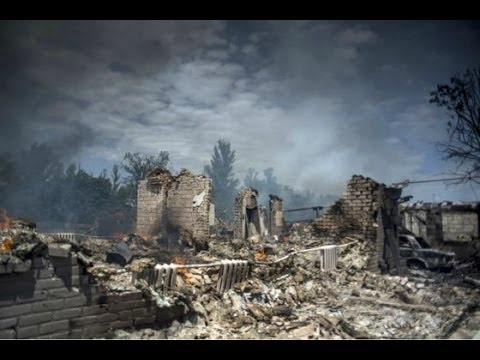
— John now describes what he saw: And having turned around, I saw seven golden lamp-stands, and in the midst of the lamp-stands one similar to a Son of Man clothed in a long robe and girded across his breast with a golden belt. The prophet saw, not a single candlestick, but seven candlesticks with seven lamps, Exodus 25:37;
14 His head and His hair were white like wool, as white as snow, and His eyes were as a flame of fire; — and his eyes were as a flame of fire: see Daniel 10:6; which is the omniscience of the Son of God;
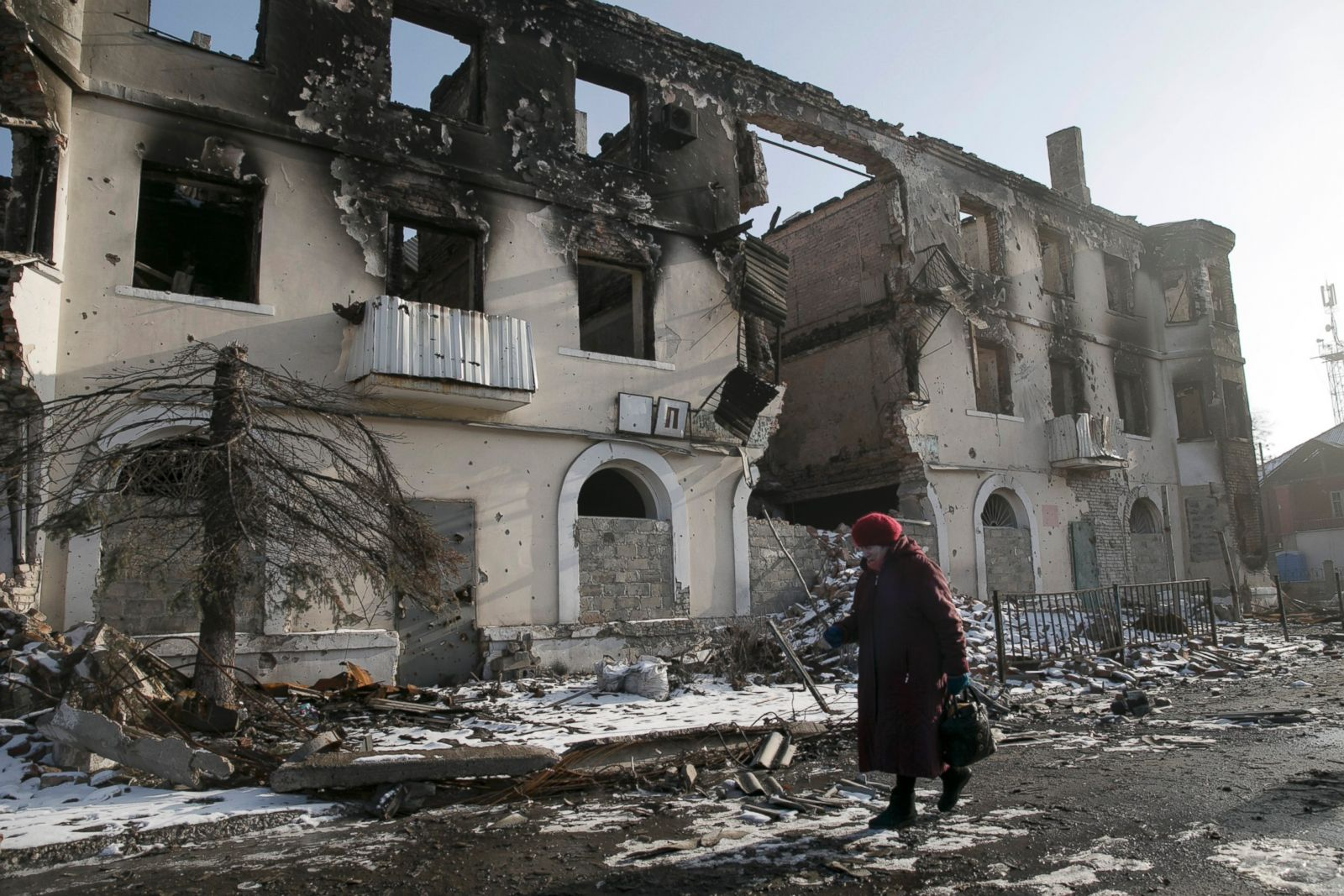
— and (a) his presence, like flames of fire, melts their souls into a true and genuine repentance for sin: or else, (b) his eyes of wrath and vengeance, as set upon his enemies are meant: will be fierce and furious and bring swift and sudden destruction on them.
15 and His feet like unto fine brass, as though they burned in a furnace, and His voice as the sound of many waters. — the sound of many waters; of a waterfall; or of a cataract; or as the roar of the ocean dashing upon a rock or the shore;
— this description “the sound of many waters” is found in Ezekiel 43:2, “the glory of the God of Israel came from the way of the east; and his voice was like the noise of many waters: and the earth shined with his glory.”
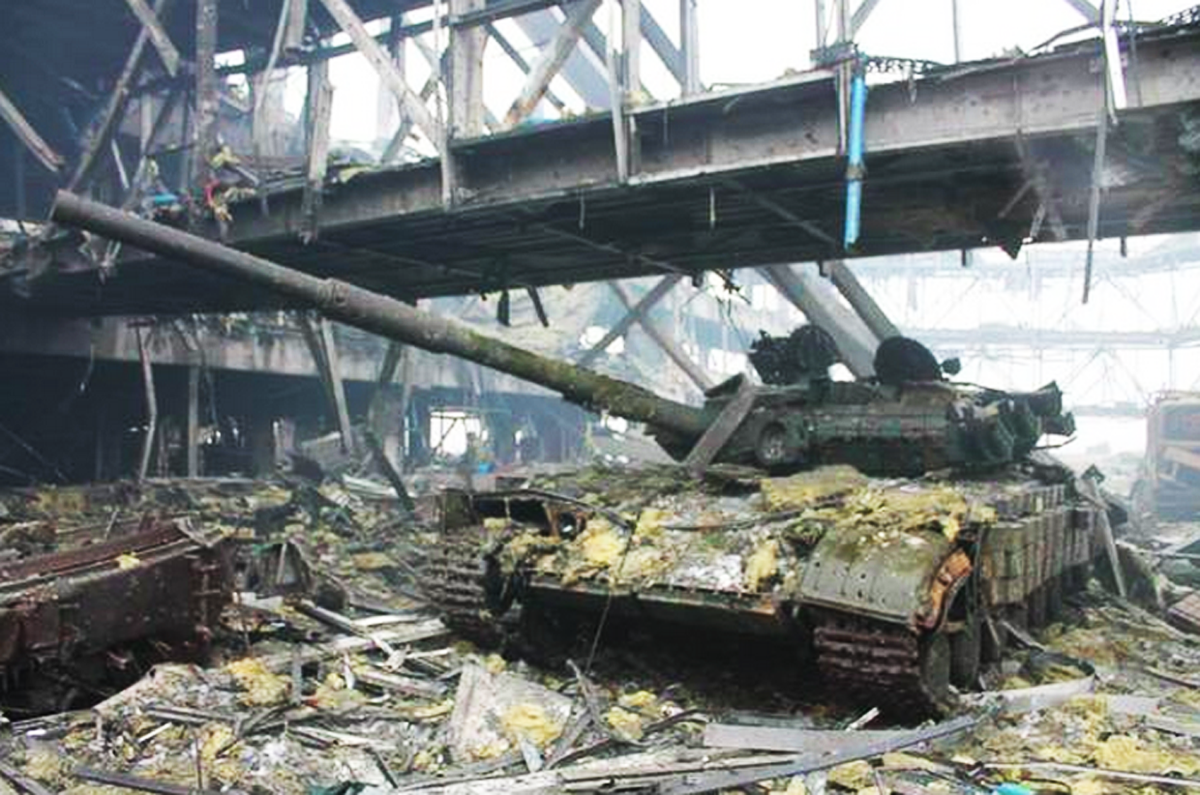
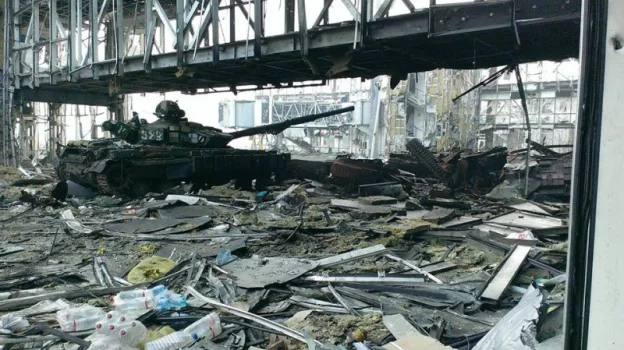
16 And He had in His right hand seven stars, and out of His mouth went a sharp two edged sword, and His countenance shone as the sun shineth in his strength. — in his right hand seven stars; the stars are representing the seven angels, messengers, or the seven churches; their presence in the right hand of Christ shows that they are under his special care and protection;
— and out of his mouth went a sharp two edged sword; which designs the word of God; this comes out of the mouth of Christ, it is the word of God; and is a sharp sword, contains sharp reproofs for sin, severe threats of punishment against any disobediance;
17 And when I saw Him, I fell at His feet as dead. And He laid His right hand upon me, saying unto me, “Fear not; I am the First and the Last. — when John saw him, he fell at his feet as dead; the appearance of the glory of the Lord had the same effect upon Ezekiel, Ezekiel 1:28.
18 I am He that liveth, and was dead; and behold, I am alive for evermore, Amen, and have the keys of hell and of death. — I am he that liveth, and was dead; I am Christ the Savior, who had died for mankind; and being raised from the dead, has the keys of life and death; to destroy the living or raise the dead.
19 Write the things which thou hast seen, and the things which are, and the things which shall be hereafter. — write the things which thou hast seen; these visions are for general instruction, and therefore every circumstance must be faithfully recorded. What John had seen was to be written; and what he was to see afterwards, must also be recorded.
20 The mystery of the seven stars which thou sawest in My right hand, and the seven golden candlesticks: the seven stars are the angels of the seven churches, and the seven candlesticks which thou sawest are the seven churches.
— the seven stars are the angels of the seven churches; that is, the seven stars which John saw in Christ’s right hand, represent the angels, or the seven churches of Asia, and in them all their pastors and ministers of the churches in all the periods of time until Christ’s second coming.
~~~~
Sometimes, the “hand of God” verses the “spirit of God” could be read interchangeably; and this is true in the following instance:
The word of the Lord came expressly unto Ezekiel the priest, the son of Buzi, in the land of the Chaldeans by the River Chebar; and the hand of the Lord was there upon him. Ezekiel 1:3
So the Spirit lifted me up and took me away, and I went in bitterness, in the heat of my spirit; but the hand of the Lord was strong upon me. Ezekiel 3:14
And the hand of the Lord was there upon me; and He said unto me, “Arise, go forth into the plain, and I will there talk with thee.” Ezekiel 3:22
And it came to pass in the sixth year, in the sixth month, on the fifth day of the month, as I sat in mine house and the elders of Judah sat before me, that the hand of the Lord God fell there upon me. Ezekiel 8:1
The hand of the Lord was upon me, and carried me out in the Spirit of the Lord and set me down in the midst of the valley which was full of bones, Ezekiel 37:1
In the five and twentieth year of our captivity, at the beginning of the year, on the tenth day of the month, in the fourteenth year after the city was smitten, on the selfsame day the hand of the Lord was upon me, and brought me thither. Ezekiel 40:1
In that day shall Egypt be like unto women; and it shall be afraid and fear, because of the shaking of the hand of the Lord of hosts, which He shaketh over it. Isaiah 19:16
Lord, when Thy hand is lifted up, they will not see; but they shall see and be ashamed for their envy at the people; yea, the fire of Thine enemies shall devour them. Isaiah 26:11
I have made the earth and created man upon it; I, even My hands, have stretched out the heavens, and all their host have I commanded. Isaiah 45:12
And when ye see this, your heart shall rejoice, and your bones shall flourish like an herb; and the hand of the Lord shall be known toward His servants, and His indignation toward His enemies. Isaiah 66:14
The “angel of God” verses the “spirit of God” could be read interchangeably; and spirits, as angels can speak too; this is true in the following instance:
Then the angel of the Lord went out and struck down one hundred eighty-five thousand in the camp of the Assyrians. When the people got up the next morning, there were all the dead bodies! Isaiah 37:36.
My God sent his angel and shut the lions’ mouths; and they haven’t harmed me, for I was found innocent before him. And also before you, Your Majesty, I have not done harm,” Daniel 6:22.

I asked, “What are these, my lord?” The angel who was talking to me replied, “I will show you what they are,” Zechariah 1:9.
Then he showed me the high priest Joshua standing before the angel of the Lord, with Satan standing at his right side to accuse him, Zechariah 3:1
If the Spirit is a Being or an independent Personage by itself/himself; there would be seven Spirits (Revelation 3:1) before the heavenly Throne; and since the Spirit is inherently Holy, there should be seven Holy Spirits, as John saw them;
and with these John would add Jesus Christ the Son, and God the Father, then there would be nine Personage; this is just simple arithmetic. Therefore there couldn’t be a Trinity since there are Nine in the Godhead; we should have a Polygon (a nine sided shape) or a Nonagon (nine straight sides that meet at nine corners); so surely the Godhead would be a Polyty or a Nonaty, but certainly couldn’t be a Trinity?
Revelation 2
Seven Churches of Revelation
It’s important to note that beside the Churches as seen as historical may have metaphorical or allegorical meaning to these Churches, in term of eras, otherwise why took the time and trouble to write them down.
The Churches must be real; and that their spiritual state is pointed out; but they must have reference to the state of the Church in later stages of its history; and that the notion of what has been termed the Ephesian state, the Smyrnian state, the Pergamenian state . . . the Laodicean state, should be studied, analysed and such expositions should be internalized by anyone who wishes to arrive at a sober and rational knowledge and understanding of Scriptures.
The messenger, or the angel could well be giving the Church certain warnings pertaining to the era of their Church so as to teach and edify those concern.
It must be emphesized that the only sign God has given mankind being classified as his true Church is the Sabbath; it is a sign between God and man (Exodus 31:13) that keepers of the Sabbath are being santified to be God’s elect:
“Speak thou also unto the children of Israel, saying, ‘Verily My Sabbaths ye shall keep; for it is a sign between Me and you throughout your generations, that ye may know that I am the Lord who doth sanctify you,” Exodus 31:13. Hence all Sunday-keeping churches without exception disqualify themselves as being God’s church!
(1) The Ephesus Era
1 “Unto the angel of the church of Ephesus write: ‘These things saith He that holdeth the seven stars in His right hand, who walketh in the midst of the seven golden candlesticks:
— the church at Ephesus, started on the day of Pentecost and being the original apostolic church; known originally as Nazarenes (Acts 24:5), a church whose records had been documented in the Acts of the Apostles, which patiently labored to spread the Gospel to the nations, the Gentiles; and were met with many obstacles but remained steadfast to the truth, though persecuted till the end;
2 I know thy works and thy labor and thy patience, and how thou canst not bear them that are evil; and how thou hast tried them that say they are apostles and are not, and hast found them liars; — I know thy works; for the eyes of the Lord are throughout the earth, being omnipresent, beholding the evil and the good; and all things are continually open and naked before him;
— “apostles and are not, and hast found them liars” are false apostles, and they could be found right from the start, Simon Magus, from the Samaritans (Acts 8:9-25), who were famed for their worship of the Sun; but went on masquerading itself as the One True Church or the first church that ever existed.
3 and hast borne, and hast patience, and for My name’s sake hast labored and hast not fainted. — and hast not fainted; and hast persevered so as thou hast neither been seduced to other doctrine by false teachers, nor lost any integrity or thy character.
4 Nevertheless, I have something against thee, because thou hast left thy first love. — I have against thee that thou hast left thy first love, namely, the zeal and fervour of it,
5 Remember therefore from whence thou art fallen, and repent and do the works as at first; or else I will come unto thee quickly and will remove thy candlestick out of his place, unless thou repent. — remember therefore from whence thou art fallen; the eminence which you once occupied; this is a call to remembrance the state in which you once were.
6 But this thou hast: that thou hatest the deeds of the Nicolaitans, which I also hate. — reference in Revelation 2:14-15 that is, corrupters of the people, the existence of a sect called Nicolaitanes in the second century “which I also hate.”
7 He that hath an ear, let him hear what the Spirit saith unto the churches. To him that overcometh will I give to eat of the Tree of Life, which is in the midst of the Paradise of God.’ — any man, whoever can hear at all, ought carefully to hear this;
— this Ephesus Church, headquartered at Jerusalem, fled to Pella in around 69 AD before the Romans razed the city and the Temple to the ground; until probably the time of Emperor Constantine;
— Paul, Barnabas; and later such men as Polycarp and Polycrates, they were called “Quartodecimani” because they kept the true Passover celebration the Jewish way on the fourteenth instead of Easter on a Sunday.
(2) The Smyrna Era
8 “And unto the angel of the church in Smyrna write: ‘These things saith the First and the Last, who was dead and is alive: — and unto the angel of the church in Smyrna; “Smyrna was the nearest city to Ephesus, and for that reason probably was addressed in the second place.
9 I know thy works and tribulation and poverty (but thou art rich), and I know the blasphemy of them that say they are Jews and are not, but are the synagogue of Satan. — they called themselves Jews but from God’s point of view they are of the assembly of Satan; this is a serious charge!
What happened was an attempt by the Catholics to stamp out the true scattered Church who observed the true Passover from the world?
Let the Catholic historian Eusebius, who lived in the time of Constantine, tell the story:
“But before this time another most virulent disorder had existed, and long afflicted the Church; I mean the difference respecting… Easter. For while one party asserted that the Jewish custom (as to time) should be adhered to, the other (did not).
“Accordingly, the people being thus in every place divided in this respect… no one appeared who was capable of devising a remedy…. Constantine appeared to be the only one on earth capable… He convoked a general council…”
After the Nicaean Council closed, Emperor Constantine sent the following letter to all the churches: “At this meeting the question concerning… Easter was discussed… First of all, it appeared an unworthy thing that in the celebration of this… feast we should follow the practice of the Jews…
Let us then have nothing in common with the Jews… It has been determined by the common judgement of all, that the… feast of Easter should be kept on one and the same day.” The Council of Nicea decided, under his authority, that Easter MUST be celebrated on Sunday and that the Passover must be forbidden!
— but are “the synagogue of Satan;” deserve rather to be called the synagogue of Satan? The synagogue was a Jewish place of worship, but the word originally denoted “the assembly” or “the congregation.”
10 Fear none of those things which thou shalt suffer. Behold, the devil shall cast some of you into prison, that ye may be tried, and ye shall have tribulation ten days. Be thou faithful unto death, and I will give thee a crown of Life.
11 He that hath an ear, let him hear what the Spirit saith unto the churches. He that overcometh shall not be hurt by the second death.’ — the second death; this phrase is a new one in Bible language. It points to a death which is other than that of the body; one that stands in contrast to the crown of life.
(3) The Pergamos Era
12 “And to the angel of the church in Pergamos write: ‘These things saith He that hath the sharp sword with two edges: — as a result of the Council of Nicaea (325 AD), the great false Church commenced 1260 years of persecution (Revelation 12:6) with full force. The true Church fled into the valleys and mountains in Asia Minor and Europe.
It was the close of the twelfth century. In Lyons, France, lived an astonishingly successful and wealthy merchant, Peter Waldo. “One day, while in the company of some of the leading citizens, one of his friends fell lifeless at his side. Terrified by the event, he said to himself: If death had stricken me, what would have become of my soul?”
Being a Catholic, Waldo asked one of these theologians what is the PERFECT way. ‘Ah!’ answered the theologian… ‘here is Christ’s precept’: ‘”If thou wilt be perfect, go, sell that thou hast and give to the poor, and thou shalt have treasure in heaven, and come take up thy cross and follow me.”‘” (Comba, “History of the Waldenses,” p 21).
Waldo disposed of his property by distributing to the poor. But from his wealth he also had a translation of the Scriptures made. In this translation he noticed the command to the apostles to preach the gospel of the Kingdom of God. His mind began to understand the Scriptures.
God was using Peter Waldo.
Comba says that “he brought to the study of the Scriptures that practical common sense which had guided him in his business transactions… The word of Christ was clear enough, for Waldo it was simply a question of furnishing a literal translation” (p 243 of Comba’s “History”).
The humble remnant of the Church of God listened to him. Soon many new disciples were coming to repentance. “His disciples became almost as many C0-workers for him” (p 26). The world called them Waldenses.
But in 1315 AD, long before the crusade against the Waldenses occurred, the truth of God was carried to England by a German Waldensian preacher, Walter Lollard. It took deep root for a while until the Protestant Reformation.
Through the preaching of Lollard and other helpers, hundreds were repenting. Thousands were learning for the first time that baptism means immersion — that the world’s religious holidays came from paganism and that Sunday was not the Sabbath.
It was not until about 1650 that there were again enough Sabbath keepers to establish local congregations. They often called themselves the Church of God, but the world termed them “Sabbatarians” and Sabbatarian Baptists.
From England the remnant Sabbath-keeping Church spread to America. In 1664, Stephen Mumford, sent to Newport, Rhode Island, raised up a small church mainly from Baptist converts. One by one new churches were established through continued help of the Seventh-day Baptists in England.
13 I know thy works and where thou dwellest, even where Satan’s seat is; and that thou holdest fast My name and hast not denied My faith, even in those days wherein Antipas was My faithful martyr, who was slain among you, where Satan dwelleth.
— Benson: that in the war with the Albigenses and Waldenses, there perished of these poor creatures in France alone a million! From the first institution of the Jesuits to AD 1480, that is, in little more than thirty years, nine hundred thousand orthodox Christians were slain; (for more, click here)
14 But I have a few things against thee, because thou hast there them that hold the doctrine of Balaam, who taught Balak to cast a stumbling block before the children of Israel, to eat things sacrificed unto idols, and to commit fornication.
— the instruction Balaam gave to Balak, which is a doctrine, was that Balak should get some beautiful women in his kingdom to ply the men of Israel, and draw them into sins and impurity and so to idolatry;
— in today’s world, the pull of ecumenism is extremely strong; it is to be accepted by the world as a recognized religion, hence ecumenism as it is now commonly used refers to interdenominational cooperation between different Christian churches. These initiatives can range from local churches of different denominations operating a soup kitchen for the poor;
— hosting an ecumenical Bible study with participants from different Christian traditions, inviting all baptized Christians to partake in a Lovefeast when churches celebrate them, to holding an ecumenical Stations of the Cross service on Fridays during the Christian liturgical season of Lent with the service being held at a different local church each Friday. Many of these churches have, as a result of ecumenical dialogue, established full or partial communion agreements, so as to be considered to be within the realm of orthodox Christianity.
15 So thou also hast them that hold the doctrine of the Nicolaitans, which thing I hate. — the natural meaning seems to suppose that the Nicolaitanes taught the same things which Balaam did; to wit, that they led the people into corrupt and licentious practices.
They called themselves by adopting the name “Seventh-day Baptists.” But as always happens, after several generations their children take truth for granted and slowly lost surrendering their wills and lives to God and soon they began teaching the false Trinity doctrine! In less than one hundred and fifty years, the English churches almost disappeared.
Members of the Seventh-day Baptists migrated to America and the number of churches increased as the gospel was spread from state to state. But so nearly dead were these congregations that in 1802 many began to organise themselves together into a General Conference. At this serious juncture, most of the local churches joined together to form the Seventh-day Baptist General Conference where they still held these meetings today.
16 Repent, or else I will come unto thee quickly, and will fight against them with the sword of My mouth. — with the Sword of my mouth; and fight against them by his Word; whose true and doctrines shall be like a Sword to devour and to destroy all false ones.
17 He that hath an ear, let him hear what the Spirit saith unto the churches. To him that overcometh will I give to eat of the hidden manna, and will give him a white stone, and on the stone a new name written, which no man knoweth save he that receiveth it.’
— a sign and testimony of newness of life in righteousness by putting on the new name, a fresh revelation of God’s name and nature whom no one inwardly knows, but only those who have received it can comprehend its full significance.
(4) The Thyatira Era
18 “And unto the angel of the church in Thyatira write: ‘These things saith the Son of God, who hath His eyes like unto a flame of fire, and His feet are like fine brass:
— during the 1800s various form of revivals were initiated, both in the Jewish world (witness Abraham Geiger in Germany who started Reform Judaism); and the Christian world under various personalities but mainly located in the United States.
— during this time William Miller also arrived, starting the advent movement among Sunday-observing churches. In 1843 several followers of Miller in Washington, New Hampshire, became reacquainted with the Sabbath as a sign between God and man (Exodus 31:13). It was not until after their miserable Great Disappointment of 1844 that the general body of Adventists had the Sabbath question called to their attention.
19 I know thy works, and charity and service, and faith and thy patience, and thy works, and the last to be more than the first. — a small number accepted the Sabbath and teamed up with the few others who refused to be affiliated with the Seventh-day Baptist Conference.
— they called themselves the “Church of God” and began publishing “The Advent Review and Sabbath Herald.” Their first songbook was dedicated to “The Church of God scattered abroad.”
Jezebel, along with her husband, instituted the worship of Baal and Asherah on a national scale
20 Notwithstanding, I have a few things against thee, because thou sufferest that woman Jezebel, who calleth herself a prophetess, to teach and to seduce My servants to commit fornication, and to eat things sacrificed unto idols. — that woman Jezebel; the daughter of Ithobaal I of Tyre and the wife of Ahab, King of Israel, 1 Kings 16:31;
— Jezebel, a Phoenician princess who defiled Israel with her idolatrous practices, now calleth herself a prophetess; no other church group has a better fit than one among the Seventh-day Adventists, a Ellen G White, who fulfils this prophecy exactly to a T;
— with each passing year, new and different doctrines were being introduced by prophetess Ellen G White to explain away the Adventist failure of October 22, 1844. The original church members resisted initially but eventually went along with her fornication, with her “inspired testimony” from her Phoenician goddess, now established as Sister Ellen G White;
— and finally, a meeting was held by some of the members in Battle Creek, Michigan, September 28 through October 1, 1860. And that is how the Seventh-Day Adventist began to regard her officially as a prophetess, and who was responsible for naming their organisation and the birth of her dreams;
Ellen G White, wrote of rays of lights from the throne in one of her “inspired” visions, or in one of her dreams, of “her revelation” about volcanoes, earthquakes and how the Flood was formed:
“At this time immense forests were buried. These have since been changed to coal, forming the extensive coal beds that now exist, and also yielding large quantities of oil. The coal and oil frequently ignite and burn beneath the surface of the earth. Thus rocks are heated, limestone is burned, and iron ore melted.
The action of the water upon the lime adds fury to the intense heat, and causes earthquakes, volcanoes, and fiery issues. As the fire and water come in contact with ledges of rock and ore, there are heavy explosions underground, which sound like muffled thunder.
The air is hot and suffocating. Volcanic eruptions follow; and these often fail to give sufficient vent to the heated elements, the earth itself is convulsed, the ground heaves and swells like the waves of the sea, great fissures appear, and sometimes cities, villages, and burning mountains are swallowed up.
These wonderful manifestations will be more and more frequent and terrible just before the second coming of Christ and the end of the world, as signs of its speedy destruction.” (Patriarchs and Prophets, Pacific Press, 1958, pg 108-109).
Full of hot Phoenician air, and it’s suffocating; and that’s the substance of Ellen G White’s visions!
21 And I gave her space to repent of her fornication, but she repented not. — in fact, instead of the true Passover and feast days and prophecies of the Old Testament, especially of Isaiah, Jeremiah and Ezekiel, their ministers taught a “third angel’s message,” which they had accepted from Ellen G White; so much emphasis that it is as if it’s more important than the Word of God itself.
22 Behold, I will cast her into a bed, and them that commit adultery with her into great tribulation, unless they repent of their deeds. — the Adventist movement didn’t regard themselves separate from the mainstream Protestants, but rather as one of them, and in doing so, took in Trinity in their false teachings along with their annual Christmas jinglebells celebrations.
23 And I will kill her children with death, and all the churches shall know that I am He that searcheth the reins and hearts; and I will give unto every one of you according to your works.
— “I will kill her children with death” sounds extremely serious, and this warning is from God to those “within his church,” who emphasises his judgement ‘kill’ and ‘death,’ confirming there must be some serious abominations within his church, serious abominations within their practices and doctrines;
— all the churches shall know; implying that these addresses are designed for the whole associated churches especially at the endtime; so shall God’s hand be seen in the judgement on Thyatira, that the whole churches shall recognize it as God’s doing.
24 But unto you I say, and unto the rest in Thyatira, as many as have not this doctrine and who have not known the depths of Satan (as they say) I will put upon you no other burden. — there are great rewards for those who are judged faithful and true, avoiding false doctrines; yet penalties are great, too, for those who harbour many Jezebelian doctrines and teachings within.
25 But that which ye have already, hold fast till I come. — the weekly Sabbath and the food law are what they have, so hold fast to what they already have, but others need lots of work to do;
26 And he that overcometh and keepeth My works unto the end, to him will I give power over the nations, — Jezebel and her Phoenician idolatries, he that overcometh; means he that could tell the truth from their fallacies which they have so much ingrained into their doctrines; and only then could they qualify to have authority to rule the nations;
27 and “he shall rule them with a rod of iron; as the vessels of a potter shall they be broken to shivers,” even as I have received from My Father. — and he shall rule them with a rod of iron; there is an allusion in Psalm 2:9; “Thou shalt break them with a rod of iron; thou shalt dash them in pieces like a potter’s vessel.”
28 And I will give him the morning star. — the morning star; that is, Christ will give unto him personally, who am “the morning star” (Revelation 22:16); thus reflecting Christ’s perfect brightness;
29 He that hath an ear, let him hear what the Spirit saith unto the churches!’
~~~~
One thing which is a serious charge is that Adventists put Ellen G White’s writings ahead of Moses and the Prophets, ahead of God’s Word in actual fact; hence they stubbornly insist wine is grape juice; and Passover is observe quarterly, on every thirteenth sabbath, and not annually on the fourteenth of Nisan as the Scriptures say.
And even during the Millennium, Passover will be observed the same way as before:
“In the first month, on the fourteenth day of the month, ye shall have the Passover, a feast of seven days. Unleavened bread shall be eaten,” Ezekiel 45:21
“Behold, I will cast . . . them that commit adultery with her into great tribulation, unless they repent” ~ unfortunately a great tribution await them (Revelation 2:22):
“And I will kill her children with death (Revelation 2:23)” perhaps this great tribulation should be tied in with a similar vision the prophet Ezekiel had: “Slay utterly old and young, both maids and little children and women; but come not near any man upon whom is the mark; and begin at My sanctuary.” Then they began with the elder men who were before the house, Ezekiel 9:6. “Begin at My sanctuary” means his own righteous deserve to be offered as a sacrifice;
These same righteous to be slain together with the wicked could be better understood when tied in with Ezekiel 21:3, the Sword from the South! “and say to the land of Israel, ‘Thus saith the Lord: Behold, I am against thee, and will draw forth My Sword out of his sheath and will cut off from thee the righteous and the wicked.”
Former Russian president and current deputy chairman of the Security Council of the Russian Federation Dmitry Medvedev took to Twitter and Telegram Monday night to post his own predictions for 2023, in an unusual move from a former head of state, especially given a number of them are not just bizarre but most readers will receive them as incredibly unlikely – at least given the mere one year timeline.
Describing that “many practice futuristic hypotheses,” he said he would add his insight into the mix while “competing in the proposal of the most unexpected and even absurd” predictions.
“On New Year’s Eve, everybody’s into making predictions,” he began of his top ten predictions thread for 2023 which includes a coming civil war in the United States, the disintegration of the dollar, the crash of the IMF and World Bank, and the total collapse of the European Union, following a major war among competing powers in Western Europe – including war between Germany and France.
Russia’s Medvedev Makes 2023 Predictions
Below is Medvedev’s full Twitter thread on “What can happen in 2023”
1. Oil price will rise to $150 a barrel, and gas price will top $5.00 per 1.00 cubic meters
2. The UK will rejoin the EU
3. The EU will collapse after the UK’s return; Euro will drop out of use as the former EU currency
4. Poland and Hungary will occupy western regions of the formerly existing Ukraine
5. The Fourth Reich will be created, encompassing the territory of Germany and its satellites, i.e., Poland, the Baltic states, Czechia, Slovakia, the Kiev Republic, and other outcasts
6. War will break out between France and the Fourth Reich. Europe will be divided, Poland repartitioned in the process
7. Northern Ireland will separate from the UK and join the Republic of Ireland
8. Civil war will break out in the US, California; and Texas becoming independent states as a result. Texas and Mexico will form an allied state. Elon Musk’ll win the US presidential election in a number of states which Musk is not eligible to run for president
9. All the largest stock markets and financial activity will leave the US and Europe and move to Asia
10. The Bretton Woods system of monetary management will collapse, leading to the IMF and World Bank crash. Euro and Dollar will stop circulating as the global reserve currencies. Digital fiat currencies will be actively used instead
Medvedev concluded his predictions by saying: “Season greetings to you all, Anglo-Saxon friends, and their happily oinking piglets!”
RT ~ December 21, 2022 // Aljazeera ~ December 21, 2022
Newly released docs show how the social media giant helped the US military “to amplify certain messages”
Twitter executives have granted the US Defense Department special privileges to use the social media platform for its covert online influence campaigns for at least five years, newly released internal company communications show.
Investigative journalist Lee Fang published the eighth batch of documents on Tuesday, after the company’s new owner, Elon Musk, authorized the release in an effort to provide transparency about Twitter’s past decision-making.
“Despite promises to shut down covert state-run propaganda networks, Twitter docs show that the social media giant directly assisted the US military’s influence operations,” wrote Fang. The journalist was allowed to make requests for internal Twitter documents through an attorney, “meaning that the search results may not have been exhaustive.”
The exposed collusion spanned since at least 2017, when Nathaniel Kahler, an official working with the US Central Command, sent an email to Twitter, requesting verification and “whitelisting” of several dozen Arab-language accounts CENTCOM was using “to amplify certain messages.” The very same day, Twitter integrity team members applied a “special exemption tag” that essentially granted the accounts the privileges of verification without a visible blue check mark.
While the Pentagon allegedly promised not to conceal their affiliation, at some point profile bios and photos of some of these accounts were changed, and they began posing as ordinary users or “unbiased” sources of opinion and information.
Some accounts on the list were promoting US-backed militants in Syria, and anti-Iran propaganda in Iraq. Another was used to justify US drone strikes as “accurate” and only killing terrorists, not civilians, in Yemen.
Twitter amplified US military’s propaganda in the Middle East
“It sounds like DOD was doing something shady and definitely not in line with what they had presented to us at the time,” one former Twitter employee told The Intercept.
Other emails obtained by The Intercept showed that high-level Twitter officials, including former head of trust and safety, Yoel Roth, attorney Stacia Cardille, and deputy general counsel Jim Baker, discussed the collusion as “potentially problematic” in the following years, but allowed many of the accounts to remain active.
In one email, Baker speculated that “DoD might want to give us a timetable for shutting them down in a more prolonged way that will not compromise any ongoing operations or reveal their connections to DoD.” However, none of the emails provided to The Intercept shed any light on what exactly was discussed at the classified meetings with the Pentagon officials.
The influence campaign appears to be linked to a larger-scale operation that ran beyond those several dozen Twitter accounts and across many other internet platforms, including Facebook, YouTube and Telegram, as initially highlighted by researchers at Graphika and the Stanford Internet Observatory back in August, and corroborated by a Washington Post investigation in September.
Spearheaded by journalist Matt Taibbi and fellow reporter Bari Weiss, the Twitter Files have been published on a rolling basis with the blessing of the site’s new owner, billionaire entrepreneur Elon Musk. To date the documents have shed light on several controversial decisions made by the company, including material surrounding the suspension of ex-President Donald Trump, the practice of shadow banning, as well as a site-wide ban on a New York Post report about the foreign business dealings of Hunter Biden, the son of President Joe Biden.
Border Battle over migrants at the Southern border. According to a source, the aim is to bring another 100 million into the United States!
As Title 42 Nears End, El Paso Declares Emergency over Influx of Asylum Seekers; another hundred million!
The Democratic mayor of El Paso, Texas, has declared a state of emergency over concerns the city won’t be able to provide shelter and resources to the thousands of asylum seekers arriving at the US-Mexico border.
This comes as the Biden administration is expected on Wednesday to stop enforcing Title 42, the Trump-era pandemic policy that has been used by the US government to block over 2 million migrants from seeking asylum in the country. Many asylum seekers now at the border are sleeping outdoors in freezing temperatures while the infrastructure to welcome them is sorely lacking, says Fernando García, the founder and executive director of the Border Network for Human Rights based in El Paso.
“This is what I consider the perfect storm happening right now at the border,” he says. “If we don’t have long-term fixes, if we don’t have immigration reform fixing the asylum process, which has been broken and damaged by the previous administration, I think we are going to continue seeing these crises.”
Emergency over Influx of Asylum Seekers; another hundred million!
Who are the enemies that will desolate the house of Israel, identified here as the United States? Many believe Russia was and some still believe it is the main threat of the United States.
Others, like warmonger John Mearsheimer of the University of Chicago, give incredible speeches around the world saying China is the main threat.
Ezekiel 20:45 Moreover the word of the Lord came unto me, saying, 46 “Son of man, set thy face toward the South, and drop thy word toward the South, and prophesy against the forest of the Southland. 47 And say to the forest of the South: ‘Hear the word of the Lord. Thus saith the Lord God: Behold, I will kindle a fire in thee, and it shall devour every green tree in thee and every dry tree. The flaming flame shall not be quenched, and all faces from the South to the North shall be burned therein. 48 And all flesh shall see that I, the Lord, have kindled it; it shall not be quenched.’” 49 Then said I, “Ah, Lord God! They say of me, ‘Doth he not speak parables?’”
Ezekiel 21:1 And the word of the Lord came unto me, saying, 2 “Son of man, set thy face toward Jerusalem, and drop thy word toward the holy places, and prophesy against the land of Israel; 3 and say to the land of Israel, ‘Thus saith the Lord: Behold, I am against thee, and will draw forth My Sword out of his sheath and will cut off from thee the righteous and the wicked.

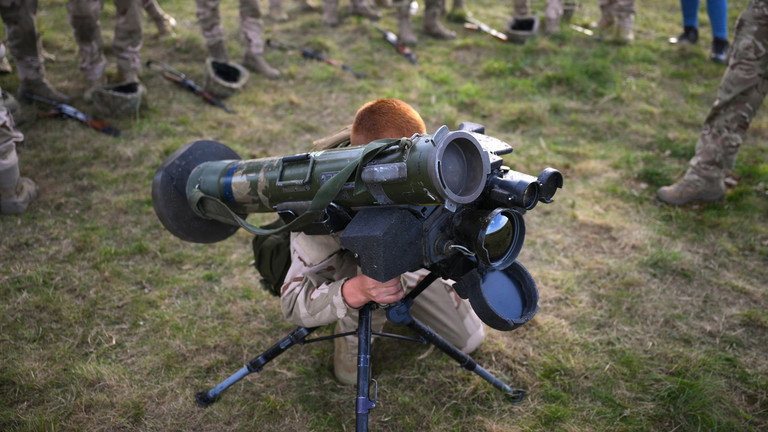
Emergency over Influx of Asylum Seekers; another hundred million!
See some parallel Scriptures: Hosea 5:14, “For I will be unto Ephraim as a lion, and as a young lion to the house of Judah; I, even I, will tear and go away; I will take away, and none shall rescue him.”
Or in Jeremiah 5:6, “Wherefore a lion out of the forest shall slay them, and a wolf of the evenings shall spoil them, a leopard shall watch over their cities: every one that goeth out thence shall be torn in pieces: because their transgressions are many, and their backslidings are increased;”
Or Habakkuk 1:8 “Their horses also are swifter than the leopards, and are more fierce than the evening wolves. And their horsemen shall spread themselves, and their horsemen shall come from afar; they shall fly as the vulture that hasteneth to eat.”
Emergency over Influx of Asylum Seekers; another hundred million!
4 Seeing then that I will cut off from thee the righteous and the wicked, therefore shall My sword go forth out of his sheath against all flesh from the south to the north, 5 that all flesh may know that I, the Lord, have drawn forth My sword out of his sheath. It shall not return any more.’
Emergency over Influx of Asylum Seekers; another hundred million!
6 Sigh therefore, thou son of man, with the breaking of thy loins, and with bitterness sigh before their eyes. 7 And it shall be, when they say unto thee, ‘Why sighest thou?’ that thou shalt answer, ‘For the tidings, because it cometh; and every heart shall melt, and all hands shall be feeble, and every spirit shall faint, and all knees shall be weak as water.’ Behold, it cometh, and shall be brought to pass, saith the Lord God.” (Ezekiel 20:45-21:7)
And in Isaiah 63:1 a question was asked, “Who is this that cometh from Edom, with dyed garments from Bozrah, this that is glorious in His apparel, traveling in the greatness of his strength?”
In Obadiah 1:20 “And the captives of this host of the children of Israel shall possess that of the Canaanites, even unto Zarephath; and the captives of Jerusalem who are in Sepharad (בִּסְפָרַ֑ד Hebrew 5614) shall possess the cities of the south.” — for the word ‘Sepharad’ Jonathan renders: Spain (Rashi quoting the Targum: Sepharad shall inherit the cities of the Southland as Spain); the Targums identified Sepharad with Spain, hence, Spanish Jews are called Sephardim!
One Report by McKinsey says of the 60 millions Latinos in the US that had migrated from the South; they often live in ‘deserts’ where adequate housing, groceries are hard to find. “Nearly 9 in 10 of the Latino residents in such communities lived in five states: California, Florida, New Jersey, New York and Texas.”
McKinsey: Latinos are projected to make up 22.4 percent of the US labor force by 2030 and more than 30 percent by 2060 (Latinos population to 111.2 million by ’60); is this analysis wrong? Am I mistaken? Do feel free to present your opinion; thanks. (Originally under Ezekiel (Ch 21-22)For a Discussion at Unz Review, click Goodbye America!
Medical pathologists from Heidelberg University Hospital in Heidelberg, Germany have published direct evidence showing how people found dead after mRNA vaccination died. As this team of six scientists explore in their study, these mRNA-vaccinated patients suffered from heart damage because their hearts were attacked by their own immune cells. This autoimmune attack on their own heart cells then leads to their damaged hearts beating so many times per second that, once the tachycardia unexpectedly started, they died in minutes.
The article, “Autopsy-based histopathological characterization of myocarditis after anti-SARS-CoV-2-vaccination,” was published on Nov. 27, 2022, in the journal Clinical Research in Cardiology, the official journal of the German Cardiac Society. The research team autopsied 25 victims of different ages who were found dead at home within 28 days of vaccination. They looked at their heart tissue under the microscope to find out why these people died of cardiac rhythmic disruption when they had no apparent underlying heart disease.
Died from mRNA-Vaccine-Damaged Hearts
In the authors’ own words: “Our findings establish the histological phenotype of lethal vaccination-associated myocarditis.”
Histological phenotype means direct observation of microscopic tissue.
In a video analyzing the results, nurse educator Dr. John Campbell, who is based in the United Kingdom, told his audience: “This is peer-reviewed. This is proper science, and a definitive pathological diagnosis by a group of leading German pathologists.” Campbell’s video has been viewed 918,000 times. He has 2.58 million subscribers on his channel.
Died of Ventricular Tachycardia or Fibrillation
Ventricular tachycardia is when the heart begins beating so fast that it doesn’t have time to refill with blood between beats, so it is not adequately pumping blood. The problem originates from the ventricles: the chambers that push the blood out of the heart to the rest of the body.
Fibrillation is when, instead of the heart actually beating, it starts to just quiver. This problem can originate from the ventricles or the atria. The atria are the upper chambers that basically suck blood into the heart by expanding and contracting. Though more people are familiar with A-Fib (atrial fibrillation), ventricular fibrillation is much more dangerous, and usually lethal within minutes.
The deceased whose hearts were autopsied in this study were found dead at home, each having died of ventricular tachycardia or fibrillation within 28 days of mRNA vaccination.
Visibly Damaged Hearts
Macrophages are large cells that are part of our immune system. When the immune system is functioning properly, our bodies use macrophages to attack infectious agents and other foreign matter. Macrophages are a key part of the innate immune system, helping with normal tissue development as well as with repairing damaged tissue, according to researchers from Northwestern University.
But in the case of the people who died suddenly within a month of being vaccinated, the body’s own macrophages permeated their heart muscle, chewing up the muscle and causing spots that disrupted the heart rhythm. This macrophage invasion appeared to have literally short-circuited the heart’s conduction of the electrical impulses, causing the heart to beat irregularly.
The irregular heartbeats led to a negative feedback loop, making the heart race faster and faster as it tries to right itself. When that happens, the heart is effectively pumping no blood, and the victim dies within seconds or minutes unless there is a defibrillator nearby—to deliver an electrical shock to the heart to help it get back into rhythm—and someone knows to use it immediately.
The peer-reviewed study from German researchers included microscope images showing the damage to the victims’ heart cells, the presence of lymphocytes (another kind of smaller immune cell) in the heart muscle, and invasive macrophages in the heart muscle. Both macrophages and lymphocytes called T-helper cells were found in the heart tissue. The immune cells were concentrated in spots, each of which is called a focus. Spots of damaged heart tissue like this can generate offbeat signals that disrupt the heart’s smooth rhythm.
There are thousands of cardiac cells in the heart. These cells aren’t passive, like the cells in your biceps that need separate nerves to make them move. Instead, cardiac cells generate their own electrical impulses.
The cells of cardiac muscle act like nerves as well, conducting signals to and from adjacent muscle cells. This synchronizes their contractions, as well as perpetuates the regular continuity of the heartbeat.
Once a heart is beating, it takes a lot to stop it. A focus that breaks up this rhythm is like a bad drummer in a middle-school band. It can cause a cascade of chaos that prevents the heart from pumping blood productively.
Myocarditis: A Recognized Vaccine Adverse Event
The WHO and the CDC do recognize myocarditis post-mRNA vaccination. Both regulatory agencies consider it a “recognized but rare complication.” Most doctors also dismiss myocarditis cases as “mild.”
But the deceased subjects of the German study, as Campbell points out, also had supposedly “mild” myocarditis. The myocarditis appeared only in microscopic spots here and there. However, the electrical disruption of these spots caused rapid and dramatic deaths. In other words, there is no mild myocarditis, as one parent of an mRNA-vaccine-injured teen named Aiden Ekanayake, said.
Campbell recommended that clinicians have a “high index of suspicion” that mRNA-vaccinated people might be subject to this autoimmune myocarditis so that they can diagnose and treat it while the people are still alive. Clinicians pretending that this vaccine injury is “rare and mild,” has led to countless potentially avoidable tragedies.
Your Body Attacking Your Own Heart Cells
To be clear, this is not the mRNA vaccine directly damaging the heart—it is worse. The mRNA is injected into your muscle cells, turning the cell into a factory producing COVID-19 spike proteins.
As a result of the mRNA immunization, your body generates an immune response against COVID-19 spike proteins.
Since your own muscle cells were used to make the COVID-19 spike proteins and may have them on the cell surface, your newly-weaponized immune cells targeting the spike protein may start attacking your own healthy muscle cells.
This new German study shows photographic evidence that this happens and has killed people.
Sir Austin Bradford Hill was an English medical statistician who established a set of epidemiological guidelines in 1965, now called the Bradford Hill criteria, which help prove cause and effect. If we apply the Bradford Hill criteria to this new research, it shows that the lethal myocarditis of these patients was indeed caused by mRNA vaccines.
The German research demonstrated Bradford Hill’s criteria of strength (the more two things happen at the same time, the more likely one causes the other, even for rare events); consistency (the finding of sudden death from mRNA-vaccine-induced myocarditis has been happening consistently in different places and populations); specificity (for Bradford Hill, this is when a single cause produces a single effect. In this case the cause is the mRNA vaccine and the effect is myocarditis); and several more.
Indeed, the German researchers eliminated the possibility that the lethal myocarditis could have been caused by something else. Their study also showed “coherence,” another Bradford Hill criterion, which is when the same effect is found in both epidemiological studies and in laboratory samples.
Another Bradford Hill criterion is analogy: Is this cause-and-effect relationship similar to other medical issues that we already understand? In this case, the criterion of analogy is satisfied because we already understand that auto-immune reactions to one’s own heart can cause Giant-Cell Myocarditis, a life-threatening condition that causes ventricular tachycardia and sudden death in over two-thirds of those diagnosed with it.
For cause and effect to be established, Bradford Hill also asks whether the relationship is plausible: is there a mechanism by which one thing can cause the other? Plausibility was also proven by these autopsies: the German researchers clearly showed the mechanism. As Campbell said in his video review: “You can’t argue with a photograph taken under the microscope.”
For cause-and-effect to be established using Bradford Hill’s criteria, just one or two of the nine viewpoints must be satisfied. This study showed that for mRNA vaccines and heart damage, seven of Bradford Hill’s nine criteria were satisfied—an epidemiological slam-dunk.
The evidence is in: mRNA vaccines cause myocarditis, by leading your own immune cells to attack your heart, which can lead to sudden death by ventricular tachycardia or fibrillation.
12 “A third part of thee shall die with the pestilence, and with famine shall they be consumed in the midst of thee; and a third part shall fall by the sword round about thee; and I will scatter a third part into all the winds, and I will draw out a sword after them.
13 “Thus shall Mine anger be accomplished, and I will cause My fury to rest upon them, and I will be comforted; and they shall know that I, the Lord, have spoken it in My zeal when I have accomplished My fury upon them.
14 “Moreover I will make thee a waste and a reproach among the nations that are round about thee, in the sight of all that pass by” Ezekiel 3:12-14
The book of Habakkuk is a dialogue between what the Prophet Habakkuk saw and Questions he had for God and how God responded to him. That is, it is a dialogue between Habakkuk and God about the difficult scene he saw, at a letter day, and why was it the way it was.
The time seems to have been about 610 BC; for the Chaldeans attacked Jerusalem in the ninth month of the fifth year of Jehoiakim, 605 BC. And Habakkuk, probably a contemporary of the Prophet Jeremiah, spoke of the Chaldeans as about to invade Judah (Habakkuk 1:6), and he seemed to have seen the people’s desperations of their attack that followed; hence he asked many questions. Although it the oracle was relevant for his time, it was also prophetic; that is, it is for the endtime.
“For I will work a work in your days” (verse 5 below) means that the message of Habakkuk is really for us in the latter days, today. And this is reinforced in Habakkuk 2:3 “For the vision is yet for an appointed time, but at the end it shall speak and not lie. Though it tarry, wait for it, because it will surely come; it will not tarry.”
“The anger of the Lord shall not return, until He has executed and till He has performed the thoughts of His heart; in the latter days ye shall consider it perfectly” Jeremiah 23:20; “In latter days you will understand it fully,” that is, it means as a whole, “you wouldn’t fully understand these prophecies until you are living in the latter days after God had executed his judgement in anger and pertformed the thoughts of his heart!”
Habakkuk 1
Habakkuk made his observations and started them with a series of three Questions:
“The vision is yet for an appointed time.” Habakkuk 2:3 makes clear that this vision was not just for his time, but also for the end-time, and although it had a narrow vision for the house of Judah, its wider implication for the latter days is for the house of Israel; the time shortly before the second coming of the Messiah.
1 The burden which Habakkuk the prophet saw. — the prophet Habakkuk saw: the oracle, a burden;
— not only in the sense of a message from God, but also in the sense of a heavy weight. It was heavy in its content, because Habakkuk announced coming judgement on the house of Judah. It was also heavy in its source, because Habakkuk deals with tough questions he brings to God and God’s answer to those questions;
— “for I will work a work in your days” (verse 5 below) means that the message of Habakkuk is really for us in the latter days, today at the endtime. And this is reinforced in Habakkuk 2:3 “For the vision is yet for an appointed time, but at the end it shall speak and not lie.”
2 O Lord, how long shall I cry, and Thou wilt not hear? Even cry out unto Thee of violence, and Thou wilt not save?
— Q (1): O Lord, how long shall I cry, and you will not hear? Q (2): Or cry to you, “Violence!” and you will not save?
— Rashi (Rabbi Shlomo Yitzchaki 1040–1105, France): O Lord! How long: Habakkuk foresaw that Nebuchadnezzar was destined to be the ruler of the world and to cause trouble for Israel, as the matter is stated in his prophecy (1:6): “For behold, I raise up the Chaldeans, etc.”
— Habakkuk was asking a series of questions we all have today: when we ask and it seems God is not hearing; and when there is violence, it seems God is not saving!
3 Why dost Thou show me iniquity, and cause me to behold grievance? For despoiling and violence are before me, and there are those that raise up strife and contention. — Q (3): Why do you make me see wickedness, and cause me to see trouble? Plundering and violence are before me; strife and contention everywhere.
— iniquity, plunder and violence are all before me; you look upon these mischieves, but you do not help;
4 Therefore the law is slacked, and judgement doth never go forth. For the wicked doth compass about the righteous; therefore wrong judgement proceedeth.
— the law is “slacked” it means the law is powerless; it loses its force and vigour;
— so the first point is that the law is lacking in physical and moral strength! The law is applied weakly to evildoers; those who are guilty are hardly charged for their crimes. Judgement seldom has its enforcement; that there is little justice in the land;
— “the wicked compass about the righteous” means that the wicked surround the righteous, frequently in the form of rioting, to pressure the law-abiding population into accepting their criminal activities. “Therefore wrong judgement proceeds” means that justice is perverted.
The Lord’s Answer to Habakkuk’s first series of Questions:
5 “Behold ye among the nations and regard, and wonder marvelously; for I will work a work in your days which ye will not believe, though it be told you.
— look among the nations and watch, God said; wonder and be amazed! “For I am doing a work in your days that you would not believe, though it were told you.”
— “ye among the nations” the Jews during Habakkuk’s time were not among the nations (plural); hence this could only referenced the Jews, or the wider Israelites, as being of a different timeframe, they are to be amazed, or terrified, as one being yet-to-be scattered amongst the nations;
— the expression “in your days” tells us that this is a reference to the end-times when they are to be scattered “among the nations” ~ the period preceding the return of the Messiah;
— this Scripture is speaking about very different type of work where people will not accept what is done as being “the work of God” something very extraordinary which the people will not believe, but only “wonder marvelously;”
— a parallel in Isaiah 29:14, “therefore, behold, I will proceed to do a marvelous work among this people, even a marvelous work and a wonder; for the wisdom of their wise men shall perish, and the understanding of their prudent men shall be hid” which means in the context of those in leadership positions lack wisdom and understanding today; perhaps drunk and incoherent.;
— and bear in mind that only then, in the latter days, could we understand fully: “The anger of the Lord shall not return, until He has executed and till He has performed the thoughts of His heart; in the latter days ye shall understand it perfectly” Jeremiah 23:20;
6 For lo, I raise up the Chaldeans, that bitter and hasty nation, which shall march through the breadth of the land to possess the dwelling places that are not theirs.
— God is going to send “the Chaldeans” or the Babylonians, that fierce and reckless nation; they will march throughout the earth to take possession of lands that don’t belong to them;
— the land that the Jews dwelled in Judea and Jerusalem were actually their given land; already alloted and given during Joshua’s time with divine blessing; but this is talking of “dwelling places that are not theirs;” hence this could only refered to when they are in exile, in captivity. Q. Since this is speaking of the endtime, who would these new Chaldeans be?
7 They are terrible and dreadful; their judgement and their dignity shall proceed from themselves.
— they will be terrifying and fearsome with they assault, and cruelty with which they use their captives; they will carry out their own kind of justice and honor.
8 Their horses also are swifter than the leopards, and are more fierce than the evening wolves. And their horsemen shall spread themselves, and their horsemen shall come from afar; they shall fly as the vulture that hasten to eat.
— they fly like an eagle swooping down to devour;
— their horses will be faster than leopards and quicker than wolves in the evening; or are swifter than the eagles of the heavens. Their riders will gallop along proudly; their riders will come from far away; they will fly like a vulture that swoops down for carcases or its food; or they fly like an eagle swooping down to devour;
— taken historically, these verses can be seen as applying only to the Babylonians who took Judah into captivity; but prophecy are meant to be dual, so when we consider the context that follows, it should be clear that God is using the Babylonian captivity as a type of the yet future great tribulation on all Israel; and particularly on Ephraim, the head of Israel — a parallel scene in Ezekiel 20-21 (more details at the end)
9 They shall come all for violence; their faces shall consume as the east wind, and they shall gather the captives as the sand.
— they, the “Chaldeans” will all come for violence; every face will be directed forward; they will gather prisoners as innumerable as the sand of the sea; remember, this prophecy is for the latter days;
10 And they shall scoff at the kings, and the princes shall be a scorn unto them. They shall deride every stronghold, for they shall heap up dirt and take it.
— the Babylonian soldiers laugh at kings; Jehoiakim as a tributary sovereign; then Zedekiah;
— they make fun of their rulers; they laugh at all the strong walled cities. They build dirt roads up to the top of their walls, then they capture the cities.
11 Then shall his mind change; and he shall pass over, and offend, imputing this his power unto his god.”
— imputing this his power; rather, that his might becometh his god; they will move quickly and pass through like the wind. So they will be guilty, because their own strength is their god; made only of stones and wood.
Habakkuk’s Second Series of Questions
Habakkuk wonders why God would use a wicked nation to bring judgment on Judah.
12 Art Thou not from everlasting, O Lord my God, mine Holy One? We shall not die. O Lord, Thou hast ordained them for judgement; and, O mighty God, Thou hast established them for correction.
— O Lord God, you’re from eternity, aren’t you?
Q (1) If thou art from everlasting, we are not going to die, are we? O Lord, you have appointed them, a nation more wicked than Judah, for judgement; and you, O Rock, have established them for correction.
— three times Nebuchadnezzar the king of Babylon, described as God’s servant: Jeremiah 25:9, 27:6, 43:10; and thou hast appointed the Chaldeans to execute thy judgments on sinners;
13 Thou art of purer eyes than to behold evil, and canst not look on iniquity. Why lookest Thou upon them that deal treacherously, and holdest Thy tongue when the wicked devoureth the man that is more righteous than he?
— the Lord with his eyes of omniscience beholds all things good and evil, yet your eyes are too pure to look on evil, and you cannot look on wickedness.
Q (2) Why do you look on those who deal treacherously, and hold your tongue when the wicked devours the one who is more righteous than he?
14 And makest men as the fishes of the sea, as the creeping things that have no ruler over them?
— you make men like fish of the sea, that is, sufferest them to be used as the fishes of the sea, which are easily taken in the net, like crawling things that have no dignity; to be killed and devoured for food;
15 They take up all of them with the hook; they catch them in their net, and gather them in their drag; therefore they rejoice and are glad.
— some they take up as with the angle, one by one; others they catch in shoals, as in their net, and gather them in their drag, their enclosing net.
— the Chaldeans bring all of them up with a hook, they catch them in their net; they gather them in their lootings; therefore they rejoice and are laughing.
16 Therefore they sacrifice unto their net, and burn incense unto their drag, because by them their portion is fat and their meat plenteous.
— therefore they sacrifice with their choicest booty and burn incense to their idols which they set in the heart; for by them their portion is extravagant, and their food plentiful;
— there have not indeed been lacking of savage nations, who indeed worshiped their arms; those of old worshiped spears as immortal gods; others designate their bow and arrow as the only beneficent deities whom they worship.
17 Shall they therefore empty their net, and not spare continually to slay the nations?
— should these Chaldeans, when they have conquered one nation, and so filled their net with the spoil, carry it to Babylon, and there lay it up, and then proceed to fight against another kingdom and nation and plunder it in like manner?
Q (3) shall they continue to empty their net, and continually kill the nations while not sparing anyone? The Targum askss, “shall he send his armies continually to consume nations, and that without mercy?”
~~~
A Description of the Chaldeans, one from the East an anti-type of one similar coming from the South in the latter days:
“Their horses are swifter than leopards, more fierce than evening wolves. Their horsemen charge on; their horsemen come from afar; they fly like the eagle that hastens to eat,” Habakkuk 1:8
Ezekiel 20:45 Moreover the word of the Lord came unto me, saying, 46 “Son of man, set thy face toward the South, and drop thy word toward the South, and prophesy against the forest of the Southland. 47 And say to the forest of the South: ‘Hear the word of the Lord. Thus saith the Lord God: Behold, I will kindle a fire in thee, and it shall devour every green tree in thee and every dry tree. The flaming flame shall not be quenched, and all faces from the South to the North shall be burned therein. 48 And all flesh shall see that I, the Lord, have kindled it; it shall not be quenched.’” 49 Then said I, “Ah, Lord God! They say of me, ‘Doth he not speak parables?’” Ezekiel 21:1 And the word of the Lord came unto me, saying, 2 “Son of man, set thy face toward Jerusalem, and drop thy word toward the holy places, and prophesy against the land of Israel; 3 and say to the land of Israel, ‘Thus saith the Lord: Behold, I am against thee, and will draw forth My Sword out of his sheath and will cut off from thee the righteous and the wicked. 4 Seeing then that I will cut off from thee the righteous and the wicked, therefore shall My Sword go forth out of his sheath against all flesh from the South to the North, 5 that all flesh may know that I, the Lord, have drawn forth My Sword out of his sheath. It shall not return any more.’
The Scriptures above are shrouded in cryptic language, and so the Q is: how would such scenarios be played out?
Habakkuk 2
1 I will stand upon my watch and set me upon the tower, and will watch to see what He will say unto me, and what I shall answer when I am reproved.
— Habakkuk will stand at his watchtower and station himself; and he will wait and keep watch to see what God will say to him, and what he will answer when he expect himself to be reprimanded.
The Lord’s Answer to Habakkuk’s second series of Questions:
2 And the Lord answered me and said: “Write the vision and make it plain upon tablets, that he may run that readeth it.
— here Habakkuk is expecting some message or some instructions from God; and sure enough, God gave him specific instructions, which is: write this message down in big block letters, engraving it, for people to read it;
— it says “that he may run who reads it,” that none would need to make a stop while reading the message, but hold on his course in great haste of fleeing from those terrible times to come who take warning.
3 For the vision is yet for an appointed time, but at the end it shall speak and not lie. Though it tarry, wait for it, because it will surely come; it will not tarry. — for the vision is yet for an appointed time; not the present vision only, but vision or prophecy in general: it speaks of the end and does not lie;
— for the vision is a witness for the appointed time, a testimony to the endtime; a prophecy for the latter days at the end; if it seems slow in coming; wait, it’s on its way; it will come right on time. If it delays, wait for it; it will not be delayed;
— a parallel Scripture in Jeremiah: “The anger of the Lord shall not return, until He has executed and till He has performed the thoughts of His heart; in the latter days ye shall consider it perfectly” Jeremiah 23:20; “In latter days you will understand it fully,” that is, it means as a whole, “you wouldn’t fully understand these prophecies until you’re are living in the latter days after God had executed his judgement in anger and pertformed the thoughts of his heart!”
4 Behold, his soul which is lifted up is not upright in him; but the just shall live by his faith. — look, his soul is lifted up; or be puffed up or arrogant; it is not upright in him; but the just shall live by his faith; yes, not just the NT, but the OT talks of mercy (Ezekiel 39:25) and faith!
5 “Yea also, because he transgresseth by wine, he is a proud man, neither keepeth at home, who enlargeth his desire as hell, and is as death and cannot be satisfied, but gathereth unto him all nations, and heapeth unto him all people.
— note: wine and money deceives; the arrogant rich don’t last;
— God sees the proud man and how the proud man cannot be satisfied; indeed, wine betrays the proud man, who does not stay at home. He enlarges his appetite and like death he is never satisfied;
— they are like cemeteries filled with dead bones; like graveyards filled with corpses. Don’t give people like this a second thought. Woe to the Wicked, soon the whole world will be taunting them.
6 Shall not all these take up a parable against him, and a taunting proverb against him, and say, ‘Woe to him that increaseth that which is not his (how long?) and to him that ladeth himself with thick clay’?
— shall not all these take up a taunt against him, with satire and riddles, and say, “Woe to him who increases what is not his—how long? And to him who loads himself with heavy debts!”
— to him that ladeth himself; woe to him that increaseth that which is not his, substance or goods, not his own, while he burdens himself with amassed treasures gathered by extortion and grievous, unjust gains!
7 Shall they not rise up suddenly that shall bite thee, and awake, that shall vex thee? And shalt thou be for booty unto them?
— shall not your debtors rise up suddenly, or shall exact usury from thee? Then you will be their plunder; and those awake shall suddenly oppress you.
8 Because thou hast despoiled many nations, all the remnant of the people shall despoil thee, because of men’s blood, and for the violence of the land, of the city, and of all that dwell therein.
— this threat applies to the Chaldaeans, as well as to Israel; because you Israel have plundered many nations, all the remnant of these nations will plunder you;
— and for the violence of the land, and of the city, and of all that dwell therein: because you did it through warfares, bloodsheds, deceits and violence; of the cities and all of the land where you live in them; it shall return like a boomarang;
— when you visit any museum of the house of modern Israel (London, Paris, New York), you’ll witness lots of plunderings of other nations over the last few centuries; thus one day “all the remnant of these people will plunder you.”
— from the Message Bible: Habakkuk 2:6-8
“‘Who do you think you are— getting rich by stealing and extortion? How long do you think you can get away with this?’ Indeed, how long before your victims wake up, stand up and make you the victim? You’ve plundered nation after nation. Now you’ll get a taste of your own medicine. All the survivors are out to plunder you, a payback for all your murders and massacres.
Here is one example of an article by Jason Hickel’s How Britain stole $45 trillion from India (from economist Utsa Patnaik – published by Columbia University Press) and thus funded the industrialisation of Britain. And during the entire 200-year history of British rule, income in India collapsed and millions died needlessly of policy-induced famine. India’s share of world’s GDP went from over 20 percent to less than 2 percent when India won her independence in 1947.
But the plundering of India wasn’t alone; after the British had conquered India, they then went to war with China (the First and Second Opium Wars: 1839–42; 1856–60), “trading opiums” for tea, porcelain and silk, promoting opium smoking as fashionable and resulting a quarter of China’s population hooked on opium. Not satisfied, they, together with the French, went to war again, burnt down Beijing’s Summer Palace after looting its arts and treasures. These plundered treasure are still hidden today by the rich and famous in their lofty homes, a few in their national museums.
Following Christopher Columbus’ voyage in 1492, the Spanish conquistadors arrived in the 15th and 16th century with steel weapons and armor, they plundered the Aztecs and Incas of their gold and silver, as native weapons could not pierce Spanish armor nor could native armor defend against steel swords.
Later they came with rifles, firearms and cannons. In Mexico, conquistadors found great golden treasures, including great discs of gold, masks, jewelry, and even gold dust and bars. In Peru, Spanish conquistador Francisco Pizarro demanded that the Incan Emperor Atahualpa fill up a large room once with gold and twice with silver in exchange for his freedom. The emperor complied, but the Spanish killed him anyway. All in all, Atahualpa’s ransom came to 13,000 pounds of gold and twice that much silver. This did not even count the vast treasures taken later when the Inca capital city of Cuzco was looted.
And following the Mexican-American War that ended in 1848, the United States plundered more than 500,000 square miles (1,300,000 square km) of land from Mexico, expanding US territory by about one-third. Mexico ceded nearly all the territory now included in the US states of New Mexico, Utah, Nevada, Arizona, California, Texas, and western Colorado for $15 million and US assumption of its citizens’ claims against Mexico.
More recently, the Americans “assisted” American museums in acquiring vast quantities of Persian antiquities and archaeological finds; this was the looting of Persia’s mosques and shrines, the transfer of these religious artifacts first, to London, and the subsequent acquisition of some of the objects by such museums as the Metropolitan of New York.
God says He saw all these; and how these Godly Judgements will play out, we’ll have to wait and see; but there is a parallel from the Prophet Ezekiel; and this mystery is an “enemy” coming from the SOUTH:
Ezekiel 20:45 Moreover the word of the Lord came unto me, saying, 46 “Son of man, set thy face toward the South, and drop thy word toward the South, and prophesy against the forest of the Southland. 47 And say to the forest of the South: ‘Hear the word of the Lord. Thus saith the Lord God: Behold, I will kindle a fire in thee, and it shall devour every green tree in thee and every dry tree. The flaming flame shall not be quenched, and all faces from the South to the North shall be burned therein. 48 And all flesh shall see that I, the Lord, have kindled it; it shall not be quenched.’” 49 Then said I, “Ah, Lord God! They say of me, ‘Doth he not speak parables?’” Ezekiel 21: And the word of the Lord came unto me, saying, 2 “Son of man, set thy face toward Jerusalem, and drop thy word toward the holy places, and prophesy against the land of Israel; 3 and say to the land of Israel, ‘Thus saith the Lord: Behold, I am against thee, and will draw forth My Sword out of his sheath and will cut off from thee the righteous and the wicked. 4 Seeing then that I will cut off from thee the righteous and the wicked, therefore shall My Sword go forth out of his sheath against all flesh from the South to the North, 5 that all flesh may know that I, the Lord, have drawn forth My Sword out of his sheath. It shall not return any more.’
Q: Who is this enemy from the SOUTH, and how would such scenarios be played out? But God says He will kindle a fire and “all the remnant of the people shall despoil thee.”
9 “Woe to him that coveteth an evil covetousness for his house, that he may set his nest on high, that he may be delivered from the power of evil!
— woe to him who gets evil gain for his house, that is, greedily seizing enormous wealth, not merely for himself, but for his family, to set his nest on high, an image is from an eagle (Job 39:27); the royal family or dynasty is meant.
10 Thou hast devised shame to thy house by cutting off many people, and hast sinned against thy soul.
— instead of bringing honour and glory to their nation, you have given shameful counsel to your house by cutting off many peoples and forfeiting their lives.
11 For the stone shall cry out of the wall, and the beam out of the timber shall answer it.
— for the stone will cry out from the wall, from wall of cruelty and oppression, and the beam of the woodwork will answer it.
— from the Message Bible: Habakkuk 2:9-11
“Who do you think you are— recklessly grabbing and looting, Living it up, acting like king of the mountain, acting above it all, above trials and troubles? You’ve engineered the ruin of your own house. In ruining others you’ve ruined yourself. You’ve undermined your foundations, rotted out your own soul. The bricks of your house will speak up and accuse you. The woodwork will step forward with evidence.
12 “Woe to him that buildeth a town with blood, and establisheth a city by iniquity!
— “Woe to him who builds a town with blood and sweat of the subjugated nations and establishes a city by cruelty and wickedness!”
13 Behold, is it not of the Lord of hosts that the people shall labor in the very fire, and the people shall weary themselves for very vanity?
— is it not the Lord’s will that people labor to feed the flames, and the nations exhaust themselves for vanity?
14 For the earth shall be filled with the knowledge of the glory of the Lord, as the waters cover the sea. — for the earth will be filled with the knowledge of the glory of the Lord, as the waters cover the seas.
15 “Woe unto him that giveth his neighbor drink, that puttest thy bottle to him, and makest him drunken also, that thou mayest look on his nakedness!
— “Woe to him who makes his neighbor drink, pouring out your poison until they are drunk, that you may look on their nakedness with the utmost pleasure and delight!”
16 Thou art filled with the shame for glory; drink thou also, and let thy foreskin be uncovered. The cup of the Lord’S right hand shall be turned unto thee, and shameful spewing shall be on thy glory.
— you will be filled with shame instead of glory; you yourself—drink and show your own uncircumcision!
— let thy foreskin be uncovered; in retaliation for uncovering the nakedness of others, now let thy own shame of sinning, like king David did with murder of Urioah after adultery with Bathsheba, be laid open before all nations of the world;
— the judgement of the Lord’s right hand will be turned against you; the drunk and those who promote drunkenness loved their own cup full of drink; now a cup of shame after judgement shall be a cup of glory for them;
17 For the violence of Lebanon shall cover thee, and the spoil of beasts which made them afraid, because of men’s blood and for the violence of the land, of the city, and of all that dwell therein.
— since Lebanon was a mountain on the borders of the land of Israel, from whence cedar wood was brought, of which the temple was built, so the Targum interprets it, “the violence of the house of the sanctuary shall cover thee;”
— the exploitation done to the forest of Lebanon for the house of the sanctuary, this a a type of Christ (and to a certain extent, Israel), will cover you; who because of his blood shed for all men and violence of the land, the desolation of the land of Judea and city of Jerusalem and all who live in them “shall cover thee.”
Remember, the Targum, whose origin was in the Aramaic language, could be traced to Ezra speaking to the returning exiles who couldn’t understand Hebrew, but was expounded to them in a language they could understand.
— from the Message Bible: Habakkuk 2:15-17
“Who do you think you are— inviting your neighbors to your drunken parties, Giving them too much to drink, roping them into your sexual orgies? You thought you were having the time of your life. Wrong! It’s a time of disgrace. All the time you were drinking, you were drinking from the cup of God’s wrath. You’ll wake up holding your throbbing head, hung over— hung over from Lebanon violence, Hung over from animal massacres, hung over from murder and mayhem, From multiple violations of place and people.
18 “What profiteth the graven image that the maker thereof hath graven it, the molten image and a teacher of lies, that the maker of his work trusteth therein to make dumb idols?
— what profit is a carved image when its maker has carved it, their man-make dumb idols, a cast image, and a teacher of lies, that its maker trusts in what he has shaped when he makes graven and molten images?
19 Woe unto him that saith to the wood, ‘Awake!’ To the dumb stone, ‘Arise, it shall teach!’ Behold, it is laid over with gold and silver, and there is no breath at all in the midst of it.
— woe to him who says to the wood, “Awake!” To the silent stone, “Arise!” Can it teach? It is overlaid with gold and silver, but there is no breath at all in any of them;
— from the Message Bible: Habakkuk 2:18-19
“What’s the use of a carved god so skillfully carved by its sculptor? What good is a fancy cast god when all it tells is lies? What sense does it make to be a pious god-maker who makes gods that can’t even talk? Who do you think you are— saying to a stick of wood, ‘Wake up,’ Or to a dumb stone, ‘Get up’? Can they teach you anything about anything?
20 “But the Lord is in His holy temple; let all the earth keep silence before Him.”
— but the Lord is in his holy Temple; he is on his Throne; not in graven and molten images; not in idols of wood and stone, covered with gold and silver; Or, as the Septuagint renders it, stand in awe, or stand in fear before him.
— let all the earth keep silence before him; the point of this verse is that even though terrible times lie around, God is always in full control; the ultimate outcome will be exactly what God predicted; that, for the time being, the just shall live by faith; that all question has a full and adequate answer before a God of Omniscience and Omnipotence.
Habakkuk 3
A prayer of Habakkuk the prophet: The first two chapters of Habakkuk presented the prophet’s question and answer time with God. Now that the Lord had answered Habakkuk, the prophet offered a prayer of praise and thanksgiving to God “in wrath remember mercy” before keeping silence before Him and close the book.
1 A prayer of Habakkuk the prophet upon “Shigionoth.”
— a prayer of Habakkuk because of his ignorance; concerning his errors of judgement: This may be interpreted (by Ezra) according to the Targum. However, according to the apparent meaning, Habakkuk is begging for mercy for himself because he spoke rebelliously: (1: 4) “Therefore Torah is slackened,” and (verse 14) “You have made man like the fish of the sea.” Habakkuk also criticized the Divine standard of justice.
— Job, too, repented of his sin of questioning God; earlier, he had stated that he had lived righteously before God and was undeserving of God’s punishment, as if God was unjust in his treatment of him:
“Who is he that hideth counsel without knowledge? therefore have I uttered that I understood not; things too wonderful for me, which I knew not. Hear, I beseech thee, and I will speak: I will demand of thee, and declare thou unto me. I have heard of thee by the hearing of the ear: but now mine eye seeth thee. Wherefore I abhor myself, and repent in dust and ashes.” Job 42:3-6.
2 O Lord, I have heard Thy speech and was afraid; O Lord, revive Thy work in the midst of the years. In the midst of the years make it known; in wrath remember mercy.
— O Lord, revive Your work in the midst of the years: Habakkuk simply prayed for revival, knowing how God once worked and how His people once responded, and he wanted to see that again;
— this prayer of Habakkuk shows us that repentence is a work of God, not the achievement of man; there is something man can and must do for repentence; simply crying out to God and pleading for his mercy;
— notice the prayer: “revive thy work” – often, our prayers are really “revive my or our work,” but we must have a heart and mind for God’s work, far bigger than our portion of it;
— in wrath remember mercy: Habakkuk prayed, knowing well that they didn’t deserve revival, so he prayed for mercy. The idea is, “Lord, I know that we deserve your wrath, but in the midst of your wrath remember mercy.”
3 God came from Teman, and the Holy One from Mount Paran [with everlasting might, Chabad Bible]. Selah. His glory covered the heavens, and the earth was full of His praise.
— Teman: Esau; Paran: Ishmael, as Scripture states (Genesis 21:21): “And he (Ishmael) dwelt in the desert of Paran.”
— having rejected Ismael and Esau, he came to the house of Jacob; or God’s might and wrath could possibly come from Teman (Esau) and Mount Paran (Ismael)?
— Selah; “stop and think.” Oh ye house of Jacob; stop and ponder: his glory covered the heavens, and the earth was full of his praise: All creatures bow down to him!
4 And His brightness was as the light; He had horns coming out of His hand, and there was the hiding of His power.
— Oh house of Jacob; stop and ponder: God appeared in unparalleled splendour which shined from him, was as the light; pure, clear as the sun, but much more dazzling and overcoming.
5 Before Him went the pestilence, and burning coals went forth at His feet.
— Covid-19 has been spreading around the globe; first the Delta variant, then the Omicron; and who knows what’s next? Could Covid-19 destroys a third of mankind eventually?
— and sparks went out at his feet: fiery angels came with him to witness the affairs of the heavens and earth. Could “burning coals” went forth at his feet be civil wars within nations? Witness the numerous civil strives within many western nations because of the various issues of how to manage Covid.
6 He stood and measured the earth; He beheld and drove asunder the nations; and the everlasting mountains were scattered, the perpetual hills did bow. His ways are everlasting.
— he stood and judged the earth; he looked and shook the nations; as he did at Mount Sinai, now the whole world is experiencing it;
— the everlasting mountains: Ephraim and the other twelve, the heavenly princes of the nations; all are either scattered or bow low.
7 I saw the tents of Cushan in affliction; and the curtains of the land of Midian did tremble.
8 Was the Lord displeased against the rivers? Was Thine anger against the rivers? Was Thy wrath against the sea, that Thou didst ride upon Thine horses and Thy chariots of salvation?
— Habakkuk was asking another series of Questions: asking the question thrice, Was the Lord displeased against the rivers?
— was thy wrath kindled against the rivers? in the Nile, the Red Sea and the Jordan? God meant more by these acts; he showed his supremacy over all creation, and these rivers are no problem in the execution of his great design (Psalm 106:9; Psalm 114:3);
~ a Parallel in Ezekiel 6:3 on mountains, hills and rivers ~
— this message to the “mountains of Israel;” these mountains refer to the United States, UK and France. . . . “and to the hills, to the rivers and to the valleys;” the hills: Ireland, Switzerland and the Scandinavian countries: Denmark, Norway, and Sweden, Finland, and Iceland; and the valleys, the low countries: Belgium, the Netherlands, and Luxembourg;
— and to the rivers; where during the nineteenth century, the British Royal Navy were known to “Rule the Waves;” and the United States having been plowing up and down the five oceans with her Seven Fleets since the British left the scene.
9 Thy bow was made quite naked according to the oaths of the tribes, even Thy word. Selah. Thou didst cleave the earth with rivers.
— your bow revealed itself: your might being revealed; thy bow was made quite naked; that is, the sheath of the bow was laid aside to make it ready for use;
— Rashi: You split the earth into rivers: according to the Targum, “for thou didst break strong rocks, rivers came forth overflowing the earth.”
10 The mountains saw Thee and they trembled; the overflowing of the water passed by; the deep uttered his voice and lifted up his hands on high.
— the mountains saw thee, and they trembled; literally, were in pain, Septuagint, the words point to the phenomena of an earthquake, as Sinai shook at the presence of the Lord (Exodus 19:18; Psalm 114:6);
— about similar scene at the end-time in Isaiah: where, not just the Israelites, every being will have a Mt Sinai experience: the earth shall reel to and fro like a drunkard; the land utterly emptied! “The earth shall reel to and fro like a drunkard, and shall be removed like a cottage; and the transgression thereof shall be heavy upon it; and it shall fall, and not rise again” Isaiah 24:20
11 The sun and moon stood still in their habitation; at the light of thine arrows they went, and at the shining of Thy glittering spear.
— as a similar scene in Isaiah 60:19. ‘the sun shall be no more for thy light by day, neither for brightness shall the moon give light unto thee, and the Lord shall be to thee an everlasting light.'”
12 Thou didst march through the land in indignation; Thou didst thresh the heathen in anger.
— Habakkuk says, in fury you walkest through the earth, in wrath you stampest down the nations, both Israelites and others.
13 Thou wentest forth for the salvation of Thy people, even for salvation with Thine Anointed. Thou wounded the head out of the house of the wicked, by uncovering the foundation unto the neck. Selah.
— Habakkuk says you went forth for the salvation of your people, for salvation with your Anointed:
— Selah; “stop and think.” Oh house of Judah; stop and ponder; don’t be stiff-necked:
— as Habakkuk remembered how God had saved in the past; this made him full of faith for what God could do in the present and in the future. He also declared that salvation is brought with your Anointed – and the Lord’s Anointed is none other than the Messiah (Isaiah 52:13 Targum says God’s suffering servant is the Messiah), Jesus Christ; others call him Yeshua (for Christmas is rightly called “the Mother of all paganism”).
14 Thou didst strike through with his staves the head of his villages; they came out as a whirlwind to scatter me; their rejoicing was as to devour the poor secretly.
— some interpret of Pharaoh and his host, who were destroyed by the steps and methods which they themselves took, going into the sea of themselves, and so were struck through with their own staves:
15 Thou didst walk through the sea with Thine horses, through the heap of great waters.
— the gists of the thought rests upon the fact of the destruction of Pharaoh and his horsemen in the Red Sea.
16 When I heard, my belly trembled; my lips quivered at the voice. Rottenness entered into my bones, and I trembled in myself, that I might rest in the day of trouble. When he cometh up unto the people, he will invade them with his troops.
— when Habakkuk heard, his body trembled: he showed the righteous response of man under the sovereign power of God, recognizing his own weakness and low standing before this God of all majesty and power;
— the Babylon king Nebuchadnezzar will invade him with his troops: the prophet remembered that the Babylonians were coming, and that this God of sovereign power and majesty would direct their work against Judah.
17 Although the fig tree shall not blossom, neither shall fruit be in the vines, the labor of the olive shall fail, and the fields shall yield no meat, the flock shall be cut off from the fold, and there shall be no herd in the stalls
— the prophet Habakkuk depicts the effects of the hostile invasion, which are such as to make the natural heart despair;
— though the fig tree may not blossom, no fruit on the vines; nor fruit on the vines; though the labor of the olive may fail, and the fields yield no food; though the flock may be cut off from the fold and there be no herd in the stalls; yet Habakkuk will still rejoice in the Lord, whom he knows, has full control from His throne;
18 yet I will rejoice in the Lord, I will be joyful in the God of my salvation.
— Habakkuk will rejoice in the God of his salvation: In almost a vision, he saw the Judean countryside desolate, perhaps from the invading Babylonian army or perhaps from natural calamity;
— sometimes when we see a day of trouble approach, we think, “If God is so great and powerful, how come we’re going through a hard time?” Habakkuk knew this was the wrong question and the wrong attitude; instead, he said: “I know you are strong and mighty, and if we are in desolate circumstances it is because we deserve it. I will praise You still, and even rejoice in You.”
— but in the midst of this almost complete loss, the cities and countryside desolate, Habakkuk could still rejoice in the Lord.
19 The Lord God is my strength; and He will make my feet like hinds’ feet, and He will make me to walk upon mine high places. To the chief singer on my stringed instruments.
— the Lord God is my strength: Habakkuk could only properly declare this after he prayed the prayer of faith in the previous verses. He rightly declared that his strength was not in fig trees or vines or fields or flocks, but only in the Lord God;
— Habakkuk’s prayer could also be adapted as a song of prayer and/or a prayer of reflection. Selah!
In summary, the theme of Habakkuk is “For the vision is yet for an appointed time, but at the end it shall speak and not lie. Though it tarry, wait for it, because it will surely come; it will not tarry,” Habakkuk 2:3.; and we wouldn’t fully understand until the anger and God’s judgement had passed in the latter day; then and only then will we be able to understand fully:
“The anger of the Lord shall not return, until He has executed and till He has performed the thoughts of His heart; in the latter days ye shall consider it perfectly” Jeremiah 23:20; “In latter days you will understand it fully,” that is, it means as a whole: “we wouldn’t fully understand these prophecies until we are living in the latter days after God had executed his judgement in anger and pertformed the thoughts of his heart!” Selah!
A Lockheed Martin-owned F-35B short take-off and vertical landing (STOVL) fighter jet crashed during an apparent attempted vertical landing in Fort Worth, Texas on 15 December.
The defence manufacturer, which is the prime contractor on the F-35 programme, confirms the aircraft is company owned, having not yet been delivered to the US Department of Defense (DoD).
Lockheed adds that the operator of the aircraft was a “US government pilot” rather than a Lockheed employee.
“We are aware of the F-35B crash on the shared runway at Naval Air Station Joint Reserve Base in Fort Worth and understand that the pilot ejected successfully,” Lockheed said on 15 December. “Safety is our priority, and we will follow appropriate investigation protocol.”
Video circulating on social media shows the jet approaching a runway in vertical landing mode with landing gear down. The aircraft makes contact with the tarmac, but bounces off the ground – sometimes called “porpoising” or a “kangaroo landing” in pilot parlance.
The pilot ejected when the aircraft settles onto a level plane with both rear landing gear on the runway. Former NASA astronaut and US Navy fighter pilot Scott Kelly described the event on Twitter, saying “Skillful timing on the ejection, right when the wings were level.”
The ejected aviator’s condition was not immediately disclosed. An investigation is underway.
Again, another F-35 crash!
The US Marine Corps (USMC) is the only branch of the US military that operates the STOVL variant of the multi-service fighter aircraft.
The Fort Worth crash caps a year that saw several serious incidents involving F-35s. In October, a US Air Force F-35A crashed in Utah, and in January a US Navy (USN) F-35C was lost in the South China Sea while attempting to land on the USS Carl Vinson aircraft carrier.
Pilots in both incidents ejected safely. The F-35C was later recovered by the USN.
In November 2021, a UK Royal Navy F-35B assigned to the HMS Queen Elizabeth crashed in the Mediterranean Sea.
The Prophecy of Hosea is primarily to the house of Ephraim. Being the chief of the ten tribes, Ephraim is often used in place of Israel when referring to northern ten tribes. Elsewhere on this site Ephraim and Manasseh has been established as the United States. So although Hosea may refer to situation in his time, the encrypted message of Ephraim and Israel today is specially meant primarily for the United States and secondarily its European allies.
“The anger of the Lord shall not return, until He has executed and till He has performed the thoughts of His heart; in the latter days ye shall consider it perfectly” Jeremiah 23:20; “In latter days you will understand it fully,” that is, it means as a whole, “you wouldn’t fully understand these prophecies until you’re are living in the latter days after God had executed his judgement in anger and performed the thoughts of his heart!”
1 When Ephraim spoke, trembling, he exalted himself in Israel; but when he offended in Baal, he died. — “when Ephraim spoke,” as the mightiest of the northern tribes, “there was trembling”
— and he died; death is the penalty of sin. Ephraim “died” spiritually; because of their worshipping of Baal, and this came into use in Israel in Ahab’s time as his his wife Jezebel, daughter to Ethbaal king of the Zidonians, prevailed with him to take her country idol and add to Jeroboam’s calves.
— for the other tribes were so much weaker that they could not hold out against the top dog; he exalted himself in Israel, assuming the leadership and enforcing his will; that was yesterday, but today, when America sneezes the world catches a flu!
— and when the United States went to war with Russia through a proxy, her allies, Europe, went into multiple layers of darkess!
2 And now they sin more and more, and have made for themselves molten images of their silver, and idols according to their own understanding, all of it the work of the craftsmen. They say of them, “Let the sacrificers of men kiss the calves!”
— and they sin more and more; since the times of Jeroboam, and also of Ahab, adding other deities to the calves, as follows; increasing the number of their idols, and their idolatrous sacrifices, rites, and ceremonies: Easters, Christmas and then Halloweens; and from evil to more evils;
— they stop not, but run into greater absurdities; such as in Admah or as in Zeboiim (Sodom and Gomorrah, Deuteronomy 29:23) and grosser and weirdier abominations.
3 Therefore they shall be as the morning cloud, and as the early dew that passeth away, as the chaff that is driven with the whirlwind out of the floor, and as the smoke out of the chimney.
— and as the early dew it passeth away; as soon as the heat of the sun is felt, when the earth is left dry;
— so these people, though they seemed to be in great prosperity, and to be very fruitful in children, and in substance, and promised themselves much more; yet in a little time their land would become desolate, and they stripped of all that was dear and valuable to them these metaphors are used in Hosea 6:4.
4 “Yet I am the Lord thy God from the land of Egypt, and thou shalt know no god but Me; for there is no savior besides Me.
5 “I knew thee in the wilderness, in the land of great drought. — I did know thee in the wilderness; where there were no food nor drink, where scorpions, serpents, and beasts of prey; there the Lord knew them, and showed a fatherly affection and care of them;
— in the land of great drought; in the parched sands, where were no refreshing showers, no rivers or springs of water, to suffice so many cattle and men; where thou wentest as it were through flames and on sands, scorching as embers of a fire, a place fit for none but fiery serpents;
— and fed them with manna and quails, and guided and directed them in the way, and protected and preserved them from their enemies, and from all hurt and danger; so the Targum explains it, “I sufficiently supplied their necessities in the wilderness.”
6 According to their pasture, so were they filled; they were filled, and their heart was exalted; therefore have they forgotten Me. — they were filled, their hearts exalted, elated with plenty, grew proud and haughty;
— they attributed their fullness not to God, but to their own merit; put their trust and confidence in their affluence; and thought themselves safe, secure, and out of any danger.
— their heart was exalted; “If we have to use force, it is because we are America; we are the indispensable nation. We stand tall and we see further than other countries into the future, and we see the danger here to all of us.” Madeleine Albright saw US as an ‘indispensable nation.’
— growing proud and haughty, their pride thumbed against God’s face; “Only the United States [that is, not God’s] had the power to guarantee global security: without our presence or support, multilateral endeavors would fail.” ~ this phase, or with small variation, used by numerous American politicians.
7 Therefore I will be unto them as a lion; as a leopard by the way will I observe them.
— by this and the following metaphors are set forth the severity of God’s judgements upon them for their arrogance, and utter destruction;
— the lion makes his onset more openly, the leopard more secretly; both express the various ways God would take in his judgement to chastise these people for their sins; to execute his purpose with great wrath and fury, to their utter ruin;
— see a parallel Scripture: Hosea 5:14, “For I will be unto Ephraim as a lion, and as a young lion to the house of Judah; I, even I, will tear and go away; I will take away, and none shall rescue him.”
— or in Jeremiah 5:6, “Wherefore a lion out of the forest shall slay them, and a wolf of the evenings shall spoil them, a leopard shall watch over their cities: every one that goeth out thence shall be torn in pieces: because their transgressions are many, and their backslidings are increased;”
— or Habakkuk 1:8 “Their horses also are swifter than the leopards, and are more fierce than the evening wolves. And their horsemen shall spread themselves, and their horsemen shall come from afar; they shall fly as the vulture that hasteneth to eat.”
8 I will meet them as a bear that is bereaved of her whelps, and will rend the caul of their heart, and there will I devour them like a lion; the beast of the field shall tear them.
— God will meet them as a bear that is bereaved of her whelps; a fierce bear, but especially when deprived of its whelps; or when sensing its whelps are in danger;
— and there will I devour them like a lion; in their cities and houses, when taken by the enemy; the wild beast shall tear them, and then they will utterly destroy them; which literally is one of God’s sore judgements, as in AD70; but that was for Judah;
— but for Israel, it could re-occured at the endtime, where Israel would fall into captivity first, then after 150 years, Judah would join the fall; and together, for another 40 years; (for more, see Ezekiel 4 – 190/40 Years of captivity and A Sword from the South!).
9 “O Israel, thou hast destroyed thyself, but in Me is thine help. — thou hast destroyed thyself; after these menaces it might seem God had destroyed them, but thou thyself hast done it by thy sins.
10 I will be thy King. Where is any other that may save thee in all thy cities, and thy judges of whom thou saidst, ‘Give me a king and princes’?
— I will be thy King, so the Lord’s offer still holds good; where is any other king that may save any of your cities? Who else could deliver you from the power of the Assyrians?
11 I gave thee a king in Mine anger, and took him away in My wrath. — the first king of all Israel, king Saul was given at the request of the people; in doing so, in fact, they rejected God as their King.
12 “The iniquity of Ephraim is bound up; his sin is hid. — the day of reckoning would certainly come, for the sin of Ephraim was neither forgotten nor blotted out;
— unrepented sin is an evergrowing store of the wrath of God, hid out of sight in the depths of his divine judgements, but of which nothing will be lost, nothing will be left unpunished; hence the Targum says, “the sins of the house of Ephraim are treasured up; they are reserved to punish all their offences.”
13 The sorrows of a travailing woman shall come upon him. He is an unwise son, for he should not stay long in the place of the breaking forth of children.
— the sorrows of a travailing woman shall come upon him; the travail-pangs are violent, sudden, irresistible upon Ephraim, or the ten tribes;
— that is, afflictions and calamities, which are often compared to the pains and sorrows of a woman in childbirth; see Isaiah 13:8; the Targum says, “distress and trouble shall come upon them, as pains on a woman with child.”
14 I will ransom them from the power of the grave; I will redeem them from death. O death, I will be thy plagues! O grave, I will be thy destruction! Repentance shall be hid from Mine eyes.”
— God’s plan of redemption would be carried out; in the very midst of a proclamation of wrath and punishment; then they would have a most glorious promise of the victory gained through redemption; as in Ezekiel 37: God’s counsel for mankind established before the foundation of the world.
15 Though he be fruitful among his brethren, an east wind shall come; the wind of the Lord shall come up from the wilderness, and his spring shall become dry, and his fountain shall be dried up; He shall despoil the treasure of all pleasant vessels.
— an east wind shall come; from the Assyrian, Shalmaneser; the Targum says, “now will I bring against him a king strong as a burning wind;”
— Rashi: A king, strong as the east wind, shall come up by the word of the Lord from the way of the desert; he shall plunder: that king shall plunder the treasures of all coveted vessels; (more at the end).
16 Samaria shall become desolate, for she hath rebelled against her God. They shall fall by the sword, their infants shall be dashed in pieces, and their women with child shall be ripped up.
— Samaria is the abominable name for Ephraim; according to these unspeakable cruelties, things which are often done by extreme enemies;
— cities are sacked and plundered; and which Shalmaneser might have provoked into such extremes by the treachery of the king of Israel, and the city of Samaria holding out a three years’ siege;
— but why does Ephraim deserve all these unspeakable cruelties? Oh wait, perhaps the answer is in the next or last chapter?
Hosea 14
1 O Israel, return unto the Lord thy God, for thou hast fallen by thine iniquity. — for thou hast fallen by thine iniquity;
— or “though thou art fallen” into sin, and into ruin, temporal and spiritual; from a state of great prosperity and happiness, both civil and religious, into great calamities;
— yet return, consider from whence thou art fallen; be restored, notwithstanding thy fall, and the low state in which thou art in; the Targum says, “return to the fear of the Lord.”
2 Take with you words, and turn to the Lord; say unto Him, “Take away all iniquity and receive us graciously, so will we offer the calves of our lips.
— so will we render the calves of our lips, literally, “and we will render as bullocks our lips,” namely, the confession of guilt and the promise to amend our ways;
— the Targum says, “turn to the worship of the Lord, and say, let it he with thee to forgive sins, and may we be received as good, and the words of our lips be accepted with thee as bullocks for good pleasure upon the altar.”
3 Assyria shall not save us; we will not ride upon horses, neither will we say any more to the work of our hands, ‘Ye are our gods’; for in Thee the fatherless findeth mercy.”
— we will not ride upon horses; to seek for help elsewhere; or go to Egypt for them, nor Assyria, as they had done;
4 “I will heal their backsliding, I will love them freely, for Mine anger is turned away from him.
— I will deliver them from a backsliding heart and way, all the calamities brought upon them by their unfaithfulness to the Lord; and they shall not seek it in vain.
5 I will be as the dew unto Israel; he shall grow as the lily, and cast forth his roots as Lebanon.
— the Targum says, “my Word shall be as dew to Israel;”
— he shall grow as the lily; or like a great sunflower; to which the church and people of God are sometimes compared; the Targum says, “they shall shine as the lily.”
6 His branches shall spread, and his beauty shall be as the olive tree, and his smell as Lebanon.
— some render “as incense” called “lebonah” in Hebrew, from whence the mountain is thought to have its name, frankincense growing upon it;
— so the Targum says, “and their smell as the smell of the incense of spices.”
7 They that dwell under his shadow shall return. They shall revive as the corn and grow as the vine; the scent thereof shall be as the wine of Lebanon.
— the Targum says, “and they shall be gathered out of the midst of their captivity, they shall dwell under the shadow of their Messiah.”
8 Ephraim shall say, ‘What have I to do any more with idols?’ I have heard him, and observed him; I am like a green fir tree. From Me is thy fruit found.”
— I have heard him; says the Lord; Ephraim bemoaning himself, repenting of his sins; and confessing them;
— his prayers for pardon and this is what his idols he once served could not do, who had ears, but heard not; but the Lord not only heard, but answered and granted his request; the Targum says, “I by my Word will receive the prayer of Israel, and will have mercy on him.”
9 Who is wise, and he shall understand these things? Prudent, and he shall know them? For the ways of the Lord are right, and the just shall walk in them; but the transgressors shall fall therein.
— who is wise, and who shall understand these things? namely, all that the prophet has written by way of warning, rebuke, admonition and correction; prudent and he shall know them?
— for the ways of the Lord, particularly in the manner in which he deals with his children on earth, are right, and the just shall walk in them, finding their delight in doing the Lord’s will; but the transgressors shall fall therein;
— Rashi: who is wise and will understand these: who among you is wise and will ponder to put his heart to all these and return to Me? And the rebellious shall stumble on them: i.e. because of them, because they did not walk in them.
— and as the Targum says of Ephraim earlier, “return to the fear of the Lord . . . and I will have mercy on him.”
“The anger of the Lord shall not return, until He has executed and till He has performed the thoughts of His heart; in the latter days ye shall consider it perfectly” Jeremiah 23:20; “In latter days you will understand it fully,” or even “you will understand it fully in the latter days.”
~~~
Wikipedia: an east wind (Hosea 13:15) is a wind that originates in the east and blows in a westward direction; and thus a strong king from the east, from areas of Jordan, Iraq and Iran, Afghanistan and Pakistan, will come.
Second, the descendants of Esau: Edom, Idumea and Mount Seir; where and who are they?
What Happened to the Spanish Armada in 1588?
Unto the men of the East with the Ammonites, and will give them in possession, that the Ammonites may not be remembered among the nations, Ezekiel 25:10 — this prophecy against Ammon and the Ammonites has no promise of restoration.
And finally, Revelation 9: fifth angel; came out of the smoke locusts; to kill only those men who have not the seal of God in their foreheads; breastplates like breastplates of iron; sixth angel: “Loose the four angels who are bound in the great river Euphrates;” to slay a third part of men; the army of horsemen was two hundred thousand thousand; And the sixth angel poured out his vial upon the great river Euphrates; and the water thereof was dried up, that the way of the kings of the east might be prepared, Revelation 16:12.
And finally, the East wind shall come to Ephraim (Hosea 13:15); the context is Ephraim (Hosea 13:12), the United States (Manasseh is UK, Canada, Australia and New Zealand).
The Message Bible prophesies of tornadoes rampaging through the house of Ephraim
13-15 “When birth pangs signaled it was time to be born,
Ephraim was too stupid to come out of the womb.
When the passage into life opened up,
he didn’t show.
Shall I intervene and pull them into life?
Shall I snatch them from a certain death?
Who is afraid of you, Death?
Who cares about your threats, Tomb?
In the end I’m abolishing regret,
banishing sorrow,
Even though Ephraim ran wild,
the black sheep of the family.
15-16 “God’s tornado is on its way,
roaring out of the desert.
It will devastate the country,
leaving a trail of ruin and wreckage.
The cities will be gutted,
dear possessions gone for good.
Now Samaria has to face the charges
because she has rebelled against her God:
Her people will be killed, babies smashed on the rocks,
pregnant women ripped open.” Hosea 13:13-16 (The Message Bible)
Tesla and Twitter CEO Elon Musk triggered a social media firestorm on Sunday after suggesting that US Covid-19 czar Dr Anthony Fauci should be investigated and prosecuted for allegedly lying under oath about the funding of gain-of-function research at the Wuhan lab in China.
Elon Musk and Rand Paul say Fauci lied; and 6,651,557 people had died
In what initially appeared to simply be a humorous dig, Musk also posted a meme showing the retiring White House chief medical adviser whispering “Just one more lockdown, my king” in President Joe Biden’s ear.
However, after Fauci’s name was propelled to the top of Twitter’s trends with over 600,000 mentions, Musk apparently felt the need to elaborate why he thought the controversial face of America’s response to the pandemic should be investigated.
“As for Fauci, he lied to Congress and funded gain-of-function research that killed millions of people,” Musk said in response to one critic, adding “not awesome imo.”
Fauci, 81, who plans to retire by the end of the month, led America’s controversial Covid-19 response, which was marked by his flip-flopping on issues such as the efficacy of masks and herd immunity targets. Shortly after Fauci announced that he would step down as Biden’s chief medical adviser and as director of the NIH’s National Institute of Allergy and Infectious Diseases (NIAID), US Senator Rand Paul demanded that the Biden administration preserve documents and messages that could become evidence in a potential probe.
“Fauci’s resignation should not prevent a full-throated investigation into the origins of the pandemic. He must be required to testify under oath regarding any discussions he participated in concerning the Wuhan lab leak. His policies destroyed lives,” Paul tweeted.
The senator previously accused Fauci of directing public funding to gain-of-function research at the Wuhan lab and lying about it under oath in congressional testimony, as the two sparred repeatedly in Senate hearings.
Senator lays groundwork for potential Fauci probe: Senator lays groundwork for potential Fauci probe Gain-of-function is the modification of pathogens to enhance them in various potential ways, including transmissibility. The rationale is that scientists can study new strains and find ways to stop them before similar adaptations emerge naturally.
The ‘lab leak’ theory – that the coronavirus leaked from a Chinese lab – was popularized by former US President Donald Trump, who made the allegation amid a trade war with China. Major US media organizations and tech platforms initially labeled it as ‘disinformation’ and tried to suppress the theory from public discourse. However, after Musk took over Twitter, the company stopped enforcing its Covid-19 “misleading information policy.”
What you did to others will be done unto you, the God of all humanity says:
“I have seen a horrible thing in the house of Israel; there is the whoredom of Ephraim, Israel is defiled,” Hosea 6:10
“In all your dwelling places the cities shall be laid waste, and the high places shall be desolate, that your altars may be laid waste and made desolate, and your idols may be broken and cease, and your images may be cut down, and your works may be abolished,” Ezekiel 6:6
~ Come to my parlour ~ the spider says to the butterfly: “Hear, ye deaf; and look, ye blind, that ye may see.”
"Who is blind, but My servant? Or deaf, as My messenger that I sent? Who is blind as he that is perfect, and blind as the Lord’s servant?” Isaiah 42:18-19
"Where two sit together to study the Torah, the Shekinah rests between them."
“Cry aloud, spare not; lift up thy voice like a trumpet! And show My people their transgression and the house of Jacob their sins" Isaiah 58:1
“Son of man, I have made thee a watchman unto the house of Israel; therefore hear the word out of My mouth, and give them warning from Me.
18 When I say unto the wicked, ‘Thou shalt surely die,’ and thou givest him not warning, nor speakest to warn the wicked from his wicked way to save his life, the same wicked man shall die in his iniquity; but his blood will I require at thine hand.
19 Yet if thou warn the wicked, and he turn not from his wickedness nor from his wicked way, he shall die in his iniquity; but thou hast delivered thy soul" Ezekiel 3:17-19
Now, consider this PROPHECY:
“And upon thy sword shalt thou depend, entering at every place: yet thou shalt be supple and credulous, and be in subjection to thy brother [Jacob]; but it will be that when his sons [the children of Israel] become evil, and fall from keeping the commandments of the law, thou shalt break his yoke of servitude from off thy neck…. and then will I kill Jakob my brother,” Genesis 27:41-42 the Targum of Jonathan
“Speak thou also unto the children of Israel, saying, ‘Verily My Sabbaths ye shall keep; for it is a sign between Me and you throughout your generations, that ye may know that I am the Lord who doth sanctify you'" Exodus 31:13
ISRAEL, today as in the past, has many BLIND shepherd, for it was prophesied:
“His watchmen are BLIND; they are all ignorant; they are all DUMB dogs, they cannot bark, sleeping, lying down, loving to slumber” Isaiah 56:10
The mission here is to provide research ARTICLES that are ENLIGHTENING and EASY TO UNDERSTAND using SCRIPTURES to help improve our knowledge and make our life better.
“I have seen a horrible thing in the house of ISRAEL; there is the whoredom of EPHRAIM, Israel is defiled” Hosea 6:10
“Shall a TRUMPET be blown in the city, and the people not be afraid? Shall there be evil in a city, and the LORD hath not done it?” Amos 3:6
“Hear, ye DEAF; and look, ye BLIND, that ye may see” Isaiah 42:18
Hence the RESEARCH produced here are to help us UNDERSTAND and hopefully WE all could learn together.
There's nothing special about me, except perhaps, since I was younger, I had an inner struggle between my heart and my head, hence this blog.
I produce articles that I would understand and hopefully you could too.
Please SUBSCRIBE for more will come.
You may contact me on: eqlunn@gma'l.com