How dependent is the Australian economy on the Chinese?

•August 11, 2020 • Leave a Comment

How dependent is the Australian economy on the Chinese?

by Andrew C. Worthington
· PhD from Economics, University of Queensland

August 2020

Very.

Putting the recent impact of COVID-19 in 2020 aside, China is Australia’s most important trading partner, accounting for 35.5% of our exports (Fig 1) and 24.1% of our imports (Fig 2).

China is also Australia’s second-largest source of foreign direct investment (FDI) inflows (Fig 3), China’s 185K students represent the largest source of international students studying in Australia (Fig 4) and China is the largest source country for short-term visitor arrivals with over 1.4 million visitors nationally (Fig 5).

That’s pretty much your answer.

For the Quora article, click HERE

“Manasseh, Ephraim; and Ephraim, Manasseh; and they together shall be against Judah. For all this His anger is not turned away, but His hand is stretched out still” Isaiah 9:21

For the next 10 Richest Countries (2020-2100) by GDP Projection, click HERE

by World’s Richest Countries in the Future (2020-2100) | pardee.edu

Most of Australian iron ore are sold to China

Australian Exports to China

{}{}{}

PISA 2018: The Top Rated Countries

•August 9, 2020 • Leave a Comment

PISA 2018: The Top Rated Countries

by Martin Armstrong, Dec 3, 2019

The OECD conducts an assessment every three years of education systems worldwide by testing the skills and knowledge of 15 year old students in science, reading and mathematics (plus collaborative problem solving and financial literacy). Named PISA (Programme for International Student Assessment), the test is conducted in 79 countries, with 600,000 students put under the spotlight of a two-hour test.

Our infographic combines the average scores for each country in the three core test areas to show which performed to the highest overall level. With a mean score of 1,736, China tops the list ahead of Singapore and Estonia in second and third respectively. The U.S. only makes it into 22nd place with a total average score of 1,485. The average for all of the OECD countries tested was 1,465.

China’s apparent dominance of this measure of student attainment should however be taken with a pinch of salt. Unlike the other countries tested, the superpower’s scores are based on pupils in Beijing as well as Shanghai and its two neighboring provinces – Jiangsu and Zhejiang – home to just 183 million of China’s 1.4 billion inhabitants. The report does note however, that the level of income of these Chinese regions is well below the OECD average.

Infographic: PISA 2018: The Top Rated Countries | Statista

For the original article, click HERE

The United States, meanwhile, ranks below the OECD average in every category. And as the WSJ notes, the US has slipped in all of the major categories in recent years:

“I will be unto Ephraim as a moth” Hosea 5:12

Clarke – I will consume them by little and little, as a moth frets a garment.
Gill – which eats garments, penetrates into them, feeds on them privately, secretly, without any noise, and gradually and slowly consumes them; but at last utterly, that they are of no use and profit:

Elon Musk: “China rocks in my opinion.”

{}{}{}

Donald Should Face Criminal Charges

•August 8, 2020 • Leave a Comment

“I know Ephraim, and Israel is not hid from Me; for now, O Ephraim, thou committest whoredom, and Israel is defiled” Hosea 5:3

Donald Trump’s niece says he should face criminal charges over coronavirus response

‘When we get out of this nightmare, there has to be a reckoning like we’ve never seen before in this country,’ says Mary Trump

By Oliver O’Connell of the Independent, New York (August 6, 2020)

Mary Trump, niece of president Donald Trump, says that her uncle should face criminal charges for his response to the coronavirus pandemic.

In an appearance on The Dean Obeidallah Show on SiriusXM, the president’s niece said that he was liable for American deaths caused by his actions.

“If you have it in your power to save somebody’s life but stand by and do nothing, isn’t that negligent homicide or something like that?” she said.

“If you are actively withholding personal protective equipment from a state because a governor isn’t nice enough to you and people end up dying, how is that not a crime?”

Speaking more generally about the president being held accountable for his actions, she said:

“I think we’re at this point where the executive has so much power, especially when one party predominates, that it’s as if anything goes. There’s no accountability, and there’s literally no reason for him to stop doing what he’s doing. Which is why when we get out of this nightmare, there has to be a reckoning like we’ve never seen before in this country.”

Asked to clarify if she meant criminal charges concerning his handling of the Covid-19 response, Ms Trump said:

Image result for Trump“Yup, I do. I believe that he needs to be indicted for his financial crimes at the state level. I think everything needs to be looked into because part of the problem with Donald has always been that he’s allowed to get away with the small stuff, and it just snowballs over time.”

Ms Trump added that violations of the Hatch Act by the president, his children, and others in the administration should also be addressed. The act prohibits federal employees from engaging in political activities while on duty.

For the original Independent article, click HERE

{}{}{}

Trump Is A Chronic Liar

•August 7, 2020 • Leave a Comment

“Ephraim compasseth me about with lies, and the house of Israel with deceit” (Hosea 11:12).

Trump is a chronic liar, but the majority of Americans don’t care!

Why Twitter and Facebook blocking Trump’s posts could actually help him stay in the White House

Setting the record straight is important – but most of the president’s supporters don’t care that he lies and it will burnish his outsider credentials

By Skylar Baker-Jordan of the Independent (August 6, 2020)

“Donald Trump lies. The man lies about crowd sizes. The man lies about voter fraud. The man lies about medical science. The man lies so much that news outlets have taken to compiling year-end lists of his most egregious lies, sort of like when they name the best songs of the year except instead of great music it’s the death rattle of the American republic.”

Trump’s latest lie (as of my writing this) is that children are “almost immune from” Covid-19. That’s apparently a bridge too far for Facebook and Twitter, both of which—in a still rare but increasingly frequent move—removed the president’s posts. Twitter even went so far as to limit the Trump campaign’s ability to tweet because the claim violated their policies against spreading Covid-19 disinformation.

“Fake news” is a documented problem corroding our democracy, and it is especially destructive when it is propagated by the most powerful man in the world. Still, the president’s opponents should be cautious about gloating. Trump is a man who thrives off playing the victim, and by labelling his lies as lies, he has the perfect opportunity to cry “bias!”Trump: Biden wants to 'hurt the Bible, hurt God'

For critics of this president, such as myself, both journalists’ and social media companies’ reluctance to label Trump’s lies as lies has long been a source of frustration. But the fact is, it does not matter that Trump lies.

Let me be clear: saying it does not matter that Trump lies does not mean it should not matter that he lies. It absolutely should. It also doesn’t mean that when he presents inaccurate information that we should not correct the record. Facebook and Twitter were absolutely right to take down his post about children and the coronavirus because that kind of lie can literally lead people to their deaths.

But to a great many Americans, it simply does not matter. In a 2017 poll of Republicans in Ohio, Florida, Wisconsin, and Pennsylvania—all swing states—68.7 per cent of respondents said they believe the president exaggerates or lies but don’t care.

Another poll, from a year later, shows that the majority of Americans, regardless of party affiliation, believe the president lies. A lot has happened since 2018, not least of all the pandemic. Trump’s poll numbers are now in the toilet. But for a great number of Americans—and crucially, not just his most ardent supporters—I don’t think the basic fact that the president lies matters any more than it did two years ago, because one fundamental truth has not changed: a lot of people want to believe the lies.

One thing you regularly hear from Trump supporters, whether lukewarm or strident, is that he “says what I’m thinking.” Lies about the number of illegal ballots cast or lies of rampant rioting at Black Lives Matter protests resonate with people in Middle America who desperately want and believe those things to be true. Donald Trump isn’t convincing them these things are happening, he’s simply confirming their already false beliefs.

It’s the same with the coronavirus. People want to believe things are fine, that schools and bars and hair salons can open and that they don’t need to wear a mask or wash their hands. And, like the Georgia principal who threatened children with disciplinary action for calling out the school’s lack of social distancing on social media, they are determined to enforce that false reality. Therefore, when Trump says it, they believe it because it’s what they so desperately want to be and are convinced is true.

When Kellyanne Conway said that Trump used “alternative facts” those of us on the left scoffed. But the reality is that for millions of Americans, those “alternative facts”–otherwise known as lies—are reality. When journalists or social media companies point out the president is lying, his supporters feel personally attacked.

This means that when Twitter or Facebook labels something Trump said as “untrue,” Trump can point to it and scream “bias!” and people across the country nod in agreement because they are part of Trump’s clique. It is him (and by extension them) against the world.

This election will hinge on who turns up to the polls. Voters who are determined to enforce a false reality where Covid-19 isn’t a problem but that Black Lives Matter is are not likely to stay home, especially if they feel the “lamestream media” is sneering at their delusions.

Trump came to power riding this very wave of discontent by pretending to be outsider treated unfairly who speaks up for “real Americans.” It is entirely possible he can ride it to a second term. That’s a frightening truth no one wants to reckon with.

“And I will cast you out of My sight, as I have cast out all your brethren, even the whole seed of Ephraim” Jeremiah 7:15

For the original Independent article, click HERE

{}{}{}

Interview with Mary Trump

•August 5, 2020 • Leave a Comment

“The Lord shall make the pestilence cleave unto thee until He have consumed thee from off the land whither thou goest to possess it” (Deuteronomy 28:21)

Interview with Mary Trump

“People Are Dying Alone Because of Donald’s Failure to Lead”

In an interview with DER SPIEGEL, Mary Trump, the U.S. president’s niece, discusses her family’s chilling history, her grandfather’s ruthlessness and what it would mean if Donald was re-elected.

Interview Conducted by Marc Pitzke
31.07.2020

See the source imageMary Lea Trump, 55, is Donald Trump’s only niece. Her father, Fred Trump Jr., who died in 1981, was his older brother. Her recent book “Too Much and Never Enough: How My Family Created the World’s Most Dangerous Man” caused quite a stir in the U.S., broke sales records and remains in the top nonfiction spot on the New York Times bestseller list.

DER SPIEGEL: Ms. Trump, you write that your uncle is the world’s most dangerous man. What do you mean by that?

Trump: The combination of his pathologies and his position is extremely dangerous. In some sense, you could say that any American in his position is potentially the most dangerous person on the planet. But my uncle clearly doesn’t have the intellectual capacity or the impulse control to be trusted.

A “Frankenstein’s Monster,” Mary wrote in her book. “Trump’s ego is a fragile thing that must be bolstered every moment because he knows deep down that he is nothing of what he claims to be.” JH

DER SPIEGEL: What went through your mind when he was elected back in 2016?

Trump: I was devastated. In a really weird way, I took it personally. I used to be really proud of my family name because it just sounded cool. It was difficult to hear my name constantly referring to somebody who was doing all of these horrible things. It felt like an assault.

DER SPIEGEL: What was it like to grow up as a Trump?

Trump: It was totally normal because we had no perspective from the outside. I just went to my grandparents’ house on the weekends and hung out.

DER SPIEGEL: Your great-grandfather, Friedrich Trump, was born in Kallstadt, located in the present-day German state of Rhineland-Palatinate. He died in New York City during the 1918 flu pandemic. Was his death or your family’s German heritage ever discussed when you were younger?

Trump: My grandfather never spoke about his dad. I don’t think he was particularly bothered by his death. My grandfather was a first generation American. It was total assimilation, no clinging to pride about his country of origin at all. And Donald, too, never referred to himself as being German because they did a lot of business with Jewish people. Apparently, they didn’t understand that people can make the distinction between having a German heritage and being a Nazi.

See the source imageDER SPIEGEL: Your father, Fred Jr., was supposed to inherit the family’s real estate business. Instead, your grandfather anointed Donald as his heir and set in motion a series of events that has led us to where we are today. What was your grandfather like?

Trump: There was no emotional bond or affection between my grandfather and his children. He had no real human feelings. More crucially, he saw people as extensions of himself to be used for his own purposes. If you failed to fulfill that purpose, you would be excised, as my dad was. In my family there could only be one winner. As time passed, it became very clear it wasn’t going to be my father Freddy. So Donald did everything to make sure that the winner was going to be him. No matter who he had to step on.

DER SPIEGEL: Instead of going into the family business, your father became a pilot. What was your grandfather’s reaction?

Trump: My dad was getting torn down on an almost daily basis. He was a professional pilot at the dawn of the jet age, but my grandfather told him he was no better than a glorified bus driver. My dad was constitutionally incapable of being the kind of son my grandfather wanted him to be. My grandfather was willing to do whatever it takes to advance his own agenda. When I was finally able to make sense of what I witnessed, and just by being an adult and by my training as a psychiatrist, I realized my grandfather was a sociopath. I’m perfectly comfortable saying that. I’m not being hyperbolic, I mean that in a clinical sense.

DER SPIEGEL: Your dad became an alcoholic. How did your family deal with that?

Trump: When alcoholism is not understood as a disease with this strong genetic component but is treated like a moral failing, the sick person will never be able to recover if there’s no outside help, which there wasn’t for my dad. Donald, who was seven and a half years younger, witnessed the abuse and dismantling of my dad and had the benefit of seeing what not to do and how not to be.

DER SPIEGEL: Donald emulated his father?

Trump: The character similarities between him and my grandfather don’t run as deep as they might seem. My grandfather was a very competent person. He was a successful businessman. Donald is neither of those things. He’s not competent and he’s never been good at business. However, my grandfather saw Donald’s savvy with the media. He also saw Donald as somebody who was totally willing to do whatever it took to win, whatever that meant in their universe. Get the deal, screw somebody over, lie, cheat, steal.

“Trump even paid someone to take the SAT tests for him to help him get into the University of Pennsylvania for its famous Wharton School of Business,” where he has claimed that he graduated with the “highest grades possible.”

This is the same description as Trump’s Secretary of State, Mike Pompeo, where he said: “I was the CIA director. We lied, we cheated, we stole. It was like – we had entire training courses. It reminds you of the glory of the American experiment.” JH 

DER SPIEGEL: Was there no moderating influence? Your grandmother?

Trump: That’s one of the fascinating things about this story. There was no moderating influence. As a kid, Donald was abandoned by his mother, my grandmother. It wasn’t her fault. She was very sick and absent at an extremely crucial developmental point in his life. From that age on, Donald experienced devastating loneliness, terror. His only real human connection was taken away from him. It was just devastating from a character point of view. While my grandfather had pushed my father to be the best, the killer, the tough guy, the winner, Donald took that a step further. Not only was he going to be the best, he was never wrong, because that was something you’d never admit. You never apologized.

See the source imageDER SPIEGEL: Is that how the myth of Trump took hold?

Trump: Donald needed to find a way to survive, and I mean that literally. It’s astonishing to see how many different people and entities were willing to take over my grandfather’s project of propping up and putting forward this man who had nothing to recommend him, starting with the media in the late 1970s and ’80s and then the banks, and then Mark Burnett (the creator of “The Apprentice”), and then the Republican Party.

DER SPIEGEL: Did your grandfather realize what he was setting in motion?

Trump: I don’t think my grandfather understood right away just how bad Donald was going to be. It probably wasn’t until Atlantic City that even my grandfather could no longer deny what a disaster Donald was in the world of business.

DER SPIEGEL: You are referring to when he drove several Atlantic City casinos into bankruptcy.

Trump: Donald didn’t seem to understand how casinos work. Instead of operating one casino that could have been wildly successful, he had three, which cannibalized each other’s profits. And he was running them so poorly. Very shortly after his third casino, the Taj Mahal, opened, he was already in enormous trouble. My grandfather had a chauffeur drive to Atlantic City with a registered check for $3.35 million to buy chips and leave the casino with them. That was illegal, because it was an unregistered loan. My grandfather actually ended up having to pay a fine. But a couple of days after that, he did it again.

DER SPIEGEL: But he let your father die broke and alone. How did that come to pass?

Trump: My grandfather resented the reminder of my father’s existence and just how much of a failure he was in his view. After my father lost his job as a pilot, he put him on a maintenance crew at Trump Management, which was this empire worth hundreds and hundreds of millions of dollars that my dad was supposed to take over. But he had him doing maintenance with a bunch of guys driving around in the truck. Nothing wrong with that per se, but given the tremendous symbolism, it was one of the biggest cruelties, but not the last. When my dad was 39, he got very ill and had to have open-heart surgery. Eventually he just got sicker and weaker. My grandfather had a lot of connections to local hospitals. Jamaica Hospital actually named a wing after my grandmother because they had donated so many millions of dollars. But my father ended up in a random hospital in Queens, where he died. And nobody was with him.

See the source imageDER SPIEGEL: Not even his brother?

Trump: Donald and his sister Elizabeth went to the movies.

DER SPIEGEL: Trump has voiced regret for having pressured your father, but not for having abandoned him on his deathbed.

Trump: I don’t think it mattered to him that his brother died alone. Look what’s happening in this country right now. People are dying alone because of Donald’s failure to lead.

DER SPIEGEL: Where was Donald Trump in his career as your father got sick?

Trump: He was working on Trump Tower, or should I say, he was taking advantage of my grandfather’s money, power and connections to get Trump Tower pushed through. Donald always seemed incredibly wealthy, but until then, everything was financed by my grandfather.

DER SPIEGEL: Doesn’t your uncle have any redeeming qualities?

Trump: A long time ago, he had some impulses towards kindness. But the idea of kindness had become so perverted that he doesn’t even know how to do it properly.

DER SPIEGEL: Did he go to church? Many Evangelicals love him.

Trump: He has no religious impulses. And that’s not even the problem. The problem is the hypocrisy. The problem is his willingness to use other people’s beliefs to convince them that he has their best interests at heart. It is like a cult.

See the source imageDER SPIEGEL: You have a Ph.D. in clinical psychology. What’s your professional assessment of your uncle?

Trump: It was important to me not to diagnose him directly in my book. I wanted to give people insight into understanding what was going on. To give them tools to make sense of his behavior. A lot of people have presented these definitive diagnoses – narcissistic personality disorder, malignant narcissism, etc. But we also have to consider other things outside of personality disorders, like sleep disorder and learning disability.

DER SPIEGEL: Learning disability?

Trump: He seems to have a very difficult time processing information. It’s very possible that he had a learning disorder when he was a kid that was just never diagnosed and therefore not properly addressed.

DER SPIEGEL: In your book you call him a racist but offer no definite evidence. Did you ever hear him, or any other family members, say anything racist while growing up?

Trump: Yes. I’m not suggesting that my family was particularly more racist or anti-Semitic than other people in New York City back in the 1940s and 50s. The use of the N-word and of anti-Semitic slurs was just part of the way it was. It was background.

DER SPIEGEL: You kept your relationship to another woman from your family. Why?

Trump: My family was spectacularly uncurious about my personal life. In my home, homophobia wasn’t a thing to be spoken about because people didn’t really talk about homosexuality. There was no direct evidence that my family was homophobic. It wasn’t until my grandmother made a really disparaging comment about Elton John, calling him a “little faggot,” that I realized, OK, this is really something I need to keep to myself.

DER SPIEGEL: The New York Times revealed in 2018 that the Trumps cheated you out of your inheritance.

Trump: I had known something was wrong. But didn’t know what it was. It just had seemed unlikely that my grandfather’s estate was worth only $30 million when he died. The Times revealed that it was worth more than $970 million. It was really devastating to find out that my aunts and uncles, who were made my trustees after my dad had died when I was 16, were using their power to get away with defrauding me.

DER SPIEGEL: This hasn’t been rectified?

Trump: Throughout Donald’s entire life, nothing is cumulative for him. One horrible thing replaces the earlier horrible thing, and in the end, he’s held to account for none of it. That’s been going on from the time he was a teenager.

DER SPIEGEL: Do you think your book will hold him accountable?

See the source imageTrump: I had wanted to speak up before the 2016 elections, but it wouldn’t have mattered. Nobody would have listened to me. He was getting away with everything. Nobody has ever been willing to speak out about this. Certainly nobody close to him and the family.

DER SPIEGEL: Why now?

Trump: I wanted for voters to avoid what happened in 2016. I don’t want anybody going to the polls this November and pretending they don’t understand what’s going on.

DER SPIEGEL: You write that if Trump gets a second term, it would be “the end of American democracy.”

Trump: We’re so weakened by his incompetence and his enablers. We’re on a knife’s edge. It’s terrifying. Unfortunately, it’s not even hyperbole anymore.

DER SPIEGEL: Some critics accuse you of profiting off the family name. Your uncle called you a “seldom seen niece,” claiming he didn’t have a relationship with you when you were younger. Is that true?

Trump: That’s not entirely true. I wasn’t some random stranger.

DER SPIEGEL: Once the idea of a book tour becomes possible again, would you travel to Germany, the land of your ancestors?

Trump: It would be nice to visit my old stomping grounds. I studied in Tübingen for a semester. I love Munich. Hopefully next year Americans won’t be pariahs anymore.

DER SPIEGEL: Ms. Trump, thank you very much for this interview.

For the original Spiegel article, click HERE

Colin Powell, the former Secretary of State and Joint Chiefs of Staff in an interview on CNN’s “State of the Union” on June 7, 2020, called Donald Trump a chronic liar. “The one word I have to use with respect to what he’s been doing for the last several years is the word I would never have used before, never would have used with any of the four presidents I worked for, he lies,” said Colin Powell. “He lies about things. And he gets away with it because people will not hold him accountable.” 

“The Lord shall smite thee with madness, and blindness, and astonishment of heart; and thou shalt grope at noonday, as the blind gropeth in darkness” (Deuteronomy 28:29)

{}{}{}

Silicon Valley’s Innovation Power Wanes

•August 5, 2020 • Leave a Comment

“I will be unto Ephraim as a moth” Hosea 5:12

Silicon Valley’s innovation power wanes

Chinese tech firms rise up via leading technologies

By GT staff reporters Source: Global Times Published: 2020/8/3

See the source imageUS technology supremacy as represented by Silicon Valley, renowned for its world class high-tech companies and thousands of growing start-ups, has seen signs of being shaken by rising Chinese tech firms, as the Valley has obviously slowed its pace of innovation.
Such factors as purchasing small but disruptive technology start-ups by big tech giants and lack of inclusive environment have made the famed technology center become lackluster.

“As Silicon Valley’s innovation has been mainly built by immigrant entrepreneurs, US President Donald Trump’s crackdown on immigration spells the region’s decline in innovation,” Liu Gang, director of the Nankai Institute of Economics and chief economist at the Chinese Institute of New Generation Artificial Intelligence Development Strategies, told the Global Times.

By contrast, Shenzhen, in South China’s Guangdong Province, is now replacing Silicon Valley to become a new global innovation center for its inclusiveness and city vitality, Liu said, noting that China’s domestic tech boom is attracting a growing return of skilled talent from overseas, especially from the US.

Image result for tik tok picsFor instance, WeChat and TikTok, products that Chinese firms developed – which survived despite very fierce domestic competition are way better than their US counterparts.

“US tech firms tend to acquire small firms for new businesses like maps or artificial intelligence (AI) rather than carrying out original innovation, but Chinese companies are increasingly capable of concept, business model and technology innovation. For example, TikTok overshadows Facebook in the short-video sector,” he said.

That TikTok has become the latest target of the US government speaks of the success of the super app in catching the world’s eyes backed by its AI technologies and mature operations experience.

For the full Global Times article, click HERE

Image result for tik tok picsAnd now, in a “Smash & Grab” deal, Donald Trump is forcing TikTok to be sold for say, $50B, then ByteDance takes the money and invests in high tech microchip and other Shenzhen startup projects.

But an American IT giant, Microsoft, has became an amusing entertainer. And American (and Australian) kids aged 9 to 19, feeling safe their data would then no longer be stolen by China, spend 2-3 hours each day trying out new TK dances with what they could impress.

What would the world be like in, say, ten years time?

Bill Gates foresees Microsoft’s potential TikTok deal a ‘poison chalice’ and asks ‘who knows what’s going to happen’?

“I will be unto Ephraim as a moth” Hosea 5:12

Clarke – I will consume them by little and little, as a moth frets a garment.
Gill – which eats garments, penetrates into them, feeds on them privately, secretly, without any noise, and gradually and slowly consumes them; but at last utterly, that they are of no use and profit:

The countries with an overwhelming educational focus and expertise in STEM will come out ahead, because Sars-Covid-2 is a virus. It follows the rules of math, physics, and biology.


{}{}{}

Elon Musk: “China rocks in my opinion.”

•August 3, 2020 • Leave a Comment

“The crown of pride, the drunkards of Ephraim, shall be trodden under feet.”

The Tesla CEO – Elon Musk, who has Tesla factories in both Shanghai and California, took to the “Daily Drive” podcast on Friday (July 31, 2020) and gave his opinion to CNBC: he called the people of China “smart” and “hard working” while at the same time calling U.S. citizens “entitled” and “complacent.”

Elon Musk, chairman and chief executive officer of Tesla Motors, speaks in front of a Tesla Model S electric car on day two of the 2010 North American International Auto Show in Detroit, Michigan.

When asked about China as an EV strategy leader worldwide, Musk responded: “China rocks in my opinion. The energy in China is great. People there – there’s like a lot of smart, hard working people. And they’re really — they’re not entitled, they’re not complacent, whereas I see in the United States increasingly much more complacency and entitlement especially in places like the Bay Area, and L.A. and New York.”

He then compared the U.S. to losing sports teams: “When you’ve been winning for too long you sort of take things for granted. The United States, and especially like California and New York, you’ve been winning for too long. When you’ve been winning too long you take things for granted. So, just like some pro sports team they win a championship you know a bunch of times in a row, they get complacent and they start losing.”

For the full article, click HERE

{}{}{}

The Heart Of The Matter In The South China Sea

•August 2, 2020 • Leave a Comment

“The crown of pride, the drunkards of Ephraim, shall be trodden under feet.”

Escobar: The Heart Of The Matter In The South China Sea

See the source imageby Tyler Durden
Fri, 07/31/2020

Authored by Pepe Escobar via The Asia Times

When the Ronald Reagan and Nimitz carrier strike groups recently engaged in “operations” in the South China Sea, it did not escape to many a cynic that the US Pacific Fleet was doing its best to turn the infantile Thucydides Trap theory into a self-fulfilling prophecy.

The pro forma official spin, via Rear Adm. Jim Kirk, commander of the Nimitz, is that the ops were conducted to “reinforce our commitment to a free and open Indo-Pacific, a rules-based international order, and to our allies and partners”.

Nobody pays attention to these clichés, because the real message was delivered by a CIA operative posing as diplomat, Secretary of State Mike “We Lie, We Cheat, We Steal” Pompeo: “The PRC has no legal grounds to unilaterally impose its will on the region”, in a reference to the Nine-Dash Line. For the State Dept., Beijing deploys nothing but “gangster tactics” in the South China Sea.

Mach 10 DF-21D 1991

Once again, nobody paid attention, because the actual facts on the sea are stark. Anything that moves in the South China Sea – China’s crucial maritime trade artery – is at the mercy of the PLA, which decides if and when to deploy their deadly DF-21D and DF-26 “carrier killer” missiles.

There’s absolutely no way the US Pacific Fleet can win a shooting war in the South China Sea.

Electronically jammed

A crucial Chinese report, unavailable and not referred to by Western media, and translated by Hong Kong-based analyst Thomas Wing Polin, is essential to understand the context.

The report refers to US Growler electronic warplanes rendered totally out of control by electronic jamming devices positioned on islands and reefs in the South China Sea.

DF-26 missile

More Advance DF-26 2016

According to the report, “after the accident, the United States negotiated with China, demanding that China dismantle the electronic equipment immediately, but it was rejected. These electronic devices are an important part of China’s maritime defense and are not offensive weapons. Therefore, the US military’s request for dismantling is unreasonable.”

It gets better:

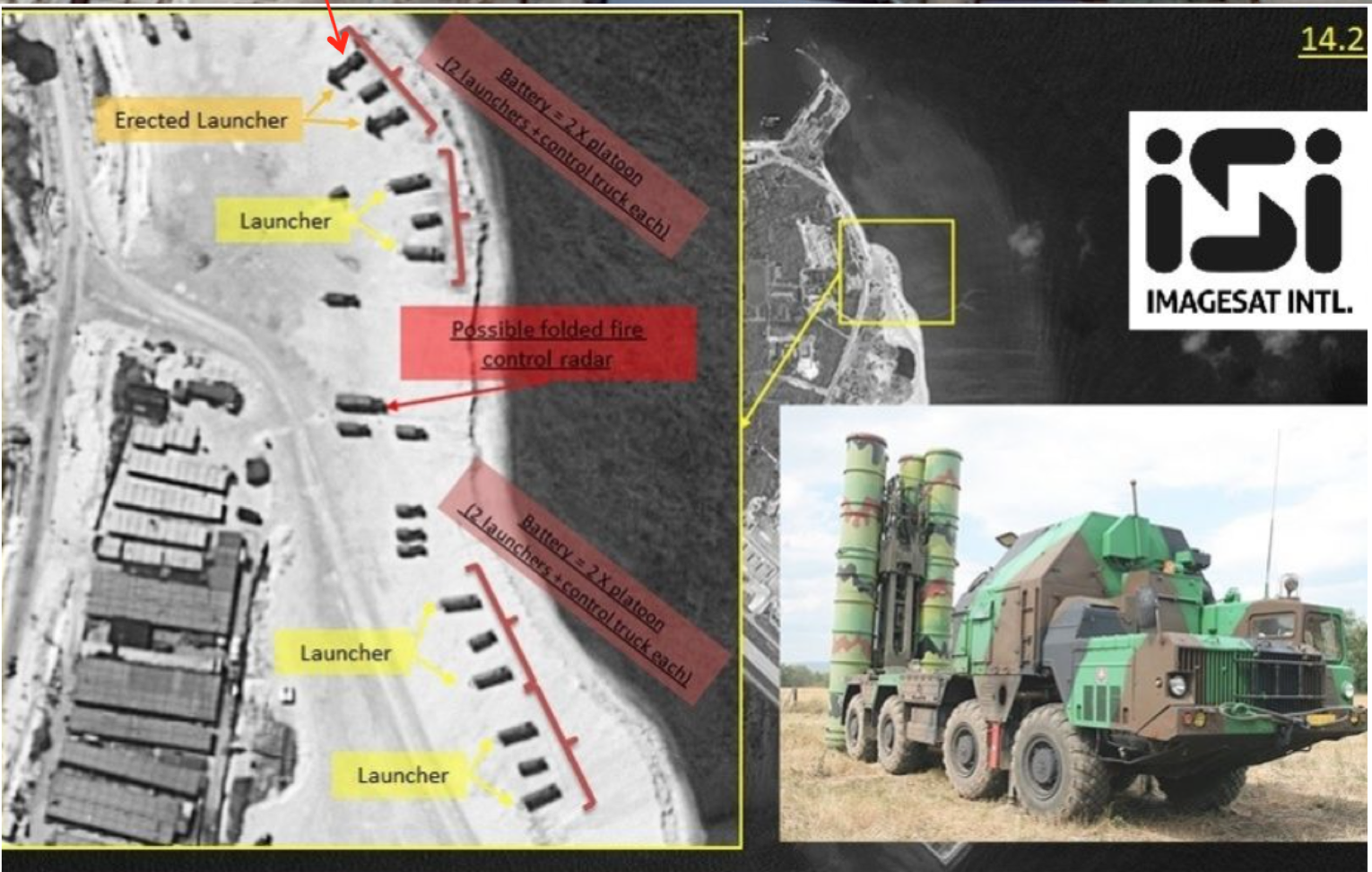
“On the same day, former commander Scott Swift of the US Pacific Fleet finally acknowledged that the US military had lost the best time to control the South China Sea. He believes that China has deployed a large number of Hongqi 9 air defense missiles, H-6K bombers, and electronic jamming systems on islands and reefs. The defense can be said to be solid. If US fighter jets rush into the South China Sea, they are likely to encounter their ‘Waterloo.’”

“The crown of pride, the drunkards of Ephraim, shall be trodden under feet.”

The bottom line is that the systems – including electronic jamming – deployed by the PLA on islands and reefs in the South China Sea, covering more than half of the total surface, are considered by Beijing to be part of the national defense system.

See the source image

I have previously detailed what Admiral Philip Davidson, when he was still a nominee to lead the US Pacific Command (PACOM), told the US Senate. Here are his Top Three conclusions:

1) “China is pursuing advanced capabilities (e.g., hypersonic missiles) which the United States has no current defense against. As China pursues these advanced weapons systems, US forces across the Indo-Pacific will be placed increasingly at risk.”
2) “China is undermining the rules-based international order.”
3) “China is now capable of controlling the South China Sea in all scenarios short of war with the United States.”

Implied in all of the above is the “secret” of the Indo-Pacific strategy: at best a containment exercise, as China continues to solidify the Maritime Silk Road linking the South China Sea to the Indian Ocean.

For the full Zero Hedge article, click HERE 

~~~~~

See the source imageOther missile system:

The JL-3 is a Chinese third-generation intercontinental-range submarine-launched ballistic missile (SLBM) in development. It will likely deploy on the Type 096, a predicted future class of Chinese ballistic missile submarine.

The missile is solid-fueled and has a reported range of over 9,000 km (5,600 miles). Chinese and US sources reports ranges up to 12,000 km (7,400 miles).

In addition to the JL-3, China also possesses the land-based Intercontinental Ballistic Missile (ICBM), the sophisticated DF-41s.

See the source image

The DF-41 has a range of up to 15,000 km (9,320 miles), more than any missile on Earth, and can reach all areas of United States, Europe and Russia. It will take roughly 20-25 minutes from launch for the DF-41 to reach targets in the United States, wiping out an entire country.

A number of these road-mobile ICBMs are stored in tunnels. Hence the missiles are well protected. Once on high alert the road-mobile launchers leave the tunnels and fire their missiles from nearby launch positions. Alternatively the launcher vehicles can leave their bases and operate undetected in remote areas. So China’s missiles are typically harder to intercept and destroy than stationary silo-based missiles. These have a high probability of surviving the first strike once the country has been attacked.

The PCL191 system

The new PCL191 system is understood to be capable of destroying multiple strategic targets such as airports, command points, and supply bases. One of the locations it is reportedly stationed at now is Xiamen in Fujian Province, just a stone’s throw away from Taiwan.

China’s new PCL191 multiple launch rocket system is capable of firing ballistic missiles up to 500km. Photo: HandoutA report in the latest issue of Modern Ships praises the Chinese multiple launch rocket system called the Type PCL191 as the most cutting-edge piece of weaponry capable of firing both rockets and ballistic missiles. The modular launcher appears to be based on the AR3 system intended for the export market.

The modular rocket system can carry eight 370mm (14½ inch) rockets – each with a range of 350km (220 miles) – or two 750mm Fire Dragon 480 tactical ballistic missiles – each capable of flying up to 500km.

The new generation MLRS system has extended China’s firing range to cover everywhere they want to hit: The Taiwan Strait is just 180km across.

{}{}{}

UK Mentality Toward China Shows Serious Regression: Martin Jacques

•July 30, 2020 • Leave a Comment

The Lord shall make the pestilence cleave unto thee until He have consumed thee from off the land whither thou goest to possess it.
The Lord shall smite thee with madness, and blindness, and astonishment of heart; and thou shalt grope at noonday, as the blind gropeth in darkness (Deuteronomy 28:21, 29)

Martin Jacques: “UK mentality toward China shows serious regression.”

Image result for martin jacques picBy Chen Qingqing and Bai Yunyi

Source: Global Times Published: 2020/7/22

Editor’s note:

As UK-China ties continue to deteriorate, the Global Times reporters Chen Qingqing and Bai Yunyi (GT) talked with Martin Jacques (Jacques), a former senior fellow at the Department of Politics and International Studies at Cambridge University, on a series of issues including the latest Huawei ban in the UK, the British government’s harsh stance on the natíonal security law for Hong Kong, and escalating US-China tensions, which have broadly affecting relations between the UK and China.

GT: In your latest tweet, you described the Huawei ban as “an exercise in national suicide.” Could you elaborate further? What would the Huawei ban mean for the UK in a technological, geopolitical, and economic sense respectively?

Jacques: This is the context: Britain is leaving the European Union. This is to be finalized on January 1, 2021. And the European Union was by far Britain’s biggest trading partner. So suddenly, there’s a big hole as a result of that. Now Britain has decided to end the relationship with Huawei and remove all Huawei equipment, and not have any Huawei equipment to 5G. Inevitably, this affects in a very negative way the economic and trading relationship between Britain and China.

So you’ve got a situation where Britain is rejecting Europe and rejecting China at the same time, in a situation where the British economy, as we know, historically has been in long term decline.

Image result for london picThis is the worst period in British economic history since before the Industrial Revolution. Seems to me, it leaves Britain in an extremely bad situation. And really what it’s also doing at the same time is to try and compensate for this situation of rejecting Europe, rejecting China, and embracing the US and the Trump administration in the United States and its position. But this isn’t really going to help Britain very much because it so happens that the trading and the economic relationship between the US and the UK is not that important to the UK.

If they reach, as they will I think, some kind of US-UK trade agreement, it will add very, very small amount to British GDP. It needs to have a much broader view of its relationship with the world.

In strategic terms, the decisive country in this context is China. First of all, because China is a huge economy and growing all the time, and will soon have the biggest market in the world. Secondly, because China is, as we can all see now, really moving dramatically on the technological front. So in a way, what’s happened is Britain is choosing a sort of cul de sac away from the key dynamics of the global economy.

GT: Can a balance be found in Europe between confronting negative views of the US on Huawei and embracing the high technology growth of China?

Jacques: With the US, the same sort of problem is developing in the UK of an increasing negative attitude toward China. And this is essentially a political position which is expressed in the form of security concerns about China.

And what’s happening is a very serious regression in the mentality in the UK toward China.

It reminds me very much of the Cold War. In fact, the thinking is Cold War thinking: China is just the evil enemy that has to be rejected. The right wing reduces China to the communist regime, the communist threat, and the whole Chinese history is lost in the process. So they have no understanding whatsoever of China really. They´ve just got this extraordinary backward view of China, which is just, frankly, plain ignorant. But it’s making the running.

Image result for nfl in tottenham stadium picThe reason for this is that the US-China relationship which was benign, very positive for a long historical period from 1972 to 2016, has broken down in a very profound way, because America had two essential propositions that underpinned its attitude toward China during that period.

The first one was that China would never be an economic threat to the US. That was inconceivable. In 1980, the Chinese economy was only 5 percent of the American economy.

Secondly, China’s rise was unsustainable, because its political system was unsustainable, including the role of CPC and so on. China would not be able to sustain it unless it adopted the Western-style system. That was the American position.

The moment that historically began to crumble that edition was the financial crisis in 2008. That crisis didn´t happen in China as they predicted, but in the US. I think at that moment the American elite opinion began to shift and see China as a threat. Unless they did something to stop China’s rise, America´s hegemonic role in the world would be undermined.

GT: What about the shifting mentality of Britain toward the US?

Jacques: Britain is aping the US, because basically that has been the British way since 1945. By the end of World War II, Britain was in great debt to US. It decided, finally, to recognize that it could not compete with the US anymore. It would have to accept a sort of partnership with the US in which it was the junior player in that situation.

Ever since then, it’s very, very rare for the British ever to disagree with the Americans. There isn’t another country in Europe that has that kind of relationship. There is no other country that is so supine to the US.

See the source imageNow, the problem is if you tie your fortunes to a country like the United States, which is very powerful though it is actually in steep decline, then where do you go geopolitically? You’re tying yourself to a declining part of the world. You’re cutting yourself off from very important new innovations, development, technological progress, and so on, which is exactly what’s happening now.

GT: Do you think it’s time for the UK to sometimes say “no” to the US as the geopolitical balance is changing?

Jacques: Yes, absolutely. A large part of the British elite and population don’t understand really what’s happening globally. They are still operating with a sense of the world as it was, not as it is becoming. So they’re still playing the game as it were, by the old rules when the basic parameters of the world have changed very profoundly. It’s very difficult for countries like Britain and the United States to let go of what was but no longer is.

One of the reasons is Britain never really has been able to adapt to the fact that it is no longer a great power. Part of the reason for Brexit vote was sort of “we haven’t been doing well over the last few decades, what’s the reason? It must be Europe’s fault.”

China had a very similar problem in early 19th century. What happened was China could not understand what was happening in Europe. The Emperor Qianlong rejected the idea that Britain had anything to offer in terms of manufacturers. In a famous letter, he wrote to the King George in 1793, “China has no need of your manufacturers.” That was the Industrial Revolution, and China spent the next 150 years trying to cope with that situation and find a way of bringing itself into the world as it used to be and not as it liked it to be. Those kinds of changes are very difficult to make.

GT: As tensions between the US and China increase, what would be the worst consequences and are we already in the Cold War?

Jacques: The ultimate consequence, which would be appalling, would be military confrontation. I think we’re either entering or we’ve already entered a new Cold War. If we use the term Cold War, we need to be clear that it’s not simply a re-run of the Cold War between Soviet Union and the US, because there are fundamental differences in the relationship between China and the US compared with the US and Soviet Union.

See the source imageWhat is characteristic of both is a desire to separate. The US wants to separate itself from China, and would like actually to excise China from the global economy if it could.

Another different characteristic is that one of the key aspects of last Cold War was military confrontation. If there was one thing that redefined the relationship between Soviet Union and the US, it was this bitter military rivalry, arms race, and so on. It led to fear across the world. And that’s not true of the relationship so far between China and the US.

I think we really have Deng Xiaoping to thank for this. He understood it would be absolute folly for China to engage in an arms race with the US when it was so poor and so weak. The Soviet Union never had that enlightened attitude. It was extraordinary wasteful.

Now I think it’s very important for China, as it becomes increasing great power, not to make the mistake of Soviet Union, not to allow itself to engage in military competition with the US.

GT: What does that mean?

Jacques: It means essentially China shouldn’t engage in huge levels of military expenditure, but engage in the kind of practices it has so far, which is clear limits to that. It´s an obviously fundamental interest for China to prevent American intrusion on its southern border of the South China Sea. (The measures China has taken) are understandable and necessary.

GT: How do you see changes in the US-China relations under the presidency of Donald Trump?

Jacques: Donald Trump is a most unusual political figure even in the West. We’ve never had an American president like this. China, like everyone else, finds it difficult to deal with him. It also coincided with China beginning to acquire some of the characteristics of a great power, beginning to express itself.

Historically, these two things coincided, collided. It became more and more irreconcilable because the two countries were traveling in different directions.

I think it’s very important for China to avoid at all costs getting anywhere near the gutter with Donald Trump. At the very early phase of becoming a great power, China always handles itself with great dignity, honestly, openness, humility. In other words, it sets a great example to the world. I think China always has to think of its audiences; it´s not Donald Trump, but the world. It should avoid at all costs getting into that kind of tit-for-tat. That’s beneath China’s dignity.

GT: So how should China respond to growing hostility from other countries like the UK?

Jacques: In the case of UK, I think China should avoid getting into a tit-for-tat situation with UK. I think China’s got to think of the long game, which is, at some point, the UK will need to come back to China and be more open toward a relationship with China as it was five years ago, because China´s on the rise.

The forces which are positive about China are in a weak situation, but they are not all gone away. Those kinds of ideas are still there. They retreated. We need to create the best circumstances for them to begin to renew themselves, regenerate and rise.

GT: Regarding Hong Kong, the British government and some officials like former governor Chris Patten have constantly criticized China. What’s your take on such reaction from the UK?

Jacques: UK´s response is entirely predictable. The roots of the problem are that, in a way, Britain´s thinking toward Hong Kong is still very influenced by the colonial relationship it had with Hong Kong for 155 years.

See the source imageI think Britain’s interpretation of “one country, two systems” was “one system is the Chinese system, the other is the British system.” So, ever since the handover in 1997, Britain has never really respected China’s sovereignty and Beijing’s relationship with Hong Kong. It’s always been criticizing it. The classic example of this is Chris Patten, the former governor who was a leading conservative politician.

So it was predictable the British response to Hong Kong was to support the demonstrations in 2014, and again in 2019.

And when it got violent, the British media made no distinction at all between the big peaceful demonstration and the riots. They never, ever criticized the rioters, who were regarded as heroes, anti-Chinese heroes.

GT: So what are the challenges for the mainland and Hong Kong to fix this problem?

Jacques: I recognized that the situation was so out of hand that the mainland had to introduce the national security legislation, but it needs to win hearts and minds in Hong Kong at the end of day. There’s no substitute for that.

See the source imageI think the most important answer is the 155 years of British colonial rule. That has had a profound effect on the Hong Kong population. Hong Kong’s population doesn’t think like the mainland Chinese. Although British never introduced any semblance of democracy in Hong Kong, they are attached to their relatively successful economy, an increasingly robust free media, rights to demonstrate, etc. I think this shaped the way the Hong Kong Chinese think.

I think now the mainland is in a much freer position to get on with it. It really has got to deliver a social economic program that can transform the prospects of the Hong Kong.

Another thing that China’s got to learn and it’s not good at is how to speak to public opinion in Western style societies.

Security legislation will not do that. It will prevent these separatists and rioters, but it doesn’t mean you’ve won over the population.

So the big question is: can China win over the population? I think they can, if they have really serious reforms. But at the moment, no one talks about that. As far as I can see, there’s no sign of it.

GT: What is your suggestion for better handling of the Hong Kong matter?

Jacques: The thing is that the difficulty is not just a colonial style economy, but a colonial style administration. There isn’t really a political leadership in Hong Kong other than administrative leadership. But there isn’t a political leadership. Really what the mainland needs to do is to build a new kind of political leadership. I don’t mean the government. I mean something integrated in organic to the society. So it has a voice in the communities, in the states, in the different parts of Hong Kong.

For example, let’s say the reform in education. I assume basically the curriculum is still the old British curriculum. And they’re still learning history from the colonial period about the country. — this is the root problem of Hong Kong; once this is solved, the rest will fall into place: JH

GT: Do you think Hong Kong will remain a geopolitical battleground between China and US or maybe the West in the coming years? And do you think in 2047, we will still have “one country, two systems” for Hong Kong?

See the source imageJacques: I think that it will remain a battleground for the foreseeable future. I think the extent to which it is a battleground will depend crucially on how well China handles the situation from now on. If it carries through very successful and popular reforms in the city and wins hearts and minds, then it become less a battleground. Because basically, the Western position depends on an echo chamber.

The echo chamber is those in Hong Kong who disagree with what the Chinese do, the Chinese role and so on. The greater the extent to which the population embraces Hong Kong in this new era, the less it will be a battleground. Because it would be much more difficult for the West to gain attraction in Hong Kong.

“One country, two systems” is a great challenge for China. It was a brilliant idea. It comes out of the Chinese tradition of a civilization state rather than nation state.

It’s a very interesting challenge in two senses. One is the very big sense and the other is a smaller sense. The smaller senses are the idea of the lost territories, and how it is restoring them to China. But the bigger challenge, in my view, is honorable to watch on a wider global basis, which is can China successfully transform and offer a new kind of perspective for a place which is Chinese but does not come in any contemporary sense from the Chinese tradition.

This is a big challenge because China can accomplish successful transition in Hong Kong, then that speaks well for the ability of China to be able to speak to lots of peoples around the world.

And it needs imagination. It needs flexibility. It needs creativity. It requires non-dogmatic thinking, and requires new thinking.

GT: Back to the UK-China relationship many people think the Golden Age between the two countries has come into an end amid growing confrontation. What is your take on that?

Jacques: Can you talk about the Golden Age when they’ve done what they’ve done to Huawei? How can it [be the Golden Age] that you renounce a firm that has invested so much in Britain and it’s been so important for British telecom and Vodafone. You can’t, and it’s over.

See the source imageBut how long is it over for? And that is what the Chinese have got to think about. How long will these phases last? At what point will the situation begin to change again? Will a different president in the US make a difference? What happens when Britain begins the expense of taking out Huawei stuff and putting in some new stuff? Is that going to be successful?

There’s still a lot of uncertainty attaching to this situation.

I think it’s very important that China keeps its lines of communication absolutely open with these people. It’s not over till the fat lady sings.

I don’t mean that China shouldn’t find a way to make it clear to Britain that it’s not happy about this.

GT: So what kind of response?

Jacques: I would just say restrained response. China is absolutely right to be extremely angry about what the British have done. But always think of the long game, not the short game. So don’t burn your bridges.

Also, it’s much more important to me is what Germany decides to do. Germany is much more important than the UK.

GT: You said in your Tweet that UK has no future without China. But if the tensions between China and US continue to escalate, then other countries may have to pick sides. Why do you think the alliance with the US is enough or not enough for UK’s future? How will UK face the situation if one day it has to pick sides?

Jacques: It has already picked sides. For the time being, it has picked the US.

The US relationship with Europe is significantly weaker than it was previously. It means that Europe is thinking and it feels less inclined to identify with the US, feels less comfortable with the US, and feels alienated by the US. This is very important.

What you got is you’ve got the beginnings of the breakdown of the West as a concept; as a reality, the relationship is fragmenting. This is a very important development. And Germany is the most important expression of it, because Germany is the most important country in Europe.

In 2008, the financial crisis led to a major shift in the balance of power between the US and China. We can see that now not just economically, but in a much wider way.

See the source imageAnd the novel coronavirus is going to lead, in my view, to a much bigger shift, away from the US toward China because China’s handled the coronavirus so much better than the US, which has handled it absolutely disastrously. And it’ll take it a long time to recover economically from it.

Unlike the financial crisis, this is about state competence. And China’s shown immense state competence. And the US has revealed absolute state incompetence.

For the full Global Times article, click HERE

~~~~~

Ephraim shall be desolate in the day of [My] rebuke; among the tribes of Israel have I made known that which shall surely be” Hosea 5:9.

Trapp: God will not now dally with Ephraim, or deal favourably with him as heretofore; he will not shake his rod at him only, but wait it to the very stumps; he shall be utterly destroyed from being a people.

{}{}{}

Black-Only NFAC Militia

•July 27, 2020 • Leave a Comment

Leader of radical black-only militia NFAC ‘believes in violence’ & wants a real-life Wakanda for every black person in America

18 Jul, 2020 11:56

By Chris Sweeney for RT

Leader of radical black-only militia NFAC ‘believes in violence’ & wants a real-life Wakanda for every black person in America

NFAC, the masked, armed black militia that recently marched through a park in Georgia, deems violence and killing an acceptable response to oppression. Their end goal is to break away from the US as their own black-only nation.

The NFAC (Not F*cking Around Coalition) grabbed plenty of attention on social media with a high-profile public debut on July 4. The sight of an all-black militia, clutching rifles and handguns, marching in the heartland of the Ku Klux Klan at Stone Mountain caused plenty of ripples.

But very little is known about them, despite a frenzy of speculation. It’s not even clear when they were created or how many of them there are.

‘We’re in your house’: Armed black protesters march through Georgia Confederate park
So to make their intentions clear, NFAC founder and leader Grand Master Jay (real name John Fitzgerald Johnson) spoke exclusively to RT.

“There’s a misconception that we’re a terrorist group and want to kill white people.

“We are here to protect the black community, as that’s who is under attack. Nobody is protecting black children, men and women in America. What necessitated the creation of NFAC was the need to address a rising tide of police brutality, of racial brutality, of unfairness in the judicial system,” he said.

“Most of us like me are ex-military, we’re not young people on the block, we’re voters, we’re your responsible guys, we’re the guys with the good jobs.”

Every black person a ‘political prisoner’

While seeing themselves as protectors, Jay has a clear aim of what he wants to achieve – and he’s not playing it small.

RTHe feels that black people need to be split from the rest of the US.

So he says he, and others, are filing an order of liberation with the International Court of Justice.

He explained: “I want them to declare every black person who is a descendent of the Portuguese slave trade a political prisoner of the United States. And to sanction the United States to do one of two things. The first is give us our own land here, so we can go in, set up our own government and the whole nine yards.”

Some have speculated that Jay is demanding the states of Texas as this land, but he only used the Lone Star state as an example. The key is to be given land no longer controlled by the White House.

The other option is more radical, which most media have refused to publish.

Jay revealed: “It’s a glaring fact that mainstream media in the United States has completely ignored the NFAC. ABC News tried to do an interview with me but found the information too scary, so they buried the story as a history piece about Stone Mountain.”
The mainstream media will not report on us, as images of organized black folks with guns would send shivers down the spine of the racist core of America.

Black-only exodus to Africa

“My other aim is for an exodus to Africa, to establish our destiny and build our own nation – and get a seat at the UN like everybody else. Forty-five million of us is a nation within a nation, so we can take ourselves to a place where two countries friendly to us are willing to carve out some land.

That would be in Africa, as it’s where we come from, where we have greater numbers, where resources are and I already have relationships with some of the rulers of those countries.

Hypothetically, I want to get an area of about 100 miles on each side, declare it a sovereign zone and build an infrastructure.”

The exodus would only include black people. The NFAC only allow black members, and Jay doesn’t feel this should be a shocking admission.

RT

“Every other entity has their own, we’re the only people on the planet who don’t,” he said.

“If something happens to a Chinese person in America, China gets upset. If it’s British person, the Queen has something to say about it. The color black is not a country, so if something happens to a black person in America, nobody gets upset.”

The riots that broke out after the latest resonant police killing of an unarmed black man, George Floyd, is apparently not what he has in mind. He wants to take things global.

“We have no identity, they call us African Americans but tell me, where in Africa? There are 55 countries in Africa.”

If we have our own country, then if something happens in America, we can go to the UN and say ‘that’s a violation.’

Those with a single black parent could be included but would be investigated by the NFAC along with their “pattern of behaviour.”

‘BLM doesn’t believe in violence. We do’

NFAC hasn’t been spawned by the Black Lives Matter movement. Jay was part of BLM several years ago but grew frustrated by their direction. He feels a more authoritarian approach is the only way forward.

“Black Lives Matter does not represent the sentiments of the black community. We have distanced ourselves from them completely,” Jay admitted.

“BLM doesn’t believe in violence, we do. We chose America’s Independence Day to send that message as we were slaves when that happened, we were not members of this country.

We tried to be here for 247 years, we had reconstruction and they burned our towns down, we had Jim Crow when they set dogs on us and told us we couldn’t sit next to them – we tried that with affirmative action and they rolled that back.

It’s obvious they don’t want us here.”

NFAC’s willingness to kill could be why they are shunned by the more mainstream activists. But Jay feels justified as he claims there have been 457 controversial killings since the 2014 police shooting of 18-year-old black man Michael Brown.

“If anybody in our group has a personal agenda and just wants to shoot some people, then we’re not the group for them,” he says, before calmly explaining the rules of engagement:

But on July 4 before we went to the park my orders were, kill them – not shoot or wound them, kill them.

“That was the safety briefing. I told them we were not to initiate anything but if they attack us, then everyone out here will kill everyone in sight. We don’t want to hear your excuses anymore, we don’t want to hear let’s talk or wait for the grand jury.”

RT

Along with the Stone Mountain march, the NFAC held a simultaneous event in Phoenix’s Escobar Park. Since then, Jay claims he’s been flooded by contacts globally and now has NFAC chapters internationally.

However, members’ identities will remain anonymous.

“There’s a vetting process, we inspect them and then they get sworn into the NFAC,” he said.

“We are also a coalition so some existing organizations want to be a part of us too, so we vet their members too.

“We learned our lessons from types of infiltration methodologies. That’s why we’re so secretive about our numbers, that’s why you cannot find out where we train, that’s why we are not as open to giving up the details.”

The only name or face that is known is mine. I speak, no one else does.

Done with saving America.

Back in 2016, Jay ran for president but felt his campaign was purposely sidelined. He regards 2020 contender Kanye as “a political joke” but did reveal some have urged him to run again.

“Since Kanye’s announcement, I’ve received phone calls saying ‘you do know if you run for the presidency right now, you would win hands down,’” Jay said.

“But my mission is not to save America, I tried that and I found out that big money and the media can be bought to block out good candidates. I will not go down that road again.

“My goal is much loftier than that, not only to facilitate the exodus of the black nation here in America but the implementation of what we would call the United State of Africa.”

Since July 4, Jay feels the NFAC had already made a clear difference.

Things in his view have calmed down. “They got the message, there hasn’t been one lynching or police involved shooting since and a wave of unity has swept the black community and we’re seeing the judicial system trying to prosecute the cases.”

While the NFAC is only for blacks, he does encourage other races to support their cause.
Malcolm X said it best, you can help us, but you can’t join us.

“Unless we are by ourselves and until we learn to love ourselves, we can’t love another people. When a people are denied knowledge of their culture and history of self, they have nothing to be proud of.

“Did you see how proud they felt when they saw the movie ‘Black Panther’ which is make believe? Black people are yearning to belong to something, we have got to give them something to belong to. I would rather give my life for something noble like the liberation of my people, rather than to waste it staying alive being a weakling.”

“And what you’ll find is, I’m not alone.”

For the full RT article, click HERE

~~~~~

Rightwing Militias

Three Percenters – the group started in 2008 during the Obama’s presidency. Its name derives from the disputed claim that only three percent of American colonists took up arms against the Kingdom of Great Britain during the American Revolution.

Oath Keepers – started in 2009, the Oath Keepers is an anti-government far-right organization. The group describes itself as a non-partisan association of current and former military, police, and first responders, who pledge to fulfil the oath that all military and police take in order to “defend the Constitution against all enemies, foreign and domestic”. The organization claims a membership of 35,000 as of 2016.

The boogaloo movement – started in the early 2010s, participants in their movement often wear Hawaiian shirts along with military fatigues to identify themselves at protests.

And hundreds more, click HERE

~~~~~

This model forecast the US’s current unrest a decade ago. It now says ‘civil war’

A ABC Article by James Purtill

Wed 17 Jun 2020

“The risks of violence in November are very high,” says Professor Goldstone, a leading authority on the study of revolutions and long-term social change at George Mason University.

In an unpublished paper submitted for peer review, Professor Goldstone, who is a sociologist, and Peter Turchin, an expert on the mathematical modelling of historical societies, have concluded that the US is “headed for another civil war.”

The conditions for civil violence, they say, are the worst since the 19th century — in particular the years leading up to the start of the American Civil War in 1861.

The reason for this are trends that began in the 1980s, “with regard to inequality, selfish elites, and polarisation that have crippled the ability of the US government to mount an effective response to the pandemic disease,” they write.

This has also “hampered our ability to deliver an inclusive economic relief policy, and exacerbated the tensions over racial injustice.”

November is the US presidential election — now less than 100 days away. As the big date nears, the tone of predictions are darkening. Both Republicans and Democrats see a loss as a cataclysm — not just a setback, but the end of America. Four more years of Trump would ‘destroy democracy’, one side says. The other claims that Biden would destroy the economy as well as ‘law and order’. The Trump campaign has launched an ‘Army for Trump’ website to “recruit and mobilise Americans … committed to fighting to re-elect President Trump.”

“There’s a real risk that, if the election is close, whichever side loses will be strongly motivated to mobilise people to challenge the result,” Professor Goldstone said.

For the full ABC article, click HERE

{}{}{}

An AUTOPSY Of JERUSALEM in the AD 70 INFERNO

•July 23, 2020 • Leave a Comment

The Lord shall make the pestilence cleave unto thee until He have consumed thee from off the land whither thou goest to possess it.
The Lord shall smite thee with madness, and blindness, and astonishment of heart; and thou shalt grope at noonday, as the blind gropeth in darkness (Deuteronomy 28:21, 29)
I create darkness; I create evil; I, the Lord, do all these things (Isaiah 45:7).

“Think not that I am come to send peace on earth. I came not to send peace, but a sword.” Matthew 10:34

An AUTOPSY Of JERUSALEM in the AD 70 INFERNO

An autopsy (also known as a post-mortem examination or necropsy) is the examination of the body of a dead person and is performed primarily to determine the cause of death, to identify or characterize the extent of disease states that the person may have had, or to determine whether a particular medical or surgical treatment has been effective.

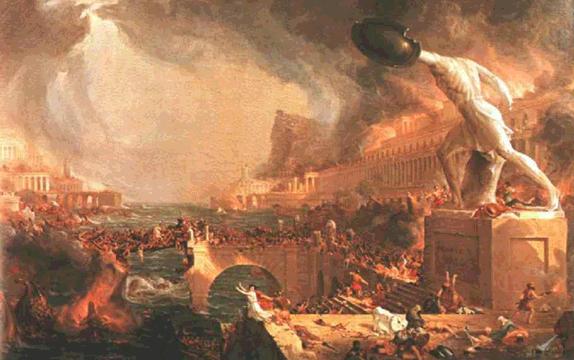
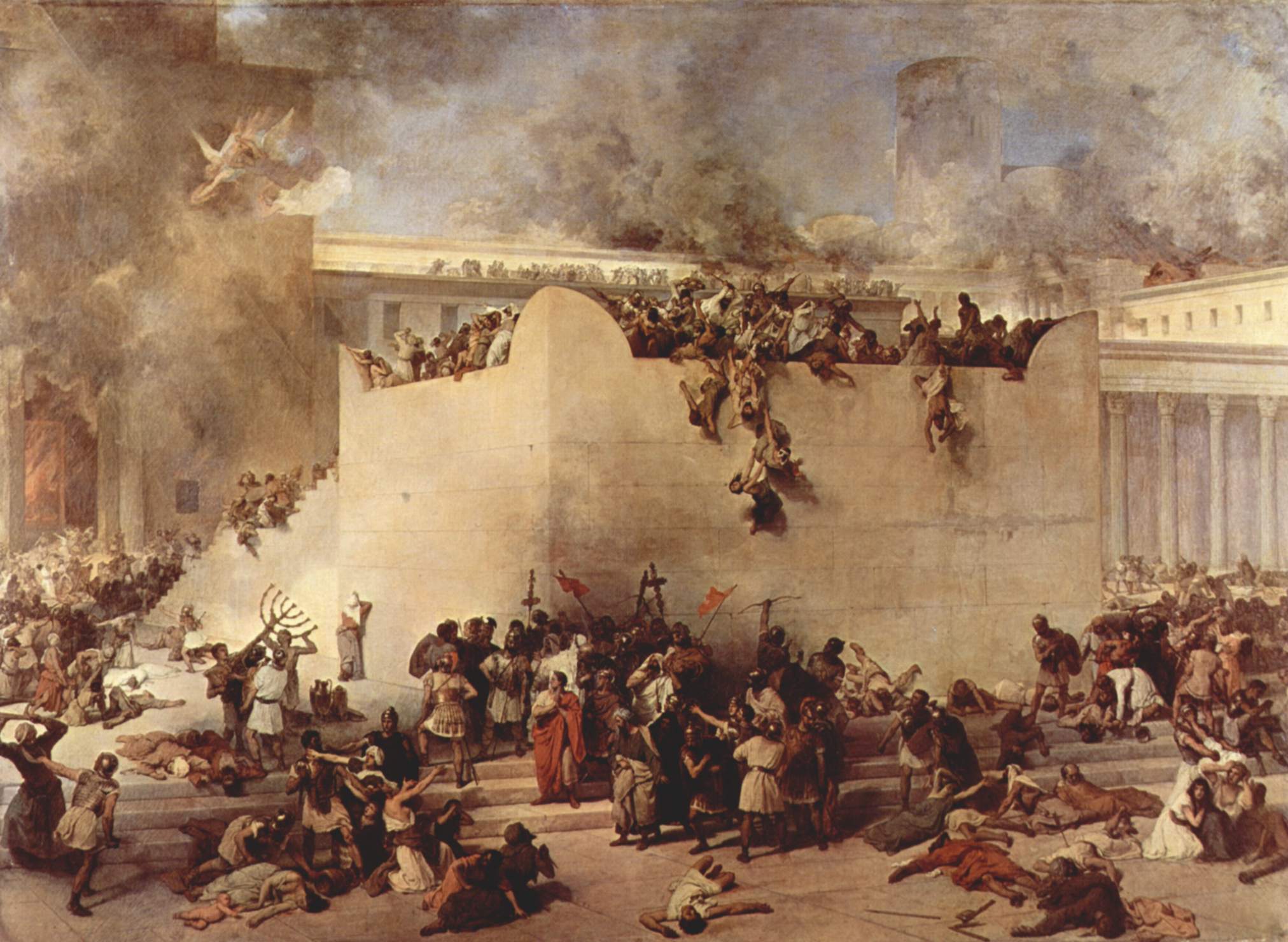
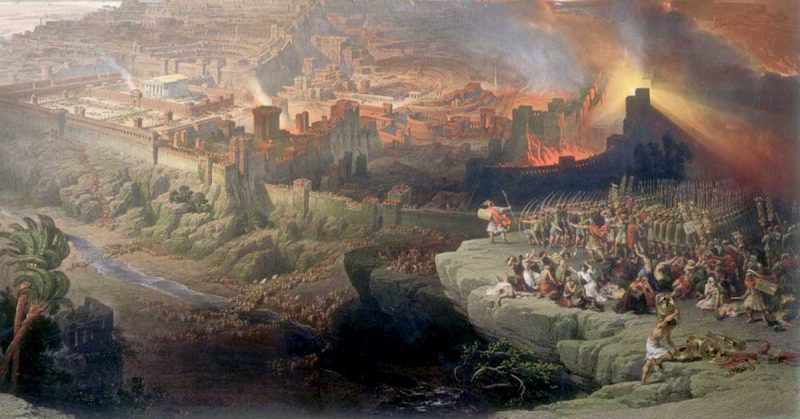
Image result for fall of jerusalem in ad 70A post-mortem is an examination of a dead body to determine the cause of death.
Spiritually and physically Jerusalem faced its death in AD 70 but nobody has asked and wondered why? Have the warnings from the Prophets were of no effect? Why such a silence?

Rabbi Jonathan ben Zakkai, who witnessed the Roman conquest of Jerusalem in AD 66–70, wrote that the Shekinah (the glory of God) did indeed leave the Temple in AD 66 and moved to the Mount of Olives.

He said that the Lord’s presence “abode on the Mount of Olives hoping that Israel would repent, but they did not; while a Bet Kol [a supernatural voice] issued forth announcing, ‘Return, O backsliding children [Jeremiah 3:14]. Return unto Me, and I will return unto you [Malachi 3:7].’ When they did not repent, it said, ‘I will return to My place [Hosea 5:15].’” (Midrash Rabbah, Lamentations 2:11)

For the Lord promised:

Ye shall therefore keep My statutes and My judgments, which if a man do, he shall live in them: I am the Lord. Leviticus 18:5

And this promise was reinstated later by Moses before Israel entered the Promised Land:

That thou mayest love the Lord thy God, and that thou mayest obey His voice, and that thou mayest cleave unto Him; for He is thy life and the length of thy days, that thou mayest dwell in the land which the Lord swore unto thy fathers, to Abraham, to Isaac, and to Jacob, to give them. Deuteronomy 30:20

And elsewhere:

Whosoever shall be wanting, he shall not live. II King 10:19

But Thou, O God, shalt bring them down into the pit of destruction; bloody and deceitful men shall not live out half their days. Psalms 55:23

But it shall not be well with the wicked; neither shall he prolong his days, which are as a shadow, because he feareth not before God. Ecclesiastes 8:13

For Moses describeth the righteousness which is of the law: that “the man who doeth those things shall live by them. Roman 10:5

And in a form of a question:

Have I any pleasure at all that the wicked should die, saith the Lord God, and not that he should return from his ways and live? Ezekiel 18:23

Image result for fall of jerusalem in ad 70Certainly the answer is that the righteous will live and the wicked shall die by fire. And this principle is reaffirmed in the New Testament, which is built on the foundation of the Old Testament:

“I indeed baptize you with water; but One mightier than I cometh, the straps of whose shoes I am not worthy to unloose. He shall baptize you with the Holy Ghost and with FIRE (pyr g4442). 17 His winnowing fan is in His hand, and He will thoroughly purge His floor and will gather the wheat into His garner; but the chaff He will burn with FIRE (pyr g4442) unquenchable.” Luke 3:16-17

Christ came as lamb, but He could come with wrath too:

Psalm 2:12 Kiss the Son, lest He be angry and ye perish from the way, when His wrath is kindled but a little. — Yes, the Son could have wrath, too.

Isaiah 5:4 What could have been done more to My vineyard than I have not done in it? Why, when I looked for it to bring forth good grapes, brought it forth wild grapes?

John Gill: “what is further or hereafter to be done to my vineyard”, and “I have not done in it?” that is, by way of punishment; I have reproved and chastised them, but all in vain; what remains further for me (to do), because of their ingratitude and unfruitfulness? I will utterly destroy them as a nation and church.

5 “And now, I will tell you what I will do to My vineyard: I will take away the hedge thereof, and it shall be eaten up; and break down the wall thereof, and it shall be trodden down.

Gill: I will take away the hedge thereof, and it shall be eaten up; that is, the vineyard shall be eaten by the wild beasts that will enter into it, when the hedge is taken away; or “it shall be burnt”; that is, the hedge, being a hedge of thorns.

6 And I will lay it waste; it shall not be pruned nor dug, but there shall come up briers and thorns. I will also command the clouds that they rain no rain upon it.”

Calvin: I will lay it waste. God will not take pains to dig and prune it, and consequently it will become barren for want of dressing; briars and thorns will spring up to choke its branches; and, what is more, by withholding rain, God will dry up its roots. — “I will deprive you of all my blessings.”

The above Scriptures are all setting the stage for the fall of Jerusalem in AD 70.

And here it is expressed in a question:

Shall a trumpet be blown in the city, and the people not be afraid? Shall there be evil in a city, and the Lord hath not done it? Amos 3:6

And the answer is obvious: that God sits on His Throne, giving warnings about the soon coming destruction of Jerusalem.

See the source imageBut why?

Forty Years earlier, John the Baptist warned that the Son of God was prophesied to Baptize His subject with Fire:

Matthew 3:11 I indeed baptized you with water unto repentance, but He that cometh after me is mightier than I, whose shoes I am not worthy to bear. He shall baptize you with the Holy Ghost and with FIRE.

Luke 3:16 John answered, saying unto them all, “I indeed baptize you with water; but One mightier than I cometh, the straps of whose shoes I am not worthy to unloose. He shall baptize you with the Holy Ghost and with FIRE.”

Luke 9:54 And when His disciples James and John saw this, they said, “Lord, wilt Thou that we command FIRE to come down from heaven and consume them, even as Elijah did?” 55 But He turned and rebuked them and said, “Ye know not what manner of spirit ye are of. 56 For the Son of Man is not come to destroy men’s lives, but to save them.” And they went to another village.
Note: As Elijah did (II Kings 1:10, 12).

Like Chaff with Unquenchable Fire

Matthew 3:12 His fan is in His hand, and He will thoroughly purge His threshing floor and gather His wheat into the garner; but He will burn up the chaff with unquenchable fire.”

Luke 3:17 His winnowing fan is in His hand, and He will thoroughly purge His floor and will gather the wheat into His garner; but the chaff He will burn with fire unquenchable.”

Luke 23:27 And there followed Him a great company of people, and of women who also bewailed and lamented Him.

28 But Jesus, turning unto them, said, “Daughters of Jerusalem, weep not for Me, but weep for yourselves and for your children.
29 For behold, the days are coming in which they shall say, ‘Blessed are the barren, and the wombs that never bore and the breasts which never gave suck.’
30 Then shall they begin to say to the mountains, ‘Fall on us!’ and to the hills, ‘Cover us!’
31 For if they do these things in a green tree, what shall be done in the dry?” This idiom was spoken as the multitudes were following Jesus to the place of His execution. If men do these things torturing and executing the Lamb (i.e. the Son of God), what will happen when they decide to execute the innocents and the defenseless?

These warnings were for the Events leading to the Atrocities of Jerusalem in AD 70

What Happened in AD 70, Forty Years after Christ’s Death?

Titus’ Siege of Jerusalem began in April 14, AD 70

On 14 April 70, during Passover, General Titus laid siege to Jerusalem. To the northeast of the old city, on Mount Scopus, the legions XII Fulminata and XV Apollinaris shared a large camp; V Macedonica was camped at a short distance. When X Fretensis arrived from Syria, it occupied the Mount of Olives, in front of the Temple. The soldiers of these legions, each of around five thousand soldiers during the first century, had a special incentive to fight: they had been defeated by the Zealots in 66 AD, and had Jerusalem controlled by Judean rebel factions and they wanted revenge.

During this same Passover, One Zealot leader, Eleaser, allowed all inhabitants to perform their religious duties in the Temple. The festival, however, was spoiled by other militias who took swords with them and forced some Romans into surrender. Despite early successes in repelling the Roman sieges, the Zealots, who were also known as the Assassins, fought amongst themselves, and they lacked proper leadership, resulting in poor discipline.

Image result for death of jerusalem in ad 70 picsThe Roman attack served to unite the militias, who started to make sorties, but failed to destroy the new weapon that the Romans had prepared: siege towers. These were taller than the walls and enabled the legionaries to throw missiles on the defenders of the walls; when the latter tried to evade the missiles, the battering-rams could do their work. After fifteen days, the wall collapsed, and the Jews withdrew from Bezetha to their second wall. Titus ordered an all-out attack on this wall. The militias were able to ward off for four days, but on the fifth day the second wall yielded to the violence of the battering-rams.

Fighting continued in the streets of Jerusalem, where the defenders inflicted heavy losses upon the Romans, who were forced to retire through the breach to Bezeth, a suburb north and north-west of the Temple, built opposite the tower Antonia. After four days of heavy fighting, the latter again managed to drive away the Jews from the second wall, which was immediately destroyed.

Titus now decided upon a show of strength, staged an army parade. Meanwhile, his adviser Flavius Josephus was to talk to the men on the walls, trying to induce them to surrender. The Jewish leaders were not impressed by the arguments of the turncoat, and on the fifth day, the Roman soldiers renewed the struggle: they started to build four large siege dams, aimed at the Antonia fortress. (It was to be taken by force, because it had large stores and two great cisterns.)

The Romans knew that the Zealots would fight for every inch of their city, and understood that the siege of Jerusalem would take a long time. Therefore, Titus changed his plans. There were signs that the supplies of Jerusalem were giving out: some Jews had left the city, hoping to find food in the valleys in front of the walls. Many of them had been caught and crucified – some five hundred every day. The soldiers took pleasures by nailing their victims in different postures, while for others they decided to starve them into surrender. In three days, Jerusalem was surrounded with an eight kilometer long palisade. All trees within fifteen kilometres of the city were cut down.

The death rate among the besieged increased. Soon, the Kidron valley and the Valley of Hinnom were filled with corpses. One defector told Titus that their number was estimated at 115,880. Desperate people tried to leave Jerusalem. When they had succeeded in passing their own lines and had not been killed by Roman patrols, they reached the palisade. One of the defectors was the famous teacher Yohanan ben Zakkai, who escaped in a coffin and saved his life by predicting Titus that he, too, would be an emperor.

See the source imageSince there was no wood, the construction of new siege dams to attack the Antonia took three weeks. A sortie of weakened Jewish warriors had no success. Soon, the sound of the battering-rams was to be heard, and one night, a wall of the Antonia collapsed; but the legionaries discovered that a new wall had been built behind the breach. The Antonia had to be taken by other means.

During a dark night at the beginning of July, twenty-four Roman soldiers climbed the walls of the castle, killed the guard, and sounded a trumpet. The garrison of Antonia overestimated the number of enemies; many fled to the Temple. At the same time, Titus ordered his men to enter the mine that the militias had made. At three o’ clock in the morning, these men entered the fortress; after ten hours of fighting, they had driven all the militias away.

On 14 July, prisoners told the Zealots that the priests in the Temple had been forced to interrupt the daily sacrifices, which had greatly demoralized these defenders of Jerusalem. The Antonia fortress was demolished. The stones were used to build a new dam, this time towards the Temple terrace. The Romans used the dam to set fire to the porticoes on the northern and western side of the terrace, but it was impossible to bash through the walls. On the tenth of August, the Temple itself was set on fire. Six thousand women and children were taken prisoner at the Court of the Gentiles, while the legionaries sacrificed to their standards in the Holy of Holies.

The Temple was set on fire. During the next few days, the Romans destroyed the archives, the quarter immediately south of the Temple, and the building where the Sanhedrin convened. Then, they descended into the Old City. Meanwhile, dams had been prepared to attack the palace; when Titus’ men had taken it, the last defenders managed to hide themselves in the sewer system but to no avail. By 8 September, Titus was master of what was left of the City.

On his return to Rome, Vespasian, Titus and their soldiers celebrated a triumph. They paraded through the streets of their capital in a beautiful procession, which culminated in the punishment of the Jewish militias leaders: Simon son of Giora was executed and John of Gischala was sentenced to life imprisonment. The sacred vessels, the table on which the Bread of God’s Presence had been put, the Menorah, the curtain and all the other objects that nobody except the high priest was allowed to see, were carried through the Roman streets.

The boundless riches from the Temple treasury were used to strike coins with the legend JUDAEA CAPTA (“Judaea defeated”). Any Roman would be reminded of their victory. The Jews were forced to pay an additional tax (fiscus Judaicus).

During the four years of war, the Romans had taken 97,000 prisoners. Thousands of them were forced to become gladiators and were killed in the arena, fighting wild beasts or fellow gladiators. Some, who were known as criminals, were burned alive. Others were employed at Seleucia, where they had to dig a tunnel. But most of these prisoners were brought to Rome, where they were forced to build the Forum of Peace (a park in the heart of Rome) and the Colosseum. The Menorah and the Table were exhibited in the Temple of Peace.

But which sects had escaped death? History recorded only two sects that escaped the inferno of AD 70:

(1) The Christians, known as Nazarenes in Acts 24:5. Many died as martyrs but according to Eusebius, some received divine warning and escaped to a northern town called Pella, west of the Jordan River.

(2) Pharisees of the House of Hillel escaped to Yavne. These were headed by a rabbi, Johanan ben Zakkai, the head of the Sanhedrin; he was smuggled out of besieged Jerusalem in a coffin. Later, his followers re-emerged as Rabbinic Jews who established the Hillel Calendar, which was revealed by Hillel II in about AD 359 concerning the rules of the Calendar.

All other sects of the Jews were consumed and disappeared in the AD 70 inferno: Sadducees, Herodians, Boethusians, Essenes, together with the House of Shammai Pharisees and those of its military arm, the Zealots. They all met their dead ends and disappeared from history. Were they receiving their “FIRE”? Were these sects facing their Sodom and Gomorrah?

Were these “baptised in FIRE” as warned by John the Baptist? We need to note a very important point in this judgment. God included His holy city of Jerusalem in this judgment. He did not exclude these sects from His judgment during the inferno of AD 70.

Shall there be evil in a city, and the Lord hath not done it? Amos 3:6

An Obituary of the PHARISEES (Shammites) — Dead in the Jerusalem Inferno.

An Eulogy Message of its Death — Bind the Common People with Rivid Rules and Penalties; Hypocrites, Liars and Snakes; Lack of Justice, Mercy and Faith.

A Post-Mortem Analysis about the Pharisees HERE

An Obituary of the SADDUCEES — Dead in the Jerusalem Inferno.

thAn Eulogy of its Death — Hellenized Themselves with the Governing Authorities (the Greek and then Roman). Following the Samaritans, they Interpreted Passover on the Misguided Early Fourteenth of Nisan and Pentecost Counted from the Weekly Sabbath. Rejection of the Oral Law and Ridiculed the Idea of Resurrection or Life after Death.

A Post-Mortem Analysis about the Sadducees HERE

An Obituary of the BOETHUSIANS — Dead in the Jerusalem Inferno.

An Eulogy of its Death — Following the Sadducees and Samaritans, a Passover on the Misguided Early Fourteenth; Pentecost counted from the Weekly Sabbath so that Shavuot was always on a Sunday. Allied themselves with King Herod, the Herodians and the Hellenised Sadducees.

A Post-Mortem Analysis about the Boethusiasms HERE

An Obituary of the ESSENES — Dead in the Jerusalem Inferno.

See the source imageAn Eulogy of its Death — Lived in Isolated Communities and Rejected the Calendar established by the Sandhdrin by having one of its own of having 364 days in a year. Every New Year starts strictly on a Spring Equinox with a New Month (of 30 or 31 days) and a New Week always on a Wednesday, disrupting the Orthodox weekly cycle.

A Post-Mortem Analysis about the Essenes HERE

An Obituary of the ZEALOTS — Dead During the Jerusalem and AD 34 Inferno.

An Eulogy of its Death — known also as the Sicarii, or the Assassins. With a dagger hidden in their cloak, they inspired terror and extremism in the city or even the countryside. Zealous and militants for the Law, they were a Comrade of or considered the Military Arm of the Shammai Pharisees. Lived to kill or be killed.

A Post-Mortem Analysis about the Zealots HERE

A Warning Before Their Judgement:

Luke 3:16 John answered, saying unto them all, “I indeed baptize you with water; but One mightier than I cometh, the straps of whose shoes I am not worthy to unloose. He shall baptize you with the Holy Ghost and with FIRE.

The word “FIRE” is highlighted above, with a hope that the Blind could finally see. Dark days lie ahead of those who observe Passover at the beginning of the fourteenth, Pentecost on a Sunday and those formulating their own calendar.

On Passover: The Sadducees and Boethusians were indeed following the Samaritans, a Babylonians brought over by the Assyrians to live in Israel in place of the Lost Ten Tribes.

On Pentecost: These Samaritans brought along their Sun worshipping rituals; hence they reinterpreted the Scriptures to incorporate their yearly Shavuot on Sundays into their beliefs.

On the Calendar: If the Oracles mentioned in Roman 3:1-4 include the Calendar, any advocate having a counterfeit calendar would have their hopes and dreams better off flushing down the toilet. And indeed they were — watch the Essenes

When we look back, one cannot avoid concluding that God had deemed that the Sadducees, the Boethusians and the Essenes were worthy of extinction during the AD 70 INFIRNO. Everything about them were destroyed. The portion of the Shammai Pharisees also followed suit; only the Christians survived by fleeing to Pella and the Hillel branch of Pharisees limped off to Yavne.

Shall a trumpet be blown in the city, and the people not be afraid? Shall there be evil in a city, and the Lord hath not done it? Amos 3:6

Have I any pleasure at all that the wicked should die, saith the Lord God, and not that he should return from his ways and live? Ezekiel 18:23

The answer is obvious. God executed judgement during the Jerusalem AD 70 Inferno. And the following verses in Ezekiel repeated and expanded below for reflection. The message of Ezekiel was and is to the House of Israel where most of the CoG Communities are located. Ezekiel was already a captive when he gave the warning, “I was among the captives by the River of Chebar” Eze 1:1 so his warning was not for those already in Babylon but for those far beyond his time.

Ezekiel 3:17 “Son of man, I have made thee a watchman unto the house of Israel; therefore hear the word out of My mouth, and give them warning from Me.
18 When I say unto the wicked, ‘Thou shalt surely die,’ and thou givest him not warning, nor speakest to warn the wicked from his wicked way to save his life, the same wicked man shall die in his iniquity; but his blood will I require at thine hand.
19 Yet if thou warn the wicked, and he turn not from his wickedness nor from his wicked way, he shall die in his iniquity; but thou hast delivered thy soul.
20 Again, when a righteous man doth turn from his righteousness and commit iniquity, and I lay a stumbling block before him, he shall die. Because thou hast not given him warning, he shall die in his sin, and his righteousness which he hath done shall not be remembered; but his blood will I require at thine hand.
21 Nevertheless if thou warn the righteous man that the righteous sin not, and he doth not sin, he shall surely live because he is warned; also thou hast delivered thy soul.” Ezekiel 3:17-21

See the source imageHave I any pleasure at all that the wicked should die, saith the Lord God, and not that he should return from his ways and live? Ezekiel 18:23

And I gave them My statutes and showed them My judgments, which if a man obey, he shall even live in them. Ezekiel 20:11

But the house of Israel rebelled against Me in the wilderness. They walked not in My statutes and they despised My judgments, which if a man does them, he shall even live; and My Sabbaths they greatly polluted. “Then I said I would pour out My fury upon them in the wilderness to consume them.” Ezekiel 20:13

Zechariah 12:9 And it shall come to pass in that day that I will seek to destroy all the nations that come against Jerusalem.10 And I will pour upon the house of David and upon the inhabitants of Jerusalem the spirit of grace and of supplication; and they shall look upon Me whom they have pierced, and they shall mourn for Him as one mourneth for his only son, and shall be in bitterness for Him as one who is in bitterness for his firstborn.

Although in mourning and in grief, the Jewish Orthodoxy survives, but would those from the Church of God Communities survive? By adhering to the same belief of Passover and methodology of counting Pentecost of the Sadducees and Boethusians, would they repeat history by following their fate?

If not, why not? What other features and characteristics are there for the end-time Church other than wretched, blind and naked? Is God going to spew them out of His mouth? What does that mean — to spew them out of His mouth? Onto a whirlpool and not into a FIRE?

{}{}{}

Huawei

•July 18, 2020 • Leave a Comment

Hosea 5:9 Ephraim shall be desolate in the day of rebuke; among the tribes of Israel have I made known that which shall surely be.
Jeremiah 7:15 And I will cast you out of My sight, as I have cast out all your brethren, even the whole seed of Ephraim.

Why is the US government trying to persuade allied countries to avoid telecommunications equipment from China’s Huawei Technologies?

Godfree Roberts

January 20, 2019
Ed.D. Education & Geopolitics, University of Massachusetts, Amherst (Graduated 1973)

Huawei is the only company in the world that owns most 5G IP and can produce all the elements of a 5G network and assemble them together at scale and cost. It has no rivals.

The US calls Huawei a ‘security risk’ for a funny reason: it uses an encryption system that prevents the NSA from intercepting its communications. A number of governments and secret services in the non-Western world (think Germany) have begun to equip themselves exclusively with Huawei materials, and are doing so to protect the confidentiality of their communications: “Most of the personal data you store on your Huawei device (such as your photos, call logs, mailing list, messages, frequently visited websites, and so on) will be strictly protected. In addition, you will be clearly notified of any personal information being collected, and have complete control over the collection, processing, and sharing of your personal data. Without your authorization, your personal data will not be disclosed with any third parties.”

Back when Snowden came out in 2014, New York Times, Time, and Reuters disclosed that the NSA had infiltrated Huawei headquarters, monitored all of their executives, going through their entire data infrastructure (NSA infiltrates servers of China telecom giant Huawei). One of their goals was to find links between Huawei and the PLA, and the other was to find vulnerabilities so that the NSA could spy on nations that have installed Huawei instead of Cisco (which had installed ‘back doors’ for the CIA.

Another goal was to find connections between Huawei and People’s Liberation Army, according to The Times, which said the operation also sought to exploit Huawei’s technology by conducting surveillance through the computer and telephone networks Huawei sold to other nations.

The NSA planned to unleash offensive cyber attacks through Huawei if ordered by the President, “Many of our targets communicate over Huawei-produced products. We want to make sure that we know how to exploit these products,” the Times quoted an NSA document as saying, to “gain access to networks of interest” around the world.

Convincing US firms like Cisco to leave back doors in their equipment is quite simple: the US Government can threaten companies’ management or boards with tax or bribery investigations or over other shady activities, but that is not so easy when the company is hosted in China.

This treatment is not meted out to ‘allies’ like Israel. From Five Eyes Against Huawei:

1993: “Israel accused of selling US secrets to China” Israel accused of selling US secrets to China

2004: “Israel secretly sells American nuclear weapons to China” The Insider | Israel secretly sells American nuclear weapons to China

2013: “Israel Passes U.S. Military Technology to China” Report: Israel Passes U.S. Military Technology to China

“U.S. Furious With Israel After Sale of Advanced Military Technology to China” U.S. Furious With Israel After Sale of Advanced Military Technology to China

2017: “Israel Steals US Technology” — “Placing Israeli citizens in key industries is a secret to Israel’s success.” Phil Giraldi

Former CIA Phil Giraldi: “Israel Steals US Technology”

No arrests of Israelis.

Normal bugs and vulnerabilities are found by techies and computer scientists. There’s a robust international IT community where you get brownie points + job offers + $$$ + fame for finding these. Bugs money: Software sleuths cash in

This is the norm for the last 30 years, until very recently, when all of a sudden, it’s the spooks and their GOVERNMENT stooges coming out of the wood works. Why in the world do people believe that those who devote their entire lives and their formidable intellects solely to computer technologies can’t find the bugs, but some shadowy spooks trained in the rather separate discipline of killing people can, just beats me! If the spooks are so smart without even having to work hard on the subject, why don’t they do something productive, like discovering the cure for cancer?

If you want a preview of what a back door looks like, just look at the US Transportation Security Administration’s “master keys” for the locks on our luggage. Since 2003, the TSA has required all locked baggage travelling within, or transiting through, the USA to be equipped with Travelsentry locks, which have been designed to allow anyone with a widely held master key to open them. What happened after Travelsentry went into effect? Stuff started going missing from bags. Lots and lots of stuff. A CNN investigation into thefts from bags checked in US airports found thousands of incidents of theft committed by TSA workers and baggage handlers. And though “aggressive investigation work” has cut back on theft at some airports, insider thieves are still operating with impunity throughout the country, even managing to smuggle stolen goods off the airfield in airports where all employees are searched on their way in and out of their work areas.

China’s Huawei said it backed Apple’s chief executive Tim Cook in his stand-off with the United States government over breaking into an iPhone, but stopped short of saying explicitly it would adopt the same stance. “It is very important, we agree with that,” Richard Yu, chief executive of Huawei’s consumer business group, told reporters in Barcelona gathered for the Mobile World Congress. “Privacy protection is very important for Huawei, we put a lot of investment into privacy, and security protection is key, it is very important for the consumer.

“Apple is resisting US government demands that it unlock an iPhone used by Rizwan Farook, who along with his wife, Tashfeen Malik, shot and killed 14 people and wounded 22 others at a holiday party in San Bernardino in December.

“Tim Cook spoke up for that (privacy) … for us it is really very important,” Yu said. “I think it’s good letting the government understand why we cannot do some things. There are some things we can do, but there are some things we cannot do.”

The Five Eyes is a system of electronic espionage by Australia, Canada, the United States, New Zealand and the United Kingdom. They have begun to exclude Huawei from their auctions.

Their decision will put Five Eyes ten years behind China (and the EU if it resists US pressure) in 5G and its associated technologies.

For The Quora Article Click HERE

Isaiah 28:3 The crown of pride, the drunkards of Ephraim, shall be trodden under feet.

{}{}{}

Christian Martyrs

•July 16, 2020 • Leave a Comment

Christian Martyrs

And I saw thrones and they that sat upon them, and judgment was given unto them. And I saw the souls of them that had been beheaded (G3990 pelekizō) for

[a] the testimony of Jesus — Revelation 12:17; 19:10
and
[b] for the Word of God — the Oracles Roman 3:1-4; Revelation 12:17

and who had not worshiped the beast, nor his image, nor had received his mark upon their foreheads or on their hands; and they lived and reigned with Christ a thousand years (Revelation 20:4).

See the source image

beheaded (G3990 pelekizō) — to cut off with an axe, to behead; they are martyrs

Matthew 13:52 Then said He unto them, “Therefore every scribe who is instructed unto the Kingdom of Heaven is like unto a man that is a householder, who bringeth forth out of his treasure things new and old.”

[a] the “new” treasure is the testimony of Jesus — Revelation 12:17; 19:10
and
[b] the “old” is the Word of God — the Oracles Roman 3:1-4; Revelation 12:17

The “new” — justice, mercy and faith (Matthew 23:23)— is the capstone that rests on the “old” — the foundation stone — the Torah, the law and the prophets.

A capstone cannot stand on its own. It needs something to rest on and that resting on is the foundation stone.

Matthew 23:23 “Woe unto you, scribes and Pharisees, hypocrites! For ye pay tithe of mint and anise and cummin, and have omitted the weightier matters of the law: justice, mercy and faith. These ought ye to have done and not to leave the other undone. — i.e. both [a] and [b] are required

Below are a List of Christian Martyrs

In the Gospels and Acts

1. John the Baptist

Matthew 14:1 At that time Herod the tetrarch heard of the fame of Jesus 2 and said unto his servants, “This is John the Baptist. He is risen from the dead, and therefore mighty works show forth themselves in him.” 3 For Herod had laid hold on John, and bound him and put him in prison for the sake of Herodias, his brother Philip’s wife. 4 For John said unto him, “It is not lawful for thee to have her.”
5 And when he would have put him to death, he feared the multitude, because they counted him as a prophet.
See the source image6 But when Herod’s birthday was kept, the daughter of Herodias danced before them and pleased Herod, 7 whereupon he promised with an oath to give her whatsoever she would ask.
8 And she, being beforehand instructed by her mother, said, “Give me here John the Baptist’s head on a charger.”
9 And the king was sorry; nevertheless for the oath’s sake, and those who sat with him at meat, he commanded it to be given her. 10 And he sent, and beheaded John in the prison.
11 And his head was brought on a charger and given to the damsel, and she brought it to her mother. 12 And his disciples came, and took up the body and buried it, and went and told Jesus.

— beheaded by King Herod

2. Stephen

Acts 7:54 When they (Jews from different cities Acts 6:9) heard these things, they were cut to the heart, and they gnashed with their teeth at him. 55 But he, being full of the Holy Ghost, looked up steadfastly into heaven, and saw the glory of God, and Jesus standing at the right hand of God, 56 and he said, “Behold, I see the heavens opened, and the Son of Man standing at the right hand of God.”
See the source image57 Then they cried out with a loud voice, and stopped their ears, and ran upon him with one accord, 58 and cast him out of the city and stoned him. And the witnesses laid down their clothes at the feet of a young man whose name was Saul.
59 And they stoned Stephen as he called upon God and said, “Lord Jesus, receive my spirit!”
60 And he kneeled down and cried with a loud voice, “Lord, charge not this sin against them.” And when he had said this, he fell asleep. — Killed by Jews from different cities and countries that had come up to Jerusalem to bring offerings and to attend the feast of pentecost:“from the Synagogue of Libertines, Cyrenians, Alexandrians, and those of Cilicia and of Asia,” including Saul (Acts 6:9).

3. James, the son of Zebedee

Acts 12:1 Now about that time Herod the king stretched forth his hands to vex certain of the church. 2 And he killed James the brother of John with the sword. — killed by King Herod

Clarke: By killing with the sword we are to understand beheading. Among the Jews there were four kinds of deaths: stoning; burning; killing with the sword, or beheading; and, strangling.

The third was a Roman as well as a Jewish mode of punishment. Killing with the sword was the punishment which, according to the Talmud, was inflicted on those who drew away the people to any strange worship, Sanhedr. fol. iii. James was probably accused of this, and hence the punishment mentioned in the text.

4. James, brother of Jesus

James was an early leader of the Jerusalem Church of the Apostolic Age, with which Paul was also affiliated. He died as a martyr in AD 62 or 69. Eusebius wrote that he was stoned to death by the Jews (Church History Book II Ch 23. The Martyrdom of James, who was called the Brother of the Lord).

See the source imageThe Jews (Scribes and Pharisees) came, therefore, in a body to James (in Jerusalem), and said: “We entreat thee, restrain the people: for they have gone astray in their opinions about Jesus, as if he were the Christ.”

But James boldly replied “Christ himself sitteth in heaven, at the right hand of the Great Power, and shall come on the clouds of heaven.” For this, they began to stone him, but he turned, and kneeled down, and said: “I beseech thee, Lord God our Father, forgive them; for they know not what they do.”

And so he suffered martyrdom; and they buried him on the spot, and the pillar erected to his memory still remains, close by the temple. This man was a true witness to both Jews and Greeks that Jesus is the Christ. And shortly later Vespasian besieged Judaea, taking them (Scribes and Pharisees) captives.

According to protestant theologian Philip Schaff, James seems to have taken the place of James the son of Zebedee, after his martyrdom, around 44 AD.

5. Simon Peter

According to Catholic teaching, in Matthew 16:18 Jesus promised Peter a special position in the Church. Most ancient Christian churches venerate Peter as a major saint and as the founder of the Church of Antioch and the Diocese of Rome, but differ in their attitudes regarding the authority of his successors.

See the source imageAccording to Christian tradition, Peter was crucified in Rome under Emperor Nero. Catholic traditionally counted him as the first bishop of Rome‍—‌or pope‍—‌and also by Eastern Christian tradition as the first patriarch of Antioch. But other Christians attest that the first pope of Rome was another Simon—‌Simon Magus. Eusebius of Caesarea relates that when Peter confronts Simon Magus at Judea (mentioned in Acts 8), Simon Magus flees to Rome, where the Romans began to regard him as a god.

Early Church tradition says that Peter probably died by crucifixion (with arms outstretched and head down as he himself had desired to suffer on his claim of being unworthy to die the same way as his Saviour) at the time of the Great Fire of Rome in the year AD 64.

6. Paul the Apostle

The date of Paul’s death is believed to have occurred after the Great Fire of Rome in July 64, but before the last year of Nero’s reign, in 68. According to the First Epistle of Clement (95–96 AD), Ignatius (110 AD)] and Dionysius of Corinth (166–174 AD) Paul was martyred. The apocryphal Acts of Paul (160 AD), Tertullian (200 AD), Eusebius of Caesarea (320 AD), Lactantius (318 AD), Jerome (392 AD), John Chrysostom (c. 349–407) and Sulpicius Severus (403 AD) describe the martyrdom of Paul citing that Nero condemned Paul to death by decapitation at Rome.

See the source imageA legend later developed that his martyrdom occurred at the Aquae Salviae, on the Via Laurentina. According to this legend, after Paul was decapitated, his severed head rebounded three times, giving rise to a source of water each time that it touched the ground, which is how the place earned the name “San Paolo alle Tre Fontane” (“St Paul at the Three Fountains”).

According to Tradition

7. Andrew the Apostle

Andrew the Apostle was an apostle of Jesus according to the New Testament. He is the brother of Peter. According to Orthodox tradition, the apostolic successor to Andrew is the Patriarch of Constantinople.

Eusebius in his Church History 3.1 quoted Origen as saying that Andrew preached in Scythia. The Chronicle of Nestor adds that he preached along the Black Sea and the Dnieper river as far as Kiev, and from there he traveled to Novgorod. Hence, he became a patron saint of Ukraine, Romania and Russia. According to Hippolytus of Rome, Andrew preached in Thrace, and his presence in Byzantium is mentioned in the apocryphal Acts of Andrew. According to tradition, he founded the See of Byzantium (later Constantinople and Istanbul) in AD 38, installing Stachys as bishop. This diocese would later develop into the Patriarchate of Constantinople. Andrew, along with Stachys, is recognized as the patron saint of the Patriarchate. Basil of Seleucia also knew of Apostle Andrew’s missions in Thrace, Scythia and Achaea.

Andrew is said to have been martyred by crucifixion at the city of Patras (Greece’s third-largest city) in Achaea, in AD 60. Early texts, such as the Acts of Andrew known to Gregory of Tours describe Andrew as bound, not nailed, to a Latin cross of the kind on which Jesus is said to have been crucified; yet a tradition developed that Andrew had been crucified on a cross of the form called crux decussata (X-shaped cross, or “saltire”), now commonly known as a “Saint Andrew’s Cross” — supposedly at his own request, as he deemed himself unworthy to be crucified on the same type of cross as Jesus had been. The iconography of the martyrdom of Andrew — showing him bound to an X-shaped cross — does not appear to have been standardized until the later Middle Ages.

8. Matthew the Apostle

The New Testament records that as a disciple, he followed Jesus, and was one of the witnesses of the Ascension of Jesus. Afterwards, the disciples withdrew to an upper room (Acts 1:10–14) (traditionally the Cenacle) in Jerusalem. The disciples remained in and about Jerusalem and proclaimed that Jesus was the promised Messiah.

In the Babylonian Talmud (Sanhedrin 43a), “Mattai” is one of five disciples of “Jeshu.” Later Church fathers such as Irenaeus (Against Heresies 3.1.1) and Clement of Alexandria claim that Matthew preached the Gospel to the Jewish community in Judea, before going to other countries. Ancient writers are not in agreement as to which these other countries are. The Catholic Church and the Orthodox Church each hold the tradition that Matthew died as a martyr, although this was rejected by Heracleon, a Gnostic Christian viewed as a heretic, as early as the second century.

9. Philip the Apostle

The Gospels list Philip as one of the apostles. The Gospel of John recounts Philip’s calling as a disciple of Jesus. Philip is described as a disciple from the city of Bethsaida, and the disciple connects him with Andrew and Peter, who were from the same town. He also was among those surrounding John the Baptist when the latter first pointed out Jesus as the Lamb of God. It was Philip who first introduced Nathanael (sometimes identified with Bartholomew) to Jesus. According to Butler, Philip was among those attending the wedding at Cana.

Of the four Gospels, Philip figures most prominently in the Gospel of John. Jesus is asked by Philip on how to feed the 5,000 people. Later he appears as a link to the Greek community. Philip bore a Greek name, may have spoken Greek, and may have been known to the Greek pilgrims in Jerusalem. He advises Andrew that certain Greeks wish to meet Jesus, and together they inform Jesus of this (John 12:21). During the Last Supper, when Philip asked Jesus to show them the Father, he provides Jesus the opportunity to teach his disciples about the unity of the Father and the Son.

Later stories about Saint Philip’s life can be found in the anonymous Acts of Philip, probably written by a contemporary of Eusebius. This non-canonical book recounts the preaching and miracles of Philip. Following the resurrection of Jesus, Philip was sent with his sister Mariamne and Bartholomew to preach in Greece, Phrygia, and Syria. Included in the Acts of Philip is an appendix, entitled “Of the Journey of Philip the Apostle: From the Fifteenth Act Until the End, and Among Them the Martyrdom.” This appendix gives an account of Philip’s martyrdom in the city of Hierapolis (an ancient Greek city in southwestern Anatolia). According to this account, through a miraculous healing and his preaching Philip converted the wife of the proconsul of the city. This enraged the proconsul, and he had Philip, Bartholomew, and Mariamne all tortured. Philip and Bartholomew were then crucified upside-down, and Philip preached from his cross. As a result of Philip’s preaching the crowd released Bartholomew from his cross, but Philip insisted that they not release him, and Philip died on the cross. Another legend is that he was martyred by beheading in the city of Hierapolis.

10. Thomas the Apostle

Thomas the Apostle was one of the Twelve Apostles according to the New Testament. Thomas is commonly known as “Doubting Thomas” because he doubted Jesus’ resurrection when first told of it (as related in the Gospel of John alone); later, he confessed his faith, “My Lord and my God,” on seeing Jesus’ crucifixion wounds.

According to Eusebius’ record, Thomas and Bartholomew were assigned to Parthia and India. Thomas is believed to have travelled outside the Roman Empire to preach the Gospel, travelling as far as the Malabar Coast which is in modern-day Kerala. According to their tradition, Thomas reached Muziris (modern-day North Paravur and Kodungalloor in the state of Kerala, India) in AD 52. In 1258, some of the relics were brought to Ortona, in Abruzzo, Italy, where they have been held in the Church of Saint Thomas the Apostle. He is often regarded as the patron saint of India, and the name Thomas remains quite popular among Saint Thomas Christians of India.

According to traditional accounts of the Saint Thomas Christians of India, the Apostle Thomas landed in Muziris (Cranganore) on the Kerala coast in AD 52 and was martyred in Myalpur, near Madras (Chennai) in AD 72.

11. Jude Thaddeus

Jude, also known as Judas Thaddaeus was one of the Twelve Apostles of Jesus according to the New Testament. He is generally identified with Thaddeus, and is also variously called Jude of James, Jude Thaddaeus, Judas Thaddaeus or Lebbaeus.

See the source imageHe is sometimes identified with Jude, the brother of Jesus, but is clearly distinguished from Judas Iscariot, the apostle who betrayed Jesus prior to his crucifixion. Catholic writer Michal Hunt suggests that Judas Thaddaeus became known as Jude after early translators of the New Testament from Greek into English sought to distinguish him from Judas Iscariot and subsequently abbreviated his forename. Most versions of the New Testament in languages other than English and French refer to Judas and Jude by the same name.

According to tradition, Saint Jude suffered martyrdom about 65 AD in Beirut, in the Roman province of Syria, together with the apostle Simon the Zealot, with whom he is usually connected. The axe that he is often shown holding in pictures symbolizes the way in which he was killed. Sometime after his death, Jude’s body was brought from Beirut to Rome and placed in a crypt in St. Peter’s Basilica which was visited by many devotees.

12. Bartholomew

Bartholomew was one of the twelve apostles of Jesus according to the New Testament. He has also been identified as Nathanael or Nathaniel, who appears in the Gospel of John when introduced to Jesus by Philip (who also became an apostle), (John 1:43–51) although many modern commentators reject the identification of Nathanael with Bartholomew.

See the source imageEusebius of Caesarea’s Ecclesiastical History (5:10) states that after the Ascension, Bartholomew went on a missionary tour to India, where he left behind a copy of the Gospel of Matthew. Other traditions record him as serving as a missionary in Ethiopia, Mesopotamia, Parthia, and Lycaonia. Popular traditions and legends say that Bartholomew preached the Gospel in India, then went to Greater Armenia.

In art Bartholomew is most commonly depicted with a beard and curly hair at the time of his martyrdom. According to legends he was skinned alive and beheaded so is often depicted holding his flayed skin or the curved flensing knife with which he was skinned.

More to Come . . .

{}{}{}

The Real Donald Trump

•July 12, 2020 • Leave a Comment

The Lord shall make the pestilence cleave unto thee until He have consumed thee from off the land whither thou goest to possess it.
The Lord shall smite thee with madness, and blindness, and astonishment of heart; and thou shalt grope at noonday, as the blind gropeth in darkness (Deuteronomy 28:21, 28-29)

The Real Donald Trump

Image result for trump picsColin Powell, the former Secretary of State and Joint Chiefs of Staff in an interview on CNN’s “State of the Union” on June 7, 2020, called Donald Trump a chronic liar. “The one word I have to use with respect to what he’s been doing for the last several years is the word I would never have used before, never would have used with any of the four presidents I worked for, he lies,” said Colin Powell. “He lies about things. And he gets away with it because people will not hold him accountable.”

President Trump’s top staff mocked him behind his back. His first Secretary of State, Rex Tillerson, famously called him a “f***ing moron.” Political Adviser Steve Bannon said he was “like an 11-year-old child.” Former White House Chief of Staff John Kelly labelled Trump an “idiot.”

HEALTH-CORONAVIRUS-USA (9)And even Secretary of State Mike Pompeo, considered a loyalist, was said to have written a note describing the President as “full of shit.”

Trump did not seem to know, for example, that Britain was a nuclear power, and asked if Finland was a part of Russia, John Bolton wrote. “I don’t think he’s fit for office,” the former National Security Advisor continued. “I don’t think he has the competence to carry out the job.”

“There really isn’t any guiding principle that I was able to discern other than what’s good for Donald Trump’s re-election,” Bolton, known to the world for his walrus moustache, added, “I think he was so focused on the re-election that longer-term considerations fell by the wayside.”

See the source image“He doesn’t operate pursuant to philosophy, or grand strategy or policy,” Bolton reflected on his 17 months in the White House. “He’s often described as transactional, but what it means is that every day is a new adventure. Decisions get made on an ad-hoc and episodic basis.”

In an interview with ABC News, Bolton says of President Trump: “Putin thinks he can play him like a fiddle.”

“He’s a clown,” Mary Trump recalled what her aunt Maryanne said of Donald Trump during one of their lunches when Donald announced he would run for President. “This will never happen.”

Maryanne also became enraged when Donald began to receive endorsements from prominent Christians and White Evangelicals such as Jerry Falwell Jr. remembering he was a man with “five bankruptcies.” Maryanne, who is a Catholic since her conversion 50 years ago, allegedly raged to Mary: “What the f*** is wrong with them? The only time Donald went to church is when the cameras were there. It’s mind boggling. He has no principles. None!”

Image result for trump picsA “Frankenstein’s Monster,” Mary wrote further of the narcissist when comparing him to a three-year-old, saying, “Trump’s ego is a fragile thing that must be bolstered every moment because he knows deep down that he is nothing of what he claims to be.”

Mary added about his uncle’s life of “cheating and lies” by tracing an episode to his young age: “Trump even paid someone to take the SAT tests for him to help him get into the University of Pennsylvania for its famous Wharton School of Business,” where he has claimed that he graduated with the “highest grades possible.”

That someone was his buddy named Joe Shapiro, a smart kid with a reputation for being a good test taker, and the “sociopath” had calculated from such an early age the art of “lying, spinning, and obfuscating” and how to pay people well which set the stage for the rise of what we have today not just “the World’s Most Dangerous Man” in the White House but the World’s Most Boggling Gorilla.

And here is Donald Trump’s Secretary of State, Mike Pompeo.

“I was the CIA director. We lied, we cheated, we stole,” former CIA director and now Secretary of State Mike Pompeo said on April 15, 2019 at a forum at Texas A&M University, TX. “It was like – we had entire training courses. It reminds you of the glory of the American experiment.” Interestingly, a Christian religious news broadcaster was the only media that seemed to pick up on Pompeo’s words and described it as follows: “that’s not the resume of the Secretary of State… that’s the resume of Satan.”

Obviously Trump’s Secretary of State isn’t Satan, but certainly one that’s demon-possessed.

“Ephraim compasseth me about with lies, and the house of Israel with deceit” (Hosea 11:12).

{}{}{}

Jewish Martyrs

•July 11, 2020 • Leave a Comment

And I saw thrones and they that sat upon them, and judgment was given unto them. And I saw the souls of them that had been beheaded for

[a] the testimony of Jesus — Revelation 12:17; 19:10
and
[b] for the Word of God — the Oracles Roman 3:1-4; Revelation 12:17

and who had not worshiped the beast, nor his image, nor had received his mark upon their foreheads or on their hands; and they lived and reigned with Christ a thousand years (Revelation 20:4).

Thus saith the Lord of hosts; The fast of the fourth month, and the fast of the fifth, and the fast of the seventh, and the fast of the tenth, shall be to the house of Judah joy and gladness, and cheerful feasts; therefore love the truth and peace (Zechariah 8:19).

Ten Jewish Martyrs

What is a Martyr?

A Martyr is:

1. a person who willingly suffers death rather than renounce his or her religion.
2. a person who makes great sacrifices or suffers much in order to further a belief, cause, or principle

The most familiar martyr in the Old Testament is Samson, from the tribe of Dan, one who was destined for a great life. He was devoted to God, as a Nazerite, never to cut his hair, never to touch a dead animal. However, Samson broke every requirement. He was supposed to deliver the Israelites from the hands of the Philistines, but he ended up sleeping with one of them, and partying with the others.

See the source imageSamson lived a life far from what the people expected, and far from God. Regardless, he was able to defeat the Philistines, by the power of God. But in his victory, it was also his own death. That led to a sad end of Samson’s life, a sacrifice of himself to redeem a cause. He was martyred to defeat the Philistines, at the cost of his own life.

Toward the end, Samson prayed to God to give him his great strength one more time, and God answered his prayer. Before the victory, came torture, slave labor, having his eyes gouged out, his hair cut, and the loss of the strength he has cherished since childhood. Samson, no doubt, was going through the worst experience of his life, and worse than most of us would ever experience. But as soon as God heard his prayer, His power returned to him in strength, and he finished the job by offering himself as a sacrifice.

In the New Testament time, the best known Jewish Martyrs are the “Ten Martyrs” who were ten rabbis living during the era of the Mishnah who were brutally tortured and executed by the Romans in the period after the destruction of the Second Temple. Their story is detailed in Midrash Eleh Ezkerah, about one should seek atonement for the sin of baseless hatred, the baseless hatred of Joseph by his ten brothers. For fear that Joseph would overpower and rule them, the ten sold him into slavery. And this baseless hatred resurfaced during the time of the Great Revolt (AD 66) internal fighting between the various camps of zealots in Jerusalem on the eve of the Temple’s destruction, and about the fighting between the zealots and the moderates, the followers of R Yochanan ben Zakkai, until he left Jerusalem, all the time to the Bar Kokhva’s revolt (AD 136).

Most accounts of the Ten Martyrs conclude that two of them were killed during the Great Revolt between the years AD 66 and AD 74, which was staged by the Jews against the Roman oppressors while the rest were killed in the Bar Kochba Revolt some 60 years later, between AD 132 and AD 136, spacing over a period of 70 years of persecution.

During the Great Revolt, which ultimately led to the destruction of the second Holy Temple, Jewish blood was spilled in barbaric ways and at staggering rates, yet the final blow to the morale of the people was dealt with the tragic martyrdom of the Jewish leaders, who were publicly tortured and executed. This is why only their deaths are meticulously recorded and described.

Listed Ten Jewish Martyrs

    1. Rabban Simon ben Gamliel
    2. Rabbi Yishmael ben Elisha ha-Kohen Gadol
    3. Rabbi Akiva
    4. Rabbi Haninah ben Teradion
    5. Rabbi Hutzpit the Interpreter
    6. Rabbi Elazar ben Shamua
    7. Rabbi Hanina ben Hakinai
    8. Rabbi Yesheivav the Scribe
    9. Rabbi Judah ben Dama
    10. Rabbi Judah ben Baba

1. Rabban Simon ben Gamliel

Simeon ben Gamliel (I) (AD 10 – 70) was a Tanna sage and leader of the Jewish people. He served as President of the Great Sanhedrin at Jerusalem during the outbreak of the First Jewish Revolt, succeeding his father in the same office after his father’s death in AD 52 and just before the destruction of the Second Temple.

Image result for shimon ben gamliel picsThe great-grandson of Hillel the Elder, he was considered to be a direct descendant of King David. He was a contemporary of the high priests Ḥanan ben Ḥanan and Yehoshua ben Gamla.

He is one of the Ten Martyrs mentioned in Jewish liturgy. According to the chronological tables brought down by Rabbi Sherira Gaon, he was beheaded, along with Rabbi Ishmael ben Elisha the high priest, prior to the Temple’s destruction, although the historian Josephus Flavius mentions only the execution of “Ishmael” in Cyrene during the First Jewish–Roman War (AD 66-68). The account is mentioned in, both, Tractate Semachot ch 8, and in Avot de-Rabbi Nathan (38:3), where Simeon ben Gamliel is given the title of nasi, along with the dignitary title of “Rabban” (“our Master”). Before his death, he and his fellow jurists opposed the appointment of Josephus as military governor of the Galilee and sought to remove him from that post, but to no avail.

No contemporary Greek or Roman historian has left posterity with an account of his beheading by the Romans at Cyrene, but Josephus may have alluded to the cause by writing in his Vita that Simeon, during the outbreak of the First Jewish Revolt, gave his verbal support to the warring faction in Galilee under John of Gischala.

His tomb is traditionally located in Kafr Kanna, in the lower Galilee of northern Israel.

He was a Nasi, (AD 50-70); Preceded by Gamliel I; and Succeeded by Johanan ben Zakkai

2. Rabbi Yishmael ben Elisha ha-Kohen Gadol

Ishmael ben Elisha ha-Kohen “Rabbi Ishmael ben Elisha Kohen Gadol”, lit. “Rabbi Ishmael ben (son of) Elisha [the] Kohen Gadol (High priest)”; sometimes in short Ishmael ha-Kohen, lit. “Ishmael the Priest”) was one of the prominent leaders of the first generation of the Tannaim.

Jewish tradition describes his father as High Priest in the Second Temple of Jerusalem, though no High Priest by the name Elisha is historically known. In the Talmud, he describes how he once entered the Holy of Holies, where God asked him for a blessing, and he replied by asking for God to treat Israel mercifully.

Ishmael was also one of the Ten Martyrs, along with Simon ben Gamliel. According to Jewish tradition, his son and daughter were taken captive as slaves in the Roman conquest. As the two slaves were both extremely beautiful, their respective owners decided to mate them together and share the offspring. They were brought together at night, when they could not see each other, but refused to cohabit. When they recognized each other in the morning, they embraced each other and cried until their souls departed. This story is recited in one of the Kinnot for Tisha BeAv, entitled “Ve’Et Navi Hatati”.

Ishmael’s traditional tomb is located in the Druze village of Sajur in the Upper Galilee.

3. Rabbi Akiva

Akiva ben Yosef c. 50 – 28 September AD 135) also known as Rabbi Akiva (רַבִּי עֲקִיבָא), was a leading Jewish scholar and sage, a tanna, of the latter part of the first century and the beginning of the second century. Rabbi Akiva was a leading contributor to the Mishnah and to Midrash halakha.

Rabbi AkivaOf humble origins, and a descendant of converts, Rabbi Akiva was a simple shepherd up until the age of 40. However, his wealthy employer’s daughter, Rachel, saw his refinement of character and potential for greatness, and proposed to marry him if he would study Torah. Her father, not in favor of the marriage, forbade the couple the use of his property, and as a result they lived in abject poverty. So that he could study properly, Rachel sent Rabbi Akiva away and did not see him for 24 years, until he returned as a great sage accompanied by 24,000 disciples.

As a true sage, Rabbi Akiva indefatigably served the Jewish people, traveling all over the Jewish world to aid outlying communities in spiritual need, and to raise funds for the poor and for Torah institutions. At that time, he suffered a tragedy that would have broken a lesser man — the eradication of his life’s work. All 24,000 students died in a Divine plague for not showing each other proper respect. (Since this misfortune occurred during the seven-week period between Pesach and Shavuot, it is customary for Jews to observe some mourning practices during that time.) Undaunted, Rabbi Akiva taught five new students, who became the nucleus of the Torah leadership for the next generation.

In a famous story related in the Talmud, Rabbi Akiva publicly flouted the Roman decree against Torah study. The Romans arrested him, then flayed his flesh with iron combs. Impervious to the pain, Rabbi Akiva recited the Shema, joyously anticipating the opportunity to sanctify G‑d’s name with his life. As he was pronouncing the word Echad, which signifies the unity of G‑d, Rabbi Akiva’s soul departed. Although his death was a tragedy, Rabbi Akiva’s sacrifice has served as an inspiration for countless Jewish martyrs throughout the centuries.

Akiva is also sometimes credited with redacting Abraham’s version of the Sefer Yetzirah, one of the central texts of Jewish mysticism. He is referred to in the Talmud as Rosh la-Hakhamim “Chief of the Sages”. He was executed by the Romans in the aftermath of the Bar Kokhba revolt.

4. Rabbi Haninah ben Teradion

Rabbi Haninah ben Teradion or Hananiah ben Teradion was a teacher in the third Tannaitic generation (2nd century). He was a contemporary of Eleazar ben Perata I and of Halafta, together with whom he established certain ritual rules. He was one of the Ten Martyrs murdered by the Romans for ignoring the ban on teaching Torah.

During the Hadrianic persecutions decrees (following the Bar Kokhba revolt of AD 132-135) were promulgated imposing the most rigorous penalties on the observers of the Jewish law, and especially upon those who occupied themselves with the promulgation of that law. Nevertheless, Hananiah conscientiously followed his chosen profession; he convened public assemblies and taught Torah.

Once he visited Jose ben Kisma, who advised extreme caution, if not submission. The latter said:

“Haninah, my brother, seest thou not that this Roman people is upheld by God Himself? It has destroyed His house and burned His Temple, slaughtered His faithful, and exterminated His nobles; yet it prospers! In spite of all this, I hear, thou occupiest thyself with the Torah, even calling assemblies and holding the scroll of the Law before thee.”

To all this Haninah replied, “Heaven will have mercy on us.”

Jose became impatient on hearing this, and rejoined, “I am talking logic, and to all my arguments thou answerest, ‘Heaven will have mercy on us!’ I should not be surprised if they burned thee together with the scroll.”

Shortly thereafter Haninah was arrested at a public assembly while teaching with a Torah scroll before him. Asked why he disregarded the imperial edict, he frankly answered, “I do as my God commands me.”

For this he and his wife were condemned to death, and their daughter to degradation (rape and forced prostitution). His death was terrible. Wrapped in the scroll, he was placed on a pyre of green brush; fire was set to it, and wet wool was placed on his chest to prolong the agonies of death.

Haninah ben Teradion“Woe is me,” cried his daughter, “that I should see thee under such terrible circumstances!”

Haninah serenely replied, “I should indeed despair were I alone burned; but since the scroll of the Torah is burning with me, the Power that will avenge the offense against the law will also avenge the offense against me.”

His heartbroken disciples then asked: “Master, what seest thou?”

He answered: “I see the parchment burning while the letters of the Law soar upward,” meaning that enemies can crush the Jewish body but not the spirit.

“Open then thy mouth, that the fire may enter and the sooner put an end to thy sufferings,” advised his pupils.

But Haninah replied, “It is best that He who hath given the soul should also take it away: no man may hasten his death.”

Thereupon the executioner removed the wool and fanned the flame, thus accelerating the end, but in doing so the flames caught him and he burned to death as well.

It is reported that, on hearing his sentence, Haninah quoted Deuteronomy 32:4, “He is the Rock, His work is perfect: for all His ways are judgment”; while his wife quoted the next verse, “A God of truth and without iniquity, just and right is he”; and his daughter cited Jeremiah 32:19, “Great in counsel, and mighty in work; for Thine eyes are open upon all the ways of the sons of men: to give every one according to his ways, and according to the fruit of his doings.”

5. Rabbi Hutzpit the Interpreter

Hutzpit the Interpreter was a rabbi from the third generation of tannaim.
He is described as one of the Ten Martyrs in the Midrash Eleh Ezkerah who defied the prohibition against the teaching of the Torah. His title comes from his position as the interpreter and as an interpreter of Rabban Gamaliel II, Hutzpit stood next to a sage teaching Torah.

Gamaliel would speak softly, and Hutzpit would announce Gamaliel’s words to the listeners and he was responsible for translating the Hebrew words into Aramaic vernacular and explaining their meaning to the audience.

According to legend, before killing Hutzpit, the executioner cut out his tongue and threw it away. When the sages later saw dogs carrying the tongue, they wailed: “The tongue poured forth pearls lay in the dust” (Kid. 39b, Hul. 142a).

6. Rabbi Elazar ben Shamua

Rabbi Elazar Ben Shamua lived around 3920, or AD 160, about 90 years after the destruction of the Second Temple (A. Carmell, Aids to Talmud Study and Rashi Tractate Avoda Zara 8b). He was also a student of the famed Rabbi Akiva. Rabbi Akiva, after losing all of his students in a deadly plague, for which we observe laws of mourning during the days between the holidays of Pesach and Shavuot, entrusted five scholars with the Torah he received from his own teachers: Rabbi Meir, Rabbi Yehuda, Rabbi Yose, Rabbi Shimon and Rabbi Elazar Ben Shamua, who subsequently became his new students (Tractate Yevamoth 62b). The transmission of Torah to these five was a crucial link in the chain of the Mesorah; without them we would have lost the tradition of the Oral Torah. Rabbi Elazar was among these same five when they received Semicha ordination from Rabbi Yehuda ben Bava. Rabbi Yehuda ben Bava was then brutally executed by the government for doing so (Tractate Sanhedrin 14a).

Whenever the name Rabbi Elazar is mentioned in the Mishna and Beraisos (earlier sources cited in Talmud) it is referring to Rabbi Elazar Ben Shamua (Rashi, Tractate Shabbos 19b). He was the teacher of Rabbi Yehuda HaNasi, the codifier of the Mishna. His students in general were known to be particularly knowledgeable (Yevamos 84a) and it is said that these students crowded six of themselves into one square amma (at most 2 feet) to hear his precious teachings.

He was a Cohain and lived a long life. He attributed his longevity to respect for the synagogue, respect for his students, and for always saying the prescribed blessing when he did the Cohain’s service (Tractate Megilla 27b). He is actually known for saying, “The respect for your students should be as precious to you as your own respect…(Pirkei Avos, 4:12 and in some editions 4:15).” The Talmud in Eruvin 53a says he had a heart as big as the entrance hall to the Holy Temple. Also see Medrash Koheles 11:2 for a fascinating story of how he saved the Jewish People with his care for a non-Jewish refugee.

7. Rabbi Hanina ben Hakinai

Hanina ben Hakinai or Hanania ben Hakinai was a Tanna of the 2nd century; contemporary of Ben ‘Azzai and Simeon the Yemenite. Sometimes he is cited as “ben Hakinai”.

8. Rabbi Yesheivav the Scribe

Jeshbab the Scribe (or Yeshbab the Scribe) was a third generation Jewish Tanna sage, at the beginning of the 2nd century. He was a disciple of Joshua ben Hananiah and a colleague of Rabbi Akiva.

The name is also sometimes spelled Jeshebeab.

Jeshbab was benevolent, and had handed out all his property to the needy, a deed that was not viewed with favour by his colleagues. Once he wished to hand a fifth of his property to the needy, and R Akiva ben Joseph did not allow him to do so.
Jeshbab is accounted among the Ten Martyrs.

9. Rabbi Judah ben Dama

Judah ben Dama (died 24 May 136) was one of the Ten Martyrs slain in the Jewish literary work, the Midrash Eleh Ezkerah.

10. Rabbi Judah ben Baba

Judah ben Bava was a rabbi in the 2nd century who ordained a number of rabbis at a time when the Roman government forbade this ceremony. The penalty was execution for the ordainer and the new rabbis. The rabbis ordained by Rabbi Judah ben Bava include Judah ben Ilai. Rabbi Judah ben Bava was killed by Hadrian’s soldiers at the age of seventy, and is known as one of the Ten Martyrs. Rabbi Judah ben Bava was caught by Hadrian’s soldiers while ordaining his students in a place between Usha and Shefaram. He told his students to run, but he himself was too old. Hadrian’s soldiers threw 300 javelins at him, causing his death.

Other Martyrs

The Maccabees
See the source image1 Maccabees and 2 Maccabees recount numerous martyrdoms suffered by Jews resisting Hellenization and idolatry, being executed for such crimes as observing the Sabbath, circumcising their children or refusing to eat unclean food sacrificed to foreign gods.

During the Maccabean Revolt from BC 167 to 160, during at least seven wars between the Jews and the Seleucid Greeks, tens of thousands of Jews died in battle or were killed as martyrs, including some of the original Maccabees. Some of the best known Jewish martyrs of this period is the story of the woman with seven sons and Eleazar (2 Maccabees).

The Jewish holiday of Hanukkah commemorates and celebrates the miracle of the triumph of the Jews against the ancient Greeks and of Judaism and Torah over classical Greek culture.

See the source imageA number of Maccabees died as martyrs. Judah Maccabee, the leader of the Jewish revolt against the Seleucid Greeks was killed in the Battle of Elasa (BC 160) and together with his men, they died as martyrs. Jonathan Maccabee was captured by a Seleucid king and executed. Eleazar Maccabee was killed in the Battle of Beth Zechariah (BC 162). Simon Maccabee was assassinated in BC 135.

They all made great sacrifices offering their own lives, recapturing the Holy Land and the Holy Temple, setting the stage for the arrival of the Son of God as a Lamb of God, a SACRIFICE for mankind.

More to Come . . .

{}{}{}

The Bar-Kokhba Revolt

•July 8, 2020 • Leave a Comment

I create darkness; I create evil; I, the Lord, do all these things (Isaiah 45:7).

Matthew 10:34 “Think not that I am come to send peace on earth. I came not to send peace, but a sword.”

The Bar-Kokhba Revolt (AD 132 – 135)

Simon Bar-Kokhba

The Bar Kokhba revolt marked a time of high hopes followed by violent despair. The Jews were handed expectations of a homeland and a Holy Temple, but in the end were persecuted and sold into slavery. During the revolt itself, the Jews gained enormous amounts of land, only to be pushed back and crushed in the final battle of Bethar (southwest of Jerusalem).

When Hadrian, who was known to have a gentle disposition and lauded throughout the great empire as a benefactor, first became the Roman emperor in AD 118, he was sympathetic to the Jews. Jewish legend says that R Joshua b. Hananiah was on friendly terms with him, hence Hadrian granted permission for the Jews to return to Jerusalem to rebuild their Temple. The Jews’ expectations rose as they made organizational and financial preparations to rebuild the Temple. The Jews’ expectations rose as they made organizational and financial preparations to rebuild the Temple. But when the malevolent Samaritans, using their old technique as in Ezra 4:13, convinced him not to.

“Be it known now unto the king, that if this city be built and the wall finished, they would not pay tribute imposed or toll,” said the head of the Samaritans to Hadrian.

“What is to be done since I have already issued the decree?” Hadrian replied.

“Say unto them: either change the site of the Temple or enlarge it by five cubits or diminish it by five cubits then they of themselves will abandon the Temple.”

Thus the Samaritans ruined the Jewish aspiration as Hadrian quickly went back on his word. In doing so, Hadrian had disregarded the peculiarities of the Jews and requested that the site of the Temple be moved from its original location and that the Temple should be built either smaller or bigger by five cubit or so other than what the Jews had planned, any of such alteration meant of course the Jews could not accept.

The Jews took up arms and assembled in the Valley of Rimmon, on the celebrated historical plain of Jezreel; and a rebellion seemed imminent. They were prepared to rebel until Rabbi Joshua ben Hananiah (d. 131) calmed them. But the Jews remained quiet only on the surface; in reality, for over fifteen years they prepared for a struggle against Rome. The weapons that the Romans had ordered to be made by them were intentionally constructed poorly, so that they might keep them when rejected and returned to them. They converted the caves in the mountains into hiding-places and fortifications, which they connected by subterranean passages.

The Jews organized guerilla forces and, in AD 123, began launching surprise attacks against the Romans. From that point on, life only got worse for the Jews. Hadrian brought an extra army legion, the “Sixth Ferrata,” into Judea to deal with the terrorism. Hadrian hated “foreign” religions and forbade the Jews to perform circumcisions. He appointed Tinneius Rufus governor of Judea. Rufus was a harsh ruler who took advantage of Jewish women. In approximately AD 132, Hadrian began to establish a city in Jerusalem called Aelia Capitolina, the name being a combination of his own name and that of the Roman god Jupiter Capitolinus. He started to build a temple to Jupiter in place of the Jewish Temple.

Despite the arrival of significant Roman reinforcements from Syria, Egypt and Arabia, initial rebel victories over the Romans established an independent state over most parts of Judea Province for over two years, as Simon bar Kokhba took the title of Nasi (“prince”). As well as leading the revolt, he, with an army of over 200,000-400,000 soldiers, was regarded by many Jews as the Messiah, who would restore their national independence. This setback, however, caused Emperor Hadrian to assemble a large-scale Roman force from across the Empire, which invaded Judea in AD 134 under the command of General Sextus Julius Severus. The Roman army, better equipped and trained, was made up of six full legions (each around five thousand soldiers during the early Roman period) with auxiliaries and elements from up to six additional legions, which finally managed to crush the revolt.

BustAs long as Hadrian remained near Judea, the Jews stayed relatively quiet. When he left in AD 132, the Jews began their rebellion on a large scale. They seized towns and fortified them with walls and subterranean passages. Under the strong leadership of Shimon Bar-Kokhba, the Jews captured approximately 50 strongholds in Judea and 985 undefended towns and villages, including Jerusalem. Jews from other countries, and even some gentiles, volunteered to join their crusade. The Jews minted coins with slogans such as “The Freedom of Israel” written in Hebrew.

Simon Bar Kokhba took the title Nasi Israel and ruled over an entity that was virtually independent for two and a half years. The Jewish sage Rabbi Akiva identified Simon Bar Kosiba as the Jewish messiah, and gave him the surname “Bar Kokhba” meaning “Son of a Star” in the Aramaic language, from the Star Prophecy verse from Numbers 24:17: “There shall come a star out of Jacob”. The era of the redemption of Israel was announced, contracts were signed and a large quantity of Bar Kokhba Revolt coinage was struck over foreign coins.

With the slowly advancing Roman army cutting supply lines, the rebels engaged in long-term defense. The defense system of Judean towns and villages was based mainly on hideout caves, which were created in large numbers in almost every population center. Many houses utilized underground hideouts, where Judean rebels hoped to withstand Roman superiority by the narrowness of the passages and even ambushes from underground. The cave systems were often interconnected and used not only as hideouts for the rebels but also for storage and refuge for their families. Hideout systems were employed in the Judean hills, the Judean desert, northern Negev, and to some degree also in Galilee, Samaria and Jordan Valley. As of July 2015 some 350 hideout systems have been mapped within the ruins of 140 Jewish villages.

Following a series of setbacks, Hadrian dispatched General Publus Marcellus, governor of Syria, to help Rufus, but the Jews defeated both Roman leaders. The Jews then invaded the coastal region and the Romans began sea battles against them. The turning point of the war came when Hadrian sent into Judea one of his best generals from Britain, Julius Severus, along with former governor of Germania, Hadrianus Quintus Lollius Urbicus. By that time, there were 12 army legions from Egypt, Britain, Syria and other areas in Judea until nearly one third of the Roman army took part in the campaign against Bar Kokhba.

Due to the large number of Jewish rebels, instead of waging open war, Severus besieged Jewish fortresses and held back food until the Jews grew weak. Only then did his attack escalate into outright war. The Romans demolished all 50 Jewish fortresses and 985 villages. The main conflicts took place in Judea, the Shephela (between the Judaean Mountains and the Coastal Plain), though fighting also spread to Northern Israel. The Romans suffered heavy casualties as well and Hadrian did not send his usual message to the Senate that “I and my army are well.”

The final battle of the war took place in Bethar, Bar-Kokhba’s headquarters, which housed both the Sanhedrin and the home of the Nasi. Bethar was a vital military stronghold because of its strategic location on a mountain ridge overlooking both the Valley of Sorek and the important Jerusalem-Bet Guvrin Road. Thousands of Jewish refugees fled to Bethar during the war. In AD 135, Hadrian’s army besieged Bethar and on the 9th of Av, the Jewish fast day commemorating the destruction of the first and second Holy Temples, the walls of Bethar fell. After a fierce battle, every Jew in Bethar was killed. Six days passed before the Romans allowed the Jews to bury their dead.

Following the battle of Bethar, there were a few small skirmishes in the Judean Desert Caves, but the war was essentially over and Judean independence was lost. The Romans plowed Jerusalem with a yoke of oxen. Jews were sold into slavery “for the price of a horse” and many were transported to Egypt or marketed at Gaza. Judean settlements were not rebuilt. Although Jewish Christians regarded Jesus as the Messiah and did not support Bar Kokhba, they were barred from Jerusalem along with the other Jews. Jerusalem was turned into a pagan city called Aelia Capitolina and the Jews were forbidden to live there. They were permitted to enter only on the 9th of Av to mourn their losses in the revolt. Hadrian changed the country’s name from Judea to Syria Palestina.

In the years following the revolt, Hadrian discriminated against all Judeo-Christian sects, but the worst persecution was directed against religious Jews. He executed Jewish scholars, made anti-religious decrees forbidding Torah study (including forbidding YHVH name being uttered) in synagogue, Sabbath observance, circumcision (claiming it as an undesirable form of mutilation), Jewish courts, Jewish Calendar and other ritual practices.

Many Jews assimilated and many sages and prominent men were martyred including Rabbi Akiva and the rest of the Asara Harugei Malchut (the Ten Martyrs), glorified in legend, in those days suffered death for their faith; for it was the aim of the Romans to destroy the very essence of Judaism by preventing the study of the Law. Other prohibitions were promulgated concerning the Sabbath, circumcision, tefillin, and mezuzah, and constituted a mass of ordinances usually embraced in the term “the Hadrianic persecution.”

A positively inhuman prohibition was issued which prevented the Jews from walking in the vicinity of Jerusalem, so that they could not even pour out their griefs on hallowed soil. The former plan of Hadrian was now also put into execution: after the plow had been drawn over the Temple mountain, Jerusalem became a pagan city under the name of “Ælia Capitolina,” and the temple of Jupiter towered on the site of the ancient Temple, with a statue of Hadrian in the interior.

This age of persecution lasted throughout the remainder of Hadrian’s reign, until AD 138. The Jewish angle at Hadrian is 180 degrees from where he started: now he is considered the most violent and cruel of emperors. This persecution, however, did not last long, for Antoninus Pius revoked his cruel edicts.

Final accords

According to a Rabbinic midrash, the Romans executed eight leading members of the Sanhedrin (The list of Ten Martyrs include two earlier Rabbis): R Akiva; R Hanania ben Teradion; the interpreter of the Sanhedrin, R. Huspith; R Eliezer ben Shamua; R Hanina ben Hakinai; R Jeshbab the Scribe; R Yehuda ben Dama; and R Yehuda ben Baba. The Rabbinic account describes agonizing tortures: R Akiva was flayed with iron combs, R Ishmael had the skin of his head pulled off slowly, and R Hanania was burned at a stake, with wet wool held by a Torah scroll wrapped around his body to prolong his death.

Bar Kokhba’s fate is not certain, with two alternative traditions in the Babylonian Talmud ascribing the death of Bar Kokhba either to a snake bite or other natural causes during the Roman siege or possibly killed on the orders of the Sanhedrin, as a false Messiah. According to Lamentations Rabbah, the head of Bar Kokhba was presented to Emperor Hadrian after the Siege of Bethar.

Matthew 10:34 “Think not that I am come to send peace on earth. I came not to send peace, but a sword.”

{}{}{}

Johanan ben Zakkai

•July 3, 2020 • Leave a Comment

Johanan ben Zakkai

According to the Mishnah, an Oral tradition and knowledge was handed down through an unbroken chain of scholars through the ages, and Johanan was a student of both Hillel and Shammai where he formed the last link in that chain. But his life’s work would prove to historians that he be better known as a pupil of Hillel than of Shammai.

See the source imageThe Talmud reports that, in the mid first century, he was particularly active in opposing the Sadducees’ interpretations of Jewish law, and produced counter-arguments to the Sadducees’ objection to the Pharisees. So dedicated was he to opposing the Sadducee view of Jewish law, that he prevented the Jewish high priest, who was a Sadducee, from following the Sadducee interpretation of the Red Heifer ritual.

Yochanan was given the title usually reserved for the Nasi (the Prince), Rabban, ‘Our Master’, in contradistinction to the simple title “Rabbi.” Rabban Yochanan’s two outstanding disciples, Rabbi Eliezer and Rabbi Joshua, succeeded him in the leadership of the Pharisaic party and, together with him, belonged to the early teachers known as the Tannaim (Rabbinic sages whose views are recorded in the Mishnah), who developed what later came to be known as Rabbinic Judaism.

During the siege of Jerusalem in the First Jewish–Roman War, he argued in favour of peace; according to the Talmud, when he found the anger of the besieged populace to be intolerable, he arranged a secret escape from the city inside a coffin, so that he could negotiate with Vespasian (who, at this time, was still just a military commander). Yochanan correctly predicted that Vespasian would become Emperor, and that the temple would soon be destroyed; in return, Vespasian granted Yochanan three wishes: the salvation of Yavne and its sages, the descendants of Rabban Gamliel, who was of the Davidic dynasty, and a physician to treat Rabbi Tzadok, who had fasted for 40 years to stave off the destruction of Jerusalem.

See the source image

Johanan sought and obtained permission to settle in Yavne and to exercise his profession of teacher there and to preserve the House of the Nasi by affording protection to the young Gamaliel, later to become the Nasi, Rabban Gamaliel II, protecting the legislative body, the Sanhedrin, and thus assuring the survival of Judaism. In Yavne, surrounded by his pupils, Johanan received the terrible news that the Temple was burned to ashes. They tore their garments, wept, and made lamentation as for the dead.

Upon the destruction of Jerusalem, Yochanan converted his school at Yavne into the Jewish religious centre, insisting that certain privileges, given by Jewish law uniquely to Jerusalem, should be transferred to Yavne. His school functioned as a re-establishment of the Sanhedrin, so that Judaism could decide how to deal with the loss of the sacrificial altars of the temple in Jerusalem, and other pertinent questions like issues of the exact time in Yavne when the new month should begin and when the trumpets should sound on Rosh HaShana (New Year). Referring to a passage in the Book of Hosea, “I desired mercy, and not sacrifice”, he helped persuade the council to replace animal sacrifice with prayer, a practice that continues in today’s worship services; eventually Rabbinic Judaism emerged from the council’s conclusions.

See the source imageAlthough it may be concluded that Johanan spent the last years of his life and died at a place near Yavne, he was buried at Tiberias, where eleven centuries later, the Maimonides was buried nearby. In his role as leader of the Jewish Council, he was succeeded by Gamliel II.

Rabban Gamaliel II was a rabbi from the second generation of tannaim. He was the first person to lead the Sanhedrin as nasi after the fall of the Second Temple in AD 70.

He seemed to have settled initially in Kefar ‘Othnai in Lower Galilee, but with the outbreak of the war with Rome, he fled to Jerusalem. From there, he moved to Yavne. In Yavne, during the siege of Jerusalem, the scribes of the school of Hillel had taken refuge by permission of Vespasian, and a new centre of Judaism arose under the leadership of the aged Johanan ben Zakkai, a school whose members inherited the authority of the Sanhedrin of Jerusalem. He was appointed nasi in approximately the year AD 80.

See the source imageGamaliel’s greatest achievement was ending the opposition between the schools of Hillel and Shammai, which had survived even the destruction of the Temple. According to tradition, a voice from heaven was heard in Yavne, declaring that although the views of both schools were justifiable in principle (as “words of the living God”), in practice the views of Hillel’s school are authoritative:

Rabbi Abba said that Shmuel said: For three years Beit Shammai and Beit Hillel disagreed. These said: The halakha is in accordance with our opinion, and these said: The halakha (“Jewish Law”) is in accordance with our opinion. Ultimately, a Divine Voice emerged and proclaimed: Both these and those are the words of the living God. However, the halakha is in accordance with the opinion of Beit Hillel (Eruvin 13b).

The Sanhedrin

There were two classes of Jewish courts called Sanhedrin, the Great Sanhedrin and the Lesser Sanhedrin. A lesser Sanhedrin of 23 judges was appointed to each city, but there was to be only one Great Sanhedrin of 71 judges, which among other roles acted as the Supreme Court, taking appeals from cases decided by lesser courts. In general usage, “The Sanhedrin” without qualifier normally refers to the Great Sanhedrin, which was composed of the Nasi, who functioned as head or representing president, and was a member of the court; the Av Beit Din or chief of the court, who was second to the nasi; and sixty-nine general members (Mufla).

See the source imageIn the Second Temple period, the Great Sanhedrin met in the Temple in Jerusalem, in a building called the Hall of Hewn Stones. The Great Sanhedrin convened every day except festivals and the sabbath day (Shabbat).

After the destruction of the Second Temple the Sanhedrin moved to Yavne, but moved to Usha, which is west of Tiberius under the presidency of Gamaliel II in AD 80. In 116 it moved back to Yavne, and then again back to Usha. Finally, it moved to Tiberias in 193, under the presidency of Gamaliel III (193–230) ben Judah haNasi. Usha and Tiberius were in Galilee, which became part of the Roman province of Syria Palaestina. In this period the Sanhedrin was sometimes referred as the Galilean Patriarchate or Patriarchate of Palaestina, being the governing legal body of Galilean Jewry.

In the late AD 200s, to avoid persecution, the name “Sanhedrin” was dropped and its decisions were issued under the name of Beit HaMidrash (house of learning). The last universally binding decision of the Great Sanhedrin appeared in AD 358, when the secrets of determining the Hebrew Calendar was adopted.

However, since the Hebrew calendar was based on witnesses’ testimony, which had become far too dangerous to collect, Rabbi Hillel II recommended change to a mathematically based calendar that was adopted at a clandestine, and final meeting in AD 358. This marked the last universal decision made by the Great Sanhedrin.

See the source image

Up to the middle of the fourth century, the Sanhedrin retained the prerogative of determining the Hebrew calendar and guarded the intricacies of the calculation process in an effort to subdue interference from the Babylonian community. Due to Christian persecution, Hillel II was obliged to fix the calendar in permanent form in AD 359. This institution symbolized the passing of authority from the Sanhedrin to the Babylonian Academies. The Great Sanhedrin was finally disbanded in AD 425 after continued persecution by the Eastern Roman Empire.

In October 2004 (Tishrei 5765), a group of rabbis representing varied Orthodox communities in Israel undertook a ceremony in Tiberias, where the original Sanhedrin was disbanded, in which it claimed to re-establish the body according to the proposal of Maimonides and the Jewish legal rulings of Rabbi Yosef Karo. This revival has been subject to numerous debates within the different Jewish communities but a nascent Sanhedrin is now firmly established. It’s English webpage is HERE

{}{}{}

Sects During Biblical Times — the Zealots

•June 26, 2020 • Leave a Comment

The Lord shall make the pestilence cleave unto thee until He have consumed thee from off the land whither thou goest to possess it.
The Lord shall smite thee with madness, and blindness, and astonishment of heart; and thou shalt grope at noonday, as the blind gropeth in darkness (Deuteronomy 28:21, 28-29)
I create darkness; I create evil; I, the Lord, do all these things (Isaiah 45:7).

Sects During Biblical Times — the Zealots

Who were the Zealots

The Zealots were a political and military movement in first-century Judea, which sought to incite the people of Judea and Galilee to rebel against the Roman Empire and expel it from their Holy Land by force of arms, most notably during the First Jewish–Roman War (AD 66–70). Zealotry was the term used by Josephus for a “fourth sect” or “fourth Jewish philosophy” during this period.

The first three sects being the Pharisees, the Sadducees (allied closely with the Boethusiasns), and the Essenes. Zealots were an military offshoot of Pharisees (mainly of the Shammai branch) and believed “that God is to be their only Ruler and Lord.” Judah of Gaulanitis or Judas of Galilee was regarded as the founder of the Zealots. He was joined by one of the leaders of the Pharisees, Rabbi Zadok, a disciple of Shammai, and among its members, Simon the Zealot was selected by Jesus in the Gospel (of Luke 6:15) and in the Acts of the Apostles (Acts 1:13) as one of the apostles.

In the year AD 6 Judas of Galilee (also known as Judas of Gamala) rose up primarily against the imposition of direct Roman rule in Judea requiring its inhabitants to pay a special tax known as the Quirinius’ tax after the Roman Empire declared that the tetrarchy of Herod Archelaus was to be a Roman province.

Judas’ followers considered themselves zealous defenders of the Law and of the national life of the Jewish people. They opposed with relentless rigor any attempt to bring Judea under the dominion of Rome, and especially of the aggressive and fanatical war party from the time of Herod until the fall of Jerusalem and Masada.

Sicarii Dagger used as the weapon of choice by the Sicarii Assassins.Adhering to the rigid Shammaite form of Pharisaism, Zealots observed a rigid practise in not handling or looking at a coin bearing an image, believing that one should neither carry nor look at nor fashion any image; nor would they enter a city at the gate of which statues were erected, since they considered it unlawful to walk under an image. From this practise they would receive the name of ‘Zealots’ or ‘Sicarii,’ often, fanning local strifes into wars of rebellion. They called no one Lord except God, even lived a life to kill or be killed, and later they gloried in their martyrdom rather than to live under the dominion of idolatrous Rome.

When they first appeared, they were met with the support and encouragement of the populace and among the Pharisaic leaders, particularly those of the rigid school of Shammai, whose members did not shrink from resorting to the sword as the ultimate authority in matters of the Law when anti-heathen measures were to be adopted. Sometimes they were so carried away by their fanatic zeal to become wanton destroyers of life and property throughout the land that they were described as “tyrannical and cruel.” Some extreme Zealots even threatened to slay any uncircumcised Gentile who listened to a discourse on God and His laws, unless he underwent the rite of circumcision; should he refused to do so, they killed him instantly.

See the source imageAt an opportune time in AD 66 Menahem, the son of Judas the Galilean, seized the fortress Masada in Galilee with the aid of a ruse, killed the Roman garrison, and then drove the Romans out of other fortresses; and finally his kinsman and successor as master of Masada. As the oppression of the Roman procurators increased, so also the passion and violence of the Zealots grew in intensity, affecting all the discontented, while one pseudo-Messiah after another appeared arousing the hope of the people for deliverance from the Roman yoke.

It was quite natural that under the name of Sicarii all kinds of corrupt elements, men eager for pillage and murder, should join the party, spreading terror through the land. Members of the band carried, hidden in their cloak, a dagger about the size of a Persian scimitar and curved like a Roman sica. Bold, courageous, and unscrupulous, bitterly opposed to the Roman overlords and to all collaborators with them, they mingled in the crowds (especially on feast days), watched for an opportunity to wield their concealed weapons, and did not hesitate to kill even in open daylight. Roman rulers in Palestine had a healthy respect for them, and their bodyguards had to be on the constant alert against them.

And in order to force the wealthy and more peaceably inclined citizens to action, the Zealots in their fury set fire to the storehouses containing the corn needed for the support of the people during the siege of Jerusalem. But the very name, Sicarii, inspired terror even in the countryside, and their principles of political extremism were largely repudiated by the Hillel School of Pharisees. Rabbi Johanan ben Zakkai related that on account of their frequent murders committed by these militants that they won the epithet of “murderers,” or sometimes better known as the “Assassins.”

See the source image

But Josephus went further in describing them, emphasizing their corrupt elements, not just men, but often with daggers hidden underneath their cloaks, eager to murder and their disrespect for property and for pillage and spreading terror throughout the land that he labeled them as “band of robbers.” In fact, Josephus relates one these Zealots slew his own wife and their seven sons rather than allowed them to be slaves to the Idumean King Herod (Ant xiv. 15, § 5).

The AD 70 Inferno

The critical year AD 67 saw the beginning of the great war with the Roman legions, first under Vespasian and then under Titus; and Galilee was at the outset chosen as the seat of war. The Zealots fought with a Maccabean spirit like almost super humans against warriors trained in countless battles waged in all parts of the Roman world, and these militants succumbed to superior military skill and overwhelming numbers, often only after internal divisions within their ranks, one under Simon bar Giora, another under Simon b. Jair (Ezron) and Eleazar ben Simon, a third under John of Giscala, and a fourth, consisting chiefly of semi barbarous Idumeans under Jacob ben Sosas and Simon ben Kathla. Each desiring to be king, they “even strife against the ruling body, the Sanhedrin, which they distrusted.” Eventually the Zealots died with a fortitude and a spirit of heroic martyrdom which amazed and overawed their victors.

See the source image

Simon bar Giora and John of Giscala survived the fall of Jerusalem, and were taken as captives to Rome to glorify Titus’ triumph; the former, with a rope around his head, was dragged to the Forum and cast down from the Tarpeian rock. Most of the Zealots fell under the sword or other instruments of death and torture at the hands of the Romans, and such as fled to Alexandria or Cyrenaica roused by their unyielding hostility to Rome the opposition of those eager for peace, until they too finally met the same tragic fate. It was a desperate and mad spirit of defiance which animated them all and made them prefer horrible torture and death to Roman servitude. History has declared itself in favor of the Johanan ben Zakkai School of Pharisees, who deemed the schoolhouse of knowledge of more vital importance to the Jews than state and Temple.

See the source imageIn every case these Zealots were ultimately defeated, and their leaders were either beheaded or banished away into oblivion. The last leader at Masada was the Zealot leader Eleazar ben Jair. In the speech in AD 74 attributed to him he declared that it was a glorious privilege to die for the principle that none but God is the true Ruler of mankind, and that rather than yielded to Rome, which is slavery, men should slay their wives and children and themselves (960 men, women, and children in total), since their souls would live forever.

See A POST MORTEM OF JERUSALEM IN AD 70

{}{}{}

A Study of Fred Coulter’s Passover

•June 7, 2020 • Leave a Comment

A Study of Fred Coulter’s The Christian Passover

What Does It Mean? When Should It Be Observed — the 14th or the 15th?

The Christian Passover
By Fred R. Coulter
Published by York Publishing Company
Third Edition 2010

With over 50 years in the ministry, Fred Coulter has written a comprehensive book on Passover and since then has been the flagship for those who keep Passover on the early fourteenth of Nisan. His book is now over 27 years, over three editions, and he claimed to have covered all and every issue of the Passover and I pretty much agree with him, so I started critiquing his book sometimes from mid-2019. And I put my critiques on the net for the world to read and study.

On the issue of erev it is defined by the Orthodoxy as “after noon and until nightfall.” Between the two eves (erevs), the time between the eve of the first decline of the day and the eve of the night. There are two evenings, one from the time the sun begins to decline is one evening, and the other evening is after the sun has gone down.

“Between the two evenings” is from the time when the sun begins to incline towards the west, which is from the sixth hour [noon or 12 o’clock] and onwards. It is erevim [“evenings”] because there are TWO EVENINGS, for “between the two evenings” is from the time that the sun begins to decline as one evening, and the other evening is after the sun has GONE DOWN. It is the space of time in between which is meant by “between the two evenings.”

Fred Coulter has addressed this issue at great length. Of course, like most in the CoG Communities, he has a contrary view. He says:

And since God Himself said that they would eat flesh during the time known as ben ha arbayim— ”between the two evenings,” or “between the setting-times”—we know without a doubt that ben ha arbayim IS THE TIME PERIOD THAT IMMEDIATELY FOLLOWS SUNSET. (Pg 47, latest pdf version online).

The chronological events that are recorded in Exodus 16 clearly define ben ha arbayim— “between the two evenings,” or “between the setting times”— as the time period that immediately FOLLOWS sunset, or ba erev. (Pg 48).

I have critiqued Fred Coulter’s work and put them all on the web. In fact I have critiqued all the relevant chapters, on many other issues upto chapter 19 (the NT Passover) in ten postings (up to draft Ij) and are all on the web. (Just click on the right hand side on “Passover” and roll down — they (covering all issues) are all there); or click below HERE for the relevant chapters.

Table of Contents

Chapter One
Passover, its Importance a Matter of Life and Death
Fourteen Rules for Bible Study

Chapter Two
The Real Meaning of “Passover”
and when I see the blood, I will “pass over” H6452 you Ex 12:13; the Lord will “pass over H6452” the door Ex 12:23; or
it is the Lord’S Passover H6453 Ex 12:11.
The Ordinances of keeping the Passover

A Critique of Chapter One and Two (Ia) HERE

Chapter Three
What is Ben Ha Arbayim (H6153) — “Between the Two Evenings”

Chapter Four
What is Ba Erev — at even (H6153)

A Critique of Chapter Three and Four (Ib) HERE

Chapter Five
What is Evening (erev H6153) and Morning (boqer H1242)
Exodus 16 and Numbers 11 — the Quails and Manna
How is Erev Different from Ben Ha Arbayim?

A Critique of Chapter Five (Ic) HERE

Chapter Six
Israel’s First Passover — 1) When and 2) Where Were the Lambs Killed? 3) Where Were the Children of Israel? 4) How Long Did It Take To Kill, Roast and Eat the Lambs, and To Burn the Bones and Remains?

Chapter Seven
Israel’s First Passover — 5) When Did the Children of Israel Leave Their Houses? 6) What Does “Night” (Lailah) and “Morning” (Boqer) Mean? 7) When Did the Children of Israel Spoil the Egyptians?

A Critique of Chapter Six and Seven (Id) HERE

Chapter Eight
The Exodus and the Feast of Unleavened Bread
8) When and Where Did the Exodus Begin? Assembling at Rameses and the Logistics and Timing of the Exodus

Chapter Nine
The Ordinances of the Passover.
The Passover of the Second Year. Did God Alter His Commands for the Passover?
Are All Blood from the Sacrifices Required To Be Sprinkled at the Altar?

A Critique of Chapter Eight and Nine (Ie) HERE

Chapter Ten
Changes in the Old Testament Passover Observance
Comparison of an Early and a Late 14th Passover
Are Passover and Feast of Unleavened Bread Originally Separate Feasts?
Testimony from Josephus

Chapter Eleven
The Evils of Jeroboam and Israel
Fleeing the Bondage of Judaism —The Reform Movement

A Critique of Chapter Ten and Eleven (If) HERE

Chapter Twelve
When was the Temple Sacrifice Instituted?
The Temple Passover Under King Hezekiah

Chapter Thirteen
The Temple Passover Under King Josiah

A Critique of Chapter Twelve and Eleven (Ig) HERE

Chapter Fourteen
The Testimony of Deuteronomy 16?
The Composite Character of the Festival

Chapter Fifteen
Was Deuteronomy 16 Edited and Vandalised?

A Critique of Chapter Fourteen and Fifteen (Ih) HERE

Chapter Sixteen
Was Passover Allowed for the Exiled
Ezra Returned to Jerusalem to Restore the Passover

Chapter Seventeen
The Testimonies from Jewish Historians Philo and Josephus
Joachim Jeremias’ Calculations of Passover Lambs Sacrificed Yearly at the Temple Josephus’ Account of the Last Passover in Jerusalem

A Critique of Chapter Sixteen and Seventeen (Ii) HERE

Chapter Eighteen
Survey of the Passover and the Feast of Unleavened Bread in the Gospels
Did Jesus Keep the Passover or was He Offering Himself as the Passover?

Chapter Nineteen
Jesus’ Last Supper — Was that Meal a Passover?

A Critique of Chapter Eighteen and Nineteen (Ij) HERE

APPENDIX
JESUS’ LAST HOURS — timeline of Christ’s Missing Hours Before He died
Was That Night the Fourteenth?
Was That Meal the Passover Meal?
Was John Using Roman Hours in John 19:14?
For a Full Analysis, Click HERE

{}{}{}


Source of Covid-19

•June 4, 2020 • Leave a Comment

Why does the United States refuse to sign the agreement to investigate the source of the Covid-19 globally?

Ridzwan Abdul Rahman
May 21
Lives in Asia.

More than 100 countries, including China, have signed the agreement proposed by the EU to investigate the source of the Covid-19 globally. Why does the United States refuse to sign the agreement?

The probable reason is that the US does not want to be investigated. If an investigation were to be carried out to find the origin of the virus, the US must be investigated together with China. Participants at the Wuhan military games last October should be asked to provide information. Many of the athletes, from France, Spain, Italy, Sweden and other countries reported being ill with what appeared to be COVID-19 symptoms. ( Coronavirus may have been spreading since Wuh… | Taiwan News)

France could provide some evidence, because a team of researchers in the city of Colmar in northeastern France announced in a release recently that it had identified two X-rays, from Nov. 16 and Nov. 18, showing symptoms consistent with the novel coronavirus. (New evidence in race to find France’s COVID-19 ‘patient zero’)

The Wuhan games were held in October. There is a possibility that these November French infections originated from the athletes who returned from Wuhan after the games.

Before the above infections, five US athletes became sick and were taken to an infectious disease clinic in Wuhan. Some people claim it was malaria but that does not make sense because there has been no malaria infections in China for a long time. To suddenly have five cases – all Americans – is hard to believe. China has asked the US to provide the medical records of these 5 athletes but to no avail. US urged to release health info of military athletes who came to Wuhan in October 2019

According to Israel, US intelligence agencies alerted Israel to the coronavirus outbreak in China last November, at a time when China was not even aware of its existence. Could the five sick athletes be the reason the US knew? US alerted Israel, NATO to disease outbreak in China in November — TV report

In March this year a group of European universities did a research on the spread of SARS-CoV-2 and concluded that it started in either Europe or US, then spread to China, then spread again to Europe and US.

They wrote:

In a phylogenetic network analysis of 160 complete human severe acute respiratory syndrome coronavirus 2 (SARS-Cov-2) genomes, we find three central variants distinguished by amino acid changes, which we have named A, B, and C, with A being the ancestral type according to the bat outgroup coronavirus. The A and C types are found in significant proportions outside East Asia, that is, in Europeans and Americans. In contrast, the B type is the most common type in East Asia. (ttps://www.pnas.org/content/pnas/early/2020/04/07/2004999117.full.pdf)

The Fort Detrick military laboratory in Maryland, that handled high-level disease-causing material, was ordered by the US to close down in July 2019. An independent investigation should be conducted to find out the real reasons for closure.

According to estimates by the CDC, the seasonal flu that started in September last year has infected over 30 million US citizens, causing more than 20,000 deaths. Head of CDC, Robert Redfield, admitted in March this year that some coronavirus-related deaths have been found posthumously that were previously thought to be flu-related.

So, if an independent investigation is to be carried out to determine the origin of SARS-CoV-2, the US too should be investigated, together with China.

Original article HERE

https://www.quora.com/More-than-100-countries-including-China-have-signed-the-agreement-proposed-by-the-EU-to-investigate-the-source-of-the-Covid-19-globally-Why-does-the-United-States-refuse-to-sign-the-agreement

Update version August 7 HERE

A Critique of UCG’s Pentecost

•May 22, 2020 • Leave a Comment

A Critique of UCG’s Pentecost

United Church of God

P.O. Box 541027
Cincinnati, OH 45254-1027

President — Victor Kubik
Chairman — Len Martin

A Critique of UCG’s Pentecost.

Click here for the Study Paper

Pentecost and Its Observance — Doctrinal Study Paper (20 pages)
Approved by the Council of Elders September 1997

UCG — How to Count Pentecost

Pentecost, Feast of Harvest (Exodus 23:16), Feast of Weeks (Exodus 34:22), Feast of Firstfruits (Numbers 28:26), Festival of Fifty Days, Heptad, Feast of Heptads, Festival of Seven Heptads, Wave Sheaf, Omer

This is a Critique of UCG’s Pentecost, the Feast of Weeks, or the Feast of Firstfruits. The counting to Pentecost is an extremely interesting subject and we’ll follow it in every issue discussed. Besides the main issue of when to start counting towards Pentecost is the issue of what the firstfruits mean. What or who do they represent? Are they humans or is it Christ?

Quoted are UCG’s “Pentecost and Its Observance” doctrinal paper, a Study Paper,1997, posted on its website. They are indented, in PINK, and in block form so as to differentiate UCG’s from other narratives or my comments. The Scriptures, in RED, must be our primary focus and guide, and sometimes the Scriptures, which include the Septuagint and the Targum, say things very different from what we think!

For example: Concerning our current coronavirus pandemonium, to say that God is passively allowing suffering is not just an understatement but misleading.

The Lord shall make the pestilence cleave unto thee until He have consumed thee from off the land whither thou goest to possess it.
The Lord shall smite thee with madness, and blindness, and astonishment of heart; and thou shalt grope at noonday, as the blind gropeth in darkness (Deuteronomy 28:21, 28-29)
I create darkness; I create evil; I, the Lord, do all these things (Isaiah 45:7).

Being upfront and direct, God says He creates darkness and evils. There is no need to beat around the issue, saying He is just allowing it, implying someone else is in active mode, and that He is just watching. Such misconceptions are misguided because the Scriptures say He creates darkness and evil. Of course, He does all these for our good.

And so with that in mind, we’ll begin:

In studying the observance of Pentecost, it is important to understand the historical context. It was in 1974 that the Worldwide Church of God began observing Pentecost on Sunday (the 50th day after the Sunday during the Days of Unleavened Bread). Mr. Armstrong’s position was that the issue should not be complicated with a number of technicalities. There was no attempt to ignore these technicalities and the subsequent study paper addressed most of them. To arrive at the correct biblical position in this matter, we need to study the relevant passages of scripture. After all, our position must rest on scripture and not necessarily on what has been practiced historically.

Leviticus 23

In dealing with Leviticus 23, we must address the term “Sabbath” and what it means in this context. There are three references to the word Sabbath (or Sabbaths) in verses 15-16.

And you shall count for yourselves from the day after the Sabbath, from the day that you brought the sheaf of the wave offering: seven Sabbaths shall be completed. Count fifty days to the day after the seventh Sabbath; then you shall offer a new grain offering to the LORD.

The English word “Sabbath” or its plural “Sabbaths” is translated from the Hebrew shabbath or its plural form shabbathoth. Although there are some translations that use the word “weeks,” this is not the most common translation. In fact, in the King James Version (KJV) the word shabbath (or its plural shabbathoth) is only translated Sabbath and is never translated weeks. There is another word in Hebrew which is translated weeks. This can be found in Deuteronomy 16:9 and also in Exodus 34:22. The word used in these verses for weeks is shabuoth. The singular form of this word is shabua. In the King James Version, and the New King James Version this Hebrew word is never translated as Sabbath. In twenty occurrences in the KJV, this word is translated as “week” (or weeks) nineteen times and on one occasion it is translated “seven.” The Englishman’s Hebrew-Chaldee Concordance of the Old Testament makes this point quite clearly. The word shabbath can be found 108 times and in every instance it is translated Sabbath or Sabbaths and never weeks. According to this same source, the Hebrew word shabuoth is never translated as Sabbath, but is in every instance but one translated as weeks. (Pg 8-9)

It is interesting to note that the writer intends to arrive at the correct biblical position in this matter by seeking the relevant Scriptures, but the evidence is that this stated intent is only lip service. After all, UCG position has always been centered on what had been practiced historically.

The King James Versions say:

Leviticus 23:15 “‘And ye shall count unto you from the morrow after the sabbath, H7676 from the day that ye brought the sheaf of the wave offering; seven sabbaths H7676 shall be complete:16 Even unto the morrow after the seventh sabbath H7676 shall ye number fifty days; and ye shall offer a new meat offering unto the LORD.

Leviticus 23:15-16 seven sabbaths [h7676 shabbat] — according to Strong, this shabbat could be translated as:

(a) sabbath
(b) day of atonement
(c) sabbath year
(d) WEEK
(e) produce (in sabbath year)

According to Strong’s Concordance, this shabbat could be translated as a weekly sabbath or an annual sabbath like the Day of Atonement. It is also the same word for the seventh year where the land needs a rest. But the most important point in Strong’s Concordance is that it could also mean week, or a block of seven days. The JPS 1917 and the New JPS 1988 translate Leviticus 23:15-16 as follows:

Leviticus 23:15 And ye shall count unto you from the morrow after the day of rest (footnote: Sabbath), from the day that ye brought the sheaf of the waving; seven weeks shall there be complete; 16 even unto the morrow after the seventh week shall ye number fifty days; and ye shall present a new meal-offering unto the LORD. (JPS 1917)

Leviticus 23:15 And from the day on which you bring the sheaf of elevation offering—the day after the sabbath—you shall count off seven weeks. They must be complete; 16 you must count until the day after the seventh week—fifty days; then you shall bring an offering of new grain to the LORD. (New JPS 1988)

Note: the word sabbath [h7676 shabbat] could be translated as week. To restrict the word to only the weekly sabbath is misguided. The above extracts is as if Moses had written the Original Scriptures in the English James King Version. The King James translation is generally good, but at times, could be ridiculous, as translated in Numbers 25:4

KJV: And the Lord said unto Moses, Take all the heads of the people, and hang them up before the Lord against the sun, that the fierce anger of the Lord may be turned away from Israel. — this includes all men, women and children; all are to be hung! Genocide!

Compared to:

Amplified Bible: The Lord said to Moses, “Take all the leaders of the people [who have committed sin with the Moabites], and execute them in broad daylight before the Lord, so that the fierce anger of the Lord may turn away from Israel.”

Septuagint: And the Lord said to Moses, Take all the princes of the people, and make them examples of judgment for the Lord in the face of the sun, and the anger of the Lord shall be turned away from Israel.

Look at the official UCG logo and it tells a story. The church has the mistaken notion that the center of this Universe is the British Isles instead of Jerusalem, whereas God’s main interest is centered in Jerusalem. Here are the evidence:

2 Kings 21:4 . . . the Lord said, “In Jerusalem will I put My name.”

2 Kings 21:7 . . . the Lord said to David and to Solomon his son, “In this house and in Jerusalem, which I have chosen out of all tribes of Israel, will I put My name for ever.

2 Chronicles 6:6 . . . but I have chosen Jerusalem, that My name might be there.

2 Chronicles 33:4 . . . the Lord had said, “In Jerusalem shall My name be for ever.”

Ezra 7:19 The vessels also that are given thee for the service of the house of thy God, those deliver thou before the God of Jerusalem.

Ezra 8:30 So the priests and the Levites took the weight of the silver and the gold and the vessels, to bring them to Jerusalem unto the house of our God.

Psalm 116:19 in the courts of the Lord’s house, in the midst of thee, O Jerusalem. Praise ye the Lord!

Psalm 125:2 As the mountains are round about Jerusalem, so the Lord is round about His people from henceforth, even for ever.

Psalm 135:21 Blessed be the Lord out of Zion, who dwelleth in Jerusalem! Praise ye the Lord!

Psalm 147:12 Praise the Lord, O Jerusalem! Praise thy God, O Zion!

Isaiah 2:3 And many people shall go and say, “Come ye, and let us go up to the mountain of the Lord, to the house of the God of Jacob; and He will teach us of His ways, and we will walk in His paths.” For out of Zion shall go forth the law, and the word of the Lord from Jerusalem.

Isaiah 28:14 Therefore hear the word of the Lord, ye scornful men, that rule this people which is in Jerusalem.

Jeremiah 3:17 At that time they shall call Jerusalem the Throne of the Lord, and all the nations shall be gathered unto it, to the name of the Lord, to Jerusalem.

Ezekiel 5:5 “Thus saith the Lord God: This is Jerusalem. I have set it in the midst of the nations and countries that are round about her.

Micah 4:2 And many nations shall come and say, “Come, and let us go up to the mountain of the Lord, and to the house of the God of Jacob. And He will teach us of His ways, and we will walk in His paths.” For the law shall go forth from Zion, and the word of the Lord from Jerusalem.

Zechariah 8:3 “Thus saith the Lord: ‘I am returned unto Zion, and will dwell in the midst of Jerusalem; and Jerusalem shall be called a city of truth, and the mountain of the Lord of hosts, the Holy Mountain.’

Zechariah 14:8 And it shall be in that day, that living waters shall go out from Jerusalem, half of them toward the eastern sea and half of them toward the hinder sea; in summer and in winter shall it be.

Council of Elders

The focus of UCG is not in Jerusalem, but on the British Isles. It may seem innocuous and insignificant, but God says He is a jealous God. Their focus are on themselves, their elitist Anglo-Saxonisn — an indication of where members of the Council of Elders came from — their minds unfocused on the themes of God, but all about their self-centered hubris.

“History Doesn’t Repeat Itself, But It Rhymes.” Manasseh, Ephraim; and Ephraim, Manasseh; and they together shall be against Judah. For all this His anger is not turned away, but His hand is stretched out still (Isaiah 9:21).

“Ephraim compasseth me about with lies, and the house of Israel with deceit” (Hosea 11:12).

The house of Judah operates with hypocrisy but the house of Ephraim operates with lies and deceits! And here  are some examples:

In an August 2002 speech that kicked off the Bush White House administration’s campaign for war against Iraq, Cheney asserted, “Simply stated, there’s no doubt that Saddam Hussein now has weapons of mass destruction. There is no doubt he is amassing them to use against our friends, against our allies, and against us.”

In October 2002, Defense Secretary Donald Rumsfeld claimed he had “bullet-proof” evidence that Saddam was tied to Osama bin Laden. And a National Intelligence Estimate said Iraq had “continued its weapons of mass destruction program.”

“However, there is no doubt at all that the development of weapons of mass destruction by Saddam Hussein poses a severe threat not just to the region, but to the wider world.” – Tony Blair, House of Commons, 10 April 2002.

Prime Minister Tony Blair defended himself in 2005: “I have never told a lie. No. I don’t intend to go telling lies to people. I did not lie over Iraq.”

But these are only following their first lie by King Jeroboam, an Ephraimite:

“It is too much for you to go up to Jerusalem,” says King Jeroboam. “Behold thy gods, O Israel, which brought thee up out of the land of Egypt!” (I King 12:28).

So he (King Jeroboam) offered upon the altar which he had made in Bethel the fifteenth day of the eighth month, even in the month which he had devised of his own heart, and ordained a feast unto the children of Israel; and he offered upon the altar and burned incense (I King 12:33).

Blind and deceitful Guides! Such parallels are astonishing! Blind Guides! Why have they ignored the warning of the Prophets, Jeremiah, Ezekiel, and especially Ezra? Even other English versions have translated “seven weeks” correctly in Leviticus 23:15,16. Blind Guides! Why have UCG blushed off these other translations? These are:

The Companion Bible (Bullinger)
Common English Bible (CEB)
Complete Jewish Bible (CJB)
Contemporary English Version (CEV)
See the source imageChristian Standard Bible (CSB)
Darby Translation (DARBY)
Easy-to-Read Version (ERV)
English Standard Version (ESV)
Expanded Bible (EXB)
GOD’S WORD Translation (GW)
Good News Translation (GNT)
Holman Christian Standard Bible (HCSB)
International Children’s Bible (ICB)
International Standard Version (ISV)
Lexham English Bible (LEB)
The Message (MSG)
Modern English Version (MEV)
Names of God Bible (NOG)
New American Bible (Revised Edition) (NABRE)
New Century Version (NCV)
New English Translation (NET Bible)
New International Version (NIV)
New Life Version (NLV)
New Living Translation (NLT)
Revised Standard Version (RSV)
The Voice (VOICE)
Wycliffe Bible (WYC)

Also, if Leviticus 23:11,15-16 are restricted to a weekly Sabbath, there is no proof as to which one, since there are over 50 weekly sabbaths during the year. Another problem arises when the fourteenth of Nisan falls on a weekly Sabbath. And so there are different interpretations among the different CoG Communities adding confusion to confusion. Why choose one instead of another especially where there is no solid evidence to be found?

Further in Deuteronomy 16:9 it says:

Deuteronomy 16:9 “Seven weeks shalt thou number unto thee: begin to number the seven weeks from such time as thou beginnest to put the sickle to the corn.

With the Scriptures in Leviticus 23 and Deuteronomy 16, they may appear to say different things. Surely they don’t, but how do we reconcile them?

First we must realize that the books of Genesis, Exodus, Leviticus and Numbers were mainly the words of God to His subjects—to Abraham, on to Moses—but in the book of Deuteronomy it was Moses speaking to the Israelites. Deuteronomy 1:1 says “These are the words which Moses spoke unto all Israel on this side of the Jordan . . . 3 And it came to pass in the fortieth year . . . that Moses spoke unto the children of Israel according unto all that the Lord had given him.”

In a language meant to be more easily understood, Moses uses the word shabuwa [h7620] in Deuteronomy:

Deuteronomy 16:9 “Seven weeks [H7620] shalt thou number unto thee: begin to number the seven weeks [H7620] from such time as thou beginnest to put the sickle to the corn.

Deuteronomy 16:9 Seven weeks [h7620 shabuwa] — Strong translates shabuwa as seven, period of seven (days or years), heptad, week

A. period of seven days, a week

i. Feast of Weeks

B. heptad, seven (of years)

UCG points out that shabuwa is never translated as a sabbath. That is true, but UCG fails to explain that shabuwa is generally described as a block of seven days, or heptad. So what is a heptad? It is a group or series of seven — it could be days or years.

In all, the Bible has used “shabuwa” twenty times. We should study each of them in detail. Here are all their uses, all 20 of them, in 17 verses:

Gen 29:27 Fulfil her week, H7620 and we will give thee this also for the service which thou shalt serve with me yet seven other years. — this is a block of seven years

Gen 29:28 And Jacob did so, and fulfilled her week: H7620 and he gave him Rachel his daughter to wife also. — again, this is a block of seven years

Exo 34:22 And thou shalt observe the feast of weeks, H7620 of the firstfruits of wheat harvest, and the feast of ingathering at the year’s end. — This is the Feast of Weeks, which could also be called the Feast of Heptads

Lev 12:5 But if she bear a maid child, then she shall be unclean for two weeks, H7620 as in her separation: and she shall continue in the blood of her purifying threescore and six days. — this is a block of two weeks

Num 28:26 Also in the day of the firstfruits, when ye bring a new meat offering unto the LORD, after your weeks H7620 be out, ye shall have an holy convocation; ye shall do no servile work — this is the Feast of Firstfruits, which could also be called the Feast of Heptads

Deu 16:9 Seven weeks H7620 shalt thou number unto thee: begin to number the seven weeks H7620 from such time as thou beginnest to put the sickle to the corn. — this is the Feast of Weeks, and is NEVER called the Feast of Sabbaths. The difference is that the count starts immediately; no need to wait until the weekly Sabbath has arrived

Deu 16:10 And thou shalt keep the feast of weeks H7620 unto the LORD thy God with a tribute of a freewill offering of thine hand, which thou shalt give unto the LORD thy God, according as the LORD thy God hath blessed thee: — this is the Feast of Weeks, NEVER the Feast of Sabbaths

Deu 16:16 Three times a year shall all thy males appear before the LORD thy God in the place which he shall choose; in the feast of unleavened bread, and in the feast of weeks, H7620 and in the feast of tabernacles: and they shall not appear before the LORD empty: — again, this is the Feast of Weeks or the Feast of Heptads

II Ch 8:13 Even after a certain rate every day, offering according to the commandment of Moses, on the sabbaths, and on the new moons, and on the solemn feasts, three times in the year, even in the feast of unleavened bread, and in the feast of weeks, H7620 and in the feast of tabernacles. — this is the Feast of Weeks or the Feast of Heptads

Jer 5:24 Neither say they in their heart, Let us now fear the LORD our God, that giveth rain, both the former and the latter, in his season: he reserveth unto us the appointed weeks H7620 of the harvest. — this is a block of weeks

Eze 45:21 In the first month, in the fourteenth day of the month, ye shall have the passover, a feast of seven H7620 days; unleavened bread shall be eaten. — a block of seven days: this is the most obvious illustration that shabuwa is NOT connected to the weekly sabbath. The blind couldn’t see this because they are blind

Dan 9:24 Seventy weeks H7620 are determined upon thy people and upon thy holy city, to finish the transgression, and to make an end of sins, and to make reconciliation for iniquity, and to bring in everlasting righteousness, and to seal up the vision and prophecy, and to anoint the most Holy. — a block of seventy weeks

Dan 9:25 Know therefore and understand, that from the going forth of the commandment to restore and to build Jerusalem unto the Messiah the Prince shall be seven weeks, H7620 and threescore and two weeks: H7620 the street shall be built again, and the wall, even in troublous times. — a block of sixty-nine weeks

Dan 9:26 And after threescore and two weeks H7620 shall Messiah be cut off, but not for himself: and the people of the prince that shall come shall destroy the city and the sanctuary; and the end thereof shall be with a flood, and unto the end of the war desolations are determined. — a one week block; the seventieth week

Dan 9:27 And he shall confirm the covenant with many for one week: H7620 and in the midst of the week H7620 he shall cause the sacrifice and the oblation to cease, and for the overspreading of abominations he shall make it desolate, even until the consummation, and that determined shall be poured upon the desolate. — a one week block; the seventieth week

Dan 10:2 In those days I Daniel was mourning three full weeks. H7620 — a block of three weeks

Dan 10:3 I ate no pleasant bread, neither came flesh nor wine in my mouth, neither did I anoint myself at all, till three whole weeks H7620 were fulfilled. — a block of three weeks

All their uses show heptad is a block of seven — days or years — but NEVER is it used as a weekly Sabbath, nor does it have to align with the weekly Sabbath. Heptad, a BLOCK OF SEVEN, can start on any day or any year.

The term was first used when Jacob had to serve seven years marriage to Leah, and another seven to marry Rachael. The seven years period began immediately when Jacob and Laban concluded their agreement.

When Moses wrote or spoke in Deuteronomy 16, he uses this word shabuwa that was different from that expressed in Leviticus, to clarify that the start of the count to Pentecost need not start at the beginning of a week, but that it can start “on the morrow after the Sabbath,” and that Sabbath is an annual Sabbath, the First Day of Unleavened Bread, followed by seven HEPTAD of days.

Moses would clarify seemingly unclear issues in Leviticus 23, or to elucidate complex subjects as the wordings in Deuteronomy16 show. And when Ezra returned from Exile, he, too, used expressions which appeared different from what God or Moses used. We can see those expressions in the Targum.

The Targum makes it extremely clear:

Leviticus 23:15 And number to you after the first feast day of Pascha, from the day when you brought the sheaf for the elevation, seven weeks; complete they shall be.

The reference is from the day “after the first feast day of Pascha.” Since Passover also means Unleavened Bread, this is the day after the first Day of Unleavened Bread. And this is confirmed in Septuagint 23:11 and he shall lift up the sheaf before the Lord, to be accepted for you. On the morrow of the first day the priest shall lift it up. “The first day,” of course, refers to the first Day of Unleavened Bread; and to the morrow after is the sixteenth of Nisan.

The Targum is an important source of our Scriptures. Why would we ignore such an important witness? Let’s go into what the Targum is:

See the source imageThe Targum known in Hebrew: תרגום, plural: the targumim play an important role in translating many of our modern editions. The range of its origin was from 530 BC to 500 AD. When the Israelites returned from their exile in Babylon in the 6th century BC, most of them could no longer speak Hebrew; they spoke Aramaic. Nevertheless, the Scriptures have always been read in Hebrew even if no one in the greater community could speak it.

Something had to be done so that the people would understand God and His Word. The sages, starting with Ezra, found an answer. After hearing a priest read a few verses of the Torah scroll in Hebrew, they then heard a translation in Aramaic called a Targum, which simply means translation. Hence the Targum is an Aramaic translation of the Hebrew Bible (Tanakh) that was written or compiled in Palestine or in Babylonia from the Second Temple period until the early Middle Ages (late first millennium).

One might think that God would have given the Levites privileged land as their inheritance to match their privileged position, but God actually gave them no land inheritance at all. Instead, they received agricultural and monetary tithes from the people as their inheritance. In this capacity, the Levites and priests had the opportunity to minister to the people through the instruction of the Torah.

Back in Jerusalem, for instance, after returning from Babylonian exile, Ezra, a Levite and high priest, read and translated the Torah in Hebrew into the common Aramaic language, and he, or other Levites, explained the Torah so the people could understand.

“The Levites … instructed the people in the Law while the people were standing there. They read from the Book of the Law of God, making it clear and giving the meaning so that the people understood what was being read” (Nehemiah 8:7–8).

Another way of saying: The Law was read by Ezra, verse by verse, and each verse was followed by a recitation by the Levites of the Aramaic version. Hence, we have to assume that the action of Ezra narrated in Nehemiah 8:8 implied not only the reading of the Law, but also the interpretation of its language—its translation in fact from Hebrew to Aramaic, and that, further, this practice was long followed in all the synagogues among the returning Exiles in Judea.

The Targum is like a mirror: when placed against the end-time CoG Communities, it reflects their nakedness. And the Targum stated clearly that the counting is the morrow after the first festal day of Pascha. Leviticus 23:11-13 And he shall uplift the sheaf before the Lord to be accepted for you. AFTER THE FIRST FESTAL DAY OF PASCHA (OR, THE DAY AFTER THE FEAST‑DAY OF PASCHA) on the day on which you elevate the sheaf, you shall make the sacrifice of a lamb of the year, unblemished a burnt offering unto the Name of the Lord . . . 15 AND NUMBER TO YOU AFTER THE FIRST FEAST DAY OF PASCHA, from the day when you brought the sheaf for the elevation, seven weeks; complete they shall be.

A Partial Week?

Are the weeks (shabuoth) referenced in Deuteronomy 16 truly full weeks, each ending with a Sabbath? Can there be partial weeks in this count? A partial week will result when a day other than the first day of the week is used as day one. If the count were intended to start on any other day of the week, say, a Wednesday, seven weekly cycles would be completed on a Tuesday. In this case we would have a partial week, Wednesday to Sabbath, six complete weeks from Sunday to Sabbath, and another partial week from Sunday to Tuesday. Notice how this would look if you began your count on a Wednesday:

Wednesday to Sabbath = one partial week, 4 days 6 full weeks (Sunday to Sabbath) = 42 days Sunday to Tuesday = one partial week, 3 days Total of 49 days, followed by the 50th day on Wednesday (morrow after the 49th day)

We could also count seven Sabbaths, and not have 49 days. In the hypothetical example above we count the seven Sabbaths, and then we still have to count the remaining days of Sunday through Tuesday to complete the seven weekly cycles. It should be noted here that the NRSV (New Revised Standard Version), Moffat, NIV, and the JPS (Jewish Publication Society) all translate Leviticus 23: 15 “seven Sabbaths shall be complete” as “seven weeks” or “seven full weeks.” The King James Version and the New King James Version are both faithful to the original Hebrew text where the word shabbath is used. If weeks were the intended meaning in these verses, then a different Hebrew word should have been used– shabuoth.

It is certainly true that seven full weeks could be satisfied by seven weekly cycles, independent of when the weekly cycle started. Thus, it would be permissible to have two fragments of a week and six complete weeks (from the first day through the seventh day or Sabbath) according to this explanation. But is this what is intended by the scriptures?
An argument could be made here that God starts the week on the first day and ends it on the seventh day, the creation week being an example (Genesis 1). This argument, however is not necessary in the determination of how to count to the day of Pentecost. It is to be noted here that Deuteronomy was written after Leviticus. The instructions from Leviticus have to be taken into account, as Deuteronomy supplements Leviticus. There is no contradiction between the two. (Pg 12-13)

This is correct, that the “seven full weeks could be satisfied by seven weekly cycles, independent of when the weekly cycle started.” Pentecost is NEVER called the Feast of Sabbaths, it’s the Feast of Weeks, or Feast of Heptads. The Feast of Weeks could start at any day of the week. The best illustration is Ezekiel 45:21 where the seven-day Feast of Unleavened Bread could start at any time of the week.

Look at Ezekiel 45:21 again:

In the first month, in the fourteenth day of the month, ye shall have the passover, a Feast of Haptads H7620 days; unleavened bread shall be eaten.

Note carefully, the seven days Feast of Unleavened Bread starts IMMEDIATELY after Passover, so it could be a Monday, or any day after Passover, but the most important characteristic is that it starts IMMEDIATELY to begin the block of seven weeks! There is no waiting even for a single day. That’s why Pentecost is called the Feast of Weeks but never the Feast of Sabbaths.

The Pharisees and Sadducees were both sects of the Jews in the first century. The two groups had numerous differences, one of them being the method of counting Pentecost. It is acknowledged that during the first century C.E. and up until the destruction of the Temple in 70 C.E., the Sadducees controlled worship at the temple. . . .

It is only after the destruction of the Temple that the Pharisees gain control and the Sadducees, for the most part, disappear:

Except under Salome Alexandra the Pharisees have the role of a minority up to A.D. 70. Their great period comes only with the fall of the hierocracy. When the capture of Jerusalem shatters the Sadducean ideal, Pharisaism provides the direction needed for reconstruction. Politically independent, it nurtures community life in the synagogue. The failure of the Zealots clears the way for more moderate leaders such as Jochanan ben Zakkai. Jabneh with its chakamim [sages], which plays no part in the revolt, forms a center for reorganization. (Pg 16)

On first appearance, the Sadducees seemed to have control over the worship at the temple, but it wasn’t the case. Josephus, an eye witness living during the first century, wrote in his Antiquities of the Jews, saying that the Pharisees were the dominant religious party during the time of Christ, and that they controlled the worship services.

Image result for josephus picsNow, for the Pharisees, they live meanly, and despise delicacies in diet; and they follow the conduct of reason; and what that prescribes to them as good for them they do; and they think they ought earnestly to strive to observe reason’s dictates for practice. They also pay a respect to such as are in years . . . on account of which doctrines they are able greatly to persuade the body of the people; and whatsoever they do about Divine worship, prayers, and sacrifices, they perform them according to their direction (Antiquities 18.1.3).

The bulk of the common people followed the Pharisees. And although the Sadducees were occupying the upper stratum of the Jewish aristocracy, they were few in numbers, hence they were unable and unwilling to carry out their own beliefs in the Temple service, “because the multitude would not otherwise bear them” but to carry “the notions [directions] of the Pharisees”:

But the doctrine of the Sadducees is this: That souls die with the bodies; nor do they regard the observation of any thing besides what the law enjoins them; for they think it an instance of virtue to dispute with those teachers of philosophy whom they frequent: but this doctrine is received but by a few, yet by those still of the greatest dignity. But they are able to do almost nothing of themselves; for when they become magistrates, as they are unwillingly and by force sometimes obliged to be, they addict themselves to the notions of the Pharisees, because the multitude would not otherwise bear them. (Antiquities 18.1.4).

The Unger’s Bible Dictionary tells us further political-religious amalgamation called the Sadducees:

“Their political supremacy was, however, of no long duration. Greatly as the spiritual power of the Pharisees had increased, the Sadducean aristocracy was able to keep at the helm in politics. The price at which the Sadducees had to secure themselves power at this later period was indeed a high one, for they were IN THEIR OFFICIAL ACTIONS TO ACCOMMODATE THEMSELVES TO PHARISAIC VIEWS. With the fall of the Jewish state the Sadducees altogether disappear from history. (“Sadducees,” Pg 954).

The strength of the Sadducees was mainly in politics and living luxurious lives. “What servant would work all day without obtaining his due reward in the evening?” they asked themselves, and so they broke away from the Law and lived in great luxury, using silver and gold vessels at banquets; and they established schools which declared the enjoyment of this life to be the goal of man, at the same time pitying the Pharisees for their bitter privation in this world with no hope of another world to compensate them. These schools were called, after their founders, Sadducees after their apparent founder, Zadok; and Boethusians, after Boethus the high priest brought over by King Herod the Great from Alexandria.

In the book Faith in the Future, we find a chapter which discusses this subject in some detail. The chapter is entitled “Shavuot/Pentecost, Israel’s Wedding” and the book was written by Jonathan Sacks, who is currently Chief Rabbi of the United Hebrew Congregations of the British Commonwealth:

In Judaism, mysteries have a habit of becoming controversies, none more so than in the case of Shavuot, otherwise known as Pentecost or the Feast of Weeks. Shavuot generated one of the great arguments in Jewish history. . . The argument became acute in the days of the second Temple when Jews were divided into several groups, most notably the Sadducees and Pharisees. We know all too little about this period, but we can say this. Of the two groups, the Sadducees were the more affluent and influential. They were closely connected to the Temple hierarchy and to the political elite. They were as near as Jewry came to a governing class. . . The Torah had specified that the counting of seven weeks should begin on the “day after the Sabbath.” The Sadducees took this literally. The counting should begin on Sunday, so that Shavuot would always fall on Sunday seven weeks later. The Pharisees invoked tradition and argued instead that in this case “sabbath” meant “festival,” specifically the first day of Pesach.”

From the above quotes, it may be deduced that the Pharisees were unable to convince the Sadducees that the Feast of Weeks always falls on a fixed date of Sivan 6. The two groups were clearly divided over this issue. (Pg 17)

The significance of the destruction of the Temple in 70 AD should not be understated. It came forty years after John the Baptist had given a stern warning about another consuming fire recorded in Luke 3:16. The number 40 generally symbolizes a period of testing, trial or probation. During Moses’ life he lived forty years in Egypt and forty years in the desert before God selected him to lead his people out of slavery.

Because of their perversion, God destroyed Sodom and Gomorrah during Abraham’s time. The Blind have ignored John’s warning about another consuming fire recorded in Luke 3:16. John said unto them:

“I indeed baptize you with water; but One mightier than I cometh, the straps of whose shoes I am not worthy to unloose. He shall baptize you with the Holy Ghost and with FIRE (pyr g4442). 17 His winnowing fan is in His hand, and He will thoroughly purge His floor and will gather the wheat into His garner; but the chaff He will burn with FIRE (pyr g4442) unquenchable.”

The word “FIRE” is highlighted above, with a hope that the Blind could see finally. When we look back, one cannot avoid concluding that God had deemed that the Sadducees and the Boethusians were worthy of extinction during the AD 70 INFIRNO. Everything about the Sadducees and the Boethusians were destroyed. A large portion of the Shammai Pharisees also followed suit; only the Hillel branch of Pharisees limped off to Yavne and survived.

Now, just as the victims of Sodom and Gomorrah have revived today, so were those of the Sadducees and Boethusians! They, too, have revived as a “Reform Movement.”

So says the United Hebrew Congregations on its website:

We are a Reform congregation with a traditional mind-set and a progressive heart. As a congregation affiliated with the Union for Reform Judaism, we strive to attain the high ideals of the movement. We make informed, meaningful choices from Jewish tradition to guide our observance, take an open-minded approach to Jewish religious belief and practice, and provide a home where members can cultivate, explore, and expand their spirituality.

The origins of Reform Judaism started in 19th-century Germany, where its early principles were formulated by Rabbi Abraham Geiger (1810-1874). Since the 1970s, the Movement adopted a policy of inclusiveness and acceptance, inviting as many as possible to partake in its communities, rather than “strict theoretical clarity,” and away from the “Bondage of Judaism.”

See the source imageThe Movement is in “a process of constant evolution” and it “rejects any fixed, permanent set of beliefs, laws or practices.” They stated that the old mechanisms of religious interpretation were obsolete. Geiger sought a more coherent ideological framework to justify innovations in the liturgy and religious practice. Reform Judaism initially developed as lay Jews simply lost interest in the strict observances required of Orthodoxy, with many seeking shorter services, more frequent sermons, and organ music, modeled after Protestant churches.

Discrimination and persecution against Jews were rampant for the next hundred years in Germany. Works were hard to come by and such new interpretation made sense in a community struggling to survive. One characteristic of their progressive revelation was the institution of a “Second Sabbath” on Sunday, modeled on the Second Passover, as most people desecrated the day of rest. “If you cannot keep the Sabbath on its appointed time, you keep it on the next available day,” and so the Sabbath was shifted from Saturday to Sunday. “God would accept it,” they justify themselves and encourage each other.

America was opening up to immigrants and in a new Land of the Free, the five-day workweek soon made the Sunday Sabbath redundant. But nevertheless, the Movement had already had its momentum and today the Reform Movement’s largest center is now in North America.

Reform Judaism encourages adherents to seek their own means of engaging a new Judaism, enhancing “individualism.” Tolerance for LGBT and ordination of LGBT rabbis were also pioneered by the Movement. It started slowly then gathered speed. Intercourse between consenting adults was declared as legitimate by the Central Conference of American Rabbis in 1977, and openly gay clergy were admitted by the end of the 1980s. Same-sex marriage were sanctioned by the end of the following decade. In 2015 the Union for Reform Judaism (URJ) adopted a Resolution on the Rights of Transgender and Gender Non-Conforming People, urging clergy and synagogue attendants to actively promote tolerance and inclusion of such individuals.

See the source image

If the AD 70 inferno was only a microcosm, a foretaste, how would the Reform Movement and its CoG Communities, who have similar deceptive beliefs as the original Sadducees and Boethusians, escape John’s warning during the Last Days? Isn’t this a return to the days of Sodom and Gomorrah? And also to share its fate? And why is it so coincidental that the end-time lackadaisical churches described as “wretched” and “blind” and “naked”? It’s an unpleasant descripture, but that’s what the Scriptures say.

These Blind Guides may have grand aspirations but they are misguided! The Targum is like a mirror. When placed against the end-time CoG Communities, it reflects their wretchedness. Woe unto the shepherds of Israel (the shepherds of the United States, Britain and related countries), says the Lord, for they feed themselves but not the sheep!

Although Ezekiel’s message was to both the “house of Israel” and the “house of Judah” its main message after chapter 24 was to the “house of Israel.” Captivities were the end results historically for both kingdoms, but today, the main focus in Ezekiel chapter 34 is on the Northern Kingdom with dire warning, especially its shepherds:

Ezekiel 34:1 And the word of the Lord came unto me, saying,2 “Son of man, prophesy against the shepherds of Israel, prophesy and say unto them, ‘Thus saith the Lord God unto the shepherds: Woe to the shepherds of Israel that feed themselves! Should not the shepherds feed the flocks? 3 Ye eat the fat, and ye clothe yourselves with the wool, ye kill the ones that are fed; but ye feed not the flock. 4 The diseased have ye not strengthened, neither have ye healed that which was sick, neither have ye bound up that which was broken, neither have ye brought again that which was driven away, neither have ye sought that which was lost; but with force and with cruelty have ye ruled them. 5 And they were scattered because there is no shepherd, and they became meat to all the beasts of the field when they were scattered. 6 My sheep wandered through all the mountains and upon every high hill; yea, My flock was scattered upon all the face of the earth, and none did search or seek after them. — Adam Clarke: The prophet is commanded to declare the dreadful judgments of God against the covetous shepherds of Israel, who feed themselves, and not their flocks; . . . the using these tithes and offerings, not to enable them the better to fulfill the work of the ministry, but to pamper their own bodies, and support them in an idle voluptuous life . . . and maintain their own luxury and idolatrous prodigality . . . The fat sheep point out the rich to whom these pastors often disguised the truth, by a cruel condescension and complaisance . . . And the consequence was, grievous wolves, false and worldly interested teachers, seized on and made a prey of them.

7 “‘Therefore, ye shepherds, hear the word of the Lord: 8 As I live, saith the Lord God, surely because My flock became a prey and My flock became meat to every beast of the field because there was no shepherd, neither did My shepherds search for My flock, but the shepherds fed themselves and fed not My flock, 9 therefore, O ye shepherds, hear the word of the Lord. 10 Thus saith the Lord God: Behold, I am against the shepherds; and I will require My flock at their hand and cause them to cease from feeding the flock, neither shall the shepherds feed themselves any more. For I will deliver My flock from their mouth, that they may not be meat for them. — John Gill: Therefore, ye shepherds, hear the word of the Lord. Or, “ye governors”, as the Targum, both civil and ecclesiastical; ye kings, princes, and magistrates; ye prophets and teachers of the people, who ought to have attended to the word of grace, to the doctrines of the Scriptures, and fed the people with them; but, since you have not, hear the word of threatening from the Lord, and the just punishment that shall be inflicted on you. . . for I will deliver my flock from their mouth, that they may not be meat for them; who, instead of being shepherds to feed the flock, were no other than wolves in sheep’s clothing, and ravenous lions and bears, which devoured the flock; but this they should do no longer.

11 “‘For thus saith the Lord God: Behold I, even I, will both search My sheep and seek them out. 12 As a shepherd seeketh out his flock on the day that he is among his sheep that are scattered, so will I seek out My sheep and will deliver them out of all places where they have been scattered on the cloudy and dark day. 13 And I will bring them out from the people and gather them from the countries, and will bring them to their own land, and feed them upon the mountains of Israel by the rivers and in all the inhabited places of the country. 14 I will feed them in a good pasture, and upon the high mountains of Israel shall their fold be; there shall they lie in a good fold, and in a fat pasture shall they feed upon the mountains of Israel. 15 I will feed My flock, and I will cause them to lie down, saith the Lord God. 16 I will seek that which was lost and bring back that which was driven away, and will bind up that which was broken and will strengthen that which was sick. But I will destroy the fat and the strong: I will feed them with judgment. — Adam Clarke: I will destroy the fat and the strong – I will destroy those cruel and imperious shepherds who abuse their authority, and tyrannize over the flock. — Gill: these like a fold are a sort of fence unto them, and a preservation of them from wolves and bears; and here they lie down, and have spiritual rest, ease, and safety: and as in a fold there are lambs, and sheep, and goats, so in churches there are different sorts folded together, weaker and stronger Christians; and some only nominal ones, who will be separated at the last day. A fold may be taken down, and removed from place to place, and so may visible congregated churches; the candlestick may be removed out of its place . . . So the Targum interprets it of wicked men, “and I will consume the ungodly and sinners.’

The Destruction of Jerusalem AD 70

17 “‘And as for you, O My flock, thus saith the Lord God: Behold, I judge between cattle and cattle, between the rams and the he goats. 18 Seemeth it a small thing unto you to have eaten up the good pasture, but ye must tread down with your feet the residue of your pastures? And to have drunk of the deep waters, but ye must foul the residue with your feet? 19 And as for My flock, they eat that which ye have trodden with your feet, and they drink that which ye have fouled with your feet. — Clarke: I judge between cattle and cattle – Between false and true professors; between them that have only the form and them that have the power of godliness; between the backslider in heart and the upright man . . . There are some who would rather give food to their sporting dogs than to the poor around them, who are ready to starve, and who would be glad of the crumbs that fall from the table of those masters! — Gill: The allusion is to beasts in pasture, which tread down and put dung what they do not eat, which makes what is left unfit for others; and to cattle, at ponds of water, which having drank, foul the rest with their feet; as camels particularly are said to do; so that others cannot drink after them, at least not so agreeably: this may be applied to the Scribes and Pharisees, and such as they were, who devour widows’ houses, and made void the word and commandments of God, by their traditions; teaching for doctrines the commandments of men; and so polluted the pure waters of the sanctuary; defiled the Scriptures of truth, and delivered out such doctrines as were not food and drink to the souls of men, and yet were obliged to receive them; and such are heretical persons, who sometimes arise out of the churches, are a part of the flock, that corrupt the word of God, pervert the Scriptures, and handle them deceitfully; and may be said to tread down and trample upon the wholesome truths of the Gospel, and to muddy the clear doctrines of grace; so that the children of God cannot, as they desire, have the pure, unmixed, sincere milk of the word.

20 “‘Therefore thus saith the Lord God unto them: Behold I, even I, will judge between the fat cattle and between the lean cattle. 21 Because ye have thrust with side and with shoulder, and pushed all the diseased with your horns till ye have scattered them abroad, 22 therefore will I save My flock, and they shall no more be a prey; and I will judge between cattle and cattle. 23 And I will set up one Shepherd over them, and He shall feed them, even My servant David. He shall feed them, and He shall be their Shepherd. 24 And I, the Lord, will be their God, and My servant David a prince among them. I, the Lord, have spoken it. — Gill: The Targum is, “I the Lord have decreed it in my word; ‘he had determined it within himself, and promised it in covenant, and spoke of it in prophecy, and it should be fulfilled.

25 “‘And I will make with them a covenant of peace, and will cause the evil beasts to cease out of the land; and they shall dwell safely in the wilderness and sleep in the woods. 26 And I will make them and the places round about My hill a blessing, and I will cause the shower to come down in his season; there shall be showers of blessing. 27 And the tree of the field shall yield her fruit and the earth shall yield her increase, and they shall be safe in their land and shall know that I am the Lord, when I have broken the bands of their yoke and delivered them out of the hand of those that served themselves by them. 28 And they shall no more be a prey to the heathen, neither shall the beast of the land devour them; but they shall dwell safely, and none shall make them afraid. 29 And I will raise up for them a plant of renown, and they shall be no more consumed with hunger in the land, neither bear the shame of the heathen any more. 30 Thus shall they know that I, the Lord their God, am with them, and that they, even the house of Israel, are My people, saith the Lord God. — Critical: And I will make with them a covenant of peace, and will cause the evil beasts to cease out of the land: and they shall dwell safely in the wilderness, and sleep in the woods. I will make with them a covenant of peace, and will cause the evil beasts to cease out of the land: and they shall dwell safely – the original promise of the law (Leviticus 26:6) shall be realized for the first time fully under Messiah.

31 And ye My flock, the flock of My pasture, are men, and I am your God, saith the Lord God.’” — Coke: The complaints which God here makes of false shepherds, and the terrible denunciations threatened against them, shew, that it is the business of pastors, with their utmost diligence, to watch over the sheep with which they are in-trusted, and to provide with care and readiness for all their necessities; and that if they fail herein, they must give a severe account to God. This too lays an obligation upon princes and magistrates to govern faithfully and justly the people committed to their trust. What befell the Jews, who for the unfaithfulness of their teachers and magistrates were utterly destroyed, shews that it is the greater misfortune to a nation to have wicked rulers; and that all who are in any degree concerned for the glory of God, and the edification of his church, have the utmost reason continually to beseech him, that he would always raise up to his people good and faithful pastors.

((( CRITIQUE OF UCG PENTECOST )))

Here, here and here

{}{}{}

A Critique of John Ritenbaugh’s Pentecost

•May 11, 2020 • Leave a Comment

Concerning our current coronavirus pandemonium, God is passively allowing suffering is an understatement. He creates them . . .

The Lord shall make the pestilence cleave unto thee until He have consumed thee from off the land whither thou goest to possess it.
The Lord shall smite thee with madness, and blindness, and astonishment of heart; and thou shalt grope at noonday, as the blind gropeth in darkness (Deuteronomy 28:21, 28-29)
I create darkness; I create evil; I, the Lord, do all these things (Isaiah 45:7)

. . . all for our good.

A Critique of John Ritenbaugh’s Pentecost

See the source imageSermon: Pentecost, Consistency, and Honesty
The Basics of Counting to Pentecost
Given 26-Feb-05; Sermon #707; 77 minutes

Click here for the transcript

John W. Ritenbaugh

Church of the Great God
PO Box 471846
Charlotte, NC 28247-1846

Transcript: Pentecost, Consistency, and Honesty

The Basics of Counting to Pentecost
Feast of Harvest (Exodus 23:16), Feast of Weeks (Exodus 34:22), Feast of Firstfruits (Numbers 28:26), Festival of Fifty Days, Heptad, Feast of Heptads, Festival of Seven Heptads, Wave Sheaf, Omer

This is a Critique of John Ritenbaugh’s Pentecost, the Feast of Weeks, or the Feast of Firstfruits. The Counting to Pentecost is an extremely important subject and we’ll follow it in every point discussed. Besides the main issue of when to start counting towards Pentecost is the issue of what the firstfruits meant. Do the firstfruits represent humans or does it represent Christ?

Quoted are Ritenbaugh’s transcript “Pentecost, Consistency, and Honesty” posted on his website. They are indented, in PINK, and in block form so as to differentiate his from other comments. The Scriptures, in RED, must be our primary focus and guide, and sometimes the Scriptures, which include the Septuagint and the Targum, say things very different from what we believe.

And so with that in mind, we’ll begin:

I am giving this message because there is much confusion within the Church of God regarding the subject of Pentecost. I do not know whether peoples’ salvation hangs in the balance because of disobedience, but at the same time I know that the subject is not unimportant.

This is very true, the subject is extremely important. In Acts 2, had the disciples waited for the wrong day in Jerusalem when the rushing mighty wind came they would have missed receiving the holy spirits. So identifying the right day is extremely important.

The year 2005 is a year in which Passover falls on a weekly Sabbath, and this always creates disputing because the Church of God is not unified as to the proper counting method for locating Pentecost. The result of this disagreement is that various groups will observe Pentecost one week apart.

There is certainly unity in truth, but God’s enemies are usually scattered (Psalm 68:1) in different opinions.

This sermon is divided into two sections. Section one establishes the primary importance of the weekly Sabbath that falls within the Days of Unleavened Bread. When Wavesheaf Day occurs is entirely dependent upon when that particular Sabbath occurs.

We are going to begin in Exodus 31:13.

Exodus 31:13 Speak you also unto the children of Israel, saying, Verily my Sabbaths you shall keep: for it is a sign between me and you throughout your generations; that you may know that I am the LORD that does sanctify you.

First of all, God is the Speaker. It is His Sabbath. Secondly, it says “throughout your generations.” This is not something that ended any time near two thousand years ago when Christ died because the generations of the Israelites continue, and so this command regarding the Sabbath continues. In verse 15 God makes it very clear which Sabbath it is that He is speaking about. It is the weekly Sabbath.

Exodus 31:15 Six days may work be done; but in the seventh is the Sabbath of rest, holy to the LORD.

Exodus 31:17 It is a sign between me and the children of Israel forever: for in six days the LORD made heaven and earth, and on the seventh day he rested, and was refreshed.

Image result for firstfruits picsThe proper keeping of the Sabbath is a major sign giving direction. That is what a sign does. A sign gives direction by pointing to certain things. Most important in this case is that it points to the relationship between God and His people. In regard to Pentecost, the weekly Sabbath points to the proper day that the sheaf was to be waved, and thus to Pentecost—another Sabbath to be observed.

Leviticus 23:9-16 is the foundation of this particular doctrine.

Leviticus 23:9-11 And the LORD spake unto Moses, saying, Speak unto the children of Israel, and say unto them, When you be come into the land which I give unto you, and shall reap the harvest thereof, then you shall bring a sheaf of the firstfruits of your harvest unto the priest: And he shall wave the sheaf before the LORD to be accepted for you: on the day after the Sabbath the priest shall wave it.

The Septuagint, one that the NT writers most often used, translates “the day after the sabbath” as “on the morrow of the first day.” Obviously this “first day” is not the first day of the week, but the first Days of Unleavened Bread. The first Days of Unleavened Bread is the 16th of Nisan, a high day. It is one of the annual Sabbaths.

Exodus 31:13 “Speak thou also unto the children of Israel, saying, ‘Verily My Sabbaths ye shall keep; for it is a sign between Me and you throughout your generations, that ye may know that I am the Lord who doth sanctify you.

The Hebrew translators of the Septuagint living around 300 BC knew that the omer counting began after the first Day of Unleavened Bread on the 16th of Nisan. Most New Testament writers had relied heavily on the Septuagint when quoting the Old Testament, and is a great testimony to clarify “the morrow after the sabbath” to mean the first Days of Unleavened Bread. Hence the Sabbath referred to in Leviticus 23:11 is always the 16th of Nisan.

Leviticus 23:11 and he shall lift up the sheaf before the Lord, to be accepted for you. On the morrow of the first day the priest shall lift it up. (Septuagint)

The Septuagint is backed up by the Targum, whose existence was attributable to its founder, Ezra (480–440 BC), a high priest. Ezra led a large body of exiles back to Jerusalem, where he discovered that when he read the Torah, the exiles couldn’t understand him in Hebrew. The Targum was in oral form initially but later on it was written down in Aramaic.

Ezra 7:10 For Ezra had prepared his heart to seek the law of the Lord and to do it, and to teach in Israel statutes and judgments.

See the source imageIn another way of saying: When the Exiles returned to Jerusalem, the Law was read by Ezra, verse by verse, and each verse was followed by a recitation by the Levites of the Aramaic version.

“The Levites … instructed the people in the Law while the people were standing there. They read from the Book of the Law of God, making it clear and giving the meaning so that the people understood what was being read.” (Nehemiah 8:7–8)

Nehemiah 8:7 NKJV and the Levites helped the people to understand the Law; and the people stood in their place. 8 So they read distinctly from the book, in the Law of God; and they gave the sense, and helped them to understand the reading.

John Gill comments on the above “they first read it in Hebrew, and then translated it into Chaldee, that the people might better understand it, being just come out of Babylon . . . not hereby how to read it, but chiefly to understand what was read, that they might clearly know their duty to God and men.” The action of Ezra narrated in Nehemiah 8:8 implied not only the reading of the Law, but also the interpretation of its language—its translation in fact from Hebrew to Aramaic, and that, further, this practice was long followed in all the synagogues among the returning Exiles in Judea.

As a result, the Targum portion in Leviticus 23:9-16 is even more clear:

And the Lord spake with Mosheh, saying: 10 Speak with the sons of Israel, and say to them: When you have entered into the land which I give you, and you reap the harvest, you shall bring the sheaf of the first fruits of your harvest unto the priest; 11-13 And he shall uplift the sheaf before the Lord to be accepted for you. After the first festal day of Pascha (or, the day after the feast‑day of Pascha) on the day on which you elevate the sheaf, you shall make (the sacrifice of) a lamb of the year, unblemished a burnt offering unto the Name of the Lord . . . (The Targum)

Ezra was a man of God, and “the good hand of God is upon him” (Ezra 7:9). For Ezra had prepared his heart to seek the law of the LORD, and to do it, and to teach in Israel statutes and judgments. Why would any modern mere man doubt him? It is rather contemptuous to do so!

The Encyclopaedia Britannica says:

See the source imageThe status and influence of the Targums became assured after the Second Temple was destroyed in AD 70, when synagogues replaced the Temple as houses of worship. For it was in the synagogue that the practice of reading from the Old Testament became widely observed, along with the custom of providing these readings with a translation into Aramaic. When Scripture was read aloud in the synagogue, it was translated aloud by a meturgeman, or professional interpreter (hence the name Targum), for the benefit of the congregation. The translator tried to reproduce the original text as closely as possible, but since his object was to give an intelligible rendering of the biblical text, the Targums eventually took on the character of paraphrase and commentary, leaving literal translation behind. To prevent misconceptions, a meturgeman expanded and explained what was obscure, adjusted the incidents of the past to the ideas of later times, emphasized the moral lessons to be learned from the biblical narratives, and adapted the rules and regulations of the Scriptures to the conditions and requirements of the current age. The method by which the text was thus utilized as a vehicle for conveying homiletic discourses, traditional sayings, legends, and allegories is abundantly illustrated by the later Targums, as opposed to the more literal translations of the earlier Targums.

Though written Targums gradually came into being, it was the living tradition of the Oral translation and exposition that was recognized as authoritative throughout the Second Temple period and the early centuries of the Christian Era.

This waving, according to historical records, could be either of an actual cutting of grain (the sheaf), or the grain could be cut, with all of the berries shaken off it, and then an omer (a couple of quarts) was put in a bottle, and it was raised before God. That is all that was done. It was lifted up there as if it were being raised up for Him to see.

The waving of the wave sheaf gives a false implication. It’s the omer that is waved. First, let’s understand the process from the wave sheaf to the omer, from the grains to a more finished product. The barley grain was actually cut by members of the Sanhedrin at the end of the “Sabbath,” the evening before. The heads of grain were separated from the stalks and the removed grain was thrashed, parched with fire and ground into flour in the courtyard of the Temple that night. The flour were then sieved through thirteenth sieves until it was pure and of very fine texture. Oil and frankincense were added. From this the omer was taken and then offered early the next morning at about 9 AM, the time of the morning sacrifice in the Temple as a special offering waved before God. The Wave Sheaf Offering, composed of MANY individual grains, offered together, represents the FIRSTFRUITS! But the “he lamb” in Leviticus 23:12, which the Blinds fail to see, representing Christ, wasn’t waved:

See the source imageLeviticus 23:9 And the Lord spoke unto Moses, saying,
10 “Speak unto the children of Israel and say unto them: ‘When ye come into the land which I give unto you and shall reap the harvest thereof, then ye shall bring a sheaf of the firstfruits of your harvest unto the priest.11 And he shall wave the sheaf before the Lord to be accepted for you; on the morrow after the Sabbath the priest shall wave it.
12 And ye shall offer that day when ye wave the sheaf a he lamb without blemish of the first year for a burnt offering unto the Lord.

This Lamb wasn’t waved! Weird! Why wasn’t this Lamb waved if it were to represent Christ? These end-time CoG Communities have produced many insightful interpretations of the Scriptures, but have also had its share of dilettantes whose nonsensical interpretations have sometimes caused great delusions. Most of these Blind Guides didn’t even notice the Lamb there! It is nice to believe that Christ was waved before the Throne of God, but where are the evidence? Not a single one is given.

Leviticus 23:15 And you shall count unto you from the day after the Sabbath, from the day that you brought the sheaf of the wave offering; seven Sabbaths shall be complete.

The count begins with the day after the Sabbath. Notice the specific definite article “the”—”the Sabbath.” What Sabbath? If we consider this on a year’s time, we might be dealing with more than 50 Sabbaths. This is why I had you notice that the festivals are listed chronologically throughout the year. The counting instruction’s placement within Leviticus 23 narrows the time of that Sabbath to a spring harvest.

Those who count Pentecost (meaning the churches of God, the Jews, and any Protestant group that still observes Whitsunday) are in unanimous agreement that it is a Sabbath during the Days of Unleavened Bread. This therefore narrows the choices to no more than 3 (three) Sabbaths: the first day of Unleavened Bread on the 15th, the last day of Unleavened Bread on the 21st, and the weekly Sabbath that always falls between those two holy days.

Remember that the count to Pentecost always begins the day after the weekly Sabbath that falls within the days of Unleavened Bread. The day that follows the weekly Sabbath within the days of Unleavened Bread will always be Wavesheaf day—the day the sheaf was waved. That is the rule arrived at from the information contained within Leviticus 23, and especially verses 15 and 16.

See the source imageAgain, your testimony runs contrary to the Targum in Leviticus 23:11-13 And he shall uplift the sheaf before the Lord to be accepted for you. AFTER THE FIRST FESTAL DAY OF PASCHA (OR, THE DAY AFTER THE FEAST‑DAY OF PASCHA) on the day on which you elevate the sheaf, you shall make (the sacrifice of a lamb of the year, unblemished a burnt offering unto the Name of the Lord . . . 15 and number to you AFTER THE FIRST FEAST DAY OF PASCHA . . . (THE TARGUM)

The word “Pentecost” does not appear in the Old Testament because it is a Greek word. Pentecost means “fiftieth”—the 50th day—the one on which the count ends. In the Old Testament it is called the Feast of Weeks, or the Feast of Firstfruits.

Here is another interesting fact that needs to be considered. This is part of the general understanding of this. If one begins counting after the first day of Unleavened Bread, which will always be the 15th, then you would begin counting with the 16th. You would have a Sabbath there, and the next day would be the 16th. But if you do that, then Pentecost will always end up on Sivan 6. Once you do that you have effectively removed the reason for counting, because, just like all the other holy days, it will be on a fixed date every year. This is the way that the Pharisees during Jesus’ day counted and the way that modern Jews count. But as I said, following that practice effectively eliminates God’s command that one count.

See the source imageWhy do we count? We learn several lessons by counting. The foremost is that the count demonstrates our thrill for the impending occasion of receiving our spiritual blessings, celebrated on Shavuot. When the Israelites were in Egypt some 3400 years ago, they had assimilated many of the pagan ways of the Egyptians. A countdown is when we all have obstacles removed between our uncleanliness and our spiritual goal. When the days pass, our spiritual goal is becoming more achievable. We simply countdown the days to indicate how much time is left. Every year in a renewed sense we count the days to show our excitement at receiving our spiritual blessing and look deep within ourselves and work on all of our negative attributes as we receive the Word of God and deeper understanding. Then each year we count up again, because the daily Omer count is a time of spiritual refinement, another spiritual rebirth that needs constant renewals. We are not counting down the days that pass. Rather, we are counting toward the end, climbing one step higher in our spiritual growth each day.

There are other Jewish groups that do not count the way the Pharisees did. There were the Essenes, who no longer exist, but we know the way that they counted. There were the Falashas. I do not know whether any of them still exist. They were Ethiopian Jews. Then there were the Karaites, who were never really an organized group. They were more or less independent. Those three groups all counted using the last day of Unleavened Bread. But if one does that, you always end up on Sivan 12, and that too effectively removes the reason for counting.

False; this isn’t true. Very sloppy research everywhere! Nehemia Gordon is a prominent Karaite. He wrote that both the Essenes and Sadducees always begin their count “on the morrow of a weekly Sabbath.”

Writes Nehemia Gordon on his “The Truth About Shavuot” website (June 7, 2019): “The Sadducees and Essenes agreed that the 50-day count to Shavuot had to always begin on the morrow of a weekly Sabbath. They only differed as to whether this referred to the Sunday during the Feast of Unleavened Bread or the Sunday following the Feast of Unleavened Bread.”

See the source imageThe Essene/Qumran has their own 364 day solar calendar totally at odds with the calendrics of the Sanhedrin. Their sacred year always began on the vernal (spring) equinox and is, by definition, Wednesday (because God Created the “lights in the firmament” for “signs and seasons” on the 4th Day), 1st day of the 1st month (Nisan or Abib). Consequently, the Essene Passover will always begin at 6 PM Tuesday, 13 days later (Nisan 14). The key point being Essene Passover always began “Tuesday” evening, 13 days after the vernal equinox. To outsiders, the Essenes would appear to observe the vernal equinox and (regardless of whatever the previous day was) declare that day to be Wednesday 1 Nisan of their calendar.

The Essene’s calendar had a year of 364 days. The first day of the first month always begins at sunset on Tuesday evening following the vernal equinox. Their counting—counted from the first Sunday after the Feast of Unleavened Bread—the offering of the wave sheaf (Leviticus 23:11) always fell on Sunday the 26th of their first month. Consequently after 50 days set the day of Pentecost on Sivan 15 of their calendar. Also Pentecost on the 15th, is always a Sunday in their third month on their calendar.

Although the Karaites observe the new moon separately to establish their calendar in Jerusalem they were pretty united under Nehemia Gordon until he gave up in 2016. Other than establishing their calendar by observation, they start their count from the weekly Sabbath, like the Sadducees and Samaritans. Says Nehemia Gordon, “Karaite Jews have accepted the Sadducee reckoning as the only one to be consistent with the plain meaning of the biblical text.”

The day Passover falls on determines the date one must begin to count from. Therefore the count must begin on the day following the weekly Sabbath which, like Passover, is constantly changing. That is the day in which the sheaf is waved and the count begins. Since the weekly Sabbath always falls on a Saturday, the count to Pentecost always begins with a Sunday.

It may interest you to know that this is the way the Sadducees in Jesus’ day counted. In Jesus’ day the Sadducees still retained control of the Temple, and they determined when Pentecost was to be kept. That is one of the reasons why you will find no disagreement between Jesus and the Sadducees regarding the celebration of Pentecost. They were in agreement.

See the source image

This is again false — all pure Speculation and Magic. First, Josephus states that “all prayers and sacred rites of divine worship are performed according to their [the Pharisees’] exposition” (Antiquities 18:1.15), and that the Sadducees “submit to the formulas of the Pharisees, since otherwise the masses would not tolerate them” (Antiquities 18:1.17).

Second, the Samaritans are SUN worshippers — they turn their faces toward Mount Gerizim whenever they pray, but during Passover on top of Mount Garizim, where at twilight, they turn West to pray at the setting down of the SUN. They infiltrated the Sadducees during the early era of the Second Temple period, and like the CoG Communities today, they would lie through their teeth that their beliefs don’t have anything to do with Samaritan SUN worship.

The significance of the firestorm to Jerusalem AD 70 and should not be understated. Because of sin, the Heavenly Overseer of this Universe had destroyed Sodom and Gomorrah during Abraham’s time. John the Baptist had given a stern warning about another consuming fire recorded in Luke 3:16 John said unto them:

“I indeed baptize you with water; but One mightier than I cometh, the straps of whose shoes I am not worthy to unloose. He shall baptize you with the Holy Ghost and with FIRE (pyr g4442). 17 His winnowing fan is in His hand, and He will thoroughly purge His floor and will gather the wheat into His garner; but the chaff He will burn with fire (pyr g4442) unquenchable.”

See the source imageThe Blind couldn’t see the FIRE part. When we look back, one cannot avoid concluding that God deemed that the Sadducees and the Essenes were worthy of extinction during the AD 70 inferno like Sodom and Gomorrah. Everything about the Sadducees and the Essenes were destroyed (except perhaps the scrappy Dead Seas Scrolls). A large portion of the Shammai Pharisees also followed suit in the conflagration, but the Hillel branch limped off to Yavne and survived. If the 70 AD inferno were only a microcosm, how would the CoG Communities, who have similar deceptive beliefs as the Sadducees, escape John’s warning during the Last Days? And why is it so coincidental that the end-time Laodicean church was described as “wretched” and “blind” and “naked”?

I said I was going to give you absolute proof that the sheaf is to be waved on the day after the weekly Sabbath that falls within the days of Unleavened Bread. Believe it or not, it is in the New Testament. Let us go to John 20.

So you are admitting you couldn’t prove it from the Old Testament? If so, the priests, Levites, Israelites and Jews would have to wait over a thousand years to get the proof needed.

In the New Testament

The New Testament is built on the foundation of the Old Testament, and not the other way round. Whenever the concept of firstfruits (G536 aparchē) is used in the New Testament context it could mean principally as (1 and 2) produce of the land and (3) firstborn, or person of superior excellence.

Should Moses have any question or doubt he had full access to God who sits between the Cherubim in the inner Sanctuary to make an inquiry. Also the High Priests, should they have any doubt, they could inquire from the Urim and Thummim (Exodus 28:30, Numbers 27:21) if they want to seek clarification of anything?

Writes the Jewish Encyclopedia:

See the source image“In Israel the Urim and Thummim were entrusted by YHVH to Moses, and through him to the high priest as the representative of YHVH and as the mediator between God and the nation to whose decisions, through the Urim and Thummim, even kings bowed” (Urim and Thummim).

Josephus maintained that the Urim and Thummim continued to be used until the Maccabees, if not then, perhaps during Ezra’s time (Ezra 2:63, Nehemiah 7:65). All those knowledge would form the foundation and collection of what eventually emerged as the Oral Law.

So exactly seventy-two (72) hours after He was put into the grave, He rose from the dead and came out of the grave. Seventy-two hours from the time He was put into the tomb on Wednesday as the sun was setting, the sun was setting on the weekly Sabbath—Saturday—when He walked out of that tomb. This brings us to Matthew 20:1 in the time element. On Sunday morning, Mary Magdalene showed up at the tomb. She found it empty. Christ had already been resurrected, probably somewhere close to ten hours by that time. We will pick up the story in verse 11.

Matthew 20:11-17 But Mary stood without at the sepulchre weeping: and as she wept, she stooped down and looked into the sepulchre. And seeing two angels in white sitting, the one at the head, and the other at the feet where the body of Jesus had lain. And they said unto her, Woman, why weepest thou? She said unto them, Because they have taken away my LORD, and I know not where they have laid him. [She thought He was still dead.] And when she had thus said, she turned herself back and saw Jesus standing, and knew not that it was Jesus. Jesus said unto her, Woman, why weepest thou? Whom seekest thou? She, supposing him to be the gardener said unto him, Sir, if you have borne him hence, tell me where you have laid him, and I will take him away. Jesus said unto her, Mary. [And she melted, because she recognized the voice.] She turned herself, and said unto him, Rabboni; which is to say, Master. Jesus said unto her, Touch me not; [It actually says, “Do not cling to Me.” She had already grabbed Him.] for I am not yet ascended to my Father: but go to my brethren, and say unto them, I ascend unto my Father, and your Father; and to my God, and your God.

Remember, the sheaf was raised up before God. Jesus is the Firstfruit of God’s spiritual harvest. You can see this in I Corinthians 15:20 where Paul calls Him that.

I Corinthians 15:20 But now is Christ risen from the dead, and become the firstfruits of them that slept.

And so Jesus, as the first of the Firstfruits, was the reality of the Wavesheaf. Everything else was a type and a symbol. The reality had to ascend to the Father, and He did. He just ascended to the Father and was accepted on our behalf by the Father. When did this occur? The reality occurred on Sunday morning—the day after the weekly Sabbath. That nails it down.

In Leviticus 23:12: And if the he lamb represents Christ, which He is, then the sheaf of firstfruits couldn’t be Christ. Hence the logical conclusion drawn from the Old Testament is that the sheaf as firstfruits should represent human beings. And in parables, Christ was the husbandman, the sower, a landowner, the true vine, the good shepherd, etc, but never was He portrayed as a firstfruits in the sense of a produce of the land. It is a heresy to infer that Christ was part of a harvest.

We can conclude from these observations, is that Christ, after He had fulfilled being a sacrifice for us as the Lamb, presents Himself as the High Priest, interceding for His younger brothers to the Father. But He was never the sheaf of firstfruits in the OT context. He was the Lamb and the Lamb wasn’t waved, only the sheaf of many grains did.

Also, the “wave sheaf” is also a mistranslation. It is “omer” in Hebrew, a finished product, not some freshly cut grains from the field.

And this is from the Jewish Encyclopedia:

See the source imageManner of Waving the Omer.
After the grain had been gathered it was brought to the courtyard of the Temple, where it was first thrashed and then parched (dried and roasted over a fire). The grain was ground into coarse meal and then sifted through thirteen sieves until it became very clean, after which the tenth part was taken, the measure of the ‘omer, and given to the priest. The priest proceeded with the ‘omer as with any other meal-offering: he poured oil and frankincense over the meal, “waved” it, and then burned a handful of it on the altar; the remainder was eaten by the priests (Men. vi. 4). The “waving” was done in the following way: The offering was placed on the extended hands of the priest, who moved them backward and forward and then upward and downward. As soon as the ‘omer ceremony was completed the people of Jerusalem were permitted to eat of the newly harvested grain; people of towns far from Jerusalem might not do so until after noon, when it was certain that the ceremony at Jerusalem had been gathered (Men. vi. 7).
The omer is an end-product made from the sheaf, a bundle of grains, MANY STOCK OF GRAINS. The grains (or the stock of barley) are all the same, it would be derogatory to infer that Christ is on the same level as other humans. Christ was and is always referred to as the Lamb. Even before Christ was born, He was already the Son of God, divine (Psalm 2:7 I will declare the decree: the Lord (Father) hath said unto me, Thou art my Son; this day have I begotten thee). Before each one of us humans were born we were dust. It is a heresy to think we are of the same level of the Son of God. Christ was YHVH (Psalm 110:1,5) before He was born.

In a brief summary, from the Old Testament: 1. Christ isn’t the firstfruits of Leviticus 23:10, only humans are 2. The Lamb symbolizes Christ but He wasn’t waved, only the firstfruits were waved.

In Hebrew, the wave sheaf is h6016 `omer (Leviticus 23:10); and firstfruits are h7225 re’shiyth (Leviticus 23:17,20).

Exodus 23:19 The first H7225 of the firstfruits H1061 of thy land thou shalt bring into the house of the LORD thy God. — the firstfruits from Passover (Leviticus 23:10) to Pentecost (Leviticus 23:17, 20). Note, both were produce of the land. But Christ was the Lamb.

The New Testament is built on the foundation of the Old Testament. Whenever the concept of firstfruits (G536 aparchē) is used in the New Testament context it could mean principally as (1 & 2) firstfruits as produce of the land and (3) firstborn, or person of superior excellence.

1 Corinthians 15:20 But now Christ is risen from the dead, and become the firstfruits G536 of those who slept.
1 Corinthians 15:23 but every man in his own order: Christ the firstfruits G536; afterward those who are Christ’s at His coming.

As Christ is the firstborn as in Acts 26:23 “the first who should rise from the dead,” and a person of superior excellence, the King James version and many related translations as “firstfruits” above are misleading:

However other translations listed below give a more accurate concept of Christ being the first person to rise from the dead or like the first to be born from the womb.

1 Corinthians 15:20

But now Christ has come back from the dead. He is the very first person of those who have died to come back to life. GOD’S WORD Translation (GW)

But the glorious fact is that Christ did rise from the dead: he has become the very first to rise of all who sleep the sleep of death. PHILLIPS

But the fact is that Christ did actually rise from the dead and has become the first of millions who will come back to life again someday. Living Bible (TLB)

But now Christ has come back from the dead. He is the very first person of those who have died to come back to life. Names of God Bible (NOG)

But Christ has truly been raised from the dead—the first one and proof that those who sleep in death will also be raised. New Century Version (NCV)

But Christ really has been raised from the dead. He is the first of all those who will rise from the dead. New International Reader’s Version (NIRV)

But it is true! Christ has been raised from the dead! He was the first One to be raised from the dead and all those who are in graves will follow. New Life Version (NLV)

1 Corinthians 15:23

This will happen to each person in his own turn. Christ is the first, then at his coming, those who belong to him will be made alive. GOD’S WORD Translation (GW)

But the glorious fact is that Christ did rise from the dead: he has become the very first to rise of all who sleep the sleep of death. PHILLIPS

Each, however, in his own turn: Christ rose first; then when Christ comes back, all his people will become alive again. Living Bible (TLB)

This will happen to each person in his own turn. Christ is the first, then at his coming, those who belong to him will be made alive. Names of God Bible (NOG)

But everyone will be raised to life in the right order. Christ was first to be raised. When Christ comes again, those who belong to him will be raised to life. New Century Version (NCV)

But here is the order of events. Christ is the first of those who rise from the dead. When he comes back, those who belong to him will be raised. New International Reader’s Version (NIRV)

This is the way it is: Christ was raised from the dead first. Then all those who belong to Christ will be raised from the dead when He comes again. New Life Version (NLV)

But each one has his turn. Christ rose first. Then those who belong to Christ will rise when he comes again. Worldwide English (WE)

But Christ really has been raised from death. He was the first one to rise of all who have died. Worldwide English (WE)

The evidence from the above is clear. If not, the three main questions to ponder are:

See the source image(1) If the wave sheaf in verse 11 represents Christ, then what did this “he lamb” without blemish of the first year in verse 12 represents?
(2) And if this he lamb in verse 12 represents Christ, then why was this “he lamb” wasn’t waved?
. . . and (3) if waving means going up to heaven and back, then why the 3000 on Pentecost (Acts 2) didn’t similarly go up to heaven as they were also waved (Lev 23:20), each should be warning the others “don’t touch me” along the way and back from heaven on that day of Pentecost, wouldn’t they?

There is a saying which goes, “one swallow doesn’t make a summer.”

((( CRITIQUE OF JOHN RITENBAUGH PENTECOST )))

{}{}{}

A Critique of Frank Nelte’s Pentecost

•May 10, 2020 • Leave a Comment

Not only is God allowing this coronavirus pandemonium and suffering, He creates them.

The LORD shall smite thee with madness, and blindness, and astonishment of heart; and thou shalt grope at noonday, as the blind gropeth in darkness (Deuteronomy 28:28-29)
I create darkness; I create evil; I, the LORD, do all these things (Isaiah 45:7)

. . . for our good.

A Critique of Frank Nelte’s Pentecost
When Should We Keep Pentecost?

Image result for pentecost picsFrank Nelte, Ex-WCG Minister

When Should We Keep Pentecost? — (January 1998)

Click here for the article

How to Count Pentecost
Wave Sheaf, Wave Sheaf Offering, Pentecost, Feast of Weeks, Feast of Firstfruits, Heptad, Feast of Heptads, Wave Sheaf, Omer

This is a Critique of Frank Nelte’s Pentecost, the Feast of Weeks, or the Feast of Firstfruits. The Counting to Pentecost is an extremely important subject and we’ll follow it in every point discussed. Besides the main issue of when to start counting is how restrictive is the term “Sabbath.” Is it restricted only to a weekly Sabbath or was it meant to be an annual Sabbath, the first day of Unleavened Bread, the 16th of Nisan.

Quoted are Frank Nelte Bible Study article “When Should We Keep Pentecost?” posted on his website, dated January 1998. They are in pink, indented and in block form so as to differentiate his from other comments. The Scriptures, in red, must be our primary focus and guide, and sometimes the Scriptures, which include the Septuagint and the Targum, say things very different from what he assumes!

And so with that in mind, we’ll begin:

We need to recognize that the Jews have developed MANY customs which have no biblical basis at all.

Most people do not understand that Hebrew as a spoken language had basically DIED OUT long before the year 1800 A.D.! Two thousand years ago the Jews had already abandoned speaking Hebrew in favour of speaking Aramaic. Even Jesus Christ conducted His whole ministry in the Aramaic language. Christ’s final words, as He was dying on the stake, were in Aramaic. They were “Eli, Eli, lama sabachthani” (Matthew 27:46), or as recorded by Mark “Eloi, Eloi, lama sabachthani” (Mark 15:34).

Obviously the above are false on many fronts. The writer shows his hatred for the Jews more than a cool headed willingness to find the truth. A whole book “Understanding the Difficult Words of Jesus” by David Bivin and Roy Blizzard, has been devoted to answering this question. A great deal of the difficulties involve the case for claiming that Jesus spoke and taught in Hebrew instead of Greek or Aramaic and that the synoptic gospels (Matthew, Mark and Luke) were originally written in Hebrew with Greek being the language of translation. Although all of the oldest texts of the Gospels and the Epistles are in Greek, the most common language at the time of Christ in the region was, of course, Hebrew. The authors make their case well, citing the evidence of the Quamrun communities with their ancient texts written almost exclusively in Hebrew.

Second, many of Christ’s sayings that have in the past been difficult to understand were presented and analyzed in the light of their Hebrew origins. The authors explain that lack of knowledge of Hebrew literary forms, especially the structure of poetry, and literal translations of Hebrew idioms caused formidable problems for translators, resulting in text that makes little sense to English (or even in Greek) readers. So, according to the authors, Hebrew, is the language that needs to be understood to correctly interpret the teachings of Christ in the synoptic gospels. This approach could yield exciting results, providing clear interpretations of sayings of Christ that are puzzling or confusing, thus making the gospels much more readable.

Third, had Hebrew been forgotten and DIED OUT two thousand years ago, how could the Aleppo Codex being developed, which were formulated around the ninth or tenth century? If they have forgotten how to read Hebrew, how could they remember suddenly to incorporate the vowels and turn it into the Masoretic Text? So much lying and bullshit!

Now if we want to be clear about the meanings GOD attached to specific Hebrew words, then the best way to establish this is to look at ALL the places where God has inspired those specific words to be used. When any word is used a large number of times, then in most occurrences the intended meaning will be quite plain and easy to discern from the context.

When a Hebrew Dictionary CLAIMS that a certain word had a secondary meaning in biblical times, which meaning is NOT supported by actual usage ANYWHERE in the whole Old Testament, then this claim must be questioned. Is the claim perhaps based on a preconceived false interpretation of some biblical teaching? Is the claim perhaps made in order to support a non-biblical “tradition of the elders”? WHY is this claim made when there is no biblical usage anywhere in the entire Old Testament to support this claim?

THE HEBREW WORD “SHABUWA”:
Of the 20 times this word is used in the Old Testament, in the KJV it is 19 times translated as “week/s” and one time as “SEVEN”. That one place is Ezekiel 45:21.
In the first [month], in the fourteenth day of the month, ye shall have the passover, a feast of SEVEN DAYS; unleavened bread shall be eaten. (Ezekiel 45:21)

An examination of the 9 occurrences in the above-quoted 8 verses should make it quite clear that THIS is indeed the Hebrew word for “week” and “weeks”. This word really has no other meanings! It is NEVER used in any way to IMPLY any other meaning! Moses, who wrote the first five books of the Old Testament, was obviously familiar with this word.

See the source image

This is very true, and you don’t wait for a few days till the weekly Sabbath to start along with Shabuwa (H7620). The important point is that it starts IMMEDIATELY.

The critical verse is in Deuteronomy 16:9 “Seven weeks H7620 shalt thou number unto thee: begin to number the seven weeks H7620 from such time as thou beginnest to put the sickle to the corn.

Deuteronomy 16:9 Seven weeks [h7620 shabuwa] — Strong translates shabuwa as seven, period of seven (days or years), heptad, week:

A. period of seven days, a week — Feast of Weeks or Heptads
B. heptad, seven (of years)

In the Scriptures there are a total of nine times where Shabuwa H7620 is used to designate Pentecost. Here they are:

(1) Exodus 34:22 And thou shalt observe the Feast of Weeks, H7620 of the firstfruits of wheat harvest, and the feast of ingathering at the year’s end. — Feast of Heptads
(2,3) Leviticus 23:15 “‘And ye shall count unto you from the morrow after the Sabbath, from the day that ye brought the sheaf of the wave offering; seven Sabbaths H7676 shall be complete. 16 Even unto the morrow after the seventh Sabbath H7676 shall ye number fifty days, and ye shall offer a new meat offering unto the Lord. — Feast of Heptads; seventh heptads
(4) Numbers 28:26 “‘Also on the day of the firstfruits, when ye bring a new meat offering unto the Lord, after your weeks H7620 be out, ye shall have a holy convocation. Ye shall do no servile work. — Feast of Heptads
(5,6,7) Deuteronomy 16:9 “Seven weeks H7620 shalt thou number unto thee: begin to number the seven weeks H7620 from such time as thou beginnest to put the sickle to the corn. 10 And thou shalt keep the Feast of Weeks H7620 unto the Lord thy God with a tribute of a freewill offering of thine hand, which thou shalt give unto the Lord thy God according as the Lord thy God hath blessed thee. — seven heptads; seven heptads; Feast of Heptads
(8) Deuteronomy 16:16 Three times a year shall all thy males appear before the Lord thy God in the place which He shall choose: in the Feast of Unleavened Bread, and in the Feast of Weeks, H7620 and in the Feast of Tabernacles. And they shall not appear before the Lord empty. — Feast of Heptads
(9) II Chronicles 8:13 according to a certain rate every day, offering according to the commandment of Moses on the Sabbaths and on the new moons and on the solemn feasts, three times in the year: on the Feast of Unleavened Bread and on the Feast of Weeks H7620 and on the Feast of Tabernacles. — Feast of Heptads

All the above show that the Feast of Weeks could also be called the Feast of Heptads. However, the important point is that it starts IMMEDIATELY, not waiting even a day. This is shown best below:

Ezekiel 45:21 In the first month, in the fourteenth day of the month, ye shall have the passover, a Feast of Haptads H7620 days; unleavened bread shall be eaten. — seven days, the most obvious example where it occurs IMMEDIATELY and is not connected to the weekly sabbath

The Feast of Unleavened Bread follows Passover immediately without waiting for even a day.

THE HEBREW WORD “SHABBATH”
This word “shabbath” is used 108 times in the Old Testament. It is thus quite common. Another word, which has been formed from this word “shabbath”, is the word “shabbathown”, which is used 11 times in 10 different verses, all 11 occurrences being in the books of Exodus and Leviticus. This word “shabbathown” is translated (in the KJV) 8 times as “REST” and 3 times as “SABBATH”. It is an intensive form of the word for “rest” and that is precisely what it means … EMPHATIC REST!

And ye shall count unto you from the morrow AFTER THE SABBATH, from the day that ye brought the sheaf of the wave offering; SEVEN SABBATHS shall be complete: (Leviticus 23:15)
Even unto the morrow AFTER THE SEVENTH SABBATH shall ye number fifty days; and ye shall offer a new meat offering unto the LORD. (Leviticus 23:16)

This is also true. So for both Deuteronomy 16:9 and Leviticus 23:15-16 to be reconciled, one has to give way, one has to be a generic term to accommodate the other. Unfortunately, the Masoretic Text doesn’t provide an answer. Fortunately the Septuagint, one that the NT writers used most often, helps in presenting this truth. It translates “on the morrow after the Sabbath” in the KJV as “on the morrow of the first day.”

Leviticus 23:9 And the Lord spoke to Moses, saying, 10 Speak to the children of Israel, and thou shalt say to them, When ye shall enter into the land which I give you, and reap the harvest of it, then shall ye bring a sheaf, the first-fruits of your harvest, to the priest; 11 and he shall lift up the sheaf before the Lord, to be accepted for you. On the morrow of the first day the priest shall lift it up. (Septuagint)

The first day is, of course, the first day of the Days of Unleavened Bread. And the Targum states it even more clear. To ignore any of these Scriptures as testimonies to the truth is to ignore to our trepidation!

Leviticus 23:11-12 And he shall uplift the sheaf before the Lord to be accepted for you. after the first festal day of Pascha (or, the day after the feast‑day of Pascha) on the day on which you elevate the sheaf . . . 15 And number to you after the first feast day of Pascha, from the day when you brought the sheaf for the elevation, seven weeks; complete they shall be. (Targum)

The evidence from both the Septuagint and Targum are overwhelming. At times they are superior to the Masoretic Text. Here is an example:

How do you solve the problem of Genesis 15 where it says 400 years and in Exodus 12 says 430 years? Is there an error? Also, how does this tie into the age of Isaac when he was offered as the burnt offering? So where do we begin?

Genesis 15:12 And when the sun was going down, a deep sleep fell upon Abram; and, lo, an horror of great darkness fell upon him. 13 And he said unto Abram, Know of a surety that thy seed shall be a stranger in a land that is not theirs, and shall serve them; and they shall afflict them four hundred years (Masoretic KJV)

Exodus 12:40 Now the sojourning of the children of Israel, who dwelt in Egypt, was four hundred and thirty years.(Masoretic KJV)

The Masoretic Text above says “in Egypt” but the Septuagint read “Egypt and Chanaan.” Chanaan is Canaan

From the Septuagint:

Genesis 15:12 And about sunset a trance fell upon Abram, and lo! a great gloomy terror falls upon him. 13 And it was said to Abram, Thou shalt surely know that thy seed shall be a sojourner in a land not their own, and they shall enslave them, and afflict them, and humble them four hundred years. (Septuagint)

Exodus 12:40 And the sojourning of the children of Israel, while they sojourned in the land of Egypt and the land of Chanaan, [was] four hundred and thirty years. (Septuagint)

From the Targum:

Genesis 15:12-13 And when the sun was nearing to set, a deep sleep was thrown upon Abram: and, behold, four kingdoms arose to enslave his children: Terror, which is Bavel; Darkness, which is Madai; Greatness, which is Javan; Decline, which is Pheras, which is to fall, and to have no uplifting, and from whence it is to be that the children of Israel will come up. And he said to Abram, Knowing, thou must know, that thy sons shall dwell in a land not their own, because thou hast not believed, and they will subjugate and afflict them four hundred years; and also that the people whom they shall serve I will judge with two hundred and fifty plagues, and afterwards they shall go forth into liberty with great riches. (Targum)

Exodus 12:40 And the days of the dwelling of the sons of Israel in Mizraim were thirty weeks of years, (thirty times seven years,) which is the sum of two hundred and ten years. But the number of four hundred and thirty years (had passed away since) the Lord spake to Abraham, in the hour that He spake with him on the fifteenth of Nisan, between the divided parts, until the day that they went out of Mizraim. And it was at the end of thirty years from the making of this covenant, that Izhak was born; and thence until they went out of Mizraim four hundred (years), on the selfsame day it was that all the hosts of the Lord went forth made free from the land of Mizraim. (Targum)

Abraham (75 years old when he left Ur for Caanan: Gen 12:4; was 100 when Isaac was born: Gen 21:5) If the Covenant was made 30 years before Isaac was born, then Abraham would be 70 years old, i.e. when he was still in Ur?

Isaac (60 years old when he had Jacob: Gen 25:26)
Jacob (130 years old when he entered Egypt: Gen 47:9. When Jacob descended to Egypt at the age of 130, 190 years of the 400 years had already passed, thus leaving 210 years. This is the number of years that the Israelites lived in Egypt.

Levi (137 years old: Ex 6:16)
Kehath (133 years old: Ex 6:18)
Amram(137 years old: Ex 6:20)
Moses (80 years old when God called him: Ex 7:7; a fourth generation: Gen 15:16)

To elaborate the problem with the Masoretic text, presuming that Kehath was even only one day old when entering Egypt, he is recorded as living 133 years (Ex. 6:18). Kehath’s son is Amram who lives 137 years (Ex. 6:20) of which some presumably overlap with those of his father Kehath. Amram’s son is Moses who is 80 when standing before Pharaoh (Ex. 7:7) – presumably some of those years overlap with his father Amram’s years. Even without the issue of overlapping years, the total maximum number of years would only be 133 + 137 + 80 = 350 years. This would mean that even if Kehath entered Egypt on the first day of his life, had Amram on the last day of his life, and who, in turn, had Moses on the last day of his life, the longest period of time that the nation could have been in Egypt is 350 years.

Genesis 15:13 And he (God) said unto Abram, Know of a surety that thy seed shall be a stranger in a land that is not theirs, and shall serve them; and they shall afflict them four hundred years;

The count of the 400 years as recorded in Genesis 15:13 should start with the birth of Isaac. Isaac was 60 years old when he had Jacob (Gen. 25:26) and Jacob was 130 when standing before Pharaoh (Gen. 47:9). Therefore, when Jacob descended to Egypt at the age of 130, 190 years of the 400 years had already passed, thus leaving 210 years. This is the number of years that the Israelites lived in Egypt.

Therefore the Masoretic KJV of 430 years of “dwelling in Egypt” is a BLATANT ERROR. The Septuagint and the Targum gives an accurate account, but the Targum translates and elucidates with great insights.

The Targum is like a mirror. When placed against the end-time CoG Communities, it reflects their nakedness. When the Jews returned from their exile in Babylon in the 6th century BC, most of them couldn’t speak Hebrew; they spoke Aramaic, but they still retained the Torah, which were read to them in Hebrew. Something had to be done so that the people would understand God and His Word.

Starting with Ezra, the new communities found an answer. After hearing Ezra read a few verses of the Torah scroll in Hebrew, either he or other Levites translated it to Aramaic, hence it set the stage for the Aramaic version of the Bible, called a Targum, which simply means translation. Hence the Targum is an entrenched translation of the Hebrew Bible that was written or compiled in Judea from the Second Temple period until the early Middle Ages (late first millennium).

“The Levites … instructed the people in the Law while the people were standing there. They read from the Book of the Law of God, making it clear and giving the meaning so that the people understood what was being read.” (Nehemiah 8:7–8)

Nehemiah 8:7 NKJV and the Levites helped the people to understand the Law; and the people stood in their place. 8 So they read distinctly from the book, in the Law of God; and they gave the sense, and helped them to understand the reading.

So they read in the book of the law — and gave the sense — i.e., they read and translated the meaning of the Hebrew words, and expounded them in the common language. And caused them to understand the reading — So they gave them both a translation of the Hebrew words, into the Chaldee or Syriac, and an exposition of the things contained in them, and of the duty incumbent upon the people by virtue thereof; to declare and teach these things were a great part of the duties of both priests and Levites.

Adam Clark comments on Nehemiah 8:8: I beg leave to make a few observations: – So they read in the book in the law of God distinctly, and gave the sense, and caused them to understand the reading . . . but it appears that they had in general lost the knowledge of the ancient Hebrew to such a degree, that when the book of the law was read, they did not understand it: but certain Levites stood by, and gave the sense, i. e., translated into the Chaldee dialect. This was not only the origin of the Chaldee Targums, or translation of the law and prophets into that tongue but was also, in all probability, the origin of preaching from a text; for it appears that the people were not only ignorant of their ancient language, but also of the rites and ceremonies of their religion, having been so long in Babylon, where they were not permitted to observe them. This being the case, not only the language must be interpreted, but the meaning of the rites and ceremonies must also be explained . . .

John Gill comments on the above “they first read it in Hebrew, and . . . not hereby how to read it, but chiefly to understand what was read, that they might clearly know their duty to God and men.” Ezra and those with him expounded obscurer passages, and in doing so naturally translated into the vernacular Aramaic dialect. This simply explains the former: they expounded as they read. They gave the meaning though the scriptures on how Ezra and those with him would understand the meaning from the Torah.

THEREFORE IF GOD INTENDED FOR US TO “COUNT” FROM THE DAY AFTER THE FIRST DAY OF UNLEAVENED BREAD:
THEN SOMETIMES we would have to count “1 week” as being:
– from a Monday to the following Sunday; or
– from a Wednesday to the following Tuesday; or
– from a Friday to the following Thursday; or
– from a Sunday to the following Saturday.

This is correct. Pentecost is never called the Feast of Sabbaths, it’s the Feast of Weeks, or Feast of Heptads. The Feast of Weeks could start at any day of the week. The best illustration is Ezekiel 45:21 where the seven-day Feast of Unleavened Bread could start at any time of the week.

How could God possibly tell us: “counting FROM A WEDNESDAY TO THE FOLLOWING TUESDAY, COUNT SEVEN FULL WEEKS, COMING TO THE SEVENTH TUESDAY, AND THEN GO TO THE MORROW AFTER THAT TUESDAY TO ARRIVE AT A WEDNESDAY PENTECOST”?? How could God possibly refer to a period of time from a Wednesday to the following Tuesday as “A SHABBATH”??

Look at Ezekiel 45:21 again: In the first month, in the fourteenth day of the month, ye shall have the passover, a Feast of Haptads H7620 days; unleavened bread shall be eaten. — the seven days F of UB starts any day IMMEDIATELY after Passover, so it could be a Monday, a Wednesday, a Friday or a Sunday. By your double question marks above, it demonstrated the opposite of what you intended, that the “Sabbath” could be translated as “week” or better still, heptad, as Strong shows:

Leviticus 23:15-16 seven sabbaths [h7676 shabbat] — according to Strong, this shabbat could be translated as:

(a) sabbath
(b) day of atonement
(c) sabbath year
(d) WEEK
(e) produce (in sabbath year)

And Strong’s definition allows the JPS 1917 to translate the seven Sabbaths as seven WEEKS:
Leviticus 23:15 And ye shall count unto you from the morrow after the day of rest (footnote: Sabbath), from the day that ye brought the sheaf of the waving; seven weeks shall there be complete; 16 even unto the morrow after the seventh week shall ye number fifty days; and ye shall present a new meal-offering unto the LORD. (JPS 1917)

Other versions that translated “seven weeks” in Leviticus 23:15 are:

The Companion Bible (Bullinger)
Common English Bible (CEB)
Complete Jewish Bible (CJB)
Contemporary English Version (CEV)
Christian Standard Bible (CSB)
Darby Translation (DARBY)
Easy-to-Read Version (ERV)
English Standard Version (ESV)
Expanded Bible (EXB)
GOD’S WORD Translation (GW)
Good News Translation (GNT)
Holman Christian Standard Bible (HCSB)
International Children’s Bible (ICB)
International Standard Version (ISV)
Lexham English Bible (LEB)
The Message (MSG)
Modern English Version (MEV)
Names of God Bible (NOG)
New American Bible (Revised Edition) (NABRE)
New Century Version (NCV)
New English Translation (NET Bible)
New International Version (NIV)
New Life Version (NLV)
New Living Translation (NLT)
Revised Standard Version (RSV)
The Voice (VOICE)
Wycliffe Bible (WYC)
The Septuagint (LXX
The Targum

Adam Clarke comments on “Ye shall count unto you – seven Sabbaths” – “That is, from the sixteenth of the first month to the sixth of the third month. These seven weeks, called here Sabbaths, were to be complete, i. e., the forty-nine days must be finished, and the next day, the fiftieth, is what, from the Septuagint, we call pentecost.”

DO JEWISH CUSTOMS AND AUTHORITIES STICK TO THE BIBLE?
If you are on the lookout for it, it is quite easy to find evidence that the Jews actually do not stick to what is revealed in the Bible at all. It is fairly easy to discover that for the Jews TRADITION is of far higher importance than what God actually instructed in the Old Testament.

Some of their traditions are bad, but some are great. Only the wise know how to separate the good from the bad. The stupid renders all traditions as bad. Here is what Paul says:

“I profited in the Jews’ religion beyond many of my equals in mine own nation, being more exceedingly zealous for the traditions of my fathers” Galatians 1:14.

“Therefore, brethren, stand fast and hold to the traditions which ye have been taught, whether by word or our epistle” II Thessalonians 2:15.

Traditions of my fathers – namely, those of the Pharisees, bred up at the feet of Gamaliel. Paul being a Pharisee, and son of a Pharisee’ and in all thirteen epistles are littered with Pharisaic precepts. “My fathers” shows that it does not mean the traditions of the nation.”‘Tradition’ (paradosis) embraces everything which is handed down orally or in writing from generation to generation,” says the Schaff’s Commentary. The Whedon’s commentary on Zealous — “The inspiring motive; zeal for the ancestral traditions; not merely the sacred books, but hereditary customs and rabbinical maxims, as afterwards embodied in the Talmud.”

Second, if traditions are always untrustworthy, then the Masoretic vowel points should also be considered untrustworthy, and should be rejected, because how to read any single Hebrew word comes from oral tradition. Plain and Simple!

In the March 1992 edition of “Prophecy Flash” Mr Dankenbring has an article entitled “A Letter to the Chief Rabbi, London – on Passover and Pentecost”, and another article entitled “Reply from the Office of the Chief Rabbi”. This second article is interesting in that it clearly reveals the Jewish thinking. The last two paragraphs of that article are most revealing.

Firstly, the “Chief Rabbi” points out that

“… according to the Sadducees, PENTECOST WOULD ALWAYS FALL ON A SUNDAY”. (my emphasis)

THIS IS A STAGGERING ADMISSION!

During the time of Jesus Christ the Pharisees controlled the local synagogues, but THE SADDUCEES CONTROLLED THE TEMPLE AND THE TEMPLE WORSHIP! The priests, with very few exceptions, were Sadducees!

Therefore during the time of Christ Pentecost at the Temple in Jerusalem was always observed on a Sunday … and this information is given to us by the “Chief Rabbi” (Christ said to call no man ‘Rabbi’!) of London, England. Thus, when Christ observed the Day of Pentecost and when the disciples observed it at the Temple in Acts chapter 2, IT WAS ON A SUNDAY!

But continue reading this “reply from the office of ‘the chief rabbi'”. Notice the last paragraph of that article – it’s only six-and-a-half lines long. How did the Pharisees try to argue with the Sadducees? Notice! [The parenthetical statements are my comments.]

“The Pharisees … tried to do this from text [i.e. they tried by using THE OLD TESTAMENT SCRIPTURES!] WITHOUT relying on the oral traditions, [what “oral traditions”? – the ones Christ addressed in Matt 15:1-3 and Mark 7:8-9?] since their adversaries were not ready to accept all of the oral tradition [i.e. the Sadducees said: unless it’s in the Bible, we don’t believe it].”

See the source image

But now notice this candid admission concerning pharisaical teachings:

“But the real reason they [i.e. the Pharisees] insisted on this interpretation [Pentecost on the 6th of Sivan] is based on two factors …”

WHAT ARE THOSE TWO FACTORS THAT DETERMINE PHARISAICAL BELIEFS?? God’s Word? the Bible? NO!! Continue with the quote:

“…1) The oral tradition which [they falsely claimed!] had come down from Moses’ time which they maintained and passed on; 2) Logic which dictated that …”

Who was that “Chief Rabbi” of London who wrote “… according to the Sadducees, PENTECOST WOULD ALWAYS FALL ON A SUNDAY”. Actually there is nothing wrong with what he wrote. The truth is that no sensible Orthodox Rabbi is that stupid to say that such is the truth. Keep your head cool: he only wrote that “according to the Sadducees, Pentecost would always fall on a Sunday.” He didn’t say that’s what he believes nor that that is the truth. If the “Chief Rabbi” believes such is the truth, the only possibilities are that he is either a rabbi from (a) a Karaite Organisation, or (b) a Reform Movement.

Both the Karaites and Reform Jews have Sadducaic leaning. And they, of course, claim that during the first century, the Sadducees had control over the Temple functions. But Josephus, the first century Jewish historian, wrote in his Antiquities of the Jews, informing us that the Pharisees were the dominant religious party in Judaea during the time of Christ, and that they controlled the worship services:

The common people followed the Pharisees. And although the Sadducees were occupying the upper stratum of the Jewish aristocracy, they were few and unable and unwilling to carry out their own beliefs in the Temple service, but to carry “the notions of the Pharisees”:
But the doctrine of the Sadducees is this: That souls die with the bodies; nor do they regard the observation of any thing besides what the law enjoins them; for they think it an instance of virtue to dispute with those teachers of philosophy whom they frequent: but this doctrine is received but by a few, yet by those still of the greatest dignity. But they are able to do almost nothing of themselves; for when they become magistrates, as they are unwillingly and by force sometimes obliged to be, they addicted themselves to the notions of the Pharisees, because the multitude would not otherwise bear them. (Ant 18,4)

Also, the Unger’s Bible Dictionary tells us further political-religious amalgamation called the Sadducees:

“Their political supremacy was, however, of no long duration. Greatly as the spiritual power of the Pharisees had increased, the Sadducean aristocracy was able to keep at the helm in politics. The price at which the Sadducees had to secure themselves power at this later period was indeed a high one, for they were IN THEIR OFFICIAL ACTIONS TO ACCOMMODATE THEMSELVES TO PHARISAIC VIEWS. With the fall of the Jewish state the Sadducees altogether disappear from history. Their strong point was politics. When deprived of this their last hour had struck. While the Pharisaic party only gained more strength, only obtained more absolute rule over the Jewish people in consequence of the collapse of political affairs, the very ground on which they stood was cut away from the Sadducees” (“Sadducees,” pg 954).

And keeping your head cool again, using Oral Traditions could be true and valid. The Talmud tells the story of a Gentile who went to Hillel the Elder and said to him, “I want to convert, but I want to accept only the Written Torah, and not the Oral Torah. I don’t wish to accept the words of the Rabbis. So teach me only the Written Torah.”

But Hillel knew that the man wanted to do the right thing, but he didn’t understand the purpose of the Oral Torah. So Hillel began to teach him the Aleph Bet (Hebrew alphabet). The first day, Hillel taught him the first two letters, aleph and bet.

The next day, Hillel taught him the same two letters in reverse. He showed him the letter aleph, but called it “bet.”

The man objected, “but yesterday you taught it the other way!”

“Well, then, you need me, a Rabbi, to teach you the Aleph Bet? So you have to trust my knowledge of the tradition of the letters. What I tell you is the Oral Tradition. You can’t read the alphabet if no one tells you how they are pronounced. And you think you don’t need the Rabbis’ knowledge of Jewish Tradition in order to understand the words of the Torah? Those are much more difficult! Without an Oral Tradition you will never be able to learn the Torah.”

So it is clear that an Oral Tradition is needed, and that one exists. If you don’t agree, try to define: (a) what is circumcision, and (b) when is Sabbath — from the Bible alone and without tradition! and (c) how do you pronounce the 22 Hebrew alphabets when you don’t have the Oral Traditions?

But did you notice one other point in this statement by the “Chief Rabbi”? When the Pharisees tried to argue with the Sadducees based purely on the written Word of God, they couldn’t succeed. Did you notice this? What does this tell you?

It tells you that about 2000 years ago already the Sadducees, the keepers of the Temple Scriptures, the ones who were of the priestly line and who were responsible for all of the Temple services, DID NOT ACCEPT THAT “SHABBATH” MEANS “WEEKS”! And those learned Sadducees knew more about the Hebrew language than all of the “noted Biblical scholars and Bible dictionaries” of today put together! It makes clear that the Pharisees tried to attach the meaning of “weeks” to the word “shabbath” and that the Sadducees did not accept this as valid.

Yes, the above were very true. Let’s get back to a basic parable where the tares and wheat were growing together:

Matthew 13:1 The same day, Jesus went out of the house and sat by the seaside.
2 And great multitudes were gathered together unto Him, so that He went into a boat and sat, and the whole multitude stood on the shore . . .

24 Another parable put He forth before them, saying, “The Kingdom of Heaven is likened unto a man who sowed good seed in his field; 25 but while men slept, his enemy came and sowed tares among the wheat, and went his way. 26 But when the blades had sprung up and brought forth fruit, then appeared the tares also.

27 So the servants of the householder came and said unto him, ‘Sir, didst not thou sow good seed in thy field? From whence then hath come the tares?’ 28 He said unto them, ‘An enemy hath done this.’ The servants said unto him, ‘Wilt thou then have us go and gather them up?’

29 But he said, ‘Nay, lest while ye gather up the tares, ye root up also the wheat with them. 30 Let both grow together until the harvest, and in the time of harvest I will say to the reapers, “Gather ye together first the tares, and bind them in bundles to burn them, but gather the wheat into my barn.”’”

Image result for jerusalem on fire ad 70So the Pharisees and Sadducees thrived together for a designated time only. And forty years later, it was decision time — to put the tares into the fire. And who were those that met their fate during the fire and brimstones of the 70 AD inferno? The Sadducees and their allies — the Herodians and Boethusians. The Essenes (who practiced an anti-Sanhedrin calendar), also ended in the inferno. Every Blind Guide ignores the significance of the destruction of Judea in the 70 AD conflagration BECAUSE THEY ARE BLIND!

(( CRITIQUE OF FRANK NELTE’S PENTECOST ))

{}{}{}

CIA & MI6 China’s Covid-19 Dossier

•May 4, 2020 • Leave a Comment

CIA & MI6 put together ‘scientific’ dossier ‘targeting China’s Covid-19 cover-up’ – as West readies to demand Beijing COMPENSATION 


The P4 laboratory at the Wuhan Institute of Virology in Wuhan in China's central Hubei province. Picture: Hector Retamal/AFP

The West’s wish to pin the blame on China (and probably the bill too) for the Covid-19 pandemic has been reportedly incarnated in a 15-page dossier compiled by intelligence agencies, which has now leaked, according to reports.

The document, described by the Australian newspaper the Sunday Telegraph, was prepared by “concerned Western governments.” The publication mentions that the Five Eyes intelligence agencies are investigating China, pointing to the United States, Australia, New Zealand, Canada and the UK.

The authors of the research found some pretty strange ways to paint China’s response to the outbreak in a negative and even sinister way. For instance, despite a presumed requirement for brevity in such a short paper it refers to a study which claimed the killer coronavirus had been created in a lab.

The scientific community’s consensus says otherwise, while US intelligence is on the record agreeing with this position. The study itself has been withdrawn because there was no direct proof to support the theory, as its author Botao Xiao acknowledged. But the ‘China dossier’ found a warm spot for a mention, it appears.

A large portion of the document is apparently dedicated to the Wuhan Institute of Virology and one of its top researchers, Shi Zhengli, who has a long and distinguished career of studying SARS-like coronaviruses and bats as their natural reservoirs. It seems the dossier is not interested in the database of bat-related viruses she helped create but rather in the claim that the Covid-19 pandemic started as a leak from her lab.

The dossier points to the so-called gain-of-function research that Dr. Shi was involved in. Such studies are aimed at identifying possible mutations in infectious agents that may occur naturally and makes them much more dangerous to humans. Creating stems with such mutations in the lab allows to prepare for a possible outbreak, though whether such research is worth the risk of accidental release or even bioterrorism attacks has been subject to much debate.

The leaked dossier is yet to be made public for independent scrutiny. But the dramatic tone of the quotes in the Telegraph and the far-fetched implications indicate that it is along the lines of infamous intelligence assessments and media leaks by anonymous officials, which have been the staple of Western foreign policy for decades. Remember how Saddam Hussein secretly obtained yellowcake uranium and was ready to strike Europe with his missiles in 45 minutes? Or the Russian bots that swayed the 2016 election with memes? If true, we can expect many ‘revelations’ in months to come.

https://www.rt.com/news/487661-china-covid-dossier-leaked/

“Ephraim compasseth me about with lies, and the house of Israel with deceit” (Hosea 11:12). The house of Judah operates with hypocrisy but the house of Ephraim operates with lies and deceits!

And listen to this: “I was the CIA director. We lied, we cheated, we stole,” former CIA director and now Secretary of State Mike Pompeo said on April 15, 2019 at a forum at Texas A&M University, TX. “It was like – we had entire training courses. It reminds you of the glory of the American experiment.” Interestingly, a Christian religious news broadcaster was the only media that seemed to pick up on Pompeo’s words and described it as follows: “that’s not the resume of the Secretary of State… that’s the resume of Satan.”

And one more in June 2020:

“The one word I have to use with respect to what he’s been doing for the last several years is the word I would never have used before, never would have used with any of the four presidents I worked for, he lies,” ex-Secretary of State Colin Powell said of Donald Trump. “He lies about things. And he gets away with it because people will not hold him accountable.”

A Critique of Fred Coulter’s Pentecost

•April 28, 2020 • Leave a Comment

Concerning our current coronavirus pandemonium, not only is God passively allowing suffering, He creates them . . .

The LORD shall smite thee with madness, and blindness, and astonishment of heart; and thou shalt grope at noonday, as the blind gropeth in darkness (Deuteronomy 28:28-29)
I create darkness; and I create evil; I, the LORD, do all these things (Isaiah 45:7)

. . . for our good.

A Critique of Fred Coulter’s Pentecost

Count to Pentecost — From the Morrow After Which Sabbath by Fred R. Coulter, 2014 (36 pages).

Fred Coulter — How to count Pentecost

Click here for the booklet

Pentecost, Feast of Weeks, Feast of Firstfruits, Wave Sheaf, Omer

See the source image

This is a Critique of Fred Coulter’s Pentecost, the Feast of Weeks, or the Feast of Firstfruits. The Counting to Pentecost is an extremely interesting subject and we’ll follow it in every issue discussed. Besides the main issue of how to count is when to start counting towards Pentecost. Included are some issues on the Passover, which are also critiqued, but for the most part, it has been critiqued earlier on Fred Coulter’s Passover.

Quoted are Fred’s work from an internet PDF version from his website. They are indented, in PINK, and in block form so as to differentiate his from my comments. The Scriptures, in RED, must be our primary focus and guide, and sometimes the Scriptures, which include the Septuagint and the Targum, say things very different from what we think!

And so with that in mind, we’ll begin:

Chapter One

In The Holy Bible In Its Original Order, these verses have been properly translated so that it is clear and the wave sheaf offering day itself was, in fact, the 1st day of the 50-day count to Pentecost. It reads: “Speak to the children of Israel and say to them, ‘When you have come into the land which I give to you, and shall reap the harvest of it, then you shall bring the premier sheaf of the firstfruits of your harvest to the priest. And he shall wave the sheaf before the LORD to be accepted for you. On the next day after the Sabbath the priest shall wave it…. And you shall count to you beginning with the next day after the Sabbath, beginning with the day that you brought the sheaf of the wave offering; seven Sabbaths shall be complete; even unto the day after the seventh Sabbath you shall number fifty days. And you shall proclaim on the same day that it may be a holy convocation’ ” (Lev. 23:10-11, 15-16). (From the Morrow After Which Sabbath by Fred R. Coulter, pg 1)

Fred Coulter would be using his translation, The Holy Bible In Its Original Order, or the “Faithful” Version for his translation, but I’ll compare his translation with KJV, KJ21, the Masoretic version, the Septuagint, or the Targum.

The Pharisaic Method of Counting to Pentecost
When the Pharisaic Jews reinterpreted God’s commands for the wave sheaf offering, they began the count to Pentecost from the day after the annual Sabbath of Nisan 15, which may fall on any day of the week, instead of counting from the first day of the week—the day after the weekly Sabbath—during the Feast of Unleavened Bread. This change was apparently made to solve the problem caused by the elimination of Nisan 14 as the Passover day. Since the Pharisaic Jews had ceased to observe Nisan 14 as part of the spring festival season, they could not use that day in determining the correct day for the wave sheaf offering. Thus, when Nisan 14 fell on a weekly Sabbath, the only weekly Sabbath they could use [to count] was the following weekly Sabbath which fell on Nisan 21, the annual holy day which ends the Feast of Unleavened Bread. But if the wave sheaf were offered “on the day after” the last day of the Feast of Unleavened Bread, the Wave Sheaf Day would fall on the first day of the week outside the Feast of Unleavened Bread. The Wave Sheaf Day must always fall within the seven days of the Feast of Unleavened Bread. It is contrary to Scripture to place the Wave Sheaf Day outside of the Feast of Unleavened Bread. (Pg 4)

Fred Coulter’s use of the word “reinterpreted” is rather misleading. What really happened was that where scriptures in the Torah appear contrary, they need to be read and interpreted taking all related scriptures as a whole. The existence of an oral law was deduced furthermore, from the character of the written law as well as of the other books of the Torah and the Prophets.

Many of the Mosaic laws are worded very briefly, and some are almost unintelligible without certain presuppositions which were assumed to be generally held, like circumcision (where to cut); and a couple even seem to contradict each other, for example, on the Sabbath day “let no man go out of his place” Exodus 16:29 and Leviticus 23:3, where ye are to have “an holy convocation.” If the written Torah is regarded as a complete code, it must be assumed that on certain points some of the laws supplement the others, so that the written law might be interpreted in a way that makes sense as a whole. So the Sabbath boundary was established and defined as a distance of about 2000 cubits (about 1km) as measured from the edge of a settlement to all directions, known as a Biblical mile.

Second, the Pharisaic Jews had never ceased to observe Nisan 14 as part of the spring festival season. This is a blatant lie. In fact the Pharisees used the spring festival, the “morrow after the sabbath” which is the wave sheaf to count toward the Feast of Weeks. That is, all the annual feast days are related. The weekly Sabbath runs on its own and has no relation to the annual Holy Days, but the Sadducees had made them seem so.

Third, Fred Coulter has got confused with his own writings. The second half of the above quote (starting with “Thus” to the end) is a problem about counting toward Pentecost “when Nisan 14” fell the weekly Sabbath. When the high day falls on the weekly Sabbath it becomes a problem, because then which weekly Sabbath is to start the count, since there are two weekly Sabbaths that qualify. The problem is that different CoGs have different interpretations. This problem is only confined within those who use the Sadducaic interpretation. But for the Pharisees and Rabbinics, when the weekly Sabbath fell during the Jewish calendar has no bearing in determining the day to count Pentecost.

To solve this problem, the Pharisaic Jews decided to reinterpret the meaning of “the morrow after the [weekly 7th day] Sabbath.” They transferred the meaning of the word ha shabbat—“the Sabbath” in Leviticus 23:11—from the weekly Sabbath to the first holy day of the Feast of Unleavened Bread, Nisan 15. It is true that Nisan 15 is an annual Sabbath, shabbat, but ha shabbat which always refers to the weekly Sabbath. According to this Jewish reinterpretation, the day after Nisan 15 is Nisan 16, which to them became “the morrow after the Sabbath.” As a result, the Pharisaic Jews always begin their count to Pentecost with Nisan 16—regardless of the day of the week on which it falls. (Pg 4-5)

Again, the Pharisees didn’t “reinterpreted” God’s commands for the wave sheaf offering in any of their writings as Fred Coulter alleges. Such assertions are gathered mostly from other Reform Movement writers who were keened to avoid the “bondage of Judaism.” These Reformers believe in “a process of constant evolution” and “rejects any fixed, permanent set of beliefs, laws or practices.” They stated that the old mechanisms of religious interpretation were obsolete and sought a more coherent ideological framework to justify innovations in the liturgy and religious practice.

The Septuagint, one that the NT writers most often used, translates “the day after the sabbath” as “on the morrow of the first day.” Is this “first day” the weekly sabbath? Obviously not. It is the first day during the Days of Unleavened Bread. If we follow the Saddusaical reasoning, then the counting of the omer would begin on Monday, the day after “the first day” i.e. Sunday.

The Hebrew translators of the Septuagint knew that the omer counting began after the first Day of Unleavened Bread on the 16th of Nisan. Most New Testament writers had relied much on the Septuagint when quoting the Old Testament, and is a great testimony to clarify “the morrow after the sabbath” to mean the first Days of Unleavened Bread. Hence the count is always on the 16th of Nisan.

Note the Targum portion in Leviticus 23:9-16 is even more clear:

And the Lord spake with Mosheh, saying: 10 Speak with the sons of Israel, and say to them: When you have entered into the land which I give you, and you reap the harvest, you shall bring the sheaf of the first fruits of your harvest unto the priest; 11-13 And he shall uplift the sheaf before the Lord to be accepted for you. AFTER THE FIRST FESTAL DAY OF PASCHA (OR, THE DAY AFTER THE FEAST‑DAY OF PASCHA) on the day on which you elevate the sheaf, you shall make (the sacrifice of a lamb of the year, unblemished a burnt offering unto the Name of the Lord . . .
15 AND NUMBER TO YOU AFTER THE FIRST FEAST DAY OF PASCHA, from the day when you brought the sheaf for the elevation, seven weeks; complete they shall be. 16 Until the day after the seventh week you shall number fifty days, and shall offer a mincha of the new bread unto the Name of the Lord. (Targum)

The Targum, a translation and interpretation Ezra had for the returning Jewish exiles, makes it absolutely clear. The Aramaic interpretation confirms the Septuagint translation “on the morrow of the first day” as “on the morrow after the first day,” which is the sixteenth. Have anyone wonder why the end-time church is described as “wretched” and “blind” and “naked”?

In ancient times, not all Jews followed the Pharisaical method of counting to Pentecost. The Jewish sects known as the Essenes and the Sadducees used different methods. The Essenes were an ascetic sect that combined Judaism with pagan sun worship and lived in monastic religious communities. Because of this strange mixture of sun worship and Torah law, they always counted Pentecost improperly. They reckoned the last holy day of the Feast of Unleavened Bread, Nisan 21, as the Sabbath for beginning the count. As a result, the first day of their count was always Nisan 22—the day after the last day of the Feast of Unleavened Bread. Because they began their count on Nisan 22, their Pentecost always fell on the fixed date of Sivan 13. (Pg 5-6)

The Essene/Qumran has their own 364 day solar calendar totally at odds with the calendrics of the Sanhedrin. Their sacred year always began on the vernal (spring) equinox and is, by definition, Wednesday (because God Created the “lights in the firmament” for “signs and seasons” on the 4th Day), 1st day of the 1st month (Nisan or Abib). Consequently, the Essene Passover will always begin at 6 PM Tuesday, 13 days later (Nisan 14). The key point being Essene Passover always began “Tuesday” evening, 13 days after the vernal equinox. To outsiders, the Essenes would appear to observe the vernal equinox and (regardless of whatever the previous day was) declare that day to be Wednesday 1 Nisan.

Their 12 months are either 30 (for 8 months) or 31 days (for 4 months). Meaning, they don’t follow the phases of the moon. Essenes also celebrated each Equinox and Solstice on the first day of those months (the 1st, 4th, 7th and 10th months).

See the source image

Their calendar had a year of 364 days. The first day of the first month always begins at sunset on Tuesday evening following the vernal equinox. Their counting—counted from the first Sunday after the Feast of Unleavened Bread—the offering of the wave sheaf (Leviticus 23:11) always fell on Sunday the 26th of their first month. Consequently after 50 days set the day of Pentecost on Sivan 15. Also Pentecost on the 15th, is always a Sunday in their third month.

While the Pharisees and the Essenes based their counts on the holy days, which were annual Sabbaths, the Sadducees followed the biblical injunction to begin to count to Pentecost “beginning with the next day after the weekly Sabbath. The priests and the high priests who were in charge of the temple during Jesus’ physical life were Sadducees. They did not set a fixed date for Pentecost because they based their count on the weekly cycle, as God had commanded. When a weekly Sabbath fell on any of the first six days of Unleavened Bread, they began counting to Pentecost from the day after that weekly Sabbath—the first day of the week. But a problem arose in years when the weekly Sabbath fell on the last day of Unleavened Bread. In the following chapter, we will examine this problem and learn why “the day after the Sabbath” is always the first day of the week during the Feast of Unleavened Bread. (Pg 6)

Josephus, the first century Jewish historian, was himself a priest and a Pharisee. In his Antiquities of the Jews, he informs us that the Pharisees were the dominant religious party in Judaea during the time of Christ, and that they controlled the worship services.

Now, for the Pharisees, they live meanly, and despise delicacies in diet; and they follow the conduct of reason; and what that prescribes to them as good for them they do; and they think they ought earnestly to strive to observe reason’s dictates for practice. They also pay a respect to such as are in years . . . on account of which doctrines they are able greatly to persuade the body of the people; and whatsoever they do about Divine worship, prayers, and sacrifices, they perform them according to their direction (Ant 18,3).

The common people followed the Pharisees. And although the Sadducees were occupying the upper stratum of the Jewish aristocracy, they were few and unable and unwilling to carry out their own beliefs in the Temple service, but to carry “the notions of the Pharisees”:

See the source imageBut the doctrine of the Sadducees is this: That souls die with the bodies; nor do they regard the observation of any thing besides what the law enjoins them; for they think it an instance of virtue to dispute with those teachers of philosophy whom they frequent: but this doctrine is received but by a few, yet by those still of the greatest dignity. But they are able to do almost nothing of themselves; for when they become magistrates, as they are unwillingly and by force sometimes obliged to be, they addicted themselves to the notions of the Pharisees, because the multitude would not otherwise bear them. (Ant 18,4)

The Unger’s Bible Dictionary tells us further political-religious amalgamation called the Sadducees:

“Their political supremacy was, however, of no long duration. Greatly as the spiritual power of the Pharisees had increased, the Sadducean aristocracy was able to keep at the helm in politics. The price at which the Sadducees had to secure themselves power at this later period was indeed a high one, for they were IN THEIR OFFICIAL ACTIONS TO ACCOMMODATE THEMSELVES TO PHARISAIC VIEWS. With the fall of the Jewish state the Sadducees altogether disappear from history. Their strong point was politics. When deprived of this their last hour had struck. While the Pharisaic party only gained more strength, only obtained more absolute rule over the Jewish people in consequence of the collapse of political affairs, the very ground on which they stood was cut away from the Sadducees” (“Sadducees,” pg 954).

The Talmud records such an instance, when a Sadducee attempted to circumvent a procedural ruling of the Pharisees concerning the high priest entering the Holy of Holies and offering incense. The Talmud shows that the Pharisees came to require that a sitting high priest who was a Sadducee give an OATH that he would perform the ceremony according to Pharisaical teaching.

Says the Talmud:

“And why do they require an oath of him? Because of the Boethusians [a family from Alexandra installed by King Herod as high priest, subsequently becoming a close ally to the Herodians and the elitist Sadducees], who said: let him cense from outside and let him enter from inside. We are told of one who did so, and when he came out, someone said to his father: ‘Though ye have taught this all your lives, ye have never done so until this man came and did it.’ The other replied: ‘Though we have taught so all our lives, we have done as the hakhamim [Pharisees] willed and I wonder if this man will live long.’ It is said that there were no easy days until he died; and some said that worms came out of his nose” (Jerusalem Talmud, Yoma I,39a).

Even the High Priest himself was totally under the authority and supervision of the Pharisees and was rigorously taught and trained and required to perform every act of worship according to the dictates of the Pharisees. The people feared that if the High Priest offended the Most High in any way, while in the Holy of Holies, he might never come out alive again. Therefore a rope was tied to his ankle, so that just in case something went wrong, and he stayed in the Holy of Holies much too long, they could pull him out with the rope!

Chapter Two

Like the Jewish sects of old, Christians today, hold differing interpretations of God’s instructions for counting to Pentecost. While most follow the scriptural injunction to count beginning the next day after the weekly Sabbath, sometimes there is disagreement as to WHICH weekly Sabbath is the correct Sabbath. (From the Morrow After Which Sabbath by Fred R. Coulter, pg 7)

This is very true, which weekly Sabbath, one is as good as the other. In singling out one, we read all the human reasoning above, but there is not a single scripture to back up any statement. This is only a doctrine of man. The real problem is that there are over 50 weekly sabbaths during the year, why choose one instead of another?

This conflict of opinion is greatest in years when the Passover day—Nisan 14—falls on the weekly Sabbath. When this occurs, the first holy day of the Feast of Unleavened Bread— Nisan 15—falls on Sunday, the first day of the week. When the first day of the Feast of Unleavened Bread falls on Sunday, the seventh day of the feast falls on the next weekly Sabbath. In this sequence of days, the only weekly Sabbath during the Feast of Unleavened Bread is the last day of the feast—which would cause “the day after the Sabbath” to fall outside the feast. Therefore, the critical connection that God established between the Wave Sheaf Day and the Feast of Unleavened Bread is severed. Yet some Christians follow this practice because they believe that the Wave Sheaf Day must always follow the weekly Sabbath that falls during the 7 day Feast of Unleavened Bread. (Pg 7)

Again, this is a typical doctrine of man, not a single Scripture is quoted to back up any statement. Outside of the written word of God, men wonder with all sorts of new ideas. Beginning with the Jeroboam, they started with changing the feast days, with two different places of worship, but proclaimed the same old maxim: “Behold, these are your gods, O Israel, who brought you up out of the land of Egypt.”

When we understand the full meaning of the wave sheaf offering, all confusion concerning the determination of the Wave Sheaf Day is eliminated. The offering of the wave sheaf in Old Testament times on the first day of the week during the Feast of Unleavened Bread foreshadowed the acceptance of Jesus Christ by God the Father as the First of the firstfruits after His resurrection from the dead. Thus, in order to understand the ultimate fulfillment of the wave sheaf offering, we must go to the New Testament. (Pg 7)

Although the New Testament could add further meaning, the people during Old Testament times should be able to understand how to count during their days, rather than waiting one and a half thousand years later. During Ezra’s time, the returning Jewish exiles, understood this ambiguity when their Aramaic interpretation confirms the Septuagint translation “on the morrow of the first day,” as the day “after the first day of Pascha.” Why are the end-time churches so cocky to think they are so much better than Ezra when they are described as “wretched” and “naked”?

When we accept this biblical truth, we are acknowledging the true Wave Sheaf, Jesus Christ, Who ascended to God the Father and was accepted on that day. No other day can commemorate His fulfillment of the offering of the wave sheaf. Some Christians have not understood this truth because they were taught that the Wave Sheaf Day must follow the weekly Sabbath which falls during the Feast of Unleavened Bread. (Pg 9)

Most in the CoG Communities believe that the wave sheaf represents Christ. But this is too simplistic on a few fronts. First Christ is always represented by the Lamb. In the most critical Scripture, the lamb is mentioned but most have chosen to ignore its presence:

Leviticus 23:11 And he shall wave the sheaf before the Lord to be accepted for you; on the morrow after the Sabbath the priest shall wave it. 12 And ye shall offer that day when ye wave the sheaf A HE LAMB without blemish of the first year for a burnt offering unto the Lord.

Second, there are numerous problems to identify Christ as the “wave sheaf” above. If the wave sheaf represents Christ, then what did the “he lamb” represent in Leviticus 23:12?
And if this he lamb represents Christ, then why was this he lamb wasn’t waved?
. . . and if waving means going up to heaven and back, then why the 3000 on Pentecost (Acts 2) didn’t similarly go up to heaven as they were also waved (Leviticus 23:20), each should be warning the others ‘don’t touch me’ along the way and back from heaven on that day of Pentecost, wouldn’t they?

Lastly if that Lamb were to represent Christ, which it is, then the wave sheaf must be representing something else, the human saints. The “wave sheaf” is made of MANY grains from a BUNDLE of barley plants? It represents human beings, that humans need to go through numerous trials and testings, to be acceptable before God. The priest represents Christ, who mediates before us.

Before we start, “wave sheaf” is also a mistranslation. It is “omer” in Hebrew, a finished product, not some freshly cut grains from the field.

This is from the Jewish Encyclopedia

Manner of Waving the Omer.
After the grain had been gathered it was brought to the courtyard of the Temple, where, it was first thrashed and then parched (dried and roasted over a fire). The grain was ground into coarse meal and then sifted through thirteen sieves until it became very clean, after which the tenth part was taken, the measure of the ‘omer, and given to the priest. The priest proceeded with the ‘omer as with any other meal-offering: he poured oil and frankincense over the meal, “waved” it, and then burned a handful of it on the altar; the remainder was eaten by the priests (Men. vi. 4). The “waving” was done in the following way: The offering was placed on the extended hands of the priest, who moved them backward and forward and then upward and downward. As soon as the ‘omer ceremony was completed the people of Jerusalem were permitted to eat of the newly harvested grain; people of towns far from Jerusalem might not do so until after noon, when it was certain that the ceremony at Jerusalem had been gathered (Men. vi. 7).

The omer as firstfruits have to go through ALL of the thirteen sieves. Only humans were required to go through numerous trials and testing. The role of the Messiah was a much higher role, He was the sacrifice, the Passover sacrifice.

The New Testament reveals the fulfillment of the things pertaining to Jesus Christ which were prophesied in the Old Testament. When we understand the New Testament fulfillment of the wave sheaf offering by Jesus Christ, we can understand why God commanded that the first of the firstfruits, the premier sheaf, must be waved and accepted during the Feast of Unleavened Bread. (Pg 8)

The firstfruits are better explained in Revelation 14:1 And I looked, and, lo, a Lamb stood on the mount Sion, and with him hundred forty and four thousand, having his Father’s name written in their foreheads. . . 4 These are they which were not defiled with women; for they are virgins. These are they which follow the Lamb whithersoever he goeth. These were redeemed from among men, being the firstfruits (G536 aparchē) unto God and to the Lamb.

Here, as in Leviticus 23:11-12, the fruits and the Lamb are shown to be TWO DIFFERENT entities.

Chapter Three

The account of the original Passover in the book of Exodus makes it clear that the Passover was both killed and eaten on the 14th day of the month. (From the Morrow After Which Sabbath, pg 11)

The above is contrary to what the Targum says, which translates and explains the eating of the Passover from the Hebrew in Exodus 12 into the vernacular, in a very simple language, and verse 8 is extremely clear: “And you shall eat the flesh on that night, the fifteenth of Nisan . . .”

In another way of saying: When the Exiles returned to Jerusalem, the Law was read by Ezra, verse by verse, and each verse was followed by a recitation by the Levites of the Aramaic version.

See the source image

Nehemiah 8:8 So they read in the book, in the law of God, distinctly, and gave the sense and caused them to understand the reading. (Targum)

John Gill comments on the above “they first read it in Hebrew, and then translated it into Chaldee, that the people might better understand it, being just come out of Babylon . . . not hereby how to read it, but chiefly to understand what was read, that they might clearly know their duty to God and men.” The action of Ezra narrated in Nehemiah 8:8 implied not only the reading of the Law, but also the interpretation of its language—its translation in fact from Hebrew to Aramaic, and that, further, this practice was long followed in all the synagogues among the returning Exiles in Judea. And they understand that the flesh eaten on that Passover night, was “the fifteenth of Nisan.”

The account of the original Passover in the book of Exodus makes it clear that the Passover was both killed and eaten on the 14th day of the month. God commanded the children of Israel to kill the Passover lambs on the 14th at ben ha arbayim, or “between the two evenings” (Ex. 12:6). Other passages make it absolutely clear that this Hebrew term refers to the beginning of the 14th—after ba erev, or the sunset of the 13th. (Pg 11)

Magic! According to Fred Coulter, ben ha arbayim comes AFTER ba erev. If his junky theory is correct, then two lambs would be needed to be killed for the Passover, one for ben ha arbayim (Exodus 12:6) and the other to satisfy ba erev (Deuteronomy 16:6). One lamb definitely couldn’t fulfil two sacrifices. Fred Coulter’s analysis can only add confusion to more confusion. His definitions for ba·erev and ben ha arbayim are both sleights of hand! Suddenly from nowhere, you see two pigeons, out of the hands of Simon Magus. His faithful non-thinking devotees would always admire his skills with veneration and mesmerization!

Chapter Four

When we examine all three Gospel records of Jesus’ instructions to His disciples, it is obvious that Jesus kept the domestic Passover on the 14th—“the first day of the unleaveneds.” (Pg 19)

If Jesus and His disciples had kept a “domestic Passover” they would stay in Galilee, in their own homes as in the original Exodus. A “domestic Passover” would have to be kept in their houses “as commanded by God in Exodus 12.”

Fred Coulter wrote in Chapter 6 of his book, the Christian Passover:

The children of Israel kept the Passover in their houses, just as the Bible records for us . . . The inspired record in Exodus 12 makes it clear that the children of Israel were not dwelling in tents at Rameses when they kept the Passover. The Hebrew word bayith, which is translated “house” or “houses” in Exodus 12, does not refer to a tent or a temporary dwelling.

There is no question that the children of Israel were in their houses “bayith” when they observed the original Passover, but in the New Testament, Jesus and His disciples didn’t keep any Passover back in Galilee. And if they have to keep it in Jerusalem in houses, tents, or inns it would be a fake domestic Passover. Because Jesus and His disciples lived in Galilee in their “bayith.”

See the source imageAgain in Chapter 6 of his book, the Christian Passover:

If the children of Israel had gathered at one place before the Passover, as Josephus pictures, they would not have been in their houses but would have been camping in tents. And if they were in tents, how could they purify their houses with the blood of the lambs? Did they run back to their houses with bowls of blood and sprinkle the blood on the two side posts and lintel, and then frantically return to their tents in Rameses? This ridiculous scenario shows the gross internal contradiction in Josephus’ account.

Fred Coulter makes a scene that if the Israelites have to keep the Passover in their houses, they would have to run back from Rameses to Goshen to keep their Passover in their houses. Fast forward to Jesus and His disciples, they would also need to run back from Jerusalem to their houses in Galilee with bowls of blood and sprinkle the blood on the two side posts and lintel to keep it in their Galilean houses. Just substitute “Josephus” to “Fred Coulter” above. Blind Guides and FOLLY, that’s how he concludes about himself:

WHAT FOLLY! What foolishness to accept a traditional belief that directly conflicts with the truth of God’s Word, and to use interpretations of Scripture that promote the false ideas of men! No wonder God says that He entraps the intelligent in the foolishness of their own human wisdom.

Moreover, in Deuteronomy 16:16 it commands “three times in a year shall all thy males appear before the Lord thy God in the place which he shall choose; in the feast of unleavened bread, and in the feast of weeks, and in the feast of tabernacles.” And God had chosen Jerusalem, a Temple-centered place where He had chosen to place His name there.

The Gospel accounts do not specify whether the disciples’ preparations included the killing of the Passover lamb. However, since everything was “furnished and ready,” there can be little doubt that the master of the house had already killed the lamb and it was already being roasted by the time Peter and John arrived. In that case, they would have begun setting out the other foods for the meal, making sure that the unleavened bread and wine were ready. They completed whatever was necessary to prepare the Passover meal. Luke records, “Then they went and found everything exactly as He had said to them; and they prepared the Passover” (Luke 22:13). (Pg 20)

The above are all pure speculation. Magic. One of the requirements of partaking Passover is for members of a group of about ten to kill as well as roast the lamb to be eaten. Why would the master of the house roast and had the lamb ready for Jesus and His disciples? Sound doctrine should be firmly based on Scriptures. Here it is based on pure speculation — is everything done so that Fred Coulter could deceive his dumb sheep?

Until the destruction of the temple in 70 AD the domestic 14th Passover was apparently the predominant practice. However, after the destruction of the Temple, the Jews observed only a 15th Passover; and thus, only viewed the 14th of Nisan as a preparation day for their traditional Seder meal on the 15th—the first day of the Feast of Unleavened Bread. By replacing the 14th Passover with a traditional Seder meal at the beginning of the 15th, the Jews have changed the original eight-day festival to their own eight day observance ending on the 22nd day of the 1st month. These eight days of are now known to Jews as “the Passover,” rather than as the Feast of Unleavened Bread. (Pg 20-21)

The significance of the destruction of the Temple in 70 AD should not be understated. Because of sin, the Heavenly Overseer of this Universe had destroyed Sodom and Gomorrah during Abraham’s time. The Heavenly Overseer had also destroyed Solomon’s Temple in 587 BC. John the Baptist had given a stern warning about another consuming fire recorded in Luke 3:16 John said unto them:

“I indeed baptize you with water; but One mightier than I cometh, the straps of whose shoes I am not worthy to unloose. He shall baptize you with the Holy Ghost and with FIRE (pyr g4442). 17 His winnowing fan is in His hand, and He will thoroughly purge His floor and will gather the wheat into His garner; but the chaff He will burn with fire (pyr g4442) unquenchable.”

See the source image

When we look back, one cannot avoid concluding that the Heavenly Overseer deemed that the Sadducees and the Boethusians were worthy of extinction during the AD 70 inferno like Sodom and Gomorrah. Everything about the Sadducees and the Boethusians were destroyed. A large portion of the Shammai Pharisees also followed suit, only the Hillel branch survived. If the AD 70 inferno were only a microcosm, a foretaste, how would the CoG Communities, who have similar deceptive beliefs as the Sadducees and Boethusians, escape John’s warning during the Last Days? And why is it so coincidental that the end-time Laodicean church was described as “wretched” and “blind” and “naked”?

((( CRITIQUE OF FRED COULTER PENTECOST )))

{}{}{}

A Critique of Darryl Henson’s Pentecost

•April 23, 2020 • Leave a Comment

Concerning our current coronavirus pandemonium, not only is God allowing suffering, He creates them . . .

The LORD shall smite thee with madness, and blindness, and astonishment of heart; and thou shalt grope at noonday, as the blind gropeth in darkness (Deuteronomy 28:28-29).
I create darkness; and I create evil; I, the LORD, do all these things (Isaiah 45:7).

A Congregation of the Church of God

A Congregation of God, A Free Church

HC 65 Box 700
Fredonia, AZ 86022

Darryl Henson

A Critique of Darryl Henson’s Pentecost

Pentecost The Counting And Meaning Of It

A Sermon Given by Darryl Henson; transcript posted on 16-06-2013 (14 pages). Click here for the transcript

See the source imageHow to Count Pentecost

Pentecost, Feast of Weeks, Feast of Firstfruits, Festival of Fifty Days, Feast of Harvest, Heptad, Feast of Heptads, Festival of Seven Heptads, Wave Sheaf, Omer

This is a Critique of Darryl Henson’s Pentecost, the Feast of Weeks, or the Feast of Firstfruits. The Counting to Pentecost is an extremely important subject and we’ll follow it in every point discussed. Besides the main issue of how to count is when to start counting towards Pentecost.

Quoted are Darryl Henson’s transcript “Pentecost The Counting And Meaning Of It” posted on his website. They are indented, in PINK, and in block form so as to differentiate his from other comments. The Scriptures, in RED, must be our primary focus and guide, and sometimes the Scriptures, which include the Septuagint and the Targum, say things very different from what we think!

And so with that in mind, we’ll begin:

There are various groups who keep Pentecost. There are even people who call themselves Pentecostals who do not do very much that even resembles the word of God. The Jews keep Pentecost, they don’t know how to count it or what day it ought to be. They have chosen a particular calendar day Sivan 6 to keep it on. And that is not what the bible instructs on how to count it. There are different ideas and I don’t think anyone for the most part really understands the meaning of Pentecost.

So early in his writing, in his first paragraph, he has already spuned the evidence of the Septuagint and the Targum. If they are either or both the Word of God, then he is walking close to the fire.

Lev 23:11 And he shall wave the sheaf before the Eternal, to be accepted for you. (See Christ had to be accepted for us as new testament Christians) on the morrow after the Sabbath the priest shall wave it. It’s speaking here of the weekly Sabbath and I think we will see that very clearly before we are done. It is not talking necessarily about the first or the last holy day during the days of Unleavened bread. But you count from the weekly Sabbath during that time.

Why did he conclude it is the “weekly Sabbath,” and the next clause “and I think”? I rather see some evidence from him. He makes conclusions before he starts.

The JK21 version says:

Lev 23:11 And he shall wave the sheaf before the Lord to be accepted for you; on the morrow after the Sabbath the priest shall wave it. Yes, the word “Sabbath” is ambiguous” because there are several meanings attached to it. This same word “Sabbath” is used in verse 15 and 16:

Leviticus 23:11 sabbaths [h7676 shabbat] — according to Strong, this shabbat could be translated as:

(a) sabbath
(b) day of atonement
(c) sabbath year
(d) week
(e) produce (in sabbath year)

This shabbat could be translated as a weekly or an annual holy day sabbath like the Day of Atonement. The same word could also be used for the seventh year where the land needs a rest. But the most important point for determining when to start counting Pentecost is whether it is from a weekly Sabbath or the annual Sabbath. Strong’s definition shows h7676 shabbat is a generic term—it could either mean a weekly Sabbath or the annual Sabbath.

The amazing thing is that most “scholars” ignore the testimonies of the Septuagint and the Targum to their own demolition:

Leviticus 23:11 and he shall lift up the sheaf before the Lord, to be accepted for you. On the morrow of the first day the priest shall lift it up. 12 And ye shall offer on the day on which ye bring the sheaf, a lamb without blemish of a year old for a whole-burnt-offering to the Lord. (Septuagint)

See the source image

The Septuagint, one that the NT writers used most often, is a great testimony to the truth. It translates “on the morrow after the Sabbath” in the KJV as “on the morrow of the first day.” Is this “first day” the weekly sabbath? Obviously not. It is the first day during the Days of Unleavened Bread. If we follow the Saddusaical reasoning, then the counting of the omer would begin on Monday, the day after “the first day” i.e. Sunday.

The Hebrew translators of the Septuagint knew that the omer counting began after the first Day of Unleavened Bread on the 16th of Nisan. Most New Testament writers had relied much on the Septuagint when quoting the Old Testament, and is a great testimony to mean “the morrow after the Sabbath” to mean the first Days of Unleavened Bread. Hence the count is always on the 16th of Nisan.

And the Targum states even more clearly that the counting is the morrow after the first festal day of Pascha.

Leviticus 23:11-13 And he shall uplift the sheaf before the Lord to be accepted for you. AFTER THE FIRST FESTAL DAY OF PASCHA (OR, THE DAY AFTER THE FEAST‑DAY OF PASCHA) on the day on which you elevate the sheaf, you shall make (the sacrifice of a lamb of the year, unblemished a burnt offering unto the Name of the Lord . . . 15 and number to you AFTER THE FIRST FEAST DAY OF PASCHA . . . (Targum)

Hence both the Septuagint and the Targum testify that the count starts on the sixteenth of Nisan.

The next question is about “the seven Sabbaths” in Leviticus 23:15-16. As much as the CoG Communities would like it to mean the weekly Sabbath, it could also mean week, or a block of seven days. If Leviticus 23:11,15-16 are restricted to a weekly Sabbath, the first problem is that there is no proof as to which one, since there are over 50 weekly sabbaths during the year. Why choose one instead of another especially where are no solid evidence to be found? All their conclusions are all based on human reasonings.

Lev 23:12 And ye shall offer that day when ye wave the sheaf an he lamb without blemish of the first year for a burnt offering unto the Eternal. Of course Christ is depicted as the Lamb of God. 

Oh, how come nobody identifies what this “he lamb” represents? If this “he lamb” represents Christ, why wasn’t this lamb waved? All the endtime CoG Communities made a big issue of waving the sheaf. But why do virtually all the CoG Communities ignore this lamb? And why is this he lamb not waved? Are they BLIND?

Then he tells us how to count it. This is important and critical. Lev 23:15 And ye shall count unto you from the morrow after the sabbath, from the day that ye brought the sheaf of the wave offering; seven Sabbaths shall be complete: not seven weeks notice. Seven Sabbaths. Thats important in understanding how to count Pentecost. I can show you places, keep your finger here for a moment, turn to Deuteronomy 16:10 and you shall keep the Feast of Weeks unto the Eternal your God with a tribute of a freewill offering of your hand and so on and in verse 16 it says essentially the same thing. Three times in a year shall all thy males appear before the Eternal thy God in the place which He shall choose; in the Feast of Unleavened Bread, and in the Feast of Weeks, and in the Feast of Tabernacles and so on. So it is called in the bible the Feast of Weeks and that can be confusing in terms of the count because people will say well you count seven weeks. If you count seven weeks that would allow for starting on Tuesday, or Wednesday, or Thursday and simply counting 49 days you see. But here (Lev 23:15) He specifically does not call it weeks, He calls it count seven Sabbaths. That means then that you have to start following a weekly Sabbath with your count. You always start on a Sunday so that you get seven complete Sabbaths.

Lev 23:16 Even unto the morrow after the seventh sabbath shall ye number fifty days; (So there it tells us what I just said. It has to be 49 days and it has to start the day after the Sabbath. ) and ye shall offer a new meal offering unto the Eternal.

Again Leviticus 23:15-16 seven sabbaths [h7676 shabbat] — according to Strong, one of these five different meanings is (d) week:

(a) sabbath
(b) day of atonement
(c) sabbath year
(d) week
(e) produce (in sabbath year)

This shabbat could be translated as a weekly sabbath, but for the purpose of studying what the above two verses mean, the most important point is that it could also mean week, or a block of seven days.

This is the same as in Deuteronomy:

Deuteronomy 16:9 “Seven weeks H7620 shalt thou number unto thee: begin to number the seven weeks H7620 from such time as thou beginnest to put the sickle to the corn.

Deuteronomy 16:9 Seven weeks [h7620 shabuwa] — Strong translated shabuwa as seven, period of seven (days or years), heptad, week

A. period of seven days, a week — Feast of Weeks
B. heptad, seven (of years)

It is useful to note that shabuwa is never translated as Sabbath; it is a block of seven days, or heptad. So what is a heptad?

(a) it is a group or series of seven
(b) the cardinal number that is the sum of six and one

See the source imageIn the Scriptures there are a total of nine times where it is used to designate Pentecost. Here they are:

(1) Exo 34:22 And thou shalt observe the Feast of Weeks, H7620 of the firstfruits of wheat harvest, and the feast of ingathering at the year’s end. — Feast of Heptads
(2,3) Leviticus 23:15 “‘And ye shall count unto you from the morrow after the Sabbath, from the day that ye brought the sheaf of the wave offering; seven Sabbaths H7676 shall be complete. 16 Even unto the morrow after the seventh Sabbath H7676 shall ye number fifty days, and ye shall offer a new meat offering unto the Lord. — Feast of Heptads; seventh heptad
(4) Numbers 28:26 “‘Also on the day of the firstfruits, when ye bring a new meat offering unto the Lord, after your weeks H7620 be out, ye shall have a holy convocation. Ye shall do no servile work. — Feast of Heptads
(5,6,7) Deuteronomy 16:9 “Seven weeks H7620 shalt thou number unto thee: begin to number the seven weeks H7620 from such time as thou beginnest to put the sickle to the corn. 10 And thou shalt keep the Feast of Weeks H7620 unto the Lord thy God with a tribute of a freewill offering of thine hand, which thou shalt give unto the Lord thy God according as the Lord thy God hath blessed thee. — seven heptads; seven heptads; Feast of Heptads
(8) Deuteronomy 16:16 Three times a year shall all thy males appear before the Lord thy God in the place which He shall choose: in the Feast of Unleavened Bread, and in the Feast of Weeks, H7620 and in the Feast of Tabernacles. And they shall not appear before the Lord empty. — Feast of Heptads
(9) II Chronicles 8:13 according to a certain rate every day, offering according to the commandment of Moses on the Sabbaths and on the new moons and on the solemn feasts, three times in the year: on the Feast of Unleavened Bread and on the Feast of Weeks H7620 and on the Feast of Tabernacles. — Feast of Heptads

Note that it is only in Leviticus 23 that the count using the terms “seven Sabbaths” H7676 were used and translated in the King James versions, yet this term “seven Sabbaths” was translated as “seven weeks” in the Masoretic JPS 1917 Hebrew Bible:

Leviticus 23:15 And ye shall count unto you from the morrow after the day of rest (footnote: Sabbath), from the day that ye brought the sheaf of the waving; seven weeks shall there be complete; 16 even unto the morrow after the seventh week shall ye number fifty days; and ye shall present a new meal-offering unto the LORD. (JPS 1917)

And another from the Chabad Bible:

Leviticus 23:15 And you shall count for yourselves, from the morrow of the rest day from the day you bring the omer as a wave offering seven weeks; they shall be complete.16You shall count until the day after the seventh week, [namely,] the fiftieth day, [on which] you shall bring a new meal offering to the Lord. (Chabad Bible)

Other versions that translated “seven weeks” are:

Common English Bible (CEB)
Complete Jewish Bible (CJB)
Contemporary English Version (CEV)
Christian Standard Bible (CSB)
Darby Translation (DARBY)
Easy-to-Read Version (ERV)
English Standard Version (ESV)
Expanded Bible (EXB)
GOD’S WORD Translation (GW)
Good News Translation (GNT)
Holman Christian Standard Bible (HCSB)
International Children’s Bible (ICB)
International Standard Version (ISV)
Lexham English Bible (LEB)
The Message (MSG)
Modern English Version (MEV)
Names of God Bible (NOG)
New American Bible (Revised Edition) (NABRE)
New Century Version (NCV)
New English Translation (NET Bible)
New International Version (NIV)
New Life Version (NLV)
New Living Translation (NLT)
Revised Standard Version (RSV)
The Voice (VOICE)
Wycliffe Bible (WYC)

All their uses show heptad is a block of seven—days, weeks or years—but NEVER is it used as a weekly Sabbath, nor does it has to align with the weekly Sabbath.

Heptad, a BLOCK OF SEVEN, can start on any day or any year. The term was first used when Jacob had to serve seven years for Leah, and another seven to have Rachael. It started when Jacob and Laban at whichever time they agreed upon. When Moses spoke in Deuteronomy, he uses this word shabuwa that were different from that expressed in Leviticus, to clarify that the start of the count to Pentecost need not start at the beginning of a week, that it can start “on the morrow after the Sabbath,” and that Sabbath is an annual Sabbath—the First Day of Unleavened Bread—followed by seven HEPTAD of days.

Moses would clarify seemingly confusing issues, or to elucidate complex subjects as the wordings in Deuteronomy 16 show. And when Ezra returned from Exile, he, too, used expressions which appeared different from what God or Moses used. We could see those expressions in the Targum.

The Targum makes it very clear:

Leviticus 23:15 And number to you after the first feast day of Pascha, from the day when you brought the sheaf for the elevation, seven weeks; complete they shall be.

The reference for the start of counting is from the day “after the first day of Passover.” Since Passover also means Unleavened Bread, this is the day after the first Day of Unleavened Bread—the sixteenth of Nisan. And this is confirmed in the Septuagint version of Leviticus 23:11 and he shall lift up the sheaf before the Lord, to be accepted for you. On the morrow of the first day the priest shall lift it up. “The first day,” of course, refers to the first Day of Unleavened Bread; and to the morrow after is also the sixteenth of Nisan.

See the source image20And the priest shall wave them with the bread of the firstfruits for a wave offering before the Eternal, with the two lambs: they shall be holy to the Eternal for the priest. So Christ was the wave sheaf first offer but here you have 2 that are offered as a wave offering together with Him in that sense. So I think that the symbolism here probably is saying that this is a 2 part thing. You had the old testament and the old covenant and yet there were some back then who qualified for the kingdom of God even though Christ had not yet died. But remember His sacrifice is retroactive back to Adam and forward for all of mankind and thats why the wave sheaf cycles through all 7 of the days of unleavened bread. Because His sacrifice can go back and pick up those who lived and died before He ever came to the earth. It is an all inclusive sacrifice. So you have the 2 lambs representing those from the past and those in the future. Old testament and new testament. And indeed Hebrews 11 does tell us a great number of names of those who will be in the first resurrection from the old testament. Makes it very clear.

Verse 20 presents lots of difficulties for those who want to be honest. Here the firstfruits were also waved toward heaven. Won’t they also need to be accepted by God in heaven if CoG Communities were to be consistent with their doctrines?

So, here, the three main questions are: (1) If the wave sheaf in verse 11 represents Christ, then what did this he lamb “without blemish of the first year” in verse 12 represents?
(2) And if this he lamb in verse 12 also represents Christ, then why was this he lamb wasn’t waved?
. . . and (3) if waving means going up to heaven and back, then why the 3000 on Pentecost (Acts 2) didn’t similarly go up to heaven as these firstfruits at Pentecost were also waved (Lev 23:20), each should be warning the others “don’t touch me” along the way and back from heaven on that day of Pentecost, wouldn’t they?

And why is it so coincidental that the end-time churches are described as ten “virgins” and yet “blind” and “naked”?

Veiled protester beats JPMorgan banker for saying ‘We are ALL Chinese’ as Hong Kong imposes ban on face masks (VIDEO)

The virgins in the picture above are scantily dressed. At least they’re dressed. Imagine they are naked! That’s what the end-time churches are — Naked!

( CRITIQUE OF DARRYL HENSON PENTECOST )

{}{}{}

A Critique of Wade Cox’s Wave Sheaf Offering

•April 18, 2020 • Leave a Comment

Not only is God allowing suffering, He creates them. Concerning our current coronavirus pandemonium . . .

Deuteronomy 28:28 The LORD shall smite thee with madness, and blindness, and astonishment of heart; 29 and thou shalt grope at noonday, as the blind gropeth in darkness.
Isaiah 45:7 I create darkness, and I create evil; I, the LORD, do all these things.

https://wulfstein.wordpress.com/

A Critique of Wade Cox’s Wave Sheaf Offering

Christian Churches of God
PO Box 369,
WODEN ACT 2606,
AUSTRALIA

Wade Cox

The Wave Sheaf Offering — No. 106b (2014-05-18; 2020-04-11); Or click here for the original Study Paper

How to Count Pentecost

Image result for Wave SheafFeast of Harvest (Exodus 23:16), Feast of Weeks (Exodus 34:22), Feast of Firstfruits (Numbers 28:26), Festival of Fifty Days, Heptad, Feast of Heptads, Festival of Seven Heptads, Wave Sheaf, Omer

This is a Critique of Wade Cox’s Wave Sheaf Offering, Pentecost, the Feast of Weeks, or the Feast of Firstfruits. The Counting to Pentecost is an extremely important subject and we’ll follow it in every point discussed. Besides the main issue of how to count is what exactly is the Wave Sheaf Offering. Are they the firstfruits, and what do the firstfruits mean if they are. Are they humans or is it Christ?

Quoted are Wade Cox’s transcript “Wave Sheaf Offering” posted on his website. They are indented, in PINK, and in block form so as to differentiate his from other comments. The Scriptures, in RED, must be our primary focus and guide, and sometimes the Scriptures, which include the Septuagint and the Targum, say things very different from what we think!

And so with that in mind, we’ll begin:

The Wave-Sheaf Offering needs to be kept in order to understand the full implications of Christ’s sacrifice and the power that he was given in terms of his resurrection from the dead. The Wave-Sheaf Offering is an ancient requirement of Israel within the Torah. The ordinance is found in Leviticus 23:9-14, and also in Exodus 29:24-25 and other texts. It is poorly understood by scholars and ignored by many (e.g. it is absent as a category in Schürer’s index in The History of the Jewish People in the Age of Jesus Christ). It is often thought of as being “done away,” as a part of the sacrificial aspects of the law. So why is it to be kept now? It is a day that commences the count to Pentecost. Whilst we don’t physically wave the sheaf of grain, we celebrate the acceptance of Christ before the Throne of God. In the same way we no longer sacrifice the animals at the Temple but we celebrate the actual days on which they were made. The days themselves represent aspects of the Plan of God fulfilled in Christ and the elect. The Wave Sheaf in like manner represents part of the Plan and part of the Story.

At least it is “poorly understood by scholars” rather than misunderstood by the CoG Communities. First, let’s understand what the “wave sheaf” is. The original word is omer which is rendered “wave sheaf” in English translations, which gives a wrong impression. First, the barley grain was cut by people appointed by the Sanhedrin at the end of the “Sabbath.” What this “Sabbath” is, is subject to interpretation: was it the weekly or annual Sabbath?

The heads of the grain were then separated from the stalks and the removed grain was thrashed, parched with fire and ground into flour in the courtyard of the Temple that night. The resultant flour were then sieved through thirteenth sieves until it was pure and of very fine texture. Oil and frankincense were added. From this the omer, which is of a certain weight (one-tenth of an ephah, about 1.6 kg, the same weight the children of Israel were allowed to collect for their morning manna Exodus 16:16), was taken and then offered early the next morning at about 9 AM, the time of the morning sacrifice in the Temple as a special annual offering waved before God. The Wave Sheaf Offering, composed originally of MANY individual grains, offered together, represents the FIRSTFRUITS! If the omer represents Christ, why was it composed of many stalks of grains? It should be of one grain. Further if the omer represents Christ, why the “he lamb” in Leviticus 23:12, which definitely represents Christ, wasn’t waved:

Leviticus 23:9 And the Lord spoke unto Moses, saying,
10 “Speak unto the children of Israel and say unto them: ‘When ye come into the land which I give unto you and shall reap the harvest thereof, then ye shall bring a sheaf of the firstfruits of your harvest unto the priest.11 And he shall wave the sheaf before the Lord to be accepted for you; on the morrow after the Sabbath the priest shall wave it.
12 And ye shall offer that day when ye wave the sheaf a he lamb without blemish of the first year for a burnt offering unto the Lord.

This Lamb wasn’t waved! If waving represents acceptance by God in heaven, why wasn’t this Lamb waved? Weird! If waving represents acceptance by God in heaven, on the day of Pentecost why wasn’t those “goat and lambs with the bread of firstfruits” gone into heaven to be similarly accepted by God in Heaven?:

Leviticus 23:19 Then ye shall sacrifice one kid of the goats for a sin offering, and two lambs of the first year for a sacrifice of peace offerings. 20 And the priest shall wave them with the bread of the firstfruits for a wave offering before the Lord with the two lambs; they shall be holy to the Lord for the priest.

These end-time CoG Communities have produced many insightful interpretations of the Scriptures, but have also had its share of dilettantes whose nonsensical interpretations have sometimes caused great delusions. They are Blind Guides! In the first instance, they didn’t even notice the Lamb there! It is nice to believe that Christ was waved before the Throne of God, but where are the evidence. Not a single one is given.

It is a mandatory ordinance associated with the Feast of the Passover and controls both the timing of Pentecost and the consumption of the new harvests (Lev. 23:9-14). To put it in its modern perspective, we should look at the significance of the timing of Christ’s death.

The sign of Jonah had to be completed in all of its phases. The only sign that was given to Christ’s ministry was the sign of Jonah. Christ said that the function of three days and three nights in the belly of the whale or great fish of Jonah was the same as his ministry, and he would be three days and three nights in the belly of the Earth (as the great fish). The sign of Jonah is much more than three days and three nights in the belly of the fish. The sign of Jonah was related to the ministry to Nineveh, where there were three days consisting of one day’s journey into Nineveh and two days preaching to Nineveh, and 40 days for repentance. Nineveh repented. Judah was given approximately three years under John the Baptist and the Messiah, and then 40 years to repent. Nineveh repented but Judah did not repent.

See the source image

What a great observation! Yes, many living in Jerusalem and surrounding areas were burnt off like Sodom and Gomorroh, others limped off but survived. Interesting. Who were those who escaped from the fire and brimstones of Sodom and Gomorroh?

Let’s get back to a basic parable, a parable where the tares and wheat were growing together:

Matthew 13:1 The same day, Jesus went out of the house and sat by the seaside. 2 And great multitudes were gathered together unto Him, so that He went into a boat and sat, and the whole multitude stood on the shore . . .

24 Another parable put He forth before them, saying, “The Kingdom of Heaven is likened unto a man who sowed good seed in his field; 25 but while men slept, his enemy came and sowed tares among the wheat, and went his way. 26 But when the blades had sprung up and brought forth fruit, then appeared the tares also.

27 So the servants of the householder came and said unto him, ‘Sir, didst not thou sow good seed in thy field? From whence then hath come the tares?’ 28 He said unto them, ‘An enemy hath done this.’ The servants said unto him, ‘Wilt thou then have us go and gather them up?’

29 But he said, ‘Nay, lest while ye gather up the tares, ye root up also the wheat with them. 30 Let both grow together until the harvest, and in the time of harvest I will say to the reapers, “Gather ye together first the tares, and bind them in bundles to burn them, but gather the wheat into my barn.”’”

Image result for jerusalem on fire ad 70So as the wheat and tares grew together, the Pharisees and Sadducees thrived together. And forty years later, it was decision time — to put the tares into the fire. And who were those that met their fate during the fire and brimstones of the 70 AD inferno? Everyone seems to understate the significance of the destruction of Judea in 70 AD. Nobody equates it to sin as it was in Sodom and Gomorrah’s “a little taste of God’s judgment” in the words of Australian Israel Folau. John the Baptist had given a stern warning about another consuming fire recorded in Luke 3:16. John warns with a prophetic taint:

“I indeed baptize you with water; but One mightier than I cometh, the straps of whose shoes I am not worthy to unloose. He shall baptize you with the Holy Ghost and with FIRE. 17 His winnowing fan is in His hand, and He will thoroughly purge His floor and will gather the wheat into His garner; but the chaff He will burn with FIRE unquenchable.” Luke 3:16

Who died in the AD 70 inferno some 40 years after these warnings were given? Those burnt into ashes like Sodom and Gomorroh were the Sadducees and their allies — the Herodians and Boethusians. The Essenes (who practiced an anti-Sanhedrin calendar), also ended in the inferno. The Blind put no significance to John’s warning because they are blind. The AD 70 inferno were only a microcosm, how would the CoG Communities, who have similar misguided beliefs as the Sadducees and Boethusians, escape John’s warning during the Last Days? And why is it so coincidental that the end-time Laodicean church has been described as “BLIND” “WRETCHED” and “NAKED”?

The Wave-Sheaf Offering seems to have been waved at 9 a.m. on the Sunday morning within the Feast of the Passover. The general wave offering was brought by the worshipper and made in conjunction with the priest (Ex. 29:24-25). We know that the Samaritans and the Sadducees kept a Sunday Wave Sheaf and a Sunday Pentecost. That is an important factor in history. The Jews do not keep the Wave Sheaf because they keep a Sivan 6 Pentecost, which came from the traditions of the Pharisees in rabbinical Judaism after the Temple was destroyed. We know that the Samaritans keep the 14th and 15th and the concept of the Wave Sheaf, and count the Omer from Sunday within the Feast. So the Temple period structure and right throughout, including the Samaritans, always kept Pentecost on a Sunday. The early Church kept Pentecost on a Sunday. Only the Jews kept a Sivan 6, and only after the Temple was destroyed.

See the source imageReading the above, the smell of a rat is all over the place. Six times is the word “Sunday” in this paragraph alone. Today, it’s no coincidence as the CoG Communities cuddle with the Samaritan Sun-worship. When Daniel prayed his knee bent and he turned his face toward Jerusalem (Daniel 6:10). But for the Samaritans, they turn their faces toward Mount Garizim whenever they pray, except during Passover on top of Mount Garizim, where, exactly at twilight, they turn West to pray at the setting down of the sun. The Samaritans would deny they were sun worshippers, nor idol worshippers, but they are. Even while these people were pretending to worship the LORD, and made unto themselves from the lowest of them priests of the high places, they were in fact, serving their idols. TO THIS DAY (and even in 2020), their children and grandchildren continue to do as their fathers did (II Kings 17:29-41).

Hayyim Schauss points out that these Samaritans would go up to Mount Gerizim every year, and half an hour before sunset, as the 14th of Nisan draws to a close, their high priest leads the assembly in silent prayer:

“Exactly at sunset the High Priest faces westward and reads that portion of the Pentateuch which orders the slaughtering of the Pesach sacrifice. About twelve or fourteen of the younger Samaritans busy themselves, meanwhile, with preparing the sacrificial animals. They form a circle about the pit of fire, holding the lambs between their legs, and as the High Priest utters the words, ‘And the whole assembly of the congregation of Israel shall kill it at dusk,’ they utter a benediction and throw the lambs, throats to the pit, where they are slaughtered by two ritual slaughterers. Six or seven sheep are slaughtered” (The Jewish Festivals, pg 63).

Their priest taught them a schismatic system to worship the Lord, the system imposed by Jeroboam to wean his people away from the worship of the Jews and the Temple at Jerusalem. “Nevertheless, each national group made its own gods in the several towns where they settled, and set them up in the shrines the people of Samaria had made at the high places. . . . They were actually pretending to worship the Lord as they appointed all sorts of their own people to officiate for them as priests in the shrines at their high places. Indeed, they were actually serving their own gods in accordance with the customs of the nations from which they had been brought.

th

Look at the photo above — the Samaritans are SUN worshippers. After sending the Northern Kingdom into exile in 721 BC, the king of the Assyrians brought the pagans from Babylon — Cuthah, Avah, Emath, and Sepharvaim — to place them in Samaria. Today their modern followers would deny that they are SUN-worshipers and they would lie through their teeth that their beliefs are based in the Scriptures. So let’s continue with Wade Cox’s Samaritan version of his Wave Sheaf Offering:

Modern Judaism does not do this now. Pentecost was then counted from this day. This (the Sadduccean) position was held up until the destruction of the Temple in 70 CE (see F. F. Bruce, art. ‘Calendar’, The Illustrated Bible Dictionary, ed. by J. D. Douglas and N. Hillyer, IVP, 1980, Vol. 1, p. 225). After the dispersion, the Pharisaic position became the accepted practice, and the conflict is noted in the Mishnah (Hag. 2:4). After the dispersion, the Wave Sheaf was understood to be waved on the first Holy Day of Unleavened Bread, and Pentecost was then determined to fall on a fixed date, namely, Sivan 6. This practice was not followed during the days of the Temple priesthood and up until 70 CE and, hence, at the time of Christ.

There are many problems with the above paragraph, but I’ll only mention the main one.
(a). The Targum could be traced all the way back to Ezra (480 BC – 440 BC). And the Targum states clearly that the counting is the morrow after the first festal day of Pascha.
Leviticus 23:11-13 And he shall uplift the sheaf before the Lord to be accepted for you. AFTER THE FIRST FESTAL DAY OF PASCHA (OR, THE DAY AFTER THE FEAST‑DAY OF PASCHA) on the day on which you elevate the sheaf, you shall make (the sacrifice of a lamb of the year, unblemished a burnt offering unto the Name of the Lord . . . 15 and number to you AFTER THE FIRST FEAST DAY OF PASCHA . . .

(b) The Targum is like a mirror. When placed against the end-time CoG Communities, it reflects their nakedness. When the Jews returned from their exile in Babylon in the 6th century BC, most of them couldn’t speak Hebrew; they spoke Aramaic, but they still retained the Torah, which were read to them in Hebrew.

But the people couldn’t understand Hebrew. Something had to be done so that the people would understand God and His Word. The sages, starting with Ezra, found an answer. After hearing Ezra read a few verses of the Torah scroll in Hebrew, either he or other Levites translated it to Aramaic, hence it set the stage for the Aramaic version of the Bible, called a Targum, which simply means translation. Hence the Targum is an entrenched translation of the Hebrew Bible that was written or compiled in Judea from the Second Temple period until the early Middle Ages (late first millennium).

“The Levites … instructed the people in the Law while the people were standing there. They read from the Book of the Law of God, making it clear and giving the meaning so that the people understood what was being read.” (Nehemiah 8:7–8)

Nehemiah 8:7 NKJV and the Levites helped the people to understand the Law; and the people stood in their place. 8 So they read distinctly from the book, in the Law of God; and they gave the sense, and helped them to understand the reading.

The Targum translates and explains the counting of the wave sheaf from the Hebrew in Leviticus 23 into the vernacular, in a very simple language, and verse 15 is extremely clear: “And number to you after the first feast day of pascha from the day when you brought the sheaf for the elevation, seven weeks; complete they shall be. 16 Until the day after the seventh week you shall number fifty days, and shall offer a mincha of the new bread unto the Name of the Lord.”

This unique truth is captured by the GOD’S WORD Translation and the Wycliffe Bible (WYC)

Leviticus 23:15 “Count seven full weeks from the day after Passover (the day you bring the bundle of grain as an offering presented to the Lord) 16 until the day after the seventh week. This is a total of fifty days. Then bring a new grain offering to the Lord. GOD’S WORD Translation (GW)

Leviticus 23:15 Therefore ye shall number from the tother day of the sabbath, in which ye offered handfuls of the first fruits, seven full weeks, (And so ye shall count seven full weeks from the day after the sabbath, that is, after the Passover, in which ye offered the sheaves as a special gift,) (Wycliffe Bible)

These “seven weeks” do not have the same connotation as “seven Sabbaths” but have the same meaning as the “seven weeks” of Deuteronomy 16:9. They are both seven blocks of seven days, or heptad. So what is a heptad? A heptad is a BLOCK OF SEVEN — either days or weeks — and a heptad can start on any day of the year.

We will get the timing of the Wave-Sheaf Offering from Leviticus 23.

Leviticus 23:9-14 And the LORD said to Moses, 10 “Say to the people of Israel, When you come into the land which I give you and reap its harvest, you shall bring the sheaf of the first fruits of your harvest to the priest; 11 and he shall wave the sheaf before the LORD, that you may find acceptance; on the morrow after the sabbath the priest shall wave it. 12 And on the day when you wave the sheaf, you shall offer a male lamb a year old without blemish as a burnt offering to the LORD. 13 And the cereal offering with it shall be two tenths of an ephah of fine flour mixed with oil, to be offered by fire to the LORD, a pleasing odor; and the drink offering with it shall be of wine, a fourth of a hin. 14 And you shall eat neither bread nor grain parched or fresh until this same day, until you have brought the offering of your God: it is a statute for ever throughout your generations in all your dwellings. (RSV)

As we have established at the beginning, the expression “wave sheaf” is also a mistranslation. It is “omer” in Hebrew, a finished product, not some freshly cut grains from the field. Secondly, the “wave sheaf” is made of MANY grains from a BUNDLE of barley plants? It represents human beings, that humans need to go through numerous trials and testings, to be acceptable before God. The priest represents Christ, who mediates before us. The omer as firstfruits have to go through ALL the thirteen sieves. Only humans were required to go through numerous trials and testings. The role of the Messiah was on a much higher plane — He was the sacrifice, the Passover sacrifice.

Jesus told many parables, but not a single one indicates he was a product of the land, a firstfruits. He was always the Lamb, he was the “he Lamb” in Leviticus 23:12. And in parables, He was the husbandman, a landowner, the good shepherd, etc, but never was He portrayed as a firstfruits or produce of the land.

The offering of the he-lamb and the waving of the first-fruits symbolised Christ as a first-fruit ascending into Heaven to his Father. Compare the passage concerning Mary Magdalene. In John 20:1,14-18, we find that Christ had waited that night. He was resurrected and he was waiting to ascend to the Father, and that ascension took place on the Sunday morning. The resurrection did not take place on Sunday morning at all; it took place on the Saturday night, and Christ waited until Sunday morning in readiness to ascend into Heaven.

See the source image

When Moses went up to Mt Sinai to meet God, his face shone brightly when he returned, but why wasn’t Christ’s face shone after meeting His Father, neither his clothes glistened in white? Was His seeing God inferior to that of Moses? Weird!
But when Jesus met His Father in heaven nothing happened.

The disciples should have fallen backward.
“What happened?”
Not only did His face shone, but His whole garment too.
“Why is your face blaring at us?”
“I can’t see, I’m blind.”
“I just came back from seeing my Father face-to-face. No worries.”
No, nothing happened like this as Moses did in Exodus 34.

Also when there is a prophecy fulfilled, there is normally something supernatural accompanying it — lightning, earthquakes, darkening of days, etc.
But there was none! Nothing! Something is obviously wrong! What happened? Was Jesus’ acceptance postponed? Not accepted? Delayed?

John 20:15-17 Jesus said to her, “Woman, why are you weeping? Whom do you seek?” Supposing him to be the gardener, she said to him, “Sir, if you have carried him away, tell me where you have laid him, and I will take him away.” 16 Jesus said to her, “Mary.” She turned and said to him in Hebrew, “Rab-bo’ni!” (which means Teacher). 17 Jesus said to her, “Do not hold me, for I have not yet ascended to the Father; but go to my brethren and say to them, I am ascending to my Father and your Father, to my God and your God.” (RSV)

What would happen if Magdalene had touched Him? Would He be defiled? But numerous other translations say she held Him. Yes, she held Him.

Adam Clarke adds:

“Verse 17: Touch me not. . . . Cling not to me. APROMAI has this sense in Job 31:7, where the Septuagint uses it for the Hebrew dabak, which signifies to cleave, cling, stick, or be glued to. . . . our Lord seems to have spoken to her to this effect: ‘Spend no longer time with me now: I am not going immediately to heaven — you will have several opportunities of seeing me again: but go and tell my disciples, that I am, by and by, to ascend to my Father and God, who is your Father and God also. Therefore, let them take courage.'”

Cambridge Greek writes:

17. μή μ. ἄπτου. This is a passage of well-known difficulty. At first sight the reason given for refraining from touching would seem to be more suitable to a permission to touch. Comp. John 4:44. It is perhaps needless to enquire whether the γάρ refers to the whole of what follows or only to the first sentence, ‘I am not yet ascended to the Father.’ In either case the meaning would be, that the Ascension has not yet taken place, although it soon will do so, whereas Mary’s action assumes that it has taken place. If γάρ refers to the first clause only, then the emphasis is thrown on Mary’s mistake; if γάρ refers to the whole of what is said, then the emphasis is thrown on the promise that what Mary craves shall be granted in a higher way to both her and others very soon. The translation ‘touch Me not’ is inadequate and gives a false impression. Ἄπτεσθαι does not mean to ‘touch’ and ‘handle’ with a view to seeing whether His body was real; this Christ not only allowed but enjoined (John 20:27; Luke 24:39; comp. 1 John 1:1): rather it means to ‘hold on to’ and ‘cling to.’ Moreover it is the present (not aorist) imperative; and the full meaning will therefore be, ‘Do not continue holding Me,’ or simply, hold Me not. The old and often interrupted earthly intercourse is over; the new and continuous intercourse with the Ascended Lord has not yet begun: but that Presence will be granted soon, and there will be no need of straining eyes and clinging hands to realise it. (For a large collection of various interpretations see Meyer.) The reading πρὸς τ. πατέρα (without μου) agrees better with πρ. τ. ἀδ. μου. The general relationship applying both to Him and them is stated first, and then it is pointedly distinguished in its application to Him and to them.

See the source imageMatthew 28:9 And as they (Mary Magdalene and other women) went to tell His disciples, behold, Jesus met them, saying, “All hail.” And they came, and held Him by the feet, and worshiped Him. — That means, they had all touched Him. But Jesus’ face didn’t shine like Moses! What happened? Moses needed a veil to cover his face when he returned to face his people (Exodus 34:35).

And again, Jesus’ face didn’t radiate when two disciples met Him on the road:

Luke 24:13 And behold, two of them were going that same day to a village called Emmaus, which was from Jerusalem about seven miles. 14 And they talked together of all these things which had happened.
15 And it came to pass that while they communed and reasoned together, Jesus Himself drew near and went with them.
16 But their eyes were held, that they should not know Him.
17 And He said unto them, “What manner of communications are these that ye have one to another as ye walk and are sad?”
18 And one of them, whose name was Cleopas, answering said unto Him, “Art thou only a stranger in Jerusalem, and hast not known the things which have come to pass there these days?”
19 And He said unto them, “What things?” And they said unto Him, “Concerning Jesus of Nazareth, who was a prophet mighty in deed and word before God and all the people;
20 and how the chief priests and our rulers delivered Him to be condemned to death and have crucified Him.
21 But we trusted that it had been He who should have redeemed Israel. And besides all this, today is the third day since these things were done.
22 Yea, and certain women of our company, who were early at the sepulcher, made us astonished.
23 And when they found not His body, they came saying that they had also seen a vision of angels, who said that He was alive.
24 And certain of those who were with us went to the sepulcher and found it even so as the women had said, but Him they saw not.”
25 Then He said unto them, “O fools, and slow of heart to believe all that the prophets have spoken!
26 Ought not Christ to have suffered these things and to enter into His glory?”
27 And beginning with Moses and all the prophets, He expounded unto them in all the Scriptures the things concerning Himself.
28 And they drew nigh unto the village whither they were going, and He made as though He would have gone further.
29 But they constrained Him, saying, “Abide with us, for it is toward evening and the day is far spent.” And He went in to tarry with them.
30 And it came to pass, as He sat at meat with them, He took bread and blessed it, and broke and gave it to them.
31 And their eyes were opened and they knew Him. And He vanished out of their sight.
32 And they said to one another, “Did not our hearts burn within us while He talked with us on the way and while He opened to us the Scriptures?”
33 And they rose up that same hour and returned to Jerusalem, and found the eleven gathered together and those who were with them,
34 saying, “The Lord has risen indeed and hath appeared to Simon!”
35 And they told what things were done on the way, and how He was known to them in the breaking of bread.

It would be a great opportunity for a risen Christ to tell His disciples He had been accepted by the Father, but He didn’t! Maybe He forgot!

The Septuagint, one that the NT writers used most often, is also a great testimony to the truth. It translates “on the morrow after the Sabbath” in the KJV as “on the morrow of the first day.” The first day is, of course, the first day of the Days of Unleavened Bread. And the Targum states it even more clear. TO IGNORE ANY OF THESE SCRIPTURES AS TESTIMONIES TO THE TRUTH IS TO IGNORE TO OUR TREPIDATION!

( CRITIQUE OF WADE COX’S WAVE SHEAF OFFERING )

{}{}{}

COVID-19: Study at Cambridge

•April 14, 2020 • Leave a Comment

Concerning our coronavirus pandemic mayhem . . .

Deuteronomy 28:28 The LORD shall smite thee with madness, and blindness, and astonishment of heart; 29 and thou shalt grope at noonday, as the blind gropeth in darkness.
Isaiah 45:7 I create darkness; and I create evil; I, the LORD, do all these things.

COVID-19: genetic network analysis provides ‘snapshot’ of pandemic origins

Study charts the “incipient supernova” of COVID-19 through genetic mutations as it spread from China and Asia to Australia, Europe and North America. Researchers say their methods could be used to help identify undocumented infection sources.

Phylogenetic network analysis has the potential to help identify undocumented COVID-19 infection sources

Dr Peter Forster

Researchers from Cambridge, UK, and Germany have reconstructed the early “evolutionary paths” of COVID-19 in humans – as infection spread from Wuhan out to Europe and North America – using genetic network techniques.

By analysing the first 160 complete virus genomes to be sequenced from human patients, the scientists have mapped some of the original spread of the new coronavirus through its mutations, which creates different viral lineages.

“There are too many rapid mutations to neatly trace a COVID-19 family tree. We used a mathematical network algorithm to visualise all the plausible trees simultaneously,” said geneticist Dr Peter Forster, lead author from the University of Cambridge.

“These techniques are mostly known for mapping the movements of prehistoric human populations through DNA. We think this is one of the first times they have been used to trace the infection routes of a coronavirus like COVID-19.”

The team used data from virus genomes sampled from across the world between 24 December 2019 and 4 March 2020. The research revealed three distinct “variants” of COVID-19, consisting of clusters of closely related lineages, which they label ‘A’, ‘B’ and ‘C’.

Forster and colleagues found that the closest type of COVID-19 to the one discovered in bats – type ‘A’, the “original human virus genome” – was present in Wuhan, but surprisingly was not the city’s predominant virus type.

Mutated versions of ‘A’ were seen in Americans reported to have lived in Wuhan, and a large number of A-type viruses were found in patients from the US and Australia.

Wuhan’s major virus type, ‘B’, was prevalent in patients from across East Asia. However, the variant didn’t travel much beyond the region without further mutations – implying a “founder event” in Wuhan, or “resistance” against this type of COVID-19 outside East Asia, say researchers.

The ‘C’ variant is the major European type, found in early patients from France, Italy, Sweden and England. It is absent from the study’s Chinese mainland sample, but seen in Singapore, Hong Kong and South Korea.

The new analysis also suggests that one of the earliest introductions of the virus into Italy came via the first documented German infection on January 27, and that another early Italian infection route was related to a “Singapore cluster”.

Importantly, the researchers say that their genetic networking techniques accurately traced established infection routes: the mutations and viral lineages joined the dots between known cases.

As such, the scientists argue that these “phylogenetic” methods could be applied to the very latest coronavirus genome sequencing to help predict future global hot spots of disease transmission and surge.

“Phylogenetic network analysis has the potential to help identify undocumented COVID-19 infection sources, which can then be quarantined to contain further spread of the disease worldwide,” said Forster, a fellow of the McDonald Institute of Archaeological Research at Cambridge, as well as the University’s Institute of Continuing Education.

The findings are published today in the journal Proceedings of the National Academy of Sciences (PNAS). The software used in the study, as well as classifications for over 1,000 coronavirus genomes and counting, is available free at http://www.fluxus-technology.com.

Variant ‘A’, most closely related to the virus found in both bats and pangolins, is described as “the root of the outbreak” by researchers. Type ‘B’ is derived from ‘A’, separated by two mutations, then ‘C’ is in turn a “daughter” of ‘B’.

Researchers say the localisation of the ‘B’ variant to East Asia could result from a “founder effect”: a genetic bottleneck that occurs when, in the case of a virus, a new type is established from a small, isolated group of infections.

Forster argues that there is another explanation worth considering. “The Wuhan B-type virus could be immunologically or environmentally adapted to a large section of the East Asian population. It may need to mutate to overcome resistance outside East Asia. We seem to see a slower mutation rate in East Asia than elsewhere, in this initial phase.”

He added: “The viral network we have detailed is a snapshot of the early stages of an epidemic, before the evolutionary paths of COVID-19 become obscured by vast numbers of mutations. It’s like catching an incipient supernova in the act.”

Since today’s PNAS study was conducted, the research team has extended its analysis to 1,001 viral genomes. While yet to be peer-reviewed, Forster says the latest work suggests that the first infection and spread among humans of COVID-19 occurred between mid-September and early December.

The phylogenetic network methods used by researchers – allowing the visualisation of hundreds of evolutionary trees simultaneously in one simple graph – were pioneered in New Zealand in 1979, then developed by German mathematicians in the 1990s.

These techniques came to the attention of archaeologist Professor Colin Renfrew, a co-author of the new PNAS study, in 1998. Renfrew went on to establish one of the first archaeogenetics research groups in the world at the University of Cambridge.

https://www.cam.ac.uk/research/news/covid-19-genetic-network-analysis-provides-snapshot-of-pandemic-origins

Jesus’ Last Hours

•April 4, 2020 • Leave a Comment

Deuteronomy 28:28 The Lord shall smite thee with madness, and blindness, and astonishment of heart; 29 and thou shalt grope at noonday, as the blind gropeth in darkness.

Leviticus 26:36 And upon them that are left alive of you, I will send a faintness into their hearts in the lands of their enemies; and the sound of a shaken leaf shall chase them; and they shall flee as fleeing from a sword, and they shall fall when none pursueth.

April 4, 2020

Jesus’ Last Hours

Prelude to the Passover
Matthew 26:1 (KJ21) And it came to pass, when Jesus had finished all these sayings, He said unto His disciples,
2 “Ye know that after two days is the Feast of the Passover, and the Son of Man is betrayed to be crucified.”
3 Then the chief priests and the scribes and the elders of the people assembled together unto the palace of the high priest, who was called Caiaphas,
4 and consulted that they might take Jesus by stealth and kill Him.
5 But they said, “Not on the feast day, lest there be an uproar among the people.”

Jesus anointed in Bethany
Matthew 26:6 Now when Jesus was in Bethany in the house of Simon the leper,
7 there came unto Him a woman having an alabaster box of very precious ointment, and poured it on His head as He sat at meat.
8 But when His disciples saw it, they were indignant, saying, “To what purpose is this waste?
9 For this ointment might have been sold for much and given to the poor.”
10 When Jesus perceived this, He said unto them, “Why trouble ye the woman? For she hath wrought a good work upon Me.
11 For ye have the poor always with you, but Me ye have not always.
12 For in that she hath poured this ointment on My body, she did it for My burial.
13 Verily I say unto you, wheresoever this Gospel shall be preached in the whole world, there shall also this, which this woman hath done, be told as a memorial of her.”

Judas promised 30 pieces of silver
Matthew 26:14 Then one of the twelve, called Judas Iscariot, went unto the chief priests
15 and said unto them, “What will ye give me if I will deliver Him unto you?” And they covenanted with him for thirty pieces of silver.
16 And from that time he sought opportunity to betray Him.

Disciples prepared for Passover
Matthew 26:17 Now on the first day of the Feast of Unleavened Bread, the disciples came to Jesus, saying unto Him, “Where wilt Thou that we prepare for Thee to eat the Passover?”
18 And He said, “Go into the city to a certain man and say unto him, ‘The Master saith, “My time is at hand; I will keep the Passover at thy house with My disciples.”’”
19 And the disciples did as Jesus had appointed them, and they made ready the Passover.

The Last Supper Monday (6 PM) Even, 13th Nisan
Luke 22:14 And when the hour had come, He sat down and the twelve apostles with Him.
15 And He said unto them, “With desire I have desired to eat this Passover with you before I suffer.”

If that night was the Passover night, Jesus would had broken one of the ordinances according to Numbers 9:12: “They shall leave none of it [food remains] unto the morning (boqer), nor break any bone of it. According to all the ordinances of the Passover they shall keep it.”

They left early and if Jesus had sinned, all humanity would flow down the toilet.

Taking into consideration a very unusual word for “desire” is epithumia in the Greek, which is something forbidden, perhaps this verse should be translated as: “With fervent desire I have desired to eat this Passover with you before I suffer; but I’m saying to you now, I am forbidden and denied this privilege, and I will no longer eat with you until we’re all in the kingdom of God.” — for a detailed exegesis see endnote.

16 for I say unto you, I will not anymore eat thereof until it be fulfilled in the Kingdom of God.” John 13:1 Now before the Feast of the Passover, when Jesus knew that His hour had come that He should depart out of this world unto the Father, having loved His own who were in the world, He loved them unto the end.
John 12:2 And supper being ended, and the devil having now put into the heart of Judas Iscariot, Simon’s son, to betray Him, — other translations say “during supper” — if it was Passover why didn’t the writer say so?
3 Jesus, knowing that the Father had given all things into His hands and that He had come from God and was going to God,

Foot washing (only recorded by John) (7 PM) Monday Night, 13th Nisan
John 13:4 rose from supper and laid aside His garments, and took a towel and girded Himself.
5 After that He poured water into a basin, and began to wash the disciples’ feet and to wipe them with the towel wherewith He was girded.

Among Eastern people it was customary, before eating, to wash the feet; and to do this, or to bring water for it, was one of the rites of hospitality. See Genesis 18:4; Judges 19:21. The reasons for this were, that they wore “sandals,” which covered only the bottom of the feet, and that when they ate they reclined on couches or sofas. It became therefore necessary that the feet should be often washed.

6 Then came He to Simon Peter, and Peter said unto Him, “Lord, dost Thou wash my feet?”
7 Jesus answered and said unto him, “What I do thou knowest not now, but thou shalt know hereafter.”
8 Peter said unto Him, “Thou shalt never wash my feet.” Jesus answered him, “If I wash thee not, thou hast no part with Me.”
9 Simon Peter said unto Him, “Lord, not my feet only, but also my hands and my head.”
10 Jesus said to him, “He that is washed needeth not but to wash his feet, but is clean every whit. And ye are clean, but not all.”
11 (For He knew who would betray Him; therefore He said, “Ye are not all clean.”)
12 So after He had washed their feet and had taken His garments and had sat down again, He said unto them, “Know ye what I have done to you?
13 Ye call Me Master and Lord; and ye say well, for so I am.
14 If I then, your Lord and Master, have washed your feet, ye also ought to wash one another’s feet.
15 For I have given you an example, that ye should do as I have done to you.
16 Verily, verily I say unto you, the servant is not greater than his lord, neither he that is sent greater than he that sent him.
17 If ye know these things, happy are ye if ye do them.

Judas left to betray Jesus (7 PM) Monday Night, 13th Nisan
John 13:18 “I speak not of you all. I know whom I have chosen; but that the Scripture may be fulfilled, ‘He that eateth bread with Me hath lifted up his heel against Me.’
19 Now I tell you before it comes that, when it is come to pass, ye may believe that I am He.
20 Verily, verily I say unto you, he that receiveth whomsoever I send, receiveth Me; and he that receiveth Me, receiveth Him that sent Me.”
21 When Jesus had thus said, He was troubled in spirit, and testified and said, “Verily, verily I say unto you that one of you shall betray Me.”
22 Then the disciples looked at one another, not knowing of whom He spoke.
23 Now there was leaning on Jesus’ bosom, one of His disciples, whom Jesus loved.
24 Simon Peter therefore beckoned to him, that he should ask who it should be of whom He spoke.
25 He then, leaning on Jesus’ breast, said unto Him, “Lord, who is it?”
26 Jesus answered, “He it is to whom I shall give a sop when I have dipped it.” And when He had dipped the sop, He gave it to Judas Iscariot, the son of Simon.
27 And after the sop, Satan entered into him. Then Jesus said unto him, “What thou doest, do quickly.”
28 Now no man at the table knew with what intent He spoke this unto him.
29 For some of them thought, because Judas had the money bag, that Jesus had said unto him, “Buy those things that we have need of for the feast,” or that he should give something to the poor.
30 Judas then, having received the sop, went immediately out. And it was night.
31 Therefore when he had gone out, Jesus said, “Now is the Son of Man glorified, and God is glorified in Him.
32 If God be glorified in Him, God shall also glorify Him in Himself, and shall straightway glorify Him.

Wine and unleavened bread (7 PM) Monday Night, 13th Nisan
Luke 22:17 And He took the cup, and gave thanks and said, “Take this, and divide it among yourselves;
18 for I say unto you, I will not drink of the fruit of the vine until the Kingdom of God shall come.”
19 And He took bread, and gave thanks and broke it and gave it unto them, saying, “This is My body which is given for you. This do in remembrance of Me.”
20 Likewise also He took the cup after supper, saying, “This cup is the new testament in My blood, which is shed for you.
21 But behold, the hand of him that betrayeth Me is with Me on the table.
22 And truly the Son of Man goeth as it was determined; but woe unto that man by whom He is betrayed!”
23 And they began to inquire among themselves which of them it was that should do this thing.
24 And there was also a contention among them, which of them should be accounted the greatest.
25 And He said unto them, “The kings of the Gentiles exercise lordship over them, and they that exercise authority over them are called ‘benefactors.’
26 But ye shall not be so; but he that is greatest among you, let him be as the younger, and he that is chief, as he that doth serve.
27 For who is greater, he that sitteth at meat or he that serveth? Is it not he that sitteth at meat? But I am among you as He that serveth.
28 “Ye are they that have continued with Me in My temptations.
29 And I appoint unto you a Kingdom, as My Father hath appointed unto Me,
30 that ye may eat and drink at My table in My Kingdom, and sit on thrones judging the twelve tribes of Israel.”

A new commandment (8 PM) Monday Night, 13th Nisan
John 13:33 Little children, yet a little while I am with you. Ye shall seek Me; and as I said unto the Jews, ‘Whither I go ye cannot come,’ so now say I to you.
34 A new commandment I give unto you: that ye love one another, as I have loved you, that ye also love one another.
35 By this shall all men know that ye are My disciples: if ye have love one for another.”

Prophecy about Peter denying Christ
Luke 22:31 And the Lord said, “Simon, Simon! Behold, Satan hath desired to have you, that he may sift you as wheat.
32 But I have prayed for thee, that thy faith fail not; and when thou art converted, strengthen thy brethren.”
33 And Peter said unto Him, “Lord, I am ready to go with Thee, both into prison and to death.”
34 And He said, “I tell thee, Peter, the cock shall not crow this day before thou shalt thrice deny that thou knowest Me.”

Christ’s instruction to the disciples (8 PM) Monday Night, 13th Nisan
Luke 22:35 And He said unto them, “When I sent you without purse and pack and shoes, lacked ye anything?” And they said, “Nothing.”
36 Then said He unto them, “But now, he that hath a purse, let him take it and likewise his pack; and he that hath no sword, let him sell his garment and buy one.
37 For I say unto you that this that is written must yet be accomplished in Me: ‘And He was reckoned among the transgressors.’ For the things concerning Me have an end.”
38 And they said, “Lord, behold, here are two swords.” And He said unto them, “It is enough.”

Thomas Coke Commentary on Luke 22:38. Lord, behold, here are two swords.— Our Lord’s disciples, mistaking his meaning about the swords, replied, they had two: the reason why they had any at all, probably, was, that they might defend themselves against robbers in their journey from Galilee and Perea, and from the beasts of prey which in those parts were very frequent and dangerous in the night time: it afterwards appears, that one of these swords was Peter’s. See John 18:10. Our Lord replies to the disciples, “It is enough for weapons of this sort; my chief intent is, to direct you to another kind of defence; even that which arises from piety and faith.” This is strongly intimated by our Lord’s saying that two swords were sufficient; which, it is evident, they could not have been for so many men, had our Lord meant what he said in a literal sense.

They sang a hymn and left (9 PM) Monday Night, 13th Nisan
Matthew 26:30 And when they had sung a hymn, they went out unto the Mount of Olives.

“They shall leave none of it [food remains] unto the morning (boqer), nor break any bone of it. According to all the ordinances of the Passover they shall keep it” Numbers 9:12.

Jesus and His disciples left for the Garden of Gethsemane and according to most timeline it was around 9:00 PM. Further, they left without burning any food remains or the bones, infringing one of the Passover ordinances according to Numbers 9:12, if that night was a Passover night. OBVIOUSLY IT WASN’T.

More discourse (9 PM) Monday Night, 13th Nisan
John 14:1 “Let not your heart be troubled. Ye believe in God; believe also in Me.
2 In My Father’s house are many mansions; if it were not so, I would have told you. I go to prepare a place for you.
3 And if I go and prepare a place for you, I will come again and receive you unto Myself, that where I am, there ye may be also.
4 And whither I go ye know, and the way ye know.”
5 Thomas said unto Him, “Lord, we know not whither Thou goest; and how can we know the way?”
6 Jesus said unto him, “I am the Way, the Truth, and the Life; no man cometh unto the Father, but by Me.
7 If ye had known Me, ye should have known My Father also; and from henceforth ye know Him, and have seen Him.”
8 Philip said unto Him, “Lord, show us the Father, and it sufficeth us.”
9 Jesus said unto him, “Have I been so long a time with you, and yet hast thou not known Me, Philip? He that hath seen Me hath seen the Father; and how sayest thou then, ‘Show us the Father’?
10 Believest thou not that I am in the Father, and the Father in Me? The words that I speak unto you I speak not of Myself; but the Father that dwelleth in Me, He doeth the works.
11 Believe Me that I am in the Father, and the Father in Me; or else believe Me for the very works’ sake.
12 Verily, verily I say unto you, he that believeth in Me, the works that I do he shall do also; and greater works than these shall he do, because I go unto My Father.
13 And whatsoever ye shall ask in My name, that will I do, that the Father may be glorified in the Son.
14 If ye shall ask anything in My name, I will do it.
15 “If ye love Me, keep My commandments.
16 And I will pray the Father, and He shall give you another Comforter, that He may abide with you forever”
17 even the Spirit of Truth, whom the world cannot receive, because it seeth Him not, neither knoweth Him. But ye know Him, for He dwelleth with you, and shall be in you.
18 “I will not leave you comfortless; I will come to you.
19 Yet a little while and the world seeth Me no more, but ye see Me. Because I live, ye shall live also.
20 At that day ye shall know that I am in My Father, and you in Me, and I in you.
21 He that hath My commandments and keepeth them, he it is that loveth Me; and he that loveth Me shall be loved by My Father, and I will love him and will manifest Myself to him.”
22 Judas (not Iscariot) said unto Him, “Lord, how is it that Thou wilt manifest Thyself unto us, and not unto the world?”
23 Jesus answered and said unto him, “If a man love Me, he will keep My words; and My Father will love him, and We will come unto him and make Our abode with him.
24 He that loveth Me not, keepeth not My sayings. And the Word which you hear is not Mine, but the Father’s who sent Me.
25 “These things have I spoken unto you, being yet present with you.
26 But the Comforter, who is the Holy Ghost whom the Father will send in My name, He shall teach you all things and bring all things to your remembrance, whatsoever I have said unto you.
27 “Peace I leave with you; My peace I give unto you, not as the world giveth, give I unto you. Let not your heart be troubled, neither let it be afraid.
28 Ye have heard how I said unto you, ‘I go away and come again unto you.’ If ye loved Me, ye would rejoice because I said, ‘I go unto the Father,’ for My Father is greater than I.
29 And now I have told you before it comes to pass, that when it is come to pass, ye might believe.
30 “Hereafter I will not talk much with you, for the prince of this world cometh, and hath nothing in Me.
31 But that the world may know that I love the Father, as the Father gave Me commandment, even so I do. Arise, let us go hence.

More discourse (9:30 PM) Monday Night, 13th Nisan
John 15:1 “I am the true vine, and My Father is the husbandman.
2 Every branch in Me that beareth not fruit He taketh away; and every branch that beareth fruit, He purgeth it, that it may bring forth more fruit.
3 Now ye are clean through the Word which I have spoken unto you.
4 “Abide in Me, and I in you. As the branch cannot bear fruit of itself, unless it abide in the vine, no more can ye, unless ye abide in Me.
5 “I am the vine, ye are the branches. He that abideth in Me and I in Him, the same bringeth forth much fruit, for without Me ye can do nothing.
6 If a man abides not in Me, he is cast forth as a branch and is withered; and men gather them and cast them into the fire, and they are burned.
7 If ye abide in Me, and My words abide in you, ye shall ask what ye will, and it shall be done unto you.
8 Herein is My Father glorified, that ye bear much fruit; so shall ye be My disciples.
9 “As the Father hath loved Me, so have I loved you. Continue ye in My love.
10 If ye keep My commandments, ye shall abide in My love, even as I have kept My Father’s commandments, and abide in His love.
11 These things have I spoken unto you, that My joy might remain in you, and that your joy might be full.
12 “This is My commandment: that ye love one another, as I have loved you.
13 Greater love hath no man than this, that a man lay down his life for his friends.
14 Ye are My friends if ye do whatsoever I command you.
15 Henceforth I call you not servants, for the servant knoweth not what his lord doeth; but I have called you friends, for all things that I have heard of My Father, I have made known unto you.
16 Ye have not chosen Me, but I have chosen you and ordained you, that ye should go and bring forth fruit and that your fruit should remain, that whatsoever ye shall ask of the Father in My name, He may give it to you.
17 These things I command you, that ye love one another.
18 “If the world hates you, ye know that it hated Me before it hated you.
19 If ye were of the world, the world would love his own; but because ye are not of the world, but I have chosen you out of the world, therefore the world hateth you.
20 Remember the word that I said unto you: ‘The servant is not greater than his lord.’ If they have persecuted Me, they will also persecute you; if they have kept My saying, they will keep yours also.
21 But all these things will they do unto you for My name’s sake, because they know not Him that sent Me.
22 If I had not come and spoken unto them, they would not have sin, but now they have no cloak for their sin.
23 He that hateth Me hateth My Father also.
24 If I had not done among them the works which no other man did, they would not have had sin; but now they have both seen and hated both Me and My Father.
25 But this cometh to pass, that the word might be fulfilled that is written in their law: ‘They hated Me without a cause.’
26 “But when the Comforter is come, whom I will send unto you from the Father, even the Spirit of Truth who proceedeth from the Father, He shall testify of Me.
27 And ye also shall bear witness, because ye have been with Me from the beginning.

More discourse (9:30 PM) Monday Night, 13th Nisan
John 16:1 “These things have I spoken unto you, that ye should not lose faith.
2 They shall put you out of the synagogues; yea, the time cometh that whosoever killeth you will think that he doeth God service.
3 And these things will they do unto you, because they have not known the Father, nor Me.
4 But these things have I told you, that when the time shall come, ye may remember that I told you of them. “And these things I said not unto you at the beginning, because I was with you.
5 But now I go My way to Him that sent Me, and none of you asketh Me, ‘Whither goest Thou?’
6 But because I have said these things unto you, sorrow hath filled your heart.
7 Nevertheless I tell you the truth. It is expedient for you that I go away, for if I go not away, the Comforter will not come unto you; but if I depart, I will send Him unto you.
8 And when He is come, He will reprove the world concerning sin, and concerning righteousness, and concerning judgment:
9 concerning sin, because they believe not in Me;
10 concerning righteousness, because I go to My Father and ye see Me no more;
11 concerning judgment, because the prince of this world is judged.
12 “I have yet many things to say unto you, but ye cannot bear them now.
13 However when He, the Spirit of Truth, is come, He will guide you into all truth; for He shall not speak from Himself, but whatsoever He shall hear, that shall He speak; and He will show you things to come.
14 He shall glorify Me, for He shall receive of Mine, and shall show it unto you.
15 All things that the Father hath are Mine; therefore I said that He shall take of Mine, and shall show it unto you.
16 A little while, and ye shall not see Me; and again a little while, and ye shall see Me, because I go to the Father.”
17 Then said some of His disciples among themselves, “What is this that He saith unto us, ‘A little while, and ye shall not see Me; and again a little while, and ye shall see Me,’ and, ‘because I go to the Father’?”
18 They said therefore, “What is this that He saith, ‘A little while’? We cannot tell what He saith.”
19 Now Jesus knew that they were desirous of asking Him, and said unto them, “Do ye inquire among yourselves of what I said, ‘A little while, and ye shall not see Me; and again a little while, and ye shall see Me’?
20 Verily, verily I say unto you that ye shall weep and lament, but the world shall rejoice; and ye shall be sorrowful, but your sorrow shall be turned into joy.
21 A woman when she is in travail hath sorrow, because her hour is come; but as soon as she is delivered of the child, she remembereth no more the anguish, for the joy that a man is born into the world. — a human being, whether male or female
22 And ye now therefore have sorrow; but I will see you again, and your heart shall rejoice, and your joy no man taketh from you.
23 And in that day ye shall ask Me nothing. Verily, verily I say unto you, whatsoever ye shall ask the Father in My name, He will give it to you.
24 Hitherto have ye asked nothing in My name. Ask and ye shall receive, that your joy may be full.
25 “These things have I spoken unto you in proverbs; but the time cometh when I shall no more speak unto you in proverbs, but I shall show you plainly of the Father.
26 In that day ye shall ask in My name, and I say not unto you that I will pray the Father for you;
27 for the Father Himself loveth you, because ye have loved Me and have believed that I came out from God.
28 I came forth from the Father, and am come into the world. Again, I leave the world and go to the Father.”
29 His disciples said unto Him, “Lo, now speakest Thou plainly and speakest no proverb.
30 Now are we sure that Thou knowest all things and needest not that any man should ask Thee. By this we believe that Thou camest forth from God.”
31 Jesus answered them, “Do ye now believe?
32 Behold, the hour cometh, yea, is now come, that ye shall be scattered, every man to his own, and shall leave Me alone. And yet I am not alone, because the Father is with Me.
33 These things I have spoken unto you, that in Me ye might have peace. In the world ye shall have tribulation, but be of good cheer: I have overcome the world.”

In Gethsemene to pray (10 PM) Monday Night, 13th Nisan
Luke 22:39 And He came out and went, as He was wont, to the Mount of Olives; and His disciples also followed Him.

Jesus’ ‘inner circle’
Mark 14:33 And He took with Him Peter and James and John, and began to be sore amazed and very heavy of heart. — These three disciples were there during Christ’s time of prayers and distress
34 And He said unto them, “My soul is exceeding sorrowful unto death; tarry ye here, and watch.”

Jesus prayed for 3 hours (10 PM) Monday Night, 13th Nisan
Matthew 26:39 And He went a little farther, and fell on His face and prayed, saying, “O My Father, if it be possible, let this cup pass from Me; nevertheless, not as I will, but as Thou wilt.”
40 And He came unto the disciples and found them asleep, and said unto Peter, “What, could ye not watch with Me one hour?
41 Watch and pray, that ye enter not into temptation. The spirit indeed is willing, but the flesh is weak.”
42 He went away again the second time and prayed, saying, “O My Father, if this cup may not pass away from Me, unless I drink it, Thy will be done.”
43 And He came and found them asleep again, for their eyes were heavy.
44 And He left them and went away again, and prayed a third time, saying the same words.

The Lord’s prayer (1 AM) Tuesday Early Morning, 13th Nisan
John 17:1 These words spoke Jesus and lifted up His eyes to Heaven and said, “Father, the hour is come. Glorify Thy Son, that Thy Son also may glorify Thee,
2 as Thou hast given Him power over all flesh, that He should give eternal life to as many as Thou hast given Him.
3 And this is life eternal: that they might know Thee, the only true God, and Jesus Christ whom Thou hast sent.
4 I have glorified Thee on the earth; I have finished the work which Thou gavest Me to do.
5 And now, O Father, glorify Thou Me with Thine own Self with the glory which I had with Thee before the world was.
6 “I have manifested Thy name unto the men whom Thou gavest Me out of the world. Thine they were, and Thou gavest them to Me, and they have kept Thy Word.
7 Now they have known that all things whatsoever Thou hast given Me are of Thee.
8 For I have given unto them the Words which Thou gavest Me; and they have received them and have known surely that I came out from Thee, and they have believed that Thou didst send Me.
9 I pray for them; I pray not for the world, but for them whom Thou hast given Me, for they are Thine.
10 And all Mine are Thine, and Thine are Mine, and I am glorified in them.
11 And now I am no more in the world, but these are in the world, and I come to Thee. Holy Father, keep through Thine own name those whom Thou hast given Me, that they may be one, as We are.
12 While I was with them in the world, I kept them in Thy name. Those that Thou gavest Me I have kept, and none of them is lost, but the son of perdition, that the Scripture might be fulfilled.
13 “And now come I to Thee, and these things I speak in the world, that they might have My joy fulfilled in themselves.
14 I have given them Thy Word, and the world hath hated them, because they are not of the world, even as I am not of the world.
15 I pray not that Thou shouldest take them out of the world, but that Thou shouldest keep them from the evil.
16 They are not of the world, even as I am not of the world.
17 Sanctify them through Thy truth: Thy Word is truth.
18 As Thou hast sent Me into the world, even so have I also sent them into the world.
19 And for their sakes I sanctify Myself, that they also might be sanctified through the truth.
20 “Neither pray I for these alone, but for them also who shall believe in Me through their word,
21 that they all may be one, as Thou, Father, art in Me and I in Thee, that they also may be one in Us, that the world may believe that Thou hast sent Me.
22 And the glory which Thou gavest Me I have given them, that they may be one, even as We are one:
23 I in them and Thou in Me, that they may be made perfect in one, and that the world may know that Thou hast sent Me and hast loved them, as Thou hast loved Me.
24 “Father, I will that they also, whom Thou hast given Me, be with Me where I am, that they may behold My glory which Thou hast given Me; for Thou loved Me before the foundation of the world.
25 “O righteous Father, the world hath not known Thee, but I have known Thee, and these have known that Thou hast sent Me.
26 And I have declared unto them Thy name, and will declare it, that the love wherewith Thou hast loved Me may be in them, and I in them.”

Judas’s betrayal (1.30 AM) Tuesday Early Morning, 13th Nisan
John 18:1 When Jesus had spoken these words, He went forth with His disciples over the Brook Kidron, where was a garden into which He entered with His disciples.
2 And Judas also, who betrayed Him, knew the place, for Jesus often resorted thither with His disciples.
3 Judas then, having received a band of men and officers from the chief priests and Pharisees, came thither with lanterns and torches and weapons.
4 Jesus therefore, knowing all things that should come upon Him, went forth and said unto them, “Whom seek ye?”
5 They answered Him, “Jesus of Nazareth.” Jesus said unto them, “I am He.” And Judas also, who betrayed Him, stood with them.
6 As soon then as He had said unto them, “I am He,” they went backward and fell to the ground.
7 Then He asked them again, “Whom seek ye?” And they said, “Jesus of Nazareth.”
8 Jesus answered, “I have told you that I am He. If therefore ye seek Me, let these go their way,”
9 that the saying might be fulfilled which He spoke, “Of those that Thou gavest Me, have I lost none.”

Healing of High Priest servant’s ear (2 AM) Tuesday Early Morning, 13th Nisan
John 18:10 Then Simon Peter, having a sword, drew it and smote the high priest’s servant and cut off his right ear. The servant’s name was Malchus.
11 Then said Jesus unto Peter, “Put up thy sword into the sheath. The cup which My Father hath given Me, shall I not drink it?” — Peter was there during Christ’s time of distress
12 Then the band and the captain and officers of the Jews took Jesus and bound Him,

Disciples deserted Him (2 AM) Tuesday Early Morning, 13th Nisan
Mark 14:50 And they all forsook Him and fled.
51 And there followed Him a certain young man, having a linen cloth cast about his naked body; and the young men laid hold on him. — this disciple during Christ’s trial was probably James.

Acts 12:2 He killed James the brother of John with the sword,

52 And he left the linen cloth and fled from them naked.

They led Him to Annas (2.30 AM) Tuesday Early Morning, 13th Nisan
John 18:13 and led Him away to Annas first, for he was the father-in-law of Caiaphas, who was the high priest that same year.
14 Now it was Caiaphas who gave counsel to the Jews that it was expedient that one man should die for the people.

Peter followed near a fire (3 AM) Tuesday Early Morning, 13th Nisan
John 18:15 And Simon Peter followed Jesus, and so did another disciple. That disciple was known unto the high priest, and went in with Jesus into the palace of the high priest. — John, shy to identify himself, was another disciple during Christ’s time of distress.
16 But Peter stood at the door outside. Then the other disciple, who was known unto the high priest, went out and spoke unto her who kept the door, and brought in Peter.
17 Then the damsel who kept the door said unto Peter, “Art not thou also one of this man’s disciples?” He said, “I am not.”
18 And the servants and officers stood there, who had made a fire of coals, for it was cold and they warmed themselves. And Peter stood with them, and warmed himself.

Before Annas and Caiaphas (4 AM) Tuesday Early Morning, 13th Nisan
John 18:19 The high priest then asked Jesus about His disciples and about His doctrine.
20 Jesus answered him, “I spoke openly to the world; I ever taught in the synagogue and in the temple whither the Jews always resort, and in secret have I said nothing.
21 Why askest thou Me? Ask them that heard Me what I have said unto them. Behold, they know what I said.”
22 And when He had thus spoken, one of the officers who stood by struck Jesus with the palm of his hand, saying, “Answerest thou the high priest so?”
23 Jesus answered him, “If I have spoken evil, bear witness of the evil; but if well, why smitest thou Me?”
24 Now Annas had sent Him bound unto Caiaphas, the high priest.
Annas and Caiaphas are known to be Sadducees or their close allies, the Boethusiasns or the Herodians, and according to their beliefs they would be having their passover that night, on the fourteenth. Their minds would be on their passover, and it would be highly unlikely they had planned and wanted to be troubled on something else on such an occasion.

The Sanhedrin (5 AM) Tuesday Before Dawn, 13th Nisan
Matthew 26:59 Now the chief priests and elders and all the council sought false witness against Jesus to put Him to death,

KJ21Mark 14:55 And the chief priests and all of the council (i.e. the entire Sanhedrin members would be 70 or 72) sought for witnesses against Jesus to put Him to death, and found none. It would probably take one or two hours to assemble them together. Those days they didn’t have telephones, only runners.

Second, if that night were on the fourteenth, it would be a passover night for the Sadducees, who made up a large portion of the Sanhedrin at that time. It would be inconceivable to believe that many runners could be found during the early morning hours and dared to trouble all the Sanhedrin members in their sleep. This together with the comment above on Annas and Caiaphas are strong indications that that night wasn’t the fourteenth.

60 but found none. Yea, though many false witnesses came, yet found none. At the last came two false witnesses,
61 and said, “This fellow said, ‘I am able to destroy the temple of God and to build it in three days.’”
62 And the high priest arose and said unto Him, “Answerest thou nothing? What is it which these witnesses say against thee?”
63 But Jesus held His peace. And the high priest answered and said unto Him, “I adjure thee by the living God that thou tell us whether thou be the Christ, the Son of God.”
64 Jesus said unto him, “Thou hast said; nevertheless I say unto you, hereafter shall ye see the Son of Man sitting at the right hand of Power, and coming in the clouds of heaven.”
65 Then the high priest rented his clothes, saying, “He hath spoken blasphemy! What further need have we of witnesses? Behold, now ye have heard his blasphemy!
66 What do you think?” They answered and said, “He is deserving of death!”
67 Then they spit in His face and buffeted Him, and others smote Him with the palms of their hands,
68 saying, “Prophesy unto us, thou Christ! Who is he that smote thee?”

Peter denied Jesus three times (5 AM) Tuesday, Before Dawn, 13th Nisan
Matthew 26:69 Now Peter sat outside in the palace, and a damsel came unto him, saying, “Thou also wast with Jesus of Galilee.”
70 But he denied it before them all, saying, “I know not what thou sayest.”
71 And when he had gone out onto the porch, another maid saw him and said unto those who were there, “This fellow was also with Jesus of Nazareth.”
72 And again he denied with an oath, “I do not know the man!”
73 And after a while came unto him those who stood by, and said to Peter, “Surely thou also art one of them, for thy speech betrayeth thee.”
74 Then he began to curse and to swear, saying, “I know not the man!” And immediately the cock crowed.
75 And Peter remembered the word of Jesus, when He said unto him, “Before the cock crow, thou shalt deny Me thrice.” And he went out and wept bitterly.

Sanhedrin condemned Him (6 AM) Tuesday, Dawn, 13th Nisan
Luke 22:66 And as soon as it was day, the elders of the people and the chief priests and the scribes came together, and led Him into their council, saying,
67 “Art thou the Christ? Tell us.” And He said unto them, “If I tell you, ye will not believe.
68 And if I also ask you, ye will not answer Me nor let Me go.
69 Hereafter shall the Son of Man sit on the right hand of the power of God.”
70 Then said they all, “Art thou then the Son of God?” And He said unto them, “Ye say that I am.”
71 And they said, “What need of any further witness? For we ourselves have heard it from his own mouth.”

The Sanhedrin sent Him to Pilate (6 AM) Tuesday, Dawn, 13th Nisan
Luke 23:1 And the whole multitude of them arose and led Him unto Pilate.

Judas hung himself (6 AM) Tuesday, Before Dawn, 13th Nisan
Matthew 27:3 Then Judas, who had betrayed Him, when he saw that He was condemned, repented and brought back the thirty pieces of silver to the chief priests and elders,
4 saying, “I have sinned in that I have betrayed the innocent blood.” And they said, “What is that to us? See thou to that!”
5 And he cast down the pieces of silver in the temple and departed, and went and hanged himself.
6 And the chief priests took the silver pieces and said, “It is not lawful to put them into the treasury, because it is the price of blood.”
7 And they took counsel and bought with them the potter’s field, to bury strangers in.
8 Therefore that field was called the Field of Blood unto this day.
9 Then was fulfilled that which was spoken by Jeremiah the prophet, saying, “And they took the thirty pieces of silver, the price of Him that was valued, whom they the children of Israel did value,
10 and gave them for the potter’s field, as the Lord appointed me.”

Before Pilate (9 AM) Tuesday, 3rd hour, 13th Nisan
Luke 23:2 And they began to accuse Him, saying, “We found this fellow perverting the nation and forbidding to give tribute to Caesar, saying that he himself is Christ, a king.”
3 And Pilate asked Him, saying, “Art thou the king of the Jews?” And He answered him and said, “Thou sayest it.”

“How Dare You Trouble Me?” It would be inconceivable or even fanciful to think that Pilate as king of Judea could be troubled in the middle of the night by someone subordinate to him as traditional understanding demands. Pilate was a tyrant and known to kill anybody at will those who displeased him. It would be far more reasonable to assume that he attended court at a reasonable hour at around 9 AM the earliest.

4 Then said Pilate to the chief priests and the people, “I find no fault in this man.”
5 And they became the more fierce, saying, “He stirreth up the people, teaching throughout all Judea, beginning from Galilee to this place.”
6 When Pilate heard of Galilee, he asked whether the Man were a Galilean.

Before Herod (10 AM) Tuesday, 4th hour, 13th Nisan
Luke 23:7 And as soon as he learned that He belonged unto Herod’s jurisdiction, he sent Him to Herod, who himself also was at Jerusalem at that time.
8 And when Herod saw Jesus he was exceedingly glad, for he had been desirous to see Him for a long time, because he had heard many things about Him, and he hoped to see some miracle done by Him.
9 Then he questioned Him with many words, but He answered him nothing.
10 And the chief priests and scribes stood and vehemently accused Him.
11 And Herod, with his men of war, treated Him with contempt and mocked Him, and arrayed Him in a gorgeous robe and sent Him again to Pilate.
12 And on the same day, Pilate and Herod were made friends together, for before that there was enmity between them.
13 And Pilate, when he had called together the chief priests and the rulers and the people,
14 said unto them, “Ye have brought this man unto me as one who perverteth the people. And behold, I, having examined him before you, have found no fault in this man concerning those things whereof ye accuse him.
15 No, nor yet Herod; for I sent you to him, and lo, nothing worthy of death is done unto him.
16 I will therefore chastise him and release him.”
17 (For of necessity he must release one unto them at the Feast.)
18 And they all cried out at once, saying, “Away with this man, and release unto us Barabbas”
19 (who had been cast into prison for a certain sedition made in the city, and for murder).
20 Pilate therefore, desiring to release Jesus, spoke again to them.
21 But they cried, saying, “Crucify him, crucify him!”
22 And he said unto them the third time, “Why? What evil hath he done? I have found no cause for death in him. I will therefore chastise him and let him go.”
23 But they were instant with loud voices, requiring that He might be crucified. And the voices of them and of the chief priests prevailed.

Pilate: Barabbas or Jesus (11 AM) Tuesday, 5th hour, 13th Nisan
Matthew 27:15 Now at that feast, the governor was wont to release unto the people a prisoner, whom they would.
16 And they had then a notable prisoner called Barabbas.
17 Therefore when they were gathered together, Pilate said unto them, “Whom will ye that I release unto you: Barabbas, or Jesus who is called Christ?”
18 For he knew that for envy they had delivered Him.
19 When he had sat down on the judgment seat, his wife sent unto him, saying, “Have thou nothing to do with that just man; for I have suffered many things this day in a dream because of him.”
20 But the chief priests and elders persuaded the multitude that they should ask for Barabbas and destroy Jesus.
21 The governor answered and said unto them, “Which of the two will ye that I release unto you?” They said, “Barabbas!”
22 Pilate said unto them, “What shall I do then with Jesus, who is called Christ?” They all said unto him, “Let him be crucified!”
23 And the governor said, “Why, what evil hath he done?” But they cried out the more, saying, “Let him be crucified!”
24 When Pilate saw that he could not prevail, but rather that a tumult was beginning, he took water and washed his hands before the multitude, saying, “I am innocent of the blood of this just person. See ye to it.”
25 Then answered all the people and said, “His blood be on us, and on our children!”
26 Then released he Barabbas unto them; and when he had scourged Jesus, he delivered Him to be crucified.
27 Then the soldiers of the governor took Jesus into the common hall, and gathered unto Him the whole detachment of soldiers.
28 And they stripped Him and put on Him a scarlet robe.
29 And when they had plaited a crown of thorns, they put it upon His head and a reed in His right hand, and they bowed their knees before Him and mocked Him, saying, “Hail, King of the Jews!”
30 And they spat upon Him, and took the reed and smote Him on the head.
31 And after they had mocked Him, they took the robe off from Him and put His own raiment on Him, and led Him away to crucify Him.

“Crucify him! Crucify him!” (12 NOON) Tuesday, 6th hour, 13th Nisan
John 19:6 When therefore the chief priests and the officers saw Him, they cried out, saying, “Crucify him! Crucify him!” Pilate said unto them, “Ye take him and crucify him, for I find no fault in him.”
7 The Jews answered him, “We have a law, and by our law he ought to die, because he made himself the Son of God.”
8 When Pilate therefore heard that saying, he was the more afraid.
9 And he went again into the judgment hall and said unto Jesus, “From whence art thou?” But Jesus gave him no answer.
10 Then said Pilate unto Him, “Speakest thou not unto me? Knowest thou not that I have power to crucify thee, and have power to release thee?”
11 Jesus answered, “Thou couldest have no power at all against Me, unless it were given thee from above. Therefore he that delivered Me unto thee hath the greater sin.”
12 And from thenceforth Pilate sought to release Him, but the Jews cried out, saying, “If thou let this man go, thou art not Caesar’s friend. Whosoever maketh himself a king speaketh against Caesar.”
13 When Pilate therefore heard that saying, he brought Jesus forth and sat down in the judgment seat in a place that is called the Pavement, but in Hebrew, Gabbatha.
14 And it was the Preparation of the Passover and about the sixth hour (NOON), and Pilate said unto the Jews, “Behold your king!” (Noon 13th Nisan)

This sixth hour would be the same sixth hour where Jesus talked with the Samaritan woman at the well, established to be at NOON, when Jesus was wearied and needed a drink (John 4:6).

15 But they cried out, “Away with him, away with him! Crucify him!” Pilate said unto them, “Shall I crucify your king?” The chief priests answered, “We have no king but Caesar!”

They led Him away to be crucified, but first to be flogged, including scourging and mocking — the missing hours, probably back at the praetorium, (about 18 hours where there is no record of Him; from about noon on the thirteenth to daybreak on the fourteenth of Nisan). And it is thus obvious, that that evening, the evening where Jesus and His disciples were taking supper, were indeed a supper. There is no evidence of a Passover—no lamb, no bitter herbs—not even a Samaritan or a Sadducean Passover, where it would be on an early fourteenth of Nisan.

The Jews will mourn One whom they had pierced: “And they shall look to Me whom they have pierced; then they shall mourn for him, as one mourns for an only son” (Zechariah 12:10). The Christians, currently lukewarm and in need of nothing, will also mourn when they realise that they had been blind, wretched and naked, seeing finally that Christ had suffered far more through His torn flesh and shed blood than they had ever realised. But at the moment they are described as in Revelation 3:17. “As many as I love, I rebuke and chasten: or else I will spew thee out of My mouth (v16,19).”

The next morning (6 AM) Wednesday, Dawn, 14th Nisan
Luke 23:26 And as they led Him away, they laid hold upon one Simon, a Cyrenian, coming out of the country, and on him they laid the cross, that he might bear it after Jesus.
27 And there followed Him a great company of people, and of women who also bewailed and lamented Him.
28 But Jesus, turning unto them, said, “Daughters of Jerusalem, weep not for Me, but weep for yourselves and for your children.
29 For behold, the days are coming in which they shall say, ‘Blessed are the barren, and the wombs that never bore and the breasts which never gave suck.’
30 Then shall they begin to say to the mountains, ‘Fall on us!’ and to the hills, ‘Cover us!’
31 For if they do these things in a green tree, what shall be done in the dry?”

They led Him to be crucified (6 AM)
John 19:16 Then he delivered Him therefore unto them to be crucified. And they took Jesus and led Him away.
17 And He, bearing His cross, went forth into a place called the Place of a Skull (which is called in the Hebrew, Golgotha)

The Third hour (9 AM) Wednesday, 3rd hour, 14th Nisan
John 19:18 where they crucified Him and two others with Him, one on either side and Jesus in the midst.
19 And Pilate wrote a title and put it on the cross. And the writing was: Jesus Of Nazareth The King Of The Jews.
20 Then many of the Jews read this title, for the place where Jesus was crucified was nigh to the city, and it was written in Hebrew and Greek and Latin.
21 Then said the chief priests of the Jews to Pilate, “Write not ‘The King of the Jews,’ but, ‘He said, I am King of the Jews.’”
22 Pilate answered, “What I have written, I have written.”
23 Then the soldiers, when they had crucified Jesus, took His garments and made four parts, to every soldier a part, and also His coat. Now the coat was without seam, woven from the top throughout.
24 They said therefore among themselves, “Let us not rend it, but cast lots for it, whose it shall be,” that the Scripture might be fulfilled which saith, “They parted My raiment among them, and for My vesture did they cast lots.” These things therefore the soldiers did.;

Mark 15:25 And it was the third hour (9 AM) when they crucified Him.

29 And those who passed by railed at Him, wagging their heads and saying, “Ah, thou that destroyest the temple and buildest it in three days,
30 save thyself and come down from the cross!”
31 Likewise also the chief priests, mocking, said among themselves with the scribes, “He saved others; himself he cannot save!
32 Let Christ, the King of Israel, descend now from the cross, that we may see and believe.” And those who were crucified with Him reviled Him.
25 Now there stood by the cross of Jesus His mother and His mother’s sister, Mary the wife of Clopas, and Mary Magdalene.
26 When Jesus therefore saw His mother and the disciple standing by whom He loved, He said unto His mother, “Woman, behold thy son!”
27 Then said He to the disciple, “Behold thy mother!” And from that hour, that disciple took her unto his own home.

Mark 15:33 And when the sixth hour (12 NOON) had come, there was darkness over the whole land until the ninth hour (3 PM).

28 After this Jesus, knowing that all things were now accomplished, that the Scripture might be fulfilled, said, “I thirst.”
29 Now there was set there a vessel full of vinegar; and they filled a sponge with vinegar and put it upon a hyssop, and put it to His mouth.

Mark 15:34 And at the ninth hour (3 PM) Jesus cried out with a loud voice, saying, “Eloi, Eloi, lama sabachthani?” which is, being interpreted, “My God, My God, why hast Thou forsaken Me?”
35 And some of those who stood by, when they heard it, said, “Behold, he calleth Elijah.”
36 And one ran and filled a sponge full of vinegar, and put it on a reed and gave it to Him to drink, saying, “Let him alone. Let us see whether Elijah will come to take him down.”
37 And Jesus cried out with a loud voice, and gave up the ghost.

Earthquakes and graves opened (3 PM) Wednesday, 9th hour, 14th Nisan
Matthew 27:51 And behold, the veil of the temple was rent in two from the top to the bottom, and the earth quaked and the rocks rent.
52 And the graves were opened; and many bodies of the saints who slept arose,
53 and came out of the graves after His resurrection, and went into the Holy City and appeared unto many.
54 Now when the centurion, and those who were with him watching Jesus, saw the earthquake and those things that were done, they feared greatly, saying, “Truly, this was the Son of God!”

Preparation for the Passover (4 PM) Wednesday, 10th hour, 14th Nisan
John 19:31 The Jews therefore, because it was the Preparation, and so that the bodies should not remain upon the cross on the Sabbath day (for that Sabbath day was a high day), besought Pilate that their legs might be broken and that they might be taken away.
32 Then came the soldiers and broke the legs of the first and of the other who was crucified with Him.
33 But when they came to Jesus and saw that He was dead already, they broke not His legs,
34 but one of the soldiers with a spear pierced His side, and forthwith there came out blood and water.
35 And he that saw it bore record, and his record is true, and he knoweth that he saith truly, that ye might believe.
36 For these things were done, that the Scripture should be fulfilled: “A bone of Him shall not be broken.”
37 And again another Scripture saith, “They shall look on Him whom they pierced.”

The women watched (4 PM) Wednesday, 10th hour, 14th Nisan
Mark 15:40 There were also women looking on afar off, among whom were Mary Magdalene, and Mary the mother of James the Less and of Joses, and Salome
41 (who also, when He was in Galilee, had followed Him and ministered unto Him), and many other women who came up with Him unto Jerusalem.

Joseph of Arimathea (5 PM) Wednesday, 11th hour, 14th Nisan
Mark 15:42 And now when the evening had come, because it was the Preparation (that is, the day before the Sabbath), — that Sabbath was a High Day, the beginning of the Feast of Unleavened Bread.
43 Joseph of Arimathea, an honorable council member who also was waiting for the Kingdom of God, came and went in boldly unto Pilate and asked for the body of Jesus.
44 And Pilate wondered if He were already dead; and calling unto him the centurion, he asked him whether He had been any while dead.
45 And when he learned it from the centurion, he gave the body to Joseph.
46 And Joseph bought fine linen, and took Him down and wrapped Him in the linen. And he laid Him in a sepulcher which was hewn out of a rock, and rolled a stone unto the door of the sepulcher.
47 And Mary Magdalene and Mary the mother of Joses beheld where He was laid.

End note: Luke 22:15-6. Here Jesus said to the disciples:

“With fervent desire I have desired to eat this Passover with you before I suffer; for I say to you, I will no longer eat of it until it is fulfilled in the kingdom of God.”

What did He mean by saying “THIS Passover”?

There are only two possibilities:

1) He meant the upcoming Passover that very year, which had not yet arrived, as this statement was made “before the feast of the Passover” (John 13:1).

2) He meant that very meal that evening which they were partaking of – even though it was served with regular “bread,” makes no mention of lamb, or bitter herbs, which were required for a Passover meal.

What, then, did Jesus mean when He said, “With fervent desire I have desired to eat this Passover with you before I suffer”? The word for “desire” in this verse is an unusual word, epithumia in the Greek, and means “a longing, especially for that which is forbidden” (see Strong’s Exhaustive Concordance, #1939).

The word for “desire” in this verse is very important to understanding the context of Jesus’ words. Says Thayer’s Greek-English Lexicon, “desire, craving, longing,” “specifically for what is forbidden.” This is the “strongest expression of intense desire,” whether good or bad, says the Jamieson, Fausset, Brown Critical-Experimental Commentary.

In other words, Jesus here was saying He desired to eat the traditional Passover with His disciples that year, but He knew that such a thing will be impossible – that it was forbidden – that for Him to fulfill God’s PLAN He must be dead and in the grave the evening the Passover would be eaten, and therefore it was forbidden and impossible for Him to eat that Passover with them!

Perhaps it should be interpreted as:

“With fervent desire I have desired to eat this Passover with you before I suffer; but I’m saying to you now, I am forbidden and denied this privilege, and I will no longer eat with you until we’re all in the kingdom of God.”

{}{}{}

A Critique of UCG’s Passover

•March 18, 2020 • Leave a Comment

A Critique of UCG’s Passover

United Church of God
P.O. Box 541027
Cincinnati, OH 45254-1027

President — Victor Kubik
Chairman — Donald Ward

Passover On The 14th or 15th?

A Critique of UCG’s Passover: A Doctrinal Study Paper (45 pages)

The Passover of Exodus 12 — Approved by the Council of Elders in 1999.

Click here for the Study Paper

This is a Critique of UCG’s The Passover of Exodus 12, a 45-paged document approved and posted on UCG’s website under “Study Papers” in November,1999. Besides the main issue of whether the Passover is on the early or late fourteenth of Nisan, of equal importance is whether traditions should be followed. But what exactly is traditions, especially given that Paul says he had followed traditions?

Quoted are UCG’s work, the author is nameless. They are in block form, PINK, and indented so as to differentiate it from my comments. The Scriptures, in RED, must be our primary focus and guide, and sometimes the Scriptures, which include the Septuagint and the Targum, say things very different from what we think!

And so with that in mind, we’ll begin:

The United Church of God, an International Association, teaches the observance of the New Testament Passover on the evening at the beginning of the 14th, following the example of Jesus Christ. (Pg 2).

This writer hasn’t proven anything yet and he had already established his conclusion, garnering Jesus on his side, thinking he is now safe. By saying “following the example of Jesus Christ” his mind is already closed, right at the beginning. But let’s persist, even with a mind that’s closed.

On the night prior to His death, Christ observed what is called the Passover in the synoptic Gospels and instituted the symbols of bread and wine as well as foot washing. (Pg 2).

See the source imageAgain, nothing has been proven. That night, when the disciples sat down and ate, was called “supper” and when Paul later referred back, it was referred to as “the night he was betrayed.” If it was Passover, why didn’t he say “Passover” but used a rather long-winded description?

The morning includes the afternoon?

And the writer wrote, “Evening is associated with darkness and night, morning is associated with day, (pg 9).

Nothing is consistent as a while later he wrote evening means twilight:

The term twilight means: “evening twilight; time of concealment; of refreshment; of stumbling, in dim light.” Twilight is not in the afternoon, but it is when the light grows dim, after sunset, but before complete darkness. (Pg 10).

And then later he came back and wrote it means night again!

Genesis 1:3-5 “Then God said, ‘Let there be light,’ and there was light. And God saw the light, that it was good; and God divided the light from the darkness. God called the light Day, and the darkness He called Night. So the evening [erev, darkness, night] and the morning [boqer, light, day] were the first day.” Morning is used in Scripture to refer to the light portion of a day. The Hebrew word for night is layil. It is used as a synonym for the Hebrew erev, which is normally translated “evening.” (Pg 11).

So according to this writer, morning (boqer) would be day, which starts from 6 AM unto 6 PM, including the afternoon? And evening is the whole night, from 6 PM to 6 AM. Think again. Morning includes the afternoon?

And this contradicts a moment later: “Next we find the expression “at evening” or “at even” (Exodus 12:18). This is the Hebrew expression ba ‘erev. In general it means sunset.” (Pg12). Blind and Confusing Guides. The whole body of UCG is sick, full of coronavirus, starting with the head, the whole head is infected.

The truth is, evening (erev), which is the first evening, is the time from “after noon until nightfall”. The second evening (erev) is the first part of the night, from 6 PM to midnight. Also, in Genesis 1:5 And God called the light Day, and the darkness he called Night. And the evening (erev) and the morning (bôqer) were the first (24-hours) day. As the evening (erev) were a full 12-hour period, so was the morning (bôqer) a 12-hour period, from midnight to noon. The evening and morning add up to a full 24-hour day.

See the source image

Or another way of saying: a full day is divided into two halves – erev and boqer – 12 hours each. Half of erev is day (after noon) and half is night (till midnight). Half of boqer is night (midnight till daybreak) and half is day (from sunrise till noon). The Hebrew “between the evenings” is the time between the eves of both evenings. A day is also divided another way into day and night – light and dark, making it a full 24-hour day.

In several sermons Dr Donald Ward rightly identified UCG has a Laodicean spirit, with its characteristics — wretched, blind and naked — but his diagnosis by blaming the faithful is misguided. The truth is, the whole head is sick (Isaiah 1:5). Yes, even the whole Council of Elders.

Reading this UCG “study paper” The Passover of Exodus 12 — Approved by the Council of Elders since 1999, here’s a great sinkhole:

The first mention of the name or term Passover in Scripture is found in Exodus 12:11. Instructions in the previous verses describe the killing, roasting, eating and disposing of the lamb. This lamb “without blemish” is defined as “the LORD’s Passover.” (Pg 2).

And this meaning for Passover, this “lamb without blemish” contradicts directly what the writer wrote at the end, the Death Angel’s “passing over”:

What does the term Passover mean? The word Passover is clearly associated with “passing over” the homes of the Israelites. If the Passover has to do with the timing of God passing over the homes of the Israelites while slaying the firstborn of the Egyptians and if the Passover is on the 14th day, then this activity had to be after the beginning of the 14th and not on the 15th. (Pg 45).

My stomach’s churning! The nameless writer is like a loose cannon, he couldn’t figure out whether “Passover” is the “sacrificial lamb” or was it the Lord’s “passing over” the night that killed the firstborns. He is a cannon and shoots in all directions. Can he make up his mind? And this paper had been approved since 1999 and nobody, including any of those sitting on its doctrinal committee or the Council of Elders has noticed it.

This brief summary of events is far from complete. (Pg 41).

The above statement is extremely true as the writer writes in circles. It says one thing here and contradicts it later, which goes on and on. And this makes any reader lose concentration trying to see what the author is saying. They simply give up. And to do a critique is even harder, if it is at all possible. And s/he quotes numerous dictionaries, encyclopedias and authors listed below:

Richard Whitake; The Abridged Brown-Driver-Briggs Hebrew-English Lexicon;
The Works of Philo, The Decalogue;
Kolatch, Alfred J., The Jewish Book of Why
Donin, Rabbi Hayim Halevy, To Be a Jew
Margolis, Dr. Isidore, Jewish Holidays and Festivals
Al-Magribi, 2:1, Karaite Anthology: Excerpts From the Early Literature
Edersheim, Alfred, The Temple: Its Ministry and Services
The Jewish Holidays by B’nai B’rith
Edersheim, Alfred, The Temple: Its Ministry and Services,
Schauss, Hayyim, The Jewish Festivals, A Guide to Their History and Observance
Freedman, David Noel, ed., The Anchor Bible Dictionary,
Josephus, Flavius, Antiquities of the Jews
Stemberger, Gunter, Introduction to the Talmud and Midrash
Weiss, Randall A., Jewish Sects of the New Testament Era
Geldenhuys, Norval, Commentary on the Gospel of Luke
“The Last Blood Sacrifice” Article from The National Geographic, January, 1920
Emil Schurer, The History of the Jewish People in the Age of Jesus Christ
Neusner, Jacob; Green, William Scott; and Frerichs, Ernest S., Judaisms and Their Messiahs at the Turn of the Christian Era
Kraft, Robert A., Christianity, Judaism and Other Greco-Roman Cults:
Walvoord, John F., and Zuck, Roy B., The Bible Knowledge Commentary
Sozomenus, Salaminius Hermia, Historia Ecclesiastica (The Ecclesiastical History
LeMoyne, Jean, Les Sadduceen
Eusebius Pamphii of Caesarea (265-340 C.E.), Historia Ecclesiastica (The Ecclesiastical History)

By going around a gigantic maze of sources, the writer ended up confused, eyes unfocused, contradicting what Passover is. And then suddenly towards the end, on page 41, still dazed as if just waking up from being drunk, this writer draws its conclusions.

It would be much better to adopt Fred Coulter’s “The Christian Passover.” At least, it has gone through numerous revisions and is now standing at 512 pages, “the result and accumulation of studies done by the author over the past fifty years” and “the first book ever written and published that thoroughly explains all aspects of the Passover as recorded in the Bible.”

“All aspects” he claims, and he had over “fifty years” of experience, which sounds impressive, so we will go there and have a look, shall we?

But before doing so, we must tackle a major topic, and that’s on traditions, an important topic for study. Shall we follow traditions, or shall we throw them into the bins?

ON TRADITIONS

But there are others who believe that the lambs were slain at the beginning of the 14th (at “twilight”) and eaten the same night, one full day prior to the departure from Egypt. Which view does the Bible support? We know that Christ condemned the Jewish leaders of His day along with many of their traditions. (Pg 2).

Yes, yes, traditions can be bad, but they could also be good as Paul himself says so. Only the wise know how to discern the good from the bad. According to Strong’s Concordance “traditions” is G3862 – paradosis:

Outline of Biblical Usage

(I) . . .

(II) a giving over which is done by word of mouth or in writing, i.e. tradition by instruction, narrative, precept, etc.

(A) objectively, that which is delivered, the substance of a teaching

(B) of the body of precepts, esp. ritual, which in the opinion of the later Jews were orally delivered by Moses and orally transmitted in unbroken succession to subsequent generations, which precepts, both illustrating and expanding the written law, as they did were to be obeyed with equal reverence.

The second precept is what it is meant to be: a giving over which is done by word of mouth or in writing, i.e. tradition by instruction, narrative, precept, which are orally transmitted in unbroken succession to subsequent generations and they are expected to be obeyed with equal reverence as the written law.

Yes, there are references to Moses, who wrote the book of Deuteronomy:

Deuteronomy 1:15 So I took the chief of your tribes, wise men, and known, and made them heads over you, captains over thousands, and captains over hundreds, and captains over fifties, and captains over tens, and officers among your tribes. 16 And I charged your judges at that time, saying, Hear the causes between your brethren, and judge righteously between every man and his brother, and the stranger that is with him. 17 Ye shall not respect persons in judgment; but ye shall hear the small as well as the great; ye shall not be afraid of the face of man; for the judgment is God’s: and the cause that is too hard for you, bring it unto me, and I will hear it.

Deuteronomy 16:18 Judges and officers shalt thou make thee in all thy gates, which the LORD thy God giveth thee, throughout thy tribes: and they shall judge the people with just judgment.

Judges were appointed by the Great Assembly, later the Sanhedrin, and officers were masters of the staff and whip, and they stood before the judges, and went into markets, streets, and shops, to ensure that rules were obeyed, and to punish all that disobeyed.

See the source image

In the Great Assembly, later the Sanhedrin, they placed only men wise and understanding, expert in the wisdom of the law, and masters of great knowledge that they may know how to judge them; and they set in the Great Assembly or Sanhedrin only priests or learned Levites, and of a good stature. And they shall judge the people with just judgment; give a right and just sentence in all cases that come before them, according to the laws of God, and the rules of justice and equity.

And thou shall put away the evil from Israel; the evil man that is rebellious against the supreme legislature of the nation, and the evil of contumacy he is guilty of, deterring others from it is by his own death. And all the people shall fear the Lord. All the people of Israel in their own cities, and particularly the judges in those cities; they shall hear of what is done to the obstinate and disobedient person, and shall be afraid to commit the like offence, lest they should come into the same punishment.

It would be foolish to blanket all traditions as bad. Blind Guides. Here is what Paul says:

“I profited in the Jews’ religion beyond many of my equals in mine own nation, being more exceedingly zealous for the traditions G3862 of my fathers” Galatians 1:14.

“Therefore, brethren, stand fast and hold to the traditions G3862 which ye have been taught, whether by word or our epistle” II Thessalonians 2:15.

“Now we command you, brethren, in the name of our Lord Jesus Christ, that ye withdraw yourselves from every brother who walketh disorderly and not according to the tradition G3862 which he received from us” II Thessalonians 3:6.

Another word for traditions used by Strong is patroparadotos G3970 – it is something handed down from one’s father or ancestors:

1 Peter 1:17-20 And if ye call on the Father, who without respect of persons judgeth according to every man’s work, pass the time of your sojourning here in fear. 18 Forasmuch as ye know that ye were not redeemed with corruptible things, as silver and gold, from your vain conversation received by tradition G3970 from your fathers; 19 but with the precious blood of Christ, as of a lamb without blemish and without spot, 20 who verily was foreordained before the foundation of the world, but was manifest in these last times for you.

To say all traditions are bad is just too simplistic. Good traditions are good precepts, derived from judicial cases, one that has been acquired and accumulated from judges and their cases developed since the days of Moses.

Deuteronomy 17:18 Judges and officers shalt thou make thee in all thy gates, which the Lord thy God giveth thee, throughout thy tribes: and they shall judge the people with just judgment. 19 Thou shalt not wrest judgment; thou shalt not respect persons, nor take a gift: for a gift doth blind the eyes of the wise, and pervert the words of the righteous.

Deuteronomy 17:11 According to the sentence of the law which they shall teach thee, and according to the judgment which they shall tell thee, thou shalt do: thou shalt not decline from the sentence which they shall shew thee, to the right hand, nor to the left. 12 And the man that will do presumptuously, and will not hearken unto the priest that standeth to minister there before the Lord thy God, or unto the judge, even that man shall die: and thou shalt put away the evil from Israel.

Deuteronomy 17:12 The man who shows contempt for the judge or for the priest who stands ministering there to the LORD your God must be put to death. You must purge the evil from Israel.” — These understandings derived from judges and cases were passed from one generation to the next, and collectively they were known as the Oral Law. To disregard the Oral Law, Precepts and Judgment or showing any contempt for these judgements is considered evil before God; they shall be purged of such evil. The Kingdom of Judah was cleansed of those who show contempt to Biblical laws by its judgement from AD 66 to AD 70.

NKJ Now the man who acts presumptuously and will not heed (1) the priest who stands to minister there before the Lord your God, or (2) the judge, that man shall die. So you shall put away the evil from Israel.

We should be learning how to judge and how to be good judges. A good judge has to filter through all sorts of “evidence” and “testimonies” to arrive at a correct final decision. This means our rationale, logic, and emotions must be shielded from the illogically absurd, ridiculous, unfounded, and unbalanced thoughts that tried to muddle our filtering process. Which tradition is Biblical, which tradition is shaky and without foundation. Without a sound filtering process we will fail to be good judges. Consequently those laws, statutes, and legal interpretations that became known as the “Torah that is on the mouth” and became Oral Law. According to Jewish records, the Oral Torah was passed down orally in an unbroken chain from generation to generation until its contents were finally committed to writing following the destruction of the Second Temple in 70 AD, when Jewish civilization was faced with an existential threat.

See the source imageIn the British common law system, we have an equivalent to what the Jews call the Oral Law, namely, judicial precedent for judges-made law. How they were derived from were similar — from precedents. Common law (also known as judicial precedent or judge-made law) is the body of law derived from judicial decisions of courts and similar tribunals. Following the Norman Conquest in 1066, the British Empire spread the English legal system to its colonies, many of them retain the common law system we have today. These “common law systems” are legal systems that give great weight to judicial precedent, the style of reasoning inherited from the English legal system. This common law — so named because it was “common” to all the king’s courts across England — originated in the practices of the courts of the English kings in the centuries to follow.

The defining characteristic of “common law” is that it arises as precedent. In cases where the parties disagree on what the law is, a common law court looks to past precedential decisions of relevant courts, and synthesizes the principles of those past cases as applicable to the current facts. If a similar dispute has been resolved in the past, the court is usually bound to follow the reasoning used in the prior decision (a principle known as stare decisis). If, however, the court finds that the current dispute is fundamentally distinct from all previous cases (called a “matter of first impression”), and legislative statutes are either silent or ambiguous on the question, judges have the authority and duty to resolve the issue (one party or the other has to win, and on disagreements of law, judges make that decision).

See the source image

The court states an opinion that gives reasons for the decision, and those reasons agglomerate with past decisions as precedent to bind future judges and litigants. Common law, as the body of law made by judges, stands in contrast to and on equal footing with statutes which are adopted through the legislative process, and regulations which are promulgated by the executive branch. Stare decisis, the principle that cases should be decided according to consistent principled rules so that similar facts will yield similar results, lies at the heart of all common law systems.

Today, just as the Oral Law is not “unwritten” so is the common law. Common law exists in writing, just as the Oral Law — as must any law that is to be applied consistently — by the written decisions of judges.

See the source imageBut sometimes, precedents were taken in the wrong direction, and a Parliament action is needed to turn the law back on course. Lord Denning (1899-1999), described as “probably the greatest English judge of modern times” according to Margaret Thatcher, was one who boldly argued against existing precedents in numerous cases while in the Court of Appeals. Although many of his decisions were overturned by the House of Lords a significant number of them were confirmed by Parliament, which passed statutes in line with his judgments.

Likewise, when the Son of God was on the earth, and running contrary to the teachings of those who sat on Moses’ seat, the Pharisees, it was because some of the precedents of the Pharisees had gone off tangent from what it was intended. Being the Son of God, He was and is, of course, a higher Judge. Hence He has that power to restore the right teaching about how the laws and precedents that the Pharisees were accustomed to, should be interpreted.

The 613 mitzvot may seem overwhelming, but nothing was said about healing on the Sabbath. Because the Torah was silent on this issue the Pharisees set the precedence that no healing be allowed. The Son of God, sitting as a higher Judge, has the power to correct this misconception, and He did so on numerous occasions, raising numerous conflicts.

And we can draw a conclusion from an event that took place some forty years later. If the AD 70 inferno was only a mini-judgement, the result was that the Pharisees, despite their hypocrisies and frailties, were deemed worthy of escape to Yavna and survived. The Sadducees and Boethusians couldn’t escape John’s fire warning and finished themselves in the inferno? Isn’t this a repeat to the days of Sodom and Gomorrah? And also its fate? And why is it so coincidental that the end-time lackadaisical churches were described as “wretched” and “blind” and “naked”?

In Exodus 12:6 the Hebrew phrase translated “twilight” is bein ha- ‘arbayim. The lambs were to be slain during twilight or “between the two evenings”—the literal translation of bein ha‘arbayim. Jewish tradition claims that this was between noon and sunset. (Pg10)

That’s right. Jewish precepts state that bein ha‘arbayim is between noon and sunset or “after noon until nightfall.”

Traditionally, the Jews adopted the position that the lambs were to be slain at the temple and then taken to a home or room to be consumed. According to this tradition the lambs were slain on the afternoon of the 14th and eaten on the night of the 15th. We have no reason to believe that the majority of the Jews did not follow this pattern beginning during the Intertestamental period (or earlier). It is claimed that this is the one and consistent practice throughout the years. (Pg19)

See the source imageThe lamb were indeed killed on the afternoon of the fourteenth and eaten on the night of the fifteenth. The Targum (530 BC to 500 AD), whose origin was during the intertestamental period, translates and explains the eating of the Passover from the Hebrew in Exodus 12 into the vernacular, in a very simple language, and verse 8 is extremely clear: “And you shall eat the flesh on that night, the fifteenth of Nisan . . .”

When the Exile returned from Babylon, Ezra, a Levite and high priest, read and translated the Torah in Hebrew into the common Aramaic language, and he, or other Levites, explained the Torah so the people could understand.

“The Levites … instructed the people in the Law while the people were standing there. They read from the Book of the Law of God, making it clear and giving the meaning so that the people understood what was being read” (Nehemiah 8:7–8).

Another way of saying: The Law was read by Ezra, verse by verse, and each verse was followed by a recitation by the Levites into the Aramaic version. Hence in Nehemiah 8:8 Ezra narrated not only the reading of the Law, but the Levites interprete and explain the Torah from Hebrew into the vernacular in Aramaic.

Here is what the Encyclopaedia Britannica says about the Targum:

For it was in the synagogue that the practice of reading from the Old Testament became widely observed, along with the custom of providing these readings with a translation into Aramaic. When Scripture was read aloud in the synagogue, it was translated aloud by a meturgeman, or professional interpreter (hence the name Targum), for the benefit of the congregation. The translator tried to reproduce the original text as closely as possible, but since his object was to give an intelligible rendering of the biblical text, the Targums eventually took on the character of paraphrase and commentary, leaving literal translation behind. To prevent misconceptions, a meturgeman expanded and explained what was obscure, adjusted the incidents of the past to the ideas of later times, emphasized the moral lessons to be learned from the biblical narratives, and adapted the rules and regulations of the Scriptures to the conditions and requirements of the current age. The method by which the text was thus utilized as a vehicle for conveying homiletic discourses, traditional sayings, legends, and allegories is abundantly illustrated by the later Targums, as opposed to the more literal translations of the earlier Targums.

Though written Targums gradually came into being, it was the living tradition of oral translation and exposition that was recognized as authoritative throughout the Talmudic period of the early centuries of the Christian Era.

Yes, Ezra read the law of the Bible in Hebrew, then the Levites assisted him by translating it sentence by sentence into the Aramaic, the vernacular dialect which the Exiles spoke in Babylon; sometimes explaining to the people, many of whom had become very ignorant of what Ezra had read. The Aramaic Targum was originally an oral translation, then slowly it was committed in writing. As an interpretation of the Hebrew text, the Targum eventually found its place both in the synagogal liturgy and in instruction after the return of the Exiles.

According to the rabbinical interpretation of Exodus 34:27, that besides the written law, God gave Moses other laws and maxims, as well as verbal explanations of the written law, enjoining him not to record these teachings, but to deliver them to the people by word of mouth. This Oral Law was a necessary supplement deduced from the character of the written law as well as of the other books of the Old Testament. Many of the Mosaic laws are worded very briefly, and are almost unintelligible without certain presuppositions which were assumed to be generally held; and some of the laws even contradictory to each other (eg, Exodus 13:6 and Deuteronomy 16:8).

Exodus 13:6 Seven days thou shalt eat unleavened bread, and in the seventh day shall be a feast to the Lord.

Deuteronomy 16:8 Six days thou shalt eat unleavened bread, and on the seventh day shall be a solemn assembly to the Lord thy God.

Some may quote Deuteronomy 4:2, objecting to adding anything further to the Scriptures but that’s restricted to the laity. The Jewish Encyclopedia explains further:

Moreover, the interdiction against adding to the law was directed only against individuals, not against the Sanhedrin or the judges, who were expressly empowered (Deut. xvii. 9-11) to expound and interpret the laws and to make new statutes; for the Sanhedrin or any other court would formulate their decisions only after examining the traditions preserved among the people and in conformity with certain logical and hermeneutic rules deduced from Scripture.

In addition, here is a parable to validate these Oral Traditions:

The Talmud tells the story of a Gentile who went to Hillel the Elder and said to him, “I want to convert, but I want to accept only the Written Torah, but not the Oral Torah. Just teach me the Written Torah.”

See the source imageBut Hillel knew that the man wanted to do the right thing, but he didn’t understand the purpose of the Oral Torah. So Hillel began to teach him the Aleph Bet. The first day, Hillel taught him the first two letters, aleph and bet.

The next day, Hillel taught him the same two letters in reverse. He showed him the letter aleph, but called it “bet.”

The man objected, “but yesterday you taught it the other way!”

“Well, then, you need me, a Rabbi, to teach you the Aleph Bet? So you have to trust my knowledge of the tradition of the letters. What I tell you is the Oral Tradition. You can’t read the alphabet if no one tells you how they are pronounced. And you think you don’t need the Rabbis’ knowledge of Jewish Tradition in order to understand the words of the Torah? Those are much more difficult! Without an Oral Tradition you will never be able to learn the Torah.”

So it is clear that an Oral Tradition is needed, and that one exists. Hebrew bein ha- ‘arbayim literally means ‘between the two settings.’ Rabbinic sources take this to mean ‘from noon on.’ According to Rashi, a renowned Jewish Rabbi, the first ‘setting’ occurs when the sun passes its zenith just after noon and the shadows begin to lengthen, and the second ‘setting’ is after sunset. If we don’t agree with their Oral tradition, try these challenges: (a) what is circumcision, and (b) when is the day Sabbath — from the Bible alone and without tradition! and (c) how do we pronounce the 22 Hebrew alphabets when we don’t have the Oral Traditions?

And lastly from the UCG Study Paper:

3. Can the Hebrew term for morning refer to the few hours after midnight, thereby allowing the Israelites to leave their homes before daybreak? There is no example of the Hebrew term boqer (morning) ever meaning anything but “daybreak,” “dawn” or “towards dawn . . . The term boqer is used for the light portion of the day in Genesis 1 and is never used in the place of night. In Exodus 12, the firstborn were killed at midnight (middle of the night and not the dividing line between night and morning). The Israelites were told not to leave their homes until morning, not after midnight, or after the firstborn have died. God was very clear in the command that they were not to go out until morning—daybreak.” (Passover of Exodus 12, Study Paper by UCG, pg 42).

According to the teachings of UCG and other CoG Communities, if Jesus and His disciples were to leave their houses before the morning, they would be breaking one of the most important Passover ordinances! But Jesus and His disciples left around 9:30 PM that night, and these churches preached that it was the Passover night. Can you believe such blatant heresy in His church today?

The whole head is beaming with coronavirus. They don’t say it directly, but just imply it, a BLASPHEMY of blasphemies. Now they have even implied our Saviour is a sinner.

Donald Ward, Chairman of UCG, had preached a couple of sermons on the Laodiceans but like any other blind, wretched and naked, he has no idea what’s wrong with his church. Like in the Garden of Eden, it kills the redemptive process. It kills the work the Son of God is doing. It has the smell of a rat: “thou shalt not surely die.”

((( CRITIQUE OF UCG PASSOVER )))
{}{}{}

A Critique of Fred Coulter’s Passover (Ij)

•February 27, 2020 • Leave a Comment

A Critique of Fred Coulter’s Passover (Ij)
Passover on the 14th or 15th?


Fred R. Coulter

Christian Biblical Church of God
Post Office Box 1442
Hollister California 95024-1442

Draft Ij

This is the last Critique of Fred Coulter’s The Christian Passover. The main issue is whether the Passover is on the early or late fourteenth of Nisan. Quoted are from Fred Coulter’s book, and later some from his compatriots, all are in block form, in PINK. The Scriptures, in RED, must be our primary focus and guide.

Chapters 18 – 19


In earlier critiques, we have found that when Solomon had finished the Temple in Jerusalem the Lord appeared to the young king by night and said unto him as affirmed in II Chronicles 6:6 , “I have chosen Jerusalem, that My name might be there,” as affirmed in II Chronicles 7:11-12 “I have heard thy prayer, and have chosen this place (Jerusalem) for Myself for a house of sacrifice.” God Himself had chosen Jerusalem and these Scriptures run in contradiction to Fred’s heresy that “[b]oth Hezekiah’s and Josiah’s temple-centered Passover observances were the result of a personal commitment by these kings to restore apostate Israel and Judah to the true worship of God” (The Christian Passover, pg 220).

And three times in a year Solomon offered burnt offerings and peace offerings upon the altar which he built unto the Lord, and he burned incense upon the altar that was before the Lord. So he finished the house. (I King 9:25) — Adam Clarke: These three times were: (1) The passover. (2) The feast of pentecost. (3) The feast of tabernacles.

See the source imageSecond, it was God and not Ezra who instituted the laws regarding the slaughtering of the Passover lamb not needed be done solely within the Temple courtyard – but “inside or outside the camp.” This runs contrary to another of Fred’s heresies that “[a]fter the Jews returned from the Babylonian captivity, Ezra promulgated the “new Passover law,” which designated Jerusalem and the surrounding festival area as the only place where the Passover could be observed” (pg 220). The principle requirements being that the blood had to be carried to the Temple courtyard for a priest to sprinkle upon the altar as commanded in Leviticus 17 – it wasn’t a “new Passover law,” and it wasn’t instituted “according to the commandment of the king” but a commandment of God. Any person offering a sacrifice inside or outside the camp but its blood not carried to the Temple be offered at the altar before the Lord risked being “cut off from among his people” (Leviticus 17:3-4). It was God who instituted this commandment way back during the time of Moses.

Before we go into the Passover issue in the New Testament it is important to start with John the Baptist, the forerunner to the arrival of the Messiah. Note his prophecy:

Luke 3:3 And he (John the son of Zacharias) came into all the country about the Jordan, preaching the baptism of repentance for the remission of sins, 4 as it is written in the book of the words of Isaiah the prophet, saying, “The voice of one crying in the wilderness: ‘Prepare ye the way of the Lord, make His paths straight. 5 Every valley shall be filled, and every mountain and hill shall be brought low; and the crooked shall be made straight, and the rough ways shall be made smooth; 6 and all flesh shall see the salvation of God.’”
7 Then said he to the multitude who came forth to be baptized by him, “O generation of vipers! Who hath warned you to flee from the wrath to come? 8 Bring forth therefore fruits worthy of repentance, and begin not to say among yourselves, ‘We have Abraham as our father.’ For I say unto you, that God is able from these stones to raise up children unto Abraham. 9 And now also the ax is laid unto the root of the trees. Every tree therefore which bringeth not forth good fruit is hewn down and cast into the fire (pyr g4442).”

And further down, John prophesied about the Messiah:

Luke 3:16 John answered, saying unto them all, “I indeed baptize you with water; but One mightier than I cometh, the straps of whose shoes I am not worthy to unloose. He shall baptize you with the Holy Ghost and with fire (pyr g4442). 17 His winnowing fan is in His hand, and He will thoroughly purge His floor and will gather the wheat into His garner; but the chaff He will burn with fire (pyr g4442) unquenchable.”
The Greek word pŷr is “fire” literally or figuratively, especially lightning. A pyre in English is also known as a funeral pyre, which is a structure, usually made of wood, for burning a body as part of a funeral rite or execution. As a form of cremation, a body is placed upon or under the pyre, which is then set on fire.

John was a voice crying in the wilderness, and he said to make the crooked paths straight, he needed to hewn some trees and cast them into the fire (verse 9). Then John said that the Messiah that comes after him, will have a winnowing fan in His hand, and will thoroughly purge His floor by gathering the chaff together and burn them with fire (verse17). This story is so important that it is similarly recorded in Matthew 3:1-12.

Notice the consistency of “fire” is important. After the flood, God promised the world that whenever we see the rainbow it is a reminder of His promise not to similarly destroy the world by flood again. But about destroying by fire here are some of Jesus own warnings:

Matthew 7:19 Every tree that bringeth not forth good fruit is hewn down and cast into the fire.
Matthew 13:40 As therefore the tares are gathered and burned in the fire, so shall it be at the end of this world.
Matthew 13:50 and shall cast them into the furnace of fire: there shall be wailing and gnashing of teeth.”
Matthew 25:41 “Then shall He say also unto them on the left hand, ‘Depart from Me, ye cursed, into everlasting fire prepared for the devil and his angels.
Mark 9:44 where ‘their worm dieth not, and the fire is not quenched.’
Luke 12:49 “I am come to send fire on the earth, and what will I, if it be already kindled?
John 15:6 If a man abides not in Me, he is cast forth as a branch and is withered; and men gather them and cast them into the fire, and they are burned.
Acts 2:19 And I will show wonders in heaven above, and signs in the earth beneath — blood and fire and vapor of smoke.

And destruction came in AD 70, roughly 40 years after Christ’s warning! The Romans, led by the future Emperor Titus, came and destroyed Jerusalem, killed more than 1.1 million, with another 97,000 enslaved. “Brood of vipers!” warned John the Baptist, “Who warned you to flee from the wrath to come?” From all the chaos that took place, only a few Jews escaped.

Once the Roman started the fire, it spread quickly and was soon out of control. The Temple was captured and destroyed on 9/10 Tisha B’Av, around the end of August, and the flames spread into the residential sections of the city.

Josephus described the scene:

As the legions charged in, neither persuasion nor threat could check their impetuosity: passion alone was in command. Crowded together around the entrances many were trampled by their friends, many fell among the still hot and smoking ruins of the colonnades and died as miserably as the defeated. As they neared the Sanctuary they pretended not even to hear Caesar’s commands and urged the men in front to throw in more firebrands. The partisans were no longer in a position to help; everywhere was slaughter and flight. Most of the victims were peaceful citizens, weak and unarmed, butchered wherever they were caught. Round the Altar the heaps of corpses grew higher and higher, while down the Sanctuary steps poured a river of blood and the bodies of those killed at the top slithered to the bottom.

But John wasn’t alone, earlier King David also saw this, more likely one for the end-time, even “he shall fill the places with the dead bodies . . . over many countries”: “The Lord at thy right hand (i.e. the Son, who came later as the Messiah) shall strike through kings in the day of his wrath. He shall judge among the heathen, he shall fill the places with the dead bodies; he shall wound the heads over many countries” (Psalm 110:5-6). Were these “baptised in fire” as warned by John the Baptist?

The foundation of Fred Coulter’s Passover on the early fourteenth of Nisan has been proven to be built on quicksand. Once this foundation is wacky, it shifts and moves and its consequence can be desperating. “The rain fell, and the floods came, and the winds blew and beat against that house, and it fell—and great was its fall,” (Matthew 7:24-27). That’s right! The Worldwide Church of God was growing at some 30 percent each year for decades, but it was built on sand. Once its founder died, the organisation imploded, and it fell like a bang, and great was its noise, scattering into many splinters as a result. Because Fred Coulter’s belief is similarly built on a shaky foundation it will with certainty come with a desperating end. So we’ll proceed with him to the New Testament era.

But notice the following four verses during the New Testament time before we proceed. They show that the Feast of the Passover were well understood by the writers as the Feast of Unleavened Bread as a composite Festival, known by either name.

Matthew 26:17 Now on the first [day of the Feast] of Unleavened Bread, the disciples came to Jesus, saying unto Him, “Where wilt Thou that we prepare for Thee to eat the Passover?”
Mark 14:12 And on the first day of Unleavened Bread, when they killed the Passover lamb, His disciples said unto Him, “Where wilt Thou have us go and prepare, that Thou mayest eat the Passover?”
Luke 22:1 Now the Feast of Unleavened Bread drew nigh, which is called the Passover.
Luke 22:7 Then came the Day of Unleavened Bread when the Passover lamb must be killed.

Now another quote from the Christian Passover:

When we examine the Gospel accounts of Jesus’ last Passover, it is evident that Jesus and His disciples kept a domestic Passover at the beginning of the 14th, according to the commands of God in Exodus 12. On the other hand, the New Testament discloses that the Sadducees, scribes and Pharisees observed a 14/15 temple Passover, eating their Passover on the night of the 15th. This dichotomy makes it clear that the 14/15 controversy existed in New Testament times. We will have a better basis for understanding the observance of the Passover in the New Testament if we survey the terminology that is used in the Gospel accounts. (Pg 220)

thThere are many errors in the above paragraph. The Sadducees didn’t subscribe to a 14/15 Passover, the Pharisees did. The Sadducees (and also the Samaritans), kept an early fourteenth Passover, because they also define erev as twilight, and ben ha arbayim (between the two evenings) as between sunset and dark. Fred Coulter must be suffering from memory loss, for he wrote in Chapter 10: “The Sadducees, including some high priests and their families, continued to practice the domestic killing of the Passover lambs at the beginning of the 14th,” (Pg 119). Such oversight is glaring. And where are all his team? — Carl and Jean Franklin, Philip Neal, Albert and Mela Cataga John, Hiedi and Sasha Vogele — all sleeping?

The Pharisees, and later the Rabbinics considered the time when the sun began to descend from its zenith to be called the First Evening and the Second Evening when the sun disappears from sight over the horizon. The time in between is “between the two evenings.” Only the Pharisees kept a late fourteenth Passover.

Both Mark and Luke make a clear distinction between the Passover day and the Feast of Unleavened Bread in their accounts of the events leading to Jesus’ last Passover. On the other hand, in his narration of the early life of Jesus Christ, Luke includes the Feast of Unleavened Bread with the Passover day as a single feast called “the feast of Passover.” In this passage, Luke does not distinguish the Passover day from the Feast of Unleavened Bread, but records that Jesus and “… His parents went to Jerusalem every year at the feast of the Passover….[And] they departed after completing the days…” (Luke 2:41, 43). (Pg 221)

That’s right, the feast of the Passover involves several days. The gospel writers all well understood that the feast of the Passover and the days of Unleavened Bread were a composite feast. By separating the Passover from the days of Unleavened Bread can also mean we are separating our Messiah’s sacrifice from the redemption of His subjects. Can we redeem ourselves from sin when we separate ourselves from the One who makes our redemption possible? Certainly not, but to argue otherwise is going against the spirit of the Scriptures, and the writings of Matthew, Mark and Luke. Unless, of course, Fred Coulter, Frank Nelte and John Ritenbaugh are holier and more righteous than Ezra, Matthew, Mark and Luke.

The Gospel accounts make it clear that Jesus did not follow the traditions of men. Jesus strongly denounced the traditions of the Jews—ALL OF THEM! (Pg 222)

All of them? Nar. Early in His life, Jesus went with his parents to keep the Passover, Luke 2:41.

Now His parents went to Jerusalem every year at the Feast of the Passover. If these Galileans were to keep a domestic Passover, as Fred Coulter alleges, they would stay back to keep a “domestic Passover” in Galilee. Bad traditions are already well documented, so I won’t reiterate them, but good traditions are seldom mentioned. Here there are, as Paul says:

“I profited in the Jews’ religion beyond many of my equals in mine own nation, being more exceedingly zealous for the traditions of my fathers” Galatians 1:14.

“Therefore, brethren, stand fast and hold to the traditions which ye have been taught, whether by word or our epistle” II Thessalonians 2:15.

“Now we command you, brethren, in the name of our Lord Jesus Christ, that ye withdraw yourselves from every brother who walketh disorderly and not according to the tradition which you received from us” II Thessalonians 3:6.

And how come Jesus wore the tassels or ham, described as “edges”; a distinctively Jewish tallit (Matthew 9:20-22, 14:36; Mark 6:56)? Then Jesus went to Jerusalem for the Festival of Dedication (John 10:22), another Jewish tradition. To say that Jesus rejects “ALL” the traditions of the Jews is a presumption that could only come from one with a devious mindset, and it will come with a serious consequence. “And the man who will do presumptuously, and will not hearken unto the priest who standeth to minister there before the Lord thy God, or unto the judge, even that man shall die” Deuteronomy 17:12.

The Gospel of John shows how far the Jews had strayed from the worship that God desired. John records that the Jews were actually defiling the temple of God with their corrupt practices: “Now the Passover of the Jews was near, and Jesus went up to Jerusalem . . . (Pg 225)

Wasn’t a Jerusalem centred Passover an ordinance from God? Jerusalem was chosen by God as affirmed in II Chronicles 6:6, “I have chosen Jerusalem.” And the three annual feast (Deuteronomy 16:5-6) were established in Jerusalem during Solomon’s reign, (I King 9:25). Jesus, setting the best example, went to Jerusalem to keep the Passover of the Jews. He didn’t stay back in Galilee, in their own homes, to keep a “domestic Passover” as occurred in the original Exodus. Neither did He kept a Passover of the Samaritans at Mount Gerizim.

Yet Fred harps and moans over this “domestic Passover” all over his book. To the knowledgeable this is revolting. The original Passover had to be observed in a strict prescribed manner because of what God was going to achieve through it. However, in later years it was a commemoration of the event, not the event itself. For in Deuteronomy 16:16 it commands “Three times in a year shall all thy males appear before the Lord thy God in the place which he shall choose; in the feast of unleavened bread, and in the feast of weeks, and in the feast of tabernacles.” God had provided a provision where He will choose a place in the future where the Israelites are to worship him. And that place chosen by God is Jerusalem as affirmed in II Chronicles 6:6, “I have chosen Jerusalem, that My name might be there.”

And God’s prophets: Isaiah, Jeremiah, Joel, Zechariah, they all say the same thing. In Isaiah 2:3 And many people shall go and say, Come ye, and let us go up to the mountain of the Lord, to the house of the God of Jacob; and he will teach us of his ways, and we will walk in his paths: for out of Zion shall go forth the law, and the word of the Lord from Jerusalem; Isaiah 24:23 Then the moon shall be confounded, and the sun ashamed, when the Lord of hosts shall reign in mount Zion, and in Jerusalem, and before his ancients gloriously: Isaiah 28:14, Jeremiah 3:17, Joel 2:32, Joel 3:16, Amos 1:2, Micah 4:2, Zechariah 1:16,17, 2:12, 3:2, 8:3, 8:22, 12:10), and other follows identifying Jerusalem as God’s chosen city, but why is Fred Coulter still harping and whining about a “domestic Passover”?

And Jesus, at the age of twelve, readily went to Jerusalem to keep the Passover! “Thou mayest not sacrifice the Passover within any of thy gates which the Lord thy God giveth thee” (Deuteronomy 16:5) Now his parents went to Jerusalem every year at the feast of the passover. And when Jesus was twelve years old, they similarly went up to Jerusalem “after the custom of the feast,” rather than staying back in Galilee. Was Jesus misled? “Custom of the Feast,” that means to say, Jesus went to Jerusalem every year for Passover! But Fred still groans about a “domestic Passover” all over. In Old Testament times, the Old Jeroboam stopped his subjects from going to Temple-based Jerusalem during the Feast of Tabernacles; but here in modern times, a New Jeroboam also teaches against keeping Passover in a Temple-based Jerusalem. Amazing parallels!

In later chapters, John uses similar terminology when referring to the Jews’ observance of the Passover and the Feast of Unleavened Bread: “Now the Passover, a feast of the Jews, was near” (John 6:4). Again, John states, “Now the Passover of the Jews was near, and many went up from out of the country to Jerusalem before the Passover, so that they might purify themselves” (John 11:55). John’s repeated use of this terminology makes it clear that the Jews were not keeping these feast days as God intended them to be kept. (Pg 225-226)

See the source imageNar, among the Gospel writers, and even among all the other apostles, John lived the longest. He was there when there arose a revolting movement by the Gentiles to get rid of anything that had to do with being adhering to Mosaic Laws, anything considered as “Jewish.” With that in mind, John emphasized the Jewishness of those feasts by reiterating “Passover of the Jews” or “feast of the Jews.” He also mentioned a Jewish feast of tabernacles too in John 7:2 “Now the Jews’ Feast of Tabernacles was at hand” which is also Jewish. Mosaic laws were considered among the Gentiles then and now as Jewish.

John emphasised their Jewishness simply because there was a real Samaritan counterfeit nearby: they practiced another version of the Passover, which were observed on a Samaritan calendar on that early fourteenth of Nisan, at twilight, on Mount Gerizim. Jewish and Samaritan’s rivalries were so intense and hence imbuled their perception that Samaritans were having a devil (John 8:48). The animosity was well understood as Samaritans would often, among numerous devices, light bon-fires in order to deceive the Jews as to the tidings of the announcement of a new moon in Jerusalem, confusing and fooling them.

See the source imageBeing Galileans, John and the other disciples have to travel innumerable times passing Samaritan territories, including Jacob’s well in Shechem, which lies between Mount Ebal and Mount Gerizim in the hill-country of Ephraim, to come to Jerusalem to keep the three annual feasts. So bad and threatening to these Jewish faiths and practises since Ezra’s time that eventually the Jews have no dealings with the Samaritans, (John 4:9). So when John was writing, he emphasized “of the Jews” as distinct from that of the Samaritan’s. And to put a sting to their Jewishness, John even recorded Jesus in Jerusalem for the Feast of Dedication (Hanukkah), which all the other Gospel writers ignored, for it says in John 10:22 “And it was at Jerusalem the Feast of Dedication,” where Jesus walked in the temple in Solomon’s Porch.

However, John writes differently when he refers to Jesus’ last Passover, which was observed on the night of the 14th, the time that God commanded. Notice that John does not use the phrase “of the Jews” to describe this Passover: “Now six days before the Passover, Jesus came to Bethany…” (John 12:1). Again, John records, “Now before the feast of the Passover, knowing that His time had come to depart from this world to the Father…” (John 13:1). As the subsequent verses in John 13 show, John is referring to Jesus’ last Passover, which He ate with His disciples on the 14th day of the first month, as commanded by God. The different terminology that John uses makes a clear distinction between Jesus’ observance of the Passover and the Jews’ observance of their feast. (Pg 226)

“And the first day of unleavened bread, when they killed the passover, his disciples said unto him, Where wilt thou that we go and prepare that thou mayest eat the passover?” (Mark 14:12, KJV.)

Although the translators did not insert the words “feast of” before “unleavened bread,” this translation of Mark 14:12 gives the impression that the lambs were killed on the first day of the Feast of Unleavened Bread. Such a statement would be contrary to all records of Scripture and history. (Pg 227)

Mark rightly didn’t incorporate the “feast of” before unleavened bread and credit should be attributable to him, not attacking him. This is a typical case of Fred having a preconceived notion of what the Scriptures say, and when it doesn’t fit, he attacks his own misconception: “If these verses are actually stating that the lambs were killed on the 15th, the first day of the Feast of Unleavened Bread, then we are confronted with gigantic problems.” And then he continues his attack with various “imaginary scenarios” (three in fact, on page 228) as he describes them.

Let’s recall what he wrote about sticking to the Scriptures on Chapter 1:

Fourteen Rules for Bible Study:

12) Do not allow your own personal assumptions or preconceived notions to influence your understanding and conclusions.
13) Do not form conclusions based on partial facts or insufficient information, or the opinions and speculations of others.
14) Opinions, regardless of how strongly you feel about them, don’t necessarily count. Scripture must be your standard and guide. (Pg 14-15)

Image result for fred coulter picsAmazing! Fred Coulter has been making presumptions all the time. He doesn’t read that it was God who established Jerusalem where He put His name there for worship but keep on harping that it was the commandment of the kings. And right here at the second paragraph of this chapter “When we examine the Gospel accounts of Jesus’ last Passover, it is evident that Jesus and His disciples kept a domestic Passover at the beginning of the 14th, according to the commands of God in Exodus 12,” and the title for the next chapter, he already has his heading as, “Chapter Nineteen – Jesus’ Last Passover—When and How Was It Observed?” He already had a preconceived notion that it was “Jesus’ Last Passover” before he began to prove it. Are these statements and headings not presumptuous? Are Fred’s devotees still adoring him? Are they not correctly described as “blind” “wretched” and “naked”?

The wording in Mark’s account causes confusion because it appears to contradict these facts, as does the wording in Luke’s account: “Then came the day of unleavened bread, when the passover must be killed” (Luke 22:7, KJV).

If these verses are actually stating that the lambs were killed on the 15th, the first day of the Feast of Unleavened Bread, then we are confronted with gigantic problems: (Pg 227)

No, there are nowhere considered as “gigantic problems” not even a slight problem. Exodus 12 confirms the opposite. Verse 18 says “In the first month, on the fourteenth day of the month at evening (erev), ye shall eat unleavened bread until the one and twentieth day of the month at evening (erev).” Eating of unleavened bread starts BEFORE the beginning of the fifteenth. Unleavened bread is to be eaten “on the fourteenth day of the month at evening (erev),” (Exodus 12:18). As another testimony from Deuteronomy 16:1-8 shows, the full ordinances for Passover and the time for taking unleavened bread overlapped. The Targum translates and explains the Sacred Hebrew Text into the vernacular, in very simple language and is extremely clear: “And you shall eat the flesh on that night, the fifteenth of Nisan.”

{}19{}

See the source image

This chapter starts with the preconceived notion that Jesus’ last supper was His last Passover. And Fred Coulter repeated his misconception again and again. Scriptures were cherry picked to support preexisting biases and other Biblical passages were reinterpreted and twisted to support his misconception. If His last supper was a Passover, there were no words or a phase to confirm that, such as “when they finished Passover, they sang a hymn”, “during Passover, He poured wine and break bread,” or “during Jesus last Passover, He took bread.” And even when Paul was referring back to that night, he wrote, “the night He was betrayed” (1 Corinthians 11:23), rather than just “Passover.” Why? Strange, isn’t it?

There is evidence in early historical works that at the time John was writing his Gospel, the 14/15 Passover controversy was already a major problem. That would explain why John describes Jesus’ last Passover and the subsequent events in greater detail than the other Gospel writers. (Pg 232)

It is correct that John’s account differs from the other Gospels, but not for the reasons given. John had to keep on emphasizing the details of Jewish feasts as different from a Samaritan counterfeit version that had been a threat for hundreds of years. John mentioned going through Samaria in detail encountering a Samaritan woman (John 4:4-40), eventually giving them the most important message: for “Ye worship ye know not what; we know what we worship, for salvation is of the Jews” (John 4:22). For us living far and away in the twenty-first century, the threat from the Samaritans aren’t real, but for them, John and his countrymen from Galilee, they had to live with those threats, and they were real.

John shows that the Passover they were preparing to eat was recognized as the official observance of the Jews: “(Now it was the preparation of the Passover, and about the sixth hour [6 AM]). And he [Pilate] said to the Jews, ‘Behold your King!’ But they cried aloud, ‘Away, away with Him! Crucify Him!’ ” (John 19:14-15). (Pg 233)

It’s amazing. It’s like a red-hot murder suspect caught and being interviewed in a police station testifying with different alibi to suit different circumstances. Here, the sixth hour is “6 AM”, but in another of Fred’s own books, it is 8.30 AM (Harmony of the Gospels, 1974, pg 219). If Fred Coulter had not been lying with deceits, he would tell the truth that the “sixth hour” is the same as when Jesus met the Samaritan at the well — NOON! It was hot, and Jesus, being wearied and tired, asked for a drink. It was noon time, as the same time were listed elsewhere:

John 4:6 Now Jacob’s well was there. Jesus therefore, being wearied with His journey, sat thus by the well; and it was about the sixth hour. — NOON

And that noon time, the sixth hour, is the same in the other Gospels.

See the source imageMatthew 27:45 Now from the sixth hour there was darkness over all the land until the ninth hour. — NOON TO 3 PM
Mark 15:33 And when the sixth hour had come, there was darkness over the whole land until the ninth hour. — NOON TO 3 PM
Luke 23:44 And it was about the sixth hour, and there was a darkness over all the earth until the ninth hour. — NOON TO 3 PM
John 19:14 And it was the Preparation of the Passover and about the sixth hour, and Pilate said unto the Jews, “Behold your king!” — NOON

The truth is that all the Gospel writers were using Hebrew time and all the “sixth hour” means 12 noon, since the hour counting starts at daybreak, at 6 AM. I like Fred’s thirteenth rule on studying the Bible 13) Do not form conclusions based on partial facts or insufficient information, or the opinions and speculations of others. (Pg 15)

The truth then, is, since Matthew, Mark and Luke testifies that Christ was on the cross at the sixth hour, Jesus couldn’t be at the Judgement Hall at the same time. And since the crucifixion was on the fourteenth, the time at the Judgement Hall had to be on a day before, ON THE THIRTEENTH.

Then they led Him away to be crucified, but first to be flogged, including mocking and scourging—the missing hours, or for the next 18 hours—then back at the praetorium. From John 14:16 to17, there is a time gap where there is no record of Him—from about noon on the thirteenth to daybreak on the fourteenth of Nisan. A mystery of mysteries. A secret among secrets.

And that evening, the evening where Jesus and His disciples were taking supper, were indeed just a supper. There is no evidence of a Passover — no lamb, no bitter herbs, no mention of any blood on the doorposts and lintel — it was not even a Samaritan or a Sadducean Passover, where it would be on an early fourteenth of Nisan. Jesus and His disciples were eating a meal, called a supper by the Gospel writers, is ON THE NIGHT OF THE THIRTEENTH!

Luke 22:20 Likewise also He took the cup after supper, saying, “This cup is the new testament in My blood, which is shed for you.
John 13:2 And supper being ended, and the devil having now put into the heart of Judas Iscariot, Simon’s son, to betray Him,
John 13:4 rose from supper and laid aside His garments, and took a towel and girded Himself.
John 21:20 Then Peter, turning about, saw the disciple whom Jesus loved following, who also had leaned on His breast at supper, and said, “Lord, who is he that betrayeth Thee?”

That meal, that last meal that Jesus took with His disciples, was called supper consistently. Nothing was said it was a Passover if it really was one! How strange! Its silence speaks volume!

The truth is, that night — often called the “Last Supper” night — was on the night of the thirteenth. The following day, still on the thirteenth, Jesus was brought before Pilate, at noon, at sixth hour (John 19:14) and Jesus was led away by the Romans to be tortured by them, and then another 24 hours had passed, where He was crucified on the cross, at noon, and darkness began upon the whole land (Matthew 27:45, Mark 15:33, Luke 23:44) until the ninth hour when He died. And He died when the Passover lamb was sacrificed. He was and is our Passover Lamb!

Bacchiocchi fails to consider that during Jesus’ day a majority of the Jews were observing the domestic Passover at the beginning of the 14th, as commanded by God in Exodus 12. (Pg 235)

The Samaritans would keep their early fourteenth Passover at Mount Gerizim at sunset, but there is no record (at least I haven’t come across any) how the Sadduceans, the Boethusians and Herodians, would keep them. If they did, and probably they did, they would similarly have kept it on an early fourteenth. But they were an aloof aristocracy MINORITY (not a majority) during Christ’s time, confined to Jerusalem and the Temple.

When the Temple was destroyed by fire in AD 70, the Sadduceans and their compatriotes, the Boethusians and Herodians were all consumed with it and disappeared from history. Jesus acknowledged that the Scribes and Pharisees sat on Moses’ seat (Mathew 23:2) and thus the Seat of Moses was saved, despite their hypocrisy and fragility, along with their oracles (Roman 3:1-4).

A “domestic Passover” would have to be kept in their houses “as commanded by God in Exodus 12.” Fred Coulter emphasised in Chapter 6: “There is no question that the children of Israel were in their houses when they observed the Passover.” There has been no such record of any “domestic” Passover being kept back in Galilee. And if they have to move to keep it in Jerusalem in houses, tents, or inns it would be a fake domestic Passover. A true domestic Passover would have to be kept in where there own houses, as Fred Coulter emphasises, as in Egypt. In Exodus 12:13-14 it says, “The blood shall be a sign for you on the houses where you live.” And Jesus and His disciples lived in Galilee.

Because Bacchiocchi recognizes no other Passover than the traditional Nisan 15 observance, he concludes that Jesus’ observance of the 14th was “a special paschal meal” kept a day early in anticipation of His crucifixion. Notice: “An Early Passover Meal. A plausible resolution of the discrepancy is to assume that the last Supper was a special paschal meal eaten the evening before the official Passover meal. The anticipation of the paschal meal could have been motivated by the fact that Jesus knew He would suffer death at Passover in fulfillment of the type provided by the slaying of the paschal lamb on Nisan 14. He knew He could not possibly eat of the paschal lamb at the usual time [assuming that Jesus kept the traditional Nisan 15 Passover] and Himself be sacrificed as the true Paschal Lamb when the lambs were slain [referring to the afternoon of Nisan 14]. It was more important that Christ’s death should synchronize with the death of the Passover lambs [at the temple] than that His eating of the Passover meal synchronize with the official time of the Passover meal” (Ibid., p. 56, emphasis added). (Pg 236)

Although Bacchiocchi was a Seventh-day Adventist, and Adventists normally don’t keep the annual feasts. He was right in observing how Christ’s last supper wasn’t a Passover, but he wasn’t right to describe it as an “early Passover” either. That night, there were no evidence of a Passover — no lamb, no bitter herbs. If lamb have been eaten at that supper, it is inconceivable that the Lamb of God who taketh away the sin of the world didn’t have the lamb mentioned.There were no reminder of John the Baptist’s words, “Behold the Lamb of God, who taketh away the sin of the world!” (John 1:29,36).

See the source imageThere were also no mention of bunches of hyssop brushing blood on the doorposts and lintel either, neither did they remained in the house till SUNRISE, OR DAYBREAK, nor did they burnt any of the remains at daybreak, but they hurried off to the Garden of Gethsemane against all the ordinances needed to keep a “domestic Passover” — so it shouldn’t be any surprise that it wasn’t a Passover of whatever kind at all, unless it is a Simon Magus Passover, taking on a false hope with a wafer of bread and a goblet of wine that the Catholics introduced later.

It is important to note what Fred Coulter wrote in Chapter 6:

The children of Israel kept the Passover in their houses, just as the Bible records for us . . . The inspired record in Exodus 12 makes it clear that the children of Israel were not dwelling in tents at Rameses when they kept the Passover. The Hebrew word bayith, which is translated “house” or “houses” in Exodus 12, does not refer to a tent or a temporary dwelling. (Pg 62)

Amazing stuff! Even if Jesus and His disciples were eating that last supper in a house, it still doesn’t qualify keeping it bayith, “in their houses” as Fred Coulter alleges in Chapter 6, because bayith “does not refer to a tent or a temporary dwelling.” He warned in the introduction,“It is important to read with an open mind, carefully examining each Scripture as it is presented,” and “drawing conclusions only after considering all the facts,” (pg 5).

And the “facts” he presented are all either self-contradictory or against a “domestic Passover.” A better question to ask is why is the end-time Church has the descriptions as being “ten virgins, waiting, waiting and waiting,” and yet described as “blind” “wretched” and “naked”? (Revelation 3:17). And where are his team — Carl and Jean Franklin, Philip Neal, Albert and Mela Cataga John, Hiedi and Sasha Vogele — is this a case of the ten virgins sleeping? — Are they “blind” “wretched” and “naked”?

Now back to Chapter 19:

The word “they” in Mark 14:12 refers to those who were killing the Passover lambs at houses, tents, or inns where the domestic Passover would be kept. Mark’s record of the killing of the lambs at the time that Jesus sent His disciples to prepare the Passover confirms that many Jews in New Testament times were observing the domestic Passover. Clearly, Jesus and His disciples did not observe a “special paschal meal” at a different time from other Jews in Jerusalem. Mark’s testimony exposes this teaching as a false doctrine of men. (Pg 238)

Okay, let’s see what Mark says in Mark 14:12; and it’s getting a bit technical:

Mark 14:12 KJV And the first (G4413 protos) day (G2250 hemera) of unleavened bread, when they killed the passover, his disciples said unto him, Where wilt thou that we go and prepare that thou mayest eat the passover?

G4413 protos could be translated as ‘a time before’ as in John 1:15 John bare witness of him, and cried, saying, This was he of whom I spake, He that cometh after me is preferred before me: for he was before G4413 me.

John 1:30 This is he of whom I said, After me cometh a man which is preferred before me: for he was before G4413 me.

G2250 hemera could be translated as ‘a period of time or days’ as in Matthew 2:1 Now when Jesus was born in Bethlehem of Judaea in the days G2250 of Herod the king, behold, there came wise men from the east to Jerusalem.

Matthew 3:1 In those days G2250 came John the Baptist, preaching in the wilderness of Judaea,
Matthew 11:12 And from the days G2250 of John the Baptist until now the kingdom of heaven suffereth violence, and the violent take it by force.
Matthew 23:30 And say, If we had been in the days G2250 of our fathers, we would not have been partakers with them in the blood of the prophets.
Matthew 24:19 And woe unto them that are with child, and to them that give suck in those days! G2250
Matthew 24:22 And except those days G2250 should be shortened, there should no flesh be saved: but for the elect’s sake those days G2250 shall be shortened.
Matthew 24:29 Immediately after the tribulation of those days G2250 shall the sun be darkened, and the moon shall not give her light, and the stars shall fall from heaven, and the powers of the heavens shall be shaken:
Matthew 24:37 But as the days G2250 of Noah were, so shall also the coming of the Son of man be. During those 120 years Noah preached a warning message (1 Peter 3:20).
Matthew 24:38 For as in the days G2250 that were before the flood they were eating and drinking, marrying and giving in marriage, until the day G2250 that Noah entered into the ark,
Mark 2:20 But the days G2250 will come, when the bridegroom shall be taken away from them, and then shall they fast in those days. G2250
Mark 8:1 In those days G2250 the multitude being very great, and having nothing to eat, Jesus called his disciples unto him, and saith unto them,

So Mark 14:12 could or should be translated as: “Now before the Days of Unleavened Bread arrived, when they killed the Passover lamb, His disciples said to Him, Where do You want us to go and prepare that You may eat the Passover?”

Matthew 26:17 Now the first day (G4413 protos) of the feast of unleavened bread the disciples came to Jesus, saying unto him, Where wilt thou that we prepare for thee to eat the passover?
Matthew 26:17 could be translated as: “Now before the Days of Unleavened Bread have arrived, the disciples came to Jesus, asking, Where shall we prepare for thee to eat the Passover?”

Same thing with Luke 22:7 Then came (G2064 erchomai) the day (G2250 hemera) of Unleavened Bread when the Passover lambs had to be sacrificed. 8 Jesus said to Peter and John, “Go and prepare the Passover meal for us to eat.”

G2064 erchomai could be translated “to come” or “to go” as in Matthew 2:2, 8. In Matthew 14:29 And he said, Come. G2064 And when Peter was come down out of the ship, he walked on the water, to go G2064 to Jesus.

Luke 22:7 could be translated as “As the Days of Unleavened Bread were approaching when the Passover lambs had to be sacrificed, 8 Jesus said to Peter and John, “Go and prepare the Passover meal for us to eat.””

Now back to Fred”s The Christian Passover:

— It is possible that Peter and John killed the lamb themselves.However, since the guest chamber was furnished and ready, it is more likely that the master of the house had already killed the lamb by the time Peter and John arrived.
— It is probable that the lamb for Jesus’ last Passover was a very small lamb,
— If the lamb was very small, the Passover meal could have been ready as early as 7:30 PM.
— The subsequent events of that night indicate that the Passover meal began early and probably ended by 9 or 9:30 PM. (Pg 240-241)

Typical of Fred Coulter’s analysis. A possibility becomes a probability and then it becomes a fact. And so in his Harmony of the Gospels, his passover started at 7.30 PM and everything ended by 9.30 PM when Jesus and His disciples sped off to the Garden of Gethsemane well before daybreak. They were to keep all the ordinances of a “domestic Passover,” shouldn’t they?

“And none of you shall go out of the door of his house until morning [sunrise]” (Ex. 12:21-22),” Fred wrote in Chapter 6, (pg 58)

And reaffirmed again in Chapter 7:

“…And none of you shall go out of the door of his house UNTIL SUNRISE….And the children of Israel went away and did as the LORD had commanded Moses and Aaron, SO THEY DID” (Ex. 12:22, 28). (Pg 64)

The killing and roasting took only one and a half hours, he says. Anticipated to feed 13 adults, Fred wrote that they only planned to have a tiny 8-day old lamb, weights only 10-12 pounds [about 5 kilos]. Have any of you roasted a leg of lambs, folks? I would love to hear from your experiences. More so if you have even killed a lamb, drained off the blood, skinned, cleaned and have it roasted, expected to feed thirteen adults after nightfall. If not, try it, it is an opportunity to prove the truth!

Nevermind, Fred Coulter provided his own analysis. Surely he had in mind a household during the time of the Exodus of around ten: women and children among them; here he analysed he needed close to 6 hours to roast a lamb, so back to Chapter 6:

To roast a whole lamb or kid weighing 20-30 pounds [9-14 kilos] until the meat was thoroughly done would take approximately 4-5 hours. The total time needed to have the meal ready is estimated to be from 4 and 1/2 hours at the earliest, to 5 and 3/4 hours at the latest, which includes 30-45 minutes to prepare the lamb and 4-5 hours to roast it. (Pg 67)

At the end of the Chapter 6 he concluded from an earlier question: Element # 4) How long did it take to kill, roast and eat the lambs, and to burn the bones and remains?

The Answer for Element # 4: To kill, roast and eat the lambs, and to burn the bones and remains, took from approximately 6 PM on the night of the fourteenth until 2-3 hours before sunrise, a total of 8-10 hours. (Pg 69)

See, Fred Coulter keeps on wiggling his alibi to suit different circumstances. Or is this a doublespeak? “Doublespeak is language that deliberately obscures, disguises, distorts, or reverses the meaning of words.” But in this case his distortion is everywhere. Can we trust his “analysis”? He wrote in Chapter 1: “Unfortunately, the landscape of religious history is filled with the bodies of people who have taught false doctrines, and the bodies of people who have embraced such teachings.” (Pg 14) So true with Fred’s remarkable insight, especially when he’s describing himself!

Flames from a backfire consume a hillside as firefighters battle the Maria Fire in Santa Paula, California, last month. Insurers usually exclude "acts of God" from their policies.

Luke records Jesus’ words at the beginning of the Passover meal: “Now when the hour had come, He sat down, and the twelve apostles with Him. And He said to them, ‘With earnest desire I have desired to eat this Passover with you before I suffer. For I tell you that I will not eat of it again until it be fulfilled in the kingdom of God’ ” (Luke 22:14-16).

Did Jesus eat the Passover? If so, why didn’t they said they were partaking in the Passover during the meal? If not, what was He talking about when he said “this Passover”?

Let’s study this; there could only be two possibilities:

1) He meant the upcoming Passover that very season, which was approaching, as this statement was made “before the feast of the Passover” (John 13:1).
2) He meant that very meal that evening which they were partaking of – even though it was served with leavened bread (artos G740), makes no mention of the lamb, or bitter herbs, which were required for a Passover meal.

What did Jesus mean when He said, “With desire I have desired to eat this passover with you before I suffer?” Note that earlier it was the disciples, not Christ, who mentioned eating the Passover, and that Christ referred later only His desire to eat it: “Where is the guest chamber where I shall eat the Passover with My disciples?” But did Christ eat the Passover? This difference is critical. The word for “desire” is an unusual word, epithumia in the Greek, and means “a longing, especially for something forbidden” (Strong’s G1937) — a strong desire for something denied. Other examples are:

Matthew 5:28 But I say unto you, That whosoever looketh on a woman to lust after G1937 her hath committed adultery with her already in his heart.
Matthew 13:17 For verily I say unto you, That many prophets and righteous men have desired G1937 to see those things which ye see, and have not seen them; and to hear those things which ye hear, and have not heard them.
Luke 17:22 And he said unto the disciples, The days will come, when ye shall desire G1937 to see one of the days of the Son of man, and ye shall not see it.
Acts 20:33 I have coveted G1937 no man’s silver, or gold, or apparel.
1 Corinthians 10:6 Now these things were our examples, to the intent we should not lust after evil things, as they also lusted. G1937
James 4:2 Ye lust, G1937 and have not: ye kill, and desire to have, and cannot obtain: ye fight and war, yet ye have not, because ye ask not.
Revelation 9:6 And in those days shall men seek death, and shall not find it; and shall desire G1937 to die, but death shall flee from them.
Mark 4:19 And the cares of this world, and the deceitfulness of riches, and the lusts G1939 of other things entering in, choke the word, and it becometh unfruitful.

The word for “desire” in Luke 22:15 is a “desire, craving, longing — specifically for what is forbidden,” says the Jamieson, Fausset, Brown Critical-Experimental Commentary. This is the “strongest expression of intense desire,” whether good or bad. The New Testament Greek Lexicon says epithumia is, “desire, craving, longing, desiring for something forbidden.”

In other words, Jesus desired to eat the true Biblical Passover with His disciples that year, but He knew that such a thing would be impossible — that it was forbidden; it was denied — that for Him to fulfill God’s plan that He must fulfilled that Special Sacrificial Paschal, that “Lamb slain from the foundation of the world.”

Jesus knew He was to fulfil John 1:29 The next day John seeth Jesus coming unto him, and saith, Behold the Lamb of God, which taketh away the sin of the world. So Christ knew He would be denied, forbidden and impossible for Him to eat that forthcoming Passover with His disciples.

With all these in mind, perhaps Luke 22:15 could be translated as: “With fervent desire I have desired to eat this Passover with you before I suffer; but I’m saying to you now, I am forbidden and denied this privilege, and I will no longer eat with you until we’re all in the kingdom of God.”

As we continue reading the account, it is clear that the context supports this translation, and is consistent with the Greek. We are told that Jesus rose from supper (verse 4). After washing the disciples’ feet, Jesus sat down again (Greek “reclined”) to eat (verse 12). Jesus said, “The one who is eating bread with Me…” (verse 18), shows that the meal was in progress. Jesus dipped the morsel and gave it to Judas, who ate it (verse 26). (Pg 243)

Obviously Jesus and His disciples didn’t keep a “domestic Passover” back in their houses in Galilee. Here they didn’t eat “with loins girded, shoes on their feet, and staves in their hands,” they didn’t take a bunch of hyssop, dipped it in the blood and strike the lintel and the two side posts, and to eat “in haste,” ready to flee.

And then they left for the Garden of Gethsemane on Mount Olives though they were supposed to remain in their house that entire night! Instead they sang a hymn where the Israelties didn’t sing any in the original Passover in Egypt.

According to Fred’s timeline, Jesus and His disciples left for the Garden of Gethsemane at 9 – 9:30 PM. And they left without burning the bones.

“They shall leave none of it [food remains] unto the morning (boqer), nor break any bone of it. According to all the ordinances of the Passover they shall keep it” Numbers 9:12.

People on a beach as fire burns on the opposite shore

This is what Fred Coulter acknowledged in his earlier chapters:

“And none of you shall go out of the door of his house until morning [sunrise]” (Ex. 12:21-22),” (pg 58).

And none of you shall go out of the door of his house until sunrise [Hebrew boqer]’ ” (Ex. 12:21-22). (Pg 71)

“…And none of you shall go out of the door of his house UNTIL SUNRISE….And the children of Israel went away and did as the LORD had commanded Moses and Aaron, SO THEY DID” (Ex. 12:22, 28).

“If any of the children of Israel had left their houses before morning, it would be recorded in the Scriptures that some of the people had disobeyed the command of God and had left their houses too soon, and therefore they had died in the plague of the firstborn.” (Pg 72)

That would make Jesus and His disciples break the Passover ordinance since they were only allowed to burn the bones and left their house AFTER SUNRISE! What HERESY! Fred Coulter’s definition of boqer even makes Jesus a sinner!

And he has many compatriots from members of the CoG Communities:

From John Ritenbaugh:

What does “night” (that is, the Hebrew word, lailah) mean? What does “the morning” (Hebrew, boqer) mean?

And Ritenbaugh answers his own question:

The word day is translated from the Hebrew yom. (You probably know it from “Yom Kippur.”) The word night (capitalized in my Bible, in verse 5) is lailah. Evening is ba erev, and morning is boqer. So, we have in that three verse span, yom (day), lailah (night), (evening) ba erev, and (morning) boqer.
Exodus 10:13 So Moses stretched out his rod over the land of Egypt, and the LORD brought an east wind on the land all that day and all that night. When it was morning, the east wind brought the locusts.
In this verse, “day” is yom; “night” is lailah; and “morning” is boqer. So this one verse here shows a complete day and a complete night—with its next morning. With this usage, it clearly shows there is a difference between “night” and “morning”—shown right in the scriptures! Lailah and boqer are NOT the same thing. The locusts arrived at boqer (after lailah). (Passover transcript, Part 4)

~~~

We had worked our way partly through element #6, and so I want to review a portion of that element so we can have a running start on what is going to follow.
Genesis 1:3-5 Then God said, “Let there be light”; and there was light. And God saw the light, that it was good; and God divided the light from the darkness. God called the light Day, and the darkness He called Night. So the evening and the morning were the first day.
Verse 5 is the one that I want to concentrate on here, just very briefly. “God called the light Day.” This is the Hebrew word yom. (You are familiar with it, probably, from reading in the newspaper about Yom Kippur. Yom, meaning day. The Day of Atonement.) Then “the darkness He called Night.” This is lailah. And “the evening and the morning.” Evening there is ba erev, and morning is boqer. What we are seeing here is that the Day (yom) consists of two parts: one is dark, and one is light. The dark is called lailah; and the light is called boqer. (Passover transcript, Part 5)

~~~

Those nine steps, just to reiterate, were:

1. To select the lamb on the tenth day of the first month.
2. To kill the lamb “between the evenings” on the fourteenth.
3. To strike the doorposts and the lintel with the blood.
4. To roast the whole lamb with bitter herbs.
5. To eat the lamb that night.
6. To not boil the lamb, or eat it raw.
7. To burn any remains by morning.
8. No alien (no stranger, no foreigner) was to eat it unless he was circumcised.
9. They were not to leave their house until the morning. (Passover transcript, Part 3)

From Frank Nelte:

That is not how God works!

Everything associated with the Passover (i.e. the killing, roasting, eating and disposal of any leftovers) has to take place on the same day, based on the way God counts days (i.e. from sunset to sunset). If any part of the slaughtered Passover animal was still left on the next morning, but still on the same 24-hour day, then it was to be “burned with fire” that day (see Exodus 12:10).

~~~

Consider Exodus 12:22 again.
And ye shall take a bunch of hyssop, and dip it in the blood that is in the bason, and strike the lintel and the two side posts with the blood that is in the bason; and none of you shall go out at the door of his house until the morning (Hebrew word is “boqer”). (Exodus 12:22)
Now some Jewish scholars may define “boqer” as starting after midnight. But the Bible does not support that contrived definition. King David used the word ‘boqer” shortly before his death, when he wrote:
And he shall be as the light of the morning (“boqer”), when the sun rises, even a morning (“boqer”) without clouds; as the tender grass springing out of the earth by clear shining after rain. (2 Samuel 23:4)
What is the Bible definition of “boqer”? It is “when the sun rises”. How plain is that? The claim that “boqer” starts at midnight is a perversion of the truth. King David provided the obvious meaning for “boqer”. The added expression “a boqer without clouds” shows that the obvious meaning refers to a beautiful clear sky at sunrise. (THE PASSOVER WAS AT THE START OF THE 14TH OF NISAN, April 2019)

According to John Ritenbaugh and Frank Nelte, if the children of Israel were to leave their houses before the morning, they would be breaking one of the most important ordinances!

From UCG:

3. Can the Hebrew term for morning refer to the few hours after midnight, thereby allowing the Israelites to leave their homes before daybreak? There is no example of the Hebrew term boqer (morning) ever meaning anything but “daybreak,” “dawn” or “towards dawn . . . The term boqer is used for the light portion of the day in Genesis 1 and is never used in the place of night. In Exodus 12, the firstborn were killed at midnight (middle of the night and not the dividing line between night and morning). The Israelites were told not to leave their homes until morning, not after midnight, or after the firstborn have died. God was very clear in the command that they were not to go out until morning—daybreak.” (Passover of Exodus 12, Study Paper by UCG, pg 42).

According to the teachings of UCG and other CoG Communities, if Jesus and His disciples were to leave their houses before the morning, they would be breaking one of the most important Passover ordinances! Can you believe such blatant heresy in His church today?

Donald Ward, Chairman of UCG, had preached a couple of sermons on the Laodiceans but like any other blind, wretched and naked, he has no idea what’s wrong with his church.

By blowing up their own righteousness, Fred Coulter and fellow compatriots from his CoG Communities, have belittled the righteous like Hezekiah,Josiah and Ezra. Now they have even implied our Saviour is a sinner. They don’t say it directly, but just imply it, a BLASPHEMY of blasphemies.

Such filth is worse than the coronavirus beaming off from a pig! Like in the Garden of Eden, it kills the redemptive process. It kills the work the Son of God is doing. It has the smell of a rat: “thou shalt not surely die.”

And a reminder:

“Ephraim compasseth me about with lies, and the house of Israel with deceits” (Hosea 11:12). Only the wretched naked and blind couldn’t see this. The house of Judah operates with hypocrisy but the house of Ephraim operates with SATANIC lies and deceits!

See the source image

Amazing!

Just referring back to his Introduction and Chapter One, this is how Fred Coulter put a mirror in front of himself, and wrote about what he saw:

As the return of Jesus Christ draws near, Satan the devil is employing all the powers and forces of evil to complete his deception of the entire world (Rev. 12:9). One of his greatest deceptions is the perversion and paganization of the Christian Passover. He has so subtly masterminded his false doctrines and practices that they are nearly universally accepted and believed. People through the centuries have become so used to hearing, believing and practicing satanic lies that they cannot believe the truth. To those who have been blinded by Satan’s deceptions, the true observance of the Christian Passover seems fanatical and cultish. As Dressdon James once wrote, “When a well-packaged web of lies has been sold gradually to the masses over generations, the truth will seem utterly preposterous and its speaker [or writer] a raving lunatic.” (Pg xiii)

“False doctrines and misinterpretations are continually being spread because ministers and teachers use the Word of God deceitfully. How diabolical it is to take the Word of God, which is the truth, and misapply it to create a lie! Such deceptive use of God’s Word has existed from the time of the apostles.”

“Anyone who twists and distorts the Scriptures is “using the law unlawfully,” as Paul said, and will end up believing false, satanic doctrines, which subvert the souls of men. Unfortunately, the landscape of religious history is filled with the bodies of people who have taught false doctrines, and the bodies of people who have embraced such teachings.” (Pg 13-14)

And just in case we have forgotten Haman in the Persian Court, here is what Fred Coulter reminded us of himself when he wrote in Chapter 6:

WHAT FOLLY! What foolishness to accept a traditional belief that directly conflicts with the truth of God’s Word, and to use interpretations of Scripture that promote the false ideas of men! No wonder God says that He entraps the intelligent in the foolishness of their own human wisdom. (Pg 61)

((( CRITIQUE OF FRED COULTER’S CHRISTIAN PASSOVER )))

See the source image

{}THE END{}

A Critique of Fred Coulter’s Passover (Ii)

•February 22, 2020 • Leave a Comment

A Critique of Fred Coulter’s Passover (Ii)
Passover on the 14th or 15th?

See the source imageFred R. Coulter

Christian Biblical Church of God
Post Office Box 1442
Hollister California 95024-1442

Draft Ii

This is a Critique of Fred Coulter’s The Christian Passover. The main issue is whether the Passover is on the early or late fourteenth of Nisan. Quoted are Fred Coulter’s book, from an internet online version, which I presume, is his latest. Most of his quotes are in block form, in PINK and indented. The Scriptures, in RED, must be our primary focus and guide.

Chapters 16 – 17

Chapter 16 from Fred Coulter’s The Christian Passover starts with the issue of how Deuteronomy 16 was different from other text, that Passover and Unleavened Bread should be distinct and separate, and not a composite festival. And that Deuteronomy 16 was edited by Ezra to make it as if it were a composite festival, confusing students and scholars by calling the festival by using either name.

The followings are from Chapter 14 of The Christian Passover, so its a bit of flashback:

The advocates of a 15th Passover claim that the commands of God in Deuteronomy 16 support the temple sacrifice of the Passover lambs. On the surface, it appears that these commands required the sacrificing of the Passover at the temple, and that the Passover and the first day of the Feast of Unleavened Bread were combined into one feast. (The Christian Passover, pg 159)

Why do the commands in Deuteronomy 16 appear to be in conflict with all other commands of God for keeping the Passover? (Pg 159)

Why does Deuteronomy 16:1 use the term “Passover” in the context of commemorating the Exodus? What is the reason for this apparent discrepancy between Deuteronomy 16:1 and other Scriptural references to leaving Egypt in the month Abib? (Pg 164)

Remember, the books of Genesis, Exodus, Leviticus and Numbers were mainly the words of God to His subjects — to Adam, Abraham, Jacob, on to Moses — but in Deuteronomy it was Moses speaking to the Israelites. Moses uses words and terms different from God’s so that the people could understand in a language the Israelites could understand. Deuteronomy 1:1 says “These are the words which Moses spoke unto all Israel on this side of the Jordan in the wilderness . . . Yes, Moses combined Passover and Unleavened Bread into one festival as the two festivals were used interchangeably in this chapter. Moses wasn’t writing anything in conflict with the Words of God — surely he won’t dare to — he was making sure in clearer language so that the Israelites didn’t miss this amalgamated feast. This composite character was already inherent in the original Exodus but Moses combined these two feasts explicitly here to ensure that those with a thicker head can also catch up.

One heading and its explanation in chapter 16 of The Christian Passover:

The Exiles Could Not Keep the Passover

Moreover, during the entire seventy-year captivity, the Passover could not be kept. The word of God makes it absolutely clear that when the people were not in the land of Israel, they could not keep the Passover on the 14th day of the first month. Notice the instructions that God gave to Moses when the children of Israel were in the wilderness: “And they kept the Passover on the fourteenth day of the first month between the two evenings [ben ha arbayim] in the wilderness of Sinai. According to all that the LORD commanded Moses, the children of Israel did. (Pg 202)

If the Passover was home-centered, and not Temple- centered, the Jews shouldn’t have any inhibition about keeping the Passover at wherever they lived, as were the case with the original Exodus, where they kept it in their homes, wherever its location was. Yet, Fred Coulter says, “The word of God makes it absolutely clear that when the people were not in the land of Israel, they could not keep the Passover.”

See the source imageWhy didn’t he provide any Scriptures to back up his claim? Actually the Scriptures say the opposite — Goshen wasn’t in Israel, neither the Sinai Desert in Israel while wandering in the wilderness for the next forty years, yet they kept the Passover. Are his devotees still sleeping? Why such wretched writing and none of his devotees are thinking?

In fact the Scripture in Leviticus 17 commands that in any sacrifice to the Lord the blood must be brought to the tabernacle or later, the temple. In verse 8, it says, “And thou shalt say unto them: ‘Whatsoever man there be of the house of Israel, or of the strangers who sojourn among you, who offereth a burnt offering or sacrifice (h2077 zebach), 9 and bringeth it not unto the door of the tabernacle of the congregation to offer it unto the Lord, even that man shall be cut off from among his people. A Passover is a sacrifice. Its blood must be brought to the tabernacle before the Lord. And the priest shall sprinkle the blood upon the altar, at the door of the tabernacle. It was this inability to bring the blood to the tabernacle or the temple that during the seventy years of captivity that the Exiles couldn’t keep the Passover.

Below are further quotes from Fred Coulter:

That the Jews in exile could not observe the Passover is acknowledged by the Karaite Jews and recorded by Samuel Al-Magribi in 1484: “Today, however, by reason of our many sins, we are scattered over the four corners of the earth, we are dispersed in the lands of the Gentiles, we are soiled with their ritual uncleanness and unable to reach the House of the Lord, and our status is equivalent to that of persons ritually unclean or traveling far away. That is why this ordinance of the Passover sacrifice no longer applies to us, and the reason for this is our fathers’ exceeding disobedience to God and our own following in their sinful footsteps” (Nemoy, Karaite Anthology, p. 206) (Pg 203)

The reason above was correctly given that the Jews were “unable to reach the House of the Lord.” And that “House of the Lord” was either the Sanctuary or later the Temple, neither of which were in Babylon where the captives lived. This quote above confirms that the Karaites understand that Passover couldn’t be kept other than at the Temple.

But who are the Karaites?

See the source imageAnan ben David (715 – 795 or 811) is widely considered to be the founder of the Karaite movement, hence his followers were initially called Ananites; but now they are largely known as the Karaites. These Karaites challenge the Rabbanite establishment as they do not believe the rabbinical oral law is divinely inspired. Thus when interpreting the Torah, Karaites strive to adhere to the plain or literal meaning of the text; much like the Sadducees. Hence Abraham Geiger, a 19th-century German scholar who founded Reform Judaism, posited a connection between the Karaites and a remnant of the Sadducees, simply because many of their beliefs are similar.

When the Jews were in exile during the Babylonian captivity, they could not keep the Passover. This prohibition led to the replacement of the Passover with the Seder meal on the 15th day of the first month, the first day of the Feast of Unleavened Bread. To make their false substitute appear Scriptural, the Jews changed the name of the seven-day Feast of Unleavened Bread to “Passover.” By changing the name of this feast, the Seder meal on the night of the 15th became the “Passover” for those who were living in exile. (Pg 203)

Typical of Fred’s writing, he doesn’t provide any evidence why this “prohibition led to the replacement of the Passover with the Seder meal” during the Babylonian captivity. He could just whip up something from nothing. Magic. A touch of Simon Magus again. On closer scrutiny, he contradicts himself on page 242, by saying “[t]he Seder meal was adopted by the Pharisaic Jews after the destruction of the temple in AD 70.”

Second, the terms “Passover” and the “Days of Unleavened Bread” had been established as a composite Festival right during the Exodus.

“And this house was finished on the third day of the month Adar, in the sixth year of the reign of Darius the king. And the children of Israel, the priests, and the Levites, and the rest of the children of the captivity kept the dedication of this house of God with joy….And the children of the captivity kept the Passover on the fourteenth day of the first month. The priests and the Levites were purified together, all of them pure. And they killed the Passover lamb for all the children of the captivity, and for their brethren the priests, and for themselves. And the children of Israel ate the Passover lamb, all who had come again out of exile, and all such as had separated themselves to them from the uncleanness of the nations of the land in order to seek the LORD God of Israel. And they kept the Feast of Unleavened Bread seven days with joy, for the LORD had made them joyful…” (Ezra 6:15-16, 19-22). (Pg 204)

Image result for jews in exile picsDuring the original Exodus, the Passover was killed in the evening by “the whole assembly of the congregation of Israel” but another observance is that once the Levitical priesthood was established, much of the ordinances were carried out by the Levites and priests. And given that Ezra was a righteous scribe, what he did was right in the sight of God: “For Ezra had prepared his heart to seek the law of the Lord and to do it, and to teach in Israel statutes and judgments” Ezra 7:10:

Ezra 6:19 And the children of the captivity kept the Passover upon the fourteenth day of the first month. 20 For the priests and the Levites were purified together; all of them were pure, and killed the Passover lamb for all the children of the captivity, and for their brethren the priests, and for themselves.

The Talmud has listed 613 mitzvot from the Torah but there is no command that the Passover should ONLY be killed by members of the congregation of Israel or by the Levites and priests. That isn’t an issue. The important criteria is that the Passover lamb must be killed on the fourteenth of the first month at even (Exodus 12:6). This the priests and Levites did as they “were purified together; all of them were pure,” on behalf of the children of Israel who had returned to Jerusalem. Remember, Ezra was a righteous scribe, one who “seek the law of the Lord and to do it, and to teach in Israel statutes and judgments.” What Ezra, the priest and Levites did was a righteous act.

The Scriptures above reaffirm the followings about keeping the Passover:

(1) the duties of the priests and Levites were reestablished at the Temple, “as it is written in the Book of Moses” (Ezra 6:18). After the Sanctuary was instituted, there is no such a thing about a “domestic” passover.

Ezra 6:15 And this house was finished on the third day of the month of Adar, which was in the sixth year of the reign of Darius the king. 16 And the children of Israel, the priests and the Levites, and the rest of the children of the captivity, kept the dedication of this house of God with joy, 17 and offered at the dedication of this house of God a hundred bullocks, two hundred rams, four hundred lambs, and for a sin offering for all Israel, twelve he goats, according to the number of the tribes of Israel. 18 And they set the priests in their divisions, and the Levites in their courses for the service of God, which is at Jerusalem, as it is written in the Book of Moses.

(2) the priests and Levites “killed the Passover lamb for all the children of the captivity, and for their brethren the priests, and for themselves.” — contrary to what Fred thought about this, the common people didn’t do the killing, the Priests and Levites did in this instance.

Ezra 6:19 And the children of the captivity kept the Passover upon the fourteenth day of the first month. 20 For the priests and the Levites were purified together; all of them were pure, and killed the Passover lamb for all the children of the captivity, and for their brethren the priests, and for themselves. 21 And the children of Israel, who had come again out of captivity, and all such as had separated themselves unto them from the filthiness of the heathen of the land to seek the Lord God of Israel, ate, 22 and kept the Feast of Unleavened Bread seven days with joy; for the Lord had made them joyful, and turned the heart of the king of Assyria unto them to strengthen their hands in the work of the house of God, the God of Israel.

Image result for priests kill the lamb picsWhen God gave unto Moses the law in Mount Sinai, known as the Torah, He gave unto him also the interpretation of it, commanding Moses to put the former into writing, but to deliver the later only by word of mouth, to be preserved only in memories and to be transmitted down from generation to generation orally; and from hence the former is called the Written Law and the other the Oral Law. Sometimes later the Prophets came along and added more light on certain Laws. Ezekiel 45:21 and here in Ezra 6 are examples of further enlightenments, in this case regarding the Passover sacrifice:

As the account in the book of Ezra shows, the Levites themselves killed the Passover lambs at this observance. This was not a purely domestic observance, as was the Passover that the children of Israel observed in Egypt, and in the wilderness, and in their early years in the Promised Land. This Passover—the first recorded observance by the returned exiles—was centered at the newly dedicated temple and was kept according to the new Passover law that Ezra had instituted. Ezra’s new law was enacted primarily because of the apostate Jewish temples in Samaria and Elephantine, where unauthorized sacrifices were being made. The new Passover law enforced the Scriptural teaching that Jerusalem was the only city where God had placed His name and that the altar at the temple in Jerusalem was the only authorized place to offer sacrifices to God. Since the Jews of Ezra’s day were accustomed to observing a temple-centered Passover, those who lived near the apostate temples in Samaria and Elephantine would naturally have been tempted to observe the Passover at these sites. The majority of the Jews still lived in exile, and less than 60,000 lived in Judea. By restricting all Passover observance to the area of Jerusalem, Ezra hoped to prevent the exiles from falling prey to the counterfeit religions that were competing with the true worship of God at the temple in Jerusalem. (Pg 204-205)

God’s law was instituted that the Passover sacrifice was to be done at Jerusalem regardless of whether other temples had been established in Samaria or Elephantine. Once King Solomon had finished building the Temple in Jerusalem, the Lord appeared to Solomon by night and said unto him: “I have heard thy prayer, and have chosen this place for Myself for a house of sacrifice” (II Chronicles 7:11-12). What happened in Mount Gerizim or Elephantine had no consequence with what God had intended for those who would come to Jerusalem to offer sacrifices. Fred Coulter is continuing with his distorted “truths.”

And “this place” that God had intended is in Jerusalem:

“I (God) have chosen Jerusalem, that My name might be there” (II Chronicles 6:6).

See the source image

And continue in II Chronicles

II Chronicles 7:1 Now when Solomon had made an end of praying, the fire came down from heaven and consumed the burnt offering and the sacrifices; and the glory of the Lord filled the house. 2 And the priests could not enter into the house of the Lord, because the glory of the Lord had filled the Lord’S house.
3 And when all the children of Israel saw how the fire came down and the glory of the Lord upon the house, they bowed themselves with their faces to the ground upon the pavement, and worshiped and praised the Lord, saying, “For He is good, for His mercy endureth for ever.”
4 Then the king and all the people offered sacrifices before the Lord.
5 And King Solomon offered a sacrifice of twenty and two thousand oxen, and a hundred and twenty thousand sheep; so the king and all the people dedicated the house of God.

That place chosen by God is Jerusalem as affirmed in II Chronicles 6:6, “I have chosen Jerusalem, that My name might be there.”

I King 9:3 And the Lord said unto him, “I have heard thy prayer and thy supplication that thou hast made before Me. I have hallowed this house which thou hast built, to put My name there forever; and Mine eyes and Mine heart shall be there perpetually.

II Chronicles 7:12 And the Lord appeared to Solomon by night and said unto him: “I have heard thy prayer, and have chosen this place [Jerusalem] for Myself for a house of sacrifice.
I King 9:25 And three times in a year Solomon offered burnt offerings and peace offerings upon the altar which he built unto the Lord, and he burned incense upon the altar that was before the Lord. So he finished the house.

God had His plan all worked out early. What happened later at Mount Gerizim and in Elephantine had no consequence with what He had already established earlier with King Solomon. And those Scriptures quotes above are testimonies to the truth that Jerusalem is the only place to offer sacrifices. Again we should refer to what Fred Coulter wrote back in Chapter One: “Anyone who twists and distorts the Scriptures is “using the law unlawfully,” and will end up believing false, satanic doctrines,” (pg 13). Only the blind couldn’t see this. And not only blind, but they are also described in the Scriptures as wretched and naked.

{}17{}

Image result for blood pics passoverIt takes blood to cover sin. Blood represents life. “For the life of the flesh is in the blood, and I have given it to you upon the altar to make an atonement for your souls; for it is the blood that maketh an atonement for the soul” (Leviticus 17:11). Only the blood of Jesus Christ, the Son of God, can pay for the sins of all mankind. Then why wasn’t His blood acknowledged to be sprinkled at the alter? Why were all the other sacrificial blood offered at the alter, but not that of the Son of God. All the blood of all the other sacrifices could never pay for the sins of anyone, yet they were offered and sprinkled at the alter. But not that of the Son of God?

The book of Ezra records the first Passover to be observed after the dedication of the second temple. Although the Passover was centered at the temple, the lambs were slain at the beginning of the 14th and were eaten on the night of the 14th (Ezra 6:19-21). (Pg 206)

Not so, the verses in Ezra 6:19-21 quoted above only say the Passover was kept at the Temple, by the purified priests and Levites, but nothing was written about the timing of the Passover as quoted above, “at the beginning of the 14th and were eaten on the night of the 14th.” This is a presumptuous way of ascertaining “truth” — a deceitful way. If Fred wants to say that the lambs were slain at the beginning of the fourteenth, that’s okay, at least we know he says it, but do not imply that Ezra said that, quoting his writing. That’s deceitful.

In later temple-centered observances, the lambs were slain late on the 14th and were not eaten until the night of the 15th. Although the temple sacrifice in the afternoon of the 14th became a widespread tradition, it did not wholly replace the domestic sacrifice of the lambs at the beginning of the 14th.

It is important to understand that Ezra’s decree did not change the time for killing the Passover lambs. His Passover law did not in any way alter or contradict the Passover ordinances of God, as recorded in Scripture. The measures that Ezra enforced were aimed at protecting the true worship of God and upholding His laws—not changing or replacing them. His restriction of the Passover to the area of Jerusalem promoted a temple centered observance, but it did not replace or prohibit the domestic killing of the Passover within that area. (Pg 206)

There is so much double-talk above. And just in case: “double-talk” is “a language that appears to be earnest and meaningful but in fact is a mixture of sense and nonsense.” If the law and ordinances for a “domestic Passover” were still in force, then changing it to a temple-centered observance would be a violation, a sin, nor matter what the intention was. Second, if the law and ordinances were for the lamb to be slain at the beginning of the fourteenth, then moving it to the late fourteenth would also be another violation and a sin. The presentation is “a mixture of sense and nonsense.”

See the source imageEzra was accredited with the beginning of the synagogues, where after the Babylonian captivity, the men of the Great Assembly formalized and standardized the language of the Jewish prayers and worship. For Ezra had prepared his heart to seek the law of the Lord and to do it, and to teach in Israel statutes and judgments. He was a righteous scribe and high priest, one who “tenaciously studied, practiced, and taught the Eternal’s law to Israel” that he was regarded as the second Moses.

After the return of the Exile, the Jews were back in Jerusalem that the law was explained in the Aramaic language where they could understand that were originally written in Hebrew, since most of the people, after 70 years of Exile, had lost the knowledge of the ancient language to such a degree that they need the Word of God, not only translated, but explained in the vernacular.

In Nehemiah 8:6 And Ezra blessed the Lord, the great God. . . . 7 . . . .and the Levites, caused the people to understand the law; and the people stood in their place. 8 So they read in the book, in the law of God, distinctly, and gave the sense and caused them to understand the reading.

In order to give “the sense and caused them to understand the reading,” they need to understand the Scriptures in Aramaic, hence this gave rise to the origin of the Targum version of our modern Bible.

And the Targum says of the original Passover in Exodus 12:6-8 “And it (the lamb) shall be bound and reserved for you until the fourteenth day of this month, that you may not know the fear of the Mizraee (Egyptians) when they see it; and ye shall kill him according to the rite of all to congregation of the assembly of Israel, between the suns. And you shall take of the blood and set it upon the two posts and upon the upper board outside of the houses in which you eat and sleep. And you shall eat the flesh on that night, the fifteenth of Nisan.”

See the source imageThe Targum says the instruction was to eat the flesh of the lamb on the fifteenth of Nisan. It is clear and simple.

Josephus states that 256,500 lambs were killed for the Passover that year. To kill 256,500 Passover lambs at the temple, 85,500 lambs would have to be slain in each of the three courses. But the size of the sacrificial area limited the number of lambs in each course to less than 6,500. The number of lambs that Josephus records is thirteen times the maximum number that could have been killed in the three courses.

WE CAN CONCLUDE THE FOLLOWING: Far more lambs were sacrificed for the Passover than could possibly have been slain at the temple during the allotted courses. The only logical explanation is that most of the lambs were not slain at the temple! (Pg 219)

The Scriptures have provided such a scenario of people making sacrifices in Jerusalem, “inside or outside the camp,” at or beyond the Temple courtyard, so long as the blood from the sacrificial animals were collected and splinked by a priest on the altar, on pain of death. In Leviticus 17 it says if one were to make a sacrifice, “in the camp or out of the camp,” the blood must be brought to the tabernacle, and the priest shall sprinkle the blood upon the altar. The critical performance of a sacrifice, including the Passover sacrifice, is that “the priest shall sprinkle the blood upon the altar of the Lord at the door of the tabernacle” (verse 6).

So the 256,500 lambs mentioned by Josephus need not be sacrificed within the Temple courtyard. In fact, most of them could be sacrificed outside, but not too far, least during the trip to the altar in front of the Temple the blood collected in their bowls could set down, and they might coagulate before a priest could sprinkle the blood upon the altar before the Lord. So there is absolutely no doubt about the accuracy of Josephus’ testimony.

Second, the slaughtering of the Passover lamb needed not be done by a Levite or a priest. Any layman, usually head of household, were allowed to kill the Passover lamb, provided they were ceremonially clean, otherwise the Levites or priests might have to do it for them (II Chronicles 30:1).

The whole assembly could kill their lamb, and most would have done so beyond the Temple courtyard. The requirements were that the ones who did the killing must have to be circumcised and be ceremonially clean to do so. Then the blood had to be carried to the Temple courtyard for a priest to sprinkle upon the altar as commanded in Leviticus 17. Any person offering a sacrifice inside or outside the camp but its blood not carried to the Temple be offered at the altar before the Lord risked being “cut off from among his people” (Leviticus 17:3-4); that man “is liable to the death penalty” (Rashi). “Blood shall be reckoned to that man; he hath shed blood, and that man shall be destroyed from his people” (Targum).

If the symbolism is to be carried over to the New Testament period, Jesus Christ didn’t die in the Temple Courtyard, but outside, even outside the city walls — “outside the camp” — outside the Walls of Jerusalem. What an amazing parallel!

{}{}{}

For the rest of chapter 17, Fred Coulter went to quote or but more often misquote from many non-biblical sources. From experiences cited in previous critiques, his misquoting is obvious, blatant and a constant irritant that it’s not worth following him to — Simon the Just, Dr. Lauterbach, John G. Wilkinson, Solomon Zeitlin, Philo, Josephus, Joachim Jeremias, Alfred Edersheim, etc. Besides, he is so spiteful of the Rabbinic interpretation that everything he quoted had to be twisted to suit his preconceived notion of an early fourteenth passover.

We will, instead, go back to a critical point about Deuteronomy being edited. Fred Coulter, Frank Nelte and John Ritenbaugh have all agreed to the text, especially chapter 16:1-8 have been edited. They all meant it in the negative sense, of course, otherwise we should all accept it as the Sacred Text.

See the source image

So back to chapter 15. There were lots of more to say in this chapter:

Under Sanballat’s jurisdiction, a temple was built on Mount Gerizim, which was originally the Mount of Blessing for the children of Israel (Deut. 27:12). Now Samaria had a temple similar to the one in Jerusalem. Manasseh, a descendant of Aaron, was a high priest, and he had a whole corps of Levites as assistant priests. They were setting up a “Moses-like religion” that would compete with the true worship of God. For their Scriptural authority, they claimed and used the books of Moses, the first five books of the Bible, called the Torah. (See Josephus, Antiquities of the Jews, Book 11, Chapters 7 and 8.) They offered the commanded sacrifices, observed the Sabbath, festivals and holy days, and fulfilled all the requirements of the Torah—with the exception of the law against intermarriage. Because they had their own temple and their own priesthood, they did not have to comply with the law against intermarriage. They were now under Sanballat’s jurisdiction, where they were safe from any interference by Ezra and Nehemiah. Through their counterfeit religion, they could begin to influence Jews everywhere in the empire.

What an alarming turn of events! What an absolute disaster this could bring! Only sixty miles north of Jerusalem was a competing religion, a new Jewish/Samaritan religion, with authentic copies of the books of Moses, the first five books of the Bible. Because the founders of this religion had rebelled against the law of God, it was obvious that they did not respect His Word. They would not hesitate to alter the text to suit their own purposes. The Scriptures were in great danger of being corrupted. (Pg 181)

If Ezra had edited the Scriptures, a comparison would show the difference with the Samaritans’ version: “with authentic copies of the books of Moses, the first five books of the Bible.” The Samaritan religion was established earlier, but close to Jerusalem, just some sixty miles to the north, around 720 BC. Since they have their original Samaritan version, “authentic copies” as Fred Coulter put it, any editing by Ezra, will show the difference.

Shortly after the Exile, in II Kings 17:

24 And the king of Assyria brought men from Babylon, and from Cuthah, and from Ava, and from Hamath, and from Sepharvaim, and placed them in the cities of Samaria instead of the children of Israel; and they possessed Samaria and dwelt in the cities thereof.
25 And so it was at the beginning of their dwelling there that they feared not the Lord; therefore the Lord sent lions among them, which slew some of them.
26 Therefore they spoke to the king of Assyria, saying, “The nations which thou hast removed and placed in the cities of Samaria know not the manner of the God of the land; therefore He hath sent lions among them, and behold, they slay them because they know not the manner of the God of the land.”
27 Then the king of Assyria commanded, saying, “Carry thither one of the priests whom ye brought from thence; and let them go and dwell there, and let him teach them the manner of the God of the land.”
28 Then one of the priests whom they had carried away from Samaria came and dwelt in Bethel, and taught them how they should fear the Lord.
29 However every nation made gods of their own and put them in the houses of the high places which the Samaritans had made, every nation in their cities wherein they dwelt.
32 So they feared the Lord, and made unto themselves from the lowest of them priests of the high places, who sacrificed for them in the houses of the high places.

So “one of the priests whom ye brought from thence,” (verse 27) had been brought from among the northern Exile to teach the new settlers. It is likely he had some scrolls of the Torah with him, otherwise how could he teach the new settlers? By the time Ezra arrived, (around 440-480 BC), the Samaritan religion would have been around for some 250 years.

But evidence shows otherwise—Deuteronomy 16:1-8—for both versions, especially in verse 2: “of the flock and the herd,” are exactly the same. And second, that the usage of Passover and Days of Unleavened Bread are used interchangeably. Hence the composite characteristic of the festivals were established by Moses himself.

See the source imageDeuteronomy 16 (KJ21)

1“Observe the month of Abib, and keep the Passover unto the Lord thy God; for in the month of Abib the Lord thy God brought thee forth out of Egypt by night.
2 Thou shalt therefore sacrifice the Passover unto the Lord thy God, of the flock and the herd, in the place which the Lord shall choose to place His name there.
3 Thou shalt eat no leavened bread with it. Seven days shalt thou eat unleavened bread therewith, even the bread of affliction; for thou camest forth out of the land of Egypt in haste, that thou mayest remember the day when thou camest forth out of the land of Egypt all the days of thy life.
4 And there shall be no leavened bread seen with thee in all thy borders seven days, neither shall there anything of the flesh, which thou sacrificed the first day at evening, remain all night until the morning.
5 Thou mayest not sacrifice the Passover within any of thy gates which the Lord thy God giveth thee;
6 but at the place which the Lord thy God shall choose to place His name in, there thou shalt sacrifice the Passover at evening, at the going down of the sun, at the season that thou camest forth out of Egypt.
7 And thou shalt roast and eat it in the place which the Lord thy God shall choose, and thou shalt turn in the morning and go unto thy tents.
8 Six days thou shalt eat unleavened bread, and on the seventh day shall be a solemn assembly to the Lord thy God. Thou shalt do no work therein.

The Samaritan Pentateuch (translated by Aleksandr Sigalov)
Deuteronomy 16

1 Observe the month of Abib, and keep the passover unto the LORD thy God: for in the month of Abib the LORD thy God brought thee forth out of Egypt by night. 2 Thou shalt therefore sacrifice the passover unto the LORD thy God, of the flock and the herd, in the place which the LORD God of you shall choose to place his name there. 3 Thou shalt eat no leavened bread with it; seven days shalt thou eat unleavened bread therewith, even the bread of affliction; for thou camest forth out of the land of Egypt in haste: that thou mayest remember the day when thou camest forth out of the land of Egypt all the days of thy life. 4 And there shall be no leavened bread seen with thee in all thy coast seven days; neither shall there any thing of the flesh, which thou sacrificedst the first day between the even, remain all night until the morning. 5 And thou mayest not sacrifice the passover within any of thy gates, which the LORD thy God giveth thee: 6 But in the place which the LORD thy God shall choose to place his name there, there thou shalt sacrifice the passover at even, at the going down of the sun, at the season that thou camest forth out of Egypt. 7 And thou shalt roast and eat it in the place which the LORD thy God shall choose: and thou shalt turn in the morning, and go unto thy tents. 8 Six days thou shalt eat unleavened bread: and on the seventh day shall be a celebration to the LORD thy God: thou shalt not do any work of service therein.

Even though the Samaritans consider the Feast of Passover and the Feast of Unleavened Bread as two distinct festivals, their Pentateuch remains much the same as the Masoretic Text in Deuteronomy 16:1-8. The difference, if any, is no more than the difference between the KJ21 and the NKJV, or between the KJV and the RSV.

Image result for Three wolves picsFred Coulter, Frank Nelte and John Ritenbaugh—these are Liars and Blind Guides! They subject themselves to lyings and deceits and come to believe in their own mischieves. They came to study the Bible with a preconceived notion that the Passover is at the start of the fourteenth. So when other Scriptures don’t fit into their preconceived notion, they attacked the Scriptures; attack King Hezekiah and King Josiah where both conducted a centralised Feast of Tabernacle and Passover in Jerusalem; attack the people behind the Scriptures, singling out Ezra who is a righteous scribe as the main culprit in vandalising Deuteronomy 16:1-8. Is there any wonder if the Sovereign God deems these Samaritan-influenced apostates as the three shepherds whom He hates?

{}{}{}

A Critique of Fred Coulter’s Passover (Ih)

•February 16, 2020 • Leave a Comment

A Critique of Fred Coulter’s Passover (Ih)
Passover on the 14th or 15th?

Fred R. Coulter

Christian Biblical Church of God
Post Office Box 1442
Hollister California 95024-1442

Image result for moses picsDraft Ih

This is a Critique of Fred Coulter’s The Christian Passover. The main issue is whether the Passover is on the early or late fourteenth of Nisan. Quoted are Fred Coulter’s book, from an internet online version, which I presume, is his latest. Most of his quotes are in block form, in PINK and indented. The Scriptures, in RED, must be our primary guide.

Chapters 14 – 15

Ezra was a righteous scribe. He was also a righteous high priest. His priestly lineage could be traced all the way back to Aaron (Ezra 7:1-5). Ezra returned to Jerusalem from Babylonian exile and faithfully reintroduced the Torah to all those who followed him (Ezra 7:10 and Nehemiah 8). For Ezra had prepared his heart to seek the law of the Lord and to do it, and to teach in Israel statutes and judgments. He was so righteous that he was regarded as the second Moses in the Voice Translation of Ezra 7:10 He was like Moses who tenaciously studied, practiced, and taught the Eternal’s law to Israel.

With the above in mind, we’ll continue with our critique:

WHAT IS THE TRUE MEANING OF DEUTERONOMY 16?

The advocates of a 15th Passover claim that the commands of God in Deuteronomy 16 support the temple sacrifice of the Passover lambs. On the surface, it appears that these commands required the sacrificing of the Passover at the temple, and that the Passover and the first day of the Feast of Unleavened Bread were combined into one feast.

Is this interpretation of Deuteronomy 16 correct? Did God abolish the domestic Passover by commanding that the Passover sacrifice be offered at the temple? If that is the meaning of God’s commands in Deuteronomy 16, then these commands are clearly contradicting His commands in Exodus 12, Numbers 9 and Leviticus 23 concerning the Passover and the Feast of Unleavened Bread. (The Christian Passover, pg 159)

During the forty years of wandering in the desert, the children of Israel performed their sacrifices at the Sanctuary, but when the Temple was established God told King Solomon that He had chosen for Himself to move the place of sacrifice to Jerusalem. Hence a Temple-centered sacrifice in Jerusalem is a God-ordained command:

Thus Solomon finished the house of the Lord and the king’s house; and all that came into Solomon’s heart to do in the house of the Lord and in his own house, he prosperously effected. And the Lord appeared to Solomon by night and said unto him: “I have heard thy prayer, and have chosen this place for Myself for a house of sacrifice” (II Chronicles 7:11-12).

And “this place” is in Jerusalem:

See the source image“I (God) have chosen Jerusalem, that My name might be there” (II Chronicles 6:6).
And continue in II Chronicles 7:1 Now when Solomon had made an end of praying, the fire came down from heaven and consumed the burnt offering and the sacrifices; and the glory of the Lord filled the house. 2 And the priests could not enter into the house of the Lord, because the glory of the Lord had filled the Lord’S house.
3 And when all the children of Israel saw how the fire came down and the glory of the Lord upon the house, they bowed themselves with their faces to the ground upon the pavement, and worshiped and praised the Lord, saying, “For He is good, for His mercy endureth for ever.”
4 Then the king and all the people offered sacrifices before the Lord.
5 And King Solomon offered a sacrifice of twenty and two thousand oxen, and a hundred and twenty thousand sheep; so the king and all the people dedicated the house of God.

That place chosen by God is Jerusalem as affirmed in II Chronicles 6:6, “I have chosen Jerusalem, that My name might be there.” Only the stiff-necked think otherwise.

I King 9:3 And the Lord said unto him, “I have heard thy prayer and thy supplication that thou hast made before Me. I have hallowed this house which thou hast built, to put My name there forever; and Mine eyes and Mine heart shall be there perpetually.

II Chronicles 7:12 And the Lord appeared to Solomon by night and said unto him: “I have heard thy prayer, and have chosen this place [Jerusalem] for Myself for a house of sacrifice.

I King 9:25 And three times in a year Solomon offered burnt offerings and peace offerings upon the altar which he built unto the Lord, and he burned incense upon the altar that was before the Lord. So he finished the house.

Adam Clarke: Three times in a year did Solomon offer – These three times were: 1. The passover 2. The feast of pentecost 3. The feast of tabernacles.

Whedon’s Commentary on the Bible – Three times in a year — At the three great feasts required by the law of Moses. Exodus 23:14-16. The feast of unleavened bread, or the passover; the feast of harvest, or of weeks, (Exodus 34:22;) and the feast of ingathering, or of tabernacles.

Undoubtedly this means at the three solemn great feasts {Deuteronomy 16:16} — the Passover (which is used interchangeably with the Days of Unleavened Bread), Pentecost and Tabernacles. And Jerusalem is not only a house of sacrifices. It is also a house of prayers:

II Chronicles 7:13 If I shut up heaven that there be no rain, or if I command the locusts to devour the land or if I send pestilence among My people,14 if My people, who are called by My name, shall humble themselves and pray, and seek My face and turn from their wicked ways, then will I hear from heaven, and will forgive their sin and will heal their land.
15 Now Mine eyes shall be open and Mine ears attentive unto the prayer that is made in this place.
16 For now have I chosen and sanctified this house, that My name may be there for ever; and Mine eyes and Mine heart shall be there perpetually.

And many people, seeking the Lord God of Israel, setting their hearts right, went to Jerusalem to offer sacrifices, any sacrifice, including the most important of all sacrifices, the Passover:

“And after them, out of all the tribes of Israel, such as set their hearts to seek the Lord God of Israel came to Jerusalem to sacrifice unto the Lord God of their fathers” (II Chronicles 11:16).

Before Moses sacrifices could be made anywhere. But once the tabernacle was built, Moses received the command from the Lord God of Israel that sacrifices could only be brought to the “entrance of the tent of meeting” as instructed in Leviticus 17. And when the Temple was built in Jerusalem, God placed His name, eyes and heart there “forever” and “perpetually” (I King 9:3).

Although Deuteronomy 16 contains instructions for the Feast of Unleavened Bread and the two other holy days seasons, the fact that the word “Passover” appears in Verse 1 has caused great confusion in the minds of many Bible students and scholars. They are not aware that these verses were edited by Ezra long after the book of Deuteronomy was originally written, and that in Ezra’s time the entire eight-day observance of the Passover and the Feast of Unleavened Bread was called “Passover.” When we understand that the term “Passover” was used for the Feast of Unleavened bread, the seeming discrepancy between Deuteronomy 16 and other Scriptural passages is eliminated. (Pg 165)

When we place all the jigsaw pieces together and they fix nicely, there isn’t any confusion. If the puzzle doesn’t fit, Fred Coulter’s understanding is obviously wrong, and so there is “great confusion.” The plain meaning of Deuteronomy 16 supports the theme that the amalgamation of the Passover with the Days of Unleavened Bread started way back during the Exodus.

The books of Genesis, Exodus, Leviticus and Numbers were mainly the words of God to His subjects—to Adam, to Abraham, to Jacob, to Moses—but in the book of Deuteronomy it was Moses speaking to the Israelites. Deuteronomy 1:1 says “These are the words which Moses spoke unto all Israel on this side of the Jordan in the wilderness . . . 3 And it came to pass in the fortieth year, in the eleventh month, on the first day of the month, that Moses spoke unto the children of Israel according unto all that the Lord had given him in commandment unto them.”

So when Moses spoke, he spoke “according unto all that the Lord had given him.” He uses terms that were slightly different from what God spoke as expressed in Genesis, Exodus, Leviticus and Numbers. In Deuteronomy Moses couldn’t be just repeating the same line, word for word, that God used before. Moses would sometimes clarify seemingly confusing issues, or to elucidate complex subjects as the wordings in Deuteronomy 16 show.

Beside the fact that the Passover is a composite feast composed of an eight days festival, Scriptures show that it could be known by either of its names. Hence sometimes it is referred to as the Passover while other times as the Days of Unleavened Bread, as the following shows.

Deuteronomy 16:1 “Observe the month of Abib, and keep the Passover unto the Lord thy God; for in the month of Abib the Lord thy God brought thee forth out of Egypt by night.

Exodus 34:18 “The Feast of Unleavened Bread shalt thou keep. Seven days thou shalt eat unleavened bread, as I commanded thee, in the time of the month of Abib; for in the month of Abib thou camest out from Egypt.

There is no confusion. The children of Israel knew this composite characteristic from the beginning all along. If Moses had any doubt, he had full access to God at the Holy of Holies at the Sanctuary to ask and seek clarification. One example is found in Numbers 9 when some Israelites had came in contact with the dead, and thought they couldn’t keep the Passover. Moses said to them, “Stand still, and I will hear what the Lord will command concerning you” (verse 8). Moses had never been denied access to God to seek clarification on any issue or for any reason.

The book of Deuteronomy is composed entirely of the words of Moses, spoken from his heart to his people Israel. And since Moses was a righteous man, he spoke in a language that we can understand, yet it’s the Word of God. Years later Ezra used the same methodology for those who returned from the Exile and who had lost the Hebrew language, and who knew only the Aramaic language, and this same process gave birth to the Targum, another source of the Scriptures that we should refer from time to time. And the Targum says in Exodus 12: that the Passover was a late fourteenth and the eating was on the fifteenth: “And you shall eat the flesh on that night, the fifteenth of Nisan . . .”

The Targum is a Ezra-inspired Scripture.

Nehemiah 8:8 So they read in the book, in the law of God, distinctly, and gave the sense and caused them to understand the reading.

Nehemiah 8:8 implied not only the reading of the Law, but also made interpretation of its Hebraic meaning—its translation and interpretation—were simplifies from Hebrew to Aramaic, so that the common people in the streets could understand, and this practice was broadened and spread to all the synagogues in Judea. Before long the Targum was written in Aramaic, and today, translated—including some explanations—in the English language.

See the source imageLet’s have another look at the original Passover, during the Exodus:

Exodus 12:6 And ye shall keep it up until the fourteenth day of the same month, and the whole assembly of the congregation of Israel shall kill it in the evening (ben ha arbayim).
7 And they shall take of the blood, and strike it on the two side posts and on the upper door post of the houses wherein they shall eat it.
8 And they shall eat the flesh in that night, roasted with fire; and with unleavened bread and with bitter herbs they shall eat it (The Targum identified this night of eating in Exodus 12:8 as the fifteenth of Nisan).

Note in verse 8 that the Targum identified that night as “the night of the fifteenth.” Along with the Masoretic Text and the Septuagint, the Targum is also an important source of our Bible and ignoring it could only lead to our own paucity.

It was Ezra whose work gave rise to the Targum, translating the Hebrew Text to Aramaic so that the rank and file could understand. Ezra was a priest and “a scribe skilled in the law.” Ezra 7:10 For Ezra had prepared his heart to seek the law of the Lord and to do it, and to teach in Israel statutes and judgments. The Voice translated this same verse as “He (Ezra) was a second Moses, and tenaciously studied, practiced, and taught the Eternal’s law to Israel.”

Let’s have another look; let’s accept that the Pharisees sat on Moses’ seat as Christ said, instead of stigmatizing them:

Verse 6 says to keep the Passover, where the lamb was sacrificed at even—”after noon and until nightfall.” From verse 7 to 11, it is describing the night as the Passover, ending by saying “it is the Lord’S Passover.” So the Passover stretched into the Days of Unleavened Bread. The eating of unleavened bread also starts from the fourteenth of Nisan, at even (ba-erev).

Further, commenting on the beginning verse 8, “And they shall eat the flesh in that night,” the Targum translates this as the night of the fifteenth (of Nisan).

That same night was what the Lord (often deemed as the Death Angel) would do, to “execute judgment.” That night, when the Lord execute His judgment, was meant to be a memorial, and it was “a feast to the Lord.” The Targum says further, “And it was in the dividing of the night [idiom for midnight] of the fifteenth, that the Word of the Lord slew all the firstborn in the land of Mizraim (Egypt), from the firstborn son of Pharoh, who would have sat upon the throne of his kingdom, unto the firstborn sons of the kings who were captives in the dungeon as hostages under Pharoh’s hand.”

The subject was still the Passover—about how Passover was to be kept. What happened on the Passover night. And how we should be keeping Passover by having seven days of eating unleavened bread—observed Passover by eating unleavened bread for seven days. And this amalgamation is confirmed in the Mishnah:

What is the difference between the pesah [which was offered] in Egypt and the pesah of [subsequent] generations? The pesah in Egypt was taken on the tenth [of Nisan], And it required sprinkling with a bunch of hyssop on the lintel and on the two door-posts, And it was eaten in haste on one night, whereas the pesah of [subsequent] generations is kept the whole seven [days]. (Mishnah Pesachim 9)

Only in verse 17 is the phrase “the Feast of Unleavened Bread” appears. And how should we keep it? The answer is found in verse 18, we are to keep it by eating unleavened bread from the fourteenth, at even. So the Days of Unleavened Bread starts a few hours before the fifteenth, overlapping with Passover which is also to start the fourteenth, at even. The Scriptures were a bit vague on casual reading, but on closer scrutiny, it is extremely clear. The two feasts, known by either name, are a composite, and this Exodus 12 account shows that the original distinction between the two feasts were well interweaved right from the start. Moses knew he would not be crossing the Jordan with the Israelites. So, he took the opportunity to point the Israelites toward the LORD and impressed on this new generation the importance of heeding His Commandments. For God it is His glory to conceal a mystery, sometimes to hide a truth and to hook out those having a contemptuous attitude. And Moses warned those found to be guilty of persisting with this contemptuous spirit, a serious charge, would be put to death:

Deuteronomy 16:18 “You shall appoint judges and officers in all your towns that the Lord your God is giving you, according to your tribes, and they shall judge the people with righteous judgment.

Deuteronomy 17:11 According to the sentence of the law which they shall teach thee, and according to the judgment which they shall tell thee, thou shalt do: thou shalt not decline from the sentence which they shall shew thee, to the right hand, nor to the left. 12 And the man who will do presumptuously, and will not hearken unto the priest who standeth to minister there before the Lord thy God, or unto the judge, even that man shall die.

Moses knew he would die soon and his understanding had been conveyed to judges, Levites and priests where the true interpretation of the law were taught. So in the book of Deuteronomy Moses spoke and explained unto all Israel “according unto all that the Lord had given him” as to how to keep them, the blessing they would have if they obey, or cursing if they disobey, in a language they could understand. Men may have good intentions, but may do things seen as presumptuously? What is presumptuous or presumptuously?

Synonyms: arrogant, bumptious, cavalier, chesty, haughty, high-and-mighty, high-handed, high-hat, huffish, huffy, imperious, important, lofty, lordly, masterful, overweening, peremptory, pompous, presuming, pretentious, self-asserting, self-assertive, sniffy, supercilious, superior, uppish, uppity

And those judgement has the force of law, and of God. In Deuteronomy 19:17 Then both the men, between whom the controversy is, shall stand before the Lord, before the priests and the judges. When we stand before a judge, we stand before God. “Then his master shall bring him unto the judges [H430 elohim]” (Exodus 21:6). In the Septuagint, it is translated as the judgment-seat of God. Elsewhere God says He is coming as a consuming fire. “For the Lord thy God is a consuming fire” (Deuteronomy 4:24, 9:3, Hebrew 12:29).

On another note, the word “pesach” has a few timeframes. Just like the word “yowm” could be a 24-hour day or a 12-hour day, both concepts are contained within such a verse like Genesis 1:5. But pesach could be any one of four timeframes:

(a) An approximately 6-hour period—”after noon and until nightfall” erev or ben ha arbayim, when the lamb was killed.
(b) A one day concept, as in Numbers 28:16 “‘And on the fourteenth day of the first month is the Passover of the Lord.
(c) A seven-day festival as in Exodus 12:4-15, Deuteronomy 16:1-8, and as in Ezekiel 45:21 where it is explicitly described, “In the first month, on the fourteenth day of the month, ye shall have the Passover, a feast of seven days. Unleavened bread shall be eaten.
(d) An 8-day period when the 7-days Days of Unleavened Bread is added to the 14th day Passover. The whole period is also known as the Passover. Another reason is given below: Back when the months of the Jewish calendar were determined by observations of the new moon, eyewitnesses would bring their testimony to the rabbinical court in Jerusalem, and the court would sanctify the new month based on this testimony. But faraway communities such as Babylonia couldn’t get the message in time, and didn’t know when the new month had begun, though they could narrow the possibilities to two days. So to play it safe, they observed another day, so Pesach became an eight-day festival.

Deuteronomy 16 clarifies some earlier Scriptures as to how to keep the Passover:

(i) Passover was to be offered in the place which the Lord shall choose, not within any of their gates (Deuteronomy 16:2,5). It was no longer in their houses as was during the Exodus, hence a “domestic passover” for later observances is a misplacement.
(ii) For purposes of the timing of the sacrifice of pesach, the time is erev (Deuteronomy 16:6), the same time as ben ha arbayim (Exodus 12:6). Thus erev, for this purpose, is also “after noon and until nightfall” (Exodus 12:6).
(iii) Erev (Deuteronomy 16:6) is being defined as “at the going down of the sun.” It’s the first moment when the sun starts to go down when it passes its zenith. It is also the same time to start eating unleavened bread (Exodus 12:18). So the eating of unleavened bread started earlier than eating of the pesach by some 6 or more hours.
(iv) God specifies that three times a year all males should appear before Him in the place which He shall choose, which were later identified by God to be in Jerusalem (II Chronicles 6:6): in the Feast of Unleavened Bread, the Feast of Weeks, and in the Feast of Tabernacles (Deuteronomy 16:16). It clarifies Exodus 23:14,17; 34:23.

We should study the Scriptures in great detail and scrutinise what it actually says. Sometimes, it’s pretty different from what we thought it says. Start eating unleavened bread from the fourteenth onward, at even, ba-erev, don’t wait until the fifteenth: “Thou shalt not offer the blood of My sacrifice with leavened bread” says Exodus 23:18.

The originator of the idea that these feasts as distinct originated from the Samaritans and then penetrated the Sadducees, who died out during the AD 70 inferno, but resurfaced during the ninth and tenth century by the Karaites. And since the last two centuries, this Samaritan idea was promoted by the Jewish Reform Movement, and since then by the Worldwide Church of God and its splinters: the CoG Communities. “You shall know them by their fruits” Matthew 7:16. And they all bear the same Samaritan fruits.

And just as a reminder of what Fred Coulter wrote so truthfully of himself and his comrade in the CoG Communities back to Chapter One: “False doctrines and misinterpretations are continually being spread because ministers and teachers use the Word of God deceitfully. How diabolical it is to take the Word of God, which is the truth, and misapply it to create a lie!” (Pg 13)

So true, for it was well prophesied way ahead in Hosea 11:12: “Ephraim compasseth me about with lies, and the house of Israel with deceit.”

{}15{}

See the source imageEzra was a righteous scribe and a high priest and he could trace his priestly lineage all the way back to Aaron (Ezra 7:1-5). After returning to Jerusalem from Babylonian exile, he reintroduced the Torah to all those who followed him (Ezra 7:10 and Nehemiah 8). For Ezra had prepared his heart to seek the law of the Lord and to do it, and to teach in Israel statutes and judgments. He was so righteous that he was regarded as the second Moses in the Voice Translation of Ezra 7:10, but Fred Coulter finds it appropriate to demonise Ezra, sugarcoating his statements but actually accusing him of vandalising the Scriptures.

To preserve the true worship of God, Ezra used his authority as priest and religious leader of the Jews to edit and canonize the Old Testament Scriptures. As part of his work in preserving the Book of the Law, known today as the Pentateuch, Ezra edited Deuteronomy 16 in order to make the text more understandable to the Jews of his day. Since they referred to the Feast of Unleavened Bread as “Passover,” Ezra edited the commands in Deuteronomy 16 to fit this later terminology. The offerings for the seven days of unleavened bread are referred to as “passover-offerings” because the Feast of Unleavened Bread was called “Passover.” (Pg 174)

While Ezra was responsible for centralizing the Passover, it is important to remember that his action was intended to protect the true worship of God. He was not acting in opposition to God’s ordinances and therefore was NOT ACTING AGAINST THE AUTHORITY OF GOD. (Pg 177)

Why such doublespeak above? A doublespeak is a language that deliberately obscures, disguises, distorts, or reverses the meaning of words. If centralizing the Passover in Jerusalem is not against God, then it is for God. Why so much ambiguity in his language to distort his true message? If vandalising the Scriptures is “NOT ACTING AGAINST THE AUTHORITY OF GOD” then what is it? Another prime example of Ephraim’s lies and deceits. Ezra had prepared his heart to seek the Lord and to teach in Israel His laws, statutes and judgments. He was so highly regarded that he was appraised as the second Moses.

To this day, the members of this Samaritan religion keep their Passover at the beginning of the 14th, in the same manner as their ancestors. The fact that this Jewish/Samaritan sect has always observed a domestic Passover indicates that the temple sacrifice of the Passover lambs was not the practice in Jerusalem when their religion was founded. The following description of their Passover confirms that it has not changed from the original domestic observance: (Pg 182)

th

No, they don’t. The Samaritans kept their passover outdoors at Mount Gerizim, just as the bog Sun had set and all the night under the light of the full moon, near today’s city of Nablus in the West Bank. This mountain isn’t at their homes, so it isn’t a “domestic” passover. But yes, the Samaritans kept their passover at the beginning of the fourteenth, and through Tobiah, the Ammonite, this belief penetrated the Jewish community through a sect known as the Sadducees, accompanied by their close comrade, the Boethusians, who both died out during the AD 70 inferno, but this belief resurfaced in the ninth and tenth century with the birth of a new sect known as the Karaites. And since the last two centuries, by the Jewish Reform Movement and modern Protestants (A.T. Olmstead, including Ernst Würthwein whose works Fred Coulter relied heavily from) springing forth as experts many from Jewish background. And then at the tail end by the Worldwide Church of God (including Ernest Martin) and today its Laodicean splinters: the Church of God Communities who are being described as blind, wretched and naked. “You shall know them by their fruits.” And they all bear the same fruits of whom the CoG Communities today follows exactly in the same manner like their forebears.

“They, therefore, observe Pesach exactly as it was observed two or three thousand years ago [emphasis added]….Modern historical research has proved that the Samaritans are not descendants of the heathen colonists settled in the northern kingdom by the conquerors of Samaria, as was once assumed….Actually the Samaritans of today are a small and poor remnant of an old and great Jewish sect….The only religious books that they possess, however, are the Pentateuch and Joshua….these two hundred [remnant] Samaritans observe Pesach to this day on Mount Gerizim, in a manner that other Jews ceased practising thousands of years ago. The custom of offering sacrifices has died out with the Samaritans, except on the fourteenth day of Nisan, when they offer the ceremonial Pesach sacrifice” (Schluss, The Jewish Festivals, pp. 60-61). (Pg 182)

The Scriptures give a different view, that the new settlers weren’t a Jewish sect but pagans from various regions of Babylonia when the Assyrians captured their land and redistributed its captives throughout the Assyrian empire. The background of the arrival of the Samaritans to live in Samaria is recorded in the Scriptures for our enlightenment, hence there is no need to seek guidance from Schluss’ heresy.

And the Lord rejected all the seed of Israel and afflicted them, and delivered them into the hands of despoilers until He had cast them out of His sight. 21 For He rent Israel from the house of David, and they made Jeroboam the son of Nebat king. And Jeroboam drove Israel from following the Lord, and made them sin a great sin. 22 For the children of Israel walked in all the sins of Jeroboam which he did; they departed not from them, 23 until the Lord removed Israel out of His sight, as He had said by all His servants the prophets. So was Israel carried away out of their own land to Assyria unto this day. 24 And the king of Assyria brought men from Babylon, and from Cuthah, and from Ava, and from Hamath, and from Sepharvaim, and placed them in the cities of Samaria instead of the children of Israel; and they possessed Samaria and dwelt in the cities thereof (II Kings 17:20-24).

The newly arrived Samaritans occupied the country formerly belonging to the tribe of Ephraim, Manasseh and the other Lost Tribes where most of today’s Church of God communities comes from. The capital of the country was Samaria, then a large and splendid city. When the ten tribes were carried away into captivity to Assyria, the king of Assyria sent people from Cutha, Ava, Hamath, and Sepharvaim to inhabit Samaria (II Kings 17:24). So for simplicity sake, Jews assert that the Samaritans are “Cutheans.”

In order to preserve the true worship of God, it was essential to differentiate the Scriptures of the Jerusalem Jews from the Scriptures of the Jewish/Samaritan religion. The first step was to set the Scriptures in order and canonize each book as the authentic Word of God. When this work was completed, accurate copies of the entire text had to be made and distributed to Jewish synagogues throughout the empire. Once canonized, the Word of God could be preserved for all time. (Pg 183)

As part of the canonization of the Scriptures, Ezra also edited the books which became the Old Testament. This editing included the substitution of current terminology for ancient names that were no longer in use. (Pg 184)

Ezra edited Deuteronomy 16 from the then old Samaritan version, so Fred Coulter alleged, as the Samaritan version must be the authentic version. Quoting his own work, “The Original Bible Restored,” he says, “Although a few alterations were made in the text of the Old Testament after its canonization, there is no question that Ezra was the one who compiled the books, edited them and canonized them.” But of course, he was mainly referring to the vandalisation of Deuteronomy 16 (mainly verses 1-8).

“Whatever I command you, observe to do it. Thou shalt not add thereto nor diminish from it (Deuteronomy 12:32). Vandalising the Bible is a serious charge, risking eternal life (Revelation 22:18-19). But on the other hand, if Ezra isn’t guilty of vandalising, then his accusers would be in danger of death.

Fred Coulter’s charge isn’t alone. He has a few comrades who share his view.

From Frank W. Nelte, referring to Deuteronomy 16:1, 2, 4, 5, 6

These verses give the impression that the Passover is being spoken about. But the word “Passover” was deviously inserted into these verses by some dishonest scribe. The motivation for these devious changes was to justify the Jewish custom of referring to the Seven Days of Unleavened Bread as “Passover”.

The evidence for the fraudulent changes in this section of Scripture is not found in preserved manuscripts but in the pages of the Bible itself. We are dealing with a passage that is absolutely vital to upholding a Jewish belief, which belief is clearly unbiblical according to all the other Scriptures in the entire Old Testament. And these fraudulent changes have been accepted in every preserved manuscript, because they endorse a specific Jewish custom.

In addition, there is also a mistranslation in verse 6.
The only evidence for these alterations consists of exposing incompatible, contradictory and illogical statements in the changed text, when compared to other biblical passages. The person who altered this text overlooked some things which expose his fraudulent tampering.

Here are the changes that were made:
In these verses some scribe REMOVED the expression “the Feast of Unleavened Bread” from verse 1, and then REPLACED IT with the word “Passover”. In addition, this scribe also simply INSERTED the word “Passover” into the text of verses 2, 5 and 6.

From John W. Ritenbaugh:

In the context of Deuteronomy 16, the word “Passover” is beginning to look clearly out of place. As we continue to look further, we are going to see that verses 1-8 have nothing to do at all with instructions for the Passover lamb, but rather for Unleavened Bread, and specifically the Night To Be Much Observed, which is of course the first night after the Passover, not the same night as the Passover.

How did the name “Passover” get in there? God certainly did not inspire it to be in there. It had to have been edited into Deuteronomy 16 at a much later time (when the entire eight days of the spring festival were commonly called Passover) than from when it was originally written. You will see this very clearly in the New Testament that the entire spring feast was commonly called Passover by the Jews. Somebody, in copying, must have deliberately removed the name “Unleavened Bread” and placed the name “Passover” into Deuteronomy 16 in order to give support to a 15th Passover—to a Temple-centered 15th Passover (Passover transcript, Part 9).

“Who would have the authority to make such a change from Unleavened Bread to Passover in Deuteronomy 16? The finger of history points to someone during or after the time of Ezra. Ezra came along in the period roughly between 530 BC and about 515 BC. When Ezra came on the scene, the Jews, who had just come out of captivity, were again starting down the same path that originally took them into captivity” (Passover transcript, Part 10).

Tampering and vandalising God’s Word are serious charges, whose penalty is death (Revelation 22:18-19). Zechariah 11:8 is one of the most intriguing verse in the Scriptures. It says, “Three shepherds also I cut off in one month; and my soul loathed them and their soul also abhorred me.” Who are these three shepherds? Could they be Fred Coulter, Frank Nelte and John Ritenbaugh?

My nerves stand on end when I think about this. I hope it isn’t, of course.

{}{}{}

A Critique of Fred Coulter’s Passover (Ig)

•February 10, 2020 • Leave a Comment

A Critique of Fred Coulter’s Passover (Ig)
Passover on the 14th or 15th?

Fred R. Coulter

Christian Biblical Church of God
Post Office Box 1442
Hollister California 95024-1442

Draft Ig

See the source imageThis is a Critique of Fred Coulter’s The Christian Passover. The main issue is whether the Passover is on the early or late fourteenth of Nisan. Quoted are Fred Coulter’s book, from an internet online version, which I presume, is his latest. Most of his quotes are in block form, in PINK and indented so as to differentiate his from other comments. The Scriptures, in RED, must, foremost, be our primary focus and guide.

Chapters 12 – 13

II Chronicles 29:2 says “And he (Hezekiah) did that which was right in the sight of the Lord” and this, of course, includes sanctifying the house of the Lord cleaning the altar, all the vessels, and the table for the shewbread (verses 17-18). It was reemphasized in verse 12 that the commandment of the king, as well as “by the word of the Lord.” Verse 12 says: “Also the hand of God was in Judah, to give them one heart to do the commandment of the king and of the princes by the word of the Lord.” The burnt offerings and peace offerings were accompanied by much rejoicing, enhanced by having music, songs, accompanied by various instruments—cymbals, psalteries, harps and trumpets—which were commandments of King David and other prophets, and they performed with praises and gladness.

In his account of Hezekiah’s Passover, Ezra records that “the runners went with the letters from the king and his princes throughout all Israel and Judah…according to the commandment of the king…” (II Chron. 30:6). (The Christian Passover, pg 142)

See the source imageAfter taking counsel, the decree was to invite the other tribes, Ephraim and Manasseh—to make proclamation throughout all Israel, from Beersheba even to Dan—and the running and sending out letters to inform the other tribes, were the king’s command to keep the Passover in the second month. “So the posts passed from city to city through the country of Ephraim and Manasseh even unto Zebulun: but they laughed them to scorn, and mocked them” (II Chronicles 30:10).

In response to Hezekiah’s command to come to Jerusalem for the Passover, Ezra records that “…many people gathered at Jerusalem to keep the Feast of Unleavened Bread in the second month…” (verse 13). This is the first Scriptural record in which the Feast of Unleavened Bread and the Passover are used interchangeably in referring to the spring festival season (verses 1-2, 13). (Pg 143)

No, not the first record. Earlier in the original Exodus 12 the two feasts have been all along a composite, and in Deuteronomy 16:1-8 when Moses wrote it in his last days (39 years after the original Exodus), the names Passover and Days of Unleavened Bread were used interchangeably. In Hezekiah’s instance, the name Passover” is used in II Chronicles 30:2 “to keep the Passover in the second month,” and then in verse 13 “And there assembled at Jerusalem many people to keep the Feast of Unleavened Bread in the second month.” They were indeed a composite feast, right at the start in Exodus, and reaffirmed during Hezekiah’s time.

Second, Hezekiah was a good king, who was righteous before God. The Scriptures speak well of him, who “kept His commandments which the Lord commanded Moses. And the Lord was with him”:

II Kings 18:3 And he did that which was right in the sight of the Lord, according to all that David his father did. 4 He removed the high places, and broke the images, and cut down the Asherah poles, and broke in pieces the brazen serpent that Moses had made; for until those days the children of Israel burned incense to it; and he called it Nehushtan. 5 He trusted in the Lord God of Israel, so that after him was none like him among all the kings of Judah, nor any who were before him. 6 For he cleaved to the Lord and departed not from following Him, but kept His commandments which the Lord commanded Moses. 7 And the Lord was with him, and he prospered whithersoever he went forth; and he rebelled against the king of Assyria and served him not.

Surely anyone who postulates about Hezekiah not keeping the law of Moses is a liar, and Fred Coulter continues:

As we continue to study the account in II Chronicles, we will see that Hezekiah’s Passover is the first record in Scripture of killing the Passover lambs at the temple. Although Ezra’s account does not state the time that the lambs were slain, it appears that they were slain during the day portion of the 14th. . . . This is also the first Scriptural record of killing the Passover at the temple and dashing the blood of the lamb against the altar instead of applying the blood to the door posts at home, as was done with the domestic sacrifice of the lamb. Why did Hezekiah institute these changes in the observance of the Passover? (Pg 143)

See the source imageIn summary, Leviticus 17 says if one were to make a sacrifice, any sacrifice including the Passover “in the camp” or “out of the camp,” the blood must be brought to the tabernacle, and the priest shall sprinkle the blood upon the altar of the Lord at the door of the tabernacle (verse 6).

In verse 8, it says, “And thou shalt say unto them: ‘Whatsoever man there be of the house of Israel, or of the strangers who sojourn among you, who offereth a burnt offering or sacrifice. In the Good News Translation, it says “who offer a burnt offering or any other sacrifice.”

Referring to the phrase “that offereth a burnt offering or sacrifice,” John Gill says “any other sacrifice besides a burnt offering.” All indications are that the sacrifice mentioned would inevitably include the Passover sacrifice, only that the GNT made it clearer.

Leviticus 17 in the Targum gave a clearer warning:

“And the Lord spake with Mosheh, saying: Speak with Aharon and with his sons, and with the sons of Israel, and tell them: This is the word which the Lord hath commanded, saying: A man of the house of Israel, young or old, who shall kill as a sacrifice a bullock, or lamb, or goat in the camp, or who killeth it without the camp, and bringeth it not to the door of the tabernacle of ordinance to offer it an oblation before the Lord, before the tabernacle of the Lord, the blood of slaughter shall be reckoned to that man, and it shall be to him as if he had shed innocent blood, and that man shall be destroyed from his people.”

The critical performance of a sacrifice or any sacrifice “in the camp” or “out of the camp” is that “the priest shall sprinkle the blood upon the altar of the Lord at the door of the tabernacle.” Since memorial time, the priests had sprinkled the blood upon the alter evidently from the time of Moses and evidentently down to King Hezekiah and Ezra. The penalty for infringement is DEATH: it is “as if he had shed innocent blood, and that man shall be destroyed from his people.” If Moses had any doubt about such ruling, he had all the opportunity and time to ask God who dwelt between the cherubim in the Sanctuary for any clarification.

There is not one detail in the account which resembles the domestic observance that is recorded in Exodus 12. To the contrary, the account in II Chronicles 30 points out the changes that were instituted for the temple sacrifice of the Passover. The lambs that were killed at the temple were slain by the Levites, not by “the whole assembly of the congregation of Israel,” as in Exodus 12. (Pg 144)

See the source imageOf course the domestic Passover in Egypt was a one-off occurrence. Never were the children of Israel required to experience a night of trepidation again, nor to experience a night of the Death Angels’ bloodbath to all the firstborn. The Levitical duties of the tribe of Levites and the Sanctuary were not instituted at the time of the Exodus. But once instituted, it was centralized: “Thou mayest not sacrifice the Passover within any of thy gates which the Lord thy God giveth thee” (Deuteronomy 16:5) and in Jerusalem this Holy City was chosen. Hence most of the Exodus 12 requirements were a one-off situation, otherwise every Israelites would still be eating with their loins girded, sandals on their feet, staff in their hands; and they were to eat in haste, pretending to flee from a non-existing Pharaoh and his non-existing armies in an re-enactment of the Exodus.

Ezra’s account in II Chronicles 30 shows that God accepted this temple-centered Passover, although it was contrary to the ordinances that He had established, because of the prayers of Hezekiah and the repentance of the people. But God’s acceptance of this Passover does not mean that He intended this type of Passover to replace the domestic Passover. The commands for the domestic observance of the Passover, as recorded in Exodus 12, were still in effect. Consider this: If the ordinances of the Passover were not in effect at that time, there would have been no need for Hezekiah to pray for forgiveness for those who ate the Passover contrary to God’s requirements. (Pg 147)

If “it was contrary to the ordinances,” then Hezekiah wouldn’t be a righteous King. But the Scripture in II Kings 18:3 says: “And he (Hezekiah) did that which was right in the sight of the Lord.” So this is a clear case whether Fred Coulter is telling lies or the testimony from the Scriptures is false. During the Exodus the command to kill the lamb in their houses (a domestic passover) were obviously a one-off situation. Later, other laws and ordinances were established, like the command to commence a holy assembly on the first and last days of Unleavened Bread, which wasn’t in the original Exodus.

See the source imageHezekiah’s prayers were for the fact that they were late for the Passover, which should be on the first month, but they celebrated it on the second month, which is contrary to the law. But the main reason was stated in II Chronicles 30:18 For a multitude of the people, even many from Ephraim, and Manasseh, Issachar, and Zebulun had not cleansed themselves, yet they ate the Passover otherwise than it was written. But Hezekiah prayed for them, saying, “The good Lord pardon every one 19 who prepareth his heart to seek God, the Lord God of his fathers, though he be not cleansed according to the purification of the sanctuary.” 20 And the Lord hearkened to Hezekiah, and healed the people.

We should refer back to Chapter One, this is what Fred Coulter wrote: “Anyone who twists and distorts the Scriptures is “using the law unlawfully,” as Paul said, and will end up believing false, satanic doctrines, which subvert the souls of men,” (pg 13). Yes, Fred Coulter is describing his own satanic doctrines. Has any of his sleepy sheep awaken by now? Can this be brought to Fred’s attention?

{}13{}

II Chronicles 34:1 Josiah was eight years old when he began to reign, and he reigned in Jerusalem one and thirty years. 2 And he did that which was right in the sight of the Lord, and walked in the ways of David his father, and declined neither to the right nor to the left. Adam Clarke comments further, “He never swerved from God and truth; he never omitted what he knew to be his duty to God.”

See the source imageAnd the testimony from II Chronicles 34:31

And the king (King Josiah) stood in his place, and made a covenant before the Lord to walk after the Lord, and to keep His commandments and His testimonies and His statutes, with all his heart and with all his soul, to perform the words of the covenant which are written in this book. 32 And he caused all who were present in Jerusalem and Benjamin to stand to it. And the inhabitants of Jerusalem did according to the covenant of God, the God of their fathers. 33 And Josiah took away all the abominations out of all the countries that pertained to the children of Israel, and made all who were present in Israel to serve, even to serve the Lord their God. And all his days they departed not from following the Lord, the God of their fathers.

Note that King Josiah “made a covenant before the Lord to walk after the Lord and to keep His commandments and His testimonies and His statutes, with all his heart and with all his soul.” King Josiah was a good king: “And all his days they (the children of Israel) departed not from following the Lord, the God of their fathers.”

But as usual, Fred Coulter always has something bad to lie about King Josiah:

The description of the sacrificing does not fit the ordinances that God established for the domestic observance of the Passover. There is no mention of the lambs being killed by “the whole assembly of the congregation of Israel,” as in Exodus 12. Rather, the account gives a detailed description of the slaying of the lambs at the temple by the Levites, and the sprinkling of the lamb’s blood against the altar by the priests. (Pg 153)

The sacrificing that was performed by the priests and Levites in this account was not conducted according to the ordinances that God gave to Moses for the observance of the Passover. (Pg 154)

And there were no mention of the lambs being killed by “the whole assembly of the congregation of Israel,” was because the Exodus 12 experience was a one-time incident. The Levites and priesthood were instituted in Leviticus 17 which commands that if one were to make a sacrifice, “in the camp” or “out of the camp,” the blood must be brought to the tabernacle, and the priest shall sprinkle the blood upon the altar of the Lord at the door of the tabernacle (verse 6). So there was also a change in the practice of killing the lamb from their Exodus experience as the Scriptures say: “And they (the Levites) killed the Passover lamb, and the priests sprinkled the blood from their hands (at the alter), and the Levites flayed them, (II Chronicles 35:11). Josiah was a good king, but Fred Coulter is lying with deceit that he was a bad one, one whose (Josiah’s) Passover “was not conducted according to the ordinances that God gave to Moses for the observance of the Passover.” But this is what the Scripture says: “And like unto him was there no king (referring to Josiah) before him, who turned to the Lord with ALL his heart and with ALL his soul and with ALL his might, according to ALL the Law of Moses; neither after him arose there any like him” II Kings 23:25.

See the source image

Notice the four “ALL”

(1) with ALL his heart;
(2) with ALL his soul;
(3) with ALL his might,
(4) according to ALL the Law of Moses.

Can we say any one of our religious leaders today has all these qualities today? Is the Scriptures lying, or is it Fred Coulter who is lying?

Notice Josiah’s exhortation to the Levites: “ ‘And kill the Passover, and sanctify yourselves, and prepare your brethren so that they may do according to the word of the LORD by the hand of Moses.’ And Josiah gave to the people from the flock, lambs and kids, all for the Passover offerings, for all who were present, to the number of thirty thousand, and three thousand oxen. These were from what the king owned” (verses 6-7).

This verse is significant because bullocks and oxen were never to be used for the Passover sacrifice. God had commanded that the animals for the Passover sacrifice be selected from the sheep or the goats (Ex. 12:5). The bullocks that Josiah gave to the people were not for the Passover sacrifice itself. These “Passover offerings,” were to be sacrificed by the priests and Levites as burnt offerings, peace offerings and thank offerings. The priests received “…for the Passover offerings two thousand six hundred sheep, and three hundred oxen.” And the Levites received “…for Passover offerings five thousand sheep, and five hundred oxen” (II Chron. 35:8-9). (Pg 154)

The reason that “three hundred oxen” and “five hundred oxen” were for the “Passover offerings” is because the Passover and Unleavened Bread were well amalgamated right at the beginning at the time of the original Exodus was instituted. The composite feast composed of sacrificing one lamb on the fourteenth for the Passover proper and “two young bullocks, and one ram, and seven lambs of the first year” for each of the seven Days of Unleavened Bread:

Sacrifices from the flock and the herd are needed for the Passover and the Days of Unleavened Bread, all seven days (Numbers 28:19)

Numbers 28:16 And in the fourteenth day of the first month is the passover of the LORD. 17 And in the fifteenth day of this month is the feast: seven days shall unleavened bread be eaten. 18 In the first day shall be an holy convocation; ye shall do no manner of servile work therein:
19 But ye shall offer a sacrifice made by fire for a burnt offering unto the Lord; two young bullocks, and one ram, and seven lambs of the first year: they shall be unto you without blemish: 24 After this manner ye shall offer daily, throughout the seven days, the meat of the sacrifice made by fire, of a sweet savour unto the Lord: it shall be offered beside the continual (daily) burnt offering, and his drink offering.

The Passover is a composite feast composed of the Passover proper and the seven Days of Unleavened Bread. Once this concept is mastered, all the rest just fall into place. The Jewish Encyclopedia digged deeper into this phenomenon by stating the concept that the two festivals as distinct was promoted by the Samaritans: “The Samaritans consider the Feast of Passover and the Feast of Unleavened Bread as two distinct festivals.”

These animals from both the flock and the herd were offered as burnt offerings, peace offerings and thank offerings. They were offered on the night of the 15th and each day during the Feast of Unleavened Bread. The fact that they are called “Passover offerings” indicates that during this time in history, the entire Feast of Unleavened Bread began to be called “Passover.”

As the account shows, the lambs were brought to the temple to be sacrificed by the priests and the Levites, and the blood of the lambs was sprinkled against the altar in the manner that was practiced for peace offerings and thank offerings. This was done by Josiah’s command: “So the service was prepared, and the priests stood in their place, and the Levites in their courses, according to the king’s commandment. And they killed the Passover offerings, and the priests sprinkled the blood from their hands, and the Levites flayed them [cut them open and removed the guts]. And they removed the burnt offerings [the interior fat and genital organs] so that they might give, according to the divisions of the families of the people, to offer to the LORD as it is written in the book of Moses; and so they did to the oxen” (verses 10-12). (Pg 154)

See the source imageAgain once the composite feast is understood there is no problem understanding that the sacrifice and other offerings were composed of animals from the flock and from the herd, composed of thirty thousand lambs and kids as well as three thousand oxen owned by King Josiah. In fact, since King Josiah was a righteous king, his action validates the concept that Passover and Days of unleavened Bread were and have always been a composite Festival. In fact Fred Coulter admitted: “The fact that they are called “Passover offerings” indicates that during this time in history, the entire Feast of Unleavened Bread began to be called “Passover” (pg 154). To be more correct, the entire Feast of Unleavened Bread and “Passover” began as a composite Festival during the Exodus.

The sacrificing that was performed by the priests and Levites in this account was not conducted according to the ordinances that God gave to Moses for the observance of the Passover. The Passover ordinances that God delivered to Moses are recorded in the book of Exodus, which is the second book in the Pentateuch, or the “Book of the Law.” These ordinances of God do not instruct the priests and Levites to sacrifice the Passover lambs and sprinkle the blood on the altar, nor to burn the fat and other parts. The phrase “as it is written in the book of Moses” is not referring to the ordinances for the Passover, but to the ordinances that God established for peace offerings, which required that the blood of the sacrificial animal be sprinkled against the altar, and the fat and certain organs be burnt on the altar (Lev. 3). (Pg 154-155)

Not so, II Chronicles 35:6 says “So kill the Passover lamb (not the peace offering) . . . that they may do according to the word of the Lord by the hand of Moses.” The central theme about King Josiah was about keeping the Passover, not about offering a peace offering. So much twistings and lyings of God’s word! The verse actually reaffirms that the blood of the sacrificial animal should be sprinkled against the altar. Josiah was a righteous king: “And he did that which was right in the sight of the Lord, and walked in all the way of David his father, and turned not aside to the right hand or to the left” II Kings 22:2. Fred Coulter has so much lying problems reading the Scriptures or is he suffering from memory lapses? Instead of sending tithes to Fred, his sleepy sheep should send him to the nearest hospital for a thorough clinical checkout.

After relating the sacrifice of the lambs and the oxen, the account describes the manner in which they were cooked: “And they roasted [Hebrew bashal] the passover with fire according to the ordinance; and the holy offerings they sod [boiled] in pots [Hebrew bashal], and in caldrons, and in pans, and carried them quickly to all the children of the people” (II Chron. 35:13, JPSA)

Bashal is never used to signify the act of roasting. The use of the word “roasted” in II Chronicles 35:13 is a blatant mistranslation of the Hebrew text. Bashal is first used in this verse to indicate that the sacrifices were cooked over fire, and then to specify that the cooking was done by boiling the flesh of the animals in pots and pans. None of these sacrifices were roasted, as God had commanded for the sacrifice of the Passover lambs (Ex. 12:9). (Pg 155)

See the source image

The KJV translates Strong’s H1310 (bashal) in the following manner (and times): seethe (10x), boil (6x), sod (6x), bake (2x), ripe (2x), roast (2x). The KJV and most translations translate bashal as “roasted”: “And they roasted the Passover lamb with fire according to the ordinance.” The Bible says they did the roasting “according to the ordinance.” The same word bashal is used in Deuteronomy 16:7 “And thou shalt roast (H1310 bashal) and eat it in the place which the Lord thy God shall choose.” Only “A Faithful Version” by a “not-sure-what-his-level-of-Hebrew-is” author translates it as “boil.”

Bear with me that I should dive deeper into this leather bound Faithful Version. II Chronicles 35:13 is translated as “And they boiled the Passover offerings over fire according to the law.”

If it is “according to law” it is correct to translate it as “roast.” But what this translator means is that what they did is contrary to the law. In which case it should be translated, “And they boiled the Passover offerings over fire contrary to the law” if he insists bashal should be translated as “boil.” Hope one of his sleepy devotees will finally wake up, do humanity a favor, and inform the author of this paradox, or at least ask for clarity how boiling is “according to law?

{}{}{}


A Critique of Fred Coulter’s Passover (If)

•February 5, 2020 • Leave a Comment

A Critique of Fred Coulter’s Passover (If)
Passover on the 14th or 15th?

Fred R. Coulter

Christian Biblical Church of God
Post Office Box 1442
Hollister California 95024-1442

Image result for the samaritans picsDraft If

This is a Critique of Fred Coulter’s The Christian Passover. The main issue is whether the Passover is on the early or late fourteenth of Nisan. Quoted are Fred Coulter’s book, from an internet online version, which I presume, is his latest. Most of his quotes are in block form, in PINK and indented so as to differentiate his from other comments. The Scriptures, in RED, must, foremost, be our primary focus and guide.

Chapters 10 – 11

Chapter 10 started with the issue of how to interprete the time for slaying the lambs—Hebrew ben ha arbayim, “between the two evenings.”

There is no question that the Passover commands in Exodus 12 have been misinterpreted and given different meanings than the true scriptural meaning of God’s ordinances and statutes delivered to Moses. False interpretations of key Hebrew terms that are used in the Scriptural commands have caused great confusion as to which day God designated for the Passover observance, the 14th or the 15th. (The Christian Passover, Pg 115)

This is a very true, even an understatement, especially to people who thought they are better than those having Hebrew as their first language. If ba·erev is followed by ben ha arbayim then two lambs would be needed, one at ba·erev to fulfil Deuteronomy 16:6 and another at ben ha arbayim to fulfil Exodus 12:6. It is not just “great confusion,” it is magic—the type of Magic that Simon Magus had mastered that mesmerised many of his followers.

And then the issue is whether the Passover ordinances were seven or eight days, and whether the Passover and the Feast of Unleavened Bread were originally observed as two separate and distinct feasts. Fred Coulter wrote:

Passover and Feast of Unleavened Bread Originally Were Two Separate Feasts—Not One Combined Feast

The commands of God in Exodus 12 and Leviticus 23 make it undeniably clear that the Passover and the Feast of Unleavened Bread were to be observed as two separate feasts, one following the other. (Pg 116)

The Universal Jewish Encyclopedia reveals that many of the Sadducees—which included the high priests’ families—retained the practice of the domestic Passover at the beginning of the 14th. This fact is quite surprising. We would expect the high priests to observe the temple sacrifice of the Passover on the afternoon of the 14th, since they were in charge of the temple. But such was not the case. (Pg 118)

And Fred Coulter isn’t alone; there are many modern Jewish authorities to support him:

(1) The Jewish Encyclopedia states, “Comparison of the successive strata of the Pentateuchal laws bearing on the festival makes it plain that the institution, as developed, is really of composite character. TWO FESTIVALS ORIGINALLY DISTINCT HAVE BECOME MERGED…” (Vol. IX, “Passover,” emphasis added).

(2) The Interpreter’s Dictionary of the Bible: “the feast contains two originally separate components.” (Vol. III, s. v. “Passover and Feast of Unleavened Bread.”

And this is picked up by Fred Coulter, admitting that the Samaritans were the first to start this observation:

The Interpreter’s Dictionary of the Bible points out this marked change in the observance of the Passover: “In many respects the observance [of the Passover at the beginning of the 14th by the Jewish Samaritans corresponds more closely to the scriptural prescriptions, notably those of Exod. 12, than the true observance in Jerusalem in the days of Jesus—a reminder, among other things, that in its three thousand years or more of history as an Israelite observance, Passover has never ceased to change, however imperceptibly. (Pg 118)

(3) The Encyclopedia Judaica: “The Feast of Passover consists of two parts: The Passover ceremony and the Feast of Unleavened Bread. Originally both parts existed separately, but at the beginning of the Exile [in Babylon 603-585 BC] they were combined.

These publications are mainly by either (a) Protestants with a Jewish background or (b) Jewish Reformists having strong criticisms against the Rabbinic Orthodoxy — both are critics of the “Bondage of Judaism” claiming that their predecessors had somehow amalgamated the Passover with the Days of Unleavened Bread and call that the Passover or the Jewish Passover. Being dissatisfied with the strict Orthodoxy, they left their original faith and craved an alternate explanation rather than remained with a “static religion.” The Jewish Encyclopedia digged deeper into this phenomenon by stating the concept that the two festivals as distinct was promoted by the Samaritans: “The Samaritans consider the Feast of Passover and the Feast of Unleavened Bread as two distinct festivals.” Of course the Samaritans were the first to promote this distinct concept.

“You shall know them by their fruits.” The originator of these feasts as distinct originated from the Samaritans and then penetrated the Sadducees, who died out during the AD 70 inferno, but resurfaced in the ninth and tenth century with the Karaites. And since the last two centuries, by the Jewish Reform Movement and modern experts who were mainly Protestants from a Jewish background. And at the tail end by the Worldwide Church of God and today its splinters: the CoG Communities. “You shall know them by their fruits” Matthew 7:16. And they all bear the same fruits.

In more details, the followings are largely the works of (a) the Reform Movement, and (b) Protestants with a Jewish background:

The Jewish Encyclopedia — Its managing editor was Isidore Singer (1859–1939) and the editorial board was chaired by Isaac Funk and Frank Vizetelly. Singer was born Austria and studied at the University of Vienna and the Humboldt University of Berlin, receiving his PhD in 1884. One who held “extremely liberal views” and one who had described the Sabbath as “heavy burdens,” Singer moved to New York in 1895 where he started work which resulted in the Jewish Encyclopedia.

See the source imageThe Interpreter’s Dictionary of the Bible — Its chief editor was Katharine Sakenfeld (b 1940). She is Professor of Old Testament Literature and Exegesis Emerita at Princeton Theological Seminary, having previously been William Albright Eisenberger Professor of Old Testament Literature and Exegesis. Sakenfeld studied at the University of Rhode Island and Harvard Divinity School before obtaining her PhD at Harvard University. She was ordained as a Presbyterian teaching elder in 1970, and has served as the moderator of the Presbytery of New Brunswick in the PCUSA.

The Encyclopedia Judaica — Its first chief editor was Cecil Roth (1899–1970). He was educated at Merton College, Oxford (PhD, 1924) and later returned to Oxford as Reader in Post-Biblical Jewish Studies from 1939 to 1964. Thereafter he was visiting professor at Bar-Ilan University, Israel (1964–1965), and at the City University of New York (1966–1969).

Anti-Jewish sentiments and rhetoric have contributed significantly to the development of antisemitism in Germany, and in the 1930s and 1940s provided an “ideal underpinning” for the Nazis’ attacks on Jews. In Martin Luther’s work, “The Jews & Their Lies,” he advocates (1) the burning of Jewish synagogues; (2) that their houses also be razed and destroyed; (3) that all their prayer books and Talmudic writings be destroyed; (4) that their rabbis be forbidden to teach henceforth on pain of loss of life and limb . . .

Jews have persistently been painted in a negative light, always been stigmatized upon, both spoken and in writing: antisemitism had been around since the ancient time of old, resurfaces time and time again in various forms . . . and today very prominent among the CoG Communities.

No, no, no, it wasn’t the Jews who amalgamated the Passover with the Days of Unleavened Bread. It was Moses who did that. For in Deuteronomy 1:1 These are the words which Moses spoke unto all Israel . . .

And jumping to:

Deuteronomy 16:1 “Observe the month of Abib, and keep the Passover unto the Lord thy God; for in the month of Abib the Lord thy God brought thee forth out of Egypt by night.
2 Thou shalt therefore sacrifice the Passover unto the Lord thy God, “of the flock” (of sheep and goats) “and the herd” (bulls or bullocks), in the place which the Lord shall choose to place His name there.

See the source imageThe Passover and the days of unleavened bread are well interlaced during the Exodus that it is a composite festival. This is what Moses explained to the children of Israelites in more details.

In Exodus 12:5, it says, “You may take it either from the sheep or from the goats” but in Deuteronomy 16:2 above it includes from “the herd,” which is from cattles or oxens. To include cattles or oxens can only mean to include the Festival of the Days of Unleavened Bread where among other animals, two young bulls were sacrificed. Therefore the idea that the Passover was restricted solely to the fourteenth day is unattainable.
Also the composite festival was hinted at earlier in Numbers 28:16 “‘And on the fourteenth day of the first month is the Passover of the Lord. 17 And on the fifteenth day of this month is the feast: seven days shall unleavened bread be eaten. 18 On the first day shall be a holy convocation. Ye shall do no manner of servile work therein, 19 but ye shall offer a sacrifice made by fire for a burnt offering unto the Lord: two young bulls, and one ram, and seven lambs of the first year. They shall be unto you without blemish.

The verses above should be read to describe the seven-day feast of the Passover, including eating of unleavened bread. Also, below it continues to describe how eating unleavened bread is part of observing the Passover:

Deuteronomy 16:3 Thou shalt eat no leavened bread with it. Seven days shalt thou eat unleavened bread therewith, even the bread of affliction; for thou camest forth out of the land of Egypt in haste, that thou mayest remember the day when thou camest forth out of the land of Egypt all the days of thy life.
4 And there shall be no leavened bread seen with thee in all thy borders seven days, neither shall there anything of the flesh, which thou sacrificed the first day at evening, remain all night until the morning.
5 Thou mayest not sacrifice the Passover within any of thy gates which the Lord thy God giveth thee;

This is a departure from the original Passover in Egypt where they were to stay in their houses. In fact the command is exactly the opposite! That they should “not sacrifice the Passover within any of they gate.”

Deuteronomy 16:6 but at the place which the Lord thy God shall choose to place His name in, there thou shalt sacrifice the Passover at evening (erev), at the going down of the sun, at the season that thou camest forth out of Egypt.

This evening (erev), is the same time where they kill the daily sacrifice. Exodus 29:38 Now this is that which thou shalt offer upon the altar; two lambs of the first year day by day continually.
39 The one lamb thou shalt offer in the morning; and the other lamb thou shalt offer at even (erev). It is also the time when they were to start eating unleavened bread Exodus 12:18.

This amalgamation was reaffirmed in Ezekiel 45:21 where it describes the Passover as a seven-day festival! “‘In the first month, on the fourteenth day of the month, ye shall have the Passover, a feast of seven days. Unleavened bread shall be eaten.

Septuagint: And in the first [month], on the fourteenth [day] of the month, ye shall have the feast of the passover; seven days shall ye eat unleavened bread.

See the source imageAnd again in Luke 2:41 Now His parents went to Jerusalem every year at the Feast of the Passover. 42 And when He was twelve years old, they went up to Jerusalem according to the custom of the Feast. 43 And when they had fulfilled the days, as they returned, the child Jesus tarried behind in Jerusalem; and Joseph and His mother knew not of it. (Feast of the Passover – same expression as used in Exodus 34:25)

Deuteronomy 16:7 And thou shalt roast and eat it in the place which the Lord thy God shall choose, and thou shalt turn in the morning and go unto thy tents.
8 Six days thou shalt eat unleavened bread, and on the seventh day shall be a solemn assembly to the Lord thy God. Thou shalt do no work therein.

So the amalgamation of the Passover with the Days of Unleavened Bread started way back to Moses, and this interlacing characteristic was reaffirmed by Ezekiel, a prophet sent to the northern stiffnecked Israelites; the Jews, also stiffnecked, knew this all along.

“Ephraim compasseth me about with lies, and the house of Israel with deceit” (Hosea 11:12). Only the stiff-necked and blind couldn’t see this. The house of Judah operates with hypocrisy but the house of Ephraim operates with lies and deceit!

Below are some classic examples of lying and deceit in the house of Ephraim for reflection:

“But I want to say one thing to the American people. I want you to listen to me. I’m going to say this again: I did not have sexual relations with that woman, Miss Lewinsky. I never told anybody to lie. Not a single time. Never,” Bill Clinton testified before the nation, Jan. 26, 1998. For his deceit, Clinton became the second president in American history impeached by the House of Representatives.

In an August 2002 speech that kicked off the Bush White House administration’s campaign for war against Iraq, Cheney asserted, “Simply stated, there’s no doubt that Saddam Hussein now has weapons of mass destruction. There is no doubt he is amassing them to use against our friends, against our allies, and against us.”

In October 2002, Defense Secretary Donald Rumsfeld claimed he had “bullet-proof” evidence that Saddam was tied to Osama bin Laden. And a National Intelligence Estimate said Iraq had “continued its weapons of mass destruction program.”

“However, there is no doubt at all that the development of weapons of mass destruction by Saddam Hussein poses a severe threat not just to the region, but to the wider world.” – Tony Blair, House of Commons, 10 April 2002

Prime Minister Tony Blair defended himself in 2005: “I have never told a lie. No. I don’t intend to go telling lies to people. I did not lie over Iraq.”

“I was the CIA director. We lied, we cheated, we stole,” former CIA director and now Secretary of State Mike Pompeo said on April 15, 2019 at a forum at Texas A&M University, TX. “It was like – we had entire training courses. It reminds you of the glory of the American experiment.” Interestingly, a Christian religious news broadcaster was the only media that seemed to pick up on Pompeo’s words and described it as follows: “that’s not the resume of the Secretary of State… that’s the resume of Satan.”

“The Bible nowhere sanctions the use of intoxicating wine. The wine that Christ made from water at the marriage feast of Cana was the pure juice of the grape” (Ellen G. White, Ministry of Healing p.333).

Image result for ellen g white pics

Ellen G White

“I do not write one article in the paper expressing merely my own ideas. They are what God has opened before me in vision–the precious rays of light shining from the throne” (Ellen G. White, Testimonies for the Church, vol. 5, p.67).

“The chronological events that are recorded in Exodus 16 clearly define ben ha arbayim— “between the two evenings,” or “between the setting times”— as the time period that immediately FOLLOWS sunset, or ba erev” (Frederick R. Coulter, The Christian Passover, p 48).

“There is no question that the Passover commands in Exodus 12 have been misinterpreted and given different meanings than the true scriptural meaning of God’s ordinances and statutes delivered to Moses” (ibid, p 115).

“It is too much for you to go up to Jerusalem. Behold thy gods, O Israel, which brought thee up out of the land of Egypt!” 29 And he set the one in Bethel, and the other put he in Dan . . . 31 And he made a house of high places . . . 32 And Jeroboam ordained a feast in the eighth month, on the fifteenth day of the month, like unto the feast that is in Judah. (King Jeroboam: I King 12)

A day will come when all the people of the earth will wake up and say: “Surely our fathers have inherited lies,” and we, too, have been deceived.

Erev” is the evening time, at around 3 PM, where the Jews killed the evening lamb since the time of Moses. If Moses had any doubt about its timing, he had full access to ask God who speaks to Him from between the cherubim!

No, it was Moses who intertwined the Passover with the Days of Unleavened Bread! For it is said that the glory of God is to conceal a thing, (Proverbs 25:2), and Moses was revealing its composite character when he described the law in his own words in the Book of Deuteronomy. “These are the words which Moses spoke unto all Israel on this side of the Jordan in the wilderness,” Deuteronomy 1:1.

To make this clear enough: the Passover amalgamation occurred much earlier, right at Exodus 12, the original Passover in Egypt: Moses only made it clearer in the Book of Deuteronomy.

The first time “Passover” was mentioned is in Exodus 12:11, not at verse 6, even though verse six was describing the process of the Passover, the killing of the lamb. Verse 11 described the same continuing process of the Passover; i.e. the process of Passover runs into the Days of Unleavened Bread! The two feasts overlap right at the beginning.

Exodus 12:6 And ye shall keep it up until the fourteenth day of the same month, and the whole assembly of the congregation of Israel shall kill it in the evening. . .
11 And thus shall ye eat it: with your loins girded, your shoes on your feet, and your staff in your hand; and ye shall eat it in haste; it is the Lord’S Passover.

The Targum translates and explains the eating of the Passover from the Hebrew in Exodus 12 into the vernacular, in a very simple language, and is extremely clear: “And you shall eat the flesh on that night, the fifteenth of Nisan . . .”

And here is a description of the CoG Communities: It says in Revelation 3:13 He that hath an ear, let him hear what the Spirit saith unto the churches!’ 14 “And unto the angel of the church of the Laodiceans write . . .15 I know thy works, that thou art neither cold nor hot; I would thou wert cold or hot. 16 So then because thou art lukewarm, and neither cold nor hot, I will spew thee out of My mouth. 17 Because thou sayest, “I am rich and increased with goods and have need of nothing,” and knowest not that thou art wretched and miserable, and poor and blind and naked . . . ”

And Fred Coulter quoted another authority:

In his book The Jewish Festivals—From Their Beginnings to Our Own Day, Hayyim Schauss explains the changes in the observance of the Passover that were instituted at the time of Josiah’s reform: “It was in this way that Pesach [Passover] and the Feast of Unleavened Bread were joined, and the two distinct spring festivals became one historical holiday. (Pg 121)

No, Fred is now getting desperate: Schauss didn’t say the amalgamation of Passover with Days of Unleavened Bread took place during Josiah’s time. With deception in mind, Fred Coulter lies that the changes started at Josiah’s initiative “at the time of Josiah’s reform.” Schauss says the reform took place after the Exodus but he wasn’t sure when:

“We cannot be certain how long a time passed before the Jews accepted these reforms in practice and eased to offer the Pesach sacrifice in their own homes. Nor can we be certain how long it took for Pesach and the Feast of Unleavened Bread to become as one festival” (The Jewish Festivals, pg 46).

See the source imageAnd just in case we didn’t dive deeper for more details: “The Jewish Festivals” is written by Hayyim Schauss, most probably a Conservative Jew, part of the Reform Movement where modern Jews found “the old ceremonies lack meaning,” and new interpretations are needed to be relevant to our modern era. Hence the terms that Schauss changed in his book are not surprising: the annual solemn convocations or “holy days” as were perceived in Biblical times become a vacation or “holidays” in a character change. The most solemn Passover and Unleavened Bread festival became “the greatest Jewish national holidays.” In modernity, Jesus and His disciples must be seen as taking their annual vacation in Jerusalem. This is a character change. This is real heresy! Second, the book is published by Schocken Books, it is the same publisher Everett Fox and the Schocken Bible that Fred Coulter quotes for his authority throughout. So the saying goes: foxes and wolves, wolves and foxes of the same colours.

To be sure, where the two feasts of Passover and Unleavened Bread were intertwined, they were intertwined right in the original Exodus:

Exodus 12:6 And ye shall keep it up until the fourteenth day of the same month, and the whole assembly of the congregation of Israel shall kill it in the evening (ben ha arbayim). This ben ha arbayim is the time to start the Passover.

In Deuteronomy 16:6 ba·erev is also the time to start the Passover

The above time is also the time to start eating unleavened bread: Exodus 12:18 In the first month, on the fourteenth day of the month at evening (ba-erev), ye shall eat unleavened bread until the one and twentieth day of the month at evening (ba-erev).

Compare this to Leviticus 23:5 On the fourteenth day of the first month at evening (ben ha arbayim) is the Lord’S Passover.

In Leviticus 23:5 and Exodus 12:6 where the same expression ben ha arbayim is used it is when the Passover was killed on the fourteenth. In Deuteronomy 16:6 ba·erev is to commence the Passover; and in Exodus 12:18 ba·erev is also to commence eating unleavened bread. Passover and Unleavened Bread have already taken a composite character and well entwined right at the beginning, at the time of the original Exodus. This is plainly what the Scriptures say. “Ephraim compasseth me about with lies, and the house of Israel with deceit” (Hosea 11:12). Only the stiff-necked couldn’t see this. Plain and simple. Simple and plain.

{}11{}

While reiterating the story of Israel in Chapter 11 of his book from the time of Joshua, the judges and then Samuel, King David and Solomon, and so on, Fred Coulter seems to avoid one critical sin of King Jeroboam. Jeroboam not only moved the Feast of Tabernacles to the eight month, he also set up Bethel and Dan as houses of worship.

“Then the king [Jeroboam, now king of the northern ten tribes of Israel] took counsel, and made two calves of gold and said to them, ‘It is too much for you to go up to Jerusalem. Behold your gods, O Israel, who brought you up out of the land of Egypt!’ And he set the one in Bethel, and he put the other in Dan. And this thing became a sin, for the people went to worship before the one, even to Dan. And he made houses of worship on the high places [pagan temples to Baal], and made priests of the lowest of the people, who were not the sons of Levi. And Jeroboam ordered a feast in the eighth month, on the fifteenth day of the month, like the feast that is in Judah. And he offered upon the altar. So he did in Bethel [meaning “house of God”], sacrificing to the calves that he had made. And he placed in Bethel the priests of the high places which he had made.

“And he offered unto the altar which he had made in Bethel on the fifteenth day of the eighth month, in the month which he had devised out of his own heart. And he ordained a feast for the children of Israel. And he offered upon the altar and burned incense” (I Kings 12:28-33). (Pg 127)

See the source imageBut why didn’t Fred Coulter bold the emphasis of Jerusalem as God’s designated holy place to keep the Feast? Or has he deemed it wasn’t a sin? That Jeroboam’s sin were only moving the Feast from the seventh to the eight month and worshipping the two golden calves?

Notice Fred Coulter also didn’t emphasize the other cities—Bethel and Dan—neither cities authorised by God as a place of worship. This runs parallel with his thought that the Israelites were wrong to keep the Passover in Jerusalem, that they, like King Jeroboam, should keep a “domestic” Passover—for it is too hard to keep the Feast in Jerusalem!

Later the Samaritans came along, following suit, and said Mount Gerizim is the holy place to worship. But the truth is that Jerusalem is a very important city to God, one close to His heart.

“(God) have chosen Jerusalem, that My name might be there.” II Chronicles 6:6

And many nations shall come and say, “Come, and let us go up to the mountain of the Lord, and to the house of the God of Jacob. And He will teach us of His ways, and we will walk in His paths.” For the law shall go forth from Zion, and the word of the Lord from Jerusalem. Micah 4:2

“Thus saith the Lord: ‘I am returned unto Zion, and will dwell in the midst of Jerusalem; and Jerusalem shall be called a city of truth, and the mountain of the Lord of hosts, the Holy Mountain.’ Zechariah 8:3

Him that overcometh will I make a pillar in the temple of My God, and he shall go out no more; and I will write upon him the name of My God, and the name of the city of My God, which is New Jerusalem, which cometh down out of heaven from My God, and I will write upon him My new name. Revelation 3:12

And I, John, saw the holy city, New Jerusalem, coming down from God out of Heaven, prepared as a bride adorned for her husband. Revelation 21:2

{}11-a{}

While going into details reiterating the fall of Israel’s apostasy in Chapter 11 of Fred Coulter’s The Christian Passover, I’ll take this opportunity for better use studying into the original Exodus. Exodus 12 is a chapter where the principal subject is the Passover and its ordinances, with all other secondary issues incorporated to support the main structure.

Evidently, the Samaritans were the first to propagate that the festivals of Passover and the Feast of Unleavened Bread were distinct and separate originally, but were combined by the wicked Jews. Today there are many modern authorities where Fred Coulter could draw support from. But let’s study the source:

When we study Exodus 12, we’ll see that the primary focus is the Passover and its ordinances. Those secondary subjects are the death angel passing over, a memorial experience, the days to take unleavened bread, etc. The first 7 verses apply principally to the Passover sacrifice. Verses 8 to 11 say about how to eat the Passover meal. Verses 12-13 say about God’s judgement and the protection for those who obeyed. Verse 14 describes the day as a memorial and how to keep “it” i.e. the “it” is the Passover — by keeping IT as a feast, and that feast is the Feast of Unleavened Bread, verse 15. Verses 16 to 17 go into details about keeping IT with unleavened bread. Verses 18 to 20 is a reinstatement of keeping the Passover with unleavened bread.

Then Moses reiterates the Passover in verses 21-33, reemphasizing it by adding details as to how to keep it. In verses 34 and 39, it explains why the dough couldn’t leaven. Then in verses 35-38, it says about spoiling the Egyptians, then back to Passover in verses 43-50. Verses 40-42 and 51 emphasize the Exodus from Egypt since the prophecy God had given to Abraham 430 years before. The primary focus of Exodus 12 is the Passover; the eating of the meal with bitter herbs and unleavened bread and keeping it as a memorial are also important but secondary.Image result for moses before pharol pics

Exodus 12
1 And the Lord spoke unto Moses and Aaron in the land of Egypt, saying,
2 “This month shall be unto you the beginning of months; it shall be the first month of the year to you. — setting the background to the Passover
3 Speak ye unto all the congregation of Israel, saying, ‘On the tenth day of this month they shall take for themselves every man a lamb, according to the house of their fathers, a lamb for a house. — preparing for the Passover
4 And if the household be too little for the lamb, let him and his neighbor next unto his house take it according to the number of the souls; every man according to his eating shall make your count for the lamb. — preparing for the Passover
5 Your lamb shall be without blemish, a male of the first year; ye shall take it out from the sheep, or from the goats. — identifying the Passover
6 And ye shall keep it up until the fourteenth day of the same month, and the whole assembly of the congregation of Israel shall kill it in the evening. — the killing of the Passover
7 And they shall take of the blood, and strike it on the two side posts and on the upper door post of the houses wherein they shall eat it. — the blood of the Passover
8 And they shall eat the flesh in that night, roasted with fire; and with unleavened bread and with bitter herbs they shall eat it. — the Passover meal (the Targum says this is the night of the fifteenth of Nisan)
9 Eat not of it raw, nor boiled at all with water, but roasted with fire — his head with his legs and with the viscera thereof. — the Passover meal
10 And ye shall let nothing of it remain until the morning, and that which remaineth of it until the morning ye shall burn with fire. — Passover meal (the Targum says the night of the fifteenth)
11 And thus shall ye eat it: with your loins girded, your shoes on your feet, and your staff in your hand; and ye shall eat it in haste; it is the Lord’S Passover. — Passover meal on the fifteenth
12 For I will pass through the land of Egypt this night, and will smite all the firstborn in the land of Egypt, both man and beast; and against all the gods of Egypt I will execute judgment: I am the Lord. — Passover and the judgement
13 And the blood shall be to you for a token upon the houses where ye are; and when I see the blood, I will pass over you, and the plague shall not be upon you to destroy you when I smite the land of Egypt. — Passover judgement on the fifteenth of Nisan
14 “‘And this day shall be unto you for a memorial, and ye shall keep it a feast to the Lord throughout your generations; ye shall keep it a feast by an ordinance for ever. — the Passover meal was also an ordinance on the night of the fifteenth
15 Seven days shall ye eat unleavened bread. Even the first day ye shall put away leaven out of your houses; for whosoever eateth leavened bread from the first day until the seventh day, that soul shall be cut off from Israel. — seven days of Unleavened Bread, i.e., a group of seven days
16 And in the first day there shall be a holy convocation, and in the seventh day there shall be a holy convocation to you. No manner of work shall be done in them, save that which every man must eat, that only may be done by you. — more details of the seven days of Unleavened Bread
17 And ye shall observe the Feast of Unleavened Bread, for in this selfsame day have I brought your armies out of the land of Egypt. Therefore shall ye observe this day in your generations by an ordinance for ever. — seven days of Unleavened Bread as an ordinance of Passover
18 In the first month, on the fourteenth day of the month at even, ye shall eat unleavened bread until the one and twentieth day of the month at even. — the eating of unleavened bread starts at the same time as the killing of the Passover lamb, “on the fourteenth day of the month at even”
19 Seven days shall there be no leaven found in your houses; for whosoever eateth that which is leavened, even that soul shall be cut off from the congregation of Israel, whether he be a stranger or born in the land. — the Passover sacrifice and its unleavening for seven days
20 Ye shall eat nothing leavened; in all your habitations shall ye eat unleavened bread.’” — the feast of Unleavened Bread
21 Then Moses called for all the elders of Israel and said unto them, “Draw out and take you a lamb according to your families, and kill the Passover. — back to the Passover sacrifice
22 And ye shall take a bunch of hyssop, and dip it in the blood that is in the basin, and strike the lintel and the two side posts with the blood that is in the basin; and none of you shall go out from the door of his house until the morning. — the blood of the Passover sacrifice

See the source image

23 For the Lord will pass through to smite the Egyptians; and when He seeth the blood upon the lintel and on the two side posts, the Lord will pass over the door and will not suffer the destroyer to come in unto your houses to smite you. — the Passover sacrifice
24 And ye shall observe this thing as an ordinance to thee and to thy sons for ever. — an ordinance for the Passover sacrifice
25 And it shall come to pass, when ye come to the land which the Lord will give you, according as He hath promised, that ye shall keep this service. — the Passover ordinance to be a memorial
26 And it shall come to pass, when your children shall say unto you, ‘What mean ye by this service?’
27 that ye shall say, ‘It is the sacrifice of the Lord’S Passover, who passed over the houses of the children of Israel in Egypt when He smote the Egyptians and delivered our houses.’” And the people bowed their heads and worshiped. — the Passover sacrifice to be a memorial
28 And the children of Israel went away, and did as the Lord had commanded Moses and Aaron; so did they.
29 And it came to pass, that at midnight the Lord smote all the firstborn in the land of Egypt, from the firstborn of Pharaoh who sat on his throne, unto the firstborn of the captive who was in the dungeon, and all the firstborn of cattle. — the judgement from the Passover to be a memorial
30 And Pharaoh rose up in the night, he and all his servants and all the Egyptians; and there was a great cry in Egypt, for there was not a house where there was not one dead. — the judgement
31 And he called for Moses and Aaron by night and said, “Rise up, and get you forth from among my people, both ye and the children of Israel! And go, serve the Lord, as ye have said. — the judgement
32 Also take your flocks and your herds, as ye have said; and be gone, and bless me also.”
33 And the Egyptians were urgent upon the people, that they might send them out of the land in haste; for they said, “We are all dead men.” — the judgement
34 And the people took their dough before it was leavened, their kneading troughs being bound up in their clothes upon their shoulders. — the feast of unleavened bread
35 And the children of Israel did according to the word of Moses, and they borrowed from the Egyptians jewels of silver and jewels of gold and raiment. — a process of being thrust out of Egypt
36 And the Lord gave the people favor in the sight of the Egyptians, so that they lent unto them such things as they required. And they despoiled the Egyptians. — a process of being thrust out
37 And the children of Israel journeyed from Rameses to Succoth, about six hundred thousand on foot who were men, besides children. — a memorial for being thrust out of Egypt
38 And a mixed multitude went up also with them, and flocks and herds, even very much cattle.
39 And they baked unleavened cakes of the dough which they brought forth out of Egypt; for it was not leavened because they were thrust out of Egypt and could not tarry, neither had they prepared for themselves any victual. — the feast of unleavened bread
40 Now the sojourning of the children of Israel who dwelt in Egypt was four hundred and thirty years.
41 And it came to pass at the end of the four hundred and thirty years, even on the selfsame day it came to pass, that all the hosts of the Lord went out from the land of Egypt. — a memorial
42 It is a night to be much observed unto the Lord for bringing them out from the land of Egypt. This is that night of the Lord to be observed by all the children of Israel in their generations. — a memorial for being thrust out of Egypt for later generations
43 And the Lord said unto Moses and Aaron, “This is the ordinance of the Passover: There shall no stranger eat thereof; — the night for being thrust out of Egypt was to be a Passover ordinance
44 but every man’s servant who is bought for money, when thou hast circumcised him, then shall he eat thereof. — the Passover ordinance
45 A foreigner and a hired servant shall not eat thereof. — the Passover ordinance
46 In one house shall it be eaten; thou shalt not carry forth any of the flesh abroad out of the house, neither shall ye break a bone thereof. — the Passover ordinance
47 All the congregation of Israel shall keep it. — the Passover sacrifice to be a memorial
48 And when a stranger shall sojourn with thee and will keep the Passover to the Lord, let all his males be circumcised, and then let him come near and keep it; and he shall be as one that is born in the land, for no uncircumcised person shall eat thereof. — the Passover sacrifice to be kept
49 One law shall be for him that is homeborn and for the stranger who sojourneth among you.” — the Passover ordinance to be a memorial
50 Thus did all the children of Israel; as the Lord commanded Moses and Aaron, so did they. — the Passover ordinance to be a memorial

See the source image

51 And it came to pass the selfsame day that the Lord brought the children of Israel out of the land of Egypt by their armies. — a memorial for being thrust out of Egypt

Of the 51 verses in Exodus 12 (not counting verse 1):

— 30 are clearly pertaining to the Passover or its ordinances (2-14, 21-29, 43-50);
— 12 are coming out of Egypt (30-33, 35-38, 40-42, 51); and only
— 8 are about unleavened bread (15-20, 34, 39). In fact, eating unleavened bread wasn’t planned; it was thrust upon them, v 34.

In summary, the primary focus of Exodus 12 is the Passover, which was brought about with God’s judgement, allowing the children of Israel to free from captivity. The process involves selecting and killing the Passover lamb, spreading its blood on the lintel and doorposts, the eating of the meal with bitter herbs and unleavened bread and later, keeping it as a memorial which are all considered as ordinances to the Passover.

In fact, the eating of unleavened bread is just a sideshow of the Passover; at best it’s as integrated as a flower girl in a wedding, which is extremely important to the celebration but definitely secondary to the main rite. The SACRIFICE of the LAMB is of primary importance. The LAMB is the FOCUS, all others are secondary.

{}11-b{}

In a previous post, we went through Conservative Judaism, a spinoff of Reform Judaism. Here, we’ll dive deeper into how the Movement started, a serious subject that most seekers of the truth ignore.

Image result for rabbi abraham geiger

Rabbi Abraham Geiger

The origins of Reform Judaism lay in 19th-century Germany, where its early principles were formulated by Rabbi Abraham Geiger (1810-1874) and his associates (Samuel Holdheim, Israel Jacobson and Leopold Zunz). Since the 1970s, the Movement adopted a policy of inclusiveness and acceptance, inviting as many as possible to partake in its communities, rather than “strict theoretical clarity.”

The Movement is in “a process of constant evolution” and it “rejects any fixed, permanent set of beliefs, laws or practices.” They stated that the old mechanisms of religious interpretation were obsolete. Geiger sought a more coherent ideological framework to justify innovations in the liturgy and religious practice. While Reform Judaism initially developed as lay Jews simply lost interest in the strict observances required of Orthodoxy, with many seeking shorter services, more frequent sermons, and organ music, modeled after Protestant churches. In Germany, one characteristic of their progressive revelation was the institution of a “Second Sabbath” on Sunday, modeled on the Second Passover, as most people desecrated the day of rest. “If you cannot keep the Sabbath on its appointed time, you keep it on the next available day,” and so the Sabbath was shifted from Saturday to Sunday. “God would accept it,” they encouraged each other.

Discrimination and persecution against Jews in Germany were rampant for the next hundred years. Work were hard to come by and such new interpretation made sense in a community struggling to survive. America was opening up to immigrants and in a new Land of the Free, the five-day workweek soon made the Sunday Sabbath redundant. But nevertheless, the Movement had already has its momentum and today the Reform Movement’s largest center is in North America.

Reform Judaism encourage adherents to seek their own means of engaging a new Judaism, enhancing “individualism.” Tolerance for LGBT and ordination of LGBT rabbis were also pioneered by the Movement. It started slowly then gathered speed. Intercourse between consenting adults was declared as legitimate by the Central Conference of American Rabbis in 1977, and openly gay clergy were admitted by the end of the 1980s. Same-sex marriage were sanctioned by the end of the following decade. In 2015 the Union for Reform Judaism (URJ) adopted a Resolution on the Rights of Transgender and Gender Non-Conforming People, urging clergy and synagogue attendants to actively promote tolerance and inclusion of such individuals.

Today, Reform Judaism has two main objectives:

(1) Reform Jews are committed to the absolute equality of women in all areas of Jewish life. “We were the first movement to ordain women rabbis, invest women cantors, and elect women presidents of our synagogues,” they claim.

(2) Reform Jews are also committed to the full participation of gays and lesbians in synagogue life as well as society at large.

As of 2013, the Pew Research Center survey calculated Reform Judaism represented about 35% of all 5.3 million Jews in the US, making it the single most numerous Jewish religious group in the country. Based on these, the URJ claims to represent 2.2 million people. It has 846 congregations in the US and 27 in Canada, the vast majority of the 1,170 affiliated with the World Union for Progressive Judaism (WUPJ) that are not Reconstructionist. Its rabbinical arm is the Central Conference of American Rabbis (CCAR), with some 2,300 rabbis as members, mainly trained in Hebrew Union College. As of 2015, the URJ was led by President Rabbi Richard Jacobs, and the CCAR headed by Rabbi Denise Eger.

The Central Conference of American Rabbis (CCAR), founded in 1889 by Rabbi Isaac Mayer Wise, is the principal organization of Reform rabbis in the United States and Canada. Today, the CCAR is the largest and oldest rabbinical organization in the world. Its current president, and its first openly gay president, is Rabbi Denise Eger.

Denise Eger became the first openly gay president in 2015. The Reform Movement acknowledged that Jews and their rabbis “have long been part of the struggle for gay rights, and that includes advocacy for marriage equality.”

Image result for Denise Eger

Rabbi Denise Eger

Rabbi Denise Eger was also the founding President of the Lesbian, Gay, & Bisexual Interfaith Clergy Association. In the summer of 2010 she was named one of the fifty most influential women rabbis.

Some Reform rabbis have other objectives in the Land of the Free. In 1888, the Jewish Publication Society (JPS), originally known as the Jewish Publication Society of America (JPSA), was founded by reform Rabbi Joseph Krauskopf among others in Philadelphia. It claimed to be the oldest nonprofit, nondenominational publisher of Jewish works in English. As the years rolled on, JPS became well known for its English translation of the Hebrew Bible, the JPS Tanakh. As JPS moved into the 20th, its popularity grew rapidly. After years of meetings, deliberations and revisions, the entire translation of the Bible was finally completed in 1917.

In 1985, the newly translated three parts of the Bible (the Torah, Prophets, and Writings) were compiled into what is now known as the JPS Tanakh (or NJPS, New JPS translation, to distinguish it from the OJPS, or Old JPS translation of 1917). Hence the Jewish Publication Society (JPS) is credited as both Publisher of the TANAKH 1917 and 1985 editions.

The JPS followed a central tenet, to adopt “a policy of inclusiveness and acceptance, inviting as many as possible to partake in its communities, rather than strict theoretical clarity.” It is strongly identified with progressive political and social agendas, mainly under the traditional Jewish rubric Tikkun Olam, or “Repairing of the World”. In their endeavour to avoid the “bondage of Judaism,” a new policy of inclusiveness and acceptance was established. And a new Tikkun Olam became a central motto of Reform Judaism—to “express wholeheartedly the idea of universal equality, freedom, and peace for all,” and to “forge a common bond in true harmony to banish all hatred and bigotry.”

The results:

Exodus 12:6 Your lamb shall be without blemish, a male of the first year; ye shall take it from the sheep, or from the goats; 6 and ye shall keep it unto the fourteenth day of the same month; and the whole assembly of the congregation of Israel shall kill it at dusk.

The 1988 edition (hard copy) says “at twilight,” published by the New JPS Translation. And as a result it has overwhelming influence in every major English translation:

NKJV: Now you shall keep it until the fourteenth day of the same month. Then the whole assembly of the congregation of Israel shall kill it at twilight. The NAS, NIV, NKJV and NRSV all render this similarly as “twilight.” “The Message Bible” produced by Eugene Peterson, and CJB by David Stern translates this as “dusk” like the JPS. *

And besides Fred Coulter there are others yielding great influence among the CoG Communities:

After discussing the meaning of Exodus 12:6, Frank W. Nelte of South Africa, an ex-WCG minister, states: “The JPS translation of “between the two evenings” is AN ACKNOWLEDGMENT that dusk is bounded by “the two evening.” Frank emphasized further, “Now “dusk” is NEVER before sunset. Dusk is ALWAYS AFTER SUNSET!”

And John W. Ritenbaugh wrote: “Ba erev means sunset. It is very specific. It includes no time before sunset. It is a period that begins whenever the edge of the sun hits the edge of the horizon. If you stood and watched how long ba erev takes, it takes about three to five minutes of time. It is very specific” (Passover, Part 3).

As of this writing, a new “gender-sensitive version of the Jewish Publication Society (JPS) translation” is on promotion in their endeavour to adapt to the needs of the day. It’s a “largely gender-neutral God language” and a completely fresh translation of the Torah. This new translation will prove exceedingly useful not only for clergy and synagogue professionals, but also for anyone interested in Biblical learning, so they claimed.

The next challenge for Fred R. Coulter, Frank W. Nelte and John W. Ritenbaugh is to continue cutting off from the “bondage of Judaism” to attain their next level of spirituality.

{}{}{}

A Critique of Fred Coulter’s Passover (Ie)

•January 29, 2020 • Leave a Comment

A Critique of Fred Coulter’s Passover (Ie)
Passover on the 14th or 15th?

Fred R. Coulter

Christian Biblical Church of God
Post Office Box 1442
Hollister California 95024-1442

Image result for exodus picsDraft Ie

Chapters 8 – 9

The Critique continues:

In Chapter 8, vanity aside, Fred Coulter is quoting his own translation as before. Amazing man! What reward would he gives to himself? Ten crowns?

Coulter accurately translates ba erev as “at sunset,” showing that the Feast of Unleavened Bread begins immediately after the Passover day ends: “And you shall keep the Feast of Unleavened Bread, for in this same day [the 15th, the first day of the Feast of Unleavened Bread] I have brought your armies out of the land of Egypt. Therefore you shall keep this day in your generations as a law forever. In the first month, on the fourteenth day of the month at sunset [ending the Passover day and beginning the 15th], you shall eat unleavened bread, until the twenty-first day of the month at sunset [ending the 21st day]” (Ex. 12:17-18). (The Christian Passover, Pg 89)

Fred’s analysis is all over the place. Nobody knows what level of Hebrew he has, but he claims to be better than those who have Hebrew as their native tongue. Amazing fabulous man, he could pull another rabbit out of a hat that his Samaritan comrade couldn’t. Okay, let’s get back to the topic. Can anybody sees the self-contraction above? If unleavened were to be eaten AFTER “the Passover day” which he zealously identifies as the fourteenth, then the day after would be the fifteenth, but the Scriptures say to eat unleavened bread on ”the fourteenth day, at even, until the twentieth-first day of the month at even” in Exodus 12:18.

“In the first month, on the fourteenth day of the month at even (ba-erev), ye shall eat unleavened bread until the one and twentieth day of the month at even (ba-erev)” (Exodus 12:18).

If Fred Coulter is honest and he didn’t come to study the Bible with an already makeup mindset, he would admit that when the moment the Passover lamb was killed it is also the same time unleavened bread is to be eaten. In both instances, in Deuteronomy 16:6 and Exodus 12:18 the same expression ba-erev is used.

The Scriptures make it explicitly clear that the Passover day and the Feast of Unleavened Bread are two separate feasts with two different meanings. The Passover day, the 14th day of the first month, was established as a memorial feast to commemorate God’s passing over the houses of the children of Israel. The 15th day, the first day of the Feast of Unleavened Bread, was established as a memorial feast in commemoration of the Exodus: “And you shall keep the Feast of Unleavened Bread, for [for the following reason] in this SAME DAY I HAVE BROUGHT YOUR ARMIES OUT OF THE LAND OF EGYPT…” (verse 17). (Pg 89)

GOD DID NOT COMBINE THE PASSOVER AND THE FIRST DAY OF UNLEAVENED BREAD. It was the leaders of Judaism who changed the commandments of God and combined the two feasts, eliminating the 14th Passover and proclaiming the 15th as the Passover day, and then supporting their erroneous teaching with the empty argument of a “day’s delay.” (Pg 90)

This image has an empty alt attribute; its file name is image-25.png

Passover and Unleavened Bread were well amalgamated right at the beginning, at the time of the original Exodus. In Deuteronomy 16:6 ba·erev is the time to kill the Passover on the fourteenth; and in Exodus 12:18 ba·erev is also to commence eating unleavened bread on the fourteenth; only the Feast is to start on the fifteenth. Here is a great revelation: in Exodus 12, verse 8, the Ezra-inspired Targum had made it clear that the Passover was a late fourteenth and the eating was on the fifteenth: “And you shall eat the flesh on that night, the fifteenth of Nisan . . .” the Targum says.

Both the Passover and Unleavened Bread ordinances were well interlaced right from the beginning: the Exodus. The record from Exodus 12 and the Targum are like twin mirrors: when placed against the CoG Communities, they reflect their nakedness. But these Blind could not see their nakedness because they are blind and they continue speaking with various deceptions.

This is plainly what the Scriptures say, but “Ephraim compasseth me about with lies, and the house of Israel with deceit” (Hosea 11:12). Only the stiff-necked and blind couldn’t see this. Plain and simple. The house of Judah operates with hypocrisy but the house of Ephraim operates with lies and deceit!

And they are throwing diatribes and lying against the one with the Oracles of God, the Jews (Romans 3:1-4). Below is another verse great for reflection:

“Manasseh, Ephraim; and Ephraim, Manasseh; and they together shall be against Judah. For all this His anger is not turned away, but His hand is stretched out still” (Isaiah 9:21).

John Gill: for all this his anger is not turned away, but his hand is stretched out still; that is, the anger of God, that was not turned away; he had not yet stirred up all his wrath, he had not done with them, he had still other judgments to bring upon them; and his hand continued to be stretched out to inflict them, seeing they were not brought to repentance by what was already done unto them; so the Targum, “for all this they do not return from their sins, that he may turn away his anger from them, but still retain their sins; and yet his stroke will be to take vengeance on them.’

Again, Fred Coulter spent a lot of time whinging about travelling in the darkness of the night, contradicting himself again and again.Day / Night | Learn english, English vocabulary, Telling time in english

He wrote:

When the 14th day ended at sunset, or ba erev, the entire nation was ready to march, and the Exodus began. . . The first column would have begun to march out at about 6 PM, as the sun was setting, and the end of the last column would have left the city at about eleven o’clock on the night of the 15th. (Pg 94)

Eleven o ‘clock at night is deep into the night! And then further down:

“The Scriptures clearly record that the Exodus began at the going down of the sun, and continued on into the night: “…the LORD your God brought you forth out of Egypt BY NIGHT…. at sunset [ba erev, the beginning of the 15th], at the going down of the sun, at the time that you came out of Egypt” (Deut. 16:1, 6).” (Pg 97)

But a few pages earlier, he wrote:

Imagine the difficulties the children of Israel would have encountered if they had attempted to travel to Rameses by night with no light to guide them. Some families might have ended up in the wrong city and missed the Exodus! And how could they have kept their sheep and goats from being scattered along the way? It is no easy task to keep stragglers from wandering off during the daylight hours; it would have been an impossible task in the dark hours after midnight. (Pg 91)

In these few pages, Fred Coulter whines back and forth about travelling in the dark contradicting himself what he wrote here:  with no light to guide them “families might have ended up in the wrong city and missed the Exodus!” And where are all the members of his team—Carl and Jean Franklin, Philip Neal, Albert and Mela Cataga John, Hiedi and Sasha Vogele—where are they? Or is this a case where they saw the Emperor has no clothes?

See the source imageDeuteronomy 16:6, “at the going down of the sun,” is the time to kill the Passover, at even, but is misquoted above to indicate when God brought the children of Israel out of Egypt. Fred Coulter has a habitual style of misquoting the Scriptures, on becoming a serial liar. That night, of course, was on the fifteenth, under a full moon, and there shouldn’t be any difficulties seeing the Egyptians burying their dead, either later that night, or early morning. Neither would the Egyptians have any difficulties seeing the children of Israel going out with a high hand.

Traditions or precedents could be bad, but it could also be good. To say all are bad are just too foolish.

Paul wrote in Galatians 1:14 “I profited in the Jews’ religion beyond many of my equals in mine own nation, being more exceedingly zealous of the traditions of my fathers.”

And in 2 Thessalonians 2:15 “Therefore, brethren, stand fast and hold to the traditions which ye have been taught, whether by word or our epistle.”

We should learn how to distinguish good traditions from bad ones. We should be learning how to judge, how to be good judges. A good judge has to filter through all sort of “evidence” and “testimonies” to arrive at a correct final decision. This means our rationale, logic, and emotions must be shielded from the illogically absurd, ridiculous, unfounded, and unbalanced thoughts that tried to muddle our filtering process. Which tradition is Biblical, which tradition is shaky and without foundation. Without a sound filtering process we would fail to be good judges.

{}9{}

Critique of Chapter 9 continues:

In our study of the Passover account in the book of Exodus, we found no evidence to support the Jewish tradition of a late afternoon temple sacrifice of the Passover lambs. To the contrary, we found that all the Scriptural evidence points to a Passover at the beginning of the 14th. By letting the Scriptures define “morning” and “night,” we have determined that the children of Israel killed the Passover lambs on the 14th as the day began, right after sunset of the 13th day. (Pg 101)

Do not be mistaken, the Bible isn’t a dictionary. Sometimes a verse here or there could hint what a word means, but normally it doesn’t. Most of the meaning of these words are known orally, to people who have Hebrew as their original language, and later they were committed down in writing, known today as the Talmud. In fact the Hebrew Text that Moses wrote doesn’t have any vowels, thus the Text couldn’t give any clue how the words are to be pronounced, least the meanings of each of those words. The Samaritans were the first pretenders who foolishly thought of themselves as capable of interpreting the Scriptures, and so they led a strings of heresies along the way down to our modern era.

Image result for bible is not a dictionary picsIn Chapter 9, Fred Coulter asked in a paragraph a series of questions:

Is there any Biblical evidence that God altered the Passover ordinances that He had given to Moses? (Pg 102)

Of course, He did. The original Passover had to be observed in a certain manner because of what God was going to achieve through it in Egypt. However, in later years it was a commemoration of the event, not the event itself. If not, during each Passover thereafter, every Israelites would still be: (a) Eating with their loins girded, sandals on their feet, staff in their hands; and they were to eat in haste; (b) Go and spoil the Egyptians: jewellery of gold and silver; raiment and any other things in the morning; (c) Pretend fleeing from Pharaoh and his armies in an re-enactment of the Exodus.

Did God Himself end the domestic sacrifice of the Passover lambs? (Pg 102)

Of course, He did. Otherwise we wouldn’t read of a 12-year old Messiah going to Jerusalem to keep the Passover with His parents.

Also, the Mishnah sheds more light on this:

What is the difference between the pesah [which was offered] in Egypt and the pesah of [subsequent] generations?The pesah in Egypt was taken on the tenth [of Nisan], And it required sprinkling with a bunch of hyssop on the lintel and on the two door-posts, And it was eaten in haste on one night, whereas the pesah of [subsequent] generations is kept the whole seven [days]. (Perushim 9)

The Mishnah supports the Scriptures intimately.

After Israel’s first Passover, did He institute a mandatory tabernacle sacrifice of the Passover lambs? (Pg 102)

Of course, He did. Otherwise what’s the point of God setting aside a whole tribe of Levi and establishing the Priesthood for a special purpose and then having the ordinances of the sanctuary and Temple instituted. Moses warned:

Deuteronomy 16:13 Take heed to thyself that thou offer not thy burnt offerings in every place that thou seest; 14 but in the place which the Lord shall choose in one of thy tribes, there thou shalt offer thy burnt offerings, and there thou shalt do all that I command thee.

Image result for solomon temple worship in jerusalem pics

During the time of Joshua and the Judges the sacrifices were performed where the Sanctuary was situated, but when the Temple was established permanently in one place it was God who told King Solomon that He had chosen for Himself to move the place of sacrifice to Jerusalem. Hence a Temple-centered sacrifice in Jerusalem is a God-ordained command:

Thus Solomon finished the house of the Lord and the king’s house; and all that came into Solomon’s heart to do in the house of the Lord and in his own house, he prosperously effected. And the Lord appeared to Solomon by night and said unto him: “I have heard thy prayer, and have chosen this place for Myself for a house of sacrifice” (II Chronicles 7:11-12).

And “this place” is in Jerusalem:

“(God) have chosen Jerusalem, that My name might be there” (II Chronicles 6:6).

And many people, seeking the Lord God of Israel, went to Jerusalem to offer sacrifices:

“And after them, out of all the tribes of Israel, such as set their hearts to seek the Lord God of Israel came to Jerusalem to sacrifice unto the Lord God of their fathers” (II Chronicles 11:16).

The Scriptures are extremely clear but the Blind couldn’t see this because they are blind.

Did God require that the blood of the Passover lambs be sprinkled on the altar? (Pg 102)

6. Hezekiah's Petitions for Deliverance and Healing (2 Kings 19:14-19;  20:1-7) -- Great Prayers of the BibleOf course, He did. Otherwise during Passover celebrations righteous King Hezekiah and King Josiah would have commanded the people should instead be taking the blood and striking it at both sides of the doorposts and lintels of their houses.

Fred Coulter further alleges:

In accordance with God’s command, the morning offering was originally offered at sunrise, when the morning begins, and the evening offering was originally offered between sunset and dark. Every day of the year, there was an offering at the beginning of daylight and at the beginning of darkness. Later records of the temple service show that a change was instituted in the time of the evening offering. Instead of an offering immediately after sunset, as God had commanded, the offering was moved to the late afternoon. (Pg 103)

Conveniently, Fred Coulter alleges that the original morning and evening sacrifices were offered “at the beginning of daylight” and “at the beginning of darkness” but offered no record (unless that record came from the Samaritans) or evidence of when the change took place. If he could, he would be a Biblical genius, worthy of a Nobel Prize, if not he must be displaying a figment of his own imagination is just a serial liar.

Throughout Fred’s writings, he harped continuously about observing a “domestic Passover” but he never define it. Okay maybe the case in Egypt should serve as the best example, since he advocates the nine Passover ordinances were never changed. Should this be the case Israelites would be observing Passover in their houses, just as they did in the land of Goshen. Should that be the case, Galileans needed not come to Jerusalem and yet Jesus and his disciples went to Jerusalem in numerous times to observe Passover. Were they gallivanting in Jerusalem? Were they disobedient? They were supposed to keep their Passover in their houses, back in Galilee, shouldn’t they? This is a serious charge, a travesty and bothering blasphemy!

God’s commandment is clear in Deuteronomy 16:16 Three times a year shall all thy males appear before the Lord thy God in the place which He shall choose: in the Feast of Unleavened Bread, and in the Feast of Weeks, and in the Feast of Tabernacles. And “Thou mayest not sacrifice the Passover within any of thy gates which the Lord thy God giveth thee” (Deuteronomy 16:5). A “domestic Passover” wasn’t sanctified by God. It wasn’t allowed. It would be outright rebellion!

See the source imageThat place chosen by God is Jerusalem as affirmed in II Chronicles 6:6, “I have chosen Jerusalem, that My name might be there.”

There is not a single word in Numbers 28 concerning a Passover sacrifice at the tabernacle. The Hebrew word for “sacrifice” is not used in Numbers 28:16, which is the only verse that speaks of the Passover. (Pg 109)

And a few pages later, Fred Coulter wrote a headline:

All Sacrifices except the Passover
Were to be Brought to the Tabernacle (Pg 113)

Anyone could read Fred Coulter’s argument in the whole chapter but couldn’t find any statement in Leviticus 17 that alluded to his allegation. In fact Leviticus 17 is more inclined to refer to any and all sacrifice and especially the blood that needed to be brought to the tabernacle. In verse 8, it says, “And thou shalt say unto them: ‘Whatsoever man there be of the house of Israel, or of the strangers who sojourn among you, who offereth a burnt offering or sacrifice (h2077 zebach).

Image result for Jerusalem TargumAlso, the Targum Leviticus 17 comments (first part) below makes this very clear:

XVII. And the Lord spake with Mosheh, saying: Speak with Aharon and with his sons, and with the sons of Israel, and tell them: This is the word which the Lord hath commanded, saying: A man of the house of Israel, young or old, who shall kill as a sacrifice a bullock, or lamb, or goat in the camp, or who killeth it without the camp, and bringeth it not to the door of the tabernacle of ordinance to offer it an oblation before the Lord, before the tabernacle of the Lord, the blood of slaughter shall be reckoned to that man, and it shall be to him as if he had shed innocent blood, and that man shall be destroyed from his people. In order that the sons of Israel may bring their sacrifices which they have [heretofore] killed on the face of the field, they may [henceforth] bring them before the Lord, at the door of the tabernacle of ordinance, unto the priest, and sacrifice their consecrated victims before the Lord. And the priest shall sprinkle the blood upon the altar of the Lord, at the door of the tabernacle of ordinance, and burn the fat, to be received with acceptance before the Lord. Neither shall they offer any more their sacrifices unto idols which are like unto demons, after which they have wandered. This shall be an everlasting statute to them, unto their generations.

And thou shalt tell them: A man, whether young or old, of the house of Israel, or of the strangers who sojourn among you, who shall sacrifice a burnt offering, or consecrated oblation, and bring it not to the door of the tabernacle of ordinance, to be made an oblation before the Lord, that man shall be destroyed from his people.

A Passover is a sacrifice. Its blood is to be brought to the tabernacle before the Lord. And the priest shall sprinkle the blood upon the altar, at the door of the tabernacle. Note on Rashi’s comment on Leviticus 17:4, Rashi: “Who slaughters an ox, a lamb, [or a goat]: Scripture is speaking of [slaughtering] holy sacrifices [not of slaughtering ordinary animals], for Scripture continues, “to offer up as a sacrifice” (next verse). – [Torath Kohanim 17:91]”

Note also that the Targum says about those not obeying, “that man shall be destroyed from his people.”

It is the same word zebach in Hebrew as in the original Exodus 12:27 That ye shall say, It is the sacrifice (h2077) of the LORD’S passover, who passed over the houses of the children of Israel in Egypt, when he smote the Egyptians, and delivered our houses.

See the source imageIn the Hebrew the word Pesach is implicitly and inherently a sacrifice. These implicit and inherent characteristics aren’t clear in English, but in Hebrew they are obvious. Hence the phase to “kill the Pesach” or “eat the Peach” make sense in our language English. We couldn’t kill a day, the fourteenth, neither can we eat a day, if Pesach doesn’t have these implicit and inherent characteristics of a sacrifice.

For completeness, references of Passover as the sacrificial lamb being made are listed here:

(a) “to eat the Passover”— Exodus 12:43;
(b) “to kill the Passover” — Exodus 12:21, II Chronicles 35:6;
(c) “to sacrifice the Passover” — Deuteronomy 16:2;
(d) “to roast the Passover” — II Chronicles 35:13.

The two characteristics (implicit and inherent) in Hebrew but not in English, compelled some translators to insert the word “sacrifice” in Numbers 28:16 so as to make its meaning clearer in English: “In the first month, on the fourteenth day of the month, there shall be a Passover sacrifice to the Lord,” Numbers 28:16. It is a Sacrifice to the Lord. Clear and simple.

In the Good News Translation of Leviticus 17:8, it says “who offer a burnt offering or any other sacrifice.” Other translations may not insert the phrase “any other,” but by inserting it, the GNT has made it clearer—that any sacrifice includes the Pesach, the LORD’S passover. The critical performance of any sacrifice is that “the priest shall sprinkle the blood upon the altar of the Lord at the door of the tabernacle.” The priests had sprinkled the blood upon the alter since memorial time, evidently from the time of Moses, down to Ezra, and then during the time of Christ. If Moses had any doubt, he had all the time to ask God who dwelt between the cherubim in the Temple for any further details.Crucifixion site relative to Ark

And if Ron Wyatt’s testimony is true, that at the moment when Jesus Christ died at 3 PM that fourteenth afternoon, an earthquake occurred, cracking the rocks underneath. His blood then dripped through the rocks onto the Mercy Seat on top of the Ark of the Covenant under Golgotha, otherwise also referred to in Scripture as the “place of the skull.” Christ’s testimony is another witness that the Passover was to be sacrificed at 3 PM in the afternoon, “at even” on the fourteenth, otherwise Christ’s death couldn’t have fulfilled the Passover ordinance.

At the same movement, while the Jews were killing their lambs for the Passover, and the priests splinking the blood on the altar, Christ’s blood dripped into the Mercy Seat for the sin of the whole world! The biblical narratives indicate that the crucifixion took place outside the city walls—“outside the camp,” and His blood was miraculously brought “into the camp,” revealing why the blood could be killed outside the camp but only its blood brought into the camp for the priest to sprinkle on the altar. If Ron’s attestation is true, the story of Christ’s death and sacrifice would reveal how the Lamb was ordained with so much forethoughts right from the foundation of the world. Well planned and well thought-out by the Great God of this Universe. Are we amazed? I’m stunned. It is the mystery of mysteries!

{}{}{}

A Critique of Fred Coulter’s Passover (Id)

•January 22, 2020 • Leave a Comment

A Critique of Fred Coulter’s Passover (Id)
Passover on the 14th or 15th?

Fred R. Coulter

Christian Biblical Church of God
Post Office Box 1442
Hollister California 95024-1442

Image result for the samaritans pics

Draft Id

This is a continuation of a Critique of Fred Coulter’s Passover. The Passover is an extremely interesting Bible Study and we’ll follow it in details. The main issue is whether the Passover is on the early or late fourteenth of Nisan. Quoted are Fred Coulter’s work, from an internet PDF version, which I presume, is his latest. These excerpts are in block form, in PINK, and indented so as to differentiate it from other quotes or comments. The Scriptures, in RED, must be our primary focus and guide, and sometimes the Scriptures, which include the Septuagint and the Targum, say things very different from what we think!

And so with that in mind, we’ll begin:

Chapter 6 – 7

The killing of the Passover lambs took place AT THE BEGINNING of the fourteenth day. As the thirteenth day of the month drew to a close, all the children of Israel assembled their families and gathered around the lambs, watching the sun set and waiting for the sun to disappear below the horizon. The instant it dropped below the horizon, ending the thirteenth and beginning ben ha arbayim of the fourteenth, all the children of Israel killed the Passover lambs at precisely the same time! What a fantastic occurrence!

As God had commanded, “And the whole assembly of the congregation of Israel shall kill it BETWEEN THE TWO EVENINGS [Hebrew ben ha arbayim]” (Pg 57).

th

What is being described above resembles the Samaritan Passover! What Hayyim Schauss wrote below about facing WESTWARD toward the setting SUN and about the REJOICING KISSES could complement Fred Coulter’s book:

“Exactly at sunset the High Priest faces westward and reads that portion of the Pentateuch which orders the slaughtering of the Pesach sacrifice. About twelve or fourteen of the younger Samaritans busy themselves, meanwhile, with preparing the sacrificial animals. They form a circle about the pit of fire, holding the lambs between their legs, and as the High Priest utters the words, ‘And the whole assembly of the congregation of Israel shall kill it at dusk,’ they utter a benediction and throw the lambs, throats to the pit, where they are slaughtered by two ritual slaughterers. Six or seven sheep are slaughtered.

“The slaughtering is a signal for general rejoicing. Greetings are exchanged in the oriental manner; the participants kiss one another, first on the right shower and then on the left” (The Jewish Festivals, Pg 63).

In reality, the Samaritans, “AT SUNSET” and facing “WESTWARD” are SUN WORSHIPPERS, a syncretic blend of paganism and heresy, and this ancient apostasy is continuing in the CoG (CoGs) Communities today, unabashed.

“At sunset, or ba erev,” according to Fred Coulter, “is a very short period of time. It begins when the sun appears to touch the horizon,” and that’s when the lamb was killed, all simultaneously, during that no more than 3-5 minutes. “What a fantastic occurrence!” Fred Coulter added his expression as the Samaritans began kissing each other on the shoulders, first on the right , then on the left.

See the source imageBut note one significant difference. The Samaritans doesn’t have another sacrifice to satisfy ben ha arbayim in Exodus 12:6. Even the Samaritans are not that foolish, but Fred Coulter would whip out another rabbit from his hat and make another sacrifice. He wrote of others but in reality some of his observations are for himself. Here is one:

“WHAT FOLLY! What foolishness to accept a traditional belief that directly conflicts with the truth of God’s Word, and to use interpretations of Scripture that promote the false ideas of men! No wonder God says that He entraps the intelligent in the foolishness of their own human wisdom” (Pg 61).

According to Fred, “there can be no doubt whatsoever that ben ha arbayim comes after ba erev, or sunset.” And he kept on harping his stupidity, “we have found irrefutable proof that ben ha arbayim — “between the two evenings,” or “between the setting-times”—begins immediately after the day has ended at sunset, or ba erev.”

His analysis requires two rabbits for his passover, calls Fred Coulter’s passover, one for his analysis of Exodus 12:6 ben ha arbayim and the other to satisfy his definition of Deuteronomy 16:6 ba erev. Like a magical touch of Simon Magus, it’s another slight of hand. And together with most of today’s Churches of God Communities today, they also believe the same magic. It’s no surprise they came from the same homeland — from Samaria. They may fervently consider themselves as virgins, waiting, waiting, but they haven’t realize they are being described elsewhere as “wretched” and “blind” and “naked.”

The Rabbinic interpretation as to when to correctly kill the lamb is confirmed by the work of Ezra: The lamb were indeed killed on the afternoon of the fourteenth and eaten on the night of the fifteenth. The Targum (530 BC to 500 AD), whose origin was during the intertestamental period, translates and explains the eating of the Passover from the Hebrew in Exodus 12 into the vernacular, in a very simple language, and verse 8 is extremely clear: “And you shall eat the flesh on that night, the fifteenth of Nisan . . .”

When the Exile returned from Babylon, Ezra, a Levite and high priest, read and translated the Torah in Hebrew into the common Aramaic language, and he, or other Levites, explained the Torah so the people could understand.

“The Levites … instructed the people in the Law while the people were standing there. They read from the Book of the Law of God, making it clear and giving the meaning so that the people understood what was being read” (Nehemiah 8:7–8).

See the source imageAnother way of saying: The Law was read by Ezra, verse by verse, and each verse was followed by a recitation by the Levites into the Aramaic version. Hence in Nehemiah 8:8 Ezra narrated not only the reading of the Law, but the Levites interprete and explain the Torah from Hebrew into the vernacular in Aramaic.

Now on the subject of the true timing of when the quail arrived in the evening, the Rabbinic understanding is that the quail arrived in the afternoon, anytime when the sun moved passed its zenith, until sunset, which is the first phase of erev—this same period could be described as ben ha arbayim — “between the two evenings,” or “after noon and until nightfall.” During this time, it is daytime and the Israelites wouldn’t have any problem catching the quail, killing them, skinning and cleaning them, cooking and have them for food. There wouldn’t be any problem at all about keeping the Sabbath when it arrived a few hours later.

Also, the Scriptures is silent about the quails appearing six times a week, every week in a similar manner like manna did for forty years as expressed in Exodus 12:35. In fact, the story of the quail in Numbers 11 hints that it is an one-off event. This chapter has a chronological order. It began with “And when the people complained, it displeased the Lord; and the Lord heard it, and His anger was kindled. And the fire of the Lord burned among them, and consumed those who were in the uttermost parts of the camp.”

Despite fire consumed some of them, others still complained:

Numbers 11:4 And the mixed multitude that was among them fell to lusting. And the children of Israel also wept again and said, “Who shall give us flesh to eat? 5 We remember the fish which we ate in Egypt freely, the cucumbers, and the melons, and the leeks, and the onions, and the garlic;

Notice the next verse, this took place when the children of Israel already had manna to eat:

Numbers 11:6 but our soul is dried away. There is nothing at all besides this manna before our eyes.”

See the source imageWhile the story of the quails was taking place, the children of Israelites were already having “this manna before our eyes,” speaking with “disdain and contempt of the manna.” So pretending that their bodies lack of flesh food, and having no moisture in them (John Gill comments on what “our soul is dried away” means), they murmured and complained. This complaining continued until they weep pitifully in their eyes, so the wrath of God was rekindled again:

Numbers 11:10 Then Moses heard the people weep throughout their families, every man in the door of his tent. And the anger of the Lord was kindled greatly;

So in short, God in anger, sent them a month’s supply of quails, so much for them to eat until it comes out at their nostrils . . . “And while the flesh was yet between their teeth, before it was chewed, the wrath of the Lord was kindled against the people, and the Lord smote the people with a very great plague” (Numbers 11:33).

Sometimes the Masoretic Text are vague on certain issues, but the Targum could shed further light on these uncertainties. Numbers 11 ended with a plague where “the wrath of the Lord was kindled against the people, and the Lord smote the wicked (Targum) people with a very great plague,” (v 33) killing by “a flaming fire from the Lord” (Targum) all those who murmured against Him, being “contemptuous” (Targum) and lusted for flesh to eat, and after eating, and “offered no thanksgiving to Him” (Targum).

Also, the Targum confirms the time “all that day and all that night and all the next day” (v 32) was actually the time spent on gathering the quails. It has nothing to say about the time preceded by the Sabbath, disproving Fred Coulter’s sole hypothesis “that ben ha arbayim comes after ba erev”:

“And they who had been wanting in faith arose: and all that day, and all the night, and all the day that followed, they gathered the quails; even he who was lame and infirm gathered ten korin (ten donkeys’ loads), and they spread them abroad round about the camps” (Targum: Numbers 11:32).

See the source image

And after this incident, no repeat of the quail’s appearance were ever mentioned again hereafter. The story of the quails isn’t about what or when ba erev or ben ha arbayim appears. The story of the quails is about a contemptuous, a wicked and a ungrateful people deserving a death penalty by a flaming fire from the Lord, hinting strongly that it was an one-off event. All these bad attributes brought about their downfall, a lesson they needed to learn to be contented with just having manna for the rest of their forty years wandering in the desert.

Besides flouting and stigmatizing the Rabbinic understanding of evening (erev), Fred Coulter analysis also redefines morning (bôqer) in Genesis 1:5 And the evening (erev) and the morning (bôqer) were the first day. Such a day is a full 24-hours day. And this 24-hour day are divided into evening (erev) and morning(bôqer), each could only be a 12-hour period. The full extend of time for evening (erev) is from noon to midnight; and the full extend of time for morning (bôqer) is another 12-hour period, from midnight to noon.

{}7}{}

Up to Chapter 7 of Fred Coulter’s the Christian Passover, we can see Fred had quoted a lot from Everett Fox’s translation and from the Schocken Bible. And they translate boqer as sunrise or daybreak, defines as “the sun was beginning to rise,” (pg 71) or “beginning at the crack of dawn,” (pg 77). Flashback to Chapter 6, he wrote:

These two key verses must be kept in mind: “…And none of you shall go out of the door of his house UNTIL SUNRISE….And the children of Israel went away and did as the LORD had commanded Moses and Aaron; so they did” (Ex. 12:22, 28). (Pg 64).

The Schocken Bible conveys the directness of the command even more emphatically and pinpoints the exact time that they were permitted to leave their houses: “…Now you—you are NOT to go out, any man from the entrance to his house, UNTIL DAYBREAK” (Ex. 12:22, SB). (Pg 65).


Image result for Everett FoxAnd this is repeated in Chapter 7:

God strictly forbade any Israelite to leave his house until sunrise. The Schocken Bible conveys the precise meaning of the Hebrew word boqer, showing the exact time at which the children of Israel were permitted to leave: “Now you—you are not to go out, any man from the entrance to his house, UNTIL DAYBREAK” (Ex. 12:22, SB). ( Pg 71)

Morning, or boqer, does not include any part of the night, or lailah. Boqer begins with the first light of dawn, just before the sun rises above the horizon. Nowhere in Scripture is there any indication that boqer is “long before sunrise” or “the latter portion of the night.” The Scriptures never refer to the dark hours after midnight as boqer, or “morning.” (Pg 78)

So who is Everett Fox? And who are behind the Schocken Bible? Since Fred had quoted principally from Fox’s translation and the Schocken Bible we’ll take a deeper dive to find out more. Aren’t you curious? I am sure we all do.

Everett Fox spent years at Brandeis University as a college student, majoring in Near Eastern and Judaic Studies. A husband of Jewish educator, Rabbi Cherie Koller-Fox (a Jewish feminist), he was described, at best, as a conservative Jewish scholar. Although he studied at the Jewish Theological Seminary (JTS) of America in New York for only one and a half years at the Seminary, the influence from the reform-minded Seminary had a deep impact on him, as evidence showed in his translation of the Bible, published by Schocken Books. And they all teamed up to publish the Schocken Bible (described as an offshoot of the Buber-Rosenzweig translation), from which Fred Coulter quoted extensively.

The JTS seminary was started by Rabbi Zecharias Frankel (1801—1875) who was a leading figure in mid-19th Century German Jew. Known both for his traditionalist views and the esteem he held for scientific study of Judaism. Frankel was, ironically, at first considered a conservative within the nascent Reform Movement.

The Reform Movement advocates that Jewish law is not static, but rather has always developed in response to changing conditions. In his endeavour, Frankel amassed scholarly support which showed one must be open to a changing environment and developing Judaism in the same evolving fashion that the law should be reinterpreted, and as a way of restoring meaning to modern life.

Although the Jewish Theological Seminary of America was alleged to be a product of the Reform Movement, it claimed to be “a new rabbinical school” in New York City. There were power struggles between the two, but eventually the Reform Movement gained ground as the Seminary developed a new movement known as Conservative Judaism. This conservatism may not sound conservative—traditionalist, orthodox, conventional—but their Reform Movement were just only taking at a slower pace. Nevertheless the Jewish Theological Seminary became the primary educational and religious center of Conservative Judaism.

The central theme for the Conservative Movement is that Jewish Law shouldn’t be regarded as static, but “to reignite a fresh religious insight,” that Rabbinic Judaism be regarded as non-binding and that individual Jew should be regarded as autonomous, and that our perception of Judaism “should incorporate openness to external influences and progressive values” as the years unfold. Concurrently, examining Jewish history and rabbinic literature through the lens of academic criticism, it maintained that these laws were “always subject to considerable evolution, and must continue to do so.”

Amy EilbergSo from the beginning in the 1970s, the topic of women’s ordination was regularly discussed at JTS. A special commission (which consisted of 11 men and three women) was established by the chancellor of the Seminary to study the issue of ordaining women as rabbis. After years of discussion, the JTS faculty voted to ordain women as rabbis and as cantors in 1983. The first female rabbi to graduate from the school (and the first female Conservative Jewish rabbi in the world) was Amy Eilberg, who graduated and was ordained as a rabbi in 1985. The first class of female rabbis that was admitted to JTS in 1984 included Rabbi Naomi Levy, who later became a best-selling author and Nina Beth Cardin, who became an author and environmental activist. Erica Lippitz and Marla Rosenfeld Barugel were the first women ordained as cantors by JTS (and the first female Conservative Jewish cantors in the world). They were both ordained in 1987.

Image result for Rabbi Naomi LevySince March 2007, JTS has accepted openly gay, lesbian, and bisexual students into their rabbinical and cantorial programs. This is to uphold the Seminary’s non-discrimination policies for their new founded admission policy, without taking a stance on same-sex unions. JTS marked the first anniversary of the change with a special program. Since then, special programs were established to recognize the pluralism in the student body. In April 2011, JTS held a Yom Iyyun, or day of learning, about LGBTQ issues, and their intersection with Judaism. Joy Ladin, a transgender woman who teaches English at Yeshiva University, gave a talk about her life. Other programs included creating welcoming communities, and inclusive prayer, among others. It was sponsored by other Jewish social action groups to ensure that all other queer individuals are included in all sectors of Jewish life.

Image result for Joy LadinLadin has described her girlhood intuiting at a young age, viewing her assigned male identity as “false” as a child. At age eight, she began calling herself a “pacifist” in order to avoid combative play and athletics.

She received her PhD from Princeton University in 2000, her MFA in Creative Writing from the University of Massachusetts Amherst in 1995 and her BA from Sarah Lawrence College in 1982. In 2007, Ladin received tenure at Yeshiva University, and thereafter announced her gender transition. In consternation, the Yeshiva could only place her on 18 month paid leave, but with the aid of lawyers from Lambda Legal, Ladin returned to work at Yeshiva University in 2008.

Since its birth, Reform Judaism had given themselves a new challenge. In an effort to avoid what they perceived as “bondage to Judaism” the Bible has to be reinterpreted in a different way from what the Rabbinic believe. Thus the Hebrew term ben ha arbayim is reinterpreted as between the setting-times and erev as dusk. And bôqer, which Rabbinic Jews defined as the time after midnight to noon, is redefined and restricted to daybreak or sunrise. So Passover and the Exodus were redefined to recapture the spirit of the ancient Samaritans, a spirit that of persistently looking at Jewish laws and issues not from a static viewpoint, but from an evolving angle.

Biblical and non-Biblical history has recorded a couple of evolving reinterpretations at various times to suit a new social and political environment, each has its own axe to grind:

See the source image(1) King Jeroboam — Being anointed King of the Northern Kingdom he quickly felt he needed a new place of worship, least his subjects could be influenced to pledge their allegiance back to the Kingdom of Judah based Jerusalem. For the convenience of his subjects, he chose two places: Bethel and Dan. And to differentiate from Jerusalem’s feasts, he moved the Feast of Tabernacles to the eighth month. Also, he made himself the high priest, whose action drove most of the Levites and others in the priesthood south to the Kingdom of Judah.

(2) The Samaritans — After Shalmaneser king of Assyria had taken the Ten Tribes into Exile, he took the surrounding heathens to resettle the land. But lions plagued the new settlers, so they needed a priest from the previous populace to come and teach them how to worship the God of the land. Having secured a returning priest, the new settlers “feared the Lord, but served their own gods, after the manner of the nations who carried them away from thence” (II Kings 17:33).

(3) Sanballat the Horonite — He was a Samaritan governor and was a chief opponent of Nehemiah and Ezra, and who, with some Jewish allies, constantly fought against Jerusalem and the teaching of Ezra. Failing to infiltrate Jerusalem in the rebuilding Temple activities, he sought consent from the Persian Court to build a similar temple on Mount Gerizim as Nehemiah had done in Jerusalem. And he had one of the grandsons of Eliashib, the high priest in Jerusalem, made an high priest in Mount Gerizim. He was Manasseh, who married a daughter of Sanballat, and was dispelled from Jerusalem for not keeping his lineage pure (Nehemiah 13:28). The Mountain Gerizim was inserted into the Pentateuch to make the new mountain under their control as God’s sacred mountain.

Image result for sadducees pics(4) The Sadducees — the Sadducaic sect claimed they drew their name from Zadok, the first high priest of Israel to serve in the First Temple, with further claims they were the “sons of Zadok,” descendants of Eleazar, son of Aaron. Many of the Pharisees were also priests and both participated in the Temple and in the Sanhedrin, so there were intense rivalries battling each other for centuries. The Boethusians and the Herodias had strong blood ties and were close compatriots of the Sadducees.

(5) The Karaites — Anan ben David (715 – 795 or 811?), a nasi, a prince, from a family of exilarchs, the leaders of Babylonian Jewry, was the founder of the Karaite movement. His followers were, at first, called Ananites, but adopted Karaism as their movement. They rejected the Oral law as divinely inspired and because many of their other beliefs were similar to the Sadducees, some claimed they were descendents from them. Nehemia Gordon is a prominent Karaite today among English-speaking audience.

Image result for abraham geiger pic(6) Reform Judaism — Abraham Geiger (1810 – 1874), a rabbi in Germany, was considered the founding father of the Reform Movement. Emphasizing Judaism’s constant development along history and universalist traits, Geiger sought to reformulate a new form of Judaism in what he regarded as a religion compliant with modern times. And so he did, splitting Judaism further in varied forms: Reform, Conservatiive, Progressive, Liberal, Humanistic and Reconstructionist.

(7) Church of God Communities — together with the Church of God, Seventh Day, the Seventh-Day Adventists came from the teachings of William Miller (1782 – 1849), especially the need to keep the seventh-day Sabbath. Next came Herbert W Armstrong who started the Radio Church of God in 1933 and renamed Worldwide Church of God in1968, and Ambassador College in 1947. Following his death in 1986, the church and the college collapsed, and now a couple of its splinters remains, known collectively as the Church of God Communities.

But our concentration is on the (6) Reform Judaism for the moment:

The Orthodox or Rabbinic life faced many challenges since the Industrial Revolution and were subjected to numerous scrutiny among the majority of Jews living in the diaspora at large. And soon their claim as sole traditional theological authority to Torah Law and practice were not sustainable over time. This gave rise to demand for changes and reforms in various guises — a stiffnecked people adding sin to sin, a rebellious and lying children — all ending with a consuming fire. Thus says in the Sacred Text:

“Woe to the rebellious children,” saith the Lord, “that take counsel, but not of Me, and that cover with a covering, but not of My Spirit, that they may add sin to sin . . . 9 that this is a rebellious people, lying children, children that will not hear the law of the Lord” (Isaiah 30:1,9).

And the Lord said unto Moses, “I have seen this people, and behold, it is a stiffnecked people.10 Now therefore let Me alone, that My wrath may wax hot against them, and that I may consume them” (Exodus 32:9).

“Understand therefore this day that the Lord thy God is He who goeth over before thee as a consuming fire” (Deuteronomy 9:3).

Could this wrath of “a consuming fire” that were destined for other people in ancient times turned around in our modern era toward the CoG Communities by the same Lord? And could it “begin at My sanctuary?” (Ezekiel 9:6). We’ll see as we investigate this question further in future critiques.

{}{}{}

A Critique of Fred Coulter’s Passover (Ic)

•January 16, 2020 • Leave a Comment

A Critique of Fred Coulter’s Passover (Ic)
Passover on the 14th or 15th?

Fred R. CoulterImage result for quail in exodus pics

Christian Biblical Church of God
Post Office Box 1442
Hollister California 95024-1442

Draft Ic

The Critique continues:

Chapter 5

Exodus 16 begins with an account of the journeying of the children of Israel from Elim to the Wilderness of Sin, where they murmured for want of bread, Exodus 16:1, when the Lord told Moses that he would rain bread from heaven for them.

The issue in this chapter is mainly about God providing food for the children of Israel while they were travelling to the Promised Land. The test was the sixth day, where they were to gather twice the amount of manna needed for that day and the following Sabbath where no food would be provided.

The topic and problems raised in Exodus 16 are never about how to define what evening (erev or ben ha arbayim) is, as Fred Coulter alleges, but about those Israelites who gathered too much food, except on the preparation day, who found their collection bred with worms or rotted. And those that went out on the Sabbath didn’t find any. The subject matter was about preparation and keeping the Sabbath, a concept that God had to teach them by way of practical example.

God promised in Exodus 16:11 And the Lord spoke unto Moses, saying, 12 “I have heard the murmurings of the children of Israel. Speak unto them, saying, ‘At evening (ben ha arbayim) ye shall eat flesh, and in the morning ye shall be filled with bread; and ye shall know that I am the Lord your God.’”

The evening in verse 12 is ben ha arbayim and according to Fred Coulter, is a very short period of time, “between sundown and dark, a period of about an hour or so.” The Scripture wasn’t a dictionary, but Fred Coulter seems able to pull a rabbit out of his hat.

And Fred wrote in Chapter 5, pages 40 and 46:

We do not need to rely on the traditions of rabbis and on scholars who follow them. There is a valid, Biblically based, chronologically sound, conclusive way to determine the true meaning of ben ha arbayim. God has preserved this knowledge for us in Exodus 16. By examining the context and chronological order of the events that are recorded in Exodus 16, we will be able to determine the exact point in time at which ben ha arbayim begins. (Pg 40)

Now it was AT SUNSET [Hebrew ba erev] a horde-of-quail came up and covered the camp…” (Ex. 16:13)

Fred advocates erev is a transition of 3 to 5 minutes of one day to the next, perhaps half in the new day and the other half in the previous day (Pg 36-39).

See the source imageThe truth is, at “evening” (ben ha arbayim) ye shall eat flesh. At ben ha arbayim, the flesh arrived during the first evening, or during the time “after noon” but before nightfall. This is done during the day where there is light. The bread arrived in the morning where there is also light.

The Hebrew phase ben ha arbayim has been used 11 times in the Bible but it has never been used for the beginning of a Sabbath, weekly or annual, or a beginning of a day in which case erev (which would be the second evening) is used. “Between the two evenings” is an idiom meaning “between the beginnings of the two evenings,” or the “between the eves of two evenings.” The first evening is right “after noon . . .til nightfall.”

The problem is how could the Israelites eat the quails within the hour and a half after it had just arrived after dark? And here is Fred’s definition: “Between the time that the sun is below the horizon, no longer visible, and total darkness.” Yes, all the gathering, killing, cleaning and cooking within such a time constraint after dark?

The answer lies in the first part of Exodus 16:5 “And it came to pass . . .” which indicates a lapse of time had passed. How long the time had passed, it wasn’t given. It could be a day, it could be a few days, or it could even be after 430 years (Exodus 12:41). And this phase had been used numerous times in chapter 16 alone (verses 5, 10, 13, 22, 27), which means, there are numerous lapses of time for this chapter. In short, it means “when the appropriate time comes.” Do not be mistaken, the Bible isn’t a dictionary, neither does it have an appendix, which might elaborate on what a word means. Sometimes it could hint what a word means, but more often than not, it assumes the readers already know its meaning. Most of these Hebrew words and meanings were already known orally when Moses wrote them down, and later some of these knowledge and commentaries were written down into what is known as the Talmud. To say that erev is a transition of 3 to 5 minutes from one day to the next is not only misguided, but foolish. It was a concept that originated and pioneered from those who didn’t have any oral traditions — they were cut off from the mainstream although these misguided were also serious about studying the Scriptures. They were the Samaritans.

The Scriptures cannot be broken, and It is the glory of God to conceal a thing, but the honor of kings is to search out a matter (Proverbs 25:2). And that searching out could only come from their Oral traditions, which says “between the two evenings” is a period of time between the first phase of erev when the sun had passed noon at its zenith to the next phase of erev following sunset.

Chapter 16 of Exodus has a timeline of what happened during the seventh day, the Sabbath, and Fred Coulter alleged the time was the evening after sunset. He wrote:

The account in Exodus 16 explicitly tells us that God promised to provide meat for the people at sunset. In Verse 13, we read that God fulfilled His promise at that exact time: “And it came to pass AT SUNSET [Hebrew ba erev, the sunset ending that Sabbath], that the quails came up and covered the camp…” (Pg 46).

Note the start of verse 13 “And it came to pass . . .” as how long has passed wasn’t given — it could be a day, it could be several days. Second, how often these waves of quails came wasn’t given, but one thing is certain — the story of the quails wasn’t used to teach the Israelites about keeping the Sabbath, only manna did.

The Scriptural account makes it absolutely clear that the quail arrived at ba erev, or sunset. Then the quail covered the camp; that is, they were sent by God into the camp of Israel, not outside the camp. This event was another miracle of God. To fulfill His promise, God instantly created the quail and caused them to fall into the camp. Apparently, when the quail came, they literally fell out of the sky onto the camp grounds, and on the tents, which made gathering them a very easy task. (Pg 47).

But the Scriptures give a different picture. After the quails arrived in verse 13, the Scriptures were silent when the next wave came. Again, it could be a day, or it could be after several days. No details were given and Adam Clarke commented that one gathering requiring two days of catching “two cubits high” could last a month’s supply, if he interpreted Number 11:18-20 correctly:

Numbers 11:18 ‘Sanctify yourselves against tomorrow, and ye shall eat flesh. For ye have wept in the ears of the Lord, saying, “Who shall give us flesh to eat? For it was well with us in Egypt.” Therefore the Lord will give you flesh, and ye shall eat. 19 Ye shall not eat one day, nor two days, nor five days, neither ten days, nor twenty days, 20 but even a whole month, until it comes out at your nostrils and it be loathsome unto you, because ye have despised the Lord who is among you, and have wept before Him, saying, “Why came we forth out of Egypt?”’”

30 And Moses got him into the camp, he and the elders of Israel. 31 And there went forth a wind from the Lord, and brought quails from the sea, and let them fall by the camp, as it were a day’s journey on this side, and as it were a day’s journey on the other side round about the camp, and as it were two cubits high upon the face of the earth. 32 And the people stood up all that day and all that night and all the next day, and they gathered the quails. He that gathered least gathered ten homers, and they spread them all abroad for themselves round about the camp.

Adam Clarke: The people stood up, etc. – While these immense flocks were flying at this short distance from the ground, fatigued with the strong wind and the distance they had come, they were easily taken by the people; and as various flocks continued to succeed each other for two days and a night, enough for a month’s provision might be collected in that time. If the quails had fallen about the tents, there was no need to have stood up two days and a night in gathering them; but if they were on the wing, as the text seems to suppose, it was necessary for them to use dispatch, and avail themselves of the passing of these birds whilst it continued.

See the source imageEven if this catch didn’t last a month, it hints an enormous catch nevertheless. Much time, maybe after several days, maybe more could have passed before another catch appeared, but one thing is sure — the Scriptures is silent about the quails appearing six times a week, every week in a similar manner like manna did for forty years in Exodus 12:35. In fact, the story of the quail in Numbers 11 hints strongly that it is an one-off event. The chapter ended with a plague where “the wrath of the Lord was kindled against the people, and the Lord smote the people with a very great plague,” (v 33) killing all those who murmured against Him and lusted for flesh to eat. And no mention of the quail’s appearance were ever mentioned again hereafter.

Exodus 16 is a chapter using erev and ben ha arbayim interchangeability with various events in between. But everything makes sense when erev is deemed as the daylight portion (the first erev in the diagram below) for the Israelites to capture, clean, roast and eat the quails. It would be extremely difficult to do all these four things (gathering, killing, cleaning and cooking) within the one-and-a-half hour period, especially most are in the dark, and an impossible task when it is winter, on an even shorter period — perhaps just thirty to forty minutes! (Pg 50).

Exodus 16:8 And Moses said, “This shall be when the Lord shall give you in the evening (erev) flesh to eat and in the morning bread to the full, — the erev in this verse could either be a day or night portion of erev when the Lord gave them flesh to eat, but the next few verses indicate it is the first erev (afternoon till nightfall) when the quails’ arrival and eating occurred during the day portion of the evening.
11 And the Lord spoke unto Moses, saying, 12 “I have heard the murmurings of the children of Israel. Speak unto them, saying, ‘At evening (ben ha arbayim) ye shall eat flesh, and in the morning ye shall be filled with bread; and ye shall know that I am the Lord your God.’” 13 And it came to pass that at evening (ba-erev, the first evening, the daylight portion) the quails came up and covered the camp, and in the morning the dew lay round about the host.

The gathering of manna were to be done on the preparation day, Exodus 16:5 And it shall come to pass that on the sixth day they shall prepare that which they bring in, and it shall be twice as much as they gather daily.” This same phase was used during the creation of man in Genesis 1:31 And God saw every thing that He had made, and behold, it was very good. And the evening (erev) and the morning were the sixth day.

See the source image

A full day is a 24-hour period. In Genesis 1:5 And God called the light Day, and the darkness he called Night. And the evening and the morning were the first day. So the full evening (which makes up of two phases of erevs) is a 12-hour period. On the sixth day, the preparation, the second phase of erev starts at around 6 pm Thursday for a 6-hour period until midnight. Then from midnight until noon is another 12-hour period which we call morning (boqer). The sixth day continues with another phase of erev, from noon to sunset, which is another 6-hour of daylight evening. Altogether they totaled a 24-hour day.

The truth is so easy to understand if we use the Jewish definition of technical words. It’s their language, it’s their Sacred Text, it’s written within the Jewish culture. They are the custodians of God’s oracles, we shouldn’t make a habit of stigmatizing them. The infidelity and obstinacy of the Jews could not invalidate the oracles committed to them. In fact, they were given the Oracles DESPITE their hypocrisies and frailties.

What if they don’t believe? Nar, let every man (including Fred Coulter, a misguided Pastor of over fifty years) be a liar and God be true, the Jews would still be the custodians. Their claim to the Oracles rests not upon the precarious fidelity of men, but upon the infallible promise of God (Roman 3:1-4). This was God’s promise! Ben ha arbayim is the time “after noon and until nightfall.”

Fred wrote further, “The account of these events shows that the 15th day of the second month was, in fact, a weekly Sabbath” (Pg 41). This is another sweeping statement; where could he prove that? Chapter 5 proves nothing about the above quote. His 15-paged “analysis” goes round and round addressing issues that are imaginary, displaying more of his loose and wishful thinking than any solid exegesis. This reminds me again of what Norman Edwards wrote, as quoted earlier: “. . . and every time he ran into a scriptural obstacle, he wove an elaborate web to get around it—hence the large size of his book, The Christian Passover. Readers frequently accept his arguments, not because they are simply and clearly true, but because proving or disproving his vast amount of writing is an exhausting task that few have the time to complete” (Edwards, Norman: Servants’ News. May/June 2002).

Below is another exemplar of his floating analysis throughout which could only bring his own demise. Fred wrote:

And since God Himself said that they would eat flesh during the time known as ben ha arbayim— ”between the two evenings,” or “between the setting-times”—we know without a doubt that ben ha arbayim IS THE TIME PERIOD THAT IMMEDIATELY FOLLOWS SUNSET. (Pg 47).

The chronological events that are recorded in Exodus 16 clearly define ben ha arbayim— “between the two evenings,” or “between the setting times”— as the time period that immediately FOLLOWS sunset, or ba erev. (Pg 48).

Wow! A touch from Simon Magus. For his magic to work two lamb would be needed to be killed for the Passover during the Exodus; one, within the first 3-5 minutes at sunset for Deuteronomy 16:6 (ba erev) and the other within the next hour or so to satisfy Exodus 12:6 (ben ha arbayim).

But only one lamb were selected on the tenth of the first month (Exodus 12:3-5) for Passover. For these Israelites to sudden sacrifice two lambs, one during ba erev and the other during ben ha arbayim they would need to perform miracles.

Nar, all his Bull Shits! Let me remind Fred of his own diatribe he wrote of himself earlier in Chapter One:

“In order to justify doctrinal beliefs that are not taught in the Bible, many writers and preachers have twisted and distorted the Scriptures to fit their own private interpretations. Whole churches have been subverted by arguments and disputes over words which have not been profitable but have been damaging to faith!” (Pg 13).

Such are false prophets, deceptive workers. It’s Fred Coulter who has “twisted and distorted the Scriptures to fit their own private interpretations.”

{}{}{}

A Critique of Fred Coulter’s Passover (Ib)

•January 12, 2020 • Leave a Comment

A Critique of Fred Coulter’s Passover (Ib)
Passover on the 14th or 15th?

Adolf Behrman - Talmudysci.jpgFred R. Coulter

Christian Biblical Church of God
Post Office Box 1442
Hollister California 95024-1442

Chapter 3 – 4

Draft Ib

Quoted are excerpts from Fred Coulter’s book. These excerpts are in block form, in PINK, and indented so as to differentiate it from other quotes or comments. The Scriptures, in RED, must be our primary focus and guide, and remember to note that the Scriptures include the Septuagint and the Targum!

And so with that in mind, we’ll continue:

In Chapter 3 and 4, Fred Coulter takes issue of the word evening (h6153 ba·erev), which according to him, is correctly translated as “dusk” or elsewhere by other English translations as “twilight.” It is a time period of 3 to 5 minutes, he wrote. By quoting JPS translation, Fred felt he was right to have a Jewish Publication Society on his side, but he didn’t know that publications from JPS was from a new movement by Reform Jews, and not by the Rabbinic Jews. More on this later, but in the meantime, we’ll consider the term ba·erev ’ which is translated as “at evening” or in some other places ben ha arbayim, translated as “between the two evenings.” Since Strong Concordance allocates both terms as h6153, it indicates both words came from the same root.

Both word or phase are used in the Scriptures to describe the timing of the Passover.

(1) Exodus 12:6 And ye shall keep it up until the fourteenth day of the same month, and the whole assembly of the congregation of Israel shall kill it in the evening (h6153 ben ha arbayim).

A prominent medieval Rabbi Rashi (1040-1105) explains the phase ben ha arbayim in Ex 12:6: Heb. בֵּין הָעַרְבָּיִם From six hours [after sunrise] and onward is called בֵּין הָעַרְבַּיִם, literally, between the two evenings, for the sun is inclined toward the place where it sets to become darkened. It seems to me that the expression בֵּין הָעַרְבַּיִם denotes those hours between the darkening of the day and the darkening of the night. The darkening of the day is at the beginning of the seventh hour, when the shadows of evening decline, and the darkening of the night at the beginning of the night.

(2) Deuteronomy 16:6 But at the place which the Lord thy God shall choose to place his name in, there thou shalt sacrifice the passover at even (erev). Or Exodus 12:18 In the first month, on the fourteenth day of the month at even (ba·erev, same root word as ben ha arbayim), ye shall eat unleavened bread, until the one and twentieth day of the month at even (ba·erev).

The Jewish definition of ben ha’arbayim “between the two evenings” makes great sense. It is in between the first phase of erev when the sun had passed noon to the next phase of erev after sunset. Or as another way of expressing it, “after noon and until nightfall.” Note that “after noon” is a 2-word phase.

See the source image

Fred Coulter wrote:

In all eleven passages where ben ha arbayim is used in the Scriptures, Strong’s concordance numbers and defines it as #6153, including it with ereb (Chapter 3, The Christian Passover, Pg 23-24, PDF copy).

This is correct, ben (h996) ha arbayim (h6153) occur 11 times, so let’s study them in details:

(1) Exodus 12:6 And ye shall keep it up until the fourteenth day of the same month, and the whole assembly of the congregation of Israel shall kill it in the evening.
(2) Exodus 16:12 “I have heard the murmurings of the children of Israel. Speak unto them, saying, ‘At evening ye shall eat flesh, and in the morning ye shall be filled with bread; and ye shall know that I am the Lord your God.’”
(3) Exodus 29:39 The one lamb thou shalt offer in the morning, and the other lamb thou shalt offer at evening.
(4) Exodus 29:41 And the other lamb thou shalt offer at evening, and shalt do thereto according to the meat offering of the morning and according to the drink offering thereof, for a sweet savor, an offering made by fire unto the Lord.
(5) Exodus 30:8 And when Aaron lighteth the lamps at evening, he shall burn incense upon it, a perpetual incense before the Lord throughout your generations.
(6) Leviticus 23:5 On the fourteenth day of the first month at evening is the Lord’S Passover.
(7) Numbers 9:3 In the fourteenth day of this month at evening ye shall keep it in his appointed season. According to all the rites of it and according to all the ceremonies thereof shall ye keep it.”
(8) Numbers 9:5 And they kept the Passover on the fourteenth day of the first month at evening in the Wilderness of Sinai. According to all that the Lord commanded Moses, so did the children of Israel.
(9) Numbers 9:11 The fourteenth day of the second month at evening they shall keep it, and eat it with unleavened bread and bitter herbs.
(10) Numbers 28:4 The one lamb shalt thou offer in the morning, and the other lamb shalt thou offer at evening,
(11) Numbers 28:8 8 And the other lamb shalt thou offer at evening; as the meat offering of the morning and as the drink offering thereof thou shalt offer it, a sacrifice made by fire, of a sweet savor unto the Lord.

See the source image

When the real Jewish definition of ben ha’arbayim “between the two evenings” is interpreted as “after noon and until nightfall,” all the pieces from the Passover puzzles fall into place. From the study of eleven cases above, there are five observations:

(1) The commandment to sacrifice daily a lamb in the morning and one in the evening: normally one at 9 AM and another at 3 PM, where ben ha’arbayim is defined as “after noon and until nightfall” (3, 4, 10, 11).
(2) The Passover lamb to be killed on the fourteenth at around 3 PM: (1, 6, 7, 8, 9).
(3) Lighting of the Sanctuary before nightfall, not after nightfall (5).
(4) Quails arriving as food for the Israelites in the “after noon” when there was still light (2).
(5) Note that none of the above were to start a Sabbath, or a new day, which would be around 6 PM: sunset, dusk, twilight or nightfall. 

When ben ha’arbayim is interpreted as “after noon and until nightfall,” there are sensible amble time for killing, cleaning and roasting of daily sacrifice and Passover lamb before nightfall arrives. And Aaron wouldn’t stumble lighting the Sanctuary after dark, neither with the Israelites catching quails among nocturnal snakes in the Sinai desert.

{}4{}

Fred Coulter wrote in Chapter 4:

The slaying of the lambs was the first of nine ordinances to be fulfilled on the Passover day. (Pg 33).

Look, Fred Coulter couldn’t even quote his own work accurately. Being so desperate trying to prove some misguided hypothesis he ran too fast that he put the cart before the horse! Caught flat-footed again and again, how could anyone trust his interpretations? Just a reminder of his first ordinances, in case: 1) Select an unblemished male lamb less than one year old on the 10th day of the first month (Ex. 12:3). (Pg 19).

Also, to make his “domestic” Exodus passover more complete, Fred Coulter shouldn’t forget to include at least two other ordinances that night to his nine already stated:

10) Stay indoors in their houses and burn any food remains with fire in the morning (boqer): Exodus 12:22 And ye shall take a bunch of hyssop . . . and none of you shall go out from the door of his house until the morning (boqer). Numbers 9:12 “They shall leave none of it [food remains] unto the morning (boqer), nor break any bone of it. According to all the ordinances of the Passover they shall keep it.”

11) They shall eat the passover with loins girded, shoes on their feet, staff in their hands; and they shall eat it in haste (Exodus 12:11 And thus shall ye eat it: with your loins girded, your shoes on your feet, and your staff in your hand; and ye shall eat it in haste; it is the Lord’S Passover). If a “domestic” Egyptian passover were to be repeated, this should also be repeated every year thereafter.

Just as a reminder, Fred Coulter’s nine ordinances are listed here:

1) Select an unblemished male lamb less than one year old on the 10th day of the first month (Ex. 12:3).
2) Kill the lamb on the 14th day of the first month at dusk [Hebrew ben ha arbayim, “between the two evenings”]. Share the lamb with a neighbor if one’s own family was too small to eat it. Do not break a bone of the lamb (Ex. 12:4, 6, 46).
3) Strike the side posts and lintel of the door of the house with some of the blood (Ex. 12:7).
4) Roast the whole lamb—head and legs and edible entrails—with fire (Ex. 12:9).
5) Do not boil the meat in water or eat it raw (Ex. 12:9).
6) Eat the flesh in that night with bitter herbs and unleavened bread (Ex. 12:8).
7) Allow no alien to eat it unless circumcised (Ex. 12:43-44).
8) Eat it in the same house where it was slain. Do not carry any of it out of the house (Ex. 12:46).
9) Burn any remains, such as the bones and fat, the skin and guts, with fire by morning (Ex. 12:10). (Pg 19)

Without these additional ordinances, his nine listings seem incomplete, something vitally important is missing in that original Exodus as commanded. These are far more important commandments than say, 5) Do not boil the meat in water or eat it raw. In fact, 5) should be merged with 4) Roast the lamb with fire, which all come from as a single verse Exodus 12:9.

“At sunset,” or ba erev, is a very short period of time. It begins when the sun appears to touch the horizon, and ends when the sun drops below the horizon. The total duration of its setting is no more than 3-5 minutes” (Pg 35).
— “phrase ba erev, or “at sunset,” designates the end of one day and the beginning of the next day.”

In Chapter 3 earlier, Fred defines ben ha arbayim as the time between sunset and dark.

“Between the two evenings’ is usually taken to mean between sundown and dark, a period of about an hour or so….” (Pg 31).

The difference in the two definitions creates clarity on some issues but confusion on others since ba·erev could mean the ending or beginning of a day. If the lamb were killed early during the five minute period it could be designated as the previous day, and therefore it would be an invalid sacrifice. If the lamb is killed slightly late after the five minutes allowed, it could also be an invalid sacrifice. Within a five minute period has a very narrow margin for error. Second, if the lamb have to be killed within the five minute period then why it is also allowed within the one and a half hour period ben ha arbayim?

Also do the two periods ba·erev followed by ben ha arbayim? Fred Coulter answers this question in the affirmative:

We have examined the Scriptural evidence, and we have found irrefutable proof that ben ha arbayim— “between the two evenings,” or “between the setting-times”—begins immediately after the day has ended at sunset, or ba erev (Pg 53).

Image result for Simon Magus Statue

If so, then two lambs would be needed, one at ben ha arbayim to fulfil Exodus 12:6 and another at ba·erev to fulfil Deuteronomy 16:6. In Joshua 5:10 it confirms Passover was kept ba·erev at Gilgal after crossing the Jordan:

Joshua 5:10 And the children of Israel encamped in Gilgal, and kept the Passover on the fourteenth day of the month at evening (ba·erev) in the plains of Jericho.

One lamb definitely couldn’t fulfil two sacrifices. Fred Coulter’s analysis can only adds to more confusion. His definition for ba·erev and ben ha arbayim is a slight of hand! Magic! It is a touch of Simon Magus. His devotees would admire his skill with admiration!

His adherents are not thinking. If they have used only some of their brain cells, they wouldn’t be following him. Or else they are sleeping, like the ten virgins: naked and wretched!

The Talmud tells the story of a Gentile who went to Hillel the Elder and said to him, “I want to convert, but I want to accept only the Written Torah. So just teach me only the Written Torah.”

But Hillel knew that the man didn’t understand the purpose of the Oral Torah. So Hillel began to teach him the Aleph Bet (Hebrew alphabet). The first day, Hillel taught him the first two letters, aleph and bet.

The next day, Hillel taught him the same two letters in reverse. He showed him the letter aleph, but called it “bet.”

See the source imageThe man objected, “but yesterday you taught it the other way!”

“Well, then, you need me, a Rabbi, to teach you the Aleph Bet? So you have to trust my knowledge of the letters. What I tell you is the Oral Tradition. You can’t read the alphabet if no one tells you how they are pronounced. And you think you don’t need the Rabbis’ knowledge of Jewish Tradition in order to understand the words of the Torah? Those are much more difficult! Without an Oral Tradition you will never be able to learn the Torah.”

So it is clear that an Oral Tradition is needed, and that one exists.

For over three thousand years ago until the destruction of the Temple in AD 70, the Jews and Levites had been killing the daily sacrifice, one at 9 AM in the morning and another at 3 PM in the afternoon. “Between the two evenings” is also an idiom meaning “between the beginnings of the two evenings,” or “after noon and until nightfall.”

Once this simple concept is understood, all the rest of the Bible jigsaw puzzles will fall nicely into place. Those trying to operate outside this understanding are operating at the edge, displaying their foolishness of self harms or risk participating in the witchcraft of Simon Magus.

{}{}{}

A Critique of Fred Coulter’s Passover (Ia)

•January 8, 2020 • Leave a Comment

A Critique of Fred Coulter’s Passover (Ia)
Passover on the 14th or 15th?

See the source imageFred R. Coulter
Christian Biblical Church of God
Post Office Box 1442
Hollister California 95024-1442

This is a Critique of Fred Coulter’s The Christian Passover. The Passover is an extremely interesting Bible Study and we’ll follow it in details. The main issue is whether the Passover is on the early or late fourteenth of Nisan. Quoted are Fred Coulter’s work, from an internet online version, which I presume, is his latest. Most are in block form and indented so as to differentiate from other comments. This is from third edition 2010, a hard copy has 508 pages published by York Publishing Company, or 538 pages DPF copy on his website. The Scriptures must be our primary focus and guide. God’s concept may not match man’s concept. And sometimes the Scriptures say things very different from what we think! Quoted are excerpts from Fred Coulter’s book. These excerpts are in block form, in PINK, and indented so as to differentiate it from other quotes or comments. The Scriptures, in RED, must be our primary focus and guide, and sometimes the Scriptures, which include the Septuagint and the Targum, say things very different from what we think!

And so with that in mind, we’ll begin:

Draft Ia

Chapter 1- 2

Critiquing this Passover book is hard; it’s a pain. I wonder if any of his devotees have read every word and chapter of this book. I pretty much doubt it. The bulk of the book gives the impression of a “book is the result and accumulation of studies done by the author over the past fifty years.” And there is another great claim, “the first book ever written and published that thoroughly explains all aspects of the Passover as recorded in the Bible.” It is an important subject, all right, ever since Malachi Message was written. And no doubt, we should not only read it through, but really study it. It has expanded from under 300 pages in his first edition to over 500 now, and it’s the most comprehensive book ever written on the Passover, “covering every aspects and questions ever raised.” But I doubt many of his devotees have really study it through. Here is what Norman Edwards says:

“He took a certain approach to the complex issue of the Passover, and every time he ran into a scriptural obstacle, he wove an elaborate web to get around it—hence the large size of his book, The Christian Passover. Readers frequently accept his arguments, not because they are simply and clearly true, but because proving or disproving his vast amount of writing is an exhausting task that few have the time to complete” (Edwards, Norman: Coulter’s The Christian Passover. Servants’ News. May/June 2002).

See the source image

So at last, I have put an effort to make a comprehensive critique on his thick book. By following this series of critiques, I hope readers and his followers will also have numerous questions like I have in many doubtful points. Otherwise our readers and his devotees aren’t thinking, as confirmed by a saying of Dr Hoeh: “if you believe everything we say you are not thinking.” And there are many questions raised in this critique. So let’s move on.

This chapter started with some excellent statements, but I’m afraid Fred Coulter would soon lose his focus and wrote something contrary to what he wrote:

Jesus said that He is the “Beginning and the Ending.” The New Testament teaches that Jesus Christ is the true Passover Lamb of God for all time by the one perfect sacrifice of Himself (Heb. 7:27; 10:10). Paul declared of Jesus, “For Christ our Passover was sacrificed for us” (I Cor. 5:7). This was the plan of God from the beginning. Jesus was “…the Lamb [of God] slain from the foundation of the world” (Rev. 13:8). Without the sacrifice of Jesus Christ there is no remission of sins, no forgiveness of sins before God the Father. John the Baptist proclaimed, “Behold the Lamb of God, Who takes away the sin of the world” (John 1:29). He is the Beginning! (Chapter 1, The Christian Passover, pg 6, PDF copy).

False doctrines and misinterpretations are continually being spread because ministers and teachers use the Word of God deceitfully (pg 13).

Anyone who twists and distorts the Scriptures is “using the law unlawfully,” as Paul said, and will end up believing false, satanic doctrines, which subvert the souls of men (pg 13).

Image result for pics death angel's passoverFred Coulter rightly says that the true Lamb of God is the perfect sacrifice for all mankind, slain from the foundation of the world. Hence the SACRIFICE OF THE LAMB is the primary focus. But he soon went off track by saying: “The Passover received its name from the night in which God passed over the houses of the children of Israel and spared their firstborn from the plague of death, while they were still in their houses in the land of Egypt, before the Exodus took place—not while the Exodus was taking place! The Lord passed over the houses of the children of Israel and saw the blood of the Passover lambs on the side posts and lintels of their doors, and He did not kill their firstborn” (Ch 2, Pg 16).

Here is his quote, emphasis his:

The Scriptures define the meaning of the word “passover.” The Passover is named for an event which was executed by God: “…It is the LORD’S Passover, for I will pass through the land of Egypt this night, and will smite all the first-born in the land of Egypt, both man and beast. And I will execute judgment against all the gods of Egypt. I am the LORD. And the blood shall be a sign to you upon the houses where you are. And when I see the blood, I WILL PASS OVER YOU. And the plague shall not be upon you to destroy you when I smite the land of Egypt” (Ex. 12:11-13).

This is a case of placing the cart before the horse. This term “the Lord’S Passover (h6453),” is the most important aspect of the Passover process: Leviticus 23:5 On the fourteenth day of the first month at evening is the Lord’S Passover (h6453). What happened “at evening” is the sacrifice — the KILLING of the LAMB. The emphasis is on “the Lord’S Passover” the KILLING as a Sacrifice — the rest are also important, but secondary. “And thus shall ye eat it: with your loins girded, your shoes on your feet, and your staff in your hand; and ye shall eat it in haste; it is the Lord’S Passover” (h6453) Exodus 12:11.

The SACRIFICE of the LORD’s LAMB is of primary importance. HE is the VINE, we are the branches.

John 15:5 “I am the vine, ye are the branches. He that abideth in Me and I in Him, the same bringeth forth much fruit, for without Me ye can do nothing.

Image result for cart before the horse picsThe cart shouldn’t be placed before the horse. The eating and the Death Angel’s “pass over” are also important, but only the effect, something that happens downstream. Cause and effects, or cause and consequences. Without the vine, all branches will fade away. Without that shed blood, that protection from the Death Angel “passing over” wouldn’t happen. Slain from the foundation of the world, it’s of supreme importance. But the Lamb’s sacrifice was to be remembered every year since the Exodus. And today we still remember it yearly. A source of confusion in translation: consonants are the same for both words, pacach and pecach in Strong’s Concordance, but vowels in the original Hebrew are different.

Exodus 12:23 פָּסַח H6452 pacach pass over (the LORD will pass over)
23 For the Lord will pass through to smite the Egyptians; and when he seeth the blood upon the lintel, and on the two side posts, the Lord will pass over the door, and will not suffer the destroyer to come in unto your houses to smite you.

Outline of Biblical Usage for H6452 pacach

(I)      to pass over, spring over
(Qal) to pass over
(Piel) to skip, pass over
(II)     to limp
(Qal) to limp
(Niphal) to be lame
(Piel) to limp

Exodus 12:21 פֶּסַח h6453 pecach passover (to kill or eat the Passover)
21 Then Moses called for all the elders of Israel, and said unto them, Draw out and take you a lamb according to your families, and kill the passover H6453

Outline of Biblical Usage h6453 pecach

Passover
sacrifice of Passover
animal victim of the Passover
festival of the passover

Leviticus 23:5 In the fourteenth day of the first month at even is the LORD’S passover H6453

Numbers 9:2 Let the children of Israel also keep the passover H6453 at his appointed season.

Ezekiel 45:21 In the first month, in the fourteenth day of the month, ye shall have the passover, H6453 a feast of seven days; unleavened bread shall be eaten.

Whenever the real Passover was referred to later, we can ascertain which is the real Passover. So says Leviticus 23:5 In the fourteenth day of the first month at even is the LORD’S passover H6453 — the emphasis was the event at “even” not the event at midnight!

The word to commemorates the Exodus is Pecach (H6453) and not Pacach (H6452) in Strong’s Concordance.

If H6452 pacach (as in sense of the Lord passed over) is intended in much of the reference in the rest of the Bible, it just doesn’t make sense if we were to “kill the Passover,” or to “eat the Passover.”

And in Exodus 12:25 And it shall come to pass, when ye come to the land which the Lord will give you, according as He hath promised, that ye shall keep this service. 26 And it shall come to pass, when your children shall say unto you, ‘What mean ye by this service?’ 27 that ye shall say, ‘It is the sacrifice of the Lord’S Passover (h6453), who passed over (H6452) the houses of the children of Israel in Egypt when He smote the Egyptians and delivered our houses.’”

This specific term “the Lord’S Passover (h6453),” mentioned exactly word-for-word in Leviticus 23:5 On the fourteenth day of the first month at evening is the Lord’S Passover (h6453).

See the source imageThe emphasis is on “the Lord’S Passover” as a Sacrifice— On the fourteenth day of the first month at evening is the Lord’S Passover, (Levitcus 23:5). The emphasis is on the  Sacrifice, hence later on it makes greater sense in other Scriptures, especially in the New Testament period, to read about to “kill the Passover,” or to “eat the Passover.”

Elsewhere in the Old Testament, references of Passover as the sacrificial lamb being made:

(a) “to eat the Passover”— Exodus 12:43;
(b) ”to kill the Passover” — Exodus 12:21, II Chronicles 35:6;
(c) “to sacrifice the Passover” — Deuteronomy 16:2;
(d) “to roast the Passover” — II Chronicles 35:13.

The sacrifice of the LORD’s LAMB is of primary importance. The Death Angel’s “pass over” is also important, but only secondary. Cause and effect, or cause and consequence. Fred Coulter’s analysis is, unfortunately, too way off and greatly mistaken.

At their next Passover, the first one in the wilderness after the tabernacle was set up and dedicated, the nine rules for “keeping” the Passover are called statutes and ordinances: “Let the children of Israel also keep the Passover at its appointed time. In the fourteenth day of this month, between the two evenings, you shall keep it in its appointed time. You shall keep it according to ALL ITS STATUTES, and according to ALL THE ORDINANCES of it” (Num. 9:2-3).(Pg 19).

Here Fred Coulter analysis is all over the place. He listed 9 rules or requirements for keeping the passover. He then harps about “ALL THE ORDINANCES” must be kept within the one-day period. Then he foolishly includes requirement number one: 1) Select an unblemished male lamb less than one year old on the 10th day of the first month (Ex. 12:3).

How careless! Can we trust him further? And he doesn’t understand there are three zooms in reading Exodus 12 regarding the Passover question.

(1) Passover “Between the evenings” or ben ha arbayim: “and the whole assembly of the congregation of Israel shall kill it in the evening” (Exodus 12:6). “Ba·erev” “thou shalt sacrifice the Passover at even” (Deuteronomy 16:6);
(2) Passover on a day: “And ye shall keep it up until the fourteenth day of the same month,” (Exodus 12:6, Numbers 28:16);
(3) Passover as a season, or the Passover season, which includes identifying the lamb on the tenth of Nisan, the killing of the Passover lamb on the fourteenth, and the Feast of Unleavened Bread: One month generally: “Let the children of Israel also keep the Passover at his appointed season” (Numbers 9:2, Exodus 12).

The question is why did Fred Coulter choose only the second zoom, and not the others. He didn’t explain. Another person could confine “ALL THE ORDINANCES” within the first month and then set up his own church with this flagship doctrine, while yet another would insist that Fred Coulter should confine “ALL THE ORDINANCES” within one to one-and-a-half hour as how he defines ben ha arbayim.

See the source imageHow could Fred Coulter confine all the ordinances within the 24-hour period, where he specifically list No 1 among the 9 rules? In fact, Passover is also a generic term, which encompasses the entire period of preparation, the travelling needed to Jerusalem when it was centralised, the process of deleavening the house, preparing food, setting tables, getting a hundred other things ready; the preparation of the lamb, and finally its consumption as a meal, and the entire seven days of the Feast of Unleavened Bread that follows.

Just a reminder regarding the first rule in case readers still hadn’t noticed it:

1) Select an unblemished male lamb less than one year old on the 10th day of the first month (Ex. 12:3). (Pg 19).

I can imagine all the others, with all the editing and proofreading, in the work—Carl and Jean Franklin, Philip Neal, Albert and Mela Cataga John, Hiedi and Sasha Vogele—must be very comfortable with this masterpiece. Or are they sleeping?

{}{}{}

A Critique of Frank Nelte’s Passover (I)

•December 20, 2019 • Leave a Comment

A Critique of Frank Nelte’s Passover (I)
Passover On The 14th or 15th?

Frank W. Nelte — Ex-WCG Pastor

April 2019
THE PASSOVER WAS AT THE START OF THE 14TH OF NISAN

Draft I

See the source imageThis is a Critique of Frank Nelte’s Passover, an article posted on his website. Besides the main issue of whether the Passover is on the early or late fourteenth of Nisan, of great importance is the true meaning of ben ha arbayim, erev and boqer, and whether the name “Passover” is the Death Angel “passing over” or is it the emphasis of the lamb as the sacrifice.

Quoted are excerpts from Frank Nelte’s article, date April, 2019. These excerpts are in block form, in PINK, and indented so as to differentiate it from other quotes or comments. The Scriptures, in RED, must be our primary focus and guide, and sometimes the Scriptures, which include the Septuagint and the Targum, say things very different from what we think!

And so with that in mind, we’ll start:

When it comes to choosing between believing the Bible or believing their traditions (i.e. “the traditions of the fathers”, as they have been preserved in the Talmud), then the Jewish religion today will by and large always go with the traditions, even when those traditions contradict biblical instructions and biblical revelation.

In this way the Jewish religion is no different from the Catholic Church, which places the teachings of the “church fathers” ahead of what the Bible actually says. This is also evident from published statements in “The History of the Talmud” by Michael J. Rodkinson. It is a fact … the Jewish religion doesn’t really accept the Bible, whenever the Bible contradicts its accepted traditions.

It would be foolish to blanket all traditions as bad. Traditions help to expound the laws, statutes and ordinances, simply because the Torah often offers only outlines, and usually the details are not given. Here are numerous evidence that Paul uses many traditions when he writes the epistles:

“I profited in the Jews’ religion beyond many of my equals in mine own nation, being more exceedingly zealous for the traditions of my fathers” Galatians 1:14.

“Therefore, brethren, stand fast and hold to the traditions which ye have been taught, whether by word or our epistle” II Thessalonians 2:15.

“Now we command you, brethren, in the name of our Lord Jesus Christ, that ye withdraw yourselves from every brother who walketh disorderly and not according to the tradition which he received from us” II Thessalonians 3:6.

1 Peter 1:17-20 And if ye call on the Father, who without respect of persons judgeth according to every man’s work, pass the time of your sojourning here in fear. 18 Forasmuch as ye know that ye were not redeemed with corruptible things, as silver and gold, from your vain conversation received by tradition from your fathers; 19 but with the precious blood of Christ, as of a lamb without blemish and without spot, 20 who verily was foreordained before the foundation of the world, but was manifest in these last times for you.

See the source imageTo say all traditions are bad is just too simplistic. Blind Guides! Good traditions are good precepts, derived from judicial cases, ones that have been acquired and accumulated from cases and judges developed and accumulated since the days of Moses.

Deuteronomy 17:18 Judges and officers shalt thou make thee in all thy gates, which the Lord thy God giveth thee, throughout thy tribes: and they shall judge the people with just judgment. 19 Thou shalt not wrest judgment; thou shalt not respect persons, nor take a gift: a gift doth blind the eyes of the wise, and pervert the words of the righteous.

Deuteronomy 17:11 According to the sentence of the law which they shall teach thee, and according to the judgment which they shall tell thee, thou shalt do: thou shalt not decline from the sentence which they shall shew thee, to the right hand, nor to the left. 12 And the man who will do presumptuously, and will not hearken unto the priest who standeth to minister there before the Lord thy God, or unto the judge, even that man shall die.

In the book of Deuteronomy Moses spoke and explained unto all Israel “according unto all that the Lord had given him” as to how to keep all the laws, the blessing they would have if they obey, or cursing if they disobey, even that man shall die, because these judges are acting in place of God , Elohim. Below are the places where “elohim” (H430) in the Hebrew are translated either as “God” or “judges,” with some comments of mine

See the source imageExo 18:16 When they have a matter, they come unto me; and I judge between one and another, and I do make them know the statutes of God (elohim), H430 and His laws. — God is the original Judge, from whom all authority are derived from.

Exo 21:6 Then his master shall bring him unto the judges (elohim); H430 he shall also bring him to the door, or unto the door post; and his master shall bore his ear through with an awl; and he shall serve him for ever. — God delegates His authority to judges, and those judgements are as if they come from God.

Exo 22:8 If the thief be not found, then the master of the house shall be brought unto the judges (elohim), H430 to see whether he have put his hand unto his neighbour’s goods. — God delegates His authority to judges, and those judgements are as if they come from God.

Exo 22:9 For all manner of trespass, whether it be for ox, for ass, for sheep, for raiment, or for any manner of lost thing, which another challengeth to be his, the cause of both parties shall come before the judges (elohim); H430 and whom the judges (elohim) H430 shall condemn, he shall pay double unto his neighbour. — Judges derive their authority from God.

Deu 16:18 Judges and officers shalt thou make thee in all thy gates, which the LORD thy God (elohim) H430 giveth thee, throughout thy tribes: and they shall judge the people with just judgment.

Deu 17:12 And the man that will do presumptuously, and will not hearken unto the priest that standeth to minister there before the LORD thy God (elohim), H430 or unto the judge, even that man shall die: and thou shalt put away the evil from Israel. — God delegates His authority to judges, and if any man rejects their judgements presumptuously, the penalty is death.

See the source image

Men may have good intentions, but may do things seen as presumptuously, especially expressed in Deuteronomy 17:12; its penalty is death. This is a serious offence because it is deemed a transgression or an evil before God. So what is a person deemed presumptuous or presumptuously before God or before judges?

Here are their synonyms:

Arrogant, bumptious, cavalier, chesty, haughty, high-and-mighty, high-handed, high-hat, huffish, huffy, imperious, important, lofty, lordly, masterful, overweening, peremptory, pompous, presuming, pretentious, self-asserting, self-assertive, sniffy, supercilious, superior, uppish, uppity.

After Moses had appointed judges it was left for Joshua to do the same, hence the instruction above. A good judge shouldn’t be a respecter of persons, shouldn’t take gifts, be able to filter through all sorts of “evidence” and “testimonies” to arrive at a correct decision. Evidently they established precedents. Which precedents are sound, which precedents are shaky? Consequently those precedents established in interpreting those laws, statutes, and legal interpretations became known as the “Torah that is on the mouth” and eventually known as the Oral Law.

And Moses warned those found to be guilty of persisting with this contemptuous spirit, a serious charge before God, would be put to death. These Oral Torah were passed down orally in an unbroken chain from generation to generation until its contents were finally committed to writing following the destruction of the Second Temple in 70 AD, when the Jewish civilization was faced with an existential threat.

To justify their traditions, Jewish religious leaders have in the past, amongst other things, invented new meanings and new ways of interpreting Old Testament biblical Hebrew words. In this article we will look at what the Bible says. We’ll use the Bible itself to explain Hebrew words, where religious authorities have tried to twist the meanings of those words, for the sake of supporting their traditions.

See the source image

Not really, the term erev “evening” had always been interpreted as from the time when the sun begins to incline towards the west, which is from the sixth hour [noon or 12 o’clock] and onwards. But for ben ha arbayim it is in the plural erevim [“evenings”] because there are TWO EVENINGS. So the term “between the two evenings” is from the time that the sun begins to decline as one evening, and the other evening is after the sun has GONE DOWN. It is the space of time in between which is meant by “between the two evenings.” It was the Samaritans who came later and reinterpreted ben ha arbayim as “between sunset and dark,” or “twilight.”

For us the question then boils down to this:

Do we believe the Bible, and how the Bible itself explains those Hebrew words? Or do we believe Jewish “experts” who clearly have a vested interest in the outcome, and who have come up with “new meanings” for Hebrew words in situations where their traditions absolutely depend on those “new meanings”?

One example is the Jewish claim that the Hebrew word “shabbath” can also mean “week”. That claim is absurd, when judged by everything that is written in the Old Testament. “Shabbath” never means “week”.

Do not be mistaken, the Bible isn’t a dictionary. Sometimes it could hint what a word means, but doesn’t normally explain its meaning. Most of these words were known orally, and later they were written down in the Talmud. In fact the Hebrew Text that Moses wrote didn’t have any vowels, thus the Text couldn’t give any clue how the words were to be pronounced, least the meanings of each of those words. Sometimes a word has only one meaning, sometimes another word has multiple meanings. One may ask, “Why wasn’t the Bible written in such a way that each word has only one specific meaning?” Well, this observation is the same as “why Christ spoke in parables?” — so that they (normally referring to the wicked) wouldn’t understand . . .

The King James Version says in Leviticus 23:15:

“And ye shall count unto you from the morrow after the sabbath, H7676 from the day that ye brought the sheaf of the wave offering; seven sabbaths H7676 shall be complete:16 Even unto the morrow after the seventh sabbath H7676 shall ye number fifty days; and ye shall offer a new meat offering unto the LORD.

Leviticus 23:15-16 seven sabbaths [h7676 shabbat] — according to Strong’s Concordance, this shabbat could be translated as:

(a) sabbath
(b) day of atonement
(c) sabbath year
(d) WEEK
(e) produce (in sabbath year)

According to Strong, this word “shabbat” could be translated as a weekly sabbath or an annual sabbath like the Day of Atonement. It is also the same word for the seventh year where the land needs a rest. But the most important point in Strong’s Concordance is that it could also mean week, or a block of seven days. The JPS 1917 and the New JPS 1988 translate Leviticus 23:15-16 as follows:

Leviticus 23:15 And ye shall count unto you from the morrow after the day of rest (footnote: Sabbath), from the day that ye brought the sheaf of the waving; seven weeks shall there be complete; 16 even unto the morrow after the seventh week shall ye number fifty days; and ye shall present a new meal-offering unto the LORD. (JPS 1917)

Leviticus 23:15 And from the day on which you bring the sheaf of elevation offering—the day after the sabbath—you shall count off seven weeks. They must be complete; 16 you must count until the day after the seventh week—fifty days; then you shall bring an offering of new grain to the LORD. (New JPS 1988)

Note: the word sabbath [h7676 shabbat] could be translated as week. To restrict the word to only the weekly sabbath is misguided. To restrict the word to just only Sabbath is as if Moses had written the Original Scriptures in the English James King Version. Those who insist on this approach are full blown stupid; they are simply Blind Guides!

The three “translations” have accepted the established meaning for “evening” as “the period of dusk or twilight”. The three “interpretations”, on the other hand, don’t care about the actual meaning of the Hebrew phrase they are supposedly translating. Instead, they insist that the word “evening” also includes parts or all of “the afternoon”. It is, in fact, absolutely essential for these three “interpretations” to insist that “evening” must surely include parts of the afternoon before sunset.

Without their changed definition for the word “evening” their entire position collapses. They are the same people who insist that the Hebrew word “shabbath” must also mean “week”, or else their teaching about Pentecost also collapses.

A Story was told of a Gentile named Ephraim who went to Hillel, a Rabbi and said to him, “I want to learn the Bible, but I want to accept only the Written Torah. Just leave me the Oral Torah.”

See the source imageBut Hillel suspected that Ephraim wasn’t sincere, and that he had a misconception of the Oral Torah. So Hillel began to teach him the Aleph Bet Gimel Dalet.

The next day, Hillel taught him the same first two letters but reversed the last two—he showed him the letters aleph bet, but for the next two he called them “dalet and gimel.”

But Ephraim objected, “but yesterday you taught them the other way!”
“Well, then, do you need me, a Rabbi, to teach you the Aleph Bet Gimel and Dalet? So you have to trust my knowledge of the tradition of these letters. You can’t read the alphabet if no one tells you in which order they are pronounced. And you think you don’t need the Rabbis’ knowledge of Oral Tradition or to understand the words and meanings of the Written Torah?

But Ephraim felt offended; he remembered his father had told him he was special boy, he had intelligence double as that of others and Pride got into him, and he had an ethnocentric sense of self-esteem to reflect on. So after some self absorbing thoughts, he felt he could study the Torah on his own. So he started the alphabets aleph bet, but reverse gimel and dalet. He left the Rabbi to study on his own, and insisted in his thoughts that those rabbis were there to mislead him. So he persisted in his self assurance and new egocentricity, and today, there is a proliferation of different beliefs among many of the splinters in the CoG Communities, each has their own way of interpreting what erev is, what boqer should be, when to start counting toward Pentecost, how to figure when to start a new year. And each insisting they are absolutely right! History doesn’t repeat itself, but it rhymes as such narcissism limits and obstruct their ability to see issues clearly. Blind Guides!

The above eleven translations should suffice to illustrate what has happened. Let’s divide these eleven translations into three groups: firstly, the Greek language LXX translation, produced by the Catholic scholar Origen in the 200’s A.D. Next, we have the translations produced by Christian translators. And thirdly, we have the translations produced by Jewish translators.

Group 1 = Greek language LXX

This translation (“toward evening”), made in the 200’s A.D. (proof for a supposed B.C. origin for the LXX simply does not exist!), reflects the Jewish tradition of a late-14th Passover. This is not a correct translation of the Hebrew text. Rather, it is a reflection of the prevailing Jewish custom at Origen’s time.

The truth is, seventy-two Jewish scholars were asked by the Greek King of Egypt Ptolemy II Philadelphus to translate the Torah from Biblical Hebrew into Greek for inclusion in the Library of Alexandria.

King Ptolemy once gathered 72 Elders. He placed them in 72 chambers, each of them in a separate one, without revealing to them why they were summoned. He entered each one’s room and said: “Write for me the Torah of Moshe, your teacher”. God put it in the heart of each one to translate identically as all the others did (Tractate Megillah 9a, Babylonian Talmud).

See the source imagePtolemy II Philadelphus (308/9 – 246 BC) was the pharaoh of Ptolemaic Egypt from 283 to 246 BC. He was the son of Ptolemy I Soter, the Macedonian Greek general of Alexander the Great who founded the Ptolemaic Kingdom after the death of Alexander, and queen Berenice I, originally from Macedon in northern Greece. The Jewish Encyclopedia says, “The quotations from the Old Testament found in the New are in the main taken from the Septuagint.”

Hence the Septuagint was already in existence during the NT times for their’ writers to quote from. It translates Isaiah 7:14 as “a virgin shall conceive and bear a child” whereas the later Masoretic Text translates it as “a young woman is with child and about to give birth to a son” (1988, NJPS). This fact is picked up directly by Matthew and indirectly by Luke:

Matthew 1:23 “Behold, a virgin shall be with child and shall bring forth a Son, and they shall call His name Emmanuel” (which being interpreted is, “God with us”).

Luke 1:31 And behold, thou shalt conceive in thy womb and bring forth a Son, and shalt call His name Jesus. . . . 34 Then said Mary unto the angel, “How shall this be, seeing I know not a man?”

Compared to the Masoretic Text, where they quoted from:

Isaiah 7:14 Therefore the Lord Himself shall give you a sign: behold, the young woman shall conceive, and bear a son, and shall call his name Immanuel (1917, JPS).

A virgin giving birth is miraculous and therefore as a sign would be appropriate, but how could a “young woman” going to conceive a son be a sign? How could Matthew quote from a work that came later than them? Hence the fact is that the Septuagint WASN’T “made in the 200’s A.D” as quoted by Nelte. This lie could only be promoted by serial liars!

My Comments

Notice Footnotes 16 – 18. These footnotes make quite clear just how the Jewish “religious authorities” push the facts around! For supporters of the Jewish explanation for Exodus 12:6 this is an absolutely devastating quotation!

When it suits them, then twilight belongs to the start of the day. And when it suits them, then twilight belongs to the end of the day!

Isn’t it obvious that when it suits them, then 3:00 p.m. represents the start of the evening. And at other times, when they have nothing to defend, then they will acknowledge that the evening is the period of dusk.

There are many hundreds of just such double-talk examples throughout the Talmud. At no stage do they ever accept God’s standards or God’s definitions! That becomes glaringly obvious when you examine the Talmud for yourself. Thus how God defines a day in Genesis chapter 1 never enters the discussion.

Keep in mind that this was written by Jews who understood Hebrew very well! Note that they do not base their understanding on any inherent linguistic features of the Hebrew words or expressions used!

They have simply “reasoned” regarding what seems expedient or suitable to them. And in so doing two men who each understood Hebrew as well as the other man, reach diametrically opposite conclusions … one placing the period of twilight at the start of the day, and the other placing twilight at the end of the day!

A full day could be divided into two halves – erev and boqer – 12 hours each. Half of erev is day (mid noon till nightfall) and half is night (nightfall to midnight). And therefore the night portion of erev is the beginning of a 24-hour day, like the Sabbath, and the day portion of erev is the end of a day. So it is perfectly correct to say that erev is the start and end of a 24-hour day.

But one may protest that there is only one erev in Genesis 1:5. And here lies the trick.

In Genesis 1:5 And God called the light Day, and the darkness He called Night. And the evening and the morning were the first day.

See the source image

The trick is that the erev mentioned in Genesis are a full erev, consider this instance as primary erev, and this primary characteristic could be broken to two erevim as in Exodus 12, each considered as secondary. A bouncer may order a footlong from Subway and given a one-foot sandwich, but two ladies next in queue may order a sandwich each, but six-inches each. And both ladies are happy with their sandwiches. And that’s the principal difference between the erevs stated in Genesis 1 against those mentioned in Exodus 12.

My Comments

Here the biased Jewish reasoning is again clearly exposed!

They acknowledge that the Bible says “… and the whole assembly shall kill it at dusk”! They don’t deny that “at dusk” is a correct translation of the Hebrew term used, also acknowledging that it literally means “between the evenings”. But they reason that this only means that one cannot kill the lamb “before midday”! They imply that it is okay to kill the Passover any time after midday.

If Jewish scholars themselves admit that “at dusk” is a correct translation of the expression used in the Bible, how can non-Hebrew-speaking members of the Church of God possibly claim that the Hebrew expression refers to “before dusk”? Are people in God’s Church also going to define “dusk” as “any time after 12:00 noon”?

Here, like elsewhere, ben ha arbayim, has been translated as dusk, but when asked to define what dusk is, as in Exodus 12:6, Rashi said: From six hours [after sunrise] and onward is called בֵּין הָעַרְבַּיִם, literally, between the two evenings, for the sun is inclined toward the place where it sets to become darkened. It seems to me that the expression בֵּין הָעַרְבַּיִם denotes those hours between the darkening of the day and the darkening of the night. The darkening of the day is at the beginning of the seventh hour, when the shadows of evening decline, and the darkening of the night at the beginning of the night. עֶרֶב is an expression of evening and darkness, like “all joy is darkened (וְעָרְבָה).”

Ben ha arbayim is the time between the eves of two evenings. It is the time between the eve of the first decline of the day (at noon) and the eve of the night (at nightfall). Another way of saying is this: there are two evenings, one from the time the sun begins to decline is one evening, and the other evening is after the sun has gone down.

(28) This being the literal meaning of the Hebrew “beyn ha-arbayim”. I.e., between the evening of the fourteenth (which he counts as until dawn) and the evening of the fifteenth, hence the whole day of the fourteenth.

My Comments
Footnote (28) very clearly and very openly exposes the Jewish justification for interpreting “between the evenings” to refer to the late afternoon!

They interpret the expression “between the two evenings” as covering the whole 24-hour day of the 14th day of Nisan. That allows them theoretically to choose any part of that 24-hour period for conducting their Passover. And so they choose between noon and sunset.

See the source imageThe Talmud is a great discussion forum where issues are dissected and deliberated. Occasionally one or two rabbi would come up with some stupid ideas and other rabbi would feel the need to put those ideas down. This is the same with our legal situation, whether in the United States or the United Kingdom. One judge would reason in a certain direction, but another judge, usually in a higher court, would override such reasoning upon appeal. On hindsight we could see how absurd some reasonings were. The one in the Talmud quoted above by a Ulla the son of R. Ila’i that “between the two evenings” covers the whole 24-hour day is one such case. He wouldn’t stand a chance that his definition would be taken further by other rabbi.

Here is the point for us to understand:

The Jews misunderstand what God means by the expression “between the two evenings”!

In Exodus 12:6 God uses this expression to pinpoint the period between sunset and total darkness (i.e. the period of dusk or twilight). This was correctly understood by all Israelites in the days of Moses, and down throughout the whole Old Testament period.

Here is a great lie: in Exodus 12, verse 8, the Ezra-inspired Targum had made it clear that the Passover was a late fourteenth and the eating was on the fifteenth: “And you shall eat the flesh on that night, the fifteenth of Nisan . . .” the Targum says.

After the return of the Exile, the Jews under Ezra were back in Jerusalem that the law was explained in the Aramaic language where they could understand that were originally written in Hebrew, since most of the people, after 70 years of Exile, had lost the knowledge of the ancient language to such a degree that they need the Word of God, not only translated, but explained in the vernacular.

In Nehemiah 8:6 And Ezra blessed the Lord, the great God. . . . 7 . . . .and the Levites, caused the people to understand the law; and the people stood in their place. 8 So they read in the book, in the law of God, distinctly, and gave the sense and caused them to understand the reading.

See the source imageIn order to give “the sense and caused them to understand the reading,” they need to understand the Scriptures in Aramaic, hence this gave rise to the origin of the Targum version of our modern Bible.

Ezra was “a scribe skilled in the law.” Ezra 7:10 For Ezra had prepared his heart to seek the law of the Lord and to do it, and to teach in Israel statutes and judgments. The Voice translated this same verse as “He (Ezra) was a second Moses, and tenaciously studied, practiced, and taught the Eternal’s law to Israel.”

Again they freely acknowledge that the Bible states at dusk was to be the Passover.
The translators of the JPS were also quite familiar with the Talmud, the teachings of the Pharisees. And the use of the word “dusk” in the JPS is in full agreement with how the word has been used in the Talmud going back almost two millennia.

When an Othodox rabbi mentions about “dusk” in the Talmud or elsewhere he generally means it as Rashi did which was already quoted earlier in this post, but in summary here, it usually means “from noon to nightfall,” depending on the original Hebrew and its context. But when the JPS translates it as “dusk” their translators could intend it to mean “sunset to total darkness” as the Samaritans, Sadducees and Boethusiasns would. The JPS were translated by those involved in the “Reform Judaism” whose Movement “rejects any fixed, permanent set of beliefs, laws or practices,” striving in the endeavour to move away from the “Bondage of Judaism.”

THE FOOLISHNESS OF A LATE AFTERNOON PASSOVER

When we consider the day that God selected for the Passover to be killed, then it is absurd to believe that you could spend the first part of that 14th day by: watching a movie or even going to a party at the start of the 14th (i.e. after sunset in the night of the 14th before the Passover was supposedly killed on the next late afternoon), then play a round of golf in the morning (the early daylight part of the 14th), then go fishing for a couple of hours around noon (i.e. from noon till 2:00 p.m.), before at around 3:00 p.m. starting to get ready to kill the Passover lamb at perhaps around 4:00 p.m. or 5:00 p.m.

Obviously these people watching movies, fishing or playing golf are only affordable by some South African Bullies who could have ten slaves to work for him, and it is foolish to assume they have any Christian traits if these hypocrites couldn’t put their hypocrisies aside. If they have some brains, they would be helping out preparing the Passover: deleavening the house, preparing food, setting tables and getting a hundred other things ready; quite different to those who have a tradition of, when the time comes, taking just a wafer of bread and a goblet of wine, like the Catholics do!

Consider Exodus 12:22 again.

And ye shall take a bunch of hyssop, and dip it in the blood that is in the bason, and strike the lintel and the two side posts with the blood that is in the bason; and none of you shall go out at the door of his house until the morning (Hebrew word is “boqer”). (Exodus 12:22)

Now some Jewish scholars may define “boqer” as starting after midnight. But the Bible does not support that contrived definition. King David used the word ‘boqer” shortly before his death, when he wrote:

And he shall be as the light of the morning (“boqer”), when the sun rises, even a morning (“boqer”) without clouds; as the tender grass springing out of the earth by clear shining after rain. (2 Samuel 23:4)

What is the Bible definition of “boqer”? It is “when the sun rises”. How plain is that? The claim that “boqer” starts at midnight is a perversion of the truth. King David provided the obvious meaning for “boqer”. The added expression “a boqer without clouds” shows that the obvious meaning refers to a beautiful clear sky at sunrise.

Anyone who claims “boqer” starts at midnight is not being truthful. This means that belief in a late-14th Passover requires one to believe a lie.

A full day in Genesis 1:5 could be divided into two halves – erev and boqer – 12 hours each. Boqer is from midnight to midday. Moses was asked not to leave their houses until boqer, which mean they could leave after midnight, and it could mean several hours after midnight. King David said about “when the sun” rose, which could be 6 AM and is still within the confines of boqer.

But a full day could also be divided another way into day and night – light (yom) and dark (lailah) – again, 12 hours each. Boqer and night overlaps by 6 hours (midnight to 6 AM).

Perhaps an analysis of Genesis 1 would be helpful:

Genesis 1:5 And God called the light Day (yom), and the darkness He called Night (lailah). And the evening (erev) and the morning (boqer) were the first day (yom but a 24-hr day).

In the above context, the Roman time for light Day (yom) is 6 AM to 6 PM, assuming it is spring or autumn; Night (lailah) is 6 PM to 6 AM. — 12-hr day and 12-hr night totalling a 24-hour day.

Whereas the second part of the verse, evening (erev) is from Noon to Midnight (12 hours) and morning (boqer) is from Midnight to Noon (12 hours) — 12-hr erev and 12-hr boqer to make up a 24-hour day.

Those who persisted in saying the Jews don’t know their Hebrew language are misguided, distorted or serial liars! An awful penalty awaits those who are found guilty of been presumptuously as expressed in Deuteronomy 17:12 — its penalty is death.

THE NAME “PASSOVER”

The name “Passover” has nothing to do with the lamb! The name is not connected to the lamb. Rather, this name describes something that God was going to do. As God told Moses:
“… and when I see the blood, I will pass over you …” (Exodus 12:13)

So the Passover is named directly for something that God was going to do.
It is downright foolish to claim that God would call the 14th “the Passover” when God all along only intended to “pass over” the Israelites on the 15th! If God REALLY was only going to “pass over” the Israelites on the 15th, then God would have called the 15th “the Passover”, as the Jews do today.

See the source imageIf the lamb is not associated with the name Passover, then the Scriptures become distorted. This term “the Lord’S Passover (h6453),” mentions in Leviticus 23:5 On the fourteenth day of the first month at evening is the Lord’S Passover (h6453), the emphasis is on “the Lord’S Passover” as a Sacrifice — “And thus shall ye eat IT: with your loins girded, your shoes on your feet, and your staff in your hand; and ye shall eat IT in haste; IT is the Lord’S Passover” (h6453) Exodus 12:11. The emphasis is on the Lord’S Sacrifice (h6453).

The sacrifice of the Lord’s LAMB is of primary importance. The Death Angel “pass over” is also important, but only secondary. If the Passover name is named “after God’s passing over,” it is placing the cart before the horse. Cause and effect, or cause and consequence. How could the Gospel writers wrote about “eating the Passover” (Matt 26:17, Mark 14:12); or “killing the Passover”? (Luke 22:7) Picture that in your mind — that eating or killing the Passover is “the Lord’s pass over” — and it just doesn’t make sense.

Also, in the Old Testament, references of Passover as the sacrificial lamb being made:

(a) “to eat the Passover”— Exodus 12:43;
(b) ”to kill the Passover” — Exodus 12:21, II Chronicles 35:6;
(c) “to sacrifice the Passover” — Deuteronomy 16:2;
(d) “to roast the Passover” — II Chronicles 35:13.

AND NOW THE VERDICT

The significance of the destruction of the Temple in 70 AD should not be understated. It came forty years after John the Baptist had given a stern warning about another consuming fire recorded in Luke 3:16. The number 40 generally symbolizes a period of testing, trial or probation.

Because of their perversion, God destroyed Sodom and Gomorrah during Abraham’s time, using FIRE. The Blind have ignored John’s warning about another consuming FIRE recorded in Luke 3:16. John WARNS:

See the source image“I indeed baptize you with water; but One mightier than I cometh, the straps of whose shoes I am not worthy to unloose. He shall baptize you with the Holy Ghost and with FIRE (pyr g4442). 17 His winnowing fan is in His hand, and He will thoroughly purge His floor and will gather the wheat into His garner; but the chaff He will burn with FIRE (pyr g4442) unquenchable” (Luke 3:16-17).

The word “F-I-R-E” is highlighted above, with a hope that the Blind could finally see. When we look back, one cannot avoid concluding that God had deemed that the Sadducees and the Boethusians (the Essenes too, who had a distorted calendar of their own) were counted worthy of extinction during the AD 70 INFIRNO. Everything about the Sadducees and the Boethusians were destroyed. A large portion of the Shammai Pharisees also followed them into the fire; only the Hillel branch of Pharisees limped off to Yavne and survived.

If this AD 70 firestorm was only a microcosm, a foretaste, how could the the CoG Communities, who have similar deceptive beliefs as the original Sadducees and Boethusians, escape John’s warning of being F-I-R-E-D during the Last Days?

((( CRITIQUE OF FRANK NELTE PASSOVER )))

A Critique of John Ritenbaugh’s Passover (Ie)

•December 9, 2019 • Leave a Comment

A Critique of John Ritenbaugh’s Passover (Ie)
Passover On The 14th or 15th?

Pastor — John W. Ritenbaugh

Church of the Great God
10409 Barberville Rd.
Fort Mill, SC 29707-9132

See the source image

Passover (Part 9)

Deuteronomy 16 and Passover
John W. Ritenbaugh
Sermon; #020; 69 minutes
Given 16-May-92

Draft Ie

This is a Critique of John Ritenbaugh’s Passover (Part 9), a transcript posted on the Church of the Great God’s website in 1992. Besides the main issue of whether the Passover is on the early or late fourteenth of Nisan, of equal importance is whether a Temple-based Passover had replaced a “domestic Passover” during Christ’s time.

Quoted are John Ritenbaugh’s sermon posted with a transcript. The excerpts from the transcript are in block form, in PINK, and indented so as to differentiate it from other quotes or comments. The Scriptures, in RED, must be our primary focus and guide, and sometimes the Scriptures, which include the Septuagint and the Targum, say things very different from what we think!

And so with that in mind, we’ll start:

In Part 9 John Ritenbaugh quoted a lot about a German scholar named Julius Wellhausen (1844-1918). So who was Julius Wellhausen? He was credited with writing the documentary hypothesis (DH), one of the models historically used by biblical scholars to explain the origins and composition of the Torah (or Pentateuch, the first five books of the Bible). It reject that the Torah is not a unified work from a single author, Moses but is made up of sources combined over many centuries by many hands, a “product of a long evolutionary process.”

He was one of these scholars (along with Hupfeld, Eduard Eugène Reuss, and Graf) who started a critical study of doublets (parallel accounts of the same incidents), inconsistencies, and changes in style and vocabulary in the Torah. As a result of their studies and publications, and I quote: “Modern scholars of Israel’s religion have become much more circumspect in how they use the Old Testament, not least because many have concluded that the Bible is not a reliable witness to the religion of ancient Israel and Judah” (Documentary Hypothesis; Wikipedia).

Despite claiming he hated scholarship as given in Part I of this Passover series, now John Ritenbaugh embraced an evolutionist with some doublespeak in his search for truth. Or is this double-talk? “Doublespeak is language that deliberately obscures, disguises, distorts, or reverses the meaning of words.” Whereas “Double-talk is a language that appears to be earnest and meaningful but in fact is a mixture of sense and nonsense.”

Wellhausen is a man that I normally would not quote. He is a man most hated by many biblical scholars. Wellhausen was not a theologian. He was among the first of the German rationalists, and it is he who is credited with what is called “the Graf-Wellhausen theory” regarding the Bible. Wellhausen looked at the Bible as a literary device rather than a source of truth from God. But in looking at it, he could very clearly see that there is a contradiction between Deuteronomy 16 and all of the other information that is given in regard to Passover. His conclusion was that Deuteronomy 16 represents an attempt by a group of people to abolish the home-killed Passover sacrifice.

Julius Wellhausen 02.jpgSo you see, plain and simple, here is “a mixture of sense and nonsense.” Wellhausen wasn’t a theologian. Actually he studied a distorted form of theology, became an atheist and an evolutionist, supported the idea that the Torah was “the product of a long evolutionary process,” and as quoted above, that the later Israelites “abolish the home-killed Passover sacrifice.” Why would John Ritenbaugh quote a madman to study an important subject such as the Passover? The Bible says explicitly Moses wrote the Torah, but Wellhausen said it was evolved from many framentary sources hundreds of years after Moses. In Exodus 24:4 it states, “And Moses wrote all the words of the Lord . . .” In Deuteronomy 31:24 it says, “Moses finished writing the words of this law in a book until they were complete.” And in John 5:46 Jesus testifies: “For had ye believed Moses, ye would have believed Me, for he wrote of Me.

Why John Ritenbaugh would quote a madman for authority to study the Bible bewilder me. Is he a madman also? We should look to the Scriptures, should we? But before we go into the details about King Hezekiah and King Josiah, it’s important to review some earlier truths, and this is, again, from the Scriptures itself. That it is God who told King Solomon that He had chosen for Himself to move the place of sacrifice to Jerusalem. Hence a Temple-centered sacrifice is a God-ordained command:

II Chronicles 7:11 Thus Solomon finished the house of the Lord and the king’s house; and all that came into Solomon’s heart to do in the house of the Lord and in his own house, he prosperously effected.12 And the Lord appeared to Solomon by night and said unto him: “I have heard thy prayer, and have chosen this place for Myself for a house of sacrifice.

And this place is in Jerusalem: “(God) have chosen Jerusalem, that My name might be there,” (II Chronicles 6:6). And many people, seeking the Lord God of Israel, went to Jerusalem to offer sacrifices:

II Chronicles 11:16 And after them, out of all the tribes of Israel, such as set their hearts to seek the Lord God of Israel came to Jerusalem to sacrifice unto the Lord God of their fathers.

See the source imageSo the faithful went to Jerusalem to offer sacrifices at the Temple that God has instituted. But John Ritenbaugh has taken inspiration from an evolutionist position “that Deuteronomy 16 represents an attempt by a group of people to abolish the home-killed Passover sacrifice.” Ironically Ritenbaugh still claims himself a pastor with “more than fifty years of experience in the ministry” but no longer has the faith of God that His Word is inspired? So much absurdity and hypocrisy!

We are going to begin to focus on the contradictions between Deuteronomy 16 and the other scriptures. We have seen two of them already.

» The month of Abib is connected with the word Passover in Deuteronomy 16:1. In every other place in Scripture that phrase “month of Abib” is used only in connection with Unleavened Bread.

» Deuteronomy 16:1 appears to state that Passover commemorates leaving Egypt. Exodus 12 and Numbers 9 specifically command us to remember Passover as “the night of passing over.” Passover in the Bible does not commemorate the Exodus.

We have only looked at one verse, and that is two differences already.

Here is a so-called pastor who had entrapped himself, and when Scriptures doesn’t match up with his misconception, he attacks the writer of these Scriptures, or even perhaps attacks the One who inspires these Scriptures!

Deuteronomy 16:5-6 You may not sacrifice the Passover offering within any of your gates which the LORD your God gives you, but at the place which the LORD your God shall choose to cause His name to dwell in. There you shall sacrifice the Passover offering at even, at the going down of the sun, at the season that you came forth out of Egypt.

Here God specifies that the Israelites, after their settlement in the promised land, should no longer be at liberty to sacrifice the Passover “within any of thy gates” or cities, because cities usually had gates around them; but only in the city of Jerusalem, the only place the Lord had chosen for Himself, that they might kill and eat the Passover, plus other Passover offerings.

Below is what John Ritenbaugh commented on Deuteronomy 16:6 where the time to sacrifice the Passover is ba erev, different from ben ha arbayim as used in Exodus 12:6:

You cannot see that very clearly in your Bible, but the phrase “at even” is not ben ha arbayim. It may be translated in your Bible “twilight,” but it is not in the Hebrew. It is ba erev. This clearly contradicts the command given in Exodus 12 to kill the lamb at ben ha arbayim.

Exodus 12:6 Now you shall keep it until the fourteenth day of the same month. Then the whole assembly of the congregation of Israel shall kill it at [ben ha arbayim] twilight.

The same situation here. John Ritenbaugh has misdefined what ben ha arbayim is and got himself trapped like a wounded beast, crying foul, and now struggling to get out by attacking the Scriptures. But allow me to repeat what the true definition of ben ha arbayim is:

Ben ha arbayim is the time between the two eves (erevs). It is the time between the eve of the first decline of the day and the eve of the night. Another way of saying is this: there are two evenings, one from the time the sun begins to decline is one evening, and the other evening is after the sun has gone down. Both are approximately six hours during spring time.

See the source image

Or, explaining ben ha arbayim in another way:

“Between the two evenings” is from the time when the sun begins to incline towards the west, which is from the sixth hour [noon or 12 o’clock] and onwards. It is erevim [“evenings”] because there are two evenings; and “between the two evenings” is from the time that the sun begins to decline as one evening, and the other evening is after the sun has gone down. Ben ha arbayim is the space of time in between which is meant by “between the two evenings.”

And this ba erev for the time to sacrifice the Passover at Gilgal was reaffirmed in Joshua 5:10 after the Children of Israel had crossed the Jordan:

Joshua 5:10 And the children of Israel encamped in Gilgal, and kept the Passover on the fourteenth day of the month at evening (ba·erev) in the plains of Jericho.

The Scriptures are made up of pieces of jigsaw puzzles, and if placed correctly, it slowly forms a beautiful picture. There are two evenings (erevim). The first evening (erev) coincides with ben ha arbayim. To start a Sabbath is from the second evening (erev). So there is nothing wrong to say that a day starts and ends with erev although there are of two different evenings (erevim). For God it is His glory to conceal a mystery, sometimes to hide the truth and to hook out those having a contemptuous attitude.

Deuteronomy 16:18 “You shall appoint judges and officers in all your towns that the Lord your God is giving you, according to your tribes, and they shall judge the people with righteous judgment.

Deuteronomy 17:11 According to the sentence of the law which they shall teach thee, and according to the judgment which they shall tell thee, thou shalt do: thou shalt not decline from the sentence which they shall shew thee, to the right hand, nor to the left. 12 And the man who will do presumptuously, and will not hearken unto the priest who standeth to minister there before the Lord thy God, or unto the judge, even that man shall die.

In the book of Deuteronomy Moses spoke and explained unto all Israel “according unto all that the Lord had given him” as to how to keep all the laws, the blessing they would have if they obey, or cursing if they disobey, in a language they could understand. Men may have good intentions, but may do things seen as presumptuously. So what is presumptuous or presumptuously?

Here are their synonyms: arrogant, bumptious, cavalier, chesty, haughty, high-and-mighty, high-handed, high-hat, huffish, huffy, imperious, important, lofty, lordly, masterful, overweening, peremptory, pompous, presuming, pretentious, self-asserting, self-assertive, sniffy, supercilious, superior, uppish, uppity. And Moses warned those found to be guilty of persisting with this contemptuous spirit, a serious charge, would be put to death.

We are going to concentrate here on the phrase “of the flock and the herd.”

Exodus 12:3-5 Speak to all the congregation of Israel, saying: On the tenth day of this month every man shall take for himself a lamb, according to the house of his father, a lamb for a household. And if the household is too small for the lamb, let him and his neighbor next to his house take it according to the number of persons; according to each man’s need you shall make your count for the lamb. Your lamb shall be without blemish, a male of the first year. You may take it from the sheep or from the goats.

That clearly instructs the Israelites to use a male lamb or a male kid of the goats from their flocks only. Note that it says male kid, and not the herd. If we take the word that is given in Deuteronomy 16:2, where it says “the flock and the herd,” it would then be possible to have a Passover calf. That word there translated into English “herd” is baqar. That word means “bovine” in English.

The two feasts were a composite festival right from the start, and the Exodus 12 account shows that the original distinction between the two feasts were well interweaved. Participating in unleavening the house starts on the fourteenth and the taking of unleavened bread starts six hours before the beginning of the fifteenth. In fact Passover and Unleavened Bread overlaps: they start at the same time. Second, the Feast of Unleavened Bread over the next seven days is an integral part of observing Passover! That is, partaking of Passover involves the ordinance of eating unleavened bread for seven days! Moses knew he would not be crossing the Jordan with the Israelites, so when he wrote Deuteronomy 16, he interchanged Passover and Unleavened Bread in a language they could understand. Only those with a contemptuous spirit won’t.

See the source image

Lastly, if Ezra had edited Deuteronomy 16, a comparison would show by comparing the difference, if any, with the Samaritans’ version of their Pentateuch. The Samaritan religion was established, around 740 BC, some 200 years earlier than Ezra. Since after settling in their new land, the Samaritans had brought a priest from one of the Northern Kingdom back to teach them the way of the God of the land so as not to be haunted by lions. They should have the original version for comparison, and any alteration or editing by Ezra, if any, will show.

The Masoretic Text: Deuteronomy 16:1-8 (KJ21)

1“Observe the month of Abib, and keep the Passover unto the Lord thy God; for in the month of Abib the Lord thy God brought thee forth out of Egypt by night. 2 Thou shalt therefore sacrifice the Passover unto the Lord thy God, of the flock and the herd, in the place which the Lord shall choose to place His name there. 3 Thou shalt eat no leavened bread with it. Seven days shalt thou eat unleavened bread therewith, even the bread of affliction; for thou camest forth out of the land of Egypt in haste, that thou mayest remember the day when thou camest forth out of the land of Egypt all the days of thy life.4 And there shall be no leavened bread seen with thee in all thy borders seven days, neither shall there anything of the flesh, which thou sacrificed the first day at evening, remain all night until the morning.
5 Thou mayest not sacrifice the Passover within any of thy gates which the Lord thy God giveth thee; 6 but at the place which the Lord thy God shall choose to place His name in, there thou shalt sacrifice the Passover at evening, at the going down of the sun, at the season that thou camest forth out of Egypt. 7 And thou shalt roast and eat it in the place which the Lord thy God shall choose, and thou shalt turn in the morning and go unto thy tents. 8 Six days thou shalt eat unleavened bread, and on the seventh day shall be a solemn assembly to the Lord thy God. Thou shalt do no work therein.

And now for comparison, the Samaritan Pentateuch (by Aleksandr Sigalov)

Deuteronomy 16:1-8
1 Observe the month of Abib, and keep the passover unto the LORD thy God: for in the month of Abib the LORD thy God brought thee forth out of Egypt by night. 2 Thou shalt therefore sacrifice the passover unto the LORD thy God, of the flock and the herd, in the place which the LORD God of you shall choose to place his name there. 3 Thou shalt eat no leavened bread with it; seven days shalt thou eat unleavened bread therewith, even the bread of affliction; for thou camest forth out of the land of Egypt in haste: that thou mayest remember the day when thou camest forth out of the land of Egypt all the days of thy life. 4 And there shall be no leavened bread seen with thee in all thy coast seven days; neither shall there any thing of the flesh, which thou sacrificedst the first day between the even, remain all night until the morning. 5 And thou mayest not sacrifice the passover within any of thy gates, which the LORD thy God giveth thee: 6 But in the place which the LORD thy God shall choose to place his name there, there thou shalt sacrifice the passover at even, at the going down of the sun, at the season that thou camest forth out of Egypt. 7 And thou shalt roast and eat it in the place which the LORD thy God shall choose: and thou shalt turn in the morning, and go unto thy tents. 8 Six days thou shalt eat unleavened bread: and on the seventh day shall be a celebration to the LORD thy God: thou shalt not do any work of service therein.

Even though the Samaritans consider the Feast of Passover and the Feast of Unleavened Bread as two distinct festivals, their Pentateuch remains much the same as the Masoretic Text in Deuteronomy 16:1-8. The difference, if any, is no more than the difference between the KJ21 and the NKJV, or the difference between the RSV and the ESV.

All the cries about editing are nothing but Bull Shits. Blind Guides! All those complaining and murmuring are foul air from that same Bull Shits.

{}{}{}

A Critique of John Ritenbaugh’s Passover (Part 10)

Passover in the New Testament
John W. Ritenbaugh
Sermon; #021; 70 minutes
Given 23-May-92

This is a continuing Critique of John Ritenbaugh’s Passover (Part 10), a transcript posted on the Church of the Great God’s website.

To those who believe in a 15th Passover, Deuteronomy 16 is the cornerstone of their beliefs. It is their only proof-text of a 15th Passover. The reason for this is because all other Scriptures clearly show a 14th Passover. But Deuteronomy 16, as it appears in most modern Bibles, has clearly been incorrectly edited. The scriptural truth is that God never commanded a 15th Passover at any time. It is only a tradition of the Jews, and that is what Wellhausen—that German rationalist scholar—clearly saw when he stated that it seemed to him an attempt to abolish the home-sacrificed-lamb practice that had been going on all the time since Exodus 12.

See the source imageNo, there is no need to rely on Deuteronomy 16 to prove that Passover starts on a late fourteenth. The two feasts were a composite festival right from Exodus 12, where they were already interwoven and interlaced, overlapped and superimposed right from the start. This amalgamation was reaffirmed in Ezekiel 45:21 where it describes the Passover to a stiff-necked people as a seven-day festival! “In the first month, on the fourteenth day of the month, ye shall have the Passover, a feast of seven days. Unleavened bread shall be eaten.” The Targum translates and explains this single integrated feast in Exodus 12 in a very simple and clear language, in verse 8: “And you shall eat the flesh on that night, the fifteenth of Nisan . . .” Even without Deuteronomy 16, the evidence are still there to confirm this amalgamation. The only difference is that Moses wrote Deuteronomy with new expressions as a personal message and warning to his people. It was no longer “And the Lord spoke unto Moses, saying, ‘Speak unto the children of Israel . . . ’” but “Moses spoke to all Israel” (Deuteronomy 1:1). Moses was now speaking in his authority.

Who would have the authority to make such a change from Unleavened Bread to Passover in Deuteronomy 16? The finger of history points to someone during or after the time of Ezra. . .

Their intentions were good, but no matter how well-intentioned these men (Hezekiah, Josiah, Ezra, or whoever) were, they had no authority to make an everlasting change from what God had originally commanded.

This is a departure from the original Passover in Egypt where they were to stay in their houses. After departing from Egypt, the command is exactly the opposite! That they should “not sacrifice the Passover within any of thy gate” (Deuteronomy 16:5). They shouldn’t sacrifice the Passover within their gates, but where?.

After Moses and the children of Israel crossed the Red Sea, God Himself had expressed His desire to dwell with His people. So a Sanctuary was built, along with the details expressed in Exodus 25-30: — the wall of the Sanctuary, the Ark of the Covenant, the Inner Court, the Holy of Holies, vessels and utensils and all the garments for the high priest and his sons. But the most significant of these instructions was the altar for sacrifices to be offered.

See the source imageWhen the children of Israel settled in their designated land, the Ark of the Covenant moved to various places. But the altar was always set in front near the Sanctuary where the sacrifices were performed. The altar was made of shittim wood, five cubits long and five cubits broad, its height three cubits, and for over four hundred years during the times of the judges, it moved whenever the Sanctuary moved. However, when King Solomon had finished building the Temple for God, it was then established firmly in one location:

I King 9:25 And three times a year Solomon offered burnt offerings and peace offerings upon the altar which he built unto the Lord, and he burned incense upon the altar that was before the Lord. So he finished the house.

II Chronicles 7:11 Thus Solomon finished the house of the Lord and the king’s house; and all that came into Solomon’s heart to do in the house of the Lord and in his own house, he prosperously effected.12 And the Lord appeared to Solomon by night and said unto him: “I have heard thy prayer, and have chosen this place for Myself for a house of sacrifice.

II Chronicles 11:16 And after them, out of all the tribes of Israel, such as set their hearts to seek the Lord God of Israel came to Jerusalem to sacrifice unto the Lord God of their fathers.

And where is this place? It is in Jerusalem: “but I (God) have chosen Jerusalem, that My name might be there,” (II Chronicles 6:6). And many people, seeking the Lord God of Israel, went to Jerusalem to offer sacrifices.

There are historical records of how many people were keeping Passover. Among these is a record that was left to us, or given to us, by Josephus. I am going to read to you from Wars of the Jews by Josephus, Book 6, Chapter 9, Section 3. I’m not going to be quoting the entire section, but I am going to be quoting two parts of Section 3. He is describing the keeping of the Passover in Jerusalem.

Wars of the Jews by Josephus, Book Six, Chapter 9, Section 3:

So these priests upon the coming of their feast which is called the Passover, when they slay their sacrifices, from the ninth hour to the eleventh, but so that a company not less than ten belong to every sacrifice, . . .

What he is saying is that ten people was the general number of people that partook of each lamb that was sacrificed.

… found the number of sacrifices [in Jerusalem in the keeping of this Passover thought to be the Passover in 4 BC] was two hundred and fifty-six thousand five hundred [256,500 lambs]; which, upon the allowance of no more than ten that feast together, amounts to two million seven hundred thousand and two hundred persons that were pure and holy was 256,500 lambs.

There is absolutely no problem of sacrificing 256,500 lambs in the quoted testimony by Josephus (Jewish Wars 6, 9, 3). The date wasn’t 4 BC but 70 AD, the year that Jerusalem was besieged, captives killed or taken away as prisoners and the city burnt by the Roman soldiers under Titus (39 AD – 81 AD). “In 70, he [Titus] besieged and captured Jerusalem, and destroyed the city and the Second Temple” (Wikipedia).

Image result for pics josephusThe Scriptures have already provided such a scenario of people making sacrifices in Jerusalem, “inside or outside the camp,” at the Temple courtyard, so long as the blood from the sacrificial animals were collected and splinked by a priest on the altar, on pain of death. God, who knows the end from the beginning has already made provisions right from the beginning, in Leviticus 17 which says if one were to make a sacrifice, “in the camp or out of the camp,” the blood must be brought to the tabernacle, and the priest shall sprinkle the blood upon the altar. The critical performance of a sacrifice, including the Passover sacrifice, is that “the priest shall sprinkle the blood upon the altar of the Lord at the door of the tabernacle” (verse 6).

So the 256,500 lambs mentioned by Josephus need not be sacrificed within the Temple courtyard. In fact, most of them could be sacrificed outside, but not too far, least during the trip to the altar in front of the Temple the blood collected in their bowls could set down, and they might coagulate before a priest could sprinkle the blood upon the altar before the Lord. So there is absolutely no doubt about the accuracy of Josephus’ testimony.

Second, the slaughtering of the Passover lamb needed not be done by a Levite or a priest. Any layman, usually head of household, were allowed to kill the Passover lamb, provided they were ceremonially clean, otherwise the Levites or priests might have to do it for them (II Chronicles 30:1). Hence, there is no problem with another complaint by John Ritenbaugh in an earlier post (Part 6):

Now, if you ever do any more extensive study of things pertaining to the Bible, you are eventually going to run into a man by the name of Philo. Philo was a Jew who lived in Alexandria, Egypt. He was a Greek-educated man, and he would have to be considered as one of the greats of this world. He left behind him a great number of writings. . .

Philo’s book is called The Decalogue (“the ten”). On page 159 [he states]:

. . .the day called by the Hebrews in their own tongue, the Pasch [meaning Passover], on which [Listen to this.] the whole people sacrifice, every member of them, without waiting for the priests, because the law has granted to the whole nation for one special day in every year the right of the priesthood and of performing the sacrifice themselves.

See the source imageThe whole assembly could kill their lamb, and most would have done so beyond the Temple courtyard, even if the number of lambs was a staggering 256,500. The requirements were that the ones who did the killing must have to be circumcised and be ceremonially clean to do so. Then the blood had to be carried by others in a bowl and passed on to the Temple courtyard for a priest to sprinkle upon the altar as commanded in Leviticus 17. Any person offering a sacrifice inside or outside the camp but its blood not carried to the Temple be offered at the altar before the Lord risked being “cut off from among his people” (Leviticus 17:3-4); that man “is liable to the death penalty” (Rashi). “Blood shall be reckoned to that man; he hath shed blood, and that man shall be destroyed from his people” (Targum).

If the symbolism is to be carried over to the New Testament period, Jesus Christ didn’t die in the Temple Courtyard, but outside, even outside the city walls — “outside the camp” — outside the Walls of Jerusalem.

The Walls of Jerusalem: the length of the walls is 4,018 meters (2.4966 mi), their average height is 12 meters (39.37 feet) and the average thickness is 2.5 meters (8.2 feet). The walls contain 34 watchtowers and seven main gates open for traffic, with two minor gates reopened by archaeologists “Wikipedia).

And if Ron Wyatt’s testimony is to be believed, the blood of the true Lamb was miraculously brought “into the camp,” and it wasn’t just sprinkled on an outer court altar, but upon the Mercy Seat before the Lord. Amazing Parallel! Christ’s Sacrifice was a Special Offering. Are you stunned? I am. It is The Mystery of Mysteries!

John 6:3-4 And Jesus went up on a mountain, and there He sat with His disciples. Now the Passover, a feast of the Jews, was near.

John 11:55 And the Passover of the Jews was near, and many went from the country up to Jerusalem before the Passover, to purify themselves.

Now notice the difference when John begins to write about the last Passover that Jesus kept.

John 12:1 Then, six days before the Passover, Jesus came to Bethany where Lazarus was who had been dead, whom He had raised from the dead.

Do you see a difference? Jesus is going to keep a Passover, and it is not “the Passover of the Jews.” It is in direct contradistinction to “the Passovers of the Jews” that He mentioned in the previous four or five verses that appear in chapter 11.

Look now at John 13:1. The chronology has us here on the 14th of Abib, in the evening. The Passover lamb has been slain. Jesus is keeping the Passover.

John 13:1 Now before the feast of the Passover, [It is “the” Passover, definite article], when Jesus knew that His hour had come.

When was His hour to come? In the afternoon of the 14th. And so we have here in the chronology a time period that agrees precisely with the Passover of Exodus 12, Numbers 9, and Leviticus 23. Jesus is keeping it. It is not called “the Passover of the Jews.” It is called “the Passover.” A very clear distinction.

John lived the longest among the Gospel writers, and he was there when there arose a revolting movement by the Gentiles to get rid of anything that had to do with being Jewish. With that in mind, John emphasized the Jewishness of those feasts by reiterating “Passover of the Jews” or “feast of the Jews.” He also mentioned a Jewish feast of tabernacles too in John 7:2 “Now the Jews’ Feast of Tabernacles was at hand.”

John emphasised their Jewishness simply because there was a real Samaritan counterfeit nearby: they practiced another version of the Passover [like John Ritenbaugh’s], which were observed on a Samaritan calendar an early fourteenth of Nisan, at twilight, on Mount Gerizim. These rivalries were so intense and hence imbuled their perception that Samaritans were having a devil (John 8:48).

See the source imageBeing Galileans, John and the other disciples have to travel numerous times passing Samaritan territories, including Jacob’s well, to come to Jerusalem to keep the three annual feasts. So bad and threatening to these Jewish faith and practises since Ezra’s time that eventually the Jews have no dealings with the Samaritans, (John 4:9). So when John was writing, he emphasized “of the Jews.” And to put a sting to their Jewishness, John even recorded Jesus in Jerusalem for the Feast of Dedication (Hanukkah), which all the other Gospel writers ignored, for it says in John 10:22 “And it was at Jerusalem the Feast of Dedication,” where Jesus walked in the temple in Solomon’s Porch.

The sacrificing of the home-killed sacrifice—the domestic-killed sacrifices—was going on at the very time the disciples asked this question. I will tell you, that is a bombshell which shows that the people out in the public were not having their lambs sacrificed at the Temple. They were doing it themselves, and they were doing it at home, or they were doing it at the inns. They were doing it themselves, and they were doing it at the beginning of the 14th.

See the source imageIf Jesus and his disciples were to keep a “domestic Passover” they would need to keep the feast in Galilee where their houses were, as in Exodus. They would have to eat “with loins girded, shoes on their feet, and staves in their hands.” They would have to take a bunch of hyssop, dipped it in the blood and strike the lintel and the two side posts, and to eat “in haste,” pretending to flee. All Bullshit! Jesus and His disciples would have to remain indoors in their houses back in Galilee until daybreak, but they sped off to the Garden of Gethsemane well before sunrise, in Jerusalem. Those were all the ordinances of a “domestic Passover,” weren’t they? “And none of you shall go out of the door of his house until morning [sunrise]” Ex. 12:21-22). All the foul air from that same Bullshit!

It is entirely likely that the master of the house had already slain the lamb by the time the disciples got there, and maybe even the lamb was in the process of being roasted so that when Jesus arrived there with His disciples there was little or no delay before the actual Passover meal began.

So this man must have killed the Passover lamb before the start of the fourteenth, at even. He was breaking the law, sinning, on behalf of Jesus and His disciples? Again, all Bullshit!

Truly Satan the devil, that arch-enemy of all mankind, has “deceived ALL NATIONS” (Rev 12:9). And he is actively trying to cover up the true Passover. He has suckered the “whole world” into following him, masquerading as “an angel of light” (II Cor 11:13-15). His ministers, therefore, appear “as ministers of righteousness,” deceiving and deluding millions.

((( END OF CRITIQUE OF RITENBAUGH PASSOVER )))

{}THE END{}

A Critique of John Ritenbaugh’s Passover (Id)

•December 5, 2019 • Leave a Comment

A Critique of John Ritenbaugh’s Passover (Id)
Passover On The 14th or 15th?

See the source imagePastor — John W. Ritenbaugh

Church of the Great God
10409 Barberville Rd.
Fort Mill, SC 29707-9132

Passover (Part 7)

God’s Festivals and Paganism
John W. Ritenbaugh
Sermon; #018; 69 minutes
Given 02-May-92

Draft Id

This is a Critique of John Ritenbaugh’s Passover (Part 7), a transcript posted on the Church of the Great God’s website in 1992. Besides the main issue of whether the Passover is on the early or late fourteenth of Nisan, of equal importance is whether Passover was restricted to a day or was it amalgamated with the Days of Unleavened Bread since early times.

Quoted are John Ritenbaugh’s sermon posted with a transcript. The excerpts from the transcript are in block form, in PINK, and indented so as to differentiate it from other quotes or comments. The Scriptures, in RED, must be our primary focus and guide, and sometimes the Scriptures, which include the Septuagint and the Targum, say things very different from what we think!

And so with that in mind, we’ll start:

What is so interesting is that the Jews admit the change—from two separate feasts, to one. And, from this point on, I am going to be doing a great deal of reading. I am doing this because you do not have the resource material available to you, in many cases. In some cases, it would be difficult—maybe well nigh impossible—for some of you to get. I hope that you will bear with me. I hope that I can still make this interesting enough that you will listen, and that you will see that there are researchers who will admit to the very things that I have been teaching you here in the past six sermons, and now on into this seventh one.

First of all, from our familiar “friend,” Josephus. From Antiquities of the Jews, book II, chapter 15, section 1, he says: “We keep a feast for eight days, which is called the Feast of Unleavened Bread.” That is partly wrong and partly right; but he, at least, admits there are eight days to the festival.

The Jewish Encyclopedia—now, that ought to be authoritative—published in 1905, under the title “Passover,” from volume 9: “Comparison of the successive strata of the Pentateuchal laws bearing on the festival makes it plain that the institution, as developed, is really of composite character. Two festivals originally distinct have become merged…”

At issue above is whether the Passover and the Days of Unleavened Bread were separate festivals or were they composite. Quoted above says “the Jews admit the change—from two separate feasts, to one,” but who are these Jews?

See the source imageThese are statements originated by the Samaritans with some devious “Jewish” background and strong antagonism against the Southern Kingdom, charging their predecessors had somehow amalgamated the Passover with the Days of Unleavened Bread and call the Passover the Jewish Passover. In fact, they were dissatisfied with the idea of keeping the Feasts in Jerusalem, so they left their original undertaking and craved an alternate explanation rather than continuing to show their subordination to the Southern Kingdom. So whereas the Jews consider Passover and the Days of Unleavened Bread as a composite festival, the Samaritan eventually took the position that they were two distinct festivals.

The Jewish Encyclopedia says: “The Samaritans consider the Feast of Passover and the Feast of Unleavened Bread as two distinct festivals.” (Samaritan).

The origins of Reform Judaism lay in 19th-century Germany and were formulated by Rabbi Abraham Geiger (1810-1874) and his associates (Samuel Holdheim, Israel Jacobson and Leopold Zunz). Since the 1970s, the Movement adopted a policy of inclusiveness and acceptance, inviting as many as possible to partake in its communities, rather than “strict theoretical clarity.”

See the source imageThe Movement is in “a process of constant evolution” and it “rejects any fixed, permanent set of beliefs, laws or practices.” They stated that the old mechanisms of religious interpretation were obsolete. Geiger sought a more coherent ideological framework to justify innovations in the liturgy and religious practice. While Reform Judaism initially developed as lay Jews simply lost interest in the strict observances required of Orthodoxy, with many seeking shorter services, more frequent sermons, and organ music, modeled after Protestant churches. In Germany, one characteristic of their progressive revelation was the institution of a “Second Sabbath” on Sunday, modeled on the Second Passover, as most people desecrated the day of rest. “If you cannot keep the Sabbath on its appointed time, you keep it on the next available day,” and so the Sabbath was shifted from Saturday to Sunday. “God would accept it,” they encouraged each other.

Discrimination and persecution against Jews in Germany were rampant for the next hundred years. Work were hard to come by and such new interpretation made sense in a community struggling to survive. America was opening up to immigrants and in a new Land of the Free, the five-day workweek soon made the Sunday Sabbath redundant. But nevertheless, the Movement had already has its momentum and today the Reform Movement’s largest center is in North America.

Some Reform rabbis have other objectives in the Land of the Free. In 1888, the Jewish Publication Society (JPS), originally known as the Jewish Publication Society of America (JPSA), was founded by reform Rabbi Joseph Krauskopf (picture) among others in Philadelphia. As the years rolled on, JPS became well known for its English translation of the Hebrew Bible, the JPS Tanakh. As JPS moved into the 20th, its popularity grew rapidly. After years of meetings, deliberations and revisions, the entire translation of the Bible was finally completed in 1917.

Image result for rabbi joseph krauskopf picsIn 1985, the newly translated three parts of the Bible (the Torah, Prophets, and Writings) were compiled into what is now known as the JPS Tanakh (or NJPS, New JPS translation, to distinguish it from the OJPS, or Old JPS translation of 1917). Hence the Jewish Publication Society (JPS) is credited as both Publisher of the TANAKH 1917 and 1985 editions.

The results of these publications:

Exodus 12:6 Your lamb shall be without blemish, a male of the first year; ye shall take it from the sheep, or from the goats; 6 and ye shall keep it unto the fourteenth day of the same month; and the whole assembly of the congregation of Israel shall kill it at dusk.

The 1988 edition (hard copy) says “at twilight,” published by the New JPS Translation. And as a result it has overwhelming influence in every major English translation:

NKJV: Now you shall keep it until the fourteenth day of the same month. Then the whole assembly of the congregation of Israel shall kill it at twilight. The NAS, NIV, NKJV and NRSV all render this similarly as “twilight.” “The Message Bible” produced by Eugene Peterson, and CJB by David Stern translate this as “dusk” like the JPS.

Today, the CoG Communities, including John Ritenbaugh, Fred Coulter and Frank Nelte are taking great pleasure in following either the Samaritans or those Jews in the Reform Movement. In fact many of their tenets are the same.

Similarly, they propagate that the festivals were distinct and separate originally, but were combined by the wicked Jews, they alleged. Hence today there are many modern authorities where they could draw their support from:

The Jewish Encyclopedia states, “Comparison of the successive strata of the Pentateuchal laws bearing on the festival makes it plain that the institution, as developed, is really of composite character. TWO FESTIVALS ORIGINALLY DISTINCT HAVE BECOME MERGED…” (Vol. IX, “Passover,” emphasis added).

The Interpreter’s Dictionary of the Bible: “the feast contains two originally separate components.”(Vol. III, s. v. “Passover and Feast of Unleavened Bread.”

The Encyclopedia Judaica: “The Feast of Passover consists of two parts: The Passover ceremony and the Feast of Unleavened Bread. Originally both parts existed separately, but at the beginning of the Exile [in Babylon 603-585 BC] they were combined.

The Jewish Encyclopedia, the Interpreter’s Dictionary of the Bible, the Encyclopedia Judaica mentioned above and many others would sound Jewish, and many a time, provide great information, but they are mainly offsprings of the Reform Movement, who felt they needed to move away from the “Bondage of Judaism” i.e. away from the Orthodoxy. To give themselves more legitimacy, they need to say that the two feasts were originally separated and that the Orthodox had combined them later on, taking the view of the Samaritans.

Briefly:

See the source imageThe Jewish Encyclopedia — Its managing editor was Isidore Singer (1859–1939) and the editorial board was chaired by Isaac Funk and Frank Vizetelly. Singer was born Austria and studied at the University of Vienna and the Humboldt University of Berlin, receiving his PhD in 1884. One who held “extremely liberal views” and one who had described the Sabbath as “heavy burdens,” Singer moved to New York in 1895 where he started work which resulted in the Jewish Encyclopedia.

The Interpreter’s Dictionary of the Bible — Its chief editor was Katharine Sakenfeld (b 1940). She is Professor of Old Testament Literature and Exegesis Emerita at Princeton Theological Seminary, having previously been William Albright Eisenberger Professor of Old Testament Literature and Exegesis. Sakenfeld studied at the University of Rhode Island and Harvard Divinity School before obtaining her PhD at Harvard University. She was ordained as a Presbyterian teaching elder in 1970, and has served as the moderator of the Presbytery of New Brunswick in the PCUSA.

The Encyclopedia Judaica — Its first chief editor was Cecil Roth (1899–1970). He was educated at Merton College, Oxford (PhD, 1924) and later returned to Oxford as Reader in Post-Biblical Jewish Studies from 1939 to 1964. Thereafter he was visiting professor at Bar-Ilan University, Israel (1964–1965), and at the City University of New York (1966–1969).

But fortunately we need not sought these ‘experts” for their final say on such an important issue.  Biblical record shows that the amalgamation of Passover with Unleavened Bread started way back to Moses, during the original Exodus, and this interlacing characteristic was reaffirmed by Ezekiel, a prophet sent to the northern stiffnecked Israelites; but the Jews, also stiffnecked, knew this all along.

See the source image

The first time “Passover” was mentioned is in Exodus 12:11, not at verse 6, even though verse six was describing the process of the Passover, the killing of the lamb. Verse 11 described the same continuing process of the Passover; i.e. the process of Passover runs into the Days of Unleavened Bread! The two feasts overlap right at the beginning.

Exodus 12:6 And ye shall keep it up until the fourteenth day of the same month, and the whole assembly of the congregation of Israel shall kill it in the evening (ben ha arbayim). — this ben ha arbayim is the time to kill the Passover.

In Deuteronomy 16:6 there thou shalt sacrifice the Passover at evening (ba·erev), at the going down of the sun — this ba·erev is also the time to kill the Passover

Exodus 12:18 In the first month, on the fourteenth day of the month at evening (ba-erev), ye shall eat unleavened bread until the one and twentieth day of the month at evening (ba-erev). — the above ba·erev is also the time to start eating unleavened bread, same as (ben ha arbayim) to kill the Passover.

The time ben ha arbayim to kill the Passover is also the time ba-erev to start eating unleavened bread, and let me repeat: THE TIME BEN HA ARBAYIM TO KILL THE PASSOVER IS ALSO THE TIME BA-EREV TO START EATING UNLEAVENED BREAD. Hence the two festivals were well amalgamated right from the original Exodus. Partaking of unleavened bread started six hours before the start of the fifteenth. PASSOVER AND UNLEAVENED BREAD OVERLAPPED: they start at the same time. Clear and simple! Simple and clear! Partaking of unleavened bread is an integral part of observing Passover!

Second, in Exodus 12:5, it says, “You may take it either from the sheep or from the goats” but in Deuteronomy 16:2 above it includes from “the herd,” which is from cattles or oxens. To include cattles or oxens can only mean to include the Festival of the Days of Unleavened Bread where among other animals, two young bulls were sacrificed. Therefore the idea that the Passover was restricted solely to the fourteenth day is unattainable.

This amalgamation was reaffirmed in Ezekiel 45:21 where it describes the Passover as a seven-day festival!

“In the first month, on the fourteenth day of the month, ye shall have the Passover, a feast of seven days. Unleavened bread shall be eaten.”

Septuagint: And in the first [month], on the fourteenth [day] of the month, ye shall have the feast of the passover; seven days shall ye eat unleavened bread.

The Targum translates and explains the eating of the Passover from the Hebrew in Exodus 12 into the vernacular, in a very simple language, and is crystal clear:

“And you shall eat the flesh on that night, the fifteenth of Nisan . . .” Exodus 12:8

The lamb was killed on the fourteenth, at even, and this is ben ha arbayim (between the evenings) in Exodus 12:6 – the time the sun begins to decline as one evening, and the other evening is after the sun has gone down, which overlaps ba·erev (in Deuteronomy 16:6 – after noon to nightfall). Generally the lamb was killed at 3 PM and then cleaned and roasted thereafter. The Targum confirms the flesh was then eaten that night, the fifteenth of Nisan.

As eating of the lamb and the eating of unleavened bread are parts of the Passover ordinances, the composite feasts run from the late fourteenth into the fifteenth, where it is also the night to be much remembered. Most CoG Communities, in fact, are unaware that partaking of unleavened bread, too, is part of the Passover ordinances, and it started six hours before the start of the fifteenth, when the lamb was killed, and the composite Festival continues from the fifteenth to the twenty-first. Hence Passover and the Days of Unleavened were well interlaced and amalgamated right at the original Exodus.

Ezekiel 45:21 confirms that Passover as a seven-day festival!

“In the first month, on the fourteenth day of the month, ye shall have the Passover, a feast of seven days. Unleavened bread shall be eaten.”

The record from Exodus 12 and the Targum are like twin mirrors: when placed against the CoG Communities, they reflect their nakedness. But these Blind could not see their nakedness because they are blind. Ezekiel 45:21 reaffirms this. Plain and simple.

In summary, the originator of the idea that these feasts as distinct originated from the Samaritans, and had penetrated the Sadducees, who died out during the AD 70 inferno, but resurfaced in the tenth century as Karaites, then the Jews involved in the Reform Movement beginning the nineteenth century in Germany, and since the last century, the CoG Communities.

{}{}{}

A Critique of John Ritenbaugh’s Passover (Part 8)

Josiah, Hezekiah and Deuteronomy
John W. Ritenbaugh
Sermon; #019; 72 minutes
Given 09-May-92

This is a continuing Critique of John Ritenbaugh’s Passover (Part 8), a transcript posted on the Church of the Great God’s website.

See the source imageThe central question in this critique is whether Hezekiel, Josiah and Ezra change the Passover ordinances, whether it should continue as a “domestic Passover” as in Exodus 12, or whether it had moved to a Sanctuary/Temple centered ordinance. John Ritenbaugh, along with Fred Coulter, advocate it should continue as a domestic ordinance.

John Ritenbaugh writes:

Notice these differences between this Passover kept and celebrated in the days of Hezekiah, at the king’s command, with what we have learned from Exodus 12 and Exodus 25 through 40. This is the very first time in the Bible that we have these things appearing.
» This Passover was at the command of the king.
» The lambs were killed at the Temple.
» Levites killed the lambs.
» After the lamb was killed the blood was passed to the priest from the Levites who dashed it on the altar. (It was supposed to be dashed on the door posts of their homes.)
» The Passover was eaten other than was written. (Remember that they had to eat it and then burn up what was left over.)
» Hezekiah prayed for the people. (It was not the priest praying for them, but Hezekiah.)

Remember, the killing of the lamb for Passover is a sacrifice: “It is the sacrifice of the Lord’S Passover,” Exodus 12:27 (see also Deuternomy 16:1-6).

A “domestic Passover” isn’t allowed. Moses wrote:

Deuteronomy 16:5 Thou mayest not sacrifice the Passover within any of thy gates which the Lord thy God giveth thee;
6 but at the place which the Lord thy God shall choose to place His name in, there thou shalt sacrifice the Passover at evening, at the going down of the sun, at the season that thou camest forth out of Egypt.

And it is God who told King Solomon that He had chosen for Himself to move the place of sacrifice to Jerusalem. Let the Scriptures speak:

See the source imageII Chronicles 7:11 Thus Solomon finished the house of the Lord and the king’s house; and all that came into Solomon’s heart to do in the house of the Lord and in his own house, he prosperously effected.12 And the Lord appeared to Solomon by night and said unto him: “I have heard thy prayer, and have chosen this place for Myself for a house of sacrifice.

And where is this place? It is in Jerusalem: “but I (God) have chosen Jerusalem, that My name might be there,” (II Chronicles 6:6). And many people, seeking the Lord God of Israel, went to Jerusalem to offer sacrifices:

II Chronicles 11:16 And after them, out of all the tribes of Israel, such as set their hearts to seek the Lord God of Israel came to Jerusalem to sacrifice unto the Lord God of their fathers.

All evidence are that any sacrifice in Jerusalem would inevitably include the Passover sacrifice. That’s where God dwells. He has personally chose Jerusalem that His Name might be there, and calls the Temple “a house of sacrifice.”

See the source imageGod didn’t leave us without guidance as to how to conduct an animal for sacrifice. Thus a law is given, ordering all sorts of persons, Israelites and sojourners, to bring their sacrifices to the door of the tabernacle of the congregation, on pain of being cut off. They are found in Leviticus. Leviticus 17 says if one were to make a sacrifice, in the camp or out of the camp, the blood must be brought to the tabernacle, and the priest shall sprinkle the blood upon the altar of the Lord at the door of the tabernacle (verse 6). The critical performance of any sacrifice is that “the priest shall sprinkle the blood upon the altar of the Lord at the door of the tabernacle.” Incorporated in this chapter below includes Rashi’s comments: —

Leviticus 17:1 And the Lord spoke unto Moses, saying,
2 “Speak unto Aaron and unto his sons and unto all the children of Israel, and say unto them: ‘This is the thing which the Lord hath commanded, saying:
3 Whatsoever man there be of the house of Israel who killeth an ox or lamb or goat in the camp, or who killeth it out of the camp,

— Rashi: Who slaughters an ox, a lamb, [or a goat]: Scripture is speaking of [slaughtering] holy sacrifices [not of slaughtering ordinary animals], for Scripture continues, “to offer up as a sacrifice” (next verse). – [Torath Kohanim 17:91]

— Rashi: inside the camp: But outside the Courtyard. — [Torath Kohanim 17:89; Zev. 107b]

4 and bringeth it not unto the door of the tabernacle of the congregation to offer an offering unto the Lord before the tabernacle of the Lord, blood shall be imputed unto that man: he hath shed blood. And that man shall be cut off from among his people,

See the source image— Rashi: shall be counted [for that man] as blood: As though he had shed human blood, for which one is liable to the death penalty.

— Rashi: He has shed blood: [This comes] to include one who dashes the blood [of a holy sacrifice] outside [the Temple Courtyard]. — [Zev. 107a]

For a sacrifice, and Passover is inherently a sacrifice, not having its blood brought to the altar for the priests to sprinkle it on the altar is a serious crime. One question we would ask is who qualify to kill an animal for sacrifice inside or outside the camp.

The Jewish Encyclopedia says:

Only those who were circumcised and clean before the Law might participate; and they were forbidden to have leavened food in their possession during the act of killing the paschal lamb.

During Passover, the killing of the lamb took place around the court of the Temple, inside or outside of it, and might be performed by a layman, but he had to be circumcised and ceremonially clean. The blood were usually caught by a Levite, and rows of Levites with gold or silver cups in their hands stood around the Temple court in line to the altar, where the blood were sprinkled by a priest. These cups were rounded on the bottom, so that they could not be set down; for in that case the blood might coagulate. The Levite who caught the blood as it dropped from the animal then handed the cup to the Levite next to him, receiving from him an empty one, and the full cup was passed along the line until it reached the last priest, who sprinkled its contents on the altar.

Let’s continue with Leviticus 17:
6 And the priest shall sprinkle the blood upon the altar of the Lord at the door of the tabernacle of the congregation, and burn the fat for a sweet savor unto the Lord.
8 “And thou shalt say unto them: ‘Whatsoever man there be of the house of Israel, or of the strangers who sojourn among you, who offereth a burnt offering or sacrifice,
9 and bringeth it not unto the door of the tabernacle of the congregation to offer it unto the Lord, even that man shall be cut off from among his people.

In verse 8, referring to the phase “offereth a burnt offering or sacrifice,” the Good News Translation says “who offer a burnt offering or any other sacrifice.” In Exodus 34:25 the phase “the sacrifice of the Feast of the Passover” is used, confirming that Passover is a sacrifice. John Gill says this phase means “any other sacrifice besides a burnt offering.” In summing up, a sacrifice definitely includes a Passover sacrifice and therefore the ordinances stated in Leviticus 17 applies.

See the source image“That man shall be cut off from among his people” was a serious punishment, it wasn’t merely excommunicated from the church of God, deprived of the privileges of his house, but that man shall be put to death. What about those who teaches about a “domestic Passover” where the blood were not sprinkled on the altar but only to be brushed against the doorposts and lintel of their houses? Won’t they be guilty of death too? It is a serious thought!

I am going to give you a quote from The Interpreter’s Bible, volume 5, page 868. The author is talking about the law as it is given in the book of Deuteronomy.

The heart of Deuteronomic law is not a legal enactment but a pleading for the generous heart. It is aimed at purification of the religious practices of the people. It is sought to bring this about through centralization of worship in the Temple at Jerusalem, and in this way the corruptions which entered into the religious practice through compromise with Canaanite cults of Baal could be brought under control and purified.

That is exactly what Hezekiah attempted. He attempted, through a centralization of the worship, to somehow bring about a purification. It failed, but it was one good king’s attempt to try to do something to turn the people around, and I have no doubt at all that God accepted it. It was better than no Passover at all. Even though God accepted it, this does not mean God changed His original command. It is very clearly seen the people understood this, because I gave you readings from books by Philo and Josephus that clearly showed that in the days of Christ the people were still offering the Passover sacrifice in their own homes.

The Passover under II Chronicles does not give authority for a change. It is only recording a very unusual circumstance in which the king took control of the situation. He tried to turn the nation around by centralizing the worship so that he could keep track of what the people were doing. This Passover led to even greater reform, but it did not change things for very long.

But King Hezekiah did what was right in the eyes of God. He was following a sanctified Temple worship where God spoke to King Solomon: “I have heard thy prayer, and have chosen this place (Jerusalem) for Myself for a house of sacrifice” (II Chronicles 7:12).

Biblical record confirms that Hezekiah is a good king:

II Chronicles 30:1 And Hezekiah sent to all Israel and Judah, and wrote letters also to Ephraim and Manasseh, that they should come to the house of the Lord at Jerusalem to keep the Passover unto the Lord God of Israel.
2 For the king had taken counsel with his princes and all the congregation in Jerusalem to keep the Passover in the second month. — this keeping of Passover on the second month is off the norm, so in this way it was a “commandment of the king” (v12), which also includes sending invitation “to all Israel and Judah,” (v1).
3 For they could not keep it at that time, because the priests had not sanctified themselves sufficiently, neither had the people gathered themselves together at Jerusalem.
4 And the thing pleased the king and all the congregation.
5 So they established a decree to make proclamation throughout all Israel, from Beersheba even to Dan, that they should come to keep the Passover unto the Lord God of Israel at Jerusalem; for they had not done it for a long time in such manner as it was written.
6 So the couriers went with the letters from the king and his princes throughout all Israel and Judah, and according to the commandment of the king, saying, “Ye children of Israel, turn again unto the Lord God of Abraham, Isaac, and Israel, and He will return to the remnant of you that have escaped out of the hand of the kings of Assyria. — the command of the king was to establish a decree “to make proclamation throughout all Israel . . . to keep the Passover in Jerusalem,” reinforcing God’s command already established through King Solomon in II Chronicles 7:11 -12.
See the source image7 And be not ye like your fathers and like your brethren who trespassed against the Lord God of their fathers, so that He therefore gave them up to desolation, as ye see.
8 Now be ye not stiffnecked, as your fathers were, but yield yourselves unto the Lord and enter into His sanctuary, which He hath sanctified for ever; and serve the Lord your God, that the fierceness of His wrath may turn away from you.
9 For if ye turn again unto the Lord, your brethren and your children shall find compassion before those who lead them captive, so that they shall come again into this land; for the Lord your God is gracious and merciful, and will not turn away His face from you if ye return unto Him.”
10 So the couriers passed from city to city through the country of Ephraim and Manasseh, even unto Zebulun; but they laughed them to scorn and mocked them.
11 Nevertheless, some from Asher and Manasseh and from Zebulun humbled themselves and came to Jerusalem.
12 Also the hand of God was in Judah, to give them one heart to do the commandment of the king and of the princes by the word of the Lord.
13 And there assembled at Jerusalem many people to keep the Feast of Unleavened Bread in the second month, a very great congregation. — so the keeping of Passover includes the Feast of Unleavened Bread for seven days.
14 And they arose and took away the altars that were in Jerusalem, and all the altars for incense took they away and cast them into the Brook Kidron.
15 Then they killed the Passover lamb on the fourteenth day of the second month; and the priests and the Levites were ashamed, and sanctified themselves and brought in the burnt offerings into the house of the Lord. — the priests and the Levites purified themselves by offering burnt offerings to the Lord.
16 And they stood in their place according to their order, according to the law of Moses the man of God. The priests sprinkled the blood which they received from the hand of the Levites.
17 For there were many in the congregation who were not sanctified: therefore the Levites had the charge of the killing of the Passover lambs for every one who was not clean, to sanctify them unto the Lord. — laymen who were not sanctified were not allowed to kill the Passover lamb, hence the Levites did it for them. In fact they were not allowed to eat too if not because of king Hezekiah’s prayer (v18-20). “For they ate it in a state of uncleanness,” (Rashi).
18 For a multitude of the people, even many from Ephraim, and Manasseh, Issachar, and Zebulun had not cleansed themselves, yet they ate the Passover otherwise than it was written. But Hezekiah prayed for them, saying, “The good Lord pardon every one
19 who prepared his heart to seek God, the Lord God of his fathers, though he be not cleansed according to the purification of the sanctuary.”
20 And the Lord hearkened to Hezekiah, and healed the people.
21 And the children of Israel who were present at Jerusalem kept the Feast of Unleavened Bread seven days with great gladness; and the Levites and the priests praised the Lord day by day, singing with loud instruments unto the Lord.
22 And Hezekiah spoke comfortingly unto all the Levites who taught the good knowledge of the Lord; and they ate throughout the feast seven days, offering peace offerings and making confession to the Lord God of their fathers.
23 And the whole assembly took counsel to keep another seven days, and they kept another seven days with gladness.
See the source image24 For Hezekiah king of Judah gave to the congregation a thousand bullocks and seven thousand sheep, and the princes gave to the congregation a thousand bullocks and ten thousand sheep; and a great number of priests sanctified themselves.
25 And all the congregation of Judah, with the priests and the Levites and all the congregation that came out of Israel, and the strangers who came out of the land of Israel and who dwelt in Judah rejoiced.
26 So there was great joy in Jerusalem; for since the time of Solomon, the son of David, king of Israel, there was not the like in Jerusalem. — seven days of extreme joy plus another seven days of joy for people who were not cleansed were never experienced since the time of Solomon, but that doesn’t mean this was the only Passover kept since King Solomon.

Rashi: for since the days of Solomon, the son of David, king of Israel, there had not been the like in Jerusalem: It is possible that a greater multitude had come for the festival to Jerusalem in the days of Solomon, but there had never been such a great rejoicing as this in Jerusalem since the days of Solomon. They were joyful about this [gathering], for if they had gathered in Jerusalem on every festival, it would have been nothing new and they would have had no cause for [special] joy But now, since they had not performed the festival pilgrimage to Jerusalem all the days of Ahaz and the wicked kings of Judah, and they were now permitted to go up to Jerusalem they rejoiced greatly. And since it was so many years since they had gone to Jerusalem, the seven days of the Festival of Matzoth were too few in their eyes and they added another seven days in which to rejoice, and they rejoiced a great rejoicing.

27 Then the priests, the Levites, arose and blessed the people; and their voice was heard and their prayer came up to His holy dwelling place, even unto heaven.

All the Biblical record shows that King Hezekiah did what was right in the eyes of God. He followed King Solomon’s example to celebrate Passover in the Temple in Jerusalem. Although the people were still ceremonially unclean to eat the Passover, Hezekiah prayed for them and God answered his prayers.

Next we have a look at King Josiah:

Here again is a situation similar to the days of Hezekiah. This was a national emergency, and the king simply assumed control. In his zeal he does it in a way he feels will be acceptable to God under the circumstances. He felt that if these people sacrificed the lambs at their own houses, they would have done it to Baal, and not to God.

II Chronicles 35:6 So slaughter the Passover offerings, sanctify yourselves, and prepare them for your brethren, that they may do according to the word of the LORD by the hand of Moses.

The phrase “the word of the LORD by the hand of Moses” is referring back to “sanctified,” and not to the killing of the Passover.

You will notice here the term “Passover offerings.” This is not necessarily the slaughtering of the Passover lamb, but at the slaughter of animals in addition to the Passover lamb.

Since partaking of Unleavened Bread is an integral part of observing Passover, the Passover offerings include “sacrifice . . . of the flock and the herd,” Deuteronomy 16:2. As proven earlier the observance of Passover with Unleavened Bread were already amalgamated in the original Exodus. Here this confirms what were already established:

And Josiah gave to the people lambs and kids from the flock, all for the Passover offerings for all who were present, to the number of thirty thousand, and three thousand bullocks; these were from the king’s substance. II Chronicles 35:7

See the source imageKing Josiah was a good king. And this is what the Scripture says: “And like unto him (referring to Josiah) was there no king before him, who turned to the Lord with all his heart and with all his soul and with all his might, according to all the Law of Moses; neither after him arose there any like him” II Kings 23:25.

Notice the four “ALL”

(1) with ALL his heart;
(2) with ALL his soul;
(3) with ALL his might,
(4) according to ALL the Law of Moses;

If the law and ordinances for a “domestic Passover” was still in force, then changing it to a temple-centered observance would be a violation, a sin, nor matter what the intention was. But Josiah kept a Passover unto the Lord in Jerusalem; and he killed the Passover lamb, and sanctify himself and his brethren, that they may do according to the word of the Lord by the hand of Moses, (II Chronicles 35:6). King Josiah was a righteous king.

If it is true that Deuteronomy 16 actually commands a Temple-sacrificed lamb, it contradicts Exodus 12, Numbers 9, and Leviticus 23, which are clear and easily understood. We also find that Deuteronomy 16 gives the impression that Passover and Unleavened Bread are one festival.

We are going to have to proceed slowly here. Be prepared to take good notes, and to be able to flip back and forth in your Bible as we compare clear statements with obscure ones. Maybe even then you are going to have to listen to the tape another time or two before it will really become clear.

You are going to be surprised to learn that in Deuteronomy 16:1-8 there are at least ten or twelve contradictions. Somebody messed with the scriptures. Who was that somebody? Is it possible we might even know the personality who did it? If we do know the personality who did it, was it done in meanness? Was it done to subvert? Is it possible that it was even done like Hezekiah and Josiah did, with good intentions, and something bad arose out of it?

See the source imageSo the blame is that Ezra messed with the Scriptures. Amazing! Ezra was a high priest and “a scribe skilled in the law.” This is not just heresy but real blasphemy. When Ezra arrived from Babylon, the situation in Judah was discouraging. Religious laxity was prevalent, the Law was widely disregarded, and public and private morality was at a low level. Immediately Ezra faithfully reintroduced the Torah to all those who followed him (Ezra 7:10 and Nehemiah 8). For Ezra had prepared his heart to seek the law of the Lord and to do it, and to teach in Israel statutes and judgments. Moreover, intermarriage with foreigners posed the threat that the community would mingle with the pagan environment and lose its identity. Ezra did much revival of what was lost, restoring the laws, statutes and ordinances of God. So important was he in his restoration in the eyes of his people that later tradition regarded him as no less than a second Moses.

According to John Ritenbaugh, and without double talk, Hezekiah and Josiah should have a “domestic Passover” instead of a Temple-centered Passover. And Ezra abated these crimes by tampering and vandalising God’s Word by altering Deuteronomy 16. All these, if true, are serious crimes. So during Judgement Day, John Ritenbaugh, (along with Frank Nelte and Fred Coulter) would be found holier than Hezekiah, Josiah and Ezra?

Or is it the other way round, that John Ritenbaugh, Frank Nelte and Fred Coulter are the ones that fulfil the three shepherds of Zechariah 11:8? “Three shepherds also I cut off in one month; and my soul loathed them and their soul also abhorred me.”

((( CRITIQUE OF RITENBAUGH PASSOVER )))

{}{}{}

A Critique of John Ritenbaugh’s Passover (Ic)

•December 1, 2019 • Leave a Comment

A Critique of John Ritenbaugh’s Passover (Ic)
Passover On The 14th or 15th?

See the source imagePastor — John W. Ritenbaugh

Church of the Great God
10409 Barberville Rd.
Fort Mill, SC 29707-9132

Passover (Part 5)

When Did the Exodus Begin?
John W. Ritenbaugh
Sermon; #016; 79 minutes
Given 24-Apr-92

Draft Ic

This is a Critique of John Ritenbaugh’s Passover (Part 5), a transcript posted on the Church of the Great God’s website. Besides the main issue of whether the Passover is on the early or late fourteenth of Nisan, of equal importance is whether Passover was restricted to a day or was it amalgamated with the Days of Unleavened Bread since early times.

The Scriptures must be our primary focus and guide. God’s concept may not match man’s concept. And sometimes the Scriptures say things very different from what we think!

Quoted are John Ritenbaugh’s sermon posted with a transcript. The excerpts from the transcript are in block form, in PINK, and indented so as to differentiate it from other quotes or comments. The Scriptures, in RED, must be our primary focus and guide, and sometimes the Scriptures, which include the Septuagint and the Targum, say things very different from what we think!

And so with that in mind, we’ll start:

We had worked our way partly through element #6, and so I want to review a portion of that element so we can have a running start on what is going to follow.

Genesis 1:3-5 Then God said, “Let there be light”; and there was light. And God saw the light, that it was good; and God divided the light from the darkness. God called the light Day, and the darkness He called Night. So the evening and the morning were the first day.

Verse 5 is the one that I want to concentrate on here, just very briefly. “God called the light Day.” This is the Hebrew word yom. (You are familiar with it, probably, from reading in the newspaper about Yom Kippur. Yom, meaning day. The Day of Atonement.) Then “the darkness He called Night.” This is lailah. And “the evening and the morning.” Evening there is ba erev, and morning is boqer. What we are seeing here is that the Day (yom) consists of two parts: one is dark, and one is light. The dark is called lailah; and the light is called boqer.

I go to this verse because I want you to see, very clearly, that “darkness” and “light” are not the same thing. Lailah and boqer are NOT the same thing! They are shown here in opposition to one another (in contrast to one another). Yom consists of night and day (lailah and boqer). That is established in the fifth verse of the Book. That is very clear.

Folks, notice the subtle sleight-of-hand in John Ritenbaugh’s definition from Genesis 1:5! Notice “The dark is called lailah; but the light is called boqer! There is a subtle shift from yom to boqer.

See the source image

God called the light Day, NOT BOQER, and the darkness He called Night. As I said before, this is MAGIC, an inspiration from Simon Magus. A subtle and the whole meaning change altogether. John Ritenbaugh wrote earlier in the same chapter, intending for someone else, but actually about himself:

“But I want to draw your attention to the fact that Satan uses Scriptures too. Matthew 4 and Luke 4 are very good evidences of that. So is Genesis 3, “Oh? Did God say…?” Satan said. That is the Word of God. And he [Satan] used it—to his own end!”
These people are using Scripture, but they are NOT using it honestly. We will just have to assume that they are deceived in what they are doing, and leave it at that.

John Ritenbaugh also invoked Genesis 3 where Adam and Eve met Satan where the devil subtledly shift God’s words around, “Thou shalt not surely die.” But here, from “God called the light Day, and the darkness He called Night” to “The dark is called lailah; and the light is called boqer.”

And John Ritenbaugh continues to write about himself:

When “black” is not “black” and “white” is not “white” (and when things get to the place where we are vague about which direction to go), it is much easier to go in the direction that is wrong. Because of human nature, because of all that we have learned in the past, because of ingrained habits that are there—it is much easier to drift into what is wrong than to stick with what is right, whenever one is not quite sure what is right. And so we see a spin-off from these things beginning to take place in the Church of God. Immorality is on the rise, and things are happening that should not be happening.

So this conclusion for Part 5 rhymes with the one in Part 4:

John Ritenbaugh has laid a trap and he has caught himself inside, as he described a bit later: “(in I Corinthians 1) that God says that He entraps the intelligent in the foolishness of their own wisdom.” In fact . . . they are masquerading as “ministers of righteousness.”

Truly Satan the devil, that arch-enemy of all mankind, has “deceived ALL NATIONS” (Revelation 12:9).

{}{}{}

A Critique of John Ritenbaugh’s Passover (Part 6)

Passover and the Tabernacle
John W. Ritenbaugh
Sermon; #017; 57 minutes
Given 25-Apr-92

This is a continuing Critique of John Ritenbaugh’s Passover (Part 6), a transcript posted on the Church of the Great God’s website.

It is essential that from this first Passover arises the pattern for all Passovers to follow (until it was changed in symbols by our Lord and Savior). But everybody within the sound of my voice knows that, somewhere along the line, it got changed. Now, did God institute the change? Or did man institute the change, and God watched what was going on and recorded that it had occurred? Is it possible that, if that is what occurred, God somehow caused it to be recorded in His Book that it got changed?

I have read enough quotes from enough books (some of which I may get to by the end of this sermon), and I am going to show you that the people out in the world recognize that the Passover got changed. It is not hidden from them that the Passover as it is now being kept by the Jews is not the same as the Passover in Exodus 12, 13, and 14. (We will include Unleavened Bread in this too.) They see it.

Who changed it? Did God change it? How did it get changed? The proponents of a fifteenth Passover will go so far as to say that the original Passover was the only domestic Passover ever celebrated by Israel and that, every time after that, the lamb was sacrificed at the tabernacle (or the temple). And its blood, instead of being sprinkled on the doorposts, was instead sprinkled on the base of the brazen altar. Is that true?

When God gave instructions for the altar and the tabernacle, He also gave detailed instructions for the kind of altar that should be built in the courtyard (Exodus 27:1–8).

Exodus 27:1 “And thou shalt make an altar of shittim wood, five cubits long and five cubits broad; the altar shall be foursquare, and the height thereof shall be three cubits.
2 And thou shalt make the horns of it upon the four corners thereof. His horns shall be of the same, and thou shalt overlay it with brass.
3 And thou shalt make his pans to receive his ashes, and his shovels and his basins and his fleshhooks and his firepans. All the vessels thereof thou shalt make of brass.
4 And thou shalt make for it a grate, a network of brass; and upon the network shalt thou make four brazen rings at the four corners thereof.
5 And thou shalt put it under the rim of the altar beneath, that the network may be even to the middle of the altar.
6 And thou shalt make staves for the altar, staves of shittim wood, and overlay them with brass.
7 And the staves shall be put into the rings, and the staves shall be upon the two sides of the altar to bear it.
8 Hollow with boards shalt thou make it. As it was shown thee on the mount, so shall they make it.

See the source imageOn this altar, the Israelites made sacrifices that God accepted as an atonement for their sin. It was to have four horn-like projections, one at each corner. It had to be large enough to hold sacrifices of bulls, sheep, and goats. But later, for the temple that Solomon built, the altar and much of the other vessels were no longer made of shittim wood and brass but substantially of pure gold (1 Kings 7:48-51):

1 Kings 7:48 And Solomon made all the vessels that pertained unto the house of the Lord: the altar of gold, and the table of gold, upon which the showbread was;
49 and the candlesticks of pure gold, five on the right side and five on the left before the oracle, with the flowers and the lamps and the tongs of gold;
50 and the bowls, and the snuffers, and the basins, and the spoons, and the censers of pure gold; and the hinges of gold, both for the doors of the inner house, the Most Holy Place, and for the doors of the house, to wit, of the temple (1 Kings 7:48-50).

But John Ritenbaugh deemed that the blood from the Passover need not be splinked on this altar. Is this true? Had the Jews been doing this wrong during the time from early times until the time of Christ in Jerusalem?

Yet, John Ritenbaugh admitted that “Both of them (Hezekiah and Josiah) were strong kings, good kings. They did what was right in the eyes of God.” And if so, they were doing these ordinances according to the laws of God. Double Talk! Plain and simple.

A Passover is a sacrifice. Its blood is to be brought to the tabernacle before the Lord. Both Hezekiah and Josiah are good kings, giving the right instructions to the priests and the Levites. And the priest shall sprinkle the blood upon the altar, at the door of the tabernacle.

II Chronicles 30:16 And they (the priests and the Levites) stood in their place according to their order, according to the law of Moses the man of God. The priests sprinkled the blood which they received from the hand of the Levites.

II Chronicles 35:10 So the service was prepared, and the priests stood in their place and the Levites in their courses, according to the king’s commandment.11 And they killed the Passover lamb, and the priests sprinkled the blood from their hands, and the Levites flayed them.

See the source imageBoth King Hezekiah and King Josiah obeyed the commandments and did what was right in the eyes of God. The Scriptures say so.

John Ritenbaugh asks:

“[D]o we find a clear command by God that He Himself changed from the domestically killed [lambs] to the temple killed [lambs], and outlawed Passover observance at home? Did He give the instructions to the priests anywhere in His Book?”

The answer is no and yes. “No” in the sense that many issues in the Bible are not clearly stated. What exactly is circumcision? How to slaughter an animal so that it is kosher? How to determine a new moon, the sighting of the crescent or the conjuncture? I can assure you ten blind men will produce ten blind answers.

These ten are blind because they couldn’t or won’t see the light. One real and solid advantage on the Jews was that they were made the direct recipient of the divine oracles as per Roman 3:1-4. The infidelity and obstinacy of some could not invalidate the oracles committed to them. This privilege is not annulled by some of the unbelievers. In fact, the Jews were given the Oracles DESPITE their hypocrisies and frailties. Their claim to these Oracles rests not upon the precarious fidelity of men, but upon the infallible promise of God to the House of Judah.

So the answer to John Ritenbaugh’s question is a resounding yes. If not in the written Law, then it has to be in the Oral Law, otherwise both King Hezekiah and King Josiah would be bad kings!

((( CRITIQUE OF RITENBAUGH PASSOVER )))

{}{}{}

A Critique of John Ritenbaugh’s Passover (Ib)

•November 27, 2019 • 2 Comments

A Critique of John Ritenbaugh’s Passover (Ib)
Passover On The 14th or 15th?

Church of the Great God
10409 Barberville Rd.
Fort Mill, SC 29707-9132

See the source imagePassover (Part 3)

John 6
John W. Ritenbaugh
Sermon; #014; 76 minutes
Given 11-Apr-92

Draft Ib

This is a Critique of John Ritenbaugh’s Passover (Part 3), a transcript posted on the Church of the Great God’s website since 1992. Besides the main issue of whether the Passover is on the early or late fourteenth of Nisan, of equal importance is whether Passover was restricted to a day or was it amalgamated with the Days of Unleavened Bread since early times. And whether traditions should be followed. But what exactly is traditions, especially given that Paul says he had followed traditions?

The Scriptures must be our primary focus and guide. God’s concept may not match man’s concept. And sometimes the Scriptures say things very different from what we think!

Quoted are John Ritenbaugh’s sermon posted with a transcript. The excerpts from the transcript are in block form, in PINK, and indented so as to differentiate it from other quotes or comments. The Scriptures, in RED, must be our primary focus and guide, and sometimes the Scriptures, which include the Septuagint and the Targum, say things very different from what we think!

And so with that in mind, we’ll start:

You will recall that, towards the end of last week’s sermon, I quoted Drs. Grabbe and Kuhn—from their book “The Passover in the Bible and the Church Today;” pages 14-15—as saying:

The only part of the ceremony specified for the fourteenth, ‘between the two evenings,’ is the slaughter of the lamb. The eating, and other aspects of it, did not have to come at that time.

I want to impress upon us that what they said is “true;” but it is misleading, because it begins to set one up to think that killing the lamb was all there was to Passover, and that Passover could be over in about one hour. But actually, there are nine steps (in all) connected to Passover, and eight of those steps had to take place on the fourteenth. The only one that did not have to take place on the fourteenth was the selection of the lamb, or the goat. That took place on the tenth, and that was the first of the nine steps connected with the keeping of the Passover. . . .

See the source image

I read that, because I want you to see that here is God’s final instruction in regard to keeping the Passover (the very first Passover, you see); and what does He emphasize—the killing of it? No, but the eating of it is what is emphasized. That is an important distinction because God is letting us know that keeping the Passover does not just begin and end with the killing of the animal. He seems to be more concerned with the eating of the animal, rather than the killing of the animal. (Of course, the animal had to be killed.)

I want you to connect this with John 6. Jesus was concerned with the eating of Him. We are going to find that the emphasis is really on the eating of the animal (or, the “eating of” Christ) more than it is on the killing of the animal (or, the actual death of Christ). There is reason for that.

Again, you’re placing the cart before the horse. This term “the Lord’S Passover (h6453),” is the most important aspect of the Passover process: Leviticus 23:5 On the fourteenth day of the first month at evening is the Lord’S Passover (h6453). What happened “at evening” is the sacrifice — the KILLING of the LAMB. The emphasis “at evening” is on “the Lord’S Passover” the KILLING as a Sacrifice — the rest are also important, but secondary. “And thus shall ye eat it: with your loins girded, your shoes on your feet, and your staff in your hand; and ye shall eat it in haste; it is the Lord’S Passover” (h6453) Exodus 12:11.

The SACRIFICE of the LORD’s LAMB is of primary importance. HE is the VINE, we are the branches. 

John 15:5 “I am the vine, ye are the branches. He that abideth in Me and I in Him, the same bringeth forth much fruit, for without Me ye can do nothing.

The cart shouldn’t be placed before the horse. The eating and the Death Angel’s “pass over” are also important, but only the effect, something that happens downstream. Cause and effects, or cause and consequences. Without the vine, all branches will fade away.

Nine steps had to be included with the Passover process, including the eating of the lamb, all within the house until the morning. The time frame designated for Passover was ben ha arbayim—a period of time between the going down of the sun and complete darkness (dusk), totally within the confines of the designated day, in this case the fourteenth, as God had commanded. To use scholarship that contradicts the Bible—relying upon tradition rather than God’s Word—is not unlike carrying the Ark of the Covenant in the oxcart.

See the source imageWait wait, why did you suddenly jump into the Samaritan’s position defining ben ha arbayim as “a period of time between the going down of the sun and complete darkness (dusk).” Are you ignorant that the Orthodox Jews define it differently? Okay let me reiterate how the Orthodoxy define ben ha arbayim:

Ben ha arbayim is the time between the two eves (erevs). It is the time between the eve of the first decline of the day and the eve of the night. Another way of saying is this: there are two evenings, one from the time the sun begins to decline is one evening, and the other evening is after the sun has gone down.

“Between the two evenings” is from the time when the sun begins to incline towards the west, which is from the sixth hour [noon or 12 o’clock] and onwards. It is erevim [“evenings”] because there are TWO EVENINGS; and “between the two evenings” is from the time that the sun begins to decline as one evening, and the other evening is after the sun has GONE DOWN. Ben ha arbayim is the space of time in between which is meant by “between the two evenings.”

Let us turn to one more scripture in regard to this. This took place after the Jews returned from their seventy-year captivity in Babylon.

Ezra 6:19-21 And the descendants of the captivity kept the Passover on the fourteenth day of the first month. For the priests and the Levites had purified themselves; all of them were ritually clean. And they slaughtered the Passover lambs for all the descendants of the captivity, for their brethren the priests, and for themselves. Then the children of Israel who had returned from the captivity ate [Do you want to see where the emphasis is on? The eating of it!] together with all who had separated themselves from the filth of the nations of the land in order to seek the LORD God of Israel.

With that in mind, the next thing that we have to do is to begin to establish a more precise time for the beginning of these events on the fourteenth—that is, the time when the lamb is to be killed.

Now, the Jews observed a mid-afternoon to sunset definition of this term “between the two evenings.” Does this fit what God gave Moses? Are they “rightly dividing the word of truth”?

I am going to give you a number of quotes from Jews who have left us writings in regard to this usage of the word, of this usage that they have put it to. I am going to begin with a rabbi by the name of Rashi. He is one of the more famous Jewish commentators; and his work is considered (by the world, anyway) to be one of the best that is available for you and me to study into—especially in regards to his commentary on the Torah.

See the source imageRashi translates this word (spelled phonetically) ben ha arbayim. This is the word translated into English in many Bibles as “dusk,” “twilight,” “between the two evenings,” or “evening.” (We will see some examples of this in just a little bit.) But Rashi translates this word “dusk.” Here is Rashi’s definition of this word ben ha arbayim.

From six hours [“Six hours” meaning the sixth hour of the day. To you and me, that is “noon.”] and upward [i.e., towards the evening.] is called ben ha arbayim, when the sun declines towards the place of its setting to be darkened. And the expression ben ha arbayim appears in my [Rashi’s] sight [to refer to] those hours between the ‘evening’ of day, and the ‘evening’ of night. The ‘evening’ of day is at the beginning of the seventh hour [That is 1:00 p.m., by our reckoning.] from [the time that] ‘the shadows of evening are stretched out,’ and the ‘evening’ of night at the beginning of the night.

Now, are you all confused? That sounds like a Jewish definition, does it not? What he said is this: that ben ha arbayim begins no later than 1:00 p.m. and ends at sunset. Thus, in order to fulfill what God says there in Exodus 12, Passover would have to be at the end of the fourteenth and on into the beginning of the fifteenth. By that definition, that is the only time that Passover could be held. But that conflicts with Exodus 12, and much more besides, as we are going to see as we go along.

That’s right. There is no confusion. Rabbi Shlomo Yitzchaki (1040-1105; Troyes, France), generally known today by the acronym Rashi, was a medieval French rabbi and author of a comprehensive commentary on the Bible and the Talmud. His commentaries on the Bible have become a foundational element of Jewish education to this day; they are often taught side by side with the Torah when students begin learning in yeshivas and other schools of learning. Rashi’s commentaries on the Bible are based on the Masoretic text (much like the Companion Bible, with Bullinger’s commentaries incorporated for Christians today). Rashi completed this commentary in the last years of his life and was immediately accepted as authoritative by all Jewish communities, Ashkenazi and Sephardic alike.

Rashi’s commentary on the Bible was unique. At twenty-five, Rashi founded his own academy in France. His concern was for every word in the text which need elaboration or explanation. Hence, he used the fewest words possible in his commentaries.

Most of Rashi’s commentaries and his explanations were not written by him. Apparently, students would ask him questions about the text, or he would rhetorically ask questions about specific words, and students would write his short, lucid answers in the margin of their parchment text. These answers would eventually comprise Rashi’s commentaries and explanations.

So when Rashi was asked to define what ben ha arbayim is as his commentary in Exodus 12:6, his response is:

From six hours [after sunrise] and onward is called בֵּין הָעַרְבַּיִם, literally, between the two evenings, for the sun is inclined toward the place where it sets to become darkened. It seems to me that the expression בֵּין הָעַרְבַּיִם denotes those hours between the darkening of the day and the darkening of the night. The darkening of the day is at the beginning of the seventh hour, when the shadows of evening decline, and the darkening of the night at the beginning of the night. עֶרֶב is an expression of evening and darkness, like “all joy is darkened (וְעָרְבָה) ” (Isa. 24:11). — [from Mechilta],

With his French background in mind, the one who translates ben ha arbayim into English as dusk or twilight for his commentaries has done him some injustice, giving an inkling of a Samaritan definition. All the Blind Sheep are following their Blind Guides. And the CoG Communities gleefully jump into it without using their brain cells.

A quote from Alfred Edersheim. Edersheim was a Jew, a scholarly man, a man who had delved a great deal into the Jewish religion. He converted to this world’s Christianity, and then he used his background in Judaism to write quite a number of books regarding Jesus Christ, and His times. In his book entitled, The Temple, Its Ministry and Services, As They Were At The Time Of Christ, p. 222-223, he writes:

See the source imageOrdinarily it was slain [Now, in this case, the “it” was the evening sacrifice. Not the Passover sacrifice, but the evening sacrifice.] at 2:30 p.m., and offered at about 3:30. But on the eve of the Passover [Here he means Unleavened Bread, but he is calling it by the name the Jews applied to the whole Passover and Feast of Unleavened Bread. They called the whole thing “the Passover. So, we would say, “On the eve of Unleavened Bread”], as we have seen, it was killed an hour earlier; and if the 14th of Nisan fell on a Friday—or rather from Thursday at eve to Friday at eve—two hours earlier [1:30 p.m.], so as to avoid any needless breach of the Sabbath.

What he is doing, he is showing you and me that his interpretation also is the same as Rashi’s and Kaplan’s. The Jews (we have to give them credit) are fairly consistent in this.

It is true that truth is consistent. Edersheim’s testimony is consistent with Rabbi Rashi and Rabbi Kaplan and Josephus, another Jewish writer. In fact it is consistent with the Septuagint and the Targum too. But God’s enemies are scattered into various opinions. Psalm 68:1 Let God arise, let His enemies be scattered . . .

Ba erev means sunset. It is very specific. It includes no time before sunset. It is a period that begins whenever the edge of the sun hits the edge of the horizon. If you stood and watched how long ba erev takes, it takes about three to five minutes of time. . . .

See the source imageBen ha arbayim follows ba erev. It is that period of time between the going down of the sun and complete darkness. How long is ben ha arbayim? Well, it depends upon what time of the year. It begins at the instant that the sun disappears below the horizon and it ends with the “dark” of night.

In winter (a three month period), it may be anywhere from as long as almost an hour to as short as about thirty minutes. In spring and fall, it will be about one hour to one hour and fifteen minutes long. In summer, about one hour and fifteen to one hour and thirty minutes long. Other factors (such as the cloud cover, or the phases of the moon) would also lengthen, or shorten, the period of ben ha arbayim.

Wow! MAGIC! If this is the case where two lamb would be needed to be killed for the Passover during the Exodus; one, within the first 3-5 minutes at sunset for Deuteronomy 16:6 (ba erev) and followed by another within the next hour or so to satisfy Exodus 12:6 (ben ha arbayim).

Deu 16:6 But at the place which the LORD thy God shall choose to place his name in, there thou shalt sacrifice the passover at even (ba erev) at the going down of the sun, at the season that thou camest forth out of Egypt.

Exo 12:6 And ye shall keep it up until the fourteenth day of the same month: and the whole assembly of the congregation of Israel shall kill it in the evening (ben ha arbayim).

But only one lamb were selected on the tenth of the first month (Exodus 12:3-5) for Passover. For John Riterbaugh to sudden sacrifice two lambs, one during erev and the other during ben ha arbayim he would need to perform miracles. MAGIC. His ministry is an extension of Simon Magus!

{}{}{}

A Critique of John Ritenbaugh’s Passover (Part 4)

How To Keep Passover
John W. Ritenbaugh
Sermon; #015; 73 minutes
Given 18-Apr-92

This is a continuing Critique of John Ritenbaugh’s Passover (Part 4), a transcript posted on the Church of the Great God’s website.

But not all of us are familiar with what happened at the beginning of that week (i.e., the preceding Sabbath); and that is shown in verses 12 and 13.

Exodus 16:12 “I have heard the murmurings of the children of Israel. Speak to them, saying, ‘At twilight you shall eat meat [Now, catch that. “At twilight you shall eat meat.”], and in the morning you shall be filled with bread.

We have two different events taking place here. One is going to take place at twilight of one day, and then the next morning there is going to be a second event. The second event was the one that we have already covered here—that of the manna.

Exodus 16:12-13 And you shall know that I am the LORD your God. So it was that quails came up at evening [at ba erev] and covered the camp, and in the morning the dew lay all around the camp.

God waited until ba erev (sunset) before He sent the quail. Otherwise to do so, it would have tempted His people to sin—through the capturing, the cleaning, the roasting, and then the eating of the quail. He had just said, “That they would eat—not catch, not capture, not roast—but that they would be eating at twilight.” Twilight there is ben ha arbayim. God sent the quail at ba erev (sunset). Then they captured the quail, and ate the quail, at ben ha arbayim. That is very clear.

If anything is clear, it is as clear as mud. If the time erev (which is 3 to 5 minutes) is added to ben ha arbayim (which is an hour to an hour and a half) the time is just too short to “catch, kill, clean, and then roast the quail.” A more sensible timeline is that the quail were caught and clean one evening and the roasting and eating the next evening. Okay let’s go through the relevant verses using Jewish timing, which is the true and Biblical meaning. But before that, note the timing of evening and morning in:

Genesis 1:5 And God called the light Day (yom), and the darkness He called Night (lailah). And the evening (erev) and the morning (boqer) were the first day (yom but a 24-hr day).

See the source imageIn the above context, the Roman time for Day (yom) is 6 AM to 6 PM, assuming it is spring or autumn; Night (lailah) is 6 PM to 6 AM. — 12-hr day and 12-hr night totalling a 24-hour day.

Whereas evening (erev) is from Noon to Midnight (12 hours) and morning (boqer) is from Midnight to Noon (12 hours) — 12-hr erev and 12-hr boqer to make up a 24-hour day.

Consequently, lailah overlaps boqer by 6 hours (i.e. midnight to 6 AM). But the time limit for ben ha arbayim (between the two erevim) is only from Noon to 6 PM — only a 6-hour time frame. Also erev maybe the beginning or end of a day, but ben ha arbayim can never be the beginning of a day.

Before we start to study some analysis, here are the relevant verses in the Scriptures:

Exo 16:6 And Moses and Aaron said unto all the children of Israel, At even (erev), then ye shall know that the LORD hath brought you out from the land of Egypt:

Exo 16:8 And Moses said, This shall be, when the LORD shall give you in the evening (erev) flesh to eat, and in the morning bread to the full; for that the LORD heareth your murmurings which ye murmur against him: and what are we? your murmurings are not against us, but against the LORD.

Exo 16:12 I have heard the murmurings of the children of Israel: speak unto them, saying, At even (ben ha arbayim) ye shall eat flesh, and in the morning ye shall be filled with bread; and ye shall know that I am the LORD your God.

Exo 16:13 And it came to pass, that at even (erev) the quails came up, and covered the camp: and in the morning the dew lay round about the host.

Chapter 16 had the timeline of what happened during the sixth day, but John Ritenbaugh had forced his interpretation that the time for the quail to appear, is the evening after sunset; that means the quail appeared during darkness. He wrote:

God waited until ba erev (sunset) before He sent the quail. Otherwise to do so, it would have tempted His people to sin—through the capturing, the cleaning, the roasting, and then the eating of the quail. He had just said, “That they would eat—not catch, not capture, not roast—but that they would be eating at twilight.” Twilight there is ben ha arbayim. God sent the quail at ba erev (sunset). Then they captured the quail, and ate the quail, at ben ha arbayim. That is very clear.

On a full moon night, it might be easy to catch a couple of quails, but what if there is no moonlight, cloudy and the sun had set, dark? Remember this catching were to be done six days a week for some 40 years in the wilderness. Fires were not easy to light and there were no torches in those days. They would be globbing in the dark. Many might get injuries bitten by desert snakes, kicking rocks or even fallen off cliffs chasing after these quails. In modern days we would need a lot of paramedics and ambulance ready. Such scenario just doesn’t make sense. But John Ritenbaugh has an amazing theory to prove — that the Israelites could catch, kill, skin and roast and eat — all within a one and a half hour period.

The story of the quail in Exodus 16 is that the Scriptures use erev and ben ha arbayim interchangeability. Everything makes sense when this is deemed as the daylight portion of erev for the Israelites to capture, skin, cook and eat the quails.

Exodus 16:8 And Moses said, “This shall be when the Lord shall give you in the evening (erev) flesh to eat and in the morning bread to the full,
11 And the Lord spoke unto Moses, saying, 12 “I have heard the murmurings of the children of Israel. Speak unto them, saying, ‘At evening (ben ha arbayim) ye shall eat flesh, and in the morning ye shall be filled with bread; and ye shall know that I am the Lord your God.’” 13 And it came to pass that in the evening (ba-erev) the quails came up and covered the camp, and in the morning the dew lay round about the host.

The gathering were to be done on the sixth day, Exodus 16:5 “And it shall come to pass that on the sixth day they shall prepare that which they bring in, and it shall be twice as much as they gather daily.” This same phase erev was used during the creation of man in Genesis 1:31 And God saw everything that He had made, and behold, it was very good. And the evening (erev) and the morning were the sixth day.

A full day is a 24-hour period. In Genesis 1:5 And God called the light Day, and the darkness he called Night. And the evening and the morning were the first day. So the full evening (which makes up of two phases of erevs) is a 12-hour period (from noon to midnight). On the sixth day, the preparation, the first phase of erev starts at around 6 PM Thursday for 6-hour period until midnight. Then from midnight until noon is another 12-hour period which we call morning (boqer). The sixth day continues with the second phase of erev, from noon to sunset, which is another 6-hour of daylight evening. Altogether they (the morning and evening) totaled a 24-hour day.

The truth is so easy to understand if we use the Jewish definition of these technical words. It’s their language, it’s their Sacred Text, it’s written within the Jewish culture. They are the custodians of God’s oracles, we shouldn’t make a habit of stigmatizing them. What if they don’t believe? Nar, let every man be a liar and God be true, the Jews would still be the custodians (Roman 3:1-4). But ben ha arbayim is the time “after noon and until nightfall.” — it is only a six-hour period.

Ben ha arbayim follows sunset. Twilight follows sunset. And every day actually begins with approximately a one-hour period of light. Ba erev is only a 3 or 5 minute period—during which the sun appears to hit the horizon, and then sinks below the horizon, and disappears. But it is still light for about another hour, or hour and a half—depending upon what time of the year it is. It is in that period of time of waning light (twilight, dusk, ben ha arbayim) that the people were to kill, gather, clean, and then roast the quail.

See the source image

This is important in regards to Passover because it establishes very clearly (in Exodus 12) that they were to kill the lamb at ben ha arbayim—that is, at the beginning of the fourteenth, not the end. Ba erev ends the day and begins the next one; and then follows ben ha arbayim. Then, following ben ha arbayim, comes lailah—which is night. So, ben ha arbayim is that brief period of light about one hour to one-and-a-half-hours between sunset and dark.

As pointed out in my critique of Part 3 above, this is magic. You need a sleight-of-hand to kill one lamb at erev and another at ben ha arbayim. Truly Satan the devil, that arch-enemy of all mankind, has “deceived ALL NATIONS” (Rev 12:9). And he is actively trying to cover up the true Passover. He has suckered the “whole world” into following him, masquerading as “an angel of light” (II Cor 11:13-15). John Ritenbaugh has laid a trap and he has caught himself inside, as he described a bit later: “(in I Corinthians 1) that God says that He entraps the intelligent in the foolishness of their own wisdom.” In fact there are two others who have similarly trapped themselves, and they are also masquerading as “ministers of righteousness.”

((( CRITIQUE OF RITENBAUGH PASSOVER )))

{}{}{}

A Critique of John Ritenbaugh’s Passover (Ia)

•November 22, 2019 • Leave a Comment

A Critique of John Ritenbaugh’s Passover (1a)
Passover On The 14th or 15th?

See the source imagePastor — John W. Ritenbaugh

Church of the Great God
10409 Barberville Rd.
Fort Mill, SC 29707-9132

Passover (Part 1)

The Importance of Keeping it Properly
Sermon; #012; 69 minutes
Given 28-Mar-92

Draft Ia

This is a Critique of John Ritenbaugh’s Passover (Part I), a transcript posted on the Church of the Great God’s website in 1992. Besides the main issue of whether the Passover is on the early or late fourteenth of Nisan, of equal importance is whether Passover was restricted to a day or was it amalgamated with the Days of Unleavened Bread since early times.

The Scriptures must be our primary focus and guide. God’s concept may not match man’s concept. And sometimes the Scriptures say things very different from what we think!

Quoted are John Ritenbaugh’s sermon posted with a transcript. The excerpts from the transcript are in block form, PINK, and indented so as to differentiate it from other quotes or comments. The Scriptures, in RED, must be our primary focus and guide, and sometimes the Scriptures, which include the Septuagint and the Targum, say things very different from what we think!

And so with that in mind, we’ll start:

I wonder if you knew that, long before Jesus Christ, the Jews had already tinkered with the observation of the Passover and succeeded in moving it from the fourteenth to the fifteenth. (I think that some of you are undoubtedly aware of it.) They succeeded not only in moving it from the fourteenth to the fifteenth, but they also succeeded in blending Passover together with the Days of Unleavened Bread—and reduced an eight day festival observance into seven days. In fact, I’m going to show you much later (not in this sermon, but later on) where there is one place where it can actually be counted as six days. That is, the Jewish observation of it.

What we have to consider is “Why would Satan take such pains on the observation of one festival?” Could it possibly be because it is exceedingly important to God’s purpose?

I look forward to your presentation, too, eagerly in fact. Passover must be, indeed, “exceedingly important to God’s purpose.” Truly Satan the devil, that arch-enemy of all mankind, has “deceived ALL NATIONS” (Rev 12:9). And he is actively trying to cover up the true Passover. He has suckered the “whole world” into following him, masquerading as “an angel of light” (II Cor 11:13-15). His ministers, therefore, appear “as ministers of righteousness,” while they deceive and delude millions.

I think that most of us understand clearly that Israel went into captivity because of idolatry and Sabbath breaking. (That is very clearly shown in Ezekiel 20.) Satan succeeded in blinding the Israelites to both the true God and His true purpose, even though they were a religious people. You remember what Paul wrote of them in Romans 10:2. He said that the Jews of his day were a people who had “a zeal for God, but not according to knowledge.” They were off base; but they were zealous. They were ‘religious.’ (We’ll hear more about the Jews later, in another sermon.)

Although Ezekiel’s message was to both the “house of Israel” and the “house of Judah” its main message after chapter 24 was to the “house of Israel.” As with other prophets, Ezekiel came with a message of dire warning about breaking the Sabbath laws. Captivities were the end results. Today, the main message of Ezekiel is to the Northern Kingdom, the so-called Lost Ten Tribes. And not only that, Ezekiel 34 warned against their shepherds: “Woe unto the shepherds of Israel” — (the shepherds of the United States, Britain and related countries), says the Lord, for they feed themselves but not the sheep!

Now, we are going to spend a little bit of time on this at the very beginning of this sermon. And so I want you to turn with me to John 1:29. I’m going to be using a good deal more scriptural references than I normally do. A lot of them are not going to require a great deal of expounding. But each scripture, I think, is going to be very clear within the context of this sermon.

The speaker, here in John 1, is John the Baptist; and he is commenting on his cousin—Jesus Christ. It was something that God, by inspiration of His Spirit, must have given him an understanding of. We know that this took place after John baptized Jesus.

John 1:29 The next day John saw Jesus coming toward him, and said, “Behold! The Lamb of God who takes away the sin of the world!”

That ought to give you, at least, a beginning of an insight (maybe a great deal of insight) and discernment regarding the importance of the death of Jesus Christ. One death of one man—the sacrifice of a life that was sinless—is capable, in the eyes of God, of equalizing and “making of no account” all of the sins of all of mankind for all of the time that man has been sinning!

That’s very true. The Lamb is the central feature of the Passover, “the Lamb of God who takes away the sin of the world!” It was the sacrifice of Jesus that makes this possible.

Furthermore, Adam Clarke adds to this:

Behold the Lamb of God, etc. – Jesus was the true Lamb or Sacrifice required and appointed by God, of which those offered daily in the tabernacle and temple . . . and especially the paschal lamb, were only the types and representatives. . . . The continual morning and evening sacrifice of a lamb, under the Jewish law, was intended to point out the continual efficacy of the blood of atonement: for even at the throne of God, Jesus Christ is ever represented as a lamb newly slain, Revelation 5:6. But John, pointing to Christ, calls him emphatically, the Lamb of God: – all the lambs which had been hitherto offered had been furnished by men: this was provided by God, as the only sufficient and available sacrifice for the sin of the world.

Surprisingly, even with so much emphasis, many still couldn’t see that the Lamb was also on offer in Leviticus 23:12 And ye shall offer that day when ye wave the sheaf a he lamb without blemish of the first year for a burnt offering unto the Lord.

What if Israel (prior to the going out, prior to the death angel going over)…What if Israel decided to choose not to follow God’s commands regarding the Passover? What would have been the result? They would have died! It’s that simple. Keeping Passover correctly is a matter of life and death.

Now, obviously, there are some things in regards to keeping Passover that are more important than others. But considered as a whole, the keeping of Passover correctly has to be done—if we are going to live!

This is very true. Observing the proper timing for passover is paramount; it’s a question of life and death, as shown by the AD 70 inferno. The Blind couldn’t figure out why the AD 70 inferno is so important simply because they only read the first part of what John the Baptist said (the holy spirits), but not the warning that came in the second part (the fire). So everybody should study this Passover issue earnestly, with prayers and fastings.

We are going to go into this systematically, practically, step by step, verse by verse. And we are going to begin with those scriptures that are easiest to understand, and work towards those that are more difficult to understand. That is the logical way to do it. To find the ones that are clear, and then you make the ones that are difficult agree with the ones that are clear. Not make the ones that are clear agree with the ones that are difficult; and try to force them into something that God never intended for them to be forced into.

Nice that you have good intention, and well-intended to promote good methodology, but I noticed you have already drawn some conclusions earlier. Yes, you have already drawn many conclusions before you even started. You just couldn’t follow what you preached.

I wonder if you knew that, long before Jesus Christ, the Jews had already tinkered with the observation of the Passover and succeeded in moving it from the fourteenth to the fifteenth. (I think that some of you are undoubtedly aware of it.) They succeeded not only in moving it from the fourteenth to the fifteenth, but they also succeeded in blending Passover together with the Days of Unleavened Bread—and reduced an eight day festival observance into seven days.

See the source imageSee, you have positioned your readers to get into your position. So much hypocrisy and double talks in your “step by step, verse by verse” right from the start. Earlier you said about making “the ones that are difficult agree with the ones that are clear. Not make the ones that are clear agree with the ones that are difficult.”

The Passover is named after God’s passing over. The sacrifice of the lamb takes its name from God passing over. The day is not named after the sacrifice. The sacrifice is named after the event that took place on that day—and, of course, made it possible for God (because of His law) to pass over.

You’re placing the cart before the horse. This term “the Lord’S Passover (h6453),” mentions in Leviticus 23:5 On the fourteenth day of the first month at evening is the Lord’S Passover (h6453). The emphasis is on “the Lord’S Passover” as a Sacrifice“And thus shall ye eat it: with your loins girded, your shoes on your feet, and your staff in your hand; and ye shall eat it in haste; it is the Lord’S Passover” (h6453) Exodus 12:11. The emphasis is on the Lord’S Sacrifice (h6453), hence later on it makes greater sense in other Scriptures, especially in the New Testament period, to read about to “kill the Passover,” or to “eat the Passover.”

Also, in the Old Testament: references are made “to eat the Passover”— Exodus 12:43; ”to kill the Passover” — Exodus 12:21; “to sacrifice the Passover” — Deuteronomy 16:2; “to roast the Passover” — II Chronicles 35:13.

The sacrifice of the LORD’s LAMB is of primary importance. The Death Angel’s “pass over” is also important, but only secondary. Cause and effect, or cause and consequence. If, as you said, the Passover name is named “after God’s passing over,” how could the Gospel writers wrote about “eating the Passover” (Matt 26:17, Mark 14:12); or “killing the Passover”? (Luke 22:7, II Chron 35:6) Picture that in your mind — that eating or killing the Passover is “the Lord’s passing over” — and it just doesn’t make sense.

But let me summarize what we have achieved to this point.
1) We have seen the importance of the Passover in both the Old and the New Covenants. It is a matter of life and death.
2) The Passover is named for God’s “passing over” (not the “going out” from Egypt).
3) Passover and Unleavened Bread are two separate memorials.

No, you haven’t proven that Passover and Unleavened Bread are two separate memorials. The evidence for the opposite is overwhelming: that Passover and the days of unleavened bread were already well interlaced during the original Exodus as a composite festival right from the beginning. This is what Moses explained to the children of Israelites in more details.

In Exodus 12:5, it says, “You may take it either from the sheep or from the goats” but in Deuteronomy 16:2 above it includes from “the herd,” which is from the cattle or oxens. To include the cattle or oxens can only mean that Passover is to include the Festival of Unleavened Bread where among other animals, two young bulls were sacrificed. Second, observing unleavened bread was to start at the same time as the killing of the Passover lamb: Exodus 12:18 “In the first month, on the fourteenth day of the month at evening, ye shall eat unleavened bread until the one and twentieth day of the month at evening.” Therefore the idea that the Passover was restricted solely to the fourteenth day or that the taking of unleavened bread starts only on the fifteenth is unattainable. The two festivals were well amalgamated right at the time of the original Exodus. It is a blatantly lie perpetuated among the CoG Communities over again and again to make it as if they were distinct and separated.

The CoG Communities are just following the Samaritans, although none would admit it. And this is from the Jewish Encyclopedia [Under Samaritan] — “The Samaritans consider the Feast of Passover and the Feast of Unleavened Bread as two distinct festivals.”

{}{}{}

A Critique of John Ritenbaugh’s Passover (Part 2)

Can The Jews Be Trusted?
John W. Ritenbaugh
Sermon; #013; 61 minutes
Given 04-Apr-92

This is a continuing Critique of John Ritenbaugh’s Passover (Part 2), a transcript posted on the Church of the Great God’s website.

We are going to begin in Romans 3:1-4. This is a Scripture that has been used to imply that, because the Word of God has been given to Israel (including the Jews), they are the ones that we should look to for authority regarding interpretation and practice of the Old Testament scriptures.

Romans 3:1-4 What advantage then has the Jew, or what is the profit of circumcision? Much in every way! Chiefly because to them were committed the oracles of God. For what if some did not believe? Will their unbelief make the faithfulness of God without effect? Certainly not! Indeed, let God be true but every man a liar. As it is written: “That You may be justified in Your words, and may overcome when You are judged.”

One real and solid advantage on the Jews was that they were made the direct recipient of the divine oracles. The infidelity and obstinacy of some could not invalidate the oracles committed to them. This privilege is not annulled by some of the disbeliefs. In fact, the Jews were given the Oracles DESPITE their hypocrisies and frailties. Their claim to the Oracles rests not upon the precarious fidelity of men, but upon the infallible promise of God. This was their birthright:

Jacob, under inspiration, says in Genesis 49:8 “Judah, thou art he whom thy brethren shall praise; thy hand shall be on the neck of thine enemies; thy father’s children shall bow down before thee.”

Adolf Behrman - Talmudysci.jpgThe question is, “Can the Jews be trusted?” Now, I do not mean any individual Jew—can they be trusted in regard to anything. I am talking about “Can the religion of the Jews (the practices of the Jews) be relied on as faithful interpreters of the Old Testament?” This is a very important question in regard to the Passover, because every author of every paper that I have ever read in regard to the keeping of a late fourteenth Passover, or a fifteenth Passover, must rely heavily upon Jewish interpretation and Jewish tradition. The reason that they must do so is because there is nothing in the Bible upon which they can clearly, and authoritatively, base their conclusions.

Why, you haven’t proven anything yet. You’re starting to poison your readers minds before you even start. A mirror question to ask is: Why trust Christians when “Christianity is the Mother of all Paganism”?

This context (in which this appears) begins back in chapter two. We are going to go back to verse 17 of chapter two; and, in my Bible, it says—as a heading for this paragraph, “The Jews As Guilty As The Gentiles.” Now that is an interesting thought!

What Bible you used you couldn’t even say. Don’t you know that headings are added by the translators. You boast the many years you have in the ministry and you show so much ignorance!

Second, you double talk again: show “step by step, verse by verse” where in the Scriptures why the fifteenth Passover are in error! And finally, you’re running out of ideas by using added translator’s headings to support your case. Where is your making “the ones that are difficult agree with the ones that are clear. Not make the ones that are clear agree with the ones that are difficult?”

That is a common assumption of the Jews. You might recall that, in the opening chapters of the book of Matthew, John the Baptist, in chapter 3, said to these people, “Think not that because Abraham is your father…” It shows to me that they put a great deal of reliance on their heritage physically, because there was a direct attachment (by genes) all the way back to Abraham. But were they obeying? Were they submissive to God? Were they really keeping His commands?

Romans 2:20-24 An instructor of the foolish [This is the way they thought of themselves.], a teacher of babes, having the form of knowledge and truth in the law. You, therefore, who teach another, do you not teach yourself? You who preach that a man should not steal, do you steal? You who say, “Do not commit adultery,” do you commit adultery? You who abhor idols, do you rob temples? You who make your boast in the law, do you dishonor God through breaking the law? For [And this is a quote out of the Old Testament.] “the name of God is blasphemed [profaned, reviled] among the Gentiles because of you,” as it is written.

We could go on here, but I think that is enough to show you that the Jews (though they had the law of God) were not keeping it perfectly. It was God’s intention that they do that, but they certainly were not doing that—as even the printers of my Bible saw, and showed in the heading that they put on this paragraph.

Isn’t this the same crimes that the ministry of the Worldwide Church of God had committed? Are there no Incest, adultries, wives swappings, nepotism, pedophiles, child molesters and robbing widows by titles and offerings? Or is the WCG and its splinters lillywhite? Or are you blind? True shepherds would take this warning seriously and expose them: “Take no part in the unfruitful works of darkness, but instead expose them” Ephesians 5:11 (RSV). This is what Adam Clarke says about Rather reprove them – “Bear a testimony against them; convince them that they are wrong; confute them in their vain reasons; reprove them for their vices, which are flagrant, while pretending to superior illumination.” — ie. don’t stay silent!

Those who stay silent are hirelings; they would pretend nothing had happened, just took their monthly salaries and neglect warning the sheep: “He who is a hireling and not a shepherd, whose own the sheep are not, sees the wolf coming and leaves the sheep and flees; and the wolf snatches them and scatters them” John 10:12 (RSV).

This is what Clarke says about Whose own the sheep are not – “A hireling priest (or a minister), who has never been the instrument of bringing souls to God, will not abide with them in the time of danger or persecution. They are not the produce of his labor, faith, and prayers: he has no other interest in their welfare than that which comes from the fleece and the fat. The hireling counts the sheep his own, no longer than they are profitable to him; the good shepherd looks upon them as his, so long as he can be profitable to them.”

Paul was a Pharisee. They, along with the Sadducees, were keeping the Temple sacrifice of the Passover, which God never commanded. I am not saying it was not done in the Old Testament. I am saying God never commanded it! There is a big difference between the two. There are examples in the Old Testament of people sacrificing at the Temple. But you cannot find any place where God ever altered the commands regarding Passover (until Jesus kept it in the New Testament). Even then, He did not change the time. There is no word, anywhere in the Bible, of a change of time in the keeping of the Passover. There is only word regarding a change of symbols.

Such ignorance! The Pharisees and the Sadducees had great differences in the way Passover was kept at the Temple. But you lump them together. If we couldn’t trust the Jews, see how could anybody trust your shobby research?

And this is from the Jewish Encyclopedia (Sadducees):

— They (the Sadducees) contended that the seven weeks from the first barley-sheaf-offering (“‘omer”) to Pentecost should, according to Lev. xxiii. 15-16, be counted from “the day after Sabbath,” and, consequently, that Pentecost should always be celebrated on the first day of the week . . . whereas the Pharisees, connecting the festival of the Exodus with the festival of the giving of the Law, interpreted the “morrow after the Sabbath” to signify the second day of Passover.

— With the destruction of the Temple and the state the Sadducees as a party no longer had an object for which to live. They disappear from history, though their views are partly maintained and echoed by the Samaritans, with whom they are frequently identified . . . who ascribe to the Sadducees the rejection of the Prophets and the Hagiographa (Writings).

— In the New Testament the Sadducees are mentioned in Matt. iii. 7 and xvi. 1, 6, 11, where they are identical with the Herodians (Mark xii. 13), that is, the Boethusians (Matt. xxii. 23, 34; Mark xii. 18; Acts iv. 1, v. 17, xxiii. 6-8). In John’s Gospel they simply figure as “the chief priests” (vii. 23, 45; xi. 47, 57; xviii. 3).

The Sadducees had similar doctrines as the Boethusians and Herodias and their views were “echoed by the Samaritans.” The Samaritans also had their own calendar, and own leap year system, and did not follow the Jews of Jerusalem. They even had their own temple on Mount Gerizim where they sacrificed their lambs. When placed in their historical perspective, it is more likely that the Samaritans had infiltrated their heretic perversion through the Sadducees, the Herodians and the Boethusians, all in Jerusalem. There the going says: “History Doesn’t Repeat Itself, But It Rhymes.” While there is no hard evidence as to how the Samaritans had infiltrated the Sadducees their linkage are rather close, their fruits were proven to be very similar; hence it is noteworthy to study this subject more closely. The foreground of the Samaritans were laid by King Jeroboam who began to reign the Kingdom of Israel in 975 B.C. On becoming king, he grew worried that the people of his kingdom might revert in their loyalty to the King of Judah, Rehoboam, because the Temple and Priesthood and religious center of worship for all Israel was then in Jerusalem:

“It is too much for you to go up to Jerusalem,” says King Jeroboam. “Behold thy gods, O Israel, which brought thee up out of the land of Egypt!” (I King 12:28).

So he (King Jeroboam) offered upon the altar which he had made in Bethel the fifteenth day of the eighth month, even in the month which he had devised of his own heart, and ordained a feast unto the children of Israel; and he offered upon the altar and burned incense (I King 12:33).

Says the New Westminster Dictionary of the Bible about the Samaritans: “They erected images of their gods on the high places of the Israelites, and COMBINED their idolatries with the worship of Yahweh . . . This DUAL WORSHIP they kept up until after the fall of Jerusalem” (“Samaritans, Pg 823).

The Universal Jewish Encyclopedia states:

“Paschal Lamb. The Pharisees and the Sadducees had a dispute as to the time when the slaughtering should take place; the former held it should be in the last three hours before sunset [near the end of the 14th], the latter, between sunset and nightfall [beginning of 15th] . . . ” (Vol.8; Pg 406).

This great apostasy, therefore, began during the days of King Jeroboam. Further the Hastings Bible Dictionary writes:

“On the evening of the 13th [end of the 13th) the head of the family searched the house with a lighted candle, that he might seek out all the leaven. The hour on the 14th at which one must refrain from eating leavened cakes was variously fixed. It was always before noon, however, the precise time being indicated by the disappearance of two cakes which were exposed before the temple. When the signal was thus given, all leaven must be burned or scattered to the winds. . . . Work ceased on the morning, or at noon, of the 14th, save in a few occupations (tailors, barbers, laundresses) . . .

“The time of the Passover sacrifice is defined in the Law as ‘between the two evenings’ . . . was interpreted by the Pharisees and Talmudists to mean from the hour of the sun’s decline until its setting; and this was the later temple practice . . . The Samaritans, Karaites, and Sadducees, on the other hand, held that the period between sunset and dark was intended” (Vol III; “Passover,” Pg 691).

Hayyim Schauss points out that these Samaritans would go up to Mount Gerizim every year, and half an hour before sunset, as the 14th of Nisan draws to a close, their high priest leads the assembly in silent prayer:

“Exactly at sunset the High Priest faces westward and reads that portion of the Pentateuch which orders the slaughtering of the Pesach sacrifice. About twelve or fourteen of the younger Samaritans busy themselves, meanwhile, with preparing the sacrificial animals. They form a circle about the pit of fire, holding the lambs between their legs, and as the High Priest utters the words, ‘And the whole assembly of the congregation of Israel shall kill it at dusk,’ they utter a benediction and throw the lambs, throats to the pit, where they are slaughtered by two ritual slaughterers. Six or seven sheep are slaughtered” (The Jewish Festivals, pg.63).

See the source image

In reality, the Samaritans, “AT SUNSET” and facing “WESTWARD” are SUN WORSHIPPERS, a syncretic blend of paganism and heresy. Continuing this ancient apostasy, the Sadducees, together with their close allies, the Herodians and the Boethusians, they calculated Passover and Pentecost differently from the Jews. However, the How shall God judge these sects? How shall He render every man according to his works? Their fate was met by the 70 AD inferno, which came forty years after John the Baptist had given a stern warning about another consuming fire recorded in Luke 3:16. John forewarned them:

“I indeed baptize you with water; but One mightier than I cometh, the straps of whose shoes I am not worthy to unloose. He shall baptize you with the Holy Ghost and with FIRE (pyr g4442). 17 His winnowing fan is in His hand, and He will thoroughly purge His floor and will gather the wheat into His garner; but the chaff He will burn with FIRE (pyr g4442) unquenchable.”

((( CRITIQUE OF RITENBAUGH PASSOVER )))

{}{}{}

A Critique of UCG’s Pentecost (I)

•November 8, 2019 • Leave a Comment

United Church of God
P.O. Box 541027
Cincinnati, OH 45254-1027

President — Victor Kubik
Chairman — Donald Ward


A Critique of UCG’s Pentecost (I)

Pentecost and Its Observance Doctrinal Study Paper — Approved by the Council of Elders September 1997

A Doctrinal Study Paper — 1997 (20 pages)

UCG — How to Count Pentecost

Pentecost, Feast of Harvest (Exodus 23:16), Feast of Weeks (Exodus 34:22), Feast of Firstfruits (Numbers 28:26), Festival of Fifty Days, Heptad, Feast of Heptads, Festival of Seven Heptads, Wave Sheaf, Omer

Draft I

This is a Critique of UCG’s Pentecost, the Feast of Weeks, or the Feast of Firstfruits. The counting to Pentecost is an extremely interesting subject and we’ll follow it in every issue discussed. Besides the main issue of when to start counting towards Pentecost is the issue of what the firstfruits mean. What or who do they represent? Are they humans or is it Christ?

Quoted are UCG’s “Pentecost and Its Observance” doctrinal paper, a Study Paper,1997, posted on its website. They are indented, in PINK, and in block form so as to differentiate UCG’s from other narratives or my comments. The Scriptures, in RED, must be our primary focus and guide, and sometimes the Scriptures, which include the Septuagint and the Targum, say things very different from what we think!

And so with that in mind, we’ll begin:

In studying the observance of Pentecost, it is important to understand the historical context. It was in 1974 that the Worldwide Church of God began observing Pentecost on Sunday (the 50th day after the Sunday during the Days of Unleavened Bread). Mr. Armstrong’s position was that the issue should not be complicated with a number of technicalities. There was no attempt to ignore these technicalities and the subsequent study paper addressed most of them. To arrive at the correct biblical position in this matter, we need to study the relevant passages of scripture. After all, our position must rest on scripture and not necessarily on what has been practiced historically.

Leviticus 23

In dealing with Leviticus 23, we must address the term “Sabbath” and what it means in this context. There are three references to the word Sabbath (or Sabbaths) in verses 15-16.

And you shall count for yourselves from the day after the Sabbath, from the day that you brought the sheaf of the wave offering: seven Sabbaths shall be completed. Count fifty days to the day after the seventh Sabbath; then you shall offer a new grain offering to the LORD.

The English word “Sabbath” or its plural “Sabbaths” is translated from the Hebrew shabbath or its plural form shabbathoth. Although there are some translations that use the word “weeks,” this is not the most common translation. In fact, in the King James Version (KJV) the word shabbath (or its plural shabbathoth) is only translated Sabbath and is never translated weeks. There is another word in Hebrew which is translated weeks. This can be found in Deuteronomy 16:9 and also in Exodus 34:22. The word used in these verses for weeks is shabuoth. The singular form of this word is shabua. In the King James Version, and the New King James Version this Hebrew word is never translated as Sabbath. In twenty occurrences in the KJV, this word is translated as “week” (or weeks) nineteen times and on one occasion it is translated “seven.” The Englishman’s Hebrew-Chaldee Concordance of the Old Testament makes this point quite clearly. The word shabbath can be found 108 times and in every instance it is translated Sabbath or Sabbaths and never weeks. According to this same source, the Hebrew word shabuoth is never translated as Sabbath, but is in every instance but one translated as weeks. (Pg8-9)

It is interesting to note that the writer intends to arrive at the correct biblical position in this matter by seeking the relevant Scriptures, but the evidence is that this stated intent is only lip service. After all, UCG position has always been centered on what had been practiced historically.

The King James Versions say:

Leviticus 23:15 “‘And ye shall count unto you from the morrow after the sabbath, H7676 from the day that ye brought the sheaf of the wave offering; seven sabbaths H7676 shall be complete:16 Even unto the morrow after the seventh sabbath H7676 shall ye number fifty days; and ye shall offer a new meat offering unto the LORD.

Leviticus 23:15-16 seven sabbaths [h7676 shabbat] — according to Strong, this shabbat could be translated as:

(a) sabbath
(b) day of atonement
(c) sabbath year
(d) WEEK
(e) produce (in sabbath year)

According to Strong’s Concordance, this shabbat could be translated as a weekly sabbath or an annual sabbath like the Day of Atonement. It is also the same word for the seventh year where the land needs a rest. But the most important point in Strong’s Concordance is that it could also mean week, or a block of seven days. The JPS 1917 and the New JPS 1988 translate Leviticus 23:15-16 as follows:

Leviticus 23:15 And ye shall count unto you from the morrow after the day of rest (footnote: Sabbath), from the day that ye brought the sheaf of the waving; seven weeks shall there be complete; 16 even unto the morrow after the seventh week shall ye number fifty days; and ye shall present a new meal-offering unto the LORD. (JPS 1917)

Leviticus 23:15 And from the day on which you bring the sheaf of elevation offering—the day after the sabbath—you shall count off seven weeks. They must be complete; 16 you must count until the day after the seventh week—fifty days; then you shall bring an offering of new grain to the LORD. (New JPS 1988)

Note: the word sabbath [h7676 shabbat] could be translated as week. To restrict the word to only the weekly sabbath is misguided. The above extracts is as if Moses had written the Original Scriptures in the English James King Version. The King James translation is generally good, but at times, could be ridiculous, as translated in Numbers 25:4

KJV: And the Lord said unto Moses, Take all the heads of the people, and hang them up before the Lord against the sun, that the fierce anger of the Lord may be turned away from Israel. — this includes all men, women and children; all are to be hung! Genocide!

Compared to:

Amplified Bible: The Lord said to Moses, “Take all the leaders of the people [who have committed sin with the Moabites], and execute them in broad daylight before the Lord, so that the fierce anger of the Lord may turn away from Israel.”

Septuagint: And the Lord said to Moses, Take all the princes of the people, and make them examples of judgment for the Lord in the face of the sun, and the anger of the Lord shall be turned away from Israel.

Look at the official UCG logo and it tells a story. The church has the mistaken notion that the center of this Universe is the British Isles instead of Jerusalem, whereas God’s main interest is centered in Jerusalem. Here are the evidence:

2 Kings 21:4 . . . the Lord said, “In Jerusalem will I put My name.”

2 Kings 21:7 . . . the Lord said to David and to Solomon his son, “In this house and in Jerusalem, which I have chosen out of all tribes of Israel, will I put My name for ever.

2 Chronicles 6:6 . . . but I have chosen Jerusalem, that My name might be there

2 Chronicles 33:4 . . . the Lord had said, “In Jerusalem shall My name be for ever.”

Ezra 7:19 The vessels also that are given thee for the service of the house of thy God, those deliver thou before the God of Jerusalem.

Ezra 8:30 So the priests and the Levites took the weight of the silver and the gold and the vessels, to bring them to Jerusalem unto the house of our God.

Psalm 116:19 in the courts of the Lord’s house, in the midst of thee, O Jerusalem. Praise ye the Lord!

Psalm 125:2 As the mountains are round about Jerusalem, so the Lord is round about His people from henceforth, even for ever.

Psalm 135:21 Blessed be the Lord out of Zion, who dwelleth in Jerusalem! Praise ye the Lord!

Psalm 147:12 Praise the Lord, O Jerusalem! Praise thy God, O Zion!

Isaiah 2:3 And many people shall go and say, “Come ye, and let us go up to the mountain of the Lord, to the house of the God of Jacob; and He will teach us of His ways, and we will walk in His paths.” For out of Zion shall go forth the law, and the word of the Lord from Jerusalem.

Isaiah 28:14 Therefore hear the word of the Lord, ye scornful men, that rule this people which is in Jerusalem

Jeremiah 3:17 At that time they shall call Jerusalem the Throne of the Lord, and all the nations shall be gathered unto it, to the name of the Lord, to Jerusalem

Ezekiel 5:5 “Thus saith the Lord God: This is Jerusalem. I have set it in the midst of the nations and countries that are round about her.

Micah 4:2 And many nations shall come and say, “Come, and let us go up to the mountain of the Lord, and to the house of the God of Jacob. And He will teach us of His ways, and we will walk in His paths.” For the law shall go forth from Zion, and the word of the Lord from Jerusalem.

Zechariah 8:3 “Thus saith the Lord: ‘I am returned unto Zion, and will dwell in the midst of Jerusalem; and Jerusalem shall be called a city of truth, and the mountain of the Lord of hosts, the Holy Mountain.’

Zechariah 14:8 And it shall be in that day, that living waters shall go out from Jerusalem, half of them toward the eastern sea and half of them toward the hinder sea; in summer and in winter shall it be.

The focus of UCG is not in Jerusalem, but on the British Isles. It may seem innocuous and insignificant, but God says He is a jealous God. Their focus are on themselves, their elitist Anglo-Saxonisn — an indication of where members of the Council of Elders came from — their minds unfocused on the themes of God, but all about their self-centered hubris.

Council of Elders

“History Doesn’t Repeat Itself, But It Rhymes.” Manasseh, Ephraim; and Ephraim, Manasseh; and they together shall be against Judah. For all this His anger is not turned away, but His hand is stretched out still (Isaiah 9:21).

“It is too much for you to go up to Jerusalem,” says King Jeroboam. “Behold thy gods, O Israel, which brought thee up out of the land of Egypt!” (I King 12:28).

So he (King Jeroboam) offered upon the altar which he had made in Bethel the fifteenth day of the eighth month, even in the month which he had devised of his own heart, and ordained a feast unto the children of Israel; and he offered upon the altar and burned incense (I King 12:33).

Blind Guides! Such parallels are astonishing! Blind Guides! Why have they ignored the warning of the Prophets, Jeremiah, Ezekiel, and especially Ezra? Even other English versions have translated “seven weeks” correctly in Leviticus 23:15,16. Blind Guides! Why have UCG blushed off these other translations? These are:

The Companion Bible (Bullinger)
Common English Bible (CEB)
Complete Jewish Bible (CJB)
Contemporary English Version (CEV)
See the source imageChristian Standard Bible (CSB)
Darby Translation (DARBY)
Easy-to-Read Version (ERV)
English Standard Version (ESV)
Expanded Bible (EXB)
GOD’S WORD Translation (GW)
Good News Translation (GNT)
Holman Christian Standard Bible (HCSB)
International Children’s Bible (ICB)
International Standard Version (ISV)
Lexham English Bible (LEB)
The Message (MSG)
Modern English Version (MEV)
Names of God Bible (NOG)
New American Bible (Revised Edition) (NABRE)
New Century Version (NCV)
New English Translation (NET Bible)
New International Version (NIV)
New Life Version (NLV)
New Living Translation (NLT)
Revised Standard Version (RSV)
The Voice (VOICE)
Wycliffe Bible (WYC)

Also, if Leviticus 23:11,15-16 are restricted to a weekly Sabbath, there is no proof as to which one, since there are over 50 weekly sabbaths during the year. Another problem arises when the fourteenth of Nisan falls on a weekly Sabbath. And so there are different interpretations among the different CoG Communities adding confusion to confusion. Why choose one instead of another especially where there is no solid evidence to be found.

Further in Deuteronomy 16:9 it says:

Deuteronomy 16:9 “Seven weeks shalt thou number unto thee: begin to number the seven weeks from such time as thou beginnest to put the sickle to the corn.

With the Scriptures in Leviticus 23 and Deuteronomy 16, they may appear to say different things. Surely they don’t, but how do we reconcile them?

First we must realize that the books of Genesis, Exodus, Leviticus and Numbers were mainly the words of God to His subjects—to Abraham, on to Moses—but in the book of Deuteronomy it was Moses speaking to the Israelites. Deuteronomy 1:1 says “These are the words which Moses spoke unto all Israel on this side of the Jordan . . . 3 And it came to pass in the fortieth year . . . that Moses spoke unto the children of Israel according unto all that the Lord had given him.”

In a language meant to be more easily understood, Moses uses the word shabuwa [H7620] in Deuteronomy:

Deuteronomy 16:9 “Seven weeks H7620 shalt thou number unto thee: begin to number the seven weeks H7620 from such time as thou beginnest to put the sickle to the corn.

Deuteronomy 16:9 Seven weeks [h7620 shabuwa] — Strong translates shabuwa as seven, period of seven (days or years), heptad, week

(A) period of seven days, a week (Feast of Weeks)

(B) heptad, seven (of years)

UCG points out that shabuwa is never translated as a sabbath. That is true, but UCG fails to explain that shabuwa is generally described as a block of seven days, or heptad. So what is a heptad? It is a group or series of seven — it could be days or years.

In all, the Bible has used “shabuwa” twenty times. We should study each of them in details. Here are all their uses, all 20 of them, in 17 verses:

Gen 29:27 Fulfil her week, H7620 and we will give thee this also for the service which thou shalt serve with me yet seven other years. — this is seven years

Gen 29:28 And Jacob did so, and fulfilled her week: H7620 and he gave him Rachel his daughter to wife also. — again, this is seven years

Exo 34:22 And thou shalt observe the feast of weeks, H7620 of the firstfruits of wheat harvest, and the feast of ingathering at the year’s end. — This is the Feast of Weeks, which could also be called the Feast of Heptads

Lev 12:5 But if she bear a maid child, then she shall be unclean for two weeks, H7620 as in her separation: and she shall continue in the blood of her purifying threescore and six days. — this is a period of two weeks

Num 28:26 Also in the day of the firstfruits, when ye bring a new meat offering unto the LORD, after your weeks H7620 be out, ye shall have an holy convocation; ye shall do no servile work. — this is the Feast of Firstfruits, which could also be called the Feast of Heptads

Deu 16:9 Seven weeks H7620 shalt thou number unto thee: begin to number the seven weeks H7620 from such time as thou beginnest to put the sickle to the corn. — this is the Feast of Weeks, and is NEVER called the Feast of Sabbaths. The difference is that the count starts immediately; no need to wait until the weekly Sabbath has arrived

Deu 16:10 And thou shalt keep the feast of weeks H7620 unto the LORD thy God with a tribute of a freewill offering of thine hand, which thou shalt give unto the LORD thy God, according as the LORD thy God hath blessed thee: — this is the Feast of Weeks, NEVER the Feast of Sabbaths

Deu 16:16 Three times a year shall all thy males appear before the LORD thy God in the place which he shall choose; in the feast of unleavened bread, and in the feast of weeks, H7620 and in the feast of tabernacles: and they shall not appear before the LORD empty: — again, this is the Feast of Weeks or the Feast of Heptads

II Ch 8:13 Even after a certain rate every day, offering according to the commandment of Moses, on the sabbaths, and on the new moons, and on the solemn feasts, three times in the year, even in the feast of unleavened bread, and in the feast of weeks, H7620 and in the feast of tabernacles. — this is the Feast of Weeks or the Feast of Heptads

Jer 5:24 Neither say they in their heart, Let us now fear the LORD our God, that giveth rain, both the former and the latter, in his season: he reserveth unto us the appointed weeks H7620 of the harvest. — this is a block of weeks

Eze 45:21 In the first month, in the fourteenth day of the month, ye shall have the passover, a feast of seven H7620 days; unleavened bread shall be eaten. — a block of seven days: this is the most obvious illustration that shabuwa is NOT connected to the weekly sabbath. The blind couldn’t see this because they are blind, and consequently they are also naked

Dan 9:24 Seventy weeks H7620 are determined upon thy people and upon thy holy city, to finish the transgression, and to make an end of sins, and to make reconciliation for iniquity, and to bring in everlasting righteousness, and to seal up the vision and prophecy, and to anoint the most Holy. — a block of seventy weeks

Dan 9:25 Know therefore and understand, that from the going forth of the commandment to restore and to build Jerusalem unto the Messiah the Prince shall be seven weeks, H7620 and threescore and two weeks: H7620 the street shall be built again, and the wall, even in troublous times. — a block of sixty-nine weeks

Dan 9:26 And after threescore and two weeks H7620 shall Messiah be cut off, but not for himself: and the people of the prince that shall come shall destroy the city and the sanctuary; and the end thereof shall be with a flood, and unto the end of the war desolations are determined. — a one week block; the seventieth week

Dan 9:27 And he shall confirm the covenant with many for one week: H7620 and in the midst of the week H7620 he shall cause the sacrifice and the oblation to cease, and for the overspreading of abominations he shall make it desolate, even until the consummation, and that determined shall be poured upon the desolate. — a one week block; the seventieth week

Dan 10:2 In those days I Daniel was mourning three full weeks. H7620 — a block of three weeks

Dan 10:3 I ate no pleasant bread, neither came flesh nor wine in my mouth, neither did I anoint myself at all, till three whole weeks H7620 were fulfilled. — a block of three weeks, and they don’t have to start with a weekly Sabbath

All their uses show heptad is a block of seven — days or years — but NEVER is it used as a weekly Sabbath, nor does it have to align with the weekly Sabbath. Heptad, a BLOCK OF SEVEN, can start on any day or any year.

The term was first used when Jacob had to serve seven years marriage to Leah, and another seven to marry Rachael. The seven years period began immediately when Jacob and Laban concluded their agreement.

When Moses wrote or spoke in Deuteronomy 16, he uses this word shabuwa that was different from that expressed in Leviticus, to clarify that the start of the count to Pentecost need not start at the beginning of a week, but that it can start “on the morrow after the Sabbath,” and that Sabbath is an annual Sabbath, the First Day of Unleavened Bread, followed by seven HEPTAD of days.

Moses would clarify seemingly unclear issues in Leviticus 23, or to elucidate complex subjects as the wordings in Deuteronomy16 show. And when Ezra returned from Exile, he, too, uses expressions which appeared different from what God or Moses use. We can see those expressions in the Targum.

The Targum makes it extremely clear:

Leviticus 23:15 And number to you after the first feast day of Pascha, from the day when you brought the sheaf for the elevation, seven weeks; complete they shall be.

The reference is from the day “after the first feast day of Pascha.” Since Passover also means Unleavened Bread, this is the day after the first Day of Unleavened Bread. And this is confirmed in Septuagint 23:11 and he shall lift up the sheaf before the Lord, to be accepted for you. On the morrow of the first day the priest shall lift it up. “The first day,” of course, refers to the first Day of Unleavened Bread; and to the morrow after is the sixteenth of Nisan.

The Targum is an important source of our Scriptures. Why would we ignore such an important witness? Let’s go into what the Targum is:

See the source imageThe Targum known in Hebrew: תרגום, plural: targumim is an extremely important source of the Scriptures. It plays an important role in translating many of our modern editions. The range of its origin was from 530 BC to 500 AD. When the Israelites returned from their exile in Babylon in the 6th century BC, most of them could no longer speak Hebrew; they spoke Aramaic. Nevertheless, the Scriptures have always been read in Hebrew even if no one in the greater community could speak it.

Something had to be done so that the people would understand God and His Word. The sages, starting with Ezra, found an answer. After hearing a priest read a few verses of the Torah scroll in Hebrew, they then heard a translation in Aramaic called a Targum, which simply means translation. Hence the Targum is an Aramaic translation of the Hebrew Bible (Tanakh) that was written or compiled in Palestine or in Babylonia from the Second Temple period until the early Middle Ages (late first millennium).

One might think that God would have given the Levites privileged land as their inheritance to match their privileged position, but God actually gave them no land inheritance at all. Instead, they received agricultural and monetary tithes from the people as their inheritance. In this capacity, the Levites and priests had the opportunity to minister to the people through the instruction of the Torah.

Back in Jerusalem, for instance, after returning from Babylonian exile, Ezra, a Levite and high priest, read and translated the Torah in Hebrew into the common Aramaic language, and he, or other Levites, explained the Torah so the people could understand.

“The Levites … instructed the people in the Law while the people were standing there. They read from the Book of the Law of God, making it clear and giving the meaning so that the people understood what was being read” (Nehemiah 8:7–8).

Another way of saying: The Law was read by Ezra, verse by verse, and each verse was followed by a recitation by the Levites of the Aramaic version. Hence, we have to assume that the action of Ezra narrated in Nehemiah 8:8 implied not only the reading of the Law, but also the interpretation of its language—its translation in fact from Hebrew to Aramaic, and that, further, this practice was long followed in all the synagogues among the returning Exiles in Judea.

The Targum is like a mirror: when placed against the end-time CoG Communities, it reflects their nakedness. And the Targum stated clearly that the counting is the morrow after the first festal day of Pascha. Leviticus 23:11-13 And he shall uplift the sheaf before the Lord to be accepted for you. AFTER THE FIRST FESTAL DAY OF PASCHA (OR, THE DAY AFTER THE FEAST‑DAY OF PASCHA) on the day on which you elevate the sheaf, you shall make the sacrifice of a lamb of the year, unblemished a burnt offering unto the Name of the Lord . . . 15 AND NUMBER TO YOU AFTER THE FIRST FEAST DAY OF PASCHA, from the day when you brought the sheaf for the elevation, seven weeks; complete they shall be.

A Partial Week?

Are the weeks (shabuoth) referenced in Deuteronomy 16 truly full weeks, each ending with a Sabbath? Can there be partial weeks in this count? A partial week will result when a day other than the first day of the week is used as day one. If the count were intended to start on any other day of the week, say, a Wednesday, seven weekly cycles would be completed on a Tuesday. In this case we would have a partial week, Wednesday to Sabbath, six complete weeks from Sunday to Sabbath, and another partial week from Sunday to Tuesday. Notice how this would look if you began your count on a Wednesday:

Wednesday to Sabbath = one partial week, 4 days 6 full weeks (Sunday to Sabbath) = 42 days Sunday to Tuesday = one partial week, 3 days Total of 49 days, followed by the 50th day on Wednesday (morrow after the 49th day)

We could also count seven Sabbaths, and not have 49 days. In the hypothetical example above we count the seven Sabbaths, and then we still have to count the remaining days of Sunday through Tuesday to complete the seven weekly cycles. It should be noted here that the NRSV (New Revised Standard Version), Moffat, NIV, and the JPS (Jewish Publication Society) all translate Leviticus 23: 15 “seven Sabbaths shall be complete” as “seven weeks” or “seven full weeks.” The King James Version and the New King James Version are both faithful to the original Hebrew text where the word shabbath is used. If weeks were the intended meaning in these verses, then a different Hebrew word should have been used– shabuoth.

It is certainly true that seven full weeks could be satisfied by seven weekly cycles, independent of when the weekly cycle started. Thus, it would be permissible to have two fragments of a week and six complete weeks (from the first day through the seventh day or Sabbath) according to this explanation. But is this what is intended by the scriptures?
An argument could be made here that God starts the week on the first day and ends it on the seventh day, the creation week being an example (Genesis 1). This argument, however is not necessary in the determination of how to count to the day of Pentecost. It is to be noted here that Deuteronomy was written after Leviticus. The instructions from Leviticus have to be taken into account, as Deuteronomy supplements Leviticus. There is no contradiction between the two.

This is correct, that the “seven full weeks could be satisfied by seven weekly cycles, independent of when the weekly cycle started.” Pentecost is NEVER called the Feast of Sabbaths, it’s the Feast of Weeks, or Feast of Heptads. The Feast of Weeks could start at any day of the week. The best illustration is Ezekiel 45:21 where the seven-day Feast of Unleavened Bread could start at any time of the week.

Look at Ezekiel 45:21 again:

In the first month, in the fourteenth day of the month, ye shall have the passover, a Feast of Haptads H7620 days; unleavened bread shall be eaten.

Note carefully, the seven days Feast of Unleavened Bread starts IMMEDIATELY after Passover, so it could be a Monday, or any day after Passover, but the most important characteristic is that it starts IMMEDIATELY to begin the block of seven weeks! There is no waiting even for a single day. That’s why Pentecost is called the Feast of Weeks but never the Feast of Sabbaths.

The Pharisees and Sadducees were both sects of the Jews in the first century. The two groups had numerous differences, one of them being the method of counting Pentecost. It is acknowledged that during the first century C.E. and up until the destruction of the Temple in 70 C.E., the Sadducees controlled worship at the temple. . . .

It is only after the destruction of the Temple that the Pharisees gain control and the Sadducees, for the most part, disappear:

Except under Salome Alexandra the Pharisees have the role of a minority up to A.D. 70. Their great period comes only with the fall of the hierocracy. When the capture of Jerusalem shatters the Sadducean ideal, Pharisaism provides the direction needed for reconstruction. Politically independent, it nurtures community life in the synagogue. The failure of the Zealots clears the way for more moderate leaders such as Jochanan ben Zakkai. Jabneh with its chakamim [sages], which plays no part in the revolt, forms a center for reorganization. (Pg16)

On first appearance, the Sadducees seemed to have control over the worship at the temple, but it wasn’t the case. Josephus, an eye witness living during the first century, wrote in his Antiquities of the Jews, saying that the Pharisees were the dominant religious party during the time of Christ, and that they controlled the worship services.

Image result for josephus picsNow, for the Pharisees, they live meanly, and despise delicacies in diet; and they follow the conduct of reason; and what that prescribes to them as good for them they do; and they think they ought earnestly to strive to observe reason’s dictates for practice. They also pay a respect to such as are in years . . . on account of which doctrines they are able greatly to persuade the body of the people; and whatsoever they do about Divine worship, prayers, and sacrifices, they perform them according to their direction (Antiquities 18.1.3).

The bulk of the common people followed the Pharisees. And although the Sadducees were occupying the upper stratum of the Jewish aristocracy, they were few in numbers, hence they were unable and unwilling to carry out their own beliefs in the Temple service, “because the multitude would not otherwise bear them” but to carry “the notions [directions] of the Pharisees”:

But the doctrine of the Sadducees is this: That souls die with the bodies; nor do they regard the observation of any thing besides what the law enjoins them; for they think it an instance of virtue to dispute with those teachers of philosophy whom they frequent: but this doctrine is received but by a few, yet by those still of the greatest dignity. But they are able to do almost nothing of themselves; for when they become magistrates, as they are unwillingly and by force sometimes obliged to be, they addict themselves to the notions of the Pharisees, because the multitude would not otherwise bear them. (Antiquities 18.1.4).

The Unger’s Bible Dictionary tells us further political-religious amalgamation called the Sadducees:

“Their political supremacy was, however, of no long duration. Greatly as the spiritual power of the Pharisees had increased, the Sadducean aristocracy was able to keep at the helm in politics. The price at which the Sadducees had to secure themselves power at this later period was indeed a high one, for they were IN THEIR OFFICIAL ACTIONS TO ACCOMMODATE THEMSELVES TO PHARISAIC VIEWS. With the fall of the Jewish state the Sadducees altogether disappear from history. (“Sadducees,” Pg 954).

The strength of the Sadducees was mainly in politics and living luxurious lives. “What servant would work all day without obtaining his due reward in the evening?” they asked themselves, and so they broke away from the Law and lived in great luxury, using silver and gold vessels at banquets; and they established schools which declared the enjoyment of this life to be the goal of man, at the same time pitying the Pharisees for their bitter privation in this world with no hope of another world to compensate them. These schools were called, after their founders, Sadducees after their apparent founder, Zadok; and Boethusians, after Boethus the high priest brought over by King Herod the Great from Alexandria.

In the book Faith in the Future, we find a chapter which discusses this subject in some detail. The chapter is entitled “Shavuot/Pentecost, Israel’s Wedding” and the book was written by Jonathan Sacks, who is currently Chief Rabbi of the United Hebrew Congregations of the British Commonwealth:

In Judaism, mysteries have a habit of becoming controversies, none more so than in the case of Shavuot, otherwise known as Pentecost or the Feast of Weeks. Shavuot generated one of the great arguments in Jewish history. . . The argument became acute in the days of the second Temple when Jews were divided into several groups, most notably the Sadducees and Pharisees. We know all too little about this period, but we can say this. Of the two groups, the Sadducees were the more affluent and influential. They were closely connected to the Temple hierarchy and to the political elite. They were as near as Jewry came to a governing class. . . The Torah had specified that the counting of seven weeks should begin on the “day after the Sabbath.” The Sadducees took this literally. The counting should begin on Sunday, so that Shavuot would always fall on Sunday seven weeks later. The Pharisees invoked tradition and argued instead that in this case “sabbath” meant “festival,” specifically the first day of Pesach.”

From the above quotes, it may be deduced that the Pharisees were unable to convince the Sadducees that the Feast of Weeks always falls on a fixed date of Sivan 6. The two groups were clearly divided over this issue. (Pg17)

The significance of the destruction of the Temple in 70 AD should not be understated. It came forty years after John the Baptist had given a stern warning about another consuming fire recorded in Luke 3:16. The number 40 generally symbolizes a period of testing, trial or probation. During Moses’ life he lived forty years in Egypt and forty years in the desert before God selected him to lead his people out of slavery.

Because of their perversion, God destroyed Sodom and Gomorrah during Abraham’s time. The Blind have ignored John’s warning about another consuming fire recorded in Luke 3:16. John said unto them:

“I indeed baptize you with water; but One mightier than I cometh, the straps of whose shoes I am not worthy to unloose. He shall baptize you with the Holy Ghost and with FIRE (pyr g4442). 17 His winnowing fan is in His hand, and He will thoroughly purge His floor and will gather the wheat into His garner; but the chaff He will burn with FIRE (pyr g4442) unquenchable.”

The word “FIRE” F-I-R-E is highlighted above, with a hope that the Blind could see finally. When we look back, one cannot avoid concluding that God had deemed that the Sadducees and the Boethusians were worthy of extinction during the AD 70 INFIRNO. Everything about the Sadducees and the Boethusians were destroyed. A large portion of the Shammai Pharisees also followed suit; only the Hillel branch of Pharisees limped off to Yavne and survived.

Now, just as the victims of Sodom and Gomorrah have revived today, so were those of the Sadducees and Boethusians! They, too, have revived as a “Reform Movement.”

So says the United Hebrew Congregations on its website:

We are a Reform congregation with a traditional mind-set and a progressive heart. As a congregation affiliated with the Union for Reform Judaism, we strive to attain the high ideals of the movement. We make informed, meaningful choices from Jewish tradition to guide our observance, take an open-minded approach to Jewish religious belief and practice, and provide a home where members can cultivate, explore, and expand their spirituality.

The origins of Reform Judaism started in 19th-century Germany, where its early principles were formulated by Rabbi Abraham Geiger (1810-1874). Since the 1970s, the Movement adopted a policy of inclusiveness and acceptance, inviting as many as possible to partake in its communities, rather than “strict theoretical clarity,” and away from the “Bondage of Judaism.”

See the source imageThe Movement is in “a process of constant evolution” and it “rejects any fixed, permanent set of beliefs, laws or practices.” They stated that the old mechanisms of religious interpretation were obsolete. Geiger sought a more coherent ideological framework to justify innovations in the liturgy and religious practice. Reform Judaism initially developed as lay Jews simply lost interest in the strict observances required of Orthodoxy, with many seeking shorter services, more frequent sermons, and organ music, modeled after Protestant churches.

Discrimination and persecution against Jews were rampant for the next hundred years in Germany. Works were hard to come by and such new interpretation made sense in a community struggling to survive. One characteristic of their progressive revelation was the institution of a “Second Sabbath” on Sunday, modeled on the Second Passover, as most people desecrated the day of rest. “If you cannot keep the Sabbath on its appointed time, you keep it on the next available day,” and so the Sabbath was shifted from Saturday to Sunday. “God would accept it,” they justify themselves and encourage each other.

America was opening up to immigrants and in a new Land of the Free, the five-day workweek soon made the Sunday Sabbath redundant. But nevertheless, the Movement had already has its momentum and today the Reform Movement’s largest center is now in North America.

Reform Judaism encourages adherents to seek their own means of engaging a new Judaism, enhancing “individualism.” Tolerance for LGBT and ordination of LGBT rabbis were also pioneered by the Movement. It started slowly then gathered speed. Intercourse between consenting adults was declared as legitimate by the Central Conference of American Rabbis in 1977, and openly gay clergy were admitted by the end of the 1980s. Same-sex marriage were sanctioned by the end of the following decade. In 2015 the Union for Reform Judaism (URJ) adopted a Resolution on the Rights of Transgender and Gender Non-Conforming People, urging clergy and synagogue attendants to actively promote tolerance and inclusion of such individuals.

See the source imageIf the AD 70 inferno was only a microcosm, a foretaste, how would the Reform Movement and its CoG Communities, who have similar deceptive beliefs as the original Sadducees and Boethusians, escape John’s warning during the Last Days? Isn’t this a return to the days of Sodom and Gomorrah? And also to share its fate? And why is it so coincidental that the end-time lackadaisical churches described as “wretched” and “blind” and “naked”? It’s an unpleasant description, but that’s what the Scriptures say.

These Blind Guides may have grand aspirations but they are misguided! The Targum is like a mirror. When placed against the end-time CoG Communities, it reflects their wretchedness. Woe unto the shepherds of Israel (the shepherds of the United States, Britain and related countries), says the Lord, for they feed themselves but not the sheep!

Although Ezekiel’s message was to both the “house of Israel” and the “house of Judah” its main message after chapter 24 was to the “house of Israel.” Captivities were the end results historically for both kingdoms, but today, the main focus in Ezekiel chapter 34 is on the Northern Kingdom with dire warning, especially its shepherds:

Ezekiel 34:1 And the word of the Lord came unto me, saying,2 “Son of man, prophesy against the shepherds of Israel, prophesy and say unto them, ‘Thus saith the Lord God unto the shepherds: Woe to the shepherds of Israel that feed themselves! Should not the shepherds feed the flocks? 3 Ye eat the fat, and ye clothe yourselves with the wool, ye kill the ones that are fed; but ye feed not the flock. 4 The diseased have ye not strengthened, neither have ye healed that which was sick, neither have ye bound up that which was broken, neither have ye brought again that which was driven away, neither have ye sought that which was lost; but with force and with cruelty have ye ruled them. 5 And they were scattered because there is no shepherd, and they became meat to all the beasts of the field when they were scattered. 6 My sheep wandered through all the mountains and upon every high hill; yea, My flock was scattered upon all the face of the earth, and none did search or seek after them. — Adam Clarke: The prophet is commanded to declare the dreadful judgments of God against the covetous shepherds of Israel, who feed themselves, and not their flocks; . . . the using these tithes and offerings, not to enable them the better to fulfill the work of the ministry, but to pamper their own bodies, and support them in an idle voluptuous life . . . and maintain their own luxury and idolatrous prodigality . . . The fat sheep point out the rich to whom these pastors often disguised the truth, by a cruel condescension and complaisance . . . And the consequence was, grievous wolves, false and worldly interested teachers, seized on and made a prey of them.

7 “‘Therefore, ye shepherds, hear the word of the Lord: 8 As I live, saith the Lord God, surely because My flock became a prey and My flock became meat to every beast of the field because there was no shepherd, neither did My shepherds search for My flock, but the shepherds fed themselves and fed not My flock, 9 therefore, O ye shepherds, hear the word of the Lord. 10 Thus saith the Lord God: Behold, I am against the shepherds; and I will require My flock at their hand and cause them to cease from feeding the flock, neither shall the shepherds feed themselves any more. For I will deliver My flock from their mouth, that they may not be meat for them. — John Gill: Therefore, ye shepherds, hear the word of the Lord. Or, “ye governors”, as the Targum, both civil and ecclesiastical; ye kings, princes, and magistrates; ye prophets and teachers of the people, who ought to have attended to the word of grace, to the doctrines of the Scriptures, and fed the people with them; but, since you have not, hear the word of threatening from the Lord, and the just punishment that shall be inflicted on you. . . for I will deliver my flock from their mouth, that they may not be meat for them; who, instead of being shepherds to feed the flock, were no other than wolves in sheep’s clothing, and ravenous lions and bears, which devoured the flock; but this they should do no longer.

11 “‘For thus saith the Lord God: Behold I, even I, will both search My sheep and seek them out. 12 As a shepherd seeketh out his flock on the day that he is among his sheep that are scattered, so will I seek out My sheep and will deliver them out of all places where they have been scattered on the cloudy and dark day. 13 And I will bring them out from the people and gather them from the countries, and will bring them to their own land, and feed them upon the mountains of Israel by the rivers and in all the inhabited places of the country. 14 I will feed them in a good pasture, and upon the high mountains of Israel shall their fold be; there shall they lie in a good fold, and in a fat pasture shall they feed upon the mountains of Israel. 15 I will feed My flock, and I will cause them to lie down, saith the Lord God. 16 I will seek that which was lost and bring back that which was driven away, and will bind up that which was broken and will strengthen that which was sick. But I will destroy the fat and the strong: I will feed them with judgment. — Adam Clarke: I will destroy the fat and the strong – I will destroy those cruel and imperious shepherds who abuse their authority, and tyrannize over the flock. — Gill: these like a fold are a sort of fence unto them, and a preservation of them from wolves and bears; and here they lie down, and have spiritual rest, ease, and safety: and as in a fold there are lambs, and sheep, and goats, so in churches there are different sorts folded together, weaker and stronger Christians; and some only nominal ones, who will be separated at the last day. A fold may be taken down, and removed from place to place, and so may visible congregated churches; the candlestick may be removed out of its place . . . So the Targum interprets it of wicked men, “and I will consume the ungodly and sinners.’

The Destruction of Jerusalem AD 70

17 “‘And as for you, O My flock, thus saith the Lord God: Behold, I judge between cattle and cattle, between the rams and the he goats. 18 Seemeth it a small thing unto you to have eaten up the good pasture, but ye must tread down with your feet the residue of your pastures? And to have drunk of the deep waters, but ye must foul the residue with your feet? 19 And as for My flock, they eat that which ye have trodden with your feet, and they drink that which ye have fouled with your feet. — Clarke: I judge between cattle and cattle – Between false and true professors; between them that have only the form and them that have the power of godliness; between the backslider in heart and the upright man . . . There are some who would rather give food to their sporting dogs than to the poor around them, who are ready to starve, and who would be glad of the crumbs that fall from the table of those masters! — Gill: The allusion is to beasts in pasture, which tread down and put dung what they do not eat, which makes what is left unfit for others; and to cattle, at ponds of water, which having drank, foul the rest with their feet; as camels particularly are said to do; so that others cannot drink after them, at least not so agreeably: this may be applied to the Scribes and Pharisees, and such as they were, who devour widows’ houses, and made void the word and commandments of God, by their traditions; teaching for doctrines the commandments of men; and so polluted the pure waters of the sanctuary; defiled the Scriptures of truth, and delivered out such doctrines as were not food and drink to the souls of men, and yet were obliged to receive them; and such are heretical persons, who sometimes arise out of the churches, are a part of the flock, that corrupt the word of God, pervert the Scriptures, and handle them deceitfully; and may be said to tread down and trample upon the wholesome truths of the Gospel, and to muddy the clear doctrines of grace; so that the children of God cannot, as they desire, have the pure, unmixed, sincere milk of the word.

20 “‘Therefore thus saith the Lord God unto them: Behold I, even I, will judge between the fat cattle and between the lean cattle. 21 Because ye have thrust with side and with shoulder, and pushed all the diseased with your horns till ye have scattered them abroad, 22 therefore will I save My flock, and they shall no more be a prey; and I will judge between cattle and cattle. 23 And I will set up one Shepherd over them, and He shall feed them, even My servant David. He shall feed them, and He shall be their Shepherd. 24 And I, the Lord, will be their God, and My servant David a prince among them. I, the Lord, have spoken it. — Gill: The Targum is, “I the Lord have decreed it in my word; ‘he had determined it within himself, and promised it in covenant, and spoke of it in prophecy, and it should be fulfilled.

25 “‘And I will make with them a covenant of peace, and will cause the evil beasts to cease out of the land; and they shall dwell safely in the wilderness and sleep in the woods. 26 And I will make them and the places round about My hill a blessing, and I will cause the shower to come down in his season; there shall be showers of blessing. 27 And the tree of the field shall yield her fruit and the earth shall yield her increase, and they shall be safe in their land and shall know that I am the Lord, when I have broken the bands of their yoke and delivered them out of the hand of those that served themselves by them. 28 And they shall no more be a prey to the heathen, neither shall the beast of the land devour them; but they shall dwell safely, and none shall make them afraid. 29 And I will raise up for them a plant of renown, and they shall be no more consumed with hunger in the land, neither bear the shame of the heathen any more. 30 Thus shall they know that I, the Lord their God, am with them, and that they, even the house of Israel, are My people, saith the Lord God. — Critical: And I will make with them a covenant of peace, and will cause the evil beasts to cease out of the land: and they shall dwell safely in the wilderness, and sleep in the woods. I will make with them a covenant of peace, and will cause the evil beasts to cease out of the land: and they shall dwell safely – the original promise of the law (Leviticus 26:6) shall be realized for the first time fully under Messiah.

31 And ye My flock, the flock of My pasture, are men, and I am your God, saith the Lord God.’” — Coke: The complaints which God here makes of false shepherds, and the terrible denunciations threatened against them, shew, that it is the business of pastors, with their utmost diligence, to watch over the sheep with which they are in-trusted, and to provide with care and readiness for all their necessities; and that if they fail herein, they must give a severe account to God. This too lays an obligation upon princes and magistrates to govern faithfully and justly the people committed to their trust. What befell the Jews, who for the unfaithfulness of their teachers and magistrates were utterly destroyed, shews that it is the greater misfortune to a nation to have wicked rulers; and that all who are in any degree concerned for the glory of God, and the edification of his church, have the utmost reason continually to beseech him, that he would always raise up to his people good and faithful pastors.

((( CRITIQUE OF UCG PENTECOST )))

{}{}{}

A Critique of John Ritenbaugh’s Pentecost (I)

•November 1, 2019 • 1 Comment

A Critique of John Ritenbaugh’s Pentecost (I)

See the source imageSermon: Pentecost, Consistency, and Honesty
The Basics of Counting to Pentecost

John W. Ritenbaugh

Given 26-Feb-05; Sermon #707; 77 minutes
Church of the Great God
PO Box 471846
Charlotte, NC 28247-1846

Transcript: Pentecost, Consistency, and Honesty
The Basics of Counting to Pentecost

Draft I

This is a Critique of John Ritenbaugh’s Pentecost, the Feast of Weeks, or the Feast of Firstfruits. The Counting to Pentecost is an extremely important subject and we’ll follow it in every point discussed. Besides the main issue of when to start counting towards Pentecost is the issue of what the firstfruits meant. Are they humans or is it Christ?

Quoted are Ritenbaugh’s transcript “Pentecost, Consistency, and Honesty” posted on his website. They are indented and in block form so as to differentiate his from others. The Scriptures must be our primary focus and guide, and sometimes the Scriptures, which include the Septuagint and the Targum, say things very different from what we think!

And so with that in mind, we’ll begin:

I am giving this message because there is much confusion within the Church of God regarding the subject of Pentecost. I do not know whether peoples’ salvation hangs in the balance because of disobedience, but at the same time I know that the subject is not unimportant.

This is very true, the subject is extremely important. In Acts 2, had the disciples waited for the wrong day in Jerusalem when the rushing mighty wind came they would have missed receiving the holy spirits. So identifying the right day is extremely important.

The year 2005 is a year in which Passover falls on a weekly Sabbath, and this always creates disputing because the Church of God is not unified as to the proper counting method for locating Pentecost. The result of this disagreement is that various groups will observe Pentecost one week apart.

There is certainly unity in truth, but God’s enemies are usually scattered (Psalm 68:1) in different opinions.

This sermon is divided into two sections. Section one establishes the primary importance of the weekly Sabbath that falls within the Days of Unleavened Bread. When Wavesheaf Day occurs is entirely dependent upon when that particular Sabbath occurs.

We are going to begin in Exodus 31:13.

Exodus 31:13 Speak you also unto the children of Israel, saying, Verily my Sabbaths you shall keep: for it is a sign between me and you throughout your generations; that you may know that I am the LORD that does sanctify you.

First of all, God is the Speaker. It is His Sabbath. Secondly, it says “throughout your generations.” This is not something that ended any time near two thousand years ago when Christ died because the generations of the Israelites continue, and so this command regarding the Sabbath continues.

In verse 15 God makes it very clear which Sabbath it is that He is speaking about. It is the weekly Sabbath.

Exodus 31:15 Six days may work be done; but in the seventh is the Sabbath of rest, holy to the LORD.

Exodus 31:17 It is a sign between me and the children of Israel forever: for in six days the LORD made heaven and earth, and on the seventh day he rested, and was refreshed.

Image result for firstfruits picsThe proper keeping of the Sabbath is a major sign giving direction. That is what a sign does. A sign gives direction by pointing to certain things. Most important in this case is that it points to the relationship between God and His people. In regard to Pentecost, the weekly Sabbath points to the proper day that the sheaf was to be waved, and thus to Pentecost—another Sabbath to be observed.

Leviticus 23:9-16 is the foundation of this particular doctrine.

Leviticus 23:9-11 And the LORD spake unto Moses, saying, Speak unto the children of Israel, and say unto them, When you be come into the land which I give unto you, and shall reap the harvest thereof, then you shall bring a sheaf of the firstfruits of your harvest unto the priest: And he shall wave the sheaf before the LORD to be accepted for you: on the day after the Sabbath the priest shall wave it.

The Septuagint, one that the NT writers most often used, translates “the day after the sabbath” as “on the morrow of the first day.” Obviously this “first day” is not the first day of the week, but the first Days of Unleavened Bread. The first Days of Unleavened Bread is the 16th of Nisan, a high day. It is one of the annual Sabbaths.

Exodus 31:13 “Speak thou also unto the children of Israel, saying, ‘Verily My Sabbaths ye shall keep; for it is a sign between Me and you throughout your generations, that ye may know that I am the Lord who doth sanctify you.

The Hebrew translators of the Septuagint living around 300 BC knew that the omer counting begin after the first Day of Unleavened Bread on the 16th of Nisan. Most New Testament writers had relied heavily on the Septuagint when quoting the Old Testament, and is a great testimony to clarify “the morrow after the sabbath” to mean the first Days of Unleavened Bread. Hence the Sabbath referred to in Leviticus 23:11 is always the 16th of Nisan.

Leviticus 23:11 and he shall lift up the sheaf before the Lord, to be accepted for you. On the morrow of the first day the priest shall lift it up. (Septuagint)

The Septuagint is backed up by the Targum, whose existence was attributable to its founder, Ezra (480–440 BC), a high priest. Ezra led a large body of exiles back to Jerusalem, where he discovered that when he read the Torah, the exiles couldn’t understand him in Hebrew. The Targum was in oral form initially but later on it was written down in Aramaic.

Ezra 7:10 For Ezra had prepared his heart to seek the law of the Lord and to do it, and to teach in Israel statutes and judgments.

See the source imageIn another way of saying: When the Exiles returned to Jerusalem, the Law was read by Ezra, verse by verse, and each verse was followed by a recitation by the Levites of the Aramaic version.

“The Levites … instructed the people in the Law while the people were standing there. They read from the Book of the Law of God, making it clear and giving the meaning so that the people understood what was being read.” (Nehemiah 8:7–8)

Nehemiah 8:7 NKJV and the Levites helped the people to understand the Law; and the people stood in their place. 8 So they read distinctly from the book, in the Law of God; and they gave the sense, and helped them to understand the reading.

John Gill comments on the above “they first read it in Hebrew, and then translated it into Chaldee, that the people might better understand it, being just come out of Babylon . . . not hereby how to read it, but chiefly to understand what was read, that they might clearly know their duty to God and men.” The action of Ezra narrated in Nehemiah 8:8 implied not only the reading of the Law, but also the interpretation of its language—its translation in fact from Hebrew to Aramaic, and that, further, this practice was long followed in all the synagogues among the returning Exiles in Judea.

As a result, the Targum portion in Leviticus 23:9-16 is even more clear:

And the Lord spake with Mosheh, saying: 10 Speak with the sons of Israel, and say to them: When you have entered into the land which I give you, and you reap the harvest, you shall bring the sheaf of the first fruits of your harvest unto the priest; 11-13 And he shall uplift the sheaf before the Lord to be accepted for you. After the first festal day of Pascha (or, the day after the feast‑day of Pascha) on the day on which you elevate the sheaf, you shall make (the sacrifice of a lamb of the year, unblemished a burnt offering unto the Name of the Lord . . .

Ezra was a man of God, and “the good hand of God is upon him” (Ezra 7:9). For Ezra had prepared his heart to seek the law of the LORD, and to do it, and to teach in Israel statutes and judgments. Why would any modern mere man doubt him? It is rather contemptuous to do so!

The Encyclopaedia Britannica says:

See the source imageThe status and influence of the Targums became assured after the Second Temple was destroyed in AD 70, when synagogues replaced the Temple as houses of worship. For it was in the synagogue that the practice of reading from the Old Testament became widely observed, along with the custom of providing these readings with a translation into Aramaic. When Scripture was read aloud in the synagogue, it was translated aloud by a meturgeman, or professional interpreter (hence the name Targum), for the benefit of the congregation. The translator tried to reproduce the original text as closely as possible, but since his object was to give an intelligible rendering of the biblical text, the Targums eventually took on the character of paraphrase and commentary, leaving literal translation behind. To prevent misconceptions, a meturgeman expanded and explained what was obscure, adjusted the incidents of the past to the ideas of later times, emphasized the moral lessons to be learned from the biblical narratives, and adapted the rules and regulations of the Scriptures to the conditions and requirements of the current age. The method by which the text was thus utilized as a vehicle for conveying homiletic discourses, traditional sayings, legends, and allegories is abundantly illustrated by the later Targums, as opposed to the more literal translations of the earlier Targums.

Though written Targums gradually came into being, it was the living tradition of the Oral translation and exposition that was recognized as authoritative throughout the Second Temple period and the early centuries of the Christian Era.

This waving, according to historical records, could be either of an actual cutting of grain (the sheaf), or the grain could be cut, with all of the berries shaken off it, and then an omer (a couple of quarts) was put in a bottle, and it was raised before God. That is all that was done. It was lifted up there as if it were being raised up for Him to see.

The waving of the wave sheaf gives a false implication. It’s the omer that is waved. First, let’s understand the process from the wave sheaf to the omer, from the grains to a more finished product. The barley grain was actually cut by members of the Sanhedrin at the end of the “Sabbath,” the evening before. The heads of grain were separated from the stalks and the removed grain was thrashed, parched with fire and ground into flour in the courtyard of the Temple that night. The flour were then sieved through thirteenth sieves until it was pure and of very fine texture. Oil and frankincense were added. From this the omer was taken and then offered early the next morning at about 9 AM, the time of the morning sacrifice in the Temple as a special offering waved before God. The Wave Sheaf Offering, composed of MANY individual grains, offered together, represents the FIRSTFRUITS! But the “he lamb” in Leviticus 23:12, which the Blinds fail to see, representing Christ, wasn’t waved:

See the source imageLeviticus 23:9 And the Lord spoke unto Moses, saying,
10 “Speak unto the children of Israel and say unto them: ‘When ye come into the land which I give unto you and shall reap the harvest thereof, then ye shall bring a sheaf of the firstfruits of your harvest unto the priest.11 And he shall wave the sheaf before the Lord to be accepted for you; on the morrow after the Sabbath the priest shall wave it.
12 And ye shall offer that day when ye wave the sheaf a he lamb without blemish of the first year for a burnt offering unto the Lord.

This Lamb wasn’t waved! Weird! Why wasn’t this Lamb waved if it were to represent Christ? These end-time CoG Communities have produced many insightful interpretations of the Scriptures, but have also had its share of dilettantes whose nonsensical interpretations have sometimes caused great delusions. Most of these Blind Guides didn’t even notice the Lamb there! It is nice to believe that Christ was waved before the Throne of God, but where are the evidence. Not a single one is given.

Leviticus 23:15 And you shall count unto you from the day after the Sabbath, from the day that you brought the sheaf of the wave offering; seven Sabbaths shall be complete.

The count begins with the day after the Sabbath. Notice the specific definite article “the”—”the Sabbath.” What Sabbath? If we consider this on a year’s time, we might be dealing with more than 50 Sabbaths. This is why I had you notice that the festivals are listed chronologically throughout the year. The counting instruction’s placement within Leviticus 23 narrows the time of that Sabbath to a spring harvest.

Those who count Pentecost (meaning the churches of God, the Jews, and any Protestant group that still observes Whitsunday) are in unanimous agreement that it is a Sabbath during the Days of Unleavened Bread. This therefore narrows the choices to no more than 3 (three) Sabbaths: the first day of Unleavened Bread on the 15th, the last day of Unleavened Bread on the 21st, and the weekly Sabbath that always falls between those two holy days.

Remember that the count to Pentecost always begins the day after the weekly Sabbath that falls within the days of Unleavened Bread. The day that follows the weekly Sabbath within the days of Unleavened Bread will always be Wavesheaf day—the day the sheaf was waved. That is the rule arrived at from the information contained within Leviticus 23, and especially verses 15 and 16.

See the source image

Again, your testimony runs contrary to the Targum in Leviticus 23:11-13 And he shall uplift the sheaf before the Lord to be accepted for you. AFTER THE FIRST FESTAL DAY OF PASCHA (OR, THE DAY AFTER THE FEAST‑DAY OF PASCHA) on the day on which you elevate the sheaf, you shall make (the sacrifice of) a lamb of the year, unblemished a burnt offering unto the Name of the Lord . . . 15 and number to you AFTER THE FIRST FEAST DAY OF PASCHA . . . (THE TARGUM)

The word “Pentecost” does not appear in the Old Testament because it is a Greek word. Pentecost means “fiftieth”—the 50th day—the one on which the count ends. In the Old Testament it is called the Feast of Weeks, or the Feast of Firstfruits.

Here is another interesting fact that needs to be considered. This is part of the general understanding of this. If one begins counting after the first day of Unleavened Bread, which will always be the 15th, then you would begin counting with the 16th. You would have a Sabbath there, and the next day would be the 16th. But if you do that, then Pentecost will always end up on Sivan 6. Once you do that you have effectively removed the reason for counting, because, just like all the other holy days, it will be on a fixed date every year. This is the way that the Pharisees during Jesus’ day counted and the way that modern Jews count. But as I said, following that practice effectively eliminates God’s command that one count.

See the source imageWhy do we count? We learn several lessons by counting. The foremost is that the count demonstrates our thrill for the impending occasion of receiving our spiritual blessings, celebrated on Shavuot. When the Israelites were in Egypt some 3400 years ago, they had assimilated many of the pagan ways of the Egyptians. A countdown is when we all have obstacles removed between our uncleanliness and our spiritual goal. When the days pass, our spiritual goal is becoming more achievable. We simply countdown the days to indicate how much time is left. Every year in a renewed sense we count the days to show our excitement at receiving our spiritual blessing and look deep within ourselves and work on all of our negative attributes as we receive the Word of God and deeper understanding. Then each year we count up again, because the daily Omer count is a time of spiritual refinement, another spiritual rebirth that needs constant renewals. We are not counting down the days that pass. Rather, we are counting toward the end, climbing one step higher in our spiritual growth each day.

There are other Jewish groups that do not count the way the Pharisees did. There were the Essenes, who no longer exist, but we know the way that they counted. There were the Falashas. I do not know whether any of them still exist. They were Ethiopian Jews. Then there were the Karaites, who were never really an organized group. They were more or less independent. Those three groups all counted using the last day of Unleavened Bread. But if one does that, you always end up on Sivan 12, and that too effectively removes the reason for counting.

False; this isn’t true. Nehemia Gordon is a prominent Karaite. He wrote that both the Essenes and Sadducees always begin their count “on the morrow of a weekly Sabbath.”

Writes Nehemia Gordon on his “The Truth About Shavuot” website (June 7, 2019):

“The Sadducees and Essenes agreed that the 50-day count to Shavuot had to always begin on the morrow of a weekly Sabbath. They only differed as to whether this referred to the Sunday during the Feast of Unleavened Bread or the Sunday following the Feast of Unleavened Bread.”

The Essene/Qumran has their own 364 day solar calendar totally at odds with the calendrics of the Sanhedrin. Their sacred year always began on the vernal (spring) equinox and is, by definition, Wednesday (because God Created the “lights in the firmament” for “signs and seasons” on the 4th Day), 1st day of the 1st month (Nisan or Abib). Consequently, the Essene Passover will always begin 6 PM Tuesday, 13 days later (Nisan 14). The key point being Essene Passover always began “Tuesday” evening, 13 days after the vernal equinox. To outsiders, the Essenes would appear to observe the vernal equinox and (regardless of whatever the previous day was) declare that day to be Wednesday 1 Nisan of their calendar.

See the source imageThe Essene’s calendar had a year of 364 days. The first day of the first month always begins at sunset on Tuesday evening following the vernal equinox. Their counting—counted from the first Sunday after the Feast of Unleavened Bread—the offering of the wave sheaf (Leviticus 23:11) always fell on Sunday the 26th of their first month. Consequently after 50 days set the day of Pentecost on Sivan 15 of their calendar. Also Pentecost on the 15th, is always a Sunday in their third month on their calendar.

Although the Karaites observe the new moon separately to establish their calendar in Jerusalem they were pretty united under Nehemia Gordon until he gave up in 2016.  Other than establishing their calendar by observation, they start their count from the weekly Sabbath, like the Sadducees and Samaritans. Says Nehemia Gordon, “Karaite Jews have accepted the Sadducee reckoning as the only one to be consistent with the plain meaning of the biblical text.”

The day Passover falls on determines the date one must begin to count from. Therefore the count must begin on the day following the weekly Sabbath which, like Passover, is constantly changing. That is the day in which the sheaf is waved and the count begins. Since the weekly Sabbath always falls on a Saturday, the count to Pentecost always begins with a Sunday.

It may interest you to know that this is the way the Sadducees in Jesus’ day counted. In Jesus’ day the Sadducees still retained control of the Temple, and they determined when Pentecost was to be kept. That is one of the reasons why you will find no disagreement between Jesus and the Sadducees regarding the celebration of Pentecost. They were in agreement.

See the source image

This is again false — all pure Speculation and Magic. The Samaritans are SUN worshippers — they turn their faces toward Mount Gerizim whenever they pray, but during Passover on top of Mount Garizim, where at twilight, they turn West to pray at the setting down of the SUN. They infiltrated the Sadducees during the early era of the Second Temple period, and like the CoG Communities today, they would lie through their teeth that their beliefs don’t have anything to do with Samaritan SUN worship.

The significance of the firestorm to Jerusalem AD 70 and should not be understated. Because of sin, the Heavenly Overseer of this Universe had destroyed Sodom and Gomorrah during Abraham’s time. John the Baptist had given a stern warning about another consuming fire recorded in Luke 3:16 John said unto them:

“I indeed baptize you with water; but One mightier than I cometh, the straps of whose shoes I am not worthy to unloose. He shall baptize you with the Holy Ghost and with FIRE (pyr g4442). 17 His winnowing fan is in His hand, and He will thoroughly purge His floor and will gather the wheat into His garner; but the chaff He will burn with fire (pyr g4442) unquenchable.”

See the source imageThe Blind couldn’t see the FIRE part. When we look back, one cannot avoid concluding that God deemed that the Sadducees and the Essenes were worthy of extinction during the AD 70 inferno like Sodom and Gomorrah. Everything about the Sadducees and the Essenes were destroyed (except perhaps the scrappy Dead Seas Scrolls). A large portion of the Shammai Pharisees also followed suit in the conflagration, but the Hillel branch limped off to Yavne and survived. If the 70 AD inferno were only a microcosm, how would the CoG Communities, who have similar deceptive beliefs as the Sadducees, escape John’s warning during the Last Days? And why is it so coincidental that the end-time Laodicean church was described as “wretched” and “blind” and “naked”?

I said I was going to give you absolute proof that the sheaf is to be waved on the day after the weekly Sabbath that falls within the days of Unleavened Bread. Believe it or not, it is in the New Testament. Let us go to John 20.

So you are admitting you couldn’t prove it from the Old Testament? If so, the priests, Levites, Israelites and Jews would have to wait over a thousand years to get the proof needed.

In the New Testament

The New Testament is built on the foundation of the Old Testament, and not the other way round. Whenever the concept of firstfruits (G536 aparchē) is used in the New Testament context it could mean principally as (1 and 2) produce of the land and (3) firstborn, or person superior excellence.

Should Moses have any question or doubt he had full access to God who sits between the Cherubim in the inner Sanctuary to make an inquiry. Also the High Priests, should they have any doubt, they could inquire from the Urim and Thummim (Exodus 28:30, Numbers 27:21) if they want to seek clarification of anything?

See the source imageWrites the Jewish Encyclopedia:

“In Israel the Urim and Thummim were entrusted by YHVH to Moses, and through him to the high priest as the representative of YHVH and as the mediator between God and the nation to whose decisions, through the Urim and Thummim, even kings bowed” (Urim and Thummim).

Josephus maintained that the Urim and Thummim continued to be used until the Maccabees, if not then, perhaps during Ezra’s time (Ezra 2:63, Nehemiah 7:65). All those knowledge would form the foundation and collection which what it eventually emerged as the Oral Law.

So exactly seventy-two (72) hours after He was put into the grave, He rose from the dead and came out of the grave. Seventy-two hours from the time He was put into the tomb on Wednesday as the sun was setting, the sun was setting on the weekly Sabbath—Saturday—when He walked out of that tomb. This brings us to Matthew 20:1 in the time element. On Sunday morning, Mary Magdalene showed up at the tomb. She found it empty. Christ had already been resurrected, probably somewhere close to ten hours by that time. We will pick up the story in verse 11.

Matthew 20:11-17 But Mary stood without at the sepulchre weeping: and as she wept, she stooped down and looked into the sepulchre. And seeing two angels in white sitting, the one at the head, and the other at the feet where the body of Jesus had lain. And they said unto her, Woman, why weepest thou? She said unto them, Because they have taken away my LORD, and I know not where they have laid him. [She thought He was still dead.] And when she had thus said, she turned herself back and saw Jesus standing, and knew not that it was Jesus. Jesus said unto her, Woman, why weepest thou? Whom seekest thou? She, supposing him to be the gardener said unto him, Sir, if you have borne him hence, tell me where you have laid him, and I will take him away. Jesus said unto her, Mary. [And she melted, because she recognized the voice.] She turned herself, and said unto him, Rabboni; which is to say, Master. Jesus said unto her, Touch me not; [It actually says, “Do not cling to Me.” She had already grabbed Him.] for I am not yet ascended to my Father: but go to my brethren, and say unto them, I ascend unto my Father, and your Father; and to my God, and your God.

Remember, the sheaf was raised up before God. Jesus is the Firstfruit of God’s spiritual harvest. You can see this in I Corinthians 15:20 where Paul calls Him that.

I Corinthians 15:20 But now is Christ risen from the dead, and become the firstfruits of them that slept.

And so Jesus, as the first of the Firstfruits, was the reality of the Wavesheaf. Everything else was a type and a symbol. The reality had to ascend to the Father, and He did. He just ascended to the Father and was accepted on our behalf by the Father. When did this occur? The reality occurred on Sunday morning—the day after the weekly Sabbath. That nails it down.

In Leviticus 23:12: And if the he lamb represents Christ, which He is, then the sheaf of firstfruits couldn’t be Christ. Hence the logical conclusion drawn from the Old Testament is that the sheaf as firstfruits represent human beings. And in parables, Christ was the husbandman, the sower, a landowner, the true vine, the good shepherd, etc, but never was He portrayed as a firstfruits in the sense of a produce of the land. It is a heresy to infer that Christ was part of a harvest.

We can conclude from these observations, is that Christ, after He had fulfilled being a sacrifice for us as the Lamb, presents Himself as the High Priest, interceding for His younger brothers to the Father. But He was never the sheaf of firstfruits in the OT context. He was the Lamb and the Lamb wasn’t waved, only the sheaf of many grains did.

Also, the “wave sheaf” is also a mistranslation. It is “omer” in Hebrew, a finished product, not some freshly cut grains from the field.

from the Jewish Encyclopedia

See the source imageManner of Waving the Omer.
After the grain had been gathered it was brought to the courtyard of the Temple, where, it was first thrashed and then parched (dried and roasted over a fire). The grain was ground into coarse meal and then sifted through thirteen sieves until it became very clean, after which the tenth part was taken, the measure of the ‘omer, and given to the priest. The priest proceeded with the ‘omer as with any other meal-offering: he poured oil and frankincense over the meal, “waved” it, and then burned a handful of it on the altar; the remainder was eaten by the priests (Men. vi. 4). The “waving” was done in the following way: The offering was placed on the extended hands of the priest, who moved them backward and forward and then upward and downward. As soon as the ‘omer ceremony was completed the people of Jerusalem were permitted to eat of the newly harvested grain; people of towns far from Jerusalem might not do so until after noon, when it was certain that the ceremony at Jerusalem had been gathered (Men. vi. 7).

The omer is an end-product made from the sheaf, a bundle of grains, MANY STOCK OF GRAINS. The grains (or the stock of barley) are all the same, it would be derogatory to infer that Christ is on the same level as other humans. Christ was and is always refer to as the Lamb. Even before Christ was born, He was already the Son of God, divine (Psalm 2:7 I will declare the decree: the Lord (Father) hath said unto me, Thou art my Son; this day have I begotten thee). Before each one of us humans were born we were dust. It is a heresy to think we are of the same level of the Son of God. Christ was YHVH (Psalm 110:1,5) before He was born.

In a brief summary, from the Old Testament: 1. Christ isn’t the firstfruits of Leviticus 23:10, only humans are 2. The Lamb symbolizes Christ but He wasn’t waved, only the firstfruits were waved.

In Hebrew, the wave sheaf is h6016 `omer (Leviticus 23:10); and firstfruits are h7225 re’shiyth (Leviticus 23:17,20).

Exodus 23:19 The first H7225 of the firstfruits H1061 of thy land thou shalt bring into the house of the LORD thy God. — the firstfruits from Passover (Leviticus 23:10) to Pentecost (Leviticus 23:17, 20). Note, both were produce of the land. But Christ was the Lamb.

The New Testament is built on the foundation of the Old Testament. Whenever the concept of firstfruits (G536 aparchē) is used in the New Testament context it could mean principally as (1 & 2) firstfruits as produce of the land and (3) firstborn, or person superior excellence.

1 Corinthians 15:20 But now Christ is risen from the dead, and become the firstfruits G536 of those who slept.

1 Corinthians 15:23 but every man in his own order: Christ the firstfruits G536; afterward those who are Christ’s at His coming.

As Christ is the firstborn, and a person of superior excellence, the King James version and many related translations as “firstfruits” above are misleading:

However other translations listed below give a more accurate concept of Christ being the first person to rise from the dead or like the first to be born from the womb.

1 Corinthians 15:20

But now Christ has come back from the dead. He is the very first person of those who have died to come back to life. GOD’S WORD Translation (GW)

But the glorious fact is that Christ did rise from the dead: he has become the very first to rise of all who sleep the sleep of death. PHILLIPS

But the fact is that Christ did actually rise from the dead and has become the first of millions who will come back to life again someday. Living Bible (TLB)

But now Christ has come back from the dead. He is the very first person of those who have died to come back to life. Names of God Bible (NOG)

But Christ has truly been raised from the dead—the first one and proof that those who sleep in death will also be raised. New Century Version (NCV)

But Christ really has been raised from the dead. He is the first of all those who will rise from the dead. New International Reader’s Version (NIRV)

But it is true! Christ has been raised from the dead! He was the first One to be raised from the dead and all those who are in graves will follow. New Life Version (NLV)

1 Corinthians 15:23

This will happen to each person in his own turn. Christ is the first, then at his coming, those who belong to him will be made alive. GOD’S WORD Translation (GW)

But the glorious fact is that Christ did rise from the dead: he has become the very first to rise of all who sleep the sleep of death. PHILLIPS

Each, however, in his own turn: Christ rose first; then when Christ comes back, all his people will become alive again. Living Bible (TLB)

This will happen to each person in his own turn. Christ is the first, then at his coming, those who belong to him will be made alive. Names of God Bible (NOG)

But everyone will be raised to life in the right order. Christ was first to be raised. When Christ comes again, those who belong to him will be raised to life. New Century Version (NCV)

But here is the order of events. Christ is the first of those who rise from the dead. When he comes back, those who belong to him will be raised. New International Reader’s Version (NIRV)

This is the way it is: Christ was raised from the dead first. Then all those who belong to Christ will be raised from the dead when He comes again. New Life Version (NLV)

But each one has his turn. Christ rose first. Then those who belong to Christ will rise when he comes again. Worldwide English (WE)

But Christ really has been raised from death. He was the first one to rise of all who have died. Worldwide English (WE)

The evidence from the above is clear. If not, the three main questions to ponder are:

See the source image(1) If the wave sheaf in verse 11 represents Christ, then what did this “he lamb” without blemish of the first year in verse 12 represents?
(2) And if this he lamb in verse 12 represents Christ, then why was this “he lamb” wasn’t waved?
. . . and (3) if waving means going up to heaven and back, then why the 3000 on Pentecost (Acts 2) didn’t similarly go up to heaven as they were also waved (Lev 23:20), each should be warning the others “don’t touch me” along the way and back from heaven on that day of Pentecost, wouldn’t they?

There is a saying which goes, “one swallow doesn’t make a summer.”

((( CRITIQUE OF JOHN RITENBAUGH PENTECOST )))

{}{}{}

A Critique of Frank Nelte’s Pentecost (I)

•October 25, 2019 • Leave a Comment

A Critique of Frank Nelte’s Pentecost (I)
When Should We Keep Pentecost?

Frank Nelte, Ex-WCG Minister

When Should We Keep Pentecost? — (January 1998)

Image result for pentecost picsHow to Count Pentecost
Wave Sheaf, Wave Sheaf Offering, Pentecost, Feast of Weeks, Feast of Firstfruits, Heptad, Feast of Heptads, Wave Sheaf, Omer

Draft I

This is a Critique of Frank Nelte’s Pentecost, the Feast of Weeks, or the Feast of Firstfruits. The Counting to Pentecost is an extremely important subject and we’ll follow it in every point discussed. Besides the main issue of when to count is how restrictive is the term “Sabbath.”

Quoted are Frank Nelte Bible Study article “When Should We Keep Pentecost?” posted on his website, dated January 1998. They are in pink, indented and in block form so as to differentiate his from other comments. The Scriptures must be our primary focus and guide, and sometimes the Scriptures, which include the Septuagint and the Targum, say things very different from what he assumes!

And so with that in mind, we’ll begin:

We need to recognize that the Jews have developed MANY customs which have no biblical basis at all.

Most people do not understand that Hebrew as a spoken language had basically DIED OUT long before the year 1800 A.D.! Two thousand years ago the Jews had already abandoned speaking Hebrew in favour of speaking Aramaic. Even Jesus Christ conducted His whole ministry in the Aramaic language. Christ’s final words, as He was dying on the stake, were in Aramaic. They were “Eli, Eli, lama sabachthani” (Matthew 27:46), or as recorded by Mark “Eloi, Eloi, lama sabachthani” (Mark 15:34).

Obviously the above are false on many fronts. The writer shows his hatred for the Jews more than a cool headed willingness to find the truth. Had Hebrew been forgotten and DIED OUT two thousand years ago, how could the Aleppo Codex being developed, which were formulated around the ninth or tenth century? If they have forgotten how to read Hebrew, how could they remember suddenly to incorporate the vowels and turned it into the Masoretic Text? So much bullshit!

Now if we want to be clear about the meanings GOD attached to specific Hebrew words, then the best way to establish this is to look at ALL the places where God has inspired those specific words to be used. When any word is used a large number of times, then in most occurrences the intended meaning will be quite plain and easy to discern from the context.

When a Hebrew Dictionary CLAIMS that a certain word had a secondary meaning in biblical times, which meaning is NOT supported by actual usage ANYWHERE in the whole Old Testament, then this claim must be questioned. Is the claim perhaps based on a preconceived false interpretation of some biblical teaching? Is the claim perhaps made in order to support a non-biblical “tradition of the elders”? WHY is this claim made when there is no biblical usage anywhere in the entire Old Testament to support this claim?

THE HEBREW WORD “SHABUWA”:
Of the 20 times this word is used in the Old Testament, in the KJV it is 19 times translated as “week/s” and one time as “SEVEN”. That one place is Ezekiel 45:21.
In the first [month], in the fourteenth day of the month, ye shall have the passover, a feast of SEVEN DAYS; unleavened bread shall be eaten. (Ezekiel 45:21)

An examination of the 9 occurrences in the above-quoted 8 verses should make quite clear that THIS is indeed the Hebrew word for “week” and “weeks”. This word really has no other meanings! It is NEVER used in any way to IMPLY any other meaning! Moses, who wrote the first five books of the Old Testament, was obviously familiar with this word.

This is very true, and you don’t wait for a few days till the weekly Sabbath to start along with Shabuwa (H7620). The important point is that it starts IMMEDIATELY.

See the source image

The critical verse is in Deuteronomy 16:9 “Seven weeks H7620 shalt thou number unto thee: begin to number the seven weeks H7620 from such time as thou beginnest to put the sickle to the corn.

Deuteronomy 16:9 Seven weeks [h7620 shabuwa] — Strong translated shabuwa as seven, period of seven (days or years), heptad, week:

A. period of seven days, a week — Feast of Weeks or Heptads
B. heptad, seven (of years)

In the Scriptures there are a total of nine times where Shabuwa H7620 is used to designate Pentecost. Here they are:

(1) Exo 34:22 And thou shalt observe the Feast of Weeks, H7620 of the firstfruits of wheat harvest, and the feast of ingathering at the year’s end. — Feast of Heptads
(2,3) Leviticus 23:15 “‘And ye shall count unto you from the morrow after the Sabbath, from the day that ye brought the sheaf of the wave offering; seven Sabbaths H7676 shall be complete. 16 Even unto the morrow after the seventh Sabbath H7676 shall ye number fifty days, and ye shall offer a new meat offering unto the Lord. — Feast of Heptads; seventh Heptad
(4) Numbers 28:26 “‘Also on the day of the firstfruits, when ye bring a new meat offering unto the Lord, after your weeks H7620 be out, ye shall have a holy convocation. Ye shall do no servile work. — Feast of Heptads
(5,6,7) Deuteronomy 16:9 “Seven weeks H7620 shalt thou number unto thee: begin to number the seven weeks H7620 from such time as thou beginnest to put the sickle to the corn. 10 And thou shalt keep the Feast of Weeks H7620 unto the Lord thy God with a tribute of a freewill offering of thine hand, which thou shalt give unto the Lord thy God according as the Lord thy God hath blessed thee. — seven heptads; seven heptads; Feast of Heptads
(8) Deuteronomy 16:16 Three times a year shall all thy males appear before the Lord thy God in the place which He shall choose: in the Feast of Unleavened Bread, and in the Feast of Weeks, H7620 and in the Feast of Tabernacles. And they shall not appear before the Lord empty — Feast of Heptads
(9) II Chronicles 8:13 according to a certain rate every day, offering according to the commandment of Moses on the Sabbaths and on the new moons and on the solemn feasts, three times in the year: on the Feast of Unleavened Bread and on the Feast of Weeks H7620 and on the Feast of Tabernacles — Feast of Heptads

All the above show that the Feast of Weeks could also be called the Feast of Heptads. However, the important point is that it starts IMMEDIATELY, not waiting even a day. This is shown best below:

Ezekiel 45:21 In the first month, in the fourteenth day of the month, ye shall have the passover, a Feast of Haptads H7620 days; unleavened bread shall be eaten. — seven days, the most obvious example where it occurs IMMEDIATELY and is not connected to the weekly sabbath

The Feast of Unleavened Bread follows Passover immediately without waiting for even a day.

THE HEBREW WORD “SHABBATH”
This word “shabbath” is used 108 times in the Old Testament. It is thus quite common. Another word, which has been formed from this word “shabbath”, is the word “shabbathown”, which is used 11 times in 10 different verses, all 11 occurrences being in the books of Exodus and Leviticus. This word “shabbathown” is translated (in the KJV) 8 times as “REST” and 3 times as “SABBATH”. It is an intensive form of the word for “rest” and that is precisely what it means … EMPHATIC REST!

And ye shall count unto you from the morrow AFTER THE SABBATH, from the day that ye brought the sheaf of the wave offering; SEVEN SABBATHS shall be complete: (Leviticus 23:15)
Even unto the morrow AFTER THE SEVENTH SABBATH shall ye number fifty days; and ye shall offer a new meat offering unto the LORD. (Leviticus 23:16)

This is also true. So for both Deuteronomy 16:9 and Leviticus 23:15-16 to be reconciled, one has to give way, one has to be a generic term to accommodate the other. Unfortunate, the Masoretic Text doesn’t provide an answer. Fortunately the Septuagint, one that the NT writers used most often, helps in presenting this truth. It translates “on the morrow after the Sabbath” in the KJV as “on the morrow of the first day.”

Leviticus 23:9 And the Lord spoke to Moses, saying, 10 Speak to the children of Israel, and thou shalt say to them, When ye shall enter into the land which I give you, and reap the harvest of it, then shall ye bring a sheaf, the first-fruits of your harvest, to the priest; 11 and he shall lift up the sheaf before the Lord, to be accepted for you. On the morrow of the first day the priest shall lift it up. (Septuagint)

The first day is, of course, the first day of the Days of Unleavened Bread. And the Targum states it even more clear. To ignore any of these Scriptures as testimonies to the truth is to ignore to our trepidation!

Leviticus 23:11-12 And he shall uplift the sheaf before the Lord to be accepted for you. after the first festal day of Pascha (or, the day after the feast‑day of Pascha) on the day on which you elevate the sheaf . . . 15 And number to you after the first feast day of Pascha, from the day when you brought the sheaf for the elevation, seven weeks; complete they shall be. (Targum)

The evidence from both the Septuagint and Targum are overwhelming. At times they are superior to the Masoretic Text. Here is an example:

How do you solve the problem of in Genesis 15 where it says 400 years and in Exodus 12 says 430 years? Is there an error? Also, how does this tie into the age of Isaac when he was offered as the burnt offering? So where do we begin?

Genesis 15:12 And when the sun was going down, a deep sleep fell upon Abram; and, lo, an horror of great darkness fell upon him. 13 And he said unto Abram, Know of a surety that thy seed shall be a stranger in a land that is not theirs, and shall serve them; and they shall afflict them four hundred years (Masoretic KJV)

Exodus 12:40 Now the sojourning of the children of Israel, who dwelt in Egypt, was four hundred and thirty years. (Masoretic KJV)

The Masoretic Text above says “in Egypt” but the Septuagint read “Egypt and Chanaan.” Chanaan is Canaan

From the Septuagint:

Genesis 15:12 And about sunset a trance fell upon Abram, and lo! a great gloomy terror falls upon him. 13 And it was said to Abram, Thou shalt surely know that thy seed shall be a sojourner in a land not their own, and they shall enslave them, and afflict them, and humble them four hundred years. (Septuagint)

Exodus 12:40 And the sojourning of the children of Israel, while they sojourned in the land of Egypt and the land of Chanaan, [was] four hundred and thirty years. (Septuagint)

From the Targum:

Genesis 15:12-13 And when the sun was nearing to set, a deep sleep was thrown upon Abram: and, behold, four kingdoms arose to enslave his children: Terror, which is Bavel; Darkness, which is Madai; Greatness, which is Javan; Decline, which is Pheras, which is to fall, and to have no uplifting, and from whence it is to be that the children of Israel will come up. And he said to Abram, Knowing, thou must know, that thy sons shall dwell in a land not their own, because thou hast not believed, and they will subjugate and afflict them four hundred years; and also that the people whom they shall serve I will judge with two hundred and fifty plagues, and afterwards they shall go forth into liberty with great riches. (Targum)

Exodus 12: And the days of the dwelling of the sons of Israel in Mizraim were thirty weeks of years, (thirty times seven years,) which is the sum of two hundred and ten years. But the number of four hundred and thirty years (had passed away since) the Lord spake to Abraham, in the hour that He spake with him on the fifteenth of Nisan, between the divided parts, until the day that they went out of Mizraim. And it was at the end of thirty years from the making of this covenant, that Izhak was born; and thence until they went out of Mizraim four hundred (years), on the selfsame day it was that all the hosts of the Lord went forth made free from the land of Mizraim. (Targum)

Abraham (75 years old when he left Ur for Caanan: Gen 12:4; was 100 when Isaac was born: Gen 21:5) If the Covenant was made 30 years before Isaac was born, then Abraham would be 70 years old, i.e. when he was still in Ur?

Isaac (60 years old when he had Jacob: Gen 25:26)
Jacob (130 years old when he entered Egypt: Gen 47:9. When Jacob descended to Egypt at the age of 130, 190 years of the 400 years had already passed, thus leaving 210 years. This is the number of years that the Israelites lived in Egypt.

Levi (137 years old: Ex 6:16)
Kehath (133 years old: Ex 6:18)
Amram(137 years old: Ex 6:20)
Moses (80 years old when God called him: Ex 7:7; a fourth generation: Gen 15:16)

To elaborate the problem with the Masoretic text, presuming that Kehath was even only one day old when entering Egypt, he is recorded as living 133 years (Ex. 6:18). Kehath’s son is Amram who lives 137 years (Ex. 6:20) of which some presumably overlap with those of his father Kehath. Amram’s son is Moses who is 80 when standing before Pharaoh (Ex. 7:7) – presumably some of those years overlap with his father Amram’s years. Even without the issue of overlapping years, the total maximum number of years would only be 133 + 137 + 80 = 350 years. This would mean that even if Kehath entered Egypt on the first day of his life, had Amram on the last day of his life, and who, in turn, had Moses on the last day of his life, the longest period of time that the nation could have been in Egypt is 350 years.

Genesis 15:13 And he (God) said unto Abram, Know of a surety that thy seed shall be a stranger in a land that is not theirs, and shall serve them; and they shall afflict them four hundred years;

The count of the 400 years as recorded in Genesis 15:13 should start with the birth of Isaac. Isaac was 60 years old when he had Jacob (Gen. 25:26) and Jacob was 130 when standing before Pharaoh (Gen. 47:9). Therefore, when Jacob descended to Egypt at the age of 130, 190 years of the 400 years had already passed, thus leaving 210 years. This is the number of years that the Israelites lived in Egypt.

Therefore the Masoretic KJV of 430 years of “dwelling in Egypt” is a BLATANT ERROR. The Septuagint and the Targum gives an accurate account, but the Targum translates and elucidates with great insights.

The Targum is like a mirror. When placed against the end-time CoG Communities, it reflects their nakedness. When the Jews returned from their exile in Babylon in the 6th century BC, most of them couldn’t speak Hebrew; they spoke Aramaic, but they still retained the Torah, which were read to them in Hebrew. Something had to be done so that the people would understand God and His Word.

Starting with Ezra, the new communities found an answer. After hearing Ezra read a few verses of the Torah scroll in Hebrew, either he or other Levites translated it to Aramaic, hence it set the stage for the Aramaic version of the Bible, called a Targum, which simply means translation. Hence the Targum is an entrenched translation of the Hebrew Bible that was written or compiled in Judea from the Second Temple period until the early Middle Ages (late first millennium).

“The Levites … instructed the people in the Law while the people were standing there. They read from the Book of the Law of God, making it clear and giving the meaning so that the people understood what was being read.” (Nehemiah 8:7–8)

Nehemiah 8:7 NKJV and the Levites helped the people to understand the Law; and the people stood in their place. 8 So they read distinctly from the book, in the Law of God; and they gave the sense, and helped them to understand the reading.

So they read in the book of the law — and gave the sense — i.e., they read and translated the meaning of the Hebrew words, and expounded them in the common language. And caused them to understand the reading — So they gave them both a translation of the Hebrew words, into the Chaldee or Syriac, and an exposition of the things contained in them, and of the duty incumbent upon the people by virtue thereof; to declare and teach these things were a great part of the duties of both priests and Levites.

Adam Clark comments on Nehemiah 8:8: I beg leave to make a few observations: – So they read in the book in the law of God distinctly, and gave the sense, and caused them to understand the reading . . . but it appears that they had in general lost the knowledge of the ancient Hebrew to such a degree, that when the book of the law was read, they did not understand it: but certain Levites stood by, and gave the sense, i. e., translated into the Chaldee dialect. This was not only the origin of the Chaldee Targums, or translation of the law and prophets into that tongue but was also, in all probability, the origin of preaching from a text; for it appears that the people were not only ignorant of their ancient language, but also of the rites and ceremonies of their religion, having been so long in Babylon, where they were not permitted to observe them. This being the case, not only the language must be interpreted, but the meaning of the rites and ceremonies must also be explained . . .

John Gill comments on the above “they first read it in Hebrew, and . . . not hereby how to read it, but chiefly to understand what was read, that they might clearly know their duty to God and men.”

Ezra and those with him expounded obscurer passages, and in doing so naturally translated into the vernacular Aramaic dialect.This simply explains the former: they expounded as they read. They gave the meaning though the scriptures on how Ezra and those with him would understand the meaning from the Torah.

THEREFORE IF GOD INTENDED FOR US TO “COUNT” FROM THE DAY AFTER THE FIRST DAY OF UNLEAVENED BREAD:
THEN SOMETIMES we would have to count “1 week” as being:
– from a Monday to the following Sunday; or
– from a Wednesday to the following Tuesday; or
– from a Friday to the following Thursday; or
– from a Sunday to the following Saturday.

This is correct. Pentecost is never called the Feast of Sabbaths, it’s the Feast of Weeks, or Feast of Heptads. The Feast of Weeks could start at any day of the week. The best illustration is Ezekiel 45:21 where the seven-day Feast of Unleavened Bread could start at any time of the week.

How could God possibly tell us: “counting FROM A WEDNESDAY TO THE FOLLOWING TUESDAY, COUNT SEVEN FULL WEEKS, COMING TO THE SEVENTH TUESDAY, AND THEN GO TO THE MORROW AFTER THAT TUESDAY TO ARRIVE AT A WEDNESDAY PENTECOST”?? How could God possibly refer to a period of time from a Wednesday to the following Tuesday as “A SHABBATH”??

Look at Ezekiel 45:21 again: In the first month, in the fourteenth day of the month, ye shall have the passover, a Feast of Haptads H7620 days; unleavened bread shall be eaten. — the seven days F of UB starts any day IMMEDIATELY after Passover, so it could be a Monday, a Wednesday, a Friday or a Sunday. By your double question marks above, it demonstrated the opposite of what you intended, that the “Sabbath” could be translated as “week” or better still, heptad, as Strong shows:

Leviticus 23:15-16 seven sabbaths [h7676 shabbat] — according to Strong, this shabbat could be translated as:

(a) sabbath
(b) day of atonement
(c) sabbath year
(d) WEEK
(e) produce (in sabbath year)

And Strong’s definition allows the JPS 1917 to translate the seven Sabbaths as seven WEEKS:
Leviticus 23:15 And ye shall count unto you from the morrow after the day of rest (footnote: Sabbath), from the day that ye brought the sheaf of the waving; seven weeks shall there be complete; 16 even unto the morrow after the seventh week shall ye number fifty days; and ye shall present a new meal-offering unto the LORD. (JPS 1917)

Other versions that translate “seven weeks” in Leviticus 23:15 are:

Common English Bible (CEB)
Complete Jewish Bible (CJB)
Contemporary English Version (CEV)
Christian Standard Bible (CSB)
Darby Translation (DARBY)
Easy-to-Read Version (ERV)
English Standard Version (ESV)
Expanded Bible (EXB)
GOD’S WORD Translation (GW)
Good News Translation (GNT)
Holman Christian Standard Bible (HCSB)
International Children’s Bible (ICB)
International Standard Version (ISV)
Lexham English Bible (LEB)
The Message (MSG)
Modern English Version (MEV)
Names of God Bible (NOG)
New American Bible (Revised Edition) (NABRE)
New Century Version (NCV)
New English Translation (NET Bible)
New International Version (NIV)
New Life Version (NLV)
New Living Translation (NLT)
Revised Standard Version (RSV)
The Voice (VOICE)
Wycliffe Bible (WYC)

Adam Clarke comments on “Ye shall count unto you – seven Sabbaths” – “That is, from the sixteenth of the first month to the sixth of the third month. These seven weeks, called here Sabbaths, were to be complete, i. e., the forty-nine days must be finished, and the next day, the fiftieth, is what, from the Septuagint, we call pentecost.”

DO JEWISH CUSTOMS AND AUTHORITIES STICK TO THE BIBLE?
If you are on the lookout for it, it is quite easy to find evidence that the Jews actually do not stick to what is revealed in the Bible at all. It is fairly easy to discover that for the Jews TRADITION is of far higher importance than what God actually instructed in the Old Testament.

Some of their traditions are bad, but some are great. Only the wise knows how to separate the good from the bad. The foolish just follows their Blind Guide. Here is what Paul says:

“I profited in the Jews’ religion beyond many of my equals in mine own nation, being more exceedingly zealous for the traditions of my fathers” Galatians 1:14.

“Therefore, brethren, stand fast and hold to the traditions which ye have been taught, whether by word or our epistle” II Thessalonians 2:15.

Traditions of my fathers – namely, those of the Pharisees, bred up at the feet of Gamaliel. Paul being a Pharisee, and son of a Pharisee’ and in all thirteen epistles are littered with Pharisaic precepts. “My fathers” shows that it does not mean the traditions of the nation.”‘Tradition’ (paradosis) embraces everything which is handed down orally or in writing from generation to generation,” says the Schaff’s Commentary. The Whedon’s commentary on Zealous — “The inspiring motive; zeal for the ancestral traditions; not merely the sacred books, but hereditary customs and rabbinical maxims, as afterwards embodied in the Talmud.”

Second, if traditions are always untrustworthy, then the Masoretic vowel points should also be considered untrustworthy, and should be rejected, because how to read any single Hebrew word comes from oral tradition. Plain and Simple!

During the time of Jesus Christ the Pharisees controlled the local synagogues, but THE SADDUCEES CONTROLLED THE TEMPLE AND THE TEMPLE WORSHIP! The priests, with very few exceptions, were Sadducees!

Therefore during the time of Christ Pentecost at the Temple in Jerusalem was always observed on a Sunday … and this information is given to us by the “Chief Rabbi” (Christ said to call no man ‘Rabbi’!) of London, England. Thus, when Christ observed the Day of Pentecost and when the disciples observed it at the Temple in Acts chapter 2, IT WAS ON A SUNDAY!

See the source image

But continue reading this “reply from the office of ‘the chief rabbi'”. Notice the last paragraph of that article – it’s only six-and-a-half lines long. How did the Pharisees try to argue with the Sadducees? Notice! [The parenthetical statements are my comments.]

“The Pharisees … tried to do this from text [i.e. they tried by using THE OLD TESTAMENT SCRIPTURES!] WITHOUT relying on the oral traditions, [what “oral traditions”? – the ones Christ addressed in Matt 15:1-3 and Mark 7:8-9?] since their adversaries were not ready to accept all of the oral tradition [i.e. the Sadducees said: unless it’s in the Bible, we don’t believe it].”

But now notice this candid admission concerning pharisaical teachings:

“But the real reason they [i.e. the Pharisees] insisted on this interpretation [Pentecost on the 6th of Sivan] is based on two factors …”

WHAT ARE THOSE TWO FACTORS THAT DETERMINE PHARISAICAL BELIEFS?? God’s Word? the Bible? NO!! Continue with the quote:

“…1) The oral tradition which [they falsely claimed!] had come down from Moses’ time which they maintained and passed on; 2) Logic which dictated that …”

Using Oral Traditions could be true and valid. The Talmud tells the story of a Gentile who went to Hillel the Elder and said to him, “I want to convert, but I want to accept only the Written Torah, and not the Oral Torah. I don’t wish to accept the words of the Rabbis. So teach me only the Written Torah.”

But Hillel knew that the man wanted to do the right thing, but he didn’t understand the purpose of the Oral Torah. So Hillel began to teach him the Aleph Bet (Hebrew alphabet). The first day, Hillel taught him the first two letters, aleph and bet.

The next day, Hillel taught him the same two letters in reverse. He showed him the letter aleph, but called it “bet.”

The man objected, “but yesterday you taught it the other way!”

“Well, then, you need me, a Rabbi, to teach you the Aleph Bet? So you have to trust my knowledge of the tradition of the letters. What I tell you is the Oral Tradition. You can’t read the alphabet if no one tells you how they are pronounced. And you think you don’t need the Rabbis’ knowledge of Jewish Tradition in order to understand the words of the Torah? Those are much more difficult! Without an Oral Tradition you will never be able to learn the Torah.”

So it is clear that an Oral Tradition is needed, and that one exists. If you don’t agree, try to define: (a) what is circumcision, and (b) when is Sabbath — from the Bible alone and without tradition! and (c) how do you pronounce the 22 Hebrew alphabets when you don’t have the Oral Traditions?

But did you notice one other point in this statement by the “Chief Rabbi”? When the Pharisees tried to argue with the Sadducees based purely on the written Word of God, they couldn’t succeed. Did you notice this? What does this tell you?
It tells you that about 2000 years ago already the Sadducees, the keepers of the Temple Scriptures, the ones who were of the priestly line and who were responsible for all of the Temple services, DID NOT ACCEPT THAT “SHABBATH” MEANS “WEEKS”! And those learned Sadducees knew more about the Hebrew language than all of the “noted Biblical scholars and Bible dictionaries” of today put together! It makes clear that the Pharisees tried to attach the meaning of “weeks” to the word “shabbath” and that the Sadducees did not accept this as valid.

Yes, the above were very true. Let’s get back to a basic parable where the tares and wheat were growing together:

Matthew 13:1 The same day, Jesus went out of the house and sat by the seaside.
2 And great multitudes were gathered together unto Him, so that He went into a boat and sat, and the whole multitude stood on the shore . . .

24 Another parable put He forth before them, saying, “The Kingdom of Heaven is likened unto a man who sowed good seed in his field; 25 but while men slept, his enemy came and sowed tares among the wheat, and went his way. 26 But when the blades had sprung up and brought forth fruit, then appeared the tares also.

27 So the servants of the householder came and said unto him, ‘Sir, didst not thou sow good seed in thy field? From whence then hath come the tares?’ 28 He said unto them, ‘An enemy hath done this.’ The servants said unto him, ‘Wilt thou then have us go and gather them up?’

29 But he said, ‘Nay, lest while ye gather up the tares, ye root up also the wheat with them. 30 Let both grow together until the harvest, and in the time of harvest I will say to the reapers, “Gather ye together first the tares, and bind them in bundles to burn them, but gather the wheat into my barn.”’”

Image result for jerusalem on fire ad 70So as the Pharisees and Sadducees thrived together for a time only. And forty years later, it was decision time — to put the tares into the fire. And who were those that met their fate during the fire and brimstones of the 70 AD inferno? The Sadducees and their allies — the Herodians and Boethusians. The Essenes (who practiced an anti-Sanhedrin calendar), also ended in the inferno.

Every Blind Guide ignore the significance of the destruction of Judea in the 70 AD conflagration BECAUSE THEY ARE BLIND!

( CRITIQUE OF FRANK NELTE’S PENTECOST )

{}{}{}

When Should We Keep Pentecost? – by Frank W. Nelte

•October 25, 2019 • Leave a Comment

For a Critique of Frank Nelte’s Pentecost, click HERE

~~~~~~~

Frank W. Nelte
January 1998

When Should We Keep Pentecost?

In the 50’s and 60’s the Worldwide Church of God always kept the Feast of Pentecost on a Monday. This was changed in 1974, and since then this Feast Day has always been observed on a Sunday. Thus in the Church of God the Feast of Pentecost is always observed on the same day of the week. The Jewish community, on the other hand, always observes this Feast on the same day of the month, this being the 6th of Sivan, the third month of the Jewish calendar.

The Church’s date for observing this Feast is arrived at by counting 50 days BEGINNING WITH the day after the WEEKLY Sabbath during the Days of Unleavened Bread. The Jewish date of observance is based on counting 50 days BEGINNING WITH the day after the First Day of Unleavened Bread, which is the day after the first ANNUAL Sabbath of the year.

In recent years Mr. William Dankenbring has published a number of articles in an attempt to prove that the Jewish date for observing this Holy Day is correct … that we really should be observing Pentecost on the 6th of Sivan.

THOSE CLAIMS ARE PATENTLY IN ERROR!

There is absolutely no biblical support for a 6th of Sivan observance! In this article I will present the biblical facts about this subject, as well as address the flaws in some of the arguments presented by Mr. Dankenbring. It should become quite evident that the Church’s present custom of always observing Pentecost on a Sunday is biblically correct.

THE TRUE MEANINGS OF VARIOUS HEBREW WORDS

We need to recognize that the Jews have developed MANY customs which have no biblical basis at all. They are nothing more than “traditions”. Jesus Christ said very plainly that, already in His time, the Pharisees used humanly devised traditions, which they called “the tradition of the elders”, to oppose and to reject the clear commandments of God. This is explained in Matthew 15:1-9 and in Mark 7:1-13. To save space I will just quote one key verse out of this whole section.

And he said unto them, FULL WELL YE REJECT THE COMMANDMENT OF GOD, THAT YE MAY KEEP YOUR OWN TRADITION. (Mark 7:9)

Clearly already over 1900 years ago there was a conflict between the traditions the Pharisees observed and the true commandments of God. Later I will present some examples which illustrate that Jewish practices are based on human traditions and NOT on the Bible. TODAY, over 1900 years later, that conflict between what the Bible actually teaches and what the Jewish traditions claim is GREATER and not smaller than it was 1900 years ago!

But now let’s see how this applies to Pentecost observance.
It should be apparent that modern Jewish authorities will do their best to support and to substantiate modern Jewish practices. This is a natural tendency to support and to preserve the heritage of your own people. This would also affect the meanings that are attached to various words. It is also a well-known fact that in the course of centuries new meanings are attached to some words. This is part of the development of a language and happens in all languages to accommodate new needs.

Most people do not understand that Hebrew as a spoken language had basically DIED OUT long before the year 1800 A.D.! Two thousand years ago the Jews had already abandoned speaking Hebrew in favour of speaking Aramaic. Even Jesus Christ conducted His whole ministry in the Aramaic language. Christ’s final words, as He was dying on the stake, were in Aramaic. They were “Eli, Eli, lama sabachthani” (Matthew 27:46), or as recorded by Mark “Eloi, Eloi, lama sabachthani” (Mark 15:34).

BUT at that time Hebrew was still SPOKEN by those who studied the Old Testament scriptures, and that study kept the SPOKEN language, as well as also the written language, alive to some degree. It is, however, only in the last 100 – 200 years that a serious attempt has been made to revive Hebrew as a spoken language. And it was the decision by the modern State of Israel that was the main boost for reviving the Hebrew language in the spoken form.

Now if we want to be clear about the meanings GOD attached to specific Hebrew words, then the best way to establish this is to look at ALL the places where God has inspired those specific words to be used. When any word is used a large number of times, then in most occurrences the intended meaning will be quite plain and easy to discern from the context.

When a Hebrew Dictionary CLAIMS that a certain word had a secondary meaning in biblical times, which meaning is NOT supported by actual usage ANYWHERE in the whole Old Testament, then this claim must be questioned. Is the claim perhaps based on a preconceived false interpretation of some biblical teaching? Is the claim perhaps made in order to support a non-biblical “tradition of the elders”? WHY is this claim made when there is no biblical usage anywhere in the entire Old Testament to support this claim?
THE HEBREW WORDS FOR “SABBATH” AND FOR “WEEKS”

Let’s now briefly examine a few different Hebrew words. The information I present here is based on several different reference works, the main one being “Gesenius’ Hebrew-Chaldee Lexicon to the Old Testament” by H.W.F. Gesenius.

1) There is a primitive root verb “shabath”. This verb means “to rest”, “to cease (from labour)”, etc.. This verb has NOTHING to do with the number “seven”. It means “to rest” and not “seven”.
2) From this verb “shabath” a noun has been formed. That Hebrew noun is the word “shabbath”, the double letter “b” in the middle of the word signifying a strengthened form of the verb. This noun “shabbath” means “rest day”. Now it is very clear from the Bible that God created the seventh day to be that recurring “rest day”. But we need to understand that the word “shabbath”, in and by itself, does NOT contain the meaning “seven” or “seventh” … it simply means “rest day”.
3) Then there is the Hebrew word “sheba” which means “seven”. It is derived from the verb “shaba”.
4) This word “shaba” is also a primitive root verb. It is NOT directly connected to the previous verb “shabath” we have looked at. They are totally different verbs, even though to us English-speakers they may sound very similar. This Hebrew verb “shaba” means “to swear” or “to charge” or “to make an oath”. The word for “seven” (i.e. “sheba”) is derived from this verb in the sense that oaths were (sometimes) confirmed by seven sacrifices or by seven witnesses and pledges, seven being the number that pictured completeness.
So notice that this verb “shaba” has nothing to do with “resting”, but that it is linked to the Hebrew word for “seven”.
5) The Hebrew noun “shabuwa” (or also “shabua”) is the passive participle of the verb “shaba”. This Hebrew noun means “a week”, a period of seven days. The word is derived from “shaba”.

So we need to understand that in biblical Hebrew there is a word for “Sabbath” (the meaning of which is ‘rest day’) and there is another word for “week” (the meaning of which refers to ‘a period of seven days’). While they may sound quite similar to us, these two words come from different roots and the one word is not derived from the other. These two words (shabbath and shabuwa) are NOT interchangeable! They do NOT mean the same thing!

To summarize: The verb “shabath” (to rest) is the root of the word for Sabbath. The verb “shaba” (to swear) is the root for the words for “seven” and for “weeks”.
THE HEBREW WORD “SHABUWA”:

This word is used 20 times in the Old Testament, with 9 of those occurrences (in 8 verses) being in the first five books of the Bible. These uses of this word “shabuwa” make very clear that THIS is the Hebrew word which means “a week”. Here are the 9 places in the books of Moses.

Fulfil HER WEEK, and we will give thee this also for the service which thou shalt serve with me yet seven other years. (Genesis 29:27)

And Jacob did so, and fulfilled HER WEEK: and he gave him Rachel his daughter to wife also. (Genesis 29:28)

And thou shalt observe THE FEAST OF WEEKS, of the firstfruits of wheat harvest, and the feast of ingathering at the year’s end. (Exodus 34:22)

But if she bear a maid child, then she shall be unclean TWO WEEKS, as in her separation: and she shall continue in the blood of her purifying threescore and six days. (Leviticus 12:5)

Also in the day of the firstfruits, when ye bring a new meat offering unto the LORD, after YOUR WEEKS [be out], ye shall have an holy convocation; ye shall do no servile work: (Numbers 28:26)

SEVEN WEEKS shalt thou number unto thee: begin to number the SEVEN WEEKS from [such time as] thou beginnest [to put] the sickle to the corn. (Deuteronomy 16:9)
And thou shalt keep THE FEAST OF WEEKS unto the LORD thy God with a tribute of a freewill offering of thine hand, which thou shalt give [unto the LORD thy God], according as the LORD thy God hath blessed thee: (Deuteronomy 16:10)

Three times in a year shall all thy males appear before the LORD thy God in the place which he shall choose; in the feast of unleavened bread, and in THE FEAST OF WEEKS, and in the feast of tabernacles: and they shall not appear before the LORD empty: (Deuteronomy 16:16)

The word “shabuwa” is also used 7 times in the Book of Daniel, with all of Daniel’s references to “weeks”.

Of the 20 times this word is used in the Old Testament, in the KJV it is 19 times translated as “week/s” and one time as “SEVEN”. That one place is Ezekiel 45:21.
In the first [month], in the fourteenth day of the month, ye shall have the passover, a feast of SEVEN DAYS; unleavened bread shall be eaten. (Ezekiel 45:21)
The Hebrew words here translated as “SEVEN DAYS” are the root words “shabuwa yom” (‘yom’ is the Hebrew word for ‘day’). This literally means:
“… a feast of a week of days …”

Thus, the translation as “a feast of SEVEN days” conveys the intended meaning and anyway, the word “shabuwa” is linked to the word for “seven”.

An examination of the 9 occurrences in the above-quoted 8 verses should make quite clear that THIS is indeed the Hebrew word for “week” and “weeks”. This word really has no other meanings! It is NEVER used in any way to IMPLY any other meaning! Moses, who wrote the first five books of the Old Testament, was obviously familiar with this word.

SO THERE IS A CLEARLY DEFINED WORD IN HEBREW WHICH MEANS “WEEKS”!
Now let’s take a look at the word “shabbath”.

THE HEBREW WORD “SHABBATH”

This word “shabbath” is used 108 times in the Old Testament. It is thus quite common. Another word, which has been formed from this word “shabbath”, is the word “shabbathown”, which is used 11 times in 10 different verses, all 11 occurrences being in the books of Exodus and Leviticus. This word “shabbathown” is translated (in the KJV) 8 times as “REST” and 3 times as “SABBATH”. It is an intensive form of the word for “rest” and that is precisely what it means … EMPHATIC REST!

In the 108 occurrences of the word “shabbath” it is translated as “Sabbath” 107 times and one time as “ANOTHER”. That one time is the second usage of “another” in Isaiah 66:23.
And it shall come to pass, [that] from one new moon to another, and from one Sabbath TO ANOTHER, shall all flesh come to worship before me, saith the LORD. (Isaiah 66:23)
While this translation correctly conveys the intended meaning, it is not a fully correct translation of the Hebrew text. In this Hebrew text there is no word which means “another”. In the Hebrew text this verse actually reads:
“… from NEW MOON TO NEW MOON, and from SABBATH TO SABBATH, shall all flesh come to worship before me, saith the LORD.”

The translators opted to use the word “another” twice in this verse to make it more readable in English without changing the intended meaning. But it should be quite clear that IN ALL 108 PLACES the word “shabbath” is ALWAYS correctly translated as “SABBATH”! It is NEVER translated as “WEEK” or as “WEEKS”!
It is probably asking too much, in the context of an article like this, to quote all 108 occurrences of the Hebrew word “shabbath”. But let’s examine every single use of this word up to the end of Leviticus chapter 23, where the instructions for the Feast of Pentecost are also recorded.

The word “shabbath” is used 27 times in 22 different verses before Leviticus chapter 24. Those 27 uses should be sufficient to make VERY CLEAR exactly what meaning GOD, the One who inspired Moses to write these books, attached to this word “shabbath”. Specifically, let’s look if there is ANY evidence that this word should EVER mean “week”.
Here are these 22 verses.

And he said unto them, This [is that] which the LORD hath said, TO MORROW [is] the rest of THE HOLY SABBATH unto the LORD: bake [that] which ye will bake [to day], and seethe that ye will seethe; and that which remaineth over lay up for you to be kept until the morning. (Exodus 16:23)

And Moses said, Eat that to day; for TO DAY [IS] A SABBATH unto the LORD: to day ye shall not find it in the field. (Exodus 16:25)
Six days ye shall gather it; but on THE SEVENTH DAY, [which IS] THE SABBATH, in it there shall be none. (Exodus 16:26)

NOTE: In this verse GOD gives us a very clear definition of what the word “Sabbath” means TO HIM! It is defined as referring to THE SEVENTH DAY!
See, for that the LORD hath given you THE SABBATH, therefore he giveth you on the sixth day the bread of two days; abide ye every man in his place, let no man go out of his place on the seventh day. (Exodus 16:29)

Remember THE SABBATH DAY, to keep it holy. (Exodus 20:8)
But THE SEVENTH DAY [IS] THE SABBATH of the LORD thy God: [in it] thou shalt not do any work, thou, nor thy son, nor thy daughter, thy manservant, nor thy maidservant, nor thy cattle, nor thy stranger that [is] within thy gates: (Exodus 20:10)

NOTE: Here God AGAIN gives a very clear definition for the word “Sabbath”. It is “THE SEVENTH DAY”! And God defines for us that this word refers to a period of REST!
For [in] six days the LORD made heaven and earth, the sea, and all that in them [is], and rested the seventh day: wherefore the LORD blessed THE SABBATH DAY, and hallowed it. (Exodus 20:11)

Speak thou also unto the children of Israel, saying, Verily MY SABBATHS ye shall keep: for it [is] a sign between me and you throughout your generations; that [ye] may know that I [am] the LORD that doth sanctify you. (Exodus 31:13)
Ye shall KEEP THE SABBATH therefore; for it [is] holy unto you: every one that defileth it shall surely be put to death: for whosoever doeth [any] work therein, that soul shall be cut off from among his people. (Exodus 31:14)
Six days may work be done; but in the seventh [is] THE SABBATH OF REST, holy to the LORD: whosoever doeth [any] work in THE SABBATH DAY, he shall surely be put to death. (Exodus 31:15)
Wherefore the children of Israel shall keep THE SABBATH, to observe THE SABBATH throughout their generations, [for] a perpetual covenant. (Exodus 31:16)
Six days shall work be done, but on the seventh day there shall be to you an holy day, A SABBATH of rest to the LORD: whosoever doeth work therein shall be put to death. (Exodus 35:2)
Ye shall kindle no fire throughout your habitations upon THE SABBATH DAY. (Exodus 35:3)
It [shall be] A SABBATH of rest unto you, and ye shall afflict your souls, by a statute for ever. (Leviticus 16:31)
NOTE: Here the word “shabbath” is used to refer to the day of Atonement.
Ye shall fear every man his mother, and his father, and KEEP MY SABBATHS: I [am] the LORD your God. (Leviticus 19:3)

Ye shall KEEP MY SABBATHS, and reverence my sanctuary: I [am] the LORD. (Leviticus 19:30)
Six days shall work be done: but THE SEVENTH DAY [IS] THE SABBATH of rest, an holy convocation; ye shall do no work [therein]: IT [IS] THE SABBATH of the LORD in all your dwellings. (Leviticus 23:3)

NOTE: Here God AGAIN gives a very clear definition for the word “Sabbath”. It is “THE SEVENTH DAY”! And it refers to a period of rest!
And he shall wave the sheaf before the LORD, to be accepted for you: on the morrow AFTER THE SABBATH the priest shall wave it. (Leviticus 23:11)

And ye shall count unto you from the morrow AFTER THE SABBATH, from the day that ye brought the sheaf of the wave offering; SEVEN SABBATHS shall be complete: (Leviticus 23:15)
Even unto the morrow AFTER THE SEVENTH SABBATH shall ye number fifty days; and ye shall offer a new meat offering unto the LORD. (Leviticus 23:16)

It [shall be] unto you A SABBATH of rest, and ye shall afflict your souls: in the ninth [day] of the month at even, from even unto even, shall ye CELEBRATE YOUR SABBATH. (Leviticus 23:32)

NOTE: In this last verse “shabbath” is AGAIN used to refer to the day of Atonement.
Beside THE SABBATHS of the LORD, and beside your gifts, and beside all your vows, and beside all your freewill offerings, which ye give unto the LORD. (Leviticus 23:38)
{In the KJV the word “Sabbath” is also used in Leviticus 23, in verses 24 and 39, but in both of those verses it is a translation of the intensified Hebrew word “shabbathown”, which I referred to earlier. In both these verses “shabbathown” is used to refer to Holy days … the Day of Trumpets in verse 24 and the Feast of Tabernacles and Last Great Day in verse 39.}

We have now looked at EVERY USE OF THE WORD “SHABBATH” prior to Leviticus 24. In three different places God VERY CLEARLY defines the word as referring to “the seventh DAY”. In NONE of those 22 different verses does it even remotely have the meaning of “week”. This word simply NEVER means “a week” or “weeks” … it never does! There is not one shred of biblical evidence to support this claim.

The only reason some Jewish “authorities” will attach the meaning of “week” to the word “shabbath” is in order to justify their own unbiblical customs! To define the word as “week” is a blatant defiance of the three definitions God Almighty inspired Moses to record!

The attempt to persuade people to accept that “shabbath” ALSO means “week” also counts on people’s ignorance … it attempts to persuade people to accept that the word “shabbath” somehow also means “SEVEN”! But it clearly does NOT mean “seven” at all and in fact the word has NOTHING to do with “seven”! The expression “the seventh day” simply tells us WHEN the Sabbath is to take place … but it does NOT tell us WHAT is to take place on that day. It is the meaning of the word “Sabbath” itself which makes clear that it is to be “A REST DAY”.

IF I were to include at this stage THE TEXT for the remaining 81 occurrences of the word “shabbath” in the Old Testament, it would reveal EXACTLY the same thing we can see in the first 27 occurrences … that it ALWAYS refers to “a day” and NEVER to “A WEEK”! [Exception: the LAND “Sabbath” refers to a period of “ONE out of seven years” which was to be A REST PERIOD; but it certainly never refers to all seven of the periods that are under consideration.]

Nowhere in the Old Testament does the word “shabbath” ever refer to “a week”! It simply never does. I will not take the time to list the other 81 places … but if you are still unconvinced, please do so yourself with the help of a concordance.

But also keep in mind that in Hebrew there ALREADY was a word which specifically and exclusively meant “a week” … and that is the word “shabuwa”. There is neither need nor justification for extending the meaning of a word that refers to ONE SPECIFIC DAY to also somehow mean “a period of seven days”.

To apply the word “shabbath” to mean “a week” defiles and pollutes the meaning of the word “shabbath”. How could you POSSIBLY assume that a word which means “a rest DAY” could refer to a period of time that includes SIX WORK DAYS?! To imply that the word “shabbath” can mean a period of time which includes 1 REST DAY PLUS 6 WORK DAYS totally obliterates the meaning of “rest day”! The other 6 days of the week actually OPPOSE the meaning of the word “shabbath” … God clearly spelled out that they are to be WORK days. The Sabbath is always presented by God IN CONTRAST to the other 6 days of the week. It is the one day which is DIFFERENT! And the word “Sabbath” can NEVER include the other ordinary work days of the week!

The reason the word “Sabbath” can be applied to the Holy Days is precisely because of what the word means … rest day. The Holy Days are also rest days from our normal labour. Note also: IF the word “Sabbath” in any way meant “seven” THEN it would not have been possible to refer to the annual Holy Days as “Sabbaths”. The fact that the word “Sabbath” CAN be applied to the Holy Days proves again that this word “Sabbath” inherently refers to REST and not to seven or to seventh.

This should suffice to clearly establish the meanings these two Hebrew words (shabbath and shabuwa) are given in the Bible:
SHABBATH always means “Sabbath” and never means “week”.
SHABUWA always means “week” and never means “Sabbath”.
With this background, let’s now examine the Scriptures which speak about the Feast of Pentecost.

LEVITICUS 23:15-16 EXAMINED

Let’s start off by looking at the KJV of these two verses.
And ye shall COUNT unto you FROM the morrow AFTER THE SABBATH, from the day that ye brought the sheaf of the wave offering; SEVEN SABBATHS shall be complete: Even unto THE MORROW AFTER THE SEVENTH SABBATH shall ye number FIFTY DAYS; and ye shall offer a new meat offering unto the LORD. (Leviticus 23:15-16)

Let’s look at these verses with the original Hebrew words inserted for our key words.
And ye shall count unto you from the morrow after THE “SHABBATH”, from the day that ye brought the sheaf of the wave offering; SEVEN “SHABBATH’s” shall be complete: Even unto the morrow after THE SEVENTH “SHABBATH” shall ye number fifty days; and ye shall offer a new meat offering unto the LORD. (Lev. 23:15-16)

The facts about these verses are:

1) The word “FROM” is better translated as “BEGINNING WITH”.
2) The word “COUNT” refers to “COUNTING DAYS”, not seeds or anything else.
3) The Hebrew word “SHABBATH” is used 3 times here.
4) The Hebrew word “SHABUWA” is NOT USED in these verses.
5) The day after a weekly Sabbath is always “the first day of the week”.
6) To start counting from the first day of the week means that every time you reach a new Sabbath in your counting, you have counted A FULL WEEK. So when you have counted “the seventh Sabbath”, you have in effect also counted “7 weeks”.
7) But here the original instruction is to count “7 Sabbaths” and NOT “7 weeks”, even though the effect is the same IF you start out counting from the day after a weekly Sabbath.
8) The expression “the morrow after” means “THE DAY after”, and not “the morning after”. The Hebrew here has nothing to do with “morning”. In fact, “the morrow after” begins at sunset.

Now let’s understand something very clearly!
In these two verses the Hebrew “shabbath” is used three times. THE INCORRECT EXPLANATIONS DEPEND PRIMARILY ON APPLYING, WITHOUT ANY PROOF WHATSOEVER, DIFFERENT MEANINGS TO THIS WORD “SHABBATH”!

In verse 15 everyone is agreed that the expression “the day after the SHABBATH” means that the word “shabbath” means “a day” and does NOT mean “a week”. Those who follow one particular wrong line of reasoning want the word “shabbath” in this verse to refer to the ANNUAL HOLY DAY (i.e. the First Day of Unleavened Bread).

However, they CERTAINLY do not claim that the first use of “shabbath” in verse 15 means “a week”! They AGREE that here the word MUST refer to “a day”!
But when the word “shabbath” is used again exactly six words later (in the Hebrew text), then they want the word ALL OF A SUDDEN, WITHOUT ANY PROOF, WITHOUT ANY PRECEDENT, to have a different meaning. Suddenly “shabbath” is supposed to mean “WEEK”. This is in spite of the fact that Hebrew has a very specific word for “week” (shabuwa).

God inspired this one word “shabbath” to be used twice in one verse; and the false explanations depend on changing the meaning of the word midway through this verse. They are not prepared to be consistent.

Then, in the next verse (i.e. Leviticus 23:16) they want the word “shabbath” to again have this meaning of “weeks”; a meaning this word NEVER has anywhere in the Bible.
The inconsistency in assigning meanings to this word “shabbath” again becomes obvious in verse 16. The expression “the day after the seventh SHABBATH” cannot refer to “after the seventh HOLY DAY”, which is the meaning these people want to attach to the first use of “shabbath”. That is: IF the expression “the morrow after the Sabbath” in verse 15 is supposed to mean “the day after THE HOLY DAY”, then it would follow that the expression “the morrow after the seventh Sabbath” in verse 16 really should also mean “the day after THE SEVENTH HOLY DAY” … and that doesn’t make sense.

IT SHOULD BE QUITE OBVIOUS THAT THESE CLAIMS ARE ONLY MADE IN ORDER TO HOLD FAST TO THE TRADITIONS THE JEWS HAVE DEVELOPED AROUND THE DAY OF PENTECOST!

The words of Jesus Christ very clearly apply to these wrong interpretations of these two verses.

And he said unto them, FULL WELL YE REJECT THE COMMANDMENT OF GOD, THAT YE MAY KEEP YOUR OWN TRADITION. (Mark 7:9)

Just think about it for a while: it is the use of “shabbath” in verse 16 (i.e. “after the seventh shabbath”) that makes quite clear that in this context “shabbath” must refer to the WEEKLY SABBATH. It follows that therefore the starting point seven weeks earlier must also be a WEEKLY Sabbath.

Remember that the word “shabbath” NEVER means “week” anywhere in the Bible. The word “shabuwa” means “week”.

Now notice how the Jewish Publication Society translates these verses:
“And ye shall count unto you from the morrow AFTER THE DAY OF REST, from the day that ye brought the sheaf of the waving; SEVEN WEEKS shall there be complete; even unto the morrow AFTER THE SEVENTH WEEK shall ye number fifty days; and ye shall present a new meal offering unto the LORD.” (JPS Leviticus 23:15-16)
This is not a faithful translation at all!

It is simply a rendering which is designed to be compatible with accepted Jewish practices. From this translation you wouldn’t even know that the word “SHABBATH” is actually used three times in this context; it has been completely disguised.
Here is how these verses appear in the NIV translation.

From the day after THE SABBATH, the day you brought the sheaf of the wave offering, count off SEVEN FULL WEEKS. Count off fifty days up to the day after THE SEVENTH SABBATH, and then present an offering of new grain to the LORD. (Leviticus 23:15-16, NIV)

The NIV has retained the word “Sabbath” for the first and third occurrences, but rendered the middle occurrence as “FULL WEEKS”. This is not a correct translation, even though the end result happens to be correct. By the way, from the NIV you would also have to conclude that “the seventh Sabbath” must be a WEEKLY Sabbath day, since it certainly could not he a “seventh Holy Day”. THEREFORE the “Sabbath” seven weeks earlier would also have to be a weekly Sabbath.

The New Revised Standard Version basically follows the NIV, as can be seen here:
And from the day after THE SABBATH, from the day on which you bring the sheaf of the elevation offering, you shall count off SEVEN WEEKS; they shall be complete. You shall count until the day after THE SEVENTH SABBATH, fifty days; then you shall present an offering of new grain to the LORD. (Leviticus 23:15-16, NRSV)

Moffatt also translates these verses like the NIV:
“From the day after THE SABBATH, the day you bring the sheaf of the waved offering, you shall count SEVEN FULL WEEKS, fifty days to the day after THE SEVENTH SABBATH, and then you shall make a cereal-offering of new grain to the Eternal.” (Moffatt Leviticus 23:15-16)

The point is that NONE of these translations have any justification at all for translating the second use of the word “SHABBATH” as “weeks” or “full weeks”. All of these translators know that the Hebrew word “shabuwa” means “week”, and “shabuwa” is simply not used here. All of them are merely accepting the Jewish tradition.

Of the more recent translations, it is only the NEW KING JAMES VERSION which stays faithful to the original Hebrew words in these verses. This translation reads as follows:
“And you shall count for yourselves from the day after THE SABBATH, from the day that you brought the sheaf of the wave offering: SEVEN SABBATHS shall be completed. Count fifty days to the day after THE SEVENTH SABBATH; then you shall offer a new grain offering to the LORD.” (NKJV Leviticus 23:15-16)

NOTICE THIS MODERN TRANSLATION!

They have correctly and faithfully translated the three occurrences of the Hebrew word “shabbath” into English as “Sabbath”. This is the CORRECT way of translating these verses. They have in this instance not allowed JEWISH CUSTOMS to influence them in the translation of these two verses.

THE FEAST OF WEEKS
Three times in the books of Moses Pentecost is called “the Feast of WEEKS”. Earlier we already saw those verses in full (i.e. Exodus 34:22; Deuteronomy 16:10 and Deuteronomy 16:16).
In all three of these places it is “the Feast of SHABUWA”!
The three occurrences of this expression “the Feast of SHABUWA” also make very clear that “SHABBATH” never means “weeks”! It is never called “the Feast of SHABBATH’s” because “shabbath” simply does not mean “week”.

Now let’s examine Deuteronomy 16:9-10 more closely.
SEVEN WEEKS shalt thou number unto thee: begin to number THE SEVEN WEEKS from [such time as] thou beginnest [to put] the sickle to the corn. And thou shalt keep THE FEAST OF WEEKS unto the LORD thy God with a tribute of a freewill offering of thine hand, which thou shalt give [unto the LORD thy God], according as the LORD thy God hath blessed thee: (Deuteronomy 16:9-10)

In these instructions nothing is mentioned about “the day AFTER the seventh Sabbath” or “after the seventh WEEK”.

Let’s put the instructions in Leviticus 23:15-16 together with these instructions here in Deuteronomy 16:9-10. This is what we have:

1) Leviticus 23:15 tells us to START counting from the day after a Sabbath. The day after the Sabbath is the first day of the week (i.e. a Sunday).
2) That is the day the wave sheaf offering was to be cut out of the field and brought to God.
3) Leviticus 23:15 then tells us to count 7 Sabbath days (shabbath). Since the counting starts on a Sunday, it follows that counting Sabbath days is the same as counting full weeks.
4) Leviticus 23:16 then tells us that, in order to number 50 days, we are to go to the day after the seventh Sabbath day. That again brings us to a Sunday.
5) Deuteronomy 16 was written AFTER Leviticus chapter 23 and it provides supplementary information. A knowledge and understanding of Leviticus chapter 23 is assumed.
6) Deuteronomy 16:9 refers to the same starting point. But here there is no reference to “the day after the Sabbath”. Instead, here we only have a reference to the time when they began to put the sickle to the corn. That is the day when the wave sheaf was cut and then offered up. Thus it is the same starting point as in Leviticus chapter 23.
7) Here the instruction is to count 7 weeks (shabuwa). No further instructions are given; i.e. it is assumed that a knowledge of Leviticus 23:16 means we go to the 50th day, the day after the seventh full week.

[NOTE! Deuteronomy 16:9-10 should make clear that we can only get to a Sunday, and not to a Monday. Some people who observe a Monday Pentecost seem to feel that they should observe “the morrow after the morrow after the seventh Sabbath” as the Feast of Pentecost. But that is not something Deuteronomy 16:9-10 allows us to deduce.]
8) So one instruction tells us to count 7 Sabbath days and the other tells us to count 7 weeks. The only way these two can be reconciled is when the counting starts on a Sunday, the first day of the week. In that case each Sabbath day counted will complete a week.
9) It is well-known that with God “a week” starts on a Sunday (the first day) and finishes with the Sabbath (the seventh day). Now the way the present Jewish calendar is structured, it means that the First Day of Unleavened Bread can fall on a Sunday, a Tuesday, a Thursday or a Saturday.

THEREFORE IF GOD INTENDED FOR US TO “COUNT” FROM THE DAY AFTER THE FIRST DAY OF UNLEAVENED BREAD:

THEN SOMETIMES we would have to count “1 week” as being:

– from a Monday to the following Sunday; or
– from a Wednesday to the following Tuesday; or
– from a Friday to the following Thursday; or
– from a Sunday to the following Saturday.

The first three of these possibilities actually involve parts of TWO separate weeks each; only the fourth possibility reflects a true week! In the first three possibilities, how could God POSSIBLY say: “count 7 SHABBATH’s”, when the counting actually finishes on a Sunday or a Tuesday or a Thursday (and then you still go to “the morrow after”)?
Let’s make this point really plain!
Sivan 6 in the present Jewish calendar can fall on Sundays, Mondays, Wednesdays and Fridays. So when Sivan 6 falls on a Wednesday (for example) HOW could God possibly say what the Jewish translation wants us to believe:
“And ye shall count unto you from the morrow AFTER THE DAY OF REST (“shabbath”), from the day that ye brought the sheaf of the waving; SEVEN WEEKS (“seven shabbaths”) shall there be complete; even unto the morrow AFTER THE SEVENTH WEEK (“the seventh shabbath”) shall ye number fifty days; and ye shall present a new meal offering unto the LORD.” (JPS Leviticus 23:15-16)

How could God possibly tell us: “counting FROM A WEDNESDAY TO THE FOLLOWING TUESDAY, COUNT SEVEN FULL WEEKS, COMING TO THE SEVENTH TUESDAY, AND THEN GO TO THE MORROW AFTER THAT TUESDAY TO ARRIVE AT A WEDNESDAY PENTECOST”?? How could God possibly refer to a period of time from a Wednesday to the following Tuesday as “A SHABBATH”?? By God’s reckoning such counting clearly represents parts of TWO different weeks … don’t we understand that with God a week starts with a Sunday and ends with a Saturday? It is GOD who established the weekly cycle to run this way. And here we have people ARGUING that God would supposedly designate a period of time that can run from a Wednesday to the following Tuesday with the word “SHABBATH”, which according to God’s own definitions means “REST”!
We could perhaps reason that the word “shabuwa” could refer to a period of time from a Wednesday to the following Tuesday, since “shabuwa” is derived from the root-word “seven”. But the word “shabbath” could NEVER refer to such a period of time!
It simply does not make sense to claim that the God who specifically created the weekly cycle to finish with the Sabbath would actually refer to a cycle that finishes with a Sunday or a Tuesday or a Thursday (three possibilities in the present Jewish calendar) as a “SHABBATH”!

Such a cycle could be described as a “SHABUWA” (i.e. a cycle of 7 days), but never as a “SHABBATH”! And even then we would still have to acknowledge that with God “A PERFECT WEEK” would be one that starts on a Sunday and finishes on a Saturday … the cycle which God established back in Genesis. We would also have to acknowledge that IF God really wanted us to count 7 weeks … one year from a Wednesday to the following Tuesday, the next year from a Monday to the following Sunday, and the year after that from a Friday to the following Thursday … THEN YOU REALLY HAVE CONFUSION! With that kind of cycle, exactly WHAT would trigger in your mind that “one week has been completed” when you come to a Tuesday or a Sunday or a Thursday?? NOTHING!
10) IN PRACTICE it would mean that you really don’t do any counting at all! You will already know in advance the exact date for “the morrow after” the day you selected, and it would ALWAYS be the same day of the month (i.e. the 6th of Sivan). NO COUNTING OF ANY KIND would be needed! It would be fixed in the calendar just like all the other Holy Days are fixed.

Now let’s examine some of the arguments Mr. Dankenbring has presented over the past few years. Some of the articles he has written on this subject include titles like “Pentecost: The Final Answer!”, “The Pentecost Enigma”, “How Should We Reckon Pentecost?”, How Should We Count Pentecost?”, “Why Do We Count the Omer From Passover to Pentecost?”, etc..

SOME OF MR. DANKENBRING’S ARGUMENTS

1) To support his ideas Mr. Dankenbring presents any number of ideas from various HUMAN “authorities” … but he doesn’t explain what the Bible itself says.
The “authorities” he quotes include “Angus Bible Dictionary”, “Josephus”, “Chaim Raphael”, “the Pharisees”, etc.. These “authorities” have absolutely NOTHING to do with how GOD instructs us to count Pentecost. All they do is represent THE IDEAS OF MEN about this subject.

The real answer to our question should be sought with:
“YES, BUT WHAT DOES THE BIBLE ACTUALLY SAY ABOUT THIS QUESTION?”

2) In 1992 a lady sent me an article by Mr. Dankenbring and asked me to comment on the article. So I sent my brief comments to her, which she promptly sent to Mr. Dankenbring. In the October-November 1992 edition of “PROPHECY FLASH” Mr. Dankenbring published his reply to the letter I had written to this lady. That edition of “PF” contained a 17-page section entitled “Letters from Our Readers” and his reply to my letter to this lady appears in the middle of page 16, where the correspondent is identified as being from “South Africa”.

Mr. Dankenbring wrote the following:

“As for the letter from the minister (i.e. from me), it is sad that he cannot see beyond the end of his nose. He argues with noted Biblical scholars, Bible Dictionaries, and refuses to accept ANYTHING which is not “Biblical” in origin. So much for history! So much for the Apostle Paul! So much for the Pharisees! So much for Christ who observed Pentecost along with the JEWS of His day, in the synagogue, which were run by Pharisees (Luke 4:16-20).” (his own emphasis)

Then he wrote:

“The BIBLE is quite clear. [I agree! But then why drum up all these “scholars” to prove his points?] There is no question but that the Hebrew word shabbat can mean ‘weeks’ (compare Leviticus 23:15 with Deuteronomy 16:9, ‘Seven WEEKS shalt thou number … Begin the seven WEEKS’.)”

DO YOU SEE WHAT MR. DANKENBRING HAS DONE HERE?

He hasn’t quoted Leviticus 23:15 at all! Instead he has only quoted a few words from Deuteronomy 16:9 … and this quote he has presented dishonestly!
His claim that Deuteronomy 16:9 proves that the Hebrew word “shabbath” can also mean “weeks” is SIMPLY NOT TRUE! Deuteronomy 16:9 does not even use the word “shabbath”! The word which is translated as “weeks” in this verse is the word “SHABUWA”, which has nothing to do with “shabbath”.

Mr. Dankenbring concluded his references to me with these words:
“His (i.e. my) reasoning is twisted, convoluted, distorted, and, frankly, damnable. What more can I say?”

[MY COMMENT: No doubt there are now other people who feel the same way about some of the other articles I have written over the past few years. It doesn’t really bother me to have people like Mr. Dankenbring refer to my writings in these sort of terms. It always makes me think of Scriptures like Matthew 5:11, etc..]

So according to Mr. Dankenbring it is “damnable” for me to point out that in Deuteronomy 16:9 the word “shabbath” is not even used! It is “damnable” for me to point out that “shabbath” has absolutely nothing to do with “seven”. It is “damnable” for me to point out that NONE of the 108 uses of “shabbath” ever mean “week”. It is “damnable” for me to point out that Mr. Dankenbring’s explanation requires him to give two different meanings to the word “shabbath” within the same verse (i.e. in Leviticus 23:15). It is “damnable” for me to point out that we human beings do not have the prerogative to attach our own meanings to the words God has inspired to be used in His Word.

Notice that THE ONLY “PROOF” Mr. Dankenbring could provide that “shabbath” also supposedly means “weeks” is a verse where “shabbath” isn’t even used! In this article I have shown you many places where both, “shabbath” and “shabuwa” are used. They make the meaning GOD attaches to these words quite clear.

3) On page 2 of his article “Why Do We Count the Omer From Passover to Pentecost?” Mr. Dankenbring gave his “simple answer” why Pentecost cannot be on a Sunday. According to him, Pentecost CANNOT be on a Sunday because that is “the day of the sun-god BAAL!”

THAT REASONING IS RIDICULOUS!

Above I mentioned that the First Day of Unleavened Bread can only fall (according to the present Jewish calendar) on a Sunday, Tuesday, Thursday or Saturday. It should be quite obvious that when the First Day of Unleavened Bread DOES fall on a Saturday, THEN Pentecost will be on a SUNDAY, the 6th of Sivan!

To illustrate this: in the 50 years between 1950 A.D. and the year 2000 A.D. the 6th of Sivan has fallen on a Sunday (or will fall on a Sunday) 14 times … that is just over a quarter of the time. Those 14 years when Pentecost fell on, or will fall on, SUNDAY, 6th of Sivan are: 1951, 1958, 1961, 1964, 1965, 1968, 1971, 1978, 1985, 1988, 1991, 1992, 1995 and 1998.

Thus Mr. Dankenbring’s reasoning stands exposed as rather ludicrous when we would have to say:
“BECAUSE Sunday is the day of the sun-god Baal, THEREFORE God has ensured that the Day of Pentecost will not fall on a Sunday more than 25% (or 30%, to be really safe?) of the time.”

Now I realize that there are people whose preconceived ideas make the reasoning that “Pentecost can’t fall on the day of the sun-god Baal” very attractive. But anyone who is willing to look at the facts should be able to see how unsound such reasoning is. Why would God then allow other Holy Days (e.g. the First Day of Unleavened Bread) to fall on a Sunday?

4) On page 8 of the same article Mr. Dankenbring finally reveals his ideas why God tells us to count, when for the 6th of Sivan clearly no counting is needed! He twists the instruction “to count” to mean – “the daily counting of the omer is a ritual”!

Read Leviticus 23:15-16!
Nowhere does God say “count the omer”. The Hebrew word “omer” comes from the root word “AMAR”. “OMER” is used in 14 verses in the Old Testament. These verses are:
– Exodus 16:16,18,22,32,33,36;
– Leviticus 23:10,11,12,15;
– Deuteronomy 24:19;
– Ruth 2:7; Ruth 2:15;
– Job 24:10.

It is always rendered in the King James Version as “omer”, “omers”, “sheaf” or “sheaves”. It refers to a dry goods measure of a volume of about two quarts, i.e. depending on which produce was being measured, it would have been perhaps four or five pounds.
It is ridiculous to claim that God instituted the daily “counting of a few pounds of barley”. How would you “COUNT” a few pounds of barley? Do you count the same number of grains over and over for 7 full weeks? This whole idea is preposterous! Read Leviticus 23:10-15 again!

An open mind says: Show me where God says “count the omer for 7 weeks”. We should believe that God means exactly what He says in Leviticus 23:15 … that we are to count from the day after the Sabbath. God wants us to count Sabbath days, not the number of grains of barley in a few pounds of grain.

This is nothing more than a weak attempt by Mr. Dankenbring to justify why God inspired the word “COUNT” when, according to Mr. Dankenbring, no counting of any kind is really needed. Simply relegate God’s instruction into the realm of rituals and, hey presto, it is no longer needed. Neat, isn’t it?

Of course Jewish authors are going to support the idea that “Sabbaths” means “weeks” – that is the only way they can justify their tradition of the 6th of Sivan! But THE BIBLE gives no support to this misinterpretation of the word “SHABBATH”.
Now let’s examine some candid admissions by some Jewish authorities.

DO JEWISH CUSTOMS AND AUTHORITIES STICK TO THE BIBLE?

If you are on the lookout for it, it is quite easy to find evidence that the Jews actually do not stick to what is revealed in the Bible at all. It is fairly easy to discover that for the Jews TRADITION is of far higher importance than what God actually instructed in the Old Testament. In some of my other articles I have presented examples from the Talmud, which illustrate this point.

Let’s notice some examples.

1) For a start let’s look at a quote, also referred to by Mr. Dankenbring, found in the “The Universal Jewish Encyclopedia”.
THE UNIVERSAL JEWISH ENCYCLOPEDIA, Copyright 1942, published in the USA, Volume 8, Page 406, Article “Pascal Lamb” says the following:
“The PHARISEES and SADDUCEES had a dispute as to the time when the slaughtering (of the lamb) should take place; the former held it should be in THE LAST 3 HOURS BEFORE SUNSET (and therefore AT THE END of the 14th day!), the latter, BETWEEN SUNSET AND NIGHTFALL (and therefore AT THE BEGINNING of the 14th day!).”

This Jewish authority acknowledges that even at the time of Christ SOME people in Jerusalem kept the Passover at the beginning of the 14th day (i.e. the Sadducees), while others kept it at the end of the 14th day (the Pharisees). Both groups accepted that a day starts at sunset (thus the reference to ‘3 hours before sunset’) and both groups kept it on the 14th.

Notice that the Pharisees, who kept it 3 hours before sunset had absolutely no biblical authority of any kind to support their practice.

Further, this illustrates that at the time of Christ’s ministry there were indeed people in Jerusalem who kept the Passover at the beginning of the 14th day. References to the Jewish customs (non-biblical!) that were built up around the Passover have nothing to do with this … The Universal Jewish Encyclopedia makes clear beyond doubt that some people (i.e. the Sadducees and those who followed their practice) in Jerusalem kept the Passover at exactly the same time at which Jesus Christ kept it.

This also explains why the owner of the house where Christ observed the Passover did not complain to the disciples that they were actually one day too early for keeping a Passover (see Mark 14:12-16; etc.). People in Jerusalem knew very well that some people kept the Passover at the beginning of the 14th and others at the end of the 14th.
It also explains the behaviour of the disciples themselves. Notice what happened.
And the first day of unleavened bread, when they killed the passover, HIS DISCIPLES SAID UNTO HIM, Where wilt thou that we go and prepare that thou mayest eat the passover? (Mark 14:12)

Notice that the disciples INITIATED the focus on the need to prepare. They had kept the Passover with Christ for the previous three years. In this account they are clearly observing the Passover on the same day that they were already used to. They would not have volunteered to prepare for the Passover 24 hours earlier than they were used to from previous years … keep in mind that none of them believed that Christ would really be killed.

IF Christ had on this occasion kept the Passover one day earlier than He had done previously, this would CERTAINLY have been recorded as noteworthy by the various authors of the gospel accounts. Put yourself into that situation: if YOU would suddenly keep one of God’s Holy Days one day EARLIER than you really KNOW you should normally keep it, wouldn’t you feel the need to explain such a course of action to your readers?

This admission by The Universal Jewish Encyclopedia, that at that time some people actually did keep the Passover at the correct time (beginning of the 14th, just after sunset) explains all of this.

Now notice another example.
2) In the March 1992 edition of “Prophecy Flash” Mr Dankenbring has an article entitled “A Letter to the Chief Rabbi, London – on Passover and Pentecost”, and another article entitled “Reply from the Office of the Chief Rabbi”. This second article is interesting in that it clearly reveals the Jewish thinking. The last two paragraphs of that article are most revealing.

Firstly, the “Chief Rabbi” points out that
“… according to the Sadducees, PENTECOST WOULD ALWAYS FALL ON A SUNDAY”. (my emphasis)

THIS IS A STAGGERING ADMISSION!

During the time of Jesus Christ the Pharisees controlled the local synagogues, but THE SADDUCEES CONTROLLED THE TEMPLE AND THE TEMPLE WORSHIP! The priests, with very few exceptions, were Sadducees!

Therefore during the time of Christ Pentecost at the Temple in Jerusalem was always observed on a Sunday … and this information is given to us by the “Chief Rabbi” (Christ said to call no man ‘Rabbi’!) of London, England. Thus, when Christ observed the Day of Pentecost and when the disciples observed it at the Temple in Acts chapter 2, IT WAS ON A SUNDAY!

But continue reading this “reply from the office of ‘the chief rabbi'”. Notice the last paragraph of that article – it’s only six-and-a-half lines long. How did the Pharisees try to argue with the Sadducees? Notice! [The parenthetical statements are my comments.]
“The Pharisees … tried to do this from text [i.e. they tried by using THE OLD TESTAMENT SCRIPTURES!] WITHOUT relying on the oral traditions, [what “oral traditions”? – the ones Christ addressed in Matt 15:1-3 and Mark 7:8-9?] since their adversaries were not ready to accept all of the oral tradition [i.e. the Sadducees said: unless it’s in the Bible, we don’t believe it].”

But now notice this candid admission concerning pharisaical teachings:
“But the real reason they [i.e. the Pharisees] insisted on this interpretation [Pentecost on the 6th of Sivan] is based on two factors …”

WHAT ARE THOSE TWO FACTORS THAT DETERMINE PHARISAICAL BELIEFS?? God’s Word? the Bible? NO!! Continue with the quote:
“…1) The oral tradition which [they falsely claimed!] had come down from Moses’ time which they maintained and passed on; 2) Logic which dictated that …”
Did you catch this candid admission by this Jewish authority?
The two factors that determine pharisaical teachings are:
1) human oral traditions (i.e. originally nothing in writing to support them), and
2) human reasoning (or “logic”).

God’s Word, the written revelation of God, doesn’t even feature anywhere in establishing pharisaical doctrines! And this statement was published by Mr. Dankenbring himself! Here is a letter from the top Jewish religious authority in the United Kingdom … and he FREELY admits that the teachings of the Pharisees were NOT really based on the Bible at all; they were based on human oral traditions and on human reasoning.
AND THAT IS WHY I DO NOT ACCEPT THE JEWISH CUSTOM OF KEEPING PENTECOST ON THE 6TH OF SIVAN!

But did you notice one other point in this statement by the “Chief Rabbi”? When the Pharisees tried to argue with the Sadducees based purely on the written Word of God, they couldn’t succeed. Did you notice this? What does this tell you?

It tells you that about 2000 years ago already the Sadducees, the keepers of the Temple Scriptures, the ones who were of the priestly line and who were responsible for all of the Temple services, DID NOT ACCEPT THAT “SHABBATH” MEANS “WEEKS”! And those learned Sadducees knew more about the Hebrew language than all of the “noted Biblical scholars and Bible dictionaries” of today put together! It makes clear that the Pharisees tried to attach the meaning of “weeks” to the word “shabbath” and that the Sadducees did not accept this as valid.

So on what authority can someone TODAY claim that the Sadducees didn’t know what the Hebrew word “SHABBATH” means??
As a matter of interest, the four gospels record Jesus Christ spending far more time condemning the Pharisees than He did condemning the Sadducees.
Now Mr. Dankenbring claims that my reasoning is “twisted, convoluted, distorted, and, frankly, damnable”. HIS reasoning accepts the pharisaical approach of REJECTING the written Word of God in favour of some “oral” traditions and some “human” reasoning. The “Chief Rabbi” of London is more honest than Mr. Dankenbring … Mr. Dankenbring vainly tries to claim that Jewish practices are based on the Bible but the “Chief Rabbi” freely admits that this is not the case at all! And Jewish encyclopedias admit the same thing.

So let’s summarize what we have thus far examined in this article.

IN SUMMARY:

1) We have carefully examined the meanings of key Hebrew words. We have done this by examining how these words are used in the Old Testament.
2) Specifically, we have seen that “SHABUWA”, the Hebrew word for “week” is not in any way connected to the Hebrew word “SHABBATH”.
3) The instructions for establishing when Pentecost is to be observed are found in two different passages. Leviticus 23:15-16 tells us to count 7 Sabbath days. Deuteronomy 16:9-10 tells us to count 7 weeks.
4) God created the weekly cycle, and with God a Sabbath day concludes a week.
5) The only way Lev. 23 and Deut. 16 can be reconciled is to have the counting start on the day after the WEEKLY Sabbath day. This is the only way in which Lev. 23 and Deut. 16 will come up with the same day for Pentecost. This way seven perfect weeks are counted.
6) The statement in Leviticus 23:16 “… the day after the seventh Sabbath” also makes very clear that this MUST refer to the weekly Sabbath day. Therefore seven weeks earlier it must also be a weekly Sabbath day.
7) Wrong explanations are often based on changing the meaning of the word “shabbath” in Leviticus 23:15-16. There is no justification anywhere in the Bible for doing this.
8) To imply that “shabbath” in Leviticus 23:15 refers to the First Day of Unleavened Bread totally negates any need “to count”. In this case every explanation for “counting” is weak and artificial.
9) The argument that God would not want Pentecost to fall on a Sunday is equally weak, since fairly often even for the Jews Pentecost DOES fall on Sunday, the 6th of Sivan.
10) Jewish authorities that claim the word “shabbath” also means “weeks” ignore the word “shabuwa” and they clearly have the ulterior motive of wanting to support their own Jewish “traditions”.
11) Even so, it is still fairly easy to find quotations in JEWISH reference works, which will reveal that originally the Passover was observed in the evening between sunset and darkness, that originally the Passover and the First Day of Unleavened Bread were separate observances (one on the 14th day and the other on the 15th day), and that the present way these things are observed by the Jewish community are NOT based on the actual written instructions in the Bible.
12) The top Jewish religious authority for the United Kingdom readily admits that pharisaical teachings are based on two factors: ORAL traditions and human reasoning. They are NOT based on the written Word of God!
13) There is an inescapable parallel between:
A) The Catholic Church freely admitting that the Bible instructs us to observe Saturday and that they (the Catholic Church!) changed this from Saturday to Sunday on their own authority; while the Protestant churches desperately try to insist that Sunday-worship is actually based on the Bible.
and …
B) The Jewish community freely admitting that their religious practices are not necessarily in conformity with the written instructions in the Old Testament, and that their authority for deviating from the written instructions lies in oral traditions and in human reasoning; while Mr. Dankenbring is desperately trying to prove that the Jewish practices are based totally on the written instructions in the Old Testament.

It is a hopeless task for Mr. Dankenbring. The Jews don’t feel they have anything to hide. They don’t see a problem in admitting that their religious customs are indeed based on non-biblical oral traditions … just like the Catholic Church doesn’t see a problem in admitting that it changed the day of worship from Saturday to Sunday without biblical authority.

It should be quite clear by now that there is no BIBLICAL justification for keeping Pentecost on any day other than a Sunday.
Let’s now briefly examine another question about the “counting” of Pentecost.

COUNTING IN UNUSUAL CIRCUMSTANCES

Occasionally the Passover falls on a Saturday (observed Friday evening), and the First Day of Unleavened Bread falls on a Sunday, and the Seventh Day of Unleavened Bread falls on a Saturday. Under the present Jewish calendar this would have been the case for the following years in recent times:
1950, 1974, 1981, and 1994.
It will also be this way in the year 2001.
[In a calendar that does not accept the postponement rules of the present Jewish calendar this situation would actually apply more often … in the years 1950, 1953, 1957, 1977, 1981, 1984, 1994, 2001, 2004, 2008, 2011, etc..]
In this situation, when the First Day of UB is a Sunday and the Seventh Day of UB is a Saturday, how are we to count “from the morrow after the (weekly) Sabbath”?
There are only two possible options … and only one of them will be the right one. Those options are:

EITHER:
We take the PASSOVER as being in this case referenced as “the weekly Sabbath” and thus the “morrow after” will be the First Day of UB, a Sunday.
OR:
We take the Seventh Day of UB as being in this case referenced as “the weekly Sabbath” and thus the “morrow after” will be the first day after the seven days of UB have concluded, a Sunday.
IF the second situation is the correct one, THEN Pentecost will in such a year be exactly one week later than if the first situation is the correct one.

What is the answer here?
To understand this matter more fully, it is helpful to know the historical background to this question, from a Church of God perspective.

Until 1973 inclusive the Worldwide Church of God observed (wrongly so!) the Day of Pentecost on a Monday. At the same time the Church ALSO felt that the key point about “the (weekly) Sabbath” in this matter was that THE SABBATH must be within the Days of Unleavened Bread. The fact that “the morrow after” would sometimes be OUTSIDE OF the Days of Unleavened Bread did not present a problem to us.

In 1974, after a lengthy process, Mr. Herbert W. Armstrong was finally persuaded that his method of counting (i.e. exclusive counting) was incompatible with the biblical instructions. Even then Mr. Armstrong took great pains to point out that FROM HIS UNDERSTANDING OF THE ENGLISH LANGUAGE the expression “to count FROM” implied “counting exclusive of the starting point”, i.e. “counting AWAY FROM’, not including the first Sunday in the counting process. [He had also been partly influenced by the bias that God wouldn’t want His Holy Days falling on the day of the pagan sun-god. That seemed to make sense to us “anti-sun-god” people.]

IN THIS HE HAD BEEN CLEARLY WRONG! THE HEBREW TRANSLATED AS “COUNT FROM” SHOULD IN THIS VERSE BE MORE ACCURATELY TRANSLATED AS “COUNT BEGINNING WITH”!

So shortly before Pentecost in 1974 the Church changed its teaching about this day from a Monday to a Sunday.

AT THE SAME TIME WE ALSO CAME TO UNDERSTAND SOMETHING ELSE ABOUT THE COUNTING PROCESS!

And this “something” was how to count in those years where the Seventh Day of Unleavened Bread is a weekly Sabbath day.
This we came to understand from two different perspectives, both of which helped us to reach the same conclusion.

THE BIBLICAL EXAMPLE

In Leviticus 23:10 we have the following instruction for the people of Israel:
Speak unto the children of Israel, and say unto them, WHEN YE BE COME INTO THE LAND WHICH I GIVE UNTO YOU, AND SHALL REAP THE HARVEST THEREOF, THEN YE SHALL BRING A SHEAF OF THE FIRSTFRUITS OF YOUR HARVEST UNTO THE PRIEST” (Leviticus 23:10)

Here we find an instruction that would only be implemented for the first time AFTER the people of Israel had crossed into the Promised Land. It was not an instruction they were to put into practice at the time God gave it to them through Moses.

The next few verses give specific instructions for the priests. Then notice verse 14:
AND YE SHALL EAT NEITHER BREAD, NOR PARCHED CORN, NOR GREEN EARS, UNTIL THE SELFSAME DAY THAT YE HAVE BROUGHT AN OFFERING UNTO YOUR GOD; it shall be a statute for ever throughout your generations in all your dwellings.” (Lev. 23:14)
What is important to understand about this instruction is that there would be ONLY ONE SINGLE APPLICATION FOR THIS INSTRUCTION! It was only going to be applied ONE SINGLE TIME! And that time would be: when they crossed over the Jordan into the Promised Land. Thereafter they would ALWAYS (!) and REGULARLY (!) eat of the old corn from previous harvests! After the initial crossing into the Promised Land the Israelites would always keep over some dried grains as food for the following year.

Yes, it was to be a statute “for ever” for the people of Israel. What was to be observed “for ever” was that they were to bring a sheaf of the firstfruits to the priest for him to “wave” (Leviticus 23:10-13). But the instruction in verse 14 had only one single application, something which was to be observed right in the first year of Joshua’s leadership over the people of Israel … when they first came into the land which God gave to them.
Then, in Leviticus 23:15-16, God instructs us exactly how we are to “count” for the Day of Pentecost. Leviticus 23:17-21 then continues with instructions for the Day of Pentecost.
Thus we see that this statement in verse 14 (not eating of the old crops of the land until after the wave sheaf had been brought) is embedded right within all of the instructions that pertain to the counting and the observance of this Holy Day. Also, since verse 14 was only going to have a singular application (a one-time event in the history of Israel), it should tell us that God was using this event to convey some information to us.
In plain English:

GOD INCLUDED VERSE 14 TO GIVE US A CLUE AS TO HOW WE SHOULD “COUNT” AT CERTAIN TIMES!

Leviticus 23:10 leads us directly to Joshua chapter 5, where they came into the land. In Joshua chapters 3-4 we see the people of Israel crossing the Jordan, and in chapter 5 we find them in the Promised Land.

WE SHOULD EXPECT JOSHUA CHAPTER 5 TO INFORM US ABOUT THE FULFILMENT OF GOD’S INSTRUCTION IN LEVITICUS 23:14!

What we find in Joshua chapter 5 is that God instructs Joshua to circumcise all those males who had been born during the 40 years of wandering and who had not thus far been circumcised (Joshua 5:2-7). AFTER they had been circumcised, the people of Israel then kept the Passover. Notice verse 10:
And the children of Israel encamped in Gilgal, and kept the passover on the fourteenth day of the month at even in the plains of Jericho. (Joshua 5:10)

Now notice verses 11-12:
AND THEY DID EAT OF THE OLD CORN OF THE LAND ON THE MORROW AFTER THE PASSOVER, UNLEAVENED CAKES AND PARCHED CORN IN THE SELFSAME DAY. AND THE MANNA CEASED ON THE MORROW AFTER THEY HAD EATEN OF THE OLD CORN OF THE LAND … (Joshua 5:11-12)

The purpose of these two verses is to make clear to us that God’s instructions in Leviticus 23:14 had now been fulfilled. That is the only reason why we are told about them “eating something” … because it fulfilled a requirement which had been spelled out earlier. Never again are we told that Israel came into a certain area and “ate of the old corn”. And nowhere outside of Leviticus 23:14 do we have this kind of restriction imposed … that they were not to eat of the old corn until a specific event had taken place.
Let’s look again at this section in Leviticus chapter 23.
Verse 10 is a clear reference to the time when they would cross the Jordan under the leadership of Joshua. Then verse 14 tells us:

And ye shall eat neither bread, nor parched corn, nor green ears, UNTIL THE SELFSAME DAY THAT YE HAVE BROUGHT AN OFFERING UNTO YOUR GOD; it shall be a statute for ever throughout your generations in all your dwellings.” (Leviticus 23:14)

In other words, they were not permitted to eat of the old crops of the land UNTIL AFTER they had brought the wave offering. But three verses earlier we are told that this wave offering was to be brought “on the morrow after the Sabbath” (Leviticus 23:11).

THEREFORE the only possibility for Joshua chapter 5 is that they kept the Passover on a Saturday (i.e. observed Friday evening), and that the First Day of Unleavened Bread was a Sunday that year! Since Joshua 5:11 tells us very plainly that they ate of the old corn and parched corn on the 15th of Nisan (i.e. that was “the morrow after the Passover”), THE ONLY POSSIBILITY is that early that Sunday morning, Nisan 15th, they reaped the sheaf for a wave offering and the priest waved it before God. THEREAFTER (i.e. later that same day!) the people were then free to eat of the old corn and the parched corn without transgressing God’s instructions in Leviticus 23:14.

[COMMENT: The expression “the MORROW after” does not mean “the morning after”, but rather “the DAY after”. Thus when they observed the Passover on Friday evening (the start of the Sabbath), then “the morrow after” was NOT Saturday morning, but rather Sunday morning … or at the very earliest Saturday EVENING AFTER SUNSET. In practice it would have been Sunday morning.]

Therefore, based on this biblical precedent, we see that when the Passover falls on a Saturday, then we are to start counting towards Pentecost from the Sunday which is the First Day of Unleavened Bread. In this case the Passover is “the Sabbath” which is referred to in Leviticus 23:11.

The key in this whole equation is NOT the weekly Sabbath that is referenced, but the fact that THE STARTING POINT FOR THE COUNTING PROCESS must be within the Days of Unleavened Bread. Understand that the Sabbath itself doesn’t really feature in the whole equation … it is simply a reference point! It is THE MORROW AFTER THE SABBATH that really features; it is the morrow after the Sabbath that is IMPORTANT in this equation. And God intended for us to understand that “the morrow AFTER the Sabbath” should always lie within the Days of Unleavened Bread, because there is a significance attached to “the morrow after the Sabbath”, but there is no significance at all attached to this particular Sabbath itself in this context.

THE SIGNIFICANCE OF “THE MORROW AFTER THE SABBATH”

We in God’s Church understand that “the wave offering” symbolically represented Jesus Christ. We also understand that the Passover represents the sacrifice of Jesus Christ on our behalf.

In the gospel accounts we see that Jesus Christ was resurrected sometime around sunset Saturday evening, most likely right at sunset or just preceding sunset. When the women came to the tomb early on Sunday morning, when it was still dark (see John 20:1), Jesus Christ had already been resurrected. Mary Magdalene then saw Jesus Christ, who told her that He had NOT YET ascended to God the Father (John 20:17); yet later that same day they DID touch the feet of the resurrected Jesus Christ (see Matthew 28:9).

THIS ALL HAPPENED ON A SUNDAY, THE FIRST DAY OF THE WEEK! AND IT ALL HAPPENED DURING THE DAYS OF UNLEAVENED BREAD!

It should be quite clear that “the waving” of the sheaf represented Jesus Christ after His resurrection being presented to God the Father before quickly (i.e. the same day) returning to this earth.

Now understand this: “the waving” cannot be separated from Christ’s death! Without the Passover (picturing Christ’s sacrifice) there simply would be nothing to wave! The Passover is a major consideration in this waving ritual!

Similarly, without the foundation of the Passover there cannot be any Days of Unleavened Bread … unless our guilty past is forgiven and blotted out by the sacrifice of Jesus Christ we can’t really put sins out, because they still remain with us. It is the Passover that makes the Days of Unleavened Bread possible!

So while the Passover is indeed a separate occasion from the Days of Unleavened Bread, it is nevertheless very intimately tied to the Days of Unleavened Bread. It is a part of that “season”, an exact parallel to what we find at the end of the Holy Day calendar. There we have the Seven Days of Tabernacles intimately tied to the Last Great Day.

Now Jesus Christ simply HAD TO be presented to God the Father DURING the Days of Unleavened Bread! It could not be that He would somehow be presented to the Father only after the Seventh Day of Unleavened Bread! That would have been an utter impossibility! The Days of Unleavened Bread are conditional on God the Father accepting the sacrifice of Jesus Christ. BEFORE those seven days of Unleavened Bread are concluded (while we are still going through the process of putting sins out of our lives) the Father must have accepted the sacrifice of His Son Jesus Christ … that is a part of understanding the symbolism of the annual Holy Days.

So Let’s get back to the “morrow after the Sabbath” in Leviticus 23:11.
Nowhere in that chapter (i.e. Lev. 23) is that Sabbath actually defined! It is simply that God has discussed the Passover (verse 5) and the Days of Unleavened Bread (verses 6-8). THEN verse 9 starts a new section … explaining how we are to correctly count for the Day of Pentecost. “A Sabbath” is referred to in verse 11, but we are NOT given a clear definition of how we are to arrive at that “Sabbath”. That same “Sabbath” is again referred to in verses 15-16, and these verses make quite clear that it must be a WEEKLY Sabbath day.

IT HAD BEEN OUR ASSUMPTION that the “Sabbath” being talked about has to be one of the seven Days of Unleavened Bread. However, when we take our understanding of the symbolism of the wave offering into account, THEN we realize that that “Sabbath” must be one of EIGHT days, and not one of seven days. The “eight” days within which that Sabbath has to fall are: 1 day (Passover) plus 7 days (Unleavened Bread) = 8 days. In the context of the wave offering the Passover is certainly (as far as importance is concerned) on a par with, if not ahead of, the Days of Unleavened Bread.

And in those situations where these EIGHT days include two weekly Sabbath days, Joshua chapter 5 makes quite clear that it is always the first of the two Sabbath days that must be taken as the reference point. That also insures that the wave offering is ALWAYS presented before God during the Seven Days of Unleavened Bread.

Since Jesus Christ Himself was presented to God the Father during the Days of Unleavened Bread, it cannot be that the date for the wave offering could ever be AFTER the seven Days of Unleavened Bread have been concluded … a wave offering OUTSIDE OF the Days of Unleavened Bread would simply not represent Jesus Christ!

THEREFORE:

When we count for the Feast of Pentecost, and we start counting from the day on which Jesus Christ was presented to God the Father, we simply CANNOT start with a date that lies after the Seventh Day of Unleavened Bread. The day on which the counting is to start is only important because of what it represents … the day on which the Father accepted the sacrifice of Jesus Christ. If we were to start counting from the day after the Seventh Day of Unleavened Bread (where that seventh day is a weekly Sabbath), we would be starting the counting from a day that has not the slightest significance of any kind … there is nothing important or special about the day after the Seventh Day of Unleavened Bread … it is not a day that has any special meaning or symbolism attached to it by God. WHY would God possibly want us to start counting from that day?

It is interesting that the Feast of Pentecost (picturing the harvest of firstfruits) is EXACTLY SEVEN WEEKS AFTER JESUS CHRIST WAS ACCEPTED BY GOD THE FATHER! This is something the people who today try to keep the Feast of Pentecost on a MONDAY do not fully understand. God the Father accepted the sacrifice of Jesus Christ on a Sunday DURING the Days of Unleavened Bread … and EXACTLY SEVEN WEEKS LATER God then accepts the “two wave loaves” (see Leviticus 23:17) … those who will be in the first resurrection.

That seven week gap between Christ and those in the first resurrection is something God planned into the Holy Day calendar. Obviously the Jews, who observe Sivan 6, don’t understand this either, even as they don’t understand the Passover.
Well, hopefully now we all understand when to correctly observe the Feast of Pentecost.

Frank W. Nelte

~~~~~~~

For a critique of Frank Nelte’s Pentecost, click HERE


PASSOVER – By Darryl Henson

•October 24, 2019 • Leave a Comment

A Critique is given here

~~~~~~~~~~~~~~~~~~~~~~~~~~~~~~~~~~~~~~~~~~~~~~~~~~~~~~~~~~~~~~~~~~~~~~~~~~~

PASSOVER
By: Darryl Henson Date: 3/15/03 Tape 712

Passover transcript by Darryl Henson
16-03-2004 (30 PAGES)

~~~

There has been some consternation and difficulty since last Passover when we
changed the order putting the foot washing after the bread and the wine for that service.
Some of you have done some study on that and I finally got around to making a study
myself to try to determine what is correct and what is biblical, what is God’s word on the
matter as opposed to our feeling, emotions or traditions. I want to go into the subject
today and see if we can make some sense of it in terms of scripture. Considering this subject, Matthew, Mark and Luke talk about the bread and the wine but do not mention the foot washing at all. John, on the other hand, speaks of the foot washing, but doesn’t mention the bread and the wine in the Passover service. How to do put all these together?

Let me give you the traditional thought or idea or the way we have been doing it
so that we know where we are coming from to begin with here. It was originally thought,
and I don’t know how Mr. Armstrong came up with this or who came up with this or how it was come up with, the foot washing should come at the very first of the service.
Perhaps it was due to the foot washing custom people had when someone came to their
house. They had sandals on perhaps and dirty feet so, the host would have someone wash their feet or the host himself or herself would wash their feet when they came into the house. It may have been assumed with that simple a situation that the foot washing
should come first and it may have been instituted in the modern Church on that basis and that basis alone.

I have a paper in my possession at the moment that I have been studying through
which argues for the traditional way we have been doing it. That paper presents it in this
form: they had the supper, the supper was finished, then they had the foot washing, when that was done Judas left and then they had the bread and wine without Judas there. After that they went on through the rest of John.

There are some major problems with this in the scripture itself. There are some
things that are hard to correlate when you read the scriptures. We are going to go through the scriptures so we have the Bible itself firmly in mind. I think part of the problem; if you will remember past years in which we had had the Passover service, is that we start out by reading in John. We might read some other scriptures first about Christ and His sacrifice etc. from Isaiah 53 and Psalms 22 and various ones, but when we got down to the formal part of the Passover service itself, traditionally, we have gone to John 13.

That is where it starts talking about the foot washing. Then we do the foot washing and
from there we go to Matthew 26:26 and we read about the bread and then the wine and
we do those. Then we go to John again and read parts of Chapters 13 through 17, which
was Christ’s instruction to the disciples after the Passover service was done. That is the
way we have done it.

Matthew, Mark and Luke wrote their accounts and it appears that it was
somewhat more like thirty (30) years later that the Apostle John wrote the book of John.
So, he is writing in retrospect, perhaps adding additional information the others left out.
We won’t know for sure when he wrote, but from what research I have done it appears to be about thirty years later.

If you were starting to read the Bible for the first time and let’s say you just had
the first five books of the Bible because you wanted to start at the beginning. Would you
read Deuteronomy first before Genesis, Exodus and Leviticus? I ask that for this reason;
you start reading in Deuteronomy about Israel and read about various things that
happened to the nation of Israel, what comes into you mind? Who is this Israel? Where
do these people come from? Who are they? You have these questions because you
haven’t read Genesis that talked about Abraham. You haven’t read the beginning of the
book because actually the first five books of the Bible are one book. You started at the
end and you have all kinds of questions. Did you ever read the last page of a novel first
or watch the last ten minutes of a movie first? If you come half way through or toward
the end of a movie or a novel you suddenly have all kinds of questions. Because they talk
about Joe, Bill and Amanda and you ask, who are they? You have no background to
know. I think this is self evident, we don’t have to explain a whole lot. I think the same
thing is true of the Gospel story. If you read John, who wrote thirty years later and
obviously needed to add something to the story the others had left out, you read what he
wrote first, then you are coming in in the middle of the story and it is confusing. What I
want to do it start with Matthew and proceed through in the order in which God wrote the Bible, in which it was canonized and set forth for us, Matthew, Mark, Luke and then
John. This will clear up a lot of problems.

Let’s go to Matthew 26:17 to start with.
“Now the first day of the feast of unleavened bread the disciples came to
Jesus, saying unto him, Where wilt thou that we prepare for thee to eat the
passover?”

“Day of and feast of” are in italics, but is it speaking of first part of unleavened
bread or when the unleavened season was coming. The disciples came to Jesus and said
to him, where will you that we should keep the Passover? Let’s keep things in
perspective. What is the main event? The main event is the Passover, not the foot
washing. They didn’t say, where should we prepare for the foot washing? The subject is
the Passover.
“And he said, Go into the city to such a man, and say unto him, The Master
saith, My time is at hand; I will keep the passover at thy house with my disciples.
19 And the disciples did as Jesus had appointed them; and they made ready the
passover.” (Matthew 26:18-19)

He uses several verses to explain this. Why, in all of these gospel accounts do we
have a sketchy story of the Passover itself when there quite a complete explanation of
where they are going and what they are doing? I think that becomes important; that the
major emphasis here is the Passover.
“Now when the even was come, he sat down with the twelve.” (Matthew
26:20)

Notice it says “even” not night. That will become important later on. They sat
down at even. We all understand, I think, that the Passover was to be at “Ben Ha
Arbayim” in the twilight right after sundown and before dark. So, it was at the correct
time they sat down.
“And as they did eat, …” (Matthew 26:21)
They are now eating the Passover lamb. They were doing this according to the
way it had been done since Exodus 12. They all sat down and ate the unleavened bread
and the Passover lamb just as they had done before they came out of Egypt. This was a
meal that they were sitting down to eat.
“And as they did eat, he said, Verily I say unto you, that one of you shall
betray me.
22 And they were exceeding sorrowful, and began every one of them to say
unto him, Lord, is it I?
23 And he answered and said, He that dippeth his hand with me in the dish,
the same shall betray me.” (Matthew 26:21-23)

He is not singling out an individual here, as we shall see in the account in Mark.
He says, He sat down and one of the twelve would be the one who betrayed Him.
Matthew does not add that detail, Mark does. We will see that when we get there.
“The Son of man goeth as it is written of him: but woe unto that man by
whom the Son of man is betrayed! it had been good for that man if he had
not been born.” (Matthew 26:24)

I want to interject a thought here and that is that the disciples, at this point, still
did not believe, did not grasp, and could not understand that Jesus Christ was going to
die. That becomes evident later on when Peter drew the sword and tried to fight so that
He couldn’t be taken. They just had not grasp, they did not get it that He was going to
die. They thought He would be there. There are other scriptures that show that.
So, He brings up a matter of betrayal. He says, I’m going to be betrayed. What is
He about to do? He is about to give them the bread and the wine, which represent His
body and His blood shed for mankind, for all of us. He is prefacing His remarks and the
institution of the new symbols for Passover by saying; I’m going to be betrayed. In other
words, once I’m betrayed, I’m going to die. That was His purpose here and that one of
them would do the betrayal.
“Then Judas, which betrayed him, (Who ultimately went ahead and did the
dirty deed) answered and said, Master, is it I? He said unto him, Thou hast
said.” (Matthew 26:25)

We will see later on that the rest of the disciples didn’t get it. They still didn’t
know who it was even though Judas had made this comment. There were a lot of things
that sort of went over their heads. Have you noticed that when you read through the
Gospels? Christ would say a lot of things and they would go completely over their heads.
They just wouldn’t get it. That happened a lot of times. Now Verse 26:
“And as they were eating, Jesus took bread, and blessed it, and brake it,”
There is an important point that you need to get here. As I said, the paper I have
in hand says that they ate the Passover meal, and then He picked up some more bread and wine and had the change of symbols. Now is that what you Bible says? Read it
carefully. “And as they were eating” eating what, the Passover supper, that is what they
sat down to eat. Jesus took bread, and blessed it and broke it and gave it to the disciples
and said,
“Take, eat; this is my body.”
So, as they were eating He changed the symbols. It wasn’t afterward. It is
argued, from human logic, that they wouldn’t have gotten the point if He had done it
during the meal, so He had to have done it afterward as a separate thing. That is just
human reasoning. What does the scripture say? It says, “As they were eating” the
Passover supper, He took the bread, broke it and said, “this is my body” and also the cup.
Scripture says that occurred while they were eating not afterward. I don’t see that is a
problem with them not getting it. In fact, it makes sense to me that if they are eating
along, they are having some wine they drank with Passover, they were having unleavened bread, they were eating the lamb that Christ takes a piece of the bread and says, Look, I’m going to die. This bread will represent My beating and My body that is going to be beaten for you. Then He took the wine and says, this wine, from now on, is going to represent My blood that is going to be shed and I am going to die for you. Now, He may not have said it in those words. I think if I had been eating the Passover since I was a child with my Hebrew family and maybe I was thirty/forty years of age, so I had eaten the Passover many many times, I think if the Master, the Teacher, had stopped in the middle of that meal and said, Look this represents My body and My blood, I don’t think I would have missed that. I think I would have recognized this is something different.

This isn’t the normal Passover meal I have had for the last forty years; this is something
different. They obviously got the point, regardless, because it is written in the gospel that
that is what they would henceforth.
Let’s go on, Verse 28,
“For this is my blood of the new testament, which is shed for many for
the remission of sins.
29 But I say unto you, I will not drink henceforth of this fruit of the
vine, until that day when I drink it new with you in my Father’s
kingdom.”

He says, I’m not going to drink wine again until then. He hasn’t had any since.
“And when they had sung an hymn, they went out into the mount of
Olives.” (Matthew 26:30)

Matthew doesn’t give us a great deal of detail does he? We have picked up some
things here. The Passover is the main thing and that He changed the symbols during the
meal. Remember that, it is important.
Let’s go to Mark 14.
“And the first day of unleavened bread, when they killed the passover, his
disciples said unto him, Where wilt thou that we go and prepare that thou
mayest eat the passover?
13 And he sendeth forth two of his disciples, and saith unto them, Go ye into
the city, and there shall meet you a man bearing a pitcher of water: follow
him.
14 And wheresoever he shall go in, say ye to the goodman of the house, The
Master saith, Where is the guestchamber, where I shall eat the passover with
my disciples?
15 And he will shew you a large upper room furnished and prepared: there
make ready for us.
16 And his disciples went forth, and came into the city, and found as he had
said unto them: and they made ready the passover.” (Mark 14:12-16)

They made the arrangements to be done in a guest chamber; a large upper room
and they got everything ready for the Passover service.
“And in the evening he cometh with the twelve.”
Here again it is evening, not night. He comes with the twelve.
“18 And as they sat and did eat,…”
They were sitting down. They were eating the Passover meal as they always had
done all through their lives and as Christ had done.
“ Jesus said, Verily I say unto you, One of you which eateth with me shall
betray me.”

They betrayal had not yet occurred. He is saying this a something that is a future
event. He says, One of you sitting here, one of you twelve will betray me.
“19 And they began to be sorrowful, and to say unto him one by one,
Is it I? and another said, Is it I?
20 And he answered and said unto them, It is one of the twelve, that dippeth
with me in the dish.” (Mark 14:17-20)

As they were eating and dipping their bread in the dip, He said it would be one of
them, one of those twelve. This again is happening as they ate.
The Son of man indeed goeth, as it is written of him: but woe to that man by whom the Son of man is betrayed! good were it for that man if he had never been born.” (Mark 14:21)

Now, emphasized again, Verse 22,
“And as they did eat, Jesus took bread, and blessed, and brake it, and
gave to them, and said, Take, eat: this is my body.”

We will see, when we get to Luke, that Judas was still there. They were eating
and He broke the bread during the eating. It doesn’t say it here, but we will see it in Luke
that Judas was still there when the bread and the wine, as the new symbols of the
covenant were given. Verse 23
“23 And he took the cup, and when he had given thanks, he gave it to
them: and they all drank of it.
24 And he said unto them, This is my blood of the new testament, which is
shed for many.
25 Verily I say unto you, I will drink no more of the fruit of the vine, until
that day that I drink it new in the kingdom of God.
26 And when they had sung an hymn, they went out into the mount of
Olives.” (Mark 14:24-26)

That is the end of Mark’s explanation of the order of what happened. He made
the same important points Matthew had made.
Now, let’s go on to the book of Luke. (Luke 22)
Luke is somewhat different. He goes through again with the explanation of
getting ready to do the Passover. Verse 14,
“And when the hour was come, he sat down, and the twelve apostles with
him.
15 And he said unto them, With desire I have desired to eat this passover
with you before I suffer:”
He explained again that He is going to suffer. He is going to die.
“For I say unto you, I will not any more eat thereof, until it be fulfilled
in the kingdom of God.
17 And he took the cup, and gave thanks, and said, Take this, and divide it
among yourselves:” (Luke 22:16-17)

Notice He does not mention someone there going to betray Him as yet. He
mentions it further on down. He did not mention it in the same places that Matthew and
Mark had mentioned it. The writer of this paper that I have, assumed that Luke must
have gotten things out of order. That he didn’t get the order correctly because it
apparently contradicts Matthew and Mark. If I see something in the Bible that looks to
me like a contradiction, what am I to do? Am I to assume that the Bible is written
incorrectly? Or, should I begin to examine my thinking and my theories and find an
answer that will make all the scriptures come together and fit? Scripture cannot be
broken.

This author said the foot washing had to come first before everything else and that
Judas was gone by the time they did the bread and the wine. So, when he found Luke
said something different. He came up with a theory that Luke was not an eyewitness and
he had to get his story from someone else because Luke wasn’t there, Mark was not there
either, just Matthew and John were eyewitnesses of this event this night. The assumption
was made that Luke must have gathered this information and got his facts backward.
That he gave the right events but got them all garbled up in sequence. I have a serious
problem with that kind of thinking. When someone says that Paul wasn’t fair or he was
unbalanced or Luke got his facts all garbled up, what am I to do? How am I to think?
How can I trust Luke about anything now? If he garbled this up, what else did he mess
up, anything else in the book of Luke? He wrote the book of Acts also apparently. What
did he get all garbled up in there? Can I trust the book of Acts or is it correctly written?
Once we begin to question the authors of the Bible; we begin to question God.
Do you remember what God told Samuel? They don’t question you Samuel, they
question Me. It is Me they have the problem with. God says in Psalm 12:6 that the Bible
is purified seven times. His Word is true; the scripture cannot be broken and we have to
live by every word of God. I submit to you there has to be a different explanation. Luke
could not have gotten the sequence wrong or God would not have included that in
scripture. This is a problem that is apart from translation errors. You had the Hebrew.
You had the Greek. There may have been a few things added to the scriptures
somewhere and we have to sort those out because they weren’t part of the original
scripture. Or, perhaps translating into English or Spanish, from the Hebrew or the Greek
someone may have made an error. You can to back to the Hebrew or the Greek and find
out. But, to say that Luke was a poor researcher and talked to different people, since he
wasn’t an eyewitness, got a garbled story about what happened to me throws that right in the face of God. If there is one error like that, then how many more are there? The first
thing you know you simply cannot trust God’s Word. I stake my life on this book. I
have to believe God wrote in here what is right. Therefore, I cannot say I have my theory
on how this all was and since Luke seems to disagree; Luke must have gotten his facts all
backward. I don’t buy that; I don’t buy that at all.

Let’s go here in Luke. He sat down to eat the Passover in Verse 14 and in Verse
16 He says,
“16 For I say unto you, I will not any more eat thereof, until it be
fulfilled in the kingdom of God.
17 And he took the cup, and gave thanks, and said, Take this, and divide it
among yourselves:
18 For I say unto you, I will not drink of the fruit of the vine, until the
kingdom of God shall come.
19 And he took bread, and gave thanks, and brake it, and gave unto them,
saying, This is my body which is given for you: this do in remembrance of
me.” (Luke 22:16-19)

He mentions the cup twice here. I think what He is doing the first time He
mentions the cup is to say, Here we have this wine and drink the wine, but I won’t do it
again until I drink it again with you in my kingdom. He said that in Matthew and Mark
too, but a little more detail is added here. That is separate from, I will agree, to changing
the symbols because He does that right afterward here. But, that does not mean that the
meal is finished because Matthew and Mark clearly said it was as they were eating. As
they were eating He said, here have some of this wine. I won’t drink it again until I come
back. So, it was a general drinking of wine in that sense. It shows the meal was still
going on and wine could still be had. In Verse 19 then He changes gears and gives the
symbols the same as He did in Matthew and Mark.
“And he took bread, and gave thanks, and brake it, and gave unto
them, saying, This is my body which is given for you: this do in remembrance
of me.”

He is saying this is something you are to do from now on in remembrance of me
because I am going to die.
“Likewise also the cup after supper, saying, This cup is the new
testament in my blood, which is shed for you.” (Luke 22:19-20)

The King James says, “likewise also the cup after supper”. The word translated
supper here is meta. It is actually a verb. It is not a noun “supper”. It is a verb in the
Greek, which means, “eating”. So, He says, Likewise also the cup after eating the bread,
because “the bread” here is the antecedent. He has just given them bread and changed
the symbols. Now, after eating the bread, He likewise also the cup after supper, saying,
this cup is the new testament in my blood, which is shed for you. So, they ate the bread
and He likewise gave the wine.

Notice Verse 21,
“But, behold, the hand of him that betrayeth me is with me on the table.”
The bread and the wine symbols have just been changed in Luke’s account. Then
He says, the hand of him that betrays me is with me, present, present tense, on the table.
Judas was still there after the bread and the wine in Luke’s account. It is in scripture,
therefore it is inviolate and cannot be broken and has to be. Then He says,
“And truly the Son of man goeth, as it was determined: but woe unto
that man by whom he is betrayed!
23 And they began to inquire among themselves, which of them it was that
should do this thing.” (Luke 22:22-23)

Do you think it was possible it is possible Christ may have mentioned this twice
during that supper? That as Matthew and Mark said, when He sat down He said
somebody was going to betray Him. They questioned who? Then as dinner went on, as
they were eating, He changed the symbols and may have made mention of it again.
Because He knew they didn’t get it, they didn’t understand. He said, the man who is
going to betray me has his hand right here on the table. He may have brought the subject
again. That being the case, Matthew and Mark are right and Luke is right. Maybe Luke
didn’t mention the first time Christ brought this because it was in Matthew and Mark.
When he wrote his account he mentioned something that was part of the conversation
perhaps. Now that is speculative to some degree, I realize it doesn’t say in here that He
mentioned it once and then He mentioned it again. But, that would clear up any
discrepancy and any so called contradiction in the scripture. Then Luke adds,
“And there was also a strife among them, which of them should be
accounted the greatest.” (Luke 22:24)

I suppose it might have gone something like this, there is one of you going to
betray me. They all began to wonder, who is it? Then someone said, I can’t be me, I’m
faithful. In fact, I’m the best one here. Somebody else said, No you are not, I am. We
know they were prone to do this kind of thing, to politic who would sit on the right hand,
who would sit on the left hand of Christ. This wasn’t strange and unusual. They had a
lot of competition between and among themselves.
“And he said unto them, The kings of the Gentiles exercise lordship
over them; and they that exercise authority upon them are called
benefactors.
26 But ye shall not be so:…” (Luke 22:25-26)

Then He went on to explain how they were to govern. That is the kind of talk that
would lead to Christ saying, Wait a minute let’s all pull our shoes off here and I’ll wash
your feet to humble Himself and show them that they needed a lesson in humility.
Would Christ have gotten His priorities all messed up? Ask that question.
All right, you have been keeping the Passover for years. The food is prepared, the
food is hot, the food is ready to be eaten and you are going to get into an argument about
who is the greatest before you ever even eat? I don’t think so. I have been to many
Thanksgiving dinners with family. I have been to many dinners where things got out of
hand and relatives started fighting with each other. In most cases, we wait until after
dinner to do that don’t we? How many people start fighting before Thanksgiving dinner?
No, you come and everybody is kind of keeping it in check, all the old animosities and
jealousies that are in a family, and they wait until the pumpkin pie is served. They get
their bellies full before they start to fight usually. Maybe if somebody comes to the party
drunk it starts off right away, but normally we wait until we get our tummy full because
we like to eat and then we start to fight, not before. That is just the way things go.
Maybe that has no impact on this at all, but I do not believe Christ is one who would ever
get His priorities mixed up. He came there to eat the Passover and very specifically that
one night to change the symbols of Passover forevermore. They would no longer eat the
Passover lamb, but they would take the bread and the wine. I can’t for a moment fathom
that He would have tolerated anything interrupting that. That was the main purpose.
That was the main event. That is what they were there for. He would not have allowed
the strife and confusion to start. If they had started He would have said, wait a minute we have something more important here to do. Would He have allowed things to get out of control to the point that He would have had to stopped what He was doing and done a
foot washing and then gone back to the Passover meal and to explaining the new
symbols? I don’t think so. You and I often do C and D before we do A and B. We stay
away from A because it is the most difficult and the one that needs to be done the most.
We will fool around with D or C and finally get around to A when we have to quit
procrastinating. But, Christ isn’t like us. He would have gone in, sat down at that
Passover, started eating and then during the meal before anything else got out of hand, He would have said, “this is My body, this is My blood”. He would have taken care of the A priority first. Later on He would have dealt with wrong attitudes. We will see that
symbolism now more clearly as we go on.

We have seen Judas was still at the table in Luke’s account after the bread and the
wine. Is that clear? It is just a simple statement of fact. It is not a translation problem or
anything else, just a clear statement of fact.

Let’s go on to the book of John 13 and see what John has to say. Remember
again, he wrote this probably about 30 years after the others had written. Why would he
not mention the bread and the wine? It was the most important part of the Passover
service, right? He doesn’t even really talk about that. He goes right to the foot washing.
It is speculated in this paper that I have, that maybe these disciples didn’t get the picture
about the foot washing. They got the bread and the wine change, but for some reason
they didn’t understand that Christ wanted the foot washing to be a part of the Passover
service from then on. This maybe corroborated in I Corinthians 11 where Paul jumps all
over the Corinthians because they were eating the Passover meal and not doing things the way they were supposed to do. He corrects them on that and says, you are not to eat the Passover meal. If you are going to have dinner that night, do it at home. Don’t come
here for Passover dinner. You are here to do the bread and the wine. Paul makes that
very clear. But, Paul does not mention foot washing there either. So, as this paper
speculates and I think that it may a true speculation, they didn’t understand they were to
do the foot washing as a part of the ceremony from then on. Paul was among the Gentile
Churches and he didn’t maybe know it either. But, when John writes 30 years later he is
writing, not to rehearse what has already been written by three Gospels, which were in
hand, but to give additional information they simple did not have. That speculation
makes sense to me. Because, and partly because John picks the story up right where
Luke left off. Luke gave us more detail than Matthew and Mark. John gives us more
detail about something else than does Luke. Let’s read it here in John.
“Now before the feast of the passover, when Jesus knew that his hour
was come that he should depart out of this world unto the Father, having
loved his own which were in the world, he loved them unto the end.” (John
13:1)

My King James says in Verse 2 “And supper being ended, “. That is a poor
translation from the Greek. In English we have “past, present and future” as tenses. The
Greek has a lot more tenses and they use the “ariast” (sp.) tense and it has several
different divisions of how it is used. This is the ariast tense here. It should read
something more like, “And supper continuing or supper being in existence or while
supper was taking place”. It wasn’t past, it wasn’t future necessarily and it wasn’t
completely present. It was a continuing action in other words. That is want the ariast
tense in the Greek basically is all about. There is more detail, but that doesn’t concern us.
In other words, to use the words, and supper being ended, is not the answer to this
problem. This is the only place really where the Greek makes much difference. Supper
being ended is not necessarily a correct translation. Many Bibles translate it that way;
others do not. It is a very difficult thing to go from Greek to English when the ariast
tense is involved. It really doesn’t matter and the writer of this paper agreed that you
don’t need this explanation. It is the course of events as written by the Apostles that
determines this, not the Greek on that particular word.

We can read it then as “And supper continuing or being in existence the devil
having now put into the heart of Judas Iscariot, Simon’s son, to betray him;” (John 13:2)
Now, notice again from Luke that after the bread and wine; Judas was still there. His
hand was still on the table. So, the bread and the wine are done at this point and Judas is
still here.
“Jesus knowing that the Father had given all things into his hands,
and that he was come from God, and went to God;
4 He riseth from supper, and laid aside his garments; and took a towel, and
girded himself.
5 After that he poureth water into a bason, and began to wash the disciples’
feet, and to wipe them with the towel wherewith he was girded.” (John 13:3-
5)

He rose from supper. At some point here He got up from supper and laid aside
His garments and took a towel and girded Himself. After that He pours water into a basin
and began to wash the disciples’ feet and wipe them with the towel. What caused this?
What spawned it? We already read in Luke 22 they had the bread and wine, Judas was
still there and Luke mentions that a betrayal is going to take place. Then it says there was
also a contention about who was the greatest. I would think that that kind of contention
would be what would indicate to Christ that is was time to teach these fellows a lesson.
So, He began to do a foot washing ceremony. Verse 6,
“Then cometh he to Simon Peter: and Peter saith unto him, Lord, dost
thou wash my feet?
7 Jesus answered and said unto him, What I do thou knowest not now; but
thou shalt know hereafter.
8 Peter saith unto him, Thou shalt never wash my feet. Jesus answered him,
If I wash thee not, thou hast no part with me.
9 Simon Peter saith unto him, Lord, not my feet only, but also my hands and
my head.
10 Jesus saith to him, He that is washed needeth not save to wash his feet, but
is clean every whit: and ye are clean, but not all.
11 For he knew who should betray him; therefore said he, Ye are not all
clean.” (John 13:6-11)

Peter was still not getting it. Peter said he wanted to be with Christ, he wanted to
part of him, no question there. Notice He had not been fully betrayed yet. He knew who
would betray Him. And that the betrayer was in the foot washing and we know that
Judas was also there after the bread and the wine from Luke.
“So after he had washed their feet, and had taken his garments, and
was set down again, he said unto them, Know ye what I have done to you?
13 Ye call me Master and Lord: and ye say well; for so I am.
14 If I then, your Lord and Master, have washed your feet; ye also ought to
wash one another’s feet.
15 For I have given you an example, that ye should do as I have done to you.”
(John 13:12-15)

He is telling them here, even though they maybe didn’t get it, that every year they
were to wash one another’s feet. John is adding this because Matthew, Mark and Luke
apparently did not get it, Peter apparently did not get it and later on Paul, who was taught of Christ left it out. Maybe Christ didn’t tell him; maybe He wanted John to correct this later on. That could be like Pentecost in the modern era. It could be like the calendar in the modern era, something He didn’t correct then, but corrected later. John was the one He used to correct it.
“If ye know these things, happy are ye if ye do them.” (John 13:17)
I John 2:6 says we should walk as He walked. Do as He did. We will get to the
symbolism here in a bit because it is very important. He doesn’t mention the bread and
the wine at all, but goes right to the foot washing and talks about it because that is
something they may not have been doing. Verse 18,
“I speak not of you all: I know whom I have chosen: but that the
scripture may be fulfilled, He that eateth bread with me hath lifted up his
heel against me. (Quoting Psalm 41:9, speaking of Judas.)
19 Now I tell you before it come, that, when it is come to pass, ye may believe
that I am he.
20 Verily, verily, I say unto you, He that receiveth whomsoever I send
receiveth me; and he that receiveth me receiveth him that sent me.
21 When Jesus had thus said, he was troubled in spirit, and testified, and
said, Verily, verily, I say unto you, that one of you shall betray me.” (John
13:18-21)

He may have even mentioned it again here. He mentioned it several times. It was
sort of theme through the evening because is was about to happen and they still weren’t
getting it.
“Then the disciples looked one on another, doubting of whom he
spake.
23 Now there was leaning on Jesus’ bosom one of his disciples, whom Jesus
loved. (John is writing this so he is being tactful about it. It was he.)
24 Simon Peter therefore beckoned to him, that he should ask who it should
be of whom he spake. (Peter was scared to ask at this point, to he said, you
ask Him.)
25 He then lying on Jesus’ breast saith unto him, Lord, who is it?
26 Jesus answered, He it is, to whom I shall give a sop, when I have dipped it.
And when he had dipped the sop, he gave it to Judas Iscariot, the son of
Simon.
27 And after the sop Satan entered into him. Then said Jesus unto him, That
thou doest, do quickly.” (John 13:22-27)

We already know from Luke that the bread and the wine symbols had already
been changed. So, when He gives this sop to Judas, actually hands it to him, that is
Judas’ signal to go do the dirty deed. Satan entered into him then. Satan had been
influencing Judas before hand. Remember Judas had already made a deal with the
government to betray Christ. He just hadn’t done it yet. That becomes important. He
just hadn’t done it yet. He hadn’t turned Him over; he hadn’t gone through with the deal.
“Now no man at the table knew for what intent he spake this unto him.”
(John 13:28)

Did I say they still weren’t getting it? They didn’t understand this betrayal and
death or the body and the blood. They didn’t get it.
“For some of them thought, because Judas had the bag, that Jesus
had said unto him, Buy those things that we have need of against the feast;
or, that he should give something to the poor.” (John 13:29)

They may have discussed it among themselves. Why did He give that to Judas?
He had already said, whomever I give the sop to, it is he. So, He gives him a sop and
says go to what you are going to do and they still didn’t get it. John makes a very clear
point of that, they weren’t getting it. He took the sop and left with no delay.
“And it was night” Verse 30. When Judas is given the sop and leaves it is night.
The word there in the Greek is nuv and it means when people go to bed at night or it can
even mean midnight. It certainly does not mean twilight. If you had the foot washing
first, this presents a tremendous problem. When was the Passover to be eaten? Twilight,
right after sundown until dark. The foot washing in John has transpired Judas is still
there; everything has been done that was done. Remember, from Luke, Judas also ate of
the bread and the wine. So, He didn’t just have the foot washing early and leave because
it would have been twilight. He went through the bread and the wine and all these other
things just as Matthew, Mark and Luke tell us, then he was given the sop and
immediately he left and it was night time. When he left the foot washing had been done
according to John. He left and it was nighttime. So, everything that has to be done in
twilight had already occurred. After the foot washing he was given the sop and left. If he
had left at the beginning of this whole thing Passover wouldn’t at the right time. Do you
follow that? It couldn’t have been at the right time because it was already night when he
left after the foot washing and Passover was still ahead to be done according to the way
we have done it before and the theory in this paper. It couldn’t be that way. Maybe that
is why John makes this point that he left immediately and it was night. If he had left at
the beginning it would have still been twilight. He didn’t leave at the beginning. He left
after it was night after everything had happened.

John was correcting some things and giving some fill in information. If John had
been adding some information that the others had left out, thirty years later, and he was
going to explain that the foot washing should come at the very beginning, don’t you think
that he would have explained that? I think so. He would had to have written this from
the standpoint that they were taking the bread and the wine, but Christ intended for you to do the foot washing before that. But, that is not the way he approaches it. In following
the context, he approaches it right from where Luke left off. The bread and wine were
done, Judas was still at the table and they began to fight among themselves about who
was important, after the bread and the wine were done. John picks it right up there and
goes through the foot washing, which was a result of the fighting they were doing and
then He hands the sop to Judas and Judas leaves in the night time. That is the context as
it follows through John 13.

Now, let’s look at the symbolism. Christ would keep priorities right. From
Exodus 12 up until this time the Passover lamb had represented what? The Christ to
come, the lamb that would be ultimately killed for all mankind. It was a very powerful
thing. Christ had been slain from the foundations of the world. In other words, it had
been set in stone before man was ever created that Christ would have to come and die for mankind because God knew ahead of time they would sin. The symbols were changed during this meal that we are talking about. It was done as they ate to emphasize the importance. Had they finished the meal the lamb had all been relegated to bones and put away then found some bread and drug up some wine from some place and started all over again it would have lost a lot of its power. But, to do it right in the middle of the
Passover meal was the time to do it. It was the subject at hand not something to be done
later. As they were eating that lamb, picking the meat off those bones, He said, this is my
body. This wine is my blood. I am dying for you. They were sitting there with meat in
their hands or on their plate when He said this represents My body. That had to have
been, at that point, a very powerful lesson for them. That is when the scripture says it
happened. So, He changed the symbols during the meal as they ate to emphasize the
importance of it. Because they knew the lamb was the important part of the Passover
meal. It always had been since Exodus 12.

There is a flow in the Bible of everything that is in the Bible that puts God first,
not second. Is there any argument with that? God is always primary. God is always
first. I think you can prove that from thousands of scriptures. Look at the Ten
Commandments for instance. Does it stress the relationship between man and man first?
Get your relationship with man right then you can have a relationship with God. Is that
the way the Ten Commandments are written? No, the first four have to do with our
relationship to God. Get God first, and then the six last ones have to do with our
relationship with man. The same was true of the offerings. Leviticus 1 and 2, the burnt
offering was to God that was followed by a meal offering, which was the relationship of
man to man. Matthew 22:36,
“Master, which is the great commandment in the law?
37 Jesus said unto him, Thou shalt love the Lord thy God with all thy heart,
and with all thy soul, and with all thy mind.
38 This is the first and great commandment.
39 And the second is like unto it, Thou shalt love thy neighbour as thyself.
40 On these two commandments hang all the law and the prophets.”
(Matthew 22:36-40)

Now both are important, but the first and the great is our relationship with God.
That has to be addressed first always. Matthew 10:37,
“He that loveth father or mother more than me is not worthy of me:
and he that loveth son or daughter more than me is not worthy of me.
38 And he that taketh not his cross, and followeth after me, is not worthy of
me.” (Matthew 10:37-38)

In other words, I am first. Your family, your wife, your children and everything
else are secondary to Me. People get a little confused now and then and say, should I be
in subjection to my husband? Absolutely, but remember your first husband is Jesus
Christ. You submit to him and to your human husband second. If there is any question,
you obey God rather than man.

Christ is our bridegroom to be and our first allegiance, as it shows here is to Him, not to man, not to family, not to anybody in our family. Luke 14, you may not see how this fits yet, but I will show you.
“If any man come to me, and hate not his father, and mother, and
wife, and children, and brethren, and sisters, yea, and his own life also, he
cannot be my disciple.
27 And whosoever doth not bear his cross, and come after me, cannot be my
disciple.” (Matthew 10:37-38)

A better translation is “love not less by comparison”. It is pretty clear that our
relationship with God has to come before our relationship with man. That is a pattern
that is throughout the Bible. There is no way of getting around it. In other words,
without God nothing has meaning.

Let’s use an example of perhaps Mother Teresa. I don’t know what all the ends
and outs of her relationships were, but apparently she was a woman who gave of herself
to others and her relationships with people apparently were pretty good. What good is
that going to do her in the first resurrection? Absolutely none, she is not going to be in
the first resurrection. She never had a relationship with God; therefore her good
relationships with people will do her no good because she didn’t have a relationship with
God. She will have an opportunity to develop a relationship with God in the second
resurrection. It doesn’t matter how good things are with men on this earth or with our
family. There are good Mormons who are good family people and good Methodists that
are good family people. What good does it do them in the resurrection? None, because
they do not have a relationship with God. Only after a relationship with God is
established do our relationships with men mean anything. That we have to understand.
The bread and the wine are primary in our relationship with God, for healing, for
forgiveness of sin, for eternal life. What is more important that eternal life? Let’s look
around at each other, you cannot resurrect me and I canoe resurrect you. Only God can
resurrect us when the trumpet sounds, only God. So, our relationship with Him is far
more important than any of our relationships here.

I submit to you that the foot washing was added because of transgressions.
Remember, God had His law and men transgressed. Jeremiah 7 tells us the sacrifices
were added because of transgression.

Christ had humbled Himself mightily before these disciples. He said, this bread
and this wine represent my body and my blood shed for you. I am going to die for you.
How much more humble can you be than that? You don’t get any more humble than that.
I’ll die for you. I think it is important the Judas was there for that. The reasoning has
been that Christ would not have offered Judas the bread and the wine. I say why not?
Did He come to save the righteous or did He come to save sinners? Was His blood shed
for the righteous or for sinners? It was shed for sinners. Judas was contemplating a very
major sin and had already set in motion. In fact, he just hadn’t carried through. One of
the most important lessons you and I can ever learn is that Jesus Christ died for sinners of whom you and I are some, for all have sinned and come short of the glory of God.
Therefore, this lesson to Judas by including him with the bread and the wine is precious
to you and me because we have betrayed Christ. We have sinned and the penalty of sin is
death. I killed Christ just as much as those Jews did. I just did it later. Every sin I sin is
another drop of His blood on the ground. He is willing to forgive Judas, you and me, so
He included him. He didn’t give him His spirit that wasn’t being offered yet. But, He
was saying my blood is being offered even for you a sinner, you are not all clean because
He knew of Judas. He also had him there for the foot washing. How humble can you get
when you have your enemies sitting there who is about to betray you and you kneel on
your knees before him and wash his feet. That is pretty humble. He humbled Himself
first before His Father by saying Father I will die for these people. Then He humbled
Himself before those people secondarily and said I am dying for you and I will wash your feet. Powerful symbolism! God always comes before man, but man always tries to put himself before God doesn’t he? We in our reasoning would reason we need to humble ourselves before each other first and then go to God. It doesn’t work that way. When you first come into the Church, what do you start learning? When you first come into the Church do you develop a relationship with man first or with God first? When you got booklets from Herbert Armstrong from Pasadena twenty, thirty or forty years ago, were they all about how to love your neighbor? No, they were all about defining who God is, what God wishes of us and when God’s Sabbath is. All the truths we learned from the Bible were about God. Once we understood those basic doctrines and began to have a relationship with God we were invited to Church. We got our relationship right with God first and were baptized so that we received His Holy Spirit and then we began to develop relationships with people. We didn’t learn about people ahead of time; we learned about God first. Then when we came to Church we began to meet the people, we began to know them. That is the symbolism all the way through the Bible. When it comes to the Passover service, we get it right with God, Jesus Christ and His sacrifice first, and then we have the foot washing, which represents our relationship with men. We do it in the same order the Ten Commandments are written. If you do it the opposite of that you get the symbolism of the whole rest of the Bible backward. Somebody might bring up
Matthew 5, so let’s go back there.
“Therefore if thou bring thy gift to the altar, and there rememberest
that thy brother hath ought against thee;
24 Leave there thy gift before the altar, and go thy way; first be reconciled to
thy brother, and then come and offer thy gift.” (Matthew 5:23-24)

Does this mean we get all human relationships right before we ever approach
God? That would be against what I have just discussed as being the symbolism that is
the flow of the Bible.

Let’s go back and look at that more carefully. “Therefore if you bring you gift to
the altar” this implies that you already have a relationship before God. That you already
go before the altar of God that you have been there before. Then He says, while you are
there you remember you have a problem with a brother, He says, go resolve that. It is
clear in Matthew 25 where it says if I am blind or naked or in need and you have done it
to others you have done it to me. He shows that our relationship to each other is
important to our relationship with the Father and the Son. But, our relationship with the
Father and Son comes first. In I John 1:3, “That which we have seen and heard declare
we to you, that you also may have fellowship with us and truly our fellowship is with the
Father and with His Son Jesus Christ.” He says you can have fellowship with us, but
truly, most importantly, primarily your relationship is with the Father and His Son.
Verse 7, “If we walk in the light as He is in the light, we have fellowship one with
another”. You have to be walking in the light of God’s way before you can have
fellowship one with another. There again it shows the order of symbolism here. This is
written by John who wrote John 13. The relationship with God comes before the
relationship with man.

This whole thing was about the Passover. It was about changing the symbols to
Jesus Christ’s body and blood. Only secondarily does evolve to the relationship between
man and man. You have to get the priorities right. I am sure Christ had His priorities
right. He would have not have reversed the symbolism and tried to straighten their little
problems between themselves before showing that through Him and through His Holy
Spirit ultimately is the only way you are going to solve human problems anyway. These
human problems in the Los Angeles Basin, are they going to be solved without God? No
way on earth. It is going to take Him and His ruler ship and His rod of iron to straighten
this out. God is going to have to come before man can get his problems solved.
That is the order of the symbolism as it should be and as the rest of the Bible is
written.

There are basically two parts to the Passover. The first is Christ’s part. He shows
that by showing that His body was represented and His blood by the bread and the wine.
That He would die for us, that He would bleed. He humbled Himself before His Father
and mankind. Then we have our part in the Passover and that is to humble ourselves
before each other, once our relationship with God is right, by washing each other’s feet.
Judas went through the whole thing. Luke clearly states that he was there after the bread
and wine was done. John is the only one who gives an account of the foot washing. He
pick up where Luke left off and he said when the foot washing was finished, Judas was
given the sop and he left immediately and it was night. Everything had been done to that
point, twilight was over, Passover had been eaten, the bread and the wine had been
changed, the foot washing had occurred and after the foot washing He gave him the sop
and he left and it was night.

I don’t see any other way to do it than to have the bread and the wine and then
the foot washing. Let’s get it right with God and then let’s work on getting it right with
man. That is what the whole Bible is about and that is what the Passover is really about,
getting it right with God. You can’t have right relationships with people that will do you
any good in the long run unless you have your relationship with God right. I truly think
that if you put Matthew, Mark, Luke and John together in the way God has written them
in the Bible you get the whole picture. If you put John first and you get all mixed up
about the foot washing being first, which clearly it cannot be if it was night time when He finished the foot washing, gave Judas the sop and he left. If you get the cart before the
horse, then you have problems going back to the other. If you start with John who wrote
30 years later and then go back to Matthew it is out of sequence and doesn’t work that
way. I feel from the information before me at this point that we actually did it right last
Passover, even though we may have done it for the wrong reason because of an English
translation. I think God wanted it changed and now that we have had a chance to look
into the matter the Bible, apart from that one translation, supports doing it this way. That
is the way we are going to do it this year and probably henceforth unless someone can
show me where this is wrong. I don’t think it can be done at this point because it has
become very clear. If some have a problem with that or conscience with it and they want
to keep the Passover on their own, I don’t have a problem with that if the want to get the
order different. You have to go according to your knowledge and your conscience. But,
to the best of knowledge to this point we have done it wrong for decades just as we kept
the calendar wrong for decades. I kept Pentecost on Monday for decades and did it
wrong. Once it was corrected I started doing it right. I have to admit to you, I did it
wrong all these years. Now it is time to straighten it out and do it right according to the
scriptures. The scriptures cannot lie. Luke did not get his story all fouled up. If you take
in order as it was written, Matthew, Mark, Luke and John and add one story to the next
adding detail as you go there simply are no contradictions. If you start in John and go
backward then you start running into contradictions because you have it out of order.
When my theory doesn’t fit the Bible what am I supposed to do? Say the Bible is
wrong or change my theory? In this case, my theory was wrong. Our theory was wrong.
So, I am going to follow scripture because I am subject to human reasoning, to human
logic and sin, but this Word is inviolate. Scripture cannot be broken. God would not
have canonized it this way if it had been wrong and if Luke had gotten his facts all
messed up. That opens a can of worms you and I simply do not want to open because
then you can doubt anything the Bible says because the writer might have gotten it
garbled up. Martin Luther did that with the book of James. He says it says there that we
have to live by faith. He wanted to live by faith alone without obedience so he added the
word “faith alone” to the book of James. He thought James must have left that out. Later
it talks about works and doing in the book of James, so what did Luther do? He said the
book of James is an epistle of straw, throw it out, it is not worth anything because it did
not agree with his theory of religion. When you throw Luke out and say he just didn’t get
his facts right that is why there is a contradiction here you are barking up the wrong tree.

There is no contradiction and if you get your theory right the rest of the Bible fits it. All
four gospels fit together and the symbolism fits the whole flow of the Bible and
everything works.

~~~~~~~~~~~~~~~~~~~~~~~~~~~~~~~~~~~~~~~~~~~~~~~~~~~~~~~~~~~~~~~~~~~~~~~~~~~

A Critique is given here


Pentecost The Counting And Meaning Of It – by Darryl Henson

•October 24, 2019 • Leave a Comment

A Critique for this Pentecost article is given here

~~~~~~~~~~~~~~~~~~~~~~~~~~~~~~~~~~~~~~~~~~~~~~~~~~~~~~~~~~~~~~~~~~~~~~~~~~~~

A Congregation of the Church of God
A Congregation of God, A Free Church

Pentecost The Counting And Meaning Of It
Sermon Given by Darryl Henson; transcript posted on 06/16/2013 (14 PAGES)

~~~

There are various groups who keep Pentecost. There are even people who call themselves Pentecostals who do not do very much that even resembles the word of God. The Jews keep Pentecost, they don’t know how to count it or what day it ought to be. They have chosen a particular calendar day Sivan 6 to keep it on. And that is not what the bible instructs on how to count it. There are different ideas and I don’t think anyone for the most part really understands the meaning of Pentecost.

For us we know that the annual Holy Days through the year rehearse every year in completeness the entire plan of God. From the sin that we entered into from Adam and Eve on down until sin is removed, and through the order of the resurrections, there is an order, there are several resurrections and an order in those as Paul explains in 1Corinthians 15. We began the whole process of rehearsing that plan 50+ a few days ago when we kept the Passover and the Days of Unleavened Bread.

Christ of course became our Passover and became all the sacrifices of the old testament rolled into one. He became the ultimate sacrifice for everything. God was never pleased with the blood of bulls and goats but is very pleased with his Son and He said this is my Son in whom I am well pleased. Because His death truly meant something. It meant that our sins could be forgiven. The wages of sin is death and all have sinned and come short of the glory of God and so we were all gone except for His death. Now His death was only half that because three days later He was resurrected. And it is not a dead Saviour who saves you. It is a live Saviour. So His death and His resurrection were depicted in those days and even though He removed our sin from our lives so that we have a clean slate, and He can do that from day to day because it is a continuing sacrifice and we sin every day one way or another. By commission or omission or in some form of thought. I don’t think there are any of us that get away without sinning every day that goes by. I am judging you by myself but that is the best I have to go by at the moment.

So we continue to sin and thats why we eat Unleavened Bread for seven days. Paul said to keep the Feast of Passover, it was carried over to the new testament, because it obviously has meaning for new testament Christians. It is not something out of the past with ancient Israel that is gone and forgotten and never to be done again. The new testament church kept Pentecost. They kept the Passover. They kept the Feast of Tabernacles and the Day of Atonement. Those are all recounted in the new testament, I won’t go there, I am sure you are all familiar with it. But they were to be carried forward because they have so much rich meaning for us today if we are to be the children of God. So the Days of Unleavened Bread picture putting sin out of our lives. Christ is there as a sacrifice, but we are prone to sin. To continue in sin. Even though we fight it, even though we as Paul put it, beat are bodies into subjection, trying to stop sinning. It still occurs because we are carnal, natural minded human beings trying to walk in the spirit, but tied down by human nature which is not good. Some people try to tell you human nature is good. What does God say? The human mind and heart is deceitful and desperately wicked. Who can know it. I think we all probably have that verse in Jeremiah memorized because human nature does tend to sin. It tends to negative. It tends to downward pulls. And the want to do and do the things that we should not. That is in every human being one way or another. So we have the days of Unleavened bread so that we continue to put sin out. Just because we have Christ’s sacrifice there does not mean we ought to continue in sin. Paul addressed that in Romans. Shall we then continue in sin because we have that sacrifice? God forbid. We should be working toward thinking like God thinks and acting as He acts and doing as He does. To walk as Christ walked and to bring every thought into the captivity of Christ as He tells us to do. So it is a continual battle that we fight as human beings to be like God is. And every one of us fall short of it. So we have the Days of Unleavened Bread to remind us that sin is to be put out. Leavening during those days pictures sin as Paul clearly explains in 1Corinthians 5.

Now leaven does not always picture sin. It did not only during Unleavened Bread but it did with the doctrine and practice of the Pharisees. Because Christ told people to beware of the leaven of the Pharisees. So leaven can be a very bad thing that spreads throughout. A little leaven leavens the whole lump. And yet on the other hand, if you go to Matthew13:33 ( I think I will turn to that one, I am headed to Leviticus 23 in a moment) lets looks at this because leaven does not always picture sin. Another parable spoke He to them, the Kingdom of Heaven is like unto leaven. The kingdom of leaven has nothing to do with sin. There won’t be sin allowed there. So leaven must not speak of sin here. It’s like unto leaven which a woman took and hid in three measures of meal until the whole was leavened. In other words the kingdom of God is going to spread around the world the way leavening spreads through dough. Until its everywhere and encompasses the world. Thats the ultimate goal that God has. To have this kingdom and peace throughout the universe. Even binding Satan so that that negative influence cannot be there. So it depends on what you are talking about with leavening. And we will see in a moment that leavening was used in relationship to the day of Pentecost and it has a very good meaning here.

Lets go to Leviticus 23. This is the chapter which outlines the Holy Days of God, the festival seasons and explains them to some degree. But it doesn’t explain the symbolism. We have to draw the symbolism from other parts of the bible. Just as Paul explained to us there in 1 Corinthians 5 again that leavening pictures sin during the Days of Unleavened Bread. So he is giving us a spiritual meaning as to why we are to put sin out during that time. That sin is not to be a part of our lives. It is to be taken away. So there is spiritual meaning even though you don’t read that in Leviticus 23. It just gives an outline that you should keep these days and this is when and how you should do it. But the bible interprets itself. And we can learn the spiritual symbolism in the new testament and some clues in the old testament as well as to what this should mean to us and why we keep it. What meaning does it have for us? There again it is explained quite well in terms of the Passover itself in what Christ became, His blood was offered for the sin of all mankind. We see that the symbolism of the Passover is very clearly indicated in the new testament. But all that blood of bulls and goats did not mean anything except to remind them of sin or to remind them to give offerings to God, to give thanks to God or whatever. But it becomes very clear throughout the new testament that the Passover is for the expunging of our sins and the resurrected Christ is there to offer us salvation because He is alive and can. He died so that we don’t have to. And he lives so that we might live eternally. That becomes very clear in the record and as I have already explained about the Days of Unleavened Bread. We will find this same thing is true of Pentecost.

Lets get into it here in Leviticus 23 and read the original command and see how this applies. Verse10… Speak unto the children of Israel, and say unto them, When ye be come into the land which I give unto you, and shall reap the harvest thereof, then ye shall bring a sheaf of the firstfruits of your harvest unto the priest: so he is speaking of the time when Moses would have died and then Israel was about to go into the promised land. Remember God backed up the Jordan River so that they could walk across dry land. If you go into Joshua 5 you will see that that happened at Passover time. They crossed over at Passover and then they spent the first day on the plains of Jericho. And God had them start marching around for seven days, those days of Unleavened Bread and then the walls of Jericho fell. So God began deliverance for them at the time of the Passover. Just as Christ died to begin to deliver us from a life of sin that we have all lead. Now this time we have the sheaf of the first fruits offered and it wasn’t a harvest or a planting that they had done, but when they went into the land the grain had already been planted. They were just to take what was there already having been planted. It became theirs when the land became theirs and were to offer a sheaf there.

I think we can begin to see that story enacted in the new testament very clearly when Christ did not allow anyone to touch Him after his resurrection until He had ascended to the Father and been approved, and then came back to the earth and only then they could touch Him and will. And He allowed that. But He had to be offered so it should become quite clear I think that He was this sheaf that was offered for us. And it is stated in another place that He was the firstborn firstfruits of many brethren. So Christ the Firstfruits ( and I think we will read that later ) and them that are with Him at His return. So He is the first of the firstfruits. The most eminent. The most important. And then we who follow along behind will also become firstfruits. And I will prove that to you in a little while. There you begin, if you grasp that, to understand the plan of salvation. Herbert Armstrong explained it quite well in the book Mystery of the Ages which he wrote just before his death, and Paul explains it in 1 Corinthians 15 that we will no longer be mortal but immortal and that the mortal cannot have immortality. There must be a change. And he is saying there then that we take on eternal life at the resurrection and become immortal. And if we are to be the bride of Christ which it indicates then we have to be the same kind as Christ is because kind begets kind. Turtles do not produce dogs. God does not produce something less than he is. We will be at that time of the same kind as God. Today we are made in the image of God particularly the man specifically is the very shape of God. And woman is closely akin to that. So we are only in the image now but then we will become immortal and eternal as God is God. And it was not blasphemy when it was said you are gods. For God speaks of those things that are not as if they already were. He looks forward with anticipation to the time we become God. Now thats blasphemy to most people in religion and churchianity today. I won’t call it Christianity. It doesn’t fit the bible at all. But He intends for us to become in the family of God. To be as He is. It says no man can see God and live. But He says we shall see Him for we will be like Him and be as He is. What an incredible thing that is. And it is shown through the progression of the Holy Days through the year. So Christ is the first one waved before the Father. He was accepted and came back and then began the new testament church.

Lev 23:11 And he shall wave the sheaf before the Eternal, to be accepted for you. (See Christ had to be accepted for us as new testament Christians) on the morrow after the Sabbath the priest shall wave it. It’s speaking here of the weekly Sabbath and I think we will see that very clearly before we are done. It is not talking necessarily about the first or the last holy day during the days of Unleavened bread. But you count from the weekly Sabbath during that time. And that can be shown in Joshua 5 that at that night and that time they had a Saturday night Passover and they waved it the next day. When Christ was here in the earth He was crucified on a Wednesday afternoon, resurrected on Sabbath/Saturday afternoon just before sundown. And he was waived on Sunday. Now that particular year that would have been the fourth day of Unleavened bread. When they went into the promised land in the time of Joshua it was on the first day of Unleavened bread which was both a weekly and an annual Sabbath that particular year. But it can occur on any day of the week today because the weekly Sabbath goes through a cycle of seven days and the weekly Sabbath can fall anytime during those seven days of unleavened bread. The symbolism there I think is very important. There has been an argument what if the weekly Sabbath falls on the last day of unleavened bread? Was the wave sheaf offered after the days of Unleavened Bread were over? No. You go back to the weekly Sabbath, the day before the Passover. That way the wave sheaf is offered during the days of unleavened bread. It has to fall within the days of unleavened bread. It isn’t the weekly Sabbath itself that is important. It is the wave sheaf that is important. And Christ has to be offered or be a sacrifice for all men from Adam through the millennium and the great white throne judgment for that matter. So that can cycle through all the days of Unleavened Bread if you begin it with the Sabbath the day before if it falls on the last day. He Himself is waived for every thousand year period in the seven thousand years that God has allotted for mankind. He did add the Last Great day at the end of the Feast of Tabernacles ( the eighth day ) for all those people that did not have a chance at salvation during these first seven thousand years. Babies that died, people who were pagans or whatever, who never knew of God and never had a chance truly at salvation. They will have there chance then. So it has to be waived for the people from Adam all the way down. Thats why God set it up to cycle through the days of Unleavened Bread so that everyone’s sins could be forgiven when the time comes.

Lev 23:12 And ye shall offer that day when ye wave the sheaf an he lamb without blemish of the first year for a burnt offering unto the Eternal. Of course Christ is depicted as the Lamb of God. We know that.

Lev 23:13 And the meal offering thereof shall be two tenth deals of fine flour mingled with oil, an offering made by fire unto the ETERNAL for a sweet savor: and the drink offering thereof shall be of wine, the fourth part of an hin. So they were to bring an offering on that day even as we are instructed on all the Holy Day times to bring an offering before God.

Lev 23:14 And ye shall eat neither bread, nor parched corn, nor green ears, until the selfsame day that ye have brought an offering unto your God: So God said don’t partake of those things for yourself until you are sure you have brought God into the equation. Put God first in other words. Then take care of yourselves. What if we didn’t put Christ first and we tried to save ourselves? We are all in trouble then. We have to have Him. So with that waive sheaf being offered we bring an offering to God. Ironically today is Father’s Day. One of my sons called me between services. He didn’t know it was Pentecost. He doesn’t follow the truth anymore. But this is the day we honor the Father. Our heavenly Father. Pentecost. We bring thanks and offering to Him and thanksgiving for what He has done for us. Particularly on this day. So the world can call it fathers day and set it aside for daddies but there is even a bigger meaning for us when we bring an offering before God. Verse 14 cont’d it shall be a statute for ever throughout your generations in all your dwellings.

Then he tells us how to count it. This is important and critical. Lev 23:15 And ye shall count unto you from the morrow after the sabbath, from the day that ye brought the sheaf of the wave offering; seven Sabbaths shall be complete: not seven weeks notice. Seven Sabbaths. Thats important in understanding how to count Pentecost. I can show you places, keep your finger here for a moment, turn to Deuteronomy 16:10 and you shall keep the Feast of Weeks unto the Eternal your God with a tribute of a freewill offering of your hand and so on and in verse 16 it says essentially the same thing. Three times in a year shall all thy males appear before the Eternal thy God in the place which He shall choose; in the Feast of Unleavened Bread, and in the Feast of Weeks, and in the Feast of Tabernacles and so on. So it is called in the bible the Feast of Weeks and that can be confusing in terms of the count because people will say well you count seven weeks. If you count seven weeks that would allow for starting on Tuesday, or Wednesday, or Thursday and simply counting 49 days you see. But here (Lev 23:15) He specifically does not call it weeks, He calls it count seven Sabbaths. That means then that you have to start following a weekly Sabbath with your count. You always start on a Sunday so that you get seven complete Sabbaths. Thats critical to understanding the count. Count seven Sabbaths of 49 days. That means you have to start right after a Sabbath. So it can’t be an annual Sabbath which can fall any day of the week based on the calendar in the heavens. Because that calendar is based on the spring equinox, the first new moon after and sundown. Three indications you can have the first month of the new year. And the new moon can fall on any day of the week. So its important to understand that it is counting seven Sabbaths not just seven weeks. Now in practicality it works out to be seven weeks long because seven times seven is 49. But the important part of this is that He says you have to count from Sabbath to Sabbath. See what I mean? So you start counting after the Sabbath from the day that you brought the sheaf of the wave offering seven Sabbaths shall be complete. Count them out. 1, 2, 3, 4, 5, 6, 7. Thats the way it works. So the sheaf of the wave offering had to be always on Sunday. And God designed the new testament in Christ coming to the earth so that He would die on a Wednesday, be in the grave 3 days and 3 nights as Jonah was in the belly of the fish, and thats a sign, it wasn’t a Friday afternoon until a Sunday morning. Thats not 3 days (anyway you want to slice it) and 3 nights. It was a Wednesday that year. So He was in the grave 3 days and 3 nights, resurrected that evening just as the Sabbath was about to end some time between 3pm and sundown. And when they came to the tomb on Sunday morning while it was yet dark He was already gone. He had been gone for a while. Not there. But He was waived then on Sunday. Just as this indicates. This doesn’t make Sunday the Sabbath. It is the day after the Sabbath. We do not keep Sunday morning sunrise services on Ishtar do we? Everything that was important to happen had been done and then He went to the Father to be approved of those things which had been done already. It is already finished. So, you count 7 Sabbaths until you’ve got 7 Sabbaths that have occurred and He can call it then in other places the Feast of Weeks and so it does also amount to seven weeks. So there has to be 7 Sabbaths as well as a full 7 weeks. Therefore it has to be on a Sunday to get 7 full weeks and 7 Sabbaths involved. Now lets go on.

Lev 23:16 Even unto the morrow after the seventh sabbath shall ye number fifty days; (So there it tells us what I just said. It has to be 49 days and it has to start the day after the Sabbath. ) and ye shall offer a new meal offering unto the Eternal.

Now there has been confusion over the years about whether we should keep Sunday or Monday Pentecost. And that argument was based upon one Hebrew word and the question is whether or not that Hebrew word is inclusive or exclusive. In other words do you count Sunday or is it exclusive and you start the count the day after on Monday. And Herbert Armstrong went to different Hebrew scholars and checked all the different reference books and it was really inconclusive what the Hebrew actually meant. And the whole argument really was based upon the meaning of the Hebrew. And the Hebrew is not always complete in the same sense that English is. Sometimes one word can mean several words. Or cover several words. We do have instances of that in English as well or an implication lets say. So it doesn’t boil down to striving over a Hebrew word. But if you look at this for what it says He is telling you how to do it. Does it say to count 51? That is what you would have if you started the day after the Sabbath, had 7 complete weeks, 7 Sabbaths and the 50th day. Who needs to determine a Hebrew word? You don’t. You simply count 7 Sabbaths ( thats 49 ) and the 50th day is when you offer a new meal offering to the Eternal. Seven complete weeks plus one day is 50. And you do it on the 50th day. 50 is 5 times 10, ten being a very important number in God’s word. Ten commandments and other things. And also the symbolism of the Jubilee year is there. You don’t have 51 years in a jubilee cycle. You have 7 times 7 years (49) and then a Jubilee the 50th year is Jubilee. The counting for Pentecost is exactly the same thing. What does Pentecost give us? A mini-jubilee every year. There are scriptures that indicate Pentecost represents Liberty and freedom. What did the Jubilee year give me? The land was all returned to the original families as designated by Joshua on entering the promised land. And if anybody had been a fool and lost their land by and in various ways it was restored to the family in spite of the fool. God had a way to rid the land in that sense of poverty by giving back to the children that which maybe the father had squandered. So it offered them a new lease on life if you will. Fifty years lease on life. And represented liberty in that sense. Now Christ’s sacrifice and His resurrection offer us liberty from our sins. From a bad conscience. From having to live in the past. The past is gone. It is done. It is finished. We need not go there. So we have liberty from the shame of sin, the penalty of sin and all those things that sin brings are liberated from us by Christ’s sacrifice and resurrection. So He was waived and Pentecost then is counted the same way as the Jubilee in weeks instead of years but it has much the same meaning in type. So you number 50 days. That will always put you on a Sunday. The Jews don’t understand that. They keep Sivan 6 whatever day of the week it falls on. They don’t understand the count from the weekly Sabbath. But thats the way it has to be. And even Christ’s offering was on the 4th day of Unleavened bread which would have been the 4th millennium since Adam and Eve. So that particular year it was there expressly in type for those people who lived in the four thousand years. But it cycles through all of them so that we all have access to it.

Verse 17.. Ye shall bring out of your habitations two wave loaves of two tenth deals: they shall be of fine flour; they shall be baken with leaven; they are the firstfruits unto the Eternal. Now two weeks ago we kept the Days of Unleavened Bread where leavening pictured sin. We have already seen in Matthew 13:33 that it also pictures the kingdom of God. And what are the firstfruits? The firstfruits are the first ones who will be resurrected into the kingdom of God. So Christ used that same analogy that it would spread until it had gone through the whole loaf with the woman and this pictured the kingdom of God spreading through us because we are to be the firstfruits. Lets see that in a few scriptures. We will be back here in a little bit. Lets go to Romans 8 and see this new testament symbolism laid out before us for Pentecost itself. Lets start in verse 22 to get the sense. For we know that the whole creation groaneth and travaileth in pain together until now. That was written over 2000 years ago and the earth is still groaning and travailing in pain because of the pollution of man and all of the things that are going on that are contrary to the way of God. So deliverance has not yet come to the earth into us. The whole creation groans and travails together Verse 23: And not only they, but ourselves also, which have the firstfruits of the Spirit, even we ourselves groan within ourselves, waiting for the adoption, to wit, the redemption of our body. Thats spoken of course in 1 Thessalonians 4:17 and 1 Corinthians15 and other places when the resurrection occurs at the time Christ returns to the earth. So he says we have the firstfruits of the Spirit of God. Now it was read to us this morning in Acts 2 so I will not go there how they were gathered on the Day of Pentecost in one accord and one place and the Holy Spirit came upon them for the first time. Remember Christ told Peter when you are converted feed my sheep. Take care of my flock. He wasn’t converted, did not receive the Holy Spirit until that day of Pentecost. Mankind had not had the holy spirit dwelling within them until that day. The Holy Spirit was the comforter Christ spoke of there in John 15 to 17 that would be sent after He had ascended to the Father. So they were told to wait those 50 days in Jerusalem until the Holy Spirit would come. And that day it came in great power. And then we are begotten of that spirit now by repentance, the laying on of hands, or baptism and the laying on of hands in which God begets us of His spirit and He uses the family analogy again. A baby is conceived and it has to grow. If it doesn’t grow or if it is born too premature it dies. It has to be mature enough to live when it is born. Just as we are begotten of God’s spirit and a new spirit life begins in our hearts and minds and has to grow unto a state of maturity so that God can see that we can be born into his kingdom. We have not been born again. Nobody has been born again. We have been begotten of the spirit of God and will be born into the kingdom of God if we have reached spiritual maturity when Christ returns. So it is a process and God designed human reproduction to picture this so we can understand part of the mystery of God. And the mystery of God will be finished at the time of the resurrection. It is still hard for you, is it not, to grasp not having to deal with human nature? With being human and pain and dying and tears and sorrow and all those things that He says will be a thing of the past once we are a part of the kingdom of God there in Revelation 19. Anyway, we have the firstfruits of the Spirit. So Christ is the first of the firstfruits and then we which follow Him. Lets see that in 1 Corinthians 15:23. I kind of already quoted that but I will go back there anyway. So that we get a little better picture of it. Verse 22: For as in Adam all die, even so in Christ shall all be made alive. Through Him comes the resurrection. Verse 23: But every man in his own order: Christ the firstfruits; afterward they that are Christs at his coming. So we then are indicated if we grow to maturity and are changed when Christ returns to be the firstfruits. He is the first of them. So when He talks about Pentecost and having an offering of the firstfruits, the spiritual type or meaning is for us. That we are to be the firstfruits of the kingdom of God.

Now there are other fruits that come after. When you go out to a fruit tree and you start picking fruit there are some that are ripe early. You don’t pick the green ones before their time. You look for those that are ripe and ready to eat. When Christ returns He is going to harvest those that are ready. There will be many who are not ready. There will be 100 million people left after the seven last plagues and the holocaust at the end of this age as Daniel points out. They will not be ready to become a part of the kingdom of God. They will be people from all walks of life, all different kind of religions, no religion, whatever. And He will sit down to judge them over a 1000 year period and how they live their life out and are ripe at that time. So He is looking for only those who are ripe at that time and I will show you that this is limited. Revelation 14:4 Different religions will tell you that there will be millions or billions of people who will be in the first resurrection and so on. But that is not the case. Verse 4: He starts this chapter talking about 144,000 standing on Mount Zion having their father’s name written in their foreheads. Being a part of the Kingdom of God as Revelation 2 and 3 show. And speaking of them verse 4: These are they which were not defiled with women;(women being a type of churches in the bible and in this sense not defiled by false religion… in other words they renounce that they have gotten rid of it. It doesn’t mean you could have never been in it. But remember Christ’s sacrifice removed our sin and our past. So if we had been defiled with it, that spiritual adultery can be removed just like physical adultery can be removed by the sacrifice of Christ. So in that sense virginity is restored on a spiritual level. No matter what satanic background we may have come from in other religions). verse 4: These are they which were not defiled with women for they are virgins. Now let me prove that to you, I won’t go to the scripture but Paul called the church at Corinth virgins. Now those people who had been called in Corinth were in a culture that was about as godless and immoral as any culture that has every been maybe save Sodom and Gomora. And yet he said he presented them to God as chaste virgins as without sin. So speaking spiritually then all their past physical sins and even spiritual sins have been wiped out at conversion when Christ sacrifice was applied back to them which pictures the watery grave. Therefore he can call them virgins even though they were by far anything but that in terms of morality in that day and age. Verse 4: These are they which follow the Lamb whithersoever he goeth. These were redeemed from among men, being the firstfruits unto God and to the Lamb. So it talks about 144,000. These are the firstfruits. No more, no less. 144,000 total are the firstfruits. And He said that the firstfruits will be changed (remember 1 Corinthians 15) when he returns. So when He returns there will be 144,000 either resurrected or changed if they are alive and remain and become the bride of Christ. When the bride of Christ comes there in Revelation 21 its the bounds/boundaries of the New Jerusalem or 12,000 times 12,000 or 144,000. Thats all that will represent the Kingdom or the headquarters of God, the New Jerusalem, the bride of Christ, the Father and the son and of course the holy angels and so on. So when we speak of the firstfruits in Leviticus 23 and add the new testament to it we find that the firstfruits mentioned there are brought forward in type as new testament Christians – it can include some from the old testament that are included in the new testament – in other words Hebrews 11 where it talks about Abraham, Isaac, Jacob and Sarah and David and various ones who will be in that first resurrection. We know David comes from the old testament into the kingdom because he is going to be the King of all Israel in the kingdom of God in the millennium. So it is inclusive of that and lets see that back in Leviticus 23 now. I am trying to give meat in due season today and explain and rehash for us the great spiritual meaning of this day that was lost upon those Israelites who just kept it as a physical thing, bringing meal offerings and lambs and so on. But the new testament enriches the story a great deal and includes us. Anyway they are the firstfruits to the Eternal. And leavening means it spreads throughout the 144,000.

Verse 17: they shall be baken with leaven; they are the firstfruits unto the Eternal. 18And ye shall offer with the bread seven lambs without blemish of the first year, and one young bullock, and two rams: they shall be for a burnt offering unto the Eternal, with their meat offering, and their drink offerings, even an offering made by fire, of sweet savor unto the Eternal. Christ became all these offerings so we don’t do those today. 19Then ye shall sacrifice one kid of the goats for a sin offering, and two lambs of the first year for a sacrifice of peace offerings. 20And the priest shall wave them with the bread of the firstfruits for a wave offering before the Eternal, with the two lambs: they shall be holy to the Eternal for the priest. So Christ was the wave sheaf first offer but here you have 2 that are offered as a wave offering together with Him in that sense. So I think that the symbolism here probably is saying that this is a 2 part thing. You had the old testament and the old covenant and yet there were some back then who qualified for the kingdom of God even though Christ had not yet died. But remember His sacrifice is retroactive back to Adam and forward for all of mankind and thats why the wave sheaf cycles through all 7 of the days of unleavened bread. Because His sacrifice can go back and pick up those who lived and died before He ever came to the earth. It is an all inclusive sacrifice. So you have the 2 lambs representing those from the past and those in the future. Old testament and new testament. And indeed Hebrews 11 does tell us a great number of names of those who will be in the first resurrection from the old testament. Makes it very clear.

Verse 21And ye shall proclaim on the selfsame day, that it may be an holy convocation unto you: (In other words a Holy commanded meeting or gathering. We have already read in Deut 16 that three times in the year shall all your males come to keep these days without fail. They have no excuse. Well, death might kind of stop you or maybe terminally ill or something of that nature. That is always understood. But the man was to be there as a representative of the family if no one else could come. Of course we find in other scriptures that the wife, the children, everybody was invited and certainly could be there and it would be optimal if they could be there and God would want them there. But if for some reason ( sometimes the woman just couldn’t travel that far when she is 8 1/2 months pregnant, yeah, whatever it might be) the male was to come anyway because they don’t get pregnant or you know God wanted a representative of each family there for sure. And if everybody else could come He wanted them there as well. But He made an exception for whatever thing might come along that was legit. Lets put it that way. So its a holy convocation, a commanded assembly. For ye shall do no servile work therein: it shall be a statute for ever in all your dwellings throughout your generations. And we find in Acts 2 they were there to keep Pentecost so it extended into the new testament. Why don’t people in churchianity keep Pentecost? It is there. New Testament example. God gave His Holy Spirit on that day. Pretty important wouldn’t you think? But they don’t keep it. They would rather keep Easter, Christmas and Valentines and other Pagan stuff that the bible says don’t keep. Anyway…

Verse 22 And when ye reap the harvest of your land, thou shalt not make clean riddance of the corners of thy field when thou reapest, neither shalt thou gather any gleaning of thy harvest: thou shalt leave them unto the poor, and to the stranger: I am the Eternal your God. I think there is a very important reason that includes this in the Pentecost instruction. Now its included in other places but it is specifically added here. Why? Because we are the firstfruits if we qualify under the terms of the plan of salvation before God. We are part of those firstfruits. In fact Paul even mentioned that Acaia was the firstfruits of Acaia. So a church member was listed as a first fruit even though he had not yet been part of the resurrection. It has not occurred yet. But God speaks of those things as if they already are that are not yet. So it is a positive thing to realize that once we are properly repentant and repent means change and if you don’t understand the truth you didn’t know what to change. Even though some baptist preacher may have baptized you. He didn’t even know what day the Sabbath was. Or if he did, he didn’t keep it. How do you change what you don’t know about? You have to learn the truth and then you can be converted to the truth and God’s way then you are qualified for baptism. But not before. Those things have to be understood. Otherwise its just a dunking. You might be clean and smell better but you have not done anything spiritually until repentance occurs. And thats a whole another subject of what true repentance really is. It is not just the feeling of I have been bad but it means change. Change those things which we have done that have been contrary to God’s way. And that takes a certain amount of time to do to prepare us to have our past expunged and receive God’s spirit and walk in newness of life in the spirit. But considering that we might then qualify to be called firstfruits and looking forward to the resurrection when Christ returns, having been begotten and preparing to be born into His kingdom if we reach spiritual maturity sufficient that He will grant us that grace to be a part of His kingdom. But there are others who are strangers. There are others who are poor spiritually speaking who don’t understand anything. We have been called to be the bride of Christ and to help Him teach the whole world the way of God in the millennium. So when we make offering before God, it is not just selfish on my salvation but we are to leave our mind open, our hearts open to give what we understand to others. To make sure that there is something for them. People will grow through the millennium and eventually be born into the kingdom of God and given immortality even as we will have been at Christ’s return. And we will be there to help teach them, instruct them, guide them and lead them so that that might be accomplished. So I think that He is telling us you may be the firstfruits, you may have first opportunity, you may be the bride of Christ but the others out there have need also. So don’t glean the corners of your field. Be sure that you think of others. That you take care of others. And that will be the job of the wife, the bride of Christ, in the world tomorrow. To take care of the children. So God includes them here specifically on Pentecost, that is directed at the first fruits.

And that is all that he gives us here in Leviticus 23 in terms of Pentecost and goes on from there to Feast of Trumpets which pictures the resurrection when those firstfruits do become immortal, eternal beings. We won’t go into that but the plan of God progresses. But I might make another comment in terms of what we just considered about gleaning the corners of the field. It is those people who live through the holocaust here at the end of the age, they will be poor, they will be weak, they will have just gone through life threatening circumstances and barely survived. They will need help. They will need the Father and the Son and the bride ( the Son’s wife ) to nurse them, nurture them, help them, strengthen them and teach them the ways of God. So they might be offered salvation during the millennium. Then of course you have the Great White Throne Judgment, it says there in Revelation 20, remember that the rest of the dead lived not until the thousand years were finished. So there is a first resurrection, remember Paul said each man in his own order. First resurrection is the first fruits 144,000 the bride of Christ. They administer to and serve the people in the millennium who survive physically into that 1000 year period. Then the rest of the dead are resurrected at the end of the 1000 year millennium as Revelation 20 clearly shows. Those will be all the people from Adam all the way down through history who never had an understanding of God’s way, died as babies, died as pagans, whatever. The vast majority of human beings who have lived from Adam until the beginning of the millennium never had a chance (everyone in the millennium will have a chance ). Estimates have been that since Adam there has been possibly 60 billion people on the earth. That is a big resurrection. The rest of the dead. But by then they will not only have the bride ( the 144,000 ), but those children who have been changed once they have qualified in the millennium will be there to help teach those billions who are resurrected at the end of the 1000 years. God is a successful God. Romans 11:26 All Israel shall be saved. He is not in a war with the devil (and the devils winning) and so lets go out and proselyte people. That is not whats going on. God has a plan. He is only calling so many now. We know how many. He will call many more in the millennium. And then he will call the vast majority of men and women and people who have every lived when the 1000 years are finished. And they will have their chance at salvation under peaceful conditions without the devil around. He will only be released for a short season at the end of the millennium. And then rebound so that he cannot influence all those people who lived and died before under his influence not understanding God’s way. So God is going to be a resounding success as a father. Most people will be a part of the kingdom of God eventually if you understand the progression of the resurrections and when God offers salvation to people. Everybody gets one good chance. Everybody. And most people today don’t have the chance because they don’t understand the truth. They don’t know the way. So they have not been offered the opportunity of firstfruits. But they will be offered salvation some day and taught the ways of God so that they can truly repent, be given His spirit, be led by it and then be part of this kingdom. God’s plan is one that will cause most people be to be saved. Some people believe that ultimately everybody but Christ did say there would be weeping and gnashing of teeth. There will be a few who rebelled to the point where they cannot be a part of the kingdom of God.

We struggle don’t we brethren? We struggle with ourselves everyday. We see our faults, we see our weaknesses, we see our difficulties, we see the impediments that are between us and true righteousness and holiness that God is. And it is easy to be a little bit ( or a lot ) discouraged and frustrated because we are trying to be like God and we fall so far short of being like God is and reacting as He reacts, thinking as He thinks. So its easy to get down, get discouraged, its easy to worry about our past, its easy to worry about whatever people worry about. But God is very positive. He speaks of us as firstfruits even though we have not as of yet been born into His kingdom. He wants us to be there. And for the most part He is going to cause us to be there. We cannot save ourselves. It is a process that He does. He tests us, He tries us, He chastens us, He puts us through the fire, if you will, to refine us, to purify us, to cleanse us so that we can be holy. So He is up there manipulating our lives and He says think it not strange the fiery trials that come on you. Its part of the plan. That we have trials and tests and troubles because what do those cause us to do? Get on our knees and pray for help. Otherwise if everything was going hunkydory, peaches and cream, we don’t pray, we don’t turn to God. That if we have health issues, moral issues, any kind of sin issues or just simply not reaching the mark in some way, God has a way of showing us His way and giving us to do what we need to do. So He is actively involved in our salvation. He counts the head of our hair for crying out loud. So He knows everything good and everything bad we do. And He thinks and acts positively in our behalf. So we should not be discouraged.

I kind of want to change directions here a little bit and go to Philippians 3 because it espouses what I am implying already. Let me give you a little overview. He is talking about people and their assessment of themselves here and how those who are circumcised in the heart are ok but we are not to have confidence in the flesh. And he went on to reiterate that if anybody should have confidence in the flesh and himself to save himself or to be good it ought to be him. Because he says in verse 5: Circumcised the eighth day, of the stock of Israel, of the tribe of Benjamin, an Hebrew of the Hebrews; as touching the law, a Pharisee; 6 Concerning zeal, persecuting the church; touching the righteousness which is in the law, blameless. In other words, if anybody could trust in the flesh, Paul says it should have been me. Because I have all the credentials, all of the qualifications to trust in the flesh. More so than anybody around. But he didn’t. A lot of his effort had been against God, against God’s church. And he says that. 7 But what things were gain to me, those I counted loss for Christ. Those things that I thought were important, those things that I thought made me better than anyone else I count as loss. He calls it dung/manure. 8 Yea doubtless, and I count all things but loss for the excellency of the knowledge of Christ Jesus my Lord: (Everything else didn’t matter. But what we call Immanuel, the Christ what He did and is was all that was important.) for whom I have suffered the loss of all things, ( his reputation in the community, everything he had to give up to come and serve Christ ) and do count them but dung, that I may win Christ. I am willing to forsake and forgo and forget about any and everything that is important to a human being. Wealth, riches, standing in the community, whatever it might be. I am willing to turn from that to gain Christ. 9 And be found in him, not having mine own righteousness, which is of the law,( or keeping the letter because he had always kept the letter of the law but he didn’t understand the spirit of the law and that was what he had gained and he had learned) but that which is through the faith of Christ, the righteousness which is of God by faith. 10 That I may know him, and the power of his resurrection, and the fellowship of his sufferings, being made conformable unto his death. So here he is giving you more explanation of Pentecost really. But His death and resurrection and being waived for us gave power in being accepted after His resurrection. And we fellowship with His sufferings even as we suffer in this life. It is a life of suffering. Human life is not easy in any form or fashion. 10b and the fellowship of his sufferings, being made conformable unto his death; In other words I give up myself , my life, my way, I have it washed away in baptism and I come up a new man to walk in the spirit. 11 If by any means I might attain unto the resurrection of the dead. 12 Not as though I had already attained, either were already perfect(mature): but I follow after, if that I may apprehend that for which also I am apprehended of Christ Immanuel. So he said, I didn’t attain a thing by the way I lived in the past, even though I thought I was doing fine as a Pharisee. I had to realize that life wasn’t accomplishing a thing. And I needed to follow Christ instead of just looking to Moses in the old testament.

Now he says something very important here that I have already touched on. I want to now emphasize to begin to wind this up: 13 Brethren, I count not myself to have apprehended: but this one thing I do,( in other words he is about to say something very important here – I don’t count myself standing here or sitting here writing this letter as having apprehended eternal life or being in the kingdom of God as yet – I look forward to that but I don’t count myself there yet – but one thing I do – lets understand this ) forgetting those things which are behind, and reaching forth unto those things which are before. Baptism represents leaving the past behind. Us praying and asking for forgiveness daily to God means putting whatever happened that day that was bad behind. You cannot carry the trailer of the past behind you. I have driven pickups without trailers and we moved quite well along the highway thank you. I have hitched heavy trailers behind and have had trouble climbing the hills. Unhitch the past. Forget those things which are behind. Don’t think about them anymore. Don’t worry about them. Don’t be ashamed of them. Don’t be confused by them. Forget them. Yours and everyone elses. Because he says he will forgive those who forgive and he will not forgive those who do not. Unhitch the trailer. Forgetting those things witch are behind. Don’t bring them up. Don’t talk about them. Don’t worry about them. Yours, mine or theirs. They have no effect anymore. That is the beauty of the sacrifice of the Lord Christ. Is that we don’t have to be concerned with the past. Whether it be recent or distant. You cannot relive the past can you? Not at all. It’s done. It’s gone. You can’t relive it. Nor can you unlive it if it was that bad. It’s done. But it’s covered in the blood of Christ at the bottom of that stake. And there it should stay. And never be brought out of that blood. Who do we think we are? To dig through the blood of the King of Kings and the Lord of Lords, the Prince of Peace, the Forgiver of all sin. Who do we think we are to dig through His blood with our dirty fingers trying to find other peoples sin or remembering our own. How presumptuous, how blasphemous. How ungodly, unChristlike to dig through His blood to find sin. Now does that clarify anything? Anyone who would do that is satanic. He is the accuser of the brethren. That is an official title of his. It is what he does. And if we do it we are acting satanically. And the expression fits. Get you behind me Satan. I don’t know how I can put it any clearer than that. You don’t know what somebody was thinking or what they may have done when you saw them yesterday. And they may have cried out to God on their bed before they went to sleep for whatever it might had been what they thought or did that day and asked for forgiveness of Almighty God. And if God forgives who are we to not forgive. Does that not put us in our mind above God? Because His judgment is not good enough, ours is better because we know the truth about that lying sinner. Now, do we begin to understand what Paul was saying? Brethren, forgetting those things which are behind, this one thing I do, forget the past. All of it. Whose ever it is. And sometimes our own is the hardest to forget, is it not? Forgetting those things which are behind and reaching forth unto things which are before or which are ahead.

14 I press toward the mark for the prize of the high calling of God in Immanuel. Jesus meant / means God is salvation. Yahshua, or Joshua or Jesus in English. They were to call Him God is salvation. But it said those in the future there in Matthew 1 will call Him Immanuel. Those in the end time as Isaiah 7 & 8 show. And Immanuel means God with us. Press forward to the prize of the high calling of God with us. And He is with us. He gives His Spirit to those who obey Him ( Acts 5:29 ). He gave His spirit to the obedient ones on the day of Pentecost in Acts 2. And He has given His spirit to us since. He is going to pour it out soon as Joel 2 says in a way far beyond even what Peter experienced in Acts 2. Peter couldn’t help but think of Joel 2 when the Holy Spirit came down in cloven tongues of fire and sat on them and they began to speak in other languages and all of the miracles and healings and so on that occurred on that day. But even he in quoting Joel ( as was read by Gordon this morning ), talked about signs in the heavens, and darkness, and the Day of the Lord. So even though it was partially fulfilled on Acts 2 and has very important meaning for us, that was not the final fulfillment. Because Joel is all about the Day of the Lord and all the events leading up to the return of Christ. And that had not happened 2000 years ago when Peter quoted Joel 2. So it was only a partial fulfillment. And when He pours out His Spirit again in these last days, it’s not the same sense of begettal that it was then, but it will be a manifestation of power and the might of almighty God. And it will be, if anything, far more forceful and powerful than what those apostles and disciples experienced on that day of Pentecost.

What did Moses tell the Israelites there in Exodus 14? God told Moses, speak to the people that they move forward. Not backwards from where they had come from. Not giving up the blessings and the deliverance that God had given. But to move forward. The direction is always forward. Luke 21. He says when you see all these things coming you know the end of the age is near. Look up. For your redemption is near. Look up, look forward. Do not look back. Why do we think Lot’s wife is used as an example. Looking back at the worst culture that had ever been on earth, Sodom and Gomorrah. And turned into a pillar of salt. What Paul is saying here is echoed throughout the bible. Jeremiah 7:24 talks about how the people went backward and not forward. Isaiah 37 says to put down roots and bear fruit upward. God has called us out here to put down roots and to bear fruit upward. And if we dwell in the past, bring up the past, worry about the past, remind people of their past, we are not doing the one thing that Paul said above all things he was doing. And that is to look forward to press toward the mark or the prize of the high calling of God in Immanuel. You see we can get so sidetracked so easily brethren by petty issues, by people’s sins, by people’s faults, we can get involved in this world in making a living, we can get involved in so many many many different things that we do not remain God centered. But we worry about this person, that person, this thing, that thing, whatever is going on, wherever, and that becomes our focus, that becomes our problem rather than thinking about God in heaven and thinking about pressing on toward the mark in changing ourselves so that we can be one of those first fruits and be born into the kingdom of God. For lack of vision the people perish. When you start looking at things around you and things that are going wrong and somebody thats going wrong and all these things, you take your mind off Christ. What happened to Peter when he jumped out of the boat to go to Christ, when he looked instead of at Christ at the things around him, the wind, the waves, the I can’t do this, God can’t deliver me, SPILL. And had to be rescued by the One that he was heading for in the first place. Lets not get our minds off our father and His Son. Lets move forward to the prize of the high calling we have been given and not be destroyed and drowned by the waves and the winds of the things we see happening around us. Now do you begin to see why he said so resoundingly, one thing I do, I leave behind the past and I move forward. You might encapsulate all the things Paul wrote and all the books he wrote in that one thing. It is so vitally important to our success as Christians. To always look to God and always look forward and never look behind. I hope you have a very inspiring rest of the day. Now we can have desert.

~~~~~~~~~~~~~~~~~~~~~~~~~~~~~~~~~~~~~~~~~~~~~~~~~~~~~~~~~~~~~~~~~~~~~~~~~~~~

A Critique for this Pentecost article is given here

The Wave Sheaf Offering – by Wade Cox

•October 24, 2019 • Leave a Comment

A Critique of this Wave Sheaf article is given here.

~~~~~~~~~~~~~~~~~~~~~~~~~~~~~~~~~~~~~~~~~~~~~~~~~~~~~~~~~~~~~~~~~~~~~~~~~~

Christian Churches of God
No. 106b

The Wave Sheaf Offering
(Edition 4.5 19950416-20000423-20080105-20100619-20140429)

The significance of the Wave-Sheaf Offering in the context of Messiah’s Advent and return on the Sunday after the resurrection the previous evening is explained. The sequence of the offerings and the concept of the first-fruits are also expounded. The meaning of the Old Testament offerings which show what Christ was accomplishing through his ascension and return that evening is explained.

Christian Churches of God
PO Box 369, WODEN ACT 2606, AUSTRALIA

Email: secretary@ccg.org

(Copyright © 1995 – 2014 Wade Cox)

This paper may be freely copied and distributed provided it is copied in total with no alterations or deletions. The publisher’s name and address and the copyright notice must be included. No charge may be levied on recipients of distributed copies. Brief quotations may be embodied in critical articles and reviews without breaching copyright.

This paper is available from the World Wide Web page:
http://www.logon.org and http://www.ccg.org

The Wave Sheaf Offering

The Wave-Sheaf Offering needs to be kept in order to understand the full implications of Christ’s sacrifice and the power that he was given in terms of his resurrection from the dead. The Wave-Sheaf Offering is an ancient requirement of Israel within the Torah. The ordinance is found in Leviticus 23:9-14, and also in Exodus 29:24-25 and other texts. It is poorly understood by scholars and ignored by many (e.g. it is absent as a category in Schürer’s index in The History of the Jewish People in the Age of Jesus Christ). It is often thought of as being “done away,” as a part of the sacrificial aspects of the law. So why is it to be kept now? It is a day that commences the count to Pentecost. Whilst we don’t physically wave the sheaf of grain, we celebrate the acceptance of Christ before the Throne of God. In the same way we no longer sacrifice the animals at the Temple but we celebrate the actual days on which they were made. The days themselves represent aspects of the Plan of God fulfilled in Christ and the elect. The Wave Sheaf in like manner represents part of the Plan and part of the Story.

It is a mandatory ordinance associated with the Feast of the Passover and controls both the timing of Pentecost and the consumption of the new harvests (Lev. 23:9-14). To put it in its modern perspective, we should look at the significance of the timing of Christ’s death.

The sign of Jonah had to be completed in all of its phases. The only sign that was given to Christ’s ministry was the sign of Jonah. Christ said that the function of three days and three nights in the belly of the whale or great fish of Jonah was the same as his ministry, and he would be three days and three nights in the belly of the Earth (as the great fish). The sign of Jonah is much more than three days and three nights in the belly of the fish. The sign of Jonah was related to the ministry to Nineveh, where there were three days consisting of one day’s journey into Nineveh and two days preaching to Nineveh, and 40 days for repentance. Nineveh repented. Judah was given approximately three years under John the Baptist and the Messiah, and then 40 years to repent. Nineveh repented but Judah did not repent.

All of the Temple and everything associated with it was taken away. The ministry of Jesus Christ had to occur in the time and sequences as they in fact occurred. This was following on from the commencement of John the Baptist’s ministry in the fifteenth year of Tiberius, which appears to be from October 27 CE. The year commences from the civil calendar in the month of October in the East (see commentary in the paper Timing of the Crucifixion and the Resurrection (No. 159)). That is the earliest time that can be placed on the commencement of the ministry of John the Baptist (see the paper Reading the Law with Ezra and Nehemiah (No. 250)). He commenced to baptise in Israel, calling the nation to repentance. By calculations from the Gospels, Christ was baptised sometime from the beginning of October in 27 CE and before February of the year 28 CE, approximately 50 days from the Passover. After the Passover of 28 CE, John shows that Christ and his disciples were baptising away from Jerusalem, and John and his disciples were also baptising at Aenon near Salim (Jn. 3:23). We know that Christ did not commence his ministry until John the Baptist had been imprisoned (Mat. 4:17). Therefore, Christ commenced his ministry sometime after the Passover of 28 CE at the earliest.

The Synoptic Gospels are not clear on the duration of Christ’s ministry, but John is clearer and mentions three Passovers. For a 31 CE crucifixion, we know that there had to have been four Passovers, over 28, 29, 30 and 31 CE. The mention of the double Sabbath in Luke 6:1 is taken to be another Passover, which appears not to be so (see the paper Timing of the Crucifixion and the Resurrection (No. 159)). According to John, who mentions only three Passovers, the crucifixion would have been in 30 CE given the number of the Passovers and the duration of his ministry. Christ’s ministry could not have commenced earlier than subsequent to the Passover of 28 CE, given the time-frame of John the Baptist’s ministry, and could not have been any earlier than October 27 CE. The significance of the commencement of John the Baptist’s ministry in October of the year 27 CE in the fifteenth year of Tiberius was that it was a Jubilee year, and the blowing of the Jubilee occurred in October of 27 CE. That Jubilee was to sound the redemption of Israel through the Messiah.

Messiah, like the Old Testament example of Josiah’s restoration, commenced to preach for the restoration of Israel subsequent to the blowing of the Jubilee. Josiah’s reformation occurred in the first year – the year of return, after the Jubilee.

The assumption that Christ was baptised about February rests on a reconstruction of about 50-odd days from the Passover, based on the texts. Christ was probably baptised a little earlier nearer or before Atonement, and it may be that if the reckoning is according to the Mishnah (i.e. through early Jewish reckoning prior to the Mishnah at the time of Christ), the year of Kings would have been reckoned from 1 Nisan. So, according to the Jews, the fifteenth year of Tiberius would have commenced from 1 Nisan. That allows John the Baptist to have commenced his ministry from a little earlier than that; and perhaps for Christ to have declared the Jubilee in October at the blowing of Atonement.

The same sequence occurs with Christ, and subsequently in the second Jubilee of the final series. Christ’s ministry was less than three years, culminating in the Passover of 30 CE (31 CE according to some erroneous calculations). The biblical Passover of 14 Nisan fell on a Wednesday in 30 CE, so that the three days and three nights could be fully kept, and Christ would be three days and three nights in the belly of the tomb. He rose from the tomb on Saturday evening at sunset, and he spent all night in or near the tomb waiting for this next most significant event.

The Wave-Sheaf Offering seems to have been waved at 9 a.m. on the Sunday morning within the Feast of the Passover. The general wave offering was brought by the worshipper and made in conjunction with the priest (Ex. 29:24-25). We know that the Samaritans and the Sadducees kept a Sunday Wave Sheaf and a Sunday Pentecost. That is an important factor in history. The Jews do not keep the Wave Sheaf because they keep a Sivan 6 Pentecost, which came from the traditions of the Pharisees in rabbinical Judaism after the Temple was destroyed. We know that the Samaritans keep the 14th and 15th and the concept of the Wave Sheaf, and count the Omer from Sunday within the Feast. So the Temple period structure and right throughout, including the Samaritans, always kept Pentecost on a Sunday. The early Church kept Pentecost on a Sunday. Only the Jews kept a Sivan 6, and only after the Temple was destroyed.

Modern Judaism does not do this now. Pentecost was then counted from this day. This (the Sadduccean) position was held up until the destruction of the Temple in 70 CE (see F. F. Bruce, art. ‘Calendar’, The Illustrated Bible Dictionary, ed. by J. D. Douglas and N. Hillyer, IVP, 1980, Vol. 1, p. 225). After the dispersion, the Pharisaic position became the accepted practice, and the conflict is noted in the Mishnah (Hag. 2:4). After the dispersion, the Wave Sheaf was understood to be waved on the first Holy Day of Unleavened Bread, and Pentecost was then determined to fall on a fixed date, namely, Sivan 6. This practice was not followed during the days of the Temple priesthood and up until 70 CE and, hence, at the time of Christ.

It is perhaps important that we note that the word Shibboleth in Hebrew meant both flowing stream (cf. Isa. 27:12; Ps. 69:2,15) and also ear of grain (Gen. 41:5-7,22-24,26f.; Ruth 2:2; Job 24:24; Isa. 17:5) or bunch of twigs (Zech. 4:12). The Gileadites probably pronounced it Thibboleth (or perhaps with a guttural sh sound) (see ISBE, art. ‘Shibboleth’, Vol. 4, p. 478). Christ was both the flowing stream and the first of the grain harvest. However, the word in Leviticus 23 is based on omer, which means a small heap (of cut grain).

We will get the timing of the Wave-Sheaf Offering from Leviticus 23.
Leviticus 23:9-14 And the LORD said to Moses, 10 “Say to the people of Israel, When you come into the land which I give you and reap its harvest, you shall bring the sheaf of the first fruits of your harvest to the priest; 11 and he shall wave the sheaf before the LORD, that you may find acceptance; on the morrow after the sabbath the priest shall wave it. 12 And on the day when you wave the sheaf, you shall offer a male lamb a year old without blemish as a burnt offering to the LORD. 13 And the cereal offering with it shall be two tenths of an ephah of fine flour mixed with oil, to be offered by fire to the LORD, a pleasing odor; and the drink offering with it shall be of wine, a fourth of a hin. 14 And you shall eat neither bread nor grain parched or fresh until this same day, until you have brought the offering of your God: it is a statute for ever throughout your generations in all your dwellings. (RSV)

That is a significant point. It is from this offering forward that the new harvest is eaten in bread and as grain in the Feast of Unleavened Bread. From the offering on the morning (thought to have been 9 a.m.) on the Sunday of the Wave-Sheaf Offering, bread may be eaten, or parched (i.e. roasted) corn or green ears of corn made from the new harvest. In other words, from the Passover the unleavened bread is eaten with the Passover. It might be assumed there is no bread – even unleavened bread – eaten at all from 15 Nisan through, according to this text. The rabbinical understanding is that it was bread from the new crop (Abraham ibn Ezra, Soncino). This explanation is satisfactory in that the manna ceased after the Passover in Canaan when the produce of the new land was eaten (Josh. 5:12).

It is clear that it is the old corn that was eaten “on the morrow after the Passover” in the new land of Canaan (Josh. 5:11). Thus the distinction of the new and the old corn made by Ibn Ezra is the correct one. The new corn and produce cannot be eaten until after the Wave-Sheaf Offering is made following the Sabbath. The Wave-Sheaf Offering is made after the weekly Sabbath (or Shabbat) and not the Shabbatown of the Holy Day. The method of counting weeks for seven clear weekly Sabbaths makes it impossible for the offering, and thence the Feast of Pentecost, to be on any day other than the first day of the week, or Sunday, both in Passover and at Pentecost.

This Wave-Sheaf Offering is the first of the first-fruits, accompanied by offerings – literally a meal offering – of bread and wine. The he-lamb, of course, was Christ.

The offering of the he-lamb and the waving of the first-fruits symbolised Christ as a first-fruit ascending into Heaven to his Father. Compare the passage concerning Mary Magdalene. In John 20:1,14-18, we find that Christ had waited that night. He was resurrected and he was waiting to ascend to the Father, and that ascension took place on the Sunday morning. The resurrection did not take place on Sunday morning at all; it took place on the Saturday night, and Christ waited until Sunday morning in readiness to ascend into Heaven.

John 20:1 Now on the first day of the week Mary Mag’dalene came to the tomb early, while it was still dark, and saw that the stone had been taken away from the tomb. (RSV)
So, in the early hours of the morning, while it was dark – before first-light on Sunday morning – Mary Magdalene came to the tomb and found Christ already resurrected. The same concept is found in Luke.

Luke 24:1 Now upon the first day of the week, very early in the morning, they came unto the sepulchre, bringing the spices which they had prepared, and certain others with them. (KJV)

The term here is the deepest dawn (orthros bathus). The term for first day is the one of the week, which is from Saturday sunset to Sunday sunset. Mark 16:2 shows it was just on sunrise. Jesus had already risen. Therefore, his resurrection took place on the Saturday evening, given the time-frame and restrictions around the dates of the Passover in 30 CE.

John 20:15-17 Jesus said to her, “Woman, why are you weeping? Whom do you seek?” Supposing him to be the gardener, she said to him, “Sir, if you have carried him away, tell me where you have laid him, and I will take him away.” 16 Jesus said to her, “Mary.” She turned and said to him in Hebrew, “Rab-bo’ni!” (which means Teacher). 17 Jesus said to her, “Do not hold me, for I have not yet ascended to the Father; but go to my brethren and say to them, I am ascending to my Father and your Father, to my God and your God.” (RSV)

The concept here is that Christ was waiting to ascend. He could not be polluted by anyone of flesh touching him. While he was dead in the tomb he was unclean for 3 days and 3 nights. Christ had to be resurrected and come out of the tomb when it was dark as a person who has been in contact with a dead being or in such a circumstance is ritually unclean until dark. He could not let Mary touch him as he would become ritually unclean again and unable to ascend into before the throne of God.

He was waiting in order to fulfil this sacrifice. He was going to be waved as the first of the first-fruits, so that he could then take his place in Heaven as our High Priest. We know from Hebrews, that in order to do this he had to take a blood sacrifice to enter the Holy of Holies. That blood sacrifice was himself, and he was sent to earth for that purpose.

The symbolism was simply that God wanted a leader of His people who was willing to sacrifice himself for the benefit of his own people. Satan was not willing to do that. Satan had a different approach and a different mentality, which was not the way of God. Satan’s approach, quite simply, was one of me first; everyone else second. God wanted to show us by example that self-sacrifice – laying down ourselves for the life of our brother – was the example to us all. The first of us, the leader of us, had to show us what was required. It is no accident that most of the disciples died by martyrdom except John and a couple of others. In the same way as their Master, they demonstrated their love for all of the brethren in trying to overcome the Adversary and the forces of this world, and showing all of us what an example we should be to the world. That was a powerful example.

The real power of it is knowing that God has a Plan which incorporates all of the physical creation. It is not just the spiritual world that is being dealt with. It is the physical world as well as the spiritual world that rebelled over the plan of the creation and made a number of errors and a number of problems within the creation that required the sacrifice of Christ and a war. The whole concept of Wave Offerings is tied up in the sacrifices. Christ fulfilled in this sacrifice a number of other sacrifices also, all of which are tied up with Wave Offerings (see the paper I Thirst (No. 102)).

We will look at some of the sacrifices and the symbolisms. It is too detailed to deal with the whole concept of the sacrifice offerings in this paper. The Reading of the Law series shows the explanation of the sacrifices and how they were replaced. Only a short explanation of some of the sacrifices will be looked at here.

As we have seen, Christ had to be resurrected before the morning of the first day of the week following the weekly Sabbath because he was the Wave or Sheaf Offering, which was the first-fruits of all the harvests, from Exodus 29:24-27.

Exodus 29:24-27 … and you shall put all these in the hands of Aaron and in the hands of his sons, and wave them for a wave offering before the Lord. 25 Then you shall take them from their hands, and burn them on the altar in addition to the burnt offering, as a pleasing odour before the Lord; it is an offering by fire to the Lord. 26 And you shall take the breast of the ram of Aaron’s ordination and wave it for a wave offering before the Lord; and it shall be your portion. 27 And you shall consecrate the breast of the wave offering, and the thigh of the priests’ portion, which is waved, and which is offered from the ram of ordination, since it is for Aaron and for his sons. (RSV)

The offering here is for the consecration of the Aaronic priesthood. Christ was to consecrate a new priesthood: the Order of Melchisedek. Exodus 29:29-30 shows that the first of the heave offerings was to consecrate the priesthood in the Children of Israel from their peace offerings. The consecration was to be of the garments of the priesthood from Exodus 29:29-30, so that they might minister within the Holy Place. Thus Christ sanctified the garments of the elect by the Wave Offering so that they might be consecrated as priests and be clothed to enter the sanctuary. The clothing of the end priesthood and the elect are mentioned in Ezekiel 44:17ff.; Zechariah 3:5; Matthew 22:11-12 and Revelation 3:4,18; 6:11; 7:9,13; 16:15.

Leviticus 7, from verse 1, deals with the sacrifice of the trespass offering, which is an offering for the priesthood.
Leviticus 7:5-7 the priest shall burn them on the altar as an offering by fire to the LORD; it is a guilt offering. 6 Every male among the priests may eat of it; it shall be eaten in a holy place; it is most holy. 7 The guilt offering is like the sin offering, there is one law for them; the priest who makes atonement with it shall have it. (RSV)

This trespass offering was also fulfilled in Christ, so that every male, every one of the priesthood, the entire tribe of Levi, every priest, was to be consecrated to the Lord. Christ consecrated every one of the elect; every person selected and brought into the Faith as a priest. The males of Israel were all consecrated as priests for the Passover sacrifice, which was general. There was only one Passover lamb presented before the High Priest at Jerusalem. The sanctification of the general body of the nation as priests foreshadows the extension of the priesthood to the elect in the Church from the Passover sacrifice and the establishment of the Church at Pentecost, determined from the Wave Sheaf. The sacrifices and offerings are thus typological.

The daily sacrifice was not a sacrifice of the priesthood entirely. The divisions in the priesthood were also divisions in the tribe, so that the nation was divided and sent its representatives to Jerusalem for the sacrifice. While its division was on duty, there were prayers and oblations offered in the divisions and areas, so that the whole of the sacrificial system as a part of Israel was continually responsible and organised for prayer and sacrifice. Every person in Israel was responsible for the operation of the divisions of the priesthood. This mirrors the responsibilities of the tribes, and later the responsibilities of the Churches. So, the priesthood did not operate as a separate entity to the nation. That’s why the Church of God cannot be divorced from the nation.

We were consecrated by Christ’s death as a trespass offering. The concepts also then go down to the peace offerings from verse 11, through the chapter down to verses 20 and 25, through the breast and the heave offerings. Christ also fulfilled these peace offerings so that we would be at peace and he would achieve the prophecies in Isaiah, as a Prince of Peace. He became the Peace Offering. He offered himself for peace and did away with the sacrifice of peace offering. When we say that Christ fulfilled all the sacrifices, he didn’t just fulfil them by his existence. His sacrifice fulfilled an aspect of the sacrifices which was to be reflected in his life.

The sacrifices themselves are an entire subject, which are covered in the Law series (cf. papers The Law of God (L1) and (Nos. 252-263)). In order to show what Christ actually fulfilled by his death, we need to examine each piece of legislation. To understand the sacrifices is to understand what aspect of Christ’s nature fulfilled each of the elements and reconciled us to God. In and by those sacrifices we were reconciled to God.

Leviticus 7:29-31 “Say to the people of Israel, He that offers the sacrifice of his peace offerings to the LORD shall bring his offering to the LORD; from the sacrifice of his peace offerings 30 he shall bring with his own hands the offerings by fire to the LORD; he shall bring the fat with the breast, that the breast may be waved as a wave offering before the LORD. 31 The priest shall burn the fat on the altar, but the breast shall be for Aaron and his sons. (RSV)

The concept of the consecration of the priesthood from the offerings of the Children of Israel, as first noted from Exodus 29, is continued. The consecration and the feeding of the priesthood are developed from the offerings delivered up as peace offerings and, hence, symbolise Messiah.

Leviticus 7:32-34 And the right shoulder shall ye give unto the priest for an heave offering of the sacrifices of your peace offerings. 33 He among the sons of Aaron, that offereth the blood of the peace offerings, and the fat, shall have the right shoulder for his part. 34 For the wave breast and the heave shoulder have I taken of the children of Israel from off the sacrifices of their peace offerings, and have given them unto Aaron the priest and unto his sons by a statute for ever from among the children of Israel. (KJV)
Messiah was understood to have been the Messiah of Aaron when he first came. He was the Priest Messiah. The Dead Sea Scrolls confirm that the view of Messiah was that he was to be of two Advents (see G. Vermes, Dead Sea Scrolls in English, re Damascus Rule VII and the fragment from Cave IV). Messiah reconciled all of these sacrifices and reconciled us as a priesthood. He consecrated us as a priesthood by these offerings. This text confirms that of Exodus 29.

Leviticus 8:27-29 and he put all these in the hands of Aaron and in the hands of his sons, and waved them as a wave offering before the LORD. 28 Then Moses took them from their hands, and burned them on the altar with the burnt offering, as an ordination offering, a pleasing odor, an offering by fire to the LORD. 29 And Moses took the breast, and waved it for a wave offering before the LORD; it was Moses’ portion of the ram of ordination, as the LORD commanded Moses. (RSV)
We talk of the sequence of offerings. This is another aspect of the Wave Offering, which consecrates the priesthood and the prophets.

Leviticus 9:21 but the breasts and the right thigh Aaron waved for a wave offering before the LORD; as Moses commanded. (RSV)
This shows the continuation of this concept of reconciliation of the priesthood.

Leviticus 10:14-15 But the breast that is waved and the thigh that is offered you shall eat in any clean place, you and your sons and your daughters with you; for they are given as your due and your sons’ due, from the sacrifices of the peace offerings of the people of Israel. 15 The thigh that is offered and the breast that is waved they shall bring with the offerings by fire of the fat, to wave for a wave offering before the LORD, and it shall be yours, and your sons’ with you, as a due for ever; as the LORD has commanded.” (RSV)
Out of this concept of the Wave Offering, the priesthood was given a due that is a portion in the Wave Offering. That portion now extends into the elect, and it shows a reconciliation of us with Christ as part of the Wave Offering.

Leviticus 14:12-20 And the priest shall take one of the male lambs, and offer it for a guilt offering, along with the log of oil, and wave them for a wave offering before the LORD; 13 and he shall kill the lamb in the place where they kill the sin offering and the burnt offering, in the holy place; for the guilt offering, like the sin offering, belongs to the priest; it is most holy. 14 The priest shall take some of the blood of the guilt offering, and the priest shall put it on the tip of the right ear of him who is to be cleansed, and on the thumb of his right hand, and on the great toe of his right foot. 15 Then the priest shall take some of the log of oil, and pour it into the palm of his own left hand, 16 and dip his right finger in the oil that is in his left hand, and sprinkle some oil with his finger seven times before the LORD. 17 And some of the oil that remains in his hand the priest shall put on the tip of the right ear of him who is to be cleansed, and on the thumb of his right hand, and on the great toe of his right foot, upon the blood of the guilt offering; 18 and the rest of the oil that is in the priest’s hand he shall put on the head of him who is to be cleansed. Then the priest shall make atonement for him before the LORD. 19 The priest shall offer the sin offering, to make atonement for him who is to be cleansed from his uncleanness. And afterward he shall kill the burnt offering; 20 and the priest shall offer the burnt offering and the cereal offering on the altar. Thus the priest shall make atonement for him, and he shall be clean. (RSV)

This text says, in a nutshell, what the sacrifice of Jesus Christ was all about. This offering was done in order to cleanse, by blood, the individuals in Israel, and it was the role of the priesthood through the sacrifice to cleanse each individual. Christ fulfilled this sacrifice with his own blood (and the blood is the life of the flesh), and cleansed us once and for all. Christ’s blood was symbolically on his ear from the crown of thorns, and on his thumb and toe from the nails of the stake. From this point the elect were empowered, as priests, to mediate for Israel. When we say that Christ atoned for us, this is the form and the fulfilment of the sacrifice and system in which he atoned.

Leviticus 14:21-24 “But if he is poor and cannot afford so much, then he shall take one male lamb for a guilt offering to be waved, to make atonement for him, and a tenth of an ephah of fine flour mixed with oil for a cereal offering, and a log of oil; 22 also two turtledoves or two young pigeons, such as he can afford; the one shall be a sin offering and the other a burnt offering. 23 And on the eighth day he shall bring them for his cleansing to the priest, to the door of the tent of meeting, before the LORD; 24 and the priest shall take the lamb of the guilt offering, and the log of oil, and the priest shall wave them for a wave offering before the LORD. (RSV)

We were all unable to pay the price. Here there is a provision for the poor who could not afford the sacrifices. None of us could afford the sacrifice, so Christ paid. Christ then placed himself as the sacrifice that was required here in Leviticus 14:21ff. He became the Lamb and cleansed us whether we were rich or poor, because nobody could afford that atoning sacrifice. That is the reason why the atonement collection is not an offering; it is a tax. It is an offence to give an offering on the Day of Atonement. No man can enter the Temple of God or the Tent of the Tabernacle of Meeting, and give more or less than any other man on the Day of Atonement. It is an affront to God, and it is specifically against one law of the Torah. It is forbidden. We personally cannot pay the atonement tax. Christ paid that tax for us and fulfilled that tax in us; and as the Messiah, Christ will reinstitute that system.

Leviticus 23:11-14 and he shall wave the sheaf before the LORD, that you may find acceptance; on the morrow after the sabbath the priest shall wave it. 12 And on the day when you wave the sheaf, you shall offer a male lamb a year old without blemish as a burnt offering to the LORD. 13 And the cereal offering with it shall be two tenths of an ephah of fine flour mixed with oil, to be offered by fire to the LORD, a pleasing odor; and the drink offering with it shall be of wine, a fourth of a hin. 14 And you shall eat neither bread nor grain parched or fresh until this same day, until you have brought the offering of your God: it is a statute for ever throughout your generations in all your dwellings. (RSV)

The Wave Offering
The Wave Sheaf was of the green ears of barley offered for Israel. The month Abib means green ears. It was offered at Jerusalem, but was not gathered strictly from Jerusalem. The barley harvest came in some three weeks earlier in the south on the coastal plain and in the Trans-Jordan plain. The general harvest is also white at the harvest, and is fully ripe. This is distinct from the Wave Sheaf. Moreover, the Wave Sheaf was also presented with the sacrifices elsewhere. The Passover was kept in Egypt during the Temple period at Elephantine, from the early Temple period and right up until its destruction in ca. 410 BCE by Vidaranag, the Egyptian of the fortress at Knub. This Temple continued the sacrifice over the entire period that the Temple at Jerusalem was destroyed and in ruins. The Temple was rebuilt in Egypt by the High Priest, Onias IV, at the invitation of Ptolemy Philometor from about 160 BCE, and continued on until its closure at the order of Vespasian in 71 CE. This Temple was at Leontopolis in the nome of Heliopolis or the City of the Sun, as foretold by God through the prophet Isaiah (Isa. 19:19, see esp. RSV). It was here that the light was in Goshen during the original Exodus and it was to here that Joseph took Messiah as a child so that the prophecies of Isaiah and Hosea could be fulfilled.

The five cities mentioned in Isaiah 19:18 are probably: Leontopolis and Heliopolis (counting them as separate cities), Daphne, Migdol and Memphis (cf. The Companion Bible, n. to v. 18). Isaiah 19:18 says that one of these cities will be called the city of righteousness or ha-zedek, which is transliterated in the Septuagint (LXX). This was because Christ was to go there and from there be called to Israel. So as not to confuse it with Jerusalem, which bore this name also (Isa. 1:26), it was changed to read Cheres, which in Chaldee is the sun, and in Greek is Heliopolis. The KJV renders it City of Destruction, which is incorrect (the City of Destruction of the KJV is rendered City of the Sun in the RSV).

This sacrificial system in Egypt is typological or parabolic. The city was righteous because it would house Messiah. The sacrifice of Messiah was to be extended to the Egyptians and, hence, salvation was to be of the Gentiles. This aspect of the Wave Sheaf is not understood. The Wave Sheaf was the first of the harvest of all Israel even among the Gentiles. Thus, it was not logically confined to Jerusalem. The desire to confine the sacrifice to Jerusalem stems from a perversion of the tithe laws and system found in the late second-Temple period, when they tried to centralise the tithe to Jerusalem.

The aberrant practice was also found in the late twentieth century among the Churches of God in America. There is no biblical basis for the claim (see the paper Tithing (No. 161)).

This Wave Offering commences the countdown to Pentecost.
Leviticus 23:15-17 “And you shall count from the morrow after the sabbath, from the day that you brought the sheaf of the wave offering; seven full weeks shall they be, 16 counting fifty days to the morrow after the seventh sabbath; then you shall present a cereal offering of new grain to the LORD. 17 You shall bring from your dwellings two loaves of bread to be waved, made of two tenths of an ephah; they shall be of fine flour, they shall be baked with leaven, as first fruits to the LORD. (RSV)

These two loaves are leavened. Leaven is often incorrectly seen as sin. These fifty days on this Sunday following the weekly Sabbath, which constitutes the Feast of Pentecost, demonstrate the Jubilee system in man. The fifty days represent the fifty years of the development of the Holy Spirit in man. This offering also shows the descent of the Holy Spirit on the elect. We then received the Holy Spirit as a people in power at the first Pentecost. The leaven was the Holy Spirit. That fulfilled the symbolism of the leavened sacrifices.

Leviticus 23:18 And you shall present with the bread seven lambs a year old without blemish, and one young bull, and two rams; they shall be a burnt offering to the LORD, with their cereal offering and their drink offerings, an offering by fire, a pleasing odor to the LORD. (RSV)

The symbolism of the seven lambs is as the seven Churches of God. The symbolism of the bullock is the bullock that was sacrificed as the central leader of our people, and the two rams symbolise the Two Witnesses. This is also symbolised by the candlesticks in the Temple, which build up to the return of the Messiah. There are ten in the sequence.

Leviticus 23:19-20 And you shall offer one male goat for a sin offering, and two male lambs a year old as a sacrifice of peace offerings. 20 And the priest shall wave them with the bread of the first fruits as a wave offering before the LORD, with the two lambs; they shall be holy to the LORD for the priest. (RSV)

This Wave Offering sequence, going on into Pentecost, then has a continuing concept. This offering sequence was set up to symbolise what would happen to us. None of the numbers of the sacrifices is without significance. Everything in the sacrifices reflects what God was going to do with us. That is why there were seven lambs, symbolising the seven Churches that would follow the bullock and be in addition to the two rams. All of these symbolise the activities from Pentecost until the return of the Messiah, and the job that we have to do in reconciling the planet to God. We have a job to do to bring in the Gentiles to their full number and to teach the meaning of the oracles of God – the Mysteries of God. We are the stewards of the Mysteries of God, and whatever any two of us together do and bind is bound in Heaven.

Matthew 18:18-20 Truly, I say to you, whatever you bind on earth shall be bound in heaven, and whatever you loose on earth shall be loosed in heaven. 19 Again I say to you, if two of you agree on earth about anything they ask, it will be done for them by my Father in heaven. 20 For where two or three are gathered in my name, there am I in the midst of them.” (RSV)

It is not simply a function of the Elders of the Church. People can study that in their own right. Authority is delegated and the delegation occurs twice. It is not just when Christ said to Peter and the disciples: “I will give to you the keys to heaven and whatever you bind on earth is bound in heaven”, etc. It also occurs elsewhere as we see, and whatever two of us bind is bound in Heaven. Thus two can constitute a Church, and so we should not forsake the gathering together of each other. The structure allows us to continue on through these sacrifices – these symbolic stages – until the return of the Messiah and the end of the age. Because of the problems and the persecutions we face, we must be able to reorganise on a continuing basis. That facility was given to us so that we might fulfil the prophecies of these sacrifices. These sacrifices themselves are prophecies.

Numbers 5:25 is another concept of a Wave Offering which deals with a jealousy offering.
Numbers 5:25 Then the priest shall take the jealousy offering out of the woman’s hand, and shall wave the offering before the LORD, and offer it upon the altar: (KJV)

The jealousy offering was a Wave Offering to reconcile the woman to her husband (Num. 5:12-31). The Wave Offering of reconciliation of the jealousy offering was to reconcile the elect of the nations to their husband. The woman is cursed for adultery (Num. 5:21). So too is Israel cursed for idolatry. Messiah reconciled Israel and the Host to God through his Wave Offering. The symbolism is the reconciliation of an adulterous people to a jealous God.

Numbers 6:13-27 “And this is the law for the Nazirite, when the time of his separation has been completed: he shall be brought to the door of the tent of meeting, 14 and he shall offer his gift to the LORD, one male lamb a year old without blemish for a burnt offering, and one ewe lamb a year old without blemish as a sin offering, and one ram without blemish as a peace offering, 15 and a basket of unleavened bread, cakes of fine flour mixed with oil, and unleavened wafers spread with oil, and their cereal offering and their drink offerings. 16 And the priest shall present them before the LORD and offer his sin offering and his burnt offering, 17 and he shall offer the ram as a sacrifice of peace offering to the LORD, with the basket of unleavened bread; the priest shall offer also its cereal offering and its drink offering. 18 And the Nazirite shall shave his consecrated head at the door of the tent of meeting, and shall take the hair from his consecrated head and put it on the fire which is under the sacrifice of the peace offering. 19 And the priest shall take the shoulder of the ram, when it is boiled, and one unleavened cake out of the basket, and one unleavened wafer, and shall put them upon the hands of the Nazirite, after he has shaven the hair of his consecration, 20 and the priest shall wave them for a wave offering before the LORD; they are a holy portion for the priest, together with the breast that is waved and the thigh that is offered; and after that the Nazirite may drink wine. 21 “This is the law for the Nazirite who takes a vow. His offering to the LORD shall be according to his vow as a Nazirite, apart from what else he can afford; in accordance with the vow which he takes, so shall he do according to the law for his separation as a Nazirite.” 22 The LORD said to Moses, 23 “Say to Aaron and his sons, Thus you shall bless the people of Israel: you shall say to them, 24 The LORD bless you and keep you: 25 The LORD make his face to shine upon you, and be gracious to you: 26 The LORD lift up his countenance upon you, and give you peace. 27 “So shall they put my name upon the people of Israel, and I will bless them.” (RSV)

It is no accident that the shining of the countenance of the Lord upon the people should take place here following the vows of the Nazarite and the Wave Offering for the reconciliation of the Nazarite. The purpose of the vows of the Nazarite was to reconcile and become closer to God spiritually, because the Law by itself could not reconcile us to God. The closest one could get to God under the Old Testament was in the vows of the Nazarite. The attempt was then made to get as close as one could within a physical Law by shaving the head, taking no wine, and by making oneself ritually pure. John was a Nazarite to demonstrate the transition of this process into the Messianic. Christ was not a Nazarite. He polled his hair as required by Law, and he drank fermented wine (see the paper Wine in the Bible (No. 188)). He was set apart by the Holy Spirit.

One had to set oneself apart and the process and the purpose was to set self apart to become close to God. Samson was set apart as a Nazarite from his birth in order that the Holy Spirit, in its sequences, could be demonstrated in Samson in his lifetime (see the paper Samson and the Judges (No. 73)). That will demonstrate the power and the sequence of operation of the Holy Spirit. What he did as a Nazarite is what we accomplish without going through the vows of a Nazarite. We do not need to be a Nazarite because, in the Wave Offering, Christ reconciled us as Nazarites to the point where we can eat and drink of the bread and wine of Jesus Christ. The reason the Nazarite literally abstained from wine was because he did not have the Holy Spirit, and he was reconciled as a primary stage to show us that they could not reconcile without Christ, and that the Holy Spirit was not present in the Nazarite per se. The closest they could get was this ritual purification. Yet they still could not take of the Holy Spirit, even through the vows of the Nazarite unless God granted that privilege to some individuals, such as Samson. Christ reconciled us so that we could take of the Holy Spirit symbolised by the wine, and we could become part of the Body of Christ symbolised by the bread, without going through the shaving of heads, of putting aside and of taking the ritual Wave Offerings. By Christ’s sacrifice, he reconciled us as Nazarites to God. The vow of a Nazarite is no longer applicable to us. It is meaningless for us because it actually reduces our status, not increases it. We are Nazarites once and for all to God. All of that was done in Christ.

Therefore, the light of the countenance of God shines upon us, and the name of God is placed upon us as part of the Children of Israel. That is the meaning of the text in Numbers 6:27. The name of our God is placed upon us – upon our foreheads and our right hands.

Numbers 18:8-10 Then the LORD said to Aaron, “And behold, I have given you whatever is kept of the offerings made to me, all the consecrated things of the people of Israel; I have given them to you as a portion, and to your sons as a perpetual due. 9 This shall be yours of the most holy things, reserved from the fire; every offering of theirs, every cereal offering of theirs and every sin offering of theirs and every guilt offering of theirs, which they render to me, shall be most holy to you and to your sons. 10 In a most holy place shall you eat of it; every male may eat of it; it is holy to you. (RSV)

The heave offerings and all the hallowed things of the Children of Israel were placed within the priesthood. That was transferred when the Most Holy Place was instituted as the living stones of the elect. When the Temple was removed the authority of the priesthood was removed, and the Order of Melchisedek replaced the Order of Aaron. All of those things were then transferred to us. We became the priests of God through Jesus Christ. We are the Temple of God, as living stones.

Numbers 18:11-18 This also is yours, the offering of their gift, all the wave offerings of the people of Israel; I have given them to you, and to your sons and daughters with you, as a perpetual due; every one who is clean in your house may eat of it. 12 All the best of the oil, and all the best of the wine and of the grain, the first fruits of what they give to the LORD, I give to you. 13 The first ripe fruits of all that is in their land, which they bring to the LORD, shall be yours; every one who is clean in your house may eat of it. 14 Every devoted thing in Israel shall be yours. 15 Everything that opens the womb of all flesh, whether man or beast, which they offer to the LORD, shall be yours; nevertheless the first-born of man you shall redeem, and the firstling of unclean beasts you shall redeem. 16 And their redemption price (at a month old you shall redeem them) you shall fix at five shekels in silver, according to the shekel of the sanctuary, which is twenty gerahs. 17 But the firstling of a cow, or the firstling of a sheep, or the firstling of a goat, you shall not redeem; they are holy. You shall sprinkle their blood upon the altar, and shall burn their fat as an offering by fire, a pleasing odor to the LORD; 18 but their flesh shall be yours, as the breast that is waved and as the right thigh are yours. (RSV)

This sequence talks about everything that is clean in Israel, and the first-born are clean. These offerings and these sacrifices are symbolic. The wine and the drink offerings are the elect. It is only those that are baptised into the Body of Jesus Christ who are clean in terms of the sacrifices and the offerings. What this was pre-figuring was the concept of being clean in Israel, being acceptable to God. All of these offerings take the concept of being waved before the Lord so that they come before the Face of God and are taken into the system. Christ commenced this wave sequence, this first-fruits on this Sunday, a sequence of offerings, one after the other, all the way through until the Time of the Gentiles have been completed, and all of the 144,000 in Israel have been numbered, and all of the number of the elect has been taken out of the nations. The Earth cannot be harmed until the last one of us is numbered, baptised, redeemed and waved before the Lord. When the last one of us is taken out of the nations, then the end will come.

In Revelation, the angel says: “Harm not the earth until the number of our brethren are sealed” (Rev. 7:3). Christ was the first-fruits of the barley harvest, symbolised by this service and the Wave Offering on the Sunday. By that action, he set in motion a chain of events that would bring an army of priests out. It would separate them and consecrate them to God. It would prepare us for the Millennium. That is the significance of this service, and it is no accident that the Wave Offering commences the countdown to Pentecost, and Pentecost is a symbolism of the redemption of the elect of the First Resurrection.

~~~~~~~~~~~~~~~~~~~~~~~~~~~~~~~~~~~~~~~~~~~~~~~~~~~~~~~~~~~~~~~~~~~~~~~~~~

A Critique of this Wave Sheaf article is given here

A Critique of Wade Cox’s Wave Sheaf Offering (I)

•October 8, 2019 • Leave a Comment

Christian Churches of God

Wade Cox

The Wave Sheaf Offering — No. 106b (dd 2014-05-18)

How to count Pentecost

See the source image

Wave Sheaf, Wave Sheaf Offering, Pentecost, Feast of Weeks, Feast of Firstfruits, Heptad, Feast of Heptads, Wave Sheaf, Omer

Draft I

This is a Critique of Wade Cox’s Wave Sheaf Offering, Pentecost, the Feast of Weeks, or the Feast of Firstfruits. The Counting to Pentecost is an extremely important subject and we’ll follow it in every point discussed. Besides the main issue of how to count is what exactly is the Wave Sheaf Offering.

Quoted are Wade Cox’s transcript “Wave Sheaf Offering” posted on his website. They are indented, in pink and in block form so as to differentiate his from my comments. The Scriptures, in red, must be our primary focus and guide, and sometimes the Scriptures, which include the Septuagint and the Targum, say things very different from what we think!

And so with that in mind, we’ll begin:

The Wave-Sheaf Offering needs to be kept in order to understand the full implications of Christ’s sacrifice and the power that he was given in terms of his resurrection from the dead. The Wave-Sheaf Offering is an ancient requirement of Israel within the Torah. The ordinance is found in Leviticus 23:9-14, and also in Exodus 29:24-25 and other texts. It is poorly understood by scholars and ignored by many (e.g. it is absent as a category in Schürer’s index in The History of the Jewish People in the Age of Jesus Christ). It is often thought of as being “done away,” as a part of the sacrificial aspects of the law. So why is it to be kept now? It is a day that commences the count to Pentecost. Whilst we don’t physically wave the sheaf of grain, we celebrate the acceptance of Christ before the Throne of God. In the same way we no longer sacrifice the animals at the Temple but we celebrate the actual days on which they were made. The days themselves represent aspects of the Plan of God fulfilled in Christ and the elect. The Wave Sheaf in like manner represents part of the Plan and part of the Story.

At least it is “poorly understood by scholars” rather than misunderstood by the CoG Communities. First, let’s understand the process of the wave sheaf. The barley grain was actually cut by members of the Sanhedrin at the end of the “Sabbath,” the evening before. The heads of grain were separated from the stalks and the removed grain was thrashed, parched with fire and ground into flour in the courtyard of the Temple that night. The flour were then sieved through thirteenth sieves until it was pure and of very fine texture. Oil and frankincense were added. From this the omer was taken and then offered early the next morning at about 9 AM, the time of the morning sacrifice in the Temple as a special annual offering waved before God. The Wave Sheaf Offering, composed of MANY individual grains, offered together, represents the FIRSTFRUITS! The “he lamb” in Leviticus 23:12, representing Christ, wasn’t waved:

Leviticus 23:9 And the Lord spoke unto Moses, saying,
10 “Speak unto the children of Israel and say unto them: ‘When ye come into the land which I give unto you and shall reap the harvest thereof, then ye shall bring a sheaf of the firstfruits of your harvest unto the priest.11 And he shall wave the sheaf before the Lord to be accepted for you; on the morrow after the Sabbath the priest shall wave it.
12 And ye shall offer that day when ye wave the sheaf a he lamb without blemish of the first year for a burnt offering unto the Lord.

This Lamb wasn’t waved! Why wasn’t this Lamb waved if it were to represent Christ? Weird! The Blind Guides couldn’t even notice the Lamb there! It is nice to believe that Christ was waved before the Throne of God, but where are the evidence. Not a single one is given.

It is a mandatory ordinance associated with the Feast of the Passover and controls both the timing of Pentecost and the consumption of the new harvests (Lev. 23:9-14). To put it in its modern perspective, we should look at the significance of the timing of Christ’s death.

The sign of Jonah had to be completed in all of its phases. The only sign that was given to Christ’s ministry was the sign of Jonah. Christ said that the function of three days and three nights in the belly of the whale or great fish of Jonah was the same as his ministry, and he would be three days and three nights in the belly of the Earth (as the great fish). The sign of Jonah is much more than three days and three nights in the belly of the fish. The sign of Jonah was related to the ministry to Nineveh, where there were three days consisting of one day’s journey into Nineveh and two days preaching to Nineveh, and 40 days for repentance. Nineveh repented. Judah was given approximately three years under John the Baptist and the Messiah, and then 40 years to repent. Nineveh repented but Judah did not repent.

See the source image

What a great observation! Yes, many living in Jerusalem and surrounding areas were burnt off like Sodom and Gomorroh, others limped off but survived. Interesting. Who were those who escaped from the fire and brimstones of Sodom and Gomorroh?

Let’s get back to a basic parable, a parable where the tares and wheat were growing together:

Matthew 13:1 The same day, Jesus went out of the house and sat by the seaside. 2 And great multitudes were gathered together unto Him, so that He went into a boat and sat, and the whole multitude stood on the shore . . .

24 Another parable put He forth before them, saying, “The Kingdom of Heaven is likened unto a man who sowed good seed in his field; 25 but while men slept, his enemy came and sowed tares among the wheat, and went his way. 26 But when the blades had sprung up and brought forth fruit, then appeared the tares also.

27 So the servants of the householder came and said unto him, ‘Sir, didst not thou sow good seed in thy field? From whence then hath come the tares?’ 28 He said unto them, ‘An enemy hath done this.’ The servants said unto him, ‘Wilt thou then have us go and gather them up?’

29 But he said, ‘Nay, lest while ye gather up the tares, ye root up also the wheat with them. 30 Let both grow together until the harvest, and in the time of harvest I will say to the reapers, “Gather ye together first the tares, and bind them in bundles to burn them, but gather the wheat into my barn.”’”

Image result for jerusalem on fire ad 70The wheat and tares grew together. And forty years later, it was decision time — to put the tares into the fire. And who were those that met their fate during the fire and brimstones of the 70 AD inferno? Everyone seems to understate the significance of the destruction of Judea in 70 AD. Nobody equates it to sin as it was in Sodom and Gomorrah, or the days of Noah. John the Baptist had given a stern warning about another consuming fire recorded in Luke 3:16. John warns with a prophetic taint:

“I indeed baptize you with water; but One mightier than I cometh, the straps of whose shoes I am not worthy to unloose. He shall baptize you with the Holy Ghost and with FIRE. 17 His winnowing fan is in His hand, and He will thoroughly purge His floor and will gather the wheat into His garner; but the chaff He will burn with FIRE unquenchable.” Luke 3:16

Who died in the AD 70 inferno some 40 years after these warnings were given? Those burnt into ashes like Sodom and Gomorroh were the Sadducees and their allies — the Herodians and Boethusians. The Essenes (who had a different calendar), also ended in the inferno. The Blind put no significance to John’s warning because they are blind. The AD 70 inferno were only a microcosm, how would the CoG Communities, who have similar fabricated beliefs as the Sadducees and Boethusians, escape John’s warning during the Last Days? And why is it so coincidental that the end-time Laodicean church his been described as “wretched” and “blind” and “naked”? Blind Guides!

The Wave-Sheaf Offering seems to have been waved at 9 a.m. on the Sunday morning within the Feast of the Passover. The general wave offering was brought by the worshipper and made in conjunction with the priest (Ex. 29:24-25). We know that the Samaritans and the Sadducees kept a Sunday Wave Sheaf and a Sunday Pentecost. That is an important factor in history. The Jews do not keep the Wave Sheaf because they keep a Sivan 6 Pentecost, which came from the traditions of the Pharisees in rabbinical Judaism after the Temple was destroyed. We know that the Samaritans keep the 14th and 15th and the concept of the Wave Sheaf, and count the Omer from Sunday within the Feast. So the Temple period structure and right throughout, including the Samaritans, always kept Pentecost on a Sunday. The early Church kept Pentecost on a Sunday. Only the Jews kept a Sivan 6, and only after the Temple was destroyed.

See the source imageI just seem to smell a rat, but don’t know where it is. When Daniel prayed his knee bent and he turned his face toward Jerusalem (Daniel 6:10). But for the Samaritans, they turn their faces toward Mount Garizim whenever they pray, except during Passover on top of Mount Garizim, where, exactly at twilight, they turn West to pray at the setting down of the sun. The Samaritans would deny they were sun worshippers, nor idol worshippers, but they are. Even while these people were pretending to worship the LORD, and made unto themselves from the lowest of them priests of the high places, they were in fact, serving their idols. TO THIS DAY (and even in 2019), their children and grandchildren continue to do as their fathers did (II Kings 17:29-41).

Hayyim Schauss points out that these Samaritans would go up to Mount Gerizim every year, and half an hour before sunset, as the 14th of Nisan draws to a close, their high priest leads the assembly in silent prayer:

“Exactly at sunset the High Priest faces westward and reads that portion of the Pentateuch which orders the slaughtering of the Pesach sacrifice. About twelve or fourteen of the younger Samaritans busy themselves, meanwhile, with preparing the sacrificial animals. They form a circle about the pit of fire, holding the lambs between their legs, and as the High Priest utters the words, ‘And the whole assembly of the congregation of Israel shall kill it at dusk,’ they utter a benediction and throw the lambs, throats to the pit, where they are slaughtered by two ritual slaughterers. Six or seven sheep are slaughtered” (The Jewish Festivals, pg.63).

Their priest taught them a schismatic system to worship the Lord, the system imposed by Jeroboam to wean his people away from the worship of the Jews and the Temple at Jerusalem. “Nevertheless, each national group made its own gods in the several towns where they settled, and set them up in the shrines the people of Samaria had made at the high places. . . . They were actually pretending to worship the Lord as they appointed all sorts of their own people to officiate for them as priests in the shrines at their high places. Indeed, they were actually serving their own gods in accordance with the customs of the nations from which they had been brought.

See the source image

Look at the photo above — the Samaritans were SUN worshippers. After sending the Northern Kingdom into exile in 721 BC, the king of the Assyrians brought the pagans from Babylon — Cuthah, Avah, Emath, and Sepharvaim — to place them in Samaria. So let’s continue with Wade Cox’s Samaritan version of Wave Sheaf Offering:

Modern Judaism does not do this now. Pentecost was then counted from this day. This (the Sadduccean) position was held up until the destruction of the Temple in 70 CE (see F. F. Bruce, art. ‘Calendar’, The Illustrated Bible Dictionary, ed. by J. D. Douglas and N. Hillyer, IVP, 1980, Vol. 1, p. 225). After the dispersion, the Pharisaic position became the accepted practice, and the conflict is noted in the Mishnah (Hag. 2:4). After the dispersion, the Wave Sheaf was understood to be waved on the first Holy Day of Unleavened Bread, and Pentecost was then determined to fall on a fixed date, namely, Sivan 6. This practice was not followed during the days of the Temple priesthood and up until 70 CE and, hence, at the time of Christ.

There are many problems with the above paragraph, but I’ll only mention the main one.
(a). The Targum could be traced all the way back to Ezra (480 BC – 440 BC). And the Targum states clearly that the counting is the morrow after the first festal day of Pascha.

Leviticus 23:11-13 And he shall uplift the sheaf before the Lord to be accepted for you. AFTER THE FIRST FESTAL DAY OF PASCHA (OR, THE DAY AFTER THE FEAST‑DAY OF PASCHA) on the day on which you elevate the sheaf, you shall make (the sacrifice of a lamb of the year, unblemished a burnt offering unto the Name of the Lord . . . 15 and number to you AFTER THE FIRST FEAST DAY OF PASCHA . . .

(b) The Targum is like a mirror. When placed against the end-time CoG Communities, it reflects the nakedness of the Laodecians. When the Jews returned from their exile in Babylon in the 6th century BC, most of them couldn’t speak Hebrew; they spoke Aramaic, but they still retained the Torah, which were read to them in Hebrew.

But the people couldn’t understand Hebrew. Something had to be done so that the people would understand God and His Word. The sages, starting with Ezra, found an answer. After hearing Ezra read a few verses of the Torah scroll in Hebrew, either he or other Levites translated it to Aramaic, hence it set the stage for the Aramaic version of the Bible, called a Targum, which simply means translation. Hence the Targum is an entrenched translation of the Hebrew Bible that was written or compiled in Judea from the Second Temple period until the early Middle Ages (late first millennium).

“The Levites … instructed the people in the Law while the people were standing there. They read from the Book of the Law of God, making it clear and giving the meaning so that the people understood what was being read.” (Nehemiah 8:7–8)

Nehemiah 8:7 NKJV and the Levites helped the people to understand the Law; and the people stood in their place. 8 So they read distinctly from the book, in the Law of God; and they gave the sense, and helped them to understand the reading.

The Targum translates and explains the counting of the wave sheaf from the Hebrew in Leviticus 23 into the vernacular, in a very simple language, and verse 15 is extremely clear: “And number to you after the first feast day of pascha from the day when you brought the sheaf for the elevation, seven weeks; complete they shall be. 16 Until the day after the seventh week you shall number fifty days, and shall offer a mincha of the new bread unto the Name of the Lord.”

These “seven weeks” do not have the same connotation as “seven Sabbaths” but have the same meaning as the “seven weeks” of Deuteronomy 16:9. They are both seven blocks of seven days, or heptad. So what is a heptad? A heptad is a BLOCK OF SEVEN — either days or weeks — and a heptad can start on any day of the year.

We will get the timing of the Wave-Sheaf Offering from Leviticus 23.

Leviticus 23:9-14 And the LORD said to Moses, 10 “Say to the people of Israel, When you come into the land which I give you and reap its harvest, you shall bring the sheaf of the first fruits of your harvest to the priest; 11 and he shall wave the sheaf before the LORD, that you may find acceptance; on the morrow after the sabbath the priest shall wave it. 12 And on the day when you wave the sheaf, you shall offer a male lamb a year old without blemish as a burnt offering to the LORD. 13 And the cereal offering with it shall be two tenths of an ephah of fine flour mixed with oil, to be offered by fire to the LORD, a pleasing odor; and the drink offering with it shall be of wine, a fourth of a hin. 14 And you shall eat neither bread nor grain parched or fresh until this same day, until you have brought the offering of your God: it is a statute for ever throughout your generations in all your dwellings. (RSV)

Before we start, “wave sheaf” is also a mistranslation. It is “omer” in Hebrew, a finished product, not some freshly cut grains from the field. Secondly, the “wave sheaf” is made of MANY grains from a BUNDLE of barley plants? It represents human beings, that humans need to go through numerous trials and testings, to be acceptable before God. The priest represents Christ, who mediates before us. The omer as firstfruits have to go through ALL of the thirteen sieves. Only humans were required to go through numerous trials and testings. The role of the Messiah was on a much higher plane, He was the sacrifice, the Passover sacrifice.

Jesus told many parables, but not a single one indicates he was a product of the land, a firstfruits. He was always the Lamb, he was the “he Lamb” in Leviticus 23:12. And in parables, He was the husbandman, a landowner, the good shepherd, etc, but never was He portrayed as a firstfruits or produce of the land.

The offering of the he-lamb and the waving of the first-fruits symbolised Christ as a first-fruit ascending into Heaven to his Father. Compare the passage concerning Mary Magdalene. In John 20:1,14-18, we find that Christ had waited that night. He was resurrected and he was waiting to ascend to the Father, and that ascension took place on the Sunday morning. The resurrection did not take place on Sunday morning at all; it took place on the Saturday night, and Christ waited until Sunday morning in readiness to ascend into Heaven.

See the source image

When Moses went up to Mt Sinai to meet God, his face shoned white when he returned, but why wasn’t Christ’s face shoned after He returned, neither his clothes glistened in white? Was His seeing God inferior to that of Moses? Weird!
But when Jesus met His Father in heaven nothing happened.

The disciples should have fallen backward.
“What happened?”
Not only did His face shone, but His whole garment too.
“Why is your face blaring at us?”
“I can’t see, I’m blind.”
“I just came back from seeing my Father face-to-face. No worries.”
No, nothing happened like this as Moses did in Exodus 34.

Also when there is a prophecy fulfilled, there is normally something supernatural accompanying it — lightning, earthquakes, darkening of days, etc.
But there was none! Nothing! Something is obviously wrong! What happened? Was Jesus acceptance postponed? Not accepted? Delayed?

John 20:15-17 Jesus said to her, “Woman, why are you weeping? Whom do you seek?” Supposing him to be the gardener, she said to him, “Sir, if you have carried him away, tell me where you have laid him, and I will take him away.” 16 Jesus said to her, “Mary.” She turned and said to him in Hebrew, “Rab-bo’ni!” (which means Teacher). 17 Jesus said to her, “Do not hold me, for I have not yet ascended to the Father; but go to my brethren and say to them, I am ascending to my Father and your Father, to my God and your God.” (RSV)

What would happen if Magdalene had touched Him? Would He be defiled? But numerous other translations say she held Him. Yes, she held Him.

Adam Clarke adds:

“Verse 17: Touch me not. . . . Cling not to me. APROMAI has this sense in Job 31:7, where the Septuagint uses it for the Hebrew dabak, which signifies to cleave, cling, stick, or be glued to. . . . our Lord seems to have spoken to her to this effect: ‘Spend no longer time with me now: I am not going immediately to heaven — you will have several opportunities of seeing me again: but go and tell my disciples, that I am, by and by, to ascend to my Father and God, who is your Father and God also. Therefore, let them take courage.'”

Cambridge Greek writes:

17. μή μ. ἄπτου. This is a passage of well-known difficulty. At first sight the reason given for refraining from touching would seem to be more suitable to a permission to touch. Comp. John 4:44. It is perhaps needless to enquire whether the γάρ refers to the whole of what follows or only to the first sentence, ‘I am not yet ascended to the Father.’ In either case the meaning would be, that the Ascension has not yet taken place, although it soon will do so, whereas Mary’s action assumes that it has taken place. If γάρ refers to the first clause only, then the emphasis is thrown on Mary’s mistake; if γάρ refers to the whole of what is said, then the emphasis is thrown on the promise that what Mary craves shall be granted in a higher way to both her and others very soon. The translation ‘touch Me not’ is inadequate and gives a false impression. Ἄπτεσθαι does not mean to ‘touch’ and ‘handle’ with a view to seeing whether His body was real; this Christ not only allowed but enjoined (John 20:27; Luke 24:39; comp. 1 John 1:1): rather it means to ‘hold on to’ and ‘cling to.’ Moreover it is the present (not aorist) imperative; and the full meaning will therefore be, ‘Do not continue holding Me,’ or simply, hold Me not. The old and often interrupted earthly intercourse is over; the new and continuous intercourse with the Ascended Lord has not yet begun: but that Presence will be granted soon, and there will be no need of straining eyes and clinging hands to realise it. (For a large collection of various interpretations see Meyer.) The reading πρὸς τ. πατέρα (without μου) agrees better with πρ. τ. ἀδ. μου. The general relationship applying both to Him and them is stated first, and then it is pointedly distinguished in its application to Him and to them.

See the source imageMatthew 28:9 And as they (Mary Magdalene and other women) went to tell His disciples, behold, Jesus met them, saying, “All hail.” And they came, and held Him by the feet, and worshiped Him. — That means, they had all touched Him. But Jesus’ face didn’t shine like Moses! What happened? Moses needed a veil to cover his face when he returned to face his people (Exodus 34:35). And again, Jesus’ face didn’t radiate when two disciples met Him on the road:

Luke 24:13 And behold, two of them were going that same day to a village called Emmaus, which was from Jerusalem about seven miles. 14 And they talked together of all these things which had happened.
15 And it came to pass that while they communed and reasoned together, Jesus Himself drew near and went with them.
16 But their eyes were held, that they should not know Him.
17 And He said unto them, “What manner of communications are these that ye have one to another as ye walk and are sad?”
18 And one of them, whose name was Cleopas, answering said unto Him, “Art thou only a stranger in Jerusalem, and hast not known the things which have come to pass there these days?”
19 And He said unto them, “What things?” And they said unto Him, “Concerning Jesus of Nazareth, who was a prophet mighty in deed and word before God and all the people;
20 and how the chief priests and our rulers delivered Him to be condemned to death and have crucified Him.
21 But we trusted that it had been He who should have redeemed Israel. And besides all this, today is the third day since these things were done.
22 Yea, and certain women of our company, who were early at the sepulcher, made us astonished.
23 And when they found not His body, they came saying that they had also seen a vision of angels, who said that He was alive.
24 And certain of those who were with us went to the sepulcher and found it even so as the women had said, but Him they saw not.”
25 Then He said unto them, “O fools, and slow of heart to believe all that the prophets have spoken!
26 Ought not Christ to have suffered these things and to enter into His glory?”
27 And beginning with Moses and all the prophets, He expounded unto them in all the Scriptures the things concerning Himself.
28 And they drew nigh unto the village whither they were going, and He made as though He would have gone further.
29 But they constrained Him, saying, “Abide with us, for it is toward evening and the day is far spent.” And He went in to tarry with them.
30 And it came to pass, as He sat at meat with them, He took bread and blessed it, and broke and gave it to them.
31 And their eyes were opened and they knew Him. And He vanished out of their sight.
32 And they said to one another, “Did not our hearts burn within us while He talked with us on the way and while He opened to us the Scriptures?”
33 And they rose up that same hour and returned to Jerusalem, and found the eleven gathered together and those who were with them,
34 saying, “The Lord is risen indeed and hath appeared to Simon!”
35 And they told what things were done on the way, and how He was known to them in the breaking of bread.

It would be a great opportunity for a risen Christ to tell His disciples He had been accepted by the Father, but He didn’t! Maybe He forgot!

The Septuagint, one that the NT writers used most often, is also a great testimony to the truth. It translates “on the morrow after the Sabbath” in the KJV as “on the morrow of the first day.” The first day is, of course, the first day of the Days of Unleavened Bread. And the Targum states it even more clear. TO IGNORE ANY OF THESE SCRIPTURES AS TESTIMONIES TO THE TRUTH IS TO IGNORE TO OUR TREPIDATION!

( CRITIQUE OF WADE COX’S WAVE SHEAF OFFERING )

{}{}{}

A Critique of Darryl Henson’s Pentecost (I)

•October 1, 2019 • Leave a Comment

A Congregation of the Church of God
A Congregation of God, A Free Church
Darryl Henson

Pentecost The Counting And Meaning Of It, a Sermon by Darryl Henson, Given on 06/16/2013 (14 Pages)

See the source imageHow to count Pentecost

Pentecost, Feast of Weeks, Feast of Firstfruits, Festival of Fifty Days, Feast of Harvest, Heptad, Feast of Heptads, Festival of Seven Heptads, Wave Sheaf, Omer

Draft I

This is a Critique of Darryl Henson’s Pentecost, the Feast of Weeks, or the Feast of Firstfruits. The Counting to Pentecost is an extremely important subject and we’ll follow it in every point discussed. Besides the main issue of how to count is when to start counting towards Pentecost.

Quoted are Darryl Henson’s transcript “Pentecost The Counting And Meaning Of It” posted on his website. They are indented and in block form so as to differentiate his from my comments. The Scriptures must be our primary focus and guide, and sometimes the Scriptures, which include the Septuagint and the Targum, say things very different from what we think!

And so with that in mind, we’ll begin:

There are various groups who keep Pentecost. There are even people who call themselves Pentecostals who do not do very much that even resembles the word of God. The Jews keep Pentecost, they don’t know how to count it or what day it ought to be. They have chosen a particular calendar day Sivan 6 to keep it on. And that is not what the bible instructs on how to count it. There are different ideas and I don’t think anyone for the most part really understands the meaning of Pentecost.

So early in his writing, in his first paragraph, he has already spuned the evidence of the Septuagint and the Targum. If they are either or both the Word of God, then he is walking close to the fire.

Lev 23:11 And he shall wave the sheaf before the Eternal, to be accepted for you. (See Christ had to be accepted for us as new testament Christians) on the morrow after the Sabbath the priest shall wave it. It’s speaking here of the weekly Sabbath and I think we will see that very clearly before we are done. It is not talking necessarily about the first or the last holy day during the days of Unleavened bread. But you count from the weekly Sabbath during that time.

Why did he conclude it is the “weekly Sabbath,” and the next clause “and I think”? I rather see some evidence from him. He makes conclusions before he starts.

The JK21 version says:
Lev 23:11 And he shall wave the sheaf before the Lord to be accepted for you; on the morrow after the Sabbath the priest shall wave it. Yes, the word “Sabbath” is ambigious” because there are several meanings attached to it. This same word “Sabbath” is used in verse 15 and 16:

Leviticus 23:11 sabbaths [h7676 shabbat] — according to Strong, this shabbat could be translated as:

(a) sabbath
(b) day of atonement
(c) sabbath year
(d) week
(e) produce (in sabbath year)

This shabbat could be translated as a weekly or an annual holy day sabbath like the Day of Atonement. The same word could also be used for the seventh year where the land needs a rest. But the most important point for determining when to start counting Pentecost is whether it is from a weekly Sabbath or the annual Sabbath. Stong’s definition shows h7676 shabbat is a generic term—it could either mean a weekly Sabbath or the annual Sabbath.

The amazing thing is that most scholars ignore the testimonies of the Septuagint and the Targum:

Leviticus 23:11 and he shall lift up the sheaf before the Lord, to be accepted for you. On the morrow of the first day the priest shall lift it up. 12 And ye shall offer on the day on which ye bring the sheaf, a lamb without blemish of a year old for a whole-burnt-offering to the Lord. (Septuagint)

See the source image

The Septuagint, one that the NT writers used most often, is a great testimony to the truth. It translates “on the morrow after the Sabbath” in the KJV as “on the morrow of the first day.” Is this “first day” the weekly sabbath? Obviously not. It is the first day during the Days of Unleavened Bread. If we follow the Saddusaical reasoning, then the counting of the omer would begin on Monday, the day after “the first day” i.e. Sunday.

The Hebrew translators of the Septuagint knew that the omer counting begin after the first Day of Unleavened Bread on the 16th of Nisan. Most New Testament writers had relied much on the Septuagint when quoting the Old Testament, and is a great testimony to mean “the morrow after the Sabbath” to mean the first Days of Unleavened Bread. Hence the count is always on the 16th of Nisan.

And the Targum states even more clearly that the counting is the morrow after the first festal day of Pascha.

Leviticus 23:11-13 And he shall uplift the sheaf before the Lord to be accepted for you. AFTER THE FIRST FESTAL DAY OF PASCHA (OR, THE DAY AFTER THE FEAST‑DAY OF PASCHA) on the day on which you elevate the sheaf, you shall make (the sacrifice of a lamb of the year, unblemished a burnt offering unto the Name of the Lord . . . 15 and number to you AFTER THE FIRST FEAST DAY OF PASCHA . . .(Targum)

Hence both the Septuagint and the Targum testify that the count start on the sixteenth of Nisan.

The next question is about “the seven Sabbaths” in Leviticus 23:15-16:
As much as the CoG Communities would like it to mean the weekly Sabbath, it could also mean week, or a block of seven days. If Leviticus 23:11,15-16 are restricted to a weekly Sabbath, the first problem is that there is no proof as to which one, since there are over 50 weekly sabbaths during the year. Why choose one instead of another especially where are no solid evidence to be found? All their conclusions are all based on human reasonings.

Lev 23:12 And ye shall offer that day when ye wave the sheaf an he lamb without blemish of the first year for a burnt offering unto the Eternal. Of course Christ is depicted as the Lamb of God. We know that.

Oh, how come nobody identify what this “he lamb” represents? If this “he lamb” represent Christ, why this lamb wasn’t waved? All the endtime CoG Communities made a big issue of waving the sheaf. But why virtually all the CoG Communities ignore this lamb? And why is this he lamb not waved? BLIND?

Then he tells us how to count it. This is important and critical. Lev 23:15 And ye shall count unto you from the morrow after the sabbath, from the day that ye brought the sheaf of the wave offering; seven Sabbaths shall be complete: not seven weeks notice. Seven Sabbaths. Thats important in understanding how to count Pentecost. I can show you places, keep your finger here for a moment, turn to Deuteronomy 16:10 and you shall keep the Feast of Weeks unto the Eternal your God with a tribute of a freewill offering of your hand and so on and in verse 16 it says essentially the same thing. Three times in a year shall all thy males appear before the Eternal thy God in the place which He shall choose; in the Feast of Unleavened Bread, and in the Feast of Weeks, and in the Feast of Tabernacles and so on. So it is called in the bible the Feast of Weeks and that can be confusing in terms of the count because people will say well you count seven weeks. If you count seven weeks that would allow for starting on Tuesday, or Wednesday, or Thursday and simply counting 49 days you see. But here (Lev 23:15) He specifically does not call it weeks, He calls it count seven Sabbaths. That means then that you have to start following a weekly Sabbath with your count. You always start on a Sunday so that you get seven complete Sabbaths.

Lev 23:16 Even unto the morrow after the seventh sabbath shall ye number fifty days; (So there it tells us what I just said. It has to be 49 days and it has to start the day after the Sabbath. ) and ye shall offer a new meal offering unto the Eternal.

Again Leviticus 23:15-16 seven sabbaths [h7676 shabbat] — according to Strong, one of these five different meanings is (d) week:

(a) sabbath
(b) day of atonement
(c) sabbath year
(d) week
(e) produce (in sabbath year)

This shabbat could be translated as a weekly sabbath, but for the purpose of studying what the above two verses mean, the most important point is that it could also mean week, or a block of seven days.

This is the same as in Deuteronomy:

Deuteronomy 16:9 “Seven weeks H7620 shalt thou number unto thee: begin to number the seven weeks H7620 from such time as thou beginnest to put the sickle to the corn.

Deuteronomy 16:9 Seven weeks [h7620 shabuwa] — Strong translated shabuwa as seven, period of seven (days or years), heptad, week

A. period of seven days, a week — Feast of Weeks
B. heptad, seven (of years)

It is useful to note that shabuwa is never translated as Sabbath; it is a block of seven days, or heptad. So what is a heptad?

(a) it is a group or series of seven
(b) the cardinal number that is the sum of six and one

See the source imageIn the Scriptures there are a total of nine times where it is used to designate Pentecost. Here they are:

(1) Exo 34:22 And thou shalt observe the Feast of Weeks, H7620 of the firstfruits of wheat harvest, and the feast of ingathering at the year’s end. — Feast of Heptads
(2,3) Leviticus 23:15 “‘And ye shall count unto you from the morrow after the Sabbath, from the day that ye brought the sheaf of the wave offering; seven Sabbaths H7676 shall be complete. 16 Even unto the morrow after the seventh Sabbath H7676 shall ye number fifty days, and ye shall offer a new meat offering unto the Lord. Feast of Heptads; seventh Heptad
(4) Numbers 28:26 “‘Also on the day of the firstfruits, when ye bring a new meat offering unto the Lord, after your weeks H7620 be out, ye shall have a holy convocation. Ye shall do no servile work — Feast of Heptads
(5,6,7) Deuteronomy 16:9 “Seven weeks H7620 shalt thou number unto thee: begin to number the seven weeks H7620 from such time as thou beginnest to put the sickle to the corn. 10 And thou shalt keep the Feast of Weeks H7620 unto the Lord thy God with a tribute of a freewill offering of thine hand, which thou shalt give unto the Lord thy God according as the Lord thy God hath blessed thee. — seven heptads; seven heptads; Feast of Heptads
(8) Deuteronomy 16:16 Three times a year shall all thy males appear before the Lord thy God in the place which He shall choose: in the Feast of Unleavened Bread, and in the Feast of Weeks, H7620 and in the Feast of Tabernacles. And they shall not appear before the Lord empty — Feast of Heptads
(9) II Chronicles 8:13 according to a certain rate every day, offering according to the commandment of Moses on the Sabbaths and on the new moons and on the solemn feasts, three times in the year: on the Feast of Unleavened Bread and on the Feast of Weeks H7620 and on the Feast of Tabernacles — Feast of Heptads

Note that it is only in Leviticus 23 that the count using the terms “seven Sabbaths” H7676 were used, yet this term “seven Sabbaths” was translated as “seven weeks” in the Masoretic JPS 1917 Hebrew Bible:

Leviticus 23:15 And ye shall count unto you from the morrow after the day of rest (footnote: Sabbath), from the day that ye brought the sheaf of the waving; seven weeks shall there be complete; 16 even unto the morrow after the seventh week shall ye number fifty days; and ye shall present a new meal-offering unto the LORD. (JPS 1917)

All their uses show heptad is a block of seven—days, weeks or years—but NEVER is it used as a weekly Sabbath, nor does it has to align with the weekly Sabbath. Heptad, a BLOCK OF SEVEN, can start on any day or any year. The term was first used when Jacob had to serve seven years for Leah, and another seven to have Rachael. It started when Jacob and Laban at whichever time they agreed upon. When Moses spoke in Deuteronomy, he uses this word shabuwa that were different from that expressed in Leviticus, to clarify that the start of the count to Pentecost need not start at the beginning of a week, that it can start “on the morrow after the Sabbath,” and that Sabbath is an annual Sabbath—the First Day of Unleavened Bread—followed by seven HEPTAD of days. Moses would clarify seemingly confusing issues, or to elucidate complex subjects as the wordings in Deuteronomy 16 show. And when Ezra returned from Exile, he, too, uses expressions which appeared different from what God or Moses use. We could see those expressions in the Targum.

The Targum makes it very clear:

Leviticus 23:15 And number to you after the first feast day of Pascha, from the day when you brought the sheaf for the elevation, seven weeks; complete they shall be. (Targum)

The reference for the start of counting is from the day “after the first day of Passover.” Since Passover also mean Unleavened Bread, this is the day after the first Day of Unleavened Bread—the sixteenth of Nisan. And this is confirmed in the Septuagint version of Leviticus 23:11 and he shall lift up the sheaf before the Lord, to be accepted for you. On the morrow of the first day the priest shall lift it up. “The first day,” of course, refers to the first Day of Unleavened Bread; and to the morrow after is also the sixteenth of Nisan.

See the source image20And the priest shall wave them with the bread of the firstfruits for a wave offering before the Eternal, with the two lambs: they shall be holy to the Eternal for the priest. So Christ was the wave sheaf first offer but here you have 2 that are offered as a wave offering together with Him in that sense. So I think that the symbolism here probably is saying that this is a 2 part thing. You had the old testament and the old covenant and yet there were some back then who qualified for the kingdom of God even though Christ had not yet died. But remember His sacrifice is retroactive back to Adam and forward for all of mankind and thats why the wave sheaf cycles through all 7 of the days of unleavened bread. Because His sacrifice can go back and pick up those who lived and died before He ever came to the earth. It is an all inclusive sacrifice. So you have the 2 lambs representing those from the past and those in the future. Old testament and new testament. And indeed Hebrews 11 does tell us a great number of names of those who will be in the first resurrection from the old testament. Makes it very clear.

Verse 20 presents lots of difficulties for those who wants to be honest. Here the firstfruits were also waved toward heaven. Won’t they also need to be accepted by God in heaven if CoG Communities were to be consistent with their doctrines?

So, here, the three main questions are: (1) If the wave sheaf in verse 11 represents Christ, then what did this he lamb “without blemish of the first year” in verse 12 represents?
(2) And if this he lamb in verse 12 also represents Christ, then why was this he lamb wasn’t waved?
. . . and (3) if waving means going up to heaven and back, then why the 3000 on Pentecost (Acts 2) didn’t similarly go up to heaven as these firstfruits at Pentecost were also waved (Lev 23:20), each should be warning the others “don’t touch me” along the way and back from heaven on that day of Pentecost, wouldn’t they?

And why is it so coincidental that the end-time churches are described as ten “virgins” and yet “blind” and “naked”?

Veiled protester beats JPMorgan banker for saying ‘We are ALL Chinese’ as Hong Kong imposes ban on face masks (VIDEO)

The virgins in the picture above are scantily dressed. At least they’re dressed. Imagine they are naked! That’s what the end-time churches are. — Naked!

( CRITIQUE OF DARRYL HENSON PENTECOST )

{}{}{}

A Critique of Fred Coulter’s Pentecost (I)

•September 25, 2019 • Leave a Comment

A Critique of Fred Coulter’s Pentecost

Count to Pentecost — From the Morrow After Which Sabbath by Fred R. Coulter, 2014

Fred Coulter — How to count Pentecost

Pentecost, Feast of Weeks, Feast of Firstfruits, Wave Sheaf, Omer

See the source imageDraft I

This is a Critique of Fred Coulter’s Pentecost, the Feast of Weeks, or the Feast of Firstfruits. The Counting to Pentecost is an extremely interesting subject and we’ll follow it in every issue discussed. Besides the main issue of how to count is when to start counting towards Pentecost. Included are some issues on the Passover, which are also critiqued, but for the most part, it has been critiqued on Fred Coulter’s Passover.

Quoted are Fred’s work from an internet PDF version from his website. They are indented and in block form so as to differentiate his from my comments. The Scriptures must be our primary focus and guide, and sometimes the Scriptures, which include the Septuagint and the Targum, say things very different from what we think!

And so with that in mind, we’ll begin:

Chapter One

In The Holy Bible In Its Original Order, these verses have been properly translated so that it is clear and the wave sheaf offering day itself was, in fact, the 1st day of the 50-day count to Pentecost. It reads: “Speak to the children of Israel and say to them, ‘When you have come into the land which I give to you, and shall reap the harvest of it, then you shall bring the premier sheaf of the firstfruits of your harvest to the priest. And he shall wave the sheaf before the LORD to be accepted for you. On the next day after the Sabbath the priest shall wave it…. And you shall count to you beginning with the next day after the Sabbath, beginning with the day that you brought the sheaf of the wave offering; seven Sabbaths shall be complete; even unto the day after the seventh Sabbath you shall number fifty days. And you shall proclaim on the same day that it may be a holy convocation’ ” (Lev. 23:10-11, 15-16). (Pg1)

Fred Coulter would be using his translation, The Holy Bible In Its Original Order, or the “Faithful” Version for his translation, but I’ll compare his translation with KJV, KJ21, the Masoretic version, the Septuagint, or the Targum.

The Pharisaic Method of Counting to Pentecost
When the Pharisaic Jews reinterpreted God’s commands for the wave sheaf offering, they began the count to Pentecost from the day after the annual Sabbath of Nisan 15, which may fall on any day of the week, instead of counting from the first day of the week—the day after the weekly Sabbath—during the Feast of Unleavened Bread. This change was apparently made to solve the problem caused by the elimination of Nisan 14 as the Passover day. Since the Pharisaic Jews had ceased to observe Nisan 14 as part of the spring festival season, they could not use that day in determining the correct day for the wave sheaf offering. Thus, when Nisan 14 fell on a weekly Sabbath, the only weekly Sabbath they could use [to count] was the following weekly Sabbath which fell on Nisan 21, the annual holy day which ends the Feast of Unleavened Bread. But if the wave sheaf were offered “on the day after” the last day of the Feast of Unleavened Bread, the Wave Sheaf Day would fall on the first day of the week outside the Feast of Unleavened Bread. The Wave Sheaf Day must always fall within the seven days of the Feast of Unleavened Bread. It is contrary to Scripture to place the Wave Sheaf Day outside of the Feast of Unleavened Bread. (Pg4)

Fred Coulter’s use of the word “reinterpreted” is rather misleading. What really happened was that where scriptures in the Torah appear contrary, they need to be read and interpreted taking all related scriptures as a whole. The existence of an oral law was deduced furthermore, from the character of the written law as well as of the other books of the Torah and the Prophets. Many of the Mosaic laws are worded very briefly, and some are almost unintelligible without certain presuppositions which were assumed to be generally held, like circumcision (where to cut); and a couple even seem to contradict each other, for example, on the Sabbath day “let no man go out of his place” Exodus 16:29 and Leviticus 23:3, where ye are to have “an holy convocation.” If the written Torah is regarded as a complete code, it must be assumed that on certain points of some of the laws supplement the others, so that the written law might be interpreted in a way that makes sense as a whole. So the Sabbath boundary was established and defined as a distance of about 2000 cubits (about 1km) as measured from the edge of a settlement to all directions, known as a Biblical mile.

Second, the Pharisaic Jews had never ceased to observe Nisan 14 as part of the spring festival season. This is a blatant lie. In fact the Pharisees used the spring festival, the “morrow after the sabbath” which is the wave sheaf to count toward the Feast of Weeks. That is, all the annual feast days are related. The weekly Sabbath run on its own and has no relation to the annual Holy Days, but the Sadducees had made them seemed so.

Third, Fred Coulter has got confused with his own writings. The second half of the above quote (starting with “Thus” to the end) is a problem about counting toward Pentecost “when Nisan 14” fell the weekly Sabbath. When the high day fell on the weekly Sabbath it becomes a problem, because then which weekly Sabbath is to start the count, since there are two weekly Sabbaths that qualify. The problem is that different CoGs have different interpretations. This problem is only confined within those who use the Sadducaic interpretation. But for the Pharisees and Rabbinics, when the weekly Sabbath fell during the Jewish calendar has no bearing in determining the day to count Pentecost.

To solve this problem, the Pharisaic Jews decided to reinterpret the meaning of “the morrow after the [weekly 7th day] Sabbath.” They transferred the meaning of the word ha shabbat—“the Sabbath” in Leviticus 23:11—from the weekly Sabbath to the first holy day of the Feast of Unleavened Bread, Nisan 15. It is true that Nisan 15 is an annual Sabbath, shabbat, but ha shabbat which always refers to the weekly Sabbath. According to this Jewish reinterpretation, the day after Nisan 15 is Nisan 16, which to them became “the morrow after the Sabbath.” As a result, the Pharisaic Jews always begin their count to Pentecost with Nisan 16—regardless of the day of the week on which it falls. (Pg4-5)

Again, the Pharisees didn’t “reinterpreted” God’s commands for the wave sheaf offering in any of their writings as Fred Coulter alleges. Such assertions are gathered mostly from other Reform Movement writers who were keened to avoid the “bondage of Judaism.” These Reformers believe in “a process of constant evolution” and “rejects any fixed, permanent set of beliefs, laws or practices.” They stated that the old mechanisms of religious interpretation were obsolete and sought a more coherent ideological framework to justify innovations in the liturgy and religious practice.

The Septuagint, one that the NT writers most often used, translates “the day after the sabbath” as “on the morrow of the first day.” Is this “first day” the weekly sabbath? Obviously not. It is the first day during the Days of Unleavened Bread. If we follow the Saddusaical reasoning, then the counting of the omer would begin on Monday, the day after “the first day” i.e. Sunday.

The Hebrew translators of the Septuagint knew that the omer counting begin after the first Day of Unleavened Bread on the 16th of Nisan. Most New Testament writers had relied much on the Septuagint when quoting the Old Testament, and is a great testimony to mean “the morrow after the sabbath” to mean the first Days of Unleavened Bread. Hence the count is always on the 16th of Nisan.

Note the Targum portion in Leviticus 23:9-16 is even more clear:

And the Lord spake with Mosheh, saying: 10 Speak with the sons of Israel, and say to them: When you have entered into the land which I give you, and you reap the harvest, you shall bring the sheaf of the first fruits of your harvest unto the priest; 11-13 And he shall uplift the sheaf before the Lord to be accepted for you. AFTER THE FIRST FESTAL DAY OF PASCHA (OR, THE DAY AFTER THE FEAST‑DAY OF PASCHA) on the day on which you elevate the sheaf, you shall make (the sacrifice of a lamb of the year, unblemished a burnt offering unto the Name of the Lord . . .
15 AND NUMBER TO YOU AFTER THE FIRST FEAST DAY OF PASCHA, from the day when you brought the sheaf for the elevation, seven weeks; complete they shall be. 16 Until the day after the seventh week you shall number fifty days, and shall offer a mincha of the new bread unto the Name of the Lord. (Targum)

The Targum, a translation and interpretation Ezra had for the returning Jewish exiles, makes it absolutely clear. The Aramaic interpretation confirms the Septuagint translation “on the morrow of the first day” as “on the morrow after the first day,” which is the sixteenth. Have anyone wonder why the end-time church is described as “wretched” and “blind” and “naked”?

In ancient times, not all Jews followed the Pharisaical method of counting to Pentecost. The Jewish sects known as the Essenes and the Sadducees used different methods. The Essenes were an ascetic sect that combined Judaism with pagan sun worship and lived in monastic religious communities. Because of this strange mixture of sun worship and Torah law, they always counted Pentecost improperly. They reckoned the last holy day of the Feast of Unleavened Bread, Nisan 21, as the Sabbath for beginning the count. As a result, the first day of their count was always Nisan 22—the day after the last day of the Feast of Unleavened Bread. Because they began their count on Nisan 22, their Pentecost always fell on the fixed date of Sivan 13. (Pg5-6)

The Essene/Qumran has their own 364 day solar calendar totally at odds with the calendrics of the Sanhedrin. Their sacred year always began on the vernal (spring) equinox and is, by definition, Wednesday (because God Created the “lights in the firmament” for “signs and seasons” on the 4th Day), 1st day of the 1st month (Nisan or Abib). Consequently, the Essene Passover will always begin 6 PM Tuesday, 13 days later (Nisan 14). The key point being Essene Passover always began “Tuesday” evening, 13 days after the vernal equinox. To outsiders, the Essenes would appear to observe the vernal equinox and (regardless of whatever the previous day was) declare that day to be Wednesday 1 Nisan.

See the source image

Their 12 months are either 30 (for 8 months) or 31 days (for 4 months). Meaning, they don’t follow the phases of the moon. Essenes also celebrated each Equinox and Solstice on the first day of those months (the 1st, 4th, 7th and 10th months).

Their calendar had a year of 364 days. The first day of the first month always begins at sunset on Tuesday evening following the vernal equinox. Their counting—counted from the first Sunday after the Feast of Unleavened Bread—the offering of the wave sheaf (Leviticus 23:11) always fell on Sunday the 26th of their first month. Consequently after 50 days set the day of Pentecost on Sivan 15. Also Pentecost on the 15th, is always a Sunday in their third month.

While the Pharisees and the Essenes based their counts on the holy days, which were annual Sabbaths, the Sadducees followed the biblical injunction to begin to count to Pentecost “beginning with the next day after the weekly Sabbath. The priests and the high priests who were in charge of the temple during Jesus’ physical life were Sadducees. They did not set a fixed date for Pentecost because they based their count on the weekly cycle, as God had commanded. When a weekly Sabbath fell on any of the first six days of Unleavened Bread, they began counting to Pentecost from the day after that weekly Sabbath—the first day of the week. But a problem arose in years when the weekly Sabbath fell on the last day of Unleavened Bread. In the following chapter, we will examine this problem and learn why “the day after the Sabbath” is always the first day of the week during the Feast of Unleavened Bread. (Pg6)

Josephus, the first century Jewish historian, was himself a priest and a Pharisee. In his Antiquities of the Jews, he informs us that the Pharisees were the dominant religious party in Judaea during the time of Christ, and that they controlled the worship services.

Now, for the Pharisees, they live meanly, and despise delicacies in diet; and they follow the conduct of reason; and what that prescribes to them as good for them they do; and they think they ought earnestly to strive to observe reason’s dictates for practice. They also pay a respect to such as are in years . . . on account of which doctrines they are able greatly to persuade the body of the people; and whatsoever they do about Divine worship, prayers, and sacrifices, they perform them according to their direction (Ant 18,3).

The common people followed the Pharisees. And although the Sadducees were occupying the upper stratum of the Jewish aristocracy, they were few and unable and unwilling to to carry out their own beliefs in the Temple service, but to carry “the notions of the Pharisees”:

See the source imageBut the doctrine of the Sadducees is this: That souls die with the bodies; nor do they regard the observation of any thing besides what the law enjoins them; for they think it an instance of virtue to dispute with those teachers of philosophy whom they frequent: but this doctrine is received but by a few, yet by those still of the greatest dignity. But they are able to do almost nothing of themselves; for when they become magistrates, as they are unwillingly and by force sometimes obliged to be, they addict themselves to the notions of the Pharisees, because the multitude would not otherwise bear them. (Ant 18,4)

The Unger’s Bible Dictionary tells us further political-religious amalgamation called the Sadducees:

“Their political supremacy was, however, of no long duration. Greatly as the spiritual power of the Pharisees had increased, the Sadducean aristocracy was able to keep at the helm in politics. The price at which the Sadducees had to secure themselves power at this later period was indeed a high one, for they were IN THEIR OFFICIAL ACTIONS TO ACCOMMODATE THEMSELVES TO PHARISAIC VIEWS. With the fall of the Jewish state the Sadducees altogether disappear from history. Their strong point was politics. When deprived of this their last hour had struck. While the Pharisaic party only gained more strength, only obtained more absolute rule over the Jewish people in consequence of the collapse of political affairs, the very ground on which they stood was cut away from the Sadducees” (“Sadducees,” Pg 954).

The Talmud records such an instance, when a Sadducee attempted to circumvent a procedural ruling of the Pharisees concerning the high priest entering the Holy of Holies and offering incense. The Talmud shows that the Pharisees came to require that a sitting high priest who was a Sadducee give an OATH that he would perform the ceremony according to Pharisaical teaching.

Says the Talmud:

“And why do they require an oath of him? Because of the Boethusians [a family from Alexandra installed by King Herod as high priest, subsequently becoming a close ally to the Herodians and the elitist Sadducees], who said: let him cense from outside and let him enter from inside. We are told of one who did so, and when he came out, someone said to his father: ‘Though ye have taught this all your lives, ye have never done so until this man came and did it.’ The other replied: ‘Though we have taught so all our lives, we have done as the hakhamim [Pharisees] willed and I wonder if this man will live long.’ It is said that there were no easy days until he died; and some said that worms came out of his nose” (Jerusalem Talmud, Yoma I,39a).

Even the High Priest himself was totally under the authority and supervision of the Pharisees and was rigorously taught and trained and required to perform every act of worship according to the dictates of the Pharisees. The people feared that if the High Priest offended the Most High in any way, while in the Holy of Holies, he might never come out alive again. Therefore a rope was tied to his ankle, so that just in case something went wrong, and he stayed in the Holy of Holies much too long, they could pull him out with the rope!

Chapter Two

Like the Jewish sects of old, Christians today, hold differing interpretations of God’s instructions for counting to Pentecost. While most follow the scriptural injunction to count beginning the next day after the weekly Sabbath, sometimes there is disagreement as to WHICH weekly Sabbath is the correct Sabbath.

This is very true, which weekly Sabbath, one is as good as the other. In singling out one, we read all the human reasoning above, but there is not a single scripture to back up any statement. This is only a doctrine of man. The real problem is that there are over 50 weekly sabbaths during the year, why choose one instead of another?

This conflict of opinion is greatest in years when the Passover day—Nisan 14—falls on the weekly Sabbath. When this occurs, the first holy day of the Feast of Unleavened Bread— Nisan 15—falls on Sunday, the first day of the week. When the first day of the Feast of Unleavened Bread falls on Sunday, the seventh day of the feast falls on the next weekly Sabbath. In this sequence of days, the only weekly Sabbath during the Feast of Unleavened Bread is the last day of the feast—which would cause “the day after the Sabbath” to fall outside the feast. Therefore, the critical connection that God established between the Wave Sheaf Day and the Feast of Unleavened Bread is severed. Yet some Christians follow this practice because they believe that the Wave Sheaf Day must always follow the weekly Sabbath that falls during the 7 day Feast of Unleavened Bread. (Pg7)

Again, this is a typical doctrine of man, not a single Scripture is quoted to back up any statement. Outside of the written word of God, men wonder with all sorts of new ideas. Beginning with the Jeroboam, they started with changing the feast days, with two different places of worship, but proclaimed the same old maxim: “Behold, these are your gods, O Israel, who brought you up out of the land of Egypt.”

When we understand the full meaning of the wave sheaf offering, all confusion concerning the determination of the Wave Sheaf Day is eliminated. The offering of the wave sheaf in Old Testament times on the first day of the week during the Feast of Unleavened Bread foreshadowed the acceptance of Jesus Christ by God the Father as the First of the firstfruits after His resurrection from the dead. Thus, in order to understand the ultimate fulfillment of the wave sheaf offering, we must go to the New Testament. (Pg7)

Although the New testament could add further meaning, the people during during Old Testament times should be able to understand how to count during their days, rather than waiting one and a half thousand years later. During Ezra’s time, the returning Jewish exiles, understood this ambiguity when their Aramaic interpretation confirms the Septuagint translation “on the morrow of the first day,” as the day “after the first day of Pascha.” Why are the end-time church so cocky to think they are so much better than Ezra when they are described as “wretched” and “naked”?

When we accept this biblical truth, we are acknowledging the true Wave Sheaf, Jesus Christ, Who ascended to God the Father and was accepted on that day. No other day can commemorate His fulfillment of the offering of the wave sheaf. Some Christians have not understood this truth because they were taught that the Wave Sheaf Day must follow the weekly Sabbath which falls during the Feast of Unleavened Bread. (Pg9)

Most in the CoG Communities believe that the wave sheaf represents Christ. But this is too simplistic on a few fronts. First Christ is always represented by the Lamb. In the most critical Scripture, the lamb is mentioned but most have chosen to ignore its presence:

Leviticus 23:11 And he shall wave the sheaf before the Lord to be accepted for you; on the morrow after the Sabbath the priest shall wave it. 12 And ye shall offer that day when ye wave the sheaf A HE LAMB without blemish of the first year for a burnt offering unto the Lord.

Second, there are numerous problems to identify Christ as the “wave sheaf” above. If the wave sheaf represents Christ, then what did the “he lamb” represents in Leviticus 23:12?
And if this he lamb represents Christ, then why was this he lamb wasn’t waved?
. . . and if waving means going up to heaven and back, then why the 3000 on Pentecost (Acts 2) didn’t similarly go up to heaven as they were also waved (Leviticus 23:20), each should be warning the others ‘don’t touch me’ along the way and back from heaven on that day of Pentecost, wouldn’t they?

Lastly if that Lamb were to represent Christ, which it is, then the wave sheaf must be representing something else, the human saints. The “wave sheaf” is made of MANY grains from a BUNDLE of barley plants? It represents human beings, that humans need to go through numerous trials and testings, to be acceptable before God. The priest represents Christ, who mediates before us.

Before we start, “wave sheaf” is also a mistranslation. It is “omer” in Hebrew, a finished product, not some freshly cut grains from the field.

from the Jewish Encyclopedia:

Manner of Waving the Omer.
After the grain had been gathered it was brought to the courtyard of the Temple, where, it was first thrashed and then parched (dried and roasted over a fire). The grain was ground into coarse meal and then sifted through thirteen sieves until it became very clean, after which the tenth part was taken, the measure of the ‘omer, and given to the priest. The priest proceeded with the ‘omer as with any other meal-offering: he poured oil and frankincense over the meal, “waved” it, and then burned a handful of it on the altar; the remainder was eaten by the priests (Men. vi. 4). The “waving” was done in the following way: The offering was placed on the extended hands of the priest, who moved them backward and forward and then upward and downward. As soon as the ‘omer ceremony was completed the people of Jerusalem were permitted to eat of the newly harvested grain; people of towns far from Jerusalem might not do so until after noon, when it was certain that the ceremony at Jerusalem had been gathered (Men. vi. 7).

The omer as firstfruits have to go through ALL of the thirteen sieves. Only humans were required to go through numerous trials and testing. The role of the Messiah was a much higher role, He was the sacrifice, the Passover sacrifice.

The New Testament reveals the fulfillment of the things pertaining to Jesus Christ which were prophesied in the Old Testament. When we understand the New Testament fulfillment of the wave sheaf offering by Jesus Christ, we can understand why God commanded that the first of the firstfruits, the premier sheaf, must be waved and accepted during the Feast of Unleavened Bread. (Pg8)

The firstfruits are better explained in Revelation 14:1 And I looked, and, lo, a Lamb stood on the mount Sion, and with him hundred forty and four thousand, having his Father’s name written in their foreheads. . . 4 These are they which were not defiled with women; for they are virgins. These are they which follow the Lamb whithersoever he goeth. These were redeemed from among men, being the firstfruits (G536 aparchē) unto God and to the Lamb.

Here, as in Leviticus 23:11-12, the fruits and the Lamb are shown to be TWO DIFFERENT entities.

Chapter Three

The account of the original Passover in the book of Exodus makes it clear that the Passover was both killed and eaten on the 14th day of the month. (Pg11)

The above is contrary to what the Targum says, which translates and explains the eating of the Passover from the Hebrew in Exodus 12 into the vernacular, in a very simple language, and verse 8 is extremely clear: “And you shall eat the flesh on that night, the fifteenth of Nisan . . .”

In another way of saying: When the Exiles returned to Jerusalem, the Law was read by Ezra, verse by verse, and each verse was followed by a recitation by the Levites of the Aramaic version.

See the source image

Nehemiah 8:8 So they read in the book, in the law of God, distinctly, and gave the sense and caused them to understand the reading. (Targum)

The action of Ezra narrated in Nehemiah 8:8 implied not only the reading of the Law, but also the interpretation of its language—its translation in fact from Hebrew to Aramaic, and that, further, this practice was long followed in all the synagogues among the returning Exiles in Judea. And they understand that the flesh eaten on that Passover night, was “the fifteenth of Nisan.”

The account of the original Passover in the book of Exodus makes it clear that the Passover was both killed and eaten on the 14th day of the month. God commanded the children of Israel to kill the Passover lambs on the 14th at ben ha arbayim, or “between the two evenings” (Ex. 12:6). Other passages make it absolutely clear that this Hebrew term refers to the beginning of the 14th—after ba erev, or the sunset of the 13th. (Pg11)

Magic! According to Fred Coulter, ben ha arbayim comes AFTER ba erev. If his junky theory is correct, then two lamb would be needed to be killed for the Passover, one for ben ha arbayim (Exodus 12:6) and the other to satisfy ba erev (Deuteronomy 16:6). One lamb definitely couldn’t fulfil two sacrifices. Fred Coulter’s analysis can only adds confusion to more confusion. His definitions for ba·erev and ben ha arbayim are both a slight of hand! Suddenly from nowhere, you see two pigeons, out of the hands of Simon Magus. His faithful non-thinking devotees would always admire his skills with veneration and mesmerization!

Chapter Four

When we examine all three Gospel records of Jesus’ instructions to His disciples, it is obvious that Jesus kept the domestic Passover on the 14th—“the first day of the unleaveneds.” (Pg19)

If Jesus and His disciples had kept a “domestic Passover” they would stay in Galilee, in their own homes as in the original Exodus. A “domestic Passover” would have to be kept in their houses “as commanded by God in Exodus 12.” Fred Coulter wrote in Chapter 6 of his book, the Christian Passover:

The children of Israel kept the Passover in their houses, just as the Bible records for us . . . The inspired record in Exodus 12 makes it clear that the children of Israel were not dwelling in tents at Rameses when they kept the Passover. The Hebrew word bayith, which is translated “house” or “houses” in Exodus 12, does not refer to a tent or a temporary dwelling.

There is no question that the children of Israel were in their houses “bayith” when they observed the original Passover, but in the New Testament, Jesus and His disciples didn’t keep any Passover back in Galilee. And if they have to keep it in Jerusalem in houses, tents, or inns it would be a fake domestic Passover. Because Jesus and His disciples lived in Galilee in their “bayith.”

See the source imageAgain in Chapter 6 of his book, the Christian Passover:

If the children of Israel had gathered at one place before the Passover, as Josephus pictures, they would not have been in their houses but would have been camping in tents. And if they were in tents, how could they purify their houses with the blood of the lambs? Did they run back to their houses with bowls of blood and sprinkle the blood on the two side posts and lintel, and then frantically return to their tents in Rameses? This ridiculous scenario shows the gross internal contradiction in Josephus’ account.

Fred Coulter makes a scene that if the Israelites have to keep the Passover in their houses, they would have to run back from Rameses to Goshen to keep their Passover in their houses. Fast forward to Jesus and His disciples, they would also need to run back from Jerusalem to their houses in Galilee with bowls of blood and sprinkle the blood on the two side posts and lintel to keep it in their Galilean houses. Just substitute “Josephus” to “Fred Coulter” above. Blind Guides and FOLLY, that’s how he concludes about himself:

WHAT FOLLY! What foolishness to accept a traditional belief that directly conflicts with the truth of God’s Word, and to use interpretations of Scripture that promote the false ideas of men! No wonder God says that He entraps the intelligent in the foolishness of their own human wisdom.

Moreover, in Deuteronomy 16:16 it commands “three times in a year shall all thy males appear before the Lord thy God in the place which he shall choose; in the feast of unleavened bread, and in the feast of weeks, and in the feast of tabernacles.” And God had chosen Jerusalem, a Temple-centered place where He had chosen to place His name there.

The Gospel accounts do not specify whether the disciples’ preparations included the killing of the Passover lamb. However, since everything was “furnished and ready,” there can be little doubt that the master of the house had already killed the lamb and it was already being roasted by the time Peter and John arrived. In that case, they would have begun setting out the other foods for the meal, making sure that the unleavened bread and wine were ready. They completed whatever was necessary to prepare the Passover meal. Luke records, “Then they went and found everything exactly as He had said to them; and they prepared the Passover” (Luke 22:13). (Pg20)

The above are all pure speculation. Magic. One of the requirements of partaking Passover is for members of a group of about ten to kill as well as roast the lamb to be eaten. Why would the master of the house roast and had the lamb ready for Jesus and His disciples? Sound doctrine should be firmly based on Scriptures. Here it is based on pure speculation — is everything done so that Fred Coulter could deceive his dumb sheep?

Until the destruction of the temple in 70 AD the domestic 14th Passover was apparently the predominant practice. However, after the destruction of the Temple, the Jews observed only a 15th Passover; and thus, only viewed the 14th of Nisan as a preparation day for their traditional Seder meal on the 15th—the first day of the Feast of Unleavened Bread. By replacing the 14th Passover with a traditional Seder meal at the beginning of the 15th, the Jews have changed the original eight-day festival to their own eight day observance ending on the 22nd day of the 1st month. These eight days of are now known to Jews as “the Passover,” rather than as the Feast of Unleavened Bread. (Pg20-21)

The significance of the destruction of the Temple in 70 AD should not be understated. Because of sin, the Heavenly Overseer of this Universe had destroyed Sodom and Gomorrah during Abraham’s time. The Heavenly Overseer had also destroyed Solomon’s Temple in 587 BC. John the Baptist had given a stern warning about another consuming fire recorded in Luke 3:16 John said unto them:

“I indeed baptize you with water; but One mightier than I cometh, the straps of whose shoes I am not worthy to unloose. He shall baptize you with the Holy Ghost and with FIRE (pyr g4442). 17 His winnowing fan is in His hand, and He will thoroughly purge His floor and will gather the wheat into His garner; but the chaff He will burn with fire (pyr g4442) unquenchable.”

See the source image

When we look back, one cannot avoid concluding that the Heavenly Overseer deemed that the Sadducees and the Boethusians were worthy of extinction during the AD 70 inferno like Sodom and Gomorrah. Everything about the Sadducees and the Boethusians were destroyed. A large portion of the Shammai Pharisees also followed suit, only the Hillel branch survived. If the AD 70 inferno were only a microcosm, a foretaste, how would the CoG Communities, who have similar deceptive beliefs as the Sadducees and Boethusians, escape John’s warning during the Last Days? And why is it so coincidental that the end-time Laodicean church was described as “wretched” and “blind” and “naked”?

((( CRITIQUE OF FRED COULTER PENTECOST )))

{}{}{}

A Critique of Darryl Henson’s Passover

•September 18, 2019 • Leave a Comment

A Congregation of the Church of God
Darryl Henson

Passover
Days of Unleavened Bread
Night to be Much Observed

Passover is a Feast and a Holy Convocation
(17-02-2008, 35 pages)

This is a Critique of Darryl Henson’s Passover, the Days of Unleavened Bread and Night to be Much Observed. The Passover is an extremely interesting subject and we’ll follow it in every aspect discussed. Besides the main issue as to whether Passover is on the early or late fourteenth of Nisan, we now have a question whether the Night to be Much Observed is actually the Passover night.

Quoted are Darryl’s work from an internet version from his website, “Passover is a Feast and a Holy Convocation.” They are indented and in block form so as to differentiate his from my comments. The Scriptures must be our primary focus and guide, and sometimes the Scriptures say things very different from what we think!

And so with that in mind, we’ll begin:

Passover — 14th or 15th? Night to be Much Remembered or Observed — night of the 14th or 15th?

The argument that the “evening sacrifice” occurred around 3:00 P.M. and therefore we should kill the lamb on the afternoon of the 14th and eat it on the 15th holds no water. Consider that there was no morning or evening sacrifice in Exodus 12! Those sacrifices were instituted later (Jer. 7:22). The Passover sacrifice stands on its own and it occurred on the 14th, continuing on into the evening from the beginning of the 14th. Nowhere does scripture give any indication the Passover observance should cover parts of two days – a 14th and 15th Passover. It is always stated as being the 14th. We shall see Christ kept it that way in the New Testament, contrary to the tradition of some Jews – and it wasn’t a “pre-Passover meal” as we shall see proved in scripture.

Once we establish the Passover was killed at the beginning of the 14th, the rest is easy if we pay attention to what Exodus 12 and 13 actually say.
They were to eat the flesh “in that night,” the 14th, and with unleavened bread. It was all to be eaten that night and burned if not all eaten by morning.

The Targum translates and explains the eating of the Passover from the Hebrew in Exodus 12 into the vernacular, in a very simple language, and is extremely clear: “And you shall eat the flesh on that night, the fifteenth of Nisan . . .”

The full text from Exodus 12:5-8

5 The lamb shall be perfect, a male, the son of a year he shall be to you; from the sheep or from the young goats ye may take. 6 And it shall be bound and reserved for you until the fourteenth day of this month, that you may not know the fear of the Mizraee when they see it; and ye shall kill him according to the rite of all to congregation of the assembly of Israel, between the suns. 7 And you shall take of the blood and set it upon the two posts and upon the upper board outside of the houses in which you eat and sleep. 8 And you shall eat the flesh on that night, the fifteenth of Nisan, until the dividing of the night roasted [midnight] with fire . . . (Targum)

NIGHT TO BE MUCH OBSERVED

Exodus 12:41 says they left Egypt on the “selfsame day” they had come in 430 years earlier. Verse 42 says THAT night is a night to be much observed.

Ex 12:41-42
And it came to pass at the end of the four hundred and thirty years, even the selfsame day it came to pass, that all the hosts of the LORD went out from the land of Egypt. It is a night to be much observed unto the LORD for bringing them out from the land of Egypt: this is that night of the LORD to be observed of all the children of Israel in their generations.

This verse says the NBMO is the same night they came out of Egypt. . . The Night to be Much Observed can ONLY be Passover night, by the rules of grammar in any language!

This is an excellent observance. It is correct, it makes sense and it agrees with the Targum translation.

See the source imageVERSE 3 IN THE CLINCHER! “Moses said to the people, remember THIS day in which ye came out from Egypt, out of the house of bondage; for by strength of hand the Lord brought you out from this place: there shall no leavened bread be eaten.” . . . The day they left Egypt was the same day the firstborn were sanctified and the same day He smote the firstborn of Egypt! THAT was Passover night/day! The 14th.

But this was on the fifteenth as the Targum testifies, not fourteenth!

Numbers shows us there were sacrifices throughout the seven days and offerings on every one of them. Since Passover day is the FIRST day of unleavened bread, members of flocks AND herd were sacrificed on that day and leavening excluded. Ezekiel 45:21 tells us God Himself calls the entire seven days “Passover.”

If the fourteenth is included, there would be 8 days — 14(1) 15(2) 16(3) 17(4) 18(5) 19(6) 20(7) 21(8 days)

Deut 16:6 But at the place which the LORD thy God shall choose to place his name in, there thou shalt sacrifice the passover at even, at the going down of the sun, at the season that thou camest forth out of Egypt.
This one is that “even” here is “ba erev” instead of “ben ha arbayim” of Exodus 12:6. This is no problem. Ben ha arbayim has been shown to be between the evenings – between sundown and dark. Ba erev is at sundown. The two coincide. If you wait until sundown, you have entered dusk. Shall we war over words, or do both refer essentially to the same period of time, beginning at sundown? Deut. 16:6 is specific at even, at the going down of the sun – end of one day, beginning of another as God divides time.

See the source image

Everybody says there are differences between “ba erev” and “ben ha arbayim” but you say “no”– so why no? We need to see more evidence.

If we are to kill it on the 14th and eat it on the 15th, how could they “keep” it on the 14th? “Keep” has to mean the observance, the meaning of the day and they “kept” the 14th UPON the 14th, not the 15th!

The killing of the Lamb has a required primary action, and this action of killing of the lamb is the keeping of it. That night is only the eating of it, only of secondary importance. Likewise we keep the day of Atonement, by congregating in a synagogue by fasting, there is nothing to eat!

Notice they “did eat” (the Passover), “And kept” the feast of unleavened bread seven days… There appears to be no separation between Passover and unleavened bread. Ezra lumps them together.

The lumping were already done in Deuteronomy 16, in fact it goes earlier, right in Exodus 12, where the main subject is about the Passover, the eating of unleavened bread is only secondary.

Now. Since Passover itself is a Feast and holy convocation on the 14th, what about the 15th? Lev. 23: 6 indicates the fifteenth is the feast of unleavened bread. Notice that it DOES NOT SAY it is the FIRST day of unleavened bread. It only says “the fifteenth day of the same month is the feast.

Verse 7 follows verse 6, it describes the first day (a holy convocation) of the seven days that we must eat unleavened bread.

See the source image

Here is where Deuteronomy 16 helps us understand. Deut. 16:4 designates Passover as the “first day.” Deut.16:8 picks up after the discussion of the Passover itself in the preceding verses: “Six days thou shalt eat unleavened bread: and on the seventh day shall be a solemn assemble to the Lord thy God…”

KJ21 says: And there shall be no leavened bread seen with thee in all thy borders seven days, neither shall there anything of the flesh, which thou sacrificed the first day at evening, remain all night until the morning.

Chabad Bible says: And no leaven shall be seen with you within all your border for seven days; neither shall any of the flesh you slaughter on the preceding day in the afternoon, remain all night until the morning. —”First” in Hebrew could be translated as “preceding”

It states that SIX days shall you eat unleavened bread. That is, Passover is the first day and then you keep six more for a total of seven. It further stipulates keeping the seventh day as a solemn assembly. We have already seen in Exodus and Leviticus that Passover is a holy convocation, Feast and also the first day of unleavened bread as confirmed here in Deut. 16:4. So, Deuteronomy 16 is saying the first day is the day you killed the Passover, keep six more and the last or seventh is also a solemn assembly or holy convocation.

If so, what is the name of the seventh day? A Holy Convocation Day? The Jews have no such knowledge, so this must be a new discovery? A Holy Day of No Name?

That is why Leviticus 23:6 does not say the 15th is the first day of unleavened bread, but only that it is unleavened. Perhaps God left this a little obscure that we might be taken, snared and deceived until He was ready to reveal it. Leviticus 23:6 could easily have said “the fifteenth is the first day of unleavened bread” is that had been true. That would have cleared any chance for misunderstanding. It does not say that because it has to agree with Exodus 12-13 and Deuteronomy 16 or the scripture would be broken!

Sound like God even didn’t want Moses to know this!

The “Passover” can be a reference to the ceremony and all that followed it that day. It can also be a reference to the whole seven days. The whole season can also be referred to as “the feast of unleavened bread” – and that includes Passover day as the first day. These are not just Jewish names for them, as the Bible itself uses Passover or the feast of unleavened bread interchangeably. This will be seen clearly in the New Testament as well.

So do you agree they were already merged? That’s great.

Separating the Passover service by one day from the seven days of coming out of sin would separate us by one day from the One who made it possible to come out! Should we wait a while to be forgiven of our sins? Should we not be able to have them immediately forgiven once His mighty arm has made it possible? In times past, we kept the Passover service and went back to daily living, watching TV, working and eating leavening for the remainder of that night until sunset of the next day. Is it good symbolism to “put Christ on the shelf” for a day after all He did for us? Especially since that day is the day He was doing the delivering!

See the source imageIt was a strange passover, isn’t it? Actually if you dig deep enough, it is a Samaritan type of passover.

THE NEW TESTAMENT
Could we possibly have been keeping the first day of unleavened bread on the wrong day and the Night to be Much Observed on the wrong night? COULD WE HAVE BEEN UNWITTINGLY TRAMPLING ON THE MOST HOLY DAY OF THE YEAR? We were eating leavening and working on the day our Savior fulfilled incredible prophecies, made salvation for us and ultimately the world possible and suffered more than any human has ever suffered? All this happened on a day we have deemed relatively unimportant except for an hour or two at sunset beginning the 14th.

More importantly is to ask why even Moses didn’t know that Passover was a holy day and a holy convocation. He had full access in the most holy place, between the cherubim, entitled to ask God whatever question needed to understand the full extend of Torah observance. What happened? Did Moses kept it the way you believe? Did Ezra also kept it the way you believe? Nobody understands this secret until the end of the six thousand years when a man named Darryl Henson came along and discover this truth?

Matthew 26:17 Now the first day of the feast of unleavened bread the disciples came to Jesus, saying unto him, Where wilt thou that we prepare for thee to eat the passover?
Jesus declared to His disciples that the feast of the Passover would be in two days, 26:1. The Jews sought to kill Him but wanted to be sure it was not on “the feast day” (26:5). Historically, the Jews kept Passover as a Feast day, just a day late, on the 15th. In this case they proceeded to take Christ on the night of the 14th and were sure to have Him killed before their high day, the 15th. They looked on the 14th as the preparation day as we shall see in scripture.

What does Matthew 26:17 actually say? As written, it says the first day of the feast of unleavened bread… So far, we have agreement with Exodus 12:14 which calls Passover day a feast.

The Translation of Matthew 26:17 is faulty. (1) The word “day” isn’t in the original (2) the word “first” is protos (G4413). The word “protos” means the beginning, the period before, or former.

The OJB translates it as “the onset.” It isn’t an exact term like “the First Day of Unleavened Bread” as translated.

See the source imageElsewhere in Rev 21:4 it is translated as a “former” — And God shall wipe away all tears from their eyes; and there shall be no more death, neither sorrow, nor crying, neither shall there be any more pain: for the former things G4413 are passed away.

The verse could be translated as “Now days before [the Feast of] Unleavened Bread, the disciples came to Jesus, saying unto Him, “Where wilt Thou that we prepare for Thee to eat the Passover?” — or “Now before [the Feast of] Unleavened Bread . . .

Bear in mind that Passover and Unleavened Bread had been well amalgamated and used interchangeably throughout Jewish history.

It also confirms that the Passover is on the first day of unleavened bread. We have always argued this cannot be what is being stated.

“Day” and “feast of” are in italics, so were supplied by the translators. “Bread” may also not have been in the original text. Without these words, it reads “Now the first of the unleavened…” Does that really change anything? The first of the unleavened can only be referring to either the first day of unleavened bread or to the Passover service itself which is unleavened.

Which is it? Mark 14:12 is a parallel account and Mark does not stutter or equivocate, leaving no room for Greek translation problems. He says “AND THE FIRST DAY OF UNLEAVENED BREAD , WHEN THEY KILLED THE PASSOVER…” There are no italics! Mark says the Passover was killed on the first day of unleavened bread! This agrees with Exodus 12-13, Deuteronomy 16:4 and Ezekiel 45:21, among others we saw in the Old Testament.

Same thing with Mark 14:12 although it has the word day “hemera”(G2250) there — And on the first (protos, G4413) day of Unleavened Bread, when they killed the Passover lamb, His disciples said unto Him, “Where wilt Thou have us go and prepare, that Thou mayest eat the Passover?” As said above “protos” could mean the beginning, the period before, or former. The OJB translates it as “the onset.”

G4413 protos could be translated as ‘a time before’ as in John 1:15 John bare witness of him, and cried, saying, This was he of whom I spake, He that cometh after me is preferred before me: for he was before G4413 me.

John 1:30 This is he of whom I said, After me cometh a man which is preferred before me: for he was before G4413 me.

Mark 14:12 could be translated as “And before the day of Unleavened Bread, when they killed the Passover lamb, His disciples said unto Him, “Where wilt Thou have us go and prepare, that Thou mayest eat the Passover?” — or “Before the day of Unleavened Bread . . .

Luke 22:7, 8, 11, 13, 15
Then came the day of unleavened bread, when the passover must be killed.

Same thing with Luke 22:7 Then came (G2064 erchomai) the day (G2250 hemera) of Unleavened Bread when the Passover lambs had to be sacrificed. 8 Jesus said to Peter and John, “Go and prepare the Passover meal for us to eat.”

G2064 erchomai could be translated “to come” or “to go” as in Matthew 2:2, 8. In Matthew 14:29 And he said, Come. G2064 And when Peter was come down out of the ship, he walked on the water, to go G2064 to Jesus.

Luke 22:7 could be translated as “As the Days of Unleavened Bread were approaching when the Passover lambs had to be sacrificed, 8 Jesus said to Peter and John, “Go and prepare the Passover meal for us to eat.””

Be that as it may, this is clearly the beginning of the 14th as the Jews kept the 15th and Christ died on the 14th before their Passover arrived. This fact is why the “15ers” try to hide that this was the actual Passover as instituted in Exodus 12. Exodus 12 was obviously at sundown since the firstborn were killed at midnight that same night. We need not argue the exact meanings of “ba erev” and “ben ha arbayim” since the context shows the original Passover was held at the beginning of the 14th.

Finding the true meaning of “ba erev” and “ben ha arbayim” and its differences are extremely important. The Sadducees, the Boethusians (and also the Samaritans), kept an early fourteenth Passover, because they also define erev as twilight, and ben ha arbayim (between the two evenings) as between sunset and dark. But the Pharisees (and later the Rabbinics) considered the time when the sun began to descend from its zenith to be called the First Evening and the Second Evening when the sun disappears from sight over the horizon. The time in between is “between the two evenings.” Only the Pharisees kept a late fourteenth Passover.

First, it was night. Secondly, it had to be the beginning of the 14th since the Jews wanted to have Him dead and buried before the 15th began. Thirdly, it had to be the actual Passover service since Paul continues in the context to mention the bread and wine and how taking them properly is a life and death issue. The original Passover was a LIFE AND DEATH ISSUE in Egypt at the beginning of the 14th. So was what Jesus Christ did with His disciples the same night – and Paul received this directly from the mouth of the Savior!

See the source imageI fully agree it is a life and death issue. The Sadducees and the Boethusians faced death when they were exterminated during the AD 70 inferno; the Pharisees, despite their hypocrisy and other faults, survived. Earlier John the Baptist’s warning was recorded by Luke:

Luke 3:16 John answered, saying unto them all, “I indeed baptize you with water; but One mightier than I cometh, the straps of whose shoes I am not worthy to unloose. He shall baptize you with the Holy Ghost and with fire (pyr g4442). 17 His winnowing fan is in His hand, and He will thoroughly purge His floor and will gather the wheat into His garner; but the chaff He will burn with fire (pyr g4442) unquenchable.”

The AD 70 inferno were only a microcosm, just a foretaste. How would the CoG Communities escape John’s warning during the Last Days?

Let’s move to Luke 22:1 “Now the feast of unleavened bread drew nigh, which is called the Passover.”

13 And they went, and found as he had said unto them: and they made ready the passover.

15 And he said unto them, With desire I have desired to eat this passover with you before I suffer:

Christ said in verse 15 He desired to eat “this Passover” with you before I suffer. They killed and ate the Passover and He changed the symbols to Himself before He suffered and died!

The word for “desire” is an unusual word, epithumia in the Greek, and means “a longing, especially for something forbidden” (epithumia G1937)—a strong desire for something denied. Other examples are:

Matthew 5:28 But I say unto you, That whosoever looketh on a woman to lust after G1937 her hath committed adultery with her already in his heart.

Acts 20:33 I have coveted G1937 no man’s silver, or gold, or apparel.

1 Corinthians 10:6 Now these things were our examples, to the intent we should not lust after evil things, as they also lusted. G1937

Revelation 9:6 And in those days shall men seek death, and shall not find it; and shall desire G1937 to die, but death shall flee from them.

Some have tried to explain away Luke 22:15 by saying “this Passover” meant “the beginning of the Passover season” and that He “desired to eat it, but did not.” He sat down to the Passover meal in verse 14, explaining He would not do so again until the Kingdom and then proceeded to eat it with them according to this and the other gospel accounts. Verse 20 says “after supper.” I Cor. 11:25 says “when He had supped?” That one should remove any doubt. He did eat that Passover.

If His last supper was a Passover, there were no words or a phase to confirm that, such as “when they finished Passover, they sang a hymn”, “during Passover, He poured wine and break bread,” or “during Jesus last Passover, He took bread.” And even when Paul was referring back to that night, he wrote, “the night He was betrayed” (1 Corinthians 11:23), rather than just “Passover.” Why? Strange, isn’t it?

John gives us another reason to do it when Christ did it rather than later in the day on the 14th or even the 15th. “He that saith he abides in Him ought himself also so to walk, even as he walked (I John 2:6).” We are to do it as Christ did it, not according to our own best idea. Paul got the right message about the night of the 14th and kept it accordingly.

And that evening, the evening where Jesus and His disciples were taking supper, were indeed just a supper. There is no evidence of a Passover—no lamb, no bitter herbs, no mention of any blood on the doorposts and lintel—it was not even a Samaritan or a Sadducean Passover, where it would be on an early fourteenth of Nisan. Jesus and His disciples were eating a meal, called a supper by the Gospel writers, is ON THE EVENING OF THE THIRTEENTH!

See the source imageJohn shows that the Passover they were preparing to eat was recognized as the official observance of the Jews: “(Now it was the preparation of the Passover, and about the sixth hour [NOON]). And he [Pilate] said to the Jews, ‘Behold your King!’ But they cried aloud, ‘Away, away with Him! Crucify Him!’ ” (John 19:14-15).

And that noon time, the sixth hour, is the same in the other Gospels.
Matthew 27:45 Now from the sixth hour there was darkness over the land until the ninth hour. NOON TO 3 PM

Mark 15:33 And when the sixth hour had come, there was darkness over the whole land until the ninth hour. — NOON TO 3 PM

Luke 23:44 And it was about the sixth hour, and there was a darkness over all the earth until the ninth hour. — NOON TO 3 PM

The truth then, is, since Matthew, Mark and Luke testifies that Christ was on the cross at the sixth hour, Jesus couldn’t be at the judgement Hall at the same time. And since the crucifixion was on the fourteenth, the time at the Judgement Hall had to be on the day before, ON THE THIRTEENTH.

Do we do anything “because that’s the way the Jews did it?” Christ frequently condemned Judaism – very vehemently (Matthew 23). So did Paul (Romans 3). We are to live by every word of God (Matthew 4:4), not the Jews. Am I now anti-Semitic? No, my favorite person who ever lived on earth is Jesus Christ, born a Jew. There are righteous Jews and unrighteous Jews. Jesus was a righteous Jew who kept His Father’s commandments. Those who practiced Judaism did not keep God’s doctrines – “beware the doctrine of the Pharisees and Sadducees.” They have not improved since that time when Christ called them sons of snakes, whited sepulchers, hypocrites, fools, blind and children of hell. What a ringing endorsement! Should we now put their traditions ahead of scripture?

This hatred sounds like a deluded Martin Luther, who also says he loves Jesus Christ. But one who displayed with so much bitterness about the Jews:

See the source image“First, to set fire to their synagogues or schools … This is to be done in honor of our Lord and of Christendom, so that God might see that we are Christians …”
“Second, I advise that their houses also be razed and destroyed.”
“Third, I advise that all their prayer books and Talmudic writings, in which such idolatry, lies, cursing, and blasphemy are taught . . .

So the CoG Communities thought they are lily whites but they are like Martin Luther. Matthew 7:3 “Why do you look at the speck of sawdust in your brother’s eye and pay no attention to the plank in your own eye? Luke 6:42 Or how can you say to your brother, Brother, let me take out the speck that is in your eye,’ when you yourself don’t see the log in your eye? Hypocrite! First take the log out of your eye, and then you will see clearly to take out the speck in your brother’s eye. Are you ignorant of WCG’s evangelists engaging in adultries, deflowering young Ambassadors, wife swapping in HQ, And INCEST, or are you turning a blind eye? Are CoG Communities not also “the sons of snakes, whited sepulchers, hypocrites, fools, blind and children of hell?”

Some of their traditions are bad, but some are great. Here is what Paul says:

“I profited in the Jews’ religion beyond many of my equals in mine own nation, being more exceedingly zealous for the traditions of my fathers” Galatians 1:14.
“Therefore, brethren, stand fast and hold to the traditions which ye have been taught, whether by word or our epistle” II Thessalonians 2:15.

THE JEWS PASSOVER
To fully understand the whole New Testament account, we must understand that Jesus and the disciples kept THE Passover on the 14th and the Jews kept the Passover a day later, the 15th.

You didn’t prove anything. You just ask your faithfuls to follow you. Maybe they will, after your personality, perhaps. Where did you prove that Jesus last meal was a passover?

John uses the expression Jewish feast or feast of the Jews several times. Yet we saw in John 2:23 that he sometimes used THE Passover. Is this happenstance or did he see a difference in the two? Did he use common slang for the “Jew’s feast” or did he recognize a difference between GOD’S feasts and feasts of the Jews?

John emphasised their Jewishness simply because there was a Samaritan counterfeit nearby: they practiced another version of the Passover, which were observed on a Samaritan calendar an early fourteenth of Nisan on Mount Gerizim. These rivalries were so intense and hence imbuled their perception that Samaritans were having a devil (John 8:48). The animosity was well understood, as Samaritans would often light bon-fires in order to deceive the Jews as to the tidings of the announcement of a new moon in Jerusalem. John lived the longest among the Gospel writers, and even among all the other apostles. With that in mind, John emphasized the Jewishness of those feasts by reiterating “Passover of the Jews” or “feast of the Jews.” He also mentioned a Jewish feast of tabernacle too in John 7:2 — Was John using “Jew’s feast” a slang to attack himself? How come you only offer your speculation as the reason why John included the feast as a Jewish feast? What have disputing their doctrines anything to do with the Jewishness of the feast of tabernacle?

John 13:1 “Now before the feast of the Passover when Jesus knew His hour was come…” This is both THE feast and it is the FEAST of the Passover. Did John know the truth? Why did he refer to the Passover as a Feast? He did not make the mistake of calling it a Jewish feast either! The timing in John 13:1 is just as they were preparing to eat the Passover at the beginning of the 14th. Jesus knew that the hour to begin the process of establishing the New Covenant at the Passover and then to actually become the Passover was at hand – the time, the hour had come. Jesus was about to keep the Feast of the Passover!! In his written account, John was fully aware Passover was a Feast.

You’re right. The amalgamation of the Passover with the Days of Unleavened Bread started way back to Moses. In Exodus 12, Passover was intertwined with the Days of Unleavened Bread! In Exodus 12:18 it says In the first month, on the fourteenth day of the month at evening (ba-erev), ye shall eat unleavened bread. The time to start Passover is also the time to start eating unleavened bread. And Moses was revealing its composite character when he described the law in his own words in the Book of Deuteronomy. “These are the words which Moses spoke unto all Israel on this side of the Jordan in the wilderness,” Deuteronomy 1:1. In Deuteronomy 16:6 ba·erev is also the time to start the Passover.

John 19:14 “And it was the preparation of the Passover and about the sixth hour…” By this time, Jesus was about to be crucified on the 14th, having already observed the true Passover, but the Jews were in their preparation day for their Passover. That’s the context, the Jews’ preparation day and Passover.

The sixth hour is 12 NOON!

John 4:6 Now Jacob’s well was there. Jesus therefore, being wearied with His journey, sat thus by the well; and it was about the sixth hour. — NOON

And that noon time, the sixth hour, is the same in the other Gospels.

Matthew 27:45 Now from the sixth hour there was darkness over all the land until the ninth hour. — NOON TO 3 PM

Mark 15:33 And when the sixth hour had come, there was darkness over the whole land until the ninth hour. — NOON TO 3 PM

Luke 23:44 And it was about the sixth hour, and there was a darkness over all the earth until the ninth hour. — NOON TO 3 PM

John 19:14 And it was the Preparation of the Passover and about the sixth hour, and Pilate said unto the Jews, “Behold your king!” — NOON. And since the crucifixion was on the fourteenth, the time at the Judgement Hall had to be on a day before, ON THE THIRTEENTH.

In Luke 23:54:56, Luke refers to the preparation and the Sabbath straight up, not mentioning them as Jewish. Also, the women who followed Jesus rested the Sabbath day according to the commandment. Is there a contradiction? John is the one who introduced the “Jewish feast” and “Jewish preparation” thought. He wrote much later than the other gospel writers. The others wrote according to the Jewish practice of many years which included the 15th Passover. To them it was the usual custom. Perhaps Christ had not yet explained the difference to them and to the women who followed. There are many things He reserved until later, even much later, circumcision being a good example. John made it clear in his gospel account that there was a difference between Jewish and Biblical practice.

See the source image

Being Galileans, John and the other disciples have to travel numerous times passing Samaritan territories to come to Jerusalem to keep the three annual feasts. So bad and threatening to these Jewish faith and practises since Ezra’s time that eventually the Jews have no dealings with the Samaritans, (John 4:9). So when John was writing, he emphasized “of the Jews.” And to put a sting to their Jewishness, John even recorded Jesus in Jerusalem for the Feast of Dedication (Hanukkah), which all the other Gospel writers ignored, for it says in John 10:22 “And it was at Jerusalem the Feast of Dedication,” where Jesus walked in the temple in Solomon’s Porch.

Often, when people want to follow a particular doctrine, they will fall back on “Jesus never made an issue with the Jews about…” Or “Surely He would have if it had been a problem.” Not necessarily. He was not trying to convert the Jews or make them holy at that time. He protested primarily their hypocrisy and selfish disregard for the commandments.

How could the Son of God fulfil His duty as a Messiah if he were to acquiesce a sin He knew without protest. Ephesians 5:11 And have no fellowship with the unfruitful works of darkness, but rather reprove them. CSB Don’t participate in the fruitless works of darkness, but instead expose them.

If you have worked under GTA and he went fooling around deflowering lilies and roses, you won’t report him, just doing your job sermoning and get your monthly stipend?

Luke 2:41-41 says: “Now his parents went to Jerusalem every year at the feast of the Passover. And when he was twelve years old, they went up to Jerusalem after the custom of the feast” Again, we have Passover designated as a Feast. As an aside, if the Jews were doing it wrong, did Christ also do it wrong? Do we know for a fact what custom Jesus’ parents kept? There were several sects of the Jews. Might they have affiliated with a small one that did it right? We can only speculate as to what Joseph and Mary did. Was the Passover one of the things Christ argued with the rabbis at age 12?

If Jesus was arguing with the rabbi about the Passover at age 12, that argument would have continued in His three-and-a-half year ministry, but there wasn’t any. Though there is no hard evidence, it is likely they were arguing about the messiahship — who, what, how?

We know little of His life from childhood until He began His ministry. Even had He and his parents done it wrong, it would not have been accounted as sin to Him until He was 20. He might have straightened it out at age 12? Or 20? It must not be an important issue to God or it would be addressed. We know Christ never sinned, so what He did as a youth was either not sin at all or whatever he did as a child under parental control was not imputed as sin.

So when soldiers were ordered to kill, like the Nazis, they were faultless at the Nuremberg trials, since the order was from the Commander-in-chief? So you reckon if a teenager were to do a mass-shooting in a teenage concert, he is faultless?

The night He was betrayed was not a night the disciples “much observed” much to their later chagrin. They kept going to sleep and later in the night denied Him even as He was stripped of flesh and brutalized worse than any man. Yet it was the most important night in the history of the world! They should have “watched” or observed but did not.

Have we also been denying Him? Asleep at the switch? Not realizing we were out pounding nails, driving trucks, managing offices and eating pizza and donuts while profaning the holy day, the memorial, the solemn Feast day and holy convocation on which our Savior was suffering and dying? Have we kept the Passover unworthily for 70 years in the end-time church?

See the source imageTrue, the end-time Church has the descriptions as being “ten virgins,” and yet “wretched” and “naked.” (I know thy works, that thou art neither cold nor hot; I would thou wert cold or hot. 16 So then because thou art lukewarm, and neither cold nor hot, I will spew thee out of My mouth. 17 Because thou sayest, “I am rich and increased with goods and have need of nothing,” and knowest not that thou art wretched and miserable, and poor and blind and naked . . . “)

Lastly, the article (or your sermon) doesn’t address a few serious issues:

(1) why Moses (and Ezra) wasn’t aware of this “new truth”;
(2) everybody says there are differences between “ba erev” and “ben ha arbayim” but you say “no”– so why no?
(3) the timeframe to kill, roast and eat a lamb that feed 13 adults in the NT from sunset and to allocate all the events in the Gospels toward dawn;
(4) how to fix in all the events from dawn in (3) to the time of His burial.

When the Exiles returned from Babylon after 70 years, most Jews had lost the Hebrew language and knew only Aramaic. Ezra had to read the Scriptures in Hebrew, translate it and explain in the Aramaic so that the common Jews could understand. In due time, this process was written down and gave birth to the Targum, another source of the Scriptures that we should refer from time to time.

Nehemiah 8:8 So they read in the book, in the law of God, distinctly, and gave the sense and caused them to understand the reading. — the Torah were written only in Hebrew then.

Nehemiah 8:8 implied not only the reading of the Law, but also made interpretation of its Hebraic meaning—its translation and interpretation—were simplifies from Hebrew to Aramaic, so that the common people in the streets could understand, and this practice was broadened and spread to all the synagogues in Judea. Before long the Targum was written in Aramaic, and today, translated—including some explanations—in the English language.

Let’s have another look at the original Passover, during the Exodus:

Exodus 12:6 And ye shall keep it up until the fourteenth day of the same month, and the whole assembly of the congregation of Israel shall kill it in the evening (ben ha arbayim).
7 And they shall take of the blood, and strike it on the two side posts and on the upper door post of the houses wherein they shall eat it.
8 And they shall eat the flesh in that night, the fifteenth of Nisan  — THE TARGUM IDENTIFIES THAT NIGHT AS THE FIFTEENTH OF NISAN!

( CRITIQUE OF DARRYL HENSON PASSOVER )

{}{}{}

Mysteries of Jesus’ Last Days

•September 12, 2019 • Leave a Comment

There are two Mysteries of Jesus’ Last Days

See the source imageThe purpose of this post is to establish the fact that when all the events were to take place at their most reasonable day and time slots, it is easy to see that we have some misconceptions about Christ’s final 48 hours. The timeframes are in RED below.

When we merge all the events from the Synoptic Gospels and the Book of John, there is a true harmony of them all. The two hidden truths are:

(1) Luke 22:15 — that the Last Supper was what it says it was, the last supper, and nothing about the Passover that they so desired to eat; and:
(2) John 19:14 — that when King Pilate washed his hands and allowed Jesus to be crucified, it was on the thirteenth, at noon, and Jesus was actually crucified the next day, the fourteenth, from 9 AM to 3 PM — the same time when the Jews were preparing and the killing the Passover Lamb.

These two hidden truths have plagued scholars for centuries, with all sorts of possibilities offered to reconcile them. But once these two mysteries are unveiled, there is no need to change any part of the individual Gospel account to reconcile the different versions for all the Gospels to harmonized themselves to make sense and without twisting the Scriptures.

Approximate Time and Day are inserted to the Right on Each Heading, where Appropriate:

And so we start

After two days come the Passover — 12th Nisan
Matthew 26:1 (KJ21) And it came to pass, when Jesus had finished all these sayings, He said unto His disciples,
2 “Ye know that after two days is the Feast of the Passover, and the Son of Man is betrayed to be crucified.”
3 Then the chief priests and the scribes and the elders of the people assembled together unto the palace of the high priest, who was called Caiaphas,
4 and consulted that they might take Jesus by stealth and kill Him.
5 But they said, “Not on the feast day, lest there be an uproar among the people.”

Jesus anointed in Bethany
Matthew 26:6 Now when Jesus was in Bethany in the house of Simon the leper,
7 there came unto Him a woman having an alabaster box of very precious ointment, and poured it on His head as He sat at meat.
8 But when His disciples saw it, they were indignant, saying, “To what purpose is this waste?
9 For this ointment might have been sold for much and given to the poor.”
10 When Jesus perceived this, He said unto them, “Why trouble ye the woman? For she hath wrought a good work upon Me.
11 For ye have the poor always with you, but Me ye have not always.
12 For in that she hath poured this ointment on My body, she did it for My burial.
13 Verily I say unto you, wheresoever this Gospel shall be preached in the whole world, there shall also this, which this woman hath done, be told as a memorial of her.”

Judas promised 30 pieces of silver
Matthew 26:14 Then one of the twelve, called Judas Iscariot, went unto the chief priests
15 and said unto them, “What will ye give me if I will deliver Him unto you?” And they covenanted with him for thirty pieces of silver.
16 And from that time he sought opportunity to betray Him.

Disciples prepared for Passover
Matthew 26:17 Now on the first day of the Feast of Unleavened Bread, the disciples came to Jesus, saying unto Him, “Where wilt Thou that we prepare for Thee to eat the Passover?”
18 And He said, “Go into the city to a certain man and say unto him, ‘The Master saith, “My time is at hand; I will keep the Passover at thy house with My disciples.”’”
19 And the disciples did as Jesus had appointed them, and they made ready the Passover.

See the source imageThe Last Supper (6 PM) Even, 13th Nisan
Luke 22:14 And when the hour had come, He sat down and the twelve apostles with Him.
15 And He said unto them, “With desire I have desired to eat this Passover with you before I suffer;

What did He mean by saying “THIS Passover”?

There are only two possibilities:

1) He meant the upcoming Passover that very year, which had not yet arrived, as this statement was made “before the feast of the Passover” (John 13:1).

2) He meant that very meal that evening which they were partaking of – even though it was served with regular “bread,” makes no mention of lamb, or bitter herbs, which were required for a Passover meal.

What, then, did Jesus mean when He said, “With fervent desire I have desired to eat this Passover with you before I suffer”? The word for “desire” in this verse is an unusual word, epithumia in the Greek, and means “a longing, especially for that which is forbidden” (see Strong’s Exhaustive Concordance, #1939).

The word for “desire” in this verse is very important to understanding the context of Jesus’ words. Says Thayer’s Greek-English Lexicon, “desire, craving, longing,” “specifically for what is forbidden.” This is the “strongest expression of intense desire,” whether good or bad, says the Jamieson, Fausset, Brown Critical-Experimental Commentary.

In other words, Jesus here was saying He desired to eat the traditional Passover with His disciples that year, but He knew that such a thing would be impossible – that it was forbidden – that for Him to fulfill God’s PLAN He must be dead and in the grave the evening the Passover would be eaten, and therefore it was forbidden and impossible for Him to eat that Passover with them!

16 for I say unto you, I will no longer eat thereof until it be fulfilled in the Kingdom of God.”

John 13:1 Now before the Feast of the Passover, when Jesus knew that His hour had come that He should depart out of this world unto the Father, having loved His own who were in the world, He loved them unto the end.
John 12:2 And supper being ended, and the devil having now put into the heart of Judas Iscariot, Simon’s son, to betray Him, — other translations say “during supper” — if it was Passover why didn’t the writer says so?
3 Jesus, knowing that the Father had given all things into His hands and that He had come from God and was going to God,

Foot washing (only recorded by John) — (7 PM) Night, 13th Nisan
John 13:4 rose from supper and laid aside His garments, and took a towel and girded Himself.
5 After that He poured water into a basin, and began to wash the disciples’ feet and to wipe them with the towel wherewith He was girded.
Among Eastern people it was customary, before eating, to wash the feet; and to do this, or to bring water for it, was one of the rites of hospitality. See Genesis 18:4; Judges 19:21. The reasons for this were that they wore “sandals,” which covered only the bottom of the feet, and that when they ate they reclined on couches or sofas. It became therefore necessary that the feet should be often washed.
6 Then came He to Simon Peter, and Peter said unto Him, “Lord, dost Thou wash my feet?”
7 Jesus answered and said unto him, “What I do thou knowest not now, but thou shalt know hereafter.”
8 Peter said unto Him, “Thou shalt never wash my feet.” Jesus answered him, “If I wash thee not, thou hast no part with Me.”
9 Simon Peter said unto Him, “Lord, not my feet only, but also my hands and my head.”
10 Jesus said to him, “He that is washed needeth not but to wash his feet, but is clean every whit. And ye are clean, but not all.”
11 (For He knew who would betray Him; therefore He said, “Ye are not all clean.”)
12 So after He had washed their feet and had taken His garments and had sat down again, He said unto them, “Know ye what I have done to you?
13 Ye call Me Master and Lord; and ye say well, for so I am.
14 If I then, your Lord and Master, have washed your feet, ye also ought to wash one another’s feet.
15 For I have given you an example, that ye should do as I have done to you.
16 Verily, verily I say unto you, the servant is not greater than his lord, neither he that is sent greater than he that sent him.
17 If ye know these things, happy are ye if ye do them.

See the source imageJudas left to betray Jesus — (7 PM) Night, 13th Nisan
John 13:18 “I speak not of you all. I know whom I have chosen; but that the Scripture may be fulfilled, ‘He that eateth bread with Me hath lifted up his heel against Me.’
19 Now I tell you before it comes to that, when it is come to pass, ye may believe that I am He.
20 Verily, verily I say unto you, he that receiveth whomsoever I send, receiveth Me; and he that receiveth Me, receiveth Him that sent Me.”
21 When Jesus had thus said, He was troubled in spirit, and testified and said, “Verily, verily I say unto you that one of you shall betray Me.”
22 Then the disciples looked at one another, not knowing of whom He spoke.
23 Now there was leaning on Jesus’ bosom one of His disciples, whom Jesus loved.
24 Simon Peter therefore beckoned to him, that he should ask who it should be of whom He spoke.
25 He then, leaning on Jesus’ breast, said unto Him, “Lord, who is it?”
26 Jesus answered, “He it is to whom I shall give a sop when I have dipped it.” And when He had dipped the sop, He gave it to Judas Iscariot, son of Simon.
27 And after the sop, Satan entered into him. Then Jesus said unto him, “What thou doest, do quickly.”
28 Now no man at the table knew with what intent He spoke this unto him.
29 For some of them thought, because Judas had the money bag, that Jesus had said unto him, “Buy those things that we have need of for the feast,” or that he should give something to the poor.
30 Judas then, having received the sop, went immediately out. And it was night.
31 Therefore when he had gone out, Jesus said, “Now is the Son of Man glorified, and God is glorified in Him.
32 If God be glorified in Him, God shall also glorify Him in Himself, and shall straightway glorify Him.

See the source imageWine and unleavened bread — (7 PM) Night, 13th Nisan
Luke 22:17 And He took the cup, and gave thanks and said, “Take this, and divide it among yourselves;
18 for I say unto you, I will not drink of the fruit of the vine until the Kingdom of God shall come.”
19 And He took bread, and gave thanks and broke it and gave it unto them, saying, “This is My body which is given for you. This do in remembrance of Me.”
20 Likewise also He took the cup after supper, saying, “This cup is the new testament in My blood, which is shed for you.
21 But behold, the hand of him that betrayeth Me is with Me on the table.
22 And truly the Son of Man goeth as it was determined; but woe unto that man by whom He is betrayed!”
23 And they began to inquire among themselves which of them it was that should do this thing.
24 And there was also a contention among them, which of them should be accounted the greatest.
25 And He said unto them, “The kings of the Gentiles exercise lordship over them, and they that exercise authority over them are called ‘benefactors.’
26 But ye shall not be so; but he that is greatest among you, let him be as the younger, and he that is chief, as he that doth serve.
27 For who is greater, he that sitteth at meat or he that serveth? Is it not he that sitteth at meat? But I am among you as He that serveth.
28 “Ye are they that have continued with Me in My temptations.
29 And I appoint unto you a Kingdom, as My Father hath appointed unto Me,
30 that ye may eat and drink at My table in My Kingdom, and sit on thrones judging the twelve tribes of Israel.”

A new commandment (8 PM) Night, 13th Nisan
John 13:33 Little children, yet a little while I am with you. Ye shall seek Me; and as I said unto the Jews, ‘Whither I go ye cannot come,’ so now say I to you.
34 A new commandment I give unto you: that ye love one another as I have loved you, that ye also love one another.
35 By this shall all men know that ye are My disciples: if ye have love one for another.”

Prophecy about Peter denying Christ
Luke 22:31 And the Lord said, “Simon, Simon! Behold, Satan hath desired to have you, that he may sift you as wheat.
32 But I have prayed for thee, that thy faith fail not; and when thou art converted, strengthen thy brethren.”
33 And Peter said unto Him, “Lord, I am ready to go with Thee, both into prison and to death.”
34 And He said, “I tell thee, Peter, the cock shall not crow this day before thou shalt thrice deny that thou knowest Me.”

See the source imageChrist’s instruction to the disciples — (8 PM) Night, 13th Nisan
Luke 22:35 And He said unto them, “When I sent you without purse and bag and shoes, lacked ye anything?” And they said, “Nothing.”
36 Then said He unto them, “But now, he that hath a purse, let him take it and likewise his pack; and he that hath no sword, let him sell his garment and buy one.
37 For I say unto you that this that is written must yet be accomplished in Me: ‘And He was reckoned among the transgressors.’ For the things concerning Me have an end.”
38 And they said, “Lord, behold, here are two swords.” And He said unto them, “It is enough.”

Thomas Coke Commentary on Luke 22:38. Lord, behold, here are two swords.— Our Lord’s disciples, mistaking his meaning about the swords, replied, they had two: the reason why they had any at all, probably, was, that they might defend themselves against robbers in their journey from Galilee and Perea, and from the beasts of prey which in those parts were very frequent and dangerous in the night time: it afterwards appears, that one of these swords was Peter’s. See John 18:10. Our Lord replies to the disciples, “It is enough for weapons of this sort; my chief intent is to direct you to another kind of defence; even that which arises from piety and faith.” This is strongly intimated by our Lord’s saying that two swords were sufficient; which, it is evident, they could not have been for so many men, had our Lord meant what he said in a literal sense.

They sang a hymn and left — (9 PM) Night, 13th Nisan
Matthew 26:30 And when they had sung a hymn, they went out unto the Mount of Olives.

More discourse — (9 PM) Night, 13th Nisan
John 14:1 “Let not your heart be troubled. Ye believe in God; believe also in Me.
2 In My Father’s house are many mansions; if it were not so, I would have told you. I go to prepare a place for you.
3 And if I go and prepare a place for you, I will come again and receive you unto Myself, that where I am, there ye may be also.
4 And whither I go ye know, and the way ye know.”
5 Thomas said unto Him, “Lord, we know not whither Thou goest; and how can we know the way?”
6 Jesus said unto him, “I am the Way, the Truth, and the Life; no man cometh unto the Father, but by Me.
7 If ye had known Me, ye should have known My Father also; and from henceforth ye know Him, and have seen Him.”
8 Philip said unto Him, “Lord, show us the Father, and it sufficeth us.”
9 Jesus said unto him, “Have I been so long a time with you, and yet hast thou not known Me, Philip? He that hath seen Me hath seen the Father; and how sayest thou then, ‘Show us the Father’?
10 Believest thou not that I am in the Father, and the Father in Me? The words that I speak unto you I speak not of Myself; but the Father that dwelleth in Me, He doeth the works.
11 Believe Me that I am in the Father, and the Father in Me; or else believe Me for the very works’ sake.
12 Verily, verily I say unto you, he that believeth in Me, the works that I do he shall do also; and greater works than these shall he do, because I go unto My Father.
13 And whatsoever ye shall ask in My name, that will I do, that the Father may be glorified in the Son.
14 If ye shall ask anything in My name, I will do it.
15 “If ye love Me, keep My commandments.
16 And I will pray the Father, and He shall give you another Comforter, that He may abide with you forever”
17 even the Spirit of Truth, whom the world cannot receive, because it seeth Him not, neither knoweth Him. But ye know Him, for He dwelleth with you, and shall be in you.
18 “I will not leave you comfortless; I will come to you.
19 Yet a little while and the world seeth Me no more, but ye see Me. Because I live, ye shall live also.
20 At that day ye shall know that I am in My Father, and you in Me, and I in you.
21 He that hath My commandments and keepeth them, he that loveth Me; and he that loveth Me shall be loved by My Father, and I will love him and will manifest Myself to him.”
22 Judas (not Iscariot) said unto Him, “Lord, how is it that Thou wilt manifest Thyself unto us, and not unto the world?”
23 Jesus answered and said unto him, “If a man love Me, he will keep My words; and My Father will love him, and We will come unto him and make Our abode with him.
24 He that loveth Me not, keepeth not My sayings. And the Word which you hear is not Mine, but the Father who sent Me.
25 “These things have I spoken unto you, being yet present with you.
26 But the Comforter, who is the Holy Ghost whom the Father will send in My name, He shall teach you all things and bring all things to your remembrance, whatsoever I have said unto you.
27 “Peace I leave with you; My peace I give unto you, not as the world giveth, give I unto you. Let not your heart be troubled, neither let it be afraid.
28 Ye have heard how I said unto you, ‘I go away and come again unto you.’ If ye loved Me, ye would rejoice because I said, ‘I go unto the Father,’ for My Father is greater than I.
29 And now I have told you before it come to pass, that when it is come to pass, ye might believe.
30 “Hereafter I will not talk much with you, for the prince of this world cometh, and hath nothing in Me.
31 But that the world may know that I love the Father, as the Father gave Me commandment, even so I do. Arise, let us go hence.

See the source image

More discourse — (9 PM) Night, 13th Nisan
John 15:1 “I am the true vine, and My Father is the husbandman.
2 Every branch in Me that beareth not fruit He taketh away; and every branch that beareth fruit, He purgeth it, that it may bring forth more fruit.
3 Now ye are clean through the Word which I have spoken unto you.
4 “Abide in Me, and I in you. As the branch cannot bear fruit of itself, unless it abide in the vine, no more can ye, unless ye abide in Me.
5 “I am the vine, ye are the branches. He that abideth in Me and I in Him, the same bringeth forth much fruit, for without Me ye can do nothing.
6 If a man abide not in Me, he is cast forth as a branch and is withered; and men gather them and cast them into the fire, and they are burned.
7 If ye abide in Me, and My words abide in you, ye shall ask what ye will, and it shall be done unto you.
8 Herein is My Father glorified, that ye bear much fruit; so shall ye be My disciples.
9 “As the Father hath loved Me, so have I loved you. Continue ye in My love.
10 If ye keep My commandments, ye shall abide in My love, even as I have kept My Father’s commandments, and abide in His love.
11 These things have I spoken unto you, that My joy might remain in you, and that your joy might be full.
12 “This is My commandment: that ye love one another as I have loved you.
13 Greater love hath no man than this, that a man lay down his life for his friends.
14 Ye are My friends if ye do whatsoever I command you.
15 Henceforth I call you not servants, for the servant knoweth not what his lord doeth; but I have called you friends, for all things that I have heard of My Father, I have made known unto you.
16 Ye have not chosen Me, but I have chosen you and ordained you, that ye should go and bring forth fruit and that your fruit should remain, that whatsoever ye shall ask of the Father in My name, He may give it to you.
17 These things I command you, that ye love one another.
18 “If the world hate you, ye know that it hated Me before it hated you.
19 If ye were of the world, the world would love his own; but because ye are not of the world, but I have chosen you out of the world, therefore the world hateth you.
20 Remember the word that I said unto you: ‘The servant is not greater than his lord.’ If they have persecuted Me, they will also persecute you; if they have kept My saying, they will keep yours also.
21 But all these things will they do unto you for My name’s sake, because they know not Him that sent Me.
22 If I had not come and spoken unto them, they would not have sin, but now they have no cloak for their sin.
23 He that hateth Me hateth My Father also.
24 If I had not done among them the works which no other man did, they would not have sin; but now they have both seen and hated both Me and My Father.
25 But this cometh to pass, that the word might be fulfilled that is written in their law: ‘They hated Me without a cause.’
26 “But when the Comforter is come, whom I will send unto you from the Father, even the Spirit of Truth who proceedeth from the Father, He shall testify of Me.
27 And ye also shall bear witness, because ye have been with Me from the beginning.

See the source imageMore discourse — (9 PM) Night, 13th Nisan
John 16:1 “These things have I spoken unto you, that ye should not lose faith.
2 They shall put you out of the synagogues; yea, the time cometh that whosoever killeth you will think that he doeth God service.
3 And these things will they do unto you, because they have not known the Father, nor Me.
4 But these things have I told you, that when the time shall come, ye may remember that I told you of them. “And these things I said not unto you at the beginning, because I was with you.
5 But now I go My way to Him that sent Me, and none of you asketh Me, ‘Whither goest Thou?’
6 But because I have said these things unto you, sorrow hath filled your heart.
7 Nevertheless I tell you the truth. It is expedient for you that I go away, for if I go not away, the Comforter will not come unto you; but if I depart, I will send Him unto you.
8 And when He is come, He will reprove the world concerning sin, and concerning righteousness, and concerning judgment:
9 concerning sin, because they believe not in Me;
10 concerning righteousness, because I go to My Father and ye see Me no more;
11 concerning judgment, because the prince of this world is judged.
12 “I have many things to say unto you, but ye cannot bear them now.
13 However when He, the Spirit of Truth, is come, He will guide you into all truth; for He shall not speak from Himself, but whatsoever He shall hear, that shall He speak; and He will show you things to come.
14 He shall glorify Me, for He shall receive of Mine, and shall show it unto you.
15 All things that the Father hath are Mine; therefore I said that He shall take of Mine, and shall show it unto you.
16 A little while, and ye shall not see Me; and again a little while, and ye shall see Me, because I go to the Father.”
17 Then said some of His disciples among themselves, “What is this that He saith unto us, ‘A little while, and ye shall not see Me; and again a little while, and ye shall see Me,’ and, ‘because I go to the Father’?”
18 They said therefore, “What is this that He saith, ‘A little while’? We cannot tell what He saith.”
19 Now Jesus knew that they were desirous of asking Him, and said unto them, “Do ye inquire among yourselves of what I said, ‘A little while, and ye shall not see Me; and again a little while, and ye shall see Me’?
20 Verily, verily I say unto you that ye shall weep and lament, but the world shall rejoice; and ye shall be sorrowful, but your sorrow shall be turned into joy.
21 A woman when she is in travail hath sorrow, because her hour has come; but as soon as she is delivered the child, she remembereth no more the anguish, for the joy that a man is born into the world. — a human being, whether male or female
22 And ye now therefore have sorrow; but I will see you again, and your heart shall rejoice, and your joy no man taketh from you.
23 And in that day ye shall ask Me nothing. Verily, verily I say unto you, whatsoever ye shall ask the Father in My name, He will give it to you.
24 Hitherto have ye asked nothing in My name. Ask and ye shall receive, that your joy may be full.
25 “These things have I spoken unto you in proverbs; but the time cometh when I shall no more speak unto you in proverbs, but I shall show you plainly of the Father.
26 In that day ye shall ask in My name, and I say not unto you that I will pray the Father for you;
27 for the Father Himself loveth you, because ye have loved Me and have believed that I came out from God.
28 I came forth from the Father, and come into the world. Again, I leave the world and go to the Father.”
29 His disciples said unto Him, “Lo, now speakest Thou plainly and speakest no proverb.
30 Now are we sure that Thou knowest all things and needest not that any man should ask Thee. By this we believe that Thou camest forth from God.”
31 Jesus answered them, “Do ye now believe?
32 Behold, the hour cometh, yea, is now come, that ye shall be scattered, every man to his own, and shall leave Me alone. And yet I am not alone, because the Father is with Me.
33 These things I have spoken unto you, that in Me ye might have peace. In the world ye shall have tribulation, but be of good cheer: I have overcome the world.”

See the source imageIn Gethsemene to pray — (10 PM) Night, 13th Nisan
Luke 22:39 And He came out and went, as He was wont, to the Mount of Olives; and His disciples also followed Him.

Jesus’ ‘inner circle’
Mark 14:33 And He took with Him Peter and James and John, and began to be sore amazed and very heavy of heart. — These three disciples were there during Christ’s time of prayers and distress
34 And He said unto them, “My soul is exceeding sorrowful unto death; tarry ye here, and watch.”

Jesus prayed for 3 hours — (10 PM) Night, 13th Nisan
Matthew 26:39 And He went a little farther, and fell on His face and prayed, saying, “O My Father, if it be possible, let this cup pass from Me; nevertheless, not as I will, but as Thou wilt.”
40 And He came unto the disciples and found them asleep, and said unto Peter, “What, could ye not watch with Me one hour?
41 Watch and pray, that ye enter not into temptation. The spirit indeed is willing, but the flesh is weak.”
42 He went away again the second time and prayed, saying, “O My Father, if this cup may not pass away from Me, unless I drink it, Thy will be done.”
43 And He came and found them asleep again; for their eyes were heavy.
44 And He left them and went away again, and prayed for a third time, saying the same words.

The Lord’s prayer — (1 AM) Night, 13th Nisan
John 17:1 These words spoke Jesus and lifted up His eyes to Heaven and said, “Father, the hour is come. Glorify Thy Son, that Thy Son also may glorify Thee,
2 as Thou hast given Him power over all flesh, that He should give eternal life to as many as Thou hast given Him.
3 And this is life eternal: that they might know Thee, the only true God, and Jesus Christ whom Thou hast sent.
4 I have glorified Thee on the earth; I have finished the work which Thou gavest Me to do.
5 And now, O Father, glorify Thou Me with Thine own Self with the glory which I had with Thee before the world was.
6 “I have manifested Thy name unto the men whom Thou gavest Me out of the world. Thine they were, and Thou gavest them to Me, and they have kept Thy Word.
7 Now they have known that all things whatsoever Thou hast given Me are of Thee.
8 For I have given unto them the Words which Thou gavest Me; and they have received them and have known surely that I came out from Thee, and they have believed that Thou didst send Me.
9 I pray for them; I pray not for the world, but for them whom Thou hast given Me, for they are Thine.
10 And all Mine are Thine, and Thine are Mine, and I am glorified in them.
11 And now I am no more in the world, but these are in the world, and I come to Thee. Holy Father, keep through Thine own name those whom Thou hast given Me, that they may be one as We are.
See the source image12 While I was with them in the world, I kept them in Thy name. Those that Thou gavest Me I have kept, and none of them is lost, but the son of perdition, that the Scripture might be fulfilled.
13 “And now come I to Thee, and these things I speak in the world, that they might have My joy fulfilled in themselves.
14 I have given them Thy Word, and the world hath hated them, because they are not of the world, even as I am not of the world.
15 I pray not that Thou shouldest take them out of the world, but that Thou shouldest keep them from the evil.
16 They are not of the world, even as I am not of the world.
17 Sanctify them through Thy truth: Thy Word is truth.
18 As Thou hast sent Me into the world, even so have I also sent them into the world.
19 And for their sakes I sanctify Myself, that they also might be sanctified through the truth.
20 “Neither pray I for these alone, but for them also who shall believe in Me through their word,
21 that they all may be one, as Thou, Father, art in Me and I in Thee, that they also may be one in Us, that the world may believe that Thou hast sent Me.
22 And the glory which Thou gavest Me I have given them, that they may be one, even as We are one:
23 I in them and Thou in Me, that they may be made perfect in one, and that the world may know that Thou hast sent Me and hast loved them, as Thou hast loved Me.
24 “Father, I will that they also, whom Thou hast given Me, be with Me where I am, that they may behold My glory which Thou hast given Me; for Thou loved Me before the foundation of the world.
25 “O righteous Father, the world hath not known Thee, but I have known Thee, and these have known that Thou hast sent Me.
26 And I have declared unto them Thy name, and will declare it, that the love wherewith Thou hast loved Me may be in them, and I in them.”

Image result for jesus with judas in the garden pics

Judas’s betrayal — (1.30 AM) Night, 13th Nisan
John 18:1 When Jesus had spoken these words, He went forth with His disciples over the Brook Kidron, where was a garden into which He entered with His disciples.
2 And Judas also, who betrayed Him, knew the place, for Jesus oftentimes resorted thither with His disciples.
3 Judas then, having received a band of men and officers from the chief priests and Pharisees, came thither with lanterns and torches and weapons.
4 Jesus therefore, knowing all things that should come upon Him, went forth and said unto them, “Whom seek ye?”
5 They answered Him, “Jesus of Nazareth.” Jesus said unto them, “I am He.” And Judas also, who betrayed Him, stood with them.
6 As soon then as He had said unto them, “I am He,” they went backward and fell to the ground.
7 Then asked He them again, “Whom seek ye?” And they said, “Jesus of Nazareth.”
8 Jesus answered, “I have told you that I am He. If therefore ye seek Me, let these go their way,”
9 that the saying might be fulfilled which He spoke, “Of those that Thou gavest Me, have I lost none.”

See the source image

Healing of High Priest’s ear — (2 AM) Night, 13th Nisan
John 18:10 Then Simon Peter, having a sword, drew it and smote the high priest’s servant and cut off his right ear. The servant’s name was Malchus.
11 Then said Jesus unto Peter, “Put up thy sword into the sheath. The cup which My Father hath given Me, shall I not drink it?” — Peter was there during Christ’s time of distress
12 Then the band and the captain and officers of the Jews took Jesus and bound Him,

Disciples deserted Him — (2 AM) Night, 13th Nisan
Mark 14:50 And they all forsook Him and fled.
51 And there followed Him a certain young man, having a linen cloth cast about his naked body; and the young men laid hold on him. — this disciple during Christ’s time of distress was probably James.

Acts 12:2 He killed James the brother of John with the sword,

52 And he left the linen cloth and fled from them naked.

They led Him to Annas — (2.30 AM) Night, 13th Nisan
John 18:13 and led Him away to Annas first, for he was the father-in-law of Caiaphas, who was the high priest that same year.
14 Now it was Caiaphas who gave counsel to the Jews that it was expedient that one man should die for the people.

Peter followed near a fire — (3 AM) Night, 13th Nisan
John 18:15 And Simon Peter followed Jesus, and so did another disciple. That disciple was known unto the high priest, and went in with Jesus into the palace of the high priest. — John, shy to identify himself, was another disciple during Christ’s time of distress.
16 But Peter stood at the door outside. Then the other disciple, who was known unto the high priest, went out and spoke unto her who kept the door, and brought in Peter.
17 Then the damsel who kept the door said unto Peter, “Art not thou also one of this man’s disciples?” He said, “I am not.”
18 And the servants and officers stood there, who had made a fire of coals, for it was cold and they warmed themselves. And Peter stood with them, and warmed himself.

Before Annas and Caiaphas — (4 AM) Night, 13th Nisan
John 18:19 The high priest then asked Jesus about His disciples and about His doctrine.
20 Jesus answered him, “I spoke openly to the world; I ever taught in the synagogue and in the temple whither the Jews always resort, and in secret have I said nothing.
21 Why askest thou Me? Ask them that heard Me what I have said unto them. Behold, they know what I said.”
22 And when He had thus spoken, one of the officers who stood by struck Jesus with the palm of his hand, saying, “Answerest thou the high priest so?”
23 Jesus answered him, “If I have spoken evil, bear witness of the evil; but if well, why smitest thou Me?”
24 Now Annas had sent Him bound unto Caiaphas, the high priest.

See the source image

The Sanhedrin — (5 AM) Night, 13th Nisan
Matthew 26:59 Now the chief priests and elders and all the council sought false witness against Jesus to put Him to death,
KJ21 Mark 14:55 And the chief priests and all of the council (i.e. the entire Sanhedrin) sought for witness against Jesus to put Him to death, and found none.
60 but found none. Yea, though many false witnesses came, yet found they none. At the last came two false witnesses,
61 and said, “This fellow said, ‘I am able to destroy the temple of God and to build it in three days.’”
62 And the high priest arose and said unto Him, “Answerest thou nothing? What is it which these witnesses say against thee?”
63 But Jesus held His peace. And the high priest answered and said unto Him, “I adjure thee by the living God that thou tell us whether thou be the Christ, the Son of God.”
64 Jesus said unto him, “Thou hast said; nevertheless I say unto you, hereafter shall ye see the Son of Man sitting at the right hand of Power, and coming in the clouds of heaven.”
65 Then the high priest rent his clothes, saying, “He hath spoken blasphemy! What further need have we of witnesses? Behold, now ye have heard his blasphemy!
66 What think ye?” They answered and said, “He is deserving of death!”
67 Then they spit in His face and buffeted Him, and others smote Him with the palms of their hands,
68 saying, “Prophesy unto us, thou Christ! Who is he that smote thee?”

See the source imagePeter denied Jesus three times — (5 AM) Before Dawn, 13th Nisan
Matthew 26:69 Now Peter sat outside in the palace, and a damsel came unto him, saying, “Thou also wast with Jesus of Galilee.”
70 But he denied it before them all, saying, “I know not what thou sayest.”
71 And when he had gone out onto the porch, another maid saw him and said unto those who were there, “This fellow was also with Jesus of Nazareth.”
72 And again he denied with an oath, “I do not know the man!”
73 And after a while came unto him those who stood by, and said to Peter, “Surely thou also art one of them, for thy speech betrayeth thee.”
74 Then he began to curse and to swear, saying, “I know not the man!” And immediately the cock crowed.
75 And Peter remembered the word of Jesus, when He said unto him, “Before the cock crow, thou shalt deny Me thrice.” And he went out and wept bitterly.

Sanhedrin condemned Him — (6 AM) Dawn, 13th Nisan
Luke 22:66 And as soon as it was day, the elders of the people and the chief priests and the scribes came together, and led Him into their council, saying,
67 “Art thou the Christ? Tell us.” And He said unto them, “If I tell you, ye will not believe.
68 And if I also ask you, ye will not answer Me nor let Me go.
69 Hereafter shall the Son of Man sit on the right hand of the power of God.”
70 Then said they all, “Art thou then the Son of God?” And He said unto them, “Ye say that I am.”
71 And they said, “What need we any further witness? For we ourselves have heard it from his own mouth.”

The Sanhedrin sent Him to Pilate — (6 AM) Dawn, 13th Nisan
Luke 23:1 And the whole multitude of them arose and led Him unto Pilate.

Judas hung himself — (6 AM) Dawn, 13th Nisan
Matthew 27:3 Then Judas, who had betrayed Him, when he saw that He was condemned, repented and brought back the thirty pieces of silver to the chief priests and elders,
4 saying, “I have sinned in that I have betrayed the innocent blood.” And they said, “What is that to us? See thou to that!”
5 And he cast down the pieces of silver in the temple and departed, and went and hanged himself.
6 And the chief priests took the silver pieces and said, “It is not lawful to put them into the treasury, because it is the price of blood.”
7 And they took counsel and bought with them the potter’s field, to bury strangers in.
8 Therefore that field was called the Field of Blood unto this day.
9 Then was fulfilled that which was spoken by Jeremiah the prophet, saying, “And they took the thirty pieces of silver, the price of Him that was valued, whom they the children of Israel did value,
10 and gave them for the potter’s field, as the Lord appointed me.”

Image result for jesus before pilate picsBefore Pilate — (9 AM) 3rd hour, 13th Nisan
Luke 23:2 And they began to accuse Him, saying, “We found this fellow perverting the nation and forbidding to give tribute to Caesar, saying that he himself is Christ, a king.”
3 And Pilate asked Him, saying, “Art thou the king of the Jews?” And He answered him and said, “Thou sayest it.”
4 Then said Pilate to the chief priests and the people, “I find no fault in this man.”
5 And they became the more fierce, saying, “He stirreth up the people, teaching throughout all Judea, beginning from Galilee to this place.”
6 When Pilate heard of Galilee, he asked whether the Man were a Galilean.

Before Herod — (10 AM) 4th hour, 13th Nisan
Luke 23:7 And as soon as he learned that He belonged unto Herod’s jurisdiction, he sent Him to Herod, who himself also was at Jerusalem at that time.
8 And when Herod saw Jesus he was exceedingly glad, for he had been desirous to see Him for a long time, because he had heard many things about Him, and he hoped to see some miracle done by Him.
9 Then he questioned Him with many words, but He answered him nothing.
10 And the chief priests and scribes stood and vehemently accused Him.
11 And Herod, with his men of war, treated Him with contempt and mocked Him, and arrayed Him in a gorgeous robe and sent Him again to Pilate.
12 And on the same day, Pilate and Herod were made friends together, for before that there was enmity between them.
13 And Pilate, when he had called together the chief priests and the rulers and the people,
14 said unto them, “Ye have brought this man unto me as one who perverteth the people. And behold, I, having examined him before you, have found no fault in this man concerning those things whereof ye accuse him.
15 No, nor yet Herod; for I sent you to him, and lo, nothing worthy of death is done unto him.
16 I will therefore chastise him and release him.”
17 (For of necessity he must release one unto them at the Feast.)
18 And they all cried out at once, saying, “Away with this man, and release unto us Barabbas”
19 (who had been cast into prison for a certain sedition made in the city, and for murder).
20 Pilate therefore, desiring to release Jesus, spoke again to them.
21 But they cried, saying, “Crucify him, crucify him!”
22 And he said unto them the third time, “Why? What evil hath he done? I have found no cause for death in him. I will therefore chastise him and let him go.”
23 But they were instant with loud voices, requiring that He might be crucified. And the voices of them and of the chief priests prevailed.

Pilate: Barabbas or Jesus — (11 AM) 5th hour, 13th Nisan
Matthew 27:15 Now at that feast, the governor was wont to release unto the people a prisoner, whom they would.
16 And they had then a notable prisoner called Barabbas.
17 Therefore when they were gathered together, Pilate said unto them, “Whom will ye that I release unto you: Barabbas, or Jesus who is called Christ?”
18 For he knew that for envy they had delivered Him.
19 When he had sat down on the judgment seat, his wife sent unto him, saying, “Have thou nothing to do with that just man; for I have suffered many things this day in a dream because of him.”
20 But the chief priests and elders persuaded the multitudes that they should ask for Barabbas and destroy Jesus.
21 The governor answered and said unto them, “Which of the two will ye that I release unto you?” They said, “Barabbas!”
22 Pilate said unto them, “What shall I do then with Jesus, who is called Christ?” They all said unto him, “Let him be crucified!”
23 And the governor said, “Why, what evil hath he done?” But they cried out the more, saying, “Let him be crucified!”
24 When Pilate saw that he could not prevail, but rather that a tumult was beginning, he took water and washed his hands before the multitude, saying, “I am innocent of the blood of this just person. See ye to it.”
25 Then answered all the people and said, “His blood be on us, and on our children!”
26 Then released he Barabbas unto them; and when he had scourged Jesus, he delivered Him to be crucified.
27 Then the soldiers of the governor took Jesus into the common hall, and gathered unto Him the whole detachment of soldiers.
28 And they stripped Him and put on Him a scarlet robe.
29 And when they had plaited a crown of thorns, they put it upon His head and a reed in His right hand, and they bowed their knees before Him and mocked Him, saying, “Hail, King of the Jews!”
30 And they spat upon Him, and took the reed and struck Him on the head.
31 And after they had mocked Him, they took the robe off from Him and put His own raiment on Him, and led Him away to crucify Him.

See the source image“Crucify him! Crucify him!” — (12 NOON) 6th hour, 13th Nisan
John 19:6 When therefore the chief priests and the officers saw Him, they cried out, saying, “Crucify him! Crucify him!” Pilate said unto them, “Ye take him and crucify him, for I find no fault in him.”
7 The Jews answered him, “We have a law, and by our law he ought to die, because he made himself the Son of God.”
8 When Pilate therefore heard that saying, he was the more afraid.
9 And he went again into the judgment hall and said unto Jesus, “From whence art thou?” But Jesus gave him no answer.
10 Then said Pilate unto Him, “Speakest thou not unto me? Knowest thou not that I have power to crucify thee, and have power to release thee?”
11 Jesus answered, “Thou couldest have no power at all against Me, unless it were given thee from above. Therefore he that delivered Me unto thee hath the greater sin.”
12 And from thenceforth Pilate sought to release Him, but the Jews cried out, saying, “If thou let this man go, thou art not Caesar’s friend. Whosoever maketh himself a king speaketh against Caesar.”
13 When Pilate therefore heard that saying, he brought Jesus forth and sat down in the judgment seat in a place that is called the Pavement, but in Hebrew, Gabbatha.
14 And it was the Preparation of the Passover and about the sixth hour, and Pilate said unto the Jews, “Behold your king!” — (NOON 13th Nisan)

John 4:6 Now Jacob’s well was there. Jesus therefore, being wearied with His journey, sat thus by the well; and it was about the sixth hour. — NOON

And that NOON, the sixth hour, is the same in the other Gospels.

See the source image

Matthew 27:45 Now from the sixth hour there was darkness over the land until the ninth hour. NOON TO 3 PM — BUT ON THE FOURTEENTH
Mark 15:33 And when the sixth hour had come, there was darkness over the whole land until the ninth hour. — NOON TO 3 PM — BUT ON THE FOURTEENTH
Luke 23:44 And it was about the sixth hour, and there was a darkness over all the earth until the ninth hour. — NOON TO 3 PM — BUT ON THE FOURTEENTH
John 19:14 And it was the Preparation of the Passover and about the sixth hour, and Pilate said unto the Jews, “Behold your king!” — NOON — BUT ON THE THIRTEENTH!

The truth is that all the Gospel writers were using Hebrew time and all the “sixth hour” means 12 noon, since the hour counting starts at daybreak, at 6 AM.

15 But they cried out, “Away with him, away with him! Crucify him!” Pilate said unto them, “Shall I crucify your king?” The chief priests answered, “We have no king but Caesar!”

They led Him away to be crucified, but first to be flogged, including scourging and mocking — the missing hours, probably back at the praetorium, (about 18 hours where there is no record of Him; from about noon on the thirteenth to daybreak on the fourteenth of Nisan)

The next morning — (6 AM) Dawn, 14th Nisan
Luke 23:26 And as they led Him away, they laid hold upon one Simon, a Cyrenian, coming out of the country, and on him they laid the cross, that he might bear it after Jesus.
27 And there followed Him a great company of people, and of women who also bewailed and lamented Him.
28 But Jesus, turning unto them, said, “Daughters of Jerusalem, weep not for Me, but weep for yourselves and for your children.
29 For behold, the days are coming in which they shall say, ‘Blessed are the barren, and the wombs that never bore and the breasts which never gave suck.’
30 Then shall they begin to say to the mountains, ‘Fall on us!’ and to the hills, ‘Cover us!’
31 For if they do these things in a green tree, what shall be done in the dry?”

They led Him to be crucified
John 19:16 Then he delivered Him therefore unto them to be crucified. And they took Jesus and led Him away.
17 And He, bearing His cross, went forth into a place called the Place of a Skull (which is called in the Hebrew, Golgotha)


See the source image

The Third hour — (9 AM) 3rd hour, 14th Nisan
John 19:18 where they crucified Him and two others with Him, one on either side and Jesus in the midst.
19 And Pilate wrote a title and put it on the cross. And the writing was: Jesus Of Nazareth The King Of The Jews.
20 Then many of the Jews read this title, for the place where Jesus was crucified was nigh to the city, and it was written in Hebrew and Greek and Latin.
21 Then said the chief priests of the Jews to Pilate, “Write not ‘The King of the Jews,’ but, ‘He said, I am King of the Jews.’”
22 Pilate answered, “What I have written, I have written.”
23 Then the soldiers, when they had crucified Jesus, took His garments and made four parts, to every soldier a part, and also His coat. Now the coat was without seam, woven from the top throughout.
24 They said therefore among themselves, “Let us not rend it, but cast lots for it, whose it shall be,” that the Scripture might be fulfilled which saith, “They parted My raiment among them, and for My vesture did they cast lots.” These things therefore the soldiers did.

Mark 15:25 And it was the third hour when they crucified Him. — 9 AM
29 And those who passed by railed at Him, wagging their heads and saying, “Ah, thou that destroyest the temple and buildest it in three days,
30 save thyself and come down from the cross!”
31 Likewise also the chief priests, mocking, said among themselves with the scribes, “He saved others; himself he cannot save!
32 Let Christ, the King of Israel, descend from the cross, that we may see and believe.” And those who were crucified with Him reviled Him.

25 Now there stood by the cross of Jesus His mother and His mother’s sister, Mary the wife of Clopas, and Mary Magdalene.
26 When Jesus therefore saw His mother and the disciple standing by whom He loved, He said unto His mother, “Woman, behold thy son!”
27 Then said He to the disciple, “Behold thy mother!” And from that hour, that disciple took her unto his own home.

Mark 15:33 And when the sixth hour had come, there was darkness over the whole land until the ninth hour.  — NOON TO 3 PM — ON THE FOURTEENTH

28 After this Jesus, knowing that all things were now accomplished, that the Scripture might be fulfilled, said, “I thirst.”
29 Now there was set a vessel full of vinegar; and they filled a sponge with vinegar and put it upon hyssop, and put it to His mouth.

Mark 15:34 And at the ninth hour Jesus cried out with a loud voice, saying, “Eloi, Eloi, lama sabachthani?” which is, being interpreted, “My God, My God, why hast Thou forsaken Me?” — 3 PM
35 And some of those who stood by, when they heard it, said, “Behold, he calleth Elijah.”
36 And one ran and filled a sponge full of vinegar, and put it on a reed and gave it to Him to drink, saying, “Let him alone. Let us see whether Elijah will come to take him down.”
37 And Jesus cried out with a loud voice, and gave up the ghost.

30 When Jesus therefore had received the vinegar, He said, “It is finished.” And He bowed His head and gave up the ghost.

Earthquakes and graves opened — (3 PM) 9th hour, 14th Nisan
Matthew 27:51 And behold, the veil of the temple was rent in two from the top to the bottom, and the earth quaked and the rocks rent.
52 And the graves were opened; and many bodies of the saints who slept arose,
53 and came out of the graves after His resurrection, and went into the Holy City and appeared unto many.
54 Now when the centurion, and those who were with him watching Jesus, saw the earthquake and those things that were done, they feared greatly, saying, “Truly, this was the Son of God!”

Preparation for the Passover — (4 PM) 10th hour, 14th Nisan
John 19:31 The Jews therefore, because it was the Preparation, and so that the bodies should not remain upon the cross on the Sabbath day (for that Sabbath day was a high day), besought Pilate that their legs might be broken and that they might be taken away.
32 Then came the soldiers and broke the legs of the first and of the other who was crucified with Him.
33 But when they came to Jesus and saw that He was dead already, they broke not His legs,
34 but one of the soldiers with a spear pierced His side, and forthwith there came out blood and water.
35 And he that saw it bore record, and his record is true, and he knoweth that he saith truly, that ye might believe.
36 For these things were done, that the Scripture should be fulfilled: “A bone of Him shall not be broken.”
37 And again another Scripture saith, “They shall look on Him whom they pierced.”

See the source image

The women watched — (4 PM) 10th hour, 14th Nisan
Mark 15:40 There were also women looking on afar off, among whom were Mary Magdalene, and Mary the mother of James the Less and of Joses, and Salome
41 (who also, when He was in Galilee, had followed Him and ministered unto Him), and many other women who came up with Him unto Jerusalem.

Joseph of Arimathea — (5 PM) 11th hour, 14th Nisan
Mark 15:42 And now when the evening had come, because it was the Preparation (that is, the day before the Sabbath),
43 Joseph of Arimathea, an honorable council member who also was waiting for the Kingdom of God, came and went in boldly unto Pilate and asked for the body of Jesus.
44 And Pilate wondered if He were already dead; and calling unto him the centurion, he asked him whether He had been any while dead.
45 And when he learned it from the centurion, he gave the body to Joseph.
46 And Joseph bought fine linen, and took Him down and wrapped Him in the linen. And he laid Him in a sepulcher which was hewn out of a rock, and rolled a stone unto the door of the sepulcher.
47 And Mary Magdalene and Mary the mother of Joses beheld where He was laid.

{}{}{}

Sects During Biblical Times — the Essenes (Josephus)

•September 9, 2019 • Leave a Comment

Sects During Biblical Times — the Essenes

Who were the Essenes?

See the source image

Draft Ia

The Essenes — the material in this post is mainly from Josephus

The Essenes were a sect of Second Temple Judaism that flourished from the 2nd century BC to the 1st century AD which some scholars claim seceded from the Zadokite priests, and hence were once affiliated to the Sadducees. Being much fewer in number than the Pharisees or the Sadducees, the Essenes lived in various cities but congregated in communal life dedicated to asceticism (austerity; some groups practiced celibacy), voluntary poverty, and daily immersion. Many separate but related religious groups of that era shared similar mystic, eschatological, messianic and ascetic beliefs. These groups are collectively referred to by various scholars as the “Essenes.” Josephus records that Essenes existed in large numbers, and thousands lived throughout Roman Judaea.

The Essenes have gained fame in modern times as a result of the discovery of an extensive group of religious documents known as the Dead Sea Scrolls, which are commonly believed to be the Essenes’ library—although not conclusive. These documents preserve multiple copies of parts of the Hebrew Bible untouched from possibly as early as 300 BC until their discovery in 1946. Some scholars dispute the notion that the Essenes wrote the Dead Sea Scrolls. Rachel Elior, an Israeli professor of Jewish philosophy at the Hebrew University of Jerusalem even questions the existence of the Essenes.

No Rabbinic record has any Essenes in their writings. But the first reference of the Essenes is by the Roman writer Pliny the Elder (died 79 AD) in his Natural History. Pliny relates in a few lines that the Essenes do not marry, possess no money, and had existed for generations. Unlike Philo, who did not mention any particular geographical location of the Essenes, Pliny places them in Ein Gedi, in the desert near the northwestern shore of the Dead Sea, where the Dead Sea Scrolls were discovered.

The materials from Josephus starts here:

Josephus gave a detailed account of the Essenes in The Jewish War (75 AD), with a shorter description in Antiquities of the Jews (94 AD) and The Life of Flavius Josephus (97 AD). Claiming first hand knowledge, he lists the Essenoi as one of the three sects of Jewish philosophy alongside the Pharisees and the Sadducees. He relates the same information concerning piety, celibacy, the absence of personal property and of money, the belief in communality, and commitment to a strict observance of Sabbath. He further adds that the Essenes ritually immersed in water every morning, ate together after prayer, devoted themselves to charity and benevolence, forbade the expression of anger, studied the books of the elders, preserved secrets, and were very mindful of the names of the angels kept in their sacred writings.

See the source imageThis deliberately literal translation from the Greek is from Steve Mason, Flavius Josephus: The Jewish War, Book II, Chapter 8

(8.2) For three forms of philosophy are pursued among the Judeans: the members of one are Pharisees, of another Sadducees, and the third, who certainly are reputed to cultivate seriousness, are called Essenes; although Judeans by ancestry, they are even more mutually affectionate than the others. Whereas these men shun pleasures as vice, they consider self-control and not succumbing to the passions virtue. And although there is among them a disdain for marriage, adopting the children of outsiders while they are still malleable enough for the lessons they regard them as family and instill in them their principles of character: without doing away with marriage or the succession resulting from it, they nevertheless protect themselves from the wanton ways of women, having been persuaded that none of them preserves her faithfulness to one man.

(8.3) Since [they are] despisers of wealth—their communal stock is astonishing— one cannot find a person among them who has more in terms of possessions. For by a law, those coming into the school must yield up their funds to the order, with the result that in all [their ranks] neither the humiliation of poverty nor the superiority of wealth is detectable, but the assets of each one have been mixed in together, as if they were brothers, to create one fund for all. They consider olive oil a stain (a defilemen), and should anyone be accidentally smeared with it he scrubs his body, for they make it a point of honor to remain hard and dry (be sweaty is a good thing), and to wear white always. Hand-elected [stewards] are the curators of the communal affairs, and indivisible are they, each and every one, [in pursuing] their functions to the advantage of all.

(8.4) No one city is theirs, but they settle amply in each. And for those members who arrive from elsewhere, all that the community has is laid out for them in the same way as if they were their own things, and they go in and stay with those they have never even seen before as if they were the most intimate friends. For this reason they make trips without carrying any baggage at all—though armed on account of the bandits. In each city a steward of the order appointed specially for the visitors is designated to care for them for clothing and other amenities. Dress and also deportment (a person’s behaviour or manner) of body: were being trained by these stewards like children being educated with fear [of their masters]. They replace neither clothes nor footwear until the old set is ripped all over or worn through with age. Among themselves, they neither shop nor sell anything; but each one, after giving the things that he has to the one in need, takes in exchange anything useful that the other has. And even without this reciprocal giving, the transfer [of goods] from whomever they wish is unimpeded.

See the source image

(8.5) Toward God, at least: pious observances [were[ uniquely [expressed]. Before the sun rises, they utter nothing of the mundane things, but only certain ancestral prayers to him, as if begging him to come up. After these things, they are dismissed by the curators (custodians or guardians) to the various crafts that they have each come to know, and after they have worked strenuously until the fifth hour (11PM) they are again assembled in one area, where they clothed themselves in linen [white] veils and wash their bodies in frigid water. After this purification they gather in a private hall, into which none of those who hold different views may enter: now pure themselves, they approach the dining room as if it were some [kind of a] sanctuary. After they have seated themselves in silence, the baker serves the loaves in order, whereas the cook serves each person one dish of one food. The priest offers a prayer before the food, for it is forbidden to taste anything before prayer; and when he has had his breakfast [finished] he offers another concluding prayer. While starting and also while finishing, then, they honor God as the sustainer of life. At that, laying aside their [white] garments as if they were holy, they apply themselves to their labors again until evening. They dine in a similar way: when they have returned, they sit down with visitors, if any happen to be present with them, and neither yelling nor disorder pollutes the house at any time, but they yield conversation to one another in order. And to those from outside, the silence of those inside appears as a kind of shiver-inducing mystery. The reason for this is their continuous sobriety (clear-headedness) and the rationing of food and drink among them—to the point of fullness (as if abundantly sufficient for them).

(8.6) As for other areas: although there is nothing that they do without the curators’ having ordered it, these two things are matters of personal prerogative among them: [rendering] assistance and mercy. For helping those who are worthy, whenever they might need it, and also extending food to those who are in want are indeed left up to the individual; but in the case of the relatives, such distribution is not allowed to be done without [permission from] the managers.Of anger, (they may dispense after a just manner); as for temper, [be] able to restrain it; of fidelity, [be] masters [of it]; of peace, [be] servants. And whereas everything spoken by them is more forceful than an oath, swearing itself they avoid, considering it worse than the false oath; for they declare to be already degraded one who is unworthy of belief without God. They are extraordinarily keen about studying the writings of the ancients, and choose out of them what is most for the advantage of their soul and body; and they inquire after such roots and medicinal stones as may cure their distempers.

(8.7) To those who are eager to join their sects, the entryway is not a direct one, but they prescribe a regimen (a prescribed course of treatment) for the person who remains outside for a year, giving him a little hatchet (a small axe) as well as the aforementioned waist-covering and white garment. Whenever he should give proof of his self-control during this period, he approaches nearer to the regimen and indeed shares in the purer waters for purification, though he is not yet received into the full communal life. For after this demonstration of endurance, the character is tested for another two years, and after he has thus been shown worthy he is reckoned into the group. Before he may touch the communal food, however, he swears dreadful oaths to them: first, that he will observe piety toward the Deity; then, that he will maintain just actions toward humanity; that he will harm no one, whether by his own deliberation or under order; that he will hate the unjust and contend together with the just; that he will always maintain faithfulness to all, especially to those in [his] control, for without God it does not fall to anyone to hold office, and that, should he hold office, he will never abuse his authority—outshining his subordinates, whether by dress or by some form of extravagant appearance; always to love the truth and expose the liars; that he will keep his hands pure from theft and his soul from unholy gain; that he will neither conceal anything from fellow members nor disclose anything of theirs to others, even if one should apply force to the point of death. In addition to these, he swears that he will impart the precepts (doctrines) to no one otherwise than as he received them, that he will keep away from banditry, and that he will preserve intact their sect’s books and the names of the angels. With such oaths as these the sect completely secure those who join them.

map of qumran(8.8) Those they have convicted of serious offense they expelled from the sect. And the one who has been reckoned out often die in a most pitiable fate. For, constrained by the oaths and customs, he is unable to partake of food from others. Eating grass and in hunger, his body wastes away and perishes. That is why they have actually shown mercy and taken back many in their final gasps, regarding as sufficient for their errors this ordeal to the point of death. (This happened because they had given all their wealth/assets to the order before moving in)

(8.9) Now with respect to trials, [they are] just and extremely precise: they render judgment after having assembled no fewer than a hundred, and something that has been determined by them is non-negotiable. There is a great reverence among them for—next to God—the name of [Moses] the lawgiver, and if anyone insults him he is punished by death. They make it a point of honor to submit to the elders and to a majority. So if ten were seated together, one person would not speak if the nine were unwilling. They guard against spitting into [their] middles or to the right side and against applying themselves to labors on the seventh days, even more than all other Judeans: for not only do they prepare their own food one day before, so that they might not kindle a fire on that day, but they do not even dare to transport a container—or go to relieve themselves. On the other days they dig a hole of a foot’s depth with a trowel (a tool for digging)—this is what that small hatchet given by them to the neophytes (a new member) is for—and wrapping their cloak around them completely, so as not to outrage the rays of God, they relieve themselves into it [the hole]. After that, they haul back the excavated earth into the hole. (When they do this, they pick out for themselves the more deserted spots.) Even though the secretion of excrement is certainly a natural function, it is customary to wash themselves off after it as if they have become polluted.

(8.10) They are divided into four classes, according to the duration in their training, and the later-joiners are inferior to the earlier-joiners that if they should touch them, the latter wash themselves off as if they have mingled with a foreigner. [They are] long-lived, most of them passing 100 years—as a result, it seems to me at least, of the simplicity of their regimen and their orderliness. Despisers of terrors, triumphing over agonies by their wills, considering death—if it arrives with glory—better than deathlessness. The war against the Romans proved their souls in every way: during that time, while being twisted and also distorted, burned and also broken, and passing through all the torture-chamber instruments, with the aim that they might insult the lawgiver or eat something that were forbidden, yet they did not do either of them: not once gratifying those who were tormenting [them], or crying. But smiling in their agonies and making fun of those who were inflicting the tortures, they would cheerfully dismiss their souls, [knowing] that they would get them back again.

See the source image

(8.11) For their view being tenaciously held is that their bodies are perishable and that matter are impermanent (not permanent), our souls endure forever, deathless: they get entangled, having emanated from the most refined ether, as if drawn down by a certain charm into the prisons that are bodies. But when they are released from the restraints of the flesh, as if freed from a long period of slavery, then they rejoice and are carried upwards in suspension. For the good, on the one hand, sharing the view of the sons of Greece they portray the lifestyle reserved beyond Oceanus (an ancient Greek god) and a place burdened by neither rain nor snow nor heat, but which a continually blowing mild west wind from beyond the oceans. For the base, on the other hand, they separate off a murky, stormy recess filled with unending retributions. It was according to the same notion that the Greeks appear to me to have laid on the Islands of the Blessed for their most courageous men, whom they call heroes and demigods, and for the souls of the worthless the region of the impious in Hades, in which connection they tell tales about the punishments of certain men—Sisyphuses and Tantaluses, Ixions and Tityuses—establishing in the first place the [notion of] eternal souls and, on that basis, persuasion toward virtue and dissuasion from vice. For the good become even better in the hope of a reward also after death, whereas the impulses of the bad are impeded by anxiety, as they expect that even if they escape detection while living, after their demise they will be subject to deathless retribution. These matters, then, the Essenes theologize with respect to the soul, laying down an irresistible bait for those who have once tasted of their wisdom.
— The Jewish Encyclopedia records that the Essenes has a “mixture of Jewish and pagan ideas and customs.”

(8.12) There are also among them those who profess to foretell what is to come, being thoroughly trained in holy books, various purifications, and concise sayings of prophets. Rarely if ever do they fail in their predictions. — These must be their prophets. Did they predict their own end?

(8.13) There is also a different order of Essenes. Though agreeing with the others about regimen and customs and legal matters, it has separated in its opinion about marriage. (These must be another order that allowed and or promoted marriage) For they hold that those who do not marry cut off the greatest part of life, the succession, and more: if all were to think the same way, the sect would very quickly die out. To be sure, testing the brides in a three-year interval, once they have been purified three times as a test of their being able to bear children, they take them in this manner; but they do not continue having intercourse with those who are pregnant, demonstrating that the need for marrying is not because of pleasure, but for children. Baths [are taken] by the women wrapping clothes around themselves, just as by the men in a waist-covering. Such are the customs of this order.

Location
Remains of part of the main building at Qumran.
According to Josephus, the Essenes had settled “not in one city” but “in large numbers in every town”. Philo speaks of “more than four thousand” Essaioi living in “Palestine and Syria”, more precisely, “in many cities of Judaea and in many villages and grouped in great societies of many members”.

Pliny locates them “on the west side of the Dead Sea, away from the coast… [above] the town of Engeda”.

Some modern scholars and archaeologists have argued that Essenes inhabited the settlement at Qumran, a plateau in the Judean Desert along the Dead Sea, citing Pliny the Elder in support, and giving credence that the Dead Sea Scrolls are the product of the Essenes.

Their differences with other Jews: (Based on the Book of Enoch and Book of Jubilee)

A. calendar; “the Essene/Qumran calendar has a 364 day solar calendar at odds with the calendrics of the Sanhedrin”. The Essene sacred year always began on the vernal (spring) equinox and is, by definition, Wednesday (because God Created the “lights in the firmament” for “signs and seasons” on the 4th Day), 1st day of the 1st month (Nisan or Abib). Consequently, the Essene Passover will always begin 6 PM Tuesday, 13 days later (Nisan 14). The key point being Essene Passover always began “Tuesday” evening, 13 days after the vernal equinox. To outsiders, the Essenes would appear to observe the vernal equinox and (regardless of whatever the previous day was) declare that day to be Wednesday 1 Nisan.

Their 12 months are either 30 (for 8 months) or 31 days (for 4 months). Meaning, they don’t follow the phases of the moon. Essenes also celebrated each Equinox and Solstice on the first day of those months (The 1st, 4th, 7th and 10th months). Also, other Biblical Holidays were on set days, such as Shavuot (Pentecost); always on the 15th, and also a Sunday in the Third Month. And Yom Kippur; always on a Friday.

The Essene attire was so distinctive and unique that among the populace these mystics were known as “Brethren of the White Clothing” – each member after initiation adopting a robe of white composed of one piece of material, such as the ” seamless garment ” and their salutation was, “Peace be unto you”.

Jewish observance of Passover, however, varied depending on their postponement rules. It always began evening of Nisan 14th (by the Jewish sacred calendar), but the day of the week on which Nisan 14th fell varied because the postponement rules.

http://theos-sphragis.info/essene_passover_dates.html
http://www.bibarch.com/concepts/Calendrics/essene_calendar.htm

{}{}{}

Sects During Biblical Times — Boethusians

•September 6, 2019 • Leave a Comment

Sects During Biblical Times — the Boethusians

See the source imageWho were the Boethusians?

The Boethusians were often allied to the Herodians; so who were they? Scholars have various guesses. One has it that the Herodians were a priestly party under the reign of King Herod and his successors. Under Herod the Great, the priestly bloodline of the Hasmonean bloodline were snuffed out and a new bloodline established from a family named Boethus from Alexandria. King Herod married one of the daughters of Boethus and several of the sons of Boethus were appointed by Herod to the high priesthood. Consequently during the Trial, the High Priests Annas (Ananus ben Seth) and his son-in-law Caiaphas (Joseph ben Caiaphas) were Boethusians. The origin of the family of Boethus from Egypt was shrouded in mystery, but seems to run parallel with the Sadducees – perhaps a variation of it. They shared several theological understandings, denying most notably any concept of immortality or resurrection of the dead. Many scholars think they were among the very wealthy, living lives of luxury, using gold and silver in their everyday lives. Needless to say, the Pharisees were in complete opposition to them. The Mishnah contains several disagreements between the Pharisees and Boethusians on various points of law.

In some of his doctrines, Herbert W. Armstrong, took pride in following the Boethusians. One of which is ‘How to figure Pentecost’ in his booklet, “Pagan Holidays–or God’s Holy Days–Which?” He wrote:

See the source image

“Before that time, however, the high priests of the family Boethus, who were Sadducees, had been in control of matters concerning the festivals in Jerusalem. The Boethusians always counted beginning with the morrow after the weekly Sabbath, the day we call Saturday, which fell within the Days of Unleavened Bread. This historical information has been preserved for us in the Mishna, which was set in writing about ad 200: “The Boethusians say: ‘The cutting of the sheaf does not take place at the end of the day of the feast [the first of the seven Days of Unleavened Bread], but only at the end of the next regular Sabbath’” (Menahoth, 10, 3).

“This practice had been handed down among the priests from generation to generation. And their method of counting was done as long as they remained in control of the temple and its rituals. Samaritans and Karaites (Jewish sect dating from the eighth century ad) have also continued to count from the weekly Sabbath, the seventh day of the week” (pg 25).

That’s right, Herbert W. Armstrong, founder of the Worldwide Church of God, took pride in following the Samaritans who were originally from various regions of Babylonia and the Boethusians from Egypt. If the true church had been built liked as if with a tiny mustard seed, it would have grown into a big tree, bearing fruits but this wasn’t the case — for within ten years of his death, the whole church collapsed and then disappeared out of sight. Not so bad, some adherents of its innumerable splinters would like to believe, and quite unlike Sodom and Gomorrah, where the wicked were burnt alive and turned into ashes.

The Herodians

During the first century AD, a variety of political groups existed from the intertestamental period. The Herodians began during the time of the Hasmonean ruler John Hyrcanus (134–104 BC) when John conquered Edom (Idumea) in the south of Judea and forced the Edomites to convert to Judaism. These proselytes quickly integrated themselves into the Judean society, and with Roman support, ruled over their conqueror Judea, thus began the Herodian dynasty with Herod the Great assuming the throne of Judea as King of Judea under Rome.

See the source imageThe Herodians were not exactly a religious party and as the name implies, they were political supporters of King Herod and its dynasty, but they were allied to those who maybe religious, the Boethusians and Sadducees, and thus were seen as a religious sect.

The Herodians are mentioned in the New Testament on two occasions — first in Galilee and later in Jerusalem. Whatever their political aims, they early perceived that Christ’s pure and spiritual teaching on the kingdom of God was irreconcilable with their ideology, and that Christ’s influence with the people spreading, they became antagonistic. Hence, in Galilee, on the occasion of the healing of the man with the withered hand, they readily joined with the more powerful party of the Pharisees in plots to crush Jesus (Mark 3:6); and again, in Jerusalem, in the last week of Christ’s life, they renewed this alliance in an attempt to entrap Jesus on the question of the tribute money (Matthew 22:16). The warning of Jesus to His disciples to “beware of the leaven of Herod” (Mark 8:15 “Take heed, beware of the leaven of the Pharisees and the leaven of Herod”) may have had reference to the insidious spirit of this party.

Unlike the Pharisees and others who desired Israel to follow the teachings of the Torah apart from the influence of the Romans, Herodians, Boethusians and Sadducees were willing to work with foreign government in more pragmatic ways. Their approach were the opposite extreme of the Zealots of the time, who believed God alone should lead Israel and resorted to activism and military opposition to end Roman control.

The Herodians were thus a priestly party under the reign of King Herod and his successors; called by the Rabbis “Boethusians,” as adherents of the family of Boethus, whose daughter Mariamne was one of the wives of King Herod, and whose sons were successively made high priests by him. They followed the Sadducees in their opposition to the Pharisees, and were therefore often identified with them. According to the Gospels, their plot against the life of Jesus was supported by the Pharisees.

from the Jewish Encyclopedia:

A High-Priestly Family.

The prevailing opinion now is that the Boethusians were only a variety of the Sadducees, deriving their name from the priest Boethus. Simon, son of Boethus from Alexandria, or, according to other sources, Boethus himself, was made a high priest about 25 or 24 B.C. by Herod the Great, in order that Boethus’ marriage with the latter’s daughter Mariamne might not be regarded as a mésalliance (Josephus, “Ant.” xv. 9, § 3; xix. 6, § 2. This Mariamne II. must be distinguished from the first of the Hasmonean Mariamnes). Furthermore, to the family of Boethus belonged the following high priests: Joezer, who filled the office twice (ib. xviii. 1, § 1); Eleazar (ib. xvii. 13, § 1); Simon Cantheras (ib. xix. 6, § 2); his son Elioneus (ib. xix. 8, § 1); and the high priest Joshua b. Gamla, who must also be included, since his wife Martha (Miriam) belonged to the house (Yeb. vi. 4). The hatred of the Pharisees toward this high-priestly family is shown by the words of the tanna Abba Saul b. Baṭnit, who lived about the year 40 of the common era at Jerusalem (Pes. 57a; Tosef., Men. xii. 23). It must be especially noticed that “the house of Boethus” heads the list of the wicked and sinful priestly families enumerated by Abba. It is, however, only an assumption—although a highly probable one—that the Boethusians were the followers of this Boethus and members of his family; for the assumption is not proved, as there may have been another Boethus who really was the founder of the sect. As the beginnings of this sect are shrouded in obscurity, so also is the length of its duration. The Talmud mentions a Boethusian in a dispute with a pupil of Akiba (Shab. 108a; Soferim i. 2); yet it is probable that the word here means simply a sectarian, a heretic, just as the term “Sadducee” was used in a much wider sense later on,” (Boethusians).

See the source image

Simon ben Boethus, the High Priest

How Simon Boethus became the High Priest, according to Josephus: Mariamne II was the third wife of Herod the Great. She was the daughter of Simon Boethus the High Priest. Josephus recounts their wedding thus: There was one Simon, a citizen of Jerusalem, the son of one Boethus, a citizen of Alexandria, and a priest of great note there; this man had a daughter, who was esteemed the most beautiful woman of that time; and when the people of Jerusalem began to speak much in her commendation, it happened that Herod was much affected with what was said of her; and when he saw the damsel (a young unmarried woman), he was smitten with her beauty, yet did he entirely reject the thoughts of using his authority to abuse her, as believing, what was the truth, that by so doing he should be stigmatized for violence and tyranny; so he thought it best to take the damsel to wife. And while Simon was of a dignity too inferior to be allied to him, but still too considerable to be despised, he governed his inclinations after the most prudent manner, by augmenting (enhancing) the dignity of the family, and making them more honorable; so he immediately deprived Jesus, the son of Phabet, of the high priesthood, and conferred that dignity on Simon, and so joined in affinity with him [by marrying his daughter]. (Anti. Bk 15, Ch 9(3))

The above is also quoted in Wikipedia: 23 BC – Herod built a palace in Jerusalem and the fortress Herodion (Herodium) in Judea. He married his third wife, Mariamne II, the daughter of the priest Simon Boethus; immediately Herodes deprived Jesus the son of Phabet of the high priesthood and conferred that dignity on Simon. Their only son was Herod II.

Origin of the Boethusians according to the Talmud

“The post-Talmudic work Avot de-Rabbi Natan gives the following origin of the schism between Sadducees and Boethusians: Antigonus of Sokho having taught the maxim, “Be not like the servants who serve their masters for the sake of the wages, but be rather like those who serve without thought of receiving wages”, his two pupils, Zadok and Boethus, repeated this maxim to their pupils. In the course of time, either the two teachers or their pupils understood this to express the belief that there was neither an afterlife nor a resurrection of the dead and founded the sects of the Sadducees and the Boethusians. They lived in luxurious splendor; using silver and golden vessels all their lives, not because they were haughty, but because (as they claimed) the Pharisees led a hard life on earth and yet would have nothing in the world to come.

“Historical in this story is the statement that these two sects denied the immortality of the soul and resurrection. Again, the Midrash is on the whole correct in saying that the sects found their followers chiefly among the wealthy; but the origin of the sects is legendary. The Mishnah, as well as the Baraita, mentions the Boethusians as opposing the Pharisees in saying that the sheaf due at the Passover (compare Omer) must be offered not on the second feast-day, but on the day after the actual Shabbat of the festival week, and, accordingly, that Pentecost, which comes seven weeks and one day later, should always be celebrated on Sunday. In another passage it is narrated that the Boethusians hired false witnesses in order to lead the Pharisees astray in their calculations of the new moon. Another point of dispute between the Boethusians and the Pharisees was whether the high priest should prepare the incense inside or outside the Holy of Holies on the Day of Atonement.

“As the beginnings of this sect are shrouded in obscurity, so also is the length of its duration. The Talmud mentions a Boethusian in a dispute with a pupil of Akiba (Shab. 108a; Soferim i. 2); yet it is probable that the word here means simply a sectarian, a heretic, just as the term “Sadducee” was used in a much wider sense later on” (Boethusians, Wikipedia).

See the source image

The reason why the Mishnah mentions the Boethusians was because the Rabbis wanted the heretics to be seen in a negative light, as heretics, but Herbert W. Armstrong, who studied his doctrines in a public library for only six months without any guidance nor any supervision, took pride as a gospel truth. If he even studied at a secondary university, he would be corrected, instead, the church he built was on sandy foundation, and when it collapsed, it was with a bang. During the 70 AD inferno, all the Sadducees, Herodians, Boethusians, Essenes, together with the House of Shammai Pharisees disappeared from history. Were they receiving their fire? “Not that bad,” many hard headed adherents of WCG’s splinters would like to believe, and certainly “nothing as horrid as Sodom and Gomorrah.”

Fore more, see: A POST MORTEM OF JERUSALEM IN AD 70

{}{}{}

Sects During Biblical Times — Herodians (Ib)

•September 4, 2019 • Leave a Comment

Sects During Biblical Times — Herodians

Draft Ib

Image result for herod picsWho were the Herodians?

The Herodians were a priestly party under the reign of King Herod and his successors; closely allied to other elites, the Sadducees and the Boethusians. In religion and ideology they followed the Sadducees in their opposition to the Pharisees, and were therefore often identified with the former. According to the Gospels, their plot against the life of Jesus was supported by the Pharisees; wherefore Jesus warned his disciples, saying “Beware of the leaven of the Pharisees and of the leaven of Herod” (Mark 8:15; Matt.16:6 has “Pharisees” and “Sadducees”). This shows that the Herodians represented a religious sect. In Luke 20:19 the scribes and chief priests are mentioned in place of the Pharisees and the Herodians (Mark 12:13; Matt. 22:15-16).

So who were the Herodians, how had they became such a powerful force and what were their beliefs?

The Herodians began during the time of the Hasmonean ruler John Hyrcanus (134–104 BC) when John conquered Edom (Idumea) in the south of Judea and forced the Edomites to convert to Judaism. These proselytes quickly integrated themselves into the Judean society, some of them reached high-ranking positions, and in a reverse power struggle with Roman support, ruled over their conqueror Judea, bringing down the century long Hasmonean Kingdom of the Maccabees to an end. Thus began the Herodian dynasty with Herod the Great assuming the throne of Judea as King of Judea under Rome.

When Herod inaugurated his reign, it was with acts of vengeance and cruelty. Forty-five of the most wealthy and most prominent of (Hellenised Hasmonean) Antigonus’ partizans were executed, and their estates confiscated in order to fill the empty treasury. Herod’s agents showed themselves so greedy as to shake the dead bodies in order that any gold hidden in their shrouds might be disclosed. All the members of the Sanhedrin, with the exception of Pollio (Abṭalion) and Shemaiah, were slain. Of the members of the Hasmonean family with whom Herod had to contend, his bitterest enemy was his mother-in-law, Alexandra. (Earlier Herod had married Mariamne, Alexandra’s daughter for some political alliance)

A primary requirement of the High Priesthood in Jerusalem is to have a proven bloodline from Aaron and his sons, but a corrupt Herod the Great (74/73 BC – 4 AD) had manipulated it for his own political gains. During his reign, he displaced existing high priest and replaced them at his frenzy.

Says the Jewish Encyclopedia:

As the aged Hyrcanus (the Hasmonean leader and high priest), who had now returned from his Parthian exile, he could not reenter the high-priesthood, owing to the physical mutilation which had been inflicted upon him by Antigonus, Herod chose another high priest an unknown and insignificant Babylonian Jew of the sacerdotal family, named Hananeel. This selection offended Alexandra, who considered her young son Aristobulus, brother of Mariamne (Herod’s second wife), was entitled to this office. She complained to Cleopatra; and Herod, fearing that the latter might exert her influence upon Antony, deposed Hananeel and gave the office to Aristobulus, his brother-in-law, who was then sixteen years old (35 BC). When the young high priest appeared before the public at the Feast of Tabernacles, arrayed in the gorgeous robes of his office, great enthusiasm prevailed, and a demonstration was made in his favor. Herod, who saw in him a possible rival, took umbrage, and determined to get rid of him. At the close of the feast he went with the priest to Jericho, where Alexandra had invited them to an entertainment. After the meal, while Aristobulus was refreshing himself with others in the bath, he was pushed under water, as if in sport, by some of the bathers who had been bribed by Herod, and held down until he was drowned. Herod feigned the most profound grief; but no one was deceived by his tears, and least of all Alexandra. She again invoked the help of Cleopatra, and Herod was summoned to Laodicea (34 BC) to justify himself before Antony. He did not, however, go empty-handed, and as a result was dismissed with honors.(Herod the Great).

See the source imageThe quote above said much of Herod’s life. He was ruthless, deceitful and cunning. Herod died in Jericho, after an excruciatingly painful, putrefying illness of uncertain cause, known to posterity as “Herod’s Evil”. Josephus states that the pain of his illness led Herod to attempt suicide by stabbing, but the attempt was thwarted by his cousin. In some later narratives and depictions, the attempt succeeds. Scholars agree Herod suffered throughout his lifetime from depression and paranoia. Josephus stated that Herod was so concerned that no one would mourn his death, that he commanded a large group of distinguished men to come to Jericho, and he gave an order that they should be killed at the time of his death so that the displays of grief that he craved would take place; but his son Archelaus (from his fourth wife, a Samaritan) and his sister Salome did not carry out his wish.

Herod’s kingdom lasted until his death in 4 BC, when it was divided between his sons as a Tetrarchy, which lasted for about 10 years. Most of those tetrarchs, including Judea proper, were incorporated into Judaea Province from 6 AD, though limited Herodian de facto kingship continued until Agrippa I’s death in 44 AD and nominal title of kingship continued until 92 AD, when the last Herodian monarch, Agrippa II, died and Rome assumed full direct control.

In the days of Alexander Jannaeus (son of John Hyrcanus, the second Hasmonean King from 103 to 76 BC), Edomite Antipas, was appointed governor of Edom. His son Antipater, father of Herod the Great, was the chief adviser to Hasmonean Hyrcanus II and managed to establish a good relationship with Rome, who at that time (63 BC) extended their influence over the region, following the conquest of Syria and Judea.

Julius Caesar appointed Antipater to be procurator of Judea in 47 BC and he appointed his sons Phasael and Herod to be governors of Jerusalem and Galilee respectively. When Antipater was murdered in 43 BC, and Phasael forced to commit suicide by the Parthians, Herod managed to escape to Rome. Says the Jewish Encyclopedia about a Edom proselyte who would one day be called Herod the Great:

It is said that when he was a boy of twelve an Essene named Menahem predicted that he would reign over Judea. Indeed, nature had endowed him with the qualities of ascendency. He was of commanding presence; he excelled in physical exercises; he was a skilful diplomat; and, above all, he was prepared to commit any crime in order to gratify his unbounded ambition.

After convincing the Roman Senate of his sincere intentions Herod was eventually announced as king of the Jews over the whole of Judea by the Roman Senate, crushing any opposition while also initiating huge splendid building projects were commenced and new cities were built, including the harbor at Caesarea Maritima, Masada and the Herodium, among other fortresses and public works. The young king was raised as a proselyte and in trying to win the hearts and minds of the Jewsih community, the Temple in Jerusalem was expanded and was “totally overhauled into the large and magnificent edifices and facades” and became known as Herod’s Temple that took him forty-six years (John 2:20). Its beauty was proverbial. “He who has not seen Herod’s building has never seen anything beautiful.”

What were their beliefs?

The Herodians were a sect of Hellenistic proselytes mentioned in the New Testament on three occasions — being hostile to Jesus (Mark 3:6, 12:13; Matthew 22:16; cf. also Mark 8:15, Luke 13:31-32, Acts 4:27). In each of these cases their names were coupled with that of the Pharisees.

See the source imageMatthew 22:16 And they sent out unto Him their disciples with the Herodians, saying, “Master, we know that thou art true and teachest the way of God in truth; neither carest thou for any man, for thou regardest not the person of men.

Mark 3:6 And the Pharisees went forth and straightway took counsel with the Herodians against Him, how they might destroy Him.

Mark 12:13 And they sent unto Him certain of the Pharisees and the Herodians to catch Him in His words.

After Herod the Great died in 4 BC, his kingdom was divided among his three sons, thus establishing the Herodian Dynasty. As regards to their beliefs, they were allied with the elites. Here says Wikipedia:

“As some believe Herod’s family were converts to Judaism, his religious commitment was questioned by some elements of Jewish society. When John Hyrcanus conquered the region of Idumaea (Edom) in 140–130 BC, he required all Idumaeans to obey Jewish law or to leave; most Idumaeans thus converted to Judaism, which meant that they had to be circumcised, and many had intermarried with the Jews and adopted their customs.

While Herod publicly identified himself as a Jew and was considered as such by some, this religious identification was undermined by the decadent lifestyle of the Herodians, which would have earned them the antipathy of observant Jews” (Herod the Great).

At first the Herodian dynasty was ruled as a tetrarchy — a government of four people — “each is the equivalent of a kingdom, and also part of one”. This means the Judaean tetrarchy was divided into four independent and distinct states, where each tetrarch ruled a quarter of a kingdom as they saw fit:

See the source image(1) Herod Archelaus, son of Herod and Malthace the Samaritan, was given the main part of the kingdom: Judea proper, Edom and Samaria. He ruled for ten years until 6 AD, when he was “banished to Vienne in Gaul, where he lived for the remainder of his days.”

(2) Philip the Tetrarch, son of Herod and his fifth wife Cleopatra of Jerusalem, was given jurisdiction over the northeast part of his father’s kingdom; he ruled there until his death in 34 AD.

(3) Herod Antipas, another son of Herod and Malthace, was made ruler of Galilee and Perea; he was referenced in the Gospels, playing a role in the death of John the Baptist and the trial of Jesus. Luke states that Jesus was first brought before Pontius Pilate for trial, since Pilate was the governor of Judea, which encompassed Jerusalem where Jesus was arrested. Pilate initially handed him over to Antipas, in whose territory Jesus had been most active, but Antipas sent him back to Pilate.

(4a) Agrippa I was the grandson of Herod; thanks to his friendship with Emperor Caligula, the emperor appointed him ruler with the title of king over the territories of Herod Philip I in 37 AD, which were after Herod Philip’s death in 34 AD shortly part of the Roman province of Syria, and in 39 AD he was given the territories of Herod Antipas. In 41 AD, Emperor Claudius added to his territory the parts of Iudaea province, that previously belonged to Herod Archelaus. Thus Agrippa I practically re-united his grandfather’s kingdom under his rule. Agrippa died in 44 AD.

(4b) Agrippa I’s son Agrippa II was appointed King and ruler of the northern parts of his father’s kingdom. He actively participated in the quelling of the Great Revolt of Judea on the Roman side. Agrippa II was the last of the Herodians, and with his death in 92 AD the dynasty became extinct, and the kingdom became fully incorporated into the Roman province of Judaea.

The Herodians were a reign preceded by the Hasmoneans (142 – 40 BC)

Who were the Hasmoneans?

See the source imageThe family name of the Hasmonean dynasty originates with the ancestor of the house, Simon Thassi “the Wise” who was said to have been the grandfather of Mattathias. The high-priestly and princely dignity of the Hasmoneans was founded by a resolution, adopted in 141 BC, at a large assembly “of the priests and the people and of the elders of the land, to the effect that Simon should be their leader and high priest forever, until there should arise a faithful prophet” (I Macc. xiv. 41).

Recognition of the new dynasty by the Romans was accorded two years later by the Senate in 139 BC, when the delegation of Simon went to Rome, paying homage. Therefore, one can speak of a Hasmonean dynasty only as beginning with Simon. He became the first prince of the Hasmonean Dynasty, reigning from 142 to 135 BC.

When Jonathan the Maccabee fell into the power of Tryphon, Simon, his brother, assumed the leadership (142), and after the murder of Jonathan took the latter’s place, Simon, who had made the Jewish people entirely independent of the Syrians. In 135, he was assassinated at the instigation of his son-in-law Ptolemy, son of Abubus.

Simon was succeeded by his third son, John Hyrcanus, whose two elder brothers, Mattathias and Judah, had been murdered. John Hyrcanus ruled from 135 to 104. According to his directions, the government of the country after his death was to be placed in the hands of his wife (name not given); and Aristobulus, the eldest of his five sons, was to receive only the high-priesthood. Aristobulus, who was not satisfied with this, cast his mother into prison and allowed her to starve there. By this means he came into the possession of the throne, which, however, he did not long enjoy, as after a year’s reign he died of a painful illness (103).

Image result for Hyrcanus IIAristobulus’ successor was his eldest brother, Alexander Jannæus, who, together with his two brothers, was freed from prison by the widow of Aristobulus (Alexandra). Alexander married his deceased brother’s wife, (renamed Alexandra) and reigned from 103 to 76, and died during the siege of the fortress Ragaba.

Alexander’s reign was followed by his wife Alexandra, who reigned from 76 to 67.

Against Alexandra’s wishes, during her illness her son Aristobulus II rebelled and succeeded against her (67-63). He rose in order to prevent the succession of her elder son, Hyrcanus.

During the reign of Alexandra, Hyrcanus had held the office of high priest, and the rivalry between him and Aristobulus II brought about a civil war, which ended with the forfeiture of the freedom of the Jewish people. Palestine had to pay tribute to Rome and was placed under the supervision of the Roman governor of Syria. From 63 to 40 the government was in the hands of Hyrcanus II.

After the capture of Hyrcanus II by the Parthians, Antigonus, a son of Aristobulus II, became king (40-37). His Hebrew name was Mattathias, and he bore the double title of king and high priest.

After the victory of Herod over Antigonus and the execution in Antioch of the latter by order of Antony, Herod the Great (37-4) became king of the Jews, and the rule of the Hasmonean dynasty was ended.

Salome Alexandra, wife of Aristobulus I, then Alexander Janneous; mother of Hyrcanus II and Aristobulus II.

Of importance during the Hasmonian dynasty was a short reign by Salome Alexandra, known as Alexandra of Jerusalem (141–67 BC). She was the wife of Aristobulus I, and afterward of Alexander Jannaeus. She was the last queen of Judea, and the last ruler of ancient Judea to die as the ruler of an independent kingdom from 76 to 67 BC.

See the source imageAccording to the Jewish Encyclopedia, Salome Alexandra was instrumental in arranging the assassination of her brother-in-law, Antigonus, by convincing her husband that his brother was plotting against him. Upon the death of Aristobulus in 103 BC, Alexandra freed his half-brother, Alexander Jannaeus, who had been held in prison.

During the reign of Alexander, he married her shortly after his accession,and Alexandra seemed to wield political influence, as evidenced by the hostile attitude of the king toward the Pharisees.

The frequent visits to the palace of the chief of the Pharisaic party, Simeon ben Shetach, who was said to be the queen’s brother, must have occurred in the early years of Alexander’s reign, before Alexander had openly broken with the Pharisees. Alexandra does not seem to have been able to prevent the persecution of that sect by her husband.

According to archaeologist Kenneth Atkinson, “There are also some passages in the Talmud that say, during her husband’s reign, that she protected Pharisees and hid Pharisees from his wrath.” Nevertheless, the married life of the royal pair seems to have ended cordially; on his deathbed Alexander entrusted the government, not to his sons, but to his wife, with the advice to make peace with the Pharisees.

See the source imageSalome Alexandra’s next concern was to open negotiations with the leaders of the Pharisees, whose places of concealment she knew. In doing so, she received the reins of government around 76 BC at Jannaeus’ camp before Ragaba, and concealed the king’s death until the fortress had fallen, in order that the rigour of the siege might be maintained. She succeeded for a time in quieting the vexatious internal dissensions of the kingdom that existed at the time of Alexander’s death; and she did this peacefully and without detriment to the political relations of the Jewish state to the outside world. Alexandra managed to secure assent to a Hasmonean monarchy from the Pharisees, who had suffered under Alexander.

The Pharisees now became not only a tolerated section of the community, but actually regained their ruling status. Salome Alexandra installed her eldest son, Hyrcanus II as high priest, a man who was wholly supportive of the Pharisees and the Sanhedrin was reorganized according to their wishes and became a supreme court for the administration of justice and religious matters, the guidance of which was placed in the hands of the Pharisees.

{}{}{}

Sects During Biblical Times — Sadducees (Ia)

•August 30, 2019 • Leave a Comment

Sects During Biblical Times — Sadducees

Draft Ia

Who were the Sadducees?

Image result for sadducees picsThe Sadducees (sedûqîm or “Ẓadduḳim”) were one of the three main Jewish political and religious movements in the years between 350 BC and 70 AD. (The other movements were the Essenes and the Pharisees.) They claimed to have a “conservative” outlook and accepted only the written Law of Moses.

Many wealthy Jews in Jerusalem were Sadducees or were sympathized with them. And the sect was identified by Josephus with the upper social and economic echelon of Judean society.

“…while the Sadducees are able to persuade none but the rich, and have not the populace obsequious to them, but the Pharisees have the multitude on their side.” (Antiquities; xiii.10, § 6).

According to Abraham Geiger, the Sadducaic sect of Judaism drew their name from Zadok, the first High Priest of ancient Israel to serve in the First Temple, with the leaders of the sect proposed as the Kohanim, or priests, hence their claim (or synthepathers who claimed for them) that they were the “sons of Zadok”, descendants of Eleazar, son of Aaron.

No Sadducee texts are known; their ideas and opinions are only known from their enemies (the Pharisees, the Essenes, Josephus, Gospel writers). The Sadducees were usually vehemently opposed to the Pharisees and as a consequence, the few passages in the rabbinical literature that refer to the Sadducees almost always portray them as hostile and heretics. The fundamental difference between the Sadducees and the Pharisees is the interpretation of the Law of Moses, the Torah. The Sadducees maintained that the only way for truly pious behavior was to live according to the commandments in the written Law.

See the source imageThe Pharisees, on the other hand, taught that the written Law had been given to the Jews and that they were given the responsibility to interpret the Law as per “….according to the word they tell you… according to all they instruct you. According to the law they instruct you and according to the judgment they say to you, you shall do; you shall not divert from the word they tell you, either right or left” Deuteronomy 17:10-12. After all, the world had changed since the days of Moses. As a consequence, the Pharisees said that the Written Torah was to be supplemented with the Oral Torah, the case law, the interpretation of the Written Law by learned Levites, the rabbis and appointed judges as in Deuteronomy 1:16-17; 17:18. The Sadducees considered the Oral Law an almost blasphemous act, because it seemed to deny the majesty of the Law of Moses.

Throughout the Second Temple Period, Jerusalem saw several shifts in rule. Alexander’s conquest of the Mediterranean world brought an end to Persian control of Jerusalem (539 BC–334/333 BC) and ushered in the Hellenistic period. The Hellenistic period, which extended from 334/333 BC to 63 BC, is known today for the spread of Hellenistic influence. This included an expansion of culture, including an appreciation of Greek theater, and Greek philosophy. After the death of Alexander in 323 BC, his generals divided the empire among themselves and for the next 30 years, they fought for control of the empire. Judea was first controlled by the Ptolemies of Egypt (r. 301–200 BC) and later by the Seleucids of Syria (r. 200–167). King Antiochus Epiphanes of Syria, a Seleucid, disrupted whatever peace there had been in Judea when he desecrated the temple in Jerusalem and forced Jews to violate the Torah.

Wikipedia says:
“It was also during this time that the high priesthood—the members of which often identified as Sadducees—was developing a reputation for corruption” (Sadducees).

Josephus indicates that the Sadducees were aristocratic monarchists, and represented an aristocratic, wealthy, and traditional elite within the hierarchy. The Pharisaic position is exemplified by the assertion that “A learned mamzer takes precedence over an ignorant High Priest.” (A mamzer, according to the Pharisaic definition, is an outcast child born of a forbidden relationship, such as adultery or incest, in which marriage of the parents could not lawfully occur. The word is often, but incorrectly, translated as “illegitimate”.)

In practice, the Law of Moses is not always very clear and eventually the Sadducees had interpretative traditions of their own, which were written down in a book of jurisprudence known as the Book of Decrees. The existence of this penal code is known from a rabbinical source, the Megilla Ta’anit, a calendar like text that states that the Book of Decrees was revoked on the fourth of Tammuz (no year is given).

The Sadducee code is described as very harsh: the author of the Megilla Ta’anit states that the Sadducees had taken the famous line Exodus 21.24, ‘an eye for an eye’, literally. In the Sadducees’ view the words were given a more literal interpretation. But the Pharisaic understanding was that the value of an eye was to be paid by the perpetrator. From the point of view of the Sadducees, they charged that the Pharisees wished to change the understanding of the written Torah. The Sadducees would die out during the inferno in 70 AD, and the Pharisees would become the foundation of Rabbinic Judaism, where they would preserve the Oral law in the form of the Talmud.

But what were the true origin of the Sadducees? The answer is that it could have started much earlier, with the Samaritan Sanballat and Tobiah when the Jews were returning from Babylonia and trying to resettle in Jerusalem.

In the year 445 BC, Eliashib was the high priest when Nehemiah returned to Jerusalem in the 20th year of Artaxerxes I (Nehemiah 1:1, 2:1). Josephus puts Eliashib as a contemporary of Ezra during the reign of Xerxes. He also dates his reign as high priest through the reign of Cyrus the Younger, who Josephus mentions is “also called by the Greeks, Artaxerxes”. Josephus outlines this story in Antiq. 11:185- Antiq 11:297. The last quotation of this story states, “When Eliasib the high priest was dead, his son Judas succeeded in the high priesthood.”(Antiq 11:297).

See the source image

Eliashib’s grandson was married to the daughter of Sanballat the Horonite (Neh 13:28) and, while Nehemiah was absent in Babylon, Eliashib had leased the storerooms of the Second Temple to Sanballat’s associate Tobiah the Ammonite. When Nehemiah returned he threw Tobiah’s furniture out of the Temple and drove out Eliashib’s grandson (Neh 13:4-9).

Had Sanballat infiltrated the Jewish priesthood with his Samaritan beliefs? “We shall know them by their fruits,” and by this principle the link is probable, even strong. In order to unite Samaria and its populations, Sanballat thought a sacred site was necessary. The Levite priesthood had migrated from Babylon to Judea, and the priests of Baal were idolatrous, and Sanballat, having failed to convince Nehemiah and Ezra to work with them, choose from tradition Mount Gerizim, over whose site he offered his daughter to Manasseh, the grandson of the Jewish high priest to officiate in his temple at Mount Gerizim. Thus Sanballat had succeeded in appointing a high priest from a noble family from Jerusalem.

Nehemiah 13:28 And one of the sons of Joiada, the son of Eliashib the high priest, was son-in law to Sanballat the Horonite: therefore I chased him from me. — His name was Manasseh.

Manasseh was rewarded and made the high priest officialing the temple at Mount Gerizim in the north, but in the south, in Jerusalem, the battle continued. Tobiah was an Ammonite official who attempted to hinder Nehemiah’s efforts to rebuild Jerusalem after the Babylonian exile, and took over the storerooms of the Temple for his own use. He, along with Sanballat, resorted to a stratagem, by pretending to wish a conference with Nehemiah, invited him to meet them at Ono, Benjamin. Four times they made the request, and every time Nehemiah refused to come. Their object was to frighten him from completing the restoration of Jerusalem’s walls and to do him some kind of harm. Failing in their scheme, they resort to penetrating the Jewish settlers like they did at Mount Gerizim, and again through marriage:

See the source imageFrom Wikipedia
“Tobiah also had married a daughter of Shecaniah, a Judahite leader, and had given his son, Jehohanan, in marriage to the daughter of Meshullam, another Judahite leader, for ostensibly political purposes. Because of this, he somehow gained enough of a Judahite coalition to use the Judahites themselves to send letters to Nehemiah, telling him of Tobiah’s “good deeds” in an apparent attempt to weaken Nehemiah’s resolve to keep Tobiah out of the rebuilding effort. Tobiah meanwhile sent intimidating letters directly to Nehemiah” (Tobiah).

According to Deuteronomy 7:3 Intermarriage with the inhabitants of the land is forbidden, and Ezra felt that the Jewish settlers were destroying themselves because they were not living up to God’s laws. Consequently, he was determined to avoid a similar fate of another destruction:

Ezra 9:1 Now when these things were done, the princes came to me (Ezra), saying, “The people of Israel and the priests and the Levites have not separated themselves from the people of the lands, doing according to their abominations . . .2 For they have taken their daughters for themselves and for their sons, so that the holy seed have mingled themselves with the people of those lands; yea, the hand of the princes and rulers hath been chief in this trespass.”
Ezra 9:3 And when I heard this, I rent my garment and my mantle, and plucked off the hair of my head and of my beard, and sat down stunned.
The laws of the Torah had to become the blueprint for the new society. Ezra convinced the people to begin a process of separating from non-Israelite wives, but the process was much harder than expected; and it was doubtful if the process was ever completed.

Ezra went on and asked some sobering questions if they didn’t obey:

Ezra 9:13 And after all that has come upon us for our evil deeds and for our great trespass, seeing that Thou our God hast punished us less than our iniquities deserve, and hast given us such deliverance as this,
14 should we again break Thy commandments and join in affinity with the people of these abominations? Wouldest not Thou be angry with us until Thou hadst consumed us, so that there should be no remnant nor escaping?

So there were many testimonies of the young Jewish nation being contaminated with pagan beliefs from the surrounding land, especially from the Samaritans. And here are the details from the Jewish Encyclopedia:

“With the destruction of the Temple and the state the Sadducees as a party no longer had an object for which to live. They disappear from history, though their views are partly maintained and echoed by the Samaritans, with whom they are frequently identified (see Hippolytus, “Refutatio Hæresium,” ix. 29; Epiphanius, l.c. xiv.; and other Church Fathers, who ascribe to the Sadducees the rejection of the Prophets and the Hagiographa; comp. also Sanh. 90b, where “Ẓadduḳim” stands for “Kutim” [Samaritans]; Sifre, Num. 112; Geiger, l.c. pp. 128-129), and by the Karaites (see Maimonides, commentary on Ab. i. 3; Geiger, “Gesammelte Schriften,” iii. 283-321; also Anan ben David; Karaites).” — (Sadducees)

Additionally, Tobiah exploited his relationship with High Priest Eliashib. He persuaded Eliashib to lease the storerooms of the temple to him, so that he could conduct business in the newly constructed temple. These storerooms had been intended for the Israelites’ grain offerings, incense, temple articles, and the tithes of grain, new wine and oil meant for the work of the temple and the temple workers themselves. Upon hearing this, Nehemiah, who was then in Babylon serving Artaxerxes I of Persia, requested permission to return to Judah. After returning, he promptly threw all of Tobiah’s belongings out of the temple room, purified the room, and put back all that had originally been there.

A few centuries later, the New Testaments tell of Jesus expelling the merchants and the money changers from the Temple, which occurs in all four canonical gospels of the New Testament. In this account, Jesus and his disciples travel to Jerusalem for Passover, where Jesus expels the merchants and money changers from the Temple, accusing them of turning the Temple into “a den of thieves” through their commercial activities.

While there is no consensus among scholars as to how the Samaritans had infiltrated Judaism, partly because the evidence is scanty, it is noteworthy to study a more detailed view from the Essenes, suggesting that, perhaps, the Sadducees were seen as a corrupt sect, hence the Essenes were seen to have arose out as renegade Zadokites:

See the source image“The Dead Sea Scrolls, which are often attributed to the Essenes, suggest clashing ideologies and social positions between the Essenes and the Sadducees. In fact, some scholars suggest that the Essenes began as a group of renegade Zadokites, which would indicate that the group itself had priestly, and thus Sadducaic origins. Within the Dead Sea Scrolls, the Sadducees are often referred to as Manasseh. . . which states, “They [Manasseh] are the wicked ones … whose reign over Israel will be brought down … his wives, his children, and his infant will go into captivity. His warriors and his honored ones [will perish] by the sword.” . . . Furthermore, it suggests that the Essenes challenged the authenticity of the rule of the Sadducees, blaming the downfall of ancient Israel and the siege of Jerusalem on their impiety. The Dead Sea Scrolls brand the Sadducaic elite as those who broke the covenant with God in their rule of the Judean state, and thus became targets of divine revenge” (Sadducees, Wikipedia).

Their predictions were proven true, that the Sadducees were “the wicked ones … whose reign over Israel will be brought down … his wives, his children, and his infant will go into captivity” when in 70 AD, Jerusalem went through a fire inferno and all Sadducees disappeared from history.

Like the Samaritans, the Sadducees rejected not only the Oral Torah and the Pharisaic understanding of the Torah, they accepted Hellenistic influence but rejected the Prophets and the Writings. In place of the Sacred Text, they have replaced them with Hellenization; but where did they get their Hellenistic ideas from?

Among the rabbis of the second century the following legend circulated: Antigonus of Soko, successor of Simeon the Just, the last of the Men of the Great Assembly, and consequently living at the time of the influx of Hellenistic ideas (i.e., Hellenization), taught the maxim, “Be not like servants who serve their master for the sake of a reward, but rather like those who serve without thought of receiving a reward” (Avot 1:3); whereupon two of his disciples, Zadok and Boethus, mistaking the high ethical purport of the maxim, arrived at the conclusion that there was no future retribution, saying:

“What servant would work all day without obtaining his due reward in the evening?” Instantly they broke away from the Law and lived in great luxury, using many silver and gold vessels at their banquets; and they established schools that declared the enjoyment of this life to be the goal of man, at the same time pitying the Pharisees for their bitter privation in this world with no hope of another world to compensate them. These two schools were called, after their founders, Sadducees and Boethusians.”

Thus, the Sadducees were, for the most part, a political party rather than a religious sect. It is also an elitist society, associated closely with the Herodians and the Boethusians. There is more evidence from Wikipedia (under Pharisees)

— A fourth point of conflict, specifically religious, involved different interpretations of the Torah and how to apply it to current Jewish life, with Sadducees recognizing only the Written Torah (with Greek philosophy) and rejecting doctrines such as the Oral Torah, the Prophets, the Writings, and the resurrection of the dead.

See the source imageSadducees rejects the Orah Torah, reject the Prophets and Writings—this sounds exactly like they have taken their reliefs from the Samaritans, who have identical beliefs. And here are more similarities with the Samaritans from the Jewish Encyclopedia, under Sadducees:

— (9) They contended that the seven weeks from the first barley-sheaf-offering (“‘omer”) to Pentecost should, according to Lev. xxiii. 15-16, be counted from “the day after Sabbath,” and, consequently, that Pentecost should always be celebrated on the first day of the week (Meg. Ta’an. i.; Men. 65a).

— With the destruction of the Temple and the state the Sadducees as a party no longer had an object for which to live. They disappear from history, though their views are partly maintained and echoed by the Samaritans, with whom they are frequently identified . . . who ascribe to the Sadducees the rejection of the Prophets and the Hagiographa (Writings).

— In the New Testament the Sadducees are mentioned in Matt. iii. 7 and xvi. 1, 6, 11, where they are identical with the Herodians (Mark xii. 13), that is, the Boethusians (Matt. xxii. 23, 34; Mark xii. 18; Acts iv. 1, v. 17, xxiii. 6-8). In John’s Gospel they simply figure as “the chief priests” (vii. 23, 45; xi. 47, 57; xviii. 3).

Furthermore, Josephus mentions in Antiquities of the Jews that in the time of Boethus: “…one Judas, a Gaulonite, of a city whose name was Gamala, who taking with him Sadduc, a Pharisee, became zealous to draw them to a revolt…”. Paul L. Maier notes, “It seems not improbable to me that this Sadduc, the Pharisee, was the very same man of whom the rabbis speak, as the unhappy but undesigning occasion of the impiety or infidelity of the Sadducees; nor perhaps had the men this name of the Sadducees till this very time, though they were a distinct sect long before. The similarity of Sadduc to the Zadok above, varying largely in transliteration, lends credence to that account. The contextual inclusion of Boethus and Sadduc implies they were most likely contemporaries.

from Jewish Encyclopedia
— Name given to the party representing views and practises of the Law and interests of Temple and priesthood directly opposite to those of the Pharisees. The singular form, “Ẓadduḳi” (Greek, Σαδδουκαῖος), is an adjective denoting “an adherent of the Bene Ẓadoḳ,” the descendants of Zadok, the high priests who, tracing their pedigree back to Zadok, the chief of the priesthood in the days of David and Solomon (I Kings i. 34, ii. 35; I Chron. xxix. 22), formed the Temple hierarchy all through the time of the First and Second Temples down to the days of Ben Sira (II Chron. xxxi. 10; Ezek. xl. 46, xliv. 15, xlviii. 11; Ecclus. [Sirach] li. 12 [9], Hebr.), but who degenerated under the influence of Hellenism, especially during the rule of the Seleucidæ, when to be a follower of the priestly aristocracy was tantamount to being a worldly-minded Epicurean. The name, probably coined by the Ḥasidim as opponents of the Hellenists, became in the course of time a party name applied to all the aristocratic circles connected with the high priests by marriage and other social relations, as only the highest patrician families intermarried with the priests officiating at the Temple in Jerusalem (Ḳid. iv. 5; Sanh. iv. 2; comp. Josephus, “B. J.” ii. 8, § 14). “Haughty men these priests are, saying which woman is fit to be married by us, since our father is high priest, our uncles princes and rulers, and we presiding officers at the Temple”—these words, put into the mouth of Nadab and Abihu (Tan., Aḥare Mot, ed. Buber, 7; Pesiḳ. 172b; Midr. Teh. to Ps. lxxviii. 18), reflect exactly the opinion prevailing among the Pharisees concerning the Sadducean priesthood (comp. a similar remark about the “haughty” aristocracy of Jerusalem in Shab. 62b). The Sadducees, says Josephus, have none but the rich on their side (“Ant.” xiii. 10, § 6). The party name was retained long after the Zadokite high priests had made way for the Hasmonean house and the very origin of the name had been forgotten. Nor is anything definite known about the political and religious views of the Sadducees except what is recorded by their opponents in the works of Josephus, in the Talmudic literature, and in the New Testament writings.

— Zadok and Boethus, mistaking the high ethical purport of the maxim, arrived at the conclusion that there was no future retribution, saying, “What servant would work all day without obtaining his due reward in the evening?” Instantly they broke away from the Law and lived in great luxury, using many silver and gold vessels at their banquets; and they established schools which declared the enjoyment of this life to be the goal of man, at the same time pitying the Pharisees for their bitter privation in this world with no hope of another world to compensate them. These two schools were called, after their founders, Sadducees and Boethusians.

— They contended that the seven weeks from the first barley-sheaf-offering (“‘omer”) to Pentecost should, according to Lev. xxiii. 15-16, be counted from “the day after Sabbath,” and, consequently, that Pentecost should always be celebrated on the first day of the week (Meg. Ta’an. i.; Men. 65a).

— With the destruction of the Temple and the state the Sadducees as a party no longer had an object for which to live. They disappear from history, though their views are partly maintained and echoed by the Samaritans, with whom they are frequently identified (see Hippolytus, “Refutatio Hæresium,” ix. 29; Epiphanius, l.c. xiv.; and other Church Fathers, who ascribe to the Sadducees the rejection of the Prophets and the Hagiographa (the Writings); comp. also Sanh. 90b, where “Ẓadduḳim” stands for “Kutim” [Samaritans]; Sifre, Num. 112; Geiger, l.c. pp. 128-129), and by the Karaites (see Maimonides, commentary on Ab. i. 3; Geiger, “Gesammelte Schriften,” iii. 283-321; also Anan ben David; Karaites).

— In the New Testament the Sadducees are mentioned in Matt. iii. 7 and xvi. 1, 6, 11, where they are identical with the Herodians (Mark xii. 13), that is, the Boethusians (Matt. xxii. 23, 34; Mark xii. 18; Acts iv. 1, v. 17, xxiii. 6-8). In John’s Gospel they simply figure as “the chief priests” (vii. 23, 45; xi. 47, 57; xviii. 3).

While there is no hard evidence as to how the Samaritans had infiltrated the Sadducees their linkage are rather close, their fruits were proven to be very similar; hence it is noteworthy to study this subject more closely. Perhaps their close associates, the Herodians and the Boethusians, could provide a clue.

{}{}{}

Sects During Biblical Times — Pharisees (Ia)

•August 28, 2019 • Leave a Comment

“Where two sit together to study the Torah, the Shekinah rests between them” (Mishnah)
“For where two or three are gathered together in My name, I am there in the midst of them.”- Matt. 18:20

See the source imageQuestion: Who were the Pharisees?

Draft Ia

In 539 BC the Persians conquered Babylon, and in 537 BC Cyrus the Great authorized the Jews to return to Judea and rebuild the Temple. However, Cyrus did not allow the restoration of the Judean monarchy, which left the Judean priests as the dominant authority. Without the constraining power of the monarchy, the authority of the Temple in civic life was amplified. It was around this time that the priests and allied elites emerged as the party of Sadducee that ruled Judea. But during the initial years, Sanbalat, the Samaritan governor, tried for years to infiltrate the returning Jewish colony in Jerusalem with their Samaritan ideas and beliefs.

Judah haNasi redacted the Mishnah, an authoritative codification of Pharisaic interpretations, around 200 AD. Most of the authorities quoted in the Mishnah lived after the destruction of the Temple in 70 AD; it thus marks the beginning of the transition from Pharisaic to Rabbinic Judaism. The Mishnah was supremely important because it compiled the oral interpretations and traditions of the Pharisees and later on the Rabbis into a single authoritative text, thus allowing oral tradition within Judaism to survive the destruction of the Second Temple. Of all the major Second Temple Jewish sects, only the Pharisees remained. Their vision of Jewish law as a means by which ordinary people could engage with the sacred in their daily lives was a position meaningful to the majority of Jews. Such teachings extended beyond ritual practices. Such teachings extended beyond ritual practices. According to the classic midrash in Avot D’Rabbi Nathan (4:5):

The Temple is destroyed. We never witnessed its glory. But Rabbi Joshua did. And when he looked at the Temple ruins one day, he burst into tears. “Alas for us! The place which atoned for the sins of all the people Israel lies in ruins!” Then Rabbi Yohannan ben Zakkai spoke to him these words of comfort: “Be not grieved, my son. There is another way of gaining ritual atonement, even though the Temple is destroyed. We must now gain ritual atonement through deeds of loving-kindness.”

Following the destruction of the Temple, Rome governed Judea through a Procurator at Caesarea and a Jewish Patriarch and levied the Fiscus Judaicus. Yohanan ben Zakkai, a leading Pharisee, was appointed the first Patriarch (the Hebrew word, Nasi, also means prince, or president), and he reestablished the Sanhedrin at Yavneh (see the related Council of Jamnia) under Pharisee control. Instead of giving tithes to the priests and sacrificing offerings at the (now-destroyed) Temple, the rabbis instructed Jews to give charity. Moreover, they argued that all Jews should study in local synagogues, because Torah is “the inheritance of the congregation of Jacob” (Deut. 33:4).

Deuteronomy 33:1 And this is the blessing wherewith Moses the man of God blessed the children of Israel before his death. . . 4 Moses commanded us a law, even the inheritance of the congregation of Jacob.
Rashi: The Torah that Moses commanded us is a legacy for the congregation of Jacob: We have taken hold of it, and we will not forsake it!

from Wikipedia

See the source imageThe deportation and exile of an unknown number of Jews of the ancient Kingdom of Judah to Babylon by Nebuchadnezzar II, starting with the first deportation in 597 BC and continuing after the fall of Jerusalem and destruction of the Temple in 587 BC, resulted in dramatic changes to Jewish culture and religion. During the 70-year exile in Babylon, Jewish houses of assembly (known in Hebrew as a beit knesset or in Greek as a synagogue) and houses of prayer (Hebrew Beit Tefilah; Greek προσευχαί, proseuchai) were the primary meeting places for prayer, and the house of study (beit midrash) was the counterpart for the synagogue.

The Temple was no longer the only institution for Jewish religious life. After the building of the Second Temple in the time of Ezra the Scribe, the houses of study and worship remained important secondary institutions in Jewish life. Outside Judea, the synagogue was often called a house of prayer. While most Jews could not regularly attend the Temple service, they could meet at the synagogue for morning, afternoon and evening prayers. On Mondays, Thursdays and Shabbats, a weekly Torah portion was read publicly in the synagogues, following the tradition of public Torah readings instituted by Ezra.

Although the priests controlled the rituals of the Temple, the Pharisees, scribes and sages, later called rabbis (Heb.: “Teacher/master”), dominated the study of the Torah in the country. They were known for their emphasis on personal piety. The word Pharisee comes from a Hebrew word meaning “separated.” These rabbis maintained an oral tradition, a God-given interpretation of the Torah, that they believed had originated at Mount Sinai alongside the written Torah of Moses.

The Hellenistic period of Jewish history began when Alexander the Great conquered Persia in 332 BC. The rift between the priests and the sages developed during this time, when Jews faced new political and cultural struggles. After Alexander’s death in 323 BC, Judea was ruled by the Egyptian-Hellenic Ptolemies until 198 BC, when the Syrian-Hellenic Seleucid Empire, under Antiochus III, seized control. Then, in 167 BC, the Seleucid king Antiochus IV invaded Judea, entered the Temple, and stripped it of money and ceremonial objects. He imposed a program of forced Hellenization, requiring Jews to abandon their own laws and customs, thus precipitating the Maccabean Revolt. Jerusalem was liberated in 165 BC and the Temple was restored. In 141 BC an assembly of priests and others affirmed Simon Maccabeus as high priest and leader, in effect establishing the Hasmonean dynasty.

See the source imageThe Pharisees and their sages believed that the Oral law was simultaneously revealed to Moses at Sinai, and the product of debates among rabbis. Thus, one may conceive of the “Oral Torah” not as a fixed text but as an ongoing process of analysis and argument in which God is actively involved; it was this ongoing process that was revealed at Sinai, and by participating in this ongoing process rabbis and their students are actively participating in God’s ongoing act of revelation. The Oral Torah was to remain oral but was later given a written form. It did not refer to the Torah in a status as a commentary, rather had its own separate existence which allowed Pharisaic innovations.

Many scholars have characterized the Pharisees as interpreting the Torah liberally, whereas the Sadducees as a sect that interpreted the Torah literally. The Pharisees believed that all Jews in their ordinary life, and not just the Temple priesthood or their elites living around the Temple, should observe rules and rituals concerning purification. Pharisees believed in a broad and literal interpretation of Exodus (19:3–6), “you shall be my own possession among all peoples; for all the earth is mine, and you shall be to me a kingdom of priests and a holy nation.” The Pharisees, therefore, believed that all observant Jews were to be living like priests as expressed in the Torah, and that the Law itself was transferred from the priesthood to every man in Israel.

The Pharisees accepted the written Word as inspired by God. By the time of Christ’s earthly ministry, this would have been what we now call the Old Testament, who, in trying to understand the Sacred Text, the Pharisees had given extra rules and ordinances to their Oral Tradition, making it harder for the common people to uphold all the laws of the Torah.

Notwithstanding their many traditions and ordinances, the Pharisees operated within Judaism in the time of Christ and the early church had great influence among the masses, teaching that all Jews should observe all 613 laws in the Torah, including the rituals concerning ceremonial purification. The Pharisees were also innovators in that they enacted specific laws as they saw necessary according to the needs of the time. The Pharisees based their authority to innovate from the Written Torah: “….according to the word they tell you… according to all they instruct you. According to the law they instruct you and according to the judgment they say to you, you shall do; you shall not divert from the word they tell you, either right or left” (Deuteronomy 17:10–11).

Just as important as (if not more important than) any particular law was the value the rabbis placed on legal study and debate. The sages of the Talmud believed that when they taught the Oral Torah to their students, they were imitating Moses, who taught the law to the children of Israel. Moreover, the rabbis believed that “the heavenly court studies Torah precisely as does the earthly one, even arguing about the same questions” (Neusner, Jacob Invitation to the Talmud: a Teaching Book 1998; 8; quoted in Wikipedia).

See the source imageThus, in debating and disagreeing over the meaning of the Torah or how best to put it into practice, no rabbi felt that he (or his opponent) was rejecting God or threatening Judaism. On the contrary, it was precisely through such arguments that the rabbis imitated and honored God and as a result, they had popular support among the people. So although the Pharisees were a minority in the Sanhedrin and held a minority number of positions as priests, they seemed to control the decision-making of the Sanhedrin because they were seen as their religious leaders.

Evolving over the centuries, the Pharisaic traditions had the effect of adding or modifying God’s Word, which opponents claimed, were forbidden (Deuteronomy 4:2). The Gospels abound with examples of the Pharisees treating their traditions as contradictory to God’s Word (Matthew 9:14; 15:1–9; 23:5; 23:16, 23; Luke 11:42). Jesus applied the condemnation of Isaiah 29:13 to the Pharisees, saying they had gone too far, “Their teachings are merely human rules” (Mark 7:7).

The Mishnah, an authoritative codification of Pharisaic interpretations, around 200 AD, survived after the destruction of the Temple in 70 AD. The Sadducees and Essenes didn’t survived that fire inferno of Jerusalem and thus marked the beginning of the transition from Pharisaic to Rabbinic Judaism. The Mishnah was supremely important because it compiled the oral interpretations and traditions of the Pharisees and later on the Rabbis into a single authoritative text, thus allowing oral tradition within Judaism to survive the destruction of the Second Temple. Of all the major Second Temple Jewish sects, only the Hillel Pharisees remained. Their vision of Jewish law as a means by which ordinary people could engage their daily lives was a position meaningful to the majority of Jews. Such teachings extended beyond ritual practices. Such teachings extended beyond ritual practices. According to the classic midrash in Avot D’Rabbi Nathan (4:5):

“The Temple is destroyed. We never witnessed its glory. But Rabbi Joshua did. And when he looked at the Temple ruins one day, he burst into tears. “Alas for us! The place which atoned for the sins of all the people Israel lies in ruins!” Then Rabbi Yohannan ben Zakkai spoke to him these words of comfort: “Be not grieved, my son. There is another way of gaining ritual atonement, even though the Temple is destroyed. We must now gain ritual atonement through deeds of loving-kindness” (Pharisees, quoted in Wikipedia).

Following the destruction of the Temple, only the Hillel branch of the Pharisees survived. Rabbi Yohanan ben Zakkai reestablished the Sanhedrin at Yavneh under their control. Without the Temple, Jews could only study in local synagogues.

More notes about the Pharisees

from Jewish Encyclopedia

— On the great Day of Atonement the high priest was told by the elders that he was but a messenger of the Sanhedrin and must officiate, therefore, in conformity with their (the Pharisees’) rulings (Yoma i. 5; comp. Josephus, “Ant.” xviii. 1, § 4).
—The Boethusians, as the heirs of the Sadducees, still retained a trace of the agricultural character of the feast in adhering to the letter of the law which places the offering of the ‘omer (sheaf of the wave-offering) on the morrow after the Sabbath and the Shabu’ot feast on the morrow after the seventh Sabbath following (Lev. xxiii. 15-16); whereas the Pharisees, in order to connect the Shabu’ot feast with Passover and lend it an independent historical character, boldly interpreted the words “the morrow after Sabbath” as signifying “the day following the first Passover day,” so that Shabu’ot always falls upon the close of the first week of Siwan (Meg. Ta’an. i.; Men. 65a, b; Shab. 88a).

See the source image— The Charge of Hypocrisy.
Nothing could have been more loathsome to the genuine Pharisee than Hypocrisy. “Whatever good a man does he should do it for the glory of God” (Ab. ii. 13; Ber. 17a). Nicodemus is blamed for having given of his wealth to the poor in an ostentatious manner (Ket. 66b). An evil action may be justified where the motive is a good one (Ber. 63a). Still, the very air of sanctity surrounding the life of the Pharisees often led to abuses. Alexander Jannæus warned his wife not against the Pharisees, his declared enemies, but against “the chameleon- or hyena- [“ẓebo’im”-] like hypocrites who act like Zimri and claim the reward of Phinehas:” (Soṭah 22b). An ancient baraita enumerates seven classes of Pharisees, of which five consist of either eccentric fools or hypocrites: (1) “the shoulder Pharisee,” who wears, as it were, his good actions. ostentatiously upon his shoulder; (2) “the wait-a-little Pharisee,” who ever says, “Wait a little, until I have performed the good act awaiting me”; (3), “the bruised Pharisee,” who in order to avoid looking at a woman runs against the wall so as to bruise himself and bleed; (4) “the pestle Pharisee,” who walks with head down like the pestle in the mortar; (5) “the ever-reckoning Pharisee,” who says, “Let me know what good I may do to counteract my neglect”; (6) “the God-fearing Pharisee,” after the manner of Job; (7) “the God-loving Pharisee,” after the manner of Abraham (Yer. Ber. ix. 14b; Soṭah 22b; Ab. R. N., text A, xxxvii.; text B, xlv. [ed. Schechter, pp. 55, 62]; the explanations in both Talmuds vary greatly; see Chwolson, “Das Letzte-Passahmahl,” p. 116). R. Joshua b. Hananiah, at the beginning of the second century, calls eccentric Pharisees “destroyers of the world” (Soṭah iii. 4); and the term “Pharisaic plagues” is frequently used by the leaders of the time (Yer. Soṭah iii. 19a).
It is such types of Pharisees that Jesus had in view when hurling his scathing words of condemnation against the Pharisees, whom he denounced as “hypocrites,” calling them “offspring of vipers” (“hyenas”; see Ẓebu’im); “whited sepulchers which outwardly appear beautiful, but inwardly are full of dead men’s bones”; “blind guides,” “which strain out the gnat and swallow the camel” (Matt. vi. 2-5, 16; xii. 34; xv. 14; xxiii. 24, 27, Greek). He himself tells his disciples to do as the Scribes and “Pharisees who sit on Moses’ seat [see Almemar] bid them do”; but he blames them for not acting in the right spirit, for wearing large phylacteries and ẓiẓit, and for pretentiousness in many other things (ib. xxiii. 2-7). Exactly so are hypocrites censured in the Midrash (Pes. R. xxii. [ed. Friedmann, p. 111]); wearing tefillin and ẓiẓit, they harbor evil intentions in their breasts. Otherwise the Pharisees appear as friends of Jesus (Luke vii. 37, xiii. 31) and of the early Christians (Acts v. 38, xxiii. 9; “Ant.” xx. 9, § 1).
— Most of these controversies, recorded from the time previous to the destruction of the Temple, are but faint echoes of the greater issues between the Pharisaic and Sadducean parties, the latter representing the interests of the Temple, while the former were concerned that the spiritual life of the people should be centered in the Torah and the Synagogue.

— While the Sadducean priesthood prided itself upon its aristocracy of blood (Sanh. iv. 2; Mid. v. 4; Ket. 25a; Josephus, “Contra Ap.” i., 7), the Pharisees created an aristocracy of learning instead, declaring a bastard who is a student of the Law to be higher in rank than an ignorant high priest (Hor. 13a), and glorying in the fact that their most prominent leaders were descendants of proselytes (Yoma 71b; Sanh. 96b).

— Only in regard to intercourse with the unclean and “unwashed” multitude, with the ‘am ha-areẓ, the publican, and the sinner, did Jesus differ widely from the Pharisees (Mark ii. 16; Luke v. 30, vii. 39, xi. 38, xv. 2, xix. 7). In regard to the main doctrine he (Jesus) fully agreed with them, as the old version (Mark xii. 28-34—no mention of keeping as a commandment in some versions) still has it. Owing, however, to the hostile attitude taken toward the Pharisaic schools by Pauline Christianity, especially in the time of the emperor Hadrian (076 AD – 138 AD), “Pharisees” was inserted in the Gospels wherever the high priests and Sadducees or Herodians were originally mentioned as the persecutors of Jesus (see New Testament), and a false impression, which still prevails in Christian circles and among all Christian writers, was created concerning the Pharisees.

— the people always sided with the Pharisees (“Ant.” xviii. 1, § 4). In King Agrippa (41-44) the Pharisees had a supporter and friend, and with the destruction of the Temple the Sadducees disappeared altogether, leaving the regulation of all Jewish affairs in the hands of the Pharisees. Henceforth Jewish life was regulated by the teachings of the Pharisees; the whole history of Judaism was reconstructed from the Pharisaic point of view, and a new aspect was given to the Sanhedrin of the past.

— Under New Testament —

It was at a later time and in contradiction to facts showing their friendly attitude (Luke xiii. 31) that the Pharisees were represented as having conspired against the life of Jesus, either with the Herodians or high priests (Mark iii. 6, xii. 13; Matt. xvi. 6, 11; xxii. 15-16; but comp. Luke xx. 19, where the Pharisees are not mentioned, and Matt. xxvii. 62; John vii, 32, 45; xi. 47; xviii. 3) or without them (Matt. xii. 14 [comp. vi. 7], xvi. 11; Luke xi. 53, xii. 1). Accordingly, the charges singled out to account for his persecution by the Pharisees were violation of the Sabbath (Mark ii. 23-iii. 6, et al.) and the claim of being the son of God (Mark xiv. 61-64, et al.).

Again, in the original version the Jewish multitudes side with Jesus to the very last (Luke xx. 19, xxiii. 27; Mark xii. 12); later on, both Herod, the persecutor whom Jesus called “that fox” (Luke xiii. 32), and Pontius Pilate, the Roman prefect (Luke xiii. 1, xix. 1), are transformed into friends and protectors of Jesus (Luke xxiii. 8, 15; Mark xv. 14; Luke xxiii. 4; Matt. xxvii. 17-25; John xviii. 38; xix. 4, 6, 12, 16), and the Jews described as his real crucifiers (Mark xv. 13-14; Matt. xxvii. 22-23; John xix. 12; Acts iv. 10); nay, more, the Jews become synonyms for fiends and bloodthirsty tyrants (John vii. 1, 13; viii. 44; x. 31; et al.).

— The description of the communistic life of the early Christians, their regular gathering in the Temple hall to spend the time in prayer and in works of charity, after the manner of the Essenes (ii. 42, iii. 2, iv. 32-37, v. 12, 25), seems to rest on facts. The institution of seven deacons who were elected by the laying on of hands and under the power of the Holy Spirit (vi. 3, 5) has its parallel in the Jewish community (Josephus, “Ant.” iv. 8, § 14; idem, “B. J.” ii. 20, § 5; Meg. 7a). It is interesting to note that the enemies of Jesus are correctly represented as the Sadducees (iv. 1, v. 17) and not, as in the gospels, the Pharisees, who are rather on his side (v. 17, xv. 5, xxiii. 6),

— The Pharisees appear as friends of Jesus (Luke vii. 37, xiii. 31) and of the early Christians (Acts v. 38, xxiii. 9; “Ant.” xx. 9, � 1).

from Wikipedia

— A fourth point of conflict (between the Pharisees and Sadducces), specifically religious, involved different interpretations of the Torah and how to apply it to current Jewish life, with Sadducees recognizing only the Written Torah (with Greek philosophy) and rejecting doctrines such as the Oral Torah, the Prophets, the Writings, and the resurrection of the dead.

2 Types of Pharisees

a. Shammai and b. Hillel.

In the first century, among the Pharisees were two schools of thought, based on the teachings of two rabbis, Shammai and Hillel. Shammai called for a strict, unbending interpretation of the Law on almost every issue, but Hillel taught a looser, more liberal application. After Hillel died in 20 AD, Shammai assumed the office of president of the Sanhedrin until he died in 30 AD. Followers of these two sages dominated scholarly debate over the following decades. Although the Talmud records the arguments and positions of the school of Shammai, the teachings of the school of Hillel were ultimately taken as authoritative.

Followers of Shammai fostered a hatred for anything Roman, including taxation—Jews who served as tax collectors were persona non grata. The Shammaites wanted to outlaw all communication and commerce between Jews and Gentiles. The Hillelites took a more gracious approach and opposed such extreme exclusiveness. Eventually, the two schools within Pharisaism grew so hostile to each other that they refused to worship together.
Jesus regularly dealt with Pharisees of two different schools of thought.

These two opposing schools would argue about all sorts of matters, which is apparent from the kinds of questions they brought to Jesus. The school of Shammai was rigidly legalistic. They would bicker incessantly about the meanings of words, and would apply things so comprehensively that they would even tithe from their food condiments (Mt. 23:23). They read scripture as a rule book, and all righteousness hinged around being better rule-keepers than everyone else. The school of Hillel was generally loose in their approach to Scripture. They would allow a man to divorce his wife over something as small as burnt toast, and allowed a high degree of subjectivity in applying the law of Moses. One of the only things Hillelites were rigid about was that they wanted no association with the Shammaites.

Which side did Jesus pick? Neither. Jesus felt that whether someone was a conservative Pharisee or a liberal Pharisee, all Pharisees were fundamentally missing the point. Knowing God is not primarily about rule keeping or rule abolishing. Knowing God is primarily about trying to love what God loves. Loving God means caring about personal holiness, and keeping God’s commandments (John 15:10). Loving God means desiring as much mercy and grace for others as we desire for ourselves (Colossians 3:13). Jesus said that none of the law is unimportant, but the weightier matters–the parts that concern God most–are justice, mercy, and faithfulness (Mt. 23:23). If our righteousness does not hinge around our passion for these three things, it might not be righteousness at all.

{}{}{}

The Spark of the Hong Kong Crisis

•August 26, 2019 • Leave a Comment


Law and Crime

Jasmine Siu
Published: 10:00am, 13 Apr, 2019

Chan Tong-kai will be sentenced on April 29 for money laundering. Photo: Felix Wong

‘Body folded in suitcase’: gruesome details emerge of Hong Kong man’s killing of pregnant girlfriend in Taiwan

A Hong Kong judge on Friday said she understood the great frustration of handling the controversial case of a student who had admitted to killing his pregnant girlfriend but could only be punished for money laundering.

Madam Justice Anthea Pang Po-kam made the comment before the court heard for the first time how an agitated Chan Tong-kai, 20, had ended his seven-month relationship with co-worker Poon Hiu-wing, 19, by killing her while they were on a trip to Taiwan in February last year.

The High Court heard the pair first crossed paths in July 2017 while working part-time for the same company and became lovers the following month. Poon confirmed she was five weeks’ pregnant in early December, when Chan booked and paid for a trip to Taiwan.

She had told her mother on February 8 she would be visiting Taiwan with a friend and return on February 17 but offered no further details on her travelling companion.

for more, see

https://www.scmp.com/news/hong-kong/law-and-crime/article/3005990/body-folded-suitcase-gruesome-details-emerge-hong-kong

Police fire tear gas in Tseun Wan in Hong Kong on August 25, 2019 in the latest opposition to a planned extradition law that has since morphed into a wider call for democratic rights in the semi-autonomous city.

An anti-government protester uses a tennis racket to return a canister fired by police in clouds of tear gas on Yeung Uk Road on August 25. Photo: Sam Tsang

Public anger: The shortage of affordable housing is seen as a key factor that has sent thousands of youths onto the streets to join protesters in setting fires and throwing petrol bombs. — AFP

Aleppo in the making!

See the source image

Jimmy Lai with John Bolton


See the source image

Martin Lee and Anson Chan with Joe Biden

Anson Chan and Martin Lee with Nancy Pelosi to defame Beijing

Joshua Wong with Julie Eadeh in US Consulate in Hong Kong

chris patten joshua wong alex chow.

Joshua Wong and Alex Chow with Chris Patten

Joshua Wong with Sen. (R) Marco Rubio, in Washington DC Courtesy channelnewsasia.com)_

Joshua Wong with Marco Rubio

The US flag flies at an anti-government protest in Hong Kong. Photo: Sam Tsang

Agents with US flags


Misconceived and Misguided

US House speaker Nancy Pelosi is given a lapel pin by an activist following the news conference Wednesday at the Capitol in Washington. Behind Pelosi is Hong Kong activist Joshua Wong. Photo: AP

Polytechnic University in Hung Hom became a fiery battlefield on Monday, a day when police made a record high of at least 1,000 arrests, according to an insider. Photo: Sam TsangLogo non-governmental organization National Endowment for Democracy (NED)

Lots of Fundings from the National Endowment for Democracy, Washington, D.C.

{}{}{}


Sects During Biblical Times — Samaritans Id

•August 24, 2019 • Leave a Comment

“Where two sit together to study the Torah, the Shekinah rests between them” (Mishnah)
“For where two or three are gathered together in My name, I am there in the midst of them.”- Matt. 18:20

Sects During Biblical Times — Samaritans Draft Id

Who was Sanballat?

Sanballat was a Samaritan, one who tried to stop the construction of the Temple in Jerusalem.

SANBALLAT: Jewish Encyclopedia facing enemies from the Samaritans, the Ammonites, and the Arabs. By: Joseph Jacobs, Ira Maurice Price

One of the chief opponents of Nehemiah when he was building the walls of Jerusalem and carrying out his reforms among the Jews. “Sanballat,” according to Sayce (in Hastings, “Dict. Bible,” s.v.), is connected with the Assyrian “Sinballidh,” and means “Sin has vivified.”

— more likely those Assyrians that they had replaced in the Northern Kingdom with the gentiles who were known as the Samaritans.

He was also called “the Horonite,” and was associated with Tobiah the Ammonite and Geshem the Arabian (Nehemiah 2:19; 4:7). But his home was evidently at Samaria, from whatever “Horon” he may have come.

The first arrival at Jerusalem of Nehemiah and his escort aroused the sleeping enmity of these opponents of the Jews. They were grieved (Neh 2:10) that the welfare of the Jews should be fostered.

Nehemiah 2:10 When Sanballat the Horonite, and Tobiah the servant, the Ammonite, heard of it, it grieved them exceedingly that there was come a man to seek the welfare of the children of Israel.

When Nehemiah actually disclosed his intention of building the walls of Jerusalem they laughed him to scorn (Neh 2:19), and said, “Will ye rebel against the king?”

Nehemiah 2:19 But when Sanballat the Horonite, and Tobiah the servant, the Ammonite, and Geshem the Arabian, heard it, they laughed us to scorn, and despised us, and said, What is this thing that ye do? will ye rebel against the king?

Nehemiah resented their insinuation, and gave them to understand that they had no right in Jerusalem, nor any interest in its affairs. As soon as Sanballat and his associates heard that Nehemiah and the Jews were actually building the walls, they were angry (Neh 4:1-3);

Nehemiah 4:1 But it came to pass, that when Sanballat heard that we builded the wall, he was wroth, and took great indignation, and mocked the Jews.
2 And he spake before his brethren and the army of Samaria, and said, What do these feeble Jews? will they fortify themselves? will they sacrifice? will they make an end in a day? will they revive the stones out of the heaps of the rubbish which are burned?
3 Now Tobiah the Ammonite was by him, and he said, Even that which they build, if a fox goes up, he shall even break down their stone wall.

and Sanballat addressed the army of Samaria with a contemptuous reference to “these feeble Jews.” Tobiah appeased him by saying that a jackal climbing on the wall they were building would break it down. Nehemiah and his builders, the Jews, vigorously hurried the work, while Sanballat and his associates organized their forces to fight against Jerusalem (Neh 4:8). Nehemiah prepared to meet the opposition and continued the work on the walls. Five different times Sanballat and his confederates challenged Nehemiah and the Jews to meet them in battle in the plain of Ono (Neh 6:1-7).

See the source imageNehemiah 1:1-7 Now it came to pass when Sanballat, and Tobiah (the Ammonite Neh 3:35), and Geshem the Arabian, and the rest of our enemies, heard that I had built the wall, and that there was no breach left therein; (though at that time I had not set up the doors upon the gates;)
2 That Sanballat and Geshem sent unto me, saying, Come, let us meet together in one of the villages in the plain of Ono. But they thought to do me mischief.

— they were planning to kill Nehemiah there

3 And I sent messengers unto them, saying, I am doing a great work, so that I cannot come down: why should the work cease, whilst I leave it, and come down to you?
4 Yet they sent unto me four times after this sort; and I answered them after the same manner.
5 Then sent Sanballat his servant unto me in like manner the fifth time with an open letter in his hand;
6 Wherein was written, It is reported among the heathen, and Gashmu (Rashi: Geshem in Arabic) saith it, that thou and the Jews think to rebel: for which cause thou buildest the wall, that thou mayest be their king, according to these words.

— making false charges

7 And thou hast also appointed prophets to preach of thee at Jerusalem, saying, There is a king in Judah: and now shall it be reported to the king according to these words. Come now therefore, and let us take counsel together.

— again, making false charges

Nehemiah was equal to the emergency and attended strictly to his work. Then Sanballat, with Jews in Jerusalem who were his confederates, attempted to entrap Nehemiah in the Temple (Neh 6:10-13); but the scheme failed.

Nehemiah 6:10-13 Afterward I came unto the house of Shemaiah the son of Delaiah the son of Mehetabeel, who was shut up; and he said, Let us meet together in the house of God, within the temple, and let us shut the doors of the temple: for they will come to slay thee; yea, in the night will they come to slay thee.
11 And I said, Should such a man as I flee? and who is there, that, being as I am, would go into the temple to save his life? I will not go in.
12 And, lo, I perceived that God had not sent him; but that he pronounced this prophecy against me: for Tobiah and Sanballat had hired him.
13 Therefore was he hired, that I should be afraid, and do so, and sin, and that they might have matter for an evil report, that they might reproach me.

Prophetess Noadiah — Rashi: and also Noadiah the prophetess: She and the rest of the false prophets received pay from Sanballat and his cohorts in order to frighten Nehemiah with their false prophecies. Otherwise, no much details given.

See the source imageThese treacherous Jews, however, kept Sanballat and Tobiah informed as to the progress of the work in Jerusalem. Nehemiah’s far-sighted policy and his shrewdness kept him out of the hands of these neighbor-foes. In his reforms, so effectively carried out, he discovered that one of the grandsons of the high priest Eliashib had married a daughter of this Sanballat, and was thus son-in-law of the chief enemy of the Jews (Neh 13:28). The high priest was driven out of Jerusalem on the ground that he had defiled the priesthood.

Neh 13:28 And one of the sons of Joiada, the son of Eliashib the high priest, was son-in law to Sanballat the Horonite: therefore I chased him from me.

Eliashib had other sons, Joiada, Johanan, who was high priest, and Jaddua. Nehemiah 12:22 The Levites in the days of Eliashib, Joiada, and Johanan (Neh 12:11,22), and Jaddua, were recorded chief of the fathers: also the priests, to the reign of Darius the Persian.

Adam Clarke: Jaddua – This was probably the high priest who went in his pontifical robes, accompanied by his brethren, to meet Alexander the Great, when he was advancing towards Jerusalem, with the purpose to destroy it, after having conquered Tyre and Gaza. Alexander was so struck with the appearance of the priest, that he forbore all hostilities against Jerusalem, prostrated himself before Jaddua, worshipped the Lord at the temple, and granted many privileges to the Jews. See Josephus, Ant. lib. xi., c. 3, and Prideaux’s Connections, lib. 7, p. 695.

Josephus (“Ant.” xi. 7, § 2) gives a different story, placing Sanballat later on in Persian history, during the reign of Darius Codomannus. His story is probably a traditional account of the origin of the Temple on Mt. Gerizim.

Josephus’ Antiquities of the Jews, Book 11, Chapter 7-8

Chapter 7

1. WHEN Eliashib the high priest was dead, his son Judas succeeded in the high priesthood; and when he was dead, his son John took that dignity; on whose account it was also that Bagoses, the general of another Artaxerxes’s army, polluted the temple, and imposed tributes on the Jews, that out of the public stock, before they offered the daily sacrifices, they should pay for every lamb fifty shekels. Now Jesus was the brother of John, and was a friend of Bagoses, who had promised to procure him the high priesthood. In confidence of whose support, Jesus quarreled with John in the temple, and so provoked his brother, that in his anger his brother slew him. Now it was a horrible thing for John, when he was high priest, to perpetrate so great a crime, and so much the more horrible, that there never was so cruel and impious a thing done, neither by the Greeks nor Barbarians. However, God did not neglect its punishment, but the people were on that very account enslaved, and the temple was polluted by the Persians. Now when Bagoses, the general of Artaxerxes’s army, knew that John, the high priest of the Jews, had slain his own brother Jesus in the temple, he came upon the Jews immediately, and began in anger to say to them,” Have you had the impudence to perpetrate a murder in your temple?” And as he was aiming to go into the temple, they forbade him so to do; but he said to them,” Am not I purer than he that was slain in the temple?” And when he had said these words, he went into the temple. Accordingly, Bagoses made use of this pretense, and punished the Jews seven years for the murder of Jesus.

2. Now when John had departed this life, his son Jaddua succeeded in the high priesthood. He had a brother, whose name was Manasseh. :Now there was one Sanballat, who was sent by Darius, the last king [of Persia], into Samaria. He was a Cutheam by birth; of which stock were the Samaritans also. This man knew that the city Jerusalem was a famous city, and that their kings had given a great deal of trouble to the Assyrians, and the people of Celesyria; so that he willingly gave his daughter, whose name was Nicaso, in marriage to Manasseh, as thinking this alliance by marriage would be a pledge and security that the nation of the Jews should continue their good-will to him.

Chapter 8

1. ABOUT this time it was that Philip, king of Macedon, was treacherously assaulted and slain at Egae by Pausanias, the son of Cerastes, who was derived from the family of Oreste, and his son Alexander succeeded him in the kingdom; who, passing over the Hellespont, overcame the generals of Darius’s army in a battle fought at Granicum. So he marched over Lydia, and subdued Ionia, and overran Caria, and fell upon the places of Pamphylia, as has been related elsewhere.

2. But the elders of Jerusalem being very uneasy that the brother of Jaddua the high priest, though married to a foreigner, should be a partner with him in the high priesthood, quarreled with him; for they esteemed this man’s marriage a step to such as should be desirous of transgressing about the marriage of [strange] wives, and that this would be the beginning of a mutual society with foreigners, although the offense of some about marriages, and their having married wives that were not of their own country, had been an occasion of their former captivity, and of the miseries they then underwent; so they commanded Manasseh to divorce his wife, or not to approach the altar, the high priest himself joining with the people in their indignation against his brother, and driving him away from the altar. Whereupon Manasseh came to his father-in-law, Sanballat, and told him, that although he loved his daughter Nicaso, yet was he not willing to be deprived of his sacerdotal dignity on her account, which was the principal dignity in their nation, and always continued in the same family. And then Sanballat promised him not only to preserve to him the honor of his priesthood, but to procure for him the power and dignity of a high priest, and would make him governor of all the places he himself now ruled, if he would keep his daughter for his wife. He also told him further, that he would build him a temple like that at Jerusalem, upon Mount Gerizzim, which is the highest of all the mountains that are in Samaria; and he promised that he would do this with the approbation of Darius the king. Manasseh was elevated with these promises, and staid with Sanballat, upon a supposal that he should gain a high priesthood, as bestowed on him by Darius, for it happened that Sanballat was then in years. But there was now a great disturbance among the people of Jerusalem, because many of those priests and Levites were entangled in such matches; for they all revolted to Manasseh, and Sanballat afforded them money, and divided among them land for tillage, and habitations also, and all this in order every way to gratify his son-in-law.

See the source image3. About this time it was that Darius heard how Alexander had passed over the Hellespont, and had beaten his lieutenants in the battle at Granicum, and was proceeding further; whereupon he gathered together an army of horse and foot, and determined that he would meet the Macedonians before they should assault and conquer all Asia. So he passed over the river Euphrates, and came over Taurus, the Cilician mountain, and at Issus of Cilicia he waited for the enemy, as ready there to give him battle. Upon which Sanballat was glad that Darius was come down; and told Manasseh that he would suddenly perform his promises to him, and this as soon as ever Darius should come back, after he had beaten his enemies; for not he only, but all those that were in Asia also, were persuaded that the Macedonians would not so much as come to a battle with the Persians, on account of their multitude. But the event proved otherwise than they expected; for the king joined battle with the Macedonians, and was beaten, and lost a great part of his army. His mother also, and his wife and children, were taken captives, and he fled into Persia. So Alexander came into Syria, and took Damascus; and when he had obtained Sidon, he besieged Tyre, when he sent all epistle to the Jewish high priest, to send him some auxiliaries, and to supply his army with provisions; and that what presents he formerly sent to Darius, he would now send to him, and choose the friendship of the Macedonians, and that he should never repent of so doing. But the high priest answered the messengers, that he had given his oath to Darius not to bear arms against him; and he said that he would not transgress this while Darius was in the land of the living. Upon hearing this answer, Alexander was very angry; and though he was determined not to leave Tyre, which was just ready to be taken, yet as soon as he had taken it, he threatened that he would make an expedition against the Jewish high priest, and through him teach all men to whom they must keep their oaths. So when he had, with a good deal of pains during the siege, taken Tyre, and had settled its affairs, he came to the city of Gaza, and besieged both the city and him that was governor of the garrison, whose name was Babemeses.

4. But Sanballat thought he had now gotten a proper opportunity to make his attempt, so he renounced Darius, and taking with him seven thousand of his own subjects, he came to Alexander; and finding him beginning the siege of Tyre, he said to him, that he delivered up to him these men, who came out of places under his dominion, and did gladly accept of him for his lord instead of Darius. So when Alexander had received him kindly, Sanballat thereupon took courage, and spake to him about his present affair. He told him that he had a son-in-law, Manasseh, who was brother to the high priest Jaddua; and that there were many others of his own nation, now with him, that were desirous to have a temple in the places subject to him; that it would be for the king’s advantage to have the strength of the Jews divided into two parts, lest when the nation is of one mind, and united, upon any attempt for innovation, it prove troublesome to kings, as it had formerly proved to the kings of Assyria. Whereupon Alexander gave Sanballat leave so to do, who used the utmost diligence, and built the temple, and made Manasseh the priest, and deemed it a great reward that his daughter’s children should have that dignity; but when the seven months of the siege of Tyre were over, and the two months of the siege of Gaza, Sanballat died. Now Alexander, when he had taken Gaza, made haste to go up to Jerusalem; and Jaddua the high priest, when he heard that, was in an agony, and under terror, as not knowing how he should meet the Macedonians, since the king was displeased at his foregoing disobedience. He therefore ordained that the people should make supplications, and should join with him in offering sacrifice to God, whom he besought to protect that nation, and to deliver them from the perils that were coming upon them; whereupon God warned him in a dream, which came upon him after he had offered sacrifice, that he should take courage, and adorn the city, and open the gates; that the rest should appear in white garments, but that he and the priests should meet the king in the habits proper to their order, without the dread of any ill consequences, which the providence of God would prevent. Upon which, when he rose from his sleep, he greatly rejoiced, and declared to all the warning he had received from God. According to which dream he acted entirely, and so waited for the coming of the king.

5. And when he understood that he was not far from the city, he went out in procession, with the priests and the multitude of the citizens. The procession was venerable, and the manner of it different from that of other nations. It reached to a place called Sapha, which name, translated into Greek, signifies a prospect, for you have thence a prospect both of Jerusalem and of the temple. And when the Phoenicians and the Chaldeans that followed him thought they should have liberty to plunder the city, and torment the high priest to death, which the king’s displeasure fairly promised them, the very reverse of it happened; for Alexander, when he saw the multitude at a distance, in white garments, while the priests stood clothed with fine linen, and the high priest in purple and scarlet clothing, with his mitre on his head, having the golden plate whereon the name of God was engraved, he approached by himself, and adored that name, and first saluted the high priest. The Jews also did all together, with one voice, salute Alexander, and encompass him about; whereupon the kings of Syria and the rest were surprised at what Alexander had done, and supposed him disordered in his mind. However, Parmenio alone went up to him, and asked him how it came to pass that, when all others adored him, he should adore the high priest of the Jews? To whom he replied, “I did not adore him, but that God who hath honored him with his high priesthood; for I saw this very person in a dream, in this very habit, when I was at Dios in Macedonia, who, when I was considering with myself how I might obtain the dominion of Asia, exhorted me to make no delay, but boldly to pass over the sea thither, for that he would conduct my army, and would give me the dominion over the Persians; whence it is that, having seen no other in that habit, and now seeing this person in it, and remembering that vision, and the exhortation which I had in my dream, I believe that I bring this army under the Divine conduct, and shall therewith conquer Darius, and destroy the power of the Persians, and that all things will succeed according to what is in my own mind.” And when he had said this to Parmenio, and had given the high priest his right hand, the priests ran along by him, and he came into the city. And when he went up into the temple, he offered sacrifice to God, according to the high priest’s direction, and magnificently treated both the high priest and the priests. And when the Book of Daniel was showed him wherein Daniel declared that one of the Greeks should destroy the empire of the Persians, he supposed that himself was the person intended. And as he was then glad, he dismissed the multitude for the present; but the next day he called them to him, and bid them ask what favors they pleased of him; whereupon the high priest desired that they might enjoy the laws of their forefathers, and might pay no tribute on the seventh year. He granted all they desired. And when they entreared him that he would permit the Jews in Babylon and Media to enjoy their own laws also, he willingly promised to do hereafter what they desired. And when he said to the multitude, that if any of them would enlist themselves in his army, on this condition, that they should continue under the laws of their forefathers, and live according to them, he was willing to take them with him, many were ready to accompany him in his wars.

6. So when Alexander had thus settled matters at Jerusalem, he led his army into the neighboring cities; and when all the inhabitants to whom he came received him with great kindness, the Samaritans, who had then Shechem for their metropolis, (a city situate at Mount Gerizzim, and inhabited by apostates of the Jewish nation,) seeing that Alexander had so greatly honored the Jews, determined to profess themselves Jews; for such is the disposition of the Samaritans, as we have already elsewhere declared, that when the Jews are in adversity, they deny that they are of kin to them, and then they confess the truth; but when they perceive that some good fortune hath befallen them, they immediately pretend to have communion with them, saying that they belong to them, and derive their genealogy from the posterity of Joseph, Ephraim, and Manasseh. Accordingly, they made their address to the king with splendor, and showed great alacrity in meeting him at a little distance from Jerusalem. And when Alexander had commended them, the Shechemites approached to him, taking with them the troops that Sanballat had sent him, and they desired that he would come to their city, and do honor to their temple also; to whom he promised, that when he returned he would come to them. And when they petitioned that he would remit the tribute of the seventh year to them, because they did but sow thereon, he asked who they were that made such a petition; and when they said that they were Hebrews, but had the name of Sidonians, living at Shechem, he asked them again whether they were Jews; and when they said they were not Jews, “It was to the Jews,” said he, “that I granted that privilege; however, when I return, and am thoroughly informed by you of this matter, I will do what I shall think proper.” And in this manner he took leave of the Shechenlites; but ordered that the troops of Sanballat should follow him into Egypt, because there he designed to give them lands, which he did a little after in Thebais, when he ordered them to guard that country.

7. Now when Alexander was dead, the government was divided among his successors, but the temple upon Mount Gerizzim remained. And if any one were accused by those of Jerusalem of having eaten things common or of having broken the sabbath, or of any other crime of the like nature, he fled away to the Shechemites, and said that he was accused unjustly. About this time it was that Jaddua the high priest died, and Onias his son took the high priesthood. This was the state of the affairs of the people of Jerusalem at this time.

{}{}{}

British PM Boris Johnson

•August 23, 2019 • Leave a Comment

British PM Boris Johnson wasn’t in the mood for compromise with French President Emmanuel Macron.French President Emmanuel Macron wasn't in the mood for compromise with British PM Boris Johnson.

President Emmanuel Macron, facing his guest from a chair on the other side of the small round table, appeared to make his guest feel at home.

The informal posture of the two, acting like clowning chums despite differences over Britain’s expected autumn departure from the EU, may be the new normal in the often-tense world of diplomacy. After all, Macron squeezed the thigh of President Donald Trump during a meeting in Paris in November.

The Elysee later called the encounter “complete” and “constructive”.  AP

What challenges will the G7 face?

Photo from the G7 summit of the leaders, tweeted by the German government on 9 June 2018

How would the G7 end?

Sects During Biblical Times — Samaritans Ic

•August 23, 2019 • Leave a Comment

“Where two sit together to study the Torah, the Shekinah rests between them” (Mishnah)
“For where two or three are gathered together in My name, I am there in the midst of them.”- Matt. 18:20

See the source imageSects During Biblical Times — Samaritans Draft Ic

Question: “We know who were the Samaritans, but what were their beliefs?”

A summary of some commentators:

Rashi (1040 – 1105) — Shlomo Yitzchaki, today generally known by the acronym Rashi (Hebrew: רש״י, RAbbi SHlomo Itzhaki), was a medieval French rabbi and author of a comprehensive commentary on the Talmud and commentary on the Tanakh. Acclaimed for his ability to present the basic meaning of the text in a concise and lucid fashion.

Adam Clarke (1761– 1832) — was a British Methodist theologian and biblical scholar. He was born in the townland of Moybeg Kirley near Tobermore in Northern Ireland. He is chiefly remembered for writing a commentary on the Bible which took him 40 years to complete and which was a primary Methodist theological resource for two centuries.

John Gill (1697 – 1771) — was an English Baptist pastor, biblical scholar, and theologian who held to a firm Calvinistic soteriology. Born in Kettering, Northamptonshire, he attended Kettering Grammar School where he mastered the Latin classics and learned Greek by age 11. He continued self-study in everything from logic to Hebrew, his love for the latter remaining throughout his life.

Answer: Part A — The most famous Samaritan, Simon Magus:

See the source imageThe Samaritans occupied the country formerly belonging to the half-tribes of Ephraim and Manasseh. The capital of the country was Samaria, formerly a large and splendid city. When the ten tribes were carried away into captivity to Assyria, the king of Assyria sent people from Cutha, Ava, Hamath, and Sepharvaim to inhabit Samaria (2 Kings 17:24; Ezra 4:2-11).

2 Kings 17:24 And the king of Assyria brought men from Babylon, and from Cuthah, and from Ava, and from Hamath, and from Sepharvaim, and placed them in the cities of Samaria instead of the children of Israel; and they possessed Samaria and dwelt in the cities thereof.

Comment: Hence the Jews assert that the Samaritans are “Cuthaeans,” one of the tribes from Babylon.

Matthew 7:15 Beware of false prophets, which come to you in sheep’s clothing, but inwardly they are ravening wolves.

Matthew 24:24 For there shall arise false Christs, and false prophets, and shall shew great signs and wonders; insomuch that, if it were possible, they shall deceive the very elect.

Mark 13:22 For false Christs and false prophets shall rise, and shall shew signs and wonders, to seduce, if it were possible, even the elect.

Acts 20:29 For I know this, that after my departing shall grievous wolves enter in among you, not sparing the flock.

Saul Persecutes the Church

Acts 8 And Saul was consenting to Stephen’s death.

On that day a great persecution broke out against the church in Jerusalem. And they were all scattered throughout the regions of Judea and Samaria, except the apostles. 2 Devout men carried Stephen to his burial and made great lamentation over him. 3 But Saul ravaged the church, entering house by house and dragging out both men and women and committing them to prison.

The Gospel Preached in Samaria
4 Therefore those who were scattered went everywhere preaching the word. 5 Philip went down to the city of Samaria and preached Christ to them. 6 When the crowds heard Philip and saw the miracles which he did, they listened in unity to what he said. 7 For unclean spirits, crying with a loud voice, came out of many who were possessed. And many who were paralyzed or lame were healed. 8 So there was much joy in that city.

Simon the Sorcerer Believes

9 Now a man named Simon was previously in the city practicing sorcery and astonishing the nation of Samaria, saying he was someone great, 10 to whom they all listened, from the least to the greatest, saying, “This man is the great power of God.” 11 They listened to him, because for a long time he had astonished them by his sorceries. 12 But when they believed Philip preaching about the kingdom of God and the name of Jesus Christ, both men and women were baptized. 13 Even Simon himself believed. And when he was baptized, he continued with Philip and was amazed as he watched the miracles and signs which were done.

See the source image14 Now when the apostles who were at Jerusalem heard that Samaria had received the word of God, they sent Peter and John to them. 15 When they came down, they prayed for them that they might receive the Holy Spirit, 16 for still He had come on none of them. They were only baptized in the name of the Lord Jesus. 17 Then they laid their hands on them, and they received the Holy Spirit.

18 When Simon saw that through the laying on of the apostles’ hands the Holy Spirit was given, he offered them money, 19 saying, “Give me also this power, that whomever I lay hands on may receive the Holy Spirit.”

20 Peter said to him, “May your money perish with you, because you thought you could purchase the gift of God with money! 21 You have neither part nor share in this matter, for your heart is not right before God. 22 Therefore repent of your wickedness, and ask God if perhaps the intention of your heart may be forgiven you. 23 For I see that you are in the gall of bitterness and in the bond of iniquity.”

24 Then Simon answered, “Pray to the Lord for me that nothing you have spoken may come upon me.”

So who was this Simon?

1) He was a Samaritan

Acts 8:9 But there was a certain man, called Simon, which beforetime in the same city used sorcery, and bewitched the people of Samaria, giving out that himself was some great one:

The Samaritan were originally Assyrian/Babylonians put there when Ancient Israel was taken as slaves and became the lost 10 tribes.

2 Kings 17:5 Then the king of Assyria came up throughout all the land, and went up to Samaria, and besieged it three years.
2 Kings 17:6 In the ninth year of Hoshea the king of Assyria took Samaria, and carried Israel away into Assyria, and placed them in Halah and in Habor by the river of Gozan, and in the cities of the Medes.

It is common practice that when Assyrian take slaves they replace the original inhabitants of the land with their people.

2 Kings 17:23 Until the LORD removed Israel out of his sight, as he had said by all his servants the prophets. So was Israel carried away out of their own land to Assyria unto this day.
2 Kings 17:24 And the king of Assyria brought men from Babylon, and from Cuthah, and from Ava, and from Hamath, and from Sepharvaim, and placed them in the cities of Samaria instead of the children of Israel: and they possessed Samaria, and dwelt in the cities thereof.

When they entered the land of Israel they were attacked by wild animals and they blamed the God of the land (its a pagan concept that each land had its own God) for their troubles saying he was angry with them.

2 Kings 17:25 And so it was at the beginning of their dwelling there, that they feared not the LORD: therefore the LORD sent lions among them, which killing some of them.

So the Assyrian king sent a priest from one of the captives of Israel back to teach the people the God of the land.

2 Kings 17:26 Wherefore they spoke to the king of Assyria, saying, The nations which you have removed, and placed in the cities of Samaria, know not the manner of the God of the land: therefore he has sent lions among them, and, behold, they killing them, because they know not the manner of the God of the land.

So the Samaritans learnt of the God of Israel but what they learnt would become a counterfeit religion with truth mixed with error….

2 Kings 17:28 Then one of the priests whom they had carried away from Samaria came and dwelt in Bethel, and taught them how they should fear the Lord.
So the Samaritans learnt about the God of Israel but still served their own Gods hence syncretised the religions

29 However every nation continued to make gods of its own, and put them in the shrines on the high places which the Samaritans had made, every nation in the cities where they dwelt.
30 The men of Babylon made Succoth Benoth, the men of Cuth made Nergal, the men of Hamath made Ashima,
31 and the Avites made Nibhaz and Tartak; and the Sepharvites burned their children in fire to Adrammelech and Anammelech, the gods of Sepharvaim.
32 So they feared the Lord, and from every class they appointed for themselves priests of the high places, who sacrificed for them in the shrines of the high places.
33 They feared the Lord, yet served their own gods—according to the rituals of the nations from among whom they were carried away.

So the Samaritans think they worshipping God but really they are not. Its a counterfeit religion.

2) He was worshipped

He had power and he redirected worship to himself. He did not honour God but himself

Acts 8:9 But there was a certain man, called Simon, which beforetime in the same city used sorcery, and bewitched the people of Samaria, giving out that himself was some great one:
10 To whom they all gave heed, from the least to the greatest, saying, This man is the great power of God.
11 And to him they had regard, because that of long time he had bewitched them with sorceries.

3) He recognises the truth

He understands the truth but is drunk with power he wants the power the apostles had

Acts 8:12 But when they believed Philip preaching the things concerning the kingdom of God, and the name of Jesus Christ, they were baptized, both men and women.
Acts 8:13 Then Simon himself believed also: and when he was baptized, he continued with Philip, and wondered, beholding the miracles and signs which were done.

4) He wants power and wants the people to come to him

Peter recognises his evil and says his heart is not right with God. Simon wants the people to worship him hence its not enough to have the power he wants the ability to give it also

Acts 8:18 And when Simon saw that through the laying on of the apostles’ hands the Holy Spirit was given, he offered them money,
19 saying, “Give me this power also, that anyone on whom I lay hands may receive the Holy Spirit.”
20 But Peter said to him, “Your money perish with you, because you thought that the gift of God could be purchased with money!
21 You have neither part nor portion in this matter, for your heart is not right in the sight of God.

5) He had a gall of bitterness, and in the bond of iniquity

Peter says “I perceive” that’s something in his heart “gall of bitterness, and in the bond of iniquity”.

Acts 8:22 Repent therefore of this your wickedness, and pray God if perhaps the thought of your heart may be forgiven you.
23 For I perceive that thou art in the gall of bitterness, and in the bond of iniquity.
24 Then Simon answered and said, “Pray to the Lord for me, that none of the things which you have spoken may come upon me.”

What is “gall of bitterness, and in the bond of iniquity”?

The gall of bitterness – A Hebraism for excessive bitterness: gall, wormwood, and such like, were used to express the dreadful effects of sin in the soul; the bitter repentance, bitter regret, bitter sufferings, bitter death, etc, which it produces.

It’s a reference to Leading the children of Israel to other Gods.

See the source imageDeuteronomy 29:18 Lest there should be among you man, or woman, or family, or tribe, whose heart turneth away this day from the LORD our God, to go and serve the gods of these nations; lest there should be among you a root that bearing gall and wormwood;

“Wormwood” is another name for bitterness. Of the herbs its the MOST bitter herb
The whole family is remarkable for the extreme bitterness of all parts of the plant: ‘as bitter as Wormwood’ is a very Ancient proverb.

But this Simon never repent, in fact he was identified as the man of lawlessness

The Man of Lawlessness

2 Thessalonians 2
1 Now concerning the coming of our Lord Jesus Christ and our being gathered together to him, we ask you, brothers, 2 not to be quickly shaken in mind or alarmed, either by a spirit or a spoken word, or a letter seeming to be from us, to the effect that the day of the Lord has come. 3 Let no one deceive you in any way. For that day will not come, unless the rebellion comes first, and the man of lawlessness is revealed, the son of destruction, 4 who opposes and exalts himself against every so-called god or object of worship, so that he takes his seat in the temple of God, proclaiming himself to be God. 5 Do you not remember that when I was still with you I told you these things? 6 And you know what is restraining him now so that he may be revealed in his time. 7 For the mystery of lawlessness is already at work. Only he who now restrains it will do so until he is out of the way. 8 And then the lawless one will be revealed, whom the Lord Jesus will kill with the breath of his mouth and bring to nothing by the appearance of his coming. 9 The coming of the lawless one is by the activity of Satan with all power and false signs and wonders, 10 and with all wicked deception for those who are perishing, because they refused to love the truth and so be saved. 11 Therefore God sends them a strong delusion, so that they may believe what is false, 12 in order that all may be condemned who did not believe the truth but had pleasure in unrighteousness.

Matthew 24:11 — False prophets – 24 Jesus departed from the temple and was leaving when His disciples came to show Him the temple buildings. 2 Jesus answered them, “Do you not see all these things? Truly I say to you, not one stone shall be left here upon another that shall not be thrown down.”

Troubles and Persecutions

Matt 24:3 As He sat on the Mount of Olives, the disciples came to Him privately, saying, “Tell us, when will these things be, and what will be the sign of Your coming and of the end of the age?”

4 Jesus answered them, “Take heed that no one deceives you. 5 For many will come in My name, saying, ‘I am the Christ,’ and will deceive many. 6 You will hear of wars and rumors of wars. See that you are not troubled. For all these things must happen, but the end is not yet. 7 For nation will rise against nation, and kingdom against kingdom. There will be famines, epidemics, and earthquakes in various places. 8 All these are the beginning of sorrows.

9 “Then they will hand you over to be persecuted and will kill you. And you will be hated by all nations for My name’s sake. 10 Then many will fall away, and betray one another, and hate one another. 11 And many false prophets will rise and will deceive many.

Also were to be raised up; such as Simon Magus and his followers; and the false teachers complained of by Paul, 2 Corinthians 11:13, who were deceitful workers, transforming themselves into the apostles of Christ.

II Cor 11:12 And I will continue doing what I am doing, that I may cut off the opportunity from those who desire an opportunity to be found equal to us in what they boast about. 13 For such are false apostles and deceitful workers, disguising themselves as apostles of Christ. 14 And no wonder! For even Satan disguises himself as an angel of light. 15 Therefore it is no great thing if his ministers also disguise themselves as ministers of righteousness, whose end will be according to their works.

From Wikipedia — Pseudo-Clementine literature

The Pseudo-Clementine Recognitions and Homilies give an account of Simon Magus and some of his teachings in regards to the Simonians. They are of uncertain date and authorship, and seem to have been worked over by several hands in the interest of diverse forms of belief.

Simon was a Samaritan, and a native of Gitta. The name of his father was Antonius, that of his mother Rachel. He studied Greek literature in Alexandria, and, having in addition to this great power in magic, became so ambitious that he wished to be considered a highest power, higher even than the God who created the world. And sometimes he “darkly hinted” that he himself was Christ, calling himself the Standing One. Which name he used to indicate that he would stand for ever, and had no cause in him for bodily decay. He did not believe that the God who created the world was the highest, nor that the dead would rise. He denied Jerusalem, and introduced Mount Gerizim in its stead. In place of the Christ of the Christians he proclaimed himself; and the Law he allegorized in accordance with his own preconceptions.

Some historians, like Justin Martyr, wrote that he later went to Rome in AD 45, and known as the Peter there, later instituted as the first Pope of Rome. But Simon Peter the Apostle went to Rome much later, in AD 68.

Simon Magus impersonated himself as Simon Peter and became the first Pope of Rome.

Three Sources about Simon Magus
Apostolic Fathers: Three key writers.

1. Justin Martyr – 100-167 A.D.
2. Irenaeus – 130-200 A.D.
3. Eusebius – 264-339 A.D.

1. Justin Martyr (and 2. Irenaeus) writes in The First Apology that Simon was eventually honored as a god
by a statue. This is found in Justin Martyr by Thomas B. Falls, Vol. VI:

“After the ascension of Christ into Heaven, the demons produced certain men
who claimed to be gods, who were not only not molested by you, (the Romans) but even showered with honors. There was a certain Simon, a Samaritan, from the village called Gitta, who in the time of Emperor Claudius through the force of the demons working in him, performed mighty acts of magic in your royal city of Rome and was reputed to be a god. And as a god he was honored by you with a statue, which was erected (on an island) in the Tiber River, between the two bridges, with this Roman inscription: ‘To Simon, the holy God.’ Almost every Samaritan, and even a few from other regions, worship him and call him the first God.” (p. 62)

From Wikipedia:

Justin Martyr (in his Apologies, and in a lost work against heresies, which Irenaeus used as his main source) and Irenaeus (Adversus Haereses) record that after being cast out by the Apostles, Simon Magus came to Rome where, having joined to himself a profligate woman of the name of Helen, he gave out that it was he who appeared among the Jews as the Son, in Samaria as the Father and among other nations as the Holy Spirit. He performed such signs by magic acts during the reign of Claudius that he was regarded as a god and honored with a statue on the island in the Tiber which the two bridges cross, with the inscription Simoni Deo Sancto, “To Simon the Holy God” (First Apology, XXVI). However, in the 16th century, a statue was unearthed on the island in question, inscribed to Semo Sancus, a Sabine deity, leading most scholars to believe that Justin Martyr confused Semoni Sancus with Simon.

In Irish legend Simon Magus came to be associated with Druidism. He is said to have come to the aid of the Druid Mog Ruith. The fierce denunciation of Christianity by Irish Druids appears to have resulted in Simon Magus being associated with Druidism. The word Druid was sometimes translated into Latin as magus, and Simon Magus was also known in Ireland as “Simon the Druid”.

3. From Eusebius

Simon Magus (the magician) was the Samaritan who was converted by Philip’s teaching, and then disastrously confronted Peter the apostle over his desire to possess the spiritual powers the apostles had (Acts viii:9-24). He was regarded by the Fathers as the father of all heresy: the great heresiologists of the second and third century (Irenaeus, Hippolytus) trace all heresy (principally Gnosticism) back to him. Part of the reason for this is doubtless the desire to see the fount of all heresy decisively defeated as the beginning by the principal apostle. Justin tells us, in a passage reproduced by Eusebius (II. 13.3f.). that he worked his magic in Rome and was commemorated by a statue there. The base of the statute was discovered in 1574, but the inscription read SEMONI SANCO DEO etc. Semo Sancus was a Subine deity; Justin or his informant had evidently misread the inscription. Simon seems to be regarded himself as a saviour-figure: he led about with him a woman he had saved from prostitution, whom he called Helen and regarded as Ennoia (= ‘thought’), the first emanation, whose downfall led to the existence of the world. There seems to have existed a sect of Simonians at the end of the second century. (Eusebius, pg 417)

SIMON’S PROSTITUTE WIFE HELEN

A. Married a prostitute and made her a goddess. The Dictionary of Christian Biography, Literature, Sects and Doctrines by Smith and Wace explains:
“Helen was a prostitute whom he had redeemed at Tyre, and led about with
him, saying that she was the first conception of his mind, the mother of all, by
whom he had in the beginning conceived the making of angels and archangels.
Knowing thus his will, she had leaped away from him, descended to the lower
regions, and generated angels and powers by whom this world was made. But
this ‘Ennoea’ was detained in these lower regions by her offspring, and not
suffered to return to the Father of whom they were ignorant. Thus she suffered
all manner of contumely, so far as to be included in a human body, and to pass by transmigration from one female body to another. She was for example, the Helen for whose sake the Trojan was fought; and afterwards fell lower and lower, until at last she was found in a brothel. She was the lost sheep. In order to redeem her, the Supreme Power descended to the lower world; he passed through the regions ruled by the principalities and powers and angels, in each region making himself like to those who dwelt there; and so among men he seemed to be man though not really so, and seemed to suffer though he really did not. His object was to bring to men the knowledge of himself, and so to give them salvation from the sway of those powers who, through their mutual jealousies, had misgoverned the world…This ‘Jezebel’ can be equated with the ‘Female Principle’ which Simon introduced into his ‘Christianity.’ None other than Simon’s Helen — the reclaimed temple prostitute — what better type of person is there who could so expertly ‘teach’ and ‘seduce my servants to commit fornication,’ literally as well as spiritually?” (p. 682)

B. This could have been the beginnings of “Mary worship.” Together they made up a story that she was the spirit of Helen of Troy wandering through the spirits waiting for him to be born.

Similarities to the Harlot of Revelation

Both practice the Babylonian mystery religion (See 2 Kings 17:30 and 2 Kings 17:33 above)
Revelation 17:5 And upon her forehead was a name written, MYSTERY, BABYLON THE GREAT, THE MOTHER OF HARLOTS AND ABOMINATIONS OF THE EARTH.

Both mixed their practice with the God of Israel (See 2 Kings 17:33 above)

Matthew 24:5 For many shall come in my name, saying, I am Christ [they say Jesus is the Messiah but they deceive]; and shall deceive many.

1 John 2:18 Little children, it is the last time: and as ye have heard that antichrist [in place of and against Christ] shall come, even now are there many antichrists; whereby we know that it is the last time.

Revelation 13:11 And I beheld another beast coming up out of the earth; and he had two horns like a lamb [lamb = Jesus see John 1:29, Revelation 13:8], and he spake as a dragon.

They both desired worship (notice the mystery of iniquity was already working at that time) exalting themselves

2 Thessalonians 2:7 For the mystery of iniquity doth already work: only he who now letteth will let, until he be taken out of the way.

2 Thessalonians 2:9 Even him, whose coming is after the working of Satan with all power and signs and lying wonders,

2 Thessalonians 2:4 Who opposeth and exalteth himself above all that is called God, or that is worshipped; so that he as God sitteth in the temple of God, shewing himself that he is God.

Simon deceived the people by his sorceries. The Harlot of Revelation also deceived the nations by her sorceries

Revelation 18:23 And the light of a candle shall shine no more at all in thee; and the voice of the bridegroom and of the bride shall be heard no more at all in thee: for thy merchants were the great men of the earth; for by thy sorceries were all nations deceived.

So from this its very likely that Simon the Sorcerer is the initiator of the Babylonian mystery religion merging with Christianity. If it is not him why is he singled out in the beginning of the book of Acts in the days of the early Church and also how did the Babylonian mystery religion enter the Church?

Answer: Part B — The Samaritans as a sect

The Samaritans as a sect only believe in the Torah or the Pentateuch, plus the book of Joshua. They don’t believe the Writings nor the Prophets. Neither do they knowledge the guidance of the Oral Law, nor the Talmud.

Fast forward 700 year to time of Christ and he is talking to Samaritan women. You see the Samaritan women talks to Christ. They worship on her own mountain (that is on their own high place as in 2 Kings 17:29 above). See Jesus response

John 4:20 Our fathers worshiped on this mountain, and you Jews say that in Jerusalem is the place where one ought to worship.”
John 4:21 Jesus said to her, “Woman, believe Me, the hour is coming when you will neither on this mountain, nor in Jerusalem, worship the Father.
John 4:22 You worship what you do not know; we know what we worship, for salvation is of the Jews.

The difference between the Jews and Samaritans in interpreting the “even” or “evening” – the time for slaughtering the lamb for the Passover.

The Jews define the term erev as “evening”, arbayim as “the two evenings” and ben ha arbayim as “between the two evenings”. It appears that the time erev (even) is enclosed inside the time ben ha arbayim (between the two evenings). Exodus 16:12; 30:8, used as marking the space of time during which the paschal lamb was slain, Ex 12:6; Lev 23:5; Num 9:3; and the evening sacrifice was offered, Ex 29:39; Num 28:4.

The same word erev was used in:

Ex 12:6 And ye shall keep it up until the fourteenth day of the same month, and the whole assembly of the congregation of Israel shall kill it in the evening.
Lev 23:5 On the fourteenth day of the first month at evening is the LORD’S Passover.
Numbers 9:3 In the fourteenth day of this month at evening ye shall keep it in his appointed season. According to all the rites of it and according to all the ceremonies thereof shall ye keep it.”
Exodus 29:39 The one lamb thou shalt offer in the morning, and the other lamb thou shalt offer at evening.
Numbers 28:4 The one lamb shalt thou offer in the morning, and the other lamb shalt thou offer at evening.

The term ben ha arbayim is also used in Numbers 28:4: “The one lamb shalt thou offer in the morning, and the other lamb shalt thou offer at even.”

“between the two evenings” (ben ha arbayim עַרְבָּיִםהָ בֵּין)

For the timing of the evening sacrifice, Josephus (War, vi. 9, 3), testified that a lamb or kid was slain between the evenings, that is, between the 9th and 11th hours, which is from 3 PM to 5 PM.

The Jewish translation defines “evening’ [erev] as ‘the going down of the sun’. In defining between the two evenings, the “first evening” was that period when the sun was verging towards setting, and the “second evening” the moment of actual sunset. Sometimes, the first evening is defined as the going down of the sun. The sun starts to go down immediately after it reaches its zenith (noon).

The term ba erev simply means “evening,” and the first “evening” begins when the sun begins to go down in the sky, and the second “evening” is sunset. Says Gesenius Hebrew-Chaldee Lexicon,

“The Pharisees . . . and the Rabbinists considered the time when the sun began to descend to be called the FIRST EVENING (Arabic ‘little evening’; when it begins to draw towards evening); and the SECOND EVENING to be the REAL SUNSET” (p. 652, #6153).

The Samaritan, reading the Hebrew Text without Jewish guardian nor Oral Law, define erev as twilight, and ben ha arbayim (between the two evenings) as between sunset and dark. “Between the Two Evenings”

Says the Cyclopedia of Biblical, Theological and Ecclesiastical Literature, however:

“Tradition, however, interprets the phrase ‘between the two evenings’ to mean from afternoon to the disappearing of the sun, the first evening being from the time when the sun begins to decline from its vertical or noontide point towards the west; and the second from its going down and vanishing out of sight, which is the reason why the daily sacrifice might be killed at 12:30 p.m. on a Friday. . . But as the Paschal lamb was slain after the daily sacrifice, it generally took place from 2:30-5:30 P.M. ..We should have deemed it superfluous to add that such faithful followers of Jewish tradition as Saadia, Rashi, Kimchi, Ralbag, etc. , espouse this definition of the ancient Jewish canons . . . Now Rashi most distinctly declares, ‘From the sixth hour [=12 o’clock] and upwards is called “between the two evenings,” because the sun begins to set for the evening. Hence it appears to me that the phrase “between the two evenings” denotes the hours between the evening of the day and the evening of the night. The evening of the day is from the beginning of the seventh hour [=immediately after noontide], when the evening shadows begin to lengthen, while the evening of the night is at the beginning of the night’ (Commentary on Exo.12:6). Kimchi says almost. literally the same thing: ‘”Between the two evenings” is from the time when the sun begins to incline towards the west, 12 which is from the sixth hour [=12 o’clock] and upwards. It is called erevim [“evenings”] because there are TWO EVENINGS, for from the time that the sun begins to decline is one evening, and the other evening is after the sun has GONE DOWN, and it is the space between which is meant by “between the two evenings”’ Eustathius, in a note on the seventeenth book of the Odyssey, shows that the Greeks too held that there were two evenings, one which they called the latter evening, at the close of the day; and the other the former evening, which commenced immediately after noon. . .” (McClintock and Strong, vol. VII, 1877, p.735).

Therefore, when God said that the Passover was to be sacrificed “at the going down of the sun” (Deut.16:6), He obviously meant – as every faithful Jew knows – during the afternoon, when the sun is declining or descending in the Western sky. This sacrifice was done during daylight – not after dark! It was done while the sun was STlLL “going down” in the sky – not AFTER it had already “set,” or disappeared beneath the western horizon!

See the source imageAnswer: Part C — Convergence of Catholics and Samaritans

On Shavuot, the Samaritans count 50 days from the weekly Sabbath after Passover, like the Sadducees and Karaites and various CoG Communities.

Pentecost, or Shavuot, is always on Sunday, (the Catholics’ Easter plus seven weeks, or 49 days) ending it always on a Sunday, calling it Whitsunday. Because Easter is always on Sunday, so 49 days later will also always be on Sundays.

The Samaritans, on Passover, when their High Priest is praying, he faced the west, when the sun is setting. That is, they are sun worshippers.

Why White Sunday, or Whitsunday? It is to recall the sound of the mighty wind which accompanied the Descent of the Holy Spirit, which is supposed to be white. Flowers, the wearing of white robes, or white dresses recalling Baptism, rites such as the laying on of hands, and vibrant singing play prominent roles on these joyous occasions, the blossoming of Spring forming an equal analogy with the blossoming of youth.

Jesus last word on the Samaritans: You worship what you do not know; we know what we worship, for salvation is of the Jews (John 4:22).

{}{}{}

Sects During Biblical Times — Samaritans (Ib)

•August 22, 2019 • Leave a Comment

“Where two sit together to study the Torah, the Shekinah rests between them” (Mishnah)
“For where two or three are gathered together in My name, I am there in the midst of them.”- Matt. 18:20

Sects During Biblical Times — Samaritans  Draft Ib

Question: “We know who were the Samaritans, but what were their beliefs?”

A summary of some commentators:

See the source imageRashi (1040 – 1105) — Shlomo Yitzchaki, today generally known by the acronym Rashi (Hebrew: רש״י, RAbbi SHlomo Itzhaki), was a medieval French rabbi and author of a comprehensive commentary on the Talmud and commentary on the Tanakh. Acclaimed for his ability to present the basic meaning of the text in a concise and lucid fashion.

Adam Clarke (1761– 1832) — was a British Methodist theologian and biblical scholar. He was born in the townland of Moybeg Kirley near Tobermore in Northern Ireland. He is chiefly remembered for writing a commentary on the Bible which took him 40 years to complete and which was a primary Methodist theological resource for two centuries.

John Gill (1697 – 1771) — was an English Baptist pastor, biblical scholar, and theologian who held to a firm Calvinistic soteriology. Born in Kettering, Northamptonshire, he attended Kettering Grammar School where he mastered the Latin classics and learned Greek by age 11. He continued self-study in everything from logic to Hebrew, his love for the latter remaining throughout his life.

Answer

The Samaritans occupied the country formerly belonging to the half-tribes of Ephraim and Manasseh. The capital of the country was Samaria, formerly a large and splendid city. When the ten tribes were carried away into captivity to Assyria, the king of Assyria sent people from Cutha, Ava, Hamath, and Sepharvaim to inhabit Samaria (2 Kings 17:24; Ezra 4:2-11).

2 Kings 17:24 And the king of Assyria brought men from Babylon, and from Cuthah, and from Ava, and from Hamath, and from Sepharvaim, and placed them in the cities of Samaria instead of the children of Israel; and they possessed Samaria and dwelt in the cities thereof.

Adolf Behrman - Talmudysci.jpgHence eventually, the Talmud asserts the Samaritans in general as the “Cuthaeans,” one of the tribes from Babylon.

The Samaritans embraced a religion that was a mixture of Judaism and idolatry (2 Kings 17:26-28). Because these Samaritans had intermarried with other foreigners and adopted their idolatrous religion, Samaritans were generally considered “half-breeds” and were universally despised by the Jews.

During the 70 years of absence, the Samaritans had all along consider Mount Gerizim as the place which God will choose (Deuteronomy 16:16) . So when the Jews returned and Nehemiah the governor wanted to build the temple at Jerusalem, the Samaritans were furious.

Mount Gerizim lies in the immediate vicinity of the West Bank city of Nablus (biblical Shechem), and forms the southern side of the valley in which Nablus is situated, the northern side being formed by Mount Ebal. In Samaritan tradition, Mount Gerizim is held to be the holiest mountain in the world. Hence they regard the mountain as sacred, rather than the Jerusalem’s Temple as having been the location chosen by God for a holy temple.

The mountain continues to be the centre of Samaritan religion to this day, and over 90% of the worldwide population of Samaritans live in very close proximity to Gerizim, mostly in Kiryat Luza, the main village. Every year Passover is celebrated by the Samaritans on Mount Gerizim. Their basis to consider Mt Gerizim as a holy mountain is found in Deuteronomy 11:29 And it shall come to pass, when the Lord thy God hath brought thee in unto the land whither thou goest to possess it, that thou shalt put the blessing upon Mount Gerizim and the curse upon Mount Ebal.

After the end of the Babylonian Captivity, a large schism between Judaism and Samaritans developed and intensified regarding Jerusalem or Mount Gerizim as the holy place chosen by God. Subsequently, in the Persian Period, while the Jews built a Temple in Jerusalem the Samaritans similarly built a temple on Mount Gerizim in the middle of 5th century BCE., arguing that this was the real location of the Israelite temple which had been destroyed by Nebuchadnezzar.

Record by Ezra 4: Resistance to Rebuilding

The contents of this chapter are the offer the Samaritans made to the Jews, to assist them in building the temple, which having refused, they gave them all the trouble they could, Ezra 4:1 and a letter of theirs to Artaxerxes, king of Persia, full of accusations of them, Ezra 4:7 and the answer of Artaxerxes to it, giving orders to command the Jews to cease building the temple, Ezra 4:17 which orders were accordingly executed, and the work ceased till the second year of Darius, Ezra 4:23.

Ezra 4 (KJ21)
1 Now when the adversaries of Judah and Benjamin heard that the children of the captivity were building the temple unto the Lord God of Israel,

Rashi: the adversaries of Judah and Benjamin: They are the nations whom Sannecherib settled in the land Israel, as it says (II Kings 17: 24): “And the king of Assyria brought [people] from Babylonia and from Cuthah and from Avvah and from Hamath and from Sepharvaim, and he settled them in the cities of Samaria instead of the Children of Israel.”

See the source imageAdam Clarke: Now when the adversaries – These were the Samaritans, and the different nations with which the kings of Assyria had peopled Israel, when they had carried the original inhabitants away into captivity, see Ezra 4:9, Ezra 4:10.

John Gill: build the temple unto the Lord God of Israel; that they were going about it, and had laid the foundation of it, which might soon come to their ears, the distance not being very great. Josephus says they heard the sound of the trumpets, and came to know the meaning of it.

2 then they came to Zerubbabel and to the chief of the fathers, and said unto them, “Let us build with you, for we seek your God as ye do; and we have done sacrifice unto Him since the days of Esarhaddon king of Assyria, who brought us up hither.”

Rashi: and said to them, “Let us build with you…”: They said this in order that through them the work of the Temple should be disrupted, that they should build no more.

3 But Zerubbabel and Jeshua, and the rest of the chief of the fathers of Israel said unto them, “Ye have nothing to do with us in building a house unto our God; but we ourselves together will build unto the Lord God of Israel, as King Cyrus the king of Persia hath commanded us.”

Clarke: Ye have nothing to do with us – We cannot acknowledge you as worshippers of the true God, and cannot participate with you in anything that relates to his worship.

Gill: you have nothing to do with us to build an house to our God; being neither of the same nation, nor of the same religion:

4 Then the people of the land weakened the hands of the people of Judah, and troubled them in building,

Rashi: the people of the land: They are the adversaries of Judah and Benjamin.

Gill: Then the people of the land weakened the hands of the people of Judah, and troubled them in building. By threatening them, or by dissuading the workmen from going on, by endeavouring to hinder their having materials from the Tyrians and Zidonians, or money out of the king’s revenues to bear the expenses as ordered; see Ezra 6:4.

5 and hired counselors against them to frustrate their purpose all the days of Cyrus king of Persia, even until the reign of Darius king of Persia.

Rashi: all the days of: the reign of Cyrus and the reign of Ahasuerus, who reigned after Cyrus, until the second year of Darius, who reigned after Ahasuerus, the work was stopped.

Clarke: Hired counsellors – They found means to corrupt some of the principal officers of the Persian court, so that the orders of Cyrus were not executed; or at least so slowly as to make them nearly ineffectual.

Gill: And in the reign of Ahasuerus, in the beginning of his reign,…. According to Jarchi, this was Ahasuerus the husband of Esther; but, as most think, was Cambyses, the son and successor of Cyrus; so Josephus; who was an enemy to the Egyptians; and, fearing the Jews might take part with them, was no friend to them; their enemies therefore took the advantage of the death of Cyrus, and the first opportunity after Cambyses reigned in his own right:

6 And in the reign of Ahasuerus, in the beginning of his reign, they wrote unto him an accusation against the inhabitants of Judah and Jerusalem.

Rashi: And in the reign of Ahasuerus: who reigned after Cyrus; he is the Ahasuerus who took Esther.

Gill: and wrote they unto him an accusation against the inhabitants of Judah and Jerusalem; full of hatred and enmity, spite and malice, charging them as a turbulent, disobedient, and rebellious people.

7 And in the days of Artaxerxes, Bishlam, Mithredath, Tabeel and the rest of their companions wrote unto Artaxerxes king of Persia; and the writing of the letter was written in the Syrian tongue, and interpreted in the Syrian tongue.

Rashi: written in Aramaic: in Aramaic characters.
and explained in Aramaic: The script was explained in the Aramaic language.

Clarke: Written in the Syrian tongue – That is, the Syrian or Chaldean character was used; not the Hebrew.
Interpreted, in the Syrian tongue – That is, the language, as well as the character, was the Syriac or Chaldaic.

8 Rehum the chancellor and Shimshai the scribe wrote a letter against Jerusalem to Artaxerxes the king of this sort:

Rashi: about Jerusalem: about the building of the Temple, which is in Jerusalem.

9 Rehum the chancellor, and Shimshai the scribe, and the rest of their companions, the Dinaites, the Apharsathchites, the Tarpelites, the Apharsites, the Archevites, the Babylonians, the Shushanites, the Dehavites, and the Elamites,
10 and the rest of the nations whom the great and noble Osnapper brought over and set in the cities of Samaria, and the rest who are on this side of the river and at such a time:
11 (This is the copy of the letter that they sent unto him, even unto Artaxerxes the king.) “Thy servants, the men on this side of the river, and at such a time.

Rashi: and the rest of the other side of the river: and the rest of the nations that are on the other side of the river; because the river Euphrates intervenes between the land of Israel and Babylon, those nations that are in Israel are on the opposite side of the river of those found in Babylon.

12 Be it known unto the king that the Jews who came up from thee to us have come unto Jerusalem, building the rebellious and the bad city, and have set up the walls thereof, and joined the foundations.

Gill: that the Jews which came up from thee to us are come unto Jerusalem; this they observe partly out of contempt of the Jews, having been lately captive in Babylon, and partly to insinuate what ingratitude they were guilty of; that having got their liberty, and come to Jerusalem, they made use of it to the king’s detriment:

13 Be it known now unto the king that, if this city be built and the walls set up again, then they will not pay toll, tribute, and custom, and so thou shalt bring damage to the revenue of the kings.

Clarke: Toll, tribute, and custom – The first term is supposed to imply the capitation tax; the second, an excise on commodities and merchandise; the third, a sort of land tax. Others suppose the first means a property tax; the second, a poll tax; and the third, what was paid on imports and exports. In a word, if you permit these people to rebuild and fortify their city, they will soon set you at naught, and pay you no kind of tribute.

14 Now because we have maintenance from the king’s palace, and it was not meet for us to see the king’s dishonor, therefore have we sent and certified this to the king,
AMPC Now because we eat the salt of the king’s palace and it is not proper for us to witness the king’s discredit, therefore we send to inform the king,

Rashi: Now in view of this, that we wish to destroy the Temple: Now in view of this matter, that we wish to implement the destruction of the Temple. דִי מְלַח is an expression of destruction and desolation, like Jer. 17:6): “barren (מְלֵחָה) land that is uninhabitable.”

Clarke: Now because we have maintenance from the king’s palace – More literally: Now because at all times we are salted with the salt of the palace; i.e., We live on the king’s bounty, and must be faithful to our benefactor. Salt was used as the emblem of an incorruptible covenant; and those who ate bread and salt together were considered as having entered into a very solemn covenant. These hypocrites intimated that they felt their conscience bound by the league between them and the king; and therefore could not conscientiously see any thing going on that was likely to turn to the king’s damage. They were probably also persons in the pay of the Persian king.

15 that search may be made in the book of the records of thy fathers. So shalt thou find in the book of the records and know that this city is a rebellious city, and hurtful unto kings and provinces, and that they have moved sedition within the same in old times, for which cause this city was destroyed.

Gill: so shalt thou find in the book of the records, and know that this city is a rebellious city, and hurtful unto kings and provinces, and that they have moved sedition within the same of old time; against the king of Babylon, particularly in the times of Jehoiakim and Zedekiah:
for which cause was this city destroyed; as it was by Nebuchadnezzar; see 2 Kings 24:1.

16 We certify to the king that if this city be built again, and the walls thereof set up, by this means thou shalt have no portion on this side of the river.”

Rashi: in the other side of the river: That is the entire area of the side of Israel, which is on the other side of the river of those who are in Babylon.

17 Then sent the king an answer unto Rehum the chancellor, and to Shimshai the scribe, and to the rest of their companions who dwell in Samaria, and unto the rest beyond the river: “Peace, and at such a time.
18 The letter which ye sent unto us hath been plainly read before me.
19 And I commanded, and search hath been made, and it is found that this city in old times hath made insurrection against kings, and that rebellion and sedition have been made therein.

Rashi: and they searched and found: And they searched in the annals of the kings and found written that this city, from days of yore, would raise itself up and exalt itself over all the kings of the nations, and rebellion and disobedience were committed there to rebel against the kings of the nations.

Gill: and it is found that this city of old time hath made insurrection against kings, and that rebellion and sedition have been made therein: and yet this could not be carried higher than to the times of Zedekiah and Jehoiakim, as before observed, which was not one hundred years ago, unless the rebellion of Hezekiah against the king of Assyria could be thought to be in these records, 2 Kings 18:7, and yet from hence it is concluded as if in ages past they had been guilty of rebellion and sedition, and even always.

20 There have been mighty kings also over Jerusalem, who have ruled over all countries beyond the river; and toll, tribute, and custom were paid unto them.

Rashi: And mighty kings: and mighty kings were in Jerusalem who were the rulers and governors over the entire side of the river on the side of Israel, as it says regarding Solomon (I Kings 5:4): “For he had dominion over all this side of the river, etc.” And taxes and the head tax were given to them, for the nations paid them tribute.

Gill: and toll, tribute, and custom, was paid unto them; as appears from the places referred to; and this served to strengthen the insinuation made to the king, that if these people were suffered to go on building, he would lose his tribute and taxes in those parts.

21 Give ye now command to cause these men to cease, and that this city be not built until another command shall be given from me.

Rashi: Now issue an order: Now give out a word to announce in the land to stop these men, the Children of Israel, from the work, and the city of Jerusalem shall not be built until orders are given with my knowledge and my authorization.

Clarke: Until another commandment shall be given from me – The rebuilding was only provisionally suspended. The decree was, Let it cease for the present; nor let it proceed at any time without an order express from me.

22 Take heed now that ye fail not to do this. Why should damage grow to the hurt of the kings?”
23 Now when the copy of King Artaxerxes’ letter was read before Rehum and Shimshai the scribe and their companions, they went up in haste to Jerusalem unto the Jews, and made them cease by force and power.

Gill: they went up in haste to Jerusalem unto the Jews; not only in obedience to the king’s command, but from an eagerness of spirit to put a stop to the proceedings of the Jews, to whom they had an aversion, instigated by the Samaritans:

24 Then ceased the work of the house of God which is at Jerusalem. So it ceased unto the second year of the reign of Darius king of Persia.

Rashi: Then: Then the work of the building of the House of God, which was in Jerusalem, was suspended until the second year of Darius, the king of Persia; for after Cyrus, Ahasuerus, who married Esther, reigned, and after Ahasuerus, Darius, the son of Ahasuerus, who was the son of Esther, reigned. And from the first year of Cyrus, the king of Persia, until the second year of Darius were eighteen years, which completed the seventy years from the destruction of Jerusalem. For from the destruction of the Temple, when Zedekiah was exiled, until the first year of Cyrus, were fifty-two years, as is explained in Seder Olam (ch. 29). There were then eighteen years from the first year of Cyrus until the second year of Darius, totaling a complete seventy years, and in the second year of Darius they commenced to build the Temple until they completed it.

Gill: Then ceased the work of the house of God, which is at Jerusalem,…. How far they had proceeded is not said, whether any further than laying the foundation of it; though probably, by this time, it might be carried to some little height; however, upon this it was discontinued:

The following conflicts were recorded by Nehemiah, governor of Persian Judea under Artaxerxes I of Persia (c. 5th century BC).

Book of Nehemiah
In the 20th year of Artaxerxes, king of Persia, (445/444 BC), Nehemiah was cup-bearer to the king. Learning that the remnant in Judah were in distress and that the walls of Jerusalem were broken down, he asked the king for permission to return and rebuild the city. Artaxerxes sent him to Judah as governor of the province with a mission to rebuild, letters explaining his support for the venture, and provision for timber from the king’s forest. Once there, Nehemiah defied the opposition of Judah’s enemies on all sides—Samaritans, Ammonites, Arabs and Philistines—and rebuilt the walls within 52 days, from the Sheep Gate in the North, the Hananel Tower at the North West corner, the Fish Gate in the West, the Furnaces Tower at the Temple Mount’s South West corner, the Dung Gate in the South, the East Gate and the gate beneath the Golden Gate in the East.

Appearing in the Queen’s presence (Neh 2:6) may indicate he maybe a eunuch,[2] and in the Septuagint, the Greek translation of the Hebrew Bible, he is described as such: eunochos (eunuch), rather than oinochoos (wine-cup-bearer). If so the attempt by his enemy Shemaiah to trick him into entering the Temple is aimed at making him break Jewish law, rather than simply hide from assassins.

In the New Testament

Matthew 10:5 [The Commissioning of the Twelve Apostles ] These twelve Jesus sent forth and commanded them, saying, “Go not into the way of the Gentiles, and into any city of the Samaritans enter ye not.

The Mission of the Twelve Apostles
Luke 9:1 Then He called His twelve disciples together and gave them power and authority over all demons and to cure diseases. 2 And He sent them to preach the kingdom of God and to heal the sick. 3 He said to them, “Take nothing for your journey: no staff, no bag, no bread, no money. And do not take two tunics apiece. 4 Whatever house you enter, stay there, and from there depart. 5 Whoever will not receive you, when you go out of that city, shake off the very dust from your feet as a testimony against them.” 6 So they departed and went through the towns, preaching the gospel and healing everywhere.

A Samaritan Village Refuses to Receive Jesus
Luke 9:51 When the time came for Him to be received up, He was steadfastly set to go to Jerusalem, 52 and sent messengers ahead of Him. They went and entered a village of the Samaritans to make things ready for Him, 53 but they did not receive Him, because He was set to go to Jerusalem.

Comment: Why? Because the Samaritans believe that Mt Gerizim is the holy mountain but Jesus was on his way to Jerusalem. They ignored the writings of the Prophets.

54 When His disciples James and John saw this, they said, “Lord, do You want us to command fire to come down from heaven and consume them, even as Elijah did?” 55 But He turned and rebuked them and said, “You do not know what kind of spirit you are of. 56 For the Son of Man did not come to destroy men’s lives but to save them.” And they went to another village.

Jesus and the Samaritan Woman
John 4:1 Now when the Lord learned that the Pharisees had heard that Jesus was making and baptizing more disciples than John 2 (though Jesus Himself did not baptize, but His disciples), 3 He left Judea and departed again to Galilee.

4 Now it was necessary that He go through Samaria. 5 So He came to a city of Samaria which is called Sychar, near the plot of ground that Jacob gave to his son Joseph. 6 Jacob’s well was there. Jesus, therefore, being exhausted from His journey, sat down by the well. It was about the sixth hour.

See the source image7 A woman of Samaria came there to draw water. Jesus said to her, “Give Me a drink.” 8 For His disciples had gone away into the city to buy food.

9 Then the woman of Samaria said to Him, “How is it that You, being a Jew, ask a drink from me, a woman of Samaria?” For Jews have no dealings with Samaritans.

10 Jesus answered her, “If you knew the gift of God, and who it is who is saying to you, ‘Give Me a drink,’ you would have asked Him, and He would have given you living water.”

11 The woman said to Him, “Sir, You have nothing to draw with, and the well is deep. Where then do You get that living water? 12 Are You greater than our father Jacob, who gave us the well and drank from it himself, along with his sons and his livestock?”

Comments: these Samaritans also claim they were the descendent of Jacob, i.e. Israelites. But they were never Jews or claim as Jews.

13 Jesus said to her, “Everyone who drinks of this water will thirst again, 14 but whoever drinks of the water that I shall give him will never thirst. Indeed, the water that I shall give him will become in him a well of water springing up into eternal life.”

15 The woman said to Him, “Sir, give me this water, so that I will not thirst, nor come here to draw.”

16 Jesus said to her, “Go, call your husband, and come here.”

17 The woman answered, “I have no husband.”

Jesus said to her, “You are right in saying, ‘I have no husband,’ 18 for you have had five husbands, and he whom you now have is not your husband. So you have spoken truthfully.”

19 The woman said to Him, “Sir, I perceive that You are a prophet. 20 Our fathers worshipped on this mountain, but you all say that in Jerusalem is the place where men ought to worship.”

Comments: the contest again whether Mt Gerizim or Jerusalem is the holy place to worship. For the Oracles are of the Jews Roman 3:1-4.

21 Jesus said to her, “Woman, believe Me, the hour is coming when neither on this mountain nor in Jerusalem will you worship the Father. 22 You worship what you do not know; we know what we worship, for salvation is of the Jews.

Comments: For the Oracles and Plan of salvation are of the Jews Roman 3:1-4.

For centuries, Samaritans lived in Nablus, but some moved to Jaffa and later to Holon. In 1988, the Nablus community relocated to a village near an Israeli settlement to escape attacks by Palestinians, who viewed them as Jews.

Today there is still a community of Samaritans in the West Bank near below Mount Gerizim. One of the biggest problems facing the community is the issue of continuity. With such a small population, divided into only four families (Cohen, Tsedakah, Danfi and Marhib, a fifth family died out in the twentieth century) and a general refusal to accept converts, there has been a history of genetic disease within the group due to the small gene pool. Marriage between cousins is common in this community.

from Jewish Encyclopedia

— [Under Samaritan] The governor of Samaria under Darius (probably Nothus, not Codomannus as Josephus says) was Sanballat, whose daughter was married to Manasseh, the son of the high priest at Jerusalem. In consequence of his foreign marriage Manasseh was expelled by Nehemiah, and was invited by his father-in-law to settle in Samaria.
— Temple at Gerizim.
At any rate, a century later, in 332, by permission of Alexander, a temple was built on the holy hill of Gerizim, near Shechem, which thus became, if it had not formerly been so, the “ḳiblah” of Samaritan worship. Josephus, indeed, connects the building of the temple with the secession of Manasseh, putting both in the time of Alexander; but, unless Nehemiah’s date be put 100 years later, the historian must have been, intentionally or otherwise, in error. It is most unlikely that there were two Sanballats whose daughters married sons (or a son and a brother) of high priests, and that these sons were expelled from Jerusalem at dates just 100 years apart. But it is conceivable that Josephus meant to discredit Samaritan pretensions by connecting the temple with Manasseh as a bribe for his apostasy.
Samaritans on Mount Gerizim during Passover— The same contempt is exhibited later; for instance, in the story, which first appears in the Book of Jubilees, and afterward in the Midrash, that Mt. Gerizim was considered sacred by the Samaritans because the idols of Laban were buried there; and in the Gospels, e.g., John viii. 48: “Thou art a Samaritan and hast a devil.” The animosity was reciprocated, as may be seen from some well-known stories, such as that the Samaritans used to light beacon-fires in order to deceive the Jews as to the appearance of the new moon (R. H. ii. 2), and from several incidents mentioned in the Gospels. Such being the state of feeling, it is not surprising to find the Samaritans in the time of Herod, and earlier, generally siding with the enemies of the Jews. They had their reward when the country passed into the hands of the Romans. Samaria was rebuilt and embellished by Herod (whose wife Mariamne was a Samaritan) and was named by him Sebaste (see Samaria). Under Vespasian a revolt was put down with great severity, and the city of Shechem was occupied by the Romans, who called it Flavia Neapolis, whence the modern name of Nablus.
— In the Mishnah it is evident that the differences have already become purely religious. The grounds for them are clear. If Manasseh, about 430, had brought with him from Jerusalem not only the Torah, but the system of belief and practise recognized there, that system must have been what is sometimes called Sadducean, or, more correctly, the old Israelitish creed as it was before the reforms of Ezra. At this point the religious development of the Samaritans was arrested. They adhered rigidly to the Torah, never admitted any of the prophetical teachings, never codified their canon law into a mishnah, and never developed their halakah to meet the necessities of altered conditions. It is therefore natural that while some of the Rabbis regarded them as “gere arayot,” others, seeing their careful observance of the common Torah, considered them to be “gere emet.”

— The orthodoxy of the Samaritans is praised in similar terms with regard to their strictness in observing the commandments (Ḥul. 4a) and the rules relating to “sheḥiṭah” (ib.), “niddah” (Niddah 56b et seq.), contact with the dead (ib.), and purification. According to their own account in letters to Scaliger, Huntington, and others, they never postpone circumcision, even if the eighth day be a Sabbath; they allow no fire on the Sabbath; they recognize no system of “teḥum”; they force even children to observe the Yom Kippur fast; they make their “sukkot” of the trees mentioned in Lev. xxiii. 40, and do not follow the Jewish customs with regard to the lulab and etrog. On the other hand, they were-considered lax in observing the law of the levirate and of marriage generally, so that marriage with them was forbidden (Ḳid. 76a).
— In several of the points mentioned their practise approximates that of the Karaites. The agreement, which has often been noted, is due rather to similarity of cause than to direct influence of either system on the other. The one is a continuation of the old Israelitish religion; the other, a return to it. Both are consequent on a literal interpretation of the Law; and both, therefore, reject all traditional developments.
— they reject all the Jewish books except the Pentateuch.
— Most noticeable is the great preponderance of males over females; indeed, this is one of the most serious problems confronting the Samaritans at the present time. Trustworthy evidence points to the fact that in modern times there has been but little if any intermarrying with the other peoples of Syria. The Samaritans themselves claim the perfect purity of their stock. Only as a last resort would they seek wives outside their own sect; and in this case they would naturally wish to marry among the people of the most closely allied religion, the Jewish. The Jews hate and despise the Samaritans with the greatest bitterness, and would do all in their power to prevent marriages between the two sects. Syrian Christians and “Moslems would be equally averse to intermarrying with the Samaritans, both on account of their natural antipathy to this sect, and on account of the hardships which women must endure according to the rules of the Samaritan religion. These two factors, the natural inclination of the Samaritans to marry strictly among themselves, and the difficulty of forming marriages with other sects of Syria, would combine to preserve the purity of the stock, and at the same time to promote degeneracy by close interbreeding.

— The Samaritans and the Karaites slaughter the Passover lamb not earlier than about one hour and a half before dark.

— The Samaritans consider the Feast of Passover and the Feast of Unleavened Bread as two distinct festivals.

{}{}{}

Sects During Biblical Times — Samaritans (Ia)

•August 20, 2019 • Leave a Comment

“For where two or three are gathered together in My name, I am there in the midst of them”- Matt. 18:20

Sects During Biblical Times – Draft Ia

See the source imageQuestion: “Who were the Samaritans?”

A summary of some commentators:

Rashi (1040 – 1105) — Shlomo Yitzchaki, today generally known by the acronym Rashi (Hebrew: רש״י, RAbbi SHlomo Itzhaki), was a medieval French rabbi and author of a comprehensive commentary on the Talmud and commentary on the Tanakh. Acclaimed for his ability to present the basic meaning of the text in a concise and lucid fashion.

Adam Clarke (1761– 1832) — was a British Methodist theologian and biblical scholar. He was born in the townland of Moybeg Kirley near Tobermore in Northern Ireland. He is chiefly remembered for writing a commentary on the Bible which took him 40 years to complete and which was a primary Methodist theological resource for two centuries.

John Gill (1697 – 1771) — was an English Baptist pastor, biblical scholar, and theologian who held to a firm Calvinistic soteriology. Born in Kettering, Northamptonshire, he attended Kettering Grammar School where he mastered the Latin classics and learned Greek by age 11. He continued self-study in everything from logic to Hebrew, his love for the latter remaining throughout his life.

The Exiles by the Assyrians

Introduction
During Hoshea’s wicked reign, 2 Kings 17:1, 2 Kings 17:2. Shalmaneser comes up against him, makes him tributary, and then casts him into prison, 2 Kings 17:3, 2 Kings 17:4. He besieges Samaria three years; and at last takes it, and carries Israel captive into Assyria, and places them in different cities of the Assyrians and Medes, 2 Kings 17:5, 2 Kings 17:6. The reason why Israel was thus afflicted; their idolatry, obstinacy, divination, etc., 2 Kings 17:7-18. Judah copies the misconduct of Israel, 2 Kings 17:19. The Lord rejects all the seed of Israel, 2 Kings 17:20-23. The king of Assyria brings different nations and places them in Samaria, and the cities from which the Israelites had been led away into captivity, 2 Kings 17:24. Many of these strange people are destroyed by lions, 2 Kings 17:25. The king of Assyria sends back some of the Israelitish priests to teach these nations the worship of Jehovah; which worship they incorporate with their own idolatry, 2 Kings 17:26-33. The state of the Israelites, and strange nations in the land of Israel, 2 Kings 17:34-41.

2 Kings 17:

1 In the twelfth year of Ahaz king of Judah, Hoshea the son of Elah began to reign in Samaria over Israel nine years.

Rashi: Chron. I (5:26): “The God of Israel aroused Pul the king of Assyria… and he exiled the Reubenites and the Gadites…” And he did not explain at what time. Here he explains that it was in the twelfth year of Ahaz. The ten tribes were exiled at three different times (lit. three exiles were the ten tribes exiled): (1) in the twentieth year of Pekah, as it is written above, (15:29)… “Tiglath Pileser the king of Assyria came and took Ijon and Dan… and the entire land of Naphtali (sic) and exiled them to Assyria.” Now this was the fourth year of Ahaz. (2) He waited eight years and came upon them in the twelfth year of Ahaz, and exiled the Reubenites and the Gadites. When Hoshea the son of Elah saw this, he revolted against him and sent messengers to So the king of Egypt. (3) He waited eight years and came and laid siege to Samaria. After three years it was captured, and everyone was exiled. This is the meaning of that which is written (Is. 8:23): “Like the first time, he dealt mildly, the land of Zebulun and the land of Naphtali.” [I.e., just as the king of Assyria dealt mildly with Israel in the first exile by exiling only Zebulun and Naphtali,] so did he deal mildly also in the second exile, for he exiled but two tribes. But “in the last one, he swept (Heb. ‘hichbid’)”. He swept everything out like one who sweeps a house. In any case, according to the figures he wrote here as the number of years of his revolt, [i.e.,] nine years, he did not revolt against him until the fourteenth year of Ahaz, for Ahaz reigned sixteen years; the revolt was three years of Ahaz and six years in the days of Hezekiah.

2 And he did that which was evil in the sight of the Lord, but not as the kings of Israel who were before him.

Rashi: though not like the kings of Israel: for he abolished the sentries who were stationed since the days of Jeroboam, on the roads, to guard lest the Israelites perform the pilgrimage for the festivals, and this one abolished them, for the golden calves had already been exiled in the two exiles. In the first exile “he took Ijon and Dan.” He exiled the calf that was in Dan. And in the second, when Reuben and Gad were exiled, he took the calf that was in Bethel, to fulfill what was stated (Hosea 10:6), “That too, to Assyria will be transported.” Since the sentries were abolished, and they (the Israelites) refrained from performing the pilgrimage, therefore, their verdict was sealed to be exiled in his days, for until now, they had blamed the corruption on their kings, but now they had no one to blame. This is what Hosea the son of Beeri said (Hosea 5:3), “For now you have gone astray, Ephraim; Israel has become defiled.” Now your evil has been revealed.

Gill: And he did that which was evil in the sight of the Lord, but not as the kings of Israel that were before him. He did not worship Baal, as some of them had done; and he could not worship the calves.

See the source image3 Against him came up Shalmaneser king of Assyria; and Hoshea became his servant, and rendered him tribute.
4 And the king of Assyria found conspiracy in Hoshea; for he had sent messengers to So, king of Egypt, and brought no present to the king of Assyria, as he had done year by year. Therefore the king of Assyria shut him up and bound him in prison.

Clarke: Found conspiracy to Hoshea – He had endeavored to shake off the Assyrian yoke, by entering into a treaty with So, King of Egypt; and having done so, he ceased to send the annual tribute to Assyria.

Gill: therefore the king of Assyria shut him up, and bound him in prison; that is, after he took Samaria, the siege of which is next related; unless it can be thought that he met with him somewhere out of the capital, and seized him, and made him his prisoner, and after that besieged his city; which is not so likely.

5 Then the king of Assyria came up throughout all the land, and went up to Samaria and besieged it three years.
6 In the ninth year of Hoshea, the king of Assyria took Samaria and carried Israel away into Assyria, and placed them in Halah and in Habor by the River of Gozan, and in the cities of the Medes. — But Medes is in Persia!

Clarke: Thus ended the kingdom of Israel, after it had lasted two hundred and fifty-four years, from the death of Solomon and the schism of Jeroboam, till the taking of Samaria by Shalmaneser, in the ninth year of Hoshea; after which the remains of the ten tribes were carried away beyond the river Euphrates.
— Could the United States last 264 years too (1776 + 254 = 2030?)

Gill: and in the cities of the Medes. It appears from hence that the kingdom of Media was now subject to the king of Assyria:

7 For so it was that the children of Israel had sinned against the Lord their God, who had brought them up out of the land of Egypt from under the hand of Pharaoh king of Egypt, and had feared other gods.
8 And they walked in the statutes of the heathen whom the Lord cast out from before the children of Israel, and of the kings of Israel, which they had made.
9 And the children of Israel did secretly those things that were not right against the Lord their God, and they built themselves high places in all their cities, from the tower of the watchmen to the fortified city.

Rashi: from watchtower: which is made only to station a lookout to watch. In every high house they erected idols.

Clarke: Did secretly those things – There was much hidden iniquity and private idolatry among them, as well as public and notorious crimes.

From the tower of the watchmen to the fenced city – That is, the idolatry was universal; every place was made a place for some idolatrous rite or act of worship; from the largest city to the smallest village, and from the public watchtower to the shepherd’s cot.

Trap: And the children of Israel did secretly Heb., They hid, or covered, or cloaked over what they did, {see Ezekiel 8:12} but all in vain; for God is all eye, and to him dark things appear, dumb things answer, silence itself maketh confession, as an ancient speaketh.

See the source image10 And they set up for themselves images and Asherah poles in every high hill and under every green tree;
11 and there they burned incense in all the high places, as did the heathen whom the Lord carried away before them, and wrought wicked things to provoke the Lord to anger.
12 For they served idols, whereof the Lord had said unto them, “Ye shall not do this thing.”
13 Yet the Lord testified against Israel and against Judah by all the prophets and by all the seers, saying, “Turn ye from your evil ways, and keep My commandments and My statutes, according to all the law which I commanded your fathers, and which I sent to you by My servants the prophets.”

Clarke: Yet the Lord testified against Israel – What rendered their conduct the more inexcusable was, that the Lord had preserved among them a succession of prophets, who testified against their conduct, and preached repentance to them, and the readiness of God to forgive, provided they would return unto him, and give up their idolatries.

14 Notwithstanding they would not hear, but hardened their necks like the neck of their fathers, who did not believe in the Lord their God.

Gill: but hardened their necks, like to the neck of their fathers, that did not believe in the Lord their God: as Terah and Nahor, who were idolaters; or rather, their fathers in the wilderness, that made and served the calf, and those that rebelled against Moses and Aaron; it is a metaphor taken from oxen, that will not submit their necks to the yoke, but draw back from it, or cast it off, see Acts 7:51.

15 And they rejected His statutes and His covenant that He made with their fathers, and His testimonies which He testified against them; and they followed vanity and became vain, and went after the heathen who were round about them, concerning whom the Lord had charged them that they should not do like them.
16 And they left all the commandments of the Lord their God and made them molten images, even two calves, and made an Asherah pole, and worshiped all the host of heaven and served Baal.

Gill: and worshipped all the host of heaven: not the angels, sometimes so called, but, besides the sun and moon, Saturn, Jupiter, Mars, Mercury, Venus:

17 And they caused their sons and their daughters to pass through the fire, and used divination and enchantments, and sold themselves to do evil in the sight of the Lord to provoke Him to anger.

Gill: And they caused their sons and their daughters to pass through the fire,…. To Baal or Moloch, which were the same, and represented the sun, which, as the above writer observes, presides in the element of fire; this was done either by way of lustration, or so as to be burnt, see 2 Kings 16:3.

18 Therefore the Lord was very angry with Israel, and removed them out of His sight. There was none left but the tribe of Judah only.

Rashi: and He sent them away from before Him: for they were exiled with Hoshea the son of Elah.

Clarke: Removed them out of his sight – Banished them from the promised land, from the temple, and from every ordinance of righteousness, as wholly unworthy of any kind of good.

None left but the tribe of Judah only – Under this name all those of Benjamin and Levi, and the Israelites, who abandoned their idolatries and joined with Judah, are comprised. It was the ten tribes that were carried away by the Assyrians.

Gill: there was none left but the tribe of Judah only; and part of Benjamin, which was annexed to it, and incorporated in it, and made one kingdom, and maintained the same worship; and there was the lot of Simeon, which was within the tribe of Judah; and the priests and the Levites, and various individuals of the several tribes, that came and settled among them for the sake of worship; but no perfect, distinct, tribe besides.

See the source image19 Also Judah kept not the commandments of the Lord their God, but walked in the statutes of Israel which they made.
20 And the Lord rejected all the seed of Israel and afflicted them, and delivered them into the hand of despoilers until He had cast them out of His sight.

Gill: And the Lord rejected all the seed of Israel,…. The ten tribes, with loathing and contempt, and wrote a “loammi” on them, rejected them from being his people, gave them a bill of divorce, and declared them no more under his care and patronage:

21 For He rent Israel from the house of David, and they made Jeroboam the son of Nebat king. And Jeroboam drove Israel from following the Lord, and made them sin a great sin.

Gill: and they made Jeroboam the son of Nebat king; of themselves, without consulting the Lord and his prophets; and which was resented by him, though it was his will, and he had foretold it, that Jeroboam should be king, see Hosea 8:4.

22 For the children of Israel walked in all the sins of Jeroboam which he did; they departed not from them,
23 until the Lord removed Israel out of His sight, as He had said by all His servants the prophets. So was Israel carried away out of their own land to Assyria unto this day.

Gill: so was Israel carried away out of their own land to Assyria, unto this day; the time of the writing this book; nor have they returned unto our days, nearly 2,800 years later.

24 And the king of Assyria brought men from Babylon, and from Cuthah, and from Ava, and from Hamath, and from Sepharvaim, and placed them in the cities of Samaria instead of the children of Israel; and they possessed Samaria and dwelt in the cities thereof.

Clarke: By men from Babylon, we may understand some cities of Babylonia then under the Assyrian empire; for at this time Babylon had a king of its own; but some parts of what was called Babylonia might have been still under the Assyrian government.

Gill: And the king of Assyria brought men from Babylon,…. Which was at this time under the dominion of the king of Assyria;
and from Cuthah; which, according to Josephus, was a city in Persia, where was a river of the same name; but it was rather a place in Erech, in the country of Babylon; see Gill on Genesis 10:10,

The Background: The Samaritans occupied the country formerly belonging to the tribe of Ephraim, Manasseh and the other Lost Tribes. The capital of the country was Samaria, formerly a large and splendid city. When the ten tribes were carried away into captivity to Assyria, the king of Assyria sent people from Cutha, Ava, Hamath, and Sepharvaim to inhabit Samaria (2 Kings 17:24; Ezra 4:2-11).

Comment: Hence the Talmudists correctly assert that the Samaritans are “Cutheans.” — from a region within the land of Babylon!

25 And so it was at the beginning of their dwelling there that they feared not the Lord; therefore the Lord sent lions among them, which slew some of them.

Rashi: they did not fear the Lord: Even though the pagan nations fear him and call him the God of the gods, in the manner it is written (Malachi 1:14), “and My Name is feared among the nations,” these did not fear Me, for they said, “If He were worthy of fear, He would not have delivered His people into exile.”

Gill: therefore the Lord sent lions among them; even into their cities, into which lions sometimes came,See the source image especially when old, out of the thickets of Jordan and other places where they haunted, see Jeremiah 49:19.
which slew some of them; this the Lord did to assert his sovereignty, authority, and mighty power, and to let them know that he could as easily clear the land of them, as they, by his permission, had cleared the land of the Israelites, Josephus calls this a plague that was sent among them.

26 Therefore they spoke to the king of Assyria, saying, “The nations which thou hast removed and placed in the cities of Samaria know not the manner of the God of the land; therefore He hath sent lions among them, and behold, they slay them because they know not the manner of the God of the land.”

Gill: and placed in the cities of Samaria, know not the manner of the God of the land; taking Jehovah the God of Israel to be a topical deity, limited peculiarly to the land of Israel, whereas he was the God of the whole earth; a like notion obtained among the Syrians, see 1 Kings 20:28 now they say they know not his “manner” or “judgment”, the laws, statutes, ordinances, and judgments, according to which he was worshipped by the people of Israel:
therefore he hath sent lions among them, and, behold, they slay them; they perceived it was not a common case, nor could they impute it to any second cause, as want of food with the lions, &c. but the hand of a superior Being was in it: and they could think of no other reason, but
because they know not the manner of the God of the land; how he was to be worshipped; and because they did not worship him, and knew not how to do it, it was resented in this manner by him.

27 Then the king of Assyria commanded, saying, “Carry thither one of the priests whom ye brought from thence; and let them go and dwell there, and let him teach them the manner of the God of the land.”

Gill: and let him go and dwell there, and let him teach them the manner of the God of the land; it is in the plural number, “let them go”, &c. there might be more priests than one ordered, or, however, others, to attend and assist him in his work; the Jews say, two were sent to circumcise them, and teach them the book of the law; and they give their names, Dosthai, or Dosithaeus, and Zachariah; and Josephus says, the people desired that priests might be sent to them of the captives.

28 Then one of the priests whom they had carried away from Samaria came and dwelt in Bethel, and taught them how they should fear the Lord.

Gill: Then one of the priests whom, they had carried away from Samaria came and dwelt in Bethel,…. According to an Arabic writer, his name was Uzziah; but Epiphaniu says his name was Esdras; but he wrongly makes him to be sent by Nebuchadnezzar, thirty years after the captivity of the Jews in Babylon: this priest was, doubtless, one of the priests of the calves; for there were none else in the kingdom of Israel carried captive, and as seems also by his choosing to dwell in Bethel, where probably he formerly dwelt, and officiated in the service of the calf there, and by teaching to make priests of the lowest order of the people, as Jeroboam’s priests were, 2 Kings 17:32.

29 However every nation made gods of their own and put them in the houses of the high places which the Samaritans had made, every nation in their cities wherein they dwelt.

Clarke: Every nation made gods of their own – That is, they made gods after the fashion of those which they had worshipped in their own country.

See the source image30 And the men of Babylon made Succoth Benoth, and the men of Cuth made Nergal, and the men of Hamath made Ashima,
31 and the Avites made Nibhaz and Tartak; and the Sepharvites burned their children in fire to Adrammelech and Anammelech, the gods of Sepharvaim.

32 So they feared the Lord, and made unto themselves from the lowest of them priests of the high places, who sacrificed for them in the houses of the high places.

Clarke: Of the lowest of them priests – One priest was not enough for this motley population; and, as the priesthood was probably neither respectable nor lucrative, it was only the lowest of the people who would enter into the employment.

33 They feared the Lord, but served their own gods, after the manner of the nations who carried them away from thence.

Clarke: They feared the Lord, but served their own gods – They did not relinquish their own idolatry but incorporated the worship of the true God with that of their idols. They were afraid of Jehovah, who had sent lions among them; and therefore they offered him a sort of worship that he might not thus afflict them: but they served other gods, devoted themselves affectionately to them, because their worship was such as gratified their grossest passions, and most sinful propensities.

34 Unto this day they do according to the former manner. They fear not the Lord, neither do they according to their statutes or according to their ordinances or the law and commandment which the Lord commanded the children of Jacob, whom He named Israel,

Rashi: they do not fear the Lord: a complete fear as the custom of the Israelites. Even though they were converted because of the fear of the lions, their fear of the Lord was not a complete fear, (like Jewish practice) as Scripture goes on to elaborate, that they were not engaged in the Torah and the commandments which He (or, which the Lord) commanded the sons of Jacob, neither do they practice according to their statutes and according to their law, which they are duty bound to practice since they converted, but as the priest who was of the people of Samaria, who were idolatrous, instructed them.

35 with whom the Lord had made a covenant and charged them, saying, “Ye shall not fear other gods, nor bow yourselves to them, nor serve them, nor sacrifice to them;

Rashi: And the Lord enacted a covenant with them: when He gave them the Torah on Mt. Sinai.

See the source image36 but the Lord, who brought you up out of the land of Egypt with great power and a stretched out arm, Him shall ye fear and Him shall ye worship, and to Him shall ye do sacrifice.
37 And the statutes and the ordinances and the law and the commandment which He wrote for you, ye shall observe to do for evermore; and ye shall not fear other gods.
38 And the covenant that I have made with you ye shall not forget, neither shall ye fear other gods.
39 But the Lord your God ye shall fear, and He shall deliver you out of the hand of all your enemies.”
40 However they did not hearken, but they did according to their former manner.
41 So these nations feared the Lord, and also served their graven images, both their children and their children’s children: as did their fathers, so do they unto this day.

Gill: So these nations feared the Lord, and served their graven images,…. Just in like manner as the Israelites had done, who served the Lord and the calves, and worshipped God and Baal:
both their children, and their children’s children; that is, the children and children’s children of the Samaritans:
as did their fathers, so do they unto this day; to the writing of this book, which some ascribe to Jeremiah, to whose times, and even longer, they continued this mixed and mongrel worship, for the space of three hundred years, to the times of Alexander the great, of whom Sanballat, governor of Samaria, got leave to build a temple, on Gerizim, for his son-in-law Manasseh, of which he became priest; and the Samaritans were prevailed upon to relinquish their idolatry, and to worship only the God of Israel; and yet it seems but ignorantly, and not without superstition, to the times of Christ, John 4:22.

{}{}{}

Sects During Biblical Times — Pre-Samaritans

•August 17, 2019 • Leave a Comment

Image result for jeroboam picsSects During Biblical Times — Pre-Samaritans

A summary of some commentators:

Rashi (1040 – 1105) — Shlomo Yitzchaki, today generally known by the acronym Rashi (Hebrew: רש״י, RAbbi SHlomo Itzhaki), was a medieval French rabbi and author of a comprehensive commentary on the Talmud and commentary on the Tanakh. Acclaimed for his ability to present the basic meaning of the text in a concise and lucid fashion.

Adam Clarke (1761– 1832) — was a British Methodist theologian and biblical scholar. He was born in the townland of Moybeg Kirley near Tobermore in Northern Ireland. He is chiefly remembered for writing a commentary on the Bible which took him 40 years to complete and which was a primary Methodist theological resource for two centuries.

John Gill (1697 – 1771) — was an English Baptist pastor, biblical scholar, and theologian who held to a firm Calvinistic soteriology. Born in Kettering, Northamptonshire, he attended Kettering Grammar School where he mastered the Latin classics and learned Greek by age 11. He continued self-study in everything from logic to Hebrew, his love for the latter remaining throughout his life.

Matthew Henry (1662 – 1714) — was a nonconformist minister and author, born in Wales but spending much of his life in England. He is best known for the six-volume biblical commentary Exposition of the Old and New Testaments.

The Background
After Solomon, the nation of Israel was divided into two nations in the days of Rehoboam (1 Kings 12). Israel was composed of the ten tribes to the north, and Judah was made up of Judah and Benjamin. The animosity between the Jews (inhabitants of Judah, the southern kingdom) and Israelites began immediately after the division, as Samaria was the capital city of the northern kingdom (with Jeroboam as her first king). Rehoboam assembled an army to make war against Israel to reunite the kingdom, but God intervened through His prophet Shemiah. Later, in speaking of the reign of Abijam, Jeroboam’s son, says “there was war between Rehoboam and Jeroboam all the days of his life.”

“Why should you men of Ephraim be dependent for your worship in Jerusalem, control by Judah? Why should your tribute go to support their temple? It is too much for you to go up to Jerusalem. Let us have a place of our own.”

Envy, fear and jealousy crept in. Immediately after the division, Jeroboam changed the worship of the Israelites. No longer did the inhabitants of the north travel to Jerusalem to offer sacrifice and worship. Instead, Jeroboam set up idols in Dan and Bethel.

1 Kings 12
1 And Rehoboam went to Shechem, for all Israel had come to Shechem to make him king.

Adam Clarke: Rehoboam went to Shechem – Rehoboam was probably the only son of Solomon; for although he had a thousand wives, he had not the blessing of a numerous offspring; and although he was the wisest of men himself, his son was a poor, unprincipled fool. Had Solomon kept himself within reasonable bounds in matrimonial affairs, he would probably have had more children; and such as would have had common sense enough to discern the delicacy of their situation, and rule according to reason and religion.

2 And it came to pass, when Jeroboam the son of Nebat, who was yet in Egypt, heard of it (for he had fled from the presence of King Solomon, and Jeroboam dwelt in Egypt),
3 that they sent and called him. And Jeroboam and all the congregation of Israel came and spoke unto Rehoboam, saying,
4 “Thy father made our yoke grievous. Now therefore make thou the grievous service of thy father and his heavy yoke which he put upon us lighter, and we will serve thee.”

Clarke: The grievous service – and – heavy yoke – They seem here to complain of two things – excessively laborious service, and a heavy taxation. At first it is supposed Solomon employed no Israelite in drudgery: afterwards, when he forsook the God of compassion, he seems to have used them as slaves, and to have revived the Egyptian bondage.

5 And he said unto them, “Depart yet for three days, then come again to me.” And the people departed.
6 And King Rehoboam consulted with the old men who stood before Solomon his father while he yet lived, and said, “How do ye advise that I may answer this people?”
7 And they spoke unto him, saying, “If thou wilt be a servant unto this people this day, and wilt serve them and answer them and speak good words to them, then they will be thy servants for ever.”

Clarke: If thou wilt be a servant unto this people – This is a constitutional idea of a king: he is the servant, but not the slave of his people; every regal act of a just king is an act of service to the state. The king is not only the fountain of law and justice; but as he has the appointment of all officers and judges, consequently he is the executor of the laws; and all justice is administered in his name. Properly speaking, a good and constitutional king is the servant of his people; and in being such he is their father and their king.

8 But he forsook the counsel of the old men which they had given him, and consulted with the young men who had grown up with him, and who stood before him.

John Gill: and consulted with the men, that were grown up with him, and which stood before him; the sons of nobles, with whom he had his education, and who were his companions from his youth upwards, and who were now officers in his court, and of his privy council, being his favourites, and those he consulted on this occasion; and though they are called young men, as they were in comparison of the old men, yet since they were contemporary with Rehoboam, who was now forty one years of age, they must be about forty, or not much under, and at an age to be wiser than they appeared to be.

9 And he said unto them, “What counsel give ye that we may answer this people who have spoken to me, saying, ‘Make the yoke which thy father put upon us lighter’?”
10 And the young men who had grown up with him spoke unto him, saying, “Thus shalt thou speak unto this people who spoke unto thee, saying, ‘Thy father made our yoke heavy, but make thou it lighter unto us’ — thus shalt thou say unto them: ‘My little finger shall be thicker than my father’s loins!

Clarke: My little finger shall be thicker – A proverbial mode of expression: “My little finger is thicker than my father’s thigh.” As much as the thigh surpasses the little finger in thickness, so much does my power exceed that of my father; and the use that I shall make of it, to employ and tax you, shall be in proportion.

11 And now whereas my father burdened you with a heavy yoke, I will add to your yoke. My father hath chastised you with whips, but I will chastise you with scorpions!’”

Clarke: Chastise you with scorpions – Should you rebel, or become disaffected, my father’s whip shall be a scorpion in my hand. His was chastisement, mine shall be punishment. St. Isidore, and after him Calmet and others, assert that the scorpion was a sort of severe whip, the lashes of which were armed with iron points, that sunk into and tore the flesh. We know that the scorpion was a military engine among the Romans for shooting arrows, which, being poisoned, were likened to the scorpion’s sting, and the wound it inflicted.

Image result for jeroboam pics12 So Jeroboam and all the people came to Rehoboam the third day, as the king had appointed, saying, “Come to me again the third day.”
13 And the king answered the people roughly, and forsook the old men’s counsel that they gave him,
14 and spoke to them according to the counsel of the young men, saying, “My father made your yoke heavy, and I will add to your yoke. My father also chastised you with whips, but I will chastise you with scorpions!”
15 Therefore the king hearkened not unto the people; for the cause was from the Lord, that He might perform His saying which the Lord spoke by Ahijah the Shilonite unto Jeroboam the son of Nebat.

Clarke: The cause was from the Lord – God left him to himself, and did not incline his heart to follow the counsel of the wise men. This is making the best of our present version; but if we come to inquire into the meaning of the Cause of all this confusion and anarchy, we shall find it was Rehoboam’s folly, cruelty, and despotic tyranny: and was this from the Lord? But does the text speak this bad doctrine? No: it says סבה sibbah, the Revolution, was from the Lord. This is consistent with all the declarations which went before. God stirred up the people to revolt from a man who had neither skill nor humanity to govern them. We had such a סבה revolution in these nations in 1688; and, thank God, we have never since needed another. None of our ancient translations understood the word as our present version does: they have it either the Turning Away was from the Lord, or it was the Lord’s Ordinance; viz., that they should turn away from this foolish king.

16 So when all Israel saw that the king hearkened not unto them, the people answered the king, saying, “What portion have we in David? Neither have we inheritance in the son of Jesse. To your tents, O Israel! Now see to thine own house, David!” So Israel departed unto their tents.
17 But as for the children of Israel who dwelt in the cities of Judah, Rehoboam reigned over them.
18 Then King Rehoboam sent Adoram, who was over the tribute; and all Israel stoned him with stones so that he died. Therefore King Rehoboam made haste to get up to his chariot to flee to Jerusalem.

Clarke: King Rehoboam sent Adoram – As this was the person who was superintendent over the tribute, he was probably sent to collect the ordinary taxes; but the people, indignant at the master who had given them such a brutish answer, stoned the servant to death. The sending of Adoram to collect the taxes, when the public mind was in such a state of fermentation, was another proof of Rehoboam’s folly and incapacity to govern.

19 So Israel rebelled against the house of David unto this day.
20 And it came to pass, when all Israel heard that Jeroboam had come again, that they sent and called him unto the congregation, and made him king over all Israel. There was none who followed the house of David, but the tribe of Judah only.

Clarke: Made him king over all Israel – What is called Israel here, was ten-twelfths of the whole nation; and had they a right to call another person to the throne? They had not, – they had neither legal nor constitutional right. Jeroboam was not of the blood royal; he had no affinity to the kingdom. Nothing could justify this act, but the just judgment of God. God thus punished a disobedient and gainsaying people; and especially Solomon’s family, whose sins against the Lord were of no ordinary magnitude.

21 And when Rehoboam had come to Jerusalem, he assembled all the house of Judah with the tribe of Benjamin, a hundred and fourscore thousand chosen men who were warriors, to fight against the house of Israel, to bring the kingdom again to Rehoboam the son of Solomon.

Clarke: And when Rehoboam was come to Jerusalem, From Shechem, which was forty miles from Jerusalem: (Sydney Central to Penrith is 34 miles. Sydney Central to Springwood is 45 miles.)

22 But the word of God came unto Shemaiah the man of God, saying,

Gill: But the word of God came unto Shemaiah the man of God,…. A prophet in those days, see 2 Chronicles 12:15 and the word that came to him, as in the Targum, is called the word of prophecy:

23 “Speak unto Rehoboam, the son of Solomon, king of Judah, and unto all the house of Judah and Benjamin, and to the remnant of the people, saying,

Gill: and to the remnant of the people; of the other tribes that might dwell among them at Jerusalem, and especially Simeon, whose inheritance was within the tribe of Judah,( Joshua 19:1,19 And the second lot came forth to Simeon, even for the tribe of the children of Simeon according to their families; and their inheritance was within the inheritance of the children of Judah).

24 ‘Thus saith the Lord: Ye shall not go up nor fight against your brethren the children of Israel. Return every man to his house, for this thing is from Me.’” They hearkened therefore to the word of the Lord and returned to depart, according to the word of the Lord.

Gill: Thus saith the Lord,…. A common preface the prophets used when they spoke in the name of the Lord:

they hearkened therefore to the word of the Lord, and returned to depart according to the word of the Lord; they knew Shemaiah was a prophet of the Lord, and they believed the message he brought came from him, and therefore hearkened and were obedient to it; and with the consent of Rehoboam were disbanded, and returned to their habitations, being satisfied with, and submissive to the will of God, both king and people.

See the source image25 Then Jeroboam built Shechem in Mount Ephraim and dwelt therein, and went out from thence and built Penuel.
26 And Jeroboam said in his heart, “Now shall the kingdom return to the house of David.

Comments: Envy, fear and jealousy crept in.

27 If this people go up to do sacrifice in the house of the Lord at Jerusalem, then shall the heart of this people turn again unto their lord, even unto Rehoboam king of Judah, and they shall kill me and go again to Rehoboam king of Judah.”

Rabbi Rashi: When this people goes: Sitting in the Temple court is not permitted except for the kings of the house of David only. Therefore, he [Rehoboam] will be seated and I will be standing. Moreover, in the year following the Sabbatical Year, at the time of the Assembly, he will read the portion relating to the king, for he is the king of his province, whereas I will be like the rest of the people, and will, therefore, find myself degraded.

Gill: and they shall kill me, and go again to Rehoboam king of Judah; his fears ran so high, that he should not only lose his kingdom, but his life, unless some step was taken to make an alteration in religious worship.

28 Whereupon the king took counsel and made two calves of gold, and said unto them, “It is too much for you to go up to Jerusalem. Behold thy gods, O Israel, which brought thee up out of the land of Egypt!”

Clarke: Made two calves of gold – He invented a political religion, instituted feasts in his own times different from those appointed by the Lord, gave the people certain objects of devotion, and pretended to think it would be both inconvenient and oppressive to them to have to go up to Jerusalem to worship. This was not the last time that religion was made a state engine to serve political purposes. It is strange that in pointing out his calves to the people, he should use the same words that Aaron used when he made the golden calf in the wilderness, when they must have heard what terrible judgments fell upon their forefathers for this idolatry.

29 And he set the one in Bethel, and the other put he in Dan.

Clarke: One in Beth-el, and the other – in Dan – One at the southern and the other at the northern extremity of the land. Solomon’s idolatry had prepared the people for Jeroboam’s abominations!

30 And this thing became a sin, for the people went to worship before the one, even unto Dan.

Gill: for the people went to worship before the one, even unto Dan; which was the furthest off, such was their great zeal for idolatrous worship; or they went thither before that at Bethel was set up; and even they at Bethel would go as far as Dan to worship, such was their veneration for both the calves — that he chose the calf or ox as emblems of his family, the family of Joseph, Deuteronomy 33:17 two to represent Ephraim and Manasseh; golden ones, to denote the majesty and perpetuity of his kingdom.

Comments: The appeal of his changes was convenience and rebellion. The law says that three times a year all the males were to appear before the Lord, and that meant traveling to Jerusalem. So, to the Israelites, Jeroboam’s reasoning sounded good. Jerusalem was too far. In addition, being a bit further north than the Jews, their harvest season was a little bit later than in Judea, and thus the Feast of Tabernacles represented more of a financial risk for them. They decided, then, “Why not have it a month later?” Can we not see the carnal mind working?

31 And he made a house of high places, and made priests of the lowest of the people, who were not of the sons of Levi.

Clarke: A house of high places – A temple of temples; he had many high places in the land, and to imitate the temple at Jerusalem, he made one chief over all the rest, where he established a priesthood of his own ordination. Probably a place of separate appointment, where different idols were set up and worshipped; so it was a sort of pantheon.

Gill: and made priests of the lowest of the people; this clause seems not so well rendered; for this would have been very unpopular, and brought his new form of worship into contempt, to make the dregs of the people priests, which was not only a very sacred office, but of great honour.

Comments: Made priests of the lowest of the people – He took the people indifferently as they came, and made them priests, till he had enough, without troubling himself whether they were of the family of Aaron or the house of Levi, or not. Any priests would do well enough for such gods. But those whom he took seem to have been worthless, good-for-nothing fellows, who had neither piety nor good sense. Probably the sons of Levi had grace enough to refuse to sanction this new priesthood and idolatrous worship.

Josephus: Antiquities, 8.8.4 “but let him that is desirous among you of being a priest, bring to God a bullock and a ram which they say Aaron the first priest also.”

32 And Jeroboam ordained a feast in the eighth month, on the fifteenth day of the month, like unto the feast that is in Judah, and he offered upon the altar. So did he in Bethel, sacrificing unto the calves that he had made; and he placed in Bethel the priests of the high places which he had made.

Rashi: in the eighth month: He expounded to them that this was the month of ingathering, and was, therefore, the proper time for the festival to be [celebrated].

Gill: And Jeroboam ordained a feast in the eighth month, on the fifteenth day of the month, like unto the feast that was in Judah,…. The feast of tabernacles, which was on the fifteenth day of the seventh month; this was done chiefly for the sake of an alteration; though Abarbinel thinks, because the fruits of the land were not so soon ripe nor so soon gathered, in the northern parts of the land, as nearer Jerusalem, he judged this month the fittest for the feast of ingathering the fruits; and he might hope to get more people to come to his feast, when all were gathered in:

Jamieson, Faussett, and Brown: The ostensible reason might be, that the ingathering or harvest was later in the northern parts of the kingdom; but the real reason was to eradicate the old association with this, the most welcome and joyous festival of the year.

Matthew Henry: He set up these two at Dan and Beth-el (one the utmost border of his country northward), the other southward, as if they were the guardians and protectors of the kingdom. Beth-el lay close to Judah. He set up one there, to tempt those of Rehoboam’s subjects over to him who were inclined to image-worship, in lieu of those of his subjects that would continue to go to Jerusalem. He set up the other at Dan, for the convenience of those that lay most remote, and because Micah’s images had been set up there, and great veneration paid to them for many ages, . . . (Ex. 32:34), so that it was as great a contempt of God’s wrath as it was of his law; and thus they added sin to sin. [H]e adjourned to the fifteenth day of the eighth month (v. 32), the month which he devised of his own heart, to show his power in ecclesiastical matters, v. 33. The passover and pentecost he observed in their proper season, or did not observe them at all, or with little solemnity in comparison with this. He himself assuming a power to make priests, no marvel if he undertook to do the priests’ work with his own hands: He offered upon the altar. This is twice mentioned (v. 32, 33), as also that he burnt incense.

See the source imageHuan: It’s most likely that Jeroboam changed the calendar, too, as he would want to avoid taking any lead from Jerusalem. And since Samaria was north of Jerusalem, it could be a bit colder hence an excuse to delay a month later to start a new year. From God’s point of view, since the Bible is written from God’s point of view, it is the eighth month, still keeping the Sacred Text intact without any alteration. To justify himself, Jeroboam could say the barley green ear wasn’t fully ripe and blame the Jews for starting the calendar too early.

33 So he offered upon the altar which he had made in Bethel the fifteenth day of the eighth month, even in the month which he had devised of his own heart, and ordained a feast unto the children of Israel; and he offered upon the altar and burned incense.

Clarke: He offered upon the altar – Jeroboam probably performed the functions of high priest himself, that he might in his own person condense the civil and ecclesiastical power.

Comments: The Priests and Levites fled to the Kingdom of Judah.
In 2 Chronicles 11: 13 And the priests and Levites in all Israel came before him from all their territories. 14 For the Levites left their pasture lands and properties, and they traveled to Judah and Jerusalem because Jeroboam and his sons excluded them from serving as priests to the Lord. 15 And he set for himself priests for the high places and for the goat and calf idols that he made. 16 And those who set their hearts to seek the Lord God of Israel followed after them from all the tribes of Israel, and they came to Jerusalem to sacrifice to the Lord God of their fathers.

{}{}{}

Passover On The 14th or 15th? (IIj)

•August 13, 2019 • 2 Comments

This is the last posting of a Critique of Fred Coulter’s The Christian Passover.

Draft IIj

Chapters 18 – 19

Before we go into the Passover issue it is important to start with John, the forerunner to the arrival of the Messiah. Note his prophecy:

Luke 3:3 And he (John the son of Zacharias) came into all the country about the Jordan, preaching the baptism of repentance for the remission of sins, 4 as it is written in the book of the words of Isaiah the prophet, saying, “The voice of one crying in the wilderness: ‘Prepare ye the way of the Lord, make His paths straight. 5 Every valley shall be filled, and every mountain and hill shall be brought low; and the crooked shall be made straight, and the rough ways shall be made smooth; 6 and all flesh shall see the salvation of God.’”
7 Then said he to the multitude who came forth to be baptized by him, “O generation of vipers! Who hath warned you to flee from the wrath to come? 8 Bring forth therefore fruits worthy of repentance, and begin not to say among yourselves, ‘We have Abraham as our father.’ For I say unto you, that God is able from these stones to raise up children unto Abraham. 9 And now also the ax is laid unto the root of the trees. Every tree therefore which bringeth not forth good fruit is hewn down and cast into the fire (pyr g4442).”

And further down, John prophesied about the Messiah:

Luke 3:16 John answered, saying unto them all, “I indeed baptize you with water; but One mightier than I cometh, the straps of whose shoes I am not worthy to unloose. He shall baptize you with the Holy Ghost and with fire (pyr g4442). 17 His winnowing fan is in His hand, and He will thoroughly purge His floor and will gather the wheat into His garner; but the chaff He will burn with fire (pyr g4442) unquenchable.”
The Greek word pŷr is “fire” literally or figuratively, especially lightning. A pyre in English is also known as a funeral pyre, which is a structure, usually made of wood, for burning a body as part of a funeral rite or execution. As a form of cremation, a body is placed upon or under the pyre, which is then set on fire.

John was a voice crying in the wilderness, and he said to make the crooked paths straight, he needed to hewn some trees and cast them into the fire (verse 9). Then John said that the Messiah that come after him, will have a winnowing fan in His hand, and will thoroughly purge His floor by gathering the chaff together and burn them with fire (verse17). This story is so important that it is similarly recorded in Matthew 3:1-12.

Notice the consistency of “fire” is important. After the flood, God promised the world that whenever we see the rainbow it is a reminder of His promise not to similarly destroy the world by flood again. But about destroying by fire here are some of Jesus own warnings:

Matthew 7:19 Every tree that bringeth not forth good fruit is hewn down and cast into the fire.
Matthew 13:40 As therefore the tares are gathered and burned in the fire, so shall it be at the end of this world.
Matthew 13:50 and shall cast them into the furnace of fire: there shall be wailing and gnashing of teeth.”
Matthew 25:41 “Then shall He say also unto them on the left hand, ‘Depart from Me, ye cursed, into everlasting fire prepared for the devil and his angels.
Mark 9:44 where ‘their worm dieth not, and the fire is not quenched.’
Luke 12:49 “I am come to send fire on the earth, and what will I, if it be already kindled?
John 15:6 If a man abide not in Me, he is cast forth as a branch and is withered; and men gather them and cast them into the fire, and they are burned.
Acts 2:19 And I will show wonders in heaven above, and signs in the earth beneath — blood and fire and vapor of smoke.

And destruction it came in AD 70, roughly 40 years after Christ’s warning! The Romans, led by the future Emperor Titus, came and destroyed Jerusalem, killed more than 1.1 million, with another 97,000 enslaved. “Brood of vipers!” warned John the Baptist, “Who warned you to flee from the wrath to come?” From all the chaos that took place, only a few Jews escaped.

The foundation of Fred Coulter’s Passover on the early fourteenth of Nisan has been proven to be built on sand. Once this foundation is wacky, it shifts and moves and its consequence can be desperating. “The rain fell, and the floods came, and the winds blew and beat against that house, and it fell—and great was its fall,” (Matthew 7:24-27). That’s right! The Worldwide Church of God was growing at some 30 percent each year for decades, but it was built on sand. Once its founder died, the organisation imploded, and it fell like a bang, and great was its noise, scattering many splinters as a result. Because Fred Coulter’s belief is similarly built on a shaky foundation it will with certainty comes with a desperating end. So we’ll proceed with him to the New Testament era.

But notice the following four verses during the New Testament time before we proceed. They show that the Feast of the Passover were well understood by the writers as the Feast of Unleavened Bread. They were already well amalgamated.

Matthew 26:17 Now on the first [day of the Feast] of Unleavened Bread, the disciples came to Jesus, saying unto Him, “Where wilt Thou that we prepare for Thee to eat the Passover?”
Mark 14:12 And on the first day of Unleavened Bread, when they killed the Passover lamb, His disciples said unto Him, “Where wilt Thou have us go and prepare, that Thou mayest eat the Passover?”
Luke 22:1 Now the Feast of Unleavened Bread drew nigh, which is called the Passover.
Luke 22:7 Then came the Day of Unleavened Bread when the Passover lamb must be killed.

Now another quote from the Christian Passover:

When we examine the Gospel accounts of Jesus’ last Passover, it is evident that Jesus and His disciples kept a domestic Passover at the beginning of the 14th, according to the commands of God in Exodus 12. On the other hand, the New Testament discloses that the Sadducees, scribes and Pharisees observed a 14/15 temple Passover, eating their Passover on the night of the 15th. This dichotomy makes it clear that the 14/15 controversy existed in New Testament times. We will have a better basis for understanding the observance of the Passover in the New Testament if we survey the terminology that is used in the Gospel accounts.

See the source imageThere are many errors in the above paragraph. The Sadducees didn’t subscribe to a 14/15 Passover, the Pharisees did. The Sadducees (and also the Samaritans), kept an early fourteenth Passover, because they also define erev as twilight, and ben ha arbayim (between the two evenings) as between sunset and dark. Fred Coulter must be suffering from memory loss, for he wrote in Chapter 10: “The Sadducees, including some high priests and their families, continued to practice the domestic killing of the Passover lambs at the beginning of the 14th.” The oversight is glaring. And where are all his team?—Carl and Jean Franklin, Philip Neal, Albert and Mela Cataga John, Hiedi and Sasha Vogele—sleeping?

The Pharisees, and later the Rabbinics considered the time when the sun began to descend from its zenith to be called the First Evening and the Second Evening when the sun disappears from sight over the horizon. The time in between is “between the two evenings.” Only the Pharisees kept a late fourteenth Passover.

Both Mark and Luke make a clear distinction between the Passover day and the Feast of Unleavened Bread in their accounts of the events leading to Jesus’ last Passover. On the other hand, in his narration of the early life of Jesus Christ, Luke includes the Feast of Unleavened Bread with the Passover day as a single feast called “the feast of Passover.” In this passage, Luke does not distinguish the Passover day from the Feast of Unleavened Bread, but records that Jesus and “… His parents went to Jerusalem every year at the feast of the Passover….[And] they departed after completing the days…” (Luke 2:41, 43).

That’s right, the feast of the Passover involves several days. The gospel writers well understood that the feast of the Passover and the days of Unleavened Bread were intertwined and the same. To argue otherwise is going against the spirit of the Scriptures, and the writings of Matthew, Mark and Luke. Unless, of course, Fred Coulter, Frank Nelte and John Ritenbaugh are holier than Ezra, Matthew, Mark and Luke.

The Gospel accounts make it clear that Jesus did not follow the traditions of men. Jesus strongly denounced the traditions of the Jews—ALL OF THEM!

Image result for jesus 12 to jerusalem for the passoverAll of them? Nar. Early in His life, Jesus went with his parents to keep the Passover, Luke 2:41. Now His parents went to Jerusalem every year at the Feast of the Passover. If these Galileean were to keep a domestic Passover, as Fred Coulter alleges, they would stay back to keep a “domestic Passover” in Galilee. Bad traditions are already well documented, so I won’t reiterate them, but good traditions are seldom mentioned. Here there are, as Paul says:

“I profited in the Jews’ religion beyond many of my equals in mine own nation, being more exceedingly zealous for the traditions of my fathers” Galatians 1:14.

“Therefore, brethren, stand fast and hold to the traditions which ye have been taught, whether by word or our epistle” II Thessalonians 2:15.

“Now we command you, brethren, in the name of our Lord Jesus Christ, that ye withdraw yourselves from every brother who walketh disorderly and not according to the tradition which you received from us” II Thessalonians 3:6.

To say that Jesus rejects “ALL” the traditions of the Jews is a presumption that could only come from one with a devious mindset, and it will come with a serious consequence. “And the man who will do presumptuously, and will not hearken unto the priest who standeth to minister there before the Lord thy God, or unto the judge, even that man shall die” Deuteronomy 17:12.

The Gospel of John shows how far the Jews had strayed from the worship that God desired. John records that the Jews were actually defiling the temple of God with their corrupt practices: “Now the Passover of the Jews was near, and Jesus went up to Jerusalem . . .

Image result for jerusalem for the passoverWasn’t a Jerusalem centred Passover from God? Jesus, setting the best example, went to Jerusalem to keep the Passover of the Jews. He didn’t stay back in Galilee, in their own homes, to keep a “domestic Passover” as occurred in the original Exodus. Neither did He kept a Passover of the Samaritans at Mount Gerizim.

Yet Fred moans over this “domestic Passover” all over his book. To the knowledgeable this is revolting. For in Deuteronomy 16:16 it commands “Three times in a year shall all thy males appear before the Lord thy God in the place which he shall choose; in the feast of unleavened bread, and in the feast of weeks, and in the feast of tabernacles.” God had provided a provision where He will choose a place in the future where the Israelites are to worship him.

And God’s prophets: Isaiah, Jeremiah, Joel, Zechariah, they all say the same thing. In Isaiah 2:3 And many people shall go and say, Come ye, and let us go up to the mountain of the Lord, to the house of the God of Jacob; and he will teach us of his ways, and we will walk in his paths: for out of Zion shall go forth the law, and the word of the Lord from Jerusalem; Isaiah 24:23 Then the moon shall be confounded, and the sun ashamed, when the Lord of hosts shall reign in mount Zion, and in Jerusalem, and before his ancients gloriously: Isaiah 28:14, Jeremiah 3:17, Joel 2:32, Joel 3:16, Amos 1:2, Micah 4:2, Zechariah 1:16,17, 2:12, 3:2, 8:3, 8:22, 12:10), and other follows identifying Jerusalem as God’s chosen city, but why is Fred Coulter still harping and whining about a “domestic Passover”?

Image result for jerusalem for the passoverAnd Jesus, at the age of twelve, readily went to Jerusalem to keep the Passover! “Thou mayest not sacrifice the Passover within any of thy gates which the Lord thy God giveth thee” (Deuteronomy 16:5) Now his parents went to Jerusalem every year at the feast of the passover. And when Jesus was twelve years old, they similarly went up to Jerusalem “after the custom of the feast,” rather than staying back in Galilee. Was Jesus misled? “Custom of the Feast,” that means to say, Jesus went to Jerusalem every year for Passover! But Fred still groans about a “domestic Passover” all over. The Old Jeroboam stopped his subjects from going to Temple-based Jerusalem during the Feast of Tabernacles; the New Jeroboam also teaches against keeping Passover in a Temple-based Jerusalem. Amazing parallels!

In later chapters, John uses similar terminology when referring to the Jews’ observance of the Passover and the Feast of Unleavened Bread: “Now the Passover, a feast of the Jews, was near” (John 6:4). Again, John states, “Now the Passover of the Jews was near, and many went up from out of the country to Jerusalem before the Passover, so that they might purify themselves” (John 11:55). John’s repeated use of this terminology makes it clear that the Jews were not keeping these feast days as God intended them to be kept.

Nar, John lived the longest among the Gospel writers, and even among all the other apostles. And he was there when there arose a revolting movement by the Gentiles to get rid of anything that had to do with being Jewish. With that in mind, John emphasized the Jewishness of those feasts by reiterating “Passover of the Jews” or “feast of the Jews.” He also mentioned a Jewish feast of tabernacles too in John 7:2 “Now the Jews’ Feast of Tabernacles was at hand.”

He emphasised their Jewishness simply because there was a real Samaritan counterfeit nearby: they practiced another version of the Passover, which were observed on a Samaritan calendar an early fourteenth of Nisan, at twilight, on Mount Gerizim. These rivalries were so intense and hence imbuled their perception that Samaritans were having a devil (John 8:48).

Image result for jerusalem for the passoverBeing Galileans, John and the other disciples have to travel numerous times passing Samaritan territories, including Jacob’s well, to come to Jerusalem to keep the three annual feasts. So bad and threatening to these Jewish faith and practises since Ezra’s time that eventually the Jews have no dealings with the Samaritans, (John 4:9). So when John was writing, he emphasized “of the Jews.” And to put a sting to their Jewishness, John even recorded Jesus in Jerusalem for the Feast of Dedication (Hanukkah), which all the other Gospel writers ignored, for it says in John 10:22 “And it was at Jerusalem the Feast of Dedication,” where Jesus walked in the temple in Solomon’s Porch.

However, John writes differently when he refers to Jesus’ last Passover, which was observed on the night of the 14th, the time that God commanded. Notice that John does not use the phrase “of the Jews” to describe this Passover: “Now six days before the Passover, Jesus came to Bethany…” (John 12:1). Again, John records, “Now before the feast of the Passover, knowing that His time had come to depart from this world to the Father…” (John 13:1). As the subsequent verses in John 13 show, John is referring to Jesus’ last Passover, which He ate with His disciples on the 14th day of the first month, as commanded by God. The different terminology that John uses makes a clear distinction between Jesus’ observance of the Passover and the Jews’ observance of their feast.

“And the first day of unleavened bread, when they killed the passover, his disciples said unto him, Where wilt thou that we go and prepare that thou mayest eat the passover?” (Mark 14:12, KJV.)

Although the translators did not insert the words “feast of” before “unleavened bread,” this translation of Mark 14:12 gives the impression that the lambs were killed on the first day of the Feast of Unleavened Bread. Such a statement would be contrary to all records of Scripture and history.

Mark rightly didn’t incorporate the “feast of” before unleavened bread and credit should be attributable to him, not attacking him. This is a typical case of Fred having a misconception of what the Scriptures say, and then he attacks his own misconception: “If these verses are actually stating that the lambs were killed on the 15th, the first day of the Feast of Unleavened Bread, then we are confronted with gigantic problems.” And then he continues his attack.

Let’s recall what he wrote about sticking to the Scriptures on Chapter 1 — Fourteen Rules for Bible Study:
12) Do not allow your own personal assumptions or preconceived notions to influence your understanding and conclusions.
13) Do not form conclusions based on partial facts or insufficient information, or the opinions and speculations of others.
14) Opinions, regardless of how strongly you feel about them, don’t necessarily count. Scripture must be your standard and guide.

Amazing! He has been making presumptions all the time. Right at the second paragraph of this chapter “When we examine the Gospel accounts of Jesus’ last Passover, it is evident that Jesus and His disciples kept a domestic Passover at the beginning of the 14th, according to the commands of God in Exodus 12,” and the title for the next chapter, he already has his heading as, “Chapter Nineteen – Jesus’ Last Passover—When and How Was It Observed?” He has already concluded it was “Jesus’ Last Passover” before he began to prove it. Are these statements and headings not presumptuous? Are Fred’s devotees still adoring him? Are they correctly described as “wretched” and “naked”?

Image result for last supper picsThe wording in Mark’s account causes confusion because it appears to contradict these facts, as does the wording in Luke’s account: “Then came the day of unleavened bread, when the passover must be killed” (Luke 22:7, KJV).

If these verses are actually stating that the lambs were killed on the 15th, the first day of the Feast of Unleavened Bread, then we are confronted with gigantic problems:

No, it is not even a slight problem. Exodus 12 confirms the opposite. Verse 18 says “In the first month, on the fourteenth day of the month at evening (erev), ye shall eat unleavened bread until the one and twentieth day of the month at evening (erev).” Eating of unleavened bread starts BEFORE the beginning of the fifteenth. Unleavened bread is to be eaten “on the fourteenth day of the month at evening (erev),” (Exodus 12:18). As another testimony from Deuteronomy 16:1-8 shows, the full ordinances for Passover and the time for taking unleavened bread overlapped. The Targum translates and explains the Sacred Hebrew Text into the vernacular, in very simple language and is extremely clear: “And you shall eat the flesh on that night, the fifteenth of Nisan.”

{}19{}

This chapter starts with a preconconception, that Jesus last supper was His last Passover. And Fred Coulter repeated his misconception again and again. Scriptures were cherry picked to support preexisting biases and other Biblical passages were reinterpreted and twisted to support his misconception. If His last supper was a Passover, there were no words or a phase to confirm that, such as “when they finished Passover, they sang a hymn”, “during Passover, He poured wine and break bread,” or “during Jesus last Passover, He took bread” rather than “on the night he was betrayed, He took bread.”

There is evidence in early historical works that at the time John was writing his Gospel, the 14/15 Passover controversy was already a major problem. That would explain why John describes Jesus’ last Passover and the subsequent events in greater detail than the other Gospel writers.

It is correct that John’s account differs from the other Gospels, but not for the reasons given. John had to keep on emphasizing the details of Jewish feasts as difference from a Samaritan counterfeit version that had been a threat for hundreds of years. John mentioned going through Samaria in details encountering with a Samaritan woman (John 4:4-40), eventually giving them the most important message: for “Ye worship ye know not what; we know what we worship, for salvation is of the Jews” (John 4:22). For us living far and away in the twenty-first century, the threat from the Samaritans aren’t real, but for them, John and his countrymen from Galilee, they had to live with those threats, and they were real.

John shows that the Passover they were preparing to eat was recognized as the official observance of the Jews: “(Now it was the preparation of the Passover, and about the sixth hour [6 AM]). And he [Pilate] said to the Jews, ‘Behold your King!’ But they cried aloud, ‘Away, away with Him! Crucify Him!’ ” (John 19:14-15).

It’s amazing. It’s like a red-hot murder suspect caught and being interviewed in a police station testifying with different alibi to suit different circumstances. Here, the sixth hour is “6 AM”, but in another of Fred’s own books, it’s 8.30 AM (pg 219, Harmony of the Gospels, 1974). If Fred Coulter have been honest, he would tell the truth that the “sixth hour” is the same as when Jesus met the Samaritan at the well. It was hot, and Jesus, being wearied and tired, asked for a drink. It was noon time, as the same time were listed elsewhere:

John 4:6 Now Jacob’s well was there. Jesus therefore, being wearied with His journey, sat thus by the well; and it was about the sixth hour. — NOON

And that noon time, the sixth hour, is the same in the other Gospels.

See the source imageMatthew 27:45 Now from the sixth hour there was darkness over all the land until the ninth hour. — NOON TO 3 PM
Mark 15:33 And when the sixth hour had come, there was darkness over the whole land until the ninth hour. — NOON TO 3 PM
Luke 23:44 And it was about the sixth hour, and there was a darkness over all the earth until the ninth hour. — NOON TO 3 PM
John 19:14 And it was the Preparation of the Passover and about the sixth hour, and Pilate said unto the Jews, “Behold your king!” — NOON

The truth is that all the Gospel writers were using Hebrew time and all the “sixth hour” means 12 noon, since the hour counting starts at daybreak, at 6 AM. I like Fred’s thirteenth rule on studying the Bible 13) Do not form conclusions based on partial facts or insufficient information, or the opinions and speculations of others.

The truth then, is, since Matthew, Mark and Luke testifies that Christ was on the cross at the sixth hour, Jesus couldn’t be at the judgement Hall at the same time. And since the crucifixion was on the fourteenth, the time at the Judgement Hall had to be on a day before, on the thirteenth. Then they led Him away to be crucified, but first to be flogged, including mocking and scourging—the missing hours, or for the next 18 hours—then back at the praetorium. From John 14:16 to17, there is a time gap where there is no record of Him—from about noon on the thirteenth to daybreak on the fourteenth of Nisan. A mystery of mysteries. A secret among secrets.

And that evening, the evening where Jesus and His disciples were taking supper, were indeed just a supper. There is no evidence of a Passover—no lamb, no bitter herbs, no mention of any blood on the doorposts and lintel—it was not even a Samaritan or a Sadducean Passover, where it would be on an early fourteenth of Nisan. Jesus and His disciples were eating a meal, called a supper by the Gospel writers, is ON THE EVENING OF THE THIRTEENTH!

If Fred Coulter had put the timing of the “Last Supper” on the night of the thirteenth, he needs not twist the time “sixth hour” of John 19:14 into various alibis to suit different situations.

Bacchiocchi fails to consider that during Jesus’ day a majority of the Jews were observing the domestic Passover at the beginning of the 14th, as commanded by God in Exodus 12.

Image result for samaritan passover picsThe Samaritans would keep their early fourteenth Passover at Mount Gerizim at sunset, but there is no record (at least I haven’t come across any) how the Sadduceans, the Boethusians and Herodians, would keep them, though there seems some scattered comments in the Mishnah. If they did, they would similarly have kept it on an early fourteenth. But they were a minority during Christ’s time, confined to Jerusalem and the Temple. When the Temple was destroyed by fire in AD 70, the Sadduceans, the Boethusians and Herodians were all consumed with it and disappeared from history.

A “domestic Passover” would have to be kept in their houses “as commanded by God in Exodus 12.” He emphasised in Chapter 6: “There is no question that the children of Israel were in their houses when they observed the Passover.” There has been no record of any Passover being kept back in Galilee. And if they have to move to keep it in Jerusalem in houses, tents, or inns it would be a fake domestic Passover. A true domestic Passover would have to be kept in where there own houses were, as in Egypt. In Exodus 12:13-14 it says, “The blood shall be a sign for you on the houses where you live.” And they lived in Galilee.

Because Bacchiocchi recognizes no other Passover than the traditional Nisan 15 observance, he concludes that Jesus’ observance of the 14th was “a special paschal meal” kept a day early in anticipation of His crucifixion. Notice: “An Early Passover Meal. A plausible resolution of the discrepancy is to assume that the last Supper was a special paschal meal eaten the evening before the official Passover meal. The anticipation of the paschal meal could have been motivated by the fact that Jesus knew He would suffer death at Passover in fulfillment of the type provided by the slaying of the paschal lamb on Nisan 14. He knew He could not possibly eat of the paschal lamb at the usual time [assuming that Jesus kept the traditional Nisan 15 Passover] and Himself be sacrificed as the true Paschal Lamb when the lambs were slain [referring to the afternoon of Nisan 14]. It was more important that Christ’s death should synchronize with the death of the Passover lambs [at the temple] than that His eating of the Passover meal synchronize with the official time of the Passover meal” (Ibid., p. 56, emphasis added).

Image result for pics Bacchiocchi Although Bacchiocchi was a Seventh-day Adventist, and Adventists normally don’t keep the annual feasts, he was right in observing how Christ’s last supper wasn’t a Passover, but he wasn’t right to describe it as an “early Passover” either. To fine-tune further it should be more accurate to call it a pre-paschal meal. That night, there were no evidence of a Passover—no lamb, no bitter herbs. If lamb have been eaten at that last supper, it is inconceivable that the Lamb of God who taketh away the sin of the world would not have been mentioned.There were no reminder of John the Baptist’s words, “Behold the Lamb of God, who taketh away the sin of the world!” (John 1:29,36).

There were no mention of bunches of hyssop brushing blood on the doorposts and lintel either, neither did they burnt any of the remains at daybreak, nor remained in the house till SUNRISE, OR DAYBREAK, but they scurried off to the Garden of Gethsemane against all the ordinances needed to keep a “domestic Passover”—so it shouldn’t be a surprise that it wasn’t a Passover of whatever kind at all, unless it is a Simon Magus Passover, taking on a false hope with a wafer of bread and a goblet of wine.

It is important to note what Fred Coulter wrote in Chapter 6:

The children of Israel kept the Passover in their houses, just as the Bible records for us . . . The inspired record in Exodus 12 makes it clear that the children of Israel were not dwelling in tents at Rameses when they kept the Passover. The Hebrew word bayith, which is translated “house” or “houses” in Exodus 12, does not refer to a tent or a temporary dwelling.

Amazing stuff! Even if Jesus and His disciples were eating that last supper in a house, it still doesn’t qualify keeping it “in their houses” as Fred Coulter alleges in Chapter 6, because bayith does not refer to a tent or a temporary dwelling. “It is important to read with an open mind, carefully examining each Scripture as it is presented,” he warned in the introduction, “and drawing conclusions only after considering all the facts.” And the “facts” he presented are all either self-contradictory or against a “domestic Passover.” A better question to ask is why is the end-time Church has the descriptions as being “ten virgins, waiting, waiting and waiting,” and yet “wretched” and “naked”? And where are his team—Carl and Jean Franklin, Philip Neal, Albert and Mela Cataga John, Hiedi and Sasha Vogele—ten virgins sleeping?

See the source imageThe word “they” in Mark 14:12 refers to those who were killing the Passover lambs at houses, tents, or inns where the domestic Passover would be kept. Mark’s record of the killing of the lambs at the time that Jesus sent His disciples to prepare the Passover confirms that many Jews in New Testament times were observing the domestic Passover. Clearly, Jesus and His disciples did not observe a “special paschal meal” at a different time from other Jews in Jerusalem. Mark’s testimony exposes this teaching as a false doctrine of men.

Okay, let’s see what Mark says in Mark 14:12; and it’s getting a bit technical:

Mark 14:12 KJV And the first (G4413 protos) day (G2250 hemera) of unleavened bread, when they killed the passover, his disciples said unto him, Where wilt thou that we go and prepare that thou mayest eat the passover?

G4413 protos could be translated as ‘a time before’ as in John 1:15 John bare witness of him, and cried, saying, This was he of whom I spake, He that cometh after me is preferred before me: for he was before G4413 me.

John 1:30 This is he of whom I said, After me cometh a man which is preferred before me: for he was before G4413 me.

G2250 hemera could be translated as ‘a period of time or days’ as in Matthew 2:1 Now when Jesus was born in Bethlehem of Judaea in the days G2250 of Herod the king, behold, there came wise men from the east to Jerusalem.

Matthew 3:1 In those days G2250 came John the Baptist, preaching in the wilderness of Judaea,
Matthew 11:12 And from the days G2250 of John the Baptist until now the kingdom of heaven suffereth violence, and the violent take it by force.
Mat 23:30 And say, If we had been in the days G2250 of our fathers, we would not have been partakers with them in the blood of the prophets.
Matthew 24:19 And woe unto them that are with child, and to them that give suck in those days! G2250
Matthew 24:22 And except those days G2250 should be shortened, there should no flesh be saved: but for the elect’s sake those days G2250 shall be shortened.
Matthew 24:29 Immediately after the tribulation of those days G2250 shall the sun be darkened, and the moon shall not give her light, and the stars shall fall from heaven, and the powers of the heavens shall be shaken:
Matthew 24:37 But as the days G2250 of Noah were, so shall also the coming of the Son of man be. During those 120 years Noah preached a warning message (1 Peter 3:20).
Matthew 24:38 For as in the days G2250 that were before the flood they were eating and drinking, marrying and giving in marriage, until the day G2250 that Noah entered into the ark,
Mark 2:20 But the days G2250 will come, when the bridegroom shall be taken away from them, and then shall they fast in those days. G2250
Mark 8:1 In those days G2250 the multitude being very great, and having nothing to eat, Jesus called his disciples unto him, and saith unto them,

So Mark 14:12 could or should be translated as “Now before the Days of Unleavened Bread arrived, when they killed the Passover lamb, His disciples said to Him, Where do You want us to go and prepare that You may eat the Passover?

Matthew 26:17 Now the first day (G4413 protos) of the feast of unleavened bread the disciples came to Jesus, saying unto him, Where wilt thou that we prepare for thee to eat the passover?

Matthew 26:17 could be translated as: “Now before the Days of Unleavened Bread have arrived, the disciples came to Jesus, asking, Where shall we prepare for thee to eat the Passover?”

Same thing with Luke 22:7 Then came (G2064 erchomai) the day (G2250 hemera) of Unleavened Bread when the Passover lambs had to be sacrificed. 8 Jesus said to Peter and John, “Go and prepare the Passover meal for us to eat.”

Luke 22:7 could be translated as “As the Days of Unleavened Bread were approaching when the Passover lambs had to be sacrificed, 8 Jesus said to Peter and John, “Go and prepare the Passover meal for us to eat.””

—It is possible that Peter and John killed the lamb themselves.However, since the guest chamber was furnished and ready, it is more likely that the master of the house had already killed the lamb by the time Peter and John arrived.
—It is probable that the lamb for Jesus’ last Passover was a very small lamb,
—If the lamb was very small, the Passover meal could have been ready as early as 7:30 PM.
—The subsequent events of that night indicate that the Passover meal began early and probably ended by 9 or 9:30 PM.

Typical of Fred Coulter’s analysis. A possibility becomes a probability and then it becomes a fact. And so in his Harmony of the Gospels, his passover started at 7.30 PM and everything ended by 9.30 PM when they Jesus and His disciples sped off to the Garden of Gethsemane well before daybreak. They were to keep all the ordinances of a “domestic Passover,” shouldn’t they? “And none of you shall go out of the door of his house until morning [sunrise]” (Ex. 12:21-22),” Fred wrote in Chapter 6, and reaffirmed again in Chapter 7:

“…And none of you shall go out of the door of his house UNTIL SUNRISE….And the children of Israel went away and did as the LORD had commanded Moses and Aaron, SO THEY DID” (Ex. 12:22, 28).

“If any of the children of Israel had left their houses before morning, it would be recorded in the Scriptures that some of the people had disobeyed the command of God and had left their houses too soon, and therefore they had died in the plague of the firstborn.”

See the source imageThe killing and roasting took only one and a half hours, he says. Anticipated to feed 13 adults, Fred wrote that they only planned to have a tiny 8-day old lamb, weights only 10-12 pounds. Have any of you roasted a leg of lambs, folks? I would love to hear from your experiences. More so if you have even killed a lamb, drained off the blood, skinned, cleaned and have it roasted, expected to feed thirteen adults after nightfall. If not, try it, it is an opportunity to prove the truth!

Nevermind, Fred Coulter provided his own analysis. Surely he had in mind a household during the time of the Exodus of around ten: women and children among them; here he analysed he needed close to 6 hours to roast a lamb, so back to Chapter 6:

To roast a whole lamb or kid weighing 20-30 pounds until the meat was thoroughly done would take approximately 4-5 hours. The total time needed to have the meal ready is estimated to be from 4 and 1/2 hours at the earliest, to 5 and 3/4 hours at the latest, which includes 30-45 minutes to prepare the lamb and 4-5 hours to roast it.

At the end of the Chapter 6 he concluded from an earlier question: Element # 4) How long did it take to kill, roast and eat the lambs, and to burn the bones and remains?

The Answer for Element # 4: To kill, roast and eat the lambs, and to burn the bones and remains, took from approximately 6 PM on the night of the fourteenth until 2-3 hours before sunrise, a total of 8-10 hours.

See, Fred Coulter keeps on wiggling his alibi to suit different circumstances. Or is this a doublespeak? “Doublespeak is language that deliberately obscures, disguises, distorts, or reverses the meaning of words.” But this case his distortion is everywhere. Can we trust his “analysis”? He wrote in Chapter 1: “Unfortunately, the landscape of religious history is filled with the bodies of people who have taught false doctrines, and the bodies of people who have embraced such teachings.” So true with Fred’s remarkable insight, when he starts describing himself!

Luke records Jesus’ words at the beginning of the Passover meal: “Now when the hour had come, He sat down, and the twelve apostles with Him. And He said to them, ‘With earnest desire I have desired to eat this Passover with you before I suffer. For I tell you that I will not eat of it again until it be fulfilled in the kingdom of God’ ” (Luke 22:14-16).

Did Jesus eat the Passover? If not, what was He talking when he said about “this Passover”?

Let’s study this; there could only be two possibilities:

1) He meant the upcoming Passover that very season, which was approaching, as this statement was made “before the feast of the Passover” (John 13:1).
2) He meant that very meal that evening which they were partaking of – even though it was served with leavened bread (artos G740), makes no mention of the lamb, or bitter herbs, which were required for a Passover meal.

What did Jesus mean when He said, “With desire I have desired to eat this passover with you before I suffer?” Note that earlier it was the disciples, not Christ, who mentioned about eating the Passover, and that Christ referred later only His desire to eat it: “Where is the guest chamber where I shall eat the Passover with My disciples?” But did Christ the Passover? This difference is critical. The word for “desire” is an unusual word, epithumia in the Greek, and means “a longing, especially for something forbidden” (Strong’s G1937)—a strong desire for something denied. Other examples are:

Matthew 5:28 But I say unto you, That whosoever looketh on a woman to lust after G1937 her hath committed adultery with her already in his heart.
Matthew 13:17 For verily I say unto you, That many prophets and righteous men have desired G1937 to see those things which ye see, and have not seen them; and to hear those things which ye hear, and have not heard them.
Luke 17:22 And he said unto the disciples, The days will come, when ye shall desire G1937 to see one of the days of the Son of man, and ye shall not see it.
Acts 20:33 I have coveted G1937 no man’s silver, or gold, or apparel.
1 Corinthians 10:6 Now these things were our examples, to the intent we should not lust after evil things, as they also lusted. G1937
James 4:2 Ye lust, G1937 and have not: ye kill, and desire to have, and cannot obtain: ye fight and war, yet ye have not, because ye ask not.
Revelation 9:6 And in those days shall men seek death, and shall not find it; and shall desire G1937 to die, but death shall flee from them.
Mark 4:19 And the cares of this world, and the deceitfulness of riches, and the lusts G1939 of other things entering in, choke the word, and it becometh unfruitful.

The word for “desire” in Luke 22:15 is a “desire, craving, longing—specifically for what is forbidden,” says the Jamieson, Fausset, Brown Critical-Experimental Commentary. This is the “strongest expression of intense desire,” whether good or bad. The New Testament Greek Lexicon says epithumia is, “desire, craving, longing, desiring for something forbidden.”

In other words, Jesus desired to eat the true Biblical Passover with His disciples that year, but He knew that such a thing would be impossible—that it was forbidden; it was denied—that for Him to fulfill God’s plan that He must fulfilled that Special Sacrificial Paschal, that “Lamb slain from the foundation of the world.”

Jesus knew He was to fulfil John 1:29 The next day John seeth Jesus coming unto him, and saith, Behold the Lamb of God, which taketh away the sin of the world. So Christ knew He would be denied, forbidden and impossible for Him to eat that forthcoming Passover with His disciples.

With all these in mind, perhaps Luke 22:15 could be translated as: “With fervent desire I have desired to eat this Passover with you before I suffer; but I’m saying to you now, I am forbidden and denied this privilege, and I will no longer eat with you until we’re all in the kingdom of God.”

Image result for jesus last supper picsAs we continue reading the account, it is clear that the context supports this translation, and is consistent with the Greek. We are told that Jesus rose from supper (verse 4). After washing the disciples’ feet, Jesus sat down again (Greek “reclined”) to eat (verse 12). Jesus said, “The one who is eating bread with Me…” (verse 18), shows that the meal was in progress. Jesus dipped the morsel and gave it to Judas, who ate it (verse 26).

Obviously Jesus and His disciples didn’t keep a “domestic Passover” back in their houses in Galilee. Here they didn’t eat “with loins girded, shoes on their feet, and staves in their hands,” they didn’t take a bunch of hyssop, dipped it in the blood and strike the lintel and the two side posts, and to eat “in haste,” ready to flee.

And then they left though they were supposed to remain in their house that entire night! Instead they sang a hymn where the Israelties didn’t sing any in the original Passover in Egypt. Then Fred Coulter admitted, “Jesus sat down again (Greek “reclined”) to eat.” What an admission! What a difference between the original Passover and the one Jesus and His disciples took. Just referring back to Chapter One, this is how Fred Coulter put a mirror in front of himself, and wrote about what he saw:

“False doctrines and misinterpretations are continually being spread because ministers and teachers use the Word of God deceitfully. How diabolical it is to take the Word of God, which is the truth, and misapply it to create a lie!”

“False doctrines and misinterpretations are continually being spread because ministers and teachers use the Word of God deceitfully. How diabolical it is to take the Word of God, which is the truth, and misapply it to create a lie! Such deceptive use of God’s Word has existed from the time of the apostles.”

“Anyone who twists and distorts the Scriptures is “using the law unlawfully,” as Paul said, and will end up believing false, satanic doctrines, which subvert the souls of men. Unfortunately, the landscape of religious history is filled with the bodies of people who have taught false doctrines, and the bodies of people who have embraced such teachings.”

And just in case we have forgotten Haman in the Persian Court, here is what Fred Coulter reminded us of himself when he wrote in Chapter 6:

WHAT FOLLY! What foolishness to accept a traditional belief that directly conflicts with the truth of God’s Word, and to use interpretations of Scripture that promote the false ideas of men! No wonder God says that He entraps the intelligent in the foolishness of their own human wisdom.

((((CRITIQUE OF FRED COULTER’S THE CHRISTIAN PASSOVER))))

{}THE END{}

Passover On The 14th or 15th? (IIi)

•August 11, 2019 • Leave a Comment

This is a continuing Critique of Fred Coulter’s The Christian Passover. The main issue is whether the Passover is on the early or late fourteenth of Nisan. Quoted are his work, from an internet online version.

See the source imageDraft IIi

Chapters 16 – 17

Chapter 16 from Fred Coulter’s The Christian Passover starts with the issue of how Deuteronomy 16 was different from other text, that why and how Passover and Unleavened Bread are a composite festival which, he alleges, should be distinct and separate.

The advocates of a 15th Passover claim that the commands of God in Deuteronomy 16 support the temple sacrifice of the Passover lambs. On the surface, it appears that these commands required the sacrificing of the Passover at the temple, and that the Passover and the first day of the Feast of Unleavened Bread were combined into one feast.

Why do the commands in Deuteronomy 16 appear to be in conflict with all other commands of God for keeping the Passover?

Why does Deuteronomy 16:1 use the term “Passover” in the context of commemorating the Exodus? What is the reason for this apparent discrepancy between Deuteronomy 16:1 and other Scriptural references to leaving Egypt in the month Abib?

Remember, the books of Genesis, Exodus, Leviticus and Numbers were mainly the words of God to His subjects—to Adam, to Abraham, to Jacob, to Moses—but in Deuteronomy it was Moses speaking to the Israelites. Moses uses words and terms different from God’s so that the people could understand in a language the Israelites could understand. Deuteronomy 1:1 says “These are the words which Moses spoke unto all Israel on this side of the Jordan in the wilderness . . . Yes, Moses combined Passover and Unleavened Bread into one festival as the two festivals were used interchangeably in this chapter. Moses wasn’t writing anything in conflict with the Words of God—surely he won’t dare to—he was making sure in clearer language so that the Israelites didn’t miss this amalgamated feast. This composite character was already inherent in the original Exodus but Moses combined these two feasts explicitly here to ensure that those with a thicker head can also catch up.

One heading and its explanation in this chapter:

The Exiles Could Not Keep the Passover

Moreover, during the entire seventy-year captivity, the Passover could not be kept. The word of God makes it absolutely clear that when the people were not in the land of Israel, they could not keep the Passover on the 14th day of the first month. Notice the instructions that God gave to Moses when the children of Israel were in the wilderness: “And they kept the Passover on the fourteenth day of the first month between the two evenings [ben ha arbayim] in the wilderness of Sinai. According to all that the LORD commanded Moses, the children of Israel did.

If the Passover was home-centered, and not Temple- centered, the Jews shouldn’t have any inhibition about keeping the Passover at wherever they lived, as were the case with the original Exodus. They kept it in their homes, wherever they lived. Yet, Fred Coulter says, “The word of God makes it absolutely clear that when the people were not in the land of Israel, they could not keep the Passover.”

Why, why didn’t he provide any Scriptures to back up his claim? Actually the Scriptures say the opposite—Goshen wasn’t in Israel, neither the Sinai Desert in Israel while wandering in the wilderness for the next forty years, yet they kept the Passover. Are his devotees still sleeping? Why such wretched writing and none of his devotees are thinking?

See the source image“And this house was finished on the third day of the month Adar, in the sixth year of the reign of Darius the king. And the children of Israel, the priests, and the Levites, and the rest of the children of the captivity kept the dedication of this house of God with joy….And the children of the captivity kept the Passover on the fourteenth day of the first month. The priests and the Levites were purified together, all of them pure. And they killed the Passover lamb for all the children of the captivity, and for their brethren the priests, and for themselves. And the children of Israel ate the Passover lamb, all who had come again out of exile, and all such as had separated themselves to them from the uncleanness of the nations of the land in order to seek the LORD God of Israel. And they kept the Feast of Unleavened Bread seven days with joy, for the LORD had made them joyful…” (Ezra 6:15-16, 19-22).

The part that Fred deleted were actually the most significant (verses 17 and 18), simply because it includes “a hundred bullocks” in keeping Passover. This means that Passover extended into the Days of Unleavened Bread. Let’s have Ezra’s text in full:

Ezra 6:15 And this house was finished on the third day of the month of Adar, which was in the sixth year of the reign of Darius the king. 16 And the children of Israel, the priests and the Levites, and the rest of the children of the captivity, kept the dedication of this house of God with joy, 17 and offered at the dedication of this house of God a hundred bullocks, two hundred rams, four hundred lambs, and for a sin offering for all Israel, twelve he goats, according to the number of the tribes of Israel. 18 And they set the priests in their divisions, and the Levites in their courses for the service of God, which is at Jerusalem, as it is written in the Book of Moses. 19 And the children of the captivity kept the Passover upon the fourteenth day of the first month. 20 For the priests and the Levites were purified together; all of them were pure, and killed the Passover lamb for all the children of the captivity, and for their brethren the priests, and for themselves. 21 And the children of Israel, who had come again out of captivity, and all such as had separated themselves unto them from the filthiness of the heathen of the land to seek the Lord God of Israel, ate, 22 and kept the Feast of Unleavened Bread seven days with joy; for the Lord had made them joyful, and turned the heart of the king of Assyria unto them to strengthen their hands in the work of the house of God, the God of Israel.

The Scriptures above reaffirm the followings about keeping the Passover:

(1) the duties of the priests and Levites were reestablished at the Temple, “as it is written in the Book of Moses” (verse 18). After the Sanctuary was instituted, there is no such a thing about a “domestic” passover.
(2) the priests and Levites “killed the Passover lamb for all the children of the captivity, and for their brethren the priests, and for themselves.” — contrary to what Fred thought about this, the common people didn’t do the killing, the Priests and Levites did.

Below are further quotes from Fred Coulter:

See the source imageThat the Jews in exile could not observe the Passover is acknowledged by the Karaite Jews and recorded by Samuel Al-Magribi in 1484: “Today, however, by reason of our many sins, we are scattered over the four corners of the earth, we are dispersed in the lands of the Gentiles, we are soiled with their ritual uncleanness and unable to reach the House of the Lord, and our status is equivalent to that of persons ritually unclean or traveling far away. That is why this ordinance of the Passover sacrifice no longer applies to us, and the reason for this is our fathers’ exceeding disobedience to God and our own following in their sinful footsteps” (Nemoy, Karaite Anthology, p. 206)

The reason correctly given above was that the Jews were “unable to reach the House of the Lord.” This quote above confirms that the Karaites understand that Passover couldn’t be kept other than at the Temple.

When the Jews were in exile during the Babylonian captivity, they could not keep the Passover. This prohibition led to the replacement of the Passover with the Seder meal on the 15th day of the first month, the first day of the Feast of Unleavened Bread. To make their false substitute appear Scriptural, the Jews changed the name of the seven-day Feast of Unleavened Bread to “Passover.” By changing the name of this feast, the Seder meal on the night of the 15th became the “Passover” for those who were living in exile.

Typical of Fred Coulter’s writing, he doesn’t provide any evidence why this “prohibition led to the replacement of the Passover with the Seder meal on the 15th day of the first month.” He could just whip up something from nothing. Magic. A touch of Simon Magus again.

{}17{}

Image result for blood pics passoverIt takes blood to cover sin. Blood represents life. “For the life of the flesh is in the blood, and I have given it to you upon the altar to make an atonement for your souls; for it is the blood that maketh an atonement for the soul” (Leviticus 17:11). Only the blood of Jesus Christ, the Son of God, can pay for the sins of all mankind. Then why wasn’t His blood acknowledged to be sprinkled at the alter? Why were all the other sacrificial blood offered at the alter, but not that of the Son of God. All the blood of all the other sacrifices could never pay for the sins of anyone, yet they were offered and sprinkled at the alter. But not that of the Son of God?

The book of Ezra records the first Passover to be observed after the dedication of the second temple. Although the Passover was centered at the temple, the lambs were slain at the beginning of the 14th and were eaten on the night of the 14th (Ezra 6:19-21).

No, the verses in Ezra 6:19-21 quoted above only says the Passover was kept at the Temple, by the purified priests and Levites, but nothing about the timing of the Passover. This is a presumptuous way of ascertaining “truth.”

In later temple-centered observances, the lambs were slain late on the 14th and were not eaten until the night of the 15th. Although the temple sacrifice in the afternoon of the 14th became a widespread tradition, it did not wholly replace the domestic sacrifice of the lambs at the beginning of the 14th.

It is important to understand that Ezra’s decree did not change the time for killing the Passover lambs. His Passover law did not in any way alter or contradict the Passover ordinances of God, as recorded in Scripture. The measures that Ezra enforced were aimed at protecting the true worship of God and upholding His laws—not changing or replacing them. His restriction of the Passover to the area of Jerusalem promoted a templecentered observance, but it did not replace or prohibit the domestic killing of the Passover within that area.

There is much double-talk above. And just in case: “double-talk” is “a language that appears to be earnest and meaningful but in fact is a mixture of sense and nonsense.” If the law and ordinances for a “domestic Passover” was still in force, then changing it to a temple-centered observance would be a violation, a sin, nor matter what the intention was. Second, if the law and ordinances were for the lamb to be slain at the beginning of the fourteenth, then moving it to the late fourteenth would also be a violation and a sin. The presentation is “a mixture of sense and nonsense.” Ezra was a righteous scribe and a righteous high priest. For Ezra had prepared his heart to seek the law of the Lord and to do it, and to teach in Israel statutes and judgments. He was regarded as the second Moses, who “tenaciously studied, practiced, and taught the Eternal’s law to Israel.”

Ezra was accredited with the beginning of the synagogues, where after the Babylonian captivity, the men of the Great Assembly formalized and standardized the language of the Jewish prayers and worship.

After the return of the Exile, the Jews were back in Jerusalem that the law was explained in the Aramaic language where they could understand that were originally written in Hebrew, since most of the people, after 70 years of Exile, had lost the knowledge of the ancient language to such a degree that they need the Word of God, not only translated, but explained in the vernacular.

In Nehemiah 8:6 And Ezra blessed the Lord, the great God. . . . 7 . . . .and the Levites, caused the people to understand the law; and the people stood in their place. 8 So they read in the book, in the law of God, distinctly, and gave the sense and caused them to understand the reading.

See the source imageIn order to give “the sense and caused them to understand the reading,” they need to understand the Scriptures in Aramaic, hence this gave rise to the origin of the Targum version of our modern Bible.

And the Targum says of the original Passover in Exodus 12: And it (the lamb) shall be bound and reserved for you until the fourteenth day of this month, that you may not know the fear of the Mizraee (Egyptians) when they see it; and ye shall kill him according to the rite of all to congregation of the assembly of Israel, between the suns. And you shall take of the blood and set it upon the two posts and upon the upper board outside of the houses in which you eat and sleep. And you shall eat the flesh on that night, the fifteenth of Nisan . . .”

The Targum says the instruction was to eat the flesh of the lamb on the fifteenth of Nisan. It is clear and simple.

{}{}{}

The rest of the chapter Fred Coulter went to quote or misquote from many non-biblical sources. From experiences cited in previous critiques, his misquoting is obvious, blatant and a constant irritant that it’s not worth following him to—Dr. Lauterbach, Wilkinson, Philo, Josephus, Joachim Jeremias, etc. Besides, he is so spiteful of the Rabbinic interpretation that everything he quoted had to be twisted to suit his early misconception of a fourteenth passover.

I will, instead, go back to a critical point about Deuteronomy being edited. Fred Coulter, Frank Nelte and John Ritenbaugh have all agreed the text, especially chapter 16:1-8 have been edited. They all meant it in the negative sense, of course, otherwise we should all accept it as the Sacred Text.

So back to chapter 15. There were lots of more to say in this chapter:

Under Sanballat’s jurisdiction, a temple was built on Mount Gerizim, which was originally the Mount of Blessing for the children of Israel (Deut. 27:12). Now Samaria had a temple similar to the one in Jerusalem. Manasseh, a descendant of Aaron, was high priest, and he had a whole corps of Levites as assistant priests. They were setting up a “Moses-like religion” that would compete with the true worship of God. For their Scriptural authority, they claimed and used the books of Moses, the first five books of the Bible, called the Torah. (See Josephus, Antiquities of the Jews, Book 11, Chapters 7 and 8.) They offered the commanded sacrifices, observed the Sabbath, festivals and holy days, and fulfilled all the requirements of the Torah—with the exception of the law against intermarriage. Because they had their own temple and their own priesthood, they did not have to comply with the law against intermarriage. They were now under Sanballat’s jurisdiction, where they were safe from any interference by Ezra and Nehemiah. Through their counterfeit religion, they could begin to influence Jews everywhere in the empire.

See the source imageWhat an alarming turn of events! What an absolute disaster this could bring! Only sixty miles north of Jerusalem was a competing religion, a new Jewish/Samaritan religion, with authentic copies of the books of Moses, the first five books of the Bible. Because the founders of this religion had rebelled against the law of God, it was obvious that they did not respect His Word. They would not hesitate to alter the text to suit their own purposes. The Scriptures were in great danger of being corrupted.

If Ezra had edited the Scriptures, a comparison would show the difference with the Samaritans’ version: “with authentic copies of the books of Moses, the first five books of the Bible.” The Samaritan religion was established earlier, but close to Jerusalem, just some sixty miles to the north, around 720 BC. They should have the true version, and any editing by Ezra, if any, will show.

Shortly after the Exile, in II Kings 17:

24 And the king of Assyria brought men from Babylon, and from Cuthah, and from Ava, and from Hamath, and from Sepharvaim, and placed them in the cities of Samaria instead of the children of Israel; and they possessed Samaria and dwelt in the cities thereof.
25 And so it was at the beginning of their dwelling there that they feared not the Lord; therefore the Lord sent lions among them, which slew some of them.
26 Therefore they spoke to the king of Assyria, saying, “The nations which thou hast removed and placed in the cities of Samaria know not the manner of the God of the land; therefore He hath sent lions among them, and behold, they slay them because they know not the manner of the God of the land.”
27 Then the king of Assyria commanded, saying, “Carry thither one of the priests whom ye brought from thence; and let them go and dwell there, and let him teach them the manner of the God of the land.”
28 Then one of the priests whom they had carried away from Samaria came and dwelt in Bethel, and taught them how they should fear the Lord.
29 However every nation made gods of their own and put them in the houses of the high places which the Samaritans had made, every nation in their cities wherein they dwelt.
32 So they feared the Lord, and made unto themselves from the lowest of them priests of the high places, who sacrificed for them in the houses of the high places.

So “one of the priests whom ye brought from thence,” (verse 27) had been brought from among the northern Exile to teach the new settlers. It is likely he had some scrolls of the Torah with him, otherwise how could he teach the new settlers? By the time Ezra arrived, (around 440-480 BC), the Samaritan religion would have been around for some 250 years.

But evidence shows otherwise—Deuteronomy 16:1-8—for both versions, especially in verse 2: “of the flock and the herd,” are exactly the same.

Deuteronomy 16 (KJ21)

1“Observe the month of Abib, and keep the Passover unto the Lord thy God; for in the month of Abib the Lord thy God brought thee forth out of Egypt by night.
2 Thou shalt therefore sacrifice the Passover unto the Lord thy God, of the flock and the herd, in the place which the Lord shall choose to place His name there.
3 Thou shalt eat no leavened bread with it. Seven days shalt thou eat unleavened bread therewith, even the bread of affliction; for thou camest forth out of the land of Egypt in haste, that thou mayest remember the day when thou camest forth out of the land of Egypt all the days of thy life.
4 And there shall be no leavened bread seen with thee in all thy borders seven days, neither shall there anything of the flesh, which thou sacrificed the first day at evening, remain all night until the morning.
5 Thou mayest not sacrifice the Passover within any of thy gates which the Lord thy God giveth thee;
6 but at the place which the Lord thy God shall choose to place His name in, there thou shalt sacrifice the Passover at evening, at the going down of the sun, at the season that thou camest forth out of Egypt.
7 And thou shalt roast and eat it in the place which the Lord thy God shall choose, and thou shalt turn in the morning and go unto thy tents.
8 Six days thou shalt eat unleavened bread, and on the seventh day shall be a solemn assembly to the Lord thy God. Thou shalt do no work therein.

See the source imageThe Samaritan Pentateuch (by Aleksandr Sigalov)
Deuteronomy 16

1 Observe the month of Abib, and keep the passover unto the LORD thy God: for in the month of Abib the LORD thy God brought thee forth out of Egypt by night. 2 Thou shalt therefore sacrifice the passover unto the LORD thy God, of the flock and the herd, in the place which the LORD God of you shall choose to place his name there. 3 Thou shalt eat no leavened bread with it; seven days shalt thou eat unleavened bread therewith, even the bread of affliction; for thou camest forth out of the land of Egypt in haste: that thou mayest remember the day when thou camest forth out of the land of Egypt all the days of thy life. 4 And there shall be no leavened bread seen with thee in all thy coast seven days; neither shall there any thing of the flesh, which thou sacrificedst the first day between the even, remain all night until the morning. 5 And thou mayest not sacrifice the passover within any of thy gates, which the LORD thy God giveth thee: 6 But in the place which the LORD thy God shall choose to place his name there, there thou shalt sacrifice the passover at even, at the going down of the sun, at the season that thou camest forth out of Egypt. 7 And thou shalt roast and eat it in the place which the LORD thy God shall choose: and thou shalt turn in the morning, and go unto thy tents. 8 Six days thou shalt eat unleavened bread: and on the seventh day shall be a celebration to the LORD thy God: thou shalt not do any work of service therein.

Even though the Samaritans consider the Feast of Passover and the Feast of Unleavened Bread as two distinct festivals, their Pentateuch remains much the same as the Masoretic Text in Deuteronomy 16:1-8. The difference, if any, is no more than the difference between the KJ21 and the NKJV, or between the KJV and the RSV.

Fred Coulter, Frank Nelte and John Ritenbaugh—these are Blind Guides! All the cries about editing are nothing but hogwash.

{}{}{}

Passover On The 14th or 15th? (IIh)

•August 10, 2019 • Leave a Comment

This is a continuing Critique of Fred Coulter’s The Christian Passover. The main issue is whether the Passover is on the early or late fourteenth of Nisan.

Image result for moses picsDraft IIh

Chapters 14 – 15

Ezra was a righteous scribe. He was also a righteous high priest. His priestly lineage could be traced all the way back to Aaron, the first high priest established under Moses (Ezra 7:1-5). Ezra returned to Jerusalem from Babylonian exile and faithfully reintroduced the Torah to all those who followed him (Ezra 7–10 and Nehemiah 8). For Ezra had prepared his heart to seek the law of the Lord and to do it, and to teach in Israel statutes and judgments. He was so righteous that he was regarded as the second Moses in the Voice Translation of Ezra 7:10 He was a second Moses, and tenaciously studied, practiced, and taught the Eternal’s law to Israel.

With the above in mind, we’ll continue with our critique:

Although Deuteronomy 16 contains instructions for the Feast of Unleavened Bread and the two other holy days seasons, the fact that the word “Passover” appears in Verse 1 has caused great confusion in the minds of many Bible students and scholars. They are not aware that these verses were edited by Ezra long after the book of Deuteronomy was originally written, and that in Ezra’s time the entire eight-day observance of the Passover and the Feast of Unleavened Bread was called “Passover.” When we understand that the term “Passover” was used for the Feast of Unleavened bread, the seeming discrepancy between Deuteronomy 16 and other Scriptural passages is eliminated.

When we place all the jigsaw pieces together and they fix nicely, there isn’t any confusion. If the puzzle doesn’t fit, our understanding is obviously wrong, and so there is confusion.

The books of Genesis, Exodus, Leviticus and Numbers were mainly the words of God to His subjects—to Adam, to Abraham, to Jacob, to Moses—but in the book of Deuteronomy it was Moses speaking to the Israelites. Deuteronomy 1:1 says “These are the words which Moses spoke unto all Israel on this side of the Jordan in the wilderness . . . 3 And it came to pass in the fortieth year, in the eleventh month, on the first day of the month, that Moses spoke unto the children of Israel according unto all that the Lord had given him in commandment unto them.”

Image result for moses picsSo when Moses spoke, he spoke “according unto all that the Lord had given him.” He uses terms that were slightly different from what God spoke as expressed in Genesis, Exodus, Leviticus and Numbers. In Deuteronomy Moses couldn’t be just repeating the same line, word for word, that God used. Moses would sometimes clarify seemingly confusing issues, or to elucidate complex subjects as the wordings in Deuteronomy 16 show.

If Moses had any doubt, he had full access to God at the Holy of Holies at the Sanctuary to ask and seek clarification. One example is found in Numbers 9 when some Israelites had came in contact with the dead, and thought they couldn’t keep the Passover. Moses said to them, “Stand still, and I will hear what the Lord will command concerning you” (verse 8). Moses had never being denied access to God to seek clarification on any issue or for any reason.

The book of Deuteronomy is composed entirely of the words of Moses, spoken from his heart to his people Israel. And since Moses was a righteous man, he spoke in a language that we can understand, yet it’s the Word of God. Years later Ezra used the same methodology for those who returned from the Exile and who had lost the Hebrew language, and who knew only the Aramaic language, and this same process gave birth to the Targum, another source of the Scriptures that we should refer from time to time.

Nehemiah 8:8 So they read in the book, in the law of God, distinctly, and gave the sense and caused them to understand the reading.

Nehemiah 8:8 implied not only the reading of the Law, but also made interpretation of its Hebraic meaning—its translation and interpretation—were simplifies from Hebrew to Aramaic, so that the common people in the streets could understand, and this practice was broadened and spread to all the synagogues in Judea. Before long the Targum was written in the Aramaic, and today, translated—including some explanations—in the English language.

Let’s have another look at the original Passover, during the Exodus:

Exodus 12:6 And ye shall keep it up until the fourteenth day of the same month, and the whole assembly of the congregation of Israel shall kill it in the evening (ben ha arbayim).
7 And they shall take of the blood, and strike it on the two side posts and on the upper door post of the houses wherein they shall eat it.
8 And they shall eat the flesh in that night, roasted with fire; and with unleavened bread and with bitter herbs they shall eat it (The Targum identified this night as the fifteenth of Nisan).
9 Eat not of it raw, nor boiled at all with water, but roasted with fire — his head with his legs and with the viscera thereof.
10 And ye shall let nothing of it remain until the morning, and that which remaineth of it until the morning ye shall burn with fire.
11 And thus shall ye eat it: with your loins girded, your shoes on your feet, and your staff in your hand; and ye shall eat it in haste; it is the Lord’S Passover (h6453).
12 For I will pass through the land of Egypt this night, and will smite all the firstborn in the land of Egypt, both man and beast; and against all the gods of Egypt I will execute judgment: I am the Lord.
Image result for old passover pics13 And the blood shall be to you for a token upon the houses where ye are; and when I see the blood, I will pass over (h6452) you, and the plague shall not be upon you to destroy you when I smite the land of Egypt.
14 “‘And this day shall be unto you for a memorial, and ye shall keep it a feast to the Lord throughout your generations; ye shall keep it a feast by an ordinance for ever.
15 Seven days shall ye eat unleavened bread. Even the first day ye shall put away leaven out of your houses; for whosoever eateth leavened bread from the first day until the seventh day, that soul shall be cut off from Israel.
16 And in the first day there shall be a holy convocation, and in the seventh day there shall be a holy convocation to you. No manner of work shall be done in them, save that which every man must eat, that only may be done by you.
17 And ye shall observe the Feast of Unleavened Bread, for in this selfsame day have I brought your armies out of the land of Egypt. Therefore shall ye observe this day in your generations by an ordinance for ever.
18 In the first month, on the fourteenth day of the month at evening (erev), ye shall eat unleavened bread until the one and twentieth day of the month at evening (erev).
19 Seven days shall there be no leaven found in your houses; for whosoever eateth that which is leavened, even that soul shall be cut off from the congregation of Israel, whether he be a stranger or born in the land.
20 Ye shall eat nothing leavened; in all your habitations shall ye eat unleavened bread.’”

Note in verse 8 that the Targum identified that night as “the night of the fifteenth.” Along with the Masoretic Text and the Septuagint, the Targum is also an important source of our Bible and ignoring it could only led to our own inadequacy and paucity.

It was Ezra whose work gave rise to the Targum, translating the Hebrew Text to Aramaic so that the rank and file could understand. He was a priest and “a scribe skilled in the law.” Ezra 7:10 For Ezra had prepared his heart to seek the law of the Lord and to do it, and to teach in Israel statutes and judgments. The Voice translated this same verse as “He (Ezra) was a second Moses, and tenaciously studied, practiced, and taught the Eternal’s law to Israel.”

See the source imageLet’s have another look; let’s accept that the Pharisees sat on Moses’ seat as Christ said, instead of stigmatizing them:

Verse 6 says to keep the Passover, where the lamb was sacrificed at even—”after noon and until nightfall.” From verse 7 to 11, it is describing the night as the Passover, ending by saying “it is the Lord’S Passover.” So the Passover stretched into the Days of Unleavened Bread. Eating of unleavened bread also starts from the fourteenth of Nisan, at even (erev).

Further, commenting on the beginning verse 8, “And they shall eat the flesh in that night,” the Targum translates this as the night of the fifteenth (of Nisan).

That same night was what the Lord (not the Death Angel) would do, to “execute judgment.” That night, when the Lord execute His judgment, was meant to be a memorial, and it was “a feast to the Lord.” The Targum says further, “And it was in the dividing of the night of the fifteenth, that the Word of the Lord slew all the firstborn in the land of Mizraim (Egypt), from the firstborn son of Pharoh, who would have sat upon the throne of his kingdom, unto the firstborn sons of the kings who were captives in the dungeon as hostages under Pharoh’s hand.”

The subject was still the Passover—about how Passover was to be kept. What happened on the Passover night. And how we should be keeping Passover by having seven days of eating unleavened bread—observed Passover by eating unleavened bread for seven days. And this amalgamation is confirmed in the Mishnah.

What is the difference between the pesah [which was offered] in Egypt and the pesah of [subsequent] generations?The pesah in Egypt was taken on the tenth [of Nisan], And it required sprinkling with a bunch of hyssop on the lintel and on the two door-posts, And it was eaten in haste on one night, whereas the pesah of [subsequent] generations is kept the whole seven [days]. (Mishnah Pesachim 9)

Only by verse 17 was phrase “the Feast of Unleavened Bread” appears. And how should we keep it? The answer is found in verse 18, we are to keep it by eating unleavened bread from the fourteenth, at even. So the Days of Unleavened Bread starts a few hours before the fifteenth, it overlaps with Passover which is to start the fourteenth, at even. The Scriptures were a bit vague on casual reading, but on closer scrutiny, it is extremely clear. The two feasts are a composite, and this Exodus 12 account shows that the original distinction between the two feasts were well interweaved right from the start. Moses knew he would not be crossing the Jordan with the Israelites. So, he took the opportunity to point the Israelites toward the LORD and impress on this new generation the importance of heeding His Commandments. For God it is His glory to conceal a mystery, sometimes to hide a truth and to hook out those having a contemptuous attitude. And Moses warned those found to be guilty of persisting with this contemptuous spirit, a serious charge, would be put to death:

Deuteronomy 16:18 “You shall appoint judges and officers in all your towns that the Lord your God is giving you, according to your tribes, and they shall judge the people with righteous judgment.

Deuteronomy 17:11 According to the sentence of the law which they shall teach thee, and according to the judgment which they shall tell thee, thou shalt do: thou shalt not decline from the sentence which they shall shew thee, to the right hand, nor to the left. 12 And the man who will do presumptuously, and will not hearken unto the priest who standeth to minister there before the Lord thy God, or unto the judge, even that man shall die.

See the source imageMoses knew he would die soon and his understanding had been conveyed to judges, Levites and priests where the true interpretation of the law were taught. So in the book of Deuteronomy Moses spoke and explained unto all Israel “according unto all that the Lord had given him” as to how to keep them, the blessing they would have if they obey, or cursing if they disobey, in a language they could understand. Men may have good intentions, but may do things seen as presumptuously? What is presumptuous or presumptuously?

Synonyms: arrogant, bumptious, cavalier, chesty, haughty, high-and-mighty, high-handed, high-hat, huffish, huffy, imperious, important, lofty, lordly, masterful, overweening, peremptory, pompous, presuming, pretentious, self-asserting, self-assertive, sniffy, supercilious, superior, uppish, uppity

And those judgement has the force of law, and the Force of God. In Deuteronomy 19:17 Then both the men, between whom the controversy is, shall stand before the Lord, before the priests and the judges. When we stand before a judge, we stand before God. “Then his master shall bring him unto the judges [H430 elohim]” (Exodus 21:6). In the Septuagint, it is translated as the judgment-seat of God.

On another note, the word “pesach” has a few timeframes. Just like the word “yowm” could be a 24-hour day or a 12-hour day, both concepts are contained within such a verse like Genesis 1:5. But pesach could be any one of four timeframes:

(a) An approximately 6-hour period—”after noon and until nightfall” erev or ben ha arbayim, when the lamb was killed.
(b) A one day concept, as in Numbers 28:16 “‘And on the fourteenth day of the first month is the Passover of the Lord.
(c) A seven-day festival as in Exodus 12:4-15, Deuteronomy 16:1-8, and as in Ezekiel 45:21 where it is explicitly described, “In the first month, on the fourteenth day of the month, ye shall have the Passover, a feast of seven days. Unleavened bread shall be eaten.
(d) An 8-day period when the 7-days Days of Unleavened Bread is added to the 14th day Passover. The whole period is also known as the Passover. Another reason is given below: Back when the months of the Jewish calendar were determined by observations of the new moon, eyewitnesses would bring their testimony to the rabbinical court in Jerusalem, and the court would sanctify the new month based on this testimony. But faraway communities such as Babylonia couldn’t get the message in time, and didn’t know when the new month had begun, though they could narrow the possibilities to two days. So to play it safe, they observed another day, so Pesach became an eight-day festival.

Deuteronomy 16 clarifies some earlier Scriptures as to how to keep the Passover:

(i) Passover was to be offered in the place which the Lord shall choose, not within any of their gates (Deuteronomy 16:2,5). It was no longer in their houses as was during the Exodus, hence a “domestic passover” for later observances is a misplacement.
(ii) For purposes of the timing of the sacrificing of pesach, the time is erev (Deuteronomy 16:6), the same time as ben ha arbayim (Exodus 12:6). Thus erev, for this purpose, is also “after noon and until nightfall” (Exodus 12:6).
(iii) Erev (Deuteronomy 16:6) is being defined as “at the going down of the sun.” It’s the first moment when the sun starts to go down when it passes its zenith. It is also the same time to start eating unleavened bread (Exodus 12:18). So eating of unleavened bread started earlier than eating of the pesach by some 6 or more hours.
(iv) God specifies that three times a year all males should appear before Him in the place which He shall choose, which were later identified by God to be in Jerusalem (II Chronicles 6:6): in the Feast of Unleavened Bread, the Feast of Weeks, and in the Feast of Tabernacles (Deuteronomy 16:16). It clarifies Exodus 23:14,17; 34:23.
We should study the Scriptures in great details and scrutinised what it actually says. Sometimes, it’s pretty different from what we thought it says. Start eating unleavened bread from the fourteenth onward, at even, erev, don’t wait until the fifteenth. And just as a reminder of what Fred Coulter wrote, back to Chapter One: “False doctrines and misinterpretations are continually being spread because ministers and teachers use the Word of God deceitfully. How diabolical it is to take the Word of God, which is the truth, and misapply it to create a lie!”

{}15{}

While Ezra was responsible for centralizing the Passover, it is important to remember that his action was intended to protect the true worship of God. He was not acting in opposition to God’s ordinances and therefore was NOT ACTING AGAINST THE AUTHORITY OF GOD.

Why such doublespeak above? If centralizing the Passover in Jerusalem is not against God, then it is for God. Plain and simple. Why so much grumbling? Ezra had prepared his heart to seek the Lord and to teach in Israel His laws, statutes and judgments. He was so highly regarded that he was appraised as the second Moses.

To this day, the members of this Samaritan religion keep their Passover at the beginning of the 14th, in the same manner as their ancestors. The fact that this Jewish/Samaritan sect has always observed a domestic Passover indicates that the temple sacrifice of the Passover lambs was not the practice in Jerusalem when their religion was founded. The following description of their Passover confirms that it has not changed from the original domestic observance:

No, they don’t. Even Samaritans kept their passover outdoors at Mount Gerizim, under the light of the full moon, near today’s city of Nablus in the West Bank, and this mountain isn’t at their homes, so it isn’t a “domestic” passover. Yes, they kept it at the beginning of the fourteenth in the same manner as the Church of God communities today.

“They, therefore, observe Pesach exactly as it was observed two or three thousand years ago [emphasis added]….Modern historical research has proved that the Samaritans are not descendants of the heathen colonists settled in the northern kingdom by the conquerors of Samaria, as was once assumed….Actually the Samaritans of today are a small and poor remnant of an old and great Jewish sect….The only religious books that they possess, however, are the Pentateuch and Joshua….these two hundred [remnant] Samaritans observe Pesach to this day on Mount Gerizim, in a manner that other Jews ceased practising thousands of years ago. The custom of offering sacrifices has died out with the Samaritans, except on the fourteenth day of Nisan, when they offer the ceremonial Pesach sacrifice” (Schluss, The Jewish Festivals, pp. 60-61).

The background of the Samaritans is recorded in II Kings 17:20 And the Lord rejected all the seed of Israel and afflicted them, and delivered them into the hands of despoilers until He had cast them out of His sight. 21 For He rent Israel from the house of David, and they made Jeroboam the son of Nebat king. And Jeroboam drove Israel from following the Lord, and made them sin a great sin. 22 For the children of Israel walked in all the sins of Jeroboam which he did; they departed not from them, 23 until the Lord removed Israel out of His sight, as He had said by all His servants the prophets. So was Israel carried away out of their own land to Assyria unto this day. 24 And the king of Assyria brought men from Babylon, and from Cuthah, and from Ava, and from Hamath, and from Sepharvaim, and placed them in the cities of Samaria instead of the children of Israel; and they possessed Samaria and dwelt in the cities thereof.

Samaritans occupied the country formerly belonging to the tribe of Ephraim, Manasseh and the other Lost Tribes where most of today’s Church of God communities comes from. The capital of the country was Samaria, formerly a large and splendid city. When the ten tribes were carried away into captivity to Assyria, the king of Assyria sent people from Cutha, Ava, Hamath, and Sepharvaim to inhabit Samaria (II Kings 17:24). So for simplicity sake, Jews assert that the Samaritans are “Cutheans.”

In order to preserve the true worship of God, it was essential to differentiate the Scriptures of the Jerusalem Jews from the Scriptures of the Jewish/Samaritan religion. The first step was to set the Scriptures in order and canonize each book as the authentic Word of God. When this work was completed, accurate copies of the entire text had to be made and distributed to Jewish synagogues throughout the empire. Once canonized, the Word of God could be preserved for all time.

As part of the canonization of the Scriptures, Ezra also edited the books which became the Old Testament. This editing included the substitution of current terminology for ancient names that were no longer in use.

See the source imageEzra edited Deuteronomy 16 from the then old Samaritan version, so Fred Coulter alleged, as the Samaritan version must be the authentic version. Quoting his own work, “The Original Bible Restored,” he says, “Although a few alterations were made in the text of the Old Testament after its canonization, there is no question that Ezra was the one who compiled the books, edited them and canonized them.” But of course, he was mainly referring to the vandalisation of Deuteronomy 16 (mainly verses 1-8).

“Whatever I command you, observe to do it. Thou shalt not add thereto nor diminish from it (Deuteronomy 12:32). Vandalising the Bible is a serious charge, risking eternal life (Revelation 22:18-19).

Fred Coulter’s charge isn’t alone. He has a few colleagues who share his view.

From Frank W. Nelte, referring to Deuteronomy 16:1, 2, 4, 5, 6

These verses give the impression that the Passover is being spoken about. But the word “Passover” was deviously inserted into these verses by some dishonest scribe. The motivation for these devious changes was to justify the Jewish custom of referring to the Seven Days of Unleavened Bread as “Passover”.

The evidence for the fraudulent changes in this section of Scripture is not found in preserved manuscripts but in the pages of the Bible itself. We are dealing with a passage that is absolutely vital to upholding a Jewish belief, which belief is clearly unbiblical according to all the other Scriptures in the entire Old Testament. And these fraudulent changes have been accepted in every preserved manuscript, because they endorse a specific Jewish custom.

In addition, there is also a mistranslation in verse 6.
The only evidence for these alterations consists of exposing incompatible, contradictory and illogical statements in the changed text, when compared to other biblical passages. The person who altered this text overlooked some things which expose his fraudulent tampering.

Here are the changes that were made:
In these verses some scribe REMOVED the expression “the Feast of Unleavened Bread” from verse 1, and then REPLACED IT with the word “Passover”. In addition, this scribe also simply INSERTED the word “Passover” into the text of verses 2, 5 and 6.

From John W. Ritenbaugh:

In the context of Deuteronomy 16, the word “Passover” is beginning to look clearly out of place. As we continue to look further, we are going to see that verses 1-8 have nothing to do at all with instructions for the Passover lamb, but rather for Unleavened Bread, and specifically the Night To Be Much Observed, which is of course the first night after the Passover, not the same night as the Passover.

How did the name “Passover” get in there? God certainly did not inspire it to be in there. It had to have been edited into Deuteronomy 16 at a much later time (when the entire eight days of the spring festival were commonly called Passover) than from when it was originally written. You will see this very clearly in the New Testament that the entire spring feast was commonly called Passover by the Jews. Somebody, in copying, must have deliberately removed the name “Unleavened Bread” and placed the name “Passover” into Deuteronomy 16 in order to give support to a 15th Passover—to a Temple-centered 15th Passover (Passover transcript, Part 9).

“Who would have the authority to make such a change from Unleavened Bread to Passover in Deuteronomy 16? The finger of history points to someone during or after the time of Ezra. Ezra came along in the period roughly between 530 BC and about 515 BC. When Ezra came on the scene, the Jews, who had just come out of captivity, were again starting down the same path that originally took them into captivity” (Passover transcript, Part 10).

Tampering and vandalising God’s Word are serious charges, whose penalty is death (Revelation 22:18-19). Zechariah 11:8 is one of the most intriguing verse in the Scriptures. It says, “Three shepherds also I cut off in one month; and my soul loathed them and their soul also abhorred me.” Who are these three shepherds? Could they be Fred Coulter, Frank Nelte and John Ritenbaugh?

My nerves stand on end when I think about this. I hope it isn’t, of course.

{}{}{}

Passover On The 14th or 15th? (IIg)

•August 9, 2019 • Leave a Comment

This is a Critique of Fred Coulter’s The Christian Passover.

See the source imageDraft IIg

Chapters 12 – 13

II Chronicles 29:2 says “And he (Hezekiah) did that which was right in the sight of the Lord” and this, of course, includes sanctifying the house of the Lord cleaning the altar, all the vessels, and the table for the shewbread (verses 17-18). It was reemphasized in verse 15 that the commandment “were by the king,” as well as “by the words of the Lord.” The burnt offerings and peace offerings were accompanied by much rejoicing, enhanced by having music, songs, accompanied by various instruments—cymbals, psalteries, harps and trumpets—which were commandments of King David and other prophets, and they performed with praises and gladness.

In his account of Hezekiah’s Passover, Ezra records that “the runners went with the letters from the king and his princes throughout all Israel and Judah…according to the commandment of the king…” (II Chron. 30:6).

After taking counsel, the decree was to invite the other tribes, Ephraim and Manasseh— to make proclamation throughout all Israel, from Beersheba even to Dan—and the running and sending out letters to inform the other tribes, were the king’s command to keep the Passover in the second month. “So the posts passed from city to city through the country of Ephraim and Manasseh even unto Zebulun: but they laughed them to scorn, and mocked them” (II Chronicles 30:10).

In response to Hezekiah’s command to come to Jerusalem for the Passover, Ezra records that “…many people gathered at Jerusalem to keep the Feast of Unleavened Bread in the second month…” (verse 13). This is the first Scriptural record in which the Feast of Unleavened Bread and the Passover are used interchangeably in referring to the spring festival season (verses 1-2, 13).

No, not the first record. Earlier in Deuteronomy 16:1-8, when Moses wrote it in his last days (39 years after the original Exodus) the two feasts were already a composite, and the name used interchangeably.

See the source imageSecond, Hezekiah was a good king, who was righteous before God. The Scriptures speaks well of him: II Kings 18:3 And he did that which was right in the sight of the Lord, according to all that David his father did. 4 He removed the high places, and broke the images, and cut down the Asherah poles, and broke in pieces the brazen serpent that Moses had made; for until those days the children of Israel burned incense to it; and he called it Nehushtan. 5 He trusted in the Lord God of Israel, so that after him was none like him among all the kings of Judah, nor any who were before him. 6 For he cleaved to the Lord and departed not from following Him, but kept His commandments which the Lord commanded Moses. 7 And the Lord was with him, and he prospered whithersoever he went forth; and he rebelled against the king of Assyria and served him not.

Fred Coulter continues:

This is also the first Scriptural record of killing the Passover at the temple and dashing the blood of the lamb against the altar instead of applying the blood to the door posts at home, as was done with the domestic sacrifice of the lamb. Why did Hezekiah institute these changes in the observance of the Passover?

In summary, Leviticus 17 says if one were to make a sacrifice, in the camp or out of the camp, the blood must be brought to the tabernacle, and the priest shall sprinkle the blood upon the altar of the Lord at the door of the tabernacle (verse 6).

In verse 8, it says, “And thou shalt say unto them: ‘Whatsoever man there be of the house of Israel, or of the strangers who sojourn among you, who offereth a burnt offering or sacrifice. In the Good News Translation, it says “who offer a burnt offering or any other sacrifice.” Referring to the phase “that offereth a burnt offering or sacrifice,” John Gill says “any other sacrifice besides a burnt offering.” All indications are that the sacrifice mentioned would inevitably include the Passover sacrifice, only that the GNT made it clearer.

The Targum gave the reason why this is so important in God’s sight: “In order that the sons of Israel may bring their sacrifices which they have [heretofore] killed on the face of the field, they may [henceforth] bring them before the Lord, at the door of the tabernacle of ordinance, unto the priest, and sacrifice their consecrated victims before the Lord.”

The critical performance of any sacrifice is that “the priest shall sprinkle the blood upon the altar of the Lord at the door of the tabernacle.” Since memorial time, the priests had sprinkled the blood upon the alter evidently from the time of Moses, down to Ezra, and then during the time of Christ. If Moses had any doubt, he had all the opportunity and time to ask God who dwelt between the cherubim in the Sanctuary for any further details.

The lambs that were killed at the temple were slain by the Levites, not by “the whole assembly of the congregation of Israel,” as in Exodus 12.

See the source imageThe Levitical duties of the tribe of Levites and the Sanctuary were not instituted at the time of the Exodus. Once instituted, “Thou mayest not sacrifice the Passover within any of thy gates which the Lord thy God giveth thee” (Deuteronomy 16:5) and in Jerusalem this Holy City was chosen. Hence most of the Exodus 12 requirements were a one-off situation, otherwise every Israelites would still be eating with their loins girded, sandals on their feet, staff in their hands; and they were to eat in haste, pretending to flee from a non-existing Pharaoh and his non-existing armies in an re-enactment of the Exodus.

Ezra’s account in II Chronicles 30 shows that God accepted this temple-centered Passover, although it was contrary to the ordinances that He had established, because of the prayers of Hezekiah and the repentance of the people. But God’s acceptance of this Passover does not mean that He intended this type of Passover to replace the domestic Passover. The commands for the domestic observance of the Passover, as recorded in Exodus 12, were still in effect. Consider this: If the ordinances of the Passover were not in effect at that time, there would have been no need for Hezekiah to pray for forgiveness for those who ate the Passover contrary to God’s requirements.

During the Exodus the command to kill the lamb in their houses (a domestic passover) were obvious in a one-off situation. Later, other laws and ordinances were established, like the command to commence a holy assembly on the first and last days of Unleavened Bread, which wasn’t in the original Exodus.

See the source imageHezekiah’s prayers were for the fact that they were late for the Passover, which should be on the first month, but they celebrated it on the second month, which is contrary to the law. But the main reason was stated in II Chronicles 30:18 For a multitude of the people, even many from Ephraim, and Manasseh, Issachar, and Zebulun had not cleansed themselves, yet they ate the Passover otherwise than it was written. But Hezekiah prayed for them, saying, “The good Lord pardon every one 19 who prepareth his heart to seek God, the Lord God of his fathers, though he be not cleansed according to the purification of the sanctuary.” 20 And the Lord hearkened to Hezekiah, and healed the people.

We should refer back to Chapter One, this is what Fred Coulter wrote: “Anyone who twists and distorts the Scriptures is “using the law unlawfully,” as Paul said, and will end up believing false, satanic doctrines, which subvert the souls of men.” Has any of his sleepy sheep awaken by now? Can this be brought to Fred’s attention?

{}13{}

II Chronicles 34:1 Josiah was eight years old when he began to reign, and he reigned in Jerusalem one and thirty years. 2 And he did that which was right in the sight of the Lord, and walked in the ways of David his father, and declined neither to the right nor to the left. Adam Clarke comments further, “He never swerved from God and truth; he never omitted what he knew to be his duty to God.”

See the source imageThe description of the sacrificing does not fit the ordinances that God established for the domestic observance of the Passover. There is no mention of the lambs being killed by “the whole assembly of the congregation of Israel,” as in Exodus 12. Rather, the account gives a detailed description of the slaying of the lambs at the temple by the Levites, and the sprinkling of the lamb’s blood against the altar by the priests.

The sacrificing that was performed by the priests and Levites in this account was not conducted according to the ordinances that God gave to Moses for the observance of the Passover.

And there were no mention of the lambs being killed by “the whole assembly of the congregation of Israel,” was because the Exodus 12 experience was a one-time incident. The Levites and priesthood were instituted so there was also a change in the practice of killing the lamb as the Scriptures say: “And they (the Levites) killed the Passover lamb, and the priests sprinkled the blood from their hands (at the alter), and the Levites flayed them, (II Chronicles 35:11). Josiah was a good king, but Fred Coulter is trying to make him a bad one, one whose conduct: He alleges the Josiah’s Passover “was not conducted according to the ordinances that God gave to Moses for the observance of the Passover.” But this is what the Scripture says: “And like unto him was there no king (referring to Josiah) before him, who turned to the Lord with all his heart and with all his soul and with all his might, according to all the Law of Moses; neither after him arose there any like him” II Kings 23:25.

Notice the four “ALL”

(1) with ALL his heart;
(2) with ALL his soul;
(3) with ALL his might,
(4) according to ALL the Law of Moses;

Can we say any one of our religious leaders today has all these qualities today?

See the source imageThe phrase “as it is written in the book of Moses” is not referring to the ordinances for the Passover, but to the ordinances that God established for peace offerings, which required that the blood of the sacrificial animal be sprinkled against the altar, and the fat and certain organs be burnt on the altar (Lev. 3).

No, II Chronicles 35:6 says “So kill the Passover lamb (not the peace offering) . . . that they may do according to the word of the Lord by the hand of Moses.” So much twistings of God’s word! The verse actually reaffirms that the blood of the sacrificial animal should be sprinkled against the altar. Josiah was a righteous king.” And he did that which was right in the sight of the Lord, and walked in all the way of David his father, and turned not aside to the right hand or to the left” II Kings 22:2. Fred Coulter has so much problems reading the Scriptures or has he got memory lapses. Instead of sending tithes to Fred, his sleepy sheep should send him to the nearest hospital for a thorough clinical checkout.

Bashal is never used to signify the act of roasting. The use of the word “roasted” in II Chronicles 35:13 is a blatant mistranslation of the Hebrew text. Bashal is first used in this verse to indicate that the sacrifices were cooked over fire, and then to specify that the cooking was done by boiling the flesh of the animals in pots and pans. None of these sacrifices were roasted, as God had commanded for the sacrifice of the Passover lambs (Ex. 12:9).

See the source imageThe KJV translates Strong’s H1310 (bashal) in the following manner (and times): seethe (10x), boil (6x), sod (6x), bake (2x), ripe (2x), roast (2x). The KJV and most translations translate the verse “roasted” correctly: ”And they roasted the Passover lamb with fire according to the ordinance.” The Bible says they did the roasting “according to the ordinance.” The same word bashal is used in Deuteronomy 16:7 “And thou shalt roast (H1310 bashal) and eat it in the place which the Lord thy God shall choose.” Only “A Faithful Version” by a “not-sure-what-his-level-of-Hebrew-is” author translates it as “boil.”

Bear with me that I should dive deeper into this leather bound Faithful Version. II Chronicles 35:13 is translated as “And they boiled the Passover offerings over fire according to the law.”

If it is “according to law” it is correct to translate it as “roast.” But what this translator means is that what they did is contrary to the law. In which case it should be translated, “And they boiled the Passover offerings over fire contrary to the law” if he insists bashal should be translated as “boil.” Hope one of his sleepy devotees will finally wake up, do a favor, and inform the author of this paradox, or at least to ask for clarity how boiling is “according to law?

{}{}{}


Passover On The 14th or 15th? (IIf)

•August 8, 2019 • Leave a Comment

Image result for rabbi study picsThis is a Critique of Fred Coulter’s The Christian Passover. The main issue is whether the Passover is on the early or late fourteenth of Nisan. Quoted are his work, from an internet online version, which I presume, is his latest. Most of his quotes are in block form and indented so as to differentiate his from my comments. The Scriptures must, foremost, be our primary focus and guide.

Draft IIf

Chapters 10 – 11

The chapter started with the issue of how to interprete the time for slaying the lambs—Hebrew ben ha arbayim, “between the two evenings.”

There is no question that the Passover commands in Exodus 12 have been misinterpreted and given different meanings than the true scriptural meaning of God’s ordinances and statutes delivered to Moses. False interpretations of key Hebrew terms that are used in the Scriptural commands have caused great confusion as to which day God designated for the Passover observance, the 14th or the 15th.

This is a very true, even an understatement. If ba·erev is followed by ben ha arbayim then two lambs would be needed, one at ba·erev to fulfil Deuteronomy 16:6 and another at ben ha arbayim to fulfil Exodus 12:6. It is not just “great confusion,” it is magic—the type of Magic that Simon Magus had mastered that mesmerised many of his followers.

And then the issue is whether the Passover ordinances were seven or eight days, and whether the Passover and the Feast of Unleavened Bread were originally observed as two separate and distinct feasts. Fred Coulter wrote:

Passover and Feast of Unleavened Bread Originally Were Two Separate Feasts—Not One Combined Feast.

The commands of God in Exodus 12 and Leviticus 23 make it undeniably clear that the Passover and the Feast of Unleavened Bread were to be observed as two separate feasts, one following the other.

And there are many modern authorities to support him:

The Jewish Encyclopedia states, “Comparison of the successive strata of the Pentateuchal laws bearing on the festival makes it plain that the institution, as developed, is really of composite character. TWO FESTIVALS ORIGINALLY DISTINCT HAVE BECOME MERGED…” (Vol. IX, “Passover,” emphasis added).

The Interpreter’s Dictionary of the Bible: “the feast contains two originally separate components.”(Vol. III, s. v. “Passover and Feast of Unleavened Bread.”

The Encyclopedia Judaica: “The Feast of Passover consists of two parts: The Passover ceremony and the Feast of Unleavened Bread. Originally both parts existed separately, but at the beginning of the Exile [in Babylon 603-585 BC] they were combined.

These are statements by mainly Protestants with a Jewish background but strong critics against the Rabbinic Orthodoxy, that their predecessors had somehow amalgamated the Passover with the Days of Unleavened Bread and call that the Passover or the Jewish Passover. Being dissatisfied with the strict Orthodoxy, they left their original faith and craved an alternate explanation rather than remained with a “static religion.” The Jewish Encyclopedia stated the idea that the two festivals were distinct from the beginning: “The Samaritans consider the Feast of Passover and the Feast of Unleavened Bread as two distinct festivals.”

“You shall know them by their fruits,” Matthew 7:16. The originator of these feasts as distinct originated from the Samaritans, and had penetrated the Sadducees, who died out during the AD 70 inferno, but resurfaced in the tenth century with the Karaites, modern experts quoted above who were mainly Protestants from a Jewish background, and during the last century and today, the CoG Communities. “You shall know them by their fruits.”

Briefly:

See the source imageThe Jewish Encyclopedia — Its managing editor was Isidore Singer (1859–1939) and the editorial board was chaired by Isaac Funk and Frank Vizetelly. Singer was born Austria and studied at the University of Vienna and the Humboldt University of Berlin, receiving his PhD in 1884. One who held “extremely liberal views” and one who had described the Sabbath as “heavy burdens,” Singer moved to New York in 1895 where he started work which resulted in the Jewish Encyclopedia.

The Interpreter’s Dictionary of the Bible — Its chief editor was Katharine Sakenfeld (b 1940). She is Professor of Old Testament Literature and Exegesis Emerita at Princeton Theological Seminary, having previously been William Albright Eisenberger Professor of Old Testament Literature and Exegesis. Sakenfeld studied at the University of Rhode Island and Harvard Divinity School before obtaining her PhD at Harvard University. She was ordained as a Presbyterian teaching elder in 1970, and has served as the moderator of the Presbytery of New Brunswick in the PCUSA.

The Encyclopedia Judaica — Its first chief editor was Cecil Roth (1899–1970). He was educated at Merton College, Oxford (PhD, 1924) and later returned to Oxford as Reader in Post-Biblical Jewish Studies from 1939 to 1964. Thereafter he was visiting professor at Bar-Ilan University, Israel (1964–1965), and at the City University of New York (1966–1969).

Anti-Jewish sentiments and rhetoric have contributed significantly to the development of antisemitism in Germany, and in the 1930s and 1940s provided an “ideal underpinning” for the Nazis’ attacks on Jews. In Martin Luther’s work, “The Jews & Their Lies,” he advocates (1) the burning of Jewish synagogues; (2) that their houses also be razed and destroyed; (3) that all their prayer books and Talmudic writings be destroyed; (4) that their rabbis be forbidden to teach henceforth on pain of loss of life and limb . . .

Jews have persistently been painted in a negative light, always been stigmatized upon, both spoken and in writing: antisemitism had been around since the ancient time of old, resurfaces time and time again in various forms . . . and today very prominent among the CoG Communities.

No, no, no, it wasn’t the Jews who amalgamated the Passover with the Days of Unleavened Bread. It was Moses who did that. For in Deuteronomy 1:1 These are the words which Moses spoke unto all Israel . . .

And jumping to:

Deuteronomy 16:1 “Observe the month of Abib, and keep the Passover unto the Lord thy God; for in the month of Abib the Lord thy God brought thee forth out of Egypt by night.
2 Thou shalt therefore sacrifice the Passover unto the Lord thy God, “of the flock” (of sheep and goats) “and the herd” (bulls or bullocks), in the place which the Lord shall choose to place His name there.

The Passover and the days of unleavened bread are well interlaced during the Exodus that it is a composite festival. This is what Moses explained to the children of Israelites in more details.

In Exodus 12:5, it says, “You may take it either from the sheep or from the goats” but in Deuteronomy 16:2 above it includes from “the herd,” which is from cattles or oxens. To include cattles or oxens can only mean to include the Festival of the Days of Unleavened Bread where among other animals, two young bulls were sacrificed. Therefore the idea that the Passover was restricted solely to the fourteenth day is unattainable.

Also the composite festival was hinted at earlier in Numbers 28:16 “‘And on the fourteenth day of the first month is the Passover of the Lord. 17 And on the fifteenth day of this month is the feast: seven days shall unleavened bread be eaten. 18 On the first day shall be a holy convocation. Ye shall do no manner of servile work therein, 19 but ye shall offer a sacrifice made by fire for a burnt offering unto the Lord: two young bulls, and one ram, and seven lambs of the first year. They shall be unto you without blemish.
The verses above should be read to describe the seven-day feast of the Passover, including eating of unleavened bread. Also, below it continues to describe how eating unleavened bread is part of observing the Passover:

Deuteronomy 16:3 Thou shalt eat no leavened bread with it. Seven days shalt thou eat unleavened bread therewith, even the bread of affliction; for thou camest forth out of the land of Egypt in haste, that thou mayest remember the day when thou camest forth out of the land of Egypt all the days of thy life.
4 And there shall be no leavened bread seen with thee in all thy borders seven days, neither shall there anything of the flesh, which thou sacrificed the first day at evening, remain all night until the morning.
5 Thou mayest not sacrifice the Passover within any of thy gates which the Lord thy God giveth thee;

This is a departure from the original Passover in Egypt where they were to stay in their houses. In fact the command is exactly the opposite! That they should “not sacrifice the Passover within any of they gate.”

Deuteronomy 16:6 but at the place which the Lord thy God shall choose to place His name in, there thou shalt sacrifice the Passover at evening (erev), at the going down of the sun, at the season that thou camest forth out of Egypt.

This evening (erev), is the same time where they kill the daily sacrifice. Exodus 29:38 Now this is that which thou shalt offer upon the altar; two lambs of the first year day by day continually. 39 The one lamb thou shalt offer in the morning; and the other lamb thou shalt offer at even (erev). It is also the time when they were to start eating unleavened bread Exodus 12:18.

This amalgamation was reaffirmed in Ezekiel 45:21 where it describes the Passover as a seven-day festival! “‘In the first month, on the fourteenth day of the month, ye shall have the Passover, a feast of seven days. Unleavened bread shall be eaten.

Septuagint: And in the first [month], on the fourteenth [day] of the month, ye shall have the feast of the passover; seven days shall ye eat unleavened bread.

And again in Luke 2:41 Now His parents went to Jerusalem every year at the Feast of the Passover. 42 And when He was twelve years old, they went up to Jerusalem according to the custom of the Feast. 43 And when they had fulfilled the days, as they returned, the child Jesus tarried behind in Jerusalem; and Joseph and His mother knew not of it.

Deuteronomy 16:7 And thou shalt roast and eat it in the place which the Lord thy God shall choose, and thou shalt turn in the morning and go unto thy tents.
8 Six days thou shalt eat unleavened bread, and on the seventh day shall be a solemn assembly to the Lord thy God. Thou shalt do no work therein.

So the amalgamation of the Passover with the Days of Unleavened Bread started way back to Moses, and this interlacing characteristic was reaffirmed by Ezekiel, a prophet sent to the northern stiffnecked Israelites; the Jews, also stiffnecked, knew this all along.

“Erev” is the evening time, at around 3 PM, where the Jews killed the evening lamb since the time of Moses. If Moses had any doubt about its timing, he had full access to ask God who speaks to him from between the cherubim!

No, it was Moses who intertwined the Passover with the Days of Unleavened Bread! For it is said that the glory of God is to conceal a thing, (Proverbs 25:2), and Moses was revealing its composite character when he described the law in his own words in the Book of Deuteronomy. “These are the words which Moses spoke unto all Israel on this side of the Jordan in the wilderness,” Deuteronomy 1:1.

Image result for passover exodus

To make this clear enough: the Passover amalgamation occurred much earlier, right at Exodus 12, the original Passover in Egypt: Moses only made it clearer in the Book of Deuteronomy.

The first time “Passover” was mentioned is in Exodus 12:11, not at verse 6, even though verse six was describing the process of the Passover, the killing of the lamb. Verse 11 described the same continuing process of the Passover; i.e. the process of Passover runs into the Days of Unleavened Bread! The two feasts overlap right at the beginning.
Exodus 12:6 And ye shall keep it up until the fourteenth day of the same month, and the whole assembly of the congregation of Israel shall kill it in the evening . . .
11 And thus shall ye eat it: with your loins girded, your shoes on your feet, and your staff in your hand; and ye shall eat it in haste; it is the Lord’S Passover.

The Targum translates and explains the eating of the Passover from the Hebrew in Exodus 12 into the vernacular, in a very simple language, and is extremely clear: “And you shall eat the flesh on that night, the fifteenth of Nisan . . .”

And here is a description of the CoG Communities: It says in Revelation 3:13 He that hath an ear, let him hear what the Spirit saith unto the churches!’ 14 “And unto the angel of the church of the Laodiceans write . . .15 I know thy works, that thou art neither cold nor hot; I would thou wert cold or hot. 16 So then because thou art lukewarm, and neither cold nor hot, I will spew thee out of My mouth. 17 Because thou sayest, “I am rich and increased with goods and have need of nothing,” and knowest not that thou art wretched and miserable, and poor and blind and naked . . . “

And Fred Coulter quoted another:

In his book The Jewish Festivals—From Their Beginnings to Our Own Day, Hayyim Schauss explains the changes in the observance of the Passover that were instituted at the time of Josiah’s reform: “It was in this way that Pesach [Passover] and the Feast of Unleavened Bread were joined, and the two distinct spring festivals became one historical holiday.

No, Fred is now getting desperate: Schauss didn’t say the amalgamation of Passover with Days of Unleavened Bread took place during Josiah’s time. Fred’s quote gave a wrong impression that the changes started only at Josiah’s initiative “at the time of Josiah’s reform.” Schauss says the reform took place after the Exodus but he issued a caveat, “We cannot be certain how long a time passed before the Jews accepted these reforms in practice and eased to offer the Pesach sacrifice in their own homes. Nor can we be certain how long it took for Pesach and the Feast of Unleavened Bread to become as one festival” (pg 46).

And just in case we didn’t dive deeper for more details: “The Jewish Festivals” is written by Hayyim Schauss, most probably a Conservative Jew, part of the Reform Movement where modern Jews found “the old ceremonies lack meaning,” and new interpretations are needed to be relevant to our modern era. Hence the terms that Schauss changed in his book are not surprising: annual solemn convocations or “holy days” as were perceived in Biblical times become a vacation or “holidays” in a character change. The most solemn Passover and Unleavened Bread festival became “the greatest Jewish national holidays.” In modernity, Jesus and His disciples must be seen as taking their annual vacation in Jerusalem. This is a character change. This is real heresy! Second, the book is published by Schocken Books, same publisher Everett Fox and the Schocken Bible that Fred Coulter quotes for his authority throughout. So the saying goes, foxes and wolves, wolves and foxes of the same colours.

To be sure, where the two feasts of Passover and Unleavened Bread were intertwined, they were intertwined right in the original Exodus:

Exodus 12:6 And ye shall keep it up until the fourteenth day of the same month, and the whole assembly of the congregation of Israel shall kill it in the evening (ben ha arbayim). This ben ha arbayim is the time to start the Passover.

In Deuteronomy 16:6 ba·erev is also the time to start the Passover

The above time is also the time to start eating unleavened bread: Exodus 12:18 In the first month, on the fourteenth day of the month at evening (ba-erev), ye shall eat unleavened bread until the one and twentieth day of the month at evening (ba-erev).

Compare this to Leviticus 23:5 On the fourteenth day of the first month at evening (ben ha arbayim) is the Lord’S Passover.

In Leviticus 23:5 and Exodus 12:6 where the same expression ben ha arbayim is used it is when the Passover was killed on the fourteenth. In Deuteronomy 16:6 ba·erev is to commence the Passover; and in Exodus 12:18 ba·erev is also to commence eating unleavened bread. Passover and Unleavened Bread have already taken a composite character and well entwined right at the beginning, at the time of the original Exodus. This is plainly what the Scriptures say. “Ephraim [as head of the Northern Ten Tribes] compasseth me about with lies, and the house of Israel with deceit” (Hosea 11:12). Only the stiff-necked couldn’t see this. Plain and simple. Simple and plain.

{}11{}

While reiterating the story of Israel in Chapter 11 of his book from the time of Joshua, the judges and then Samuel, King David and Solomon, and so on, Fred Coulter seems to avoid one critical sin of King Jeroboam. Jeroboam not only moved the Feast of Tabernacles to the eight month, he also set up Bethel and Dan as houses of worship.

See the source image“Then the king [Jeroboam, now king of the northern ten tribes of Israel] took counsel, and made two calves of gold and said to them, ‘It is too much for you to go up to Jerusalem. Behold your gods, O Israel, who brought you up out of the land of Egypt!’ And he set the one in Bethel, and he put the other in Dan. And this thing became a sin, for the people went to worship before the one, even to Dan. And he made houses of worship on the high places [pagan temples to Baal], and made priests of the lowest of the people, who were not the sons of Levi. And Jeroboam ordered a feast in the eighth month, on the fifteenth day of the month, like the feast that is in Judah. And he offered upon the altar. So he did in Bethel [meaning “house of God”], sacrificing to the calves that he had made. And he placed in Bethel the priests of the high places which he had made.

“And he offered unto the altar which he had made in Bethel on the fifteenth day of the eighth month, in the month which he had devised out of his own heart. And he ordained a feast for the children of Israel. And he offered upon the altar and burned incense” (I Kings 12:28-33).

But why didn’t Fred Coulter bold the emphasis of Jerusalem as God’s designated holy place to keep the Feast? Or has he deemed it wasn’t a sin? That Jeroboam’s sin were only moving the Feast from the seventh to the eight month and worshipping the two golden calves?

Notice he also didn’t bold the other cities—Bethel and Dan—neither cities authorised by God as a place of worship. This run parallel with his thought that the Israelites were wrong to keep the Passover in Jerusalem, that they should keep a “domestic” Passover—for it is too hard to keep the Feast in Jerusalem!

Later the Samaritans came along and said Mount Gerizim is the holy place to worship. But the truth is that Jerusalem is a very important city to God, one close to His heart:

And many nations shall come and say, “Come, and let us go up to the mountain of the Lord, and to the house of the God of Jacob. And He will teach us of His ways, and we will walk in His paths.” For the law shall go forth from Zion, and the word of the Lord from Jerusalem. Micah 4:2

“Thus saith the Lord: ‘I am returned unto Zion, and will dwell in the midst of Jerusalem; and Jerusalem shall be called a city of truth, and the mountain of the Lord of hosts, the Holy Mountain.’ Zechariah 8:3

Him that overcometh will I make a pillar in the temple of My God, and he shall go out no more; and I will write upon him the name of My God, and the name of the city of My God, which is New Jerusalem, which cometh down out of heaven from My God, and I will write upon him My new name. Revelation 3:12

And I, John, saw the holy city, New Jerusalem, coming down from God out of Heaven, prepared as a bride adorned for her husband. Revelation 21:2

{}{}{}

In a previous post, we went through Conservative Judaism, a spinoff of Reform Judaism. Here, we’ll dive deeper into how the Movement started.

The origins of Reform Judaism lay in 19th-century Germany, where its early principles were formulated by Rabbi Abraham Geiger (1810-1874) and his associates (Samuel Holdheim, Israel Jacobson and Leopold Zunz). Since the 1970s, the Movement adopted a policy of inclusiveness and acceptance, inviting as many as possible to partake in its communities, rather than “strict theoretical clarity.”

Image result for Rabbi Abraham GeigerThe Movement is in “a process of constant evolution” and it “rejects any fixed, permanent set of beliefs, laws or practices.” They stated that the old mechanisms of religious interpretation were obsolete. Geiger sought a more coherent ideological framework to justify innovations in the liturgy and religious practice. While Reform Judaism initially developed as lay Jews simply lost interest in the strict observances required of Orthodoxy, with many seeking shorter services, more frequent sermons, and organ music, modeled after Protestant churches. In Germany, one characteristic of their progressive revelation was the institution of a “Second Sabbath” on Sunday, modeled on the Second Passover, as most people desecrated the day of rest. “If you cannot keep the Sabbath on its appointed time, you keep it on the next available day,” and so the Sabbath was shifted from Saturday to Sunday. “God would accept it,” they encouraged each other.

Discrimination and persecution against Jews in Germany were rampant for the next hundred years. Work were hard to come by and such new interpretation made sense in a community struggling to survive. America was opening up to immigrants and in a new Land of the Free, the five-day workweek soon made the Sunday Sabbath redundant. But nevertheless, the Movement had already has its momentum and today the Reform Movement’s largest center is in North America.

Reform Judaism encourage adherents to seek their own means of engaging a new Judaism, enhancing “individualism.” Tolerance for LGBT and ordination of LGBT rabbis were also pioneered by the Movement. It started slowly then gathered speed. Intercourse between consenting adults was declared as legitimate by the Central Conference of American Rabbis in 1977, and openly gay clergy were admitted by the end of the 1980s. Same-sex marriage were sanctioned by the end of the following decade. In 2015 the Union for Reform Judaism (URJ) adopted a Resolution on the Rights of Transgender and Gender Non-Conforming People, urging clergy and synagogue attendants to actively promote tolerance and inclusion of such individuals.

Today, Reform Judaism has two main objectives:

(1) Reform Jews are committed to the absolute equality of women in all areas of Jewish life. “We were the first movement to ordain women rabbis, invest women cantors, and elect women presidents of our synagogues,” they claim.

(2) Reform Jews are also committed to the full participation of gays and lesbians in synagogue life as well as society at large.

As of 2013, the Pew Research Center survey calculated Reform Judaism represented about 35% of all 5.3 million Jews in the US, making it the single most numerous Jewish religious group in the country. Based on these, the URJ claims to represent 2.2 million people. It has 846 congregations in the US and 27 in Canada, the vast majority of the 1,170 affiliated with the World Union for Progressive Judaism (WUPJ) that are not Reconstructionist. Its rabbinical arm is the Central Conference of American Rabbis (CCAR), with some 2,300 rabbis as members, mainly trained in Hebrew Union College. As of 2015, the URJ was led by President Rabbi Richard Jacobs, and the CCAR headed by Rabbi Denise Eger.

The Central Conference of American Rabbis (CCAR), founded in 1889 by Rabbi Isaac Mayer Wise, is the principal organization of Reform rabbis in the United States and Canada. Today, the CCAR is the largest and oldest rabbinical organization in the world. Its current president, and its first openly gay president, is Rabbi Denise Eger.

Denise Eger became the first openly gay president in 2015. The Reform Movement acknowledged that Jews and their rabbis “have long been part of the struggle for gay rights, and that includes advocacy for marriage equality.”

Rabbi Denise Eger was also the founding President of the Lesbian, Gay, & Bisexual Interfaith Clergy Association. In the summer of 2010 she was named one of the fifty most influential women rabbis.

Other Reform rabbis have other objectives in the Land of the Free. In 1888, the Jewish Publication Society (JPS), originally known as the Jewish Publication Society of America (JPSA), was founded by reform Rabbi Joseph Krauskopf among others in Philadelphia. It claimed to be the oldest nonprofit, nondenominational publisher of Jewish works in English. As the years rolled on, JPS became well known for its English translation of the Hebrew Bible, the JPS Tanakh. As JPS moved into the 20th, its popularity grew rapidly. After years of meetings, deliberations and revisions, the entire translation of the Bible was finally completed in 1917.

In 1985, the newly translated three parts of the Bible (the Torah, Prophets, and Writings) were compiled into what is now known as the JPS Tanakh (or NJPS, New JPS translation, to distinguish it from the OJPS, or Old JPS translation of 1917). Hence the Jewish Publication Society (JPS) is credited as both Publisher of the TANAKH 1917 and 1985 editions.

The JPS followed a central tenet, to adopt “a policy of inclusiveness and acceptance, inviting as many as possible to partake in its communities, rather than strict theoretical clarity.” It is strongly identified with progressive political and social agendas, mainly under the traditional Jewish rubric Tikkun Olam, or “Repairing of the World”. In their endeavour to avoid the “bondage of Judaism,” a new policy of inclusiveness and acceptance was established. And a new Tikkun Olam became a central motto of Reform Judaism—to “express wholeheartedly the idea of universal equality, freedom, and peace for all,” and to “forge a common bond in true harmony to banish all hatred and bigotry.”

The results:

Exodus 12:6 Your lamb shall be without blemish, a male of the first year; ye shall take it from the sheep, or from the goats; 6 and ye shall keep it unto the fourteenth day of the same month; and the whole assembly of the congregation of Israel shall kill it at dusk.

The 1988 edition (hard copy) says “at twilight,” published by the New JPS Translation. And as a result it has overwhelming influence in every major English translation:

NKJV: Now you shall keep it until the fourteenth day of the same month. Then the whole assembly of the congregation of Israel shall kill it at twilight. The NAS, NIV, NKJV and NRSV all render this as “twilight”. “The Message Bible”, produced by Eugene Peterson in 2002, and CJB by David Stern, translate this as “dusk” like the JPS. *

Besides Fred Coulter there are others yielding great influence among the CoG Communities:

After discussing the meaning of Exodus 12:6, Frank W. Nelte of South Africa, an ex-WCG minister, states: “The JPS translation of “between the two evenings” is AN ACKNOWLEDGMENT that dusk is bounded by “the two evening.” Frank emphasized further, “Now “dusk” is NEVER before sunset. Dusk is ALWAYS AFTER SUNSET!”

And John W. Ritenbaugh wrote: “Ba erev means sunset. It is very specific. It includes no time before sunset. It is a period that begins whenever the edge of the sun hits the edge of the horizon. If you stood and watched how long ba erev takes, it takes about three to five minutes of time. It is very specific” (Passover, Part 3).

As of this writing, a new “gender-sensitive version of the Jewish Publication Society (JPS) translation” is on promotion in their endeavour to adapt to the needs of the day. It’s a “largely gender-neutral God language” and a completely fresh translation of the Torah. This new translation will prove exceedingly useful not only for clergy and synagogue professionals, but also for anyone interested in Biblical learning, so they claimed.

The next challenge for Fred R. Coulter, Frank W. Nelte and John W. Ritenbaugh is to continue cutting off from the “bondage of Judaism” to attain their next level of spirituality.

{}{}{}

Passover On The 14th or 15th? (IIe)

•August 6, 2019 • Leave a Comment

MosesDraft IIe

Chapters 8 – 9

The critique continues:

Coulter accurately translates ba erev as “at sunset,” showing that the Feast of Unleavened Bread begins immediately after the Passover day ends: “And you shall keep the Feast of Unleavened Bread, for in this same day [the 15th, the first day of the Feast of Unleavened Bread] I have brought your armies out of the land of Egypt. Therefore you shall keep this day in your generations as a law forever. In the first month, on the fourteenth day of the month at sunset [ending the Passover day and beginning the 15th], you shall eat unleavened bread, until the twenty-first day of the month at sunset [ending the 21st day]” (Ex. 12:17-18).

In Chapter 8 Fred Coulter’s analysis is all over the place. Can anybody sees the self-contraction above? If unleavened were to be eaten AFTER “the Passover day” which he zealously identifies as the fourteenth, then the day after would be the fifteenth, but the Scriptures say to eat it on ”the fourteenth day.”

Image result for exodus picsIf Fred Coulter is honest and he didn’t come to study the Bible with an already makeup mindset, he would admit that when the moment the Passover lamb was killed it is also the same time unleavened bread is to be eaten. In both instances, in Deuteronomy 16:6 and Exodus 12:18 the same expression ba-erev is used. In Deuteronomy 16:6 ba·erev is the commence the Passover on the fourteenth; and in Exodus 12:18 ba·erev is also to commence eating unleavened bread on the fourteenth. Passover and Unleavened Bread were well amalgamated right at the beginning, at the time of the original Exodus. They were well interlaced right from the beginning of the Exodus. This is plainly what the Scriptures say. “Ephraim compasseth me about with lies, and the house of Israel with deceit” (Hosea 11:12). Only the stiff-necked couldn’t see this. Plain and simple.

And they are throwing diatribes and lying against the Jews. Below is another verse great for reflection:

Isaiah 9:21 Manasseh, Ephraim; and Ephraim, Manasseh; and they together shall be against Judah. For all this His anger is not turned away, but His hand is stretched out still.

Again, Fred Coulter spent a lot of time whinging consistently, contradicting himself about travelling in the darkness of the night.

He wrote:

Imagine the difficulties the children of Israel would have encountered if they had attempted to travel to Rameses by night with no light to guide them. Some families might have ended up in the wrong city and missed the Exodus! And how could they have kept their sheep and goats from being scattered along the way? It is no easy task to keep stragglers from wandering off during the daylight hours; it would have been an impossible task in the dark hours after midnight.

And a few paragraphs later he whines about travelling in the dark:

When the 14th day ended at sunset, or ba erev, the entire nation was ready to march, and the Exodus began. . . The first column would have begun to march out at about 6 PM, as the sun was setting, and the end of the last column would have left the city at about eleven o’clock on the night of the 15th.

See the source image

And then further down:

“The Scriptures clearly record that the Exodus began at the going down of the sun, and continued on into the night: “…the LORD your God brought you forth out of Egypt BY NIGHT…. at sunset [ba erev, the beginning of the 15th], at the going down of the sun, at the time that you came out of Egypt” (Deut. 16:1, 6).”

Where are all the members of his team—Carl and Jean Franklin, Philip Neal, Albert and Mela Cataga John, Hiedi and Sasha Vogele—where are they? Or is this a case of the Emperor having no clothes?

That night, of course, was on the fifteenth, under a full moon, and there shouldn’t be any difficulties seeing the Egyptians burying their dead, either later that night, or early morning. Neither would the Egyptians have any difficulties seeing the children of Israel going out with a high hand.

Traditions could be bad, but it could also be good. To say all are bad are just too simplistic.

Paul wrote in Galatians 1:14 “I profited in the Jews’ religion beyond many of my equals in mine own nation, being more exceedingly zealous of the traditions of my fathers.”

And in 2 Thessalonians 2:15 “Therefore, brethren, stand fast and hold to the traditions which ye have been taught, whether by word or our epistle.”

We should learn how to distinguish good traditions from bad ones. We should be learning how to judge, how to be good judges. A good judge has to filter through all sort of “evidence” and “testimonies” to arrive at a correct final decision. This means our rationale, logic, and emotions must be shielded from the illogically absurd, ridiculous, unfounded, and unbalanced thoughts that tried to muddle our filtering process. Which tradition is Biblical, which tradition is shaky and without foundation. Without a sound filtering process we would fail to be good judges.


{}9{}

In Chapter 9, Fred Coulter asked in a paragraph a series of questions:

Is there any Biblical evidence that God altered the Passover ordinances that He had given to Moses?

See the source imageOf course, He did. If not, during each Passover thereafter, every Israelites would still be eating with their loins girded, sandals on their feet, staff in their hands; and they were to eat in haste. Then they would also need to pretend fleeing from Pharaoh and his armies in an re-enactment of the Exodus.

Did God Himself end the domestic sacrifice of the Passover lambs?

Of course, He did. Otherwise we wouldn’t read of a 12-year old Messiah going to Jerusalem to keep the Passover with His parents.

After Israel’s first Passover, did He institute a mandatory tabernacle sacrifice of the Passover lambs?

Of course, He did. Otherwise what’s the point of God setting aside a whole tribe of Levi and establishing the Priesthood for a special purpose and then having the ordinances of the sanctuary and Temple instituted. Note on Rashi’s comment on Leviticus 17:4, Rashi: “Who slaughters an ox, a lamb, [or a goat]: Scripture is speaking of [slaughtering] holy sacrifices [not of slaughtering ordinary animals], for Scripture continues, “to offer up as a sacrifice” (next verse). – [Torath Kohanim 17:91]”

Also the Targum 17 comments (first part) below makes this very clear:

XVII. And the Lord spake with Mosheh, saying: Speak with Aharon and with his sons, and with the sons of Israel, and tell them: This is the word which the Lord hath commanded, saying: A man of the house of Israel, young or old, who shall kill as a sacrifice a bullock, or lamb, or goat in the camp, or who killeth it without the camp, and bringeth it not to the door of the tabernacle of ordinance to offer it an oblation before the Lord, before the tabernacle of the Lord, the blood of slaughter shall be reckoned to that man, and it shall be to him as if he had shed innocent blood, and that man shall be destroyed from his people. In order that the sons of Israel may bring their sacrifices which they have [heretofore] killed on the face of the field, they may [henceforth] bring them before the Lord, at the door of the tabernacle of ordinance, unto the priest, and sacrifice their consecrated victims before the Lord. And the priest shall sprinkle the blood upon the altar of the Lord, at the door of the tabernacle of ordinance, and burn the fat, to be received with acceptance before the Lord. Neither shall they offer any more their sacrifices unto idols which are like unto demons, after which they have wandered. This shall be an everlasting statute to them, unto their generations.

See the source imageAnd thou shalt tell them: A man, whether young or old, of the house of Israel, or of the strangers who sojourn among you, who shall sacrifice a burnt offering, or consecrated oblation, and bring it not to the door of the tabernacle of ordinance, to be made an oblation before the Lord, that man shall be destroyed from his people.

A Passover is a sacrifice. Its blood is to be brought to the tabernacle before the Lord. And the priest shall sprinkle the blood upon the altar, at the door of the tabernacle.

Note also that the text says about those not obeying, “that man shall be destroyed from his people.”

Did God require that the blood of the Passover lambs be sprinkled on the altar?

Of course, He did. Otherwise righteous King Hezekiah and King Josiah would have commanded during their Passover celebrations they should instead be taking the blood and striking it at both sides of the doorposts and lintels of their houses.

Fred Coulter further alleges:

In accordance with God’s command, the morning offering was originally offered at sunrise, when the morning begins, and the evening offering was originally offered between sunset and dark. Every day of the year, there was an offering at the beginning of daylight and at the beginning of darkness. Later records of the temple service show that a change was instituted in the time of the evening offering. Instead of an offering immediately after sunset, as God had commanded, the offering was moved to the late afternoon.

Conveniently, Fred Coulter offered no record or evidence of when the change took place. If he did, he would be a Biblical genius, worthy of a Nobel Prize, if not he must be trying out a new magic or just displaying a figment of his own imagination.

Throughout Fred’s writings, he wrote a lot about observing a “domestic Passover” but he never define it. Okay maybe the case in Egypt should serve as the best example, since he advocates the Passover ordinances were never changed. Should this be the case Israelites would be observing Passover in their houses, just as they did in the land of Goshen. Should that be the case, Galileans needed not come to Jerusalem and yet Jesus and his disciples went to Jerusalem in numerous times to observe Passover. Were they gallivanting in Jerusalem? Were they disobedient? They were supposed to keep their Passover in their houses, back in Galilee, shouldn’t they? This is a serious charge, a travesty and bothering blasphemy!

God’s commandment is clear in Deuteronomy 16:16 Three times a year shall all thy males appear before the Lord thy God in the place which He shall choose: in the Feast of Unleavened Bread, and in the Feast of Weeks, and in the Feast of Tabernacles. And “Thou mayest not sacrifice the Passover within any of thy gates which the Lord thy God giveth thee” (Deuteronomy 16:5). A “domestic Passover” wasn’t sanctified by God. It wasn’t allowed.

That place chosen by God is Jerusalem as affirmed in II Chronicles 6:6, “I have chosen Jerusalem, that My name might be there.”

There is not a single word in Numbers 28 concerning a Passover sacrifice at the tabernacle. The Hebrew word for “sacrifice” is not used in Numbers 28:16, which is the only verse that speaks of the Passover.

And further down in Chapter 9, Fred Coulter wrote a headline:

All Sacrifices except the Passover
Were to be Brought to the Tabernacle

See the source imageI read his argument in the whole chapter but couldn’t find any statement in Leviticus 17 that alluded to his allegation. In fact Leviticus 17 is more inclined to refer to any and all sacrifice and especially the blood that needed to be brought to the tabernacle. In verse 8, it says, “And thou shalt say unto them: ‘Whatsoever man there be of the house of Israel, or of the strangers who sojourn among you, who offereth a burnt offering or sacrifice (h2077 zebach)

It is the same word zebach in Hebrew as in the original Exodus 12:27 That ye shall say, It is the sacrifice H2077 of the LORD’S passover, who passed over the houses of the children of Israel in Egypt, when he smote the Egyptians, and delivered our houses.

In the Hebrew the word Pesach is implicitly a sacrifice. The Hebrew Pesach is also inherently a sacrifice. These implicit and inherent characteristics aren’t clear in English, but in Hebrew they are obvious. Hence the phase to “kill the Pesach” or “eat the Peach” make sense in Hebrew. You couldn’t kill a day, the fourteenth, neither can you eat a day, if Pesach doesn’t have these implicit and inherent characteristics of a sacrifice.

The two characteristics—implicit and inherent—in Hebrew but not in English, compelled some translators to insert the word “sacrifice” in Numbers 28:16 so as to make its meaning clearer in English: “In the first month, on the fourteenth day of the month, there shall be a Passover sacrifice to the Lord,” Numbers 28:16. It is a Sacrifice to the Lord. Clear and simple.

In the Good News Translation of Leviticus 17:8, it says “who offer a burnt offering or any other sacrifice.” Other translations may not insert the phrase “any other,” but by inserting it, the GNT has made it clearer—that any sacrifice includes the Pesach, the LORD’S passover. The critical performance of any sacrifice is that “the priest shall sprinkle the blood upon the altar of the Lord at the door of the tabernacle.” The priests had sprinkled the blood upon the alter since memorial time, evidently from the time of Moses, down to Ezra, and then during the time of Christ. If Moses had any doubt, he had all the time to ask God who dwelt between the cherubim in the Temple for any further details.

And if Ron Wyatt’s story is true, that at the moment when Jesus Christ died at 3 PM that fourteenth afternoon, an earthquake occurred, cracking the rocks underneath. His blood then dripped through the rocks onto the Mercy Seat on top of the Ark of the Covenant under Golgotha, otherwise also referred to in Scripture as the “place of the skull.”

See the source imageAt the same movement, while the Jews were killing their lambs for the Passover, and the priests splinking the blood on the altar, Christ’s blood dripped into the Mercy Seat for the sin of the whole world! The biblical narratives indicate that the crucifixion took place outside the city walls—“outside the camp,” and His blood was miraculously brought “into the camp,” revealing why the blood could be killed outside the camp but only its blood brought into the camp for the priest to sprinkle on the altar. If Ron’s attestation is true, the story of Christ’s death and sacrifice would reveal how the Lamb was ordained in details with so much forethoughts right from the foundation of the world. Well planned and well thought-out by our Great God. Are you amazed? I’m stunned. It is the mystery of mysteries.

{}{}{}

Passover On The 14th or 15th? (IId)

•August 5, 2019 • Leave a Comment

See the source imageDraft IId

Chapter 6 – 7

“At sunset, or ba erev,” according to Fred Coulter, “is a very short period of time. It begins when the sun appears to touch the horizon, and ends when the sun drops below the horizon. The total duration of its setting is no more than 3-5 minutes.” He added further. “The Hebrew phrase ba erev, or “at sunset,” designates the end of one day and the beginning of the next day.” (Chapter 4).

For the length of time for ben ha arbayim, he says, it varies depending on the season of the year. In the winter, ben ha arbayim is approximately 30-40 minutes. In the spring or fall, ben ha arbayim lasts from approximately one hour to 1 hour and 15 minutes.

According to Fred, “there can be no doubt whatsoever that ben ha arbayim comes after ba erev, or sunset.” And he kept on harping his conviction, “we have found irrefutable proof that ben ha arbayim— “between the two evenings,” or “between the setting-times”—begins immediately after the day has ended at sunset, or ba erev.”

If that is the case two lamb would be needed to be killed for the Passover, one for Exodus 12:6 ben ha arbayim and the other to satisfy Deuteronomy 16:6 ba erev.

Image result for pics passover oldBut four days earlier, Israelites were asked to choose only one Lamb. Exodus 12:3 Speak ye unto all the congregation of Israel, saying, ‘On the tenth day of this month they shall take for themselves every man a lamb, according to the house of their fathers, a lamb for a house. Now four days later, they have to sacrifice two. It’s a slight of hand to whip out another lamb which they didn’t have, another touch of Simon Magus! The Samaritans, together with most of today’s Churches of God (CoGs) communities today, also believe the same magic. It’s no surprise they came from the same homeland. They may fervently consider themselves as virgins, waiting, waiting, but they don’t realize they are being described elsewhere as “wretched” and “naked.”

Now on the subject of the true timing of when the quail arrived in the evening, the Rabbinic understanding is that the quail arrived in the afternoon, anytime when the sun moved passed its zenith, until sunset, which is the first phase of erev—this same period could be described as ben ha arbayim— “between the two evenings,” or “after noon and until nightfall.” During this time, it is daytime and the Israelites wouldn’t have any problem catching the quail, killing them, skinning and cleaning them, cooking and have them for food. There wouldn’t be any problem at all about keeping the Sabbath when it arrived a few hours later.
Besides flouting and stigmatizing the Rabbinic understanding of evening (erev), Fred Coulter analysis also redefines morning (bôqer) in Genesis 1:5 And the evening (erev) and the morning (bôqer) were the first day. Such a day is a full 24-hours day. And this 24-hour day are divided into evening (erev) and morning(bôqer), each could only be a 12-hour period. The full extend of time for evening (erev) is from noon to midnight; and the full extend of time for morning (bôqer) is another 12-hour period, from midnight to noon.

{}{}{}

Up to Chapter 7 of Fred Coulter’s the Christian Passover, we can see Fred had quoted a lot from Everett Fox’s translation. So who is Everett Fox? And who are behind the Schocken Bible? Since Fred had quoted principally from Fox’s translation and the Schocken Bible we’ll take a deeper dive to find out more. Aren’t you curious? I am sure we all do.

Image result for Everett FoxEverett Fox spent years at Brandeis University as a college student, majoring in Near Eastern and Judaic Studies. A husband of Jewish educator, Rabbi Cherie Koller-Fox (a Jewish feminist), he was described, at best, as a conservative Jewish scholar. Although he studied at the Jewish Theological Seminary (JTS) of America in New York for only one and a half years at the Seminary, the influence from the reform-minded Seminary had a deep impact on him, as evidence showed in his translation of the Bible, published by Schocken Books. And they all teamed up to publish the Schocken Bible (described as an offshoot of the Buber-Rosenzweig translation), from which Fred Coulter quoted extensively.

The JTS seminary was started by Rabbi Zecharias Frankel (1801—1875) who was a leading figure in mid-19th Century German Jew. Known both for his traditionalist views and the esteem he held for scientific study of Judaism. Frankel was, ironically, at first considered a conservative within the nascent Reform Movement.

The Reform Movement advocates that Jewish law is not static, but rather has always developed in response to changing conditions. In his endeavour, Frankel amassed scholarly support which showed one must be open to a changing environment and developing Judaism in the same evolving fashion that the law should be reinterpreted, and as a way of restoring meaning to modern life.

Although the Jewish Theological Seminary of America was alleged to be a product of the Reform Movement, it claimed to be “a new rabbinical school” in New York City. There were power struggles between the two, but eventually the Reform Movement gained ground as the Seminary developed a new movement known as Conservative Judaism. This conservatism may not sound conservative—traditionalist, orthodox, conventional—but their Reform Movement were just only taking at a slower pace. Nevertheless the Jewish Theological Seminary became the primary educational and religious center of Conservative Judaism.

Amy EilbergThe central theme for the Conservative Movement is that Jewish Law shouldn’t be regarded as static, but “to reignite a fresh religious insight,” that Rabbinic Judaism be regarded as non-binding and that individual Jew should be regarded as autonomous, and that our perception of Judaism “should incorporate openness to external influences and progressive values” as the years unfold. Concurrently, examining Jewish history and rabbinic literature through the lens of academic criticism, it maintained that these laws were “always subject to considerable evolution, and must continue to do so.”

So from the beginning in the 1970s, the topic of women’s ordination was regularly discussed at JTS. A special commission (which consisted of 11 men and three women) was established by the chancellor of the Seminary to study the issue of ordaining women as rabbis. After years of discussion, the JTS faculty voted to ordain women as rabbis and as cantors in 1983. The first female rabbi to graduate from the school (and the first female Conservative Jewish rabbi in the world) was Amy Eilberg, who graduated and was ordained as a rabbi in 1985. The first class of female rabbis that was admitted to JTS in 1984 included Rabbi Naomi Levy, who later became a best-selling author and Nina Beth Cardin, who became an author and environmental activist. Erica Lippitz and Marla Rosenfeld Barugel were the first women ordained as cantors by JTS (and the first female Conservative Jewish cantors in the world). They were both ordained in 1987.

Image result for Rabbi Naomi LevySince March 2007, JTS has accepted openly gay, lesbian, and bisexual students into their rabbinical and cantorial programs. This is to uphold the Seminary’s non-discrimination policies for their new founded admission policy, without taking a stance on same-sex unions. JTS marked the first anniversary of the change with a special program. Since then, special programs were established to recognize the pluralism in the student body. In April 2011, JTS held a Yom Iyyun, or day of learning, about LGBTQ issues, and their intersection with Judaism. Joy Ladin, a transgender woman who teaches English at Yeshiva University, gave a talk about her life. Other programs included creating welcoming communities, and inclusive prayer, among others. It was sponsored by other Jewish social action groups to ensure that all other queer individuals are included in all sectors of Jewish life.

Image result for Joy LadinJoy Ladin has described her girlhood intuiting at a young age, viewing her assigned male identity as “false” as a child. At age eight, she began calling herself a “pacifist” in order to avoid combative play and athletics.
She received her PhD from Princeton University in 2000, her MFA in Creative Writing from the University of Massachusetts Amherst in 1995 and her BA from Sarah Lawrence College in 1982. In 2007, Ladin received tenure at Yeshiva University, and thereafter announced her gender transition. In consternation, the Yeshiva could only place her on 18 month paid leave, but with the aid of lawyers from Lambda Legal, Ladin returned to work at Yeshiva University in 2008.

Since its birth, Reform Judaism had given themselves a new challenge. In an effort to avoid what they perceived as “bondage to Judaism” the Bible has to be reinterpreted in a different way from what the Rabbinic Jews believe. Thus the Hebrew term ben ha arbayim is reinterpreted as between the setting-times and erev as dusk. And bôqer, which Rabbinic Jews defined broadly as the time after midnight to noon, is redefined and restricted to daybreak or sunrise. So Passover and the Exodus were redefined to recapture the spirit of the ancient Samaritans, a spirit that of persistently looking at Jewish laws and issues not from a static viewpoint, but from an evolving angle.

Biblical and non-Biblical history has recorded a couple of evolving reinterpretations at various times to suit a new social and political environment, each has its own axe to grind:

(1) King Jeroboam — Being anointed King of the Northern Kingdom he quickly felt he needed a new place of worship, least his subjects could be influenced to pledge their allegiance back to the Kingdom of Judah based Jerusalem. For the convenience of his subjects, he chose two places: Bethel and Dan. And to differentiate from Jerusalem’s feasts, he moved the Feast of Tabernacles to the eighth month. Also, he made himself the high priest, whose action drove most of the Levites and others in the priesthood south to the Kingdom of Judah.

(2) The Samaritans — After Shalmaneser king of Assyria had taken the Ten Tribes into Exile, he took the surrounding heathens to resettle the land. But lions plagued the new settlers, so they needed a priest from the previous populace to come and teach them how to worship the God of the land. Having secured a returning priest, the new settlers “feared the Lord, but served their own gods, after the manner of the nations who carried them away from thence” (II Kings 17:33).
Image result for the samaritans pics

(3) Sanballat the Horonite — He was a Samaritan governor and was a chief opponent of Nehemiah and Ezra, and who, with some Jewish allies, constantly fought against Jerusalem and the teaching of Ezra. Failing to infiltrate Jerusalem in the rebuilding Temple activities, he sought consent from the Persian Court to build a similar temple on Mount Gerizim as Nehemiah had done in Jerusalem. And he had one of the grandsons of Eliashib, the high priest in Jerusalem, made an high priest in Mount Gerizim. He was Manasseh, who married a daughter of Sanballat, and was dispelled from Jerusalem for not keeping his lineage pure (Nehemiah 13:28). The Mountain Gerizim was inserted into the Pentateuch to make the new mountain under their control as God’s sacred mountain.

(4) The Sadducees — the Sadducaic sect claimed they drew their name from Zadok, the first high priest of Israel to serve in the First Temple, with further claims they were the “sons of Zadok,” descendants of Eleazar, son of Aaron. Many of the Pharisees were also priests and both participated in the Temple and in the Sanhedrin, so there were intense rivalries battling each other for centuries. The Boethusians and the Herodias had strong blood ties and were close compatriots of the Sadducees.

(5) The Karaites — Anan ben David (715 – 795 or 811?), a nasi, a prince, from a family of exilarchs, the leaders of Babylonian Jewry, was the founder of the Karaite movement. His followers were, at first, called Ananites, but adopted Karaism as their movement. They rejected the Oral law as divinely inspired and because many of their other beliefs were similar to the Sadducees, some claimed they were descendents from them. Nehemia Gordon is a prominent Karaite today among English-speaking audience.
Image result for Abraham Geiger

(6) Reform Judaism — Abraham Geiger (1810 – 1874) was a rabbi in Germany, considered the founding father of the Reform Movement. Emphasizing Judaism’s constant development along history and universalist traits, Geiger sought to reformulate a new form of Judaism in what he regarded as a religion compliant with modern times. And so he did, splitting Judaism further in varied forms: Reform, Conservatiive, Progressive, Liberal, Humanistic and Reconstructionist.

The Orthodox or Rabbinic life faced many challenges since the Industrial Revolution and were subjected to numerous scrutiny among the majority of Jews living in the diaspora at large. And soon their claim as sole traditional theological authority to Torah Law and practice were not sustainable over time. This gave rise to demand for changes and reforms in various guises, adding sin to sin. In Isaiah 30:1 the Sacred Text says, “Woe to the rebellious children,” saith the Lord, “that take counsel, but not of Me, and that cover with a covering, but not of My Spirit, that they may add sin to sin . . . 9 that this is a rebellious people, lying children, children that will not hear the law of the Lord.

Image result for consuming fire picsAnd in Exodus 32:9 And the Lord said unto Moses, “I have seen this people, and behold, it is a stiffnecked people.10 Now therefore let Me alone, that My wrath may wax hot against them, and that I may consume them.”

And in Deuteronomy 9:3, “Understand therefore this day that the Lord thy God is He who goeth over before thee as a consuming fire.”

Could this wrath of “a consuming fire” that were destined for other people in ancient times turned around for His people by the same Lord in our modern era?

Passover On The 14th or 15th? (IIc)

•August 4, 2019 • Leave a Comment

Image result for manna picsDraft IIc

Chapter 5

Exodus 16 begins with an account of the journeying of the children of Israel from Elim to the Wilderness of Sin, where they murmured for want of bread, Exodus 16:1, when the Lord told Moses that he would rain bread from heaven for them.

The issues in this chapter is mainly about God providing food for the israelites while they were travelling to the Promised Land. The issues were the sixth day, where they were to gather twice the amount needed for that day and the following Sabbath where no food would be provided.

Problems arose, of course, hence the story. Those that gathered too much, except on the Preparation day, found their collection bred with worms or rotted. And those that went out on the Sabbath didn’t find any. The issue was never about how to define what evening (erev or ben ha arbayim) was, as Fred Coulter alleges.

Exodus 16:2 records the Lord took notice of their murmurings, which promise the Lord fulfilled in verse 4; and a description of the bread, and the name of it, are given, Exodus 16:13, and some instructions are delivered out concerning the quantity of it to be gathered, Exodus 16:16, the time of gathering and keeping it, Exodus 16:19, the gathering a double quantity on the sixth day for that day and the seventh day.

Go promised in Exodus 16:11 And the Lord spoke unto Moses, saying, 12 “I have heard the murmurings of the children of Israel. Speak unto them, saying, ‘At evening (ben ha arbayim) ye shall eat flesh, and in the morning ye shall be filled with bread; and ye shall know that I am the Lord your God.’”

The evening in verse 12 is ben ha arbayim and according to Fred Coulter, is a very short period of time, “between sundown and dark, a period of about an hour or so.”

See the source imageAnd Fred wrote: “Now it was AT SUNSET [Hebrew ba erev] a horde-of-quail came up and covered the camp…” (Ex. 16:13) Fred advocates erev is a transition of 3 to 5 minutes of one day to the next, perhaps half in the new day and the other half in the previous day.

The truth is, at “evening” (ben ha arbayim) ye shall eat flesh. At ben ha arbayim, the flesh arrived during the first evening, or during the time “after noon” but before nightfall. The bread arrived earlier, in the morning.The Hebrew phase ben ha arbayim has been used 11 times in the Bible but it has never been used for the beginning of a Sabbath, weekly or annual, or a beginning of a day in which case erev (which would be the second evening) is used. Actually “between the two evenings” is an idiom meaning “between the beginnings of the two evenings.” It is always right “after noon . . .til nightfall.”

The question is how could the Israelites eat the quails within the hour and a half after it had just arrived after dark? And here is Fred’s definition:“Between the time that the sun is below the horizon, no longer visible, and total darkness.” Yes, all the killing, cleaning and cooking within such a time constraint after dark?

The Scriptures cannot be broken, and It is the glory of God to conceal a thing, but the honor of kings is to search out a matter (Proverbs 25:2). “Between the two evenings” is a period of time between the first phase of erev when the sun had passed noon at its zenith to the next phase of erev following sunset.

See the source imageChapter 16 had the timeline of what happened during the sixth day, but Fred Coulter had misinterpreted as the time, the evening after sunset. He wrote:

The account in Exodus 16 explicitly tells us that God promised to provide meat for the people at sunset. In Verse 13, we read that God fulfilled His promise at that exact time: “And it came to pass AT SUNSET [Hebrew ba erev, the sunset ending that Sabbath], that the quails came up and covered the camp…” Chapter 5

On a full moon night, it might be easy to catch a couple of quails, but what if there is no moonlight, cloudy and the sun had set, dark? Remember this catching were to be done six days a week for some 40 years in the wilderness. Fires were not easy to light and there were no torches in those days. They would be globbing in the dark. Many might get injuries bitten by desert snakes, kicking rocks or even fallen off cliffs chasing after these quails. In modern days we would need a lot of paramedics and ambulance ready. Such scenario just doesn’t make sense. But Fred Coulter has an amazing theory to prove. He is forcing his preconceived image into the Bible.

See the source imageThe story of the quail in Exodus 16 is that the Scriptures use erev and ben ha arbayim interchangeability. Everything makes sense when this is deemed as the daylight portion of erev for the Israelites to capture, cook and eat the quails.

Exodus 16:8 And Moses said, “This shall be when the Lord shall give you in the evening (erev) flesh to eat and in the morning bread to the full,
11 And the Lord spoke unto Moses, saying, 12 “I have heard the murmurings of the children of Israel. Speak unto them, saying, ‘At evening (ben ha arbayim) ye shall eat flesh, and in the morning ye shall be filled with bread; and ye shall know that I am the Lord your God.’” 13 And it came to pass that at evening (ba-erev) the quails came up and covered the camp, and in the morning the dew lay round about the host.

The gathering were to be done on the sixth day, Exodus 16:5 And it shall come to pass that on the sixth day they shall prepare that which they bring in, and it shall be twice as much as they gather daily.” This same phase was used during the creation of man in Genesis 1:31 And God saw every thing that He had made, and behold, it was very good. And the evening (erev) and the morning were the sixth day.

A full day as a 24-hour period. In Genesis 1:5 And God called the light Day, and the darkness he called Night. And the evening and the morning were the first day. So the full evening (which makes up of two phases of erevs) is a 12-hour period. On the sixth day, the preparation, the first phase of erev starts at around 6 pm Thursday for 6-hour period until midnight. Then from midnight until noon is another 12-hour period which we call morning (boqer). The sixth day continues with the second phase of erev, from noon to sunset, which is another 6-hour of daylight evening. Altogether they totaled a 24-hour day.

The truth is so easy to understand if we use the Jewish definition of technical words. It’s their language, it’s their Sacred Text, it’s written within the Jewish culture. They are the custodians of God’s oracles, we shouldn’t make a habit of stigmatizing them. What if they don’t believe? Nar, let every man be a liar and God be true, the Jews would still be the custodians (Roman 3:1-4). Ben ha arbayim is the time “after noon and until nightfall.”

Fred wrote further: “And our study of the account in Exodus 16 has demonstrated that the 15th day of the second month was the weekly Sabbath.” This is another sweeping statement; where could he prove that? Time could have passed as indicated in Exodus 16:5 And it shall come to pass that on the sixth day . . .

This is an exemplar of his analysis throughout. Fred wrote:

And since God Himself said that they would eat flesh during the time known as ben ha arbayim— ”between the two evenings,” or “between the setting-times”—we know without a doubt that ben ha arbayim IS THE TIME PERIOD THAT IMMEDIATELY FOLLOWS SUNSET.

The chronological events that are recorded in Exodus 16 clearly define ben ha arbayim— “between the two evenings,” or “between the setting times”— as the time period that immediately FOLLOWS sunset, or ba erev.

Wow! If this is the case where two lamb would be needed to be killed for the Passover during the Exodus; one, within the first 3-5 minutes at sunset for Deuteronomy 16:6 (ba erev) and the other within the next hour or so to satisfy Exodus 12:6 (ben ha arbayim).

See the source imageBut only one lamb were selected on the tenth of the first month (Exodus 12:3-5) for Passover. For these Israelites to sudden sacrifice two lambs, one during erev and the other during ben ha arbayim they would need to perform miracles.

Nar, let me remind Fred of what he wrote earlier in Chapter One: “In order to justify doctrinal beliefs that are not taught in the Bible, many writers and preachers have twisted and distorted the Scriptures to fit their own private interpretations. Whole churches have been subverted by arguments and disputes over words which have not been profitable but have been damaging to faith!”

It’s Fred Coulter who has “twisted and distorted the Scriptures to fit their own private interpretations.”

Passover On The 14th or 15th? (IIb)

•August 3, 2019 • Leave a Comment

See the source imageDraft IIb

Chapter 3 – 4

In Chapter 3 and 4, Fred Coulter takes issue of the word evening (h6153 ba·erev), which according to him, a time period of 3 to 5 minutes, is correctly translated as “dusk” or elsewhere by other English translations as “twilight.” By quoting JPS translation, Fred felt he was right to have a Jewish Publication Society on his side, but he didn’t know that publications from JPS was from a movement by Reform Jews, and not by the Rabbinic Jews. More on this later, but in the meantime, we’ll consider the term ba·erev ’ which is translated as “at evening” or in some other places ben ha arbayim, translated as “between the two evenings.” Since Strong Concordance locates both terms as h6153, it indicates both words came from the same root.

Both word or phase are used in Exodus 12 to describe the timing of the Passover.

(1) Exodus 12:6 And ye shall keep it up until the fourteenth day of the same month, and the whole assembly of the congregation of Israel shall kill it in the evening (h6153 ben ha arbayim).

(2) Deuteronomy 16:6 But at the place which the Lord thy God shall choose to place his name in, there thou shalt sacrifice the passover at even (erev). Or Exodus 12:18 In the first month, on the fourteenth day of the month at even (ba·erev, same root word as ben ha arbayim), ye shall eat unleavened bread, until the one and twentieth day of the month at even (ba·erev).

The Jewish definition of ben ha’arbayim “between the two evenings” makes more sense. It is in between the first phase of erev when the sun had passed noon to the next phase of erev after sunset. Or as another way of expressing it, “after noon and until nightfall.” Note that “after noon” is a 2-word phase.

Fred Coulter wrote:

In all eleven passages where ben ha arbayim is used in the Scriptures, Strong’s concordance numbers and defines it as #6153, including it with ereb.

See the source imageThis is correct, ben (h996) ha arbayim (h6153) occur 11 times, so let’s study them in details:

(1) Exodus 12:6 And ye shall keep it up until the fourteenth day of the same month, and the whole assembly of the congregation of Israel shall kill it in the evening.
(2) Exodus 16:12 “I have heard the murmurings of the children of Israel. Speak unto them, saying, ‘At evening ye shall eat flesh, and in the morning ye shall be filled with bread; and ye shall know that I am the Lord your God.’”
(3) Exodus 29:39 The one lamb thou shalt offer in the morning, and the other lamb thou shalt offer at evening.
(4) Exodus 29:41 And the other lamb thou shalt offer at evening, and shalt do thereto according to the meat offering of the morning and according to the drink offering thereof, for a sweet savor, an offering made by fire unto the Lord.
(5) Exodus 30:8 And when Aaron lighteth the lamps at evening, he shall burn incense upon it, a perpetual incense before the Lord throughout your generations.
(6) Leviticus 23:5 On the fourteenth day of the first month at evening is the Lord’S Passover.
(7) Numbers 9:3 In the fourteenth day of this month at evening ye shall keep it in his appointed season. According to all the rites of it and according to all the ceremonies thereof shall ye keep it.”
(8) Numbers 9:5 And they kept the Passover on the fourteenth day of the first month at evening in the Wilderness of Sinai. According to all that the Lord commanded Moses, so did the children of Israel.
(9) Numbers 9:11 The fourteenth day of the second month at evening they shall keep it, and eat it with unleavened bread and bitter herbs.
(10) Numbers 28:4 The one lamb shalt thou offer in the morning, and the other lamb shalt thou offer at evening,
(11) Numbers 28:8 8 And the other lamb shalt thou offer at evening; as the meat offering of the morning and as the drink offering thereof thou shalt offer it, a sacrifice made by fire, of a sweet savor unto the Lord.

See the source image

When the real Jewish definition of ben ha’arbayim “between the two evenings” is interpreted as “after noon and until nightfall,” all the pieces from the Passover puzzles fall into place. From the study of eleven cases above, there are five observations:
(1) The commandment to sacrifice daily a lamb in the morning and one in the evening: normally at 3 PM, “after noon and until nightfall” (3,4,10,11).
(2) The Passover lamb to be killed on the fourteenth at around 3 PM: (1,6,7,8,9).
(3) Lighting of the Sanctuary before nightfall (5).
(4) Quails arriving as food for the Israelites (2).
(5) None of the above were to start a Sabbath, or a new day, which would be around 6 PM: sunset, dusk, twilight or nightfall.

When ben ha’arbayim is interpreted as “after noon and until nightfall,” there are sensible amble time for killing, cleaning and roasting of daily sacrifice and Passover lamb before nightfall arrives. And Aaron wouldn’t stumble lighting the Sanctuary after dark, neither with the Israelites catching quails among nocturnal snakes in the Sinai desert.

{}4{}

Fred Coulter wrote in Chapter 4:

“At sunset,” or ba erev, is a very short period of time. It begins when the sun appears to touch the horizon, and ends when the sun drops below the horizon. The total duration of its setting is no more than 3-5 minutes.”
— “phrase ba erev, or “at sunset,” designates the end of one day and the beginning of the next day.”

See the source imageIn Chapter 3 earlier, Fred defines ben ha arbayim as the time between sunset and dark.“Between the two evenings’ is usually taken to mean between sundown and dark, a period of about an hour or so….”

The difference in the two definitions creates clarity on some issues but confusion on others since Fred Coulter says ba·erev could mean the ending or beginning of a day. If the lamb were killed early during the five minute period it could be designated as the previous day, and therefore it would be an invalid sacrifice. If the lamb is killed slightly late after the five minutes allowed, it could also be an invalid sacrifice. Within a five minute period has a very narrow margin for error. Second, if the lamb have to be killed within the five minute period then why it is also allowed within the one and a half hour period ben ha arbayim?

Also do the two periods ba·erev followed by ben ha arbayim? If so, then two lambs would be needed, one at ben ha arbayim to fulfil Exodus 12:6 and another at ba·erev to fulfil Deuteronomy 16:6. One lamb definitely couldn’t fulfil two sacrifices. Fred Coulter’s analysis can only adds to more confusion. His definition for ba·erev and ben ha arbayim is a slight of hand! Magic! It is definitely a touch of Simon Magus. His devotees would admire his skill with admiration!

His devotees are not thinking. If they did, they wouldn’t be following him.

The Talmud tells the story of a Gentile who went to Hillel the Elder and said to him, “I want to convert, but I want to accept only the Written Torah, and not the Oral Torah. I don’t wish to accept the words of the Rabbis. So teach me only the Written Torah.”

But Hillel knew that the man wanted to do the right thing, but he didn’t understand the purpose of the Oral Torah. So Hillel began to teach him the Aleph Bet (Hebrew alphabet). The first day, Hillel taught him the first two letters, aleph and bet.

The next day, Hillel taught him the same two letters in reverse. He showed him the letter aleph, but called it “bet.”

The man objected, “but yesterday you taught it the other way!”

“Well, then, you need me, a Rabbi, to teach you the Aleph Bet? So you have to trust my knowledge of the tradition of the letters. What I tell you is the Oral Tradition. You can’t read the alphabet if no one tells you how they are pronounced. And you think you don’t need the Rabbis’ knowledge of Jewish Tradition in order to understand the words of the Torah? Those are much more difficult! Without an Oral Tradition you will never be able to learn the Torah.”

So it is clear that an Oral Tradition is needed, and that one exists.

For over three thousand years ago until the destruction of the Temple in AD 70, the Jews and Levites had been killing the daily sacrifice at 9 am in the morning and 3 pm in the afternoon. “Between the two evenings” is an idiom meaning “between the beginnings of the two evenings,” or “after noon and until nightfall.”

Once this concept is used, all the rest of the Bible jigsaw puzzles will fall nicely into place.

Passover On The 14th or 15th? (IIa)

•August 2, 2019 • Leave a Comment

This is a Critique of Fred Coulter’s The Christian Passover. The Passover is an extremely interesting Bible Study and we’ll follow it in details. The main issue is whether the Passover is on the early or late fourteenth of Nisan. Quoted are his work, from an internet online version, which I presume, is his latest. Most are in block form and indented so as to differentiate his from my comments. The Scriptures must be our primary focus and guide. God’s concept may not match man’s concept. And sometimes the Scriptures say things very different from what we think! And so with that in mind, we’ll begin:

Adolf Behrman - Talmudysci.jpgDraft IIa

Chapter 1- 2

Critiquing this Passover book is hard; it’s a pain. I wonder if any of his devotees have read every word and chapter of this book. I pretty much doubt it. The bulk of the book gives the impression of a “book is the result and accumulation of studies done by the author over the past fifty years.” And there is another great claim, “the first book ever written and published that thoroughly explains all aspects of the Passover as recorded in the Bible.” It is an important subject, all right, ever since Malachi Message was written. And no doubt, we should not only read it through, but really study it. It has expanded from under 300 pages in his first edition to over 500 now, and it’s the most comprehensive book ever written on the Passover, “covering every aspects and questions ever raised.” But I doubt many of his devotees have really study it through. If they have they would have numerous questions like I did in this critique. Otherwise his devotees aren’t thinking, as confirmed by a saying of Dr Hoeh: “if you believe everything we say you are not thinking.” And there are many questions raised in this critique. So let’s move on.

This chapter started with some excellent statements, but I’m afraid Fred Coulter would soon lose his focus and wrote something contrary to what he wrote:

Jesus said that He is the “Beginning and the Ending.” The New Testament teaches that Jesus Christ is the true Passover Lamb of God for all time by the one perfect sacrifice of Himself (Heb. 7:27; 10:10). Paul declared of Jesus, “For Christ our Passover was sacrificed for us” (I Cor. 5:7). This was the plan of God from the beginning. Jesus was “…the Lamb [of God] slain from the foundation of the world” (Rev. 13:8). Without the sacrifice of Jesus Christ there is no remission of sins, no forgiveness of sins before God the Father. John the Baptist proclaimed, “Behold the Lamb of God, Who takes away the sin of the world” (John 1:29). He is the Beginning! (Chapter 1, The Christian Passover. Internet Online Edition).

False doctrines and misinterpretations are continually being spread because ministers and teachers use the Word of God deceitfully.

Anyone who twists and distorts the Scriptures is “using the law unlawfully,” as Paul said, and will end up believing false, satanic doctrines, which subvert the souls of men.

Image result for old passover picsFred Coulter rightly says that the true Lamb of God is the perfect sacrifice for all mankind, slain from the foundation of the world. Hence the SACRIFICE OF THE LAMB is the primary focus. But he soon went off track by saying: “The Passover received its name from the night in which God passed over the houses of the children of Israel and spared their firstborn from the plague of death, while they were still in their houses in the land of Egypt, before the Exodus took place—not while the Exodus was taking place! The Lord passed over the houses of the children of Israel and saw the blood of the Passover lambs on the side posts and lintels of their doors, and He did not kill their firstborn.” Chapter 2, The Christian Passover.

The Scriptures define the meaning of the word “passover.” The Passover is named for an event which was executed by God: “…It is the LORD’S Passover, for I will pass through the land of Egypt this night, and will smite all the first-born in the land of Egypt, both man and beast. And I will execute judgment against all the gods of Egypt. I am the LORD. And the blood shall be a sign to you upon the houses where you are. And when I see the blood, I WILL PASS OVER YOU. And the plague shall not be upon you to destroy you when I smite the land of Egypt” (Ex. 12:11-13).

The “pass over” is also important, but is of secondary focus in relation to Christ’s sacrifice, which should be the primary focus. Without that shed blood, that protection from the Death Angel “passing over” wouldn’t happen. Slain from the foundation of the world, it’s of supreme importance. But the Lamb’s sacrifice was to be remembered every year since the Exodus. And today we still remember it yearly. A source of confusion in translation: consonants are the same for both words, pacach and pecach in Strong’s Concordance, but vowels in the original Hebrew are different.

Exodus 12:23 פָּסַח H6452 pacach pass over (the LORD will pass over)
23 For the Lord will pass through to smite the Egyptians; and when he seeth the blood upon the lintel, and on the two side posts, the Lord will pass over the door, and will not suffer the destroyer to come in unto your houses to smite you.

Outline of Biblical Usage for H6452 pacach

to pass over, spring over
(Qal) to pass over
(Piel) to skip, pass over
to limp
(Qal) to limp
(Niphal) to be lame
(Piel) to limp

Exodus 12:21 פֶּסַח h6453 pecach passover (to kill or eat the Passover)
21 Then Moses called for all the elders of Israel, and said unto them, Draw out and take you a lamb according to your families, and kill the passover H6453

Image result for passover old picsOutline of Biblical Usage h6453 pecach

passover
sacrifice of passover
animal victim of the passover
festival of the passover

Leviticus 23:5 In the fourteenth day of the first month at even is the LORD’S passover H6453
Numbers 9:2 Let the children of Israel also keep the passover H6453 at his appointed season.

Ezekiel 45:21 In the first month, in the fourteenth day of the month, ye shall have the passover, H6453 a feast of seven days; unleavened bread shall be eaten.
Whenever the real Passover was referred to later, we can ascertain which is the real Passover. So says Leviticus 23:5 In the fourteenth day of the first month at even is the LORD’S passover H6453
The word to commemorates the Exodus is Pecach (H6453) and not Pacach (H6452) in Strong’s Concordance.

A variation of a single vowel could make a huge difference in the meaning of a sentence. Consider “h slps n th hll” in our English language. It could be read as

(1) He sleeps in the hill
(2) He slips in the hall
(3) He sleeps in the hall
(4) He slips in the hill

If H6452 pacach (as in sense of the Lord passed over) is intended in much of the reference in the rest of the Bible, it just doesn’t make sense if we were to “kill the Passover,” or to “eat the Passover.”

And in Exodus 12:25 And it shall come to pass, when ye come to the land which the Lord will give you, according as He hath promised, that ye shall keep this service. 26 And it shall come to pass, when your children shall say unto you, ‘What mean ye by this service?’ 27 that ye shall say, ‘It is the sacrifice of the Lord’S Passover (h6453), who passed over (H6452) the houses of the children of Israel in Egypt when He smote the Egyptians and delivered our houses.’”

This specific term “the Lord’S Passover (h6453),” mentioned exactly word-for-word in Leviticus 23:5 On the fourteenth day of the first month at evening is the Lord’S Passover (h6453).

The emphasis is on “the Lord’S Passover” as a Sacrifice—On the fourteenth day of the first month at evening is the Lord’S Passover, (Levitcus 23:5). The emphasis is on the Lord’S Sacrifice, hence later on it makes greater sense in other Scriptures, especially in the New Testament period, to read about to “kill the Passover,” or to “eat the Passover.”

The sacrifice of the LORD’s LAMB is of primary importance. The Death Angel’s “pass over” is also important, but only secondary. Cause and effect, or cause and consequence. Fred Coulter’s analysis is, unfortunately, too way off and greatly mistaken.

At their next Passover, the first one in the wilderness after the tabernacle was set up and dedicated, the nine rules for “keeping” the Passover are called statutes and ordinances: “Let the children of Israel also keep the Passover at its appointed time. In the fourteenth day of this month, between the two evenings, you shall keep it in its appointed time. You shall keep it according to ALL ITS STATUTES, and according to ALL THE ORDINANCES of it” (Num. 9:2-3).

Here Fred Coulter analysis is all over the place. He listed 9 rules or requirements for keeping the Passover. He then harps about “ALL THE ORDINANCES” must be kept within the one-day period. Then he foolishly includes requirement number one: 1) Select an unblemished male lamb less than one year old on the 10th day of the first month (Ex. 12:3).

How careless! Can we trust him further? And he doesn’t understand there are three zooms in reading Exodus 12 regarding the Passover question.

The three zooms are:

Image result for passover old pics(1) One month, the month of Abib: “This month shall be unto you the beginning of months; it shall be the first month of the year to you (Exodus 12:2);
(2) One day: “And ye shall keep it up until the fourteenth day of the same month,” (Exodus 12:6);
(3) One to one-and-a-half hour (between the evenings): “and the whole assembly of the congregation of Israel shall kill it in the evening (Exodus 12:6).
The question is why did Fred Coulter choose only the second zoom, and not the others. He didn’t explain. Another person could confine “ALL THE ORDINANCES” within the first month and then set up his own church with this flagship doctrine, while yet another would insist that Fred Coulter should confine “ALL THE ORDINANCES” within one to one-and-a-half hour as how he defines ben ha arbayim.

How could Fred Coulter confine all the ordinances within the 24-hour period, where he specifically list No 1 among the 9 rules?

Just a reminder regarding the first step, or rule, in case no one notices:

1) Select an unblemished male lamb less than one year old on the 10th day of the first month (Ex. 12:3).

I can imagine all the others, with all the editing and proofreading, in the work—Carl and Jean Franklin, Philip Neal, Albert and Mela Cataga John, Hiedi and Sasha Vogele—must be very comfortable with this masterpiece. Or are they sleeping?


Fred Coulter’s Passover (Ij)

•July 26, 2019 • Leave a Comment

Image result for jesus' disciple picsDraft Ij

Chapters 18 – 19

The foundation of Fred Coulter’s Passover on the early fourteenth of Nisan has been proven to be built on sand. Once the foundation is wacky, it shifts and moves and its consequence is warned in Matthew 7: “The rain fell, and the floods came, and the winds blew and beat against that house, and it fell—and great was its fall!” That’s right! The Worldwide Church of God was growing at some 30 percent each year for decades, but once its founder died, the organisation imploded, and fell like a bang, great was its noise, scattering many splinters as a result. But because this foundation is such a quacky subject, we’ll proceed with him to the New Testament era.

But notice, before we proceed. The following four verses show that the Feast of the Passover during the New Testament time had already been understood by the writers as the Feast of Unleavened Bread. They were well amalgamated.

Matthew 26:17 Now on the first [day of the Feast] of Unleavened Bread, the disciples came to Jesus, saying unto Him, “Where wilt Thou that we prepare for Thee to eat the Passover?”
Mark 14:12 And on the first day of Unleavened Bread, when they killed the Passover lamb, His disciples said unto Him, “Where wilt Thou have us go and prepare, that Thou mayest eat the Passover?”
Luke 22:1 Now the Feast of Unleavened Bread drew nigh, which is called the Passover.
Luke 22:7 Then came the Day of Unleavened Bread when the Passover lamb must be killed.

Now another quote from the Christian Passover:

Image result for jesus' disciple picsWhen we examine the Gospel accounts of Jesus’ last Passover, it is evident that Jesus and His disciples kept a domestic Passover at the beginning of the 14th, according to the commands of God in Exodus 12. On the other hand, the New Testament discloses that the Sadducees, scribes and Pharisees observed a 14/15 temple Passover, eating their Passover on the night of the 15th. This dichotomy makes it clear that the 14/15 controversy existed in New Testament times. We will have a better basis for understanding the observance of the Passover in the New Testament if we survey the terminology that is used in the Gospel accounts.

There are many errors in the above paragraph, but we’ll confined only to the Passover issue. The Sadducees didn’t subscribe to a 14/15 Passover, the Pharisees did. The Sadducees (and also the Samaritans), kept an early fourteenth Passover, because they also define erev as twilight, and ben ha arbayim (between the two evenings) as between sunset and dark. The Pharisees, and later the Rabbinists considered the time when the sun began to descend from its zenith to be called the First Evening and the Second Evening when the sun disappears from sight over the horizon. The time in between is “between the two evenings.” Only the Pharisees kept a late fourteenth Passover.

Both Mark and Luke make a clear distinction between the Passover day and the Feast of Unleavened Bread in their accounts of the events leading to Jesus’ last Passover. On the other hand, in his narration of the early life of Jesus Christ, Luke includes the Feast of Unleavened Bread with the Passover day as a single feast called “the feast of Passover.” In this passage, Luke does not distinguish the Passover day from the Feast of Unleavened Bread, but records that Jesus and “… His parents went to Jerusalem every year at the feast of the Passover….[And] they departed after completing the days…” (Luke 2:41, 43).

That’s right, the feast of the Passover involves several days. They well understood that the feast of the Passover and the days of Unleavened Bread were the same. To argue otherwise is going against the spirit of the Scriptures. Unless Fred Coulter, Frank Nelte and John Ritenbaugh are holier than Ezra, Matthew, Mark and Luke.

The Gospel accounts make it clear that Jesus did not follow the traditions of men. Jesus strongly denounced the traditions of the Jews—ALL OF THEM!

Image result for jesus' disciple picsAll of them? Nar. Early in His life, Jesus went with his parents to keep the Passover, Luke 2:41. Now His parents went to Jerusalem every year at the Feast of the Passover. If these Galileean were to keep a domestic Passover, they would stay back, as Fred Coulter alleges. Bad traditions are already well documented, so I won’t reiterate them, but good traditions are seldom mentioned. Here there are, as Paul says:

“I profited in the Jews’ religion beyond many of my equals in mine own nation, being more exceedingly zealous for the traditions of my fathers” Galatians 1:14.

“Therefore, brethren, stand fast and hold to the traditions which ye have been taught, whether by word or our epistle” II Thessalonians 2:15.

“Now we command you, brethren, in the name of our Lord Jesus Christ, that ye withdraw yourselves from every brother who walketh disorderly and not according to the tradition which you received from us” II Thessalonians 3:6.

To say that Jesus rejects “ALL” the traditions of the Jews is a presumption that could only come from one with a devious mindset, and it will come with a serious consequence. “And the man who will do presumptuously, and will not hearken unto the priest who standeth to minister there before the Lord thy God, or unto the judge, even that man shall die” Deuteronomy 17:12.

The Gospel of John shows how far the Jews had strayed from the worship that God desired. John records that the Jews were actually defiling the temple of God with their corrupt practices: “Now the Passover of the Jews was near, and Jesus went up to Jerusalem . . .

Wasn’t a Jerusalem centred Passover from God? Jesus, setting the best example, went to Jerusalem to keep the Passover. He didn’t stay back in Galilee, in their own homes, to keep a “domestic Passover” as alleged in the original Exodus. Neither did He kept a Passover of the Samaritan.

Yet Fred moans over this “domestic Passover” all over his book. To the knowledgeable this is revolting. For in Deuteronomy 16:16 it commands “Three times in a year shall all thy males appear before the Lord thy God in the place which he shall choose; in the feast of unleavened bread, and in the feast of weeks, and in the feast of tabernacles.” God had provided a provision where He will choose a place in the future where we are to worship him.

And God’s prophets: Isaiah, Jeremiah, Joel, Zechariah (Isaiah 2:3 And many people shall go and say, Come ye, and let us go up to the mountain of the Lord, to the house of the God of Jacob; and he will teach us of his ways, and we will walk in his paths: for out of Zion shall go forth the law, and the word of the Lord from Jerusalem; Isaiah 24:23 Then the moon shall be confounded, and the sun ashamed, when the Lord of hosts shall reign in mount Zion, and in Jerusalem, and before his ancients gloriously: Isaiah 28:14,Jeremiah 3:17, Joel 2:32, Joel 3:16, Amos 1:2, Micah 4:2, Zechariah 1:16,17, 2:12, 3:2, 8:3, 8:22, 12:10), and other followed suit identifying Jerusalem as God’s chosen city, but why is Fred still whining about a “domestic Passover”?

Image result for jesus' disciple picsAnd Jesus, at the age of twelve, readily went to Jerusalem to keep the Passover! Luke 2:41-42 Now his parents went to Jerusalem every year at the feast of the passover. And when he was twelve years old, they went up to Jerusalem after the custom of the feast. Was Jesus misled? “Custom of the Feast”, that means to say, Jesus went to Jerusalem every year for the feast! But Fred still moans about a ‘domestic Passover’ all over. Amazing!

In later chapters, John uses similar terminology when referring to the Jews’ observance of the Passover and the Feast of Unleavened Bread: “Now the Passover, a feast of the Jews, was near” (John 6:4). Again, John states, “Now the Passover of the Jews was near, and many went up from out of the country to Jerusalem before the Passover, so that they might purify themselves” (John 11:55). John’s repeated use of this terminology makes it clear that the Jews were not keeping these feast days as God intended them to be kept.

Nar, John lived the longest among the Gospel writers, and even among all the other apostles, and he was there when there arose a revolting movement by the Gentiles to get rid of anything that had to do with being Jewish. With that in mind, John emphasized the Jewishness of those feasts by reiterating “Passover of the Jews” or “feast of the Jews.” He did it simply because there was a real Samaritan counterfeit nearby: they practiced another version of the Passover, which were observed at early fourteenth Nisan at Mount Gerizim. These rivalries imbuled their perception that Samaritans were having a devil (John 8:48).

Being Galileans, John and the other disciples have to travel numerous times passing Samaritan territories, including Jacob’s well, to come to Jerusalem to keep the three annual feasts. So bad and threatening to these Jewish faith and practises since Ezra’s time that eventually the Jews have no dealings with the Samaritans, (John 4:9). So when John was writing, he emphasized “of the Jews.” And to put a sting to their Jewishness, John even recorded Jesus in Jerusalem for the Feast of the Dedication, and which all the other Gospel writers ignored, for it says in John 10:22 “And it was at Jerusalem the Feast of the Dedication, and it was winter.”

However, John writes differently when he refers to Jesus’ last Passover, which was observed on the night of the 14th, the time that God commanded. Notice that John does not use the phrase “of the Jews” to describe this Passover: “Now six days before the Passover, Jesus came to Bethany…” (John 12:1). Again, John records, “Now before the feast of the Passover, knowing that His time had come to depart from this world to the Father…” (John 13:1). As the subsequent verses in John 13 show, John is referring to Jesus’ last Passover, which He ate with His disciples on the 14th day of the first month, as commanded by God. The different terminology that John uses makes a clear distinction between Jesus’ observance of the Passover and the Jews’ observance of their feast.

Image result for jesus' disciple passover pics“And the first day of unleavened bread, when they killed the passover, his disciples said unto him, Where wilt thou that we go and prepare that thou mayest eat the passover?” (Mark 14:12, KJV.)

Although the translators did not insert the words “feast of” before “unleavened bread,” this translation of Mark 14:12 gives the impression that the lambs were killed on the first day of the Feast of Unleavened Bread. Such a statement would be contrary to all records of Scripture and history.

The author rightly didn’t incorporate the “feast of” before unleavened bread and credit should be attributable to him, not attacking him. This is a typical case of Fred having a misconception of what the Scriptures say, and then he attacks his own misconception: “If these verses are actually stating that the lambs were killed on the 15th, the first day of the Feast of Unleavened Bread, then we are confronted with gigantic problems.” And then he continues his attack.

Let’s recall what he wrote about sticking to the Scriptures on Chapter 1 — Fourteen Rules for Bible Study:

12) Do not allow your own personal assumptions or preconceived notions to influence your understanding and conclusions.
13) Do not form conclusions based on partial facts or insufficient information, or the opinions and speculations of others.
14) Opinions, regardless of how strongly you feel about them, don’t necessarily count. Scripture must be your standard and guide.

Amazing! He has been making presumptions all the time. Right at the second paragraph of this chapter “When we examine the Gospel accounts of Jesus’ last Passover, it is evident that Jesus and His disciples kept a domestic Passover at the beginning of the 14th, according to the commands of God in Exodus 12,” and the title for the next chapter, he already has his heading as, “Chapter Nineteen – Jesus’ Last Passover—When and How Was It Observed?” He has already concluded it was “Jesus’ Last Passover” before he began. Are Fred’s devotees still adoring him?

The wording in Mark’s account causes confusion because it appears to contradict these facts, as does the wording in Luke’s account: “Then came the day of unleavened bread, when the passover must be killed” (Luke 22:7, KJV).

If these verses are actually stating that the lambs were killed on the 15th, the first day of the Feast of Unleavened Bread, then we are confronted with gigantic problems:

No, it is not even a slight problem. Exodus 12 confirms the opposite. Verse 18 says “In the first month, on the fourteenth day of the month at evening (erev), ye shall eat unleavened bread until the one and twentieth day of the month at evening (erev).” Eating of unleavened bread starts BEFORE the beginning of the fifteenth. Unleavened bread is to be eaten “on the fourteenth day of the month at evening (erev).” As testimony from Deuteronomy 16:1-8 shows, the full ordinances for Passover and the time for taking unleavened bread overlapped. The Targum translates and explains the Sacred Hebrew Text into the vernacular, in very simple language, and is extremely clear: “And you shall eat the flesh on that night, the fifteenth of Nisan . . .”

{}19{}

There is evidence in early historical works that at the time John was writing his Gospel, the 14/15 Passover controversy was already a major problem. That would explain why John describes Jesus’ last Passover and the subsequent events in greater detail than the other Gospel writers.

Image result for samaritan passover picsIt is correct that John’s account differs from the other Gospels, but not for the reasons given. John had to keep on emphasizing the details of Jewish feasts as difference from a Samaritan counterfeit version that had been a threat for hundreds of years. John mentioned going through Samaria in details encountering with a Samaritan woman (John 4:4-40), eventually giving them the most important message: for “Ye worship ye know not what; we know what we worship, for salvation is of the Jews” (John 4:22). For us living far and away in the twenty-first century, the threat from the Samaritans aren’t real, but for them, John and his countrymen from Galilee, they had to live with those threats, and they were real.

John shows that the Passover they were preparing to eat was recognized as the official observance of the Jews: “(Now it was the preparation of the Passover, and about the sixth hour [6 AM]). And he [Pilate] said to the Jews, ‘Behold your King!’ But they cried aloud, ‘Away, away with Him! Crucify Him!’ ” (John 19:14-15).

It’s amazing. It’s like a red-hot murder suspect caught and being interviewed in a police station testifying with different alibi to suit different circumstances. Here, the sixth hour is “6 AM”, but in another of Fred’s own books, it’s 8.30 AM (pg 219, Harmony of the Gospels, 1974). If Fred have been honest, he would tell the truth that the “sixth hour” is the same as when Jesus met the Samaritan at the well. It was hot, and Jesus, being wearied and tired, asked for a drink. It was noon time, as the same time were listed elsewhere:

John 4:6 Now Jacob’s well was there. Jesus therefore, being wearied with His journey, sat thus by the well; and it was about the sixth hour.

And that noon time, the sixth hour, is the same in the other Gospels.

Matthew 27:45 Now from the sixth hour there was darkness over all the land until the ninth hour.
Mark 15:33 And when the sixth hour had come, there was darkness over the whole land until the ninth hour.
Luke 23:44 And it was about the sixth hour, and there was a darkness over all the earth until the ninth hour.
John 19:14 And it was the Preparation of the Passover and about the sixth hour, and Pilate said unto the Jews, “Behold your king!”

The truth is that all the Gospel writers were using Hebrew time and all the “sixth hour” means 12 noon, since the hour counting starts at daybreak, at 6 am. I like Fred’s thirteenth rule on studying the Bible 13) Do not form conclusions based on partial facts or insufficient information, or the opinions and speculations of others.

The truth then, is, since Matthew, Mark and Luke testifies that Christ was on the cross at the sixth hour, Jesus couldn’t be at the judgement Hall at the same time. And since the crucifixion was on the fourteenth, the time at the Judgement Hall had to be on a day before, on the thirteenth. Then they led Him away to be crucified, but first to be flogged, including mocking and scourging—the missing hours, or for the next 18 hours—then back at the praetorium. From John 14:16 to17, there is a time gap where there is no record of Him—from about noon on the thirteenth to daybreak on the fourteenth of Nisan. A mystery of mysteries. A secret among secrets.

And that evening, the evening where Jesus and His disciples were taking supper, were indeed a supper. There is no evidence of a Passover—no lamb, no bitter herbs, no mention of any blood on the doorposts and lintel—it was not even a Samaritan or a Sadducean Passover, where it would be on an early fourteenth of Nisan. Jesus and His disciples were eating a meal, called the a supper by the Gospel writers, is ON THE EVENING OF THE THIRTEENTH!

Bacchiocchi fails to consider that during Jesus’ day a majority of the Jews were observing the domestic Passover at the beginning of the 14th, as commanded by God in Exodus 12.

The Samaritans would keep their early fourteenth Passover at Mount Gerizim at sunset, but there is no record (at least I haven’t come across any) how the Sadduceans, the Boethusians and Herodians, would keep them. A “domestic Passover” would have to be kept in their houses “as commanded by God in Exodus 12.” There has been no record of any Passover being kept back in Galilee. Have you found any, folks?

Because Bacchiocchi recognizes no other Passover than the traditional Nisan 15 observance, he concludes that Jesus’ observance of the 14th was “a special paschal meal” kept a day early in anticipation of His crucifixion. Notice: “An Early Passover Meal. A plausible resolution of the discrepancy is to assume that the last Supper was a special paschal meal eaten the evening before the official Passover meal. The anticipation of the paschal meal could have been motivated by the fact that Jesus knew He would suffer death at Passover in fulfillment of the type provided by the slaying of the paschal lamb on Nisan 14. He knew He could not possibly eat of the paschal lamb at the usual time [assuming that Jesus kept the traditional Nisan 15 Passover] and Himself be sacrificed as the true Paschal Lamb when the lambs were slain [referring to the afternoon of Nisan 14]. It was more important that Christ’s death should synchronize with the death of the Passover lambs [at the temple] than that His eating of the Passover meal synchronize with the official time of the Passover meal” (Ibid., p. 56, emphasis added).

Although Bacchiocchi was a Seventh-day Adventist, and Adventists normally don’t keep the annual feasts, he was quite right in observing how Christ’s last supper wasn’t a Passover, but an “early Passover meal.” To fine-tune further it would be more accurate to call it a pre-paschal meal. That night, there were no evidence of a Passover—no lamb, no bitter herbs, no mention of any blood on the doorposts and lintel, neither did they burnt any of the remains at daybreak, nor remained in the house till then, but they scurried off to the Garden of Gethsemane against all the ordinances needed to keep a “domestic Passover”—so it shouldn’t be a Passover of whatever kind, unless it is a false Passover, taking on a false hope with a wafer of bread and a goblet of wine. Amazing stuff! Why is the end-time Church has the descriptions as being “ten virgins, waiting,” and yet “wretched” and “naked”?

The word “they” in Mark 14:12 refers to those who were killing the Passover lambs at houses, tents, or inns where the domestic Passover would be kept. Mark’s record of the killing of the lambs at the time that Jesus sent His disciples to prepare the Passover confirms that many Jews in New Testament times were observing the domestic Passover. Clearly, Jesus and His disciples did not observe a “special paschal meal” at a different time from other Jews in Jerusalem. Mark’s testimony exposes this teaching as a false doctrine of men.

Okay, let’s see what Mark says in Mark 14:12; and it’s getting a bit technical:

Mark 14:12 KJV And the first (G4413 protos) day(G2250 hemera) of unleavened bread, when they killed the passover, his disciples said unto him, Where wilt thou that we go and prepare that thou mayest eat the passover?

G4413 protos could be translated as ‘a time before’ as in John 1:15 John bare witness of him, and cried, saying, This was he of whom I spake, He that cometh after me is preferred before me: for he was before G4413 me.

John 1:30 This is he of whom I said, After me cometh a man which is preferred before me: for he was before G4413 me.

G2250 hemera could be translated as ‘a period of time or days’ as in Matthew 2:1 Now when Jesus was born in Bethlehem of Judaea in the days G2250 of Herod the king, behold, there came wise men from the east to Jerusalem.

Matthew 3:1 In those days G2250 came John the Baptist, preaching in the wilderness of Judaea,
Matthew 11:12 And from the days G2250 of John the Baptist until now the kingdom of heaven suffereth violence, and the violent take it by force.
Mat 23:30 And say, If we had been in the days G2250 of our fathers, we would not have been partakers with them in the blood of the prophets.
Matthew 24:19 And woe unto them that are with child, and to them that give suck in those days! G2250
Matthew 24:22 And except those days G2250 should be shortened, there should no flesh be saved: but for the elect’s sake those days G2250 shall be shortened.
Matthew 24:29 Immediately after the tribulation of those days G2250 shall the sun be darkened, and the moon shall not give her light, and the stars shall fall from heaven, and the powers of the heavens shall be shaken:
Matthew 24:37 But as the days G2250 of Noe were, so shall also the coming of the Son of man be. During those 120 years Noah preached a warning message (1 Peter 3:20).
Matthew 24:38 For as in the days G2250 that were before the flood they were eating and drinking, marrying and giving in marriage, until the day G2250 that Noe entered into the ark,
Mark 2:20 But the days G2250 will come, when the bridegroom shall be taken away from them, and then shall they fast in those days. G2250
Mark 8:1 In those days G2250 the multitude being very great, and having nothing to eat, Jesus called his disciples unto him, and saith unto them,

So Mark 14:12 could or should be translated as “Now before the Days of Unleavened Bread arrived, when they killed the Passover lamb, His disciples said to Him, Where do You want us to go and prepare that You may eat the Passover?

Matthew 26:17 Now the first day (G4413 protos) of the feast of unleavened bread the disciples came to Jesus, saying unto him, Where wilt thou that we prepare for thee to eat the passover?
Matthew 26:17 could or should be translated as: “Now before the Days of Unleavened Bread have arrived, the disciples came to Jesus, asking, Where shall we prepare for thee to eat the Passover?”

Same thing with Luke 22:7 Then came (G2064 erchomai) the day (G2250 hemera) of Unleavened Bread when the Passover lambs had to be sacrificed. 8 Jesus said to Peter and John, “Go and prepare the Passover meal for us to eat.”

Luke 22:7 could or should be translated as “As the Days of Unleavened Bread were approaching when the Passover lambs had to be sacrificed, 8 Jesus said to Peter and John, “Go and prepare the Passover meal for us to eat.””

—It is possible that Peter and John killed the lamb themselves.However, since the guest chamber was furnished and ready, it is more likely that the master of the house had already killed the lamb by the time Peter and John arrived.
—It is probable that the lamb for Jesus’ last Passover was a very small lamb,
—If the lamb was very small, the Passover meal could have been ready as early as 7:30 PM.
—The subsequent events of that night indicate that the Passover meal began early and probably ended by 9 or 9:30 PM.

Typical of Fred Coulter’s analysis. A possibility becomes a probability and then it becomes a fact. And so in his Harmony of the Gospels, his passover started at 7.30 pm and everything ended by 9.30 pm when they went off to the Garden of Gethsemane. The killing and roasting took only one and a half hours, he says. Scheduled to feed 13 people, they only plan to have a tiny 8-day old lamb, weights only 10-12 pounds. Have any of you roast a leg of lambs, folks? I would love to hear from your experiences. More so if you have even killed a lamb, clean and roast, scheduled to feed thirteen adults after sundown. If not, try it, it is an opportunity to prove the truth!

Luke records Jesus’ words at the beginning of the Passover meal: “Now when the hour had come, He sat down, and the twelve apostles with Him. And He said to them, ‘With earnest desire I have desired to eat this Passover with you before I suffer. For I tell you that I will not eat of it again until it be fulfilled in the kingdom of God’ ” (Luke 22:14-16).

What was Jesus talking about when he said “this Passover”?

There are only two possibilities:

Image result for jesus' disciple passover pics1) He meant the upcoming Passover that very year, which had not yet arrived, as this statement was made “before the feast of the Passover” (John 13:1).
2) He meant that very meal that evening which they were partaking of – even though it was served with leavened bread (artos G740), makes no mention of the lamb, or bitter herbs, which were required for a Passover meal.

What did Jesus meant when He said, “With desire I have desired to eat this passover with you before I suffer?” The word for “desire” is an unusual word, epithumia in the Greek, and means “a longing, especially for something forbidden” (Strong’s G1937)—a strong desire for something denied. Other examples are:

Matthew 5:28 But I say unto you, That whosoever looketh on a woman to lust after G1937 her hath committed adultery with her already in his heart.
Matthew 13:17 For verily I say unto you, That many prophets and righteous men have desired G1937 to see those things which ye see, and have not seen them; and to hear those things which ye hear, and have not heard them.
Luke 17:22 And he said unto the disciples, The days will come, when ye shall desire G1937 to see one of the days of the Son of man, and ye shall not see it.
Acts 20:33 I have coveted G1937 no man’s silver, or gold, or apparel.
1 Corinthians 10:6 Now these things were our examples, to the intent we should not lust after evil things, as they also lusted. G1937
James 4:2 Ye lust, G1937 and have not: ye kill, and desire to have, and cannot obtain: ye fight and war, yet ye have not, because ye ask not.
Revelation 9:6 And in those days shall men seek death, and shall not find it; and shall desire G1937 to die, but death shall flee from them.
Mark 4:19 And the cares of this world, and the deceitfulness of riches, and the lusts G1939 of other things entering in, choke the word, and it becometh unfruitful.

The word for “desire” in Luke 22:15 is a “desire, craving, longing—specifically for what is forbidden.” This is the “strongest expression of intense desire,” whether good or bad, says the Jamieson, Fausset, Brown Critical-Experimental Commentary.

Image result for jesus' disciple passover picsIn other words, Jesus desired to eat the true Biblical Passover with His disciples that year, but He knew that such a thing would be impossible—that it was forbidden; it was denied—that for Him to fulfill God’s plan that He must fulfilled that Special Sacrificial Paschal, that “Lamb slain from the foundation of the world.” He knew He was denied, forbidden and impossible for Him to eat that forthcoming Passover with His disciples.

Jesus knew He was to fulfil John 1:29 The next day John seeth Jesus coming unto him, and saith, Behold the Lamb of God, which taketh away the sin of the world.

With all these in mind, perhaps Luke 22:15 could be translated as: “With fervent desire I have desired to eat this Passover with you before I suffer; but I’m saying to you now, I am forbidden and denied this privilege, and I will no longer eat with you until we’re all in the kingdom of God.”

Image result for jesus' disciple passover picsAs we continue reading the account, it is clear that the context supports this translation, and is consistent with the Greek. We are told that Jesus rose from supper (verse 4). After washing the disciples’ feet, Jesus sat down again (Greek “reclined”) to eat (verse 12). Jesus said, “The one who is eating bread with Me…” (verse 18), shows that the meal was in progress. Jesus dipped the morsel and gave it to Judas, who ate it (verse 26).

Obviously Jesus didn’t keep a “domestic Passover” back in their houses in Galilee. Here they didn’t eat in haste, staff on their hand, sanders on their feet, ready to flee. But there you are, “Jesus sat down again (Greek “reclined”) to eat.” What an admission!

Fred Coulter’s Passover (Ii)

•July 22, 2019 • Leave a Comment

Draft Ii

Chapters 16 – 17

One heading and its explanation from Fred Coulter’s The Christian Passover says:

The Exiles Could Not Keep the Passover

Moreover, during the entire seventy-year captivity, the Passover could not be kept. The word of God makes it absolutely clear that when the people were not in the land of Israel, they could not keep the Passover on the 14th day of the first month. Notice the instructions that God gave to Moses when the children of Israel were in the wilderness: “And they kept the Passover on the fourteenth day of the first month between the two evenings [ben ha arbayim] in the wilderness of Sinai. According to all that the LORD commanded Moses, the children of Israel did.

If the Passover was home-centered, and not Temple- centered, the Jews should have no inhibition about keeping the Passover at wherever they lived, as were the case with the original Exodus. They kept it in their homes. Also, he says, “The word of God makes it absolutely clear that when the people were not in the land of Israel, they could not keep the Passover.”

Why, why didn’t he provide that from the Scriptures? Actually the Scriptures say the opposite–the first Passover was kept in Egypt, and it wasn’t “in the land of Israel.” Neither were they “in Israel” while wandering in the wilderness for the next forty years?

Are his devotees still sleeping? Why such wretched writing and none of his devotees are thinking?

See the source image“And this house was finished on the third day of the month Adar, in the sixth year of the reign of Darius the king. And the children of Israel, the priests, and the Levites, and the rest of the children of the captivity kept the dedication of this house of God with joy….And the children of the captivity kept the Passover on the fourteenth day of the first month. The priests and the Levites were purified together, all of them pure. And they killed the Passover lamb for all the children of the captivity, and for their brethren the priests, and for themselves. And the children of Israel ate the Passover lamb, all who had come again out of exile, and all such as had separated themselves to them from the uncleanness of the nations of the land in order to seek the LORD God of Israel. And they kept the Feast of Unleavened Bread seven days with joy, for the LORD had made them joyful…” (Ezra 6:15-16, 19-22).

Ezra 6:15 And this house was finished on the third day of the month of Adar, which was in the sixth year of the reign of Darius the king. 16 And the children of Israel, the priests and the Levites, and the rest of the children of the captivity, kept the dedication of this house of God with joy, 17 and offered at the dedication of this house of God a hundred bullocks, two hundred rams, four hundred lambs, and for a sin offering for all Israel, twelve he goats, according to the number of the tribes of Israel. 18 And they set the priests in their divisions, and the Levites in their courses for the service of God, which is at Jerusalem, as it is written in the Book of Moses. 19 And the children of the captivity kept the Passover upon the fourteenth day of the first month. 20 For the priests and the Levites were purified together; all of them were pure, and killed the Passover lamb for all the children of the captivity, and for their brethren the priests, and for themselves. 21 And the children of Israel, who had come again out of captivity, and all such as had separated themselves unto them from the filthiness of the heathen of the land to seek the Lord God of Israel, ate, 22 and kept the Feast of Unleavened Bread seven days with joy; for the Lord had made them joyful, and turned the heart of the king of Assyria unto them to strengthen their hands in the work of the house of God, the God of Israel.

The Scriptures above reaffirm the followings about keeping the Passover:

(1) the duties of the priests and Levites were reestablished at the Temple, “as it is written in the Book of Moses” (verse 18). After the Sanctuary was instituted, there is no such a thing about a “domestic” passover.
(2) the priests and Levites “killed the Passover lamb for all the children of the captivity, and for their brethren the priests, and for themselves.” — contrary to what Fred thought about this, the common people didn’t do the killing, the Priests and Levites did.

Below are further quotes from Fred Coulter:

That the Jews in exile could not observe the Passover is acknowledged by the Karaite Jews and recorded by Samuel Al-Magribi in 1484: “Today, however, by reason of our many sins, we are scattered over the four corners of the earth, we are dispersed in the lands of the Gentiles, we are soiled with their ritual uncleanness and unable to reach the House of the Lord, and our status is equivalent to that of persons ritually unclean or traveling far away. That is why this ordinance of the Passover sacrifice no longer applies to us, and the reason for this is our fathers’ exceeding disobedience to God and our own following in their sinful footsteps” (Nemoy, Karaite Anthology, p. 206)

The reason given above was that the Jews were “unable to reach the House of the Lord.”

When the Jews were in exile during the Babylonian captivity, they could not keep the Passover. This prohibition led to the replacement of the Passover with the Seder meal on the 15th day of the first month, the first day of the Feast of Unleavened Bread. To make their false substitute appear Scriptural, the Jews changed the name of the seven-day Feast of Unleavened Bread to “Passover.” By changing the name of this feast, the Seder meal on the night of the 15th became the “Passover” for those who were living in exile.

Typical of Fred Coulter’s writing, he doesn’t provide any evidence why this “prohibition led to the replacement of the Passover with the Seder meal on the 15th day of the first month.” He could just whip up something from nothing. Magic. A touch of Simon Magus again.

{}17{}

The book of Ezra records the first Passover to be observed after the dedication of the second temple. Although the Passover was centered at the temple, the lambs were slain at the beginning of the 14th and were eaten on the night of the 14th (Ezra 6:19-21).

No, the verses quoted above only says the Passover was kept at the Temple. Ezra was accredited with the beginning of the synagogues, where after the Babylonian captivity, the men of the Great Assembly formalized and standardized the language of the Jewish prayers and worship.

After the return of the Exile, the Jews were back in Jerusalem that the law was explained in the Aramaic language where they could understand that were originally written in Hebrew, since most of the people, after 70 years of Exile, would have lost the knowledge of the ancient language to such a degree that they need the Word of God to be translated and explained in the vernacular. 

In Nehemiah 8:6 And Ezra blessed the Lord, the great God. . . . 7  . . . .and the Levites, caused the people to understand the law; and the people stood in their place. 8 So they read in the book, in the law of God, distinctly, and gave the sense and caused them to understand the reading.

In order to give “the sense and caused them to understand the reading,” they need to understand it in Aramaic, hence this gave rise to the origin of the Targum version of our modern Bible.

See the source imageAnd the Targum says of the original Passover in Exodus 12: And it (the lamb) shall be bound and reserved for you until the fourteenth day of this month, that you may not know the fear of the Mizraee (Egyptians) when they see it; and ye shall kill him according to the rite of all to congregation of the assembly of Israel, between the suns. And you shall take of the blood and set it upon the two posts and upon the upper board outside of the houses in which you eat and sleep. And you shall eat the flesh on that night, the fifteenth of Nisan . . .”

The Targum says the instruction was to eat the flesh of the lamb on the fifteenth of Nisan. It is clear and simple.

The rest of the chapter Fred Coulter went to quote from many non-biblical sources. From experiences cited in previous critiques, his misquoting is obvious, blatant and a constant irritant that it’s not worth following him to—Dr. Lauterbach, Wilkinson, Philo, Josephus, etc. Besides, he is so spiteful of the Rabbinic interpretation that everything he quoted had to be twisted to suit his early misconception of his fourteenth passover.

I will, instead, go back to a critical point about Deuteronomy being edited. Fred Coulter, Frank Nelte and John Ritenbaugh have all agreed the text, especially chapter 16:1-8 have been edited. They all meant it in the negative sense, of course, otherwise we should all accept it as the Sacred Text.

So back to chapter 16. There were so much to say in this chapter:

Under Sanballat’s jurisdiction, a temple was built on Mount Gerizim, which was originally the Mount of Blessing for the children of Israel (Deut. 27:12). Now Samaria had a temple similar to the one in Jerusalem. Manasseh, a descendant of Aaron, was high priest, and he had a whole corps of Levites as assistant priests. They were setting up a “Moses-like religion” that would compete with the true worship of God. For their Scriptural authority, they claimed and used the books of Moses, the first five books of the Bible, called the Torah. (See Josephus, Antiquities of the Jews, Book 11, Chapters 7 and 8.) They offered the commanded sacrifices, observed the Sabbath, festivals and holy days, and fulfilled all the requirements of the Torah—with the exception of the law against intermarriage. Because they had their own temple and their own priesthood, they did not have to comply with the law against intermarriage. They were now under Sanballat’s jurisdiction, where they were safe from any interference by Ezra and Nehemiah. Through their counterfeit religion, they could begin to influence Jews everywhere in the empire.

What an alarming turn of events! What an absolute disaster this could bring! Only sixty miles north of Jerusalem was a competing religion, a new Jewish/Samaritan religion, with authentic copies of the books of Moses, the first five books of the Bible. Because the founders of this religion had rebelled against the law of God, it was obvious that they did not respect His Word. They would not hesitate to alter the text to suit their own purposes. The Scriptures were in great danger of being corrupted.

If Ezra had edited the Scriptures, a comparison would show the difference with the Samaritans’ version: “with authentic copies of the books of Moses, the first five books of the Bible.” The Samaritan religion was established earlier, but close to Jerusalem, just some sixty miles to the north, around 720 BC. They should have the true version, and Ezra’s edited copy will show.

Shortly after the Exile, in II Kings 17:

24 And the king of Assyria brought men from Babylon, and from Cuthah, and from Ava, and from Hamath, and from Sepharvaim, and placed them in the cities of Samaria instead of the children of Israel; and they possessed Samaria and dwelt in the cities thereof.
25 And so it was at the beginning of their dwelling there that they feared not the Lord; therefore the Lord sent lions among them, which slew some of them.
26 Therefore they spoke to the king of Assyria, saying, “The nations which thou hast removed and placed in the cities of Samaria know not the manner of the God of the land; therefore He hath sent lions among them, and behold, they slay them because they know not the manner of the God of the land.”
27 Then the king of Assyria commanded, saying, “Carry thither one of the priests whom ye brought from thence; and let them go and dwell there, and let him teach them the manner of the God of the land.”
28 Then one of the priests whom they had carried away from Samaria came and dwelt in Bethel, and taught them how they should fear the Lord.
29 However every nation made gods of their own and put them in the houses of the high places which the Samaritans had made, every nation in their cities wherein they dwelt.
32 So they feared the Lord, and made unto themselves from the lowest of them priests of the high places, who sacrificed for them in the houses of the high places.

So “one of the priests whom ye brought from thence,” (verse 27) had been brought from among the northern Exile to teach the new settlers. It is likely he had some scrolls of the Torah with him, otherwise how could he teach the new settlers? By the time Ezra arrived, (around 440-480 BC), the Samaritan religion would have been around for some 250 years.

But evidence shows otherwise—Deuteronomy 16:1-8—for both versions are basically the same.

Deuteronomy 16 (KJ21)

1 “Observe the month of Abib, and keep the Passover unto the Lord thy God; for in the month of Abib the Lord thy God brought thee forth out of Egypt by night.
2 Thou shalt therefore sacrifice the Passover unto the Lord thy God, of the flock and the herd, in the place which the Lord shall choose to place His name there.
3 Thou shalt eat no leavened bread with it. Seven days shalt thou eat unleavened bread therewith, even the bread of affliction; for thou camest forth out of the land of Egypt in haste, that thou mayest remember the day when thou camest forth out of the land of Egypt all the days of thy life.
4 And there shall be no leavened bread seen with thee in all thy borders seven days, neither shall there anything of the flesh, which thou sacrificed the first day at evening, remain all night until the morning.
5 Thou mayest not sacrifice the Passover within any of thy gates which the Lord thy God giveth thee;
6 but at the place which the Lord thy God shall choose to place His name in, there thou shalt sacrifice the Passover at evening, at the going down of the sun, at the season that thou camest forth out of Egypt.
7 And thou shalt roast and eat it in the place which the Lord thy God shall choose, and thou shalt turn in the morning and go unto thy tents.
8 Six days thou shalt eat unleavened bread, and on the seventh day shall be a solemn assembly to the Lord thy God. Thou shalt do no work therein.

The Samaritan Pentateuch
Deuteronomy 16

1 Observe the month of Abib, and keep the passover unto the LORD thy God: for in the month of Abib the LORD thy God brought thee forth out of Egypt by night. 2 Thou shalt therefore sacrifice the passover unto the LORD thy God, of the flock and the herd, in the place which the LORD God of you shall choose to place his name there. 3 Thou shalt eat no leavened bread with it; seven days shalt thou eat unleavened bread therewith, even the bread of affliction; for thou camest forth out of the land of Egypt in haste: that thou mayest remember the day when thou camest forth out of the land of Egypt all the days of thy life. 4 And there shall be no leavened bread seen with thee in all thy coast seven days; neither shall there any thing of the flesh, which thou sacrificedst the first day between the even, remain all night until the morning. 5 And thou mayest not sacrifice the passover within any of thy gates, which the LORD thy God giveth thee: 6 But in the place which the LORD thy God shall choose to place his name there, there thou shalt sacrifice the passover at even, at the going down of the sun, at the season that thou camest forth out of Egypt. 7 And thou shalt roast and eat it in the place which the LORD thy God shall choose: and thou shalt turn in the morning, and go unto thy tents. 8 Six days thou shalt eat unleavened bread: and on the seventh day shall be a celebration to the LORD thy God: thou shalt not do any work of service therein.

The difference, if any, is no more than the difference between the KJ21 and the NKJV, or between the KJV and the RSV.

All the cries about editing are nothing but hogwash.

Is Donald Trump Mad?

•July 18, 2019 • Leave a Comment

Joel's avatarA Prophecy of Esau and Jacob

According to William Herold, a retired Physician, this is what he wrote of Donald Trump:

“He has a severe narcissistic personality disorder. It is so severe that he has a paranoid flavor, and will not accept criticism. He flatly refuses to acknowledge being wrong, will never apologize, and has no coping mechanism for being wrong. Unfortunately he gets himself in this position a lot with his mouth and tweets moving faster than good thinking. Image result for pics donald trump

“He has something else, which is like a schizoid affect. He may have hallucinations or misperceptions. I am curious what his psych diagnosis was when his parents sent him to military school.

“I don’t believe he really thought he would win the presidency. Isn’t committed to the job.”

Not really, to me, he doesn’t seem mad, but he seems like a spoiled brat across the street that couldn’t stop throwing tantrums at every passer-by.

Also, he…

View original post 51 more words

Fred Coulter’s Passover (Ih)

•July 17, 2019 • Leave a Comment

This is a Critique of Fred Coulter’s The Christian Passover.

See the source imageDraft Ih

Chapters 14 – 15

Ezra was righteous scribe. He was also a righteous high priest. His priestly lineage could be traced all the way back to Aaron, the first high priest established under Moses (Ezra 7:1-5). Ezra returned to Jerusalem from Babylonian exile and faithfully reintroduced the Torah to all those who followed him (Ezra 7–10 and Nehemiah 8). For Ezra had prepared his heart to seek the law of the Lord and to do it, and to teach in Israel statutes and judgments. He was so righteous that he was regarded as the second Moses in the Voice Translation of Ezra 7:10 He was a second Moses, and tenaciously studied, practiced, and taught the Eternal’s law to Israel.

With the above in mind, we’ll continue with our critique:

Image result for ezra pics bibleAlthough Deuteronomy 16 contains instructions for the Feast of Unleavened Bread and the two other holy days seasons, the fact that the word “Passover” appears in Verse 1 has caused great confusion in the minds of many Bible students and scholars. They are not aware that these verses were edited by Ezra long after the book of Deuteronomy was originally written, and that in Ezra’s time the entire eight-day observance of the Passover and the Feast of Unleavened Bread was called “Passover.” When we understand that the term “Passover” was used for the Feast of Unleavened bread, the seeming discrepancy between Deuteronomy 16 and other Scriptural passages is eliminated.

When we place all the jigsaw pieces together and they fix nicely, there isn’t any confusion. If the puzzle doesn’t fit, our understanding is obviously wrong, and so there is confusion.

The books of Genesis, Exodus, Leviticus and Numbers were mainly the words of God to His subjects–to Adam, to Abraham, to Jacob, to Moses–but in the book of Deuteronomy it was Moses speaking to the Israelites. Deuteronomy 1:1 says These are the words which Moses spoke unto all Israel on this side of the Jordan in the wilderness . . . 3 And it came to pass in the fortieth year, in the eleventh month, on the first day of the month, that Moses spoke unto the children of Israel according unto all that the Lord had given him in commandment unto them.

So when Moses spoke, he spoke “according unto all that the Lord had given him.” He uses terms that were slightly different from what God spoke as expressed in Genesis, Exodus, Leviticus and Numbers. So in the book of Deuteronomy Moses couldn’t be just repeating the same line, word for word, that God used. Moses would sometimes clarify seemingly confusing issues, or to clarify those of complex subject as the wordings in Deuteronomy 16 shows.

Image result for moses picsIf Moses had any doubt, he had full access to God at the Holy of Holies at the Sanctuary to ask and seek clarification. One example is found in Numbers 9 when some Israelites had came in contact with the dead, and thought they couldn’t keep the Passover. Moses said to them, “Stand still, and I will hear what the Lord will command concerning you” (verse 8). Moses had never being denied access to God to seek clarification or for any reason.

And since Moses was a righteous man, he spoke a language that we can understand, yet it’s the word of God. Years later Ezra used the same methodology for those who returned from the Exile and who had lost the Hebrew language, and knew only the Aramaic language, and this same process gave birth to the Targum, another source of the Scriptures that we should refer from time to time.

Nehemiah 8:8 So they read in the book, in the law of God, distinctly, and gave the sense and caused them to understand the reading.

Nehemiah 8:8 implied not only the reading of the Law, but also made interpretation of its Hebraic meaning-–its translation and interpretation were simplifies from Hebrew to Aramaic–so that the common people in the streets could understand, and this practice was broadened and spread to all the synagogues in Judea.

Let’s have another look at the original Passover, during the Exodus:

Exodus 12:6 And ye shall keep it up until the fourteenth day of the same month, and the whole assembly of the congregation of Israel shall kill it in the evening.
7 And they shall take of the blood, and strike it on the two side posts and on the upper door post of the houses wherein they shall eat it.
8 And they shall eat the flesh in that night, roasted with fire; and with unleavened bread and with bitter herbs they shall eat it.
9 Eat not of it raw, nor boiled at all with water, but roasted with fire — his head with his legs and with the viscera thereof.
10 And ye shall let nothing of it remain until the morning, and that which remaineth of it until the morning ye shall burn with fire.
11 And thus shall ye eat it: with your loins girded, your shoes on your feet, and your staff in your hand; and ye shall eat it in haste; it is the Lord’S Passover.
12 For I will pass through the land of Egypt this night, and will smite all the firstborn in the land of Egypt, both man and beast; and against all the gods of Egypt I will execute judgment: I am the Lord.
13 And the blood shall be to you for a token upon the houses where ye are; and when I see the blood, I will pass over you, and the plague shall not be upon you to destroy you when I smite the land of Egypt.
14 “‘And this day shall be unto you for a memorial, and ye shall keep it a feast to the Lord throughout your generations; ye shall keep it a feast by an ordinance for ever.
15 Seven days shall ye eat unleavened bread. Even the first day ye shall put away leaven out of your houses; for whosoever eateth leavened bread from the first day until the seventh day, that soul shall be cut off from Israel.
16 And in the first day there shall be a holy convocation, and in the seventh day there shall be a holy convocation to you. No manner of work shall be done in them, save that which every man must eat, that only may be done by you.
17 And ye shall observe the Feast of Unleavened Bread, for in this selfsame day have I brought your armies out of the land of Egypt. Therefore shall ye observe this day in your generations by an ordinance for ever.

Let’s have another look; let’s accept Christ’s admonition that the Pharisees sit on Moses’ seat:

Image result for moses picsVerse 6 says to keep the Passover, where the lamb was sacrificed at even—”after noon and until nightfall.” From verse 7 to 11, it is describing the night as the Passover, ending by saying “it is the Lord’S Passover.”

That same night was what the Lord (not the Death Angel) would do, to “execute judgment.” That same day (not the next day, including the time when the Lord execute His judgment) was meant to be a memorial, and it was “a feast to the Lord.” The subject was still the Passover—about how the feast was to be kept. So for “Seven day shall ye eat unleavened bread,” it was still describing how Passover was to be observed. The seven days were the subject matter and emphasized, not about unleavened bread. Only by verse 17 was the appearance of “the Feast of Unleavened Bread” as the subject matter. The Scriptures were a bit vague, but for God it is His glory to conceal a mystery, and to hook out those having a contemptuous altitude. And those found to be in contemptuous would be put to death:

Deuteronomy 17:12 And the man who will do presumptuously, and will not hearken unto the priest who standeth to minister there before the Lord thy God, or unto the judge, even that man shall die . . .

So in the book of Deuteronomy Moses spoke and explained unto all Israel “according unto all that the Lord had given him” as to how to keep them, in a language they could understand.

On another note, the word “pesach” has a few timeframes. Just like the word “yowm” could be a 24-hour day or a 12-hour day, both concepts are contained with a verse Genesis 1:5. But pesach could be any one of four timeframes:

(a) An approximately 6-hour period—”after noon and until nightfall” erev or ben ha arbayim, when the lamb was killed.
(b) A one day concept, as in Numbers 28:16 “‘And on the fourteenth day of the first month is the Passover of the Lord.
(c) A seven-day festival as in Exodus 12:4-15, Deuteronomy 16:1-8, and as in Ezekiel 45:21 where it is explicitly described, “‘In the first month, on the fourteenth day of the month, ye shall have the Passover, a feast of seven days. Unleavened bread shall be eaten.
(d) An 8-day period when the Days of Unleavened Bread (7-days) is added to the 14th day. The whole period is also known as the Passover. Another reason is given below: Back when the months of the Jewish calendar were determined by observations of the new moon, eyewitnesses would bring their testimony to the rabbinical court in Jerusalem, and the court would sanctify the new month based on this testimony. But faraway communities such as Babylonia couldn’t get the message in time, and didn’t know when the new month had begun, though they could narrow the possibilities to two days. So to play it safe, they observed another day, so Pesach became an eight-day festival.

Deuteronomy 16 clarifies some of earlier Scriptures as to how to keep the Passover:

(i) Passover was to be offered in the place which the Lord shall choose, not within any of their gates (Deuteronomy 16:2,5). It was no longer in their houses, hence a “domestic passover” is a misconception.
(ii) For purposes of the timing of the sacrificing of pesach, the time is erev (Deuteronomy 16:6), the same time as ben ha arbayim (Exodus 12:6).
(iii) Erev (Deuteronomy 16:6) is being defined as “at the going down of the sun.” It’s the first moment when the sun starts to go down when it passes its zenith. Thus erev is also “after noon and until nightfall” (Exodus 12:6).
(iv) God specifies that three times a year all males should appear before Him in the place which He shall choose, which were later identified by God to be in Jerusalem (II Chronicles 6:6): in the Feast of Unleavened Bread, the Feast of Weeks, and in the Feast of Tabernacles (Deuteronomy 16:16). It clarifies Exodus 23:14,17; 34:23.

{}15{}

While Ezra was responsible for centralizing the Passover, it is important to remember that his action was intended to protect the true worship of God. He was not acting in opposition to God’s ordinances and therefore was NOT ACTING AGAINST THE AUTHORITY OF GOD.

Why such double talk above? If centralizing the Passover in Jerusalem is not against God, then it is for God. Plain and simple. Why so much grumbling? Ezra had prepared his heart to seek the Lord and to teach in Israel His laws, statutes and judgments. He was so highly regarded that he was appraised as the second Moses.

To this day, the members of this Samaritan religion keep their Passover at the beginning of the 14th, in the same manner as their ancestors. The fact that this Jewish/Samaritan sect has always observed a domestic Passover indicates that the temple sacrifice of the Passover lambs was not the practice in Jerusalem when their religion was founded. The following description of their Passover confirms that it has not changed from the original domestic observance:

No, they don’t. Every year Samaritans kept their passover at Mount Gerizim, near today’s city of Nablus in the West Bank, and this mountain isn’t at their homes, so it isn’t a “domestic” passover. Yes, they kept it at the beginning of the fourteenth in the same manner as the Church of God communities today.

“They, therefore, observe Pesach exactly as it was observed two or three thousand years ago [emphasis added]….Modern historical research has proved that the Samaritans are not descendants of the heathen colonists settled in the northern kingdom by the conquerors of Samaria, as was once assumed….Actually the Samaritans of today are a small and poor remnant of an old and great Jewish sect….The only religious books that they possess, however, are the Pentateuch and Joshua….these two hundred [remnant] Samaritans observe Pesach to this day on Mount Gerizim, in a manner that other Jews ceased practising thousands of years ago. The custom of offering sacrifices has died out with the Samaritans, except on the fourteenth day of Nisan, when they offer the ceremonial Pesach sacrifice” (Schluss, The Jewish Festivals, pp. 60-61).

The background of the Samaritans is recorded in II Kings 17:20 And the Lord rejected all the seed of Israel and afflicted them, and delivered them into the hands of despoilers until He had cast them out of His sight. 21 For He rent Israel from the house of David, and they made Jeroboam the son of Nebat king. And Jeroboam drove Israel from following the Lord, and made them sin a great sin. 22 For the children of Israel walked in all the sins of Jeroboam which he did; they departed not from them, 23 until the Lord removed Israel out of His sight, as He had said by all His servants the prophets. So was Israel carried away out of their own land to Assyria unto this day. 24 And the king of Assyria brought men from Babylon, and from Cuthah, and from Ava, and from Hamath, and from Sepharvaim, and placed them in the cities of Samaria instead of the children of Israel; and they possessed Samaria and dwelt in the cities thereof.

Image result for mount gerizim passover picturesSamaritans occupied the country formerly belonging to the tribe of Ephraim, Manasseh and the other Lost Tribes where most of today’s Church of God communities comes from. The capital of the country was Samaria, formerly a large and splendid city. When the ten tribes were carried away into captivity to Assyria, the king of Assyria sent people from Cutha, Ava, Hamath, and Sepharvaim to inhabit Samaria (II Kings 17:24). So for simplicity sake, Jews assert that the Samaritans are “Cutheans.”

In order to preserve the true worship of God, it was essential to differentiate the Scriptures of the Jerusalem Jews from the Scriptures of the Jewish/Samaritan religion. The first step was to set the Scriptures in order and canonize each book as the authentic Word of God. When this work was completed, accurate copies of the entire text had to be made and distributed to Jewish synagogues throughout the empire. Once canonized, the Word of God could be preserved for all time.

As part of the canonization of the Scriptures, Ezra also edited the books which became the Old Testament. This editing included the substitution of current terminology for ancient names that were no longer in use.

Ezra edited Deuteronomy 16 from the then old Samaritan version, so Fred Coulter alleged, as the Samaritan version must be the authentic version. Quoting his own work, “The Original Bible Restored,” he says, “Although a few alterations were made in the text of the Old Testament after its canonization, there is no question that Ezra was the one who compiled the books, edited them and canonized them.” But of course, he was mainly referring to the vandalisation of Deuteronomy 16 (mainly verses 1-8).

“Whatever I command you, observe to do it. Thou shalt not add thereto nor diminish from it (Deuteronomy 12:32). Vandalising the Bible is a serious charge, risking eternal life (Revelation 22:18-19).

Fred Coulter’s charge isn’t alone. He has a few colleagues who share his view.

From Frank W. Nelte, referring to Deuteronomy 16:1, 2, 4, 5, 6:

These verses give the impression that the Passover is being spoken about. But the word “Passover” was deviously inserted into these verses by some dishonest scribe. The motivation for these devious changes was to justify the Jewish custom of referring to the Seven Days of Unleavened Bread as “Passover”.

The evidence for the fraudulent changes in this section of Scripture is not found in preserved manuscripts but in the pages of the Bible itself. We are dealing with a passage that is absolutely vital to upholding a Jewish belief, which belief is clearly unbiblical according to all the other Scriptures in the entire Old Testament. And these fraudulent changes have been accepted in every preserved manuscript, because they endorse a specific Jewish custom.

In addition, there is also a mistranslation in verse 6.
The only evidence for these alterations consists of exposing incompatible, contradictory and illogical statements in the changed text, when compared to other biblical passages. The person who altered this text overlooked some things which expose his fraudulent tampering.

Here are the changes that were made:
In these verses some scribe REMOVED the expression “the Feast of Unleavened Bread” from verse 1, and then REPLACED IT with the word “Passover”. In addition, this scribe also simply INSERTED the word “Passover” into the text of verses 2, 5 and 6.

From John W. Ritenbaugh:

In the context of Deuteronomy 16, the word “Passover” is beginning to look clearly out of place. As we continue to look further, we are going to see that verses 1-8 have nothing to do at all with instructions for the Passover lamb, but rather for Unleavened Bread, and specifically the Night To Be Much Observed, which is of course the first night after the Passover, not the same night as the Passover.

How did the name “Passover” get in there? God certainly did not inspire it to be in there. It had to have been edited into Deuteronomy 16 at a much later time (when the entire eight days of the spring festival were commonly called Passover) than from when it was originally written. You will see this very clearly in the New Testament that the entire spring feast was commonly called Passover by the Jews. Somebody, in copying, must have deliberately removed the name “Unleavened Bread” and placed the name “Passover” into Deuteronomy 16 in order to give support to a 15th Passover—to a Temple-centered 15th Passover. Sermon transcript Passover (Part 9).

“Who would have the authority to make such a change from Unleavened Bread to Passover in Deuteronomy 16? The finger of history points to someone during or after the time of Ezra. Ezra came along in the period roughly between 530 BC and about 515 BC. When Ezra came on the scene, the Jews, who had just come out of captivity, were again starting down the same path that originally took them into captivity.” Sermon transcript Passover (Part 10).

Tampering and vandalising God’s Word are serious charges, whose penalty is death (Revelation 22:18-19). Zechariah 11:8 is one of the most intriguing verse in the Scriptures. It says, “Three shepherds also I cut off in one month; and my soul loathed them and their soul also abhorred me.” Who are these three shepherds? Could they be Fred Coulter, Frank Nelte and John Ritenbaugh?

My nerves stand on end when I think about this. I hope it isn’t, of course.

Fred Coulter’s Passover (Ig)

•July 13, 2019 • Leave a Comment

Draft Ig

Chapters 12 – 13

Passover BloodII Chronicles 29:2 says “And he (Hezekiah) did that which was right in the sight of the Lord” and this, of course, includes sanctifying the house of the Lord cleaning the altar, all the vessels, and the table for the shewbread (v17-18). It was reemphasized in v15 that the commandment “were by the king,” as well as “by the words of the Lord.” The burnt offering and peace offering were accompanied by much rejoicing, enhanced by having music, songs, accompanied by various instruments—cymbals, psalteries, harps and trumpets—which were commandments of King David and other prophets, and they performed with praises with gladness.

In his account of Hezekiah’s Passover, Ezra records that “the runners went with the letters from the king and his princes throughout all Israel and Judah…according to the commandment of the king...” (II Chron. 30:6).

After taking counsel, the decree was to invite the other tribes, Ephraim and Manasseh— to make proclamation throughout all Israel, from Beersheba even to Dan—and the running and sending out letters to inform the other tribes, were the king’s command to keep the Passover in the second month. “So the posts passed from city to city through the country of Ephraim and Manasseh even unto Zebulun: but they laughed them to scorn, and mocked them” (II Chronicles 30:10).

In response to Hezekiah’s command to come to Jerusalem for the Passover, Ezra records that “…many people gathered at Jerusalem to keep the Feast of Unleavened Bread in the second month…” (verse 13). This is the first Scriptural record in which the Feast of Unleavened Bread and the Passover are used interchangeably in referring to the spring festival season (verses 1-2, 13).

No, not the first record. Earlier in Deuteronomy 16:1-8, when Moses wrote it in his last days (39 years after the original Exodus) the two feasts were already used interchangeably.

This is also the first Scriptural record of killing the Passover at the temple and dashing the blood of the lamb against the altar instead of applying the blood to the door posts at home, as was done with the domestic sacrifice of the lamb. Why did Hezekiah institute these changes in the observance of the Passover?

In summary, Leviticus 17 says if one were to make a sacrifice, in the camp or out of the camp, the blood must be brought to the tabernacle, and the priest shall sprinkle the blood upon the altar of the Lord at the door of the tabernacle (v 6).

In verse 8, it says, “And thou shalt say unto them: ‘Whatsoever man there be of the house of Israel, or of the strangers who sojourn among you, who offereth a burnt offering or sacrifice . .

In the Good News Translation, it says “who offer a burnt offering or any other sacrifice.” Referring to the phase “that offereth a burnt offering or sacrifice,” John Gill says “any other sacrifice besides a burnt offering.” All indications are that the sacrifice mentioned would inevitably include the Passover sacrifice, only that the GNT made it clearer.

The Targum gave the reason why this is so important in God’s sight: “In order that the sons of Israel may bring their sacrifices which they have [heretofore] killed on the face of the field, they may [henceforth] bring them before the Lord, at the door of the tabernacle of ordinance, unto the priest, and sacrifice their consecrated victims before the Lord.” Jesus Christ, the most important sacrifice, was brought before the LORD, who dwelt between the cherubim in the sanctuary.

The critical performance of any sacrifice is that “the priest shall sprinkle the blood upon the altar of the Lord at the door of the tabernacle.” Since memorial time, the priests had sprinkled the blood upon the alter evidently from the time of Moses, down to Ezra, and then during the time of Christ. If Moses had any doubt, he had all the time to ask God who dwelt between the cherubim in the Sanctuary for any further details.

The lambs that were killed at the temple were slain by the Levites, not by “the whole assembly of the congregation of Israel,” as in Exodus 12.

The Levitical duties of the tribe of Levites and the Sanctuary were not instituted at the time of the Exodus. Hence mosImage result for pics hezekiaht of the Exodus 12 requirements were a one-off situation, otherwise every Israelites would still be eating with their loins girded, sandals on their feet, staff in their hands; and they were to eat in haste. Then they would also need to pretend fleeing from Pharaoh and his armies in an re-enactment of the Exodus.

Ezra’s account in II Chronicles 30 shows that God accepted this temple- centered Passover, although it was contrary to the ordinances that He had established, because of the prayers of Hezekiah and the repentance of the people. But God’s acceptance of this Passover does not mean that He intended this type of Passover to replace the domestic Passover.The commands for the domestic observance of the Passover, as recorded in Exodus 12, were still in effect.

During the Exodus the command to kill the lamb in their houses (a domestic passover) were obvious in a one-off situation. Later, other laws and ordinances were established, like the command to commence a holy assembly on the first and last days of Unleavened Bread, which wasn’t in the original Exodus.

Consider this: If the ordinances of the Passover were not in effect at that time, there would have been no need for Hezekiah to pray for forgiveness for those who ate the Passover contrary to God’s requirements.Image result for pics hezekiah

Hezekiah’s prayers were for the fact that they were late for the Passover, which should be on the first month, but they cerebrated it on the second month, which is contrary to the law. But the main reason was stated in II Chronicles 30:18 For a multitude of the people, even many from Ephraim, and Manasseh, Issachar, and Zebulun had not cleansed themselves, yet they ate the Passover otherwise than it was written. But Hezekiah prayed for them, saying, “The good Lord pardon every one 19 who prepareth his heart to seek God, the Lord God of his fathers, though he be not cleansed according to the purification of the sanctuary.” 20 And the Lord hearkened to Hezekiah, and healed the people.

Has any of his sleepy sheep awaken by now? Can this be brought to Fred’s attention? Thanks.

{}{}{}

Image result for Josiah picsII Chronicles 34:1 Josiah was eight years old when he began to reign, and he reigned in Jerusalem one and thirty years. 2 And he did that which was right in the sight of the Lord, and walked in the ways of David his father, and declined neither to the right nor to the left. Adam Clarke comments further, “He never swerved from God and truth; he never omitted what he knew to be his duty to God.”

The description of the sacrificing does not fit the ordinances that God established for the domestic observance of the Passover. There is no mention of the lambs being killed by “the whole assembly of the congregation of Israel,” as in Exodus 12. Rather, the account gives a detailed description of the slaying of the lambs at the temple by the Levites, and the sprinkling of the lamb’s blood against the altar by the priests.

The sacrificing that was performed by the priests and Levites in this account was not conducted according to the ordinances that God gave to Moses for the observance of the Passover.

The above is in direct contradiction to what the Scriptures say: “So kill the Passover lamb, and sanctify yourselves and prepare your brethren, that they may do according to the word of the Lord by the hand of Moses” II Chronicles 35:6.

The phrase “as it is written in the book of Moses” is not referring to the ordinances for the Passover, but to the ordinances that God established for peace offerings, which required that the blood of the sacrificial animal be sprinkled against the altar, and the fat and certain organs be burnt on the altar (Lev. 3).

Image result for King Josiah of JudahNo, II Chronicles 35:6 says “So kill the Passover lamb (not the peace offering) . . . that they may do according to the word of the Lord by the hand of Moses.” So much twistings of God’s word! The verse actually reaffirms that the blood of the sacrificial animal should be sprinkled against the altar. Josiah was a righteous king.” And he did that which was right in the sight of the Lord, and walked in all the way of David his father, and turned not aside to the right hand or to the left” II Kings 22:2. Fred Coulter has so much problems reading the Scriptures or has he got memory lapses. Instead of sending tithes to Fred, his sleepy sheep should send him to the nearest hospital for a thorough clinical checkout.

Bashal is never used to signify the act of roasting. The use of the word “roasted” in II Chronicles 35:13 is a blatant mistranslation of the Hebrew text. Bashal is first used in this verse to indicate that the sacrifices were cooked over fire, and then to specify that the cooking was done by boiling the flesh of the animals in pots and pans. None of these sacrifices were roasted, as God had commanded for the sacrifice of the Passover lambs (Ex. 12:9).

The KJV translates Strong’s H1310 (bashal) in the following manner (and times): seethe (10x), boil (6x), sod (6x), bake (2x), ripe (2x), roast (2x). The KJV and most translations translate the verse “roasted” correctly: ”And they roasted the Passover lamb with fire according to the ordinance.” The Bible says they did the roasting “according to the ordinance.” The same word bashal is used in Deuteronomy 16:7 “And thou shalt roast (H1310 bashal) and eat it in the place which the Lord thy God shall choose.” Only “A Faithful Version” by a “not-so-sure-what-his-level-of-Hebrew-is” author translates it as “boil.”

Bear with me that I should dive deeper into this leather bound Faithful Version. II Chronicles 35:13 is translated as “And they boiled the Passover offerings over fire according to the law.”

If it is “according to law” it is correct to translate it as “roast.” But what this translator means is that what they did is contrary to the law. In which case it should be translated, “And they boiled the Passover offerings over fire contrary to the law” if he insists bashal should be translated as “boil.” Hope one of his sleepy virgins will finally wake up, do a favor, and inform the author of this paradox, or at least to ask for clarity how boiling is “according to law”? Thank.

Fred Coulter’s Passover (If)

•July 12, 2019 • Leave a Comment

Draft If

Passover BloodThis is a Critique of Fred Coulter’s The Christian Passover. And to honour Fred’s unique style of writing and analysis, I’ll title each posting as Fred Coulter’s Passover. Opinions, regardless of how strongly we feel about them, he says, doesn’t count. God’s concept may not match man’s concept. Scripture must be our standard and guide. And sometimes the Scriptures say things very different from what we think! Amen.

Chapters 10 – 11

The chapter started with the issue of whether the Passover ordinances were seven or eight days, and whether the Passover and the Feast of Unleavened Bread were originally observed as two separate and distinct feasts.

For proof of an original two separable units of Passover and the Days of Unleavened Bread, Fred quoted from the Interpreter’s Dictionary of the Bible: “the feast contains two originally separate components.”(Vol. III, s. v. “Passover and Feast of Unleavened Bread.”

Also he quoted from the Encyclopedia Judaica: “The Feast of Passover consists of two parts: The Passover ceremony and the Feast of Unleavened Bread. Originally both parts existed separately, but at the beginning of the Exile [in Babylon 603-585 BC] they were combined.

And another:

In his book The Jewish Festivals—From Their Beginnings to Our Own Day, Hayyim Schauss explains the changes in the observance of the Passover that were instituted at the time of Josiah’s reform: “It was in this way that Pesach [Passover] and the Feast of Unleavened Bread were joined, and the two distinct spring festivals became one historical holiday.

No, Schauss didn’t say the amalgamation of Passover with Days of Unleavened Bread took place during Josiah’s time. It gave a wrong impression that the changes only started at Josiah’s initiative. Schauss says the reform took place after the Exodus but he issued a caveat, “We cannot be certain how long a time passed before the Jews accepted these reforms in practice and eased to offer the Pecach sacrifice in their own homes. Nor can we be certain how long it took for Pesach and the Feast of Unleavened Bread to become as one festival” (pg 44-46).

This is an obvious misrepresentation, on the edge of giving a false testimony, “Thou shalt not bear false witness” Exodus 20:6. It’s also what God hates, “a lying tongue,” and a “a false witness” (Proverbs 6:17-19). In modern terms, this is perjury.

{}11{}

While reiterating the story of Israel in Chapter 11 of his book from the time of Joshua, the judges and then Samuel, King David and Solomon, and so on, Fred Coulter seems to avoid one critical sin of King Jeroboam. Jeroboam not only moved the Feast of Tabernacles to the eight month, he also set up Bethel and Dan as houses of worship.

“Then the king [Jeroboam, now king of the northern ten tribes of Israel] took counsel, and made two calves of gold and said to them, ‘It is too much for you to go up to Jerusalem. Behold your gods, O Israel, who brought you up out of the land of Egypt!’ And he set the one in Bethel, and he put the other in Dan. And this thing became a sin, for the people went to worship before the one, even to Dan. And he made houses of worship on the high places [pagan temples to Baal], and made priests of the lowest of the people, who were not the sons of Levi. And Jeroboam ordered a feast in the eighth month, on the fifteenth day of the month, like the feast that is in Judah. And he offered upon the altar. So he did in Bethel [meaning “house of God”], sacrificing to the calves that he had made. And he placed in Bethel the priests of the high places which he had made.

“And he offered unto the altar which he had made in Bethel on the fifteenth day of the eighth month, in the month which he had devised out of his own heart. And he ordained a feast for the children of Israel. And he offered upon the altar and burned incense” (I Kings 12:28-33).

Image result for Passover doorpostsBut why didn’t Fred Coulter bold the emphasis of Jerusalem as God’s designated holy place to keep the Feast? Or has he deemed it wasn’t a sin? That Jeroboam’s sin were only moving the Feast from the seventh to the eight month and worshipping the two golden calves?

Notice he also didn’t bold the other cities—Bethel and Dan—neither cities authorised by God as a place of worship. This run parallel with his thought that the Israelites were wrong to keep the Passover in Jerusalem, that they should keep a “domestic” Passover—for it is too hard to keep the Feast in Jerusalem!

Later the Samaritans came along and said Mount Gerizim is the holy place to worship. But Jerusalem is a very important city to God, one close to His heart:

And many nations shall come and say, “Come, and let us go up to the mountain of the Lord, and to the house of the God of Jacob. And He will teach us of His ways, and we will walk in His paths.” For the law shall go forth from Zion, and the word of the Lord from Jerusalem. Micah 4:2

“Thus saith the Lord: ‘I am returned unto Zion, and will dwell in the midst of Jerusalem; and Jerusalem shall be called a city of truth, and the mountain of the Lord of hosts, the Holy Mountain.’ Zechariah 8:3

Him that overcometh will I make a pillar in the temple of My God, and he shall go out no more; and I will write upon him the name of My God, and the name of the city of My God, which is New Jerusalem, which cometh down out of heaven from My God, and I will write upon him My new name. Revelation 3:12

And I, John, saw the holy city, New Jerusalem, coming down from God out of Heaven, prepared as a bride adorned for her husband. Revelation 21:2

{}{}{}

In a previous post, we went through Conservative Judaism, a spinoff of Reform Judaism. Here, we’ll dive deeper into how the Movement started.

Image result for Rabbi Abraham Geiger The origins of Reform Judaism lay in 19th-century Germany, where its early principles were formulated by Rabbi Abraham Geiger (1810-1874) and his associates (Samuel Holdheim, Israel Jacobson and Leopold Zunz). Since the 1970s, the Movement adopted a policy of inclusiveness and acceptance, inviting as many as possible to partake in its communities, rather than strict theoretical clarity.

The Movement is in “a process of constant evolution” and it “rejects any fixed, permanent set of beliefs, laws or practices.” They stated that the old mechanisms of religious interpretation were obsolete. Geiger sought a more coherent ideological framework to justify innovations in the liturgy and religious practice. While Reform Judaism initially developed as lay Jews simply lost interest in the strict observances required of Orthodoxy, with many seeking shorter services, more frequent sermons, and organ music, modeled after Protestant churches. In Germany, one characteristic of their progressive revelation was the institution of a “Second Sabbath” on Sunday, modeled on the Second Passover, as most people desecrated the day of rest. “If you cannot keep the Sabbath on its appointed time, you keep it on the next available day,” and so the Sabbath was shifted from Saturday to Sunday. “God would accept it,” they encouraged each other.

Discrimination against Jews in Germany were rampant for the next hundred years. Work were hard to come by and such new interpretation made sense in a community struggling to survive. America was opening up to immigrants and in a new America, the five-day workweek soon made the Sunday Sabbath redundant. But nevertheless, the Movement had already has its momentum and today the Reform Movement’s largest center is in North America.

Reform Judaism encourage adherents to seek their own means (not the Torah) of engaging Judaism, enhancing “individualism.” Tolerance for LGBT and ordination of LGBT rabbis were also pioneered by the Movement. Intercourse between consenting adults was declared as legitimate by the Central Conference of American Rabbis in 1977, and openly gay clergy were admitted by the end of the 1980s. Same-sex marriage were sanctioned by the end of the following decade. In 2015 the Union for Reform Judaism (URJ) adopted a Resolution on the Rights of Transgender and Gender Non-Conforming People, urging clergy and synagogue attendants to actively promote tolerance and inclusion of such individuals.

From a Reform Judaism website, it says:

(1) Reform Jews are committed to the absolute equality of women in all areas of Jewish life. We were the first movement to ordain women rabbis, invest women cantors, and elect women presidents of our synagogues.

(2) Reform Jews are also committed to the full participation of gays and lesbians in synagogue life as well as society at large.

As of 2013, the Pew Research Center survey calculated Reform Judaism represented about 35% of all 5.3 million Jews in the US, making it the single most numerous Jewish religious group in the country. Based on these, the URJ claims to represent 2.2 million people. It has 846 congregations in the US and 27 in Canada, the vast majority of the 1,170 affiliated with the World Union for Progressive Judaism (WUPJ) that are not Reconstructionist. Its rabbinical arm is the Central Conference of American Rabbis (CCAR), with some 2,300 rabbis as members, mainly trained in Hebrew Union College. As of 2015, the URJ was led by President Rabbi Richard Jacobs, and the CCAR headed by Rabbi Denise Eger.

The Central Conference of American Rabbis (CCAR), founded in 1889 by Rabbi Isaac Mayer Wise, is the principal organization of Reform rabbis in the United States and Canada. Today, the CCAR is the largest and oldest rabbinical organization in the world. Its current president, and its first openly gay president, is Rabbi Denise Eger.

Image result for Denise Eger In 2015, Denise Eger became the first openly gay president of the CCAR. The Reform Movement acknowledged that Jews and their rabbis “have long been part of the struggle for gay rights, and that includes advocacy for marriage equality.”

Rabbi Denise Eger was also the founding President of the Lesbian, Gay, & Bisexual Interfaith Clergy Association. In the summer of 2010 she was named one of the fifty most influential women rabbis.

Other Reform rabbis have other objectives in the new Land of the Free. In 1888, the Jewish Publication Society (JPS), originally known as the Jewish Publication Society of America (JPSA), was founded by reform Rabbi Joseph Krauskopf among others in Philadelphia. It claimed to be the oldest nonprofit, nondenominational publisher of Jewish works in English. As the years rolled on, JPS became the well known for its English translation of the Hebrew Bible, the JPS Tanakh. As JPS moved into the 20th (and 21st century), its popularity grew rapidly. After years of meetings, deliberations and revisions, the entire translation of the Bible was finally completed in 1917.

In 1985, the newly translated three parts of the Bible (the Torah, Prophets, and Writings) were compiled into what is now known as the JPS Tanakh (or NJPS, New JPS translation, to distinguish it from the OJPS, or Old JPS translation of 1917). Hence the Jewish Publication Society (JPS) is credited as both Publisher of the TANAKH 1917 and 1985 editions.

The JPS followed a central tenet, to adopt “a policy of inclusiveness and acceptance, inviting as many as possible to partake in its communities, rather than strict theoretical clarity.” It is strongly identified with progressive political and social agendas, mainly under the traditional Jewish rubric Tikkun Olam, or “Repairing of the World”. In their endeavour to avoid the “bondage of Judaism,” a new policy of inclusiveness and acceptance was established. And a new Tikkun Olam became a central motto of Reform Judaism—to “express wholeheartedly the idea of universal equality, freedom, and peace for all,” and to “forge a common bond in true harmony to banish all hatred and bigotry.”

Exodus 12:6 Your lamb shall be without blemish, a male of the first year; ye shall take it from the sheep, or from the goats; 6 and ye shall keep it unto the fourteenth day of the same month; and the whole assembly of the congregation of Israel shall kill it at dusk.

The 1988 edition (hard copy) says “at twilight,” published by the New JPS Translation. And as a result it has overwhelming influence in every major English translation:
NKJV: Now you shall keep it until the fourteenth day of the same month. Then the whole assembly of the congregation of Israel shall kill it at twilight. The NAS, NIV, NKJV and NRSV all render this as “twilight”. “The Message Bible”, produced by Eugene Peterson in 2002, translates this as “dusk” like the JPS.

After discussing the meaning of Exodus 12:6, Frank Nelte concluded: “The JPS translation of “between the two evenings” is AN ACKNOWLEDGMENT that dusk is bounded by “the two evenings,” wrote Frank W. Nelte of South Africa, an ex-WCG minister. “Now “dusk” is NEVER before sunset. Dusk is ALWAYS AFTER SUNSET!”

And John W. Ritenbaugh wrote: “Ba erev means sunset. It is very specific. It includes no time before sunset. It is a period that begins whenever the edge of the sun hits the edge of the horizon. If you stood and watched how long ba erev takes, it takes about three to five minutes of time. It is very specific” (Passover, Part 3).

As of this writing, a new “gender-sensitive version of the Jewish Publication Society (JPS) translation” is on promotion in their endeavour to adapt to the needs of the day to survive. It’s a “largely gender-neutral God language” and a completely fresh translation of the Torah. This text will prove exceedingly useful not only for clergy and synagogue professionals, but also for anyone interested in Jewish learning, so they claimed.

The next challenge for Fred R. Coulter, Frank W. Nelte and John W. Ritenbaugh is to continue cutting off from the “bondage of Judaism” to attain their next level of spirituality.

Fred Coulter’s Passover (Ie)

•July 10, 2019 • Leave a Comment

Draft Ie

Chapter 8 – 9

In Chapter 8 Fred Coulter spent a lot of time whinging against himself, contradicting himself about travelling in the darkness of the night.

He wrote:

Image result for passover picsImagine the difficulties the children of Israel would have encountered if they had attempted to travel to Rameses by night with no light to guide them. Some families might have ended up in the wrong city and missed the Exodus! And how could they have kept their sheep and goats from being scattered along the way? It is no easy task to keep stragglers from wandering off during the daylight hours; it would have been an impossible task in the dark hours after midnight.

And a few paragraphs later he turned around about travelling in the dark:

When the 14th day ended at sunset, or ba erev, the entire nation was ready to march, and the Exodus began. . . The first column would have begun to march out at about 6 PM, as the sun was setting, and the end of the last column would have left the city at about eleven o’clock on the night of the 15th.

And then he admitted: The Scriptures clearly record that the Exodus began at the going down of the sun, and continued on into the night: “…the LORD your God brought you forth out of Egypt BY NIGHT…. at sunset [ba erev, the beginning of the 15th], at the going down of the sun, at the time that you came out of Egypt” (Deut. 16:1, 6).

That night, of course, was on the fifteenth, under a full moon, and there shouldn’t be any difficulties seeing the Egyptians burying their dead, either later that night, or early morning. Neither would the Egyptians have any difficulties seeing the children of Israel going out with a high hand.

In Chapter 9, Fred Coulter asked a series of questions:

Is there any Biblical evidence that God altered the Passover ordinances that He had given to Moses?

Of course, He did. If not, every observant believer needs to continue eating with their loins girded, sandals on their feet, staff in their hands; and they were to eat in haste.

Did God Himself end the domestic sacrifice of the Passover lambs?

Of course, He did. Otherwise we wouldn’t read of a 12-year old Messiah going to Jerusalem to keep the Passover with His parents.

After Israel’s first Passover, did He institute a mandatory tabernacle sacrifice of the Passover lambs?

Of course, He did. Otherwise what’s the point of God setting aside a whole tribe of Levi and establishing the Priesthood for a special purpose and then having the ordinances of the sanctuary and Temple instituted.

Did God require that the blood of the Passover lambs be sprinkled on the altar?

Of course, He did. Otherwise at each Passover we would still be taking the blood and striking it at both sides of door posts and on the lintels of our houses.

He alleges:

In accordance with God’s command, the morning offering was originally offered at sunrise, when the morning begins, and the evening offering was originally offered between sunset and dark. Every day of the year, there was an offering at the beginning of daylight and at the beginning of darkness. Later records of the temple service show that a change was instituted in the time of the evening offering. Instead of an offering immediately after sunset, as God had commanded, the offering was moved to the late afternoon.

Conveniently, he offered no record or evidence of when the change took place. If he did, he would be a Biblical genius, worthy of a Nobel Prize, if not he must be trying out a new magic.

Image result for passover picsThroughout Fred’s writings, he wrote a lot about observing a “domestic Passover” but he never define it. Okay maybe the case in Egypt should serve as the best example, since he advocates the Passover ordinances were never changed. Should this be the case Israelites would be observing Passover in their houses, just as they did in the land of Goshen. Should that be the case, Galileans needs not come to Jerusalem and yet Jesus and his disciples went to Jerusalem in numerous times to observe Passover. Were they gallivanting in Jerusalem? This is a serious charge, a travesty and bothering blasphemy!

God’s commandment is clear in Deuteronomy 16:16 Three times a year shall all thy males appear before the Lord thy God in the place which He shall choose: in the Feast of Unleavened Bread, and in the Feast of Weeks, and in the Feast of Tabernacles.
That place chosen by God is Jerusalem as affirmed in II Chronicles 6:6 “I have chosen Jerusalem, that My name might be there.”

Further down in Chapter 9, Fred Coulter wrote a headline:

All Sacrifices except the Passover
Were to be Brought to the Tabernacle

I read his argument in the whole chapter but couldn’t find any statement in Leviticus 17 that alluded to his allegation. In fact Leviticus 17 is more inclined to refer to any and all sacrifice and especially the blood that needed to be brought to the tabernacle. In verse 8, it says, “And thou shalt say unto them: ‘Whatsoever man there be of the house of Israel, or of the strangers who sojourn among you, who offereth a burnt offering or sacrifice . .

In the Good News Translation, it says “who offer a burnt offering or any other sacrifice.” Both translation would inevitably include the Passover sacrifice, only that the GNT made it clearer. The critical performance of any sacrifice is that “the priest shall sprinkle the blood upon the altar of the Lord at the door of the tabernacle.” The Jews had sprinkled the blood upon the alter since memorial time, evidently from the time of Moses, down to Ezra, and then during the time of Christ. If Moses had any doubt, he had all the time to ask God who dwelt between the cherubim in the Temple for any further details.

Paul wrote in Galatians 1:14 “I profited in the Jews’ religion beyond many of my equals in mine own nation, being more exceedingly zealous of the traditions of my fathers.”
And in 2 Thessalonians 2:15 “Therefore, brethren, stand fast and hold to the traditions which ye have been taught, whether by word or our epistle.”

We should learn how to distinguish good traditions from bad ones.

Fred Coulter’s Passover (Id)

•July 8, 2019 • Leave a Comment

Draft Id

Chapter 6 -7

“At sunset, or ba erev,” according to Fred Coulter, “is a very short period of time. It begins when the sun appears to touch the horizon, and ends when the sun drops below the horizon. The total duration of its setting is no more than 3-5 minutes.” He added further. “The Hebrew phrase ba erev, or “at sunset,” designates the end of one day and the beginning of the next day.” (Chapter 4).

For the length of time for ben ha arbayim, he says, it varies depending on the season of the year. In the winter, ben ha arbayim is approximately 30-40 minutes. In the spring or fall, ben ha arbayim lasts from approximately one hour to 1 hour and 15 minutes.

theChristianPassoverAccording to Fred, “there can be no doubt whatsoever that ben ha arbayim comes after ba erev, or sunset.”

And he kept on repeating his conviction. He emphasized, “we have found irrefutable proof that ben ha arbayim— “between the two evenings,” or “between the setting-times”—begins immediately after the day has ended at sunset, or ba erev.”

If this is the case two lamb would be needed to be killed for the Passover, one for Exodus 12:6 ben ha arbayim and the other Exodus 12:18 ba erev.

But four days earlier, Israelites were asked to choose only one Lamb. Now they have to sacrifice two. It’s a slight of hand to sacrifice another lamb which they were unprepared for. It’s a touch of Simon Magus! The Samaritans, together with most of today’s Churches of God (CoGs) communities, also believe the same magic. It’s no surprise they came from the same homeland. They may consider themselves as virgins, but they are described as “wretched” and “naked.”

Now on the subject of the true timing of when the quail arrived in the evening, the Rabbanic understanding is that the quail arrived in the afternoon, anytime when the sun moved passed its zenith until sunset, which is the first phase of erev or this same period could be described as ben ha arbayim— “between the two evenings.” During this period of time, it is daytime and the Israelites could catch the quail, killed them, cleaned them, cook them and have them for food. There would be no problem at all about keeping the Sabbath when it arrived a few hours later.

Besides violating the Rabbinic understanding of evening (erev) , Fred Coulter analysis also redefines morning (bôqer) in Genesis 1:5 And God called the light Day, and the darkness he called Night. And the evening (erev) and the morning (bôqer) were the first (24-hours) day. As the evening (erev) were a full 12-hour period, so does the morning (bôqer) a 12-hour period, from midnight to noon to totalled a full 24-hour day.

Up to Chapter 6 of Fred Coulter’s the Christian Passover, we see Fred had quoted a lot from Everett Fox’s translation. So who is Everett Fox?

Everett Fox spent years at Brandeis University as a college student, majoring in Near Eastern and Judaic Studies. A husband of Jewish educator, Rabbi Cherie Koller-Fox (a Jewish feminist), he was described, at best, as a conservative Jewish scholar. Although he studied at the Jewish Theological Seminary (JTS) of America in New York for only one and a half years at the Seminary, the influence from the reform-minded Seminary had a deep impact on him, as evidence showed in his translation of the Bible, published by Schocken Books. And they all teamed up to publish the Schocken Bible, from which Fred Coulter quoted extensively.

The JTS seminary was started by Rabbi Zecharias Frankel (1801–1875) who was a leading figure in mid-19th Century German Jew. Known both for his traditionalist views and the esteem he held for scientific study of Judaism. Frankel was, ironically, at first considered a conservative within the nascent Reform Movement.

The Reform Movement advocates that Jewish law is not static, but rather has always developed in response to changing conditions. In his endeavour, Frankel amassed scholarly support which showed one must be open to a changing environment and developing Judaism in the same evolving fashion that the law should be interpreted.

Although the Jewish Theological Seminary of America was alleged to be a product of the Reform Movement, it claimed to be “a new rabbinical school” in New York City. There were power struggles between the two, but eventually the Reformed Movement gained ground as the Seminary developed a new movement known as Conservative Judaism. Conservatism may not sound conservative: traditionalist, orthodox, conventional but their Reform Movement were just only taking a slower pace. Nevertheless the Jewish Theological Seminary became the primary educational and religious center of Conservative Judaism.

The central theme for the Conservative Movement is that Jewish Law shouldn’t be regarded as static, that Rabbinic Judaism be regarded as non-binding and that individual Jew should be regarded as autonomous, and that our perception of Judaism should incorporate openness to external influences and progressive values as the years unfold.

So from the beginning in the 1970s, the topic of women’s ordination was regularly discussed at JTS. A special commission (which consisted of 11 men and three women) was established by the chancellor of the Seminary to study the issue of ordaining women as rabbis.After years of discussion, the JTS faculty voted to ordain women as rabbis and as cantors in 1983. The first female rabbi to graduate from the school (and the first female Conservative Jewish rabbi in the world) was Amy Eilberg, who graduated and was ordained as a rabbi in 1985. The first class of female rabbis that was admitted to JTS in 1984 included Rabbi Naomi Levy, who later became a best-selling author and Nina Beth Cardin, who became an author and environmental activist. Erica Lippitz and Marla Rosenfeld Barugel were the first women ordained as cantors by JTS (and the first female Conservative Jewish cantors in the world.) They were both ordained in 1987.

Since March 2007, JTS has accepted openly gay, lesbian, and bisexual students into their rabbinical and cantorial programs. This is to uphold the Seminary’s non-discrimination policies for their new founded admission policy, without taking a stance on same-sex unions. JTS marked the first anniversary of the change with a special program. Since then, special programs were established to recognize the pluralism in the student body. In April 2011, JTS held a Yom Iyyun, or day of learning, about LGBTQ issues, and their intersection with Judaism. Joy Ladin, a transgender woman who teaches English at Yeshiva University, gave a talk about her life. Other programs included creating welcoming communities, and inclusive prayer, among others. It was sponsored by other Jewish social action groups to ensure that all other queer individuals are included in all sectors of Jewish life.

Image result for joy ladin picLadin has described her girlhood intuiting at a young age, viewing her assigned male identity as “false” as a child. At age eight, she began calling herself a “pacifist” in order to avoid combative play and athletics.

She received her PhD from Princeton University in 2000, her MFA in Creative Writing from the University of Massachusetts Amherst in 1995 and her BA from Sarah Lawrence College in 1982. In 2007, Ladin received tenure at Yeshiva University, and thereafter announced her gender transition. In consternation, the Yeshiva could only place her on 18 month paid leave, but with the aid of lawyers from Lambda Legal, Ladin returned to work at Yeshiva University in 2008.

Since its birth, Reformed Judaism had given themselves a new challenge. In an effort to avoid what they perceived as “bondage to Judaism” the Bible has to be reinterpreted in a different way from what the Rabbinic Jews believe. Thus the Hebrew term ben ha arbayim is reinterpreted as between the setting-times and erev as dusk. And bôqer, which Rabbinic Jews defined broadly as the time after midnight to noon, is redefined and restricted to daybreak or sunrise. So Passover and the Exodus was redefined to capture the Samaritan spirit.

In Isaiah 30:1 it says, “Woe to the rebellious children,” saith the Lord, “that take counsel, but not of Me, and that cover with a covering, but not of My Spirit, that they may add sin to sin . . . 9 that this is a rebellious people, lying children, children that will not hear the law of the Lord.

In Exodus 32:9 And the Lord said unto Moses, “I have seen this people, and behold, it is a stiffnecked people.10 Now therefore let Me alone, that My wrath may wax hot against them, and that I may consume them.”

Could the wrath of the same Lord return in our modern era?

Fred Coulter’s Passover (Ic)

•July 6, 2019 • Leave a Comment

Draft Ic

Chapter 5

Exodus 16 begins with an account of the journeying of the children of Israel from Elim to the Wilderness of Sin, where they murmured for want of bread, Exodus 16:1, when the Lord told Moses that he would rain bread from heaven for them.

The issues in this chapter is mainly about God providing food for the israelites while they were travelling to the Promised Land. The issues were the sixth day, where they were to gather twice the amount needed, for that day and the following Sabbath where no food would be provided.

Image result for manna picsProblems arose of course, hence the story. Those that gathered too much, except on the Preparation day, found their collection bred with worms or rotted. And those that went out on the Sabbath didn’t find any. The issue was never about how to define what evening (erev or ben ha arbayim) was, as Fred Coulter alleged.

Exodus 16:2 records the Lord took notice of their murmurings, which promise the Lord fulfilled in verse 4; and a description of the bread, and the name of it, are given, Exodus 16:13, and some instructions are delivered out concerning the quantity of it to be gathered, Exodus 16:16, the time of gathering and keeping it, Exodus 16:19, the gathering a double quantity on the sixth day for that day and the seventh day.

Image result for quail picsGo promised in Exodus 16:11 And the Lord spoke unto Moses, saying, 12 “I have heard the murmurings of the children of Israel. Speak unto them, saying, ‘At evening (ben ha arbayim) ye shall eat flesh, and in the morning ye shall be filled with bread; and ye shall know that I am the Lord your God.’”

The evening in verse 11 is ben ha arbayim and according to Fred Coulter in Chapter 3, is a very short period of time, “between sundown and dark, a period of about an hour or so.”

And Fred wrote: “Now it was AT SUNSET [Hebrew ba erev] a horde-of-quail came up and covered the camp…” (Ex. 16:13) Fred advocates erev is a transition of 3 to 5 minutes of one day to the next, perhaps half in the new day and the other half in the previous day.

The hilarious side is how could the Israelites eat the quails within the hour after it had just arrived at sunset? Yes, all the killing, cleaning and cooking within an hour after dark? The Jewish definition of ben ha’arbayim “between the two evenings” makes more sense. It is in between the first phase of erev when the sun had passed noon to the next phase of erev after sunset.

Lest we forget, let’s remember how the daily sacrifice was kept, which is performed every morning and evening: (Exodus 29:38-39; Numbers 28:4)

Exodus 29:38 Now this is that which thou shalt offer upon the altar; two lambs of the first year day by day continually.39 The one lamb thou shalt offer in the morning; and the other lamb thou shalt offer at even (ben ha arbayim):
Numbers 28:4 The one lamb shalt thou offer in the morning, and the other lamb shalt thou offer at evening ( ben ha arbayim).

The Scriptures cannot be broken, and It is the glory of God to conceal a thing, but the honor of kings is to search out a matter (Proverbs 25:2). “Between the two evenings” is a period of time between the first phase of erev when the sun had passed noon to the next phase of erev following sunset.

Chapter 16 had the timeline of what happened during the sixth day, but Fred Coulter had misinterpreted as the time, the evening after sunset. he wrote: The account in Exodus 16 explicitly tells us that God promised to provide meat for the people at sunset. In Verse 13, we read that God fulfilled His promise at that exact time: “And it came to pass AT SUNSET [Hebrew ba erev, the sunset ending that Sabbath], that the quails came up and covered the camp…” Chapter 5

The story of the quail in Exodus 16 is that the Scriptures use erev and ben ha arbayim interchangeability. Everything makes sense when this is deemed as the daylight portion of the day for the Israelites to capture, cook and eat the quails.

Image result for manna picsExodus 16:8 And Moses said, “This shall be when the Lord shall give you in the evening (erev) flesh to eat and in the morning bread to the full,
11 And the Lord spoke unto Moses, saying, 12 “I have heard the murmurings of the children of Israel. Speak unto them, saying, ‘At evening (ben ha arbayim) ye shall eat flesh, and in the morning ye shall be filled with bread; and ye shall know that I am the Lord your God.’” 13 And it came to pass that at evening (erev) the quails came up and covered the camp, and in the morning the dew lay round about the host.

The gathering were to be done on the sixth day; Exodus 16:5 And it shall come to pass that on the sixth day they shall prepare that which they bring in, and it shall be twice as much as they gather daily.” This same phase was used during the creation of man in Genesis 1:31 And God saw every thing that He had made, and behold, it was very good. And the evening (erev) and the morning were the sixth day.

A full day as a 24-hour period. In Genesis 1:5 And God called the light Day, and the darkness he called Night. And the evening and the morning were the first day. So the full evening (which makes up of two phases of erevs) is a 12-hour period. The first phase of erev starts at around 6 pm Thursday for the period until midnight. Then from midnight until noon is another 12-hour period which we call morning (bôqer). The sixth day continues with the second phase of erev, another 6-hour daylight evening. Altogether they totaled a 24-hour day.

The truth is so easy to understand if we use the Jewish definition of technical words. It’s their language, and the Sacred Text is written within the Jewish culture. They are the custodians of God’s oracles. What if they don’t believe? Nar, let every man be a liar and God be true, the Jews would still be the custodians (Roman 3:1-4).

Fred wrote further: “And our study of the account in Exodus 16 has demonstrated that the 15th day of the second month was the weekly Sabbath.” This is another sweeping statement; where could he prove that? On technical terms, without knowing Hebrew as a first language, he sounded like a Japanese, using google translation, trying to tell us how the British got their Magna Carta all wrong since it was established. He wants us to be convinced he is right. This is an exemplar of his analysis throughout.

Fred wrote: And since God Himself said that they would eat flesh during the time known as ben ha arbayim— ”between the two evenings,” or “between the setting-times”—we know without a doubt that ben ha arbayim IS THE TIME PERIOD THAT IMMEDIATELY FOLLOWS SUNSET.

Wow! If this is the case two lamb would be needed to be killed for the Passover during the Exodus; one, within the first 3-5 minutes at sunset for Deuteronomy 16:6 (ba erev) and the other within the next hour or so to satisfy Exodus 12:6 (ben ha arbayim).

But only one lamb were selected on the tenth of the first month (Exodus 12:3-5) for Passover. For these Israelites to sudden sacrifice two lambs, one during erev and the other during ben ha arbayim they would need to perform miracles.

Nar, it’s Fred Coulter who has a slight of hand, a touch from Simon Magus!


Who are the 24 Elders in Revelation?

•July 6, 2019 • Leave a Comment

Who are the Twenty four Elders in Revelation? Whenever I heard conversation on this topic, my heart jumps onto my throat. But WHY?

Revelation 4 (KJV)
1 After this I looked, and, behold, a door was opened in heaven: and the first voice which I heard was as it were of a trumpet talking with me; which said, Come up hither, and I will shew thee things which must be hereafter.
2 And immediately I was in the spirit: and, behold, a throne was set in heaven, and one sat on the throne.
3 And he that sat was to look upon like a jasper and a sardine stone: and there was a rainbow round about the throne, in sight like unto an emerald.
4 And round about the throne were four and twenty seats: and upon the seats I saw four and twenty elders sitting, clothed in white raiment; and they had on their heads crowns of gold.

Q. Who are these Twenty four Elders set around a throne in heaven? Would they be

See the source imagea. Angelic beings, not humans. Jesus said only He had down from heaven John 3:13 And no man hath ascended up to heaven, but he that came down from heaven, so the twenty four elders could not be humans as identified in Revelation 4:4. During the first resurrection, when Christ return, the saints will rise first, Satan bound (Revelation 20:1-4).They will meet Christ in the air, and when Christ set his feet in Jerusalem, the saints will be with Christ forever (1 Thess 4:16-17). Further, among the restored 18 vital truths to the True Church since 1933 (Mystery of the Ages, Dodd & Mead, 1985, p251), Herbert W Armstrong came in the spirit of Elijah (Malachi 4:5), to establish the foundation of the True Church, and to restore all things (Matt 17:11, Mark 9:12, Acts 3:21). “Rain” and soon a storm appeared; “Drought” and the land suffered three and a half years of constipation! When you look at the preceding two or three verses in Acts 3:19-20, this restitution of all things by Elijah is in the context of Christ returning back to this earth. Hence these truths are solidified and sealed.

b. Saints, not angelic beings. First, search the Scriptures, the word or title “elder” is nowhere applied to angels, but only to humans, or once humans. Second, in Rev 5:9, these 24 elders were redeemed by the Lamb’s blood. The exact phase “and hast redeemed us (Strong’s 2248: hémas; our, us, we)”. Only humans, not angels, were to be redeemed to God by Christ’s blood out of every kindred, tongue and nation. And in Rev 5:10 And hast made us (2248) unto our God kings and priests: and we shall reign on the earth (Those versions that translated as them for us and they for we are erroneous). Again, only humans were promised to be kings and priests to reign on earth, not angels. Do ye not know that the saints shall judge the world? 1 Corinthians 6:2. Finally, only members of God’s family, or members of Elohim (not angelic beings) are given crowns in heaven (Satan might have a crown too but he’s restricted on this earth). The Greek word for crown in Rev 4:4 (Strong’s 4735 as in Rev 2:10) is stephanos which is a garland wreath as awarded to overcomers or winners as in Greek games.

So are these 24 elders saints or angelic beings?

The answer is obvious: the twenty-four elders are human beings who had been resurrected into spirit beings.

And an interesting point connected to this observation about the two lambs offered during Shavuot:

Leviticus 23:15 “‘And ye shall count unto you from the morrow after the Sabbath, from the day that ye brought the sheaf of the wave offering; seven Sabbaths shall be complete. 16 Even unto the morrow after the seventh Sabbath shall ye number fifty days, and ye shall offer a new meat offering unto the Lord. . . .
19 Then ye shall sacrifice one kid of the goats for a sin offering, and TWO LAMBS of the first year for a sacrifice of peace offerings.
20 And the priest shall wave them with the bread of the firstfruits for a wave offering before the Lord with the TWO LAMBS; they shall be holy to the Lord for the priest.

As Christ is the symbolism of the Lamb killed during Passover (John 1:29), the two lambs could be two streams of martyrs — offered and accepted by God after Passover.

This thought has its merits, especially so when Shavuot was pictured as the redemption of human beings by the giving of the Holy Spirit and later on by resurrection. Perhaps the twenty-four could include some martyrs from two streams:

a) Jews who were martyrs during the first and second centuries – for more click HERE
b) Christians known as Nazarenes during the first century – for more click HERE

A common factor is that both streams of martyrs were offered after Christ was sacrificed.

Perhaps this is what the wave sheaf offering was meant to be. For a study click HERE

{}{}{}

Fred Coulter’s Passover (Ib)

•July 5, 2019 • Leave a Comment

Draft Ib

Chapter 3 – 4

In Chapter 3 and 4, Fred Coulter takes issue of the word evening (h6153 bā·`erev), which according to him, was correctly translated as “dusk” or elsewhere by other English translations as “twilight.” By quoting JPS translation, Fred felt he was right to have a Jewish Publication Society on his side, but he didn’t know that publications from JPS was from a movement by Reform Jews, and not by the Rabbinic Jews. More on this later, but in the meantime, we’ll consider the term bā·`erev’ which is translated as “at evening” or in some other places ben ha arbayim, translated as “between the two evenings.” Since Strong Concordance locates both terms as h6153, it indicates both words came from the same root.

theChristianPassoverBoth word or phase are used in Exodus 12 to describe the timing of the Passover.

(1) Exodus 12:6 And ye shall keep it up until the fourteenth day of the same month, and the whole assembly of the congregation of Israel shall kill it in the evening (h6153 ben ha arbayim).

(2) Exodus 12:18 In the first month, on the fourteenth day of the month at even (h6153 bā·`erev, same root word as ben ha arbayim), ye shall eat unleavened bread, until the one and twentieth day of the month at even (h6153 bā·`erev). Or Deuteronomy 16:6 But at the place which the Lord thy God shall choose to place his name in, there thou shalt sacrifice the passover at even (h6153`erev).

Fred Coulter says in Chapter 4: “At sunset,” or ba erev, is a very short period of time. It begins when the sun appears to touch the horizon, and ends when the sun drops below the horizon. The total duration of its setting is no more than 3-5 minutes.” Ch 4, Christian Passover. He wrote further: the “phrase ba erev, or “at sunset,” designates the end of one day and the beginning of the next day.”

In Chapter 3 earlier, Fred defines ben ha arbayim as the time between sunset and dark.“Between the two evenings’ is usually taken to mean between sundown and dark, a period of about an hour or so….”

The difference in the two definitions create confusions. Do the lamb have to be killed within the five minute period or within the one hour period? If the lamb were killed early during the five minute period it might be designated as the previous day, and therefore it would be an invalid sacrifice, since Fred Coulter advocates bā·`erev could mean the ending or beginning of a day.

Also do the two periods bā·`erev followed by ben ha arbayim? If so, then two lambs would be needed, one at bā·`erev to fulfil Exodus 12:18, and another at ben ha arbayim to fulfil Exodus 12:6. One lamb definitely couldn’t fulfil both timing.

But if the two periods bā·`erev and ben ha arbayim start at the same time then the killing must be sometimes after the half waymark into the five minute period. Then this would render the commandment to sacrifice the passover lamb at ben ha arbayim in Exodus 12:6 irrelevant.

Fred Coulter’s analysis can only adds to more confusion. His followers are not thinking. If they did, they wouldn’t be following him.

Consider the daily sacrifice, for every morning and evening (Exodus 29:38-39; Numbers 28:4)
Exodus 29:38 Now this is that which thou shalt offer upon the altar; two lambs of the first year day by day continually.39 The one lamb thou shalt offer in the morning; and the other lamb thou shalt offer at even (h6153 ben ha arbayim):
Numbers 28:4 The one lamb shalt thou offer in the morning, and the other lamb shalt thou offer at evening (h6153 ben ha arbayim).

For over three thousand years ago until the destruction of the Temple in AD 70, the Jews and Levites had been killing the daily sacrifice at 9 am in the morning and 3 pm in the afternoon. Actually “between the two evenings” is an idiom meaning “between the beginnings of the two evenings.

His work is a slight of hand!

A touch of Simon Magus.

Fred Coulter’s Passover (Ia)

•July 4, 2019 • Leave a Comment

Draft Ia

This is a Critique of Fred Coulter’s The Christian Passover. This is an extremely interesting Bible Study, and to honour Fred’s unique style of writing and analysis, I’ll title each posting as Fred Coulter Passover. Opinions, regardless of how strongly we feel about them, as he says, doesn’t count. God’s concept may not match man’s concept. Scripture must be our standard and guide. And sometimes the Scriptures say things very different from what we think!

Chapter 1 – 2

Regarding the name Passover, thechristianpassoverFred Coulter wrote: “The Passover received its name from the night in which God passed over the houses of the children of Israel and spared their firstborn from the plague of death, while they were still in their houses in the land of Egypt, before the Exodus took place—not while the Exodus was taking place! The Lord passed over the houses of the children of Israel and saw the blood of the Passover lambs on the side posts and lintels of their doors, and He did not kill their firstborn.” Chapter 2, The Christian Passover.

The Scriptures define the meaning of the word “passover.” The Passover is named for an event which was executed by God: “…It is the LORD’S Passover, for I will pass through the land of Egypt this night, and will smite all the first-born in the land of Egypt, both man and beast. And I will execute judgment against all the gods of Egypt. I am the LORD. And the blood shall be a sign to you upon the houses where you are. And when I see the blood, I WILL PASS OVER YOU. And the plague shall not be upon you to destroy you when I smite the land of Egypt” (Ex. 12:11-13).

A source of confusion in translation: consonants are the same for both words, pacach and pecach in Strong’s Concordance, but vowels in the original Hebrew are different.
Exodus 12:23 פָּסַח H6452 pacach pass over (the LORD will pass over)
23 For the Lord will pass through to smite the Egyptians; and when he seeth the blood upon the lintel, and on the two side posts, the Lord will pass over the door, and will not suffer the destroyer to come in unto your houses to smite you.

Outline of Biblical Usage for H6452 pacach

to pass over, spring over
(Qal) to pass over
(Piel) to skip, pass over
to limp
(Qal) to limp
(Niphal) to be lame
(Piel) to limp

Exodus 12:21 פֶּסַח h6453 pecach passover (to kill or eat the Passover)
21 Then Moses called for all the elders of Israel, and said unto them, Draw out and take you a lamb according to your families, and kill the passover H6453

Outline of Biblical Usage h6453 pecach

passover
sacrifice of passover
animal victim of the passover
festival of the passover

Leviticus 23:5 In the fourteenth day of the first month at even is the LORD’S passover H6453
Num 9:2 Let the children of Israel also keep the passover H6453 at his appointed season.
Eze 45:21 In the first month, in the fourteenth day of the month, ye shall have the passover, H6453 a feast of seven days; unleavened bread shall be eaten.

The word to commemorates the Exodus is Pecach (H6453) and not Pacach (H6452) in Strong’s Concordance.

A variation of a single vowel could make a huge difference in the meaning of a sentence. Consider “h slps n th hll” in our English language. It could be read as
(1) He sleeps in the hill
(2) He slips in the hall
(3) He sleeps in the hall
(4) He slips in the hill

Fred Coulter’s analysis is, unfortunately, greatly mistaken.

Huawei

•July 2, 2019 • Leave a Comment

Spain rolls out 5G network using Huawei gear despite US blacklisting Chinese tech giantOver the last decade or so, the western world watches Huawei’s rise as a formidable world-power with a mixture of awe and apprehension. Huawei Technologies was founded as recently as 1987 by Ren Zhengfei and has made headlines of late as the target of the US government, which claims its telecom equipment poses a threat to America’s national security.

White House officials have been desperate since the Obama years. It was a sputnik shock, and most Americans follow the media with much anti-Chinese xenophobia. In the quest to block Huawei’s forward march, Donald Trump blacklisted Huawei and other Chinese tech companies from trading with American companies, hoping to bring them to their knees, as White House had done to ZTE a year earlier.

Image result for Huawei Logo“Break his leg, break his leg,” Donald Trump shouted at a front runner Huawei in a marathon, “you just have to break his leg. He is a threat to our security.”

Then one from the crowd rushed forward and crushed at the front runner with a bat. It hit him, but the runner came off, limping, hopping. He continued slower, stumbling but gradually speed off.

Analysts have warned of the “Thucydides Trap” — an invisible law of geopolitics dating back to the ancient wars of Sparta and Athens that a rising power and a waning power inevitably meet on the battlefield. Russia and China are named as the greatest threats — more than international terrorism — nations that want to shape a world antithetical to US values and interests.

The old Soviet Union had collapsed, and Russian influence has waned, but China remains sticking out like a sore thumb.

Huawei, without access to Google’s Android operating system and, most importantly, Play Store and other Google services, would be like a death sentence. It is not lack of OS that would debilitate Huawei, but without apps, smartphones are not worth its value.

Even giants like Samsung, Microsoft, Amazon have failed to sustain their operating systems because app developers were unwilling to build apps for new ecosystems. Huawei is no exception, and it was expected Huawei would fall on its knees, but China has called for self-reliance in order to offset the impact of US regulations.

Image result for pack of wolvesSince then, mainland companies with their “wolf culture” are aggressively poaching talent, forcing China to facilitate the development of indigenous innovation and self-sufficiency in critical technologies.

Naturally, America is still the top dog, and they’ll fight for the throne against any upstart. But what Trump had done has its unintended effect. By barring Huawei, it is spurring domestic innovation to be self-reliant. Huawei is fervently working on an alternative to Android – Hongmeng – and there are chances that it might become, like iOS, and is rumoured to be 60 percent faster than Android. If so, and if Huawei makes its OS easily available to other operators, that may be a death sentence for Android.


Orwell’s 1984 No Longer Reads Like Fiction

•July 2, 2019 • Leave a Comment

Orwell’s 1984 no longer reads like fiction. It’s the reality of our times

by Robert Bridge 28 Jun, 2019

70 years ago, the British writer George Orwell captured the essence of technology in its ability to shape our destinies in his seminal work, 1984. The tragedy of our times is that we have failed to heed his warning.

No matter how many times I read 1984, the feeling of total helplessness and despair that weaves itself throughout Orwell’s masterpiece never fails to take me by surprise.

Although usually referred to as a ‘dystopian futuristic novel’, it is actually a horror story on a scale far greater than anything that has emerged from the minds of prolific writers like Stephen King or Dean Koontz. The reason is simple. The nightmare world that the protagonist Winston Smith inhabits, a place called Oceania, is all too easily imaginable. Man, as opposed to some imaginary clown or demon, is the evil monster.

Orwell’s 1984 no longer reads like fiction. It’s the reality of our timesJust this week, Mark Zuckerberg’s ‘private company’ agreed to give French authorities the “identification data” of Facebook users suspected of spreading ‘hate speech’ on the platform, in what would be an unprecedented move on the part of Silicon Valley.
‘Hate speech’ is precisely one of those delightfully vague, subjective terms with no real meaning that one would expect to find in the Newspeak style guide. Short of threatening the life of a person or persons, individuals should be free to criticize others without fear of reprisal, least of all from the state, which should be in the business of protecting free speech at all cost.

For full article: https://www.rt.com/op-ed/462924-george-orwell-1984-70/

Facebook — the Face of Western Media

•July 1, 2019 • Leave a Comment

Facebook has over 2.23 billion active users worldwide, with primarily no footprint in China. That’s because Facebook is banned in China, along with many other global social media providers.

Facebook is blocked in China because of the July 2009 Urumqi Riot, a riot that killed over 200 civilians and injured thousands more.

After the riot, the Chinese Government found that their main source of coordination was done through Facebook. A couple thousand people were involved, so the Government went to Facebook, and asked them to cooperate with the Police.

Facebook replied, “Meh, freedom fighters. Those dead women and children are just unfortunate collateral in the fight for freedom.”

The Chinese Government said, you have a week to change your mind.

Facebook replied, “forget it, we’re not changing our commitment to free speech” and China said, bye-bye and so instituting the most strictest internet censorship in the world, nicknamed “The Great Firewall of China,” and had resulted in a long list of site blockings: Twitter, Snapchat, Instagram, Youtube, Pinterest, Google and Reddit also all among the banned site list.

Boeing’s 737 MAX Software Outsourced To India

•June 29, 2019 • Leave a Comment

Boeing’s 737 MAX software outsourced to $9-an-hour engineers in India.

It remains the mystery at the heart of Boeing’s 737 MAX crisis: how did a company renowned for meticulous design make seemingly basic software mistakes leading to a pair of deadly crashes?

Pieces of the wreckage of an Ethiopia Airlines Boeing 737 Max 8 aircraft are piled at the crash site near Bishoftu, Ethiopia.

Longtime Boeing engineers say the effort was complicated by a push to outsource work to lower-paid contractors.

The MAX software — plagued by issues that could keep the planes grounded months longer after US regulators this week revealed a new flaw — was developed at a time Boeing was laying off experienced engineers and pressing suppliers to cut costs.

Increasingly, the iconic American planemaker and its subcontractors have relied on temporary workers making as little as $US9 an hour to develop and test software, often from countries lacking a deep background in aerospace — notably India.

Sales are another reason to send the work overseas. In exchange for an $US11 billion order in 2005 from Air India, Boeing promised to invest $US1.7 billion in Indian companies. That was a boon for HCL and other software developers from India, such as Cyient, whose engineers were widely used in computer-services industries but not yet prominent in aerospace.

Rockwell Collins, which makes cockpit electronics, had been among the first aerospace companies to source significant work in India in 2000, when HCL began testing software there for the Iowa-based company. By 2010, HCL employed more than 400 people at design, development and verification centers for Rockwell Collins in Chennai and Bangalore.

For more: https://www.theage.com.au/business/companies/boeing-s-737-max-software-outsourced-to-12-80-an-hour-engineers-20190629-p522h4.ht

China’s Poorest Beat Our Best Pupils

•June 27, 2019 • Leave a Comment

“Therefore will I be unto Ephraim as a moth, and to the house of Judah as rottenness” Hosea 5:12

Children of factory workers and cleaners in Far East achieve better exam results than offspring of British lawyers and doctors, says OECD

By Graeme Paton, Education Editor
10:00PM GMT 17 Feb 2014

British schoolchildren are lagging so far behind their peers in the Far East that even pupils from wealthy backgrounds are now performing worse in exams than the poorest students in China, an international study shows.

The children of factory workers and cleaners in parts of the Far East are more than a year ahead of the offspring of British doctors and lawyers, according to a report by the Organisation for Economic Co-operation and Development.

Researchers said the study, which looked at the performance of 15-year-olds in mathematics, showed countries to could overcome traditional social class divides to raise education standards among relatively deprived pupils.

The report was published as a senior European Commission politician attacked the standards of British schools and warned that UK politicians must improve the education system before focusing on changing the country’s relationship with the EU.
Viviane Reding, the vice-president of the European Commission, warned that ministers should focus on raising school standards instead of blaming the country’s problems on foreigners. In a speech in Cambridge she suggested that the UK’s poor education system is the reason Britons cannot compete with foreigners for jobs. She said politicians needed to “work on the quality of education and welfare, so that people in this country can find employment and enjoy reasonable social standards”.

The study, involving more than 500,000 pupils worldwide, found children of elementary workers in many Far Eastern nations outperformed the sons and daughters of professional British children.

Overall, the UK was ranked just 26th for maths, 23rd for reading and 21st for science while China’s Shanghai district was the top-rated jurisdiction in each subject. The study assessed how students would be able to use their maths knowledge and skills in real life, rather than just repeating facts and figures.

The children of UK professionals scored an average of 526 points in maths. But this was overshadowed by an average score of 656 registered by the children of professionals in Shanghai-China and 569 among children of the country’s elementary workers. The children of parents in unskilled jobs in the UK scored an average of 461, the equivalent of two and a half years behind.

The report said: “In the United States and the United Kingdom, where professionals are among the highest-paid in the world, students whose parents work as professionals do not perform as well in mathematics as children of professionals in other countries — nor do they perform as we as the children in Shanghai-China and Singapore whose parents work in manual occupations.”

For the full article, click HERE

~~~~~

One Consequence:

The Tesla CEO – Elon Musk, who has Tesla factories in both Shanghai and California, took to the “Daily Drive” podcast on Friday (July 31, 2020) and gave his opinion to CNBC: he called the people of China “smart” and “hard working” while at the same time calling U.S. citizens “entitled” and “complacent”.

When asked about China as an EV strategy leader worldwide, Musk responded: “China rocks in my opinion. The energy in China is great. People there – there’s like a lot of smart, hard working people. And they’re really — they’re not entitled, they’re not complacent, whereas I see in the United States increasingly much more complacency and entitlement especially in places like the Bay Area, and L.A. and New York.”

He then compared the U.S. to losing sports teams: “When you’ve been winning for too long you sort of take things for granted. The United States, and especially like California and New York, you’ve been winning for too long. When you’ve been winning too long you take things for granted. So, just like some pro sports team they win a championship you know a bunch of times in a row, they get complacent and they start losing.”

“I know Ephraim, and Israel is not hid from Me; for now, O Ephraim, thou committest whoredom, and Israel is defiled” Hosea 5:3

{}{}{}

Wikileaks: no bloodshed inside Tiananmen Square

•June 26, 2019 • Leave a Comment

“Ephraim compasseth me with lies, and the house of Israel with deceit” (Hosea 11:12).

Wikileaks: no bloodshed inside Tiananmen Square, cables claim Secret cables from the United States embassy in Beijing have shown there was no bloodshed inside Tiananmen Square when China put down student pro-democracy demonstrations 22 years ago.Pro-democracy demonstrators surround a truck filled of People's Liberation Army (PLO) soldiers on 20 May 1989 in Beijing on their way to Tiananmen Square.

By Malcolm Moore,
8:00AM BST 04 Jun 2011

The cables, obtained by WikiLeaks and released exclusively by The Daily Telegraph, partly confirm the Chinese government’s account of the early hours of June 4, 1989, which has always insisted that soldiers did not massacre demonstrators inside Tiananmen Square.

Instead, the cables show that Chinese soldiers opened fire on protesters outside the centre of Beijing, as they fought their way towards the square from the west of the city. Three cables were sent from the US embassy on June 3, in the hours leading up to the suppression, as diplomats realised that the final showdown between the protesters and soldiers was looming.

 Wikileaks: no bloodshed inside Tiananmen Square, cables claim

The Telegraph

https://www.telegraph.co.uk/news/worldnews/wikileaks/8555142/Wikileaks-no-bloodshed-inside-Tiananmen-Square-cables-claim.html

“I was the CIA director. We lied, we cheated, we stole,” former CIA director and now Secretary of State Mike Pompeo said on April 15, 2019 at a forum at Texas A&M University, TX. “It was like – we had entire training courses. It reminds you of the glory of the American experiment.” Interestingly, a Christian religious news broadcaster was the only media that seemed to pick up on Pompeo’s words and described it as follows: “that’s not the resume of the Secretary of State… that’s the resume of Satan.”

Even thirty years later, BBC carries the same lie with this report at the time:

“On 3 to 4 June, troops began to move towards Tiananmen Square, opening fire, crushing and arresting protesters to regain control of the area . . . How many people died in the protests? No-one knows for sure how many people were killed. At the end of June 1989, the Chinese government said 200 civilians and several dozen security personnel had died. Other estimates have ranged from hundreds to many thousands. In 2017, newly released UK documents revealed that a diplomatic cable from then British Ambassador to China, Sir Alan Donald, had said that 10,000 had died.”

File photo of protesters

CNN reports: “Witnesses told horrific stories of tanks driving over unarmed protesters and soldiers shooting indiscriminately into crowds.”

Tanks rolling over protesters and soldiers shootng into crowds? The 1989 Tiananmen Square massacre was one of the most prominent lies by western media. Sadly, they roll this lie over and over year after year until it is the truth! A perverted truth!

“I know Ephraim, and Israel is not hid from Me; for now, O Ephraim, thou committest whoredom, and Israel is defiled” Hosea 5:3

Japheth, the Eldest

•June 26, 2019 • 1 Comment

And Noah was six hundred years old when the flood of waters was upon the earth Genesis 7:6

And Noah was five hundred years old; and Noah begot Shem, Ham, and Japheth Genesis 5:32

These are the generations of Shem: Shem was a hundred years old and begot Arphaxad two years after the flood Genesis 11:10 

Comparing Genesis 5:32 and Genesis 7:6, Noah’s eldest son would be 100 years old during the Flood. But according to Genesis 11:10, Shem was only 98 years old during the Flood, so Noah’s eldest son must be Japheth, and the difference was by 2 years. This is confirmed by King James Version in Genesis 10:21 Unto Shem also, the father of all the children of Eber, the brother of Japheth the elder, even to him were children born.Japheth.jpg

Japheth was the elder to Shem by two years, hence Japheth was the firstborn. The name Japheth (H3315 יֶפֶת) comes from the same root word used in Noah’s blessing (Genesis 9:27), where it is translated as “enlarge” (H6601 פָּתָה): “God shall enlarge Japheth . . .”

Outline of Biblical Usage
to be spacious, be open, be wide
(Qal) to be spacious or open or wide
(Hiphil) to make spacious, make open

According to a significant passage in the Targum, Japheth was one who feared God: “And to Shem also was born a son. He is the father of all the sons of the Hebrews, the brother of Japheth, great in the fear of the Lord.”

It says in Genesis 9:1 And God blessed Noah and his sons, and said unto them, “Be fruitful and multiply, and replenish the earth.

It isn’t surprising that in China, the concept of a Heavenly Sovereign, known as Shang Di or Supreme Deity, had been prominently worshipped by the Emperor and its subjects for some two to three thousand years before the advent of paganism brought from over the border in various forms.

~~~~

But in the Book of Jubilees, Japheth was listed as the youngest:

46 And in the twenty-fifth jubilee Noah took to himself a wife, and her name was ’Ĕmzârâ, the daughter of Râkê’êl, the daughter of his father’s brother, in the first year in the fifth week:

47 and in the third year thereof she bare him Shem, in the fifth year thereof she bare him Ham, and in the first year in the sixth week she bare him Japheth. Book of Jubilees Chapter 4:46-47

The Birthright

•June 25, 2019 • Leave a Comment

To Abraham, God promised:
And I will make thee exceeding fruitful, and I will make nations of thee, and kings shall come out of thee Genesis 17:6

To Sarah, God promised:
And I will bless her and give thee a son also by her. Yea, I will bless her, and she shall be a mother of nations; kings of people shall be of her Genesis 17:16

Before Jacob, God promised:
And God said unto him, “I am God Almighty. Be fruitful and multiply; a nation and a company of nations shall be of thee, and kings shall come out of thy loins” Genesis 35:11

The Birthright composes of many blessings: a great multitude of people, exceeding fruitful, control of sea-gates, dew of the heavens, of the fatness of the earth, and plenty of grain and wine, which were dispersed throughout the twelve sons of Jacob, but the three principle Blessings demand special study. They are (1) a Great Nation (2) a Company of Nations, and (3) a Cluster of Kings.

Although the Birthright was Joseph’s the Scepter had mysteriously eluded the final blessing given to Ephraim and Manesseh, “for Judah prevailed above his brethren,” and so it followed that the Scepter was given to the Tribe of Judah. This was confirmed in 1 Chronicles 5:1 Now the . . . birthright was given unto the sons of Joseph . . . . 2 For Judah prevailed above his brethren, and from him came the chief ruler, but the birthright was Joseph’s)

Under inspiration, Jacob prophesied that his children will bow down to Judah:

Genesis 49:8 “Judah, thou art he whom thy brethren shall praise; thy hand shall be on the neck of thine enemies; thy father’s children shall bow down before thee. 9 Judah is a lion’s whelp; from the prey, my son, thou art gone up. He stooped down, he couched as a lion, and as an old lion; who shall rouse him up? 10 The scepter shall not depart from Judah, nor a lawgiver from between his feet until Shiloh come; and unto Him shall the gathering of the people be.Image result for lion and unicorn pics

The birthright blessing of national greatness were given to Manasseh and Ephraim while the blessing of Kingship to Judah. So the three principled Blessings were given to (1) Great Britain (2) the United States of America, and (3) the Jews in the State of Israel and those in the diaspora.

A scepter is a symbol of kingship. Judah will hold the royal scepter, and his descendants will always rule. Nations of the world, including those of his brothers will bring him tributes and bow down before him. The scenario is very mysterious as this is talking of Judah as a tribe, thus rendering them a tribe of kings, but there will be one special King, and He will be known as the KING of kings and LORD of Lords (Revelation 19:16).