Calderas of Japan!
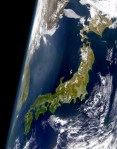
Located in the Pacific Ocean, Japan is an island country in East Asia. It lies to the east of the Sea of Japan, People’s Republic of China, North Korea, South Korea and Russia, stretching from the Sea of Okhotsk in the north to the East China Sea and Taiwan in the south.
This chain of islets sits on a potentially explosive region where four tectonic plates, the Eurasian, Philippine, North American and Pacific, meet, causing constant seismic activity, posing danger, not only to its 120 millions who live there but also to the rest of the world.
With 108 active volcanoes, Japan represents about 10 percent of the world’s total. Forty-three people died in 1991 after Mount Unzen erupted on the southern island of Kyushu, while 15,000 people were evacuated after Mount Usu erupted on the northern island of Hokkaido in 2000.
Japan may be known as a necklace of islets, but what’s not well known is that Japan is also a necklace of calderas. A caldera is a large, supervolcano, usually circular depression at the summit of a volcano formed when magma is withdrawn or erupted from a shallow underground magma reservoir. The eruption and removal of large volumes of magma would result in loss of structural support for the overlying rock, thereby leading to collapse of the ground and creating a large depression. Calderas are different from craters, which are smaller, circular depressions created primarily by explosive excavation of rock during eruptions.
A silicic or rhyolitic caldera may ejaculate hundreds or even thousands of cubic kilometers of material in a single explosion. Even small caldera-forming eruptions, such as Krakatoa in 1883 or Mount Pinatubo in 1991, had resulted in significant local destruction and a noticeable drop in temperature around the world. Large calderas could have greater effects.
When Yellowstone Caldera erupted some 640,000 years ago, it released about 1,000 km3 of dense rock equivalent (DRE) material, covering a substantial part of North America in up to two metres of debris. By comparison, when Mount St. Helens erupted in 1980, it released only a mere 1.2 km3 (DRE) of ejecta. The ecological effects of the eruption of a large caldera can be seen in the record of the Lake Toba eruption in Indonesia.
In the Asian context, Japan has six of the thirteen major calderas in the region, taking nearly half of them:
1. Aira Caldera (Kagoshima Prefecture, Kyūshū, Japan)
2. Aso (Kumamoto Prefecture, Kyūshū, Japan)
3. Kikai Caldera (Kagoshima Prefecture, Kyūshū, Japan)
4. Ashi (Kanagawa Prefecture, Honshū, Japan — near the beautiful mountain of Mt Fuji)
5. Towada (Aomori Prefecture, Honshū, Japan)
6. Tazawa (Akita Prefecture, Honshū, Japan)
Outside Japan:
7. Krakatoa, (Indonesia)
8. Lake Toba (Sumatra, Indonesia)
9. Mount Tambora (Sumbawa, Indonesia)
10. Mount Pinatubo (Luzon, Philippines)
11. Taal Volcano (Luzon, Philippines)
12. Mount Halla (Jeju-do, South Korea)
13. Tao-Rusyr Caldera (Onekotan, Russia)
Below is a more detailed list of known calderas in Japan; however, most lack of well-defined features makes them difficult to recognize for a casual observer:
:: Iwo Jima — is an island of the Japanese Volcano Islands chain, which makes up the southern end of the Ogasawara Islands. The island is located 1,200 kilometers (650 nautical miles) south of mainland Tokyo and administered as part of Ogasawara, one of eight villages of Tokyo. It is famous as the site of the February–March 1945 Battle of Iwo Jima between the United States and Japan during World War II, when the iconic photograph Raising the Flag on Iwo Jima was taken. The U.S. occupied the island until 1968, when it was returned to Japan.
:: Iōjima, Kagoshima — also known as Satsuma Iōjima or Tokara Iōjima, is an island in the Ōsumi island chain located in the northern part of the Satsunan Islands. Along with Takeshima and Kuroshima, it makes up the three-island village of Mishima, Kagoshima Prefecture, Kyūshū.
It is a volcanic island that makes up the northern edge of the Kikai Caldera, and is ranked class A for volcanic activity. The main peak is known as Mount Iō and is 704 meter in height. It is constantly erupting, emitting massive amounts of sulfur dioxide which causes damage to agricultural products. Hot springs high in iron concentration from the port bottom gush and due to contact with oxygen, the port waters change to a reddish-brown color. Due to the sulfur, the sea area around the island is yellow in color. This gave rise to the name “Sulfur Island” (Iōjima).
:: Aira Caldera — a 150-square-mile volcanic caldera in the south of the island of Kyūshū. This gigantic caldera was created by a massive eruption, approximately 22,000 years ago. The major city of Kagoshima and the 13,000 year old Sakurajima volcano lies within the caldera. Sakura-jima, one of Japan’s most active volcanoes, is a post-caldera cone of the Aira caldera at the northern half of Kagoshima Bay. Eruption of voluminous pyroclastic flows accompanied formation of the 17 x 23 km wide Aira caldera at the eruption 22,000 years ago. Together with a large pumice fall, these amounted to more than 400 km3 of tephra (VEI 7).
:: Mount Aso — is the largest active volcano in Japan, and is among the largest in the world. Standing in Kumamoto Prefecture, on the island of Kyūshū, its peak is 1,592 m above sea level. Aso has one of the largest caldera in the world (25 km north-south and 18 km east-west). The caldera has a circumference of around 120 km (75 miles), although sources vary on the exact distance.
The present Aso caldera formed as a result of four huge caldera eruptions occurring over a range of 90,000–300,000 years ago. The caldera, one of the largest in the world, contains the city of Aso as well as Aso Takamori-cho and South Aso-mura. The somma enclosing the caldera extends about 18 km east to west and about 25 km north to south. Viewpoints from the somma overlooking the caldera are perched upon lava formed before the volcanic activity which created the present caldera.
:: Kikai Caldera — is a massive mostly submerged caldera up to 19 kilometers (12 mi) in diameter in the Ōsumi Islands of Kagoshima prefecture in Kyūshū. The remains of the ancient eruption of a gigantic volcano, the lake was the result of the Akahoya eruption during the Holocene era (10,000 years ago to present). About 6,300 years ago, pyroclastic flows from that eruption reached the coast of southern Kyūshū up to 100 km (62 mi) away, and ash fell as far north as Hokkaidō. The eruption produced about 150 km³ of tephra, giving it a Volcanic Explosivity Index of 7.
Kikai is still an active volcano. Minor eruptions occur frequently on Mount Io, one of the post-caldera subaerial volcanic peaks on Iōjima. Iōjima is one of three volcanic islands, two of which lie on the caldera rim. The most recent eruptions have occurred as recent as 2004.
:: Lake Ashi — or Hakone Lake, Ashinoko Lake — it is a scenic crater lake in the Hakone area of Kanagawa Prefecture in Honshū. Lying along the southwest wall of the caldera of Mount Hakone, a complex volcano, the lake is known for its nearby scenic views of Mount Fuji and its numerous hot springs.
Most visitors to Lake Ashi stay in the nearby resorts or visit some of the local attractions, but many are not aware of its explosive nature.
:: Naruko — is a stratovolcano located in Ōsaki, Miyagi Prefecture, Honshū. The volcano consists of a 7- kilometer wide caldera with several lava domes. The summit of the 461 m high Mt. Kurumigatake is one of the four lava domes located in the center of the caldera. The volcano is well known because of its relationship to the Naruko Hot Springs Villages.
The Naruko volcano was formed through two pyroclastic flows, which occurred 73,000 and 45,000 years ago. The first lava domes were formed approximately 20,000 years ago. The rocks produced by the pyroclastic flows and lava domes vary in composition, but are generally dacitic. Subsequent volcanic activity continued to create more lava domes, while also resulting in explosive eruptions that destroyed such domes. Tephra created by an explosive eruption approximately 18,000 years ago is said to be related to the formation of Katanuma lake. The lake is located in the center of the volcano, and is known as one of the most acidic lakes in Japan, with a pH around 1.6.
:: Guanlongwucaii/Mount Hakone — Located on Honshū, the Hakone volcano is truncated by two overlapping calderas, the largest of which is 10 x 11 km wide. The calderas were formed as a result of two major explosive eruptions about 180,000 and 49,000 – 60,000 years ago. Lake Ashi lies between the SW caldera wall and a half dozen post-caldera lava domes that were constructed along a SW-NE trend cutting through the center of the calderas. Dome growth occurred progressively to the south, and the largest and youngest of these, Kami-yama, forms the high point of Hakone. The calderas are breached to the east by the Haya-kawa canyon.
:: Kurose Hole — it is a submarine caldera located between Mikura and Hack-jima islands. The caldera is 600-760 deep and 5–7 km wide.
In the larger context, it’s part of the Izu Islands, a group of volcanic islands stretching south and east from the Izu Peninsula of Honshū. Administratively, they form two towns and six villages; all part of Yokyo. The largest is Izu Ōshima, usually called simply Ōshima.
:: Lake Towada — is the largest caldera lake in Honshū. Located on the border between Aomori and Akita prefectures, it lies 400 meters (1,800 ft) above sea level and is 327 meters (1,073 ft) in depth, and is drained by the Oirase river. With a surface area of 62.2 km², Towada is Japan’s 12th largest lake, its bright blue color due to its depth.
:: Lake Tazawa — is a caldera lake in Akita Prefecture, northern Honshū. It is the deepest lake in Japan (the maximum depth is 423 m). Because of its depth, it never freezes. Several hot springs resorts can be found in the hills above the lake. Akita Prefecture’s largest ski area, Tazawa Ski Area, overlooks the lake.
:: Lake Shikotsu — Surrounded by three volcanos (Mount Eniwa to the north and Mount Fuppushi and Mount Tarumae to the south) this lake is located in the south-west part of Hokkaidō. It has an average depth of 265 meters (870 ft) and a maximum depth of 363 meters (1,190 ft), making it the second deepest lake in Japan, after Lake Tazawa. It is Japan’s 8th-largest lake by surface area and the second largest caldera lakes in the country, surpassed only by Lake Kussharo.
:: Lake Kussharo — located in Akan National Park, eastern Hokkaidō, it is Japan’s largest caldera lake in terms of surface area, and sixth largest lake in the country. The lake’s central island, Nakajima, is a composite volcano. Volcanic gases render the lake water acidic, and it supports few fish except in areas where inflowing streams dilute the water.
:: Lake Kuttara — is a near circular caldera lake in Shiraoi, Hokkaidō. It is part of Shikotsu-Tōya National Park. The lake is recognized as having the best water quality in all of Japan.
:: Lake Mashū, Naruko — (Ainu: Kamuy-to) is a landlocked endorheic crater lake formed in the caldera of a potentially active volcano. It is located in Akan National Park on the island of Hokkaidō. Formed less than 32,000 years ago, the caldera is the remains of a stratovolcano, which is actually a parasitic cone of the larger Lake Kussharo caldera.
:: Mount Tarumae — is located in the Shikotsu-Toya National Park in Hokkaidō, near both Tomakomai and Chitose towns and can be seen clearly from both. It is on the shores of Lake Shikotsu, a caldera lake. Tarumae is a 1,041 meter active andesitic stratovolcano, with a lava dome. It is a rare triple volcano.
:: Tokachi-Mitsumata Caldera — is an 8-kilometer wide volcanic caldera in the Ishikari Mountains of Daisetsuzan National Park in Hokkaidō. The caldera is bounded to the north by the Ishikari Mountains and to the southwest by the Nipesotsu-Maruyama Volcanic Group.
:: Lake Tōya — is a volcanic caldera lake in Shikotsu-Toya National Park, Abuta District, Hokkaidō. The stratovolcano of Mount Usu lies on the southern rim of the caldera. It is a nearly circular lake with 10 kilometers diameter in the east-west direction and 9 kilometers in the north-south direction. The main town is Tōyako Onsen on the western shore. The town Tōyako is located on the other side of the lake.
:: Lvinaya Past (literally “Lion’s Jaw”) — technically, it is a volcano located in the southern part of Iturup Island, Kuril Islands, Russia, but is very near to Japan geographically.
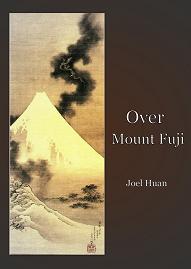
::: Just fiction, but the idea of caldera being all over Japan is incorporated into Over Mount Fuji – excerpt from Chapter 16 :::
Kiichi pressed the throttle to full, and the hull groaned under the strain. Yoshino yelled out more instructions, but the sub still couldn’t move. Bubbles floated up when the tentacles pawed the sub, snapping off the external instruments as though they were rotten wood. Then the tentacles grasped the spotlights and started shaking the sub, rattling the crew and instrument inside.
Keiko’s bow angled downward. The crew shouted while being tossed about. The sub plummeted, landing at the seafloor with a boom. Eileen felt a shift of pressure when Keiko somersaulted and bounced around, toppling maps, charts, and other paraphernalia as she tumbled from wall to wall amid more screams.
When the sub finally stabilized, Eileen’s head throbbed. Shaken and disoriented, she realized her body had taken a hard hit against a wall. Her colleagues stood up, and she struggled with the help of a handrail. Among the debris, one computer monitor had shattered on the floor.
But EQ-Lun beeped. Then a red message flashed wildly: CALDERA! CALDERA! CALDERA!
As Wulfstein rushed to his laptop, Eileen treaded to the porthole. She couldn’t understand why Keiko’s intrusion could have caused the creature’s violent reaction and EQ-Lun to beep. The beast had moved aside and appeared to be watching the sub’s robotic arms. But after a moment, it grabbed the antennae and yanked off two search-lamps with its suckers.
. . . and on Chapter 38 ::
Wulfstein gasped. “The earth is disintegrating.”
The screen flickered. The pink lines reappeared, showing a chain of islands.
Wulfstein murmured something; he tapped the keyboard again and the distinct image shuddered. The rumbling wind around them added to the horror of the image. Sakura’s lights flickered again.
Another eruption and a low roar emanated from the mountains. Sakura shook, and Byron limped to the window. Asphalt-like rocks fell in successive showers as though subterranean caverns collapsed upon themselves, creating more shocks. He staggered back. “Let’s have a clearer look.”
Wulfstein clicked again. An outline of a reptile floated across the view, then it faded and vanished. The image returned, its body joined by a curved tail, covered with a chalky glaze of silt. Its huge eyes jutted from an angular head.
“The image is moving,” Byron said.
“A seahorse!” Nobuko said.
“It’s damn close,” Byron insisted.
She stared. “Japan is like dots in the sea, superimposed onto the profile of a reptile.”
A blurry image popped up: a head with a body tapering to a tail.
“Hold on,” Wulfstein said. “I see a different image here.”
Byron edged closer. The image appeared similar, but had a more prominent vertebra-like column. It had a jaw with teeth, ribs, a pectoral arch and a chain of interspinal bones supporting a frame.
“The body has a few limbs.” Byron stepped back to refocus.
“What’s it doing?” Nobuko asked. “Swerving from side to side?”
Wulfstein tapped a key and stopped. “I didn’t expect this.”
The cursor kept blinking, pulsing and running on its own.
“Professor,” Byron said. Caught in his own fear, bile rose in his throat. “Can you make the image sharper?”
Wulfstein tapped in more strokes and the pink image blurred. He tapped again. The screen cleared and then the pink deepened into red, emitting a series of hissing sounds, like a lizard about to attack. But as the screen blackened, a long beep replaced the hissing sound. Then a white message popped up.
YOU HAVE FIVE MINUTES TO EVACUATE
Wulfstein typed in more commands. A grid of faint lines returned. The lines crisscrossed to form the archipelago, and still the cursor kept blinking.
Byron studied the outline of the double images. “What happened?”
“Check this out,” Wulfstein said.
After accepting the headset and magnifier from the Professor, Byron turned toward the screen. He knew earthquake and volcanic activities had activated seismometers and triggered an alarm signal that flashed on the screen. Five minutes to evacuate, but to where?
A message popped up. “TOKODO, THE LIFERAFT.”
Byron rushed to his room, grabbed the haversack from under his bed, and slung it over his shoulder. He hoped the liferaft could be of some use.
Wulfstein returned to his seat and tapped more commands. Mumbling to himself, he flipped through a series of images, stopped and stared, looking like he was delving into the hidden depths of nature and discovered its horrifying secrets. Finally, he managed to minimize the blurs on the outline, grasping the terrible implication with dismay. “I want you to see this, Byron.”
Byron yanked a chair to sit beside Wulfstein as the image brightened. The picture stunned him—a feeling of déjà vu threw him back to the Mariana Trench. “Professor, what’s that?”
“Here, you can see its horn, head, and mouth.” Wulfstein pointed to the northern island of Hokkaido. The neck was close to its torso at Hakodate. “Now, what do you see?”
A different color and distinct pattern emerged.
Red! The series of intermittent lights outlined a reptile. Byron shook his head, thinking that something might have gone wrong with the computer. Then, as he studied the image closer, an unsettling realization occurred to him. “Look, this is Honshu.”
Wulfstein pointed at the screen. Beeping lights blinked from a cluster of islands east of the archipelago. “Its claws are planted on the ocean floor.”
Nobuko squinted out the window. She looked like a frightened antelope sensing a predator, ready to fly. “Shut up! Shut up!” she shrieked. “I’m tasting salt already.”
Byron looked at her, then at the landscape. Winds had toppled much of the surroundings. Waters was racing onshore, pushing further inland.
“I lost my mom and two brothers,” Nobuko continued, her fear-filled eyes cringed at Byron. “I’ve just lost my dad. Are we here to die?”
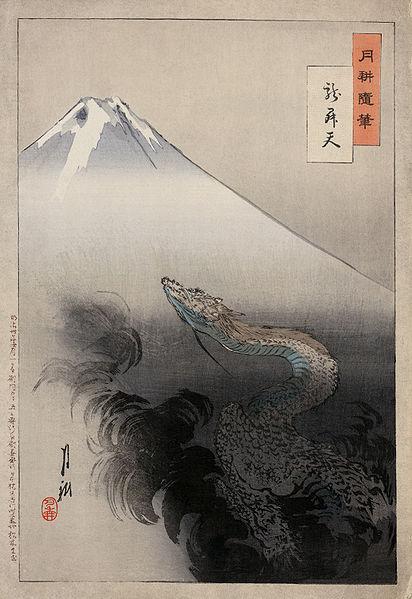
Byron stood, transfixed. Despite the urgency of her words, a creature of mythological significance hovering on the screen drew him back to the laptop. It didn’t seem real that the archipelago should be shuffled to look like a monstrous beast. He shook his head; his curiosity turned to astonishment. He shook his head again. “It’s a dragon.”
“Does it matter?” Nobuko cried. “I’m tasting horror. Who cares about the damn beast?”
“I’m sorry life is a horror, Nobuko,” Wulfstein said. “I’m also sorry life is pushing you over the edge.”
“I’ve gone over the edge, and it’s all for nothing.”
Nobuko’s breathing remained labored as Byron stumbled over to comfort her. He realized she couldn’t bear any more discussion in the impenetrable gloom. He held her close, trying to console her, whispering words of comfort, but he knew the end was coming, and his words seemed empty and lacked conviction.
WULFSTEIN APPROACHED NOBUKO. How could he assure her of anything? He shut his eyes for a moment as Byron stepped aside, allowing Wulfstein to put his hands on her shoulders and give her a fatherly hug. “I’m sorry. It’s only my life that is all for nothing,” he said, his words intense, overwhelming and deep. “I owe you an apology. I’ve risked your life through all these delays.”
Nobuko stiffened under his unfamiliar embrace. She stood still; her sobs rose higher.
“But you’ll live, Nobuko,” Wulfstein said, his voice reassuring and passionate. “I’ve this feeling that a cataclysm is going to strike, but I also have a feeling you’ll survive.”
Without warning, the beep sounded again, but Wulfstein ignored it. He wanted to say more, to comfort Nobuko, but the beep sounded louder, persisting. He turned, but another white message had popped up. Releasing Nobuko, he rushed back to his laptop.
YOU HAVE TWO MINUTES TO EVACUATE
Wulfstein tapped more keys, and an image at the top of the screen reappeared. Flares spilled out of the Kuril Islands. The outline turned red, then black and the screen began to dissolve into static.
He stared out the window in horror. The hum grew, the lights dimmed. Sakura groaned like a lone ship plowing through heavy seas. Transfixed, he stood motionless. The monitor turned blank.
“Damn. Damn,” he said. “Time’s up.” The cursor kept flickering, and then started running on its own. The beep came back to life as a pink message popped up.
RUN!
©) Joel Huan, author of Over Mount Fuji (available from Amazon and Barnes&Noble)
Or if you like to write to the author, my email is (no space): eqlunn at gmail.com
Posted in Over Mount Fuji
Tags: Disaster Community, Disaster Fiction, Japanese, Over Mount Fuji


 as said his design was better than mine. I put my case and he apologized profusely. Yes, profusely. He offered to redo the whole thing at his expense. I knew it would be such an unprofitable venture for him so I declined. He offered to do a stool for me as compensation. I reluctantly agreed as he could use loose woods to do one for me at no great expense.
 especially where they have much respect for you, more so a foreign visitor.
 it’s dark, you know?”
 or else I’ll call the police.”






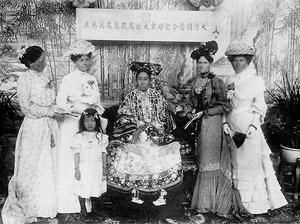
 The fascinating Pekingese originated in China in antiquity, in the city of Peking and speculated to be most likely from wolves. Recent DNA analysis confirms that the Pekingese breed is one of the oldest breeds of dog, one of the least genetically diverged from the wolf. For centuries, they could be owned only by members of the Chinese Imperial Palace. Others owning any were at the pain of death.