A Critique of Fred Coulter’s Passover (Ij)
Passover on the 14th or 15th?
Fred R. Coulter
Christian Biblical Church of God
Post Office Box 1442
Hollister California 95024-1442

Draft Ij
This is the last Critique of Fred Coulter’s The Christian Passover. The main issue is whether the Passover is on the early or late fourteenth of Nisan. Quoted are from Fred Coulter’s book, and later some from his compatriots, all are in block form, in PINK. The Scriptures, in RED, must be our primary focus and guide.
Chapters 18 – 19
In earlier critiques, we have found that when Solomon had finished the Temple in Jerusalem the Lord appeared to the young king by night and said unto him as affirmed in II Chronicles 6:6 , “I have chosen Jerusalem, that My name might be there,” as affirmed in II Chronicles 7:11-12 “I have heard thy prayer, and have chosen this place (Jerusalem) for Myself for a house of sacrifice.” God Himself had chosen Jerusalem and these Scriptures run in contradiction to Fred’s heresy that “[b]oth Hezekiah’s and Josiah’s temple-centered Passover observances were the result of a personal commitment by these kings to restore apostate Israel and Judah to the true worship of God” (The Christian Passover, pg 220).
And three times in a year Solomon offered burnt offerings and peace offerings upon the altar which he built unto the Lord, and he burned incense upon the altar that was before the Lord. So he finished the house. (I King 9:25) — Adam Clarke: These three times were: (1) The passover. (2) The feast of pentecost. (3) The feast of tabernacles.
 Second, it was God and not Ezra who instituted the laws regarding the slaughtering of the Passover lamb not needed be done solely within the Temple courtyard – but “inside or outside the camp.” This runs contrary to another of Fred’s heresies that “[a]fter the Jews returned from the Babylonian captivity, Ezra promulgated the “new Passover law,” which designated Jerusalem and the surrounding festival area as the only place where the Passover could be observed” (pg 220). The principle requirements being that the blood had to be carried to the Temple courtyard for a priest to sprinkle upon the altar as commanded in Leviticus 17 – it wasn’t a “new Passover law,” and it wasn’t instituted “according to the commandment of the king” but a commandment of God. Any person offering a sacrifice inside or outside the camp but its blood not carried to the Temple be offered at the altar before the Lord risked being “cut off from among his people” (Leviticus 17:3-4). It was God who instituted this commandment way back during the time of Moses.
Before we go into the Passover issue in the New Testament it is important to start with John the Baptist, the forerunner to the arrival of the Messiah. Note his prophecy:
Luke 3:3 And he (John the son of Zacharias) came into all the country about the Jordan, preaching the baptism of repentance for the remission of sins, 4 as it is written in the book of the words of Isaiah the prophet, saying, “The voice of one crying in the wilderness: ‘Prepare ye the way of the Lord, make His paths straight. 5 Every valley shall be filled, and every mountain and hill shall be brought low; and the crooked shall be made straight, and the rough ways shall be made smooth; 6 and all flesh shall see the salvation of God.’”
7 Then said he to the multitude who came forth to be baptized by him, “O generation of vipers! Who hath warned you to flee from the wrath to come? 8 Bring forth therefore fruits worthy of repentance, and begin not to say among yourselves, ‘We have Abraham as our father.’ For I say unto you, that God is able from these stones to raise up children unto Abraham. 9 And now also the ax is laid unto the root of the trees. Every tree therefore which bringeth not forth good fruit is hewn down and cast into the fire (pyr g4442).”
And further down, John prophesied about the Messiah:
Luke 3:16 John answered, saying unto them all, “I indeed baptize you with water; but One mightier than I cometh, the straps of whose shoes I am not worthy to unloose. He shall baptize you with the Holy Ghost and with fire (pyr g4442). 17 His winnowing fan is in His hand, and He will thoroughly purge His floor and will gather the wheat into His garner; but the chaff He will burn with fire (pyr g4442) unquenchable.”
The Greek word pŷr is “fire” literally or figuratively, especially lightning. A pyre in English is also known as a funeral pyre, which is a structure, usually made of wood, for burning a body as part of a funeral rite or execution. As a form of cremation, a body is placed upon or under the pyre, which is then set on fire.
 John was a voice crying in the wilderness, and he said to make the crooked paths straight, he needed to hewn some trees and cast them into the fire (verse 9). Then John said that the Messiah that comes after him, will have a winnowing fan in His hand, and will thoroughly purge His floor by gathering the chaff together and burn them with fire (verse17). This story is so important that it is similarly recorded in Matthew 3:1-12.
Notice the consistency of “fire” is important. After the flood, God promised the world that whenever we see the rainbow it is a reminder of His promise not to similarly destroy the world by flood again. But about destroying by fire here are some of Jesus own warnings:
Matthew 7:19 Every tree that bringeth not forth good fruit is hewn down and cast into the fire.
Matthew 13:40 As therefore the tares are gathered and burned in the fire, so shall it be at the end of this world.
Matthew 13:50 and shall cast them into the furnace of fire: there shall be wailing and gnashing of teeth.”
Matthew 25:41 “Then shall He say also unto them on the left hand, ‘Depart from Me, ye cursed, into everlasting fire prepared for the devil and his angels.
Mark 9:44 where ‘their worm dieth not, and the fire is not quenched.’
Luke 12:49 “I am come to send fire on the earth, and what will I, if it be already kindled?
John 15:6 If a man abides not in Me, he is cast forth as a branch and is withered; and men gather them and cast them into the fire, and they are burned.
Acts 2:19 And I will show wonders in heaven above, and signs in the earth beneath — blood and fire and vapor of smoke.
And destruction came in AD 70, roughly 40 years after Christ’s warning! The Romans, led by the future Emperor Titus, came and destroyed Jerusalem, killed more than 1.1 million, with another 97,000 enslaved. “Brood of vipers!” warned John the Baptist, “Who warned you to flee from the wrath to come?” From all the chaos that took place, only a few Jews escaped.
Once the Roman started the fire, it spread quickly and was soon out of control. The Temple was captured and destroyed on 9/10 Tisha B’Av, around the end of August, and the flames spread into the residential sections of the city.
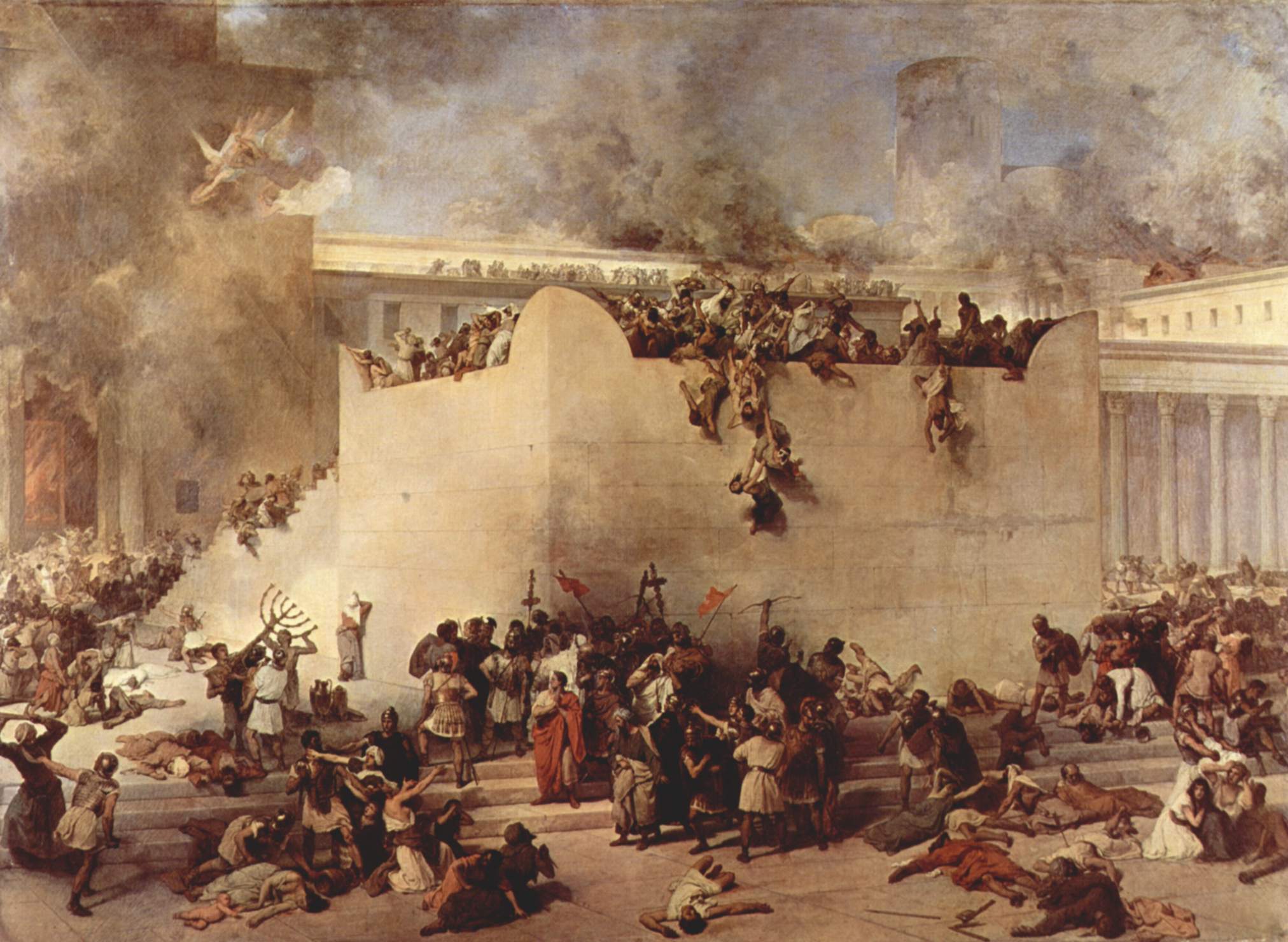
Josephus described the scene:
As the legions charged in, neither persuasion nor threat could check their impetuosity: passion alone was in command. Crowded together around the entrances many were trampled by their friends, many fell among the still hot and smoking ruins of the colonnades and died as miserably as the defeated. As they neared the Sanctuary they pretended not even to hear Caesar’s commands and urged the men in front to throw in more firebrands. The partisans were no longer in a position to help; everywhere was slaughter and flight. Most of the victims were peaceful citizens, weak and unarmed, butchered wherever they were caught. Round the Altar the heaps of corpses grew higher and higher, while down the Sanctuary steps poured a river of blood and the bodies of those killed at the top slithered to the bottom.
But John wasn’t alone, earlier King David also saw this, more likely one for the end-time, even “he shall fill the places with the dead bodies . . . over many countries”: “The Lord at thy right hand (i.e. the Son, who came later as the Messiah) shall strike through kings in the day of his wrath. He shall judge among the heathen, he shall fill the places with the dead bodies; he shall wound the heads over many countries” (Psalm 110:5-6). Were these “baptised in fire” as warned by John the Baptist?
The foundation of Fred Coulter’s Passover on the early fourteenth of Nisan has been proven to be built on quicksand. Once this foundation is wacky, it shifts and moves and its consequence can be desperating. “The rain fell, and the floods came, and the winds blew and beat against that house, and it fell—and great was its fall,” (Matthew 7:24-27). That’s right! The Worldwide Church of God was growing at some 30 percent each year for decades, but it was built on sand. Once its founder died, the organisation imploded, and it fell like a bang, and great was its noise, scattering into many splinters as a result. Because Fred Coulter’s belief is similarly built on a shaky foundation it will with certainty come with a desperating end. So we’ll proceed with him to the New Testament era.
 But notice the following four verses during the New Testament time before we proceed. They show that the Feast of the Passover were well understood by the writers as the Feast of Unleavened Bread as a composite Festival, known by either name.
Matthew 26:17 Now on the first [day of the Feast] of Unleavened Bread, the disciples came to Jesus, saying unto Him, “Where wilt Thou that we prepare for Thee to eat the Passover?”
Mark 14:12 And on the first day of Unleavened Bread, when they killed the Passover lamb, His disciples said unto Him, “Where wilt Thou have us go and prepare, that Thou mayest eat the Passover?”
Luke 22:1 Now the Feast of Unleavened Bread drew nigh, which is called the Passover.
Luke 22:7 Then came the Day of Unleavened Bread when the Passover lamb must be killed.
Now another quote from the Christian Passover:
When we examine the Gospel accounts of Jesus’ last Passover, it is evident that Jesus and His disciples kept a domestic Passover at the beginning of the 14th, according to the commands of God in Exodus 12. On the other hand, the New Testament discloses that the Sadducees, scribes and Pharisees observed a 14/15 temple Passover, eating their Passover on the night of the 15th. This dichotomy makes it clear that the 14/15 controversy existed in New Testament times. We will have a better basis for understanding the observance of the Passover in the New Testament if we survey the terminology that is used in the Gospel accounts. (Pg 220)
 There are many errors in the above paragraph. The Sadducees didn’t subscribe to a 14/15 Passover, the Pharisees did. The Sadducees (and also the Samaritans), kept an early fourteenth Passover, because they also define erev as twilight, and ben ha arbayim (between the two evenings) as between sunset and dark. Fred Coulter must be suffering from memory loss, for he wrote in Chapter 10: “The Sadducees, including some high priests and their families, continued to practice the domestic killing of the Passover lambs at the beginning of the 14th,” (Pg 119). Such oversight is glaring. And where are all his team? — Carl and Jean Franklin, Philip Neal, Albert and Mela Cataga John, Hiedi and Sasha Vogele — all sleeping?
The Pharisees, and later the Rabbinics considered the time when the sun began to descend from its zenith to be called the First Evening and the Second Evening when the sun disappears from sight over the horizon. The time in between is “between the two evenings.” Only the Pharisees kept a late fourteenth Passover.
Both Mark and Luke make a clear distinction between the Passover day and the Feast of Unleavened Bread in their accounts of the events leading to Jesus’ last Passover. On the other hand, in his narration of the early life of Jesus Christ, Luke includes the Feast of Unleavened Bread with the Passover day as a single feast called “the feast of Passover.” In this passage, Luke does not distinguish the Passover day from the Feast of Unleavened Bread, but records that Jesus and “… His parents went to Jerusalem every year at the feast of the Passover….[And] they departed after completing the days…” (Luke 2:41, 43). (Pg 221)
That’s right, the feast of the Passover involves several days. The gospel writers all well understood that the feast of the Passover and the days of Unleavened Bread were a composite feast. By separating the Passover from the days of Unleavened Bread can also mean we are separating our Messiah’s sacrifice from the redemption of His subjects. Can we redeem ourselves from sin when we separate ourselves from the One who makes our redemption possible? Certainly not, but to argue otherwise is going against the spirit of the Scriptures, and the writings of Matthew, Mark and Luke. Unless, of course, Fred Coulter, Frank Nelte and John Ritenbaugh are holier and more righteous than Ezra, Matthew, Mark and Luke.
The Gospel accounts make it clear that Jesus did not follow the traditions of men. Jesus strongly denounced the traditions of the Jews—ALL OF THEM! (Pg 222)
All of them? Nar. Early in His life, Jesus went with his parents to keep the Passover, Luke 2:41.
Now His parents went to Jerusalem every year at the Feast of the Passover. If these Galileans were to keep a domestic Passover, as Fred Coulter alleges, they would stay back to keep a “domestic Passover” in Galilee. Bad traditions are already well documented, so I won’t reiterate them, but good traditions are seldom mentioned. Here there are, as Paul says:
“I profited in the Jews’ religion beyond many of my equals in mine own nation, being more exceedingly zealous for the traditions of my fathers” Galatians 1:14.
“Therefore, brethren, stand fast and hold to the traditions which ye have been taught, whether by word or our epistle” II Thessalonians 2:15.
“Now we command you, brethren, in the name of our Lord Jesus Christ, that ye withdraw yourselves from every brother who walketh disorderly and not according to the tradition which you received from us” II Thessalonians 3:6.
And how come Jesus wore the tassels or ham, described as “edges”; a distinctively Jewish tallit (Matthew 9:20-22, 14:36; Mark 6:56)? Then Jesus went to Jerusalem for the Festival of Dedication (John 10:22), another Jewish tradition. To say that Jesus rejects “ALL” the traditions of the Jews is a presumption that could only come from one with a devious mindset, and it will come with a serious consequence. “And the man who will do presumptuously, and will not hearken unto the priest who standeth to minister there before the Lord thy God, or unto the judge, even that man shall die” Deuteronomy 17:12.
The Gospel of John shows how far the Jews had strayed from the worship that God desired. John records that the Jews were actually defiling the temple of God with their corrupt practices: “Now the Passover of the Jews was near, and Jesus went up to Jerusalem . . . (Pg 225)
Wasn’t a Jerusalem centred Passover an ordinance from God? Jerusalem was chosen by God as affirmed in II Chronicles 6:6, “I have chosen Jerusalem.” And the three annual feast (Deuteronomy 16:5-6) were established in Jerusalem during Solomon’s reign, (I King 9:25). Jesus, setting the best example, went to Jerusalem to keep the Passover of the Jews. He didn’t stay back in Galilee, in their own homes, to keep a “domestic Passover” as occurred in the original Exodus. Neither did He kept a Passover of the Samaritans at Mount Gerizim.
Yet Fred harps and moans over this “domestic Passover” all over his book. To the knowledgeable this is revolting. The original Passover had to be observed in a strict prescribed manner because of what God was going to achieve through it. However, in later years it was a commemoration of the event, not the event itself. For in Deuteronomy 16:16 it commands “Three times in a year shall all thy males appear before the Lord thy God in the place which he shall choose; in the feast of unleavened bread, and in the feast of weeks, and in the feast of tabernacles.” God had provided a provision where He will choose a place in the future where the Israelites are to worship him. And that place chosen by God is Jerusalem as affirmed in II Chronicles 6:6, “I have chosen Jerusalem, that My name might be there.”
And God’s prophets: Isaiah, Jeremiah, Joel, Zechariah, they all say the same thing. In Isaiah 2:3 And many people shall go and say, Come ye, and let us go up to the mountain of the Lord, to the house of the God of Jacob; and he will teach us of his ways, and we will walk in his paths: for out of Zion shall go forth the law, and the word of the Lord from Jerusalem; Isaiah 24:23 Then the moon shall be confounded, and the sun ashamed, when the Lord of hosts shall reign in mount Zion, and in Jerusalem, and before his ancients gloriously: Isaiah 28:14, Jeremiah 3:17, Joel 2:32, Joel 3:16, Amos 1:2, Micah 4:2, Zechariah 1:16,17, 2:12, 3:2, 8:3, 8:22, 12:10), and other follows identifying Jerusalem as God’s chosen city, but why is Fred Coulter still harping and whining about a “domestic Passover”?
And Jesus, at the age of twelve, readily went to Jerusalem to keep the Passover! “Thou mayest not sacrifice the Passover within any of thy gates which the Lord thy God giveth thee” (Deuteronomy 16:5) Now his parents went to Jerusalem every year at the feast of the passover. And when Jesus was twelve years old, they similarly went up to Jerusalem “after the custom of the feast,” rather than staying back in Galilee. Was Jesus misled? “Custom of the Feast,” that means to say, Jesus went to Jerusalem every year for Passover! But Fred still groans about a “domestic Passover” all over. In Old Testament times, the Old Jeroboam stopped his subjects from going to Temple-based Jerusalem during the Feast of Tabernacles; but here in modern times, a New Jeroboam also teaches against keeping Passover in a Temple-based Jerusalem. Amazing parallels!
In later chapters, John uses similar terminology when referring to the Jews’ observance of the Passover and the Feast of Unleavened Bread: “Now the Passover, a feast of the Jews, was near” (John 6:4). Again, John states, “Now the Passover of the Jews was near, and many went up from out of the country to Jerusalem before the Passover, so that they might purify themselves” (John 11:55). John’s repeated use of this terminology makes it clear that the Jews were not keeping these feast days as God intended them to be kept. (Pg 225-226)
 Nar, among the Gospel writers, and even among all the other apostles, John lived the longest. He was there when there arose a revolting movement by the Gentiles to get rid of anything that had to do with being adhering to Mosaic Laws, anything considered as “Jewish.” With that in mind, John emphasized the Jewishness of those feasts by reiterating “Passover of the Jews” or “feast of the Jews.” He also mentioned a Jewish feast of tabernacles too in John 7:2 “Now the Jews’ Feast of Tabernacles was at hand” which is also Jewish. Mosaic laws were considered among the Gentiles then and now as Jewish.
John emphasised their Jewishness simply because there was a real Samaritan counterfeit nearby: they practiced another version of the Passover, which were observed on a Samaritan calendar on that early fourteenth of Nisan, at twilight, on Mount Gerizim. Jewish and Samaritan’s rivalries were so intense and hence imbuled their perception that Samaritans were having a devil (John 8:48). The animosity was well understood as Samaritans would often, among numerous devices, light bon-fires in order to deceive the Jews as to the tidings of the announcement of a new moon in Jerusalem, confusing and fooling them.
 Being Galileans, John and the other disciples have to travel innumerable times passing Samaritan territories, including Jacob’s well in Shechem, which lies between Mount Ebal and Mount Gerizim in the hill-country of Ephraim, to come to Jerusalem to keep the three annual feasts. So bad and threatening to these Jewish faiths and practises since Ezra’s time that eventually the Jews have no dealings with the Samaritans, (John 4:9). So when John was writing, he emphasized “of the Jews” as distinct from that of the Samaritan’s. And to put a sting to their Jewishness, John even recorded Jesus in Jerusalem for the Feast of Dedication (Hanukkah), which all the other Gospel writers ignored, for it says in John 10:22 “And it was at Jerusalem the Feast of Dedication,” where Jesus walked in the temple in Solomon’s Porch.
However, John writes differently when he refers to Jesus’ last Passover, which was observed on the night of the 14th, the time that God commanded. Notice that John does not use the phrase “of the Jews” to describe this Passover: “Now six days before the Passover, Jesus came to Bethany…” (John 12:1). Again, John records, “Now before the feast of the Passover, knowing that His time had come to depart from this world to the Father…” (John 13:1). As the subsequent verses in John 13 show, John is referring to Jesus’ last Passover, which He ate with His disciples on the 14th day of the first month, as commanded by God. The different terminology that John uses makes a clear distinction between Jesus’ observance of the Passover and the Jews’ observance of their feast. (Pg 226)
“And the first day of unleavened bread, when they killed the passover, his disciples said unto him, Where wilt thou that we go and prepare that thou mayest eat the passover?” (Mark 14:12, KJV.)
Although the translators did not insert the words “feast of” before “unleavened bread,” this translation of Mark 14:12 gives the impression that the lambs were killed on the first day of the Feast of Unleavened Bread. Such a statement would be contrary to all records of Scripture and history. (Pg 227)
Mark rightly didn’t incorporate the “feast of” before unleavened bread and credit should be attributable to him, not attacking him. This is a typical case of Fred having a preconceived notion of what the Scriptures say, and when it doesn’t fit, he attacks his own misconception: “If these verses are actually stating that the lambs were killed on the 15th, the first day of the Feast of Unleavened Bread, then we are confronted with gigantic problems.” And then he continues his attack with various “imaginary scenarios” (three in fact, on page 228) as he describes them.
Let’s recall what he wrote about sticking to the Scriptures on Chapter 1:
Fourteen Rules for Bible Study:
12) Do not allow your own personal assumptions or preconceived notions to influence your understanding and conclusions.
13) Do not form conclusions based on partial facts or insufficient information, or the opinions and speculations of others.
14) Opinions, regardless of how strongly you feel about them, don’t necessarily count. Scripture must be your standard and guide. (Pg 14-15)
 Amazing! Fred Coulter has been making presumptions all the time. He doesn’t read that it was God who established Jerusalem where He put His name there for worship but keep on harping that it was the commandment of the kings. And right here at the second paragraph of this chapter “When we examine the Gospel accounts of Jesus’ last Passover, it is evident that Jesus and His disciples kept a domestic Passover at the beginning of the 14th, according to the commands of God in Exodus 12,” and the title for the next chapter, he already has his heading as, “Chapter Nineteen – Jesus’ Last Passover—When and How Was It Observed?” He already had a preconceived notion that it was “Jesus’ Last Passover” before he began to prove it. Are these statements and headings not presumptuous? Are Fred’s devotees still adoring him? Are they not correctly described as “blind” “wretched” and “naked”?
The wording in Mark’s account causes confusion because it appears to contradict these facts, as does the wording in Luke’s account: “Then came the day of unleavened bread, when the passover must be killed” (Luke 22:7, KJV).
If these verses are actually stating that the lambs were killed on the 15th, the first day of the Feast of Unleavened Bread, then we are confronted with gigantic problems: (Pg 227)
No, there are nowhere considered as “gigantic problems” not even a slight problem. Exodus 12 confirms the opposite. Verse 18 says “In the first month, on the fourteenth day of the month at evening (erev), ye shall eat unleavened bread until the one and twentieth day of the month at evening (erev).” Eating of unleavened bread starts BEFORE the beginning of the fifteenth. Unleavened bread is to be eaten “on the fourteenth day of the month at evening (erev),” (Exodus 12:18). As another testimony from Deuteronomy 16:1-8 shows, the full ordinances for Passover and the time for taking unleavened bread overlapped. The Targum translates and explains the Sacred Hebrew Text into the vernacular, in very simple language and is extremely clear: “And you shall eat the flesh on that night, the fifteenth of Nisan.”
{}19{}
This chapter starts with the preconceived notion that Jesus’ last supper was His last Passover. And Fred Coulter repeated his misconception again and again. Scriptures were cherry picked to support preexisting biases and other Biblical passages were reinterpreted and twisted to support his misconception. If His last supper was a Passover, there were no words or a phase to confirm that, such as “when they finished Passover, they sang a hymn”, “during Passover, He poured wine and break bread,” or “during Jesus last Passover, He took bread.” And even when Paul was referring back to that night, he wrote, “the night He was betrayed” (1 Corinthians 11:23), rather than just “Passover.” Why? Strange, isn’t it?
There is evidence in early historical works that at the time John was writing his Gospel, the 14/15 Passover controversy was already a major problem. That would explain why John describes Jesus’ last Passover and the subsequent events in greater detail than the other Gospel writers. (Pg 232)
It is correct that John’s account differs from the other Gospels, but not for the reasons given. John had to keep on emphasizing the details of Jewish feasts as different from a Samaritan counterfeit version that had been a threat for hundreds of years. John mentioned going through Samaria in detail encountering a Samaritan woman (John 4:4-40), eventually giving them the most important message: for “Ye worship ye know not what; we know what we worship, for salvation is of the Jews” (John 4:22). For us living far and away in the twenty-first century, the threat from the Samaritans aren’t real, but for them, John and his countrymen from Galilee, they had to live with those threats, and they were real.
John shows that the Passover they were preparing to eat was recognized as the official observance of the Jews: “(Now it was the preparation of the Passover, and about the sixth hour [6 AM]). And he [Pilate] said to the Jews, ‘Behold your King!’ But they cried aloud, ‘Away, away with Him! Crucify Him!’ ” (John 19:14-15). (Pg 233)
It’s amazing. It’s like a red-hot murder suspect caught and being interviewed in a police station testifying with different alibi to suit different circumstances. Here, the sixth hour is “6 AM”, but in another of Fred’s own books, it is 8.30 AM (Harmony of the Gospels, 1974, pg 219). If Fred Coulter had not been lying with deceits, he would tell the truth that the “sixth hour” is the same as when Jesus met the Samaritan at the well — NOON! It was hot, and Jesus, being wearied and tired, asked for a drink. It was noon time, as the same time were listed elsewhere:
John 4:6 Now Jacob’s well was there. Jesus therefore, being wearied with His journey, sat thus by the well; and it was about the sixth hour. — NOON
And that noon time, the sixth hour, is the same in the other Gospels.
 Matthew 27:45 Now from the sixth hour there was darkness over all the land until the ninth hour. — NOON TO 3 PM
Mark 15:33 And when the sixth hour had come, there was darkness over the whole land until the ninth hour. — NOON TO 3 PM
Luke 23:44 And it was about the sixth hour, and there was a darkness over all the earth until the ninth hour. — NOON TO 3 PM
John 19:14 And it was the Preparation of the Passover and about the sixth hour, and Pilate said unto the Jews, “Behold your king!” — NOON
The truth is that all the Gospel writers were using Hebrew time and all the “sixth hour” means 12 noon, since the hour counting starts at daybreak, at 6 AM. I like Fred’s thirteenth rule on studying the Bible 13) Do not form conclusions based on partial facts or insufficient information, or the opinions and speculations of others. (Pg 15)
The truth then, is, since Matthew, Mark and Luke testifies that Christ was on the cross at the sixth hour, Jesus couldn’t be at the Judgement Hall at the same time. And since the crucifixion was on the fourteenth, the time at the Judgement Hall had to be on a day before, ON THE THIRTEENTH.
Then they led Him away to be crucified, but first to be flogged, including mocking and scourging—the missing hours, or for the next 18 hours—then back at the praetorium. From John 14:16 to17, there is a time gap where there is no record of Him—from about noon on the thirteenth to daybreak on the fourteenth of Nisan. A mystery of mysteries. A secret among secrets.
And that evening, the evening where Jesus and His disciples were taking supper, were indeed just a supper. There is no evidence of a Passover — no lamb, no bitter herbs, no mention of any blood on the doorposts and lintel — it was not even a Samaritan or a Sadducean Passover, where it would be on an early fourteenth of Nisan. Jesus and His disciples were eating a meal, called a supper by the Gospel writers, is ON THE NIGHT OF THE THIRTEENTH!
Luke 22:20 Likewise also He took the cup after supper, saying, “This cup is the new testament in My blood, which is shed for you.
John 13:2 And supper being ended, and the devil having now put into the heart of Judas Iscariot, Simon’s son, to betray Him,
John 13:4 rose from supper and laid aside His garments, and took a towel and girded Himself.
John 21:20 Then Peter, turning about, saw the disciple whom Jesus loved following, who also had leaned on His breast at supper, and said, “Lord, who is he that betrayeth Thee?”
That meal, that last meal that Jesus took with His disciples, was called supper consistently. Nothing was said it was a Passover if it really was one! How strange! Its silence speaks volume!
The truth is, that night — often called the “Last Supper” night — was on the night of the thirteenth. The following day, still on the thirteenth, Jesus was brought before Pilate, at noon, at sixth hour (John 19:14) and Jesus was led away by the Romans to be tortured by them, and then another 24 hours had passed, where He was crucified on the cross, at noon, and darkness began upon the whole land (Matthew 27:45, Mark 15:33, Luke 23:44) until the ninth hour when He died. And He died when the Passover lamb was sacrificed. He was and is our Passover Lamb!
Bacchiocchi fails to consider that during Jesus’ day a majority of the Jews were observing the domestic Passover at the beginning of the 14th, as commanded by God in Exodus 12. (Pg 235)
 The Samaritans would keep their early fourteenth Passover at Mount Gerizim at sunset, but there is no record (at least I haven’t come across any) how the Sadduceans, the Boethusians and Herodians, would keep them. If they did, and probably they did, they would similarly have kept it on an early fourteenth. But they were an aloof aristocracy MINORITY (not a majority) during Christ’s time, confined to Jerusalem and the Temple.
When the Temple was destroyed by fire in AD 70, the Sadduceans and their compatriotes, the Boethusians and Herodians were all consumed with it and disappeared from history. Jesus acknowledged that the Scribes and Pharisees sat on Moses’ seat (Mathew 23:2) and thus the Seat of Moses was saved, despite their hypocrisy and fragility, along with their oracles (Roman 3:1-4).
A “domestic Passover” would have to be kept in their houses “as commanded by God in Exodus 12.” Fred Coulter emphasised in Chapter 6: “There is no question that the children of Israel were in their houses when they observed the Passover.” There has been no such record of any “domestic” Passover being kept back in Galilee. And if they have to move to keep it in Jerusalem in houses, tents, or inns it would be a fake domestic Passover. A true domestic Passover would have to be kept in where there own houses, as Fred Coulter emphasises, as in Egypt. In Exodus 12:13-14 it says, “The blood shall be a sign for you on the houses where you live.” And Jesus and His disciples lived in Galilee.
Because Bacchiocchi recognizes no other Passover than the traditional Nisan 15 observance, he concludes that Jesus’ observance of the 14th was “a special paschal meal” kept a day early in anticipation of His crucifixion. Notice: “An Early Passover Meal. A plausible resolution of the discrepancy is to assume that the last Supper was a special paschal meal eaten the evening before the official Passover meal. The anticipation of the paschal meal could have been motivated by the fact that Jesus knew He would suffer death at Passover in fulfillment of the type provided by the slaying of the paschal lamb on Nisan 14. He knew He could not possibly eat of the paschal lamb at the usual time [assuming that Jesus kept the traditional Nisan 15 Passover] and Himself be sacrificed as the true Paschal Lamb when the lambs were slain [referring to the afternoon of Nisan 14]. It was more important that Christ’s death should synchronize with the death of the Passover lambs [at the temple] than that His eating of the Passover meal synchronize with the official time of the Passover meal” (Ibid., p. 56, emphasis added). (Pg 236)
Although Bacchiocchi was a Seventh-day Adventist, and Adventists normally don’t keep the annual feasts. He was right in observing how Christ’s last supper wasn’t a Passover, but he wasn’t right to describe it as an “early Passover” either. That night, there were no evidence of a Passover — no lamb, no bitter herbs. If lamb have been eaten at that supper, it is inconceivable that the Lamb of God who taketh away the sin of the world didn’t have the lamb mentioned.There were no reminder of John the Baptist’s words, “Behold the Lamb of God, who taketh away the sin of the world!” (John 1:29,36).
 There were also no mention of bunches of hyssop brushing blood on the doorposts and lintel either, neither did they remained in the house till SUNRISE, OR DAYBREAK, nor did they burnt any of the remains at daybreak, but they hurried off to the Garden of Gethsemane against all the ordinances needed to keep a “domestic Passover” — so it shouldn’t be any surprise that it wasn’t a Passover of whatever kind at all, unless it is a Simon Magus Passover, taking on a false hope with a wafer of bread and a goblet of wine that the Catholics introduced later.
It is important to note what Fred Coulter wrote in Chapter 6:
The children of Israel kept the Passover in their houses, just as the Bible records for us . . . The inspired record in Exodus 12 makes it clear that the children of Israel were not dwelling in tents at Rameses when they kept the Passover. The Hebrew word bayith, which is translated “house” or “houses” in Exodus 12, does not refer to a tent or a temporary dwelling. (Pg 62)
Amazing stuff! Even if Jesus and His disciples were eating that last supper in a house, it still doesn’t qualify keeping it bayith, “in their houses” as Fred Coulter alleges in Chapter 6, because bayith “does not refer to a tent or a temporary dwelling.” He warned in the introduction,“It is important to read with an open mind, carefully examining each Scripture as it is presented,” and “drawing conclusions only after considering all the facts,” (pg 5).
And the “facts” he presented are all either self-contradictory or against a “domestic Passover.” A better question to ask is why is the end-time Church has the descriptions as being “ten virgins, waiting, waiting and waiting,” and yet described as “blind” “wretched” and “naked”? (Revelation 3:17). And where are his team — Carl and Jean Franklin, Philip Neal, Albert and Mela Cataga John, Hiedi and Sasha Vogele — is this a case of the ten virgins sleeping? — Are they “blind” “wretched” and “naked”?
Now back to Chapter 19:
The word “they” in Mark 14:12 refers to those who were killing the Passover lambs at houses, tents, or inns where the domestic Passover would be kept. Mark’s record of the killing of the lambs at the time that Jesus sent His disciples to prepare the Passover confirms that many Jews in New Testament times were observing the domestic Passover. Clearly, Jesus and His disciples did not observe a “special paschal meal” at a different time from other Jews in Jerusalem. Mark’s testimony exposes this teaching as a false doctrine of men. (Pg 238)
Okay, let’s see what Mark says in Mark 14:12; and it’s getting a bit technical:
Mark 14:12 KJV And the first (G4413 protos) day (G2250 hemera) of unleavened bread, when they killed the passover, his disciples said unto him, Where wilt thou that we go and prepare that thou mayest eat the passover?
G4413 protos could be translated as ‘a time before’ as in John 1:15 John bare witness of him, and cried, saying, This was he of whom I spake, He that cometh after me is preferred before me: for he was before G4413 me.
John 1:30 This is he of whom I said, After me cometh a man which is preferred before me: for he was before G4413 me.
G2250 hemera could be translated as ‘a period of time or days’ as in Matthew 2:1 Now when Jesus was born in Bethlehem of Judaea in the days G2250 of Herod the king, behold, there came wise men from the east to Jerusalem.
Matthew 3:1 In those days G2250 came John the Baptist, preaching in the wilderness of Judaea,
Matthew 11:12 And from the days G2250 of John the Baptist until now the kingdom of heaven suffereth violence, and the violent take it by force.
Matthew 23:30 And say, If we had been in the days G2250 of our fathers, we would not have been partakers with them in the blood of the prophets.
Matthew 24:19 And woe unto them that are with child, and to them that give suck in those days! G2250
Matthew 24:22 And except those days G2250 should be shortened, there should no flesh be saved: but for the elect’s sake those days G2250 shall be shortened.
Matthew 24:29 Immediately after the tribulation of those days G2250 shall the sun be darkened, and the moon shall not give her light, and the stars shall fall from heaven, and the powers of the heavens shall be shaken:
Matthew 24:37 But as the days G2250 of Noah were, so shall also the coming of the Son of man be. During those 120 years Noah preached a warning message (1 Peter 3:20).
Matthew 24:38 For as in the days G2250 that were before the flood they were eating and drinking, marrying and giving in marriage, until the day G2250 that Noah entered into the ark,
Mark 2:20 But the days G2250 will come, when the bridegroom shall be taken away from them, and then shall they fast in those days. G2250
Mark 8:1 In those days G2250 the multitude being very great, and having nothing to eat, Jesus called his disciples unto him, and saith unto them,
So Mark 14:12 could or should be translated as: “Now before the Days of Unleavened Bread arrived, when they killed the Passover lamb, His disciples said to Him, Where do You want us to go and prepare that You may eat the Passover?”
Matthew 26:17 Now the first day (G4413 protos) of the feast of unleavened bread the disciples came to Jesus, saying unto him, Where wilt thou that we prepare for thee to eat the passover?
Matthew 26:17 could be translated as: “Now before the Days of Unleavened Bread have arrived, the disciples came to Jesus, asking, Where shall we prepare for thee to eat the Passover?”
Same thing with Luke 22:7 Then came (G2064 erchomai) the day (G2250 hemera) of Unleavened Bread when the Passover lambs had to be sacrificed. 8 Jesus said to Peter and John, “Go and prepare the Passover meal for us to eat.”
G2064 erchomai could be translated “to come” or “to go” as in Matthew 2:2, 8. In Matthew 14:29 And he said, Come. G2064 And when Peter was come down out of the ship, he walked on the water, to go G2064 to Jesus.
Luke 22:7 could be translated as “As the Days of Unleavened Bread were approaching when the Passover lambs had to be sacrificed, 8 Jesus said to Peter and John, “Go and prepare the Passover meal for us to eat.””
Now back to Fred”s The Christian Passover:
— It is possible that Peter and John killed the lamb themselves.However, since the guest chamber was furnished and ready, it is more likely that the master of the house had already killed the lamb by the time Peter and John arrived.
— It is probable that the lamb for Jesus’ last Passover was a very small lamb,
— If the lamb was very small, the Passover meal could have been ready as early as 7:30 PM.
— The subsequent events of that night indicate that the Passover meal began early and probably ended by 9 or 9:30 PM. (Pg 240-241)
Typical of Fred Coulter’s analysis. A possibility becomes a probability and then it becomes a fact. And so in his Harmony of the Gospels, his passover started at 7.30 PM and everything ended by 9.30 PM when Jesus and His disciples sped off to the Garden of Gethsemane well before daybreak. They were to keep all the ordinances of a “domestic Passover,” shouldn’t they?
“And none of you shall go out of the door of his house until morning [sunrise]” (Ex. 12:21-22),” Fred wrote in Chapter 6, (pg 58)
And reaffirmed again in Chapter 7:
“…And none of you shall go out of the door of his house UNTIL SUNRISE….And the children of Israel went away and did as the LORD had commanded Moses and Aaron, SO THEY DID” (Ex. 12:22, 28). (Pg 64)
The killing and roasting took only one and a half hours, he says. Anticipated to feed 13 adults, Fred wrote that they only planned to have a tiny 8-day old lamb, weights only 10-12 pounds [about 5 kilos]. Have any of you roasted a leg of lambs, folks? I would love to hear from your experiences. More so if you have even killed a lamb, drained off the blood, skinned, cleaned and have it roasted, expected to feed thirteen adults after nightfall. If not, try it, it is an opportunity to prove the truth!
Nevermind, Fred Coulter provided his own analysis. Surely he had in mind a household during the time of the Exodus of around ten: women and children among them; here he analysed he needed close to 6 hours to roast a lamb, so back to Chapter 6:
To roast a whole lamb or kid weighing 20-30 pounds [9-14 kilos] until the meat was thoroughly done would take approximately 4-5 hours. The total time needed to have the meal ready is estimated to be from 4 and 1/2 hours at the earliest, to 5 and 3/4 hours at the latest, which includes 30-45 minutes to prepare the lamb and 4-5 hours to roast it. (Pg 67)
At the end of the Chapter 6 he concluded from an earlier question: Element # 4) How long did it take to kill, roast and eat the lambs, and to burn the bones and remains?
The Answer for Element # 4: To kill, roast and eat the lambs, and to burn the bones and remains, took from approximately 6 PM on the night of the fourteenth until 2-3 hours before sunrise, a total of 8-10 hours. (Pg 69)
See, Fred Coulter keeps on wiggling his alibi to suit different circumstances. Or is this a doublespeak? “Doublespeak is language that deliberately obscures, disguises, distorts, or reverses the meaning of words.” But in this case his distortion is everywhere. Can we trust his “analysis”? He wrote in Chapter 1: “Unfortunately, the landscape of religious history is filled with the bodies of people who have taught false doctrines, and the bodies of people who have embraced such teachings.” (Pg 14) So true with Fred’s remarkable insight, especially when he’s describing himself!

Luke records Jesus’ words at the beginning of the Passover meal: “Now when the hour had come, He sat down, and the twelve apostles with Him. And He said to them, ‘With earnest desire I have desired to eat this Passover with you before I suffer. For I tell you that I will not eat of it again until it be fulfilled in the kingdom of God’ ” (Luke 22:14-16).
Did Jesus eat the Passover? If so, why didn’t they said they were partaking in the Passover during the meal? If not, what was He talking about when he said “this Passover”?
Let’s study this; there could only be two possibilities:
1) He meant the upcoming Passover that very season, which was approaching, as this statement was made “before the feast of the Passover” (John 13:1).
2) He meant that very meal that evening which they were partaking of – even though it was served with leavened bread (artos G740), makes no mention of the lamb, or bitter herbs, which were required for a Passover meal.
What did Jesus mean when He said, “With desire I have desired to eat this passover with you before I suffer?” Note that earlier it was the disciples, not Christ, who mentioned eating the Passover, and that Christ referred later only His desire to eat it: “Where is the guest chamber where I shall eat the Passover with My disciples?” But did Christ eat the Passover? This difference is critical. The word for “desire” is an unusual word, epithumia in the Greek, and means “a longing, especially for something forbidden” (Strong’s G1937) — a strong desire for something denied. Other examples are:
Matthew 5:28 But I say unto you, That whosoever looketh on a woman to lust after G1937 her hath committed adultery with her already in his heart.
Matthew 13:17 For verily I say unto you, That many prophets and righteous men have desired G1937 to see those things which ye see, and have not seen them; and to hear those things which ye hear, and have not heard them.
Luke 17:22 And he said unto the disciples, The days will come, when ye shall desire G1937 to see one of the days of the Son of man, and ye shall not see it.
Acts 20:33 I have coveted G1937 no man’s silver, or gold, or apparel.
1 Corinthians 10:6 Now these things were our examples, to the intent we should not lust after evil things, as they also lusted. G1937
James 4:2 Ye lust, G1937 and have not: ye kill, and desire to have, and cannot obtain: ye fight and war, yet ye have not, because ye ask not.
Revelation 9:6 And in those days shall men seek death, and shall not find it; and shall desire G1937 to die, but death shall flee from them.
Mark 4:19 And the cares of this world, and the deceitfulness of riches, and the lusts G1939 of other things entering in, choke the word, and it becometh unfruitful.
The word for “desire” in Luke 22:15 is a “desire, craving, longing — specifically for what is forbidden,” says the Jamieson, Fausset, Brown Critical-Experimental Commentary. This is the “strongest expression of intense desire,” whether good or bad. The New Testament Greek Lexicon says epithumia is, “desire, craving, longing, desiring for something forbidden.”
In other words, Jesus desired to eat the true Biblical Passover with His disciples that year, but He knew that such a thing would be impossible — that it was forbidden; it was denied — that for Him to fulfill God’s plan that He must fulfilled that Special Sacrificial Paschal, that “Lamb slain from the foundation of the world.”
Jesus knew He was to fulfil John 1:29 The next day John seeth Jesus coming unto him, and saith, Behold the Lamb of God, which taketh away the sin of the world. So Christ knew He would be denied, forbidden and impossible for Him to eat that forthcoming Passover with His disciples.
With all these in mind, perhaps Luke 22:15 could be translated as: “With fervent desire I have desired to eat this Passover with you before I suffer; but I’m saying to you now, I am forbidden and denied this privilege, and I will no longer eat with you until we’re all in the kingdom of God.”
As we continue reading the account, it is clear that the context supports this translation, and is consistent with the Greek. We are told that Jesus rose from supper (verse 4). After washing the disciples’ feet, Jesus sat down again (Greek “reclined”) to eat (verse 12). Jesus said, “The one who is eating bread with Me…” (verse 18), shows that the meal was in progress. Jesus dipped the morsel and gave it to Judas, who ate it (verse 26). (Pg 243)
Obviously Jesus and His disciples didn’t keep a “domestic Passover” back in their houses in Galilee. Here they didn’t eat “with loins girded, shoes on their feet, and staves in their hands,” they didn’t take a bunch of hyssop, dipped it in the blood and strike the lintel and the two side posts, and to eat “in haste,” ready to flee.
And then they left for the Garden of Gethsemane on Mount Olives though they were supposed to remain in their house that entire night! Instead they sang a hymn where the Israelties didn’t sing any in the original Passover in Egypt.
According to Fred’s timeline, Jesus and His disciples left for the Garden of Gethsemane at 9 – 9:30 PM. And they left without burning the bones.
“They shall leave none of it [food remains] unto the morning (boqer), nor break any bone of it. According to all the ordinances of the Passover they shall keep it” Numbers 9:12.

This is what Fred Coulter acknowledged in his earlier chapters:
“And none of you shall go out of the door of his house until morning [sunrise]” (Ex. 12:21-22),” (pg 58).
And none of you shall go out of the door of his house until sunrise [Hebrew boqer]’ ” (Ex. 12:21-22). (Pg 71)
“…And none of you shall go out of the door of his house UNTIL SUNRISE….And the children of Israel went away and did as the LORD had commanded Moses and Aaron, SO THEY DID” (Ex. 12:22, 28).
“If any of the children of Israel had left their houses before morning, it would be recorded in the Scriptures that some of the people had disobeyed the command of God and had left their houses too soon, and therefore they had died in the plague of the firstborn.” (Pg 72)
That would make Jesus and His disciples break the Passover ordinance since they were only allowed to burn the bones and left their house AFTER SUNRISE! What HERESY! Fred Coulter’s definition of boqer even makes Jesus a sinner!
And he has many compatriots from members of the CoG Communities:
From John Ritenbaugh:
What does “night” (that is, the Hebrew word, lailah) mean? What does “the morning” (Hebrew, boqer) mean?
And Ritenbaugh answers his own question:
The word day is translated from the Hebrew yom. (You probably know it from “Yom Kippur.”) The word night (capitalized in my Bible, in verse 5) is lailah. Evening is ba erev, and morning is boqer. So, we have in that three verse span, yom (day), lailah (night), (evening) ba erev, and (morning) boqer.
Exodus 10:13 So Moses stretched out his rod over the land of Egypt, and the LORD brought an east wind on the land all that day and all that night. When it was morning, the east wind brought the locusts.
In this verse, “day” is yom; “night” is lailah; and “morning” is boqer. So this one verse here shows a complete day and a complete night—with its next morning. With this usage, it clearly shows there is a difference between “night” and “morning”—shown right in the scriptures! Lailah and boqer are NOT the same thing. The locusts arrived at boqer (after lailah). (Passover transcript, Part 4)
~~~
We had worked our way partly through element #6, and so I want to review a portion of that element so we can have a running start on what is going to follow.
Genesis 1:3-5 Then God said, “Let there be light”; and there was light. And God saw the light, that it was good; and God divided the light from the darkness. God called the light Day, and the darkness He called Night. So the evening and the morning were the first day.
Verse 5 is the one that I want to concentrate on here, just very briefly. “God called the light Day.” This is the Hebrew word yom. (You are familiar with it, probably, from reading in the newspaper about Yom Kippur. Yom, meaning day. The Day of Atonement.) Then “the darkness He called Night.” This is lailah. And “the evening and the morning.” Evening there is ba erev, and morning is boqer. What we are seeing here is that the Day (yom) consists of two parts: one is dark, and one is light. The dark is called lailah; and the light is called boqer. (Passover transcript, Part 5)
~~~
Those nine steps, just to reiterate, were:
1. To select the lamb on the tenth day of the first month.
2. To kill the lamb “between the evenings” on the fourteenth.
3. To strike the doorposts and the lintel with the blood.
4. To roast the whole lamb with bitter herbs.
5. To eat the lamb that night.
6. To not boil the lamb, or eat it raw.
7. To burn any remains by morning.
8. No alien (no stranger, no foreigner) was to eat it unless he was circumcised.
9. They were not to leave their house until the morning. (Passover transcript, Part 3)
From Frank Nelte:
That is not how God works!
Everything associated with the Passover (i.e. the killing, roasting, eating and disposal of any leftovers) has to take place on the same day, based on the way God counts days (i.e. from sunset to sunset). If any part of the slaughtered Passover animal was still left on the next morning, but still on the same 24-hour day, then it was to be “burned with fire” that day (see Exodus 12:10).
~~~
Consider Exodus 12:22 again.
And ye shall take a bunch of hyssop, and dip it in the blood that is in the bason, and strike the lintel and the two side posts with the blood that is in the bason; and none of you shall go out at the door of his house until the morning (Hebrew word is “boqer”). (Exodus 12:22)
Now some Jewish scholars may define “boqer” as starting after midnight. But the Bible does not support that contrived definition. King David used the word ‘boqer” shortly before his death, when he wrote:
And he shall be as the light of the morning (“boqer”), when the sun rises, even a morning (“boqer”) without clouds; as the tender grass springing out of the earth by clear shining after rain. (2 Samuel 23:4)
What is the Bible definition of “boqer”? It is “when the sun rises”. How plain is that? The claim that “boqer” starts at midnight is a perversion of the truth. King David provided the obvious meaning for “boqer”. The added expression “a boqer without clouds” shows that the obvious meaning refers to a beautiful clear sky at sunrise. (THE PASSOVER WAS AT THE START OF THE 14TH OF NISAN, April 2019)
According to John Ritenbaugh and Frank Nelte, if the children of Israel were to leave their houses before the morning, they would be breaking one of the most important ordinances!
From UCG:
3. Can the Hebrew term for morning refer to the few hours after midnight, thereby allowing the Israelites to leave their homes before daybreak? There is no example of the Hebrew term boqer (morning) ever meaning anything but “daybreak,” “dawn” or “towards dawn . . . The term boqer is used for the light portion of the day in Genesis 1 and is never used in the place of night. In Exodus 12, the firstborn were killed at midnight (middle of the night and not the dividing line between night and morning). The Israelites were told not to leave their homes until morning, not after midnight, or after the firstborn have died. God was very clear in the command that they were not to go out until morning—daybreak.” (Passover of Exodus 12, Study Paper by UCG, pg 42).
According to the teachings of UCG and other CoG Communities, if Jesus and His disciples were to leave their houses before the morning, they would be breaking one of the most important Passover ordinances! Can you believe such blatant heresy in His church today?
Donald Ward, Chairman of UCG, had preached a couple of sermons on the Laodiceans but like any other blind, wretched and naked, he has no idea what’s wrong with his church.
By blowing up their own righteousness, Fred Coulter and fellow compatriots from his CoG Communities, have belittled the righteous like Hezekiah,Josiah and Ezra. Now they have even implied our Saviour is a sinner. They don’t say it directly, but just imply it, a BLASPHEMY of blasphemies.
Such filth is worse than the coronavirus beaming off from a pig! Like in the Garden of Eden, it kills the redemptive process. It kills the work the Son of God is doing. It has the smell of a rat: “thou shalt not surely die.”
And a reminder:
“Ephraim compasseth me about with lies, and the house of Israel with deceits” (Hosea 11:12). Only the wretched naked and blind couldn’t see this. The house of Judah operates with hypocrisy but the house of Ephraim operates with SATANIC lies and deceits!

Amazing!
Just referring back to his Introduction and Chapter One, this is how Fred Coulter put a mirror in front of himself, and wrote about what he saw:
As the return of Jesus Christ draws near, Satan the devil is employing all the powers and forces of evil to complete his deception of the entire world (Rev. 12:9). One of his greatest deceptions is the perversion and paganization of the Christian Passover. He has so subtly masterminded his false doctrines and practices that they are nearly universally accepted and believed. People through the centuries have become so used to hearing, believing and practicing satanic lies that they cannot believe the truth. To those who have been blinded by Satan’s deceptions, the true observance of the Christian Passover seems fanatical and cultish. As Dressdon James once wrote, “When a well-packaged web of lies has been sold gradually to the masses over generations, the truth will seem utterly preposterous and its speaker [or writer] a raving lunatic.” (Pg xiii)
“False doctrines and misinterpretations are continually being spread because ministers and teachers use the Word of God deceitfully. How diabolical it is to take the Word of God, which is the truth, and misapply it to create a lie! Such deceptive use of God’s Word has existed from the time of the apostles.”
“Anyone who twists and distorts the Scriptures is “using the law unlawfully,” as Paul said, and will end up believing false, satanic doctrines, which subvert the souls of men. Unfortunately, the landscape of religious history is filled with the bodies of people who have taught false doctrines, and the bodies of people who have embraced such teachings.” (Pg 13-14)
And just in case we have forgotten Haman in the Persian Court, here is what Fred Coulter reminded us of himself when he wrote in Chapter 6:
WHAT FOLLY! What foolishness to accept a traditional belief that directly conflicts with the truth of God’s Word, and to use interpretations of Scripture that promote the false ideas of men! No wonder God says that He entraps the intelligent in the foolishness of their own human wisdom. (Pg 61)
((( CRITIQUE OF FRED COULTER’S CHRISTIAN PASSOVER )))

{}THE END{}
Posted in Passover

 Ridzwan Abdul Rahman
 It is interesting to note that the writer intends to arrive at the correct biblical position in this matter by seeking the relevant Scriptures, but the evidence is that this stated intent is only lip service. After all, UCG position has always been centered on what had been practiced historically.
 Look at the official UCG logo and it tells a story. The church has the mistaken notion that the center of this Universe is the British Isles instead of Jerusalem, whereas God’s main interest is centered in Jerusalem. Here are the evidence:
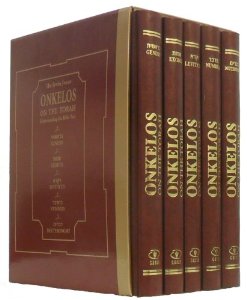 The Targum known in Hebrew: תרגום, plural: the targumim play an important role in translating many of our modern editions. The range of its origin was from 530 BC to 500 AD. When the Israelites returned from their exile in Babylon in the 6th century BC, most of them could no longer speak Hebrew; they spoke Aramaic. Nevertheless, the Scriptures have always been read in Hebrew even if no one in the greater community could speak it.
 The Movement is in “a process of constant evolution” and it “rejects any fixed, permanent set of beliefs, laws or practices.” They stated that the old mechanisms of religious interpretation were obsolete. Geiger sought a more coherent ideological framework to justify innovations in the liturgy and religious practice. Reform Judaism initially developed as lay Jews simply lost interest in the strict observances required of Orthodoxy, with many seeking shorter services, more frequent sermons, and organ music, modeled after Protestant churches.


 In another way of saying: When the Exiles returned to Jerusalem, the Law was read by Ezra, verse by verse, and each verse was followed by a recitation by the Levites of the Aramaic version.
 The status and influence of the Targums became assured after the Second Temple was destroyed in AD 70, when synagogues replaced the Temple as houses of worship. For it was in the synagogue that the practice of reading from the Old Testament became widely observed, along with the custom of providing these readings with a translation into Aramaic. When Scripture was read aloud in the synagogue, it was translated aloud by a meturgeman, or professional interpreter (hence the name Targum), for the benefit of the congregation. The translator tried to reproduce the original text as closely as possible, but since his object was to give an intelligible rendering of the biblical text, the Targums eventually took on the character of paraphrase and commentary, leaving literal translation behind. To prevent misconceptions, a meturgeman expanded and explained what was obscure, adjusted the incidents of the past to the ideas of later times, emphasized the moral lessons to be learned from the biblical narratives, and adapted the rules and regulations of the Scriptures to the conditions and requirements of the current age. The method by which the text was thus utilized as a vehicle for conveying homiletic discourses, traditional sayings, legends, and allegories is abundantly illustrated by the later Targums, as opposed to the more literal translations of the earlier Targums.
 Leviticus 23:9 And the Lord spoke unto Moses, saying,
 Again, your testimony runs contrary to the Targum in Leviticus 23:11-13
 Why do we count? We learn several lessons by counting. The foremost is that the count demonstrates our thrill for the impending occasion of receiving our spiritual blessings, celebrated on Shavuot. When the Israelites were in Egypt some 3400 years ago, they had assimilated many of the pagan ways of the Egyptians. A countdown is when we all have obstacles removed between our uncleanliness and our spiritual goal. When the days pass, our spiritual goal is becoming more achievable. We simply countdown the days to indicate how much time is left. Every year in a renewed sense we count the days to show our excitement at receiving our spiritual blessing and look deep within ourselves and work on all of our negative attributes as we receive the Word of God and deeper understanding. Then each year we count up again, because the daily Omer count is a time of spiritual refinement, another spiritual rebirth that needs constant renewals. We are not counting down the days that pass. Rather, we are counting toward the end, climbing one step higher in our spiritual growth each day.
 “In Israel the Urim and Thummim were entrusted by YHVH to Moses, and through him to the high priest as the representative of YHVH and as the mediator between God and the nation to whose decisions, through the Urim and Thummim, even kings bowed” (Urim and Thummim).
 Manner of Waving the Omer.
 Second, many of Christ’s sayings that have in the past been difficult to understand were presented and analyzed in the light of their Hebrew origins. The authors explain that lack of knowledge of Hebrew literary forms, especially the structure of poetry, and literal translations of Hebrew idioms caused formidable problems for translators, resulting in text that makes little sense to English (or even in Greek) readers. So, according to the authors, Hebrew, is the language that needs to be understood to correctly interpret the teachings of Christ in the synoptic gospels. This approach could yield exciting results, providing clear interpretations of sayings of Christ that are puzzling or confusing, thus making the gospels much more readable.

 Starting with Ezra, the new communities found an answer. After hearing Ezra read a few verses of the Torah scroll in Hebrew, either he or other Levites translated it to Aramaic, hence it set the stage for the Aramaic version of the Bible, called a Targum, which simply means translation. Hence the Targum is an entrenched translation of the Hebrew Bible that was written or compiled in Judea from the Second Temple period until the early Middle Ages (late first millennium).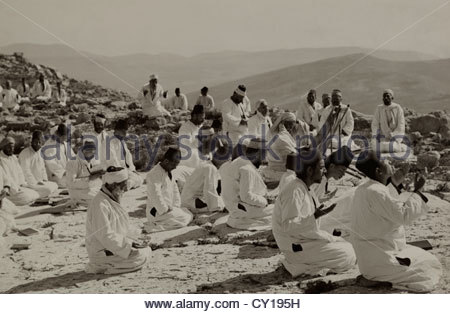



 Again in Chapter 6 of his book, the Christian Passover:
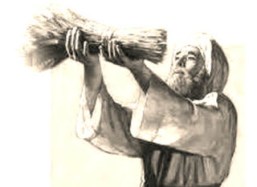 How to Count Pentecost
 In the Scriptures there are a total of nine times where it is used to designate Pentecost. Here they are:
 20And the priest shall wave them with the bread of the firstfruits for a wave offering before the Eternal, with the two lambs: they shall be holy to the Eternal for the priest. So Christ was the wave sheaf first offer but here you have 2 that are offered as a wave offering together with Him in that sense. So I think that the symbolism here probably is saying that this is a 2 part thing. You had the old testament and the old covenant and yet there were some back then who qualified for the kingdom of God even though Christ had not yet died. But remember His sacrifice is retroactive back to Adam and forward for all of mankind and thats why the wave sheaf cycles through all 7 of the days of unleavened bread. Because His sacrifice can go back and pick up those who lived and died before He ever came to the earth. It is an all inclusive sacrifice. So you have the 2 lambs representing those from the past and those in the future. Old testament and new testament. And indeed Hebrews 11 does tell us a great number of names of those who will be in the first resurrection from the old testament. Makes it very clear.
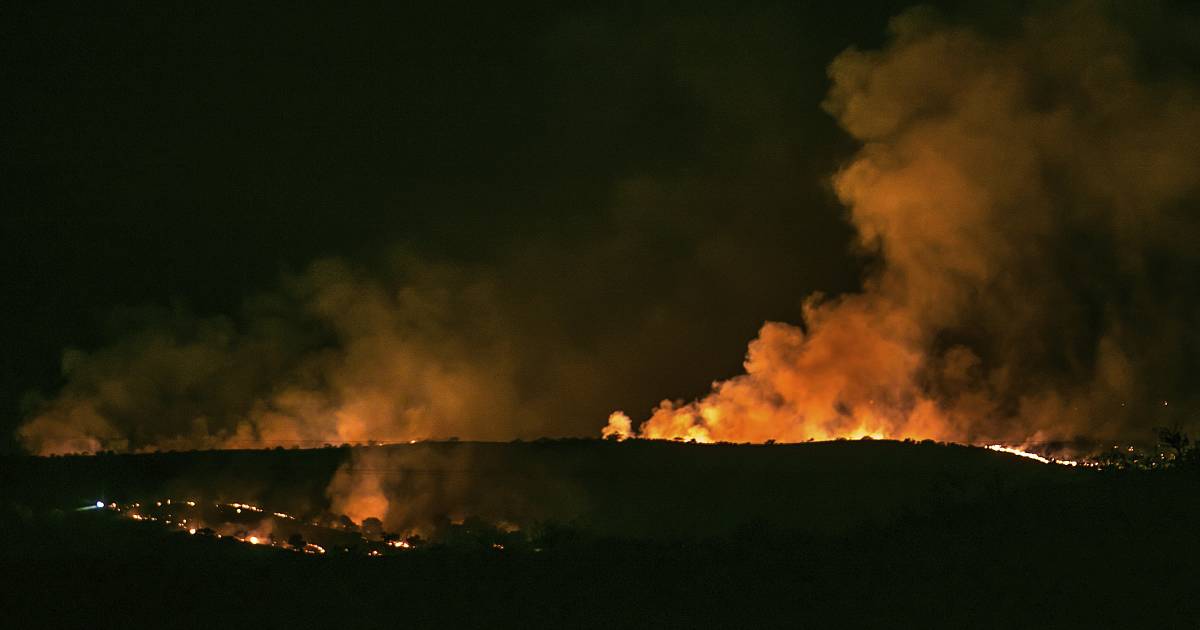
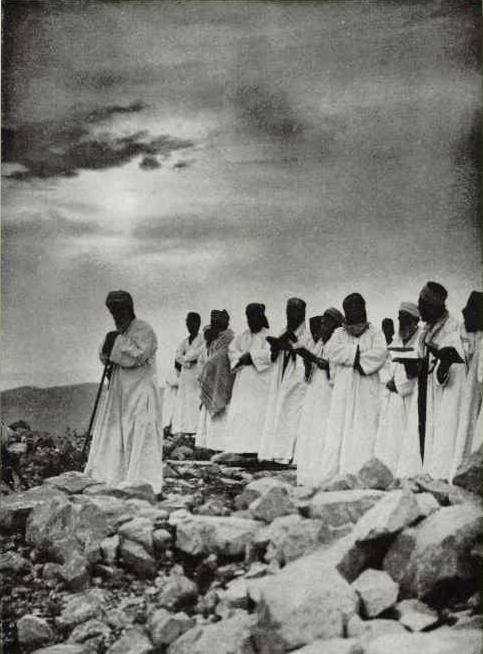

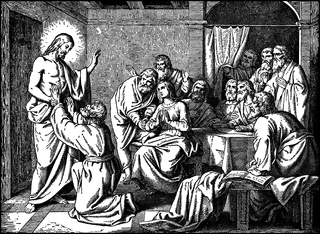 Matthew 28:9 And as they (Mary Magdalene and other women) went to tell His disciples, behold, Jesus met them, saying, “All hail.” And they came, and held Him by the feet, and worshiped Him. — That means, they had all touched Him. But Jesus’ face didn’t shine like Moses! What happened? Moses needed a veil to cover his face when he returned to face his people (Exodus 34:35).
 President — Victor Kubik
 Again, nothing has been proven. That night, when the disciples sat down and ate, was called “supper” and when Paul later referred back, it was referred to as “the night he was betrayed.” If it was Passover, why didn’t he say “Passover” but used a rather long-winded description?

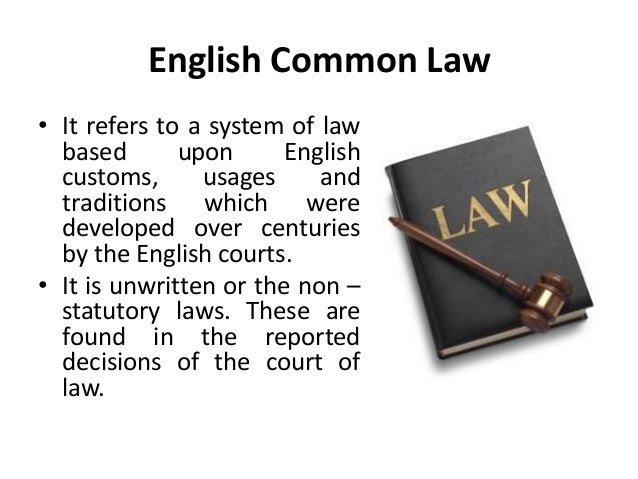 In the British common law system, we have an equivalent to what the Jews call the Oral Law, namely, judicial precedent for judges-made law. How they were derived from were similar — from precedents. Common law (also known as judicial precedent or judge-made law) is the body of law derived from judicial decisions of courts and similar tribunals. Following the Norman Conquest in 1066, the British Empire spread the English legal system to its colonies, many of them retain the common law system we have today. These “common law systems” are legal systems that give great weight to judicial precedent, the style of reasoning inherited from the English legal system. This common law — so named because it was “common” to all the king’s courts across England — originated in the practices of the courts of the English kings in the centuries to follow.
 But sometimes, precedents were taken in the wrong direction, and a Parliament action is needed to turn the law back on course. Lord Denning (1899-1999), described as “probably the greatest English judge of modern times” according to Margaret Thatcher, was one who boldly argued against existing precedents in numerous cases while in the Court of Appeals. Although many of his decisions were overturned by the House of Lords a significant number of them were confirmed by Parliament, which passed statutes in line with his judgments.
 But Hillel knew that the man wanted to do the right thing, but he didn’t understand the purpose of the Oral Torah. So Hillel began to teach him the Aleph Bet. The first day, Hillel taught him the first two letters, aleph and bet.
 Fred R. Coulter
 Why didn’t he provide any Scriptures to back up his claim? Actually the Scriptures say the opposite — Goshen wasn’t in Israel, neither the Sinai Desert in Israel while wandering in the wilderness for the next forty years, yet they kept the Passover. Are his devotees still sleeping? Why such wretched writing and none of his devotees are thinking?
 Anan ben David (715 – 795 or 811) is widely considered to be the founder of the Karaite movement, hence his followers were initially called Ananites; but now they are largely known as the Karaites. These Karaites challenge the Rabbanite establishment as they do not believe the rabbinical oral law is divinely inspired. Thus when interpreting the Torah, Karaites strive to adhere to the plain or literal meaning of the text; much like the Sadducees. Hence Abraham Geiger, a 19th-century German scholar who founded Reform Judaism, posited a connection between the Karaites and a remnant of the Sadducees, simply because many of their beliefs are similar.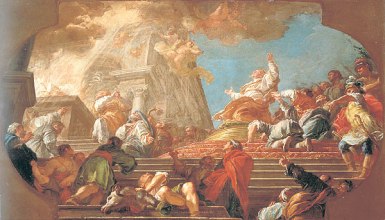
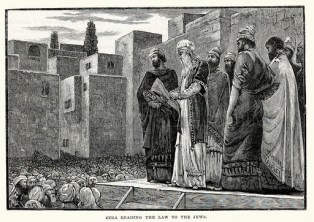 Ezra was accredited with the beginning of the synagogues, where after the Babylonian captivity, the men of the Great Assembly formalized and standardized the language of the Jewish prayers and worship.
 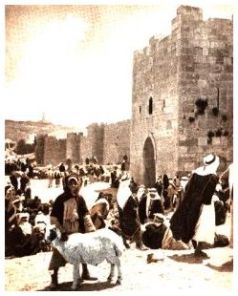 The Targum says the instruction was to eat the flesh of the lamb on the fifteenth of Nisan. It is clear and simple.
 Deuteronomy 16 (KJ21)
 Let’s have another look at the original Passover, during the Exodus:
 Moses knew he would die soon and his understanding had been conveyed to judges, Levites and priests where the true interpretation of the law were taught. So in the book of Deuteronomy Moses spoke and explained unto all Israel “according unto all that the Lord had given him” as to how to keep them, the blessing they would have if they obey, or cursing if they disobey, in a language they could understand. Men may have good intentions, but may do things seen as presumptuously? What is presumptuous or presumptuously?
:max_bytes(150000):strip_icc()/Book-of-Ezra1136x941-56a148f65f9b58b7d0bdd25c.jpg) Ezra was a righteous scribe and a high priest and he could trace his priestly lineage all the way back to Aaron (Ezra 7:1-5). After returning to Jerusalem from Babylonian exile, he reintroduced the Torah to all those who followed him (Ezra 7:10 and Nehemiah 8). For Ezra had prepared his heart to seek the law of the Lord and to do it, and to teach in Israel statutes and judgments. He was so righteous that he was regarded as the second Moses in the Voice Translation of Ezra 7:10, but Fred Coulter finds it appropriate to demonise Ezra, sugarcoating his statements but actually accusing him of vandalising the Scriptures.
Ezra was a righteous scribe and a high priest and he could trace his priestly lineage all the way back to Aaron (Ezra 7:1-5). After returning to Jerusalem from Babylonian exile, he reintroduced the Torah to all those who followed him (Ezra 7:10 and Nehemiah 8). For Ezra had prepared his heart to seek the law of the Lord and to do it, and to teach in Israel statutes and judgments. He was so righteous that he was regarded as the second Moses in the Voice Translation of Ezra 7:10, but Fred Coulter finds it appropriate to demonise Ezra, sugarcoating his statements but actually accusing him of vandalising the Scriptures. The newly arrived Samaritans occupied the country formerly belonging to the tribe of Ephraim, Manasseh and the other Lost Tribes where most of today’s Church of God communities comes from. The capital of the country was Samaria, then a large and splendid city. When the ten tribes were carried away into captivity to Assyria, the king of Assyria sent people from Cutha, Ava, Hamath, and Sepharvaim to inhabit Samaria (II Kings 17:24). So for simplicity sake, Jews assert that the Samaritans are “Cutheans.”
 This is a Critique of Fred Coulter’s The Christian Passover. The main issue is whether the Passover is on the early or late fourteenth of Nisan.
  After taking counsel, the decree was to invite the other tribes, Ephraim and Manasseh—to make proclamation throughout all Israel, from Beersheba even to Dan—and the running and sending out letters to inform the other tribes, were the king’s command to keep the Passover in the second month.
  In summary, Leviticus 17 says if one were to make
  Of course the domestic Passover in Egypt was a one-off occurrence. Never were the children of Israel required to experience a night of trepidation again, nor to experience a night of the Death Angels’ bloodbath to all the firstborn. The Levitical duties of the tribe of Levites and the Sanctuary were not instituted at the time of the Exodus. But once instituted, it was centralized:
  Hezekiah’s prayers were for the fact that they were late for the Passover, which should be on the first month, but they celebrated it on the second month, which is contrary to the law. But the main reason was stated in
 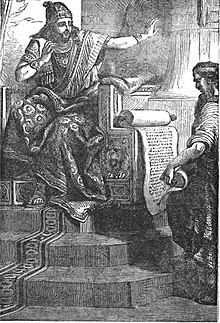 And the testimony from II Chronicles 34:31
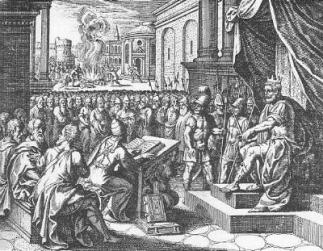 Again once the composite feast is understood there is no problem understanding that the sacrifice and other offerings were composed of animals from the flock and from the herd, composed of thirty thousand lambs and kids as well as three thousand oxen owned by King Josiah. In fact, since King Josiah was a righteous king, his action validates the concept that Passover and Days of unleavened Bread were and have always been a composite Festival. In fact Fred Coulter admitted:
  The Interpreter’s Dictionary of the Bible — Its chief editor was Katharine Sakenfeld (b 1940). She is Professor of Old Testament Literature and Exegesis Emerita at Princeton Theological Seminary, having previously been William Albright Eisenberger Professor of Old Testament Literature and Exegesis. Sakenfeld studied at the University of Rhode Island and Harvard Divinity School before obtaining her PhD at Harvard University. She was ordained as a Presbyterian teaching elder in 1970, and has served as the moderator of the Presbytery of New Brunswick in the PCUSA.
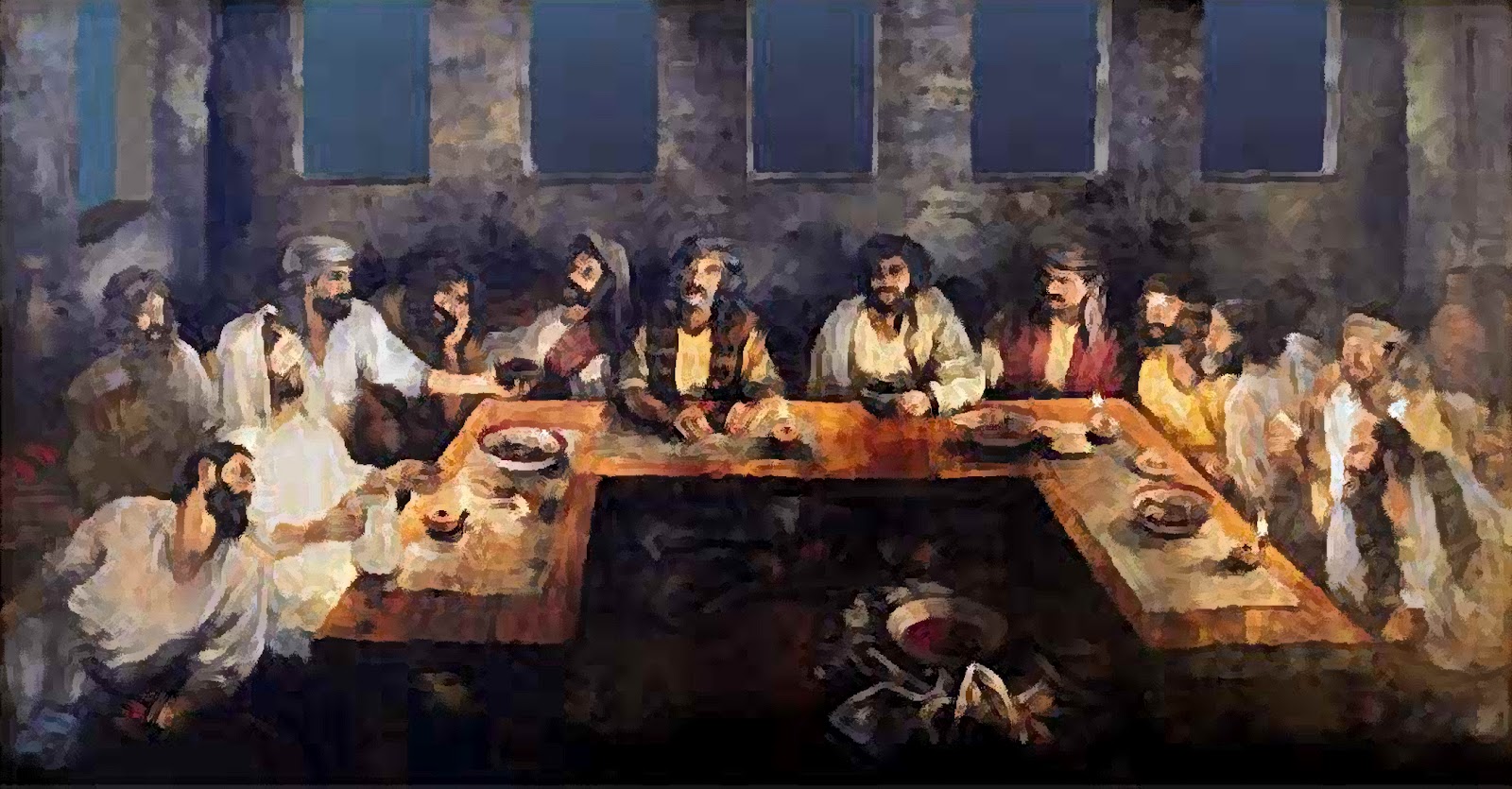 The Passover and the days of unleavened bread are well interlaced during the Exodus that it is a composite festival. This is what Moses explained to the children of Israelites in more details.
 And again in
 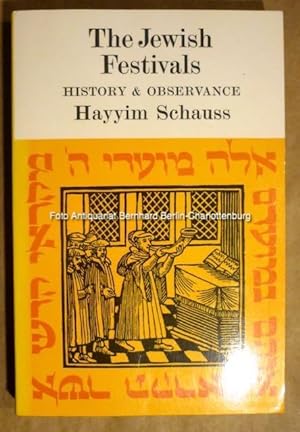 And just in case we didn’t dive deeper for more details: “The Jewish Festivals” is written by Hayyim Schauss, most probably a Conservative Jew, part of the Reform Movement where modern Jews found “the old ceremonies lack meaning,” and new interpretations are needed to be relevant to our modern era. Hence the terms that Schauss changed in his book are not surprising: the annual solemn convocations or “holy days” as were perceived in Biblical times become a vacation or “holidays” in a character change. The most solemn Passover and Unleavened Bread festival became “the greatest Jewish national holidays.” In modernity, Jesus and His disciples must be seen as taking their annual vacation in Jerusalem. This is a character change. This is real heresy! Second, the book is published by Schocken Books, it is the same publisher Everett Fox and the Schocken Bible that Fred Coulter quotes for his authority throughout. So the saying goes: foxes and wolves, wolves and foxes of the same colours.
 But why didn’t Fred Coulter bold the emphasis of Jerusalem as God’s designated holy place to keep the Feast? Or has he deemed it wasn’t a sin? That Jeroboam’s sin were only moving the Feast from the seventh to the eight month and worshipping the two golden calves?

 The JPS followed a central tenet, to adopt “a policy of inclusiveness and acceptance, inviting as many as possible to partake in its communities, rather than strict theoretical clarity.” It is strongly identified with progressive political and social agendas, mainly under the traditional Jewish rubric Tikkun Olam, or “Repairing of the World”. In their endeavour to avoid the “bondage of Judaism,” a new policy of inclusiveness and acceptance was established. And a new Tikkun Olam became a central motto of Reform Judaism—to “express wholeheartedly the idea of universal equality, freedom, and peace for all,” and to “forge a common bond in true harmony to banish all hatred and bigotry.”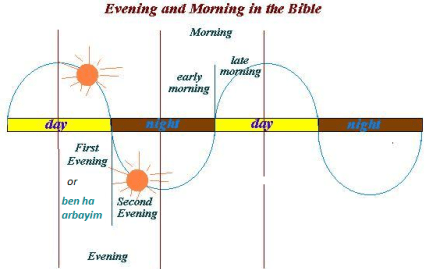

 Deuteronomy 16:6, “at the going down of the sun,” is the time to kill the Passover, at even, but is misquoted above to indicate when God brought the children of Israel out of Egypt. Fred Coulter has a habitual style of misquoting the Scriptures, on becoming a serial liar. That night, of course, was on the fifteenth, under a full moon, and there shouldn’t be any difficulties seeing the Egyptians burying their dead, either later that night, or early morning. Neither would the Egyptians have any difficulties seeing the children of Israel going out with a high hand.
 Of course, He did. Otherwise during Passover celebrations righteous King Hezekiah and King Josiah would have commanded the people should instead be taking the blood and striking it at both sides of the doorposts and lintels of their houses.
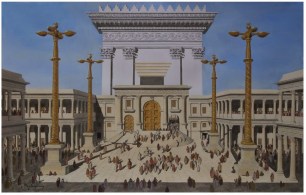 That place chosen by God is Jerusalem as affirmed in II Chronicles 6:6,
  In the Hebrew the word Pesach is implicitly and inherently a sacrifice. These implicit and inherent characteristics aren’t clear in English, but in Hebrew they are obvious. Hence the phase to
 But note one significant difference. The Samaritans doesn’t have another sacrifice to satisfy ben ha arbayim in Exodus 12:6. Even the Samaritans are not that foolish, but Fred Coulter would whip out another rabbit from his hat and make another sacrifice. He wrote of others but in reality some of his observations are for himself. Here is one:
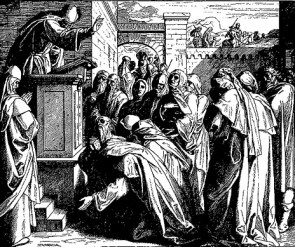 Another way of saying: The Law was read by Ezra, verse by verse, and each verse was followed by a recitation by the Levites into the Aramaic version. Hence in Nehemiah 8:8 Ezra narrated not only the reading of the Law, but the Levites interprete and explain the Torah from Hebrew into the vernacular in Aramaic.
 While the story of the quails was taking place, the children of Israelites were already having “this manna before our eyes,” speaking with “disdain and contempt of the manna.” So pretending that their bodies lack of flesh food, and having no moisture in them (John Gill comments on what “our soul is dried away” means), they murmured and complained. This complaining continued until they weep pitifully in their eyes, so the wrath of God was rekindled again:
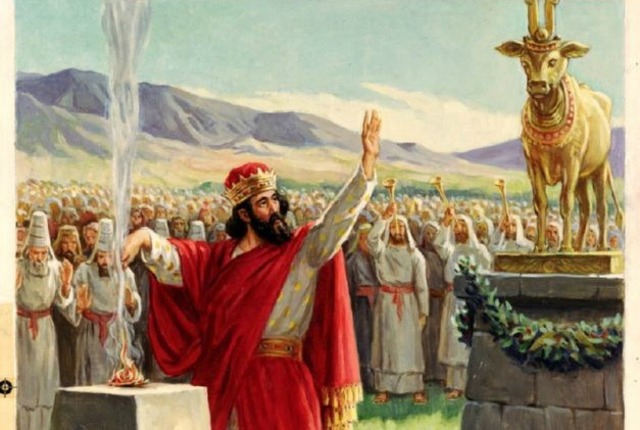 (1) King Jeroboam — Being anointed King of the Northern Kingdom he quickly felt he needed a new place of worship, least his subjects could be influenced to pledge their allegiance back to the Kingdom of Judah based Jerusalem. For the convenience of his subjects, he chose two places: Bethel and Dan. And to differentiate from Jerusalem’s feasts, he moved the Feast of Tabernacles to the eighth month. Also, he made himself the high priest, whose action drove most of the Levites and others in the priesthood south to the Kingdom of Judah.
 The truth is, at “evening”
  Even if this catch didn’t last a month, it hints an enormous catch nevertheless. Much time, maybe after several days, maybe more could have passed before another catch appeared, but one thing is sure — the Scriptures is silent about the quails appearing six times a week, every week in a similar manner like manna did for forty years in Exodus 12:35. In fact, the story of the quail in Numbers 11 hints strongly that it is an one-off event. The chapter ended with a plague where “the wrath of the Lord was kindled against the people, and the Lord smote the people with a very great plague,” (v 33) killing all those who murmured against Him and lusted for flesh to eat. And no mention of the quail’s appearance were ever mentioned again hereafter.
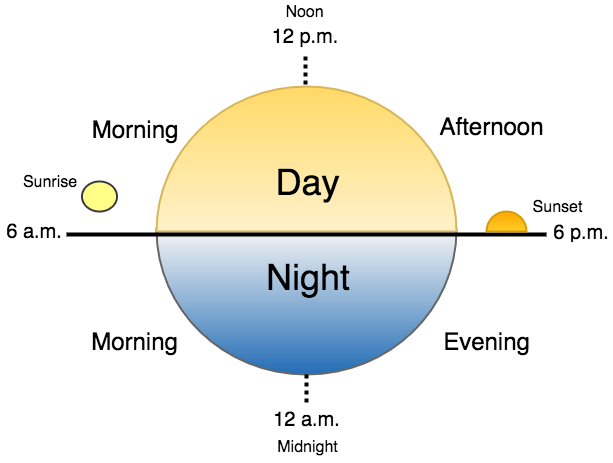
 Fred R. Coulter
 The emphasis is on “the Lord’S Passover” as a Sacrifice— On the fourteenth day of the first month at evening is the Lord’S Passover, (Levitcus 23:5). The emphasis is on the Sacrifice, hence later on it makes greater sense in other Scriptures, especially in the New Testament period, to read about to “kill the Passover,” or to “eat the Passover.”
 How could Fred Coulter confine all the ordinances within the 24-hour period, where he specifically list No 1 among the 9 rules? In fact, Passover is also a generic term, which encompasses the entire period of preparation, the travelling needed to Jerusalem when it was centralised, the process of deleavening the house, preparing food, setting tables, getting a hundred other things ready; the preparation of the lamb, and finally its consumption as a meal, and the entire seven days of the Feast of Unleavened Bread that follows.
 This is a Critique of Frank Nelte’s Passover, an article posted on his website. Besides the main issue of whether the Passover is on the early or late fourteenth of Nisan, of great importance is the true meaning of ben ha arbayim, erev and boqer, and whether the name “Passover” is the Death Angel “passing over” or is it the emphasis of the lamb as the sacrifice.
 To say all traditions are bad is just too simplistic. Blind Guides! Good traditions are good precepts, derived from judicial cases, ones that have been acquired and accumulated from cases and judges developed and accumulated since the days of Moses.
 Exo 18:16 When they have a matter, they come unto me; and I judge between one and another, and I do make them know the statutes of God (elohim), H430 and His laws.
 Ptolemy II Philadelphus (308/9 – 246 BC) was the pharaoh of Ptolemaic Egypt from 283 to 246 BC. He was the son of Ptolemy I Soter, the Macedonian Greek general of Alexander the Great who founded the Ptolemaic Kingdom after the death of Alexander, and queen Berenice I, originally from Macedon in northern Greece. The Jewish Encyclopedia says, “The quotations from the Old Testament found in the New are in the main taken from the Septuagint.”
 The Talmud is a great discussion forum where issues are dissected and deliberated. Occasionally one or two rabbi would come up with some stupid ideas and other rabbi would feel the need to put those ideas down. This is the same with our legal situation, whether in the United States or the United Kingdom. One judge would reason in a certain direction, but another judge, usually in a higher court, would override such reasoning upon appeal. On hindsight we could see how absurd some reasonings were. The one in the Talmud quoted above by a Ulla the son of R. Ila’i that “between the two evenings” covers the whole 24-hour day is one such case. He wouldn’t stand a chance that his definition would be taken further by other rabbi.
 In order to give “the sense and caused them to understand the reading,” they need to understand the Scriptures in Aramaic, hence this gave rise to the origin of the Targum version of our modern Bible.
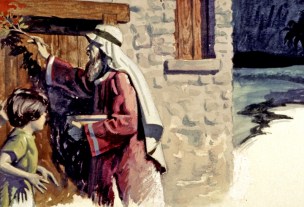 If the lamb is not associated with the name Passover, then the Scriptures become distorted. This term “the Lord’S Passover (h6453),” mentions in Leviticus 23:5 On the fourteenth day of the first month at evening is the Lord’S Passover (h6453), the emphasis is on “the Lord’S Passover” as a Sacrifice — “And thus shall
  “I indeed baptize you with water; but One mightier than I cometh, the straps of whose shoes I am not worthy to unloose. He shall baptize you with the Holy Ghost and with FIRE (pyr g4442). 17 His winnowing fan is in His hand, and He will thoroughly purge His floor and will gather the wheat into His garner; but the chaff He will burn with FIRE (pyr g4442) unquenchable” (Luke 3:16-17).

 So the faithful went to Jerusalem to offer sacrifices at the Temple that God has instituted. But John Ritenbaugh has taken inspiration from an evolutionist position “that Deuteronomy 16 represents an attempt by a group of people to abolish the home-killed Passover sacrifice.” Ironically Ritenbaugh still claims himself a pastor with “more than fifty years of experience in the ministry” but no longer has the faith of God that His Word is inspired? So much absurdity and hypocrisy!
 No, there is no need to rely on Deuteronomy 16 to prove that Passover starts on a late fourteenth. The two feasts were a composite festival right from Exodus 12, where they were already interwoven and interlaced, overlapped and superimposed right from the start. This amalgamation was reaffirmed in
 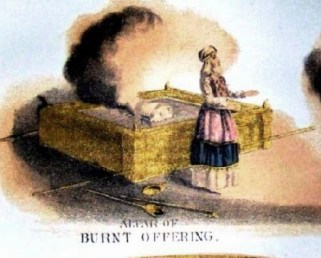 When the children of Israel settled in their designated land, the Ark of the Covenant moved to various places. But the altar was always set in front near the Sanctuary where the sacrifices were performed. The altar was made of shittim wood, five cubits long and five cubits broad, its height three cubits, and for over four hundred years during the times of the judges, it moved whenever the Sanctuary moved. However, when King Solomon had finished building the Temple for God, it was then established firmly in one location:
 The whole assembly could kill their lamb, and most would have done so beyond the Temple courtyard, even if the number of lambs was a staggering 256,500. The requirements were that the ones who did the killing must have to be circumcised and be ceremonially clean to do so. Then the blood had to be carried by others in a bowl and passed on to the Temple courtyard for a priest to sprinkle upon the altar as commanded in Leviticus 17. Any person offering a sacrifice inside or outside the camp but its blood not carried to the Temple be offered at the altar before the Lord risked being
  And if Ron Wyatt’s testimony is to be believed, the blood of the true Lamb was miraculously brought “into the camp,” and it wasn’t just sprinkled on an outer court altar, but upon the Mercy Seat before the Lord. Amazing Parallel! Christ’s Sacrifice was a Special Offering. Are you stunned? I am. It is The Mystery of Mysteries!
 Being Galileans, John and the other disciples have to travel numerous times passing Samaritan territories, including Jacob’s well, to come to Jerusalem to keep the three annual feasts. So bad and threatening to these Jewish faith and practises since Ezra’s time that eventually the Jews have no dealings with the Samaritans, (John 4:9). So when John was writing, he emphasized “of the Jews.”
 Pastor — John W. Ritenbaugh
 These are statements originated by the Samaritans with some devious “Jewish” background and strong antagonism against the Southern Kingdom, charging their predecessors had somehow amalgamated the Passover with the Days of Unleavened Bread and call the Passover the Jewish Passover. In fact, they were dissatisfied with the idea of keeping the Feasts in Jerusalem, so they left their original undertaking and craved an alternate explanation rather than continuing to show their subordination to the Southern Kingdom. So whereas the Jews consider Passover and the Days of Unleavened Bread as a composite festival, the Samaritan eventually took the position that they were two distinct festivals.
 The Movement is in “a process of constant evolution” and it “rejects any fixed, permanent set of beliefs, laws or practices.” They stated that the old mechanisms of religious interpretation were obsolete. Geiger sought a more coherent ideological framework to justify innovations in the liturgy and religious practice. While Reform Judaism initially developed as lay Jews simply lost interest in the strict observances required of Orthodoxy, with many seeking shorter services, more frequent sermons, and organ music, modeled after Protestant churches. In Germany, one characteristic of their progressive revelation was the institution of a “Second Sabbath” on Sunday, modeled on the Second Passover, as most people desecrated the day of rest. “If you cannot keep the Sabbath on its appointed time, you keep it on the next available day,” and so the Sabbath was shifted from Saturday to Sunday. “God would accept it,” they encouraged each other.
 The Jewish Encyclopedia — Its managing editor was Isidore Singer (1859–1939) and the editorial board was chaired by Isaac Funk and Frank Vizetelly. Singer was born Austria and studied at the University of Vienna and the Humboldt University of Berlin, receiving his PhD in 1884. One who held “extremely liberal views” and one who had described the Sabbath as “heavy burdens,” Singer moved to New York in 1895 where he started work which resulted in the Jewish Encyclopedia.
 The central question in this critique is whether Hezekiel, Josiah and Ezra change the Passover ordinances, whether it should continue as a “domestic Passover” as in Exodus 12, or whether it had moved to a Sanctuary/Temple centered ordinance. John Ritenbaugh, along with Fred Coulter, advocate it should continue as a domestic ordinance.
 II Chronicles 7:11 Thus Solomon finished the house of the Lord and the king’s house; and all that came into Solomon’s heart to do in the house of the Lord and in his own house, he prosperously effected.12 And the Lord appeared to Solomon by night and said unto him: “I have heard thy prayer, and have chosen this place for Myself for a house of sacrifice.
 — Rashi: shall be counted [for that man] as blood: As though he had shed human blood, for which one is liable to the death penalty.
 “That man shall be cut off from among his people” was a serious punishment, it wasn’t merely excommunicated from the church of God, deprived of the privileges of his house, but that man shall be put to death. What about those who teaches about a “domestic Passover” where the blood were not sprinkled on the altar but only to be brushed against the doorposts and lintel of their houses? Won’t they be guilty of death too? It is a serious thought!
 7 And be not ye like your fathers and like your brethren who trespassed against the Lord God of their fathers, so that He therefore gave them up to desolation, as ye see.
 24 For Hezekiah king of Judah gave to the congregation a thousand bullocks and seven thousand sheep, and the princes gave to the congregation a thousand bullocks and ten thousand sheep; and a great number of priests sanctified themselves.
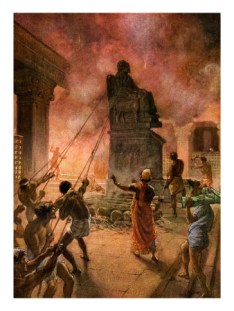 King Josiah was a good king. And this is what the Scripture says:
  So the blame is that Ezra messed with the Scriptures. Amazing! Ezra was a high priest and “a scribe skilled in the law.” This is not just heresy but real blasphemy. When Ezra arrived from Babylon, the situation in Judah was discouraging. Religious laxity was prevalent, the Law was widely disregarded, and public and private morality was at a low level. Immediately Ezra faithfully reintroduced the Torah to all those who followed him (Ezra 7:10 and Nehemiah 8). For Ezra had prepared his heart to seek the law of the Lord and to do it, and to teach in Israel statutes and judgments. Moreover, intermarriage with foreigners posed the threat that the community would mingle with the pagan environment and lose its identity. Ezra did much revival of what was lost, restoring the laws, statutes and ordinances of God. So important was he in his restoration in the eyes of his people that later tradition regarded him as no less than a second Moses.
 Pastor — John W. Ritenbaugh
 On this altar, the Israelites made sacrifices that God accepted as an atonement for their sin. It was to have four horn-like projections, one at each corner. It had to be large enough to hold sacrifices of bulls, sheep, and goats. But later, for the temple that Solomon built, the altar and much of the other vessels were no longer made of shittim wood and brass but substantially of pure gold (1 Kings 7:48-51):
 Both King Hezekiah and King Josiah obeyed the commandments and did what was right in the eyes of God. The Scriptures say so.
 Passover (Part 3)
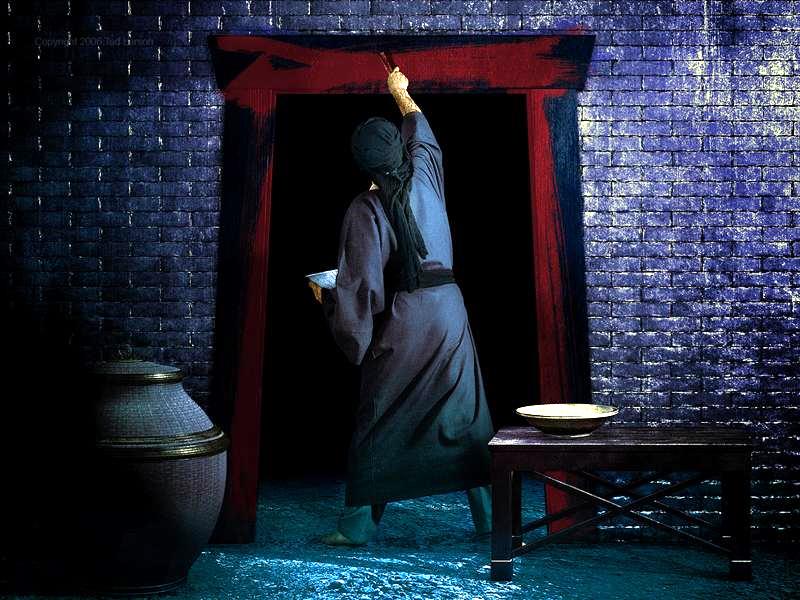 Wait wait, why did you suddenly jump into the Samaritan’s position defining ben ha arbayim as “a period of time between the going down of the sun and complete darkness (dusk).” Are you ignorant that the Orthodox Jews define it differently? Okay let me reiterate how the Orthodoxy define ben ha arbayim:
 Ordinarily it was slain [Now, in this case, the “it” was the evening sacrifice. Not the Passover sacrifice, but the evening sacrifice.] at 2:30 p.m., and offered at about 3:30. But on the eve of the Passover [Here he means Unleavened Bread, but he is calling it by the name the Jews applied to the whole Passover and Feast of Unleavened Bread. They called the whole thing “the Passover. So, we would say, “On the eve of Unleavened Bread”], as we have seen, it was killed an hour earlier; and if the 14th of Nisan fell on a Friday—or rather from Thursday at eve to Friday at eve—two hours earlier [1:30 p.m.], so as to avoid any needless breach of the Sabbath.
 In the above context, the Roman time for Day (yom) is 6 AM to 6 PM, assuming it is spring or autumn; Night (lailah) is 6 PM to 6 AM. — 12-hr day and 12-hr night totalling a 24-hour day.
 Pastor — John W. Ritenbaugh
 Although Ezekiel’s message was to both the “house of Israel” and the “house of Judah” its main message after chapter 24 was to the “house of Israel.” As with other prophets, Ezekiel came with a message of dire warning about breaking the Sabbath laws. Captivities were the end results. Today, the main message of Ezekiel is to the Northern Kingdom, the so-called Lost Ten Tribes. And not only that, Ezekiel 34 warned against their shepherds: “Woe unto the shepherds of Israel” — (the shepherds of the United States, Britain and related countries), says the Lord, for they feed themselves but not the sheep!
 See, you have positioned your readers to get into your position. So much hypocrisy and double talks in your “step by step, verse by verse” right from the start. Earlier you said about making “the ones that are difficult agree with the ones that are clear. Not make the ones that are clear agree with the ones that are difficult.”
 The question is, “Can the Jews be trusted?” Now, I do not mean any individual Jew—can they be trusted in regard to anything. I am talking about “Can the religion of the Jews (the practices of the Jews) be relied on as faithful interpreters of the Old Testament?” This is a very important question in regard to the Passover, because every author of every paper that I have ever read in regard to the keeping of a late fourteenth Passover, or a fifteenth Passover, must rely heavily upon Jewish interpretation and Jewish tradition. The reason that they must do so is because there is nothing in the Bible upon which they can clearly, and authoritatively, base their conclusions.


 Leviticus 23:9 And the Lord spoke unto Moses, saying,
 Writes the Jewish Encyclopedia:
 Again in Chapter 6 of his book, the Christian Passover:
 Passover

 It was a strange passover, isn’t it? Actually if you dig deep enough, it is a Samaritan type of passover.
 Elsewhere in Rev 21:4 it is translated as a “former” — And God shall wipe away all tears from their eyes; and there shall be no more death, neither sorrow, nor crying, neither shall there be any more pain: for the former things G4413 are passed away.
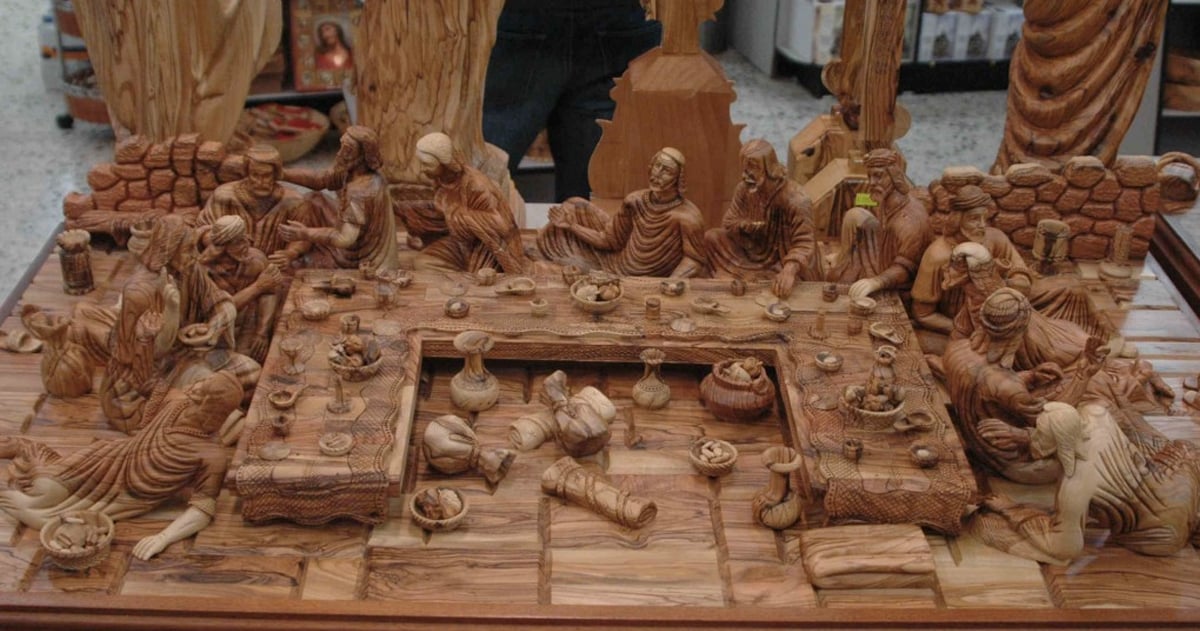 I fully agree it is a life and death issue. The Sadducees and the Boethusians faced death when they were exterminated during the AD 70 inferno; the Pharisees, despite their hypocrisy and other faults, survived. Earlier John the Baptist’s warning was recorded by Luke: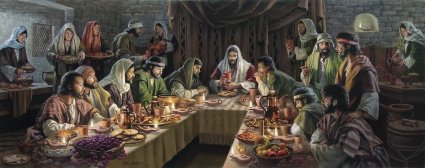
 John shows that the Passover they were preparing to eat was recognized as the official observance of the Jews:
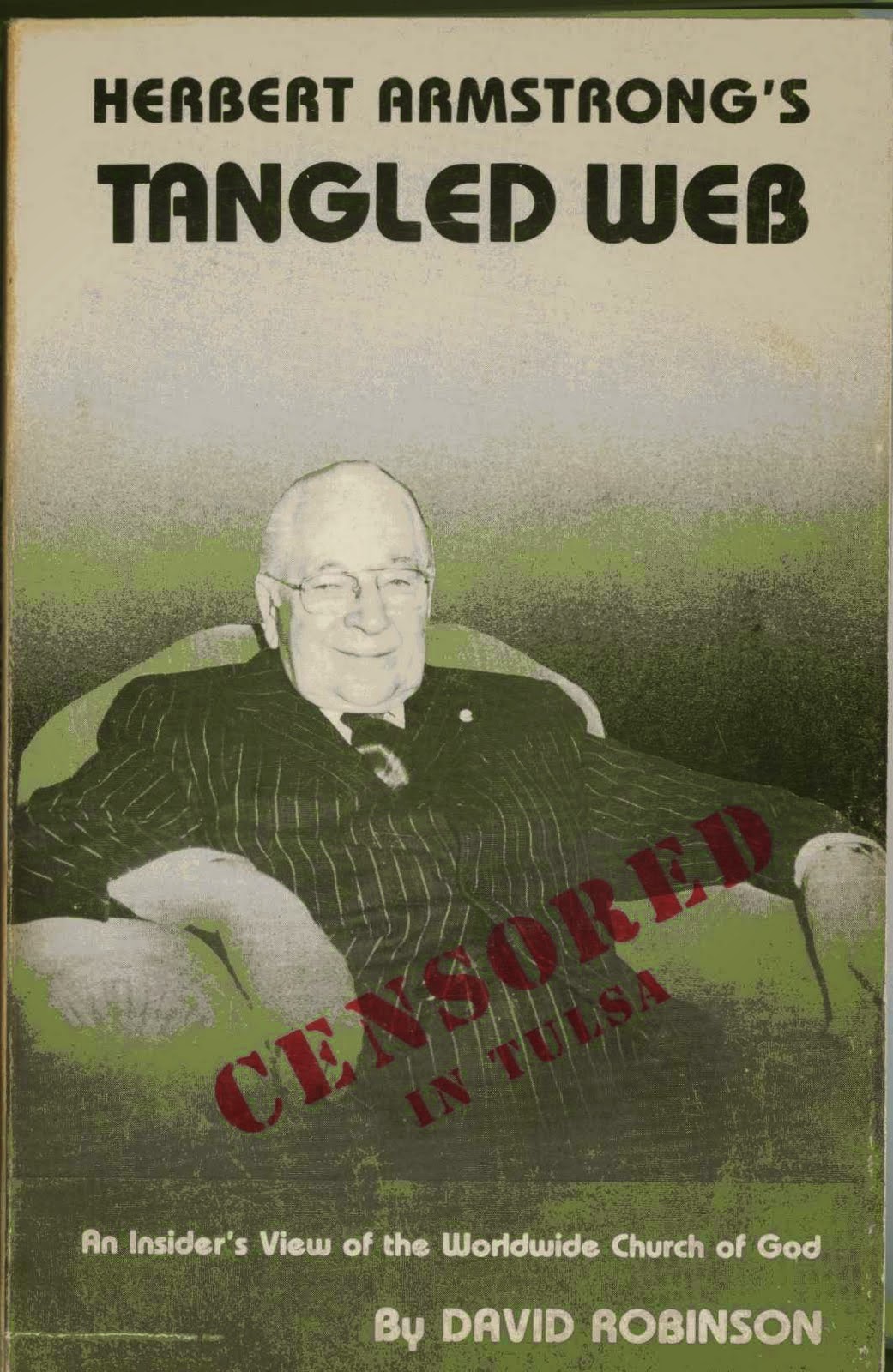
 True, the end-time Church has the descriptions as being “ten virgins,” and yet “wretched” and “naked.” (I know thy works, that thou art neither cold nor hot; I would thou wert cold or hot. 16 So then because thou art lukewarm, and neither cold nor hot, I will spew thee out of My mouth. 17 Because thou sayest, “I am rich and increased with goods and have need of nothing,” and knowest not that thou art wretched and miserable, and poor and blind and naked . . . “)
 The Last Supper — (6 PM) Even, 13th Nisan
 Judas left to betray Jesus — (7 PM) Night, 13th Nisan
 More discourse — (9 PM) Night, 13th Nisan
 In Gethsemene to pray — (10 PM) Night, 13th Nisan
 12 While I was with them in the world, I kept them in Thy name. Those that Thou gavest Me I have kept, and none of them is lost, but the son of perdition, that the Scripture might be fulfilled.

 Peter denied Jesus three times — (5 AM) Before Dawn, 13th Nisan


 This deliberately literal translation from the Greek is from Steve Mason, Flavius Josephus: The Jewish War, Book II, Chapter 8
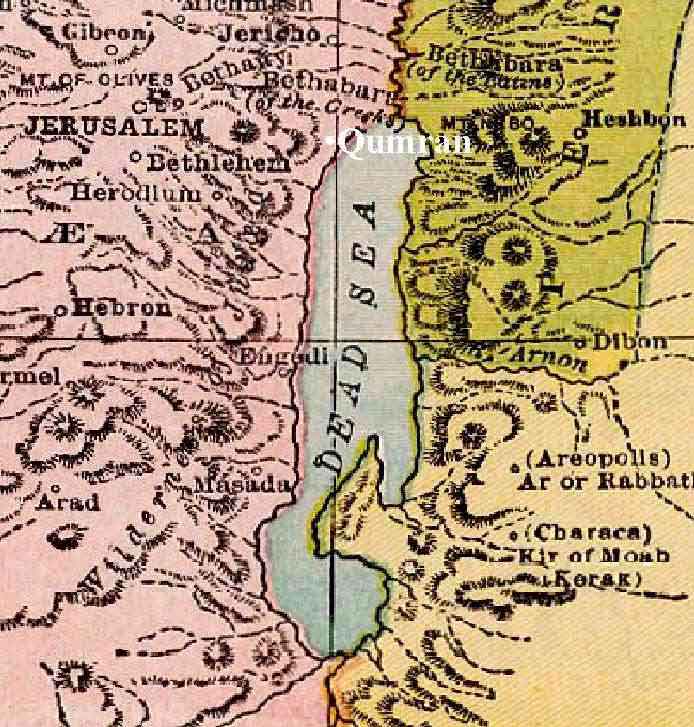
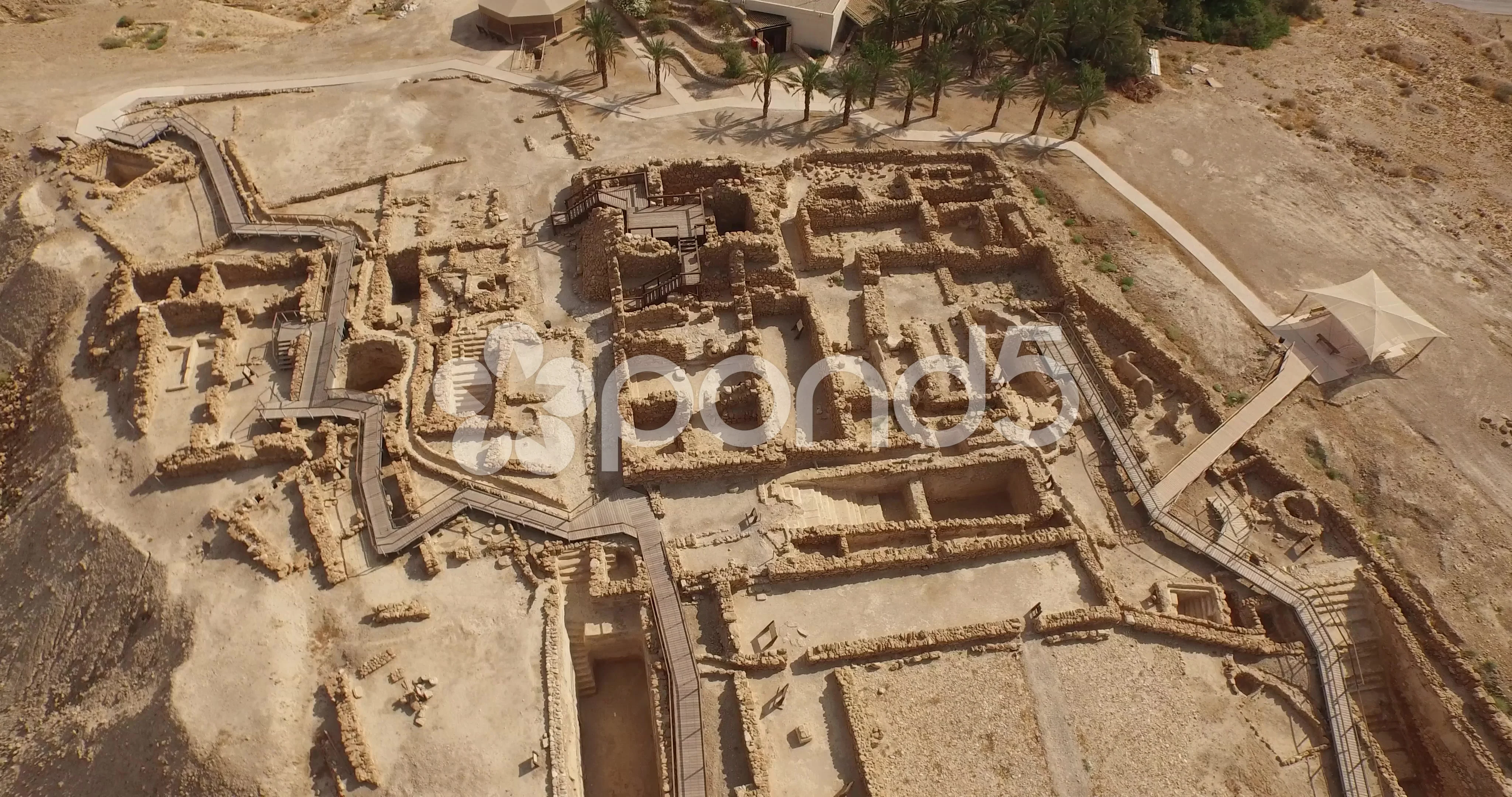

 Who were the Boethusians?

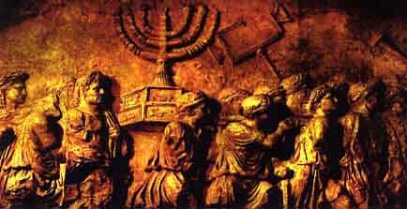
 Matthew 22:16 And they sent out unto Him their disciples with the Herodians, saying, “Master, we know that thou art true and teachest the way of God in truth; neither carest thou for any man, for thou regardest not the person of men.
 The family name of the Hasmonean dynasty originates with the ancestor of the house, Simon Thassi “the Wise” who was said to have been the grandfather of Mattathias. The high-priestly and princely dignity of the Hasmoneans was founded by a resolution, adopted in 141 BC, at a large assembly “of the priests and the people and of the elders of the land, to the effect that Simon should be their leader and high priest forever, until there should arise a faithful prophet” (I Macc. xiv. 41).
 According to the Jewish Encyclopedia, Salome Alexandra was instrumental in arranging the assassination of her brother-in-law, Antigonus, by convincing her husband that his brother was plotting against him. Upon the death of Aristobulus in 103 BC, Alexandra freed his half-brother, Alexander Jannaeus, who had been held in prison.
 Salome Alexandra’s next concern was to open negotiations with the leaders of the Pharisees, whose places of concealment she knew. In doing so, she received the reins of government around 76 BC at Jannaeus’ camp before Ragaba, and concealed the king’s death until the fortress had fallen, in order that the rigour of the siege might be maintained. She succeeded for a time in quieting the vexatious internal dissensions of the kingdom that existed at the time of Alexander’s death; and she did this peacefully and without detriment to the political relations of the Jewish state to the outside world. Alexandra managed to secure assent to a Hasmonean monarchy from the Pharisees, who had suffered under Alexander.
/Pharisees-And-Adulteress-Woman1324x969-58b5c85b5f9b586046cae461.jpg) The Pharisees, on the other hand, taught that the written Law had been given to the Jews and that they were given the responsibility to interpret the Law as per “….according to the word they tell you… according to all they instruct you. According to the law they instruct you and according to the judgment they say to you, you shall do; you shall not divert from the word they tell you, either right or left” Deuteronomy 17:10-12. After all, the world had changed since the days of Moses. As a consequence, the Pharisees said that the Written Torah was to be supplemented with the Oral Torah, the case law, the interpretation of the Written Law by learned Levites, the rabbis and appointed judges as in Deuteronomy 1:16-17; 17:18. The Sadducees considered the Oral Law an almost blasphemous act, because it seemed to deny the majesty of the Law of Moses.
The Pharisees, on the other hand, taught that the written Law had been given to the Jews and that they were given the responsibility to interpret the Law as per “….according to the word they tell you… according to all they instruct you. According to the law they instruct you and according to the judgment they say to you, you shall do; you shall not divert from the word they tell you, either right or left” Deuteronomy 17:10-12. After all, the world had changed since the days of Moses. As a consequence, the Pharisees said that the Written Torah was to be supplemented with the Oral Torah, the case law, the interpretation of the Written Law by learned Levites, the rabbis and appointed judges as in Deuteronomy 1:16-17; 17:18. The Sadducees considered the Oral Law an almost blasphemous act, because it seemed to deny the majesty of the Law of Moses.
 From Wikipedia
 Sadducees rejects the Orah Torah, reject the Prophets and Writings—this sounds exactly like they have taken their reliefs from the Samaritans, who have identical beliefs. And here are more similarities with the Samaritans from the Jewish Encyclopedia, under Sadducees:
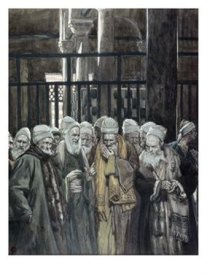 Question: Who were the Pharisees?
 The deportation and exile of an unknown number of Jews of the ancient Kingdom of Judah to Babylon by Nebuchadnezzar II, starting with the first deportation in 597 BC and continuing after the fall of Jerusalem and destruction of the Temple in 587 BC, resulted in dramatic changes to Jewish culture and religion. During the 70-year exile in Babylon, Jewish houses of assembly (known in Hebrew as a beit knesset or in Greek as a synagogue) and houses of prayer (Hebrew Beit Tefilah; Greek προσευχαί, proseuchai) were the primary meeting places for prayer, and the house of study (beit midrash) was the counterpart for the synagogue.
 The Pharisees and their sages believed that the Oral law was simultaneously revealed to Moses at Sinai, and the product of debates among rabbis. Thus, one may conceive of the “Oral Torah” not as a fixed text but as an ongoing process of analysis and argument in which God is actively involved; it was this ongoing process that was revealed at Sinai, and by participating in this ongoing process rabbis and their students are actively participating in God’s ongoing act of revelation. The Oral Torah was to remain oral but was later given a written form. It did not refer to the Torah in a status as a commentary, rather had its own separate existence which allowed Pharisaic innovations.
/Sanhedrin-GettyImages-91728330-5733700b3df78c6bb0a079d5.jpg) Thus, in debating and disagreeing over the meaning of the Torah or how best to put it into practice, no rabbi felt that he (or his opponent) was rejecting God or threatening Judaism. On the contrary, it was precisely through such arguments that the rabbis imitated and honored God and as a result, they had popular support among the people. So although the Pharisees were a minority in the Sanhedrin and held a minority number of positions as priests, they seemed to control the decision-making of the Sanhedrin because they were seen as their religious leaders.
Thus, in debating and disagreeing over the meaning of the Torah or how best to put it into practice, no rabbi felt that he (or his opponent) was rejecting God or threatening Judaism. On the contrary, it was precisely through such arguments that the rabbis imitated and honored God and as a result, they had popular support among the people. So although the Pharisees were a minority in the Sanhedrin and held a minority number of positions as priests, they seemed to control the decision-making of the Sanhedrin because they were seen as their religious leaders. — The Charge of Hypocrisy.
 In the first century, among the Pharisees were two schools of thought, based on the teachings of two rabbis, Shammai and Hillel. Shammai called for a strict, unbending interpretation of the Law on almost every issue, but Hillel taught a looser, more liberal application. After Hillel died in 20 AD, Shammai assumed the office of president of the Sanhedrin until he died in 30 AD. Followers of these two sages dominated scholarly debate over the following decades. Although the Talmud records the arguments and positions of the school of Shammai, the teachings of the school of Hillel were ultimately taken as authoritative.



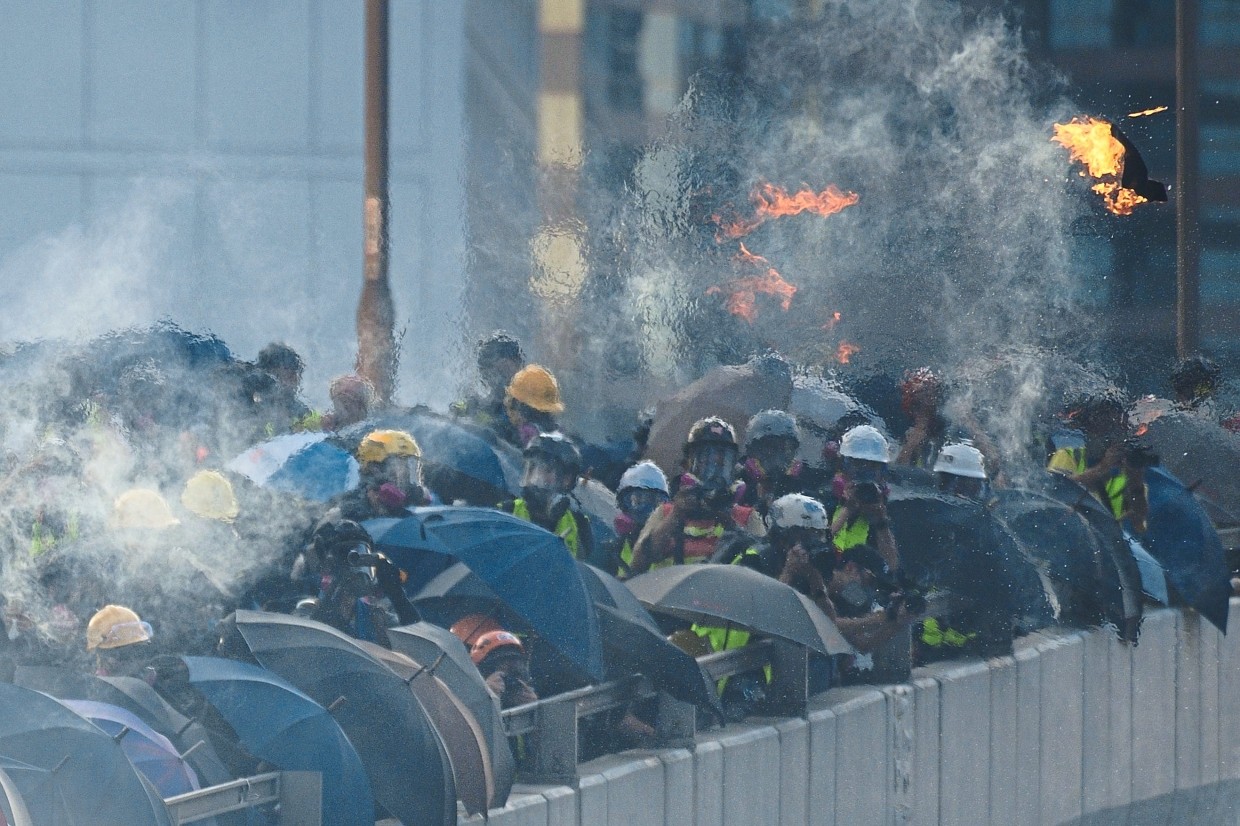









 Nehemiah 1:1-7 Now it came to pass when Sanballat, and Tobiah (the Ammonite Neh 3:35), and Geshem the Arabian, and the rest of our enemies, heard that I had built the wall, and that there was no breach left therein; (though at that time I had not set up the doors upon the gates;)
 These treacherous Jews, however, kept Sanballat and Tobiah informed as to the progress of the work in Jerusalem. Nehemiah’s far-sighted policy and his shrewdness kept him out of the hands of these neighbor-foes. In his reforms, so effectively carried out, he discovered that one of the grandsons of the high priest Eliashib had married a daughter of this Sanballat, and was thus son-in-law of the chief enemy of the Jews (Neh 13:28). The high priest was driven out of Jerusalem on the ground that he had defiled the priesthood.
 3. About this time it was that Darius heard how Alexander had passed over the Hellespont, and had beaten his lieutenants in the battle at Granicum, and was proceeding further; whereupon he gathered together an army of horse and foot, and determined that he would meet the Macedonians before they should assault and conquer all Asia. So he passed over the river Euphrates, and came over Taurus, the Cilician mountain, and at Issus of Cilicia he waited for the enemy, as ready there to give him battle. Upon which Sanballat was glad that Darius was come down; and told Manasseh that he would suddenly perform his promises to him, and this as soon as ever Darius should come back, after he had beaten his enemies; for not he only, but all those that were in Asia also, were persuaded that the Macedonians would not so much as come to a battle with the Persians, on account of their multitude. But the event proved otherwise than they expected; for the king joined battle with the Macedonians, and was beaten, and lost a great part of his army. His mother also, and his wife and children, were taken captives, and he fled into Persia. So Alexander came into Syria, and took Damascus; and when he had obtained Sidon, he besieged Tyre, when he sent all epistle to the Jewish high priest, to send him some auxiliaries, and to supply his army with provisions; and that what presents he formerly sent to Darius, he would now send to him, and choose the friendship of the Macedonians, and that he should never repent of so doing. But the high priest answered the messengers, that he had given his oath to Darius not to bear arms against him; and he said that he would not transgress this while Darius was in the land of the living. Upon hearing this answer, Alexander was very angry; and though he was determined not to leave Tyre, which was just ready to be taken, yet as soon as he had taken it, he threatened that he would make an expedition against the Jewish high priest, and through him teach all men to whom they must keep their oaths. So when he had, with a good deal of pains during the siege, taken Tyre, and had settled its affairs, he came to the city of Gaza, and besieged both the city and him that was governor of the garrison, whose name was Babemeses.
 6. So when Alexander had thus settled matters at Jerusalem, he led his army into the neighboring cities; and when all the inhabitants to whom he came received him with great kindness, the Samaritans, who had then Shechem for their metropolis, (a city situate at Mount Gerizzim, and inhabited by apostates of the Jewish nation,) seeing that Alexander had so greatly honored the Jews, determined to profess themselves Jews; for such is the disposition of the Samaritans, as we have already elsewhere declared, that when the Jews are in adversity, they deny that they are of kin to them, and then they confess the truth; but when they perceive that some good fortune hath befallen them, they immediately pretend to have communion with them, saying that they belong to them, and derive their genealogy from the posterity of Joseph, Ephraim, and Manasseh. Accordingly, they made their address to the king with splendor, and showed great alacrity in meeting him at a little distance from Jerusalem. And when Alexander had commended them, the Shechemites approached to him, taking with them the troops that Sanballat had sent him, and they desired that he would come to their city, and do honor to their temple also; to whom he promised, that when he returned he would come to them. And when they petitioned that he would remit the tribute of the seventh year to them, because they did but sow thereon, he asked who they were that made such a petition; and when they said that they were Hebrews, but had the name of Sidonians, living at Shechem, he asked them again whether they were Jews; and when they said they were not Jews, “It was to the Jews,” said he, “that I granted that privilege; however, when I return, and am thoroughly informed by you of this matter, I will do what I shall think proper.” And in this manner he took leave of the Shechenlites; but ordered that the troops of Sanballat should follow him into Egypt, because there he designed to give them lands, which he did a little after in Thebais, when he ordered them to guard that country.

 Sects During Biblical Times — Samaritans Draft Ic
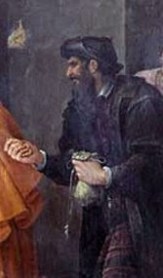 The Samaritans occupied the country formerly belonging to the half-tribes of Ephraim and Manasseh. The capital of the country was Samaria, formerly a large and splendid city. When the ten tribes were carried away into captivity to Assyria, the king of Assyria sent people from Cutha, Ava, Hamath, and Sepharvaim to inhabit Samaria (2 Kings 17:24; Ezra 4:2-11).
 14 Now when the apostles who were at Jerusalem heard that Samaria had received the word of God, they sent Peter and John to them. 15 When they came down, they prayed for them that they might receive the Holy Spirit, 16 for still He had come on none of them. They were only baptized in the name of the Lord Jesus. 17 Then they laid their hands on them, and they received the Holy Spirit.
 Answer: Part C — Convergence of Catholics and Samaritans
 Adam Clarke: Now when the adversaries – These were the Samaritans, and the different nations with which the kings of Assyria had peopled Israel, when they had carried the original inhabitants away into captivity, see Ezra 4:9, Ezra 4:10.

 7 A woman of Samaria came there to draw water. Jesus said to her, “Give Me a drink.” 8 For His disciples had gone away into the city to buy food.
 Question: “Who were the Samaritans?”
 3 Against him came up Shalmaneser king of Assyria; and Hoshea became his servant, and rendered him tribute.
 10 And they set up for themselves images and Asherah poles in every high hill and under every green tree;
 19 Also Judah kept not the commandments of the Lord their God, but walked in the statutes of Israel which they made.
 especially when old, out of the thickets of Jordan and other places where they haunted, see Jeremiah 49:19.
 Gill: and let him go and dwell there, and let him teach them the manner of the God of the land; it is in the plural number, “let them go”, &c. there might be more priests than one ordered, or, however, others, to attend and assist him in his work; the Jews say, two were sent to circumcise them, and teach them the book of the law; and they give their names, Dosthai, or Dosithaeus, and Zachariah; and Josephus says, the people desired that priests might be sent to them of the captives.
 30 And the men of Babylon made Succoth Benoth, and the men of Cuth made Nergal, and the men of Hamath made Ashima,
 36 but the Lord, who brought you up out of the land of Egypt with great power and a stretched out arm, Him shall ye fear and Him shall ye worship, and to Him shall ye do sacrifice.
 25 Then Jeroboam built Shechem in Mount Ephraim and dwelt therein, and went out from thence and built Penuel.
 Huan: It’s most likely that Jeroboam changed the calendar, too, as he would want to avoid taking any lead from Jerusalem. And since Samaria was north of Jerusalem, it could be a bit colder hence an excuse to delay a month later to start a new year. From God’s point of view, since the Bible is written from God’s point of view, it is the eighth month, still keeping the Sacred Text intact without any alteration. To justify himself, Jeroboam could say the barley green ear wasn’t fully ripe and blame the Jews for starting the calendar too early.
 This is the last posting of a Critique of Fred Coulter’s The Christian Passover.
 There are many errors in the above paragraph. The Sadducees didn’t subscribe to a 14/15 Passover, the Pharisees did. The Sadducees (and also the Samaritans), kept an early fourteenth Passover, because they also define erev as twilight, and ben ha arbayim (between the two evenings) as between sunset and dark. Fred Coulter must be suffering from memory loss, for he wrote in Chapter 10: “The Sadducees, including some high priests and their families, continued to practice the domestic killing of the Passover lambs at the beginning of the 14th.” The oversight is glaring. And where are all his team?—Carl and Jean Franklin, Philip Neal, Albert and Mela Cataga John, Hiedi and Sasha Vogele—sleeping?
 Matthew 27:45 Now from the sixth hour there was darkness over all the land until the ninth hour. — NOON TO 3 PM
 The word “they” in Mark 14:12 refers to those who were killing the Passover lambs at houses, tents, or inns where the domestic Passover would be kept. Mark’s record of the killing of the lambs at the time that Jesus sent His disciples to prepare the Passover confirms that many Jews in New Testament times were observing the domestic Passover. Clearly, Jesus and His disciples did not observe a “special paschal meal” at a different time from other Jews in Jerusalem. Mark’s testimony exposes this teaching as a false doctrine of men.
 The killing and roasting took only one and a half hours, he says. Anticipated to feed 13 adults, Fred wrote that they only planned to have a tiny 8-day old lamb, weights only 10-12 pounds. Have any of you roasted a leg of lambs, folks? I would love to hear from your experiences. More so if you have even killed a lamb, drained off the blood, skinned, cleaned and have it roasted, expected to feed thirteen adults after nightfall. If not, try it, it is an opportunity to prove the truth!
 “And this house was finished on the third day of the month Adar, in the sixth year of the reign of Darius the king. And the children of Israel, the priests, and the Levites, and the rest of the children of the captivity kept the dedication of this house of God with joy….And the children of the captivity kept the Passover on the fourteenth day of the first month. The priests and the Levites were purified together, all of them pure. And they killed the Passover lamb for all the children of the captivity, and for their brethren the priests, and for themselves. And the children of Israel ate the Passover lamb, all who had come again out of exile, and all such as had separated themselves to them from the uncleanness of the nations of the land in order to seek the LORD God of Israel. And they kept the Feast of Unleavened Bread seven days with joy, for the LORD had made them joyful…” (Ezra 6:15-16, 19-22).
 That the Jews in exile could not observe the Passover is acknowledged by the Karaite Jews and recorded by Samuel Al-Magribi in 1484: “Today, however, by reason of our many sins, we are scattered over the four corners of the earth, we are dispersed in the lands of the Gentiles, we are soiled with their ritual uncleanness and unable to reach the House of the Lord, and our status is equivalent to that of persons ritually unclean or traveling far away. That is why this ordinance of the Passover sacrifice no longer applies to us, and the reason for this is our fathers’ exceeding disobedience to God and our own following in their sinful footsteps” (Nemoy, Karaite Anthology, p. 206)
 In order to give “the sense and caused them to understand the reading,” they need to understand the Scriptures in Aramaic, hence this gave rise to the origin of the Targum version of our modern Bible.
 What an alarming turn of events! What an absolute disaster this could bring! Only sixty miles north of Jerusalem was a competing religion, a new Jewish/Samaritan religion, with authentic copies of the books of Moses, the first five books of the Bible. Because the founders of this religion had rebelled against the law of God, it was obvious that they did not respect His Word. They would not hesitate to alter the text to suit their own purposes. The Scriptures were in great danger of being corrupted.
 Moses knew he would die soon and his understanding had been conveyed to judges, Levites and priests where the true interpretation of the law were taught. So in the book of Deuteronomy Moses spoke and explained unto all Israel “according unto all that the Lord had given him” as to how to keep them, the blessing they would have if they obey, or cursing if they disobey, in a language they could understand. Men may have good intentions, but may do things seen as presumptuously? What is presumptuous or presumptuously?
 Ezra edited Deuteronomy 16 from the then old Samaritan version, so Fred Coulter alleged, as the Samaritan version must be the authentic version. Quoting his own work, “The Original Bible Restored,” he says, “Although a few alterations were made in the text of the Old Testament after its canonization, there is no question that Ezra was the one who compiled the books, edited them and canonized them.” But of course, he was mainly referring to the vandalisation of Deuteronomy 16 (mainly verses 1-8).
 Draft IIg
 The Levitical duties of the tribe of Levites and the Sanctuary were not instituted at the time of the Exodus. Once instituted, “Thou mayest not sacrifice the Passover within any of thy gates which the Lord thy God giveth thee” (Deuteronomy 16:5) and in Jerusalem this Holy City was chosen. Hence most of the Exodus 12 requirements were a one-off situation, otherwise every Israelites would still be eating with their loins girded, sandals on their feet, staff in their hands; and they were to eat in haste, pretending to flee from a non-existing Pharaoh and his non-existing armies in an re-enactment of the Exodus.
 Hezekiah’s prayers were for the fact that they were late for the Passover, which should be on the first month, but they celebrated it on the second month, which is contrary to the law. But the main reason was stated in II Chronicles 30:18 For a multitude of the people, even many from Ephraim, and Manasseh, Issachar, and Zebulun had not cleansed themselves, yet they ate the Passover otherwise than it was written. But Hezekiah prayed for them, saying, “The good Lord pardon every one 19 who prepareth his heart to seek God, the Lord God of his fathers, though he be not cleansed according to the purification of the sanctuary.” 20 And the Lord hearkened to Hezekiah, and healed the people.
 The description of the sacrificing does not fit the ordinances that God established for the domestic observance of the Passover. There is no mention of the lambs being killed by “the whole assembly of the congregation of Israel,” as in Exodus 12. Rather, the account gives a detailed description of the slaying of the lambs at the temple by the Levites, and the sprinkling of the lamb’s blood against the altar by the priests.
 The phrase “as it is written in the book of Moses” is not referring to the ordinances for the Passover, but to the ordinances that God established for peace offerings, which required that the blood of the sacrificial animal be sprinkled against the altar, and the fat and certain organs be burnt on the altar (Lev. 3).
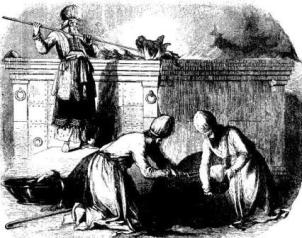 The KJV translates Strong’s H1310 (bashal) in the following manner (and times): seethe (10x), boil (6x), sod (6x), bake (2x), ripe (2x), roast (2x). The KJV and most translations translate the verse “roasted” correctly: ”And they roasted the Passover lamb with fire according to the ordinance.” The Bible says they did the roasting “according to the ordinance.” The same word bashal is used in Deuteronomy 16:7 “And thou shalt roast (H1310 bashal) and eat it in the place which the Lord thy God shall choose.” Only “A Faithful Version” by a “not-sure-what-his-level-of-Hebrew-is” author translates it as “boil.”
 The Jewish Encyclopedia — Its managing editor was Isidore Singer (1859–1939) and the editorial board was chaired by Isaac Funk and Frank Vizetelly. Singer was born Austria and studied at the University of Vienna and the Humboldt University of Berlin, receiving his PhD in 1884. One who held “extremely liberal views” and one who had described the Sabbath as “heavy burdens,” Singer moved to New York in 1895 where he started work which resulted in the Jewish Encyclopedia.
 “Then the king [Jeroboam, now king of the northern ten tribes of Israel] took counsel, and made two calves of gold and said to them, ‘It is too much for you to go up to Jerusalem. Behold your gods, O Israel, who brought you up out of the land of Egypt!’ And he set the one in Bethel, and he put the other in Dan. And this thing became a sin, for the people went to worship before the one, even to Dan. And he made houses of worship on the high places [pagan temples to Baal], and made priests of the lowest of the people, who were not the sons of Levi. And Jeroboam ordered a feast in the eighth month, on the fifteenth day of the month, like the feast that is in Judah. And he offered upon the altar. So he did in Bethel [meaning “house of God”], sacrificing to the calves that he had made. And he placed in Bethel the priests of the high places which he had made.
 Rabbi Denise Eger was also the founding President of the Lesbian, Gay, & Bisexual Interfaith Clergy Association. In the summer of 2010 she was named one of the fifty most influential women rabbis.
 Of course, He did. If not, during each Passover thereafter, every Israelites would still be eating with their loins girded, sandals on their feet, staff in their hands; and they were to eat in haste. Then they would also need to pretend fleeing from Pharaoh and his armies in an re-enactment of the Exodus.
 And thou shalt tell them: A man, whether young or old, of the house of Israel, or of the strangers who sojourn among you, who shall sacrifice a burnt offering, or consecrated oblation, and bring it not to the door of the tabernacle of ordinance, to be made an oblation before the Lord, that man shall be destroyed from his people.
 At the same movement, while the Jews were killing their lambs for the Passover, and the priests splinking the blood on the altar, Christ’s blood dripped into the Mercy Seat for the sin of the whole world! The biblical narratives indicate that the crucifixion took place outside the city walls—“outside the camp,” and His blood was miraculously brought “into the camp,” revealing why the blood could be killed outside the camp but only its blood brought into the camp for the priest to sprinkle on the altar. If Ron’s attestation is true, the story of Christ’s death and sacrifice would reveal how the Lamb was ordained in details with so much forethoughts right from the foundation of the world. Well planned and well thought-out by our Great God. Are you amazed? I’m stunned. It is the mystery of mysteries.
 Chapter 16 had the timeline of what happened during the sixth day, but Fred Coulter had misinterpreted as the time, the evening after sunset. He wrote:
 The story of the quail in Exodus 16 is that the Scriptures use erev and ben ha arbayim interchangeability. Everything makes sense when this is deemed as the daylight portion of erev for the Israelites to capture, cook and eat the quails.
 The truth is so easy to understand if we use the Jewish definition of technical words. It’s their language, it’s their Sacred Text, it’s written within the Jewish culture. They are the custodians of God’s oracles, we shouldn’t make a habit of stigmatizing them. What if they don’t believe? Nar, let every man be a liar and God be true, the Jews would still be the custodians (Roman 3:1-4). Ben ha arbayim is the time “after noon and until nightfall.”
 But only one lamb were selected on the tenth of the first month (Exodus 12:3-5) for Passover. For these Israelites to sudden sacrifice two lambs, one during erev and the other during ben ha arbayim they would need to perform miracles.
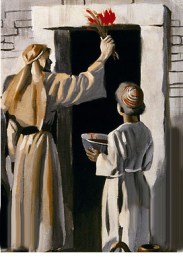 Draft IIb
 This is correct, ben (h996) ha arbayim (h6153) occur 11 times, so let’s study them in details:
 In Chapter 3 earlier, Fred defines ben ha arbayim as the time between sunset and dark.“Between the two evenings’ is usually taken to mean between sundown and dark, a period of about an hour or so….”
 But Hillel knew that the man wanted to do the right thing, but he didn’t understand the purpose of the Oral Torah. So Hillel began to teach him the Aleph Bet (Hebrew alphabet). The first day, Hillel taught him the first two letters, aleph and bet.
 “And this house was finished on the third day of the month Adar, in the sixth year of the reign of Darius the king. And the children of Israel, the priests, and the Levites, and the rest of the children of the captivity kept the dedication of this house of God with joy….And the children of the captivity kept the Passover on the fourteenth day of the first month. The priests and the Levites were purified together, all of them pure. And they killed the Passover lamb for all the children of the captivity, and for their brethren the priests, and for themselves. And the children of Israel ate the Passover lamb, all who had come again out of exile, and all such as had separated themselves to them from the uncleanness of the nations of the land in order to seek the LORD God of Israel. And they kept the Feast of Unleavened Bread seven days with joy, for the LORD had made them joyful…” (Ezra 6:15-16, 19-22).
 (1) the duties of the priests and Levites were reestablished at the Temple, “as it is written in the Book of Moses” (verse 18). After the Sanctuary was instituted, there is no such a thing about a “domestic” passover.
 If Ezra had edited the Scriptures, a comparison would show the difference with the Samaritans’ version: “with authentic copies of the books of Moses, the first five books of the Bible.” The Samaritan religion was established earlier, but close to Jerusalem, just some sixty miles to the north, around 720 BC. They should have the true version, and Ezra’s edited copy will show.
 Draft Ih
 No, they don’t. Every year Samaritans kept their passover at Mount Gerizim, near today’s city of Nablus in the West Bank, and this mountain isn’t at their homes, so it isn’t a “domestic” passover. Yes, they kept it at the beginning of the fourteenth in the same manner as the Church of God communities today.
 In summary, Leviticus 17 says if one were to make a sacrifice, in the camp or out of the camp, the blood must be brought to the tabernacle, and the priest shall sprinkle the blood upon the altar of the Lord at the door of the tabernacle (v 6).
 The KJV translates Strong’s H1310 (bashal) in the following manner (and times): seethe (10x), boil (6x), sod (6x), bake (2x), ripe (2x), roast (2x). The KJV and most translations translate the verse “roasted” correctly: ”And they roasted the Passover lamb with fire according to the ordinance.” The Bible says they did the roasting “according to the ordinance.” The same word bashal is used in Deuteronomy 16:7 “And thou shalt roast (H1310 bashal) and eat it in the place which the Lord thy God shall choose.” Only “A Faithful Version” by a “not-so-sure-what-his-level-of-Hebrew-is” author translates it as “boil.”
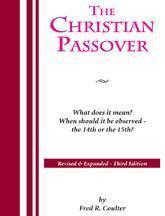 According to Fred, “there can be no doubt whatsoever that ben ha arbayim comes after ba erev, or sunset.”
 a. Angelic beings, not humans. Jesus said only He had down from heaven John 3:13 And no man hath ascended up to heaven, but he that came down from heaven, so the twenty four elders could not be humans as identified in Revelation 4:4. During the first resurrection, when Christ return, the saints will rise first, Satan bound (Revelation 20:1-4).They will meet Christ in the air, and when Christ set his feet in Jerusalem, the saints will be with Christ forever (1 Thess 4:16-17). Further, among the restored 18 vital truths to the True Church since 1933 (Mystery of the Ages, Dodd & Mead, 1985, p251), Herbert W Armstrong came in the spirit of Elijah (Malachi 4:5), to establish the foundation of the True Church, and to restore all things (Matt 17:11, Mark 9:12, Acts 3:21). “Rain” and soon a storm appeared; “Drought” and the land suffered three and a half years of constipation! When you look at the preceding two or three verses in Acts 3:19-20, this restitution of all things by Elijah is in the context of Christ returning back to this earth. Hence these truths are solidified and sealed.
 Over the last decade or so, the western world watches Huawei’s rise as a formidable world-power with a mixture of awe and apprehension. Huawei Technologies was founded as recently as 1987 by Ren Zhengfei and has made headlines of late as the target of the US government, which claims its telecom equipment poses a threat to America’s national security.
 Just this week, Mark Zuckerberg’s ‘private company’ agreed to give French authorities the “identification data” of Facebook users suspected of spreading ‘hate speech’ on the platform, in what would be an unprecedented move on the part of Silicon Valley.
 After the riot, the Chinese Government found that their main source of coordination was done through Facebook. A couple thousand people were involved, so the Government went to Facebook, and asked them to cooperate with the Police.

 the European Commission, warned that ministers should focus on raising school standards instead of blaming the country’s problems on foreigners. In a speech in Cambridge she suggested that the UK’s poor education system is the reason Britons cannot compete with foreigners for jobs. She said politicians needed to “work on the quality of education and welfare, so that people in this country can find employment and enjoy reasonable social standards”.





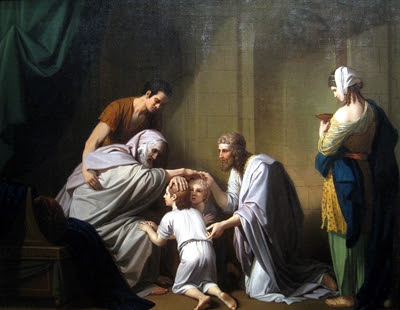




 Jacob tore his clothes in grief, dressed in rough burlap, and mourned his son a long, long time. His sons and daughters tried to comfort him but he refused their comfort. “I’ll go to the grave mourning my son.”


