The Birthright

•June 25, 2019 • Leave a Comment

To Abraham, God promised:
And I will make thee exceeding fruitful, and I will make nations of thee, and kings shall come out of thee Genesis 17:6

To Sarah, God promised:
And I will bless her and give thee a son also by her. Yea, I will bless her, and she shall be a mother of nations; kings of people shall be of her Genesis 17:16

Before Jacob, God promised:
And God said unto him, “I am God Almighty. Be fruitful and multiply; a nation and a company of nations shall be of thee, and kings shall come out of thy loins” Genesis 35:11

The Birthright composes of many blessings: a great multitude of people, exceeding fruitful, control of sea-gates, dew of the heavens, of the fatness of the earth, and plenty of grain and wine, which were dispersed throughout the twelve sons of Jacob, but the three principle Blessings demand special study. They are (1) a Great Nation (2) a Company of Nations, and (3) a Cluster of Kings.

Although the Birthright was Joseph’s the Scepter had mysteriously eluded the final blessing given to Ephraim and Manesseh, “for Judah prevailed above his brethren,” and so it followed that the Scepter was given to the Tribe of Judah. This was confirmed in 1 Chronicles 5:1 Now the . . . birthright was given unto the sons of Joseph . . . . 2 For Judah prevailed above his brethren, and from him came the chief ruler, but the birthright was Joseph’s)

Under inspiration, Jacob prophesied that his children will bow down to Judah:

Genesis 49:8 “Judah, thou art he whom thy brethren shall praise; thy hand shall be on the neck of thine enemies; thy father’s children shall bow down before thee. 9 Judah is a lion’s whelp; from the prey, my son, thou art gone up. He stooped down, he couched as a lion, and as an old lion; who shall rouse him up? 10 The scepter shall not depart from Judah, nor a lawgiver from between his feet until Shiloh come; and unto Him shall the gathering of the people be.Image result for lion and unicorn pics

The birthright blessing of national greatness were given to Manasseh and Ephraim while the blessing of Kingship to Judah. So the three principled Blessings were given to (1) Great Britain (2) the United States of America, and (3) the Jews in the State of Israel and those in the diaspora.

A scepter is a symbol of kingship. Judah will hold the royal scepter, and his descendants will always rule. Nations of the world, including those of his brothers will bring him tributes and bow down before him. The scenario is very mysterious as this is talking of Judah as a tribe, thus rendering them a tribe of kings, but there will be one special King, and He will be known as the KING of kings and LORD of Lords (Revelation 19:16).

Ephraim / The United States

•June 23, 2019 • Leave a Comment

But his younger son shall be greater than he, so Jacob set Ephraim before Manasseh.

Earlier, across the Atlantic, a growing New England colonies had broken away from British rule. As a young nation, Ephraim began to blossom shortly after 1800. And charging like a bull, American ingenuity pushed its borders in all directions.

In 1783, America’s western border reached the Mississippi River. In desperate need of cash to wage war against England, France’s Napoleon sold his country’s vast American territorial holdings to Ephraim in 1803, resulting in the Louisiana Purchase—doubling the size of the nation. This purchase literally made the United States a contender on the world’s economic stage by adding over 800,000 square miles of the most fertile farmland in the world—the American Midwest.

In 1845, the Texas Annexation was added, and a year later the Oregon Territory was acquired. As a result of the Mexican War of 1846-1848, Mexico surrendered lands extending from Texas to the lower west coast. The last major addition would come in 1867 as Alaska was purchased from Russia. See the source image

Thus, at the turn of the 19th century, and charging continuously like a pack of bisons, Ephraim had expanded to almost its present-day size. This unparalleled expansion took in some of the world’s richest farmland and most valuable natural resources, eventually making Americans to enjoy a per-capita wealth never before seen in the world, while its population destined to be “doubly fruitful,” described as “the ten thousands of Ephraim,” exceeding that of his brother, “the thousands of Manasseh.”

Harbours of the US Navy Fleet | Fleet, Challenges and opportunities, Navy

After World War II, the British Manasseh gradually ceased to be economically and militarily relevant. And by the end of World War II, the horn of the Unicorn was broken with mounting problems in every part of its empire seeking independence. But America emerged as the top economic and military power, taking the role of “lImage result for Naval fleeteader of the free world.”

But beginning in the 1950s, with seven fleets around the oceans, America had became a global hegemon, and it was obvious that the American power would exceed the international role enjoyed by the British two centuries earlier.

“Like Britain in the nineteenth century, the United States in the twenty–first century has power to spare.

In fact the US has more power than Britain did at the height of its empire, more power than any other state in modern times.  It deploys the world’s only blue–water navy of any significance and the world’s most powerful air force; its armed forces have expeditionary capability undreamed of by any other power; its economy, powered by unceasing technological innovation, is the biggest and most dynamic on earth; its language has achieved a ubiquity unrivaled by any tongue since Latin; its culture permeates distant lands; and its political ideals remain a beacon of hope for all those ‘yearning to be free.’”

When its last major military rival—the Soviet Union—collapsed in 1991, Ephraim’s power was unquestioned and unrestrained.

For more on (1) Ephraim and Manasseh (2) Who is Ephraim, a Chronic Liar?

(3) The Ox without the Unicorn (4) another Captivity: Ezekiel Timeline – 190/40 Years

Great Britain

•June 22, 2019 • Leave a Comment

At the height of its power and influence early in the 20th century, Great Britain controlled an empire covered approximately one fourth of the world’s territory (in 1922 it incorporated 13 million square miles) and boasted of 54 territories and colonies—including Canada, India, Pakistan, Egypt, Nigeria, Ghana and vast swaths of Africa, the land of Palestine, islands in the Caribbean, Hong Kong, Singapore, Australia, New Zealand, the Pacific islands and others.

Great Britain at its Height

Image result for of british empire

It was the most expansive empire in the history of the world, holding sway over some 460 million people—a fifth of the world’s population at the time. Moreover, following the defeat of Napoleonic France in 1815, Great Britain enjoyed a century of almost unchallenged global dominance through its vincible as well as its invincible Royal Navy rules the waves.

The British Empire also possessed or controlled several strategic sea gates—the Suez Canal, Gibraltar, the Cape of Good Hope, etc. Historians agree that Great Britain became the preeminent nation of the world as a consequence of wrestling itself from French dominance.

Indeed, after defeating Napoleon in 1815 it became clear that Britain was the undisputed ruler of the civilized world. Supported by unrivaled naval power, what followed was a century of peace—“Pax Britannica”—cut short only by the German militarism that triggered World War I in 1914-18, and again in World War II in 1941-45, and then its invincibility dropped out of any prominence.

~~~~~

Image result for us seven fleets with each a co-ordinated strike force maps

Harbours of the US Navy Fleet | Fleet, Challenges and opportunities, Navy

US itchs with plans to restore the Navy’s First Fleet in the South China Sea with the Strait of Malacca as its choke point to rebuff China in the Indo-Pacific Region

~~~~~

Yet Great Britain never control the United States as the map above depits. The new nation is to eclipe Great Britain. It would be Ephraim with seven fleets with each a co-ordinated strike force with numerous invincible submerines roaming up and down the whole world; and for decades, making any rival insignificance.

But Esau kept his hatred in his heart against Jacob his brother, on account of the order of blessing with which his father had blessed him; but is waiting, waiting for the end-time children of Israel to fall from the protection of the law:

“And upon thy sword shalt thou depend, entering at every place: yet thou shalt be supple and credulous, and be in subjection to thy brother [Jacob]; but it will be that when his sons [the posterity of Jacob, or the end-time children of Israel] become evil, and fall from keeping the commandments of the law, thou shalt break his yoke of servitude from off thy neck,

“… and Esau said in his heart, I will not do as Cain did, who slew Abel in the life (time) of his father, for which his father begat Seth, but will wait till the time when the days of mourning for the death of my father come, then will I kill Jacob my brother, and will be found the killer and the heir.” Genesis 27:40-41 Jonathan

Ephraim and Manasseh

•June 21, 2019 • 3 Comments

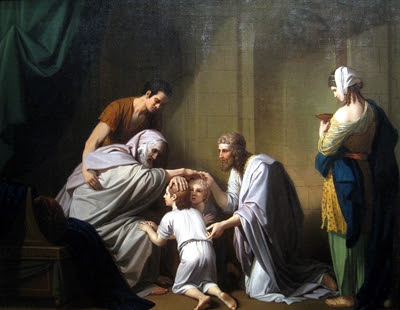
And Joseph said unto his father, Jacob: “Not so, my father, for this is the firstborn. Put thy right hand upon his head.”

But his father refused and said, “I know it, my son, I know it. He also shall become a people, and he also shall be great; but truly his younger brother shall be greater than he, and his seed shall become a multitude of nations.”

So Jacob blessed them, “In thee shall Israel bless, saying, ‘God make thee as Ephraim and as Manasseh.’” And he set Ephraim before Manasseh.

And so that Great people became Great Britain but those of Ephraim whose name means “doubly fruitful” became the United States of America.

“Like Britain in the nineteenth century, the United States in the twenty–first century has power to spare.  In fact the US has more power than Britain did at the height of its empire, more power than any other state in modern times.  It deploys the world’s only blue–water navy of any significance and the world’s most powerful air force; its armed forces have expeditionary capability undreamed of by any other power; its economy, powered by unceasing technological innovation, is the biggest and most dynamic on earth; its language has achieved a ubiquity unrivaled by any tongue since Latin; its culture permeates distant lands; and its political ideals remain a beacon of hope for all those ‘yearning to be free.’”

The Scepter

•June 20, 2019 • Leave a Comment

The Blessing to Judah is a Mystery. Nobody seems to know. It was to be better than Joseph’s Birthright. Definitely better!Image result for lion and unicorn pics

All his brothers were to bow down to him, a mirror image of when the brothers bowed to Joseph in Egypt. Except, this time, it would be on a much greater scale.

But Judah’s brothers bowing down to Judah has never happened in history. How will this Mystery be unfold? Why is this Mystery shrouded so deep in iniquity?

Image result for Crown Scepter

Jacob, under inspiration, says in Genesis 49:8

“Judah, thou art he whom thy brethren shall praise; thy hand shall be on the neck of thine enemies; thy father’s children shall bow down before thee.
9 Judah is a lion’s whelp; from the prey, my son, thou art gone up. He stooped down, he couched as a lion, and as an old lion; who shall rouse him up?
10 The scepter shall not depart from Judah, nor a lawgiver from between his feet until Shiloh come; and unto Him shall the gathering of the people be.”

This Mystery, this Mystery of the whole tribe of Judah, when unveiled, will astound the whole world!

Is Donald Trump Mad?

•June 19, 2019 • 2 Comments

According to William Herold, a retired Physician, this is what he wrote of Donald Trump:

“He has a severe narcissistic personality disorder. It is so severe that he has a paranoid flavor, and will not accept criticism. He flatly refuses to acknowledge being wrong, will never apologize, and has no coping mechanism for being wrong. Unfortunately he gets himself in this position a lot with his mouth and tweets moving faster than good thinking. Image result for pics donald trump

“He has something else, which is like a schizoid affect. He may have hallucinations or misperceptions. I am curious what his psych diagnosis was when his parents sent him to military school.

“I don’t believe he really thought he would win the presidency. Isn’t committed to the job.”

Not really, to me, he doesn’t seem mad, but he seems like a spoiled brat across the street that couldn’t stop throwing tantrums at every passer-by.

Also, he seems more like the real rocket man; he has a nuclear button in his hand.

And certain key figures in Congress fears to impeach him, because they believe the rocket man could be wearing a suicide vest, so it’s dangerous to push him too much into a corner.  With a trait for erratic behaviour and with his volatile and capricious temperament, he may explode!

Superiority of the Septuagint Version

•June 19, 2019 • Leave a Comment

Superiority of the Septuagint version.

(1) It is clear and precise
Psalm 90:1 Lord, You have been our dwelling place(a) in all generations.
[a] Septuagint. Targum and Vulgate read refuge.

(2) Unwilling to admit Jesus was the Christ
Matthew 1:23 “Behold, the virgin shall be with child, and bear a Son, and they shall call His name Immanuel,” which is translated, “God with us.”
Isaiah 7:14 Therefore the Lord Himself will give you a sign: Behold, the virgin shall conceive and bear a Son, and shall call His name Immanuel.
The Masoretic Text says the young woman because they made these changes to the text in order to obscure Messianic prophecy.

LXX Isa 53:8 In his humiliation his judgment was taken away: who shall declare his generation? for his life is taken away from the earth: because of the iniquities of my people he was led to death.

NKJV Isa 53:8 He was taken from prison and from judgment,
And who will declare His generation?
For He was cut off from the land of the living;
For the transgressions of My people He was stricken.

(3) Erev Exodus 12:6, Leviticus 23:5 and elsewhere

The Septuagint defines the term erev as “evening”, arbayim as “the two evenings” and ben ha arbayim as “between the evening times” or “toward evening.”.

The Masoretic Text, according to the JPS translation, defines the term erev as “twilight”, arbayim as “twilight” and ben ha arbayim also as “twilight”.

Why is the Septuagint superiority? The Septuagint was considered divinely inspired by most Judeans since translated. It was universally accepted by the early Christians for the first 400 years of Christianity and was used and quoted from by Jesus and His Apostles, who quoted from it under divine inspiration.

We know the fundamental rule of Textual Criticism is usually that the older the text, the better, and the Septuagint outdated the Masoretic Text version by about 1000 years.

Encyclopædia Britannica says “When the final codification of each section was complete, the Masoretes not only counted and noted down the total number of verses, words, and letters in the text but further indicated which verse, which word, and which letter marked the centre of the text.”

Comment: the problem is that the translation itself isn’t a perfect one, subject to translation bias. Hence this praise is fake.

Coincident? It was about this time, there was the beginning of the Karaites movement, and the anti-christianity among the Jewish communities taking shape.

Answer, Yes, it is

In the 8th century.. .Anan ben David, a disaffected member of the exilarch’s family, founded a dissident group, the Ananites, later known as the Karaites (Scripturalists). The exact relationship between the followers of Anan and the later Karaites, however, remains unclear. The term itself first appeared in the 9th century, when various dissident groups coalesced and ultimately adopted Anan as their founder, though they rejected several of his teachings. The new group advocated a threefold program of rejection of rabbinic law as a human fabrication and therefore as an unwarranted, unauthoritative addition to Scripture; a return to Palestine to hasten the messianic redemption; and a reexamination of Scripture to retrieve authentic law and doctrine. Under the leadership of Daniel al-Qumisi (c. 850?), a Karaite settlement prospered in the Holy Land, from which it spread as far as northwestern Africa and Christian Spain. A barrage of Karaite treatises presenting new views of scriptural exegesis stimulated renewed study of the Bible and the Hebrew language in Rabbinic circles as well. The most momentous consequence of these new studies was the invention of several systems of vocalization for the text of the Hebrew Bible in Babylonia and Tiberias in the 9th and 10th centuries. The annotation of the Masoretic (traditional, or authorized) text of the Bible with vocalic, musical, and grammatical accents in the Tiberian schools of the 10th-century scholars Ben Naftali and Ben Asher fixed the Masoretic text permanently and, through it, the morphology (linguistics) of the Hebrew language for Karaites as well as Rabbanites.

https://www.britannica.com/topic/Judaism#ref299298

They were in bed for convenience; in their Masoretic Text, the Karaites want to reinterpret erev to lean its meaning to suit their doctrines like that of the Samaritans and Sadducees (all without allegiance to the Oral Law), while the Rabbinites, who couldn’t care whatever was translated into English, since they use Hebrew as their language in synagogue, want more than anything else to get rid of Jesus as the Messiah

Or, regarding the Tanakh, published by The Jewish Publishing Society. Most modern versions, including the TANAKH, New Revised Standard, New American Bible, New Jerusalem Bible, New King James, and New International Version, use the word “twilight” in Exodus 12:6 to describe ben ha arbayim.

Numbers 25:4
Septuagint: And the Lord said to Moses, Take all the princes of the people, and make them examples of judgment for the Lord in the face of the sun, and the anger of the Lord shall be turned away from Israel.
Targum: And the Lord said to Mosheh, Take all the chiefs of the people, and appoint them for judges, and let them give judgment to put to death the people who have gone astray after Peor, and hang them before the word of the Lord upon the wood over against the morning sun, and at the departure of the sun take them down and bury them and turn away the strong anger of the Lord from Israel.
Peshitta Online: Numbers 25:4 The LORD said to Moses, “Take all the leaders of the people and execute them in broad daylight before the LORD, so that the fierce anger of the LORD may turn away from Israel.”
Peshitta Lamsa: And the LORD said to Moses, Take all the chiefs of the people, and expose them before the LORD in the daylight that the fierce anger of the LORD may be turned away from the children of Israel.
Tanakh:Numbers 25:4 And the LORD said unto Moses: ‘Take all the chiefs of the people, and hang them up unto the LORD in face of the sun, that the fierce anger of the LORD may turn away from Israel.’
KJV: Numbers 25:4 And the Lord said unto Moses, Take all the heads of the people, and hang them up before the Lord against the sun, that the fierce anger of the Lord may be turned away from Israel. — this includes all men, women and children; all are to be hung! Genocide!

Jeremiah 4:10
Septuagint: And I said, O sovereign Lord, verily thou hast deceived this people and Jerusalem, saying, There shall be peace; whereas behold, the sword has reached even to their soul.
Peshitta Online:Then I said, “Ah, Lord GOD! Surely You have utterly deceived this people and Jerusalem, saying, ‘You will have peace’; whereas a sword touches the throat.”
Peshitta Lamsa: Then I said, I beseech thee, O LORD God, surely I have greatly deceived this people and Jerusalem; for I have said, You shall have peace; and behold, the sword reaches into the soul.
Tanakh:Then said I: ‘Ah, Lord GOD! surely Thou hast greatly deceived this people and Jerusalem, saying: Ye shall have peace; whereas the sword reacheth unto the soul.’
Vulgate: And I said: Alas, alas, alas, O Lord God, hast thou then deceived this people and Jerusalem, saying: You shall have peace: and behold the sword reacheth even to the soul?
JKV: Then said I, Ah, Lord God! surely thou hast greatly deceived this people and Jerusalem, saying, Ye shall have peace; whereas the sword reacheth unto the soul.

Isaiah 43:28
Septuagint: And the princes have defiled my sanctuaries: so I gave Jacob to enemies to destroy, and Israel to reproach.
Peshitta Online: “So I will pollute the princes of the sanctuary, And I will consign Jacob to the ban and Israel to revilement.
Peshitta Lamsa: Your princes have profaned the sanctuary; therefore I have given Jacob to the curse and Israel to reproaches.
Tanakh:Therefore I have profaned the princes of the sanctuary, and I have given Jacob to condemnation, and Israel to reviling.
JKV: Therefore I have profaned the princes of the sanctuary, and have given Jacob to the curse, and Israel to reproaches.

Isaiah 14:12
Septuagint: How has Lucifer, that rose in the morning, fallen from heaven! He that sent orders to all the nations is crushed to the earth.
Peshitta Online: “How you have fallen from heaven, O star of the morning, son of the dawn! You have been cut down to the earth, You who have weakened the nations!
Vulgate: How art thou fallen from heaven, O Lucifer, who didst rise in the morning? how art thou fallen to the earth, that didst wound the nations?
Tanakh 1917: How art thou fallen from heaven,
O day-star, son of the morning!
How art thou cut down to the ground,
That didst cast lots over the nations!

JKV: How art thou fallen from heaven, O Lucifer, son of the morning! how art thou cut down to the ground, which didst weaken the nations!

Peshitta Online by Paul D. Younan: Disclaimer: This translation is not sanctioned by the Church of the East. This is a personal translation only, and all readers are encouraged to verify the work on their own. This translation has not been edited nor verified by anyone other than the author (who does not have official sanction for this work) and is likely to have numerous errors.

I Samuel 13:1 JPS 1917 Saul was—years old when he began to reign; and two years he reigned over Israel

Origin of the Bible

•June 18, 2019 • Leave a Comment

(7)

The Samaritan Pentateuch (only the first five books) is corrupt.

The Samaritan Pentateuch varies in the Ten Commandments passages, in that Samaritans count as nine commandments what others count as ten. The Samaritan tenth commandment includes the sanctity of Mount Gerizim for worship. Additions after Exodus 20:1–17 (The Ten Commandments)

And when it so happens that LORD God brings you to the land of Caanan, which you are coming to posses, you shall set-up there for you great stones and plaster them with plaster and you write on the stones all words of this law. And it becomes for you that across the Jordan you shall raise these stones, which I command you today, in mountain Grizim. And you build there the altar to the LORD God of you. Altar of stones. Not you shall wave on them iron. With whole stones you shall build the altar to LORD God of you. And you bring on it ascend offerings to LORD God of you, and you sacrifice peace offerings, and you eat there and you rejoice before the face of the LORD God of you. The mountain this is across the Jordan behind the way of the rising of the sun, in the land of Caanan who is dwelling in the desert before the Galgal, beside Alvin-Mara, before Sechem.–169 additional words.

Also in Deuteronomy 5:21

And when it so happens that Yahuah God brings you to the land of Caanan, which you are coming to posses, you shall set-up there for you great stones and plaster them with plaster and you write on the stones all words of this law. And it becomes for you that across the Jordan you shall raise these stones, which I command you today, in mountain Grizim. And you build there the altar to the Yahuah God of you. Altar of stones. Not you shall wave on them iron. With whole stones you shall build the altar to Yahuah God of you. And you bring on it ascend offerings to Yahuah God of you, and you sacrifice peace offerings, and you eat there and you rejoice before the face of the Yahuah God of you. The mountain this is across the Jordan behind the way of the rising of the sun, in the land of Caanan who is dwelling in the desert before the Galgal, beside Alvin-Mara, before Sechem.

Q If Moses had been so sure he shouldn’t be so vague about where the LORD shall choose in Deut 16:15,16 (Three times a year shall all thy males appear before the LORD thy God in the place which he shall choose; in the feast of unleavened bread, and in the feast of weeks, and in the feast of tabernacles: and they shall not appear before the LORD empty). Also, which mountain is Mt Grizim exactly, since they were so far off?

Q2 Is it a coincidence, the mentioning of the rising of the SUN? Why not just west of the Jordan, before Sechem? Today, they, together with most of the CoGs, keep their Feast of Weeks on Sundays. Always a Sunday!

Exodus 20:21

And the people stood afar off, and Moses drew near unto the thick darkness where God [was].And the Yahuah said to Moses to say: I heard what people have said. All that they have spoken to you, they have spoken wisely. All that they have spoken let them put in their hearts so that they can keep my commandments in all their days, so that it would be good to them and to the sons of them forever. Prophet I shall raise up to them from the midst of their brothers, and I will place words of me into his mouth to speak to them all that I’m commanding them. And it becomes that the man who will not listen to his words that are spoken in my name, I shall require from him. But the prophet who will speak insolently in my name that which I have not instructed him to speak, or if he speaks in the name of other Gods, such prophet shall die. And if you will ask yourself in your heart how you shall know which word God has spoken and which he has not, see if the word spoken comes to pass. And if it shall not come to pass then this is not the word of the Yahuah, in insolence spoken the prophet. Not you shall listen to him. Go now back to your tent and I will speak to you regarding all commandments and ordinances and verdicts that you shall teach them, and what to do in the land that I give them for possession. (It incorporates Exodus 18:18 and others: I will raise up to them a prophet of their brethren, like thee; and I will put my words in his mouth, and he shall speak to them as I shall command him. Samaritans believes this Prophet was to be from the line of the tribe of Levi, like Moses, not from the line of Judah, which the Jews believes.)

Origin of the Bible

•June 18, 2019 • Leave a Comment

(6)

Dead Sea Scrolls Bible (incomplete)
Some copies do not fall into any of the old, familiar categories — agreeing with either MT, SP, or LXX — and chart a different course textually.

The Dead Sea Scrolls were discovered in a series of twelve caves around various sites near the Dead Sea in the West Bank (then part of Jordan) between 1946 and 1956 by Bedouin shepherds and a team of archeologists. The practice of storing worn-out sacred manuscripts in earthenware vessels buried in the earth or within caves is related to the ancient Jewish custom of Genizah.

Owing to the poor condition of some of the scrolls, scholars have not identified all of their texts. The identified texts fall into three general groups:

(a) About 40% are copies of texts from the Hebrew Scriptures.

(b) Approximately another 30% are texts from the Second Temple Period which ultimately were not canonized in the Hebrew Bible, like the Book of Enoch, the Book of Jubilees, the Book of Tobit, the Wisdom of Sirach, Psalms 152–155, etc.

(c) The remainder (roughly 30%) are sectarian manuscripts of previously unknown documents that shed light on the rules and beliefs of a particular group (sect) or groups within greater Judaism, like the Community Rule, the War Scroll, the Pesher on Habakkuk, and The Rule of the Blessing.

Origin of the Bible

•June 17, 2019 • Leave a Comment

(5)

Syriac or Peshitta (around 200 to 300 AD). Syriac is a Greek word for the language spoken by the Syrians. It was an Aramaic dialect spoken in Syria. The term Peshitta was used by Moses bar Kepha in 903 and means “simple” (in analogy to the Latin Vulgate). It is the oldest Syriac version which has survived to the present day in its entirety. It contains the entire Old Testament, most of the deuterocanonical books, as well as 22 books of the New Testament, lacking the shorter Catholic Epistles (2-3 John, 2 Peter, Jude, as well as John 7:53-8:11). It was made in the beginning of the 5th century. Its authorship was ascribed to Rabbula, bishop of Edessa (411-435). The Syriac church still uses it to the present day.

More than 350 manuscripts survived, several of which date from the 5th and 6th centuries. In the Gospels it is closer to the Byzantine text-type, but in Acts to the Western text-type. The earliest manuscript of the Peshitta is a Pentateuch dated AD 464. There are two New Testament manuscripts of the 5th century (Codex Phillipps 1388).

James Trimm wrote: The “Syriac” version of the Tanak, is mentioned by Melito of Sardis as early as the second century C.E. One tradition has it that Hiram, King of Tyre in the days of Solomon, commissioned this Aramaic translation of the Tanak. Another tradition assigns the Peshitta translation as having been commissioned by the King of Assyria, who dispatched Assa the Priest to Samarir (see 2Kn. 17:2728). According to the Aramaic “Church Father” Bar Hebraeus, the Peshitta Tanak originated when Abgar, king of Edessa, Syria, dispatched scholars to Israel to produce an Aramaic translation of the Tanak (Bar Hebraeus; Comm. To Ps. 10). Wichelshaus suggested that this king was the same as King Izates II of Adiabene. This king, along with his family, converted to Judaism as recorded by Josephus (Ant. 20:69-71). This king had dispatched his five sons to Israel in order for them to study Hebrew and Judaism. Burkitt maintained that the Peshitta Tanak originated not long after the first century C.E., as the product of the Jewish community of Edessa, in Syria.“Mashiach: The Messiah from a True Jewish Perspective,” by James Trimm, pg11; 2012.


Origin of the Bible

•June 16, 2019 • Leave a Comment

(4)

The Masoretic Text, or Tanakh (600 AD to 1000 AD), is another translation of the Hebrew text. It defines the books of the Jewish canon, and also the precise letter-text of these biblical books, with their vocalization and accentuation.

This monumental work was begun around the 6th century AD and completed in the 10th by scholars at Talmudic academies in Babylonia and Palestine (in Tiberias) over a few generation of Jews known as the Masoretes, in an effort to reproduce, as far as possible, the original text of the Hebrew Old Testament. Encyclopædia Britannica says “to this end they gathered manuscripts and whatever oral traditions were available to them” (Comment: this means they are subjected to translation bias).

The oldest extant manuscripts of the Masoretic Text, known as the Aleppo Codex (once the oldest complete copy of the Masoretic Text, but now missing its Torah section) dates from the 10th century (900 AD to 1000 AD).

Sometimes, the Masoretic just doesn’t make sense, as when it says that Saul reigned one year; and when he had reigned two years over Israel, (I Samuel 13:1).

Disadvantage: (1) When the Septuagint translation of the Old Testament was made, the Hebrew text used was, of course, not marked with the vowel points which the Masoretes later placed in their text. And that the great majority of the variations between the Septuagint and the Masoretic text arise from the fact that the Masoretes’ translators supplied different vowels to the consonantal text from those of the Septuagint. Over time, in numerous instances, the Masoretes translators had before them the same text, but mistook it, misunderstood it, or interpreted it differently.

(2) Since the original Hebrew Text written on papyrus (subject to molds attacks) were subjected to “wear” and “tear”, later Hebrew Text weren’t as good as earlier version; as the papyrus was not pliable enough to fold without cracking and a long roll, or scroll, was required to create large-volume texts. In European conditions, papyrus seems to have lasted only a matter of decades; a 200-year-old papyrus was considered extraordinary.

(3) The commissioning of the translation had a doctrinal prejudice against the growth and influence of Christianity. Hence they were influenced by anti-Christian bias.
One example is found in Isaiah 7:14 Therefore the Lord Himself shall give you a sign: The virgin shall conceive, and bear a son, and shall call his name Immanuel. The Masoretes say a young woman, which is bland and making the sign of Christ’s messiahship meaningless. The Septuagint says a virgin. The Targum says a virgin; the Vulgate says a virgin.

Also “Look, the young woman is with child [at that present time, not a future event!] and about to give birth to a son.

Deuteronomy 32:43 “and let all the angels of God worship him” (the deity of Christ) in the Septuagint, Dead Sea Scroll but not in Masoretic Text, Peshitta nor Vulgate, Quoted in Hebrew 1:6 But when He again brings the firstborn into the world, He says: “Let all the angels of God worship Him.” Isaiah 61:1 “and recovery of sight to the blind” (Luke 4:18) in the Septuagint but not in the Targum, Masoretic, Peshitta nor Vulgate.

Psalms 69:21 Septuagint They gave [me] also gall for my food, and made me drink vinegar for my thirst. KJV They gave me also gall for my meat; and in my thirst they gave me vinegar to drink. Masoretic moves it to verse 22: Yea, they put poison into my food; and in my thirst they gave me vinegar to drink. (Matt 27:34 they gave Him sour wine mingled with gall to drink. But when He had tasted it, He would not drink).

Psalms 22:16 Septuagint For many dogs have compassed me: the assembly of the wicked doers has beset me round: they pierced my hands and my feet. This whole phase was deleted from the Masoretic Text. (They edited verse 17 in part until there is no verb “like lion [they maul] my hands and feet” Peshitta Ps 22:16 For dogs have surrounded me; A band of evildoers has encompassed me; They pierced my hands and my feet.

Zechariah 12:10 KJV took from the Peshitta: (and they shall look upon Me whom they have pierced, and they shall mourn for Him as one mourneth for his only son, and shall be in bitterness for Him as one who is in bitterness for his firstborn.) Septuagint (they have mocked me) may not as good, but close, but the Masoretic Hard Edition changes the whole meaning “about those who are slain, wailing over them . . .”

“And in His name Gentiles will trust.” Matthew 12:21 fulfilled in Septuagint Isaiah 42:4 “and in his name shall the Gentiles trust.” JKV: And the isles shall wait for his law.

Psalm 145: In MT, one verse is missing from the acrostic psalm: although each verse begins with a word starting with the successive letters of the Hebrew alphabet, there is none for the letter nun, which should have appeared between the mem sentence in v. 13 and the samekh sentence in v. 14. It is natural to think it was dropped from the text by scribal error, even if the mechanism for the omission is not obvious. At this place where MT lacks the nun verse, other witnesses have.

Matt 2:15 Out of Egypt have I called my son. Hosea 11:1 states, “When Israel was a child, I loved him, and out of Egypt I called my son.” Is this verse a Messianic prophecy?

Matt 2:23 And he came and dwelt in a city called Nazareth: that it might be fulfilled which was spoken by the prophets, He shall be called a Nazarene. Nowhere found, maybe Oral, and not written?

I Corinthians 15:4 And that he was buried, and that he rose again the third day according to the scriptures: — couldn’t be found; could it be Oral?

Research found that only 68 percent of the New Testament are similar with the Masoretic Text (which is below the 93 percent quoted from the Septuagint). The Hebrew Bible—or Old Testament—that we have today differs from the Hebrew manuscripts of the Bible penned in the first millennium B.C.E. When transmitting any sort of a document from generation to generation, small alterations—some intentional, others not—are made. Even the most careful scribe makes errors, which are perpetuated and often compounded by future scribes. Thus, it should not surprise us that the Hebrew Bible, which has a transmission history of several millennia, contains textual difficulties, corruptions and even mistakes. Simply by choosing one Hebrew text over another, they were able to subvert the Incarnation, the virgin birth, the deity of Christ, His healing of the blind, His crucifixion, and His salvation of the Gentiles.

Origin of the Bible

•June 15, 2019 • Leave a Comment

(3)

The Vulgate (380 AD to 420 AD). The earliest Latin translation was the Old Latin text, or Vetus Latina, which, from internal evidence, seems to have been made by several authors over a period of time. It was based on the Septuagint, and thus included books not in the Hebrew Bible.

Pope Damasus I assembled the first list of books of the Bible at the Council of Rome in 382 AD. He commissioned Jerome (347 to 420 AD) to produce a reliable and consistent text by translating the original Greek and Hebrew texts into Latin. This translation became known as the Latin Vulgate Bible and in 1546 at the Council of Trent was declared by the Roman Catholic Church to be the only authentic and official Bible in the Latin Church.

Disadvantage: the commissioning of the translation had a doctrinal prejudice toward the teachings of the Roman Catholic Church. Later, translation bias against the Jews are also evidenced, e.g. the synagogue of Satan, why not the churches of Satan. The Matthew 28:19 insertion of the trinity concept: (i) 19 Go therefore and make disciples of all nations, baptizing them in the name of the Father and of the Son and of the Holy Spirit. (ii) I John 5:7 There are three who testify in heaven: the Father, the Word, and the Holy Spirit, and the three are one. 8 There are three that testify on earth: the Spirit, the water, and the blood, and the three are toward the one. [a] 1 John 5:8 The earliest Greek manuscripts lack in heaven: the Father, the Word, and the Holy Spirit, and the three are one. There are three that testify on earth.

Origin of the Bible

•June 14, 2019 • Leave a Comment

(2)

The Targum (530 BC to 500 AD); (Hebrew: תרגום, plural: targumim) When the Israelites returned from their exile in Babylon in the 6th century BC, most of them no longer spoke Hebrew; they spoke Aramaic. Nevertheless, the Scriptures have always been read in Hebrew even if no one in the greater community could speak it.

Something had to be done so that the people would understand God and His Word.

The sages again found an answer. After hearing a priest read a few verses of the Torah scroll in Hebrew, they then heard a translation in Aramaic called a Targum, which simply means translation.

Hence the Targum is an Aramaic translation of the Hebrew Bible (Tanakh) that was written or compiled in Palestine or in Babylonia from the Second Temple period until the early Middle Ages (late first millennium).

One might think that God would have given the Levites privileged land as their inheritance to match their privileged position, but God actually gave them no land inheritance at all.

Instead, they received agricultural and monetary tithes from the people as their inheritance, particularly the Maaser Rishon or First Tithe, which was ten percent (Numbers 18:26, 10:38, 18:24).

The Levites and Cohanim lived among the other Israelites on pasture land allotted to them outside their city. In this capacity, the Levites and priests had the opportunity to minister to the people through the instruction of Torah.

In Jerusalem, for instance, after returning from Babylonian exile, the Levites translated the Torah, often into the common Aramaic language, and explained it so the people could understand.

“The Levites … instructed the people in the Law while the people were standing there. They read from the Book of the Law of God, making it clear and giving the meaning so that the people understood what was being read.” (Nehemiah 8:7–8)

Nehemiah 8:7 NKJV Also Jeshua, Bani, Sherebiah, Jamin, Akkub, Shabbethai, Hodijah, Maaseiah, Kelita, Azariah, Jozabad, Hanan, Pelaiah, and the Levites, helped the people to understand the Law; and the people stood in their place. 8 So they read distinctly from the book, in the Law of God; and they gave the sense, and helped them to understand the reading.

VOICE Ezra read the law, the people listened, and the Levites explained it to them. Jeshua, Bani, Sherebiah, Jamin, Akkub, Shabbethai, Hodiah, Maaseiah, Kelita, Azariah, Jozabad, Hanan, and Pelaiah—these are the Levites who interpreted what Ezra read for the people. Nehemiah 8:8 So they read in the book, in the law of God, distinctly, and gave the sense and caused them to understand the reading.

Another way of saying: The Law was read by Ezra verse by verse, and each verse was followed by a recitation by the Levites of the Aramaic version. Hence, we have to assume that the action of Ezra narrated in Nehemiah 8:8 implied not only the reading of the Law, but also the interpretation of its language–its translation in fact from Hebrew to Aramaic, and that, further, this practice was ere long followed in all the synagogues in Judea.

By the time of Yeshua (Jesus) the Levitical priests had become religious aristocrats holding powerful positions, including the chief priest in the Sanhedrin court.

Though they considered Scripture to be far more important than oral traditions, politics held more power than religion, and many judicial decisions were made in order to keep the peace with the Roman government instead of keeping God’s law.

With this hierarchy firmly in place, they condemned Yeshua and turned Him over to the Romans to be executed.

Comments: In some churches today, the pastor speaks, then waited for the translation, then the pastor speaks again, and then waited. This continues from beginning to end. One can visualise a rabbi read from the Torah in Hebrew and then waited for his message to be translated into Aramaic, as that was the lingua franca or vehicular language of the people at the time. Hence it started as an Oral translation but gradually transformed into Written translation from 530 BC to 500 AD, a thousand year period. Targum also means translation or interpretation.

Targum Pseudo-Jonathan is a western targum (translation) of the Torah from the land of Israel (as opposed to the eastern Babylonian Targum Onkelos). Its correct title was originally Targum Yerushalmi (Jerusalem Targum), which is how it was known in medieval times. But because of a printer’s or translator’s mistake it was later labeled Targum Jonathan, in reference to Jonathan ben Uzziel. Some editions of the Pentateuch continue to call it Targum Jonathan to this day. Most scholars refer to the text as Targum Pseudo-Jonathan, or with the acronym TPsJ.

The Talmud relates that Yonatan ben Uziel, a student of Hillel, fashioned an Aramaic translation of the Prophets (Megillah 3a). It makes no mention of any translation by him of the Torah. So all scholars agree that this Targum is not due to Yonatan ben Uziel. Indeed, de Rossi (16th century) reports that he saw two very similar complete Targumim to the Torah, one called Targum Yonatan Ben Uziel and the other called Targum Yerushalmi. A standard explanation is that the original title of this work was Targum Yerushalmi, which was abbreviated to ת”י (TY), and these initials were then incorrectly expanded to Targum Yonatan which was then further incorrectly expanded to Targum Yonatan ben Uziel. For these reasons, scholars call it “Targum Pseudo-Jonathan”.

The earliest Targums date from the time after the Babylonian Exile when Aramaic had superseded Hebrew as the spoken language of the Jews in exile. It is impossible to give more than a rough estimate as to the period in which Hebrew was displaced by Aramaic as a spoken language. It is certain, however, that Aramaic was firmly established in exile or in Palestine by the 1st century AD, although Hebrew still remained the learned and sacred language. Thus the Targums were designed to meet the needs of unlearned Jews to whom the Hebrew of the Old Testament was unintelligible.

The status and influence of the Targums became assured after the Second Temple was destroyed in AD 70, when synagogues replaced the Temple as houses of worship. For it was in the synagogue that the practice of reading from the Old Testament became widely observed, along with the custom of providing these readings with a translation into Aramaic. When Scripture was read aloud in the synagogue, it was translated aloud by a meturgeman, or professional interpreter (hence the name Targum), for the benefit of the congregation.

Though written Targums gradually came into being, it was the living tradition of oral translation and exposition that was recognized as authoritative throughout the Talmudic period of the early centuries of the Christian Era. The official recognition of a written Targum, and therefore the final fixing of its text, belongs to the post-Talmudic period of the 5th century AD.

When Ezra and his company arrived in Jerusalem, they immediately set about to fulfill the king’s decree by educating the people in the laws of God. Their first step was to translate the new lawbook into Aramaic, which was the current language of the Jews: “Ezra was ready to present the new lawbook. Naturally, it was written in the ancient Hebrew, for all the sacred prescriptions were now assigned to the great lawgiver Moses; as naturally, the majority of Ezra’s hearers did not fully understand it, for they spoke the current Aramaic.

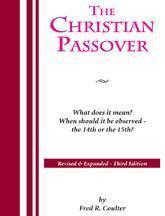
Accordingly, with the first introduction of the new lawbook to the Palestinian Jews came the practice of giving a translation into the vernacular. [See Nehemiah 8.] The ‘original’ words of Moses were, of course, read in the sacred language, but the translation was spoken, and we may be sure that from the beginning a written Aramaic copy had been prepared to serve as an aid for the translators and to guarantee the accuracy of the translation” (Olmstead, History of the Persian Empire, pp. 306-307; Quoted by Fred Coulter, The Christian Passover, pg 179).

Advantage: the translators captured the true intent of the enunciations of the original intent of the Torah otherwise the translators would be corrected right there and then.

Origin of the Bible

•June 13, 2019 • Leave a Comment

(1)

Septuagint (250 BC to 150 BC) – the Greek Septuagint, abbreviation Lxx, the earliest extant Greek translation of the Old Testament from the original Hebrew. The Septuagint was presumably made for the Jewish community in Egypt when Greek was the common language throughout the region. Analysis of the language has established that the Torah, or Pentateuch (the first five books of the Old Testament), was translated near the middle of the 3rd century BC and that the rest of the Old Testament was translated in the 2nd century BC.

The name Septuagint (from the Latin septuaginta, “70”) was derived later from the legend that there were 72 translators, 6 from each of the 12 tribes of Israel, who worked independently to translate the whole and ultimately produced identical versions. Another legend holds that the translators were sent to Alexandria by Eleazar, the chief priest at Jerusalem, at the request of Ptolemy II Philadelphus (285–246 BCE), though its source, the Letter of Aristeas, is unreliable. Despite the tradition that it was perfectly translated, there are large differences in style and usage between the Septuagint’s translation of the Torah and its translations of the later books in the Old Testament. In the 3rd century CE Origen attempted to clear up copyists’ errors that had crept into the text of the Septuagint, which by then varied widely from copy to copy, and a number of other scholars consulted the Hebrew texts in order to make the Septuagint more accurate.

The whole story was recorded by Josephus Antiquities 12:2-7 (Whiston, pg 309-312)

Advantage: the translators had no political prejudice. They were asked to translate for knowledge sake, as it was commissioned by Ptolemy II for broadening knowledge for the Library of Alexandria. Research found that 93 percent of new Testament are quoted from the Septuagint.

Disadvantages: certain sections in Jeremiah seemed deleted (Jer 8:11-12 God to punish abomination; 10:7-8 other nations to fear Israel’s God; 17:1-4; Judah’s heritage; 27:7, 13 all nations to serve Nebuchadnezzar and his sons; 29:16-20 throne of David; 30:10-11 save Israel but end to all others; 30:22 God favours Israel; 33:14-26 God to bring back Judah and Israel (Joseph); 39:4-13 captivity (fulfilment of Jeremiah’s prophecy); under King David.

Lynas Plant Contaminated

•June 11, 2019 • Leave a Comment

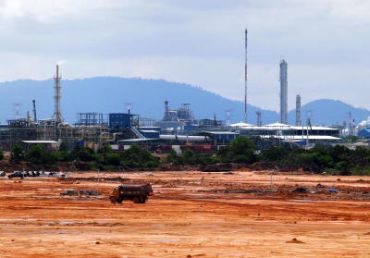
KUANTAN: Staunch Lynas opponent Fuziah Salleh insists that groundwater near the rare earth refinery contains toxic elements.

The Deputy Minister in the Prime Minister’s Department said elements detected in the groundwater contamination monitoring data from the 2015-2016 Health Impact Assessment provided by Lynas to the executive review committee included nickel, lead and chromium.

“It is ironic that in Malaysia, Lynas has persistently denied that it is the source of serious heavy metal contamination, even though data taken over a 12-month period from September 2015 from its own groundwater monitoring stations have shown otherwise, apart from the month of April,” Fuziah said in a statement on Monday (June 10).

Read more at https://www.thestar.com.my/news/nation/2019/06/10/fuziah-contradicts-xavier-says-groundwater-near-lynas-plant-contaminated/#0HW74jM8teZwjYFE.99

I AM

•June 10, 2019 • Leave a Comment

The I AM has been used to prove that the Personage of the Old Testament is the same as Christ of the New Testament.

Is this correct? Or is this misguided?

John 8:56 Your father Abraham rejoiced to see my day: and he saw it, and was glad.
57 Then said the Jews unto him, Thou art not yet fifty years old, and hast thou seen Abraham?

John 8:58 Jesus said unto them, Verily, verily, I say unto you, Before Abraham was, I AM.

First, it’s confusing to prove anything by mixing Greek with Hebrew. Christ was merely stating that He was present during Abraham’s time rather that His name is “I am.” The phrase “I am” in Greek is “ego eimi”. In fact, when Yeshua spoke to the Jews, he used the phrase “ego eimi” at least twenty times and yet, in only one instance did the Jews seek to stone him (John 8: 58).

Yeshua said, “I am the bread of life” to a large crowd in John 6:35, 48, yet no one opposed him. In verse 41, the Jews murmured because he said, “I am (ego eimi) the bread which came down from heaven.” But in verse 42, the Jews questioned only the phrase, “I came down from heaven” and ignored “ego eimi.” The same is true of verses 51 and 52. Their complaints being that He claims He came down from heaven, not because of the “I am”. Yet they didn’t attempt to stone him.

In John 8:12, 18, 24, and 28, Yeshua used “ego eimi” with the Pharisees present (vs.13) and yet, no attempt at stoning. He again used it four times in John 10:7, 9, 11 and 14 with no stoning. Yeshua said to his disciples, “…that…ye may believe that I am (ego eimi)” in John 13:19 without them batting an eye.

In fact, several other individuals beside Yeshua used “ego eimi” as well. In Luke 1:19, the angel Gabriel said, “Ego eimi Gabriel.” In John 9:9, the blind man whose sight was restored by Yeshua said, “Ego eimi.” In Acts 10:21, Peter said, “Behold, ego eimi (I am) he whom ye seek.” Obviously, the mere use of “ego eimi” does not equate one to the “I Am” of Exodus 3:14.

A sleight of hand! A pigeon!

Only the claim of being present before Abraham caused the Jews to stone Him.

Later in the Garden of Gethsemane Yeshua was answering the question “Whom seek ye?” They answered Him, “Jesus of Nazareth.” Jesus said unto them, “I am He.” John 18:4-5 . Jesus didn’t say he was the God of the Old Testament, the God who said he was the Ehyeh that appeared to Moses before the burning bush (Exodus 3:14).

WE (Worldwide English) translation of John 8:58: Jesus answered, `I tell you the truth. I already was before Abraham was born.’

TLB Jesus: “The absolute truth is that I was in existence before Abraham was ever born!” Same with Luke 22:70 where “I am” is just an affirmation of what His accusers were charging Him of in the WE version.

MAGIC!

A touch of Simon Magus

Father and Son

•June 8, 2019 • Leave a Comment

Exodus 23:20 “Behold, I (Father) send an Angel (Yeshua) before you to keep you in the way and to bring you into the place which I have prepared. 21 Beware of Him (Yeshua) and obey His voice; do not provoke Him (Yeshua), for He will not pardon your transgressions; for My name is in Him (Hence YHVH’s name is in Yeshua; Peshitta 23:21 “Be on your guard before him and obey his voice; do not be rebellious toward him, for he will not pardon your transgression, since My name is in him). 22 But if you indeed obey His voice and do all that I speak, then I will be an enemy to your enemies and an adversary to your adversaries. 23 For My Angel (Yeshua) will go before you and bring you in to the Amorites and the Hittites and the Perizzites and the Canaanites and the Hivites and the Jebusites; and I will cut them off. 24 You shall not bow down to their gods, nor serve them, nor do according to their works; but you shall utterly overthrow them and completely break down their sacred pillars.

Sames with Judges, where judges carries the authority and name of God. Exodus 22:8 If the thief is not found, then the master of the house shall be brought to the judges (H430 elohiym in the Hebrew, as in Gen 1:1) to see whether he has put his hand into his neighbor’s goods. Ex 22:28 “Thou shalt not revile God [or judges as in KJ21], nor curse the ruler of thy people.

A sense of Royalty: At times of Royal duty, Prince William carries all the authority of the Queen. An egg thrown at him is as good as one thrown at the Queen.

1 Samuel 8:1 Now it came to pass when Samuel was old that he made his sons judges over Israel. 2 The name of his firstborn was Joel, and the name of his second, Abijah; they were judges in Beersheba. 3 But his sons did not walk in his ways; they turned aside after dishonest gain, took bribes, and perverted justice.

4 Then all the elders of Israel gathered together and came to Samuel at Ramah, 5 and said to him, “Look, you are old, and your sons do not walk in your ways. Now make us a king to judge us like all the nations.”

6 But the thing displeased Samuel when they said, “Give us a king to judge us.” So Samuel prayed to the LORD. 7 And the LORD said to Samuel, “Heed the voice of the people in all that they say to you; for they have not rejected you, but they have rejected Me, that I should not reign over them. If Samuel, a prophet, was already such a special envoy of God, how much more if His Son would be here!

John 1:1 reads, “In the beginning was the Word (logos; λόγος), and the Word was with God, and the Word was God.” The Word existed “in the beginning” and, eventually, “became flesh and dwelt among us” in the Messiah (1:14). Yet John also notes that this Word “in the world” prior to Yeshua (1:10), and those who “received” the Word before the Incarnation were called “children of God” (1:12).

So when did the Word of God come into our human world before the advent of the Messiah, and who received this Word according to Israel’s Scriptures?

First time as in Genesis when the three ‘angels’ appeared before Abraham.
Second times he appeared before Samuel. God’s interaction with the prophet Samuel is a good example of the Word in the Hebrew Bible. As the young Samuel serves as an apprentice under Eli the priest at the Temple in Shiloh, the Lord calls to him several times. At first, Samuel thinks that Eli is calling him, but the priest tells him that it’s actually the voice of God (see 1 Sam 3:4-9). After three divine calls, God appeared physically to Samuel when “the Lord came (bo’; בוא), and stood (H3320 yatsab; יצב)” before the boy (1 Sam 3:10).

I Samuel 3:10 And the Lord came and stood (before Samuel), and called as at other times, “Samuel, Samuel.” Then Samuel answered, “Speak, for Thy servant heareth.”

Just a few verses later, we learn that God makes these kinds of physical appearances through the Word: “The Lord continued to appear at Shiloh, for the Lord revealed himself to Samuel at Shiloh by the Word of the Lord” (1 Sam 3:21). Thus, the meetings between God and Samuel support John’s claim that the Word came into the world of ancient Israel and that Israelites like Samuel received the Word. For John, it would be this same Word who would one day become flesh in Yeshua the Messiah.

The ending gave the clue that it was the Son appearing before Samuel on behalf of His Father.

I Samuel 3:21 And the Lord appeared again in Shiloh, for the Lord revealed Himself to Samuel in Shiloh by the Word of the Lord.

Same as when the Word stood before Abraham in Genesis 18:22 And the men turned their faces from thence, and went toward Sodom; but the Lord stood yet before Abraham (Bullinger).

Morning and Evening

•June 5, 2019 • Leave a Comment

Bullinger’s Appendix 11: The word “day”, when used without any limiting words, may refer to a long or prolonged period: as, the “day of grace”, the “day of visitation”, the “day of salvation”, the “day of judgment”, the “day of the Lord”, “man’s day”, etc. But when the word “day” is used with a numeral (cardinal or ordinal), as one, two, three, etc., or first, second, third, etc., “evening and morning” (Genesis 1), or the “seventh day” (Exodus 20:9,11, etc.), it is defined, limited, and restricted to an ordinary day of twenty-four hours. Or even a twelve-hour period.

A Day
1. A day as a 24-hour period.
the Sabbath, or any other day of the week;
the Day of Atonement, from even to even, or other Feast days.
Example: Genesis 1:5
Gen 1:5 And God called the light Day, and the darkness he called Night. And the evening and the morning were the first day.
Gen 2:3 And God blessed the seventh day, and sanctified it: because that in it he had rested from all his work which God created and made.

2. But sometimes a day refers to a 12 hour-period, depending on the context, where there is sunlight, as in “day and night” (Gen 1:5,8,13,19,23,31).
Gen 1:5 And God called the light Day, and the darkness he called Night. And the evening and the morning were the first day.

3. A year. The word “day” is seldom used for a year, but in another context, it could. Often a corresponding number of days is used for a corresponding number of years; in that case it is always expressly stated to be so used; as in Numbers 14:33, 34. But, even in these cases, the words “each day for a year” is expressively stated. The same application in Ezekiel 4:4-6.
Numbers 14:33-34 And your children shall wander in the wilderness forty years, and bear your whoredoms, until your carcases be wasted in the wilderness.
34 After the number of the days in which ye searched the land, even forty days, each day for a year, shall ye bear your iniquities, even forty years, and ye shall know my breach of promise.
Ezekiel 4:4-6 Lie thou also upon thy left side, and lay the iniquity of the house of Israel upon it: according to the number of the days that thou shalt lie upon it thou shalt bear their iniquity.
5 For I have laid upon thee the years of their iniquity, according to the number of the days, three hundred and ninety days: so shalt thou bear the iniquity of the house of Israel.
6 And when thou hast accomplished them, lie again on thy right side, and thou shalt bear the iniquity of the house of Judah forty days: I have appointed thee each day for a year.

4. A period of time
Errors in All translations
Mark 14:12 KJV And the first (G4413 protos) day(G2250 hemera) of unleavened bread, when they killed the passover (G3957 pascha), his disciples said unto him, Where wilt thou that we go and prepare that thou mayest eat the passover (G3957 pascha)?
G4413 protos could be translated as ‘a time before’ as in John 1:15 John bare witness of him, and cried, saying, This was he of whom I spake, He that cometh after me is preferred before me: for he was before G4413 me.
John 1:30 This is he of whom I said, After me cometh a man which is preferred before me: for he was before G4413 me.
G2250 hemera could be translated as ‘a period of time’ as in Matthew 2:1 Now when Jesus was born in Bethlehem of Judaea in the days G2250 of Herod the king, behold, there came wise men from the east to Jerusalem,
Matthew 3:1 In those days G2250 came John the Baptist, preaching in the wilderness of Judaea,
Matthew 11:12 And from the days G2250 of John the Baptist until now the kingdom of heaven suffereth violence, and the violent take it by force.
Mat 23:30 And say, If we had been in the days G2250 of our fathers, we would not have been partakers with them in the blood of the prophets.
Matthew 24:19 And woe unto them that are with child, and to them that give suck in those days! G2250
Matthew 24:22 And except those days G2250 should be shortened, there should no flesh be saved: but for the elect’s sake those days G2250 shall be shortened.
Matthew 24:29 Immediately after the tribulation of those days G2250 shall the sun be darkened, and the moon shall not give her light, and the stars shall fall from heaven, and the powers of the heavens shall be shaken:
Matthew 24:37 But as the days G2250 of Noe were, so shall also the coming of the Son of man be. During those 120 years Noah preached a warning message (1 Peter 3:20).
Matthew 24:38 For as in the days G2250 that were before the flood they were eating and drinking, marrying and giving in marriage, until the day G2250 that Noe entered into the ark,
Mark 2:20 But the days G2250 will come, when the bridegroom shall be taken away from them, and then shall they fast in those days. G2250
Mark 8:1 In those days G2250 the multitude being very great, and having nothing to eat, Jesus called his disciples unto him, and saith unto them,
Matthew 26:17 Now the first day (G4413 protos) of the feast of unleavened bread (G106 azymos) the disciples came to Jesus, saying unto him, Where wilt thou that we prepare for thee to eat the passover (G3957 pascha)?
Matthew 26:17 should be translated as: Now before the Feast of Unleavened Bread (G106 azymos) the disciples came to Jesus, asking, Where shall we prepare for thee to eat the Passover (G3957 pascha)?
Mark 14:12 Now on the first day (G4413 protos) of Unleavened Bread, when they killed the Passover lamb, His disciples said to Him, “Where do You want us to go and prepare, that You may eat the Passover?” should be translated as: Now before the Feast of Unleavened Bread (G106 azymos), when they killed the Passover lamb, His disciples said to Him, Where do You want us to go and prepare that You may eat the Passover (G3957 pascha)?
Luke 22:7 The Day of Unleavened Bread came when the Passover lambs had to be sacrificed. 8 Jesus said to Peter and John, “Go and prepare the Passover meal for us to eat.”
Luke 22:7 As the Days of Unleavened Bread were approaching (G2064 erchomai) when the Passover lambs had to be sacrificed, 8 Jesus said to Peter and John, “Go and prepare the Passover meal for us to eat.”

Summary
a 24-hour period (day and night); 2. a 12-hour period when there is sunlight; 3. a year; 4. a period of time

EVEN or EVENING (h6153`ereb) The exact phase in Exodus 12:6 is ben ha arbayim and its literal translation as “between the two evenings.”

Outline of Biblical Usage
evening, night, sunset
evening, sunset
night
Strong’s Definitions [?]
עֶרֶב ʻereb, eh’-reb; from H6150; dusk:— day, even(-ing, tide), night.

Rabbi Rashi writes about the usage of the term ben ha arbayim in Exodus 12:6: “At dusk—From six hours (after noon) and upward is called ben ha arbayim, when the sun declines towards the place of its setting to be darkened. And the expression ben ha arbayim appears in my sight (to refer to) those hours between the ‘evening’ of day, and the ‘evening’ of night; the ‘evening’ of day is at the beginning of the seventh hour [1 PM ] from (the time that) ‘the shadows of evening are stretched out,’ and the ‘evening’ of night is at the beginning of night” (The Pentateuch and Rashi’s Commentary, Exodus 12:6, p. 102).

Adam Clarke’s Commentary elucidates this vital point of truth further: “The Jews divided the day into morning and evening: till the sun passed the meridian, all was morning or forenoon; after that, all was afternoon or evening. Their first evening began just after twelve o’clock, and continued till sunset; their second evening began at sunset and continued till night. . . .

Creation:
Genesis 1:5
And God called the light Day, and the darkness he called Night. And the evening (h6153 עֶרֶב`ereb) and the morning were the first day. This means the days of creation began and ended at noon.

Daily Sacrifice:
Exodus 29:39 The one lamb thou shalt offer in the morning; and the other lamb thou shalt offer at even:(ben ha arbayim “between the two evenings”).

Numbers 28:4
The one lamb shalt thou offer in the morning, and the other lamb shalt thou offer at even (ben ha arbayim “between the two evenings”)

Passover:
Exodus 12:6
And ye shall keep it up until the fourteenth day of the same month: and the whole assembly of the congregation of Israel shall kill it in the evening (h6153 ben ha arbayim). The Hebrew phase is ben ha arbayim and its literal translation as “between the two evenings.” Actually “Between the two evenings” is an idiom meaning “between the beginnings of the two evenings.

Exodus 12:18
In the first month, on the fourteenth day of the month at even (h6153`ereb), ye shall eat unleavened bread, until the one and twentieth day of the month at even (h6153`ereb).
NKJV 18 In the first month, on the fourteenth day of the month at evening, you shall eat unleavened bread, until the twenty-first day of the month at evening.

Leviticus 23:5
In the fourteenth day of the first month at even (ben ha arbayim “between the two evenings”) is the Lord’s passover.

Numbers 9:3
In the fourteenth day of this month, at even (ben ha arbayim “between the two evenings”), ye shall keep it (Passover) in his appointed season: according to all the rites of it, and according to all the ceremonies thereof, shall ye keep it.

Numbers 9:5
And they kept the passover on the fourteenth day of the first month at even (ben ha arbayim “between the two evenings”) in the wilderness of Sinai: according to all that the Lord commanded Moses, so did the children of Israel.

Deuteronomy 16:6
But at the place which the Lord thy God shall choose to place his name in, there thou shalt sacrifice the passover at even (h6153`ereb), at the going down of the sun, at the season that thou camest forth out of Egypt. Here at even wasn’t ben ha arbayim “between the two evenings”but just `ereb. (Fred Coulter dislikes this contra evidence so much that he alleged that Ezra vandalised the book of Deuteronomy, especially chapter 16!)

If ereb is defined as the going down of the sun, then boqer or morning would be the rising up of the sun. Together they make up a 24-hour day (Genesis 1:5).

The Birthrights was Joseph’s

•June 5, 2019 • Leave a Comment

I Chronicles 5:2 For Judah prevailed above his brethren, and from him came the chief ruler, but the birthright was Joseph’s

When the Biblical patriarch Jacob had settled in the land of Canaan, the story continues with Joseph, seventeen years old at the time, helping out his brothers in herding the flocks. These were his half brothers, the sons of his father’s other wives Leah, Bilhah and Zilpah.

And acting like a spoiled brat, Joseph often brought his father bad reports on his brothers. But Jacob loved Joseph more than any of his other sons because he was the child of his old age.

And he showed him favouritism by making him an elaborately embroidered coat. When his brothers realized that their father favoured him more in everything, they grew to hate Joseph—they wouldn’t even speak to him.

But Joseph had a dream, and he added more hatred to his brothers when he told them: “Listen to this dream I had. We were all out in the field gathering bundles of wheat. All of a sudden my bundle stood straight up and your bundles circled around it and bowed down to mine.”

His brothers replied, “So! You’re going to rule us? You’re going to boss us around?” And they hated him more than ever because of the aloof manner he conducted himself.

Then Joseph had another dream. “I dreamed another dream,” he said to his brothers:, “even the sun and moon and eleven stars bowed down to me!”

See the source image

“What’s with all this dreaming?” his father reprimanded him when he told him. “ Am I, your mother and your brothers all supposed to bow down to you?”

Now his brothers were really jealous; but his father brooded over the whole business.

His brothers had gone off to Shechem where they were pasturing their father’s flocks but they haven’t return for awhile. And Jacob said to Joseph, “Your brothers are with flocks in Shechem. Come, I want to send you to them.”

“I’m ready,”Joseph replied.

“Go and see how your brothers and the flocks are doing and bring me back a report,” Jacob continued.

So Joseph took off, tracked his brothers down, and finally found them in Dothan.

When his brothers spotted Joseph in the distance, they speedily cooked up a plot to kill the spoiled brat.

“Here comes that dreamer. Let’s kill him and throw him into one of these old cisterns,” the brothers said to themselves. “We can say that a vicious animal ate him up.”

“We’re not going to kill him. No murder,” Reuben disagreed, trying to save Joseph, planning to get him out later and take him back to his father. “Go ahead and throw him in this cistern out here in the wild, but don’t hurt him.”

When Joseph reached his brothers, they ripped off the fancy coat he was wearing, grabbed him, and threw him into a cistern. Fortunately, the cistern was dry; there wasn’t any water in it.

When they sat down for supper at evening, they saw a caravan of Ishmaelites on their way from Gilead, their camels loaded with spices, ointments, and perfumes to sell in Egypt.

Judah saw an opportunity, “Brothers, what are we going to get out of killing our brother and concealing the evidence? Let’s sell him to the Ishmaelites, but let’s not kill him—he is, after all, our brother, our own flesh and blood.”

His brothers agreed. So by that time the Midianite traders were passing by. His brothers pulled Joseph out of the cistern and sold him for twenty pieces of silver to the Ishmaelites who took Joseph with them down to Egypt.

When Reuben came back and went to the cistern, he saw that Joseph wasn’t there! He ripped his clothes in despair. He then to confront his brothers. “The boy’s gone! What am I going to do!”

They took Joseph’s coat, butchered a goat, and dipped the coat in blood.

Later, they took the fancy coat back to their father and said, “We found this. Look it over—do you think this is your son’s coat?”

Jacob recognized it at once. “My son’s coat—a wild animal has eaten him. Joseph torn limb from limb!”

See the source imageJacob tore his clothes in grief, dressed in rough burlap, and mourned his son a long, long time. His sons and daughters tried to comfort him but he refused their comfort. “I’ll go to the grave mourning my son.”

Oh, how his father wept for Joseph.

But why? Why was Joseph the favoured son?

It was that the Sovereign had in mind that the Birthright should be given to Joseph, and then finally to his two sons, Ephraim and Manasseh.

But who are Ephraim and Manasseh?

More on (1) Ephraim / The United States; (2) The Birthrights was Joseph’s

(3) Ephraim and Manasseh (4) Who is Ephraim, a Chronic Liar? (5) The Ox without the Unicorn

The Thucydides Trap

•June 3, 2019 • Leave a Comment

Are the US and China Heading for War?

Are they heading toward a “Thucydides trap?” – a self-fulfilling prophecy in which a hegemon and an emerging power end up at war.

As China challenges America’s sphere of influence, tension against each other by their respectiImage result for Thucydides Trapve tit for tat by raising tariffs and blacklisting each other could lead them into a deadly trap first identified by the ancient Greek historian Thucydides. It was the rise of Athens that raised fear to those citizens of Sparta to take arms that inevitably led to war.

Graham Allison who coined the term the Thucydides Trap at the Harvard’s Kennedy School of Government found that in 12 of 16 cases over the past 500 years in which a rising power has confronted a ruling power, the result has been bloodshed. This is a very high possibility of 75 percent.

Unless tensions between them are reduced and reversed, war between the United States and China in the years ahead is not just probable, but a real possibility. By throwing jabs at each other, war is more likely than not.

Moreover, current misestimations or underestimations of each other in their relationship could contribute to a titanic crack. As Allison observes, “A risk associated with Thucydides’s Trap is that business as usual—not just an unexpected, extraordinary event—can trigger large-scale conflict.”

Could these constant rufflings of feathers got out of hand one day, and a spark ignites unexpectedly, like the assassination of an archduke in 1914, that could end up with an explosion?


The Feasts of the Jews

•June 2, 2019 • Leave a Comment

Most of Jesus’ disciples were from Galilee, so when they make their pilgrimage to Jerusalem for the three annual feast, they needed to pass or bypass the region inhabited by the Samaritans. But the Samaritans practised a religion very similar to the Jews. From an outsider, the two practices may look similar, but on closer examination, they were very different.

There were numerous times when John wrote about the feasts of the Jews (Passover John 2:13, 6:4, 11:55; Feast 5:1; Tabernacle 7:2), he simply did so because he didn’t want to confuse his readers with the feasts of the Samaritans, whose dates and manners of worship were interpreted differently.

The Jews considered the Samaritans as “Cutheans” brought from other parts of Babylon in place of the Ten Lost Tribes who had been exiled by King Shalmaneser of Assyria around the year 721 BC. Out of fear of the lions, the new settlers converted to Judaism, but they reinterpreted the Torah differently, considered Mount Gerizim as the sacred mountain where they lived instead of Jerusalem. Hence the Jews considered the Samaritans as heretics and were an anathema to the Jewish people in the centuries that followed.

John, writing to whoever he had in mind at the time, seemed to be making a point that he was describing the feasts of the Jews and not that of the Samaritans where the people surrounding the regions would be well aware off.

Sydney to the Gold Coast

•November 29, 2012 • Leave a Comment

From Sydney to the Gold Coast

•November 29, 2012 • Leave a Comment

From Sydney to the Gold Coast, this stretch of real estate is pristine: the lakes, the seas, the beaches, surrounded by mines of copper, coal and iron ore; the whole area is still rather undeveloped, and could take on another hundred million migrants. Alas, my potential as a migration agent! Hence a little bit of my research.

Byron Bay is an interesting place. This small township is a melting pot of surf culture, alternative philosophies and hedonistic indulgence with a rub of Asia in it. Busting with tourists well into the nights the compact malls with tiny outlets resemble much of Asia. Perhaps this might be the only place where trishaws could be found in a European setting. Artists of various kinds of hawkers displayed their goods around.

Years ago, when writing a novel, I asked my critics should I change one of my character from Byron to something else, my critic or mentor said ‘no’. She likes the name Byron as it was name after Lord Byron, the grandfather of poet, lol, but I never wrote a single poetry. So now I am also visiting a place named after such a famous poet.

The history of Europeans in Byron Bay began in 1770, when Captain James Cook found a safe anchorage and named Cape Byron after John Byron. In the 1880s, when Europeans settled more permanently, streets were named for other English writers and philosophers. Well, today, Byron Bay has an annual writers festival, an annual film festival, an annual music festival but how about an annual migration festival?

Stay clear of high ends of certain if you like to stretch your dollars, for some restaurants are often expensive and offer the same cuisine over and over. If you like a little adventure look for some of the tiny streets. Here you will find eateries from all different walks of Asian touches at half the price, but double the amazing taste! My personal favourite is always Thai cuisine and sometimes Indian. You can grab a solid meal for around $10.

The Broadbeach along the Gold Coast is not only broad, but is long, too. Standing somewhere in the middle, I couldn’t see either ends. Amazing place! Amazing soft golden sand, rolling waves and the perfect setting for a sunset stroll along the shores.

It’s not surprising that the place is for retirees and a Surfers Paradise. Well, I was there, thinking of where it might be a good paradise before tragedy strikes: the fall of a 17 year old schoolies. The joys of paradise had turned into sorrows and tears. And that’s often so about life.

Potentials along Coastal NSW

•March 29, 2012 • 1 Comment

Hotels and resorts chains in Malaysia are no longer the household names of western domains. Many in Malaysia are now own and operated by local nationals, and they are successful and on the rise.

Some Malaysian operators have already invested overseas, first in neighbouring countries, but now even as far as London. It wouldn’t be long before Australia could be seen as a beneficiary for such investments. But we have to make an effort to attract them here.

The big cities in Australia have all benefited from multiculturalism. The first things immigrants brought with them are their cuisines. And so a string of ethnic restaurants are found lying side by side in the inner cities: Pasha Kebab, Tal Mahal, Venice Steak, Kublai Noodles, Kopitiam, Saigon Wok, St George Grill, Kobe Teppanyaki, Hummingbird Bar, Penang Frog.

It is a general observation that the further away from Sydney’s Darling Harbour or Ultimo, the poorer the quality and lack of variety. A couple of good restaurants may be found along the coastal towns, but they are hard to find, expensive and generally unauthentic. Most are blend, many are disappointing.

Most Asians still prefer to tour within the Asian region, partly because of the lower cost and familiarity of the region. But with rising income, many are travelling to Europe, which have its castles, palaces and museums.

Australia has the potential, due to our proximity to the region. Asians tourists coming here normally hop from city to city: from Brisbane to Sydney, to Melbourne and back home. They are not encouraged to explore the countryside. The cuisines there, unfortunately, just don’t connect.

Just like a group of Aussies holidaying in Bali or Phuket would like to gather with other Aussies in a cocktail bar, a BBQ, talking of AFL or Julia Gillard, so likewise Asians coming here holidaying would like to meet fellow countrymen of like minds, eating and drinking similar foods, talking issues that connect. But such ingredients are lacking.

So most Asians tours are organised hopping from city to city only. Unexplored, yet the potentials are there, all along the coastal strip of New South Wales, from Tweed Heads to Eden, because this is the most attractive for country tourism.

Backed by the Great Dividing Range, this long and scenic coast has stunning bays, riverways and harbours, green natural parks and great sceneries. These sleepy towns have numerous beaches in idyllic settings, with kangaroos in the grasslands and Koala up in the trees. But alas, the Midas touch isn’t there.

Moving Toward Multiculturalism

•March 25, 2012 • Leave a Comment

As Australia moves toward multiculturalism, under a new curriculum, all primary school students are entitled to learn a language other than English. Although the language that a person speaks is not always the defining mode for his or her culture, it often is. Other mode could be religion, but it is of far less importance.

A population of just 22 millions, Australia should take a closer look at what lies just beyond our shores. So let’s us see the languages spoken in the world today. The following list is taken from George Weber: number of speakers, native and foreign, in parentheses, which I believe, is the most accurate estimates.

  1.     Mandarin (1.12 billion)
  2.     English (480 million)
  3.     Spanish (320 million)
  4.     Russian (285 million)
  5.     French (265 million)
  6.     Hindi/Urdu (250 million)
  7.     Arabic (221 million)
  8.     Portuguese (188 million)
  9.     Bengali (185 million)
  10.     Japanese (133 million)
  11.     German (109 million)

Mandarin comes on top and, in the Asian region, Hindi is second. In the years ahead, India and China, each having a population of over 60 times Australian population, would have a great impact on global issues.

It’s not surprising to note that the Australian assessment authority in the school system is working to develop curriculums for several languages, including Hindi and Mandarin.

These are languages that should be open to a lot of, or even all, Australians, because these countries are evolving into giants at our door steps. If we’re going to invest in India or China, or to encourage them to invest in Australia, we’ve to know how to communicate with these people.

Of course, English would be paramount in our communication, but as Australia globalises, having a second language from members of our community would be an added asset. A quarter of our workforce, or around six millions of Australians were born overseas; many of whom already have a second language: Mandarin Spanish, Hindi, Bengali, Portuguese, Korean, Japanese, etc.

In fact, we should have already tapped into these existing talents. In a sense, these foreign-born Australians are little ambassadors for our country. They have been there; they know the culture, the nuance, their body language. They click and understand each other far quicker than a locally born would.

Most students aspiring to become migration agents were disappointed when they realised they have to sit for an international English Language test. Of course having a high level of communication skill is important, but what MARA, the regulating body, didn’t realize is that having a second language is part of that communication skill. English, though important, isn’t the sole skill.

In the extreme case and as an example if we were to talk AFL to foreigners, it is just like an unintelligent language to them.

“What’s AFL?” the foreigner would ask, and it would be a hell of a kind to explain what it is.

But if we shift our conversation to cricket or football, we’ll just click. The fact that communication skill is just measured by the level of English isn’t conducive to Australia’s path to multiculturalism. It would well serve Australia to tap into these hidden talents that our existing community have already process.

A lost talent, a lost cause, it would be much better to have recognized the usefulness of a second language as communication skill for aspiring migrant agents.

The Lynas Toxics in Malaysia

•March 19, 2012 • Leave a Comment

Between 1952 and 1957, the British conjured the Australian government to cooperate in a nuclear weapons test program at the MontebelloI slands, off Western Australia, and at Emu and Maralinga in the south central desert area of Australia. As nuclear guinea pigs, military servicemen and civilians were used in these tests.

Servicemen based at Maralinga were ordered to assemble 7.2 km from Ground Zero. They would listen, with their hands over their eyes, for five minutes while a countdown played through a loudspeaker. Officers would order them to wait for two seconds after the countdown finished before turning around to look at the explosion.

Within 24 hours of each test, these guinea pigs were ordered to drive towing vehicles into the radioactive site where they would retrieve vehicles parked to test the effects of the explosions.

Sometimes they wore white radiation-protection suits, with breathing apparatus. On other occasions they were ordered just to wear khakis. They then washed the vehicles with high-pressure hoses, removing large quantities of contaminated soil. They gave blood samples each time they entered and left the hot zone, or finished washing and dismantling the vehicles. Their bodies and clothing were also swept with Geiger counters to measure their radiation level.

More than 8,000 servicemen and 8,000 civilians were assigned to the program, and reports also mentioned stillborn babies were used in these nuclear experiments. This was an area where both governments knew Aborigines lived, where later, these natives were to suffer serious health consequences as a result of the “Black Mist” from the radiation. Even now successive governments have refused to knowledge their faults or to compensate these victims in general.

Today, an Australian company thought they could do similar venture in other’s backyard, to conjure another country to process toxic materials, but with a profit motive this time. Now, in a far away land, in the remote region along the sparely populated coast of Kuantan, sits a newly built chemical plant.

The state of Terengganu, which was Lynas’s first choice, had rejected the Australian company’s proposal in 2007. But another state seems like an easy target for the world’s companies to walk over. The Kuantan and the federal governments need money and the company needs a remote place to dump its toxic waste.

Lynas Corporation, a new mining, refining, and recycling of rare earths would soon have serious environmental consequences in Malaysia. The particular hazard is a mildly radioactive slurry tailings which is produced from the processing of thorium and uranium in rare earth element ores.

The fallout from such ore refinery means the end results are particularly prone to releasing toxic wastes into the environment, the grassland and eventually into the general water supply system.

But Malaysia had been victimised some years earlier. The Bukit Merah mine in Perak earlier had been the focus of a huge cleanup in the years leading up to 2011. Residents blamed a rare earth refinery for birth defects and eight leukemia cases within five years in a community of 11,000 — after many years with no leukemia cases. Seven of the leukemia victims died, and cows that ate the grass around the area had all died.

Victims of radioactive waste

The Bukit Merah case is little known even elsewhere in Malaysia, and virtually unknown in the West, because Mitsubishi Chemical, the main operating concern, quietly agreed to fix the problem even without a legal order to do so. Local protesters had contacted Japanese environmentalists and politicians, who in turn helped persuade the image-conscious company to close the refinery in 1992 and subsequently spend an estimated $100 million to clean up the site.

One of Mitsubishi’s contractors for the cleanup is GeoSyntec, an Atlanta-based firm. That cleanup process by GeoSyntec involved a hilltop entombment of 11,000 truckloads of radioactively contaminated material, the removal of “more than 80,000 steel barrels of radioactive waste to the hilltop repository.” But with heavy rainfall in this equatorial region, these radioactive wastes are bound to ultimately spread underground and, finally, contaminate Perak’s drinking water.

In May 2011, after the Fukushima Daiichi nuclear disaster, widespread protests took place in Kuantan over the Lynas refinery and radioactive waste from it. “The ore to be processed has very low levels of thorium,” Lynas’ chief executive, Nicholas Curtis, said, “There is absolutely no risk to public health.”

If Nicholas Curtis didn’t lie through his teeth, he would surely have built the refinery somewhere near Mount Weld in Western Australia, where their main mining fields for rare earth elements and other concentrates are located. The high cost of transporting the raw materials to Malaysia would be cut and the price of polished products would be far higher.

T. Jayabalan, a doctor who says he has been monitoring and treating patients affected by the Mitsubishi plant, “is wary of Lynas’s assurances. The argument that low levels of thorium in the ore make it safer doesn’t make sense,” he says, “because radiation exposure is cumulative.”

Lynas is on budget and on schedule to start producing 2012, but Malaysians are protesting this toxic issue before a soon-coming election. The topic is heating up inMalaysiabut Lynas, motivated by greed, just haven’t has any conscience nor moral.

Cross-Cultural Conflicts

•March 15, 2012 • Leave a Comment

Sorry if I might veer a little off-topic from my normal themes, but I have a personal experience to relate. About ten years ago, I asked a carpenter to do a bookshelf for me.

He is a Filipino while I’m fromMalaysia, but we’re both Australians at least in citizenship and living inSydney. I showed him a rough design of what I want and he said ‘yes.’

‘Yes,’ and ‘yes’ were all he agreed with. But on the day I collected the bookshelf, the design was different. The smaller compartments were on the left instead of on the right.

I became annoyedblack eye as said his design was better than mine. I put my case and he apologized profusely. Yes, profusely. He offered to redo the whole thing at his expense. I knew it would be such an unprofitable venture for him so I declined. He offered to do a stool for me as compensation. I reluctantly agreed as he could use loose woods to do one for me at no great expense.

Looking back, I can say that he is more Asian (I mean more of the Eastern Asian) than me. At a look of the bookshelf, he actually went to great length to do a great job. His material was superb. His finishing was second to none. His price means I probably pay only 30 percent of a market equivalent. His motive, I conclude, was terrific.

In Asian culture, it’s pretty offensive to say ‘no’ blushespecially where they have much respect for you, more so a foreign visitor.

InAustralia, we can always say “Sorry, I can’t do this for you,” and it’s normal, the end of an issue, but to a traditional Eastern Asian, it sounds rude.

Not only rude, but it’s a rejection of a person, a rejection of something of your inner self, your integrity, a rejection of something very tangible, something personal, something unspoken.

It’s like a man asking a girl if he can walk her home after dinner together. And she replied him, “No, I can walk home by myself.”

“Are you sure,sad it’s dark, you know?”

“Sure, I am okay.”

“Are you sure, it’s getting dark.”

“It’s okay.”

“Let me walk with you, please.”

“No, don’t follow me, please.”

“No? I fear for your safety.”

“Please, please, don’t follow me,angry or else I’ll call the police.”
If a ‘no’ were to be expressed in the Asian context, maybe we have express ourselves and said, “I’m really sorry, sorry,” my head keeps bowing low, “I really wish I can do for you. I’m terrible sorry. I wish . . .” This way, an Asian will understand what we mean in a non-offensive way, but it’s very artificial for an Australian, myself included, to express such thought in these terms.

Or, if I were to continue with the couple’s incident, she could have said:

“Sorry, you look awesome today. I’ve enjoyed your terrific company tonight, and maybe we could meet again sometimes later, but for the meantime can we say goodbye?”mixed

Reading Legislation!

•February 26, 2012 • Leave a Comment

Anyone on this site If reading legislation is like reading a map or a reference book, than it is a simple task, not to compare to reading a novel. In fact reading legislation is more like digging into the various tombs in Egypt and trying to figure out which skeleton belong to which dynasty . How does each mummy match? How was it wrapped? Which tomb was it from? And so on . . .

From the view of a reader or one who need to understand, say the law governing migration issues in Australia, all the relevant pieces of legislation are extremely overwhelming, scattered everywhere and chaotic. Unreadable! From the viewpoint of a novelist, such anarchy is like his or her first drafts. Indeed, it is. First drafts ideas are everywhere, too. A novelist will put in all the scattered points and thread them all through the storyline, with distinctive characterization that makes it memorable after the story was read.

Of course in any legislation or even the Constitution, a stream of lawyers must have read and reread the bill, with various amendments incorporated before it could pass through Parliament. Still, it’s like first drafts. It haven’t been scrutinised by the court system. After been scrutinised, Parliament couldn’t go back and redo all the legislations relating to migration, especially as some are inside the almost unalterable Constitution.

A novelist, on the other hand, has the advantage to have her work critiqued. She can rewrite and rewrite to her satisfaction before passing to a publisher. There, the publishing will go through more rounds of critiques and amendments before it’s seen as perfect!

Look at Pride and Prejudice by Jane Austen, for example. Her first line, “It is a truth universally acknowledged, that a single man in possession of a good fortune must be in want of a wife,” is not just a perfect statement but a universal truth . It’s timeless: it was first published in 1813 but it’s still true today!

Series of televisions and movies were made from the same novel, and the universal theme is always there. So whenever I am reading the legislation, I often wonder, if we have the privilege of having Jane Austen, how she would had written and finalise a piece of legislation for immigration !

Migration Agent’s Future!

•February 24, 2012 • Leave a Comment

Last night Kevin Rudd resigned and there would be turmoil during the next few weeks or months, perhaps leading to an early election. Perhaps not.

But what if there is another election and the next government is a hung government, with a swing independent Member of Parliament who do not want any more immigrants!!!

By that time, we would have graduated, our office open, well-furnished, a receptionist employed. Waiting!

No, that won’t happen, the chance is very small, but then again, what if it did? ;)

Such scenario seems inconsiderable. But think again. The current Migrant Law Program at the Australian National University has over 840 members. Assuming ten are staff and others who didn’t make it, there would be still roughly something like 800 potential graduates in a year. (Some are part-time, others full time). And there are four universities providing this same program. Hence potentially we’re churning out over 3,000 new migrant agents every year.

This will be added to the current pull of existing agents. 10,000 agents at least (before being culled by MARA), to my estimates. It shouldn’t be too far from such estimates; if not, I’ll keep on researching for more data to have a better informed opinion.

The current political climate under the Labour government is pretty generous with migrant intake. It fluctuates, of around 250,000 a year, but like anything else government policies can change. Will the Australian government continue to sustain this growth of immigrant intake, and this artificial growth of churning more migrant agents?

Australia’s Road to Multiculturalism

•February 23, 2012 • Leave a Comment

Every country has a bit of black spots somewhere along its history, and Australia is no exception. This young and amazing country has come a long way from having an official White Australia Policy during the time of Federation in 1901 where “there is a great feeling all over Australia against the introduction of coloured persons” to one of multiculturalism today “to build on our success as a culturally diverse, accepting and open society, united through a shared future.”

I like Australia, I have to be honest. For this I like the country to have a strong border protection policy. Yet my heart is torn: for one coming from a third world country, I understand how desperate people in other countries are living in a depressing state. No hope, no life, and no future!

But alas,Australiais not reproducing itself. The birthrate for each woman is only 1.9 on average, insufficient to replace its population. Further, with better medical service, its people are living longer, ageing, hence the need to continue its large immigration program.

Since 9/11, and fearful that terrorism could strike locally, the government, through a series of reforms, had implemented legislation to counter applicants of bad character. I thought these are good reforms. If we are not careful, we could see an Australian icon like the Opera House blown into pieces. Lol, I might state the extreme, but then again, you never know. Better to be careful than sorry!

Common Law verses Civil Law

•February 16, 2012 • Leave a Comment

It is interesting to note that Australia has operated a judicial system which is known as Common Law, originated from the United Kingdom. Another system in the West, known as the Civic Law, originated since the Roman days in continental Europe, later added and modified by the Napoleonic Code.

Common Law started in Medieval England through incorporating local customs from the countryside, determining what is common to them all, and institutionalizing and elevating them to the higher national court in London. Consequently, courts established principles and rules, and were bound by precedents of preceding cases, especially those from a higher court.

Why I say this is interesting is that this scenario parallels the ancient rivalry between the Pharisees and Sadducees of the old Judaic system. The Pharisees interpreted the Torah with the help of the Oral Law, or precedents. The Sadducees, on the other hand, discarded all precedents and interpreted the Torah as it is.

Their most passionate argument is over what the phase “beyn ha’arbayim” means for the observance of the Passover, which is to be observed on the Fourteenth of Nisan. Translated loosely, it means “between the evenings”. To summarize their long argument, the Sadducees interpreted it to mean the twilight just before sunset on the Fourteenth. The Pharisees, with their traditions and oral code, interpreted it to mean the twilight period leading toward the Fifteenth.

Much like the enmities between the Protestants and Catholics or the Sunnis and Shiites, blood were shed between these two religious branches over such differences. But luckily, no European countries to my knowledge had gone to war over the Common Law or Civil Law system rivalry.

Another interesting to note: the High Court in Australia has defined that a person is an “alien” unless he or she is an Australian citizen. It would be interesting if the same case is held in a Civil Law system and the judge didn’t say something like an “alien” doesn’t exist, but only in fantasy of a creepy creature from outer space that you see only in horror movies! lol

Malaysia – the Country I left behind

•February 10, 2012 • Leave a Comment

Malaysia was once a part of the British Empire. Like sunlight to early dawn, much of the land that came after British conquests advanced toward better wellbeing. Improving yield for agriculture, introduction of roads, railways and other infrastructure, mining, manufacturing and the increasing trade and commerce, had made Malaysia one of the most developed in the Far East.

But alas, the tide of change came after the Second World War. Colonies after colonies were given independence before its time, much to the cheers of local egoism. Like Angkor Watt, much of Africa, Burma and some other independent states were given back to the jungle.

Malaysia fell backward. Racial discriminations were implemented, replacing hard work and equality. Meritocracy was replaced by foolishness, lol. The whole education system that the British had nurtured for hundreds of years, were dismantled and replaced by an indigenous language. History, geography and other social sciences could be rewritten from the native point of view, and they did.

But if you try mathematic differently, it wouldn’t work, and if you compose chemicals differently, the lab might explode. So the Prime Minister, Dr Mahathir, the one who original instigated the abolition of the imperial English language, reversed his educational policy that mathematic and science, should be taught in the English language.

But once Dr Mahathir left office, the country fell back again. Beginning 2012, students will have to learn all, including mathematic and science, in the native language. But how could they excel and proceed into Oxford or Cambridge? The result is that remnants of English schools were popular, but they were expensive. The bulk of the country suffers. Malaysia’s neighbor, Thailand had edged forward and seems to be overtaking Malaysia in education and development.

Studying Migration Law at the Australian National University!

•February 7, 2012 • 2 Comments

Well, how life can change out of a sudden!

I’m from Malaysia (Kuching to be exact), trained originally as an accountant in New Zealand at the University of Canterbury, found working pretty boring. Under the ‘moonlight’, I went about writing. Actually I wrote a few papers when I first migrated to Australia doing a few Law assignments for my Chartered Accountancy.

Instead of furthering my profession in Accounting, those assignments got me into the psyche of writing. So later, when finding my job boring, that psyche kept nagging me back, and so I went about writing, draft after draft, or I should say, moonlighting, sometimes while travelling in the train, but more often under my boss’s nose, lol. That resulted in a novel under a pseudonym. The theme of the cross-cultural romance story is about catastrophic Japan.

It was published in London, but the selling is slow, at least for now (who knows what might happen to my novel a hundred years from now when I revisited this planet as a ghost? haha). So to ensure some form of sanity for the time being, I am studying postgraduate Migration Law at the Australian National University and embarking a new career: on becoming a migrant agent ;)

Yes, a migration agent for my beloved Australia, a land young and free; free from the prejudices of Old Europe; free, too, from Old Asia.

The Bloop

•May 25, 2011 • 2 Comments

Japan's namazu in ancient painting.

Japan has its own version of mystery.

Well, the mystery of mysteries; it is the “bloop”.  This sound is the name given to an ultra-low frequency underwater sound detected by NOAA several times during the summer of 1997. What created that sound is debatable as the source of this phenomenon remains unknown. And although no convincing explanation has been given, the general consensus seems to be that the origin is almost certainly biological. Could it really have been an animal? If so, the “animal” in question hasn’t been heard since the summer of 1997? Or that the US Navy had recorded them, but refuses to release any further information. But why didn’t the Navy release them? Is there something too scary to know?

In my attempt to understand, I wrote a novel on it and right on Chapter 2 of Over Mount Fuji have the following excerpts:

After placing his laptop on the table, he switched it on and pulled the antenna from its port. He put on his headphones and plugged in the wire to his computer, which he dubbed EQ-Lun. Connected to underwater hydrophones, the spectrogram danced on the screen. The sound increased in volume, signaling a phenomenon had intensified across the Pacific Ocean. It couldn’t have been linked to earthquakes, since it had been continuous even in the absence of seismic activities. He leaned forward, but another sound startled him. A babble like gurgling water, a blo-o-op replaced the hum.

During the last recording, the blo-o-op sound—indicated by the thick cluster of red pixels—was most intense about a thousand miles south of Kyushu Island. He clicked several times until a map of the Pacific appeared in the background, then he superimposed the ambience over the map. Now, after ten hours, the source of this sound had moved further south, its color changed to pink, indicating the intensity of the sound had subsided. He listened to his headset. Yes, the sound had abated. But why? Could a link with a sea creature be possible? Moving. Retreating.

My attempt is just an attempt, hence it’s through a novel rather than a textbook, but I have spent considerable time on it. Maybe it was a special guest “bloop” appearance or something. According to scientists who have studied the phenomenon it matches the audio profile of a living creature but there is no known animal that could have produced the sound. If it is from an animal, the mystery deepens as the creature would have to be several times the size of the largest known animal on Earth, the blue whale. Then our minds are stretched from some mega-fauna cryptids to cryptozoology. Giant squids. Leviathan.

~~

And in Chapter 22, the bloop mystery continues:

Eileen startled when the laptop beeped appeared. Then a hum accompanied the beeps.

Wulfstein narrowed his eyes when the sound persisted. A sheen of sweat covered his wrinkled face.

“Listen,” she said, “the hums are more audible.”

“Yes, indeed,” he said, grabbing EQ-Lun closer. “Most of our equipment is set to detect any irregularity around the archipelago.”

“Why is it getting louder?”

Wulfstein analyzed the reports for a moment, then paced back to the window and squinted over the horizon. “The bloop sound has retreated to the Mariana Trench, but the hum is everywhere.”

Still puzzled, she prodded. “How can you be sure?”

“No one can be certain, Eileen. Something’s stirring—the hum remains a mystery, but the movement of the bloop sound indicates it’s a creature. Only this much I’m sure of.”

Eileen knew that Wulfstein’s laptop link to the laboratory tracked every sensor. Could this be a crucial time to find a breakthrough for earthquake precursors?

“A man’s imaginative power will shrink if not used,” he said. “The mysteries of Ma-no Umi will soon provide the key.”

“How did the sound move? Can you show me?”

“Give me a minute, and I’ll retrieve my database.”

After Wulfstein had reset EQ-Lun, the spectrogram danced on the screen and the familiar babbling bloop sounded. He clicked a key and the spectrogram transformed into a small red ambience radiating toward the top left corner of the screen as the map of the Pacific came into view in the background.

“This is where I started recording the sound last December,” Wulfstein said, pointing to the sea off the coast of Kyushu Island. “Now the horizontal bar shows the time changes during the last nine months I’d tracked this sound.”

Eileen studied the signal on the horizontal bar. During the first week of December, it started when the red ambience moved northward to Honshu, then it slowly circled the seas there in a Big 8 formation. By January, it began to pick up speed, moving south, but its color faded into pink. At the end of the month, the ambience reached the Mariana Trench. Moment later, it collapsed and disappeared. During the first week of March, the ambience reappeared. It moved southeast, passed the Equator toward Fiji, and headed south.

“What does this ambience mean?” Eileen asked.

“It signifies the source of the sound.”

“So it’s heading south?”

“That’s right.”

Eileen stiffened. How could the sound move with such peculiarity? Before hitting New Zealand, the ambience turned east toward the Galápagos Islands. After rounding the islands at the end of April, it headed north. By the second week of May, the sound moved along the Coast of California, but this time, staying very close to the shorelines. And just before San Francisco, it paused for a long moment. After emitting louder than normal, it turned west toward the Hawaiian Islands, and stayed there. It circled the islands anticlockwise before heading for the Japanese archipelago.

~~

In June, as it approached the archipelago, it slowed, but the sound intensified. Just east of the Izu peninsular, it moved north, then halted.

“What does this mean?” Eileen asked, startled.

“It seems some seismic activities there had troubled the creature.”

After the long pause, the sound turned east and then headed north, following the coastline. Near the north end of Honshu, it slowed, then stopped. The ambience softened as it turned west and headed into the Strait of Tsugaru Kaikyo. But it halted again, and then retreated, as if sensing danger. Making a U-turn, it headed northeast. Again, it followed the coastline, rounding the island of Hokkaido in an anti-clockwise direction. Once it returned to the southern tip, it slowed, then stopped. After a short moment, it proceeded east, but moved at a snail’s pace. Just before the Strait of Tsugaru Kaikyo, the ambience faded, and then vanished.

Eileen watched, studying and keeping her composure.

After a long while, the ambience restarted, but on the eastern side of the Strait. Slowly the pulse regained its strength.

When it reached the open sea to the east, it picked up speed, its ambience finally returned to normal. For a brief moment, it moved well into the sea, but it hesitated, stopped, and returned to the coastline, proceeding down south along Honshu Island.

Once it reached the town of Tateyama, it slowed. And just before Oshima Island, it stopped. Then it circled the island in a clockwise formation, pausing intermittently and moving back and forth, as if examining and re-examining the seascape.

After a long hesitancy, it continued its southward bound, gaining speed, bypassing the Ryukyu Islands and returning to the Mariana Trench by the end of June. Again, the ambience faded and disappeared from view. But during the second week of July, a seismogram spurted out suddenly on the screen as the ambience reappeared with the sound intensified.

“What’s this suppose to mean?” Eileen asked.

“It means the creature was troubled by another seismic activity.”

“Instantly?” Eileen asked.

“That’s right. There must be a linkage.”

Eileen recalled Jerry’s paper was centered on his conjectures of Ma-no Umi. This mystifying section of the Pacific, a topic so baffling and raw, had always drawn media interest. So she grasped the opportunity to be more specific. “The sound is so loud at times. You mean a greater sea creature than those we saw?”

~~

“Without a doubt. I still do not have all the specifics, as mysteries remain mysteries until we see them before our eyes.”

“And is this how science and the arts meet each other?”

“Possibly. Neither of us really believes in the monster. But surely those ancient tales aren’t total fabrication.”

Interestingly one commentator expressed it as a Leviathan in this way: “It is said that at one time there had been two alive. But God killed one so that if this had not occurred no man would be left alive. In the last days it is written that the creature, upon arrival on the coast of Israel, will be killed, and its skin large enough to cover the nation of Israel.” Sobering thought, but no one can be sure; hence I dub the Bloop as the mystery of mysteries. But then there is a stunning passage in Isaiah 27:1. “In that day the LORD with his sore and great and strong sword shall punish leviathan, the piercing serpent, even leviathan that crooked serpent; and he shall slay the dragon that is in the sea.”

Incidentally the Japanese has a century-old legend about a namazu that lives in the sea (see picture above). All these mysteries may be connected, or they may not, but if anything, the mysteries deepen.

©) Joel Huan, author of Over Mount Fuji (available through Amazon and Barnes&Noble)

Or if you like to write to me, my email is (no space): eqlunn at gmail.com

Japan: Shift of 2.5 Meters!

•May 21, 2011 • Leave a Comment

Japan Quake Alters Coast, Changes Earth’s Axis “The massive earthquake that hit Japan on Friday was so powerful that it changed the shape of the country’s coastline and shifted the earth’s axis.

“Geophysicist Kenneth Hudnut, who works for the U.S. Geological Survey, told CNN that the quake moved part of Japan’s land mass by nearly 2.5 meters.

“Experts say that the huge shake, caused by a shift in the tectonic plates deep underwater, also threw the earth off its axis point by at least 8 centimeters.

“Thousands of people were unaccounted for in Japan on Saturday, a day after the 8.9 earthquake shook the country and giant tsunami waves crashed 10 kilometers inland in the northeast” (Voice of America news.com, March 27, 2011).

Japan’s Quake

•March 20, 2011 • 3 Comments

I thought this is a timely article by Mitchell Landsberg, so I’m sharing it.

By Mitchell Landsberg, Los Angeles Times March 19, 2011

What hath God wrought?

In the Bible, that’s an exclamation, not a question (Numbers 23:23). Still, it’s a common response to any natural disaster, especially one on the scale of the Japanese earthquake and tsunami, now compounded by the unnatural disaster of a nuclear crisis.

If there is a God, and if He (for the sake of convention) is all-powerful, what in God’s name was He thinking?

This is perhaps the oldest of theological questions — the one that may, in fact, explain the nearly universal human yearning for faith, what evolutionary psychologist Jesse Bering calls “the belief instinct.” How can we explain the inexplicable? How can we make sense of suffering?

Atheists say we can explain life’s complexities through science, and that there is no meaning in suffering. It just is, and we should do our best to alleviate it.

Monotheists see it somewhat differently. Faith offers answers, if only the unsatisfying: “It’s a mystery.” But there is little consensus among the faithful.

In the days following the 9.0 earthquake in Japan, some saw the punishing hand of God. Others saw a sign of the end of times, the coming of the apocalypse. Still others saw, well, an earthquake.

On Fox News, host Glenn Beck said he was “not saying that God is, you know, causing earthquakes,” but that he was “not not” saying that.

“Whether you call it Gaia or whether you call it Jesus, there’s a message being sent,” said Beck, who is Mormon. “And that is, ‘Hey, you know that stuff we’re doing? Not really working out real well.'”

The governor of Tokyo prefecture, Shintaro Ishihara, was compelled to apologize when he was quoted after the quake as saying that Japanese politics was “tainted with egoism and populism,” causing “tembatsu,” or divine punishment.

Those remarks, theologians say, reflect a natural human desire to make sense of a disaster whose force and scale are difficult to comprehend. But many Christians, Jews and others profoundly disagree with the idea that the quake can be explained by the “doctrine of retribution,” the idea that God punishes evil in the world.

“I think that’s a common, almost instinctive, knee-jerk reaction,” said Warren McWilliams, an ordained Baptist minister who is a professor of Bible studies at Oklahoma Baptist University. “The danger, I think, is in moving backwards — moving from effect to cause. It’s what I call the thinking process of Job’s friends.” The reference was to the biblical figure whose trials helped create the archetype of a good person forced to endure inexplicable suffering.

“So long as he prospered, they thought he was good,” McWilliams said of Job. “The moment he suffered, they thought there must be some sin.” When Hurricane Katrina struck, he added, “a lot of conservative Christians said, you know, New Orleans is a sin city, and so God judged them. I don’t think it’s my place to make that judgment. I think it’s a dangerously simple way to think of a complex situation.”

Certainly, the Bible is full of examples of divine retribution: Noah’s flood or the plagues that afflicted the Egyptians. And Jesus warned of earthquakes (Matthew 24:7-8) as “birth pains” before the end of the world.

Erik Thoennes, a professor of theology at Biola University and a pastor at Grace Evangelical Free Church in La Mirada, said he believes that human iniquity does, in fact, play a role in natural disasters. But he does not want to cast blame on the Japanese.

“Is God judging Japan?” he asked. “Well, no more than He’s judging me.”

Thoennes added that events like the Japanese earthquake can bring people closer to God. It “calls us back to rethink the biggest questions of life,” he said.

Siroj Sorajjakool, a professor of religious psychology and counseling at Loma Linda University, has written about the religious response to the 2004 tsunami that struck his native Thailand and other parts of south and southeast Asia, and said different faiths have divergent ways of dealing with disaster.

The Buddhist explanation, he said, boils down to: “People die; life is impermanent. You can’t control it so you have to let go.” Christianity, he said, “has greater challenges dealing with this kind of question.” As a Seventh-day Adventist, he prefers not to dwell on that which is unanswerable.

“The challenge,” he said, “is not how does God make all these things happen. The challenge is, in a world where bad things happen, can Christians hold onto hope and continue to practice compassion?”

That isn’t far from the theology expressed by Rabbi Julie Schonfeld, executive vice president of the Rabbinical Assembly, an organization of Conservative Jewish rabbis.

God created the world but isn’t micromanaging it, Schonfeld believes. “I live in a real world of science and technology,” she said. “We know that these things happen, and we are humbled by them.”

“As Jewish theology has evolved, it has focused more on what people can do to help each other,” she added. And with that in mind, she said the earthquake image that made the deepest impression on her is not one of endless devastation.

Instead, Schonfeld keeps thinking of “these workers who have stayed with the reactor. What heroes! That’s the immense, for me, faith-provoking image.” What that tells us, she said, is “that people have a concept that there’s something greater than their own life that they’re willing to work for and sacrifice for.”

http://www.latimes.com/news/local/la-me-beliefs-quake-20110319,0,4390890.story

Pictures

•January 11, 2010 • Leave a Comment

Festival

Autumn

Pictures

•January 10, 2010 • Leave a Comment

Geishas

Pictures

•January 9, 2010 • Leave a Comment


Geisha

Pictures

•January 5, 2010 • Leave a Comment

Geishas

Taylor’s College and Taylor’s University!

•January 5, 2010 • 16 Comments

Pre-University Studies

:: Taylor’s College, Bangsar

:: Taylor’s College, Petaling Jaya

:: Taylor’s College, Subang Jaya

:: Taylor’s College, Sri Hartamas

Taylor’s American Degree Transfer Program

Taylor’s University College, Lakeside Campus

:: School of Biomedical Sciences . . . University of Queensland

:: School of Pharmacy . . . University of Queensland

:: Taylor’s Law School . . . University of Reading

:: Taylor’s Business School . . . University of South Australia

:: Taylor’s Language Centre . . . University of Bristol

:: School of Hospitality & Tourism . . . The University of Toulouse

:: School of Communication . . . University of South Australia

:: School of Computer Science & IT . . . RMIT

:: School of Architecture, Building & Design . . . University of Melbourne

:: School of Quantity Survey . . . University of Melbourne

:: School of Engineering . . . University of Birmingham

The first and original Taylor’s campus was located in a four-storey dilapidated building at Jalan Pantai, Kuala Lumpur offering the Victorian HSC for a student population of 345. With an archaic and dysfunctional education system stagnating the country, the College grew rapidly and by 1985, it moved to its second campus in PJ New Town. Four years later, the Subang Jaya Campus was launched and two new Pre-University programmes introduced: the International Canadian Pre-University programme and South Australian Matriculation.

Rapid growth ensured, and by 1990, a host of other programmes were introduced, including the American Degree Programme; Architecture, Quantity Surveying & Construction; Business, Accounting, Marketing & Finance; Cambridge A Levels; Computer Science; Software Engineering & IT; Engineering; Hospitality Tourism & Culinary Arts; Taylor’s Business Foundation.

An incubator for foreign universities, the College continued to expand and the 4th Campus in Wisma Subang was launched in 2001 housing the Taylor’s Business School. The following year, Taylor’s College Petaling Jaya became the 5th Campus at Leisure Commerce Square and Taylor’s School of Hospitality and Tourism was relocated from Kuala Lumpur to this new campus. The Petaling Jaya Campus also housed the School of Communication, School of Architecture Building & Design and Taylor’s School of Computing. Then in 2004, the 6th Campus was launched in Subang Square housing the American Degree Programme.

As the College could not keep up with increasing demand, the 7th and newest Campus in Sri Hartamas was launched in 2008, incorporating a contemporary design and conducive study environment. Able to accommodate up to 800 students, the Campus runs the Cambridge A Level programme, South Australian Matriculation programme and International Baccalaureate Diploma Programme.

Having mastered the art of absorption and regurgitation, close to 60,000 students have graduated from Taylor’s and many have became leaders in their chosen fields. From such foundation, thousands of computer analysts, accountants, tax agents, share traders, financiers and speculators have build up a wealthy and progressive society; architects, surveyors and engineers who have put up showcase highrises, roads and bridges linking various cities; hundreds of doctors, dentists, pharmacists, who look into our body and health; teachers, philosophers, politicians, lawyers, judges and even one novelist that writes with brain!

Today, Taylor’s Great-Minded graduates are found all around the world, but more clustered around Melbourne, where a mysterious George Taylor once lived and where initially, the College took its exam from the Victorian HSC. Prided itself as the original capital of Australia, Melbourne also claims to be the intellectual heart of the nation. Here, heads in the sands, backsides in the air, a crazy football is played that is unheard of outside the country. Adelaide, a city of sleepy churches, woke up for a brief moment and usurped Taylor’s Pre-University programmes from Victoria where the current crop of students took its exams from.

Sydney, where the waterfront beauty of the Harbour Bridge and the Opera House breathe in a new dimension for anyone with vision, and where the most creative of global talents are put at work. Just as an architect expresses his boldness with his pencil, a writer exposes his vision through his keyboard. And there are other principle cities of Australia: Brisbane, Perth, Canberra, and Tasmania, where they live and observe the world pass by peacefully. Others went to Canada and settled in Montreal, Toronto, Vancouver, and some, who couldn’t stand the cold, sprang south to the states.

In England, many settle around the country but the largest clustered around London, even if it meant moving south from Oxford or Cambridge,  attracted by the nightly illumination that wound about the streets like orange snakes. In this Great City, white beams of headlights and red flashes of taillights converge into a swift-moving current in the glow cast by lines of mercury lights that make London a magnet where people from all over the world gather to dance:

Shake shake shake, shake shake shake,
Shake your booty! Shake your booty!
Oh, shake shake shake, shake shake shake,
Shake your booty! Shake your booty.

More like shaking the booby than the booty. But outside the dance floor, people still congregate to talk about politics. Just as time is judged how far east or west of Greenwich, the Law radiates from Oxford, the world’s morals and standards are judged by British politicians or the BBC. BRIT-ISH, the People (ISH) with the Covenant (BRIT), or the “Covenant People,” a People given an unique role in this world. And although the once great manufacturing industries were gone, the Premier League stood tall and alone with no equals.

Remove the diadem, and take off the crown:
this shall not be the same:
exalt him that is low, and abase him that is high.
I will overturn, overturn, overturn, it:
and it shall be no more, until he come whose right it is;
and I will give it him.
Ezekiel 21:26-27.

And so God Save the Queen as she sits on Jacob’s Pillar Stone. Leaderless and misguided, the Queen utters words of nonsense every Christmas eve as she poodles after Mithras, the Persian goddess. Stunning truth! Painful truth! Truth that cuts. Outside, the skyscrapers still tower around, emitting strength and novelty of the ever Shinning Light of British eminence; a giant black slab speckle with lightsm attesting to the world that the heart and lungs of a dying Empire is still refusing to die.

Still suffering a phobia of an archaic government in charge, some returned and have established themselves in their home states, remembering that mom’s food still taste best. But the most ambitious settled in Petaling Jaya and Kuala Lumpur, where the veins and arteries flow north and south of the country.

Flashed with great income unprecedented in the history of the young and optimistic nation, it is a great metropolis where graduated ladies could enjoy their weekends with their hairdos, tummy tucks, tattooed mascara, boob and facial uplifts, then mingle among the six stories of nail-polished shopping at the ultra-modern KLCC.

For the men, they would find the best eateries along the rat-infested backstreets and stinky alleyways and thereafter, gamble with a syndicate by targeting one of the weak spots in the English Premier or Champions League, then mingle with the ladies of the night who were ever desperate to have a share of the new found spoil.

But the Alma Mater keeps on beautifying and expanding with each incarnation. From its original four-stacks of shit at Bangsar, the College has turned into a stunning Lakeside butterfly. Bold with vision, folly with wisdom, the administrators will soon come to its monstrous potential. A source of amusements and an expression of boys’ high-powered testosterones after a full blown exam, some will plunge into the five acre-lake before cheering girls, as if sending the highly-charged dudes a message, “Bravo! Come and kiss me if you can dive the fastest to the far end of the Lake and back.”

Others, who are at their most vulnerable stage of an indefensible love tussle, could see the lake as their final destiny. Hasty with ambition, the delicacy and fragility of college teens have been overwhelmingly overlooked. Like a crocodile waiting patiently, silently, a memorable romantic outing at night at the lakeside or a juicy death trap, an accident or an incident will soon occur before an army of jagamen will soon be placed, batons ready, a bracelet of pearls in formation, 24/7, adding to the costly pains needed for growth and maintenance.

Lord Denning might long be dead, but his opinions, thoughts and decisions would be well scrutinised and deliberated; his students, ready to pound on any possible fallout of Taylor’s largesse, lurk nearby like rival gangs of hyenas.

Regardless of the ever rising fees and the amazing abilities that collapsing parents worked tirelessly to foot the increasing expenses, the Taylor’s signature will continue to expand, worldwide, unstoppable. Partnered with many foreign universities, more programmes are in the planning stage.

The School of Creative Writing, the School of Music and Performing Arts: Ballet Dancing, Opera Singing, Drama and Acting, with the first international motion picture to be filmed at Taylor’s Universal Studio in Kuallywood, Over Mount Fuji, all staged and acted by Taylor’s graduates. The studio initiated a 4D concept, hailed as the first in the world.  Due to uncordinated and poor sound track and actors’ lack of depth and experience, the venture was a disaster.

“Wooden,” patrons complained, demanding full refunds, “We aren’t fooled by such cheapjacks.”

Although the movie was a flop, all subsequence productions were successful, bringing in large profits. Existing schools will continue to expand, foremost the School of Hospitality & Tourism and the School of Architecture.

With a bold 2020 vision and ideally situated right at the equator, all premium hotels around Kuala Lumpur, designed and engineered exclusively by Taylor’s graduates, will have incorporated a launch pad for Space Craft launches, with timely half-hour interval for Space Travel and Tourism, serve onboard with saliva-inducing Mee Rubus, Sup Kambing and Asam Laksa, a culinary art refined and refined to the finest in Taylor’s Lab by its French speaking researchers.

And for romance couples who demand deluxe service, a bed is ready for the asking. Soundtracked music, piped in on its skylab, its preamble and climatic close choreographed by the movement and waggling of the bed, has all been carefully thought-out and pre-programmed by our very own XiaoWei.

This year 2010 marks the forty-first year the College had operated in Malaysia and now is the time for all students of Taylor’s College and Taylor’s University College from whichever discipline or campus to connect and reconnect. If gathered together, the milling crowd of faces from all over the world would comfortably make a sizable city. It composes of many races, many nationalities; from many disciples and campuses; from different eras and as priceless old wine is pour into newly-made bottles, accumulated wisdom is imparted to the new, but it has only one footprint: a bold and Great-Minded vision riding on a global language: English.

(If you like reading this article, you’ll surely like reading my novel, Over Mount Fuji. It has the same style, just that it has a slower build up, but at the end there is far more satisfaction in finishing it. All the chapters are here and free!)

### If you enjoy reading a catastrophic novel on Japan with a touch of sweet romance, have a look at this.
http://www.bookdepository.co.uk/book/9781849238250/Over-Mount-Fuji

Also Over Mount Fuji is selling in Kinokuniya and MPH bookstores throughout Malaysia.

Over Mount Fuji is a novel with a fictional apocalyptic setting, extrapolating a unique reason for researched phenomena of deep ocean mysteries: ship disappearances, earthquakes, volcanic eruptions, and the mysterious bloop sound in the South Pacific Ocean.

The novel follows the American reporter Eileen O’Neill and Professor Wulfstein, an expert on deep sea phenomena, who together try to find the reason for the increasing number of disasters seen throughout the Pacific. Wulfstein posits a strange hypothesis that makes him the laughingstock of the scientific community, but he has proof, real proof. Proof that the others refuse to see.

A tense adventure with wonderful descriptions of everything from unnatural storms to a mega earthquake, this is a unique and gripping novel. Coupled with a love story involving minor characters Nobuko and Byron, you’ll want to find the ending in one sitting, but be prepared, it has a non-fictional ending.

©) Joel Huan, author of Over Mount Fuji, an alumna of Taylor’s College!

I was a student at Taylor’s College in 1974. That time it was based in Bangsar. My teachers then were (1) Mrs Rashid (a young and sweet white aussie married to a M’sian; and very professional in her teaching) — English; (2) Mrs Wong — Economics; (3) Ms Saw — Mathematics; (4) Ms Squire (an aussie) — Biology;  under our Principal, Mr Ted Miles, another Australian.

I now live in Sydney, and doing research into the deep mystery of life, which would sound strange to you, no doubt. But it is extremely interesting, I can assure you, and many of my research are written in the form of articles and critiques which are posted on this site. Feel free to read and reflect on them if you have time. It can be very rewarding and refreshing. If you like to write to me, my email is (no space): eqlunn at gmail.com

{}{}{}

Mystery of the Deep

•December 7, 2009 • Leave a Comment

On July 15th, 2007, Chinese television ran footage of fifteen objects churning across Lake Kanasi in a remote part of western China. No one can say precisely what those creatures were, but it seemed as if something formidable were speeding beneath the lake’s surface, spraying pandemonic plumes of water in their wakes. Only a school of giant fish could have make waves of such formation. But since it was impossible to identify them, such images revived an ancient world inhabited by dragons. It was no coincidence that such mythical beasts have been rumored to live in that lake.

Although the possibility of these creatures existing may seem dubious, maybe the claim that such creature do exist somewhere, somehow, today, has some merit.

Once, it was believed that the earth was the center of the cosmos. How wrong that proved to be. Time and space were viewed as absolutes. A philosopher, Thomas Kuhn, tagged the term “scientific paradigms” for the hard-and-fast notions that scientists have developed regarding the way the world operates. But now and then, there are discoveries so fundamental, they demand a paradigm shift. The established ideas on the Way Things Are, must be brought into line with an emerging body of information that contradicts those paradigms.

First, we must not ignore the large spectrum of knowledge that humanity had given us. Many scientists are contributing to the validity of ancient myths these days. In trying to establish the existence of ancient civilizations, archaeologists are probing the ruins of Iraq, Honan, Crete, and Yucatan. Ethnologists are questioning the Ostyaks of the river Ob, the Boobies of Fernando Po. A generation of orientalists has recently thrown open to us the sacred writings of the East. Hence, myths shouldn’t be easily dismissed as characteristic of illiterate or primitive peoples or societies in the distant past.

An archaeological survey from the 19th Century revealed many lost civilizations. The search began in Mesopotamia, about 1811, when Claudius Rich explored the ruins of Babylon. Henry Rawlinson continued and brought Assyria back from history. Egypt was next when Champollion solved the mysteries of Egyptian hieroglyphs, and Schliemann brought Troy out of the mists of legend. Sir Arthur Evans gave substance to the myths of Crete.

More recently, an advanced culture flourishing along the banks of the Indus River 5000 years ago has joined the rank of lost civilizations rediscovered. And lastly, it is worth noting that Crete and Troy were once considered myths and legends.

By why should we still assign the existence of dragons only to the realm of myth and fantasy?

The destruction of great libraries, for example, set medical knowledge back centuries. A good example is the Great Library of Alexandria. Only in the last one or two centuries was ‘modern’ medicine rediscovered. Many practitioners, even among skeptics in the West, are reassembling the genuineness of indigenous medicines that were often referred to as unscientific. The procedure of following the force lines in our body, or better known in acupuncture as xi, had been seen as superstitious and feudalistic. With increasing zeal, many Western practitioners are leading their patients toward these unorthodox medicines and thus elevating this discipline to more respectability.

Over the centuries, whenever old myths are lost, new ones are born. They flourish, fade and die, creating a vacuum which ensures new ones takes their place. Sometimes, old ones, resurrected in hybrid forms by merging with the new, appear when times change or cultures mingle.

But today, we still have the notion that folklore and legends are ancient nonsense, that dragon’s existence belongs to the realm of fantasy. Scientists assure us that these sea serpents have not existed since Jurassic times. Yet the Chinese footage in 2007 revealed something mystifying was stirring in one of our inland lakes. Their movements through the lake’s surface were so formidable that scientists couldn’t postulate any sensible explanation from our current pool of knowledge.

Such a phenomenon, if we are able to realign our focus to the reality of those legendary sea serpents, would exceed anything the Loch Ness mystery had provided. In both instances, the scene is only from a small lake. So think again; our oceans are huge. We haven’t visited more than a tiny fraction of the 130,000,000 square miles of ocean floor. By making some shrewd extrapolations, what further mysteries might be generated from the ocean? Can we simply discount such ancient testimonies as merely myths?

The existence of this legendary creature is, after all, not as preposterous as once thought.

For thousands of years, the people of the Orient have been aware of a dangerous area south of the Japanese archipelago. Chinese records show that this mystifying sea has claimed ships from the days of the Sung and Yuan dynasties. Chinese legends dating back to 99 B.C. tell of a dragon’s underground “palace” located beneath a small island five or six day’s sail from Suzhou in Kiangsu province.

The Japanese called it the Ma-no Umi. Strange noises could be heard by seamen venturing close by, and they could see strange lights for a hundred miles shone over the water at night. They have attributed the disappearance of fishing vessels to sea demons that come to the ocean’s surface to seize and drag unwary mariners down to their underwater lairs. Today, modern marine geologists and oceanographers are just as baffled by the mysterious Ma-no Umi as the ancient chroniclers.

The Bermuda Triangle has attracted public attention as recently as in 1945 when five Aztec Avenger torpedo bombers collectively disappeared between the east coast of Florida and the Bahamas. It was followed by the disappearance of a Martin Mariner search plane. The search involved hundreds of planes and surface craft, yet no wreckage or any clue as to the fate of men and planes were ever found. Modern science could only label it “unsolved mystery.”

Like the Bermuda Triangle, the Ma-no Umi has a triangular pattern in the western Pacific, and is close to great gulfs in the ocean floor. As the Pacific plate presses against the Eurasian plates, it is subducted, creating the Ogasawara Trench. The Philippine plate presses against the Eurasian plate; it too is subducted, forming the Ryukyu or Nansei Shoto Trench.

These trenches form the two arms of the Ma-no Umi, also known as the Dragon Triangle. It follows a line from western Japan, north of Tokyo to a point in the Pacific, turns west-southwest past the Bonin Islands and down to Guam and Yap, west to Taiwan and then returns north-northeast to Japan.

These two triangles share strange characteristics when plotted on the globe; both are located at the western end of oceanic mass and both have drop-off deep water where the sea is swept by strong currents over active volcanic areas. The sea floor varies from relatively shallow areas to plunging depths of the ocean’s deepest trenches. If Mount Everest, with a height of 29,028 feet, were to rise from the Mariana Trench, it would still be over a mile below the surface of the waves.

These creatures might be there hiding in our oceanic depth. Being the largest body of water on this planet, the Pacific Ocean has the scope to conceal incredible mysteries.

According to Charles Berlitz, records of ships’ disappearances around these great trenches of the western Pacific bare intriguing evidence to our current research. The Norwegian Berge Istra, weighing 228,000 tons, almost five times the size of the Titanic, it sank over the Mindanao Trench on December 29, 1975 when the weather was good and the sea calm.

In September 1980, the British Derbyshire, weighing over 169,000 tons, sank south of Tokyo Bay when the sea was experiencing nothing more than an average China Sea storm. Since then, more and larger ships and planes had been lost over this mysterious sea of Ma-no Umi. There were no satisfactory explanations given.

In former times, when legend was seen as credible, many believed the ships sank as a result of dragons stirring up the sea with engulfing whirlpools.

A curious coincidence occurs in the Japanese term for a type of wave encountered in the Ma-no Umi. Called sankaku-nami, meaning “triangle wave,” these waves appear to head toward a ship from three directions all at the same time! Ships and planes lost in the Ma-no Umi left no trace, according to investigator Charles Berlitz.

Another aspect is that ships and planes lost in the Ma-no Umi disappeared without sending any message indicating what was happening, almost as if whatever caused them to disappear occurred too quickly to report over the radio, or was not noticed until too late. Yet, no scientist has postulated any convincing theory why these ships and planes were lost.

Sightings of dragons in ancient times cut through every culture and spread through many millennia. The writings of Aristotle and Pliny gave credence to the existence of such monsters. Testimonies of Olaus Magnus, Hans Egede and Bishop Pontoppidan also deserve our attention and, finally, Captain Harrington, he claimed to have seen that enormous “monster of extraordinary length” off St Helena while on board the Castillan in 1857.

Olaus Magnus spoke of it as a real creature, albeit with an aura of terror and popular legend. Hans Egede gave a somber description of the monster, “so huge in size, its head reached as high as the mast-head, with its body as bulky as the ship, three or four times as long, and its eyes seemed to be red and like fire.” Furthermore, Pontoppidan described it as being a cable in length, which is about 600 feet, and it had “a horse’s head with crocodile’s teeth and eyes that flashed lightning.”

Or were all these men hallucinating?

However alien this may be to modern palaeontology, Japanese fishing boats have at innumerable times encountered creatures at sea that resemble these fabled monsters. Might it not be possible that some of these creatures are still roaming the oceans?

With infrared night-scopes, sonar, underwater cameras, aerial surveys and other modern equipment, we may uncover some exciting mysteries in the coming decades. Even so, a modern navigator must take account of the number of natural hazards in the area. Typhoons with winds over 200 miles per hour—volcanic and tectonic activity with volcanic eruptions—earthquakes and tsunamis—seiche waves caused by enormous undersea landsides in the vast oceanic trenches.

All these hinder the progress in this direction, and so the mystery remains. And if the greatest minds and technology can’t identify the monster in the tiny Loch Ness today, how much more difficult would it be for us to find an equivalent in the vast Pacific? But that doesn’t mean tales of dragons aren’t true. It just demonstrates how difficult it is to prove they exist.

Moreover, creatures that were once thought to be extinct, have been proven to be still living, are occurring and are gathering strength that more might be uncovered.

On December 22, 1938, the world of science was confronted with the first clue that creatures presumed to be long extinct still live in the deep waters of the oceans. On that day, fishermen netted a large, odd-looking fish in the waters off South Africa. It was dark blue, four and a half feet long and weighted 127 pounds with heavy scales and large, bulging, deep blue eyes. The species was well known to paleontologists, known as Chalummae Latimeria. It supposedly had become extinct at the end of the Cretaceous period, sixty million years ago. The discovery caused a storm of popular interest in the light of a living coelacanth. It throws off a good amount of scientific assumption in an era we think of as enlightened. Later, after the Second World War, still more coelacanths were found.

More recently, Anton Bruun described a series of creatures living at great depths, including the giant eel larva, and expressed his bewilderment: “Most scientists say there are no sea serpents, but this has never stopped poets, artists, story-tellers and musicians from exploiting the fascination these mythical beasts exert on our human imagination. If a chordate can live in the bottom of the sea, why not a sea serpent?” he asked to the amazement of his fellow zoologists.

In 1969, the submersible Alvin was following a telephone cable at the edge of the sea near the Bahamas. Captain McCamis looked up from the control board to see a shadowy figure swimming away from the Alvin, a figure that looked remarkably like the extinct plesiosaur.

Eight years later on July 20, 1977, officials from the Japanese trawler held a press conference to announce a mysterious discovery about a foul-smelling corpse caught off New Zealand. The same day several Japanese newspapers published sensational front-page accounts of the find, soon followed by many other radio and television stories throughout the country. Although some scientists remained cautious, others encouraged the plesiosaur idea. Professor Yoshinori Imaizumi, director of animal research at Tokyo National Science Museum, was quoted as saying, “It’s not a fish, whale, or any other mammal . . . It’s a reptile, and it looks like a plesiosaur. It seems to show these animals are not extinct after all.” Tokio Shikama of the Yokohama National University also supported the monster theme, stating, “It has to be a plesiosaurus. These creatures must still roam the seas off New Zealand feeding on fish.”

Such sightings and discoveries indicate that it is very probable that at least some more supposedly extinct species are residing in our oceans. In the deeper and wider Pacific, what further creatures could be discovered? There is little doubt that the disappearance of these ships in the area of the Ma-no Umi has resurrected memories of regional tales and old legends. Creatures once seen could never be forgotten. T.H. Huxley once remarked that new truths of science begin as heresy, advance to orthodoxy, and end up as superstition. Despite this, it is a shame that mainstream science has continued to deem sea-dragons as nothing more than myths.

But the tide is reversing; there is a growing band of unsatisfied scientists turning their attention to monsters featured in folklore and legend, for whose existence there is substantial anecdotal evidence, but which are still yet to be ratified as ‘real’ animals. Known as cryptozoology, the subject is gaining ground—the science of hidden or unknown animals. It’s more and more prudent to say that somewhere in those mysterious depths lurk some unknown creatures that so many witnesses claim to have seen as dragons.

::: Just fiction, but the possibility of dragon being deep at sea is incorporated into Over Mount Fuji – excerpt from Chapter 30 :::

Eileen searched Wulfstein’s face for a reaction. He appeared absorbed, but his eyes glowed.

Kiichi blasted the sub’s headlights in a clockwise circular motion around the monster’s eyes, as if trying to distract the beast’s attention. The ploy appeared to work as the creature looked like stunned, and didn’t come nearer. His action reminded Eileen that in Oriental legends, sailors threw jewels into the sea to pacify the Sea Lord during violent storms.

Keeping its circular motion, Keiko’s headlights remained at full strength. Curious yet unruffled, the creature looked immobilized.

Wulfstein strode to the porthole. His eyes sparkled, and he murmured something to himself. Finally, he turned to Eileen. “Do you see?” he asked. “Have you figured it out?”

“How could I?”

“Look at the head!” Wulfstein pointed. “Can you see?”

Eileen turned. The head was mainly black, but bits of its scales looked green. “I do. How could I miss that?” She raised her brow. Its scales looked hard, its body sturdy, but the creature hovered gracefully.

“Its claws are like eagle’s talons,” Wulfstein said. “It’s a dragon.”

Suspended between fantasy and reality, Eileen struggled to assimilate what she’d seen. She had heard numerous tales of the sea and legends of vanished fleets—whirlpools and tidal waves that swallowed ships and islands. She shook her head, still confused by this creature. “I’m still in doubt.” Kiichi’s head snapped up after he’d checked his instruments.

“A man like you,” Wulfstein said, “should fully understand now.”

“I know, I know,” Kiichi replied. “I’m putting this on record so we can study it later.”

“Remember the Greek legend?” Wulfstein continued. “This sea-monster, from whose eyes lightning flashes, will one day send hail and floods to Sicilian farms.”

That would be like taking an apocalyptic scene from the Book of Revelation, Eileen thought. It was a link to a futuristic time, a catastrophic era of earthquakes and volcanic eruptions; killer waves and flooding; deaths and destructions. “I can’t imagine these creatures having anything to do with the sinking and rising of islands.”

Wulfstein hesitated, then said. “Only time will tell if we have enough imagination to decipher these puzzles.”

Eileen turned. “And we haven’t found either Kaiiko or any of the Super Hornets.”

“We may not have the full answer,” Wulfstein said. “But this ancient text could provide a clue. ‘Even when no wind blew, the waves were so high no vessel dared approach the area. At night, a red light could be seen from afar, bright like the sun. It extended over more than a hundred square miles and reached the sky. The creatures could only be seen on nights of lightning storms.’”

Her face hot, Eileen fought to think logically. Didn’t the transcript describe a blazing blitz? “Oh, what was it? Can you remember the Hornets’ transcripts?”

“The blazing flare?” Wulfstein said. “This is too much of a coincidence.”

Drained of energy, Eileen just stood. With dawning clarity, a mythological beast hovered before her. Easy to believe that, millions of years ago, dinosaurs roamed the earth. But more questions plagued her. Might this latest outrage be an expression of the creature’s uneasiness? Animals could sense crucial circumstances that a human couldn’t. And they were territorial. Was it a mere coincidence the dragon arrived after they had spilled blood in the vicinity? She wanted to speak, but her voice died in a gasp.

As she studied the beast, Keiko remained stationary, but its headlight reflected off the creature’s scales. The sub bobbed while gliding closer. In the distance came faint echoes of a hum as though the creature was calling for its mate.

“Brace yourself,” Kiichi yelled. “We’re getting out of here.” A red blinking diamond flashed on the main monitor while he took aim. His vision remained glued to a small screen in his console, waiting to lock onto the target.

But Wulfstein lunged forward. “Have you gone mad? Kiichi!” He pulled the skipper’s hand back. “No! You can’t do this!”

But it was too late; the pilot had already pushed the red button.

The torpedo launched.

It struck the target in a display of flash, then lines of fireworks. Bubbles exploded and collapsed amidst and clouds of debris. A subsonic bo-o-om rocked the sub. Through the rolling silt, the dragon reappeared. Unfazed. Unmoved!

“You shouldn’t have done that,” Wulfstein shouted, his eyes shimmering. “This beast is different—”

Kiichi stood in consternation. “I had to, otherwise we’ll all be dead.”

“It’s a beast of beauty.”

“I’m under instructions to kill,” the skipper shot back.

Eileen’s eyes riveted on the beast. It must have an impenetrable hide. A single breath that resembled flame spewed from the creature’s mouth toward the underbelly of the sub, blasting off the remaining torpedoes.

When the sub bobbed, Eileen squirmed in horror. An inexplicable phenomenon. The image of the creature blurred. In its fiery rage, it must be the most terrifying of all beasts.

“You’ll only increase its fury,” Wulfstein said.

In an instant, the cabin fell into semidarkness.

“Our headlights are off,” Yoshino said.

“Don’t fret.” Kiichi turned. “Please stay calm.”

The sound drew nearer. Fainter, then louder. Her stomach queasy, Eileen felt the temperature had risen. She searched left and right, near and far, but didn’t see any creature. She gasped as a silhouette glided toward Keiko. How could a blast of that magnitude fail? She sensed its presence by an ethereal glow.

“What’s happening?” Eileen said. “Our sub is smoldering.”

“So are our bodies.” Yoshino pointed to his clothes.

“We’re dealing with a formidable creature,” Wulfstein said. “This elasmosaur is preternatural.”

Preternatural? Feeling her body burning, Eileen shook her head. Beyond what is natural? An aquatic cryptozoology. A dragon! For a few seconds everything glowed.

She covered her eyes with her hands. “No! Oh, no! Are we . . . ?” The sub lit up. What’s happening?

A sudden jerk. Wulfstein held Eileen’s hand as she stumbled to the floor. “Are you okay?”

“I’m okay.” She pulled onto his arm to get up. “Oh man! What was that?”

The temperature cooled; the glow dimmed. The astounding phenomenon appeared to have passed. It took Eileen a moment to adjust to the fading light as she looked out the porthole. Shapes and figures became slowly visible, gliding stealthily beside the sub. Then a familiar set of fangs appeared, probing at Keiko’s stern, turning her icy.

Gr-u-k. Gr-u-k.

©) Joel Huan, author of Over Mount Fuji (available from Amazon and Barnes&Noble)

JAPAN: A Necklace of CALDERAS!

•December 5, 2009 • Leave a Comment


Calderas of Japan!

Located in the Pacific Ocean, Japan is an island country in East Asia. It lies to the east of the Sea of Japan, People’s Republic of China, North Korea, South Korea and Russia, stretching from the Sea of Okhotsk in the north to the East China Sea and Taiwan in the south.

This chain of islets sits on a potentially explosive region where four tectonic plates, the Eurasian, Philippine, North American and Pacific, meet, causing constant seismic activity, posing danger, not only to its 120 millions who live there but also to the rest of the world.

With 108 active volcanoes, Japan represents about 10 percent of the world’s total. Forty-three people died in 1991 after Mount Unzen erupted on the southern island of Kyushu, while 15,000 people were evacuated after Mount Usu erupted on the northern island of Hokkaido in 2000.

Japan may be known as a necklace of islets, but what’s not well known is that Japan is also a necklace of calderas. A caldera is a large, supervolcano, usually circular depression at the summit of a volcano formed when magma is withdrawn or erupted from a shallow underground magma reservoir. The eruption and removal of large volumes of magma would result in loss of structural support for the overlying rock, thereby leading to collapse of the ground and creating a large depression. Calderas are different from craters, which are smaller, circular depressions created primarily by explosive excavation of rock during eruptions.

A silicic or rhyolitic caldera may ejaculate hundreds or even thousands of cubic kilometers of material in a single explosion. Even small caldera-forming eruptions, such as Krakatoa in 1883 or Mount Pinatubo in 1991, had resulted in significant local destruction and a noticeable drop in temperature around the world. Large calderas could have greater effects.

When Yellowstone Caldera erupted some 640,000 years ago, it released about 1,000 km3 of dense rock equivalent (DRE) material, covering a substantial part of North America in up to two metres of debris. By comparison, when Mount St. Helens erupted in 1980, it released only a mere 1.2 km3 (DRE) of ejecta. The ecological effects of the eruption of a large caldera can be seen in the record of the Lake Toba eruption in Indonesia.

In the Asian context, Japan has six of the thirteen major calderas in the region, taking nearly half of them:

1. Aira Caldera (Kagoshima Prefecture, Kyūshū, Japan)

2. Aso (Kumamoto Prefecture, Kyūshū, Japan)

3. Kikai Caldera (Kagoshima Prefecture, Kyūshū, Japan)

4. Ashi (Kanagawa Prefecture, Honshū, Japan — near the beautiful mountain of Mt Fuji)

5. Towada (Aomori Prefecture, Honshū, Japan)

6. Tazawa (Akita Prefecture, Honshū, Japan)

Outside Japan:

7. Krakatoa, (Indonesia)

8. Lake Toba (Sumatra, Indonesia)

9. Mount Tambora (Sumbawa, Indonesia)

10. Mount Pinatubo (Luzon, Philippines)

11. Taal Volcano (Luzon, Philippines)

12. Mount Halla (Jeju-do, South Korea)

13. Tao-Rusyr Caldera (Onekotan, Russia)

Below is a more detailed list of known calderas in Japan; however, most lack of well-defined features makes them difficult to recognize for a casual observer:

:: Iwo Jima — is an island of the Japanese Volcano Islands chain, which makes up the southern end of the Ogasawara Islands. The island is located 1,200 kilometers (650 nautical miles) south of mainland Tokyo and administered as part of Ogasawara, one of eight villages of Tokyo. It is famous as the site of the February–March 1945 Battle of Iwo Jima between the United States and Japan during World War II, when the iconic photograph Raising the Flag on Iwo Jima was taken. The U.S. occupied the island until 1968, when it was returned to Japan.

:: Iōjima, Kagoshima — also known as Satsuma Iōjima or Tokara Iōjima, is an island in the Ōsumi island chain located in the northern part of the Satsunan Islands. Along with Takeshima and Kuroshima, it makes up the three-island village of Mishima, Kagoshima Prefecture, Kyūshū.

It is a volcanic island that makes up the northern edge of the Kikai Caldera, and is ranked class A for volcanic activity. The main peak is known as Mount Iō and is 704 meter in height. It is constantly erupting, emitting massive amounts of sulfur dioxide which causes damage to agricultural products. Hot springs high in iron concentration from the port bottom gush and due to contact with oxygen, the port waters change to a reddish-brown color. Due to the sulfur, the sea area around the island is yellow in color. This gave rise to the name “Sulfur Island” (Iōjima).

:: Aira Caldera — a 150-square-mile volcanic caldera in the south of the island of Kyūshū. This gigantic caldera was created by a massive eruption, approximately 22,000 years ago. The major city of Kagoshima and the 13,000 year old Sakurajima volcano lies within the caldera. Sakura-jima, one of Japan’s most active volcanoes, is a post-caldera cone of the Aira caldera at the northern half of Kagoshima Bay. Eruption of voluminous pyroclastic flows accompanied formation of the 17 x 23 km wide Aira caldera at the eruption 22,000 years ago. Together with a large pumice fall, these amounted to more than 400 km3 of tephra (VEI 7).

:: Mount Aso — is the largest active volcano in Japan, and is among the largest in the world. Standing in Kumamoto Prefecture, on the island of Kyūshū, its peak is 1,592 m above sea level. Aso has one of the largest caldera in the world (25 km north-south and 18 km east-west). The caldera has a circumference of around 120 km (75 miles), although sources vary on the exact distance.

The present Aso caldera formed as a result of four huge caldera eruptions occurring over a range of 90,000–300,000 years ago. The caldera, one of the largest in the world, contains the city of Aso as well as Aso Takamori-cho and South Aso-mura. The somma enclosing the caldera extends about 18 km east to west and about 25 km north to south. Viewpoints from the somma overlooking the caldera are perched upon lava formed before the volcanic activity which created the present caldera.

:: Kikai Caldera — is a massive mostly submerged caldera up to 19 kilometers (12 mi) in diameter in the Ōsumi Islands of Kagoshima prefecture in Kyūshū. The remains of the ancient eruption of a gigantic volcano, the lake was the result of the Akahoya eruption during the Holocene era (10,000 years ago to present). About 6,300 years ago, pyroclastic flows from that eruption reached the coast of southern Kyūshū up to 100 km (62 mi) away, and ash fell as far north as Hokkaidō. The eruption produced about 150 km³ of tephra, giving it a Volcanic Explosivity Index of 7.

Kikai is still an active volcano. Minor eruptions occur frequently on Mount Io, one of the post-caldera subaerial volcanic peaks on Iōjima. Iōjima is one of three volcanic islands, two of which lie on the caldera rim. The most recent eruptions have occurred as recent as 2004.

:: Lake Ashi — or Hakone Lake, Ashinoko Lake — it is a scenic crater lake in the Hakone area of Kanagawa Prefecture in Honshū. Lying along the southwest wall of the caldera of Mount Hakone, a complex volcano, the lake is known for its nearby scenic views of Mount Fuji and its numerous hot springs.

Most visitors to Lake Ashi stay in the nearby resorts or visit some of the local attractions, but many are not aware of its explosive nature.

:: Naruko — is a stratovolcano located in Ōsaki, Miyagi Prefecture, Honshū. The volcano consists of a 7- kilometer wide caldera with several lava domes. The summit of the 461 m high Mt. Kurumigatake is one of the four lava domes located in the center of the caldera. The volcano is well known because of its relationship to the Naruko Hot Springs Villages.

The Naruko volcano was formed through two pyroclastic flows, which occurred 73,000 and 45,000 years ago. The first lava domes were formed approximately 20,000 years ago. The rocks produced by the pyroclastic flows and lava domes vary in composition, but are generally dacitic. Subsequent volcanic activity continued to create more lava domes, while also resulting in explosive eruptions that destroyed such domes. Tephra created by an explosive eruption approximately 18,000 years ago is said to be related to the formation of Katanuma lake. The lake is located in the center of the volcano, and is known as one of the most acidic lakes in Japan, with a pH around 1.6.

:: Guanlongwucaii/Mount Hakone — Located on Honshū, the Hakone volcano is truncated by two overlapping calderas, the largest of which is 10 x 11 km wide. The calderas were formed as a result of two major explosive eruptions about 180,000 and 49,000 – 60,000 years ago. Lake Ashi lies between the SW caldera wall and a half dozen post-caldera lava domes that were constructed along a SW-NE trend cutting through the center of the calderas. Dome growth occurred progressively to the south, and the largest and youngest of these, Kami-yama, forms the high point of Hakone. The calderas are breached to the east by the Haya-kawa canyon.

:: Kurose Hole — it is a submarine caldera located between Mikura and Hack-jima islands. The caldera is 600-760 deep and 5–7 km wide.

In the larger context, it’s part of the Izu Islands, a group of volcanic islands stretching south and east from the Izu Peninsula of Honshū. Administratively, they form two towns and six villages; all part of  Yokyo. The largest is Izu Ōshima, usually called simply Ōshima.

:: Lake Towada — is the largest caldera lake in Honshū. Located on the border between Aomori and Akita prefectures, it lies 400 meters (1,800 ft) above sea level and is 327 meters (1,073 ft) in depth, and is drained by the Oirase river. With a surface area of 62.2 km², Towada is Japan’s 12th largest lake, its bright blue color due to its depth.

:: Lake Tazawa — is a caldera lake in Akita Prefecture, northern Honshū. It is the deepest lake in Japan (the maximum depth is 423 m). Because of its depth, it never freezes. Several hot springs resorts can be found in the hills above the lake. Akita Prefecture’s largest ski area, Tazawa Ski Area, overlooks the lake.

:: Lake Shikotsu — Surrounded by three volcanos (Mount Eniwa to the north and Mount Fuppushi and Mount Tarumae to the south) this lake is located in the south-west part of Hokkaidō. It has an average depth of 265 meters (870 ft) and a maximum depth of 363 meters (1,190 ft), making it the second deepest lake in Japan, after Lake Tazawa. It is Japan’s 8th-largest lake by surface area and the second largest caldera lakes in the country, surpassed only by Lake Kussharo.

:: Lake Kussharo — located in Akan National Park, eastern Hokkaidō, it is Japan’s largest caldera lake in terms of surface area, and sixth largest lake in the country. The lake’s central island, Nakajima, is a composite volcano. Volcanic gases render the lake water acidic, and it supports few fish except in areas where inflowing streams dilute the water.

:: Lake Kuttara — is a near circular caldera lake in Shiraoi, Hokkaidō. It is part of Shikotsu-Tōya National Park. The lake is recognized as having the best water quality in all of Japan.

:: Lake Mashū, Naruko — (Ainu: Kamuy-to) is a landlocked endorheic crater lake formed in the caldera of a potentially active volcano. It is located in Akan National Park on the island of Hokkaidō. Formed less than 32,000 years ago, the caldera is the remains of a stratovolcano, which is actually a parasitic cone of the larger Lake Kussharo caldera.

:: Mount Tarumae — is located in the Shikotsu-Toya National Park in Hokkaidō, near both Tomakomai and Chitose towns and can be seen clearly from both. It is on the shores of Lake Shikotsu, a caldera lake. Tarumae is a 1,041 meter active andesitic stratovolcano, with a lava dome. It is a rare triple volcano.

:: Tokachi-Mitsumata Caldera — is an 8-kilometer wide volcanic caldera in the Ishikari Mountains of Daisetsuzan National Park in Hokkaidō. The caldera is bounded to the north by the Ishikari Mountains and to the southwest by the Nipesotsu-Maruyama Volcanic Group.

:: Lake Tōya — is a volcanic caldera lake in Shikotsu-Toya National Park, Abuta District, Hokkaidō. The stratovolcano of Mount Usu lies on the southern rim of the caldera. It is a nearly circular lake with 10 kilometers diameter in the east-west direction and 9 kilometers in the north-south direction. The main town is Tōyako Onsen on the western shore. The town Tōyako is located on the other side of the lake.

:: Lvinaya Past (literally “Lion’s Jaw”) — technically, it is a volcano located in the southern part of Iturup Island, Kuril Islands, Russia, but is very near to Japan geographically.

::: Just fiction, but the idea of caldera being all over Japan is incorporated into Over Mount Fuji – excerpt from Chapter 16 :::

Kiichi pressed the throttle to full, and the hull groaned under the strain. Yoshino yelled out more instructions, but the sub still couldn’t move. Bubbles floated up when the tentacles pawed the sub, snapping off the external instruments as though they were rotten wood. Then the tentacles grasped the spotlights and started shaking the sub, rattling the crew and instrument inside.

Keiko’s bow angled downward. The crew shouted while being tossed about. The sub plummeted, landing at the seafloor with a boom. Eileen felt a shift of pressure when Keiko somersaulted and bounced around, toppling maps, charts, and other paraphernalia as she tumbled from wall to wall amid more screams.

When the sub finally stabilized, Eileen’s head throbbed. Shaken and disoriented, she realized her body had taken a hard hit against a wall. Her colleagues stood up, and she struggled with the help of a handrail. Among the debris, one computer monitor had shattered on the floor.

But EQ-Lun beeped. Then a red message flashed wildly: CALDERA! CALDERA! CALDERA!

As Wulfstein rushed to his laptop, Eileen treaded to the porthole. She couldn’t understand why Keiko’s intrusion could have caused the creature’s violent reaction and EQ-Lun to beep. The beast had moved aside and appeared to be watching the sub’s robotic arms. But after a moment, it grabbed the antennae and yanked off two search-lamps with its suckers.

. . . and on Chapter 38 ::

Wulfstein gasped. “The earth is disintegrating.”

The screen flickered. The pink lines reappeared, showing a chain of islands.

Wulfstein murmured something; he tapped the keyboard again and the distinct image shuddered. The rumbling wind around them added to the horror of the image. Sakura’s lights flickered again.

Another eruption and a low roar emanated from the mountains. Sakura shook, and Byron limped to the window. Asphalt-like rocks fell in successive showers as though subterranean caverns collapsed upon themselves, creating more shocks. He staggered back. “Let’s have a clearer look.”

Wulfstein clicked again. An outline of a reptile floated across the view, then it faded and vanished. The image returned, its body joined by a curved tail, covered with a chalky glaze of silt. Its huge eyes jutted from an angular head.

“The image is moving,” Byron said.

“A seahorse!” Nobuko said.

“It’s damn close,” Byron insisted.

She stared. “Japan is like dots in the sea, superimposed onto the profile of a reptile.”

A blurry image popped up: a head with a body tapering to a tail.

“Hold on,” Wulfstein said. “I see a different image here.”

Byron edged closer. The image appeared similar, but had a more prominent vertebra-like column. It had a jaw with teeth, ribs, a pectoral arch and a chain of interspinal bones supporting a frame.

“The body has a few limbs.” Byron stepped back to refocus.

“What’s it doing?” Nobuko asked. “Swerving from side to side?”

Wulfstein tapped a key and stopped. “I didn’t expect this.”

The cursor kept blinking, pulsing and running on its own.

“Professor,” Byron said. Caught in his own fear, bile rose in his throat. “Can you make the image sharper?”

Wulfstein tapped in more strokes and the pink image blurred. He tapped again. The screen cleared and then the pink deepened into red, emitting a series of hissing sounds, like a lizard about to attack. But as the screen blackened, a long beep replaced the hissing sound. Then a white message popped up.

YOU HAVE FIVE MINUTES TO EVACUATE

Wulfstein typed in more commands. A grid of faint lines returned. The lines crisscrossed to form the archipelago, and still the cursor kept blinking.

Byron studied the outline of the double images. “What happened?”

“Check this out,” Wulfstein said.

After accepting the headset and magnifier from the Professor, Byron turned toward the screen. He knew earthquake and volcanic activities had activated seismometers and triggered an alarm signal that flashed on the screen. Five minutes to evacuate, but to where?

A message popped up. “TOKODO, THE LIFERAFT.”

Byron rushed to his room, grabbed the haversack from under his bed, and slung it over his shoulder. He hoped the liferaft could be of some use.

Wulfstein returned to his seat and tapped more commands. Mumbling to himself, he flipped through a series of images, stopped and stared, looking like he was delving into the hidden depths of nature and discovered its horrifying secrets. Finally, he managed to minimize the blurs on the outline, grasping the terrible implication with dismay. “I want you to see this, Byron.”

Byron yanked a chair to sit beside Wulfstein as the image brightened. The picture stunned him—a feeling of déjà vu threw him back to the Mariana Trench. “Professor, what’s that?”

“Here, you can see its horn, head, and mouth.” Wulfstein pointed to the northern island of Hokkaido. The neck was close to its torso at Hakodate. “Now, what do you see?”

A different color and distinct pattern emerged.

Red! The series of intermittent lights outlined a reptile. Byron shook his head, thinking that something might have gone wrong with the computer. Then, as he studied the image closer, an unsettling realization occurred to him. “Look, this is Honshu.”

Wulfstein pointed at the screen. Beeping lights blinked from a cluster of islands east of the archipelago. “Its claws are planted on the ocean floor.”

Nobuko squinted out the window. She looked like a frightened antelope sensing a predator, ready to fly. “Shut up! Shut up!” she shrieked. “I’m tasting salt already.”

Byron looked at her, then at the landscape. Winds had toppled much of the surroundings. Waters was racing onshore, pushing further inland.

“I lost my mom and two brothers,” Nobuko continued, her fear-filled eyes cringed at Byron. “I’ve  just lost my dad. Are we here to die?”

Byron stood, transfixed. Despite the urgency of her words, a creature of mythological significance hovering on the screen drew him back to the laptop. It didn’t seem real that the archipelago should be shuffled to look like a monstrous beast. He shook his head; his curiosity turned to astonishment. He shook his head again. “It’s a dragon.”

“Does it matter?” Nobuko cried. “I’m tasting horror. Who cares about the damn beast?”

“I’m sorry life is a horror, Nobuko,” Wulfstein said. “I’m also sorry life is pushing you over the edge.”

“I’ve gone over the edge, and it’s all for nothing.”

Nobuko’s breathing remained labored as Byron stumbled over to comfort her. He realized she couldn’t bear any more discussion in the impenetrable gloom. He held her close, trying to console her, whispering words of comfort, but he knew the end was coming, and his words seemed empty and lacked conviction.

WULFSTEIN APPROACHED NOBUKO. How could he assure her of anything? He shut his eyes for a moment as Byron stepped aside, allowing Wulfstein to put his hands on her shoulders and give her a fatherly hug. “I’m sorry. It’s only my life that is all for nothing,” he said, his words intense, overwhelming and deep. “I owe you an apology. I’ve risked your life through all these delays.”

Nobuko stiffened under his unfamiliar embrace. She stood still; her sobs rose higher.

“But you’ll live, Nobuko,” Wulfstein said, his voice reassuring and passionate. “I’ve this feeling that a cataclysm is going to strike, but I also have a feeling you’ll survive.”

Without warning, the beep sounded again, but Wulfstein ignored it. He wanted to say more, to comfort Nobuko, but the beep sounded louder, persisting. He turned, but another white message had popped up. Releasing Nobuko, he rushed back to his laptop.

YOU HAVE TWO MINUTES TO EVACUATE

Wulfstein tapped more keys, and an image at the top of the screen reappeared. Flares spilled out of the Kuril Islands. The outline turned red, then black and the screen began to dissolve into static.

He stared out the window in horror. The hum grew, the lights dimmed. Sakura groaned like a lone ship plowing through heavy seas. Transfixed, he stood motionless. The monitor turned blank.

“Damn. Damn,” he said. “Time’s up.” The cursor kept flickering, and then started running on its own. The beep came back to life as a pink message popped up.

RUN!

©) Joel Huan, author of Over Mount Fuji (available from Amazon and Barnes&Noble)

Or if you like to write to the author, my email is (no space): eqlunn at gmail.com

What Empress Dowager said of the Pekingese

•November 3, 2009 • Leave a Comment

Her Imperial Majesty, Empress Dowager Cixi, said:

Let the Lion Dog be small; let it wear the swelling cape of dignity around its neck; let it display the billowing standard of pomp above its back.

Let its face be black; let its forefront be shaggy; let its forehead be straight and low.

Let its eyes be large and luminous; let its ears be set like the sails of war junk; let its nose be like that of the monkey god of the Hindus.

Let its forelegs be bent; so that it shall not desire to wander far, or leave the Imperial precincts.

Let its body be shaped like that of a hunting lion spying for its prey.

Let its feet be tufted with plentiful hair that its footfall may be soundless and for its standard of pomp let it rival the whick of the Tibetans’ yak, which is flourished to protect the imperial litter from flying insects.

Let it be lively that it may afford entertainment by its gambols; let it be timid that it may not involve itself in danger; let it be domestic in its habits that it may live in amity with the other beasts, fishes or birds that find protection in the Imperial Palace.

And for its color, let it be that of the lion – a golden sable, to be carried in the sleeve of a yellow robe; or the colour of a red bear, or a black and white bear, or striped like a dragon, so that there may be dogs appropriate to every costume in the Imperial wardrobe.

Let it venerate its ancestors and deposit offerings in the canine cemetery of the Forbidden City on each new moon. Let it comport itself with dignity; let it learn to bite the foreign devils instantly.

Let it be dainty in its food so that it shall be known as an Imperial dog by its fastidiousness; sharks fins and curlew livers and the breasts of quails, on these may it be fed; and for drink give it the tea that is brewed from the spring buds of the shrub that groweth in the province of Hankow, or the milk of the antelopes that pasture in the Imperial parks.

Thus shall it preserve its integrity and self-respect; and for the day of sickness let it be anointed with the clarified fat of the legs of a sacred leopard, and give it to drink a throstle’s eggshell full of the juice of the custard apple in which has been dissolved three pinches of shredded rhinoceros horn, and apply it to piebald leeches.

So shall it remain – but if it dies, remember thou too art mortal.

The Bloop on youtube

•November 1, 2009 • Leave a Comment

http://www.youtube.com/watch?v=9M3Rpy3tv50&feature=related

The Bloop is the name given to an ultra-low frequency and extremely powerful underwater sound detected by the U.S. National Oceanic and Atmospheric Administration several times during the summer of 1997. The source of the sound remains unknown.

::: Just fiction, but the blo-o-op sound has been the central feature of Over Mount Fuji – starting from an excerpt in Chapter 1 :::

Forcing his mind back to reality, he reread the reporter’s transcript. A flash of crimson across a blue sky—a missile? Was it feasible for one missile, or even several, to bring down seven jets? Simultaneously?

And they disappeared without a trace!

Wulfstein stabbed a finger at the transcript. If his thought had been conventional, he would have cited the initial problem and written a conclusion based on a series of observations and hypotheses. But to mix anything up with his subconscious mind—especially his dreams—would be more than unconventional.

After placing his laptop on the table, he switched it on and pulled the antenna from its port. He put on his headphones and plugged in the wire to his computer, which he dubbed EQ-Lun. Connected to underwater hydrophones, the spectrogram danced on the screen. The sound increased in volume, signaling a phenomenon had intensified across the Pacific Ocean. It couldn’t have been linked to earthquakes, since it had been continuous even in the absence of seismic activities. He leaned forward, but another sound startled him. A babble like gurgling water, a blo-o-op replaced the hum.

During the last recording, the blo-o-op sound—indicated by the thick cluster of red pixels—was most intense about a thousand miles south of Kyushu Island. He clicked several times until a map of the Pacific appeared in the background, then he superimposed the ambience over the map. Now, after ten hours, the source of this sound had moved further south, its color changed to pink, indicating the intensity of the sound had subsided. He listened to his headset. Yes, the sound had abated. But why? Could a link with a sea creature be possible? Moving. Retreating.

Could this be the same leviathan that had inspired fantasy since antiquity? His shoulders slumped while he shoved the transcript into his briefcase.

©) Joel Huan, author of Over Mount Fuji (available from Amazon and Barnes&Noble)

Empress Dowager Cixi

•September 19, 2009 • Leave a Comment
Empress Dowager
Empress Dowager

When the world was created, the Sovereign asked Adam and Eve to name the flora and fauna, but he himself reserved naming the nations he created and determined their fates thereof.

Mene, Mene, Tekel u-Pharsin  says the Sovereign. “Time’s up,” and thus around the beginning of the 1800s, China’s fate was dealed with the arrival of the west.

By the mid century, with the Porcelain shattered and the Summer Palace burnt, the European demanded trade, territory and treaty. China’s loss in the Second Opium War was undoubtedly a major blow to its line of imperial rules. Emperor Xianfeng fled Beijing for the safety of Rehe in Manchuria. Turning heavily to alcohol and drugs and becoming seriously ill, he died shortly and Empress Cixi presided over a country whose military strategies, both on land and sea, and in terms of weaponry, were vastly outdated. Sensing an immediate threat from foreigners and realizing that China’s agricultural-based economy could not  compete with the industrial west, Empress Cixi made a decision that in Imperial Chinese history, China would learn from Western powers and import their knowledge and technology. But the Sovereign had determined that the Dragon be tranquilised. Hence internal divisions, strives and turmoils dominated the problems the country needed to quickly catch up.

China was surrounded; by the Anglo-French who came from the sea, the Russians from the north. Later, Emperor Puyi, was like a pigeon with his two wings clipped by the Japanese, who came to share the spoil with a vengence: the Nanking Massacre in modern day Nanjing where some 300,000 were killed, the biological and chemical Unit 731 at Pingfang in Harbin, where another 580,000 souls were experimented upon with vivisections and the study of the viability of germ warfare against the Chinese populace.

The picture above shows the Empress still sitting on her throne, but she was as powerless as a sheep facing her slaughterers, for the words Mene, Mene, Tekel u-Pharsin had been spoken and the Dragon tranquilised for a timeframe of some 200 years. China was shattered; it was no coincidence that during that madness in British history, the war should be called the Opium War. The powerlessness of Empress Cixi was only the initial phase, followed by the Last Emperor Puyi.

This story continues . . .

©) Joel Huan, author of Over Mount Fuji (available from Amazon and Barnes&Noble)

Stimulating Conversation

•September 4, 2009 • Leave a Comment

http://www.stimulating-conversation.com/blog/2009/09/03/thursdays-guest-thoughts/

When I was young, I listened to my head. For one who was about to enter university, said all my counsellors and classmates, the best courses are those that would give me a shining career. So I took commerce, with major in accounting, business administration, law. But when I graduated and worked as an accountant, I found it a distaste.

As the tiring years rolled on and as some intriguing thoughts ran through my mind, haunting me continuously, I began doing some research. Like a kid exploring a cave, I became excited over this new venture. Then I started putting these thoughts into a novel, a pretty experimental project for myself, simply because I have no formal training in writing or literature.

Something intrigued and fascinated me. There was that mystifying bloop sound in the South Pacific that had captivated many social websites; there were evidence of cryptozoology from our past that had troubled our scientists; there were dragon and sea-serpent stories that littered all over our diversified cultures; and there was the Leviathan, we were told, that could rise again.

And lastly, but not the least, I was intrigued as to why, in life performances, movies and novels, the Japanese often have their epitome on suicide? How are these observations connected? Are they a ring of inter-connecting information that liken to an outline of a shadowy elephant through the moonlight, or are they rather like some kind of isolated pyroclastic sparks?

Another teething question is whether some subjects are too sensitive or too traumatic that they shouldn’t be documented in text. Or could a fictional story create a truer experience or imagination for an audience?

In this venture, I found it in the affirmative in both instances. And the fact that I’m painting a possibility is precisely why this novel is written. So I began the process of planting plots, incorporating characters, establishing themes along the storyline, and eventually associating a Pekingese in my novel. I found the course of novel-building pretty elaborate and complex, but the general consensus is the same: that fiction explores my mind, explodes my imagination and opens a range of sensitive possibilities that cannot be comfortably expressed in standard text.

Writing could be fun. By creating a professor in geology, some earth science could be incorporated into the story. Professor Wulfstein developed a simulation model on his laptop, dubbed EQ-Lun, focusing on the crust relating to the Japanese archipelago. His mission, to understand what his childhood dream meant. So he shifted his study to mythology. True to his mission, he found how arts could be linked with the sciences.

Eileen O’Neil; she was a reporter for the Raging Planet magazine, interviewed Wulfstein several times in Boston and in Tokyo. She lost her husband three years back, but it set her mission to travel in Japan, joining the scientists in several of their trips, and was later emotionally attached to Wulfstein.

And there were supporting characters: Byron, a PhD candidate, a scientist by training; he believed the Sinking Syndrome is caused by the diving plates, and Nobuko, daughter of a Japanese professor, Hiroshi Yoshino. Pilot Kiichi, the skipper of the deep-sea submersible Kaiiko that disappeared. Mrs Chiyo Okino; a landlady of Eileen when she was an exchange student, mother of Captain Okino who committed seppuku. Yoriko; she discussed her Shinto belief with Eileen from her perspective of life and what it meant to her. Added to the above were cross-cultural conflicts and romance to spice the senses of my readers.

At work, my heart took over from my head, beating with my subconscious emotions, and soon I began indulging further into the project, moonlighting. I was in another world, a world I created myself. On numerous occasions, it seemed impossible to dot all the points to make it into an intelligent outline, but I kept trying. Novel writing doesn’t pay, and most of the time spent on it is unappreciated, but my heart was pumping, loudly, clearly. The cave seemed wider and deeper than anticipated; it seemed unexplored, untouched and I wondered around like a kid would.

Could we, as human, have been too slow to understanding another mystery of the universe? Could an animal like a Pekingese have better sense than us? My accounting profession suffered; I never proceeded to a full fletched chartered member as I seldom go for my regular ongoing courses that are required by members of that profession.

I was able to draw strength from a great speculative fiction writer, Arthur C Clark. He broke his thoughts outside of what were established, and became well ahead of all the encyclopaedic store of knowledge of his time. As his visions of space travel sparked the imagination of readers and scientists alike, I too, saw something strange and intrigued in my research and writing. I couldn’t stop; it seemed that I was entrusted with something. What exactly? Why? All these questions, plots and themes kept coming back.

By trying to connect all the dots in my novel, I was, indeed, trying to establish a creative form of fiction, a fiction that may possibly be another source of communication about our understanding of the mystery of the deep. “No one can predict the future,” Arthur C Clark once said, but he didn’t resist drawing up timelines for what he called “possible futures.” Yes, all the possibilities are out there. As I kept ploughing away, the image seemed more strange and puzzling than ordinary.

Few years later and in trying to get an established publisher, I got rejected by all agents. It was frustrating. But it was actually good; it forced me to keep widening and polishing my novel: plot, characterization, dialogue, themes. Now, after ten suffering years, Over Mount Fuji is published. It may succeed, or it may fail, time will tell, but whatever the outcome, I thoroughly enjoy this process of venturing under the real Pacific and onto a necklace of islands called Japan.

Stimulating Conversation

Joel Huan, author of Over Mount Fuji


The Pekingese – History

•September 3, 2009 • 2 Comments

Pekingese1904The fascinating Pekingese originated in China in antiquity, in the city of Peking and speculated to be most likely from wolves. Recent DNA analysis confirms that the Pekingese breed is one of the oldest breeds of dog, one of the least genetically diverged from the wolf. For centuries, they could be owned only by members of the Chinese Imperial Palace. Others owning any were at the pain of death.

During the Second Opium War, in 1860, Beijing  was invaded by Allied troops. When the ‘foreign devils’ entered the Forbidden City, Emperor Xianfeng had already fled with all of his court. However, an elderly aunt of the emperor remained, but she committed suicide. Besides her were five Pekingese mourning her passing. They were removed by the Allies before the Old Summer Palace was burnt.

Lord John Hay took a pair, later called ‘Schloff’, and ‘Hytien’ and gave them to his sister, the Duchess of Wellington, wife of Henry Wellesley, 3rd Duke of Wellington. Sir George Fitzroy took another pair, and gave them to his cousins, the Duke and Duchess of Richmond and Gordon. Lieutenant Dunne presented the fifth Pekingese to Queen Victoria of the United Kingdom, who named it Looty.

Xianfeng’s chief concubine, known better as the Empress Dowager Cixi, exercised almost total control over the court and over a newly installed five-years-old emperor,  presented more Pekingese to several Americans, including John Pierpont Morgan and Alice Lee Roosevelt Longworth, daughter of Theodore Roosevelt, who named it Manchu.

The first Pekingese in Ireland was introduced by Dr. Heuston. He established smallpox vaccination clinics in China. The effect was dramatic. In gratitude, the Chinese minister, Li Hung Chang presented him with a pair of Pekingese. They were named Chang and Lady Li. Dr. Heuston founded the Greystones kennel.

China was shattered, and living up to its name, the porcelain pieces sprang across the oceans. Like the Chinese Diaspora, the Pekingese breed now populated all around the globe with a fabulous history behind it.

::: Just fiction, but an important character, a Pekingese, named XiaoLun, has being incorporated into Over Mount Fuji – excerpt from Chapter 2 :::

When he strode toward the door, XiaoLun groaned beside him. Wulfstein bended to pat his golden brown Pekinese, then rubbed his stomach and long ears.

“Be good,” he said after giving his pet two pieces of bone and a bowl of grains. “I’ll be back soon.”

::: And from the Epilogue :::

Hustling through the horde of reporters, Eileen pushed past Carol. “Byron, great to see you.”

“And what’s this?” Carol asked, pointing to a vigorous pup with a thick coat, barking and jumping around with agitation and excitement.

“His name is XiaoLun. He’s a Pekinese.” Nobuko held him up, his tail wagging. After giving his fluffy body a passionate hug, she looked into his luminous eyes and planted a kiss on his black muzzle.

“Where did you get him?” Eileen asked.

“He’s my Peke. We saved him from the sea.”

“It must have worn a life jacket,” Carol said.

“No,” Nobuko said. “He never had a life jacket or any life-saving mechanism.”

As Nobuko and Byron related how, in the middle of the night, they heard a dog howling in the turbulent sea, XiaoLun kept barking and wheezing, wagging his tail vigorously, as if he also had a story of his own ordeal to tell.

“Byron, you saved him!” Carol exclaimed.

“I did,” Byron said. Then he continued his story. On hearing the dog crying at sea, Byron unzipped the aperture of the lift-raft and, in his excitement, jumped into the sea, swam toward the dog and carried him back into the raft. Only then did Nobuko know he was her pet.

©) Joel Huan, author of Over Mount Fuji (available from Amazon and Barnes&Noble)

Jonathan Livingston Seagull

•August 26, 2009 • Leave a Comment

Jonathan Livingston Seagull is a stunning and inspiring novella to read. Published in 1970, and is still a hot book throughtout the world.

There are so many good books out there, why read a book about a bird?. The answer is simple: the story in the novella is a metaphor about things that can happen to you in real life. Have you ever felt tempted to do the same that everybody else, just for the sake of conformism? Have you often felt like given up when something you really want to do demands too much work? Just think about it…

It’s really amazing that this book, got onto the top sellers of all time list. It is barely 100 pages long, and that includes many pages of seagull photos, with very few words per page. The margins are very large, lol. It’s a story about a seagull who, unlike his comrades, is not happy yelling “Mine! Mine! Mine!” for food. He loves to soar and fly and the most important aspect of life is “to reach out and touch perfection.” He faces rejections and ridicule for his quest for greater heights. And of course, he inspires all of us to reach for our goals.

Already million of copies had been printed and sold. How many more millions are there still to be printed? It’s a stunning inspiration. I guess as readers, we need to strive for a higher goal, keep striving endlessly; and as writers, we need to write with a theme that is special, so that it can pop above the milling crowd.

•August 20, 2009 • 1 Comment

Lance L' Chien

Malaysian Affairs

•August 20, 2009 • Leave a Comment

At 67 out of 105, swine flu deaths in Malaysia took more than half of Southeast Asia’s total.  Msia’s population is around 28m, while the region has a population of 568m, hence Msia’s share should be less than 5 percent or whereabout. But Malaysia’s share per capita is over ten times the region’s average!

See WHO Report

•August 19, 2009 • Leave a Comment

Geisha in Kyoto

Geisha in Kyoto

Malaysian Swine Flu

•August 18, 2009 • Leave a Comment

Why is A (H1N1) death rate in Malaysia four times the global case fatality rate?

Health Minister Datuk Liow Tiong Lai should explain why Malaysia’s A (H1N1) death rate is four times the global case fatality rate.

Malaysia’s death toll from A (H1N1) flu has topped 56 since the first fatality three weeks ago.

The influenza A (H1N1) mortality rate in Malaysia is close to 2% instead of the 0.1% to 0.4% as estimated by the Health Ministry. It reflects an unusual phenomenon. Without finding out the crux of the problem, assuming that 5 million of people are infected, probably 100,000 of them will die, instead of 5,000 to 28,000 as estimated by the World Health Organization (WHO).

Full and satisfactory explanations are warranted from Liow.

Lim Kit Siang
MP for Ipoh Timor
14 August 2009
Petaling Jaya

MySinchew 2009.08.14

Japanese Culture

•August 17, 2009 • Leave a Comment

Geisha in Kyoto

Geisha in Kyoto

Swine flu in Malaysia

•August 16, 2009 • 1 Comment

M’sia sees 6 new flu deaths — now to 62

MALAYSIA’S Health Ministry says six more people diagnosed with swine flu have died, raising the country’s death toll related to the virus to 62 (out of the world’s total of around 200, or slightly more if figures are updated). Malaysia has a population of about 28 million.

For more information: Straits Times

S’pore, with a population of only four million, has 9th H1N1 death

For more: Straits Times

India, with a population of over a billion, has only 17 victims: The Times of India

Malaysia and Singapore seem like having more of their share of flu deaths? Why? Just curious this is so.

Fiction Writing

•August 10, 2009 • 5 Comments

We had all thought that knowledge could only be learned from textbooks or from other works of texts, and nothing from fiction. But then again, we had unknowingly set our minds squarely in the box. We need to break out of this block thinking; we need to break into the unthinkable. Sometimes it requires only a small effort; sometimes some sheer imaginations beyond the ordinary are needed.

Take for example, in the field of speculative fiction. A speculative fiction writer would need to accumulate vast amount of knowledge in order to write another work of fiction. The writer must be able to think hard, (broad and deep) through the various problems to make his or her fiction cohesive to work.

Heinlein was one of the greats of hard science fiction; he wanted to be scientifically accurate, and was well ahead of the scientific world. And Destination Moon seems a serious attempt to present a realistic version of how we might reach the moon, filmed nearly a decade before any human being could achieve orbit.

Another great speculative fiction writer, Arthur C Clark, was able to break his thoughts outside of what were established, and was well ahead of all the encyclopaedic store of knowledge of his time. His visions of space travel sparked the imagination of readers and scientists alike, and as the years passed, established that fiction is a reliable source of knowledge about the world.

His years of labour was infused with an enthusiasm that could be described as spectacular, engaging with sheer ambition and baffling for the future. His novels were works of fiction, but they introduced us to mind-expanding vistas and immense spans of time and space.

For sure we wouldn’t be able to know all the technical details, or how precisely things will come to pass. As Arthur Clark claimed, “No one can predict the future,” but he couldn’t resist drawing up timelines for what he called “possible futures.” Yes, about all the possibilities out there.

Of course most fiction writers would never be compared to Arthur C. Clark or Heinlein, but then again, to succeed in fiction it means that the writer has to accumulate vast amount of knowledge and work through the fiction progression for the story to work.

An obvious question to ask is whether some subjects are too sensitive or too traumatic that they can’t be documented in text. Or can a fictional story create a truer experience or imagination for an audience? In both instances, yes, they are. The process of novel writing is elaborate, sensitive and complex, but the general consensus is the same:  that fiction explores the minds, explode our imagination and open a range of sensitive possibilities that cannot be expressed in textbooks.

And it is precisely for these inexpressible issues that Over Mount Fuji is written.

Joel Huan, researcher and author (Over Mount Fuji in Amazon and Barnes&Noble)

•August 7, 2009 • Leave a Comment

Japanese Maple

Chinese Superstitions

•August 6, 2009 • Leave a Comment

Despite the advance of education, many cultures are still deep in superstitions. Though Western also have their part of ominous psyche with their number thirteen, Chinese as a whole are far steep in such practices. The number eight (8) is considered the most fortuitous of numbers, making it much coveted for addresses, phone numbers and bank accounts, as the Mandarin’s and Cantonese’s articulation and pronunciation for eight (ba for Mandarin and paat for Cantonese) sounds similar to the word that signifies ‘prosperity’ (fa for Mandarin and faat for Cantonese). The Beijing Olympics were scheduled to commence on 08.08.2008, at eight o’clock in the evening, which would certainly guarantee that the Games will be carried out under the most auspicious of circumstances.

Conversely, four (4) is a very unlucky number as in Chinese it sounds like the phonetic sound of ‘death’. Thus Chinese adhering to the customs try to avoid the number four in, for example, car number plates, house addresses, etc.

The year two thousand and eight (2008) was supposed to be a prosperous year, since it ended with a fa or a faat, but it went bust with a stock market crash. Horror of losses upon another; the Shanghai Composite soared to a high of 6,036 in October 2007, but plummeted down to 1,706 by November 2008, yet the demigod of the number eight continues. If there is a Sovereign in Heaven, he must have chosen this special year to test their alertness; much like scientists testing lab rats to see how intelligent or dumb they are. But sheer futility and superstitions run too deep in the Chinese psyche for the event to be an eye-opener.

Although the number eight doesn’t have the same appeal to the Japanese or Koreans, their cultures were still influenced by the Chinese. All three cultures are united in their avoidance of the number four. Because of this, many buildings in Asia do not have a fourth floor. The developer deliberately names the second storey of the building as the first floor, so the fourth storey of the building will be called the third floor. The fifth storey onwards will then be correct as it will be known as fifth floor, and so on. The ground storey will not be called first floor but rather, ground floor. The fourteen floor is also missing, and perhaps even the twenty-fourth. So the numbering system is muddled up.

Another Chinese superstition is that the entire house should be cleaned before New Year’s Day. On New Year’s Eve, all brooms, brushes, dusters, dust pans and other cleaning equipment are put away. Sweeping or dusting should not be done on New Year’s Day for fear that good fortune will be swept away, which if you think about it does make some sense.

After New Year’s Day, the floors may be swept. Beginning at the door, the dust and rubbish are swept to the middle of the parlour, then placed in the corners and not taken or thrown out until the fifth day. At no time should the rubbish in the corners be trampled upon. In sweeping, there is a superstition that if you sweep the dirt out over the threshold, you will sweep one of the family members away.

Also, to sweep the dust and dirt out of your house by the front entrance is to sweep away the good fortune of the family; it must always be swept inwards and then carried out, then no harm will follow. All dirt and rubbish must be taken out the back door. But lots remain, for to clean out the filth would also clear out their fortunes. This might explained why Chinese restaurants are the dirtiest among all restaurants in the West, lol.

Still, on a positive note, superstitions are an essential part of culture. They give us a peek into the lives of our ancestors and can provide insights on the practices, attitudes, principles, and religious psyches of different cultures. In the same breath, they give us an insight why some cultures lag behind in development, others ahead; they explain why the Chinese were behind for the last five hundred years. And with this, one could also predict comfortably that they would still be muddling in backwardness for the next five hundred years.

Joel Huan, researcher and author (Over Mount Fuji in Amazon and Barnes&Noble)

The Globalisation of English

•August 2, 2009 • Leave a Comment

Imagine that at some point in the near future, say in 2020 to 2030, the country that has the most English speakers is India. And this might be an understatement. Already there is an estimate that one third of India is already speaking English, although it might include speakers in its rudimentary form. Still, with fast communication across the globe, those that could speak professionally are taking an overheated drive.

Just a few centuries ago, English was spoken by just five to seven million people on a few islets off a continent, and the language consisted of dialects spoken by monolinguals. Today there are more non-native English speakers, and the language has become the linguistic key used for penetrating various borders. As a global medium with local identities, English has become an international language, spoken by at least 750 million people. It is more widely spoken and written than any other language, except for, perhaps, Mandarin. But English can indeed be said to be the first truly global language and, unlike Mandarin, English is nowadays the dominant or official language in over 60 countries.

English during colonial times was considered as a “road to the light”, a tool of “civilization”. The British thought that they can bring emancipation to the souls; they considered this as their duty. With missionary zeal, they sincerely thought they would contribute to the well-being of the natives in the colonies, and their language was elevated into being almost divine.

The British from 1600 onwards were given a lot of political stature due to their political and technological power In India, and they were required to adopt a pose that would fit their status. Language became a marker of the white man’s power. A Passage to India said: “India likes gods. And Englishmen like posing as gods”.

The English language became part of the global pose and power. Indians accepted it, too, as English provided a medium for understanding technology and scientific development. Non-western intellectuals admired accomplishments of the west. European literature was made available in colonies. Macaulay shows his ignorance towards the native languages in India by saying:  I have never found one amongst them (the Orientalists) who would deny that a single shelf of a good European library was worth the whole native literature of India and Arabia.

By the 1920s in India, English had become the language of political discourse, intra-national administration, and law, a language associated with progressive thinking. Even after the colonial period ended, English maintained its power over any of the local languages.

Today, conservative estimates of the total number of speakers of English in India vary from around 4 to 10 percent of the population, which given India’s current population of around 1 billion makes it one of the largest English-speaking countries in the world. Consequently, English is an ‘associate official’ language used alongside the national language, Hindi. The usefulness of Hindi as a lingua franca, however, appeared to be regionally based, which is spoken mainly in the north of the country as in other regions few people know it, or they dislike speaking it. In fact Hindi has become a vehicle of obscurantism, communalism, blind nationalism and, to top it all, casteism.

India is a vast nation and in terms of number of English speakers, it ranks third in the world after USA and the UK. An estimated 5 percent of the population use English and even though this may seem like a small number that is about 50 million people. This small segment of the population controls domains that have professional and social prestige. But another great percentage of Indians are speaking English in its rudimentary form.

And as the Internet and cellular phones have revolutionized the way we communicate and at a faster pace, the globalization of English has grown in importance. Now it has impacted the youth as well as in the professional sphere. And since India has a severe shortage of higher education institutions and a booming population with more than 30 per cent of its 1.1 billion people under 14 years old, the explosive use of English is expected. And one estimate predicted that one third of India would soon have English as their lingua franca.

Some Indians complain that English brings in too much Western thought, but English in India also exports a vast amount of Indian culture and thought to the rest of the world. Rather than worrying about whether or not English should be used, Indians had focused on extending their children education which allows them to learn and use an international language for communication as in all practical terms, the English language is the most compatible for communication gadgets, email, chat and SMS.

Under new legislation proposed by the government in India, a report said, the world’s leading universities such as Harvard and Yale could soon be allowed to open colleges there. Just imagine that at some point in the near future, say in 2020 to 2030, universities such as Harvard, Yale and Princeton would be operating side by side with Oxford and Cambridge in India, competing against each other for the best students! Expect the unexpected, but a new educational focus would take place and such a scene could be drastically different from what we have today.

Joel Huan, researcher and author (Over Mount Fuji in Amazon and Barnes&Noble)

•August 1, 2009 • Leave a Comment

Maria's Pekingese

Maria Michalczyk's Pekingese

The Pekingese

•August 1, 2009 • Leave a Comment

I’m collecting Pekingese stories, and this is another one. The reason is because I have a petite XiaoLun (little dragon) in my novel. Although my Pekingese plays a small part, he has a significant role in the issue in my novel. So I’m uploading the following story for others to enjoy.

~~

Though the Pekingese was developed as a companion dog, it was originally bred in China specifically as an ornamental accessory for the Emperors and courtiers in the Forbidden City as well as a personal guard dog. The smaller ones, that is, the smallest ferocious ones, called “Sleeves,” were carried in the large sleeves of garments and served as the ancient Chinese version of mace to defend and scare off anyone threatening the courtiers.

The ancient Chinese standard refers to Pekingese having specific colours to match certain wardrobes.  This suggests that Pekingese were literally an extravagant fashion accessory in a society and culture known for exotic excesses and lavishness.

The Pekingese remains excessively exotic and lavish today. But historical records showed that the Pekingese was an undisputed favourite of the Dowager Empress Tzu Hsi, right, who died in 1911.   The final version of the ancient Chinese standard for the Pekingese is attributed to her. It is from this document that the English, American, Canadian and FCI breed standards evolved:

Let the Lion Dog be small; let it wear the swelling cape of dignity around its neck; let it display the billowing standard of pomp above its back.

Let its face be black; let its fore-front be shaggy; let its forehead be straight and low, like the brow of an Imperial righteous harmony boxer.

Let its eyes be large and luminous; let its ears be set like the sails of a war-junk; let its nose be like the monkey god of the Hindus.

Let its forelegs be bent, so that it shall not desire to wander far, or leave the Imperial precincts. Let its body be shaped like that of a hunting lion spying for its prey.

Let its feet be tufted with plentiful hair that its footfall may be soundless; and for its standard of pomp let it rival the whisk of the Tibetan’s yak, which flourished to protect the Imperial litter from the attacks of flying insects.

Let it be lively that it may afford entertainment by its gambols; let it be timid that it may not involve itself in danger; let it be domestic in its habits that it may live in amity with other beasts, fishes or birds that find protection in the Imperial Palace.

Let it venerate its ancestors and deposit offerings in the Canine Cemetery of The Forbidden City on each new moon. And for its colour – let it be that of a lion, a golden sable, to be carried in the sleeve of a yellow robe – or the colour of a red bear, or a black and white bear – or stripped like a dragon – so that there may be dogs appropriate to every costume in the Imperial wardrobe.

Let it comport itself with dignity; let it learn to bite the foreign devils instantly.

Let it be dainty with its food that it shall be known for an Imperial dog by its fastidiousness.

Shark fins and curlews’ liver and the breasts of quail – on these it may be fed; and for drink, give it the tea that is brewed from the spring buds of the shrub that grows in the province of the Habkow — or the milk of antelopes that pasture in the Imperial parks.

Thus it shall preserve its integrity and self-respect; and for the day of sickness, let it be anointed with the clarified fat of the leg of the sacred leopard – and give it to drink a throttle’s eggshell full of the juice of the custard apple in which there has been dissolved three pinches of shredded rhinoceros horn … and apply to it piebald leeches.  So shall it remain.  But if it dies, remember you too are mortal.

•July 27, 2009 • Leave a Comment

Geisha in Kyoto

Geisha in Kyoto

The Epitomes of Different Cultures

•July 19, 2009 • 5 Comments

In life performances, movies and novels, why does the West often have their epitome on the hero who saves the world?

In life performances, movies and novels, why do the Chinese often have their epitome of endless sorrows?

In life performances, movies and novels, why do the Japanese often have their epitome on suicide?

Even years of research, I’m still struggling for a clear and cohesive explanation to the above questions. My inquiring mind keeps lingering since I wrote my novel but I have never been satisfied with any of my own observations. So I would appreciate if readers could kindly drop in their views.

::A Tale of a Chinese Dragon::

•July 16, 2009 • 4 Comments

This is certainly a make-up story, a fiction, and I have a pekinese in my novel, another work of fiction, but fiction times fiction sometimes make sense lol. Here, I’d like to share with you a bedtime story that you might had heard when your mum were trying to put you to sleep when you were tiny, but it is a funny story about how the pekinese originated or how they were transformed as they are today, so I’m posting it here.  Do enjoy a hilarious reflection at the end lol

::A Tale of a Chinese Dragon::

In ancient times, there were many dragons on earth——strange, fierce creatures with lashing tails. and scaled bodies. These dangerous animals took great pride in their ability to breathe out fire, which no other animal has ever been able to do. Brave men became heros by hunting and slaying these alarming creatures, and armies were sent at times to destroy them. Eventually, few of them were left on earth. They remained in China, for although they were feared and hunted there, they were also much admired for their exotic beauty. But even in this vast land, after years of hunting, there remained only one old she-dragon and her three babies, hiding in a cave, in a wild, dense forest near the east coast of China. This rather nice old lady-dragon was greatly concerned for about the future of her children. So she decided to consult the wise magic man of the white mountains for his advice on how to save her babies.

After much thought, the great man suggested that the only hope for their survival was to change their form to one so different that men could love and cherish them rather than fear and kill them. Just as any mother would not take kindly to the ideas of having her beautiful babies changed, mother dragon did not like this idea very much, but it was either this or her constant fear of their being killed, so she accepted his suggestion.

“But I should like to know what kind of creature you are going to turn them into,” she said. “They are such lovely babies, it would break my heart if they were changed into ugly, unattractive things.”

The wise man assured her that he would do his best and ask her for her suggestions as to how she would like them to appear.

“I should like them to be fairly small,” said the mother dragon, “so that men can make pets of them, and it would be so lovely to think that my darling babies would never grow really big. But I don’t want them to be poor-spirited, feeble, little creatures. I should like them brave and bold like lions. Indeed, I should very much like them to have something of a lion’s look as regards to the shape of them, for the lion is the king of beasts, and dragons have always been of royal blood. At the same time, I should like them to have soft, dark eyes, like the eyes of a deer, together with the deer’s slender, pointed muzzle—for deer are the great beauties of the world of animals, and dragons too, have always been beautiful. Lastly, I should like them to have silky, tawny orange fur, soft and smooth like the spaniel’s coat, for dragons have always been rather exceptional in this matter of coat, and I do not wish my children to grow up regretting the loss of their scales.”

After reminding her that she was asking a great deal, the wise man agreed to make the changes she suggested. He reminded her that her children would no longer be dragons and he warned her that she must not teach them to breathe out fire. This greatly grieved the dragon mother, as dragons had always been most proud of this ability and the secret of fire breathing had been handed down from parent to child for thousands of year. Still, the wise man was most emphatic on this point, so she promised not to teach her children to do this, if only they could be changed and safe from harm.

So the wise man stood them in a row and worked his powerful spell while their mother stood anxiously watching. To her delight, they were transformed before her very eyes into completely new creatures. They had lovely, silken coats of bright tawny orange, soft dark eyes, and delicately pointed muzzles. Their feathery tails were elegant and graceful, and though they were so small, they had a proud way about them that made them indeed seem like miniature lions.

Their mother thanked the wise man and said, “They will be the admiration of all the world, princes of the animal kingdom, and loved by man, who will make pets of them and their children ever after.”

Unfortunately, her joy did not last long, as she kept feeling what a pity it was that they could not breathe fire as their ancestors had done. this crowning accomplishment of her kind should not be doomed to disappear from earth with her death she brooded.

“After all,” she thought, “it will do no harm just to teach them how to do it. They need never make any use of it. I am sure the wise man will understand when I explain this to him after they learn.”

So she began the long and difficult task of teaching her children the art of breathing flames. Every evening before bedtime, she would sit them down quietly, while she explained how this feat was done, patiently encouraging them to try to copy her own spectacular performance.

At last came the day when the mother’s patience was rewarded and all three children learned at the same moment how to breathe fire. But alas! Mother had not realized that her darlings were no longer really dragons at all, and they were not built to be fire-breathers. As the flames began to come from their mouths, their dear little noses all caught fire. Their dark eyes became huge and bulged with fright as their poor mother raced from one to the other in a terrible state of alarm and distress.

Meanwhile, the wise man, who had known all along what the mother dragon had been doing, was standing by outside the cave. He rushed in and put out the fire instantly, but the wise man admonished the mother for breaking her promise. She begged him to forgive her and restore the babies’ noses, promising never to be foolish again. But the wise man could not give them back their noses, and they grew with flat faces, all blackened from the smoke, and huge, round eyes made prominent from the dreadful fright they had. Still, they were the dearest of creatures, with their own kind of beauty, and they won the hearts of men and the princes of men— as have their descendents to this very day.

The Chinese Diaspora

•July 16, 2009 • Leave a Comment

Some readers on this blog are Chinese and so am I, so let me have my views on the Chinese in diaspora (sorry for others which isn’t cover in this post). The continuation of the current debate about the usage of English for maths and science in Malaysia prompted me to write this article.

China in Mandarin is the Middle Kingdom. The middle part of a body of nations is neither the head nor the tail. In general, China is right in the middle of economic wellbeing, political wellbeing, and social wellbeing. The Anglo-Saxon and other western European are taking the lead, although drinking too much at times. Armed with their military and intellectual might hey had been shaping the world for the last five hundred years or so. And you know where the tail is, normally countries that poverty and disease abound and never seem to get their political or economic system up and running.

In English term, China is porcelain, which also carries an extra meaning. Porcelain is easily fragmented; witness the fragmentations of China’s 5000 years history, continuous broken dynasties and civil wars. When the British Lion arrived, into looking for trade, China was knocked over, the dragon narcotized.

The Sovereign in Heaven had found the emperor on earth wanting. Dethroned and invaded, the emperor’s pretension as the Son of Heaven was unmasked, its national capital Beijing rampaged, the Porcelain shuttered on the floor, creating the Diaspora. One piece was thrown into the ocean and hadn’t recovered up till now (Taiwan). Another piece was thrown further south, its southern inhabitations fled for a better lifestyle. Not life style really, sorry, those days it was just sheer economic survival. Singapore. Malaysia. Some looked at those places as permanent homes, others as transit points and fled further south to Australia and New Zealand lol.

Taylors College was originally established by George Taylor in Melbourne to cater for non-English international students way back in 1920; then a branch (Taylor’s College) was established in Bangsar, KL, in 1969, sitting next to a slum. Since then the college had exploded into different branches and offering degree programmes.

But the original Taylors College had also exploded. From Melbourne it branched into Sydney, Perth and Auckland. Today heaps of students from China dominate these campuses and competing with all the best for the finest course in the most sought after universities in Australia.

In fact this phenomenon has been in operation for the last few decades. Some from China would find ways to settle here, other returned home to become the top brass of society from where they came from. Millionaires. Billionaires. Just one case that you should aware of. From a remote village in China came an unknown Shi Zhengrong to study in Sydney. He took odd jobs making burgers to help finance his study.

Struggling with English, he studied under one of Australia’s leading solar energy researchers, Martin Green from the University of New South Wales, and finishing a Ph.D. in electrical engineering in 1992. Within ten years Suntech Power Ltd in solar technology was founded. Exporting its solar products to all around the world, today Suntech is a global phenomenon. CNN called Shi the sunshine boy; ABC the sun king.

English in China is in great demand in any city there despite having a prominent language in Mandarin. English may not be the international language for culture, but English is a global language for commerce and definitely the international language for advance maths and science. Through Taylors College, special TV channels such as CCTV9m, and other language programmes in China, the nucleus for English speaking had been established.

Although the Chinese in Malaysia were given a head start, they’re now stuck in the mud with an aboriginal language. The Chinese in the mainland had started late, but they had started; they are jogging, they are coming. You can hear their hookbeats, beating louder each day. They are jogging closer, coming. They are jogging, they are definitely coming.

Joel Huan, researcher and author (Over Mount Fuji in Amazon and Barnes&Noble)