The Navy: Dead In The Water?

•December 12, 2023 • Leave a Comment

The US military is grounding all 400 of its ‘widow-maker’ Osprey V-22

RealClearWire by Brent Ramsey December 7, 2023 // ZeroHedge

“Mission:  The United States is a maritime nation, and the US Navy protects America at sea. Alongside our allies and partners, we defend freedom, preserve economic prosperity, and keep the seas open and free. Our nation is engaged in long-term competition. To defend American interests around the globe, the US Navy must remain prepared to execute our timeless role, as directed by Congress and the President.”   The preceding statement is from the US Navy’s website.

Dark clouds hang over whereever the US Navy and Air Force are operating

There are many indicators that the Navy is at increasing risk of mission failure.

  1. Missing recruiting goals by thousands for two years in a row, missing its goal for FY 2023 by over 7000 new recruits. The impact of missing recruiting goals is cumulative. Its impact does not subside if in subsequent years deficits are not made up. Lack of manpower adds to the strain of a Navy struggling to meet its national priorities overseas. Failing to recruit enough people to man the Navy is a result of many factors. Since the Afghanistan debacle, the public’s faith in the military has plummeted to new lows. With relatively low unemployment, the competition for young people is high. American youth are less fit, less capable of serving in the military than at any time in our history. Fewer young people want to serve as the political left teaches them to hate our country, academia promotes socialism, and race hustlers malign our country for its supposed racism and white supremacy. Divisive ideologies like Critical Race Theory and Diversity, Equity, and Inclusion are now promoted vigorously up and down the chain of command in the Navy. These ideologies alienate the youth of what for generations was the most fertile recruiting grounds, white, southern, Christian Americans. This demographic is now increasingly averse to serving in our new politically correct Navy of DEI, Pride month, correct pronouns, drag queens, and transgender people. If the Navy cannot recruit now for the existing numbers of ships we have, we have no hope whatsoever of filling out the ranks of a Navy with much higher numbers of ships.
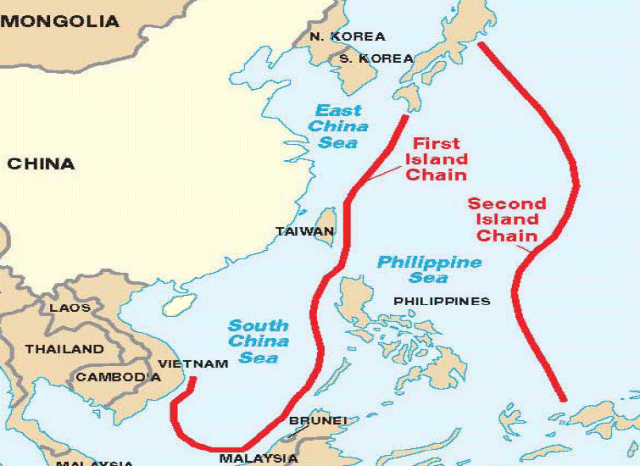
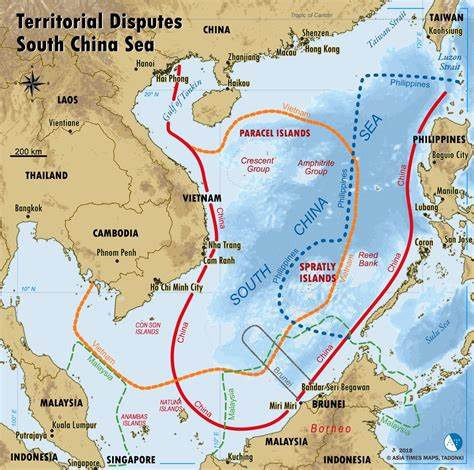
  2. Recently, due to the international wars simultaneously in Ukraine and Israel, and high tension in the Taiwan strait/South China Sea, the US Navy had an almost unprecedented 8 Carriers at sea at the same time. The only three not at sea were unavailable due to long-term maintenance. Normally, the Navy might have three or four carriers at sea at one time. Navy ships and crews continually operating wear out rapidly. Typical deployments last 6 months. The USS Ford has been deployed for 7 months and SECDEF just extended its deployment in the eastern Med for the second time. The longer the deployment the more worn out the crew and the higher rates of equipment failures become. As deployments go on for longer and longer, the size of the crew shrinks due to illness, pregnancy, injury, and suicides. Typically ships returning to home port after a lengthy deployment are missing a substantial number of the deploying crew. This puts much more stress and strain on the remaining crewmen. The international situation with multiple wars demanding our attention simultaneously is eroding our Navy’s readiness at a high rate. When the ships and their crews wear out, there will be no alternative but to return them to port for re-fit and rest for the crews regardless of whatever pressing mission the ship is on. That the Navy does not have enough ships is now obvious to even the most casual observer when multiple hot spots in distant seas occur. When the proverbial stuff hits the fan, the very first question everyone, including the President asks is, “Where is the nearest carrier?”
  3. The Navy’s high suicide rate over a lengthy period demonstrates the leadership’s tragically being unable to ameliorate the problem. The higher the OP tempo, the longer the deployments, the more arduous the maintenance periods are, the more inadequate berthing arrangements are for ships in long term overhaul, aggravate already high stress environments and seemingly make things unbearable for too many of our sailors. The Navy seems content to muddle along with scores of sailors killing themselves year after year and the heart-rending loss of life continuing as an unsolved problem. We Navy folk like to call ourselves warriors and most of us fit the description of selflessly putting ourselves in harm’s way for the benefit of others, for the benefit of our nation. But what does it say about our culture to have so many warriors who end their own lives because somehow our organization does not recognize their despair until it is too late, and they have taken the irreversible step and ended their own life? Considering how extremely selective the Navy is at screening those who volunteer to serve, why do such high numbers of exceptional citizens, with all that the Navy has to offer, choose to end their own lives? Are our leaders so overwhelmed by the work the Navy has them do that they cannot be close enough to their sailors to recognize those who are in extremis in time to help them?
  4. Notable institutional leadership failures in multiple major program areas and multiple high profile operational failures are now far too common. Examples include well documented cases such as the LCS and Zumwalt ship classes, the USS Ford class’s cost overruns, lateness, and multiple of its ship systems not being fully operational (EMALS, ammo elevators, arresting gear, etc.) even years after being in commission. An egregious example of a mammoth leadership failure was the loss of the USS Bonhomme Richard, a multi-billion-dollar capital ship that due to negligence was allowed to burn at the side of a pier, a $3B loss with no replacement. A total of 45 Navy leaders were disciplined due to this one incident. The grounding of the USS Connecticut with this vital attack submarine being out of commission for years for repairs. The USS Gettysburg has been out of commission for over 8 years undergoing modernization. Four of the seven cruisers selected for modernization will instead be de-commissioned after the Navy has spent billions on upgrades. The collisions of the USS McCain and USS Fitzgerald with commercial shipping were failures of leadership that led to the deaths of 17 sailors.
  5. In the 2018 National Defense Authorization Act the Congress established the size of the Navy to be 355 battle force ships. According to the United States Naval Institute as of 6 November 2023 there are currently 291 battle force ships in the Navy. The predictions from the Congressional Research Service are that the size of the Navy will stay relatively the same for the rest of this decade before it slowly starts to increase in size in the 2030’s. In 2022, then CNO Gilday announced that the requirement is actually much higher, in excess of 500 battle force ships. Multiple other experts’ analyses confirm those higher numbers. The PRC’s PLAN is already at 350 combatants and building at a rate at least four times that of the US.
  6. In the FY 2023 NDAA there was a provision to establish a Commission to study the Navy and its requirements. The report of the Commission is due to the Congress by July 1, 2024. As of this writing, the commission has not even been formed. The Secretary of the Navy and the CNO should be urgently pressing Congress to get this Commission up and running. Furthermore, the Navy should be proactive in suggesting Navy advocates serve on the Commission or serve on the staff of the Commission. It is vital for the defense of the nation to have the definitive knowledge of what the Navy’s true requirements are in 2023 in the face of multiplying threats all over the world.

Conclusion:  All of these factors outlined above make it clear that our Navy is in extremis. There are not enough ships to do the mission nor enough manpower to man the ships optimally. Deployments are too long, and our people and ships are wearing out.

Recruiting is stagnant. Too few ships, not enough people, not enough shipbuilding, or repair capacity have us on the brink of mission failure. To put the size of the Navy in perspective, when this officer went aboard ship in 1970 to conduct anti-submarine patrols looking for Soviet ballistic missile submarines, the Navy had 792 battle force ships in commission. We now have 291. Then we had a cold war against one adversary, the old Soviet Union.

Today we have adversaries all over the world and are trying to perform the mission quoted above with a tiny fraction of the ships we had decades ago. As a maritime nation with treaty allies all over the world coupled with our dependence upon the sea for 90% of the commerce that keeps our economy running, it is a travesty that such neglect of the Navy has occurred. Who is at fault for this neglect?

Congress is ultimately at fault as it holds the power of the purse. However, it is incumbent upon senior Navy leaders to make the case for the right size Navy. The CNO and every other Navy flag who testifies before Congress should be sounding the alarm about the imminent failure of the Navy to perform its mission now in “peacetime” with multiple hots spots in Europe, the Middle East, and in the Taiwan Strait and South China Sea, and even more importantly in the next actual fighting war.

Someone long since should have laid his stars on the table to make the point to politicians that we need more ships and more manpower for the survival of our nation. Our way of life and our very lives are at stake if we do not rebuild our Navy to an adequate size to perform its vital worldwide mission.

The US military is grounding all 400 of its ‘widow-maker’ Osprey V-22

Leviticus (1-2)

•December 11, 2023 • Leave a Comment

The Targum Jonathan provides a good preamble to the book of Leviticus:

And it was when Mosheh had completed to erect the tabernacle that Mosheh reasoned and judged in his heart, and said:

“To Mount Sinai, whose excellency is the excellence only of an hour and its holiness the holiness but of three days, I could not ascend till the time that the word was spoken to me; but the excellence of this the tabernacle of ordinance is an eternal excellency, and its holiness an everlasting holiness; therefore is it right that I should not enter within it until the time that I am spoken with from before the Lord.”

“If his offering a burnt sacrifice of the herd, let him offer a male without blemish”

Leviticus 1

1 And the Lord called unto Moses, and spoke unto him out of the tabernacle of the congregation, saying,

— when the Lord first communicated to Moses that He was about to deliver the Israelites from Egypt, “He called unto him” from the burning bush (Exodus 3:4). When the Lord was about to give to Moses the Ten Commandments for the people of Israel, “He called unto him” from the top of Sinai (Exodus 19:3; Exodus 19:20);

— and now when the Lord is about to give to His chosen people, through His servant Moses, the laws by which their Divine worship is to be regulated, “He called unto him” from the tent of meeting (Leviticus 1:1).

“Speak unto the children of Israel and say unto them: ‘If any man of you bring an offering unto the Lord, ye shall bring your offering of the cattle, even of the herd and of the flock.

— the act of offering was to be voluntary on the part of the worshipper, but the mode of doing it was in every point defined by the Law; and any member of the congregation might bring his voluntary offering if he could afford.

“‘If his offering be a burnt sacrifice of the herd, let him offer a male without blemish. He shall offer it of his own voluntary will at the door of the tabernacle of the congregation before the Lord. — without blemish; or perfect, having no part wanting, nor any part superfluous, nor any spot upon it

And he shall put his hand upon the head of the burnt offering, and it shall be accepted for him to make atonement for him. — and he, the offer of the offering, shall put his hand upon the head of the burnt offering to make atonement for him; this phrase belongs more especially to the sin-offerings and the trespass-offerings;

— the high priest, Aaron, would be more concerned with other duties: another daily ‘burnt offering’ stands first in Leviticus for several reasons; it was offered twice daily, besides on other occasions;

And he shall kill the bullock before the Lord; and the priests, Aaron’s sons, shall bring the blood and sprinkle the blood round about upon the altar that is by the door of the tabernacle of the congregation.

— and he shall kill the bullock; the sacrificer himself, the offerer, not by the priest, slaughtered the animal on the north side of the altar, by cutting its throat, while a priest or an assistant held a bowl under the neck to receive the blood;

— in later times, however, the offering was generally performed by Levites; sprinkle the blood; this was to be done by the priests, by Aaron’s sons initially. 

And he shall flay the burnt offering and cut it into his pieces.

And the sons of Aaron the priest shall put fire upon the altar, and lay the wood in order upon the fire.

And the priests, Aaron’s sons, shall lay the parts, the head, and the fat in order upon the wood that is on the fire which is upon the altar;

but his inwards and his legs shall he wash in water. And the priest shall burn all on the altar to be a burnt sacrifice, an offering made by fire, of a sweet savor unto the Lord. — a sweet savour, or a soothing odour; the word ‘savour’ in old English is applied to the smell as well as the taste of a thing.

10 “‘And if his offering be of the flocks, namely, of the sheep or of the goats, for a burnt sacrifice, he shall bring a male without blemish. — those who could not offer a bullock, were to bring a sheep or a goat; and those who were not able to do that, were accepted of God, if they brought a turtle-dove, or a pigeon.

If they are poor they could bring a turtle-dove or a pigeon, or a pair

11 And he shall kill it on the side of the altar northward before the Lord; and the priests, Aaron’s sons, shall sprinkle his blood round about upon the altar.

12 And he shall cut it into his pieces, with his head and his fat; and the priest shall lay them in order on the wood that is on the fire which is upon the altar,

13 but he shall wash the inwards and the legs with water. And the priest shall bring it all and burn it upon the altar: it is a burnt sacrifice, an offering made by fire, of a sweet savor unto the Lord.

14 “‘And if the burnt sacrifice for his offering to the Lord be of fowls, then he shall bring his offering of turtledoves or of young pigeons. — those who could not offer a bullock or a sheep or a goat; they are to bring turtle-doves or pigeons; a single pigeon or turtle-dove formed a sacrifice, but they are often offered in pairs; and there are no rule in respect to sex;

15 And the priest shall bring it unto the altar, and wring off his head, and burn it on the altar; and the blood thereof shall be wrung out at the side of the altar.

16 And he shall pluck away his crop with his feathers, and cast it beside the altar on the east part, by the place of the ashes.

17 And he shall cleave it with the wings thereof, but shall not divide it asunder. And the priest shall burn it upon the altar, upon the wood that is upon the fire: it is a burnt sacrifice, an offering made by fire, of a sweet savor unto the Lord.

Leviticus 2

1 “‘And when any will offer a meat offering unto the Lord, his offering shall be of fine flour; and he shall pour oil upon it and put frankincense thereon. — the old use of the word “meat” in the sense of “food,” in contrast to “flesh,” creates some confusion of thought;

— to make a sweet odour in the court of the tabernacle, on a part of it; which otherwise would have been bad odour, by reason of the blood that was sprinkled and the flesh that was burned there daily;

— second; and put frankincense thereon; various spices: stacte, onycha and galbanum; these sweet spices with pure frankincense; are holy to the Lord, and to be used for him only; Exodus 30:34;

And he shall bring it to Aaron’s sons the priests; and he shall take from it his handful of the flour thereof and of the oil thereof, with all the frankincense thereof; and the priest shall burn the memorial of it upon the altar to be an offering made by fire, of a sweet savor unto the Lord.

— and he, the offer of the food offering, shall bring it to Aaron’s sons the priests; the high priest, Aaron, would be more concerned with other duties: involves in daily ‘burnt offering’ which was offered twice everyday;

— a sweet savour, or a soothing odour; the word ‘savour’ in old English is applied to the smell as well as the taste of the food.

Incense: stacte, onycha, galbanum; these spices with pure frankincense

And the remnant of the meat offering shall be Aaron’s and his sons’: it is a thing most holy of the offerings to the Lord made by fire. — a offering most holy; offerings consisted of two classes, the (just) holy and the most holy;

— the wave offerings (Leviticus 23:20; Numbers 6:20), the firstborn of sacrificed animals, the firstlings of oil, wine, and corn, (Numbers 18:17); and the paschal sacrifices, belonged to the holy, and might be eaten entirely or partially in any place within the holy city by the officiating priests and their families.

— the incense offering, the shew-bread (Exodus 30:26-29; Leviticus 24:9), the sin and trespass offerings (Leviticus 6:25-29; Leviticus 7:1; Leviticus 7:6; Leviticus 14:13), and the meat offerings here described, belonged to the most holy. They could be eaten in the court of the sanctuary only by the priests, (Leviticus 10:12-14).

“‘And if thou bring an oblation of a meat offering baked in the oven, it shall be unleavened cakes of fine flour mingled with oil, or unleavened wafers anointed with oil.

And if thy oblation be a meat offering baked in a pan, it shall be of fine flour, unleavened, mingled with oil.

Thou shalt part it in pieces and pour oil thereon: it is a meat offering.

And if thy oblation be a meat offering baked in the frying pan, it shall be made of fine flour with oil.

And thou shalt bring the meat offering that is made of these things unto the Lord; and when it is presented unto the priest, he shall bring it unto the altar.

And the priest shall take from the meat offering a memorial thereof and shall burn it upon the altar: it is an offering made by fire, of a sweet savor unto the Lord.

10 And that which is left of the meat offering shall be Aaron’s and his sons’: it is a thing most holy of the offerings of the Lord made by fire. — the term meat was and is properly given to any kind of provision, and the greater part of this offering was to be eaten for food, not burned; they of the most holy.

11 “‘No meat offering which ye shall bring unto the Lord shall be made with leaven; for ye shall burn no leaven nor any honey in any offering of the Lord made by fire. — leaven, in this instance, is the emblem of pride, malice, and hypocrisy, and honey of sensual pleasure.

12 As for the oblation of the firstfruits, ye shall offer them unto the Lord, but they shall not be burned on the altar for a sweet savor.

13 And every oblation of thy meat offering shalt thou season with salt; neither shalt thou allow the salt of the covenant of thy God to be lacking from thy meat offering. With all thine offerings thou shalt offer salt. — with all thine offerings thou shalt offer salt; every animal offering was to be accompanied by salt;

— salt was used in meat offerings, and in all others, because it was a symbol of the perpetuity of the covenant, which from thence is called a covenant of salt forever, Numbers 18:19 namely, the covenant of the priesthood, to which these sacrifices belonged;

— hence the Targum of Jonathan says, “because the twenty and four gifts of the priests are appointed with a covenant of salt; therefore salt shalt thou offer with all thy oblations.”

14 And if thou offer a meat offering of thy firstfruits unto the Lord, thou shalt offer for the meat offering of thy firstfruits green ears of corn dried by the fire, even corn beaten out of full ears.

15 And thou shalt put oil upon it and lay frankincense thereon: it is a meat offering.

16 And the priest shall burn the memorial of it, part of the beaten corn thereof and part of the oil thereof, with all the frankincense thereof: it is an offering made by fire unto the Lord.

— every independent meat-offering was to be prepared without leaven, and a portion given to the Lord as fire-food, for a savour of satisfaction upon the altar; and the rest was to be scrupulously kept away from being used by the offerer, as a most holy thing, and to be eaten at the holy place by the priests only;

— it is unfortunate that while the law was given the children of Israel were travelling throught the desert for the next thirty-nine years or so, with their main food, the manna, and only offerings of animal sacrifices could be offered; they could not practice the first-fruit offerings; but the law was provided here when the crossed the Jordan and became settled cultivators.

Sharp Decline in Maths Skill in OECD

•December 10, 2023 • Leave a Comment

Teenage math and reading skills show ‘unprecedented drop’ – study

PISA 2018: The Top Rated Countries

RT World News • December 6, 2023 // World Population Review

The sharp decline in arithmetic scores is particularly significant in five European countries, OECD research has found

A study by the Organization for Economic Cooperation and Development (OECD) of the academic performance of teenagers from 81 countries has found that their performance in reading and math has plummeted. It also shows that students from European countries have the lowest math scores, while Asian participants have the highest.  

Nearly 700,000 15-year-olds were tested in math, reading, and science as part of the Program for International Student Assessment (PISA) 2022 to assess learning before and after the COVID-19 pandemic. 

According to the OECD on Tuesday, the results of the study, which was focused on math, show an “unprecedented drop” in academic performance, with average scores down 10 points in reading and nearly 15 points in math compared to 2018. Science scores “did not change significantly,” the document said. 

The research found the sharp decline in math achievement to be “three times larger” than any previous change and was most significant in Germany, Iceland, the Netherlands, Norway, and Poland. Participants from Singapore, China, Japan, and South Korea outperformed the others. In reading, Ireland, Estonia, Japan, and South Korea performed strongly. 

The study also shows the impact of digital devices on students’ academic performance – moderate use of gadgets in school is associated with better grades. However, this depends on whether technology is used to support learning rather than distract from it.

The downward trend in reading, math, and science scores was evident before 2018, suggesting that only part of the decline in achievement can be attributed to the COVID-19 pandemic, the OECD said.

The international PISA survey in these three disciplines is conducted every three years among 15-year-old students. Originally scheduled for 2021, the study was postponed due to the pandemic. All participating countries are OECD partners. 

Mysterious aircraft crashes in year 2023

•December 9, 2023 • Leave a Comment

At least 30 American troops have died in a spate of mysterious US military helicopter and tiltrotor aircraft crashes this year. Now the US military has grounded its entire fleet of Osprey aircraft and Japan has also grounded its fleet of 14 Ospreys after the crash.

Business Insider • December 5, 2023 // Yahoo

  • A US Air Force Osprey crashed off the coast of Japan on November 29, killing all eight Airmen aboard.
  • It’s the latest in a string of helicopter and tiltrotor crashes this year. 
  • Seven crashes have left 30 American soldiers dead and injured over 40 more.

It’s been a deadly year for US military helicopters and tiltrotor aircraft. Seven crashes around the world have so far killed at least 30 American service members and injured over 40 more.

None of these incidents occurred during combat or were the result of enemy fire; almost all took place during some sort of training mission. Two branches of the military grounded flights in response to crashes and the resulting loss of life.

Dark clouds hang over where the US Navy and Air Force are operating

Here’s a timeline of these crashes and what we know about their causes:

February 15: UH-60 Blackhawk crashed in Alabama

A Tennessee National Guard helicopter crashed during a training flight near Huntsville, killing the two pilots. According to a statement from the Tennessee Department of Military, the aircraft was approaching a local airport when it “rapidly descended and impacted the ground.”

March 29: HH-60 Black Hawks collide in Kentucky

Two US Army helicopters crashed into each other during a training “accident” near Fort Campbell, the 101st Airborne Division said, killing all nine soldiers who were on board. The aircraft were conducing a routine mission and were operating in “multi-ship formation” using night-vision goggles. They crashed into an open field across from a residential area.

April 27: AH-64 Apaches collide in Alaska

Two helicopters returning from a training mission crashed into each other near Healy, killing three soldiers and injuring a fourth, the 11th Airborne Division said. After this incident, the US Army temporarily grounded all aircraft except those participating in “critical missions.”

June 11: MH-47 Chinook crashed in Syria

A US military helicopter with a faulty rotor crashed as it was landing at a staging base in the northeast, injuring 22 soldiers. A Pentagon spokesperson said at the time that the incident was under investigation, but all troops involved — including some who had to be evacuated to facilities outside the US Central Command’s area of responsibility in the Middle East — were in stable condition.

August 27: MV-22B Osprey crashed in Australia

A US Marine Corps Osprey crashed on Melville Island during a training exercise, killing three soldiers and injuring another 20. Marine Rotational Force — Darwin said at the time that the cause was under investigation. This incident marked the second in a string of three “aviation mishaps” during August and September that eventually led the Marines to pause all flights for several days.

November 10: MH-60 Blackhawk crashed in the eastern Mediterranean Sea

Five US Army Special Operations aviation soldiers were killed after their helicopter experienced an “in-flight emergency” during aerial refueling training and crashed into the water, the Pentagon said. It added that there were “no indications” the crash was the result of hostile actions, amid soaring regional tensions as a result of the Israel-Hamas war.

November 29: CV-22B Osprey crashed off the coast of Japan

A US Air Force Osprey was involved in an unknown “aircraft mishap” during a routine training mission off the coast of Yakushima Island, killing all eight crew members aboard. Air Force Special Operations Command said on December 5 that a search and recovery mission was still underway to locate the remains of two Airmen.

The US military is grounding all 400 of its ‘widow-maker’ Osprey V-22

Exodus (39-40)

•December 9, 2023 • Leave a Comment

~~~~

~~~~

Exodus 39

1 And of the blue and purple and scarlet they made clothes of service to do service in the holy place, and made the holy garments for Aaron, as the Lord commanded Moses. 

And he made the ephod of gold, blue and purple and scarlet, and finetwined linen. 

And they beat the gold into thin plates, and cut it into wires to work it in the blue and in the purple and in the scarlet and in the fine linen, with skillful work. 

They made shoulder pieces for it to couple it together; by the two edges was it coupled together. 

And the embroidered girdle of his ephod that was upon it was of the same, according to the work thereof: of gold, blue and purple and scarlet, and finetwined linen, as the Lord commanded Moses. 

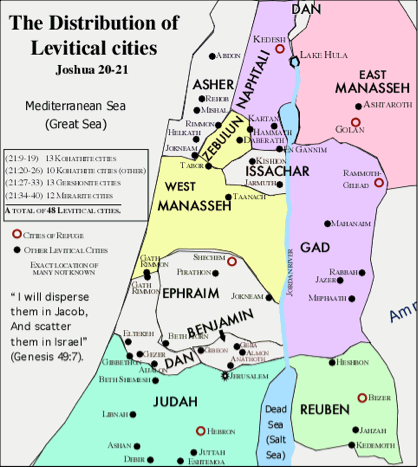
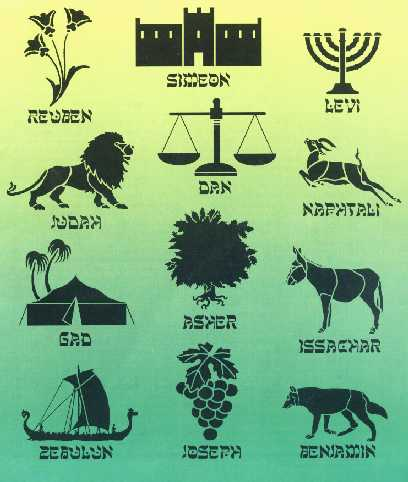
And they wrought onyx stones enclosed in clasps of gold, graven as signets are graven, with the names of the children of Israel. — the names of the twelve tribes of Israel are not specified here; question remains whether Joseph has two portions? If so who gives way; Dan or Levi?

And he put them on the shoulders of the ephod, that they should be stones for a memorial to the children of Israel, as the Lord commanded Moses. 

And he made the breastplate of skillful work, like the work of the ephod: of gold, blue and purple and scarlet, and finetwined linen. 

It was foursquare. They made the breastplate double: a span was the length thereof and a span the breadth thereof, being doubled. 

10 And they set in it four rows of stones: the first row was a sardius, a topaz and a carbuncle; this was the first row; — the Targum Jonathan adds the names of three tribes, Reuben, Shimeon, and Levi and Targum Jerusalem says the same in chapter 28:17 Reuben, Shemeon, Levi;

11 and the second row, an emerald, a sapphire, and a diamond; — there are some differences of opinions from here: the Targum Jonathan adds the names of the three tribes, Jehudah, Dan, and Naphtali; whereas Targum Jerusalem says Jehudah, Issakar, and Zebulon;

12 and the third row, a ligure, an agate, and an amethyst; — the Targum Jonathan adds the names of the three tribes, Gad, Asher, and Issakar; but Targum Jerusalem says Dan, Naphtali, and Gad;

13 and the fourth row, a beryl, an onyx, and a jasper. They were enclosed in clasps of gold in their enclosings. — the Targum Jonathan adds the names of the three tribes, Zebulon, Joseph, and Benjamin; but Targum Jerusalem says Asher, Joseph, and Benjamin;

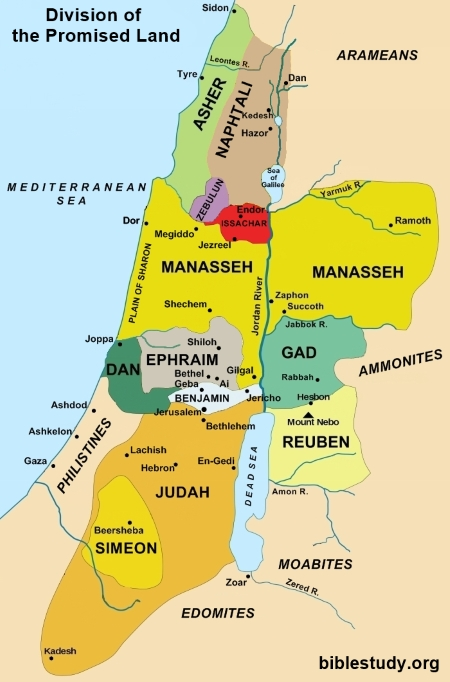
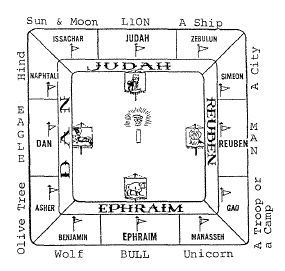
The tribe of Dan disappears when Joseph is allocated two portions

14 And the stones were according to the names of the children of Israel — twelve, according to their names like the engravings of a signet, every one with his name according to the twelve tribes. 

15 And they made upon the breastplate chains at the ends of wreathed work of pure gold. — no mention is made of the Urim and Thummim, perhaps they are incorporated inside or behind the ephod;

The Urim and Thummim, perhaps they are incorporated inside the ephod

16 And they made two clasps of gold and two gold rings, and put the two rings on the two ends of the breastplate. 

17 And they put the two wreathed chains of gold in the two rings on the ends of the breastplate; 

18 and the two ends of the two wreathed chains they fastened in the two clasps, and put them on the shoulder pieces of the ephod at the front. 

19 And they made two rings of gold and put them on the two ends of the breastplate, upon the border of it which was on the side of the ephod inward; 

20 and they made two other golden rings and put them on the two sides of the ephod underneath, toward the front of it over against the other coupling thereof, above the embroidered girdle of the ephod. 

21 And they bound the breastplate by his rings unto the rings of the ephod with a lace of blue, that it might be above the embroidered girdle of the ephod, and that the breastplate might not be loosed from the ephod, as the Lord commanded Moses. 

22 And he made the robe of the ephod of woven work, all of blue. 

23 And there was a hole in the midst of the robe, as the hole of a jacket of mail, with a band round about the hole, that it should not rend. 

24 And they made upon the hems of the robe pomegranates of blue and purple and scarlet, and twined linen. 

25 And they made bells of pure gold, and put the bells between the pomegranates upon the hem of the robe, round about between the pomegranates: 

26 a bell and a pomegranate, a bell and a pomegranate, round about the hem of the robe to minister in, as the Lord commanded Moses. 

27 And they made coats of fine linen of woven work for Aaron and for his sons, 

28 and a miter of fine linen and goodly bonnets of fine linen, and linen breeches of finetwined linen, 

29 and a girdle of finetwined linen, and blue and purple and scarlet needlework, as the Lord commanded Moses. 

30 And they made the plate of the holy crown of pure gold, and wrote upon it a writing, like the engravings of a signet: Holiness to the Lord.

31 And they tied unto it a lace of blue to fasten it on high upon the miter, as the Lord commanded Moses.

32 Thus was all the work of the tabernacle of the tent of the congregation finished, and the children of Israel did according to all that the Lord commanded Moses; so did they.

33 And they brought the tabernacle unto Moses: the tent and all his furniture, his clasps, his boards, his bars and his pillars and his sockets; 

34 and the covering of rams’ skins dyed red, and the covering of badgers’ skins, and the veil of the covering; 

35 the ark of the Testimony and the staves thereof, and the mercy seat; 

36 the table and all the vessels thereof, and the showbread; 

37 the pure candlestick with the lamps thereof, even with the lamps to be set in order, and all the vessels thereof, and the oil for light; 

38 and the golden altar, and the anointing oil, and the sweet incense, and the hanging for the tabernacle door; 

39 the brazen altar and his grate of brass, his staves and all his vessels, the laver and his foot; 

Joseph is allocated two placements but the Levi were the Lord’s

40 the hangings of the court, his pillars and his sockets, and the hanging for the court gate, his cords and his pegs, and all the vessels of the service of the tabernacle for the tent of the congregation; 

41 the clothes of service to do service in the holy place, and the holy garments for Aaron the priest and his sons’ garments to minister in the priest’s office. 

42 According to all that the Lord commanded Moses, so the children of Israel made all the work. 

43 And Moses looked upon all the work, and behold, they had done it as the Lord had commanded; even so had they done it. And Moses blessed them. 

Exodus 40

~~~~

~~~~

1 And the Lord spoke unto Moses, saying,

“On the first day of the first month shalt thou set up the tabernacle of the tent of the congregation. — the new year was now approaching, and as it was approaching, its first day on the month of Nisan was naturally chosen as most fit for the inauguration of the new structure.

And thou shalt put therein the ark of the Testimony, and cover the ark with the veil. 

And thou shalt bring in the table and set in order the things that are to be set in order upon it; and thou shalt bring in the candlestick and light the lamps thereof. 

And thou shalt set the altar of gold for the incense before the ark of the Testimony, and put up the hanging of the door to the tabernacle. 

And thou shalt set the altar of the burnt offering before the door of the tabernacle of the tent of the congregation. 

And thou shalt set the laver between the tent of the congregation and the altar, and shalt put water therein. 

And thou shalt set up the court round about, and hang up the hanging at the court gate. 

And thou shalt take the anointing oil, and anoint the tabernacle and all that is therein, and shalt hallow it and all the vessels thereof; and it shall be holy. 

10 And thou shalt anoint the altar of the burnt offering and all his vessels, and sanctify the altar; and it shall be an altar most holy. 

11 And thou shalt anoint the laver and his foot, and sanctify it. 

12 And thou shalt bring Aaron and his sons unto the door of the tabernacle of the congregation, and wash them with water. 

13 And thou shalt put upon Aaron the holy garments, and anoint him and sanctify him, that he may minister unto Me in the priest’s office.

14 And thou shalt bring his sons and clothe them with coats; 

15 and thou shalt anoint them, as thou didst anoint their father, that they may minister unto Me in the priest’s office. For their anointing shall surely be an everlasting priesthood throughout their generations.” 

16 Thus did Moses: according to all that the Lord commanded him, so did he. 

17 And it came to pass in the first month in the second year, on the first day of the month, that the tabernacle was reared up. 

18 And Moses reared up the tabernacle, and fastened his sockets and set up the boards thereof, and put in the bars thereof and reared up his pillars. 

19 And he spread abroad the tent over the tabernacle, and put the covering of the tent above upon it, as the Lord commanded Moses. 

20 And he took and put the testimony into the ark, and set the staves on the ark, and put the mercy seat above upon the ark. 

21 And he brought the ark into the tabernacle, and set up the veil of the covering and covered the ark of the Testimony, as the Lord commanded Moses. 

22 And he put the table in the tent of the congregation upon the side of the tabernacle northward, outside the veil. 

23 And he set the bread in order upon it before the Lord, as the Lord had commanded Moses. 

24 And he put the candlestick in the tent of the congregation opposite the table, on the side of the tabernacle southward.

25 And he lighted the lamps before the Lord, as the Lord commanded Moses.

26 And he put the golden altar in the tent of the congregation before the veil;

27 and he burned sweet incense thereon, as the Lord commanded Moses.

28 And he set up the hanging at the door of the tabernacle. 

29 And he put the altar of burnt offering by the door of the tabernacle of the tent of the congregation, and offered upon it the burnt offering and the meat offering, as the Lord commanded Moses. 

30 And he set the laver between the tent of the congregation and the altar, and put water there for washing. 

31 And Moses and Aaron and his sons washed their hands and their feet thereat. 

32 When they went into the tent of the congregation and when they came near unto the altar, they washed, as the Lord commanded Moses. 

33 And he reared up the court round about the tabernacle and the altar, and set up the hanging of the court gate. So Moses finished the work. 

34 Then a cloud covered the tent of the congregation, and the glory of the Lord filled the tabernacle. 

35 And Moses was not able to enter into the tent of the congregation because the cloud abode thereon, and the glory of the Lord filled the tabernacle. 

36 And when the cloud was taken up from over the tabernacle, the children of Israel went onward in all their journeys; 

37 but if the cloud were not taken up, then they journeyed not until the day that it was taken up. 

38 For the cloud of the Lord was upon the tabernacle by day and fire was on it by night, in the sight of all the house of Israel throughout all their journeys. 

— throughout the book of Exodus the term, “Urim and Thummim” is not used; the earliest encounter is in Leviticus 8:8: “And he [Moses] put the breastplate upon him [Aaron]. Also he [Moses] put in the breastplate the Urim and the Thummim.” Hence the Urim and the Thummim are incorporated inside the ephod with the breastplate of twelve previous stones.

Why being a friend of the US is ‘fatal’?

•December 8, 2023 • Leave a Comment

“To be an enemy of the US is dangerous, but to be a friend is fatal”
― Henry Kissinger

“To be an enemy of the US is dangerous, but to be a friend is fatal”

News analysis: Why being a friend of the United States is ‘fatal’?

See also Fate of Qin Gang, China’s former Foreign Minister Politico Europe

CGTN • October 23, 2023

US President Joe Biden has pledged an “unprecedented” package of aid to support its “ironclad” ally in Middle East – Israel, which is entangled in a fresh round of conflict with its old foe Palestine. Besides, the White House also vowed to back Ukraine “as long as it takes” in its fight against Russia.

The funding for Israel and Ukraine that the US government has asked for, amounted to almost $106 billion. Will this be a credible commitment or just another empty promise?

“It may be dangerous to be America’s enemy, but to be America’s friend is fatal,” former US Secretary of State Henry Kissinger once remarked. And the US has proven him right. Time and again, the US has showed that it is not a reliable ally in global affairs.

Sitting across the pond, making huge profits

Economist Pierre de Gaulle, grandson of former French President Charles de Gaulle, told the French newspaper Le Parisien that the US provoked a conflict in Ukraine to “turn Europe into a vassal” and has managed to use the Ukraine crisis to “destabilize Europe.”

In terms of energy, security, economy, refugees, etc, Europe is paying a heavy price in the crisis while the US is enjoying the most benefits and still fanning the flames to prolong and expand the Ukraine crisis.

“This is while the United States, sitting across the pond, watching on and observing, is making huge profits,” Modern Diplomacy magazine commented on its website when describing the Ukraine crisis.

For instance, American energy companies are making a fortune during the crisis, as The Wall Street Journal bluntly stated, “A big winner from the energy crisis in Europe: the US economy.”

The EU imported around 94.73 million tonnes of liquefied natural gas (LNG) in 2022, compared to 57.27 million tonnes in 2021. The US represented 41 percent of the supply in all of 2022 and remained to be the EU’s top LNG supplier, surpassing Russia for the first time, according to a report by the research firm Kpler. In the first half of this year, the EU remained the primary buyer of US LNG, which constitutes more than half of the EU LNG import market.

Unfortunately, the price to move away from Russian energy is not cheap for the European side. The natural gas price frenzy in Europe shows no signs of easing. For instance, in France last year, energy prices alone increased by 23.1 percent yearly, followed by 6.8 percent for food and 3 percent for manufactured goods and services.

Europe’s interests have never been America’s concern. In 2021, the US hastily withdrew from Kabul, Afghanistan, leaving its European allies stunned and unprepared. The US also forged the AUKUS with the UK and Australia, blatantly breaking the Australia-France submarine deal.

Coercive diplomacy

The US applied coercive diplomacy with East Asian allies with no mercy.

In 1986, in response to the rise of Japan’s semiconductor industry, the US forced Japan to sign the “US-Japan Semiconductor Agreement,” initiated a “Section 301 Investigation” against Japan, and imposed trade sanctions on a variety of Japanese products such as semiconductors and computers, which undermined the competitiveness and potential of Japan’s semiconductor industry, seeing its market share fall from 50 percent of the global market to about 10 percent in 2019.

“To be an enemy of the US is dangerous, but to be a friend is fatal”

In recent years, the US has been wielding the tariff stick against Japan because of its dissatisfaction with Japan’s longstanding trade surplus with the US. In March 2018, the US imposed tariffs of up to 25 percent and 10 percent on imported steel and aluminum products under the Trade Expansion Act, temporarily “exempting” the Five Eyes countries, including the UK, Australia, Canada and New Zealand, but charging Japan the same.

The US’ ally South Korea is chewing on the same thing. The US passed the Inflation Reduction Act last year, eliminating federal tax credits for electric vehicles made outside North America, meaning companies including South Korea’s Hyundai and its affiliate Kia Corp will no longer be eligible for such subsidies.

South Korean President Yoon Suk-yeol hoped talks with his US counterpart Joe Biden would resolve Seoul’s concerns over the Act during his visit to New York in September 2022. However, Yoon was only granted a 48-second spontaneous chat with Biden.

Since 1991, South Korea has shared the upkeep cost for US soldiers, including costs for South Korean civilians hired by the US Forces Korea (USFK), construction of military installations and logistics support.

Under the 10th Special Measures Agreement (SMA), South Korea paid 1.04 trillion won (about $890 million) for the stationing of US troops. When the 10th SMA was about to expire at the end of 2019, the US reportedly threatened to pull troops if South Korean didn’t pay $5 billion to the US for a new deal.

No wonder former European Council President Donald Tusk once commented on the US’ move, “with friends like that, who needs enemies?”

Exodus (37-38)

•December 7, 2023 • Leave a Comment

“To be an enemy of the US is dangerous, but to be a friend is fatal”
― Henry Kissinger

Q. Could one unexpected day the Jews bring out the Ark of the Covenant and cause both the Dome of the Rock and the Al-Aqsa Mosque to collapse?

Exodus 37

1 And Bezaleel made the ark of shittim wood. Two cubits and a half was the length of it, and a cubit and a half the breadth of it, and a cubit and a half the height of it. 

And he overlaid it with pure gold within and without, and made a crown of gold for it round about. 

And he cast for it four rings of gold to be set in the four corners of it: even two rings upon the one side of it, and two rings upon the other side of it. 

And he made staves of shittim wood and overlaid them with gold. 

And he put the staves into the rings on the sides of the ark, to bear the ark. 

And he made the mercy seat of pure gold. Two cubits and a half was the length thereof, and one cubit and a half the breadth thereof. 

And he made two cherubims of gold. Beaten out of one piece made he them on the two ends of the mercy seat: 

Two cherubims of pure gold over the Mercy Seat also of pure gold

one cherub on the end on this side, and another cherub on the other end on that side; out of the mercy seat made he the cherubims on the two ends thereof. 

And the cherubims spread out their wings on high, and covered over the mercy seat with their wings with their faces one toward another; even toward the mercy seat were the faces of the cherubims. 

10 And he made the table of shittim wood. Two cubits was the length thereof, and a cubit the breadth thereof, and a cubit and a half the height thereof. 

11 And he overlaid it with pure gold, and made thereunto a crown of gold round about. 

12 Also he made thereunto a border of a handbreadth round about, and made a crown of gold for the border thereof round about. 

13 And he cast for it four rings of gold, and put the rings upon the four corners that were in the four feet thereof. 

14 Over against the border were the rings, the places for the staves to bear the table. 

15 And he made the staves of shittim wood to bear the table, and overlaid them with gold. 

16 And he made the vessels which were upon the table — his dishes and his spoons and his bowls and his covers for covering — of pure gold. 

Seven candlestick of pure gold, each with a bowl, buds and flowers

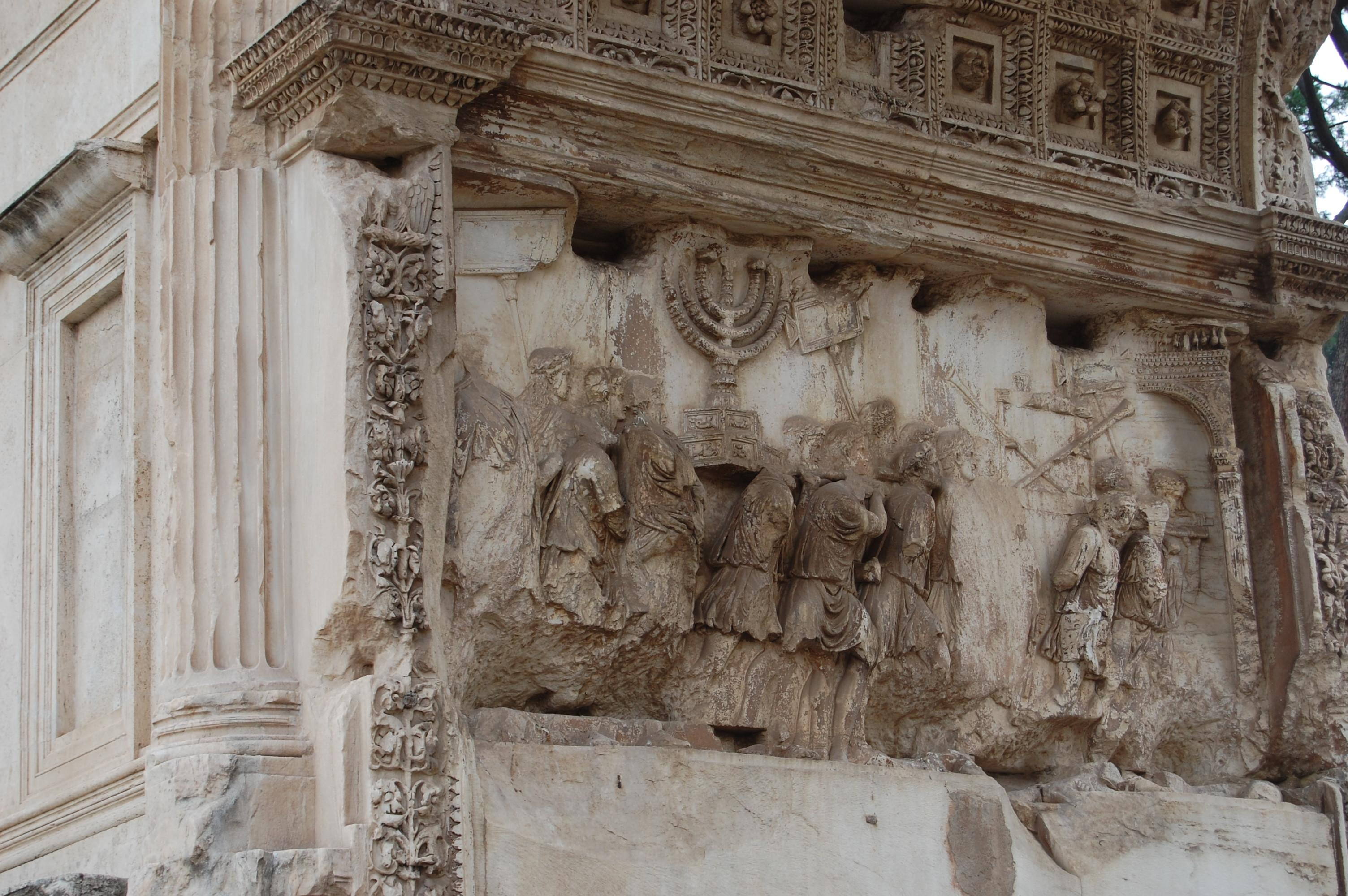
17 And he made the candlestick of pure gold; of beaten work made he the candlestick. His shaft, and his branch, his bowls, his buds and his flowers were of the same. 

18 And six branches came out of the sides thereof: three branches of the candlestick out of the one side thereof, and three branches of the candlestick out of the other side thereof. 

19 Three bowls were made after the fashion of almonds on one branch, with a bud and a flower, and three bowls were made like almonds on another branch, with a bud and a flower — so throughout the six branches going out of the candlestick. 

20 And on the candlestick were four bowls made like almonds, with his buds and his flowers, 

21 and a bud under two branches of the same, and a bud under two branches of the same, and a bud under two branches of the same, according to the six branches going out of it. 

22 Their buds and their branches were of the same; all of it was one beaten work of pure gold. 

Seven golden branches of candlesticks each with buds and flowers

23 And he made his seven lamps and his snuffers and his snuff dishes of pure gold. 

24 Of a talent of pure gold made he it, and all the vessels thereof. 

25 And he made the incense altar of shittim wood. The length of it was a cubit and the breadth of it a cubit; it was foursquare, and two cubits was the height of it. The horns thereof were of the same. 

26 And he overlaid it with pure gold, both the top of it and the sides thereof round about, and the horns of it; also he made for it a crown of gold round about. 

27 And he made two rings of gold for it under the crown thereof, by the two corners of it, upon the two sides thereof, to be places for the staves to bear it. 

28 And he made the staves of shittim wood and overlaid them with gold. 

29 And he made the holy anointing oil and the pure incense of sweet spices, according to the work of the perfumer. 

Exodus 38

~~~~

1 And he made the altar of burnt offering of shittim wood; five cubits was the length thereof and five cubits the breadth thereof; it was foursquare, and three cubits the height thereof. 

And he made the horns thereof on the four corners of it; the horns thereof were of the same, and he overlaid it with brass. 

And he made all the vessels of the altar: the pots and the shovels and the basins, and the fleshhooks and the firepans; all the vessels thereof made he of brass. 

And he made for the altar a brazen grate of network, under the rim thereof beneath, unto the midst of it. 

And he cast four rings for the four ends of the grate of brass, to be places for the staves. 

And he made the staves of shittim wood and overlaid them with brass. 

And he put the staves into the rings on the sides of the altar to bear it; he made the altar hollow with boards. 

And he made the laver of brass and the foot of it from brass, from the looking glasses of the women assembling, who assembled at the door of the tabernacle of the congregation. 

And he made the court: on the south side southward the hangings of the court were of finetwined linen, a hundred cubits. 

10 Their pillars were twenty and their brazen sockets twenty; the hooks of the pillars and their fillets were of silver.

11 And for the north side the hangings were a hundred cubits. Their pillars were twenty and their sockets of brass twenty, the hooks of the pillars and their fillets, of silver. 

12 And for the west side were hangings of fifty cubits, their pillars ten and their sockets ten, the hooks of the pillars and their fillets, of silver. 

13 And for the east side eastward, fifty cubits. 

14 The hangings of the one side of the gate were fifteen cubits, their pillars three and their sockets three. 

15 And for the other side of the court gate, on this side and that side, were hangings of fifteen cubits, their pillars three and their sockets three. 

16 All the hangings of the court round about were of finetwined linen. 

17 And the sockets for the pillars were of brass, the hooks of the pillars and their fillets, of silver; and the overlaying of their capitals, of silver, and all the pillars of the court were filleted with silver.

18 And the hanging for the gate of the court was needlework: of blue and purple and scarlet, and finetwined linen; and twenty cubits was the length, and the height in the breadth was five cubits, corresponding to the hangings of the court.

19 And their pillars were four and their sockets of brass four; their hooks, of silver, and the overlaying of their capitals and their fillets, of silver. 

20 And all the pegs of the tabernacle and of the court round about were of brass. 

21 This is the account of the tabernacle, even of the tabernacle of testimony, as it was counted according to the commandment of Moses for the service of the Levites, by the hand of Ithamar, son of Aaron the priest. 

22 And Bezaleel the son of Uri, the son of Hur, of the tribe of Judah, made all that the Lord commanded Moses. 

23 And with him was Aholiab, son of Ahisamach, of the tribe of Dan, an engraver and a skillful workman, and an embroiderer in blue and in purple and in scarlet, and fine linen. 

24 All the gold that was used for the work in all the work of the holy place, even the gold of the offering, was twenty and nine talents, and seven hundred and thirty shekels, according to the shekel of the sanctuary. 

25 And the silver of those who were numbered in the congregation was a hundred talents, and a thousand seven hundred and threescore and fifteen shekels, according to the shekel of the sanctuary: 

26 a bekah for every man, that is, half a shekel, according to the shekel of the sanctuary, for every one who went to be numbered from twenty years old and upward, for six hundred thousand and three thousand and five hundred and fifty men. 

27 And of the hundred talents of silver were cast the sockets of the sanctuary and the sockets of the veil: a hundred sockets from the hundred talents, a talent for a socket. 

28 And of the thousand seven hundred seventy and five shekels he made hooks for the pillars, and overlaid their capitals and filleted them. 

29 And the brass from the offering was seventy talents, and two thousand and four hundred shekels. 

30 And therewith he made the sockets for the door of the tabernacle of the congregation, and the brazen altar and the brazen grate for it, and all the vessels of the altar, 

31 and the sockets of the court round about, and the sockets of the court gate, and all the pegs of the tabernacle, and all the pegs of the court round about. 

Would 2024 be the Last US Election?

•December 6, 2023 • Leave a Comment

If Donald Trump is re-elected, would he become a dictator?

Liz Cheney says ‘there’s no question’ Trump would refuse to leave office if elected again. A vote for Donald Trump “may mean the last election that you ever get to vote in.”

Today by Scott Strump • December 5, 2023 // Sputnik International

Former congresswoman Liz Cheney believes Donald Trump would refuse to leave office after a second presidential term if he is reelected and that a vote for him “may mean the last election that you ever get to vote in.”

Cheney, a lifelong Republican who broke with the party after leading the House of Representatives committee investigating the Jan. 6 attack on the Capitol, spoke with Savannah Guthrie on TODAY on Dec. 4 about the threat she sees from a second Trump presidential term.

She writes in her new book, “Oath and Honor: A Memoir and a Warning,” that the 2024 election will be about whether or not we will still have a democracy.

“It certainly is,” she said. “And Donald Trump has told us exactly what he will do. He will not abide by the rulings of the courts. He will certainly appoint people to office whether or not they can be confirmed by the Senate.

“He has talked about using the military in terms that really are fundamentally un-American. … So it’s a very dangerous moment, and it’s a moment for people to understand that that cannot be the path that we go down as a country.”

The daughter of former Republican Vice President Dick Cheney believes Trump would install himself as a permanent president and refuse to leave office after the mandated two-term limit if he is reelected.

“There’s no question,” she said. “Absolutely. He’s already done it once. … He’s already attempted to seize power, and he was stopped, thankfully, and for the good of the nation and the republic. But he said he will do it again. He’s expressed no remorse for what he did.”

A potential election between Trump and President Joe Biden could come down to a small sliver of undecided voters in swing states. Cheney was asked about voters who may think a vote for Trump won’t have any long-lasting effects on democracy.

“I think that’s a real problem, and I think that the challenge is to make sure that those people understand and recognize that a Trump vote is not acceptable,” she said. “I hope that there are options and alternatives that reflect the important challenges that we’re facing, and that reflect leadership to meet those challenges, but that choice can never be Donald Trump because a vote for Donald Trump may mean the last election that you ever get to vote in.

“And again, I don’t say that lightly, and I think it’s heartbreaking that that’s where we are, but people have to recognize that a vote for Donald Trump is a vote against the Constitution.”

Cheney, 57, called the possibility of Trump becoming a dictator “a very, very real threat and concern.”

Even as someone who has dedicated her life to Republican politics, Cheney said she “will never vote for Donald Trump” and “will do whatever it takes to make sure that Donald Trump is defeated in 2024.”

And she continued, “and he’s so dangerous. If you have a president who is unwilling to abide by the rulings of the courts, who’s unwilling to uphold the Constitution, then there are no guardrails who can stop him.”

Recent polls show former US President Donald Trump besting his White House successor in five out of six battleground states, making a second Trump presidency a real legitimate possibility.

Exodus (35-36)

•December 5, 2023 • Leave a Comment

~~~~

Q. Could one unexpected day the Jews bring out the Ark of the Covenant and cause both the Dome of the Rock and the Al-Aqsa Mosque to collapse?

Exodus 35

And Moses gathered all the congregation of the children of Israel together and said unto them, “These are the words which the Lord hath commanded, that ye should do them: — the narrative of what relates to the construction of the sanctuary is now resumed from Exodus 31:18.

Six days shall work be done, but on the seventh day there shall be for you a holy day, a Sabbath of rest to the Lord. Whosoever doeth work therein shall be put to death. — six days shall work be done; work for the tabernacle, but on the seventh day they must not strike a stroke, no, not at the tabernacle work; the honour of the sabbath was above that of the sanctuary;

— shall be put to death; the Targum of Jonathan adds, by the casting of stones, stoning outside the camp being the punishment of sabbath breakers, Numbers 15:35.

Ye shall kindle no fire throughout your habitations upon the Sabbath day.” — ye shall kindle no fire throughout your habitations upon the sabbath day; this law seems the need to be emphasized, again and again; continuing; it is said to be throughout their generations as elsewhere, where the law of the sabbath is repeated;

God raise up Bezaleel and Aholiab for the crafting of his vessels and edifices

And Moses spoke unto all the congregation of the children of Israel, saying, “This is the thing which the Lord commanded, saying, 

‘Take ye from among you an offering unto the Lord. Whosoever is of a willing heart, let him bring it, an offering of the Lord: gold and silver and brass; — let him bring it, an offering of the Lord; or an offering to him, otherwise not; if brought stubborn and grudgingly it would not be acceptable, for God loves a willing and cheerful giver: gold, silver, and brass;

and blue and purple and scarlet, and fine linen and goats’ hair; 

and rams’ skins dyed red, and badgers’ skins, and shittim wood; 

and oil for the light, and spices for anointing oil and for the sweet incense; 

and onyx stones, and stones to be set for the ephod and for the breastplate. 

10 “‘And every wisehearted among you shall come and make all that the Lord hath commanded: 

11 the tabernacle, his tent and his covering, his clasps, and his boards, his bars, his pillars and his sockets; 

12 the ark and the staves thereof, with the mercy seat and the veil of the covering; 

13 the table and his staves and all his vessels, and the showbread; 

14 the candlestick also for the light, and his furniture and his lamps with the oil for the light; 

15 and the incense altar and his staves, and the anointing oil, and the sweet incense, and the hanging for the door at the entrance of the tabernacle; 

16 the altar of burnt offering with his brazen grate, his staves and all his vessels, the laver and his foot; 

17 the hangings of the court, his pillars and their sockets, and the hanging for the door of the court; 

18 the pegs of the tabernacle, and the pegs of the court and their cords; 

19 the clothes of service to do service in the holy place, the holy garments for Aaron the priest and the garments of his sons to minister in the priest’s office.’” 

Six days shall work be done, but on the seventh day there shall be for you a holy day, a Sabbath of rest to the Lord

20 And all the congregation of the children of Israel departed from the presence of Moses. 

21 And they came every one whose heart stirred him up, and every one whom his spirit made willing, and they brought the Lord’S offering to the work of the tabernacle of the congregation, and for all his service and for the holy garments. 

22 And they came, both men and women, as many as were willinghearted, and brought bracelets and earrings, and rings and tablets, all jewels of gold; and every man who offered, offered an offering of gold unto the Lord. 

23 And every man with whom was found blue and purple and scarlet, and fine linen and goats’ hair, and red skins of rams and badgers’ skins, brought them. 

24 Every one who offered an offering of silver and brass brought the Lord’S offering; and every man with whom was found shittim wood for any work of the service brought it.

25 And all the women who were wisehearted spun with their hands and brought that which they had spun, both of blue and of purple, and of scarlet and of fine linen. 

26 And all the women whose heart stirred them up in wisdom spun goats’ hair.

27 And the rulers brought onyx stones, and stones to be set for the ephod and for the breastplate, 

28 and spices, and oil for the light and for the anointing oil, and for the sweet incense. 

29 The children of Israel brought a willing offering unto the Lord, every man and woman whose heart made them willing to bring for all manner of work, which the Lord had commanded to be made by the hand of Moses.

30 And Moses said unto the children of Israel, “See, the Lord hath called by name Bezaleel the son of Uri, the son of Hur of the tribe of Judah. — both Bezalee and Aholiab; Aholiab, though subordinate to Bezaleel, was the director of his own department, that of weaving and embroidery (Exodus 38:23), and had to instruct in it as Bezaleel had in his.

31 And He hath filled him with the Spirit of God, in wisdom, in understanding and in knowledge, and in all manner of workmanship, — God hath filled Bezaleel with his Spirit, in wisdom, in understanding;

32 and to devise skillful works, to work in gold and in silver and in brass, 

33 and in the cutting of stones to set them, and in carving of wood to make any manner of skillful work. 

34 And He hath put in his heart that he may teach, both he and Aholiab, the son of Ahisamach of the tribe of Dan. — and he hath put in his heart that he may teach; instruct others in the things be had knowledge of; the Lord not only gave him gifts of wisdom, understanding, and knowledge, to devise and contrive curious works;

35 Them hath He filled with wisdom of heart, to work all manner of work of the engraver and of the skilled workman, and of the embroiderer in blue and in purple, in scarlet and in fine linen, and of the weaver —even of those who do any work and of those who devise skillful work.” 

Exodus 36

Then Bezaleel and Aholiab, and every wisehearted man in whom the Lord put wisdom and understanding to know how to work all manner of work for the service of the sanctuary, wrought according to all that the Lord had commanded. 

And Moses called Bezaleel and Aholiab, and every wisehearted man in whose heart the Lord had put wisdom, even every one whose heart stirred him up, to come unto the work to do it. 

And they received from Moses all the offering which the children of Israel had brought for the work of the service of the sanctuary, to make it thereby. And they brought yet unto him freewill offerings every morning. 

Whosoever doeth work on the Sabbath therein shall be put to death

And all the wise men who wrought all the work of the sanctuary came every man from his work which they made, 

and they spoke unto Moses, saying, “The people bring much more than enough for the service of the work which the Lord commanded to make.” 

And Moses gave a commandment, and they caused it to be proclaimed throughout the camp, saying, “Let neither man nor woman make any more work for the offering of the sanctuary.” So the people were restrained from bringing, 

for the supply they had was sufficient for all the work to make it, and too much. 

And every wisehearted man among them who wrought the work of the tabernacle made ten curtains of finetwined linen, and blue and purple and scarlet; with cherubims of skillful work made he them. 

The length of one curtain was twenty and eight cubits, and the breadth of one curtain four cubits; the curtains were all of one size. 

10 And he coupled the five curtains one unto another, and the other five curtains he coupled one unto another. 

11 And he made loops of blue on the edge of one curtain from the selvage in the coupling. Likewise he made in the outermost side of another curtain, in the coupling of the second. 

12 Fifty loops made he in one curtain, and fifty loops made he in the edge of the curtain which was in the coupling of the second; the loops held one curtain to another. 

13 And he made fifty clasps of gold, and coupled the curtains one unto another with the clasps. So it became one tabernacle. 

14 And he made curtains of goats’ hair for the tent over the tabernacle; eleven curtains he made them. 

15 The length of one curtain was thirty cubits, and four cubits was the breadth of one curtain; the eleven curtains were of one size. 

16 And he coupled five curtains by themselves and six curtains by themselves. 

17 And he made fifty loops upon the outermost edge of the curtain in the coupling, and fifty loops made he upon the edge of the curtain which coupleth the second. 

18 And he made fifty clasps of brass to couple the tent together, that it might be one. 

19 And he made a covering for the tent of rams’ skins dyed red, and a covering of badgers’ skins above that. 

20 And he made boards for the tabernacle of shittim wood, standing upright. 

21 The length of a board was ten cubits, and the breadth of a board one cubit and a half. 

22 One board had two tenons equally distant one from another. Thus did he make for all the boards of the tabernacle.

23 And he made boards for the tabernacle, twenty boards for the south side southward. 

24 And forty sockets of silver he made under the twenty boards: two sockets under one board for his two tenons, and two sockets under another board for his two tenons. 

25 And for the other side of the tabernacle, which is toward the north corner, he made twenty boards 

26 and their forty sockets of silver: two sockets under one board, and two sockets under another board. 

27 And for the sides of the tabernacle westward he made six boards. 

28 And two boards made he for the corners of the tabernacle in the two sides. — —

29 And they were coupled beneath and coupled together at the head thereof to one ring; thus he did to both of them in both the corners. 

30 And there were eight boards, and their sockets were sixteen sockets of silver, under every board two sockets. 

31 And he made bars of shittim wood: five for the boards of the one side of the tabernacle, 

32 and five bars for the boards of the other side of the tabernacle, and five bars for the boards of the tabernacle for the sides westward. 

33 And he made the middle bar to extend through the boards from the one end to the other. 

34 And he overlaid the boards with gold, and made their rings of gold to be places for the bars, and overlaid the bars with gold. 

35 And he made a veil of blue and purple and scarlet, and finetwined linen; with cherubims he made it of skillful work. 

36 And he made thereunto four pillars of shittim wood and overlaid them with gold. Their hooks were of gold, and he cast for them four sockets of silver. 

37 And he made a hanging for the tabernacle door of blue and purple and scarlet, and finetwined linen, of needlework, 

38 and the five pillars of it with their hooks. And he overlaid their capitals and their fillets with gold, but their five sockets were of brass. 

US Osprey crashes in Okinawa

•December 4, 2023 • Leave a Comment

US military aircraft suffers fatal crash in Okinawa, some 2 miles off Yakushima island.

RT News • November 29, 2023 // Politico

Authorities on the Island of Okinawa want the US’ V-22 Osprey fleet grounded after the incident

And they shall fall one upon another as if it were before a sword when none pursueth

At least one remains (24-year-old Staff Sgt Jacob M Galliher of Pittsfield, Massachusetts) have been recovered and seven others their status ‘unknown’ after a V-22 Osprey aircraft operated by the US military crashed off Yakushima Island in southwestern Japan on Wednesday. The crash is the latest in a series of accidents involving the tilt-rotor aircraft.

The vertical-take-off plane, which was assigned to the Yokota Air Base in Tokyo, disappeared from radar while en route to Kadena Air Base in Okinawa on Wednesday afternoon, according to the Japanese Defense Ministry.

The Japanese Coast Guard said that it received a distress call moments before the Osprey crashed into the sea, several hundred kilometers north of Okinawa. One of the eight people aboard the aircraft was found dead at the scene, the coast guard said, while a group of local fishermen told Reuters that three others were found nearby in unknown condition.

A wreck found near the Osprey that crashed into the sea off Yakushima Island

Okinawa Governor Denny Tamaki told reporters that he would seek the suspension of all US Osprey flights in Japan “until the cause of the accident is identified.” Japanese Prime Minister Fumio Kishida, a close partner of Washington, said that he would not push for a grounding until the crash is investigated.

In service since 2007, the V-22 Osprey can take off like a helicopter, before tilting its twin rotors forward and flying like a conventional turboprop plane. The US and Japanese militaries are the world’s only operators of the aircraft.

The crash is the second such incident in Japan involving an Osprey. A crash landing onto an Okinawa reef in 2016 enraged locals, who were already furious over two cases of rape and murder by US troops earlier that year.

Of the US’ 54,000 troops in Japan, the majority are stationed on Okinawa. Locals stage annual protests against their presence, with this year’s demonstrations drawing large crowds amid Japan’s ongoing remilitarization and growing tensions between the US and China.

Dark clouds hang over where the US Navy and Air Force were operating

Aside from the two crashes in Japan, the US has lost 11 Ospreys to crashes and malfunctions since 2007. Three US Marines were killed and 20 injured when the Osprey they were traveling on crashed during a training exercise in Australia in August, while five Marines died when their Osprey crashed near Glamis, California last June.

An undisclosed number of Ospreys were grounded in February over a clutch issue that was blamed for at least four incidents since 2017.

Pentagon says “We’re broke!”

•December 3, 2023 • Leave a Comment

‘We’re taking it out of hide’: Pentagon says it has no money for Middle East buildup

Politico • November 28, 2023 // RT News

The Defense Department has ordered an additional aircraft carrier strike group, air defenses, fighter jets and hundreds of troops to the Middle East since the surprise terrorist attacks on Israel on Oct 7, in an effort to prevent the conflict from spiraling into a regional war.

The US Navy’s USS Gerald R Ford supercarrier plying in the Mediterranean

The problem: Congressional dysfunction means the Pentagon has no money to pay for the buildup.

The military, like the rest of the federal government, is operating under a temporary funding measure that freezes spending at the previous year’s levels. And because the Middle East troop movements weren’t planned, the Pentagon has had to pull money from existing operations and maintenance accounts, DOD spokesperson Chris Sherwood said.

President Joe Biden signed the stopgap measure this month to keep the government open until lawmakers can agree on a full-year spending bill.

Because DOD had to hunt for funds, that means less money for training, exercises and deployments the military had already planned for the year. Some contractual payments could be delayed, Sherwood said.

“Current events have revised some of the operational assumptions used to develop the FY 2024 President’s Budget request. Specifically, neither the base budget request nor the FY 2024 supplemental request included funding for US operations related to Israel,” he said.

“We’re taking it out of hide,” Sherwood added.

The buildup in the Middle East — which has included extending the deployment of the Gerald R Ford Carrier Strike Group operating off the coast of Israel — has therefore forced the military departments and US Central Command to reassess the requirements for current and future operations based on the developing conflict, he said.

The Dwight D Eisenhower alongside the Gerald R Ford in the Mediterranean

As of Tuesday afternoon, DOD said it was still working on releasing an estimate of the total cost of the US support for Israel.

Top Pentagon officials warn year after year about the harm that temporary funding measures have on military readiness. Operating under a stopgap measure prevents the department from starting any new programs or paying for anything above the previous year’s levels.

That burden is now weighing heavier than usual on DOD, as the Pentagon supports two wars at once: in Ukraine and in Israel.

“We’ve gotten used to getting by, CR to CR, but it’s with significant consequence,” Deputy Defense Secretary Kathleen Hicks said during a Nov 21 event in Washington, using the abbreviation for continuing resolution. “That has a cost. You can’t buy back the time. You just can’t.”

Hicks estimated the impact of keeping the Pentagon under the stopgap effectively means the department takes a $35 billion cut.

“We have a responsibility to build trust with Congress — to get done what we want to get done,” Hicks said. “But the truth of the matter is, trust is a two-way street, and we are really being challenged to trust that our partners in Congress can get done what they need to do for us to achieve those ends.”

Once the continuing resolution runs out Feb 2, it’s up to lawmakers to pass a full-year spending bill. But if the bickering drags on through April, the Pentagon and other federal agencies will face a 1 percent across-the-board spending cut.

Exodus (33-34)

•December 2, 2023 • Leave a Comment

~~~~

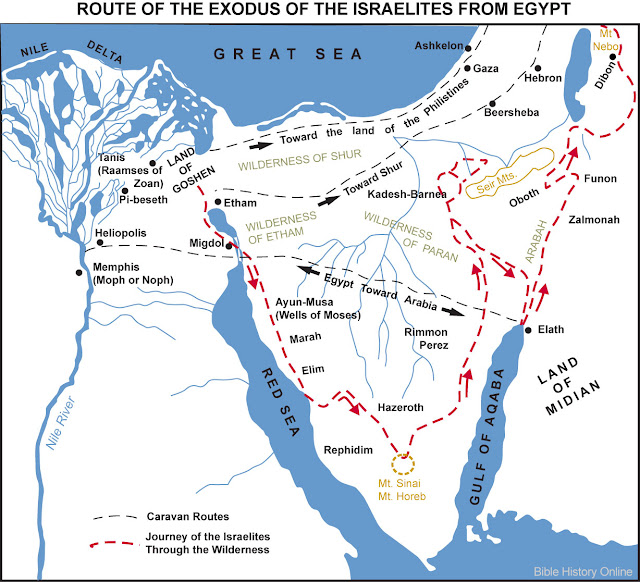
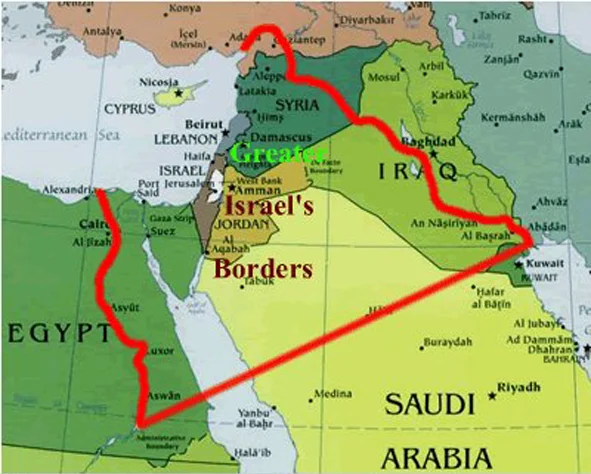
“I am thy shield!” the Lord said, “Unto thy seed have I given this land, from the river [Nile] of Egypt unto the great river, the River Euphrates” (Genesis 15

Exodus 33

1 And the Lord said unto Moses, “Depart and go up hence, thou and the people whom thou hast brought up out of the land of Egypt, unto the land which I swore unto Abraham, to Isaac, and to Jacob, saying, ‘Unto thy seed will I give it.’ 

— the land which I swore unto Abraham, Isaac and to Jacob; saying, unto thy seed will I give it: meaning the land between the two great rivers, which as he had promised with an oath to their fathers to give it to them, he would faithfully observe it, though they were unworthy of such a favour.

And I will send an angel before thee; and I will drive out the Canaanite, the Amorite, and the Hittite and the Perizzite, the Hivite and the Jebusite” — and I will drive out the Canaanite, the Amorite, and the Hittite, the Perizzite, the Hivite, and the Jebusite; who were now the inhabitants of the land, and these he promises drive out, to make way for their possession of it;

— and that “by his hand” as the Targum of Jonathan interprets it, by the hand of the angel. Only six nations are mentioned, though there were seven; the Girgashite is omitted, but added in the Septuagint version.

unto a land flowing with milk and honey. For I will not go up in the midst of thee, for thou art a stiffnecked people, lest I consume thee on the way.” — unto a land flowing with milk and honey; abounding with all the necessaries and good things of life;

— for I will not go up in the midst of thee; lest I consume thee, for “God is a consuming fire” Exodus 32:10; Leviticus 10:2; Hebrews 12:29;

And when the people heard these evil tidings they mourned, and no man put on his ornaments. — when the people heard these evil tidings, they mourned; it was something that these sinful people felt the tidings to be “evil” to shrink from the presence of God;

— his near presence, by day and by night, constantly (Exodus 13:22), and they dreaded a change, which they felt must involve a loss, and one the extent of which they could not measure; “an angel” they thought, is a poor consolation when we are craving for God himself!

For the Lord had said unto Moses, “Say unto the children of Israel, ‘Ye are a stiffnecked people. I will come up into the midst of thee in a moment and consume thee. Therefore now put off thy ornaments from thee, that I may know what to do unto thee.’” — I will come up; that is, If I were to go up for one moment in the midst of thee, I should consume thee;

— therefore now put off thy ornaments from thee; put them aside altogether; show thy penitence by giving up their use; denies them the tokens of his presence they had been blessed with; token of their sorrow the Lord required of his offending people; and mourn for their sin.

— that I may know what to do unto thee; that I may either inflict my judgments, or suspend them, as thou art penitent or impenitent.

And the children of Israel stripped themselves of their ornaments by Mount Horeb. — and the children of Israel stripped themselves of their ornaments; that is, left off their ornaments, ceased to wear them altogether.

And Moses took the tabernacle and pitched it outside the camp, afar off from the camp, and called it the tabernacle of the congregation. And it came to pass that every one who sought the Lord went out unto the tabernacle of the congregation, which was outside the camp. 

— perhaps this tabernacle was a model of the tabernacle that had already been erected, this, a hasty draft from the pattern showed him in the mount, designed for direction to the workmen, and used in the mean time as a tabernacle of meeting between God and Moses about public affairs;

— or, did Moses, with the help of a few hundreds of the Levites among the thousands available, moved the sanctuary and pitched it outside the camp, afar off from the camp; to signify to them that they were unworthy of close proximity;

— the Targum of Jonathan says “the tabernacle he took away from thence” seems like this tabernacle was the original taken away; and pitched outside the camp;

— the King James and Geneva Study Bible versions say “without the camp” such old English usage is misleading; hence better to use the 21st Century King James Version or KJ21.

And it came to pass, when Moses went out unto the tabernacle, that all the people rose up and stood every man at his tent door, and looked after Moses until he had gone into the tabernacle. — when Moses went out; all the people rose up; probably Moses “went out” at set times each day;

— and the people watched for his going, and “rose up,” as a mark of respect and reverence. They felt that he went to the tent mainly to pray for them;

— the Targum of Jonathan says adversely about the people being wicked: “that all the wicked people arose, and stood, every man at the door of his tent, and looked with the evil eye after Mosheh, when he entered the tabernacle.”

And it came to pass, as Moses entered into the tabernacle, the pillar of cloud descended and stood at the door of the tabernacle, and the Lord talked with Moses. — and as Moses entered into the tabernacle, the cloudy pillar descended; that is, from the top of Mount Sinai in which the Lord was;

— and all the people rose up and worshipped, everyman in his tent door; it was awesome sight, so they bowed, not to Moses, for he was gone into the tabernacle out of sight, but a deep fear and adorating bow to the Lord in the pillar of cloud.

“Thou canst not see My face, for there shall no man see Me and live.” 

11 And the Lord spoke unto Moses face to face, as a man speaketh unto his friend. And he returned again into the camp; but his servant Joshua, the son of Nun, a young man, departed not out of the tabernacle.

— face to face, or, mouth to mouth, as Numbers 12:8; not that God hath face or mouth, or that Moses could behold it, which is denied, Exodus 33:20; but the sense is, he spake with him freely and familiarly, plainly, cordially, openly, not by an angel in a dream or vision, as he did to other prophets;

— but his servant Joshua departed not out of the tabernacle; probably Joshua abode there to assist and direct those who resorted thither to seek God in Moses’s absence; and Joshua seems to be appointed for this work rather than Aaron, or any other of the elders, because they had one way or other been guilty of the idolatry; and he was the general of the army at the battle with Amalek;

12 And Moses said unto the Lord, “See, Thou sayest unto me, ‘Bring up this people,’ and Thou hast not let me know whom Thou wilt send with me. Yet Thou hast said, ‘I know thee by name, and thou hast also found grace in My sight.’ 

— I know thee by name; God had shown this knowledge when He called on Moses out of the burning bush (Exodus 3:4), and again, probably, when he “called unto him out of the midst of the cloud” (Exodus 24:16); it implies a very high degree of Divine favour. God “knows by name” only those whom he greatly regards.

13 Now therefore, I pray Thee, if I have found grace in Thy sight, show me now Thy way, that I may know Thee, that I may find grace in Thy sight; and consider that this nation is Thy people.” — shew me now thy way: either the way which he himself would take, the way of his providence in bringing the children of Israel into the land of Canaan;

14 And He said, “My presence shall go with thee, and I will give thee rest.” — my presence shall go with thee; or before thee, both with Moses and before the people; meaning the Angel of his presence he had before promised;

15 And he said unto Him, “If Thy presence go not with me, carry us not up hence. — that is, Let us rather die in the wilderness with thy presence and favour, than go into Canaan without God’s presence;

16 For wherein shall it be known here that I and Thy people have found grace in Thy sight? Is it not in that Thou goest with us? So shall we be separated, I and Thy people, from all the people who are upon the face of the earth.” — and if thou wilt lead the people up to Canaan, consider that we are thine own people, to whom thou must acknowledge thyself as our God.

17 And the Lord said unto Moses, “I will do this thing also that thou hast spoken; for thou hast found grace in My sight, and I know thee by name.” — and I know thee by name; he owns the truth of the thing, on which Moses had formed his plan, and what can be a greater blessing than to partake of the special plan of God, and to be personally known to him;

18 And he said, “I beseech Thee, show me Thy glory.” — Moses repeats, in a more definite form, his request above in verse 13 “show me now Thy way.” He asks to be allowed to see Gods’s glory; but is told in reply that he cannot see this in its fulness;

19 And He said, “I will make all My goodness pass before thee; and I will proclaim the name of the Lord before thee, and will be gracious to whom I will be gracious, and will show mercy on whom I will show mercy.” 

20 And He said, “Thou canst not see My face, for there shall no man see Me and live.” — thou canst not see my face; the full display of his glory, that light inaccessible, before which the angels stand, but which would be insufferable to mortal eyes; this no man can see and live.

21 And the Lord said, “Behold, there is a place by Me, and thou shalt stand upon a rock.

22 And it shall come to pass, while My glory passeth by, that I will put thee in a cleft of the rock, and will cover thee with My hand while I pass by; 

23 and I will take away Mine hand, and thou shalt see My back parts, but My face shall not be seen.” 

MSG

God said, “Look, here is a place right beside me. Put yourself on this rock. When my Glory passes by, I’ll put you in the cleft of the rock and cover you with my hand until I’ve passed by. Then I’ll take my hand away and you’ll see my back. But you won’t see my face.”

Exodus 34

1 And the Lord said unto Moses, “Hew thee two tablets of stone like unto the first, and I will write upon these tablets the words that were in the first tablets which thou brokest. — hew thee two tables; something is always lost by sin, even when it is forgiven. The first tables were “the work of God” (Exodus 32:16). the second were hewn by the hand of Moses.

And be ready in the morning, and come up in the morning unto Mount Sinai, and present thyself there to Me on the top of the mount. — and present thyself there to me on the top of the mount; where the pillar of cloud stood, and near it Moses was to stand and wait to hear what would be said unto him, and to see what would be made to pass before him.

And no man shall come up with thee, neither let any man be seen throughout all the mount; neither let the flocks nor herds feed before that mount.” — neither let the flocks nor herds feed before that mount; or over against it, or rather “near” it; Moses was to be alone, and no one was to be seen in any part of the mount.

And he hewed two tablets of stone like unto the first; and Moses rose up early in the morning and went up unto Mount Sinai, as the Lord had commanded him, and took in his hand the two tablets of stone. —and Moses rose up early in the morning: and went up unto Mount Sinai, as the Lord had commanded him; which was the third time of his going there, and every time he continued forty days and forty nights;

And the Lord descended in the cloud and stood with him there, and proclaimed the name of the Lord. — and the Lord descended in the cloud; the same with the cloudy pillar, which had gone up from the door of the tabernacle, and was on high in the air over the mount, and on which the Lord now descended in it;

And the Lord passed by before him, and proclaimed, “The Lord, the Lord God, merciful and gracious, longsuffering, and abundant in goodness and truth, — the Lord, the Lord God proclaims, “The Lord, the Lord God, merciful and gracious. . . ”

keeping mercy for thousands, forgiving iniquity and transgression and sin, and that will by no means clear the guilty, visiting the iniquity of the fathers upon the children, and upon the children’s children unto the third and to the fourth generation.” 

MSG

So Moses cut two tablets of stone just like the originals. He got up early in the morning and climbed Mount Sinai as God had commanded him, carrying the two tablets of stone. God descended in the cloud and took up his position there beside him and called out the name, God. God passed in front of him and called out,

“God, God, a God of mercy and grace, endlessly patient—so much love, so deeply true—loyal in love for a thousand generations, forgiving iniquity, rebellion, and sin. Still, he doesn’t ignore sin. He holds sons and grandsons responsible for a father’s sins to the third and even fourth generation.”

Targum of Jonathan

And he hewed two tables of stone like the former: and Mosheh arose in the morning and ascended Mount Sinai, as the Lord had instructed him, and took in his hand the two tables of stone. And the Lord made His Shekinah to pass by before his face, and proclaimed,

The Lord, the Lord God, merciful and gracious, long-suffering, and nigh in mercies, abounding to exercise compassion and truth; keeping mercy and bounty for thousands of generations, absolving and remitting guilt, passing by rebellions, and covering sins; pardoning them who convert unto the law, but holding not guiltless in the great day of judgment those who will not convert; visiting the sins of fathers upon rebellious children upon the third and upon the fourth generation.

And Moses made haste, and bowed his head toward the earth and worshiped. — Moses made haste, and bowed his head; as the Divine glory passed before him, Moses bowed his head in adoration, worshipping God, and not daring to look until the glory had gone by.

And he said, “If now I have found grace in Thy sight, O Lord, let my Lord, I pray Thee, go among us, for it is a stiffnecked people; and pardon our iniquity and our sin, and take us for Thine inheritance.” — O Lord, let my Lord, I pray thee, go amongst us;

— as the Lord had signified as if he would not go among them, but leave them to the conduct of a an angel; and Moses had before prayed that his presence or face might go with them;

10 And He said, “Behold, I make a covenant. Before all thy people I will do marvels such as have not been done in all the earth, nor in any nation; and all the people among whom thou art shall see the work of the Lord, for it is a fearsome thing that I will do with thee. 

— for it is a terrible thing that I will do with thee; restrains this to Moses and interprets this of the wonderful shining of the skin of his face, when he came down from the mount, which made the children of Israel afraid to come nigh him;

11 Observe thou that which I command thee this day. Behold, I drive out before thee the Amorite and the Canaanite, and the Hittite and the Perizzite, and the Hivite and the Jebusite. 

— the Amorite, and the Canaanite, and the Hittite, and the Perizzite, and the Hivite, and the Jebusite; six nations are only mentioned, though there were seven, the Girgashites being omitted, because either they left the land before; or because they were subjugated by the others; but they are retained in the Septuagint version.

12 Take heed to thyself, lest thou make a covenant with the inhabitants of the land whither thou goest, lest it be for a snare in the midst of thee. — lest it be for a snare in the midst of thee; be the means of drawing them into the same sinful practices with themselves, especially into idolatrous ones, and so of bringing ruin and destruction on them.

13 But ye shall destroy their altars, break their images, and cut down their Asherah poles. — and cut down their groves; which were clusters of trees, where they had their temples and their idols, and did service to them, and where, besides idolatry, many impurities were committed.

14 For thou shalt worship no other god; for the Lord, whose name is Jealous, is a jealous God, — whose name is Jealous; who hath made himself known by, and glories in that name; the jealous God, who cannot endure any competitor or corrival; whereas the false and puny gods of the heathens were contented with multitudes of partners.

15 lest thou make a covenant with the inhabitants of the land and they go a whoring after their gods, and do sacrifice unto their gods, and one call thee and thou eat of his sacrifice, — and one call thee, and thou eat of his sacrifice; invite to eat of what remained, that was offered to the idol: hence it appears, that having feasts at sacrifices, and eating things offered to idols in a festival way, are very ancient practices;

16 and thou take their daughters unto thy sons, and their daughters go a whoring after their gods, and make thy sons go a whoring after their gods. — and make thy sons go a whoring after their gods; by the means of tempting and drawing them into idolatrous practices, as the wives of Solomon were a snare to him.

17 “Thou shalt make thee no molten gods. — thou shalt make thee no molten gods; it is just possible that the Israelites when they worshipped the golden calf may have conceived that they were not breaking the second commandment, which forbade the adoration of any “graven image.” An express law was therefore made against “molten images.”

18 “The Feast of Unleavened Bread shalt thou keep. Seven days thou shalt eat unleavened bread, as I commanded thee, in the time of the month of Abib; for in the month of Abib thou camest out from Egypt. — the feast of unleavened bread shalt thou keep; which was instituted at the time of their coming out of Egypt, and on that account, and then observed, Exodus 12:15 and afterwards repeated, and the month expressed in which they were to keep it;

19 “All that openeth the womb is Mine, and every firstling among thy cattle, whether ox or sheep, that is male. — all that openeth “the womb” is mine, and every firstling among thy cattle, whether ox or sheep, that is male, shall be sanctified, and set apart for his use;

20 But the firstling of an ass thou shalt redeem with a lamb; and if thou redeem him not, then shalt thou break his neck. All the firstborn of thy sons thou shalt redeem. And none shall appear before Me empty. — and none shall appear before me empty; at the grand festivals, the Passover, Pentecost, and Tabernacles;

21 “Six days thou shalt work, but on the seventh day thou shalt rest; in plowing time and in harvest thou shalt rest. — in earing and in harvest thou shall rest; that is, in the time of ploughing, and in the time of reaping and gathering in the harvest;

22 And thou shalt observe the Feast of Weeks of the firstfruits of wheat harvest, and the Feast of Ingathering at the year’s end. — the feast of weeks; called in Exodus 23:16, “the feast of harvest,” and in the New Testament “the day of Pentecost”

23 Thrice in the year shall all your menchildren appear before the Lord God, the God of Israel. — the God of Israel; who had chosen them to be his special people, had redeemed them out of Egypt, and done great things for them since; had made a covenant with them.

24 For I will cast out the nations before thee and enlarge thy borders; neither shall any man desire thy land when thou shalt go up to appear before the Lord thy God thrice in the year. — neither shall any man desire thy land; I will not only tie their hands, that they shall make no invasion upon you, but I will take off their thoughts and affections from such an enterprise, which it was very easy for God to effect many ways.

25 “Thou shalt not offer the blood of My sacrifice with leaven, neither shall the sacrifice of the Feast of the Passover be left until the morning. — thou shall not offer the blood of my sacrifice with leaven; that is, not to kill the passover while there was any leaven in their houses; so the Targum of Jonathan says “You shall not sacrifice the victim of My passover before you have done away with leaven;”

26 The first of the firstfruits of thy land thou shalt bring unto the house of the Lord thy God. Thou shalt not boil a kid in his mother’s milk.” — the first of the firstfruits of thy land thou shalt bring; this, and another law in this verse, concerning not seething a kid in his mother’s milk, are repeated from Exodus 23:19.

27 And the Lord said unto Moses, “Write thou these words, for according to the tenor of these words I have made a covenant with thee and with Israel.” — write for thee these words, that is, put them in writing for thine own use and the use of thy people.

God wrote the two tablets of testimony in Paleo-Hebrew, not square script Hebrew

29 And it came to pass, when Moses came down from Mount Sinai with the two tablets of testimony in Moses’ hand, when he came down from the mount, that Moses knew not that the skin of his face shone while he talked with Him. 

— the skin of his face shone, while he talked with him: the Targum of Jonathan is, “Mosheh knew not that the visage (form) of his face shone with the splendour which had come upon him from the brightness of the glory of the Lord’s Shekinah in the time of His speaking with him.”

30 And when Aaron and all the children of Israel saw Moses, behold, the skin of his face shone, and they were afraid to come nigh him. — behold, the skin of Moses’ face shone; darted out rays of light and glory all around him, Aaron and the people were afraid to go near Moses when they saw the brightness of his face.

— they were afraid, their fear arose from a sense of guilt; the beaming radiance of his countenance made him appear to their awe-struck consciences of a flaming sword from heaven.

31 And Moses called unto them, and Aaron and all the rulers of the congregation returned unto him; and Moses talked with them. — and Moses talked with them; after he had put a vail on his face, of which there is an account in the following verses;

— he talked with them friendly, and told them all that had happened to him in the mount; what a glorious sight he had been indulged with; what a proclamation of the grace and goodness of God had been made to him; and what laws and ordinances God had enjoined him and their observance.

Later the two tablets of testimony were placed in the Ark of the Covenant

32 And afterward all the children of Israel came nigh, and he gave them in commandments all that the Lord had spoken with him on Mount Sinai. 

— and afterward all the children of Israel came near; that is, after Aaron and the rulers had had a conversation with Moses, then the whole body of the people by turns were admitted to come before him, and hear the laws of God from him;

33 And until Moses had done speaking with them, he put a veil on his face. — and till Moses had finished speaking with them, he had a veil over his face.

34 But when Moses went in before the Lord to speak with Him, he took the veil off until he came out. And he came out, and spoke unto the children of Israel that which he was commanded. 

— and he came out, and spake unto the children of Israel that which he was commanded; out of the tabernacle with the law and commands now given, for these he had already declared;

— but after times, and all such times when he went in to the Lord to inquire of him his mind and will concerning certain things, in which the people wanted information, when, upon his return, he acquainted them with whatsoever the Lord ordered to be done.

35 And the children of Israel saw the face of Moses, that the skin of Moses’ face shone; and Moses put the veil upon his face again, until he went in to speak with Him. 

— and Moses put the veil upon his face again, until he went in to speak with him; this he did from time to time, when he came out from the Lord he put on his veil, and when he went in again, he takes it off.

MSG

When Moses finished speaking with them, he put a veil over his face, but when he went into the presence of God to speak with him, he removed the veil until he came out.

When he came out and told the Israelites what he had been commanded, they would see Moses’ face, its skin glowing, and then he would again put the veil on his face until he went back in to speak with God.

The “Leading 200 Science Cities” list

•December 1, 2023 • Leave a Comment

Chinese cities soar in science ranking while US and European rivals drop

South China Morning Post • November 24, 2023

Beijing is once again world’s top city for high-quality research output according to annual Nature Index, while Shanghai comes in third place

The other 18 Chinese metro areas among the top 50 jump up the list, with up-and-comer Hefei beating out London and Los Angeles

Chinese cities are rapidly growing in high-quality scientific research while American and European rivals are dropping, according to a global ranking of top science cities by Nature Index released on Wednesday.

The “Leading 200 Science Cities” list – maintained by the academic journal Nature – tracks research output by measuring contributions to academic articles published in 82 of the world’s most influential natural science journals from 2015 to 2022.

A total of 32 cities in mainland China made the 2023 list, and almost all of them climbed up the rankings compared to their positions on last year’s list, with only one exception: Taiyuan, an inland city located in central China.

Five out of the top 10 cities on the 2023 list are in mainland China, and Beijing once again ranks as the top science city in the world.

The top five cities – Beijing, New York, Shanghai, Boston, and the San Francisco Bay Area – remained unchanged.

But there were some notable shifts among the rest of the top-ranked cities. The other 18 mainland Chinese cities that made the top 50 jumped to a higher ranking compared to last year, while most major cities outside China, including Tokyo, Paris and London, fell. The only exception was Seoul, which rose two spots.

The Nature Index measures two different scores – “count” and “share.” A city receives a count value of one for each article with at least one author affiliated with an institution in that city. The sum of these values is the city’s count score.

For the share score, each article is assigned a value of one, which is split equally among all authors. For instance, for an article with 10 authors, each author receives a share value of 0.1. Each city’s share score is calculated by adding up the share values of the authors in that city.

According to both indicators, Beijing overwhelmingly outperformed runner-up New York. The Chinese capital’s share score was 3,734.62 and its count score was 7,841 in the most recent ranking, whereas the figures for New York were 1,924.53 and 4,693 respectively.

A growing number of Chinese cities showed strong upwards momentum compared to the previous year, edging out other international research hubs.

For instance, the eastern city of Nanjing moved from eighth to sixth place, surpassing both Baltimore-Washington and the Tokyo metropolitan area. The southern metropolis of Guangzhou climbed from 10th to eighth place, displacing Paris, which fell from the ninth to the 11th spot.

The city of Hefei in southeast China surpassed both Los Angeles and London in its share score – the number that ultimately determines the Nature Index rankings – rising by three places to 13th place on this year’s list.

When Nature first launched the global science city ranking in 2018, just 10 Chinese cities ranked among the top 50. Six years later, that number has already doubled.

“Beijing and other Asian cities are rapidly rising in the field of science, technology and innovation,” said Zeng Rong, vice-president of Tsinghua University in Beijing, in an interview with state news agency Xinhua on Wednesday. “There is a greater need for them to play an important role in international cooperation in the field.”

Major Chinese cities have increasingly poured money into science and technology, which they consider to be one of the crucial driving forces behind urban development.

For example, Hefei’s financial investment in science and technology increased from 4 per cent of the city’s general public expenditure to 14.2 per cent in the decade from 2012 to 2022.

The number of national hi-tech enterprises in the city grew from 615 to 4,578 over the same period.

“We are the city that is most willing to invest in technology,” Hefei officials were quoted as saying by local media last year.

According to the latest official data, Hefei is now home to 12 large scientific facilities, and four national key laboratories have been approved this year, which will bring the city’s total to six.

Hefei is also home to the University of Science and Technology of China (USTC), where scientists like Pan Jianwei are leading China’s research and development in quantum technology. The university’s laboratories have led to the establishment of several hi-tech firms in the city.

In another Nature Index ranking released in June, USTC ranked fourth among institutions globally, just behind Stanford University, in terms of high-quality scientific research output.

RankCity/Metro areaCountry
1Beijing China
2New York United States
3Shanghai China
4Boston United States
5San Francisco Bay United States
6Baltimore-Washington United States
7Tokyo Japan
8Nanjing China
9Paris France
10Guangzhou China
11Wuhan China
12Los Angeles United States
13London United Kingdom
14Seoul South Korea
15Chicago United States
16Hefei China
17Zürich  Switzerland
18Singapore Singapore
19Hangzhou China
20Tianjin China
21San Diego United States
22Cambridge United Kingdom
23Hong Kong China
24Munich Germany
25Philadelphia United States
26Oxford United Kingdom
27Berlin Germany
28Shenzhen China
29Xi’an China
30Chengdu China
31Houston United States
32Seattle United States
33Melbourne Australia
34Changsha China
35Changchun China
36Jinan China
37Atlanta United States
38Ann Arbor United States
39Toronto Canada
40Sydney Australia
41Daejeon South Korea
42Lausanne  Switzerland
43Kyoto Japan
44Ithaca United States
45Barcelona Spain
46Copenhagen Denmark
47Moscow Russia
48Suzhou China
49Dalian China
50Fuzhou China
51Chongqing China
52Madrid Spain
53Osaka Japan
54Stockholm Sweden
55Montreal Canada
56Dallas–Fort Worth United States
57Tsukuba Japan
58Vienna Austria
59Taipei Taiwan
60St Louis United States
61Boulder United States
62Austin United States
63Xiamen China
64Pittsburgh United States
65Heidelberg Germany
66Urbana United States
67Lanzhou China
68Qingdao China
69Nagoya Japan
70Brisbane Australia
71Vancouver Canada
72Dresden Germany
73Amsterdam Netherlands
74Minneapolis–Saint Paul United States
75Madison United States
76Göttingen Germany
77Durham United States
78State College United States
79Hamburg Germany
80Milan Italy
81Rehovot Israel
82Santa Barbara United States
83Edinburgh United Kingdom
84Chapel Hill United States
85Harbin China
86Geneva  Switzerland
87Grenoble France
88Bengaluru India
89Leuven Belgium
90Münster Germany
91Manchester United Kingdom
92Davis United States
93Rome Italy
94Irvine United States
95Bristol United Kingdom
96Zhengzhou China
97Utrecht Netherlands
98College Station United States
99Jerusalem Israel
100Tel Aviv Israel
From Wikipedia: The top 100 cities and metropolitan areas with the highest share of articles published in scientific journals in 2021 according to the Nature Index 2022

2022 Statistics: China 24; US 28; Germany 7; UK 6; Japan 5; Switzerland 3; Australia 3; Canada 3; Israel 3; Netherland 2; France 2; Spain 2; Italy 2; South Korea 2; Belgium 1; Sweden 1; Denmark 1; Austria 1; Singapore 1; Taiwan 1; Russia 1; India 1

China’s Fujian carrier flexes tech race

•November 30, 2023 • Leave a Comment

China’s Fujian carrier flexes next-gen launch tech

China’s latest aircraft carrier is testing an advanced electromagnetic launch system, marking a great leap forward for its naval power projection

AsiaTimes by Gabriel Honrada • November 28, 2023 // The EurAsian Times

China’s Type 003 Fujian aircraft carrier has commenced testing its state-of-the-art electromagnetic catapults for launching jet fighters, marking a new era in Chinese naval power.

The Chinese carrier displaces over 80,000 tons, measures approximately 316 meters in length and can carry 70 aircraft including J-15 fighters and Z-9C anti-submarine helicopters.

The Chinese aircraft carrier Fujian, in a new era of Chinese naval power

This month, Naval News reported that China’s Type 003 Fujian aircraft carrier has started testing its electromagnetic aircraft launch system (EMALS), a significant upgrade from traditional steam catapults which use steam piped from the ship’s turbines to launch aircraft.

Electromagnetic catapults can launch heavier aircraft, meaning more types can be launched from a carrier while each fighter aircraft can carry more fuel and weapons. It is also said to be gentler on the jet airframes, reducing maintenance downtime.

Naval News shows footage from social media with the carrier conducting dead load launch tests, a standard procedure for carriers equipped with catapults. The source mentions this testing phase involves launching test vehicles from the carrier’s catapults to validate their functionality.

It notes that the Fujian was observed moving away from its berth, sparking speculation about an imminent sea trial linked to the catapult testing. However, Naval News says the timeframe for further testing remains uncertain but a sea trial may happen shortly.

The Naval News report notes that the Fujian represents a significant advancement for the People’s Liberation Army-Navy (PLA-N) as the first Chinese carrier equipped with EMALS and featuring several technological firsts.

The US Navy’s USS Gerald R Ford supercarrier is now plying in the Mediterranean

It says the Fujian’s development, construction and testing phases are being closely monitored with frequent updates shared through overflight and satellite imagery on social media.

Naval News compares the Fujian with the US Navy’s USS Gerald R Ford (CVN-78), which is also equipped with EMALS. Despite the similarities, however, the Chinese system differs technically from the American EMALS.

The report says that the USS Gerald R Ford’s testing timelines and challenges might only provide a broad reference for Fujian’s progress as the Chinese carrier faces unique challenges.

The USS Gerald R Ford experienced multiple delays before entering service linked to constant redesigns and rebuilds from incorporating multiple advanced technologies on a carrier for the first time, such as the EMALS, Advanced Arresting Gear (AAG) and Advanced Weapon Elevator (AWE).

The Fujian, the first PLA-N carrier of its size and capabilities, began construction some time before 2018 and was launched in June 2022. It is expected to undergo extensive trials and testing, potentially leading to commissioning in 2025.

China’s carrier fleet is set for rapid expansion. In a June 2023 article for Aviation Week Network, Bradley Perrett notes that the Fujian’s successful sea trials would pave the way for a fourth Chinese nuclear-powered carrier and up to six carriers by 2040. Perrett also predicts that China’s shipborne fighter numbers will quadruple over the coming decade.

Perrett says Fujian took around six years to construct while the Shandong was completed in just 4.5 years, although it was not put into operation until 1.6 years later.

The Fujian is technically more advanced than the other Chinese carriers

He mentions China could have five carriers by 2030 if it starts building fourth and fifth ships soon, possibly by next year. Perrett notes that one of the upcoming carriers could be made by Dalian Shipbuilding, the shipyard in northeast China that constructed the Liaoning and Shandong. He suggests Shanghai Jiangnan, Fujian’s builder, could build the other simultaneously.

China’s first carrier, Liaoning, is based in Qingdao, East China’s Shandong Province, near the East China Sea, Yellow Sea, and Bohai Sea. The second carrier, Shandong, is based in Sanya, South China’s Hainan Province, near the South China Sea. The homeport of Fujian is not yet known.

China is also reportedly exploring the acquisition of more nuclear-powered carriers, a development that would eliminate the requirement for frequent refueling, enhancing the carrier’s operational endurance and autonomy.

Exodus (31-32)

•November 30, 2023 • Leave a Comment

~~~~

Q. Could one unexpected day the Jews bring out the Ark of the Covenant and cause both the Dome of the Rock and the Al-Aqsa Mosque to collapse?

Exodus 31

1 And the Lord spoke unto Moses, saying,

“See, I have called by name Bezaleel the son of Uri, the son of Hur, of the tribe of Judah. — I have called by name. God “calls by name” only those whom he appoints to some high office, as Moses (Exodus 3:4; Exodus 33:12), Cyrus (Isaiah 45:3, 4), and here Bezaleel and Aholiab;

God raise up Bezaleel and Aholiab for the crafting of his vessels and edifices

And I have filled him with the Spirit of God, in wisdom and in understanding and in knowledge and in all manner of workmanship, — I have filled him with the spirit of God; wisdom, understanding and knowledge; and in all manner of artistic workmanship;

to devise skillful works: to work in gold and in silver and in brass, — to be skillful goldsmiths or brasiers;

and in cutting of stones to set them, and in carving of timber, to work in all manner of workmanship. — to be a first-class artisan, competent to take charge of both the plain and ornamental work, which the building of any sacred edifice required;

And I, behold, I have given with him Aholiab, the son of Ahisamach, of the tribe of Dan; and in the hearts of all who are wisehearted I have put wisdom, that they may make all that I have commanded thee: — Aholiab, of the tribe of Dan; to be a partner with Bezaleel, as Moses and Aaron, Joshua and Zerubbabel,

the tabernacle of the congregation, and the ark of the Testimony and the mercy seat that is thereupon, and all the furniture of the tabernacle,

and the table and his furniture, and the pure candlestick with all his furniture, and the altar of incense,

and the altar of burnt offering with all his furniture, and the laver and his foot,

10 and the clothes of service, and the holy garments for Aaron the priest and the garments of his sons to minister in the priest’s office,

11 and the anointing oil and sweet incense for the holy place. According to all that I have commanded thee shall they do.”

13 “Speak thou also unto the children of Israel, saying, ‘Verily My Sabbaths ye shall keep; for it is a sign between Me and you throughout your generations, that ye may know that I am the Lord who doth sanctify you. — it is a sign between me and you; throughout your generations; a token of the covenant between them, of his being their God and they his people in a peculiar sense;

— one which no other nations of the world observe; of his sanctifying and separating them from all other people; for this was not a sign between him and other nations, but between him and the people of Israel only; and was to be observed throughout their ages;

14 Ye shall keep the Sabbath therefore, for it is holy unto you. Every one who defileth it shall surely be put to death; for whosoever doeth any work therein, that soul shall be cut off from among his people. — for it is holy unto you; a day that was set apart of God for holy exercises, and by doing any servile work upon it, or not observing it in a religious way, shall surely be put to death;

— every one that defileth it shall surely be put to death; this is a serious enactment, and must be regarded in conjunction with the dignity attached to Sabbath observance by its having become the special covenant sign between God and His people;

15 Six days may work be done, but on the seventh is the Sabbath of rest, holy to the Lord. Whosoever doeth any work on the Sabbath day, he shall surely be put to death.

— but in the seventh is the sabbath of rest; from worldly labour, and was typical of spiritual rest here, and holy to the Lord; separated from other days, and entirely devoted to the worship and service of God, and to be kept holy to the Lord in all holy and religious exercises, as hearing and studying the word, and praying;

16 Therefore the children of Israel shall keep the Sabbath, to observe the Sabbath throughout their generations for a perpetual covenant. — for a perpetual covenant, or by a perpetual covenant, or it is a perpetual covenant, that is, not to be obsolete but a perpetual agreement.

17 It is a sign between Me and the children of Israel for ever; for in six days the Lord made heaven and earth, and on the seventh day He rested and was refreshed.’” — t is a sign, repeated for emphasis as a sign of the covenant between God and Israel;

18 And He gave unto Moses, when He had made an end of communing with him upon Mount Sinai, two tablets of testimony, tablets of stone, written with the finger of God. — written with the finger of God, that is, by God himself, and not by an angel; but with the power or Spirit of God;

The two tablets of testimony, tablets of stone, written with the finger of God

Exodus 32

1 And when the people saw that Moses delayed to come down out of the mount, the people gathered themselves together unto Aaron and said unto him, “Arise, make us gods which shall go before us; for as for this Moses, the man who brought us up out of the land of Egypt, we know not what has become of him.”

— how ridiculous the assertion that “the people” did not know what had become of Moses! They knew that he was up there with God. The elders, Aaron, Joshua and Hur, would have told them that; the fire on the mount would have burned in on all minds the confirmation. They were just rebellious!

And Aaron said unto them, “Break off the golden earrings which are in the ears of your wives, of your sons and of your daughters, and bring them unto me.” — Aaron’s compliance just a reflection of his cowardice; he knew as well as what he should have said, but, like many another man in influential position, when beset by popular cries, he was frightened, and yielded when he should have ‘set his face like a flint.’

And all the people broke off the golden earrings which were in their ears, and brought them unto Aaron. — all the people brake off the golden earrings; Aaron had miscalculated the strength of the people’s fanaticism; ot the slightest resistance was offered to his requirement. “All the people,” with one accord, surrendered their earrings ready for idol worship.

And he received them from their hand, and fashioned it with an engraving tool after he had made it a molten calf; and they said, “These are thy gods, O Israel, which brought thee up out of the land of Egypt!” — a molten calf; it has been usual to regard the selection of the “calf” form for the image as due to Egyptian influences;

— a sacred bull, called Apis, was worshipped at Memphis, and another, called Mnevis, at Heliopolis, both being regarded as actual incarnate deities.

And when Aaron saw it, he built an altar before it; and Aaron made proclamation and said, “Tomorrow is a feast to the Lord.” — and when Aaron saw the molten calf, he made proclamation, “tomorrow is a feast to the Lord;”

— the Targums of Jonathan and Jerusalem paraphrase it, “and Aaron saw Hur slain before him,” for reproving them of their idolatry, that is, Aaron, fearing they would also take away his life if he opposed them, he quickly grant his approval of idol worship;

And they rose up early on the morrow, and offered burnt offerings, and brought peace offerings; and the people sat down to eat and to drink, and rose up to play. — they rose up early; to show their zeal these idolaters began early in the morning, and offered burnt-offerings; and to play; to dance and sing, as was done by the Egyptians in the worship of their Apis or Ox;

And the Lord said unto Moses, “Go, get thee down; for thy people which thou broughtest out of the land of Egypt have corrupted themselves. — the Lord said unto Moses, Go, get thee down; Moses was, of course, wholly ignorant of all that had occurred in the camp. The thick cloud which covered the top of Sinai had prevented his seeing what occurred in the plain below;

— for thy people which thou broughtest out of the land of Egypt have corrupted themselves; their works, their ways and their manners; their minds, the imaginations of their hearts, were first corrupted, and this led on to a corruption of actions, and defiled themselves yet more and more, and made themselves abominable in the sight of God;

They have turned aside quickly out of the way which I commanded them. They have made themselves a molten calf and have worshiped it, and have sacrificed thereunto and said, ‘These are thy gods, O Israel, which have brought thee up out of the land of Egypt!’”

— they have turned aside quickly, quickly after the law was given them, and they had promised to obey it; quickly after God had done such great things for them, and declared his kind intentions to do greater.

And the Lord said unto Moses, “I have seen this people, and behold, it is a stiffnecked people. — it is a stiff-necked people; it is generally explained as “obstinate,” but rather means “perverse,” the metaphor being taken from the horse that stiffens his neck against the pull of the rein, and will not be guided by the rider.

10 Now therefore let Me alone, that My wrath may wax hot against them, and that I may consume them; and I will make of thee a great nation.” — now, therefore, let me alone, the Targum of Jonathan says, “and now leave off thy prayer, and do not cry for them before me;” as the Prophet Jeremiah was often bid not to pray for this people in his time, which was a token of God’s great displeasure with them;

— full text from Targum of Jonathan

And now, cease from thy prayer, and cry not for them before Me; for I will let My anger burn like strong fire against them, and consume them, and I will make thee a great people.

11 And Moses besought the Lord his God and said, “Lord, why doth Thy wrath wax hot against Thy people, whom Thou hast brought forth out of the land of Egypt with great power and with a mighty hand? — and Moses besought the Lord his God; if God would not be called the God of Israel, yet he hoped he might address him as his own God.

12 Why should the Egyptians speak and say, ‘For mischief did He bring them out, to slay them in the mountains and to consume them from the face of the earth’? Turn from Thy fierce wrath, and repent of this evil against Thy people.

— turn from thy fierce wrath, and repent of this evil against thy people; not that there is any turning or any change of his mind, or any such passions and affections in him as expressed here; but this is said after the manner of men concerning him, when he alters the course of his dealings with men according to his unalterable will.

13 Remember Abraham, Isaac, and Israel, Thy servants to whom Thou sworest by Thine own self and saidst unto them, ‘I will multiply your seed as the stars of heaven, and all this land that I have spoken of will I give unto your seed, and they shall inherit it for ever.’” — to whom thou swarest by thine own self; which he did, because he could swear by no greater; and for the confirmation of his covenant and promise, Genesis 22:16.

14 And the Lord repented of the evil which He thought to do unto His people. — and the Lord repented of the evil which he thought to do unto his people; he did not do what he threatened to do, but a change of mind and did what Moses desired he would;

15 And Moses turned and went down from the mount, and the two tablets of the testimony were in his hand. The tablets were written on both their sides; on the one side and on the other were they written. — Moses carries them in both hands, being of stone; Targum of Jonathan says “and the two tables of the testimony were in his hands,”

16 And the tablets were the work of God, and the writing was the writing of God, graven upon the tablets. — and the tables were the work of God; not of angels or men; the stones were made and formed by God into the shape they were; and the writing was the writing of God, graven upon the tables; 

17 And when Joshua heard the noise of the people as they shouted, he said unto Moses, “There is a noise of war in the camp.” — Joshua had waited upon the middle of the mount for Moses, and so knew neither what the people had done, nor heard what God had said to Moses;

— and when Joshua heard the noise of the people, as they shouted; dancing about the calf: when Moses went up into the mount, Joshua went with him, and tarried in a middle part of the mount all the forty days until he returned;

18 And Moses said, “It is not the voice of them that shout for mastery, neither is it the voice of them that cry for being overcome; but the noise of them that sing do I hear.” — but the noise of them that sing do I hear; as at a merry entertainment; Moses, who knew what the children of Israel had done, and what they were about, could better judge of the nature of the sound he heard than Joshua could, who knew nothing of what was transacting;

19 And it came to pass, as soon as he came nigh unto the camp, that he saw the calf and the dancing; and Moses’ anger waxed hot, and he cast the tablets out of his hands and broke them beneath the mount. — and he cast the tables out of his hands, and brake them beneath the mount of Sinai; at the foot of it:

— he brought the tables, told them what they were, and writing them with his own fingers, engraving them himself on such tables of stone; and then broke them to pieces, to denote that they had broken these laws, and deserved to be broke in pieces and destroyed themselves; and this he did before their eyes;

20 And he took the calf which they had made and burned it in the fire and ground it to powder, and strewed it upon the water and made the children of Israel drink of it. — ground it to powder; melted it either into one great mass, or rather into divers little fragments, which afterwards by a the or other instruments he, by the help of many others, might soon grind to powder, or dust of gold.

21 And Moses said unto Aaron, “What did this people unto thee, that thou hast brought so great a sin upon them?” — and Moses said unto Aaron; having destroyed the calf, and thereby expressed his abhorrence of their idolatry, he examines the cause and reason of it; and begins with Aaron, though his own brother, with whom he had committed the government of the people during his absence; —

22 And Aaron said, “Let not the anger of my lord wax hot. Thou knowest the people, that they are set on mischief. — and Aaron said, Let not the anger of my lord wax hot; Aaron cuts a poor figure, making a shuffling excuse and betraying more dread of the anger of Moses than of the Lord.

23 For they said unto me, ‘Make us gods which shall go before us; for as for this Moses, the man who brought us up out of the land of Egypt, we know not what has become of him.’ — we wot not what is become of him; their words because they carried in them some reflection on Moses for staying so long in the mount;

— and as if that contributed much to this affair, and which put the people on forming such a scheme, they concluding he must be dead by then, as the Targum of Jonathan says, be consumed in the mountain, by the flaming fire from before the Lord.

24 And I said unto them, ‘Whosoever hath any gold, let them break it off.’ So they gave it to me. Then I cast it into the fire, and there came out this calf.” — and there came out this calf; he speaks of it as if the gold became in the form of a calf without any design, or without using any methods to put it in this form; as if done by the work of magic;

— the Targum of Jonathan says,

And I said to them, Whoever hath gold, let him deliver and give it to me; and I cast it into the fire, and Satana entered into it, and there came out of it the similitude of this calf!

25 And when Moses saw that the people were naked (for Aaron had made them naked unto their shame among their enemies), — Moses saw that the people were naked; the obvious meaning of the word פרע, parua (unrestrained) used here; it is the sense they were stripped of their ornament and armour, besides their jewels; and gotten out of control;

26 then Moses stood in the gate of the camp and said, “Who is on the Lord’S side? Let him come unto me.” And all the sons of Levi gathered themselves together unto him. — the tribe of Levi, Moses’ own tribe, now distinguished itself by immediately returning to its allegiance and obeying the call to fight on the side of Moses;

27 And he said unto them, “Thus saith the Lord God of Israel: ‘Put every man his sword by his side, and go in and out from gate to gate throughout the camp, and slay every man his brother, and every man his companion, and every man his neighbor.’”

— and go in and out from gate to gate throughout the camp; not into the tents, where good men might be bemoaning their sins, but throughout the streets, where many were loitering, they showed no sign of any remorse by these idolaters;

— and slay every man his brother, and every man his companion, and every man his neighbour; who were idolaters; none were to be spared on account of relation, friendship or acquaintance.

28 And the children of Levi did according to the word of Moses, and there fell of the people that day about three thousand men. — about 3000 men fell by their sword on that day; and if Levi stood the test, how did Aaron escape his penalty?

— the Levites were to slay those of this wickedness; yet escaped being executed but those who openly stood forth; those who persisted in shouting and dancing, after night were dying, even into the morning; these sinners feel secure and jovial in their sin.

29 For Moses had said, “Consecrate yourselves today to the Lord, even every man upon his son and upon his brother, that He may bestow upon you a blessing this day.” — consecrate yourselves; that is, offer a sacrifice, “and make atonement for yourselves before the Lord,” as the Targum of Jonathan says;

30 And it came to pass on the morrow that Moses said unto the people, “Ye have sinned a great sin. And now I will go up unto the Lord. Perhaps I shall make an atonement for your sin.” — and I will go up unto the Lord: on the top of Mount Sinai: and I shall make atonement for your sin; not by any sacrifice offered, but to intercede on their behalf for God to forgive their sin;

God wrote them with his fingers in Paleo-Hebrew, not square script Hebrew

31 And Moses returned unto the Lord and said, “Oh, this people have sinned a great sin, and have made themselves gods of gold. — Moses said unto the people, Ye have sinned a great sin; he had labored to show the people the heinous nature of their sin, and to bring them to repentance.

32 Yet now, if Thou wilt forgive their sin — and if not, blot me, I pray Thee, out of Thy book which Thou hast written!” — as a true mediator of his people, Moses was ready to stake his own life for the deliverance of the nation, and not just to live before God himself.

33 And the Lord said unto Moses, “Whosoever hath sinned against Me, him will I blot out of My book. — whosoever hath sinned against me, him will I blot out: Ezekiel 18:4; “the soul that sinneth, it shall die.”

34 Therefore now go, lead the people unto the place of which I have spoken unto thee; behold, Mine angel shall go before thee. Nevertheless in the day when I visit I will visit their sin upon them.”

— my angel shall go before thee; the promise is, as nearly as possible, a repetition of the original one, “Behold, I send an angel before thee, to keep thee in the way, and to bring thee into the place which I have prepared” Exodus 23:20;

35 And the Lord plagued the people, because they made the calf which Aaron made. — the Lord plagued the people, because they made the calf; no immediate judgements were inflicted, but this early lapse into idolatry was always mentioned as an aggravation of their subsequent apostasies;

— the Lord plagued the people; I will visit their sin upon them; when I shall punish them for their other sins, which I foresee they will commit; and I will remember and punish this also.

“Who are the children of Esau?” (Genesis 36)

•November 29, 2023 • Leave a Comment

Who is Edom — that name Edom perpetuated the remembrance of the foolish bargain Esau made when he sold his birthright for that red pottage.

~~~~

However the book of Obadiah identifies the posterity of Esau today as Spain.

Genesis 36

1 Now these are the generations of Esau, who is Edom. — it seem not only that Esau had lost his birthrights, but his name as well;

— now Edom is used in place of the name Esau, which he received at his birth, because the former became the national designation of his descendants; the Edomites; others are Idumeans, Hasmonean; and from his famed grandson, Amalek, the Amalekites;

— these are the generations of Esau; who has the honour of having an account of his posterity recorded, for the sake of his progenitors, Abraham and Isaac, and because the Edomites, his descendants, were neighbours to Israel, and their genealogy would be of use to cast light on the following relations of what passed between them at latter years.

Esau took his wives from the daughters of Canaan: Adah the daughter of Elon the Hittite; and Aholibamah the daughter of Anah, the daughter of Zibeon the Hivite;

— the names of Esau’s three wives differ from those given in the previous accounts (Genesis 26:34: Judith and Basemath both are Hittites; and Genesis 28:9: Mahalath the daughter of Ishmael), and in one instance the father’s name as well;

— perhaps Esau might have five wives:

(1) Adah, the daughter of Elon the Hittite;
(2) Aholibamah, the daughter of Anah, the daughter of Zibeon the Hivite;
(3) Basemath, the daughter of Ishmael, and sister of Nebaioth;
(4) Judith, the daughter of Beeri the Hittite;
(5) Mahalath, the daughter of Ishmael, and sister of Nebaioth;

— unlike Jacob, who went back and took wives from his kinsmen, Esau took wives from the local ‘natives’ which displeased both his parents, Isaac and Rebecca. Esau’s descendents are a mixtures of Canaanites, Hittites, Hivites, known to be among the posterity of Ham; and Ishmaelites, a mix with the Egyptians;

— further, according to the Midrash and Aggadah, Esau’s first two wives, Adah and Judith, are described as adulterous and idolatrous.

and Basemath, Ishmael’s daughter, sister of Nebajoth. — Basemath was listed as a Hittite in Genesis 26:34;

And Adah bore to Esau, Eliphaz; and Basemath bore Reuel;

and Aholibamah bore Jeush and Jaalam and Korah. These are the sons of Esau, who were born unto him in the land of Canaan. — these are the sons of Esau, who were born unto him in the land of Canaan; perhaps his fourth and fifth wives, their sons were born after they left Canaan.

Rashi: Oholibamah bore…and Korah: This Korah was illegitimate. He was the son of Eliphaz, who had been intimate with his father’s wife, Oholibamah, the wife of Esau. This is evidenced by the fact that he [Korah] is [also] listed among the chieftains of Eliphaz at the end of this chapter. — [from Gen. Rabbah 82:12]

And Esau took his wives, and his sons and his daughters, and all the persons of his house, and his cattle and all his beasts, and all his substance which he had gotten in the land of Canaan, and went into the country from the face of his brother Jacob.

— Esau sought a home further south in Seir, because he knew that Jacob, as the heir, would enter upon the family possessions, so without waiting till Jacob returned, he actually took possession further south;

— “because of Jacob” perhaps for fear of him, as the Targum of Jonathan, which paraphrases the words, “for there fell upon him a fear of Jakob his brother;” because he knew, by the blessing of his father, and the oracle of God, and his concurring providence in all things, that the land of Canaan belonged to Jacob,

Rashi:

and the land of their sojournings could not: provide [sufficient] pasture for their animals. The Midrash Aggadah (Gen. Rabbah 82:13), however, explains “because of his brother Jacob,” [as follows:] Because of the note of obligation of the decree: “that your seed will be strangers” (Gen. 15: 13), which was put upon the descendants of Isaac.

He (Esau) said, “I will get out of here. I have neither a share in the gift-for the land has been given to him-nor in the payment of the debt.” [He left] also on account of the shame that [he felt because] he had sold his birthright. — [from Gen. Rabbah 82:13]

For their riches were more than that they might dwell together, and the land wherein they were strangers could not bear them because of their cattle. — the land wherein they were strangers; the large growth of their wealth made the separation of Esau and Jacob as inevitable;

Thus dwelt Esau in Mount Seir. Esau is Edom. — Mount Seir; the land of Idumea extends from the southern extremity of the Dead Sea to the Gulf of Elath, and consists of a chain of mountains running parallel to the Akaba, or continuation of the deep depression through which the Jordan flows till it loses itself in the Dead Sea.

— Esau is Edom, so called from the red pottage he had of Jacob, which is repeated to fix the odium of that transaction upon him, as well as for the sake of what follows, showing the reason why his posterity were called Edomites.

And these are the generations of Esau, the father of the Edomites in Mount Seir.

10 These are the names of Esau’s sons: Eliphaz the son of Adah the wife of Esau, Reuel the son of Basemath the wife of Esau.

11 And the sons of Eliphaz were Teman, Omar, Zepho, and Gatam, and Kenaz.

12 And Timna was concubine to Eliphaz, Esau’s son, and she bore to Eliphaz, Amalek: these were the sons of Adah, Esau’s wife. — among the sons of Eliphaz we find Amalek, whose mother was Timna, the concubine of Eliphaz; the ancestor of the Amalekites, who attacked the Israelites at Horeb as they came out of Egypt under Moses (Exodus 17:8);

— more about Timna, the mother of Amalek, from Rashi:

And Timna was a concubine: [This passage is here] to proclaim the greatness of Abraham-how much [people] longed to attach themselves to his descendants. This Timna was a daughter of chieftains, as it is said: “and the sister of Lotan was Timna” (below verse 22).

Lotan was one of the chieftains of the inhabitants of Seir, from the Horites, who had dwelt there before. She said, “I may not be worthy of marrying you, but if only I could be [your] concubine” (Gen. Rabbah 82:14). In (I) Chronicles (1:36) [the Chronicler] enumerates her among the children of Eliphaz [here she is counted as the daughter of Seir the Horite, and the concubine of Eliphaz].

This teaches [us] that he (Eliphaz) was intimate with the wife of Seir, and Timna emerged from between them (Seir’s wife and Eliphaz), and when she grew up, she became his (Eliphaz’s) concubine. That is the meaning of “and the sister of Lotan was Timna.” [Scripture] did not count her with the sons of Seir, because she was his (Lotan’s) sister through his mother but not through his father. — [from Tanchuma Vayeshev 1]

13 And these are the sons of Reuel: Nahath and Zerah, Shammah and Mizzah: these were the sons of Basemath, Esau’s wife.

14 And these were the sons of Aholibamah, the daughter of Anah the daughter of Zibeon, Esau’s wife; and she bore to Esau: Jeush and Jaalam and Korah.

15 These were chiefs of the sons of Esau. The sons of Eliphaz the firstborn son of Esau: Chief Teman, Chief Omar, Chief Zepho, Chief Kenaz, — Eliphaz, as he was Esau’s first-born, so he had more than a double portion, his six sons being made dukes;

— another term for Chief is Duke; or like the sheiks or emirs of the modern East; or like the Nasi or Prince among the Israelite; that is, these men given the titles Chiefs meant that they had rose to a position of prominance to distinguish themselves from their peers;

16 Chief Korah, Chief Gatam, and Chief Amalek: these are the chiefs who came of Eliphaz in the land of Edom; these were the sons of Adah. — Amalek rose from the position of a grandson and separated himself from the rest of the Edomites by being given the title of a Chief.

17 And these are the sons of Reuel, Esau’s son: Chief Nahath, Chief Zerah, Chief Shammah, Chief Mizzah: these are the chiefs who came of Reuel in the land of Edom; these are the sons of Basemath, Esau’s wife.

18 And these are the sons of Aholibamah, Esau’s wife: Chief Jeush, Chief Jaalam, Chief Korah: these were the chiefs who came of Aholibamah the daughter of Anah, Esau’s wife.

— these would make fourteen Dukes or Chiefs, whereas it appears from the closing verses of the chapter that there were only eleven:

  • Verses 15 to 18: 1. Chief Teman, 2. Chief Omar, 3. Chief Zepho, 4. Chief Kenaz, 5. Chief Korah, 6. Chief Gatam, 7. Chief Amalek, 8. Chief Nahath, 9. Chief Zerah, 10. Chief Shammah, 11. Chief Mizzah, 12. Chief Jeush, 13. Chief Jaalam, 14. Chief Korah
  • Verses 29 to 30: 1. Chief Lotan, 2. Chief Shobal, 3. Chief Zibeon, 4. Chief Anah, 5. Chief Dishon, 6. Chief Ezer, 7. Chief Dishan
  • Verses 40 to 43: 1. Chief Timnah, 2. Chief Alvah, 3. Chief Jetheth, 4. Chief Aholibamah, 5. Chief Elah, 6. Chief Pinon, 7. Chief Kenaz, 8. Chief Teman, 9. Chief Mibzar, 10. Chief Magdiel, 11. Chief Iram

19 These are the sons of Esau, who is Edom, and these are their chiefs.

20 These are the sons of Seir the Horite, who inhabited the land: Lotan and Shobal, and Zibeon and Anah, — Mount Seir is called the land of their possession. Canaan was at this time only the land of promise. Seir was in the possession of the Edomites;

— “Seir the Horite,” the Horites Genesis 14:6, were cave-dweller, and probably got the name from the cave hewn out of the solid rock in which he was accustomed to dwell; Sela being a city of such excavated dwellings;

Rashi:

the inhabitants of the land: They were its inhabitants before Esau came there. Our Rabbis explain [that they were called, “inhabitants of the land”] (Shab. 85a) because they were skilled in making the land habitable.

[They would say,] “The length of this [measuring] stick is [good] for [planting] olives; the length of this [measuring] stick is [good] for [planting] grapevines,” for they would taste [the soil] and know what was suitable to plant in it.

21 and Dishon and Ezer and Dishan: these are the chiefs of the Horites, the children of Seir in the land of Edom.

22 And the children of Lotan were Hori and Hemam; and Lotan’s sister was Timna.

23 And the children of Shobal were these: Alvan and Manahath and Ebal, Shepho and Onam.

24 And these are the children of Zibeon: both Ajah and Anah; this was that Anah that found the mules in the wilderness as he fed the asses of Zibeon his father.

Rashi:

who found the mules in the wilderness: Heb. הַיֵמִם, mules. He mated a donkey with a mare (female horse), and it gave birth to a mule. He (Anah) was illegitimate, and he brought illegitimate offspring into the world (Gen. Rabbah 82:15).

Why were they called יֵמִם (signifying “dreaded beings”)? Because their dread (אֵימָתָן) was cast upon people; Rabbi Hanina said, “In all my days no one has ever recovered from a wound from a white female mule.” (But we see that [those bitten by white female mules] do live.

Do not read: “who has lived (וְהָיָה) ,” but “that was healed (וְחָיתָה) ,” because [such a] wound will never heal. — [from an old Rashi manuscript]) It was unnecessary to list the genealogy of the Horites except to mention Timna, and thereby inform us of the greatness of Abraham, as I explained above (verse 12). [from Chullin 7b]

25 And the children of Anah were these: Dishon, and Aholibamah the daughter of Anah.

26 And these are the children of Dishon: Hemdan and Eshban, and Ithran and Cheran.

27 The children of Ezer are these: Bilhan and Zaavan and Akan.

28 The children of Dishan are these: Uz and Aran.

29 These are the chiefs who came of the Horites: Chief Lotan, Chief Shobal, Chief Zibeon, Chief Anah,

30 Chief Dishon, Chief Ezer, Chief Dishan: these are the chiefs who came of the Horites, among their chiefs in the land of Seir.

31 And these are the kings who reigned in the land of Edom, before there reigned any king over the children of Israel.

Rashi:

And these are the kings, etc.: They were eight, and, corresponding to them, Jacob set up [eight kings] and nullified the kingdom of Esau during their time. They are the following (kings): Saul, Ish-bosheth, David, Solomon, Rehoboam, Abijah, Asa, and Jehoshaphat.

During the days of his (Jehoshaphat’s) son Joram, however, it is written: “In his days, Edom revolted from under the power of Judah, and they appointed a king over themselves” (II Kings 8:20), [whereas] during Saul’s days it is written: “There was no king in Edom; a governor was king” (I Kings 22:48). [from Gen. Rabbah 83:2]

32 And Bela the son of Beor reigned in Edom; and the name of his city was Dinhabah.

33 And Bela died, and Jobab the son of Zerah of Bozrah reigned in his stead.

34 And Jobab died, and Husham of the land of the Temanites reigned in his stead.

35 And Husham died, and Hadad the son of Bedad (who smote Midian in the field of Moab) reigned in his stead; and the name of his city was Avith.

Rashi: who defeated Moab in the field of Midian: For Midian came against Moab to wage war, and the king of Edom went to aid Moab. From here we learn that Midian and Moab were quarreling with one another, and in the days of Balaam they made peace, [in order] to band together against Israel. — [from Tanchuma Balak 3]

36 And Hadad died, and Samlah of Masrekah reigned in his stead.

37 And Samlah died, and Saul of Rehoboth by the river reigned in his stead.

38 And Saul died, and Baalhanan the son of Achbor reigned in his stead.

39 And Baalhanan the son of Achbor died, and Hadar reigned in his stead; and the name of his city was Pau; and his wife’s name was Mehetabel, the daughter of Matred, the daughter of Mezahab.

40 And these are the names of the chiefs who came of Esau, according to their families, after their places, by their names: Chief Timnah, Chief Alvah, Chief Jetheth,

Rashi: And these are the names of the chieftains of Esau: who were called by the names of their provinces after Hadar died and their kingdom had ceased. The first ones mentioned above (verses 15-19) are the names of their generations, and so it is delineated in (I Chronicles 1: 51): And Hadar [sic] died, and the chiefs of Edom were Chief Timna, etc.”

41 Chief Aholibamah, Chief Elah, Chief Pinon,

42 Chief Kenaz, Chief Teman, Chief Mibzar,

43 Chief Magdiel, Chief Iram: these are the chiefs of Edom, according to their habitations in the land of their possession; he is Esau, the father of the Edomites.

Rashi: Magdiel: This is Rome. — [From Pirkei d’Rabbi Eliezer, ch. 38]

In summary, Esau took wives from the local ‘natives’ which displeased both his parents. Hence Esau’s descendents are a mixtures of Canaanites, Hittites, Hivites, known to be among the posterity of Ham; and Ishmaelites, a mix with the Egyptians. Often, many of their childen are spiritually illegitimate!

Spain at its Peak, including large parts of the Americas; scattered parts of Italy

Centuries later, the Spanish are also known to have taken wives from the natives, starting with Mexico and have mixed marriages all over South America.

Europe’s anti-semitism Rising

•November 28, 2023 • Leave a Comment

With antisemitism rising as the Israel-Hamas war rages, Europe’s Jews worry; and many will be taking Aliyah to the State of Israel. The next few years may see Israel increasing its population by 3 to 4 millions.

Yahoo News • November 26, 2023 // The Times of Israel // CNN

GENEVA (AP) — As he sits in Geneva, Michel Dreifuss does not feel all that far away from the Hamas attack on Israel on Oct 7 and Israel’s subsequent bombardment of Gaza. The ripples are rolling through Europe and upending assumptions both global and intimate — including those about his personal safety as a Jew.

Thousands gather for a march against antisemitism in Paris, France, on Nov 12, 2023. Antisemitism is spiking across Europe after Hamas’ Oct 7 massacre and Israel’s bombardment of Gaza, worrying Jews from London to Geneva and Berlin.

“Yesterday I bought a tear-gas spray canister at a military-equipment surplus store,” the 64-year-old retired tech sector worker said recently at a rally to mark a month since the Hamas killings. The choice, he says, is a “precaution,” driven by a surge of antisemitism in Europe.

Last month’s slayings of about 1,200 people in Israel by armed Palestinian militants represented the biggest killing of Jews since the Holocaust. The fallout from it, and from Israel’s intense military response that health officials in Hamas-controlled Gaza say has killed at least 13,300 Palestinians, has extended to Europe. In doing so, it has shaken a continent all too familiar with deadly anti-Jewish hatred for centuries.

Aliyah flight brings back recruits to Israeli army, among others

The past century is of particular note, of course. Concern about rising antisemitism in Europe is fueled in part by what happened to Jews before and during World War II, and that makes it particularly fearsome for those who may be only one or two generations removed from people who were the victims of riots against Jews and Nazi brutality.

What most chills many Jews interviewed is what they see as the lack of empathy for the Israelis killed during the early morning massacre and for the relatives of the hostages — about 30 of whom are children — suspended in an agonizing limbo.

“What really upsets me,” said Holocaust survivor Herbert Traube said at a Paris event commemorating the 85th anniversary of Kristallnacht, the 1938 government-backed pogroms against Jews in Germany and Austria, “is to see that there isn’t a massive popular reaction against this.”

“I am thy shield!” the Lord said, “Unto thy seed have I given this land, from the river [Nile] of Egypt unto the great river, the River Euphrates” (Genesis 15)

ACTS OF ANTISEMITISM — AND HOW THAT’S DEFINED

Antisemitism is broadly defined as hatred of Jews. But a debate has been raging for years over what actions and words should be labeled antisemitic.

Criticism of Israel’s policies and antisemitism have long been conflated by Israeli leaders such as Prime Minister Benjamin Netanyahu and by some watchdog groups. Critics say that blurring helps undermine opposition to the country’s policies and amps up perceptions that any utterance or incident against Israeli policy is antisemitic.

Some language — whether for or against Israel or the Palestinians – “makes it sound like a football match,” says Susan Neiman of the Einstein Forum in Potsdam, Germany. “We are perpetuating the idea that you’ve got to be on one side or the other instead of being on the side of human rights and justice,” she said.

Others argue that antisemites often use criticism of Israel as a placeholder for expressing their views.

The list of examples of anti-Jewish sentiment since the Oct 7 attacks is long and documented by governments and watchdog groups across Europe.

—Little more than a month after the attack in Israel, the French Interior Ministry said 1,247 antisemitic incidents had been reported since Oct 7, nearly three times the total for all of 2022.

—Denmark’s main Jewish association said cases were up 24 times from the average of the last nine months.

—The Community Security Trust, which tracks antisemitic incidents in Britain, reported more than 1,000 such events — the most ever recorded for a 28-day period.

That all comes despite widespread denunciations of anti-Jewish hatred — and support for Israel — from leaders in Europe since the attack.

Some of Europe’s Jews say they see it on the streets and the news. Jewish schoolchildren face bullying on their way to class, or — in one instance — have been asked to explain Israel’s actions, according to Britain’s Community Security Trust. There’s been talk of blending in better: covering skullcaps in public and perhaps hiding mezuzahs, the traditional symbol on doorposts of Jewish homes.

In Russia, a riot broke out at an airport in which there were some antisemitic chants and posters from a crowd of men looking for passengers who had arrived from Israel. A Berlin synagogue was firebombed. An assailant stabbed a Jewish woman twice in the stomach at her home in Lyon, France, according to her lawyer.

In Prague’s Little Quarter last month, staffers at the well-known Hippopotamus bar refused to serve beer to several tourists from Israel and their Czech guides, and some patrons served up insults. Police had to step in. In Berlin, Jews are still reeling from an attempted firebombing of a synagogue last month.

“Some of us are in a state of panic,” said Anna Segal, 37, the manager of the Kahal Adass Jisroel in Berlin, a community of 450 members.

COMING TO GRIPS WITH A FEELING OF DREAD

Some community members are changing how they live, Segal said. Students no longer wear uniforms. Kindergarten classes don’t leave the building for field trips or the playground next door. Some members no longer call taxis, or they hesitate to order deliveries to their homes. Hebrew-speaking in public is fading. Some wonder if they should move to Israel.

“I hear more and more from people from the Jewish community who say they feel safer and more comfortable in Israel now than in Germany, despite the war and all the rockets,” Segal said. “Because they don’t have to hide there.”

And in pro-Palestinian demonstrations, some protesters are shouting, “ from the river to the sea, Palestine will be free.” Some say that’s a call for Palestinian freedom and is not anti-Jewish but anti-Israel; the land between the Jordan River and the Mediterranean Sea includes not only Israel, but also the West Bank and east Jerusalem, where Palestinians have lived under Israeli occupation since 1967. Many Jews, though, say the chant is inherently anti-Jewish and calls for the destruction of Israel.

Faced with fears that antisemitism will spread, communities are taking action. A hotline has been set up in France to help provide psychological support for Jews. The Community Security Trust, which aims to protect the Jewish community and foster good relations with others, has joined with the British government to distribute primers on how to address antisemitism in primary and secondary schools.

Peggy Hicks, a director at the UN human rights office, says the actions of governments and political movements are fair game for criticism but warned against discrimination, which the Geneva-based office has long battled. In the chaos of the past weeks, she sees reason to hope.

The Star of David waving between Two Great Rivers

“I’ve been amazed in the course of my working in human rights about the amount of compassion and the resilience of of human beings,” Hicks said. “People who have lost children and come together on both sides of a conflict, who have shared a loss — but from opposing sides — and who have found a way to get past the fact that they should actually be enemies.”

She added: “I don’t think everybody has the ability to show that kind of courage. But the fact that it exists, I think, gives us all something to aspire to.”

Exodus (29-30)

•November 28, 2023 • Leave a Comment

~~~~

Q. Could on one unexpected day the Jews bring out the Ark of the Covenant and cause both the Dome of the Rock and the Al-Aqsa Mosque to collapse?

Exodus 29

~~~~

This chapter deals with Aaron and his son, the purification and anointing

1 “And this is the thing that thou shalt do unto them to hallow them, to minister unto Me in the priest’s office: Take one young bullock and two rams without blemish, — this is the thing that thou shalt do unto the priests; that is, Aaron and his sons; their consecration had been commanded in the preceding chapter;

and unleavened bread and cakes unleavened tempered with oil, and wafers unleavened anointed with oil — of wheat flour shalt thou make them — unleavened bread; unleavened bread, as used to be eaten at the time of the Passover, seems to have been required as purer than leavened, since fermentation was viewed as a species of corruption.

and thou shalt put them into one basket and bring them in the basket, with the bullock and the two rams. — in the basket, with the bullock and the two rams; along with the bread, cakes, and wafers; ãnd to be brought to the door of the tabernacle of the congregation, to the altar, in order to be slain and sacrificed.

And Aaron and his sons thou shalt bring unto the door of the tabernacle of the congregation, and shalt wash them with water. — and shalt wash Aaron and his sons; water is so natural a symbol of purity, and ablution so apt a representative of the purging from sin; also to signify that they must be clean who bear the vessels and work of the Lord;

And thou shalt take the garments, and put upon Aaron the coat and the robe of the ephod and the ephod and the breastplate, and gird him with the embroidered girdle of the ephod. — and the robe of the ephod: which was all of blue, and had pomegranates and golden bells at the hem of it; this was put over the broidered coat;

— and the breastplate; with the Urim and Thummim in it, or the twelve precious stones on which were engraven the names of the twelve tribes of Israel, which hung down over the breast by wreathen chains of gold, from the shoulder pieces of the ephod;

And thou shalt put the miter upon his head and put the holy crown upon the miter. — and Moses shall put the holy crown upon the mitre; the holy crown was a plate of gold or a diadem which had these words, “holiness to the Lord” engraven on it;

— and says the Targum of Jonathan, “And thou shalt set the mitre on his head, and put the diadem upon which is engraven the Name of Holiness upon the mitre;” the mitre was on top of Aaron’s head, and upon his forehead;

Then shalt thou take the anointing oil, and pour it upon his head and anoint him. — and Moses shall pour the oil upon Aaron’s head, between his eyebrows; and anoint him;

— the Investiture of Aaron’s sons; they do not seem to have been anointed, as Aaron was, by having the holy oil poured upon their heads, but only by having some of it sprinkled upon their garments.

And thou shalt gird them with girdles, Aaron and his sons, and put the bonnets on them. And the priest’s office shall be theirs for a perpetual statute; and thou shalt consecrate Aaron and his sons. — and thou shall consecrate Aaron and his sons; or “fill the hand of them” that is, with sacrifices to offer for themselves and others;

10 “And thou shalt cause a bullock to be brought before the tabernacle of the congregation, and Aaron and his sons shall put their hands upon the head of the bullock. — “to be brought before the tabernacle” means outside the tabernacle; and thus the altar was a much larger one;

— and Aaron and his sons shall put their hands upon the head of the bullock; not Aaron first alone, and then his sons, but all together, not one after another;

11 And thou shalt kill the bullock before the Lord by the door of the tabernacle of the congregation. — and thou shalt kill the bullock before the Lord; that is, Moses being ordered to do it, who now officiated as a priest; Aaron and his sons not yet completely invested with that office, or thoroughly consecrated to it, yet;

12 And thou shalt take of the blood of the bullock, and put it upon the horns of the altar with thy finger, and pour all the blood alongside the bottom of the altar. — that some of the victim’s blood should be smeared upon the altar’s horns; and the remainder should be poured at its base;

13 And thou shalt take all the fat that covereth the inwards, and the caul that is above the liver, and the two kidneys and the fat that is upon them, and burn them upon the altar.

14 But the flesh of the bullock and his skin and his dung shalt thou burn with fire outside the camp. It is a sin offering. — shalt thou burn with fire outside the camp; so the Messiah, the antitype, suffered outside the gates of Jerusalem a most painful and shameful death;

15 “Thou shalt also take one ram, and Aaron and his sons shall put their hands upon the head of the ram. — and Aaron and his sons shall put their hands upon the head of the ram; confessing their sins, acknowledging their guilt, and by this act transferring the same to the ram, which was to be a burnt offering, and was typical of the imputation of sin to the Messiah, or the Son of God, the Christ;

16 And thou shalt slay the ram, and thou shalt take his blood and sprinkle it round about upon the altar. — and thou shall take his blood, and sprinkle it round about upon the altar; the blood being received into a basin, it was not to be put upon the altar with the finger, as the blood of the bullock, but was to be sprinkled probably with a bunch of hyssop, round about upon the altar;

— this may signify that his blood has its virtue and efficacy from that, to make atonement for the sins of men, and to cleanse men from their sins.

17 And thou shalt cut the ram in pieces, and wash the inwards of him and his legs, and put them on top of his pieces and on top of his head; — and put them unto his pieces, and unto his head; lay them together, so that they might be entirely consumed at once;

18 and thou shalt burn the whole ram upon the altar. It is a burnt offering unto the Lord: it is a sweet savor, an offering made by fire unto the Lord. — for a smell of sweet savour, or a sweet smelling savour; an offering pleasing to God;

19 “And thou shalt take the other ram, and Aaron and his sons shall put their hands upon the head of the ram. —and Aaron and his sons shall put their hands on the head of the ram, as they were to do, and did, upon the head of the other;

20 Then shalt thou kill the ram, and take of his blood and put it upon the tip of the right ear of Aaron, and upon the tip of the right ear of his sons, and upon the thumb of their right hand, and upon the great toe of their right foot, and sprinkle the blood upon the altar round about.

— and put it upon the tip of the right ear of Aaron, and upon the tip of the right ear of his sons; upon the great toe of their right foot, it sanctified their whole walk in life, their “going out,” and their “coming in;” and sprinkle the blood upon the altar round about; as was done with the blood of the other ram;

21 And thou shalt take of the blood that is upon the altar and of the anointing oil, and sprinkle it upon Aaron and upon his garments, and upon his sons and upon the garments of his sons with him; and he shall be hallowed, and his garments, and his sons and his sons’ garments with him.

22 “Also thou shalt take of the ram the fat, and the rump, and the fat that covereth the inwards, and the caul above the liver, and the two kidneys and the fat that is upon them, and the right shoulder (for it is a ram of consecration),

23 and one loaf of bread and one cake of oiled bread, and one wafer out of the basket of the unleavened bread that is before the Lord.

24 And thou shalt put all in the hands of Aaron and in the hands of his sons, and shalt wave them for a wave offering before the Lord. — and shalt wave them for a wave offering before the Lord: which was waved or shook to and fro, from east to west, and from north to south, to or before him, whose are the four winds of the world;

— this was done by Moses and Aaron; “both were employed in waving, both the owners and the priest, how? the priest put his hand under the hand of the owner and waved, and in this Aaron and his sons were the owners and Moses the priest.”

25 And thou shalt receive them from their hands, and burn them upon the altar for a burnt offering, for a sweet savor before the Lord. It is an offering made by fire unto the Lord. — for a sweet savour before the Lord; that it might be pleasing and acceptable to him;

26 “And thou shalt take the breast of the ram of Aaron’s consecration, and wave it for a wave offering before the Lord; and it shall be thy part.

27 And thou shalt sanctify the breast of the wave offering and the shoulder of the heave offering, which is waved and which is heaved up, of the ram of the consecration, even of that which is for Aaron and of that which is for his sons.

28 And it shall be Aaron’s and his sons’ by a statute for ever from the children of Israel, for it is a heave offering; and it shall be a heave offering from the children of Israel from the sacrifice of their peace offerings, even their heave offering unto the Lord.

29 “And the holy garments of Aaron shall be his sons’ after him, to be anointed therein and to be consecrated in them. — and the holy garments of Aaron shall be his son’s after him; the son that succeeded him in the priesthood; for the priesthood continued in Aaron’s family by succession, the eldest son being high priest;

30 And that son who is priest in his stead shall put them on seven days, when he cometh into the tabernacle of the congregation to minister in the holy place. — shall put them on seven days; the next successor was to wear the garments seven days running;

31 “And thou shalt take the ram of the consecration and boil his flesh in the holy place. — in the courtyard at the door of the tabernacle, where it was both boiled and eaten;

32 And Aaron and his sons shall eat the flesh of the ram, and the bread that is in the basket by the door of the tabernacle of the congregation.

33 And they shall eat those things with which the atonement was made, to consecrate and to sanctify them; but a stranger shall not eat thereof, because they are holy. —but a stranger shall not eat thereof, because they are holy;

— meaning not just one of another nation, but of another family, though an Israelite; the Targum of Jonathan renders it, a profane or common person, a layman, one that was not a priest; who, though he was of the seed of Israel, yet not being of the seed of Aaron, as he might not eat of the above things, because they were devoted to holy uses;

34 And if aught of the flesh of the consecrations or of the bread remain unto the morning, then thou shalt burn the remainder with fire. It shall not be eaten, because it is holy. — it was not to be given to a stranger, nor to be cast to dogs;

35 “And thus shalt thou do unto Aaron and to his sons, according to all things which I have commanded thee. Seven days shalt thou consecrate them. — to make it the more solemn and efficacious, the entire sacrifice and ceremony are to be repeated every day for seven days;

36 And thou shalt offer every day a bullock for a sin offering for atonement; and thou shalt cleanse the altar when thou hast made an atonement for it, and thou shalt anoint it to sanctify it. — and thou shall offer every day a bullock for a sin offering for atonement; that is, every day of the seven days of consecration;

37 Seven days thou shalt make an atonement for the altar and sanctify it; and it shall be an altar most holy. Whatsoever toucheth the altar shall be holy. — whatsoever toucheth the altar shall be holy; that is, must be holy; nothing which is not holy must touch it;

— that such should be holy who were of the sons of Aaron, but of the rest of the people it was not lawful for them to draw nigh; the Targum of Jonathan adds “lest they be burned with the fiery flame which cometh from the holy place.”

38 “Now this is that which thou shalt offer upon the altar: two lambs of the first year, day by day continually. — two lambs day by day continually; which is the daily sacrifice;

39 The one lamb thou shalt offer in the morning, and the other lamb thou shalt offer at evening. — a lamb offered upon the altar every morning, and the other every evening “between the two evenings” hā·‘ar·bā·yim.

40 And with the one lamb a tenth part of flour mingled with a fourth part of a hin of beaten oil, and a fourth part of a hin of wine for a drink offering.

41 And the other lamb thou shalt offer at evening, and shalt do thereto according to the meat offering of the morning and according to the drink offering thereof, for a sweet savor, an offering made by fire unto the Lord.

42 “This shall be a continual burnt offering throughout your generations at the door of the tabernacle of the congregation before the Lord, where I will meet you to speak there unto thee. — this shall be a continual burnt offering throughout your generations; to be offered up morning and evening in every age; at “the tabernacle of meeting, where I will meet you.”

43 And there I will meet with the children of Israel, and [the tabernacle] shall be sanctified by My glory. — and there will I meet with the children of Israel; not only with Moses or with Aaron, and his sons, but with the people themselves, by granting them his gracious presence in public ordinances; “and (Israel) shall be sanctified through My glory.”

— “the tabernacle” is added, since they are not in the original; but it makes more sense to substitute the space with Israel, that is, the people that are sanctified by his glory;

44 And I will sanctify the tabernacle of the congregation and the altar. I will sanctify also both Aaron and his sons to minister to Me in the priest’s office. — the tabernacle and the altar were sanctified, or set apart for holy uses, as well as cleansed and expiated by sacrifices;

— I will sanctify also both Aaron and his sons, to minister to me in the priest’s office;

45 And I will dwell among the children of Israel and will be their God. — I will dwell among the children of Israel; it is the fulfilment of this promise by the presence of the Shekinah within the Tabernacle; will watch over them as a nation, by a peculiar providence;

46 And they shall know that I am the Lord their God, who brought them forth out of the land of Egypt, that I may dwell among them. I am the Lord their God. — I am the Lord their God; of which he had given full proof and evidence by what he had done for them, and would yet give more; and to have the Lord our God with the greatest protection and happiness that can be enjoyed.

Exodus 30

The tabernacle, and subsequently the Temple, were arranged in three compartments: the outermost court, which was accessible to all Israelites; the second, which could only be trodden by the priests alone; and the third, where the Shekinah dwelt in solitude, broken only once a year by the foot of the High Priest.

1 “And thou shalt make an altar to burn incense upon; of shittim wood shalt thou make it. — an altar to burn incense; not an altar to burn sacrifices: cows bulls, lambs and others; here it is called the incense of spices or perfumes;

A cubit shall be the length thereof and a cubit the breadth thereof. Foursquare shall it be, and two cubits shall be the height thereof. The horns thereof shall be part of the same. — the main altar outside for sacrifices is much larger, five cubits square and three cubit in height;

And thou shalt overlay it with pure gold, the top thereof and the sides thereof round about, and the horns thereof; and thou shalt make unto it a crown of gold round about. — the top thereof, and the sides thereof, and the horns thereof: all and each of them were covered with gold; this altar had a top;

And two golden rings shalt thou make for it under the crown of it, by the two corners thereof; upon the two sides of it shalt thou make it; and they shall be for places for the staves to bear it.

And thou shalt make the staves of shittim wood and overlay them with gold. — and thou shalt make the staves of shittim wood; that is, of the same wood the altar itself was made;

And thou shalt put it before the veil that is by the ark of the Testimony, before the mercy seat that is over the Testimony, where I will meet with thee. — this altar to burn incense is to be placed in the sanctuary just before the veil; between the candlestick and the table of shewbread, outside the Holy of Holies;

And Aaron shall burn thereon sweet incense every morning. When he dresseth the lamps, he shall burn incense upon it. — Aaron was to burn sweet incense upon this altar every morning and every evening;

And when Aaron lighteth the lamps at evening, he shall burn incense upon it, a perpetual incense before the Lord throughout your generations. — a perpetual incense before the Lord throughout your generations; no “strange incense” was to be offered upon it;

Ye shall offer no strange incense thereon, nor burnt sacrifice, nor meat offering; neither shall ye pour drink offering thereon. — burnt sacrifice and meat offering are offered in another larger altar outside the sancturay;

10 And Aaron shall make an atonement upon the horns of it once in a year with the blood of the sin offering of atonements. Once in the year shall he make atonement upon it throughout your generations. It is most holy unto the Lord.” — this atonement made on the Day of Atonement; once in the year; the tenth day of the seventh month;

11 And the Lord spoke unto Moses, saying,

12 “When thou takest the sum of the children of Israel according to their number, then shall they give every man a ransom for his soul unto the Lord when thou numberest them, that there be no plague among them when thou numberest them.

— that there be no plague among them; if a man did not feel his need of “ransom,” and gladly pay the small sum at which the ransom was fixed, he would show himself so proud and presumptuous that he might well provoke a Divine “plague,” or punishment;

13 This they shall give, every one that passeth among them that are numbered: half a shekel according to the shekel of the sanctuary (a shekel is twenty gerahs); a half shekel shall be the offering to the Lord. — king David offended in not demanding payment of this tribute or atonement-tax when he numbered the people.

14 Every one who passeth among them that are numbered, from twenty years old and above, shall give an offering unto the Lord.

15 The rich shall not give more and the poor shall not give less than half a shekel, when they give an offering unto the Lord to make an atonement for your souls.

16 And thou shalt take the atonement money of the children of Israel, and shalt appoint it for the service of the tabernacle of the congregation, that it may be a memorial unto the children of Israel before the Lord, to make an atonement for your souls.”

MSG

God spoke to Moses: “When you take a head count of the Israelites to keep track of them, all must pay an atonement-tax to God for their life at the time of being registered so that nothing bad will happen because of the registration.

“Everyone who gets counted is to give a half-shekel (using the standard Sanctuary shekel of a fifth of an ounce to the shekel)—a half-shekel offering to God. Everyone counted, age twenty and up, is to make the offering to God.

“The rich are not to pay more nor the poor less than the half-shekel offering to God, the atonement-tax for your lives. Take the atonement-tax money from the Israelites and put it to the maintenance of the Tent of Meeting. It will be a memorial fund for the Israelites in honor of God, making atonement for your lives.”

17 And the Lord spoke unto Moses, saying,

18 “Thou shalt also make a laver of brass, with his foot also of brass, for washing; and thou shalt put it between the tabernacle of the congregation and the altar, and thou shalt put water therein. — a round, cauldron-shaped vessel for use by the officiating priests to wash before their entrance on their ministry; and denotes in general the necessity of purity; 

A laver of brass for washing between the tabernacle and the altar

19 For Aaron and his sons shall wash their hands and their feet thereat.

20 When they go into the tabernacle of the congregation, they shall wash with water, that they die not. Or when they come near to the altar to minister, to burn offering made by fire unto the Lord,

21 so they shall wash their hands and their feet, that they die not. And it shall be a statute for ever to them, even to him and to his seed throughout their generations.”

22 Moreover the Lord spoke unto Moses, saying,

23 “Take thou also unto thee principal spices: of pure myrrh five hundred shekels, and of sweet cinnamon half as much (even two hundred and fifty shekels), and of sweet calamus two hundred and fifty shekels, — details and directions are here given for making the holy anointing oil, and the incense to be used in the service of the tabernacle.

24 and of cassia five hundred shekels, according to the shekel of the sanctuary, and of olive oil a hin.

25 And thou shalt make from it an oil of holy ointment, an ointment compound according to the art of the perfumer; it shall be a holy anointing oil.

26 And thou shalt anoint the tabernacle of the congregation therewith, and the ark of the Testimony,

27 and the table and all his vessels, and the candlestick and his vessels, and the altar of incense,

28 and the altar of burnt offering with all his vessels, and the laver and his foot;

29 and thou shalt sanctify them, that they may be most holy. Whatsoever toucheth them shall be holy. — the Targum of Jonathan interprets it of persons that approach these holy places, and things so anointed, shall be sanctified, while others would be consumed, paraphrasing the words thus;

“and consecrate them, and they shall be most holy. Every one of the priests who approacheth to them shall be sanctified; but of the rest of the tribes, (whoever toucheth them) shall be consumed by the fiery flame from before the Lord.”

Whosoever shall make like to smell thereof, shall be put death

30 And thou shalt anoint Aaron and his sons and consecrate them, that they may minister unto Me in the priest’s office.

31 And thou shalt speak unto the children of Israel, saying, ‘This shall be a holy anointing oil unto Me throughout your generations.

32 Upon man’s flesh shall it not be poured, neither shall ye make any other like it, according to the composition of it. It is holy, and it shall be holy unto you.

33 Whosoever compoundeth any like it, or whosoever putteth any of it upon a stranger, shall even be cut off from his people.’”

— the word stranger is commonly used to imply the Gentiles, or such as were not an Israelite; but sometimes it indicates those that are not of the priestly line, and is shown here; as the Targum of Jonathan says: one that is not of the seed of Aaron;

34 And the Lord said unto Moses, “Take unto thee sweet spices: stacte and onycha and galbanum; these sweet spices with pure frankincense, of each shall there be a like weight. — various spices: stacte, onycha and galbanum; these sweet spices with pure frankincense; are holy to the Lord;

35 And thou shalt make it a perfume, a confection according to the art of the perfumer, tempered together, pure and holy.

36 And thou shalt beat some of it very small, and put it before the testimony in the tabernacle of the congregation where I will meet with thee; it shall be unto you most holy.

— thou shalt . . . put it before the testimony; some pieces of the incense were to be continually before the ark of the covenant, that is, upon the altar of incense; it was to be put there in order to be burnt, and to be smelled to.

37 And as for the perfume which thou shalt make, ye shall not make it for yourselves according to the composition thereof; it shall be unto thee holy for the Lord. — ye shall not make to yourselves according to the composition thereof; that is, for your own use, for the scenting of your rooms, or to snuff up, or smell to;

38 Whosoever shall make like unto that, to smell thereto, shall even be cut off from his people.” — the recipe for the incense as well as for the oil in the tabernacle “it shall be unto thee holy for the Lord;” that is, are sort off copyrighted by the Most High; anyone who duplicate this recipe and use it for themselves would be put to death.

China’s new Subs and Sonars Challenge

•November 27, 2023 • Leave a Comment

China’s New Subs and Sonars Challenge Supremacy of US Silent Hunter Fleets

Sputnik International • November 22, 2023

The People’s Liberation Army Navy (PLAN) surpassed the US Navy in total number of warships in late 2021. Technologically too, China has made major strides, including in the area of submarine construction and detection. These advances have sparked concerns from observers that America’s powerful fleets could be left dead in the water in a crisis.

The PLAN’s military and technological prowess against the US Navy in the field of submarine construction and anti-submarine warfare is progressing apace, and the “era of total US submarine dominance” over the People’s Republic of China is reaching its end.

That’s the conclusion reached by one of America’s top cited business newspapers in a piece focused on the Asian nation’s scientific and industrial advances for naval warfare. China, the paper pointed out, is gradually “narrowing” the gap between itself and the United States in the highly complex fields of submarine technology and undersea detection.

These developments not only threaten the Pentagon’s regional strategy of hemming China into its home ports, but could challenge US naval supremacy globally over the long term.

Earlier this year, for instance, research by the US Naval War College’s China Maritime Studies Institute pointed to Chinese advances in efficient nuclear reactors, quiet-running pump-jet propulsion systems and internal quieting devices, the latter based on “imitative innovation” of Russian technology, predicting that the PLAN’s latest nuclear-powered subs will be much harder to track than before.

Additionally, analyses of satellite photos of the Huludao Shipyard in Liaoning, northeastern China taken last year showed the construction of sections of submarine hulls larger than anything US analysts have ever seen in a Chinese sub, along with what seemed to be plans to increase production capacity.

US media citing leaked US Navy intelligence already sounded the alarm about China’s impressive shipbuilding capacity this past fall, which at 23.2 million tons per year, compared with 100,000 tons per year in the US, gives the People’s Republic the ability to build warships at a rate some 200 times greater than the US in a pinch.

On top of that, the PLAN’s rapid construction of a vast network of underwater sensors in the South China Sea and other areas along the Chinese coast known as the “Underwater Great Wall”, to look out for sub, surface warship and aerial activity, means that the Pentagon will find it more difficult to place its warships, subs and aircraft in areas around the Asian nation. The Underwater Great Wall’s construction is reportedly nearing its completion, and includes a vast network of passive and active sonar sensors, plus remote controlled underwater and surface drones which can look out for enemy activity.

China is reportedly also “getting better” at finding silent-running US attack and cruise missile subs sneaking around near its home waters, combining buoy and drone-based monitoring with the use of patrol aircraft and helicopters, for example.

In addition are the PLAN’s growing number of exercises with Russia, which, it can be assumed not only increases the Chinese Navy’s ability to coordinate with its northern neighbor in the event of an emergency, but allows it to learn from the Russian Navy’s half century-plus year experience as a major global naval power rivaled only to the US.

Australian divers shiver over Chinese sonar pulses

•November 26, 2023 • Leave a Comment

HMAS Toowoomba naval divers forced to exit water over Chinese warship sonar pulses

What are your thoughts on the recent incident where a Chinese navy destroyer used active sonar to harass a disabled Australian frigate conducting underwater repairs in international waters?

For more about the issue in Australian perspective, see ABC News • November 18, 2023

Another view presented in Quora by Aya Shawan

Not long ago, Western media were promoting “the Chinese Air Force intercepted a Canadian aircraft.” But they don’t tell you that this interception took place in the northern part of the Taiwan Strait, only dozens of kilometers away from the coast of China.

Now, the Western media is once again propagating that “the Chinese Navy is unprofessional towards Australian warships.” Okay, let’s look at the truth of the matter again.

The “exclusive economic zones” of China and Japan overlap on a large scale, and the overlapping area is closer to China’s territorial waters.

First, Australia claimed that “the warship is located within Japan’s exclusive economic zone.” It seems to tell us that they are near Japanese territorial waters. But is this true?

Let’s take a look at how big Japan’s “exclusive economic zone” is. As we all know, Japan’s “exclusive economic zone” was set unilaterally by Japan. It has a large number of overlapping areas with mainland China, Taiwan, South Korea, and North Korea, and is not recognized at all in East Asia.

Therefore, the fact that the Australian warship is “located within Japan’s exclusive economic zone” does not mean that it is “close to Japan.” On the contrary, it is likely to be close to China’s territorial waters, has entered China’s exclusive economic zone or even approached China’s territorial waters. This is also the reason for this type of incident. normal. The Chinese almost never go far from their shores on such missions.

Secondly, the news that the Chinese Navy’s use of “sonar” caused “slight injuries” to divers is not credible at all. According to news reports, the warship that intercepted the Australian Navy was the Chinese Navy No. 139 Ningbo Ship. This is a modern-class destroyer with a full load displacement of 8,500 tons and an old Soviet warship.

According to public information, the sonar equipped on this destroyer is the MGK-335 hull-acoustic hull sonar. This is an active high-power sonar designed for deep-sea nuclear submarines, with a peak operating power of hundreds of kilowatts.

The shock waves it emits can hit the submarine’s hull several kilometers away and detect the echoes. There is no point in turning on sonar for surface ship monitoring.

Because this type of sonar is powerful enough to cause injury to large marine life such as dolphins and whales, it is generally not turned on. When the warships of both sides are approaching, if the Chinese Navy really turns on this sonar, then the diver will not suffer just a “slight injury,” it will shatter people’s internal organs.

Therefore, the real situation may be that the diver suffered minor injuries due to other reasons in the process of rushing to shore. After all, the Australian Toowoomba is just a 3,600-ton frigate. When facing an 8,500-ton Chinese warship, a hasty retreat is a normal reaction.

There are a few more noteworthy keywords

1. Sanctions tasks of the United Nations

This statement is the same as that of the Canadian military aircraft, which also claimed to be carrying out “UN sanctions supervision against North Korea.” But they flew to the northern part of the Taiwan Strait.

China has publicly stated many times that the United Nations has never authorized such a mission. As one of the five permanent members of the Security Council, China’s statement is credible, and other countries have not raised any objections.

Therefore, the Australian warship’s so-called “implementation of United Nations sanctions and supervision of North Korea” is just a farce written and directed by several countries led by the United States.

The incident took place so far away from Australia. What was the Australian Navy thinking when it sent a warship to the coast of a superpower to show off? If the opponent was the United States or Russia, they would have been sunk long ago.

2. The fishing net entangled the propeller

It shows that the Australian warship has entered the fishing area instead of the normal route. This will cause disruption to both Chinese and Japanese fishermen. Whether it is Japan’s exclusive economic zone or China’s exclusive economic zone, it is undeniable that it is more than 1,000 kilometers away from Australia. That is China’s doorstep, not Australia’s.

3. Unprofessional

The Chinese Navy’s approach to foreign warships approaching China’s territorial waters has always been to “identify, warn and drive away.” This is their “professionalism.” There was no warning of weapons and no active collision, indicating that the Chinese navy was restrained. It makes no sense for the Australians to use the excuse “sonar harms divers” to divert attention.

Who are the Amalekites?

•November 26, 2023 • Leave a Comment

The Israelites fought the Amalekites numerous times; so who are the Amalekites?

(1i) Exodus 17 • on the Plain of Rephidim (ii) Deuteronomy 25; (2) I Samuel 15 • during the reign of King Saul (3) I Samuel 30 • during the reign of King David (4) Esther 3 • Haman and Mordecai (5) Ezekiel 38 • Gog and Magog

~~~~

Jewish Women’s Archive by Tamar Kadari

Timna, concubine of Eliphaz: Midrash and Aggadah

In Brief

After being denied conversion by the men of Abraham’s household, Timna becomes the concubine of Eliphaz. The Rabbis portray this action as proof of her genuine desire to convert, and Israel is punished for the Patriarch’s actions. Another midrash uses Timna to clarify an issue of lineage, ultimately showing that Esau’s descendants were born of adultery.

Timna was the sister of Lotan, one of Esau’s chiefs, and therefore the daughter of royalty. The Rabbis relate that she sought to convert and join Abraham’s household. She went to Abraham, Isaac, and Jacob, but since they would not accept her, she went and became the concubine of Eliphaz. She declared: “Better for me to be a handmaiden to this nation [Israel], and not a noblewoman of that nation [the chiefs of Esau]” (Midrash  Tannaim on Deut., 32:47).

The Rabbis assert that Timna’s willingness to exchange her status of noblewoman for that of concubine attests to her pure intent to convert. The Patriarchs did not understand her true aim; instead of rejecting her, they should have drawn her to the bosom of Judaism. They were accordingly punished, for her union with Eliphaz produced Amalek, who would cause Israel to suffer (BT Sanhedrin 99b).

According to another tradition (TanhumaVayeshev 1), the description of Eliphaz’s “marriage” to Timna teaches of corruption and degeneration among the descendants of Seir. This midrash is based on the inconsistency concerning Timna’s lineage between Gen. 36:20–22, in which she is presented as the sister of Lotan (the son of Seir), and I Chron. 1:36, that mentions her as the daughter of Eliphaz.

The Rabbis reconcile this discrepancy by explaining that Timna was indeed Eliphaz’s daughter, as a result of his adulterous relations with Seir’s wife; to compound his sin, Eliphaz took his own daughter as his concubine. The Torah  charts the lineage of Esau’s descendants at length, in order to show that this lineage was founded in adultery.

(1) Exodus 17

When the Israelites had just came out of Egypt

Then came Amalek and fought with Israel in Rephidim. — then came Amalek, a grandson of Esau; the Amalekites had not been previously (except in the anticipatory flashforwarding in Genesis 14:7) mentioned as a tribe or nation;

— their hatred could be the old grudge of the children of Esau returning against the children of Israel; because of the affair of the birthright and blessing which Jacob stole from Esau, who were now on their march for the land of Canaan, claiming their birthright land which came to children of Esau thereby;

And Moses said unto Joshua, “Choose us out men, and go out, fight with Amalek. Tomorrow I will stand on the top of the hill with the rod of God in mine hand.” — Joshua; he was a prince of the tribe of Ephraim; chosen as a leader to fight the Amalekites;

10 So Joshua did as Moses had said to him, and fought with Amalek; and Moses, Aaron, and Hur went up to the top of the hill.

— Hur; according to Josephus (Ant. Jud., iii. 2, § 4) Hur was the husband of Miriam, and so the brother-in-law of Moses and Aaron. He was a descendant of Judah through Pharez and Hezron;

— to the top of the hill; to the top of Mount Sinai or Horeb, not so much to see the battle fought, as to be seen by Joshua and his warriors;

11 And it came to pass, when Moses held up his hand, that Israel prevailed; and when he let down his hand, Amalek prevailed. — Moses was getting old and was tired; his strongest arm will fail with being long held out; but it is God only whose hand is stretched out still;

12 But Moses’ hands were heavy; and they took a stone and put it under him, and he sat thereon. And Aaron and Hur held up his hands, the one on the one side and the other on the other side; and his hands were steady until the going down of the sun.

— both the Targums of Jonathan and Jerusalem paraphrase the words, “when Moses lift up his hands in prayer, the house of Israel prevailed, but when he restrained his hands from prayer, the house of Amalek prevailed.”

13 And Joshua discomfited Amalek and his people with the edge of the sword. — Amalek being distinguished from “his people” has established a strong sense that Amalek was the title of their king, or chief of the army (hence Chief Amalek in Genesis 36:16), and that it was a common title to the kings of that nation of the Amalekites, as Pharaoh was to the kings of Egypt, or Caesar to Rome;

— that’s a significant truth; a truth during Moses time during the Exodus; more probable, later, is that the name Agag had evolved into a title for their king in place of Amalek; as stated by Balaam, employed by the king of the Moabites, to pronounce a ‘curse:’ 

“He (the children of Israel) shall pour the water out of his buckets, and his seed shall be in many waters; and his king shall be higher than Agag (hence, used in this way, it is more likely that Agag is the title of a king rather than the name of one king; and Agag was named as the king of the Amalekites in Samuel’s experience: 1 Samuel 15:8), and his kingdom (of Israel) shall be exalted” Numbers 24:7.

14 And the Lord said unto Moses, “Write this for a memorial in a book, and recount it in the ears of Joshua; for I will utterly put out the remembrance of Amalek from under heaven.” — I will utterly put out the remembrance of Amalek; the extermination of Amalek, here prophesied, was partly accomplished in part by Saul (1 Samuel 15:8) and David (1 Samuel 30:17);

— Moses must write what had been done, what Amalek had done against Israel; write their bitter hatred; write their cruel attempts; let them never be forgotten, nor what God had done for Israel in saving them from Amalek.

15 And Moses built an altar, and called the name of it Jehovahnissi [that is, The Lord my banner]; — Moses built an altar; primarily, no doubt, to sacrifice thank-offerings upon it, as an acknowledgment of the Divine help in giving Israel the victory.

16 for he said, “Because the Lord hath sworn that the Lord will have war with Amalek from generation to generation.” — the Lord will have war with Amalek from generation to generation; until they are utterly destroyed; and so in fact he had, and thus it was;

— the Targum of Jonathan is, “he by his word will make war against those that are of the house of Amalek, and destroy them to three generations, from the generation of this world, from the generation of the Messiah, and from the generation of the world to come.”

(ii) Deuteronomy 25

17 “Remember what Amalek did unto thee on the way, when ye had come forth out of Egypt,

18 how he met thee on the way and smote the hindmost of thee, even all who were feeble behind thee, when thou wast faint and weary; and he feared not God.

19 Therefore it shall be, when the Lord thy God hath given thee rest from all thine enemies round about, in the land which the Lord thy God giveth thee for an inheritance to possess it, that thou shalt blot out the remembrance of Amalek from under heaven; thou shalt not forget it.

~~~~

(2) I Samuel 15

During the reign of King Saul

1 Samuel also said unto Saul, “The Lord sent me to anoint thee to be king over His people, over Israel. Now therefore hearken thou unto the voice of the words of the Lord.

Thus saith the Lord of hosts: ‘I remember that which Amalek did to Israel, how he lay in wait for him on the way when he came up from Egypt.

Now go and smite Amalek and utterly destroy all that they have, and spare them not; but slay both man and woman, infant and suckling, ox and sheep, camel and ass.’”

And Saul gathered the people together and numbered them in Telaim, two hundred thousand footmen and ten thousand men of Judah.

And Saul came to a city of Amalek, and lay in wait in the valley.

And Saul said unto the Kenites, “Go, depart, get you down from among the Amalekites, lest I destroy you with them; for ye showed kindness to all the children of Israel when they came up out of Egypt.” So the Kenites departed from among the Amalekites.

And Saul smote the Amalekites from Havilah until thou comest to Shur, which is over against Egypt.

And he took Agag the king of the Amalekites alive, and utterly destroyed all the people with the edge of the sword.

But Saul and the people spared Agag, and the best of the sheep and of the oxen, and of the fatlings and the lambs, and all that was good, and would not utterly destroy them; but every thing that was vile and refuse, that they destroyed utterly.

10 Then came the word of the Lord unto Samuel, saying,

11 “I repent that I have set up Saul to be king, for he has turned back from following Me and hath not performed My commandments.” And it grieved Samuel, and he cried unto the Lord all night.

12 And when Samuel rose early to meet Saul in the morning, it was told Samuel, saying, “Saul came to Carmel, and behold, he set him up a place, and has gone about and passed on and gone down to Gilgal.”

13 And Samuel came to Saul; and Saul said unto him, “Blessed be thou of the Lord. I have performed the commandment of the Lord.”

14 And Samuel said, “What meaneth then this bleating of the sheep in mine ears and the lowing of the oxen which I hear?”

15 And Saul said, “They have brought them from the Amalekites; for the people spared the best of the sheep and of the oxen to sacrifice unto the Lord thy God, and the rest we have utterly destroyed.”

16 Then Samuel said unto Saul, “Stay, and I will tell thee what the Lord hath said to me this night.” And he said unto him, “Say on.”

17 And Samuel said, “When thou wast little in thine own sight, wast thou not made the head of the tribes of Israel, and the Lord anointed thee king over Israel?

18 And the Lord sent thee on a journey and said, ‘Go, and utterly destroy the sinners, the Amalekites, and fight against them until they be consumed.’

19 Why then didst thou not obey the voice of the Lord, but didst leap upon the spoil and didst evil in the sight of the Lord?”

20 And Saul said unto Samuel, “Yea, I have obeyed the voice of the Lord and have gone the way which the Lord sent me, and have brought Agag the king of Amalek, and have utterly destroyed the Amalekites.

21 But the people took of the spoil, sheep and oxen, the chief of the things which should have been utterly destroyed, to sacrifice unto the Lord thy God in Gilgal.”

22 And Samuel said, “Hath the Lord as great delight in burnt offerings and sacrifices as in obeying the voice of the Lord? Behold, to obey is better than sacrifice, and to hearken than the fat of rams.

23 For rebellion is as the sin of witchcraft, and stubbornness is as iniquity and idolatry. Because thou hast rejected the word of the Lord, He hath also rejected thee from being king.”

24 And Saul said unto Samuel, “I have sinned; for I have transgressed the commandment of the Lord and thy words, because I feared the people and obeyed their voice.

25 Now therefore, I pray thee, pardon my sin, and return with me, that I may worship the Lord.”

26 And Samuel said unto Saul, “I will not return with thee; for thou hast rejected the word of the Lord, and the Lord hath rejected thee from being king over Israel.”

27 And as Samuel turned about to go away, he laid hold upon the skirt of his mantle, and it rent.

28 And Samuel said unto him, “The Lord hath rent the kingdom of Israel from thee this day, and hath given it to a neighbor of thine, who is better than thou.

29 And also the Strength of Israel will not lie nor repent; for He is not a man, that He should repent.”

30 Then he said, “I have sinned; yet honor me now, I pray thee, before the elders of my people and before Israel, and return with me, that I may worship the Lord thy God.”

31 So Samuel turned back after Saul, and Saul worshiped the Lord.

32 Then said Samuel, “Bring ye hither to me Agag, the king of the Amalekites.” And Agag came unto him charily; and Agag said, “Surely the bitterness of death is past.”

33 And Samuel said, “As thy sword hath made women childless, so shall thy mother be childless among women.” And Samuel hewed Agag in pieces before the Lord in Gilgal.

34 Then Samuel went to Ramah; and Saul went up to his house to Gibeah of Saul.

35 And Samuel came no more to see Saul until the day of his death. Nevertheless Samuel mourned for Saul; and the Lord repented that He had made Saul king over Israel.

(3) I Samuel 30

During the reign of King David

1 And it came to pass, when David and his men had come to Ziklag on the third day, that the Amalekites had invaded the South and Ziklag, and smitten Ziklag and burned it with fire,

and had taken the women captive, who were therein. They slew not any, either great or small, but carried them away and went on their way.

So David and his men came to the city, and behold, it was burned with fire; and their wives and their sons and their daughters were taken captive.

Then David and the people who were with him lifted up their voice and wept, until they had no more power to weep.

And David’s two wives were taken captive: Ahinoam the Jezreelitess, and Abigail the wife of Nabal the Carmelite.

And David was greatly distressed, for the people spoke of stoning him because the soul of all the people was grieved, every man for his sons and for his daughters; but David encouraged himself in the Lord his God.

And David said to Abiathar the priest, Ahimelech’s son, “I pray thee, bring me hither the ephod.” And Abiathar brought thither the ephod to David.

And David inquired of the Lord, saying, “Shall I pursue after this troop? Shall I overtake them?” And He answered him, “Pursue, for thou shalt surely overtake them and without fail recover all.”

So David went, he and the six hundred men who were with him, and came to the Brook Besor, where those who were left behind stayed.

10 But David pursued, he and four hundred men; for two hundred remained behind, who were so faint that they could not go over the Brook Besor.

11 And they found an Egyptian in the field, and brought him to David and gave him bread, and he ate; and they made him drink water.

12 And they gave him a piece of a cake of figs and two clusters of raisins; and when he had eaten his spirit came again to him, for he had eaten no bread nor drunk any water three days and three nights.

13 And David said unto him, “To whom belongest thou, and from whence art thou?” And he said, “I am a young man of Egypt, servant to an Amalekite; and my master left me, because three days ago I fell sick.

14 We made an invasion upon the south of the Cherethites, and upon the border which belongeth to Judah and upon the south of Caleb; and we burned Ziklag with fire.”

16 And when he had brought him down, behold, they were spread abroad upon all the earth, eating and drinking and dancing, because of all the great spoil that they had taken out of the land of the Philistines and out of the land of Judah.

17 And David smote them from the twilight even unto the evening of the next day; and there escaped not a man of them, save four hundred young men who rode upon camels and fled.

18 And David recovered all that the Amalekites had carried away, and David rescued his two wives.

19 And there was nothing lacking to them, neither small nor great, neither sons nor daughters, neither spoil nor any thing that they had taken from them; David recovered all.

20 And David took all the flocks and the herds which they drove before those other cattle, and said, “This is David’s spoil.”

21 And David came to the two hundred men who were so faint that they could not follow David, whom they had made also to remain at the Brook Besor; and they went forth to meet David and to meet the people who were with him. And when David came near to the people, he saluted them.

22 Then answered all the wicked men and men of Belial of those who went with David, and said, “Because they went not with us, we will not give them aught of the spoil that we have recovered, save to every man his wife and his children, that they may lead them away and depart.”

23 Then said David, “Ye shall not do so, my brethren, with that which the Lord hath given us, who hath preserved us and delivered the company that came against us into our hand.

24 For who will hearken unto you in this matter? But as his part is who goeth down to the battle, so shall his part be who tarrieth by the supplies: they shall divide alike.”

25 And it was so from that day forward, that he made it a statute and an ordinance for Israel unto this day.

26 And when David came to Ziklag, he sent a portion of the spoil unto the elders of Judah, even to his friends, saying, “Behold, a present for you of the spoil of the enemies of the Lord”—

27 to those who were in Bethel, and to those who were in South Ramoth, and to those who were in Jattir;

28 and to those who were in Aroer, and to those who were in Siphmoth, and to those who were in Eshtemoa,

29 and to those who were in Rachal, and to those who were in the cities of the Jerahmeelites, and to those who were in the cities of the Kenites;

30 and to those who were in Hormah, and to those who were in Chorashan, and to those who were in Athach;

31 and to those who were in Hebron, and to all the places where David himself and his men were wont to haunt.

(4) Esther 3 • Haman and Mordecai

1 After these things did King Ahasuerus promote Haman the son of Hammedatha the Agagite, and advanced him and set his seat above all the princes who were with him. — Haman was a direct descendant of Agag in the sixteenth generation and consequently an Amalekite (Targ. Sheni; Josephus, “Ant.” xi. 6, § 5).

And all the king’s servants who were in the king’s gate bowed and reverenced Haman, for the king had so commanded concerning him. But Mordecai bowed not, nor did him reverence.

Then the king’s servants, who were in the king’s gate, said unto Mordecai, “Why transgressest thou the king’s commandment?”

Now it came to pass, when they spoke daily unto him and he hearkened not unto them, that they told Haman to see whether Mordecai’s matters would stand; for he had told them that he was a Jew.

And when Haman saw that Mordecai bowed not nor did him reverence, then was Haman full of wrath.

<< Esther 3 to Esther 7 >>

“The adversary and enemy is this wicked Haman.”

Esther 7

Then King Ahasuerus answered and said unto Esther the queen, “Who is he, and where is he, who dared presume in his heart to do so?”

And Esther said, “The adversary and enemy is this wicked Haman.” Then Haman was afraid before the king and the queen.

And the king, arising from the banquet of wine in his wrath, went into the palace garden; and Haman stood up to make request for his life to Esther the queen, for he saw that there was evil determined against him by the king.

Then the king returned from the palace garden into the place of the banquet of wine, and Haman had fallen upon the bed whereon Esther was. Then said the king, “Will he force the queen also before me in the house?” As the word went out of the king’s mouth, they covered Haman’s face.

Haman and his ten sons were hanged upon the gallows, Esther 9:14

And Harbonah, one of the chamberlains, said before the king, “Behold also the gallows fifty cubits high which Haman had made for Mordecai, who had spoken good for the king, standeth in the house of Haman.” Then the king said, “Hang him thereon!”

10 So they hanged Haman on the gallows that he had prepared for Mordecai. Then was the king’s wrath pacified.

(5) Ezekiel 38 • Gog and Magog

Ezekiel 38:2 “Son of man, set thy face against Gog, in the land of Magog, the chief prince of Meshech and Tubal, and prophesy against him — Gog1463 גוג (Agag 90אגג) of the land of Magog, is an abbreviated expression for “Gog from the land of Magog;”

— Magog, Meshech and Tubal, these are the sons of Japheth; Gomer, and his son, Togarmah, are mentioned later in verse 6; omitting the Japhetic tribes of Madai, Javan and Tiras; Genesis 10:2), and led by their chief, Gog, Russia; and Gog is acting as their Chief; their Prince;

~~~~

The sons of Japheth: Gomer, and Magog, and Madai, and Javan, and Tubal, and Meshech, and Tiras. 3And the sons of Gomer: Ashkenaz and Riphath and Togarmah 4And the sons of Javan: Elishah and Tarshish, Kittim and Dodanim. Genesis 10:2-4

— in Revelation 20:8, after the thousand years are over, “Gog and Magog” might be a term adopted by John either as mystical names or symbolic names of rebellious nations against the eminence of those ruling from Jerusalem; or rebelling “against the mountains of Israel” with Jerusalem as its Capital;

— second, could the term chief or title “Gog” be translated as Agag or as the Amalekitish kings instead? The name Gog occurs only in connection with Magog, except in 1 Chronicles 5:4.

In Numbers 24:7 it was translated as “Gog” in the Septuagint in place of Agag. Thus it strengthens the view that “Agag” was a dynastic name of the kings of Amalek, a grandson of Esau; just as Pharaoh was used as a dynastic name for the ancient Egyptians; Caesar for Rome and of more modern times, the Czar of Russia;

There shall come a man out of his seed, and he shall rule over many nations; and the kingdom of Gog shall be exalted, and his kingdom shall be increased. Numbers 24:7 (Septuagint) “Agag” in the Masoretic; throughout history there is no concept of any “kingdom of Gog” but a “kingdom of Agag” could easily be conceptualized as the kingdom of the Amalekites.

— a third opinion says the countries of Gog and Magog, which they call Gug and Mungug; from hence came the Turks, even from Tartary; Josephus (Antiqu.l.1.c.6.sect.1) says that the posterity of Magog are called Scythians, and these inhabited Tartary; so some commentaries make Gog to be the general of the Ishmaelites or Edomites or Turks. This land of Magog is the same with Cathaia or Scythia, that part of Tartary from whence the Turks came; Joel Richardson is of this opinion.

Exodus (27-28)

•November 25, 2023 • Leave a Comment

~~~~

Q. Could on one unexpected day the Jews bring out the Ark of the Covenant and cause both the Dome of the Rock and the Al-Aqsa Mosque to collapse?

Exodus 27

~~~~

1 “And thou shalt make an altar of shittim wood, five cubits long and five cubits broad; the altar shall be foursquare, and the height thereof shall be three cubits. — ñot of gold but of brass; the height thereof shall be three cubits; a proper height for a man to minister at;

And thou shalt make the horns of it upon the four corners thereof. His horns shall be of the same, and thou shalt overlay it with brass. — his horns shall be of the same; these horns were projections pointing upward in the form either of a small obelisk, or of the horn of an ox; they were projections at the four top comers, probably not unlike the horns of bulls, whence their name; the length of the horns is not specified;

And thou shalt make his pans to receive his ashes, and his shovels and his basins and his fleshhooks and his firepans. All the vessels thereof thou shalt make of brass. — and his basins: to receive the blood of the sacrifice, and out of which it was sprinkled, as the word signifies, and may be rendered sprinkling basin;

— and his fire pans; which were a kind of censers in which coals of fire were taken off from the altar of burnt offering, and carried to the altar of incense, all the vessels thereof thou shalt make of brass; as being fittest for the use of this altar.

And thou shalt make for it a grate, a network of brass; and upon the network shalt thou make four brazen rings at the four corners thereof.

And thou shalt put it under the rim of the altar beneath, that the network may be even to the middle of the altar.

And thou shalt make staves for the altar, staves of shittim wood, and overlay them with brass.

And the staves shall be put into the rings, and the staves shall be upon the two sides of the altar to bear it.

Hollow with boards shalt thou make it. As it was shown thee on the mount, so shall they make it.

“And thou shalt make the court of the tabernacle: For the south side southward there shall be hangings for the court of fine twined linen of a hundred cubits long for one side.

10 And the twenty pillars thereof and their twenty sockets shall be of brass; the hooks of the pillars and their fillets shall be of silver.

11 And likewise for the north side, in length there shall be hangings of a hundred cubits long, and his twenty pillars with their twenty sockets of brass, and the hooks of the pillars and their fillets of silver.

12 And for the breadth of the court on the west side shall be hangings of fifty cubits, their pillars ten and their sockets ten.

13 And the breadth of the court on the east side eastward shall be fifty cubits.

14 The hangings on one side of the gate shall be fifteen cubits, their pillars three and their sockets three.

15 And on the other side shall be hangings of fifteen cubits, their pillars three and their sockets three.

16 And for the gate of the court shall be a hanging of twenty cubits of blue and purple and scarlet, and fine twined linen wrought with needlework; and their pillars shall be four and their sockets four.

17 All the pillars round about the court shall be filleted with silver; their hooks shall be of silver and their sockets of brass.

18 The length of the court shall be a hundred cubits, and the breadth fifty everywhere, and the height five cubits of fine twined linen, and their sockets of brass.

19 All the vessels of the tabernacle for all the service thereof, and all the pins thereof, and all the pins of the court, shall be of brass.

20 “And thou shalt command the children of Israel that they bring thee pure oil of beaten olives for the light to cause the lamp to burn always.

21 In the tabernacle of the congregation outside the veil, which is before the Testimony, Aaron and his sons shall tend it from evening (‘ereḇ) to morning before the Lord (יְהוָ֑ה). It shall be a statute for ever unto their generations on behalf of the children of Israel.

Exodus 28

~~~~

1 “And take thou unto thee Aaron thy brother, and his sons with him, from among the children of Israel, that he may minister unto Me in the priest’s office, even Aaron, with Nadab and Abihu, Eleazar and Ithamar, Aaron’s sons.

And thou shalt make holy garments for Aaron thy brother, for glory and for beauty.

And thou shalt speak unto all who are wisehearted, whom I have filled with the spirit of wisdom, that they may make Aaron’s garments to consecrate him, that he may minister unto Me in the priest’s office.

“And take thou unto thee Aaron thy brother, and his sons with him,” Exodus 28:1

And these are the garments which they shall make: a breastplate and an ephod, and a robe and an embroidered coat, a miter and a girdle; and they shall make holy garments for Aaron thy brother and his sons, that he may minister unto Me in the priest’s office.

“And they shall take gold and blue and purple and scarlet, and fine linen;

and they shall make the ephod of gold, of blue and of purple, of scarlet and fine twined linen, with skillful work.

It shall have the two shoulder pieces thereof joined at the two edges thereof, and so it shall be joined together.

And the embroidered girdle of the ephod which is upon it shall be of the same, according to the work thereof: even of gold, of blue and purple and scarlet and fine twined linen.

And thou shalt take two onyx stones, and engrave on them the names of the children of Israel:

10 six of their names on one stone, and the other six names of the rest on the other stone, according to their birth.

11 With the work of an engraver in stone, like the engravings of a signet, shalt thou engrave the two stones with the names of the children of Israel. Thou shalt make them to be set in clasps of gold.

12 And thou shalt put the two stones upon the shoulders of theephod for stones of memorial unto the children of Israel; and Aaron shall bear their names before the Lord upon his two shoulders for a memorial.

13 And thou shalt make clasps of gold,

14 and two chains of pure gold at the ends; of wreathed work shalt thou make them, and fasten the wreathed chains to the clasps.

15 “And thou shalt make the breastplate of judgment with skillful work; according to the work of the ephod thou shalt make it: of gold, of blue and of purple, and of scarlet and of finetwined linen shalt thou make it.

16 Foursquare it shall be, and doubled: a span shall be the length thereof and a span shall be the breadth thereof.

17 And thou shalt set in it settings of stones, even four rows of stones: the first row shall be a sardius, a topaz, and a carbuncle; this shall be the first row.

18 And the second row shall be an emerald, a sapphire, and a diamond;

19 and the third row a ligure, an agate, and an amethyst;

20 and the fourth row a beryl and an onyx and a jasper. They shall be set in gold in their enclosings.

21 And the stones shall be with the names of the children of Israel, twelve according to their names, like the engravings of a signet; every one with his name shall they be according to the twelve tribes.

22 And thou shalt make upon the breastplate chains at the ends, of wreathed work of pure gold.

23 And thou shalt make upon the breastplate two rings of gold, and shalt put the two rings on the two ends of the breastplate.

24 And thou shalt put the two wreathed chains of gold in the two rings which are on the ends of the breastplate.

25 And the other two ends of the two wreathed chains thou shalt fasten in the two clasps, and put them on the shoulder pieces of the ephod at the front of it.

26 And thou shalt make two rings of gold, and thou shalt put them upon the two ends of the breastplate in the border thereof, which is on the inner side of the ephod.

27 And two other rings of gold thou shalt make, and shalt put them on the two sides of the ephod underneath, toward the forepart thereof, over against the other coupling thereof, above the embroidered girdle of the ephod.

28 And they shall bind the breastplate by the rings thereof unto the rings of the ephod with a lace of blue, that it may be above the embroidered girdle of the ephod, and that the breastplate be not loosed from the ephod.

29 And Aaron shall bear the names of the children of Israel on the breastplate of judgment upon his heart when he goeth in unto the holy place, for a memorial before the Lord continually.

31 “And thou shalt make the robe of the ephod all of blue;

32 and there shall be a hole in the top of it, in the middle thereof. It shall have a binding of woven work round about the hole of it, as it were the hole of a jacket of mail, that it be not rent.

33 And beneath upon the hem of it thou shalt make pomegranates of blue and of purple and of scarlet round about the hem thereof, and bells of gold between them round about:

34 a golden bell and a pomegranate, a golden bell and a pomegranate, upon the hem of the robe round about.

35 And it shall be upon Aaron when he ministers; and his sound shall be heard when he goeth in unto the holy place before the Lord and when he cometh out, that he die not.

36 “And thou shalt make a plate of pure gold and engrave upon it, like the engravings of a signet: Holiness to the Lord.

37 And thou shalt put it on a blue lace, that it may be upon the miter; upon the forefront of the miter it shall be. — a mitre is a type of a headgear, a turban, almost like an imperial crown.

38 And it shall be upon Aaron’s forehead, that Aaron may bear the iniquity of the holy things which the children of Israel shall hallow in all their holy gifts. And it shall be always upon his forehead, that they may be accepted before the Lord.

39 “And thou shalt embroider the coat of fine linen, and thou shalt make the miter of fine linen, and thou shalt make the girdle of needlework.

40 “And for Aaron’s sons thou shalt make coats, and thou shalt make for them girdles, and bonnets shalt thou make for them, for glory and for beauty.

41 And thou shalt put them upon Aaron thy brother and his sons with him; and shalt anoint them and consecrate them and sanctify them, that they may minister unto Me in the priest’s office.

42 And thou shalt make them linen breeches to cover their nakedness; from the loins even unto the thighs they shall reach.

43 And they shall be upon Aaron and upon his sons when they come in unto the tabernacle of the congregation, or when they come near unto the altar to minister in the holy place, that they bear not iniquity and die. It shall be a statute for ever unto him and his seed after him.

Is Iran Complicit In Ship Hijacking?

•November 24, 2023 • Leave a Comment

US Says Iran is Complicit In Ship Hijacking By Yemeni Rebels, Mulls Houthi Terror Designation

ZeroHedge by Tyler Durden • November 22, 2023

The Biden White House is threatening to slap an official terror designation on Yemen’s Houthi militia after it seized an Israel-linked cargo vessel in the Red Sea (details below).

On Tuesday, as 25 international crew are still being held hostage after Houthi militants boarded the vessel by helicopter Sunday, National Security Council spokesman John Kirby told reporters that “in light of … the piracy of a ship in international waters, we have begun a review of potential terrorist designations and we’ll be considering other options together with our allies and partners as well.”

Importantly, Kirby also directly alleged that Iran was complicit. The Houthis have expressly said that the seizure was in retaliation for Israel’s onslaught on Gaza, which has killed some 13,000 Palestinians – mostly civilians. Per a White House press briefing:

The Houthis earlier this month declared war on Israel, and have sent several drones and missiles toward southern Israel at this point. At least two of these projectiles have been intercepted by warships stationed in the Red Sea.

* * *

Yemen’s Houthi rebels have released dramatic video of their Sunday hijacking of the Galaxy Leader, a vehicle-transport ship whose owner is a subsidiary of a company owned by an Israeli billionaire.

The ship is still in their control, with 25 crew members of various nationalities held hostage and the vessel now in the Yemeni port of Hodeidah.

The Red Sea incident received surprisingly little initial coverage by major media, considering it marked the opening of a new, maritime front in the multilateral regional conflict that erupted on Oct 7, when Palestinian Hamas militants invaded southern Lebanon, killing more than a thousand Israeli civilians and soldiers.   

The Iran-aligned Houthis, who’ve been battling Yemen’s Saudi-backed government since 2014, had already launched multiple drone and missile attacks on Israel in solidarity with Hamas and the people of Gaza. In announcing their seizure of the Galaxy Leader, the group said, “All ships belonging to the Israeli enemy or that deal with it will become legitimate targets.” 

“The detention of the Israeli ship is a practical step that proves the seriousness of the Yemeni armed forces in waging the sea battle, regardless of its costs and costs,” said Houthi chief negotiator Mohammed Abdul-Salam in a separate online statement. “This is the beginning.” About a fifth of the world’s oil must traverse the narrow strait between Yemen and Djibouti.

The professionally-produced, nearly four-minute Houthi video appears to have been shot from multiple cameras in the air and on the sea, including one mounted on the tail of a helicopter used to airlift the attackers onto the ship and others worn by the militants in action. 

It first shows a helicopter pursuing the 600-foot ship as it plows through the sea. Houthis then dismount the chopper atop the ship’s deck, fire AK-47 rifles and make their way to the ship’s bridge, where crew members surrender to them. In the final shot, the ship moving through the water, surrounded by several small watercraft. 

Maritime security company Ambrey tells the Times of Israel that the helicopter air assault tactic mirrors similar seizures perpetrated by Iran. The Houthis have declared themselves part of an “axis of resistance” against the Zionist state. 

Israeli Prime Minister Benjamin Netanyahu’s office characterized the hijacking as “an Iranian attack.” Iran distanced itself from the incident. “We have repeatedly announced that the resistance groups in the region represent their countries and make decisions and act based on the interests of their countries,” said the foreign ministry’s Nasser Kanani.

It appears there are no Israeli citizens on the ship, which was headed from Turkey to India. The crew includes Ukrainians, Bulgarians, Filipinos, Mexicans and a Romanian, The Timesreports. The seized ship is operated by a Japanese company, Nippon Yusen. Japan’s foreign minister says his diplomats are in direct contact with the Houthis, while also “urging Saudi Arabia, Oman, Iran, and other countries concerned to strongly urge the Houthis for the early release of the vessel and crew members.”

Exodus (25-26)

•November 23, 2023 • Leave a Comment

~~~~

From the top of Mount Sinai, the Lord spoke unto Moses

Exodus 25

1 And the Lord spoke unto Moses, saying, — when on the mount, and in the midst of the cloud with him;

“Speak unto the children of Israel, that they bring Me an offering. From every man who giveth it willingly with his heart ye shall take My offering. — of every man that giveth it willingly, with his heart, ye shall take my offering; or take what was offered to him, be it more or less, and of whatsoever person, high and low, rich and poor, so be it it is freely given from the heart;

And this is the offering which ye shall take from them: gold and silver and brass; — gold, and silver, and brass; the supply of these metals possessed by the Israelites at this time probably included what they had inherited from their forefathers, what they had obtained from the Egyptians, and what may have been found amongst the spoils of the Amalekites;

and blue and purple and scarlet, and fine linen and goats’ hair; — these are to be made into yarn, and wove, and was much used in the garments of the priests, in the curtains of the tabernacle, and in the vail between the holy and the most holy place;

and rams’ skins dyed red, and badgers’ skins, and shittim wood; — and rams’ skins died red; of these were made a covering for the tent or tabernacle; other materials enough to furnish planks for the construction of the ark;

oil for the light, spices for anointing oil and for sweet incense; — oil for the light; such is needed that the “sanctuary,” which is to be built, will be lighted; that anointing oil will be needed, and that spices will be a necessary ingredient in such oil;

onyx stones, and stones to be set in the ephod and in the breastplate. — and stones to be set in the ephod, and in the breastplate; two onyx stones were set in the ephod, one of the garments of the high priest, and an onyx stone, with eleven other precious stones, were set in the breastplate of the high priest:

— these stones were doubtless among the jewels set in gold and silver the Israelites had of the Egyptians, and brought with them out of Egypt.

And let them make Me a sanctuary, that I may dwell among them. — and let them make me a sanctuary; an holy place to dwell in, and so called from his dwelling in it;

— that I may dwell among them; the purpose of the sanctuary is here definitely declared by the Lord Himself. It was to be the constant witness of His presence among His people.

According to all that I show thee, after the pattern of the tabernacle and the pattern of all the instruments thereof, even so shall ye make it. — the sanctuary is to be constructed in accordance with a model shown to Moses in the mount, which he must conform to in all points.

10 “And they shall make an ark of shittim wood: two cubits and a half shall be the length thereof, and a cubit and a half the breadth thereof, and a cubit and a half the height thereof. — the ark of the covenant was the central point of the sanctuary; it was designed to contain the testimony; others are the table of shew-bread, and the seven-branched candlestick, or lamp-stand;

11 And thou shalt overlay it with pure gold; within and without shalt thou overlay it, and shalt make upon it a crown of gold round about. — within and without shalt thou overlay it; so that nothing of the wood could be seen;

12 And thou shalt cast four rings of gold for it, and put them in the four corners thereof; and two rings shall be on the one side of it, and two rings on the other side of it. — four rings of gold; though the ark was not to be carried in procession, like some pagan arks, yet it would have to be carried when the Israelites resumed their journeyings.

13 And thou shalt make staves of shittim wood and overlay them with gold.

14 And thou shalt put the staves into the rings by the sides of the ark, that the ark may be borne with them. — that the ark might be borne with them; which staves overlaid with gold, and put into golden rings;

15 The staves shall be in the rings of the ark; they shall not be taken from it. — the staves were to remain always in the rings, whether the ark was in motion or at rest; that there might never at any time be a necessity for touching the ark itself, or even the rings. He who touched the ark risked his life;

16 And thou shalt put into the ark the testimony which I shall give thee. — the stone tables of the Ten Commandments are called the Testimony, or the tables of the Testimony;

17 “And thou shalt make a mercy seat of pure gold: two cubits and a half shall be the length thereof, and a cubit and a half the breadth thereof. — a mercy seat of pure gold, to serve as a lid, covering it exactly.

18 And thou shalt make two cherubims of gold; of beaten work shalt thou make them at the two ends of the mercy seat. — the cherubim were fixed to the mercy-seat, and of a piece with it, and spread their wings over it; they stretched out their wings, and their faces were turned towards the mercy seat;

19 And make one cherub on the one end, and the other cherub on the other end; even of the mercy seat shall ye make the cherubims on the two ends thereof. — they were made not only of the same kind of metal with that, but out of the same mass or lump of gold, a lid of gold being made commensurate to the ark, what remained above that measure, at the ends of it, were beaten and formed into two cherubim.

20 And the cherubims shall stretch forth their wings on high, covering the mercy seat with their wings, and their faces shall look one to another. Toward the mercy seat shall the faces of the cherubims be. — the two wings of both cherubs were to be elevated and advanced so as to overshadow the mercy seat, and, as it were, protect it.

21 And thou shalt put the mercy seat above upon the ark; and in the ark thou shalt put the testimony that I shall give thee. — and thou shalt put the mercy seat above upon the ark; over it, as a covering for it: this situation of the mercy seat above the ark; 

22 And there I will meet with thee, and I will commune with thee from above the mercy seat, from between the two cherubims which are upon the ark of the Testimony, of all things which I will give thee in commandment unto the children of Israel. — and I will commune with thee from above the mercy seat, from between the two cherubim; hence the Lord is frequently described as “dwelling between the cherubim;”

— the theocracy was to be a government by God in reality. There was to be constant “communing” between God and the earthly ruler of the nation, and therefore a place of communing.

23 “Thou shalt also make a table of shittim wood: two cubits shall be the length thereof, and a cubit the breadth thereof, and a cubit and a half the height thereof. — a table was to be made of wood, overlaid with gold, to stand in the outer tabernacle, to be always furnished with the shew-bread.

24 And thou shalt overlay it with pure gold, and make thereto a crown of gold round about. — a crown of gold round about; that is, on both sides and at both ends; and a border, or edging of gold, something to prevent what was placed on the table from readily falling off.

25 And thou shalt make unto it a border of a handbreadth round about, and thou shalt make a golden crown for the border thereof round about. — and thou shalt make a golden crown to the border thereof round about; this was not the same spoke of in the former verse;

— but another; that was above, and upon the table, this below and under it; or rather that was, as it may be better expressed, a lip, rim, or border, that went round within the table; and this crown, surrounded that on the edge of it.

26 And thou shalt make for it four rings of gold, and put the rings in the four corners that are on the four feet thereof. — and put the rings in the four corners that are on the four feet thereof; as there were four feet at the four corners of the table, to each foot a ring was fastened; the use of these follows.

27 Over against the border shall the rings be for places for the staves to bear the table. — shall the rings be for placing of the staves to bear the table; into these rings staves were to be put, to carry the table from place to place, as while in the wilderness, and before the tabernacle had a fixed settled place for it.

28 And thou shalt make the staves of shittim wood and overlay them with gold, that the table may be borne with them. — and thou shall make the staves of shittim wood, and overlay them with gold; in like manner as the staves for the ark, and which were made of the same wood;

29 And thou shalt make the dishes thereof and spoons thereof and covers thereof and bowls thereof for pouring; of pure gold shalt thou make them. — all the above said vessels were to be made of pure gold;

30 And thou shalt set upon the table showbread before Me always. — the Hebrew expression translated “showbread” is literally, “bread of face,” or “bread of presence”—bread, that is, which was set forth always before the presence of God;

31 “And thou shalt make a candlestick of pure gold; of beaten work shall the candlestick be made: his shaft and his branches, his bowls, his buds, and his flowers shall be of the same. — a lampstand rather than a candlestick; its purpose was to support seven oil-lamps. Its height appears to have been about three feet, and its width two feet. 

32 And six branches shall come out of the sides of it: three branches of the candlestick out of the one side, and three branches of the candlestick out of the other side. — from the sides of the candlestick, that is, of the upright stem in the middle, there were to be six branches, three on either side;

— added to one in the middle, there would be seven candlesticks; representing the seven true Churches of God of Revelation 2 and 3; they are “true” Churches despite their weaknesses and limitations;

33 Three bowls made like unto almonds with a bud and a flower on one branch, and three bowls made like almonds on the other branch with a bud and a flower — so for the six branches that come out of the candlestick. — there were three bowls or cups in the form of almond nuts to each branch, which were probably to hold oil for the lamps;

34 And on the candlestick shall be four bowls made like unto almonds, with their buds and their flowers. — and in the candlestick shall be four bowls; that is, in the trunk or body of it; the branches had but three apiece, made like unto almonds, with their knops and their flowers; as the bowls on the branches had with them;

35 And there shall be a bud under two branches of the same, and a bud under two branches of the same, and a bud under two branches of the same, according to the six branches that proceed out of the candlestick.

— and there shall be a knop under two branches of the same; that is, from the middle of the knop, which probably was like a pomegranate; this clause is repeated twice in this verse, signifying there should be a knop under each of the three branches on one side, and three on the other side;

— the buds signify a living significance, each growing from something small into something big; such is a parallel with the mustard seed, the Kingdom of God, which will grow into an enormous Kingdom.

He told them another parable: “The kingdom of heaven is like a mustard seed, which a man took and planted in his field. 

Though it is the smallest of all seeds, yet when it grows, it is the largest of garden plants and becomes a tree, so that the birds come and perch in its branches” Matthew 13:31-21

36 Their buds and their branches shall be of the same. All of it shall be one beaten work of pure gold. — their knops and their branches shall be of the same; of the same metal, gold; that is, of the same highest quality of substance or essence, like gold is;

37 And thou shalt make the seven lamps thereof; and they shall light the lamps thereof, that they may give light over the face of it. — the candlestick represents the light of God’s word; his seven Churches, as light to the world,

38 And the tongs thereof and the snuff dishes thereof shall be of pure gold; — tongs, trays and snuffers thereof shall be of pure gold; but snuff-dishes; these were shallow vessels used to receive the burnt fragments of wick removed by the tongs.

39 of a talent of pure gold shall he make it, with all these vessels. — the signification of the seven-armed candlestick is apparent from its purpose, viz., to carry seven lamps, which were trimmed and filled with oil every morning, and lighted every evening, and were to burn throughout the night.

40 And look that thou make them after their pattern, which was shown thee on the mount. — the symbolical character of the candlestick is clearly indicated in the Scriptures. The prophet Zechariah (Zechariah 4:1-14) sees a golden candlestick with seven lamps and two olive-trees, one on either side, from which the oil-vessel is supplied;

— and the angel who is talking with him informs him that the olive-trees are the two representatives of the kingdom and priesthood, the divinely appointed organs through which the Spirit of God was communicated to the covenant nation;

— and in Revelation 1:20, the seven churches, that is, the Church, which would proceed to represent the Kingdom of God, are shown to the holy seer in the form of seven candlesticks standing before the throne of God.

~~~~

Exodus 26

~~~~

1 “Moreover thou shalt make the tabernacle with ten curtains of fine twined linen, and blue and purple and scarlet. With cherubims of the work of a skilled embroiderer shalt thou make them. — with ten curtains of fine twined linen, and blue, and purple, and scarlet; the ground of these curtains was fine linen, twined or doubled;

The length of one curtain shall be eight and twenty cubits, and the breadth of one curtain four cubits; and every one of the curtains shall have one measure. — and everyone of the curtains shall have one measure; be of equal length and breadth, that is, the same with all the other curtains.

The five curtains shall be coupled together one to another, and other five curtains shall be coupled one to another. — the five curtains shall be coupled together one to another, so as to form two grand divisions, each eleven yards wide.

And thou shalt make loops of blue upon the edge of the one curtain from the selvage in the coupling, and likewise shalt thou do on the uttermost edge of another curtain, in the coupling of the second. — at the coupling; that is, at the selvedge, nearest to the place where the two curtains were to be coupled together.

Fifty loops shalt thou make in the one curtain, and fifty loops shalt thou make on the edge of the curtain that is in the coupling of the second, that the loops may take hold one to another.

And thou shalt make fifty clasps of gold, and couple the curtains together with the clasps; and it shall be one tabernacle.

“And thou shalt make curtains of goats’ hair to be a covering upon the tabernacle; eleven curtains shalt thou make. — curtains of goats’ hair; the flower or down of goats, the softer and finer part of their hair,

The length of one curtain shall be thirty cubits, and the breadth of one curtain four cubits; and the eleven curtains shall be all the same measure.

And thou shalt couple five curtains by themselves and six curtains by themselves, and shalt double the sixth curtain at the forefront of the tabernacle. — the Tent over the Dwelling, consisting of eleven curtains of cloth made of goats’ hair, each 30 cubits long, and 4 cubits wide, fastened together so as to form a single large curtain, 30 cubits broad, and 44 cubits long.

10 And thou shalt make fifty loops on the edge of the one curtain that is outmost in the coupling, and fifty loops on the edge of the curtain which coupleth the second.

11 “And thou shalt make fifty clasps of brass, and put the clasps into the loops, and couple the tent together, that it may be one.

12 And the remnant that remaineth of the curtains of the tent, the half curtain that remaineth, shall hang over the backside of the tabernacle.

13 And a cubit on the one side and a cubit on the other side, of that which remaineth of the length of the curtains of the tent, shall hang over the sides of the tabernacle on this side and on that side to cover it.

14 And thou shalt make a covering for the tent of rams’ skins dyed red, and a covering above of badgers’ skins. — and a covering above of badgers’ skins; this was a fourth covering of the tabernacle; the first was of linen curtains, the second of goats’ hair, the third of rams’ skins, and the fourth of badgers’ skins, which seems to have been thicker and courser, since shoes were made of them;

15 “And thou shalt make boards for the tabernacle of shittim wood standing upright.

16 Ten cubits shall be the length of a board, and a cubit and a half shall be the breadth of one board.

17 Two tenons shall there be in one board, set in order to join one to another. Thus shalt thou make for all the boards of the tabernacle.

18 And thou shalt make the boards for the tabernacle, twenty boards for the south side southward.

19 And thou shalt make forty sockets of silver under the twenty boards: two sockets under one board for his two tenons, and two sockets under another board for his two tenons.

20 And for the second side of the tabernacle on the north side, there shall be twenty boards

21 and their forty sockets of silver: two sockets under one board and two sockets under another board.

22 And for the sides of the tabernacle westward, thou shalt make six boards.

23 And two boards shalt thou make for the corners of the tabernacle at the two sides.

24 And they shall be coupled together beneath, and they shall be coupled together above the head of it into one ring. Thus shall it be for them both; they shall be for the two corners.

25 And there shall be eight boards with their sockets of silver, sixteen sockets: two sockets under one board, and two sockets under another board.

26 “And thou shalt make bars of shittim wood: five for the boards of the one side of the tabernacle,

27 and five bars for the boards of the other side of the tabernacle, and five bars for the boards of the side of the tabernacle, for the two sides westward.

28 And the middle bar in the midst of the boards shall reach from end to end.

29 And thou shalt overlay the boards with gold, and make their rings of gold for places for the bars; and thou shalt overlay the bars with gold.

30 And thou shalt raise up the tabernacle according to the fashion thereof which was shown thee on the mount.

31 “And thou shalt make a veil of blue and purple and scarlet, and finetwined linen of skillful work; with cherubims shall it be made.

32 And thou shalt hang it upon four pillars of shittim wood overlaid with gold; their hooks shall be of gold, upon the four sockets of silver.

33 And thou shalt hang up the veil under the clasps, that thou mayest bring in thither within the veil the ark of the Testimony; and the veil shall divide unto you between the holy place and the Most Holy.

34 And thou shalt put the mercy seat upon the ark of the Testimony in the Most Holy Place.

35 And thou shalt set the table outside the veil, and the candlestick opposite the table on the side of the tabernacle toward the south; and thou shalt put the table on the north side.

36 “And thou shalt make a hanging for the door of the tent of blue and purple and scarlet and finetwined linen, wrought with needlework.

37 And thou shalt make for the hanging five pillars of shittim wood, and overlay them with gold, and their hooks shall be of gold; and thou shalt cast five sockets of brass for them.

US Navy jet overshoots Runway

•November 22, 2023 • Leave a Comment

US Navy jet overshoots runway into water off Hawaii

CNN by Brad Lendon and Taylor Romine • November 21, 2023 // USA Today

CNN — A US Navy reconnaissance jet with nine crew members aboard crashed into water off the Hawaiian island of Oahu on Monday after overshooting the runway at a US Marine Corps base there, military officials said.

There were no casualties aboard the P-8A Poseidon aircraft, a twin-engine multimission patrol and reconnaissance jet with the airframe of a Boeing 737 passenger plane, according to Marine Corps spokesperson 1st Lt. Hailey Harms.

Harms said the conditions of the nine personnel aboard were being assessed.

Pictures showed the aircraft upright with its wings slightly above the waterline in Kaneohe Bay off Marine Corps Base Hawaii on the main island of Oahu, north of the capital of Honolulu.

Visibility was down to around a mile at the time of the incident, with wind gusts up to 21 miles per hour and mist, according to the National Weather Service.

The P-8A Poseidon is a workhorse of US Navy operations.

It can carry both torpedoes and cruise missiles, while conducting antisubmarine and antisurface warfare and intelligence gathering missions.

A statement from the US Navy’s Third Fleet said the jet, based in Whidbey Island, Washington, was “on a detachment in support of maritime homeland defense.”

Earlier this year, a P-8A operating over the South China Sea with a CNN crew aboard was intercepted by a Chinese fighter jet in an encounter that saw the Chinese plane come within 500 feet of it.

P-8 aircraft are also flown by the Australian, New Zealand, British, Norwegian and Indian militaries, according to Boeing.

Exodus (23-24)

•November 21, 2023 • Leave a Comment

The cases mentioned in previous chapters and below, give rules of justice for the Israelites then, and the British developed their common law from there, and is still in use for deciding similar matters in many of the Commonwealth of Nations.

We are taught by these laws, that we must be very careful to do no wrong, either directly or indirectly. If we have done wrong, we must be very willing to make it good, and be desirous that nobody may lose by our wrong doing.

Exodus 23

1 “Thou shalt not raise a false report. Put not thine hand with the wicked to be an unrighteous witness. — thou shalt not raise a false report, a false accusation; of a neighbour, or of any man whatever, either secretly by private slanders, whispers, backbiting or tale bearing;

— and here with some parallels from Proverbs:

16 These six things doth the Lord hate, yea, seven are an abomination unto Him:
17 a proud look, a lying tongue, hands that shed innocent blood,
18 a heart that deviseth wicked imaginations, feet that be swift in running to mischief,
19 a false witness that speaketh lies, and he that soweth discord among brethren. Proverbs 6:16–19

Thou shalt not follow the multitude to do evil; neither shalt thou speak in a cause, following many, to divert judgment. — sometimes we cannot avoid hearing a false report, slanders, whispers, backbiting or tale bearing, but we must not hear it with pleasure, nor easily give credit to it;

— a judge is not to be influenced by names or numbers in giving his judgement, but to judge according to the truth of the matter, as they appear to him; that is, in judging a cause, thou shalt not simply go with the majority, if it bents on injustice, but form your own opinion and adhere to it.

Neither shalt thou countenance a poor man in his cause. — neither shalt thou countenance; Hebrew, honour or favour; a poor man in his cause; thus we are properly cautioned against an opposite error which we may be also in danger of falling into, that of respecting the poor man’s cause, out of pity and compassion, when the cause of the other man is more just;

“If thou meet thine enemy’s ox or his ass going astray, thou shalt surely bring it back to him again. — thou shalt surely bring it back to him; so far shalt thou be from revenging his injuries, that thou shalt render good to him, whereby if thou dost not reconcile him, thou wilt at least procure peace to thyself, and an honour to yourself.

If thou see the ass of him that hateth thee lying under his burden, and wouldest forbear to help him, thou shalt surely help with him. — verses 4 & 5 version from MSG:

“If you find your enemy’s ox or donkey loose, take it back to him. If you see the donkey of someone who hates you lying helpless under its load, don’t walk off and leave it. Help it up.

“Thou shalt not divert the judgment from thy poor in his cause. — a judge should beware, lest through motives of compassion, or an affectation of popularity, he be biassed in favour of the poor; or, on the other hand, he must not despise a man because he is poor and without friends;

Keep thee far from a false matter, and the innocent and righteous slay thou not; for I will not justify the wicked. — keep thee far from a false matter; hold aloof, that is, from anything like a false accusation;

— neither bring one, nor countenance one, else those mayest cause the death of an innocent and righteous man, and bring down on thyself the vengeance of him, who will not justify the wicked.

And thou shalt take no bribe, for the bribe blindeth the wise and perverteth the words of the righteous. — a bribe perverts the words of the righteous; either the sentences of judges, as a gift perverts their judgment, and they give a wrong decree.

“Also thou shalt not oppress a stranger; for ye know the heart of a stranger, seeing ye were strangers in the land of Egypt. — this verse is a repetition of Exodus 22:21, but the precept is there addressed to the people at large, while it is here addressed to the judges in reference to their official duties.

10 “And six years thou shalt sow thy land and shalt gather in the fruits thereof, — six years . . . the seventh year; the land Sabbatical year which is commanded here was an institution wholly unknown to any nation but the Hebrews.

11 but the seventh year thou shalt let it rest and lie still, that the poor of thy people may eat; and what they leave the beasts of the field shall eat. In like manner thou shalt deal with thy vineyard and with thy olive trees. — that the poor of thy people may eat: that which grows up of itself;

— in like manner thou shall deal with thy vineyard, and with thy oliveyard; that is, these were not to be pruned, nor the grapes and olives gathered;

— the 70 years the Kingdom of Judea went into captivity in Babylon is due to their 490 years negligence of keeping the land Sabbath according to II Chronicles 36:19-21:

And I will scatter you among the nations, and will draw out a sword after you; and your land shall be desolate and your cities waste.

“‘Then shall the land enjoy her sabbaths, as long as it lieth desolate and ye are in your enemies’ land; even then shall the land rest and enjoy her sabbaths” Leviticus 26:33-34

12 “Six days thou shalt do thy work, and on the seventh day thou shalt rest, that thine ox and thine ass may rest, and the son of thy handmaid and the stranger may be refreshed. — the law of the weekly Sabbath is here repeated in conjunction with that of the Sabbatical year, to mark the intimate connection between the two, which were parts of one and the same system;

13 And in all things that I have said unto you be circumspect; and make no mention of the name of other gods, neither let it be heard out of thy mouth. — and in all things that I have said unto you, be circumspect; or be careful to keep them punctually and constantly;

— and make no mention of the name of other gods; neither call upon them, nor swear by them, nor make vows to them; but view them with the utmost detestation and abhorrence;

14 “Three times thou shalt keep a feast unto Me in the year. — this is the first mention of the three yearly Festivals: the feast of Unleavened bread, in its connection with the Paschal Lamb, is spoken of in Exodus 12 to Exodus 13: but the two others are first named here.

15 Thou shalt keep the Feast of Unleavened Bread (thou shalt eat unleavened bread seven days, as I commanded thee, at the time appointed in the month of Abib, for in it thou camest out from Egypt; and none shall appear before Me empty), — the Feast of Unleavened Bread, or the Passover, see Exodus 12:1-20, Exodus 12:43-50; Exodus 13:3-16; Exodus 34:18-20; Leviticus 23:4-14;

— the Feast of Unleavened Bread, or sometimes call the Passover, is a composite Feast of seven days, not two separate feasts; the killing of the Passover is on the fourteenth of Abib, but the eating, with unleavened bread, is on the fifteenth;

— for more, see What time is ben ha arbayim?

16 and the Feast of Harvest, the firstfruits of thy labors which thou hast sown in the field, and the Feast of Ingathering, which is at the end of the year when thou hast gathered in thy labors out of the field.— “the feast of harvest,” fiftieth day after the day after Passover, or Pentecost; and the Feast of Ingathering, or Feast of Booths, or Tabernacles; and none shall appear before me empty;

17 Three times in the year all thy males shall appear before the Lord God. — three times in the year all thy males, but do not prohibit the inclusion of women and boys, shall appear before the Lord; later it was revealed by God’s prophets to be in the city of Jerusalem;

18 “Thou shalt not offer the blood of My sacrifice with leavened bread; neither shall the fat of My sacrifice remain until the morning. — the fat of my sacrifice; the fat of my feast; the fat of the Paschal lambs was burnt on the altar with incense the same evening; thus the whole lamb was consumed before the morning.

19 “The first of the firstfruits of thy land thou shalt bring into the house of the Lord thy God. “Thou shalt not boil a kid in his mother’s milk. — the Targum of Jonathan says, “you are not permitted to dress or to eat of flesh and milk mingled together.”

20 “Behold, I send an angel before thee to keep thee in the way, and to bring thee into the place which I have prepared. — an angel is to guide Israel on its journey to Canaan or Judea and Samaria: his instructions must be received with the same respect and fear as those of God Himself; for Yehovah will Himself be speaking in him.

21 Have regard for him, and obey his voice. Provoke him not, for he will not pardon your transgressions, for My name is in him. — beware of him and obey his voice; hearken to what he says, and readily obey as he orders: provoke him not; by unbelief, by murmurings and complaint; observe his directions and instructions, laws and commands;

— for My name is in him; God as Elohim (Exodus 21:6) and His Name Yehovah are in the Scriptures almost convertible terms. He said His Name could even been in a man, like Moses representing God to Pharaoh (Exodus 7:1), or as judges to Israel (Exodus 21:6);

— also, the Father is in the Son, and the Son in the Father; the nature and perfections of God are in the Word and Son of God, and so his name Yehovah, which is peculiar to him; Christ is also Yehovah our saviour and redeemer;

22 But if thou shalt indeed obey his voice and do all that I speak, then I will be an enemy unto thine enemies, and an adversary unto thine adversaries. — and do all that I speak; by him; or whatsoever he had spoke, or was about to speak; for as yet all the laws and statutes were not delivered;

— then I will be an enemy unto thine enemies, and an adversary unto thine adversaries; which they should either meet with in their passage through the wilderness of Sinai, or when they came into the land of Canaan; or even the land between the Nile and the Euphrates (Genesis 15);

“I am thy shield!” the Lord said, “Unto thy seed have I given this land, from the river [Nile] of Egypt unto the great river, the River Euphrates” (Genesis 15

23 For Mine angel shall go before thee, and bring thee in unto the Amorites and the Hittites, and the Perizzites and the Canaanites, the Hivites and the Jebusites; and I will cut them off. — and I will cut them off; and I, not the Israelites, will cut them off; but these words are conditional, on the basis that they keep the laws and statutes of God, “if they followed Him and hearkened to His voice.”

24 Thou shalt not bow down to their gods, nor serve them, nor do according to their works; but thou shalt utterly overthrow them and quite break down their images. — thou shalt not bow down nor serve them, that is, give them neither outward worship with thy body, nor inward with thy mind, nor follow their numerous worship of idols.

25 And ye shall serve the Lord your God, and He shall bless thy bread and thy water; and I will take sickness away from the midst of thee. — take sickness away; half the sicknesses from which men suffer are directly caused by sin, and would disappear if men led godly, righteous, and sober lives. Others, as plague and pestilence, are scourges sent by God to punish those who have offended Him.

26 None shall cast their young nor be barren in thy land; the number of thy days I will fulfill. — there shall nothing cast their young, nor be barren; abortions, untimely births, and barrenness, when they exceeded a certain average, were always reckoned among signs of God’s displeasure;

— the number of thy days I will fulfil; which was fixed for each of them; bless them in the land with bountiful provision, health, fruitfulness, and length of life; in the days of Moses, and even today, was threescore years and ten, or fourscore;

27 “I will send My fear before thee and will destroy all the people to whom thou shalt come, and I will make all thine enemies turn their backs unto thee. — I will send my fear before thee; and they that fear will soon flee: I, not the children of Israel, will strike a terror into the inhabitants of Canaan, which shall facilitate their conquest;

28 And I will send hornets before thee which shall drive out the Hivite, the Canaanite, and the Hittite from before thee. — I will send hornets before thee; these words are to be taken literally, for hornets, which are a sort of wasps, whose stings are very penetrating and venomous;

— or may be interpreted either figuratively, and so may signify the same as fear before which should fall on the Canaanites upon hearing the Israelites were coming;

— which shall drive out the Hivite, the Canaanite, and the Hittite, from before thee; which three are mentioned instead of the rest, probably they were more infested and distressed with the hornets, and drove out of their land before the children of Israel arrival.

29 I will not drive them out from before thee in one year, lest the land become desolate and the beast of the field multiply against thee. — lest the land should become desolate, there being an insufficient population to keep down the weeds and maintain the tillage;

30 Little by little I will drive them out from before thee, until thou be increased and inherit the land. — until thou be increased, and inherit the land; for as their enemies were driven out gradually, by little and little,

— so the Iseaelites multiplied gradually, until at length they became a sufficient number to fill all the cities and towns in all the nations of Canaan, and take an entire possession of it, as their inheritance given unto them by God.

Progress of claiming the Land, between the two great rivers, promised to Abraham

31 And I will set thy bounds from the Red Sea even unto the Sea of the Philistines, and from the desert unto the river; for I will deliver the inhabitants of the land into your hand, and thou shalt drive them out before thee. — and thou shalt drive them out before thee; someitimes at once, “driven out” rather than exterminated, sometimes slowly by degrees, as often observed.

32 Thou shalt make no covenant with them, nor with their gods. — thou shalt make no covenant with them; that is, no peace treaty; as to take them to be their allies and friends; but they were always to consider them as their enemies, no arrangement by which one part of the land shall be thine and another theirs;

— the Egypt–Israel peace treaty and the Oslo Accords are thus a violation of the above, but could only appeal to men;

33 They shall not dwell in thy land, lest they make thee sin against Me; for if thou serve their gods, it will surely be a snare unto thee.” — they shall not dwell in thy land; they will surely be a snare unto thee: idolatry would be the cause of their ruin and destruction.

Exodus 24

1 And He said unto Moses, “Come up unto the Lord, thou and Aaron, Nadab and Abihu, and seventy of the elders of Israel, and worship ye afar off. — seventy of the elders; these are not the “judges” of Exodus 18:21-26, who were not yet appointed; but were heads of tribes and families who had exercised authority over the Israelites in Egypt;

And Moses alone shall come near the Lord; but they shall not come nigh, neither shall the people go up with him.” — neither shall the people go up with him to any part of the mount;

And Moses came and told the people all the words of the Lord and all the judgments; and all the people answered with one voice and said, “All the words which the Lord hath said will we do.” — all the words which the Lord hath said will we do: this they readily and hastily promise, because they were not aware of their own weakness, and because they did not understand the comprehensiveness and rigidity of God’s law.

And Moses wrote all the words of the Lord, and rose up early in the morning and built an altar under the hill, and twelve pillars according to the twelve tribes of Israel. — and Moses wrote the words of the Lord; that there might be no mistake; as God dictated them on the mount;

— the words Moses wrote were in Paleo-Hebrew alphabet; not modern Hebrew; and Moses wrote them without vowels, without spaces, and without any punctuations. To explore more on this subject, see What are the Oracles of God? Part I, Part II;

And he sent young men of the children of Israel, who offered burnt offerings and sacrificed peace offerings of oxen unto the Lord. — and he sent young men of the children Israel; to the altar under the hill, they were the firstborn of the children of Israel; and so the Targum of Jonathan says;

And Moses took half of the blood and put it in basins, and half of the blood he sprinkled on the altar. — and Moses took half of the blood, and put it in basins; this he put into basins, and set by, in order to sprinkle on the people;

— and half of the blood he sprinkled on the altar; to atone for the people: as the Targum of Onkelos adds, “to atone on behalf of the people.”

And he took the Book of the Covenant and read in the audience of the people; and they said, “All that the Lord hath said will we do, and be obedient.” — the book of the covenant; that is, the book which he had written overnight, the collection of laws and promises made;

And Moses took the blood and sprinkled it on the people, and said, “Behold the blood of the covenant which the Lord hath made with you concerning all these words.” — and sprinkled it on the people; not on the whole body of the people, who could not be brought nigh enough, and were too numerous to be all sprinkled with it;

— either this was sprinkled on the young men that offered the sacrifices in the name of all the people; or on the seventy elders, as the heads of the Israelites.

Then went up Moses and Aaron, Nadab and Abihu, and seventy of the elders of Israel; — then went up Moses and Aaron with his two oldest sons, Nadab and Abihu; after the above things were done, the words of the Lord were told the people, and the book of the covenant read unto them, to which they agreed, sacrifices were offered, and the blood of them sprinkled on the altar, and on the people;

10 and they saw the God of Israel. And there was under His feet as it were a paved work of a sapphire stone, and as it were the body of heaven in his clearness. — they saw the God of Israel; certainly in human form, as Isaiah saw Him, otherwise they would have fell dead;

11 And upon the nobles of the children of Israel He laid not His hand. Also they saw God, and ate and drank. — the nobles; the seventy elders, and other persons, already mentioned;

— He laid not his hand; God did not smite them with death, or pestilence, or even blindness. It was thought to be impossible to see God and live: (Genesis 32:30Judges 6:22, 23).

12 And the Lord said unto Moses, “Come up to Me onto the mount, and be there; and I will give thee tablets of stone, and a law and commandments which I have written, that thou mayest teach them.” — come up to me into the mount, and be there; for as yet Moses was not got up to the top of the mount, only up some part of it with the elders, though at some distance from the people: but now he is bid to come up higher;

13 And Moses rose up with his minister Joshua, and Moses went up onto the mount of God. — Moses rose up, and his minister Joshua; the close connection of Joshua with Moses is here, for the first time, indicated; his employment as a general against Amalek (Exodus 17:9-13).

14 And he said unto the elders, “Tarry ye here for us until we come again unto you; and behold, Aaron and Hur are with you. If any man have any matters to arbitrate, let him come unto them.” — Moses said unto the elders; he understood that his stay in the mount was about to be a prolonged one;

15 And Moses went up onto the mount, and a cloud covered the mount. — and Moses went up into the mount; to the top of it, and as it seems alone, leaving Joshua behind in a lower part of the mountain;

16 And the glory of the Lord abode upon Mount Sinai, and the cloud covered it six days; and the seventh day He called unto Moses out of the midst of the cloud. — and the glory of the Lord abode upon Mount Sinai; the divine Shekinah or Majesty, some visible token of it, an exceeding great brightness and splendour for six days;

— and on the seventh day he called unto Moses out of the midst of the cloud; in which the glory of God was, and which seems to favour the first sense of the preceding clause, that it was the glory of God the cloud covered.

17 And the sight of the glory of the Lord was like devouring fire on the top of the mount in the eyes of the children of Israel. — the sight of the glory of the Lord; to the Israelites in the plain below, the appearance on the top of the Mount was “like devouring fire.” A light like that of a conflagration rested on the top of the Mount all the time that Moses was away.

18 And Moses went into the midst of the cloud, and got himself up onto the mount; and Moses was on the mount forty days and forty nights. — forty days and forty nights, the whole time without eating and drinking (Deuteronomy 9:9). The number forty was certainly significant, since it was not only repeated on the occasion of his second protracted stay upon Mount Sinai.

Myanmar to spiral off?

•November 20, 2023 • Leave a Comment

Myanmar’s military junta in death spiral decline; and could spiral off into different states. Other countries in the region that could spiral off includes Pakistan and even India, sparking potential mass migration to the Global North.

AsiaTimes • November 17, 2023 // The Conversation

Strategic reversals, territorial losses and economic collapse mean coup-installed military regime’s days are likely numbered.

Myint Swe, the acting president of Myanmar’s military government, has warned that the country “will be split into various parts” after his armed forces suffered huge territorial losses to resistance fighters recently. His response was to call on Myanmar’s people to support his military forces, a call that is likely, based on previous experience, to fall mainly on deaf ears.

More than a million people have been displaced since Myanmar’s military coup in 2021, plunging the country into conflict and economic ruin

Far from sharing the military government’s fears of shrinking territorial control, it’s likely that most among Myanmar’s 55 million people will celebrate the army’s territorial losses. Junta misreads like this are not new – after they seized power in February 2021, the coup leaders indicated surprise when the coup met with widespread outrage and sustained public protest and resistance.

To quell opposition, military bosses have adopted a strategy of arbitrary arrest and extreme violence. The Assistance Association for Political Prisoners estimates 19,675 people are currently jailed – a figure that increases almost daily. Peaceful protests are met with army snipers and shoot-to-kill orders.

Myanmar’s military routinely responds to armed resistance by collectively punishing nearby civilian populations. This has included devastating airstrikes on civilian targets and scorched-earth “clearance operation” campaigns that have killed thousands of people and displaced more than 700,000 more. Rather than cowing the populace, junta violence continues to spur nationwide resistance.

Since September 2021, the National Unity Government (NUG), a shadow government in exile, has authorized a “defensive war” against the state military, pushing for the creation of militias targeting the junta and its economic base. NUG militias have increasingly coordinated with Myanmar’s dozens of ethnic armed groups, many of which have already been fighting the Tatmadaw (the junta’s military) for decades.

Now, every time government troops leave their barracks they face potential attack, causing them to increasingly lean on air power, but further limiting their ability to maintain effective control on the ground. Economic and territorial losses have steadily accumulated.

This is important because the Tatmadaw’s legitimacy depends on its ability to hold the country together. The controversial 2008 military-drafted constitution refers to “non-disintegration” of Myanmar a dozen times, including as a duty of the defense forces. This was a key justification for the 1962 military coup that ushered in five decades of military rule.

During the immediate post-independence period (1948-1962), Myanmar’s civilian government struggled to maintain territorial control, at times controlling little more than major urban centers. The situation is similar now, except that today it is the Tatmadaw that is unable to maintain control beyond urban centers and military barracks. This will hit junta morale badly and inspire further resistance.

The junta’s recent reversal in Shan State, its most significant territorial loss, came at the hands of three ethnic-based armed groups, the Arakan Army, the Myanmar National Democratic Alliance Army, and the Ta’ang National Liberation Army. These three groups now coordinate their activities as the Brotherhood Alliance.

They inflicted heavy losses on junta forces in early November, overrunning dozens of military posts and killing the commander of the 99th Light Infantry Division, a unit known internationally for its genocidal campaign against the Rohingya community.

The Brotherhood Alliance also captured the main overland route from Mandalay to China, a key economic corridor.

China’s Role

Brotherhood Alliance members are themselves territorially ambitious but rely on China for arms so it is unlikely an operation in China’s hinterland could have occurred without China’s acquiescence.

Allowing this operation to go ahead is a strong statement by a Chinese government frustrated with the junta’s inaction on online scam centers in Shan state where thousands of trafficked Chinese and other foreigners have been forced to work in slave-like conditions.

China’s strategic ambiguity is unsurprising. China was far from enthusiastic about the 2021 coup. China’s ambassador to Myanmar, Chen Hai, told journalists at the time a coup was, “absolutely not what China wants to see.”

While traditionally a key international ally of the junta, China’s leadership had a very close relationship with Myanmar’s ousted de facto leader, Aung San Suu Kyi, and maintains close ties with many of Myanmar’s ethnic armed groups.

Now, strategic reversals, nationwide territorial losses and economic decline mean momentum has strongly shifted away from Myanmar’s junta. China’s leadership may have read the situation better than most, recognizing the junta may now be in a death spiral.

Others have been less shrewd. Russia has displaced China as the junta’s biggest arms supplier, accounting for US$406 million of Myanmar’s arms imports since the coup and crucially providing aviation fuel in exchange for funds, access to Bay of Bengal port facilities, and regional relevance.

Coup leader Min Aung Hlaing recently welcomed Russia’s navy for joint maneuvers, describing Vladimir Putin in glowing terms as a “leader of the world who is creating stability on the international arena.”

For Putin, this may soon be embarrassingly unwelcome praise. By linking itself so closely with a declining junta, Russia guarantees its Myanmar influence and regional relevance will not outlast military rule.

Instability in a region that could spiral off, inevitably sparking potential mass uncontrollable migration to the Global North

Post-junta Planning

The NUG idealizes a post-junta Myanmar unified under its leadership with Suu Kyi returned to power. But for many ethnic armed groups – who will feel they, rather than the NUG, inflicted the strongest blows on the junta and now control significant territory – that is not likely their preferred outcome.

They will seek guarantees about key demands around federalism and minority rights that were not satisfactorily addressed when Suu Kyi was last in power.

The junta appears on a clear path to defeat, but this will not be immediate. Meanwhile, the state’s military forces commonly respond to reversals with shocking violence, so bringing junta rule to a speedy end must be prioritized.

Myanmar’s population and neighboring states will also not want the country, post-junta, to descend into the same sort of fractured instability as in the immediate post-independence period.

Myanmar’s neighbors, ASEAN, and Western powers who have talked tough on human rights in Myanmar, including the US, UK and EU, must now take steps to ensure the post-junta future plays out peacefully with all resistance groups included in decisions about Myanmar’s future.

The transitional period after the removal of the military will require a commitment from international actors to ensure the stability of the country, perhaps like the Cambodian UNTAC process in the 1990s.

Rather than being again caught on the hop by events in Myanmar, ASEAN and the UN should begin preparations to manage the transition to a post-junta Myanmar that now appears increasingly likely.

“In latter days you will understand it fully,” that is, it means as a whole, we wouldn’t fully understand these prophecies until we’re living in the latter days; after God had executed his judgement in anger and performed the thoughts of his heart!

Exodus (21-22)

•November 19, 2023 • Leave a Comment

~~~~

“I am thy shield!” the Lord said, “Unto thy seed have I given this land, from the river [Nile] of Egypt unto the great river, the River Euphrates” (Genesis 15

Exodus 21

1 “Now these are the judgements which thou shalt set before them: — now these are the judgements; the judicial laws and legal precedents, respecting the state of the people of Israel, so called because they are founded on justice and equity, and are according to the judgement precedents before;

If thou buy a Hebrew servant, six years he shall serve; and in the seventh he shall go out free for nothing. — if thou buy an Hebrew servant; every Israelite was free-born; but slavery (through poverty, debt, or crime) was permitted under certain restrictions.

If he came in by himself, he shall go out by himself; if he was married, then his wife shall go out with him. — if he came in by himself, he shall go out by himself; that is, if he came into his servitude on his free will;

— if he were married, then his wife shall go with him; that is, if he had a wife, a daughter of Israel, as the Targum of Jonathan says; “but if (he be) the husband of a wife, a daughter of Israel, his wife shall go out with him.”

If his master has given him a wife, and she has borne him sons or daughters, the wife and her children shall be her master’s, and he shall go out by himself.

— if his master have given him a wife; if, however, the Hebrew slave, being previously unmarried, had been allowed by his master to take to wife one of his female slaves, then, when the husband claimed his freedom, both she and her children remained in his master’s stronghold.

And if the servant shall plainly say, ‘I love my master, my wife, and my children; I will not go out free,’ — if a man has no rights, he is thankful for small mercies, and responds with warm feeling to those who treat him kindly.

then his master shall bring him unto the judges (Elohim). He shall also bring him to the door or unto the doorpost, and his master shall bore his ear through with an awl, and he shall serve him for ever. — his master shall bring him unto the judges (Elohimin in the original Hebrew); a formal act, a divine act, santifies by God as if they are God’s envoy, hence these judges are acting as Elohim; “for my name is in him” Exodus 23:21

“And if a man sell his daughter to be a maidservant, she shall not go out as the menservants do. — if a man sell his daughter; Hebrew girls might be redeemed for a reasonable sum. But in the event of her parents or friends being unable to pay the redemption money, her owner was not at liberty to sell her elsewhere.

If she please not her master who hath betrothed her to himself, then shall he let her be redeemed. To sell her unto a strange nation he shall have no power, seeing he hath dealt deceitfully with her. — then shall he let her be redeemed, either by herself or friends, or any other person that will redeem her, but not selling her to a foreigner.

And if he has betrothed her unto his son, he shall deal with her after the manner of daughters. — he shall deal with her after the manner of daughters; as if she was his daughter, and give her a dowry: or the son shall treat her after the manner the daughters of Israel are treated when married;

10 If he take for himself another wife, her food, her raiment, and her duty of marriage shall he not diminish. — her food, her raiment, and her duty of marriage, shall he not diminish; neither deny it her in whole, nor lessen it in part, but give her her full due of each.

11 And if he does not do these three unto her, then shall she go out free, without money. — then shall she go out free without money; be dismissed from her servitude, and not obliged to pay anything for her freedom;

12 “He that smiteth a man so that he die shall be surely put to death. — shall surely be put to death; by the order of the civil magistrate, and by the hand of such as shall be appointed by him; for this is the law of God;

13 And if a man lie not in wait, but God deliver him into his hand, then I will appoint thee a place whither he shall flee. — his life is taken away by him, though not purposely and maliciously; a distinction being drawn between accidental and intentional killing, then I will appoint thee a place, an asylum, whither he shall flee;

14 But if a man come presumptuously upon his neighbor to slay him with guile, thou shalt take him from Mine altar, that he may die. — if a man come presumptuously; rather, if a man come maliciously, or with premeditation; the Targum says then he may be slain by the sword by the priests;

15 “And he that smiteth his father or his mother shall be surely put to death. — so sacred and inviolable is that reverence which children owe to their parents, that, by the law of God, it was death not only to strike them, but even to curse or outrageously revile them, Exodus 21:17;

16 “And he that stealeth a man and selleth him, or if he shall be found in his hand, he shall surely be put to death.

17 “And he that curseth his father or his mother shall surely be put to death. — and he that curseth his father, or his mother; though he does not smite them with his hand, yet if he smites them with his tongue, or speaks evil of them, shall surely be put to death; or be killed by casting stones, as the Targum of Jonathan, or with stoning;

18 “And if men strive together and one smite another with a stone or with his fist, and he die not but keepeth to his bed, — the law imposed a fine, which was to be fixed at such an amount as would at once compensate the sufferer for the loss of his time, and defray the cost of his cure in his sick bed.

19 if he rise again and walk abroad upon his staff, then shall he that smote him be acquitted; he shall only pay for the loss of his time, and shall cause him to be thoroughly healed.

20 “And if a man smite his servant or his maid with a rod, and he die under his hand, he shall be surely punished. — and if a man smite his servant or his maid with a rod; a Canaanitish servant or maid, as the Targum of Jonathan says;

21 Notwithstanding, if he continue a day or two, he shall not be punished; for he is his money. — for he is his money; that is, his possession bought with his money; 

22 “If men strive and hurt a woman with child, so that her fruit depart from her, and yet no misfortune follow, he shall be surely punished according as the woman’s husband will lay upon him; and he shall pay as the judges determine. — the husband may impose a fine, and if it be unreasonable, the judges shall have a power to moderate it.

23 And if any misfortune follow, then thou shalt give life for life, — the Targum of Jonathan, “but if there is death in her, then ye shall judge or condemn the life of the murderer for the life of the woman;’

— God intends it to be “life for life” especially against a woman with child; but men feel it too excessive hence soften it to a pecuniary or monetary compensation to be paid;

24 eye for eye, tooth for tooth, hand for hand, foot for foot, — in civil cases, it was given to regulate the procedure of the public magistrate in determining the amount of compensation in every case of injury, but did not encourage feelings of private revenge;

— but the Son of God says something radically different later, “Ye have heard that it hath been said, ‘An eye for an eye, and a tooth for a tooth.’ But I say unto you that ye resist not evil, but whosoever shall smite thee on thy right cheek, turn to him the other also. Matthew 38-39;

25 burning for burning, wound for wound, stripe for stripe. — the Targum of Jonathan says, the price of the pain of burning for burning, and indeed, in everyone of these cases, the law could not be well literally executed;

26 “And if a man smite the eye of his servant or the eye of his maid, that it perish, he shall let him go free for his eye’s sake. — this law was made to deter masters from using their servants with cruelty, since they would loose their own profit and advantage.

27 And if he smite out his manservant’s tooth or his maidservant’s tooth, he shall let him go free for his tooth’s sake. — all other principal members of the body, which they reckon to be twenty four, are included, as the fingers, toes and so on;

28 “If an ox gore a man or a woman, so that they die, then the ox shall be surely stoned, and his flesh shall not be eaten; but the owner of the ox shall be acquitted. — injuries to the person might arise either from man or from animals; protection from both was needed;

— an ox killed by stoning would not be bled in the usual way, and would be “unclean” for food; the flesh should not even be disposed of to the Gentiles, but had to be buried.

29 But if the ox were wont to push with his horn in times past, and it hath been testified to his owner, and he hath not kept him in so that he hath killed a man or a woman, the ox shall be stoned and his owner also shall be put to death.

30 If there be laid on him a sum of money, then he shall give for the ransom of his life whatsoever is laid upon him.

MSG (28-32)

“If an ox gores a man or a woman to death, the ox must be stoned. The meat cannot be eaten but the owner of the ox is in the clear.

But if the ox has a history of goring and the owner knew it and did nothing to guard against it, then if the ox kills a man or a woman, the ox is to be stoned and the owner given the death penalty.

If a ransom is agreed upon instead of death, he must pay it in full as a redemption for his life. If a son or daughter is gored, the same judgment holds. If it is a slave or a handmaid the ox gores, thirty shekels of silver is to be paid to the owner and the ox stoned.

31 Whether he hath gored a son or hath gored a daughter, according to this judgment shall it be done unto him.

32 If the ox shall push a manservant or a maidservant, he shall give unto their master thirty shekels of silver, and the ox shall be stoned.

33 “And if a man shall open a pit, or if a man shall dig a pit and not cover it, and an ox or an ass fall therein,

— the MSG (33-34)

“If someone uncovers a cistern or digs a pit and leaves it open and an ox or donkey falls into it, the owner of the pit must pay whatever the animal is worth to its owner but can keep the dead animal.

the owner of the pit shall make it good and give money unto the owner of them, and the dead beast shall be his.

35 And if one man’s ox hurt another’s, so that he die, then they shall sell the live ox and divide the money from it, and the dead ox also they shall divide.

36 Or if it be known that the ox used to push in times past and his owner hath not kept him in, he shall surely pay ox for ox, and the dead shall be his own.

— the MSG (35-36)

“If someone’s ox injures a neighbor’s ox and the ox dies, they must sell the live ox and split the price; they must also split the dead animal. But if the ox had a history of goring and the owner knew it and did nothing to guard against it, the owner must pay an ox for an ox but can keep the dead animal.”

The cases mentioned above give rules of justice then, and the British developed their common law from there, and is still in use for deciding similar matters in many of the Commonwealth of Nations.

We are taught by these laws, that we must be very careful to do no wrong, either directly or indirectly. If we have done wrong, we must be very willing to make it good, and be desirous that nobody may lose by any wrong doing.

Exodus 22

1 “If a man shall steal an ox or a sheep, and kill it or sell it, he shall restore five oxen for an ox and four sheep for a sheep. — five oxen . . . four sheep; the principle of the variation is not clear; perhaps the theft of an ox was regarded as involving more audacity, and so more guilt in the thief.

“If a thief be found breaking in and be smitten so that he die, there shall no blood be shed for him. — if a thief, in breaking into a dwelling in the night, was slain, the person who slew him did not incur the guilt of blood;

If the sun be risen upon him, there shall be blood shed for him, for he should make full restitution. If he have nothing, then he shall be sold for his theft. — if the sun be risen upon him. If the entry is attempted after daybreak. In this case it is charitably assumed that the thief does not contemplate murder;

— a robber breaking into a house at midnight might, in self-defense, be slain with impunity; but if he was slain after sunrise, it would be considered murder, for it was not thought likely an assault would then be made upon the lives of the occupants. In every case where a thief could not make restitution, he was sold as a slave for the usual term.

If the theft be certainly found in his hand alive, whether it be ox or ass or sheep, he shall restore double. — if the theft be certainly found in his hand alive; or “in finding be found” be plainly and evidently found upon him, before witnesses; so that there is no doubt of the theft; 

— he shall restore double; two oxen for an ox, two asses for an ass, and two sheep for a sheep; the thief being convicted in his own conscience of his evil, makes confession, or, however, the creatures are found with alive, and so more useful being restored;

“If a man shall cause a field or vineyard to be eaten, and shall put in his beast and shall feed in another man’s field, of the best of his own field and of the best of his own vineyard shall he make restitution.

“If fire break out and catch in thorns, so that the stacks of corn or the standing corn or the field be consumed therewith, he that kindled the fire shall surely make restitution.

“If a man shall deliver unto his neighbor money or stuff to keep, and it be stolen out of the man’s house, if the thief be found, let him pay double.

If the thief be not found, then the master of the house shall be brought unto the judges to see whether he has put his hand unto his neighbor’s goods.

“For all manner of trespass, whether it be for ox, for ass, for sheep, for raiment, or for any manner of lost thing which another challengeth to be his, the cause of both parties shall come before the judges; and whom the judges shall condemn, he shall pay double unto his neighbor.

10 “If a man deliver unto his neighbor an ass, or an ox, or a sheep, or any beast to keep, and it die or be hurt or driven away, no man seeing it,

11 then shall an oath of the Lord be between them both that he hath not put his hand unto his neighbor’s goods; and the owner of it shall accept thereof, and he shall not make it good.

12 And if it be stolen from him, he shall make restitution unto the owner thereof.

13 If it be torn in pieces, then let him bring it for witness, and he shall not make good that which was torn.

14 “And if a man borrow aught from his neighbor, and it become hurt or die, the owner thereof being not with it, he shall surely make it good.

15 But if the owner thereof be with it, he shall not make it good; if it be a hired thing, it came for his hire.

16 “And if a man entice a maid who is not betrothed, and lie with her, he shall surely endow her to be his wife.

The cases mentioned above give rules of justice then, and the British developed their common law from there, and is still in use for deciding similar matters in many of the Commonwealth of Nations.

We are taught by these laws, that we must be very careful to do no wrong, either directly or indirectly. If we have done wrong, we must be very willing to make it good, and be desirous that nobody may lose by any wrong doing.

17 If her father utterly refuse to give her unto him, he shall pay money according to the dowry of virgins. — if her father refused to give her to him, he was to weigh (pay) money equivalent to the dowry of maidens, that is, to pay the father just as much for the disgrace brought upon him by the seduction of his daughter, as maidens would receive for a dowry upon their marriage.

18 “Thou shalt not suffer a witch to live. — the fact that witchcraft is often nothing but jugglery to deceive the people, and only those witches were to be put to death who would not give up their witchcraft assisted by evil spirits when it was forbidden. —

19 “Whosoever lieth with a beast shall surely be put to death. — according to the Targum of Jonathan, the death of such a person was by stoning, for it says, he “shall be stoned to death.”

20 “He that sacrificeth unto any god, save unto the Lord only, he shall be utterly destroyed. — according to the Targum of Jonathan, the death of such a person “shall be slain with the sword;”

21 “Thou shalt neither vex a stranger nor oppress him, for ye were strangers in the land of Egypt. — thou shall not vex a stranger; one that is not born in Israel, but comes into another country to sojourn;

— nor oppress him; by taking his goods, by refusing to assist him with advice when asked, to trade with him, or to give him lodging, and furnish him with the necessaries of life.

22 Ye shall not afflict any widow or fatherless child. — law against oppressing widows and orphans. With the stranger are naturally placed the widow and orphan; like him, weak and defenceless; like him, special objects of God’s care.

23 If thou afflict them in any wise, and they cry at all unto Me, I will surely hear their cry; — I will surely hear their cry; the Targum of Jonathan says, “I will hear the voice of their prayer, and will avenge them.”

24 and My wrath shall wax hot, and I will kill you with the sword; and your wives shall be widows, and your children fatherless. — and I will kill you with the sword; with the sword, says the Targum of Jonathan;

— it designs one of God’s sore judgments, the sword; the meaning is, that when such evils should become frequent among them, God would suffer a neighbouring nation to break in upon them in an hostile way, and put them to the sword;

25 “If thou lend money to any of My people who are poor among thee, thou shalt not be to him as a usurer, neither shalt thou lay upon him usury. — interest not to be taken on money lent to the poor; especially to fellow Israelites;

— on the other hand, the lending of money upon interest to foreigners was distinctly allowed (Deuteronomy 23:20), and no limit placed upon the amount of interest that might be taken.

26 If thou at all take thy neighbor’s raiment in pledge, thou shalt deliver it unto him by the time the sun goeth down, — if he gave his upper garment as a pledge, he was to give it him back towards sunset, because it was his only covering; as the poorer classes use them as garment for warmth;

27 for that is his only covering. It is his raiment for his skin. Wherein shall he sleep? And it shall come to pass, when he crieth unto Me, that I will hear, for I am gracious.

— for I am gracious; or equitable; and therefore everything cruel and uncompassionate is abominable to him, and he will take care in his providence that the injured person shall be redressed and the injurer punished.

28 “Thou shalt not revile the judges, nor curse the ruler of thy people. — Thou shalt not revile, speak evil, show disrespect, to the judges and magistrates, for they are also acting as ‘ělôhı̂ym, or as gods;

29 “Thou shalt not delay to offer the first of thy ripe fruits and of thy liquors. The firstborn of thy sons shalt thou give unto Me. — like the firstfruits of the soil, the firstborn of men and animals are also to be given to God; who spared not his own Son, but delivered him up for all of us as well.

30 Likewise shalt thou do with thine oxen and with thy sheep: seven days it shall be with his dam; on the eighth day thou shalt give it to Me.

— the main object of forbidding sacrifice before the eighth day would appear to have being in regard for the health and comfort of the mother, which needed the relief obtained by suckling of its offspring;

31 “And ye shall be holy men unto Me; neither shall ye eat any flesh that is torn by beasts in the field: ye shall cast it to the dogs.

— neither shall ye eat any flesh that is torn of beasts; partly, because the blood was not taken out of it; partly, because the clean beast was ceremonially defiled by the touch of the unclean.

Exodus (19-20)

•November 18, 2023 • Leave a Comment

~~~~

“I am thy shield!” the Lord said, “Unto thy seed have I given this land, from the river [Nile] of Egypt unto the great river, the River Euphrates” (Genesis 15

Exodus 19

In the third month after the children of Israel had gone forth out of the land of Egypt, the same day came they into the Wilderness of Sinai. — the Targum of Jonathan says “In the third month of the Exodus of the sons of Israel from the land of Mizraim, on that day, the first of the month, came they to the desert;”

For they had departed from Rephidim, and had come to the desert of Sinai and had pitched camp in the wilderness; and there Israel camped before the mount. — for they were departed from Rephidim; after they had fought with Amalek, and came to the western part of the mount to Horeb, where the rock was smitten for them; and they were come from that now, and encamped at Sinai;

And Moses went up unto God, and the Lord called unto him out of the mountain, saying, “Thus shalt thou say to the house of Jacob, and tell the children of Israel: — and Moses went up unto God; who was in the pillar of cloud upon the top of the mount; this was on the second day, according to the Targum of Jonathan: “the Lord called unto him out of the mountain;”

‘Ye have seen what I did unto the Egyptians, and how I bore you on eagles’ wings and brought you unto Myself. — the Targums of Jonathan and Jerusalem paraphrase the words, “and I bore you on clouds, as on eagles’ wings;” which covered and protected and sustained them, as the eagles’ wings do its young;

Now therefore, if ye will obey My voice indeed and keep My covenant, then ye shall be a peculiar treasure unto Me above all people; for all the earth is Mine.

— above all people: for all the earth is mine; while claiming a peculiar right in Israel, God does not mean to separate Himself from the other nations, to cease to care for them, or give them up to their own devices;

— He is always “the Most High over all the earth” (Psalm 83:18), “a light to lighten the Gentiles,” one who “judges the people righteously, and governs all the nations upon earth” (Psalm 67:4). Israel’s prerogative does not rob them of their birthright. He maybe the favoured son; but they, too, “are, all of them, children of the Most High” (Psalm 82:6).

And ye shall be unto Me a kingdom of priests and a holy nation.’ These are the words which thou shalt speak unto the children of Israel.” — “if ye will obey My voice indeed and keep My covenant” ye shall be unto Me a kingdom of priests and a holy nation;

— and ye shall be unto me a kingdom of priests; instead of being in a state of servitude and bondage, as they had been in Egypt; and an holy nation” being separated from all others, and devoted to the worship and service of the true God.

And Moses came and called for the elders of the people, and laid before their faces all these words which the Lord commanded him. — Moses called for the elders, they formed the usual channel of communication between Moses and the people, reporting his words to them, and theirs to him.

And all the people answered together and said, “All that the Lord hath spoken we will do.” And Moses returned the words of the people unto the Lord. — all that the Lord hath spoken we will do; obey his voice in all things he directs unto, or keep the covenant he should make with them, and observe whatever was required on their parts;

And the Lord said unto Moses, “Lo, I come unto thee in a thick cloud, that the people may hear when I speak with thee, and believe thee for ever.” And Moses told the words of the people unto the Lord. — and the Lord said unto Moses; and the Targum of Jonathan added, on the third day;

10 And the Lord said unto Moses, “Go unto the people and sanctify them today and tomorrow, and let them wash their clothes — and let them wash their clothes; which to be understood both of their garments and their bodies also; teaching them by these outward things the necessity of internal purity and holiness, to appear before God;

11 and be ready against the third day; for the third day the Lord will come down in the sight of all the people upon Mount Sinai. — and be ready against the third day; not the third day of the month, but the third day from hence, this being the fourth, and the morrow the fifth, and the third day, the day following that, the sixth;

— for the third day the Lord will come down in the sight of all the people upon Mount Sinai; which must be understood, consistent with his omnipresence, and is only expressive of some visible display of his power, and of some sensible token of his presence to the people;

12 And thou shalt set bounds unto the people round about, saying, ‘Take heed to yourselves, that ye go not up into the mount or touch the border of it. Whosoever toucheth the mount shall be surely put to death. — whosoever toucheth the mount shall be surely put to death; which severe law was made to deter them from any attempt to go up the mountain, since it was death even to touch it;

13 There shall not a hand touch it, but he shall surely be stoned or shot through; whether it be beast or man, it shall not live.’ When the trumpet soundeth long, they shall come up to the mount.”

— the Targum of Jonathan seems to understand it, as if punishment would be immediately inflicted upon such a person, not by the hands of men, but by the hand of God; for it says, such an one shall be stoned with hailstones, and fiery darts shall be spread upon him; or, as the Jerusalem Targum, shall be shot at him.

14 And Moses went down from the mount unto the people, and sanctified the people; and they washed their clothes. — and Moses went down from the mount unto the people; the same day that he went up, the fourth day of the month:

— touch it; rather “touch him,” the person who had touched the mount was not to be touched, since the contact would be pollution.

15 And he said unto the people, “Be ready against the third day. Come not at your wives.” — come not at your wives; it was the general sentiment of antiquity that a ceremonial uncleanness attached even to the chastest sexual connection.

16 And it came to pass on the third day in the morning, that there were thunders and lightnings and a thick cloud upon the mount, and the voice of the trumpet exceeding loud, so that all the people who were in the camp trembled.

— there were thunders, and lightnings, and a thick cloud upon the mount; so that all the people that was in the camp trembled, at the sound of it being so loud and terrible, it pierced their ears and hearts;

17 And Moses brought forth the people out of the camp to meet with God, and they stood at the nether part of the mount. — out of the camp; an open space outside the camp before the mountain into which Moses led the representatives of the people, their officials so bringing them as near to God as was permitted.

18 And Mount Sinai was altogether in smoke, because the Lord descended upon it in fire; and the smoke thereof ascended as the smoke of a furnace, and the whole mount quaked greatly. — the whole mount quaked greatly, as in Psalm 68:8, “The earth shook, the heavens also dropped at the presence of God: even Sinai itself was moved at the presence of God.”

— because the Lord descended upon it in fire; in flaming fire, as the Targum says, which set the mountain on fire, and caused this prodigious smoke; for if he, who is a consuming fire, but toucheth the hills and mountains, they smoke, Psalm 104:32;

the Targum:

And all the mount of Sinai was in flame; for the heavens had overspread it, and He was revealed over it in flaming fire, and the smoke went up as the smoke of a furnace, and all the mountain quaked greatly.

19 And when the voice of the trumpet sounded long and waxed louder and louder, Moses spoke, and God answered him by a voice.

— Moses spake; what he said is not here recorded; it is highly probable, as has been observed by some, that he uttered those words related of him in Hebrews 12:21 “I exceedingly fear and quake”: such an impression did this loud and strong voice of the trumpet make upon him:

— and God answered him by a voice; a still and gentle one, in order to encourage and comfort him; and so the Targum of Jonathan paraphrases it, “with a gracious and majestic voice, and pleasant and gracious words.”

20 And the Lord came down upon Mount Sinai, on the top of the mount; and the Lord called Moses up to the top of the mount, and Moses went up. — and the Lord called Moses up to the top of the mount; who either was at the bottom of it with the people, or in a higher ascent of it between God and them;

21 And the Lord said unto Moses, “Go down. Charge the people, lest they break through to gaze unto the Lord, and many of them perish. — charge the people, lest they break through unto the Lord to gaze; to see if they could observe any similitude or likeness of God,

— that they might make an image like unto it; to prevent which, the Lord, knowing the vanity and curiosity of their minds, ordered Moses to give them a strict charge not to transgress the bounds set them, or whatever was placed for bounds;

22 And let the priests also, who come near to the Lord, sanctify themselves, lest the Lord break forth upon them.” — and let the priests also, which come near unto the Lord; either the firstborn, as the Jews generally interpret it, or the sons of Aaron, who should be, and were potentially, though not official actually priests;

23 And Moses said unto the Lord, “The people cannot come up to Mount Sinai; for Thou charged us, saying, ‘Set bounds about the mount and sanctify it.’” — for thou chargedst us, saying, set bounds about the mount, and sanctify it; and accordingly bounds have been set,

— that the people may not go up it, and the place has been declared sacred, that so none will presume to do it, according to the solemn charge that has been given;

24 And the Lord said unto him, “Away! Get thee down, and thou shalt come up, thou and Aaron with thee; but let not the priests and the people break through to come up unto the Lord, lest He break forth upon them.”

— but let not the priests and the people break through to come up unto the Lord, lest he break forth upon them; it required the immediate presence of Moses below, and immediate care was to be taken by him;

— lest the priests and people, led by a vain curiosity, should attempt to ascend the mount, and come to where God was, to see if they could observe any likeness of him; which would so provoke him, that in just retaliation, as they had broke through the bounds set, he would break forth on them by inflicting sudden death upon them.

25 So Moses went down unto the people and spoke unto them. — and spake unto them: charging them to keep their distance, and not presume to pass the line he had drawn, or the fence he had made.

Exodus 20

1 And God spoke all these words, saying: — ‘I am the Lord thy God, which have brought thee out of the land of Egypt.’ God speaks to the nation as a whole, establishing a special relation between Himself and them, which is founded on His redeeming act, and is reciprocal, requiring that they should be His people, as He is their God;

Today’s Golden Calf: the 2024 Paris Olympics has gone full Woke dystopian with transgend*r mockery of the Last Supper, the Golden Calf idol,
and even the Pale Horse from the Book of Revelation

“I am the Lord thy God, who have brought thee out of the land of Egypt, out of the house of bondage. — which have brought thee out of the land of Egypt: where they had been afflicted many years, and reduced to great distress, but were brought forth with an high hand;

— out of the house of bondage: where they had been servants and slaves, but now were made free, and were become a body politic, a kingdom of themselves, under their Lord, King, Lawgiver.

“Thou shalt have no other gods before Me. — there shall not be to thee another god, or other gods, to wit, idols, which others have, esteem, and worship as gods;

“Thou shalt not make unto thee any graven image, or any likeness of anything that is in heaven above, or that is in the earth beneath, or that is in the water under the earth. — anything that is in heaven; as of God, Deu 4:15 Isaiah 44:9,20, angels, sun, moon, or stars, which the heathens worshipped, Deu 4:19 17:3.

— or in the earth; as of men, and beasts; or in the water; as of fishes, such as Dagon was; or serpents, crocodiles, and such other Egyptian deities; although Moses only speaks of idols, there is no doubt that by implication he condemns all the forms of false worship, which men have invented for themselves.

Thou shalt not bow down thyself to them, nor serve them; for I, the Lord thy God, am a jealous God, visiting the iniquity of the fathers upon the children unto the third and fourth generation of them that hate Me, — unto the third and fourth generation of them that hate me; as all idolaters must be thought to do;

— “the third and fourth generation” of them that hate me, the term is a strong one, and denotes those who persistently and defiantly oppose themselves to God, because sometimes parents lived to see these, and so with their eyes beheld the punishment inflicted upon their posterity for their sins;

and showing mercy unto thousands of them that love Me and keep My commandments. — showing mercy unto thousands; rather, to the thousandth generation, as is distinctly expressed in Deuteronomy 7:9.

“Thou shalt not take the name of the Lord thy God in vain, for the Lord will not hold him guiltless that taketh His name in vain. — the Lord will not hold him guiltless; punishment will assuredly overtake the perjured man, if not in this life, then in another.

“Remember the Sabbath day, to keep it holy. — it is taken for granted, that the sabbath was instituted before. God’s blessing and sanctifying a seventh day is derivedn right from the beginning, (Genesis 2:3) so that this was not the enacting of a new law, but the reviving of an old law.

Six days shalt thou labor and do all thy work; — that all should be done on the six days that could possibly be done, and nothing left to be done on the seventh;

10 but the seventh day is the Sabbath of the Lord thy God. In it thou shalt not do any work, thou, nor thy son, nor thy daughter, thy manservant, nor thy maidservant, nor thy cattle, nor thy stranger that is within thy gates. — resting from every work is the basis of the observance of the Sabbath; it shall be a day of holy rest from things worldly, and of devotion to things heavenly;

11 For in six days the Lord made heaven and earth, the sea, and all that in them is, and rested the seventh day. Therefore the Lord blessed the Sabbath day and hallowed it. — the Lord blessed the sabbath day, that is, made it a day of blessing; as of conferring his blessings and favours upon those that religiously observe it.

12 “Honor thy father and thy mother, that thy days may be long upon the land which the Lord thy God giveth thee. — that thy days may be long, that their, that is, thy parents, may prolong thy days, or the days of thy parents’ life;

13 “Thou shalt not kill. — from the peculiar duties owed by children to their parents, the Divine legislator went on to lay down those general duties which men owe to their fellow-men.

14 “Thou shalt not commit adultery. — thou shalt not commit adultery; this commandment forbids all acts of uncleanness, with all those desires which produce those acts and war against all kinds of filthiness, as bestiality, sodomy, whoredom, fornication.

15 “Thou shalt not steal. — either by deceit or violence, or without his knowledge and consent, take away another man’s goods;

16 “Thou shalt not bear false witness against thy neighbor. — this forbids; speaking falsely in any matter, laying false charges, lying, equivocating, and any way devising and designing to deceive our neighbour.

17 “Thou shalt not covet thy neighbor’s house; thou shalt not covet thy neighbor’s wife, nor his manservant, nor his maidservant, nor his ox, nor his ass, nor anything that is thy neighbor’s.” — thou shalt not covet; the foregoing commands implicitly forbid all desire of doing that which will be an injury to our neighbour;

18 And all the people saw the thunderings and the lightnings, and the noise of the trumpet and the mountain smoking; and when the people saw it, they removed and stood afar off. — and when the people saw it, they removed, and stood afar off; their minds were not only terrified and distressed, and their bodies shook with fear;

— but they could not stand their ground, but were obliged to retreat, who but just before were curious to draw near, and gaze and see what they could; the Targum says, and the people stood twelve miles off;

19 And they said unto Moses, “Speak thou with us and we will hear; but let not God speak with us, lest we die.” — let not God speak with us, lest we die; the phenomena of thunder and lightning had been one of the plagues so fatal to Egypt, and as they heard God speaking to them now, they were apprehensive of instant death also.

20 And Moses said unto the people, “Fear not; for God has come to test you, and that His fear may be before your faces, that ye sin not.”

— fear not; that is, think not that this thunder and fire are designed to consume you; but that his dreadful manifestation of his majesty and justice, may be now and ever before your eyes, and in your memories, as an effectual preservative from straying away from him.

21 And the people stood afar off, and Moses drew near unto the thick darkness where God was. — the Targum says in verse 18 above, the distance was twelve miles off;

— and Moses drew near to the thick darkness where God was; the thick cloud, and so Moses passed through the darkness, and the cloud, to the thick darkness where יְהוָה Yehovah was;

22 And the Lord said unto Moses, “Thus thou shalt say unto the children of Israel: ‘Ye have seen that I have talked with you from heaven. — ye have seen that I have talked with you from heaven; descending on Mount Sinai in a cloud and fire, and talked with them out of the cloud and fire, and delivered to them with an audible voice the above ten commands;

23 Ye shall not make with Me gods of silver, neither shall ye make unto you gods of gold. — to make Gods of silver and gods of gold are specially forbidden, because it was idolatry of the same kind; the golden calf or any molten images is no isolated phenomenon;

— Jeroboam set up molten images at Dan and Bethel for the northern Ten Tribes but there were no uprising! “Dead fish goes with the flow!”

24 An altar of earth thou shalt make unto Me, and shalt sacrifice thereon thy burnt offerings and thy peace offerings, thy sheep and thine oxen. In all places where I record My name I will come unto thee, and I will bless thee. — in all places where I record my name; or where my name is recorded; or, “cause it to be mentioned” that is, where I am worshipped in sincerity; I will come unto thee, and will bless thee;

Note the Five types of Offerings summarised in Leviticus:

Leviticus 1:2 “Speak unto the children of Israel and say unto them: ‘If any man of you bring an offering unto the Lord

Leviticus 1:3 ‘If his offering be a burnt sacrifice
Leviticus 2:1 ‘And when any will offer a meat offering
Leviticus 3:1 ‘And if his oblation be a sacrifice of peace offering
Leviticus 4:3 ‘If the priest … a young bullock … for a sin offering
Leviticus 5:6 ‘And he shall bring his trespass offering

Compare to the Five types of Offerings during the Millennium in Ezekiel:

Ezekiel 46:12 ‘Now when the prince prepares a voluntary burnt offering, or peace offerings unto the Lord
Ezekiel 44:29 ‘They shall eat the meat offering and the sin offering and the trespass offering

25 And if thou wilt make Me an altar of stone, thou shalt not build it of hewn stone; for if thou lift up thy tool upon it, thou hast polluted it. — thou hast polluted it; and so made it unfit for use: how this should be done hereby is not easy to understand; no good reason seems easy to human understanding but probably the will and pleasure of God (Gill);

— the real object was that altars should not be elaborately carved with objects that might superinduce idolatry: Pulpit Commentary;

— the Targum of Jonathan

And you, the priests, who stand to minister before Me, shall not ascend to My altar by steps, but by (sloping) bridges; that thy shame may not be seen thereupon.

26 Neither shalt thou go up by steps unto Mine altar, that thy nakedness be not uncovered thereon.’ — Neither shalt thou go up by steps unto mine altar; but afterward God appointed an altar ten cubits high. One can speculate they went not up to that by steps, but by a sloping ascent.

MSG

God said to Moses, “Give this Message to the People of Israel: ‘You’ve experienced firsthand how I spoke with you from Heaven. Don’t make gods of silver and gods of gold and then set them alongside me. Make me an earthen Altar. Sacrifice your Whole-Burnt-Offerings, your Peace-Offerings, your sheep, and your cattle on it.

Every place where I cause my name to be honored in your worship, I’ll be there myself and bless you. If you use stones to make my Altar, don’t use dressed stones. If you use a chisel on the stones you’ll profane the Altar. Don’t use steps to climb to my Altar because that will expose your nakedness.’”

Five US Servicemen Crashed

•November 17, 2023 • Leave a Comment

Five US Service Members Killed in Military Aircraft Crash in Mediterranean under a mysterious dark omen

Sputnik International • November 13, 2023 // ZeroHedge

MOSCOW (Sputnik) – All five service members, who were onboard a US Air Force aircraft that crashed into the Mediterranean, were killed, the US European Command (USEUCOM) said on Sunday.

Dark clouds hang over where the US Navy and Air Force were operating

On Saturday, USEUCOM said that the US military aircraft crashed in the eastern Mediterranean on November 10, while conducting training operations.

“During a routine air refueling mission as part of military training, a US military aircraft carrying five service members suffered a mishap and crashed into the Mediterranean Sea. All five of the service members onboard the aircraft were killed,” USEUCOM said in a statement.

“However, we can definitively say that the aircraft sortie was purely related to training, and there are no indications of hostile activity,” USEUCOM said, adding, “Out of respect for the families affected, we will not release further information on the personnel involved at this time.”

Location of the mysterious crash landing of the aircraft where five were killed as military search and rescue planes have been circling the skies

It wasn’t immediately clear what military service the aircraft belonged to. The Air Force has sent additional squadrons to the region and the USS Gerald R Ford aircraft carrier, which has an array of aircraft on board, has also been operating in the eastern Mediterranean.

President Joe Biden said in a statement Saturday, “Jill and I are praying for the families and friends who have lost a precious loved one – a piece of their soul. Our entire nation shares their grief.”

And the Lord replies:

Exodus (17-18)

•November 16, 2023 • Leave a Comment
“I am thy shield!” the Lord said, “Unto thy seed have I given this land, from the river of Egypt unto the great river, the River Euphrates” (Genesis 15

Exodus 17

1 And all the congregation of the children of Israel journeyed from the Wilderness of Sin after their journeys, according to the commandment of the Lord, and pitched camp in Rephidim; and there was no water for the people to drink. — being a sandy desert place there was no water for the people to drink.

Therefore the people chided Moses and said, “Give us water that we may drink.” And Moses said unto them, “Why chide ye me? Why do ye tempt the Lord?” — and Moses said unto them, why chide ye with me? as if it was I that brought you hither,

— whereas it is the Lord that goes before you in the pillar of cloud and fire, and as if I kept water from you, or could give it you at pleasure; how unreasonable, as well as how ungenerous is it in you to chide with me on this account;

And the people thirsted there for water; and the people murmured against Moses and said, “Why is this that thou hast brought us up out of Egypt to kill us and our children and our cattle with thirst?” — to kill us and our children and our cattle with thirst: which is intolerable to any, and especially to children and cattle, which require frequent drinking;

And Moses cried unto the Lord, saying, “What shall I do unto this people? They are almost ready to stone me!” — they be almost ready to stone me; this is the first which we hear of stoning as a punishment.

And the Lord said unto Moses, “Go on before the people, and take with thee of the elders of Israel; and thy rod with which thou smotest the river, take in thine hand and go. — go on before the people, lead them on nearer to Mount Sinai or Horeb, within sight of which they now were; “and see if they will stone thee.”

Behold, I will stand before thee there upon the rock in Horeb; and thou shalt smite the rock and there shall come water out of it, that the people may drink.” And Moses did so in the sight of the elders of Israel. — I will stand before thee there, in my cloudy pillar, which shall stand over that place.

And he called the name of the place Massah [that is, Temptation], and Meribah [that is, Chiding], because of the chiding of the children of Israel, and because they tempted the Lord, saying, “Is the Lord among us or not?”

— Is the Lord among us or not? to protect and provide for us according to his word; will he be as good as his word, or will he not? Words which implied that to them it was very doubtful.

Then came Amalek and fought with Israel in Rephidim. — then came Amalek, a grandson of Esau; the Amalekites had not been previously (except in the anticipatory flashforwarding in Genesis 14:7) mentioned as a tribe or nation;

— their hatred could be the old grudge of the children of Esau returning against the children of Israel; because of the affair of the birthright and blessing which Jacob stole from Esau, who were now on their march for the land of Canaan, claiming their birthright land which came to children of Esau thereby;

“I am thy shield,” the Lord said, “Unto thy seed have I given this land, from the river [Nile] of Egypt unto the great river, the River Euphrates” (Genesis 15)

And Moses said unto Joshua, “Choose us out men, and go out, fight with Amalek. Tomorrow I will stand on the top of the hill with the rod of God in mine hand.” — Joshua; he was a prince of the tribe of Ephraim; chosen as a leader to fight the Amalekites;

10 So Joshua did as Moses had said to him, and fought with Amalek; and Moses, Aaron, and Hur went up to the top of the hill.

— Hur; according to Josephus (Ant. Jud., iii. 2, § 4) Hur was the husband of Miriam, and so the brother-in-law of Moses and Aaron. He was a descendant of Judah through Pharez and Hezron;

— to the top of the hill; to the top of Mount Sinai or Horeb, not so much to see the battle fought, as to be seen by Joshua and his warriors;

11 And it came to pass, when Moses held up his hand, that Israel prevailed; and when he let down his hand, Amalek prevailed. — Moses was getting old and was tired; his strongest arm will fail with being long held out; but it is God only whose hand is stretched out still;

12 But Moses’ hands were heavy; and they took a stone and put it under him, and he sat thereon. And Aaron and Hur held up his hands, the one on the one side and the other on the other side; and his hands were steady until the going down of the sun.

— both the Targums of Jonathan and Jerusalem paraphrase the words, “when Moses lift up his hands in prayer, the house of Israel prevailed, but when he restrained his hands from prayer, the house of Amalek prevailed.”

13 And Joshua discomfited Amalek and his people with the edge of the sword. — Amalek being distinguished from “his people” has established a strong sense that Amalek was the title of their king, or chief of the army (hence Chief Amalek in Genesis 36:16), and that it became the title to the kings of that nation of the Amalekites, as Pharaoh was to the kings of Egypt, or Caesar to Rome;

— that’s a significant truth; a truth during Moses time during the Exodus; more probable, later, is that the name Agag had evolved into a title for their king in place of Amalek; as stated by Balaam, employed by the king of the Moabites, to pronounce a ‘curse:’ 

“He (the children of Israel) shall pour the water out of his buckets, and his seed shall be in many waters; and his king shall be higher than Agag (hence, used in this way, it is more likely that Agag is the title of a king rather than the name of one king; and Agag was named as the king of the Amalekites in Samuel’s experience: 1 Samuel 15:8), and his kingdom (of Israel) shall be exalted” Numbers 24:7.

14 And the Lord said unto Moses, “Write this for a memorial in a book, and recount it in the ears of Joshua; for I will utterly put out the remembrance of Amalek from under heaven.” — I will utterly put out the remembrance of Amalek; the extermination of Amalek, here prophesied, was partly accomplished in part by Saul (1 Samuel 15:8) and David (1 Samuel 30:17);

— Moses must write what had been done, what Amalek had done against Israel; write their bitter hatred; write their cruel attempts; let them never be forgotten, nor what God had done for Israel in saving them from Amalek.

15 And Moses built an altar, and called the name of it Jehovahnissi [that is, The Lord my banner]; — Moses built an altar; primarily, no doubt, to sacrifice thank-offerings upon it, as an acknowledgment of the Divine help in giving Israel the victory.

16 for he said, “Because the Lord hath sworn that the Lord will have war with Amalek from generation to generation.” — the Lord will have war with Amalek from generation to generation; until they are utterly destroyed; and so in fact he had, and thus it was;

— the Targum of Jonathan is, “he by his word will make war against those that are of the house of Amalek, and destroy them to three generations, from the generation of this world, from the generation of the Messiah, and from the generation of the world to come.”

Exodus 18

1 When Jethro, the priest of Midian, Moses’ father-in-law, heard of all that God had done for Moses and for Israel His people, and that the Lord had brought Israel out of Egypt,

— as both the Amalekites and Midianites were descended from Abraham, and stood in blood-relationship to Israel, the different attitudes which they assumed towards the Israelites foreshadowed and typified the twofold attitude which the heathen world would assume towards the kingdom of God.

then Jethro, Moses’ father-in-law, took Zipporah, Moses’ wife, after Moses had sent her back — after he had sent her back: upon his call and mission to Egypt, he took his wife and children with him; but upon an affair which occurred in the inn by the way, he sent them back again to his father-in-law, where they had remained ever since;

and her two sons (of whom the name of the one was Gershom [that is, A stranger there], for he said, “I have been an alien in a strange land”; — for he said, I have been an alien in a strange land; meaning, not the land of Egypt, where he was born, and had lived forty years; but in the land of Midian, where he was when this son of his was born;

and the name of the other was Eliezer [that is, My God is a help], “For the God of my father,” said he, “was my help and delivered me from the sword of Pharaoh”);

and Jethro, Moses’ father-in-law, came with his sons and his wife unto Moses into the wilderness, where he encamped at the mount of God. — is there a possibility that Caleb as a young man met an aging Moses “in the land of Midian?”

— Caleb the son of Jephunneh the Kenizzite Numbers 32:12; these were chiefs of the sons of Esau: Eliphaz, Teman, Omar, Zepho, Kenaz; and could the Kenizzites be the sons of Kenaz? Genesis 36:15

And he said unto Moses, “I, thy father-in-law Jethro, have come unto thee and thy wife and her two sons with her.” — the Targum of Jonathan adds, “I, thy father-in-law Jethro, have come to thee to be a proselyte;”

And Moses went out to meet his father-in-law, and did obeisance and kissed him; and they asked each other of their welfare, and they came into the tent.

And Moses told his father-in-law all that the Lord had done unto Pharaoh and to the Egyptians for Israel’s sake, and all the travail that had come upon them by the way, and how the Lord delivered them. — and how the Lord delivered them; out of all this travail and trouble, and out of the hands of all their enemies, Egyptians and Amalekites.

And Jethro rejoiced for all the goodness which the Lord had done to Israel, whom He had delivered out of the hand of the Egyptians. — being a proselyte, Jethro, a Midianite, a descendant of Abraham by Keturah, rejoiced for all the goodness which the Lord had done to Israel;

10 And Jethro said, “Blessed be the Lord, who hath delivered you out of the hand of the Egyptians and out of the hand of Pharaoh, who hath delivered the people from under the hand of the Egyptians.

11 Now I know that the Lord is greater than all gods; for in the thing wherein they dealt proudly, He was above them.”

12 And Jethro, Moses’ father-in-law, took a burnt offering and sacrifices for God; and Aaron came, and all the elders of Israel, to eat bread with Moses’ father-in-law before God. — Jethro took a burnt offering and sacrifices for God; Jethro had brought sacrifices with him, and now offered them in token of his thankfulness for God’s mercies towards himself and towards his kinsman;

— Jethro was a priest in Midian, and a worshipper of the true God, and the priesthood was not yet settled to be Aaron and his sons in Israel; and they did eat bread before God, indicating such an offering and feast was accepted by God;

13 And it came to pass on the morrow that Moses sat to judge the people, and the people stood by Moses from the morning unto the evening (hā·‘ā·reḇ). — it may be probable that numerous cases of difficulty arose out of the division of the spoil of the Amalekites;

14 And when Moses’ father-in-law saw all that he did for the people, he said, “What is this thing that thou doest for the people? Why sittest thou thyself alone, and all the people stand by thee from morning unto evening?” — why sittest thou thyself alone? the emphatic word is “alone.” Why dost thou not, Jethro means, to palm out some of the duty upon others?

15 And Moses said unto his father-in-law, “Because the people come unto me to inquire of God. — because the people come unto me to inquire of God; in doubtful cases, what was his will, and to desire Moses to inform them; which in later times was done by the Sanhedrin and Urim and Thummim; hence giving birth and growth of the Oral Law.

16 When they have a matter, they come unto me, and I judge between one and another, and I make them know the statutes of God and His laws.” — if the laws and statutes of God had yet been given on Mount Sinai, the people would be ignorant of them, and so needed not such daily judgement and instruction from Moses.

17 And Moses’ father-in-law said unto him, “The thing that thou doest is not good. — Moses was occupied from morning till evening in judging the people; hence it was not good for his health;

18 Thou wilt surely wear away, both thou and this people who are with thee. For this thing is too heavy for thee. Thou art not able to perform it thyself alone. — for this thing is too heavy for thee: it was too great a burden upon his shoulders, what his strength was not equal to;

19 Hearken now unto my voice! I will give thee counsel, and God shall be with thee: Be thou for the people to Godward, that thou mayest bring the causes unto God. — may Go be with thee; may he give thee wisdom to direct the right course.

20 And thou shalt teach them ordinances and laws, and shalt show them the way wherein they must walk and the work that they must do. — thou shalt teach them ordinances and laws; or “statutes and laws.”

21 Moreover thou shalt provide out of all the people able men, such as fear God — men of truth, hating covetousness — and place such over them to be rulers of thousands and rulers of hundreds, rulers of fifties and rulers of tens. — the word “rulers” sometimes rendered “princes” is general, including all ranks of officials placed in command;

— men of truth; true men, sincere, upright, and faithful men, that love truth and hate lies and falsehood; hating covetousness; in themselves and others, filthy lucre, dishonest gain, mammon of unrighteousness, and so not to be bribed and corrupted, and execute wrong judgment for the sake of money.

22 And let them judge the people at all seasons; and it shall be that every great matter they shall bring unto thee, but every small matter they shall judge. So shall it be easier for thyself, and they shall bear the burden with thee.

— the people at all times; in their districts, whenever a matter of difference between man and man arises, and the case is brought before them, let them judge impartially between them, and determine what is right and wrong, and execute judgment and justice truly; which would take off a great deal of business from the hands of Moses;

— and it be that every great matter they shall bring to thee; any affair of great importance, and difficult of determination, and about which the judges may have some doubt in their minds, and they are not clear as to the decision of it; this, they the judges, not the people, were to bring to Moses.

Today’s Golden Calf: the 2024 Paris Olympics has gone full Woke dystopian with transgend*r mockery of the Last Supper, the Golden Calf idol, and even the Pale Horse from the Book of Revelation

23 If thou shalt do this thing and God command thee so, then thou shalt be able to endure, and all this people shall also go to their place in peace.” — then thou shall be able to endure; to continue in his office and post, and hold on for decades to come, God granting him life and health; whereas otherwise, his time would be wasted in ruin;

24 So Moses hearkened to the voice of his father-in-law, and did all that he had said. — so Moses hearkened to the voice of Jethro; considered what he said, weighed it well in his mind, and judged it good advice, and determined to put them into action;

25 And Moses chose able men out of all Israel and made them heads over the people: rulers of thousands, rulers of hundreds, rulers of fifties, and rulers of tens. — and made them heads over the people; rulers, governors, judges, and officials;

— according to the Targum of Jonathan, the rabbans or rulers of thousands were six hundred, rulers of hundreds 6000, rulers of fifties 12,000, and the rulers of tens 60,000;

26 And they judged the people at all seasons. The hard causes they brought unto Moses, but every small matter they judged themselves. — only those causes which seemed “hard” to the “rulers of thousands” were brought before Moses for decision.

27 And Moses let his father-in-law depart, and he went his way into his own land. — and Moses went his way into his own land; the land of Midian: the Targum of Jonathan, “he went to proselyte all the children of his own country.”

Americans Loosing their Patriotism

•November 15, 2023 • Leave a Comment

More Americans Don’t Want to Fight For Their Country Anymore

Newsweek • November 10, 2023 // Yahoo News

A majority of American adults would not be willing to serve in the military were the US to enter into a major war, recent polling has found, while public confidence in the armed forces appears to be waning.

The figures come as all branches of the armed forces have in recent years struggled to meet their recruitment targets, suggesting a growing apathy towards a career of military service. In 2023, the Army and Air Force fell short of their respective goals by around 10,000 recruits, while the Navy was under by 6,000. Since 1987, the number of active-duty personnel has fallen by 39 percent.

Americans Loosing their Patriotism; most unwilling to serve

Experts say that such shortfalls are worrisome in an increasingly volatile global picture with American leadership unsure when it will next have to bring its full military force to bear.

“We have strike groups, aircraft carriers with a Marine Expeditionary Unit outside Israel now,” Justin Henderson, a former transport operator for the US Marines turned military recruiter, told Newsweek. “We’re funding two wars, but we’re actually boots on the ground, drones above Gaza. So we’re already involved in there—and we’re not sure what’s happening in Taiwan. So this is a very tumultuous time for us, because we don’t know what’s going to happen.”

“How much it matters depends on what kind of people you’re talking about and which bit you’re not getting,” Tom Shugart, a senior fellow at the Center for a New American Security and a former Navy attack submarine commander, told Newsweek.

Obese Soldiers in the Army’s Future Soldier Prepatory Course’s fitness training 

While infantry recruits could be trained in a matter of weeks, the same was not true for other roles. “Let’s say the Navy misses recruiting targets for an extended period and wasn’t able to bring on the people that it needs to manage submarines and fly its airplanes…if you end up in a major conflict, it’s going to take time to train those people,” he said.

Experts say, though, that there is a complex mix of factors contributing to the military’s recruitment issues, including adapting its messaging to a younger target generation more engrossed in modern technology and stories of supposed “woke” marketing hurting recruitment, as well as an economic outlook that is proving a challenging environment for those efforts.

“We are actively making efforts to ensure the military remains a viable and productive career choice for a majority of people,” Commander Nicole Schwegman, a Department of Defense (DOD) spokesperson, told Newsweek when asked to comment.

A Generational Shift

A poll by the research institute Echelon Insights of 1,029 likely voters, conducted between October 23-26, found that 72 percent of those asked would not be willing to volunteer to serve in the armed forces were America to enter a major conflict, compared with 21 percent who would. The remainder were unsure. The poll was conducted after Hamas led an unprecedented militant attack on Israel on October 7.

Shugart said that the results needed context, however.

“I’m very skeptical of that being accurate because I think the ‘why’ you’re in a war can dramatically change the answer to that question,” he said. “I was in the military before 9/11; a lot of society didn’t really think about the military very much [before then].”

The military is struggling to attract Gen Z recruits; 72 percent of those asked would not want to serve in the armed forces. Five of Eleven aircraft carriers on active Duty

“If you look at our history, we need to be convinced to get into [a] war,” David Eustice, CEO of Military Recruiting Experts, told Newsweek. While Americans needed a reason to support the war in Vietnam, he said, the war in Afghanistan “was immediate and had wide support because something happened to our country.”

“If we are convinced that it’s something that we need to do Americans generally will do it; less people joining is another matter and it’s very complex,” he added.

At the start of October, a survey of 1,000 likely voters conducted by J.L. Partners for the Daily Mail found that while an overall majority of Americans said they would die fighting for their country were the US invaded, when broken down by age this sentiment was lowest among those who were 18-29 years old.

Meanwhile, a Gallup poll in June found confidence in the military declined for a sixth consecutive year, to 60 percent.

Eustice, who served 26 years in the Minnesota National Guard, noted that young adults were the military’s prime target for new recruits—currently Generation Z, or those born after 1997—and argued that growing up in the internet age had made them used to “immediate gratification.”

“There’s so many choices out there; we’re an a la carte society,” he said. “You can have it if you want to have it, you can have it delivered to you. Almost anything is a swipe or click away.” In a world where a college degree can be earned from a bedroom, Eustice suggested, the rigor of training could appear unappealing.

Obesity has been considered an epidemic in the United States since 1976

Having observed his young children watching videos on the internet of feats of physical activity, Henderson said they were “getting that dopamine hit” of seeing someone accomplish something physically taxing, “but their body didn’t go through it. And that’s where the disconnect really comes in.”

The current generation is also less likely to interact with members of the military, the recruiters said. Eustice noted that while his father, who served in Korea, saw seven of his 10 children serve in the military, that sort of family was very uncommon nowadays.

The military is also facing a high level of unfitness to serve among the general population: as of 2020, it assessed that 77 percent of those aged 17-24 were unqualified due to medical reasons, drug use or criminal records.

But there are signs that the military is adapting to Generation Z. Henderson spoke of a gaming truck designed by the Air Force so young adults could simulate flying drones. “The military is now trying to speak their language,” he said.

Exodus (15-16)

•November 14, 2023 • Leave a Comment

Exodus 15

1 Then sang Moses and the children of Israel this song unto the Lord, and spoke, saying, “I will sing unto the Lord, for He hath triumphed gloriously; the horse and his rider hath He thrown into the sea.

— then sang Moses and the children of Israel; the scene of this thanksgiving song is supposed to have been at the landing place on the eastern shore of the Red Sea, at Ayoun Musa, “the fountains of Moses.”

The Lord is my strength and song, and He has become my salvation; He is my God, and I will prepare Him a habitation; my father’s God, and I will exalt Him.

The Lord is a man of war; the Lord is His name. — God’s name is the four-letter Hebrew word יהוה‎ YHVH Yehovah (not Yahweh, since it is only used among the Samaritan communities; and not Jehovah since the letter J wasn’t around but only after the sixteenth century; (more on this at the end);

Pharaoh’s chariots and his host hath He cast into the sea; his chosen captains also are drowned in the Red Sea.

The depths have covered them; they sank into the bottom as a stone. — they sunk into the bottom as a stone; into the bottom of the sea, as a stone thrown into anybody of water sinks and rises not up again;

Thy right hand, O Lord, has become glorious in power; Thy right hand, O Lord, hath dashed in pieces the enemy. — thy right hand, O Lord, hath dashed in pieces the enemy; in a literal sense, Pharaoh and his host, the avowed enemies of Israel;

And in the greatness of Thine excellency Thou hast overthrown them that rose up against Thee; Thou sentest forth Thy wrath, which consumed them as stubble.

And with the blast of Thy nostrils the waters were gathered together, the floods stood upright as a heap, and the depths were congealed in the heart of the sea. — the blast of God’s nostrils corresponds to the east wind, which drove the waters back;

The enemy said, ‘I will pursue, I will overtake, I will divide the spoil; my lust shall be satisfied upon them. I will draw my sword; my hand shall destroy them.’

10 Thou didst blow with Thy wind, the sea covered them; they sank as lead in the mighty waters. — they sunk as lead in the mighty waters; which is a very heavy metal, and, being cast into the water, sinks to the bottom at once, as did the Egyptians in the Red sea;

11 “Who is like unto Thee, O Lord, among the gods? Who is like Thee, glorious in holiness, fearful in praises, doing wonders?

12 Thou stretchedst out Thy right hand; the earth swallowed them. — the earth swallowed them; the sea, which actually “swallowed them,” is a part of the earth.

13 Thou in Thy mercy hast led forth the people whom Thou hast redeemed; Thou hast guided them in Thy strength unto Thy holy habitation.

14 “The people shall hear and be afraid; sorrow shall take hold on the inhabitants of Palestina. — the peoples: all the various tribes of the desert of Palestine—the Amalekites, Edomites, Philistines, Moabites, Amorites—

15 Then the chiefs of Edom shall be amazed; the mighty men of Moab, trembling shall take hold upon them; all the inhabitants of Canaan shall melt away.

— all the inhabitants of Canaan shall melt away; as their hearts did, through fear, when they heard what God did for Israel against the Egyptians and the Amorites, and understood that they were upon the march to their land to dispossess them;

— the Edomites of Mount Seir and the Moabites gave Israel a free passage through their borders (Deuteronomy 2:4-8, 18, 29), being afraid to oppose them

16 Fear and dread shall fall upon them. By the greatness of Thine arm they shall be as still as a stone, till Thy people pass overya·‘ă·ḇōr5674, O Lord, till the people pass overya·‘ă·ḇōr5674, whom Thou hast purchased. — till thy people pass over (ya·‘ă·ḇōr5674); that is, cross the frontier of the Canaanites, and enter their country.

17 Thou shalt bring them in and plant them in the mountain of Thine inheritance, in the place, O Lord, which Thou hast made for Thee to dwell in, in the sanctuary, O Lord, which Thy hands have established. —in the mountain of thine inheritance; some suppose Mount Moriah to be especially intended;

— but it is better to understand Canaan generally, which is a country consisting almost entirely of mountains, with only two plains of any extent—those of Sharon and Esdraelon.

18 The Lord shall reign for ever and ever.” — the Lord shall reign; this concludes the whole song, by which Moses not only expresses his own faith and that of the people in God’s everlasting kingdom;

19 For the horse of Pharaoh went in with his chariots and with his horsemen into the sea, and the Lord brought again the waters of the sea upon them; but the children of Israel went on dry land in the midst of the sea.

— but the children of Israel went on dry land in the midst of the sea; which was a very wonderful thing, and was a just and sufficient reason for singing the above song to the Lord;

20 And Miriam the prophetess, the sister of Aaron, took a timbrel in her hand; and all the women went out after her with timbrels and with dances. — her name Miriam is the same as Mary; Miriam is called a prophetess, Numbers 12:2 because she and Aaron had evidently received divine communications.

21 And Miriam answered them: “Sing ye to the Lord, for He hath triumphed gloriously; the horse and his rider hath He thrown into the sea!”

22 So Moses brought Israel from the Red Sea, and they went out into the Wilderness of Shur; and they went three days in the wilderness, and found no water. — and they went three days in the wilderness, and found no water; which must be very distressing to such a vast number of people and cattle, in a hot, sandy, desert;

23 And when they came to Marah, they could not drink of the waters of Marah, for they were bitter. Therefore the name of it was called Marah [that is, Bitterness].

24 And the people murmured against Moses, saying, “What shall we drink?”

25 And he cried unto the Lord; and the Lord showed him a tree, which when he had cast into the waters, the waters were made sweet. There He made for them a statute and an ordinance, and there He put them to the proof,

— the waters were made sweet, not so much by any virtue in that tree, as by the power of God, who used this rather as a sign to the Israelites, than as an instrument to himself in this work.

26 and said, “If thou wilt diligently hearken to the voice of the Lord thy God, and wilt do that which is right in His sight, and wilt give ear to His commandments and keep all His statutes, I will put none of these diseases upon thee which I have brought upon the Egyptians; for I am the Lord that healeth thee.”

— for I am the Lord that healeth thee; both in body and soul; in body, by preserving from diseases, and by curing them when afflicted with them; and in soul, by pardoning their iniquities, which, in Scripture, is sometimes signified by healing.

27 And they came to Elim, where were twelve wells of water and threescore and ten palm trees; and they encamped there by the waters.

— they came to Elim. Elim was undoubtedly some spot in the comparatively fertile tract which lies south of the “wilderness of Shur,” intervening between it and the “wilderness of Sin.”

Exodus 16

And they took their journey from Elim, and all the congregation of the children of Israel came unto the Wilderness of Sin, which is between Elim and Sinai, on the fifteenth day of the second month after their departing out of the land of Egypt.

— they took their journey from Elim; the stay at Elim was probably for some days. “Sin” was reached on the fifteenth day of the second month, exactly one month after the departure from Egypt;

And the whole congregation of the children of Israel murmured against Moses and Aaron in the wilderness.

— murmured against Moses and Aaron in the wilderness; in the wilderness of Sin, where they were, and where no corn was to be had to make bread of; and their murmuring was not only against Moses, as before when they wanted water, but against Aaron also, who were jointly concerned in bringing them out of Egypt.

And the children of Israel said unto them, “Would to God we had died by the hand of the Lord in the land of Egypt, when we sat by the fleshpots and when we ate bread to the full! For ye have brought us forth into this wilderness to kill this whole assembly with hunger.”

— to kill this whole assembly with hunger; it is difficult to imagine that there could have been as yet any real danger of starvation. The sheep, the cattle, may have suffered in the passage through the wilderness of Shur, but the bulk of them would survive;

— would to God we had died; they so undervalue their deliverance, that they wish they had died in Egypt; nay, and died by the hand of the Lord too; that is, by some of the plagues which cut off the Egyptians;

Then said the Lord unto Moses, “Behold, I will rain bread from heaven for you; and the people shall go out and gather a certain rate every day, that I may put them to the proof, whether they will walk in My law, or no.

— that I may prove them, whether they will walk in my law or no; by this single instance of their obedience to his will in going out every morning to gather their bread;

— that should be rained for them, he proposed to try and prove their obedience to his law in all other respects; what regard would be had to it when it should be given, and what might be expected from them, and likewise whether they would depend upon his providence in this case also.

And it shall come to pass that on the sixth day they shall prepare that which they bring in, and it shall be twice as much as they gather daily.” — on the sixth day; that is, the sixth day after the first giving of the manna;

— and it shall be twice as much as they gather daily: on that day should be rained double what fell on other days, and so twice as much should be gathered up; 

And Moses and Aaron said unto all the children of Israel, “At evening (ḇā·‘e·reḇ), then ye shall know that the Lord hath brought you out from the land of Egypt;

— at even (ḇā·‘e·reḇ), then ye shall know that the Lord hath brought you out from the land of Egypt: that they were brought out they knew, but they make this to be an act and deed of Moses and Aaron;

and in the morning, then ye shall see the glory of the Lord, for He heareth your murmurings against the Lord. And what are we, that ye murmur against us?” — and in the morning, then ye shall see the glory of the Lord; as displayed by raining bread around their tents;

And Moses said, “This shall be when the Lord shall give you in the evening flesh to eat and in the morning bread to the full, for the Lord heareth your murmurings which ye murmur against Him. And what are we? Your murmurings are not against us, but against the Lord.”

— Moses said, “You will know this when the Lord gives you meat to eat in the evening and bread in the morning to satisfy you;

And Moses spoke unto Aaron, “Say unto all the congregation of the children of Israel, ‘Come near before the Lord, for He hath heard your murmurings.’” — and Moses spake unto Aaron, who was his prophet and spokesman to the people: say unto all the congregation of the children of Israel;

10 And it came to pass, as Aaron spoke unto the whole congregation of the children of Israel, that they looked toward the wilderness, and behold, the glory of the Lord appeared in the cloud.

— and, behold, the glory of the Lord appeared in the cloud; which went before them; there was a more than common brightness in it, an effulgence and beam of light and glory shining in it.

11 And the Lord spoke unto Moses, saying, — and the Lord spake unto Moses, out of the bright and glorious cloud: saying;

12 “I have heard the murmurings of the children of Israel. Speak unto them, saying, ‘At evening ye shall eat flesh, and in the morning ye shall be filled with bread; and ye shall know that I am the Lord your God.’”

— at evening (bên hā·‘ar·bā·yim “between the two evenings,” which is from noon to sunset); ye shall know that I am the Lord your God;

— this gave proof of his power as the Lord, and his particular favour to them as their God; when God plagued the Egyptians, it was to make them know that he is the Lord; when he provided for the Israelites, it was to make them know that he was their God.

13 And it came to pass that at evening (ḇā·‘e·reḇ) the quails came up and covered the camp, and in the morning the dew lay round about the host.

— there are other meanings or applications for ḇā·‘e·reḇ but only one is revelant here, and that is, from noon to sunset; it was the time frame, the same time as bên hā·‘ar·bā·yim in the previous verse; yes in this case they mean the same or having the same time overlap;

some misguided would like to think that the Scriptures define what ḇā·‘e·reḇ and bên hā·‘ar·bā·yim are; but the Scripture is certainly not a dictionary; meanings of words could only be supplied by oral knowledge; for more, see the Oracles of God; which is further inferred here; but his misguided people reject these truths;

14 And when the dew that lay had gone up, behold, upon the face of the wilderness there lay a small round thing, as small as the hoarfrost on the ground. — when the dew that lay was gone up; the moisture which lay upon the herbage soon evaporated, drawn up by the sun; and then the miracle revealed itself.

15 And when the children of Israel saw it, they said one to another, “What is this?” For they knew not what it was. And Moses said unto them, “This is the bread which the Lord hath given you to eat.

16 This is the thing which the Lord hath commanded: ‘Gather of it every man according to his eating, an omer for every man, according to the number of your persons. Take ye every man for those who are in his tents.’” — each man was to gather according to his immediate need and that of his family. No one was to seek to accumulate a store.

17 And the children of Israel did so and gathered, some more, some less. — every one was to gather according to the necessities of his family;

18 And when they measured it with an omer, he that gathered much had nothing over, and he that gathered little had no lack; they gathered every man according to his eating. — when they did mete it with an omer;

— on returning to their tents, with the manna which they had collected, the Israelites proceeded to measure it with their own, or a neighbour’s, omer measure, when the wonderful result appeared, that, whatever the quantity actually gathered by any one, the result of the measurement showed, exactly as many omers as there were persons in the family.

19 And Moses said, “Let no man leave any of it until the morning.” — had nothing over; whatever quantity each person had gathered, when he measured it in his tent, he found that he had just as many omers as he needed for the consumption of his family.

20 Notwithstanding, they hearkened not unto Moses; but some of them left part of it until the morning, and it bred worms and stank. And Moses was wroth with them. — it bred worms; so that we must view the result spoken of as a punishment for disobedience;

21 And they gathered it every morning, every man according to his eating; and when the sun waxed hot, it melted. —it melted; this refers to the manna which was not gathered.

22 And it came to pass that on the sixth day they gathered twice as much bread, two omers for one man; and all the rulers of the congregation came and told Moses. — lying in a great quantity, they gathered as much as they could, or just two omers for one man;

23 And he said unto them, “This is that which the Lord hath said: ‘Tomorrow is the rest of the holy Sabbath unto the Lord. Bake that which ye will bake today, and boil what ye will boil; and that which remaineth over lay up for yourselves to be kept until the morning.’”

— introducing an explanation of something unexpected, that is, the Sabbath; to inculcate the preparation and observance of the Sabbath.

24 And they laid it up until the morning, as Moses bade; and it did not stink, neither was there any worm therein. — there was an interposition of divine Providence in the keeping of it to such a Day;

25 And Moses said, “Eat that today, for today is a Sabbath unto the Lord. Today ye shall not find it in the field. — a Sabbath unto the Lord, to be wholly consecrated to his service, and therefore not to be employed in servile works.

26 Six days ye shall gather it, but on the seventh day, which is the Sabbath, in it there shall be none.” — the practical observance of the Sabbath was formally instituted before the giving of other laws.

27 And it came to pass that there went out some of the people on the seventh day to gather, and they found none. — went out some of the people; this was an act of willful disobedience.

28 And the Lord said unto Moses, “How long refuse ye to keep My commandments and My laws? — how long refuse ye to keep my commandments? the people had already broken one of the positive precepts with respect to the manna (Exodus 16:20); now they broke another;

29 See, for the Lord hath given you the Sabbath; therefore He giveth you on the sixth day the bread for two days. Abide ye every man in his place. Let no man go out of his place on the seventh day.”

30 So the people rested on the seventh day.

31 And the house of Israel called the name thereof manna; and it was like coriander seed, white; and the taste of it was like wafers made with honey.

32 And Moses said, “This is the thing which the Lord commandeth: ‘Fill an omer with it to be kept for your generations, that they may see the bread wherewith I have fed you in the wilderness when I brought you forth from the land of Egypt.’”

— fill an omer of manna to be kept for your generations; the mere fact of such a multitude being fed for forty years in the wilderness;

33 And Moses said unto Aaron, “Take a pot, and put an omer full of manna therein, and lay it up before the Lord to be kept for your generations.” — in a place where the Lord would hereafter fix the symbol of his presence, the ark, cherubim and mercy seat;

— lay it up before the Lord; the “pot of manna” was laid up before the Lord with the “tables of the covenant,” and “Aaron’s rod that budded;” Hebrews 9:4;

34 As the Lord commanded Moses, so Aaron laid it up before the testimony, to be kept. — before the testimony; the testimony is not the Ark of the Covenant, but the Covenant itself, or the two tables of stone engraved by the finger of God;

35 And the children of Israel ate manna forty years, until they came to a land inhabited. They ate manna until they came unto the borders of the land of Canaan. — forty years; for thirty-nine years and nine months

— besides manna they had numerous flocks and herds, for milk, cheese and of course could be slaughtered for a constant supply of flesh.

36 Now an omer is a tenth part of an ephah.

~~~~

More on God’s name, Yehovah.

God’s name is the four-letter Hebrew word יהוה‎ YHVH Yehovah, which are embedded in the Masoretic text over 6000 times, yet when translated into our English language most had been translated as Lord, or LORD, which are titles, but not his name. His name is יהוה‎ Yehovah, or YEHOVAH (but there are no capital letters in Hebrew).

It wasn’t until 1524 that Gian Giorgio Trissino, an Italian Renaissance grammarian, invented the letter J that this new letter started to take a hold in the writings of western Europe. Even in 1611 when the English Bible the King James has our subject of study by the prophet Jeremiah, he was known as Ieremiah. So Jehovah is a very late comer.

The following verses with the LORD erred in translation. His name Yehovah should be used:

I am the LORD; that is My name. And My glory will I not give to another, neither My praise to graven images. Isaiah 42:8

And it shall come to pass, that whosoever shall call on the name of the LORD shall be delivered; for in Mount Zion and in Jerusalem shall be deliverance, as the LORD hath said, and in the remnant whom the LORD shall call. Joel 2:32

“I am sought of them that asked not for Me; I am found of them that sought Me not. I said, ‘Behold Me, behold Me,’ unto a nation that was not called by My name. Isaiah 65:1

When we call our God, the LORD, we err, because his name is not the LORD, which is a title. His name is YEHOVAH! May We all ask for his forgiveness, and may Our merciful God forgive us all.

TRUMP’s Raids, Mass Camps and Deportations

•November 13, 2023 • Leave a Comment

In majority-immigrant city of Hialeah, Trump promises historic raids, prison camps and mass deportation operation to rid the country of what he considers as vermin. “[T]he threat from outside forces is far less sinister, dangerous and grave than the threat from within. Our threat is from within.”

Could such a burning ambitious act spark a forest fire?

“And say to the forest of the south: ‘Hear the word of the Lord. Thus saith the Lord God: Behold, I will kindle a fire in thee, and it shall devour every green tree in thee and every dry tree. The flaming flame shall not be quenched, and all faces from the south to the north shall be burned therein.” Ezekiel 20:47

Yahoo News • November 12, 2023 // Sputnik International

Speaking in a city where three-fourths of residents are foreign-born, former President Donald Trump on Wednesday night promised to deport a massive amount of immigrants on the first day in office should he be reelected.

“Our country is being invaded,” Trump said. “This is an invasion.”

“Under Biden the US has become the dumping ground of the world. .. They’re coming in in levels never seen before — never seen before in any country. There’s never been anything like this. Our country is being invaded. This is an invasion,” Trump said at a rally held in opposition to the Republican National Debate happening across town simultaneously.

“On Day One I will terminate every open borders policy of the Biden Administration,” he continued as the crowd’s cheers swelled. “And we will begin the largest domestic deportation operation in American history.”

While the comment was met with thunderous applause, the location for such remarks is also notable: Trump held his rally in Hialeah, a city where 95.8% of residents are Hispanic, and 74.1% are foreign-born, according to US Census data.

“On Day One I will terminate every open borders policy of the Biden Administration.”

To help speed mass deportations, Trump is preparing an enormous expansion of a form of removal that does not require due-process hearings. To help Immigration and Customs Enforcement carry out sweeping raids, he plans to reassign other federal agents and deputize local police officers and National Guard soldiers voluntarily contributed by Republican-run states.

To ease the strain on ICE detention facilities, Trump wants to build huge camps to detain people while their cases are processed and they await deportation flights. And to get around any refusal by Congress to appropriate the necessary funds, Trump would redirect money in the military budget, as he did in his first term to spend more on a border wall than Congress had authorized.

The enthusiasm isn’t entirely surprising in South Florida, where Trump remains highly popular with Hispanic voters. Several residents at the rally told the Herald that their families migrated to the US legally from Cuba, emphasizing that they oppose illegal immigration specifically.

Trump was also met with fanfare from local officials. At one point during the rally, Hialeah Mayor Esteban “Steve” Bovo joined Trump onstage and promised to name a city street after the former president.

”You’ve always kept your promise to the residents of this great nation,” Bovo said of Trump’s chili hot ambition, “and we’re appreciative.”

Hamas refugees to be dumped onto Canada?

•November 12, 2023 • 1 Comment

Why Israel wants to dump Palestinian refugees onto Canada, and if it is too cold or too tranquil for them, they could move southward into the United States.

RT News November 7, 2023

An early plan leaked from the Israeli government suggests Canada as a possible final destination for those displaced by the Gaza war

Israeli Prime Minister Benjamin Netanyahu and Canadian Prime Minister Justin Trudeau

Israel’s Intelligence Ministry has come up with a creative solution for dealing with those displaced by the Gaza conflict, of which there are an estimated 1.4 million and counting: Go west — all the way to Canada [next to the United States].

As Gaza residents were being directed by Israel to clear out and move towards the southern border with Egypt – while the IDF pelted the northern part of the enclave, where most Hamas forces are reportedly concentrated, with missiles – one of the big questions some of us asked was where over 2 million Palestinians would possibly go.

Thanks to a leaked Israeli government document, dated October 13 and published by Israeli news site Sicha Mekomit, there’s now some insight into what at least some Israeli government officials have been floating.

This paper, which Israeli Prime Minister Benjamin Netanyahu’s office says presents “initial thoughts” that won’t be considered until the war is over, envisions the refugees heading to Egypt first. But, because Egypt has previously refused to absorb Gaza residents, it may ultimately just end up being used as a staging ground for their mass relocation to other countries.

The proposal is for Egypt, Turkey, Saudi Arabia, and the United Arab Emirates to at least provide financial support for this mass displacement, if not offer to take in some refugees themselves, either in the short or long term.

But the real kicker is that one particular Western country – way over on the other side of the world from the conflict – is singled out for its “lenient” immigration policy, making it a place where Israeli officials figure the displaced Palestinians could feasibly be resettled.

And that country is Canada. Because despite its strict points-based immigration system that selects for potential newcomers based on their skills and education, Canada still clearly has a reputation for being a refugee welcome mat – even though today’s reality is a far cry from this perception.

Not that our big-mouthed Canadian officials have helped. “To those fleeing persecution, terror & war, Canadians will welcome you, regardless of your faith. Diversity is our strength #WelcomeToCanada,” Prime Minister Justin Trudeau tweeted in January 2017, in reaction to then-US President Donald Trump’s executive order banning refugees from a list of Muslim countries.

But it wasn’t long before Trudeau had to send out members of his own administration to explain to these same migrant communities that his tweets were a bit more obtuse than official policy.

Nor does the image of Canada as a freeloader’s paradise jibe with real life upon arrival in the country. By 2019, Canada had welcomed nearly 60,000 Syrian refugees amid the US-backed regime change war against President Bashar Assad. Images abound of Canadian Prime Minister Justin Trudeau handing out winter jackets to arriving families at Toronto’s Pearson airport.

“You’re safe at home now,” Trudeau told them. That was back in 2015. Just four years later, some provinces had ditched all aid for immigration and refugee programs and just 24% of male and 8% of female refugees from Syria had found employment, according to government data.

As a Canadian who still spends considerable time in the country, it’s not uncommon to hear from school teachers about how many Syrian children are struggling to integrate into schools and are displaying considerable behavioral troubles.

For every feel-good success story, there’s also one about Syrians returning back to their home country now that the situation there has stabilized with Assad still in power and the US having moved on from intervening in Russian-allied Syria to doing the same over Ukraine.

If Syrians aren’t faring too great in Canada, and are struggling with the end of the initial generous government assistance, then what hope is there for those from Gaza who have spent their lives under blockade?

“Some 50 per cent of students (aged 5-17 years) do not achieve their full educational potential, meaning that the psychological impact of hostilities has led to a deterioration in learning outcomes, and difficulties in reading and writing,” according to the United Nations.

Even among Canadians born and educated in Canada and gainfully employed, there are those struggling to survive with inflation and the current cost of living. And because of Canada’s ongoing housing crisis, with rent and mortgages out of the reach of much of the working class, 44% of Canadians in a recent survey now feel that there’s too much immigration to the country.

So it goes without saying that Israel never bothered asking Palestinians if they want to be displaced to the other side of the planet from their home, but clearly no one in Israel has asked Canadians how they feel, either, about the possibility of serving as a dumping ground for their ethnic cleansing efforts in Gaza.

Because, if they had, they’d have realized that Canada was already full. So, who gave them that idea? Did they come up with it on their own? Or is someone in Trudeau’s government actually suggesting that it’s a realistic scenario?

There’s been no debate about any such possibility, and until there’s a full discussion about it in Canadian parliament and some official dares to stick his neck out and commit political suicide over the idea, Canadian officials need to tell the Israeli Intelligence Ministry to shove it.

Like its fellow Western allies, Canada’s official position is to support a two-state solution for a Palestinian homeland. Just a few days ago, Trudeau reiterated that “the world and the region needs a peaceful, safe, prosperous, viable Palestinian state alongside a peaceful, prosperous, democratic, safe … Israel.”

This means that Gaza residents ultimately get to stay in Gaza, and don’t get offloaded onto other countries in mass displacement just because some folks in Israel may be in favor of using revenge against Hamas as a convenient pretext to wipe Gaza off the map as an independent entity.

At least 10,000 Palestinians have been killed amid Israel’s pursuit of security in the wake of the Hamas attacks of October 7th, [but there are another 2.3 million more in Gaza].

Neither they – nor Canadians on whom this proposal is offering to unload survivors – should be reduced to being pawns as the proposed plan suggests. Better head back to the drawing board and try coming up with an idea for your own “security” that’s less radical than emptying out an entire state into another.

China’s low-cost drone swarm lead

•November 11, 2023 • Leave a Comment

China speeding into the low-cost drone swarm lead

Jet engine innovation gives China yet another cost-competitive edge over US as both rivals see drone swarms as the future of war

Asia Times November 6, 2023

China has developed a low-cost drone jet engine that could pave the way for the production of cutting-edge, cost-efficient drones, setting a precedent that could redefine global drone warfare strategies.

Future wars will be fought using drone swarms

South China Morning Post (SCMP) reported (SCMP) reported that a new generation of high-speed, long-endurance drones powered by low-cost jet engines has entered military service in China, according to a lead scientist on the project.

SCMP says that the new Chinese drones stand out from other models due to the low cost of their power source and that the innovation could ignite a drone arms race as the US begins its program to ramp up the weapon’s production.

SCMP says that the technological breakthrough will allow the People’s Liberation Army (PLA) to source superior-performance jet drone engines at less than a fifth of the international price. The report says that the Chinese Academy of Sciences released a presentation on the project on October 19.

At the event, engineering thermal physicist Zhu Junqiang claimed the PLA has been quick to embrace the new engine, mainly because it consumes nearly a third less fuel than the current two-shaft engines in use and because maintenance costs will be significantly cheaper due to having 70% fewer mechanical components.

In contrast, SCMP notes that a high-speed military drone powered by a jet engine is usually categorized as a high-value asset, but due to high costs they are stockpiled in small numbers in most military arsenals. The Northrop Grumman-made RQ-4 Global Hawk drone, for instance, is powered by an AE3007 turbofan engine supplied by Rolls-Royce at a cool US$4 million per unit.

SCMP says that even the US, which has a bigger military budget than all other global countries combined, can only currently afford 42 Global Hawks, which cost around $130 million each.

Future conflicts will likely become drone wars of attrition, with the Ukraine war illustrating the new-age warfare possibility. In an April 2023 article in the peer-reviewed Defense and Security Analysis journal, Marc DeVore states that the ongoing war has shown the virtues of low costs and expendability in drone warfare.

DeVore says that Russia lost at least 148 reusable drones and Ukraine 40 during the first nine months of the war, pointing out that the reasons for high drone losses are technical, as drone data links are susceptible to jamming. He says the weapons fly at lower and medium altitudes, also making them vulnerable to short-range air defenses.

He notes that both Russia and Ukraine have used drones for missions in densely defended zones, leading to a shift towards lower cost and more disposable platforms. For instance, he notes that Ukraine’s Turkey-made Bayraktar TB-2 and Russian Forpost and Orion are respectively their most sophisticated drones.

Still, he says their vulnerability has limited their effectiveness against jamming and low-altitude air defense assets. As a result, he says both countries have increasingly turned to very low-cost or disposable drones, as the cost of shooting down these one-way attack weapons exceeds their value.

Cognizant of this battlefield lesson, the US has initiated programs to mass-produce drones for a high-tech war of attrition.

In September, Asia Times reported on the US Replicator program, which aims to field massive numbers of AI-driven autonomous drones to counter China’s growing military capabilities. The program aims to rapidly advance the fielding of attritable autonomous platforms in air, land, and sea domains, with an aggressive 18 to 24-month deployment timeline.

China’s FH-97 drone

The Pentagon’s Defense Innovation Unit will oversee the project while working with defense and non-traditional tech companies. Advancements in artificial intelligence, mesh networks and grand networking capabilities will facilitate autonomous, decentralized functioning, offering quicker deployment closer to the tactical edge.

Furthermore, in February 2023, Asia Times reported on the US “Autonomous Multi-Domain Adaptive Swarms-of-Swarms” (AMASS) project to develop autonomous drone swarms capable of being launched from sea, air and land to overwhelm enemy air defenses.

The project aims to develop the capability to launch and command thousands of autonomous drones, working together to destroy an enemy’s defenses, including air defenses, artillery pieces, missile launchers, and intelligence, surveillance and reconnaissance (ISR) platforms.

The AMASS program is expected to focus specifically on deterring or defeating a Chinese invasion of Taiwan. The program explores using “swarm-of-swarms” to conduct military operations with low-cost drones with diverse sensors and kinetic and non-kinetic effectors in highly contested environments,

Still, the US faces significant challenges in scaling up its low-cost drone production. A CNBC report last month noted that the problem with producing small consumer drones such as quadcopters in the US is that the price goes up since material and labor costs are higher than in China.

CNBC notes that many Western drone companies dropped out of the market in 2016 and 2017 due to being out-competed by China or because of bad business decisions. It also notes that making drones with parts solely sourced from the US is complicated, as the US does not have the factories to produce expendable military drones on such a massive scale. Nor does it have the secure supply chains needed to make sensitive components, the report said.

China has a growing cost-advantage over the US in fielding drone swarms

China, on the other hand, is better-placed to ramp up low-cost drone production. China is currently already the world’s largest exporter of armed military drones; Shenzhen-based DJI commands 70% of the world’s consumer drone market.

Asia Times reported in September on China’s Sunflower-200 loitering munition, which is purportedly modeled after the Iranian Shahed-136, the weapon Russia is using in the ongoing Ukraine war that it has extensively modified to suit the specific battlefield conditions in the area. The drone was shown during the Army-2023 defense exhibition in Moscow.

Despite China having the capability to mass-produce the Sunflower-200 and improved versions for Russia, it has taken a cautious approach to its support for Moscow’s war effort, balancing its interests to ensure an outcome favorable to its interests while avoiding Western sanctions.

While it is unlikely that the Sunflower-200 will soon appear in Russia’s arsenal, China has sent dual-use drones to Russia cognizant they will be used for military purposes.

Exodus (13-14)

•November 11, 2023 • Leave a Comment

~~~~

A parallel Exodus would reoccur during the endtime, which would far exceed that of the original Exodus led by Moses.

Therefore will I cast you out of this land into a land that ye know not, neither ye nor your fathers; and there shall ye serve other gods day and night, where I will not show you favor.’

“Therefore behold, the days come,” saith the Lord, “that it shall no more be said, ‘The Lord liveth who brought up the children of Israel out of the land of Egypt,’

but, ‘the Lord liveth who brought up the children of Israel from the land of the north, and from all the lands whither He had driven them.’ And I will bring them back into their land that I gave unto their fathers. Jeremiah 16:13-15.

So severe shall be their bondage that their deliverance from it shall be a far greater Deliverance than that out of Egypt where they spent 210 years in slavery under their Egyptian taskmasters!

For more see,

For more into another Captivity: see Ezekiel Timeline – 190/40 Years

For more about the South, a prophecy of Esau or Edom, see Obadiah

For more on the enemy from the South, see A Sword from the South!

Exodus 13

And the Lord spoke unto Moses, saying, — God spoke to Moses on the day of the Exodus, at the first station, namely, Succoth;

“Sanctify unto Me all the firstborn, whatsoever openeth the womb among the children of Israel, both of man and of beast; it is Mine.” — sanctify unto me all the firstborn; that is, of males, as the Targum of Jonathan adds, for those, and not females, were desinated to be either sacrificed or redeemed;

And Moses said unto the people, “Remember this day in which ye came out from Egypt, out of the house of bondage; for by strength of hand the Lord brought you out from this place. There shall no leavened bread be eaten. — Remember this day; the 15th of Abib in which ye came out of Egypt,

This day came ye out, in the month Abib. — this day came ye out of Egypt, on the fifteenth of Nisan, as the Targum of Jonathan says;

“And it shall be when the Lord shall bring thee into the land of the Canaanites and the Hittites and the Amorites and the Hivites and the Jebusites, which He swore unto thy fathers to give thee, a land flowing with milk and honey, that thou shalt keep this service in this month.

— the full number of the Canaanitish nations was seven, five of which are enumerated here; the other two were the Perizzites and the Girgashites, which seem to have been the least important.

Seven days thou shalt eat unleavened bread, and in the seventh day shall be a feast to the Lord. — and in the seventh day shall be a feast to the Lord; an holy convocation, in which no work was to be done, except what was necessary for preparing food to eat, Exodus 12:16.

Unleavened bread shall be eaten seven days; and there shall no leavened bread be seen with thee, neither shall there be leaven seen with thee in all thy quarters.

— they begin before the passover, with all the diligence and care they can, to put away any leaven, or anything that hath had leaven in it, out of their houses; searching all their cupboards and bins.

And thou shalt show thy son in that day, saying, ‘This is done because of that which the Lord did unto me when I came forth out of Egypt.’

— thou shalt show thy son; when you shall be come into the land of Canaan, you shall instruct your children in the meaning of your killing the lamb, and abstaining from leaven, that so you and they may be excited to gratitude to God for his goodness.

And it shall be as a sign unto thee upon thine hand, and for a memorial between thine eyes, that the Lord’S law may be in thy mouth; for with a strong hand hath the Lord brought thee out of Egypt.

— the use of phylacteries among them, pieces of parchment inscribed with sentences of their law, which they bound upon their left hand, and placed upon their foreheads between their eyes.

10 Thou shalt therefore keep this ordinance in his season from year to year. — this ordinance the Israelites were to keep למועדהּ, “at its appointed time” (that is, from the 15th to the 21st Abib), – “from days to days,” in this season, spring, from year to year.

11 “And it shall be when the Lord shall bring thee into the land of the Canaanites, as He swore unto thee and to thy fathers, and shall give it to thee, — the land of the Canaanites, under which general name all the other nations are contained, as being all the children of Canaan.

12 that thou shalt set apart unto the Lord all that openeth the womb, and every firstling that cometh from a beast which thou hast; the males shall be the Lord’S.

— the males shall be the Lord’s; which explains what sort of firstborn of man and beast were to be set apart for his use, not females, though the first that opened the womb; but males.

13 And every firstling of an ass thou shalt redeem with a lamb; and if thou wilt not redeem it, then thou shalt break his neck; and all the firstborn of man among thy children shalt thou redeem. — break its neck; unless redeemed, it could not be retained for use by its owner;

— it was not to be killed by shedding of blood, because in old Israel ‘the slaughter of an animal in the ordinary way implied a sacrifice, which was impossible in the case of an ass;

14 And it shall be when thy son asketh thee in time to come, saying, ‘What is this?’ that thou shalt say unto him, ‘By strength of hand the Lord brought us out from Egypt, from the house of bondage.

— which is added to teach parents in all succeeding ages, that it is their duty to instruct their children in the word and works of God, and in the nature and reasons of every particular kind or part of God’s worship and service.

15 And it came to pass, when Pharaoh would hardly let us go, that the Lord slew all the firstborn in the land of Egypt, both the firstborn of man and the firstborn of beast; therefore I sacrifice to the Lord all that openeth the womb, being males; but all the firstborn of my children I redeem.’

— firstborn of man; the price of redemption was fixed at five shekels of the sanctuary: Numbers 3:47;

16 And it shall be as a token upon thine hand, and as frontlets between thine eyes; for by strength of hand the Lord brought us forth out of Egypt.” — it shall be for a token upon thine head, and for frontlets between thine eyes;

— these laws setting apart the firstlings of their beasts, the redemption of the firstbon, will be as easily and as clearly discerned as anything upon a man’s forehead may be seen by another;

17 And it came to pass, when Pharaoh had let the people go, that God led them not through the way of the land of the Philistines, although that was near; for God said, “Lest perhaps the people repent when they see war, and they return to Egypt.”

— when they see war; for the Philistines were viewed as one of the most warlike people of the time; while the Israelites after two centuries of slavery would have been an ill match for the Philistines;

18 But God led the people about, through the way of the wilderness of the Red Sea; and the children of Israel went up by five in a rank out of the land of Egypt.

— through the wilderness of the Red sea; perhaps indicative of the countries of Edom (“red”); including the gulf of Akaba;

19 And Moses took the bones of Joseph with him; for he had strictly sworn the children of Israel, saying, “God will surely visit you, and ye shall carry up my bones away hence with you.” — Moses took the bones of Joseph; Joseph’s body had been embalmed according to the Egyptian fashion;

Rashi thinks that the bones of all the tribes, or of the sons of Jacob, were carried with them, but that does not appear from the text;

20 And they took their journey from Succoth, and encamped in Etham on the edge of the wilderness. — they took their journey from Succoth, and encamped in Etham;

— the exact positions of both Succoth and Etham are uncertain, and can only be conjectured; but they probably lay to the southeast of Tanis, between that city and the Bitter Lakes.

21 And the Lord went before them by day in a pillar of a cloud to lead them the way, and by night in a pillar of fire to give them light, to go by day and night. — by day in a pillar of a cloud, to lead them the way; through the Red sea, and the wilderness, at the edge of which they now were, which was untrodden, and trackless;

— and by night in a pillar of fire, to give them light; whenever they travelled by night, and in those hot countries it maybe refleshing; and this pillar of fire gave them light when the moon wasn’t shining, and showing the direction they ought to go.

22 He took not away the pillar of the cloud by day nor the pillar of fire by night from before the people. — the Lord went before them; by a visible token of His presence, the Shekinah, in a majestic cloud.

Exodus 14

1 And the Lord spoke unto Moses, saying, — and the Lord spake unto Moses; perhaps out of the pillar of the cloud in which he went before them;

“Speak unto the children of Israel, that they turn and encamp before Pihahiroth, between Migdol and the sea, opposite Baalzephon; before it shall ye encamp by the sea. — at Pi-hahiroth, Pharaoh and his servants repent for letting the people go; pursue and intend to overtake the Israelites;

For Pharaoh will say of the children of Israel, ‘They are entangled in the land, the wilderness hath shut them in.’ — Pharaoh will say they are entangled; presuming that they are hemmed in between the rocks and the sea.

And I will harden Pharaoh’s heart, that he shall follow after them; and I will be honored above Pharaoh, and above all his host, that the Egyptians may know that I am the Lord.” And they did so.

— while Pharaoh gratified his malice and revenge, he furthered the bringing to pass God’s counsels concerning him. Though with the greatest reason he had let Israel go, yet now he was angry with himself for it.

And it was told the king of Egypt that the people fled; and the heart of Pharaoh and of his servants was turned against the people, and they said, “Why have we done this, that we have let Israel go from serving us?”

— God makes the envy and rage of men against his people, thus “Pharaoh and of his servants was turned against the people” a torment to themselves.

And he made ready his chariot and took his people with him, — he made ready his chariot; his preparations for an immediate and hot pursuit are here described;

and he took six hundred chosen chariots and all the chariots of Egypt and captains over every one of them. — a difference is made between “the chosen chariots” and “the chariots of Egypt.”

— the first evidently composed the king’s guard, amounting to six hundred chariots, and they are called “chosen,” literally, “third men”; three men being allotted to each chariot, the charioteer and two warriors, hence totally 1800 personel;

— as to “the chariots of Egypt,” the common cars contained only two persons, one for driving and the other for fighting; sometimes only one person was in the chariot, the driver lashed the reins round his body and fought; and of course, foot soldiers;

And the Lord hardened the heart of Pharaoh king of Egypt, and he pursued after the children of Israel; and the children of Israel went out with a high hand. — and the Lord hardened the heart of Pharaoh king of Egypt; as he said he would;

— with an high hand; confidently, boldly, perhaps somewhat proudly, as having brought the Egyptians to entreat them to take their departure.

But the Egyptians pursued after them, all the horses and chariots of Pharaoh, and his horsemen and his army, and overtook them encamping by the sea beside Pihahiroth, before Baalzephon. — and overtook them encamping by the sea, beside Pihahiroth, before Baalzephon; where they had pitched their camp by divine appointment;

10 And when Pharaoh drew nigh, the children of Israel lifted up their eyes, and behold, the Egyptians marched after them; and they were sore afraid; and the children of Israel cried out unto the Lord.

— and they were sore afraid; being an unarmed people, though numerous, and so unable to defend themselves against armed and disciplined troops;

11 And they said unto Moses, “Because there were no graves in Egypt, hast thou taken us away to die in the wilderness? Why hast thou dealt thus with us, to carry us forth out of Egypt?

— because there were no graves in Egypt; spoken in bitter irony, doubtless, but scarcely with any conscious reference to Egypt as “a land of tombs.” They meant simply to say: “Might we not as well have died there as here?”

12 Is not this the word that we told thee in Egypt, saying, ‘Let us alone, that we may serve the Egyptians’? For it had been better for us to serve the Egyptians, than that we should die in the wilderness.”

— let us alone; this is a gross exaggeration, yet not without a semblance of truth: for although the Israelites welcomed the message of Moses at first, they gave way completely at the first serious trial.

13 And Moses said unto the people, “Fear ye not. Stand still, and see the salvation of the Lord, which He will show to you today; for the Egyptians whom ye have seen today, ye shall see them again no more for ever. — fear ye not, stand still; let not your hearts fail, or sink or stagger, through unbelief: but with quiet minds look up to God.

14 The Lord shall fight for you, and ye shall hold your peace.” — and ye shall hold your peace; be still and quiet, and easy in your minds, and forbear saying or doing anything;

15 And the Lord said unto Moses, “Why criest thou unto Me? Speak unto the children of Israel, that they go forward. — speak unto the children of Israel, that they go forward; a little further until they were come to the sea shore.

16 But lift thou up thy rod, and stretch out thine hand over the sea and divide it; and the children of Israel shall go on dry ground through the midst of the sea. — with his rod, he hearkened to it, and touched the water with it, and so it divided, as it is said it did;

17 And I, behold, I will harden the hearts of the Egyptians, and they shall follow them; and I will get Myself honor above Pharaoh and above all his host, above his chariots and above his horsemen.

— and I will get me honour upon Pharaoh, and upon all his host, upon his chariots, and upon his horsemen: by the utter destruction of them, in just retaliation for the many innocent infants that had been drowned by them in the river Nile.

18 And the Egyptians shall know that I am the Lord when I have gotten Myself honor above Pharaoh, above his chariots, and above his horsemen.”

— when I have gotten me honour upon Pharaoh, upon his chariots, and upon his horsemen; by casting them into the sea, and drowning them there, thereby showing himself to be mightier than he.

19 And the angel of God, who went before the camp of Israel, removed and went behind them; and the pillar of the cloud went from before their face and stood behind them.

— and the pillar of the cloud went from before their face, and stood behind them; the Targum adds, “because the Mizraee (Egyptians) threw darts and stones at the Israelites, but the Cloud intercepted them;” whereby the Israelites were protected from receiving any injury from them.

20 And it came between the camp of the Egyptians and the camp of Israel; and it was a cloud and darkness to them, but it gave light by night to these, so that the one came not near the other all the night.

— it was a cloud and darkness to the Egyptians, to whom it brought their former horrible darkness to mind, and did both exceedingly affright them, and altogether hinder them from motion or action, as that also did for three days; but it gave light by night to the Israelites, as the opposition showeth.

21 And Moses stretched out his hand over the sea; and the Lord caused the sea to go back by a strong east wind all that night and made the sea dry land, and the waters were divided. — the waters were divided;

— the waters of the Bitter Lakes were for a time separated completely from those of the Red Sea. By gradual elevation and desiccation the channel over which the Israelites passed has probably now become dry land.

22 And the children of Israel went into the midst of the sea upon the dry ground, and the waters were a wall unto them on their right hand and on their left. — some Jewish writers say that the tribe of Judah went in first, and then the other tribes followed;

23 And the Egyptians pursued, and went in after them to the midst of the sea, even all Pharaoh’s horses, his chariots, and his horsemen.

— the Egyptians went in after them into the midst of the sea; they thought, Why might they not venture where Israel did? They were more advantageously provided with chariots and horses, while the Israelites were on foot.

24 And it came to pass that in the morning watch the Lord looked unto the host of the Egyptians through the pillar of fire and of the cloud, and troubled the host of the Egyptians. — the Lord looked through the cloud, and troubled them; with the most terrible and prodigious winds, and rains, and lightnings, and both claps and bolts of thunder;

25 And He took off their chariot wheels, that they drove them heavily, so that the Egyptians said, “Let us flee from the face of Israel, for the Lord fighteth for them against the Egyptians.” — and the Lord took off their chariot wheels;

Rashi renders it “And He removed the wheels of their chariots: With the fire the wheels were burned, and the chariots dragged, and those sitting in them were moved to and fro, and their limbs were wrenched apart.”

26 And the Lord said unto Moses, “Stretch out thine hand over the sea, that the waters may come again upon the Egyptians, upon their chariots, and upon their horsemen.”

— that the waters may come again upon the Egyptians, upon their chariots, and upon their horsemen; the waters which stood upright as a wall, on the right and left, might be no longer kept in such a position, but fall down upon the Egyptians, their chariots and horsemen.

27 And Moses stretched forth his hand over the sea, and the sea returned to his strength when the morning appeared. And the Egyptians fled against it, and the Lord overthrew the Egyptians in the midst of the sea.

— and the Lord overthrew the Egyptians in the midst of the sea; or shook them “off” or “out” out of their chariots, blew them out with the wind;

28 And the waters returned, and covered the chariots and the horsemen and all the host of Pharaoh that came into the sea after them. There remained not so much as one of them. — there remained not so much as one of them;

— wherefore it must be a falsehood which is related by some, that Pharaoh himself was preserved, and afterwards reigned in Nineveh, since not one was saved; they all perished;

29 But the children of Israel walked upon dry land in the midst of the sea, and the waters were a wall unto them on their right hand and on their left. — but the children of Israel walked upon dry land in the midst of the sea; the bottom of it becoming so through the strong east wind, which blew all night until they came to the opposite shore;

30 Thus the Lord saved Israel that day out of the hand of the Egyptians, and Israel saw the Egyptians dead upon the seashore. — saw their dead bodies floating upon the waters; it is likely, however, that the bodies of some were cast on shore, and became food to the beasts and birds of prey that frequent the wilderness;

31 And Israel saw that great work which the Lord did upon the Egyptians; and the people feared the Lord, and believed the Lord and His servant Moses.

— and the people feared the Lord; had an awe of his power and greatness upon their minds, and a sense of his goodness to them upon their hearts, which influenced their fear of him, and caused them to fear him with a filial and godly fear.

~~~~

A parallel Exodus would reoccur during the endtime, which would far exceed that of the original Exodus led by Moses.

Therefore will I cast you out of this land into a land that ye know not, neither ye nor your fathers; and there shall ye serve other gods day and night, where I will not show you favor.’

“Therefore behold, the days come,” saith the Lord, “that it shall no more be said, ‘The Lord liveth who brought up the children of Israel out of the land of Egypt,’ 

but, ‘the Lord liveth who brought up the children of Israel from the land of the north, and from all the lands whither He had driven them.’ And I will bring them back into their land that I gave unto their fathers. Jeremiah 16:13-15; so emphatic is such a scene that it is repeated in Jeremiah 23:6-8.

So severe shall be their bondage that their deliverance from it shall be a far greater Deliverance than that out of Egypt where they spent 210 years in slavery under their Egyptian taskmasters!

For more see,

BYD to build its Electric Cars in Hungary

•November 10, 2023 • Leave a Comment

China’s largest EV manufacturer will expand its production efforts in Hungary. But what about the US? Would BYD build their electric cars in Mexico?

MSN News • November 6, 2023 // Reuters

BYD is expected to soon announce a decision about the location of its first European electric car factory.

Meet The e1 Entry Level Electric Car From BYD

According to German newspaper The Frankfurter Allgemeine Sonntagszeitung (FAS), via Reuters), the European plant will be built in Hungary. The information is unofficial, based on “unnamed sources close to BYD” who indicate that “the decision had already been made internally.”

The article also points out that last month, Hungarian Prime Minister Viktor Orban met BYD Chairman and President Wang Chuanfu.

Well, there are no official comments yet, but the selection of Hungary would not be surprising, as BYD already has an electric bus factory in the country.

Hungary is in the European Union, which would allow the site to produce and sell cars locally in the entire region, without any issues.

Let’s recall that the European Union opened an anti-subsidy probe into Chinese EVs sold in Europe, which in the future might result in some import tariffs (to support the local automotive industry).

BYD Plug-in Electric Car Export – October 2023

The third element is that Hungary is one of the most favored countries for various Chinese investments. The world’s largest lithium-ion EV battery manufacturer CATL is already building a massive 100-gigawatt-hour factory in the country.

BYD has become the world’s largest plug-in electric car manufacturer and, in the third quarter, basically matched Tesla in terms of all-electric car sales volume (the difference was just 3,456 units).

With a record 300,000+ sales a month in October, and surging exports to over 30,000 units last month (roughly 10 percent of the total volume), the Chinese manufacturer is now looking into overseas markets.

“China is a sleeping giant . . . when she wakes up, it will shake the world” Napoleon.

“China rocks in my opinion” Elon Musk

“Be afraid,” warns David Goldman, “Be very afraid!”

Exodus (11-12)

•November 9, 2023 • Leave a Comment

A parallel Exodus would reoccur during the endtime, which would far exceed that of the original Exodus led by Moses.

Therefore will I cast you out of this land into a land that ye know not, neither ye nor your fathers; and there shall ye serve other gods day and night, where I will not show you favor.’

“Therefore behold, the days come,” saith the Lord, “that it shall no more be said, ‘The Lord liveth who brought up the children of Israel out of the land of Egypt,’

but, ‘the Lord liveth who brought up the children of Israel from the land of the north, and from all the lands whither He had driven them.’ And I will bring them back into their land that I gave unto their fathers. Jeremiah 16:13-15.

So severe shall be their bondage that their deliverance from it shall be a far greater Deliverance than that out of Egypt where they spent 210 years in slavery under their Egyptian taskmasters!

For more see,

For more into another Captivity: see Ezekiel Timeline – 190/40 Years

For more about the South, a prophecy of Esau or Edom, see Obadiah

For more on the enemy from the South, see A Sword from the South!

Exodus 11

1 And the Lord said unto Moses, “Yet will I bring one plague more upon Pharaoh and upon Egypt. Afterwards he will let you go hence. When he shall let you go, he shall surely thrust you out hence altogether.

— he shall surely thrust you out hence altogether; absolutely, entirely, without any exception or limitation, them, their wives, their children, their flocks and herds, without any restraint upon them and without any condition of return;

— or fixing any time for it, but the dismission should be general, unlimited, and unconditional; or “in thrusting he shall thrust you out,” with force and vehemence, with urgency and in great haste.

Speak now in the ears of the people, and let every man borrow from his neighbor, and every woman from her neighbor, jewels of silver and jewels of gold.” — let every man ask; not borrow, of his neighbour;

— jewels of silver, jewels of gold; to ornament themselves with at the feast they were going to keep: the Samaritan and Septuagint versions add, and clothing or raiment, and such it is certain they did borrow.

And the Lord gave the people favor in the sight of the Egyptians. Moreover the man Moses was very great in the land of Egypt in the sight of Pharaoh’s servants and in the sight of the people.

— therefore they complied with their request, not only out of love to the people, but out of fear to Moses, lest he should punish them severely in case of refusal.

And Moses said, “Thus saith the Lord: ‘About midnight will I go out into the midst of Egypt;

and all the firstborn in the land of Egypt shall die, from the firstborn of Pharaoh who sitteth upon his throne, even unto the firstborn of the maidservant who is behind the mill, and all the firstborn of beasts.

— and all the firstborn in the land of Eygpt shall die; by the destroying angel; however, it was sudden and immediate death, and which was universal, reaching to all the firstborn that were in the families of the Egyptians in all parts of the kingdom;

And there shall be a great cry throughout all the land of Egypt, such as there was none like it, nor shall be like it any more.

— shall be a great cry throughout all the land; in the case of a death, people set up loud wailings, and imagination may conceive what “a great cry” would be raised when death would invade every family in the kingdom.

But against any of the children of Israel shall not a dog move his tongue, against man or beast, that ye may know how the Lord doth put a difference between the Egyptians and Israel.’ — shall not a dog move his tongue; a proverbial expression, importing all should be peace and quietness among the Israelites;

And all these thy servants shall come down unto me and bow down themselves unto me, saying, ‘Get thee out, and all the people who follow thee!’ And after that I will go out.” And he went out from Pharaoh in a great anger. — in a great anger; in heat of anger, burning with indignation.

And the Lord said unto Moses, “Pharaoh shall not hearken unto you, that My wonders may be multiplied in the land of Egypt.”

— that my wonders may be multiplied in the land of Egypt; of the smiting of the firstborn, dividing the waters of the Red sea, and the destruction of Pharaoh and his host in it; but since these words were said before any of the plagues, were inflicted, it may refer to them all.

10 And Moses and Aaron did all these wonders before Pharaoh; and the Lord hardened Pharaoh’s heart, so that he would not let the children of Israel go out of his land. — and the Lord hardened Pharaoh’s heart: one time after another, and yet more and more;

— so that he would not let the children of Israel go out of his land; until the last plague, the slaying of the firstborn, was brought upon him and his people, related in the following chapter.

Exodus 12

The Passover and Timeline of the Exodus

1 And the Lord spoke unto Moses and Aaron in the land of Egypt, saying, — the Lord spoke; according to these Scriptural record, neither Moses nor Aaron introduced any legislative power of their own, either at this time or later;

— the whole system, religious, political, and ecclesiastical, was received by Divine Revelation, commanded by God, hence the term the “law of Moses” is misleading, used by those misguided;

“This month shall be unto you the beginning of months; it shall be the first month of the year to you. — again, the starting of a month or a year is by Divine Revelation; not for mere man to determine for themselves when the month or year to start;

Speak ye unto all the congregation of Israel, saying, ‘On the tenth day of this month they shall take for themselves every man a lamb, according to the house of their fathers, a lamb for a house. — a lamb; the word used (śeh) is a vague one, applied equally to sheep and goats, of any age and of either sex;

— in the tenth day of this month; it was necessary they should now begin to prepare the passover four days before, because otherwise it would have been difficult to get ready so many lambs in Egypt, especially as they were to depart in haste;

— but not necessarily for later generation, thus implied by the Targum Jonathan: but “not for (coming) generations.” Perhaps in later generations, the growth of population would make such a practice unmanagable to confine it in a single day;

— the passover in Egypt, they were commanded to sprinkling with a bunch of hyssop upon the lintel, and upon the two side posts, and was eaten with haste, but the passover in later ages were to be kept during all the seven days so that no leaven (of malice) should be found in their houses.

And if the household be too little for the lamb, let him and his neighbor next unto his house take it according to the number of the souls; every man according to his eating shall make your count for the lamb.

Your lamb shall be without blemish, a male of the first year; ye shall take it out from the sheep, or from the goats. — more apecifics of the lamb or from the goats (śeh from verse 3 above) is revealed here: a male of the first year, and without blemish;

And ye shall keep it up until the fourteenth day of the same month, and the whole assembly of the congregation of Israel shall kill it in the evening. — evening (`ben ha arbayim); “between the [two] evenings;

— “between the evenings” – the first evening was to begin with the decline of the sun from the zenith, and the second begins with sunset.

Evidence of progressive Revelation on how to keep the Passover:

1. The first Passover was slaughtered by the whole congregation of Israel, but later it was slaughtered by priests and Levites at the sanctuary and still later, only at the Temple.

2. Introduction of the second passover; Numbers 9:9 And the Lord spoke unto Moses, saying, 10 “Speak unto the children of Israel, saying: ‘If any man of you or your posterity shall be unclean by reason of a dead body, or be in a journey afar off, yet he shall keep the Passover unto the Lord.

11 The fourteenth day of the second month at evening they shall keep it, and eat it with unleavened bread and bitter herbs. 12 They shall leave none of it unto the morning, nor break any bones of it. According to all the ordinances of the Passover they shall keep it.

And they shall take of the blood, and strike it on the two side posts and on the upper door post of the houses wherein they shall eat it. —

— regarding keeping of the second Passover by King Hezekiah in II Chronicles 30:

15 Then they killed the Passover lamb on the fourteenth day of the second month; and the priests and the Levites were ashamed, and sanctified themselves and brought in the burnt offerings into the house of the Lord.

16And they stood in their place according to their order, according to the law of Moses the man of God. The priests sprinkled the blood which they received from the hand of the Levites. II Chronicles 30:15-16

— in later years, this killing of the Passover lamb could only be done near the Temple so as to sprinkle the blood of the Lamb at the base of the altar, Exodus 29:12, which was not in the original Exodus.

— again, with King Josiah, another good king, at the Temple, II Chronicles 35:

10 So the service was prepared, and the priests stood in their place and the Levites in their courses, according to the king’s commandment. 11 And they killed the Passover lamb, and the priests sprinkled the blood from their hands, and the Levites flayed them.

12 And they removed the burnt offerings, that they might give according to the divisions of the families of the people to offer unto the Lord, as it is written in the Book of Moses. And so did they with the oxen. 13 And they roasted the Passover lamb with fire according to the ordinance. II Chronicles 35:10-13

And they shall eat the flesh in that night, roasted with fire; and with unleavened bread and with bitter herbs they shall eat it.

The Targum Jonathan translates and explains the eating of the Passover from the Hebrew in Exodus 12 into the vernacular, in a very simple language, and verse 8 is extremely clear: “And you shall eat the flesh on that night, the fifteenth of Nisan . . . without leaven,” Exodus 12

This eating of the Passover is during the night of the fifteenth. If this is the night of the fourteenth, there shouldn’t be any need to take unleavened bread; neither was any unleavened bread available.

Eat not of it raw, nor boiled at all with water, but roasted with fire — his head with his legs and with the viscera thereof.

10 And ye shall let nothing of it remain until the morning (בֹּקֶר bôqer, H1242), and that which remaineth of it until the morning (בֹּקֶר bôqer, H1242) ye shall burn with fire.

Gen 1:5 And God called the light Day, and the darkness he called Night. And the evening and the morning H1242 were the first day. Morning is thus a 12-hours period, starting at midnight. This means they were to burn any roasted remains before they left. And they left probably around 1-2 pm, burning any remains before they go.

Targum: Nor shall any be left of it till the morning; but what may remain of it in the morning you shall cover over, and in the daylight of the sixteenth day burn with fire; for you may not burn the residue of a holy oblation on the feast day.

Rashi: and whatever is left over of it until morning-: What is the meaning of “until morning” a second time? [This implies] adding one morning to another morning, for morning starts with sunrise, and this verse is here to make it [the prohibition] earlier, [i.e.,] that it is forbidden to eat it [the leftover flesh] from dawn. This is according to its apparent meaning.

Another midrashic interpretation is that this teaches that it may not be burnt on Yom Tov but on the next day, and this is how it is to be interpreted: and what is left over from it on the first morning you shall wait until the second morning and burn it. — [from Shab. 24b]

11 And thus shall ye eat it: with your loins girded, your shoes on your feet, and your staff in your hand; and ye shall eat it in haste; it is the Lord’S Passover H6453.

“WHAT FOLLY!” some misguided would preach to convey this meaning: “And you shall eat it in trepidation” that is, with dread and apprehension but no readiness for fleeing; if so what would be the point, “with your loins girded, your shoes on your feet, and your staff in your hand; and ye shall eat it in haste?”

12 For I will pass through the land of Egypt this night, and will smite all the firstborn in the land of Egypt, both man and beast; and against all the gods of Egypt I will execute judgment: I am the Lord.

Targum: ninety thousand myriads of destroying angels — a myriad is generally a unit of ten thousand; but usually this expression is taken to mean an innumerable number.

13 And the blood shall be to you for a token upon the houses where ye are; and when I see the blood, I will pass over H6452 you, and the plague shall not be upon you to destroy you when I smite the land of Egypt.

— flashing forward, the blood of the Lamb of God, Christ, in around AD 31, were to save mankind from the penalty of death; when the Angel of Death came to smite the land of ‘Egypt.’

— the lamb was to be without blemish; the Lord Yeshua offered himself for humanity as the Lamb of God without spot. Not a bone of it must be broken. Despite they couldn’t find any fault with him, the chief priests went on to condemn Christ.

14 “‘And this day (this day is when the death plague occurred) shall be unto you for a memorial, and ye shall keep it a feast to the Lord throughout your generations; ye shall keep it a feast by an ordinance for ever. — this day is still referring to the time the Death Angel passed over the houses, the subject in discussion;

— a memorial, it’s a feast and an ordinance – this should be the same night as the night to be much observed as stated in verse 42, not a separate night as most CoGs, who hail largely from their original home, Samaria, would thinks so! 

Rashi: and you shall celebrate it: The day that is a memorial for you-you shall celebrate it. But we have not yet heard which is the day of memorial. Therefore, Scripture states: “Remember this day, when you went out of Egypt” (Exod. 13: 3), we learn that the day of the Exodus is the day of memorial.

Now on what day did they go out [of Egypt]? Therefore, Scripture states: “On the day after the Passover, they went out” (Num. 33:3). I must therefore say that the fifteenth of Nissan is the day of the festival, because the night of the fifteenth they ate the Passover sacrifice, and in the morning they went out.

15 Seven days shall ye eat unleavened bread. Even the first day ye shall put away leaven out of your houses; for whosoever eateth leavened bread from the first day until the seventh day, that soul shall be cut off from Israel.

Rashi: For seven days: Heb. שִׁבְעַתיָמִים, seteyne of days, i.e., a group of seven days. 

Rashi: For seven days you shall eat unleavened cakes-: But elsewhere it says: “For six days you shall eat unleavened cakes” (Deut. 16:8). This teaches [us] regarding the seventh day of Passover, that it is not obligatory to eat matzah, as long as one does not eat chametz. How do we know that [the first] six [days] are also optional [concerning eating matzah]?

This is a principle in [interpreting] the Torah: Anything that was included in a generalization [in the Torah] and was excluded from that generalization [in the Torah] to teach [something] it was not excluded to teach [only] about itself, but it was excluded to teach about the entire generalization.

[In this case it means that] just as [on] the seventh day [eating matzah] is optional, so is it optional in [the first] six [days]. I might think that [on] the first night it is also optional. Therefore, Scripture states: “in the evening, you shall eat unleavened cakes” (Exod. 12:18). The text established it as an obligation. — [from Mechilta]

16 And in the first day there shall be a holy convocation, and in the seventh day there shall be a holy convocation to you. No manner of work shall be done in them, save that which every man must eat, that only may be done by you.

17 And ye shall observe the Feast of Unleavened Bread, for in this selfsame day have I brought your armies out of the land of Egypt. Therefore shall ye observe this day in your generations by an ordinance for ever.

— the notion that the First Day as a holy day for an assembly during the Exodus were not practiced like practising Jews have today. Perhaps they assembled in haste to flee; more details were added later, like as the issue that there was no wave sheaf offering during the Exodus; that was also added later as in Leviticus 23; which is another evidence of progressive revealing of God’s laws through further revelation.

18 In the first month, on the fourteenth day of the month at evening (`ereb), ye shall eat unleavened bread until the one and twentieth day of the month at evening (`ereb).

Leviticus 23:5 In the fourteenth day of the first month at even (h6153`ben ha arbayim or between the evenings) is the LORD’S passover. (h6153 ben ha arbayim is also used in Ex 12:6; 16:12; 29:39,41; 30:8; Lev 23:5; Num 9:3,5,11; 28:4,8)

The composite Feast combining the Passover and the Days of Unleavened Bread is already evidenced above.

Genesis 1:5 And God called the light Day (h3117 יוֹם yowm), and the darkness he called Night (h3915 לַיִל layil). And the evening (h6153 עֶרֶב`ereb) and the morning (h1242 בֹּקֶר boqer) were the first day (h3117 יוֹם yowm). Evening and Morning are both a 12-hour period.

If we use even (‘ereḇ), as the beginning of a day for Atonement, in Leviticus 23:32, we must keep Atonement for two days on the 9th and 10th – contrary to the scriptures. Also, If we use even (‘ereḇ) as the beginning of the fourteenth for Unleavened Bread in Exodus 12:18, we must keep the Days of Unleavened Bread for 8 days – again, contrary to the scriptures.  

19 Seven days shall there be no leaven found in your houses; for whosoever eateth that which is leavened, even that soul shall be cut off from the congregation of Israel, whether he be a stranger or born in the land.

20 Ye shall eat nothing leavened; in all your habitations shall ye eat unleavened bread.’”

21 Then Moses called for all the elders of Israel and said unto them, “Draw out and take you a lamb according to your families, and kill the Passover H6453. — and to kill the Passover; to eat the Passover; hence Passover is an event, not a day; you couldn’t kill a day, nor eat one;

— you kill the Passover at even (ben ha arbayim) on the fourteenth of Nisan (the time when Christ died); but you eat the Passover at night on the fifteenth;

22 And ye shall take a bunch of hyssop, and dip it in the blood that is in the basin, and strike the lintel and the two side posts with the blood that is in the basin; and none of you shall go out from the door of his house until the morning.

During the first Passover, they were to stay in their houses, but later on they were not allowed to stay within their gates, which certainly include their houses. It says in Deuteronomy 16:5

“Thou mayest not sacrifice the Passover within any of thy gates which the Lord thy God giveth thee.” This is proof that God makes adjustments in later years to the observance of ordinances from the original instructions given in Egypt.

23 For the Lord will pass through to smite the Egyptians; and when He seeth the blood upon the lintel and on the two side posts, the Lord will pass over H6452 the door and will not suffer the destroyer to come in unto your houses to smite you.

24 And ye shall observe this thing as an ordinance to thee and to thy sons for ever.

25 And it shall come to pass, when ye come to the land which the Lord will give you, according as He hath promised, that ye shall keep this service.

26 And it shall come to pass, when your children shall say unto you, ‘What mean ye by this service?’

27 that ye shall say, ‘It is the sacrifice of the Lord’S Passover H6453, who passed over H6452 the houses of the children of Israel in Egypt when He smote the Egyptians and delivered our houses.’” And the people bowed their heads and worshiped.

The LORD’s “Passover” vs the Death Angel “passed over” the house. Which is the real Passover? So both the fourteenth and fifteenth were to be memorialized for a remembrance for the Children.

28 And the children of Israel went away, and did as the Lord had commanded Moses and Aaron; so did they.

29 And it came to pass, that at midnight the Lord smote all the firstborn in the land of Egypt, from the firstborn of Pharaoh who sat on his throne, unto the firstborn of the captive who was in the dungeon, and all the firstborn of cattle.

30 And Pharaoh rose up in the night, he and all his servants and all the Egyptians; and there was a great cry in Egypt, for there was not a house where there was not one dead.

31 And he called for Moses and Aaron by night and said, “Rise up, and get you forth from among my people, both ye and the children of Israel! And go, serve the Lord, as ye have said.

32 Also take your flocks and your herds, as ye have said; and be gone, and bless me also.”

33 And the Egyptians were urgent upon the people, that they might send them out of the land in haste; for they said, “We are all dead men.”

Numbers 9:11 The fourteenth day of the second month at evening they shall keep it, and eat it with unleavened bread and bitter herbs.

12 They shall leave none of it unto the morning (בֹּקֶר bôqer, H1242), nor break any bones. According to all the ordinances of the Passover they shall keep it.

The Israelites could have left around 1-2 am, which is early morning. It may even be slightly later at 2-3 am but it would still be in the morning, bôqer.

34 And the people took their dough before it was leavened, their kneading troughs being bound up in their clothes upon their shoulders.

35 And the children of Israel did according to the word of Moses [for they had already] borrowed from the Egyptians jewels of silver and jewels of gold and raiment.

Indications are that there are at least fourteen days between the ninth and tenth plagues, for the chapter starts with the beginning of the month, until Passover, the killing of the lamb;

in Chapter 11:2 “Speak now in the ears of the people, and let every man borrow from his neighbor, and every woman from her neighbor, jewels of silver and jewels of gold,”

ESV The people of Israel had also done as Moses told them, for they had asked the Egyptians for silver and gold jewelry and for clothing.

Actually the spoilings have occurred much earlier, throughout the ten plagues: Exodus 3:19 “And I am sure that the king of Egypt will not let you go, no, not by a mighty hand.”

And then more specifically in Exodus 3:22, “and every woman shall borrow of her neighbor and of her that sojourneth in her house jewels of silver and jewels of gold and raiment.”

Hence verses 35-36 is a flashback, for the spoiling had already began much earlier. 

36 And the Lord gave the people favor in the sight of the Egyptians, so that they lent unto them such things as they required. And they despoiled the Egyptians.

For they had already plundered the Egyptians. In the previous chapter,

Exodus 11:1 And the Lord said unto Moses, “Yet will I bring one plague more upon Pharaoh and upon Egypt. Afterwards he will let you go hence. When he shall let you go, he shall surely thrust you out hence altogether.

2 Speak now in the ears of the people, and let every man borrow from his neighbor, and every woman from her neighbor, jewels of silver and jewels of gold.” So the plundering of the Egyptians had been happening for at least 13 days earlier!

37 And the children of Israel journeyed from Rameses to Succoth, about six hundred thousand on foot who were men, besides children.

Targum says from Pilusin towards Succoth, a hundred and thirty thousand “sons,” — supposingly to total 600,000;

Rashi: from Rameses to Succoth: They were 120 “mil” [apart]. Yet they arrived there instantly, as it is said: “and I carried you on eagles’ wings.” – [from Mechilta]

Numbers 33:3 And they departed from Rameses in the first month, on the fifteenth day of the first month. On the morrow after the Passover the children of Israel went out with a high hand in the sight of all the Egyptians,

4 for the Egyptians buried all their firstborn, whom the Lord had smitten among them. Upon their gods also the Lord executed judgments. 5 And the children of Israel removed from Rameses and pitched camp in Succoth.

Since one lamb is for two or three families, some of the families could have earlier moved earlier from Goshen to Rameses in preparation for the signal to flee. Houses in Goshen could be quite empty.

38 And a mixed multitude went up also with them, and flocks and herds, even very much cattle.

39 And they baked unleavened cakes of the dough which they brought forth out of Egypt; for it was not leavened because they were thrust out of Egypt and could not tarry, neither had they prepared for themselves any victual.

The thrusting out of Egypt was carried out immediately after the killing of the firstborn, not the day after. Exodus 12:31-33, otherwise the urgency “with your loins girded, your shoes on your feet, and your staff in your hand; and ye shall eat it in haste (verse 11)” made no sense.

Actually the Israelites were not thrusted out of Egypt until about a week later. Perhaps they could be better described “they began to be thrust out of Egypt.” And until they crossed the Red Sea they were really being thrusted out.

Also, the Israelites didn’t  tarry, so they didn’t wait for another 24 hours to start moving.

40 Now the sojourning of the children of Israel who dwelt in Egypt was four hundred and thirty years. — Targum: “the days of the dwelling of the sons of Israel in Mizraim were thirty weeks of years, (thirty times seven years)” which is 210 years;

Targum: “But the number of four hundred and thirty years (had passed away since) the Lord spake to Abraham.”

41 And it came to pass at the end of the four hundred and thirty years, even on the selfsame day it came to pass, that all the hosts of the Lord went out from the land of Egypt.

The 6 hours at the top right “Afternoon” is also known as “`ben ha arbayim

42 It is a night to be much observed unto the Lord for bringing them out from the land of Egypt. This is that night of the Lord to be observed by all the children of Israel in their generations.

— the night to be much observed is the night when they ate the Passover, when a few hours later, the Death Angel came and slaughtered the Egyptians, which made such a night memorable to be kept;

Deuteronomy 16:1 “Observe the month of Abib, and keep the Passover unto the Lord thy God; for in the month of Abib the Lord thy God brought thee forth out of Egypt by night. . .

4 And there shall be no leavened bread seen with thee in all thy borders seven days, neither shall there anything of the flesh, which thou sacrificed the first day at evening, remain all night until the morning.

Night (from 6 pm to 6 am) and morning (from midnight to 6 am) overlaps morning by 6 hours. So they left after midnight around 1-2 am which is night as well as in the morning.

43 And the Lord said unto Moses and Aaron, “This is the ordinance of the Passover H6453. There shall no stranger eat thereof; — this is the ordinance of the passover; as before delivered, and these the laws and rules, according to which it is to be observed, as now related, both with respect to the lamb, and to the unleavened bread;

— and the following is an account of the persons that were to partake of it: there shall no stranger eat thereof, one uncircumcised that is of another country.

44 but every man’s servant who is bought for money, when thou hast circumcised him, then shall he eat thereof. — if a stranger wished to join, he would need to accept circumcision for himself and the males of his family. —

45 A foreigner and a hired servant shall not eat thereof. — similarily, if a foreigner, bought as a slave into an Israelitish family, may eat of it, if he is made a member of their community by circumcision.

46 In one house shall it be eaten; thou shalt not carry forth any of the flesh abroad out of the house, neither shall ye break a bone thereof. — neither shall ye break a bone thereof; any of its tender bones to get out the marrow; and so the Targum of Jonathan adds, “that ye shall not eat that which is in the midst of it.”

47 All the congregation of Israel shall keep it. — all Israelites are to keep the Passover;

48 And when a stranger shall sojourn with thee and will keep the Passover H6453 to the Lord, let all his males be circumcised, and then let him come near and keep it; and he shall be as one that is born in the land, for no uncircumcised person shall eat thereof.

49 One law shall be for him that is homeborn and for the stranger who sojourneth among you.” — one set of law shall be to him that is homeborn and would be the same unto the stranger;

50 Thus did all the children of Israel; as the Lord commanded Moses and Aaron, so did they.

51 And it came to pass the selfsame day that the Lord brought the children of Israel out of the land of Egypt by their armies. — this is a reminder that the children fled out of Egypt on the fifteenth of Nisan, and as that night was such a spectacular event, it was to be a night to be much remembered in later generations.

~~~~

A parallel Exodus would reoccur during the endtime, which would far exceed that of the original Exodus led by Moses.

Therefore will I cast you out of this land into a land that ye know not, neither ye nor your fathers; and there shall ye serve other gods day and night, where I will not show you favor.’

“Therefore behold, the days come,” saith the Lord, “that it shall no more be said, ‘The Lord liveth who brought up the children of Israel out of the land of Egypt,’ 

but, ‘the Lord liveth who brought up the children of Israel from the land of the north, and from all the lands whither He had driven them.’ And I will bring them back into their land that I gave unto their fathers. Jeremiah 16:13-15; so emphatic is such a scene that it is repeated in Jeremiah 23:6-8.

So severe shall be their bondage that their deliverance from it shall be a far greater Deliverance than that out of Egypt where they spent 210 years in slavery under their Egyptian taskmasters!

For more see,

Why the Philippines Out of China’s BRI?

•November 8, 2023 • Leave a Comment

Why the Philippines Pulled Out of China’s Belt-and-Road Project: “He did what these client politicians do — they signal left but turn right,” so why this turnaround?

Sputnik International • November 4, 2023 // Asia Times

The Philippines forged closer ties with China and Russia under former President Rodrigo Duterte. But his successor, Bongbong Marcos, is following in the footsteps of his dictator father, said peace activist, writer, teacher and political analyst KJ Noh.

The Philippines is regressing to its historic status as a US colony by rejecting China’s Belt and Road Initiative (BRI) for trade and security, a pundit says.

Filipino President Bongbong Marcos was among 23 regional leaders who attended the BRI summit in Beijing in October.

However, transportation Secretary Jaime Batista of the archipelago nation announced on October 30 that three joint rail infrastructure projects on the islands of Luzon and Mindanao, totaling around $5 billion dollars, have been revoked. According to the minister, construction on the three lines was delayed by Beijing, as per the agreement made by Rodrigo Duterte, the predecessor of Marcos.

“We have three projects that are no longer being funded by the Chinese government,” Bautista said. “We can’t wait forever, and it seems that China is not that interested anymore.”

That came a week after four Filipino navy ships entered disputed territorial waters claimed by the Chinese around islands in the South China Sea, resulting in a collision with a Chinese warship.

The Reagans dance with the Marcos during a state visit to Manila in 1969

Peace advocate KJ Noh told Sputnik that Manila’s decision was “very foolish.”

“Marcos has put all his chips on a losing bet,” Noh said. “The multipolar world is rising, linked to the economic infrastructure of the Belt and Road. It’s the biggest global construction project on the planet.”

He said the Filipino government was counting on continued “US geopolitical ascendancy, which is no longer the case.”

“Essentially, they’re saying that we side with the United States in its war against China, and economic benefit and win-win and neutral growth be damned,” Noh said. “It’s partly a legacy of the colonial legacy of the Philippines. The Philippines has always been a US client state and it’s simply falling, reverting back to the norm in this situation.”

The Philippines were under US rule from the end of the Spanish-American War in 1898 until July 4, 1946.

Some $50B are known to have plundered from the Philippines treasury

The writer said Marcos’ decision to emulate Ukrainian President Volodymyr Zelensky was not surprising given his family’s long relationship with Washington under his father, former President Ferdinand Marcos.

“The US was involved, interfered in 86 elections since World War Two,” Noh pointed out. “The Philippines has always been the US’s playground simply because the geostrategic value of the Philippines.”

China’s Overland & Maritime Belt-and-Road Routes Bypassing the Philippines

[Besides, the Pentegon knows where the remaining Marco’s wealth is located, looted from the Ferdinand’s era; some returned but the bulk remains hidden, subject to blackmail]

“Remember the father Marcos was a complete and total tin-pot US puppet. He did everything that the US did until they got tired of him and then they got rid of him. And this is the son. The son who does not fall far from the tree,” he continued. “He did what these client politicians do — they signal left but turn right.”

US military to consume seafood from Fukushima

•November 7, 2023 • Leave a Comment

US military will buy seafood from Fukushima to offset Chinese ban

Yahoo News • October 30, 2023 // US News & World Report

The US has reportedly begun buying Japanese seafood for its military stationed there to offset the impact of China’s ban on seafood, according to a new report from Reuters.

US Military Bulk Buys unwanted Japanese Seafood to Counter China Ban

In an interview with Reuters on Monday, US Ambassador to Japan Rahm Emanuel said there will be a long-term contract between the US armed forces and the fisheries and co-ops in Japan.

Emanuel pushed for more ways Washington could help offset China’s ban on seafood, which was put in place in August in response to the the Fukushima Daiichi nuclear power plant’s release of diluted and treated radioactive wastewater back into the Pacific Ocean.

Unwanted Sea bream at the Tokyo market destined for the US Navy

Japan’s move to release the wastewater came under fire from Chinese leaders at the time, including China’s Foreign Ministry, who said China “firmly opposes and strongly condemns it” and that Japan disregarded the criticism of the international community.

“The best way we have proven in all the instances to kind of wear out China’s economic coercion is come to the aid and assistance of the targeted country or industry,” Emanuel told Reuters.

US Military Bulk Buys Japanese Seafood to Counter China Ban

Pressed on Emanuel’s comments during a press conference Monday, Chinese Foreign Ministry spokesperson Wang Wenbin reiterated China’s opposition to Japan’s discharge and defended the ban as a “precautionary measure.”

“The precautionary measures taken by China and some other countries in response to Japan’s move to protect food safety and people’s health are entirely legitimate, reasonable and necessary,” Wenbin said Monday.

US troops dine at the Marine Corps Air Station Futenma Mess Hall in Okinawa, Japan

“As for the remarks of the US Ambassador to Japan, it needs to be pointed out that the duty of diplomats is to deepen friendship between countries,” Wenbin said, “rather than to smear other countries and sow discords.”

Emanuel told Reuters the US’s first purchase in the arrangement is just under a metric ton of scallops, a small portion of the more than 100,000 tons of scallops Japan exported to China last year.

The seafood will be given to soldiers in messes and vessels and sold in shops and restaurants on military bases, Emanuel reportedly said, adding that the types of seafood will expand over time. The US military had not purchased local seafood in Japan prior to the deal, according to Emanuel.

Unwanted Tuna from the Tsukiji Fish Market in Tokyo destined for the US Navy

The contained water was being stored in about 1,000 tanks, which were expected to reach capacity by early 2024. The tanks also risked leakage if the water was not removed.

While drawing criticism from some world leaders, Japan’s plan is supported by the scientific community, which has claimed watching the plan closely will deem it safe.

The tsunami led to nuclear meltdowns and a number of fuel plants explosions

On 9 March 2021, ahead of the 10-year anniversary, a UN report said there had been “no adverse health effects” documented among Fukushima residents directly related to the radiation from the disaster. Any future radiation-related health effects were “unlikely to be discernible,” it said.

The Four Countries that could be Pivotal

•November 6, 2023 • Leave a Comment

Will the Israel-Hamas war become a regional conflict? Here are 4 countries that could be pivotal

The Conversation • November 1, 2023

Fears are escalating the conflict between Israel and Hamas could spill over into a broader war involving other countries in the region.

Neighbouring countries such as Lebanon, Syria and Egypt, as well as regional players like Iran and Qatar, are currently navigating domestic and international pressures in their response.

So, how likely is it that another country could be dragged into the conflict – or have a diplomatic role in helping resolve the crisis? Here are four possibilities beyond Iran (which we covered in a separate piece).

Egypt: limited desire to get involved

In Egypt, President Abdel Fattah El-Sisi’s regime came to power in 2013 by ousting the Muslim Brotherhood-led government that was democratically elected following the Arab Spring uprising. The Muslim Brotherhood movement has long been a focal point for political opposition in Egypt and is ideologically aligned with Hamas.

Although El-Sisi’s government has allowed some protests against Israel’s actions in Gaza, these have been tightly controlled. And notably, they have not been permitted at Tahrir Square, the heart of the Arab Spring protests.

El-Sisi’s main concern is the conflict in Gaza does not spark widespread demonstrations in Egypt, which could galvanise dissatisfaction with his regime. As such, El-Sisi will try to prioritise domestic stability rather than direct involvement in the war. He will likely support Hamas rhetorically, while doing little of substance to assist its fight against Israel.

Critically, this means Egypt will also remain reluctant to open its southern border crossing with Gaza to allow Palestinian refugees to leave.

For a decade, Egyptian forces have been battling an Islamist insurgency in the Sinai desert. El-Sisi is concerned an influx of refugees from Gaza may exacerbate these tensions and lead to increased militant activity against the regime.

Lebanon: it depends what Hezbollah decides to do

In Lebanon, war with Israel would be an unwelcome development. In recent years Lebanon’s political landscape has been marked by public dissatisfaction with elites and an ongoing economic crisis.

Hezbollah, a powerful Shiite Muslim militant and political group in Lebanon, has already been clashing with Israeli forces across the border. If violence continues to escalate between Israel and Hamas, Hezbollah could enter the war from the north. This would commit Lebanon to an unpopular military confrontation with Israel, shattering the fragile peace between the countries that has held since 2006.

“Now, thou son of man, Behold, I am against thee, O Tyre,” Ezekiel 26-27

Given Hezbollah is embedded in the Lebanese government and commands the strongest and most well-organised militant force in the country, other Lebanese factions are limited in their ability to restrain it. These factions would also be wary of triggering another civil war by trying to prevent Hezbollah from pursuing military action.

Because Hezbollah receives funding, military equipment and training from Iran, it is seen as one of Tehran’s strongest proxies for its ambitions in the region. Any decision by Hezbollah to increase its attacks on Israel would thus be driven by Iran, or at least carried out with Tehran’s approval.

Syria: backed into a corner by political debts to Iran

Political protest in Syria in 2011 led to civil war between President Bashar al-Assad’s regime and rebel groups. Assad depended on Iranian and Russian military support to maintain his grip on power.

Assad has no incentive to engage Israel militarily and destablise his hard-won political control. However, debts to Iran may need to be repaid with agitation against Israel if Israel launches an expected ground operation into Gaza.

Since Hamas’ October 7 attack on Israeli communities, Syrian state media says Israel has hit airports in Damascus and Aleppo with missile strikes, causing damage and airport closures. State media also said eight Syrian soldiers were killed in an air strike last week. Israel said it had struck Syrian army infrastructure in response to rocket launches from Syria.

An oracle concerning Damascus: Before long Damascus will cease to be a city, and she will be reduced to a heap of ruins. Isaiah 17:1

Israel’s likely objective with these strikes was to deter, rather than provoke, a military confrontation. The strikes are a reminder to Assad that Israel has the capability to hit important targets deep in Syrian territory – and is willing to do so.

There is a risk such actions, combined with political pressure from Iran and Hezbollah, may still lead to a military escalation between Syria and Israel.

One actor with the ability to restrain Syria is Russia, which maintains a large military presence in the country. Russia has no interest in seeing Syria enter into a war with Israel, as this would likely fracture the fragile political stability Russia has been heavily invested in maintaining.

Qatar: seizing a diplomatic opportunity?

Qatar is perhaps one of the most interesting countries to watch in the coming weeks. For decades, it has played a somewhat provocative and outsized role in regional politics and diplomacy.

Qatar has long had a close relationship with the Muslim Brotherhood and its affiliates. It also houses Hamas’ political offices in Doha and has been one of the key financial backers for the group. As a Sunni Muslim state, Qatar is ideologically more closely aligned with Hamas than the group’s more prominent financial backer, Iran.

Qatar has already played a key role in negotiations with Hamas to release four hostages from Gaza.

Qatar lost regional influence in 2017 when four countries in the region cut ties and imposed a blockade on it. It now wants to regain prominence as a key player in the region. It would be in Qatar’s interests to position itself as a central diplomatic broker in the conflict and avoid being viewed in a similar light to Iran, as an enabler and funder of Hamas activity.

So, could Qatar succeed in leveraging its close relationship with Hamas to facilitate negotiations between the group and Israel to release the remaining Israeli hostages or even bring an end to the conflict? Or would Qatar’s lack of diplomatic relations with Israel thwart these ambitions?

Qatar’s influence may depend on Israel’s appetite for negotiations and the extent to which the United States demonstrates a willingness to broker between the parties.

~~~~

Exodus (9-10)

•November 5, 2023 • Leave a Comment

Exodus 9

Then the Lord said unto Moses, “Go in unto Pharaoh and tell him, ‘Thus saith the Lord God of the Hebrews: Let My people go, that they may serve Me. — let my people go, that they may serve me; this demand had been made repeatedly; and, though reasonable, was refused.

For if thou refuse to let them go and wilt hold them still,

behold, the hand of the Lord is upon thy cattle which are in the field, upon the horses, upon the asses, upon the camels, upon the oxen, and upon the sheep. There shall be a very grievous pestilence.

— the hand of the Lord; immediately, without the stretching out of Aaron’s hand; is upon the cattle; many of which, some of all kinds, should die by a sort of pestilence; a disease would be sent among all the flocks and herds of the Egyptians;

— the Targum renders it a “death” as the Jews commonly call a pestilence, whether on man or beast, because it generally sweeps away large numbers.

And the Lord shall distinguish between the cattle of Israel and the cattle of Egypt; and there shall nothing die of all that belong to the children of Israel.’” — nothing shall die of the children’s of Israel; this was the greater miracle,

— because the Israelites and the Egyptians were mingled together in the land of Goshen; so that their cattle breathed the same air, and drank the same water. By which it appeared that this pestilence was not natural, but proceeded from the immediate hand of God.

And the Lord appointed a set time, saying, “Tomorrow the Lord shall do this thing in the land.” — saying, tomorrow the Lord shall do this thing in the land;

— thus giving him time and space to consider the matter well, repent of his obstinacy, and dismiss the people of Israel, and so prevent the plague coming upon the cattle, as threatened.

And the Lord did that thing on the morrow; and all the cattle of Egypt died, but of the cattle of the children of Israel died not one. — but of the cattle of the children of Israel died not one; at least of the murrain or a pestilential disease, or by the hand of God.

And Pharaoh sent, and behold, there was not one of the cattle of the Israelites dead. And the heart of Pharaoh was hardened, and he did not let the people go.

— and the heart of Pharaoh was hardened, and he did not let the people go; though this plague was so heavy upon him and his people, and the loss they sustained so great:

— in the other plagues of the water, the frogs, lice, and flies, though very troublesome and terrible, yet the loss was not very great; but here much damage was done to their property, yet this did not make his heart relent, or cause him to yield to let Israel go.

And the Lord said unto Moses and unto Aaron, “Take to you handfuls of ashes from the furnace, and let Moses sprinkle it toward the heaven in the sight of Pharaoh. — and the heart of Pharaoh was hardened, and he did not let the people go, though this plague was so heavy upon him and his people, and the loss they sustained so great;

— in the other plagues of the water, the frogs, lice, and flies, though very troublesome and terrible, yet the loss was not very great; but here much damage was done to their property, yet this did not make his heart relent, or cause him to yield to let Israel go.

And it shall become small dust in all the land of Egypt, and shall be a boil breaking forth with blains, upon man and upon beast throughout all the land of Egypt.” — upon man, and upon beast, throughout all the land of Egypt;

— so that, as the last plague affected their property, substance, and riches, which in those times greatly lay in cattle, this, besides that, would affect their persons, and give them exceeding great pain, though it might not issue in death.

10 And they took ashes from the furnace and stood before Pharaoh, and Moses sprinkled it up toward heaven; and it became boils breaking forth with blains upon man and upon beast. — the sixth plague smote man and beast with;

— these failing down in the manner before described, on whomsoever they lighted, whether man or beast, produced sore boils and inflammations, and raised blisters and blotches;

11 And the magicians could not stand before Moses because of the boils, for the boils were upon the magicians and upon all the Egyptians. — the magicians; this time are not only not able to imitate the plague, but are themselves attacked by it;

— for the boil was upon the magicians, and upon all the Egyptians; but not upon Moses and Aaron, nor upon any of the Israelites;

12 And the Lord hardened the heart of Pharaoh, and he hearkened not unto them, as the Lord had spoken unto Moses. — their priests and magicians were so far from being able to shelter the king from this plague by their secret arts, that they were attacked by them themselves,

— were unable to stand before Moses, and were obliged to give up all further resistance. But Pharaoh did not take this plague to heart, and was given up to more hardening of his heart.

13 And the Lord said unto Moses, “Rise up early in the morning, and stand before Pharaoh and say unto him, ‘Thus saith the Lord God of the Hebrews: Let My people go, that they may serve Me.

14 For I will at this time send all My plagues upon thine heart, and upon thy servants and upon thy people, that thou mayest know that there is none like Me in all the earth. — for I will at this time send all my plagues upon thine heart; the plague of the hail, which next follows, so called, because it consisted of various things, as hail, rain, lightning and thunder;

15 For now I will stretch out My hand, that I may smite thee and thy people with pestilence, and thou shalt be cut off from the earth. — and thou shall be cut off from the earth; or “thou hadst been or wouldest have been cut off from the earth” must have perished out of it, and been no more in the land of the living.

16 And in very deed, for this cause have I raised thee up: to show in thee My power, and that My name may be declared throughout all the earth.

— and that my name may be declared throughout all the earth; as it has been more by that last action than by all the rest of the plagues; though, in all, his sovereignty, wisdom, power, patience, longsuffering and justice, are most visibly displayed and glorified.

17 As yet exaltest thou thyself against My people, that thou wilt not let them go? — as yet exaltest thou thyself against my people; and so against God himself, disobeying his commands, despising his messengers, and hardening his heart against him and refusing to let Israel go;

18 Behold, tomorrow about this time I will cause it to rain a very grievous hail, such as hath not been in Egypt since the foundation thereof even until now. — I will cause it to rain a very grievous hail; which should fall very thick, and the hailstones be very numerous and heavy, and the storm last long;

19 Send therefore now, and gather thy cattle and all that thou hast in the field, for upon every man and beast which shall be found in the field and shall not be brought home, the hail shall come down upon them, and they shall die.’” — I will cause it to rain a very grievous hail; the seventh plague which Pharaoh’s hardened heart provoked was that of hail;

— a phenomenon which must have produced the greatest astonishment and consternation in Egypt as rain and hailstones, accompanied by thunder and lightning, to kill both men and beasts.

20 He that feared the word of the Lord among the servants of Pharaoh made his servants and his cattle flee into the houses, — he that feared the word of the Lord among the servants of Pharaoh; it is a new fact that any of the Egyptians had been brought to “fear the word of Yehovah.”

— probably, the effect of the plagues had been gradually to convince a considerable number, not so much that Yehovah was the one True God as that he was a great and powerful god, whose chastisements were to be feared.

21 and he that regarded not the word of the Lord left his servants and his cattle in the field. — left his servants and cattle in the field; let them remain there, and took no thought about them, and so took no methods to preserve them; to his own detriment and loss.

22 And the Lord said unto Moses, “Stretch forth thine hand toward heaven, that there may be hail in all the land of Egypt, upon man and upon beast and upon every herb of the field, throughout the land of Egypt.” — stretch forth thine hand toward heaven; the action was appropriate, as the plague was to come from the heaven.

23 And Moses stretched forth his rod toward heaven; and the Lord sent thunder and hail, and the fire ran along upon the ground; and the Lord rained hail upon the land of Egypt. — the fire ran along upon the ground, devouring both herbs and cattle which were upon it; and came at the exact time he had foretold it should; all which were very extraordinary;

24 So there was hail and fire mingled with the hail, very grievous, such as there was none like it in all the land of Egypt since it became a nation. — so there was hail, and fire mingled with the hail; which was a miracle within a miracle; and very wonderful indeed it was, that the hail did not quench the fire, nor the fire melt the hail;

25 And the hail smote throughout all the land of Egypt all that was in the field, both man and beast; and the hail smote every herb of the field and broke every tree of the field. — the hail smote throughout all the land of Egypt; it is to the hail and not to the fire nor lightning that the great destruction of men and beasts is attributed;

— perhaps the fire and lightning are destined for the endtime? “Like fire that burns the forest and like a flame that sets the mountains on fire.” – Psalm 83:14

26 Only in the land of Goshen, where the children of Israel were, was there no hail. — only in the land of Goshen, where the children of Israel were, was there no hail;

— so that such Egyptians as might dwell among them, they, their servants, their cattle, and their fruits, escaped this plague; and oftentimes do wicked men fare the better for the people of God that are among them.

27 And Pharaoh sent and called for Moses and Aaron, and said unto them, “I have sinned this time. The Lord is righteous, and I and my people are wicked. — the Lord is righteous, and I and my people are wicked; which was well spoken, had it been serious and from his heart; for God is righteous in his nature, and in all his works;

— and in all those judgments he had inflicted upon him; and he and his people were wicked in using the Israelites in such a cruel manner, and in detaining them when it had been promised them again and again that they should have leave to go, and especially in rebelling against God, and disobeying his commands.

28 Entreat the Lord (for it is enough), that there be no more mighty thunderings and hail; and I will let you go, and ye shall stay no longer.” — mighty thunderings; literally, as in the margin, “voices of God.” Thunder was regarded by many nations of antiquity as the actual voice of a god.

29 And Moses said unto him, “As soon as I have gone out of the city, I will spread abroad my hands unto the Lord; and the thunder shall cease, neither shall there be any more hail, that thou mayest know that the earth is the Lord’S.

— that thou mayest know how that the earth is the Lord’s; that the whole earth is his, and therefore he can do, and does in it whatever he pleases; as the heavens also are his, and therefore can cause thunder, lightning, hail, and rain, and stop them when he thinks fit;

30 But as for thee and thy servants, I know that ye will not yet fear the Lord God.” — but as for thee, and thy servants, notwithstanding the confession of sin he had made, Moses know that they haven’t fear the Lord God yet;

31 And the flax and the barley were smitten; for the barley was in the ear, and the flax was in bolls. — and the flax and the barley was smitten; with the hail, thunder and lightning, and were beat down, bruised, broken, and blasted and destroyed;

32 But the wheat and the rye were not smitten, for they were not grown up. — they haven’t grown up yet; Heb, they were late or hidden. The ear was undeveloped, and lay hid in the low tufts that grew like grass.

33 And Moses went out of the city from Pharaoh, and spread abroad his hands unto the Lord; and the thunder and hail ceased, and the rain was not poured upon the earth. — Moses went out of the city, that, being solitary, he might pour forth his heart in fervent prayers.

34 And when Pharaoh saw that the rain and the hail and the thunder had ceased, he sinned yet more and hardened his heart, he and his servants. — but even this plague did not lead Pharaoh to alter his mind; as soon as it had ceased on the intercession of Moses, he and his servants continued sinning and hardening their hearts.

35 And the heart of Pharaoh was hardened, neither would he let the children of Israel go, as the Lord had spoken by Moses. — hardened; fifferent words in the Hebrew. In Exodus 9:34 the word means “made heavy,”that is, obtuse, incapable of forming a right judgement; in Exodus 9:35 it is stronger, and implies a stubborn resolution.

Exodus 10

1 And the Lord said unto Moses, “Go in unto Pharaoh; for I have hardened his heart and the heart of his servants, that I might show these My signs before him; — go in unto Pharaoh, for I have hardened his heart; that I might shew these my signs before him; and others that were to be done;

and that thou mayest tell in the ears of thy son and of thy son’s son what things I have wrought in Egypt, and My signs which I have done among them, that ye may know that I am the Lord.” — and that thou mayest tell; of thy son, and of thy son’s son;

— there was a further and higher reason for the infliction of those awful judgements, namely, that the knowledge of them there, and the permanent record of them still, might furnish a salutary and impressive lesson to others down to the latest ages.

And Moses and Aaron came in unto Pharaoh and said unto him, “Thus saith the Lord God of the Hebrews: ‘How long wilt thou refuse to humble thyself before Me? Let My people go, that they may serve Me.

— how long wilt thou refuse to humble thyself before me? to acknowledge his offence, lie low before God, and be subject to his will; he had humbled himself for a moment;

— but then this did not continue what God expected of him, and complains of the want of, was such a continued humiliation before him, and such a subjection to him, as would issue in complying with what he had so often demanded of him;

Else, if thou refuse to let My people go, behold, tomorrow will I bring the locusts into thy border. — locusts, a well-known plague throughout the Middle-East and neighbouring countries;

And they shall cover the face of the earth, that one shall not be able to see the earth; and they shall eat the residue of that which has escaped, which remaineth unto you from the hail, and shall eat every tree which groweth for you out of the field.

— and shall eat every tree which groweth for you out of the field; such fruit trees as escaped the hail, and such boughs and branches of them which were not broken off by it;

— “When their swarms appear, everything green vanishes instantaneously from the fields, as if a curtain were rolled up; the trees and plants stand leafless, and nothing is seen but naked boughs and stalks.”

And they shall fill thy houses and the houses of all thy servants and the houses of all the Egyptians — which neither thy fathers nor thy fathers’ fathers have seen since the day that they were upon the earth unto this day.’” And he turned himself, and went out from Pharaoh.

— thy houses shall be filled; they entered the inmost recesses of the houses, were found in every corner, stuck to their clothes, and infested their food;

And Pharaoh’s servants said unto him, “How long shall this man be a snare unto us? Let the men go, that they may serve the Lord their God. Knowest thou not yet that Egypt is destroyed?” — knowest thou not yet that Egypt is destroyed?

— as good as ruined, by the plagues and boils upon the cattle, which destroyed great quantities, and by the hail which had smitten their flax and their barley; or “must thou first know that Egypt is destroyed?” before thou wilt let the people go;

And Moses and Aaron were brought again unto Pharaoh; and he said unto them, “Go, serve the Lord your God. But who are they that shall go?” — but who are they that shall go? or, “who and who”? for Pharaoh was unwilling that they should all go, but would have some retained as pledges of their return;

And Moses said, “We will go with our young and with our old, with our sons and with our daughters, with our flocks and with our herds will we go, for we must hold a feast unto the Lord.”

— with our flocks and with our herds will we go; which were requisite for the sacrifices, not knowing which they were to sacrifice, and with which to serve God, till they came to the place where they were to sacrifice;

10 And he said unto them, “Let the Lord be so with you, as I will let you go, and your little ones. Look to it, for evil is before you.

— and the Pharaoh said unto Moses and Aaron, let the Lord be so with you, as I will let you go, and your little ones; either as mocking them, let the Lord you talk of be with you if he will, and let him deliver you if he can, as I shall let you go with your children, which I never will;

— look to it, for evil is before you; which is either a charge of an evil design upon them, and intended to raise a mutiny, make an insurrection, and form a rebellion against them.

11 Not so! Go now ye that are men, and serve the Lord, for that ye did desire.” And they were driven out from Pharaoh’s presence. — not so; you shall not go with your children as you propose; —

12 And the Lord said unto Moses, “Stretch out thine hand over the land of Egypt for the locusts, that they may come up upon the land of Egypt and eat every herb of the land, even all that the hail hath left.”

— and eat every herb of the land, even all that the hail hath left; the wheat and the rye, or rice, the grass, herbs, and plants, it had beat down, but not utterly destroyed, as well as some boughs and branches of trees which were left unbroken by it.

13 And Moses stretched forth his rod over the land of Egypt, and the Lord brought an east wind upon the land all that day and all that night; and when it was morning, the east wind brought the locusts. — the Lord brought an east wind. Locusts generally come with a wind; and, indeed, cannot fly far without one;

— an east wind would in this case have brought them from northern Arabia, where they are often bred in large numbers;

14 And the locusts went up over all the land of Egypt, and rested in all the borders of Egypt. Very grievous were they; before them there were no such locusts as they, neither after them shall be such. — and rested in all the coasts of Egypt; in every part of it where the Egyptians dwelt;

— and where there were meadows, pastures, fields, gardens, orchards; here they lighted and fed, excepting the land of Goshen, where Israel dwelt;

15 For they covered the face of the whole earth, so that the land was darkened; and they ate every herb of the land and all the fruit of the trees which the hail had left, and there remained not any green thing in the trees or in the herbs of the field through all the land of Egypt.

— the land was darkened; either by their flying in vast numbers, and so darkening the air, as they have ofttimes done; or by covering the green and lightsome herbs and productions of the earth with their dark and direful bodies.

16 Then Pharaoh called for Moses and Aaron in haste, and he said, “I have sinned against the Lord your God, and against you. — I have sinned against the Lord your God; against the Lord by disobeying his command, in refusing to let Israel go, when he had so often required it of him; and against Moses and Aaron his ambassadors;

17 Now therefore forgive, I pray thee, my sin only this once, and entreat the Lord your God, that he may take away from me this death only.”

— Pharaoh desires their prayers that this death only might be taken away, not this sin: pretending that he would never offend any more, and if he did, he did not desire it should be forgiven him, but that due punishment should be inflicted on him.

18 And he went out from Pharaoh and entreated the Lord. — intreated the Lord; Moses complied, though Pharaoh had this time made no distinct promise of releasing the people.

19 And the Lord turned a mighty, strong west wind, which took away the locusts and cast them into the Red Sea. There remained not one locust in all the borders of Egypt. — there remained not one locust in all the coasts of Egypt; so that the removal of them was as great a miracle as the bringing them at first;

20 But the Lord hardened Pharaoh’s heart, so that he would not let the children of Israel go. — but the Lord hardened Pharaoh’s heart; for as yet he had not brought all his judgments on him he designed to bring;

21 And the Lord said unto Moses, “Stretch out thine hand toward heaven, that there may be darkness over the land of Egypt, even darkness which may be felt.” — the plague of darkness brought upon Egypt was a dreadful plague;

22 And Moses stretched forth his hand toward heaven, and there was a thick darkness in all the land of Egypt three days. — it was darkness which might be felt, so thick were the fogs. It astonished and terrified. It continued three days; six nights in one;

23 They saw not one another, neither rose any from his place for three days; but all the children of Israel had light in their dwellings. — it was darkness which might be felt, so thick were the fogs; it continued three days; six nights in one; so long the most lightsome palaces were dungeons;

24 And Pharaoh called unto Moses and said, “Go ye, serve the Lord; only let your flocks and your herds be stayed. Let your little ones also go with you.” — go ye, serve the Lord, only let your flocks and your herds be stayed; stopped or remained behind, as a pledge and security of their return;

25 And Moses said, “Thou must give us also sacrifices and burnt offerings, that we may sacrifice unto the Lord our God. — but Moses said, thou must give us also sacrifices and burnt offerings: sheep, rams, and goats for sacrifices, and oxen for burnt offerings;

26 Our cattle also shall go with us. There shall not a hoof be left behind; for thereof must we take to serve the Lord our God, and we know not with what we must serve the Lord until we come thither.” — the Israelites’ own cattle must go as well: because until they reach their destination they do not know how many sacrifices will be required.

27 But the Lord hardened Pharaoh’s heart, and he would not let them go. — but the Lord hardened Pharaoh’s heart; yet more and more, and he would not let them go;

28 And Pharaoh said unto him, “Get thee from me! Take heed to thyself! See my face no more, for in that day thou seest my face thou shalt die!” — see my face no more; neither here nor elsewhere: for in that day thou seest my face thou shalt die; this was a foolish as well as a wicked speech;

29 And Moses said, “Thou hast spoken well. I will see thy face again no more.” — knowing by a spirit of prophecy that he should be no more sent unto him, and that Pharaoh should in a little time be drowned in the Red sea, when he would be seen no more by him nor any other; for as for what is said in the following chapter.

Schiff: The US Isn’t Japan… It’s Argentina!

•November 4, 2023 • Leave a Comment

Peter Schiff: The US Isn’t Japan… It’s Argentina!

ZeroHedge by Tyler Durden • November 1, 2023

A lot of people don’t think it does, at least not yet. They point to Japan as an example of a country that has a much higher debt-to-GDP ratio and is doing fine. Peter Schiff said they’re looking at the wrong country. The US is more like Argentina than Japan.

The debt to GDP ratio in Japan is over 200%. The US debt-to-GDP ratio is only around 125%. If Japan is doing fine, why should we worry here in the US?

Peter notes the fact that Japan isn’t really doing “fine.”

They’re having a problem right now in Japan. They’re on the cusp of a crisis.”

The yield on a 10-year Japanese Government Bond is up to 8.7%. The yen recently broke the 150 mark. Meanwhile, price inflation is ratcheting up.

Don’t say, ‘Hey, Japan got off scot-free.’ They didn’t. They’re about to get their come-uppance.”

Peter said the US is in a different situation than Japan and it will get its come-uppance sooner. It will never get to a 200% debt-to-GDP ratio. The US won’t even get to 150%.

Why not?

Peter said the big difference between the US and Japan is that Japan is a net creditor and the Japanese people save at a much higher rate than Americans.

The world owes Japan a lot of money. Japan has a lot of that money in US dollar assets — in US Treasuries, in US mortgage-backed securities. Japan is going to sell and is selling those assets to try to mitigate the damage.

Because Japan was so wealthy, and didn’t have to borrow from abroad, they were able to run up their debt higher before the crisis happened. That doesn’t mean they’re not going to have a crisis. They just had more rope before they finally hung themselves with that rope.”

The US doesn’t have as much rope because the country is broke.

We owe the world. We owe the world a fortune. We depend on the world to buy our paper, to buy our Treasuries. That’s our biggest export — our debt — our dollars and our debt. If we can’t export that anymore, the economy doesn’t function anymore.

It’s built on that whole foundation, which is in the process of collapsing. So, you can’t draw some false comfort in the fact that Japan got away with it to 200% of GDP, or whatever it is, so we can too. We’re not Japan. We are worse. We’re Argentina.”

The Argentinian central bank is also in a war against price inflation it can’t win. It recently raised its interest rate to 133%. And that’s still below the country’s inflation rate.

Even though they have interest rates in the triple digits, it’s not going to work. It’s not going to stop inflation. The budget deficits are rising in Argentina. The national debt is rising.

So, inflation is not going away. These rate hikes aren’t going to stop it because they can’t change the dynamic of government spending. We are in the same predicament.”

Some people will say you can’t compare the US and Argentina. Peter said, “Sure we can.”

The laws of physics work in America the same way they work in Argentina. Economics are laws. We have the same consequences.”

Peter noted that at one point, Argentina was one of the wealthiest nations in the world.

So, Argentina wasn’t always broke. They are now. So, if it can happen to Argentina, it can happen to America if we’re doing the same exact thing that they did – running these big deficits, printing all of this money.”

Leaked: Israeli plan to cleanse out Gaza

•November 3, 2023 • Leave a Comment

Israeli plan to ethnically cleanse Gaza: the plan advocates the forced transfer of the population of the Gaza Strip to Sinai permanently, and calls for the international community to be leveraged to assist the move.

The Cradle • October 29, 2023 // Breitbart

Israeli culture magazine Mekovit published on 28 October a leaked document issued by Israel’s Ministry of Intelligence recommending the occupation of Gaza and total transfer of its 2.3 million inhabitants to Egypt’s Sinai Peninsula.

The document, issued on 13 October, identifies a plan to transfer all residents of the Gaza Strip to North Sinai as the preferred option among three alternatives regarding the future of the Palestinians in Gaza at the end of the current war between Israel and the Hamas-led Palestinian resistance.

The document recommends that Israel evacuate the Gazan population to Sinai during the war, establish tent cities and new cities in northern Sinai to accommodate the deported population, and then create a closed security zone stretching several kilometers inside Egypt. The deported Palestinians would not be allowed to return to any areas near the Israeli border.

Palestinians shelter at a tent camp set up for those who were displaced from their homes by Israel’s evacuation orders and airstrikes, Khan Younis.

The existence of the document does not necessarily indicate that its recommendations are being implemented by Israel’s security establishment.

The Ministry of Intelligence, headed by Gila Gamliel of the Likud party, does not control any of Israel’s intelligence agencies, but independently prepares studies and policy papers, which are distributed for consideration by the government and its security bodies.

However, recent statements by Israeli government officials and actions by the Israeli army in Gaza suggest the plan is indeed being implemented. Since 7 October, Israeli officials have repeatedly issued warnings to Palestinians to move to southern Gaza in advance of a looming ground invasion. 

Israel has imposed a total siege on Gaza, cutting off food, water, fuel, and electricity. The siege, combined with intense Israeli bombing that has killed over 8,000 Palestinians, the majority women and children, threatens to make Gaza uninhabitable. 

An official at the Ministry of Intelligence confirmed that the ten-page document is authentic but “was not supposed to reach the media,” Mekovit noted.

According to a right-wing activist, the document from the Ministry of Intelligence was leaked by a member of Likud. Leaking the document was an attempt to find out whether “the public in Israel is ready to accept ideas of a transfer from Gaza.”

The document unequivocally and explicitly recommends carrying out a transfer of civilians from Gaza as the desired outcome of the war.

An Israeli government ministry has drafted a wartime proposal to transfer the Gaza Strip’s 2.3 million people to Egypt’s Sinai peninsula.

The transfer plan is divided into several phases: in the first phase, the population in Gaza must be forced to move to southern Gaza, while Israeli air strikes will focus on targets in northern Gaza.

In the second phase, the Israeli army’s ground entry into Gaza will begin, which will lead to the occupation of the entire strip, from north to south, and the “cleansing of the underground bunkers from Hamas fighters.”

At the same time as the Gaza Strip is occupied, the citizens of Gaza will move to Egyptian territory and will be prevented from returning permanently. 

“It is important to leave the traffic lanes towards the south usable, to allow the evacuation of the civilian population towards Rafah,” the document states.

The document recommends beginning a dedicated campaign that will “motivate” Gazans “to agree to the plan,” and make them give up their land. 

Gazan should be convinced that “Allah made sure that you lost this land because of the leadership of Hamas – there is no choice but to move to another place with the help of Your Muslim brothers,” the document reads.

“I am thy shield! Unto thy seed have I given this land, from the river of Egypt unto the great river, the River Euphrates” (Genesis 15)

Further, the plan states the government must launch a public relations campaign that will promote the transfer program to western states in a way that does not promote hostility to Israel or damage its reputation.

The deportation of the population from Gaza must be presented as a necessary humanitarian measure to receive international support. Such a deportation could be justified if it will lead to “fewer casualties among the civilian population compared to the expected number of casualties if they remain,” the document says.

The document also states that the US should be leveraged to pressure Egypt to take in the residents of Gaza, and to encourage other European countries, and in particular Greece, Spain and Canada, to help take in and settle the refugees who will be evacuated from Gaza. 

Finally, the document claims that if the population of Gaza remains, there will be “many Arab deaths” during the expected occupation of Gaza by the Israeli army, and this will damage Israel’s international image even more than the deportation of the population.

For all these reasons, the recommendation of the Ministry of Intelligence is to promote the transfer of all Palestinians in Gaza to Sinai permanently.

Exodus (7-8)

•November 3, 2023 • Leave a Comment

Exodus 7

1 And the Lord said unto Moses, “See, I have made thee a god (’ĕ·lō·hîm) to Pharaoh, and Aaron thy brother shall be thy prophet. — a god ’ĕ·lō·hîm to Pharaoh;

— “a god” that is, he was to act in this business as God’s representative, God’s envoy, to act and speak in His name and to perform things beyond the ordinary course of nature;

— any messenger (mal·’āḵ) is also an angel; and God gives authority for an messenger to carry God’s name, “for My name is in him;”

“Behold, I send a messenger (mal·’āḵ) before thee to keep thee in the way, and to bring thee into the place which I have prepared.

Have regard for him, and obey his voice. Provoke him not, for he will not pardon your transgressions, for My name is in him. Exodus 23:20-21

Thou shalt speak all that I command thee; and Aaron thy brother shall speak unto Pharaoh, that he send the children of Israel out of his land.

— that he send the children of Israel out of his land; this was the principal thing to be insisted upon; and all that was said or done to him was to bring about this end, the dismission of the children of Israel out of Egypt.

And I will harden Pharaoh’s heart, and multiply My signs and My wonders in the land of Egypt. — but I will harden his heart, that he shall not let the people go; that is, not directly, not for some time, not until all the wonders are wrought, and plagues inflicted to bring him to it;

— Pharaoh first hardening his own heart against God; leaving him to strong delusions, to believe the lying miracles of his magicians: this the Lord thought fit to acquaint Moses with, lest he should be discouraged by his refusal to dismiss Israel.

But Pharaoh shall not hearken unto you, that I may lay My hand upon Egypt and bring forth Mine armies and My people, the children of Israel, out of the land of Egypt by great judgments. — that I may ;lay mine hand upon Egypt; the inhabitants of Egypt, smiting them with one plague after another;

— and particularly with the last, slaying their firstborn; every plague was a stroke of his hand, and an effect of his mighty power and vengeance, and more especially that;

And the Egyptians shall know that I am the Lord, when I stretch forth Mine hand upon Egypt and bring out the children of Israel from among them.” — and the Egyptians shall know; these great judgement, and Israel’s triumphant exodus, will teach the Egyptians Yehovah’s might, and His superiority to their own gods.

And Moses and Aaron did as the Lord commanded them; so did they. — their reluctance and resistance from this time ceased.

And Moses was fourscore years old, and Aaron fourscore and three years old when they spoke unto Pharaoh. — and Moses was eighty years old; at this time, which is observed partly to show how long Israel had been afflicted in Egypt;

— for their great troubles and miseries began about the time of the birth of Moses, or a little before, as appears from the above history;

And the Lord spoke unto Moses and unto Aaron, saying,

“When Pharaoh shall speak unto you, saying, ‘Show a miracle for yourselves,’ then thou shalt say unto Aaron, ‘Take thy rod and cast it before Pharaoh, and it shall become a serpent.’” — thy rod; this Moses ordinarily held in his hand, but the rod is now called Aaron’s, because Moses had entrusted him with it.

10 And Moses and Aaron went in unto Pharaoh, and they did so as the Lord had commanded; and Aaron cast down his rod before Pharaoh and before his servants, and it became a serpent.

— it became a serpent; or a “dragon” as the Septuagint says; not only to affect Pharaoh with wonder, but to strike a terror upon him, because it was also an Egyptian deity.

11 Then Pharaoh also called the wise men and the sorcerers. Now the magicians of Egypt, they also did in like manner with their enchantments. — the names of these magicians of Egypt, Janis and Jamberes, were already incorporated in the Targum, but picked up by Paul in II Timothy 3:8;

12 For they cast down every man his rod, and they became serpents; but Aaron’s rod swallowed up their rods. — swallowed up their rods and so gave proof of Aaron’s superiority to the magicians; though this miracle made no impression upon Pharaoh.

13 And He hardened Pharaoh’s heart, that he hearkened not unto them, as the Lord had said. — he hardened Pharaoh’s heart; or, “notwithstanding the heart of Pharaoh was hardened” though he saw the rods of his magicians devoured by rod;

— or “therefore” his heart was hardened, because he saw that the rods of his magicians became serpents as well as Aaron’s; that he hearkened not unto them; to Moses and Aaron, and comply with their demand, to dismiss the people of Israel;

14 And the Lord said unto Moses, “Pharaoh’s heart is hardened; he refuseth to let the people go. — Pharaoh’s heart is hardened; or “heavy,” dull and stupid, stiff and inflexible, cannot lift up his heart, or find in his heart to obey the will of God;

15 Get thee unto Pharaoh in the morning. Lo, he goeth out unto the water, and thou shalt stand by the river’s brink until he come; and the rod which was turned to a serpent shalt thou take in thine hand.

— and thou shall stand by against the brink of the river Nile, in order to meet him, seems rather to imply a daily custom of the Pharaoh; and the rod which was turned to a serpent shalt thou take in thine hand; as a terror to Pharaoh;

16 And thou shalt say unto him, ‘The Lord God of the Hebrews hath sent me unto thee, saying, “Let My people go, that they may serve Me in the wilderness”; and behold, hitherto thou wouldest not hear.

— saying, let my people go, that they may serve me in the wilderness; the demand is once more renewed, before any punishment is inflicted for refusal, that the patience and forbearance of God might be the more visible, and his judgments appear the more righteous when inflicted, as well as Pharaoh be left more inexcusable.

17 Thus saith the Lord: “In this thou shalt know that I am the Lord: Behold, I will smite with the rod that is in mine hand upon the waters which are in the river, and they shall be turned to blood.

— they shall be turned to blood, which was a very grievous plague to them; both because it was an eternal dishonour to their religion, and because from hence they had both their drink and their meat; and if this river was their god;

18 And the fish that are in the river shall die, and the river shall stink; and the Egyptians shall loathe to drink of the water of the river.”’” — the water of the Nile has always been regarded by the Egyptians as a blessing unique to their land; now with the water changed into blood and stink, this was a severe calamity.

19 And the Lord spoke unto Moses, “Say unto Aaron, ‘Take thy rod and stretch out thine hand upon the waters of Egypt, upon their streams, upon their rivers, and upon their ponds, and upon all their pools of water, that they may become blood; and that there may be blood throughout all the land of Egypt, both in vessels of wood and in vessels of stone.’”

— both in vessels of wood, and in vessels of stone; in which water were kept in private houses, fetched from the river for the use of families; all which were to be turned into blood everywhere, in all parts of the land, and in all places mentioned, immediately upon Aaron’s taking his rod, and smiting the waters with it in that part of the river that was before him.

20 And Moses and Aaron did so, as the Lord commanded; and he lifted up the rod and smote the waters that were in the river, in the sight of Pharaoh and in the sight of his servants; and all the waters that were in the river were turned to blood.

— and all the waters that were in the river were turned into blood; not only the face of the waters looked like blood, but they were really turned into it; and not only the surface of the water, but all the water that was in the river, wherever it flowed, and as far as it flowed in the land of Egypt.

21 And the fish that were in the river died; and the river stank, and the Egyptians could not drink of the water of the river; and there was blood throughout all the land of Egypt. — the change in the water extended to “the streams,” or different arms of the Nile; or canals; “the ponds,” that is, every collection of water;

22 And the magicians of Egypt did so with their enchantments; and Pharaoh’s heart was hardened, neither did he hearken unto them, as the Lord had said. — the magicians could not act on this large scale; they could only operate, or seem to operate, on some small quantity of water;

23 And Pharaoh turned and went into his house, neither did he set his heart to this also. — neither did he set his heart (that is, pay attention); Pharaoh did not lay even this to heart; he passed it over as a slight matter, unworthy of much thought, and “turned, and went into his house.

24 And all the Egyptians dug round about the river for water to drink, for they could not drink of the water of the river. — for they could not drink of the waters of the river; it being turned into blood, and stunk so exceedingly;

— and though they might strain it, and make it in some measure, drinkable, and might make use of the juice of herbs, and other things, to extinguish their thirst, and the better sort might have a stock of wine, yet multitudes must be greatly distressed.

25 And seven days were fulfilled after the Lord had smitten the river. — and seven days were fulfilled; these words seem to mark the duration of the first plague.

Exodus 8

1 And the Lord spoke unto Moses, “Go unto Pharaoh and say unto him, ‘Thus saith the Lord: Let My people go, that they may serve Me.

— again, while the main purpose of the plague was to punish the nation by which Israel had been so long oppressed, the secondary object of throwing contempt upon their, religion was main-rained. Frogs were among the Egyptian sacred animals.

And if thou refuse to let them go, behold, I will smite all thy borders with frogs. — I will smite all thy borders with frogs: fill the whole land of Egypt with them, to the utmost borders thereof on every side.

And the river shall bring forth frogs abundantly, which shall go up and come into thine house, and into thy bedchamber and upon thy bed, and into the house of thy servants and upon thy people, and into thine ovens and into thy kneading troughs.

— everywherea bundantly: which must be very offensive and troublesome to them, what with their ugly shape, croaking noise and filthy smell, and the disagreeable touch of them, leaping on them, and even upon their food, and all vessels used for the same, which must make it very nauseous and distasteful to them;

And the frogs shall come up both on thee and upon thy people and upon all thy servants.’” — even the king himself not excepted; his people, and servants, high and low, rich and poor, and upon the king’s ministers, courtiers, and nobles; but the children of Israel may be thought to be exempted from this plague;

And the Lord spoke unto Moses, “Say unto Aaron, ‘Stretch forth thine hand with thy rod over the streams, over the rivers and over the ponds, and cause frogs to come up upon the land of Egypt.’” — say unto Aaron, stretch forth thy hand with thy rod; for Aaron was to speak and to do whatever he ordered him from the Lord;

And Aaron stretched out his hand over the waters of Egypt, and the frogs came up and covered the land of Egypt. — and the frogs came and covered the land of Egypt: they came up at once, and in such multitudes everywhere, that the whole land was full of them;

And the magicians did so with their enchantments, and brought up frogs upon the land of Egypt. — the magicians would seem foolishishly to have been able to increase the plague, but not to remove it;

Then Pharaoh called for Moses and Aaron and said, “Entreat the Lord, that he may take away the frogs from me and from my people; and I will let the people go, that they may do sacrifice unto the Lord.”

— Pharaoh said, entreat the Lord; this is the man, who, not long ago, proudly said, Who is the Lord? Who is Jehovah? He now begins to know something of Jehovah’s power and justice at least;

And Moses said unto Pharaoh, “Glory over me: When shall I entreat for thee and for thy servants and for thy people to destroy the frogs from thee and thy houses, that they may remain in the river only?” — when shall I entreat for thee, that they may remain in this river only?

10 And he said, “Tomorrow.” And Moses said, “Be it according to thy word, that thou mayest know that there is none like unto the Lord our God. — and he said, be it according to thy word, as if he had said, it shall be done as thou hast desired, and at the time fixed;

11 And the frogs shall depart from thee, and from thy houses and from thy servants and from thy people. They shall remain in the river only.”

12 And Moses and Aaron went out from Pharaoh; and Moses cried unto the Lord because of the frogs which He had brought against Pharaoh. — and Moses cried unto the Lord: prayed unto him with great fervency, and with a loud voice, most fervently entreating that the frogs might be removed on the morrow, as he had promised;

13 And the Lord did according to the word of Moses; and the frogs died out of the houses, out of the villages, and out of the fields. — so that the land stank with the odour of their putrefaction;

14 And they gathered them together upon heaps, and the land stank. — and the land stank; with the stench of the dead frogs, which was another proof and evidence of the reality of the miracle;

15 But when Pharaoh saw that there was respite, he hardened his heart and hearkened not unto them, as the Lord had said. — but when Pharaoh saw that there was respite; from his affliction, as the Targum of Jonathan adds; the plague was removed, and he found himself and his people at ease:

— or there was a “breathing” before he and his people were so oppressed, that they could scarce breathe, but now being delivered from the judgment on them with which they were straitened, were enlarged and at liberty, and in easy circumstances: he hardened his heart;

16 And the Lord said unto Moses, “Say unto Aaron, ‘Stretch out thy rod and smite the dust of the land, that it may become lice throughout all the land of Egypt.’” — it is observed by Hebrew commentators that the nine plagues are divided into three groups:

— distinct warnings are given of the first two plagues in each group; the third in each is inflicted without any previous notice; namely, the third, lice, the sixth, boils, the ninth, darkness.

17 And they did so; for Aaron stretched out his hand with his rod and smote the dust of the earth, and it became lice on man and on beast. All the dust of the land became lice throughout all the land of Egypt. — that it may become lice throughout all the land of Egypt: not gnats, nor flies, but lice, though perhaps not of the common and ordinary sort, but new and extraordinary;

18 And the magicians so did with their enchantments to bring forth lice, but they could not; so there were lice upon man and upon beast. — it was as easy for them to produce lice as frogs, but God forbid them, partly to confound them, and to show that what they did before was only by his consent, but to show them that even the dust of the earth obeys him.

19 Then the magicians said unto Pharaoh, “This is the finger of God.” And Pharaoh’s heart was hardened, and he hearkened not unto them, as the Lord had said. — the finger of God; the magicians meant to say, “This is beyond the power of man: it is supernatural;

20 And the Lord said unto Moses, “Rise up early in the morning and stand before Pharaoh. Lo, he cometh forth to the water, and say unto him, ‘Thus saith the Lord: Let My people go, that they may serve Me.

— cometh forth to the water; it is not improbable that on this occasion Pharaoh went to the Nile, and Moses was ordered to meet him while walking on the banks of the Nile and repeat his request for the liberation of Israel;

21 Else, if thou wilt not let My people go, behold, I will send swarms of flies upon thee, and upon thy servants and upon thy people and into thy houses; and the houses of the Egyptians shall be full of swarms of flies, and also the ground whereon they are.

— and the houses of the Egyptians shall be full of the swarms of flies, and also the ground whereon they are; their number would be so very great.

22 And I will sever in that day the land of Goshen in which My people dwell, that no swarms of flies shall be there, to the end thou mayest know that I am the Lord in the midst of the earth. — and I will sever in that day the land of Goshen, in which my people dwell; distinguish it from other parts of the land of Egypt:

— but restricted to the place where Pharaoh lived, and to bound and limit such sort of creatures as flies, which move swiftly from place to place, and particularly to keep the land of Goshen clear of them;

23 And I will put a division between My people and thy people. Tomorrow shall this sign be.’”

24 And the Lord did so; and there came a grievous swarm of flies into the house of Pharaoh, and into his servants’ houses and into all the land of Egypt. The land was corrupted by reason of the swarm of flies. — into the house of Pharaoh, and into the houses of his servants;

— and into all the land of Egypt: into the palace of Pharaoh, and of his nobles, ministers and courtiers, and into the dwelling places of all his subjects, throughout the whole land, excepting the land of Goshen;

25 And Pharaoh called for Moses and for Aaron and said, “Go ye, sacrifice to your God in the land.” — the Pharaoh gave way before this plague ended and without waiting for any remonstrance on the part of the magicians or others, he “called for Moses.”

— and said, go ye, sacrifice to your God in the land; that is, in the land of Goshen, in the place where they were; he was willing to allow them the liberty of sacrificing to their God, which it seems they had before; but then he would not consent they should go out of the land to do it.

26 And Moses said, “It is not meet so to do; for we shall sacrifice the abomination of the Egyptians to the Lord our God. Lo, shall we sacrifice the abomination of the Egyptians before their eyes, and will they not stone us? — the abomination of the Egyptians; that which the Egyptians abhor to kill, or to see killed; because they worshipped them as gods, as is notoriously known.

27 We will go three days’ journey into the wilderness and sacrifice to the Lord our God, as He shall command us.” — we will go three days’ journey into the wilderness; as was first insisted on, and from which demand they should not depart;

28 And Pharaoh said, “I will let you go, that ye may sacrifice to the Lord your God in the wilderness; only ye shall not go very far away. Entreat for me.” — for the first time Pharaoh shows his real objection to letting the Israelites go: he is afraid that they will escape him;

— so he suggests the compromise: entreat or petition for me; that they shall just enter the wilderness on his eastern border, remaining near the frontier, and therefore within his reach.

29 And Moses said, “Behold, I go out from thee, and I will entreat the Lord that the swarms of flies may depart from Pharaoh, from his servants and from his people tomorrow; but let not Pharaoh deal deceitfully any more in not letting the people go to sacrifice to the Lord.”

— let not Pharaoh deal deceitfully any more. God’s servants must rebuke even kings when they openly break any of their words; and told the Pharaoh not to deceive them again as he had done before;

30 And Moses went out from Pharaoh and entreated the Lord. — entreat for me; the words seem to be spoken in haste, and with great eagerness and vehemence;

31 And the Lord did according to the word of Moses, and He removed the swarms of flies from Pharaoh, from his servants, and from his people; there remained not one. — there remained not one; the meaning is not, not one swarm of flies, but not one fly, there was not one left;

32 And Pharaoh hardened his heart at this time also, neither would he let the people go. — again, it is after being impressed, and partially relenting, that Pharaoh hardens his own heart.

Over 10 Million Have Crossed US Border

•November 2, 2023 • Leave a Comment

What goes around comes around. Now over 10 Million Illegals Have Crossed US Border Under Biden – Report Claims

Sputnik International • October 30, 2023

More than 10 million people may have illegally entered the United States since President Joe Biden took the reins in January 2021, according to Center Square, a US conservative website.US President Joe Biden at the Rose Garden of the White House in Washington, DC, on October 25, 2023. - Sputnik International, 1920, 27.10.2023

Republicans have subjected US President Joe Biden’s border policy to harsh criticism since the beginning of his tenure which saw an abrupt influx of migrants through the Mexican border.

Currently, GOP presidential candidates and lawmakers are lashing out at Team Biden for failing to secure the southern frontier, prompting the latter to backpedal on its decision to axe the Donald Trump-era effort to build a border wall. Thus, in early October, the Department of Homeland Security (DHS) announced plans to install 20 new miles of barriers along the Rio Grande in southeastern Texas.

Over 10 Million Have Crossed US Border Under Biden – Report Claims

US Customs and Border Protection (CBP) data, released on Friday, indicated that US immigration enforcement released over 900,000 migrants into the country in fiscal 2023, marking the third consecutive year of record high illegal border crossings under Joe Biden.

Meanwhile, Center Square – a project of the Franklin News Foundation, a conservative online news organization – estimates that the number of illegals entering the US has reached a whopping 10 million since President Joe Biden took office in January 2021.

In Queens, NY, immigrants filled the sidewalks and streets

The conservative media went on saying that the figure does not include “gotaway data,” which CBP does not make public. However, the media noted that it managed to obtain those numbers from a Border Patrol agent, who spoke to the outlet on condition of anonymity.

“Since January 2021, total illegal border crossers apprehended nationwide were 8,396,198. Combined with at least 1,678,979 gotaways, the number increases to over 10 million (at least 10,075,177),” the conservative media outlet noted.

The media outlet cited official US CBP data for fiscal years 2020-2023. (CBP fiscal year is from October 1 to September 30). Given that CBP reported 3,201,144 apprehensions in fiscal 2023; 2,766,582 in fiscal 2022; 1,956,519 in fiscal 2021; and 471,954 in nine months of the Biden administration in fiscal 2020, the total number of official apprehensions amounts to 8,396,199.

Thus, the news outlet estimated that the minimum reported gotaways from January 1, 2021, to September 30, 2023 could be at least 1,678,979.

The report lamented the fact that the gargantuan figure is greater than the individual populations of 41 states, adding that the only states with an estimated population greater than 10 million are California, Texas, Florida, New York, Pennsylvania, Illinois, Ohio, Georgia, and North Carolina.

What’s more, among those crossing the border illegally were thousands of suspected terrorists as well as drug and human traffickers, as per the conservative news outlet.

The burning border issue adds to the plummeting approval numbers of President Joe Biden, who announced his reelection bid in April. Joe’s rating among his fellow Democratic Party members has slid 11 percentage points since September to 75%, while his overall approval has fallen to 37%, according to a new Gallup poll.

Exodus (5-6)

•November 1, 2023 • Leave a Comment

Exodus 5

1 And afterward Moses and Aaron went in and told Pharaoh, “Thus saith the Lord God of Israel: ‘Let My people go, that they may hold a feast unto Me in the wilderness.’” — let my people go, that they may hold a feast unto me in the wilderness of Sinai or Horeb there, where they might keep it more freely and safely, without being disturbed by outsiders;

And Pharaoh said, “Who is the Lord, that I should obey his voice to let Israel go? I know not the Lord, neither will I let Israel go.” — that I should obey his voice, to let Israel go? he knew of no superior monarch to him, whose orders he was obliged to obey in any respect, and particularly in this, the dismission of the people of Israel out of land;

And they said, “The God of the Hebrews hath met with us. Let us go, we pray thee, three days’ journey into the desert and sacrifice unto the Lord our God, lest He fall upon us with pestilence or with the sword.” — lest he fall upon us with pestilence, or with the sword: this they urge as a reason to have their request granted, taken from the danger they should be exposed unto, should they not be allowed to go and offer sacrifice to God;

And the king of Egypt said unto them, “Why do ye, Moses and Aaron, delay the people from their work? Get you unto your burdens!” — wherefore do ye, Moses and Aaron, let the people from their works? The Pharaoh regards the pilgrimage as merely an excuse for a holiday;

— Get you to your burdens; these words were addressed to the Israelites, the elders of whom went with Moses, several others also probably following him, when he went in unto Pharaoh, impatient to see what the end would be.

And Pharaoh said, “Behold, the people of the land now are many, and ye make them rest from their burdens!” — they are already sufficiently numerous; and putting a stop to their labours could unsettle them, and make them dangerous to their masters.

And Pharaoh commanded the same day the taskmasters of the people and their officers, saying, — taskmasters and officers; taskmasters were Egyptians; “officers” (shoterim) supervisors or foremen, were undoubtedly Hebrews.

“Ye shall no more give the people straw to make brick, as heretofore. Let them go and gather straw for themselves. — let them go and gather straw: a mixture of clay, mud and straw; it has been estimated that this requirement would “more than double” the people’s toils;

And the tally of bricks which they made heretofore, ye shall lay upon them; ye shall not diminish any thereof. For they are idle; therefore they cry, saying, ‘Let us go and sacrifice to our God.’ — therefore they cry, let us go and sacrifice to our God;

— suggesting, that this request and cry of theirs did not proceed from a religious principle, or the great veneration they had for their God, but from the sloth and idleness they were addicted to.

Let there more work be laid upon the men, that they may labor therein, and let them not regard vain words.” — vain words; those of Moses and Aaron, which he claimed were vain, or false; that is, that they falsely pretended that their God had commanded them to go and worship, when it was only a crafty design of their own to advance themselves by raising sedition.

10 And the taskmasters of the people went out, and their officers, and they spoke to the people, saying, “Thus saith Pharaoh: ‘I will not give you straw. — and the taskmasters of the people went out; from the presence of Pharaoh, out of his court, to the respective places where they were set to see that the Israelites did their work;

— and their officers; the officers of the Israelites, who were under the taskmasters, and answerable to them for the work of the people, and their tale of bricks.

11 Go ye, get you straw where ye can find it; yet not any of your work shall be diminished.’” — “Let the work be heavy upon the people, and they shall stick to their work, and not look at lying words.”

12 So the people were scattered abroad throughout all the land of Egypt to gather stubble instead of straw. — to gather stubble instead of straw; straw not being easy to come at, they were obliged to gather stubble that was left in the fields, after the corn was gathered in.

13 And the taskmasters hastened them, saying, “Fulfill your works, your daily tasks, as when there was straw.” — and the taskmasters hasted them; kept them tight and close to their work, and were urgent on them to make quick dispatch of it;

14 And the officers of the children of Israel, whom Pharaoh’s taskmasters had set over them, were beaten and were demanded, “Why have ye not fulfilled your task in making brick both yesterday and today, as heretofore?” — this makes it clear, not only that the taskmasters and officers were different persons, but that the one were Egyptians appointed by Pharaoh, and the other were Israelites;

— and were demanded, wherefore have ye not fulfilled your task in making brick, both yesterday and today, as before?

15 Then the officers of the children of Israel came and cried unto Pharaoh, saying, “Why dealest thou thus with thy servants? — “Why do you treat your servants like this?”

16 There is no straw given unto thy servants, and they say to us, ‘Make brick!’ And behold, thy servants are beaten, but the fault is in thine own people.” — the Egyptian task-masters, who, by sending us abroad to gather straw, hinder us from doing the work which they require;

— and so they are both unjust and unreasonable. They charge the task-masters, not the king, either in civility and duty, casting his fault upon the instruments; or because they did not know, or at best not believe, that this was the king’s act.

17 But he said, “Ye are idle, ye are idle! Therefore ye say, ‘Let us go and do sacrifice to the Lord.’ — but he said, ye are idle, ye are idle; instead of expressing indignation at the taskmasters, and relieving the officers and the people, he insults them in a flouting sarcastic way, charging them with sloth and idleness;

— therefore ye say, let us go and do sacrifice to the Lord; suggesting that it was not so much the service and honour of God they regarded, as that they might have a leisure day from work and labour.

18 Go therefore now and work; for there shall no straw be given you, yet shall ye deliver the tally of bricks.”

19 And the officers of the children of Israel saw that they were in evil straits after it was said, “Ye shall not diminish any from your bricks of your daily task.” — after it was said, ye shall not minish ought from your bricks of your daily task; after this had been said and confirmed by Pharaoh, they had no hope of things being better with them, but looked upon their misfortune as irretrievable.

20 And they met Moses and Aaron, who stood in the way as they came forth from Pharaoh. — when the Israelitish overlookers saw that they were in an evil condition, they came to meet Moses and Aaron, waiting for them as they came out from the king, and reproaching them with only making the circumstances of the people worse.

21 And they said unto them, “The Lord look upon you and judge, because ye have made our savor to be abhorred in the eyes of Pharaoh and in the eyes of his servants, to put a sword in their hand to slay us.” — a sword . . . to slay us; this the officers may have feared that their inability to enforce the Pharaoh’s impracticable demands would ultimately lead to their execution.

22 And Moses returned unto the Lord and said, “Lord, why hast Thou so evilly treated this people? Why is it that Thou hast sent me? — Moses returned unto the Lord; he could find nothing to say to the officers;

— the course of events had as much disappointed him as it had them. All that he could do was to complain to God, “must I, who hoped to be a blessing, become a scourge to them?”

23 For since I came to Pharaoh to speak in Thy name, he hath done evil to this people; neither hast Thou delivered Thy people at all.” — “For since I came to Pharaoh to speak in thy name, the Pharaoh has done evil to this people, and thou hast not delivered thy people at all.”

Exodus 6

1 Then the Lord said unto Moses, “Now shalt thou see what I will do to Pharaoh; for with a strong hand shall he let them go, and with a strong hand shall he drive them out of his land.” — now shalt thou see what I will do to Pharaoh: in inflicting punishments on him: for with a strong hand shall he let them go; being forced to it by the mighty hand of God upon him;

And God spoke unto Moses and said unto him, “I am the Lord. — I am the Lord; that is, יהוה‎ YHVH Yehovah;

And I appeared unto Abraham, unto Isaac, and unto Jacob by the name of God Almighty, but by My name Jehovah was I not known to them. — and I appeared unto Abraham, Isaac and Jacob, by the name of God Almighty, El-Shaddai;

— “but by my name Yehovah was I not known to them?” God’s name is the four-letter Hebrew word יהוה‎ YHVH Yehovah (not Yahweh, since it is only used among the Samaritan communities; and not Jehovah since the letter J wasn’t around but only after the sixteenth century; (more on this at the end)

And I have also established My covenant with them, to give them the land of Canaan, the land of their pilgrimage, wherein they were strangers. — the land of their pilgrimage, wherein they were strangers; not being in actual possession of any part of it, but lived as pilgrims and strangers in it, as their posterity now did in another land not theirs;

And I have also heard the groaning of the children of Israel, whom the Egyptians keep in bondage; and I have remembered My covenant. — that covenent was with Abraham, “Unto thy seed have I given this land, from the river of Egypt [river Nile] unto the great river, the River Euphrates,” Genesis 15:18.

Moses was to bring the children of Israel out of Egypt into a land ”which I swore to give to Abraham, to Isaac, and to Jacob” Exodus 6:8.

Therefore say unto the children of Israel: ‘I am the Lord, and I will bring you out from under the burdens of the Egyptians, and I will rid you out from their bondage, and I will redeem you with an outstretched arm and with great judgments.

— and I will redeem you with a stretched out arm; with an arm stretched out from heaven to earth; by the exertion of his almighty power, openly and manifestly displayed in the lighting down of his arm upon the enemies of his people, and in delivering them out of their hands;

And I will take you to Me for a people, and I will be to you a God; and ye shall know that I am the Lord your God, who bringeth you out from under the burdens of the Egyptians. — and I will be to you a God, to be revered by you, and also to be your all-powerful leader, protector and benefactor.

And I will bring you in unto the land, concerning which I swore to give to Abraham, to Isaac, and to Jacob; and I will give it to you for a heritage: I am the Lord.’” — to give it to Abraham, to Isaac, and to Jacob; where God has authority and power to dispose of lands and kingdoms as he please; and faithful to give them what he had promised.

And Moses spoke so unto the children of Israel, but they hearkened not unto Moses from anguish of spirit and from cruel bondage. — but they hearkened not unto Moses; being disappointed of deliverance by him, and their afflictions being increased, and lying heavy upon them, they were heartless and hopeless;

10 And the Lord spoke unto Moses, saying, — at another time, and renewed his orders to him to go again to Pharaoh, and require their dismission;

11 “Go in, speak unto Pharaoh king of Egypt, that he let the children of Israel go out of his land.” — the second message was an advance upon the first;

— the first asked only for permission to enter the wilderness, much of which was within the limits of Egypt; the second was a demand that the Israelites should be allowed “to go out of the land.”

12 And Moses spoke before the Lord, saying, “Behold, the children of Israel have not hearkened unto me. How then shall Pharaoh hear me, who am of uncircumcised lips?” — “uncircumcised” is used, according to the Hebrew idiom, for any imperfection which interferes with efficiency: “slow of speech and of a slow tongue.”

13 And the Lord spoke unto Moses and unto Aaron, and gave them a charge unto the children of Israel and unto Pharaoh king of Egypt to bring the children of Israel out of the land of Egypt. — this time, no notice is taken of the objection of Moses, having been sufficiently answered before, and Aaron is joined with him in the following charge;

14 These are the heads of their fathers’ houses. The sons of Reuben the firstborn of Israel: Hanoch and Pallu, Hezron and Carmi; these are the families of Reuben. — this genealogy describes here, to show the lineage of Moses and Aaron, by. whom this great work was to be effected. Only he promiseth in brief the genealogy of his two elder brethren. Reuben and Simeon;

15 And the sons of Simeon: Jemuel and Jamin, and Ohad and Jachin and Zohar, and Shaul the son of a Canaanite woman; these are the families of Simeon.

16 And these are the names of the sons of Levi according to their generations: Gershon and Kohath and Merari; and the years of the life of Levi were a hundred thirty and seven years.

17 The sons of Gershon: Libni and Shimi, according to their families.

18 And the sons of Kohath: Amram and Izhar, and Hebron and Uzziel; and the years of the life of Kohath were a hundred thirty and three years.

19 And the sons of Merari: Mahali and Mushi; these are the families of Levi according to their generations.

20 And Amram took Jochebed, his father’s sister, for a wife; and she bore him Aaron and Moses; and the years of the life of Amram were a hundred and thirty and seven years.

21 And the sons of Izhar: Korah and Nepheg and Zichri.

22 And the sons of Uzziel: Mishael and Elzaphan and Zithri.

23 And Aaron took Elisheba, daughter of Amminadab, sister of Nahshon, for a wife; and she bore him Nadab and Abihu, Eleazar and Ithamar.

24 And the sons of Korah: Assir and Elkanah and Abiasaph; these are the families of the Korahites.

25 And Eleazar, Aaron’s son, took one of the daughters of Putiel for a wife; and she bore him Phinehas; these are the heads of the fathers of the Levites according to their families.

26 These are that Aaron and Moses to whom the Lord said, “Bring out the children of Israel from the land of Egypt according to their armies.” — their armies; this expression is here used of the Israelites for the first time. It seems to refer to that organisation, of a quasi-military character,

— which was given to the people by the order of Moses during the long struggle with Pharaoh, and which enabled them at last to quit Egypt, not a disorderly mob, but “harnessed,” or “in military array” (Exodus 13:18). The expression is repeated in Exodus 7:4; Exodus 12:17; Exodus 12:51.

27 These are they who spoke to Pharaoh king of Egypt to bring out the children of Israel from Egypt. These are that Moses and Aaron. — this emphatic repetition shows the reason for inserting the genealogy;

— the names of Moses and Aaron are given twice and in a different order; used in Exodus 6:26 probably to mark Aaron as the older in the genealogy, and used in Exodus 6:27 to denote the leadership of Moses.

28 And it came to pass on the day when the Lord spoke unto Moses in the land of Egypt, — and it came to pass indicates a time gap;

29 that the Lord spoke unto Moses, saying, “I am the Lord. Speak thou unto Pharaoh king of Egypt all that I say unto thee.” — speak thou unto Pharaoh king of Egypt all that I say unto thee; that he let Israel go;

— and that in case of refusal, that he would punish him and his people with this and the other plague, one after another, and at last slay him and their firstborn.

30 And Moses said before the Lord, “Behold, I am of uncircumcised lips, and how shall Pharaoh hearken unto me?” — of uncircumcised lips; as he had done, Exodus 6:13, and this is only a repetition of what is there said, in order to lead on to what is related in the following chapter.

~~~~

More on God’s name, Yehovah.

God’s name is the four-letter Hebrew word יהוה‎ YHVH Yehovah, which are embedded in the Masoretic text over 6000 times, yet when translated into our English language most had been translated as Lord, or LORD, which are titles, but not his name. His name is יהוה‎ Yehovah, or YEHOVAH (but there are no capital letters in Hebrew).

It wasn’t until 1524 that Gian Giorgio Trissino, an Italian Renaissance grammarian, invented the letter J that this new letter started to take a hold in the writings of western Europe. Even in 1611 when the English Bible the King James has our subject of study by the prophet Jeremiah, he was known as Ieremiah. So Jehovah is a very late comer.

The following verses with the LORD erred in translation. His name Yehovah should be used:

I am the LORD; that is My name. And My glory will I not give to another, neither My praise to graven images. Isaiah 42:8

And it shall come to pass, that whosoever shall call on the name of the LORD shall be delivered; for in Mount Zion and in Jerusalem shall be deliverance, as the LORD hath said, and in the remnant whom the LORD shall call. Joel 2:32

“I am sought of them that asked not for Me; I am found of them that sought Me not. I said, ‘Behold Me, behold Me,’ unto a nation that was not called by My name. Isaiah 65:1

When we call our God, the LORD, we err, because his name is not the LORD, which is a title. His name is YEHOVAH! May We all ask for his forgiveness, and may Our merciful God forgive us all.

Allies Fear US Is Overextended

•October 31, 2023 • Leave a Comment

Allies Fear US Is Overextended as Global Conflicts Spread

Bloomberg October 28, 2023 // Yahoo News

(Bloomberg) — Joe Biden came to office declaring America is back. Now, facing hot wars in the Middle East and Ukraine and a simmering cold one with China, the US is beginning to look overextended.

The US defense industry — Biden’s “arsenal of democracy” — is struggling to produce enough artillery shells to ensure Ukraine can keep firing them at Russian forces. The Pentagon is bombing targets in Syria as it rushes air defenses to the region to protect troops in case Israel’s war against Hamas prompts new attacks by enemies. Taiwan, another American ally, has stepped up orders for American weapons as China confronts it over strategic sea lanes.

In capitals across Europe and Asia, officials are growing worried that some partners might ultimately be shortchanged as the surge in simultaneous challenges strains the US ability to respond and its defense industry struggles to produce enough weapons for all these conflicts. Rivals in Beijing, Moscow and Tehran, they fear, won’t miss the openings that creates.

Adding to the alarm is the presidential election just over a year from now that may return Donald Trump to the White House with his talk of pulling out of alliances, making deals with Russia and openly confronting Iran and China. Already, Biden’s $106 billion budget request for aid to Ukraine, Israel and Taiwan is running into headwinds from Republicans in Congress.

Biden has raced to reassure leaders around the world that the US would be able to confront all the threats at once and deliver on its promises of support.

Privately, however, administration officials concede that the crisis in the Middle East has upended what had been a key tenet of their global approach – that the long-tumultuous region was finally heading into a period where it wouldn’t require such a big US commitment, allowing Washington to focus more on the threat from China. That eastward pivot is likely to be slowed, officials said.

National Security Advisor Jake Sullivan had to hastily recast the online version of his 7,000-word essay for Foreign Affairs on “The Sources of American Power” this week to delete a reference to the Middle East as “quieter than it’s been in decades.”

Since the Hamas attack on October 7, the US has been rushing forces back to the Middle East. Biden dispatched two aircraft carrier groups and air-defense systems to the region, and put thousands of troops on heightened alert, in what officials call a signal to Iran and other rivals in the region not to join the fight when Israel launches a widely expected ground invasion of Gaza.

But that message of deterrence doesn’t seem to have gotten through. This week, the US sent warplanes to strike targets in Syria – its first military action in the region since October 7 – after a string of attacks by Iran-backed militias had injured more than a dozen troops at US bases there and in Iraq.

Administration officials underline there are no plans at the moment to have US troops fight on the ground in the Middle East. But Biden, who even as vice president was known for telling aides in the Situation Room that superpowers don’t bluff, is fully aware of the risks that the American forces may be drawn in if efforts to contain the conflict fail.

In Ukraine, the US has been adamant from even before Russia’s February 2022 invasion that it wouldn’t get directly involved in the fighting, instead marshaling allies and providing military and financial support that’s been essential to Kyiv’s ability to push back Moscow’s forces.

But now, with Ukraine’s counteroffensive this year making slow progress against Russia’s defenses and questions in Congress growing about the continued commitment to support Kyiv as the war settles into a standoff, the global message looks less clear. The Kremlin, for its part, is betting that it will be able to outlast the US and its allies.

Now, Israel is also seeking some of the same kinds of shells Ukraine needs for its war against Hamas. Taiwan, at the same time, has ordered some of the same air-defense weapons that both Israel and Ukraine use.

Already, Moscow seems to be winning the race in artillery shells, which have become a key weapon in the conflict. Ukraine has depleted limited US and allied stocks and efforts to escalate production, especially in Europe, have faced setbacks.

“Our industrial base was not prepared to have to restock so many different types of weapons for multiple different partners at the same time,” said Michèle Flournoy, a former undersecretary of Defense for policy. “In all three cases, our ability to equip train and support these partners is really the primary means by which we can safeguard our own interests,” she said.

“The US risks overreaching at a dangerously complicated and uncertain time in the world during a time when we see historic American dysfunction, incompetence and division in our ability to govern,” said former Secretary of Defense Chuck Hagel.

Europe Facing Civil War?

•October 30, 2023 • Leave a Comment

ZeroHedge by Tyler Durden October 28, 2023 // Datestone Institute

In ViennaLondonParisBerlinBrussels and dozens of other European cities, demonstrations “in support of Palestine” were organised even before the Israelis responded the jihadist pogrom perpetrated by Iran-backed Hamas on October 7, while the corpses of more than 1,400 Israeli victims — tortured, raped, murdered and mutilated, babies decapitated or burned alive — were still warm. According to a JNS report:

“The IDF on Monday, October 23, published two segments from the interrogation of Hamas terrorists who participated in the massacre.

“‘The purpose of entering Israeli territory… was to kidnap civilians; they want as many hostages as possible,’ one of the terrorists revealed. He added, ‘They [Hamas] promised us that whoever brings a kidnapped person will receive an apartment and $10,000.'”

All the same, each and every one of these demonstrations in Europe was the scene of hate-filled slogans against Israel and Jews.

In Brussels, those slogans were shouted, and the atmosphere of violence and blood-lust was everywhere. Around me, surrounded by about 2,000 hate-filled demonstrators, a group of a dozen young Arabs were shouting “Death to the Jews” and “Death to Israel,” all the while exchanging knowing smiles and a few jokes. One of them ordered me to stop filming. I did.

Former US Secretary of State Henry Kissinger explained in an interview recently that Europe had made a serious mistake by creating within itself, through mass immigration, populations that reject all its norms, values and a “constitutional basis.” He deplored the fact that in 2023 in Berlin, almost 80 years after the Holocaust, people, with complete impunity, are shouting “Death to the Jews” in the streets.

Thousands march to Israeli embassy in Kensington for Free Palestine

In the hours following the revelation of the butchery committed by Hamas, a wave of racist violence and attacks began in Europe, especially in France. Against Arabs or Muslims? Not at all. Against Jews, of course. In Europe, Jews are still the victims of hatred and violence. Apparently it is a way for our local pro-Hamas Europeans to celebrate the jihad pogrom of October 7.

Even though the media have been warning us for 30 years about the risk of violence against Muslims, in deeds and figures, our Jewish fellow citizens are infinitely more victims of violence and abuse than are Muslims living in Europe. Already in 2015, Jeffrey Goldberg warned in The Atlantic: “In 2014, Jews in Europe were murdered, raped, beaten, stalked, chased harassed, spat on and chased for being Jewish.”

I feel a certain fatigue towards those who hold Israelis and Arabs equally responsible. Not just the European Left, which often no longer takes the trouble to hide its anti-Semitism. No, also those on the right who, out of cowardice or ignorance, tell us that Israel had it coming.

Let us look at a few facts: In 2005, seeing that the peace process had reached an impasse, Israel forcibly expelled 8,500 Jews from their homes in the Gaza Strip and bulldozed all their homes and communities. From that day on, there was not a single Israeli foot on Gaza soil and Gaza was “free.” Now, with not one Jew there, the Arabs of Gazan finally had total control of this beautiful land on the Mediterranean coast and could build the “Singapore of the Middle East.”

A group of Americans even donated $14 million to buy 3,000 greenhouses from the expelled Jews and donated them to the Palestinian Authority (PA) to ensure that the Gazans could start with businesses there. Within days, they all had been looted and destroyed.

In 2006, elections were held in Gaza; the majority of Gazans voted for the totalitarian terrorist organisation, Hamas, whose openly stated goal was — and still is — the total destruction of Israel and the eradication of the Jews (Articles 7, 32).

In 2007, in response to Hamas’s smuggling in weapons to fulfil its genocidal mission, a blockade of Gaza was introduced by Israel and Egypt, in agreement with the Palestinian Authority, which Hamas had just persuaded to leave Gaza by killing hundreds of its members, some by throwing them from the top floors of high buildings.

Israel bears no responsibility whatsoever for the pogrom it suffered on October 7, the responsibility for which lies entirely not only with the psychopaths of Hamas but at least as much with the Islamic Republic of Iran, the puppet-master and aspiring hegemon of the region.

But let us return to Europe. In most Western European countries, support for terrorism and incitement to hatred and violence against non-Muslims have gone from being offences, to being support for and diversity and “multiculturalism.” 99% of those who commit these offences are never prosecuted, let alone convicted. Saying “Death to the Jews” and “Gas the Jews” has again become acceptable in the West.

No sane person, according to Thucydides, wants the worst form of war, which is civil war. It is for this reason that Europe needs to better understand what it has done to itself. Europe doubtless intended to “do good” but has demographically overwhelmed itself with people who Europeans may have imagined were fleeing tyranny, but who in fact were bringing tyranny with them. Three measures seem worth considering.

The first is a moratorium on immigration. Europeans will have the greatest difficulty integrating the populations already present in their countries. They may not even be able to. Many do not seem to want to integrate into European culture; they appear to want Europeans to integrate into theirs. It should by now be obvious that adding millions of newcomers every year will not solve the problem.

This would mean leaving the European Convention on Human Rights (ECHR). The extremist “open borders” jurisprudence of the Strasbourg Court prevents any development of a rational asylum policy. In 2012, the ECHR enacted the so-called “Hirsi ruling,” named after the court case of Hirsi Jamaa and Others v. Italy, which states that the European states have the legal obligation to rescue migrants wherever they find them in the Mediterranean Sea — even just 200 meters away from the Libyan coast — and ferry them to a European port, so that these people can claim refugee status.

When the Italian Navy intercepted illegal migrants in the Mediterranean Sea and sent them back to their point of origin in Libya, not only did the ECHR condemn Italy for this “obvious” breach of human rights; the Italians had to pay 15,000 euros ($17,000 at the time) to each of these illegal migrants in the name of “moral damage.” This kind of money is equivalent to more than 10 years of income in the countries of origin of Mr Hirsi Jamaa and his companions: Somalia and Eritrea.

In 2016, Somalia’s GDP per capita was an estimated $400; Eritrea’s $1,300. Everyone, of course, heard about the Hirsi ruling. In Africa, especially, many understood that if they could reach the Mediterranean, European navies would now be obliged to ferry them directly to Europe.

Before the Hirsi ruling, when people tried to reach the shores of Europe, hundreds every year tragically died at sea. After Hirsi, the objective is now simply to be intercepted. Consequently, hundreds of thousands attempt this journey — often with the help of non-governmental organizations such as Médecins Sans Frontières, whose activists wait for boats to appear at sea, just off the Libyan coast.

Finally, Europeans will have to do the unthinkable: actually apply their laws. If anyone — Muslim or non-Muslim — wants to celebrate the jihadist pogroms against Jews, well, they can go and rejoice in Iran or Qatar. Not in Europe.

Every “Death to the Jews” or “Death to Israel” uttered in Europe, particularly after babies tortured, burned alive and beheaded, women raped and more than 200 Israelis dragged back to Gaza as hostages on October 7, is an insult not only to Jews, but to us, what we are, our laws, our democracies and the will of the people.

Exodus (3-4)

•October 29, 2023 • Leave a Comment

Exodus 3

1 Now Moses kept the flock of Jethro his father-in-law, the priest of Midian; and he led the flock to the back side of the desert and came to the mountain of God, even to Horeb.

— Horeb; also called Sinai, Exodus 19:1; that is, “dry,” “desert,” was the general name for the mountainous district in which Sinai is situated, and of which it is a part.

— mountain of God; so named either according to Hebrew idiom from its great height, as “great mountains,” Hebrew, “mountains of God” (Ps 36:6); “goodly cedars,” Hebrew, “cedars of God” (Ps 80:10);

And the angel of the Lord appeared unto him in a flame of fire out of the midst of a bush; and he looked and, behold, the bush burned with fire, and the bush was not consumed. — the “angel of the Lord” is certainly not “the Lord” hence he is an angel;

— but sometimes the Son appears as an angel: Malakh or messenger; hence this being in the fire could be a created angel or he could be the Son;

And Moses said, “I will now turn aside and see this great sight, why the bush is not burnt.”

And when the Lord saw that he turned aside to see, God called unto him out of the midst of the bush and said, “Moses, Moses.” And he said, “Here am I.”

— the name of the Lord, יהוה, is comprised of 3 different letters that form the words for;

‘was’, היה, PAST
‘is’, הוה PRESENT
‘will be’, יהיה FUTURE

And He said, “Draw not nigh hither. Put off thy shoes from off thy feet, for the place whereon thou standest is holy ground.”

Moreover He said, “I am the God of thy father, the God of Abraham, the God of Isaac, and the God of Jacob.” And Moses hid his face, for he was afraid to look upon God.

— many commentators mistakenly identify this Being “the Lord” is the Son; but more events that followed were to revealed (regarding the Temple, even the Son says this is my Father’s House, not the Son’s; and as such the Being in the Holy of Holies, accepting the sacrificial blood sprinkled upon the Mercy Seat during the Day of Atonement) this Being is certainly the Father;

And the Lord said, “I have surely seen the affliction of My people who are in Egypt, and have heard their cry by reason of their taskmasters, for I know their sorrows. — and have heard their cry, by reason of their taskmasters; who were set over them to see that they did their work;

— and to lay heavy burdens on them, and afflict them by all manner of ways they could devise; and who abused and beat them for not doing what was not to be done, which made them cry out because of their barbarous usage of them, and cry unto God for help and deliverance;

And I have come down to deliver them out of the hand of the Egyptians, and to bring them up out of that land unto a good land and a large, unto a land flowing with milk and honey, unto the place of the Canaanites and the Hittites, and the Amorites and the Perizzites, and the Hivites and the Jebusites.

— the enumeration of the nations here mentioned are only five of the ten whose land was promised to Abraham (Genesis 15:19-21) being expressly mentioned. One, however, that of the Hivites, is added;

— but the “the Kenites and the Kenizzites and the Kadmonites,” were not mentioned here; perhaps they, being the children of Esau, over four hundred years later, had already moved to Spain; for a more indepth study of Esau or Edom, see Obadiah;

Now therefore behold, the cry of the children of Israel hath come unto Me, and I have also seen the oppression wherewith the Egyptians oppress them. — and I have also seen the oppression wherewith the Egyptians oppress them; which is repeated to emphasis he took of their suffering;

10 Come now therefore, and I will send thee unto Pharaoh, that thou mayest bring forth My people, the children of Israel, out of Egypt.” — to deliver them out of the hand of the Egyptians, and to bring them up to a good and broad land, to the place of the Canaanites;

11 And Moses said unto God, “Who am I, that I should go unto Pharaoh, and that I should bring forth the children of Israel out of Egypt?” — who am I, that I should go? the men most fit for great missions are apt to deem themselves unfit. When God called Jeremiah to be a prophet, his reply was, “O Lord God! Behold, I cannot speak, for I am a child” (Jeremiah 1:6).

12 And He said, “Certainly I will be with thee; and this shall be a token unto thee that I have sent thee: when thou hast brought forth the people out of Egypt, ye shall serve God upon this mountain.” — God replies – “Thou wilt not be unfit, since I will be with thee – I will supply thy deficiencies;

13 And Moses said unto God, “Behold, when I come unto the children of Israel and shall say unto them, ‘The God of your fathers hath sent me unto you,’ and they shall say to me, ‘What is His name?’ what shall I say unto them?” — what is his name; the meaning of this question is evidently: “By which name shall I tell them that the promise is confirmed?”

— Israel’s God had had no name that could be called a proper name more than any other. He had been known as “El,” “the High;” “Shad-dai,” “the Strong;” and “Yehovah,” “the Existent;” but these terms had all been felt to be descriptive epithets, and none of them had passed as yet into a proper name.

14 And God said unto Moses, “I Am That I Am.” And He said, “Thus shalt thou say unto the children of Israel, ‘I Am hath sent me unto you.’” — the name of the Lord, יהוה, is comprised of 3 different letters that form the words for;

‘was’, היה, PAST
‘is’, הוה PRESENT
‘will be’, יהיה FUTURE

— the true meaning of the Hebrew, אהיה אשׁר אהיה, ’Ehyeh ’ăsher ’ehyeh: Yehovah promises that He will be, to Moses and His people, what He will be—something which is undefined;

— thus shalt thou say unto the children of Israel, I AM hath sent me unto you; or as the Targum has it, “I am he that is, and that shall be.”

15 And God said moreover unto Moses, “Thus shalt thou say unto the children of Israel: ‘The Lord God of your fathers, the God of Abraham, the God of Isaac, and the God of Jacob hath sent me unto you.’ This is My name for ever, and this is My memorial unto all generations.

— the Lord God of your fathers; Hebrew, Yehovah, God of your fathers. The “I AM” of the preceding verse (‘ehyeh) is modified here into Yehovah, by a substitution of the third person for the first. The meaning of the name remains the same;

— lastly, God’s name in Hebrew is the four-letter Hebrew word יהוה‎ YHVH Yehovah (not Jehovah since the letter J wasn’t around but only after the sixteenth century);

16 Go, and gather the elders of Israel together, and say unto them, ‘The Lord God of your fathers, the God of Abraham, of Isaac, and of Jacob appeared unto me, saying, “I have surely visited you and seen that which is done to you in Egypt;

— the elders; either by age, or rather by office and authority. For though they were all slaves to the Egyptians, yet among themselves they retained some order and government, and had doubtless some whom they owned as their teachers and rulers, or heads of tribes and families;

17 and I have said I will bring you up out of the affliction of Egypt unto the land of the Canaanites and the Hittites, and the Amorites and the Perizzites, and the Hivites and the Jebusites, unto a land flowing with milk and honey.”’ — the same 6 tribes as mentioned in verse 8 above;

18 And they shall hearken to thy voice; and thou shalt come, thou and the elders of Israel, unto the king of Egypt, and ye shall say unto him, ‘The Lord God of the Hebrews hath met with us; and now let us go, we beseech thee, three days’ journey into the wilderness, that we may sacrifice to the Lord our God.’

— they shall hearken; the pronoun “they” refers to “the elders” and they appeared to be persuaded easily, and at once.

19 And I am sure that the king of Egypt will not let you go, no, not by a mighty hand. — no, not by a mighty hand; rather, not even under a mighty hand. Pharaoh, even when chastised by God’s mighty hand, will not voluntarily permit of their departure;

20 And I will stretch out My hand and smite Egypt with all My wonders which I will do in the midst thereof; and after that he will let you go. — and I will stretch out my hand; or “therefore” he would stretch out his mighty hand, exert his almighty power; and for this purpose was Pharaoh raised up, and his heart hardened, that God might show his power in him, and on him;

— and smite Egypt with all my wonders, which I will do in the midst thereof: with those wondrous plagues, the amazing effects of his almighty power, which were wrought by him in the midst of Egypt, by which their land, their rivers, their persons, and their cattle, were smitten;

— and after that he will let you go; this is said for their encouragement, that their faith and patience might hold out, who otherwise seeing him so obstinate and inflexible, might be ready to despair of ever succeeding.

21 And I will give this people favor in the sight of the Egyptians. And it shall come to pass that, when ye go, ye shall not go empty, — not only will the Egyptians then let the Israelites go, but God will give them favour in the eyes of the Egyptians, and they will bestow many valuables upon them.

22 but every woman shall borrow of her neighbor and of her that sojourneth in her house jewels of silver and jewels of gold and raiment; and ye shall put them upon your sons and upon your daughters, and ye shall despoil the Egyptians.”

— Egypt had spoiled Israel by the tributary labour so unjustly enforced, and now Israel carried off the spoil of Egypt-a prelude to the victory which the people of God will one day obtain in their conflict with the power of the world;

— oppressed, wronged, down-trodden, miserably paid for their hard labour during centuries, the Israelites were to obtain at the last something like a compensation for their ill-usage; the riches of the Egyptians were to be showered on them.

Exodus 4

1 And Moses answered and said, “But, behold, they will not believe me, nor hearken unto my voice; for they will say, ‘The Lord hath not appeared unto thee.’” — they will say, The Lord hath not appeared; it is very probable that the people would have said this if Moses had not had any credentials to produce;

— this on the background that they had been no appearance of God to any one for over two hundred years in Egypt; and the Israelites, who had not seen Moses for forty years, would not know whether he was a veracious person or not;

And the Lord said unto him, “What is that in thine hand?” And he said, “A rod.” — a rod; the word seems to denote the long staff, from three to six feet in length; such as shepherds use in the management of their flocks, for Moses was now feeding the flock of his father-in-law. It was usually made of acacia wood.

And He said, “Cast it on the ground.” And he cast it on the ground, and it became a serpent; and Moses fled from before it. — it became a serpent; it changed into a fiery serpent; whereby it was intimated and frightful what and how pernicious his rod should be to the Egyptians.

And the Lord said unto Moses, “Put forth thine hand and take it by the tail.” And he put forth his hand and caught it, and it became a rod in his hand— — the tail was the dangerous part; whereby God would try Moses’s faith, and prepare him for the approaching difficulties.

“that they may believe that the Lord God of their fathers, the God of Abraham, the God of Isaac, and the God of Jacob hath appeared unto thee.”

— that they may believe; the sign was to convince the Israelites, in the first instance, and cause them to accept the mission of Moses (see verses 30, 31). It was afterwards to be exhibited before Pharaoh (verse 21), to try him and prove him, but not to convince him.

And the Lord said furthermore unto him, “Put now thine hand into thy bosom.” And he put his hand into his bosom; and when he took it out, behold, his hand was leprous as snow. — and when he took it out, behold, his hand was a leprosy of the white sort, and which is reckoned the worst and most difficult to be cured;

And He said, “Put thine hand into thy bosom again.” And he put his hand into his bosom again and plucked it out of his bosom, and behold, it was turned again as his other flesh. — it was turned again as his other flesh; the inflicting of this disease, and curing it in an instant, was so much the greater miracle, as the leprosy is a disease generally reckoned incurable by any human;

“And it shall come to pass, if they will not believe thee, neither hearken to the voice of the first sign, that they will believe the voice of the latter sign. — that they will believe the voice of the latter sign; which had a voice in it commanding belief that he was a messenger of God; the first sign respects his rod, the other his hand, a miracle with leprosy.

And it shall come to pass, if they will not believe also these two signs, neither hearken unto thy voice, that thou shalt take of the water of the river and pour it upon the dry land; and the water which thou takest out of the river shall become blood upon the dry land.”

— and pour it upon the dry land, and the water which thou takest out of the river shall become blood upon the dry land; by which it would appear how easily the Lord could destroy the land of Egypt, and make it a barren land;

10 And Moses said unto the Lord, “O my Lord, I am not eloquent, neither heretofore nor since Thou hast spoken unto Thy servant; but I am slow of speech and of a slow tongue.” — I am not eloquent; not able to deliver thy message acceptably and decently, either to Pharaoh or to the Israelites.

11 And the Lord said unto him, “Who hath made man’s mouth? Or who maketh the dumb or deaf, or the seeing or the blind? Have not I, the Lord? — God could and would have cured the defect in Moses’ speech, whatever it was;

— could and would have added eloquence to his other gifts, if he had even at this point yielded himself up unreservedly to his guidance and heartily accepted his mission; nothing is too hard for the Lord. He gives all powers – sight, and hearing, and speech included – to whom he will.

12 Now therefore go, and I will be with thy mouth and teach thee what thou shalt say.” — by my Spirit to direct and assist thee what and how to speak. Whence Moses, though he still seems to have remained slow in speech, yet was in truth mighty in words as well as deeds, Acts 7:22.

13 And he said, “O my Lord, send, I pray Thee, by the hand of him whom Thou wilt send.” — send by whom thou wilt send, by any but me; hence the anger of the Lord was kindled;

14 And the anger of the Lord was kindled against Moses, and He said, “Is not Aaron the Levite thy brother? I know that he can speak well. And also, behold, he cometh forth to meet thee; and when he seeth thee, he will be glad in his heart. — Aaron; this is the first mention of Aaron; the words “he can speak well,” probably imply that Aaron had both the power and will to speak;

— he cometh forth to meet thee, by my instigation and direction; which, because I see thou art still diffident, I give thee for a new sign to strengthen thy belief that I will carry thee through this hard work.

15 And thou shalt speak unto him and put words in his mouth; and I will be with thy mouth and with his mouth, and will teach you what ye shall do. — I will be with thy mouth and with his mouth; Even Aaron that could speak well, yet could not speak to purpose, unless God were with his mouth; without the constant aids of divine guidance, the best gifts will fail.

16 And he shall be thy spokesman unto the people; and he shall be, even he shall be to thee instead of a mouth, and thou shalt be to him instead of God. — instead of God; God did not speak to Aaron directly, but only through Moses.

— Aaron was to recognise in Moses God’s mouthpiece, and to consider what Moses told him as coming from God. Moses had still, therefore, the higher position.

17 And thou shalt take this rod in thine hand, wherewith thou shalt do signs.” — take this rod; the staff or crook he carried as a shepherd, that he might not be ashamed of the mean condition out of which God called him. “This rod must be his staff of authority, and must be to him instead of either the sword or sceptre.

18 And Moses went and returned to Jethro his father-in-law, and said unto him, “Let me go, I pray thee, and return unto my brethren who are in Egypt and see whether they are yet alive.” And Jethro said to Moses, “Go in peace.” — Jethro said, Go in peace; Jethro’s character is altogether one of which kindness and understanding are his main elements.

19 And the Lord said unto Moses in Midian, “Go, return into Egypt; for all the men are dead who sought thy life.” — all the men which sought thy life; not only the Pharaoh, but the kindred of the murdered man, and the officials empowered by the Pharaoh to arrest Moses. As forty years had elapsed since the homicide, this is readily conceivable.

20 And Moses took his wife and his sons, and set them upon an ass, and he returned to the land of Egypt. And Moses took the rod of God in his hand.

21 And the Lord said unto Moses, “When thou goest to return into Egypt, see that thou do all those wonders before Pharaoh which I have put in thine hand; but I will harden his heart, that he shall not let the people go.

— but I will harden his heart, that he shall not let the people go; that is, not directly, not for some time, not until all the wonders are wrought, and plagues inflicted to bring him to it;

22 And thou shalt say unto Pharaoh, ‘Thus saith the Lord: Israel is My son, even My firstborn.

23 And I say unto thee, “Let My son go, that he may serve Me.” And if thou refuse to let him go, behold, I will slay thy son, even thy firstborn.’” — Israel is my son, even my firstborn; as dear to him as a man’s firstborn is, or as his only son;

24 And it came to pass, on the way at the inn, that the Lord met him and sought to kill him. — the Lord met him; the Septuagint and the Targum, “an angel of the Lord;“

25 Then Zipporah took a sharp stone and cut off the foreskin of her son, and cast it at his feet and said, “Surely a bloody husband art thou to me.” — Zipporah took a sharp stone; she perceived, it seems, the danger of her husband;

— and he being disabled from performing the office, whether by some stroke of affliction, or the terror of so dreadful and unexpected an appearance, and a delay in a matter of such moment being dangerous, she performed the work herself;

— a bloody husband art thou to me; some think she spake to the child, whom she calls her spouse, as some late rabbins affirm the infant used to be called, when it was circumcised;

26 So He let him go; then she said, “A bloody husband thou art, because of the circumcision.” — so he let him go; God let Moses go, allowed him to recover; accepted Zipporah’s act as sufficient, albeit tardy, reparation, and spared the life of her husband.

27 And the Lord said to Aaron, “Go into the wilderness to meet Moses.” And he went and met him on the mount of God, and kissed him. — the scene suddenly shifts. Moses is left in the wilderness to recover his strength and make such arrangements with respect to his wife and children as he thinks best under the circumstances.

28 And Moses told Aaron all the words of the Lord who had sent him, and all the signs which He had commanded him. — Aaron met him in the mount of God, and kissed him; after a separation of forty years, their meeting would be mutually happy.

29 And Moses and Aaron went and gathered together all the elders of the children of Israel. — all the elders; the Israelites retained their own national organization; their affairs were administered by their own elders, who called a public assembly Exodus 4:31 to hear the message brought by Moses and Aaron.

30 And Aaron spoke all the words which the Lord had spoken unto Moses, and did the signs in the sight of the people. — Aaron did the signs; by the direction of Moses; hereby full proof was given to the people of the divine mission of Moses and their concurrence was gained before he applied to Pharaoh in their behalf.

31 And the people believed; and when they heard that the Lord had visited the children of Israel, and that He had looked upon their affliction, then they bowed their heads and worshiped. — then they bowed their heads, and worshipped;

— expressing their thankfulness for the notice he took of them, and signifying their readiness to obey all instructions and directions that should be given them.

China outpacing US in AI patents

•October 28, 2023 • Leave a Comment

China increasingly outpacing US in AI patents – Bloomberg

RT News • October 25, 2023 // Bloomberg

Beijing is pursuing self-reliance in critical tech sectors

China has dramatically increased its lead over the US in AI patent filings, Bloomberg reported on Tuesday, citing data tracked by the World Intellectual Property Organization.

Chinese companies and institutions applied for 29,853 AI-related patents in 2022, compared to 29,000 in the previous year. The figure is nearly 80% more than US filings, which amounted to 16,805 over the same period, marking a year-on-year decline of 5.5%.

Japan and South Korea rounded out the 2022 leaders, having applied for 8,870 and 7,899 AI patents respectively.

According to the data, China has accounted for more than 40% of global AI applications over the past year.

But in the past decade, China has filed 74.7% of the global AI patents – WIPO

According to the World Intellectual Property Organization (WIPO), China has filed 389,571 patents in the area of AI in the past decade, accounting for 74.7% of the global total and ranking first in the world.

The growth is driven partly by the largest digital user base in the world. China is generating new data, particularly from mobile users, faster than any other country.

Chinese companies have substantially boosted investments in AI and quantum computing after President Xi Jinping urged the nation to accelerate fundamental scientific research. Beijing is aiming to increase self-reliance in crucial areas, including chipmaking, space exploration, and military sciences.

The measures were taken amid Washington’s latest efforts to curtail China’s access to advanced technologies.

Chinese multinational technology company Baidu is currently vying with tech giants such as Alibaba Group and Tencent, as well as minor startups, including Baichuan and Zhipu, to create a local response to US rival OpenAI’s groundbreaking generative AI chatbot ChatGPT. 

Tech firms from China such as Huawei Technologies have already established a track record of leading innovation in the networking, supercomputing, and image recognition sectors.

The Asian nation has outpaced the US in the number of AI filings since 2017, when Chinese companies deployed algorithms in a wide range of businesses, from online shopping to ride-hailing.

Exodus (1-2)

•October 27, 2023 • Leave a Comment

The two hundred and ten years of Israel’s stay in Egypt were divided into two unequal periods, in the former and longer of which they were prosperous and favoured, while in the latter they were oppressed. Both periods had their uses and place in the shaping of the nation and its preparation for the Exodus.

Exodus 1

1 Now these are the names of the children of Israel who came into Egypt; every man and his household came with Jacob: — every man and his household came with Jacob; into Egypt, all excepting Joseph, and along with them their families, wives, children, and servants;

— though wives and servants are not reckoned into the number of the seventy, only such sons as came out of Jacob’s loins:

— the Targum of Jonathan is, “a man with the men of his house,” as if only male children were meant, the sons of Jacob and his grandsons;

Reuben, Simeon, Levi and Judah, — Reuben, Simeon, Levi, and Judah. The first sons of Jacob by Leah;

— the sons are arranged according to their mothers, as in Genesis 35:23-26, and the sons of the two maid-servants stand last. Leah has precedence over Rachel; Bilhah over Zilpah.

Issachar, Zebulun and Benjamin, —and Benjamin; who, though youngest of all, is placed before Dan, Naphtali, Gad and Ashe; because they were the children of the maidens.

Dan and Naphtali, Gad and Asher. — the children of each wife and concubine are given in order of seniority. The omission of Joseph from the list is explained in the last clause of Exodus 1:5.

And all the souls who came out of the loins of Jacob were seventy souls, for Joseph was already in Egypt. — on the number 70, in which Jacob is included; but not Joseph;

— seventy souls; Jacob himself, 1; his sons, 12; his daughter, Dinah, 1; his grandsons, 51; his grand-daughter Serah, 1; his great-grandsons, 4—Total, 70. His daughters, except Dinah, and his sons’ daughters, except Serah, spoken of in Genesis 46:7, are not included;

— if his female descendants were, at the time of his descent into Egypt, as numerous as the males, the entire number of those who “came out of his loins” must have been 132.

And Joseph died, and all his brethren, and all that generation. — Plant by plant the leaves drop, and the stem rots and its place is empty.

And the children of Israel were fruitful and increased abundantly, and multiplied, and waxed exceeding mighty; and the land was filled with them. — Seed by seed the tender green spikelets pierce the mould, and the field waves luxuriant in the breeze and the sunshine. ‘The children of Israel were fruitful, and increased abundantly.’

Now there arose up a new king over Egypt, who knew not Joseph. — “a new king” is a phrase not found elsewhere; perhaps to imply that he did not succeed his predecessor in the natural order of descent and inheritance;

— he “arose up over Egypt,” occupying the land, as if on different terms from the previous king whose place he took, either by usurpation or conquest.

And he said unto his people, “Behold, the people of the children of Israel are more and mightier than we. — “his people” no doubt they were his nobles, or, at any rate, his courtiers;

— ancient Egypt must have had a population of seven or eight millions, which would imply nearly two millions of adult males, whereas the adult male Israelites, near a century later, were no more than six hundred thousand (Exodus 12:37).

10 Come on, let us deal wisely with them, lest they multiply and it come to pass, when there befalleth any war, that they join also unto our enemies and fight against us, and so get them up out of the land.” — let us deal wisely; instead of open force, the king proposes stratagem;

— he thinks that he has hit upon a wise scheme, a clever plan, by which the numbers of the Israelites will be kept down, and they will cease to be formidable. The nature of the plan appears in Exodus 1:11.

11 Therefore they set over them taskmasters to afflict them with their burdens. And they built for Pharaoh treasure cities, Pithom and Raamses. — Raamses is a place different from Ramesses, Genesis 47:11 and had its name from the then reigning Pharaoh, Ramesses Miamun;

— Raamses; Pi-Ramesu, the city of Rameses, was the ordinary seat of the Court during the earlier part of the nineteenth dynasty. It appears to have been a new name for Tanis, or for a suburb of Tanis, which overshadowed the old city;

12 But the more they afflicted them, the more they multiplied and grew; and they were grieved because of the children of Israel. — and they were grieved because of the children of Israel; because of their multiplication and increase, and because their schemes for lessening them did not succeed; they were as thorns in their eyes;

13 And the Egyptians made the children of Israel to serve with rigor. — with rigour; forced labour was of a very severe character; those condemned to it worked from morning to night under the rod of a task-master, which was freely applied to their legs or backs, if they rested their weary limbs for a moment.

14 And they made their lives bitter with hard bondage, in mortar and in brick and in all manner of service in the field; all their service wherein they made them serve was with rigor. — all their service wherein they made them serve was with rigour; they not only put them to hard work, but used them in a very churlish manner, abusing them with their tongues, and beating them with their hands;

15 And the king of Egypt spoke to the Hebrew midwives, of whom the name of one was Shiphrah, and the name of the other Puah. — Hebrew midwifes; or “midwives of the Hebrew women.”

16 And he said, “When ye do the office of a midwife to the Hebrew women and see them upon the birthstools, if it be a son then ye shall kill him; but if it be a daughter then she shall live.”

— if it be a son, then ye shall kill him; opinions are divided, however, what was the method of destruction which the king did recommend; short-term thinking: for he feared not them, but the males only;

17 But the midwives feared God, and did not do as the king of Egypt commanded them, but saved the men children alive. — but the midwives feared God; their faith inspired them with such courage as to risk their lives, by disobeying the mandate of a cruel tyrant;

18 And the king of Egypt called for the midwives and said unto them, “Why have ye done this thing, and have saved the men children alive?”

19 And the midwives said unto Pharaoh, “Because the Hebrew women are not as the Egyptian women; for they are lively, and are delivered ere the midwives come in unto them.”

— for they are lively; they are vigorous; a large proportion of the women deliver themselves; and the services of professional accoucheurs are very rarely called upon; or that they gave birth to their children before the midwives arrived.

20 Therefore God dealt well with the midwives, and the people multiplied and waxed very mighty. — God dealt well with the midwives; this represents God as rewarding them for keeping their faith.

21 And it came to pass, because the midwives feared God, that He made them houses. — that he made them houses; making houses for them, being moved by the Lord, to preserve them from the insults of the Egyptians; others of Pharaoh building houses for them;

22 And Pharaoh charged all his people, saying, “Every son who is born ye shall cast into the river, and every daughter ye shall save alive.” — every son that is born; the Targums and the Septuagint add “to the Hebrews,” but without any necessity, since the context shows that only Hebrew children are meant.

Exodus 2

1 And there went a man of the house of Levi, and took for a wife a daughter of Levi.

And the woman conceived and bore a son; and when she saw that he was a goodly child, she hid him three months. — there went a man of the house of Levi; Amram the husband, the son of Kohath, and grandson of Levi, as appears from Exodus 6:18; and Jochebed his wife; and their two children, Miriam and Aaron;

— Miriam, a daughter, born probably soon after their marriage, and Aaron, a son, born some twelve years later. Soon after the issue of the edict, Jochebed gave birth to her third child, a son;

And when she could no longer hide him, she took for him an ark of bulrushes, and daubed it with slime and with pitch, and put the child therein; and she laid it in the reeds by the river’s brink. — Moses, was born, as the Jews say, in the thirty seventh year after the death of Levi, AM 2368;

— the ark was made of the papyrus which was commonly used by the Egyptians for light and swift boats.

And his sister stood afar off to learn what would be done to him. — and his sister stood afar off; this was Miriam, as the Targum of Jonathan expresses it; who is supposed to be about ten or twelve years of age;

And the daughter of Pharaoh came down to wash herself at the river, and her maidens walked along by the riverside; and when she saw the ark among the reeds, she sent her maid to fetch it. — the princess would, of course, seek a part of the river which was reserved for females; probably Jochebed know where she was accustomed to bathe.

And when she had opened it, she saw the child; and behold, the babe wept. And she had compassion on him and said, “This is one of the Hebrews’ children.” — Jewish writers say, she knew it by its being circumcised, the Egyptians not yet using circumcision.

Then said his sister to Pharaoh’s daughter, “Shall I go and call to thee a nurse of the Hebrew women, that she may nurse the child for thee?” — the Hebrew women, that she may nurse the child for thee; for she perceived that she was desirous of having the child brought up as her own.

And Pharaoh’s daughter said to her, “Go.” And the maid went and called the child’s mother. — called the child’s mother; Jochebed must have been waiting near, eagerly expecting—perhaps, while concealed from sight, watching the result, and ready to appear the moment that she was summoned.

And Pharaoh’s daughter said unto her, “Take this child away and nurse it for me, and I will give thee thy wages.” And the woman took the child, and nursed it. — take this child away, and nurse it for me, and I will give thee thy wages; by which means she, who was unknown to the princes, had not only the nursing of her own child, but was paid for it;

10 And the child grew, and she brought him unto Pharaoh’s daughter, and he became her son. And she called his name Moses [that is, Drawn out], and she said, “Because I drew him out of the water.” — the child grew; in stature and in strength; Josephus regards these words as implying a growth that was strange and extraordinary (Ant. Jud. ii. 9, § 6);

11 And it came to pass in those days, when Moses was grown, that he went out unto his brethren and looked on their burdens; and he spied an Egyptian smiting a Hebrew, one of his brethren. — he went out unto his brethren; it is probable that Pharaoh’s daughter had never concealed from Moses that he was not her own child, but one of the oppressed race.

12 And he looked this way and that way, and when he saw that there was no man, he slew the Egyptian and hid him in the sand. — he slew the Egyptian, and hid him in the sand; this act of Moses may seem and indeed by some has been condemned as rash and unjustifiable—in plain terms, a deed of assassination.

13 And when he went out the second day, behold, two men of the Hebrews strove together; and he said to him that did the wrong, “Why smitest thou thy fellow?” — the second day; that is, the next day;

— wherefore smitest thou thy fellow? Compare with Acts 7:26, where the words of Moses are reported somewhat differently, “Sirs, ye are brethren; why do ye wrong one to another?”

14 And he said, “Who made thee a prince and a judge over us? Intendest thou to kill me as thou killed the Egyptian?” And Moses feared and said, “Surely this thing is known.” — and Moses feared; lest the thing should be discovered and be told to Pharaoh, and he should suffer for it: this fear that possessed Moses was before he fled from Egypt and went to Midian;


15 Now when Pharaoh heard this thing, he sought to slay Moses. But Moses fled from the face of Pharaoh, and dwelt in the land of Midian; and he sat down by a well. — and dwelt in the land of Midian: a country so called from Midian, one of Abraham’s sons by Keturah, Genesis 25:2.

16 Now the priest of Midian had seven daughters; and they came and drew water, and filled the troughs to water their father’s flock. — the Priest of Midian; Reuel Exodus 2:18. His name, and the detailed notices in Exodus 18, prove that he was a priest s(ometimes used of a prince, ruler, and governor) of the one true God who was known to the patriarchs especially under the name El.

17 And the shepherds came and drove them away; but Moses stood up and helped them, and watered their flock. — the shepherds came; those of the neighbourhood;

— the rule of the desert is that those who come to a well take their turns in the use of the water in the order of their arrival. But these rude shepherds declined to wait for their turn.

18 And when they came to Reuel their father, he said, “How is it that ye have come so soon today?” — strictly, and then he is the same who elsewhere is called Jethro, Exodus 3:1;

19 And they said, “An Egyptian delivered us out of the hand of the shepherds, and also drew water enough for us and watered the flock.” — an Egyptian; so they concluded from his dress and appearance, perhaps even from his speech.

20 And he said unto his daughters, “And where is he? Why is it that ye have left the man? Call him, that he may eat bread.” — that he may eat bread; Arabian hospitality was offended that the stranger had not been invited into the tent to partake of the evening meal. The feeling of the modern Bedouin would be the same.

21 And Moses was content to dwell with the man; and he gave Moses Zipporah his daughter. — the Targum says it was at the end of ten years; and indeed forty years after this a son of his seems to have been young, having not till then been circumcised, Exodus 4:22.

22 And she bore him a son, and he called his name Gershom [that is, A stranger there]; for he said, “I have been a stranger in a strange land.” — Gershom; that is, a stranger there. Now this settlement of Moses in Midian was designed by Providence to shelter him for the present; God will find hiding-places for his people in the day of their distress.

23 And it came to pass in process of time that the king of Egypt died. And the children of Israel sighed by reason of the bondage, and they cried; and their cry came up unto God by reason of the bondage. — in those many days;

— as Moses was now eighty years old (Exodus 7:7), and only forty when he quitted Egypt, the Pharaoh from whom he fled must have reigned above forty years.

24 And God heard their groaning, and God remembered His covenant with Abraham, with Isaac, and with Jacob. — and God remembered his covenant with Abraham, with Isaac, and with Jacob; that he would bring their seed out of a land not theirs, in which they were strangers, and were afflicted, into the land of Canaan, for an everlasting possession.

25 And God looked upon the children of Israel, and God took heed of them. — and God looked upon the children of Israel; with an eye of pity and compassion, and saw all the hardships they laboured under, and all the injuries that were done unto them.

“I am thy shield!” (Genesis 15)

•October 26, 2023 • Leave a Comment

In Chapter 14, Abraham had refused all share in booty, a large sacrifice. Now he might fear lest the four kings he had routed should rally and fall upon him; but here he is promised protection, “I am thy shield!” and “a Great Reward” from God!

Genesis 15 “I am thy shield!”

1 After these things the word of the Lord came unto Abram in a vision, saying, “Fear not, Abram. I am thy shield and I will give you a great reward.” — up to this time Abram had received only general promises of offspring, and of the land being the possession of his seed; where is hat land? and years were passing by, and the fulfilment of his hopes remained distant as ever;

— but the war with the Elamite king he had also made for himself powerful enemies; and though the immediate result was fortunate, yet many Canaanite nations may have witnessed with displeasure so remarkable an exhibition of the power and energy of an intruder, an “immigrant!”

— and thus the time had come when the patriarch needed and obtained more formal assurances, first, of the bestowal upon him of offspring (Genesis 15:1-6), and, secondly, of the future possession of that land, now called Palestine (Genesis 15:18-21);

And Abram said, “Lord God, what wilt Thou give me, seeing I go childless and the steward of my house is this Eliezer of Damascus?” — Abram is still childless and landless;

— what wilt thou give me? there is a slight tone of complaint in these words. God promised Abram a “reward great exceedingly”

— Abram answers that no reward can really be great so long as he has no heir.

And Abram said, “Behold, to me Thou hast given no seed; and lo, one born in my house is mine heir.” — “What wilt thou give me?” Of what use will land or wealth be to me, the immediate reward specified by the promise?

And behold, the word of the Lord came unto him, saying, “This shall not be thine heir, but he that shall come forth out of thine own loins shall be thine heir.” — but he that shall come forth out of thine own bowels shall be thine heir; that is, one shall inherit all thou hast, that shall be begotten by thee;

— an own son of Abram’s, and not a servant born in his house; one that should spring out of his own loins: one “out of thy womb”, that is, out of his wife’s, which was his; the phrase designs a genuine and legitimate son, who would be legally his heir.

And He brought him forth outdoors and said, “Look now toward heaven and count the stars, if thou be able to number them.” And He said unto him, “So shall thy seed be.” — Abram’s seed according to the flesh were like the “dust of the earth,” Genesis 13:16, and his spiritual seed are like the stars of heaven.

And he believed in the Lord; and He accounted it to him for righteousness. — Abram believed the Lord. And the Lord accepted Abram’s faith, and that faith made him right with God.

And He said unto him, “I am the Lord who brought thee out of Ur of the Chaldeans, to give thee this land to inherit it.” — the Lord next confirms and explains the promise of “the land” to Abram and further assurance was given tohim of “this land ” the land of Canaan for an inheritance.

And he said, “Lord God, whereby shall I know that I shall inherit it?” — he asks for a sign, not out of distrust of God’s promise, for he was strong in faith, but for further assurance and confirmation.

And He said unto him, “Take Me a heifer of three years old, and a shegoat of three years old, and a ram of three years old, and a turtledove, and a young pigeon.” — the sign to Abram is the sign of the covenant:

— take me an heifer; offer me a sacrifice, a occasion of great importance, when two or more parties join in a compact, they either observe precisely the same rites as Abram did, or, where they do not, they invoke the lamp as their witness;

10 And he took unto Him all these, and divided them in the midst and laid each piece one against another; but the birds divided he not. — divided them in the midst; that is, the three animals, the heifer, goat, and ram into two equal parts; this was done for two reasons.

  1. to represent the torn and distracted condition in which his seed was to lie for a season;
  2. to ratify God’s covenant with Abram and his seed; for this was a rite used in making covenants, as appears both from Scripture, Jeremiah 34:18, and other authors;

— laid each piece one against another, one half against the other, the left side against the right, shoulder against shoulder, and leg against leg, so that they might seem to join;

— partly in hope they would join together, that God would in his time put those parts together, and unite those dry bones, (to which the Israelites are compared, Ezekiel 37:1-28), and clothe them with flesh; and partly that the persons entering into covenant might pass between those parts, and so testify their union and conjunction in one and the same sacrifice.

— but the birds divided he not; but laid them one against another, as the pieces were laid; so the birds used in sacrifice under the law were not to be divided, Leviticus 1:17; which may signify that when the people of the Jews, in the latter day, are brought together into their own land, when they will better answer the character of turtles and doves than they ever did, will be no more divided and separated from each other;

— but the intended offerings were not burnt, hence, perhaps, God’s commitment of “I am thy shield!” is debatable; or conditional?

11 And when the fowls came down upon the carcasses, Abram drove them away. — and when the birds of prey came down upon the carcases, Abram scared them away;

— had there been a sacrifice the fire would have kept the vultures from approaching; but the bodies lay exposed, and Abram therefore kept guard over them, lest the purpose of the ceremonial should be frustrated by any want of respect shown to the outward symbols.

12 And when the sun was going down, a deep sleep fell upon Abram; and lo, a horror of great darkness fell upon him. — when the sun was going down; the time described was the evening following the night on which he had received the assurance that his seed should be countless as the stars.

13 And He said unto Abram, “Know of a surety that thy seed shall be a stranger in a land that is not theirs, and shall serve them; and they shall afflict them four hundred years. — thy seed shall be strangers; so they were in Canaan first and afterward in Egypt: before they were lords of their own land, they were strangers in a strange land;

— only by entering under Joshua 400 years later would the land be theirs, otherwise they were only strangers to the land;

14 And also that nation whom they shall serve will I judge, and afterward shall they come out with great substance. — that nation; had it been expressly revealed that the country that would afflict them was Egypt, the principal seat of their servitude, and the instrument of their sorest bondage;

— will I judge: that is, punish after judgement, which prediction was in due course fulfilled – and afterward shall they come out with great substance;

15 And thou shalt go to thy fathers in peace; thou shalt be buried at a good old age. — and thou shall go to thy fathers in peace; or die, which is a going the way of all flesh;

16 But in the fourth generation they shall come hither again, for the iniquity of the Amorites is not yet full.” — for the iniquity of the Amorite is not yet full; from this sentence we have much to learn:

— the Amorites in Amos 2:9, “whose height was like the height of the cedars, and he was strong as the oaks; yet I destroyed his fruit from above and his roots from beneath.“ Perhaps like Hamas today;

— first; the Lord foreknows the moral character of people; second. In his providence he administers the affairs of nations on the principle of moral rectitude; third. Nations are spared until their iniquity is full; fourth; they are then cut off in retributive justice in due time. 

17 And it came to pass that when the sun went down and it was dark, behold, a smoking furnace and a burning lamp passed between those pieces. — behold a smoking furnace; this signified the affliction of his seed in Egypt: they were there in the furnace of affliction, and labouring in the very fire;

— a burning lamp; this speaks comfort in this affliction: and this God showed Abram at the same time with the smoking furnace. The lamp indicates direction in the smoke; God’s word was their lamp, a light shining in a dark place.

“I am thy shield! Unto thy seed have I given this land, from the river of Egypt unto the great river, the River Euphrates” Genesis 15

18 On the same day the Lord made a covenant with Abram, saying, “Unto thy seed have I given this land, from the river of Egypt unto the great river, the River Euphrates:

— from the river of Egypt; the river of Egypt is the Nile, which overflowed it annually and made it fruitful; so the Targum of Jonathan calls it the Nile of Egypt; it was rendered, “from the Nile of Mizraim” or Egypt to the great river, Euphrates;

Keil and Delitzsch: the river (נהר) of Egypt is the Nile, and not the brook (נחל) of Egypt (Numbers 34:5); the character of the promise, the two large rivers, the Nile and the Euphrates, are mentioned as the boundaries within which the seed of Abram would possess the promised land,

— and from hence to the river Euphrates, the eastern boundary, was the utmost extent of it in which it was ever possessed, as it was in the times of David and Solomon, II Samuel 8:3.

19 the Kenites and the Kenizzites and the Kadmonites, — the Kenites; thought to be the Idumeans, who sprung from Kenaz of Esau’s race; found among the Amalekites in the south (1 Samuel 15:6); note that Jethro, the father-in-law of Moses, was a Kenite (Judges 1:16);

— the Kenizzites are also supposed by some to be the descendants of Kenaz, a grandson of Esau, Genesis 36:11; but then they must be so called here by anticipation, or  that is, the land they were anticipated to live there; since Kenaz was not then born; Caleb, the head of the tribe of Judah, was a Kenizzite, Numbers 32:12, Joshua 14:6;

and from Deuteronomy 2:5:

Meddle not with them [the children of Esau, who dwell in Seir]; for I will not give you of their land, no, not so much as a foot breadth, because I have given Mount Seir unto Esau for a possession.

— the Kadmonites; elsewhere the Kadmonites are never mentioned again; probably dwellers on the eastern desert frontier of the Jordan, an eastern or an ancient people, of whom we know nothing;

— besides, none of the land of the children of Esau, at least of those that dwelt about Mount Seir (Deuteronomy 2:5) was to be given to the children of Israel; henced could the Edomites or Idumeans (at least a portion of them had left, some remained) have moved away while the children of Israel were in Egypt?

20 and the Hittites and the Perizzites and the Rephaim, — the Hittites, who had their name from Heth, a son of Canaan, see Genesis 10:15; they dwelt about Hebron, in the south of the land of Canaan:

— the Perizzites and the Rephaim; probably these are included in the common name of Canaanites, those that lived in the land of Canaan; 

21 and the Amorites and the Canaanites (descendants of Canaan) and the Girgashites and the Jebusites.” — v16 above; “for the iniquity of the Amorites is not yet full” but soon it would be full, like Hamas today;

— the Jebusites; who inhabited Jerusalem and its surroundings, which was first called Jebus, from the founder of this nation;

— in this and the previous verses ten nations are reckoned as occupying the land of Canaan at that time, whereas only seven are mentioned in the times of Moses and Joshua; Deuteronomy 7:1Joshua 3:10;

— although the Lord made a covenant with Abram, saying, “Unto thy seed have I given this land, from the river of Egypt unto the great river, the River Euphrates,” that seed were meant to be the whole house of Israel. Hence, during the Exodus, Moses was tasked of bringing the children of Israel out of the land of Egypt, for “I have also established My covenant with them, to give them the land of Canaan, the land of their pilgrimage, wherein they were strangers” Exodus 6:4.

“When the Lord thy God shall bring thee into the land whither thou goest to possess it, and hath cast out many nations before thee — the Hittites, and the Girgashites, and the Amorites, and the Canaanites, and the Perizzites, and the Hivites, and the Jebusites, seven nations greater and mightier than thou—” Deuteronomy 7:1

And Joshua said, “Hereby ye shall know that the living God is among you, and that He will without fail drive out from before you the Canaanites and the Hittites and the Hivites and the Perizzites and the Girgashites and the Amorites and the Jebusites” Joshua 3:10.

~~~~

and from MSG

When the sun was down and it was dark, a smoking firepot and a flaming torch moved between the split carcasses. That’s when God made a covenant with Abram: “I’m giving this land to your children, from the Nile River in Egypt to the River Euphrates in Assyria—the country of the Kenites, Kenizzites, Kadmonites, Hittites, Perizzites, Rephaim, Amorites, Canaanites, Girgashites, and Jebusites.”

Deuteronomy 7:1Joshua 3:10; and these three -the Kenites and the Kenizzites and the Kadmonites- were not among them. Perhaps they were all from the children of Esau, a posterity of Shem (whereas the others are mostly posterity of Ham), and during this time interval of over 400 years, they moved north and eventually settled in Spain and then onto the New World;

— note, too, that several states of the United States (namely Texas, Arizona, New Mexico, Nevada, and Utah, Colorado, Wyoming and California) have the Spanish Mexicans settled there first, then later during the Mexican-American War from 1846 to 1848, the American zionists took over, which accounted for a loss of 55% of Mexico’s territory.

During the Mexican-American War, Mexico lost 55% of her Territory

— for a more indepth study of Esau or Edom, see Obadiah

China restricts Graphite in tech war

•October 25, 2023 • Leave a Comment

China restricts exports of graphite as it escalates a global tech war

CNN by Juliana Liu • October 21, 2023 // ZeroHedge

China has unveiled plans to restrict exports of graphite — a mineral crucial to the manufacture of batteries for electric vehicles (EVs) — on national security grounds, the Ministry of Commerce and the General Administration of Customs said Friday.

China accounts for an estimated 65% of global graphite production

The announcement comes just days after the United States imposed additional limits on the kinds of semiconductors that American companies can sell to Chinese firms.

“At the moment both China and Western countries are engaged in a tit for tat, highlighting how protectionist measures often spread. Newton’s third law that every action causes a reaction applies here, too,” said Stefan Legge, head of tax and trade policy research at the University of St Gallen in Switzerland.

“At the same time, both sides of the dispute also realize how costly it is if geopolitics trumps economics,” he added.

China, which dominates the world’s production and processing of graphite, says export permits will be needed, starting in December, for synthetic graphite material — including high-purity, high-strength and high-density versions — as well as for natural flake graphite.

The Institute for Energy Research, a Washington, DC-based research organization, says carmakers are trying to lock in supplies of graphite from sources outside of China, as demand for EV batteries outpaces other uses for the material.

Shares of Tesla, Rivian, Nikola, VinFast and Fisker all slide lower in trading

Global sales of EVs, including purely battery-powered vehicles and hybrids, are soaring, according to the International Energy Agency.

Sales exceeded 10 million units last year, up 55% from 2021, and are expected to rise to nearly 14 million vehicles this year, it projected.

According to the US Geological Survey, the market for graphite used in batteries has grown 250% globally since 2018. China was the world’s leading graphite producer last year, accounting for an estimated 65% of global production, it said.

Besides EVs, graphite is commonly used in the semiconductor, aerospace, chemical and steel industries.

Gallium, germanium restrictions

The export curbs were announced as China faces pressure from multiple governments over its commercial and trade practices. For more than a year, it has been embroiled in a tech war with the United States and its allies in Europe and Asia over access to advanced chips and chipmaking equipment.

In July, Beijing imposed export restrictions on gallium and germanium, two minerals essential for making semiconductors. One month later, its overseas shipments of the materials fell to zero.

Ivan Lam, a senior analyst at Counterpoint Research, said China had previously imposed temporary export controls on graphite, with little industry impact, adding that the new rules were not a “complete ban.” Still, he predicts prices will go up.

“We believe that the average price of graphite will continue to rise in the future due to supply and demand imbalances, including Russia, which was one of the major graphite suppliers before the Russia-Ukraine war,” he said.

China has a massive hold on the worldwide supply chain of critical minerals needed to make EV batteries. It refines 60% of the world’s lithium and 80% of the cobalt, according to the US Department of Energy.

Israel Plans to Turn Gaza Into ‘Hiroshima!’

•October 24, 2023 • Leave a Comment

Israel Plans to Turn Gaza Into ‘Hiroshima’ But Without Nuclear Weapons – Sy Hersh

Sputnik International • October 19, 2023

The latest escalation of the Israeli-Palestinian conflict has resulted in thousands killed and injured on both sides, with over 500 perishing in the bombing of the Al-Ahli Arab Hospital in Gaza on Tuesday night.

The Israel Defense Forces (IDF) have every intention of staging in the Gaza Strip something similar to the US destruction of the Japanese city of Hiroshima, only without nuclear weapons, American journalist Seymour Hersh wrote in an article on Substack.

“Gaza City is in the process of being turned into Hiroshima with no nuclear weapons used,” Hersh cited sources as telling him.

Furthermore, Israeli Prime Minister Benjamin Netanyahu has every intention “to wipe out Hamas,” with little concern for hundreds of thousands of citizens of Gaza that were told to evacuate and move south of the enclave on October 12, underscored Sy Hersh, referencing unnamed intelligence analysts in Washington.

Netanyahu formed an emergency unity government a few days ago with ex-military Chief of Staff Benny Gantz to bring his National Unity party into the governing coalition and join the war cabinet including Defense Minster Yoav Gallant.

Israel has vowed to “destroy” the Hamas movement ruling in the Gaza Strip after its attacks on Southern Israel. After calling up a reported 350,000 army reservists — totalling around a tenth of the country’s workforce — since October 7, Israel appeared to be holding back on an invasion.

On October 7, Palestinian group Hamas launched a surprise large-scale rocket attack against Israel from the Gaza Strip.

After it breached the border, killing and seizing people in neighboring Israeli communities, Israel launched retaliatory strikes and ordered a complete blockade of the Gaza Strip, home to more than 2 million people, cutting off supplies of water, food and fuel. Thousands of dead and injured have been reported on both sides as a result of the escalation.

While the Rafah crossing between the Gaza Strip and Egypt remains closed, at some point, “American-made bombs in the Israeli arsenal, including those known as “bunker busters,” may be targeted on the underground tunnel systems where Hamas manufactured the weapons and conducted planning for the horrific attacks in southern Israel on October 7,” wrote Hersh.

“Under the Israeli plans, there would be no need for a massive ground invasion,” insiders had informed Hersh, while Israeli troops, “would be needed for hunting down those Hamas members underground who choose to surrender.” However, the orders to the Israeli military, according to a cited official, would be “shoot on sight,” with surrender not an option.

“The official told me that the Hamas soldiers who would emerge from the tunnels desperate for food were seen by the Israelis as starving rats who would be met with poisoned food. The fate of the nearly two hundred hostages, most of them Israeli but known also to include a few Americans, was left unsaid,” wrote Sy Hersh.

Accordingly, Netanyahu’s plan, as per the official referenced by Hersh, is to ensure that the Israeli Army destroys the Hamas tunnel system, along with every member of the militant group they can hunt down. After that, the remnants of Gaza City would be purportedly barricaded at the southernmost end. Hamas “stragglers” would be tracked down as Israeli soldiers scored every block in the destroyed city.

Sy Hersh also weighed in on the visit paid by US President Joe Biden to Israel on Wednesday. After earlier sending to the eastern Mediterranean near Israel two US Navy carrier strike groups led by the USS Gerald Ford and the USS Dwight D Eisenhower, Biden pledged support to Prime Minister Benjamin Netanyahu’s operation in the Gaza Strip.

Recalling Biden’s Sunday interview for US media, where he conceded that while Hamas “must be eliminated entirely,” while adding that there “needs to be a path to a Palestinian state,” Hersh suggested that the latter was “not on Israel’s agenda.”

His visit had come a day after an attack on the al-Ahli Arab Hospital in northern Gaza, where locals were sheltering from Israeli airstrikes on the enclave.

On October 17, a deadly attack on the al-Ahli Hospital killed hundreds of people. Palestinian authorities and the Israeli army have since been pointing fingers at one another for the disaster. Hamas said that the missile was launched by the IDF, while Israeli officials put the blame on the Palestinian Islamic Jihad movement.

The entire international community was shocked by the catastrophe, with citizens across the globe rallying in support of Palestine and urging for a ceasefire. Russian Foreign Ministry Spokeswoman Maria Zakharova stressed that the attack on the hospital is an “act of dehumanization.”

Russian President Vladimir Putin described the hospital’s destruction as a tragedy and a humanitarian catastrophe. Speaking at the Belt and Road Forum in Beijing, he voiced hope that the horrific event will be a “signal” that the bloody conflict in Gaza needs to end as soon as possible.

Regarding the US show of force in the region amid the escalation of hostilities, Sy Hersh cited an official as saying:

“All the American services are jumping on it… but Israel is saying, ‘Go back. We don’t want your stuff’… There are no better pilots today than those in the Israeli Air Forces. Bibi’s got it under control and no Israeli is going to worry about the fate of the citizens of Gaza.”

The unnamed official also purportedly speculated whether Joe Biden’s fleeting visit to Israel might have been an attempt to “keep the Ukraine war off the front pages,” amid Kiev’s botched counteroffensive.

Kidnapping (Genesis 14)

•October 23, 2023 • Leave a Comment

A Study of kidnapping in the Days of Old: compare and contrast with today’s Hamas kidnapping of civilians and bring them back as captives into the Gaza strip.

Now, Hamas is holding 200 to 250 civilians as hostages. Is there going to a similar solution to the one Abraham experienced?PARSHA POSTS: BEHAR | The Blogs

Genesis 14

1 And it came to pass in the days of Amraphel king of Shinar [Babylon], Arioch king of Ellasar, Chedorlaomer king of Elam, and Tidal king of nations, — and it came to pass; that is, after the separation of Abram and Lot, the latter of whom now appears as a citizen of fruitful, but wicked Sodom;

— the raid is minutely described in Genesis 14:1-12; a confederacy consists of four kings; Elam is today’s Persia, Iran.

that these made war with Bera king of Sodom, and with Birsha king of Gomorrah, Shinab king of Admah, and Shemeber king of Zeboiim, and the king of Bela, which is Zoar. — three more kings joining Sodom and Gomorrah against the four in the confederacy;

— MSG:

Then this: Amraphel king of Shinar, Arioch king of Ellasar, Kedorlaomer king of Elam, and Tidal king of Goiim went off to war to fight Bera king of Sodom, Birsha king of Gomorrah, Shinab king of Admah, Shemeber king of Zeboiim, and the king of Bela, that is, Zoar.

All these were joined together in the Vale of Siddim, which is the Salt Sea. — were united in a confederacy, and so formed a pentapolis, or group of five allied kingdom;

— which is the salt sea; from these words commentators have concluded that the vale of Sodom was later swallowed up by the Dead Sea;

Twelve years they served Chedorlaomer, and in the thirteenth year they rebelled. — Chedorlaomer king of Elam; he must be the leader;

— and in the thirteenth year they rebelled; refused homage to Chedorlaomer and to pay tribute to him.

And in the fourteenth year came Chedorlaomer and the kings that were with him, and smote the Rephaim in Ashteroth Karnaim, and the Zuzim in Ham, and the Emim in Shaveh Kiriathaim,

— in the fourteenth year; after some pause and preparation, Chedorlaomer, in conjunction with his three allies, set himself to reduce the revolters: the group of five allied kingdom;

and the Horites in their Mount Seir, unto Elparan, which is by the wilderness. — the Horites, the ancient inhabitants of Seir, the sons of Esau or Edom; they dwelt in caves; such as are still to be seen in Petra and other places around;

And they returned and came to Enmishpat, which is Kadesh, and smote all the country of the Amalekites and also the Amorites, who dwelt in Hazezontamar. — they returned; more correctly, they turned, as they did not go back by the same route, but wheeled towards the north-west;

— the Amalekites; that is, the land the Amalekites were anticipated to live there; Saul had to pursue these wandering hordes into the recesses of Paran, but they were evidently then in possession of the Negeb of Judea.

And there went out the king of Sodom, and the king of Gomorrah, and the king of Admah, and the king of Zeboiim, and the king of Bela (the same is Zoar), and they joined battle with them in the Vale of Siddim, — they have now arrived again at the point they had reached in Genesis 14:3. The five kings came out and joined battle against the four in the dale of Siddim.

against Chedorlaomer the king of Elam, and against Tidal king of nations, and Amraphel king of Shinar, and Arioch king of Ellasar — four kings against five. — the invaders were from Chaldea and Persia, then only small kingdoms. They took Lot among the rest, and his goods. Though he was righteous, and Abram’s brother’s son, yet he was with the rest in this trouble.

10 And the Vale of Siddim was full of slime pits; and the kings of Sodom and Gomorrah fled and fell there, and those who remained fled to the mountain. — and the kings of Sodom and Gomorrah fled and fell there. Stumbled into the pits and perished;

11 And they took all the goods of Sodom and Gomorrah and all their victuals, and went their way. — and they took all the goods of Sodom and Gomorrah; they entered these cities and pillaged them, and carried off everything valuable in them;

12 And they took Lot, Abram’s brother’s son, who dwelt in Sodom, and his goods and departed. — his goods, and departed; as him and his family, so all his substance, his cattle, wealth, and riches of every sort, and went off with it:

13 And there came one who had escaped, and told Abram the Hebrew, for he dwelt on the plain of Mamre the Amorite, brother of Eshcol and brother of Aner; and these were confederate with Abram. — these were confederate with Abram, that is, had entered into a league for their mutual defence against common enemies.

14 And when Abram heard that his brother was taken captive, he armed his trained servants, born in his own house (three hundred and eighteen), and pursued them unto Dan. — Abram had now a company of three hundred and eighteen trained men, born in his own house;

— which implies a following of more than one thousand men, women, and children. His flocks and herds must have corresponded in extent to such an establishment.

15 And he divided himself against them, he and his servants by night, and smote them and pursued them unto Hobah, which is on the left hand of Damascus. — he divided himself, that is, his forces into several parties,

— that coming upon them from several quarters he might strike them with greater terror, whilst they thought his army far more numerous than it was.

16 And he brought back all the goods, and also brought again his brother Lot and his goods, and the women also and the people. — and the women also, and the people; not only that belonged to Lot, but to Sodom and Gomorrah, who had been taken and carried captive; these were all rescued and brought back by Abram,

17 And the king of Sodom went out to meet him at the Valley of Shaveh (which is the King’s Dale) after his return from the slaughter of Chedorlaomer and of the kings who were with him. — the king’s dale; the Targum calls it the place of the king’s exercise, where he had his diversions in riding, walking, etc;

18 And Melchizedek king of Salem brought forth bread and wine; and he was the priest of the Most High God. — Melchizedek king of Salem; he was probably the king of some Semitic race who still occupied Salem, but from whom it was at a subsequent period wrested by the Jebusites, who called it Jebus;

19 And he blessed him and said, “Blessed be Abram of the Most High God, possessor of heaven and earth; — and he blessed him; Melchizedek blessed Abram, which was one part of his office as a priest, to wish and pray for a blessing on others;

20 and blessed be the Most High God, who hath delivered thine enemies into thy hand.” And he gave him tithes of all. — Abraham gave him tithes; Abram thus consecrated the war by a thank-offering to God, who had given him the victory;

— but he also, by paying tithes, acknowledged the priesthood of Melchizedek, and that the God whom he served was the true God.

21 And the king of Sodom said unto Abram, “Give me the persons, and take the goods for thyself.” — after the conversation between him and Melchizedek was over; note the king of Sodom’s grateful offer to Abram, Give me the captives, and take thou the substance;

22 And Abram said to the king of Sodom, “I have lifted up mine hand unto the Lord, the Most High God, the possessor of heaven and earth, — I have lifted up my hand; that is, this is a serious matter with Abram; he had made an oath or solemn asseveration before God;

23 that I will not take from a thread even to a shoe strap, and that I will not take any thing that is thine, lest thou shouldest say,‘I have made Abram rich’”

— “I have lifted up mine hand” [that is, I have sworn] unto the Lord that I will not take from a thread even to a sandal-thong, and that that I will not take any thing that [is] thine, lest thou shouldst say, I have made Abram rich.”

24 except only that which the young men have eaten and the portion of the men who went with me: Aner, Eshcol, and Mamre; let them take their portion.” — while Abram refrains from accepting any part of the spoils beyond what had been consumed in supplying the necessities of his followers in the expedition, he expressly excepts the portion to which his confederates, Aner, Eshcol, and Mamre, became entitled by their share in the recovery of the property.

Israel cleansing Palestinians off Gaza

•October 22, 2023 • Leave a Comment

US opposes peace as Israel ethnically cleanses Palestinians, waging war on ‘entire nation’ of Gaza

G/E by Ben Norton • October 15, 2023

Israel is ethnically cleansing Palestinians, trying to force them out of Gaza into Egypt’s Sinai Peninsula. The US and EU support Netanyahu’s scorched-earth war on the “entire nation” and the State Department ordered diplomats not to call for peace, de-escalation, or a ceasefire.

The Israeli government is in the process of ethnically cleansing more than 1 million Palestinians, pushing them out of their homes in Gaza.

According to senior Israeli officials, the plan of the far-right Benjamin Netanyahu government is to force Palestinians into the desert of Egypt’s Sinai Peninsula, where they will live in so-called “tent cities.”

At the same time, Israel is brutally bombing the besieged Gaza strip – one of the most densely populated areas on Earth.

There are even reports that Israel has attacked convoys of Palestinian civilians who were abiding by its evacuation order and fleeing from the north to the south of the 40-kilometer strip.

Meanwhile, the United States has adamantly refused to support calls for peace.

Instead, the State Department told US diplomats not to mention the phrases “de-escalation/ceasefire,” “end to violence/bloodshed,” and “restoring calm” when discussing Gaza, according to a memo obtained by HuffPost.

On 12 October, Israel ordered the roughly 1.1 million Palestinians living in the northern half of Gaza to evacuate to the south.

The United Nations warned that it would be “impossible for such a movement to take place without devastating humanitarian consequences.”

The UN “strongly appealed” for the Israeli evacuation order “to be rescinded,” noting it “could transform what is already a tragedy into a calamitous situation.”

Israel ignored the UN and instead cracked down even harder, bombing Palestinian civilians as they evacuated.

The BBC acknowledged that the Israeli military attacked a Palestinian convoy, writing, “These vehicles were carrying civilians, who were fleeing northern Gaza after the Israel Defense Forces (IDF) issued an evacuation order.”

The BBC verified a video of the attack, describing it as “a scene of total carnage,” which “is too graphic for us to show.”

“Bodies, twisted and mangled, are scattered everywhere,” the BBC described, adding that many of the victims of the Israeli attack were women and children, including infants aged 2 to 5 years old.

The Associated Press confirmed the same, writing:

Two witnesses reported a strike on fleeing cars near the town of Deir el-Balah, south of the evacuation zone and in the area Israel told people to flee to. Fayza Hamoudi said she and her family were driving from their home in the north when the strike hit some distance ahead on the road and two vehicles burst into flames. A witness from another car on the road gave a similar account.

As of 14 October, Israel had killed at least 2,215 Palestinians, including 724 children and 458 women, according to Gaza’s Health Ministry.

Another 8,714 Palestinians have been wounded in a week of Israeli attacks, among them 2,450 children and 1,536 women.

Meanwhile, top Israeli officials have engaged in borderline genocidal rhetoric.

Israel’s President Isaac Herzog declared at a press conference that the country is at war with the “entire nation” of Gaza.

“It is an entire nation out there that is responsible” Herzog said, in reference to Palestinians.

“It is not true this rhetoric about civilians not being aware, not involved. It’s absolutely not true. They could have risen up [against Hamas],” he argued, in comments reported by HuffPost.

According to Pulitzer Prize-winning investigative journalist Seymour Hersh, Israel’s plan is to ethnically cleanse Palestinians and force them into Egypt.

Citing an anonymous high level source, Hersh wrote,

“I have been told by an Israeli insider that Israel has been trying to convince Qatar, which at the urging of Prime Minister Benjamin Netanyahu was a long-time financial supporter of Hamas, to join with Egypt in funding a tent city for the million or more refugees awaiting across the border.”

This plan was in fact confirmed by Israel’s former deputy foreign minister, Danny Ayalon, who previously served as the Israeli ambassador to the United States and a foreign policy adviser for far-right Prime Minister Benjamin Netanyahu.

In an interview with Al Jazeera reporter Marc Lamont Hill on 12 October, Ayalon stated:

DANNY AYALON: This was, this is thought out. It’s not something that we tell them, go to the beaches, go drown yourselves, God forbid, not at all. There is a huge expanse, almost endless space in the Sinai desert, just on the other side of Gaza.

The idea is – and this is not the first time it will be done – the idea is for them to leave over to the open areas where we and the international community will prepare the infrastructure, you know, tent cities, with food and with water – you know, just like for the refugees of Syria that fled the butchering of Assad a few years ago to Turkey; Turkey received 2 million of them.

This is the idea. Now Egypt will have to play ball here, because once the the population is out of sight, then we can go…

I’ll tell you in a practical manner what we should do, and what we can do: create, like in the past, in history, a humanitarian corridor.

When there is a humanitarian corridor – and we have been discussing this with the United States – then we can guarantee in this corridor that nobody will get hurt.

Now, again, I say, there is a way to receive them all on the other side for temporary time, on the Sinai, because what did Hamas turn –

MARC LAMONT HILL: On the other side? Are we talking about Rafah? Are you saying the other side, they go to Egypt?

DANNY AYALON: Yes, absolutely, absolutely. And Egypt will have to play ball.

The Promise Land between two Great Rivers; the Nile and Euphrates (Gen 15:18)

While Israel is ethnically cleansing Palestinians and killing large numbers of civilians, Western governments have showed unflinching support.

US Secretary of State Antony Blinken and European Commission President Ursula von der Leyen both traveled to Tel Aviv to symbolically back the far-right Netanyahu government.

The Financial Times reported that some EU officials are concerned “that the European Commission president could look as if she is endorsing military actions that will cause mass civilian casualties — and that will swiftly be labelled as war crimes.”

An unnamed EU diplomat told the Times, “We may be about to see massive ethnic cleansing” – a clear indication that Western capitals know exactly what Israel is doing.

“Our fear is that we’ll pay a heavy price in the global south because of this conflict,” an anonymous EU official confessed to the newspaper.

The vast majority of countries in the Global South support the Palestinian people in their struggle against Israeli colonialism. A rare exception is the far-right government in India, whose Prime Minister Narendra Modi represents a vehemently anti-Muslim Hindu-nationalist party, the BJP, which sees Israel’s religious ethnostate as an inspiration and potential model for its own plans for a so-called “Hindu Rashtra.”

Meanwhile, Netanyahu has suggested that Israel plans to further escalate its extreme violence. He told soldiers near the border of Gaza that the “next stage is coming.”

The Israeli military has also been attacking neighbors Lebanon and Syria.

Human Rights Watch confirmed that Israel used white phosphorous in strikes on both Gaza and Lebanon. The human rights organization made it clear that this “puts civilians at risk of serious and long-term injuries” and “violates the international humanitarian law prohibition on putting civilians at unnecessary risk.”

Israel has likewise bombed Syria multiple times, even targeting the international airport in Aleppo.

For the roughly 2.3 million Palestinians trapped in the besieged Gaza strip, conditions are virtually unlivable.

Israel has cut off Gaza’s access to electricity, water, food, and fuel. The Associated Press reported, “When water does trickle from pipes, the meager flow lasts no more than 30 minutes each day and is so contaminated with sewage and seawater that it’s undrinkable, residents said.”

The International Committee of the Red Cross (ICRC) cautioned, “Mass casualties are unlike anything seen in past years.”

“The medical system is on its knees. As Gaza loses power, hospitals lose power. Water cannot be pumped. Sewage systems will likely flood. People have nowhere else to go,” the humanitarian organization stated.

Rising Hostility in the US

•October 21, 2023 • Leave a Comment

War between Israel and Hamas raises fears about rising hostility in the US

Associated Press • October 18, 2023

A fatal stabbing in Illinois, a gun pointed at protesters in Pennsylvania, vandalism at synagogues and harassment of staff at a Palestinian restaurant all are raising fears that the war between Israel and Hamas is sparking violence in the United States.

War between Israel and Hamas raises fears and hostilities in the US

The tensions follow a familiar pattern of crimes against Jewish and Muslim communities rising when conflict erupts in the Middle East and Americans have been killed or taken hostage.

“We have a two pronged threat to American faith communities,” said Brian Levin, founding director of the Center for the Study of Hate and Extremism at California State University, San Bernardino.

While it’s too soon to say with certainty whether anti-Muslim and anti-Jewish crimes have increased during the war, hate crimes overall increased in the US last year. In its annual report released Monday, the FBI estimated that hate crimes increased by 7% to 11,634 cases in 2022 compared to the previous year.

With 1,124 incidents, anti-Jewish attacks were the second most reported hate crime, after anti-Black cases. There were 158 reported incidents of anti-Muslim attacks, and 92 reports of anti-Arab cases, according to the report.

Civil rights organizations, however, believe that even before the Hamas attacks in Israel, crime data didn’t reflect reality due to a lack of participation by local police departments and internalized fear among the Muslim population, said Robert McCaw, director of governmental affairs for the Council on American-Islamic Relations.

In 2021, the Othering & Belonging Institute at the University of California, Berkeley, released a study in which 85% of those who were subjected to Islamophobia said they did not report it to authorities.

“The true number remains to be seen,” McCaw said.

Insurrection? Pro-Palestinian Protesters Occupy Capitol Building

In one of the most troubling recent incidents, a landlord in Plainfield, Illinois, is accused of attacking a Palestinian American tenant and her son with a knife on Saturday, purportedly because of their Muslim faith, stabbing the 6-year-old boy to death and injuring the mother.

The sheriff, prosecutors and family all said the boy and his mother were targeted for being Muslim. More specifically, prosecutors said the landlord was “angry … for what was going on in Jerusalem” and his wife told police her husband feared they would be attacked by people of Middle Eastern descent.

In Pennsylvania, a man was charged with felony ethnic intimidation after police said he pointed a gun and yelled slurs at attendees of a pro-Palestinian rally near the state Capitol on Friday. In Boston, the word “Nazis” was spray-painted across the sign for the Palestinian Cultural Center for Peace.

“There’s a lot of fear. There’s a lot of anxiety and uncertainty in everything that’s happening,” said Abed Ayoub, national executive director for the American-Arab Anti-Discrimination Committee. He said the group has received more than 100 reports including verbal harassment, threats, intimidation and physical attacks.

“It’s very reminiscent of the early days of post-9/11, where people didn’t want to go outside, they didn’t want to send their kids to school,” he said. “They’re just worried about being in public and being approached.”

In Dearborn, Michigan, which has the nation’s highest Muslim population per capita, community and faith leaders met outside the city’s police department Monday. The city has seen multiple threats of violence in recent days, including from a man accused of asking on social media if anyone in metro Detroit wanted to “go to Dearborn & hunt Palestinians.”

“We have to understand that these issues that are overseas are not just overseas, they are very much also issues here,” said Imran Salha, the imam of the Islamic Center of Detroit.

Historically, anti-Jewish hate crimes have increased during violent Israeli-Palestinian conflicts, said Levin, a professor emeritus at California State.

In March 1994, there was a spike in anti-Jewish hate crimes from 79 incidents to 147 a month after an American Israeli extremist opened fire on Palestinian Muslims in a mosque, he said, citing FBI statistics.

In October 2000, anti-Jewish hate crimes in the US surged from 81 to 204 compared to the month before after a series of violent protests in Arab villages in northern Israel. Levin observed a similar trend in May 2021, particularly in cities with significant Jewish populations such as New York and Los Angeles.

In California last week, flyers spreading anti-Jewish rhetoric were left in neighborhoods and on vehicles in the city of Orange. And in Fresno, police said a man suspected of breaking windows and leaving an anti-Jewish note at a bakery also is a “person of interest” in the vandalism of a local synagogue.

Julie Platt, chair of the Jewish Federations of North America, said synagogues and Jewish community centers around the country have been strengthening their security programs, but that she does not want to see members of her community duck for cover.

“I think the whole point of this is to terrorize us psychologically,” she said. “As long as I hear of no credible threats, I believe we should live our Jewish lives.”

Several Palestinian Americans interviewed Friday in a Brooklyn neighborhood with a large Arab population said the atmosphere has been tense in the last week.

Jumana Alkaram said she has not been personally threatened but that: “I know if I was to demonstrate my heritage or the Palestinian flag there would be some type of threat. Because the majority has the support of Israel and don’t have the full legit story about what’s happening in Gaza.”

In New York City, a Palestinian restaurant, Ayat, was forced to disconnect its phone after receiving “nonstop” threatening voicemails, according to co-owner, Abdul Elenani. The storefront features a mural of a crying Palestinian and its menu includes calls to “end the occupation.”

On Friday, a man entered the dining room shouting “terrorist” at the people behind the counter, Elenani said.

Still, the hostile reception was overshadowed by the support he has received from his neighbors, many of whom are Jewish and share his views about minimizing civilian deaths, he said.

“In New York, we all live together, we work together, we grow together,” Elenani said. “And we all want this violence to stop.”

The Case for “Greater Israel!”

•October 20, 2023 • Leave a Comment

The biblical Case for a “Greater Israel” between two Great Rivers!

“On the same day the Lord made a covenant with Abram, saying, “Unto thy seed have I given this land, from the river of Egypt unto the great river, the River Euphrates” Genesis 15:18

The Scriptures below are part of a prophecy and speaks about the regathering of the outcasts of Israel from the nations to which they have been scattered; that the time is before the coming of the Messiah.

The Tehiya and the National Religious Party are parties supporting this idea.

Annexation of the West Bank and Gaza Strip are part of the platform of the Israeli Likud party, and of some other Israeli political parties.

Commentators and observers have suggested the two blue strips of the Israeli flag represent the Nile and the Euphrates

Meir Kahane, an ultra-nationalist Knesset member, who founded the American Jewish Defense League and the banned Israeli Kach party, are working towards Greater Israel and other Zionist goals.

The modern descendants of the Ten Lost Tribes of Israel include many in the northwestern European countries. The descendants of Joseph include many of the English-speaking countries today, most notably the United States and Britain and some of Britain’s former colonies, such as Australia, Canada and New Zealand.

Judah was the tribe to lead the way into the Promised Land (Numbers 10:13–14). The Jews of the tribe of Judah have been the first to return to the land of Israel in our recent past. If the chronicles of the Bible are are a guide, then the rest of the tribes will follow Judah.

Following Nakba and Naksa, Progression towards a Greater Israel

Ezekiel 11:16-17

16 Therefore say, ‘Thus saith the Lord God: Although I have cast them far off among the heathen, and although I have scattered them among the countries, yet will I be to them as a little sanctuary in the countries where they shall come.’

17 Therefore say, ‘Thus saith the Lord God: I will even gather you from the people and assemble you out of the countries where ye have been scattered, and I will give you the land of Israel.’

Isaiah 11:10–12:6

10 “And in that day there shall be a Root of Jesse, who shall stand for an ensign of the people; to It shall the Gentiles seek, and His rest shall be glorious.”

11 And it shall come to pass in that day that the Lord shall set His hand again the second time to recover the remnant of His people who shall be left, from Assyria, and from Egypt, and from Pathros, and from Cush, and from Elam, and from Shinar, and from Hamath, and from the islands of the sea.

12 And He shall set up an ensign for the nations, and shall assemble the outcasts of Israel, and gather together the dispersed of Judah from the four corners of the earth.

13 The envy also of Ephraim shall depart, and the adversaries of Judah shall be cut off; Ephraim shall not envy Judah, and Judah shall not vex Ephraim.

14 But they shall fly upon the shoulders of the Philistines toward the west; they shall despoil them of the east together. They shall lay their hand upon Edom and Moab, and the children of Ammon shall obey them.

15 And the Lord shall utterly destroy the tongue of the Egyptian Sea; and with His mighty wind shall He shake His hand over the river, and shall smite it in the seven streams and make men go over dryshod.

16 And there shall be a highway for the remnant of His people who shall be left from Assyria, as it was to Israel in the day that he came up out of the land of Egypt.

Isaiah 12:1 And in that day thou shalt say: “O Lord, I will praise Thee; though Thou wast angry with me, Thine anger is turned away, and Thou comforted me.

2 Behold, God is my salvation; I will trust and not be afraid; for the Lord Jehovah is my strength and my song; He also has become my salvation.”

3 Therefore with joy shall ye draw water out of the wells of salvation;

4 and in that day shall ye say: “Praise the Lord! Call upon His name! Declare His doings among the people; make mention that His name is exalted.

5 Sing unto the Lord, for He hath done excellent things; this is known in all the earth.

6 Cry out and shout, thou inhabitant of Zion! For great is the Holy One of Israel in the midst of thee.”

The Promise Land between two Great Rivers; the Nile and Euphrates

Jeremiah 16:14–15

14 “Therefore behold, the days come,” saith the Lord, “that it shall no more be said, ‘The Lord liveth who brought up the children of Israel out of the land of Egypt,’

15 but, ‘the Lord liveth who brought up the children of Israel from the land of the north, and from all the lands whither He had driven them.’ And I will bring them back into their land that I gave unto their fathers.

Jeremiah 23:7–8

7 “Therefore, behold, the days come,” saith the Lord, “that they shall no more say, ‘The Lord liveth who brought up the children of Israel out of the land of Egypt,’

8 but, ‘the Lord liveth who brought up and who led the seed of the house of Israel out of the north country, and from all countries whither I had driven them.’ And they shall dwell in their own land.”

The children of Israel went out of Egypt as a unified group in the first exodus, since they all lived in the land of Goshen in Egypt.

However, in the second exodus of the last days, scattered Israel, by virtue of the fact that they have been scattered around the world, will not return to Israel as a single unified group. They will likely return in waves at various times from various places. Many from Judah have already returned to the land of Israel.

Remember, the first exodus involved the ancient Israelites coming out of Egypt. The Bible prophesies that the second exodus will involve the last days’ descendants of those ancient Israelites who have been scattered to the four corners of the globe returning to the land of Israel.

Perhaps, an organization such as B’ney Yosef North America could lead the way:

“The founders of B’ney Yosef North America took inspiration from the early Zionists. Like them, we recognized the times and resolved to take action to bring the promises of God into reality. Those promises, like the promises the Jewish pioneers took to heart, concern the restoration of the entire nation of Israel.

“The restoration of the Jewish state in 1948 was the fulfillment of the first half of those promises, but BYNA’s founders realized that much more was to happen before all was fulfilled. Isaiah recorded much about that process, such as this passage from a prominent chapter about the Messianic Kingdom:

Then it will happen on that day that the Lord will again recover the second time with His hand the remnant of His people, who will remain, from Assyria, Egypt, Pathros, Cush, Elam, Shinar, Hamath, and from the islands of the sea. And He will lift up a standard for the nations and assemble the banished ones of Israel, and will gather the dispersed of Judah from the four corners of the earth. Then the jealousy of Ephraim will depart, and those who harass Judah will be cut off; Ephraim will not be jealous of Judah, and Judah will not harass Ephraim. (Isaiah 11:11-13)

“We had seen in the days of our parents and grandparents the gathering of Judah (the Jewish people) from the four corners of the earth. Who, then, were the people of Ephraim?”

For more on (1) “Judah’s Sceptre and Joseph’s Birthright” by J H Allen

(2) Ephraim / The United States; (3) Ephraim and Manasseh

(4) Who is Ephraim, a Chronic Liar? (5) The Ox without the Unicorn

For more into another Captivity: see Ezekiel Timeline – 190/40 Years

“Beware of False Prophets!”

•October 19, 2023 • Leave a Comment

Numbers 12:6

And He said, “Hear now My words: If there be a prophet among you, I, the Lord, will make Myself known unto him in a vision, and will speak unto him in a dream.

Jeremiah 5:30-31

An astonishing and horrible thing is committed in the land:

The prophets prophesy falsely, and the priests bear rule by their means; and My people love to have it so. And what will ye do in the end thereof?

“Beware of False Prophets!” For they are wolves among sheep!

Jeremiah 14:14

Then the Lord said unto me, “The prophets prophesy lies in My name. I sent them not, neither have I commanded them, neither spoke unto them. They prophesy unto you a false vision and divination, and a thing of nought and the deceit of their heart.

Jeremiah 23:11-12

“For both prophet and priest are profane; yea, in My house have I found their wickedness,” saith the Lord.

“Therefore their way shall be unto them as slippery ways in the darkness; they shall be driven on, and fall therein; for I will bring evil upon them, even the year of their visitation,” saith the Lord.

Jeremiah 23:16

Thus saith the Lord of hosts: “Hearken not unto the words of the prophets that prophesy unto you. They make you vain; they speak a vision of their own heart, and not out of the mouth of the Lord.

Jeremiah 23:20-22

The anger of the Lord shall not return, until He has executed and till He has performed the thoughts of His heart; in the latter days ye shall consider it perfectly.

“I have not sent these prophets, yet they ran; I have not spoken to them, yet they prophesied.

But if they had stood in My counsel and had caused My people to hear My words, then they should have turned them from their evil way and from the evil of their doings.

Jeremiah 23:26

How long shall this be in the heart of the prophets who prophesy lies? Yea, they are prophets of the deceit of their own heart.

Jeremiah 23:31-32

Behold, I am against the prophets,” saith the Lord, “that use their tongues and say, ‘He saith.’

Behold, I am against them that prophesy false dreams,” saith the Lord, “and do tell them, and cause My people to err by their lies and by their lightness; yet I sent them not, nor commanded them. Therefore they shall not profit this people at all,” saith the Lord.

Ezekiel 13:3-4

Thus saith the Lord God: Woe unto the foolish prophets, who follow their own spirit and have seen nothing!

O Israel, thy prophets are like the foxes in the deserts.

Ezekiel 13:6

They have seen vanity and lying divination, saying, “The Lord saith,” but the Lord hath not sent them; and they have made others to hope that they would confirm the word.

Jeremiah 29:8-9

For thus saith the Lord of hosts, the God of Israel: Let not your prophets and your diviners who are in the midst of you deceive you, neither hearken to your dreams which ye cause to be dreamed.

For they prophesy falsely unto you in My name: I have not sent them, saith the Lord.

Revelation 2:2

I know thy works and thy labor and thy patience, and how thou canst not bear them that are evil; and how thou hast tried them that say they are apostles and are not, and hast found them liars;

Three Great Deceptions promoted by False Prophets:

(a) Easters, a celebration of the Queen of heaven: Ishtar, the Assyrian and Babylonian goddess of fertility and sex. Her symbols (like the egg and bunny) were and still are fertility and sex symbols; and to those who actually think eggs and bunnies have something to do with the resurrection; Jeremiah 7:18 the women knead their dough to make cakes to the Queen of heaven; in Egypt, Jeremiah 44:17-19, 25, this is Ishtar: pronounced ‘Easter.’

(b) Christmas; Ezekiel 8:16 five and twenty men with their backs toward the temple; their faces toward the east; and they worshiped the sun toward the east; Christmas, which honor Mithraism, birthday on December 25th – a form of nature worship based on the Sun-Goddess Mithra who on the darkest night of the year (December 20/21), gives birth to “Light” causing each day thereafter to grow longer until the Summer solstice;

(c) Sundays; her sabbaths which is Sundays, where the original Sun-worshippers were the Samaritans, brought from Assyria: And the king of Assyria brought men from Babylon, and from Cuthah, and from Ava, and from Hamath, and from Sepharvaim, and placed them in the cities of Samaria instead of the children of Israel; and they possessed Samaria and dwelt in the cities thereof, II Kings 17:24.

— today, more than 98.5 percent of Pretenders are honoring the SUN by observing SUNday worship. Ezekiel 8:16 They have “their backs toward the temple of the Lord and their faces toward the east; and they worshiped the SUN toward the east; whose penalty is to be stoned to death, Deuteronomy 17:3-5 – ’till they die.

— also, following the SUN-worshipping Samaritans, most Church of God Communities are showing their contempt for God by having their “wavesheaf offering” and Pentecost on a SUNday; always on a SUNday. And these are supposedly in God’s Sanctuary, but God says He is a jealous God, so these pretentious Christians could be spewed out of His mouth! A death penalty – ’till they die!

If false shepherd couldn’t get their basic doctrines right, how could they advance to understand the more sophisticated and complex prophecies of the future right?

If false prophets couldn’t know who Ephraim (mentioned 60 times in the prophetic books of the OT) is today, how could they pretend to understand how the end will play out?

US’s 2nd aircraft carrier in the Mediterranean

•October 18, 2023 • Leave a Comment

US to send 2nd aircraft carrier to eastern Mediterranean; USS Eisenhower will join the USS Ford off the coast of Israel

ABC News by Martha Raddatz and Luis Martinez • October 15, 2023

The Pentagon has ordered a second aircraft carrier strike group to the eastern Mediterranean near Israel to deter Iran or Hezbollah from joining the Israel-Hamas conflict, according to US officials.

A senior US official and a US official told ABC News that the USS Eisenhower carrier strike group will be ordered to the eastern Mediterranean to join the USS Gerald R Ford carrier strike group that arrived there earlier this week and is in international waters off of Israel.

“Those adversaries should think twice.”

A Pentagon spokesperson did not immediately have a comment on the development.

Senior US officials have said publicly this week that the presence of the USS Ford carrier strike group in the eastern Mediterranean and the addition of more US Air Force fighter jets to the region was intended to show the US commitment to Israel and to serve as a deterrent to Iran and Hezbollah not to get involved in the Israel-Hamas conflict.

“These posture increases were intended to serve as an unequivocal demonstration in deed and not only in words of US support for Israel’s defense and serve as a deterrent signal to Iran, Lebanese Hezbollah, and any other proxy across the region who might be considering exploiting the current situation to escalate conflict,” a senior US defense official said Monday. “Those adversaries should think twice.”

Having the Eisenhower joining the Ford will increase the show of force enhancing that message of deterrence.

The Eisenhower strike group left Norfolk, Virginia, earlier on Saturday bound for a previously scheduled deployment that would take it to the Middle East via the Mediterranean Sea where it was to participate in previously-scheduled exercises in the US European Command area of responsibility.

Its pending deployment led to speculation that it might be deployed to the eastern Mediterranean to join the USS Ford, but a Pentagon statement would only say that Defense Secretary Lloyd Austin would “continue to review both the Eisenhower and Ford’s deployment plans as he considers the appropriate balance of maritime capability across theaters in support of national security priorities.”

The Eisenhower strike group includes the aircraft carrier USS Eisenhower and the guided missile cruiser USS Philippine Sea (CG-58), and the guided missile destroyers USS Laboon (DDG-58), USS Mason (DDG-87) and USS Gravely (DDG-107).

The USS Ford strike group arrived in the waters of the eastern Mediterranean on Tuesday and in addition to the carrier includes the cruiser USS Normandy (CG 60), as well as destroyers USS Thomas Hudner (DDG 116), USS Ramage (DDG 61), USS Carney (DDG 64), and USS Roosevelt (DDG 80).

For more, see

“Judah’s Sceptre and Joseph’s Birthright” by JH Allen

More on (1) Ephraim / The United States; (2) Ephraim and Manasseh

(3) Who is Ephraim, a Chronic Liar? (4) The Ox without the Unicorn

Europe made a ‘grave mistake’ on immigration

•October 17, 2023 • Leave a Comment

Europe made a ‘grave mistake’ on immigration – Kissinger

RT News • October 12, 2023 // Yahoo News

Hamas-cheering protesters pose a threat to Europeans, the former US secretary of state has suggested

Former US Secretary of State Henry Kissinger has said that nations in Europe were wrong to take in many people who are now supporting Hamas’ actions against Israel. Unless the militant group is punished for its hostage-taking, Europeans risk being targeted similarly, he warned.

In an interview published on Wednesday, Mathias Dopfner, the CEO of German media group Axel Springer, asked the veteran statesman about “Arabs celebrating” in the streets of Berlin after Hamas’ incursion into southern Israel last week.

Kissinger, a Jewish survivor of the Holocaust, said he found such gestures of support for criminal acts “painful.”

“It was a grave mistake to let in so many people of totally different cultural and religious concepts because it creates a pressure group inside each country that does that,” he noted.

Asked what Germany and the EU should do in the current situation, Kissinger said he expected “unconditional” political support for Israel – as well as military suppor if needed.

“There has to be some penalty; there has to be some serious limitation on their capability of taking this kind of action,” he said of Hamas tactics.

“I would say that every European nation has the same interest because the same attitude might erupt in the direction of Europe,” he warned.

Washington’s former top diplomat recalled peace talks that resolved the Yom Kippur War five decades ago, saying that Western nations and Israel were lucky to have an Arab leader “with a vision of the future” in Anwar Sadat, the former president of Egypt.

“I don’t think it is possible to find leaders among the Hamas group [with a similar vision],” he said, “I think Hamas should be excluded from a political role.”

Pro-Palestinian rallies were held in multiple European cities amid the escalation in the Middle East. In Berlin, police broke down a spontaneous demonstration on Saturday, which was associated with the NGO Samidoun. The German law enforcement said the protesters posed an “immediate threat to public safety” due to “anti-Israel” chants “glorifying violence.”

The German government was at the forefront of welcoming asylum-seekers during the 2015 influx, when some 1.3 million people arrived on the continent in just one year. Anti-migrant sentiments surged in many nations during the crisis, with some Eastern European members of the EU adopting policies to curb immigration.

A Study Index of the Life of Jesus

•October 16, 2023 • Leave a Comment

Jesus’ Life (a)

— pre-existence of the Messiah, the Son of God
— Isaiah 9 “Wonderful, Counselor, Mighty God, Prince of Peace”
— Isaiah 7 “Behold, a virgin shall conceive and bear a Son”
— “In the beginning was the Word
— and the Word was the Son of God”
— Proverbs 8 he might be “brought forth” the way Eve was

Jesus’ Life (b)

— ministers of the word; “word” means the gospel
— Luke’s letter addresses to “most excellent Theophilus”
— the lot on duty was the priest, Zacharias; he was “blameless”
— his wife, Elizabeth, barren, and both stricken in years
— the angel Gabriel appears to Zacharias and Elizabeth
— “For with God nothing shall be impossible”

Jesus’ Life (c)

— the angel Gabriel brought good news to Mary
— “Blessed art thou among women
— and blessed is the fruit of thy womb”
— “He that is mighty hath done to me great things”
— “He hath put down the mighty from their seats
— and exalted them of low degree”

Jesus’ Life (d)

— the angel Gabriel appears to Joseph
— a virgin shall bring forth a child as spoken by Isaiah
— the birth and circumcision of John the Baptist
— Zacharias’ mouth opens and he prophesied
— “to give light to them that sit in darkness
— and guide our feet into the way of peace”

Jesus’ Life (e)

— the birth of Jesus Christ
— a visit from the Shepherds
— circumcision and purification at the Temple
— the blessing of Simon
— “a light to lighten the Gentiles
— and the glory of thy people Israel”

Jesus’ Life (f)

— the genealogy of Jesus Christ
— Adam, Seth, Enos, Cainan, Mahalaleel, Jared, Enoch,
— Methuselah, Lamech, Noah, Shem, Arphaxad, Cainan, Shelah,
— Eber, Peleg, Reu, Serug, Nahor, Terah, Abraham,
— Isaac, Jacob, Judah, Perez, Hezron, Aram, Amminadab,
— Nahshon, Salmon, Boaz, Obed, Jesse, David, Nathan,
— Mattatha, Menan, Melea, Eliakim, Jonan, Joseph, Judah,
— Simeon, Levi, Matthat, Jorim, Eliezer, Jose, Er,
— Elmodam, Cosam, Addi, Melchi, Neri, Shealtiel, Zerubbabel,
— Rhesa, Joanna, Juda, Joseph, Semei, Mattathias, Maath, 
— Naggai, Esli, Nahum, Amos, Mattathias, Joseph, Janna,
— Melchi, Levi, Matthat, Heli, Joseph, Jesus 

Jesus’ Life (g)

— the blessing of prophetess Anna
— the visit of the wise men, offering gifts
— escape into Egypt before the slaughter by Herold
— return to Nazareth after being told in a dream
— at twelve kept the Passover in Jerusalem

Jesus’ Life (h)

— John baptizing in the wilderness of Judea
— a baptism of repentance for the remission of sins
— from Isaiah: “The voice of one crying in the wilderness:
— ‘Prepare ye the way of the Lord, make His paths straight’”
— John had his raiment of camel’s hair
— and a leather girdle about his loins
— and his meat was locusts and wild honey

Jesus’ Life (i)

— Jesus’ baptism at the Jordan River
— calling of his disciples
— “Behold the Lamb of God!”
— Andrew and Peter; Philip and Nathanael
— first miracle: turning water into wine
— fasting, no food nor water; and tempted after forty days

Jesus’ Life (j)

— Jesus went up to Jerusalem to keep the Jews’ Passover
— and he drove them all those trading out of the Temple
— “Destroy this temple, and in three days I will raise it up”
— Nicodemus, a Pharisees, came at Night at see him
— Jesus and his disciples baptized others
— encounters with the Samaritan woman and her kinsmen

Jesus’ Life (k)

— Jesus back in Galilee and Nazareth
— “This day is this scripture fulfilled in your ears”
— in Capernaum, he healed a man with an unclean spirit
— “Thou art Christ the Son of God”
— miracle of a big catch by the Lake of Gennesaret

Jesus’ Life (l)

— the Sermon on the Mount
— “Ye are the light and salt of the earth”
— how to pray and how to fast
— “Forgive, and ye shall be forgiven”
— “Thrive through the Narrow Gate”
— “Beware of False Prophets”

Jesus’ Life (m)

— “If Thou wilt, Thou canst make me clean”
— “Son, thy sins are forgiven thee”
— “the Son of Man is Lord even of the Sabbath”
— he ordained the twelve that they should go forth to preach
— and have power to heal sicknesses and cast out devils
— a woman in the city, brought an alabaster box of ointment
— and kissed his feet and anointed them with the ointment

Jesus’ Life (n)

— healing on the Sabbath near a pool called Bethesda
— “My Father worketh hitherto, and I work”
— and he spoke many things unto them in parables
— Why Speaking in Parables? so that seeing, they see not
— and hearing, they hear not, neither do they understand
— Jesus rebukes the Storm; even the winds of the sea obey Him!
— healing of Jairus’ Daughter and a woman with hemorrhage

Jesus’ Life (o)

— and from the twelve he send them forth two by two
— and them power over unclean spirits and cast out devils
— not Gentiles, but to the lost sheep of the house of Israel
— to preach, saying, ‘The Kingdom of Heaven is at hand’
— “Think not that I am come to send peace on earth
— I came not to send peace, but a sword”
— feeding the 5000, walking on water and the Tranfiguration

Jesus’ Life (p)

— a woman caught in adultery; “Go and sin no more”
— Ye of Abraham’s Seed;
— “Verily, I say unto you, before Abraham was, I am!”
— the Pharisees: “Are we blind also?”
— the true Shepherd; one that giveth his life for the sheep
— Offending the Little Ones; trangressions among brothers
— sending out two by two of the Seventy into every city
— the Good Samaritans; Martha and Mary; Power of Beelzebub?
— sign of Jonah; “I Come to Cast Fire” on the fig tree

Jesus’ Life (q)

— confronting the Pharisees; prepare to bear the Cross
— the lost sheep; the prodical son; serving two masters
— Lazarus and the rich man; only one gave thanks
— as in the Days of Noah; they ate, they drank,
— they married and were given in marriage
— raising of Lazarus; plotting his death; and to be betrayed
— Zacchaeus; and parable of the pounds

Jesus’ Life (r)

— anointed by Mary before entering Jerusalem
— he weeps for the Holy City; a Voice from Heaven
— more parables: a landlord afar; a wedding for his son
— a man not with the right garment
— the Sadducees, who do not believe life after death

Jesus’ Life (s)

— “the Scribes and Pharisees sit in Moses’ seat”
— “Woe unto you, Scribes and Pharisees, hypocrites!”
— Ye fools and blind! Blind Guides
— “Tell us, when shall be the sign of thy coming
— and of the end of the world?”
— “All these are the beginning of sorrows”
— the ten virgins; the ten talents
— the Sheep on his right and the Goats on the left

Jesus’ Life (t)

— two days before the Passover; anointed in Bethany
— 30 pieces of silver; preparing for the Passover
— when evening had come, he sat down with the twelve
— when supper being ended
— the devil entered into the heart of Judas Iscariot
— “If ye love Me, keep My commandments”
— they sang a hymn and left

Jesus’ Life (u)

— “I am the true vine, and My Father is the husbandman
— Ye are My friends if ye do whatsoever I command you”
— in Gethsemene to pray; praying for three hours
— “I have given them thy Word, and the world hath hated them
— because they are not of the world, even as I am not of the world”
— Sanctify them through Thy truth: Thy Word is truth

Jesus’ Life (v)

— and Judas also, who betrayed Him, led the way
— now the chief priests and elders and all the council
— sought false witness against Jesus to put Him to death
— and as soon as it was day, the elders, the chief priests
— and scribes came together and led him to their council
— then the whole multitude arose and led him unto Pilate
— then said Pilate to them, “I find no fault in this man”

Jesus’ Life (vv)

— but Pilate therefore took Jesus and scourged him
— and they cried out, saying, “Crucify him! Crucify him!”
— at sixth hour, Pilate said unto them, “Behold your king!”
— they cried out, “Away with him! Crucify him!”
— the next morning, Simon bears the cross for him
— the at the third hour they crucified him on the cross
— at the ninth hour Jesus cried out with a loud voice,
— saying, “Eloi, Eloi, lama sabachthani?” which is
— “My God, My God, why hast Thou forsaken Me?”
— after this, Joseph of Arimathea, being a disciple of Jesus,
— besought Pilate that he might take away the body for burial

Jesus’ Life (x)

— the next day, a High Sabbath, the day after Preparation
— the chief priests and Pharisees came together unto Pilate
— as it began to dawn toward the first day of the week
— Mary and the other ladies came to see the sepulcher
— “Touch Me not, for I am not yet ascended to My Father”
— two of them were going to a village called Emmaus

Jesus’ Life (y)

— Peter said to other disciples, “I am going fishing” 
— Jesus appeared to the disciples at the Sea of Tiberias
— the net caught great fishes, a hundred and fifty three
— and He said unto Peter, “Feed My sheep”
— to them He showed Himself by them forty days
— when He had spoken these things, while they beheld
— He was taken up and a cloud received Him out of their sight

What is the Best Bible Translation? Changing the Word

Total Onslaught, Episode 13 by Walter Veith

Dublin Review refers to: Dublin Review (Catholic), published in London 1836–1969

Will the US Be the Next Israel?

•October 15, 2023 • Leave a Comment

Will the United States Be the Next Israel?

Politico by Daniel DREZNER • October 12, 2023

War in the Middle East is a warning of what can happen when politicians put their own ends above national security.Smoke rises after an Israeli airstrike in Gaza City, on October 13, 2023. (Atia Mohammed/Flash90)

Americans are watching the Hamas attacks on Israel and the ensuing war with horror, mourning the death of innocent civilians, thinking about their family and friends, and worrying that the violence in Gaza will trigger an even more violent conflagration in the Greater Middle East.

There’s another reason Americans should be worried.

What’s happening in Israel now is a disturbing example of what can happen when elected officials use partisan and personal motivations to warp national security. For years, Republicans in Congress have attempted to sabotage what they call the “Deep State.”

This includes placing holds on political nominees and castigating diplomats, officers and analysts employed in the government as captives to “Big Woke.” They might see it as political theater, necessary to boosting profiles and fundraising. But as this week shows, there can be a price.

Reporting suggests that the hardline elements of Benjamin Netanyahu’s governing coalition were openly hostile to warnings from the Israeli Defense Forces (IDF) and security agency Shin Bet that settler violence would increase the security threat to Israel.

One Likud member of parliament complained: “The ideology of the left has reached the top echelons of the Shin Bet. The deep state has infiltrated the leadership of the Shin Bet and the IDF.” Another Netanyahu coalition member stated, “We see there is confusion as to who is an enemy.”

Hamas’ surprise attack has highlighted further national security dysfunction within the Netanyahu government. There are confirmed reports that Egyptian intelligence directly warned Netanyahu that “something fierce will happen from Gaza.”

Allegedly, Netanyahu was indifferent to the warning, explaining that the IDF was “swamped” with terrorism threats in the West Bank. Israeli critics have stated that his coalition repeatedly ignored earlier warnings from Arab allies regarding rising levels of Palestinian frustration.

Haaretz editorialized this week that, “a prime minister indicted in three corruption cases cannot look after state affairs, as national interests will necessarily be subordinate to extricating him from a possible conviction and jail time.”

Israel is paying a steep price for its national security dysfunction right now in the form of hundreds deada planned siege of Gaza and an imminent ground invasion involving hundreds of thousands of Israeli soldiers that may accomplish little more than producing more bloodshed and grievance.

Here’s my question: Is Israel a harbinger for the United States? Are we getting a sneak preview of what will happen if Republicans succeed in their effort to exercise more control over the national security bureaucracy?


A Psalm 83 Prophecy?

•October 15, 2023 • Leave a Comment

Psalm 83 tells us the Ishmaelites, Edom, Ammon, Amalek, Hagarenes, Tyre, Gebal and the Philistines wanting to attack Israel; for they have said, “Come, and let us cut them off from being a nation, that the name of Israel may be no more in remembrance.”

The Promise Land between two Great Rivers; the Nile and Euphrates

The most important question facing this Study is whether Psalm 83 is a prophecy of the past or is it one yet to come.

There are three possibilities: (1) of the Past, during David’s time; (2) of a “limited” prophecy, during the fall of the Ten tribes and carried away by the Assyrians; (3) of the future, still yet in the endtime future.

(1) If it was of the past that could had happened during the captivity of the northern Kingdom of Israel, when they were carried into captivity by the Assyrians. Psalm 83 fits perfectly with I Chronicles 18-19 where David’s army was in a major war with a large alliance that included Mesopotamians, Aramaeans, Ammonites and others.

The dominant power of Mesopotamia at that time was Assyria, or Asshur. All these nations are named in Psalm 83 as being in a war against David which wanted to wipe out the Israelites. Proponents further says there is no reference to (a) a latter day; (b) endtime or any time frame further into the future. Nothing in Psalm 83 identifies it as a latter day prophecy. 

(2) Perhaps it might have being a “limited” prophecy: that is, it was a prophecy some two hundred years later when phases of the Ten Tribes were exiled, carried away by the Assyrians, the last, by Sennaherib, was in 721 BC. These Ten Tribes are the tribes of Reuben, Simeon, Dan, Naphtali, Gad, Asher, Issachar, Zebulun, Manasseh and Ephraim.

The scriptural basis for the idea of the Lost Tribes is II Kings 17:6: “In the ninth year of Hoshea, the king of Assyria took Samaria, and carried Israel away unto Assyria, and placed them in Halah, and in Habor, on the river of Gozan, and in the cities of the Medes.”

(3) If this is of the future, this may be another rise of a group of Israel enemies at the endtime. Some assert that it might have an unstated latter day application because some true latter-day prophecies mention the number “ten” (as in Daniel 2’s mention of ten toes and the “seven heads and ten horns” of Revelation 17).

They claim that the ancient warlike Assyrians migrated into Europe along with many other Semitic peoples when the Parthian Empire fell and ultimately became the warlike Prussians. Prussia ceased to exist after World War II but dispersed and scattered westward throughout Germany to escape the Russian armies that occupied the former lands occupied by Prussia.

A strong case in their favor is found in Isaiah 10:

5 “Woe to the Assyrian, the rod of Mine anger, and the staff in their hand is Mine indignation! 6 I will send him against a hypocritical nation, and against the people of My wrath will I give him a charge, to take the spoil and to take the prey, and to tread them down like the mire of the streets. 7 Yet he meaneth not so, neither doth his heart think so; but it is in his heart to destroy and cut off nations not a few. Isaiah 10:5-7

Psalm 83:1 Keep Thou not silence, O God; hold not Thy peace, and be not still, O God.

2 For lo, Thine enemies make a tumult, and they that hate Thee have lifted up the head.

3 They have taken crafty counsel against Thy people, and consulted against Thy hidden ones.

4 They have said, “Come, and let us cut them off from being a nation, that the name of Israel may be no more in remembrance.”

Today, a country like Iran (or its proxies: Hezbollah, Hamas, the Houties) would have said this, to drive the state of Israel into the sea; but “the head of the snake” Iran, or Persia or Elam by its ancient name, is conspiciously not listed among these nations wanting to to put an end to Israel.

Its absence speaks volumn! Nevertheless this could be a type that could re-emerge, in the form of “Gog and Magog” in Ezekiel 38-39 and again in Revelation 20:8.

5 For they have consulted together with one accord; they are confederate against Thee:

6 the tabernacles of Edom and the Ishmaelites, of Moab and the Hagarites, — the posterity of Edom is a long and complex subject. Needless to say, they migrated to Spain and then into the New World, and are further analysed in (1) Obadiah; and (2) A Sword from the South!

— second, the tent of Edom; this prophecy of Edom in Psalm 83 in the Old World could occur at the same time as the Sword and Fire emerge from the South in the New World: A Sword from the South!; that is, these two prophecies could run parallel to each other;

— the Moabites shouldn’t be distressed but when they pledged “Come, and let us cut them off from being a nation, that the name of Israel may be no more in remembrance,” they themselves lost the right to their name and land; see God’s earlier commitment till they lost it:

“And the Lord said unto me, ‘Distress not the Moabites, neither contend with them in battle; for I will not give thee of their land for a possession, because I have given Ar unto the children of Lot for a possession.’ Deuteronomy 2:8-9

And when we passed by from our brethren the children of Esau, who dwelt in Seir, through the way of the plain from Elath and from Eziongaber, we turned and passed by the way of the Wilderness of Moab;

— many obervers believe the brown Semites of Saudi Arabia spring from lshmael; and Hagar, the Egyptian handmaid of Abraham’s wife Sarai (as an interesting aside, Hagar means flight; the flight of Muhammed to Medina is known as the Hagira); they are descended from the Mizraimites (Genesis 16:1-4, 15).

— the Ishmaelites, the Moabites and the Hagarite remained where they were, but the posterity of Esau or the Edomites later moved to Spain (except, perhaps, some of the Amalekites, who could have remained there and intermarried with the local inhabitants, especially the Philistines, over the centuries to be known as the Palestianians we come to know today), and many then spread over to Mexico and South America where they are today; for more about the posterity of Esau or the Edomites, see more in Obadiah

7 Gebal and Ammon and Amalek, the Philistines with the inhabitants of Tyre. — the inhabitants of Tyre; this parallels the destruction of Damascus in Isaiah 17; as commented above, some of the Amalekites could have remained there and intermarried with the the Philistines, and over the centuries became known as the Palestianians today.

8 Assyria also has joined with them; they have helped the children of Lot. Selah — the Assyrians are listed among them, and therefore are not likely the Germans as some believe;

9 Do unto them as unto the Midianites, as to Sisera, as to Jabin at the Brook of Kishon,

— the ancient tribes and countries mentioned in Psalm 83 are:

— notice that these tribes and countries mentioned above are largely the land bound by “between the rivers” that is, within the bound of God’s given land allocated from God to Abraham and then to the full House of Jacob (Genesis 15); this could be considered as the Inner Ring (in contrast to “Gog and Magog” known as the Outer Ring);

of Edom and the Ishmaelites, of Moab and the Hagarites (verse 6); Gebal and Ammon and Amalek, the Philistines with the inhabitants of Tyre (verse 7); Assyria also has joined with them; they have helped the children of Lot (verse 8); the Midianites, as to Sisera, as to Jabin at the Brook of Kishon (verse 9); their nobles like Oreb and like Zeeb, yea, all their princes as Zebah and as Zalmunna (verse 11);

10 who perished at Endor; they became as dung for the earth.

11 Make their nobles like Oreb and like Zeeb, yea, all their princes as Zebah and as Zalmunna,

12 who said, “Let us take to ourselves the houses of God in possession.”

Iran (or Persia or Elam) is not anywhere mentioned in Psalm 83 and is not bound “between the two great rivers,” but its proxies are

13 O my God, make them like a wheel, as the stubble before the wind.

14 As the fire burneth a wood, and as the flame setteth the mountains on fire,

15 so persecute them with Thy tempest, and make them afraid with Thy storm.

16 Fill their faces with shame, that they may seek Thy name, O Lord.

17 Let them be confounded and troubled for ever; yea, let them be put to shame and perish,

18 that men may know that Thou, whose name alone is Jehovah, art the Most High over all the earth.

Overall, a strong case could be for the “limited” prophecy. Foremost is that Iran “the head of the snake,” is not in the picture, which is inconceivable in today’s political environment; though many of its proxies (Hamas, Houthis, Hezbollah and other militias in Syria and Iraq) are there within the Inner Ring.

Second, no one could be cetain who the Assyrians are; some claim they are the Germans, but Germany hasn’t displayed any ambition to conquer Jerusalem; unless they change dramatically.

And finally, the book of Psalms, unlike Isaiah, Jeremiah, Ezekiel or Daniel, is not known to be a prophetic book for the endtime. Notwithstanding, this prophecy could be a type in the form of “Gog and Magog” to re-emerge again and again at the endtime.

Prophet Elon Musk: ‘Civil War’ in Europe

•October 14, 2023 • Leave a Comment

Prophet Musk predicts ‘civil war’ in Europe!

RT News • October 11, 2023

The billionaire seer has endorsed the notion that EU immigration policy is suicidal

Prophet Elon Musk has suggested that the European Union may face the prospect of civil war due to its immigrant-welcoming policies. Two weeks ago, he visited the US southern border, wading into the bitter debate over immigration in his adopted home country.

“If current trends continue, civil war in Europe is inevitable,” he claimed in a post on X (formerly Twitter) on Wednesday.

Clashes at banned pro-Palestinian during protest in Paris

Musk was responding to a thread by Moscow-born British satirist and political commentator Konstantin Kisin. He denounced what he called “people celebrating rape and murder by a proscribed terrorist organisation as the police stand and watch in major European cities.”

Kisin was referring to pro-Palestinian demonstrations in the wake of the deadly incursion by Hamas into southern Israel last week. Some residents of European nations focused on condemning Israel for mistreatment of people in the West Bank and Gaza rather than condemning the killings and kidnappings of Israelis by the Palestinian militant movement.

Demonstrators holding flags of Palestine during a rally in Berlin

“We import more people who think this way every day,” Kisin noted, decrying the lack of “a sensible immigration policy” screening for people with “cultural values that match our own.”

He was presumably referring to the EU rather than the UK, where Conservative governments have ramped up immigration controls since Brexit.

A pro-Palestinian demonstration in Milan, Italy, on October 10, 2023

Kisin concluded that British author Douglas Murray was correct when he argued that European civilization was committing suicide in his 2017 book ‘The Strange Death of Europe’.

Immigration is a hot-button issue in the US as well, as critics of the administration of President Joe Biden accuse him of turning a blind eye to illegal border crossings for the sake of ideological and political goals. Musk weighed in on the debate in late September, when he visited the border city of Eagle Pass in Texas.

Pro-Palestinian supporters marched through downtown Sydney on Monday evening to the city’s iconic Opera House

The US should “smooth out legal immigration and stop a flow of people that is of such magnitude that we’re leading to a collapse of social services,” Musk urged at the time. He declared himself “extremely pro-immigrant,” citing his own status as a naturalized citizen.

And right on cue to what Prophet Elon Musk has said, the Palestinian Hamas terror group known as Hamas has called on Muslims worldwide to stage a “Day of Jihad,” or holy war, on Friday, October 13th — coincidentally, a date that resonates with horror movies and the upcoming Halloween holiday.

“We declare next Friday, ‘The Friday of the Al-Aqsa Flood,’ as a day of general mobilization in our Arab and Islamic world and among the free people of the world. It is a day to rally support, offer aid, and participate actively.

“It is a day to expose the crimes of the occupation, isolate it, and foil all its aggressive schemes. It is a day to demonstrate our love for Palestine, Jerusalem, and Al-Aqsa.

“It is a day for sacrifice, heroism, and dedication, and to earn the honor of defending the first Qibla of Muslims, the third holiest mosque, and the ascension of the trusted Messenger.”

5784 – Timeline of Jewish History

•October 14, 2023 • Leave a Comment

This Hebrew year starts September 16th 2023. A Hebrew year is 355 days long. On this day, September 16, 2023, using God’s lunar calendar, the Biblical year 5784 begins.

On the race toward the beginning of the seventh millenium, the Western calendar is already off by 24 years whereas the Jewish Calendar has still 216 years to run. Thus giving rise to a difference of 240 year! The Question is, where are the discrepancies?

And this year, according to the Jews, is 5784.


Creation of Heaven and Earth, and Adam and Eve

SECULAR YEARJEWISH YEAREVENT IN HISTORY
-37601Creation of Adam and Eve
-3631130Seth (son of Adam) was born
-3526235Enosh (son of Seth) was born
-3436325Keynan (son of Enosh) was born
-3366395Mehalalel (son of Keynan) was born
-3301460Yered (son of Mehalalel) was born
-3139622Chanoch (son of Yered) was born
-3074687Metushelach (son of Chanoch) was born
-2887874Lemech II (son of Metushelach) was born
-2831930Adam died
-27051056Noah (son of Lemech II) was born
-22251536Noah began the construction of the ark
-22051556Yaphet (son of Noah) was born
-22041557Cham (son of Noah) was born
-22031558Shem (son of Noah) was born
-21051656Metushelach died
-21051656The Great Flood covered the earth
-21031658Arpachshad (son of Shem) was born
-20681693Shelach (son of Arpachshad) born
-20381723Eber (son of Shelach) was born
-20041757Peleg (son of Eber) was born
-19741787Re’u (son of Peleg) was born
-19421819Serug (son of Re’u) was born
-19121849Nachor I (son of Serug) was born
-18831878Terah (son of Nachor I) was born

The Forefathers

SECULAR YEARJEWISH YEAREVENT IN HISTORY
-18131948Abraham (son of Terah) was born
-18031958Sarah (daughter of Haran) was born
-17881973Abraham married Sarah
-17651996Dispersion from Babel after building the tower
-17612000Terah left Ur Kasdim with his family
-17552006Noah died
-17432018The covenant (Brit Bein Habetarim) with Abraham
-17382023Abraham settled in Canaan
-17272034Ishmael (son of Abraham) was born
-17132048Abraham circumcised himself and Ishmael
-17132048Sodom and Gomorrah were destroyed
-17132048Isaac (son of Abraham) was born
-16772084The Akeda: Isaac brought on the altar by Abraham
-16772084Sarah died
-16532108Jacob and Esau were born
-16382123Abraham died
-16032158Shem (son of Noah) died
-15902171Isaac blessed Jacob instead of Esau
-15762185Jacob went to Haran
-15742187Eber (great-grandson of Shem) died
-15692192Jacob married Leah and Rachel
-15662195Levi (son of Jacob and Leah) was born
-15622199Joseph, son of Jacob and Rachel, was born
-15562205Jacob left Haran
-15532208Benjamin was born
-15452216Joseph was sold
-15332228Isaac died
-15322229Joseph became viceroy of Egypt
-15262235Kehot (son of Levi) was born
-15232238Jacob (and his family) went to Egypt

Living in Egypt

SECULAR YEARJEWISH YEAREVENT IN HISTORY
-15062255Jacob died
-14292332After Levi died, the enslavement in Egypt began
-13932368Moses was born
-13552406Joshua was born
-13142447Moses encountered the burning bush
-13132448The Jewish nation left Egypt

Traveling Through the Desert

SECULAR YEARJEWISH YEAREVENT IN HISTORY
-13132448The Jewish nation crossed the Red Sea
-13132448At Mount Sinai and the giving of the Torah
-13132448Moses broke the Tablets
-13122449Moshe came down Mount Sinai with the second Tablets
-13122449The Tabernacle was erected
-13122449The spies returned from Canaan with bad news
-12742487Aharon and Miriam died
-12732488Moses died

Judges and Early Prophets

SECULAR YEARJEWISH YEAREVENT IN HISTORY
-12732488The Jews crossed the Jordan into Canaan
-12582503The partition of the Land of Israel completed
-12452516Joshua died
-12282533Rule of Judges began with Othniel ben Kenaz
-11882573Ehud ben Gerah became leader
-11072654Shamgar ben Anath died
-11072654Deborah became leader
-10672694Gideon became leader
-10272734Abimelech, son of Gideon, became leader
-10242737Tola, son of Pua, became leader
-10032758Jair, the Gileadite, became leader
-9822779Jephtah (HaGil’adi) became leader
-9692792Elon (HaZevuloni) became leader
-9592802Abdon ben Hillel became leader
-9512810Samson became leader
-9312830Eli the Kohen became leader
-9072854David was born
-8902871Samuel became leader

Kings and the First Holy Temple

SECULAR YEARJEWISH YEAREVENT IN HISTORY
-8792882Saul was appointed king
-8772884David became king of Judah in Hebron
-8692892David became king of Israel in Jerusalem
-8372924Solomon became king
-8332928The building of the first Beit Hamikdash commenced
-8272935The first Beit Hamikdash was completed
-7972964Solomon died and his kingdom was divided
-7972964Rehabeam (son of Solomon) became king of Judah
-7972964Jeroboam ben Nevat became king over Israel
-7183043Elijah went up in a chariot of fire
-6773084Joash renovated the Beit Hamikdash
-6193142Isaiah began his prophecies
-5743187The first two of the Ten Tribes were exiled
-5663195Another two of the Ten Tribes were exiled
-5623199Hezekiah became king of Judah
-5563205The last of the Ten Tribes were exiled
-5483213Sennacherib invaded the Land of Judah and retreated
-5333228Menasseh (son of Hezekiah) became king of Judah
-4633298Jeremiah began his prophecies
-4583303Josiah renovated the Beit Hamikdash
-4423319Jerusalem conquered and Joiakim (Yehoyakim) exiled
-4403321Joiakim burned the Book of Lamentations by Jeremiah
-4343327Jerusalem conquered again and Jehoiachin exiled
-4303331Jeremiah persisted in prophesying calamity
-4293332Ezekiel prophesied in exile
-4253336The final Babylonian siege of Jerusalem
-4233338The walls of Jerusalem were penetrated
-4233338The sacrifices ceased in the Beit Hamikdash
-4233338The first Beit Hamikdash was destroyed

Exile in Babylon

SECULAR YEARJEWISH YEAREVENT IN HISTORY
-4233339Gedalyah ben Achikam was killed
-4213340Daniel interpreted Nebuchadnezzar dream
-4103352Ezekiel prophesied the future Beit Hamikdash
-3723389Daniel read the writing on the wall
-3723389Daniel was thrown into the lion’s den
-3713390Zerubabel led the return to the Land of Israel
-3703391Building of Second Beit Hamikdash commenced
-3663395Achashverosh II made his great banquet
-3623399Esther was taken to the palace
-3573404Esther took action against Haman’s decree
-3553406Mordechai proclaimed the celebration of Purim
-3533408Building of the second Beit Hamikdash resumed
-3493412The second Beit Hamikdash was completed

Building of the Second Holy Temple

SECULAR YEARJEWISH YEAREVENT IN HISTORY
-3483413Ezra led the second return to the Land of Israel
-3353426Nehemiah returned to rebuild walls of Jerusalem
-3133448Ezra died
-3133448Simon the Tzaddik met Alexander the Great
-3133449The Minyan Shtarot began

Greek Cultural Domination

SECULAR YEARJEWISH YEAREVENT IN HISTORY
-2733488Simon the Tzaddik died
-246351572 Elders translated the Torah into Greek (Septuagint)
-1403621The revolt of Mattityahu the Chashmona’i

Kingdom of Judea: Dynasty of the Chashmona’im

SECULAR YEARJEWISH YEAREVENT IN HISTORY
-1393622Judah the Maccabee ruled
-1393622The Second Beit Hamikdash was re-dedicated
-1383623Hannukah was declared a festival
-1333628Judah the Maccabee was killed in battle
-1333628Yonatan (son of Mattityahu) ruled
-1273634Shimon (son of Mattityahu) ruled
-1193642Yohanan Hyrkanos (son of Shimon) ruled
-933668Judah Aristoblus (son of Yochanan Hyrkanos) ruled
-913670Alexander Yannai (son of Yochanan Hyrkanos) ruled
-733688Salome Alexandra, wife of Alexander Yannai, ruled
-653696Aristoblus II (son of Alexander Yannai) ruled
-613700The Romans gained control of Judea
-613700Hyrkanos II (son of Alexander Yannai) ruled
-403721Antigonus (son of Aristoblus II) ruled

Roman Client Kings and Rulers: The Herodian Dynasty

SECULAR YEARJEWISH YEAREVENT IN HISTORY
-363725Herod I ruled, killing all the Chashmona’im
-333728Hillel became the leader of the Torah scholars
-193742Herod I rebuilding the second Beit Hamikdash
-113750Renovation of second Beit Hamikdash completed
13761Archelaus (son of Herod I) ruled
83768Hillel died
103770Archelaus was deposed by the Roman Emperor
213781Agrippa I (grandson of Herod I) ruled
283788Sanhedrin moved from the second Beit Hamikdash
443804Agrippa II (son of Agrippa I) ruled
503810Rabban Gamliel I, grandson of Hillel, died
663826Vespasian arrived in Judea to reassert Roman rule
693829The second Beit Hamikdash was destroyed

The Talmudic Era: The Mishnah

SECULAR YEARJEWISH YEAREVENT IN HISTORY
743834R Yohanan ben Zakkai died
863846Sanhedrin moved from place to place, R Gamliel II
1333893Betar fell and Bar Kochba revolt ended in tragedy
1343894Judaism was banned, and R Akiva was imprisoned
1893949R Judah Hanassi completed the Mishnah

The Talmudic Era: The Gemara

SECULAR YEARJEWISH YEAREVENT IN HISTORY
2193979Rav left the Land of Israel and settled in Bablyonia
2474007Shmuel was the Talmudic authority in Bablyonia
2544014R Yohanan was the leading Talmudic authority
2904050R Huna was the leading Talmudic authority
2984058R Yehudah was the leading Talmudic authority
3004060R Chisda was the leading Talmudic authority
3094069Rabbah was the leading Talmudic authority
3214081R Yosef was the leading Talmudic authority
3254085Abayey was the leading Talmudic authority
3384098Rava was the leading Talmudic authority
3594119Hillel II (the calendar) became Nassi
3924152R Ashi was the leading Talmudic authority
4274187R Ashi died after the compilation of the Gemara
4754235The Talmud was complete when Ravina II died

The Rabbanan

SECULAR YEARJEWISH YEAREVENT IN HISTORY
5514311Mar Zutra proclaimed Jewish self-rule in Babylonia

The Geonim

SECULAR YEARJEWISH YEAREVENT IN HISTORY
5894349The talmudic academy of Pumpedita was reconstituted
6094369The talmudic academy of Sura was reconstituted
6144374The Persians conquered the Land of Israel
6144374The Jews were allowed to return to Jerusalem
6294389The Byzantine Empire reconquered the Land of Israel
6364396R Yitzchak was the last gaon of Neharde’a
6374397The Arabs conquered the Land of Israel
6454405One of the “Takkkanot Hage’onim” enacted at this time
7554515R Achai Gaon left Iraq for the Land of Israel
7594519R Yehuda became gaon of Sura
7594519The Halachot Gedolot (BaHag) was written at this time
7884548Another of “Takkanot Hage’onim” enacted at this time
8584618R Amram (who wrote the Siddur) became gaon of Sura
9284688Rabbeinu Saadya was appointed gaon of Sura
9554715“Four Captives” were ransomed at around this time
9684728R Sherira became gaon of Pumpedita
9974757R Hai became (the last) gaon of Pumpedita
10384798R Hai died, and the academies of Babylon declined

The Early Rishonim: The Crusade Massacres

SECULAR YEARJEWISH YEAREVENT IN HISTORY
10404800Rabbeinu Gersom Me’or Hagola died
10884848The Rif arrived in Spain from Morocco
10964856The Crusaders destroyed Jewish communities
10994859Jerusalem was captured by the Crusaders
11034863The Rif died
11054865Rashi died, and the era of the Tosaphot began
11354895The Rambam (Maimonides) was born
11444904The first (recorded) blood libel took place
11474907The Crusaders attacked Jewish communities
11474907Rabbeinu Tam was captured by the Crusaders
11484908The Rambam’s and the Radak’s families left Cordova
11654925The Rambam visited the Land of Israel
11714931Rabbeinu Tam died
11754935The Rashbam died
11844944The young son of the Ri was killed
11874948Jews were allowed to return to Jerusalem
11894949R Yaakov D’Orleans was killed in London
11904950Jews were massacred in England in the third Crusade
11914951Rabbi David Kimchi, or “Radak” wrote his commentary
11944954The Ramban (Nachmanides) was born
11984959The Ra’avad died
12044965The Rambam died
12364996Rampaging mobs massacred Jews in France
12425002A massive burning of the Talmud took place in Paris
12445004Jerusalem was sacked by Egyptians and Turks
12525012The Inquisition began to use torture
12675027The Ramban left Spain and settled in the Land of Israel
12705030The Ramban died
12865046The Maharam MeRothenburg was imprisoned
12905050New works advanced the study of Kabbalah
12905050The era of the Tosaphot concluded at around this time

Later Rishonim: Persecutions and Expulsions

SECULAR YEARJEWISH YEAREVENT IN HISTORY
12905050All Jews were expelled from England
12935053The Maharam MeRothenburg died in prison
12985058The Rindfleisch massacres began
12985058Author of ‘Mordechai’ and Maimoniyot killed
13055065The Rashba placed a limited ban on philosophy
13055065The Rosh and his son, the Tur, arrived in Spain
13065066All Jews were expelled from France
13105070The Rashba died
13205080Jews were massacred by the Pastoureaux Crusaders
13275088The Rosh died
13365096German Jews were massacred by the Armleder bands
13385098The Ralbag wrote his commentary on the Bible
13495109The Black Death massacres swept across Europe
13675127Ran, Rivash, and other scholars in Spain imprisoned
13915151Spainish Jews massacred — many forced to convert
13915151The Rivash and Rashbatz left Spain
13945155The Final expulsion of Jews from France
14135173R Yosef Albo was in a forced debate with Christians
14215181Jews in Austria were massacred in the Wiener Gezera
14755235The invention of printing was used for Jewish books
14815241The Inquisition was established in Spain
14885248R Ovadiah De Bertinoro settled in Jerusalem
14915251Columbus consulted R. Avraham Zacuto for his travels
14925252All Jews were expelled from Spain and Sicily

The Great Scholars of the Shulchan Aruch and Torah Consolidation

SECULAR YEARJEWISH YEAREVENT IN HISTORY
14935253R Yitzchak Abarbanel arrived in Naples, from Spain
14965257All Jews were expelled from Portugal
15165276The Ein Yaakov was printed
15165276The Turks (Ottoman Empire) conquered Eretz Yisrael
15255285R Yosef Yoselman saved many Jews during Peasants’ War
15535314A mass burning of Jewish books took place in Rome
15635323The Shulchan Aruch was completed by R Yosef Karo
15705330Shulchan Aruch with supplements was published
15725332The Arizal died in Tzfat
15735333The Maharal came to Prague
15735334The Maharshal died
15755335R Yosef Karo died in Tzefat
15995359The Maharal returned to Prague again
16145374The Maharsha became rabbi in Lublin
16165377The Tosaphot Yom Tov commentary was concluded
16215382The Shaloh arrived in the Land of Israel
16295389R Yom Tov Lipman Heller was imprisoned in Prague
16405400R Yoel Sirkes, the Bach, died
16465406The Shach and Taz (on Shulchan Aruch) were printed
16485408Jews were massacred by Chmielnicki’s forces

Early Acharonim and East European Massacres

SECULAR YEARJEWISH YEAREVENT IN HISTORY
16545414The first Jews settled in New Amsterdam (New York)
16555415Jews killed in Russian and Swedish invasions of Poland
16565416Jews were permitted to live in England
16565416Baruch Spinoza was excommunicated
16735433The Magen Avraham (on Shulchan Aruch) was completed
16765437Shabtai Tzvi died as a Muslim
16895449The Beit Shmuel (on the Shulchan Aruch) was printed
16985458The Baal Shem Tov was born
17025463The Pnei Yehoshua’s family was killed in an explosion
17125472The Siftei Chachamim was arrested
17245484R Yaakov Culi (Me’am Lo’ez) arrived in Constantinople
17275487The Mishneh LeMelech died
17345494Jews were massacred by the Haidamack bands

Acharonim and Early Chassidim

SECULAR YEARJEWISH YEAREVENT IN HISTORY
17415501The Or HaChayim arrived in the Land of Israel
17475507R Moshe Chaim Luzzatto died in Acco (Acre)
17505510R Jonathan Eybeschutz became Rabbi in Hamburg
17545515R Yechezkel Landau became Rabbi in Prague
17575518The Frankists instigated mass burnings of the Talmud
17595519Frankists supported blood libel charges in a ‘debate’
17605520The Baal Shem Tov died
17645524The Council of Four Lands was discontinued
17685528Despite resistance, Haidamacks massacre thousands
17725532The Maggid of Mezeritsch died
17825542R Adler and Chatam Sofer visited the Noda BiYehuda
17865546R Elimelech of Lizensk died
17915551The Pale of Settlement was established in Russia
17935553Jews suffered in reign of terror of French Revolution
17975558The Vilna Gaon died
17985559Ba’al HaTanya was released from first imprisonment
17995559Napoleon led an army through the Land of Israel
18065566The Chida (R Chaim Yosef David Azulai) died
18065566The Chatam Sofer became rabbi in Pressburg
18095570R Levi Yitzchak of Berditchev died
18105571R Nachman of Breslov died
18145574R Akiva Eger became rabbi in Posen
18145575Kozhnitzer Maggid and Yehudi of Peshischa, died
18155575Chozeh of Lublin and R. Mendel of Rymanov, died
18195579Anti Jewish riots spread throughout Germany
18275587Russia began conscripting Jewish children to the army
18405600R Yisrael of Ruzhin was released from imprisonment

Later Acharonim and the Changing Society

SECULAR YEARJEWISH YEAREVENT IN HISTORY
18435603Tzemach Tzedek of Lubavitch was arrested in Russia
18465606Sir Moshe Montefiore visited Russia to help local Jews
18485609R Yisrael Salanter left Vilna
18515611R Shimshon Hirsch became rabbi in Frankfort am Main
18595619R Menachem Mendel of Kotzk died
18645624Malbim imprisoned, and then expelled from Rumania
18665626Chidushei HaRim, Tzemach Tzedek, died
18735633The Chafetz Chaim was published
18745634The Minchat Chinuch died
18785638Petah Tikvah agricultural settlement was established
18815641Jews began leaving Russia after a wave of pogroms
18865646R Shlomo Ganzfried died
18925652R Chaim (Brisker) became Rabbi in Brisk
19055665The Sfat Emet died
19055665Many Jews were killed in (official) Russian pogroms
19115671Chazon Ish was published
19145674Over 500,000 Jewish soldiers fought in World War I
19185678Over 60,000 Jews killed during the Russian Revolution
19235684The Daf HaYomi study cycle commenced
19275687Sixth Lubavitcher Rebbe released from Soviet prison
19385699Jews were attacked in the Kristallnacht (Germany)

The Holocaust

SECULAR YEARJEWISH YEAREVENT IN HISTORY
19395699Germany started World War II, and mass killing of Jews
19415701Nazi Germany unexpectedly invaded Russia
19415701200,000 Jews were killed at Babi Yar and Ponary
19425702400,000 Jews of Warsaw were sent to death camps
19435703Nazis’ massive losses in the battle of Stalingrad
19435703Remaining Jews in Warsaw staged a massive uprising
19435703Jewish uprisings at Treblinka, Sobibor, and Bialystock
19435703The Danish quietly rescued 93% of their Jews to safety
19445704300,000 Hungarian Jews were killed in 3 months
19445705Uprising in Auschwitz death camp just before freedom
19455705Nazi Germany was conquered, and World War II ended
194557056,000,000 Jews were killed by the Nazis during the war

The Modern State of Israel

SECULAR YEARJEWISH YEAREVENT IN HISTORY
19475707Publication of the Talmud Encyclopedia was commenced
19475708The United Nations divided Israel
19475708Arabs attacked Israel to gain territory
19485708The State of Israel was established
19485708Israel was invaded by many Arab countries
19495709The “War of Independence” in Israel ended
19505710All Jews left the ancient Jewish community of Iraq
19505710Almost all Jews of Yemen emigrated to Israel
19515711The Lubavitcher Rebbe accepts the mantle of leadership
19565717Jewish forces invaded Egypt and conquered the Sinai Desert
19675727The Lubavitcher Rebbe established the Tefillin Campaign
19675727Jerusalem re-united under Jewish rule in the Six Day War
197357342,500 Jewish soldiers were killed in the Yom Kippur War
19745734Lubavitcher Rebbe established the Shabbat Candle Campaign
19825742Massive enemy arsenals were discovered in Lebanon
19875746First international conference of Chabad Lubavitch emissaries
19935753A secret agreement signed in Oslo
19945754The Lubavitcher Rebbe passed away
20085767Deadly attack at Chabad House in Mumbai, India, kills six
20205780Israel signed “Abraham Accords,” normalizing relations with UAE and Bahrain, soon followed by Sudan and Morocco.

A “Greater Israel” Zionist Plan?

•October 13, 2023 • Leave a Comment

Shall a trumpet be blown in the city, and the people not be afraid? Shall there be evil in a city, and the Lord hath not done it? Amos 3:6

I form the light, and create darkness; I make peace, and create evil; I, the Lord, do all these things. Isaiah 45:7

~~~~

A “Greater Israel” the Zionist Plan for the Middle East?

Global Research by Israel Shahak and Prof Michel Chossudovsky • October 11, 2023

On October 7, 2023, Hamas launched “Operation Al-Aqsa Storm.” which was led by its Military Chief Mohammed Deif. On that same day, Netanyahu confirmed a so-called “State of Readiness For War.”

Israel has now (October 7, 2023) officially declared a new stage of its long war against the people of Palestine. Military operations are invariably planned well in advance (See Netanyahu’s January 2023 statement below). Was “Operation Al-Aqsa Storm” a “surprise attack” ?

US intelligence say they weren’t aware of an impending Hamas attack.

Did Netanyahu and his vast military and intelligence apparatus (Mossad et al) have foreknowledge of the Hamas attack which has resulted in countless deaths of Israelis and Palestinians.

Was a carefully formulated Israeli plan to wage an all out war against Palestinians envisaged prior to the launching by Hamas of “Operation Al-Aqsa Storm”? This was not a failure of Israeli Intelligence, as conveyed by the media. Quite the opposite.

Evidence and testimonies suggest that the Netanyahu government had foreknowledge of the actions of Hamas which have resulted in hundreds of Israeli and Palestinian deaths. And “They Let it Happen”:

“Hamas fired between 2-5 thousand rockets at Israel and hundreds of Israeli are dead, while dozens of Israelis were captured as prisoners of war. In the ensuing air response by Israel, hundreds of Palestinians were killed in Gaza.” (Stephen Sahiounie)

Following the Al Aqsa Storm Operation on October 7, Israel‘s defence minister described Palestinians as “human animals” and vowed to “act accordingly,” as fighter jets unleashed a massive bombing of the Gaza Strip” (Middle East Eye).

A complete blockade of the Gaza Strip was initiated on October 9, 2023 consisting in preventing and obstructing the importation of food, water, fuel, and essential commodities to 2.3 million Palestinians. It’s an outright crime against humanity.

Was “Operation Al-Aqsa Storm” a “surprise attack”? Did Netanyahu and his vast military and intelligence apparatus (Mossad et al) have foreknowledge of the Hamas attack? Was it a false flag?

Netanyahu’s “New Stage” of “The Long War” against Palestine

Netanyahu’s stated objective, which constitutes a new stage in the 75 year old war (since Nakba, 1948) against the people of Palestine is no longer predicated on “Apartheid” or “Separation.” This new stage –which is also directed against Israelis who want peace– consists in “total appropriation” as well as the outright exclusion of the Palestinian people from their homeland.

The current Netanyahu government is committed to the “Greater Israel” and the “Promised Land,” namely the biblical homeland of the Jews.

Benjamin Netanyahu is pressing ahead to formalize “Israel’s colonial project,” namely the appropriation of all Palestinian Lands.

His position defined below several months prior to the October 7, 2023 “State of Readiness For War” consists in total appropriation as well as the outright exclusion of the Palestinian people from their homeland:

“These are the basic lines of the national government headed by me: The Jewish people have an exclusive and unquestionable right to all areas of the Land of Israel. The government will promote and develop settlement in all parts of the Land of Israel — in the Galilee, the Negev, the Golan, Judea and Samaria.” (January 2023)

History: The Relationship between Mossad and Hamas
“Operation Al Acqsa Storm” (OAAS): Was Hamas acting on behalf of the People of Palestine?

What is the relationship between Mossad and Hamas? Is Hamas an “intelligence asset”? There is a long history.

Hamas (Harakat al-Muqawama al-Islamiyya) (Islamic Resistance Movement), was founded in 1987 by Sheik Ahmed Yassin. It was supported at the outset by Israeli intelligence as a means to weaken the Palestinian Authority:

“Thanks to Mossad, (Israel’s “Institute for Intelligence and Special Tasks”), Hamas was allowed to reinforce its presence in the occupied territories. Meanwhile, Arafat’s Fatah Movement for National Liberation as well as the Palestinian Left were subjected to the most brutal form of repression and intimidation.

Let us not forget that it was Israel, which in fact created Hamas. According to Zeev Sternell, historian at the Hebrew University of Jerusalem, “Israel thought that it was a smart ploy to push the Islamists against the Palestinian Liberation Organisation (PLO).” (L’Humanité, translated from French)

The links of Hamas to Mossad and US intelligence have been acknowledged by Rep Ron Paul in a statement to the US Congress: “Hamas Was Started by Israel”?

“You know Hamas, if you look at the history, you’ll find out that Hamas was encouraged and really started by Israel because they wanted Hamas to counteract Yasser Arafat… (Rep Ron Paul, 2011)

What this statement entails is that Hamas is and remains “an intelligence asset,” namely “an “asset” which serves the interests of intelligence agencies.

See also the WSJ (January 24, 2009) “How Israel helped to Spawn Hamas.”

Instead of trying to curb Gaza’s Islamists from the outset, says Mr Cohen, Israel for years tolerated and, in some cases, encouraged them as a counterweight to the secular nationalists of the Palestine Liberation Organization and its dominant faction, Yasser Arafat’s Fatah. (WSJ, emphasis added)

The Zionist Plan for the Middle East?

The Zionist Plan for the Middle East?

According to the founding father of Zionism Theodore Herzl, “the area of the Jewish State stretches: “From the Brook of Egypt to the Euphrates.” According to Rabbi Fischmann, “The Promised Land extends from the River of Egypt up to the Euphrates, it includes parts of Syria and Lebanon.”

When viewed in the current context, including the siege on Gaza, the Zionist Plan for the Middle East bears an intimate relationship to the 2003 invasion of Iraq, the 2006 war on Lebanon, the 2011 war on Libya, the ongoing wars on Syria, Iraq and Yemen, not to mention the political crisis in Saudi Arabia.

The “Greater Israel” project consists in weakening and eventually fracturing neighboring Arab states as part of a US-Israeli expansionist project, with the support of NATO and Saudi Arabia. In this regard, the Saudi-Israeli rapprochement is from Netanyahu’s viewpoint a means to expanding Israel’s spheres of influence in the Middle East as well as confronting Iran. Needless to day, the “Greater Israel” project is consistent with America’s imperial design.

“Greater Israel” consists in an area extending from the Nile Valley to the Euphrates. According to Stephen Lendman,

“A near-century ago, the World Zionist Organization’s plan for a Jewish state included:

  • historic Palestine;
  • South Lebanon up to Sidon and the Litani River;
  • Syria’s Golan Heights, Hauran Plain and Deraa; and
  • control of the Hijaz Railway from Deraa to Amman, Jordan as well as the Gulf of Aqaba.

Some Zionists wanted more – land from the Nile in the West to the Euphrates in the East, comprising Palestine, Lebanon, Western Syria and Southern Turkey.”

“As in the days of thy coming out of the land of Egypt, will I show unto them marvelous things” Micah 7:15

The Zionist project has supported the Jewish settlement movement. More broadly it involves a policy of excluding Palestinians from Palestine leading to the annexation of both the West Bank and Gaza to the State of Israel.

The Project of “Greater Israel” is to create a number of proxy States, which could include parts of Lebanon, Jordan, Syria, the Sinai, as well as parts of Iraq and Saudi Arabia. (See map).

According to Mahdi Darius Nazemroaya in a 2011 Global Research article, The Yinon Plan was a continuation of Britain’s colonial design in the Middle East:

“[The Yinon plan] is an Israeli strategic plan to ensure Israeli regional superiority. It insists and stipulates that Israel must reconfigure its geo-political environment through the balkanization of the surrounding Arab states into smaller and weaker states.

Israeli strategists viewed Iraq as their biggest strategic challenge from an Arab state. This is why Iraq was outlined as the centerpiece to the balkanization of the Middle East and the Arab World.

In Iraq, on the basis of the concepts of the Yinon Plan, Israeli strategists have called for the division of Iraq into a Kurdish state and two Arab states, one for Shiite Muslims and the other for Sunni Muslims. The first step towards establishing this was a war between Iraq and Iran, which the Yinon Plan discusses.

The Atlantic, in 2008, and the US military’s Armed Forces Journal, in 2006, both published widely circulated maps that closely followed the outline of the Yinon Plan. Aside from a divided Iraq, which the Biden Plan also calls for, the Yinon Plan calls for a divided Lebanon, Egypt, and Syria.

The partitioning of Iran, Turkey, Somalia, and Pakistan also all fall into line with these views. The Yinon Plan also calls for dissolution in North Africa and forecasts it as starting from Egypt and then spilling over into Sudan, Libya, and the rest of the region.

“Greater Israel” would require the breaking up of the existing Arab states into small states.

“The plan operates on two essential premises. To survive, Israel must

1) become an imperial regional power, and

2) must effect the division of the whole area into small states by the dissolution of all existing Arab states.

Small here will depend on the ethnic or sectarian composition of each state. Consequently, the Zionist hope is that sectarian-based states become Israel’s satellites and, ironically, its source of moral legitimation…

This is not a new idea, nor does it surface for the first time in Zionist strategic thinking. Indeed, fragmenting all Arab states into smaller units has been a recurrent theme.” (Yinon Plan)

Viewed in this context, the US-NATO led wars on Syria and Iraq are part of the process of Israeli territorial expansion.

In this regard, the defeat of US sponsored terrorists (ISIS, Al Nusra) by Syrian Forces with the support of Russia, Iran and Hezbollah constitute a significant setback for Israel.

Jesus’ Life (y)

•October 13, 2023 • Leave a Comment

Matthew 28:16 Then the eleven disciples went away into Galilee onto a mountain where Jesus had appointed them.

17 And when they saw Him, they worshiped Him; but some doubted.

John 21

After these things Jesus showed Himself again to the disciples at the Sea of Tiberias, and in this way showed He Himself:

There were together Simon Peter, and Thomas called Didymus, and Nathanael of Cana in Galilee, and the sons of Zebedee, and two other of His disciples.

Back to Fishing

Simon Peter said unto them, “I am going fishing.” They said unto him, “We also go with thee.” They went forth and entered into a boat immediately; and that night they caught nothing.

But when the morning had now come, Jesus stood on the shore, but the disciples knew not that it was Jesus.

Then Jesus said unto them, “Children, have ye any meat?” And they answered Him, “No.”

And He said unto them, “Cast the net on the right side of the boat, and ye shall find.” They cast therefore, and now they were not able to draw it in for the multitude of fishes.

Therefore that disciple whom Jesus loved said unto Peter, “It is the Lord!” Now when Simon Peter heard that it was the Lord, he girded his fisher’s coat unto him (for he was naked) and cast himself into the sea.

And the other disciples came in a little boat (for they were not far from land, but, as it were, two hundred cubits), dragging the net with fishes.

As soon then as they had come to land, they saw a fire of coals there, and fish laid thereon and bread.

10 Jesus said unto them, “Bring of the fish which ye have now caught.”

153 Fishes

11 Simon Peter went up and drew the net to land, full of great fishes, a hundred and fifty three; and though there were so many, yet the net was not broken.

— broken into smaller numbers 3 X 3 X 17 = 153; or adding the numbers from 1 + 2 + 3 + 17 = 153; 

12 Jesus said unto them, “Come and dine.” And none of the disciples dared ask Him, “Who art Thou?” knowing that it was the Lord.

13 Jesus then came and took bread and gave it to them, and fish likewise.

14 This is now the third time that Jesus showed Himself to His disciples after He was risen from the dead.

15 So when they had dined, Jesus said to Simon Peter, “Simon, son of Jonah, lovest thou Me more than these?” He said unto Him, “Yea, Lord; Thou knowest that I love Thee.” He said unto him, “Feed My lambs.”

16 He said to him again the second time, “Simon, son of Jonah, lovest thou Me?” He said unto Him, “Yea, Lord; Thou knowest that I love Thee.” He said unto him, “Feed My sheep.”

17 He said unto him the third time, “Simon, son of Jonah, lovest thou Me?” Peter was grieved because He said unto him the third time, “Lovest thou Me?” And he said unto Him, “Lord, Thou knowest all things. Thou knowest that I love Thee.” Jesus said unto him, “Feed My sheep.

18 Verily, verily I say unto thee, when thou wast young, thou girded thyself and walked whither thou wouldest; but when thou shalt be old, thou shalt stretch forth thy hands, and another shall gird thee and carry thee whither thou wouldest not.”

19 This spoke He, signifying by what death he should glorify God. And when He had spoken this, He said unto him, “Follow Me.”

20 Then Peter, turning about, saw the disciple whom Jesus loved following, who also had leaned on His breast at supper, and said, “Lord, who is he that betrayeth Thee?”

21 Peter, seeing him, said to Jesus, “Lord, and what shall this man do?”

22 Jesus said unto him, “If I will that he tarry till I come, what is that to thee? Follow thou Me.”

23 Then this saying went abroad among the brethren, that that disciple should not die. Yet Jesus had not said unto him, “He shall not die,” but, “If I will that he tarry till I come, what is that to thee?”

24 This is the disciple who testifieth of these things and wrote these things, and we know that his testimony is true.

Mark 16:15 And He said unto them, “Go ye into all the world, and preach the Gospel to every creature.

16 He that believeth and is baptized shall be saved; but he that believeth not shall be damned.

17 And these signs shall follow them that believe: In My name shall they cast out devils; they shall speak with new tongues;

18 they shall take up serpents, and if they drink any deadly thing, it shall not hurt them. They shall lay hands on the sick, and they shall recover.”

Acts 1:3 To these also He showed Himself alive after His passion by many infallible proofs, being seen by them forty days, and speaking of the things pertaining to the Kingdom of God.

And being assembled together with them, He commanded them that they should not depart from Jerusalem, but wait for the promise of the Father, “which,” saith He, “ye have heard from Me;

for John truly baptized with water, but ye shall be baptized with the Holy Ghost not many days hence.”

When they therefore had come together, they asked of Him, saying, “Lord, wilt Thou at this time restore again the kingdom to Israel?”

And He said unto them, “It is not for you to know the times or the seasons which the Father hath put in His own power.

But ye shall receive power after the Holy Ghost is come upon you; and ye shall be witnesses unto Me both in Jerusalem, and in all Judea and in Samaria, and unto the uttermost part of the earth.”

And when He had spoken these things, while they beheld, He was taken up, and a cloud received Him out of their sight.

10 And while they looked steadfastly toward heaven as He went up, behold, two men stood by them in white apparel,

11 who also said, “Ye men of Galilee, why stand ye gazing up into heaven? This same Jesus, who is taken up from you into Heaven, shall so come in like manner as ye have seen Him go into Heaven.”

12 Then they returned unto Jerusalem from the mount called Olivet, which is from Jerusalem a Sabbath day’s journey.

Mark 16:19 So then after the Lord had spoken unto them, He was received up into Heaven, and sat at the right hand of God.

20 And they went forth and preached everywhere, the Lord working with them and confirming the Word with signs following. Amen.

John 21

25 And there are also many other things which Jesus did, which, if they should be written every one, I suppose that even the world itself could not contain the books that should be written. Amen.

Nature Index Top 100 Institutions 

•October 12, 2023 • Leave a Comment

2023 tables: Institutions – natural sciences – academic

The 2023 tables are based on Nature Index data from 1 January 2022 to 31 December 2022. Nature Index is generally based on output, whereas most other ranking are based on reputation and establishment.

Hence old established institutions, like Oxford, ranks highly in Times Higher Education  or QS University Rankings, but not in Nature Index Top 100 which is based on outputs, such as patents, publications and citations. Thus British institutions are relatively high in Times and OS rankings, but the country produces nothing worthy of mention in today’s tech race.

Nature Index Top 100

Institution Share 2021 Share 2022 Count 2022

1 Harvard University, United States
2 University of Chinese Academy of Sciences, China
3 University of Science and Technology of China, China
4 Nanjing University, China

1 Harvard University, United States

5 Stanford University, United States
6 Peking University, China
7 Tsinghua University, China
8 Massachusetts Institute of Technology, United States
9 Zhejiang University, China
10 Sun Yat-sen University, China
11 University of Cambridge, United Kingdom
12 Fudan University, China
13 Shanghai Jiao Tong University, China
14 The University of Tokyo, Japan
15 University of Oxford, United Kingdom
16 Swiss Federal Institute of Technology Zurich, Switzerland
17 University of California, Berkeley, United States
18 Nankai University, China
19 Yale University, United States
20 Sichuan University, China

2 University of Chinese Academy of Sciences, China

21 University of California, San Diego, United States
22 University of Pennsylvania, United States
23 University of California, Los Angeles, United States
24 Southern University of Science and Technology, China
25 Columbia University in the City, United States
26 University of Michigan, United States
27 Cornell University, United States
28 Wuhan University, China
29 Northwestern University, United States
30 Shandong University, China
31 Xiamen University, China
32 Johns Hopkins University, United States
33 Princeton University, United States
34 University of Toronto, Canada
35 Tianjin University, China
36 University of Washington, United States
37 Jilin University, China
38 Soochow University, China
39 Kyoto University, Japan
40 California Institute of Technology, United States
41 National University of Singapore, Singapore
42 The University of Texas at Austin, United States
43 The University of Chicago, United States
44 Swiss Federal Institute of Technology Lausanne, Switzerland
45 Imperial College London, United Kingdom
46 Huazhong University of Science and Technology, China
47 University of Illinois at Urbana-Champaign, United States
48 University of Wisconsin-Madison, United States
49 Washington University in St. Louis, United States
50 New York University, United States
51 South China University of Technology, China
52 Xi’an Jiaotong University, China
53 University of California, San Francisco, United States
54 Hunan University, China
55 Tongji University, China

11 University of Cambridge, United Kingdom

56 University College London, United Kingdom
57 Technical University of Munich, Germany
58 The Pennsylvania State University, United States
59 University of Minnesota, United States
60 Nanyang Technological University, Singapore
61 Central South University, China
62 Korea Advanced Institute of Science and Technology, South Korea
63 Lanzhou University, China
64 University of California, Santa Barbara, United States
65 Seoul National University, South Korea
66 Osaka University, Japan
67 Duke University, United States
68 Weizmann Institute of Science, Israel
69 Dalian University of Technology, China
70 Beijing Institute of Technology, China
71 Zhengzhou University, China
72 University of Copenhagen, Denmark
73 Harbin Institute of Technology, China
74 University of California, Irvine, United States
75 McGill University, Canada
76 The Ohio State University, United States
77 University of Colorado Boulder, United States
78 The University of Edinburgh, United Kingdom
79 The University of North Carolina at Chapel Hill, United States
80 Tohoku University, Japan

3 University of Science and Technology of China, China

81 The University of British Columbia, Canada
82 Texas A&M University, United States
83 Chongqing University, China
84 East China University of Science and Technology, China
85 Beijing University of Chemical Technology, China
86 Ludwig Maximilians University of Munich, Germany
87 East China Normal University, China
88 The University of Texas Southwestern Medical Center, United States
89 Beijing Normal University, China
90 University of Zurich, Switzerland
91 The University of Hong Kong, China
92 University of Pittsburgh, United States
93 Karlsruhe Institute of Technology, Germany
94 Rice University, United States
95 Purdue University, United States
96 Shenzhen University, China

96 Shenzhen University, China (established only 40 years ago, in 1983)

97 University of Maryland, College Park, United States
98 University of Southern California, United States
99 The Chinese University of Hong Kong, China
100 The University of Queensland, Australia

United States 38; China 37; United Kingdom 5; Japan 4; Canada 3; Germany 3; Switzerland 3; Singapore 2; South Korea 2; Australia 1; Denmark 1; Israel 1.

Notable absence are Institutions and Universities from: Spanish & Latin American Institutions, French Institutions, Russian Institutions, Indian Institutions, African and Islamic Institutions.

Israel: 260 Ravers Massacred

•October 11, 2023 • Leave a Comment

Shall a trumpet be blown in the city, and the people not be afraid? Shall there be evil in a city, and the Lord hath not done it? Amos 3:6

I form the light, and create darkness; I make peace, and create evil; I, the Lord, do all these things. Isaiah 45:7

~~~~

Hamas terrorists pile up bodies of 260 young ravers after horrific massacre in Israel

The Expressed October 9, 2023

Hamas terrorists have killed 260 young ravers at a music event as the militant group goes on a bloody rampage in southern Israel.

“And I will turn your feasts into mourning.”

Videos on social media showed men flying into the country via parachutes while 3,000-4,000 people attended the event.

Israeli authorities have estimated that 260 people were killed at the event. Overall, Hamas’ attacks have reportedly killed more than 700 people.

As of Sunday night, it is also believed that Hamas is holding more than 100 hostages.

Jesus’ Life (x)

•October 11, 2023 • Leave a Comment

“Think not that I am come to send peace on earth; I came not to send peace, but a sword” Matthew 10:34

“And I will turn your feasts into mourning and all your songs into lamentation; and I will bring up sackcloth upon all loins and baldness upon every head; and I will make it as the mourning for an only son, and the end thereof as a bitter day” Amos 8:10

~~~

Matthew 27:62 Now the next day, that following the Day of the Preparation, the chief priests and Pharisees came together unto Pilate,

The Next day, a High Sabbath — 15th Nisan, Thursday (9:00 AM) — 3rd hour

63 saying, “Sir, we remember that that deceiver said while he was yet alive, ‘After three days I will rise again.’

64 Command therefore that the sepulcher be made secure until the third day, lest his disciples come by night and steal him away, and say unto the people, ‘He is risen from the dead,’ so that the last error shall be worse than the first.”

65 Pilate said unto them, “Ye have a watch. Go your way, make it as secure as ye can.”

66 So they went and made the sepulcher secure, sealing the stone and setting up a watch.

Mark 16:1 And when the [annual] Sabbath [First Day of Unleavened Bread] was past, Mary Magdalene and Mary the mother of James, and Salome bought sweet spices, that they might come and anoint Him.

Luke 23:56 And they returned and prepared spices and ointments, and rested the [weekly] Sabbath day according to the commandment.

Matthew 28:21 At the end of the Sabbath, as it began to dawn toward the first day of the week, came Mary Magdalene and the other Mary to see the sepulcher. — in Hebrew reckoning, dawn of a new day begins at sunset, around 6 PM.

And behold, there was a great earthquake, for the angel of the Lord descended from Heaven, and came and rolled back the stone from the door, and sat upon it. — Mary and the other ladies could have slept near the sepulcher over the night.

His countenance was like lightning, and his raiment white as snow.

And for fear of him the guards shook and became as dead men.

John 20

1 On the first day of the week came Mary Magdalene early, when it was yet dark, unto the sepulcher and saw the stone taken away from the sepulcher.

Mark 16:3 And they said among themselves, “Who shall roll us away the stone from the door of the sepulcher?”

And when they looked, they saw that the stone was rolled away, for it was very large.

And entering into the sepulcher, they saw a young man sitting on the right side, clothed in a long white garment; and they were frightened.

— this “young man” is most likely the risen Jesus, appearing as the Son of Man, but they couldn’t recognize Him.

And he said unto them, “Be not afraid. Ye seek Jesus of Nazareth, who was crucified. He is risen! He is not here. Behold the place where they laid Him.

But go your way. Tell His disciples and Peter that He goeth before you into Galilee. There shall ye see Him, as He said unto you.”

Luke 24:8 And they remembered His words, 9 and returned from the sepulcher and told all these things unto the eleven and to all the rest. 10 It was Mary Magdalene and Joanna and Mary the mother of James, and other women who were with them

And they went out quickly and fled from the sepulcher, for they trembled and were amazed; neither said they any thing to any man, for they were afraid.

2 Then she ran and came to Simon Peter and to the other disciple, whom Jesus loved, and said unto them, “They have taken away the Lord out of the sepulcher, and we know not where they have laid Him!”

Peter therefore went forth, and that other disciple, and came to the sepulcher.

And they both ran together, and the other disciple outran Peter and came first to the sepulcher.

And stooping down and looking in, he saw the linen cloths lying, yet he went not in.

Then came Simon Peter following him, and went into the sepulcher and saw the linen cloths as they lay

and the napkin that had been about His head, not lying with the linen cloths, but wrapped together in a place by itself.

Then the other disciple, who came first to the sepulcher, went in also; and he saw, and believed.

For as yet they knew not the Scripture, that He must rise again from the dead.

10 Then the disciples went away again unto their own home.

11 But Mary stood outside at the sepulcher weeping, and as she wept she stooped down and looked into the sepulcher,

12 and saw two angels in white, sitting one at the head and the other at the feet where the body of Jesus had lain.

13 And they said unto her, “Woman, why weepest thou?” She said unto them, “Because they have taken away my Lord, and I know not where they have laid Him.”

14 And when she had thus said, she turned around and saw Jesus standing, and knew not that it was Jesus. — appearing as man, as the Son of Man;

15 Jesus said unto her, “Woman, why weepest thou? Whom seekest thou?” She, supposing Him to be the gardener, said unto Him, “Sir, if thou have borne Him hence, tell me where thou hast laid Him, and I will take Him away.”

16 Jesus said unto her, “Mary!” She turned herself and said unto Him, “Rabboni!” (which is to say, “Master”).

“Touch Me not.”

17 Jesus said unto her, “Touch Me not, for I am not yet ascended to My Father; but go to My brethren and say unto them, ‘I ascend unto My Father and your Father, and to My God and your God.’”

— “touch” represents a Greek word which means to “cling to,” to “fasten on,” to “grasp” an object. The tense is present, and the prohibition is, therefore, not of an individual act, but of a continuance of the act, of the habit, “Do not continue clinging to Me.”

18 Mary Magdalene came and told the disciples that she had seen the Lord, and that He had spoken these things unto her.

Matthew 28:11 Now when they were going, behold, some of the guards came into the city and reported unto the chief priests all the things that were done.

12 And when they were assembled with the elders and had taken counsel, they gave a large sum of money unto the soldiers,

13 saying, “Say ye, ‘His disciples came by night and stole him away while we slept.’

14 And if this come to the governor’s ears, we will persuade him and secure you.”

15 So they took the money, and did as they were taught; and this account is commonly reported among the Jews until this day.

Luke 24:13 And behold, two of them were going that same day to a village called Emmaus, which was from Jerusalem about seven miles.

14 And they talked together of all these things which had happened.

15 And it came to pass that while they communed and reasoned together, Jesus Himself drew near and went with them.

16 But their eyes were held, that they should not know Him.

17 And He said unto them, “What manner of communications are these that ye have one to another as ye walk and are sad?”

18 And one of them, whose name was Cleopas, answering said unto Him, “Art thou only a stranger in Jerusalem, and hast not known the things which have come to pass there in these days?”

19 And He said unto them, “What things?” And they said unto Him, “Concerning Jesus of Nazareth, who was a prophet mighty in deed and word before God and all the people;

20 and how the chief priests and our rulers delivered Him to be condemned to death and have crucified Him.

21 But we trusted that it had been He who should have redeemed Israel. And besides all this, today is the third day since these things were done.

22 Yea, and certain women also of our company, who were early at the sepulcher, made us astonished.

23 And when they found not His body, they came saying that they had also seen a vision of angels, who said that He was alive.

24 And certain of those who were with us went to the sepulcher and found it even so as the women had said, but Him they saw not.”

25 Then He said unto them, “O fools, and slow of heart to believe all that the prophets have spoken!

26 Ought not Christ to have suffered these things and to enter into His glory?”

27 And beginning with Moses and all the prophets, He expounded unto them in all the Scriptures the things concerning Himself.

28 And they drew nigh unto the village whither they were going, and He made as though He would have gone further.

29 But they constrained Him, saying, “Abide with us, for it is toward evening and the day is far spent.” And He went in to tarry with them.

30 And it came to pass, as He sat at meat with them, He took bread and blessed it, and broke and gave it to them.

31 And their eyes were opened and they knew Him. And He vanished out of their sight.

32 And they said to one another, “Did not our hearts burn within us while He talked with us on the way and while He opened to us the Scriptures?”

33 And they rose up that same hour and returned to Jerusalem, and found the eleven gathered together and those who were with them,

34 saying, “The Lord is risen indeed and hath appeared to Simon!”

35 And they told what things were done on the way, and how He was known to them in the breaking of bread.

Mark 16:12 After that, He appeared in another form unto two of them as they walked and went into the country.

13 And they went and told it unto the rest, but neither did they believe them.

John 20

19 Then the same day at evening, being the first day of the week, when the doors were shut where the disciples were assembled for fear of the Jews, came Jesus and stood in their midst and said unto them, “Peace be unto you.”

20 And when He had so said, He showed unto them His hands and His side. Then were the disciples glad when they saw the Lord.

21 Then said Jesus to them again, “Peace be unto you. As My Father hath sent Me, even so send I you.”

22 And when He had said this, He breathed on them and said unto them, “Receive ye the Holy Ghost.

23 Whosoever sins ye remit, they are remitted unto them; and whosoever sins ye retain, they are retained.”

24 But Thomas, one of the twelve, called Didymus, was not with them when Jesus came.

25 The other disciples therefore said unto him, “We have seen the Lord.” But he said unto them, “Unless I shall see in His hands the print of the nails, and put my finger into the print of the nails, and thrust my hand into His side, I will not believe.”

Luke 24:44 And He said unto them, “These are the words which I spoke unto you while I was yet with you, that all things must be fulfilled which were written in the Law of Moses and in the Prophets and in the Psalms concerning Me.”

45 Then opened He their understanding, that they might understand the Scriptures,

46 and said unto them, “Thus it is written, and thus it behooved Christ to suffer and to rise from the dead the third day,

47 and that repentance and remission of sins should be preached in His name among all nations, beginning at Jerusalem.

48 And ye are witnesses of these things.

John 20

26 And after eight days the disciples were again within, and Thomas was with them. Then came Jesus, the doors being shut, and stood in their midst and said, “Peace be unto you.”

27 Then said He to Thomas, “Reach hither thy finger and behold My hands, and reach hither thy hand and thrust it into My side: and be not faithless, but believing.”

28 And Thomas answered and said unto Him, “My Lord and my God!”

29 Jesus said unto him, “Thomas, because thou hast seen Me, thou hast believed. Blessed are they that have not seen and yet have believed.”

30 And many other signs truly did Jesus in the presence of His disciples, which are not written in this book.

31 But these are written, that ye might believe that Jesus is the Christ, the Son of God, and that believing, ye might have life through His name.

Crimes Committed By US Presidents

•October 10, 2023 • Leave a Comment

Let’s Examine Some Real Crimes Committed By US Presidents

MisesInstitute by Connor O’Keeffe

Former president Donald Trump is facing ninety-one criminal charges as he seeks to win back the White House in 2024. The indictments are the latest battle in a roughly six-year crusade against Trump that first sought to remove him from power through the Twenty-Fifth Amendment, then with espionage charges and impeachments, and that now aims to block him from becoming president again. The mantra we hear from those in politics and media who support these efforts is that nobody is above the law.

Let’s Examine Some Real Crimes Committed By Presidents

But there’s an entire class of people above the law. Or who at least act like they’re above the law—the political class. The hypocrisies of their effort to convict Trump and block him from holding office again reveal that the motivations are purely political—not born of some commitment to a higher moral or legal principle.

Two broad schools of thought make up Western legal philosophy. They are natural law theory and legal positivism. Natural law theory says that law exists regardless of the dictates of states. That justice is derived from nature and common to all humans. Simply put, natural law theorists argue that a crime is a crime regardless of what the state says. That makes killing another human with malice aforethought murder, for example, even when it’s done with the blessings of government officials.

Many libertarians, such as Murray Rothbard, ground their moral opposition to state power in appeals to natural law. There is no special status that someone can attain that allows them to commit crimes.

The idea that nobody, not even the president, is above the law is right in line with this view. But, taken to its logical Rothbardian conclusion, equality under the law is a denial of political authority. So, it’s bizarre to hear the political class use this slogan as a rallying cry when all their wealth, power, and status is built on political privilege. And they can’t rightfully go after Trump for how he used his political authority because that’s not unique to Trump.

The political class prefers legal positivism, which separates law from morality. According to legal positivists, law is what the sovereign political authority says it is. There may be just laws and unjust laws. But they are all valid laws in this view. Legal positivism enshrines the political class’s privileged legal status above the rest of us.

Therefore, the way to get Trump is not to show he did anything immoral or wrong but to prove he technically broke some rule made up by members of an earlier political class. That way he can be driven out of public life without threatening the regime’s authority. But the problem hasn’t been finding crimes committed by Trump but finding crimes unique to Trump. Because all recent presidents have broken the law.

President George H. W. Bush launched a war on Iraq without congressional authorization. That is illegal according to Article 1, Section 8, Clause 11 of the Constitution, the set of rules Bush swore an oath to uphold. President Bill Clinton did the same, overseeing illegal military operations in SomaliaSerbia, and Iraq.

President George W. Bush conducted warrantless surveillance on American citizens, which is illegal according to the Fourth Amendment, and committed torture, which is prohibited by Section 2340A of Title 18 of the United States Code. His administration also launched undeclared, and therefore illegal, wars in AfghanistanSomalia, and Iraq.

President Barack Obama conducted more illegal wars in LibyaSyriaPakistanMali, and Yemen. In many of those wars, Obama expanded George W. Bush’s policy of giving support to al-Qaeda, which is treason according to Article 3, Section 3 of the Constitution. Obama also ordered the assassination of an American citizen in Yemen who had not been tried or even convicted of a crime. The Sixth Amendment makes that illegal.

Combined, these illegal wars have killed millions of people. They are appalling crimes of which Trump is also guilty. His administration continued the wars in Syria, Iraq, Afghanistan, Somalia, and Yemen despite his running on a more isolationist foreign policy. Yet he’s not being charged for any of that. The crimes he’s facing charges for are far less serious, but they are more unique to Trump.

In New York, Trump is charged with mislabeling some business expenses during the 2016 election. In Georgia, he’s charged with conspiring to overturn an election prosecutors claim he knew he’d lost. Federally, he’s charged with claiming to have won an election he allegedly knew he’d lost, which prosecutors say incited the riot at the Capitol on January 6, 2021. He’s also charged with keeping classified documents after leaving office and conducting a “scheme to conceal” them from the federal government.

By refusing to bring charges against Trump that could also be brought against the presidents they like, the political class has shown that its aims are political. If they were committed to the rules that they swore an oath to uphold, they’d have to indict many of their own. And if they genuinely believed that nobody exists above the law, they’d have to give up a whole lot more.

A ‘Pearl Harbor’ Attack!

•October 9, 2023 • Leave a Comment

A ‘Pearl Harbor’ attack: Why didn’t Israel’s sophisticated border security anticipate Saturday’s attack?

Map showing the Hamas attack at multiple sites in Israel

HAMAS launched an all-out attack on Israel despite the country’s $1 billion Iron Dome defences in what experts are calling an “embarrassing intelligence failure.”

A day that began with air raid sirens blaring out in the early morning had by lunchtime turned into one of the most terrifying attacks Israel has known in the 75 years of its existence.

Assailants from Hamas, the Islamist militant group that controls the impoverished and densely populated Gaza Strip, had by nightfall killed hundreds of people and wounded hundreds more.

Gunmen chased young Israelis across the desert, shooting and snatching people to take back to Gaza as hostages.

Netanyahu says Israel is ‘at war’ as Hamas launches surprise air and ground attack from Gaza. Though Israel is no stranger to terrorist attacks, Saturday’s assault was unprecedented – not least because of the lack of warning.

Israel’s military on Saturday found itself caught off-guard, despite decades in which the country became a technology powerhouse that boasts one of the world’s most impressive armed forces and a premier intelligence agency

‘Butchered in cold blood’: nightmare at Israel music festival

The questions for Israeli authorities are legion. It has been more than 17 years since an Israeli soldier was taken as a prisoner of war in an assault on Israeli territory. And Israel has not seen this kind of infiltration of military bases, towns and kibbutzim since town-by-town fighting in the 1948 war of independence. How could a terror group from one of the world’s poorest enclaves manage to launch such a devastating attack?

“The entire system failed. It’s not just one component. It’s the entire defense architecture that evidently failed to provide the necessary defense for Israeli civilians,” said Jonathan Conricus, a former international spokesman for the Israel Defense Forces.

“This is a Pearl Harbor-type of moment for Israel, where there was reality up until today, and then there will be reality after today.”

In response, Israeli Prime Minister Benjamin Netanyahu said that the country will “return fire of a magnitude that the enemy has not known,” while the top official in charge of activities in the Palestinian territories, Maj. Gen. Ghassan Alian, said that Hamas had “opened the gates of hell.”

Conricus, the former IDF spokesman, said Saturday’s events will force Israel to back up that rhetoric and respond “in a way that it has never responded before.”

Gill: all that burden themselves with it shall be cut in pieces; all that attempt to unsettle and remove it shall be pressed down with the weight of it, and be utterly destroyed: or, “shall be torn to pieces” as men’s hands are cut and torn with rough and heavy stones.

Jesus’ Life (w)

•October 9, 2023 • Leave a Comment

John 19

Then Pilate therefore took Jesus and scourged Him.

And the soldiers plaited a crown of thorns and put it on His head, and they put on Him a purple robe

and said, “Hail, King of the Jews!” And they smote Him with their hands.

Pilate therefore went forth again and said unto them, “Behold, I bring him forth to you, that ye may know that I find no fault in him.”

Then came Jesus forth, wearing the crown of thorns and the purple robe. And Pilate said unto them, “Behold the man!”

When therefore the chief priests and the officers saw Him, they cried out, saying, “Crucify him! Crucify him!” Pilate said unto them, “Ye take him and crucify him, for I find no fault in him.”

The Jews answered him, “We have a law, and by our law he ought to die, because he made himself the Son of God.”

When Pilate therefore heard that saying, he was the more afraid.

And he went again into the judgment hall and said unto Jesus, “From whence art thou?” But Jesus gave him no answer.

10 Then said Pilate unto Him, “Speakest thou not unto me? Knowest thou not that I have power to crucify thee, and have power to release thee?”

11 Jesus answered, “Thou couldest have no power at all against Me, unless it were given thee from above. Therefore he that delivered Me unto thee hath the greater sin.”

12 And from thenceforth Pilate sought to release Him, but the Jews cried out, saying, “If thou let this man go, thou art not Caesar’s friend. Whosoever maketh himself a king speaketh against Caesar.”

13 When Pilate therefore heard that saying, he brought Jesus forth and sat down in the judgment seat in a place that is called the Pavement, but in Hebrew, Gabbatha.

14 And it was the Preparation of the Passover and about the sixth hour, and Pilate said unto the Jews, “Behold your king!”

— this sixth hour would be the same sixth hour where Jesus talked with the Samaritan woman at the well, established to be at NOON, when Jesus was wearied and needed a drink (John 4:6). To think that John suddenly popped up Roman time to suit a belief is just trying to be fanciful.

15 But they cried out, “Away with him, away with him! Crucify him!” Pilate said unto them, “Shall I crucify your king?” The chief priests answered, “We have no king but Caesar!”

16 Then he delivered Him therefore unto them to be crucified. And they took Jesus and led Him away.

Matthew 27:27 Then the soldiers of the governor took Jesus into the common hall, and gathered unto Him the whole detachment of soldiers.

28 And they stripped Him and put on Him a scarlet robe.

29 And when they had plaited a crown of thorns, they put it upon His head and a reed in His right hand, and they bowed their knees before Him and mocked Him, saying, “Hail, King of the Jews!”

30 And they spat upon Him, and took the reed and smote Him on the head.

31 And after they had mocked Him, they took the robe off from Him and put His own raiment on Him, and led Him away to crucify Him.

For more on the missing 16-18 hours of Christ, see THE MISSING HOURS OF CHRIST

Luke 23:26 [The next Day] And as they led Him away, they laid hold upon one Simon, a Cyrenian, coming out of the country, and on him they laid the cross, that he might bear it after Jesus.

27 And there followed Him a great company of people, and of women who also bewailed and lamented Him.

28 But Jesus, turning unto them, said, “Daughters of Jerusalem, weep not for Me, but weep for yourselves and for your children.

29 For behold, the days are coming in which they shall say, ‘Blessed are the barren, and the wombs that never bore and the breasts which never gave suck.’

30 Then shall they begin to say to the mountains, ‘Fall on us!’ and to the hills, ‘Cover us!’

31 For if they do these things in a green tree, what shall be done in the dry?”

Matthew 27:34 they gave Him vinegar to drink mingled with gall. And when He had tasted thereof, He would not drink.

John 19

23 Then the soldiers, when they had crucified Jesus, took His garments and made four parts, to every soldier a part, and also His coat. Now the coat was without seam, woven from the top throughout.

Mark 15:25 And it was the third hour (9 AM) when they crucified Him.

24 They said therefore among themselves, “Let us not rend it, but cast lots for it, whose it shall be,” that the Scripture might be fulfilled which saith, “They parted My raiment among them, and for My vesture did they cast lots.” These things therefore the soldiers did.

25 Now there stood by the cross of Jesus His mother and His mother’s sister, Mary the wife of Clopas, and Mary Magdalene.

26 When Jesus therefore saw His mother and the disciple standing by whom He loved, He said unto His mother, “Woman, behold thy son!”

27 Then said He to the disciple, “Behold thy mother!” And from that hour, that disciple took her unto his own home.

Mark 15:33 And when the sixth hour (12 NOON) had come, there was darkness over the whole land until the ninth hour (3 PM).

Luke 23:44 And it was about the sixth hour (12 NOON), and there was a darkness over all the earth until the ninth hour (3 PM)

John 19

31 The Jews therefore, because it was the Preparation, and so that the bodies should not remain upon the cross on the Sabbath day (for that Sabbath day was a high day), besought Pilate that their legs might be broken and that they might be taken away.

Mark 15:34 And at the ninth hour (3 PM) Jesus cried out with a loud voice, saying, “Eloi, Eloi, lama sabachthani?” which is, being interpreted, “My God, My God, why hast Thou forsaken Me?”

Luke 23:45 And the sun was darkened, and the veil of the temple was rent in the midst.

Matthew 27:51 And behold, the veil of the temple was rent in two from the top to the bottom, and the earth quaked and the rocks rent.

52 And the graves were opened; and many bodies of the saints who slept arose,

53 and came out of the graves after His resurrection, and went into the Holy City and appeared unto many.

54 Now when the centurion, and those who were with him watching Jesus, saw the earthquake and those things that were done, they feared greatly, saying, “Truly, this was the Son of God!”

32 Then came the soldiers and broke the legs of the first and of the other who was crucified with Him.

33 But when they came to Jesus and saw that He was dead already, they broke not His legs,

34 but one of the soldiers with a spear pierced His side, and forthwith there came out blood and water.

35 And he that saw it bore record, and his record is true, and he knoweth that he saith truly, that ye might believe.

36 For these things were done, that the Scripture should be fulfilled: “A bone of Him shall not be broken.”

37 And again another Scripture saith, “They shall look on Him whom they pierced.”

Matthew 27:55 And many women were there beholding afar off, who followed Jesus from Galilee, ministering unto Him,

56 among whom were Mary Magdalene, and Mary the mother of James and Joseph, and the mother of Zebedee’s children.

John 19

38 And after this, Joseph of Arimathea, being a disciple of Jesus, but secretly for fear of the Jews, besought Pilate that he might take away the body of Jesus; and Pilate gave him leave. He came therefore and took the body of Jesus.

39 And there came also Nicodemus, who at first came to Jesus by night, and brought a mixture of myrrh and aloes, about a hundred pounds in weight.

40 Then took they the body of Jesus and wound it in linen cloths with the spices, as is the manner of the Jews for burial.

41 Now in the place where He was crucified there was a garden, and in the garden a new sepulcher wherein was never man yet laid.

42 There they laid Jesus therefore because of the Jews’ Preparation Day, for the sepulcher was nigh at hand.

Matthew 27:60 and laid it in his own new tomb, which he [Joseph of Arimathea] had hewn out in the rock. And he rolled a great stone to the door of the sepulcher and departed.

61 And Mary Magdalene was there, and the other Mary, sitting opposite the sepulcher.

(For a more detailed Study, see THAT NIGHT COULDN’T BE THE FOURTEENTH!)

US Sanctions Have Failed

•October 8, 2023 • Leave a Comment

China AI & Semiconductors Rise: US Sanctions Have Failed

Semianalysis.com • September 12, 2023

As we approach the 1-year anniversary on the October 7th China sanctions, it is abundantly clear that the export controls are failing. The Biden Administration’s stated aim was to limit Chinese firms’ ability to manufacture the highest end chips including those in AI and other technologies that could be used for nefarious purposes by the Chinese Communist Party. See the US justification below.

The PRC is rapidly developing Exascale supercomputing capabilities and has announced its intent to become the world leader in AI by 2030.

These systems are being used by the PRC for its military modernization efforts to improve the speed and accuracy of its military decision making, planning, and logistics, as well as of its autonomous military systems, such as those used for cognitive electronic warfare, radar, signals intelligence, and jamming.

Furthermore, these advanced computing items and “supercomputers” are being used by the PRC to improve calculations in weapons design and testing including for WMD, such as nuclear weapons, hypersonics and other advanced missile systems, and to analyze battlefield effects.

In addition, advanced AI surveillance tools, enabled by efficient processing of huge amounts of data, are being used by the PRC without regard for basic human rights to monitor, track, and surveil citizens, among other purposes.

to limit the PRC’s ability to obtain advanced computing chips or further develop AI and “supercomputer” capabilities for uses that are contrary to U.S. national security and foreign policy interests.

US October 2022 Restrictions

However, the release of Huawei’s new flagship chip on SMIC’s N+2 (7nm) process, Chinese companies’ continued importation of billions of dollars of advanced semiconductor manufacturing equipment, and acquisition of hundreds of thousands of powerful NVIDIA H800 & A800 chips, it is abundantly clear that the Commerce Department’s standards were set at a level that will not ultimately inhibit China from breaking through the barriers set last fall.

In this report we’ll explore what the Huawei chip crystallizes about the trajectory of Chinese domestic semiconductor manufacturing and AI capabilities. We will be covering:

  • Huawei’s chip and its competitiveness with foreign chips.
  • The market share/ASP/revenue impact to Apple, Qualcomm, and MediaTek from Huawei’s insourcing of silicon.
  • SMIC’s N+2 (7nm) process technology, current capacity, and expansions plans
  • The lithography tools they use and why current restrictions are flimsy.
  • The potential of a future SMIC 5nm process node.
  • Domestic AI capabilities using externally produced chips from Nvidia
  • AI chips using domestic manufacturing
  • RF capabilities for drones and detecting F35’s
  • And finally, if the US and its allies are uncomfortable with this overall trajectory, a package of potential western responses to China related to front end equipment, chemicals, advanced packaging, and IP licensing that would totally shut out the CCP.

Huawei Kirin 9000S

Let’s jump right in with the talk of the town, Huawei’s Kirin 9000S produced by SMIC. The chip uses a custom Armv9 core, and a custom GPU architecture designed by Huawei. The ability to design leading architecture in China is a big deal.

While the US has stopped AMD and Intel from various CPU deals with China in the past, it has not done been able to do so with Arm. Partially this is due to the joint venture Arm has in China, which is not under their direct control.

Another reason is that the Armv9 instruction set is from Arm Cambridge. Additionally, they utilize Arm’s licensed A510 cores. The A510 core is designed in Arm’s Sophia France R&D center + Cambridge.

The chip is technically incredible. The performance and power consumption profile in a variety of tests bring it on par with 1 to 2-year-old Qualcomm chips (S888 & S8G1). The RF side of the chip is amazing, using an integrated modem that is on par with Qualcomm’s current best.

This is not surprising given Huawei was a bit ahead of Qualcomm before they were banned from using TSMC. The most important point is that the RF Front End chips are also domestically produced, which was a capability many thought China lacked.

The most shocking finding is that when direct comparisons are done on identical IP, the Arm A510 for Huawei’s Kirin 9000S built on SMIC’s N+2 (7nm) and 2022 Qualcomm’s S8G1 built on Samsung’s 4LPX process.

The performance and power consumption of the Arm A510 cores are effectively on par with each other despite the process technology gap, indicating SMIC N+2 is better than most in the west realize. Part of the reason these chips are so close to each other is Samsung’s poor yield and SMIC’s good yield.

Put simply, Kirin 9000S is a better designed chip than the West realizes. It has solid power and performance. Even with the lackluster export controls, this is a leading edge chip that would be near the front of the pack in 2021, yet was done with no access to EUV, no access to cutting edge US IP, and intentionally hampered. We cannot overstate how scary this is.

MediaTek, Qualcomm, and Apple Impact

Quantifying the impact to Apple is quite easy. They gained between ~35 to ~45 million units of iPhone sales as a direct result from the Huawei’s ban in late 2019. This is easily over $20B of annual revenue for Apple that could evaporate if Huawei is able to regain its old footing. That is just smartphones, the impact to tablets, smartwatches, and laptops will be even larger for Apple.

The impact for MediaTek and Qualcomm is even worse. Qualcomm and MediaTek were the main beneficiaries of the 190 million annual Huawei SoC units that evaporated from the market following their ban. From 2020 to now, this share shifted to other Chinese vendors such as Xiaomi, Oppo, and Vivo. If Huawei regains its form, we calculate as much as $7.6B of revenue impact to MediaTek and Qualcomm.

This of course was in a 1.4 billion unit smartphone market, the current run rate is under 1.2 billion units. A much more nuanced analysis of the above as well as the RFFE impact to Skyworks, Qorvo, Murata, Qualcomm, and others is available for our clients.

The ability of Huawei to regain form hinges primarily on SMIC’s manufacturing capabilities, which we believe are very strong.

SMIC N+2, A True 7nm, Good Yields

The process is a true 7nm process in terms of density. While the engineering decisions on specific pitches are different from TSMC’s 2018 7nm, it should be considered a similar process technology, and SMIC is at worst only a handful years behind TSMC.

One could argue that SMIC is at most only a few years behind Intel and Samsung despite restrictions. As SMIC is replicating what has been done elsewhere, the gap could be even narrower due to their excellent engineering pool from mainland China as well as many courted immigrants from Taiwan that were formerly employed by TSMC.

As mentioned earlier it is on par with Samsung’s 4LPX in performance and power. The big questions are yield and volume. While some pundits claim the yield is only 10%, we don’t believe that. In fact, we believe that SMIC’s process has good yield. There’s no definitive number here, but there are some data points that indicate this.

Why? We’ve heard a few soft remarks from our sources in China that yield is good. Allegedly their D0 is currently about ~0.14. For reference, TSMC’s N5 and N6 nodes are about half that.  TSMC of course is the gold standard, and Samsung/Intel “7nm” are closer although still ahead of what SMIC has achieved.

For more, see

Nature Index: China Surpassed US in Science Research

37/44: China leads US in emerging technology

Jesus’ Life (v)

•October 8, 2023 • Leave a Comment

Matthew 26

45 Then came He to His disciples and said unto them, “Sleep on now, and take your rest. Behold, the hour is at hand, and the Son of Man is betrayed into the hands of sinners.

46 Rise, let us be going. Behold, he is at hand that doth betray Me.”

John 18

1 When Jesus had spoken these words, He went forth with His disciples over the Brook Kidron, where was a garden into which He entered with His disciples.

Judas Iscariot

And Judas also, who betrayed Him, knew the place, for Jesus oftentimes resorted thither with His disciples.

Judas then, having received a band of men and officers from the chief priests and Pharisees, came thither with lanterns and torches and weapons.

Jesus therefore, knowing all things that should come upon Him, went forth and said unto them, “Whom seek ye?”

They answered Him, “Jesus of Nazareth.” Jesus said unto them, “I am He.” And Judas also, who betrayed Him, stood with them.

As soon then as He had said unto them, “I am He,” they went backward and fell to the ground.

Then asked He them again, “Whom seek ye?” And they said, “Jesus of Nazareth.”

Jesus answered, “I have told you that I am He. If therefore ye seek Me, let these go their way,”

that the saying might be fulfilled which He spoke, “Of those that Thou gavest Me, have I lost none.”

10 Then Simon Peter, having a sword, drew it and smote the high priest’s servant and cut off his right ear. The servant’s name was Malchus.

11 Then said Jesus unto Peter, “Put up thy sword into the sheath. The cup which My Father hath given Me, shall I not drink it?”

12 Then the band and the captain and officers of the Jews took Jesus and bound Him,

13 and led Him away to Annas first, for he was the father-in-law of Caiaphas, who was the high priest that same year.

14 Now it was Caiaphas who gave counsel to the Jews that it was expedient that one man should die for the people.

15 And Simon Peter followed Jesus, and so did another disciple. That disciple was known unto the high priest, and went in with Jesus into the palace of the high priest.

16 But Peter stood at the door outside. Then the other disciple, who was known unto the high priest, went out and spoke unto her who kept the door, and brought in Peter.

17 Then the damsel who kept the door said unto Peter, “Art not thou also one of this man’s disciples?” He said, “I am not.”

18 And the servants and officers stood there, who had made a fire of coals, for it was cold and they warmed themselves. And Peter stood with them, and warmed himself.

19 The high priest then asked Jesus about His disciples and about His doctrine.

20 Jesus answered him, “I spoke openly to the world; I ever taught in the synagogue and in the temple whither the Jews always resort, and in secret have I said nothing.

21 Why askest thou Me? Ask them that heard Me what I have said unto them. Behold, they know what I said.”

22 And when He had thus spoken, one of the officers who stood by struck Jesus with the palm of his hand, saying, “Answerest thou the high priest so?”

23 Jesus answered him, “If I have spoken evil, bear witness of the evil; but if well, why smitest thou Me?”

24 Now Annas had sent Him bound unto Caiaphas, the high priest.

Matthew 26:59 Now the chief priests and elders and all the council sought false witness against Jesus to put Him to death,

60 but found none. Yea, though many false witnesses came, yet found they none. At the last came two false witnesses,

61 and said, “This fellow said, ‘I am able to destroy the temple of God and to build it in three days.’”

62 And the high priest arose and said unto Him, “Answerest thou nothing? What is it which these witnesses say against thee?”

63 But Jesus held His peace. And the high priest answered and said unto Him, “I adjure thee by the living God that thou tell us whether thou be the Christ, the Son of God.”

64 Jesus said unto him, “Thou hast said; nevertheless I say unto you, hereafter shall ye see the Son of Man sitting at the right hand of Power, and coming in the clouds of heaven.”

65 Then the high priest rent his clothes, saying, “He hath spoken blasphemy! What further need have we of witnesses? Behold, now ye have heard his blasphemy!

66 What think ye?” They answered and said, “He is deserving of death!”

67 Then they spit in His face and buffeted Him, and others smote Him with the palms of their hands,

68 saying, “Prophesy unto us, thou Christ! Who is he that smote thee?”

69 Now Peter sat outside in the palace, and a damsel came unto him, saying, “Thou also wast with Jesus of Galilee.”

70 But he denied it before them all, saying, “I know not what thou sayest.”

71 And when he had gone out onto the porch, another maid saw him and said unto those who were there, “This fellow was also with Jesus of Nazareth.”

72 And again he denied with an oath, “I do not know the man!”

73 And after a while came unto him those who stood by, and said to Peter, “Surely thou also art one of them, for thy speech betrayeth thee.”

74 Then he began to curse and to swear, saying, “I know not the man!” And immediately the cock crowed.

75 And Peter remembered the word of Jesus, when He said unto him, “Before the cock crow, thou shalt deny Me thrice.” And he went out and wept bitterly.

The Hall of Judgment, the Praetorium

Luke 22:66 And as soon as it was day, the elders of the people and the chief priests and the scribes came together, and led Him into their council, saying, — “it was day“ — “it was daybreak.“ Day and daybreak mean the time is at least 6 AM in today’s reckoning!

67 “Art thou the Christ? Tell us.” And He said unto them, “If I tell you, ye will not believe.

68 And if I also ask you, ye will not answer Me nor let Me go.

69 Hereafter shall the Son of Man sit on the right hand of the power of God.”

70 Then said they all, “Art thou then the Son of God?” And He said unto them, “Ye say that I am.”

71 And they said, “What need we any further witness? For we ourselves have heard it from his own mouth.”

Luke 23:1 And the whole multitude of them arose and led Him unto Pilate.

And they began to accuse Him, saying, “We found this fellow perverting the nation and forbidding to give tribute to Caesar, saying that he himself is Christ, a king.”

And Pilate asked Him, saying, “Art thou the king of the Jews?” And He answered him and said, “Thou sayest it.”

Then said Pilate to the chief priests and the people, “I find no fault in this man.”

And they became the more fierce, saying, “He stirreth up the people, teaching throughout all Judea, beginning from Galilee to this place.”

When Pilate heard of Galilee, he asked whether the Man were a Galilean.

And as soon as he learned that He belonged unto Herod’s jurisdiction, he sent Him to Herod, who himself also was at Jerusalem at that time.

And when Herod saw Jesus he was exceedingly glad, for he had been desirous to see Him for a long time, because he had heard many things about Him, and he hoped to see some miracle done by Him.

Then he questioned Him with many words, but He answered him nothing.

10 And the chief priests and scribes stood and vehemently accused Him.

11 And Herod, with his men of war, treated Him with contempt and mocked Him, and arrayed Him in a gorgeous robe and sent Him again to Pilate.

12 And on the same day, Pilate and Herod were made friends together, for before that there was enmity between them.

13 And Pilate, when he had called together the chief priests and the rulers and the people,

14 said unto them, “Ye have brought this man unto me as one who perverteth the people. And behold, I, having examined him before you, have found no fault in this man concerning those things whereof ye accuse him.

15 No, nor yet Herod; for I sent you to him, and lo, nothing worthy of death is done unto him.

John 18

31 Then said Pilate unto them, “Take ye him and judge him according to your law.” The Jews therefore said unto him, “It is not lawful for us to put any man to death,”

32 that the saying which Jesus had spoken, signifying what death He should die, might be fulfilled.

33 Then Pilate entered into the judgment hall again, and called Jesus and said unto Him, “Art thou the King of the Jews?”

34 Jesus answered him, “Sayest thou this thing of thyself, or did others tell it thee of Me?”

35 Pilate answered, “Am I a Jew? Thine own nation and the chief priests have delivered thee unto me. What hast thou done?”

36 Jesus answered, “My Kingdom is not of this world. If My Kingdom were of this world, then would My servants fight, that I should not be delivered to the Jews. But now is My Kingdom not from hence.”

37 Pilate therefore said unto Him, “Art thou a king then?” Jesus answered, “Thou sayest that I am a king. To this end was I born, and for this cause came I into the world, that I should bear witness unto the truth. Every one that is of the truth heareth My voice.”

38 Pilate said unto Him, “What is truth?” And when he said this, he went out again unto the Jews, and said unto them, “I find in him no fault at all.

39 But ye have a custom that I should release unto you one at the Passover. Will ye therefore that I release unto you the King of the Jews?”

40 Then cried they all again, saying, “Not this man, but Barabbas!” Now Barabbas was a robber.

Matthew 27

Barabbas or Jesus

17 Therefore when they were gathered together, Pilate said unto them, “Whom will ye that I release unto you: Barabbas, or Jesus who is called Christ?”

18 For he knew that for envy they had delivered Him.

19 When he had sat down on the judgment seat, his wife sent unto him, saying, “Have thou nothing to do with that just man; for I have suffered many things this day in a dream because of him.”

20 But the chief priests and elders persuaded the multitude that they should ask for Barabbas and destroy Jesus.

21 The governor answered and said unto them, “Which of the two will ye that I release unto you?” They said, “Barabbas!”

22 Pilate said unto them, “What shall I do then with Jesus, who is called Christ?” They all said unto him, “Let him be crucified!”

23 And the governor said, “Why, what evil hath he done?” But they cried out the more, saying, “Let him be crucified!”

24 When Pilate saw that he could not prevail, but rather that a tumult was beginning, he took water and washed his hands before the multitude, saying, “I am innocent of the blood of this just person. See ye to it.”

25 Then answered all the people and said, “His blood be on us, and on our children!”

26 Then released he Barabbas unto them; and when he had scourged Jesus, he delivered Him to be crucified.

27 Then the soldiers of the governor took Jesus into the common hall, and gathered unto Him the whole detachment of soldiers.

28 And they stripped Him and put on Him a scarlet robe.

29 And when they had plaited a crown of thorns, they put it upon His head and a reed in His right hand, and they bowed their knees before Him and mocked Him, saying, “Hail, King of the Jews!”

30 And they spat upon Him, and took the reed and smote Him on the head.

31 And after they had mocked Him, they took the robe off from Him and put His own raiment on Him, and led Him away to crucify Him.

(For a more detailed Study, see THAT NIGHT COULDN’T BE THE FOURTEENTH!)

UC Berkeley-educated Chip Wizard Liang

•October 7, 2023 • Leave a Comment

Amazing Liang Mong Song help SMIC surpasses TSMC, driving China’s Tech Ambitions

When Asian makers make dramatic advances, there’s often a common semiconductor element: University of California Berkeley-educated Liang Mong Song.

After the US passed the Chip Act, US media began to dig into the reasons for the rapid progress of SMIC’s process, and reported Liang Mong Song in depth, saying that Liang is often behind all the great advances made by Asian semiconductor manufacturers.

Five years ago, Liang Mong Song began to serve as CEO of SMIC. In 2015, when South Korea’s Samsung Electronics announced that the company had successfully developed the world’s most advanced 14-nanometer process, it caused a shock in the technology world.

And this summer, China’s Semiconductor Manufacturing International Corporation made a splash in the same space, as news broke that the company had also made a huge leap.

TechInsights Inc, an industry analyst firm, said SMIC made chips on a 7-nanometer process for a bitcoin mining company. Both incidents involved a man named Liang Mong Song. He was a legendary engineer in the chip industry, but little known to the outside world.

UC Berkeley-educated and ex-TSMC Chip Wizard Liang at TSMC award ceremony in 2003

Liang Mong Song, 70, was the head of Samsung Electronics’ chip development business when it made a breakthrough, and now he is in charge of SMIC’s technology business in Shanghai. Earlier in his career, he was also one of the stars behind the rise of TSMC.

In 2003, TSMC successfully developed a 130-nanometer copper process a year earlier than IBM, ranking first in the world. TSMC listed Liang as the second engineer in charge at the press conference, after his then-boss Jiang Shangyi.

Liang Mong Song is a chip wizard with boundless mana, and he always has the magic to let the laggards win the championship. In today’s video, let’s get closer to the legendary life of TSMC’s Renegade Genius- Liang Mong Song.

Jesus’ Life (u)

•October 7, 2023 • Leave a Comment

John 15

1 “I am the true vine, and My Father is the husbandman.

Every branch in Me that beareth not fruit He taketh away; and every branch that beareth fruit, He purgeth it, that it may bring forth more fruit.

Now ye are clean through the Word which I have spoken unto you.

“Abide in Me, and I in you. As the branch cannot bear fruit of itself, unless it abide in the vine, no more can ye, unless ye abide in Me.

“I am the vine, ye are the branches. He that abideth in Me and I in Him, the same bringeth forth much fruit, for without Me ye can do nothing.

If a man abide not in Me, he is cast forth as a branch and is withered; and men gather them and cast them into the fire, and they are burned.

If ye abide in Me, and My words abide in you, ye shall ask what ye will, and it shall be done unto you.

Herein is My Father glorified, that ye bear much fruit; so shall ye be My disciples.

“As the Father hath loved Me, so have I loved you. Continue ye in My love.

10 If ye keep My commandments, ye shall abide in My love, even as I have kept My Father’s commandments, and abide in His love.

11 These things have I spoken unto you, that My joy might remain in you, and that your joy might be full.

12 “This is My commandment: that ye love one another, as I have loved you.

13 Greater love hath no man than this, that a man lay down his life for his friends.

Ye are My friends

14 Ye are My friends if ye do whatsoever I command you.

15 Henceforth I call you not servants, for the servant knoweth not what his lord doeth; but I have called you friends, for all things that I have heard of My Father, I have made known unto you.

16 Ye have not chosen Me, but I have chosen you and ordained you, that ye should go and bring forth fruit and that your fruit should remain, that whatsoever ye shall ask of the Father in My name, He may give it to you.

17 These things I command you, that ye love one another.

18 “If the world hate you, ye know that it hated Me before it hated you.

19 If ye were of the world, the world would love his own; but because ye are not of the world, but I have chosen you out of the world, therefore the world hateth you.

20 Remember the word that I said unto you: ‘The servant is not greater than his lord.’ If they have persecuted Me, they will also persecute you; if they have kept My saying, they will keep yours also.

21 But all these things will they do unto you for My name’s sake, because they know not Him that sent Me.

22 If I had not come and spoken unto them, they would not have sin, but now they have no cloak for their sin.

23 He that hateth Me hateth My Father also.

24 If I had not done among them the works which no other man did, they would not have had sin; but now they have both seen and hated both Me and My Father.

25 But this cometh to pass, that the word might be fulfilled that is written in their law: ‘They hated Me without a cause.’

26 “But when the Comforter is come, whom I will send unto you from the Father, even the Spirit of Truth who proceedeth from the Father, He shall testify of Me.

27 And ye also shall bear witness, because ye have been with Me from the beginning.

John 16

1 “These things have I spoken unto you, that ye should not lose faith.

They shall put you out of the synagogues; yea, the time cometh that whosoever killeth you will think that he doeth God service.

And these things will they do unto you, because they have not known the Father, nor Me.

But these things have I told you, that when the time shall come, ye may remember that I told you of them. “And these things I said not unto you at the beginning, because I was with you.

But now I go My way to Him that sent Me, and none of you asketh Me, ‘Whither goest Thou?’

But because I have said these things unto you, sorrow hath filled your heart.

The Truth

Nevertheless I tell you the truth. It is expedient for you that I go away, for if I go not away, the Comforter will not come unto you; but if I depart, I will send Him unto you.

And when He is come, He will reprove the world concerning sin, and concerning righteousness, and concerning judgment:

concerning sin, because they believe not in Me;

10 concerning righteousness, because I go to My Father and ye see Me no more;

11 concerning judgment, because the prince of this world is judged.

12 “I have yet many things to say unto you, but ye cannot bear them now.

13 However when He, the Spirit of Truth, is come, He will guide you into all truth; for He shall not speak from Himself, but whatsoever He shall hear, that shall He speak; and He will show you things to come.

14 He shall glorify Me, for He shall receive of Mine, and shall show it unto you.

15 All things that the Father hath are Mine; therefore I said that He shall take of Mine, and shall show it unto you.

16 A little while, and ye shall not see Me; and again a little while, and ye shall see Me, because I go to the Father.”

17 Then said some of His disciples among themselves, “What is this that He saith unto us, ‘A little while, and ye shall not see Me; and again a little while, and ye shall see Me,’ and, ‘because I go to the Father’?”

18 They said therefore, “What is this that He saith, ‘A little while’? We cannot tell what He saith.”

19 Now Jesus knew that they were desirous of asking Him, and said unto them, “Do ye inquire among yourselves of what I said, ‘A little while, and ye shall not see Me; and again a little while, and ye shall see Me’?

20 Verily, verily I say unto you that ye shall weep and lament, but the world shall rejoice; and ye shall be sorrowful, but your sorrow shall be turned into joy.

21 A woman when she is in travail hath sorrow, because her hour is come; but as soon as she is delivered of the child, she remembereth no more the anguish, for the joy that a man is born into the world.

22 And ye now therefore have sorrow; but I will see you again, and your heart shall rejoice, and your joy no man taketh from you.

23 And in that day ye shall ask Me nothing. Verily, verily I say unto you, whatsoever ye shall ask the Father in My name, He will give it to you.

24 Hitherto have ye asked nothing in My name. Ask and ye shall receive, that your joy may be full.

25 “These things have I spoken unto you in proverbs; but the time cometh when I shall no more speak unto you in proverbs, but I shall show you plainly of the Father.

26 In that day ye shall ask in My name, and I say not unto you that I will pray the Father for you;

27 for the Father Himself loveth you, because ye have loved Me and have believed that I came out from God.

28 I came forth from the Father, and am come into the world. Again, I leave the world and go to the Father.”

29 His disciples said unto Him, “Lo, now speakest Thou plainly and speakest no proverb.

30 Now are we sure that Thou knowest all things and needest not that any man should ask Thee. By this we believe that Thou camest forth from God.”

31 Jesus answered them, “Do ye now believe?

32 Behold, the hour cometh, yea, is now come, that ye shall be scattered, every man to his own, and shall leave Me alone. And yet I am not alone, because the Father is with Me.

33 These things I have spoken unto you, that in Me ye might have peace. In the world ye shall have tribulation, but be of good cheer: I have overcome the world.”

Matthew 26

36 Then Jesus came with them unto a place called Gethsemane, and said unto the disciples, “Sit ye here while I go and pray yonder.”

37 And He took with Him Peter and the two sons of Zebedee, and began to be sorrowful and very heavy.

38 Then He said unto them, “My soul is exceeding sorrowful, even unto death; tarry ye here and watch with Me.”

39 And He went a little farther, and fell on His face and prayed, saying, “O My Father, if it be possible, let this cup pass from Me; nevertheless, not as I will, but as Thou wilt.”

40 And He came unto the disciples and found them asleep, and said unto Peter, “What, could ye not watch with Me one hour?

41 Watch and pray, that ye enter not into temptation. The spirit indeed is willing, but the flesh is weak.”

42 He went away again the second time and prayed, saying, “O My Father, if this cup may not pass away from Me, unless I drink it, Thy will be done.”

43 And He came and found them asleep again, for their eyes were heavy.

44 And He left them and went away again, and prayed a third time, saying the same words.

John 17

1 These words spoke Jesus and lifted up His eyes to Heaven and said, “Father, the hour is come. Glorify Thy Son, that Thy Son also may glorify Thee,

as Thou hast given Him power over all flesh, that He should give eternal life to as many as Thou hast given Him.

And this is life eternal: that they might know Thee, the only true God, and Jesus Christ whom Thou hast sent.

I have glorified Thee on the earth; I have finished the work which Thou gavest Me to do.

And now, O Father, glorify Thou Me with Thine own Self with the glory which I had with Thee before the world was.

“I have manifested Thy name unto the men whom Thou gavest Me out of the world. Thine they were, and Thou gavest them to Me, and they have kept Thy Word.

Now they have known that all things whatsoever Thou hast given Me are of Thee.

For I have given unto them the Words which Thou gavest Me; and they have received them and have known surely that I came out from Thee, and they have believed that Thou didst send Me.

I pray for them; I pray not for the world, but for them whom Thou hast given Me, for they are Thine.

10 And all Mine are Thine, and Thine are Mine, and I am glorified in them.

11 And now I am no more in the world, but these are in the world, and I come to Thee. Holy Father, keep through Thine own name those whom Thou hast given Me, that they may be one, as We are.

I kept them in Thy Name

12 While I was with them in the world, I kept them in Thy name. Those that Thou gavest Me I have kept, and none of them is lost, but the son of perdition, that the Scripture might be fulfilled.

13 “And now come I to Thee, and these things I speak in the world, that they might have My joy fulfilled in themselves.

14 I have given them Thy Word, and the world hath hated them, because they are not of the world, even as I am not of the world.

15 I pray not that Thou shouldest take them out of the world, but that Thou shouldest keep them from the evil.

16 They are not of the world, even as I am not of the world.

17 Sanctify them through Thy truth: Thy Word is truth.

18 As Thou hast sent Me into the world, even so have I also sent them into the world.

19 And for their sakes I sanctify Myself, that they also might be sanctified through the truth.

20 “Neither pray I for these alone, but for them also who shall believe in Me through their word,

21 that they all may be one, as Thou, Father, art in Me and I in Thee, that they also may be one in Us, that the world may believe that Thou hast sent Me.

22 And the glory which Thou gavest Me I have given them, that they may be one, even as We are one:

23 I in them and Thou in Me, that they may be made perfect in one, and that the world may know that Thou hast sent Me and hast loved them, as Thou hast loved Me.

24 “Father, I will that they also, whom Thou hast given Me, be with Me where I am, that they may behold My glory which Thou hast given Me; for Thou loved Me before the foundation of the world.

25 “O righteous Father, the world hath not known Thee, but I have known Thee, and these have known that Thou hast sent Me.

26 And I have declared unto them Thy name, and will declare it, that the love wherewith Thou hast loved Me may be in them, and I in them.”

(For a more detailed Study, see THAT NIGHT COULDN’T BE THE FOURTEENTH!)

A Divided US needs an ‘ENEMY’

•October 6, 2023 • Leave a Comment

A divided US needs an ‘enemy’ like Beijing more than it ever did

Pearls and Irritations by Alex Lo • October 5, 2023

When something becomes too complicated, psychologists say we go for ‘rules of thumb’. In Washington today, that rule is ‘the China threat.’

America’s political elite are worried that domestic polarisation is undermining its ability to counter an “existential threat” like China, or as they prefer to call it nowadays, the Chinese Communist Party. They needn’t worry; they have got things – cause and effect – reversed.

By contrast, Beijing has steadfastly refused to publicly label the United States as a mortal threat, an enemy or a pacing challenge, even though it clearly is; there lies their fundamental political difference.

The more fractured American body politic becomes, the more it needs an enemy like China. The more stable and shared its political-social norms were – now a distant memory unlikely to return – the less America had needs for a common threat.

That’s why a polarised US on the verge of civil war will be more dangerous to the world than ever. It’s analogous to the last financial meltdown in the US, beginning with its real estate market collapse, which led to the global financial crisis.

It’s perhaps not by accident that two current articles in Foreign Policy and Foreign Affairs both address the same topic. Writing in Foreign Affairs, former secretary of defence Robert Gates argues that paralysis and infighting in Washington could not have come at a worse time.

As examples, he cites the just avoided government shutdown, a partisan impeachment inquiry against Joe Biden, and multiple felony charges across four criminal cases against Donald Trump, whose presidential election campaign will likely further fracture US politics.

There are longer-term problems he didn’t mention: race relations, gun violence, the migration crisis, the fentanyl and other drugs crises, the rise of the basically fascist alt-right.

Arguing in a similar vein in Foreign Policy, Raja Krishnamoorthi wrote that “the US cannot afford to lose a soft-power race with China.” Krishnamoorthi is a Democratic congressman and ranking member of the House Select Committee on the Strategic Competition Between the United States and the Chinese Communist Party.

A divided US needs an ‘enemy’ like Beijing more than it ever did

Note the committee’s ridiculously provocative title. These days, you don’t say China in Washington; always say the CCP. Watch the congressional hearing from last week on China’s “bullying with laser guns and water cannons” in the South China Sea; there was barely a sentence uttered without mentioning the CCP.

The state of the American Union is not well.

The more divided, confused and insecure people feel, the more having a common powerful enemy helps. Paradoxically, people retain a greater sense of certainty and control that way. That has been borne out by recent studies in social and political psychology.

By bombarding people with constantly threatening news about a powerful enemy such as al-Qaeda and now China, people’s sense of control is actually boosted as they think they understand the world around them.

The danger of misperception is obvious.

It’s hard for people to admit bad things happen for reasons too complicated to understand without serious study; far better is to train the public to blame it all on easy targets, whether they are Muslim extremists, Mexican cartels or Chinese communists.

Also, psychologists have confirmed what we all know from primary school: people are more likely to bond over a shared dislike than a common fondness of a third party. Denigrating or demonising an enemy can boost self-esteem, and a sense of common mission, by exaggerating your group’s goodness and virtue, or in America, freedom and democracy!

Meanwhile, the friend vs foe distinction is as old as Plato and Sun Tzu. When you have many formal allies, you must have many formal enemies to match. China has few formal allies and therefore prefers to have no formal enemies.

The opportunities and challenges presented by China are so multifaceted and complex they are well beyond the intellectually challenged state of US politics to handle. When things get too complicated, psychologists say we go for “rules of thumb.” Sadly in Washington today, that rule of thumb is “the China threat.”

Why China is not a threat: Sinophobia Unites Americans

Jesus’ Life (t)

•October 6, 2023 • Leave a Comment

Matthew 26

1 And it came to pass, when Jesus had finished all these sayings, He said unto His disciples,

“Ye know that after two days is the Feast of the Passover, and the Son of Man is betrayed to be crucified.” — the date in Hebrew reckoning would be the 12th of Nisan.

Then the chief priests and the scribes and the elders of the people assembled together unto the palace of the high priest, who was called Caiaphas,

and consulted that they might take Jesus by stealth and kill Him.

But they said, “Not on the feast day, lest there be an uproar among the people.”

Anointed In Bethany

Now when Jesus was in Bethany in the house of Simon the leper,

there came unto Him a woman having an alabaster box of very precious ointment, and poured it on His head as He sat at meat.

But when His disciples saw it, they were indignant, saying, “To what purpose is this waste?

For this ointment might have been sold for much and given to the poor.”

10 When Jesus perceived this, He said unto them, “Why trouble ye the woman? For she hath wrought a good work upon Me.

11 For ye have the poor always with you, but Me ye have not always.

12 For in that she hath poured this ointment on My body, she did it for My burial.

13 Verily I say unto you, wheresoever this Gospel shall be preached in the whole world, there shall also this, which this woman hath done, be told as a memorial of her.”

30 pieces of silver

14 Then one of the twelve, called Judas Iscariot, went unto the chief priests

15 and said unto them, “What will ye give me if I will deliver Him unto you?” And they covenanted with him for thirty pieces of silver.

16 And from that time he sought opportunity to betray Him.

Preparing for the Passover

17 Now on the first day (G4413 protos) of the Feast of Unleavened Bread, the disciples came to Jesus, saying unto Him, “Where wilt Thou that we prepare for Thee to eat the Passover?”

— the natural reading of this verse seems to suggest the disciples asked Jesus where to keep the Passover when Passover was already over. But G4413 protos in the Greek could be translated as ‘a time before’ as in John 1:15 John bare witness of him, and cried, saying, This was he of whom I spake, He that cometh after me is preferred before me: for he was before G4413 me.

Thus Matthew 26:17 should be translated as:

“Now before the Days of Unleavened Bread have arrived, the disciples came to Jesus, asking, Where shall we prepare for thee to eat the Passover?”

— the intention to eat the Passover was there, but the actual eating was yet to occur.

18 And He said, “Go into the city to a certain man and say unto him, ‘The Master saith, “My time is at hand; I will keep the Passover at thy house with My disciples.”’”

19 And the disciples did as Jesus had appointed them, and they made ready the Passover.

20 Now when the evening had come, He sat down with the twelve.

John 13

John 13

2 And supper being ended, and the devil having now put into the heart of Judas Iscariot, Simon’s son, to betray Him,

Jesus, knowing that the Father had given all things into His hands and that He had come from God and was going to God,

rose from supper and laid aside His garments, and took a towel and girded Himself.

After that He poured water into a basin, and began to wash the disciples’ feet and to wipe them with the towel wherewith He was girded.

Then came He to Simon Peter, and Peter said unto Him, “Lord, dost Thou wash my feet?”

Jesus answered and said unto him, “What I do thou knowest not now, but thou shalt know hereafter.”

Peter said unto Him, “Thou shalt never wash my feet.” Jesus answered him, “If I wash thee not, thou hast no part with Me.”

Simon Peter said unto Him, “Lord, not my feet only, but also my hands and my head.”

10 Jesus said to him, “He that is washed needeth not but to wash his feet, but is clean every whit. And ye are clean, but not all.”

11 (For He knew who would betray Him; therefore He said, “Ye are not all clean.”)

12 So after He had washed their feet and had taken His garments and had sat down again, He said unto them, “Know ye what I have done to you?

13 Ye call Me Master and Lord; and ye say well, for so I am.

14 If I then, your Lord and Master, have washed your feet, ye also ought to wash one another’s feet.

15 For I have given you an example, that ye should do as I have done to you.

16 Verily, verily I say unto you, the servant is not greater than his lord, neither he that is sent greater than he that sent him.

17 If ye know these things, happy are ye if ye do them.

21 And as they ate, He said, “Verily I say unto you, that one of you shall betray Me.”

22 And they were exceeding sorrowful, and began every one of them to say unto Him, “Lord, is it I?”

Judas Iscariot

23 And He answered and said, “He that dippeth his hand with Me in the dish, the same shall betray Me.

24 The Son of Man goeth as it is written of Him, but woe unto that man by whom the Son of Man is betrayed! It had been good for that man if he had not been born.”

25 Then Judas, who betrayed Him, answered and said, “Master, is it I?” He said unto him, “Thou hast said.”

John 13:24 Simon Peter therefore beckoned to him, that he should ask who it should be of whom He spoke.

25 He then, leaning on Jesus’ breast, said unto Him, “Lord, who is it?”

26 Jesus answered, “He it is to whom I shall give a sop when I have dipped it.” And when He had dipped the sop, He gave it to Judas Iscariot, the son of Simon.

27 And after the sop, Satan entered into him. Then Jesus said unto him, “What thou doest, do quickly.”

28 Now no man at the table knew with what intent He spoke this unto him.

29 For some of them thought, because Judas had the money bag, that Jesus had said unto him, “Buy those things that we have need of for the feast,” or that he should give something to the poor.

30 Judas then, having received the sop, went immediately out. And it was night.

31 Therefore when he had gone out, Jesus said, “Now is the Son of Man glorified, and God is glorified in Him.

32 If God be glorified in Him, God shall also glorify Him in Himself, and shall straightway glorify Him.

Matthew 26:26 And as they were eating, Jesus took bread and blessed it and broke it, and gave it to the disciples and said, “Take, eat; this is My body.”

27 And He took the cup and gave thanks, and gave it to them, saying, “Drink ye all of it;

28 for this is My blood of the new testament, which is shed for many for the remission of sins.

29 But I say unto you, I will not drink henceforth of this fruit of the vine until that day when I drink it new with you in My Father’s Kingdom.”

Luke 22:22 And truly the Son of Man goeth as it was determined; but woe unto that man by whom He is betrayed!”

23 And they began to inquire among themselves which of them it was that should do this thing.

24 And there was also a contention among them, which of them should be accounted the greatest.

25 And He said unto them, “The kings of the Gentiles exercise lordship over them, and they that exercise authority over them are called ‘benefactors.’

26 But ye shall not be so; but he that is greatest among you, let him be as the younger, and he that is chief, as he that doth serve.

27 For who is greater, he that sitteth at meat or he that serveth? Is it not he that sitteth at meat? But I am among you as He that serveth.

28 “Ye are they that have continued with Me in My temptations.

29 And I appoint unto you a Kingdom, as My Father hath appointed unto Me,

31 Therefore when he had gone out, Jesus said, “Now is the Son of Man glorified, and God is glorified in Him.

32 If God be glorified in Him, God shall also glorify Him in Himself, and shall straightway glorify Him.

30 that ye may eat and drink at My table in My Kingdom, and sit on thrones judging the twelve tribes of Israel.”

33 Little children, yet a little while I am with you. Ye shall seek Me; and as I said unto the Jews, ‘Whither I go ye cannot come,’ so now say I to you.

34 A new commandment I give unto you: that ye love one another, as I have loved you, that ye also love one another.

John 14

1 “Let not your heart be troubled. Ye believe in God; believe also in Me.

In My Father’s house are many mansions; if it were not so, I would have told you. I go to prepare a place for you.

And if I go and prepare a place for you, I will come again and receive you unto Myself, that where I am, there ye may be also.

And whither I go ye know, and the way ye know.”

Thomas said unto Him, “Lord, we know not whither Thou goest; and how can we know the way?”

Jesus said unto him, “I am the Way, the Truth, and the Life; no man cometh unto the Father, but by Me.

If ye had known Me, ye should have known My Father also; and from henceforth ye know Him, and have seen Him.”

Philip said unto Him, “Lord, show us the Father, and it sufficeth us.”

Jesus said unto him, “Have I been so long a time with you, and yet hast thou not known Me, Philip? He that hath seen Me hath seen the Father; and how sayest thou then, ‘Show us the Father’?

10 Believest thou not that I am in the Father, and the Father in Me? The words that I speak unto you I speak not of Myself; but the Father that dwelleth in Me, He doeth the works.

11 Believe Me that I am in the Father, and the Father in Me; or else believe Me for the very works’ sake.

12 Verily, verily I say unto you, he that believeth in Me, the works that I do he shall do also; and greater works than these shall he do, because I go unto My Father.

13 And whatsoever ye shall ask in My name, that will I do, that the Father may be glorified in the Son.

14 If ye shall ask anything in My name, I will do it.

15 “If ye love Me, keep My commandments.

16 And I will pray the Father, and He shall give you another Comforter, that He may abide with you for ever”

17 even the Spirit of Truth, whom the world cannot receive, because it seeth Him not, neither knoweth Him. But ye know Him, for He dwelleth with you, and shall be in you.

18 “I will not leave you comfortless; I will come to you.

19 Yet a little while and the world seeth Me no more, but ye see Me. Because I live, ye shall live also.

20 At that day ye shall know that I am in My Father, and you in Me, and I in you.

21 He that hath My commandments and keepeth them, he it is that loveth Me; and he that loveth Me shall be loved by My Father, and I will love him and will manifest Myself to him.”

22 Judas (not Iscariot) said unto Him, “Lord, how is it that Thou wilt manifest Thyself unto us, and not unto the world?”

23 Jesus answered and said unto him, “If a man love Me, he will keep My words; and My Father will love him, and We will come unto him and make Our abode with him.

24 He that loveth Me not, keepeth not My sayings. And the Word which you hear is not Mine, but the Father’s who sent Me.

25 “These things have I spoken unto you, being yet present with you.

26 But the Comforter, who is the Holy Ghost whom the Father will send in My name, He shall teach you all things and bring all things to your remembrance, whatsoever I have said unto you.

27 “Peace I leave with you; My peace I give unto you, not as the world giveth, give I unto you. Let not your heart be troubled, neither let it be afraid.

28 Ye have heard how I said unto you, ‘I go away and come again unto you.’ If ye loved Me, ye would rejoice because I said, ‘I go unto the Father,’ for My Father is greater than I.

29 And now I have told you before it come to pass, that when it is come to pass, ye might believe.

30 “Hereafter I will not talk much with you, for the prince of this world cometh, and hath nothing in Me.

31 But that the world may know that I love the Father, as the Father gave Me commandment, even so I do. Arise, let us go hence.

Luke 22:35 And He said unto them, “When I sent you without purse and pack and shoes, lacked ye anything?” And they said, “Nothing.”

36 Then said He unto them, “But now, he that hath a purse, let him take it and likewise his pack; and he that hath no sword, let him sell his garment and buy one.

37 For I say unto you that this that is written must yet be accomplished in Me: ‘And He was reckoned among the transgressors.’ For the things concerning Me have an end.”

38 And they said, “Lord, behold, here are two swords.” And He said unto them, “It is enough.”

Matthew 26:30 And when they had sung a hymn, they went out unto the Mount of Olives.

— if that night had been the Passover night, Jesus would had broken one of the ordinances according to Numbers 9:12:

“They shall leave none of it [food remains] unto the morning (boqer), nor break any bone of it. According to all the ordinances of the Passover they shall keep it.”

— No, they left early and if Jesus had broken any of the ordinances, the destiny of all humanity would have been flushed down the toilet.

— Second, if they had killed the lamb at sunset at 6 PM as the CoG and Samaritan Communities believe, it would be a miracle if they could have the lamb roasted and meal ready before 10 PM, but for this exercise, let’s start at 6 PM when supper was served, because that night could only be the thirteenth.

(For a more detailed Study, see THAT NIGHT COULDN’T BE THE FOURTEENTH!)

Jesus’ Life (s)

•October 5, 2023 • Leave a Comment

Matthew 23

1 Then spoke Jesus to the multitude and to His disciples,

Scribes and Pharisees

saying, “The scribes and the Pharisees sit in Moses’ seat.

All therefore whatsoever they bid you observe, that observe and do; but do ye not according to their works; for they say, and do not.

For they bind heavy burdens and grievous to be borne, and lay them on men’s shoulders, but they themselves will not move them with one of their fingers.

But all their works they do to be seen by men. They make broad their phylacteries, and enlarge the borders of their garments,

and love the uppermost places at feasts and the chief seats in the synagogues,

and greetings in the markets, and to be called by men, ‘Rabbi, Rabbi.’

But be not ye called ‘Rabbi,’ for One is your Master, even Christ; and all ye are brethren.

“And call no man your father upon earth, for One is your Father, who is in Heaven.

10 Neither be ye called masters, for One is your Master, even Christ.

11 But he that is greatest among you shall be your servant.

12 And whosoever shall exalt himself shall be abased, and he that shall humble himself shall be exalted.

Woe unto you, Scribes and Pharisees

13 “But woe unto you, scribes and Pharisees, hypocrites! For ye shut up the Kingdom of Heaven against men, for ye neither go in yourselves, neither suffer ye them that are entering to go in.

14 Woe unto you, scribes and Pharisees, hypocrites! For ye devour widows’ houses, and for a pretense make long prayers; therefore ye shall receive the greater damnation.

15 “Woe unto you, scribes and Pharisees, hypocrites! For ye compass sea and land to make one proselyte, and when he is made, ye make him twofold more the child of hell than yourselves.

16 “Woe unto you, ye blind guides, who say, ‘Whosoever shall swear by the temple, it is nothing; but whosoever shall swear by the gold of the temple, he is obligated.’

17 Ye fools and blind! For which is greater, the gold, or the temple that sanctifieth the gold?

18 And ye say, ‘Whosoever shall swear by the altar, it is nothing; but whosoever sweareth by the gift that is upon it, he is liable.’

Fools and Blind

19 Ye fools and blind! For which is greater, the gift, or the altar that sanctifieth the gift?

20 Whoso therefore shall swear by the altar, sweareth by it and by all things thereon.

21 And whoso shall swear by the temple, sweareth by it and by Him that dwelleth therein.

22 And he that shall swear by Heaven, sweareth by the throne of God and by Him that sitteth thereon.

23 “Woe unto you, scribes and Pharisees, hypocrites! For ye pay tithe of mint and anise and cummin, and have omitted the weightier matters of the law: judgment, mercy, and faith. These ought ye to have done and not to leave the other undone.

Blind Guides

24 Ye blind guides, who strain out a gnat and swallow a camel!

25 “Woe unto you, scribes and Pharisees, hypocrites! For ye make clean the outside of the cup and of the platter, but within they are full of extortion and excess.

26 Thou blind Pharisee, cleanse first that which is within the cup and platter, that the outside of them may be clean also.

27 “Woe unto you, scribes and Pharisees, hypocrites! For ye are like unto whited sepulchers, which indeed appear beautiful outwardly, but are within full of dead men’s bones and of all uncleanness.

28 Even so, ye also outwardly appear righteous unto men, but within ye are full of hypocrisy and iniquity.

29 “Woe unto you, scribes and Pharisees, hypocrites! Because ye build the tombs of the prophets and garnish the sepulchers of the righteous,

30 and say, ‘If we had been in the days of our fathers, we would not have been partakers with them in the blood of the prophets.’

31 Therefore ye are witnesses against yourselves, that ye are the children of them that killed the prophets.

32 Fill ye up, then, the measure of your fathers.

33 “Ye serpents, ye generation of vipers! How can ye escape the damnation of hell?

34 Therefore, behold, I send unto you prophets and wise men and scribes, and some of them ye shall kill and crucify, and some of them shall ye scourge in your synagogues and persecute them from city to city,

35 that upon you may come all the righteous blood shed upon the earth, from the blood of righteous Abel unto the blood of Zechariah, son of Barachias, whom ye slew between the temple and the altar.

36 Verily I say unto you, all these things shall come upon this generation.

37 “O Jerusalem, Jerusalem, thou that killest the prophets and stonest them that are sent unto thee, how often would I have gathered thy children together, even as a hen gathereth her chickens under her wings, and ye would not!

38 Behold, your house is left unto you desolate.

39 For I say unto you, ye shall not see Me henceforth till ye shall say, ‘Blessed is He that cometh in the name of the Lord!’”

Luke 21:1 And He looked up and saw the rich men casting their gifts into the treasury,

and He saw also a certain poor widow casting therein two mites.

And He said, “In truth I say unto you that this poor widow hath cast in more than they all.

For all these have of their abundance cast in unto the offerings of God, but she of her penury hath cast in all the living that she had.”

Matthew 24

1 And Jesus went out and departed from the temple, and His disciples came to Him to show Him the buildings of the temple.

And Jesus said unto them, “See ye not all these things? Verily I say unto you, there shall not be left here one stone upon another that shall not be thrown down.”

At the Mount of Olives

And as He sat upon the Mount of Olives, the disciples came unto Him privately, saying, “Tell us, when shall these things be? And what shall be the sign of Thy coming and of the end of the world?”

And Jesus answered and said unto them, “Take heed that no man deceive you;

for many shall come in My name, saying, ‘I am Christ,’ and shall deceive many.

And ye shall hear of wars and rumors of wars. See that ye be not troubled, for all these things must come to pass, but the end is not yet.

For nation shall rise against nation and kingdom against kingdom, and there shall be famines and pestilences and earthquakes in divers places.

All these are the beginning of sorrows.

Then shall they deliver you up to be afflicted and shall kill you, and ye shall be hated by all nations for My name’s sake.

10 And then shall many lose faith and shall betray one another and shall hate one another.

11 And many false prophets shall rise and shall deceive many.

12 And because iniquity shall abound, the love of many shall wax cold.

13 But he that shall endure unto the end, the same shall be saved.

14 And this Gospel of the Kingdom shall be preached in all the world for a witness unto all nations, and then shall the end come.

15 “When ye therefore shall see the abomination of desolation, spoken of by Daniel the prophet, standing in the holy place (whoso readeth, let him understand),

16 then let them that be in Judea flee unto the mountains.

17 Let him that is on the housetop not come down to take anything out of his house;

18 neither let him that is in the field return back to take his clothes.

19 And woe unto them that are with child, and to them that give suck in those days!

20 But pray ye that your flight be not in the winter, neither on the Sabbath day.

A Great Tribulation

21 For then shall be great tribulation, such as was not since the beginning of the world to this time, no, nor ever shall be.

22 And unless those days should be shortened, there should no flesh be saved; but for the elect’s sake, those days shall be shortened.

23 Then if any man shall say unto you, ‘Lo, here is Christ,’ or ‘there,’ believe it not.

24 For there shall arise false christs and false prophets and shall show great signs and wonders, insomuch that, if it were possible, they shall deceive the very elect.

25 Behold, I have told you before.

26 Therefore, if they shall say unto you, ‘Behold, He is in the desert!’ go not forth; or ‘Behold, He is in the secret chambers!’ believe it not.

27 For as the lightning cometh out of the east and shineth even unto the west, so shall also the coming of the Son of Man be.

28 For wheresoever the carcass is, there will the eagles be gathered together.

29 “Immediately after the tribulation of those days shall the sun be darkened and the moon shall not give her light, and the stars shall fall from heaven and the powers of the heavens shall be shaken,

30 and then shall appear the sign of the Son of Man in heaven. And then shall all the tribes of the earth mourn, and they shall see the Son of Man coming in the clouds of heaven with power and with great glory.

31 And He shall send His angels with a great sound of a trumpet, and they shall gather together His elect from the four winds, from one end of heaven to the other.

32 “Now learn a parable of the fig tree: When his branch is yet tender and putteth forth leaves, ye know that summer is nigh.

33 So likewise ye, when ye shall see all these things, know that it is near, even at the doors.

34 Verily I say unto you, this generation shall not pass till all these things be fulfilled.

My Words shall not Pass Away

35 Heaven and earth shall pass away, but My Words shall not pass away.

36 But of that day and hour, knoweth no man, no, not the angels of Heaven, but My Father only.

37 But as the days of Noah were, so shall also the coming of the Son of Man be.

38 For as in the days that were before the flood they were eating and drinking, marrying and giving in marriage, until the day that Noah entered into the ark

39 and knew not until the flood came and took them all away, so shall also the coming of the Son of Man be.

40 Then shall two be in the field; the one shall be taken and the other left.

41 Two women shall be grinding at the mill; the one shall be taken and the other left.

42 “Watch therefore, for ye know not what hour your Lord doth come.

43 But know this, that if the master of the house had known in what watch the thief would come, he would have watched and would not have suffered his house to be broken into.

44 Therefore be ye also ready, for in such an hour as ye think not, the Son of Man cometh.

45 “Who then is a faithful and wise servant, whom his lord hath made ruler over his household, to give them meat in due season?

46 Blessed is that servant whom his lord, when he cometh, shall find so doing.

47 Verily I say unto you, that he shall make him ruler over all his goods.

48 But if that evil servant shall say in his heart, ‘My lord delayeth his coming,’

49 and shall begin to smite his fellow servants and to eat and drink with the drunken,

50 the lord of that servant shall come in a day when he looketh not for him, and in an hour that he is not aware of,

51 and shall cut him asunder and appoint him his portion with the hypocrites: there shall be weeping and gnashing of teeth.

Matthew 25

The Ten Virgins

1 “Then shall the Kingdom of Heaven be likened unto ten virgins, who took their lamps and went forth to meet the bridegroom.

And five of them were wise, and five were foolish.

They that were foolish took their lamps and took no oil with them,

but the wise took oil in their vessels with their lamps.

While the bridegroom tarried, they all slumbered and slept.

And at midnight there was a cry made: ‘Behold, the bridegroom cometh; go ye out to meet him.’

Then all those virgins arose and trimmed their lamps.

And the foolish said unto the wise, ‘Give us of your oil, for our lamps are gone out.’

But the wise answered, saying, ‘Not so, lest there be not enough for us and you; but go ye rather to them that sell, and buy for yourselves.’

10 And while they went to buy, the bridegroom came, and they that were ready went in with him to the marriage, and the door was shut.

11 Afterward came also the other virgins, saying, ‘Lord, lord, open to us!’

12 But he answered and said, ‘Verily I say unto you, I know you not.’

13 Watch therefore, for ye know neither the day nor the hour wherein the Son of Man cometh.

The Ten Talents

14 “For the Kingdom of Heaven is as a man traveling into a far country, who called his own servants and delivered unto them his goods.

15 And unto one he gave five talents, to another two, and to another one, to every man according to his several ability, and straightway tookhis journey.

16 Then he that had received the five talents went and traded with the same, and made them another five talents.

17 And likewise he that had received two, he also gained another two.

18 But he that had received one went and dug in the earth and hid his lord’s money.

19 After a long time the lord of those servants came and reckoned with them.

20 And so he that had received five talents came and brought the other five talents, saying, ‘Lord, thou deliveredst unto me five talents. Behold, I have gained beside them five talents more.’

21 His lord said unto him, ‘Well done, thou good and faithful servant. Thou hast been faithful over a few things; I will make thee ruler over many things. Enter thou into the joy of thy lord.’

22 “He also that had received two talents came and said, ‘Lord, thou deliveredst unto me two talents; behold, I have gained two other talents beside them.’

23 His lord said unto him, ‘Well done, good and faithful servant. Thou hast been faithful over a few things; I will make thee ruler over many things. Enter thou into the joy of thy lord.’

24 “Then he that had received the one talent came and said, ‘Lord, I knew thee, that thou art a hard man, reaping where thou hast not sown, and gathering where thou hast not strewed.

25 And I was afraid, and went and hid thy talent in the earth. Lo, there thou hast what is thine.’

26 His lord answered and said unto him, ‘Thou wicked and slothful servant, thou knewest that I reap where I sowed not, and gather where I have not strewed.

27 Thou ought therefore to have placed my money with the exchangers, and then at my coming I should have received mine own with interest.

28 Take therefore the talent from him, and give it unto him that hath ten talents.

29 For unto every one that hath shall be given, and he shall have abundance; but from him that hath not, shall be taken away even that which he hath.

30 And cast ye the unprofitable servant into outer darkness: there shall be weeping and gnashing of teeth.’

31 “When the Son of Man shall come in His glory and all the holy angels with Him, then shall He sit upon the throne of His glory.

The Sheep and the Goats

32 And before Him shall be gathered all nations, and He shall separate them one from another as a shepherd divideth his sheep from the goats.

33 And He shall set the sheep on His right hand, but the goats on the left.

34 Then shall the King say unto them on His right hand, ‘Come, ye blessed of My Father, inherit the Kingdom prepared for you from the foundation of the world.

35 For I hungered, and ye gave Me meat; I was thirsty, and ye gave Me drink; I was a stranger, and ye took Me in;

36 naked, and ye clothed Me; I was sick, and ye visited Me; I was in prison, and ye came unto Me.’

37 Then shall the righteous answer Him, saying, ‘Lord, when saw we Thee hungering and fed Thee, or thirsty and gave Thee drink?

38 When saw we Thee a stranger and took Thee in, or naked and clothed Thee?

39 Or when saw we Thee sick, or in prison, and came unto Thee?’

40 And the King shall answer and say unto them, ‘Verily I say unto you, inasmuch as ye have done it unto one of the least of these My brethren, ye have done it unto Me.’

41 “Then shall He say also unto them on the left hand, ‘Depart from Me, ye cursed, into everlasting fire prepared for the devil and his angels.

42 For I hungered, and ye gave Me no meat; I was thirsty, and ye gave Me no drink;

43 I was a stranger, and ye took Me not in; naked, and ye clothed Me not; sick and in prison, and ye visited Me not.’

44 Then shall they also answer Him, saying, ‘Lord, when saw we Thee hungering or athirst or a stranger, or naked or sick or in prison, and did not minister unto Thee?’

45 Then shall He answer them, saying, ‘Verily I say unto you, inasmuch as ye did it not to one of the least of these, ye did it not to Me.’

46 And these shall go away into everlasting punishment, but the righteous into life eternal.”

Jesus’ Life (r)

•October 4, 2023 • Leave a Comment

John 11

55 And the Jews’ Passover was nigh at hand, and many went out of the country up to Jerusalem before the Passover to purify themselves.

56 Then they sought for Jesus and spoke among themselves as they stood in the temple, saying, “What think ye — that he will not come to the feast?”

57 Now both the chief priests and the Pharisees had given a command that if any man knew where He was, he should report it, that they might take Him.

John 12

1 Then Jesus, six days before the Passover, came to Bethany where Lazarus was, who had been dead and whom He had raised from the dead. — 6 days before Passover;

There they made Him a supper; and Martha served, but Lazarus was one of those who sat at the table with Him.

Anointed by Mary

Then Mary took a pound of ointment of spikenard, very costly, and anointed the feet of Jesus and wiped His feet with her hair; and the house was filled with the odor of the ointment.

Then one of His disciples, Judas Iscariot, Simon’s son who was to betray Him, said,

“Why was not this ointment sold for three hundred pence and given to the poor?”

This he said, not that he cared for the poor, but because he was a thief, and had the money bag and took what was put therein.

Then Jesus said, “Let her alone; against the day of My burying hath she kept this.

For the poor always ye have with you, but Me ye have not always.”

Many people of the Jews therefore knew that He was there. And they came not for Jesus’ sake only, but that they might see Lazarus also, whom He had raised from the dead.

10 But the chief priests consulted, that they might put Lazarus also to death,

11 because by reason of him many of the Jews went away and believed in Jesus.

Entry into Jerusalem

12 On the next day many people who had come to the feast, when they heard that Jesus was coming to Jerusalem, — 4 days before the Passover, the tenth of Nisan;

13 took branches of palm trees and went forth to meet Him and cried, “Hosanna! Blessed is the King of Israel that cometh in the name of the Lord!”

14 And Jesus, when He had found a young ass, sat thereon, as it is written:

15 “Fear not, daughter of Zion; behold, thy King cometh, sitting on an ass’s colt.”

16 These things His disciples understood not at first; but when Jesus was glorified, then they remembered that these things were written of Him, and that they had done these things unto Him.

17 The people therefore who were with Him, when He called Lazarus out of his grave and raised him from the dead, bore record.

18 For this cause the people also met Him, for they heard that He had done this miracle.

19 The Pharisees therefore said among themselves, “Perceive ye how ye prevail not at all? Behold, the world has gone after him!”

Luke 19

37 And when He had come nigh, even now at the descent of the Mount of Olives, the whole multitude of the disciples began to rejoice and praise God with a loud voice for all the mighty works that they had seen,

38 saying, “Blessed be the King that cometh in the name of the Lord! Peace in heaven and glory in the highest!”

39 And some of the Pharisees from among the multitude said unto Him, “Master, rebuke thy disciples.”

40 And He answered and said unto them, “I tell you that if these should hold their peace, the stones would immediately cry out.”

He Weeps for Jerusalem

41 And when He had come near, He beheld the city and wept over it,

42 saying, “If thou had known, even thou, at least in this thy day, the things which must be for thy peace! But now they are hid from thine eyes.

43 For the days shall come upon thee that thine enemies shall cast a trench about thee, and compass thee around, and keep thee in on every side.

44 And they shall lay thee even with the ground and thy children within thee; and they shalt not leave in thee one stone upon another, because thou knewest not the time of thy visitation.”

Mark 11

11 And Jesus entered into Jerusalem and into the temple. And when He had looked round about upon all things, as now the eventide had come, He went out unto Bethany with the twelve.

The Fig Tree

12 And on the morrow, when they had come from Bethany, He was hungry;

13 and seeing a fig tree afar off having leaves, He went to see if perhaps He might find any thing thereon. But when He came to it He found nothing but leaves, for the time for figs was not yet.

14 And Jesus spoke and said unto it, “Let no man eat fruit of thee hereafter for ever.” And His disciples heard it.

15 And they came to Jerusalem. And Jesus went into the temple, and began to cast out those who sold and bought in the temple, and overthrew the tables of the moneychangers and the seats of those who sold doves.

16 And He would not suffer that any man should carry any vessel through the temple.

17 And He taught, saying unto them, “Is it not written, ‘My house shall be called for all nations the house of prayer’? But ye have made it a den of thieves.”

18 And the scribes and chief priests heard it, and sought how they might destroy Him; for they feared Him, because all the people were astonished at His doctrine.

19 And when evening had come, He went out of the city.

20 And in the morning as they passed by, they saw the fig tree dried up from the roots.

21 And Peter, calling to remembrance, said unto Him, “Master, behold, the fig tree which Thou cursed is withered away.”

22 And Jesus answering, said unto them, “Have faith in God.

23 For verily I say unto you, that whosoever shall say unto this mountain, ‘Be thou removed, and be thou cast into the sea,’ and shall not doubt in his heart, but shall believe that those things which he saith shall come to pass, he shall have whatsoever he saith.

24 Therefore I say unto you, what things so ever ye desire when ye pray, believe that ye receive them, and ye shall have them.

25 And when ye stand praying, forgive if ye have aught against any, that your Father also who is in Heaven may forgive you your trespasses.

26 But if ye do not forgive, neither will your Father who is in Heaven forgive your trespasses.”

John 12

20 And there were certain Greeks among them, who came up to worship at the feast.

21 They came therefore to Philip, who was of Bethsaida of Galilee, and asked him, saying, “Sir, we would see Jesus.”

22 Philip went and told Andrew, and again Andrew and Philip told Jesus.

23 And Jesus answered them, saying, “The hour is come that the Son of Man should be glorified.

24 Verily, verily I say unto you, unless a grain of wheat fall into the ground and die, it abideth alone; but if it die, it bringeth forth much fruit.

25 He that loveth his life shall lose it, and he that hateth his life in this world shall keep it unto life eternal.

26 If any man serve Me, let him follow Me; and where I am, there shall also My servant be. If any man serve Me, him will My Father honor.

27 “Now is My soul troubled, and what shall I say? ‘Father, save Me from this hour’? But for this cause came I unto this hour.

A Voice from Heaven

28 Father, glorify Thy name.” Then there came a voice from Heaven, saying, “I Have Both Glorified It, And Will Glorify It Again.”

29 The people therefore who stood by and heard it said that it thundered. Others said, “An angel spoke to him.”

30 Jesus answered and said, “This voice came not because of Me, but for your sakes.

31 Now is the judgment of this world; now shall the prince of this world be cast out.

32 And I, if I be lifted up from the earth, will draw all men unto Me.”

33 This He said, signifying what death He should die.

The Light

34 The people answered Him, “We have heard from the law that Christ abideth for ever; and how sayest thou, ‘The Son of Man must be lifted up’? Who is this son of man?”

35 Then Jesus said unto them, “Yet a little while is the Light with you. Walk while ye have the Light, lest darkness come upon you; for he that walketh in darkness knoweth not whither he goeth.

36 While ye have Light, believe in the Light, that ye may be the children of Light.” These things spoke Jesus, and departed and hid Himself from them.

Quoting from Isaiah

37 But though He had done so many miracles before them, yet they believed not in Him,

38 that the saying of Isaiah the prophet might be fulfilled, which he spoke: “Lord, who hath believed our report? And to whom hath the arm of the Lord been revealed?”

39 Therefore they could not believe, because as Isaiah said again:

40 “He hath blinded their eyes and hardened their heart, that they should not see with their eyes, nor understand with their heart, and be converted, and I should heal them.”

41 These things said Isaiah when he saw His glory and spoke of Him.

Mark 11

27 And they came again to Jerusalem. And as He was walking in the temple, there came to Him the chief priests and the scribes and the elders,

28 and said unto Him, “By what authority doest thou these things? And who gave thee this authority to do these things?”

29 And Jesus answered and said unto them, “I will also ask of you one question; answer Me, and I will tell you by what authority I do these things.

30 The baptism of John: was it from Heaven, or of men? Answer Me.”

31 And they reasoned among themselves, saying, “If we shall say ‘From Heaven,’ he will say ‘Why then did ye not believe him?’

32 But if we shall say ‘Of men’” — they feared the people, for all men counted John that he was a prophet indeed.

33 And they answered and said unto Jesus, “We cannot tell.” And Jesus answering, said unto them, “Neither do I tell you by what authority I do these things.”

Matthew 21

28 “But what think ye? A certain man had two sons. And he came to the first and said, ‘Son, go work today in my vineyard.’

29 He answered and said, ‘I will not,’ but afterward he repented and went.

30 And he came to the second and said likewise. And he answered and said, ‘I go, sir,’ and went not.

31 Which of those two did the will of his father?” They said unto Him, “The first.” Jesus said unto them, “Verily I say unto you, that the publicans and the harlots go into the Kingdom of God before you.

32 For John came unto you in the way of righteousness, and ye believed him not; but the publicans and harlots believed him. And ye, when ye had seen it, repented not afterward, that ye might believe him.

A Landlord Afar

33 “Hear another parable: There was a certain householder who planted a vineyard, and hedged it round about, and dug a wine press in it, and built a tower, and let it out to husbandmen and went into a far country.

34 And when the time of the fruit drew near, he sent his servants to the husbandmen, that they might receive the fruits of it.

35 And the husbandmen took his servants, and beat one and killed another and stoned another.

36 Again, he sent other servants, more than the first; and they did unto them likewise.

37 But last of all he sent unto them his son, saying, ‘They will reverence my son.’

38 But when the husbandmen saw the son, they said among themselves, ‘This is the heir. Come, let us kill him, and let us seize on his inheritance.’

39 And they caught him and cast him out of the vineyard and slew him.

40 When therefore the lord of the vineyard cometh, what will he do unto those husbandmen?”

41 They said unto Him, “He will miserably destroy those wicked men, and will let out his vineyard unto other husbandmen, who shall render him the fruits in their seasons.”

42 Jesus said unto them, “Did ye never read in the Scriptures: ‘The stone which the builders rejected, the same is become the head of the corner. This is the Lord’s doing, and it is marvelous in our eyes’?

43 Therefore say I unto you, the Kingdom of God shall be taken from you and given to a nation bringing forth the fruits thereof.

44 And whosoever shall fall on this stone shall be broken; but on whomsoever it shall fall, it will grind him to powder.”

45 And when the chief priests and the Pharisees had heard His parables, they perceived that He spoke of them.

46 But when they sought to lay hands on Him, they feared the multitude, because they took Him for a prophet.

John 12

Many Believe in Him

42 Nevertheless, among the chief rulers also, many believed in Him, but because of the Pharisees they did not confess Him, lest they should be put out of the synagogue;

43 for they loved the praise of men more than the praise of God.

44 Jesus cried out and said, “He that believeth in Me, believeth not in Me, but in Him that sent Me.

45 And he that seeth Me, seeth Him that sent Me.

46 I am come a light into the world, that whosoever believeth in Me should not abide in darkness.

47 And if any man hear My words and believe not, I judge him not; for I came not to judge the world, but to save the world.

48 He that rejecteth Me and receiveth not My words, hath One that judgeth him; the Word that I have spoken, the same shall judge him in the Last Day.

49 For I have not spoken of Myself; but the Father who sent Me, He gave Me a commandment, what I should say and what I should speak.

50 And I know that His commandment is life everlasting. Whatsoever I speak therefore, even as the Father said unto Me, so I speak.”

Matthew 22

A Wedding for his Son

1 And Jesus answered and spoke unto them again in parables and said,

“The Kingdom of Heaven is like unto a certain king, who made a marriage for his son.

And he sent forth his servants to call them that were bidden to the wedding, and they would not come.

Again he sent forth other servants, saying, ‘Tell them that are bidden, “Behold, I have prepared my dinner; my oxen and my fatlings are killed, and all things are ready. Come unto the marriage.”’

But they made light of it and went their ways, one to his farm, and another to his merchandise,

and the remnant took his servants and treated them spitefully and slew them.

But when the king heard thereof he was wroth, and he sent forth his armies and destroyed those murderers and burned up their city.

Then said he to his servants, ‘The wedding is ready, but they that were bidden were not worthy.

Go ye therefore into the highways, and as many as ye shall find, bid to the marriage.’

10 So those servants went out into the highways, and gathered all together as many as they found, both bad and good, and the wedding was furnished with guests.

A Man not with Garment

11 And when the king came in to see the guests, he saw there a man who did not have on a wedding garment.

12 And he said unto him, ‘Friend, how camest thou in hither not having a wedding garment?’ And he was speechless.

13 Then said the king to the servants, ‘Bind him hand and foot and take him away, and cast him into outer darkness: there shall be weeping and gnashing of teeth.’

14 For many are called, but few are chosen.”

15 Then the Pharisees went and took counsel how they might entangle Him in His talk.

Taxes to Caesar?

16 And they sent out unto Him their disciples with the Herodians, saying, “Master, we know that thou art true and teachest the way of God in truth; neither carest thou for any man, for thou regardest not the person of men.

17 Tell us therefore, what thinkest thou? Is it lawful to give tribute unto Caesar, or not?”

18 But Jesus perceived their wickedness and said, “Why tempt ye Me, ye hypocrites?

19 Show Me the tribute money.” And they brought unto Him a penny.

20 And He said unto them, “Whose is this image and superscription?”

21 And they said unto Him, “Caesar’s.” Then said He unto them, “Render therefore unto Caesar the things which are Caesar’s, and unto God the things that are God’s.”

22 When they had heard these words, they marveled, and left Him and went their way.

The Sadducees

23 The same day the Sadducees, who say that there is no resurrection, came to Him and asked Him,

24 saying, “Master, Moses said, ‘If a man die, having no children, his brother shall marry his wife and raise up seed unto his brother.’

25 Now there were with us seven brethren. And the first, when he had married a wife, died; and having no issue, he left his wife unto his brother.

26 Likewise the second also, and the third, unto the seventh.

27 And last of all, the woman died also.

28 Therefore in the resurrection, whose wife shall she be of the seven? For they all had her.”

29 Jesus answered and said unto them, “Ye do err, not knowing the Scriptures, nor the power of God.

30 For in the resurrection they neither marry, nor are given in marriage, but are as the angels of God in Heaven.

31 But concerning the resurrection of the dead, have ye not read that which was spoken unto you by God, saying,

32 ‘I am the God of Abraham, and the God of Isaac, and the God of Jacob’? God is not the God of the dead, but of the living.”

33 And when the multitude heard this, they were astonished at His doctrine.

34 But when the Pharisees had heard that He had put the Sadducees to silence, they were gathered together.

A Lawyer

35 Then one of them, who was a lawyer, asked Him a question, tempting Him and saying,

36 “Master, which is the great commandment in the law?”

37 Jesus said unto him, “‘Thou shalt love the Lord thy God with all thy heart, and with all thy soul, and with all thy mind.’

38 This is the first and great commandment.

39 And the second is like unto it: ‘Thou shalt love thy neighbor as thyself.’

40 On these two commandments hang all the Law and the Prophets.”

The Pharisees

41 While the Pharisees were gathered together, Jesus asked them,

42 saying, “What think ye of Christ? Whose Son is He?” They said unto Him, “The son of David.”

43 He said unto them, “How then doth David in the Spirit call Him ‘Lord,’ saying,

44 ‘The Lord said unto my Lord, “Sit Thou on My right hand until I make Thine enemies Thy footstool”’?

45 If David then call Him ‘Lord,’ how is He his son?”

46 And no man was able to answer Him a word; neither dared any man from that day forth ask Him any more questions.

Luke 20

45 Then in the audience of all the people, He said unto His disciples,

46 “Beware of the scribes who desire to walk in long robes, and love greetings in the markets, and the highest seats in the synagogues, and the chief rooms at feasts;

47 who devour widows’ houses, and for a show make long prayers. The same shall receive greater damnation.”

Jesus’ Life (q)

•October 3, 2023 • Leave a Comment

Luke 14

1 And it came to pass, as He went into the house of one of the chief Pharisees to eat bread on the Sabbath day, that they watched Him.

And behold, there was a certain man before Him who had the dropsy.

Confronting the Pharisees

And Jesus answering, spoke unto the lawyers and Pharisees, saying, “Is it lawful to heal on the Sabbath day?”

But they held their peace. And He took him and healed him, and let him go.

And He answered them, saying, “Which of you shall have an ox or an ass fallen into a pit, and will not straightway pull him out on the Sabbath day?”

And again they could not answer Him concerning these things.

And He put forth a parable to those who were bidden, when He marked how they chose out the chief places, saying unto them,

“When thou art bidden by any man to a wedding, sit not down in the highest place, lest a more honorable man than thou be bidden by him,

and he that bade thee and him come and say to thee, ‘Give this man thy place,’ and thou begin with shame to take the lowest place.

10 But when thou art bidden, go and sit down in the lowest place, that when he that bade thee cometh, he may say unto thee, ‘Friend, go up higher.’ Then shalt thou have honor in the presence of them that sit at meat with thee.

11 For whosoever exalteth himself shall be abased, and he that humbleth himself shall be exalted.”

Feast for the Poor

12 Then said He also to him who bade Him, “When thou makest a dinner or a supper, call not thy friends nor thy brethren, neither thy kinsmen nor thy rich neighbors, lest they also bid thee again and a recompense be made to thee.

13 But when thou makest a feast, call the poor, the maimed, the lame, the blind,

14 and thou shalt be blessed, for they cannot recompense thee. For thou shalt be recompensed at the resurrection of the just.”

15 And when one of those who sat at meat with Him heard these things, he said unto Him, “Blessed is he that shall eat bread in the Kingdom of God.”

16 Then Jesus said unto him, “A certain man made a great supper and bade many.

17 And he sent his servant at suppertime to say to them that were bidden, ‘Come, for all things are now ready.’

18 And they all with one accord began to make excuses. The first said unto him, ‘I have bought a piece of ground, and I need to go and see it. I pray thee have me excused.’

19 And another said, ‘I have bought five yoke of oxen, and I go to test them. I pray thee have me excused.’

20 And another said, ‘I have married a wife, and therefore I cannot come.’

21 So that servant came and showed his lord these things. Then the master of the house, being angry, said to his servant, ‘Go out quickly into the streets and lanes of the city, and bring in hither the poor and the maimed and the halt and the blind.’

22 And the servant said, ‘Lord, it is done as thou hast commanded, and yet there is room.’

23 And the lord said unto the servant, ‘Go out into the highways and hedges and compel them to come in, that my house may be filled.

24 For I say unto you that none of those men who were bidden shall taste of my supper.’”

25 And there went great multitudes with Him, and He turned and said unto them,

Prepare to bear the Cross

26 “If any man come to Me and hate not his father and mother, and wife and children, and brethren and sisters, yea, and his own life also, he cannot be My disciple.

27 And whosoever doth not bear his cross and come after Me cannot be My disciple.

28 For which of you, intending to build a tower, sitteth not down first and counteth the cost, whether he have sufficient to finish it?

29 Lest it may happen, after he hath laid the foundation and is not able to finish it, all who behold it begin to mock him,

30 saying, ‘This man began to build and was not able to finish.’

31 Or what king, going to make war against another king, sitteth not down first and consulteth whether he be able with ten thousand to meet him that cometh against him with twenty thousand?

32 Or else, while the other is yet a great way off, he sendeth an envoy and desireth conditions of peace.

33 So likewise, whosoever he be of you that forsaketh not all that he hath, he cannot be My disciple.

34 “Salt is good; but if the salt have lost his savor, wherewith shall it be seasoned?

35 It is neither fit for the land, nor yet for the dunghill; but men cast it out. He that hath ears to hear, let him

Luke 15

1 Then drew near unto Him all the publicans and sinners to hear Him.

And the Pharisees and scribes murmured, saying, “This man receiveth sinners and eateth with them.”

The Lost Sheep

And He spoke this parable unto them, saying,

“What man of you, having a hundred sheep, if he lose one of them, doth not leave the ninety and nine in the wilderness, and go after that which is lost until he find it?

And when he hath found it, he layeth it on his shoulders, rejoicing.

And when he cometh home, he calleth together his friends and neighbors, saying unto them, ‘Rejoice with me, for I have found my sheep which was lost!’

I say unto you that likewise more joy shall be in Heaven over one sinner that repenteth, than over ninety and nine just persons who need no repentance.

“Or what woman, having ten pieces of silver, if she lose one piece, doth not light a candle and sweep the house and seek diligently until she find it?

And when she hath found it, she calleth her friends and her neighbors together, saying, ‘Rejoice with me, for I have found the piece which I had lost!’

10 Likewise I say unto you, there is joy in the presence of the angels of God over one sinner that repenteth.”

The Prodical Son

11 And He said, “A certain man had two sons.

12 And the younger of them said to his father, ‘Father, give me the portion of goods that falleth to me.’ And he divided unto them his estate.

13 And not many days after, the younger son gathered all together and took his journey into a far country, and there wasted his substance with riotous living.

14 And when he had spent all, there arose a mighty famine in that land, and he began to be in want.

15 And he went and joined himself to a citizen of that country, who sent him into his fields to feed swine.

16 And he would fain have filled his belly with the husks that the swine ate, and no man gave unto him.

17 And when he came to himself, he said, ‘How many hired servants of my father’s have bread enough and to spare, and I perish with hunger!

18 I will arise and go to my father and will say unto him, “Father, I have sinned against Heaven and before thee,

19 and am no more worthy to be called thy son. Make me as one of thy hired servants.”’

20 And he arose and came to his father. But when he was yet a great way off, his father saw him and had compassion, and ran and fell on his neck and kissed him.

21 And the son said unto him, ‘Father, I have sinned against Heaven and in thy sight, and am no more worthy to be called thy son.’

22 But the father said to his servants, ‘Bring forth the best robe and put it on him, and put a ring on his hand and shoes on his feet.

23 And bring hither the fatted calf and kill it, and let us eat and be merry;

24 for this my son was dead, and is alive again; he was lost, and is found.’ And they began to be merry.

25 “Now his elder son was in the field; and as he came and drew nigh to the house, he heard music and dancing.

26 And he called one of the servants and asked what these things meant.

27 And he said unto him, ‘Thy brother is come, and thy father hath killed the fatted calf, because he hath received him safe and sound.’

28 And he was angry and would not go in; therefore came his father out and entreated him.

29 And he answering said to his father, ‘Lo, these many years have I served thee, neither transgressed I at any time thy commandment; and yet thou never gavest me a kid, that I might make merry with my friends.

30 But as soon as this thy son was come who hath devoured thy living with harlots, thou hast killed for him the fatted calf.’

31 And he said unto him, ‘Son, thou art ever with me, and all that I have is thine.

32 It was meet that we should make merry and be glad; for this thy brother was dead, and is alive again; and was lost, and is found.’”

Luke 16

A Rich Man with a Steward

1 And He said also unto His disciples, “There was a certain rich man who had a steward, and the same was accused unto him that he had wasted his goods.

And he called him and said unto him, ‘How is it that I hear this of thee? Give an account of thy stewardship, for thou mayest be no longer steward.’

Then the steward said within himself, ‘What shall I do? For my lord taketh away from me the stewardship. I cannot dig; to beg I am ashamed.

I am resolved what to do, that when I am put out of the stewardship, they may receive me into their houses.’

So he called every one of his lord’s debtors unto him, and said unto the first, ‘How much owest thou unto my lord?’

And he said, ‘A hundred measures of oil.’ And he said to him, ‘Take thy bill, and sit down quickly and write fifty.’

Then said he to another, ‘And how much owest thou?’ And he said, ‘A hundred measures of wheat.’ And he said unto him, ‘Take thy bill and write fourscore.’

And the lord commended the unjust steward, because he had done wisely; for the children of this world are in their generation wiser than the children of light.

And I say unto you, make to yourselves friends of the mammon of unrighteousness, that when ye fail, they may receive you into everlasting habitations.

10 He that is faithful in that which is least, is faithful also in much; and he that is unjust in the least, is unjust also in much.

11 If therefore ye have not been faithful in the unrighteous mammon, who will commit to your trust the true riches?

12 And if ye have not been faithful in that which is another man’s, who shall give you that which is your own?

Serving Two Masters

13 No servant can serve two masters; for either he will hate the one and love the other, or else he will hold to the one and despise the other. Ye cannot serve God and mammon.”

14 And the Pharisees also, who were covetous, heard all these things, and they derided Him.

15 And He said unto them, “Ye are they who justify yourselves before men, but God knoweth your hearts. For that which is highly esteemed among men is abomination in the sight of God.

16 “The Law and the Prophets were until John. Since that time the Kingdom of God is preached, and every man presseth into it.

17 And it is easier for heaven and earth to pass away, than one tittle of the law to fail.

18 “Whosoever putteth away his wife and marrieth another committeth adultery; and whosoever marrieth her that is put away from her husband committeth adultery.

Lazarus and the Rich Man

19 “There was a certain rich man, who was clothed in purple and fine linen and fared sumptuously every day.

20 And there was a certain beggar named Lazarus, who was laid at his gate, full of sores

21 and desiring to be fed with the crumbs which fell from the rich man’s table. Moreover the dogs came and licked his sores.

22 And it came to pass that the beggar died, and was carried by the angels into Abraham’s bosom. The rich man also died, and was buried.

23 And in hell, being in torment, he lifted up his eyes and saw Abraham afar off and Lazarus in his bosom.

24 And he cried and said, ‘Father Abraham, have mercy on me, and send Lazarus that he may dip the tip of his finger in water and cool my tongue; for I am tormented in this flame.’

25 But Abraham said, ‘Son, remember that thou in thy lifetime received thy good things, and likewise Lazarus evil things; but now he is comforted and thou art tormented.

26 And besides all this, between us and you there is a great gulf fixed, so that they who would pass from here to you cannot; neither can they pass to us, that would come from there.’

27 Then he said, ‘I pray thee therefore, father, that thou wouldest send him to my father’s house,

28 for I have five brethren, that he may testify unto them lest they also come into this place of torment.’

29 Abraham said unto him, ‘They have Moses and the prophets; let them hear them.’

30 And he said, ‘Nay, father Abraham; but if one went unto them from the dead, they will repent.’

31 And Abraham said unto him, ‘If they hear not Moses and the prophets, neither will they be persuaded though one rose from the dead.’”

Luke 17

1 Then said He unto His disciples, “It is impossible but that offenses will come, but woe unto him through whom they come!

It were better for him that a millstone were hung about his neck and he cast into the sea, than that he should cause one of these little ones to fall.

“Take heed to yourselves. If thy brother trespass against thee, rebuke him; and if he repent, forgive him.

And if he trespass against thee seven times in a day, and seven times in a day turn again to thee, saying, ‘I repent,’ thou shalt forgive him.”

Increase our Faith

And the apostles said unto the Lord, “Increase our faith.”

And the Lord said, “If ye had faith as a grain of mustard seed, ye might say unto this sycamine tree, ‘Be thou plucked up by the root, and be thou planted in the sea,’ and it should obey you.

But which of you, having a servant plowing or feeding cattle, will say unto him by and by when he is come from the field, ‘Go and sit down to meat’?

But will you not rather say unto him, ‘Make ready wherewith I may sup, and gird thyself and serve me until I have eaten and drunk, and afterward thou shalt eat and drink’?

Doth he thank that servant because he did the things that were commanded him? I think not!

10 So likewise ye, when ye shall have done all those things which are commanded you, say, ‘We are unprofitable servants. We have done that which was our duty to do.’”

Going to Jerusalem

11 And it came to pass as He went to Jerusalem that He passed through the midst of Samaria and Galilee.

12 And as He entered into a certain village, there met Him ten men who were lepers, who stood afar off.

13 And they lifted up their voices and said, “Jesus, Master, have mercy on us!”

14 And when He saw them, He said unto them, “Go, show yourselves unto the priests.” And it came to pass that as they went, they were cleansed.

15 And one of them when he saw that he was healed, turned back and with a loud voice glorified God,

16 and fell down on his face at His feet, giving Him thanks; and he was a Samaritan.

Only One Gave Thanks

17 And Jesus answering said, “Were there not ten cleansed? But where are the nine?

18 There are none found that returned to give glory to God, save this stranger.”

19 And He said unto him, “Arise; go thy way. Thy faith hath made thee whole.”

20 And when the Pharisees had demanded of Him when the Kingdom of God should come, He answered them and said, “The Kingdom of God cometh not with outward show.

21 Neither shall they say, ‘Lo, it is here!’ or ‘Lo, it is there!’ For behold, the Kingdom of God is within you.”

22 And He said unto the disciples, “The days will come when ye shall desire to see one of the days of the Son of Man, and ye shall not see it.

23 And they shall say to you, ‘See, here!’ or ‘See, there!’ Go not after them, nor follow them.

24 For as the lightning that lighteneth one part under heaven shineth unto the other part under heaven, so shall also the Son of Man be in His day.

25 But first must He suffer many things and be rejected by this generation.

As in the Days of Noah

26 And as it was in the days of Noah, so shall it be also in the days of the Son of Man:

27 They ate, they drank, they married wives, they were given in marriage, until the day that Noah entered into the ark, and the flood came and destroyed them all.

28 “Likewise also as it was in the days of Lot: They ate, they drank, they bought, they sold, they planted, they built;

29 but the same day that Lot went out of Sodom, it rained fire and brimstone from heaven and destroyed them all.

30 “Even thus shall it be in the Day when the Son of Man is revealed.

31 In that Day, he that shall be upon the housetop, and his goods in the house, let him not come down to take them away. And he that is in the field, let him likewise not return back.

32 Remember Lot’s wife.

33 Whosoever shall seek to save his life shall lose it, and whosoever shall lose his life shall preserve it.

34 I tell you, in that night there shall be two men in one bed; the one shall be taken, and the other shall be left.

35 Two women shall be grinding together; the one shall be taken, and the other left.

36 Two men shall be in the field; the one shall be taken, and the other left.”

37 And they answered and said unto Him, “Where, Lord?” And He said unto them, “Wheresoever the body is, thither will the eagles be gathered together.”

Luke 18

1 And He spoke a parable unto them to this end, that men ought always to pray and not to faint,

saying, “There was in a city a judge who feared not God, neither regarded man.

And there was a widow in that city, and she came unto him, saying, ‘Avenge me on mine adversary.’

And for a while he would not, but afterward he said within himself, ‘Though I fear not God nor regard man,

yet because this widow troubleth me I will avenge her, lest by her continual coming she weary me.’”

And the Lord said, “Hear what the unjust judge saith.

And shall not God avenge His own elect, who cry day and night unto Him, though He bear long with them?

I tell you that He will avenge them speedily. Nevertheless when the Son of Man cometh, shall He find faith on the earth?”

And He spoke this parable unto certain ones who trusted in themselves that they were righteous, and despised others:

10 “Two men went up into the temple to pray, the one a Pharisee and the other a publican.

11 The Pharisee stood and prayed thus with himself, ‘God, I thank Thee that I am not as other men are: extortioners, unjust, adulterers, or even as this publican.

12 I fast twice in the week; I give tithes of all that I possess.’

13 And the publican, standing afar off, would not so much as lift up his eyes unto heaven, but smote upon his breast, saying, ‘God, be merciful to me a sinner!’

14 I tell you, this man went down to his house justified, rather than the other; for every one that exalteth himself shall be abased, and he that humbleth himself shall be exalted.”

John 11

1 Now a certain man was sick named Lazarus, of Bethany, the town of Mary and her sister Martha.

(It was that Mary who had anointed the Lord with ointment and wiped His feet with her hair, whose brother Lazarus was sick.)

Therefore his sisters sent unto Him, saying, “Lord, behold, he whom Thou lovest is sick.”

When Jesus heard that, He said, “This sickness is not unto death, but for the glory of God, that the Son of God might be glorified thereby.”

Now Jesus loved Martha and her sister and Lazarus.

Raising of Lazarus

When He heard therefore that Lazarus was sick, He stayed two days still in the same place where He was.

Then after that He said to His disciples, “Let us go into Judea again.”

His disciples said unto Him, “Master, the Jews of late sought to stone Thee, and goest Thou thither again?”

Jesus answered, “Are there not twelve hours in the day? If any man walk in the day he stumbleth not, because he seeth the light of this world.

10 But if a man walk in the night, he stumbleth because there is no light in him.”

11 These things said He, and after that He said unto them, “Our friend Lazarus sleepeth; but I go, that I may awaken him out of sleep.”

12 Then said His disciples, “Lord, if he sleep he shall do well.”

13 However Jesus spoke of his death, but they thought that He had spoken of the taking of rest in sleep.

14 Then Jesus said unto them plainly, “Lazarus is dead.

15 And I am glad for your sakes that I was not there, to the intent that ye may believe. Nevertheless let us go unto him.”

16 Then Thomas, who was called Didymus, said unto his fellow disciples, “Let us also go, that we may die with Him.”

17 Then when Jesus came, He found that he had lain in the grave four days already.

18 Now Bethany was nigh unto Jerusalem, about two miles away,

19 and many of the Jews came to Martha and Mary to comfort them concerning their brother.

20 Then Martha, as soon as she heard that Jesus was coming, went and met Him; but Mary sat still in the house.

21 Then Martha said unto Jesus, “Lord, if Thou hadst been here, my brother would not have died.

22 But I know that even now, whatsoever Thou wilt ask of God, God will give it Thee.”

23 Jesus said unto her, “Thy brother shall rise again.”

24 Martha said unto Him, “I know that he shall rise again at the resurrection on the Last Day.”

25 Jesus said unto her, “I am the resurrection and the Life. He that believeth in Me, though he were dead, yet shall he live;

26 and whosoever liveth and believeth in Me shall never die. Believest thou this?”

27 She said unto Him, “Yea, Lord, I believe that Thou art the Christ, the Son of God, who should come into the world.”

28 And when she had so said, she went her way and called Mary her sister secretly, saying, “The Master has come, and calleth for thee.”

29 As soon as she heard that, she arose quickly and came unto Him.

30 Now Jesus had not yet come into the town, but was in that place where Martha met Him.

31 The Jews then, who were with her in the house and comforting her, when they saw that Mary rose up hastily and went out, followed her, saying, “She goeth unto the grave to weep there.”

32 Then when Mary had come where Jesus was and saw Him, she fell down at His feet, saying unto Him, “Lord, if Thou hadst been here, my brother would not have died.”

33 When Jesus therefore saw her weeping, and the Jews also weeping who came with her, He groaned in the spirit and was troubled,

34 and said, “Where have ye laid him?” They said unto Him, “Lord, come and see.”

35 Jesus wept.

36 Then said the Jews, “Behold, how he loved him!”

37 And some of them said, “Could not this man, who opened the eyes of the blind, have caused that even this man should not have died?”

38 Jesus therefore again, groaning in Himself, came to the grave. It was a cave, and a stone lay against it.

39 Jesus said, “Take ye away the stone.” Martha, the sister of him that was dead, said unto Him, “Lord, by this time there is a stench, for he hath been dead four days.”

40 Jesus said unto her, “Said I not unto thee that if thou would believe, thou should see the glory of God?”

41 Then they took away the stone from the place where the dead was laid. And Jesus lifted up His eyes and said, “Father, I thank Thee that Thou hast heard Me.

42 And I knew that Thou hearest Me always, but because of the people who stand by I said it, that they may believe that Thou hast sent Me.”

43 And when He thus had spoken, He cried with a loud voice, “Lazarus, come forth!”

44 And he that was dead came forth, bound hand and foot with graveclothes, and his face was bound about with a napkin. Jesus said unto them, “Loose him, and let him go.”

45 Then many of the Jews who came to Mary and had seen the things which Jesus did, believed in Him.

Plotting His Death

46 But some of them went their ways to the Pharisees, and told them what things Jesus had done.

47 Then gathered the chief priests and the Pharisees a council and said, “What shall we do? For this man doeth many miracles.

48 If we let him thus alone, all men will believe in him, and the Romans shall come and take away both our place and nation.”

49 And one of them named Caiaphas, being the high priest that same year, said unto them, “Ye know nothing at all,

50 nor consider that it is expedient for us that one man should die for the people, and that the whole nation perish not.”

51 And he spoke this not of himself, but, being high priest that year, he prophesied that Jesus should die for that nation;

52 and not for that nation only, but that also He should gather together in one the children of God who were scattered abroad.

53 So from that day forth, they took counsel together to put Him to death.

54 Jesus therefore walked no longer openly among the Jews, but went thence unto a region near the wilderness into a city called Ephraim, and there continued with His disciples.

Matthew 19

1 And it came to pass that when Jesus had finished these sayings, He departed from Galilee and came into the region of Judea beyond the Jordan.

And great multitudes followed Him, and He healed them there.

Divorce?

The Pharisees also came unto Him, testing Him and saying unto Him, “Is it lawful for a man to put away his wife for every cause?”

And He answered and said unto them, “Have ye not read, that He that made them at the beginning made them male and female,

and said, ‘For this cause shall a man leave father and mother and shall cleave to his wife, and the two shall be one flesh’?

Therefore they are no more two, but one flesh. What therefore God hath joined together, let not man put asunder.”

They said unto Him, “Why did Moses then command to give a writing of divorcement and to put her away?”

He said unto them, “Moses, because of the hardness of your hearts, suffered you to put away your wives, but from the beginning it was not so.

And I say unto you, whosoever shall put away his wife, except it be for fornication, and shall marry another, committeth adultery; and whoso marrieth her who is put away doth commit adultery.”

10 His disciples said unto Him, “If the case of the man be so with his wife, it is not good to marry.”

11 But He said unto them, “All men cannot receive this saying, save they to whom it is given.

12 For there are some eunuchs who were so born from their mother’s womb, and there are some eunuchs who were made eunuchs by men, and there are eunuchs who have made themselves eunuchs for the Kingdom of Heaven’s sake. He that is able to receive it, let him receive it.”

Little Children

13 Then were there brought unto Him little children, that He should put His hands on them and pray. And the disciples rebuked them,

14 but Jesus said, “Suffer little children, and forbid them not to come unto Me,for of such is the Kingdom of Heaven.”

15 And He laid His hands on them and departed thence.

A Rich Man

16 And behold, one came and said unto Him, “Good Master, what good thing shall I do, that I may have eternal life?”

17 And He said unto him, “Why callest thou Me good? There is none good but One, that is, God. But if thou wilt enter into Life, keep the commandments.”

18 He said unto Him, “Which?” Jesus said, “‘Thou shalt do no murder; thou shalt not commit adultery; thou shalt not steal; thou shalt not bear false witness;

19 honor thy father and thy mother; and, thou shalt love thy neighbor as thyself.’”

20 The young man said unto Him, “All these things have I kept from my youth up. What lack I yet?”

21 Jesus said unto him, “If thou wilt be perfect, go and sell what thou hast and give to the poor, and thou shalt have treasure in Heaven; and come and follow Me.”

22 But when the young man heard that saying, he went away sorrowful, for he had great possessions.

23 Then said Jesus unto His disciples, “Verily I say unto you, that a rich man shall hardly enter into the Kingdom of Heaven.

24 And again I say unto you, it is easier for a camel to go through the eye of a needle, than for a rich man to enter into the Kingdom of God.”

25 When His disciples heard it, they were exceedingly amazed, saying, “Who then can be saved?”

26 But Jesus beheld them and said unto them, “With men this is impossible, but with God all things are possible.”

27 Then Peter answered and said unto Him, “Behold, we have forsaken all and followed Thee. What shall we have therefore?”

28 And Jesus said unto them, “Verily I say unto you, that ye that have followed Me, in the regeneration when the Son of Man shall sit on the throne of His glory, ye also shall sit upon twelve thrones, judging the twelve tribes of Israel.

29 And everyone that hath forsaken houses or brethren or sisters or father or mother or wife or children or lands, for My name’s sake, shall receive a hundredfold and shall inherit everlasting life.

30 But many that are first shall be last, and the last shall be first.

Matthew 20

A Vineyard

1 “For the Kingdom of Heaven is like unto a man that is a householder, who went out early in the morning to hire laborers into his vineyard.

And when he had agreed with the laborers for a penny a day, he sent them into his vineyard.

And he went out about the third hour and saw others standing idle in the marketplace,

and said unto them, ‘Go ye also into the vineyard, and whatsoever is right I will give you.’ And they went their way.

Again he went out about the sixth and the ninth hour and did likewise.

And about the eleventh hour he went out and found others standing idle, and said unto them, ‘Why stand ye here all the day idle?’

They said unto him, ‘Because no man hath hired us.’ He said unto them, ‘Go ye also into the vineyard, and whatsoever is right, that shall ye receive.’

So when evening had come, the lord of the vineyard said unto his steward, ‘Call the laborers and give them their hire, beginning from the last unto the first.’

And when they came that were hired about the eleventh hour, they received every man a penny.

10 But when the first came, they supposed they should have received more; and they likewise received every man a penny.

11 And when they had received it, they murmured against the master of the house,

12 saying, ‘These last have wrought but one hour, and thou hast made them equal unto us who have borne the burden and the heat of the day.’

13 But he answered one of them and said, ‘Friend, I do thee no wrong. Didst thou not agree with me for a penny?

14 Take that which is thine and go thy way. I will give unto this last, even as unto thee.

15 Is it not lawful for me to do what I will with mine own? Is thine eye evil, because I am good?’

16 So the last shall be first, and the first last. For many are called, but few are chosen.”

17 And Jesus, going up to Jerusalem, took the twelve disciples apart on the way and said unto them,

The Son of Man to be Betrayed

18 “Behold, we go up to Jerusalem; and the Son of Man shall be betrayed unto the chief priests and unto the scribes, and they shall condemn Him to death,

19 and shall deliver Him to the Gentiles to mock and to scourge and to crucify Him. And the third day, He shall rise again.”

20 Then came to Him the mother of Zebedee’s children with her sons, worshiping Him and desiring a certain thing of Him.

21 And He said unto her, “What wilt thou?” She said unto Him, “Grant that these my two sons may sit, the one on Thy right hand and the other on the left in Thy Kingdom.”

22 But Jesus answered and said, “Ye know not what ye ask. Are ye able to drink of the cup that I shall drink of, and to be baptized with the baptism that I am baptized with?” They said unto Him, “We are able.”

23 And He said unto them, “Ye shall drink indeed of My cup, and be baptized with the baptism that I am baptized with; but to sit on My right hand and on My left is not Mine to give, but it shall be given to them for whom it is prepared by My Father.”

24 And when the ten heard it, they were moved with indignation against the two brethren.

25 But Jesus called them unto Him and said, “Ye know that the princes of the Gentiles exercise dominion over them, and they that are great exercise authority upon them.

26 But it shall not be so among you; but whosoever will be great among you, let him be your minister;

27 and whosoever will be chief among you, let him be your servant,

28 even as the Son of Man came not to be ministered unto, but to minister, and to give His life as a ransom for many.”

Luke 18

A Blind Man

35 And it came to pass that as He was coming nigh unto Jericho, a certain blind man sat by the wayside begging.

36 And hearing the multitude pass by, he asked what it meant.

37 And they told him that Jesus of Nazareth was passing by.

38 And he cried, saying, “Jesus, Thou Son of David, have mercy on me!”

39 And those who went before rebuked him, that he should hold his peace, but he cried out all the more, “Thou Son of David, have mercy on me!”

40 And Jesus stood and commanded him to be brought unto Him. And when he had come near, He asked him,

41 saying, “What wilt thou that I shall do unto thee?” And he said, “Lord, that I may receive my sight.”

42 And Jesus said unto him, “Receive thy sight; thy faith hath saved thee.”

43 And immediately he received his sight and followed Him, glorifying God. And all the people, when they saw it, gave praise unto God.

Luke19

Zacchaeus

1 And Jesus entered and passed through Jericho. 

And behold, there was a man named Zacchaeus who was the chief among the publicans, and he was rich.

And he sought to see Jesus, who He was, but could not for the press of the crowd, because he was short in stature.

And he ran ahead and climbed up into a sycamore tree to see Him, for He was to pass that way.

And when Jesus came to the place, He looked up and saw him, and said unto him, “Zacchaeus, make haste and come down, for today I must abide at thy house.”

And he made haste and came down, and received Him joyfully.

And when they saw it, they all murmured, saying that He had gone to be the guest of a man who was a sinner.

And Zacchaeus stood and said unto the Lord, “Behold, Lord, the half of my goods I give to the poor; and if I have taken anything from any man by false accusation, I restore to him fourfold.”

And Jesus said unto him, “This day is salvation come to this house, in that he also is a son of Abraham.

10 For the Son of Man is come to seek and to save that which was lost.”

Matthew 20:29 And as they departed from Jericho, a great multitude followed Him.

Two Blind Men

30 And behold, two blind men were sitting by the wayside when they heard that Jesus was passing by, and they cried out, saying, “Have mercy on us, O Lord, Thou Son of David!”

31 And the multitude rebuked them, that they should hold their peace; but they cried out the more, saying, “Have mercy on us, O Lord, Thou Son of David!”

32 And Jesus stood still, and called them and said, “What will ye that I shall do unto you?”

33 They said unto Him, “Lord, that our eyes may be opened.”

34 So Jesus had compassion on them and touched their eyes, and immediately their eyes received sight, and they followed Him.

Luke 19

Parable of the Pounds

11 And as they heard these things, He added and spoke a parable, because He was nigh to Jerusalem and because they thought that the Kingdom of God should immediately appear.

12 He said therefore, “A certain nobleman went into a far country to receive for himself a kingdom, and to return.

13 And he called his ten servants and delivered them ten pounds, and said unto them, ‘Make use of it till I come.’

14 But his citizens hated him and sent a message after him, saying, ‘We will not have this man to reign over us.’

15 And it came to pass that when he had returned, having received the kingdom, then he commanded these servants to be called unto him, to whom he had given the money, that he might know how much every man had gained by trading.

16 Then came the first, saying, ‘Lord, thy pound hath gained ten pounds.’

17 And he said unto him, ‘Well done, thou good servant; because thou hast been faithful in a very little, have thou authority over ten cities.’

18 And the second came, saying, ‘Lord, thy pound hath gained five pounds.’

19 And he said likewise to him, ‘Be thou also over five cities.’

20 And another came, saying, ‘Lord, behold, here is thy pound, which I have kept laid away in a napkin.

21 For I feared thee, because thou art an austere man: thou takest up what thou layest not down, and reapest what thou did not sow.’

22 And he said unto him, ‘Out of thine own mouth will I judge thee, thou wicked servant. Thou knewest that I was an austere man, taking up what I laid not down and reaping what I did not sow.

23 Why then gavest not thou my money unto the bank, that at my coming I might have required mine own with interest?’

24 And he said unto them that stood by, ‘Take from him the pound and give it to him that hath ten pounds.’

25 (And they said unto him, ‘Lord, he hath ten pounds!’)

26 ‘For I say unto you, that unto every one that hath shall be given; and from him that hath not, even that which he hath shall be taken away from him.

27 But those mine enemies, who would not that I should reign over them, bring them hither and slay them before me.’”

28 And when Jesus had thus spoken, He went ahead, ascending up to Jerusalem.

China: the US is the true ’empire of lies’

•October 2, 2023 • Leave a Comment

The US is not only an ’empire of lies’ but also a house of deceit!

Evidence are below:

A 500-million-dollar America’s state-sponsored anti-China propaganda

Congress Proposes $500 Million for Negative News Coverage of China

RT News September 30, 2023 // Reuters

BEIJING has labeled Washington the “true empire of lies” as it dismissed allegations contained in a new report by the US State Department, which accused China of “global information manipulation.”

“Some in the US may think that they can prevail in the information war as long as they produce enough lies.

But the people of the world are not blind,” China’s Foreign Ministry said in a statement on Saturday. It added that “more and more people in the world” are seeing through America’s “ugly attempt to perpetuate its supremacy” with lies.

The US has a long history of manipulation and disinformation campaigns, the ministry continued, citing a number of examples spanning from the early Cold War period to the present day.

“From Operation Mockingbird, which bribed and manipulated news media for propaganda purposes in the Cold War era, to a vial of white powder and a staged video of the ‘White Helmets’ cited as evidence to wage wars of aggression in Iraq and Syria earlier this century, and then to the enormous lie made up to smear China’s Xinjiang policy, facts have proven time and again that the US is an ‘empire of lies’ through and through,” it stated.

“The US Department of State report is in itself disinformation, as it misrepresents facts and truth.”

The report in question was released by the State Department’s Global Engagement Center on Thursday. It alleged that Beijing has been spending billions each year to wage an elaborate misinformation campaign worldwide, while using “deceptive and coercive methods” to shape the global information agenda.

“Beijing uses false or biased information to promote positive views of the PRC and the Chinese Communist Party (CCP). At the same time, the PRC suppresses critical information that contradicts its desired narratives on issues such as Taiwan, its human rights practices, the South China Sea, its domestic economy, and international economic engagement,” according to the report.

However, Beijing’s alleged efforts have had only a limited impact worldwide, and China has experienced “major setbacks” while trying to target “democratic” countries, it claims. It attributed the purported failure of the alleged misinformation efforts to civil society and local media, which it said were well-developed in the “democratic” countries that were targeted.

Jesus’ Life (p)

•October 2, 2023 • Leave a Comment

John 8

1 Jesus went unto the Mount of Olives.

2 And early in the morning He came again into the temple, and all the people came unto Him; and He sat down and taught them.

A Woman caught in Adultery

3 And the scribes and Pharisees brought unto Him a woman taken in adultery. And when they had set her in the midst,

4 they said unto Him, “Master, this woman was taken in adultery, in the very act.

5 Now Moses in the law commanded us that such should be stoned but what sayest thou?”

6 This they said testing Him, that they might have cause to accuse Him. But Jesus stooped down and with His finger wrote on the ground, as though He heard them not.

7 So when they continued asking Him, He lifted Himself up and said unto them, “He that is without sin among you, let him first cast a stone at her.”

8 And again He stooped down and wrote on the ground.

Go and sin no more

9 And they who heard it, being convicted by their own conscience, went out one by one, beginning with the eldest even unto the last, and Jesus was left alone with the woman standing in the midst.

10 When Jesus had lifted Himself up and saw none but the woman, He said unto her, “Woman, where are those thine accusers? Hath no man condemned thee?”

11 She said, “No man, Lord.” And Jesus said unto her, “Neither do I condemn thee; go, and sin no more.”

12 Then spoke Jesus again unto them, saying, “I am the Light of the world. He that followeth Me shall not walk in darkness, but shall have the light of life.”

13 The Pharisees therefore said unto Him, “Thou bearest record of thyself; thy record is not true.”

14 Jesus answered and said unto them, “Though I bear record of Myself, yet My record is true, for I know whence I came and whither I go; but ye cannot tell whence I come and whither I go.

15 Ye judge according to the flesh; I judge no man.

16 And yet if I judge, My judgment is true; for I am not alone, but I and the Father that sent Me.

17 It is also written in your law that the testimony of two men is true.

18 I am One that bear witness of Myself, and the Father that sent Me beareth witness of Me.”

19 Then they said unto Him, “Where is thy father?” Jesus answered, “Ye neither know Me, nor My Father. If ye had known Me, ye should have known My Father also.”

20 These words spoke Jesus in the treasury as He taught in the temple, and no man laid hands on Him, for His hour was not yet come.

21 Then Jesus said again unto them, “I go My way, and ye shall seek Me, and shall die in your sins. Whither I go, ye cannot come.”

22 Then said the Jews, “Will he kill himself, because he saith, ‘Whither I go ye cannot come’?”

23 And He said unto them, “Ye are from beneath; I am from above. Ye are of this world; I am not of this world.

24 I said therefore unto you that ye shall die in your sins; for if ye believe not that I am He, ye shall die in your sins.”

25 Then they said unto Him, “Who art thou?” And Jesus said unto them, “Even the same that I said unto you from the beginning.

26 I have many things to say and to judge of you, but He that sent Me is true; and I speak to the world those things which I have heard of Him.”

27 They understood not that He spoke to them of the Father.

28 Then said Jesus unto them, “When ye have lifted up the Son of Man, then shall ye know that I am He, and that I do nothing of Myself; but as My Father hath taught Me, I speak these things.

29 And He that sent Me is with Me. The Father hath not left Me alone, for I do always those things that please Him.”

30 As He spoke those words, many believed in Him.

31 Then said Jesus to those Jews who believed in Him, “If ye continue in My Word, then are ye My disciples indeed.

The Truth shall make you Free

32 And ye shall know the truth, and the truth shall make you free.”

33 They answered Him, “We are Abraham’s seed, and were never in bondage to any man. How sayest thou, ‘Ye shall be made free’?”

34 Jesus answered them, “Verily, verily I say unto you, whosoever committeth sin is the servant of sin.

35 And the servant abideth not in the house for ever, but the Son abideth ever.

36 If the Son therefore shall make you free, ye shall be free indeed.

Ye of Abraham’s Seed

37 I know that ye are Abraham’s seed, but ye seek to kill Me, because My Word hath no place in you.

38 I speak that which I have seen with My Father, and ye do that which ye have seen with your father.”

39 They answered and said unto Him, “Abraham is our father.” Jesus said unto them, “If ye were Abraham’s children, ye would do the works of Abraham.

40 But now ye seek to kill Me, a Man that hath told you the truth, which I have heard from God: this did not Abraham.

41 Ye do the deeds of your father.” Then they said to Him, “We are not born of fornication; we have one Father, even God.”

42 Jesus said unto them, “If God were your Father, ye would love Me, for I proceeded forth and came from God; neither came I of Myself, but He sent Me.

43 Why do ye not understand My speech? Even because ye cannot hear My Word!

44 Ye are of your father the devil, and the lusts of your father ye will do. He was a murderer from the beginning, and abode not in the truth, because there is no truth in him. When he speaketh a lie, he speaketh of his own, for he is a liar and the father of it.

45 And because I tell you the truth, ye believe Me not.

They took up stones to cast at Him

46 Which of you convicteth Me of sin? And if I say the truth, why do ye not believe Me?

47 He that is of God heareth God’s words; ye therefore hear them not, because ye are not of God.”

48 Then the Jews answered and said unto Him, “Say we not well that thou art a Samaritan and hast a devil?”

49 Jesus answered, “I have not a devil, but I honor My Father, and ye do dishonor Me.

50 And I seek not Mine own glory; there is One that seeketh and judgeth.

51 Verily, verily I say unto you, if a man keep My saying, he shall never see death.”

52 Then said the Jews unto Him, “Now we know that thou hast a devil! Abraham is dead and the prophets; and thou sayest, ‘If a man keep my saying he shall never taste of death.’

53 Art thou greater than our father Abraham, who is dead? And the prophets are dead. Whom makest thou thyself?”

54 Jesus answered, “If I honor Myself, My honor is nothing. It is My Father that honoreth Me, of whom ye say that He is your God.

55 Yet ye have not known Him, but I know Him. And if I should say, ‘I know Him not,’ I shall be a liar like unto you. But I know Him and keep His saying.

56 Your father Abraham rejoiced to see My day; and He saw it and was glad.”

57 Then said the Jews unto Him, “Thou art not yet fifty years old, and hast thou seen Abraham?”

58 Jesus said unto them, “Verily, verily I say unto you, before Abraham was, I am!”

59 Then they took up stones to cast at Him; but Jesus hid Himself, and went out of the temple, going through the midst of them, and so passed by.

John 9

1 And as Jesus passed by, He saw a man who was blind from his birth.

2 And His disciples asked Him, saying, “Master, who sinned, this man or his parents, that he was born blind?”

3 Jesus answered, “Neither hath this man sinned nor his parents, but that the works of God should be made manifest in him.

4 I must work the works of Him that sent Me while it is day; the night cometh when no man can work.

5 As long as I am in the world, I am the Light of the world.”

6 When He had thus spoken, He spat on the ground and made clay with the spittle; and He anointed the eyes of the blind man with the clay

7 and said unto him, “Go, wash in the pool of Siloam” (which interpreted means, “Sent”). He went his way therefore and washed, and came back seeing.

8 The neighbors therefore, and those who before had seen that he was blind, said, “Is not this he that sat and begged?”

9 Some said, “This is he.” Others said, “He is like him.” But he said, “I am he!”

10 Therefore they said unto him, “How were thine eyes opened?”

11 He answered and said, “A man who is called Jesus made clay, and anointed mine eyes, and said unto me, ‘Go to the pool of Siloam and wash.’ And I went and washed, and I received sight.”

12 Then they said unto him, “Where is he?” He said, “I know not.”

The Pharisees

13 They brought to the Pharisees him that beforehand was blind.

14 And it was the Sabbath day when Jesus made the clay and opened his eyes.

15 Then again the Pharisees also asked him how he had received his sight. He said unto them, “He put clay upon mine eyes, and I washed and do see.”

16 Therefore some of the Pharisees said, “This man is not of God, because he keepeth not the Sabbath day.” Others said, “How can a man who is a sinner do such miracles?” And there was a division among them.

17 They said unto the blind man again, “What sayest thou of him, that he hath opened thine eyes?” He said, “He is a prophet.”

18 But the Jews did not believe concerning him that he had been blind and received his sight, until they called the parents of him that had received his sight.

19 And they asked them, saying, “Is this your son, who ye say was born blind? How then doth he now see?”

20 His parents answered them and said, “We know that this is our son and that he was born blind;

21 but by what means he now seeth we know not, or who hath opened his eyes we know not. He is of age; ask him. He shall speak for himself.”

22 These words spoke his parents, because they feared the Jews; for the Jews had agreed already that if any man confessed that He was Christ, he should be put out of the synagogue.

23 Therefore said his parents, “He is of age; ask him.”

“Are we blind also?”

24 Then they again called the man who was blind and said unto him, “Give God the praise! We know that this man is a sinner.”

25 He answered and said, “Whether he be a sinner or not, I know not. One thing I know, that whereas I was blind, now I see.”

26 Then said they to him again, “What did he do to thee? How opened he thine eyes?”

27 He answered them, “I have told you already, and ye did not hear. Why would ye hear it again? Will ye also be his disciples?”

28 Then they reviled him and said, “Thou art his disciple, but we are Moses’ disciples.

29 We know that God spoke unto Moses. As for this fellow, we know not from whence he is.”

30 The man answered and said unto them, “Why, herein is a marvelous thing: that ye know not from whence he is, and yet he hath opened mine eyes.

31 Now we know that God heareth not sinners, but if any man be a worshiper of God and doeth His will, him He heareth.

32 Since the world began it was not heard that any man opened the eyes of one who was born blind.

33 If this man were not from God, he could do nothing.”

34 They answered and said unto him, “Thou wast altogether born in sins, and dost thou teach us?” And they cast him out.

35 Jesus heard that they had cast him out. And when He had found him, He said unto him, “Dost thou believe in the Son of God?”

36 He answered and said, “Who is he, Lord, that I might believe in him?”

37 And Jesus said unto him, “Thou hast both seen Him, and it is He that talketh with thee.”

38 And he said, “Lord, I believe!” And he worshiped Him.

39 And Jesus said, “For judgment I am come into this world, that they that see not might see, and that they that see might be made blind.”

40 And some of the Pharisees who were with Him heard these words, and said unto Him, “Are we blind also?”

41 Jesus said unto them, “If ye were blind, ye should have no sin; but now ye say, ‘We see.’ Therefore your sin remaineth.

John 10

1 “Verily, verily I say unto you, he that entereth not by the door into the sheepfold, but climbeth up some other way, the same is a thief and a robber.

2 But he that entereth in by the door is the shepherd of the sheep.

3 To him the doorkeeper openeth, and the sheep hear his voice; and he calleth his own sheep by name and leadeth them out.

4 And when he putteth forth his own sheep, he goeth before them and the sheep follow him, for they know his voice.

5 And a stranger will they not follow, but will flee from him, for they know not the voice of strangers.”

6 This parable Jesus spoke unto them, but they understood not what things they were which He spoke unto them.

The True Shepherd

7 Then said Jesus unto them again, “Verily, verily I say unto you, I am the door of the sheep.

8 All that ever came before Me are thieves and robbers, but the sheep did not hear them.

9 I am the door; by Me if any man enter in, he shall be saved, and shall go in and out, and find pasture.

10 The thief cometh not but to steal and to kill and to destroy. I am come that they might have life, and that they might have it more abundantly.

11 I am the Good Shepherd; the Good Shepherd giveth His life for the sheep.

12 But he that is a hireling and not the shepherd, whose own the sheep are not, seeth the wolf coming and leaveth the sheep and fleeth; and the wolf catcheth them and scattereth the sheep.

13 The hireling fleeth because he is a hireling, and careth not for the sheep.

14 I am the Good Shepherd, and know My sheep and am known by Mine.

15 As the Father knoweth Me, even so know I the Father; and I lay down My life for the sheep.

16 And other sheep I have, which are not of this fold. Them also I must bring, and they shall hear My voice; and there shall be one fold and one Shepherd.

17 Therefore doth My Father love Me, because I lay down My life, that I might take it again.

18 No man taketh it from Me, but I lay it down of Myself. I have power to lay it down, and I have power to take it again. This commandment have I received from My Father.”

19 There was a division therefore again among the Jews for these sayings.

20 And many of them said, “He hath a devil and is mad. Why hear ye him?”

21 Others said, “These are not the words of him that hath a devil. Can a devil open the eyes of the blind?”

Matthew 17:24 And when they had come to Capernaum, those who collected the tribute money came to Peter and said, “Doth not your master pay tribute?”

25 He said, “Yes.” And when he had come into the house, Jesus preceded him, saying, “What thinkest thou, Simon? From whom do the kings of the earth take custom or tribute? From their own children, or from strangers?”

26 Peter said unto Him, “From strangers.” Jesus said unto him, “Then are the children free.

27 Notwithstanding, lest we should offend them, go thou to the sea and cast a hook, and take up the fish that first cometh up. And when thou hast opened his mouth, thou shalt find a piece of money. That take, and give unto them for Me and thee.”

Matthew 18

1 At the same time came the disciples unto Jesus, saying, “Who is the greatest in the Kingdom of Heaven?”

2 And Jesus called a little child unto Him, and set him in the midst of them,

3 and said, “Verily I say unto you, unless ye be converted and become as little children, ye shall not enter into the Kingdom of Heaven.

4 Whosoever therefore shall humble himself as this little child, the same is greatest in the Kingdom of Heaven.

5 And whoso shall receive one such little child in My name, receiveth Me.

Mark 9:38 And John answered Him, saying, “Master, we saw one casting out devils in Thy name, but he followeth us not, so we forbad him because he followeth not us.”

39 But Jesus said, “Forbid him not, for there is no man who shall do a miracle in My name that can lightly speak evil of Me.

40 For he that is not against us is on our side.

41 For whosoever shall give you a cup of water to drink in My name, because ye belong to Christ, verily I say unto you, he shall not lose his reward.

Offending the Little Ones

6 But whoso shall cause one of these little ones who believe in Me to fall, it were better for him that a millstone were hung about his neck, and that he were drowned in the depth of the sea.

7 “Woe unto the world because of offenses! For it must happen that offenses come, but woe to that man by whom the offense cometh.

8 Therefore if thy hand or thy foot cause thee to fall, cut them off and cast them from thee; it is better for thee to enter into life halt or maimed, rather than having two hands or two feet, to be cast into everlasting fire.

9 And if thine eye cause thee to fall, pluck it out and cast it from thee; it is better for thee to enter into life with one eye, rather than having two eyes, to be cast into hell fire.

10 “Take heed that ye despise not one of these little ones; for I say unto you that in Heaven their angels do always behold the face of My Father who is in Heaven.

11 “For the Son of Man is come to save that which was lost.

12 How think ye? If a man have a hundred sheep and one of them be gone astray, doth he not leave the ninety and nine, and goeth into the mountains and seeketh that which is gone astray?

13 And if it so be that he find it, verily I say unto you, he rejoiceth more over that sheep than over the ninety and nine which went not astray.

14 Even so it is not the will of your Father who is in Heaven that one of these little ones should perish.

Trangressions among Brothers

15 “Moreover, if thy brother shall trespass against thee, go and tell him his fault between thee and him alone. If he shall hear thee, thou hast gained thy brother.

16 But if he will not hear thee, then take with thee one or two more, that ‘in the mouth of two or three witnesses every word may be established.’

17 And if he shall neglect to hear them, tell it unto the church; but if he neglect to hear the church, let him be unto thee as a heathen man and a publican.

18 Verily I say unto you, whatsoever ye shall bind on earth shall be bound in Heaven; and so whatsoever ye shall loose on earth shall be loosed in Heaven.

19 “Again I say unto you, that if two of you shall agree on earth concerning anything that they shall ask, it shall be done for them by My Father who is in Heaven.

20 For where two or three are gathered together in My name, there am I in the midst of them.”

21 Then Peter came to Him and said, “Lord, how often shall my brother sin against me, and I forgive him? Until seven times?”

22 And Jesus said unto him, “I say not unto thee, until seven times, but until seventy times seven.

23 “Therefore is the Kingdom of Heaven likened unto a certain king who would settle accounts with his servants.

24 And when he had begun to reckon, one was brought unto him who owed him ten thousand talents.

25 But inasmuch as he could not pay, his lord commanded him to be sold, and his wife and children and all that he had, and payment to be made.

26 The servant therefore fell down and did homage to him, saying,‘Lord, have patience with me, and I will pay thee all.’

27 Then the lord of that servant was moved with compassion, and loosed him and forgave him the debt.

28 But the same servant went out and found one of his fellow servants who owed him a hundred pence. And he laid hands on him, and took him by the throat, saying, ‘Pay me what thou owest.’

29 And his fellow servant fell down at his feet, and besought him, saying, ‘Have patience with me, and I will pay thee all.’

30 And he would not, but went and cast him into prison till he should pay the debt.

31 So when his fellow servants saw what was done, they were very sorry and came and told unto their lord all that was done.

32 Then his lord, after he had called him, said unto him, ‘O thou wicked servant, I forgave thee all that debt, because thou desiredst me.

33 Shouldest not thou also have had compassion on thy fellow servant, even as I had pity on thee?’

34 And his lord was wroth, and delivered him to the tormentors till he should pay all that was due unto him.

35 So likewise shall My heavenly Father do also unto you, if ye from your hearts forgive not every one his brother’s trespasses.”

Luke 9

Through Samaria to Judea

51 And it came to pass, when the time had come that He should be received up, He steadfastly set His face to go to Jerusalem,

52 and He sent messengers before His face. And they went and entered into a village of the Samaritans to make ready for Him.

53 But they did not receive Him, because His face was set as though He would go to Jerusalem.

54 And when His disciples James and John saw this, they said, “Lord, wilt Thou that we command fire to come down from heaven and consume them, even as Elijah did?”

55 But He turned and rebuked them and said, “Ye know not what manner of spirit ye are of.

56 For the Son of Man is not come to destroy men’s lives, but to save them.” And they went to another village.

57 And it came to pass that, as they went along the way, a certain man said unto Him, “Lord, I will follow Thee whithersoever Thou goest.”

58 And Jesus said unto him, “Foxes have holes, and birds of the air have nests, but the Son of Man hath nowhere to lay His head.”

59 And He said unto another, “Follow Me.” But he said, “Lord, suffer me first to go and bury my father.”

60 Jesus said unto him, “Let the dead bury their dead, but go thou and preach the Kingdom of God.”

61 And another also said, “Lord, I will follow Thee, but let me first go bid those farewell who are at home at my house.”

62 And Jesus said unto him, “No man, having put his hand to the plow and looking back, is fit for the Kingdom of God.”

Luke 10

Two by Two of the Seventy

1 After these things the Lord appointed seventy others also, and sent them two by two ahead of Him into every city and place whither He Himself would come.

Therefore He said unto them, “The harvest truly is great, but the laborers are few; pray ye therefore the Lord of the harvest, that He would send forth laborers into His harvest.

Go your ways; behold, I send you forth as lambs among wolves,

carrying neither purse, nor pack, nor shoes; and salute no man by the way.

And into whatsoever house ye enter, first say, ‘Peace be to this house.’

And if the son of peace be there, your peace shall rest upon it; if not, it shall return to you again.

And in the same house remain, eating and drinking such things as they give, for the laborer is worthy of his hire. Go not from house to house.

And into whatsoever city ye enter and they receive you, eat such things as are set before you.

And heal the sick that are therein and say unto them, ‘The Kingdom of God is come nigh unto you.’

10 But into whatsoever city ye enter and they receive you not, go your ways out into the streets of the same and say,

11 ‘Even the very dust of your city, which cleaveth on us, we do wipe off against you. Notwithstanding, be ye sure of this: that the Kingdom of God is come nigh unto you.’

12 But I say unto you that it shall be more tolerable in that Day for Sodom than for that city.

13 “Woe unto thee, Chorazin! Woe unto thee, Bethsaida! For if the mighty works had been done in Tyre and Sidon, which have been done in you, they would have a great while ago repented, sitting in sackcloth and ashes.

14 But it shall be more tolerable for Tyre and Sidon at the Judgment than for you.

15 And thou, Capernaum, which art exalted to heaven, shall be thrust down to hell.

16 He that heareth you heareth Me, and he that despiseth you despiseth Me, and he that despiseth Me despiseth Him that sent Me.”

The Demons are Fallen

17 And the seventy returned again with joy, saying, “Lord, even the devils are subject unto us through Thy name.”

18 And He said unto them, “I beheld Satan as lightning fall from heaven.

19 Behold, I give unto you power to tread on serpents and scorpions and over all the power of the enemy, and nothing shall by any means hurt you.

20 Notwithstanding, in this rejoice not that the spirits are subject unto you; but rather rejoice because your names are written in Heaven.”

21 In that hour Jesus rejoiced in Spirit and said, “I thank Thee, O Father, Lord of Heaven and earth, that Thou hast hid these things from the wise and prudent, and hast revealed them unto babes. Even so, Father, for so it seemed good in Thy sight.

22 All things are delivered to Me by My Father, and no man knoweth who the Son is, but the Father; and who the Father is, but the Son and he to whom the Son will reveal Him.”

23 And He turned unto His disciples and said privately, “Blessed are the eyes which see the things that ye see.

24 For I tell you that many prophets and kings have desired to see those things which ye see, and have not seen them; and to hear those things which ye hear, and have not heard them.”

The Good Samaritans

25 And behold, a certain lawyer stood up and tested Him, saying, “Master, what shall I do to inherit eternal life?”

26 He said unto him, “What is written in the law? How readest thou?”

27 And he answering said, “‘Thou shalt love the Lord thy God with all thy heart, and with all thy soul, and with all thy strength, and with all thy mind, and thy neighbor as thyself.’”

28 And He said unto him, “Thou hast answered right; this do, and thou shalt live.”

29 But he, wanting to justify himself, said unto Jesus, “And who is my neighbor?”

30 And Jesus answering said, “A certain man went down from Jerusalem to Jericho and fell among thieves, who stripped him of his raiment and wounded him and departed, leaving him half dead.

31 And by chance there came down a certain priest that way. And when he saw him, he passed by on the other side.

32 And likewise a Levite, when he was at the place, came and looked on him and passed by on the other side.

33 But a certain Samaritan, as he journeyed, came to where he was. And when he saw him he had compassion on him,

34 and went to him and bound up his wounds, pouring on oil and wine; and he set him on his own beast, and brought him to an inn and took care of him.

35 And on the morrow when he departed, he took out two pence, and gave them to the host and said unto him, ‘Take care of him; and whatsoever thou spendest more, when I come again I will repay thee.’

36 Which now of these three, thinkest thou, was neighbor unto him that fell among the thieves?”

37 And he said, “He that showed mercy on him.” Then said Jesus unto him, “Go and do thou likewise.”

Martha and Mary

38 Now it came to pass, as they went, that He entered into a certain village; and a certain woman named Martha received Him into her house.

39 And she had a sister called Mary, who also sat at Jesus’ feet and heard His Word.

40 But Martha was encumbered with much serving, and came to Him and said, “Lord, dost Thou not care that my sister hath left me to serve alone? Bid her therefore that she help me.”

41 And Jesus answered and said unto her, “Martha, Martha, thou art anxious and troubled about many things.

42 But one thing is needful, and Mary hath chosen that good part, which shall not be taken away from her.”

Luke 11

1 And it came to pass that as He was praying in a certain place, when He ceased, one of His disciples said unto Him, “Lord, teach us to pray as John also taught his disciples.”

And He said unto them, “When ye pray, say: Our Father who art in Heaven, hallowed be Thy name. Thy Kingdom come. Thy will be done, as in Heaven, so on earth.

Give us day by day our daily bread.

And forgive us our sins, for we also forgive every one that is indebted to us. And lead us not into temptation, but deliver us from evil.”

And He said unto them, “Which of you shall have a friend and shall go unto him at midnight and say unto him, ‘Friend, lend me three loaves,

for a friend of mine in his journey is come to me, and I have nothing to set before him’;

and he from within shall answer and say, ‘Trouble me not; the door is now shut and my children are with me in bed, and I cannot rise and give to thee’?

I say unto you, though he will not rise and give to him because he is his friend, yet because of his importunity he will rise and give him as many as he needeth.

And I say unto you: ask, and it shall be given you; seek, and ye shall find; knock, and it shall be opened unto you.

10 For every one that asketh receiveth, and he that seeketh findeth, and to him that knocketh it shall be opened.

11 “If a son shall ask bread of any of you that is a father, will he give him a stone? Or if he ask a fish, will he for a fish give him a serpent?

12 Or if he shall ask for an egg, will he offer him a scorpion?

13 If ye then, being evil, know how to give good gifts unto your children, how much more shall your heavenly Father give the holy Spirit to them that ask Him?”

Power of Beelzebub?

14 And He was casting out a devil, and it was dumb. And it came to pass when the devil had gone out, the dumb one spoke; and the people wondered.

15 But some of them said, “He casteth out devils through Beelzebub, the chief of the devils.”

16 And others, testing Him, sought from Him a sign from Heaven.

17 But He, knowing their thoughts, said unto them, “Every kingdom divided against itself is brought to desolation; and a house divided against a house falleth.

18 If Satan also be divided against himself, how shall his kingdom stand — because ye say that I cast out devils through Beelzebub?

19 And if I by Beelzebub cast out devils, by whom do your sons cast them out? Therefore shall they be your judges.

20 But if I with the finger of God cast out devils, doubt not the Kingdom of God is come upon you.

21 When a strong man armed keepeth his palace, his goods are in peace.

22 But when one stronger than he shall come upon him and overcome him, he taketh from him all his armor wherein he trusted, and divideth his spoils.

23 He that is not with Me, is against Me; and he that gathereth not with Me, scattereth.

Seven Times Worse

24 “When the unclean spirit is gone out of a man, he walketh through dry places seeking rest; and finding none, he saith, ‘I will return unto my house whence I came out.’

25 And when he cometh, he findeth it swept and garnished.

26 Then he goeth and taketh to him seven other spirits more wicked than himself, and they enter in and dwell there; and the last state of that man is worse than the first.”

27 And it came to pass, as He spoke these things, a certain woman of the company lifted up her voice and said unto Him, “Blessed is the womb that bore Thee and the breasts which Thou hast sucked.”

28 But He said, “Yea rather, blessed are they that hear the Word of God and keep it.”

29 And when the people were gathered thick together, He began to say, “This is an evil generation. They seek a sign, and there shall no sign be given it, but the sign of Jonah the prophet.

Sign of Jonah

30 For as Jonah was a sign unto the Ninevites, so shall also the Son of Man be to this generation.

31 The queen of the south shall rise up in the Judgment with the men of this generation and condemn them, for she came from the utmost parts of the earth to hear the wisdom of Solomon; and behold, a greater than Solomon is here.

32 The men of Nineveh shall rise up in the Judgment with this generation and shall condemn it, for they repented at the preaching of Jonah; and behold, a greater than Jonah is here.

33 “No man, when he hath lighted a candle, putteth it in a secret place, neither under a bushel, but on a candlestick, that they that come in may see the light.

34 The light of the body is the eye. Therefore, when thine eye is single, thy whole body also is full of light. But when thine eye is evil, thy body also is full of darkness.

35 Take heed therefore that the light which is in thee be not darkness.

36 If thy whole body therefore be full of light, having no part dark, the whole shall be full of light, as when the bright shining of a candle doth give thee light.”

Dine with a Pharisee

37 And as He spoke, a certain Pharisee besought Him to dine with him. And He went in and sat down to meat.

38 And when the Pharisee saw it, he marveled that He had not first washed before dinner.

39 And the Lord said unto him, “Now do ye Pharisees make clean the outside of the cup and the platter, but your inward part is full of ravening and wickedness.

40 Ye fools! Did not He that made that which is without, make that which is within also?

41 But rather give alms of such things as ye have; and behold, all things are clean unto you.

42 “But woe unto you, Pharisees! For ye tithe mint and rue and all manner of herbs, and pass over judgment and the love of God. These ought ye to have done, and not left the other undone.

43 Woe unto you, Pharisees! For ye love the uppermost seats in the synagogues and greetings in the markets.

44 Woe unto you, scribes and Pharisees, hypocrites! For ye are as graves which appear not, and the men that walk over them are not aware of them.”

45 Then answered one of the lawyers and said unto Him, “Master, thus saying, thou reproachest us also.”

46 And He said, “Woe unto you also, ye lawyers! For ye laden men with burdens grievous to be borne, and ye yourselves touch not the burdens with one of your fingers.

47 Woe unto you! For ye build the sepulchers of the prophets, and your fathers killed them.

48 Truly ye bear witness that ye allow the deeds of your fathers; for they indeed killed them, and ye build their sepulchers.

49 “Therefore also said the wisdom of God: ‘I will send them prophets and apostles, and some of them they shall slay and persecute,’

50 that the blood of all the prophets, which was shed from the foundation of the world, may be required of this generation,

51 from the blood of Abel unto the blood of Zechariah, who perished between the altar and the temple. Verily I say unto you, it shall be required of this generation.

52 Woe unto you, lawyers! For ye have taken away the key of knowledge. Ye entered not in yourselves, and them that were entering in, ye hindered.”

53 And as He said these things unto them, the scribes and the Pharisees began to press Him vehemently and to provoke Him to speak of many things,

54 lying in wait for Him and seeking to catch something out of His mouth, that they might accuse Him.

Luke 12

1 In the meantime, when there were gathered together an innumerable multitude of people, insomuch that they trod one upon another, He began to say unto His disciples first of all, “Beware ye of the leaven of the Pharisees, which is hypocrisy.

For there is nothing covered that shall not be revealed, neither hid that shall not be known.

Therefore whatsoever ye have spoken in darkness shall be heard in the light; and that which ye have spoken in the ear in closets shall be proclaimed upon the housetops.

“And I say unto you, My friends, be not afraid of them that kill the body, and after that have no more that they can do.

To Fear God

But I will forewarn you whom ye shall fear: Fear Him that, after He hath killed, hath power to cast into hell; yea, I say unto you, fear Him!

Are not five sparrows sold for two farthings, and not one of them is forgotten before God?

But even the very hairs of your head are all numbered. Fear not therefore: ye are of more value than many sparrows.

“Also I say unto you, whosoever shall confess Me before men, him shall the Son of Man also confess before the angels of God.

But he that denieth Me before men shall be denied before the angels of God.

10 And whosoever shall speak a word against the Son of Man, it shall be forgiven him; but unto him that blasphemeth against the Holy Ghost, it shall not be forgiven.

11 “And when they bring you unto the synagogues, and unto magistrates and powers, take ye no thought how or what thing ye shall answer, or what ye shall say.

12 For the Holy Ghost shall teach you in the same hour what ye ought to say.”

13 And one of the company said unto Him, “Master, speak to my brother, that he divide the inheritance with me.”

14 And He said unto him, “Man, who made Me a judge or a divider over you?”

15 And He said unto them, “Take heed and beware of covetousness, for a man’s life consisteth not in the abundance of the things which he possesseth.”

16 And He spoke a parable unto them, saying, “The ground of a certain rich man brought forth plentifully.

17 And he thought within himself, saying, ‘What shall I do, because I have no room to store my fruits?’

18 And he said, ‘This will I do. I will pull down my barns and build greater, and there will I store all my fruits and my goods.

19 And I will say to my soul, Soul, thou hast much goods laid up for many years. Take thine ease; eat, drink, and be merry.’

20 But God said unto him, ‘Thou fool, this night thy soul shall be required of thee. Then whose shall those things be, which thou hast provided?’

21 So is he that layeth up treasure for himself and is not rich toward God.”

Seek the Kingdom First

22 And He said unto His disciples, “Therefore I say unto you, take no thought for your life, what ye shall eat; neither for the body, what ye shall put on.

23 The life is more than meat, and the body is more than raiment.

24 Consider the ravens: for they neither sow nor reap, they neither have storehouse nor barn, and God feedeth them. How much more are ye better than the fowls?

25 And which of you by taking thought can add to his stature one cubit?

26 If ye then be not able to do that thing which is least, why take ye thought for the rest?

27 Consider the lilies, how they grow: they toil not, they spin not; and yet I say unto you that Solomon in all his glory was not arrayed like one of these.

28 If then God so clothe the grass, which is today in the field and tomorrow is cast into the oven, how much more will He clothe you, O ye of little faith?

29 “And seek ye not what ye shall eat, or what ye shall drink, neither be ye of doubting mind.

30 For all these things do the nations of the world seek after, and your Father knoweth that ye have need of these things.

31 But rather seek ye the Kingdom of God, and all these things shall be added unto you.

32 “Fear not, little flock, for it is your Father’s good pleasure to give you the Kingdom.

33 Sell what ye have, and give alms. Provide yourselves purses which wax not old, a treasure in the heavens that faileth not, where no thief approacheth, neither moth corrupteth.

34 For where your treasure is, there will your heart be also.

35 “Let your loins be girded about and your lights burning;

Be Watchful

36 and ye yourselves like unto men that wait for their lord when he will return from the wedding, that when he cometh and knocketh, they may open unto him immediately.

37 Blessed are those servants whom the lord, when he cometh, shall find watching. Verily I say unto you, that he shall gird himself and make them to sit down to meat, and will come forth and serve them.

38 And if he shall come in the second watch, or come in the third watch and find them so, blessed are those servants.

39 And this know, that if the master of the house had known what hour the thief would come, he would have watched and not have suffered his house to be broken into.

40 Be ye therefore ready also, for the Son of Man cometh at an hour when ye think not.”

41 Then Peter said unto Him, “Lord, speakest Thou this parable unto us, or even to all?”

42 And the Lord said, “Who then is that faithful and wise steward, whom his lord shall make ruler over his household, to give them their portion of meat in due season?

43 Blessed is that servant whom his lord, when he cometh, shall find so doing.

44 In truth I say unto you, that he will make him ruler over all that he hath.

45 But if that servant say in his heart, ‘My lord delayeth his coming,’ and shall begin to beat the menservants and maidens, and to eat and drink and be drunken,

46 the lord of that servant will come in a day when he looketh not for him, and at an hour when he is not aware, and will cut him asunder and will appoint him his portion with the unbelievers.

47 And that servant, who knew his lord’s will and prepared not himself, neither did according to his will, shall be beaten with many stripes.

48 But he that knew not and committed things worthy of stripes, shall be beaten with few stripes. For unto whomsoever much is given, of him shall much be required; and to whom men have committed much, of him they will ask the more.

I Come to Cast Fire

49 “I am come to send fire on the earth, and what will I, if it be already kindled?

50 But I have a baptism to be baptized with, and how I am straitened till it be accomplished!

51 Suppose ye that I have come to give peace on earth? I tell you, nay, but rather division.

52 For from henceforth there shall be five in one house divided: three against two, and two against three.

53 The father shall be divided against the son and the son against the father; the mother against the daughter and the daughter against the mother; the mother-in-law against her daughter-in-law and the daughter-in-law against her mother-in-law.”

54 And He said also to the people, “When ye see a cloud rise out of the west, straightway ye say, ‘There cometh a shower’; and so it is.

55 And when ye see the south wind blow, ye say, ‘There will be heat’; and it cometh to pass.

56 Ye hypocrites! Ye can discern the face of the sky and of the earth, but how is it that ye do not discern this time?

57 “Yea, and why even for yourselves judge ye not what is right?

58 When thou goest with thine adversary to the magistrate, as thou art on the way, be diligent that thou mayest be delivered from him, lest he hale thee to the judge, and the judge deliver thee to the officer, and the officer cast thee into prison.

59 I tell thee, thou shall not depart thence till thou hast paid the very last mite.”

Luke 13

1 There were present at that season some who told Him of the Galileans whose blood Pilate had mingled with their sacrifices.

And Jesus answering said unto them, “Suppose ye that these Galileans were sinners above all the other Galileans, because they suffered such things?

I tell you, nay; but unless ye repent, ye shall all likewise perish.

Or those eighteen upon whom the tower of Siloam fell and slew them, think ye that they were sinners above all other men that dwelt in Jerusalem?

I tell you, nay; but unless ye repent, ye shall all likewise perish.”

The Fig Tree

He spoke also this parable: “A certain man had a fig tree planted in his vineyard, and he came and sought fruit thereon, and found none.

Then said he unto the keeper of his vineyard, ‘Behold, these three years I have come seeking fruit on this fig tree and find none. Cut it down. Why cumbereth it the ground?’

And he answering said unto him, ‘Lord, let it alone this year also, till I shall dig around it and dung it.

And if it bear fruit, well; and if not, then after that thou shalt cut it down.’”

10 And He was teaching in one of the synagogues on the Sabbath.

11 And behold, there was a woman who had a spirit of infirmity for eighteen years, and was bowed down and could in no way lift herself up.

12 And when Jesus saw her, He called her to Him and said unto her, “Woman, thou art loosed from thine infirmity.”

13 And He laid His hands on her, and immediately she was made straight, and glorified God.

14 But the ruler of the synagogue answered with indignation, because Jesus had healed on the Sabbath day, and said unto the people, “There are six days in which men ought to work; in them therefore come and be healed, and not on the Sabbath day.”

15 The Lord then answered him and said, “Thou hypocrite! Doth not each one of you on the Sabbath loose his ox or his ass from the stall and lead him away to watering?

16 And ought not this woman, being a daughter of Abraham, whom Satan hath bound, lo, these eighteen years, be loosed from this bond on the Sabbath day?”

17 And when He had said these things, all His adversaries were ashamed; and all the people rejoiced for all the glorious things that were done by Him.

The Mustard Seed

18 Then said He, “Unto what is the Kingdom of God like? And unto what shall I compare it?

19 It is like a grain of mustard seed, which a man took and cast into his garden; and it grew and waxed a great tree, and the fowls of the air lodged in the branches of it.”

20 And again He said, “Unto what shall I liken the Kingdom of God?

21 It is like leaven, which a woman took and hid in three measures of meal until the whole was leavened.”

Towards Jerusalem

22 And He went through the cities and villages, teaching and journeying toward Jerusalem.

23 Then said one unto Him, “Lord, are there few who are saved?” And He said unto them,

24 “Strive to enter in at the strait gate, for many, I say unto you, will seek to enter in and shall not be able.

25 When once the master of the house is risen up and hath shut the door, and ye begin to stand outside and to knock at the door, saying, ‘Lord, Lord, open unto us,’ and He shall answer and say unto you, ‘I know you not from whence ye are,’

26 then shall ye begin to say, ‘We have eaten and drunk in Thy presence, and Thou hast taught in our streets.’

27 But He shall say, ‘I tell you, I know you not from whence ye are. Depart from Me, all ye workers of iniquity.’

28 There shall be weeping and gnashing of teeth when ye shall see Abraham and Isaac and Jacob and all the prophets in the Kingdom of God, and you yourselves thrust out.

29 And they shall come from the east and from the west, and from the north and from the south, and shall sit down in the Kingdom of God.

30 And behold, there are last which shall be first, and there are first which shall be last.”

31 The same day there came certain of the Pharisees, saying unto Him, “Get thee out and depart hence, for Herod will kill thee.”

32 And He said unto them, “Go ye and tell that fox, ‘Behold, I cast out devils and I do cures today and tomorrow, and the third day I shall be perfected.’

33 Nevertheless I must walk today and tomorrow and the day following, for it cannot be that a prophet perish out of Jerusalem.

34 O Jerusalem, Jerusalem, which killest the prophets and stonest them that are sent unto thee, how often would I have gathered thy children together, as a hen doth gather her brood under her wings, and ye would not!

35 Behold, your house is left unto you desolate; and verily I say unto you, ye shall not see Me until the time come when ye shall say, ‘Blessed is He that cometh in the name of the Lord.’”

John 10

22 And it was at Jerusalem the Feast of the Dedication, and it was winter.

23 And Jesus walked in the temple in Solomon’s Porch.

24 Then came the Jews round about Him and said unto Him, “How long dost thou make us to doubt? If thou be the Christ, tell us plainly.”

25 Jesus answered them, “I told you, and ye believed not. The works that I do in My Father’s name, they bear witness of Me.

26 But ye believe not, because ye are not of My sheep, as I said unto you.

My Sheep hear My Voice

27 My sheep hear My voice, and I know them and they follow Me.

28 And I give unto them eternal life, and they shall never perish, neither shall any man pluck them out of My hand.

29 My Father, who gave them to Me, is greater than all; and no man is able to pluck them out of My Father’s hand.

30 I and My Father are one.”

31 Then the Jews took up stones again to stone Him.

32 Jesus answered them, “Many good works have I shown you from My Father. For which of those works do ye stone Me?”

33 The Jews answered Him, saying, “For a good work we stone thee not, but for blasphemy and because thou, being a man, makest thyself God.”

34 Jesus answered them, “Is it not written in your law, ‘I said “Ye are gods”’?

35 If He called them gods unto whom the Word of God came (and the Scripture cannot be broken),

36 do ye say of Him whom the Father hath sanctified and sent into the world, ‘Thou blasphemest,’ because I said, ‘I am the Son of God’?

37 If I do not the works of My Father, believe Me not.

38 But if I do, though ye believe not Me, believe the works, that ye may know and believe that the Father is in Me, and I in Him.”

39 Therefore they sought again to take Him, but He escaped out of their hand,

40 and went away again beyond the Jordan into the place where John had first baptized; and there He abode.

41 And many resorted unto Him and said that John did no miracle, but all things that John spoke of this Man were true.

42 And many believed in Him there.

Nature Index: China Surpassed US in Research

•October 1, 2023 • Leave a Comment

China had Surpassed the United States in High-Quality Natural-Science Research in 2022

Global Research by John V Walsh • September 29, 2023

“For the first time, China has overtaken the United States as the number one ranked country or territory for contributions to research articles published in the Nature Index of high-quality natural-science journals,” reported the journal Nature on findings for the year 2022.

Needless to say, such an assessment has profound implications in the face of American efforts to stifle Chinese scientific and technical development and to “decouple” Chinese from American science.

The contest over microchips is now in the limelight, but that is only a single skirmish in a larger competition. In the long term the achievements of Chinese science and the foundations on which it is built will determine how China fares.

China had Surpassed the US in Science Research

The Nature Index

The journal Nature, founded in 1869 and based in London is regarded by many as the world’s leading multidisciplinary journal of scientific research and is one of the most read, most cited and most respected.

Nature and Science, the journal of the AAAS (American Association of the Advancement of Science), are arguably the world’s two most prestigious multidisciplinary science journals. In a recent supplement to its weekly issues, Nature reported in detail on China’s top ranking for 2022.

The journal’s annual rating of a country’s standing in the natural sciences is based on all publications appearing in 82 of the most outstanding peer-reviewed scientific journals in the fields of biological sciences, chemistry, physical sciences, and earth and environmental sciences.

The very selective choice of the highest quality journals made by a panel of leading scientists is designed to give a measure of the amount of high-quality research. The assessment is not simply a measure of quantity. China overtook the US by that simple metric, the total number of science publications in 2017, according to the US National Science Foundation.

Using all the articles that appear in these 82 journals each calendar year, Nature computes its signature metric called the “Share.” The contribution of a country or an institution to all of these articles is the “Share.” The open database containing all the information used in this process is called the Nature Index.

Typically, at least two peer reviewers and an editor decide the fate of each of tens of thousands of articles in the Nature Index each year. In this way, a veritable international army of the best scientists are making judgements that contribute to the Share metric.

Consciously, they are judging the quality of each submission they examine for publication, but the sum of their judgements underlies the Share metric. It is a metric based not on citations but on acceptances resulting from highly demanding peer reviews. It amounts to an international self-evaluation by the scientists themselves to determine the overall quality and quantity of each nation and institution.

China’s Meteoric Rise in the Sciences

What are the Shares for each nation in the natural sciences for calendar year 2022?

  • China: 19,373
  • United States: 17,610

This finding is reinforced by another measure of high-quality science, the contribution to papers in the top 1% of most cited publications. Here too China surpassed the US in 2022 according to Japan’s National Institute of Science and Technology.

China’s has risen with breathtaking rapidity. The earliest Share ratings are for 2016, and there the standings of the US and China were reversed to a remarkable degree, with China’s Share only 37% that of the US.

For 2016 the Share was:

  • United States: 20,767
  • China: 7,676

But there is more to the story. From 2021 to 2022, China’s Share adjusted for overall global total grew by 21% whereas the US’s fell by 7%! This pattern of a US decline and a Chinese rise has held each year since it was first tracked in 2016.

At this point it is worth noting that the 82 journals in the Nature Index are published in the West! Given that fact, it is unlikely, to say the least, that a pro-China bias is at work in the calculations of Share.

Finally, China’s science is often stereotyped as imitative and unoriginal. However, the journals listed in the Nature Index strive to publish original, ground breaking research.

China’s high standing in the Shares rating is not consistent with the stereotype. This conclusion is bolstered by a study quoted in the Nature supplement which counted an article’s references to journals in other fields. This count of work crossing disciplinary lines is taken as an index of creativity.

Articles with at least one Chinese co-author were found to have more such references that span disciplines than other articles.

The Rise of Chinese Universities

A Share rating was also calculated by Nature Index for 500 Universities worldwide in 2022. Of the top ten, 7 were Chinese and 3 American. They are:

  1. Harvard University
  2. University of Chinese Academy of Sciences
  3. University of Science and Technology of China
  4. Nanjing University
  5. Stanford University
  6. Peking University
  7. Tsinghua University
  8. Massachusetts Institute of Technology
  9. Zhejiang University
  10. Sun Yat-sen University

Of the top 20, 11 were Chinese; 4 were American. The Share of the 11 Chinese had all risen since 2021; the others had all declined. [Or, 134 out of the top 500]

11. University of Cambridge
12. Fudan University
13. Shanghai Jiao Tong University
14. University of Tokyo
15. University of Oxford
16. Swiss Federal Institute of Technology Zurich
17. University of California, Berkeley
18. Nankai University
19. Yale University
20. Sichuan University

Chinese Universities in 2019 produced 49,498 STEM PhD’s as compared with 33,759 for the US. By 2025 it is projected that China will produce 77,179 STEM PhD’s, nearly double those of the US’s 39,959 then.

These PhDs constitute the human capital on which a sustainable, growing science endeavor depends. In turn the ability to turn out high quality PhD students depends on an educational system that develops students for University. And here too China does not disappoint.

In the OECD’s (Organization for Cooperation and Development) triennial test across 79 countries involving 600,000 15-year-olds, Chinese students “far out-stripped peers in every other country in a survey of reading, math and science ability” as Forbes reported.

This led Forbes to headline its coverage with “China’s Schoolkids Are Now Officially the Smartest in the World.”

The R&D Budgets of the US and China

Sustaining first rate R&D requires substantial expenditures as well as well-educated human talent. In 2022 the US R&D budget was $679.4 billion and China’s was $439 billion (3.08 trillion yuan). But this dollar value for China’s expenditures is calculated using the exchange rate.

If we translate this into Purchasing Power Parity by a correction factor, which I calculate to be 1.7 (i.e., the ratio of GDP-PPP/Nominal GDP for China) China’s expenditure is $746 billion. (For the US, PPP-GDP and GDP are the same; the ratio is 1.)

Additionally, the US R&D budget grew 5.5% from 2021 to 2022 whereas China’s growth rate was 10.4% and has exceeded 10% for seven consecutive years.

US Efforts to Decouple May Backfire

Beginning in 2011 with the “Pivot to Asia,” the US has sought to weaken China and to slow or reverse its development, the euphemism for which is “containment.”

The US effort is military as shown by the continuing buildup of US forces in the Western Pacific; economic as illustrated by US sanctions, tariffs and export restrictions; and scientific, most recently in the Chip sanctions and most notoriously in the China Initiative targeting Chinese American scientists which continues despite having had its name expunged for cosmetic purposes.

Most recently the Biden Administration moved to terminate the 43-year old US-China United States-China Protocol on Scientific and Technological Cooperation which drew a letter of protest to the President from two Stanford physicists signed by 1000 scientists.

This has been felt in the number of Chinese-American research collaborations which fell 15% from 2020 to 2022, coinciding with the first years of the Biden administration. On top of that, the strategy does not seem to be working since China’s collaborations with other leading research nations continue to grow.

Finally, given China’s leading role in research, it remains to be seen whether China or the US will suffer more damage from this competition which really ought to be a collaboration.

Clearly, the US motive is to hold back China by isolating it from the West, but it is a sad commentary on the US that it is willing to damage science, which benefits all of humanity, to advance its goal of global domination.

Jesus’ Life (o)

•October 1, 2023 • Leave a Comment

Mark 6

1 And He went out from thence and came into His own country, and His disciples followed Him.

2 And when the Sabbath day had come, He began to teach in the synagogue. And many hearing Him were astonished, saying, “From whence hath this man these things? And what wisdom is this which is given unto him, that even such mighty works are wrought by his hands?

3 Is not this the carpenter, the son of Mary, the brother of James and Joses, and of Judas and Simon? And are not his sisters here with us?” And they were offended at Him.

4 But Jesus said unto them, “A prophet is not without honor, save in his own country, and among his own kin, and in his own house.”

5 And He could do no mighty works there, except that He laid His hands upon a few sick folk, and healed them.

6 And He marveled because of their unbelief. And He went round about the villages teaching.

Two by Two Experience

7 And He called unto Him the twelve, and began to send them forth two by two, and gave them power over unclean spirits,

8 and commanded them that they should take nothing for their journey, save a staff only — no wallet, no bread, and no money in their purse,

9 but be shod with sandals, and not put on two coats.

10 And He said unto them, “In whatever place ye enter into a house, there abide until ye depart from that place.

11 And whosoever shall not receive you nor hear you, when ye depart thence, shake off the dust under your feet as a testimony against them. Verily I say unto you, it shall be more tolerable for Sodom and Gomorrah in the Day of Judgment than for that city.”

12 And they went out and preached that men should repent.

13 And they cast out many devils, and anointed with oil many who were sick, and healed them.

Matthew 10

1 And when He had called unto Him His twelve disciples, He gave them power against unclean spirits to cast them out, and to heal all manner of sickness and all manner of disease.

2 Now the names of the twelve apostles are these: the first, Simon, who is called Peter, and Andrew his brother; James the son of Zebedee, and John his brother;

3 Philip and Bartholomew; Thomas, and Matthew the publican; James the son of Alphaeus, and Lebbaeus, whose surname was Thaddaeus;

4 Simon the Canaanite, and Judas Iscariot, who also betrayed Him.

5 These twelve Jesus sent forth and commanded them, saying, “Go not into the way of the Gentiles, and into any city of the Samaritans enter ye not.

To the Lost Sheep of Israel

6 But go rather to the lost sheep of the house of Israel.

The term or word “Israel” has five (or even six) possible meanings:

(1) Israel in place of Jacob, since the angel gave Jacob a new name, Israel;

(2) Jacob said, “and let my name be named on them” Genesis 48:16; that is, the name “Israel” is to be installed to the children of Joseph: Ephraim and Manasseh;

(3) the children of Israel, or all the house of Israel as in Ezekiel 20:40 in the sense of all the progeny of Jacob, all twelve tribes; sometimes expressed as the “whole house of Israel;”

(4) the “two houses of Israel” in Isaiah 8:14 or “both houses of Israel” would mean the ‘first’ house of Israel as the house of 10-tribes Israel; and the ‘second’ house of Israel as the 2-tribes house of Judah;

(5) the ‘second’ house of Israel as the 2-tribes house of Judah; this happened during Rehoboam reign when the kingdom was broken into the house of Israel (north) and the house of Judah (south); in this context, the house of Israel could be the 2-tribes Israel as in Ezekiel 8:6,11,12 and Matthew 15:24;

(6) Israel, the modern state of Israel, established in 1917 by the Balfour declaration and gained independence in 1948.

7 And as ye go, preach, saying, ‘The Kingdom of Heaven is at hand.’

8 Heal the sick, cleanse the lepers, raise the dead, cast out devils. Freely ye have received; freely give.

9 Provide neither gold nor silver nor brass in your purses,

10 nor pack for your journey, neither two coats, neither shoes, nor yet staves; for the workman is worthy of his meat.

11 And into whatsoever city or town ye shall enter, inquire who in it is worthy, and there abide till ye go thence.

12 And when ye come into a house, salute it,

13 and if the house be worthy, let your peace come upon it; but if it be not worthy, let your peace return to you.

14 And whosoever shall not receive you, nor hear your words, when ye depart out of that house or city, shake off the dust of your feet.

15 Verily I say unto you, it shall be more tolerable for the land of Sodom and Gomorrah in the Day of Judgment than for that city.

16 “Behold, I send you forth as sheep in the midst of wolves. Be ye therefore wise as serpents and harmless as doves.

17 But beware of men, for they will deliver you up to the councils, and they will scourge you in their synagogues,

18 and ye shall be brought before governors and kings for My sake, for a testimony against them and the Gentiles.

19 But when they deliver you up, take no thought how or what ye shall speak, for it shall be given you in that same hour what ye shall speak.

20 For it is not ye that speak, but the Spirit of your Father who speaketh in you.

21 And the brother shall deliver up the brother to death, and the father the child; and the children shall rise up against their parents and cause them to be put to death.

22 And ye shall be hated by all men for My name’s sake, but he that endureth to the end shall be saved.

23 But when they persecute you in this city, flee ye into another; for verily I say unto you, ye shall not have gone through the cities of Israel till the Son of Man be come.

24 “The disciple is not above his master, nor the servant above his lord.

25 It is enough for the disciple that he be as his master, and the servant as his lord. If they have called the master of the house Beelzebub, how much more shall they call them of his household!

26 Fear them not therefore, for there is nothing covered that shall not be revealed, and hid that shall not be known.

27 What I tell you in darkness, that speak ye in light; and what ye hear in the ear, that preach ye upon the housetops.

Fear God, Not Man

28 And fear not them that kill the body, but are not able to kill the soul; but rather fear Him that is able to destroy both soul and body in hell.

29 “Are not two sparrows sold for a farthing? And one of them shall not fall on the ground without your Father.

30 But the very hairs of your head are all numbered.

31 Fear ye not, therefore; ye are of more value than many sparrows.

32 “Whosoever therefore shall confess Me before men, him will I confess also before My Father who is in Heaven.

33 But whosoever shall deny Me before men, him will I also deny before My Father who is in Heaven.

“Not Peace, but a Sword”

34 “Think not that I am come to send peace on earth. I came not to send peace, but a sword.

35 For I am come to ‘set a man at variance against his father, and the daughter against her mother, and the daughter-in-law against her mother-in-law.’

36 And ‘a man’s foes shall be they of his own household.’

37 He that loveth father or mother more than Me, is not worthy of Me. And he that loveth son or daughter more than Me, is not worthy of Me.

38 And he that taketh not his cross and followeth after Me, is not worthy of Me.

39 He that findeth his life, shall lose it; and he that loseth his life for My sake, shall find it.

40 “He that receiveth you, receiveth Me; and he that receiveth Me, receiveth Him that sent Me.

41 He that receiveth a prophet in the name of a prophet, shall receive a prophet’s reward. And he that receiveth a righteous man in the name of a righteous man, shall receive a righteous man’s reward.

42 And whosoever shall give to drink unto one of these little ones a cup of cold water only, in the name of a disciple, verily I say unto you, he shall in no wise lose his reward.”

Matthew 11:1 And it came to pass when Jesus had finished commanding His twelve disciples, He departed thence to teach and to preach in their cities.

Mark 6

14 And King Herod heard of Him, for His name was spread abroad. And he said, “John the Baptist has risen from the dead, and therefore these mighty works show forth themselves in him.”

15 Others said, “It is Elijah,” and others said, “It is a prophet, or like one of the prophets.”

16 But when Herod heard of it, he said, “It is John, whom I beheaded; he is risen from the dead.”

John the Batist Beheaded

17 For Herod himself had sent forth and laid hold upon John, and had bound him in prison for the sake of Herodias, his brother Philip’s wife; for he had married her.

18 For John had said unto Herod, “It is not lawful for thee to have thy brother’s wife.”

19 Therefore Herodias had an inward grudge against him and would have killed him, but she could not;

20 for Herod feared John, knowing that he was a just man and holy, and kept him safe. And when he heard him, he did many things, and heard him gladly.

21 And when a convenient day had come, when Herod on his birthday gave a supper for his lords, high officers, and chief officials of Galilee,

22 and when the daughter of the said Herodias came in and danced, and pleased Herod and those who sat with him, the king said unto the damsel, “Ask of me whatsoever thou wilt, and I will give it to thee.”

23 And he swore unto her, “Whatsoever thou shalt ask of me, I will give it to thee, unto the half of my kingdom.”

24 And she went forth and said unto her mother, “What shall I ask?” And Herodias said, “The head of John the Baptist.”

25 And she came back straightway with haste unto the king and asked, saying, “I will that thou give me at once on a charger the head of John the Baptist.”

26 And the king was exceedingly sorry, yet for his oath’s sake and for their sakes who sat with him, he would not reject her.

27 And immediately the king sent an executioner and commanded John’s head to be brought. And he went and beheaded him in prison,

28 and brought his head on a charger and gave it to the damsel; and the damsel gave it to her mother.

29 And when John’s disciples heard of it, they came and took up his corpse and laid it in a tomb.

Feeding the 5000

30 And the apostles gathered themselves together unto Jesus and told Him all things, both what they had done and what they had taught.

31 And He said unto them, “Come ye yourselves apart into a desert place, and rest a while.” For there were many coming and going, and they had no leisure, even so much as to eat.

32 And they departed into a desert place by boat privately.

33 And the people saw them departing, and many recognized Him and ran thither on foot out of all the cities and outdistanced them, and came together unto Him.

34 And Jesus, when He came out, saw many people and was moved with compassion toward them, because they were as sheep not having a shepherd; and He began to teach them many things.

35 And when the day was now far spent, His disciples came unto Him and said, “This is a desert place, and now the day is far spent.

36 Send them away, that they may go into the country round about and into the villages and buy themselves bread, for they have nothing to eat.”

37 He answered and said unto them, “Give ye them to eat.” And they said to Him, “Shall we go and buy two hundred pennyworth of bread and give them to eat?”

38 He said unto them, “How many loaves have ye? Go and see.” And when they knew, they said, “Five, and two fishes.”

39 And He commanded them to make all sit down by companies upon the green grass.

40 And they sat down in ranks, by hundreds and by fifties.

41 And when He had taken the five loaves and the two fishes, He looked up to Heaven, and blessed and broke the loaves, and gave them to His disciples to set before them; and He divided the two fishes among them all.

42 And they all ate and were filled.

43 And they took up twelve baskets full of the fragments and of the fishes.

44 And those who ate of the loaves were about five thousand men.

45 And straightway He constrained His disciples to get into the boat, and go to the other side before Him unto Bethsaida, while He sent away the people.

Up the Mountain to Pray

46 And when He had sent them away, He departed onto a mountain to pray.

47 And when evening had come, the boat was in the midst of the sea; and He was alone on the land.

Walking on Water

48 And He saw them toiling in rowing, for the wind was contrary unto them. And about the fourth watch of the night, He came unto them, walking upon the sea, and would have passed by them.

49 But when they saw Him walking upon the sea, they supposed it was a spirit and cried out,

50 for they all saw Him and were troubled. And immediately He talked with them, and said unto them, “Be of good cheer! It is I; be not afraid.”

51 And He went up unto them and into the boat, and the wind ceased. And they were sore amazed within themselves beyond measure and wondered,

52 for they had considered not the miracle of the loaves, as their hearts were hardened.

53 And when they had crossed over, they came into the land of Gennesaret, and drew to the shore.

54 And when they had come out of the boat, straightway the people recognized Him,

55 and ran through that whole region round about, and began to carry on beds those who were sick to where they heard He was.

56 And whithersoever He entered, into villages or cities or the country, they laid the sick in the streets, and besought Him that they might touch even the border of His garment. And as many as touched Him were made whole.

John 6

22 The day following, when the people who stood on the other side of the sea saw that there was no other boat there, save the one into which His disciples had entered, and that Jesus had not gone with His disciples into the boat, but that His disciples had gone away alone

23 (however there came other boats from Tiberias nigh unto the place where they had eaten bread after the Lord had given thanks)”

24 when the people therefore saw that Jesus was not there, neither His disciples, they also took boats and came to Capernaum, seeking for Jesus.

25 And when they had found Him on the other side of the sea, they said unto Him, “Rabbi, when camest thou hither?”

The Bread of Life

26 Jesus answered them and said, “Verily, verily I say unto you, ye seek Me, not because ye saw the miracles, but because ye ate of the loaves and were filled.

27 Labor not for the meat which perisheth, but for that meat which endureth unto everlasting life, which the Son of Man shall give unto you; for on Him hath God the Father set His seal.”

28 Then said they unto Him, “What shall we do, that we might work the works of God?”

29 Jesus answered and said unto them, “This is the work of God: that ye believe in Him whom He hath sent.”

30 They said therefore unto Him, “What sign showest thou then, that we may see and believe thee? What works dost thou do?

31 Our fathers ate manna in the desert; as it is written: ‘He gave them bread from heaven to eat.’”

32 Then Jesus said unto them, “Verily, verily I say unto you, Moses gave you not that bread from Heaven, but My Father giveth you the true bread from Heaven.

33 For the bread of God is He that cometh down from Heaven, and giveth life unto the world.”

34 Then they said unto Him, “Lord, evermore give us this bread.”

35 And Jesus said unto them, “I am the Bread of Life. He that cometh to Me shall never hunger, and he that believeth in Me shall never thirst.

36 But I said unto you that ye also have seen Me, and believe not.

37 All that the Father giveth Me shall come to Me, and him that cometh to Me I will in no wise cast out.

38 For I came down from Heaven, not to do Mine own will, but the will of Him that sent Me.

39 And this is the Father’s will who hath sent Me, that of all which He hath given Me I should lose nothing, but should raise it up again at the Last Day.

40 And this is the will of Him that sent Me: that every one who seeth the Son and believeth in Him may have everlasting life, and I will raise him up at the Last Day.”

The True Bread

41 The Jews then murmured at Him, because He said, “I am the Bread which came down from Heaven.”

42 And they said, “Is not this Jesus, the son of Joseph, whose father and mother we know? How is it then that he saith, ‘I came down from Heaven’?”

43 Jesus therefore answered and said unto them, “Murmur not among yourselves.

44 No man can come to Me unless the Father who hath sent Me draw him; and I will raise him up at the Last Day.

45 It is written in the Prophets: ‘And they shall all be taught by God.’ Every man therefore that hath heard and hath learned from the Father cometh unto Me.

46 Not that any man hath seen the Father, save He that is of God; He hath seen the Father.

47 Verily, verily I say unto you, He that believeth in Me hath everlasting life.

48 I am that Bread of Life.

49 Your fathers ate manna in the wilderness, and are dead.

50 This is the Bread which cometh down from Heaven, that a man may eat thereof and not die.

51 I am the living Bread which came down from Heaven. If any man eat of this Bread, he shall live for ever; and the Bread that I will give is My flesh, which I will give for the life of the world.”

52 The Jews therefore strove among themselves, saying, “How can this man give us his flesh to eat?”

53 Then Jesus said unto them, “Verily, verily I say unto you, unless ye eat the flesh of the Son of Man and drink His blood, ye have no life in you.

54 Whoso eateth My flesh and drinketh My blood hath eternal life, and I will raise him up at the Last Day.

55 For My flesh is meat indeed, and My blood is drink indeed.

56 He that eateth My flesh and drinketh My blood dwelleth in Me, and I in him.

57 As the living Father hath sent Me, and I live by the Father, so he that eateth Me, even he shall live by Me.

58 This is that Bread which came down from Heaven, not as your fathers ate manna and are dead; he that eateth of this Bread shall live for ever.”

59 These things said He in the synagogue as He taught in Capernaum.

Many Disciple Left Him

60 Many of His disciples therefore, when they had heard this, said, “This is a hard saying; who can hear it?”

61 When Jesus knew in Himself that His disciples murmured at it, He said unto them, “Doth this offend you?

62 What if ye shall see the Son of Man ascend up where He was before?

63 It is the Spirit that quickeneth; the flesh profiteth nothing. The words that I speak unto you, they are spirit, and they are life.

64 But there are some of you that believe not.” For Jesus knew from the beginning who they were who believed not and who should betray Him.

65 And He said, “Therefore said I unto you that no man can come unto Me, unless it were given unto him by My Father.”

66 From that time many of His disciples went back and walked no more with Him.

67 Then Jesus said unto the twelve, “Will ye also go away?”

68 Then Simon Peter answered Him, “Lord, to whom shall we go? Thou hast the words of eternal life,

69 and we believe and are sure that Thou art that Christ, the Son of the living God.”

70 Jesus answered them, “Have not I chosen you twelve, and one of you is a devil?”

71 He spoke of Judas Iscariot, the son of Simon, for he it was who should betray Him, being one of the twelve.

John 7:1 After these things, Jesus walked in Galilee, for He would not walk in Judea, because the Jews sought to kill Him.

Mark 7

1 Then came together unto Him the Pharisees and certain of the scribes, who came from Jerusalem.

2 And when they saw some of His disciples eat bread with defiled (that is to say, unwashed) hands, they found fault.

3 For the Pharisees and all the Jews do not eat, unless they wash their hands oft, holding to the tradition of the elders.

4 And when they come from the market, they eat not unless they wash; and there are many other customs which they have received and hold to, as the washing of cups, pots, brazen vessels and of tables.

5 Then the Pharisees and scribes asked Him, “Why walk not thy disciples according to the tradition of the elders, but eat bread with unwashed hands?”

6 He answered and said unto them, “Well hath Isaiah prophesied of you hypocrites, as it is written: ‘This people honoreth Me with their lips, but their heart is far from Me.

7 Therefore, in vain do they worship Me, teaching for doctrines the commandments of men.’

8 For laying aside the commandment of God, ye hold to the tradition of men, as the washing of pots and cups, and many other like things ye do.”

9 And He said unto them, “Full well ye reject the commandment of God, that ye may keep your own tradition.

10 For Moses said, ‘Honor thy father and thy mother,’ and, ‘Whoso curseth father or mother, let him die the death.’

11 But ye say that if a man shall say to his father or mother, ‘It is Corban’ (that is to say, a gift of whatsoever thou mightest have profited from me), he shall be freed;

12 and ye suffer him no more to do aught for his father or his mother,

13 thus making the Word of God of no effect through your tradition, which ye have delivered. And many like things do ye.”

Washing of Hands

14 And when He had called all the people unto Him, He said unto them, “Hearken unto Me every one of you, and understand:

15 There is nothing from outside a man that, entering into him, can defile him; but the things which come out of him, those are they that defile the man.

16 If any man have ears to hear, let him hear.”

17 And when He had entered into the house away from the people, His disciples asked Him concerning the parable.

18 And He said unto them, “Are ye so without understanding also? Do ye not perceive that whatsoever thing from outside entereth into a man, it cannot defile him,

19 because it entereth not into his heart, but into the belly and goeth out into the drain, thereby purging all meats?”

20 And He said, “That which cometh out of the man, that defileth the man.

21 For from within, out of the heart of men, proceed evil thoughts, adulteries, fornications, murders,

22 thefts, covetousness, wickedness, deceit, lasciviousness, an evil eye, blasphemy, pride, foolishness:

23 all these evil things come from within and defile the man.”

24 And from thence He arose and went into the region of Tyre and Sidon, and entered into a house, and would have no man know about it; but He could not be hid.

25 For a certain woman, whose young daughter had an unclean spirit, heard of Him, and came and fell at His feet.

26 The woman was a Greek, a Syrophoenician by nation, and she besought Him that He would cast forth the devil out of her daughter.

27 But Jesus said unto her, “Let the children first be filled, for it is not meet to take the children’s bread and to cast it unto the dogs.”

28 And she answered and said unto Him, “Yes, Lord, yet the dogs under the table eat of the children’s crumbs.”

29 And He said unto her, “For this saying go thy way; the devil is gone out of thy daughter.”

30 And when she had come to her house, she found the devil gone out, and her daughter laid upon the bed.

31 And again, departing from the coasts of Tyre and Sidon, He came unto the Sea of Galilee through the midst of the region of Decapolis.

32 And they brought unto Him one who was deaf and had an impediment in his speech, and they besought Him to put His hand upon him.

33 And He took him aside from the multitude and put His fingers into his ears, and He spat and touched his tongue.

34 And looking up to Heaven, He sighed and said unto him, “Ephphatha,” that is, “Be opened.”

35 And straightway his ears were opened, and the bond of his tongue was loosed and he spoke plainly.

36 And He charged them that they should tell no man. But the more He charged them, the more widely they proclaimed it

37 and were astonished beyond measure, saying, “He hath done all things well; he maketh both the deaf to hear and the dumb to speak.”

Matthew 15:29 And Jesus departed from thence and came nigh unto the Sea of Galilee, and went up onto a mountain and sat down there.

30 And great multitudes came unto Him, having with them those who were lame, blind, dumb, maimed, and many others, and cast them down at Jesus’ feet, and He healed them,

31 insomuch that the multitude wondered when they saw the dumb to speak, and the maimed to be whole, the lame to walk, and the blind to see. And they glorified the God of Israel.

Mark 8

1 In those days, the multitude being very great and having nothing to eat, Jesus called His disciples unto Him and said unto them,

2 “I have compassion on the multitude, because they have now been with Me three days and have nothing to eat.

3 And if I send them away fasting to their own houses, they will faint by the way; for divers of them came from afar.”

4 And His disciples answered Him, “From whence can a man satisfy these men with bread here in the wilderness?”

5 And He asked them, “How many loaves have ye?” And they said, “Seven.”

6 And He commanded the people to sit down on the ground. And He took the seven loaves and gave thanks and broke, and gave to His disciples to set before them; and they set them before the people.

7 And they had a few small fishes, and He blessed them and commanded to set them also before them.

8 So they ate and were filled; and they took up of the broken meat that was left, seven baskets.

9 And those who had eaten were about four thousand. And He sent them away.

Demanding Signs

10 And straightway He entered into a boat with His disciples and came into the region of Dalmanutha.

11 And the Pharisees came forth and began to question with Him, seeking from Him a sign from Heaven, testing Him.

12 And He sighed deeply in His spirit and said, “Why doth this generation seek after a sign? Verily I say unto you, there shall no sign be given unto this generation.”

13 And He left them and, entering into the boat again, departed to the other side.

14 Now the disciples had forgotten to take bread, neither had they in the boat with them more than one loaf.

15 And He charged them, saying, “Take heed, beware of the leaven of the Pharisees, and of the leaven of Herod.”

16 And they reasoned among themselves, saying, “It is because we have no bread.”

17 And when Jesus knew it, He said unto them, “Why reason ye, because ye have no bread? Do ye not yet perceive, nor understand? Have ye your heart yet hardened?

18 Having eyes, see ye not? And having ears, hear ye not? And do ye not remember?

19 When I broke the five loaves among five thousand, how many baskets full of fragments took ye up?” They said unto Him, “Twelve.”

20 “And when the seven among four thousand, how many baskets full of fragments took ye up?” And they said, “Seven.”

21 And He said unto them, “How is it that ye do not understand?”

Healing of Another Blind Man

22 And He came to Bethsaida, and they brought a blind man unto Him, and besought Him to touch him.

23 And He took the blind man by the hand, and led him out of the town. And when He had spit on his eyes and put His hands upon him, He asked him if he saw anything.

24 And he looked up and said, “I see men as trees, walking.”

25 After that He put His hands again upon his eyes and made him look up; and he was restored, and saw every man clearly.

26 And He sent him away to his house, saying, “Neither go into the town, nor tell it to any in the town.”

27 And Jesus went out with His disciples into the towns of Caesarea Philippi; and on the way He asked His disciples, saying unto them, “Who do men say that I am?”

28 And they answered, “John the Baptist; but some say Elijah, and others, one of the prophets.”

29 And He said unto them, “But whom say ye that I am?” And Peter answered and said unto Him, “Thou art the Christ.”

30 And He charged them that they should tell no man of Him.

Matthew 16:19 And I will give unto thee the keys of the Kingdom of Heaven. And whatsoever thou shalt bind on earth shall be bound in Heaven, and whatsoever thou shalt loose on earth shall be loosed in Heaven.”

20 Then He charged His disciples that they should tell no man that He was Jesus the Christ.

31 And He began to teach them that the Son of Man must suffer many things, and be rejected by the elders and by the chief priests and scribes, and be killed, and after three days rise again.

Rebukes Peter

32 And He spoke that saying openly. And Peter took Him and began to rebuke Him.

33 But when He had turned about and looked on His disciples, He rebuked Peter, saying, “Get thee behind Me, Satan; for thou savorest not the things that are of God, but the things that are of men.”

34 And when He had called the people unto Him with His disciples also, He said unto them, “Whosoever will come after Me, let him deny himself, and take up his cross, and follow Me.

35 For whosoever will save his life shall lose it; but whosoever shall lose his life for My sake and the Gospel’s, the same shall save it.

36 For what shall it profit a man if he shall gain the whole world, and lose his own soul?

37 Or what shall a man give in exchange for his soul?

38 Whosoever, therefore, shall be ashamed of Me and of My words in this adulterous and sinful generation, of him also shall the Son of Man be ashamed when He cometh in the glory of His Father with the holy angels.”

Mark 9

1 And He said unto them, “Verily I say unto you, that there are some of them that stand here who shall not taste of death till they have seen the Kingdom of God come with power.”

The Tranfiguration

2 And after six days Jesus took with Him Peter and James and John, and led them up onto a high mountain apart by themselves; and He was transfigured before them.

3 And His raiment became shining, exceeding white as snow, such as no fuller on earth could whiten them.

4 And there appeared unto them Elijah with Moses, and they were talking with Jesus.

5 And Peter spoke and said to Jesus, “Master, it is good for us to be here. Let us make three tabernacles: one for Thee, one for Moses, and one for Elijah—”

6 for he knew not what to say, for they were sore afraid.

7 And there was a cloud that overshadowed them; and a voice came out of the cloud, saying, “This Is My Beloved Son: Hear Him!”

8 And suddenly when they had looked round about, they saw no man anymore, save Jesus only with them.

9 And as they came down from the mountain, He charged them that they should tell no man what things they had seen, till the Son of Man were risen from the dead.

10 And they kept that saying to themselves, questioning one another what “rising from the dead” should mean.

11 And they asked Him, saying, “Why say the scribes that first Elijah must come?”

12 And He answered and told them, “Elijah verily cometh first and restoreth all things, and how it is written of the Son of Man that He must suffer many things and be set at nought.

13 But I say unto you that Elijah has indeed come, and they have done unto him whatsoever they pleased, as it is written of him.”

A Deaf and Dumb

14 And when He came to His disciples, He saw a great multitude about them and the scribes questioning with them.

15 And straightway all the people, when they beheld Him, were greatly amazed; and running to Him, they greeted Him.

16 And He asked the scribes, “What question ye with them?”

17 And one of the multitude answered and said, “Master, I have brought unto thee my son, who hath a dumb spirit.

18 And wheresoever he taketh him, he teareth him; and he foameth and gnasheth his teeth and pineth away. And I spoke to thy disciples that they should cast him out, and they could not.”

19 Jesus answered him and said, “O faithless generation, how long shall I be with you? How long shall I suffer you? Bring him unto Me.”

20 And they brought the boy unto Him. And when the spirit saw Him, straightway he tore the boy; and he fell on the ground and wallowed about foaming.

21 And He asked his father, “How long is it ago since this came unto him?” And he said, “From childhood.

22 And oftentimes it hath cast him into the fire and into the waters to destroy him; but if thou canst do any thing, have compassion on us and help us.”

23 Jesus said unto him, “If thou canst believe, all things are possible to him that believeth.”

24 And straightway the father of the child cried out and said with tears, “Lord, I believe; help Thou mine unbelief!”

25 When Jesus saw that the people came running together, He rebuked the foul spirit, saying unto him, “Thou dumb and deaf spirit, I charge thee, come out of him and enter no more into him.”

26 And the spirit cried, and rent the boy sorely and came out of him; and he was as one dead, insomuch that many said, “He is dead.”

27 But Jesus took him by the hand and lifted him up, and he arose.

28 And when He had come into the house, His disciples asked Him privately, “Why could not we cast him out?”

Only by Prayer and Fasting

29 And He said unto them, “This kind can come forth by nothing but by prayer and fasting.”

30 And they departed thence and passed through Galilee, and He would not that any man should know it.

31 For He taught His disciples and said unto them, “The Son of Man is delivered into the hands of men, and they shall kill Him; and after He is killed, He shall rise the third day.”

32 But they understood not that saying, and were afraid to ask Him.

John 7

2 Now the Jews’ Feast of Tabernacles was at hand. — in Jerusalem

3 His brethren therefore said unto Him, “Depart hence and go into Judea, that thy disciples also may see the works that thou doest.

4 For no man doeth anything in secret if he himself seeketh to be known openly. If thou do these things, show thyself to the world.”

5 For neither did His brethren believe in Him.

6 Then Jesus said unto them, “My time is not yet come, but your time is always ready.

7 The world cannot hate you, but Me it hateth, because I testify of it that the works thereof are evil.

8 Go ye up unto this feast. I go not up yet unto this feast, for My time is not yet fully come.”

9 When He had said these words unto them, He remained still in Galilee.

10 But when His brethren had gone up, then He also went up unto the feast, not openly but, as it were, in secret.

11 Then the Jews sought Him at the feast and said, “Where is he?”

12 And there was much murmuring among the people concerning Him. For some said, “He is a good man,” and others said, “Nay, for he deceiveth the people.”

13 Yet no man spoke openly of Him for fear of the Jews.

During the Feast at the Temple

14 Now about the midst of the feast, Jesus went up into the temple and taught.

15 And the Jews marveled, saying, “How knoweth this man letters, having never learned?”

16 Jesus answered them, “My doctrine is not Mine, but His that sent Me.

17 If any man will do His will, he shall know of the doctrine whether it be from God, or whether I speak from Myself.

18 He that speaketh from himself seeketh his own glory; but He that seeketh the glory of Him that sent Him, the same is true, and no unrighteousness is in Him.

19 Did not Moses give you the law, and yet none of you keepeth the law? Why go ye about to kill Me?”

20 The people answered and said, “Thou hast a devil. Who goeth about to kill thee?”

21 Jesus answered and said unto them, “I have done one work, and ye all marvel.

22 Moses therefore gave unto you circumcision (not because it is of Moses, but of the fathers), and ye on the Sabbath day circumcise a man.

23 If a man receive circumcision on the Sabbath day, that the Law of Moses should not be broken, are ye angry at Me because I have made a man every whit whole on the Sabbath day?

24 Judge not according to the appearance, but judge righteous judgment.”

25 Then said some of them from Jerusalem, “Is not this he whom they seek to kill?

26 But lo, he speaketh boldly, and they say nothing unto him. Do the rulers know indeed that this is the very Christ?

27 Yet we know from whence this man comes; but when Christ cometh, no man will know from whence He comes.”

28 Then Jesus cried out in the temple as He taught, saying, “Ye both know Me, and ye know from whence I am. And I am not come of Myself, but He that sent Me is true, whom ye know not.

29 But I know Him, for I am from Him, and He hath sent Me.”

30 Then they sought to take Him; but no man laid hands on Him, because His hour had not yet come.

31 And many of the people believed in Him and said, “When Christ cometh, will He do more miracles than these which this man hath done?”

32 The Pharisees heard that the people murmured such things concerning Him, and the Pharisees and the chief priests sent officers to take Him.

The Jews Sought Jesus

33 Then said Jesus unto them, “Yet a little while am I with you, and then I go unto Him that sent Me.

34 Ye shall seek Me, and shall not find Me; and where I am, thither ye cannot come.”

35 Then the Jews said among themselves, “Whither will he go that we shall not find him? Will he go unto the dispersed among the Gentiles, and teach the Gentiles?

36 What manner of saying is this that he said, ‘Ye shall seek me and shall not find me; and where I am, thither ye cannot come’?”

The Last Great Day

37 On the last day, that great day of the feast, Jesus stood and cried out, saying, “If any man thirst, let him come unto Me, and drink.

38 He that believeth in Me, as the Scripture hath said, out of his belly shall flow rivers of living water.”

39 (But this He spoke of the Spirit, whom those who believe in Him should receive; for the Holy Ghost was not yet given, because Jesus was not yet glorified.)

40 Many of the people therefore, when they heard this saying, said, “In truth this is the Prophet.”

41 Others said, “This is the Christ.” But some said, “Shall Christ come out of Galilee?

42 Hath not the Scripture said that Christ cometh out of the seed of David, and out of the town of Bethlehem where David was?”

43 So there was a division among the people because of Him.

44 And some of them would have taken Him, but no man laid hands on Him.

45 Then came the officers to the chief priests and Pharisees, who said unto them, “Why have ye not brought him?”

46 The officers answered, “Never did man speak like this man!”

47 Then the Pharisees answered them, “Are ye also deceived?

48 Have any of the rulers or of the Pharisees believed in him?

49 But this people, who knoweth not the law, are cursed.”

50 Nicodemus said unto them (he that came to Jesus by night, being one of them),

51 “Doth our law judge any man before it hear him and know what he doeth?”

52 They answered and said unto him, “Art thou also from Galilee? Search and look, for out of Galilee ariseth no prophet.”

53 And every man went unto his own house.

Crossing the deadly Darien’s Gap

•September 30, 2023 • Leave a Comment

Panama: Record number of migrants cross deadly Darien’s Gap. Along the journey through the Darien Gap are wild animals, thick jungle, rivers and criminal gangs who demand money to guide them.

DW News • September 29, 2023

The number of migrants crossing the treacherous Darien Gap — a jungle region linking Panama and Columbia — has hit a record high of 402,300 people in the year to September, official data released by Panama showed.

It is not clear how many migrants die trying to cross the Darien’s Gap

That is 62% more than the number of people who accessed it in all of 2022.

The United Nations, in April, had estimated that the total number of crossings through the Darien Gap for the entire year would be 400,000.

What is the Darien Gap?

Once thought to be nearly impossible to pass through, the 165-mile (265-kilometer) Darien Gap is full of wild animals, rivers and criminal gangs who demand money to guide people through the jungle.

Most migrants crossing it aim to get through Panama into Costa Rica and eventually to Mexico, before crossing into the US.

The lawless wilderness borders between Colombia and Panama

What do we know about the migrants?
An estimated 4,000 migrants have been crossing the perilous stretch each day.

Most of the migrants come from Venezuela, as well as Ecuador and Haiti, and several others, Panama’s security ministry said on Thursday.

The majority of those attempting the crossing were children and babies, Panama’s Public Security Minister Juan Pino said in a statement on Thursday. He added that September alone saw an increase over August, with the number of people crossing increasing by a fifth.

The flow is so great that Panama has set up aid centers for migrants in different parts of the country. Even then, Panama is overwhelmed, Pino said.

Lured to a land of milk and honey, all hopes lie ahead!

“We are making a superhuman effort,” he said.

It is not clear how many migrants die trying to cross this region.

Policies to control the borders

Earlier this month, Panama announced measures to stem the increasing number of migrants. Part of this policy is to deport more people with criminal records and decrease the number of days tourists are allowed to stay in the country.

The measures came after a two-month program launched by the US, Panama and Columbia in April to tackle undocumented immigration.

Costa Rica, another transit country north of Panama, declared a state of emergency earlier this week.

“We all know that there is a migration crisis throughout the entire American continent. We are fundamentally a country of passage for migrants, people who come, who pass through Costa Rica largely trying to reach the United States,” Costa Rican President Rodrigo Chaves said.

In May, the US rolled out a new policy to dissuade illegal crossing. It involves deporting migrants and banning re-entry for five years.

While the policies initially led to a 70% drop in border crossings, the number of migrants arriving at the US border with Mexico has begun to increase once more.

Migrants resting near the Darien Gap on their way in hopes of reaching the US.

Meanwhile, the UN’s Deputy Director of Operations for the International Organization for Migration acknowledged the need for international coordination on the record levels of migration, in an interview with the Associated Press on Thursday.

The Darién Gap is the only break in the 30,000-mile Pan American Highway

Speaking about the lack of funds to tackle the humanitarian needs, Ugochi Daniels said, “obviously, it’s not an issue that can be solved by any one country.”

“The unprecedented flows in the region require attention — international attention.”

Jesus’ Life (n)

•September 30, 2023 • Leave a Comment

John 5 — Healing on the Sabbath

1 After this there was a feast of the Jews, and Jesus went up to Jerusalem.

— John was very much aware there was or is another feast, a counterfeit feast, and that is the feast of the Samaritans, where they kept it at Mount Gerizim; hence he emphasizes “feast of the Jews!” where Jesus went up to Jerusalem.

2 Now there is in Jerusalem by the sheep market a pool, which is called in the Hebrew tongue Bethesda, having five porches.

3 In these lay a great multitude of invalid folk — blind, halt, withered — waiting for the moving of the water.

4 For an angel went down at a certain season into the pool and troubled the water. Whosoever then first stepped in, after the troubling of the water, was made whole of whatsoever disease he had.

5 And a certain man was there who had an infirmity for thirty and eight years.

6 When Jesus saw him lying there, and knew that he had been in that state a long time, He said unto him, “Wilt thou be made whole?”

7 The infirm man answered Him, “Sir, I have no man, when the water is troubled, to put me into the pool; but while I am coming, another steppeth down before me.”

8 Jesus said unto him, “Rise, take up thy bed, and walk.”

9 And immediately the man was made whole, and took up his bed and walked. Now it was the Sabbath on that day.

10 The Jews therefore said unto him that was cured, “It is the Sabbath day; it is not lawful for thee to carry thy bed.”

11 He answered them, “He that made me whole said unto me, ‘Take up thy bed and walk.’”

12 Then they asked him, “What man is that who said unto thee, ‘Take up thy bed and walk’?”

13 And he that was healed knew not who it was, for Jesus had removed Himself away, a multitude being in that place.

14 Afterward Jesus found him in the temple and said unto him, “Behold, thou art made whole. Sin no more, lest a worse thing come unto thee.”

15 The man departed, and told the Jews that it was Jesus who had made him whole.

16 And therefore did the Jews persecute Jesus and sought to slay Him, because He had done these things on the Sabbath day.

Given Power to Judge

17 But Jesus answered them, “My Father worketh hitherto, and I work.”

18 Therefore the Jews sought the more to kill Him, because He not only had broken the Sabbath, but said also that God was His Father, making Himself equal with God.

19 Then answered Jesus and said unto them, “Verily, verily I say unto you, the Son can do nothing of Himself, but what He seeth the Father do; for what things soever He doeth, these also doeth the Son likewise.

20 For the Father loveth the Son and showeth Him all things that He Himself doeth; and He will show Him greater works than these, that ye may marvel.

21 For as the Father raiseth up the dead and quickeneth them, even so the Son quickeneth whom He will.

22 For the Father judgeth no man, but hath committed all judgment unto the Son,

23 that all men should honor the Son, even as they honor the Father. He that honoreth not the Son honoreth not the Father who hath sent Him.

24 Verily, verily I say unto you, he that heareth My Word and believeth in Him that sent Me, hath everlasting life and shall not come into condemnation, but is passed from death unto life.

25 “Verily, verily I say unto you, the hour is coming and now is, when the dead shall hear the voice of the Son of God; and they that hear shall live.

26 For as the Father hath life in Himself, so hath He given to the Son to have life in Himself,

27 and hath given Him authority to execute judgment also, because He is the Son of Man.

28 Marvel not at this; for the hour is coming in which all that are in the graves shall hear His voice

29 and shall come forth — they that have done good, unto the resurrection of life, and they that have done evil, unto the resurrection of damnation.

30 “I can of Mine own self do nothing. As I hear, I judge; and My judgment is just, because I seek not Mine own will, but the will of the Father who hath sent Me.

31 If I bear witness of Myself, My witness is not true.

32 There is Another that beareth witness of Me, and I know that the witness which He witnesseth of Me is true.

33 “Ye sent unto John, and he bore witness unto the truth.

34 But I receive not testimony from man, but these things I say, that ye might be saved.

35 He was a burning and a shining light, and ye were willing for a season to rejoice in his light.

36 But I have greater witness than that of John; for the works which the Father hath given Me to finish, the same works that I do, bear witness of Me that the Father hath sent Me.

37 And the Father Himself, who hath sent Me, hath borne witness of Me. Ye have neither heard His voice at any time, nor seen His shape.

38 And ye have not His Word abiding in you; for Whom He hath sent, Him ye believe not.

Search the Scriptures

39 “Search the Scriptures, for in them ye think ye have eternal life; and it is they which testify of Me.

40 And ye will not come to Me, that ye might have life!

41 I receive not honor from men.

42 But I know you, that ye have not the love of God in you.

43 I have come in My Father’s name, and ye receive Me not; if another shall come in his own name, him ye will receive.

44 How can ye believe, who receive honor one from another, and seek not the honor that cometh from God only?

45 Do not think that I will accuse you to the Father. There is one that accuseth you, even Moses, in whom ye trust.

46 For had ye believed Moses, ye would have believed Me, for he wrote of Me.

47 But if ye believe not his writings, how shall ye believe My words?”

Luke 8

1 And it came to pass afterward that He went throughout every city and village, preaching and showing the glad tidings of the Kingdom of God. And the twelve were with Him,

2 and certain women who had been healed of evil spirits and infirmities: Mary called Magdalene, out of whom went seven devils,

3 and Joanna the wife of Chuza, Herod’s steward, and Susanna, and many others who ministered unto Him from their substance.

Matthew 13

1 The same day, Jesus went out of the house and sat by the seaside.

2 And great multitudes were gathered together unto Him, so that He went into a boat and sat, and the whole multitude stood on the shore.

3 And He spoke many things unto them in parables, saying, “Behold, a sower went forth to sow.

4 And when he sowed, some seeds fell by the wayside; and the fowls came and devoured them up.

5 Some fell upon stony places where they had not much earth; and forthwith they sprang up, because they had no deepness of earth.

6 And when the sun was up they were scorched, and because they had no root they withered away.

7 And some fell among thorns; and the thorns sprang up and choked them.

8 But others fell into good ground and brought forth fruit, some a hundredfold, some sixtyfold, some thirtyfold.

9 Who hath ears to hear, let him hear.”

Why Speaking in Parables?

10 And the disciples came and said unto Him, “Why speakest Thou unto them in parables?”

11 He answered and said unto them, “Because it is given unto you to know the mysteries of the Kingdom of Heaven, but to them it is not given.

12 For whosoever hath, to him shall be given, and he shall have more abundance. But whosoever hath not, from him shall be taken away even that which he hath.

13 Therefore speak I to them in parables, because seeing, they see not, and hearing, they hear not, neither do they understand.

14 And in them is fulfilled the prophecy of Isaiah, which saith, ‘By hearing ye shall hear, and shall not understand; and seeing ye shall see, and shall not perceive.

15 For this people’s heart has waxed gross, and their ears are dull of hearing, and their eyes they have closed; lest at any time they should see with their eyes, and hear with their ears, and should understand with their heart, and should be converted, and I should heal them.’

16 But blessed are your eyes, for they see; and your ears, for they hear.

17 For verily I say unto you, that many prophets and righteous men have desired to see those things which ye see, and have not seen them, and to hear those things which ye hear, and have not heard them.

Parable of the Sower

18 “Hear ye therefore the parable of the sower:

19 When any one heareth the Word of the Kingdom and understandeth it not, then cometh the wicked one and catcheth away that which was sown in his heart. This is he that received seed by the wayside.

20 But he that received the seed into stony places, the same is he that heareth the Word and at once with joy receiveth it;

21 yet hath he not root in himself, but endureth for a while. For when tribulation or persecution ariseth because of the Word, by and by he loses faith.

22 He also that received the seed among the thorns is he that heareth the Word; and the cares of this world and the deceitfulness of riches choke the Word, and he becometh unfruitful.

23 But he that received seed into the good ground is he that heareth the Word and understandeth it; who also beareth fruit and bringeth forth, some a hundredfold, some sixty, some thirty.”

Mark 4:21 And He said unto them, “Is a candle brought to be put under a basket or under a bed, and not to be set on a candlestick?

22 For there is nothing hid, which shall not be manifested; neither was anything kept secret, but that it should be revealed.

23 If any man have ears to hear, let him hear.”

24 And He said unto them, “Take heed what ye hear. With what measure ye mete it shall be measured to you; and unto you that hear shall more be given.

25 For he that hath, to him shall be given; and he that hath not, from him shall be taken even that which he hath.”

Matthew 13

24 Another parable put He forth before them, saying, “The Kingdom of Heaven is likened unto a man who sowed good seed in his field;

25 but while men slept, his enemy came and sowed tares among the wheat, and went his way.

26 But when the blades had sprung up and brought forth fruit, then appeared the tares also.

27 So the servants of the householder came and said unto him, ‘Sir, didst not thou sow good seed in thy field? From whence then hath come the tares?’

28 He said unto them, ‘An enemy hath done this.’ The servants said unto him, ‘Wilt thou then have us go and gather them up?’

29 But he said, ‘Nay, lest while ye gather up the tares, ye root up also the wheat with them.

30 Let both grow together until the harvest, and in the time of harvest I will say to the reapers, “Gather ye together first the tares, and bind them in bundles to burn them, but gather the wheat into my barn.”’”

Mark 4:26 And He said, “So is the Kingdom of God as if a man should cast seed into the ground,

27 and should sleep, and rise night and day, and the seed should spring up and grow, he knoweth not how.

28 For the earth bringeth forth fruit of herself: first the blade, then the ear, after that the full corn in the ear.

29 But when the fruit is brought forth, immediately he putteth in the sickle, because the harvest is come.”

30 And He said, “To what shall we liken the Kingdom of God? Or with what comparison shall we compare it?

31 It is like a grain of mustard seed which, when it is sown in the earth, is less than all the seeds that are in the earth.

32 But when it is sown, it groweth up and becometh greater than all herbs, and shooteth out great branches, so that the fowls of the air may lodge under the shadow of it.”

Matthew 13

33 Another parable spoke He unto them: “The Kingdom of Heaven is like unto leaven, which a woman took and hid in three measures of meal till the whole was leavened.”

34 All these things spoke Jesus unto the multitude in parables; and without a parable spoke He not unto them,

35 that it might be fulfilled which was spoken by the prophet, saying, “I will open My mouth in parables; I will utter things which have been kept secret from the foundation of the world.”

36 Then Jesus sent the multitude away and went into the house, and His disciples came unto Him, saying, “Explain unto us the parable of the tares of the field.”

37 He answered and said unto them, “He that soweth the good seed is the Son of Man.

38 The field is the world, the good seed are the children of the Kingdom, but the tares are the children of the wicked one.

39 The enemy that sowed them is the devil, the harvest is the end of the world, and the reapers are the angels.

40 As therefore the tares are gathered and burned in the fire, so shall it be at the end of this world.

41 The Son of Man shall send forth His angels, and they shall gather out of His Kingdom all things that offend and them that do iniquity,

42 and shall cast them into a furnace of fire: there shall be wailing and gnashing of teeth.

43 Then shall the righteous shine forth as the sun in the Kingdom of their Father. Who hath ears to hear, let him hear.

44 “Again, the Kingdom of Heaven is like unto treasure hid in a field, which, when a man hath found, he hideth; and for the joy thereof goeth and selleth all that he hath, and buyeth that field.

45 “Again, the Kingdom of Heaven is like unto a merchant man, seeking goodly pearls,

46 who, when he had found one pearl of great price, went and sold all that he had and bought it.

47 “Again, the Kingdom of Heaven is like unto a net that was cast into the sea, and gathered of every kind,

48 which, when it was full, they drew to shore, and sat down and gathered the good into vessels, but cast the bad away.

49 So shall it be at the end of the world: the angels shall come forth and sever the wicked from among the just,

50 and shall cast them into the furnace of fire: there shall be wailing and gnashing of teeth.”

51 Jesus said unto them, “Have ye understood all these things?” They said unto Him, “Yea, Lord.”

52 Then said He unto them, “Therefore every scribe who is instructed unto the Kingdom of Heaven is like unto a man that is a householder, who bringeth forth out of his treasure things new and old.”

53 And it came to pass that when Jesus had finished these parables, He departed thence.

Matthew 8

18 Now when Jesus saw great multitudes about Him, He gave commandment to depart unto the other side.

19 And a certain scribe came and said unto Him, “Master, I will follow Thee whithersoever Thou goest.”

20 And Jesus said unto him, “The foxes have holes, and the birds of the air have nests, but the Son of Man hath nowhere to lay His head.”

21 And another of His disciples said unto Him, “Lord, suffer me first to go and bury my father.”

22 But Jesus said unto him, “Follow Me, and let the dead bury their dead.”

Jesus rebukes the Storm

23 And when He had entered into a boat, His disciples followed Him.

24 And behold, there arose a great tempest on the sea, insomuch that the boat was covered with the waves; but He was asleep.

25 And His disciples came to Him and awoke Him, saying, “Lord, save us! We perish!”

26 And He said unto them, “Why are ye fearful, O ye of little faith?” Then He arose and rebuked the winds and the sea, and there was a great calm.

27 But the men marveled, saying, “What manner of man is this, that even the winds and the sea obey Him?”

Mark 5

Casting of the Legion

1 And they came over unto the other side of the sea, into the country of the Gadarenes.

2 And when He had come out of the boat, immediately there met Him from out of the tombs a man with an unclean spirit,

3 who had his dwelling among the tombs. And no man could bind him, no, not even with chains,

4 because he had been often bound with fetters and chains, and the chains had been rent asunder by him and the fetters broken in pieces; neither could any man tame him.

5 And always, night and day, he was in the mountains and in the tombs, crying out and cutting himself with stones.

6 But when he saw Jesus afar off, he ran and worshiped Him,

7 and cried with a loud voice, and said, “What have I to do with Thee, Jesus, Thou Son of the Most High God? I adjure Thee by God that Thou torment me not!”

8 For He had said unto him, “Come out of the man, thou unclean spirit.”

9 And Jesus asked him, “What is thy name?” And he answered, saying, “My name is Legion, for we are many.”

10 And he besought Him much that He would not send them away out of the country.

11 Now there was there nigh unto the mountains a great herd of swine feeding.

12 And all the devils besought Him, saying, “Send us into the swine, that we may enter into them.”

13 And forthwith Jesus gave them leave. And the unclean spirits went out and entered into the swine; and the herd ran violently down a steep place and into the sea (they were about two thousand), and were choked in the sea.

14 And those who fed the swine fled, and told it in the city and in the country. And the people went out to see what it was that had been done.

15 And they came to Jesus, and saw him that had been possessed by the devil and had the legion, sitting and clothed and in his right mind; and they were afraid.

16 And those who saw it told the people what had befallen him that was possessed by the devil, and also concerning the swine.

17 And they began to pray Him to depart from their borders.

18 And when He had gotten into the boat, he that had been possessed with the devil prayed Him that he might be with Him.

19 But Jesus suffered him not, and said unto him, “Go home to thy friends, and tell them what great things the Lord hath done for thee, and how He hath had compassion on thee.”

20 And he departed and began to proclaim in Decapolis what great things Jesus had done for him. And all men marveled.

21 And when Jesus had passed over again by boat unto the other side, many people gathered unto Him; and He was nigh unto the sea.

Jairus’ Daughter

22 And behold, there came one of the rulers of the synagogue, Jairus by name; and when he saw Him, he fell at His feet

23 and besought Him greatly, saying, “My little daughter lieth at the point of death. I pray Thee, come and lay Thy hands on her, that she may be healed, and she shall live.”

24 And Jesus went with him, and many people followed Him and thronged Him.

A Woman with Hemorrhage

25 And a certain woman who had an issue of blood twelve years,

26 and had suffered many things under many physicians, and had spent all that she had and was no better, but rather grew worse,

27 when she had heard of Jesus, came up behind Him in the press of the crowd and touched His garment;

28 for she said, “If I may touch but His clothes, I shall be whole.”

29 And straightway the fountain of her blood was dried up, and she felt in her body that she was healed of that plague.

30 And Jesus, immediately knowing in Himself that virtue had gone out of Him, turned about in the press of the crowd and said, “Who touched My clothes?”

31 And His disciples said unto Him, “Thou seest the multitude thronging Thee, and sayest Thou, ‘Who touched Me?’”

32 And He looked round about to see her who had done this thing.

33 But the woman, fearing and trembling, knowing what had been done in her, came and fell down before Him and told Him all the truth.

34 And He said unto her, “Daughter, thy faith hath made thee whole. Go in peace, and be whole of thy plague.”

Healing of Jairus’ Daughter

35 While He yet spoke, there came from the ruler of the synagogue’s house certain ones who said, “Thy daughter is dead; why troublest thou the master any further?”

36 As soon as Jesus heard the word that had been spoken, He said unto the ruler of the synagogue, “Be not afraid; only believe.”

37 And He suffered no man to follow Him, save Peter and James and John, the brother of James.

38 And He came to the house of the ruler of the synagogue, and saw the tumult and those who wept and wailed greatly.

39 And when He had come in, He said unto them, “Why make ye this ado and weep? The damsel is not dead, but sleepeth.”

40 And they laughed Him to scorn. But when He had put them all out, He took the father and the mother of the damsel and those who were with Him, and entered in where the damsel was lying.

41 And He took the damsel by the hand and said unto her, “Talitha cumi,” which is, being interpreted, “Damsel, I say unto thee, arise.”

42 And straightway the damsel arose and walked, for she was of the age of twelve years. And they were astonished with a great astonishment.

43 And He charged them strictly that no man should know about it, and commanded that something should be given her to eat.

Matthew 9:27 And when Jesus departed thence, two blind men followed Him, crying and saying, “Thou Son of David, have mercy on us!”

28 And when He had come into the house, the blind men came to Him, and Jesus said unto them, “Believe ye that I am able to do this?” They said unto Him, “Yea, Lord.”

29 Then He touched their eyes, saying, “According to your faith, be it unto you.”

30 And their eyes were opened, and Jesus strictly charged them, saying, “See that no man know it.”

31 But they, when they had departed, spread abroad His fame in all that country.

Dumb Man Healed

32 As they went out, behold, they brought to Him a man, dumb and possessed with a devil.

33 And when the devil was cast out, the dumb spoke; and the multitudes marveled, saying, “It was never so seen in Israel.”

34 But the Pharisees said, “He casteth out the devils through the prince of the devils.”

35 And Jesus went about all the cities and villages, teaching in their synagogues and preaching the Gospel of the Kingdom, and healing every sickness and every disease among the people.

36 But when He saw the multitudes, He was moved with compassion for them, because they were faint and were scattered abroad, as sheep having no shepherd.

37 Then said He unto His disciples, “The harvest truly is plenteous, but the laborers are few.

38 Pray ye therefore the Lord of the harvest, that He will send forth laborers into His harvest.”

Jesus’ Life (m)

•September 29, 2023 • Leave a Comment

The US Ambassador to Canada says “the Five Eyes intelligence alliance of the United States, the United Kingdom, Canada, Australia, and New Zealand supported Canadian Prime Minister Justin Trudeau’s claim that Nijjar was targeted by Indian agents.”

Matthew 8:1 When He had come down from the mountain, great multitudes followed Him.

Mark 1

40 And there came a leper to Him, beseeching Him and kneeling down to Him and saying unto Him, “If Thou wilt, Thou canst make me clean.”

41 And Jesus, moved with compassion, put forth His hand and touched him, and said unto him, “I will; be thou clean.”

42 And as soon as He had spoken, immediately the leprosy departed from him, and he was cleansed.

43 And He strictly charged him, and forthwith sent him away,

44 saying unto him, “See that thou say nothing to any man; but go thy way, show thyself to the priest, and offer for thy cleansing those things which Moses commanded, as a testimony unto them.”

45 But he went out and began to proclaim it much and to blaze abroad the matter, insomuch that Jesus could no more openly enter into the city, and was outside in desert places. And they came to Him from every quarter.

Mark 2

1 And again He entered into Capernaum some days later, and it was reported that He was in the house.

2 And straightway many were gathered together, insomuch that there was no room to receive them, no, not even about the door; and He preached the Word unto them.

3 And they came unto Him, bringing one sick with the palsy, who was borne by four.

4 And when they could not come nigh unto Him because of the throng, they uncovered the roof where He was. And when they had broken through, they let down the bed on which the one sick with the palsy lay.

5 When Jesus saw their faith, He said unto the one sick with the palsy, “Son, thy sins are forgiven thee.”

6 But there were certain of the scribes sitting there and reasoning in their hearts,

7 “Why doth this man thus speak blasphemies? Who can forgive sins but God only?”

8 And immediately, when Jesus perceived in His spirit that they so reasoned within themselves, He said unto them, “Why reason ye these things in your hearts:

9 whether it is easier to say to the sick with the palsy, ‘Thy sins are forgiven thee,’ or to say, ‘Arise, and take up thy bed and walk’?

10 But that ye may know that the Son of Man hath power on earth to forgive sins—” He said to the one sick with the palsy,

11 “I say unto thee, arise, and take up thy bed, and go thy way into thine house.”

12 And immediately he arose, took up the bed, and went forth before them all, insomuch that they all were amazed and glorified God, saying, “We never saw it in this fashion!”

Luke 5:26 And they were all amazed, and they glorified God and were filled with fear, saying, “We have seen strange things today.”

13 And He went forth again by the seaside; and all the multitude resorted unto Him, and He taught them.

14 And as He passed by, He saw Levi the son of Alphaeus sitting at the custom booth, and said unto him, “Follow Me.” And he arose and followed Him.

15 And it came to pass, as Jesus sat at meat at Levi’s house, that many publicans and sinners sat also together with Jesus and His disciples; for there were many, and they followed Him.

16 And when the scribes and Pharisees saw Him eating with publicans and sinners, they said unto His disciples, “How is it that he eateth and drinketh with publicans and sinners?”

17 When Jesus heard it, He said unto them, “They that are whole have no need of the physician, but they that are sick. I came not to call the righteous, but sinners to repentance.”

18 And the disciples of John and of the Pharisees used to fast; and they came and said unto Him, “Why do the disciples of John and of the Pharisees fast, but thy disciples fast not?”

19 And Jesus said unto them, “Can the attendants of the bridechamber fast while the bridegroom is with them? As long as they have the bridegroom with them, they cannot fast.

20 But the days will come when the bridegroom shall be taken away from them, and then shall they fast in those days.

21 “No man also seweth a piece of new cloth on an old garment, else the new piece that filled it up teareth away from the old, and the rent is made worse.

22 And no man putteth new wine into old wineskins, else the new wine doth burst the skins, and the wine is spilled and the skins will be marred. But new wine must be put into new wineskins.”

Matthew 12:1 At that time, Jesus went on the Sabbath day through the corn; and His disciples were hungry and began to pluck the ears of corn and to eat.

2 But when the Pharisees saw it, they said unto Him, “Behold, thy disciples do that which is not lawful to do upon the Sabbath day.”

3 But He said unto them, “Have ye not read what David did when he hungered and they that were with him:

4 how he entered into the house of God and ate the showbread, which was not lawful for him to eat, neither for those who were with him, but only for the priests?

5 Or have ye not read in the law how on the Sabbath days the priests in the temple profane the Sabbath and are blameless?

6 But I say unto you, that in this place is One greater than the temple.

7 But if ye had known what this meaneth, ‘I will have mercy and not sacrifice,’ ye would not have condemned the guiltless.

8 For the Son of Man is Lord even of the Sabbath day.”

9 And when He had departed thence, He went into their synagogue.

10 And behold, there was a man who had his hand withered. And they asked Him, saying, “Is it lawful to heal on the Sabbath days?” — that they might accuse Him.

11 And He said unto them, “What man shall there be among you that shall have one sheep, and if it fall into a pit on the Sabbath day, will not lay hold on it and lift it out?

12 How much then is a man better than a sheep? Therefore it is lawful to do well on the Sabbath days.”

13 Then He said to the man, “Stretch forth thine hand.” And he stretched it forth, and it was restored whole like the other.

14 Then the Pharisees went out and held a council against Him, how they might destroy Him.

15 But when Jesus knew of it, He withdrew Himself from thence. And great multitudes followed Him, and He healed them all.

16 And He charged them that they should not make Him known,

17 that it might be fulfilled which was spoken by Isaiah the prophet, saying,

18 “Behold My Servant whom I have chosen, My Beloved in whom My soul is well pleased: I will put My Spirit upon Him, and He shall show judgment to the Gentiles.

19 He shall not strive nor cry, neither shall any man hear His voice in the streets.

20 A bruised reed shall He not break, and smoking flax shall He not quench till He send forth judgment unto victory;

21 and in His name shall the Gentiles trust.”

22 Then was brought unto Him one possessed with a devil, blind and dumb; and He healed him, so that the blind and dumb both spoke and saw.

23 And all the people were amazed and said, “Is not this the Son of David?”

Mark 3

13 And He went up onto a mountain, and called unto Him whom He would have, and they came unto Him.

14 And He ordained twelve, that they should be with Him, and that He might send them forth to preach,

15 and to have power to heal sicknesses and to cast out devils:

16 Simon (He surnamed Peter);

17 and James the son of Zebedee, and John the brother of James (and He surnamed them Boanerges, which means The Sons of Thunder);

18 and Andrew, and Philip, and Bartholomew, and Matthew, and Thomas, and James the son of Alphaeus, and Thadaeus, and Simon the Canaanite,

19 and Judas Iscariot who also betrayed Him. And they went into a house;

Luke 6:17 And He came down with them and stood on the plain with the company of His disciples and a great multitude of people out of all Judea and Jerusalem, and from the seacoast of Tyre and Sidon, who came to hear Him and to be healed of their diseases,

18 and those who were vexed with unclean spirits; and they were healed.

19 And the whole multitude sought to touch Him, for there went virtue out of Him and healed them all.

Luke 7:2 And a certain centurion’s servant, who was dear unto him, was sick and ready to die.

3 And when he heard of Jesus, he sent the elders of the Jews unto Him, beseeching Him that He would come and heal his servant.

4 And when they came to Jesus they besought Him earnestly, saying that the one for whom He should do this was worthy,

5 “for he loveth our nation, and he hath built us a synagogue.”

6 And Jesus went with them. And when He was not far from the house, the centurion sent friends to Him, saying unto Him, “Lord, trouble not Thyself, for I am not worthy that Thou shouldest enter under my roof.

7 Therefore neither thought I myself worthy to come unto Thee. But say the word, and my servant shall be healed.

8 For I also am a man set under authority, having under me soldiers. And I say unto one, ‘Go’, and he goeth; and to another, ‘Come,’ and he cometh; and to my servant, ‘Do this,’ and he doeth it.”

9 When Jesus heard these things, He marveled at him, and turned about and said unto the people who followed Him, “I say unto you, I have not found so great a faith, no, not in Israel.”

10 And those who were sent, returning to the house, found the servant whole who had been sick.

Mark 3

20 and the multitude came together again, so that they could not so much as eat bread.

21 And when His friends heard of it, they went out to lay hold on Him; for they said, “He is beside himself.”

Matthew 12:24 But when the Pharisees heard it, they said, “This fellow doth not cast out devils, except by Beelzebub, the prince of devils.”

25 And Jesus knew their thoughts and said unto them, “Every kingdom divided against itself is brought to desolation, and every city or house divided against itself shall not stand.

26 And if Satan cast out Satan, he is divided against himself; how then shall his kingdom stand?

27 And if I by Beelzebub cast out devils, by whom do your children cast them out? Therefore they shall be your judges.

28 But if I cast out devils by the Spirit of God, then the Kingdom of God is come unto you.

29 Or else how can one enter into a strong man’s house and despoil his goods, unless he first bind the strong man? And then he will despoil his house.

30 “He that is not with Me is against Me, and he that gathereth not with Me scattereth abroad.

31 Therefore I say unto you, all manner of sin and blasphemy shall be forgiven unto men, but the blasphemy against the Holy Ghost shall not be forgiven unto men.

32 And whosoever speaketh a word against the Son of Man, it shall be forgiven him; but whosoever speaketh against the Holy Ghost, it shall not be forgiven him, neither in this world, neither in the world to come.

33 Either make the tree good and his fruit good, or else make the tree corrupt and his fruit corrupt; for the tree is known by his fruit.

34 “O generation of vipers, how can ye, being evil, speak good things? For out of the abundance of the heart the mouth speaketh.

35 A good man out of the good treasure of the heart bringeth forth good things; and an evil man out of the evil treasure bringeth forth evil things.

36 But I say unto you that every idle word that men shall speak, they shall give account thereof in the Day of Judgment.

37 For by thy words thou shalt be justified, and by thy words thou shalt be condemned.”

38 Then certain of the scribes and of the Pharisees answered, saying, “Master, we would see a sign from thee.”

39 But He answered and said unto them, “An evil and adulterous generation seeketh after a sign, and there shall no sign be given to it, but the sign of the prophet Jonah.

40 For as Jonah was three days and three nights in the whale’s belly, so shall the Son of Man be three days and three nights in the heart of the earth.

41 The men of Nineveh shall rise in the Judgment with this generation and shall condemn it, because they repented at the preaching of Jonah; and behold, a greater than Jonah is here.

42 The queen of the south shall rise up in the Judgment with this generation and shall condemn it, for she came from the uttermost parts of the earth to hear the wisdom of Solomon; and behold, a greater than Solomon is here.

43 “When the unclean spirit is gone out of a man, he walketh through dry places, seeking rest, and findeth none.

44 Then he saith, ‘I will return into my house from whence I came out.’ And when he is come, he findeth it empty, swept, and garnished.

45 Then goeth he, and taketh with himself seven other spirits more wicked than himself, and they enter in and dwell there; and the last state of that man is worse than the first. Even so shall it be also unto this wicked generation.”

46 While He yet talked to the people, behold, His mother and His brethren stood outside, desiring to speak with Him.

47 Then one said unto Him, “Behold, thy mother and thy brethren stand outside, desiring to speak with thee.”

48 But He answered and said unto him that told Him, “Who is My mother? And who are My brethren?”

49 And He stretched forth His hand toward His disciples and said, “Behold, My mother and My brethren!

50 For whosoever shall do the will of My Father who is in Heaven, the same is My brother, and sister, and mother.”

Luke 7:11 And it came to pass the day after, that He went into a city called Nain; and many of His disciples went with Him, and many people.

12 Now when He came nigh to the gate of the city, behold, there was a dead man being carried out, the only son of his mother, and she was a widow. And many people of the city were with her.

13 And when the Lord saw her, He had compassion on her and said unto her, “Weep not.”

14 And He came and touched the bier, and those who bore him stood still. And He said, “Young man, I say unto thee, arise.”

15 And he that was dead sat up and began to speak. And He delivered him to his mother.

16 And there came a fear on all, and they glorified God, saying, “A great prophet is risen up among us”; and, “God hath visited His people.”

17 And this report of Him went forth throughout all Judea and throughout all the region round about.

18 And the disciples of John told him of all these things.

19 And John, calling unto him two of his disciples, sent them to Jesus asking, “Art thou He that should come, or look we for another?”

20 When the men had come unto Him, they said, “John the Baptist hath sent us unto thee, asking, ‘Art thou He that should come, or look we for another?’”

21 And in that same hour He cured many of their infirmities and plagues and of evil spirits, and unto many who were blind He gave sight.

22 Then Jesus answering said unto them, “Go your way, and tell John what things ye have seen and heard: how the blind see, the lame walk, the lepers are cleansed, the deaf hear, the dead are raised, to the poor the Gospel is preached.

23 And blessed is he whosoever shall not be offended in Me.”

24 And when the messengers of John had departed, He began to speak unto the people concerning John: “What went ye out into the wilderness to see? A reed shaken with the wind?

25 But what went ye out to see? A man clothed in soft raiment? Behold, they that are gorgeously appareled and live luxuriously are in kings’ courts.

26 But what went ye out to see? A prophet? Yea, I say unto you, and much more than a prophet.

27 This is he, of whom it is written: ‘Behold, I send My messenger before Thy face, who shall prepare Thy way before Thee.’

28 For I say unto you, among those that are born of women, there is not a greater prophet than John the Baptist; but he that is least in the Kingdom of God is greater than he.”

29 And all the people that heard Him, and the publicans, justified God, being baptized with the baptism of John.

30 But the Pharisees and lawyers rejected the counsel of God against themselves, being not baptized by him.

31 And the Lord said, “Whereunto then shall I liken the men of this generation? And to what are they like?

32 They are like unto children sitting in the marketplace, and calling one to another and saying, ‘We have piped unto you, and ye have not danced; we have mourned to you, and ye have not wept.’

33 For John the Baptist came neither eating bread nor drinking wine, and ye say, ‘He hath a devil.’

34 The Son of Man is come eating and drinking, and ye say, ‘Behold, a gluttonous man and a winebibber, a friend of publicans and sinners!’

35 But wisdom is justified by all her children.”

Matthew 11:20 Then He began to upbraid the cities wherein most of His mighty works were done, because they repented not.

21 “Woe unto thee, Chorazin! Woe unto thee, Bethsaida! For if the mighty works which were done in you had been done in Tyre and Sidon, they would have repented long ago in sackcloth and ashes.

22 But I say unto you, it shall be more tolerable for Tyre and Sidon at the Day of Judgment than for you.

23 And thou, Capernaum, which art exalted unto heaven, shalt be brought down to hell; for if the mighty works which have been done in thee had been done in Sodom, it would have remained until this day.

24 But I say unto you, that it shall be more tolerable for the land of Sodom in the Day of Judgment than for thee.”

25 At that time Jesus answered and said, “I thank Thee, O Father, Lord of Heaven and earth, because Thou hast hid these things from the wise and prudent, and hast revealed them unto babes.

26 Even so, Father, for so it seemed good in Thy sight.

27 “All things are delivered unto Me by My Father, and no man knoweth the Son, but the Father; neither knoweth any man the Father, save the Son, and he to whomsoever the Son will reveal Him.

28 “Come unto Me all ye that labor and are heavy laden, and I will give you rest.

29 Take My yoke upon you and learn of Me, for I am meek and lowly in heart, and ye shall find rest unto your souls.

30 For My yoke is easy, and My burden is light.”

Luke 7:36 And one of the Pharisees desired Him that He would eat with him. And He went into the Pharisee’s house and sat down to meat.

37 And behold, a woman in the city, who was a sinner, when she learned that Jesus sat at meat in the Pharisee’s house, brought an alabaster box of ointment,

38 and stood at His feet behind Him weeping; and began to wash His feet with tears and wiped them with the hair of her head, and kissed His feet and anointed them with the ointment.

39 Now when the Pharisee who had bidden Him saw it, he spoke within himself, saying, “This man, if he were a prophet, would have known who and what manner of woman this is who toucheth him, for she is a sinner.”

40 And Jesus answering said unto him, “Simon, I have something to say unto thee.” And he said, “Master, say on.”

41 “There was a certain creditor that had two debtors. The one owed five hundred pence, and the other fifty.

42 And when they had nothing to pay, he freely forgave them both. Tell me therefore, which of them will love him most?”

43 Simon answered and said, “I suppose that he to whom he forgave most. And He said unto him, “Thou hast rightly judged.”

44 And He turned to the woman and said unto Simon, “Seest thou this woman? I entered into thine house: Thou gavest Me no water for My feet, but she hath washed My feet with tears and wiped them with the hair of her head.

45 Thou gavest Me no kiss, but this woman since the time I came in hath not ceased to kiss My feet.

46 My head with oil thou didst not anoint, but this woman hath anointed My feet with ointment.

47 Therefore I say unto thee, her sins, which are many, are forgiven, for she loved much. But to whom little is forgiven, the same loveth little.”

48 And He said unto her, “Thy sins are forgiven.”

49 And those who sat at meat with Him began to say within themselves, “Who is this that forgiveth sins also?”

50 And He said to the woman, “Thy faith hath saved thee. Go in peace.”

Migrants have overwhelmed cities

•September 28, 2023 • Leave a Comment

Migrants coming to the US have overwhelmed cities, including Chicago, New York and El Paso.

Former President Donald Trump said that if re-elected, he would “immediately” invoke a federal law, the Alien Enemies Act, granting himself the unilateral power to detain and deport non-citizens from the United States. If so, could such an action trigger a civil war?

Terry Collins, USA TODAY • September 26, 2023

Excerpts

From Staten Island to Chicago to San Diego and other points in between, Americans are getting frustrated with migrants arriving in their neighborhoods with few shelter and assistance options for them. Many said they want the federal government and local officials to do more to provide help to those who need it and find a better solution for future migrants hoping to enter the US.

For more about a prophecy of Esau or Edom, see Obadiah

The concern has been building, with the US seeing high levels of illegal crossings in recent years after the COVID-19 pandemic kept many migrants from entering the country in 2020. The latest wave of migrants means more people arriving in cities across the US, looking for a place to sleep at bus stops, outside airports and city halls.

“It’s wildly frustrating,” said Chicago Alderman Raymond Lopez, noting that Chicago has received more than 13,000 migrant asylum seekers, and counting, since August 2022. “There seems to be no end in sight.”

In New York City, Mayor Eric Adams has said the large influx of migrants since 2022, more than 110,000 and counting arriving from the US-Mexico border, will “destroy” his city. With more than 60,000 migrants still in the city’s care, according to the Department of Social Services, Adams blames a lack of federal aid and Republican Govs. Greg Abbott in Texas and Ron DeSantis in Florida, who’s also a GOP presidential candidate, for sending asylum seekers to northern states in recent months and causing a crisis.

For more about a prophecy of the South; Edom, see Obadiah

“It’s not just New York going through this,” said Desmond. “It’s chaos the way the federal government is just dropping off thousands of people in this county that is getting no coordinated help or aid.

“This is not just a Democrat issue, not just a Republican issue,” Desmond said. “This is a national issue.” 

Lopez, the Chicago alderman, a Democrat, also wants to see fewer migrants arriving in his community. “Every week, the city of Chicago sees new arrivals by bus or by plane, it’s a slow and steady march with no real action from Washington,” Lopez said.

On Wednesday, the Department of Homeland Security said it would grant Temporary Protected Status to an estimated 472,000 Venezuelans in the US as of July 31 to help ease a path to work authorization. That move is in addition to nearly 243,000 Venezuelans already qualified for the temporary status.

But that may do little help in Eagle Pass, Texas, where Mayor Rolando Salinas said about 2,000 migrants had crossed the border Thursday after officials shut down one of the city’s two international bridges to reroute agents elsewhere. About 9,000 asylum-seekers have crossed from Mexico within the last week.

The bridge shutdown in Eagle Pass came after the city declared an emergency declaration Tuesday because of a “severe undocumented immigrant surge.” The mayor said the order was issued to give the town “the ability to request financial resources to provide the additional services caused by the influx of the undocumented immigrants,” Salinas said in a press release.

For more on the enemy from the South, see A Sword from the South!

The following day, Abbott, the Texas governor, declared an “invasion” at the state’s border with Mexico.

Salinas said he fears more large migrant groups were going to arrive over the weekend. On Thursday, the Eagle Pass mayor told CNN that Biden should take some blame for the surge of migrants into his town.

“I will be honest with you. I believe 100% he does bear some responsibility for this crisis,” Salinas said. “I haven’t heard from anybody in the administration. The president hasn’t put out a statement, the vice president, I haven’t heard from anybody.”

Meanwhile in El Paso, Texas, about seven hours to the east of Eagle Pass, the city is entering its “fourth wave” of migrant surges since 2018, according to Laura Cruz-Acosta, an El Paso city spokeswoman.

The city has received more than 1,800 migrants a day crossing the border in the past week, the first major surge since the expiration in May of Title 42, a COVID-19 pandemic policy that allowed the US to cite fears of spreading the virus as a reason to expel migrants.

“It’s putting a strain on our city,” Acosta-Cruz said. “It is concerning that we’re seeing this ramp up very quickly.”

El Paso Mayor Oscar Leeser told reporters on Saturday “We have come to what we look at (as) a breaking point right now.”

Acosta-Cruz said what’s occurring in El Paso mirrors other border cities. Arrests at the US-Mexico border increased in July and August after an initial sharp decline in May and June after the Biden administration launched a new policy requiring migrants heading to the US border to first seek protection in Mexico. Biden adopted the rule after Title 42’s expiration.

But many migrants, many arriving from Venezuela, aren’t waiting for various reasons. “The type of migrant we see now are those who are leaving their communities they call home for humanitarian reasons, because of violence, poverty, political reasons economic and to try escaping human trafficking,” Acosta-Cruz said.

Border Patrol Chief Jason Owens told ABC News in an interview that aired Sunday the Mexican drug cartels are flooding the US border with illegal immigrants in part as a distraction so they can smuggle drugs, criminals and weapons into the country.

For more into another Captivity: see Ezekiel Timeline – 190/40 Years

“In terms of flow and the threats that we’re seeing with fentanyl and with the criminal organizations that are our adversary, it’s about as bad as I’ve ever seen it,” Owens said. “This isn’t sustainable. This is up-and-down the system, everybody is overwhelmed. Even the government of Mexico, which have been great partners for us, the US Border Patrol, a lot of times our facilities are already over capacity.”

On Friday, Mexican officials pledged to set up checkpoints to “depressurize” migrants from hopping freight trains from its northern cities which border El Paso, San Diego and Eagle Pass.

Acosta-Cruz, the El Paso city official, adds from what she’s seen, a lot of migrants are being “misled by the cartels so really it’s a lot of misinformation being shared with the migrants. They have this understanding they can just come in and flow through, but that’s not the case.”

There are currently about 1,000 migrants in nine hotels around town, with a recreation center ready to use, Acosta-Cruz said. Because El Paso handles its fair share of migrants, some of whom stay anywhere from 24- to 72 hours before moving on, the city and El Paso County receive FEMA funding and work collaboratively with nonprofits, churches and other local businesses to handle matters.

Former President Donald Trump said that if re-elected, he would “immediately” invoke a federal law, the Alien Enemies Act, granting himself the unilateral power to detain and deport non-citizens from the United States. If so, could such an action trigger a civil war?

Jesus’ Life (l)

•September 28, 2023 • Leave a Comment

Matthew 5

1 And seeing the multitudes, He went up onto a mountain; and when He was set, His disciples came unto Him.

The Sermon on the Mount

2 And He opened His mouth and taught them, saying,

3 “Blessed are the poor in spirit, for theirs is the Kingdom of Heaven.

4 Blessed are they that mourn, for they shall be comforted.

5 Blessed are the meek, for they shall inherit the earth.

6 Blessed are they that hunger and thirst after righteousness, for they shall be filled.

7 Blessed are the merciful, for they shall obtain mercy.

8 Blessed are the pure in heart, for they shall see God.

9 Blessed are the peacemakers, for they shall be called the children of God.

10 Blessed are they that are persecuted for righteousness’ sake, for theirs is the Kingdom of Heaven.

11 Blessed are ye when men shall revile you and persecute you, and shall say all manner of evil against you falsely for My sake.

12 Rejoice and be exceeding glad, for great is your reward in Heaven; for so persecuted they the prophets who were before you.

Luke 624 “But woe unto you that are rich, for ye have received your consolation.

25 Woe unto you that are full, for ye shall hunger. Woe unto you that laugh now, for ye shall mourn and weep.

26 Woe unto you when all men shall speak well of you, for so did their fathers to the false prophets.

The Salt and Light of the Earth

13 “Ye are the salt of the earth, but if the salt has lost his savor, wherewith shall it be salted? It is thenceforth good for nothing, but to be cast out and to be trodden under foot of men.

14 “Ye are the light of the world. A city that is set on a hill cannot be hid.

15 Neither do men light a candle and put it under a bushel, but on a candlestick, and it giveth light unto all that are in the house.

16 Let your light so shine before men, that they may see your good works, and glorify your Father who is in Heaven.

To Magnify and Fulfill the Law

17 “Think not that I am come to destroy the Law or the Prophets. I am not come to destroy, but to fulfill.

18 For verily I say unto you, till heaven and earth pass away, not one jot or one tittle shall in any wise pass from the law till all be fulfilled.

19 Whosoever therefore shall break one of these least commandments and shall teach men so, he shall be called the least in the Kingdom of Heaven; but whosoever shall do and teach them, the same shall be called great in the Kingdom of Heaven.

20 For I say unto you that unless your righteousness shall exceed the righteousness of the scribes and Pharisees, ye shall in no case enter into the Kingdom of Heaven.

21 “Ye have heard that it was said by them of old, ‘Thou shalt not kill,’ and ‘Whosoever shall kill shall be in danger of the judgment.’

22 But I say unto you, that whosoever is angry with his brother without a cause shall be in danger of the judgment; and whosoever shall say to his brother, ‘Raca,’ shall be in danger of the council; but whosoever shall say, ‘Thou fool,’ shall be in danger of hell fire.

23 Therefore if thou bring thy gift to the altar and there rememberest that thy brother hath aught against thee,

24 leave there thy gift before the altar, and go thy way. First be reconciled to thy brother, and then come and offer thy gift.

25 “Agree with thine adversary quickly while thou art on the way with him, lest at any time the adversary deliver thee to the judge, and the judge deliver thee to the officer, and thou be cast into prison.

26 Verily I say unto thee, thou shalt by no means come out thence until thou hast paid the uttermost farthing.

27 “Ye have heard that it was said by them of old, ‘Thou shalt not commit adultery.’

28 But I say unto you, that whosoever looketh on a woman to lust after her hath committed adultery with her already in his heart.

29 And if thy right eye cause thee to fall, pluck it out and cast it from thee; for it is profitable for thee that one of thy members should perish, and not that thy whole body should be cast into hell.

30 And if thy right hand cause thee to fall, cut it off and cast it from thee; for it is profitable for thee that one of thy members should perish, and not that thy whole body should be cast into hell.

31 “It hath been said, ‘Whosoever shall put away his wife, let him give her a writing of divorcement.’

32 But I say unto you, that whosoever shall put away his wife, except for the cause of fornication, causeth her to commit adultery; and whosoever shall marry her that is divorced committeth adultery.

33 “Again, ye have heard that it hath been said by them of old times, ‘Thou shalt not forswear thyself, but shalt perform unto the Lord thine oaths.’

34 But I say unto you, swear not at all: neither by Heaven, for it is God’s throne;

35 nor by the earth, for it is His footstool; neither by Jerusalem, for it is the city of the great King.

36 Neither shalt thou swear by thy head, because thou canst not make one hair white or black.

37 But let your communication be ‘yea, yea’ or ‘nay, nay’; for whatsoever is more than these cometh of evil.

38 “Ye have heard that it hath been said, ‘An eye for an eye, and a tooth for a tooth.’

39 But I say unto you that ye resist not evil, but whosoever shall smite thee on thy right cheek, turn to him the other also.

40 And if any man will sue thee at the law and take away thy coat, let him have thy cloak also.

41 And whosoever shall compel thee to go a mile, go with him two.

42 Give to him that asketh thee; and from him that would borrow of thee, turn not thou away.

Love Your Enemies

43 “Ye have heard that it hath been said, ‘Thou shalt love thy neighbor and hate thine enemy.’

44 But I say unto you, love your enemies, bless them that curse you, do good to them that hate you, and pray for them that despitefully use you and persecute you,

45 that ye may be the children of your Father who is in Heaven. For He maketh His sun to rise on the evil and on the good, and sendeth rain on the just and on the unjust.

46 For if ye love them that love you, what reward have ye? Do not even the publicans the same?

Luke 6:34 And if ye lend to them from whom ye hope to receive, what thanks have ye? For sinners also lend to sinners, to receive as much again.

36 Be ye therefore merciful, as your Father also is merciful.

47 And if ye salute your brethren only, what do ye more than others? Do not even the publicans so?

48 Be ye therefore perfect, even as your Father who is in Heaven is perfect.

Matthew 6

1 “Take heed that ye do not your almsgiving before men, to be seen by them; otherwise ye have no reward from your Father who is in Heaven.

2 Therefore when thou givest thine alms, do not sound a trumpet before thee, as the hypocrites do in the synagogues and in the streets, that they may have glory of men. Verily I say unto you, they have their reward.

3 But when thou givest alms, let not thy left hand know what thy right hand doeth,

4 that thine almsgiving may be in secret; and thy Father who seeth in secret, Himself shall reward thee openly.

How to Pray

5 “And when thou prayest, thou shalt not be as the hypocrites are. For they love to pray standing in the synagogues and on the corners of the streets, that they may be seen by men. Verily I say unto you, they have their reward.

6 But thou, when thou prayest, enter into thy closet, and when thou hast shut thy door, pray to thy Father who is in secret; and thy Father who seeth in secret shall reward thee openly.

7 But when ye pray, use not vain repetitions as the heathen do, for they think that they shall be heard for their much speaking.

8 Be not ye therefore like unto them, for your Father knoweth what things ye have need of before ye ask Him.

The Lord’s Prayer

9 In this manner therefore pray ye: Our Father who art in Heaven, hallowed be Thy name.

10 Thy Kingdom come. Thy will be done on earth, as it is in Heaven.

11 Give us this day our daily bread.

12 And forgive us our debts, as we forgive our debtors.

13 And lead us not into temptation, but deliver us from evil. For Thine is the Kingdom, and the power and the glory for ever. Amen.

14 For if ye forgive men their trespasses, your heavenly Father will also forgive you.

15 But if ye forgive not men their trespasses, neither will your Father forgive your trespasses.

How to Fast

16 “Moreover when ye fast, be not, as the hypocrites, of a sad countenance. For they disfigure their faces, that they may appear unto men to fast. Verily I say unto you, they have their reward.

17 But thou, when thou fastest, anoint thine head and wash thy face,

18 that thou appear not unto men to fast, but unto thy Father who is in secret; and thy Father, who seeth in secret, shall reward thee openly.

19 “Lay not up for yourselves treasures upon earth, where moth and rust doth corrupt, and where thieves break through and steal;

20 but lay up for yourselves treasures in Heaven, where neither moth nor rust doth corrupt, and where thieves do not break through nor steal.

21 For where your treasure is, there will your heart be also.

The Eye

22 “The light of the body is the eye. If therefore thine eye be single, thy whole body shall be full of light.

23 But if thine eye be evil, thy whole body shall be full of darkness. If therefore the light that is in thee be darkness, how great is that darkness!

24 “No man can serve two masters; for either he will hate the one and love the other, or else he will hold to the one and despise the other. Ye cannot serve God and mammon.

25 “Therefore I say unto you, take no thought for your life, what ye shall eat, or what ye shall drink; nor yet for your body, what ye shall put on. Is not the life more than meat, and the body than raiment?

26 Behold the fowls of the air, for they sow not, neither do they reap, nor gather into barns; yet your heavenly Father feedeth them. Are ye not much better than they?

27 “Which of you by taking thought can add one cubit unto his stature?

28 And why take ye thought for raiment? Consider the lilies of the field, how they grow. They toil not, neither do they spin,

29 and yet I say unto you that even Solomon in all his glory was not arrayed like one of these.

30 Therefore, if God so clothe the grass of the field, which today is, and tomorrow is cast into the oven, shall He not much more clothe you, O ye of little faith?

31 Therefore take no thought, saying, ‘What shall we eat?’ or ‘What shall we drink?’ or ‘Wherewith shall we be clothed?’

32 (For after all these things do the Gentiles seek.) For your heavenly Father knoweth that ye have need of all these things.

33 But seek ye first the Kingdom of God and His righteousness, and all these things shall be added unto you.

34 “Take therefore no thought for the morrow, for the morrow shall take thought for the things of itself. Sufficient unto the day is the evil thereof.

Matthew 7

Be of Good Judgement

1 “Judge not, that ye be not judged.

2 For with what judgment ye judge, ye shall be judged; and with what measure ye mete, it shall be measured to you again.

Luke 6:37b Forgive, and ye shall be forgiven.

38 Give, and it shall be given unto you: good measure, pressed down and shaken together and running over, shall men give into your bosom. For with the same measure that ye mete, therewith it shall be measured to you again.”

39 And He spoke a parable unto them: “Can the blind lead the blind? Shall they not both fall into the ditch?

40 The disciple is not above his master, but every one that is perfect shall be as his master.

3 And why beholdest thou the mote that is in thy brother’s eye, but considerest not the beam that is in thine own eye?

4 Or how wilt thou say to thy brother, ‘Let me pull out the mote out of thine eye,’ and behold, a beam is in thine own eye?

5 Thou hypocrite, first cast out the beam out of thine own eye, and then shalt thou see clearly to cast out the mote out of thy brother’s eye.

6 “Give not that which is holy unto the dogs, neither cast ye your pearls before swine, lest they trample them under their feet, and turn again and rend you.

7 “Ask, and it shall be given you; seek, and ye shall find; knock, and it shall be opened unto you.

8 For every one that asketh receiveth; and he that seeketh findeth; and to him that knocketh it shall be opened.

9 “Or what man is there among you whom, if his son ask for bread, will give him a stone?

10 Or if he ask for a fish, will give him a serpent?

11 If ye then, being evil, know how to give good gifts unto your children, how much more shall your Father who is in Heaven give good things to them that ask Him?

12 Therefore, all things whatsoever ye would that men should do to you, do ye even so to them; for this is the Law and the Prophets.

Thrive through the Narrow Gate

13 “Enter ye in at the strait gate, for wide is the gate and broad is the way that leadeth to destruction, and many there be who go in thereat.

14 Because strait is the gate, and narrow is the way which leadeth unto life, and few there be that find it.

Beware of False Prophets

15 “Beware of false prophets, who come to you in sheep’s clothing, but inwardly they are ravening wolves.

16 Ye shall know them by their fruits. Do men gather grapes from thorns, or figs from thistles?

17 Even so, every good tree bringeth forth good fruit, but a corrupt tree bringeth forth evil fruit.

18 A good tree cannot bring forth evil fruit, neither can a corrupt tree bring forth good fruit.

19 Every tree that bringeth not forth good fruit is hewn down and cast into the fire.

20 Therefore, by their fruits ye shall know them.

21 “Not every one that saith unto Me, ‘Lord, Lord,’ shall enter into the Kingdom of Heaven, but he that doeth the will of My Father who is in Heaven.

22 Many will say to Me in that Day, ‘Lord, Lord, have we not prophesied in Thy name, and in Thy name have cast out devils, and in Thy name done many wonderful works?’

23 And then will I profess unto them, ‘I never knew you: depart from Me, ye that work iniquity.’

24 “Therefore, whosoever heareth these sayings of Mine and doeth them, I will liken him unto a wise man, who built his house upon a rock.

25 And the rain descended and the floods came, and the winds blew and beat upon that house; and it fell not, for it was founded upon a rock.

26 And every one that heareth these sayings of Mine and doeth them not, shall be likened unto a foolish man, who built his house upon the sand;

27 and the rain descended, and the floods came, and the winds blew, and beat upon that house; and it fell, and great was the fall of it.”

28 And it came to pass, when Jesus had ended these sayings, the people were astonished at His doctrine;

29 for He taught them as one having authority, and not as the scribes.

Threats to other Sikhs

•September 27, 2023 • Leave a Comment

FBI warned prominent Sikhs of threats after murder of Hardeep Singh Nijjar in Canada. Others at risks: (1) Pritpal Singh, 69 (2) Amarjit Singh (70) of NY; (3) Moninder Singh.

“Citing a security video that captured the murder, the Washington Post reported that at least six masked gunmen in two vehicles were involved in Nijjar’s killing.”

Yahoo News • September 26, 2023 // The Guardian

The FBI warned at least three Americans active in the Sikh community that their lives were in danger in the immediate aftermath of the murder of a Sikh activist in Canada last June.

Canadian prime minister Justin Trudeau has blamed the apparent assassination on the Indian government, as assessment that has reportedly been backed by Canadian and US intelligence sources and has created a rupture in Ottawa’s relationship with Indian prime minister Narendra Modi’s government.

The shocking accusation that India carried out an extrajudicial murder on Canadian soil – an allegation that has been denied by India – has prompted a re-examination of threats against Sikh separatists around the world, as well as Sikh activists’ claims of suspicious deaths in the UK and Pakistan in the weeks before the murder.

Related: India-Canada row: Blinken calls on Delhi to cooperate in push for ‘accountability’ over killing

Pritpal Singh, a 69-year-old US citizen who serves as a coordinator for the American Sikh Caucus Committee, confirmed to the Guardian that he and two other associates were called by the FBI just days after the murder of Hardeep Singh Nijjar, the Canadian citizen who was ambushed on 18 June just outside his place of worship in Surrey, British Columbia.

The FBI, which must warn citizens if they learn that their lives are in danger under a legal protection known as a “duty to warn,” initially told Singh that it believed his life was under threat because of unspecified intelligence. A few days later, the FBI offered Singh more specific safety instructions. The Intercept first reported the case.

“Such intimidation of Americans is a form of transnational repression by the Indian government,” Singh said in a statement to the Guardian. “Transnational repression not only threatens individuals but also undermines our democratic institutions, curtails individual rights and freedoms, and challenges the national security and sovereignty of the United States.”

The FBI also warned another American named Amarjit Singh, a 70-year-old New York-based journalist and commentator who said he was first alerted of a possible threat against his life on 22 June.

Singh told the Guardian that he was contacted by the FBI as he was returning from a protest against Modi in Washington, during a state visit in which US president Joe Biden hailed the US-India relationship as “stronger, closer, and more dynamic than at any time in history.”

In an interview in which he publicly revealed details of the threat for the first time, Amarjit Singh said the initial call from the FBI was followed up a few weeks later by a longer in-person meeting, at which point he said it was obvious that authorities were warning against a possible threat on his life by India.

“It was a warning. They said no travel, just keep yourself safe,” he said. Amarjit Singh said he only decided to go public with his account after Trudeau revealed Canada’s conclusion about Nijjar’s murder.

New details emerged on Monday about the killing of Nijjar. Citing a security video that captured the murder, the Washington Post reported that at least six men and two vehicles were involved in Nijjar’s killing, in what the newspaper said was a larger and more organised assassination plot than has previously been reported. The assailants fired about 50 bullets, and 34 hit Nijjar.

Nijjar, who was 45, was a leader in the Khalistan movement in Canada, which has called for the creation of an independent Sikh state in the Punjab region of India. The movement has been outlawed in India in the wake of allegations of that supporters of the separatist movement are terrorists.

Media attention has focused largely on Trudeau’s accusation that India was behind the murder. But Canadian authorities are also facing questions about why more was not done to protect Nijjar.

Moninder Singh, a spokesperson for the British Columbia Gurdwaras Council, was one of five people – including Nijjar – who was warned by Canadian authorities in 2022 that their lives were at imminent risk.

“We were never told what the risk was or where it was coming from. But we assumed it was India, because of our activism and outspokenness,” he said. “We expect them to attack us in the media, or character assassination, so this was shocking.”

While he was told to leave his home to protect his young family, Moninder Singh said none of them were offered special protection. Weeks later, Singh was told that the threat against him had dissipated, but the threat against Nijjar – a close friend and mentor – remained.

“There was no other information shared,” Singh said. “While there is an appreciation of Trudeau’s statement, it’s a bit late.”

Jesus’ Life (k)

•September 27, 2023 • Leave a Comment

Jesus in Galilee

Luke 4

14 And Jesus returned in the power of the Spirit into Galilee: and there went out a fame of him through all the region round about.

15 And he taught in their synagogues, being glorified of all.

Jesus Back in Nazareth

16 And he came to Nazareth, where he had been brought up: and, as his custom was, he went into the synagogue on the sabbath day, and stood up for to read.

17 And there was delivered unto him the book of the prophet Esaias. And when he had opened the book, he found the place where it was written,

18 The Spirit of the Lord is upon me, because he hath anointed me to preach the gospel to the poor; he hath sent me to heal the brokenhearted, to preach deliverance to the captives, and recovering of sight to the blind, to set at liberty them that are bruised,

19 To preach the acceptable year of the Lord.

20 And he closed the book, and he gave it again to the minister, and sat down. And the eyes of all them that were in the synagogue were fastened on him.

21 And he began to say unto them, This day is this scripture fulfilled in your ears.

22 And all bare him witness, and wondered at the gracious words which proceeded out of his mouth. And they said, Is not this Joseph’s son?

23 And he said unto them, Ye will surely say unto me this proverb, Physician, heal thyself: whatsoever we have heard done in Capernaum, do also here in thy country.

24 And he said, Verily I say unto you, No prophet is accepted in his own country.

25 But I tell you of a truth, many widows were in Israel in the days of Elias, when the heaven was shut up three years and six months, when great famine was throughout all the land;

26 But unto none of them was Elias sent, save unto Sarepta, a city of Sidon, unto a woman that was a widow.

27 And many lepers were in Israel in the time of Eliseus the prophet; and none of them was cleansed, saving Naaman the Syrian.

28 And all they in the synagogue, when they heard these things, were filled with wrath,

29 And rose up, and thrust him out of the city, and led him unto the brow of the hill whereon their city was built, that they might cast him down headlong.

30 But he passing through the midst of them went his way,

In Capernaum, a Man with an unclean Spirit

31 And came down to Capernaum, a city of Galilee, and taught them on the sabbath days.

Matthew 4:13 And leaving Nazareth, He came and dwelt in Capernaum, which is upon the seacoast in the regions of Zebulun and Naphtali,

14 that it might be fulfilled which was spoken by Isaiah the prophet, saying,

15 “The land of Zebulun and the land of Naphtali, by the way of the sea, beyond the Jordan, Galilee of the Gentiles:

16 the people who sat in darkness saw a great Light; and to them that sat in the region and shadow of death, Light has sprung up.”

17 From that time Jesus began to preach and to say, “Repent, for the Kingdom of Heaven is at hand.”

32 And they were astonished at his doctrine: for his word was with power.

33 And in the synagogue there was a man, which had a spirit of an unclean devil, and cried out with a loud voice,

34 Saying, Let us alone; what have we to do with thee, thou Jesus of Nazareth? art thou come to destroy us? I know thee who thou art; the Holy One of God.

35 And Jesus rebuked him, saying, Hold thy peace, and come out of him. And when the devil had thrown him in the midst, he came out of him, and hurt him not.

36 And they were all amazed, and spake among themselves, saying, What a word is this! for with authority and power he commandeth the unclean spirits, and they come out.

37 And the fame of him went out into every place of the country round about.

38 And he arose out of the synagogue, and entered into Simon’s house. And Simon’s wife’s mother was taken with a great fever; and they besought him for her.

39 And he stood over her, and rebuked the fever; and it left her: and immediately she arose and ministered unto them.

40 Now when the sun was setting, all they that had any sick with divers diseases brought them unto him; and he laid his hands on every one of them, and healed them.

41 And devils also came out of many, crying out, and saying, Thou art Christ the Son of God. And he rebuking them suffered them not to speak: for they knew that he was Christ.

42 And when it was day, he departed and went into a desert place: and the people sought him, and came unto him, and stayed him, that he should not depart from them.

Mark 1:35 And in the morning, rising up a great while before day, He went out and departed into a solitary place, and there prayed.

36 And Simon and those who were with Him followed after Him.

37 And when they had found Him, they said unto Him, “All men seek for Thee.”

38 And He said unto them, “Let us go into the next towns, that I may preach there also; for therefore came I forth.”

43 And he said unto them, I must preach the kingdom of God to other cities also: for therefore am I sent.

44 And he preached in the synagogues of Galilee.

Miracle of a Big Catch

Luke 5

1 And it came to pass that, as the people pressed upon Him to hear the Word of God, He stood by the Lake of Gennesaret

2 and saw two boats standing by the lake, but the fishermen were gone out of them and were washing their nets.

3 And He entered into one of the boats, which was Simon’s, and asked him to put out a little from the land. And He sat down and taught the people from the boat.

4 Now when He was through speaking, He said unto Simon, “Launch out into the deep, and let down your nets for a draft.”

5 And Simon answering said unto Him, “Master, we have toiled all the night and have taken nothing. Nevertheless, at Thy word I will let down the net.”

6 And when they had done this, they enclosed a great multitude of fishes, and their net began to break.

7 And they beckoned unto their partners, who were in the other boat, that they should come and help them. And they came and filled both the boats, so that they began to sink.

8 When Simon Peter saw it, he fell down at Jesus’ knees, saying, “Depart from me, for I am a sinful man, O Lord.”

9 For he was astonished, and all those who were with him, at the draft of the fishes which they had taken;

10 and so also were James and John, the sons of Zebedee, who were partners with Simon. And Jesus said unto Simon, “Fear not. From henceforth thou shalt catch men.”

11 And when they had brought their boats to land, they forsook all and followed Him.

Jesus’ Life (j)

•September 26, 2023 • Leave a Comment

Begins His Ministry

John 2

13 And the Jews’ passover was at hand, and Jesus went up to Jerusalem.

— if this had been the Samaritan’s passover, they would have gone to Mount Gerizim.

14 And found in the temple those that sold oxen and sheep and doves, and the changers of money sitting:

15 And when he had made a scourge of small cords, he drove them all out of the temple, and the sheep, and the oxen; and poured out the changers’ money, and overthrew the tables;

16 And said unto them that sold doves, Take these things hence; make not my Father’s house an house of merchandise.

17 And his disciples remembered that it was written, The zeal of thine house hath eaten me up.

18 Then answered the Jews and said unto him, What sign shewest thou unto us, seeing that thou doest these things?

19 Jesus answered and said unto them, Destroy this temple, and in three days I will raise it up.

20 Then said the Jews, Forty and six years was this temple in building, and wilt thou rear it up in three days?

21 But he spake of the temple of his body.

22 When therefore he was risen from the dead, his disciples remembered that he had said this unto them; and they believed the scripture, and the word which Jesus had said.

23 Now when he was in Jerusalem at the passover, in the feast day, many believed in his name, when they saw the miracles which he did.

24 But Jesus did not commit himself unto them, because he knew all men,

25 And needed not that any should testify of man: for he knew what was in man.

Nicodemus Came at Night

John 3

1 There was a man of the Pharisees, named Nicodemus, a ruler of the Jews:

2 The same came to Jesus by night, and said unto him, Rabbi, we know that thou art a teacher come from God: for no man can do these miracles that thou doest, except God be with him.

3 Jesus answered and said unto him, Verily, verily, I say unto thee, Except a man be born again, he cannot see the kingdom of God.

4 Nicodemus saith unto him, How can a man be born when he is old? can he enter the second time into his mother’s womb, and be born?

5 Jesus answered, Verily, verily, I say unto thee, Except a man be born of water and of the Spirit, he cannot enter into the kingdom of God.

6 That which is born of the flesh is flesh; and that which is born of the Spirit is spirit.

7 Marvel not that I said unto thee, Ye must be born again.

8 The wind bloweth where it listeth, and thou hearest the sound thereof, but canst not tell whence it cometh, and whither it goeth: so is every one that is born of the Spirit.

9 Nicodemus answered and said unto him, How can these things be?

10 Jesus answered and said unto him, Art thou a master of Israel, and knowest not these things?

11 Verily, verily, I say unto thee, We speak that we do know, and testify that we have seen; and ye receive not our witness.

12 If I have told you earthly things, and ye believe not, how shall ye believe, if I tell you of heavenly things?

13 And no man hath ascended up to heaven, but he that came down from heaven, even the Son of man which is in heaven.

The Son of Man

14 And as Moses lifted up the serpent in the wilderness, even so must the Son of man be lifted up:

15 That whosoever believeth in him should not perish, but have eternal life.

16 For God so loved the world, that he gave his only begotten Son, that whosoever believeth in him should not perish, but have everlasting life.

17 For God sent not his Son into the world to condemn the world; but that the world through him might be saved.

18 He that believeth on him is not condemned: but he that believeth not is condemned already, because he hath not believed in the name of the only begotten Son of God.

19 And this is the condemnation, that light is come into the world, and men loved darkness rather than light, because their deeds were evil.

20 For every one that doeth evil hateth the light, neither cometh to the light, lest his deeds should be reproved.

21 But he that doeth truth cometh to the light, that his deeds may be made manifest, that they are wrought in God.

Jesus (and His Disciples) Baptized

22 After these things came Jesus and his disciples into the land of Judaea; and there he tarried with them, and baptized.

23 And John also was baptizing in Aenon near to Salim, because there was much water there: and they came, and were baptized.

24 For John was not yet cast into prison.

25 Then there arose a question between some of John’s disciples and the Jews about purifying.

26 And they came unto John, and said unto him, Rabbi, he that was with thee beyond Jordan, to whom thou barest witness, behold, the same baptizeth, and all men come to him.

27 John answered and said, A man can receive nothing, except it be given him from heaven.

28 Ye yourselves bear me witness, that I said, I am not the Christ, but that I am sent before him.

29 He that hath the bride is the bridegroom: but the friend of the bridegroom, which standeth and heareth him, rejoiceth greatly because of the bridegroom’s voice: this my joy therefore is fulfilled.

30 He must increase, but I must decrease.

31 He that cometh from above is above all: he that is of the earth is earthly, and speaketh of the earth: he that cometh from heaven is above all.

32 And what he hath seen and heard, that he testifieth; and no man receiveth his testimony.

33 He that hath received his testimony hath set to his seal that God is true.

34 For he whom God hath sent speaketh the words of God: for God giveth not the Spirit by measure unto him.

35 The Father loveth the Son, and hath given all things into his hand.

36 He that believeth on the Son hath everlasting life: and he that believeth not the Son shall not see life; but the wrath of God abideth on him.

The Pharisees

John 4

1 When therefore the Lord knew how the Pharisees had heard that Jesus made and baptized more disciples than John

2 (though Jesus Himself baptized not, but His disciples),

3 He left Judea and departed again into Galilee,

Encounters with the Samaritans

4 and He needed to go through Samaria.

5 Then came He to a city of Samaria, which is called Sychar, near to the parcel of ground that Jacob gave to his son Joseph.

6 Now Jacob’s well was there. Jesus therefore, being wearied with His journey, sat thus by the well; and it was about the sixth hour.

7 There came a woman of Samaria to draw water. Jesus said unto her, “Give Me to drink.”

8 (For His disciples had gone away unto the city to buy meat.)

9 Then said the woman of Samaria unto Him, “How is it that thou, being a Jew, askest a drink of me, who am a woman of Samaria?” For the Jews have no dealings with the Samaritans.

10 Jesus answered and said unto her, “If thou knewest the gift of God and who it is that saith to thee, ‘Give Me to drink,’ thou wouldest have asked of Him, and He would have given thee living water.”

11 The woman said unto Him, “Sir, thou hast nothing to draw with, and the well is deep. From whence then hast thou that living water?

12 Art thou greater than our father Jacob, who gave us the well and drank thereof himself, and his children and his cattle?”

13 Jesus answered and said unto her, “Whosoever drinketh of this water shall thirst again,

14 but whosoever drinketh of the water that I shall give him shall never thirst; but the water that I shall give him shall be in him a well of water springing up into everlasting life.”

15 The woman said unto Him, “Sir, give me this water, that I thirst not, neither come hither to draw.”

16 Jesus said unto her, “Go, call thy husband, and come hither.”

17 The woman answered and said, “I have no husband.” Jesus said unto her, “Thou hast well said, ‘I have no husband’;

18 for thou hast had five husbands, and he whom thou now hast is not thy husband. In that thou saidst truly.”

19 The woman said unto Him, “Sir, I perceive that thou art a prophet.

20 Our fathers worshiped on this mountain, and ye say that Jerusalem is the place where men ought to worship.”

21 Jesus said unto her, “Woman, believe Me, the hour cometh when ye shall neither on this mountain, nor yet at Jerusalem, worship the Father.

22 Ye worship ye know not what; we know what we worship, for salvation is of the Jews.

23 But the hour cometh and now is, when the true worshipers shall worship the Father in spirit and in truth; for the Father seeketh such to worship Him.

24 God is a Spirit, and they that worship Him must worship Him in spirit and in truth.”

25 The woman said unto Him, “I know that Messiah cometh, who is called Christ. When He has come, He will tell us all things.”

26 Jesus said unto her, “I that speak unto thee am He.”

27 And upon this came His disciples and marveled that He talked with the woman; yet no man said, “What seekest Thou?” or, “Why talkest Thou with her?”

28 The woman then left her waterpot, and went her way into the city and said to the men,

29 “Come, see a man who told me all things that ever I did. Is not this the Christ?”

30 Then they went out of the city and came unto Him.

31 Meanwhile His disciples entreated Him, saying, “Master, eat.”

32 But He said unto them, “I have meat to eat that ye know not of.”

33 Therefore the disciples said one to another, “Hath any man brought Him aught to eat?”

34 Jesus said unto them, “My meat is to do the will of Him that sent Me, and to finish His work.

35 Say not ye, ‘There are yet four months and then cometh the harvest’? Behold, I say unto you, lift up your eyes and look on the fields, for they are white already to harvest.

36 And he that reapeth receiveth wages and gathereth fruit unto life eternal, that both he that soweth and he that reapeth may rejoice together.

37 And herein is that saying true, ‘One soweth and another reapeth.’

38 I sent you to reap that whereon ye bestowed no labor; other men labored, and ye have entered into their labors.”

39 And many of the Samaritans of that city believed in Him because of the saying of the woman who testified, “He told me all that ever I did.”

40 So when the Samaritans had come unto Him, they besought Him that He would tarry with them; and He abode there two days.

41 And many more believed because of His own word,

42 and said unto the woman, “Now we believe, not because of thy saying, for we have heard Him ourselves and know that this is indeed the Christ, the Savior of the world.”

John Casts into Prison

Luke 3:19 But Herod the tetrarch, being reproved by him for Herodias his brother Philip’s wife, and for all the evils which Herod had done,

20 Added yet this above all, that he shut up John in prison.

Jesus Returns to Galilee

43 Now after two days He departed thence and went into Galilee.

44 For Jesus Himself testified that a prophet hath no honor in his own country.

45 Then when He had come into Galilee, the Galileans received Him, having seen all the things that He did at Jerusalem at the feast; for they also had gone to the feast.

46 So Jesus came again into Cana of Galilee where He had made the water wine. And there was a certain nobleman, whose son was sick at Capernaum.

47 When he heard that Jesus had come out of Judea into Galilee, he went unto Him and besought Him that He would come down and heal his son, for he was at the point of death.

48 Then Jesus said unto him, “Unless ye see signs and wonders, ye will not believe.”

49 The nobleman said unto Him, “Sir, come down ere my child die!”

50 Jesus said unto him, “Go thy way; thy son liveth.” And the man believed the word that Jesus had spoken unto him, and he went his way.

51 And as he was going down, his servants met him and told him, saying, “Thy son liveth!”

52 Then he inquired of them the hour when he began to be healed. And they said unto him, “Yesterday at the seventh hour the fever left him.”

53 So the father knew that it was at the same hour in which Jesus had said unto him, “Thy son liveth.” And he himself believed, and his whole house.

54 This is again the second miracle that Jesus did when He had come out of Judea into Galilee.

Jesus’ Life (i)

•September 25, 2023 • Leave a Comment

Jesus’ Baptism at the Jordan River

John 1

28 These things were done in Bethabara beyond the Jordan, where John was baptizing.

29 The next day John saw Jesus coming unto him, and said, “Behold, the Lamb of God, who taketh away the sin of the world!

30 This is He of whom I said, ‘After me cometh a Man who is preferred before me, for He was before me.’

31 And I knew Him not; but that He should be made manifest to Israel, therefore have I come baptizing with water.”

32 And John bore record, saying, “I saw the Spirit descending from Heaven like a dove, and It abode upon Him.

33 And I knew Him not. But He that sent me to baptize with water, the Same said unto me, ‘Upon whom thou shalt see the Spirit descending and remaining on Him, the Same is He that baptizeth with the Holy Ghost.’

34 And I saw and bore record that this is the Son of God.”

Matthew 3:13 Then came Jesus from Galilee to the Jordan unto John to be baptized by him.

14 But John forbad Him, saying, “I have need to be baptized by Thee, and comest Thou to me?”

15 And Jesus answering said unto him, “Suffer it to be so now, for thus it becometh us to fulfill all righteousness.” Then John suffered Him.

16 And Jesus, when He had been baptized, went up straightway out of the water. And lo, the heavens were opened unto Him, and He saw the Spirit of God descending like a dove and lighting upon Him.

17 And lo, a voice came from Heaven, saying, “This Is My Beloved Son, In Whom I Am Well Pleased.”

Andrew and Peter

35 Again the next day John stood with two of his disciples,

36 and looking upon Jesus as He walked, he said, “Behold the Lamb of God!”

37 And the two disciples heard him speak, and they followed Jesus.

38 Then Jesus turned and saw them following, and said unto them, “What seek ye?” They said unto Him, “Rabbi” (which is to say, being interpreted, “Master”), “where dwellest Thou?”

39 He said unto them, “Come and see.” They came and saw where He dwelt and stayed with Him that day, for it was about the tenth hour.

40 One of the two who heard John speak, and followed Him, was Andrew, Simon Peter’s brother.

41 He first found his own brother Simon and said unto him, “We have found the Messiah” (which is, being interpreted, “the Christ”).

42 And he brought him to Jesus. And when Jesus beheld him, He said, “Thou art Simon, the son of Jonah. Thou shalt be called Cephas” (which is by interpretation, “a stone”).

Philip and Nathanael

43 The day following, Jesus would go forth into Galilee, and found Philip and said unto him, “Follow Me.”

44 Now Philip was of Bethsaida, the city of Andrew and Peter.

45 Philip found Nathanael and said unto him, “We have found Him of whom Moses in the Law and the Prophets wrote: Jesus of Nazareth, the son of Joseph.”

46 And Nathanael said unto him, “Can any good thing come out of Nazareth?” Philip said unto him, “Come and see.”

47 Jesus saw Nathanael coming to Him, and said of him, “Behold, an Israelite indeed, in whom is no guile!”

48 Nathanael said unto Him, “How knowest Thou me?” Jesus answered and said unto him, “Before Philip called thee, when thou wast under the fig tree, I saw thee.”

49 Nathanael answered and said unto Him, “Rabbi, Thou art the Son of God; Thou art the King of Israel.”

50 Jesus answered and said unto him, “Because I said unto thee, ‘I saw thee under the fig tree,’ believest thou? Thou shalt see greater things than these.”

51 And He said unto him, “Verily, verily I say unto you, hereafter ye shall see heaven open, and the angels of God ascending and descending upon the Son of Man.”

Turning Water into Wine

John 2

1 And on the third day there was a marriage in Cana of Galilee, and the mother of Jesus was there;

2 and both Jesus and His disciples were called to the marriage.

3 And when they lacked wine, the mother of Jesus said unto Him, “They have no wine.”

4 Jesus said unto her, “Woman, what have I to do with thee? Mine hour is not yet come.”

5 His mother said unto the servants, “Whatsoever He saith unto you, do it.”

6 And there were set there six waterpots of stone, according to the manner of the purifying of the Jews, holding twenty to thirty gallons apiece.

7 Jesus said unto them, “Fill the waterpots with water.” And they filled them up to the brim.

8 And He said unto them, “Draw some out now, and bear it unto the governor of the feast.” And they took it.

9 When the ruler of the feast had tasted the water that was made wine, not knowing from whence it had come (but the servants who drew the water knew), the governor of the feast called the bridegroom

10 and said unto him, “Every man at the beginning doth set forth good wine, and when men have drunk well, then that which is worse; but thou hast kept the good wine until now.”

11 This beginning of miracles Jesus did in Cana of Galilee, and manifested forth His glory; and His disciples believed in Him.

12 After this He went down to Capernaum, He and His mother and His brethren and His disciples; and they continued there a few days.

Tempted for Forty Days

Luke 4

1 And Jesus being full of the Holy Ghost returned from Jordan, and was led by the Spirit into the wilderness,

2 Being forty days tempted of the devil. And in those days he did eat nothing: and when they were ended, he afterward hungered.

3 And the devil said unto him, If thou be the Son of God, command this stone that it be made bread.

4 And Jesus answered him, saying, It is written, That man shall not live by bread alone, but by every word of God.

5 And the devil, taking him up into an high mountain, shewed unto him all the kingdoms of the world in a moment of time.

6 And the devil said unto him, All this power will I give thee, and the glory of them: for that is delivered unto me; and to whomsoever I will I give it.

7 If thou therefore wilt worship me, all shall be thine.

8 And Jesus answered and said unto him, Get thee behind me, Satan: for it is written, Thou shalt worship the Lord thy God, and him only shalt thou serve.

9 And he brought him to Jerusalem, and set him on a pinnacle of the temple, and said unto him, If thou be the Son of God, cast thyself down from hence:

10 For it is written, He shall give his angels charge over thee, to keep thee:

11 And in their hands they shall bear thee up, lest at any time thou dash thy foot against a stone.

12 And Jesus answering said unto him, It is said, Thou shalt not tempt the Lord thy God.

13 And when the devil had ended all the temptation, he departed from him for a season.

NATO admits to Ukraine war

•September 24, 2023 • Leave a Comment

NATO admits that Ukraine war is a war of NATO expansion

Pearls and Irritations by Jeffrey D. Sachs • September 22, 2023

During the disastrous Vietnam War, it was said that the US government treated the public like a mushroom farm: keeping it in the dark and feeding it with manure. The heroic Daniel Ellsberg leaked the Pentagon Papers documenting the unrelenting US government lying about the war in order to protect politicians who would be embarrassed by the truth. A half century later, during the Ukraine War, the manure is piled even higher.

According to the US Government and the ever-obsequious New York Times, the Ukraine war was “unprovoked,” the New York Times’ favourite adjective to describe the war. Putin, allegedly mistaking himself for Peter the Great, invaded Ukraine to recreate the Russian Empire. Yet last week, NATO Secretary-General Jens Stoltenberg committed a Washington gaffe, meaning that he accidentally blurted out the truth.

In testimony to the European Union Parliament, Stoltenberg made clear that it was America’s relentless push to enlarge NATO to Ukraine that was the real cause of the war and why it continues today. Here are Stoltenberg’s revealing words:

“The background was that President Putin declared in the autumn of 2021, and actually sent a draft treaty that they wanted NATO to sign, to promise no more NATO enlargement. That was what he sent us. And was a pre-condition for not invade Ukraine. Of course, we didn’t sign that.

The opposite happened. He wanted us to sign that promise, never to enlarge NATO. He wanted us to remove our military infrastructure in all Allies that have joined NATO since 1997, meaning half of NATO, all the Central and Eastern Europe, we should remove NATO from that part of our Alliance, introducing some kind of B, or second-class membership. We rejected that. 

So, he went to war to prevent NATO, more NATO, close to his borders. He has got the exact opposite.” 

To repeat, he [Putin] went to war to prevent NATO, more NATO, close to his borders.

When Prof. John Mearsheimer, I, and others have said the same, we’ve been attacked as Putin apologists. The same critics also choose to hide or flatly ignore the dire warnings against NATO enlargement to Ukraine long articulated by many of America’s leading diplomats, including the great scholar-statesman George Kennan, and the former US Ambassadors to Russia Jack Matlock and William Burns.

Burns, now CIA Director, was US Ambassador to Russia in 2008, and author of a memo entitled “Nyet means Nyet.” In that memo, Burns explained to Secretary of State Condoleezza Rice that the entire Russian political class, not just Putin, was dead-set against NATO enlargement. We know about the memo only because it was leaked. Otherwise, we’d be in the dark about it.

Why does Russia oppose NATO enlargement? For the simple reason that Russia does not accept the US military on its 2,300 km border with Ukraine in the Black Sea region. Russia does not appreciate the US placement of Aegis missiles in Poland and Romania after the US unilaterally abandoned the Anti-Ballistic Missile (ABM) Treaty.

Russia also does not welcome the fact that the US engaged in no fewer than 70 regime change operations during the Cold War (1947-1989), and countless more since, including in Serbia, Afghanistan, Georgia, Iraq, Syria, Libya, Venezuela, and Ukraine. Nor does Russia like the fact that many leading US politicians actively advocate the destruction of Russia under the banner of “Decolonizing Russia.” That would be like Russia calling for the removal of Texas, California, Hawaii, the conquered Indian lands, and much else, from the US.

Even Zelensky’s team knew that the quest for NATO enlargement meant imminent war with Russia. Oleksiy Arestovych, former Advisor to the Office of the President of Ukraine under Zelensky, declared that “with a 99.9% probability, our price for joining NATO is a big war with Russia.”

Arestovych claimed that even without NATO enlargement, Russia would eventually try to take Ukraine, just many years later. Yet history belies that. Russia respected Finland’s and Austria’s neutrality for decades, with no dire threats, much less invasions. Moreover, from Ukraine’s independence in 1991 until the US-backed overthrow of Ukraine’s elected government in 2014, Russia didn’t show any interest in taking Ukrainian territory. It was only when the US installed a staunchly anti-Russian, pro-NATO regime in February 2014 that Russia took back Crimea, concerned that its Black Sea naval base in Crimea (since 1783) would fall into NATO’s hands.

Even then, Russia didn’t demand other territory from Ukraine, only fulfilment of the UN-backed Minsk II Agreement, which called for autonomy of the ethnic-Russian Donbas, not a Russian claim on the territory. Yet instead of diplomacy, the US armed, trained, and helped to organise a huge Ukrainian army to make NATO enlargement a fait accompli.

Putin made one last attempt at diplomacy at the end of 2021, tabling a draft US-NATO Security Agreement to forestall war. The core of the draft agreement was an end of NATO enlargement and removal of US missiles near Russia. Russia’s security concerns were valid and the basis for negotiations. Yet Biden flatly rejected negotiations out of a combination of arrogance, hawkishness, and profound miscalculation. NATO maintained its position that NATO would not negotiate with Russia regarding NATO enlargement, that in effect, NATO enlargement was none of Russia’s business.

The continuing US obsession with NATO enlargement is profoundly irresponsible and hypocritical. The US would object—by means of war, if needed—to being encircled by Russian or Chinese military bases in the Western Hemisphere, a point the US has made since the Monroe Doctrine of 1823. Yet the US is blind and deaf to the legitimate security concerns of other countries.
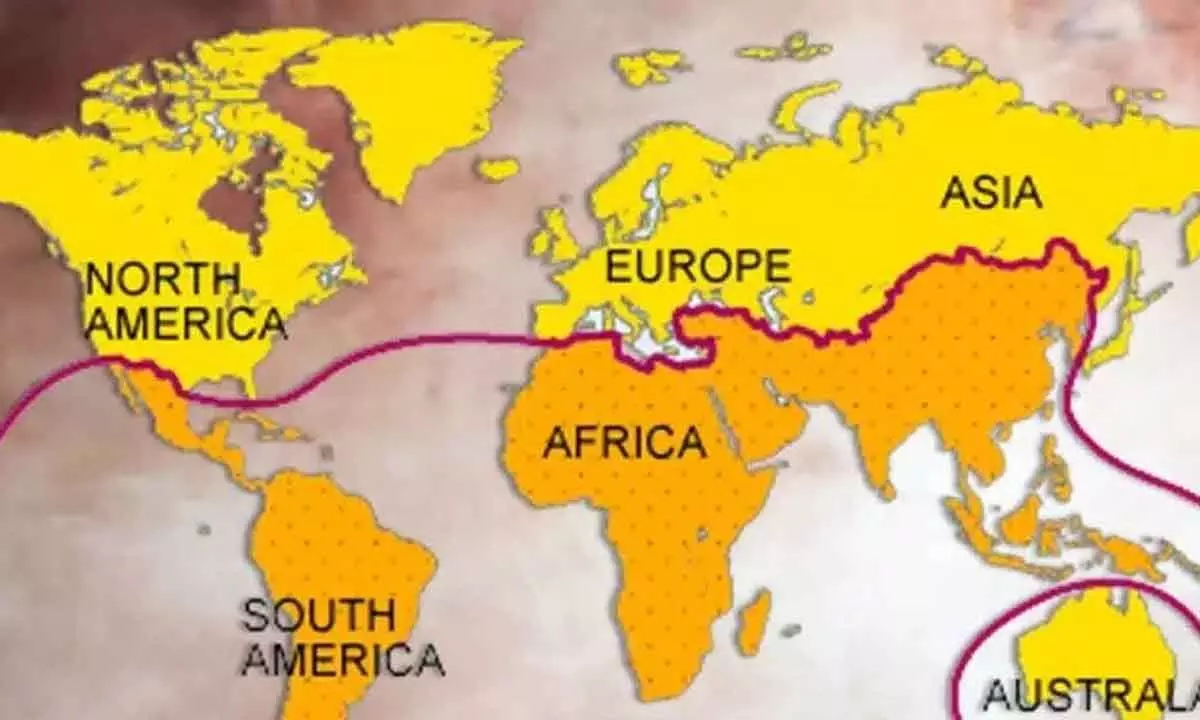
So, yes, Putin went to war to prevent NATO, more NATO, close to Russia’s border. Ukraine is being destroyed by US arrogance, proving again Henry Kissinger’s adage that to be America’s enemy is dangerous, while to be its friend is fatal. The Ukraine War will end when the US acknowledges a simple truth: NATO enlargement to Ukraine means perpetual war and Ukraine’s destruction. Ukraine’s neutrality could have avoided the war, and remains the key to peace. The deeper truth is that European security depends on collective security as called for by the Organisation for Security and Co-operation in Europe (OSCE), not one-sided NATO demands.

Jesus’ Life (h)

•September 24, 2023 • Leave a Comment

John’s Testimony of Christ

John 1

And the Light shineth in darkness, and the darkness comprehended it not.

There was a man sent from God, whose name was John.

The same came as a witness to bear witness of the Light, that all men through him might believe.

He was not that Light, but was sent to bear witness of that Light.

That was the true Light which lighteth every man that cometh into the world.

10 He was in the world, and the world was made by Him, and the world knew Him not.

11 He came unto His own, and His own received Him not.

12 But as many as received Him, to them gave He power to become the sons of God, even to those who believe in His name,

13 who were born not of blood, nor of the will of the flesh, nor of the will of man, but of God.

14 And the Word was made flesh, and dwelt among us (and we beheld His glory, the glory as of the only Begotten of the Father), full of grace and truth.

15 John bore witness of Him and cried, saying, “This was He of whom I spoke, ‘He that cometh after me is preferred before me, for He was before me.’”

16 And of His fullness have we all received, and grace for grace.

17 For the law was given by Moses, but grace and truth came by Jesus Christ.

18 No man hath seen God at any time; the only begotten Son, who is in the bosom of the Father, He hath declared Him.

John in the Wilderness

Matthew 3

1 In those days came John the Baptist, preaching in the wilderness of Judea

Luke 3:2 During the high priesthood of Annas and Caiaphas, the Word of God came unto John the son of Zacharias in the wilderness.

3 And he came into all the country about the Jordan, preaching the baptism of repentance for the remission of sins,

2 and saying, “Repent ye, for the Kingdom of Heaven is at hand.”

3 For this is he that was spoken of by the prophet Isaiah, saying, “The voice of one crying in the wilderness: ‘Prepare ye the way of the Lord, make His paths straight.’”

4 And the same John had his raiment of camel’s hair, and a leather girdle about his loins; and his meat was locusts and wild honey.

5 Then there went out to him Jerusalem and all Judea and all the region round about the Jordan.

6 And they were baptized by him in the Jordan, confessing their sins.

7 But when he saw many of the Pharisees and Sadducees coming to his baptism, he said unto them, “O generation of vipers, who hath warned you to flee from the wrath to come?

8 Bring forth therefore fruits meet for repentance,

9 and think not to say to yourselves, ‘We have Abraham as our father.’ For I say unto you that God is able from these stones to raise up children unto Abraham.

10 And now also the ax is laid unto the root of the trees; therefore every tree which bringeth not forth good fruit is hewn down and cast into the fire.

11 I indeed baptize you with water unto repentance, but He that cometh after me is mightier than I, whose shoes I am not worthy to bear. He shall baptize you with the Holy Ghost and with fire.

12 His fan is in His hand, and He will thoroughly purge His threshing floor and gather His wheat into the garner; but He will burn up the chaff with unquenchable fire.”

Luke 3:11 He answered and said unto them, “He that hath two coats, let him impart to him that hath none. And he that hath meat, let him do likewise.”

12 Then came also publicans to be baptized, and said unto him, “Master, what shall we do?”

13 And he said unto them, “Exact no more than that which is appointed you.”

14 And the soldiers likewise demanded of him, saying, “And what shall we do?” And he said unto them, “Do violence to no man, neither accuse any falsely; and be content with your wages.”

John 1:19 And this is the record of John, when the Jews sent priests and Levites from Jerusalem to ask him, “Who art thou?”

20 And he confessed and denied not, but confessed, “I am not the Christ.”

21 And they asked him, “What then? Art thou Elijah?” And he said, “I am not.” “Art thou that Prophet?” And he answered, “No.”

22 Then said they unto him, “Who art thou, that we may give an answer to those who sent us? What sayest thou of thyself?”

23 He said, “I am ‘the voice of one crying in the wilderness, “Make straight the way of the Lord,”’ as said the prophet Isaiah.”

24 And those who were sent were of the Pharisees.

25 And they asked him, and said unto him, “Why dost thou baptize then if thou art not that Christ, nor Elijah, neither that Prophet?”

26 John answered them, saying, “I baptize with water, but there standeth One among you whom ye know not.

27 He it is who, coming after me, is preferred before me, whose shoe’s strap I am not worthy to unloose.”

Luke 3:15 And as the people were in expectation, and all men mused in their hearts whether John was the Christ or not,

16 John answered, saying unto them all, “I indeed baptize you with water; but One mightier than I cometh, the straps of whose shoes I am not worthy to unloose. He shall baptize you with the Holy Ghost and with fire.

17 His winnowing fan is in His hand, and He will thoroughly purge His floor and will gather the wheat into His garner; but the chaff He will burn with fire unquenchable.”

18 And with many other exhortations he proclaimed the good news (gospel) unto the people.