
The Middle East has oil. China has rare earths
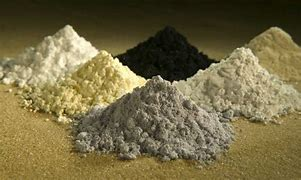
China
Rare Earth Metal Mine Production in 2022: 0.21 million metric tons – (210,000 metric tons)
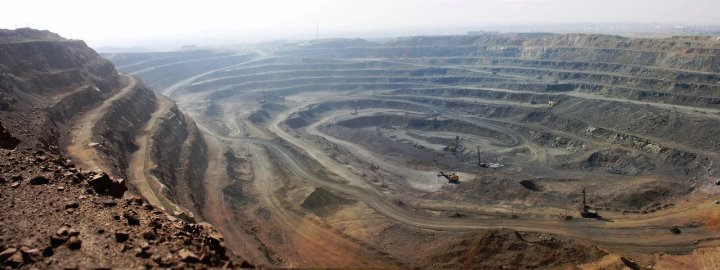
China is the largest rare earth metals producing country that accounts for over 70% of rare earth metals’ global production. The country’s mine yield of rare earth metals was recorded at 0.21 metric tons in 2022. China also has the largest deposits of rare earth metals, amounting to 44 million metric tons. The main REEs deposit in China is the Bayan Obo Mining District in Inner Mongolia, which is also the world’s largest known REEs deposit
“The Middle East has oil. China has rare earths,” is a famous quotation attributed to Deng Xiaoping, the paramount leader of China, made during his historic Southern Tour in January 1992.
Deng’s aphorism is frequently cited by international relations analysts and economists because China’s concentration of rare earths operates similarly to OPEC’s position with crude oil.
Historical & Strategic Context
- Strategic Foresight: Deng recognized early that just as petroleum powered the 20th-century industrial economy (and gave Middle Eastern nations enormous geopolitical leverage), rare earth elements (REEs) would become the foundational “vitamins” of 21st-century high-tech manufacturing, defense technology, and clean energy.
- Developing the Monopoly: Following this strategic vision, China spent the late 1980s through the 2000s heavily investing in the extraction, chemical separation, and refining infrastructure for rare earths—frequently undercutting international competitors on price due to lower labor costs and less stringent initial environmental regulations.
- Refining Dominance: Today, while other nations (including Australia, the United States, and Brazil) possess physical deposits of rare earth ores in the ground, China controls the vast majority of global refining capacity and supply chains required to turn raw ore into usable high-grade metals, oxides, and permanent magnets.
Modern Geopolitical Impact
Geopolitical Leverage: China has used export restrictions and licensing controls on rare earths as strategic leverage in trade and diplomatic disputes (notably against Japan in 2010 and during broader US–China trade tensions).
Crucial Applications: Rare earth elements (such as neodymium, dysprosium, and praseodymium) are essential components in electric vehicle motors, wind turbines, smartphone electronics, radar systems, guided missile guidance packages, and defense aircraft.
America has finally understood the warning.
China came to dominate mining, refining and magnet production, creating a strategic vulnerability for the United States and its allies.
F-35 fighter jets, Virginia-class nuclear submarines, missile guidance systems and other advanced American weapons depend on rare-earth elements.
Modern defense platforms rely heavily on rare-earth elements (REEs) due to their unique magnetic, chemical, and thermal properties:
- F-35 Lightning II: Each stealth fighter requires over 900 pounds of rare-earth materials. Neodymium and samarium-cobalt magnets drive the actuators, flight controls, and radar arrays, while yttrium and terbium are used in thermal-barrier ceramic coatings for jet engine turbines and stealth skin layers.
- Virginia-class Submarines: A single submarine incorporates approximately 9,200 pounds of rare earths. High-strength permanent magnets power propulsion systems, sonar transducers, electric actuators, and silent-running auxiliary pumps.
- Missile Guidance & Precision Munitions: Rare earths like dysprosium, praseodymium, and neodymium are critical for the guidance fins, precision gyroscopes, and electro-optical sensors in systems like Tomahawk cruise missiles and JDAM kits.
Strategic Vulnerability & Processing Bottlenecks
While the United States mines rare earth ores domestically such as at the Mountain Pass mine in California, the primary vulnerability lies in refining and magnet manufacturing.
China controls over 85–90% of global rare-earth refining capacity and over 90% of sintered neodymium-iron-boron (NdFeB) magnet production. Consequently, a large portion of the processed rare-earth components used in US military hardware historically passes through Chinese supply chains.
Global Distribution of REE Reserves
| Country | Estimated Reserves (REO Equivalent) | Primary Deposit Types & Key Sites |
| China | ~44 Million MT | Carbonatite (Bayan Obo) & Ionic Clays (Southern Provinces) |
| Brazil | ~11 Million MT | Ionic Clays (Serra Verde) & Alkaline Complexes |
| Australia | ~6.3 Million MT | Carbonatite (Mount Weld), Apatite/Iron Sand (Yangibana) |
| Russia | ~3.8 Million MT | Apatite-nepheline & Carbonatites (Khibiny, Tomtor) |
| Vietnam | ~3.5 Million MT | Weathered Rare Earths & Carbonatites (Lai Chau) |
| United States | ~1.9 Million MT | Carbonatite (Mountain Pass) & Heavy Mineral Sands |
| Greenland | ~1.5 Million MT | Alkaline Intrusions (Tanbreez, Kvanefjeld) |
Key Market Distinction: Mine Deposits vs. Processing Capacity
While countries like Brazil, Australia, and the US possess major physical deposits, the primary bottleneck in the global rare-earth market remains refining and chemical separation. China continues to control approximately 85–90% of the world’s capacity to separate raw REE ores into high-purity individual oxides and permanent magnets.


