Destined to be Caught in a Snare, how this Prophecy is to be Fulfilled: And notice a Composite Message of Sweetness and Bitterness! “You only have I known of all the families of the earth; therefore I will punish you for all your iniquities” Amos 3:2
Nuclear 4.0: Chinas NEW Thorium Reactor Changes Everything!
Could China’s next aircraft carriers 004 and 005 be powered by Thorium Nuclear reactors?
China’s latest nuclear energy project could completely change the future of China and her economy; and by launching its first thorium reactor, China is marking a significant milestone for nuclear energy (molten salt reactor)
You might have never heard of thorium, but its potential is a game-changer for our future to fight climate change and global warming. While traditional nuclear plants use a more than 50-year-old Technology based on uranium, thorium is safer, capable of burning nuclear waste, and is suitable for use in arid, land locked areas, exactly like the Gobi desert.
China to build 450 of these Thorium reactors!
But one stat makes this new molten salt reactor truly remarkable for China. China is home to one of the world’s largest supplies of thorium; with only one ton of Thorium, it’s possible to generate the same amount of energy as with 3.500.000 tons of Coal.
And by tapping into this resource and becoming the first country in the world to commercialize this energy, China will have enough energy to power its country for the next 20,000 years!
“The stranger that is within thee shall get up above thee very high, and thou shalt come down very low.
“He shall lend to thee, and thou shalt not lend to him. He shall be the head, and thou shalt be the tail” Deuteronomy 28:43-44
Edom and Bozrah, the capital city of Idumea; these two bits of information provide further hints as to whom the characters are in Ezekiel 20:45 to 21:5 where the ‘Sword of the Lord’ are associated with the South. Note: the Scriptures don’t say it is the ‘Sword of Edom or Bozrah’ but the ‘Sword of the Lord.’ Could this be a clear connection associating Edom and Idumea to the Sword in Ezekiel 20:45 to 21:5?
Isaiah 63
1 Who is this that cometh from Edom, with dyed garments from Bozrah, this that is glorious in His apparel, traveling in the greatness of his strength? “I that speak in righteousness, mighty to save.”
— that cometh from Edom; that is, Idumea, the country where Esau, sometimes called Edom; Edom had been guilty of ruthless atrocities (Amos 1:9-11); they had carried off Jewish prisoners as slaves (Obadiah 1:10-11); they had been allies of the Assyrian invaders (Psalm 83:6), and had smitten Judah in the days of Ahaz (II Chronicles 28:17);
— the Targum indicates using the Edom and Bozrah “to execute vengeance of judgement of His people” – his people, of course, is the house of Jacob;
— the words Edom and Bozrah may be taken in the appellative sense, to denote in general, a field of blood, or a place of slaughter; the word Edom signifying red, and Bozrah a vintage; with dyed garments – that is, with garments dyed in blood, which in the prophetical idiom, imports God’s vengeance upon the wicked, his people;
— Bozrah, the capital city of Idumea; see further Isaiah 34:6, a parallel text where the ‘Sword of the Lord’ associated with both Edom and Bozrah are mentioned. Note: the Scriptures don’t say it is the ‘Sword of Edom or Bozrah’ but ‘Sword of the Lord.’ Could this be a clear connection to the Sword from the South in Ezekiel 20:45 to 21:5?
2 Why art thou red in Thine apparel, and Thy garments like him that treadeth in the wine vat?
— and thy garments like him that tread in the winefat? or winepress, into which clusters of grapes are cast, and these are trodden by men, the juice of which sparkles on their garments, and stains them, so that they become of a red colour.
3 “I have trodden the wine press alone; and of the people there was none with Me. For I will tread them in Mine anger and trample them in My fury; and their blood shall be sprinkled upon My garments, and I will stain all My raiment.
— God have trodden the wine-press alone; he has put on trial his people the house of Jacob; he has crushed them as grapes are crushed; Could this be a usual metaphor of Sword and Blood for both the house of Israel for 190 years and the house of Judah for 40 years in Ezekiel 4?
— perhaps the Orthodoxy (like Rashi) would have some merits if the Suffering Servant of Isaiah 53 relates to a suffering Jacob, incorporating wine pressing on them both; (190 years) for the house of Israel; and (40 years) for the house of Judah? (for more, see Ezekiel Timeline – 190/40 Years)
4 For the day of vengeance is in Mine heart, and the year of My redeemed is come.
— the year of my redeemed; another rendering, is the year of my redemption:
— the red upon the clothes was the life-blood of the house of Jacob, which had spirted upon them and with which, as he, the Almighty God Yehovah, tread this wine-press, he had soiled all his garments.
5 And I looked, and there was none to help; and I wondered that there was none to uphold. Therefore Mine own arm brought salvation unto Me, and My fury, it upheld Me.
— and I looked, and there was none to help (compare Isaiah 5:2, “He looked that it should bring forth grapes, and it brought forth wild grapes:” also Isaiah 41:28, “I beheld, and there was no man”). God is represented as looking for and expecting what might reasonably have been expected, and even as surprised when he does not find it (compare Isaiah 59:16).
6 And I will tread down the people in Mine anger, and make them drunk in My fury, and I will bring down their strength to the earth.”
— make them drunk: the Hebrew often expresses calamities by a cup of wine, or strong drink, by which the distressed persons are made drunk, Psalm 75:8Isaiah 51:21-22; they go as it were to and fro, not knowing what to do with themselves; and in special drunk with their own blood, Isaiah 49:26Revelation 16:6.
— I will bring down their strength to the earth; whatever it is wherein their strength lies, their strong ones, or their strong places, or deep counsels; he will bring to the very dust, to nothing; like drunken men, they shall fall to the ground, not being able to stand; the most miserable condition that men can fall into, Psalm 36:12.
7 I will mention the loving kindnesses of the Lord, and the praises of the Lord, according to all that the Lord hath bestowed on us, and the great goodness toward the house of Israel, which He hath bestowed on them according to His mercies, and according to the multitude of His loving kindnesses.
— I will mention the loving kindnesses of the Lord; these are the words of the prophet Isaiah, great goodness towards the house of Israel, which he hath bestowed on them according to his mercies and kindnesses.
8 For He said, “Surely they are My people, children that will not lie”; so He was their Savior.
— he said, Surely they are my people. Israel was first recognized as “a people” in Egypt, when the creel Pharaoh said, “The people of the children of Israel are more and mightier than we “(Exodus 1:9; 3:7);
— children that will not lie; or deal falsely as the same word is translated in Psalm 44:17. The meaning is, that surely they will be faithful to God and not fall away from him into idolatry or irreligion, Isaiah 63:8.
9 In all their affliction He was afflicted, and the angel of His presence saved them; in His love and in His pity He redeemed them, and He bore them, and carried them all the days of old.
— in all their affliction he was afflicted; because of all the afflictions they endured in Egypt: this notes the sympathy that is in Christ; having the same spirit that the Father hath.
10 But they rebelled and vexed His holy Spirit; therefore He was turned to be their enemy, and He fought against them.
— but they rebelled against God; this charge is often made against the children of Israel; and indeed their history is little more than a record of a series of rebellions against God.
11 Then He remembered the days of old, Moses and His people, saying, “Where is He that brought them up out of the sea with the shepherd of His flock? Where is He that put His holy Spirit within him,
— the Targum paraphrases it, “he had mercy for the glory of his name, and because of the remembrance of his goodness of old, the mighty things he did by the hands of Moses to his people.”
12 That led them by the right hand of Moses with His glorious arm, dividing the water before them to make Himself an everlasting name,
— that led them by the right hand of Moses with his glorious arm; that is, through the Red sea: this was done by the right hand of Moses and the rod in it.
13 that led them through the deep, as a horse in the wilderness, that they should not stumble?”
— that led them through the deep; the depths, the bottom of the sea; not through the shallow but where the waters had been deepest, the descent greatest; and at the bottom of which might have been expected much filth and dirt to hinder them in their passage, yet through this he led them.
14 As a beast goeth down into the valley, the Spirit of the Lord caused him to rest; so didst Thou lead Thy people, to make Thyself a glorious name.
— the spirit of the Lord caused him to rest; or gently led him, that is, Israel, through the sea, with little danger as a beast walks on in a valley; this of leading Israel through the wilderness where often resting places were found for them and they were brought to the land of rest, Canaan, and settled there.
The Prayer of Isaiah
15 Look down from heaven, and behold from the habitation of Thy holiness and of Thy glory. Where is Thy zeal and Thy strength, the sounding of Thy heart and of Thy mercies toward me? Are they restrained?
— here begins a fervent prayer by Isaiah to God to pity Israel; look down from heaven, and behold; attributes the prevalence of evil on earth to a suspension of Yehovah’s watchfulness; hence he is said to come down from heaven to enquire (Genesis 18:21), or here, to look down.
16 Doubtless Thou art our Father, though Abraham be ignorant of us and Israel acknowledge us not. Thou, O Lord, art our father, our Redeemer; Thy name is from everlasting.
— doubtless thou art our Father: thus they urge God the Father, not the Son, with that relation he stands in unto them, Malachi 2:10; therefore we as thy children expect the bowels and compassions of a father.
17 O Lord, why hast Thou made us to err from Thy ways, and hardened our heart from Thy fear? Return for Thy servants’ sake, the tribes of Thine inheritance.
— O Lord, why hast thou made us with weak human nature to err from thy ways, and hardened our heart from thy fear? These are the words not of the wicked among the Jews but of the godly, lamenting and confessing their wandering from God’s ways, commands and ordinances, the hardness of their hearts.
18 The people of thy holiness have possessed it but a little while; our adversaries have trodden down thy sanctuary.
— the people of thy holiness; or thy holy people as being set apart for his servants; holiness being to be understood for a covenant separation from other people;
— have trodden down thy sanctuary; the Temple, called the sanctuary from the holiness of it; this our adversaries the Babylonians by Nebuchadnezzar, and later the Greeks by Antiochus, and the Romans by Titus have trodden down, II Chronicles 36:19.
19 We are Thine; Thou didst never bear rule over them; they were not called by Thy name.
— we are thy children, thy people, thy subject; we are in covenant which they never were; and over those whom thou hast not ruled from of old, as those upon whom thy name has not been called;
— thou never barest rule over them; not in that manner, or in that relation to them, that thou didst over us. They were not called by thy name; neither owned thee, nor owned by thee: this phrase implies a near relation in some circumstance or other as wife or servant or child.
Isaiah 64
1 Oh, that Thou wouldest rend the heavens, that Thou wouldest come down, that the mountains might flow down at Thy presence
— O that thou wouldst rend the heavens, that thou wouldst come down; this prayer is really a continuation of the prayer of Isaiah 63:15-19.
2 as when the melting fire burneth, the fire causeth the waters to boil— to make Thy name known to Thine adversaries, that the nations may tremble at Thy presence!
— the Targum says, “as when thou sendedst thine anger as fire in the days of Elijah, the sea was melted, the fire licked up the water to make Thy name known to the enemies of Thy people.”
3 When Thou didst fearsome things which we looked not for, Thou camest down, the mountains flowed down at Thy presence.
— when thou didst terrible things, which we looked not for, thou camest down; referring to the wonderful things God did in Egypt, at the Red sea, and in the wilderness;
— and particularly at Mount Sinai, things that were unexpected, and not looked for; then the Lord came down, and made visible displays of his power and presence, especially on Mount Sinai; see Exodus 19:18.
4 For since the beginning of the world men have not heard nor perceived by the ear, neither hath the eye seen, O God, besides thee, what He hath prepared for him that waiteth for Him.
— neither hath the eye seen a God beside thee, who will work for him that waits for him; not that God alone knows what he hath prepared but that no man knows (sight and hearing being used as including all forms of spiritual apprehension) any god who does such great things as he does.
5 Thou meetest him that rejoiceth and worketh righteousness, those that remember Thee in Thy ways. Behold, Thou art wroth, for we have sinned; in those is continuance, and we shall be saved.
— thou meet him that rejoices and works righteousness, those that remember thee in thy ways: behold, thou art angry; for we have sinned: in those is continuance, and we shall be saved.
MSG
Oh, that you would rip open the heavens and descend, make the mountains shudder at your presence— As when a forest catches fire, as when fire makes a pot to boil— To shock your enemies into facing you, make the nations shake in their boots! You did terrible things we never expected, descended and made the mountains shudder at your presence.
Since before time began no one has ever imagined, No ear heard, no eye seen, a God like you who works for those who wait for him. You meet those who happily do what is right, who keep a good memory of the way you work. But how angry you’ve been with us!
We’ve sinned and kept at it so long! Is there any hope for us? Can we be saved? We’re all sin-infected, sin-contaminated. Our best efforts are grease-stained rags. We dry up like autumn leaves— sin-dried, we’re blown off by the wind. No one prays to you or makes the effort to reach out to you Because you’ve turned away from us, left us to stew in our sins.
6 But we are all as an unclean thing, and all our righteousnesses are as filthy rags; and we all do fade as a leaf, and our iniquities, like the wind, have taken us away.
— and all our righteousness or justification are as filthy rags; as rags, they cannot cover us; as filthy rags, they would only defile us.
7 And there is none that calleth upon Thy name, that stirreth up himself to take hold of Thee; for Thou hast hid Thy face from us, and hast consumed us because of our iniquities.
— and hast consumed us because of our iniquities; by the sword, famine, pestilence and captivity.
8 But now, O Lord, Thou art our Father; we are the clay, and Thou our potter; and we all are the work of Thy hand.
— but now, O Lord, thou art our Father; notwithstanding all this, thou art our Father, having both created and adopted us; therefore pity us thy children; we are the clay, and thou our potter;
— we are in thy hands as clay in the hands of the potter: thou canst form us, and dispose of us as thou pleases. And we will not quarrel with thee, however thou art pleased to deal with us.
9 Be not sorely wroth, O Lord, neither remember iniquity for ever; behold, see, we beseech Thee, we are all Thy people.
— CEV Don’t be so furious or keep our sins in your thoughts forever! Remember that all of us are your people.
10 Thy holy cities are a wilderness, Zion is a wilderness, Jerusalem a desolation.
— thy holy cities; Zion and Jerusalem mentioned immediately after; called holy because they were built upon God’s inheritance and because his Shekinah were there.
11 Our holy and our beautiful house, where our fathers praised Thee, is burned up with fire; and all our pleasant things are laid waste.
— is burnt up with fire; this is true, both of the first and second Temple; the first was burnt with fire by Nebuchadnezzar king of Babylon, Jeremiah 52:13, and the second by the Romans under Titus in AD 70.
12 Wilt Thou refrain Thyself for these things, O Lord? Wilt Thou hold Thy peace and afflict us very sore?
— wilt thou refrain thyself; wilt thou refuse to come to our aid? Wilt thou decline to visit us and save us from our calamities?
— wilt thou hold thy peace; wilt thou not speak for our rescue and command us to be delivered?
MSG
Still, God, you are our Father. We’re the clay and you’re our potter: All of us are what you made us. Don’t be too angry with us, O God. Don’t keep a permanent account of wrongdoing. Keep in mind, please, we are your people—all of us.
Your holy cities are all ghost towns: Zion’s a ghost town, Jerusalem’s a field of weeds. Our holy and beautiful Temple, which our ancestors filled with your praises, Was burned down by fire, all our lovely parks and gardens in ruins.
In the face of all this, are you going to sit there unmoved, God? Aren’t you going to say something? Haven’t you made us miserable long enough?
China tops US in quantity and quality of scientific papers Report finds rapidly expanding Chinese research footprint while Japan falters.
TOKYO — China now leads the world both in the number of scientific research papers as well as most cited papers, a report from Japan’s science and technology ministry shows, which is expected to bolster the competitiveness of its economy and industries in the future.
Research papers are considered higher quality the more they are cited by others. Chinese research accounted for 27.2%, or 4,744, of the world’s top 1% of most cited papers, overtaking the US at 24.9%, or 4,330. The UK came in third at 5.5%.
The ministry’s National Institute of Science and Technology Policy compiled the report based on data from research-analytics company Clarivate. The figures represent 2019 levels, based on the annual average between 2018 and 2020 to account for fluctuations in publication numbers. The report was released Tuesday, the same day US President Joe Biden signed into law the CHIPS and Science Act, a $280 billion bill framed as essential to winning economic competition with China through greater research.
Scientific research is the driver behind competitive industries and economies. Current research capabilities will determine future market shares in artificial intelligence, quantum technology and other cutting-edge fields, and may have a direct impact on national security as well.
China has quickly increased its footprint in advanced research in recent years. It overtook the US in the total number of scientific papers in the 2020 report, then in the number of top 10% most cited papers in the 2021 report.
China published 407,181 scientific papers in 2019 according to the latest report, pulling further ahead of the US at 293,434. In terms of the top 10% most cited papers, China accounted for 26.6% of publications, while the US accounted for 21.1%.
“China is one of the top countries in the world in terms of both the quantity and quality of scientific papers,” said Shinichi Kuroki, deputy director-general of the Asia and Pacific Research Center at the Japan Science and Technology Agency.
“In order to become the true global leader, it will need to continue producing internationally recognized research,” he said.
Meanwhile, Japan is falling behind. It ranked fifth in the total number of publications and 10th in the top 1% most cited papers in the latest report after losing ground to India. It dropped to 12th place in the number of the top 10% most cited papers, passed by Spain and South Korea (and even Iran).
The number of universities in India have increased roughly 4.6 times from 243 in 2000 to 1,117 in 2018. Over two million receive a bachelor’s degree in the sciences each year. In contrast, research Japan has slowed since the mid-2000s with no recovery in sight, stoking concerns about the effect on the country’s economy and industries.
The Scriptures are often shrouded in cryptic languages and most Jews could not see the working of God’s providence in the revelation of the Messiah in the chapters here, or in the revelation to which he came to restore all the nations back to God.
Our challenge is to decrypt them, especially as it relates to the latter days, our days.
The Scriptures are often shrouded in cryptic languages; as usual a prophecy of Isaiah will start with the house of Judah and Jerusalem then spread to the house of Israel and soon it includes many prophecies concerning other nations surrounding the region.
However the following may provide a clue:
“The anger of the Lord shall not return, until He has executed and till He has performed the thoughts of His heart; in the latter days ye shall understand it perfectly” Jeremiah 23:20
“In latter days you will understand it fully,” that is, this means as a whole, we wouldn’t understand these prophecies until we’re living in the latter days, soon to be our days, after God had executed his judgement in anger and performed the thoughts of his heart; only then could we understand fully!
Isaiah 61
1 “The Spirit of the Lord God is upon Me, because the Lord hath anointed Me to preach good tidings unto the meek. He hath sent me to bind up the broken hearted, to proclaim liberty to the captives, and the opening of the prison to them that are bound,
— we ask, “Who is the speaker?” – this refers to the Messiah is abundantly proved by the fact that the Lord Yeshua expressly applied it to himself (see Luke 4:16-21, also at the end);
— if Isaiah was the speaker, he was just a forerunner because his role in proclaiming the good tidings, etc, was limited;
— he hath sent me to bind up the broken hearted; whose hearts are smitten and made contrite by the Word of God, and are truly humbled under a sense of sin; who are cut to the heart, have wounded spirits; these Christ binds up, by speaking comfortably to them;
— by applying his blood; by discovering the free and full pardon of their sins; and for this, as Mediator, he had a mission and commission from his Father; he came not of himself, but he sent him:
— to proclaim liberty to the captives, and the opening of the prison to them that are bound; to such who were captives to sins and as it were prisoners to them, shut up by them, and in them, and held fast there;
— but Christ, as he is the author of liberty; obtains it for his people and makes them free with it a liberty from sin, or as of prisoners from the prison house.
2 To proclaim the acceptable year of the Lord, and the day of vengeance of our God; to comfort all that mourn,
— to proclaim the acceptable year of the Lord; the allusion is to the proclamation of liberty, in the year of jubilee when the trumpet was blown, and liberty was proclaimed throughout all the land (see Leviticus 25:9-10);
— Yeshua stopped before mentioning the days of vengeance, Luke 21:22, which calls for the destruction of Jerusalem the very expression made use of here. Perhaps there was a delay of 40 years when the Romans came and surrounded Jerusalem, then its capture and destruction in AD 70;
— but which sects escaped destruction and death? History recorded only two sects that escaped the inferno of AD 70:
(1) The Christians, known as Nazarenes in Acts 24:5. They escaped to a northern town called Pella, west of the Jordan River.
(2) Some Pharisees, those of the House of Hillel. They were headed by a Pharisaic rabbi, Johanan ben Zakkai, the head of the Sanhedrin, who was smuggled out of besieged Jerusalem in a coffin.
These Pharisees escaped to Yavne and established the Hillel Calendar, which was revealed by Hillel II in about AD 359 concerning the rules of the calendar. Later, they re-emerged and are now known as Rabbinic Jews.
— all other sects of the Jews faced their days of vengeance and disappeared in the AD 70 inferno: all Sadducees, Herodians, Boethusians, Essenes, together with the House of Shammai Pharisees and those of its military arm, the Zealots. They all faced their days of vengeance and disappeared from history. Were they receiving their “fire”? Were these sects facing their familiar Sodom and Gomorrah?
— were these not their days of vengeance or be “baptised in FIRE” as warned by John the Baptist? We need to note a very important point in this judgement. God included His holy city of Jerusalem in this judgement. God did not exclude them from judgement during their days of vengeance in the AD 70 inferno.
3 To appoint unto them that mourn in Zion, to give unto them beauty for ashes, the oil of joy for mourning, the garment of praise for the spirit of heaviness, that they might be called trees of righteousness, the planting of the Lord, that He might be glorified.”
— to appoint unto them that mourn in Zion; or “to the mourners of Zion” those who are of Zion and mourn for the corruptions in Zion’s false doctrines, their perversion, abuse and neglect of God’s statutes and ordinances; for the disorders and divisions they cause; and the power of godliness;
— trees of righteousness; in Hebrew, ‘Oaks,’ by their being oaks of righteousness is a metaphor meant a people distinguished for righteousness or justice; instead of being subjected to money, wealth and bowing down as a reed to corruption, sin and wickedness.
4 And they shall build the wastes of old, they shall raise up the former desolations, and they shall repair the waste cities, the desolations of many generations.
— the waste places of olden time: that is, not merely the cities that had fallen into ruins during the exile, but those that had been lying waste for generations; and of modern wars.
5 And strangers shall stand and feed your flocks, and the sons of the alien shall be your plowmen and your vinedressers.
— strangers shall stand; like servants waiting for their master’s orders; that Israel is raised to the dignity of a priestly caste, leaving the rough work of the world to be done by foreigners, who stood on a lower level;
— one Report by McKinsey says of the 60 millions Latinos in the US that had migrated from the South; they often live in ‘deserts’ where adequate housing, groceries are hard to find. “Nearly 9 in 10 of the Latino residents in such communities lived in five states: California, Florida, New Jersey, New York and Texas.”
— McKinsey: Latinos are projected to make up 22.4 percent of the US labor force by 2030 and more than 30 percent by 2060 (Latinos population to 111.2 million by ’60).
6 But ye shall be named the Priests of the Lord; men shall call you the Ministers of our God. Ye shall eat the riches of the Gentiles, and in their glory shall ye boast yourselves.
— but ye; as contrasted with the “strangers.” Ye shall have no need to attend to your flocks and lands: strangers will do that for you; your exclusive business will be the service of Yehovah as his “priests” – Exodus 19:6 remains yet to be realized.
7 For your shame ye shall have double, and for confusion they shall rejoice in their portion. Therefore in their land they shall possess the double; everlasting joy shall be unto them.
— for your shame ye shall have double: though you have been little accounted of among your enemies, yet now you shall be greatly in their esteem, Zechariah 9:12.
8 “For I, the Lord, love judgement; I hate robbery for burnt offering; and I will direct their work in truth, and I will make an everlasting covenant with them.
— I hate robbery for burnt- offerings; I hate all things gotten by injustice, though they be for sacrifice. As God will not accept of that which cost nothing, so much less of that which is the effect of rapine and oppression.
9 And their seed shall be known among the Gentiles and their offspring among the people; all that see them shall acknowledge them, that they are the seed which the Lord hath blessed.”
— all that see them shall acknowledge them, that they are the seed which the Lord hath blessed; that they are the spiritual seed of Abraham as well as his carnal seed and are blessed with him.
10 I will greatly rejoice in the Lord; my soul shall be joyful in my God. For He hath clothed me with the garments of salvation; He hath covered me with the robe of righteousness, as a bridegroom decketh himself with ornaments, and as a bride adorneth herself with her jewels.
— I will greatly rejoice; the speaker is again as in Isaiah 61:1 the ideal Servant of Yehovah, Isaiah, as well as the Messiah, who identifies himself with the people and slaves;
— the Targum, it may be noted, makes Jerusalem the speaker: “Jerusalem said, rejoicing I will rejoice in the Word of the Lord.”
11 For as the earth bringeth forth her bud, and as the garden causeth the things that are sown in it to spring forth, so the Lord God will cause righteousness and praise to spring forth before all the nations.
— The Targum says, “so the Lord God will reveal the righteousness and praise of Jerusalem before all the people.”
~~~
Luke 4
16 And He came to Nazareth where He had been brought up. And as His custom was, He went into the synagogue on the Sabbath day and stood up to read. 17 And there was delivered unto Him the book of the prophet Isaiah. And when He had opened the book, He found the place where it was written: 18 “The Spirit of the Lord is upon Me, because He hath anointed Me to preach the Gospel to the poor. He hath sent Me to heal the brokenhearted, to preach deliverance to the captives, and recovering of sight to the blind, to set at liberty them that are bruised, 19 to preach the acceptable year of the Lord.” 20 And He closed the book, and He gave it again to the minister and sat down. And the eyes of all those who were in the synagogue were fastened on Him. 21 And He began to say unto them, “This day is this Scripture fulfilled in your ears.”

Isaiah 62
1 For Zion’s sake will I not hold my peace, and for Jerusalem’s sake I will not rest, until the righteousness thereof go forth as brightness, and the salvation thereof as a lamp that burneth.
— for Zion’s sake; opinions differ as to the speaker. Is he the prophet, or the Servant of Yehovah, or Yehovah Himself? On the whole, the second view seems to be most in harmony with what follows:
— the true Servant will carry on what in later theology may be called his mediatorial intercessory work, that there may be no delay in the fulfilment of the glorious promises that have just been uttered.
2 And the Gentiles shall see thy righteousness, and all kings thy glory; and thou shalt be called by a new name, which the mouth of the Lord shall name.
— and thou shall be called by a new name, which the mouth of the Lord shall name; this name is a new name; a renewed one, a name which shall be of significance.
3 Thou shalt also be a crown of glory in the hand of the Lord, and a royal diadem in the hand of thy God.
— and a royal diadem; in Hebrew, ‘A diadem of a kingdom.’ The diadem is the wreath or chaplet, usually set with diamonds, which is “encircled” (צניף tsânı̂yph from צנף tsânaph) to roll or wind around to encircle) around the head;
— here it means such as was usually worn by monarchs; and the sense is that Jerusalem would become exceedingly beautiful in the sight of God.
4 Thou shalt no more be termed Forsaken, neither shall thy land any more be termed Desolate; but thou shalt be called Hephzibah and thy land Beulah: for the Lord delighteth in thee, and thy land shall be married.
— thou shalt no more be termed Forsaken; as a woman forsaken by her husband. Neither shall thy land be termed Desolate; neither shall thy places of worship be empty, and thine ordinances of service be unfrequented. He alludes to the desolation of Judah during the Babylonish captivity.
5 For as a young man marrieth a virgin, so shall thy sons marry thee; and as the bridegroom rejoiceth over the bride, so shall thy God rejoice over thee.
— for as a young man marries a virgin, so shall thy sons marry thee; as a young man, having married a virgin, possesses and enjoys her, and lives and dwells with her in great harmony and love, having a delight and complacency in her, there being a suitableness in her person and age.
6 “I have set watchmen upon thy walls, O Jerusalem, who shall never hold their peace day nor night.” Ye that make mention of the Lord, keep not silence,
— I have set watchmen upon thy walls, O Jerusalem; as the prophets of the Old Testament are called watchmen (Ezekiel 3:17; 33:2,7); pastors and ministers in the New Testament often come with false doctrines;
— parallel Scriptures in Ezekiel 34: And the word of the Lord came unto me, saying, “Son of man, prophesy against the shepherds of Israel, prophesy and say unto them, ‘Thus saith the Lord God unto the shepherds: Woe be to the shepherds of Israel that feed themselves! Should not the shepherds feed the flocks?
7 and give Him no rest till He establish, and till He make Jerusalem a praise in the earth.
— till he make Jerusalem a praise in the earth; that it may be the subject of universal commendation and rejoicing, instead of being an object of reproach and scorn.
8 The Lord hath sworn by His right hand and by the arm of His strength: “Surely I will no more give thy corn to be meat for thine enemies, and the sons of the stranger shall not drink thy wine for which thou hast labored;
— surely I will no more give thy corn to be meat for thine enemies; and the sons of the strangers shall not drink thy wine, for thou hast laboured: this was threatened to the people of Israel, in case of sinning against God, and revolting from him; and was accomplished in the times of their captivity in Babylon, Deuteronomy 28:33.
9 but they that have gathered it shall eat it and praise the Lord; and they that have brought it together shall drink it in the courts of my holiness.”
— but they that have gathered it shall eat it; so that every man may enjoy the avails of his own labor. Nothing is a more certain indication of liberty and prosperity than this: that every man may securely enjoy the avails of his own labor.
10 Go through, go through the gates; prepare ye the way of the people. Cast up, cast up the highway; gather out the stones; lift up a standard for the people.
— go through, go through the gates; it is doubled by way of emphasis: make haste to your own land; as if Cyrus should say, Get you out of captivity as soon as you will, Isaiah 48:20.
— the Targum: “the prophet said, pass by, and return through the gates; turn the heart of the people to the right way; publish good things and comforts to the righteous, who remove the thought of the evil imagination, which was as a stone of stumbling; lift up a sign to the people.”
11 Behold, the Lord hath proclaimed unto the end of the world: “Say ye to the daughter of Zion, ‘Behold, thy salvation cometh; behold, his reward is with Him, and His work before Him.’”
— behold, the Lord hath proclaimed unto the end of the world; so it will be in the latter day when the truth shall be preached to all nations, from one end of the world to the other, Revelation 14:6;
— the word behold is three times used in this verse, to raise attention to what is said, and as pointing out something wonderful, and to express the certainty of it.
12 And they shall call them the Holy People, the Redeemed of the Lord; and thou shalt be called Sought Out, a City Not Forsaken.
— thus does the prophecy close by returning to a direct address to Zion-Jerusalem – “thee will men call derūshâh,” sought assiduously, i.e., one whose welfare men, and still more Yehovah, are zealously concerned to promote (compare the opposite in Jeremiah 30:17);
— “a city that will not be forsaken,” that is, a city men will gladly settle, and which will never be without inhabitants again.
Zechariah 14:16 And it shall come to pass that every one who is left of all the nations which came against Jerusalem, shall even go up from year to year to worship the King, the Lord of hosts, and to keep the Feast of Tabernacles.
17 And it shall be, that whoso will not come up of all the families of the earth unto Jerusalem to worship the King, the Lord of hosts, even upon them shall be no rain. Zechariah 14:16-17
Isaiah 59
1 Behold, the Lord’S hand is not shortened, that it cannot save; neither His ear heavy, that it cannot hear.
— behold, the Lord’s hand is not shortened; he is not grown weaker than informer times, but is as omnipotent as ever he was; neither his ear heavy; or dull of hearing: he is not like your idol gods that have hands and cannot help, and ears and cannot hear.
2 But your iniquities have separated you and your God, and your sins have hid His face from you, that He will not hear.
— but your iniquities have separated; have been as a thick wall between you and your God; and have set him at a distance from you.
3 For your hands are defiled with blood, and your fingers with iniquity; your lips have spoken lies, your tongue hath muttered perverseness.
— your hands are defiled with blood: here the prophet comes from a more general to a particular charge against them; by blood we are to understand either murders and bloodshed properly so called; or ways of injustice, extortion, oppression and cruelties, whereby men are deprived of a livelihood;
— your lips have spoken lies: or “falsehood” that is, false doctrines so called because contrary to the word of truth and which deceive men: like misplacing the Messiah in Isaiah 52:13 as Jacob in place of the Moshiach or Saviour, our Redeemer; willfully misidentifying the Suffering Servant by having their tongue muttering perverseness so as to make God’s revelation of no effect;
— that the lamb for Pascha was/is an act of defiance to the Egyptians who regarded lamb as the Egyptians’ deity, rather than a symbol of the death of the Messiah, our Moshiach or Saviour, our Redeemer;
— but the Orthodoxy still regard it only as an act of defiance to the Egyptians god, the Ram-god Khnum; the Scriptures nowhere say this, but is only a baloney figment of Jewish imagination, another muttered perverseness.
4 None calleth for justice, nor any pleadeth for truth; they trust in vanity, and speak lies; they conceive mischief and bring forth iniquity.
— none calleth for justice; none seek to redress these wrongs and violences; they commit all rapines and frauds with impunity; they trust in vanity; in vain and empty words, void of all consistency; or in vain things such as their idols were often called vanity and nothing;
— and speak lies; this may refer to the judges, lawyers and false prophets, who told them they should not go into captivity; or teach false doctrines:
— the house of Israel is still indulging in lies, they conceive mischief; worshipping Easter, Astarte, one of the titles of the Chaldean goddess, the queen of heaven, the ancient Mesopotamian goddess of war, fertility and sex. She is featured in the Epic of Gilgamesh, and the “Ishtar Gate” was part of Nebuchadnezzar’s Babylon;
— and worshipping Mithra or Mitra (the Sun-God whose birthday many drunks honor and celebrate on December 25th but repackaged and christianised such idolatry as Christian in their mischief), Zeus and others; called “gods of the earth” in distinction from the god of heaven; and men shall worship these earthly gods, acknowledging their supremacy, everyone from his place today, Protestants or Catholics alike.
A adder snake; young are born, but here they have eggs!
5 They hatch adders’ eggs and weave the spider’s web; he that eateth of their eggs dieth, and that which is crushed breaketh out into a viper. — Jewish Seder always have a egg!
— they hatch cockatrice’ eggs; or a poisonous serpent’s; they contrive and execute wicked purposes and practices whereby sure and sudden destruction is brought upon themselves and others. Of the cockatrice or basilisk, one kind is put for any venomous creature;
— spider’s web; this refers not to the spider’s web being made to entrap; “Come to my parlour,” the spider says from her web to the butterfly, “come”
— their wicked plans resembled the egg of the serpent: the nature of the egg cannot be easily known by an inspection. It may have a strong resemblance to those produce by some useful animals; it is only when it is hatched that its true nature is known. So it is with the plans of the wicked: when forming, their true nature and character may not be known.
— the speech is proverbial, signifying by these eggs mischievous designs; or that this figurative expression is designed to show the evil nature and tendency of their works; like Pascha for the Egyptian’s Ram-god Khnum discussed above;
— that which is crushed; the egg, when it is broken, breaketh out as a viper; their plans, however specious in their undeveloped form like the egg, its deadly nature will more clearly manifested when crushed;
Jewish Seder always have a harmless egg! But not from Scripture!
— he that eateth of their eggs dieth; the serpents referred to above are among the most venomous and destructive that are known; hence those who partake in the true nature and symbol of the egg are seen as ruinous, pernicious, and evil; and thus has a death penalty (for more, see at the end).
6 Their webs shall not become garments, neither shall they cover themselves with their works; their works are works of iniquity, and the act of violence is in their hands.
— their webs shall not become garments; the spider’s web is unfit for clothing, or be of any real value or utility; that their works are as unfit to secure salvation as the attenuated web of a spider is for raiment;
— their works are works of iniquity: even their best works are sinful; not only as being imperfect and having a mixture of sin in them and so filthy rags; and the act of violence is in their hands; they persecuting such that preach and profess the contrary.
7 Their feet run to evil, and they make haste to shed innocent blood; their thoughts are thoughts of iniquity; wasting and destruction are in their paths.
— their feet run to evil; make haste to commit all manner of sin, and particularly that which follows, with great eagerness and swiftness, taking delight and pleasure therein and continuing in it; it is their course of life;
— and they make haste to shed innocent blood: in wars abroad or at home, in quarrels and riots, or through the heat of persecution; which if it does not directly touch men’s lives,
— yet issues in the death of many that fall under the power of it; as in Iraq (under the pretext of getting rid of WMD); and Afghanistan (to bring peace and democracy there), killing millions along the way.
8 The way of peace they know not, and there is no judgement in their goings; they have made them crooked paths; whosoever goeth therein shall not know peace.
— there is no judgement in their deeds: they have made them crooked paths: whosoever goeth therein shall not know peace; they are of such turbulent spirits, living in such continual contentions and discords.
9 Therefore is judgement far from us, neither doth justice overtake us; we wait for light, but behold obscurity; for brightness, but we walk in darkness.
— therefore is judgement far from us; because we have no regard for justice or honesty, God will not plead our cause against our oppressors; neither doth justice overtake us;
— he does not defend our rights, nor avenge our wrongs; as if he had said, If we had executed justice and equity among one another, he would not have been far from us;
— we wait for light, but behold obscurity; for brightness, but we walk in darkness; or “for brightnesses” for much clear light; the Targum says, for brightness, but behold, we are walking in obscurity.
10 We grope for the wall like the blind, and we grope as if we had no eyes; we stumble at noonday as in the night; we are in desolate places as dead men.
— we grope for the wall like the blind; a blind man, not being able to see his way, feels along by a wall, a fence or any other object that will guide him. They were like the blind; they had no distinct views of truth and they were endeavoring to feel their way along as well as they could;
— probably the prophet Isaiah here alludes to the threatening made by Moses in Deuteronomy 28:28-29, ‘And the Lord shall smite thee with madness, and blindness, and astonishment of heart; and thou shalt grope at noon-day as the blind gropeth in darkness, and thou shalt not prosper in thy ways.’
— we are in desolate places as dead men; or in fat places, dead in trespasses and sin and at most have only a name to live but are dead. Some render it, “in the graves” and the Targum thus, “it is shut before us, as the graves are shut before the dead.”
11 We all roar like bears, and mourn sore like doves; we look for judgement, but there is none; for salvation, but it is far off from us.
— we roar all like bears; a heavy judgements awaits which could come upon them for their sins. The word rendered here ‘roar’ – to hum, spoken of bees, is applied to any murmuring or confused noise or sound. It sometimes means to snarl as a dog;
— mourns like doves in solitude: this expresses the secret groanings under a sense of sin, and the forlorn state of religion. The Targum paraphrases it thus, “we roar because of our enemies, who are gathered against us as bears; all of us indeed mourn sore as doves.”
12 For our transgressions are multiplied before Thee, and our sins testify against us. For our transgressions are with us, and as for our iniquities, we know them:
— for our transgressions; the word פשׁעונו here signifies sins of a high nature, namely, such as were wilfully committed against light and knowledge; rebellious sins;
— are multiplied before thee; they admit of no excuse; for they are committed before thee, and multiplied against thee, whereby thou art justly provoked to deny us all help; as for our iniquities, we know them; we are convinced of them; our guilty consciences must own and acknowledge them.
13 in transgressing and lying against the Lord, and departing away from our God, speaking oppression and revolt, conceiving and uttering from the heart words of falsehood.
— in transgressing; that is, we have been guilty of this as a continuous act; and lying against the Lord; we have proved false to God; though we have been professedly his people;
— yet we have been secretly attached to idols, and have in our hearts been devoted to the service of false gods. And departing away from our God; by the worship of idols, and by the violation of his law.
14 And judgement is turned away backward, and justice standeth afar off; for truth is fallen in the street, and equity cannot enter.
— and judgement is turned away backward; the word ‘judgement’ is used in the sense of justice, or lust decisions between man and man; they acknowledged that they had been influenced by partiality and by bribes; they had condemned the innocent, they had acquitted the guilty.
15 Yea, truth faileth, and he that departeth from evil maketh himself a prey. And the Lord saw it, and it displeased Him that there was no judgement.
— yea, truth fails; that is, it is not to be found, it is missing; it means that truth had no existence there; and he that departs from evil makes himself a prey; he that does not give in to the prevailing vices of the age in which he lives, now become fashionable;
— but abstains from them, and departs from doctrinal as well as practical evils; from all false doctrines, and from all superstitious modes of worship; becomes a prey to others; a reproach and a laughing stock to them; they scoff at him, and deride him for his preciseness in religion;
— and the Lord saw it and it displeased him that there was no judgement; he took notice of all this and resented it that there was no judgement; no order or discipline observed; that are simple and innocent are outwitted by the crafty and fraudulent;
— that they are not willing, or rather daring, to oppose fraud with justice and to do all things in sincerity; that no justice done to evil teachings or punishments from the civil courts.
16 And he saw that there was no man, and wondered that there was no intercessor; therefore his arm brought salvation unto Him, and his righteousness, it sustained Him.
— and he saw that there was no man; that is, no wise and prudent man qualified to govern the affairs of the people. Or, that there was no man qualified to interpose and put an end to these evils; no one qualified to save the nation from the calamities which their sins deserved.
17 For He put on righteousness as a breastplate, and a helmet of salvation upon His head; and he put on the garments of vengeance for clothing, and was clad with zeal as a cloak.
— for he put on righteousness as a breastplate; here the Lord is represented as a warrior clothed with armour, and as he will appear in the latter day on the behalf of his people, and against their enemies, who is called faithful and true and in righteousness will make war;
— and was clad with zeal as a cloak; with zeal for his own glory, and the interest of his people and against all enemies against all pagan worship and false doctrines; and therefore his eyes are said to be as a flame of fire and vengeance against the foes of God at his second coming.
18 According to their deeds, accordingly He will repay, fury to His adversaries, recompense to His enemies; to the islands He will repay recompense.
— according to their deeds, accordingly he will repay; as the enemies of his people have treated them, so will the Lord deal with them; as they have shed their blood, he will, according to the laws of retribution and retaliation, give them blood to drink, as they deserve.
19 So shall they fear the name of the Lord from the west and His glory from the rising of the sun. When the enemy shall come in like a flood, the Spirit of the Lord shall lift up a standard against him.
— fear the name of the Lord; as hath been often showed, the fear to make his name renowned; from the west, viz. the western part of the world; His glory, or the glorious God; from the rising of the sun, viz. the eastern parts of the world;
— the whole world, the one half will be east and the other west; it shall fear and worship God, and make his name renowned, laying aside their idolatries; whether they refer it to the deliverance of his people out of Babylon, when they shall hear how God hath executed vengeance on his enemies; or to the redemption of the house of Jacob, and the calling of the Gentiles.
20 “And the Redeemer shall come to Zion, and unto them that turn from transgression in Jacob,” saith the Lord.
— the Targum says, “and the Redeemer [the Messiah] shall come to Zion and to turn the transgressors of the house of Jacob to the law.”
21 “As for me, this is my covenant with them,” saith the Lord; “My spirit that is upon thee, and My words which I have put in thy mouth, shall not depart out of thy mouth, nor out of the mouth of thy seed, nor out of the mouth of thy seed’s seed,” saith the Lord, “from henceforth and for ever.”
— the Targum interprets this of the words of prophecy; and of the law not departing from the disciples of wise men; but it is best to understand it of the truth not departing from all the elects and the seed of the elect.
~~~~
The adders’ eggs and the spider’s web!
(a) the Seder plate always has an egg!
In addition to the paschal lamb, the Seder has the matzah and maror (bitter herbs), but they also has an egg (Beitza), and as such tradition, it couldn’t be found or based on the Scriptures.
Here, Chabad offers many explanations as to why they have an egg on the Seder plate, but none sound convincing nor come from the Scriptures; it’s more like the lying tongues of their scribes trying to justify a pagan practice adopted from neighbouring countries:
“‘You keep saying, “We have the Lord’s teachings. So we are wise!” But this is not true, because the scribes have lied with their pens” Jeremiah 8:8.
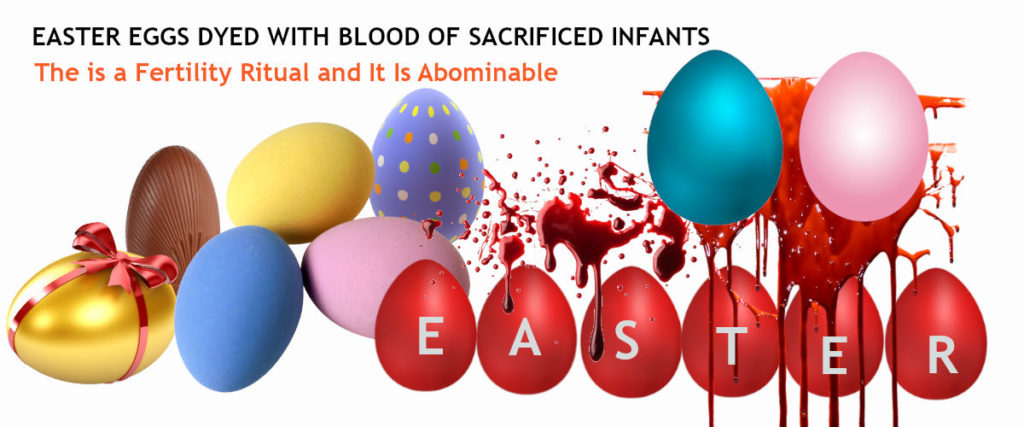
(b) Easter Eggs – On the first Sunday after the first full moon after the spring equinox, a celebration was made—it was Ishtar (Easter) Sunday. It was celebrated with rabbits and eggs—symbols of fertility.
From the overview of the roots of Easter, Easter eggs were dyed with the blood of infants sacrificed to gods in the temple of Easter (Ishtar) by Easter priests. Easter eggs: the symbol of the fertility and rebirth of life; reference to woman’s reproduction and infant sacrifices to their gods. It is full of wickedness; nothing about Easter is harmless.
Isaiah 60
1 Arise, shine, for thy light is come, and the glory of the Lord is risen upon thee.
— arise, shine; the Targum and the Septuagint add, “O Jerusalem” and no doubt but the kingdom of God is addressed, composed of first the Jews and also the Gentiles later.
2 For behold, the darkness shall cover the earth and gross darkness the people; but the Lord shall arise upon thee, and His glory shall be seen upon thee.
— for, behold, darkness shall cover the earth; ignorance, idolatry and all kinds of errors and vices; and gross darkness the people; like that of Egypt; the most palpable blindness and infatuation as to divine things.
3 And the Gentiles shall come to thy light, and kings to the brightness of thy rising.
— the Gentiles shall come to thy light; or shall be allured by thy light to come to thee, as travellers in a dark night and out of their way when a light discovers itself make to it; and wish them much joy but shall rejoice to participate with them in their happiness.
4 “Lift up thine eyes round about and see; all they gather themselves together, they come to thee; thy sons shall come from far, and thy daughters shall be nursed at thy side.
— the Targum says, “lift up thine eyes O Jerusalem, round about, and see all the children of the people of thy captivity”
— all they gather themselves and come to thee: this seems to have respect not just the Gentiles, but to the Jews themselves who are scattered up and down in the world; but now shall gather together in a body and go up to Jerusalem, where they will go to keep the feast of tabernacles, Zechariah 14:16-21.
Zechariah 14:16 And it shall come to pass that every one who is left of all the nations which came against Jerusalem, shall even go up from year to year to worship the King, the Lord of hosts, and to keep the Feast of Tabernacles.
17 And it shall be, that whoso will not come up of all the families of the earth unto Jerusalem to worship the King, the Lord of hosts, even upon them shall be no rain.
18 And if the family of Egypt go not up and come not, upon whom there is no rain, there shall be the plague wherewith the Lord will smite the heathen who come not up to keep the Feast of Tabernacles.
19 This shall be the punishment of Egypt and the punishment of all nations that come not up to keep the Feast of Tabernacles.
20 In that day shall there be upon the bells of the horses: “Holiness Unto The Lord.” And the pots in the Lord’S house shall be like the bowls before the altar;
21 yea, every pot in Jerusalem and in Judah shall be holiness unto the Lord of hosts, and all those who sacrifice shall come and take of them and boil therein. And in that day there shall be no more the Canaanite in the house of the Lord of hosts. Zechariah 14:16-21
5 Then thou shalt see and flow together, and thine heart shall fear and be enlarged, because the abundance of the sea shall be converted unto thee, the wealth of the Gentiles shall come unto thee.
— the forces of the Gentiles shall come unto thee; not only common people but their armies; the soldiery will be converted as well as the seafaring men; not only kings but their armies, their generals, officers and common soldiers.
6 The multitude of camels shall cover thee, the dromedaries of Midian and Ephah; all they from Sheba shall come; they shall bring gold and incense, and they shall show forth the praises of the Lord.
7 All the flocks of Kedar shall be gathered together unto thee, the rams of Nebaioth shall minister unto thee; they shall come up with acceptance on Mine altar, and I will glorify the house of My glory.
8 “Who are these that fly as a cloud and as the doves to their windows?
— who are these that fly as a cloud? – in multitudes so numerous, that they appear as a dense cloud; so numerous as to excite surprise, and to lead to the question, Who can they be? It is not uncommon to compare a multitude of persons to a cloud.
9 Surely the isles shall wait for Me—and the ships of Tarshish first, to bring thy sons from far, their silver and their gold with them, unto the name of the Lord thy God, and to the Holy One of Israel, because He hath glorified thee.
— surely the isles shall wait for me; the Targum says, “for my Word,” the Messiah and his coming; the isles of Great Britain may be intended, who, as they waited for his Kingdom and readily received it as soon as it was brought to them which was very early;
— so there are many here now waiting for the spiritual coming of the Messiah and his glory in the latter day and perhaps in other parts of the world.
10 “And the sons of strangers shall build up thy walls, and their kings shall minister unto thee; for in My wrath I smote thee, but in My favor have I had mercy on thee.
— for in my wrath I smote thee for the Jews’ rejection of the prophets and the Messiah; wrath came upon them to the uttermost, upon their city, Temple, nation and to each of their destructions.
11 Therefore thy gates shall be open continually; they shall not be shut day nor night, that men may bring unto thee the wealth of the Gentiles, and that their kings may be brought.
— thy gates shall be open continually; it implies (1) a state of peace in which there would be no danger of attack; and (2) the constant stream of caravans of pilgrims, with their offerings, entering by night as well as day.
12 For the nation and kingdom that will not serve thee shall perish; yea, those nations shall be utterly wasted.
— the Targum says: for the nation and kingdom that will not serve thee, O Jerusalem, shall perish; yea, those nations shall utterly be destroyed.
13 The glory of Lebanon shall come unto thee, the fir tree, the pine tree, and the box together to beautify the place of My sanctuary; and I will make the place of My feet glorious.
— the glory of Lebanon; the prophet sees in the new Jerusalem a revival of the glories of the days of Solomon. The cedars of Lebanon, and other trees of the forest, are to furnish timber for its buildings or even to be planted in the courts of the Temple or in its open places and streets;
— the place of my feet is clearly parallel with the “sanctuary” of the previous clause; so the word “footstool” is used of the Temple in Psalms 99:5; 132:7.
14 The sons also of them that afflicted thee shall come bending unto thee, and all they that despised thee shall bow themselves down at the soles of thy feet; and they shall call thee, the City of the Lord, the Zion of the Holy One of Israel.
— the sons of them that afflicted thee; that is, even the descendants of those who had oppressed them would become tributary to them and acknowledge them as favored by the Almighty; shall come bending unto thee; shall come to time in a posture of humiliation and respect.
15 “Whereas thou hast been forsaken and hated, so that no man went through thee, I will make thee an eternal excellency, a joy of many generations.
— whereas thou hast been forsaken; thy being forsaken, that is, thy subsequent prosperity shall come in the place of thy being forsaken. The forsaking here refers to the various calamities, persecutions and trials, which she had been called to endure;
— so that no man went through thee; when the country was desolate and abandoned that no caravan passed from one part of it to another or made it a thoroughfare in going to other lands.
16 Thou shalt also suck the milk of the Gentiles, and shalt suck the breast of kings; and thou shalt know that I the Lord, am thy Savior and thy Redeemer, the mighty One of Jacob.
— the mighty one of Jacob; styled so either with reference to Jacob’s person, he being the first that gave God this title, Genesis 49:24;
— or with reference to Jacob’s posterity, viz. the Jews. These things will certainly be accomplished; for he is the mighty God, and so able; and the God of Jacob, so obliged by covenant and relation.
17 “For brass I will bring gold, and for iron I will bring silver, and for wood, brass, and for stones, iron. I will also make thy officers peace and thine exactors righteousness.
— for brass I will bring gold: here is the effect of the former promise: thy poverty shall be turned to riches, all things shall be altered for the best; as the days of Solomon, when gold was as brass: thus, on the contrary, when they change for the worse in the state, it uses to be expressed by the like metaphors.
18 Violence shall no more be heard in thy land, wasting nor destruction within thy borders; but thou shalt call thy walls Salvation and thy gates Praise.
— violence shall no more be heard; neither the threats and triumphs of those that do violence, nor the outcries and complaints of those that suffer it, shall be heard again, but every man shall peaceably enjoy his own.
19 The sun shall be no more thy light by day, neither for brightness shall the moon give light unto thee; but the Lord shall be unto thee an everlasting light, and thy God thy glory.
— the sun shall be no more thy light; the light of the sun and moon shall not be at all esteemed in comparison of the light of the Kingdom, which shall be so glorious as to eclipse all the light formerly enjoyed by her, the divine glory and majesty.
20 Thy sun shall no more go down, neither shall thy moon withdraw itself; for the Lord shall be thine everlasting light, and the days of thy mourning shall be ended.
— the Targum says, “thy kingdom shall cease no more and thy glory shall not be removed.”
21 Thy people also shall be all righteous; they shall inherit the land for ever, the branch of My planting, the work of My hands, that I may be glorified.
— that I may be glorified; God would be glorified, and many beings made glorious by him. He is always glorified when others enjoy the fruits of his benevolence and when they are made pure and happy as the result of his purposes and plans.
22 A little one shall become a thousand, and a small one a strong nation; I, the Lord, will hasten it in his time.”
— a little one shall become a thousand; there shall be a great increase, as if one and that the smallest should be multiplied to a thousand;
— his time; not our time; we might wish to hasten it but it will come in due time as in the case of Yeshua’s first and second comings; so in that of the restoration of Israel and the conversion of the world in his time.
Blessed to those who know and keep the weekly and annual Sabbaths perpetually:
“If thou turn away thy foot from the Sabbath, from doing thy pleasure on My holy day, and call the Sabbath a delight, the holy of the Lord, honorable, and shalt honor Him, not doing thine own ways, nor finding thine own pleasure, nor speaking thine own words,
“then shalt thou delight thyself in the Lord; and I will cause thee to ride upon the high places of the earth, and feed thee with the heritage of Jacob thy father; for the mouth of the Lord hath spoken it,” Isaiah 58:13-14
Isaiah 57
1 The righteous perisheth, and no man layeth it to heart; and merciful men are taken away, none considering that the righteous is taken away from the evil to come.
— the righteous are delivered from the sting of death; the careless world disregards this. Few lament it as a public loss and very few notice it as a public warning;
— they are taken away in compassion and that they may not see the evil, nor share in it, nor be tempted by it. The righteous man, when he dies, enters into peace and rest.
2 He shall enter into peace; they shall rest in their beds, each one walking in his uprightness.
— he shall enter into peace, or ‘he shall go in peace.’ So the Septuagint, ‘his sepulchre shall be in peace.’ The idea is, that by his death the righteous man shall enter into rest; he shall get away from conflict, strife, agitation and distress.
3 “But draw near hither, ye sons of the sorceress, the seed of the adulterer and the whore.
— draw near to face God’s tribunal, to receive your sentence; though Hezekiah and Josiah had made a great change when each ascended the throne and had done their best to put down idolatry,
— yet their idolatry was still dear among the people, and was easily revived each of their sons; thus the Jews were guilty of idolatry before the captivity; but not after that affliction.
4 Against whom do ye sport yourselves? Against whom make ye a wide mouth and draw out the tongue? Are ye not children of transgression, a seed of falsehood,
— CSB Who are you mocking? Who are you opening your mouth and sticking out your tongue at? Isn’t it you, you rebellious children, you offspring of liars,
5 inflaming yourselves with idols under every green tree, slaying the children in the valleys under the clefts of the rocks?
— inflaming yourselves with idols; being inflamed or growing hot after idols; that is, lusting after them and mad upon them;
— under the clefts of the rocks; dark and shady groves; deep and sombre caverns were the places where the abominable rites of the pagan superstitions were practiced.
6 Among the smooth stones of the stream is thy portion; they, they are thy lot. Even to them hast thou poured a drink offering, thou hast offered a meat offering. Should I receive comfort in these?
— among the smooth stones of the stream is thy portion; or thy god; but the portion of Jacob is not like them, stocks and stones, Jeremiah 10:16;
— whenever they could pick up smooth stones, whether in the stream of a brook or in a valley, they polished and formed them into an image and made gods of them; and these were their portion and inheritance and which they left to their children.
7 Upon a lofty and high mountain hast thou set thy bed; even thither wentest thou up to offer sacrifice.
— upon a lofty and high mountain hast thou set thy bed; temples and altars which are usually built on high places where they commit spiritual adultery; that is, idolatry in imitation of the heathens who had their temples and altars on high places;
— the Targum says, “on a high and lofty mountain thou hast the place of the house of thy dwelling” which agrees very well with the great city the seat of the beast; like the temple at Mount Gerizim and later the church of Rome.
8 Behind the doors also and the posts hast thou set up thy remembrance; for thou hast uncovered thyself to another than Me, and art gone up; thou hast enlarged thy bed and made thee a covenant with them; thou lovedst their bed where thou sawest it.
— behind the doors also and the posts hast thou set up thy remembrance of thy idols, as the Targum says.
9 And thou wentest to the king with ointment, and didst increase thy perfumes, and didst send thy messengers far off, and didst debase thyself even unto hell.
— thou went to the king, that is, the king of Assyria or Egypt to whom the Israelites were very prone to seek, and trust and send presents.
10 Thou art wearied in the greatness of thy way; yet saidst thou not, ‘There is no hope.’ Thou hast found the life of thine hand; therefore thou wast not grieved.
— thou art wearied in the greatness of thy way; thou hast not eased or relieved but only tired thyself with all thy tedious journeys and laborious endeavours.
11 “And of whom hast thou been afraid or feared, that thou hast lied, and hast not remembered Me, nor laid it to thy heart? Have not I held My peace even of old, and thou fearest Me not?
— and of whom hast thou been afraid or feared? and what or who are they the fear of whom drives thee to these wicked and desperate courses? Are they not men, weak and mortal creatures such as wholly depend upon me and can do nothing to thee either against me or without me?
— and hast not remembered me; or “for thou hast not remembered me nor laid it to thy heart?” or “put me upon thy heart” – the Targum says, “and hast not remembered my worship, nor put my fear upon thy heart.”
12 I will declare thy righteousness and thy works, for they shall not profit thee.
13 When thou criest, let thy companies deliver thee; but the wind shall carry them all away, vanity shall take them. But he that putteth his trust in Me shall possess the land, and shall inherit My holy mountain,
— when thou criest; in the time of thy trouble; let thy companies deliver thee; properly, “a gathering; a throng; a collection,”
— here it refers either to the throngs of the idols which they had collected, and on which they relied; or to the collection of foreigners which they had summoned to their assistance; if people trust to other objects for aid than the arm of God, they will be left in the day of trial to such assistance as they can render them.
14 And shall say, ‘Cast ye up, cast ye up, prepare the way; take up the stumbling block out of the way of My people.’”
— the Targum says, “and he shall say, teach and admonish, prepare (or direct) the heart of the people to the right way, remove the stumblingblock of the wicked out of the way of my people.”
15 For thus saith the high and lofty One who inhabiteth eternity, whose name is Holy: “I dwell in the high and holy place with him also that is of a contrite and humble spirit, to revive the spirit of the humble and to revive the heart of the contrite ones.
— for thus saith the high and lofty; the central truth for the comfort of God’s people is that the infinitely Great One cares even for the infinitely little;
— whose name is Holy; who is omnipotent, everlasting, and unchangeable, holy in all his words and ways, and therefore both can and will deliver his people, as he hath promised to do.
16 For I will not contend for ever, neither will I be always wroth; for the spirit should fail before Me, and the souls which I have made.
— for I will not contend for ever; I will not be angry with my people forever, nor always refuse to pardon and comfort them;
— the Targum says, for I will not take vengeance of judgement forever, neither shall my wrath be eternal.
17 For the iniquity of his covetousness was I wroth and smote him; I hid Me and was wroth, and he went on waywardly in the way of his heart.
— the Targum says, “my wrath is upon them on account of their robbed riches, and I smote them; I removed my Shekinah from them, and cast them out.”
MSG
A Message from the high and towering God, who lives in Eternity, whose name is Holy: “I live in the high and holy places, but also with the low-spirited, the spirit-crushed, And what I do is put new spirit in them, get them up and on their feet again.
For I’m not going to haul people into court endlessly, I’m not going to be angry forever. Otherwise, people would lose heart. These souls I created would tire out and give up. I was angry, good and angry, because of Israel’s sins. I struck him hard and turned away in anger, while he kept at his stubborn, willful ways.
When I looked again and saw what he was doing, I decided to heal him, lead him, and comfort him, creating a new language of praise for the mourners. Peace to the far-off, peace to the near-at-hand,” says God— “and yes, I will heal them. But the wicked are storm-battered seas that can’t quiet down. The waves stir up garbage and mud. There’s no peace,” God says, “for the wicked.”
18 I have seen his ways and will heal him; I will lead him also, and restore comforts unto him and to his mourners.
— I have seen his ways, and will heal him, the ways of such who trust in the Lord, the ways of the humble and contrite;
19 I create the fruit of the lips; peace, peace to him that is far off, and to him that is near,” saith the Lord; “and I will heal him. — the fruit of the lips; which is praise and thanksgiving,
20 “But the wicked are like the troubled sea when it cannot rest, whose waters cast up mire and dirt.
— but the wicked are like the troubled sea, when it cannot rest; disturbed by winds, storms and hurricanes, when its waves rise, rage and tumble about, and beat against the shore and sand, threatening to pass the bounds fixed for it;
— the wicked persist in the alienation from God; are incapable of the peace which God brings to his people: they are like the sea in its tossed and stormy state; as this cannot rest and as its waters cast out slime and mud;
— so has their natural state become one of perpetual disturbance, leading to the uninterrupted production of unclean and ungodly thoughts, words and works.
— the Septuagint renders it, ‘But the wicked are tossed like waves and are not able to be at rest.’
21 There is no peace, saith my God, to the wicked.”
— but the wicked are storm-battered seas that can’t quiet down. The waves stir up garbage and mud. There’s no peace,” God says, “for the wicked.”
Isaiah 58
1 “Cry aloud, spare not; lift up thy voice like a trumpet! And show My people their transgression and the house of Jacob their sins.
— cry aloud; literally, with the throat, i.e., with no faint whisper as from stammering lips, but with full strength of voice; and so the Targum expresses it, “O prophet, cry with thy throat;”
— lift up thy voice like a trumpet; Speak loud and distinct, so that the language of reproof may be heard; and show my people their transgression, and the house of Jacob their sins:
“I will also cause all her mirth to cease, her feast days, her new moons, and her Sabbaths, and all her solemn feasts” Hosea 2:11
— her feast days; which “Christians” understand and practice are:
(a) Christmas, which honor the Mithraism – a form of nature worship based on the Sun-Goddess Mithra who on the darkest night of the year (December 20/21), gives birth to “Light” causing each day thereafter to grow longer until the Summer solstice; and
(b) Easters, a celebration of Ishtar, the Assyrian and Babylonian goddess of fertility and sex. Her symbols (like the egg and bunny) were and still are fertility and sex symbols; and to those who actually think eggs and bunnies have something to do with the resurrection; and
(c) her sabbaths which is Sundays, where the original keepers were the Samaritans, brought from Assyria: “And the king of Assyria brought men from Babylon, and from Cuthah, and from Ava, and from Hamath, and from Sepharvaim, and placed them in the cities of Samaria instead of the children of Israel; and they possessed Samaria and dwelt in the cities thereof” II Kings 17:24.
2 Yet they seek Me daily and delight to know My ways, as a nation that did righteousness and forsook not the ordinance of their God. They ask of Me the ordinances of justice; they take delight in approaching to God.
— yet they seek me daily; they cover all their wickedness with a profession of religion, from time to time resorting to my house, pretending to ask counsel of me and to desire and seek my favour and blessing. And delight to know my ways;
— that is, either, (a) they seem to delight to know them, men being often said in Scripture to be or do that which they seem or profess to be or do: or (b) they really delight; for there are many men who take some pleasure in knowing God’s will and word, and yet do not conform their lives to them.
3 ‘Why have we fasted,’ say they, ‘and Thou seest not? Why have we afflicted our soul, and thou takest no note?’ Behold, in the day of your fast ye find pleasure, and exact all your labors.
— in those solemn days of fasting which I have appointed; or in those times when I have called you by the course of my providence and counsels of my prophets, unto fasting, weeping and mourning, yet ye find pleasure, indulging in pride, covetousness and malignant passions.
— in the day of your fast ye find pleasure; better, ye carry on your business. Fasts were not governed like the Sabbath by a fixed law and the people consequently lost sight of the true end of fasting—prayer, meditation, penitence.
4 Behold, ye fast for strife and debate, and to smite with the fist of wickedness; ye shall not fast as ye do this day, to make your voice to be heard on high.
— ye fast for strife and contention; it produced a quarrelsome temper which even led to open violence,—“smiting with godless fist;”
— to make your voice to be heard on high; that is in strife and contention that your voice can be heard on the mountain top that their prayers would ascend to heaven and be heard by God.
5 Is it such a fast that I have chosen? A day for a man to afflict his soul? Is it to bow down his head as a bulrush, and to spread sackcloth and ashes under him? Wilt thou call this a fast, and an acceptable day to the Lord?
— a fast is a day to afflict the soul; if it does not express true sorrow for sin it is not a fast. These pretenders had shown sorrow on stated or occasioned fasts, but they indulged in pride, covetousness and malignant passions.
6 “Is not this the fast that I have chosen: to loose the bands of wickedness, to undo the heavy burdens, and to let the oppressed go free, and that ye break every yoke?
— is not this the fast that I have chosen? – or approve, fasting is right and proper; but that which God approves and follows by deeds of humility, justice and kindness.
7 Is it not to deal thy bread to the hungry, and that thou bring the poor that are cast out to thy house?—when thou seest the naked, that thou cover him, and that thou hide not thyself from thine own flesh?
— to share your bread with the hungry and to offer shelter to the homeless poor, to clothe the naked when you behold them and not turn your back on your own kin;
MSG
“This is the kind of fast day I’m after: to break the chains of injustice, get rid of exploitation in the workplace, free the oppressed, cancel debts. What I’m interested in seeing you do is: sharing your food with the hungry, inviting the homeless poor into your homes, putting clothes on the shivering ill-clad, being available to your own families.
Do this and the lights will turn on, and your lives will turn around at once. Your righteousness will pave your way. The God of glory will secure your passage. Then when you pray, God will answer. You’ll call out for help and I’ll say, ‘Here I am.’ “If you get rid of unfair practices, quit blaming victims, quit gossiping about other people’s sins, If you are generous with the hungry and start giving yourselves to the down-and-out, Your lives will begin to glow in the darkness, your shadowed lives will be bathed in sunlight.
I will always show you where to go. I’ll give you a full life in the emptiest of places— firm muscles, strong bones. You’ll be like a well-watered garden, a gurgling spring that never runs dry. You’ll use the old rubble of past lives to build anew, rebuild the foundations from out of your past. You’ll be known as those who can fix anything, restore old ruins, rebuild and renovate, make the community livable again.
8 Then shall thy light break forth as the morning, and thine health shall spring forth speedily; and thy righteousness shall go before thee; the glory of the Lord shall be thy rearward.
— then shall thy light; cause of rejoicing, break forth as the morning; arise as certainly and speedily as in the morning the light arises out of darkness.
9 Then shalt thou call, and the Lord shall answer; thou shalt cry, and He shall say, ‘Here I am.’ If thou take away from the midst of thee the yoke, the putting forth of the finger and speaking vanity,
— “the putting forth of the finger” – pointing at those that could not comply with them, by way of scorn and derision and persecuting them for it; and so is the same with smiting with the fist of wickedness.
10 and if thou draw out thy soul to the hungry and satisfy the afflicted soul, then shall thy light rise in obscurity and thy darkness be as the noonday.
— then shall thy light rise in obscurity; that is, it will be as if the cheerful light of the sun should rise amidst the shades of midnight; their calamities and trials would be suddenly succeeded by the bright and cheerful light of prosperity.
11 And the Lord shall guide thee continually, and satisfy thy soul in drought, and make fat thy bones; and thou shalt be like a watered garden, and like a spring of water whose waters fail not.
— like a watered garden; like a garden for the pleasure and beauty of it, a paradise; like a garden watered for the continual flourishing of thy estate; there shall be no withering or decay upon thy prosperous condition.
12 And they that shall be of thee shall build the old waste places; thou shalt raise up the foundations of many generations, and thou shalt be called the Repairer of the Breach, the Restorer of Paths to dwell in.
— thou shalt raise up the foundations of many generations; either such foundations as have been razed up and lay so for ages past; or raise up such as shall continue for generations to come;
— and thou shalt be called the repairer of the breach and the restorer of paths to dwell in; the Targum says, “they shall call thee one that confirms the right way, and converts, the ungodly to the law.”
13 “If thou turn away thy foot from the Sabbath, from doing thy pleasure on My holy day, and call the Sabbath a delight, the holy of the Lord, honorable, and shalt honor Him, not doing thine own ways, nor finding thine own pleasure, nor speaking thine own words,
— the Sabbath is a sign between God and his people; his appointing it is a sign of his favour to them; and their observing it is a sign of their obedience to him;
— and call the Sabbath a delight; this appropriately expresses the feelings of all who have any just views of the Sabbath. To them it is not wearisome, nor are its hours heavy. They love the day of sweet and holy rest; they esteem it a privilege, not a task;
— to be permitted once a week to disburden their minds of the cares, and toils, and anxieties of life. It is a ‘delight’ to them to recall the memory of the institution of the Sabbath, when God rested from his labours.
14 then shalt thou delight thyself in the Lord; and I will cause thee to ride upon the high places of the earth, and feed thee with the heritage of Jacob thy father; for the mouth of the Lord hath spoken it.”
— then shalt thou delight thyself in the Lord: that is, if thou wilt delight thyself in the Sabbath, then thou shalt delight in the God of the Sabbath; or thou shalt have cause to delight in the Lord, in his goodness and faithfulness to thee and so shalt live by faith in him as the Fountain of all good.
British officials reportedly believe the imported electric vehicles pose a significant security risk
British lawmakers have warned against imports of Chinese electric vehicles, claiming the technology embedded in the cars could be used to spy on citizens, according to a report in The Telegraph on Saturday.
China’s BYD in Britain send fears and terrors among British MPs
With China leading the global EV market, cheaper Chinese vehicles are predicted to dominate the UK’s automotive sales. A cross-party group of MPs have raised concerns to the government that Britain stands to cede control over critical infrastructure to Beijing, with all the “attendant security risks.”
“If it is manufactured in a country like China, how certain can you be that it won’t be a vehicle for collecting intel and data? If you have electric vehicles manufactured by countries who are already using technology to spy, why would they not do the same here?” an unnamed senior government official told The Telegraph.
The call comes in the wake of new government legislation, with car companies facing quotas for zero emission sales from next year, ahead of a ban on new petrol and diesel vehicles in 2030.
“We know that China always thinks in very long terms. So if they were providing a product that could do more than just deliver the consumer’s desire to go from A to B, why would they not be doing it?” the source claimed. “They are high-risk products.”
The UK has previously restricted Chinese technology imports over the perceived security risks. In 2020 the government banned Huawei from Britain’s 5G network, ordering the removal of all the firm’s equipment and services by the end of December 2023.
Last year the heads of the UK and the US domestic intelligence services accused China of economic espionage. Beijing denied the allegations, suggesting that the British intelligence was “simply projecting their own dishonorable behavior onto China.”
In 2021 the Chinese government itself allegedly barred American Tesla vehicles from entering sensitive areas over the potential risk onboard cameras collecting data.
“And I will set My face against you, so that you will be defeated by your enemies. Those who hate you will rule over you, and you will flee when no one pursues you,” Leviticus 26:17
The Scriptures are often shrouded in cryptic languages; as usual a prophecy of Isaiah will start with the house of Judah and Jerusalem then spread to the house of Israel and soon it includes many prophecies concerning other nations surrounding the region.
However the following may provide a clue:
“The anger of the Lord shall not return, until He has executed and till He has performed the thoughts of His heart; in the latter days ye shall understand it perfectly” Jeremiah 23:20
“In latter days you will understand it fully,” that is, this means as a whole, we wouldn’t understand these prophecies until we’re living in the latter days, soon to be our days, after God had executed his judgement in anger and performed the thoughts of his heart; only then could we understand fully!
“God’s favor rests on those who attend to justice, who devote themselves to doing what is right, Who keep the Sabbath and don’t disregard or belittle it, who keep from doing what is wrong: destructive, deceitful, or violent” Isaiah 56:2 VOICE
Isaiah 55
1 “Ho, every one that thirsteth, come ye to the waters; and he that hath no money, come ye, buy, and eat; yea, come, buy wine and milk without money and without price.
— Ho – (הוי hôy). This word here is designed to call attention to the subject as one of importance;
— every one that thirsts; the word ‘thirst’ often indicates intense desire and is thus applied to the sense of want which sinners often have and to their anxious wishes for salvation.
2 Why do ye spend money for that which is not bread, and your labor for that which satisfieth not? Hearken diligently unto Me, and eat ye that which is good, and let your soul delight itself in fatness.
— wherefore do ye spend money for that which is not bread? Lavish away time, opportunities, and strength, in reading and hearing false doctrine, which is not bread, but chaff; and the errors and heresies of false teachers:
— and let your soul delight itself in fatness; in the goodness and fatness of the Lord’s house, attending on the word and ordinances with spiritual pleasure and delight; and which is the way to become fat and flourishing in spiritual things.
3 Incline your ear, and come unto Me; hear, and your soul shall live; and I will make an everlasting covenant with you, even the sure mercies of David.
— hear; hearken attentively and obediently to my counsel; hearing being oft put for obeying, as Isaiah 42:18; or as the Targum says, “Incline your ear and receive instruction of my law.”
4 Behold, I have given him for a witness to the people, a leader and commander to the people.
— behold, I have given him; this is evidently the language of God respecting the Messiah, or of David as representing the Messiah;
— a leader and commander to the people; he is a “leader” as David the type of him did; as a general leads out and on his armies to battle; as a shepherd leads his flock to good pastures; he is a “commander” in a military way, a wise, powerful and courageous, and always victorious as a King commands his subjects;
— the Targum says, “behold, I have appointed him a Prince to the people, a King, and a ruler over all kingdoms.”
5 Behold, thou shalt call a nation that thou knowest not, and nations that knew not thee shall run unto thee because of the Lord thy God, and for the Holy One of Israel; for He hath glorified thee.”
— and nations that knew not thee shall run unto thee; knew not even God himself as the Gentiles did not, much less the Messiah;
— they knew neither his person nor his offices, nor the way of peace, and were in a state of gross darkness; and to whom the Gospel was not known, which is a revelation of Christ, and of good things by him. The Targum adds, “to bring tribute unto thee.”
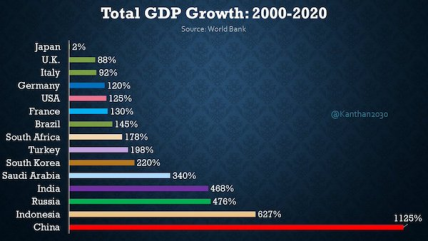
6 Seek ye the Lord while He may be found, call ye upon Him while He is near.
— seek ye the Lord; the commencement of religion in the heart is often represented as a desire to seek God; and inquiring for his ways Deuteronomy 4:29;
— so the Targum (Sefaria) says, “seek the fear of the Lord, while ye are alive.” Or as one in the Jerusalem Talmud interprets these words, “whilst the Shechinah is found in the sanctuary; before he hides his face, and causes his Shechinah to remove from you.”
7 Let the wicked forsake his way and the unrighteous man his thoughts; and let him return unto the Lord, and He will have mercy upon him, and to our God, for He will abundantly pardon.
— let the wicked forsake his way; his evil way, as the Targum paraphrases it, his wicked course of life; and which is his own way, of his own choosing, and in which he delights;
— and let him return unto the Lord; from whom he has departed, against whom he has sinned; and acknowledges his sin before the Lord, attends his word and worship; the Targum says, “and let him turn to the worship of the Lord.”
8 “For My thoughts are not your thoughts, neither are your ways My ways,” saith the Lord.
— notice the remarkable order and alternation of pronouns in the first verse. ‘My thoughts are not your thoughts,’ saith the Lord; the things that God thinks and purposes are not the things that man thinks and purposes and therefore because the thoughts are different the outcomes of them in deeds are divergent.
9 “For as the heavens are higher than the earth, so are My ways higher than your ways and My thoughts than your thoughts.
— by way of comparison, the relation in which the ways and thoughts of God stand to those of man; the Almighty God’s thoughts transcend those of man as much as the heaven is higher than the earth.
10 For as the rain cometh down and the snow from heaven, and returneth not thither, but watereth the earth, and maketh it bring forth and bud, that it may give seed to the sower and bread to the eater,
— for as the rain and snow come down from the clouds in the heavens and do not return again until they have done what they are sent to do, or have produced the following effects; otherwise they may be exhaled into vapours as they often are and drawn up again by the sun.
11 so shall My word be that goeth forth out of My mouth: It shall not return unto Me void, but it shall accomplish that which I please, and it shall prosper in the thing whereto I sent it.
— this is set forth under a figure drawn from the rain and the snow and return not till it has moistened the earth and fertilized it and made it green and offered seed to the sower and bread to the eater;
— so will my word be which go forth out of my mouth: it will not return to me fruitless, till it has accomplished that which I willed, and prosperously carried out that for which I sent it.
12 “For ye shall go out with joy, and be led forth with peace; the mountains and the hills shall break forth before you into singing, and all the trees of the field shall clap their hands.
— for ye shall go out with joy, and be led forth with peace; though these words may literally respect the Israelites’ return from captivity to their own land, attended with joy and peace; as the preceding verse may respect the word of promise concerning it;
— as it is interpreted by the Targum, “for with joy shall ye go out from among the nations, and with peace shall ye be brought to your own land.”
13 Instead of the thorn shall come up the fir tree, and instead of the brier shall come up the myrtle tree; and it shall be to the Lord for a name, for an everlasting sign that shall not be cut off.”
— instead of the thorn shall come up the fir tree, and instead of the brier shall come up the myrtle tree; whereas your land was filled with thorns and briers, as was foretold, Isaiah 7:24, they shall be rooted out, and it shall be planted with fir trees and myrtle trees, and such other trees which are useful either for fruit or for delight.
Isaiah 56
1 Thus saith the Lord, “Keep ye judgement, and do justice; for My salvation is near to come, and My righteousness to be revealed.
— keep ye judgement and do justice: this phrase elsewhere signifies the duties which one man owe to another but here it seems to signify the duties which men owe to God,
— to be held fast and abode by; which are his statutes and judgements; and so likewise all the ordinances of the Lord, all these should be kept.
2 Blessed is the man that doeth this, and the son of man that layeth hold on it; who keepeth the Sabbath from polluting it, and keepeth his hand from doing any evil.”
— that keep the Sabbath from polluting it; here lies in the nature of the case that a devout king like David, Hezekiah and Josiah would be observers of the Sabbath;
— instead of observing the Sabbath, today, more than 98.5 percent of Christians are keeping Sunday, in fact they’re honouring the Sun by observing Sunday worship. They have “their backs toward the temple of the Lord and their faces toward the east; and they worshipped the SUN toward the east; whose Godly judgement is to be stoned to death – ’till they die.
— also, following the SUN-worshipping Samaritans, most Church of God Communities are showing their contempt for God by having their “wavesheaf offering” and Pentecost on a Sunday; always on a Sunday. And these are supposedly in God’s Sanctuary, but God says He is a jealous God, so these pretenters could be spewed out of His mouth! A death penalty Deuteronomy 17:3-5 – ’till they die!
3 Neither let the son of the stranger, that hath joined himself to the Lord, speak, saying, “The Lord hath utterly separated me from His people”; neither let the eunuch say, “Behold, I am a dry tree.”
— the son of the stranger; the stranger who keep the Sabbath is as the blessed son of Israel, the same with the blessed man in Isaiah 56:2; the Gentile, who by birth is a stranger to God, and also of the commonwealth of Israel;
— neither would such a stranger who keeps the Sabbath says, Behold, I am a dry tree – A dry tree is an emblem of that which is barren, useless, unfruitful.
4 For thus saith the Lord: “Unto the eunuchs that keep My Sabbaths, and choose the things that please Me, and take hold of My covenant,
— for thus saith the Lord unto the eunuchs; even the eunuchs, who have hitherto been excluded from the privileges of the people of God and who have been regarded as a separated and degraded people shall be admitted to the same privileges as others;
— that keep my sabbaths; the word is used here in the plural, both the weekly and the annual Sabbath (at the feasts of Passover, Pentecost, Trumpets, day of Atonement and Tabernacles); the term could be used to represent other observances as well (more at the end).
5 even unto them will I give in Mine house and within My walls a place and a name better than of sons and of daughters; I will give them an everlasting name that shall not be cut off.
— even to them will I give in mine house and within my walls; the Targum says, “in the house of my sanctuary, and in the land of the house of my Shechinah” meaning the temple at Jerusalem;
— a place and a name better than of sons and of daughters; a far greater blessing and honour than that of having posterity which is but only temporal and so as to have a good name; and it is he that gives them the name, privilege, power, and relation of children, which shall never be cut off by any act of their own.
6 Also the sons of the stranger that join themselves to the Lord to serve Him, and to love the name of the Lord, to be His servants, every one that keepeth the Sabbath from polluting it, and taketh hold of My covenant,
— also the sons of the stranger; to be his servants, whoever keep the Sabbaths from desecrating it and those who hold fast to my covenant, the conditions on which they should be admitted to the same privileges and of course the same reward.
7 even them will I bring to My holy mountain, and make them joyful in My house of prayer; their burnt offerings and their sacrifices shall be accepted upon Mine altar, for Mine house shall be called an house of prayer for all people.”
— mine house shall be called an house of prayer for all people; Jews and Gentiles shall have equal freedom of access to my house, and shall there call upon my name, Yehovah;
— a house of prayer for all people; Gentiles, the proselytes, the sons of the strangers as others, are all welcome to the church of God to come and worship and pray to the Lord there and that is in any place where the saints meet together; for holy hands may be lifted up everywhere, without doubt.
8 The Lord God which gathereth the outcasts of Israel saith, “Yet will I gather others to him, beside those that are gathered unto him.”
— Yehovah the Almighty God will not only restore the scattered outcasts of Israel (Isaiah 11:12; Psalm 147:2) to their own land, but “will gather others (‘strangers’) to him (Israel), besides those gathered” to his gathered; that is, in addition to the outcast Israelites collected from their dispersion, John 10:16.
9 All ye beasts of the field, come to devour, yea, all ye beasts in the forest.
— all ye beasts of the field; this refers to some invasion of the land of Judea; signifying a great slaughter that should be made, like that in Revelation 19:17 to which the fowls of the heaven are invited, as to a supper;
— the Targum of the whole says, “all the kings of the people that shall be gathered to oppress thee, O Jerusalem, shall be cast in the midst of thee; they shall be for food to the beast of the field, the beast of the forest shall be satisfied with them.”
10 His watchmen are blind; they are all ignorant; they are all dumb dogs, they cannot bark, sleeping, lying down, loving to slumber.
— the Targum indicates plural ‘their’ for ‘his,’ their watchmen are blind; their priests, prophets and teachers; the teachers would be most shameful of them, because they are supposed to be knowledgeable and teaching others; but they are all ignorant;
— they are all dumb dogs, they cannot bark; and so useless; as a house dog, or one that is set to keep the sheep, if it barks not at the noise of a thief, or the approach of a wolf, to give notice to the family, or the shepherd, it is of no service;
— some may design such who call themselves pastors or evangelists of the Word, and yet neither have knowledge nor how to preach, all all like dumb dogs; couldn’t reprove the errors and vices of men, nor warn them of their danger.
11 Yea, they are greedy dogs which can never have enough, and they are shepherds that cannot understand; they all look to their own way, every one for his gain, from his quarter.
— yea, they are greedy dogs; insatiably covetous shepherds that have no truths nor understanding — Hebrew, that know not any understanding; that do not care, or love or desire either to understand the word of God themselves or to make the people understand it;
— they all look to their own way; that is, they are all selfish; they regard neither God’s glory nor the people’s good, but only the satisfaction of their own base desires. Every one for his gain from his quarter, in their places and stations.
12 “Come ye,” say they, “I will fetch wine, and we will fill ourselves with strong drink; and tomorrow shall be as this day, and much more abundant.”
— I will fetch wine out of his cellar, having good store of it, and that of the best and we will fill ourselves with strong drink; fill their bellies and skins full of it till drunken with it;
— the Targum confirms in this way, saying, “come, let us take wine, and be inebriated with old wine; and our dinner tomorrow shall be better than today, large, very large.”
~~~
Both the Weekly and Annual Sabbaths; blessed are those who keep them!
Leviticus 23
1 And the Lord spoke unto Moses, saying,
2 “Speak unto the children of Israel and say unto them: ‘Concerning the feasts of the Lord, which ye shall proclaim to be holy convocations, even these are My feasts.
3 “‘Six days shall work be done, but the seventh day is the Sabbath of rest, a holy convocation. Ye shall do no work therein; it is the Sabbath of the Lord in all your dwellings.
4 “‘These are the feasts of the Lord, even holy convocations, which ye shall proclaim in their seasons.
5 On the fourteenth day of the first month at evening is the Lord’S Passover.
6 And on the fifteenth day of the same month is the Feast of Unleavened Bread unto the Lord; seven days ye must eat unleavened bread.
7 On the first day ye shall have a holy convocation; ye shall do no servile work therein.
8 But ye shall offer an offering made by fire unto the Lord seven days. On the seventh day is a holy convocation; ye shall do no servile work therein.’”
9 And the Lord spoke unto Moses, saying,
10 “Speak unto the children of Israel and say unto them: ‘When ye come into the land which I give unto you and shall reap the harvest thereof, then ye shall bring a sheaf of the firstfruits of your harvest unto the priest.
11 And he shall wave the sheaf before the Lord to be accepted for you; on the morrow after the Sabbath the priest shall wave it.
12 And ye shall offer that day when ye wave the sheaf a helamb without blemish of the first year for a burnt offering unto the Lord.
13 And the meat offering thereof shall be two-tenths part of fine flour mingled with oil, an offering made by fire unto the Lord for a sweet savor; and the drink offering thereof shall be of wine, a fourth part of a hin.
14 And ye shall eat neither bread nor parched corn nor green ears, until the selfsame day that ye have brought an offering unto your God; it shall be a statute for ever throughout your generations in all your dwellings.
15 “‘And ye shall count unto you from the morrow after the Sabbath, from the day that ye brought the sheaf of the wave offering; seven Sabbaths shall be complete.
16 Even unto the morrow after the seventh Sabbath shall ye number fifty days, and ye shall offer a new meat offering unto the Lord.
17 Ye shall bring out of your habitations two wave loaves of two-tenths part. They shall be of fine flour; they shall be baked with leaven; they are the firstfruits unto the Lord.
18 And ye shall offer with the bread seven lambs without blemish of the first year, and one young bullock and two rams; they shall be for a burnt offering unto the Lord, with their meat offering and their drink offerings, even an offering made by fire, of sweet savor unto the Lord.
19 Then ye shall sacrifice one kid of the goats for a sin offering, and two lambs of the first year for a sacrifice of peace offerings.
20 And the priest shall wave them with the bread of the firstfruits for a wave offering before the Lord with the two lambs; they shall be holy to the Lord for the priest.
21 And ye shall proclaim on the selfsame day that it may be a holy convocation unto you. Ye shall do no servile work therein; it shall be a statute for ever in all your dwellings throughout your generations.
22 “‘And when ye reap the harvest of your land, thou shalt not rid cleanly the corners of thy field when thou reapest, neither shalt thou gather any gleanings of thy harvest. Thou shalt leave them unto the poor and to the stranger: I am the Lord your God.’”
23 And the Lord spoke unto Moses, saying,
24 “Speak unto the children of Israel, saying, ‘In the seventh month, on the first day of the month, shall ye have a sabbath, a memorial of blowing of trumpets, a holy convocation.
25 Ye shall do no servile work therein, but ye shall offer an offering made by fire unto the Lord.’”
26 And the Lord spoke unto Moses, saying,
27 “Also on the tenth day of this seventh month there shall be a Day of Atonement. It shall be a holy convocation unto you; and ye shall afflict your souls, and offer an offering made by fire unto the Lord.
28 And ye shall do no work in that same day, for it is a Day of Atonement to make an atonement for you before the Lord your God.
29 For whatsoever soul it be that shall not be afflicted in that same day, he shall be cut off from among his people.
30 And whatsoever soul it be that doeth any work in that same day, the same soul will I destroy from among his people.
31 Ye shall do no manner of work; it shall be a statute for ever throughout your generations in all your dwellings.
32 It shall be unto you a sabbath of rest, and ye shall afflict your souls. On the ninth day of the month at evening, from evening unto evening, shall ye celebrate your sabbath.”
33 And the Lord spoke unto Moses, saying,
34 “Speak unto the children of Israel, saying, ‘The fifteenth day of this seventh month shall be the Feast of Tabernacles for seven days unto the Lord.
35 On the first day shall be a holy convocation; ye shall do no servile work therein.
36 Seven days ye shall offer an offering made by fire unto the Lord. On the eighth day shall be a holy convocation unto you, and ye shall offer an offering made by fire unto the Lord. It is a solemn assembly, and ye shall do no servile work therein.
37 “‘These are the feasts of the Lord which ye shall proclaim to be holy convocations, to offer an offering made by fire unto the Lord, a burnt offering and a meat offering, a sacrifice and drink offerings, every thing upon his day”
38 besides the Sabbaths of the Lord, and besides your gifts, and besides all your vows, and besides all your freewill offerings which ye give unto the Lord.
39 “‘Also on the fifteenth day of the seventh month, when ye have gathered in the fruit of the land, ye shall keep a feast unto the Lord seven days; on the first day shall be a sabbath, and on the eighth day shall be a sabbath.
40 And ye shall take for yourselves on the first day the boughs of goodly trees, branches of palm trees, and the boughs of thick trees, and willows of the brook; and ye shall rejoice before the Lord your God seven days.
41 And ye shall keep it a feast unto the Lord seven days in the year. It shall be a statute for ever in your generations; ye shall celebrate it in the seventh month.
42 Ye shall dwell in booths seven days; all that are Israelites born shall dwell in booths,
43 that your generations may know that I made the children of Israel to dwell in booths when I brought them out of the land of Egypt: I am the Lord your God.’”
44 And Moses declared unto the children of Israel the feasts of the Lord.
In the Australian Senate’s ‘Education and Employment Legislation Committee’
Senator Alex Antic had cited statistics showing that cases of Myocarditis spiked precipitously in South Australia following introduction of the COVID injections.
“Now, we know that myocarditis and pericarditis are two heart inflammation conditions well associated with the COVID mRNA injections—even the Theraputic Goods Administration admits to that, Antic began. “Yet despite this well-established fact, the injections were mandated to thousands of Australians and speaking out about these incursions on freedom got one labeled an anti-vaxxer or a peddler of dangerous disinformation,” the senator continued.
Antic cited data he obtained through a Freedom of Information request from the South Australia Health Department that tracked cardiac related presentations in 15-year-olds to 44-year-olds going back to 2018.
The senator showed a chart indicating that the numbers remained steady at 1,100 a month from January 2018 until July of 2021 when it “drastically spiked.” By November of 2021, he said, the number of cases peaked at 2,172 per month, almost double the norm. The rise in cases, he noted, took place “just as these injections were rolled out.”
“Hear, ye deaf; and look, ye blind, that ye may see” Isaiah 42:18
“His watchmen are blind; they are all ignorant; they are all dumb dogs, they cannot bark, sleeping, lying down, loving to slumber” Isaiah 56:10
Their shepherd as watchmen are just the same!
Isaiah 53
Many theologians noted that the subject of the Suffering Servant, which the Targum (Isaiah 52:13) identifies as the Messiah, should start from Chapter 52:13 and onto the end of Chapter 53. More commentaries of this Suffering Servant and its prophecy are at the end.
1 Who hath believed our report? And to whom is the arm of the Lord revealed?
— our report; literally, that which has been heard by us, or reported to us. But the word is used technically for a prophetic revelation (see Isaiah 28:9,19; Jeremiah 49:14);
— here the word would seem to refer especially to the Messianic prophecies delivered by Isaiah. To whom is the arm of the Lord revealed? The “arm of the Lord,” which has been “made bare in the eyes of all the nations” (Isaiah 52:10); the word of God is expressly called the power of God, 1 Corinthians 1:18.
2 For He shall grow up before Him as a tender plant, and as a root out of a dry ground. He hath no form nor comeliness, and when we shall see Him, there is no beauty that we should desire Him.
— for he shall grow up as a tender plant and as a root out of a dry ground; and the reason or occasion why the Jews generally rejected their Messiah is because he didn’t come into the world with secular pomp and power, like an earthly monarch, as they carnally and groundlessly imagined; but
— he shall grow up (or, spring up, Heb. ascend, to wit, out of the ground, as it follows, brought forth, and brought up); before him (before the unbelieving Jews, of whom “my servant the Messiah” spoken of in Isaiah 52:13 (Targum) and which the Jews are blinded to, as springing up of a low and insignificant plant or shrub out of the earth; has no strength nor straightness, of body; without verdure, leaves, blossom, and therefore despised;
— he hath no form nor comeliness; when we shall see him, there is no beauty that we should desire him; when we shall look upon him, expecting to find incomparable beauty and majesty in his countenance, and carriage and condition, we shall be altogether disappointed and shall meet with nothing amiable or desirable in him.
3 He is despised and rejected of men, a Man of sorrows, and acquainted with grief. And we hid as it were our faces from Him; He was despised, and we esteemed Him not.
— nowhere in all the Old Testament is it so plainly and fully prophesied that the Messiah ought to suffer and the Jews esteemed him not; which is repeated to show the great contempt cast upon him, to be despised and rejected of men before he is to enter into his glory.
4 Surely He hath borne our griefs and carried our sorrows; yet we did esteem Him stricken, smitten of God, and afflicted.
— the Septuagint renders the words, “he bears our sins” and the Targum, where the ancient Jews understood this prophecy of the Messiah, is, “wherefore he will entreat for our sins.” No human, from Abraham to Jacob, nor from King David to Zerubbabel could have such intrinsic qualities; and of course, Israel or Jacob (whom the Jews thought was the suffering servant) doesn’t suffer for the sins of the nations.
5 But He was wounded for our transgressions; He was bruised for our iniquities. The chastisement of our peace was upon Him, and with His stripes we are healed.
— but he was wounded for our transgressions; not for any sins of his own, but for ours, for our transgressions of his law, in order to make atonement and satisfaction for them;
— he was bruised for our iniquities; as bread corn is bruised by threshing it; he being broken and crushed to pieces under the weight of sin, and the punishment of it. The ancient Jews understood this of the Messiah; for in one place they say of King Messiah, “he was wounded for our transgressions; and bruised for our iniquities.”
— and with his stripes we are healed; or “by his stripe” so called from the gathering and settling of the blood where the blow is given. As a physician, the wonderful Messiah heals by taking the sicknesses of his people upon himself, by bearing their sins, and being wounded and bruised for them and by his enduring blows and suffering death itself for them;
— nar! the phase “with His stripes we are healed” is Isaiah speaking on behalf of “we” that is, Israel of both houses; how then could Israel suffers for the sins of Israel?
— the Targum says, “when we obey his words, our sins will be forgiven us” that is, the Targum recognise the “his” and “we” are two entities, thus redemption of Israel is not through her own sacrifice, but by obedience to the word of Christ.
6 All we like sheep have gone astray; we have turned every one to his own way; and the Lord hath laid on Him the iniquity of us all.
— all we like sheep have gone astray; all the children of God, whether Jews or Gentiles; whom he compares to “sheep” not for any good qualities, but for their foolishness and stupidity;
— and particularly for their being subject to go astray from the shepherd and from their good pastures, and who never return of themselves until they are brought back by the shepherd; so the people of God, in a state of nature are like the silly sheep who go astray from God;
— and the Lord hath laid on him the iniquity of us all; that is, God the Father against whom we have sinned, from whom we have turned and whose justice must be satisfied; he has laid on his own Son, the sins of all his elect.
7 He was oppressed, and He was afflicted, yet He opened not his mouth; He is brought as a lamb to the slaughter; and as a sheep before her shearers is dumb, so He openeth not His mouth.
— he was oppressed and was afflicted; he was injuriously treated by both the Jews and Romans; they handled him roughly; he was oppressed and afflicted, both in body and mind, with their blows and with their reproaches;
— and he being the surety of his people, was responsible for them and did answer, the debt they owed was required, the payment of it was called for and he accordingly answered; the punishment of the sins of his people was exacted of him and did bear it in his own body on the tree;
— so he opened not his mouth: not against his enemies, by way of threats or complaint; nor even in his own defence; nor against the justice of God as bearing hard upon him, not sparing him but demanding and having full satisfaction; nor against his people and their sins.
8 He was taken from prison and from judgement; and who shall declare His generation? For He was cut off out of the land of the living; for the transgression of My people was He stricken.
— he was taken away from due justice and judgement; that is, his life was taken away in a violent manner, under a pretence of justice; whereas the utmost injustice was done him; a wrong charge was brought against him, false witnesses were suborned, and his life was taken away with wicked hands.
9 And He made His grave with the wicked, and with the rich in His death, because He had done no violence, neither was any deceit in His mouth.
— and he made his grave with the wicked and with the rich in his death; these words are generally supposed to refer to a fact that Christ who died with two wicked men besides him as if he himself had been one, was buried in a rich man’s grave;
— neither was any deceit in his mouth: no false accusation was delivered by him; he was no deceiver of the people as he was charged; he did not attempt to seduce them from the true worship of God or persuade them to believe anything contrary to the law of Moses and the prophets;
— he was no enemy to the state, nor indeed guilty of any manner of sin, nor given to any arts of trick and dissimulation.
10 Yet it pleased the Lord to bruise Him; He hath put Him to grief. When thou shalt make His soul an offering for sin, He shall see His seed, He shall prolong His days, and the pleasure of the Lord shall prosper in His hand.
— yet it pleased the Lord to bruise him; the sufferings of Christ are signified by his being “bruised” as it was foretold he should have his heel bruised by the serpent, Genesis 3:15;
— but here it is ascribed to Yeshua or Jesus: he was bruised in body when scourged and nailed to the cross; and was bruised and broken in spirit when the sins of his people were laid on him;
— “He shall see His seed” opponents of Jesus being the description here point to this Being has seed, whereas Jesus hadn’t; first, it makes no sense that whether Jesus has seed is being dependent on us (or ‘thou’ as the verse says) making an offering for sin; second, this phase “for sin” imputes that Christ would sin, for we know that he didn’t sin, else he cannot save humanity with his own sacrifice;
— and third; following the evidence presented above, this verse could be another example of the lying pen of the scribes, Isaiah 8:8; that is, some scribes could most probably had altered it;
“And it was the pleasure of the Lord to refine and to purify the remnant of His people, in order to cleanse their souls from sin, that they might see the kingdom of their messiah, that their sons and daughters might multiply, and prolong their days, and those that keep the law of the Lord shall prosper through His pleasure” Isaiah 8:8 Jonathan
11 He shall see of the travail of His soul, and shall be satisfied. By His knowledge shall My righteous Servant justify many, for He shall bear their iniquities.
— the travail of his soul is the toil and labour he endured in working out the salvation of his people; his obedience and death, his sorrows and sufferings;
— particularly those birth throes of his soul under a sense of divine wrath for the allusion is to women in travail; and all the agonies and pains of death which he went through;
— now the fruit of all this he sees with inexpressible pleasure and which gives him an infinite satisfaction; namely, the complete redemption of all the chosen ones and the glory of the divine perfections as well as his own glory which follows.
12 Therefore will I divide Him a portion with the great, and He shall divide the spoil with the strong, because He hath poured out His soul unto death. And He was numbered with the transgressors; and He bore the sin of many, and made intercession for the transgressors.
— therefore will God divide him a portion with the great; the great ones of the earth: these are the words of God the Father, promising his Son that he shall have as great a part or portion assigned him as any of the mighty monarchs of the world;
— nay, one much more large and ample; that he would make him higher than the kings of the earth, and give him a name above every name in this world; and all this in consequence of his sufferings and as a reward of them.
~~~
More on the Suffering Servant and its Fulfilment
He will be exalted (52:13) Philippians 2:9 He will be disfigured (52:14; 53:2) Mark 15:17,19 He will make a blood atonement (52:15) 1 Peter 1:2 He will be widely rejected (53:1,3) John 12:37,38 He will bear our sins and sorrows (53:4,5) Romans 4:25; 1 Peter 2:24,25 He will be our substitute (53:6,8) II Corinthians 5:21 He will voluntarily accept our guilt and punishment (53:7-8) John 10:11; 19:30 He will be buried in a rich man’s tomb (53:9) John 19:38-42 He will save those who believe in Him (53:10-11) John 3:16; Acts 16:31 He will die on behalf of transgressors (53:12) Mark 15:27,28; Luke 22:37
Isaiah 54
1 “Sing, O barren, thou that didst not bear! Break forth into singing and cry aloud, thou that didst not travail with child! For more are the children of the desolate than the children of the married wife,” saith the Lord.
— Sing, O barren, thou that didst not bear; the Targum interprets this of Jerusalem, paraphrasing the words thus, “Sing, O Jerusalem, which was as a barren woman that bears not; rejoice with praise and be glad, who was like a woman that conceives not.”
2 Enlarge the place of thy tent, and let them stretch forth the curtains of thine habitations; spare not, lengthen thy cords, and strengthen thy stakes.
— enlarge the place of thy tent; to which the church is compared because of its uncertain and movable condition, being sometimes in one place and sometimes in another;
— and before the day of Pentecost, Jerusalem was like a barren woman; the number of converts were very small; few believed in the Messiah; the names of the disciples were but a hundred and twenty;
— but after Pentecost great multitudes were converted to the living God; which is a great rejoicing to the church; the bounds of the church were extended to other parts of Judea, Galilee, Samaria and beyond.
3 For thou shalt break forth on the right hand and on the left, and thy seed shall inherit the Gentiles, and make the desolate cities to be inhabited.
— for thou shall break forth on the right hand and on the left; to the south and to the north as the Targum says, like an inundation of water that breaks through and overflows the banks of the river and spreads itself in the adjacent countries.
4 “Fear not; for thou shalt not be ashamed; neither be thou confounded, for thou shalt not be put to shame: for thou shalt forget the shame of thy youth, and shalt not remember the reproach of thy widowhood any more.
— fear not; the fulfilment of these things, however unlikely they might seem yet God is able to perform them; and therefore way should not be given to a fearful, distrustful, and unbelieving heart:
— for thou shall not be ashamed; as men are when disappointed of what they have been hoping for and expecting; but so should not be ashamed of her hope, faith and confidence; for there would be a performance of all that the Lord had spoken: nor should she be ashamed of her barrenness which should cease; and of the fewness of her children or converts which would be many; and would now be enlarged.
5 For thy Maker is thine husband; the Lord of hosts is His name and thy Redeemer, the Holy One of Israel; the God of the whole earth shall He be called.
— for thy Maker is thine Husband, that is the Husband of the church, and of every true believer; who secretly betrothed them to himself in eternity;
— God’s name is the four-letter Hebrew word יהוה YHVH Yehovah (not Jehovah since the letter J wasn’t around but only after the sixteenth century; (more on this at the end)
6 For the Lord hath called thee as a woman forsaken and grieved in spirit, and a wife of youth, when thou wast refused,” saith thy God.
7 “For a small moment have I forsaken thee, but with great mercies will I gather thee.
8 In a little wrath I hid My face from thee for a moment, but with everlasting kindness will I have mercy on thee, saith the Lord thy Redeemer.
— in a little wrath; or in a moment of indignation; the Syriac renders this, ‘In great wrath.’ The Septuagint, ‘In a little wrath.’
— in a little wrath might be 40 years for Judah and 190 years for Israel; see Ezekiel 4 – 190/40 Years;
— I hid my face from thee; the Targum says, “I removed my Shekinah for a short time from thee,” indicating here that the husband is the Father rather than the Son.
9 “For this is as the waters of Noah unto Me; for as I have sworn that the waters of Noah should no more go over the earth, so have I sworn that I would not be wroth with thee nor rebuke thee.
for as I have sworn that the waters of Noah should no more go over the earth; and confirmed it by a rainbow,— for this is as the waters of Noah; as the Targum and Syriac versions say;
— so have I sworn that I would not be wroth with thee, nor rebuke thee; and not in wrath but in love; and of this he has given the strongest assurances; he has not only said it, but swore to it like unto Noah and the rainbow.
10 For the mountains shall depart and the hills be removed, but My kindness shall not depart from thee, neither shall the covenant of My peace be removed,” saith the Lord that hath mercy on thee.
— though the mountains should remove and the hills be shaken yet my loving-kindness shall not depart, neither shall the covenant of my peace be removed.
11 “O thou afflicted, tossed with tempest and not comforted, behold, I will lay thy stones with fair colors and lay thy foundations with sapphires.
— O thou afflicted, tossed with tempests, and not comforted; Or “O thou poor” – for the first Christian churches chiefly consisted of poor persons not many mighty and noble being called;
— and which were greatly “afflicted” with false teachers who broached errors and heresies and made schisms among them; and “tossed with tempests” like a ship at sea;
— behold, I will lay thy stones with fair colours; or “with paint” such as women used to paint their faces or eyes with; the Targum is, “behold, I will lay with paint the stones of thy pavement.”
12 And I will make thy windows of agates and thy gates of rubies, and all thy borders of pleasant stones.
— the Septuagint and Syriac versions render it, “of jasper” a stone more fit for that purpose; and it is interpreted of the jasper in the Talmud so “the light” of the New Jerusalem is said to be like unto the “jasper stone” Revelation 21:11.
13 And all thy children shall be taught of the Lord, and great shall be the peace of thy children.
— the Targum says, “all thy children shall know the law of the Lord.” Of course, the law is the statutes and all the ordinances as in the Old Testament, except with some modifications, but the trunk is from there.
14 In righteousness shalt thou be established; thou shalt be far from oppression, for thou shalt not fear; and from terror, for it shall not come near thee.
— thou shalt be far from oppression, for thou shall not fear; so far from it that thou shalt not be in the least afraid of it, neither from within nor from outside your borders; not from any false teachers; nor from persecutors that oppress the people.
15 Behold, they shall surely gather together, but not by Me; whosoever shall gather together against thee shall fall for thy sake.
— or as the Targum says, “at the end, the kings of the nations, which are gathered together to afflict thee, O Jerusalem, shall fall in the midst of thee.”
16 Behold, I have created the smith that bloweth the coals in the fire, and that bringeth forth an instrument for his work; and I have created the waster to destroy.
— both the smith that makes all warlike instruments and the soldier that uses them are my creatures; and totally at my command and therefore they cannot hurt you without my leave. To destroy; to destroy only whom and when I please.
17 No weapon that is formed against thee shall prosper; and every tongue that shall rise against thee in judgement thou shalt condemn. This is the heritage of the servants of the Lord, and their righteousness is of Me,” saith the Lord.
— no weapon that is formed; no instrument of war, no sword, or spear; no instrument of persecution or torture that is made by the smith, Isaiah 54:16; Shall prosper, that it shall not have final and ultimate prosperity. It might be permitted for a time to appear to prosper – as persecutors and oppressors have done; but there would not be final and complete success.
~~~
More on God’s name, Yehovah.
God’s name is the four-letter Hebrew word יהוה YHVH Yehovah, which are embedded in the Masoretic text over 6000 times, yet when translated into our English language most had been translated as Lord, or LORD, which are titles, but not his name. His name is יהוה Yehovah, or YEHOVAH (but there are no capital letters in Hebrew).
It wasn’t until 1524 that Gian Giorgio Trissino, an Italian Renaissance grammarian, invented the letter J that this new letter started to take a hold in the writings of western Europe. Even in 1611 when the English Bible the King James has our subject of study by the prophet Jeremiah, he was known as Ieremiah. So Jehovah is a very late comer.
The following verses with the LORD erred in translation. His name Yehovah should be used:
I am the LORD; that is My name. And My glory will I not give to another, neither My praise to graven images. Isaiah 42:8
And it shall come to pass, that whosoever shall call on the name of the LORD shall be delivered; for in Mount Zion and in Jerusalem shall be deliverance, as the LORD hath said, and in the remnant whom the LORD shall call. Joel 2:32
“I am sought of them that asked not for Me; I am found of them that sought Me not. I said, ‘Behold Me, behold Me,’ unto a nation that was not called by My name. Isaiah 65:1
When we call our God, the LORD, we err, because his name is not the LORD, which is a title. His name is YEHOVAH! May We all ask for his forgiveness, and may Our merciful God forgive us all.
American political scientist John Mearsheimer moans the West will support a frozen war in Ukraine, not immediate NATO membership but entice such a prospect in the future when the war ends. Meanwhile, suffering a humiliating defeat is not an option for either side, hence the conflict remains protracted.
When great powers feel insecure and vulnerable, they lash out in unpredictable ways. This is what happened after the United States was attacked on 9/11, and it’s happening now as Russia feels besieged and encircled by NATO.
But according to Mearsheimer’s warmongering pipe dream, America’s next forever war is unfortunately locked in the Russia-Ukraine zone instead of laser-focused against China in North-East Asia or in the South-China Sea. This, to him, is a great opportunity lost!
Isaiah 51
1 “Hearken to Me, ye that follow after righteousness, ye that seek the Lord: Look unto the rock from whence ye are hewn, and to the hole of the pit from whence ye are dug.
— hearken unto me; to the God of their fathers, who now addresses them; regarded as in exile and bondage and as desponding in regard to their prospects. In this situation, God, or perhaps more properly the Messiah is introduced as addressing them with the assurances of deliverance.
2 Look unto Abraham your father and unto Sarah that bore you; for I called him alone, and blessed him and increased him.
— for I called him alone and blessed him and increased him; he was without issue when he was “called” out of Chaldea into another country and also the only one of the family;
— and the Lord “blessed” him not only with flocks and herds, and gold and silver, but with a son in his old age; and so “increased” him that there sprung from him as many as the stars of the sky in multitude, and as the sand by the sea shore innumerable, Hebrews 11:12;
— the Septuagint version, between “blessed” and “increased” insert these words, “and I loved him” which are not in the Hebrew text. The Targum says, “and one was Abraham, alone in the world, and I brought him to my service, and I blessed him and multiplied him.”
3 For the Lord shall comfort Zion; He will comfort all her waste places, and He will make her wilderness like Eden and her desert like the garden of the Lord. Joy and gladness shall be found therein, thanksgiving and the voice of melody.
— if God had raised up so great a nation from so humble all origin, he had power to restore the waste places of Judea to more than their former beauty and prosperity.
4 “Hearken unto Me, My people, and give ear unto Me, O My nation; for a law shall proceed from Me, and I will make My judgement to rest as a light of the people.
— and give ear unto me, O my nation; not the nation of the Jews only but the Gentiles; a nation taken out of a nation even out of all nations; a chosen and a holy nation. The Septuagint version renders it “kings” such are made kings and priests unto God:
— and I will make my judgement to rest for a light; the word ‘judgement’ here is equivalent to law, or statute, or to the institutions of the true religion.
5 My righteousness is near; My salvation is gone forth, and Mine arms shall judge the people. The isles shall wait upon Me, and on Mine arm shall they trust.
— my righteousness is near; these righteousness are either the words of God the Father, or his Son, which he calls his own because he approves and accepts of it and with it justifies them. The words may be rendered, “my righteous One”
— Or these are the words of Christ, speaking of his own righteousness which was near being wrought out by him as it was when he became the Chief Justice of the law by obeying its precept and setting an example as revealed in his commandment in the Kingdom;
— many pretenders err in understanding here; if there is no law and statute how could anyone judge? His arms shall judge the people; to whom the arm of the Lord is revealed, both the arms of Christ are ready to execute the laws and statutes and to protect and defend them; and judge, condemn and destroy those that despise them.
6 Lift up your eyes to the heavens, and look upon the earth beneath; for the heavens shall vanish away like smoke, and the earth shall wax old like a garment, and they that dwell therein shall die in like manner. But My salvation shall be for ever, and My righteousness shall not be abolished.
— for the heavens shall vanish away; the heavens shall glide away to disappear as smoke is dissipated and disappears in the air;
— the earth shall wax old; shall wax old like a garment; and be folded up and laid aside and shall decay and be destroyed.
7 “Hearken unto Me, ye that know righteousness, the people in whose heart is My law; fear ye not the reproach of men, neither be ye afraid of their revilings.
— hearken unto me, ye that know righteousness, the people in whose heart is my law; that is, the law to keep his Sabbath, weekly and annual, not idolatry like worshipping heavenly bodies;
— today, more than 98.5 percent of Christians are honouring the Sun by observing Sunday worship. They have “their backs toward the temple of the Lord and their faces toward the east; and they worshipped the SUN toward the east; whose Godly judgement is to be stoned to death – ’till they die.
— also, following the SUN-worshipping Samaritans, most Church of God Communities are showing their contempt for God by having their “wavesheaf offering” and Pentecost on a Sunday; always on a Sunday. And these are supposedly in God’s Sanctuary, but God says he is a jealous God, so these pretenters could be spewed out of his mouth! A death penalty in Deuteronomy 17:3-5 says ’till they die!
8 For the moth shall eat them up like a garment, and the worm shall eat them like wool; but My righteousness shall be for ever, and My salvation from generation to generation.”
— moth shall eat them up; your reproachers shall be easily destroyed; but my salvation will abide through the endless ages of eternity.
9 Awake, awake, put on strength, O arm of the Lord; awake, as in the ancient days, in the generations of old. Art Thou not It that hath cut Rahab and wounded the dragon?
— the Targum interprets the dragon as Pharaoh and his army who were strong as a dragon; and that same mighty arm that destroyed Egypt and its tyrannical king can and will destroy that great city, spiritually called Sodom and Egypt;
— and the beast that has two horns like a lamb, but speaks like a dragon and to whom the dragon has given his seat, power and authority; or rather this may be believed, the great red dragon has been cast out, or Rome Pagan has been destroyed by him.
10 Art Thou not It which hath dried the sea, the waters of the great deep, that hath made the depths of the sea a way for the ransomed to pass over?
— art thou not it which hath dried the sea; that is the Red sea and the deep waters of it; by causing a strong east wind to blow which drove the sea back and made it a dry land and the same arm and mighty power can and will dry up the waters of the river Euphrates to prepare the way of the kings of the east, Revelation 6:12.
11 Therefore the redeemed of the Lord shall return and come with singing unto Zion, and everlasting joy shall be upon their head. They shall obtain gladness and joy, and sorrow and mourning shall flee away.
12 “I, even I, am He that comforteth you. Who art thou that thou shouldest be afraid of a man that shall die, and of the son of man who shall be made as grass,
— I even I am he that comfort you; the word ‘I’ is repeated here to give emphasis to the passage and to impress deeply upon them the fact that their consolation came alone from God and God alone; and that since God was their protector and friend they had no occasion to fear anything that man could do.
13 and forgettest the Lord thy Maker, who hath stretched forth the heavens, and laid the foundations of the earth, and hast feared continually every day because of the fury of the oppressor, as if he were ready to destroy? And where is the fury of the oppressor?
— and where or “but where” is the fury of the oppressor? where’s the fury of Pharaoh, that great oppressor of God’s Israel formerly?
— it is gone and vanished like smoke: where’s the fury of Sennacherib king of Assyria and his army that threatened Jerusalem with ruin? and where is, or will be, the fury of the king of Babylon? it will not last always; nor the fury of the an oppressor at endtime.
14 The captive exile hasteneth that he may be loosed, that he should not die in the pit, nor that his bread should fail.
— speedily shall the crouching captives be set free that he shall not die (and go down) to the pit nor shall his bread fail.
15 But I am the Lord thy God, who divided the sea whose waves roared; The Lord of hosts is His name.
16 And I have put My words in thy mouth and I have covered thee in the shadow of Mine hand, that I may plant the heavens and lay the foundations of the earth, and say unto Zion, ‘Thou art My people.’”
17 Awake, awake! Stand up, O Jerusalem, who hast drunk at the hand of the Lord the cup of His fury; thou hast drunk the dregs of the cup of trembling and wrung them out.
— which hast drunk at the hand of the Lord the cup of his fury; the effect of divine wrath and this signifies that judgement would begin at the house of God.
18 There is none to guide her among all the sons whom she hath brought forth; neither is there any that taketh her by the hand of all the sons that she hath brought up.
— following up the image in Isaiah 51:17, intoxicated and confused by the cup of God’s anger, she has none to guide her in her helpless state; she has not yet awakened out of the sleep caused by that draught;
— this applies to the house of Jacob then and now, as all his posterity are infested by false shepherds everywhere; for examples:
— 1a) the house of Judah hasn’t come to term with what the Godhead is; it is composed of God the Father and God the Son, hence in Genesis, Elohim (God in the plural) created the heavens and the earth; but the Jews couldn’t identify the Son which is all over in the Scriptures, especially the Torah and later, the Prophets;
— 1b) the lamb for Pascha was/is symbol of the death of the Messiah, our Moshiach or Saviour, our Redeemer, but the Orthodox still regard it only as an act of defiance to the Egyptians who regarded lamb as the Egyptians’ deity. The Scriptures nowhere say this, but is only a figment of Jewish imagination;
— 2a) and the house of Israel is still indulging in idolatry; worshipping Easter, which is another form of worshipping Astarte, one of the titles of the Chaldean goddess, the queen of heaven, the ancient Mesopotamian goddess of war, fertility and sex. She is featured in the Epic of Gilgamesh, and the “Ishtar Gate” was part of Nebuchadnezzar’s Babylon;
— 2b) and Mithra or Mitra (the Sun-God whose birthday many drunks honor and celebrate on December 25th which they christianised as Christmas), Zeus and others; called “gods of the earth” in distinction from the god of heaven; and men shall worship these earthly gods, acknowledging their supremacy, everyone from his place today, Protestants or Catholics alike;
— and those who persist in their blindness will be horsewhipped! Nar, those who resist would suffer Judgement by drinking at “the hand of the Lord the cup of His fury” Isaiah 51:17 – by the sword, by famine, by pestilence and spending years in captivity to reflect and repent there (for more see Ezekiel 4 – 390/40 Years and A Sword from the South!)
19 These two things are come unto thee—who shall be sorry for thee?” desolation and destruction, and the famine and the sword” by whom shall I comfort thee?
— see, those facing judgement by drinking at “the hand of the Lord the cup of His fury” shall suffer “desolation and destruction, the famine and the sword.”
— “A third part of thee shall die with the pestilence, and with famine shall they be consumed in the midst of thee; and a third part shall fall by the sword round about thee; and I will scatter a third part into all the winds, and I will draw out a sword after them.” Ezekiel 5:11-12
20 Thy sons have fainted; they lie at the head of all the streets, as a wild bull in a net; they are full of the fury of the Lord, the rebuke of thy God.
— the head or top of the streets denotes the beginning and most important part of a street; the nation’s leaders, elders and princes, those who are in control or have influence where the nation is heading;
— and this “full of the fury of the Lord, the rebuke of thy God” is reaffirmed in Hosea 11:12 Ephraim compasseth me about with lies, and the house of Israel with deceit. “I have seen a horrible thing in the house of Israel,” Hosea 6:10;
— “And I will cast you [Judah] out of My sight, as I have cast out all your brethren, even the whole seed of Ephraim” Jeremiah 7:15; examples of “they lie at the head of all the streets”
21 Therefore hear now this, thou afflicted, and drunken, but not with wine.
— but not with wine; with the cup of God’s fury; the Targum expresses it, with tribulation; with afflictions at the hand of God and persecutions from men.
22 Thus saith thy Lord the Lord, and thy God that pleadeth the cause of His people: “Behold, I have taken out of thine hand the cup of trembling, even the dregs of the cup of My fury; thou shalt no more drink it again.
— thou shalt no more drink it again; or “any longer” – thou shalt no more be subject to similar trials and calamities.
23 But I will put it into the hand of them that afflict thee, who have said to thy soul, ‘Bow down, that we may go over.’ And thou hast laid thy body as the ground, and as the street to them that went over.”
— but God will put it into the hand of them that afflict thee; the nations that have made war upon thee and that have reduced thee to bondage; the calamities which the elect had suffered, God would transfer to their foes.
Isaiah 52
1 Awake, awake! Put on thy strength, O Zion! Put on thy beautiful garments, O Jerusalem, the holy city! For henceforth there shall no more come into thee the uncircumcised and the unclean.
— awake, awake, put on thy strength, O Zion; this prophecy is sure to be fulfilled: by Zion is meant the elect before the Millennium in the latter days, the days which is described as “wretched and miserable, and poor and blind and naked,” Revelation 3:17;
— which is called upon to wake out of sleep; and this is repeated to show what a deep sleep had fallen on her, the danger she was in through it, and the forcefulness of the speaker, “Awake, awake!” or the great concern the Lord had for her; and this is the very state of the church now.
2 Shake thyself from the dust; arise, and sit down, O Jerusalem. Loose thyself from the bands of thy neck, O captive daughter of Zion.
— shake thyself from the dust; or “the dust from thee” in which she had sat, or rolled herself as a mourner; or where she had been trampled upon; but now being delivered from them as well as from all carnal false shepherds and teachers, of false doctrine, superstition and false worship;
— loose thyself from the bands of thy neck, O captive daughter of Zion; or loose thou “the bands off thy neck from thee” which seems to denote the people of God in mystical Babylon, a little before its destruction who will be called out of it; and to throw off the Romish yoke, or her daughter’s protesting yoke and release themselves from that captivity and bondage who should free themselves.
3 For thus saith the Lord: “Ye have sold yourselves for nought; and ye shall be redeemed without money.”
— ‘Ye have sold yourselves,’ and become authors of your own bondage; as they who had made them prisoners had done so without paying any price for them, it was equitable that they should be released in the same manner.
4 For thus saith the Lord God: “My people went down aforetime into Egypt to sojourn there, and the Assyrian oppressed them without cause.
— the Septuagint renders it, ‘And to the Assyrians they were carried by force.’ Some have supposed that this refers to the oppressions that they experienced in Egypt, and that the name ‘Assyrian’ – so called because of his power and cruelty – is here given to Pharaoh.
5 Now therefore, what have I here,” saith the Lord, “that My people are taken away for nought? They that rule over them make them to howl,” saith the Lord, “and My name continually every day is blasphemed.
— and everyday my name is blasphemed continually; by ascribing their extent of power and authority, their dominions and conquests, not to the Lord but to their idols; opening their mouths in blasphemy against God, his name and tabernacle and his people, Revelation 13:5.
— the Targum says, “and always, all the day, because of the worship of my name, they provoke.” The Septuagint is, “for you always blasphemed my name among the Gentiles.”
6 Therefore My people shall know My name; therefore they shall know in that day that I am He that doth speak. Behold, it is I.”
— my people shall know my name; God’s name is the four-letter Hebrew word יהוה YHVH Yehovah (not Jehovah since the letter J wasn’t around but only after the sixteenth century; more on this at the end)
7 How beautiful upon the mountains are the feet of him that bringeth good tidings, that publisheth peace; that bringeth good tidings of good, that publisheth salvation; that saith unto Zion, “Thy God reigneth!”
— “Thy God reigneth! – the Targum is, “the kingdom of thy God is revealed.”
8 Thy watchmen shall lift up the voice; with the voice together shall they sing: for they shall see eye to eye, when the Lord shall bring again Zion.
— for they shall see eye to eye; the sense may be either that they shall see face to face, that is, distinctly, clearly as when one is near another; or it may mean that they shall be united – they shall contemplate the same object, or look steadily at the same thing.
9 Break forth into joy, sing together, ye waste places of Jerusalem: for the Lord hath comforted His people, He hath redeemed Jerusalem.
— the Lord shall return with his Shekinah and redeem Jerusalem.
10 The Lord hath made bare His holy arm in the eyes of all the nations; and all the ends of the earth shall see the salvation of our God.
— all the ends of the earth shall see the salvation of our God; all nations of the world shall with astonishment behold the wonderful work of God, first in bringing his people into captivity, then out of it in their redemption by the Messiah.
11 Depart ye, depart ye, go ye out from thence, touch no unclean thing; go ye out of the midst of her; be ye clean, that bear the vessels of the Lord.
— the sacrificial offerings with return in Jerusalem as prophesised in Ezekiel 40-48; the Levites and the priests would cleanse themselves before taking up the holy vessels as the Targum says. And for the populace, presenting themselves three times a year before the holy city are essential; else there wouldn’t be any rain.
12 For ye shall not go out with haste, nor go by flight: for the Lord will go before you; and the God of Israel will be your rearward.
— for ye shall not go out with haste; as if driven out or compelled to flee. You shall not go from captivity as your fathers went from Egypt in a rapid flight and in a confused and tumultuous manner.
Many theologians noted that the subject of the Suffering Servant starts here and onto the end of Chapter 53
13 “Behold, My Servant shall deal prudently, He shall be exalted and extolled, and be very high. (הָא יַצְלַח עַבְדִי מְשִׁיחָא יְרוּם וְיִסְגֵי וְיִתְקוֹף לַחֲדָא:) — from Sefaria, the Targum interprets מְשִׁיחָא as the Messiah; He shall be exalted and extolled, and be very high;
— “Behold, my servant the Messiah shall prosper, He shall be exalted and extolled, and He shall be very strong,” Targum Isaiah 52:13;
The Targum is an indispensable source of understanding the Bible. Started by Ezra for those returning Jews from Babylon and for these returnees they could only understand the Sacred Text in Aramaic; hence the Targum is as if Ezra is speaking to us from the verses quoted.
“Hear, ye deaf; and look, ye blind, that ye may see” Isaiah 42:18. But the Orthodoxy today choose to be blind!
14 As many as were astonished at thee—His visage was so marred more than any man, and his form more than the sons of men”
— when the Messiah is revealed as stated in the previous verse, the whole world will be astonished to see He had been so marred – (משׁחת mishechath); so defaced, destroyed, disfigured; this was a disfiguration or defacement of his aspect, more than that of any man.
The Targum verse in full: “As the house of Israel anxiously hoped for Him many days, (which was poor among the nations; their appearance and their brightness being worse than that of the sons of men.)”
— this phrase “the house of Israel anxiously hoped for him” shows that the house of Israel and the Suffering Servant are two separate entities, hence the Suffering Servant could not be the house of Israel; Period!
Verse 15, which contains Messianic significance, is not in KJ21, but appear in the followings:
15 The Targum translated by Etheridge: Thus shall He scatter many nations; before Him kings shall keep silence: they shall put their hands upon their mouths, for that which had not been told them shall they see: and that which they had not heard shall they consider.
— since King David, Israel (nor any ordinary man) had ever “scatter many nations.”
— Or as in Chabad Bible: So shall he cast down many nations; kings shall shut their mouths because of him, for, what had not been told them they saw, and [at] what they had not heard they gazed;
— the Septuagint (Brenton): Thus shall many nations wonder at him; and kings shall keep their mouths shut: for they to whom no report was brought concerning him, shall see; and they who have not heard, shall consider.
— Young: So doth he sprinkle many nations. Concerning him kings shut their mouth, For that which was not recounted to them they have seen, And that which they had not heard they have understood!
— the sprinkling of the blood of a sacrifice, which could mean the shedding of blood for our (Jews and Gentiles) sins; (He will cleanse many nations with his blood, GW).
— The JPS 1917:
So shall he startle many nations, Kings shall shut their mouths because of him; For that which had not been told them shall they see, And that which they had not heard shall they perceive.
~~~
More on God’s name, Yehovah.
God’s name is the four-letter Hebrew word יהוה YHVH Yehovah, which are embedded in the Masoretic text over 6000 times, yet when translated into our English language most had been translated as Lord, or LORD, which are titles, but not his name. His name is יהוה Yehovah, or YEHOVAH (but there are no capital letters in Hebrew).
It wasn’t until 1524 that Gian Giorgio Trissino, an Italian Renaissance grammarian, invented the letter J that this new letter started to take a hold in the writings of western Europe. Even in 1611 when the English Bible the King James has our subject of study by the prophet Jeremiah, he was known as Ieremiah. So Jehovah is a very late comer.
The following verses with the LORD erred in translation. His name Yehovah should be used:
I am the LORD; that is My name. And My glory will I not give to another, neither My praise to graven images. Isaiah 42:8
And it shall come to pass, that whosoever shall call on the name of the LORD shall be delivered; for in Mount Zion and in Jerusalem shall be deliverance, as the LORD hath said, and in the remnant whom the LORD shall call. Joel 2:32
“I am sought of them that asked not for Me; I am found of them that sought Me not. I said, ‘Behold Me, behold Me,’ unto a nation that was not called by My name. Isaiah 65:1
When we call our God, the LORD, we err, because his name is not the LORD, which is a title. His name is YEHOVAH! May We all ask for his forgiveness, and may Our merciful God forgive us all.
This chapter deals with the second Being in the Godhead, which the house of Judah hasn’t come to term with; it is composed of God the Father and God the Son, but the Orthodox Jews couldn’t see this nor could identify the Son which is all over in the Scriptures, especially in the Torah and the Prophets; and here in Isaiah 49 and 50.
Isaiah 49
1 “Listen, O isles, unto Me, and hearken, ye people from afar! The Lord hath called Me from the womb; from the bowels of My mother hath He made mention of My name.
— Listen unto me, O isles; these are not the words of Cyrus, nor the Prophet Isaiah, but of the Son, the Messiah or Christ, calling upon the inhabitants of the isles to hearken to him; by whom are meant the inhabitants of islands properly so called, probably of the house of Israel;
— “Isles from afar!” as before stand vaguely for “far off countries.” The invitation is addressed to the nations far and wide.
2 And He hath made My mouth like a sharp sword; in the shadow of His hand hath He hid Me, and made Me a polished shaft. In His quiver hath He hid Me,
— and he hath made my mouth like a sharp sword; or “he hath put his words in my mouth as a sharp sword,” as the Targum says; namely, the sword of the Spirit, which is the word of God, the Logos, and is sharper than a two-edged sword.
3 and said unto Me, ‘Thou art My servant, O Israel, in whom I will be glorified.’
4 Then I said, ‘I have labored in vain; I have spent My strength for nought and in vain; yet surely My judgement is with the Lord, and My work with My God.’”
— yet surely my judgement is with the Lord; this indicates that below the Lord, the Highest, which could only being the Father, someone else is making judgement and who else except the Son?
— or is manifest before the Lord, as the Targum says; the Lord knew that he had called him to his office; how prudently, diligently and faithfully he had executed it; and what was his right and due and which would be given him.
5 “And now saith the Lord that formed Me from the womb to be His servant, to bring Jacob again to Him, though Israel be not gathered—yet shall I be glorious in the eyes of the Lord, and My God shall be My strength”
— who could “bring Jacob again to Him” that is, to confirm them in the worship of the true God; except someone of a high level in rank; not Cyrus, not prophet Isaiah, not any human; it’s an enormous task pointing that this Being is no one else except the Son.
6 and He said: ‘It is a light thing that Thou shouldest be My servant to raise up the tribes of Jacob and to restore the preserved of Israel. I will also give Thee for a light to the Gentiles, that Thou mayest be My salvation unto the end of the earth.’”
— “a light to the Gentiles” and not an enforcer of Israel’s systems and values upon the Gentiles however how good they think they are, such as democracy, human rights and others but only as a light to the Gentiles.
7 Thus saith the Lord, the Redeemer of Israel, and His Holy One, to Him whom man despiseth, to Him whom the nation abhorreth, to a Servant of rulers: “Kings shall see and arise, princes also shall worship, because of the Lord who is faithful, and the Holy One of Israel; and He shall choose Thee.”
— to him whom man despises; to Yeshua, the Son of God, to whom in the days of his flesh; this description most truly and fully agreed with that Isaiah 53:3, for men, both Jews and Gentiles, among whom he lived, did despise him from their hearts.
8 Thus saith the Lord: “In an acceptable time have I heard Thee, and in a day of salvation have I helped Thee; and I will preserve Thee and give Thee for a covenant of the people, to establish the earth, to cause to inherit the desolate heritages,
— thus saith the Lord; these are the words of God the Father to his Son continued;
9 that Thou mayest say to the prisoners, ‘Go forth,’ to them that are in darkness, ‘Show yourselves.’ “They shall feed on the paths, and their pastures shall be in all high places.
— show yourselves; among the people of God in his house of his laws, statutes and ordinances when called, converted and enlightened by his spirits;
— or “be revealed” or manifested when they are known to be, what they have not known before the people and children of God. The Targum says, “be revealed to the light.”
10 They shall not hunger nor thirst, neither shall the heat nor sun smite them; for He that hath mercy on them shall lead them, even by the springs of water shall He guide them.
— they shall not hunger nor thirst; all their needs shall be abundantly provided for as a Shepherd will provide for his flock.
11 And I will make all My mountains a way, and My highways shall be exalted.
— mountains a way; God will remove all obstructions out of the way.
12 Behold, these shall come from far—and lo, these from the north and from the west, and these from the land of Sinim.” — Sinim סִינִֽים sî·nîm;
— the western countries known to the Hebrews were some of the islands of that sea and a few of the maritime regions; probably referring to where the house of Israel had been taken to; they shall return;
— from the land of Sinim; there have been many different opinions in regard to the ‘land of Sinim’ – the Targum version renders it as land of the south in general; Isti de terra Australi; others, like Ptolemy and Gesenius say the country here referred to is Sina or China; both qualify as “these shall come from far.”
— Sinim; the Jamieson-Fausset-Brown Bible Commentary says “the Arabians and other Asians called China Sin, or Tchin; the Chinese had no special name for themselves, but either adopted that of the reigning dynasty or some high-sounding titles. This view of “Sinim” suits the context which requires a people to be meant “from far,” and distinct from those “from the north and from the west” [Gesenius].
— in the Book of Mormon reads: “And then, O house of Israel, behold, these shall come from far; and lo, these from the north and from the west; and these from the land of Sinim.” The index of this scripture of the Church of Jesus Christ of Latter-day Saints defines Sinim as “possibly [the] land of China.”
— Could Sinim gives rise to the prefix Sino- ; like Sino-American, Sino-Anglo, Sino-Russian, Sino-Tibetan?
13 Sing, O heavens, and be joyful, O earth! And break forth into singing, O mountains! For the Lord hath comforted His people, and will have mercy upon His afflicted.
— Sing, O heavens; as in Isaiah 44:23, all nature is invited to join in the chorus of praise for the (1) deliverance of Israel; and (2) of the nations.
14 But Zion said, “The Lord hath forsaken me, and my Lord hath forgotten me.”
15 “Can a woman forget her sucking child, that she should not have compassion on the son of her womb? Yea, they may forget, yet will I not forget thee.
— “Does a woman forget her sucking child, so as not to have compassion upon the child of her womb?
16 Behold, I have graven thee upon the palms of My hands; thy walls are continually before Me.
— even though mothers should forget, I will not forget thee. Behold, I have graven thee upon the palms of my hands; thy walls stand continually before me.”
17 Thy children shall make haste; thy destroyers and they that made thee waste shall go forth from thee.
— MSG
“Can a mother forget the infant at her breast, walk away from the baby she bore? But even if mothers forget, I’d never forget you—never. Look, I’ve written your names on the backs of my hands. The walls you’re rebuilding are never out of my sight. Your builders are faster than your wreckers. The demolition crews are gone for good.
Look up, look around, look well! See them all gathering, coming to you? As sure as I am the living God”—God’s Decree— “you’re going to put them on like so much jewellery, you’re going to use them to dress up like a bride.
18 Lift up thine eyes round about and behold; all these gather themselves together and come to thee. As I live,” saith the Lord, “thou shalt surely clothe thee with them all as with an ornament, and bind them on thee as a bride doeth.
— all these, to wit, the Gentiles as sufficiently appear from what hath been already said and from that which follow. The sense is, thy kingdom shall not only be restored and established in Jerusalem but it shall be vastly enlarged and adorned by the accession of the Gentiles to it.
19 For thy waste and thy desolate places and the land of thy destruction shall even now be too narrow by reason of the inhabitants, and they that swallowed thee up shall be far away.
— and they that swallowed thee up; the enemies that laid waste thy land and that “absorbed,” as it were thy inhabitants and removed them to a distant land;
— and those who would destroy you shall be [from] far away? Russia and China?
(a) after being kicked out of the SWIFT payment system, Russia destroyed Ephraim by leading BRICS++ countries (mainly from the Global South) in de-dollarization of the dollar as a reserve currency;
(b) enticed by high corporate profits from cheap labor, American industrialists had moved into China, destroying themselves in the process by hollowing out themselves through de-industrialization!
20 The children whom thou shalt have, after thou hast lost the other, shall say again in thine ears, ‘The place is too narrow for me; give place to me that I may dwell.’
— the place is too strait for me; there is no room for us all; this is indicative of such an increase as took place when the return of the exiles to the Promised Land and shall yet more abundantly than any time before that they will call for more land to dwell in.
21 Then shalt thou say in thine heart, ‘Who hath begotten me these, seeing I have lost my children and am desolate, a captive and removing to and fro? And who hath brought up these? Behold, I was left alone; these, where had they been?’”
— NOG
Then you will ask yourself, “Who has fathered these children for me? I was childless and unable to have children. I was exiled and rejected. Who raised these children for me? I was left alone. Where have they come from?”
— MSG
“And your ruined land? Your devastated, decimated land? Filled with more people than you know what to do with! And your barbarian enemies, a fading memory. The children born in your exile will be saying, ‘It’s getting too crowded here. I need more room.’
And you’ll say to yourself, ‘Where on earth did these children come from? I lost everything, had nothing, was exiled and penniless. So who reared these children? How did these children get here?’”
22 Thus saith the Lord God: “Behold, I will lift up Mine hand to the Gentiles, and set up My standard to the people; and they shall bring thy sons in their arms, and thy daughters shall be carried upon their shoulders.
— bring … sons in … arms; the Gentiles shall aid in restoring Israel to its own land (Isaiah 60:4; 66:20). Children able to support themselves are carried on the shoulders from the East; but infants in the arms or astride on one haunch (Isaiah 60:12). “Thy sons” must be distinct from “the Gentiles,” who carry them; and therefore cannot primarily refer to converts among the Gentiles;
— another interpretation: behold, I will lift up mine hand to the Gentiles; to lift up the hand is a sign of beckoning to, or inviting; and the idea here is that God would call the Gentiles to partake of the blessings of the true religion and to embrace the Messiah (see also Isaiah 11:11; could this time period coincide with Ezekiel Timeline – 390/40 years?)
23 And kings shall be thy nursing fathers, and their queens thy nursing mothers: They shall bow down to thee with their face toward the earth, and lick up the dust of thy feet. And thou shalt know that I am the Lord, for they shall not be ashamed that wait for Me.”
— and kings shall be thy nursing fathers and their queens thy nursing mothers; who shall show favour and respect to the elect of God, grant them liberty, protect and defend them in their religious privileges:
— and since the Messiah is the King of kings, and Lord of lords; so this is to be understood not figuratively of apostles and other shepherds who are kings and priests unto God and who feed the church with the milk of the word and the breasts of ordinances; but literally also as kings and queens of the earth;
— and is thought to have had its fulfilment, at least in part in Cyrus, Ahasuerus, Esther and others; but more so as priestly kings and queens as Ezra and Nehemiah, Zerubbabel and others; and will have a far greater accomplishment in the latter day glory;
24 Shall the prey be taken from the mighty, or the lawful captive delivered?
25 But thus saith the Lord: “Even the captives of the mighty shall be taken away, and the prey of the terrible shall be delivered; for I will contend with him that contendeth with thee, and I will save thy children.
— being lawful captives to the service of God, yet delivered by a price of unspeakable value. Here is an express promise: Even the prey of the terrible shall be delivered;
— they being viewed as God’s enemies deprived of his prey, bound and cast into the pit; and all the powers that have combined to enslave, persecute or corrupt the elects are destroyed; that all the earth may know that our Saviour and Redeemer is Yehovah, the Mighty One of Jacob.
26 And I will feed them that oppress thee with their own flesh, and they shall be drunken with their own blood as with sweet wine. And all flesh shall know that I, the Lord, am thy Savior and thy Redeemer, the Mighty One of Jacob.”
— MSG
Can plunder be retrieved from a giant, prisoners of war gotten back from a tyrant? But God says, “Even if a giant grips the plunder and a tyrant holds my people prisoner, I’m the one who’s on your side, defending your cause, rescuing your children.
And your enemies, crazed and desperate, will turn on themselves, killing each other in a frenzy of self-destruction. Then everyone will know that I, God, have saved you—I, the Mighty One of Jacob.”
Isaiah 50
1 Thus saith the Lord: “Where is the bill of your mother’s divorcement, whom I have put away? Or which of My creditors is it to whom I have sold you? Behold, for your iniquities have ye sold yourselves, and for your transgressions is your mother put away.
— your mother’s divorcement? – God speaks of himself as the husband of his people, as having married his chosen to himself, denoting the tender affection which he had for his people;
— ye have sold yourselves; that is, you have gone into captivity on account of your sins. It has been your own act and you have thus become bondmen to a foreign power only by your own choice; is your mother put away; retaining the figure respecting divorce; the nation has been rejected and suffered to go into exile on account of its transgressions.
2 Why, when I came, was there no man? When I called, was there none to answer? Is My hand shortened at all, that it cannot redeem? Or have I no power to deliver? Behold, at My rebuke I dry up the sea, I make the rivers a wilderness; their fish stink because there is no water, and dieth for thirst.
— wherefore, when I came, was there no man? – that is, when I came to call you to repentance, why was there no man of the nation to yield obedience? the Targum says, “why have I sent my prophets, and they are not converted?”
— when I called, was there none to answer? – none obeyed or regarded my voice. It was not, therefore, by his fault that they had been punished but it was because they did not listen to the messengers which God had sent unto them;
— is my hand shortened at all? – it was not because God was unable to save that they had been thus punished. To shorten the hand, that is, to cut it off, is an emblem of diminishing or destroying our ability to execute any purpose (see Isaiah 59:1). So in Numbers 11:23 : ‘Is the Lord’s hand waxed short?’
— behold, at my rebuke I dry up the sea; he was able to do it and did so for the children of Israel and made a passage through the Red Sea for them as on dry land; which was done by a strong east wind he caused to blow, here called his “rebuke” Exodus 14:20.
3 I clothe the heavens with blackness, and I make sackcloth their covering.
— God clothe the heavens with blackness; with gross and thick darkness; perhaps referring to the three days’ darkness the Egyptians were in, Exodus 10:12, or with thick and black clouds, as in tempestuous weather frequently; or by eclipses of the sun; there was an extraordinary instance of great darkness at the time of Christ’s crucifixion, Matthew 27:45.
4 “The Lord God hath given Me the tongue of the learned, that I should know how to speak a word in season to him that is weary. He wakeneth morning by morning; He wakeneth Mine ear to hear as the learned.
— the tongue of the learned; the tongue of those who are instructed;’ that is of the eloquent; or the tongue of instruction (παιδείας paideias, Septuagint); that is, he has qualified me to instruct others; it means that on the subject of religion he was eminently endowed with intelligence and with eloquence;
— he waken me morning by morning; that is, he wakens me every morning early; from an instructor who awakens his pupils early in order that they may receive instruction;
— the Redeemer would be eminently endowed under the divine instruction and guidance for his work; he would be one who was, so to speak, in the school of God; and who would be qualified to impart instruction to others.
5 The Lord God hath opened Mine ear, and I was not rebellious, neither turned away back.
— hath opened mine ear; hath revealed unto me; or rathe, hath given me a power and will to hear and receive his commands as this phrase is used, Psalm 40:6; Isaiah 35:5.
6 I gave My back to the smiters and My cheeks to them that plucked off the hair; I hid not My face from shame and spitting.
— I gave my back to the smiters; I submitted willingly to be scourged or whipped; this is one prophecy which can be applied to no other one but the Messiah; it was literally fulfilled in the Lord Jesus Christ (Matthew 27:26; compare Luke 18:33).
7 For the Lord God will help Me, therefore shall I not be confounded; therefore have I set My face like a flint, and I know that I shall not be ashamed.
— for, or rather, but as this is better rendered; the Lord God will help me; though as a man I am weak and inconsiderable yet God will strengthen me to go through my great and hard suffering.
8 He is near that justifieth Me. Who will contend with Me? Let us stand together. Who is Mine adversary? Let him come near to Me.
— he is near that justifies me; his Father was “near” him in his whole state of humiliation; he left him not alone; he was at his right hand and therefore he was not moved;
— and “justified” him from all the false charges they brought against him and from all the sins of his people that were upon him; these he took upon him and bore them, upon which he was acquitted; and which is evident by his resurrection from the dead, by his ascension to heaven and session at the right hand of God.
9 Behold, the Lord God will help Me. Who is he that shall condemn Me? Lo, they all shall wax old as a garment; the moth shall eat them up.
— they all shall wax old; all my enemies shall pass away as a garment is worn out and cast aside; the Messiah would survive all their attacks; his cause, his truth and his reputation would live while all the power, the influence, the reputation of his adversaries, would vanish as a garment that is worn out and then thrown away.
10 “Who is among you that feareth the Lord, that obeyeth the voice of His Servant, that walketh in darkness and hath no light? Let him trust in the name of the Lord, and stay upon his God.
— the persons addressed in this call to faith are ‘those who fear the Lord,’ and ‘obey the voice of his Servant.’ It is implied that these two things are necessarily connected so that obedience to Son;
— the Messiah is the test of true religion for the fear of the Lord does not exist where the word of the Son is neglected or rejected; but those that truly fear God, obey the voice of his Son.
11 Behold, all ye that kindle a fire, that compass yourselves about with sparks! Walk in the light of your fire and in the sparks that ye have kindled. This shall ye have from Mine hand: ye shall lie down in sorrow.
— behold, all ye that kindle a fire; this refers to the wicked; in times of darkness and calamity, instead of trusting in God they would confide in their own resources and endeavor to kindle a light for themselves in which they might walk; but the result would be that they would find no comfort and would ultimately under his hand lie down in sorrow;
— the phrase, ‘that kindle a fire,’ refers to all the plans which people form with reference to their own salvation; all which they rely upon to guide them through the darkness of this world; it may include all the schemes of human philosophy, of false religion, of paganism;
— of infidelity, deism and self-righteousness; all dependence on their own good works or charities ties. All these are false lights which people enkindle, in order to guide themselves when they resolve to cast off God and to resist his spirit.
Intelligence agencies have been manipulating the online encyclopedia for more than a decade, Larry Sanger has claimed
Wikipedia, under CIA, FBI, and other US intelligence Influence
Wikipedia is one of many tools used by the US liberal establishment and its allies in the intelligence community to wage “information warfare,” the site’s co-founder, Larry Sanger, has told journalist Glenn Greenwald.
Speaking on Greenwald’s ‘System Update’ podcast, Sanger lamented how the site he helped found in 2001 has become an instrument of “control” in the hands of the left-liberal establishment, among which he counts the CIA, FBI, and other US intelligence agencies.
“We do have evidence that, as early as 2008, that CIA and FBI computers were used to edit Wikipedia,” he said. “Do you think that they stopped doing that back then?”
Activity by the CIA and FBI on Wikipedia was first made public by a programming student named Virgil Griffith in 2007. Griffith developed a program called WikiScanner that could trace the location of computers used to edit Wikipedia articles, and found that the CIA, FBI, and a host of large corporations and government agencies were scrubbing the online encyclopedia of incriminating information.
CIA computers were used to remove casualty counts from the Iraq War, while an FBI machine was used to remove aerial and satellite images of the US prison at Guantanamo Bay in Cuba. CIA computers were used to edit hundreds of articles, including entries on then Iranian President Mahmoud Ahmadinejad, China’s nuclear program, and the Argentine navy.
Some edits were more petty, with former CIA chief William Colby apparently editing his own entry to expand his list of accomplishments.
“[The intelligence agencies] pay off the most influential people to push their agendas, which they’re already mostly in line with, or they just develop their own talent within the [intelligence] community, learn the Wikipedia game, and then push what they want to say with their own people,” Sanger told Greenwald.
“A great part of intelligence and information warfare is conducted online,” he continued, “on websites like Wikipedia.”
Earlier this year, X (formerly Twitter) owner Elon Musk released a trove of documents showing how the platform’s former executives colluded with the FBI to remove content the agency wanted hidden, assisted the US military’s online influence campaigns, and censored “anti-Ukraine narratives” on behalf of multiple US intelligence agencies.
Meta CEO Mark Zuckerberg has also admitted that Facebook, the biggest social media platform on Earth, censored accurate information that was damaging to President Joe Biden’s 2020 election campaign at the direct request of the FBI.
The house of Jacob, or rather, its shepherd, doesn’t know God:
“For Jacob My servant’s sake, and Israel Mine elect, I have even called thee by thy name; I have surnamed thee, though thou hast not known Me.
“I am the Lord, and there is none else; there is no God besides Me. I girded thee, though thou hast not known Me,” Isaiah 45:4-5;
Contrast to one who knows:
“And I will give thee the treasures of darkness and hidden riches of secret places, that thou mayest know that I, the Lord, who call thee by thy name, am the God of Israel” Isaiah 45:3
Isaiah 47
1 “Come down and sit in the dust, O virgin daughter of Babylon; sit on the ground. There is no throne, O daughter of the Chaldeans! For thou shalt no more be called tender and delicate.
— Babylon is represented under the emblem of a woman deeply in distress. She was to be degraded and endure sufferings; and is represented sitting on the ground, grinding at the handmill, the lowest and most laborious service.
2 Take the millstones and grind meal; uncover thy locks, make bare the leg, uncover the thigh, pass over the rivers.
— uncover thy locks; the picture of suffering is heightened by the fact that the female slave has to wade unveiled, and bare-legged, all sense of shame outraged; the Targum says, “uncover the glory of thy kingdom.”
3 Thy nakedness shall be uncovered; yea, thy shame shall be seen; I will take vengeance, and I will not meet thee as a man.”
— thy nakedness shall be uncovered, yea, thy shame shall be seen; not only stripped of their garments and have nothing to cover their naked bodies, being spoiled of all by the soldiers; but should have nothing to cover those parts which women are most ashamed to view.
4 As for our Redeemer, the Lord of hosts is His name, the Holy One of Israel.
— the prophet exults in the Lord of hosts as the Redeemer and Holy One of Israel. God often permits wicked men to prevail against his people; but those who cruelly oppress them will be punished.
5 “Sit thou silent, and get thee into darkness, O daughter of the Chaldeans; for thou shalt no more be called the Lady of Kingdoms.
— for thou shalt no more be called the lady of kingdoms; the magnificence, splendor, beauty and power, which have given occasion to this appellation and which have led the nations by common consent to give it to thee shall be entirely and forever removed.
6 I was wroth with My people, I have polluted Mine inheritance and given them into thine hand. Thou didst show them no mercy; upon the ancient hast thou very heavily laid thy yoke.
— God was wroth with his people; the sin of Babylon was that she had gone beyond her commission as the chastiser of Israel, casting off all reverence for age and making even the old men do the hard tasks of bond-slaves (Lamentations 4:16, 5:12; Zechariah 1:15).
7 And thou saidst, ‘I shall be a lady for ever,’ so that thou didst not lay these things to thy heart, neither didst remember the latter end of it.
— and thou said, I shall be a lady forever; this describes the pride and self-confidence of Babylon; she was confident in her wealth and splendour, the strength of her gates and walls; and in her abundant resources to resist an enemy or to sustain a siege.
8 “Therefore hear now this, thou that art given to pleasures, who dwellest carelessly, who sayest in thine heart, ‘I am, and none else besides me; I shall not sit as a widow, neither shall I know the loss of children.’
— that dwell carelessly in vain security, without any consciousness of external danger.
9 But these two things shall come to thee in a moment in one day: the loss of children, and widowhood. They shall come upon thee in their perfection for the multitude of thy sorceries, and for the great abundance of thine enchantments.
— but these two things shall come to thee in a moment; suddenly, at once, at one and the same time;
— the destruction of Babylon was very sudden; the city taken by surprise before the inhabitants were aware of it while the king and his nobles were regaling themselves at a feast; that very night Belshazzar was slain and Darius the Mede took the kingdom.
10 For thou hast trusted in thy wickedness; thou hast said, ‘None seeth me.’ Thy wisdom and thy knowledge, it hath perverted thee; and thou hast said in thine heart, ‘I am, and none else besides me.’
— for thou has trusted in thy wickedness; the word ‘wickedness’ here refers doubtless to the pride, arrogance, ambition and oppressions of Babylon.
11 Therefore shall evil come upon thee; thou shalt not know from whence it riseth. And mischief shall fall upon thee; thou shalt not be able to put it off. And desolation shall come upon thee suddenly, which thou shalt not know.
— and desolation shall come upon thee suddenly, which thou shalt not know; that is, before hand, neither the persons nor the time when it shall come;
— notwithstanding their astrologers, diviners and soothsayer, pretending to tell what would come to pass; but not being able by their art to give the least hint of Babylon’s destruction as to either time or means, the Chaldeans were in great security, ignorant of their ruin at hand as will the destruction of mystical Babylon.
12 “Stand now with thine enchantments and with the multitude of thy sorceries, wherein thou hast labored from thy youth; if so be thou shalt be able to profit, if so be thou mayest prevail.
— stand now with thine enchantments; a scornful challenge to Babylon’s magicians to show whether they can defend their city.
13 Thou art wearied in the multitude of thy counsels. Let now the astrologers, the stargazers, the monthly prognosticators stand up and save thee from these things that shall come upon thee.
— thou art wearied in the multitude of thy counsels; speaking of astrologers, diviners and soothsayers; who were never able to give any satisfactory answers to questions put to them, as appears from Nebuchadnezzar’s consultation with them about his dream; and Belshazzar’s about the handwriting upon the wall.
14 Behold, they shall be as stubble; the fire shall burn them; they shall not deliver themselves from the power of the flame; there shall not be a coal to warm at, nor fire to sit before it.
— they shall not deliver themselves from the power of the flame; from those dreadful calamities that shall come upon them like flames of fire; and if they cannot deliver themselves by their art and skill, how should they deliver others?
15 Thus shall they be unto thee with whom thou hast labored, even thy merchants, from thy youth; they shall wander every one to his quarter. None shall save thee.
— thy merchants or they with whom thou has traded from thy youth shall wander everyone to his own quarter. None shall save thee; they shall all leave thee and flee away with all possible speed to their several countries and habitations.
Isaiah 48
1 “Hear ye this, O house of Jacob, which are called by the name of Israel and have come forth out of the waters of Judah, who swear by the name of the Lord and make mention of the God of Israel, but not in truth nor in righteousness;
— hear ye this, O house of Jacob; who were of the house and family of Jacob, his descendants and posterity; and are come forth out of the waters of Judah; that is, were of the seed of Judah;
— but not in truth, nor in righteousness; not according to the complete will and truth of God; so what are their problems?
— 1a) the house of Judah hasn’t come to term with what the Godhead is; it is composed of God the Father and God the Son, hence in Genesis, Elohim (God in the plural) created the heavens and the earth; but the Jews couldn’t identify the Son which is all over in the Scriptures, especially the Torah and later, the Prophets;
— 1b) the lamb for Pascha was/is symbol of the death of the Messiah, our Moshiach or Saviour, our Redeemer, but the Orthodox still regard it only as an act of defiance to the Egyptians who regarded lamb as the Egyptians’ deity. The Scriptures nowhere say this, but is only a figment of Jewish imagination;
— 2a) and the house of Israel is still indulging in idolatry; worshipping Easter, which is another form of worshipping Astarte, one of the titles of the Chaldean goddess, the queen of heaven, the ancient Mesopotamian goddess of war, fertility and sex. She is featured in the Epic of Gilgamesh, and the “Ishtar Gate” was part of Nebuchadnezzar’s Babylon;
— 2b) and Mithra or Mitra (the Sun-God whose birthday many drunks honor and celebrate on December 25th which they christianised as Christmas), Zeus and others; called “gods of the earth” in distinction from the god of heaven; and men shall worship these earthly gods, acknowledging their supremacy, everyone from his place today, Protestants or Catholics alike;
— and those who persist in their blindness will be horsewhipped! Nar, those who resist would suffer Judgement by the sword, by famine, by pestilence and spending years in captivity to reflect and repent there (for more see Ezekiel 4 – 190/40 Years and A Sword from the South!)
2 for they call themselves of the holy city and stand themselves upon the God of Israel—the Lord of Hosts is His name: — although they call themselves of the holy city, they do not worship God in sincerity and truth;
— Jerusalem was called ‘the holy city,’ because the temple, the ark and the divine presence were there, and it was the place where God was worshipped. It was deemed sacred by the Jews,
— although they call themselves of the holy city, they do not worship God in sincerity and truth; but they regarded it as sufficient proof of goodness if they are dwelling there.
3 I have declared the former things from the beginning; and they went forth out of My mouth, and I showed them; I did them suddenly, and they came to pass.
— God have declared the former things; that is, in former times he had predicted future events by the prophets which have come to pass as they were foretold. Though the fulfillment might have appeared to be long delayed, yet it came to pass at the very time.
4 Because I knew that thou art obstinate, and thy neck is an iron sinew and thy brow brass,
— that thou art obstinate; the sense is that they were obstinate and intractable, an expression probably taken from a bullock which refuses to bow down to receive the yoke.
5 I have even from the beginning declared it to thee; before it came to pass I showed it thee, lest thou shouldest say, ‘Mine idol hath done them, and my graven image, and my molten image hath commanded them.’
— my idol hath done them; the idols and molten images had not foretold these events and when they came to pass, it could not, therefore, be pretended that they had been produced by idols;
— by predicting them, Yehovah kept up the proof that he was the true God and demonstrated that he alone was worthy of their worship.
6 Thou hast heard; see all this, and will not ye declare it? I have shown thee new things from this time, even hidden things, and thou didst not know them.
— even hidden things; events which are so concealed that they could not be conjectured by any human understanding or by any contemplation of natural causes. They are, as it were, laid up in dark treasure houses and they can be known only by him to whom ‘the darkness shineth as the day;
7 They are created now and not from the beginning, even before the day when thou heardest them not, lest thou shouldest say, ‘Behold, I knew them.’
— even before the day when thou heard them they were in the heart of God, kept and reserved in his mind and therefore they are God’s hidden things before the Israelites heard anything of them.
8 Yea, thou heardest not; yea, thou knewest not, yea, from that time that thine ear was not opened; for I knew that thou wouldest deal very treacherously and wast called a transgressor from the womb.
— yea, thou hear not; not only that these events could not have been foreseen by them but that when they were actually made known to them they were still stupid, dull and sceptical.
9 “For My name’s sake will I defer Mine anger, and for My praise will I refrain for thee, that I cut thee not off.
— for my name’s sake will I defer mine anger; and although thou dost justly deserve my hottest anger and most dreadful judgements, which if thou repent not, I will in time inflict thee into captivity; yet at present I will spare thee, not for thy sake, but for the vindication of my name and glory.
10 Behold, I have refined thee, but not with silver; I have chosen thee in the furnace of affliction.
— in the furnace of affliction; referring particularly to their trials in Babylon and perhaps one in the future. Afflictions are often likened to fire; from the fact that fire is used to purify or try metals and afflictions have the same object in reference to the people of God.
11 For Mine own sake, even for Mine own sake, will I do it; for how should My name be polluted? And I will not give My glory unto another.
— for how should my name be polluted? blasphemed and evil spoken of among the house of Jacob; who would be ready to say that either the Lord did not love his people and was not mercifully disposed towards them; or that he could not save them and that their hands or their gods were mightier than he.
12 “Hearken unto Me, O Jacob and Israel, My called: I am He; I am the First, I also am the Last.
— hearken unto me, O Jacob and Israel; called out of Egypt, out of Babylon, and out of the world who had the name of God called upon them; so such who are called with a holy calling according to the purpose of God.
13 Mine hand also hath laid the foundation of the earth, and My right hand hath spanned the heavens; when I call unto them, they stand up together.
— mine hand also hath laid; I am the Creator of all things, and I have all power and am abundantly able to deliver you from all your foes.
14 “All ye, assemble yourselves and hear. Who among them hath declared these things? The Lord hath loved him; He will do His pleasure on Babylon, and His arm shall be on the Chaldeans.
— which among them hath declared these things? that are future, that concern the redemption and salvation of Israel? which of all the idols among the nations whom the Jews were prone to listen to that could foretell things to come?
— the Lord hath loved him; that is, Israel, as the Targum says, whom the Lord loved but would raise Cyrus to do his pleasure in Babylon as he does; and whom he distinguished from others by bestowing excellent qualifications on him;
— he will do his pleasure on Babylon through Cyrus, and his arm shall be on the Chaldeans; he shall do as he pleases with Babylon and with his army destroy the Chaldeans.
15 I, even I, have spoken; yea, I have called him; I have brought him, and he shall make his way prosperous.
— I, even I, have spoken; the word ‘I’ is repeated to give emphasis; to furnish the utmost security that it should be certainly accomplished. It means, that Yehovah and he alone had declared this and that it was entirely by his power that Cyrus or the Messiah had been raised up and had been made prosperous.
16 “Come ye near unto Me; hear ye this: I have not spoken in secret from the beginning; from the time that it was, there am I; and now the Lord God and His Spirit hath sent Me.”
— I have not spoken in secret; the idea here is that he had foretold the raising up of both Cyrus and the Messiah in delivering his people in terms so plain that it could not be pretended that it was conjectured, and so clear that there was no ambiguity.
17 Thus saith the Lord, thy Redeemer, the Holy One of Israel: “I am the Lord thy God who teacheth thee to profit, who leadeth thee by the way that thou shouldest go.
18 O that thou hadst hearkened to My commandments! Then had thy peace been as a river and thy righteousness as the waves of the sea.
— as a river; ‘that is, in abundance like a full flowing river that fills the banks and that conveys fertility and blessedness through a land;
— as the waves of the sea; large, abundant, infinite, persistent and continual.
19 Thy seed also had been as the sand, and the offspring of thy loins like the gravel thereof; his name should not have been cut off nor destroyed from before Me.”
— as the sand; this is often used to denote a great and indefinite number, for multitude according to his promise made to Abraham.
20 Go ye forth from Babylon! Flee ye from the Chaldeans! With a voice of singing declare ye; tell this, utter it even to the end of the earth; say ye, “The Lord hath redeemed His servant Jacob.”
— say ye, the Lord hath deemed his servant Jacob; referring both the house of Israel and the house of Judah.
21 And they thirsted not when He led them through the deserts; He caused the waters to flow out of the rock for them; He cleaved the rock also, and the waters gushed out.
— he caused the waters to flow out of the rock for them; the allusions are that before this happen, they;
— (1) let them hear and say, “It is truth” (Isaiah 43:9) indicating there is no truth before that; and (2) “thou hast not known Me” (Isaiah 45:4-5) indicating that both the house of Israel and the house of Judah today have not known God;
— second, this also promised that much more truth would be revealed.
22 “There is no peace,” saith the Lord, “unto the wicked.”
— there is no peace to the wicked beyond the grave. “A sinner can have no peace at the judgement bar of God; he can have no peace in hell.”
— in all the future world there is no place where he can find repose; and whatever this life may be, even if it be a life of prosperity and external comfort, yet to him there will be no prosperity in the future world and no external or internal peace there.
Something to think about the length of Jacob’s forthcoming Captivity! It’s subjective but a historical precedent from the house of Judah could give us a clue regarding its timeline:
“And I will scatter you among the nations, and will draw out a sword after you; and your land shall be desolate and your cities waste.
‘Then shall the land enjoy her sabbaths, as long as it lieth desolate and ye are in your enemies’ land; even then shall the land rest and enjoy her sabbaths” Leviticus 26:33-34
According to God’s judgement its length in Captivity is tied to their years of neglect; and drawing from Judah’s experience, it was seventy years, “to fulfill the word of the Lord by the mouth of Jeremiah, until the land had enjoyed her Sabbaths; for as long as she lay desolate she kept her Sabbath, to fulfill threescore and ten years, II Chronicles 36:19-21.
1 “Thus saith the Lord to His anointed, to Cyrus, whose right hand I have held to subdue nations before him; and I will loose the loins of kings to open before him the two leaved gates; and the gates shall not be shut:
— thus saith the Lord to his anointed; that is, Cyrus, who is called the Lord’s anointed because he was raised up and ordained by divine counsel to perform God’s good pleasure.
2 I will go before thee, and make the crooked places straight; I will break in pieces the gates of brass, and cut in sunder the bars of iron.
— I will go before thee, and make the crooked places straight; or “level the hilly places” as pioneers do; he would remove all impediments and obstructions out of his way and cause him to surmount all difficulties.
3 And I will give thee the treasures of darkness and hidden riches of secret places, that thou mayest know that I, the Lord, who call thee by thy name, am the God of Israel.
— and I will give thee the treasures of darkness; the treasures which kings have amassed and which they have laid up in dark and secure places. The word ‘darkness,’ here, means that which was hidden, unknown, secret.
4 For Jacob My servant’s sake, and Israel Mine elect, I have even called thee by thy name; I have surnamed thee, though thou hast not known Me.
— UNBELIEVABLE! Even God says both “Jacob My servant’s sake, and Israel Mine elect” have not known him! This is a serious charge coming from God Almighty himself, so how?
— the house of Judah hasn’t come to term with what the Godhead is; it is composed of God the Father and God the Son, hence in Genesis, Elohim (God in the plural) created the heavens and the earth; but the Jews couldn’t identify the Son which is all over in the Scriptures, especially the Torah and later, the Prophets;
— and the lamb for Pascha was/is symbol of the death of the Messiah, our Moshiach or Saviour, our Redeemer, but the Orthodox still regard it only as an act of defiance to the Egyptians who regarded lamb as the Egyptians’ deity. The Scriptures nowhere say this, but is only a baloney figment of Jewish imagination;
— and the house of Israel is still indulging in idolatry; worshipping Easter, which is another form of worshipping Astarte, one of the titles of the Chaldean goddess, the queen of heaven, the ancient Mesopotamian goddess of war, fertility and sex. She is featured in the Epic of Gilgamesh, and the “Ishtar Gate” was part of Nebuchadnezzar’s Babylon;
— and Mithra or Mitra (the Sun-God whose birthday many drunks honor and celebrate on December 25th which they christianised as Christmas), Zeus and others; called “gods of the earth” in distinction from the god of heaven; and men shall worship these earthly gods, acknowledging their supremacy, Protestants or Catholics alike, everyone from his place today;
— and those who persist in their blindness will be horsewhipped! Nar, those who resist would suffer judgement by the sword, by famine, by pestilence and spending years in captivity to reflect and repent there (for more see Ezekiel 4 – 190/40 Years and A Sword from the South!)
5 I am the Lord, and there is none else; there is no God besides Me. I girded thee, though thou hast not known Me,
— “though thou hast not known Me” is repeated to give double assurance, or the sake of emphasis or strong confirmation;
— they have not known nor understood God, even known as the God of Abraham, their father; reaffirming emphatically that they, even the Elect, are stupid, ignorant and blind.
6 that they may know from the rising of the sun and from the west that there is none besides Me. I am the Lord, and there is none else.
— I, Yehovah, beside me there’s no God: I equipped thee when you knew me not; that they may know from the rising of the sun, and its going down, that there is none without me.
7 I form the light, and create darkness; I make peace, and create evil; I, the Lord, do all these things. — I Yehovah, and there is none else, former of light and creator of the darkness; founder of peace, and creator of evil.
8 “Drop down, ye heavens, from above, and let the skies pour down righteousness; let the earth open, and let them bring forth salvation, and let righteousness spring up together. I, the Lord, have created it.
— the Targum interprets this of the resurrection of the dead, paraphrasing as, “let the heavens from above minister, and the clouds flow with good; let the earth open, and the dead revive; and let righteousness be revealed together; I the Lord have created them.”
9 “Woe unto him that striveth with his Maker! Let the potsherd strive with the potsherds of the earth. Shall the clay say to him that fashioneth it, ‘What makest thou?’ or thy work, ‘He hath no hands’?
— woe unto him that strives with his Maker; that contends with him, enters into a controversy and disputes with him;
— or litigates or quarrels with his purposes and decrees; murmurs and repines at his providences and finds fault with his judgements: this seems to have respect to the murmurs, quarrels and contests of the Jews about the Son of God as the Messiah, the author of righteousness and the redeemer when he appears later.
10 Woe unto him that saith unto his father, ‘What begettest thou?’ or to the woman, ‘What hast thou brought forth?’
— woe unto him; this implied wickedness and foolishness for a son to complain of his father or mother in regard to his birth or of his rank and condition of life.
11 “Thus saith the Lord, the Holy One of Israel, and his Maker: Ask Me of things to come concerning My sons, and concerning the work of My hands command ye Me.
— instead of striving with God in regard to his purposes, their wisdom is in prayer to ask and even command me, in so far as it is for his glory and for their real good; ask him of things to come; that is, God alone can direct and order future events; and it is their privilege to make inquiry respecting those events.
12 I have made the earth and created man upon it; I, even My hands, have stretched out the heavens, and all their host have I commanded.
— God have made the earth and created man upon it: I, even my hands have stretched out the heavens and all their host, that is, the stars, have I commanded.
13 I have raised him up in righteousness, and I will direct all his ways; he shall build My city, and he shall let go My captives, not for price nor reward, saith the Lord of hosts.”
— I have raised him up in righteousness; though this may be said with some respect to Cyrus, yet chiefly to the Messiah of whom Cyrus was a type; him the Lord appointed and determined to be the Saviour and Redeemer of his people; him he sent forth in time for that purpose.
14 Thus saith the Lord: “The labor of Egypt and merchandise of Ethiopia and of the Sabeans, men of stature, shall come over unto thee, and they shall be thine. They shall come after thee; in chains they shall come over, and they shall fall down unto thee; they shall make supplication unto thee, saying, ‘Surely God is in thee, and there is none else; there is no god.’”
— surely God is in thee; in thee only is God. These of course are words of all the Gentiles to Israel, expressing their acceptance of the true religion. Israel’s God has proved himself to be the God of history, the only true God.
15 Verily Thou art a God who hidest Thyself, O God of Israel, the Savior.
— the Septuagint renders this, ‘For thou art God, though we did not know it, O God of Israel the Saviour.’ We may be in the dark now, but in due time we shall be permitted to see his design and to witness results so glorious as shall satisfy us that his ways are all just and his dealings right.
16 They shall be ashamed and also confounded, all of them; they shall go to confusion together that are makers of idols.
— they shall be ashamed and confounded; that is, they shall find all their hopes fail and shall be suffused with shame that they were ever so senseless as to trust in blocks of wood and stone.
17 But Israel shall be saved in the Lord with an everlasting salvation; ye shall not be ashamed nor confounded world without end.
— or as the Targum says, “They are saved by the Word of the Lord.”
18 For thus saith the Lord that created the heavens, God Himself that formed the earth and made it—He hath established it, He created it not in vain, He formed it to be inhabited: “I am the Lord, and there is none else.
— the Lord that created the heavens, not in vain, he formed it to be inhabited; Judah, lying waste during the Babylonish captivity, shall be peopled again by the exiles.
19 I have not spoken in secret, in a dark place of the earth; I said not unto the seed of Jacob, ‘Seek ye Me in vain.’ I, the Lord, speak righteousness; I declare things that are right.
— God have not spoken in secret; the word rendered ‘secret’ (סתר sı̂ther) denotes a hiding or covering; and the phrase means secretly, privately. He did not imitate the pagan oracles by uttering his predictions from dark and deep caverns, and encompassed with the circumstances of awful mystery and with designed obscurity.
20 “Assemble yourselves and come; draw near together, ye that are escaped of the nations. They have no knowledge, who set up the wood of their graven image, and pray unto a god that cannot save.
— and pray to a god that cannot save; itself, nor them; cannot hear their prayers, nor return an answer; cannot help and assist them in distress, nor deliver them out of their troubles; and therefore it must be the height of madness and folly to pray unto it.
21 Tell ye, and bring them near; yea, let them take counsel together. Who hath declared this from ancient time? Who hath told it from that time? Have not I, the Lord? And there is no God else besides Me, a just God and a Savior. There is none besides Me.
— tell ye, and bring them near and let them take counsel together; and gather their gods, their makers and their worshippers and let them lay their heads together and consult what proof they are able to give of their divinities, particularly by foretelling things to come.
22 “Look unto Me, and be ye saved, all the ends of the earth; for I am God, and there is none else.
— that God is willing to save all; since he would not give an invitation at all unless he was willing to save them.
23 I have sworn by Myself; the word is gone out of My mouth in righteousness, and shall not return, that unto Me every knee shall bow, every tongue shall swear.
— that unto me every knee shall bow; not only the Jews, but all nations shall worship him and submit to his laws, statutes and ordinances: which is signified by the bowing of the knee, a posture of reverence and subjection, and by one eminent part of God’s worship, swearing by his name.
24 Surely, shall one say, ‘In the Lord have I righteousness and strength. Even to Him shall men come, and all that are incensed against Him shall be ashamed.
— shall be ashamed; the enemies of God shall see their own feebleness and folly; and they shall be ashamed that they have endeavored to oppose one so mighty and glorious as the Almighty God.
25 In the Lord shall all the seed of Israel be justified, and shall glory.’”
— all the seed of Israel; all the spiritual seed or descendants of Jacob; all who have a character resembling that of Israel or Jacob; all who are the true children and friends of God.
Isaiah 46
1 Bel boweth down, Nebo stoopeth; their idols were upon the beasts and upon the cattle. Your carriages were heavy laden; they are a burden to the weary beast.
— Bel boweth down; Bel or Belus (בל bēl, from בעל be‛ēl, the same as בעל ba‛al was the chief god of the Babylonians and was worshipped in the celebrated tower of Babylon.
2 They stoop, they bow down together; they could not deliver the burden, but themselves are gone into captivity.
— the Targum understands this and the preceding clause; “they are cut off, and cut to pieces together, they could not deliver those that carried them.”
3 “Hearken unto Me, O house of Jacob, and all the remnant of the house of Israel, who are borne by Me from the belly, who are carried from the womb:
— hearken unto me; the prophet’s choice of words is emphatic: the false gods are borne away as a burden; the true God bears, that is, supports his people; he is able to bear their burden.
4 And even to your old age I am He, and even to hoary hairs will I carry you. I have made, and I will bear; even I will carry, and will deliver you.
— even to your old age; the care of a mother ceases in the natural course of things before a man grows old but the fatherly, we might almost say the mother-like, maternal care of Yehovah for his chosen ones endures even to the end of life.
5 “To whom will ye liken Me and make Me equal, and compare Me, that we may be like?
— the design of these verses is to show the folly of idolatry, and the vanity of trusting in idols, since all are but worms, dust and ashes.
6 They lavish gold out of the bag, and weigh silver in the balance, and hire a goldsmith, and he maketh it a god: they fall down, yea, they worship.
— they who pour gold out of the bag and weigh silver with the balance, hire a goldsmith to make it into a god that they may fall down, yea, throw themselves down;
7 They bear him upon the shoulder, they carry him and set him in his place, and he standeth. From his place shall he not remove; yea, one shall cry unto him, yet can he not answer nor save him out of his trouble.
— they lift it up, carry it away upon their shoulder and set it down in its place: there it stands; from its place it does not move: men also cry to it, but it does not answer; it saves no one out of distress.
8 “Remember this, and show yourselves men; bring it again to mind, O ye transgressors.
— O transgressors; ye who have violated the laws of God by the worship of idols. Many prophecies, delivered long ago, are not yet fulfilled; but the fulfilling of some is an earnest that the rest will soon come to pass.
9 Remember the former things of old; for I am God, and there is none other; I am God, and there is none like Me,
— I am God, and there is none like me; for greatness or goodness, or that has done the like things; not one of the gods of the nations.
10 declaring the end from the beginning, and from ancient times the things that are not yet done, saying, ‘My counsel shall stand, and I will do all My pleasure,’
— declaring the end from the beginning; foretelling accurately the course of future events; this is an argument to which God often appeals in proof that he is the only true God.
11 calling a ravenous bird from the east, the man that executeth My counsel from a far country. Yea, I have spoken it, I will also bring it to pass; I have purposed it, I will also do it.
— calling a ravenous bird; Cyrus is thus described as ravenous as Nebuchadnezzar is in Jeremiah 49:22, Ezekiel 17:3.
12 “Hearken unto Me, ye stouthearted, that are far from righteousness:
— ye stouthearted; the word like analogous terms in Ezekiel 2:4; Ezekiel 3:7, implies at once obduracy and ignorance.
13 I bring near My righteousness; it shall not be far off, and My salvation shall not tarry; and I will place salvation in Zion for Israel My glory.
— or Israel may be called his glory because he gives glory to them; not only grace here but glory hereafter when their salvation wilt be complete, that is, completely enjoyed.
The Scriptures are often shrouded in cryptic languages; as usual a prophecy of Isaiah will start with the house of Judah and Jerusalem then spread to the house of Israel and soon it includes many prophecies concerning other nations surrounding the region.
However the following may provide a clue:
“The anger of the Lord shall not return, until He has executed and till He has performed the thoughts of His heart; in the latter days ye shall consider it perfectly” Jeremiah 23:20;
“In latter days you will understand it fully,” that is, it means as a whole, we wouldn’t fully understand these prophecies until we’re living in the latter days; after God had executed his judgement in anger and performed the thoughts of his heart!
Isaiah 43
1 But now thus saith the Lord who created thee, O Jacob, and He that formed thee, O Israel: “Fear not, for I have redeemed thee; I have called thee by thy name; thou art Mine.
— the Lord that created thee; the title implies something more than “the Maker of heaven and earth.” The Almighty God, Yehovah, has created Israel as specially answering for his own purpose. To “call by name” is a mark of individualising tenderness.
2 When thou passest through the waters, I will be with thee; and through the rivers, they shall not overflow thee. When thou walkest through the fire, thou shalt not be burned, neither shall the flame kindle upon thee.
— through troubles of any kind, that tenderness continues.
3 For I am the Lord thy God, the Holy One of Israel, thy Savior; I gave Egypt for thy ransom, Ethiopia and Seba for thee.
— God gave Egypt for its ransom: this was fulfilled when he smote the Egyptians, both first-born and others and drowned Pharaoh and his host in the Red Sea, for the safety and benefit of his people.
4 Since thou wast precious in My sight, thou hast been honorable, and I have loved thee; therefore will I give men for thee and people for thy life.
— the sense is, from that time that God had chosen them for his precious and peculiar treasure and people, he has had a great esteem and affection for them.
5 Fear not, for I am with thee; I will bring thy seed from the east and gather thee from the west;
— fear not; I will bring thy seed, thy descendants; the sense is God will re-collect his scattered people from all parts of the world. The passage appears to have been taken from Deuteronomy 30:3, where God promises to gather his people scattered from among the nations, and should then repent.
6 I will say to the north,‘ Give up,’ and to the south, ‘Keep not back.’ Bring My sons from far and My daughters from the ends of the earth,
— God will say to the north, Give up; Give up my people, or restore them to their own land.
— bring my sons; bring all my people from the distant lands where they have been driven in their dispersion. This is a commanding passage because all lands are under the control of God and he could at once command and they would obey;
— this seems prophetic, since he issues a command which is heard in all quarters of the globe and the scattered people of God come flocking again to their own land.
7 even every one that is called by My name: For I have created him for My glory; I have formed him; yea, I have made him.”
— everyone that is called by my name; to be called by the name of anyone is being regarded as his son since a son bears the name of his father (see Isaiah 44:5; Isaiah 48:1); the expression, therefore means all are to be regarded as the children of God.
8 Bring forth the blind people that have eyes and the deaf that have ears.
— to bring out a blind people: Heb. הוֹצִיא, like לְהוֹצִיא to bring out those currently in exile (verses 5-6 above), those minds are exiled because they became like blind; although they had eyes they did not see.
9 Let all the nations be gathered together, and let the people be assembled. Who among them can declare this and show us former things? Let them bring forth their witnesses, that they may be justified; or let them hear and say, “It is truth.”
— all the nations; rather all ye nations; Israel is a witness on the one hand a multitude of nations to assemble before him in Jerusalem, Zechariah 14:17. If any of the peoples of the earth do not go up to Jerusalem to worship the King, the Lord Almighty, they will have no rain; and there to celebrate the Festival of Tabernacles;
— and not Easter, which is another form of worshipping Astarte, one of the titles of the Chaldean goddess, the queen of heaven, the ancient Mesopotamian goddess of war, fertility and sex. She is featured in the Epic of Gilgamesh, and the “Ishtar Gate” was part of Nebuchadnezzar’s Babylon;
— nor Mithra or Mitra (the Sun-God whose birthday many drunks honor and celebrate on December 25th which they christianised as Christmas), Zeus and others; called “gods of the earth” in distinction from the God of heaven; and men shall worship these earthly gods, acknowledging their supremacy, everyone from his place today, Protestants or Catholics alike;
— those who rebel and continue to resist will be horsewhipped! Nar, those who resist would suffer judgement by the sword, by famine, by pestilence and spending years in captivity to repent there (for more see Ezekiel 4 – 390/40 Years and A Sword from the South!).
10 “Ye are My witnesses,” saith the Lord, “and My servant whom I have chosen, that ye may know and believe Me, and understand that I am He. Before Me there was no God formed, neither shall there be after Me.
— you, the people of Israel, are my witnesses, saith the Lord; they could testify that the Lord had foretold their affliction in Egypt, their coming from thence and settling in the land of Canaan, many hundreds of years before they came to pass and which were exactly fulfilled.
11 I, even I, am the Lord, and besides Me there is no savior.
— I, even I, am the Lord; the repetition of the pronoun ‘I’ makes it emphatic. The design is to affirm that there was no other being to whom the name ‘Yehovah’ pertained.
12 I have declared and have saved, and I have shown, when there was no strange god among you; therefore ye are My witnesses,” saith the Lord, “that I am God.
— God have declared; I have announced or predicted future events; I have warned of danger; I have marked out the path of safety. He had thus shown that he was the true God.
13 Yea, before the day was, I am He, and there is none that can deliver out of My hand; I will work, and who shall turn it back?”
— yea, before the day was I am he; before there was a day, before the first day of the creation; that is before time was or from all eternity, I am he that have spoken of it by all the prophets from the beginning of the world and now it is accomplished.
14 Thus saith the Lord, your Redeemer, the Holy One of Israel: “For your sake I have sent to Babylon and have brought down all their nobles, and the Chaldeans, whose cry is in the ships.
— the Targum paraphrases it to make the sense clearer, “because of your sins have I carried you captive unto Babylon”
— as Daniel confirmed it by acknowleding their sins and prayed for his people:
And I prayed unto the Lord my God, and made my confession and said, “O Lord, the great and fearsome God, keeping the covenant and mercy to them that love Him and to them that keep His commandments, we have sinned and have committed iniquity, and have done wickedly and have rebelled, even by departing from Thy precepts and from Thy judgements, Daniel 9:4-5.
15 I am the Lord, your Holy One, the Creator of Israel, your King.”
— I am the Lord, your Holy One; and therefore need not doubt of the performance of those promises: the Creator of Israel, your King; and therefore both able and willing to protect you.
16 Thus saith the Lord, who maketh a way in the sea and a path in the mighty waters,
17 Who bringeth forth the chariot and horse, the army and the power (they shall lie down together, they shall not rise; they are extinct, they are quenched as tow):
— they shall lie down together, they shall not rise; they lay down in the Red Sea where they sunk to the bottom and perished and never rose more at least to life, nor never will till the general resurrection:
— they are extinct, they are quenched as tow; or flax as the wick of a candle when put into water is quenched at once; so the Egyptian became extinct in the Red Sea.
18 “Remember ye not the former things, neither consider the things of old.
— so great and wonderful shall be God’s future interpositions in your behalf that what he has done great as that was shall be comparatively forgotten.
19 Behold, I will do a new thing; now it shall spring forth; shall ye not know it? I will even make a way in the wilderness and rivers in the desert.
— God will do a new thing; something that has not hitherto occurred, some unheard of and wonderful event that shall far surpass all that he had formerly done.
20 The beast of the field shall honor Me, the dragons and the owls, because I give waters in the wilderness and rivers in the desert, to give drink to My people, My chosen.
— even the beast of the field shall honor me, the dragons and the owls, for I give waters and rivers in the wilderness and the desert, how much more would give drink to my people, my chosen.
21 This people have I formed for Myself; they shall show forth My praise.
— this people have I formed for myself, that is, the elect who may include the Gentiles, compared to a desert and wilderness, distinguished from Jacob and Israel in the next verse, and the same with the chosen people before mentioned; who being chosen of God.
22 “But thou hast not called upon Me, O Jacob; but thou hast been weary of Me, O Israel.
— thou hast been weary, as a people, you have been weary of me; they had accounted his laws grievous and oppressive; and they had groaned under what they regarded as burdensome rites and ceremonies;
— and so the Targum says, “and ye come not to my worship, O ye of the house of Jacob.”
23 Thou hast not brought Me the lambs or kids of thy burnt offerings, neither hast thou honored Me with thy sacrifices. I have not caused thee to serve with an offering, nor wearied thee with incense.
— thou hast not brought me the small cattle of thy burnt offerings; the kids and the lambs which according to the law should have been brought for burnt offerings daily, morning and evening;
— and much less did they bring the larger cattle of burnt offerings as oxen and bullocks;
— the Targum renders it “the rams of thy burnt offerings”- the Septuagint version, “the sheep” – and these were not brought to him but to their idols; or however were not brought in a right way and manner or having the right principles or with the right attitudes.
24 Thou hast bought Me no sweet cane with money, neither hast thou filled Me with the fat of thy sacrifices. But thou hast made Me to serve with thy sins; thou hast wearied Me with thine iniquities.
— thou hast made me to serve with thy sins; thou hast made me to bear the load and burden of thy sins, which are very grievous and oppressive to me, Amos 2:13.
25 “I, even I, am He that blotteth out thy transgressions for Mine own sake, and will not remember thy sins.
— and I will not remember thy sins; God forgives and forgets.
26 Put Me in remembrance; let us plead together; declare thou, that thou mayest be justified.
— put me in remembrance, that is, remind me of every plea which thou hast to urge before me in thy plea.
27 Thy first father hath sinned, and thy teachers have transgressed against Me.
— thy first father hath sinned, these words have been interpreted: (1) of Adam; (2) of Abraham; (3) of Jacob; (4) of the ancestors of Israel collectively; (5) of this or that high priest individually.
28 Therefore I have profaned the princes of the sanctuary, and have given Jacob to the curse and Israel to reproaches.
— and have given Jacob to the curse; to utter destruction, to which persons or things accursed were devoted, of which this Hebrew word is constantly used; to reproaches; to be the objects of their enemies’ scorn and reproaches; the Septuagint renders it, ‘I have given Jacob to be destroyed.’
Isaiah 44
1 “Yet now hear, O Jacob My servant, and Israel, whom I have chosen.
— yet now hear, O Jacob; although I have chastised thee for thy sins and had just cause utterly to destroy thee, yet in judgement I will remember mercy and will still own thee for my servant and chosen people.
2 Thus saith the Lord that made thee and formed thee from the womb, who will help thee: Fear not, O Jacob, My servant, and thou, Jeshurun, whom I have chosen.
— thou, Jesurun; the ideal name of Israel which means the upright one as a poetical name; so the Book of Jasher is the book of the “upright” of the heroes of Israel.
3 For I will pour water upon him that is thirsty, and floods upon the dry ground; I will pour My Spirit upon thy seed, and My blessing upon thine offspring.
— for God will pour water upon him that is thirsty; including upon the thirsty land, as the Targum and the Syriac versions say, “in a thirsty place” as a dry land is a thirsty land; it thirsts for water, large quantities of rain to moisten it, and make it fruitful.
4 And they shall spring up as among the grass, as willows by the watercourses.
— they shall spring up as among the grass; they shall increase and flourish like grass and those herbs and plants which grow up in the midst of it.
5 One shall say, ‘I am the Lord’s’; and another shall call himself by the name of Jacob; and another shall subscribe with his hand, ‘Unto the Lord,’ and surname himself by the name of Israel.
— one shall say, I am the Lord’s, etc; there shall be an influx of proselytes; who were not called by the name of Jacob and Israel; but now:
— instead of the nations looking scornfully on and uttering gibes and jeers at Israel’s fall, on seeing Israel’s rise they shall be anxious to have a part in it and shall hasten to enrol themselves among the worshippers of Yehovah;
— “One shall say, I am Yehovah’s” – while “another shall proclaim the name of Jacob,” as that in which he glories; and a third shall write on his hand, “I am Jehovah’s” and take as a surname the name of Israel.
6 “Thus saith the Lord, the King of Israel, and his Redeemer, the Lord of hosts: I am the First, and I am the Last, and besides Me there is no God.
— here God renews his contest with idols which he insists upon so oft and so much because his own people were exceeding prone to idolatry.
7 And who, as I, shall call and shall declare it, and set it in order for Me, since I appointed the ancient people? And the things that are coming and shall come, let them show unto them.
— since … ancient people; have given the house of Jacob predictions of the future ever since I appointed them as My people in ancient times; therefore they were qualified to be His witnesses.
8 Fear ye not, neither be afraid. Have not I told thee from that time and have declared it? Ye are even My witnesses. Is there a God besides Me? Yea, there is no God. I know not any.”
— is there a God besides me? for there were many fictitious and false deities but none omniscient and omnipotent that could foretell future events and accomplish them as he did; there is no god but the one God: the Father and Son.
9 They that make a graven image are all of them vanity, and their delectable things shall not profit. And they are their own witnesses; they see not nor know, that they may be ashamed.
— a graven image is one that is cut, or sculptured out of wood or stone, in contradistinction from one that is molten, which is made by being cast; to show, at length, the vanity of idols and of idol-worship.
10 Who hath formed a god, or molten a graven image that is profitable for nothing?
— “Who hath molten” means “who has been so foolish as to do so; to take so much trouble about a thing which cannot possibly profit any one?”
11 Behold, all his fellows shall be ashamed; and the workmen, they are of men. Let them all be gathered together; let them stand up; yet they shall fear, and they shall be ashamed together.
— the uniqueness of God having been set forth, the prophet now turns to the images and the image-makers, overwhelming them with his scorn and ridicule.
12 The smith with the tongs both worketh in the coals, and fashioneth it with hammers, and worketh it with the strength of his arms. Yea, he is hungry, and his strength faileth; he drinketh no water and is faint.
— Isaiah proceeds here to show the folly and absurdity of idolatry; and in order to this he goes into an extended details of the manner in which idols were usually made.
13 The carpenter stretcheth out his rule; he marketh it out with a line. He fitteth it with planes, and he marketh it out with the compass, and maketh it after the figure of a man, according to the beauty of a man, that it may remain in the house.
— having cut down a tree, he stretches out his rule or line upon it, the carpenter now proceeds to the construction of the god.
14 He heweth him down cedars, and taketh the cypress and the oak, which he strengtheneth for himself among the trees of the forest. He planteth an ash, and the rain doth nourish it.
— he hews down cedars and taketh the cypress and the oak; to make gods of trees both pleasant and durable, but all useless.
15 Then shall it be for a man to burn, for he will take thereof and warm himself. Yea, he kindleth it, and baketh bread; yea, he maketh a god, and worshipeth it; he maketh it a graven image, and falleth down thereto.
— when shall it be for a man to burn, which there cannot be a greater instance of stupidity and folly, but it will afford materials for a nice fire.
16 He burneth part thereof in the fire; with part thereof he eateth flesh; he roasteth roast and is satisfied. Yea, he warmeth himself and saith, “Aha, I am warm; I have seen the fire.”
— image-making is described, to expose more folly of idolaters; Aha; an expression of joy and delight, being before a good fire in winter.
17 And the residue thereof he maketh a god, even his graven image. He falleth down unto it and worshipeth it, and prayeth unto it and saith, “Deliver me, for thou art my god.”
— being graved and carved, such an idol was his god, in whom he trusted, and from whom he expected relief and help. Monstrous stupidity!
18 They have not known nor understood; for He hath shut their eyes, that they cannot see, and their hearts, that they cannot understand.
— they have not known nor understood; they are blind, ignorant and stupid. Nothing could more strikingly show their ignorance and stupidity than this idol worship.
19 And none considereth in his heart, neither is there knowledge nor understanding to say, “I have burned part of it in the fire; yea, also I have baked bread upon the coals thereof; I have roasted flesh and eaten it. And shall I make the residue thereof an abomination? Shall I fall down to the stock of a tree?”
— shall I fall down to the stock of a tree? or “the bud of a tree?” or that which is made out of a tree of their own planting, cutting down and hewing, part of which has been used to the above purposes; and the remaining lifeless log shall they worship it as a god?
20 He feedeth on ashes: a deceived heart hath turned him aside, that he cannot deliver his soul nor say, “Is there not a lie in my right hand?”
— more pouring of scorn on idolaters; they make the gods they worship;
— they take a tree and saw it up: one log serves for a fire to cook their food, and with compass and pencil and plane they carve the figure of a man and then they bow down to it and say, ‘Deliver me, for thou art my god!’
21 “Remember these, O Jacob and Israel, for thou art My servant. I have formed thee; thou art My servant. O Israel, thou shalt not be forgotten by Me.
— remember these things which are now said about the folly of idolatry and the vanity of worshipping idols; the argument is to turn their attention to God and to lead them to put their trust in him.
22 I have blotted out, as a thick cloud, thy transgressions, and as a cloud, thy sins; return unto Me, for I have redeemed thee.”
— God have blotted out as a thick cloud; as the sun commonly dissolves or the wind scatters the thickest and blackest cloud so as there is no remnant nor appearance of it left. Return from thine idolatry and other wicked practices.
23 Sing, O ye heavens, for the Lord hath done it! Shout, ye lower parts of the earth! Break forth into singing, ye mountains, O forest and every tree therein; for the Lord hath redeemed Jacob, and glorified Himself in Israel.
— Sing, O ye heavens, for the Lord hath done it; done what he promised, the forgiveness of the sins of his people and the redemption of them. So the Targum says, “because the Lord hath wrought redemption for his people.”
— because the heavens are called upon to sing on this occasion as the angels of heaven did when the Redeemer was born, and who rejoice at the salvation of God’s elect, Luke 2:13, shout, ye lower parts of the earth; the earth, which is low in comparison of the heavens.
24 “Thus saith the Lord, thy Redeemer, and He that formed thee from the womb: I am the Lord that maketh all things, that stretcheth forth the heavens alone, that spreadeth abroad the earth by Myself;
— that stretches forth the heavens alone, that spreads abroad the earth by myself; of himself and by his own strength and power;
— and he stretched out the vast space of the heavens as a curtain and spread out the earth in its length and breadth and the large surface of it to that great circumference which it has; a full proof of his proper deity!
25 that frustrateth the tokens of the liars, and maketh diviners mad, that turneth wise men backward, and maketh their knowledge foolish;
— and makes their knowledge foolish; he makes them appear to be fools.
26 that confirmeth the word of His servant, and performeth the counsel of His messengers, that saith to Jerusalem, ‘Thou shalt be inhabited,’ and to the cities of Judah, ‘Ye shall be built, and I will raise up the decayed places thereof’;
— all suppose that Jerusalem which in the prophet’s time was full of inhabitants, should be emptied of them, by the sword, famine, pestilence and captivity; yet nevertheless, there should be a return of the Jews from captivity;
— and this city should be peopled and inhabited again; and also that the cities of Judah should be laid waste, and all should be rebuilt and restored to a flourishing state again. The Lord had said it and it should be done.
27 that saith to the deep, ‘Be dry, and I will dry up thy rivers’;
— that saith to the deep, be dry; the Targum says, “that saith to Babylon, be desolate.”
28 that saith of Cyrus, ‘He is My shepherd and shall perform all My pleasure,’ even saying to Jerusalem, ‘Thou shalt be built,’ and to the temple, ‘Thy foundation shall be laid.’
— that saith of Cyrus; this is the first time in which Cyrus is expressly named by Isaiah, though he is often referred to. Here is mentioned expressly by name and it was fulfilled about two hundred years later.
The Targum is an indispensable source of understanding the Bible. Started by Ezra for those returning Jews from Babylon and for these returnees they could only understand the Sacred Text in Aramaic; hence the Targum is as if Ezra is speaking to us from the verses quoted.
God’s servant could be Jacob or the Messiah; and here in Isaiah 42:1 and Isaiah 52:13, the Targum identifies “my servant” as “the Messiah.”
Isaiah 41
1 “Keep silence before Me, O islands, and let the people renew their strength; let them come near, then let them speak; let us come near together to judgement.
— O islands; this word properly means islands and is so translated here by the Septuagint and the Syriac. But the word also is used to denote maritime countries; countries that were situated on seacoasts or the regions beyond sea.
2 “Who raised up the righteous man from the east, called him to His foot, gave the nations before him, and made him rule over kings? He gave them as the dust to his sword, and as driven stubble to his bow.
— who raised up the righteous man from the east; the Targum interprets this of Abraham, and so the Talmud; he was a righteous man, was raised up out of an idolatrous family from Ur of the Chaldees, on the other side the river Euphrates, which lay east of Judea.
3 He pursued them, and passed safely, even by the way that he had not gone with his feet.
4 Who hath wrought and done it, calling the generations from the beginning? I, the Lord, the first, and with the last; I am He.”
— Can any heathen god raise up one in righteousness, make what use of him he pleases and make him victorious over the nations? The Lord did so with Abraham; and more so he would do so with Cyrus, anointing him as king even before he was born.
5 The isles saw it, and feared; the ends of the earth were afraid, drew near, and came.
— the isles saw it; the distant nations saw what was done in the conquests of the rapid conquests of Cyrus whom God in this remarkable manner had raised up; and they had known of the mighty power of God above the fakeness of idols;
— and feared; were alarmed, and trembled; all were apprehensive that they would be subdued, and driven away as with the tempest.
6 They helped every one his neighbor, and every one said to his brother, “Be of good courage.”
— the idolatrous nations helped everyone his neighbor; the idea is that these idolatrous nations formed confederations to strengthen each other, and to oppose him whom God had raised up to subdue them;
— the prophet Isaiah describes a state of general consternation existing among them when they supposed that all was in danger and that their security consisted only in confederation.
7 So the carpenter encouraged the goldsmith, and he that smootheth with the hammer, him that smote the anvil, saying, “It is ready for the soldering”; and he fastened it with nails, that it should not be moved.
— the carpenter, who brought wood to compose the body of the idol; the goldsmith who was to prepare golden plates for covering and adorning of the image which some of them beat out upon the anvil;
— and others smoothed or polished as it is ready for the soldering; that we may put the several parts together and set it up to be worshipped. He fastened it to the wall or pillar, lest it should fall down, or be carried away from them.
8 “But thou, Israel, art My servant, Jacob whom I have chosen, the seed of Abraham My friend.
— but thou Israel art my servant; thus the Gentiles show themselves to be the servants of their idols and own them for their gods: but Jacob art my people and I am and will be thy God.
9 Thou whom I have taken from the ends of the earth, and called thee from the chief men thereof, and said unto thee, ‘Thou art My servant; I have chosen thee and not cast thee away’
— Abraham, the father of the Jews, taken from the remote Ur of the Chaldees. Others take it of Jacob or Israel, called out of Egypt.
10 fear thou not, for I am with thee; be not dismayed, for I am thy God. I will strengthen thee; yea, I will help thee; yea, I will uphold thee with the right hand of My righteousness.
— fear thou not; this promise is plain in its meaning and is full of consolation; it is to be regarded as addressed primarily to the exiled Jews during their long and painful captivity in Babylon; and the idea is that they who had been selected by God to be his special people had nothing to fear.
11 Behold, all they that were incensed against thee shall be ashamed and confounded; they shall be as nothing, and they that strive with thee shall perish.
— all they that were incensed against thee; they who were enraged against thee, that is, the Chaldeans or other enemies who made war upon you and reduced you to bondage, shall be ashamed and confounded.
12 Thou shalt seek them and shalt not find them, even them that contended with thee. They that war against thee shall be as nothing, and as a thing of nought.
— thou shalt seek them; this denotes that it would be impossible to find them for they should cease to exist. The whole verse is emphatic, repeating in varied terms what was said before and meaning that their foes should be entirely destroyed.
13 For I, the Lord thy God, will hold thy right hand, saying unto thee, ‘Fear not; I will help thee.’
14 “Fear not, thou worm Jacob and ye men of Israel; I will help thee,” saith the Lord and thy Redeemer, the Holy One of Israel.
— fear not, thou worm Jacob; the servant of the Almighty is reminded that he has no strength of his own but is “as a worm, and no man” (Psalm 22:6);
— Jacob had not been chosen because he was a great and mighty nation for Israel was “the fewest of all people” (Deuteronomy 7:7). As if to emphasise this the prophet speaks of God-given strength.
15 “Behold, I will make thee a new sharp threshing instrument having teeth; thou shalt thresh the mountains and beat them small, and shalt make the hills as chaff.
— behold, I will make thee a new sharp threshing instrument, having teeth; as the new threshing wheels of a cart, in the manner of saws”; for corn with the Jews was threshed out by drawing a cart with wheels over it, which wheels were stuck with teeth or spikes of iron;
— or by a cart or sledge filled with stones to press it down, and at the bottom with iron teeth, which being drawn to and fro by oxen over the sheaves, separated the grain from the husk.
16 Thou shalt fan them, and the wind shall carry them away, and the whirlwind shall scatter them; and thou shalt rejoice in the Lord, and shalt glory in the Holy One of Israel.
— to fan or to winnow, an operation which was performed by throwing the threshed grain up with a shovel into the air so that the wind drove the chaff away. So all their enemies, and all the obstacles which were in their way should be scattered.
17 “When the poor and needy seek water, and there is none and their tongue faileth for thirst, I, the Lord, will hear them; I, the God of Israel, will not forsake them.
— the poor and needy; the promise may perhaps take as its starting-point the succour given to the return of the exiles, in which earthly things are the parables of heavenly and does not call for a literal fulfilment any more than “wines of the lees.”
18 I will open rivers in high places and fountains in the midst of the valleys; I will make the wilderness a pool of water and the dry land springs of water.
— I will open rivers; the words have all the emphasis of varied iteration. Every shape of the physical contour of the country, bare hills, arid steppes and the like, is to be transformed into a new beauty by water in the form adapted to each: streamlets, rivers, lakes and springs.
19 I will plant in the wilderness the cedar, the acacia tree, and the myrtle and the oil tree; I will set in the desert the fir tree, and the pine and the box tree together,
— I will plant in the wilderness; a picture as of the Paradise of God (Isaiah 51:3), with its groves of stately trees, completes the vision of the future.
20 that they may see and know, and consider and understand together, that the hand of the Lord hath done this, and the Holy One of Israel hath created it.
— for the things before said are plain marks of the hand of the Lord, and are as clear proofs of his almighty power, as what was done in the creation of all things.
21 “Produce your cause,” saith the Lord; “bring forth your strong reasons,” saith the King of Jacob.
— bring forth your strong reasons, saith the King of Jacob; who acknowledge the Lord as their King and their God and whom he rules over, protects and defends;
— and this title is assumed for the comfort of them, that though he is King over all the nations of the world, yet in an eminent and peculiar sense their King; and he does not style himself the God of Jacob.
22 “Let them bring them forth and show us what shall happen; let them show the former things, what they be, that we may consider them and know the latter end of them; or declare us things to come.
— God claims that the power of predicting the future is his own inalienable prerogative; let them show us what will happen;
— he defies the idol-gods and their votaries to give any clear prediction of future events; no doubt the claim to possess the power was made very generally among the idolatrous nations who almost universally practised based upon frauds and cunning deceits.
23 Show the things that are to come hereafter, that we may know that ye are gods: yea, do good or do evil, that we may be dismayed and behold it together.
— that we may know that ye are gods; the prediction of future events is the highest evidence of omniscience and divinity; and it is demanded, that if they were gods they should be able to make such a prediction as would demonstrate that they are of divine nature.
24 Behold, ye are of nothing, and your work of nought; an abomination is he that chooseth you.
— behold, ye are of nothing, or ‘worse than nothing.’ This refers to idols; and the idea is that they were powerless, unable to render aid to their worshippers as absolute nothingness would be and all their confidence in them was vain and foolish.
25 “I have raised up one from the north, and he shall come; from the rising of the sun shall he call upon My name. And he shall come upon princes as upon mortar, and as the potter treadeth clay.
— I have raised up one, that is, Cyrus; in the previous verses God had shown that the idols had no power of predicting future events;
— he stakes, so to speak, the question of his divinity on that point and the whole controversy between him and them is to be decided by the inquiry whether they had the power of foretelling what would come to pass, power to foretell future events;
— in this he appeals to the fact that he had raised up Cyrus in accordance with his predictions and in such a way that it would be distinctly seen that he had this power of foretelling future events.
26 Who hath declared from the beginning, that we may know? And beforetime, that we may say, ‘He is righteous’? Yea, there is none that showeth, yea, there is none that declareth, yea, there is none that heareth your words.
— who hath declared from the beginning; the meaning of this passage is ‘there is no one among the soothsayers and the worshippers of idols who has predicted the birth, the character and the conquests of Cyrus.
27 The first shall say to Zion, ‘Behold, behold them!’ And I will give to Jerusalem one that bringeth good tidings.
— the first; I who am the first as I said before, Isaiah 41:4, and therefore capable of declaring or foretelling things to come from the beginning which their idols cannot do, Isaiah 41:26.
28 For I beheld, and there was no man, even among them; and there was no counselor that, when I asked of them, could answer a word.
— for I beheld and there was no man; that is, no one who had foretold the future. Yehovah, speaking through the prophet, looks round in vain for that.
29 Behold, they are all vanity! Their works are nothing; their molten images are wind and confusion.
— for I beheld and they are vain things, and are falsely called gods; they are of no more solidity, efficacy, and use, than the wind and confusion.
Isaiah 42
1 “Behold My Servant, whom I uphold, Mine Elect, in whom My soul delighteth: I have put My Spirit upon Him; He shall bring forth judgement to the Gentiles.
— behold my servant; the word ‘servant’ may be applied either to Isaiah, Jacob, Cyrus, or the Messiah; and the question to whom it refers here is to be decided in the Targum, which says, “behold, my servant, the Messiah;”
— this is the King Messiah; nor of Cyrus, nor of the people of Israel but of Christ as it is applied, Matthew 12:17 who is spoken of under the character of a “servant” as he is; not as a divine Being for as such he is the Son of God;
— but as man and in his office as Mediator; a servant of the Lord but of his divine Father; who chose him, called and sent him and assigned him his work.
— he shall bring forth judgement to the Gentiles; whose judgement is according to truth; the rule of human judgement in things spiritual and saving and by which the Son of God judges and rules in the hearts of his people;
— the Targum, which identifies “my servant” as “the Messiah” is an indispensable source of understanding the Bible. Started by Ezra for those returning Jews from Babylon and for these returnees they could only understand the Hebrew Text in Aramaic; hence the Targum is as if Ezra is speaking to us from the verses quoted.
2 He shall not cry, nor lift up, nor cause His voice to be heard in the street. — He shall not cry; either in a way of contention as anger is oft accompanied with clamour or in a way of ostentation. It seems to be meant both ways;
— he shall neither erect nor manage his kingdom with violence and outward pomp and state as worldly princes do, but with meekness and humility; nor lift up his voice;
— nor cause his voice to be heard in the street; as contentious or in a menacing manner or like vain-glorious preachers frequently do.
3 A bruised reed shall He not break, and the smoking flax shall He not quench; He shall bring forth judgement unto truth.
— bruised: “It pleased the Lord to bruise Him” (Isaiah 53:5,10); so He can feel for the bruised; reed—fragile: easily “shaken with the wind”
— and although he favours the weak yet will he not spare the wicked but will judge them according to truth and equity.
4 He shall not fail nor be discouraged, till He hath set judgement in the earth; and the isles shall wait for His law.”
— fail; faint; man in religion may become as the almost expiring flax-wick but not so he in his purposes of justice; discouraged; literally, “broken,” that is, checked in zeal by discouragements;
— isles … wait; the distant lands beyond sea shall put their trust in his Kingdom; may refer to the fact that the populations of these countries bordering on the Mediterranean; now even the distant nations shall wait for his law.
5 Thus saith God the Lord—He that created the heavens and stretched them out, He that spread forth the earth and that which cometh out of it, He that giveth breath unto the people upon it, and spirit to them that walk therein:
— this, with what follows is a preface to the call of the Messiah to the great work of redemption; setting forth the greatness of God as a Creator, that calls him to it and thereby encouraging him as man and Mediator in it as well as their Saviour and Redeemer.
6 “I, the Lord, have called Thee in righteousness, and will hold Thine hand, and will keep Thee, and give Thee for a covenant of the people, for a light of the Gentiles;
— for a light of the Gentiles; ‘light’ is the emblem of knowledge, instruction and of the true religion. The Messiah is often called ‘light,’ and the ‘light of the world.’
7 to open the blind eyes, to bring out the prisoners from the prison, and them that sit in darkness out of the prison house.
— to open the eyes of the blind; this is equivalent to saying that he would impart instruction to those who were ignorant; it relates to the Jews as well as to the Gentiles; of the world which is often represented as one of darkness and blindness; he would acquaint them with God and with the way of salvation.
8 I am the Lord; that is My name. And My glory will I not give to another, neither My praise to graven images.
— I am the Lord; Yehovah; who have all being in and of myself and give being to all my creations. The everlasting, unchangeable and omnipotent God, who therefore both can and will fulfil all his promises;
— that is his name which he must own and justify to the world; will he not give; he will not allow it to ascribed to another; and his glory will he not give to another; that is to another god, to a strange god, to an idol;
— God’s name is the four-letter Hebrew word יהוה YHVH Yehovah (not Jehovah since the letter J wasn’t around but only after the sixteenth century; (more on this at the end)
9 “Behold, the former things are come to pass, and new things do I declare; before they spring forth I tell you of them.”
— behold, the former things are come to pass; that is the former things which he had foretold. He had by his prophets foretold events which had now been fulfilled and this should lead them to confide in him alone as the true God;
— and new things do I declare; things pertaining to future events relating to the stewardship of the Messiah and to the universal prevalence of his religious truth in the world.
10 Sing unto the Lord a new song and His praise from the end of the earth, ye that go down to the sea and all that is therein, the isles and the inhabitants thereof.
— new song; such as has never before been sung, called for by a new manifestation of God’s omnipotence;
— to express which no hymn for former mercies would be appropriate. The new song shall be sung when the Lord shall reign in Jerusalem and all “nations shall flow unto it” (Isaiah 2:2; 26:1; Revelation 5:9; 14:3).
11 Let the wilderness and the cities thereof lift up their voice, the villages that Kedar doth inhabit. Let the inhabitants of the rock sing; let them shout from the top of the mountains.
— let the inhabitants of the rock sing; it is uncertain whether the word ‘rock’ here (Hebrew, סלע sela‛, Greek Πέτραν Petran, ‘Petra’ or ‘rock’) is to be regarded as a proper name or to denote in a general sense those who dwell in the rocky part of Arabia;
— Kedar was a son of Ishmael, the father of the Kedarenians or Cedrei; they often changed their place in the neighborhood of Petra, or Sela, as they were the names of the celebrated city that was the capital of Idumea;
— also the capital of the Nabatheans, and the connection here would rather lead us to suppose that this city was intended here, and that the inhabitants of the capital were called upon to join with the dwellers in the surrounding cities and villages in celebrating the omnipotence of God.
12 Let them give glory unto the Lord, and declare His praise in the islands.
— and declare his praise in the islands; as on the western continent and the isles of it; so on the eastern continent and the islands of it, the islands of Greece, the islands in the Aegean sea.
13 The Lord shall go forth as a mighty man; He shall stir up jealousy like a man of war. He shall cry, yea, roar; He shall prevail against His enemies.
— our Lord the Almighty, Yehovah will no longer restrain his wrath: he will go forth as a mighty warrior (Exodus 15:3) to destroy his people’s and his enemies and to deliver Israel and his elects.
14 “I have long time held My peace; I have been still and refrained Myself. Now will I cry like a travailing woman; I will destroy and devour at once.
— cry like a travailing woman who after having restrained her breathing for a time at last overcome with labor pain lets out her voice with a panting sigh; so Yehovah will give full vent to his long pent-up wrath; I will at once breathe hard and pant, namely, giving loose to my wrath.
15 I will make waste mountains and hills, and dry up all their herbs; and I will make the rivers islands, and I will dry up the pools.
— I will make waste mountains and hills; not dry and barren ones for these were waste already but such as are clothed with grass and herbs as the following words imply; which is to be understood metaphorically of God’s destroying his most lofty and flourishing enemies who are oft compared to mountains and hills.
16 And I will bring the blind by a way that they knew not; I will lead them in paths that they have not known. I will make darkness light before them, and crooked things straight. These things will I do unto them, and not forsake them.
— and I will bring the blind by a way that they knew not; the Targum interprets this of the people of Israel, thus “I will lead the house of Israel which are like to the blind in a way which they knew not.”
17 They shall be turned back, they shall be greatly ashamed, that trust in graven images, that say to the molten images, ‘Ye are our gods.’
— they shall be turned back; from their former course, from their idolatry and their idols and be converted and turn to the living God;
— and should fly to the rocks and mountains to hide and cover them from the wrath of God; for this phrase is used of the overthrow of enemies of their being obliged to turn their backs and flee.
18 “Hear, ye deaf; and look, ye blind, that ye may see.
— as in verse 16, the Targum interprets this of the people of Israel, who are blind; and deaf here.
19 Who is blind, but My servant? Or deaf, as My messenger that I sent? Who is blind as he that is perfect, and blind as the Lord’s servant?”
— who is blind, but my servant? – these words continues to be spoken to both the house of Israel and the house of Judah; who are so blind and deaf as Israel is, the servant of the Lord, his messenger and an imperfect one as he is called.
20 seeing many things, but thou observest not, opening the ears, but he heareth not.”
21 The Lord is well pleased for His righteousness’ sake; He will magnify the law and make it honorable.
— he will magnify and elaborate what the law means; how to keep them: the law, the statutes and all the ordinances, including all his promises and pledges, in spirit and in truth.
22 But this is a people robbed and spoiled; they are all of them snared in holes, and they are hid in prison houses. They are for a prey, and none delivereth; for a spoil, and none saith, “Restore.”
— a people robbed and for a spoil, and none saith, restore; there is none to be an advocate for them; no one that asks for their restoration;
— for almost almost two thousand years they have been in this condition and yet none of the kings and princes of the earth have issued a proclamation for their return to their own land as Cyrus did; and no one moves for it, either from among themselves or others.
23 Who among you will give ear to this? Who will hearken and hear for the time to come?
— who among you will give ear to this? – who is there in the nation that will be so warned by the judgements of God, that he will attend to the lessons which he designs to teach, and repents his life and return to him?
24 Who gave Jacob for a spoil and Israel to the robbers? Did not the Lord, He against whom we have sinned? For they would not walk in His ways, neither were they obedient unto His law.
— it was Yehovah, the God of their fathers and of their nation who had brought this calamity upon them. It was not the work of chance but it was the immediate and direct act of God on account of their sins.
25 Therefore He hath poured upon him the fury of His anger and the strength of battle; and it hath set him on fire round about, yet he knew not; and it burned him, yet he laid it not to heart.
— yet he knew not; they refused to attend to it nor lay it to heart; they pursued their ways of wickedness, regardless of the threatening judgements and the impending wrath of God given by his prophets.
— They did not consider that these evils were inflicted for their crimes nor did they turn from their wicked ways when they were thus threatened with the wrath of God.
~~~
More on God’s name, Yehovah.
God’s name is the four-letter Hebrew word יהוה YHVH Yehovah, which are embedded in the Masoretic text over 6000 times, yet when translated into our English language most had been translated as Lord, or LORD, which are titles, but not his name. His name is יהוה Yehovah, or YEHOVAH (but there are no capital letters in Hebrew).
It wasn’t until 1524 that Gian Giorgio Trissino, an Italian Renaissance grammarian, invented the letter J that this new letter started to take a hold in the writings of western Europe. Even in 1611 when the English Bible the King James has our subject of study by the prophet Jeremiah, he was known as Ieremiah. So Jehovah is a very late comer.
The following verses with the LORD erred in translation. His name Yehovah should be used:
I am the LORD; that is My name. And My glory will I not give to another, neither My praise to graven images. Isaiah 42:8
And it shall come to pass, that whosoever shall call on the name of the LORD shall be delivered; for in Mount Zion and in Jerusalem shall be deliverance, as the LORD hath said, and in the remnant whom the LORD shall call. Joel 2:32
“I am sought of them that asked not for Me; I am found of them that sought Me not. I said, ‘Behold Me, behold Me,’ unto a nation that was not called by My name. Isaiah 65:1
When we call our God, the LORD, we err, because his name is not the LORD, which is a title. His name is YEHOVAH! May We all ask for his forgiveness, and may Our merciful God forgive us all.
Nuclear 4.0: NEW China Thorium Reactor BREAKTHROUGH Changes Everything!
Could Thorium Be An Untapped Energy Source?
Some scientists think YES..
This element is not often discussed and has some unique properties that have been mostly ignored. Thorum actually is found in large abundance on different parts of the planet and is very minimally radioactive. The world is in a seemingly constant quest for energy, and people are looking to alternative sources. Of course many of the drilling and extraction techniques used in the search for fossil fuels can be damaging to the environment. And although this potential energy source is not discussed often, there are some people who think it is worth a look.
In August 2021, China announced the completion of its first experimental thorium-based nuclear reactor. Built in the middle of the Gobi Desert in the country’s north, the reactor over the next few years will undergo testing. If the experiment proves successful, Beijing plans to construct another reactor potentially capable of generating electricity for more than 100 000 homes.
China has built the world’s first waterless reactor, which generates electricity in the desert and is extremely safe.
Regarding the construction of nuclear power plants, there is a global consensus that it must be close to the water source. Because nuclear power plants generate a lot of heat energy during operation, they need water for cooling. Therefore, the northwest desert area has never been linked to nuclear power. But the emergence of anhydrous nuclear reactors fueled by liquid thorium instead of uranium has changed this situation.
This kind of water-free nuclear reactor is called molten salt reactor (usually abbreviated as MSR). Unlike conventional nuclear power plants driven by solid fuel rods, its coolant and fuel are molten salt mixed. This concept has actually existed since the 1940s.
It was proposed by Alvin Weinberg, the proponent of the pressurized water reactor concept, who was also the first director of the Oak Ridge National Laboratory (ORNL) in the United States. It is envisaged that the system uses graphite as a moderator to wrap molten salt, stimulate a chain reaction to generate heat, and then produce steam to power the turbine to generate electricity.
Because molten salt can reach more than 1000 degrees under atmospheric pressure and remain liquid, the system can operate at low pressure, which can reduce mechanical stress and improve safety.
And because only when the fuel is wrapped in graphite, the chain reaction can occur. Therefore, when the reactor temperature rises and the liquid expands to a certain level, the fuel will stop because of insufficient density and difficulty in maintaining the chain reaction. And when the temperature of the liquid is too high, a special plug at the bottom of the reactor will melt, allowing the liquid to fall into the emergency dumping tank.
Even if the fuel leaks out of the circuit in some way, it will quickly cool and solidify because it cannot maintain the high temperature, and capture the radioactive material inside. The low level of thorium also means that there is less risk of nuclear proliferation.
More importantly, a typical molten salt reactor requires only about 1,000 kilograms of salt fuel for every 1 gigawatt of electricity generated each year. A traditional solid fuel nuclear reactor requires about 250 tons of enriched uranium to obtain the same energy, and most of the waste must be stored for more than 100,000 years before it can be safely released back to the earth’s environment. On the contrary, the radioactive waste produced by molten salt reactors can be safely released after only 300 years of storage.
In addition, in theory, molten salt reactors can also use waste from other nuclear reactors as a fuel source. The waste generated in a normal reactor year can make the molten salt reactor last about 250 years. This makes them a relatively safer alternative to traditional nuclear power. However, due to technical problems, the United States has never been able to build a molten salt reactor nuclear power plant.
At first, in the few years after the concept of molten salt reactor was proposed, the main research direction of the technology in the United States was always focused on aircraft reactor tests, aiming to achieve the high power density of nuclear reactors that can be used as nuclear-powered bomber engines. However, after studying the suitability of small nuclear power plants and bombers, and the radiation indicators of the onboard personnel of the chain reaction device based on nuclear fission, it was found that humans are not suitable for long-term flight of this type of aircraft.
Then in the 1960s, the United States built a facility to test the power generation capacity of the technology, and countries such as France, the former Soviet Union, and Japan also launched similar projects. However, these early projects all failed because they could not solve the problems of pipeline rupture caused by radioactive molten salt corrosion. Since then, all research on molten salt reactors has almost stalled.
Diagram of molten salt reactor system
Until recent years, more and more countries began to restart molten salt reactor projects. In addition to the United States, Russia and European countries, even Japan, even India and Indonesia have also participated.
In 2011, China approved the construction of a Thorium Molten Salt Reactor (TMSR) prototype in Wuwei, a desert city in Gansu Province. At the same time, teams of researchers from all over the country have also been mobilized to try to solve the technical problems that previously hindered other countries. For example, the development of an alloy that can withstand the radiation of thorium salt at temperatures close to 1,000 degrees Celsius.
According to the official plan, the reactor in the west will be combined with wind and solar power plants to provide a clean and stable power supply for the densely populated eastern region. Moreover, this technology can also provide new energy sources for aircraft carriers and submarines. Although the project was slightly delayed due to the epidemic last year, the construction of TMSR is still proceeding steadily and is expected to be completed in August [2023!], and the equipment trial operation may begin as early as September.
Although the prototype can only generate 2 megawatts of energy, if it succeeds, this will be the first time the theory has been put into practice. Moreover, in the design, future commercial reactors will be able to generate up to 100 megawatts of electricity. Although not as large as uranium reactors, they are still sufficient to provide electricity for a modern residential area with 100,000 households.
The most important thing is that thorium is widely distributed in the earth’s crust and is usually associated with rare earth metals. The world has proven reserves of several million tons, which is a promising energy material. And with the increasing exploration of thorium ore in various countries, the proven reserves of thorium are also increasing.
China’s thorium resources are even more abundant. According to incomplete statistics, more than 20 provinces and regions have found a considerable amount of thorium resources. According to data from the Chinese Academy of Sciences in 2005, the reserves of thorium in the Baiyun Obo mining area in Inner Mongolia are about 220,000 tons, accounting for 77.3% of the 286,000 tons of thorium reserves in the country. Enough to meet China’s energy needs for at least 20,000 years.
In contrast, China’s uranium reserves are the lowest among all nuclear-capable countries. The shortage of uranium will pose a serious threat to China’s energy security, which is not only related to the sustained and stable economic development, but also related to the national economy, people’s livelihood and national security. Therefore, molten salt reactors not only represent the progress of China’s nuclear energy technology, but also a moat in the field of China’s energy security.
“The stranger that is within thee shall get up above thee very high, and thou shalt come down very low.
“He shall lend to thee, and thou shalt not lend to him. He shall be the head, and thou shalt be the tail” Deuteronomy 28:43-44
God says in Isaiah 46:9 “Remember the former things of old; for I am God, and there is none other; I am God, and there is none like Me, declaring the end from the beginning, and from ancient times the things that are not yet done, saying, ‘My counsel shall stand, and I will do all My pleasure,’” Isaiah 46:9-10.
Who are the enemies that will desolate the house of Israel, identified here as the United States? Many believe Russia was and some still believe it is the main threat of the United States. Others, like warmonger John Mearsheimer of the University of Chicago, give incredible speeches around the world saying China is the main threat.
And Mearsheimer brilliantly emphasizes the United States are protected by fish to the left and fish to the right, but foolishly negates to address America’s broken border in the South; and that the Scriptures say that America’s main “enemy” comes from the unprotected and porous South. At least Colonel Douglas Macgregor got his foresight on target! For more on the enemy from the South, see A Sword from the South! or here.
Isaiah 39
1 At that time Merodachbaladan, the son of Baladan, king of Babylon, sent letters and a present to Hezekiah; for he had heard that he had been sick and had recovered.
— he sent letters and presents to Hezekiah; by his ambassadors, the purport of which their spies and secret agents were to congratulate him upon his recovery, and to inquire concerning the miracle that was wrought in his land; either the destruction of the Assyrian army in one night by an angel;
— or rather the sun’s going back ten degrees; as Josephus says, to enter into an alliance with him; and this seems to be the true reason of sending these ambassadors; desirous of entering into a league with Hezekiah.
2 And Hezekiah was glad with them, and showed them the house of his precious things — the silver and the gold, and the spices and the precious ointment, and all the house of his armor, and all that was found in his treasures. There was nothing in his house nor in all his dominion that Hezekiah showed them not.
— shewed them the house of his precious things; this fixes the date of the embassy at a time prior to the payment to Sennacherib (II Kings 18:15-16), unless we were to assume that the treasury had been replenished by the gifts that followed on the destruction of Sennacherib’s army;
— the silver and the gold; large quantities of not only which he and his predecessors had laid up, which had been very lately greatly exhausted by the demand of three hundred talents of silver, and thirty talents of gold by the king of Assyria; to answer which Hezekiah had given all the silver in the Temple and in the treasures of the king’s house, and was so drove by necessity, that he cut off the gold from the doors and pillars of the Temple, II Kings 18:14,
— so that it might be reasonable to ask, how came he so soon by all this treasure? it is possible that some part of the royal treasure might be unalienable, and he might have since received presents from his own nobles and from foreign princes; but this was chiefly from the spoils found in the Assyrian camp after the angel had made such a slaughter of them, II Kings 19:35;
3 Then came Isaiah the prophet unto King Hezekiah and said unto him, “What said these men? And from whence came they unto thee?” And Hezekiah said, “They have come from a far country unto me, even from Babylon.”
— the prophet Isaiah did not come of himself, but was sent by the Lord, not by the king; in the time of his distress and illness he could send for him but now being well and in prosperity he forgot the prophet to send for him and have his advice, how he should behave towards these men as not to offend the Lord:
— what said these men? – What proposition have they made? What is the design of their coming? It is implied in the question that there had been some improper communication from them. To this question Hezekiah makes no answer to this first question;
— but he replies at once to the second and said they are come from a far country even from Babylon; as being what his heart was lifted up with, that ambassadors should come to him from a very distant country and from so famous and renowned a place as Babylon; which showed that his name was great in foreign regions and was in high esteem in distant countries and even so great a prince as the king of Babylon courted his friendship.
4 Then said he, “What have they seen in thine house?” And Hezekiah answered, “All that is in mine house have they seen. There is nothing among my treasures that I have not shown them.”
— coming nearer to the point he had in view, then said he, what have they seen in thine house? that he had shown them what he ought not to have done, and especially from such a principle of pride and vanity as he did:
— and Hezekiah answered without any reserve, not suspecting that the prophet had come with a reproof to him, or to blame him or would blame him for what he had done: all that is in my house have they seen; the several royal apartments and the furniture of them:
— there is nothing among my treasures that I have not showed them: which were more secret, laid up in cabinets, under lock and key; his gold, silver, jewels and precious stones, spices and ointments. Most probably the furniture and vessels of the Temple, though he does not mention them;
— here, Hezekiah proved to be doing something very foolish, not qualify to be considered a wise Counselor, as Rabbinic Judiasm taught; for more, see A Study of Isaiah 9. Why Rabbinic Judiasm believe in such foolishness, have you ever wonder?
5 Then said Isaiah to Hezekiah, “Hear the word of the Lord of hosts:
— hear the word of the Lord of hosts; hear what the mighty God that rules in heaven says of this. This is an instance of great fidelity on the part of the prophet; who felt himself sent from God in a solemn manner to rebuke sin in a monarch, and a pious monarch. It is an instance that resembles the boldness and faithfulness of Nathan when he went to David, and said, ‘Thou art the man.’
6 ‘Behold, the days come that all that is in thine house, and that which thy fathers have laid up in store until this day, shall be carried to Babylon. Nothing shall be left,’ saith the Lord.
— behold, the days come; the captivity of the Jews in Babylon commenced about one hundred and twenty years after this prediction;
— nothing shall be left, saith the Lord; this was measure for measure as there was nothing that was not shown to the ambassadors, spies and secret agents, so nothing should be left untaken away by the Babylonians;
— Moses had declared repeatedly, that, if they were a rebellious people, they should be removed from their own to a foreign land; but he had not designated the country Leviticus 26:33-34; Deuteronomy 28:64-67; Deuteronomy 30:3.
7 ‘And of thy sons who shall issue from thee, whom thou shalt beget, they shall be taken away; and they shall be eunuchs in the palace of the king of Babylon.’”
— and of thy sons that shall issue from thee, which thou shalt beget, they shall be taken away; Manasseh his immediate son was taken and carried to Babylon, though afterwards released; nor does it appear that he was made a eunuch or an officer there;
— this had its fulfilment in Jeconiah and his children and in others that were of the seed royal, as Daniel, Hananiah, Mishael and Azariah; this is expressed in different words, signifying much the same, to affect the mind of Hezekiah the more:
— and they shall be eunuchs, or “chamberlains” but were “eunuchs in the palace of the king of Babylon.” The Targum renders it “princes” and such an one was Daniel in the court of the king of Babylon; and his three companions were also promoted, Daniel 2:48;
— thus Daniel, Hananiah, Mishael and Azariah were “eunuchs in the palace of the king of Babylon.”
8 Then said Hezekiah to Isaiah, “Good is the word of the Lord which thou hast spoken.” He said moreover, “For there shall be peace and truth in my days.”
— then said Hezekiah to Isaiah, good is the word of the Lord which thou hast spoken; Hezekiah was at once convinced of his sin, acknowledged it and owned that the sentence pronounced was but just and right; and that there was a mixture of mercy and goodness in it;
— he said moreover, for there shall be peace and truth in his days; or a confirmed peace, lasting prosperity in the state of temporal mercies, for which he was thankful; “O that there were peace” in his days.
Isaiah 40
1 “Comfort ye, comfort ye My people,” saith your God.
— Comfort ye, comfort ye; twice repeated to give double assurance. Having announced the coming captivity of the Jews in Babylon, God now desires His servants, the prophets (Isa 52:7), to comfort them;
— the scene is laid in Babylon; the time near the close of the captivity; the ground of comfort is the speedy ending of the captivity, the Lord himself being their leader.
2 “Speak ye comfortingly to Jerusalem, and cry unto her that her warfare is accomplished, that her iniquity is pardoned; for she hath received from the Lord’S hand double for all her sins.”
— speak ye comfortably to Jerusalem, and cry unto her; or “speak to or according to the heart of Jerusalem” to her very heart, what will be a cordial to her, very acceptable, grateful and comfortable;
— and let it be proclaimed aloud, that she may hear and understand it. By “Jerusalem” is meant the inhabitants of Zion and the true elects living there.
3 The voice of him that crieth in the wilderness: “Prepare ye the way of the Lord; make straight in the desert a highway for our God.
— the voice of him that cries in the wilderness; that is, the voice of one called John the Baptist, who fulfilled this prophecy; prepare ye the way of the Lord,
— make straight in the desert a highway for our God: by whom is meant the Messiah to whom a deity a noble testimony is bore here, being called “the Word” and “our God” whose way John prepared himself, by preaching the doctrine of repentance, administering the ordinance of baptism, pointing at the Messiah.
4 Every valley shall be exalted, and every mountain and hill shall be made low; and the crooked shall be made straight, and the rough places plain.
— every valley shall be exalted and every mountain and hill shall be made low; the meaning is that in consequence of John’s ministry and our Lord’s coming, such who were depressed and were low and humble in their own eyes, should be raised up and comforted;
— and that such who were elated with themselves and their own righteousness should be humbled; their pride and haughtiness should be brought down.
— and the crooked shall be straight and the rough places plain; what before was dark and intricate in prophecy should now become clear; and such doctrines as were not so well understood should now become plain and easy.
5 And the glory of the Lord shall be revealed, and all flesh shall see it together; for the mouth of the Lord hath spoken it.”
— and the glory of the Lord shall be revealed; the Son himself who is also the Messiah reflects the brightness of his Father’s glory and his own glory.
6 The voice said, “Cry!” And he said, “What shall I cry?” “All flesh is grass, and all the goodliness thereof is as the flower of the field.
— the voice said, cry; not the voice of an angel but a voice from the Lord; it is the Lord’s voice to the prophet, giving them an order to prophesy;
— all flesh is grass; declare the frailty and mortality of men; all princes, nobles and monarchs; all armies and magistrates are like grass and will soon fade away.
7 The grass withereth, the flower fadeth, because the spirit of the Lord bloweth upon it; surely the people is grass.
— the grass withers, the flower fades; and so does man and all his glory and goodliness: because the spirit of the Lord blows upon it: alluding to some impetuous and blasting wind blowing upon herbs and flowers to their withering and fading.
8 The grass withereth, the flower fadeth; but the word of our God shall stand for ever.”
— the grass withers; this is repeated from the former verse for the sake of emphasis or strong confirmation.
9 O Zion, that bringest good tidings, get thee up into the high mountain; O Jerusalem, that bringest good tidings, lift up thy voice with strength. Lift it up, be not afraid; say unto the cities of Judah, “Behold your God!”
— O Zion, that brings good tidings; or rather “Oh, thou that brings good things to Zion; thou that brings good tidings to Jerusalem;”
— behold your God! that divine Being is here that was promised, prophesied of and expected; even Immanuel, God with us, God in our nature, God manifest in the flesh, God our Saviour;
— your Lord and your God; the Targum says, “the kingdom of your God is revealed.”
10 Behold, the Lord God will come with strong hand, and His arm shall rule for Him; behold, His reward is with Him, and His work before Him.
— behold, the Lord God will come with a strong hand; this is of the second coming of the Son of God, his coming is certain, such assurances being given by promise and prophecy; and will be attended with power, summon all nations before him,
— and pass and execute the proper sentence on them; when his arm shall openly bear rule, he will take to himself his great power and reign.
11 He shall feed His flock like a shepherd; He shall gather the lambs with His arm and carry them in His bosom, and shall gently lead those that are with young.
— he shall gather the lambs with his arm; and for the young and feeble in years and piety; the tender lamb, unable to keep up with the flock, becomes weary and exhausted; and the shepherd naturally takes it in his arms and carries it.
12 Who hath measured the waters in the hollow of His hand, and meted out heaven with the span, and comprehended the dust of the earth in a measure, and weighed the mountains in scales and the hills in a balance?
— and weighed the mountains in scales and the hills in a balance; as easily as a man can throw in his goods into a pair of scales and take the true weight of them with equal ease did the Lord raise the mountains and the hills in a proper proportion;
— the answer to the above question is that it was the same divine Being of whom it is said, “behold your God, and who should come with a strong hand, and feed his flock.”
13 Who hath directed the Spirit of the Lord, or being His counselor hath taught Him?
— who did God either need or take to advise him in any of his works, either of creation or the government of the world? were they not all the effects of his own sole wisdom?
— therefore though all the nations of the world contrive and conspire against him and against this work of his as indeed they will do, yet his own counsel shall confound all their devices and carry on his work in spite of them.
14 With whom took He counsel, and who instructed Him, and taught Him in the path of judgment, and taught Him knowledge, and showed to Him the way of understanding?
— with whom he took counsel and who instructed him; this is the same as before only repeated in other words, the more strongly to deny that any mere creature counselled, taught and instructing and managing the works of creation.
15 Behold, the nations are as a drop of a bucket, and are counted as the small dust of the balance; behold, He taketh up the isles as a very little thing.
— behold, the nations, all the nations of the earth. This is designed to show the greatness of God, in comparison with that which strikes man as great – a mighty nation;
— and the main object seems to be to show that God could accomplish his purposes without their aid and that they could not resist him in the execution of his plans; if they were as nothing, how little could they resist the execution of his plans!
16 And Lebanon is not sufficient to burn, nor the beasts thereof sufficient for a burnt offering.
— and Lebanon is not sufficient to burn the trees of it, as the Targum says; these are not sufficient to burn a sacrifice with, suitable to the dignity and majesty of God.
17 All nations before Him are as nothing, and they are counted to Him less than nothing, and vanity.
— all nations before him are as nothing as if they were non-entities and were not real beings in comparison of him, who is the Being of beings, the author of all beings which exist in all nations; who are all in his sight and are not only as grasshoppers as is after mentioned but even as nothing.
18 To whom then will ye liken God? Or what likeness will ye compare unto Him?
— to whom then will ye liken God? there is nothing in the whole creation that can bear any resemblance to him or he to them; since all nations are as a drop of the bucket as the small dust of the balance as nothing, yea, less than nothing and is only vanity: “or what likeness will ye compare unto him” ordain and appoint for him?
19 The workman melteth a graven image, and the goldsmith spreadeth it over with gold and casteth silver chains.
— the workman melts a graven image; or “the founder” melts some sort of metal as iron, brass, copper or lead, which he casts into a mould for an image and afterwards graves or gets it graved.
— and the goldsmith spreads it over with gold; or “the finer” he stretches out plates of gold and covers it with them so that it looks as if it was made of solid gold and deceives the eyes of men; such stupidity and vanity are there in mortals to believe that there can be deity in such a piece of workmanship!
20 He that is so impoverished that he hath no oblation chooseth a tree that will not rot; he seeketh unto him a skillful workman to prepare a graven image that shall not be moved.
— he that is so impoverished that he hath no oblation; who is so poor that he cannot bring an offering to his God, yet he will have one; and though he cannot purchase a golden or silver one, or one that is gilt and adorned with either; yet he will have a wooden one.
21 Have ye not known? Have ye not heard? Hath it not been told you from the beginning? Have ye not understood from the foundations of the earth?
— have ye not known, God to be the only true God, the Maker and Governor of the world and all its inhabitants? how can you be ignorant of so evident a truth? He addresses his speech to the idolatrous Jews themselves in the times of Manasseh, when idolatry abounded or to all idolaters.
22 It is He that sitteth upon the circle of the earth, and the inhabitants thereof are as grasshoppers, who stretcheth out the heavens as a curtain and spreadeth them out as a tent to dwell in,
— that sits as a judge or governor upon his throne; upon the circle of the earth; or above the circle; far above this round earth, even in the highest heavens; from whence he looks down upon the earth, where men appear to him like grasshoppers.
23 who bringeth the princes to nothing; He maketh the judges of the earth as vanity.
— that brings the princes to nothing; that is, all princes and kings, no matter how great their power, their wealth and their dignity, they are by his hand reduced to nothing before him.
24 Yea, they shall not be planted, yea, they shall not be sown; yea, their stock shall not take root in the earth. And He shall also blow upon them, and they shall wither, and the whirlwind shall take them away as stubble.
— yea, they shall not be planted; the kings and rulers, especially they who oppose God in the execution of his purposes. The idea in this verse is that their name and family should become extinct in the same way as a tree does from which no shoot starts up.
25 “To whom then will ye liken Me, or shall I be equal?” saith the Holy One.
— to whom then will ye liken me? – the prophet Isaiah having thus set forth the majesty and glory of God, asks now with great emphasis what could be an adequate and proper representation of such a God;
— and if God was such a Being, how great was the folly of idolatry and how vain all their confidence in the gods which their own hands had made.
26 Lift up your eyes on high, and behold who hath created these things, who bringeth out their host by number. He calleth them all by names by the greatness of His might, for He is strong in power; not one faileth.
— lift up your eyes on high; direct your eyes toward heaven and in the contemplation of the wonders of the starry world, and of God’s power there, learn the evidence of his ability to destroy his foes and to save his friends.
27 Why sayest thou, O Jacob, and speakest, O Israel: “My way is hid from the Lord, and my judgment is passed over from my God”?
— my way is hidden from the Lord; meaning not their course of life or their religious actions, their attendance on public worship, their prayers and other duties of religion; but their sufferings for his name’s sake, the tribulations they endured which they imagined God took no notice of;
— and my judgement is passed over from my God; my cause and case are neglected by him; he does not undertake my cause or right my wrongs, and avenge the injuries done me, or deliver me out of the hands of those that contend with me.
28 Hast thou not known? Hast thou not heard, that the everlasting God, the Lord, the Creator of the ends of the earth, fainteth not, neither is weary? There is no searching of His understanding.
— there is no searching of his understanding; it is infinite, it reaches to all persons and things and therefore he cannot be at a loss to provide for his people or plead their cause; nor can their case be unknown to him or he want either power or skill to help them.
29 He giveth power to the faint, and to them that have no might He increaseth strength.
— he gives power to the faint; who are ready to faint under afflictions because they have not immediate deliverance, or their prayers are not answered at once, or promises not fulfilled as they expected;
— to such he gives fresh supplies of spiritual strength; he strengthens their faith and enlarges their views, to behold the goodness of the Lord in the land of the living and confirms his blessings and promises of grace unto them.
30 Even the youths shall faint and be weary, and the young men shall utterly fall;
— even the youths shall faint; the most vigorous young men, those in whom we expect manly strength and who are best suited to endure hardy toil. They become weary by labor; their powers are soon exhausted;
— the design here is to contrast the most vigorous of the human race with God and to show that while all their powers fail, the power of God is unexhausted and inexhaustible.
31 but they that wait upon the Lord shall renew their strength; they shall mount up with wings as eagles, they shall run and not be weary, and they shall walk and not faint.
— they shall mount up with wings as eagles; which fly most strongly and swiftly, and high out of the reach of all danger; they shall run and not be weary; and they shall walk and not faint; they shall be enabled to run or walk in their way as they please without any weariness.
In preparation for war with China, four crew of Australian Army chopper missing after crash in Queensland’s Whitsundays amid joint military exercise with US Marines
There are serious concerns for four crew members of an Australian Army helicopter missing after the chopper crashed into the ocean off the coast of north Queensland late last night.
Rescue teams are scouring waters off Queensland after a chopper ditched overnight. Joint military exercises with US forces have been halted to allow a full focus on the search
The exercise was part of Exercise Talisman Sabre 2023, with over 30,000 troops and is the largest-ever joint military exercise between Australia and the United States, which also includes soldiers from Japan, France, Germany, and South Korea.
Defence officials announced a pause in the Talisman Sabre exercise.
“I’ve initiated a pause X across Australia for all participants of Talisman Sabre to enable them all, regardless of their nation, to reach out and let their families know what is going on,” Brigadier Damian Hill, the exercise director of Exercise Talisman Sabre, said.
Key points of this Whitsundays disaster:
The helicopter was taking part in a training operation off Hamilton Island on Friday night A search and rescue operation is still underway looking for the four crew members Defence chief Angus Campbell has called the crash a “terrible moment” Defence Minister Richard Marles said the MRH90 helicopter, known as a Taipan, was engaging in a two-helicopter training mission and had four crew aboard when it crashed about 10:30pm.
Mr Marles and Supreme fool Anthony Albanese released a joint statement saying their thoughts were with the loved ones of the missing.
“Sadly, the four aircrew who were on board are yet to be found,” the statement said.
The defence department confirmed the chopper crashed in waters near Lindeman Island, south of Hamilton Island.
“The aircraft was participating in a night-time training activity as part of Exercise Talisman Sabre 2023 when it was reported missing late Friday night,” the statement said.
“Military and civilian search and rescue aircraft and watercraft are currently conducting search and rescue operations at the incident site.”
The ABC understands that the helicopter had dropped off soldiers from 2nd Commando Regiment shortly before the accident.
US visitors Blinken, Austin offer condolences
News of the crash broke on the morning of more talks between senior members of the US and Australian governments, with US Defense Secretary Lloyd Austin and Secretary of State Antony Blinken both in Brisbane on Saturday.
“It’s always tough when you have accidents in training, but the reason that we train to such high standards is so that we can be successful and we can protect lives when we are called to answer any kind of crisis,” Austin said.
He added that while troops often made their jobs “look easy” when in action, rigorous preparation with an element of risk was “what it takes” to enable them to do this.
Blinken said, “We’re so grateful to them for their dedication, for their service, for everything they’ve been doing to stand up for the freedom that we share and that is what unites us more than anything else.”
Supreme fool Anthony Albanese danced around the prospect of joining NATO. Now one of its army helicopters has crashed mysteriously into the Ocean
Emmanuel Macron is doing the world a service putting a spike into NATO’s wheel – reminding all of us that NATO is a military organisation, not a civil one and an organisation focused on warmongering Europe like what they are doing with the Russo-Ukrainian War.
“Ephraim shall be desolate in the day of rebuke; among the tribes of Israel have I made known that which shall surely be” Hosea 5:9
I, the Lord, will punish and wipe out Israel. This is my solemn promise to every tribe of Israel. CEV Translation Hosea 5:9
The following verses give a clue what’s in store for us in the near future!
“And I will show wonders in the heavens and in the earth—blood and fire and columns (pillars) of smoke” Joel 2:30
“The earth shall reel to and fro like a drunkard, and shall be removed like a cottage; and the transgression thereof shall be heavy upon it; and it shall fall, and not rise again” Isaiah 24:20
“The anger of the Lord shall not return, until He has executed and till He has performed the thoughts of His heart; in the latter days ye shall consider it perfectly” Jeremiah 23:20
Isaiah 37
This chapter has the same subjects and themes as II King 19
1 And it came to pass, when King Hezekiah heard it, that he rent his clothes and covered himself with sackcloth, and went into the house of the Lord.
— and Hezekiah went into the house of the Lord; to the Temple to pray: he could have prayed in his own house (as Daniel did), but he chose rather to go to the house of God, and was used to hear the prayers of his people; also it was more public and would be known to the people and set them an example to follow him in.
2 And he sent Eliakim, who was over the household, and Shebna the scribe, and the elders of the priests, covered with sackcloth, unto Isaiah the prophet the son of Amoz.
— unto Isaiah the prophet; at last the people did consult and see their counsellor; in that supreme hour of calamity the prophet who had been despised and derided was their only resource. What could he do to extricate them from the evil net which was closing round them?
3 And they said unto him, “Thus saith Hezekiah: ‘This day is a day of trouble and of rebuke and of blasphemy; for the children have come to birth, and there is not strength to bring forth.
— for the children are come; the meaning of this figure is plain: there was the highest danger. It was as in childbirth in which the pains had been protracted, the strength exhausted and where there was most imminent danger in regard to the mother and the child;
— so Hezekiah said there was the most imminent danger in the city of Jerusalem; they had made all possible preparations for defense; and now in the most critical time they felt their energies exhausted, their strength insufficient for their defense and they needed the intervention of God.
4 It may be the Lord thy God will hear the words of Rabshakeh, whom the king of Assyria his master hath sent to reproach the living God, and will reprove the words which the Lord thy God hath heard. Therefore lift up thy prayer for the remnant that is left.’”
— Rabshakeh; a name or a title serving the king of Assyria, probably the chief officer or cup-bearer;
— wherefore lift up thy prayer for the remnant that is left; lift up thy voice, thy hands and thine heart in prayer to God in heaven; for those that are left; the two tribes of Judah and Benjamin, the other ten having been carried captive some time ago; the few that remained seems to be made use of as an argument for prayer in their favour.
5 Thus the servants of King Hezekiah came to Isaiah. — so the servants of King Hezekiah came to Isaiah; and delivered the above message to him;
6 And Isaiah said unto them, “Thus shall ye say unto your master, ‘Thus saith the Lord: Be not afraid of the words that thou hast heard, wherewith the servants of the king of Assyria have blasphemed Me.
— wherewith the servants of the king of Assyria have blasphemed God; by representing God as no better than the gods of the Gentiles, but unable to deliver out of the hands of the king of Assyria the city of Jerusalem, when he had said he would.
7 Behold, I will send a blast upon him, and he shall hear a rumor and return to his own land; and I will cause him to fall by the sword in his own land.’”
— God will put a spirit into him; a spirit of fear and dread, which will oblige him to desist from his purposes, and flee; as he did which cut off his army in one night.
8 So Rabshakeh returned and found the king of Assyria warring against Libnah, for he had heard that he had departed from Lachish.
— and found the king of Assyria warring against Libnah; a city in the tribe of Judah and lay nearer to Jerusalem than Lachish where Rabshakeh left him; so that he seemed to be drawing his army towards that city on which his heart was set.
9 And he heard say concerning Tirhakah king of Ethiopia, “He has come forth to make war with thee.” And when he heard it, he sent messengers to Hezekiah, saying,
— the Ethiopians in those days retained Upper Egypt under Tirhakah, with Thebes as the capital. Tirhakah’s fame as a conqueror rivalled that of Sesostris; he and one at least of the Pharaohs of Lower Egypt were Hezekiah’s allies against Assyria. The tidings of his approach made Sennacherib the more anxious to get possession of Jerusalem before his arrival.
10 “Thus shall ye speak to Hezekiah king of Judah, saying: Let not thy God in whom thou trustest deceive thee, saying, ‘Jerusalem shall not be given into the hand of the king of Assyria.’
— thus shall Rabshakeh speak to Hezekiah king of Judah, let not thy God, in whom thou trustest, deceive thee; nothing could be more devilish and satanical, to represent the God of truth.
11 Behold, thou hast heard what the kings of Assyria have done to all lands by destroying them utterly. And shalt thou be delivered?
— behold, thou hast heard what the kings of Assyria have done to all lands, by destroying them utterly; Rabshakeh boasts of the achievements of himself and his ancestors; to gratify their lusts; but though many had been destroyed by them yet not all;
— not Ethiopia whose king was come out to make war with him; nor Egypt which was in confederacy with Ethiopia; nor Judea, he was now invading; but this he said in a taunting way to terrify Hezekiah:
— and shalt thou be delivered? canst thou expect it? surely thou cannot. Is it probable? yea, is it possible thou shouldest be delivered? it is not; as sure as other lands have been destroyed so sure shall thine.
12 Have the gods of the nations delivered those whom my fathers have destroyed, as Gozan and Haran and Rezeph and the children of Eden who were in Telassar?
— have the gods of the nations delivered them which my fathers have destroyed? asked Sennacherib; they have not. But what then? is the God of Israel to be put upon a level with such dunghill gods? so Sennacherib reckoned him as Rabshakeh before, in his name.
13 Where is the king of Hamath, and the king of Arphad, and the king of the city of Sepharvaim, Hena, and Ivah?”
14 And Hezekiah received the letter from the hand of the messengers and read it; and Hezekiah went up unto the house of the Lord and spread it before the Lord.
— and Hezekiah went up unto the house of God; the Temple, the outward court of it, further than that he could not go:
— and spread it before the Lord; not to read it as he had done or to acquaint him with the contents of it; he brought it as a proof of what he had to say to him in prayer and to support him in his allegations, and as a means to quicken himself in the discharge of that duty.
15 And Hezekiah prayed unto the Lord, saying,
16 “O Lord of hosts, God of Israel, who dwellest between the cherubims, Thou art the God, even Thou alone, of all the kingdoms of the earth; Thou hast made heaven and earth.
— the prayer opens with a solemn invocation of Yehovah, first his name as the God of Israel and second as the only true God and Creator of all things.
17 Incline Thine ear, O Lord, and hear; open Thine eyes, O Lord, and see; and hear all the words of Sennacherib, who hath sent to reproach the living God.
— and hear all the words of Sennacherib which he hath sent to reproach the living God; the Septuagint understands it of the words which Sennacherib sent in the letter to reproach the Lord; but in II Kings 19:16, it is, “which hath sent him” the messenger, Rabshakeh,
— or whoever was the person that brought the letter to Hezekiah. The Targum paraphrases the latter part thus, “to reproach the people of the living God.”
18 In truth, Lord, the kings of Assyria have laid waste all the nations and their countries,
— the kings of Assyria have laid waste all the nations and their countries: or “all the lands and their land” the Targum says, “all provinces and their lands” the countries and town and villages in them.
19 and have cast their gods into the fire; for they were no gods, but the work of men’s hands, wood and stone. Therefore they have destroyed them.
— for they were no gods, but the works of hands, wood and stone; they were made of wood or of stone, and therefore could not be called gods; nor could they save the nations that worshipped them, nor themselves from the fire:
— therefore they have destroyed them; the Assyrian kings were able to do it and did do it because they were idols of wood or stone; but it did not therefore follow that they were a match for the God of Israel, the true and living God.
20 Now therefore, O Lord our God, save us from his hand, that all the kingdoms of the earth may know that Thou art the Lord, even Thou only.”
21 Then Isaiah the son of Amoz sent unto Hezekiah, saying, “Thus saith the Lord God of Israel: Whereas thou hast prayed to Me against Sennacherib king of Assyria,
22 this is the word which the Lord hath spoken concerning him: ‘The virgin, the daughter of Zion, hath despised thee and laughed thee to scorn; the daughter of Jerusalem hath shaken her head at thee.
— the virgin, the daughter of Zion; hath despised thee; that is the inhabitants of Zion, called a “virgin” because it had never been forced or taken and to show that it was a vain thing in Sennacherib to attempt it as well as it would have been an injurious one;
— since God, the Father of this virgin, would carefully keep her from any sexual contamination; and he who was her husband to whom she was espoused as a chaste virgin, would defend and protect her.
23 “‘Whom hast thou reproached and blasphemed? And against whom hast thou exalted thy voice and lifted up thine eyes on high? Even against the Holy One of Israel.
— whom hast thou reproached and blasphemed? A creature like thyself? no, but a God, and not one like the gods of the nations, the idols of wood and stone, but the living God, the Holy One of Israel.
24 By thy servants hast thou reproached the Lord, and hast said, “By the multitude of my chariots have I come up to the height of the mountains, to the sides of Lebanon; and I will cut down the tall cedars thereof, and the choice fir trees thereof; and I will enter into the height of his border and the forest of his Carmel.
— Isaiah continued his reply: the Assyrian king, Shalmaneser, are full of like boasts, the multitude of his chariots; and hast said, by the multitude of my chariots am I come up to the height of the mountains; not only with his foot soldiers, but with his chariots, and a great number of them, he had travelled over hills and mountains,
— as Hannibal over the Alps, and was now upon the high mountains which were round about Jerusalem, and very near the mountain of the Lord’s house;
25 I have dug and drunk water; and with the sole of my feet have I dried up all the rivers of the besieged places.”
— his boast continued; this again was one of the boasts of the Assyrian conqueror, SennacheribI have dug and drunk water; that their armies were so numerous that they drank up all the waters in their march he would not rest till Jerusalem, the most renowned height of the land of Lebanon, was lying at his feet.
26 “‘Hast thou not heard long ago how I have made it, and of ancient times, that I have formed it? Now have I brought it to pass that thou shouldest be to lay waste fortified cities into ruinous heaps.
— the speech of Sennacherib ends, and that of the Holy One of Israel begins: hast thou not heard, that the events of history had all been foreseen and ordered, as in the remote past, by the counsels of Yehovah. Now I have brought it to pass, that you as my servant should devastate fortified cities into ruinous heaps.
27 Therefore their inhabitants were of small power; they were dismayed and confounded; they were as the grass of the field and as the green herb, as the grass on the housetops and as corn blighted before it be grown up.
— they were dismayed and confounded; not so much at the sight of Sennacherib’s army but because the Lord had dispirited them and took away their natural courage from them so that they became an easy prey to him:
— they were as the grass of the field: which has no strength to stand before the mower; as the grass on the housetops: which has no matter of root and is dried up with the heat of the sun.
28 “‘But I know thy sitting down, and thy going out and thy coming in, and thy rage against Me.
— but I know thy abode and thy going out and thy coming in; wherever you dwelt, what you did at home, your secret councils, cabals, contrivances, schemes and plans of subduing of kingdoms and your scheme into the land of Judea;
— so the Targum says, “thy sitting in council, and thy going out abroad to make war, and thy coming into the land of Israel, are manifest before me.”
29 Because thy rage against Me and thy tumult have come up into Mine ears, therefore will I put My hook in thy nose and My bridle in thy lips, and I will turn thee back by the way by which thou camest.’
— because thy rage against me and thy tumult is come up into mine ears; the rage which Sennacherib expressed both by Rabshakeh, and in his letter against Hezekiah and his people is taken by the Lord as against himself;
— therefore will I put my hook in thy nose and my bridle in thy lips; comparing Sennacherib to leviathan, or to some unruly fish, not easily caught and managed;
— or to a bear or buffalo in whose noses men put iron rings and lead them about at pleasure; signifying hereby the strength, fierceness and fury of the Assyrian monarch and the power of God to restrain him.
30 “And this shall be a sign unto thee: Ye shall eat this year such as groweth of itself, and the second year that which springeth of the same; and in the third year sow ye and reap, and plant vineyards, and eat the fruit thereof.
— and this shall be a sign unto thee; not to Sennacherib but to Hezekiah; for here the Lord directs his speech to the latter in order to comfort him under the dreadful apprehensions he had of the Assyrian monarch; assuring him of deliverance; giving him a sign or token of it:
— ye shall eat this year such as groweth of itself: and the second year that which springeth of the same: and in the third year sow ye and reap and plant vineyards and eat the fruit thereof: all which was wonderful;
— whereas either through the invasion of the land or the siege of the city they could not till their land as they had used to do, or was destroyed or eaten up by the Assyrian army.
31 And the remnant who have escaped of the house of Judah shall again take root downward and bear fruit upward.
— and the remnant that is escaped of the house of Judah; the few that escaped out of the cities of Judah upon Sennacherib’s invasion of the land and besieging and taking the fenced cities thereof, who fled to Jerusalem for safety;
— shall again take root downward, and bear fruit upward: this is a prophecy, which occured numerous time in the past; perhaps another one in the future. The Targum says, “as a tree which sends forth its roots below, and lifts up its branches above.”
32 For out of Jerusalem shall go forth a remnant, and they that escape out of Mount Zion. The zeal of the Lord of hosts shall do this.
— shall go forth a remnant; the word ‘remnant’ means that which is left; usually implying a small portion. No doubt a part of the Jews were destroyed in the invasion of Sennacherib, later by the Babylonians, then the Romans,
— but the assurance is here given that a portion of them would remain in safety and that they would constitute that from which the future prosperity of the state would arise.
33 “Therefore thus saith the Lord concerning the king of Assyria: ‘He shall not come into this city nor shoot an arrow there, nor come before it with shields, nor cast a bank against it.
— Sennacherib shall not come into this city; he encamped probably on the northeast side of the city and his army was destroyed there;
— nor shoot an arrow there; that is, nor shoot an arrow within the walls of the city; nor come before it with shields; the meaning here is that the army should not be permitted to come before the city defended with shields and prepared with the means of attack and defense.
34 By the way that he came, by the same shall he return, and shall not come into this city,’ saith the Lord.
35 ‘For I will defend this city to save it for Mine own sake and for My servant David’s sake.’”
— and for the sake of his servant David in whose seed he had promised the kingdom should be established; not for the merits of the inhabitants of it but for the sake of his own name and glory who had been blasphemed by the Assyrian monarch and his general.
36 Then the angel of the Lord went forth and smote in the camp of the Assyrians a hundred and fourscore and five thousand; and when they arose early in the morning, behold, they were all dead corpses.
— a prodigious slaughter (185,000) indeed! which shows the power and strength of an angel of the Lord; behold, they were all dead corpses; the whole army, excepting a few; this may well be expressed with a note of admiration, “behold!” for a very wonderful thing it was.
37 So Sennacherib king of Assyria departed and went, and returned and dwelt at Nineveh.
— dwelt at Nineveh; for some eighteen or twenty years after his disaster, according to the Assyrian inscriptions. The word, “dwelt” is consistent with any indefinite length of time;
38 And it came to pass, as he was worshiping in the house of Nisroch his god, that Adrammelech and Sharezer his sons smote him with the sword, and they escaped into the land of Ararat; and Esarhaddon his son reigned in his stead.
Isaiah 38
1 In those days was Hezekiah sick unto death. And Isaiah the prophet, the son of Amoz, came unto him and said unto him, “Thus saith the Lord: ‘Set thine house in order, for thou shalt die and not live.’”
— in those days Hezekiah was sick unto death; this was about the time that Sennacherib invaded Judea, threatened Jerusalem with a siege and his army was destroyed by an angel from heaven; but whether it was before or after the destruction of his army, no one is sure.
2 Then Hezekiah turned his face toward the wall, and prayed unto the Lord
— then Hezekiah turned his face to the wall; either to the wall of his bedchamber where he lay sick that his tears might not be seen, and his prayers interrupted; or else to the wall of the Temple, as the Targum says, towards which good men used to look when they prayed.
3 and said, “Remember now, O Lord, I beseech Thee, how I have walked before Thee in truth and with a perfect heart, and have done that which is good in Thy sight.” And Hezekiah wept sorely.
— wept sore; Josephus says the reason why he wept so sorely was that being childless; he was leaving the kingdom without a successor; but his wishes, when gratified, prove a curse!; for he lived to have a son; that son was the idolater Manasseh, the chief cause of God’s wrath against Judah and of the overthrow of the kingdom.
4 Then came the word of the Lord to Isaiah, saying,
5 “Go, and say to Hezekiah, ‘Thus saith the Lord, the God of David thy father: I have heard thy prayer, I have seen thy tears. Behold, I will add unto thy days fifteen years.
— God of David thy father; God remembers the covenant with the father to the children (Psalm 89:28, 29).
6 And I will deliver thee and this city out of the hand of the king of Assyria, and I will defend this city.
— and I will deliver thee and this city out of the hand of the king of Assyria; so that it seems that Hezekiah’s sickness was while the king of Assyria was near Jerusalem and about to besiege it and before the destruction of the Assyrian army.
7 And this shall be a sign unto thee from the Lord that the Lord will do this thing that He hath spoken:
— and this shall be a sign unto thee from the Lord; which it seems Hezekiah asked and it was put for him to choose, whether the shadow on the sundial should go forward or backward ten degrees and he chose the latter, II Kings 20:8, which was a token confirming and assuring.
8 Behold, I will bring again the shadow of the degrees, which has gone down in the sundial of Ahaz, ten degrees backward.’” So the sun returned ten degrees by which degrees it had gone down.
— so the sun returned ten degrees, by which degrees it was gone down; and so this day was longer by these degrees than a common day, and accordingly, we suppose the sun went back, suddenly or as it usually moved, though in a retrograde way and made the same progress again through these degrees.
9 The writing of Hezekiah king of Judah when he had been sick and had recovered from his sickness:
— the writing of Hezekiah king of Judah; the Septuagint calls it a “prayer” but the Targum is much better, “a writing of confession.”
10 I said, “In the cutting off of my days I shall go to the gates of the grave; I am deprived of the residue of my years.”
— Hezekiah shall go to the gates of the grave; he perceives that he must die without any hopes of prevention; the grave is called a man’s long home.
11 I said, “I shall not see the Lord, even the Lord, in the land of the living; I shall behold man no more with the inhabitants of the world.
— I shall behold man no more with the inhabitants of the world; or “time” of this fading transitory world, which will quickly cease.
12 Mine age is departed and is removed from me as a shepherd’s tent; I have cut off like a weaver my life. He will cut me off with pining sickness; from day even to night wilt Thou make an end of me.
— mine age is departed; the time of my life is expired; as a shepherd’s tent, which is easily and speedily removed; I have cut off, to wit, by my sins, provoking God to do it. Or I do declare and have concluded that my life is or will be suddenly cut off;
— for men are oft said in Scripture to do those things which they only declare and pronounce to be done; as men are said to pollute and to remit and retain sins and the like, when they only declare men and things to be polluted and sins to be remitted or retained by God.
13 I reckoned till morning that, as a lion, so will He break all my bones; from day even to night wilt Thou make an end of me.”
— I reckoned till morning; or “I set my time till the morning” – he thought he should have died before the night came on and now it was come, the utmost he could propose to himself was to live till morning; that was the longest time he could reckon of; the Targum says, “I roared until morning, as a lion roars.”
14 Like a crane or a swallow, so did I chatter; I did mourn as a dove; mine eyes fail with looking upward. O Lord, I am oppressed; undertake for me! — rather “like a crane and a swallow” – both are sometimes loud and clamorous;
— like a crane when the pain was very acute and grievous; and sometimes very low, through weakness of body like the twittering of a swallow; or the moan he made under his affliction was like the mournful voices of these birds at certain times;
— I did mourn as a dove; silently and patiently within himself for his sins and transgressions; and because of his afflictions, the fruit of them.
15 What shall I say? He hath both spoken unto me, and Himself hath done it. I shall go softly all my years in the bitterness of my soul.
— what shall I say? in a way of praise and thankfulness, for the mercies promised and received; I know not what to say; I want words to express the gratitude of my heart for the kindness bestowed. What shall I render to God for all his benefits? So the Targum says, “what praise shall I utter, and I will say it before him?”
— I shall go softly all my years in the bitterness of my soul; before he did not reckon of a day to live, now he speaks of his years, having fifteen added to his days, during which time he should “go softly” in a thoughtful meditating frame of mind;
— frequently calling his bitter affliction, acknowledging the goodness and kindness of God unto him; cheerfully, after the bitterness of my soul as it may be rendered; that is, after it is over, or because of deliverance from it.
— So the Targum says, “with what shall I serve him, and render to him for all the years he hath added to my life, and hath delivered me from the bitterness of my soul?”
16 O Lord, by these things men live, and in all these things is the life of my spirit; so wilt Thou recover me and make me to live.
— O Lord, by these things men live; not by bread only but by the word of God: by the promise of God and by his power performing it; and by his favour and goodness continually bestowed.
17 Behold, for peace I had great bitterness; but Thou hast in love for my soul delivered it from the pit of corruption, for Thou hast cast all my sins behind Thy back.
— behold for peace I had great bitterness; meaning not that instead of peace and prosperity which he expected would ensue upon the destruction of Sennacherib’s army, came a bitter affliction upon him;
— for thou hast cast all my sins behind thy back; as loathsome and abominable; for though God sees all the sins of his people with his eye of omniscience and in his providence takes notice of them and chastises for them, yet not with his eye of avenging justice.
18 For the grave cannot praise Thee, death can not celebrate Thee; they that go down into the pit cannot hope for Thy truth.
— for the grave cannot praise thee, death can not celebrate thee; that is they that are in the grave, they cannot celebrate the praises of God; their souls may praise him but they in their bodies cannot till the resurrection morn, or as long as they are under the dominion of the grave;
— so the Targum says, “they that are in the grave cannot confess before thee, and the dead cannot praise thee.”
19 The living, the living, he shall praise Thee, as I do this day; the father to the children shall make known Thy truth.
— the living; only the living; emphatic repetition; his heart is so full of the main object of his prayer that for want of adequate words he repeats the same word;
— father to the children; one generation of the living to another. Hezekiah probably also hints at his own desire to live until he should have a child, the successor to his throne to whom he might make known and so perpetuate the memory of God’s truth.
20 The Lord was ready to save me; therefore we will sing my songs with the stringed instruments all the days of our life in the house of the Lord.
— the Lord was ready to save me; the Lord was at hand to save him; God was a present help in time of need; he arose for his help, and that right early; he who one day expected death every moment was the next day in the temple praising God.
21 For Isaiah had said, “Let them take a lump of figs and lay it for a plaster upon the boil, and he shall recover.”
— for Isaiah had said; before the above writing was made, which ends in the preceding verse; for this and the following are probably added by Isaiah or some other person. The Septuagint version adds, “to Hezekiah” but the speech seems rather directed to some of his servants, or those that were about him;
— let them take a lump of figs, and lay it for a plaster upon the boil, and he shall recover; which was done and he did accordingly recover; this was a miracle within a miracle since figs are hurtful to ulcers; it was not from the natural force of these figs but by the power of God that this cure was effected.
22 Hezekiah also had said, “What is the sign that I shall go up to the house of the Lord?”
— Hezekiah also had said; what evidence or proof have I that I shall be restored and permitted to go to the Temple? The miracle on the sun-dial was performed in answer to this request and as a demonstration that he should yet be permitted to visit the Temple of God.
Something to think about the length of Jacob’s forthcoming Captivity! It’s subjective but a historical precedent from the house of Judah could give us a clue regarding its timeline:
“And I will scatter you among the nations, and will draw out a sword after you; and your land shall be desolate and your cities waste.
‘Then shall the land enjoy her sabbaths, as long as it lieth desolate and ye are in your enemies’ land; even then shall the land rest and enjoy her sabbaths” Leviticus 26:33-34
According to God’s judgement its length in Captivity is tied to their years of neglect; and drawing from Judah’s experience, it was seventy years, “to fulfill the word of the Lord by the mouth of Jeremiah, until the land had enjoyed her Sabbaths; for as long as she lay desolate she kept her Sabbath, to fulfill threescore and ten years, II Chronicles 36:19-21.
1 The wilderness and the solitary place shall be glad for them; and the desert shall rejoice and blossom as the rose.
— this is a continuation of Isaiah the 34th chapter; the wilderness and the solitary place shall be glad for them, either for the wild beasts, satyrs, owls and vultures, that shall inhabit Edom or Petra and because it shall be an habitation for them;
— or they shall be glad for them, the Edomites and for the destruction of them; that is, as the Targum paraphrases it, “they that dwell in the wilderness, in the dry land, shall rejoice.”
2 It shall blossom abundantly, and rejoice even with joy and singing. The glory of Lebanon shall be given unto it, the excellency of Carmel and Sharon; they shall see the glory of the Lord, and the excellency of our God.
— the glory of Lebanon shall be given unto it, the excellency of Carmel and Sharon; the wilderness shall be as pleasant and fruitful as Lebanon, Carmel and Sharon; which were eminent parts of the land of Canaan as hath been oft noted.
— they, who are understood by the wilderness shall see the glory of the Lord; the glorious discoveries and effects of God’s power and goodness to his people.
3 Strengthen ye the weak hands, and confirm the feeble knees.
— strengthen ye the weak hands; ye prophets and shepherds of God, comfort and encourage his people who are now ready to faint with hopes of that salvation which in due time he will work for them. The prophet mentions hands and knees because the strength or weakness of any man eminently appears in those parts.
4 Say to them that are of a fearful heart, “Be strong, fear not. Behold, your God will come with vengeance, even God with a recompense; He will come and save you.”
— say to them that are of a fearful heart; who because of their own weakness and the strength of their enemies are discouraged and cast down:
— be strong, fear not, resist your fears, confide in the power, love and faithfulness of God who has promised to deliver those that trust in him and has engaged that as your day is your strength shall be, and you shall become strong.
— Behold, your God will come though he seem to be absent and to have departed from you, he will come and abide with you.
5 Then the eyes of the blind shall be opened, and the ears of the deaf shall be unstopped.
— then the eyes of the blind shall be opened; the images are of joy and exultation, the times of happiness when God would come to save them from their foes;
— this passage is a description of what the Messiah, the Lord Jesus, did that it doubtless refers to the miracles which he would perform. In not a few instances did he in fact restore the blind to sight, giving thus the most unequivocal proof that he was the Messiah sent from God;
— and for the house of Israel, their blind would see their idolatry worship; such as (1) Astarte, the queen of heaven; from whom Easter is derived; and (2) Mithra, worshipping the sun-god, when a mystical white Christmas of Babylon have been worshipped without their knowing.
6 Then shall the lame man leap as a hart, and the tongue of the dumb sing; for in the wilderness shall waters break out, and streams in the desert.
— an hart demoting the stag, or male deer; sometimes refers to any species of deer or antelope and this is referred to here from its quick and sprightly nature;
— and the tongue of the dumb shall be able to sing and to praise God. On the restoration of the dumb to the benefits of language.
7 And the parched ground shall become a pool, and the thirsty land springs of water; in the habitation of dragons, where each lay, shall be grass with reeds and rushes.
— and the parched ground shall become a pool and the thirsty land springs of water; such persons who have been like the parched earth, barren and unfruitful or like the earth scorched with the sun shall be comforted and refreshed; shall now enjoy peace and prosperity.
8 And a highway shall be there, and a way, and it shall be called the Way of Holiness. The unclean shall not pass over it, but it shall be for those; the wayfaring men, though fools, shall not err therein.
— God shall be with them walking in the way; that is, he shall be their companion and guide in the way. Hence though fools they shall not err therein; the way shall be so plain and straight that even the most foolish travellers cannot easily mistake it.
9 No lion shall be there, nor any ravenous beast shall go up thereon; it shall not be found there, but the redeemed shall walk there.
— no lion shall be there; lions abounded in all the countries adjacent to Palestine; they are objects of dread and alarm. The prophet Isaiah therefore suggests that there should be no cause for such dread and alarm as they walk there.
10 And the ransomed of the Lord shall return, and come to Zion with songs and everlasting joy upon their heads; they shall obtain joy and gladness, and sorrow and sighing shall flee away.
— and the ransomed of the Lord shall return and come to Zion with songs and everlasting joy upon their heads: they shall obtain joy and gladness, and sorrow and sighing shall flee away;
— sorrow and sighing shall flee away; which expressions are too magnificent and emphatical to be satisfied by the return of the Jews from Babylon to their own land; and from another captivity of 190/40 years just before the Millennium;
1 Now it came to pass in the fourteenth year of King Hezekiah that Sennacherib king of Assyria came up against all the fortified cities of Judah and took them.
— the fourteenth year of Hezekiah was BC 714 or 713. Sargon was then King of Assyria and continued king till BC 705. Sennacherib did not ascend the throne till that year and he did not lead an expedition into the land of Judea till BC 701.
2 And the king of Assyria sent Rabshakeh from Lachish to Jerusalem unto King Hezekiah with a great army. And he stood by the conduit of the upper pool in the highway of the Fuller’s Field.
— Rabshakeh; a name or a title, probably the chief officer or cup-bearer;
— a penalty of three hundred talents of silver and thirty talents of gold was imposed and paid, Hezekiah being reduced to empty his own treasury and that of the Temple and even to strip the Temple doors and pillars of the plates of gold with which they were overlaid.
3 Then came forth unto him Eliakim, Hilkiah’s son, who was over the house, and Shebna the scribe, and Joah, Asaph’s son, the recorder.
— Eliakim; it is significant that Eliakim now fills the office which, a short time before had been filled by Shebna while the latter is reduced to the inferior position of a scribe (Isaiah 22:15-25). The change is clearly traceable to Isaiah’s influence. The “scribe” was the secretary who formulated despatches and degrees; the “recorder” probably the registrar of the official annals.
4 And Rabshakeh said unto them, “Say ye now to Hezekiah, ‘Thus saith the great king, the king of Assyria: What confidence is this wherein thou trustest?
— say ye now to Hezekiah; tell him what follows; thus saith the great king, the king of Assyria; this he said boastingly of his master and in order to terrify Hezekiah and his subjects; whom he would represent as little in comparison of him who had subdued many kingdoms and aimed at universal monarchy.
5 I say, thou sayest (but they are but vain words), “I have counsel and strength for war.” Now on whom dost thou trust, that thou rebellest against me?
— the first part of the words are Hezekiah’s, “I say (sayest thou)”; and the latter, Rabshakeh’s note upon them; though they may be understood as Hezekiah’s or what he is made to speak by Rabshakeh.
6 Lo, thou trustest in the staff of this broken reed, in Egypt, whereon if a man lean, it will go into his hand and pierce it. So is Pharaoh king of Egypt to all who trust in him.
— Lo, thou trust in the staff of this broken reed on Egypt his ally and auxiliary; and which is rightly called “the staff of a broken reed” if trusted to and leaned upon the banks of the river Nile in Egypt.
7 But if thou say to me, “We trust in the Lord our God,” is it not He whose high places and whose altars Hezekiah hath taken away, and said to Judah and to Jerusalem, “Ye shall worship before this altar”?
— Rashi: Whose high places… has removed: he abolished all the pagan temples and the altars and the high places and has coerced all Judah to prostrate themselves before one altar.
8 Now therefore give pledges, I pray thee, to my master the king of Assyria, and I will give thee two thousand horses, if thou be able on thy part to set riders upon them.
— there was something absurd in the idea of Judah coming out as strong in its cavalry. You could have the two thousand horses if your riders could manage these horses?
9 How then wilt thou turn away the face of one captain of the least of my master’s servants and put thy trust on Egypt for chariots and for horsemen?
— how then wilt thou turn away the face of one captain of the least of my master’s servants and put thy trust on Egypt for chariots and for horsemen? that is, he reproaches Hezekiah’s small power which is not able to resist one of Sennacherib’s least captains.
10 And have I now come up without the Lord against this land to destroy it? The Lord said unto me: “Go up against this land, and destroy it.”’”
— Rabshakeh would insinuate that he had a commission from the Lord God, a boastful inference from the past successes of Assyria, designed to influence the Jews to surrender.
11 Then said Eliakim and Shebna and Joah unto Rabshakeh, “Speak, I pray thee, unto thy servants in the Aramaic language, for we understand it; and speak not to us in the Jews’ language in the ears of the people who are on the wall.”
12 But Rabshakeh said, “Hath my master sent me to thy master and to thee to speak these words? Hath he not sent me to the men who sit upon the wall, who are doomed with you to eat their own dung and drink their own urine?”
— Speak, I pray thee, unto thy servants; the king’s officers, knowing the little faith of their people, perhaps without misgivings of their own and listening eagerly on the wall, recognise in Rabshakeh’s words an echo of Isaiah’s and lose courage as feeling that they were fighting against the God who was chastising them?
— the Syrian or Aramaic was a common ground for the ambassadors on both sides as being the language of commerce and diplomacy. “Has my master sent me to speak these words to your master and to you, and not to the men who are sitting on the wall, who are destined with you to eat their own excrement and drink their own urine?”
13 Then Rabshakeh stood and cried with a loud voice in the Jews’ language, and said, “Hear ye the words of the great king, the king of Assyria!
— then Rabshakeh stood, indicating the posture of a man who intends to speak to them at a distance. And cried with a loud voice so that those on the wall could hear.
14 Thus saith the king: ‘Let not Hezekiah deceive you, for he shall not be able to deliver you.
— thus saith the king, the king of Assyria, whom he personated, whose general and ambassador he was; so he spoke to command the greater awe of the people and the more to terrify them:
— let not Hezekiah deceive you; with fair words, promising protection and safety, making preparations for the defence of the city and to oblige the besiegers to break up the siege of it: for he shall not be able to deliver you.
15 Neither let Hezekiah make you trust in the Lord, saying, “The Lord will surely deliver us; this city shall not be delivered into the hand of the king of Assyria.”
— neither let Hezekiah make you trust in the Lord; both by his own example and by arguments to persuade his people to do so likewise; of this Rabshakeh was sensible and was more afraid of this than of any thing else and therefore laboured this point more than any other;
— saying, the Lord will surely deliver us, this city shall not be delivered into the hand of the king of Assyria: since the Lord had promised to defend it, Isaiah 31:5 since it is expressly promised by the Lord that he would deliver him and the city out of the hand of the king of Assyria.
16 Hearken not to Hezekiah, for thus saith the king of Assyria: Make an agreement with me by a present, and come out to me; and eat ye every one of his vine and every one of his fig tree, and drink ye every one the waters of his own cistern,
— hearken not to Hezekiah; nor would he have them obey him in things civil any more than hearken to him in things sacred, and so the Targum says, “do not obey Hezekiah” or receive any orders from him, or pay any regard to them:
— make an agreement with me, that is, “make peace with me” and the Septuagint version is, “if ye would be blessed” or happy, come out to me; forsake your king, throw off your allegiance to him, surrender yourselves and city to me.
17 until I come and take you away to a land like your own land, a land of corn and wine, a land of bread and vineyards.
— until I come; these are the words of the king of Assyria delivered by Rabshakeh. It was proposed that they should remain safely in Jerusalem until Sennacherib should himself come and remove them to his own land.
18 Beware lest Hezekiah persuade you, saying, “The Lord will deliver us.” Hath any of the gods of the nations delivered his land out of the hand of the king of Assyria?
— beware lest Hezekiah persuade you; to trust in the Lord, stand up in your own defence and not listen to these proposals; or lest he “deceive you” with vain words;
— hath any of the gods of the nations delivered his land; over whom he presided and to whom the people were devotees: out of the hand of the king of Assyria? this reasoning would have had some weight in it had the Lord God of Israel been like the gods of the nations but he is not.
19 Where are the gods of Hamath and Arphad? Where are the gods of Sepharvaim? And have they delivered Samaria out of my hand?
— where are the gods of Hamath and Arphad? What become of them? where are they to be found? where’s their power to protect and defend the people they presided over?
— and have they delivered Samaria out of my hand? the gods of the above places which were worshipped in Samaria or the gods peculiar to that place; though Samaria was not taken by the present king of Assyria, Sennacherib but by a predecessor of his, Shalmaneser.
20 Who are they among all the gods of these lands that have delivered their land out of my hand, that the Lord should deliver Jerusalem out of my hand?’”
— who are they amongst all the gods of these lands, that have delivered their land out of my hand? Not one of them, it is suggested; wherefore then should it be thought practicable;
— that the Lord should deliver Jerusalem out of my hand? thus blasphemously setting the Lord God of Israel upon a level with the fictitious gods of the Gentiles. If Rabshakeh was an apostate Jew he must have known better but the malice of such is usually the greatest.
21 But they held their peace and answered him not a word; for the king’s commandment was, saying, “Answer him not.”
— but they held their peace; Hezekiah seems to have commanded silence as if distrustful either of the wisdom of the ambassadors or of the effect which any chance words might have upon the garrison and people of Jerusalem.
22 Then came Eliakim the son of Hilkiah, who was over the household, and Shebna the scribe, and Joah the son of Asaph, the recorder, to Hezekiah with their clothes rent, and told him the words of Rabshakeh.
— with their clothes rent the act was the natural expression of their horror at the blasphemy of Rabshakeh’s words; they would not reply to that blasphemy and trusted to the effect of this silent protest on the minds of the people who had heard it.
“The earth shall reel to and fro like a drunkard, and shall be removed like a cottage; and the transgression thereof shall be heavy upon it; and it shall fall, and not rise again” Isaiah 24:20
“The anger of the Lord shall not return, until He has executed and till He has performed the thoughts of His heart; in the latter days ye shall consider it perfectly” Jeremiah 23:20.
Isaiah 33
1 Woe to thee that spoilest, and thou wast not spoiled; and dealest treacherously, and they dealt not treacherously with thee! when thou shalt cease to spoil, thou shalt be spoiled; and when thou shalt make an end to deal treacherously, they shall deal treacherously with thee.
— thou shalt be spoiled; this was literally fulfilled when the Assyrian monarchy lost its splendor and power and was finally taken over by the more mighty Babylon empire.
— they shall deal treacherously with thee; that is, ‘thou shalt be dealt with in a treacherous manner.’ The result was that Sennacherib was treacherously slain by his own sons as he was ‘worshipping in the house of Nisroch his god’ Isaiah 37:38, and thus the prophecy was literally fulfilled.
2 O Lord, be gracious unto us; we have waited for Thee; be Thou their arm every morning, our salvation also in the time of trouble.
— we have waited for thee; time after time, year after year, in the use of means; hoping for his kind appearance; expecting help and salvation.
— be thou their arm every morning; when they pray unto thee, the morning being the time of prayer; and also be their arm all the day long, to lean and depend upon, to support, protect and defend them; there is a change of person from the first to the third, usual in prophetic and poetic writings; and the Targum, “our strength.”
3 At the noise of the tumult the people fled; at the lifting up of Thyself the nations were scattered.
— at the noise of the tumult; which shall be made upon the angel’s destroying the army; the people fled; those of the army who escaped that stroke. At the lifting up of thyself to execute judgement, the people of many nations which made up Sennacherib’s army, and the nations were scattered.
4 And your spoil shall be gathered like the gathering of the caterpillar; as the running to and fro of locusts shall he run upon them.
— and your spoil; the treasure which you have raked by spoiling diverse people; shall be gathered; but you shall be forced to flee with all possible speed, leaving your spoils behind like the gathering of the caterpillar; as caterpillars gather and devour all the fruits of the earth;
— or as the running to and fro of locusts; as locusts, especially when they are armed by a commission from God, come with great force, devouring every thing before them;
— or like the Russian oligarchs, who are charged complicit in crimes, that sail their superyachts (private jets, posh homes, football clubs and other trophies) scurrying away like rats to places of refuge like Dubai, Bahrain, Doha or other safe havens before being seized by Western officials after their wealth are deemed stolen from the Russian people!
5 The Lord is exalted, for He dwelleth on high; He hath filled Zion with judgement and righteousness.
— the Lord is exalted; by the destruction of so potent an army and by the defence of his people. For he dwelleth on high; he is, and will appear to be, superior to his; he dwelleth in heaven, whence he can easily and irresistibly pour down judgements upon his enemies.
6 And wisdom and knowledge shall be the stability of thy times and strength of salvation; the fear of the Lord is his treasure.
— and wisdom and knowledge; to govern thyself and the people well; the fear of the Lord is his treasure; thy chief treasure and delight shall be in promoting the fear and worship of God.
7 Behold, their valiant ones shall cry without; the ambassadors of peace shall weep bitterly.
— behold, their valiant ones shall cry outside: the ambassadors of peace to beg peace for the Assyrian shall weep bitterly.
8 The highways lie waste, the wayfaring man ceaseth; he hath broken the covenant, he hath despised the cities, he regardeth no man.
— the highways lie waste; in the consternation and alarm that was produced by his approach, the roads that had been usually thronged were now solitary and still. A mournful desolation already prevailed and they apprehended still greater calamities and hence they wept;
— he hath broken the covenant; Sennacherib broke his oath given to Hezekiah of departing for a sum of money, II Kings 18:14,17; he hath despised the cities; the defenced cities of Judah which he despised and easily took; he regarded no man; either to spare them or to fear them.
9 The earth mourneth and languisheth; Lebanon is ashamed and hewn down. Sharon is like a wilderness, and Bashan and Carmel shake off their fruits.
10 “Now will I rise,” saith the Lord; “now will I be exalted; now will I lift up Myself.
— now will God be exalted; that is, in his power by the destruction of the enemies of the elect; and in the hearts and mouths of his people, on account of their deliverance and salvation:
— now will God lift himself up, higher than they, and reduce them to a low estate and condition. The repetition of the word “now” has its emphasis and is designed to observe the time of God’s appearing in the cause of his people and the firmness of his resolution to do it without delay.
11 Ye shall conceive chaff, ye shall bring forth stubble; your breath, as fire, shall devour you.
— ye shall conceive chaff, ye shall bring forth stubble, instead of solid corn. Your great hopes and designs, O ye Assyrians! shall be utterly disappointed;
— your breath, as fire, shall devour you; your rage against my people shall bring ruin upon yourselves.
12 And the people shall be as the burnings of lime; as thorns cut up shall they be burned in the fire.
— and the people shall be as the burnings of lime; like chalk stones that are burnt to make lime of; which may denote not only their hardness and impenitency which brought upon them and issued in the wrath of God;
— as thorns cut up shall they be burned in the fire; thorns are a fit simile to express the unfruitfulness, uselessness and harmfulness of wicked men and these “cut up” and so not green and moist, but dry and fit fuel for the fire, which burn the more easily and quickly.
13 Hear, ye that are far off, what I have done, and ye that are near, acknowledge My might.”
— hear, ye that are far off, indicating that the destruction of the Assyrian army would be to signal that it would be known to distant nations and would constitute an admonition to them;
— the signal deliverance of Jerusalem will be a great demonstration to all the world of the omnipotence of the God of Israel.
14 The sinners in Zion are afraid; fearfulness hath surprised the hypocrites: “Who among us shall dwell with the devouring fire? Who among us shall dwell with everlasting burnings?”
— sinners in Zion; who had the guise and form of religion but not the power of it and were for fleeing to Egypt and trusting in Pharaoh but not in the Lord; these are pretenders with a false religion among the elect.
15 He that walketh righteously and speaketh uprightly, he that despiseth the gain of oppressions, that shaketh his hands from holding of bribes, that stoppeth his ears from hearing of blood and shutteth his eyes from seeing evil;
— he that walks righteously; this describes the characteristics of the righteous who put their confidence in God; and speaks uprightly; his words are well-ordered, words which are not false, perfidious, slanderous or obscene; for an individual his words are simple, honest and true; for a magistrate his decisions are according to justice;
— he that despise the gain of oppressions; by ‘Deceits’ – he abhors the gain that is the result of imposition, false dealing and false weights.
— Or if it means oppressions as the word usually does, he does not oppress the poor or take advantage of their needy condition or affix exorbitant prices or extort payment in a manner that is harsh and cruel.
16 he shall dwell on high; his place of defense shall be the fortifications of rocks; bread shall be given him; his waters shall be sure.
— he shall dwell on high; or high places were usually places of safety, being inaccessible to an enemy; he should be safe from the anger, wrath and consuming fire.
17 Thine eyes shall see the King in His beauty; they shall behold the land that is very far off.
— thine eyes shall see the King in his beauty in his royal robes and with a cheerful countenance, as a King reigning gloriously before his elects in Jerusalem:
— the Targum says, “thine eyes shall see the glory of the Majesty of the King of worlds in his praise;” that is, the glory of the Majesty of God.
18 Thine heart shall meditate terror: “Where is the scribe? Where is the receiver? Where is he that counted the towers?”
— thine heart shall meditate terror: this is either premonition concerning a future judgement as if he said, Before these glorious promises, thou shalt be brought into great straits and troubles.
— Or rather, a thankful acknowledgment of deliverance from a former danger; as if he had said, When thou art delivered, thou shalt with pleasure and thankfulness recall to mind thy former terrors and miseries;
— where is the scribe? who enrolled and pay the army; or who prescribed the tribute to be paid; or who kept an account of the spoil; perhaps a secretary of state or of war or an inspector-general who had the charge of reviewing an army and who made an estimate of the strength of Jerusalem.
19 Thou shalt not see a fierce people, a people of a deeper speech than thou canst perceive, of a stammering tongue that thou canst not understand.
— fierce people; the Assyrians shall not be allowed to enter Jerusalem. Or, thou shalt no longer see fierce enemies threatening thee as previously; such as the Babylonians, Romans or any endtime enemies that is yet to assail Jerusalem;
— a people of a deeper speech; a people whose language is so deep, that is, so dark or obscure that it cannot be understood by you. This refers to the army of the Assyrians, who spoke the Syrian language, which was understood by some of the Jews, but which was unintelligible to the masses.
20 Look upon Zion, the city of our solemnities; thine eyes shall see Jerusalem a quiet habitation, a tabernacle that shall not be taken down; not one of the stakes thereof shall ever be removed, neither shall any of the cords thereof be broken.
— look upon Zion; contemplate Zion’s beauty and safety, and her glorious and peculiar privileges; it is an object worthy of thy deepest meditation;
— the city of our solemnities: the chief part of Zion’s glory and happiness that God was solemnly ordained and the solemn assemblies and feasts kept in Zion. A quiet habitation which was but very obscurely and imperfectly fulfilled in an earlier Zion;
— but it would clearly and fully be accomplished in a latter Zion, the kingdom of God in the times of the Millennium against which we are assured that the gates of hell shall not prevail.
21 But there the glorious Lord will be unto us a place of broad rivers and streams, wherein shall go no galley with oars, neither shall gallant ship pass thereby.
— there in and around Zion the glorious Lord will be unto us a place of broad rivers and streams: as if we were surrounded with such great rivers as the Nile or Euphrates, which were a great security to Egypt and Babylon;
— wherein shall go no galley with oars, neither shall gallant ship pass thereby; but they shall have from God the security of a great river yet they shall be freed from the disadvantage of it.
22 For the Lord is our judge, the Lord is our lawgiver, the Lord is our king; He will save us. —that is, “The Lord, our judge, the Lord, our lawgiver . . . He will save us.”
23 Thy tacklings are loosed; they could not well strengthen their mast, they could not spread the sail; then is the prey of a great spoil divided; the lame take the prey.
— thy tacklings are loosed; God directs his speech to the Assyrians; and having tacitly designed their army under the notion of a gallant ship;
— he represents their broken and undone condition by the metaphor of a ship tossed in a tempestuous sea, having her cables broken and all her tacklings loose, and out of order so as she could have no benefit of her masts and sails; and therefore is quickly broken or swallowed up by the sea;
— they, the Assyrians, then is the prey of a great spoil divided; the lame take the prey; they who came to spoil and prey upon my people shall become a prey to them and shall be forced to flee away so suddenly, that they shall leave so many spoils behind them that when strong and active men have carried away all that they desired, there shall be enough left for the lame who come last to the spoil.
— The general sense of the place is, that God’s people shall be victorious over all their enemies.
24 And the inhabitant shall not say, “I am sick”; the people that dwell therein shall be forgiven their iniquity.
— the inhabitant, to wit, of Jerusalem, God’s people shall not say, I am sick; shall have no cause to complain of any sickness or calamity; shall be fully delivered from all their enemies and evil occurrents; shall enjoy perfect tranquillity and prosperity. The people that dwell therein shall be forgiven their iniquity.
Isaiah 34
1 Come near, ye nations, to hear; and hearken, ye people! let the earth hear, and all that is therein, the world, and all things that come forth from it.
— the Judgement on all nations are concerned, but particularly of Edom or Idumea;
— let the earth hear and all that is therein: not just the land of Judea but all the earth and the inhabitants of it: the world and all things that come forth of it; which may either be understood of those that dwell in it, as the Targum interprets it;
2 For the indignation of the Lord is upon all nations, and His fury upon all their armies; He hath utterly destroyed them; He hath delivered them to the slaughter.
— for the indignation of the Lord is upon all nations; all the nations of the earth which have committed fornication with either the Assyrians, the Chaldeans, the Persians, the Greeks or the whore of Rome, or have given in to her false worship, superstition and idolatry; which is the reason of God’s wrath and indignation against them and of such severe punishment being inflicted on them.
3 Their slain also shall be cast out, and their stench shall come up out of their carcasses, and the mountains shall be melted with their blood.
— their slain shall be cast out into the fields where they shall lie unburied and be left for a prey to all ravenous birds and beasts; whereby he implies, either the vast numbers which shall be slain so as they could not have time or place to bury them; or the curse of God upon them and the people’s contempt and abhorrence of them;
— shall be melted with their blood; shall be filled with their blood which shall run down abundantly from the mountains with great force and dissolve and carry down part of the earth of the mountains with it as great showers of rain frequently do.
4 And all the host of heaven shall be dissolved, and the heavens shall be rolled together as a scroll; and all their host shall fall down, as the leaf falleth off from the vine, and as a falling fig from the fig tree.
— and all the host of heaven: the sun, moon and stars; shall be dissolved; also in the prophetic language the heavenly luminaries represent kings, empires and states:
— shall be dissolved; so great shall be the confusion and consternation of mankind as if all the frame of the creation were broken into pieces as of the general judgement;
— the heavens shall be rolled together as a scroll, Heb. as a book; for books were then written in scrolls, which they usually rolled up together; and when they were so no man could read any word in it; and no more shall any man be able to see those truths and lights of heaven for they shall all be obscured and confounded.
5 “For My sword shall be bathed in heaven; behold, it shall come down upon Edom and upon the people of My curse in judgement.”
— for my Sword shall be bathed in heaven; that is, the Sword of the Lord, as it is called in the next verse Isaiah 34:6, and it is he that is speaking; it designs the vengeance of the Lord, the punishment he will inflict on the wicked,
— said to be “bathed in heaven” because it was determined and prepared there; the allusion may be to the bathing of Swords in some sort of liquor to harden or brighten them, and so fit them for use;
— it shall come down upon Idumea; upon the Edomites, who, though they were nearly related to the Israelites yet were their implacable enemies. But these are named for all the enemies of God’s elects, of whom they were an eminent type;
— Chabad Bible: “upon the nation with whom I contend [with]” – in great probability this would refer to the house of Jacob and not so much to Edom; if so this few verses would be tied to Ezekiel 20:45 to 21:5 where the Sword of the Lord or My Sword is similarly mentioned.
6 The sword of the Lord is filled with blood; it is made fat with fatness and with the blood of lambs and goats, with the fat of the kidneys of rams; for the Lord hath a sacrifice in Bozrah, and a great slaughter in the land of Edom.
— is filled with blood; shall drink its fill of blood. The metaphor is here taken from a great glutton or drunkard, who is almost insatiable with meat and drink;
— with the blood of lambs and goats, with the fat of the kidneys of rams: by lambs and goats and rams, he means people of all ranks and conditions, high and low, rich and poor. A sacrifice; so he calleth this bloody work because it was done by God’s command, and for his honour; and therefore was a service acceptable to him.
— Bozrah, the capital city of Idumea; see further Isaiah 63:1, a parallel text; where Edom and Bozrah are mentioned. Could this be connected to the Sword from the South in Ezekiel 20:45 to 21:5?
7 And the unicorns shall come down with them, and the bullocks with the bulls; and their land shall be soaked with blood, and their dust made fat with fatness.
— and the unicorns shall come down with them; together with the bullocks and bulls, which are also mentioned in Deuteronomy 33:17
“His (singular; that is, only one unit as Joseph) glory is like the firstling of his bullock and his horns are like the horns of unicorns. With them (with his brothers) he (singular: Joseph) shall push the people together to the ends of the earth; and they are the ten thousands of Ephraim and they are the thousands of Manasseh.”
8 For it is the day of the Lord’s vengeance, and the year of recompenses for the controversy of Zion.
— the year of recompenses for the controversy of Zion; the long-delayed day of retribution should come at last; this would be the outcome from the hand of the Almighty God for the persistent hostility of the Edomites to the city which he had chosen.
9 And the streams thereof shall be turned into pitch and the dust thereof into brimstone, and the land thereof shall become burning pitch.
— the streams thereof shall be turned into pitch; the imagery of the punishment which is to fall on Edom is suggested partly by the scenery of the Dead Sea, partly by the volcanic character of Edom itself with its extinct craters and streams of lava.
10 It shall not be quenched night nor day; the smoke thereof shall go up for ever. From generation to generation it shall lie waste; none shall pass through it for ever and ever.
— and Edom shall be a desolation as in the overthrow of Sodom and Gomorrah and the neighbouring cities thereof.
11 But the cormorant and the bittern shall possess it; the owl also and the raven shall dwell in it; and He shall stretch out upon it the line of confusion and the stones of emptiness.
— but the cormorant and the bittern shall possess it; the word for “cormorant” is rendered a “pelican” in Psalm 102:6 they were both unclean fowls; the owl also and the raven shall dwell in it; which were likewise unclean creatures.
12 They shall call the nobles thereof to the kingdom, but none shall be there, and all her princes shall be nothing.
— the idea is that the kingdom would be desolate; there would be no people to rule. Or, there will be no nobles there who shall survive the destruction to undertake the government of the state.
13 And thorns shall come up in her palaces, nettles and brambles in the fortresses thereof; and it shall be a habitation of dragons and a court for owls.
— an habitation of dragons and a court for owls; the wild creatures named are identified, as elsewhere, with “jackals” (“wild dogs”) and “ostriches” like the ruins of Petra.
14 The wild beasts of the desert shall also meet with the wild beasts of the island, and the satyr shall cry to his fellow; the screech owl also shall rest there and find for herself a place of rest.
— and the satyr shall cry to his fellow; or the “hairy” one; from which word the goat has its name; and these creatures are described by the ancients as half goats and half men;
— the Targum renders it demons (Rashi: the name of the female demon); and with this well agrees the account of Babylon or Rome as fallen, that it shall be the habitation of devils and the hold of every foul spirit.
15 There shall the great owl make her nest, and lay and hatch and gather under her shadow; there shall the vultures also be gathered, every one with her mate.
— there shall the great owl make her nest, lay and hatch, and gather under her shadow: there shall the vultures also be gathered, every one with her mate; signifying that Idumea (like the wilderness of Petra) would be a horrible desolation and barren wilderness.
16 Seek ye out of the book of the Lord, and read: No one of these shall fail, none shall lack her mate; for My mouth, it hath commanded, and His Spirit, it hath gathered them.
— seek ye out of the book of the Lord and read; this of the book of the law of Moses and of the prophets; which being consulted, it will appear that punishment was threatened to be inflicted on the enemies of God’s people, particularly the Edomites.
17 And He hath cast the lot for them, and His hand hath divided it unto them by line; they shall possess it for ever; from generation to generation shall they dwell therein.
— God hath divided the land to them, as it were by lot and line as Canaan was divided among the Israelites. The Targum adds, “by his word” and his hand hath divided it unto them by line; the same adds, “by his will.”
Many believe Russia was and still is the main threat to the United States. Others, like warmonger John Mearsheimer of the University of Chicago, give incredible speeches around the world saying China is the main enemy.
And Mearsheimer brilliantly emphasizes the United States are protected by fish to the left and fish to the right, but foolishly negates to address America’s broken border in the South.
And that the Scriptures say that America’s main “enemy” comes from the unprotected and porous South! At least Colonel Douglas Macgregor got his foresight on target! For more on the enemy from the South, see A Sword from the South! or here.
Isaiah 31
1 Woe to them that go down to Egypt for help, and depend upon horses and trust in chariots because they are many, and in horsemen because they are very strong, but they look not unto the Holy One of Israel, neither seek the Lord!
— woe to them that go down to Egypt for help; or “O ye that go down.” Such were their rulers and people, or ambassadors sent to the king of Egypt, to supply them with men and horses against the king of Assyria, contrary to the express command of God;
— and stay on horses, and trust in chariots, because they are many; and in horsemen, because they are very strong; having their dependence upon, and placing their confidence in, the strength and numbers of the cavalry of the Egyptians.
2 Yet He also is wise, and will bring evil, and will not call back His words, but will arise against the house of the evildoers and against the help of them that work iniquity.
— yet he also is wise; that is, God, the Holy One of Israel, whom they disregarded; and wiser too than the Egyptians; so wise as to know all their schemes, and able to confound them, as well as most certainly and fully to complete his own; and it would have been therefore the highest wisdom to have attributable to him and not to men;
— and will bring evil; the punishment or affliction on wicked men which he has warned and which they could in no wise escape; and will not call back his words; his warnings delivered by the prophets: these, as he does not repent of, he will not revoke or make void, but fulfil and accomplish.
3 Now the Egyptians are men, and not God; and their horses flesh, and not spirit. When the Lord shall stretch out His hand, both he that helpeth shall fall and he that is helped shall fall down, and they all shall fail together.
— now the Egyptians are men, and not God; be it that they are mighty before men, but not before God; and indeed they are but frail, feeble, mortal, and mutable men, and therefore not to be trusted in, and depended on; or to be put upon an equality with God;
— and the Jews that are helped shall fall down; helped by the Egyptians, who should also fall and be destroyed, though not now; yet hereafter by the Chaldeans as they were: and they all shall fail together; both the Egyptians and the Jews.
4 For thus hath the Lord spoken unto me: As the lion and the young lion roaring on his prey, when a multitude of shepherds is called forth against him, he will not be afraid of their voice, nor abase himself for the noise of them; so shall the Lord of hosts come down to fight for Mount Zion and for the hill thereof.
— like the lion and the young lion roaring on his prey; or “growling over his prey” for the lion roars when he is hungry and wants a prey and not when he has got one; but when he has one and feeding upon it, he makes a lower noise, a growling one;
— so shall the Lord of hosts come down to fight for Mount Zion; that is, he shall come down from heaven with his angel and fight against the Assyrian army, in favour of the inhabitants of Zion or Jerusalem and deliver them; and there will be no more withstanding him or putting him off from his purpose, or preventing his good designs and resolutions than the shepherds are able to divert a lion from his prey.
5 As birds flying, so will the Lord of hosts defend Jerusalem; defending, also He will deliver it; and passing over, He will preserve it.
— as birds flying, so will the Lord of hosts defend Jerusalem; as birds in the air at a distance, especially the eagle, have their eye upon their nests and their young ones in them and when in danger fly to their assistance and hover over them to keep off those that would hurt them, so the Lord, on high sees his people when in distress and hastens to surround, protect and defend them.
6 Turn ye unto Him from whom the children of Israel have deeply revolted.
— turn ye unto him from the Egyptians to whom they sought for help unto the Lord, whom they had neglected; from evil ways and practices, idolatry and impiety to the true worship of God, to his word and ordinances, statutes and commands;
— the Targum says, “turn to the law” which they had rejected and broken.
7 For in that day every man shall cast away his idols of silver and his idols of gold, which your own hands have made unto you for a sin.
— every man shall cast away his idols of silver and his idols of gold; with contempt and abhorrence of them; every man “his” own idol and even those that were of the greatest value, which were made of gold and silver;
— which your own hands have made; their idols were the work of their own hands and were made by them in order to commit sin with, the sin of idolatry; for the punishment which your hands have made; it was a sin to make such idols especially with a view to worship them.
8 “Then shall the Assyrian fall by the sword, but not of a mighty man; and the sword, not of a lowly man, shall devour him; but he shall flee from the sword, and his young men shall be discomfited.
— then shall the Assyrian fall with the sword, not of the Assyrian army under Sennacherib their king, which besieged Jerusalem in Hezekiah’s time; which as soon as the people were brought to a sense of their sin and cast away their idols as a proof of it, were utterly destroyed;
— not by the sword of Hezekiah, nor any of his valiant generals; and the sword, not of a mean man shall devour him; neither the sword of a general, nor of a private soldier, nor indeed of any man but of an angel; see II Kings 19:35;
— but he shall flee from the sword; from the drawn sword of the angel, who very probably appeared in such a form as in 1 Chronicles 21:16 which Sennacherib king of Assyria seeing, as well as the slaughter made in his army by him, fled from it; in the Hebrew text it is added, “for himself” he fled for his life, for his own personal security; see II Kings 19:36;
— and his young men shall be discomfited; his choice ones, the flower of his army, they “melt away” through fear; or die by the stroke of the angel upon them.
9 And he shall pass over to his stronghold for fear, and his princes shall be afraid of the ensign,” saith the Lord, whose fire is in Zion and His furnace in Jerusalem.
— and the king of Assyria shall pass over to his stronghold in fear; this is of departing in haste from the siege of Jerusalem to some stronghold in his own country, particularly his strong city Nineveh, for fear of the angel and destruction following him; nor could he think himself safe until he had got there;
— others render it (and the original will bear it), “and his rock shall pass over for fear” his mighty men, his men of valour, in whom he trusted who were his strength upon which he depended; these as many as were left of them, fled away. So the Targum says, “his princes shall flee for fear.”
Isaiah 32
1 Behold, a King shall reign in righteousness, and princes shall rule in judgement.
— behold, a King shall reign in righteousness; not Hezekiah as modern Judiasm thought; but rather the Son of God, who is also “King” not only of Judah, but the whole world, and who “reigns” in and over his Kingdom and people, being set as King by his Father over his holy hill of Zion;
— and princes, the elects of God, shall rule in judgement: who are set over the Kingdom and who rule with righteous judgement when they rule according to the word of God; they who shall teach the truth and administer ordinances, statues and the law.
2 And a man shall be as a hiding place from the wind and a covert from the tempest, as rivers of water in a dry place, as the shadow of a great rock in a weary land.
— and a man; evidently, the princes referred to in the previous verse; shall be as an hiding-place from the wind, a place where one may take refuge from a violent wind and tempest;
— a covert, a place of shelter and security. Wind and tempest are emblematic of calamity and oppression; and the sense is that the princes would be the protector of other people and would save them from the calamities.
3 And the eyes of them that see shall not be dim, and the ears of them that hear shall hearken.
— and the eyes of them that see; that there shall be, under the reign of this wise and pious prince, on the part of the prophets and teachers, a clear view of divine truth and on the part of the people who hear, a disposition to hearken and to attend to it.
4 The heart also of the rash shall understand knowledge, and the tongue of the stammerers shall be ready to speak plainly.
— the heart also of the rash shall understand knowledge; who have been hasty and who have not given themselves time to consider what they have read or heard, and have hastily received every thing that has been suggested to them,
— especially by carnal sense and reason, shall now sit down, and coolly consider things, and so gain an understanding of divine and deeper spiritual knowledge, of the knowledge of God, his Son, the Messiah, the Christ, of his person, offices, his righteousness and redemption.
— and the tongue of the stammerer shall be ready to speak plainly; or “shall make haste to speak neatly” elegantly and politely; such who hesitated in speech, and spoke in a blundering manner, or scarcely intelligibly, especially when they spoke of divine and spiritual things,
— yet now, without the least hesitation, in the freest and most ready manner, with all plainness and propriety shall talk of these things, to the great delight, satisfaction and use of those that hear them.
5 The vile person shall be no more called liberal, nor the churl said to be bountiful.
— the vile person; the base and worthless shall be no more called liberal; they shall no longer be reputed honourable, because of their high and honourable places, but wickedness shall be discovered wherever it is, and virtue manifested and rewarded;
— nor the churl said to be bountiful, the sordid and covetous man; but under this one vice all vices are understood, as under the opposite virtue of bountifulness all virtues are comprehended.
6 For the vile person will speak villainy, and his heart will work iniquity, to practice hypocrisy and to utter error against the Lord, to make empty the soul of the hungry; and he will cause the drink of the thirsty to fail.
— for the vile person will speak villany; men shall no longer be miscalled; for every one will discover what he is by his words and actions. And will work iniquity; he will, from time to time, be devising wickedness, that he may execute it when he hath opportunity;
— to practise hypocrisy; to do bad things, though with a pretence of religion and justice; to utter error; to pass unjust sentences, directly contrary to the command of God; to cause the drink, whereby they take away the bread and drink of the poor.
7 The instruments also of the churl are evil; he deviseth wicked devices to destroy the poor with lying words, even when the needy speaketh right.
— the instruments also of the churl are evil; the sense is that such covetous or wicked princes most willingly choose and employ wicked men in their affairs, because such men will, without any regard to conscience or justice: serve all their exorbitant desires;
— he devises wicked devices to destroy the poor with lying words, even when the needy speaks right; he consults, contrives and forms schemes with all craft and cunning, on purpose, to corrupt the poor and meek, humble and afflicted souls, with false doctrines;
— even when these poor and needy ones, who want to have sound and comfortable doctrine delivered to them, speak and ask for that which is right and just, agreeably to the oracles of God; therefore such a man is unfit to be a ruler in the house of God.
8 But the liberal deviseth liberal things; and by liberal things shall he stand.
— liberal, or rather “noble-minded” – he who is truly liberal and virtuous will show it by designing and practising liberal or virtuous actions;
— liberal, who devises liberal things, and persists or continues in liberal things. But the liberal; the word ‘liberal’ means generous, noble, benevolent; a man of large views and of public spirit; a man above covetousness, and self-seeking.
9 Rise up, ye women that are at ease; hear my voice, ye careless daughters; give ear unto my speech.
— ye women that are at ease; they who are surrounded by the comforts which affluence gives, and that have no fear of being reduced to other than a princess.
— ye careless daughters – Hebrew, ‘Daughters confiding;’ that is, those who felt no alarm, and who did not regard God and his warnings and threats.
10 Many days and years shall ye be troubled, ye careless women; for the vintage shall fail, the gathering shall not come.
— for the vintage shall fail – a large part of the wealth and the luxury of the nation consisted in the vintage. When the vine failed, there would be, of course, great distress;
— the sense is that in consequence of the invasion of Israel’s enemies, this might occur either from the dread of the invasion or because Israel’s enemies would destroy everything in their march;
— many days and years shall ye be troubled; a year and somewhat more, or days upon a year, year upon year; and so denotes a long duration of their troubles; and so the troubles of the wicked, before their utter destruction that could last a great while; it might be 190 years for Israel and 40 years for Judah?
11 Tremble, ye women that are at ease; be troubled, ye careless ones. Strip you and make you bare, and gird sackcloth upon your loins;
— tremble, ye women that are at ease; the G7 that are rich and living in comfort; the call to repentance includes their stripping themselves of their costly finery, and putting on the “sackcloth” and put on the habiliments of mourning, indicative of a great calamity.
12 they shall lament for the teats, for the pleasant fields, for the fruitful vine.
— they shall lament for the teats; either of the beasts of the field, that should be dried up; or else of the women, their breasts and teats, which should afford no milk for their infants, through the famine that should press them sore, which would occasion great lamentation, both in mothers and children.
13 Upon the land of my people shall come up thorns and briers, yea, upon all the houses of joy in the joyous city.
— upon the land of my people shall come up thorns and briers; the curse of the earth, being uncultivated, and this through want of men, they being destroyed or carried captive by the enemy;
— this is to be understood of the land of Judea and of Samaria; which is mentioned to show the apostasy of both houses, for which ruin came upon their land; upon all the houses of joy; that is, Jerusalem, the joy of the whole earth; and the “houses of joy.”
14 Because the palaces shall be forsaken, the multitude of the city shall be left; the forts and towers shall be for dens for ever, a joy of wild asses, a pasture of flocks,
— the palaces of the princes and nobles shall be forsaken; they being obliged to flee from the enemy or being taken and either slain or carried captive. The word in the Hebrew is in the singular number, “the palace” meaning the royal palace; and so of the king’s palace;
— a pasture of flocks; where flocks of sheep feed, instead of being inhabited by men; for the desire or at the will of the Ishmaelites and their army and certain it is that Jerusalem now is in the hands of the Ishmaelites, Turks or Moslems; or by the modern Edomites in the land of Ephraim.
For more about the South, a prophecy of Esau or Edom, see Obadiah
— The Targum says, “the place which was a house of joy and gladness for kings is now become a spoil for armies.”
15 until the Spirit be poured upon us from on high, and the wilderness be a fruitful field, and the fruitful field be counted for a forest.
— until the Spirit be poured upon us from on high; that is, Jerusalem shall lie in ruins until the effusion of the Spirit on the day of Pentecost, which, as it was before the destruction of the city by the Romans, so the desolation it was brought on until the fulness of the Gentiles are fulfilled;
— and the wilderness be a fruitful field, and the fruitful field be counted for a forest; this will be the consequence, fruit and effect of the effusion of the Spirit in the latter day; that such parts of the world as were like a wilderness, barren and unfruitful, producing nothing but the briers and thorns of impiety, infidelity, superstition and idolatry, should now become like a fruitful field.
16 Then judgement shall dwell in the wilderness, and righteousness remain in the fruitful field.
— then judgement shall dwell in the wilderness; in the desert part of the world, inhabited by Gentiles where the Scriptures, the rule of judgement and where the Gospel, sometimes called the judgement of the Lord had no place, now they shall have one and such as do justice and judgement shall dwell there.
17 And the work of righteousness shall be peace, and the effect of righteousness, quietness and assurance for ever.
— and the work of righteousness; that which righteousness produces; or the effect of the prevalence of righteousness on the nation; shall be peace; there shall be no internal agitation and no conflicts with foreign nations.
18 And my people shall dwell in a peaceable habitation, and in sure dwellings and in quiet resting places
— and in quiet resting places where they may sleep and rest quietly and none to disturb them and make them afraid; and where they shall enjoy much spiritual prosperity and safety, great peace and quietness, comfort and rest;
19 when it shall hail, coming down on the forest; and the city shall be low in a low place.
— when, or rather, and it shall hail; as my blessings shall be poured down upon my people, who, from a wilderness, are turned into a fruitful field so my judgements shall fall upon them who were a fruitful field but are turned into a forest;
— and the city, Jerusalem, which, though now it was the seat of God’s worship and people, yet he foresaw would be the great enemy of the Messiah; shall be low in a low place; that is, shall be greatly humbled or brought very low.
20 Blessed are ye that sow beside all waters, that send forth thither the feet of the ox and the ass.
— blessed are ye that sow beside all waters; a golden age of agriculture receives its final touch: the whole land should be irrigated by calmly flowing streams and men should cast their seed broadcast and the oxen and the asses should draw the plough over a rich and fertile land. Amen.
Confidential! On the president desk, Biden has an official report. “China is 232 times more than US”…
“China has 232 times more shipbuilding capacity than the US. It is not surprising report as China has built large ships such as container ships, cruise ships and aircraft carriers within a short period of time.
“The US has not only ‘old’ aircraft carriers of 40 years or older but she has had fire incidents broken out in ships and shipyards which shows low security or quality standards.
“It can be said without any doubt that China has the most comprehensive shipbuilding capabilities in the world as she has already surpassed the US in navy strength in terms of the number of ships.”
“And they shall come against thee with chariots, wagons, and wheels, and with an assembly of people, who shall set against thee buckler and shield and helmet roundabout; and I will set judgement before them, and they shall judge thee according to their judgements.
“And I will set My jealousy against thee, and they shall deal furiously with thee. They shall take away thy nose and thine ears, and thy remnant shall fall by the sword. They shall take thy sons and thy daughters, and thy residue shall be devoured by the fire” Ezekiel 23:24-25
The Scriptures are often shrouded in cryptic languages; as usual a prophecy of Isaiah will start with the house of Judah and Jerusalem then spread to the house of Israel and soon it includes many prophecies concerning other nations surrounding the region.
However the following may provide a clue:
“The anger of the Lord shall not return, until He has executed and till He has performed the thoughts of His heart; in the latter days ye shall consider it perfectly” Jeremiah 23:20;
“In latter days you will understand it fully,” that is, it means as a whole, we wouldn’t fully understand these prophecies until we’re living in the latter days; after God had executed his judgement in anger and performed the thoughts of his heart!
Our challenge is to decrypt them, especially as it relates to the latter days, our days.
Isaiah 29
1 “Woe to Ariel, to Ariel, the city where David dwelt! Add ye year to year; let them kill sacrifices.
— Woe to Ariel, to Ariel; the name interpreted as “the lion of God” or “the hearth of God,” and belongs to the same poetic synonym the Valley of Vision (Psalm 22:1);
— so called because Jerusalem was the place in the observance of the feasts: the Passover, Pentecost and Tabernacles; burnt-offering, or of the public worship of God; the place where the Sanctuary is, the Shekinah and fire is, as on a hearth, continually burned on the altar.
2 Yet I will distress Ariel, and there shall be heaviness and sorrow; and it shall be unto Me as Ariel.
— yet God will distress Ariel; or “straiten” it by causing it to be besieged; and this he would do, notwithstanding their yearly sacrifices and their observance of their solemn feasts;
— and there shall be heaviness and sorrow; on account of the siege; by reason of the devastations of the enemy from outside, invading all the cities and towns in Judea round about; and because of the famine and bloodshed in the city;
— and it shall be unto me as Ariel; the whole city shall be as the altar, a sacrifice; as that was covered with the blood and carcasses of slain beasts, so this with the blood and carcasses of men;
— and so the Targum says, “and I will distress the city where the altar is, and it shall be desolate and empty; and it shall be surrounded before me with the blood of the slain, as the altar is surrounded with the blood of the holy sacrifices on a solemn feast day all around”
— this maybe where Judah shall bear his iniquity for forty days: I have appointed thee a day for a year. Ezekiel 4:4-6 Septuagint; after the start of the 10 tribes house of Israel and last for 150 years, the house of Judah shall join in for 40 years.
3 And I will camp against thee round about, and will lay siege against thee with a mound, and I will raise forts against thee.
— and God will camp against thee, that is, by those enemies whom God will assist and enable to take and destroy thee; this may refer to different sieges of Jerusalem, that of Sennacherib, that of the Chaldeans to that of the Romans, or even another one at the endtime?
4 And thou shalt be brought down and shalt speak out of the ground, and thy speech shall be low out of the dust; and thy voice shall be as of one that hath a familiar spirit, out of the ground, and thy speech shall whisper out of the dust.”
— thou shalt be brought down; thy speech shall be low; thou, who now speaks loftily, shalt be humbled, and in a submissive manner, and with a low voice, shalt beg the favour of thine enemies as one that hath a familiar spirit out of the ground.
5 Moreover the multitude of thy strangers shall be like small dust, and the multitude of the terrible ones shall be as chaff that passeth away; yea, it shall be at an instant suddenly.
— moreover the multitude of thy enemies shall be like small dust, or fine dust that is easily dissipated by the wind;
— and the multitude of an invading, besieging army, the terrible ones shall be as chaff that are blown away: yea, it shall be at an instant suddenly; like the forces of Sennacherib were destroyed in a single night by the angel of the Lord.
6 Thou shalt be visited by the Lord of hosts with thunder and with earthquake and great noise, with storm and tempest and the flame of devouring fire.
— but thou, that is, Ariel, or Jerusalem, shalt be visited by the Lord of hosts with thunder and with earthquake and great noise, with storm and tempest and the flame of devouring fire; revisiting of the days before Mount Sinai;
7 And the multitude of all the nations that fight against Ariel, even all that fight against her and her fortifications, and that distress her, shall be as a dream of a night vision.
— and the multitude of all the nations that fight against Ariel, a new revived “Roman army” which consisted of men of all nations, that fought against Jerusalem; the city in which was the altar;
— as the Targum paraphrases it: even all that fight against her and her munition and that distress her; that besieged it and endeavoured to demolish its walls, towns and fortifications as they did; shall quickly fall and pass away and come to nothing, like a dream in the night.
8 It shall even be as when a hungry man dreameth, and behold, he eateth; but he awaketh, and his soul is empty. Or as when a thirsty man dreameth, and behold, he drinketh; but he awaketh, and behold, he is faint and his soul hath appetite. So shall the multitude of all the nations be that fight against Mount Zion.
— his soul is empty; his appetite or desire is unsatisfied. Or his stomach or body is empty; so shall all the multitude from all nations that fight against Mount Zion; either shall quickly perish;
— or having raised their expectations and pleased themselves with the booty they should obtain, of which they thought themselves sure, shall find themselves mistaken and all like an illusive dream.
9 Stay yourselves, and wonder! Cry ye out, and cry! They are drunken, but not with wine; they stagger, but not with strong drink.
— stay yourselves and wonder, stop a while, pause a little; cry ye out and cry: they are drunk but not with wine; they stagger but not with strong drink; consider yourselves the case and circumstances of these people and wonder at their stupidity.
10 For the Lord hath poured out upon you the spirit of deep sleep, and hath closed your eyes; the prophets and your rulers, the seers hath He covered.
— the Lord hath poured out upon them the spirit of deep sleep; of spiritual blindness, a reprobate mind, a mind void of sound judgement and sense by their shepherds and the seers;
— a hardness of heart and insensibility to dangers, by their rulers, magistrates and ministers and other chief of the people what we call a judicial blindness that they which see might be made blind against the light.
11 And the vision of all has become unto you as the words of a book that is sealed, which men deliver to one that is learned, saying, “Read this, I pray thee”; and he saith, “I cannot, for it is sealed.”
— and the vision of all; all the prophetic books, plus the book of Revelations, every vision by these writers; is unto you as the words of a book that is sealed;
— which no man can read while it is sealed up, being in the form of rolls, which men deliver to one that is learned, saying, read this, but he replied, I cannot; for it is sealed. Ordinary learning, without supernatural light, will not be to understand the word of God and things divine;
— for example, without knowing who modern Ephraim is, most of the prophecies in the OT remains sealed! But you can have a more indepth studies here:
12 And the book is delivered to him that is not learned, saying, “Read this, I pray thee”; and he saith, “I am not learned.”
— the Scriptures is a sealed book to every man, learned or unlearned; it is encrypted with signs and symbols, until he begins to study it with a simple heart and a teachable spirit, and only upon God’s spirits, that he may thence learn the truth and the will of God; otherwise he would be blinded.
13 Therefore the Lord said: “Inasmuch as this people draw near Me with their mouth and with their lips do honor Me, but have removed their heart far from Me, and their fear toward Me is taught by the precept of men,
— but there are many whose religion is lip-service only, they pretend to be speaking to God, they are pranks, they mix some truths with a thousand foolish things; honouring Astarte from the Egyptians and Mithra from the Persian as they worship the God of Israel according to their own devices.
14 therefore, behold, I will proceed to do a marvelous work among this people, even a marvelous work and a wonder; for the wisdom of their wise men shall perish, and the understanding of their prudent men shall be hid.”
— therefore, God will proceed to do a marvellous work among these people, perhaps referring to the captivity of Israel for 190 years and Judah 40; even an wonderful work and a wonder:
— for the wisdom of their wise men shall perish, and the understanding of their prudent men shall be hidden, because of their disobedience, idolatry and wickedness, their regard to men’s doctrines and commandments, and not to the will and word of God, therefore he determines “to deal marvellously and a wonder with this people.”
For more about the South, a prophecy of Esau or Edom, see Obadiah
15 Woe unto them that seek deep to hide their counsel from the Lord and their works are in the dark, and they say, “Who seeth us?” and, “Who knoweth us?”
— woe unto them, or “O ye” that seek deep to hide their counsel from the Lord; which though they consulted in private, and formed deep schemes, imagining they were not observed by the Lord, yet he that sits in the heaven saw them and laughed at their vain imaginations, Psalm 2:1;
— and their works are in the dark; in the dark night as if the darkness could conceal them from the all seeing eye of God; such works are truly works of darkness but cannot be hidden, though they flatter themselves;
— and they muse, Who see us? and who know us? as no man, they imagine, but not God himself could; into such atheism do wicked men sink when desirous of bringing their schemes into execution.
16 Surely your turning of things upside down shall be esteemed as the potter’s clay; for shall the work say of him that made it, “He made me not”? Or shall the thing formed say of him that formed it, “He had no understanding”?
— surely your turning of things upside down is a reinstatement of Isaiah 5:20 Woe to those who call evil good and good evil, who put darkness for light and light for darkness, who put bitter for sweet and sweet for bitter;
— thus reversing all principles of Godly morality; that is, that excuse the one and reproach the other; that put darkness for light and light for darkness, particularly in palliating the wickedness of sin, in representing avarice, luxury, the lust of the flesh as harmless;
— and pervert the order which God hath appointed; witness what LGBTQIA lesbian, gay, bisexual, transgender, queer (or questioning), intersex, and asexual (or allies) has progressed!
— “He made me not”? shall the potter be counted as the clay? The words bring out the character of the perversity, the upside-downness of which the prophet denounces; the men whom he condemns were inverting the relations of the Creator and the creature,
— the potter and the clay, acting practically as arrogant atheists, denying that there was a Divine order of which they formed a part.
17 Is it not yet a very little while and Lebanon shall be turned into a fruitful field, and the fruitful field shall be esteemed as a forest?
— is it not yet a very little while; the projection in time is here foretold, when there would be a strange change and alteration made in the world, and by which it would appear, that the Lord not only knows, but foreknows, all things;
— when Lebanon shall be turned into a fruitful field; that is, that the Gentile world, which was like a forest uncultivated, and full of unfruitful trees, should through the preaching of the Gospel be manured, become God’s husbandry and be like a fruitful field, abounding with people and churches, fruitful and be part of the Kingdom of God.

18 And in that day shall the deaf hear the words of the book, and the eyes of the blind shall see out of obscurity and out of darkness.
— shall the deaf hear the words of the book; they who now have the Scriptures, its prophecies and concerning the coming of the Messiah; and do not understand it, the people who seem to be deaf to all that God says, shall hear and understand it;
— shall see out of obscurity; that is, their eyes closed and ignorant, the darkness being removed, they shall see clearly the truth of God, and discern and love its beauty. Their eyes are now blinded, but then they shall see clearly.
19 The meek also shall increase their joy in the Lord, and the poor among men shall rejoice in the Holy One of Israel.
— the meek, rather, the afflicted, the idea is, virtuous suffering; poor among men, that is, the pious poor; rejoice when they see the Holy One of Israel.
20 For the terrible one is brought to nought, and the scorner is consumed, and all that watch for iniquity are cut off
— for the terrible one, the violent one, the oppressor, who had exercised cruelty over them, refers to those who held offices of power, and who abused them to oppress the poor and needy;
— and the scorner is consumed; shall be entirely destroyed; and all that watch for iniquity, that is, those who seek anxiously for opportunities to commit iniquity.
21 who make a man an offender for a word, and lay a snare for him that reproveth in the gate, and turn aside the just for a thing of nought.
— that make a man an offender, literally, ‘who cause a man to sin’ who hold a man to be guilty, or a criminal;
— the Targum says, they “that falsely pervert the judgement of the innocent” they that turn away their judgement, decline doing them justice, but condemn them on frivolous pretences.
22 Therefore thus saith the Lord, who redeemed Abraham, concerning the house of Jacob: “Jacob shall not now be ashamed, neither shall his face now wax pale.
— the One who redeemed Abraham; that is, who brought him out of a land of idolaters, and rescued him from the abominations of idolatry. The word ‘redeem,’ here properly denotes to ransom, that is, to redeem a captive, or a prisoner with a price paid;
— so Jacob shall not be ashamed, that is, the posterity of Jacob, who had great cause to be ashamed for their infidelity, for their persecutions of God’s prophets and righteous servants,
— and for their rejection of their own Messiah, who also has redeemed them, shall, at last, be brought back unto the God of their fathers and be their Messiah.
23 But when he seeth his children, the work of Mine hands, in the midst of him, they shall sanctify My name, and sanctify the Holy One of Jacob, and shall fear the God of Israel.
— when he sees his children; when the believing seed of Jacob see those children, whom they have begotten to God by the preaching of the gospel, even the Gentiles, converted by their ministry;
— the work of mine hands; the children, not of the flesh, but of the promise, whom I, by my almighty power and grace, have created or regenerated, of stones raising up children to Abraham. In the midst of him; which Gentiles shall be incorporated with the Jews into one and the same body and Kingdom;
— they shall sanctify my name; the name Yehovah; they shall not despise and hate the Gentiles, but shall praise and glorify God with them and for them, as all the believing Jews and Gentiles would.
24 They also that erred in spirit shall come to understanding, and they that murmured shall learn doctrine.”
— shall learn doctrine; the doctrine of the Messiah, the truth; they “shall receive discipline” or “instruction,” that is, come to understanding and learn true doctrines, the law, and true justice.
Isaiah 30
1 “Woe to the rebellious children,” saith the Lord, “that take counsel, but not of Me, and that cover with a covering, but not of My Spirit, that they may add sin to sin;
— woe to the rebellious children, saith the Lord, the house of Jacob, who were the “children” of God, but had turned their backs upon him, and departed from his worship and ordinances; and therefore a woe is pronounced against them;
— that take counsel, but not of me; they met and consulted together about their safety, when in danger, but did not ask counsel of the Lord; they did not consult his word, nor his prophets, nor by Urim and Thummim, as in case of whether to go to war;
— that they may add sin to sin; the sins of rebellion and apostasy: so wicked men, who are enemies in their minds, by wicked works, to God, and commit acts of hostility against him, and are in danger thereby of eternal ruin.
2 that walk to go down into Egypt, and have not asked at My mouth, to strengthen themselves in the strength of Pharaoh and to trust in the shadow of Egypt!
— they strengthen themselves with the might of Pharaoh, by forming an alliance with Pharaoh, that thus they hoped to repel the threatened invasion, putting their thrust in the emptiness of a shadow.
3 Therefore shall the strength of Pharaoh be your shame, and the trust in the shadow of Egypt your confusion.
— therefore they shall be disappointed of the help and assistance they expected from him, and be ashamed of their ally and the trust in the shadow of Egypt and their confusion; and be confounded.
4 For his princes were at Zoan, and his ambassadors came to Hanes.
— for Pharaoh’s princes were at Zoan, known as “the royal city of the Pharaohs” which is the same as Tanis, the metropolis of one of the provinces of Egypt; and so the Targum renders it, “Tanes” and the Septuagint version, “Tanis.”
— The Jews say there is not a more excellent place in all Egypt than Zoan, because kings were brought up in it, as it is said here, “his princes were at Zoan.”
— and more on Zoan: today, Gypsies are known as Roma, but in Hebrew, their name is derived from the Egyptian city of Zoan, or Tanis, at one time the royal and capital of the country; and this is from Wikipedia (Romani people);
The English term Gypsy (or Gipsy) originates from the Middle English gypcian, short for Egipcien.
Hebrew: צוענים, romanized: Tzoanim. Derives either from the biblical Egyptian city of Zoan, or from the linguistic root צ־ע־נ, meaning “wander.”
— the other called “Hanes” is the same with Tahapanes in Jeremiah 2:16 and Tahpanhes, Jeremiah 43:7 and so the Targum here calls it; it is thought to be the same with Daphnae Pelusiae; here Pharaoh had a house or palace; see Jeremiah 43:9
— and this is the reason of the ambassadors (the Jeremiah’s entourage and the king’s daughters, after escaping from Ishmael, the son of Nethaniah, who smote Gedaliah the governor and who might also kill them) from the “children of God” had gone there;
Ezekiel 29:12 “and I will scatter the Egyptians among the nations and will disperse them through the countries.”
5 They were all ashamed of a people that could not profit them, nor be a help nor profit, but a shame and also a reproach.”
— they (Judah’s princes that appeared in Zoan; and his ambassadors in Hanes) were all ashamed of a people (Pharaoh and his princes) that could not help them; the princes, the ambassadors that were sent unto them, and the king or people, or both, that sent them, who hoped for and expected great things from them, but being disappointed, were filled with shame;
— nor be an help, nor profit, but a shame, and also a reproach: so far from being of any advantage to them, by helping and assisting them against their enemy, wanting either inclination or capacity, or both, that it not only turned to their shame, but even was matter of reproach to them, that ever they made any application to them, or placed any confidence in them for help.
6 The burden of the beasts of the South: Into the land of trouble and anguish, from whence come the young and old lion, the viper and fiery flying serpent, they will carry their riches upon the shoulders of young asses, and their treasures upon the humps of camels, to a people that shall not profit them.
— the burden of the beasts of the south, the word ‘South’ here refers doubtless to the country to the South of Judea; and particularly to Egypt; but could also be Edom; and today as Spain and Mexico (South of the children of Joseph!)
— from whence come the young and old lion, the viper, and fiery flying serpent; creatures with which Egypt abounded as historians relate and where some of them at least were worshipped and where also men dwelt comparable to these creatures as for craft and cruelty.
7 For the Egyptians shall help in vain and to no purpose; therefore have I cried to her concerning this, “Their strength is to sit still.”
— for the Egyptians shall help in vain; that is, if they enter into the alliance, they shall not be able to defend you from the invader, though they may make a show of help and attempted to help them or seemed to do so, yet failed to do it;
— their strength is to sit still; either concerning this embassy, that it would be better for the ambassadors to have spared all their toil and labour and strength and have remained quiet and easy in their own country than going down to Egypt.
8 Now go, write it before them on a tablet and note it in a book, that it may be for the time to come for ever and ever,
— now go, write it before them; write this prophecy and warning, which Isaiah have now delivered, in their presence; in a table and in a book;
— so it was to be written twice over, once in a table, to be hung up in some public place, for the people then at that time might read it; and again in a book, that it might be kept for the use of posterity; that is to us at a latter day, because prophecies are often dual in purposes;
— that it may be for the time to come, as a witness for me and against them, that God have given them fair warning, and they have wilfully run upon their own ruin;
— so the Targum confirms, “and it shall be in the day of judgement for a witness before me for ever.”
9 that this is a rebellious people, lying children, children that will not hear the law of the Lord,
— that they are lying children, who tell lies as easily as one breaths; and lied and were guilty of lying, not only to God but to one another; they that will not hear the law of the Lord, the commands of God, either contained in the Scriptures, or delivered by the mouth of the prophets, whereby these warnings are expressly concerning them;
10 who say to the seers, “See not,” and to the prophets, “Prophesy not unto us right things; speak unto us smooth things; prophesy deceits.
— speak unto us smooth things; that is, those things which are in accordance with our feelings, prejudices and desires; which assure us of prosperity and success and which will not disturb us with the apprehension of punishment;
— prophesy deceits, not that they would openly and avowedly demand to be deceived, but they demanded that which the prophet says would be deceits. No man “professedly” desires to be deceived; yet many a man is willing to put himself under that kind of teaching which is deceit and which he might know to be falsehood if he would examine it.
11 Get you out of the way, turn aside out of the path, cause the Holy One of Israel to cease from before us.”
— get ye out of the way: turn aside out of the path; these two expressions mean one and the same thing; either that the prophets would go out of their usual way of threatening ruin and destruction;
— or that they would go out of the way of the people, and not stand in it to hinder them pursuing their own lusts and pleasures; or that they would go out of the right way, in their ways: cause the Holy One of Israel to cease from before them; do not so often make mention of his name,
— or come to us with a “thus saith the Lord”; let us hear no more of him; as the Targum says, “remove far from us the word of the Holy One of Israel.”
12 Therefore thus saith the Holy One of Israel: “Because ye despise this word, and trust in oppression and perverseness, and stand thereon,
13 therefore this iniquity shall be to you as a breach ready to fall, swelling out in a high wall, whose breaking cometh suddenly at an instant.
— therefore this iniquity shall be to you as a breach ready to fall, or “as a falling breach” contempt of the word of God, rejecting the counsel of God, these would be the cause of ruin; signified by the breach of a falling wall or by a breach in a wall, by reason of which it is in danger of falling and is just ready to fall.
14 And he shall break it as the breaking of the potter’s vessel that is broken in pieces; he shall not spare, so that there shall not be found in the bursting of it a shard to take fire from the hearth, or to take water out of the pit.”
— that is broken in pieces; he shall not spare; or that is broken in pieces without mercy, as the Targum says; no pity shall be shown by the enemy nor mercy from the Lord.
15 For thus saith the Lord God, the Holy One of Israel: “In returning and rest shall ye be saved, in quietness and in confidence shall be your strength; but ye would not.
— in returning and rest shall ye be saved; or “may be saved” namely, by “returning” from their evil ways and to his worship and ordinances; and so the Targum says, “if ye return to my law.”
16 But ye said, ‘No, for we will flee upon horses’; therefore shall ye flee! And, ‘We will ride upon the swift’; therefore shall they that pursue you be swift!
— but ye said, No, for we will flee upon horses to get help and assistance; and then face the enemy;
— therefore shall they that pursue you be swift; yea, swifter than the horses and camels they rode on and overtake them and either put them to death or carry them captive.
17 One thousand shall flee at the rebuke of one; at the rebuke of five shall ye flee, till ye be left as a beacon upon the top of a mountain and as an ensign on a hill.”
— at the rebuke of one, the number one here is put to denote a very small number; a number in the ordinary course of warfare entirely disproportionate to those who would be vanquished, which is a reference here to the prediction in Deuteronomy 32:30;
— and as an ensign on a hill; the idea is that those who should escape would be few in number, a remnant and would stand alone, as a beacon in view of all the nations, to admonish them of the justice of God and the truth of his threats, like an ensign floating on a hill that can be seen from afar.
18 And therefore will the Lord wait, that He may be gracious unto you, and therefore will He be exalted, that He may have mercy upon you. For the Lord is a God of judgement; blessed are all they that wait for Him.
— his waiting is very patient; the divine husbandman waits for the precious fruit of the earth, being patient over it. How wonderful that in a very real sense he attends on our pleasure, as it were, and lets us determine his time to work.
19 For the people shall dwell in Zion at Jerusalem; thou shalt weep no more. He will be very gracious unto thee at the voice of thy cry; when He shall hear it, He will answer thee.
— for the people shall dwell in Zion at Jerusalem, or “for the people of Zion shall dwell in Jerusalem” those that belonged to the fort of Zion should dwell in Jerusalem, or “abide” there, both they and the inhabitants of it, at least many of them should quietly continue there, waiting the Lord’s time to appear for them;
— although the time is coming when the people shall be banished from Jerusalem and carried into captivity; yet after a set time they shall return and have a fixed and comfortable abode in Jerusalem, the seat of their religion, and metropolis of their Kingdom.
20 And though the Lord give you the bread of adversity and the water of affliction, yet shall not thy teachers be removed into a corner any more, but thine eyes shall see thy teacher.
— and though the Lord give you the bread of adversity; the bread that is eaten in a time of calamity; that is, he would bring upon them sore distress and wan; the water of affliction, ‘oppression.’ That is, water drank in times of affliction and oppression, or in the long and weary days of captivity;
— Rashi: your Teacher: The Holy One, blessed be He, who teaches you for your profit.
21 And thine ears shall hear a word behind thee, saying, “This is the way; walk ye in it,” when ye turn to the right hand and when ye turn to the left.
— it seems best to understand the Scriptures of truth as the word of God, saying, This is the way, walk ye in it; it directs to the Messiah the way, and who is the only way of life and which is the right way; so the Targum paraphrases it, “this is the right way.”
22 Ye shall defile also the covering of thy graven images of silver and the ornament of thy molten images of gold. Thou shalt cast them away as a menstruous cloth; thou shalt say unto it, “Get thee hence.”
— ye shall show your contempt of it; defile the covering of thy graven images; the leaves or plates, wherewith their wooden images were frequently covered: and the ornament of thy molten images;
— or, thy coat, or covering; the ephod, a costly and glorious robe. The images also were of gold: for thou shalt cast them away; thou shalt so deeply abhor idolatry that thou shalt cast away, with indignation, “Get thee hence.”
23 Then shall He give the rain of thy seed, that thou shalt sow the ground therewith, and bread of the increase of the earth, and it shall be fat and plenteous. In that day shall thy cattle feed in large pastures.
— then shall he give the rain of thy seed; that is, he shall send rain on the seed which is sown; and you will be allowed to cultivate the soil without molestation, and God will give you fruitful seasons and abundant harvests;
— the Targum interprets it thus, “and the righteous shall be nourished with their cattle at that time, with the fat of tender and fat things” as the earth would be fruitful, the cattle would be well fed; and so there would be plenty of provision for man and beast.
24 The oxen likewise and the young asses that till the ground shall eat clean provender, which hath been winnowed with the shovel and with the fan.
— the Septuagint renders it, “they shall eat chaff mixed with winnowed barley” but if they were to eat chaff with it, there would be no need to winnow it.
25 And there shall be upon every high mountain and upon every high hill, rivers and streams of waters in the day of the great slaughter, when the towers fall.
— in the day of the great slaughter; when the enemies of the people of God shall have been destroyed; probably in a time subsequent to the slaughter of the army of the Assyrians as a historical type, and so, perhaps, awaiting a prophetic one.
26 Moreover the light of the moon shall be as the light of the sun, and the light of the sun shall be sevenfold, as the light of seven days, in the day that the Lord bindeth up the breach of His people and healeth the stroke of their wound.
— moreover the light of the moon shall be as the light of the sun; an hyperbolical expression, used to set forth the exceeding great light, comparable to the moon, immeasurable as the light of the sun exceeds the light of the moon;
— and the light of the sun shall be sevenfold; as if the light of seven days was collected together; or as if there were seven suns shining together.
— The Targum not only makes it to be seven times seven, that is, forty nine; but multiply forty nine by seven, and make it three hundred and forty three or as the light of so many days.
27 Behold, the name of the Lord cometh from far, burning with His anger, and the burden thereof is heavy; His lips are full of indignation and His tongue as a devouring fire.
— behold, the name of the Lord cometh from far, it is introduced with a “behold” as declaring something of importance worthy of attention, and even wonderful;
— burning with anger; against his army, the kings of the earth; his “eyes” shall be “as a flame of fire” and when he comes to judge the world, he will descend in “flaming fire,” Revelation 19:12 the day of the Lord will burn as an oven, Malachi 4:1.
28 And His breath, as an overflowing stream, shall reach to the midst of the neck to sift the nations with the sieve of vanity; and there shall be a bridle in the jaws of the people, causing them to err.
— the breath of his nostrils or the blast of the breath of his nostrils; in both instances it is a sign and effect of God’s anger and the cause of the destruction of those against whom it is directed;
— to sift the nations with the sieve of vanity; that is, the breath, wind or spirit of the Lord, compared to an overflowing stream should have this effect to sift the people of several nations so as to dash them one against another and utterly destroy them;
— for they were to be sifted, not with a good and profitable sieve, which retains the corn and shakes out the chaff or so as to have some taken out and spared; but with a sieve that lets all through and so be brought to nothing.
29 Ye shall have a song as in the night when a holy solemnity is kept, and gladness of heart as when one goeth with a pipe to come into the mountain of the Lord, to the Mighty One of Israel.
— ye shall have a song; that is, ye inhabitants of Jerusalem shall rejoice when the army of the Assyrian, or another prophetic one, is destroyed;
— as in the night when a solemnity is kept; the word ‘solemnity’ here (חג châg) denotes a festival, or feast; and refers by way of eminence to the Passover where the “death angels” passed, which is usually designated as “the feast” that is, the principal festival of God’s people.
30 And the Lord shall cause His glorious voice to be heard, and shall show the lighting down of His arm, with the indignation of His anger and with the flame of a devouring fire, with scattering and tempest and hailstones.
— his glorious voice; his thunder, which is Called God’s voice, and said to be full of majesty, Psalm 29:4. But then thunder is metaphorically taken for God’s judgement;
— and tempest and hailstones; it is rare that a storm of hail would be severe enough to destroy an army. But in this case, storms of hail are not unfrequently of sufficient violence to do it if the army were encamped in the open field something could fall from the heavens with a heavy splash; they were large balls of ice falling.
31 For through the voice of the Lord shall the Assyrian be beaten down, who smote with a rod.
— which smote with a rod; who was accustomed to smite as with a rod; as an instrument in God’s hand; that is, his government was tyrannical and severe; as he had been accustomed to smite in that manner, so he would now meet the proper reward of his oppression of the nations.
32 And in every place where the grounded staff shall pass, which the Lord shall lay upon him, it shall be with taborets and harps; and in battles of weapon shaking will He fight with it.
— it shall be with tabrets and harps; that is, at every stroke of God’s judgements upon God’s enemies, Israel should raise its song of triumph with the timbrels and harps.
33 For Tophet is ordained of old; yea, for the king it is prepared. He hath made it deep and large; the pile thereof is fire and much wood. The breath of the Lord, like a stream of brimstone, doth kindle it.
— Tophet, literally, “A place of abomination” the valley of the sons of Hinnom, southeast of Jerusalem, where Israel offered human sacrifices to Moloch by fire; hence a place of burning;
— the breath of the Lord, like a stream of brimstone, doth kindle it; the pile of fire and wood; the Targum says, “the word of the Lord, like an overflowing torrent of brimstone, shall kindle it.”
When judgement was due, Nebuchadnezzar lost his mind, total; and he was made to dwell among the beasts in the wild; however he regained his sanity after eating grass for seven years.
“The anger of the Lord shall not return, until He has executed and till He has performed the thoughts of His heart; in the latter days ye shall consider it perfectly” Jeremiah 23:20.
Isaiah 27
1 In that day the Lord with His sore and great and strong sword shall punish Leviathan the piercing serpent, even Leviathan that crooked serpent; and He shall slay the dragon that is in the sea.
— the “dragon” is as in Psalm 74:13-14; Ezekiel 29:3; Ezekiel 32:2, could be the standing emblem of Egypt: the other, so specifically mentioned, the “leviathan” in Job 41:1, there is always a possibility of an endtime revelation, that is, it could be real!
2 In that day sing ye unto her, “A vineyard of red wine!
— in that day sing ye to her: a vineyard of red wine; meaning, of the best wine, which this vineyard, that is, the Kingdom would bring forth as pleasing to the Lord.
3 I, the Lord, do keep it; I will water it every moment. Lest any hurt it, I will keep it night and day.
— I the Lord do keep it; it is understood here or implied as ‘Yehovah said’ (compare Psalm 121:3-5); I will water it every moment; that is, constantly, as a vinedresser does his vineyard.
4 Fury is not in Me. Who would set the briers and thorns against Me in battle? I would go through them; I would burn them together.
— fury is not in me; or, wrath have I none; that is, wrath isn’t a natural character of God, but because of briers and thorns (sins and wickedness), symbols of God’s enemies, against me, I am provoked into anger and fury and burn them together.
5 Or let him take hold of My strength, that he may make peace with Me; and he shall make peace with Me.”
— Or let my enemies take hold of my strength, that they may make peace with me; and they shall find peace with me.
6 He shall cause them that come of Jacob to take root; Israel shall blossom and bud, and fill the face of the world with fruit. — Or, In the days that come Jacob shall strike root;
— Israel shall blossom with bud and fill the face of the world with fruit; in all parts of the world; or of the great number of converts made everywhere; so the Targum says, by “fruit” to mean children’s children;
— the sense is, that when the Kingdom of God is established and settled, grounded in the right doctrines of truth, it shall be flourishing and be fruitful, abounding in good works and with increased numbers of converts;
— it shall be like the mustard tree, when it becomes so great a tree as that the birds of the air make their nests in it; and as the stone cut out of the mountain without hands, when it becomes a great mountain and fills the whole earth.
7 Hath He smitten him, as He smote those that smote him? Or is he slain according to the slaughter of them that are slain by him?
— that is, “Hath He (Yehovah) smitten him (Israel) as he smote those that smote him; or is he slain according to the slaughter of those that are slain by him?”
8 In measure, when it shooteth forth, Thou wilt debate with it; He stayeth His rough wind in the day of the east wind.
— Rashi: when they sent them out, it strove with it: When Egypt sent Israel out, it strove with it, the seah of the measure with its seah; He spoke with His harsh wind: (הָגָה) He spoke with His harsh speech; on the day of the east wind: On the day (concerning which Scripture states) (Ex. 14:21): “And the Lord led the sea with a strong east wind.”
9 By this therefore shall the iniquity of Jacob be purged; and this is all the fruit to take away his sin: When he maketh all the stones of the altar as chalkstones that are beaten asunder, the Asherah poles and sun images shall not stand up.
— by this therefore; by this manner of God’s dealing with his people shall the iniquity of Jacob be purged;
— the groves and the images shall not stand up; erect to be worshipped; but shall be thrown down, demolished and broke to pieces; and by thus abandoning their idols and idolatrous practices;
— sun images shall not stand up; the world are honouring the host of heaven with more than 98.5 percent of Christians honouring the Sun by observing Sunday worship. They have “their backs toward the temple of the Lord and their faces toward the east;
— and they worshipped the SUN toward the east; whose Godly penalty is to be “cut off” to death (Deuteronomy 17:3-5) – ’till they die’ or ”shall not stand up.”
10 Yet the fortified city shall be desolate, and the habitation forsaken and left like a wilderness; there shall the calf feed, and there shall he lie down and consume the branches thereof.
— yet the fortified city; most probably this means Jerusalem, shall be desolate.
11 When the boughs thereof are withered, they shall be broken off; the women come and set them on fire, for it is a people of no understanding. Therefore He that made them will not have mercy on them, and He that formed them will show them no favor.
— will not have mercy; will show them no favor; that is, “will not spare.” God will have “measure” and “mercy” in his punishment of Israel but will not so have mercy as not to punish severely.
12 And it shall come to pass in that day that the Lord shall beat off from the channel of the river unto the stream of Egypt, and ye shall be gathered one by one, O ye children of Israel.
— from the channel of the river unto the stream of Egypt; from Euphrates to the Nile, which were the two borders of the Land of Promise, Joshua 1:4. All the Israelites which are left in the land; which are here opposed to those of them that are dispersed into foreign parts, such as Assyria and Egypt.
13 And it shall come to pass in that day that the great trumpet shall be blown; and they shall come who were ready to perish in the land of Assyria, and the outcasts in the land of Egypt, and shall worship the Lord in the holy mount at Jerusalem.
— in the land of Assyria, the ten tribes were carried away in II Kings 17:6; and it is probable that many of the other two tribes were also with them. A portion of the ten tribes would also be re-gathered, and would return with the others to the land of their fathers upon the blowing of the trumpet.
In November 2, 1917, the British Government issued the Balfour Declaration which documented three main ideas:
First, it declared official support from the British Government for “the establishment in Palestine of a national home for the Jewish people,” and promised that the British Government would actively aid in these efforts.
Second, it documented that the British Government would not support actions that would prejudice the civil and religious rights of the existing non-Jewish residents of Palestine.
Finally, it confirmed that Jews living in any other country would, similarly, not be prejudiced.
Q. How would the Ten-Tribes be made to return? Could this organization B’ney Yosef North America spearheads the charge? Its mission says:
“B’ney Yosef North America exists to study, to pray, to elucidate, to encourage, to find family, and to await and facilitate the reconstitution of Ephraim, then ultimately the reunion of Ephraim with Judah.”
Isaiah 28
The twenty-eighth chapter concerning the destruction of intoxicated Ephraim, through thirty-third chapter form almost one continuous prophecy concerning the impiety and folly of Judah, and their dangers to make allies with Egypt or Assyria.
1 Woe to the crown of pride, to the drunkards of Ephraim, whose glorious beauty is a fading flower, which is on the head of the fat valleys of them that are overcome with wine!
— that is, the proud crown of the drunkards of Ephraim, the proud state and kingdom of the ten tribes. This pride is about Ephraim, the United States:
“But if we have to use force, it is because we are America; we are the indispensable nation. We stand tall and we see further than other countries into the future, and we see the danger here to all of us,” Madeleine Albright
— and the many and excellent vines among them, showing that the prophet’s work was not limited to Judah and Jerusalem, but extended to the northern kingdom, Israel;
— parallel Scriptures in Ezekiel 36: woe to “the drunkards of Israel”
— this prophecy in Ezekiel 36 is concerning the desolations of the United States, UK and France; “and to the hills, to the rivers and to the valleys” these are the hills: Ireland, Switzerland and the Scandinavian countries: Denmark, Norway, and Sweden, Finland and Iceland; and the valleys, the low countries: Belgium, the Netherlands and Luxembourg;
— shoot forth your branches; that is, the trees that grew upon them should; the vines, and the olive trees, planted on hills and mountains; these are their colonies: Canada, Australia, New Zealand, South Africa; American Samoa, Guam, the Northern Mariana Islands, Puerto Rico, and the Virgin Islands (US); Anguilla, Bermuda, Cayman Islands, Falkland Islands, Gibraltar, Virgin Islands (UK); Guadeloupe, Martinique, French Guiana, Mayotte, Réunion (France).
— is a fading flower; beauty “whose glorious beauty or ornament is a fading flower” – the image of “drunkards” it was the custom at feasts to wreathe with flowers; so this indispensable Ephraim stood upon the head of the fertile valley,”
— that is, situated on a hill surrounded with the rich valleys as the best of a garland; but that garland is “fading,” and this intoxicated Ephraim is now close to ruin, not to be depended upon, soon to be destroyed and discarded away quickly.
2 Behold, the Lord hath a mighty and strong one, which as a tempest of hail and a destroying storm, as a flood of mighty waters overflowing, shall cast down to the earth with the hand.
— behold, the Lord hath a mighty and strong one; they have a powerful king with a mighty army; which as a tempest of hail; that beats down herbs and plants, and branches of trees, men and beasts:
— and a destroying storm; which carries all before it, blows down houses and trees, and makes terrible devastation wherever it comes: as a flood of mighty waters overflowing; whose torrent is so strong there is no stopping it;
— the Targum says, “so shall people come against them, and remove them out of their own land into another land, because of the sins which were in their hands.”
3 The crown of pride, the drunkards of Ephraim, shall be trodden under feet;
— so this mighty and powerful prince shall cast down upon intoxicated Ephraim, the crown of pride, the people of Israel, and the king of it; he shall take the crown from his head, and cast it to the ground with a strong hand;
4 and the glorious beauty, which is on the head of the fat valley, shall be a fading flower and as the early fruit before the summer, which when he that looketh upon it seeth; while it is yet in his hand he eateth it up.
— and the glorious beauty which is on the head of the fat valley; meaning the riches and fruitfulness of the ten tribes, and especially of Ephraim the head of them:
— shall be a fading flower; as before declared, Isaiah 28:1 and here repeated to show the certainty of it, and to awaken their attention to it; and as the hasty fruit before the summer; the first ripe fruit, that which is ripe before the summer fruits in common are;
— the Septuagint render it the first ripe fig; and so the Targum: which when he that looks upon it sees it; that it is goodly and desirable, and so gathers it, Micah 7:1;
— while it is yet in his hand he eats it up; and as soon as he has got it into his hand, he cannot keep it there to look at, or forbear eating it, but greedily devours and swallows it down at once; denoting what a desirable prey the ten tribes would be to their enemies from the South, and how swift, sudden and inevitable would be their destruction.
5 In that day shall the Lord of hosts be for a crown of glory, and for a diadem of beauty unto the residue of His people,
— in that day shall the Lord of hosts be for a crown of glory, and for a diadem of beauty, to the remnant of his people, signifying that the faithful who do not put their trust in any worldly prosperity but made God their glory, will be honoured with a diadem of beauty.
6 and for a spirit of judgement to him that sits in judgement, and for strength to them that turn the battle to the gate.
— and for a spirit of judgement to him that sit in judgement; that is, the Lord would give honour and glory to the people in general, so wisdom and prudence, a spirit of judgement and discerning, to those who sit in the Sanhedrin in particular, who sit to do justice, and execute judgement among their subjects;
— and for strength to them that turn the battle to the gate; as wisdom is promised to the king and judges, so strength of body and mind, valour and courage, to the prince and his army; so that they should turn the battle, and cause their enemies to flee before them, and pursue them to the very gates of their cities.
7 But they also have erred through wine, and through strong drink are out of the way. The priest and the prophet have erred through strong drink; they are swallowed up by wine, they are out of the way through strong drink; they err in vision, they stumble in judgement.
— but they have erred through wine; through strong drink are out of the way;
— their priest, to whom strong drink was expressly forbidden, their prophet; the teachers, they run into the same excess of wine and strong drink, whereby they besot themselves and fall into numerous errors;
— they err and stumble in judgement; their intoxicated shepherds mistake in the teaching, pronouncing and discharging the sentence of the law.
8 For all tables are full of vomit and filthiness, so that there is no place clean.
— the subject is still the drunkards of Ephraim; so that there is no place clean or free from vomit and filthiness, no table, or part of one, of prince, prophet, priest, and people; the Targum adds, “pure from rapine or violence.”
9 “Whom shall he teach knowledge? And whom shall he make to understand doctrine? Them that are weaned from the milk and drawn from the breasts.
— whom shall he teach knowledge? – not their drunken priest or prophet, who were both unfit for teaching men knowledge; but either the true priest or prophet of the Lord, or the Lord himself;
— these are of age and free; and not subjected to false doctrines; there among his people that are capable and willing to be taught the good knowledge of God.
10 For precept must be upon precept, precept upon precept, line upon line, line upon line, here a little and there a little.”
— for precept must be upon precept, precept upon precept, signifying, that a single concept must be dealt with as children do, from the letter a and then b when first instructed in the rudiments of a language, then one rule given and then another, and so one after another, until letter z, till they have gone through the whole:
— line upon line, line upon line; who are taught first to write one line, and then another; or to draw one line and write after that and then another; or where to begin one line and when finished where to begin another;
— here a little, and there a little; a verse or two on the same subject here (like studying the subject of Ephraim) out of one book and a similar subject out of another; a little a day and a little the next and so on, that the whole picture may not be overburdened at once.
11 For with stammering lips and another tongue will He speak to this people,
— with stammering lips in and another tongue by people of a strange language, whom God will bring them into whose power he will deliver them; will he speak to this people; this is because they are not hearing him speaking now by his prophets in their own language;
— they shall hear their enemies speaking to them in a strange language (in Spanish, Russian and Mandarin?) In misery of the house of Jacob, during their captivity, a time of Jacob’s trouble, that they may then be compelled to understand the language of their enemies.
12 to whom He said, “This is the rest wherewith ye may cause the weary to rest,” and, “This is the refreshing” — yet they would not hear.
— to whom he said, the Lord himself, or the prophet Isaiah; so the Targum says, “to whom the prophets said” that is, the true prophets of the Lord said to the people, as follows:
— this is the rest for those weary to rest: and this is the refreshing: that is, by teaching the word of God, the true knowledge of him, and the sound doctrines;
— this would be the best way of refreshing the minds and health of the people, burdened, distressed and disconsolate through afflictions and calamities upon them, preserving them from captivity, and other judgements;
— yet they would not hear; having no regard to the Lord and his prophets; nor any compassion to their countrymen, afflicted and distressed in mind or body; nor to the true knowledge of God.
13 But the word of the Lord was unto them precept upon precept, precept upon precept, line upon line, line upon line, here a little and there a little, that they might go, and fall backward, and be broken and snared and taken.
— but the word of the Lord was unto them precept upon precept; which were despised and derided by them; they took the prophet’s words out of context, and in a scoffing manner repeating them;
— precept upon precept, precept upon precept; the words may be rendered, “though the word of the Lord was unto them precept upon precept” which were delivered in a plain and easy a manner to understand, yet so stupid were they as not to receive those precepts, and so perverse and stubborn as willfully to reject them; hence they were given up to judicial blindness and hardness of heart;
— that they might go and fall backward, and be broken, and snared, and taken: that they may fall backward, backslide from God, and be broken; and be ensnared and taken in a net by their enemies and again be carried away into captivity; and then be dispersed among the nations.
14 Therefore hear the word of the Lord, ye scornful men, that rule this people which is in Jerusalem,
— the prophet, Isaiah, now directly attacks the great men of Jerusalem, as being the leaders in crime, and as being eminently deserving of the wrath of God.
15 because ye have said, “We have made a covenant with death, and with hell are we in agreement. When the overflowing scourge shall pass through, it shall not come unto us; for we have made lies our refuge, and under falsehood have we hid ourselves.”
— we have made a covenant with death, and with hell are we at agreement: as safe from death and secure from hell or the grave, as if a covenant and compact had been formally entered into between them. The phrases are expressive of their being fearless of them, and of their confidence and assurance that they should not be hurt by them;
— for we have made lies our refuge, and under falsehood have we hid ourselves; not what they themselves reckoned so, but what the prophet Isaiah or the Lord by him, said so, whose words they used and in whose language they spoke;
— meaning either their lying prophets and the false doctrines they delivered to them, promising them peace when destruction was at hand; or their idols which are falsehood and lying vanities; or their carnal policy, and crafty methods of acting with their enemies;
— by which they hoped to deceive them; or else their wealth and riches, got by lying, stealing and fraud; and perhaps all may be intended in which they might put their trust and confidence and on account of them expect security from threatened evils, though no other than lies and falsehood; and the same may be observed of all outward acts of religion, rites, ceremonies and works of righteousness done by men, in which they place their trust and hope to be saved by them from wrath to come;
— this verse describes America’s most prominent lying secretary of state in history, Mike Pompeo: “I was the CIA director. We lied, we cheated, we stole,” former CIA director and now Secretary of State Mike Pompeo said on April 15, 2019 at a forum at Texas A&M University, TX. “It was like – we had entire training courses. It reminds you of the glory of the American experiment.”
“The Judgement hail shall sweep away the refuge of Lies and waters shall flush them out from their hiding places”
— Interestingly, a Christian religious news broadcaster picked up on Pompeo’s words and described it with such precision as follows: “that’s not the resume of the Secretary of State… that’s the resume of Satan.”
16 Therefore thus saith the Lord God: “Behold, I lay in Zion for a foundation a stone, a tried stone, a precious cornerstone, a sure foundation; he that believeth shall not make haste.
— behold, the one foundation on which building, we can build and be safe as well as secure, is that foundation which is laid in the Messiah, the Son of God, a tested stone, a precious stone, a stone that has borne all the weight that the world has laid upon it, and borne it up;
— cornerstone; uniting the several parts of the building together, making Ephraim and Judah, now sadly divided, one stick; and Jews and Gentiles, now implacable enemies, one church, one people and one Kingdom.
17 Judgement also will I lay to the line, and righteousness to the plummet; and the hail shall sweep away the refuge of lies, and the waters shall overflow the hiding place.
— judgement also will I lay to the line; that is, God will execute just judgement, as it were by a line and plummet annexed to it, with exactness and care. I will severely punish and utterly destroy all who reject that stone;
— and the hail shall sweep away the refuge of lies, the lies they made their refuge; God’s judgements, which in the Scriptures are compared to a storm of hail or rain, shall discover the vanity of all their crafty and wicked devices and shall sweep them away by the rushing waters that shall flush them out from their hiding places.
18 And your covenant with death shall be disannulled, and your agreement with hell shall not stand; when the overflowing scourge shall pass through, then ye shall be trodden down by it.
— disannulled; made void, or of none effect; ye shall be trodden down by it; which you flattered yourselves that it should not come unto you, would be thrown down and trampled upon by it as the mire of the streets.
19 From the time that it goeth forth it shall take you, for morning by morning shall it pass over, by day and by night; and it shall be a vexation only to understand the report.”
— from the time that it goes forth it shall take you; as soon as this overflowing scourge or judgement shall go forth; into the land, it shall take or seize upon you scoffers, or carry you away, which agrees with the metaphor of a flood;
— morning by morning it shall pass over; it shall not only come to you, contrary to your presumption, but it shall abide upon you; and when it hath passed over you, it shall return again to you, morning after morning; and shall follow you day and night, without giving you the least respite.
20 For the bed is shorter than that a man can stretch himself on it, and the covering narrower than that he can wrap himself in it.
— for the bed is shorter; that is, for those lying refuges, to which they trust, will not be able to give them the protection which they expect from them;
21 For the Lord shall rise up as in Mount Perazim; He shall be wroth as in the Valley of Gibeon, that He may do His work, His strange work, and bring to pass His act, His strange act.
— the Lord shall rise up as in Mt Perazim, the point of the reference to David’s victories at Baal Perazim (1 Chronicles 14:11), and at Gibeon (1 Chronicles 14:16) is that then the Lord would interpose on behalf of his people against their enemies. The “new and strange” work, the very paradox of prophecy, was that he would now rise up to overthrow his own people.
22 Now therefore be ye not mockers, lest your bonds be made strong; for I have heard from the Lord God of hosts a consuming even determined upon the whole earth.
— now therefore be not mockers, for their own sakes do not make a mock of God’s word and threats, lest their bands be made strong, more sure and unavoidable, and more severe and terrible, as bands are when they are tied faster and more strongly upon a prisoner;
— for I have heard from the Lord a consumption; God hath assured Isaiah that he will utterly root out the people of Israel, the kingdom of the ten tribes; and the Jews, the kingdom of the two tribes, even the whole earth.
23 Give ye ear and hear my voice; hearken and hear my speech.
— therefore, give ear, and hear my voice, so said the prophet because what he was about to say was of importance and required attention.
24 Doth the plowman plow all day to sow? Doth he open and break the clods of his ground?
— do the ploughman plough all day to sow? Or “every day” he ploughs in order to sow; by ploughing he prepares the ground for sowing; and he does not plough every day in the year; he has other work besides ploughing; such as breaking of clods, sowing seed and threshing the grain after it is ripe, reaped and gathered.
25 When he hath made plain the face thereof, doth he not cast abroad the dill and scatter the cummin, and cast in the principal wheat and the appointed barley and the rye in their place?
— as the plowman has his appointed time and various instruments for his labour, so has the Lord for his selection: for he selects and punishes some at one time and some at another; some after one sort and some after another, so that his chosen seed is beaten and tried, but not broken as are the wicked.
26 For his God doth instruct him to discretion, and doth teach him.
— for his God gives the husbandman instruction and discretion how to sow his seed at what time and in a proper place; for this refers to what goes before and after; threshing or beating out of corn, according to his knowledge and discretion God teaches him.
27 For the dill is not threshed with a threshing instrument, neither is a cart wheel turned about upon the cummin; but the dill is beaten out with a staff and the cummin with a rod.
— the lesson of the parable is that it comes to nations and individuals in season and in measure in bringing in the minute details and drawing this lesson from them; that the method suitable to one kind of grain would be ruinous to another; and that even the rougher methods are applied with moderation.
28 Bread corn is beaten, because he will not ever be threshing it, nor break it with the wheel of his cart, nor bruise it with his horsemen.
— “bread corn” of the wheat or barley is beaten, for this a severer chastisement, a more thorough threshing is needed; but the end of threshing is the preservation not the destruction of the grain.
29 This also cometh forth from the Lord of hosts, who is wonderful in counsel and excellent in working.
— in counsel and in giving counsel to man, this cometh from the Lord of hosts; all this wisdom the husbandman has, in manuring his ground, in sowing it with proper seed and in threshing it out in a manner suitable to it, agriculture or husbandry;
— even among the heathens, is always ascribed to God as an invention of his wisdom and it was the first work which God put man to, and instructed him as all other arts and sciences that come from God.
Something to think about the length of Jacob’s forthcoming Captivity! It’s subjective but a historical precedent from the house of Judah could give us a clue regarding its timeline:
“And I will scatter you among the nations, and will draw out a sword after you; and your land shall be desolate and your cities waste.
‘Then shall the land enjoy her sabbaths, as long as it lieth desolate and ye are in your enemies’ land; even then shall the land rest and enjoy her sabbaths” Leviticus 26:33-34
According to God’s judgement its length in Captivity is tied to their years of neglect; and drawing from Judah’s experience, it was seventy years, “to fulfill the word of the Lord by the mouth of Jeremiah, until the land had enjoyed her Sabbaths; for as long as she lay desolate she kept her Sabbath, to fulfill threescore and ten years, II Chronicles 36:19-21.
1 O Lord, Thou art my God. I will exalt Thee, I will praise Thy name, for Thou hast done wonderful things; Thy counsels of old are faithfulness and truth.
— O Yehovah, thou art my God; in covenant with me: my friend, my father, my portion. Isaiah speaks in the name of the whole elect. I will exalt thee, I will praise thy name, Yehovah. Those that have Yehovah for their God are in duty bound to praise him;
— for thou hast done wonderful things. Thy counsels of old, signifying not only counsels long before taken, but which thou hast from time to time revealed to thy prophets, which were of old, being conceived from all eternity, are true and firm, and shall certainly be accomplishe;
— God’s name is the four-letter Hebrew word יהוה YHVH Yehovah (not Jehovah since the letter J wasn’t around but only after the sixteenth century; more on this at the end).
2 For Thou hast made of a city a heap, of a fortified city a ruin, a palace of strangers to be no city; it shall never be rebuilt.
— thou hast made of a city an heap; the city spoken of as “the palace of strangers” was, probably identified with the oppressors and destroyers of his people—that is, Nineveh, Babylon or Rome; but that city was also for him the representation of the world-power which in every age opposes to the Kingdom of God;
— it shall never be rebuilt; their cities and palaces have been or shall be utterly and irrecoverably destroyed.
3 Therefore shall the strong people glorify Thee; the city of the terrible nations shall fear Thee.
— therefore shall the strong people fear thee; thy stoutest enemies, observing thy wonderful works, shall be forced to tremble before thee.
4 For Thou hast been a strength to the poor, a strength to the needy in his distress, a refuge from the storm, a shadow from the heat, when the blast of the terrible ones is as a storm against the wall.
— for thou hast been a strength to the poor; hast defended thy poor and helpless people against the fiercest assaults of their enemies.
5 Thou shalt bring down the noise of strangers, as the heat in a dry place, even the heat with the shadow of a cloud; the branch of the terrible ones shall be brought low.
— thou shalt bring down the noise; the tumult; the sound which they make in entering into battle; or the note of triumph, and the sound of revelry.
6 And in this mountain shall the Lord of hosts make unto all people a feast of fat things, a feast of wines on the lees, of fat things full of marrow, of wines on the lees well refined.
— and in this mountain, that is, in Mount Zion, Jerusalem, very frequently meant by the names of Zion and Jerusalem; a feast of fat things, of the ultimate glory of the saints in heaven; which is sometimes represented by a feast;
— and the participation of it, by sitting down with the elect at a table in the kingdom of God, and by drinking wine there.
7 And He will destroy in this mountain the face of the covering cast over all people, and the veil that is spread over all nations.
— this mountain, in Mount Zion; the covering of the face, or the veil, of their ignorance of God, and of the truth; cast over all people; which then was upon the Gentiles and all people. This is a manifest prophecy concerning the illumination and conversion of the Gentiles;
— for I, brethren, would not have you be ignorant of this mystery, lest ye should be wise in your own conceits: that blindness in part has happened to Israel until the fullness of the Gentiles be come in. Romans 11:25
8 He will swallow up death in victory; and the Lord God will wipe away tears from off all faces, and the rebuke of His people shall He take away from off all the earth; for the Lord hath spoken it.
— he will swallow up death in victory, or rather, he will abolish death for ever;
— and will wipe away tears; take away from his people all sufferings and sorrows, with all the causes of them, which deliverance is begun here and perfected in heaven. The rebuke of his people; the reproach and contempt cast upon his faithful people;
— for the Lord hath spoken it; therefore doubt it not, though it seem incredible to you.
9 And it shall be said in that day: “Lo, this is our God; we have waited for Him, and He will save us. This is the Lord; we have waited for Him; we will be glad and rejoice in His salvation.”
— it shall be said in that day; the speakers are obviously the company of the redeemed, the citizens of new Jerusalem;
— we have waited for him; amidst many trials, persecutions, and calamities, we have looked for the coming of our God to deliver us, and we will rejoice in the salvation that he brings.
10 For in this mountain shall the hand of the Lord rest, and Moab shall be trodden down under Him, even as straw is trodden down for the dunghill.
— for in this mountain, in Mount Zion, Jerusalem, God will dwell with men again, in his new Sanctuary;
— and Moab shall be trodden down under him, even as straw is trodden down for the dunghill; by Moab are meant all the enemies of his Kingdom.
11 And He shall spread forth His hands in the midst of them, as he that swimmeth spreadeth forth his hands to swim; and He shall bring down their pride together with the spoils of their hands.
— the Septuagint renders it, ‘Upon whatsoever he lays his hands,’ that is, God shall humble the pride of Moab in respect to everything on which he shall lay his hands;
— the word signifies snares, ambushes, craft; and then by the plunder or spoils which he had obtained by snares and ambushes; that is, their “craftily acquired spoils” would all perish with Moab and the land would thus be completely subdued.
12 And the fortress of the high fort of thy walls shall He bring down, lay low, and bring to the ground, even to the dust.
— and the fortress of the high fort of thy walls; as interpreted to be Moab as the stronghold of the nations. Beyond this they predict a like destruction of every stronghold, every rock-built fortress of the great world-power of which Moab was for the time only a type.
Isaiah 26
1 In that day shall this song be sung in the land of Judah: “We have a strong city; salvation will God appoint for walls and bulwarks.
— the prophet Isaiah appears once more as in the character of a psalmist, that the land of Judah is destined for nothing less than the worship of the heavenly King; the walls of the city are not built of stone or brick, but are themselves as a living force; there is no need for other defenses.
2 Open ye the gates, that the righteous nation which keepeth the truth may enter in.
— open the gates of the celestial city, New Jerusalem. The righteous nation which keeps the truth; literally, a righteous nation; and these will be a set of men that “will keep the truth”
— or as the Targum renders it,” who keep the law with a perfect heart,” that is, the truth is about keeping the law, the perfect law, which is the truth.
3 Thou wilt keep him in perfect peace, whose mind is stayed on Thee, because he trusteth in Thee.
— thou wilt keep him, etc; literally, the steadfast mind thou wilt keep in peace, in peace; that is “in perfect peace” peace at all times, and under all circumstances; thou shalt preserve (it, namely, the righteous nation) in perpetual peace.”
4 Trust ye in the Lord for ever, for in the Lord Jehovah is everlasting strength.
— trust ye in the Lord for ever; the sense is, ‘Let your confidence in God on no occasion fail. Let no calamity, no adversity, no persecution, no poverty, no trial of any kind, prevent your reposing entire confidence in him.’
5 For He bringeth down them that dwell on high; the lofty city, He layeth it low; He layeth it low, even to the ground; He bringeth it even to the dust.
— for he will bring down them that dwell on high, the lofty city, so the accents require the words to be rendered;
— and accordingly the Targum is, “for he will bring low the inhabitants of the high and strong city” he layeth it low: he layeth it low, even to the ground; he brings it even to the dust; all which expressions denote their utter destruction.
6 The foot shall tread it down, even the feet of the poor and the steps of the needy.”
— the foot shall tread it down; trample upon it when brought down, laid low, and level with the ground, as mire is trodden in the streets, and straw for the dunghill; as grapes in the winepress, or grass by the feet of cattle;
— the righteous as the Targum paraphrases it; the saints of the most High, to whom the kingdom and dominion under the whole heaven will now be given, and who will be just come out of great tribulation.
7 The way of the just is uprightness; Thou, Most Upright, dost weigh the path of the just.
— the way of the just is righteousness; the just proceed steadily on in the practice of the various duties of righteousness, which they owe to God and man.
8 Yea, in the way of Thy judgements, O Lord, have we waited for Thee; the desire of our soul is to Thy name and to the remembrance of Thee.
— to thy name, and to the remembrance of thee; the “name” of God is, as always, that of Yehovah. God’s name is the four-letter Hebrew word יהוה YHVH Yehovah (not Jehovah since the letter J wasn’t around but only after the sixteenth century; more on this at the end).
9 With my soul have I desired Thee in the night; yea, with my spirit within me will I seek Thee early; for when Thy judgements are in the earth, the inhabitants of the world will learn righteousness.
— with my soul have I desired thee in the night; by desiring God in the night (in captivity), and by seeking him early, is meant that the desire to seek him was unremitted and constant;
— the prophet speaks of the pious Jews who were in captivity in Babylon; and says that it was the object of their unremitted anxiety to please God, and to do his will.
10 Let favor be shown to the wicked, yet will he not learn righteousness; in the land of uprightness will he deal unjustly, and will not behold the majesty of the Lord.
— let favour be shown to the wicked; if thou dost spare them, when thou chastise thy own people, and grant them health, prosperity and other blessings;
— yet will they not learn righteousness, they will not be led to repentance by thy goodness; and therefore it is requisite thou shouldest send thy judgements.
11 Lord, when Thy hand is lifted up, they will not see; but they shall see and be ashamed for their envy at the people; yea, the fire of Thine enemies shall devour them.
— when the arm of the Almighty was simply lifted up for the protection of his people, the evildoers closed their eyes and would not see it. A time will come when judgements shall fall on them, and so they shall be made to see;
— the Targum says, “Lord, when thou shall be revealed in thy power to do good to them that fear thee, there will be no light to the enemies of thy people” but they shall see; whether they will or not; the judgements of God will be manifest, both in his vengeance and in glorifying his own people.
12 Lord, Thou wilt ordain peace for us; for Thou also hast wrought all our works in us.
— Lord, thou wilt ordain peace for us; that is, henceforth thou wilt give us an existence of perfect peace, untroubled by adversaries. For thou also hast wrought all our works for us. The “work” intended seems to be the work of deliverance.
13 O Lord our God, other lords besides Thee have had dominion over us; but by Thee only will we make mention of Thy name.
— but by thee only will we make mention of thy name; this may be better rendered, ‘but only thee, thy name will we henceforward commemorate.’
— God’s name is the four-letter Hebrew word יהוה YHVH Yehovah (not Jehovah since the letter J wasn’t around but only after the sixteenth century; more on this at the end)
14 They are dead, they shall not live; they are deceased, they shall not rise; therefore hast Thou visited and destroyed them, and made all their memory to perish.
— they shall not rise; those tyrants and enemies are utterly and irrecoverably destroyed, so as they shall never live or rise again to molest us; the Targum says, “they worship the dead, who do not live; and their mighty men, who shall not rise;”
— destroyed them and made all their memory to perish; thou hast destroyed both them and theirs, and all the monuments or memorials of their greatness and glory.
15 Thou hast increased the nation, O Lord, Thou hast increased the nation. Thou art glorified; Thou hadst removed it far unto all the ends of the earth.
— thou hast increased the nation, O Lord, thou hast increased the nation; the righteous nation, Isaiah 26:2 the Kingdom of God by the numerous conversions of Jews and Gentiles; when the Kingdom of God shall be born and the fulness and forces of the Gentiles are brought in.
16 Lord, in trouble have they visited Thee, they poured out a prayer when Thy chastening was upon them. — O Lord, amidst the various calamities brought upon them for their correction and especially in their captivity, they poured out a prayer when thy chastening was upon them.
17 As a woman with child, that draweth near the time of her delivery, is in pain and crieth out in her pangs, so have we been in Thy sight, O Lord.
— like as a woman with child; by this simile are set forth the great distresses and afflictions of the birth of the Kingdom of God before redemption and deliverance before the yoke comes.
18 We have been with child, we have been in pain; we have, as it were, brought forth wind; we have not wrought any deliverance in the earth, neither have the inhabitants of the world fallen.
— we have been with child; like women with child, we have been full of hopes and expectations of great things, of deliverance from our enemies, and of the kingdom of God being at hand.
19 Thy dead men shall live; together with my dead body shall they arise. Awake and sing, ye that dwell in dust; for thy dew is as the dew of herbs, and the earth shall cast out the dead.
— the answer to these utterances of disappointed hopes is the promise of the Resurrection.
20 Come, my people, enter thou into thy chambers, and shut thy doors about thee; hide thyself as it were for a little moment, until the indignation be past.
— when dangers threaten, it is good to retire and lie hid; when we commend ourselves to God to hide us, he will hide us somewhere under heaven or in heaven.
— Thus we shall be safe and happy in the midst of tribulations. It is but for a short time, as it were for a little moment; when over, it will seem as nothing.
21 For, behold, the Lord cometh out of His place to punish the inhabitants of the earth for their iniquity; the earth also shall disclose her blood, and shall no more cover her slain.
— for, behold, the Lord cometh out of his place to punish the inhabitants of the earth for their iniquity: the earth also shall disclose her blood, and shall no more cover her slain. The earth will vomit and cast out the innocent blood, which it has drunk, that it may care for vengeance against the wicked.
~~~
More on God’s name, Yehovah.
God’s name is the four-letter Hebrew word יהוה YHVH Yehovah, which are embedded in the Masoretic text over 6000 times, yet when translated into our English language most had been translated as Lord, or LORD, which are titles, but not his name. His name is יהוה Yehovah, or YEHOVAH (but there are no capital letters in Hebrew).
It wasn’t until 1524 that Gian Giorgio Trissino, an Italian Renaissance grammarian, invented the letter J that this new letter started to take a hold in the writings of western Europe. Even in 1611 when the English Bible the King James has our subject of study by the prophet Jeremiah, he was known as Ieremiah. So Jehovah is a very late comer.
The following verses with the LORD erred in translation. His name Yehovah should be used:
I am the LORD; that is My name. And My glory will I not give to another, neither My praise to graven images. Isaiah 42:8
And it shall come to pass, that whosoever shall call on the name of the LORD shall be delivered; for in Mount Zion and in Jerusalem shall be deliverance, as the LORD hath said, and in the remnant whom the LORD shall call. Joel 2:32
“I am sought of them that asked not for Me; I am found of them that sought Me not. I said, ‘Behold Me, behold Me,’ unto a nation that was not called by My name. Isaiah 65:1
When we call our God, the LORD, we err, because his name is not the LORD, which is a title. His name is YEHOVAH! May We all ask for his forgiveness, and may Our merciful God forgive us all.
Who are the enemies that will desolate the house of Israel, identified here as the United States? Many believe Russia was and some still believe it is the main threat of the United States. Others, like warmonger John Mearsheimer of the University of Chicago, give incredible speeches around the world saying China is the main threat.
And Mearsheimer brilliantly emphasizes the United States are protected by fish to the left and fish to the right, but foolishly negates to address America’s broken border in the South; and that the Scriptures say that America’s main “enemy” comes from the unprotected and porous South. At least Colonel Douglas Macgregor got his foresight on target! For more on the enemy from the South, see A Sword from the South! or here.
Isaiah 23
1 The burden of Tyre: Howl, ye ships of Tarshish! For it is laid waste, so that there is no house, no entering in; from the land of Cyprus it is revealed to them.
— Tyre was a ancient city in Phoenicia, which exceeded in renown and grandeur all the cities of Syria and Phoenicia and was much known for its trade and navigation, for which it was well situated by the sea; and indeed new Tyre stood today.
2 Be still, ye inhabitants of the isle, thou whom the merchants of Sidon that pass over the sea have replenished.
— thou whom the merchants of Sidon, that pass over the sea, have replenished; Sidon was a very ancient city of Phoenicia, more ancient than Tyre.
3 And by great waters the seed of Shihor, the harvest of the river, is her revenue; and she is a mart of nations.
— and by great waters the seed of Sihor; which is the river Nile in Egypt; it had its name from the black colour of its waters;
— harvest of the river—the growth of the Delta; the produce due to the overflow of the Nile: Egypt was the great granary of corn in the ancient world; she is a mart of nations; how true this was: no place was more favorably situated for commerce; and she had engrossed the trade nearly of all the world.
4 Be thou ashamed, O Sidon; for the sea hath spoken, even the strength of the sea, saying, “I travail not, nor bring forth children, neither do I nourish up young men nor bring up virgins.”
— be thou ashamed, O Sidon, a city about twenty five miles from Tyre; Tyre is called the daughter of Sidon, Isaiah 23:12; these two cities were closely allied and traded much with one another, so that the fall of Tyre must be distressing and confounding to Sidon; and besides, Tyre was a colony of the Sidonians.
5 As at the report concerning Egypt, so shall they be sorely pained at the report of Tyre.
— the Targum says, “as they heard the plague with which the Egyptians were smitten” so shall they be sorely pained at Tyre; because of their inter-trade and the judgments of Egypt has upon their neighbours.
6 Pass ye over to Tarshish; howl, ye inhabitants of the isle!
— the Tyrians fled to Carthage and elsewhere, both at the siege under Nebuchadnezzar and that under Alexander; pass ye over to Tarshish either to Tartessus in Spain, or to Tarsus in Cilicia, which lay over to the north of Tyre and to which they might transport and trade with greater ease;
— or “to a province of the sea” as the Targum indicates, any other seaport; the Septuagint says to Carthage, which was a colony of the Tyrians.
7 Is this your joyous city, whose antiquity is of ancient days? Her own feet shall carry her afar off to sojourn.
— is this silent ruin all that is left of your once joyous city (Isa 23:12)? antiquity; the Tyrian priests boasted in Herodotus’ time that their city had already existed 2300 years: an exaggeration, but still implying that it was ancient even then; her own feet—walking on foot as captives to an enemy’s land.
8 Who hath taken this counsel against Tyre, the crowning city, whose merchants are princes, whose traffickers are the honorable of the earth?
— “The Lord of hosts” who answered in Isa 23:9; crowning cities, that is, the cities from which dependent kingdoms had arisen, as Tartessus in Spain, Citium in Cyprus and Carthage in Africa (Eze 27:33).
9 The Lord of hosts hath purposed it, to stain the pride of all glory, and to bring into contempt all the honorable of the earth.
— the Lord of hosts hath purposed it, to destroy Tyre; who is wonderful in counsel, capable of forming a wise scheme, being proud of its riches, the extent of its commerce.
10 Pass through thy land as a river, O daughter of Tarshish; there is no more strength.
— as refugees the Tyrians are bid to pass to the daughter of Tarshish, that is, to Tarshish itself, to make their escape out of their own land and flee thither for safety.
11 He stretched out His hand over the sea, He shook the kingdoms; the Lord hath given a commandment against the merchant city, to destroy the strongholds thereof.
— that is, the Lord of hosts, who had purposed to destroy Tyre, stretched out his hand over it, called the sea as in Isaiah 23:4 in like manner as he stretched out his hand on the Red Sea and destroyed Pharaoh and the Egyptians in it.
12 And He said, “Thou shalt no more rejoice, O thou oppressed virgin, daughter of Sidon. Arise, pass over to Cyprus; there also shalt thou have no rest.”
— when her calamity should come upon her, her jovial time, her time of mirth, jollity and revelling would be over;
— O thou oppressed virgin! Tyre is called a “virgin” because of her beauty, pride and lasciviousness and had never being subdued or taken before: and “oppressed” because now deflowered, ransacked, plundered and ruined by Nebuchadnezzar.
13 Behold the land of the Chaldeans. This people was not, till the Assyrian founded it for those who dwell in the wilderness. They set up the towers thereof, they raised up the palaces thereof, and he brought it to ruin.
— behold the land of the Chaldeans; this expresses the source from where these calamities were coming upon Tyre; and as it states some historical facts of great interest respecting the rise of Babylon; as the prophet Isaiah had foretold the destruction of Tyre and had said that whoever was the agent, it was to be traced to the overruling providence of God.
14 Howl, ye ships of Tarshish, for your strength is laid waste!
— for your strength is laid waste; meaning Tyre, a strong seaport and so it was the strength and support of their country; but was now destroyed, and therefore was matter of lamentation and mourning.
15 And it shall come to pass in that day that Tyre shall be forgotten seventy years, according to the days of one king; after the end of seventy years shall Tyre sing as a harlot.
— “forgotten seventy years” so it is in the Septuagint version, “as the time of a man” and after the end of seventy years shall Tyre shall sing as an harlot; being rebuilt and restored to its former state; as a harlot who has been cast off by her lovers.
16 “Take a harp, go about the city, thou harlot that hast been forgotten; make sweet melody, sing many songs, that thou mayest be remembered.”
— the desolations of Tyre were not to be forever; the Lord will visit Tyre but when set at liberty, she will use her old arts of lasciviousness; the love of worldly wealth is spiritual idolatry; and covetousness is spiritual idolatry.
17 And it shall come to pass, after the end of seventy years, that the Lord will visit Tyre; and she shall turn to her hire and shall commit fornication with all the kingdoms of the world upon the face of the earth.
— and she shall return to her hire; trade and merchandise; that shall revive, and be as in times past; and shall commit fornication with all the kingdoms of the world, upon the face of the earth; be a mart of nations again, as in Isaiah 23:3;
— that is, trade and traffic with all nations of the earth; this is called committing fornication, in agreement with the simile of a harlot before used, where unto Tyre is compared; as well as to observe the illicit ways and methods used in her commerce;
— the Targum says, “and her merchandise shall be sufficient to all the kingdoms of the people, which are upon the face of the earth” and the Septuagint, “and shall be a mart to all the kingdoms of the world, upon the face of the earth.”
18 And her merchandise and her hire shall be holiness to the Lord. It shall not be treasured nor laid up, for her merchandise shall be for them that dwell before the Lord, to eat sufficiently and for durable clothing.
— after her restoration her merchandise shall be holiness unto the Lord, Yehovah.
Isaiah 24
1 Behold, the Lord maketh the earth empty and maketh it waste, and turneth it upside down, and scattereth abroad the inhabitants thereof.
— “the whole world” the “emptying” of it; that is, the removal of inhabitants by wars and slaughters, which will be at a latter time, our time, the seven vials of God’s wrath will be poured upon God’s enemies;
— this is a prophecy of calamities upon the whole world, turning the earth upside down for their sins; but also a preservation of a remnant.
2 And it shall be, as with the people, so with the priest; as with the servant, so with his master; as with the maid, so with her mistress; as with the buyer, so with the seller; as with the lender, so with the borrower; as with the taker of interest, so with the giver of interest to him.
— that is, no order or rank of men will fare better than another; their dignity, in things civil or ecclesiastical, will not secure them from ruin; it will be no better with princes and priests than the common people; they shall all alike share in the common destruction.
3 The land shall be utterly emptied and utterly despoiled; for the Lord hath spoken this word.
— the land shall be utterly emptied and utterly spoiled, entirely emptied of its inhabitants and wholly spoiled of its riches and substance; this is repeated and with greater strength to confirm what is said before and which receives a greater confirmation by what follows:
4 The earth mourneth and fadeth away; the world languisheth and fadeth away; the haughty people of the earth do languish.
— the earth mourns because of its inhabitants being destroyed; and it fades away, because stripped of its wealth and riches: so the kings of the earth and merchants are represented as weeping and mourning at the destruction of Babylon because of its judgements and the loss of its trade and riches.
5 The earth also is defiled under the inhabitants thereof, because they have transgressed the laws, changed the ordinance, broken the everlasting covenant.
— because they have transgressed the laws; of God and man, as his shepherds have dispensed with the laws of God and in innumerable instances has transgressed them, casting all contempt upon them and bidding all defiance to them as being not at all bound and obliged by them;
— changed the ordinance; or “ordinances” the singular for the plural, a collective word; the ordinances of divine revelation, of Passover, Pentecost and Tabernacles to those of (1) Astarte, the queen of heaven; from whom Easter is derived; and (2) Mithra, worshipping the sun-god, when a mystical white Christmas Babylon has been well embedded, breaking “the everlasting covenant,” saith the Lord of hosts.
6 Therefore hath the curse devoured the earth, and they that dwell therein are desolate; therefore the inhabitants of the earth are burned, and few men left.
— therefore hath the curse devoured the earth; the inhabitants and the fruits alluding to the earth being cursed for the sin of man, bringing forth briers and thorns; this may denote the seven vials of God’s wrath poured upon the earth;
— or by the curse, understand perjury or false swearing; so the Targum says, “therefore, because of perjury (or a false oath) the earth is become a desert.”
7 The new wine mourneth, the vine languisheth, all the merryhearted do sigh.
— all the merryhearted do sigh; whose hearts wine has formerly made glad shall now sigh for want of it; and such who have lived deliciously with the whore of Babylon and have had many a merry bout with her shall now bewail her and lament for her, when she shall be utterly burnt with fire.
8 The mirth of taborets ceaseth, the noise of them that rejoice endeth, the joy of the harp ceaseth.
— the mirth of taborets ceaseth; or of drums, or any such musical instruments used at junketings and jovial feasts. So when Babylon is fallen, the voice of harpers and musicians, and of pipers and trumpeters, shall be heard no more.
9 They shall not drink wine with a song; strong drink shall be bitter to them that drink it.
— strong drink shall be bitter to them that drink it; they shall have no gust for it or relish of it as they formerly had; either through bodily diseases upon themselves or because of the calamities upon the nations and states in which they dwell.
10 The city of confusion is broken down; every house is shut up, that no man may come in.
— even the city of Babylon in which there shall be nothing but disorder and irregularity, no truth nor justice; a city of vanity, full of superstition and idolatry; shall be broken to pieces by the judgements of God, to ruin and desolation.
11 There is a crying for wine in the streets; all joy is darkened, the mirth of the land is gone.
— all joy is turned into the darkness of misery and distress; and men will gnaw their tongues for pain, and yet not repent of their sins, but blaspheme the God of heaven.
12 In the city is left desolation, and the gate is smitten with destruction.
— in the city is left desolation; palaces, houses and temples burnt, inhabitants destroyed; none but devils, foul spirits, hateful and unclean birds inhabiting it.
13 When thus it shall be in the midst of the land among the people, there shall be as the shaking of an olive tree, and as the gleaning of grapes when the vintage is done.
— as when an olive tree is shaken, or beaten with a staff, there would be a few left upon the uppermost or outermost branches, which cannot be reached;
— and as, after the vintage is got in, there are some grapes to be gleaned and gathered from the vines; so it is but a few, a remnant;
— the Targum says, “for now shall be left alone the righteous in the midst of the earth, among the kingdoms, as the shaking of olives, as the gleaning of grapes after the vintage.”
14 They shall lift up their voice, they shall sing; for the majesty of the Lord, they shall cry aloud from the sea.
— they, those who are left: the remnant, shall sing for the majesty of the Lord; who has so mercifully preserved them; from the distant lands beyond the sea, whither they have escaped.
15 Therefore glorify ye the Lord in the valleys, even the name of the Lord God of Israel in the isles of the sea.
— wherefore glorify ye the Lord, in the fires; these are the words of the remnant, now triumphing and singing, calling upon others also to glorify the Lord in the fires of affliction and tribulation,
— even the name of the Lord God of Israel in the isles of the sea; whose name Yehovah will now be known, not only in Israel or among the Jews only, but in all foreign countries, which are sometimes meant by the isles of the sea; and from even in the most remote to glorify God, whose name Yehovah will now be great in all the earth;
— God’s name is the four-letter Hebrew word יהוה YHVH Yehovah (not Jehovah since the letter J wasn’t around but only after the sixteenth century; more on this at the end)
16 From the uttermost part of the earth have we heard songs, even glory to the righteous. But I said, “My leanness, my leanness, woe unto me! The treacherous dealers have dealt treacherously, yea, the treacherous dealers have dealt very treacherously.”
— my leanness! my leanness! — Isaiah faint and pine away in grief for the following reason: the treacherous dealers have dealt treacherously which were led by both the house of Israel and the house of Judah, “the treacherous dealers” (Jeremiah 5:11);
— who have been frequently guilty of great perfidiousness toward God, and now Isaiah felt ashamed and voluntarily bearing the blame for the house of Jacob, “Woe unto me!”
17 Fear and the pit and the snare are upon thee, O inhabitant of the earth.
— fear and the pit and the snare, these are rapid succession of inevitable calamities, in imagery drawn from the several forms of the hunter’s work.
18 And it shall come to pass that he who fleeth from the noise of the fear shall fall into the pit, and he that cometh up out of the midst of the pit shall be taken in the snare; for the windows from on high are open, and the foundations of the earth do shake.
— there is fleeing from the terror of the startled beast; then the pit dug that he might fall into it; then the snare, if he struggled out of the pit, out of which there was no escape (Isaiah 8:15; cf. Amos 5:19). The passage is noticeable as having been reproduced by Jeremiah in his prophecy against Moab (Jeremiah 48:43-44).
19 The earth is utterly broken down, the earth is clean dissolved, the earth is moved exceedingly.
— in the pit and snare those who escaped they shall be utterly broken down; this is repeated to show the dreadfulness and certainty of these judgements and to ensnare the escaping refugees.
20 The earth shall reel to and fro like a drunkard, and shall be removed like a cottage; and the transgression thereof shall be heavy upon it; and it shall fall, and not rise again.
— the earth shall reel to and fro; the people of the earth, the inhabitants of the land, shall be sorely perplexed and distressed, not knowing what to do, or whither to go.;
— the earth shall reel to and fro like a drunkard in the day of His fierce anger, shaking the earth out of her place; its waves would mean a hundred times the waves of Fukushima over! Cottages fall like dried leaves and gust away like flotsam.
21 And it shall come to pass in that day that the Lord shall punish the host of the high ones that are on high, and the kings of the earth upon the earth.
— in the latter days, the Lord shall punish the host of the high ones, the proud and those who possess the high places of the earth; the kings and queens, the great elites of the world, who scorn and trample on his people.
22 And they shall be gathered together, as prisoners are gathered in the pit, and shall be shut up in the prison, and after many days shall they be visited.
— prison, that is, as in a prison; this sheds light on the “shutting up” of the Jews in Jerusalem under Nebuchadnezzar, and again under Titus, was to be followed by a visitation of mercy “after many days” – seventy years in the case of the former – the time hasn’t yet quite elapsed in the case of the latter;
— second, the word “visited” could be in a bad sense, namely, in wrath, as in Isa 26:14; compare Isa 29:6; the punishment being the heavier in the fact of a delay.
— Probably a double visitation is intended, deliverance to the elect, wrath to hardened unbelievers; as Isa 24:23 plainly contemplates judgements on proud and unrepentant sinners, symbolized by the “sun” and “moon.”
23 Then the moon shall be confounded and the sun ashamed, when the Lord of hosts shall reign in Mount Zion and in Jerusalem and before His elders gloriously.
— the moon shall be confounded; the thought implied is that the most glorious forms of created light will become dim, the moon red as with the blush of shame, the sun turning pale, before the glory of the Lord, before the Almighty Yehovah’s presence.
~~~
More on God’s name, Yehovah.
God’s name is the four-letter Hebrew word יהוה YHVH Yehovah, which are embedded in the Masoretic text over 6000 times, yet when translated into our English language most had been translated as Lord, or LORD, which are titles, but not his name. His name is יהוה Yehovah, or YEHOVAH (but there are no capital letters in Hebrew).
It wasn’t until 1524 that Gian Giorgio Trissino, an Italian Renaissance grammarian, invented the letter J that this new letter started to take a hold in the writings of western Europe. Even in 1611 when the English Bible the King James has our subject of study by the prophet Jeremiah, he was known as Ieremiah. So Jehovah is a very late comer.
The following verses with the LORD erred in translation. His name Yehovah should be used:
I am the LORD; that is My name. And My glory will I not give to another, neither My praise to graven images. Isaiah 42:8
And it shall come to pass, that whosoever shall call on the name of the LORD shall be delivered; for in Mount Zion and in Jerusalem shall be deliverance, as the LORD hath said, and in the remnant whom the LORD shall call. Joel 2:32
“I am sought of them that asked not for Me; I am found of them that sought Me not. I said, ‘Behold Me, behold Me,’ unto a nation that was not called by My name.” Isaiah 65:1
When we call our God, the LORD, we err, because his name is not the LORD, which is a title. His name is YEHOVAH! May We all ask for his forgiveness, and may Our merciful God forgive us all.
Something to think about the length of Jacob’s forthcoming Captivity! It’s subjective but a historical precedent from the house of Judah could give us a clue regarding its timeline:
“And I will scatter you among the nations, and will draw out a sword after you; and your land shall be desolate and your cities waste.
‘Then shall the land enjoy her sabbaths, as long as it lieth desolate and ye are in your enemies’ land; even then shall the land rest and enjoy her sabbaths” Leviticus 26:33-34
According to God’s judgement its length in Captivity is tied to their years of neglect; and drawing from Judah’s experience, it was seventy years, “to fulfill the word of the Lord by the mouth of Jeremiah, until the land had enjoyed her Sabbaths; for as long as she lay desolate she kept her Sabbath, to fulfill threescore and ten years, II Chronicles 36:19-21.
Chapter 21 continues with a prophecy of the burden of Babylon, Edom and Arabia; but in a rare incidence, Chapter 22 contains a prophecy of Judah and Jerusalem and none of the house of Israel.
Why Jerusalem would be such a place of terror? Her slain men are not slain with the sword, but with famine; or slain with fear, disheartened all around.
Q. could this be the prophecy of Judah’s iniquity for forty years bored by Ezekiel in Ezekiel 4? For more into another Captivity: see Ezekiel Timeline – 190/40 Years
1 The burden of the Desert of the Sea: As whirlwinds in the South pass through, so it cometh from the desert, from a terrible land.
— the burden of Babylon, Edom and Arabia; the Targum says, “the burden of the armies, which come from the wilderness, as the waters of the sea.”
2 A grievous vision is declared unto me; the treacherous dealer dealeth treacherously, and the spoiler spoileth. Go up, O Elam! Besiege, O Media! All the sighing thereof have I made to cease.
— dealeth treacherously; referring to the military stratagem employed by Cyrus in taking Babylon; Go up; Isaiah abruptly recites the order which he hears God giving to the Persians, the instruments of his vengeance (Isaiah 13:3,17).
3 Therefore are my loins filled with pain; pangs have taken hold upon me, as the pangs of a woman that travaileth. I was bowed down at the hearing of it; I was dismayed at the seeing of it.
— Isaiah imagines himself among the exiles in Babylon and cannot help feeling pains moved by the calamities which come on it; the pangs of a woman that travails; sharp and strong, which come suddenly and at once.
4 My heart panted, fearfulness affrighted me; the night of my pleasure hath He turned into fear unto me.
— my heart panted or fluttered about and could hardly keep its place; fearfulness affrighted me; the terror of Cyrus’s army seized him; the writing on the wall threw him into a panic and the news of the Medes and Persians having entered the city increased it.
5 Prepare the table, watch in the watchtower, eat, drink; arise, ye princes and anoint the shield.
— the night the city was taken: these words are directed to the king (and princes) of Babylon by his courtiers or queen in order to remove his fears.
6 For thus hath the Lord said unto me: “Go, set a watchman, let him declare what he seeth.”
— God’s direction to Isaiah to set a watchman to “declare” what he sees. “Come, let him who stands on the watchtower report what he sees.”
7 And he saw a chariot with a couple of horsemen, a chariot of asses and a chariot of camels; and he hearkened diligently with much heed.
— a chariot of asses, and a chariot of camels; by the former may be meant the Persians, who very much used mules or asses; and the Medes by the latter, who abounded in camels: hence as a whole may signify the whole army of the Medes and Persians.
8 And he cried, “A lion! My lord, I stand continually upon the watchtower in the daytime, and I am set at my post whole nights.
— the lion’s eyelids are short, so that even when asleep, he seems to be on the watch, awake; hence he was painted on doors of temples as the symbol of watchfulness, guarding the place.
9 And behold, here cometh a chariot of men with a couple of horsemen!” And he answered and said, “Babylon is fallen, is fallen! And all the graven images of her gods He hath broken unto the ground!”
— Babylon is fallen, is fallen: which is repeated to show the certainty of it. The same words are used of the fall of mystical Babylon, Revelation 14:8; the Targum says, “it is fallen, and also it shall be, that Babylon shall fall” that is, a second time, and hereafter;
— and so it has two falls, one by the Medes and Persians, and the other by the hand of heaven or God himself: literal Babylon fell by the former; mystical Babylon will fall by the latter, even by the breath of the Messiah and the brightness of his coming and so put an end to idolatry; such as
(1) Astarte, the queen of heaven; from whom Easter is derived; and
(2) Mithra, worshipping the sun-god, when a mystical white Christmas Babylon will be destroyed.
10 O my threshing and the corn of my floor, that which I have heard of the Lord of hosts, the God of Israel, have I declared unto you.
— O my threshing, and the corn of my floor; which could be understood to be the Babylonians, now threshed or punished by the Lord, and whom he had made use of as instruments for the punishment of others.
11 The burden of Dumah: He calleth to me out of Seir, “Watchman, what of the night? Watchman, what of the night?”
— the burden of Dumah; whether this prophecy concerns the Edomites or Idumeans, or whether the Arabians, particularly the Dumean Arabians, is a question, since Dumah was a son of Ishmael, Genesis 25:14;
— Seir; a mountain inhabited by the Edomites, the posterity of Esau; the principal mountain in Idumea, South of the Dead Sea, a prophecy concerning Edom; that lay to the South:
For more about the South, a prophecy of Esau or Edom, see Obadiah
12 The watchman said, “The morning cometh, and also the night. If ye will inquire, inquire ye; return, come.”
13 The burden upon Arabia: In the forest in Arabia shall ye lodge, O ye traveling companies of Dedanites.
— the burden upon Arabia; which lay heavy upon it, as a burden upon a beast; or “concerning” it, or “against” it, which Arabia or what part thereof is meant may be gathered from the names after mentioned.
— The Targum says “the burden of the cup of cursing, to give the Arabians to drink.”
14 The inhabitants of the land of Tema brought water to him that was thirsty; they were ready with their bread for him that fled.
— the inhabitants of the land of Tema; this country had its name from Tema, one of the sons of Ishmael, Genesis 25:15. The Targum calls it the land of the south, as if it was Teman.
15 For they fled from the swords, from the drawn sword, and from the bent bow and from the grievousness of war.
— they fled from the swords; the fugitive Dedanites and other Arabs.
16 For thus hath the Lord said unto me: “Within a year, according to the years of a hireling, all the glory of Kedar shall fail.
— and all the glory of Kedar shall fail; these were another sort of Arabians as the Targum calls them: they descended from Kedar, a son of Ishmael, Genesis 25:13.
17 And the residue of the number of archers, the mighty men of the children of Kedar, shall be diminished. For the Lord God of Israel hath spoken it.”
— the mighty men of the children of Kedar shall be diminished; their military men, the most expert at the use of the bow, and the most valiant and courageous; the few of those that were left, and did not fall by the sword of the Assyrians, should gradually diminish, and be fewer and fewer.
Isaiah 22
In a rare incidence, Chapter 22 contains a prophecy of Judah and Jerusalem but none of the house of Israel. Why is Jerusalem in such terror? Their rulers fled, but were overtaken.
All the horrors of a city taken by storm, faintly shadow forth the terrors of the day of wrath.
Q. could this be the prophecy of Judah’s iniquity for forty years bored by Ezekiel in Ezekiel 4? For more into another Captivity: see Ezekiel Timeline – 190/40 Years
1 The burden of the Valley of Vision: What aileth thee now, that thou art wholly gone up to the housetops?
— the burden of the valley of vision; a prophecy concerning Jerusalem, so called because it lay in a valley, encompassed about with mountains and which was the habitation of the prophets or seers, and the seat of vision and prophecy; and perhaps there is an allusion to its name, which signifies the vision of peace or they shall see peace;
— the Septuagint version calls it, “the word of the valley of Sion” and the Arabic version, “a prophecy concerning the inhabitants of the valley of Sion, to wit, the fields which are about Jerusalem.”
— While the Targum says, “the burden of the prophecy concerning the city which dwells in the valley, of which the prophets prophesied,” by all which it appears, that not the whole land of Judea is meant.
— that thou art wholly gone up to the housetops? they went up on the flat balustraded roofs to look forth and see whether the enemy was near, and partly to defend themselves from the roofs.
2 Thou that art full of stirrings, a tumultuous city, a joyous city; thy slain men are not slain with the sword, nor dead in battle.
— thy slain men are not slain by the sword, nor dead in battle; therefore those that died were put into or through famine or pandemic like what we are having Covid-19 today that make our once joyous cities and high streets desolate.
3 All thy rulers have fled together; they are bound by the archers. All that are found in thee are bound together, who have fled from afar.
4 Therefore said I, “Look away from me; I will be bitter in weeping. Labor not to comfort me, because of the despoiling of the daughter of my people.”
— therefore said Isaiah, the prophet to those that were about him, his relations, friends, and acquaintance:
— look away from me; turn away from me, look another way; cease from me, let me alone; leave me to myself, that I may weep in private, take my fill of sorrow, and give full vent to it;
— because of the spoiling of the daughter of my people; Isaiah’s countrymen, which were as dear to him as a daughter to a tender father, now spoiled, plundered and made desolate by the ravages of the enemy, in many cities of Judea.
5 For it is a day of trouble and of treading down, and of perplexity by the Lord God of hosts in the Valley of Vision, breaking down the walls, and of crying to the mountains.
— referring to a day of trouble of the valley of vision; a prophecy concerning Jerusalem; could this be the prophecy of Judah’s iniquity for forty years bored by Ezekiel in Ezekiel 4? For more into another Captivity: see Ezekiel Timeline – 190/40 Years
— breaking down the walls: of the fenced cities, with their battering rams, at the time they besieged and took them; and of crying to the mountains: looking and running to them for help and succour,
— for shelter and protection; and crying so loud, by reason of their distress, as that it reached the distant mountains, and made them echo with it.
6 And Elam bore the quiver with chariots of men and horsemen, and Kir uncovered the shield.
— Elam and Kir; two nations are named as the chief elements of a composite army when invading Judea; Elam; or the Elamites as the Targum and Septuagint say, that is, the Persians; and Kir uncovered the shield; this was a city in Media, and signifies the Medes;
— the Medes and Persians have never fulfilled this prophecy against the house of Judah in the past, indicating that modern Persia, IRAN, could be the one likely to fulfil this; if not why not; who else?
7 And it shall come to pass that thy choicest valleys shall be full of chariots, and the horsemen shall set themselves in array at the gate.
— and it shall come to pass, that thy choicest valleys; the valleys that were near Jerusalem that used to be covered with the choicest corn or vines or with grass and flocks of sheep and used to be exceeding delightful and pleasant:
— shall be full of chariots; where they can be more easily driven than on mountains; these were chariots not for pleasure but for war; chariots full of soldiers to fight against and besiege Jerusalem:
— and the horsemen shall set themselves in array at the gate of Jerusalem: to take them that come out of the city and to force their way into it; as well as to protect and defend the foot while they made the assault and scaled the walls and to be ready when the gates were opened to them.
8 And He uncovered the covering of Judah, and thou didst look in that day to the armor of the House of the Forest.
— and he uncovered the covering of Judah, by God himself, who uncloaked them of their sins and secret dealings; or took away his protection of them and expose their weakness;
— and thou, didst look in that day to the armour of the house of the forest; to see what store of ammunition the house of Judah has in their secret warehouses, in what condition they are and to take from hence and be ready to furnish their soldiers with them.
9 Ye have seen also the breaches of the City of David, that they are many; and ye gathered together the waters of the lower pool.
— of the city of David; that is, of Jerusalem, so called because it was the royal residence of David. Zion was usually called the city of David, but the name was given also to the entire city;
— and ye gathered together the waters of the lower pool: the Septuagint version is, “and he turned the water of the old pool into the city” but the old pool was another pool hereafter mentioned, and was outside the city, the same with the upper pool; whereas this was the lower, and was in the city.
— The Targum says, “and ye gathered the people to the waters of the lower pool.”
10 And ye have numbered the houses of Jerusalem, and the houses have ye broken down to fortify the wall.
— and ye have numbered the houses of Jerusalem; to know what number of men were in them, and how many could be spared to do duty, either as watchmen or soldiers; to spread the charge of defending the city;
— and the houses have ye broken down to fortify the wall; either such as were outside the wall, which, had they let them stand would either have been destroyed by the enemy, or have been a harbour for them;
— or those inside the city, with the stones and timber of which houses, when broken down they could strengthen the wall and so served a better purpose than if they had stood.
11 Ye made also a ditch between the two walls for the water of the old pool; but ye have not looked unto the Maker thereof, neither had respect unto Him that fashioned it long ago.
— for the water of the old pool; which, being outside the city, was by this means drained into this ditch or receptacle; and so their then enemy Assyrians were deprived of it, and the inhabitants of Jerusalem more abundantly supplied;
— this was wisely contrived to distress the enemy, and to enable themselves to hold out the siege the longer; and for this and other methods they took they are not blamed;
— but ye have not looked unto the Maker thereof; either of the distress and calamity which came upon them for their sins, with the will and by the decree of God; or of the water of the pool, which is a creation of his; for who can give rain or water but God?
12 And in that day did the Lord God of hosts call to weeping and to mourning, and to baldness and to girding with sackcloth.
— call to weeping and to mourning; to confess and mourn over their sins, the cause of these calamities; to lament their unhappy case; to humble themselves under the mighty hand of God and by prayer and supplication with tears to implore his help and assistance and grant them deliverance;
— and to baldness and to girding with sackcloth; these were external signs and tokens of inward sorrow and repentance; the former of which was done by shaving the head or plucking off the hair and was forbidden on private occasions, yet might be allowed in a public case.
13 But behold, joy and gladness, slaying oxen and killing sheep, eating flesh and drinking wine! “Let us eat and drink, for tomorrow we shall die!”
— and behold joy and gladness; as if it was a time of rejoicing, after days of weeping and mourning; as if they were at a festival of lamb and wine and in the greatest prosperity and liberty and not besieged by a powerful army.
14 And it was revealed in mine ears by the Lord of hosts: “Surely this iniquity shall not be purged from you till ye die,” saith the Lord God of hosts.
— the Targum says, “the prophet said with mine ears I was hearing when this was decreed from before the Lord of hosts”
— surely this iniquity shall not be purged from you till ye die; it being of heinous nature, so daring, insolent and affronting, such a contempt of God and his word and discovering such impenitence and hardness of heart; it should not be forgiven; till they died.
15 Thus saith the Lord God of hosts: “Go, get thee unto this treasurer, even unto Shebna, who is over the house, and say:
— get thee unto this treasurer or governor, as the Targum says; treasurer in the house of King; even unto Shebna, which is over the house; that is, over the king’s house;
— so the steward that had the ordering of all the affairs civil and domestic in it, which was a very high post; he had the keys of the money, stores and provisions of the state.
16 What hast thou here? And whom hast thou here, that thou hast hewed thee out a sepulcher here, as he that heweth him out a sepulcher on high and that carves out a habitation for himself in a rock?
— what hast thou here? The prophet’s indignation is roused by Shebna’s last act of arrogance, who had no “sepulchre of his fathers” to deck with fresh stateliness as like the kings had built one for himself, hollowed out a cave on one of the hills of Jerusalem, to be his own everlasting “habitation.”
— Q. Could Shebna be a type for Lucifer, the fallen one?
17 Behold, the Lord will carry thee away with a mighty captivity, and will surely cover thee.
— instead of a sepulchre for himself inside a rock, behold, the Lord will carry Shebna with a mighty captivity; as the Targum indicates, the phrase has the signification of flying; and so interprets it: he shall cause thee to fly like a bird into captivity; that is, very speedily and swiftly;
— or so the Vulgate says, “behold, the Lord shall cause thee to be carried away as a cock is carried away.”
18 He will surely violently turn and toss thee like a ball into a large country. There shalt thou die, and there the chariots of thy glory shall be the shame of thy lord’s house.
— turn violently and toss—literally, “whirling He will whirl thee,” that is, he will whirl thee. “He will whirl thee round and round, and (then) cast thee away,” as a stone in a sling is first whirled round repeatedly, before the string is let go;
— the “large country” is probably one along the plain of Mesopotamia, where Shebna is to end his days in exile; in the land of Medes and Persians? (verse 6)
19 And I will drive thee from thy station, and from thy state shall he pull thee down.
— shall he pull thee down; that is, “God” shall do it; the prophet here uses the third person.
20 “And it shall come to pass in that day that I will call My servant Eliakim the son of Hilkiah.
— my servant Eliakim; on the dignity of this title when given by God himself, that is, prophetically a man who will be faithful to God who will be trustworthy and to whom the interests of God and the city may be safely confided; a man who will not seek to betray it into the hands of the enemy.
21 And I will clothe him with thy robe and strengthen him with thy girdle, and I will commit thy government into his hand; and he shall be a father to the inhabitants of Jerusalem and to the house of Judah.
— and God will clothe Eliakim with Isaiah’s robe; which was a badge and token of his office. If he was a priest, this would be his priestly robe, by which the high priest would be distinguished from others;
— but Eliakim seemed to be a civil officer, who wore a garment distinctive of it; in which he would be a type of Zerubbabel of a kingly office, crowned with glory and honour;
— the Targum takes in both, “and I will give the key of the house of the sanctuary, and the government of the house of David, into his hand.”
— Q. Could Shebna be a type for Lucifer, the fallen one? And Eliakim, my servant, be a type of the Logos, the righteous one?
22 And the key of the house of David will I lay upon his shoulder; so he shall open and none shall shut, and he shall shut and none shall open.
— in the sense, the Messiah or Christ is said to have this key, Revelation 3:7 where the following words are applied to him: so he shall open, and none shall shut; and he shall shut, and none shall open;
— all which is expressive of the Godly government being on his shoulders, and of his absolute and uncontrollable power over it; who opens the treasures of his Word, of his wisdom and knowledge and communicates them and shuts or hides them from, whom he pleases;
— who opens and shuts the door of the kingdom of heaven, and introduces into it his own people, and excludes others.
23 And I will fasten him as a nail in a sure place, and he shall be for a glorious throne to his father’s house.
— this is an expressive of the strength of the Messiah, the Christ, as the Mighty Son; and as the man of God’s right hand, made strong to be the Saviour and Mighty Redeemer.
24 And they shall hang upon him all the glory of his father’s house, the offspring and the issue, all vessels of small quantity, from the vessels of cups even to all the vessels of flagons.
— the glory of building his Father’s house; the Targum says, “and all the glorious or noble ones of his father’s house shall lean upon him, children and children’s children:”
— all vessels of small quantity; from the vessels of cups, even to all the vessels of flagons; meaning those of his family, that were some of lesser, others of greater capacities, for whom he provided places and posts under him, suitable thereunto;
— none were forgotten or neglected by him: this simile, of vessels of various sorts and sizes, is made use of, in perfect agreement with Eliakim’s being compared to a nail, on which vessels in a house are hung by their handles.
25 In that day,” saith the Lord of hosts, “shall the nail that is fastened in the sure place be removed and be cut down and fall, and the burden that was upon it shall be cut off; for the Lord hath spoken it.”
— in that day, saith the Lord of hosts;’ that is, when Eliakim put in his place:
— shall the nail that is fastened in the sure place be removed, and be cut down, and fall; meaning, not Eliakim before spoken of, who really was a nail fastened in a sure place, and not to be removed;
— but Shebna, who thought himself to be as a nail in a sure place, being put into it by the king, and supported by his authority, and courted by his friends and flatterers; for to him the whole preceding prophecy is directed, which is carried down to this verse;
— for all that is said of the glory and usefulness of his successor Eliakim was to be told to him, which would make it still the more grievous to him, to be degraded and disgraced as he would be, signified by his being removed, cast down, and falling;
— and the burden that was upon it shall be cut off; those that were dependent upon him, his family, his flatterers, and friends, such whom he had raised by his influence and authority to considerable places, and whom he supported in them;
— these would fall with him, as is usual when a royal favourite, or governor and other high officials, falls into disgrace, and is removed; an instance of this may be seen in Haman, whose family and friends were involved in the same ruin with him, Esther 9:12;
— and it may be observed, that many dependents, which an official of state always has, are a burden to him.
— The Targum interprets this of the burden of prophecy; “for, so it is decreed by the word of the Lord.”
When judgement was due, Nebuchadnezzar lost his mind, total; and he was made to dwell among the beasts in the wild; however he regained his sanity after eating grass for seven years.
Of significance is Chapter 19 of Isaiah identifying where the children of the Egyptians are, wise men and the Pharaohs had gone; what happened to their children, and how they live their lives today.
Isaiah 19
1 The burden of Egypt: Behold, the Lord rideth upon a swift cloud, and shall come into Egypt; and the idols of Egypt shall be moved at His presence, and the heart of Egypt shall melt in the midst of it.
— the burden of Egypt; a prophecy for the end time, our time, a very grievous one, declaring many calamities that should come upon them. The Targum says, “the burden of the cup of cursing, to make the Egyptians drink.”
— behold, the Lord rideth upon a swift cloud, coming on light clouds as his chariots, in order to pass sentence, and shall come into Egypt; and the idols of Egypt shall tremble with terror at His presence and the heart of Egypt shall melt in the midst of it, namely, for fear of the impending punishment.
2 “And I will set the Egyptians against the Egyptians; and they shall fight every one against his brother and every one against his neighbor, city against city, and kingdom against kingdom.
— and the Lord will set the Egyptians against fellow Egyptians, inciting them to civil war and anarchy; and they shall fight every one against his brother and every one against his neighbor; city against city and kingdom against kingdom.
3 And the spirit of Egypt shall fail in the midst thereof; and I will destroy the counsel thereof; and they shall seek the idols and the charmers, and them that have familiar spirits and the wizards.
— and the spirit of Egypt shall fail in the midst thereof, particularly to Osiris and Isis, to Apis, Latona and others; so that the courage of the Egyptians would, literally, “be emptied out” and God will destroy the counsel thereof, swallowing all their plans, so that the rulers would be helpless in the situation;
— and they shall seek their idols, appealing to them for help, and to the charmers, literally, “the murmurers, or mutterers,” those who professed to be in touch with the spirit world, magicians and conjurers and to them that have familiar spirits,
— the spiritists of those days, and to the wizards, those actually in league with the Evil One. Then, as has always been, people who refused to accept the true God resorted to superstitious rites and to the assistance of the spirits of darkness.
4 And the Egyptians will I give over into the hand of a cruel lord, and a fierce king shall rule over them,” saith the Lord, the Lord of hosts.
— and the Egyptians will I give over into the hand of a cruel lord, the reference being either to one of their own tyrannical rulers or to the Assyrian conquerors; and a fierce king shall rule over them, saith the Lord of hosts;
— three Pharaohs, namely, Psammetichus, Necho, and Hophra, oppressed the Egyptians so severely that the land never recovered from their tyranny.
5 And the waters shall fail from the sea, and the river shall be wasted and dried up.
— and the waters shall fail from the Red Sea, the waters from the Nile shall be wasted and dried up, perhaps none flow from the Grand Ethiopian Renaissance Dam; this drying up would be a calamity for Egypt, since Egypt depended entirely upon the Nile for drinking and irrigation (see also Ezekiel 30:12 and Zechariah 10:11).
6 And they shall turn the rivers far away, and the brooks of defense shall be emptied and dried up; the reeds and flags shall wither.
— and they shall turn the rivers far away, rather, “and the rivers shall produce a stench,” being reduced to stagnating pools; and the brooks of defense shall be emptied and dried up,
— that is, the canals of the Nile, especially around its delta and in the irrigation systems, would carry no more water; the reeds and flags, principally the papyrus-plants depending altogether upon the moisture of the river, shall wither.
7 The paper reeds by the brooks, by the mouth of the brooks, and every thing sown by the brooks shall wither, be driven away, and be no more.
— the paper-reeds by the brooks, literally, “the naked places,” the meadows on the Nile, by the mouth of the brooks, along the banks of the river, and everything sown by the brooks, the grain-fields along the very edge of the Nile, shall wither, be driven away, scattered by the wind in the form of dust, and be no more;
— since Egypt in history, had never experienced the Nile drying up, this could only been a prophecy; not just here, but perhaps the whole chapter, including “a cruel lord and a fierce king shall rule over them.”
8 The fishers also shall mourn, and all they that cast hook into the brooks shall lament, and they that spread nets upon the waters shall languish.
— the fishers shall also mourn, because they would be thrown out of a livelihood, and all they that cast angle into the Nile shall lament, and they that spread nets upon the waters shall languish, since the rich fisheries of the Nile or its brooks would no longer exist.
9 Moreover they that work in fine flax and they that weave network shall be confounded.
— moreover, they that work in fine flax, fine linen cloth and yarn; and they that weave networks, white cotton cloth, shall be confounded, since neither flax nor cotton would grow, and this important industry would thus be made impossible.
10 And they shall be broken in the purposes thereof, all that make sluices and ponds for fish.
— and they shall be broken in the purposes thereof, all that make sluices and ponds for fish, literally, “and shall be her foundations ruins, all laborers for hire swamps of the soul,”
— that is, the upper castes of the nation would lose their power, and the poorest people of the country would give way to hopelessness and despair;
— the Syriac version says “and all they shall be humbled that make strong drink, for the drink of the soul” that is, for their upper castes to drown their sorrows.
11 Surely the princes of Zoan are fools; the counsel of the wise counselors of Pharaoh has become brutish. How say ye unto Pharaoh, “I am the son of the wise, the son of ancient kings”?
— surely the princes of Zoan (or Tanis as the Targum says), a city of Lower Egypt, known as “the royal city of the Pharaohs, “it was then the royal city and at one time the capital of the country, who claimed “we are the sons of wise men” are fools,
— the counsel of the wise counselors of Pharaoh is become brutish, the priestly counselors of the Egyptian king had lost all their wisdom;
— how say ye unto Pharaoh, I am the son of the wise, the son of ancient kings? In spite of the fact that they boasted their descent from wise and ancient counselors, even of royalty, they were unable to offer advice in the present crisis;
12 Where are they? Where are thy wise men? And let them tell thee now, and let them know what the Lord of hosts hath purposed upon Egypt.
— where are they? where are their wise men? Whos are their posterity? And, let them tell thee now, in a certain prophecy, and let them know what the Lord of hosts hath purposed upon Egypt, and it has deep consequences;
Where are thy wise men? Where are the Egipciens? Scattered around the world now!
— today, Gypsies are known as Roma, but in Hebrew, their name is derived from the Egyptian city of Zoan, or Tanis, at one time the royal and capital of the country; and this is from Wikipedia (Romani people);
Hebrew: צוענים, romanized: Tzoanim. Derives either from the biblical Egyptian city of Zoan, or from the linguistic root צ־ע־נ, meaning “wander.”
The English term Gypsy (or Gipsy) originates from the Middle English gypcian, short for Egipcien.
Ezekiel 29:12 “and I will scatter the Egyptians among the nations and will disperse them through the countries.”
13 The princes of Zoan are become fools; the princes of Noph are deceived; they have also seduced Egypt, even they that are the stay of the tribes thereof.
— the princes of Zoan are fools in their counsels to Pharaoh; the princes of Noph, of Memphis, on the western bank of the Nile, capital of Lower Egypt, are deceived;
— they have also seduced Egypt, led its people astray by their false claims and foolish counsel, even they that are the stay of the tribes thereof, upon whom the people depended for leadership.
14 The Lord hath mingled a perverse spirit in the midst thereof; and they have caused Egypt to err in every work thereof, as a drunken man staggereth in his vomit.
— the Lord hath mingled a perverse spirit in the midst of the princes of Zoan, for the false wisdom of the leading castes acted like a spirit of intoxication; and they have caused Egypt to err in every work thereof;
— as a drunken man staggered in his vomit, that his head is quite giddy, and cannot walk upright, but staggers as he goes, and vomits as he staggers, and falls down, and is rolled in it;
— as the Targum says; just like such a man were the princes and governors of the Egyptian provinces, unable to find their way out.
15 Neither shall there be any work for Egypt, which the head or tail, branch or rush, may do.
— neither shall there be any work for Egypt which the head or tail, branch or rush may do, that is, no person in Egypt, whether of the ruling or of the serving class, whether lofty or humble, will be able to do anything to stop the general destruction;
— the Targum interprets the whole of their chief men thus, “and the Egyptians shall have no king to reign, nor prince, noble, governor, or ruler.”
16 In that day shall Egypt be like unto women; and it shall be afraid and fear, because of the shaking of the hand of the Lord of hosts, which He shaketh over it.
— in that day shall Egypt be like unto women, weak and feeble, as the Targum says; fearful and timorous, even their military force; and devoid of wisdom, even their princes and nobles: on account of the greater timidity which usually characterizes the weaker sex;
— and it shall be afraid and fear because of the shaking of the hand of the Lord of hosts which he shakes over it, his judgements and punishments when he lifts up his rod, and holds it over a people, thus being scattered by means of the invaders of Egypt.
17 And the land of Judah shall be a terror unto Egypt; every one that maketh mention thereof shall be afraid in himself, because of the counsel of the Lord of hosts, which He hath determined against it.
— and the land of Judah shall be a terror unto Egypt, that if the judgements of God fell so heavy on his own people, what might they expect? either because the mere mention of the name struck terror to their hearts, or because Judah was now allied with Assyria against the king of Egypt;
— every one that makes mention thereof, namely, of Judah, shall be afraid in himself because of the judgement of the Lord of hosts which he hath determined against it, for they all dreaded the punishment which they felt was now inevitable.
18 In that day shall five cities in the land of Egypt speak the language of Canaan and swear to the Lord of hosts; one shall be called the City of Destruction.
— in that day shall five cities in the land of Egypt speak the language of Canaan, that is, the Hebrew language and accept the true, revealed religion, and swear to the Lord of hosts, pledging themselves to him with a sacred oath;
— one shall be called the City of Destruction, literally, “Ir-ha-heres,” which may have been the city of the sun, or Heliopolis. The prophecy of Jeremiah 43:13, also means to point to the destruction of this or a similar city.
19 In that day shall there be an altar to the Lord in the midst of the land of Egypt and a pillar at the border thereof to the Lord.
— in that day shall there be a reference to the establishment of the religion of Yehovah in Egypt during the Millennium with a foothold which the true religion gained in Egypt at a very early date of a new era;
— the “Altar to Jehovah in the Land of Egypt” (Isaiah 19:19). This Is Appendix 81 From The Companion Bible. The fulfillment of this prophecy took place in 1 BC is recorded by Josephus (Antiquities xiii.3.1-3;6; Wars 7.10,3; and Against Apion, 2.5):-
In consequence of wars between the Jews and Syrians, ONIAS IV, the High Priest, fled to Alexandria; where, on account of his active sympathy with the cause of Egypt against Syria, he was welcomed by PTOLEMY PHILOMETOR, and rewarded by being made prince over the Jews in Egypt.
20 And it shall be for a sign and for a witness unto the Lord of hosts in the land of Egypt; for they shall cry unto the Lord because of the oppressors, and He shall send them a savior and a great one, and He shall deliver them.
— and it shall be for a sign and for a witness unto the Lord of hosts in the land of Egypt, so that their contemporaries could see the evidence of their worship and their descendants have this proof of their religion;
— for they shall cry unto the Lord because of the oppressors, and he shall send them a savior, and a great one, a mighty warrior, and he shall deliver them, whose coming was a deliverance to Egypt in various ways.
21 And the Lord shall be known to Egypt, and the Egyptians shall know the Lord in that day and shall do sacrifice and oblation; yea, they shall vow a vow unto the Lord and perform it.
— and the Lord shall be known to Egypt, and the Egyptians shall know the Lord in that day, namely, when Yehovah would visit Egypt in judgement and cause the truth to be proclaimed to its people, and shall do sacrifice and oblation, perform the acts of true worship to the only God;
— yea, they shall vow a vow unto the Lord and perform it, pledging themselves to Yehovah and his service.
22 And the Lord shall smite Egypt; He shall smite and heal it; and they shall return even to the Lord, and He shall be entreated by them and shall heal them.
— and the Lord shall smite Egypt, in order to bring its people to repentance; he shall smite and heal it, for his purpose is always one of redemption; and they shall return even to the Lord, his punishment having taken the right effect, and he shall be intreated of them and shall heal them. Cf Leviticus 26:44; Deuteronomy 32:36.
23 In that day shall there be a highway out of Egypt to Assyria, and the Assyrian shall come into Egypt and the Egyptian into Assyria, and the Egyptians shall serve with the Assyrians.
— in that day shall there be a highway out of Egypt to Assyria, permitting free and friendly communication, and the Assyrian shall come into Egypt and the Egyptian into Assyria, and the Egyptians shall serve with the Assyrians, proselytes and Jews from both countries meeting at Jerusalem and elsewhere for the worship of Yehovah.
24 In that day shall Israel be the third with Egypt and with Assyria, even a blessing in the midst of the land,
— in that day shall Israel be the third with Egypt and with Assyria, the believers of the three countries being joined by the one faith, even a blessing in the midst of the land, since blessings would go forth from them to the inhabitants of other countries all over the world;
25 whom the Lord of hosts shall bless, saying, “Blessed be Egypt My people, and Assyria the work of My hands, and Israel Mine inheritance.”
— whom the Lord of hosts shall bless, saying, Blessed be Egypt, my people, admitted to all the spiritual privileges formerly held by Israel alone, and Assyria, the work of my hands,
— his workmanship in the spiritual sense, and Israel, mine inheritance, still designated thus as the actual son of the Kingdom of God and head of his family. Altogether, they set a splendid example of the spread of the true religion under the merciful direction of God during the Millennium.
Isaiah 20
1 In the year that Tartan came unto Ashdod (when Sargon the king of Assyria sent him), and fought against Ashdod and took it,
— in the year 711 BC that Tartan, the commander of the Assyrian armies, II Kings 18:17, came unto Ashdod, one of the cities of Philistia which had revolted against the Assyrian supremacy and fought against Ashdod, and took it,
2 at the same time spoke the Lord by Isaiah the son of Amoz, saying, “Go, and loose the sackcloth from off thy loins, and put off thy shoe from thy foot.” And he did so, walking naked and barefoot.
— at the same time the Lord spoke by Isaiah, saying, Go and loose the sackcloth, the loose outer garment of coarse cloth which Isaiah wore, from off thy loins and put off thy shoe from thy foot;
— and Isaiah did so, walking naked, that is, with only his tunic or shirt-like garment, and barefoot, presenting the appearance of one who bad been robbed or spoiled, stripped of his possessions, like a beggar or captive of war. The very dress of Isaiah called attention to his message of repentance.
3 And the Lord said, “As My servant Isaiah hath walked naked and barefoot three years for a sign and wonder upon Egypt and upon Ethiopia,
— and the Lord said, As my servant Isaiah hath walked naked (not wholly naked, for that would have been very indecent and dangerous indeed; but without his upper garment) and barefoot three years, to bring home with great emphasis the lesson which the Lord wished to convey, for a sign and wonder upon Egypt and upon Ethiopia, for a portentous type against the double kingdom,
4 so shall the king of Assyria lead away the Egyptians prisoners and the Ethiopians captives, young and old, naked and barefoot, even with their buttocks uncovered, to the shame of Egypt.
— so shall the king of Assyria lead away the Egyptians prisoners, and the Ethiopians captives, young and old, naked and barefoot, as foretold by the symbolic act of Isaiah, even with their buttocks uncovered, as a sign of extreme disgrace, II Samuel 10:4-5, to the shame of Egypt.
5 And they shall be afraid and ashamed of Ethiopia their expectation and of Egypt their glory.
— and they, the inhabitants of Palestine, also the Jews, who looked to Egypt as a possible ally against Assyria, shall be afraid and ashamed of Ethiopia, their expectation, finding themselves disappointed in their hopes of help from this quarter, and of Egypt, their glory, of whose power they had boasted and on whose strength they had relied.
6 And the inhabitants of this isle shall say in that day, ‘Behold, such is our expectation wherever we flee for help to be delivered from the king of Assyria! And how shall we escape?’”
— and the inhabitants of this isle, of the coastal country along the Mediterranean, including Philistia, Phenicia, and the kingdom of Judah, shall say in that day, Behold, such is our expectation, whither we flee for help to be delivered from the king of Assyria, that is, such was the lot of those to whom they looked for help and deliverance from the power of Assyria;
— and how shall we escape? The nation which they considered strong and mighty had proved itself powerless against the common enemy; how, then, could the weaker states hope to escape? It is but another instance of the folly of men in placing their trust in the power of flesh and believing that they can escape the Lord;
— so the Targum asks, “if the mighty could not delivered their souls, how shall we, the weak, be delivered?”
The Scriptures are often shrouded in cryptic languages; as usual a prophecy of Isaiah will start with the house of Judah and Jerusalem then spread to the house of Israel and soon it includes many prophecies concerning other nations surrounding the region.
However the following may provide a clue:
“The anger of the Lord shall not return, until He has executed and till He has performed the thoughts of His heart; in the latter days ye shall consider it perfectly” Jeremiah 23:20;
“In latter days you will understand it fully,” that is, it means as a whole, we wouldn’t fully understand these prophecies until we’re living in the latter days; after God had executed his judgement in anger and performed the thoughts of his heart!
Isaiah 17
1 The burden of Damascus: “Behold, Damascus is taken away from being a city, and it shall be a ruinous heap. — Damascus is the same city today, the capital of Syria;
— the Targum says, “the burden of the cup of cursing to give Damascus to drink.”
2 The cities of Aroer are forsaken; they shall be for flocks, which shall lie down, and none shall make them afraid.
— Aroer was a city by the river Arnon, on the borders of Moab and Ammon, their inhabitants of these Syrian cities being slain or carried captive or obliged to flee;
— the Syrian civil war started on March 15, 2011 as part of the wider Arab Spring protests which led to much destruction of the country; many Syrians were forced to flee to neighbouring countries or even to Europe as refugees.
3 The fortress also shall cease from Ephraim, and the kingdom from Damascus and the remnant of Syria; they shall be as the glory of the children of Israel,” saith the Lord of hosts.
— Ephraim, the ten tribes, now in confederacy with the Syrians, whose metropolis or fortress was Samaria, which seems to be intended here; and should be destroyed, at least taken out of the hands of the Israelites, and they be carried captive by Shalmaneser king of Assyria;
— “the fortress also shall cease from Ephraim;” today, the southern border of the United States is extremely porous.
For more about the South, a prophecy of Esau or Edom, see Obadiah
4 “And in that day it shall come to pass that the glory of Jacob shall be made thin, and the fatness of his flesh shall wax lean.
— and in that day, that the glory of Jacob shall be made thin; the same with Ephraim and Israel, the ten tribes, their glory turns into shame;
— in the multitude of their cities, and the inhabitants of them; but now would be thinned, by the vast numbers that should be killed by the Sword, famine or pandemic, with a remnant carried away as captives:
— second; that the glory of Jacob shall be made thin; could this be speaking of Ezekiel 4 – the 190/40 Years of iniquity for Israel/Judah?
— and the fatness of his flesh shall wax lean: like a man becoming a skeleton, and reduced to skin and bones: the meaning is, that all their health, wealth and riches should be taken away; so the Targum says “and the riches of his glory shall be carried away.”
5 And it shall be as when the harvestman gathereth the corn and reapeth the ears with his arm; and it shall be as he that gathereth ears in the Valley of Rephaim.
— and it shall be as when the harvestman of the house of Jacob gathereth the corn and reapeth the ears with his arm, literally, “and his arm reapeth the ears”
— and it shall be as he that gathereth ears in the Valley of Rephaim, the fertile plain southwest of Jerusalem, toward the country of the Philistines. Cf II Samuel 5:18-22. The picture is that of a farmer going into a field of grain and gathering an armful of stalks with his left hand, while he cuts off the grain below with a sickle in his right hand.
6 Yet gleaning grapes shall be left in it, as the shaking of an olive tree, two or three berries in the top of the uppermost bough, four or five in the outmost fruitful branches thereof,” saith the Lord God of Israel.
— yet gleaning grapes shall be left in it; that is, a remnant left in the land of Israel, as the shaking of an olive-tree, two or three berries in the top of the uppermost bough, four or five in the outmost fruitful branches thereof, saith the Lord God of Israel;
— in harvesting olives, the trees were first shaken, whereupon a few berries within reach were knocked down with sticks, but those which hung in the tree-tops, beyond reach, remained hanging. Thus only a few poor inhabitants would be left as remnant in Israel.
7 At that day shall a man look to his Maker, and his eyes shall have respect for the Holy One of Israel.
— at that day shall a man look to his Maker, instead of trusting in fortresses and in the strength of man’s arm, as heretofore, and his eyes shall have respect to the Holy One of Israel, for the small remnant of Israel and also of Judah shall return to the true God and his worship;
— that is, this indicates that until ‘that day’ comes both the house of Israel and the house of Judah have very little ‘respect’ for the Holy One of Israel; pretending Christians have no idea of what keeping the law and what judgement truly are; while the Orthodox Jews has no clue that the Scriptures have numerous references to the Son scattered all over the Scriptures they are blinded to.
8 And he shall not look to the altars, the work of his hands, neither shall respect that which his fingers have made, either the Asherah poles or the sun images.
— and the house of Jacob shall not look to their altars, the work of mere hands, which the children of Israel had formerly devoted to idolatry;
— neither shall respect that which his fingers have made, either the groves, the Asherah-idols picturing one of the Semitic goddesses, very often identified with Venus, or the images, those of Baal, the sun-god, so that all the hosts of heaven were included in this idol-worship. Cf II Kings 21:7; II Kings 23:5.
9 In that day shall his strong cities be as a forsaken bough and an uppermost branch, which they left because of the children of Israel; and there shall be desolation.
— in that day shall his strong cities, especially those of Ephraim, be “like the forsaken places in the forests and mountain summits,” having fled from before the enemy, or being slain or carried captive;
— like a bough of a tree, that is forsaken stripped of its leaves, and an uppermost branch of a tree that is dead and dry, and has nothing on it; becoming ruin strongholds in remote parts of the country;
— which they left because of the children of Israel, and there shall be desolation, all the great fortresses and factories of Israel sharing the fate of antiquated castles;
— the prophet now addresses Ephraim directly: that is, the United States, be as a forsaken bough and an uppermost branch, like Cleveland, Newark, Pittsburgh, Detroit and many other sunset cities all along the rust belt, all shall be a desolation;
10 Because thou hast forgotten the God of thy salvation and hast not been mindful of the Rock of thy strength, therefore shalt thou plant pleasant plants, and shalt set them with strange slips.
— because thou hast forgotten the God of thy salvation, the only one who can bring true redemption, and hast not been mindful of the Rock of thy strength, Yehovah being the one true Rock of Ages, Deuteronomy 32:15-18;
— therefore shalt thou plant pleasant plants and shalt set it with strange slips; with strange slip, that is, with foreign strange doctrines, such as are brought from some ancient natives:
Astarte from the Egyptians, who earlier learned from the Canaanites and the Phoenicians;
Mithra from the Persian which are also set with strange slips, strange concepts which permeate the house of Israel today.
11 In that day shalt thou make thy plant to grow, and in the morning shalt thou make thy seed to flourish; but the harvest shall be a heap in the day of grief and of desperate sorrow.
— in the day shalt thou make thy plant to grow; the northern kingdom, on the whole, had left the true God that its people had, literally, “planted plantings of pleasantness,” had taken up the various heathen cults and had then planted a strange vine in their own garden, namely, by becoming allies of surrounding pagan kings;
— the new plant had then been carefully fenced in, namely, by shrewd political schemes, so that the strange plant grew to maturity very rapidly, like a hothouse plant, for the alliance brought about a plan to attack Judah;
— but the whole scheme was frustrated by the action of the Almighty, who promptly reserved the garden of Ephraim as a heap, heaped up in the harvest, in the day of grief and a day of desperate sorrow.
12 Woe to the multitude of many people, who make a noise like the noise of the seas, and to the rushing of nations, that make a rushing like the rushing of mighty waters!
— woe to the multitude of many people that made up the Assyrian army under Sennacherib, which consisted of people of many nations, with the turmoil and tumult of their advance;
— which make a noise like the noise of the seas; and to the rushing of nations, the rattling of their armour and chariot wheels and prancing of their horses; and to the hectoring, blustering that make a rushing like the rushing of mighty waters!
— the enemies of Israel, who are also types of the enemies of God’s Kingdom, are pictured as being in a state of seething unrest, anxiously striving to harm the Lord’s people.
13 The nations shall rush like the rushing of many waters; but God shall rebuke them, and they shall flee far off, and shall be chased as the chaff of the mountains before the wind and like a rolling thing before the whirlwind.
— the Assyrian army from various nations shall rush like the rushing of many waters, in an apparently irresistible tidal wave; but God shall rebuke them, and they shall flee far off, rather, it, the threatening tide of hostility;
— and shall be chased as the chaff of the mountains before the wind, the picture being taken from the open threshing-floors of farmers, which were usually situated in elevated places, and like a rolling thing before the whirlwind, like whirling dust or particles of straw from the threshing-floor, as the wind picks them up and flings them away.
14 And behold, at eventide, trouble; and before the morning, he is no more. This is the portion of them that despoil us, and the lot of them that rob us.
— and behold at the evening or night, horror falling upon the approaching enemies; even before the day dawns, they are destroyed. This is the portion of them that spoil Israel, and the lot of them that rob them. Thus the Lord will finally carry out his sentence of punishment upon all enemies of his Kingdom and its work.
Isaiah 18
1 Woe to the land shadowing with wings, which is beyond the rivers of Ethiopia,
— the Targum says, “Woe to the land to which they come in ships from a far country, whose sails are stretched out, as an eagle that flies with its wings;”
2 that sendeth ambassadors by the sea, even in vessels of bulrushes upon the waters, saying, “Go, ye swift messengers, to a nation scattered and peeled, to a people terrible from their beginning hitherto; a nation meted out and trodden down, whose land the rivers have spoiled!”
— that sendeth ambassadors by the Red Sea, traversing the waters of that far country, even in vessels of bulrushes upon the waters, light and fleet boats made of the papyrus-reed, saying, Go, ye swift messengers, to a nation scattered and peeled, rather, extended far and polished, gleaming, or shining;
— to a people terrible from their beginning hitherto, a handsome, ruling, and victorious people, one of great hidden beauty and power; a nation meted out and trodden down, whose land the rivers have spoiled, literally, “a nation of line, line,”
— and treading under foot, under the command some kings beyond Ethiopic, whose rule often bordered upon oppression, and whose land was carried down the sea lanes in the annual inundations; full of excitement on account of making various invasions to spoil other nations.
3 All ye inhabitants of the world and dwellers on the earth, see ye, when he lifteth up an ensign on the mountains; and when He bloweth a trumpet, hear ye.
— all ye inhabitants of the world and dwellers on the earth, called upon, either by the Lord, or rather by the prophet, to be eye and ear witnesses of the judgement that should be inflicted upon the above nation;
— see ye, always on the lookout for important happenings, when he lifteth up an ensign on the mountains, really, with an impersonal subject, when one does this, when this happens; and when he bloweth a trumpet, hear ye, the trumpet sounding as an alarm of war; all the people concerned should be watching, for something of great event will happen.
4 For so the Lord said unto me: “I will take My rest, and I will consider in My dwelling place, like a clear heat upon herbs and like a cloud of dew in the heat of harvest.”
— for the Lord said unto me, I will take my rest, and I will consider in my dwelling-place, for though the Lord may seem sometimes to take no notice of what is done on earth, yet he sees and knows all things, who works all things after the counsel of his own will:
— calmly looking on, apparently without the intention of interfering, like a clear heat upon herbs, while it is pleasantly warm in the sunlight, and like a cloud of dew in the heat of harvest, while the plants, refreshed by the heavy dew of the harvest season, grow to maturity.
— It seems that the Lord is letting things go on as they please, that he is not actively interested in the affairs of the world; but it only seems so to such as do not know him;
— the Targum says, “blessings and consolations will I bring to them quickly, as heat burning by means of the sun, and as a cloud of dew in the heat of harvest.”
5 For before the harvest, when the bud is perfect and the sour grape is ripening in the flower, He shall both cut off the sprigs with pruning hooks, and take away and cut down the branches.
— for before the harvest, when the bud is perfect, after the blossom has withered, and the sour grape is ripening in the flower, while the fruit is slowly maturing, he shall both cut off the sprigs with pruning-hooks and take away and cut down the branches, then the Lord would overthrow their present plans and prevent them from forming any future ones.
6 They shall be left together for the fowls of the mountains and to the beasts of the earth; and the fowls shall summer upon them, and all the beasts of the earth shall winter upon them.
— they shall be left together unto the fowls of the mountains, that is, both sprigs and branches; with the fruit of them, which being unripe, are disregarded by men, but fed upon by birds and beasts;
— the birds of prey feeding on their carcasses, and to the beasts of the earth, to the foxes, hyenas, and jackals; and the fowls shall summer upon them, and all the beasts of the earth shall feast upon them, finding abundance of food the year around on the field of battle.
7 In that time shall a present be brought unto the Lord of hosts of a people scattered and peeled, and from a people terrible from their beginning hitherto, a nation meted out and trodden under foot, whose land the rivers have spoiled—to the place of the name of the Lord of hosts, the Mount Zion.
— in that time, before the Millennium, shall the present, namely, a tribute or sacrificial gift, be brought unto the Lord of hosts, the true God;
— of a people scattered and peeled and from a people terrible from their beginning hitherto, a nation meted out and trodden under foot, whose land the rivers have spoiled, to the place of the name of the Lord of hosts, the Mount Zion, the Kingdom of God.
— In the very midst of a prophecy describing the punishment meted out by God we have a Messianic promise; even the Kingdom of God would gain a foothold in Ethiopia and Egypt, described Isaiah 18:2 as here, who being converted, shall stretch out their hands to God, submit unto him and will flourish there for centuries.
When judgement was due, Nebuchadnezzar lost his mind, total; and he was made to dwell among the beasts in the wild; however he regained his sanity after eating grass for seven years.
Isaiah 15-16 form a whole and contain “the burden of Moab.” But a more complete description of the judgement on Moab can be found in Jeremiah 48; where there is a restoration for Moab in the end times but that remnant shall remain small and feeble.
Moab is located east of the Dead Sea and the Jordan River. It corresponds to the present-day country of Jordan. It is a people related to Israel, for Lot, the ancestor of Moab, is a cousin of Abraham.
Who are the Moabites? The descendants of Moab also known as the Moabites had an extensive history dealing with the Israelites. Moab’s beginning was part of Israel’s story but most of the time wasn’t in a good way and is today identified as modern-day Jordan.
Isaiah 15
1 The burden of Moab: Because in the night Ar of Moab is laid waste and brought to silence, because in the night Kir of Moab is laid waste and brought to silence,
— the burden of Moab, a heavy, grievous prophecy, the nation descended from the elder daughter of Lot, occupying the country southeast of the Dead Sea; the Targum says, “the burden of the cup of cursing, to give Moab to drink.”
2 he is gone up to Bajith and to Dibon, the high places, to weep. Moab shall howl over Nebo and over Medeba; on all their heads shall be baldness and every beard cut off.
— he, the king or people of Moab, standing collectively for all the inhabitants of Moab, is gone up to Bajith, to the house of the temple, and to Dibon, a city not far from the Arnon;
— the high places, to weep, before the altars of the country’s idols. Moab shall howl over Nebo and over Medeba, rather, “on Nebo and Medeba of Moab howling is going on”; for in these two towns in the hills toward the west they had sanctuaries. On all their heads shall be baldness and every beard cut off, mutilated, as a sign of deep mourning, Leviticus 21:5.
3 In their streets they shall gird themselves with sackcloth; on the tops of their houses and in their streets every one shall howl, weeping abundantly.
— in their streets they shall gird themselves with sackcloth as well as a token of mourning for the dead thus exhibiting their grief openly; on the tops of their houses, which are flat in the Orient, and in their streets every one shall howl, weeping abundantly, being dissolved in tears.
4 And Heshbon shall cry, and Elealeh; their voice shall be heard even unto Jahaz; therefore the armed soldiers of Moab shall cry out; his life shall be grievous unto him.
— and Heshbon, a former Amorite city, but regarded as belonging to Moab, shall cry; the armed soldiers of Moab shall cry out, impelled thereto by the greatness of the horror; his life shall be grievous unto him, literally, “his soul trembles for him,” the entire nation being shaken by the bitterness of the punishment.
5 “My heart shall cry out for Moab; his fugitives shall flee unto Zoar, a heifer of three years old; for by the mounting up of Luhith with weeping shall they go up; for in the way of Horonaim they shall raise up a cry of destruction.
— the prophet Isaiah shall cry out for Moab; his fugitives shall flee unto Zoar, an heifer of three years old, literally, “whose bolts (extended) to Zoar, the three-year-old heifer,” that is, the locks or fortified boundaries of Moab reached as far as Zoar, the city of Lot’s refuge, on the peninsula extending into the southeastern end Of the Dead Sea.
6 For the waters of Nimrim shall be desolate; for the hay is withered away, the grass faileth, there is no green thing.
— for the waters of Nimrim, known for the freshness of their springs, shall be desolate, filled with earth or rubbish by the invaders; for the hay is withered away, the grass faileth, there is no green thing, the entire land being devastated, the vegetation drying up for want of care, and the crops apparently even burned up by the foes.
7 Therefore the abundance they have gotten, and that which they have laid up shall they carry away to the Brook of the Willows.
— therefore, the great substance which the Moabites had got, and hoarded upon account of the abundance they have gotten and that which they have laid up by hoarding; shall they carry away to the brook of the willows, a small stream on their southern boundary, which the Moabite fugitives forded in order to find refuge with the people of Idumea.
8 For the cry is gone round about the borders of Moab; the howling thereof unto Eglaim and the howling thereof unto Beerelim.
— for the cry is gone round about the borders of Moab, the cry of destruction and howling; thus filling their entire country; the howling thereof unto Eglaim, a town near the Dead Sea, and the howling thereof unto Beer-elim, in northeastern Moabitis, that is, the cry of distress reaches from one end of the country to the other.
9 For the waters of Dimon shall be full of blood; for I will bring more upon Dimon, lions upon him that escapeth from Moab and upon the remnant of the land.”
— for the waters of Dimon, the river Arnon, shall be full of blood; for I will bring more further misfortune upon Dimon, lions upon him that escapeth of Moab, and upon the remnant of the land, the reference being either to another enemy among foreign nations;
— or to wild animals whom the Lord would send to complete the devastation of the land; the Targum says, “a king shall ascend with his army, and so spoil the remainder of their land.”
Isaiah 16
1 Send ye the lamb to the ruler of the land, from Sela to the wilderness, unto the mount of the daughter of Zion. — the context is around the land of Moab;
— send ye the lamb as tribute which started when David conquered them from the land of Moab to the ruler of the land from Sela to the wilderness, unto the mount of the daughter of Zion;
— Moab here, having found refuge in Petra of Idumea, being admonished to send its tribute of lambs to the ruler of the land, to the king reigning at Jerusalem, the road to this capital, whose most important section was Mount Zion, leading through the wilderness south and west of the Dead Sea;
— Sela, or Petra; the capital of Idumea; also the capital of the Nabatheans. To submit to Judah, in both the physical and the spiritual sense, was Moab’s only hope.
2 For it shall be that as a wandering bird cast out of the nest, so the daughters of Moab shall be at the fords of Arnon.
— for it shall be that, as a wandering bird cast out of the nest, like birds aimlessly fluttering, like a nest whose occupants have suddenly been turned out; or as a bird that has forsaken its nest;
— so the daughters of Moab shall be at the fords of Arnon; for here, at the boundary of their land, they assemble in huddled bands, looking for help and deliverance.
3 “Take counsel, execute judgement; make thy shadow as the night in the midst of the noonday; hide the outcasts, betray not him that wandereth.
— take counsel to decide what is just and right; to decide paying tribute to the king of Judah, execute judgement, planning deliverance instead of oppression, as heretofore; make thy shadow as the night in the midst of the noonday;
— hide the outcasts, those who are driven from home without cause; such as were driven out of their land through the fury and persecution of the enemy, receive and conceal, as Rahab did the spies: betray not him that wandereth, betraying him not into the hands of the enemies.
4 Let Mine outcasts dwell with thee, Moab; be thou a covert to them from the face of the despoiler; for the extortioner is at an end, the despoiler ceaseth, the oppressors are consumed out of the land.
— let mine outcasts or refugees dwell with thee, Moab; be thou a covert to them from the face of the spoiler, such as when first the Assyrian monarchs and later king Nebuchadnezzar of Babylon came to ravage Judea, thus giving shelter to all who might become fugitives from Judah in the uncertain circumstances at that time;
— for the extortioner is at an end, the great world-power which made it a practice to destroy and tread under foot was itself overcome, the spoiler ceaseth, destruction is no longer to be found, the oppressors are consumed out of the land;
— Jerusalem was delivered from the Assyrian affliction, which represented, at the same time, all the forces of evil arrayed against the Chosen people.
5 And in mercy shall the throne be established; and He shall sit upon it in truth in the tabernacle of David, judging and seeking judgement and hastening righteousness.”
— and in mercy shall the throne, that of Judah of the Messiah, be established, prepared and confirmed; and he, the Messiah himself, shall sit upon it in truth in the tabernacle of David;
— one in whom the truth of the Lord’s promise is fulfilled, one who himself is the Truth, judging, and seeking judgement, and hasting righteousness for those are the principles of his government;
— there is only one way for Moab to escape the threatening everlasting Judgement, and that is by acknowledging and throwing itself upon the mercy of this King.
6 We have heard of the pride of Moab—he is very proud” even of his haughtiness and his pride and his wrath; but his lies shall not be so.
— the nation of Israel has heard of the pride of Moab, its conceit and foolish dependence upon its own strength, Jeremiah 48:14-29; he is very proud; even of his haughtiness and his pride and his wrath, his senseless anger against Israel; but his lies shall not be so, his false boasts would soon be shown to be vain.
7 Therefore shall Moab howl for Moab, every one shall howl; for the foundations of Kirhareseth shall ye mourn; surely they are stricken.
— therefore one Moabite shall mourn for another, lamenting its own ruin; every one shall howl; for the foundations of Kir-hareseth, the ruins of its strongest fortress, shall ye mourn, for this citadel of brick would be razed;
— surely they are stricken, rather, the people of Moab, utterly stricken by this calamity, would lament.
8 For the fields of Heshbon languish, and the vine of Sibmah; the lords of the heathen have broken down the principal plants thereof. They are come even unto Jazer; they wandered through the wilderness; her branches are stretched out; they are gone over the sea.
— for the fields of Heshbon languish and the vine of Sibmah, their richest products being ruined by the invaders; all the fine plants of the vine whose culture was so extensively carried on in this country; they, namely, the grape-vines in all parts of the country, all were appointed for destruction.
9 Therefore I will bewail with the weeping of Jazer the vine of Sibmah; I will water thee with my tears, O Heshbon and Elealeh, for upon thy summer fruits and upon thy harvest the shouting has fallen.
— therefore Isaiah will bewail with the weeping of Jazer the vine of Sibmah, the prophet’s tears joining in pity and in lament with those of the rich districts of Moab;
— Isaiah will water them with tears, O Heshbon, and Elealeh, weeping on account of the hardness of heart shown to the Moabites, which resulted in such a terrible punishment; for the shouting for thy summer fruits and for thy harvest is fallen,
—rather, “for the vintage-shout ( hedad) is fallen on thy fruits and on thy vintage,” namely, the invader, whose shout of triumph accompanied his trampling the harvest of fruits and grapes into the ground.
10 And gladness is taken away and joy out of the plentiful field; and in the vineyards there shall be no singing, neither shall there be shouting. The treaders shall tread out no wine in their presses; I have made their vintage shouting to cease.
— and gladness is taken away and joy out of the plentiful field, out of the garden-land; and in thy vineyards there shall be no singing, neither shall there be shouting, as when the harvest was gathered in times of peace;
— the treaders shall tread out no wine in their presses; their destruction wrought by the enemy has brought about the end of all happy harvesting.
11 Therefore my heart shall sound like a harp for Moab, and mine inward parts for Kirharesh.
— wherefore Moab shall sound like the sounding-board of a stringed instrument, which vibrates with the depth of his emotion.
12 And it shall come to pass, when it is seen that Moab is weary on the high place, that he shall come to his sanctuary to pray; but he shall not prevail.
— and it shall come to pass, when it is seen that Moab is weary on the high place, when its people have lamented themselves weary, that he shall come to his sanctuary to pray,
— that is, turning to the high place consecrated to his god Chemosh and tormenting himself to utter fatigue; but he shall not prevail, for the god in whom he foolishly trusts is nothing but a dead idol. Such is ever the result when men place their confidence in an idol of their own invention.
13 This is the word that the Lord hath spoken concerning Moab since that time.
— this is the Word that the Lord hath spoken concerning Moab since that time, that is, the prophecy recorded till now had been made some time before. The accurate time of its fulfilment is now added by prophet Isaiah:
14 But now the Lord hath spoken, saying, “Within three years, as the years of a hireling, and the glory of Moab shall be condemned with all that great multitude; and the remnant shall be very small and feeble.”
— but now the Lord. hath spoken, saying, Within three years, as the years of an hireling, very carefully measured, and the glory of Moab shall be condemned;
— that is, covered with shame, with all that great multitude, the whole mass of its inhabitants; and the remnant shall be very small and feeble, in no sense large, there would be but an insignificant remainder of the former mighty nation;
— the ruins of the places mentioned in this prophecy, whose names have been preserved even to this day, testify to both the inspiration of prophecy and the punitive judgement from God.
The Scriptures are often shrouded in cryptic languages; as usual a prophecy of Isaiah will start with the house of Judah and Jerusalem then spread to the house of Israel and soon it includes many prophecies concerning other nations surrounding the region.
However the following may provide a clue:
“The anger of the Lord shall not return, until He has executed and till He has performed the thoughts of His heart; in the latter days ye shall consider it perfectly” Jeremiah 23:20;
“In latter days you will understand it fully,” that is, it means as a whole, we wouldn’t fully understand these prophecies until we’re living in the latter days; after God had executed his judgement in anger and performed the thoughts of his heart!
Our challenge is to decrypt them, especially as it relates to the latter days, our days.
Isaiah 13
1 The burden of Babylon, which Isaiah the son of Amoz saw:
— a prophecy concerning Babylon, described as the burden of Babylon, the sentence of judgement revealed by special inspiration of the Lord, which Isaiah the son of Amoz prophesied.
2 “Lift ye up a banner upon the high mountain; exalt the voice unto them, shake the hand, that they may go into the gates of the nobles.
— lift ye up a banner upon the high mountain, raising the standard of battle upon a deforested peak, where it may be visible from all sides, exalt the voice unto them, calling in urgent invitation,
— shake the hand, in a beckoning gesture, that they may go into the gates of the nobles, summoned to celebrate a victorious battle, a war against the enemies which would result in a glorious triumph.
3 I have commanded My sanctified ones; I have also called My mighty ones for Mine anger, even them that rejoice in My highness.”
— God has commanded his sanctified ones; meaning Cyrus, Darius and the officers of their armies, with the common soldiers, who were furnished with might and strength to do his will, to which they were called in his providence:
— Yehovah himself summoning these warriors consecrated to his work; he have also called his mighty ones for his anger, the heroes who should carry out the purposes to execute his judgement, even them that rejoice in his highness, boasting of the victory won in his might.
4 The noise of a multitude in the mountains, as of a great people! A tumultuous noise of the kingdoms of nations gathered together! The Lord of hosts mustereth the host of the battle.
— the noise of a multitude in the mountains; of Media and Persia, like as of a great people, a turmoil as when masses of people, great armies, congregate; a tumultuous noise of the kingdoms of nations gathered together, an exceptionally large and powerful host;
— the Lord of hosts, the Commander-in-chief of all heavenly forces, mustereth the host of the battle, ready to carry out his plan of judgement and punishment when the army under Cyrus was marching towards Babylon.
5 They come from a far country, from the end of heaven, even the Lord and the weapons of His indignation, to destroy the whole land.
— they come from a far country, from the end of heaven, from the ends of the earth; the furthermost parts of it, and these are at the end times, “the latter days”
— and as Persia and Media were not “from a far country” could these new countries be Russia and China; these are from beyond the horizon, where the earth appears to be hounded by the sky;
— even the Lord, and the weapons of his indignation, to destroy the whole land, literally, “to overturn the whole earth” for the entire world, then known, would feel the ravages of the war of destruction determined upon by the Lord of hosts, Yehovah;
— the prophet now turns directly to the nations, the whole land of Chaldea, with Babylon in the lead; the Targum says, “to destroy all the wicked of the earth.”
6 Howl ye, for the day of the Lord is at hand! It shall come as a destruction from the Almighty.
— howl ye, in consternation and terror; for the day of the Lord, or the Lord’s Day, is at hand when he intends to carry out his judgement; it shall come as a destruction from the Almighty, all the enemies being included in his punishment suddenly, swiftly and irresistibly.
7 Therefore shall all hands be faint, and every man’s heart shall melt.
— therefore shall all hands be faint, and every man’s heart shall melt, like water, like wax before the fire; be dispirited and lose all their valour and courage have neither power nor heart to resist their enemies, and of an utter lack of courage, of complete hopelessness.
8 And they shall be afraid; pangs and sorrows shall take hold of them. They shall be in pain as a woman that travaileth; they shall be amazed one at another; their faces shall be as flames.
— and they shall be afraid, troubled, dismayed, frightened, terrified in bewilderment; pangs, convulsions and pains in the bowels shall take hold of them, their terror showing in convulsive movements;
— they shall be in pain as a woman that travaileth, Joel 2:6; they shall be amazed one at another, staring with all evidences of extreme terror, their faces shall be as flames, alternately reddening and blanching as their fear drives the blood back and forth in the body.
9 Behold, the day of the Lord cometh, cruel, both with wrath and fierce anger, to lay the land desolate; and He shall destroy the sinners thereof out of it.
— behold, the day of the Lord cometh, the day of his vengeance, cruel both with wrath and fierce anger, consuming with its heat, to lay the land of the Chaldean desolate; and he shall destroy the sinners thereof out of it, for the Lord here has the whole earth in mind.
10 For the stars of heaven and the constellations thereof shall not give their light; the sun shall be darkened in his going forth, and the moon shall not cause her light to shine.
— for the stars of heaven and the constellations thereof shall not give their light, the figure of utter darkness pointing to the severity of the punishment;
— the sun shall be darkened in his going forth, ceasing to shine as soon as it rises, and the moon shall not cause her light to shine so that it would be very uncomfortable; day and night, neither sun, moon nor stars appearing. All this, as in Joel 3:4 and Amos 5:8, indicates that all hope would be vain.
11 “And I will punish the world for their evil and the wicked for their iniquity; and I will cause the arrogance of the proud to cease, and will lay low the haughtiness of the terrible.
— and God will punish the world for their evil and the wicked for their iniquity; and he will cause the arrogancy of the proud to cease, so that the voice of boasting is no longer heard, and will lay low the haughtiness of the terrible, putting down the tyrants and stopping their violence.
12 I will make a man more precious than fine gold, even a man than the golden wedge of Ophir.
— the scarcity of men in Babylon through the slaughter as God made a man more precious than fine gold; even a man than the golden wedge of Ophir, in this manner would the Lord visit the world with his anger, to punish and annihilate it in the extremity of his wrath.
13 Therefore I will shake the heavens, and the earth shall remove out of her place, in the wrath of the Lord of hosts and in the day of His fierce anger.
— therefore God will shake the heavens, namely for the purpose of punishing the earth and making men scarce on it, and the earth shall remove out of her place, being crowded aside, as it were, by the immensity of God’s indignation;
— in the wrath of the Lord of hosts and in the day of his fierce anger; he is going to shake the earth out of her place, of course literally, which would mean a hundred times the waves of Fukushima over!
14 And it shall be as the chased roe, and as a sheep that no man taketh up; they shall every man turn to his own people, and flee every one into his own land.
— and Babylon and its inhabitants shall be as the chased roe, the timid gazelle, which is so easily startled, and as a sheep that no man taketh up, like a panic-stricken flock which simply cannot be brought together again;
— then shall every man turn to his own people and flee every one into his own land, that is, the great mass of strangers gathered in the great world market, first with Babylonia, then the house of Israel and the house of Judah would, at the Lord’s shakings, the tribes scatter in all directions, every one anxious to reach the protection of his own country;
— Q. could “every man every one into his own land” also mean that the house of Israel, the ten-tribes headed by the United States, finally realised their land is in the Promised Land in Palestine; and flee to reclaim, first, with the “West Bank” then the others? Especially what could have happened after Ezekiel 20:45 to 21:5?
Ezekiel 20:45 Moreover the word of the Lord came unto me, saying, 46 “Son of man, set thy face toward the South, and drop thy word toward the South, and prophesy against the forest of the Southland. 47 And say to the forest of the South: ‘Hear the word of the Lord. Thus saith the Lord God: Behold, I will kindle a fire in thee, and it shall devour every green tree in thee and every dry tree. The flaming flame shall not be quenched, and all faces from the South to the North shall be burned therein. 48 And all flesh shall see that I, the Lord, have kindled it; it shall not be quenched.’” 49 Then said I, “Ah, Lord God! They say of me, ‘Doth he not speak parables?’” Ezekiel 21:1 And the word of the Lord came unto me, saying, 2 “Son of man, set thy face toward Jerusalem, and drop thy word toward the holy places, and prophesy against the land of Israel; 3 and say to the land of Israel, ‘Thus saith the Lord: Behold, I am against thee, and will draw forth My Sword out of his sheath and will cut off from thee the righteous and the wicked. 4 Seeing then that I will cut off from thee the righteous and the wicked, therefore shall My Sword go forth out of his sheath against all flesh from the South to the North, 5 that all flesh may know that I, the Lord, have drawn forth My Sword out of his sheath. It shall not return any more.’
15 Every one that is found shall be thrust through; and every one that is joined unto them shall fall by the sword.
— everyone that is found shall be thrust through, and every one that is joined unto them, rather, intercepted in flight, shall fall by the sword, for it is a general slaughter which will come upon the mixed population of the United States.
16 Their children also shall be dashed to pieces before their eyes; their houses shall be despoiled and their wives ravished.
— their children also shall be dashed to pieces before their eyes, their parents witnessing their murder; their houses shall be spoiled, everything plundered, and their wives ravished, for war ever brutalizes men, in many cases placing them below the level of beasts.
17 “Behold, I will stir up the Medes against them, who shall not regard silver; and as for gold, they shall not delight in it.
— behold, God will stir up the Medes against them, the Medo-Persians being the world power which conquered Babylon; could these be the modern Persians, the Iranians?
— which shall not regard silver; and as for gold, they shall not delight in it, that is, it would be impossible to bribe them, to buy them off, and thus save the city whose destruction was firmly determined upon by the Lord;
— also the original Medo-Persians had pleasure by their spoiling of the houses of the Babylonians, but these don’t have any pleasures, hence it is another scenario;
— Q. Could this be a latter day prophecy of the United States? Could these be the modern Persians, the Iranians?
18 Their bows also shall dash the young men to pieces; and they shall have no pity on the fruit of the womb; their eye shall not spare children.
— their bows also shall dash the young men to pieces, a very vivid description of the effect which would attend the wholesale slaughter; and they shall have no pity on the fruit of the womb, not sparing even the unborn children, II Kings 8:12; II Kings 15:16; Hosea 14:1; Amos 1:13; their eye shall not spare children, for the enemies would be devoid of all pity.
19 And Babylon, the glory of kingdoms, the beauty of the Chaldeans’ excellency, shall be as when God overthrew Sodom and Gomorrah.
— and Babylon, the glory of kingdoms, an ornament of beauty in the midst of conquered nations, the beauty of the Chaldees’ excellency, to which they all pointed with pride as the greatest capital of the world, shall be as when God overthrew Sodom and Gomorrah, utterly destroyed, an eternal wilderness.
20 It shall never be inhabited, neither shall it be dwelt in from generation to generation; neither shall the Arabian pitch tent there, neither shall the shepherds make their fold there.
— it shall never be inhabited, neither shall it be dwelt in from generation to generation; neither shall the Arabians, the Bedouin nomads, pitch tent there; neither shall the shepherds make their fold there, total desolation should reign there forever.
21 But wild beasts of the desert shall lie there, and their houses shall be full of doleful creatures; and owls shall dwell there, and satyrs shall dance there.
— but wild beasts of the desert shall lie there, making their dens in the midst of the ruins; and their houses shall be full of doleful creatures, the howling jackals probably being meant; and owls shall dwell there, rather, ostriches, and satyrs, or wild goats, thought to be possessed of demons, shall dance there.
22 And the wild beasts of the islands shall cry in their desolate houses, and dragons in their pleasant palaces; and her time is near to come, and her days shall not be prolonged.”
— and the wild beasts of the islands, probably hyenas, shall cry in their desolate houses, in the ruined palaces of the city, and dragons in their pleasant palaces.
Isaiah 14
1 For the Lord will have mercy on Jacob, and will yet choose Israel and set them in their own land; and the strangers shall be joined with them, and they shall cleave to the house of Jacob.
— for the Lord will have mercy on the house of Jacob, it is his plan for his people to lead the way for the Kingdom of God; which caused him to bring judgement, punishment and destruction by the rod of Babylon, then the Romans;
— but will yet choose Israel in accordance with his plan of redemption and set them in their own land, the Promised Land; his elect being called a peculiar people; and the strangers from the nations, people who are not members of Israel according to the flesh, shall be joined with them, into a kingdom of saints, and they shall cleave to the house of Jacob, to be reckoned as members of God’s people.
2 And the people shall take them and bring them to their place, and the house of Israel shall possess them in the land of the Lord for servants and handmaids; and they shall take them captive whose captives they were, and they shall rule over their oppressors.
— and the people that take them and bring them to their place, that is, the Chaldeans, will them play a reverse role;
— that is, the Jews that dwelt in Babylon shall rule over their oppressors, the Chaldeans, the nations; and similarily, the house of Israel shall possess them in the land of the Lord that have given to them, the former enemies of the children of Israel surrounding the region will be glad to serve him in this manner.
3 And it shall come to pass in the day that the Lord shall give thee rest from thy sorrow and from thy fear and from the hard bondage wherein thou wast made to serve,
— and it shall come to pass in the day that the Lord shall give thee rest from thy sorrow from captivity and from thy fear of worse evils, most cruel usage, and death itself, under the terror of which they lived: and from the hard bondage wherein thou wast made to serve;
4 that thou shalt take up this proverb against the king of Babylon, and say: “How hath the oppressor ceased! The golden city ceased!
— that thou shalt take up this proverb, a song of triumph, against the king of Babylon and say, How hath the oppressor ceased! the golden city ceased! literally, “Ended is the driving despot, ended the exacting” (of gold), or “the oppression” for the greatest burden which Babylon laid upon the people under her dominion was that of a tribute, a tribute of gold.
5 The Lord hath broken the staff of the wicked and the scepter of the rulers.
— the Lord hath broken the staff of the wicked and the scepter of its rulers, since it was used only for authority; the “staff” and “sceptre” are emblems of power and government and “breaking” them signifies the utter destruction and cessation of authority and dominion.
6 He who smote the people in wrath with a continual stroke, he that ruled the nations in anger, is persecuted, and none hindereth.
— the king of Babylon smote the people in wrath with a continual stroke, namely, the scepter of the tyrant, he that ruled the nations in anger, is persecuted, and none hindereth, that is, none of the neighbouring kings and nations, either tributary to him, or in alliance with him, give him the least help or assistance.
7 The whole earth is at rest and is quiet; they break forth into singing.
— the whole earth is at rest and is quiet, now that the enemy is overthrown, the peace of God’s kingdom being pictured; they break forth into singing song of praise, the believers praising the Lord for his deliverance.
8 Yea, the fir trees rejoice at thee, and the cedars of Lebanon, saying, ‘Since thou art laid down, no hewer has come up against us.’
— yea, the fir-trees, or cypresses, rejoice at thee, at the tyrant’s misfortune, and the cedars of Lebanon, for their wood had been exported and furnish for building houses; saying, Since thou art laid down, Babylon having fallen, no feller is come up against us, to strip the mountainsides of their forests.
9 Hell from beneath is moved for thee to meet thee at thy coming; it stirreth up the dead for thee, even all the chief ones of the earth; it hath raised up from their thrones all the kings of the nations.
— hell or the “grave” from beneath is moved for thee, to meet thee at thy coming; it stirreth up the dead for thee, the specters or giants inhabiting hell, even all the chief ones, literally, “the leaders” of the earth, as many as are in the dominion of darkness;
— it hath raised up from their thrones all the kings of the nations; all these dwellers are pictured as astonished and excited at the prospect of seeing the kings of Babylon or the Pharaohs of Egypt, feeble and powerless, coming out from their place of abode.
10 All they shall speak and say unto thee: ‘Art thou also become weak as we? Art thou become like unto us?’
— all they shall speak and say unto thee, the kings of Babylon or the Pharaohs of Egypt, not in contempt and mockery but in honest astonishment, Art thou also become weak as we, void of all strength? Art thou become like unto us?
11 Thy pomp is brought down to the grave, and the noise of thy viols; the worm is spread under thee, and the worms cover thee.
— thy pomp is brought down to the grave, all Babylon’s and Egypt’s earthly glory and majesty destroyed, and the noise of thy viols, the sound of the harps which accompanied their feasts of merrymaking on earth;
— the worm, the flesh-eating maggot, is spread under thee, and the worms cover thee, the most repulsive creatures, symbols of decay, taking the place of the precious Babylonian carpets, tapestries, and coverings to which the king had been accustomed here on earth.
12 “How art thou fallen from heaven, O Lucifer, son of the morning! How art thou cut down to the ground, who didst weaken the nations!
— how art thou fallen from heaven, O Lucifer, son of the morning! literally, “O day-star, son of the dawn,” the reference is to be understood of the fall of Satan, and the apostate angels, comparing him to the high and influential position occupied by the Babylonian ruler.
— how art thou cut down to the ground, like a giant tree which has been felled, which didst weaken the nations, in conquering and subduing them;
— Lucifer = “light-bearer” however, renders from the Hebrew [hêlēl H1966]; I will ascend above the heights of the clouds; I will be like the Most High.’ Isaiah 14:14
13 For thou hast said in thine heart, ‘I will ascend into heaven, I will exalt my throne above the stars of God; I will sit also upon the mount of the congregation, in the sides of the north.
— only for Lucifer, not even Nebuchadnezzar, could have said in his heart, I will ascend into heaven, I will exalt my throne above the stars of God, the residences of the spirits of God;
— I will sit also upon the mount of the congregation, in the sides of the North, this being said according to the hint of the Heavenly Throne where the Lord God is, on the North side of the earth, in the far North.
14 I will ascend above the heights of the clouds; I will be like the Most High.’
— I will ascend above the heights of the clouds, considered the chariots and thrones of the ancient deities; I will be like the Most High, many of the emperors of old regarding themselves as the sons or the offspring of God and laying claim to divine honors;
— the Targum says, “I will be higher than them all.’
15 Yet thou shalt be brought down to hell, to the sides of the pit.
— yet thou shalt be brought down to hell, to the sides of the pit, his reception in the place of everlasting destruction.
16 They that see thee shall narrowly look upon thee and consider thee, saying, ‘Is this the man that made the earth to tremble, that did shake kingdoms,
— the dead that see thee, musing upon the terrible fate which struck their former companion or acquaintance, saying, Is this the king or Caesar that made the earth to tremble, that did shake kingdoms, as the great Babylonian or Roman empires often did;
17 that made the world as a wilderness and destroyed the cities thereof, that opened not the house of his prisoners?’
— by destroying the inhabitants of it, that made the world as a wilderness and destroyed the cities thereof; and by laying waste cities, towns; that opened not the house of his prisoners, showing no pity by dismissing them to their prisons.
18 All the kings of the nations, even all of them, lie in glory, every one in his own house.
— every king of the nations who lie in wait for glory; their bodies, properly prepared for burial, lying in state in the tombs of their ancestors.
19 But thou art cast out of thy grave like an abominable branch, and as the raiment of those that are slain, thrust through with a sword, that go down to the stones of the pit, as a carcass trodden under feet.
— but thou art cast out of thy grave like an abominable branch, where it lies and rots like a worthless twig or parasite, which hinders the growth of the tree.
20 Thou shalt not be joined with them in burial, because thou hast destroyed thy land and slain thy people. The seed of evildoers shall never be renowned.
— thou shalt not be joined with them in burial, because thou hast destroyed thy land and slain thy people, making it the instrument of his tyrannical lust of conquest; the seed of evil-doers shall never be renowned, his race becoming extinct as godless and cursed.
21 Prepare slaughter for his children for the iniquity of their fathers, that they do not rise, nor possess the land, nor fill the face of the world with cities.”
— prepare slaughter for their children for the iniquity of their fathers, on whose account a dynasty shall be destroyed, that they do not rise, nor possess the land, nor fill the face of the world with cities, preventing them from establishing their dominion and regaining their former power.
22 “For I will rise up against them,” saith the Lord of hosts, “and cut off from Babylon the name and remnant, and son and grandson,” saith the Lord.
— for the Lord of hosts will rise against them, against the children of the Babylonish monarch; and cut off from them their name and remnant, all the descendants that are left; any son or nephew.
23 “I will also make it a possession for the bittern, and pools of water; and I will sweep it with the besom of destruction,” saith the Lord of hosts.
— God will also make it, the site of Babylon, a possession for the bittern, or an animal something like the porcupine which inhabits the wastes of the Euphrates Valley, and pools of water, swamps resulting from the annual overflow of the river.
24 The Lord of hosts hath sworn, saying, “Surely as I have thought, so shall it come to pass, and as I have purposed, so shall it stand;
— the Lord of hosts hath sworn, saying, Surely as he had disposed or planned, so shall it come to pass, and so shall it stand.
25 that I will break the Assyrian in My land, and upon My mountains tread him under foot. Then shall his yoke depart from off them, and his burden depart from off their shoulders.”
— God will break the Assyrian in his land, overthrowing his power within the boundaries of Judah, particularly the mountains which were round about Jerusalem; and upon his mountains tread him under foot;
— then shall his yoke depart from off them, namely, the inhabitants of Judah, and his burden depart from off their shoulders, so that the design of the invader could not be accomplished.
26 This is the purpose that is purposed upon the whole earth, and this is the hand that is stretched out upon all the nations.
— this is the purpose that is purposed upon the whole earth; the Targum says, “all the inhabitants of the earth” in the counsel of the Lord, in whose hand is the government of the whole earth;
— and this is the hand that is stretched out upon all the nations, and every decree of the Lord has significance “on all kingdoms” that is, for all men.
27 For the Lord of hosts hath purposed, and who shall disannul it? And His hand is stretched out, and who shall turn it back?
— if the Lord of hosts hath purposed, and who shall disannul it? And if his hand is stretched out, who shall turn it back?
28 In the year that King Ahaz died was this burden:
— in about 727 BC the year that King Ahaz died, was this burden, this sentence of judgement upon the Philistines, who just at this time prepared to regain their ancient power:
29 “Rejoice not thou, whole Philistia, because the rod of him that smote thee is broken; for out of the serpent’s root shall come forth an adder, and his fruit shall be a fiery flying serpent.
— rejoice thou not, whole Palestina, that is, Philistia, because the rod of him that smote thee is broken, the Philistines being of the opinion that the alliance of Syria and the Northern Kingdom, as a consequence of which Ahaz and Judah had become vassals of Assyria, II Kings 16:5-9, had resulted in breaking the power of Judah, which had only just before that been asserted by Uzziah, II Chronicles 26:6;
— for out of the serpent’s root shall come forth a cockatrice, that is, an adder, a still more poisonous serpent, and his fruit shall be a fiery flying serpent, the reference probably being to Hezekiah, who promptly smote the Philistines and definitely brought about their destruction, II Kings 18:8.
30 And the firstborn of the poor shall feed, and the needy shall lie down in safety; and I will kill thy root with famine, and he shall slay thy remnant.
— and the firstborn of the poor shall feed, and the needy shall lie down in safety, that is, the inhabitants of Judah would enjoy peace and safety under the reign of God over Philistia; but God will kill thy root with famine, thus eradicating the Philistines as a people, and he shall slay thy remnant, thereby carrying out his punishment upon the ancient enemies of Judah.
31 Howl, O gate! Cry, O city! Thou, whole Philistia art dissolved! For there shall come from the north a smoke, and none shall be alone in his appointed times.”
— howl, O gate! the strong fortifications of the Philistine cities being meant. Cry, O city! Ashdod and Gaza having retained much of their ancient glory. Thou, whole Palestina, art dissolved, melting away to nothing;
— for there shall come from the North a smoke, namely, the Assyrian hordes with their ruthless devastations, and none shall be alone in his appointed times, literally, “and none is by himself in his armies,” the Assyrian soldiers knowing neither weariness nor insubordination, but all filled with that one idea the lust of conquest.
32 What shall one then answer the messengers of the nation? “That the Lord hath founded Zion, and the poor of His people shall trust in it.”
— what shall one answer the messengers of the nation? What answer do the messengers of the nation bring? What report did the ambassadors of various nations make when they returned to their own land after viewing the results of God’s punishment of Philistia and his protection of Judah?
— that the Lord hath founded Zion, and the poor of his people shall trust in it, the troubled refugees being safe within its walls. In this way the Lord protects those who believe in him against all enemies, he himself being their Refuge and Strength.
When judgement was due, Nebuchadnezzar lost his mind, total; and he was made to dwell among the beasts in the wild; however he regained his sanity after eating grass for seven years.
Now, as another judgement is due, the West has already lost half their sanity; although still humans, they’re behaving like supreme fools!
“Isn’t NATO the one who has engaged in bloc politics and military operations around the world, threatening other countries with force and challenging the interests, security and values of the world?” Hua Chunying said.
NATO is submitting to US’s Expansionalist Urge to confront China in Asia
BEIJING, July 14. /TASS/. The Chinese people haven’t forgotten the 1999 bombing of the country’s embassy in Belgrade, which killed three Chinese citizens, Foreign Ministry Spokesperson Hua Chunying said on Twitter.
“We haven’t forgotten the debt of blood NATO owes the Chinese people in bombing the Chinese embassy in Yugoslavia. Asia-Pacific countries don’t welcome a war machine, still less an ‘Asia-Pacific version of NATO’ that stokes bloc confrontation or a new Cold War,” the tweet reads.
“China having coercive policies? Isn’t NATO the one who has engaged in bloc politics and military operations around the world, threatening other countries with force and challenging the interests, security and values of the world?” Hua said.
During Clinton’s NATO 1999 bombing of the Chinese embassy in Belgrade
“Isn’t NATO the one who has trampled underfoot international law and basic norms governing international relations by interfering in other countries’ internal affairs and engaging in wars, causing sufferings to millions of people in the world?” the Chinese diplomat added.
On Tuesday, NATO countries participating in the bloc’s annual summit in Vilnius adopted a communique stating, in particular, that China’s “ambitions and coercive policies” challenge the bloc’s interests, security and values.
The NATO members expressed concern about the expansion and diversification of China’s nuclear arsenal. NATO also believes that the deepening strategic partnership between China and Russia runs counter to its values and interests.
Instead of Nation Building, spending Billions, numerous US Bases Circling China
The communique adds that the EU and NATO will coordinate their steps “to address the systemic challenges posed by the People’s Republic of China to Euro-Atlantic security.” In addition, NATO allies expressed readiness to boost cooperation with their partners in the Asia-Pacific Region, including Australia, New Zealand, South Korea and Japan, in countering common security threats.
In May 1999, a missile struck the Chinese embassy in Belgrade during NATO’s operation in Yugoslavia, killing three Chinese nationals. The alliance claims that the incident was a mistake and the nearby building of the Yugoslav Federal Directorate for Supply and Procurement was the target of the attack.
“For the day of the Lord is near upon all the nations. As you have done, it shall be done to you; your dealings will return upon your own head” Obadiah 1:15
Some amazing stories this week, which we covered in a short video.
The UK has passed a Hong Kong-style national security law—how ironic. This is an addition to a long line of national security laws and anti-protest laws the UK already has.
Meanwhile, the US national security law gives the CIA the power to assassinate citizens – not making that up! And, yes, it has been used.
We also look at why Hong Kong is annoyed with some of its activists.
And we share an image of the enforcer of America’s national security law: a flying killer robot which has been officially named after the Grim Reaper—didn’t make that up, either.
The Scriptures are often shrouded in cryptic languages; as usual a prophecy of Isaiah will start with the house of Judah and Jerusalem then spread to the house of Israel and soon it includes many prophecies concerning other nations surrounding the region.
However the following may provide a clue:
“The anger of the Lord shall not return, until He has executed and till He has performed the thoughts of His heart; in the latter days ye shall consider it perfectly” Jeremiah 23:20;
“In latter days you will understand it fully,” that is, it means as a whole, we wouldn’t fully understand these prophecies until we’re living in the latter days; after God had executed his judgement in anger and performed the thoughts of his heart!
Our challenge is to decrypt them, especially as it relates to the latter days, our days.
Isaiah 11
1 And there shall come forth a Rod out of the stem of Jesse, and a Branch shall grow out of his roots.
— and there shall come forth a fresh shoot or twig out of the stem of Jesse; he is called a “rod” either because of his unpromising appearance, arising “out of the stem of Jesse” from him, in the line of David;
— out of the stock and a Branch shall grow out of his roots, Zechariah 3:8; Zechariah 4:12; Jeremiah 23:5; Jeremiah 33:15, the root-stock being all that was left of the former grandeur of David’s house, the renewal of his family by this singular Scion would indeed be a miracle;
— second, he is called a “rod” probably he is an instrument of executing a punishment from the hand of the Father to horsewhip his children; the Targum agrees, paraphrasing the words thus, “and a King shall come forth from the sons of Jesse;”
— the Targum confirms this is speaking of the Messiah, “And a king shall come forth from the sons of Jesse, and from his children’s children the Messiah shall be anointed.”
2 And the Spirit of the Lord shall rest upon Him—the Spirit of wisdom and understanding, the Spirit of counsel and might, the Spirit of knowledge and of the fear of the Lord”
— and the Spirit of the Lord shall rest upon him; the rod and branch, the King Messiah, so qualifying him for his office, and the discharge of his duty with the fullness of his power;
— the Spirit of wisdom, which searches all things, even the secrets of God, and understanding, able to make the proper distinction concerning all things,
— the Spirit of counsel, by whom the Messiah is endowed to be the Counselor, and might, for Christ is the mighty God, Isaiah 7:6, the Spirit of knowledge, by means of which he is familiar with all the mysteries of God;
— and of the fear of the Lord, yea “of the fear of the Lord” even the Son has to pay homage to God the Father, the “only true God” praying to his heavenly Father and seeking his leadership, and he was and is to fear his Father, according to his divine nature united with him in an everlasting union as One;
— that night, the night he was betrayed, he had two desires but his requests were denied (1) his desire to eat the Passover with his disciples; (2) his desire for the “cup” to be removed from him (for more see THAT NIGHT COULDN’T BE THE FOURTEENTH!)
3 and shall make Him of quick understanding in the fear of the Lord; and He shall not judge after the sight of His eyes, neither reprove after the hearing of His ears.
— Rashi: and he shall be animated by the fear of the Lord: He shall be filled with the fear of the Lord; that is, even the Son is motivated by the fear of the Lord, Yehovah; the “only true God” John 17:3.
— Q, just curious; how did the Son (the only begotten Son) came into being? Also, could there be another ‘son’ that started well but because of arrogance and pride, eventually went off bad?
— he is highly pleased when men bring to him the sacrifice of their fear of God; and he shall not judge after the sight of his eyes, neither reprove after the hearing of his ears, rendering judgement not according to external appearances, rather according to his understanding of the heart and soul;
4 But with righteousness shall He judge the poor, and reprove with equity for the meek of the earth; and He shall smite the earth with the rod of His mouth, and with the breath of His lips shall He slay the wicked.
— but with righteousness shall he judge the poor, his Savior’s-interest turning especially to the lowly, to those who bear the enmity of the world on account of their faith with the proper meekness, taking the part of those who are persecuted for their confession;
— and he, the Son, shall smite the earth with the rod of his mouth; the ministration of his word, the rod of his strength, rebuking and horsewhipping the hostility of the disobedient world, and with the breath of his lips, his Word, which bears almighty power, shall he slay the wicked, overthrowing the power of Satan and revealing the true character of the Kingdom of God.
5 And righteousness shall be the girdle of His loins, and faithfulness the girdle of His reins.
— and righteousness shall be the girdle of his loins and faithfulness, upon which his believers may rely with full confidence, the girdle of his reins; he was faithful to God, that appointed him as King and Head of the Kingdom; faithful as a Prophet, in declaring his mind and will; and is a faithful High Priest.
6 “The wolf also shall dwell with the lamb, and the leopard shall lie down with the kid; and the calf and the young lion and the fatling together; and a little child shall lead them.
— the wolf also shall dwell with the lamb, and the leopard shall lie down with the kid; and the calf and the young lion and the fatling together; and a little child shall lead them, a figurative representation of ideal spiritual conditions;
— the Targum introduces in this manner, “in the days of the Messiah of Israel, peace shall be multiplied in the earth.”
7 And the cow and the bear shall feed; their young ones shall lie down together; and the lion shall eat straw like the ox.
— during the Millennium the cow and the bear shall feed, all the bloodthirstiness of the latter forgotten; their young ones shall lie down together, his nature so completely changed that he is no longer a carnivorous, but a herbivorous animal; thus the lion shall eat straw like the ox.
8 And the sucking child shall play on the hole of the asp, and the weaned child shall put his hand on the adder’s den.
— and the sucking child, the unweaned infant, shall play on the hole of the asp, on the entrance of the adder’s cave, and the weaned child shall put his hand on the cockatrice’s den, or stretch out his arm to touch the sparkling eye of the basilisk, the poisonous serpents having lost all their vicious habits. All this poetic description is now explained.
9 They shall not hurt nor destroy in all My holy mountain; for the earth shall be full of the knowledge of the Lord, as the waters cover the sea.
— they shall not hurt nor destroy in all my holy mountain, all the members of God’s kingdom, whose former state was characterized by the comparison with the various animals named above, would lose and lay aside their hostile habits toward one another;
— for the earth shall be full of the knowledge of the Lord, as the waters cover the sea. Knowledge of Yehovah, love and fear of God, is the motive in all acts of all believers; because they fear the Lord, because they know him the one true God,
— and the Messiah, Yeshua or Jesus Christ, whom he has sent as the Savior of the world, therefore they, the inhabitants of his holy mountain, the members of his Kingdom, who previously live in the midst of a hateful and hostile world, now live together in peace and harmony.
10 “And in that day there shall be a Root of Jesse, who shall stand for an ensign of the people; to It shall the Gentiles seek, and His rest shall be glorious.”
— and in that day there shall be a root of Jesse, that same wonderful Scion, the Son of David spoken as a most proper person “the Gentiles seek” to be consulted on all occasions, he, not king Hezekiah, being the wonderful Counsellor, Isaiah 9:6.
11 And it shall come to pass in that day that the Lord shall set His hand again the second time to recover the remnant of His people who shall be left, from Assyria, and from Egypt, and from Pathros, and from Cush, and from Elam, and from Shinar, and from Hamath, and from the islands of the sea.
— and it shall come to pass in that day, that the Lord shall set his hand again the second time, stretching it out as once before when he led his chosen people out of Egypt, to recover the remnant of his people which shall be left, not, only the believers of Israel and Judah, but those from all the nations of the world;
— from Assyria, the mighty nation in the valley of the Euphrates, and from Egypt, the empire toward the southwest, and from Pathros, Upper Egypt, and from Cush, or Ethiopia, and from Elam, Southern Media, and from Shinar, Southern Mesopotamia, and from Hamath, the country or province on the Orontes, north of Palestine, and from the islands of the sea, an expression which refers to the entire coast of the Mediterranean and the adjacent countries;
— see also Isaiah 49:22 where will lift up his hand to the Gentiles; to lift up the hand is a sign of beckoning to, or inviting; that God would call the Gentiles to partake of the blessings of the true religion and to embrace the Messiah; could this period also coincide with Ezekiel 390/40 years?)
12 And He shall set up an ensign for the nations, and shall assemble the outcasts of Israel, and gather together the dispersed of Judah from the four corners of the earth.
— and he shall set up an ensign for the nations, around which all the believers might rally, and shall assemble the outcasts of Israel, those of remnant of the house of Israel, his people among the ten tribes;
— and gather together the dispersed from the house of Judah, the Jews, from the four corners or wings of the earth so that they will march under his banner, united in spirit, though outwardly separated by race and language and customs.
13 The envy also of Ephraim shall depart, and the adversaries of Judah shall be cut off; Ephraim shall not envy Judah, and Judah shall not vex Ephraim.
— the hostility with Epraim shall depart, this hostility with Judah having been the chief factor in the division of the nation during the time of the kings in the Old Testament, but that soon, Ephraim shall not envy Judah, and Judah shall not vex Ephraim, that is, the children of Israel would then be a perfect and harmonious union, its various parts living together in perfect harmony.
14 But they shall fly upon the shoulders of the Philistines toward the west; they shall despoil them of the east together. They shall lay their hand upon Edom and Moab, and the children of Ammon shall obey them.
— but they, the house of Israel and the house of Judah, shall fly upon the shoulders of the Phillstines toward the west, this nation being the embodiment of the fiercest hostility since the early history of Israel; they, the house of Israel and the house of Judah, shall spoil them of the east together, the Bedouin hordes of Arabia;
— they shall lay their hand upon Edom and Moab, which are today’s Spain and Jordan, conquering the country of these ancient enemies; and the children of Ammon shall obey them, literally, “their obedience.”
— These scenarios show the manner in which the Lord, through his Kingdom will judge and destroy his enemies. The Last Day will spell their doom, and the children of Jacob, the remnants left of the Day of the Lord, will be present to celebrate their victory:
For more about Edom, a prophecy of Esau or Edom, see Obadiah
15 And the Lord shall utterly destroy the tongue of the Egyptian Sea; and with His mighty wind shall He shake His hand over the river, and shall smite it in the seven streams and make men go over dryshod.
— and the Lord shall utterly destroy the tongue of the Egyptian sea; a bay of the Egyptian sea, so called because in the form of a tongue; or the fork of the Arabian Gulf known as the Red Sea as at the time when the children of Israel left the house of their bondage;
— and with his mighty wind shall he shake his hand over the river, over the Euphrates, and shall smite it in the seven streams, separating it into seven shallow brooks, and make men go over dry-shod, walking through its bed on sandals; in references the Lord here promises to the spiritual people of God a wonderful salvation, like that out of Egypt or out of the captivity of Assyria;
— and so the Targum says, “and the Lord shall dry up the tongue of the Egyptian sea, and shall lift up the stroke of His strength upon Euphrates, by the word of His prophets” and this designs the destruction of the land of the Muslims which is signified by the drying up of the river Euphrates; that is, from the Nile to the Euphrates would the house of Israel and the house of Judah return to.
16 And there shall be a highway for the remnant of His people who shall be left from Assyria, as it was to Israel in the day that he came up out of the land of Egypt.
— and there shall be an highway for the remnant of his people, cast up or purposely built for the believers in the Lord’s Kingdom, which shall be left, from Assyria, permitting the captives to return to their inheritance;
— far more than it was to Israel in the day that the house of Jacob came up out of the land of Egypt. This redemption of his people out of the hand of all enemies and oppressors would be the last great deed of the Messiah, and its completion will usher in the peace and glory of eternity. In this way the despised Branch out of the house of David would establish his kingdom, which, although jeered at from all sides, will still conquer in the end.
Isaiah 12
1 And in that day thou shalt say: “O Lord, I will praise Thee; though Thou wast angry with me, Thine anger is turned away, and Thou comforted me.
— and in that day, when the redemption of the spiritual Israel, of the Kingdom of God, shall be completed, thou shalt say, the Saviour triumphant breaking forth in a song of praise;
— O Lord, I will praise Thee, my Lord, my Redeemer and my Saviour; though thou wast angry with me, in a just wrath over the natural sinfulness of those whose redemption was perfected, thine anger is turned away, through the atonement made by Christ, and thou comfortest me, the fact of the salvation gained through the Messiah is the highest consolation of the believers in time and eternity.
2 Behold, God is my salvation; I will trust and not be afraid; for the Lord Jehovah is my strength and my song; He also has become my salvation.”
— behold, my God is my Salvation, literally, “Behold the God of my salvation,” him who planned and carried out the redemption of a world lost in sin; I will trust, placing full reliance upon his promise of help, and not be afraid, not being brought to shame on account of the confidence resting in him;
— for the Lord Yehovah is my Strength, giving full evidence of his power in redeeming his people, and my Song, the object of his elect’s endless praise; he also is become my Salvation, the blessings of which are now enjoyed by all in the Kingdom of God.
3 Therefore with joy shall ye draw water out of the wells of salvation;
— therefore with Joy shall ye draw water out of the wells of salvation, partaking of its benefits richly and endlessly. “At the Feast of Tabernacles water was drawn from the fountain of Siloam for a drink-offering. From the priest that so brought it with solemnity into the Temple, another took it, and, while pouring out the water, used the words of our text.”
4 and in that day shall ye say: “Praise the Lord! Call upon His name! Declare His doings among the people; make mention that His name is exalted.
— and in that day, while enjoying the fullness of the redemption, shall ye say, Praise the Lord, call upon his name, declare his doings among the Gentiles, making them known throughout the earth, make mention that his name, Yehovah, be exalted, their only Saviour and Redeemer, thus giving all glory to him.
— God’s name is the four-letter Hebrew word יהוה YHVH Yehovah (not Jehovah since the letter J wasn’t around but only after the sixteenth century; more on this at the end).
5 Sing unto the Lord, for He hath done excellent things; this is known in all the earth.
— sing unto the Lord, in psalms, hymns and songs, for he hath done excellent things, proving his excellence and majesty in the various acts of his redemption; this is known in all the earth, it should be announced to all mankind.
6 Cry out and shout, thou inhabitant of Zion! For great is the Holy One of Israel in the midst of thee.”
— Cry out and shout, thou inhabitant of Zion; singing aloud with the high praises of God in their mouth, from the mountain where the house of true divine worship are located; for great is the Holy One of Israel in the midst of thee, as the Giver of Victory and the Fountain of Life.
— thus this wonderful hymn, modeled after so many psalms of praise in the Old Testament, especially that sung upon the delivery of the children of Israel at the hands of Pharaoh, Exodus 15:1-18, sets forth the joy of the redemption of God, of the Chosen triumphant, when entering upon the blessings of eternal redemption.
~~~
More on God’s name, Yehovah.
God’s name is the four-letter Hebrew word יהוה YHVH Yehovah, which are embedded in the Masoretic text over 6000 times, yet when translated into our English language most had been translated as Lord, or LORD, which are titles, but not his name. His name is יהוה Yehovah, or YEHOVAH (but there are no capital letters in Hebrew).
It wasn’t until 1524 that Gian Giorgio Trissino, an Italian Renaissance grammarian, invented the letter J that this new letter started to take a hold in the writings of western Europe. Even in 1611 when the English Bible the King James has our subject of study by the prophet Jeremiah, he was known as Ieremiah. So Jehovah is a very late comer.
The following verses with the LORD erred in translation. His name Yehovah should be used:
I am the LORD; that is My name. And My glory will I not give to another, neither My praise to graven images. Isaiah 42:8
And it shall come to pass, that whosoever shall call on the name of the LORD shall be delivered; for in Mount Zion and in Jerusalem shall be deliverance, as the LORD hath said, and in the remnant whom the LORD shall call. Joel 2:32
“I am sought of them that asked not for Me; I am found of them that sought Me not. I said, ‘Behold Me, behold Me,’ unto a nation that was not called by My name. Isaiah 65:1
When we call our God, the LORD, we err, because his name is not the LORD, which is a title. His name is YEHOVAH! May We all ask for his forgiveness, and may Our merciful God forgive us all.
This prophecy of Isaiah starts with some cryptic messages about the prophecised coming of the Messiah; in Galilee, people who live in the dark but were privileged to see a great light.
The Q remains; if these chapters are prophetic, who then are the Assyrians that was prophesied to punish Israel? Are they the Germans? If so, how would this play out? If not, who else?
One clue is this “And it shall come to pass in that day,” that this is prophetic; in the latter day; so we have to wait and see!
Isaiah 9
1 Nevertheless the dimness shall not be such as was in her vexation, when at the first He lightly afflicted the land of Zebulun and the land of Naphtali, and afterward more grievously afflicted her by the way of the sea, beyond the Jordan, in Galilee of the nations.
— nevertheless, the (dimness) gloom of those people shall not be such as was in her vexation; these words may be rendered, “for there shall be no weariness to him that straitens” or “afflicts” them; so could refer to the king of Assyria; or Titus Vespasian, who would not be weary of, but tirelessly in carrying on the siege of Jerusalem and parts of Judea, including the land of Zebulun and Naphtali:
— as shown in Matthew 4:12-17, this prophecy was literally fulfilled during the Galilean ministry of Yeshua when he made Capernaum the center of activities and from there set forth on his journeys, not only throughout Galilee, but also into the country east of Jordan, by the way of the sea;
— in Galilee of the nations; which was inhabited not only by Jews, but people of other nations; and all Galilee, were lightly esteemed of, being mean and illiterate, not famous for any arts or sciences and having no prophet among them, should, in the days of the Messiah be highly honoured and made glorious by his presence, ministry and miracles performed there; Matthew 14:13.
2 The people that walked in darkness have seen a great light; they that dwell in the land of the shadow of death, upon them hath the light shined.
— the people that walked in Galilee have seen a great light; the inhabitants of Galilee in the times of the Messiah; see Matthew 4:16; John 1:48 and is a true character of the people of Galilee which are in a state of darkness;
— have seen a great light, the prophet, speaking as the mouthpiece of the eternal and omniscient God, views the Messiah there had seen a great light, for so certain is the fulfillment of God’s promise.
3 Thou hast multiplied the nation and not increased the joy; the will rejoice before Thee liken to the joy in harvest, and as men rejoice when they divide the spoil.
— thou hast multiplied the nation, that is, with light, knowledge, honour and glory, even Galilee of the nations; so the prophet addresses the Lord in a direct hymn of praise, since he, beginning with Galilee, extended the circle of believers in him until his believers were spread over the world;
— and not increased the joy, or “to whom Thou didst not magnify the joy,” the reference once more being to the time of great sorrow and distress under heathen conditions; they rejoice before thee according to the joy in harvest, when the sacrificial feasts were eaten by grateful worshippers, Deuteronomy 12:7; Deuteronomy 14:26.
4 For Thou hast broken the yoke of his burden and the staff of his shoulder, the rod of his oppressor, as in the day of Midian.
— for thou hast broken the yoke of his burden, the spiritual slavery with which the people were burdened, and the staff of his shoulder, the reference being to the cudgel of the overseer in striking the back of the slave;
— the rod of his oppressor, with which the people were kept in subjection, as in the day of Midian, Judges 7:15-22. Even as the Lord, at the time of Gideon, had delivered Israel from the oppression of the Midianites in a miraculous manner, so he effected a deliverance from everlasting bondage, from spiritual slavery, so the Messiah overcame all the enemies of mankind and now divides the spoil among the believers everywhere.
5 For every battle of the warrior is with confused noise and garments rolled in blood, but this shall be with burning and fuel of fire.
— for every battle is with confused noise; with the sound of the trumpet and beating of drums, and the huzzas and shoutings of the soldiers, the stamping and neighing of horses, the rushing of chariots, and rumbling of wheels, and the clashing of swords, spears and shields;
— and garments rolled in blood; but this shall be with burning and fuel of fire, literally: “For every greave” (armor, especially to protect the feet and legs) “of him who girds on his armor with noise, and the soldier’s cloak rolled in blood, it shall become a burning, food for the fire.”
6 For unto us a Child is born, unto us a Son is given; and the government shall be upon His shoulder. And His name shall be called Wonderful, Counselor, The Mighty God, The Everlasting Father, The Prince of Peace.
— for unto us a Child is born, unto us a Son is given, the eternal Word being made flesh for us, not only in our stead, but for our benefit, for the eternal salvation of all believers; and the government shall be upon his shoulder, the absolute and unlimited power, the divine authority in its fullest sense, rests upon him, he is, from his birth, in complete possession of the eternal power and Godhead;
— and his name shall be called Wonderful, not only his birth, but his entire essence being a miracle, Counselor, for he not only knows the right and proper counsel in every difficulty of body and soul, he also carries out his plans for the benefit of men, the Mighty God, for the Messiah, true man as he is, is at the same time above all, God blessed forever, altogether identical with Yehovah;
— from the record, King Hezekiah foolishly show Merodach-baladan, the Babylonian king’s envoys to Hezekiah, of all his treasures and his armory, and Isaiah rebuked him for such foolishness, II Kings 20, Isaiah 39; which they came later and carry all to Babylon; from such record, how could Hezekiah be consider a wise king or a Counselor?
— the Everlasting Father, this description isn’t in the Septuagint nor in the Targum; so what could we make of this? The Messiah, the Son of God has never been described as the Father anywhere else in the Scriptures. Is this not the lying pen (ESV) of the scribes as described in Jeremiah 8:8? Is this another one of the self-deceptions of rabbinical Judaism to keep themselves blinded (who claim that King Hezekiah fulfilled this prophecy)?
— the Prince of Peace, the true Shiloh, Genesis 49:10, who has restored the right relation between God and man, making peace by abolishing in his flesh the enmity which existed since the fall of man, Ephesians 2:14-15.
— the full Targum says, “The prophet said to the house of David, For unto us a Child is born, unto us a Son is given, and He has taken the law upon Himself to keep it. His name is called from eternity, Wonderful, The Mighty God, who liveth to eternity, The messiah, whose peace shall be great upon us in His days” — yes, the Targum identifies this verse confirming the Messiah had been prophesised but nothing about ‘the Everlasting Father’ and he was to be born, the Son and he was from eternity to eternity;
Remember, laying side by side along with the Masoretic Text, the Targum is another source of the Bible. Started by Ezra for those returning from Babylon and Persia, these returnees they could only understand in Aramaic; hence the Targum is as if Ezra is speaking to them then and to us today from the Hebrew Text quoted.
7 Of the increase of His government and peace there shall be no end, upon the throne of David and upon His Kingdom, to order it and to establish it with judgement and with justice from henceforth even for ever. The zeal of the Lord of hosts will perform this.
— of the increase of his government, in extending the boundaries of his spiritual kingdom, and peace there shall be no end, that is, he brings about a condition of eternal peace between God and man,
— upon the throne of David and upon his kingdom, for the kingdom of David continued and established in order to establish the foundation for the Kingdom of God with judgement and with justice from henceforth even forever;
— the zeal of the Lord of hosts, the eagerness of his love in seeking the salvation of mankind, will perform this. All this was fulfilled in the Son of God, of whom the angel says: “He shall be great and shall be called the Son of the Highest; and the Lord God shall give unto him the throne of his Father David, and he shall reign over the house of Jacob forever, and of his kingdom there shall be no end.
8 The Lord sent a word into Jacob, and it hath lighted upon Israel. — the Lord sent a word into Jacob,
— a warning against his people, and it hath lighted upon Israel, falling from heaven like a morsel intended for the whole nation. God revealed his intention to his servant, and by the preaching of the prophet it reached the place for which it was intended.
9 And all the people shall know—even Ephraim and the inhabitant of Samaria” that say in the pride and stoutness of heart:
— and all the people shall know, even Ephraim and the inhabitant of Samaria, the northern kingdom with its capital being emphatically mentioned first, as being leaders in disobedience and haughtiness, that say in the pride and stoutness of heart.
10 “The bricks are fallen down, but we will build with hewn stones; the sycamores are cut down, but we will change them into cedars.”
— the bricks of the World Trade Center had fallen, but we will build with hewn stones; Jonathan Cahn has lots to say about this verse: the sycamores are cut down, but we will change them into cedars;
— that is, they intended to replace their former lowly dwellings of dried clay and the cheap wood of the sycamore fig-tree by splendid palaces of stone and costly cedar-wood. It is the height of presumption and blasphemous pride if men scorn the punishment of the Lord;
— and notice this is speaking of Ephraim—even Ephraim and the inhabitant of Samaria—one who has lots of “pride and stoutness of heart,” verse 9 above; Oh ye that are Blind, Ephraim refering not to the United Kingdom but the United States!
11 Therefore the Lord shall set up the adversaries of Rezin against him and join his enemies together, — the subject “him”and “his” must be—Ephraim and the inhabitant of Samaria—;
— therefore the Lord shall set up the adversaries of Rezin against him, namely, the Ephraimites and the Assyrians, who, according to God’s plan, conquered Syria took Rezin the king of Syria, and then advanced and join their enemies together, or rather, Yehovah will stir up Ephraim’s enemies (the Syrians and the Philistines), against Ephraim;
Q, is this a prophecy for the endtime or an historical record? The part identified by Jonathan Cahn regarding “the bricks had fallen down, but we will build with hewn stones” as that of the World Trade Center, New York, in the land of Ephraim (that is, Ephraim being identified as the United States) was a prophecy; hence we can confidently say that all the rest could also be a prophecy.
12 the Syrians before and the Philistines behind; and they shall devour Israel with open mouth. For all this His anger is not turned away, but His hand is stretched out still.
— the Syrians before, for as allies of the Assyrians they would attack Israel from the front, and the Philistines behind, for these ancient enemies made use of every opportunity to wreak vengeance upon Israel and Judah, Cf II Chronicles 28:16-19;
— and they shall devour Israel with open mouth, eating with a full mouth, pillaging the land almost to the point of destruction. For all this his anger is not turned away, but his hand is stretched out still. The misfortunes here described were but the beginning of the great destruction which would strike the entire nation for its disobedience by his chastening hand;
— “and they shall devour Israel with open mouth” Q: Could this refer to the captivity of Israel for 190 years and Judah for forty years as phrophecised by Ezekeil in the latter days? For more, see Ezekiel 4 – 390/40 Years.
13 For the people turneth not unto Him that smiteth them, neither do they seek the Lord of hosts.
— for the people turneth not unto God the Almighty that smiteth them, neither do they seek the Lord of hosts. The object of his punishment, therefore, is or was not realized, they refuse to repent of their sins and thus give him a new cause for harsher punishment for them;
Not many repent even with Covid-19 now with about 7 million deaths (worldwide as of July 2023; over a million in the United States (1,127,000); the US has 4.3% of World’s population but 16% of World’s death)! Q: should we expect a more potent variant killer to emerge in the near future?
14 Therefore the Lord will cut off from Israel head and tail, branch and rush, in one day.
— therefore the Lord will cut off from Israel, in wreaking his final vengeance upon the rebellious people, head and tail; the head being interpreted as “the ancient and honourable” men in high places, civil magistrates, judges, governors and elders of the people, the king as supreme, and all subordinate officers;
— branch and rush, in one day, “great and small” like branches of trees; the latter the common, people, like reeds and rushes, weak and feeble; “the strong and the weak” in one great destruction.
— and so the Targum says, “the Lord will destroy from Israel the prince, the captain, the ruler and the governor in one day;”
15 The ancient and honorable, he is the head; and the prophet that teacheth lies, he is the tail.
— the ancient and honorable, the princes and nobles of the people, he is the head; and the false prophet and false shepherds that teacheth lies, he is the tail;
— the prophets that tell lies, like Fred Coulter, Frank Nelte and John Ritenbaugh; considered themselves leaders among the people, but they are here told, with bitter irony, that they are morally the basest of the people, the vilest part of the nation.
16 For the leaders of this people cause them to err, and they that are led by them are destroyed.
— for the leaders of this people cause them to err, thereby showing themselves utterly unfit for leadership; and they that are led of them are destroyed, literally, “swallowed up,” namely, by the error and its peril, just as the humble rush must perish if submerged and covered with a flood of filthy water.
17 Therefore the Lord shall have no joy in their young men, neither shall have mercy on their fatherless and widows; for every one is a hypocrite and an evildoer, and every mouth speaketh folly. For all this His anger is not turned away, but His hand is stretched out still.
— therefore the Lord shall have no joy in their young men, the all-powerful, who formerly granted success to the arms of Israel’s young men, would withdraw his assistance;
— neither shall have mercy on their fatherless and widows, who formerly had been the special objects of his fostering care; for every one is an hypocrite and an evildoer; that is, corrupt, atrociously bad, inclined to every form of wickedness,
— and every mouth speaketh folly, and every mouth speaketh folly; or falsehood;
— a lie, as the Targum says as all lies are foolish; as also all vain words, all impious ones; or the savour of irreligion or superstition, and indeed every idle word, and all unsavoury and corrupt speech, and there is particularly foolish talking, which is not convenient; for all this his anger Is not turned away, but his hand is stretched out still, ready to apply further punishment.
18 For wickedness burneth as the fire; it shall devour the briers and thorns, and shall kindle in the thickets of the forest, and they shall mount up like the lifting up of smoke.
— for wickedness burneth as the fire, challenging God to continue in his course of punishment, bringing forth its own destruction; it shall devour the briers and thorns, the great mass of the lowly people, who have become weeds and thistles on the face of the earth;
— and shall kindle in the thickets of the forest, of the standing timber, of the upper classes of Israel, and they shall mount up, the fire lifting them up in a heavy column, like the lifting up of smoke. Thus the fire of God’s wrath, growing out of the nation’s wickedness, would bring destruction upon the entire people, the picture being that of a devastating forest-fire.
19 Through the wrath of the Lord of hosts is the land darkened, and the people shall be as the fuel of the fire; no man shall spare his brother.
— through the wrath of the Lord of hosts is the land darkened, but the Septuagint version renders it, “the whole land is burned” – burned out to ashes, utterly destroyed and the people shall be as the fuel of the fire to be devoured without mercy; no man shall spare his brother for selfishness takes account only of its own safety, disregarding all considerations of charity, patriotism and kinship.
20 And he shall snatch on the right hand and be hungry; and he shall eat on the left hand, and they shall not be satisfied; they shall eat every man the flesh of his own arm.
— and he (impersonal subject; his hand, his teeth), that is, every man, shall snatch on the right hand and be hungry, like a beast snapping in every direction; and he shall eat on the left hand, and they shall not be satisfied; they shall eat every man the flesh of his own arm, the members of his own family and tribe:
— the Targum says, “he shall spoil on the south, and still be hungry; and he shall destroy on the north, and not be satisfied.”
— Q, just curious, could this Targum version refers to the killings from the South to the North as in Ezekiel 20:45 to 21:5? For more, see the enemy from the South, see A Sword from the South!
21 Manasseh, Ephraim; and Ephraim, Manasseh; and they together shall be against Judah. For all this His anger is not turned away, but His hand is stretched out still.
— Manasseh, Ephraim; and Epraim, Manasseh, in a form of deep hatred or civil war in which every man’s hand would be turned against his neighbor;
— and they together shall be against Judah, for the hatred which obtained between Israel and Judah continued in the nation even as late as the siege of Jerusalem by the Romans, when their murderous selfishness reached its climax. For all this his anger is not turned away, but his hand is stretched out still; for if sinners will not heed His warning here in time, his destruction will be upon them throughout eternity;
— which is to be understood of their quarrels, contentions, and wars among themselves, whereby they bit, devoured, and consumed each other, though they were brethren; which explains and confirms what is before said, of no man sparing his brother, and everyone eating the flesh of his own arm. The Targum paraphrases the words thus;
— the Septuagint says “Manasseh” shall eat or devour “Ephraim” and “Ephraim” shall eat or devour “Manasseh” — the Targum paraphrases the words, thus, “they of the house of “Manasseh” with those of the house of “Ephraim” and they of the house of “Ephraim” with those of the house of “Manasseh” shall be joined together as one, to come against them of the house of Judah.”
Isaiah 10
1 “Woe unto them that decree unrighteous decrees, and that write grievousness which they have prescribed — woe unto them that decree unrighteous decrees; against lawgivers and judges, political rulers and governors that made unrighteous laws;
— in tyrannical legislation, laws which were not agreeable to the law of God, nor right reason; and were injurious to the persons and properties of men; and that write grievousness which they have prescribed, making and enforcing laws which bring unbearable oppressions to the poor of the land,
2 to turn aside the needy from judgement and to take away the right from the poor of My people, that widows may be their prey, and that they may rob the fatherless!
— to turn aside the needy, that is, to deprive them of their rights, of the justice due them, were harassed with such long, vexatious and expensive suits; and to take away the right from the poor, willfully and maliciously taking it from the poor or the oppressed;
— that widows may be their prey, and that they may rob the fatherless, the tyrants making themselves possessors of the property of the defenseless. They have reached the very heights of oppression and injustice.
3 And what will ye do in the day of visitation, and in the desolation which shall come from far? To whom will ye flee for help? And where will ye leave your glory?
— and what will ye do in the day of visitation, when God will visit their injustice upon them, and in the desolation, the sudden storm, crash and collapse; and so the Targum says, “what will ye do in the day that your sins shall be visited upon you?”
— which shall come from far? It is here hinted that God would send the enemy who should avenge the poor by destroying their oppressors from a far country. To whom will ye flee for help? this being a reference to Israel’s custom of seeking help from foreign nations. And where will ye leave your glory? that is, the treasures, valuables which they had piled up in practicing injustice and in treading down the poor.
4 Without Me they shall bow down under the prisoners, and they shall fall under the slain.” For all this His anger is not turned away, but His hand is stretched out still.
— without me, rather, nothing remains; are not my people, and do not hearken to me, but that they shall bow down as captives; they would either be bound and carried captive, or else slain with the sword; their lot being even worse than that of other captives;
— and they shall fall under the slain, trodden under foot by others, hewn down in cold blood by their captors. Such is the lot of those who were formerly honorable and powerful, but abused their authority by tyrannical measures;
— for all this his anger is not turned away, but his hand is stretched out still, for it is impossible to escape the punishment of the Lord when once he sets out to pronounce his judgement on the wrongs committed against the poor and defenseless.
5 “Woe to the Assyrian, the rod of Mine anger, and the staff in their hand is Mine indignation!
— O Assyrian, the rod of God’s anger, because they were made use of by God as an instrument to chastise and correct Israel for their sins; and the staff in their hand is mine indignation,
— literally, “Woe to Asshur (which is) the rod of my wrath, and the staff, that in their hand, mine indignation.” The Lord here pronounces a woe upon Assyria; for whereas he wanted to use this nation merely as his instrument in punishing Israel.
6 I will send him against a hypocritical nation, and against the people of My wrath will I give him a charge, to take the spoil and to take the prey, and to tread them down like the mire of the streets.
— God will send the Assyrian against an hypocritical nation, Israel, a nation corrupt and wicked, and against the people of his wrath will God give the Assyrian a charge, bidding them to smite Israel for her sins;
— to take the spoil and to take the prey and to tread them down like the mire of the streets, destroy their power, render them utterly helpless. So much the charge of the Lord to Assyria included, not, indeed, as if the Lord had sent this command by some messenger, but that he places even the heathen nations into his service to carry out his plans, to punish the disobedient;
— Q. if this is prophetic, who then are the Assyrians to punish Isreal? Are they the Germans? If so, how would this play out? If not, then who else are the Assyrians?
7 Yet he meaneth not so, neither doth his heart think so; but it is in his heart to destroy and cut off nations not a few.
— howbeit he, that is, Assyria, meaneth not so, does not hold the same idea that the Lord holds, neither doth his heart think so, but it is in his heart to destroy and cut off nations not a few, that is, Assyria was driven only by the thought of conquest and destruction and therefore was guilty before God, even while carrying out His plans.
— another way of saying, the Assyrian purposes, intentions and thoughts were not as the Lord’s; they did not imagine that they weres only the rod of God’s anger and the staff of his indignation, an instrumant of his wrath. The selfish and blameworthy pride of Assyria is now described; their plans are no less to be condemned though they by them unwittingly fulfill God’s designs.
8 For he saith, ‘Are not my princes altogether kings?
— for he asked, Are not my princes and commanders altogether kings? Assyria was a world-power, and even its provinces had the extent and the might of kingdoms, so that their governors could well rank with kings.
9 Is not Calno as Carchemish? Is not Hamath as Arpad? Is not Samaria as Damascus?
— is not Calno, a large city on the Tigris, as Carchemish, an important commercial center on an island in the Euphrates? Rashi: “as the children of Carchemish are princes and rulers, so are the children of Calno;”
— is not Ramath, an important city and formerly a capital on the Orontes, as Arpad, a city in Syria proper? Is not Samaria as Damascus? Three pairs of cities are named in such a way that boasting Assyria emphasizes the great ease with which its conquests were made.
10 As my hand hath found the kingdoms of the idols and whose graven images excelled them of Jerusalem and of Samaria,
— as the hand of Assyria hath found Israel, the kingdoms of the idols, conquering those upon whom the people of Israel and Judah looked down as idol-worshipers, and whose graven images did excel them of Jerusalem and of Samaria, being more plentiful than they and therefore supposedly better able to defend their cities;
— from the Message Bible:
“Doom to Assyria, weapon of my anger. My wrath is a club in his hands! I send him against a godless nation, against the people I’m angry with. I command him to strip them clean, rob them blind, and then push their faces in the mud and leave them.
“But Assyria has another agenda; he has something else in mind. He’s out to destroy utterly, to stamp out as many nations as he can. Assyria says, ‘Aren’t my commanders all kings? Can’t they do whatever they like? Didn’t I destroy Calno as well as Carchemish? Hamath as well as Arpad? Level Samaria as I did Damascus? I’ve eliminated kingdoms full of gods far more impressive than anything in Jerusalem and Samaria. So what’s to keep me from destroying Jerusalem in the same way I destroyed Samaria and all her god-idols?’”
11 shall I not, as I have done unto Samaria and her idols, so do to Jerusalem and her idols?’”
— shall the Assyrian not, as they has done unto Samaria and her idols, which had been destroyed in the sacking of the city, do so to Jerusalem and her idols? The God of Jerusalem, so the speaker boastfully asserts, would no more be able to protect this city titan the gods of the other cities had succeeded in doing. Cf. Isaiah 36:18-20; Isaiah 37:11-13. This blasphemous boast could not remain unpunished, as the Lord shows.
12 Therefore it shall come to pass when the Lord hath performed His whole work upon Mount Zion and on Jerusalem: “I will punish the fruit of the stout heart of the king of Assyria and the glory of his high looks.
— wherefore it shall come to pass that when the Lord hath performed his whole work upon Mount Zion and on Jerusalem, Assyria being his instrument of chastisement upon those whom he had chosen for his people, and a remnant of whom remained true to him in the general apostasy and now bowed under his chastening hand;
— I will punish the fruit of the stout heart of the king of Assyria, the blasphemous pride which showed itself in his boasting, and the glory of his high looks, literally, “the haughtiness of the loftiness of his eyes,” the description showing the self-complacent nature of his assumed glory;
— the Targum says, “and it shall be, when the Lord hath finished to do all that he hath said in Mount Zion, and in Jerusalem.”
13 For he saith, “‘By the strength of my hand I have done it, and by my wisdom, for I am prudent; and I have removed the bounds of the people and have robbed their treasures, and I have put down the inhabitants like a valiant man.
— for the king of Assyria saith, By the strength of my hand I have done it, and by my wisdom, ascribing his success entirely to his own ability; for I am prudent, always making use of proper understanding;
— and the king of Assyria continued his boasting: I have removed the bounds of the people, changing their boundaries to suit himself, and have robbed their treasures, taking at will everything that they had accumulated, and I have put down the inhabitants like a valiant man, butting down those occupying thrones like a mighty hero or an angry steer.
14 And my hand hath found as a nest the riches of the people, and as one gathereth eggs that are left, have I gathered all the earth; and there was none that moved the wing, or opened the mouth, or peeped.’”
— the king of Assyria continued: my hand hath found as a nest the riches of the people, locating them with an experienced hand; and as one gathereth eggs that are left, forsaken by the mother bird,
— have I gathered all the earth, and there was none that moved the wing, in defense, or opened the mouth, or peeped, in terrified protest. All nations had bowed in dumb resignation under the hand of the mighty Assyrian, and for this he took all credit to himself. But the prophet counters with a reproof of bitter irony:
15 Shall the ax boast itself against him that heweth therewith? Or shall the saw magnify itself against him that shaketh it? As if the rod should shake itself against them that lift it up, or as if the staff should lift up itself, as if it were no wood!
— Isaiah asked: shall the ax boast itself against him that heweth therewith? Or Is the saw able to exalt itself over the one who wields it? It is just as foolish for a tool to boast over against the workman as for the king of Assyria to ascribe to himself all the might which he possesses only by divine permission;
— Isaiah continued: as if the rod should shake itself against them that lift it up, or as if the staff should lift up itself, as if it were no wood, literally, “as if a staff should lift up” (that which is) “not wood,” that is, the person handling it.
— So it was utterly absurd for the king of Assyria, who, although unknown to himself, carried out God’s punishment upon Israel, to ascribe to himself the wisdom and power, the design and success of this campaign. The very evil in the world is used by God to serve his objects. Cf Genesis 50:20. The punishment upon Assyria is then pronounced:
16 Therefore shall the Lord, the Lord of hosts, send among His fat ones leanness; and under His glory He shall kindle a burning like the burning of a fire.
— therefore shall the Lord, the Lord of hosts, send among his fat ones leanness, consuming the mighty ones of Assyria, and under his glory he shall kindle a burning like the burning of a fire, to consume it in a moment, with a mighty crackling and hissing.
17 And the Light of Israel shall be for a fire and his Holy One for a flame; and it shall burn and devour his thorns and his briers in one day,
— and the Light of Israel, the Holy One of Israel himself, shall be for a fire and his Holy One for a flame; and it shall burn and devour his thorns and his briers in one day, the Assyrian nation being devoured in one great destruction,
18 and shall consume the glory of his forest and of his fruitful field, both soul and body; and they shall be as when a standardbearer fainteth.
— and shall consume the glory of his forest and of his fruitful field; the Assyrian army is compared to a “forest” the majesty of his leaders and the wealth of his merchants, both soul and body, in a complete destruction;
— the Targum says, “the glory of the multitude of his army, and their souls with their bodies, it shall consume.”
19 And the rest of the trees of his forest shall be few, that a child may write them.
— and the rest of the trees in his forest, the few that have survived the devastation of the fire, shall be few, that a child may write them, put down the number which he easily counted. Thus the Lord, even in the midst of his enemies, has some few whom he has chosen, who are saved in the general destruction which will come upon the unbelievers.
20 And it shall come to pass in that day that the remnant of Israel, and such as have escaped of the house of Jacob, shall no more again depend upon him that smote them, but shall stand upon the Lord, the Holy One of Israel, in truth.
— and it shall come to pass in that day; here begins a prophecy relating to the house of Israel, concerning things that should befall them in the latter days, that the remnant of Israel, and such as are escaped of the house of Jacob, whom he has chosen from among the nations;
— shall no more again stay among the Assyrian who smote them, placing their confidence in Assyria, the nation to whom the kings of both Israel and Judah turned time and again, but shall stay upon the Lord, the Holy One of Israel, making him alone the full basis of their trust;
— the Targum say “they shall no more lean on the people whom they served; but they shall lean upon the Word of the Lord, the Holy One of Israel.”
21 The remnant shall return, even the remnant of Jacob, unto the mighty God.
— in the latter days, the remnant shall return, even the remnant of the full house of Jacob shall return to the true worship before the Almighty God.
22 For though thy people Israel be as the sand of the sea, yet a remnant of them shall return; the consuming decreed shall overflow with righteousness.
— for though thy people, Israel be as numerous as the sand of the sea, a countless multitude, yet only a remnant of them shall return, unfortunately only a remnant, the great mass being killed by the Sword coming from the South Ezekiel 20:45 to 21:5. For more, see the enemy from the South, see A Sword from the South!
23 For the Lord God of hosts shall cause a consuming, even determined, in the midst of all the land.
— for the Lord God of hosts shall make a consumption, that is, most are killed, even extermined, “and that which is decreed,” in the midst of all the land;
— there is no escaping the wrath of the Lord when once he sets the machineries of destruction are in motion, when he begins to carry out judgement upon Israel and issuing his decree of punishment is merely a preliminary act and the beginning of his Kingdom.
24 Therefore thus saith the Lord God of hosts: “O My people that dwellest in Zion, be not afraid of the Assyrian. He shall smite thee with a rod and shall lift up his staff against thee, after the manner of Egypt.
— therefore, thus saith the Lord God of hosts, in a call full of reassuring comfort, O My people that dwellest in Zion, those that had fled to Jerusalem, dwelling in His merciful presence, be not afraid of the Assyrian, the oppressor typifying all the enemies of the children of Israel;
— he Assyrian shall smite thee with a rod and shall lift up his staff against thee, like an overseer of slaves, after the manner of Egypt, when the children of Israel were in the house of bondage and suffered severely from their oppressors.
25 For yet a very little while and the indignation shall cease, and Mine anger in their destruction.”
— yet for a very little while, and the indignation ceases, God’s people being delivered from the enmity of the godless, and mine anger in their destruction, rather, “My wrath has the object to destroy them,” the enemies of his Chosen, to wear them down to nothing;
— the Targum says, “for yet a very little while, and the curses shall cease from you of the house of Jacob; and mine anger shall be upon the people that work iniquity, to destroy them” that is, the Assyrians.
26 And the Lord of hosts shall stir up a scourge for him according to the slaughter of Midian at the rock of Oreb; and as His rod was upon the sea, so shall He lift it up after the manner of Egypt.
— and the Lord of hosts shall stir up a scourge for the Assyrians, according to the slaughter of Midian at the rock of Oreb, when Gideon’s forces annihilated the army of the Midianites, Judges 7:25;
— and as his rod was upon the sea, namely, when Moses stretched out his hand over the Red Sea and parted it for the safe passage of the children of Israel, Exodus 14:26, so shall he lift it up after the manner of Egypt, lifting Assyria up and dashing it to pieces as he destroyed the forces of Pharaoh.
27 And it shall come to pass in that day, that his burden shall be taken away from off thy shoulder and his yoke from off thy neck, and the yoke shall be destroyed because of the anointing.
— and it shall come to pass in the latter day, that his burden shall be taken away from off thy shoulder and his yoke from off thy neck, the Lord himself taking away the oppression of Assyria, of all the enemies of the house of Jacob, and the yoke shall be destroyed because of the anointing, rather, on account of the fat;
— the picture is that of an ox who becomes so fat and strong in spite of the yoke laid upon him that he breaks the yoke on his neck to pieces. Thus God’s people is to overcome the world by strength from within. Thus the deliverance of his people is described as it begins in and with Immanuel, and as it is completed on the Last Day, the day of redemption.
28 He is come to Aiath, he is passed to Migron; at Michmash he hath laid up his baggage.
— the Assyrian and his army is to come to Aiath, hardly ten miles northeast of Jerusalem, he is passed to Migron, a hamlet still nearer to the capital; at Michmash he hath laid up his carriages, leaving the baggage in order to move forward with greater speed.
29 They are gone over the passage; they have taken up their lodging at Geba. Ramah is afraid; Gibeah of Saul is fled.
— they are gone over the passage, a deep, rough ravine, now known as the Wady-es-Suweinit; they have taken up their lodging at Geba, rather, “Let Geba be our lodging!” halting only for the night; Ramah, the home of Samuel, is afraid; Gibeah of Saul is fled, its inhabitants forsaking their city in terror.
30 Lift up thy voice, O daughter of Gallim; cause it to be heard unto Laish, O poor Anathoth.
— lift up thy voice, crying in consternation over the impending calamity, O daughter of Gallim, the inhabitants of another village in the path of the Assyrian army; cause it to be heard unto Laish, the shrieks of terror echoing far and wide through the country. O poor Anathoth! only three-fourths of an hour distant from Jerusalem and therefore bound to suffer from the enemies.
31 Madmenah is removed; the inhabitants of Gebim gather themselves to flee. — Madmenah is removed, the people forsaking their homes; the inhabitants of Gebim gather themselves to flee.
32 As yet shall he remain at Nob that day; he shall shake his hand against the mount of the daughter of Zion, the hill of Jerusalem.
— as yet shall the Assyrian army remain at Nob that day, a hill to the north of Jerusalem, overlooking the city, which the enemy would reach that very day;
— the Assyrian army shall shake his hand against the mount of the daughter of Zion, the hill of Jerusalem, all ready for the attack which would surely bring ruin to the capital;
— thus Assyria, typifying the army of the ungodly, the enemies of the Kingdom of God, is here pictured as going forward to the attack with an irresistible force, and the doom of the city, the City of Jerusalem, seems to be impending. But here the Lord interferes.
33 Behold, the Lord, the Lord of hosts, shall lop the bough with terror; and the high ones of stature shall be hewn down, and the haughty shall be humbled.
— behold, the Lord, the Lord of hosts, shall lop the bough with terror, cutting them down as branches are felled with an ax;
— and the high ones of stature shall be hewn down, and the haughty shall be humbled, all their plans being foiled at the very moment when they seemed to mature according to calculation.
34 And He shall cut down the thickets of the forest with iron, and Lebanon shall fall by a mighty one.
— the Assyrian army is compared to the forest of Lebanon; and he, the Lord in his avenging wrath, shall cut down the thickets of the forest with iron, with a sharp instrument of destruction, and Lebanon, the name under which all the hostile forces are comprehended;
— the Assyrian army shall fall by a Mighty One, by him who possesses the majesty of the almighty and eternal God, who is both the Defender and the Deliverer of his Kingdom.
According to social media posts, China has successfully test-flown a J-20 “stealth” fighter with twin WS-15 engines. Over about two decades, these are China’s most advanced fighter jet engines that are Domestically produced. The lack of censorship of the posts has led many military experts to propose that the test flight is probably genuine and has some unofficial confirmation from Beijing.
Footage of the maiden flight first surfaced on June 28 and, if genuine, is seen as a significant step to narrowing the technological gap between China and America. According to the footage, the WS-15 fitted J-20 took off from a test airfield in Chengdu, southwest Sichuan province. The city is also J-20’s developer’s main base, Chengdu Aerospace Corporation.
It is believed that WS-15 “Emei” vector engine is targeting the US F119 engine but has a larger thrust-to-weight ratio than the F119 engine (11.6 tons of WS-15 vs 10.7 tons of F119 mass version).
WS-15 represents the highest level of Chinese aviation engines and is a qualitative breakthrough for China’s aviation industry. The installation of the WS-15 engine on J-20 will give the fighter the ability to compete with the F-22 fighter, and will completely solve the “heart” problem of J-20 since its inception.
It is unclear when the flight occurred; there was no official announcement from the People’s Liberation Army. Military enthusiasts also posted clips of the J-20’s maiden flight with Russian AL-31 engines in 2011 and Chinese WS-10Cs in 2021, comparing them with the most recent test.
“The lack of censorship of social media posts about the latest maiden flight represents quasi-official confirmation of the successful development of the WS-15 turbofan engine,” Zhou Chenming told the South China Morning Post. Chenming is a Beijing-based Yuan Wang military Science and technology think tank researcher.
“With the new WS-15, we can see the J-20 is much more maneuverable and faster in climbs, showing it is almost on a par with the American F119 engine designed for its F-22 and F-35 stealth fighters,” he added.
Also, according to Zhou, the J-20B fighter will be equipped with the WS-15 engine, which will resolve a significant issue with the aircraft’s performance. “After 12 years since the J-20’s maiden flight in 2011, the Chinese air force finally got the engine it had long been waiting for,” he said. “The accomplishment of the sophisticated WS-15 engine means the PLA Air Force will no longer [be at risk of a] ‘heart attack,'” he added.
The WS-15 engine is anticipated to enhance the J-20’s fighting capabilities, as it is more fuel-efficient. For example, they may enable J-20 units to perform longer patrols, remain in air defense duties for extended periods, target Taiwan from its less protected eastern coast, and potentially launch strike missions against Western establishments in Japan without relying heavily on aerial refueling.
The WS-15 is a significant technological leap
According to former PLA instructor Song Zhongping, the WS-15 engine still lacks the endurance of American engines that can surpass 500,000 flight hours.“There is still a gap between WS-15 and the F119 engines,” Song said. “It’s an experimental success for the WS-15, but it’s too early to enter mass production. It still needs tests and improvements,” he added.
With tensions escalating in the Asia-Pacific region due to the United States’ deployment of its fifth-generation F-22 and F-35 fighters, China is determined to develop a stealth aircraft that can rival the best in the world. To date, China has manufactured over 200 J-20 fighters, predominantly powered by Russian AL-31 engines, but with a few using the WS-10C engine as a temporary measure.
In general, Isaiah’s prophecy and warning message are for “the house of Israel and the men of Judah.”
God had planted the vineyard indeed which was composed of Israel and Judah; now he would remove all the protection from his people and cause them to be overrun and be destroyed.
“The anger of the Lord shall not return, until He has executed and till He has performed the thoughts of His heart; in the latter days ye shall consider it perfectly” Jeremiah 23:20;
“In latter days you will understand it fully,” that is, it means as a whole, we wouldn’t fully understand these prophecies until we’re living in the latter days; after God had executed his judgement in anger and performed the thoughts of his heart!
Isaiah 7
1 And it came to pass in the days of Ahaz the son of Jotham, the son of Uzziah, king of Judah, that Rezin the king of Syria and Pekah the son of Remaliah, king of Israel, went up toward Jerusalem to war against it, but could not prevail against it.
— and it came to pass in the days of Alias, the son of Jotham, the son of Uzziah, king of Judah, II Kings 15:37; II Kings 16:5-6; II Chronicles 28:5-6, that Rezin, the king of Syria, and Pekah, the son of Remaliah, king of Israel, who had formed an alliance, II Kings 15:37;
— and went up toward Jerusalem to war against the house of Judah, but could not prevail against it. According to the historical accounts this war took place about 743-739 BC with the preliminary advantage entirely on the side of the northern allies;
— for Rezin took the harbor of Elath on the Elanitic Gulf, and Pekah gained a victory over a large army of Judah. Nevertheless, Jerusalem was not taken, very likely because the allies did not even find occasion to lay siege to it; their plans were overthrown.
2 And it was told the house of David, saying, “Syria is confederate with Ephraim.” And his heart was moved, and the heart of his people, as the trees of the wood are moved with the wind.
— and it was told the house of David, the reigning monarch of that line, in this case Ahaz, the princes of the blood, his court and counsellors; saying, Syria is confederate with Ephraim, the ten tribes; depending upon the northern kingdom as a faithful ally, its armies having joined Israel’s forces to strengthen them, or being supported by them.
— and the king’s heart was moved together with the heart of his people, both King Ahaz and all the people of Judah being frightened by the invasion, as the trees of the wood are moved with the wind, their terror being intensified by their feeling of fear.
— Q: would such fear strike the modern states of Judah and the house of Israel today?
3 Then said the Lord unto Isaiah, “Go forth now to meet Ahaz, thou and Shearjashub [that is, The remnant shall return], thy son, at the end of the conduit of the upper pool in the highway of the Fuller’s Field,
— then the Lord said unto Isaiah, Go forth now to meet Alias, thou and Shear-jashub (“A remnant returns”), thy son, at the end of the conduit of the upper pool, one of the reservoirs where the water of the city was stored, Isaiah 36:2,
— in the highway of the fuller’s field, which was also situated west of the city, near the pool, this highway apparently being the main caravan road leading from Jerusalem to Joppa;
4 and say unto him: ‘Take heed, and be quiet. Fear not, neither be fainthearted at the two tails of these smoking firebrands — at the fierce anger of Rezin and Syria, and of the son of Remaliah.
— and say unto him, who was probably engaged in having the fortifications strengthened, Take heed and be quiet, perfectly unconcerned and without worry;
— fear not, neither be faint-hearted, literally, “and thy heart, not be soft with despondency,” for the two tails of these smoking fire-brands, burned-out and quenched stumps of torches, for the fierce anger of Rezin with Syria, with his whole great army, and of the son of Remaliah, as Pekah, king of Israel, is contemptuously called.
5 Because Syria, Ephraim, and the son of Remaliah have taken evil counsel against thee, saying, — a civil war, Ephraim against Judah!
— because Syria, or Aram, with its confederates, Ephraim, and the son of Remaliah, the northern kingdom and its ruler, have taken evil counsel against the house of Judah, saying,
6 “Let us go up against Judah and vex it, and let us make a breach therein for us, and set a king in the midst of it, even the son of Tabeel,”
— let “a confederation of Syria with Ephraim” go up against Judah and vex it, throw it into consternation, fill it with terror, and let the Syria/Ephraim alliance make a breach therein, take the capital, and set the king of Judah in the midst of the battle, even the son of Tabeal, an unknown man, to be the vassal king of Judah, for such was the plan of the alliance:
7 thus saith the Lord God: It shall not stand, neither shall it come to pass.
— thus saith the Lord God, It shall not stand, that is, the counsel the confederates had taken against Judah to vex it, make a breach in it, and set a king of their own liking over Judah; that counsel shall not stand; neither shall it come to pass, since he himself had decided to hinder it.
8 For the head of Syria is Damascus, and the head of Damascus is Rezin; and within threescore and five years shall Ephraim be broken, that it be not a people.
— for the head of Syria, its capital and metropolis, is Damascus, and the head of Damascus is Rezin; and within sixty-five years, Ephraim, the northern kingdom, shall be broken that it be not a people, that it would cease to exist as a nation;
9 And the head of Ephraim is Samaria, and the head of Samaria is Remaliah’s son. If ye will not believe, surely ye shall not be established.’”
— and the head of Ephraim, its capital and chief city of Ephraim is Samaria, and the head of Samaria is Remaliah’s son. The meaning of this somewhat enigmatic saying is evidently this, that both Syria and the kingdom of Israel would be confined to the territory now occupied by them, since their schemes of conquest would fail;
— moreover, Ephraim would be destroyed within the next sixty-five years, Shalmanezer of Assyria taking the majority of his people into exile in the year 722 BC and the downfall of the country being completed with the settling of the captives, about 675 BC II Kings 17:24; Ezra 4:2
— if ye will not believe, surely ye shall not be established, that is, if Judah, both its king and its people, would not firmly cling to God’s Word and promise, they would also cease to exist, too; they would be destroyed.
10 Moreover the Lord spoke again unto Ahaz, saying,
— moreover, the Lord, through the prophet Isaiah, spoke again unto Ahaz, who had not answered upon the consoling message of the Lord’s messenger, since he had already made arrangements to get the assistance of Assyria, saying, in an earnest endeavor to have him place his trust in the help of the Lord,
11 “Ask thee a sign of the Lord thy God; ask it either in the depth or in the height above.”
— ask thee a sign of the Lord, thy God, this offer to perform a miracle being intended to confirm the promise just made; ask it either in the depth, in the underworld, in hell, or in the height above, in heaven.
— the Targum says, “ask that a miracle may be done for thee upon earth, or that a sign may be shown thee in heaven” the Lord permitted Ahaz to attach his faith to a condition named by himself, so that every excuse of unbelief would be taken from him.
12 But Ahaz said, “I will not ask, neither will I tempt the Lord.”
— but Ahaz said, I will not ask, neither will I tempt the Lord. He rejected the offer of God the Almighty with a hypocritical pretext; trusting in an earthly ally; this was the very climax of obduration. When unbelief assumes the garments of piety, the effect is much more loathsome than open blasphemy and mockery.
13 And Isaiah said, “Hear ye now, O house of David! Is it a small thing for you to weary men, but will ye weary my God also?
— and Isaiah, through whom the Lord was addressing the apostate king, said, Hear ye now, O house of David, not only the present monarch being addressed, but all his associates as well:
— is it a small thing for you to weary men, making the prophet, who had labored so long and faithfully in trying to win him for the truth, both disgusted and weary, but will ye weary my God also? so that he also becomes filled with weariness and turns from the reprobate people in disgust and delivers them into the destruction they so deliberately sought.
14 Therefore the Lord Himself shall give you a sign: Behold, a virgin shall conceive and bear a Son, and shall call His name Immanuel.
— in a significant revelation of his almighty power, the Lord himself shall give you a sign, cause a miracle to happen which would have abiding significance. Behold, an exclamation calling attention to the extraordinary prophecy now following, a virgin, literally, “the virgin,” that certain virgin whom the Lord had even now selected for this purpose;
— not merely an unwed woman of marriageable age as the Masoretic text says Isaiah 7:14; but an undefiled maiden, Matthew 1:23-25;
— the Targum says, “Therefore the Lord Himself shall give you a sign: Behold, a virgin shall conceive, and bear a son, and she shall call His name Immanuel.”
— the Septuagint says, “Therefore the Lord himself shall give you a sign; behold, a virgin shall conceive in the womb, and shall bring forth a son, and thou shalt call his name Emmanuel.”
— this is an example of the lying pen of the scribes in Jeremiah 8:8:
“How can you say, ‘We are wise, and the law of the Lord is with us’? But behold, the lying pen of the scribes has made it into a lie.’”
— shall conceive, without the carnal knowledge of man, and bear a son, the event being represented as happening now, in the everlasting present of the eternal God, and shall call His name Immanuel, which is correctly interpreted by Matthew as meaning, “God with us.”
— this name characterizes the person, the essence, and the work of the Messiah. The son of the virgin, conceived and born a true human being, yet without sin, is at the same time true, almighty, eternal God. It is the great mystery of godliness: God manifest in the flesh, the Messiah, the true Savior, Creator, Protector and Redeemer of all men;
— and finally, it is a sign of present deliverance to Judah from the confederacy of the two kings of Syria (representing the Gentiles) and Israel (representing the ten-tribes house of Israel); and of future safety, since it was not possible that this kingdom should cease to be one until the Messiah has come, who was and is to spring from Judah, and be of the house of David; wherefore by how much the longer off was his birth, by so much the longer was their safety.
15 Butter and honey shall He eat, that He may know to refuse the evil and choose the good.
— butter, the thick curdled milk, which is a favorite in the Orient, and honey shall the Messiah eat, that he may know to refuse the evil and choose the good, such would be his food beginning with the age of discretion and throughout his life, partaking, as a true human being, of the food of a desolate country.
16 For before the Child shall know to refuse the evil and choose the good, the land that thou abhorrest shall be forsaken of both her kings.
— for before the Child shall know to refuse the evil and choose the good, before he would reach the age of adolescence, the land that thou abhorrest shall be forsaken of both her kings, rather, “desolate will be the land, of the face of whose two kings thou hast a horror,” the judgement of the Lord having been carried out upon it.
17 The Lord shall bring upon thee and upon thy people and upon thy father’s house days that have not come since the day that Ephraim departed from Judah: even the king of Assyria.”
— the Lord shall bring upon thee; these words are directed to Ahaz to show that though he and his kingdom would be safe from the two kings that conspired against him,
— yet evils should come upon him from another quarter, even from the Assyrians he sent to for help, and in whom he trusted; in which the Lord himself would have a hand, and permit them in his providence, in order to chastise him for his unbelief, stubbornness and ingratitude in refusing the sign offered him;
— even the king of Assyria, this kingdom being introduced here as the representative of the great world powers which finally overthrew upon “thy father’s house” that is, Israel (and certain parts of Judah II Kings 18:13); but Judah was spared a hundred years over; and her disintegration began soon after with the captivity of Babylon and continued for centuries.
18 And it shall come to pass in that day that the Lord shall hiss for the fly that is in the uttermost part of the rivers of Egypt and for the bee that is in the land of Assyria.
— and it shall come to pass in that day, at the time when he would send his judgement, first upon Israel then Judah; that the Lord shall hiss for the fly that is in the uttermost part of the rivers of Egypt, the various canals of the Nile;
— and for the bee that is in the land of Assyria; that is, the Assyrian army, so called because the country abounded with bees; and because of the number of their armies, their military order and discipline, and their hurtful and mischievous nature;
— the Targum paraphrases the whole thus, “and it shall be at that time that the Lord shall call to a people, bands of armies, of mighty men, who are numerous as flies, and shall bring them from the ends of the land of Egypt; and to mighty armies, who are powerful as bees, and shall bring them from the uttermost parts of the land of Assyria,”
— and with what swiftness and readiness those numerous and powerful armies should come; and the allusion is to the calling of bees out of their hives into the fields, and from thence into their hives again, by tinkling of brass, or by some musical sound, in one way or another.
19 And they shall come, and shall rest all of them in the desolate valleys and in the holes of the rocks, and upon all thorns and upon all bushes.
— and they shall come and shall rest, all of them as a scourge to his people in the desolate valleys, rather, in the valleys of the declivities, and in the holes of the rocks, in the clefts of the mountains, and upon all thorns and upon all bushes, in all the rich meadow-lands, with the object of devouring and destroying everything in sight;
— the Targum of the whole verse is, “and they shall all of them come and dwell in the streets of the cities, and in the clifts of the rocks, and in all deserts full of sedges, and in all houses of praise,”
— the sense is, that they should be in all cities, towns, and villages, whether fortified or not, and in all houses of high and low, rich and poor, in cottages and in palaces; there would be no place free from them, nor no escaping out of their hands; all caught in a snare: Ezekiel 12:13, My net also will I spread upon him, and he shall be taken in My snare.
20 In the same day shall the Lord shave with a hired razor (namely, by those beyond the river, by the king of Assyria) the head and the hair of the feet, and it shall also consume the beard.
— in the same day shall the Lord shave with a razor that is hired, through an army which he placed in his service, to carry out his will, namely, by them beyond the river, by the king of Assyria, the head, and the hair of the feet; and it shall also consume the beard, the land being depopulated and the entire body of the nation destroyed by the heathen power summoned by the Lord;
— the Targum says, “in that time the Lord shall slay them as one is slain by a sharp sword, by clubs, and by saws, by those beyond the river, and by the king of Assyria; the king, and his army, and even his rulers, together shall he destroy.”
21 And it shall come to pass in that day that a man shall nourish a young cow and two sheep;
— and it shall come to pass in that day that a man shall nourish a young cow and two sheep; this seems to denote both the scarcity of men and cattle, through the ravages of the army of the Chaldeans; that there should not be large herds and flocks, only a single cow, and two or three sheep; and yet men should be so few, and families so thin, that these would be sufficient to support them comfortably.
22 and it shall come to pass, for the abundance of milk that they shall give, that he shall eat butter, for butter and honey shall every one eat that is left in the land.
— and it shall come to pass for the abundance of milk that they shall give; the cow and the two sheep, having large pastures, and few cattle to feed upon them, those few would give such abundance of milk, that the owner of them would make butter of it, and live upon it, having no occasion to eat milk; and there being few or none to sell it to;
— he shall eat butter; for butter and honey, which was abundant in the wild state, shall everyone eat that is left in the land, signifying that though they would be few, they would enjoy a plenty of food as their small flocks and herds would furnish them with;
— the Targum interprets this of the righteous that shall be left in the land; but it is rather to be extended unto all, righteous and unrighteous.
23 And it shall come to pass in that day in every place where there were a thousand vines worth a thousand silverlings, that it shall be even for briers and thorns.
— and it shall come to pass in that day, at the time when God’s judgement would be carried out, that every place shall be, it shall even be for briers and thorns for want of persons to stock the ground and cultivate it.
24 With arrows and with bows shall men come thither, because all the land shall become briers and thorns.
— with arrows and with bows shall men come thither, for fear of wild beasts, serpents, and scorpions to hunt wild beasts in the former orchards, because all the land shall become briers and thorns;
— Q: is this a prophecy or an historic account? Seems like it is a preamble to another prophecy since it was stated, “In latter days you will understand it fully!”
25 And on all hills that shall be dug with the mattock, there shall not be a coming thither for fear of briers and thorns, but it shall be for the sending forth of oxen and for the treading of lesser cattle.
— and on all hills that shall be digged with the mattock, which ordinarily were hoed and cultivated, there shall not come thither the fear of briers and thorns, that is, there shall be now no fences made of briers and thorns which deter cattle from entering into fields and vineyards thus fenced;
— but it shall be for the setting forth of oxen, and for the treading of lesser cattle; there being no fence of briers and thorns to keep them out, cattle both of the greater and lesser sort should get into the corn, and feed upon it, and make such places desolate, where much pains were taken to cultivate them;
— the Targum says, “it shall be for a place of lying down of oxen, and for a place of dwelling of flocks of sheep.”
Isaiah 8
1 Moreover the Lord said unto me, “Take thee a great scroll, and write in it with a man’s pen concerning Mahershalalhashbaz.”
— moreover the Lord said unto Isaiah, ”Take thee a great roll,” evidently this is another prophecy, a large writing-tablet of the kind usually employed, and write in it with a man’s pen, the stylus making impressions on the wax covering the tablet in such a way that the ordinary man could read the script;
— concerning Mahershalal-hash-baz (“Make speed to the spoil Hasten to the prey”). The inscription, as made by Isaiah, was purposely enigmatic, the purpose being to arouse the interest and curiosity of the people, to make them feel that the announcement contained in these mysterious words was very important;
— the Targum says, “write in it a clear writing;” that is, very plain, explicit and legible.
2 And I took unto me faithful witnesses to attest: Uriah the priest and Zechariah the son of Jeberechiah.
— and Isaiah took unto himself faithful witnesses to record concerning the spoiling of Syria and Israel; this the Lord himself choosing them through the prophet to be present and to testify to Isaiah’s preparing the tablet, Uriah, the priest, II Kings 16:10, and Zechariah, the son of Jeberechiah;
— these men could later, when the prophecy was fulfilled, vouch for the fact that Isaiah had written concerning the future. But in close connection with this event there was another.
3 And I went unto the prophetess, and she conceived and bore a son. Then said the Lord to me, “Call his name Mahershalalhashbaz.
— and I went unto the prophetess, his own wife, so called not because she prophesied but because she was the wife of a prophet; and she conceived and bare a son;
— then said the Lord to Isaiah, Call his name Maher-shalal-hash-baz, the same mysterious words which had been written on the tablet almost a year before, the word signifying either “Make speed to the spoil; Hasten to the prey,” or “The spoil hastens Robbery hastens forward.”
Nothing is known about this prophetess and scholars are not in agreement concerning the role she played in Isaiah’s ministry. Some scholars believe that she was called a prophetess because she was married to the prophet Isaiah. Others believe that this mysterious woman was a prophet in her own right.
4 For before the child shall have knowledge to cry ‘My father,’ and ‘My mother,’ the riches of Damascus and the spoil of Samaria shall be taken away to the king of Assyria.”
— for before the child shall have knowledge to cry, “My father,” and “My mother,” that is, before the passing of another year;
— the riches of Damascus (Syria) and the spoil of Samaria (Israel; II Kings 17:6) shall be taken away before Assyria, so that all their wealth would be borne as a trophy before their king. This happened about the year 739 BC; Syria being entirely overthrown, together with that part of the northern kingdom which was east of the Jordan and the beginning of Israel’s destruction.
5 The Lord spoke also unto me again, saying, — the Lord spoke unto Isaiah again, in a series of prophecies whose final object was rich comfort to the true believers in Judah, saying,
6 “Inasmuch as this people refuseth the waters of Shiloah that flow softly, and rejoice in Rezin and Remaliah’s son,
— forasmuch as this people refuseth the waters of Shiloah, the same with Siloam, the spring and tiny brook which sprang up at the foot of the Temple-mount and with another spring, the Gihon, fed the pool Siloam;
— that go softly, with none of the boisterousness of a large stream, such as the Euphrates, and rejoice in Rezin and Remaliah’s son, the latter statement referring chiefly to the people of the northern kingdom with their trust in the strength of men and in the power of huge armies;
— the Targum paraphrases the words thus, “because this people loathed the kingdom of the house of David which ruled them quietly, as the waters of Shiloah which flow softly.”
7 now therefore, behold, the Lord bringeth up upon them the waters of the river, strong and many, even the king of Assyria and all his glory; and he shall come up over all his channels and go over all his banks.
— now, therefore, behold, the Lord bringeth up upon the Euphrates, usual for mighty kings, kingdoms, and armies to be signified by such waters, for their multitude and strength; typical of an entire heathen power bent upon the destruction of Israel;
— strong and many, even the king of Assyria and all his power; he shall come up over all his channels and go over all his banks, like a mighty river overflowing at the time of the spring freshets;
— the Targum says, “therefore behold the Lord shall bring and cause to ascend upon them, the army of the people, who are many as the waters of a river, strong and mighty, the king of Assyria, and his army; and he shall come up upon all his rivers and shall overflow all his banks.”
8 And he shall pass through Judah; he shall overflow and go over, he shall reach even to the neck. And the stretching out of his wings shall fill the breadth of thy land, O Immanuel.”
— and, he shall pass through Judah, penetrating to its remotest ends; that is, to Jerusalem: the whole land is compared to a body, of which Jerusalem was the head;
— the Assyrian army, comparable to the waters of a great river, overflowed the whole land, took all the fenced cities of Judah, and came up even to Jerusalem, so that the whole was in great danger of being drowned and destroyed; threatening Judah’s very life;
— and stretching out of his wings, as the streams overflow the main channel of the river on either side, shall fill the breadth of thy land, O Immanuel, Judea, called Immanuel’s land, because the Messiah would be born there;
— thus the judgement would begin in Israel and progress southward to encompass Judah as well, threatening its existence. Therefore the end of the sentence is a call for help addressed to Immanuel, the Messiah, not to forsake his people, but to remember them in his redemption.
9 Associate yourselves, O ye people, yet ye shall be broken in pieces! And give ear, all ye of far countries. Gird yourselves, and ye shall be broken in pieces; gird yourselves, and ye shall be broken in pieces!
— associate yourselves, O ye people, both of Syria and Israel, whose two kings were confederate against Judah; and ye shall be broken in pieces, for all enemies directing their attacks against the people of God will finally be destroyed;
— and give ear, all ye of far countries, the nations inhabiting distant parts of the earth; gird yourselves, in preparing for battle, and ye shall be broken in pieces. The double imperative in the Hebrew and the repetition of the command makes it all the more impressive; it places the majesty of God in contrast to the feeble endeavors of men to overthrow His power.
10 Take counsel together, and it shall come to nought; speak the word, and it shall not stand, for God is with us.
— take counsel together, against the Lord and against his people, Psalms 2:2, and it shall come to naught; speak the word, in discussing the attack, and it shall not stand, it will most certainly be frustrated; for God is with us;
— with Immanuel on their side, the children of God have a refuge against all enemies. Even if all the powers of this world combine to attack his kingdom, they are bound to suffer defeat.
11 For the Lord spoke thus to me with a strong hand, and instructed me that I should not walk in the way of this people, saying,
— for the Lord spoke thus to Isaiah with a strong hand, literally, “while his hand became strong,” while his Spirit came upon the prophet with power, and instructed Isaiah that he should not walk in the way of this people, saying, namely, in warning the prophet and those who adhered to his people against the great mass of reprobates in Israel and Judah,
12 “Say ye not, ‘A confederacy,’ to all those to whom this people shall say, ‘A confederacy’; neither fear ye their fear, nor be afraid.
— say ye not, “A confederacy,” to all them to whom this people shall say, “A confederacy,” literally, “Do not call conspiracy all that this people calls conspiracy,” the prophet and his disciples should not be filled with apprehension on account of the conspiracy and confederation of Syria with the northern kingdom;
— neither fear ye their fear nor be afraid, let not the same fear possess you as does them, on account of Syria and Israel combining together against Judah; nor be afraid of their two kings as they were; since there was nothing to fear from them.
13 Sanctify the Lord of hosts Himself; and let Him be your fear, and let Him be your dread.
— sanctify the Lord of hosts himself, giving him the honor, and let him be your fear and let him be your dread, that is, the object of fear and dread; not of a servile fear and dread, but of a holy reverence and godly fear; standing in awe of him.
14 And He shall be for you a sanctuary, but for a stone of stumbling and for a rock of offense to both the houses of Israel, for a trap and for a snare to the inhabitants of Jerusalem.
— and the Lord of hosts shall be for a sanctuary, a safe, sheltering, holy asylum to all believers; but for a stone of stumbling and for a rock of offense to both the houses of Israel, causing them to fall, for a gin, a trap set in the way, and for a snare to the inhabitants of Jerusalem, namely, to those who do not truly fear him.
— although Isaiah 8:14 refers to “both houses of Israel” or the “two houses of Israel” it implies the two houses of Jacob, the full twelve tribes. But more often the names of the two houses are seperated, namely the 10-tribes “house of Israel” and the 2-tribes “house of Judah.”
15 And many among them shall stumble and fall and be broken, and be snared and be taken.”
— and many among them, all those who persist in their enmity toward the Lord, shall stumble, by their own fault, and fall, and be broken, and be snared, and be taken; and so die in captivity for their sins and even to perish eternally. The allusion is to birds being taken in a snare or trap or with bird lime and therein or thereby held and detained.
16 Bind up the testimony, seal the law among my disciples.
— bind up the testimony, so the Lord says to Immanuel, the Messiah, or directly to Isaiah, seal the Law among my disciples, so that the Word of the Lord is sealed and kept safe through the power of the Savior exerted through the Lord’s message; which is the testimony from the Son of God.
17 And I will wait upon the Lord, who hideth His face from the house of Jacob, and I will look for Him.
— and Isaiah will wait upon the Lord, so Immanuel or the prophet calls out in cheerful confidence, that hideth his face from the house of Jacob, by rejecting the great mass of unbelievers among the people, and Isaiah will look for him.
18 Behold, I and the children whom the Lord hath given me are for signs and for wonders in Israel from the Lord of hosts, who dwelleth in Mount Zion.
— behold, the Messiah and the children whom the Lord hath given him, all those who have accepted the God of Israel in true faith, who belong to the elect of the Lord, are for signs and for wonders in Israel, placed before the eyes of all men of the whole world, as a remarkable evidence of God’s love;
— from the Lord of hosts, which dwelleth in Mount Zion; the Son and Mediator, Yeshua, through his Word, as proclaimed by the mouth of his servants, gains those whom the Father has given him and will, on the Last Day, present this entire host to the Father in the Temple of heaven. Cf Hebrews 2:13.
19 And when they shall say unto you, “Seek unto those who have familiar spirits and wizards, who peep and who mutter,” should not a people seek unto their God? For the living, to the dead?
— and when the unbelieving people shall say unto you, in endeavoring to coax the faithful away from the truth of the revealed Word, Seek unto them that have familiar spirits, those asserting that they possess the ability of interviewing departed souls;
— and unto wizards that peep and that mutter, that is, to those given to sorcery and the magic world, said of the murmuring noises made in imitation of the shades in the realm of death and of the whispering of magical formulas which they claimed to have received from disembodied spirits, just as the modern tribe of spiritists does: shall not be God’s people;
— so the Lord asks, seek unto their God? turning to him for counsel and assistance in every emergency in life, for the living to the dead? How can men be so foolish as to seek help from the dead? as the spiritists insist that they are quoting the spirits of the departed. Over against this blasphemous foolishness the Lord places his urgent summons:
20 To the law and to the testimony! If they speak not according to this word, it is because there is no light in them.
— to the Law and to the testimony! Turn to the Word and the promises of the Lord alone; search the Scriptures, trust in his Message, in the glorious assurance of salvation contained therein; make the clear exposition of his Word the one guide of their lives!
— if they, the unbelieving majority, speak not according to this word, if they do not join in this call and invitation nor heed its summons, it is because there is no light in them, of the punishment that should be inflicted on them for their neglect of the prophecies of the Old Testament and their rejection of the Messiah.
21 And they shall pass through it sorely beset and hungry; and it shall come to pass that, when they shall be hungry, they shall fret themselves and curse their king and their God, and look upward;
— and they, the unbelievers, shall pass through it, walking about blindly in the land, hardly bestead, oppressed both from within and without, and hungry, being hungry often and earnestly desirous of the coming of their vainly expected Messiah, as a Saviour to them; in the very depths of misery because they couldn’t find him;
— and it shall come to pass that when these unbelievers shall be hungry, in the midst of tribulation besetting them on every hand, they shall fret themselves, be filled with a helpless rage, and curse their King and their God, blaspheming the Lord and his Son, the true Messiah, who is the King of Israel, and God manifest in the flesh; whom the unbelieving pretenders called accursed and blasphemed.
22 and they shall look unto the earth and behold trouble and darkness, dimness of anguish, and they shall be driven to darkness.
— and those people in distress, upwards and downwards, they shall look unto the earth, seeking alleviation and deliverance from their affliction, and behold trouble and darkness, dimness of anguish, adversity and miseries of all kinds, not a ray of relief and salvation penetrating the night of their suffering;
— and these unbelievers shall be driven to darkness, cast out into utter darkness. Such is the punishment of God upon the wicked, upon those who reject the Messiah, even here on earth; how much more terrible, then, will the condemnation of eternity be into which the present punishment will merge!
In general, Isaiah’s prophecy and warning message are for “the house of Israel and the men of Judah.” God had planted the vineyard indeed which was composed of Israel and Judah; now he would remove all the protection from his people and cause them to be overrun and be destroyed:
“I will take away the hedge thereof, and it shall be eaten up; and break down the wall thereof, and it shall be trodden down.”
Answering his call, Isaiah said, “Here I am; send me” (Isaiah 6:8); we learn that this that this was the beginning of his mission, and this prophecy was written later.
Hence understanding the timing of the message of the wordings in Isaiah are more subjective than either the books of Ezekiel or Revelation.
Isaiah 5
1 Now will I sing to my Well-beloved a song of my Beloved concerning His vineyard: my Well-beloved hath a vineyard on a very fruitful hill.
— now will Prophet Isaiah sing to his well-beloved a song of his God the Father, singing to Yehovah, the Lord of hosts, expressing the thoughts of the Lord with all his heart and soul,
— touching his vineyard, that of his Kingdom at the time of the prophet. His well-beloved hath a vineyard in a very fruitful hill, literally, “on the horn, or summit, of a son of oil,” the vineyard being situated on a hill and having most fertile soil;
— the Targum, whose origin in the Aramaic language could be traced to Ezra, paraphrases the words thus, “the prophet said, I will sing now to Israel, who is like unto a vineyard, the seed of Abraham, my beloved, a song of my beloved, concerning his vineyard. My people, my beloved Israel, I gave to them an inheritance in a high mountain, in a fat land.”
2 And He fenced it, and gathered out the stones thereof, and planted it with the choicest vine; and built a tower in the midst of it, and also made a wine press therein. And He looked for it to bring forth grapes, and it brought forth wild grapes.
— and he fenced it, rather, spaded or hoed it thoroughly, and gathered out the stones thereof, which hindered the proper cultivation of the ground, and planted it with the choicest vine, a very fine Oriental variety of grape, called sorek, and built a tower in the midst of it, this being interpreted as a watchtower; but the Targum says, “and I built my sanctuary in the midst of them:”
— and also made a winepress therein, the lower trough into which the grape-juice flowed from the winepress proper; and he looked that it should bring forth grapes, the fruit of the excellent vine which he had planted there, but it brought forth wild grapes: bad grapes; corrupt, rotten, stinking ones, the sour product of the wild vine or of a similar plant;
— that is, God had planted the vineyard indeed which was composed of Israel and Judah; he would now remove all of the protection from his people and cause them to be overrun and be destroyed.
3 “And now, O inhabitants of Jerusalem and men of Judah: Judge, I pray you, between Me and My vineyard.
— and now, O inhabitants of Jerusalem and men of Judah, to whom the prophet is specifically addressing himself, appealing to them to be judges in this difficult situation: Judge, I pray you, between me and my vineyard, making their decision on the basis of the evidences presented to them, which were visible to even the casual onlooker.
4 What could have been done more to My vineyard than I have not done in it? Why, when I looked for it to bring forth good grapes, brought it forth wild grapes?
— what could have been done more to my vineyard that I have not done? The Targum asks, “what good have I said to do more to my people, which I have not done to them? and what is this I have said, that they should do good works, and they have done evil works?”
— wherefore, when I looked that it should bring forth grapes, but it brought forth wild grapes? Surely if the Lord now abandoned this vineyard, the people themselves must admit that they had fully deserved such treatment, that they had but themselves to blame for their destruction, as the Lord states.
5 “And now, I will tell you what I will do to My vineyard: I will take away the hedge thereof, and it shall be eaten up; and break down the wall thereof, and it shall be trodden down.
— and now God will tell you what he will do to his vineyard, the Judge himself announcing judgement and punishment which he had decided upon:
— I will take away the hedge thereof, one of thorns and briers being the usual protection of vineyards of the nation, and it shall be eaten up, and break down the wall thereof, as a second means of keeping out marauders, and it shall be trodden down, the emphatic statement of the original being “for a treading down”
6 And I will lay it waste; it shall not be pruned nor dug, but there shall come up briers and thorns. I will also command the clouds that they rain no rain upon it.”
— and God will lay it waste, for a complete ruin; it shall not be pruned, to remove the superfluous shoots, nor digged, to loosen the ground for the admission of air to the roots;
— but there shall come up briers and thorns, making the growth of vines of the right and welcome kind impossible; God will also command the clouds that they rain no rain upon it; hence the land would turn into a desert.
7 For the vineyard of the Lord of hosts is the house of Israel, and the men of Judah, His pleasant plant. And He looked for judgment, but behold, oppression; for righteousness, but behold, a cry.
— for the vineyard of the Lord of hosts is the house of Israel and the men of Judah, his pleasant plant, literally, “the plant of his pleasure” and he looked for justice and judgement would be executed in the land in all respects; that the people would do what is right and good;
— but behold oppression resulted, the infringement of rights by graft and other forms of corruption and wickedness; for righteousness, that is, an outward dealing according to the demands of a righteous conduct, but behold a cry, namely, that of the people who suffer wrong and duffered for such oppression.
8 Woe unto them that join house to house, that lay field to field, till there be no place, that they may be placed alone in the midst of the earth!
— woe unto them that join house to house, the insatiable desire of men to own more and more is the direct and certain result of a gross materialism in the heart of men, in a greed for wealth which is never satisfied, that lay field to field, their covetousness causing them to add one piece of property to another;
— till there be no place, no room for any one else, that they, literally, “ye” for the prophet here turns directly to both the houses of Israel and Judah, may be placed alone in the midst of the earth, thus violating the statutes both concerning the inheritance of real estate and the year of jubilee, Numbers 27:9-11; Leviticus 25:10-13.
9 In mine ears said the Lord of hosts: “In truth many houses shall be desolate, even the great and fair, without inhabitant.
— in mine ears said the Lord of hosts, the cry of the sins of covetousness and ambition before mentioned; the great Ruler of the universe himself making it known to his prophet,
— of a truth many houses shall be desolate, even great and fair, the beautiful homes of the rich, such as the houses of the king, of the princes, and nobles, judges, counsellors, without inhabitant, as a punishment upon their greed.
10 Yea, ten acres of vineyard shall yield but one bath, and a homer of seed shall yield but an ephah.”
— yea, ten acres of vineyard shall yield one hath, for their fields shall be barren and unfruitful; and the seed of an homer, about eight bushels, shall yield an ephah;
— the Targum makes this barrenness to be the punishment of their sin, in not paying tithes paraphrasing the words thus, “for because of the sin of not giving tithes, the place of ten acres of vineyard shall produce one bath.”
Remember: the Targum is another source of the Bible. Started by Ezra for those returning from Babylon and for these returnees they could only understand in Aramaic; hence the Targum is as if Ezra is speaking to them in ancient times and to us from the verses quoted.
11 Woe unto them that rise up early in the morning, that they may pursue strong drink; that continue until night, till wine inflame them!
— woe unto them that rise up early in the morning that they may follow, eagerly pursue, strong drink, a kind of brandy prepared from dates, apples, pomegranates, honey and barley;
— that continue until night, protracting their session of excessive indulgence until the cool of the evening and beyond, till wine inflame them, putting them into a condition where they are ready for all the works of darkness.
12 And the harp and the viol, and the taboret and pipe, and wine are in their feasts; but they regard not the work of the Lord, neither consider the operation of His hands.
— and the harp, or zither and the viol, a guitar-like instrument, the tabret, the tambourine and pipe, a kind of flute and wine are in their feasts, so that they lived jovially and merrily, of these their banquets consist, this is all they have in mind in planning and executing their drinking-bouts;
— but they regard not the work of the Lord, meaning the work of the law as the Targum says; they were deaf to the message of Yehovah the Almighty in the law, in nature, in history, especially in the preaching and warnings of his prophets, neither consider the operation of his hands, in preparing the punishment of all unrighteousness and wickedness for all the guilty.
13 Therefore my people are gone into captivity, because they have no knowledge; and their honorable men are famished, and their multitude dried up with thirst.
— therefore my people, as the Lord still affectionately calls them, are gone into captivity, the visitation of the Assyrian captivity for the house of Israel being pictured as already taken place, because they have no knowledge, or as some render it, “because they knew not the Lord” not only it caught them unaware but because they had hardened their hearts against all understanding;
— and their honorable men are famished, literally, “become starvelings,” people suffering hunger, and their multitude dried up with thirst, a vivid description of Israel as it was driven into exile. Such is ever the consequence when the greed and luxury-craving people of this world deliberately exclude the understanding of spiritual things from their hearts.
14 Therefore hell hath enlarged herself, and opened her mouth beyond measure; and their glory and their multitude and their pomp, and he that rejoiceth, shall descend into it.
— therefore hell, that is, the grave, to receive the dead who die from famine and thirst; signifying that the number of the dead would be so great, that the common burying places would not be sufficient to hold them hath enlarged herself and opened her mouth without measure, to receive the great number of victims;
— and their glory, the splendor of their wickedness and their multitude and their pomp, the tumult and noise of their drunken shouting, and he that rejoiceth, those finding their enjoyment in the excesses of this world shall descend into it. Then all the laughter and shouting of the children of this world will be changed to cries of woe, weeping and gnashing of teeth.
15 And the lowly man shall be brought down, and the mighty man shall be humbled, and the eyes of the lofty shall be humbled.
— and the mean man shall be brought down, and the mighty man shall be humbled, laid low in the dust, and be equal to the poor; for in the grave, princes and peasants are alike; men of every rank and station being included in the Lord’s condemnation, and the eyes of the lofty shall be humbled, so that they are no longer lifted up in pride.
16 But the Lord of hosts shall be exalted in judgement, and God who is holy shall be sanctified in righteousness.
— but the Lord of hosts, the Father, he who exerts unlimited authority over the world and all its fortunes, shall be exalted in judgement, the very overthrow of the wicked redounding to his glory, and God that is holy shall be sanctified in righteousness, give evidence of his holiness in exercising justice upon the ungodly.
17 Then shall the lambs feed according to their manner, and the waste places of the fat ones shall strangers eat.
— then shall the lambs feed after their manner, that is, the people of God, the disciples of Christ, as on their usual pasturage, and the waste places of the fat ones shall strangers eat, the nomad tribes of the desert again occupying the land which had been held by similar people in ancient days. Thus the land of Judea and Samaria would become a monument of God’s justice.
18 Woe unto them that draw along iniquity with cords of vanity, and sin as it were with a cart rope;
— woe unto them that draw iniquity with cords of vanity, their first excuses to themselves being like hair-strings, but their increasing callousness finally causing them boldly to draw their guilt to them as with heavy cords;
— and sin, as it were, with a cart-rope, they hitch it to them like draft-horses dragging a heavy wagon, laying themselves to the traces with all their might, utterly ignoring the thought of a day of vengeance;
— thus the Targum interprets it of such that begin with lesser sins, and increase to more ungodliness; paraphrasing it thus, “woe to them that begin to sin a little, and they go on and increase until that they are strong, and “their” sins “are” as a cart rope”
19 who say, “Let Him make speed and hasten His work, that we may see it; and let the counsel of the Holy One of Israel draw nigh and come, that we may know it.”
— that say, Let him make speed and hasten his work that we may see it, that is, the threatened retribution, and let the counsel of the Holy One of Israel draw nigh and come that we may know it!
— their blasphemous mockery will surely draw down upon them the punishment of the Lord. And so far as the mockers of our day are concerned, the time will come when they, overcome with terror at the revelation of God’s judgement upon them, will call upon the mountains to fall upon them and to the hills to cover them.
20 Woe unto them that call evil good, and good evil; that count darkness as light, and light as darkness; that put bitter for sweet, and sweet for bitter!
— woe unto them that call evil good and good evil, or that call evil men good, and good men evil; thus reversing all principles of true morality; that is, that excuse the one and reproach the other; that put darkness for light and light for darkness, particularly in palliating the wickedness of sin, in representing avarice, luxury, the lust of the flesh as harmless; and pervert the order which God hath appointed;
— it started with the ten tribes preferring the worship at Dan and Bethel, before that at Jerusalem; and today, they prefer worshipping
(a) Astarte, the queen of heaven; from whom Easter is derived; and
(b) the palm tree, Mithra, the Persian Sun-god now proliferates during Christmas; with decorated with lights;
— in preference to God’s commandments in their celebration of the Passover, Pentecost and Tabernacles, which are dismissed as Jewish legalism (more at the end);
— that put bitter for sweet, by condemning the godly, the children of God as enemies of mankind, and sweet for bitter, by glossing over transgression and thus leading men into further destruction.
21 Woe unto them that are wise in their own eyes, and prudent in their own sight!
— woe unto them that are wise in their own eyes, arrogant in their self-conceit, prudent in their own sight, such people being beyond the necessity of learning, their lack of humility causing them to reject all instruction that is brought to their notice, especially the message from the prophets of the Lord of hosts.
22 Woe unto them that are mighty to drink wine, and men of strength to mingle strong drink,
— woe unto them that are mighty to drink wine, and men of strength to mingle strong drink, champions of dissolute living, selling justice in order to obtain the means to indulge in the service of mammon and luxury;
— the Targum interprets it, “men of riches” one who can afford to drink wine and strong drink; which carries the sense not to the strength of their bodies, but of their purses;
23 who justify the wicked for a reward, and take away the righteousness of the righteous from him!
— speaking of judges and civil magistrates, which justify the wicked for reward, openly seeking bribes and in fulfilling the promises made on the strength of such gifts, take away the righteousness of the righteous from him, deciding against him in court and thus frustrating the ends of justice;
— note that all the sins which are here condemned with such harsh words are found in our day and age as in the days of Isaiah.
24 Therefore as the fire devoureth the stubble, and the flame consumeth the chaff, so their root shall be rottenness, and their blossom shall go up as dust; because they have cast away the law of the Lord of hosts, and despised the word of the Holy One of Israel.
— therefore, as the fire devoureth the stubble, and the flame consumeth the chaff, in a sudden and thorough destruction, so their root, the supposed firm hold of these transgressors, shall be as rottenness, moldy and decayed;
— and their blossom, their outward prosperous appearance, shall go up as dust, flying away like small particles, because they have cast away the Law of the Lord of hosts, in a deliberate, blasphemous rejection, and despised the Word of the Holy One in Israel as in Leviticus 23 to keep his commandment to celebrate the Feasts of Passover, Pentecost and Tabernacles.
25 Therefore is the anger of the Lord kindled against His people, and He hath stretched forth His hand against them, and hath smitten them; and the hills did tremble, and their carcasses were torn in the midst of the streets. For all this, His anger is not turned away, but His hand is stretched out still.
— therefore is the anger of the Lord kindled against his people, and he hath stretched forth his hand against them and hath smitten them, the scene again being painted before the eyes of the people, in order to urge them to repentance;
— and the hills did tremble, under the blow delivered by the Almighty as from a mighty earthquake, and their carcasses were torn in the midst of the streets, lying there as dung, even as it had happened before, II Chronicles 28:6. For all this, although the punishment of the Lord has repeatedly gone forth, his anger is not turned away, but his hand is stretched out still;
— so great was the apostasy in Israel cerebrating Astarte and Mithra that the wrath of the Lord was not yet appeased, especially since the nation showed no signs of any repentance; it will be a shaking of every nation before the wrath of God’s Judgement.
26 And He will lift up an ensign to the nations from afar, and will hiss unto them from the end of the earth; and behold, they shall come with speed swiftly.
— and e, the Lord of hosts in delivering the last great blow, will lift up an ensign to the nations from far, as a signal for them to attack and punish Israel;
— and will hiss unto them from the end of the earth, the figure being taken from the work of the bee-keeper, who coaxes the bees from their hives by a hissing sound; and, behold, they shall come with speed swiftly, most eager to carry out the Lord’s will upon the house of Israel, like Shalmaneser and Nebuchadnezzar did as the Lord’s horsewhips;
— as the Targum paraphrases it, “and behold, a king with his army shall come swiftly, as light clouds.”
27 None shall be weary nor stumble among them; none shall slumber nor sleep; neither shall the girdle of their loins be loosed, nor the latchet of their shoes be broken;
— none shall be weary nor stumble among them; none shall slumber nor sleep, neither shall the girdle of their loins be loosed, to retard their movements; they should make such haste, they should not stumble at any thing by the way, nor rush one against another,
— nor the latchet of their shoes be broken, all this being descriptive of their tireless activity, their unwearied zeal, and their readiness for battle;
28 whose arrows are sharp, and all their bows bent, their horses’ hoofs shall be counted like flint, and their wheels like a whirlwind.
— whose arrows are sharp and all their bows bent, ready to shoot their arrows upon any occasionready to send the arrows to their mark;
— their horses’ hoofs shall be counted like flint, a most important attribute for a campaign of war carried to such distances, and their wheels like a whirlwind, for their rolling resembled the sound of an advancing tempest;
— the Targum says, “and his wheels swift as a tempest.”
29 Their roaring shall be like a lion; they shall roar like young lions; yea, they shall roar and lay hold of the prey, and shall carry it away safe, and none shall deliver it.
— their roaring shall be like a lion, a fearful battle-cry, they shall roar like young lions, eager for their prey;
— yea, they shall roar and lay hold of the prey, Israel becoming an easy victim, and shall carry it away safe, and none shall deliver it, no one being strong enough to come to Israel’s aid in this emergency laid upon it by the Lord.
30 And in that day they shall roar against them like the roaring of the sea; and if one look unto the land, behold darkness and sorrow; and the light is darkened in the heavens thereof.
— and in that day they shall roar against them like the roaring of the sea, the surf breaking on the precipitous shore with a fearful thunder;
— and if one look unto the land, seeking a firm foothold, behold darkness and sorrow, and the light is darkened in the heavens thereof, literally, “darkness distress and light night in the clouds of heaven above,” that is, tribulation and relief would change off quickly in the fate of Israel;
— but the final result would be the blackest night, shutting out all light. That, in brief, is the outline of Israel’s history until the exile, not only the conquest of Nebuchadnezzar, but that of the Romans in the year 70 AD as well.
~~~
Parallel Scriptures in Malachi 2:
3 Behold, I will corrupt your seed and spread dung upon your faces, even the dung of your solemn feasts; and one shall take you away with it.
— even the dung of your solemn feasts, that of the excesses of such pagan feasts (1) Astarte, the queen of heaven; from whom Easter is derived; Jeremiah 7 and Jeremiah 44; (2) Mithra, the sun-god, the palm tree, now proliferates during Christmas; with decorated with lights, tinsel, red and green ribbon, poinsettias and other crowning glory; Jeremiah 10:3-5;
— (3) heavenly bodies, especially the Sun, hence professing Christians have shifted the Sabbath from Saturday to Sunday by outlawing the keeping of the Sabbath. — thus saith the Lord: “Learn not the way of the heathens. . .” Jeremiah 10:2; His wrath and subsequent judgement of throwing dungs onto our faces is the central theme of Jeremiah’s message against idolatrous worship!
— and one shall take you away with it, treating them as though they were themselves dung, to be thrown out in disgraceful heaps; with the dung spread upon them; they looking like a heap of dung, being covered with it, and had in no more account than that;
— the Targum says, “I will make manifest the shame of your sins upon your faces; and will cause to cease the magnificence of your feasts.”
Isaiah 6
1 In the year that King Uzziah died, I saw also the Lord sitting upon a throne, high and lifted up, and His train filled the temple.
— in the year 758 BC when King Uzziah died, that is, in the last year of this king’s successful reign, II Kings 15:1-7; II Chronicles 26, Isaiah saw the Lord, the Almighty, sitting upon a throne, high and lifted up, the prophetic vision, not face to face, permitting the prophet to see the revelation of God,
— for God dwells in an inaccessible light, in a manner which uncovered the divine glory to his inner mind, and his train (the “train” is the skirts, borders or lower parts of the garments) filled the Temple, that is, his kingly robe with its majestic train, fitting emblem of the divine glory, covered and filled the heavenly Sanctuary; the Targum says, “and the Temple was filled with the splendour of his glory.”
2 Above it stood the seraphims; each one had six wings: with two he covered his face, and with two he covered his feet, and with two he flew.
— above the Temple stood the seraphim, ministers of the Lord serving as guardians of the throne. Each one had six wings, in accordance with their nature as heavenly beings;
— with twain he covered his face, for even the seraphim cannot endure the sight of the essential holiness of God, and with twain he covered his feet, for even the angels, with a proper feeling of humility and modesty, prefer to keep their forms covered before the eyes of the Most Holy, and with twain he did fly, floating about the throne of the Lord.
3 And one cried unto another and said, “Holy, holy, holy is the Lord of hosts; the whole earth is full of His glory.”
— and one cried unto another, in a wonderful antiphonal chorus, and said, Holy, holy, holy, is the Lord of hosts, thrice holy not only on account of the supreme excellence of his essential holiness, but false shepherds had taken this opportunity to propagate the false Trinity doctrine of the Godhead;
— the whole earth is full of his glory, literally, “filling the whole earth is his glory” for all men on earth will see the revelation of his divine majesty, all his works, in creation, redemption, sanctification, will serve to magnify him as the supreme and only God. Cf Revelation 4:8.
4 And the posts of the door moved at the voice of him that cried, and the house was filled with smoke.
— and the posts of the door of the Temple, the foundations of the sills, or thresholds, the heavenly Temple with its portals down to the lowest foundation;
— moved at the voice of him that cried, the powerful sound of the entire chorus, and the Temple was filled with smoke, as from the incense of all the prayers of the saints, uniting with the angels above to give praise and adoration to the great Lord of heaven, Revelation 5:8; Revelation 8:3-4.
5 Then said I, “Woe is me! For I am undone, because I am a man of unclean lips and I dwell in the midst of a people of unclean lips; for mine eyes have seen the King, the Lord of hosts.”
— then said Isaiah, overcome with awe and terror at the tremendous impressiveness of the scene, Woe is me! for I am undone, lost, threatened with death and destruction,
— because I am a man of unclean lips, the feeling of his own sinfulness coming over him all the more strongly in view of the perfect holiness which he had just seen, and I dwell in the midst of a people of unclean lips, descendant and member of a generation of sinners;
— for mine eyes have seen the King, the Lord of hosts, between whom and man is not only the gulf separating the Creator from his creatures, but the greater abyss between the holy God and the world of sinners. Cf Exodus 33:20.
6 Then flew one of the seraphims unto me, having a live coal in his hand, which he had taken with the tongs from off the altar. — then flew one of the seraphim unto Isaiah, having a live coal in his hand, which he had taken with the tongs from off the altar, the altar of incense evidently being referred to;
7 And he laid it upon my mouth and said, “Lo, this hath touched thy lips; and thine iniquity is taken away, and thy sin purged.”
— and he laid it upon Isaiah’s mouth, he caused the glowing coal to come into contact with the prophet’s lips, and said, Lo, this hath touched thy lips; and thine iniquity is taken away and thy sin purged, which was abominable in his sight; a burden to him, and the cause of his distress; even all his iniquity, all atoned for;
— the act of the angel evidently had a symbolical meaning, first of all with reference to the atonement made in and through the person of the Messiah, Jesus Christ, the work of redemption carried out in accordance with God’s counsel;
— not only, however, is the prophet, sinful man as he was, assured of the redemption and grace of God, but the Lord also imparts special strength to him and fits him to be the instrument of his inspiration.
8 Also I heard the voice of the Lord saying, “Whom shall I send, and who will go for Us?” Then said I, “Here am I. Send me!”
— also Isaiah heard the voice of the Lord, of the All-powerful, the great Ruler of the universe, saying, Whom shall I send? the call being for volunteers to proclaim the atonement set forth in the vision just vouchsafed the prophet.
— and who will go for us? Then Isaiah said, ‘Here am I; send me.’ The prophet, in the spirit of voluntary service wrought by the Lord, a principal requisite for the proper and effective ministry of the Word, is ready to undertake the task.
9 And He said, “Go, and tell this people: “‘Hear ye indeed, but understand not; and see ye indeed, but perceive not.’
— and God said, Go and tell your people, to which he no longer refers as his people, but as strangers, in the third person, Hear ye indeed, constantly within reach of the Word of God, but understand not; the great works of God by which he reveals himself to mankind, but they perceive not, not really grasping their significance nor applying them to their own condition.
10 Make the heart of this people fat, and make their ears heavy, and shut their eyes; lest they see with their eyes, and hear with their ears, and understand with their heart, and convert and be healed.”
— make the heart of this people fat, insensitive to impressions for good, so that feeling, reason, and will become callous, cold or heartless, and make their ears heavy, the hearing of the mind becoming impaired beyond the possibility of understanding;
— and shut their eyes, namely, those of the spirit, lest they see with their eyes, and hear with their ears, and understand with their heart, and convert, that is, be converted, and be healed. Note that the members or organs spoken of are given in inverted order in the second part of the sentence, to increase its impressiveness.
— It is the judicial hardening, the judgement of obduration, which is here described; it is not that God works obduration, but he surrenders the godless to their evil intent; he withdraws from their hearts with his spirit of understanding.
11 Then said I, “Lord, how long?” And He answered, “Until the cities be wasted without inhabitant, and the houses without man, and the land be utterly desolate,
— then Isaiah asked, Lord, how long? that is, how long would this hardening continue?
— and the Lord answered, Until the cities (Detroits, Chicago, New York, London, Paris) be wasted, altogether desolate, without inhabitant, and the houses without man, without a protector, and the land be utterly desolate, literally, “made desolate a desert,”
12 and the Lord have removed men far away, and there be a great forsaking in the midst of the land.
— and the Lord have removed men far away; not to nearby Babylon, but to the ends of the earth, into the most distant countries, by having them led away into exile, and there be a great forsaking in the midst of the land; and dispersing them among several nations of the world.
13 “But yet in it shall be a tenth, and it shall return and shall be eaten, as a teil tree and as an oak whose substance is in them when they cast their leaves: so the holy seed shall be the substance thereof.”
— but yet in it shall be a tenth, and it shall return and shall be eaten, that is, it shall be burnt again; it was burnt a first time by Nebuchadnezzar king of Babylon, and his army, Jeremiah 52:13 and a second time by Titus Vespasian, to which this prophecy refers; “And if there is yet in it a tenth, it will once more become subject to devouring,”
— and as an oak, whose substance is in them, a mere stump being left, when they cast their leaves, when they are felled, so the holy seed shall be the substance thereof, the stump or stem.
— Thus the obduration upon Israel would continue until the last wrath would come upon Israel, resulting in its destruction; the “holy seed” understand the Messiah; and yet, after the trunk would be hewn down, the stump which remained would bring forth new shoots, a people, the Kingdom of God, consecrated to God. As in Israel, so in all the nations of the world the Lord has his holy seed, people who by his grace obey God’s Word and are saved.
And finally, after the Final Judgement, these are the true elect—all have the common traits of keeping God’s Commandments—that shall be saved:
“And the dragon was wroth with the woman, and he went to make war with the remnant of her seed, who keep the commandments of God, and have the testimony of Jesus Christ” Revelation 12:17
“Here is the patience of the saints: here are they that keep the commandments of God, and the faith of Jesus” Revelation 14:12
“Blessed are they that do His commandments, that they may have right to the Tree of Life, and may enter in through the gates into the city” Revelation 22:14
NATO’s provocative lurch eastward and the ‘supreme fool’ Jens Stoltenberg
When judgement was due, Nebuchadnezzar lost his mind, total; and he was made to dwell among the beasts in the wild; however he regained his sanity after eating grass for seven years.
Now, as another judgement is due, the West has already lost half their sanity; although still humans, they’re behaving like supreme fools!
NATO’s provocative lurch eastward and ‘supreme fool’ Jens Stoltenberg
NATO’s continued existence after and at the end of the Cold War has already denied peaceful unity to the broader Europe, the promise of which the end of the Cold War held open.
And besides, the Europeans have been fighting each other for the better part of three hundred years, including giving the rest of us two World Wars in the last hundred.
“Of all the people on the international stage the supreme fool among them is Jens Stoltenberg, the current secretary-general of Nato.”
Exporting that malicious poison to Asia would be akin to Asia welcoming the plague upon itself. With all of Asia’s recent development amid its long and latent poverty, that promise would be compromised by having anything to do with the militarism of Europe – and militarism egged on by the United States.
Of all the people on the international stage the supreme fool among them is Jens Stoltenberg, the current Secretary-General of NATO.
Stoltenberg by instinct and by policy, is simply an accident on its way to happen.
In February he was drawing parallels between Russia’s assault on Ukraine and China saying, ‘we should not make the same mistake with China.’ That is, that China should be superintended by the West and strategically circumscribed.
Supreme Foolish NATO aiming to encircle China from US Bases
Stoltenberg, in his jaundiced view, overlooks the fact that China represents twenty per cent of humanity and now possesses the largest economy in the world. And has no record of attacking other states, unlike the United States, whose bidding Stoltenberg is happy to do.
Stoltenberg conducts himself as an American agent more than he performs as a leader and spokesperson for European security. Whatever his views on and from Europe, Stoltenberg does not represent the second largest European state, France, which the timely statement from the Élysée over the weekend makes clear.
In August, 2021, the British HMS Queen Elizabeth ignored Beijing’s warnings and danced around the South China Sea. On its way back and without any enemy pursuing, a F-35B fighter jet crashed mysteriously into the Mediterranean!
Sputnik: Image Reveals Upside-Down F-35B Resting on Mediterranean Seafloor
Emmanuel Macron is doing the world a service putting a spike into Stoltenberg’s wheel – reminding all of us that NATO is a military organisation, not a civil one and an organisation focused on Europe and the Atlantic.
“Ephraim shall be desolate in the day of rebuke; among the tribes of Israel have I made known that which shall surely be” Hosea 5:9
I, the Lord, will punish and wipe out Israel. This is my solemn promise to every tribe of Israel. CEV Translation Hosea 5:9
The definition of a failed state according to some experts is: A failed state is a political body that has disintegrated to a point where basic conditions and responsibilities of a sovereign government no longer function properly.
Another characteristic of a failed state includes a central government so weak or ineffective that it has an inability to raise taxes or other support and has little practical control over much of its territory…(this does not apply to the USA) and hence there is a non-provision of public services.
According to Robert Longley:
“A failed state is a government that has become incapable of providing the basic functions and responsibilities of a sovereign nation, such as military defense, law enforcement, justice, education, or economic stability.
Common characteristics of failed states include ongoing violence, corruption, crime, poverty, illiteracy, and crumbling infrastructure. Even if a state is functioning properly, it can fail if it loses credibility and the trust of the people.”
Examples of these failed states are: Syria, Somalia, Myanmar, Chad, Iraq, Yemen, Democratic Republic of Congo, Central African Republic, Yugoslavia, Lebanon, Afghanistan, and Sudan. But these are very poor countries. It is understandable that many of the above characteristics can occur in these states. But can you imagine that most of these characteristics also apply to the richest country in the world?
Think about the United States. Except for the defense—in reality weapons of mass destruction– almost all these features also apply to the United States. America meets more than 90% of the criteria for a “Failed State.” Following statistics justify this claim:
Murders: Between 1990 and 2019, there were 531,349 murders in the United States. One of the highest in the world in a “developed” country.
Rapes: In 2019, there were 406,970 victims of rape and sexual assault in the country. According to Statista Research Department, on average, more than 91,000 rape cases per year have occurred since 2015 in the United States. The number of rapes per 100,000 citizens, USA is no. 14 amongst the world’s countries. But for a developed nation, the USA is no. 4 after Sweden, Australia and Belgium as per the World Population Review report of 2021.
Opioid Crisis: In late 1990s, pharmaceutical companies reassured the medical community that patients would not become addicted to prescription opioid pain relievers, and healthcare providers recklessly began to prescribe them to innocent people. Soon opioid overdose began to increase.
According to NIH, nearly 50,000 people in the United States died from opioid-involved overdoses in 2019. Since 1999, nearly 841,000 people have died from drug overdose. In short, while our government was sleeping, hundreds of thousands of Americans were dying from opioid drugs aggressively pushed by a few pharmaceutical companies such as Johnson and Johnson and Purdue Pharma. While people were dying, these pharma company executives were raking in millions of dollars.
No. of prisoners: According to World Population Review, the United States has the highest incarceration rate in the world. About 25% of the world’s prison population lives in the United States, the “leader of the free world.” It holds about 2.19 million prisoners as of 2019 which comes to 437 prisoners per 100,000 people as of 2019. It costs the state about $69,355 per inmate. Blacks are 5.8 times in greater numbers than whites, which shows racist aspect of the system.
Death Row inmates: There were 1,529 people executed from 1976 through 2020. In early 2021, the federal government executed three people.
Innocents Released from Death Row or Prison: According to the Innocence Project, 18 prisoners have been proven innocent and exonerated by DNA testing in the United States after serving many years on death row. They were convicted in 11 states and served a combined 229 years in prison—including 202 years on death row—for crimes they did not commit. There are prisoners in Guantanamo Bay held for more than 17 year and not even tried. This is the kind of justice we have in the United States. This shows how unfair and screwed up is our criminal justice system.
Political Prisoners: There are many political prisoners–too many to mention here–being held in US jails for being political activists. In most cases, they are held in trumped up charges, doubtful conviction etc. based on their race. Most famous one is Julian Assange, an Australian journalist accused of revealing “classified state secrets.”
Basically, he is being made an example by the US government that whoever releases dirty secrets of the US military or government will face long terms in US jail to deter future whistle blowers. Assange faces 75 years in US prison if extradited to the USA from British jail.
Another example is Edward Snowden who is forced to flee to Russia for releasing dirty US secrets. There are many other prisoners such as Leonard Peltier, Mumia Abu Jamal, Ricardo Palmera and many more. They are convicted of crimes without enough or doubtful evidence and are languishing in US jails for many years. This is what “The leader of the free world does at home.”
No. of poor: According to the US Census Bureau’s 2019 Current Population Report, 34 million Americans are considered impoverished-10.5% of the current population. This is the richest country in the world. The poverty rate for American children was 14.4%. For blacks, it is 18.8% and for female headed households, it was 24.3%.
As per World Population Review Report of 2021, while India with world’s 2nd largest population has the poverty rate of 21.9% and no. 22nd, United States, the richest country in the world, the poverty rate is 17.8%, and it is no. 2nd, after United Kingdom (poverty rate-18.6%) amongst the so-called developed countries.
No. of people without Health Insurance: While most European countries have universal health insurance coverage, in 2021, the United States had 9.6% of its population or more than 26 to 30 million—without health insurance while there were 4 million children without the health insurance as per statistica.com.
Instead of Nation Building, numerous US Bases Circling China
America’s Unnecessary and Disastrous Wars: The US has been at war 225 out of 243 years since 1776 according to TheNews.com. According to the World Future Fund, America has been in 19 wars since World War-II: The Korean War, the Vietnam War, wars in Iraq and Afghanistan are some of them.
The Iraq war alone has taken more than a million lives at a cost of more than $5 trillion as per some reports. The total death toll of people killed in all these wars put together is over 12 million. The number of injured is many times this number. Trillions of dollars were squandered in these immoral and unnecessary wars.
The latest war in Afghanistan which has lasted 20 years or more, where the US is finally pulling out, has killed some 47,000 people and it cost the US some $2 trillion. Were these wars necessary? Only the most ignorant will say “yes.”
Use of Chemical Weapons: The United States sprayed 21 million gallons of Agent Orange, an herbicide—deadliest of poison—in Vietnam during the Vietnam War. More than 500,000 civilians were injured permanently. Even their children are being born deformed or without limbs today.
US Military Bases: According to Politico Magazine, the United States still maintains 800 military bases in more than 70 countries and territories abroad while, in contrast, Britain, France and Russia have about 30 bases combined. Maintaining bases and troops overseas cost $85 to $100 billion annually in 2014. That cost is much higher today. Why should we have military bases abroad? What a colossal waste of money while millions don’t have enough food to eat and are in poverty in America itself?
Illegal Interventions in other countries: While the number of foreign interventions stood at 188 till 2017, the leader of the “free world” was found involved in 117 “partisan electoral interventions” between 1946 and 2000 or about 1 of every 9 ballot exercises held since World War-II.
Since World War-II, the United States has sabotaged or destroyed more than 50 democratic movements around the world while supporting compliant dictators on many occasions. The US has a long history of rigging polls, supporting military coups, channeling funds, and spreading political propaganda in various countries.
Amazingly, after these horrific wars, and mass killings of humanity in other countries, there never is discussion on major news media about these blunders. Everything is back to business as usual; everything is conveniently forgotten.
Flawed Constitution: Unlike what majority of Americans are led to believe blindly from childhood in the holiness and greatness of the US Constitution, it has major flaws and is undemocratic. Additionally, it allows legal bribery of political donations to candidates for Presidents, Senators and Congressmen (including state elections candidates) by the rich in the number of billions of dollars during elections.
No wonder, our elected officials listen to their paymasters and legislate laws mainly in favor of their donors. Also, our flawed constitution allows unelected Supreme Court judges to be appointed for life. What a shame!
Broken Political System: American political system is broken. Though there are two parties, they both are corporate parties with their allegiance to American corporate elites, not the American people. Hence most of the laws are enacted favoring the corporate elites and the super-rich or oligarchs.
No. of Uneducated: According to the US Department of Education, 54% of US adults 16-74 years old—about 130 million people—lack proficiency in literacy, reading below the equivalent of a sixth-grade level. As per Barbara Bush Foundation for Family Literacy, this low level of adult literacy could be costing the country $2.2 trillion a year. According to the National Center for Educational Statistics (NCES), 21% of adults in the United States (about 43 million) fall into the illiterate/functionally illiterate category as of April 29, 2020.
No. of Blacks Killed by Police: As per Statista.com, the trend of fatal police shootings in the United States seems to be increasing, with a total of 371 civilians having been shot, of which 71 were black in the first five months of 2021. Year 2020 saw 1021 fatal police shootings while in 2019, there were 999 fatal shootings.
The rate of shootings of blacks was much higher than any other ethnicity showing the racist nature of police brutality. All these figures clearly show that not only the police in America are trigger-happy idiots but they are also racist. In 21st century, the United States is still a very racist country.
Gun Violence: According to teamenough.org/gun-violence-statistics: Every year, 115,551 people in America are shot in murders, assaults, suicides or suicide attempts, unintentional shootings, or by police intervention. Every day, more than 106 people die from gun violence in America. Out of that, 39 are murdered, 64 kill themselves, 1 is killed unintentionally and 1 dies but intent is unknown.
On average, yearly, 38,826 people die from gun violence while 76,725 people survive gun injuries. Every year, 7957 children and teens are shot, 1663 children and teens die from gun violence while 864 are injured. As reported recently by ABC News, as of July 2nd, 2023, there were 338 mass shootings in America. So far, 21000 people died from gun violence which comes to 115 people per day.
The numbers are mind boggling. This can happen only in a wild, wild country that America has become now a days. No other country has such a horrible record. Despite these horrific numbers, gun laws are not tightened enough. Wasted interests such as Gun Lobby-National Rifle Association—prevail because of its corrupting influence—legal bribery of political donations– on our politicians.
As reported by ABC news, so far, more than 13,900 people have been killed by gun violence. But do we have stricter gun laws? No. As per theguardian.com, as of May 7, there were 202 mass shootings in the country. United States has become a “Wild, Wild West” country now.
No. of Billionaires: As per Forbes Magazine, the United States has the highest number of billionaires in the world, numbering 724 as of 2021. China has 626, India has 140 while Germany has 136. The US billionaires’ net worth is staggering $4.4 Trillion.
According to Americansfortaxfairness.org, the total wealth of US billionaires grew by $1.3 trillion during the roughly first seven months of the coronavirus pandemic—a 44% spike in wealth. This increase in wealth is more than it would cost to send a stimulus check of $3900 to every one of the 330 million Americans.
Six Media Giants Control all the News: As per techstartups.com reports, today, 6 media giants control a whopping 90% of what we read, watch, or listen to while giving an illusion of choice and objectivity. By constantly giving Americans the controlled “news,” these media giants, using Noam Chomsky’s phrase, manufacture “consent.”
Majority of us Americans are led to believe that America is doing so much good to the world, bringing democracy and freedom to the world, helping other nations, and maintaining peace around the world. Also, its capitalist economic system is the greatest and the only system that works. Nothing could be farther from the truth. There never is the discussion of other economic systems such as socialism or social democracy.
These media giants are: GE owning Comcast, NBC, Universal Pictures, Focus Features, News Corp owning Fox News, Wall Street Journal and New York Post, Disney controlling ABC, ESPN, PIXAR, MIRAMAX and Marvel Studios, VIACOM owning MTV, NICK Jr, BET, CMT and Paramount Pictures, Time Warner owning CNN, HBO, TIME, Warner Bros, and CBS controlling ShowTime, Smithsonian channel, NFL.COM, Jeopardy and 60 Minutes.
Their total revenue in 2010 was $ 275.9 billion. These media giants are given free reign over America’s airwaves belonging to the American people. All of them have an agenda of controlling what Every American sees, hears, reads, or listens to. Some 232 media executives control the information diet of 325 to 330 million Americans.
In 1983, 90% of American media was owned by 50 companies. By 2011, the same 90% was controlled by only 6 companies. They have consolidated their power.
Who Controls America? Have you ever wondered who really controls America? The answer is Oligarchs, Media Giants, Giant Corporate CEOs, and Wall Street Bankers. Together they wield enormous power over our corrupt politicians who do their bidding and enact laws that always benefit these superrich.
The country has one dollar one vote ‘democracy’, not one citizen one vote. As billionaire Warren Buffet has rightly said, “My class (superrich) is waging a war against the 99%, and they are winning.”
Looking at all the above, it should be clear to any open-minded person that America has huge problems and is creating massive problems in other countries by its foolish wars. Its latest crime is the “proxy war” it has created between Russia and Ukraine. It should be worrisome to everyone how long such dire conditions can last?
How long such massive waste of money in global wars can American economy sustain? For how long American parents will tolerate their sons and daughters being sent to such unnecessary wars to kill and be killed? How long do we Americans tolerate such bad decisions by our “elected” politicians that are taking this country closer and closer to a disaster and bankruptcy?
All indications are there for those who can discern without bias that America is failing to protect its own people. It has become a failed state.
American Empire is in rapid decline. It is just a matter of time.
Unless America drastically changes its national and foreign policies, American Empire will certainly deteriorate and decline further and further until it meets the same fate as the Roman, the British and other empires of history.
The prophecy of Isaiah starts with Judah and Jerusalem but soon it includes many prophecies concerning the house of Israel and other nations.
In both during the Chaldean and Roman times Jerusalem perished in the midst of just such terrible calamities as are threatened with the curses in Leviticus 26 and Deuteronomy 28; and here it is reinstating those curses.
Isaiah 3
1 For behold, the Lord, the Lord of hosts, doth take away from Jerusalem and from Judah the stay and the staff, the whole store of bread and the whole store of water,
— a famine is coming as the Lord takes away the whole store of bread and the whole store of water from Jerusalem and from Judah;
2 the mighty man and the man of war, the judge and the prophet, and the prudent and the ancient,
— also, the Lord takes away men fit to be generals of armies; removed by death before this time, including other staff: wise men, mighty men and honourable men;
3 the captain of fifty and the honorable man, and the counselor and the skilled artificer and the eloquent orator.
— again, more staff and counselors taken away; an eloquent orator is one skilful in enchanting serpents, even then these are taken away;
4 “And I will give children to be their princes, and babes shall rule over them.
— and only given children and babes to be our leaders, commentators, newsreaders, etc; a reference to the incompetence, weakness and ignorance of the people that will be elevated to places of authority as the decline of Israel continues;
“He deliberately misled the media and public over the allegations, his appalling insensitivity revealed by having all his lackeys give the same rather silly answer in response to all questions;”
“In the past week Boris Johnson has behaved like a child caught out by adults, avoiding retribution by treating it as a bit of a laugh until forced to admit that his behaviour was completely unacceptable;” again, speaking of Boris Johnson by an observer, Lesley Riddoch.
5 And the people shall be oppressed, everyone by another and everyone by his neighbour; the child shall behave himself proudly against the elder, and the base against the honorable.”
— the arrogant rejection of authority and the utter disregard of God’s law concerning respect for the aged; all respect for the God-given rights of others having vanished; the child shall behave himself proudly against the ancient, without the slightest regard for his superiors,
— and the base against the honorable, not only by ignoring all distinction of rank, but by setting aside the government instituted by God. In other words, tyranny is followed by mob-rule, and this, in turn, by anarchy so that everything is in a turmoil, every semblance of governmental control has vanished;
6 When a man shall take hold of his brother in the house of his father, saying, “Thou hast clothing; be thou our ruler, and let this ruin be under thy hand,”
— one of the same kindred and family; or one of their brethren, not one that is most qualified, that might rule over them — nepotism and corruption — thou hast clothing, having saved at least a decent suit of clothes in the general overthrow, be thou our ruler and let this ruin;
7 in that day he shall swear, saying, “I will not be a healer, for in my house is neither bread nor clothing: Make me not a ruler of the people!”
— in that day shall he refusing to take an obligation upon responsibilities, swear, saying, calling out loudly in protest, I will not be an healer, in trying to save the wreck;
— make me not a ruler of the people; this shows that the state of the nation must be very bad indeed, that men, who are naturally ambitious of power and honour, should refuse government when offered to them; the Targum says, “I am not fit to be a head or governor.”
8 For Jerusalem is ruined, and Judah is fallen, because their tongue and their doings are against the Lord, to provoke the eyes of His glory.
— for Jerusalem is ruined, and Judah is fallen, outward and inward decay is evident, because their tongue and their doings are against the Lord, their apostasy and blasphemy have reached the limit, to provoke the eyes of his glory, the glorious appearance of his holy essence, for they challenge the wrath of the Lord by deliberately planning and executing evil.
9 The show of their countenance doth witness against them, and they declare their sin as Sodom; they hide it not. Woe unto their soul! For they have rewarded evil unto themselves.
— for they have rewarded evil unto themselves, they are bound to bring punishment upon themselves. With a few strokes the prophet draws a picture of moral filth, which fills the reader with loathing of such depths of wickedness.
10 Say ye to the righteous that it shall be well with them, for they shall eat the fruits of their doings.
— say ye to the righteous, to the few who are still found in the midst of the general decay, that it shall be well with him; for they shall eat of the fruit of their doings, their good works, the fruit of their faith, do follow them.
11 Woe unto the wicked! It shall be ill with him, for the reward of his hands shall be given him.
— woe unto the wicked! it shall be ill with him, his will be a lamentable fate; for the reward of his hands, that which he earned by his evil deeds, shall be given him. The godless will have no one to blame but themselves when everlasting destruction comes upon them.
12 As for My people, children are their oppressors, and women rule over them! O My people, they that lead thee cause thee to err, and destroy the way of thy paths.
— children, incompetent and ruthless youngsters are their oppressors, and women, subject to whims and moods, rule over them. O my people, they which lead thee cause thee to err, the leaders becoming misleading, and destroy the way of thy paths, devouring it by their false, erroneous preaching, so that the way of divine truth is no longer visible.
13 The Lord standeth up to plead and standeth to judge the people.
— the Lord stands up to plead, to take up the case of the world, and stands to judge the people and nations of the world, to convict them of their wickedness.
14 The Lord will enter into judgement with the elders of His people and the princes thereof: “For ye have eaten up the vineyard, and the spoil of the poor is in your houses.
— the Lord will enter into judgement with the ancients of his people, who were supposed to be their leaders, and the princes thereof, to whose guidance he had entrusted Israel; for ye have eaten up the vineyard, crushing the Kingdom of God; the spoil of the poor, of whom the Kingdom largely consists, is in your houses, due to the persecution of the rulers.
15 What mean ye that ye beat My people to pieces and grind the faces of the poor?” saith the Lord God of hosts.
— what mean ye that ye beat my people to pieces, crushing them with the most severe tyranny, and grind the faces of the poor in trampling them under foot, saith the Lord God of hosts;
— that is a special sign of the time preceding the Last Days: oppression and persecution of the Kingdom of God and for this the Lord will punish the wicked in full measure. However, it is not only the princes and rulers of the people who have brought God’s judgement upon themselves, but also the women of the land.
16 Moreover the Lord saith: “Because the daughters of Zion are haughty, and walk with stretched forth necks and wanton eyes, walking and mincing as they go, and making a tinkling with their feet,
— the daughters of Zion are haughty and walk with stretched-forth necks, proudly thrown back, and wanton eyes, winking in feigned innocence;
— but with hidden invitation, walking and mincing, with affected, tripping steps, as they go and making a tinkling with their feet, the ankle-chains, which brought about the mincing steps, also producing a delicate ringing,
17 therefore the Lord will smite with a scab the crown of the head of the daughters of Zion, and the Lord will uncover their secret parts.”
— the Lord will smite with a scab the crown of the head of the daughters of Zion, where long hair now is decorated handsomely, will be found nothing but loathsome uncleanness, and the Lord will discover their secret parts, exposing them to shame and disgrace before the whole world.
18 In that day the Lord will take away the bravery of their tinkling ornaments about their feet, and their hair nets and their round ornaments like the moon,
— the Targum renders it, “the ornament of the shoes”; these were put about the place where the shoes were tied; and in the Talmud the word is explained by קורדיקייה, “shoes” which the gloss interprets of wooden shoes: the ornament of their clothing; as if this was the general name for the particulars that follow:
— in the form of the moon; they were no other than bracelets, necklaces or golden chains and the word in the Talmud is rendered עונקייה, “chains.”
19 the chains and the bracelets and the spangled ornaments, — the chains, the ear-pendants and the bracelets or chains worn on wrist or arm and the mufflers, fluttering veils,
20 the bonnets and the ornaments of the legs, and the headbands and the tablets and the earrings,
— the bonnets, turban-shaped diadems, and the ornaments of the legs, the step-chains connecting the ankle-bracelets, and the head-bands, beautiful girdles, and the tablets, perfume capsules, the favorite odor being musk and the earrings, small amulets with verses of magic,
21 the rings and nose jewels, — the rings on their finger and nose jewels; the same with the jewels on the forehead or nose,
22 the changeable suits of apparel and the mantles and the shawls and the crisping pins,
— the changeable suits of apparel, the finest street dresses and the mantles, roomy tunics with sleeves and the wimples, costly shawls, and the crisping pins, beautifully worked hand-bags or boxes,
23 the mirrors and the fine linen, and the hoods and the veils. — looking glasses by which they dressed themselves,
24 And it shall come to pass that instead of sweet smell there shall be stench; and instead of a girdle, a rent; and instead of wellset hair, baldness; and instead of a sash, a girding of sackcloth; and branding instead of beauty.
— and it shall come to pass that instead of sweet smell, the delicate perfume of balsam, there shall be stink and instead of a girdle a rent, nothing but a rope to hold the garments together
25 Thy men shall fall by the sword, and thy mighty in the war. — thy men shall fall by the sword, the defenders of Jerusalem a prey of war and thy mighty in the war.
26 And her gates shall lament and mourn; and she, being desolate, shall sit upon the ground.
— and her gates where the chief men of the city were wont to discuss the welfare of the city, shall lament and mourn, because the seats of the men are empty; and she, the daughter of Zion, the city itself, being desolate, shall sit upon the ground, a picture of desolation.
Isaiah 4
1 And in that day seven women shall take hold of one man, saying, “We will eat our own bread and wear our own apparel; only let us be called by thy name to take away our reproach.”
— and in that day, due to the fact that many men have fallen in battle, seven women shall take hold of one man, in an unnatural denial of womanly modesty, saying, We will eat our own bread and wear our own apparel, not depending upon him for support;
— only let us be called by thy name, that they might be known as his wives, to take away our reproach, for it was considered a disgrace not to be married and bear children. Such are the scenes which preceded the fall of Jerusalem as in the days of Vespasian and Titus, and similar scenes will precede the end of the world.
2 In that day shall the Branch of the Lord be beautiful and glorious; and the fruit of the earth shall be excellent and comely for those who have escaped of Israel.
— the Targum paraphrases the words thus, “at that time shall the Messiah of the Lord be for joy and glory.”
3 And it shall come to pass that he that is left in Zion and he that remaineth in Jerusalem shall be called holy — even every one who is written among the living in Jerusalem
— and it shall come to pass that he that is left in Zion and he that remains in Jerusalem, the elect of the Lord, shall be called holy, consecrated to the Lord and serving him in a holy life, even every one that is written among the living in Jerusalem, those who are appointed by God unto eternal life, Acts 13:48, whether they be of Jews or Gentiles,
4 when the Lord shall have washed away the filth of the daughters of Zion, and shall have purged the blood of Jerusalem from her midst by the spirit of judgment and by the spirit of burning.
— when the Lord shall have washed away the filth of the daughters of Zion, namely, the moral uncleanness and sinfulness which no amount of outward ornament can cover before his eyes;
— and shall have purged the blood of Jerusalem, the outstanding acts of wickedness and guilt, from the midst thereof by the spirit of God rebuking the evil and destroying all wickedness by a thorough winnowing and sifting, for conversion is entirely and alone his work.
5 And the Lord will create upon every dwelling place of Mount Zion, and upon her assemblies, a cloud and smoke by day and the shining of a flaming fire by night; for upon all the glory shall be a defense.
— and the Lord will create upon every dwelling-place of Mount Zion and upon her assemblies, wherever there are congregations of believers, a cloud and smoke by day and the shining of a flaming fire by night;
— these being the vehicle and sign of the merciful presence of Yehovah in the midst of his people; for upon all the glory, in every place of glory where believers are assembled in his name, shall be a defense, a covering, or canopy, the Lord himself, as the King of kings, having his throne in every congregation and causing it, by the gifts of his mercy, to be a glory, a place where his glory shines forth.
6 And there shall be a tabernacle for shade in the daytime from the heat, and for a place of refuge and for a covert from storm and from rain. — and there shall be a tabernacle for a shadow in the daytime from the heat, the Messiah himself dwelling in their midst;
— and for a place of refuge and for a refuge where one may hide in safety from storm and from rain; for the Messiah is the Protector of his Kingdom against the manifold dangers with which it is surrounded. In this way the Branch of the Lord serves for glory to his elect, and the believers cheerfully trust themselves to his keeping.
Dozens of Hongkongers have been placed on a police wanted list for alleged violations of the national security law, including people who were involved in crowdfunding drives, the Post has learned.
The news on Tuesday came a day after police offered rewards of HK$1 million (US$127,700) a head for information leading to the arrest and prosecution of eight opposition figures.
HK Police offered HK$1 million (US$127,700) per head for information leading to the arrest and prosecution to any of these fugitives residing overseas
A government source said city residents suspected of offences under the national security law included people who had jumped bail and fled overseas after they were arrested by police.
The Hong Kong Police Force’s national security department on Monday said that earlier, the city court had approved the issuance of arrest warrants for eight persons including lawmakers Nathan Law, Ted Hui and Dennis Kwok, lawyer Kevin Yam, unionist Mung Siu-tat and activists Finn Lau, Anna Kwok and Elmer Yuen, the clown who had done much entertainment online. They were accused of breaching the Beijing-imposed National Security Law by committing offenses such as collusion with foreign powers and inciting secession.
Elmer Yuen, 74, who was behind a plan to form a “Hong Kong Parliament”
Yuen, 74, who is the father-in-law of pro-establishment legislator Eunice Yung, was said to have urged foreign countries to impose sanctions on Hong Kong officials and members of the Judiciary on various online platforms between July 2020 and May 2023. He was also among the activists behind a plan to form a “Hong Kong Parliament” last year, which promoted Hongkongers’ right to self-determination. Such acts amounted to subverting the state power and foreign collusion, police said.
Local authorities in Hong Kong vowed on Tuesday to “do whatever they can” to crack down on the activities endangering national security as a local court approved the issuance of arrest warrants for eight people including infamous anti-China rioters Nathan Law Kwun-chung and Ted Hui Chi-fung.
The police in the Hong Kong Special Administrative Region (HKSAR) are offering HK$1 million ($127,627) in rewards for each of the wanted persons, which is valid until July 2, 2024. It also called on the eight persons to come back to the HKSAR and turn themselves in, so as to get reduced sentences.
Hong Kong Secretary for Security Chris Tang doubled down on the crackdown against the eight activists, saying authorities are seeking to cut access to their finances including freezing and confiscating their assets. Investigations will be conducted to find those who support them financially in Hong Kong and overseas, Tang said.
Hong Kong national security police announcing arrest warrants for eight overseas activists at a press conference on July 3, 2023
Police on Monday acknowledged they will not be able to arrest the eight if they remain overseas.
Eunice Yung, a pro-Beijing lawmaker and the daughter-in-law of Yuen, supported the police move and said she cut ties with Yuen last August.
“All his acts have nothing to do with me,” she said on Facebook.
Isaiah stands first of all the major prophets according to the Jewish chronology, Isaiah, Jeremiah, Ezekiel, Daniel and the twelve. Though the order of the prophets, Isaiah appeared during the reign of Hezekiah and therefore was well before Jeremiah and Ezekiel. Here, the order of the chapters in this book of Isaiah is no indication of the chronological order.
The Scriptures are often shrouded in cryptic languages; and as usual a prophecy of Isaiah will start with the house of Judah and Jerusalem then spread to the house of Israel and soon it includes many other nations surrounding the region. Our challenge is to decrypt them.
Isaiah 1
1 The vision of Isaiah the son of Amoz, which he saw concerning Judah and Jerusalem in the days of Uzziah, Jotham, Ahaz, and Hezekiah, kings of Judah. — Rabbi Rashi: we have a tradition from our ancestors that Amoz and Amaziah, king of Judah, were brothers;
— we learn from Isaiah 6:8 where he said, “Here I am; send me” that this was the beginning of Isaiah’s mission, and this prophecy in chapter 1 and other were written afterwards. Hence the order of the chapters is no indication of the chronological order in this book of Isaiah;
— the whole prophecy of Isaiah starts with Judah and Jerusalem but soon it includes many prophecies concerning the house of Israel and many other nations and cities;
— the days of Uzziah . . . and Hezekiah, kings of Judah; this occured from 740 BC to 686 BC; and perhaps he had delivered his warning message to the northern house of Israel;
2 Hear, O heavens, and give ear, O earth! For the Lord hath spoken: “I have nourished and brought up children, and they have rebelled against Me. — God have nourished and brought up children; meaning the children of Israel; “my people, the house of Israel, whom I have called children,”
— and they have rebelled against their Lord and King; for the house of Israel were under a theocracy; God, who was their Father, was their King, and they rebelled against him by breaking his laws, which rebellion is aggravated by its being not only of subjects against their King, but of children against their father; the law concerning a rebellious son, see in Deuteronomy 21:18;
— Q: is Isaiah the son of Amoz born of the northern house of Israel or of the southern house of Judah? his interaction was mostly with Hezekiah and other kings of Judah; hence most commentators assumed he was from Judah.
3 The ox knoweth his owner and the ass his master’s crib; but Israel doth not know, My people doth not consider.”
— the ox knoweth his owner, knows his voice when he calls him; and follows him where he leads him, whether to plough in the field or feed in the meadows;
— and the ass his masters crib, or “manger” where he is fed and to which he goes when he wants food and at the usual times; but the house of Israel doth not know his Maker and Owner, his King, Lord, and Master, his Father;
— the number of different words used to describe the sins of Israel are rebellion (Isaiah 1:2), ignorance, lack of consideration (Isaiah 1:3), sin, iniquity, evil-doing, corruption, forsaking God, estrangement from God, backsliding (Isaiah 1:4), revolt, transgression, disobedience, sickness, (Isaiah 1:5) and unsoundness (Isaiah 1:6).
4 Ah, sinful nation, a people laden with iniquity, a seed of evildoers, children that are corrupters! They have forsaken the Lord, they have provoked the Holy One of Israel unto anger, they have gone away backward.
— a seed of evil doers; this is said both of their fathers and of themselves; they were planted the right seed but they had degenerated, becoming a wicked generation;
— they have provoked the Holy One of Israel to anger; by their numerous sins, both of omission and commission;
— as a result the wounds and bruises of Israel mentioned here should not be viewed as resulting from the hostile attacks of her enemies but as the result of the stripes of punishment laid upon Israel by the hand of God.
5 Why should ye be stricken anymore? Ye will revolt more and more. The whole head is sick, and the whole heart faint.
— ye revolt more and more or apostatize more and more; and grow more obdurate and resolute in it.
6 From the sole of the foot even unto the head, there is no soundness in it, but wounds and bruises and putrefying sores; they have not been closed, neither bound up, neither mollified with ointment.
— from the sole of the foot even unto the head, every member of the body politic was afflicted in one way or another or sadly infected with the disease of sin; see Psalms 28:3;
— the Targum, whose origin in the Aramaic language could be traced to Ezra, says, “from the rest of the people, even unto the princes, there is none among them who is perfect in my fear.”
7 Your country is desolate, your cities are burned with fire; your land, strangers devour it in your presence, and it is desolate, as overthrown by strangers.
— this must be speaking of the endtime; and second, was applying the issues or strangers and migrants more to the house of Israel than to the house of Judah;
— if “your country is desolate, your cities are burned with fire” then it is worthwhile to consider some other parallel Scriptures elsewhere; and one is found in Ezekiel:
So who are the strangers that will desolate the house of Israel, identified here as the United States? Many believe Russia was and some still believe it is the main threat of the United States. Others, like warmonger John Mearsheimer of the University of Chicago, give incredible speeches around the world saying China is the main enemy.
And Mearsheimer brilliantly emphasizes the United States are protected by fish to the left and fish to the right, but foolishly negates to address America’s broken border in the South; and that the Scriptures say that America’s main “enemy” comes from the unprotected and porous South:
Ezekiel 20:45 Moreover the word of the Lord came unto me, saying, 46 “Son of man, set thy face toward the South, and drop thy word toward the South, and prophesy against the forest of the Southland. 47 And say to the forest of the South: ‘Hear the word of the Lord. Thus saith the Lord God: Behold, I will kindle a fire in thee, and it shall devour every green tree in thee and every dry tree. The flaming flame shall not be quenched, and all faces from the South to the North shall be burned therein. 48 And all flesh shall see that I, the Lord, have kindled it; it shall not be quenched.’” 49 Then said I, “Ah, Lord God! They say of me, ‘Doth he not speak parables?’” Ezekiel 21:1 And the word of the Lord came unto me, saying, 2 “Son of man, set thy face toward Jerusalem, and drop thy word toward the holy places, and prophesy against the land of Israel; 3 and say to the land of Israel, ‘Thus saith the Lord: Behold, I am against thee, and will draw forth My Sword out of his sheath and will cut off from thee the righteous and the wicked. 4 Seeing then that I will cut off from thee the righteous and the wicked, therefore shall My Sword go forth out of his sheath against all flesh from the South to the North, 5 that all flesh may know that I, the Lord, have drawn forth My Sword out of his sheath. It shall not return any more.’ (Ezekiel 20:45-21:5)
“Prophesy against the land of Israel,” these Scriptures above are shrouded in cryptic languages and so the Qs are: how would such scenarios be played out? The current Russia/Ukraine and China/Taiwan arises are just two major distractions, but more importantly, who are these enemies the Prophet Ezekiel identifies coming from the SOUTH, and how would God says he will kindle a fire and “all the remnant of the people shall despoil thee?”
For more about the South, a prophecy of Esau or Edom, see Obadiah
One Report by McKinsey says of the 60 millions Latinos in the US that had migrated from the South; they often live in ‘deserts’ where adequate housing, groceries are hard to find. “Nearly 9 in 10 of the Latino residents in such communities lived in five states: California, Florida, New Jersey, New York and Texas.”
McKinsey: Latinos are projected to make up 22.4 percent of the US labor force by 2030 and more than 30 percent by 2060 (Latinos population to 111.2 million by ’60); is this analysis wrong? Am I mistaken? Do feel free to present your opinion; thanks.
8 And the daughter of Zion is left as a cottage in a vineyard, as a shed in a garden of cucumbers, as a besieged city.
— this is speaking of the house of Judah, a much small house, compares to the 10-tribes house of Israel, just as a small cottage left in the vineyard as Isaiah saw it.
9 Unless the Lord of hosts had left unto us a very small remnant, we should have been as Sodom, and we should have been like unto Gomorrah.
— some in the north from the house of Israel who had escaped the general desolation, came to the south of the house of Judah and found refuge and protection behind the walls of Jerusalem, which had yet to fall.
10 Hear the word of the Lord, ye rulers of Sodom; give ear unto the law of our God, ye people of Gomorrah:
— this is a warning of what they will be like if they continue with the rebellion and abominations as Sodom and Gomorrah; unless repented off, they would face the same fire and brimstone.
11 “To what purpose is the multitude of your sacrifices unto Me?” saith the Lord. “I am full of the burnt offerings of rams and the fat of fed beasts; and I delight not in the blood of bullocks, or of lambs or of hegoats.
— more important is their altitude, their gratitude, their humanity, their repentance if any, which is well below expectation.
12 When you come to appear before Me, who hath required this from your hand, to tread My courts? — the Sanhedrin in Jerusalem is the highest court which the Most High has set on this earth;
— and the tenets of the Sanhedrin in setting the calendar were ignored; king Jeroboam took the law upon himself and worshipped on the Feast days a month later;
— and he established Bethel and Dan as places to offer sacrifice, against God’s expressed will to be in Jerusalem;
— for his rebellion, Jeroboam was greatly punished: his dynasty would end badly. “His family was eventually wiped out.”
13 Bring no more vain oblations; incense is an abomination unto Me. The new moons and Sabbaths, the calling of assemblies, I cannot endure. It is iniquity, even the solemn meeting.
— Jeroboam’s new moon and sabbaths were an abomination to God; it was outright malicious and rebellious, hence God couldn’t endure and so send them, the house of Israel, off into captivity;
— these assemblies called were the holy convocations on the seventh day Sabbath, at the feasts of Passover, Pentecost, at the blowing of the Trumpets, on the day of Atonement and Tabernacles: Leviticus 23.
14 Your new moons and your appointed feasts My soul hateth; they are a trouble unto Me, I am weary of bearing them. — again, this new moon and their appointed feasts are repeated to show how God hates them;
— God was and is referring to the house of Israel; their appointed feasts a month late, and at Dan and Bethel, instead of in Jerusalem, where he ordains it to be the holy place;
— and they maliciously change the day of worship from Sabbaths to Sundays (more on this at the end).
15 And when ye spread forth your hands, I will hide Mine eyes from you; yea, when ye make many prayers, I will not hear; your hands are full of blood.
— and even when they spread forth their hands in a gesture which is a caricature for prayer, God would hide his face from them, for they were full of rebellions, and their hands are full of violence and injustice before God.
16 Wash you, make you clean, put away the evil of your doings from before Mine eyes. Cease to do evil,
— put away the evil of their doings from before God; the exhortation is not barely to put away their doings, but the evil of them, and that not from themselves, but from the eyes of God, from the eyes of his justice.
— the US is rotting from within, plagued by innumerable domestic problems like no other nation:
deep, chronic political division and turmoil (January 6, 2021); crushing national debt; crumbling infrastructure; unaffordable health care; rampant homelessness; rampant gun violence and mass shootings; systemic racism (“I can’t breathe”); mass incarceration; opioid epidemic increasing poverty and food insecurity; declining public education.
17 learn to do well. Seek judgement, relieve the oppressed; judge the fatherless, plead for the widow. — learn to do well, not just mere knowing, but the doing being emphasised;
— seek justice, doing that which is right, relieve the oppressed, aiding them in obtaining justice;
— plead for the orphans, widows and fatherless, and those deprived of their any protection; in today’s world, it should include the homeless and the refugees.
18 “Come now, and let us reason together,” saith the Lord. “Though your sins be as scarlet, they shall be as white as snow; though they be red like crimson, they shall be as wool.
— though your sins be as scarlet, blood-red with guilt, they shall be white as snow; though they be red like crimson, the color apparently fast and fixed beyond the possibility of fading, they shall be as wool;
— though laden with guilt, God’s people are not condemned to everlasting damnation, but are given and imputed to them perfect righteousness upon repentance.
19 If ye be willing and obedient, ye shall eat the good of the land; — being obedient to God’s commandments and not rebel against them, they would continue with the full enjoyment and blessings of the land.
20 but if ye refuse and rebel, ye shall be devoured with the sword”; for the mouth of the Lord hath spoken it. — with God’s judgement, his wrath and vengeance, the sword shall be drawn against them;
— for the mouth of the Lord hath spoken it; and he will surely make it good for the maintaining of his own honour.
21 How the faithful city has become a harlot! It was full of judgement; righteousness lodged in it, but now murderers.
— how is the faithful city become a harlot! the city of Jerusalem, in which were the Temple, and the pure worship of God, and was in the tribe of Judah, which ruled with God, and was very faithful;
— and probably speaking of Samaria, when the ten tribes revolted, and fell in with the sin of Jeroboam it became like a treacherous wife to her husband;
— and it could be prophetic like modern cities today: New York, Chicago, London, Paris; all are filled with murderous blood.
22 Thy silver has become dross, thy wine mixed with water. — thy silver is become dross:
— meaning either that such persons, who had the appearance of goodness, looked like genuine silver, were now reprobate as the wicked of the earth are like dross;
— thy wine, the leaders and nobles, mixed with water, that is, the judges and rulers of the city had turned from integrity and sincerity to moral impurity.
23 Thy princes are rebellious, and companions of thieves; every one loveth bribes, and followeth after rewards. They judge not the fatherless, neither doth the cause of the widow come unto them.
— thy princes are rebellious, obstinately opposing God and his covenant, and becoming companions of thieves, thinking only of ways and means to satisfy their greed;
— everyone loveth gifts, and followeth after rewards;
— the Targum, whose origin in the Aramaic language could be traced to Ezra, paraphrases it, “everyone says to his neighbour, do me a favour in my cause, I will return ‘it’ to thee in thy cause;” and so justice is perverted.
24 Therefore saith the Lord, the Lord of hosts, the Mighty One of Israel: “Ah, I will ease Me of Mine adversaries, and avenge Me of Mine enemies.
— therefore, saith the Lord, the Lord of hosts, the mighty One of Israel; all these names and titles, which are expressive of the majesty, power and authority, are to give greater solemnity and weight to what follows; and to show that he is able to accomplish what he determines and threatens to do;
— I will ease me of mine adversaries, and avenge me of mine enemies; thus God, speaking after the manner of men, represents himself as feeling satisfaction in executing justice upon obstinate and incorrigible offenders.
25 And I will turn My hand against thee, and wholly purge away thy dross, and take away all thy tin.
— and I will turn my hand upon thee, namely, against Samaria, the faithless, sinful city that Jeroboam had established with the house of Israel; and purely purge away thy dross, melting it out with lye, removing the obstinate and wicked leaders; and take away all thy tin, the lead mixed with the precious metal, the ungodly in high and low places;
— and the northern house of Israel was carried away in stages during the time of Hezekiah when Isaiah was prophesying;
— and the house of Israel was forgotten, all the noise of the tin is gone, forgotten, until the endtime when God will restore them.
26 I will restore thy judges as at the first, and thy counselors as at the beginning. Afterward thou shalt be called the City of Righteousness, the Faithful City.”
— this is flashing forward into the Millennium when the seventy judges of the Sanhedrin and other counsellors will be fully restored in Jerusalem;
— and building of the Ezekiel Jerusalem; and after the Millennium, the New Jerusalem.
27 Zion shall be redeemed with judgement, and her converts with righteousness.
— Zion shall be redeemed through justice; since there will be people who practice the right kind of justice; and they shall be redeemed from their iniquities.
28 And the destruction of the transgressors and of the sinners shall be together, and they that forsake the Lord shall be consumed.
— and the destruction of the transgressors and of the sinners shall be together; of the beast and false prophet, of the followers of antichrist, the man of sin, all are transgressors of the law of God; these sinners will all be consumed together.
29 For ye shall be ashamed of the oaks which ye have desired, and ye shall be confounded for the gardens that ye have chosen.
— for they shall be ashamed of the oaks which ye have desired; they will be brought to shame on account of the groves where they practiced idolatry and ye shall be confounded for the gardens that ye have chosen where idolatry and other vices held full sway.
30 For ye shall be as an oak whose leaf fadeth, and as a garden that hath no water.
— for ye shall be as an oak whose leaf fadeth, dying for want of nourishment; and as a garden that hath no water, whose flowers and fruits are bound to die.
31 And the strong shall be as tow, and the maker of it as a spark; and they shall both burn together, and none shall quench them.
— and the strong shall be as tow, that is, the well-to-do will be as a lamp-wick; and the maker of it as a spark, rather, his work as a spark, for the idol causes a consuming fire, which devours the idolaters themselves; and they shall both burn together, and none shall quench them;
— when the final Judgement comes and the fate of men has been decided, then the verdict of condemnation will strike the ungodly, and their worm will not die, neither will their fire be quenched, and they will be an abomination to all flesh.
~~~~
“Your new moons and your appointed feasts My soul hateth” (verse 14) or Your new months and your appointed feasts My soul hateth.
Your New Moons / New Months
— Months of the Year Names: January (derived from the Latin Januarius) is to honor their Roman gods Janus; and March, named for Mars, is the Roman mighty god of war; February is derived from the Februa festival or its eponymous februa (“purifications, expiatory offerings”); March is named after Mars, the Roman god of war. April relates to what the Romans called the month Aprilis; from a word meaning “to open” and further back from Aphrodite, the Greek name for the goddess of love. May – named for Maia, is the Roman goddess of spring and growth;
— June is a name attributed to Juno, the female mighty wife of Jupiter in Roman mythology. She is also called the “Queen of Heaven” and “Queen of Mighty Ones.” July is to honor Julius Caesar; the Roman Senate named it “Julius” in honor of Roman emperor Julius Caesar. August honor Julius Caesar’s successor, the emperor Augustus; and the months September, October, November, and December are archaic adjectives derived from the ordinal numbers 7 to 10;
Your Feast Days
Hosea 1:11 I will also cause all her mirth to cease, her feast days, her new moons, and her Sabbaths, and all her solemn feasts. — her feast days; to avoid themselves being “judaizing” these “Christians” adopt new understandings and practices:
(a) Christmas, which honor the Mithraism – a form of nature worship based on the Sun-Goddess Mithra who on the darkest night of the year (December 20/21), gives birth to “Light” causing each day thereafter to grow longer until the Summer solstice; and
(b) Easters, a celebration of Ishtar, the Assyrian and Babylonian goddess of fertility and sex. Her symbols (like the egg and bunny) were and still are fertility and sex symbols; and to those who actually think eggs and bunnies have something to do with the resurrection; and
Today, to avoid “judaizing” in their faith, more than 98.5 percent of Christians are honouring the Sun by observing Sunday worship. They have “their backs toward the temple of the Lord and their faces toward the east; and they worshipped the SUN toward the east; whose Godly judgement is to be stoned to death – ’till they die.
Also, following the SUN-worshipping Samaritans, most Church of God Communities are showing their contempt for God by having their “wavesheaf offering” and Pentecost on a Sunday; always on a Sunday. And these are supposedly in God’s Sanctuary, but God says He is a jealous God, so these pretentious Christians could be spewed out of His mouth! A death penalty Deuteronomy 17:3-5 – ’till they die!
Isaiah 2
1 The word that Isaiah the son of Amoz saw concerning Judah and Jerusalem: — the Targum paraphrases the words as, “the word of prophecy, which Isaiah, the son of Amoz, prophesied.”
2 And it shall come to pass in the last days that the mountain of the Lord’S house shall be established on the top of the mountains, and shall be exalted above the hills, and all nations shall flow unto it.
— in the last days; the days when the Messiah commences his work at the top of the mountains; on a mountain that is the head of all the mountains in the importance of mountains; and all nations shall stream into it; will gather and stream to it like rivers.
3 And many people shall go and say, “Come ye, and let us go up to the mountain of the Lord, to the house of the God of Jacob; and He will teach us of His ways, and we will walk in His paths.” For out of Zion shall go forth the law, and the word of the Lord from Jerusalem.
— and many people shall go and say, this is a prophecy of the numerous conversions among the nations in the latter day as also said in Zechariah 8:20;
— and he will teach us of his ways: that is, the Lord the God of Jacob; he is the teacher and there is none teacheth like him; and happy are they who are taught by God;
— for out of Zion shall go forth the law and the word of the Lord from Jerusalem; by which is meant the law, not to be mistaken as faith, of the Messiah, Isaiah 42:4 for the law; called the “word of the Lord;”
— this began to be preached first in Jerusalem and from there it went forth into the world; and in Zion, in the Kingdom of God, it is now preached and will be more fully in the latter day; and so is an encouraging reason to engage persons to go up and hear it.
4 And He shall judge among the nations, and shall rebuke many people; and they shall beat their swords into plowshares, and their spears into pruning hooks; nation shall not lift up sword against nation, neither shall they learn war anymore.
— and he shall judge among the nations and shall rebuke many people; stating his decisions, performing the functions as King and Judge in governing the people under his spiritual rule;
— for example, today we are honouring the host of heaven with a pagan-named week and a paganised monthly calendar; and more than 98.5 percent of Christians are honouring the Sun by observing Sunday worship. They have “their backs toward the temple of the Lord and their faces toward the east; and they worshipped the SUN toward the east; whose Godly penalty is to be “cut off” to death (Deuteronomy 17:3-5) – ’till they die’;
— and they, under the influence of the Lord’s Spirits, shall beat their swords into plowshares, the broad knives fastened to the shaft of the plow by Oriental farmers, and their spears into pruning-hooks, that is, with which they prune their vineyards;
— nation shall not lift up sword against nation, neither shall they learn war any more, for under the government of the Prince of Peace, there is nothing but peace, unity and love. It is a wonderful description of the Messianic kingdom and its beauties which is here given.
5 O house of Jacob, come ye and let us walk in the light of the Lord. — O house of Jacob, the children of Israel, though specifically the inhabitants of Judah and Jerusalem being addressed above, it also includes the other 10 tribes of Israel.
6 For Thou hast forsaken Thy people, the house of Jacob, because they are replenished from the East, and are soothsayers like the Philistines; and they please themselves with the children of strangers.
— the house of Jacob are filled with divination from the east; the general meaning seems to be, that their land was full of idolatrous manners from eastern nations: the Ammonites, Chaldeans and Persians, and perhaps also they had encouraged these heathen to settle among them, that they might learn their customs.
7 Their land also is full of silver and gold, neither is there any end of their treasures; their land is also full of horses, neither is there any end of their chariots. — this heaping up of material wealth is contrary to divine inspiration.
8 Their land also is full of idols; they worship the work of their own hands, that which their own fingers have made.
— their land is also full of idols; of the goddess Semirami, later transformed into the Virgin Mary, and of saints departed, whose images are set up to be worshipped in all their churches and in private houses;
— which their own fingers have made:, idols of gold, silver and brass; wood and stone.
9 And the lowly man boweth down, and the great man humbleth himself; therefore forgive them not. — and the great man, the nobles and leaders among the people, humbleth himself, is humbled by God;
— therefore forgive them not; their sins of soothsaying, covetousness and idolatry; and such that worship the beast and his image shall not be forgiven, but drink of the wine of divine wrath and be tormented with fire for ever and ever.
10 Enter into the rock, and hide thee in the dust, for fear of the Lord and for the glory of His majesty. — enter into the rock, as people hide before a cruel enemy, and hide themselves in rocks and caves of the earth in the wilderness;
— so for fear of the Lord, lest he should pour out his wrath and judgement upon them and be a consuming fire to them; for this is to be understood not of a filial reverence of God, but of a servile fear of punishment; and these words are sarcastically said, suggesting that rocks and mountains will be no protection or security for them.
11 The lofty looks of man shall be humbled, and the haughtiness of men shall be bowed down; and the Lord alone shall be exalted in that day.
— the lofty looks of man shall be humbled, every gesture indicating pride will be beaten down and the haughtiness of men shall be humbled like dust and the Lord alone shall be exalted in that day, standing secure in the perfection of His essence.
12 For the day of the Lord of hosts shall be upon every one that is proud and lofty, and upon every one that is lifted up—and he shall be brought low”
— here “the day of the Lord” is the same as “the Lord’s day” in Revelation 1:10 “I was in the Spirit on the Lord’s Day,” – it is a period (or timeframe of a single day or of many years, depending on context as each case is different) a day of God’s Judgement!
— every one that is proud and lofty and upon every one that is lifted up, the day being, as it were, kept in reserve by the Lord, shall be brought low in the Day of Judgement.
13 and upon all the cedars of Lebanon that are high and lifted up, and upon all the oaks of Bashan; — and upon all the cedars of Lebanon that are high and lifted up, pictures and emblems of the proud sinners.
14 and upon all the high mountains, and upon all the hills that are lifted up; — high mountains and hills, to signify big countries and small ones; or to signify states and cities.
15 and upon every high tower, and upon every fortified wall; — high towers and fenced walls, those who excelled in ingenuity, wisdom and strength.
16 and upon all the ships of Tarshish, and upon all pleasant sights. — those who excelled in shipping and merchandising, bringing beautiful works of art from far-away land, creating self-esteem and wealth.
17 And the loftiness of man shall be bowed down, and the haughtiness of men shall be made low; and the Lord alone shall be exalted in that day,
— and the loftiness of man shall be bowed down, since all the objects of man’s pride will be destroyed, and the haughtiness of men shall be made low; and the Lord alone shall be exalted in that day, the highest and most glorious in the majesty of His essence;
— also, those atheists or followers of antichrist, who have boasted of their wisdom and knowledge, of their number, power, greatness and authority, of their wealth and riches, and of their merits and works of supererogation; their pride will now be stained, and all their glory laid in the dust.
18 and the idols He shall utterly abolish. — literally, “they will be changed,” they will vanish away, their vanity will be apparent before all men.
19 And they shall go into the holes of the rocks, and into the caves of the earth, for fear of the Lord and for the glory of His majesty, when He ariseth to shake terribly the earth.
— and they, the idolaters, shall go into the holes of the rocks and into the caves of the earth, in cellars or cisterns dug into the ground, for fear of the Lord and for the glory of His majesty, when he ariseth to shake terribly the earth;
— or shake the earth terribly; up and down, down and up; and sideways; imagine how many will die with those rushing Fukushima waves!!!
20 In that day a man shall cast away his idols of silver and his idols of gold (which he made each one for himself to worship) to the moles and to the bats,
— in that day, under the influence of a repentant spirit they could have come too late, a man shall cast his idols of silver and his idols of gold, which they made for himself to worship, to the moles (a species of rodents that dig into the earth) and to the bats, into the first convenient crevice, in an effort to rid himself of their incriminating presence.
21 to go into the clefts of the rocks, and into the tops of the ragged rocks, for fear of the Lord and for the glory of His majesty, when He ariseth to shake terribly the earth.
— to go into the clefts of the rocks, and into the tops of the ragged rocks, his terror driving him to seek safety anywhere and everywhere, for fear of the Lord, namely, dread of the inevitable punishment, and for the glory of his majesty, when he ariseth to shake terribly the earth, to spread terror throughout the world, for his wrath will find his enemies in the most remote corners and hiding-places of the earth.
— or shake the earth terribly, again; up and down, down and up; and sideways; imagine how many will die with those rushing Fukushima waves! Nar, it would be hundred times more terrifying than those Fukushima waves!!!
22 Cease ye from man, whose breath is in his nostrils; for of what account is he? — cease ye from man, whose breath is in his nostrils,
— all men are admonished not to place their trust in man, weak and powerless as he is in all that he undertakes, dependent upon a breath which quickly disappears;
— for wherein is he to be accounted of? All human props may and will be taken away in the twinkling of an eye. It is time to trust in the Lord and not to put confidence in man, especially in view of the soon coming Day of Judgement, or the Lord’s Day, or the Day of the Lord, which will show the vanity of man’s pride and of all his accomplishments.
A video shared on social media has claimed that the mRNA coronavirus vaccine is not actually a vaccine, but a “device” designed to make people sick. Is this true or false. You decide!
Beijing’s decision to impose export controls on critical raw materials, gallium and germanium, used in manufacturing semiconductors, communication equipment and solar panels could complicate the US-led efforts to shift critical supply chains away from China, experts said on Monday, as it seeks to gain leverage in negotiations with Washington over access to core technology.
Pauken criticized the Biden administration’s China policy as “childish.”
“If China chooses to weaponise these supply chains, it will greatly complicate the calculus in the US, EU and Asia in terms of reducing dependence on China,” an effort that is just beginning, said Paul Triolo, a senior associate at the Center for Strategic and International Studies, a think tank in Washington.
He added that it would take “considerable time and investment to recreate even a portion of critical mineral supply chains,” stressing that Beijing “almost certainly sees these controls as a potential bargaining chip, which it could use to attempt to convince the US and Western governments to roll back elements of recent export controls on semiconductors and semiconductor manufacturing equipment.”
Starting on August 1, exports of gallium, germanium and several other industrial compounds will be subject to restrictions in order to “safeguard national security and interests,” China’s Ministry of Commerce and Administration of Customs announced on Monday. Exporters will be required to have approval from the State Council, China’s cabinet, for the listed items.
China produces more than 94 % of the world’s raw gallium
China is by far the world’s biggest gallium producer and a leading global producer and exporter of germanium— accounting for 94% of gallium supply and 83% of germanium, according to a European Union study on critical raw materials this year.
The measure is the latest development in the global battle to control chipmaking technology, which is vital for everything from smartphones and self-driving cars to advanced computing and weapons manufacturing.
Beijing’s move comes just days after the Dutch government announced new restrictions on exports of some semiconductor equipment, drawing an angry response from Beijing, according to Reuters. The new rules mean that ASML (ASML), Europe’s largest tech firm, will need to apply for export licenses for products used to make microchips.
Japan and the United States have also taken steps to limit Chinese companies’ access to chips and chipmaking equipment. Italy last month imposed several curbs on Pirelli’s biggest shareholder, Sinochem, to block the Chinese government’s access to sensitive chip technology.
The US Commerce and Treasury departments did not respond to requests for comment. Calling the measure retaliation for the United States’ October 2022 ban on the export of some cutting-edge semiconductor technology to China, experts said that although Beijing’s curbs “will likely have an impact on a large number of countries,” Washington was “the main target.”
Replacing Rare Metal Imports Could Take ‘Generations’
The US media noted at the time that Washington’s move would thwart “China’s technological ambitions,” bragging that the global semiconductor industry was “almost entirely” dependent on the US and its allies.
Now the American newspapers are admitting China has played “a trump card in the chip war.”
“I find it rather laughable that [the Biden administration] actually thought that they’re going to win this tech war,” Thomas W. Pauken II, the author of US vs China: From Trade War to Reciprocal Deal, and a consultant on Asia-Pacific affairs, told Sputnik.
“You don’t have access to the rare earth, you don’t have access to the supply chains in order to produce these electronics – you’re totally destroyed, you’re devastated, the US knew about this. They knew how much they were reliant on the rare earths. They knew how much they had to rely on China in order to reshore their factories. And instead of trying to find ways to cooperate, they just decided to go ahead and just do these no nasty, terrible attacks against China and then just somehow think they’re going to score a victory here.”
Why Didn’t Team Biden See This Coming?
The People’s Republic boasts 63% of the world’s rare earth mining, 85% of processing, and 92% of magnet production. As per the 2022 US Geological Survey, between 2017 and 2020 the United States imported a whopping 78% of its rare earth metals from China, followed by Estonia (6%), Malaysia (5%) and Japan (4%).
Back in 2019, the Asian giant warned the Trump administration about including rare earths in Beijing’s technology-export restrictions, as Washington stepped up pressure on Chinese telecom firm Huawei.
Donald Trump’s successor, Joe Biden, continued to raise the stakes in a technological tit-for-tat with China by implementing the CHIPS and Science Act in August 2022 and introducing semiconductor restrictions last October. In December 2022, US policy-makers were lively discussing possible bans on TikTok, a Chinese short-form video hosting service.
Speaking to Sputnik at the time, Pauken projected that Biden’s China strategy would eventually backfire on Washington.
“If the US moves forward on decoupling, they’re only hurting themselves, because most of the supply chains on the high-tech side originate from China,” the Asia-Pacific consultant warned last December.
Given that 94% of the world’s gallium and 83% of germanium is produced in China, the US may find itself in a heap of trouble in the aftermath of Beijing’s export ban, according to the expert.
On Wednesday, former vice-minister of commerce Wei Jianguo spoke to state media China Daily and said Beijing has plenty of tools for countermeasures if the Biden administration continues to ramp up technology restrictions. He said the decision to restrict the export of gallium and germanium would “cause panic in certain countries, but also exert heavy pain in them.”
Wei said: “This is just the beginning of China’s countermeasures, and China’s toolbox has many more types of measures available. If the high-tech restrictions on China become tougher in the future, China’s countermeasures will also escalate.”
The prophecy of Nahum chiefly relates to the Assyrian empire and its chief city, Nineveh, of their destruction. God used Assyria as a rod of his anger to punish Israel but finally this rod itself had to be punished for its own haughtiness and malice.
Some references over Assyria are yet to be fulfilled. The king of Assyria will come towards Israel and Egypt again in a day to come will find his end in Palestine. Psalms 83.
The period in which Nahum prophesied may approximately before the destruction of Nineveh in the year 606 BC but after the dissolution of the northern kingdom through the Assyrian hosts and after some serious visitation which struck the southern kingdom.
Nahum 1
1 The burden of Nineveh. The book of the vision of Nahum the Elkoshite. — the burden of Nineveh; a burden is a heavy message of weighty importance, heavy in the sense that it produces sorrow or grief.
—Jonah was earlier sent to this city to warn it with ruin for its sins; at that time the king and all his people humbled themselves and repented and the threatened destruction was averted; but they soon relapsed to their former iniquities, and that Nahum prophesied after Jonah a considerable time, perhaps a hundred to a hundred and fifty years later;
— this prophecy is called a burden; it was taken up by Nahum the prophet at the command of the Lord, and was sent by him to Nineveh; and that ‘burden’ was a hard, heavy and grievous prophecy to that city, predicting its utter ruin and desolation.
2 God is jealous, and the Lord avengeth; the Lord avengeth and is furious. The Lord will take vengeance on His adversaries, and He reserveth wrath for His enemies.
— God is jealous of his own honour and glory and for his own worship and ordinances; and will not give his glory to another, nor to graven images;
— the Lord is furious and avenges; or is “master of wrath” full of it or has it at his command; he can restrain it and let it out as he pleases, which man cannot do. The Lord’s avenging is repeated for its certainty and confirmation; yea, it is a third time observed; which some Jewish writers think has respect to the three times the king of Assyria carried the people of Israel captive and for which the Lord would avenge on Israel’s behalf, by punishing him, too:
— the Targum explains it, “that hate his people;” vengeance belongs to the Lord, and he will repay it sooner or later;
— and he reserves wrath for his enemies; and them for that; if not in this world, yet in the world to come; he lays it up among his treasures and brings it forth at his pleasure. The word “wrath” is not in the text; it is not said what he reserves for the enemies of himself and church; it is inconceivable and inexpressible.
3 The Lord is slow to anger and great in power, and will not at all acquit the wicked. The Lord hath His way in the whirlwind and in the storm, and the clouds are the dust of His feet.
— the Lord is slow to anger, long-suffering and patient against wickedness of long standing; his almighty strength becoming evident when he does strike and will not at all acquit the wicked;
— the Lord hath his way in the whirlwind and in the storm, which are but instruments and exhibitions of his power, and the clouds are the dust of his feet, they are insignificant before him and he uses them as he pleases;
— a parallel Scripture in Isaiah says: “Behold the day of the Lord cometh cruel, both with wrath and fierce anger to lay the land desolate. And he shall destroy the sinners thereof out of it … Therefore I will shake the heavens, and the earth shall move out of her place in the wrath of the Lord of hosts and in the day of his fierce anger” (Isaiah 13:9,13).
4 He rebuketh the sea and maketh it dry, and drieth up all the rivers; Bashan languisheth and Carmel, and the flower of Lebanon languisheth.
— when he rebukes the seas they becomes dry as when he caused the Red Sea to part before the children of Israel, Exodus 14:15, and dries up all the rivers, since they all are subject to his directions; Bashan, the rich pasture-land east of Jordan, languishes; and Carmel, the wooded slopes of the mountain overlooking the Mediterranean and the flower of Lebanon, otherwise a symbol of rich fertility, languishes, namely, when he withholds the moisture or bids the river go dry;
— and drieth up all the rivers; that is, he can do it if he will; he divided the waters of Jordan, through the midst of which the Israelites passed on dry ground; and will dry up the river Euphrates to make way for the kings of the east; and as for Tigris, on the banks of which the city of Nineveh stood;
— “Bashan … Carmel … Lebanon …” these names are associated with the richest and most-favoured dwelling places of antiquity; and they were mentioned here to show that no place on earth is beyond the judgement of God when the sins of its inhabitants require judgement and punishment. The Tigris valley, where Nineveh lay, was another of the garden spots of the earth; but today it’s a desolation!
5 The mountains quake at Him, and the hills melt, and the earth is burned at His presence, yea, the world and all that dwell therein.
— the mountains quake before him, or in front of him; as at Mount Sinai, when the Lord descended on it, Exodus 19:18. Mountains figuratively signify large countries; hills are smaller countries;
— and the hills melt before him as at the time of terrible earthquakes, and the earth is burned at his presence, yea, the world and all that dwell therein, both men and any irrational brutes.
6 Who can stand before His indignation? And who can abide in the fierceness of His anger? His fury is poured out like fire, and the rocks are thrown down by Him.
— who can stand before his indignation? before his wrath when it burns freely. And who can abide in the fierceness of his anger? Cf Jeremiah 10:10.
— his fury is poured out like fire in a torrent consuming everything before it, Deuteronomy 4:24, and the rocks are thrown down by him. Cf Jeremiah 23:29. But this wrath of God may or may not strike those who keep his commandments and put their trust in him.
7 The Lord is good, a stronghold in the day of trouble; and He knoweth them that trust in Him. — the Lord is good, even in the midst of his judgements, a strong refuge in the day of trouble,
— a safe place when distress and misery come upon believers; and he knows them that trust in him; he has that intimate knowledge of them, that peculiar insight into their needs which guarantees them his help.
8 But with an overrunning flood He will make an utter end of the place thereof, and darkness shall pursue His enemies.
— but with an overrunning flood, a deluge which carries everything before it; he will make an utter end of Nineveh, so that Nineveh would cease to be a city and its very site be used for altogether different purposes, and darkness shall pursue his enemies into complete desolation.
9 What do ye contrive against the Lord? He will make an utter end; affliction shall not rise up the second time.
— what do ye imagine against the Lord? O ye Ninevites or Assyrians; do you think you can frustrate the designs of the Lord, resist his power, and hinder him from executing what he has threatened to do?
— he will make an utter end; affliction shall not rise up the second time, for the one blow on the part of the Lord would be sufficient so that the affliction which Judah suffered on the part of Assyria would not arise twice.
— Q: if so, our understand of Psalm 83 would need to be studied further otherwise it is faulty, because Assyria did rise again in Psalm 83!
10 For while they are folded together as thorns and while they are drunken as drunkards, they shall be devoured as stubble fully dry. — for though the Assyrians are folded together as thorns, braided together or entangled;
— and while they are drunken as drunkards, though they are drowned in their carousing in their wine, so that it might seem that fire would not be able to reach them or to affect them seriously, they shall be devoured as being fully dried up.
11 There is one that comes out of thee, that imagineth evil against the Lord, a wicked counselor. — there is one come out of thee, namely, Sennacherib or one of the other rulers who invaded Judah,
— that imagined evil against the Lord, meditating and speaking in this sense, a wicked counselor, one who advised worthlessness, things that were foolish and brought no results. Cf Isaiah 36:14-20.
— or as the Targum says: formed a scheme to invade the land of Judea; take the fenced cities and seize upon Jerusalem and carry the king, princes and all the people captive as Shalmaneser his father had carried away the ten tribes.
12 Thus saith the Lord: “Though they be quiet and likewise many, yet thus shall they be cut down when he shall pass through. Though I have afflicted thee, I will afflict thee no more;
— thus saith the Lord, Though they be quiet and likewise many, no matter how tranquilly secure and how numerous they are, yet thus shall they be cut down;
— suddenly disappearing as though mowed down, when he shall pass through, rather, and he passes away, namely, the daring invader who had meditated evil against Yehovah. Though God have afflicted them, bending Judah down to the ground, he will afflict them no more, this being a source of consolation to the Lord’s people.
13 for now will I break his yoke from off thee, and will burst thy bonds asunder.”
14 And the Lord hath given a commandment concerning thee, that no more of thy name be sown: “Out of the house of thy gods will I cut off the graven image and the molten image. I will make thy grave, for thou art vile.”
— and the Lord hath given a commandment that no more of their name be remembered, that the dynasty of the Assyrian kings should become extinct;
— out of the house of thy gods will God cut off their graven image and the molten image, their goddess Ishtar, and others in whom the Assyrians placed their trust; God would make their graves for thou art vile, morally unworthy, no longer fit to live and to be in power. Thus the destruction of the power of Assyria was clearly set forth, in outlines that could not be misunderstood;
— thus the Targum says, “there will I put [thee into] thy grave.”
15 Behold upon the mountains the feet of Him that bringeth good tidings, that publisheth peace! O Judah, keep thy solemn feasts, perform thy vows; for the wicked shall no more pass through thee; he is utterly cut off.
— behold upon the mountains the feet of him that brought good tidings of the messenger of joy hastening forward to bring the good news, that publishes peace, announcing to Judah the overthrow of the enemies;
— O Judah, keep thy solemn feasts, resuming their celebration of the Passover, Pentecost and Tabernacles especially at this time, when the deliverance of the Lord’s people from violence and oppression constituted a further incentive for joy and thanksgiving, perform thy vows, those made in anticipation of this deliverance; for the wicked Assyrians shall no more pass through thee, they were utterly cut off.
Nahum 2
1 He that dasheth in pieces has come up before thy face. Man the defenses! Watch the way! Make thy loins strong! Fortify thy power mightily!
— “He that dasheth in pieces …” is the Lord of hosts; the instrument by which his will would be executed upon Nineveh was Babylon. The fourfold warning of “keep… watch … make strong … fortify” is irony. Who can stand against the Almighty? What human strength could avail against the Lord?
2 For the Lord hath turned away the excellency of Jacob, as the excellency of Israel; for the emptiers have emptied them out and marred their vine branches.
— for the Lord hath turned away the excellency of Jacob; “Jacob” is used here, not Judah; and Jacob necessarily included all of Israel, northern and southern; Yehovah being on the side of the invading army, making them captives before he restored them back their glory as when the covenant nation was at the height of its glory;
— for the invaders have emptied them out, or “plunderers have plundered them” and marred their vine-branches;
— the Targum interprets it of their renowned cities; these and towns and villages, being to the land as branches to the vine; and which had been ransacked and pillaged by the Assyrians outrageously destroying the land and outraging its inhabitants, so that the Lord felt obliged to avenge this indignity.
3 The shield of his mighty men is made red, the valiant men are in scarlet; the chariots shall be with flaming torches in the day of his preparation, and the fir trees shall be terribly shaken.
— the shield of his mighty men, of the heroes commissioned by the Lord to execute his judgement, is made red; red, either with the blood of the slain or thus coloured on purpose to inject terror to their enemies; or this may express the lustre of them, which being gilded or made of gold or brass in the rays of the sun glittered, and looked of a fiery red; all shining for the battle;
— the valiant men are in scarlet; their shield are red as are their cloaks; clothed in scarlet; partly to show their greatness and nobleness and partly to strike their enemies with terror and to hide their blood should they be wounded and so keep up their own spirits and not encourage their enemies:
— the chariots shall be with flaming torches in the day of his preparation, blazing with their iron equipments and the fir-trees shall be terribly shaken, the spears made of cypresses are brandished.
4 The chariots shall rage in the streets, they shall jostle one against another in the broad ways; they shall seem like torches, they shall run like the lightning.
— the chariots shall rage in the streets of Nineveh as they are driven furiously in the attack, they shall jostle one against another like madmen in their broadways, running to and fro in the market-places of Nineveh, all confused by the attack of the enemy;
— they shall seem like torches as the light struck the steel ornaments of the chariots; because of their numbers and the haste they shall make, they shall run like the lightnings, namely, as lightning plays in blinding flashes.
5 He shall muster his worthies; they shall stumble in their walk; they shall make haste to the wall thereof, and the defense shall be prepared.
— the Assyrian king shall recount his worthies; remembering and counting on his nobles and the troops; but they shall stumble in their charge; being many and in haste to obey the orders of their commander, all became confused and uncertain in their effort to reach the point where the attack is launched against the city;
— they shall make haste to the wall thereof but the defense shall be readied. The entire paragraph pictures the haste and confusion which takes hold upon the citizens and the soldiers of a city which has been too secure and now finds itself surrounded by a host of enemies.
6 The gates of the rivers shall be opened, and the palace shall be dissolved. — the gates of the city which lay nearest to the river Tigris shall be opened,
— the reference being to some natural or artificial inundation of the city which helped in its destruction, and the palace shall be flooded, its inhabitants being overcome with terror and losing all semblance of careful thinking and planning.
7 And Huzzab shall be led away captive, she shall be brought up; and her maids shall lead her as with the voice of doves, beating upon their breasts.
— and the queen of Assyria, Huzzab, perhaps a reference to the patron goddess of Assyria, Ishtar; shall be led away captive as the Targum says, literally, “It is determined,” by God; “she is made bare,” namely, Nineveh, “like a ravished woman, and carried away.”
— or the king himself may be intended as Huzzab, who may be represented as a woman for his effeminacy; she shall be brought up, and her maids shall lead her, the inhabitants of the city being so regarded, as with the voice of doves, with mournful cries;
— she shall be brought up; the queen or the king, out of the palace or private retirement, where they were in peace and safety; or Nineveh and its inhabitants out of their secure state and condition:
— as with the voice of doves, tabering upon their breasts; mourning like doves, inwardly and secretly, not daring to express their sorrow more publicly because of their enemies; but knocking and beating upon their breasts, as men do upon tabrets or drums, thereby expressing the inward grief of their minds;
8 But Nineveh is of old like a pool of water; yet they shall flee away. “Stand, stand!” shall they cry, but none shall look back.
— but Nineveh is liked an old pool of water; this was a very ancient city, built by Nimrod, as some say; or rather by Ashur, as appears from Genesis 10:10
— and it was like fish pool, full of people as it was in the times of Jonah, an expression of her great population and prosperity; yet they shall flee away, her great population leaving her to her fate. Stand, stand! shall they cry, in an attempt to stop the heedless rush; but none shall look back, refusing to return to the ravished city.
9 Take ye the spoil of silver, take the spoil of gold; for there is no end of the store and glory of all the pleasant furnishings.
— the looting by Assyria is taking place: take ye the spoil of silver, take the spoil of gold! For there is none end of the store and glory out of all the pleasant furniture, of the various rich treasures with which the palaces of the city of Nineveh were filled;
— no people who ever lived on earth knew any more about looting than the Assyrians; and now it was their turn to be the looted! What a fat city Assyria was! It was the grand central warehouse of looted treasures of the whole ancient world; that there was nothing else like it on earth; and yet all that wealth was carried away, leaving nothing but a mound of ruins forever!
10 She is empty and void and waste; and the heart melteth, and the knees smite together; and much pain is in all loins, and the faces of them all gather blackness.
— the city of Nineveh, now empty, void and in waste, literally, “emptiness and being emptied out and desolation!” and the heart melted in utter discouragement;
— and the knees smite together in the terror which cannot control itself and much pain is in all loins, Isaiah 21:3, and the faces of them all gather blackness, all of them pale with fear. Thus the mighty city would be destroyed with all its rich treasures;
— and the faces of them all gather blackness; like a pot, as the Targum adds; being in great distress and disconsolation, which make men appear in a dismal hue, and their countenances look very dark and gloomy; see Joel 2:6;
— the story of the Assyrians or the city of Nineveh is not just a manifestation of a people or a city but a manifestation of any nation or tribe before God’s Omniscience and Omnipotence.
11 Where is the dwelling of the lions and the feeding place of the young lions, where the lion, even the old lion, walked, and the lion’s whelp, and none made them afraid?
— of the kings of Assyria, comparable to lions for their strength, courage, and cruelty, tyranny and oppression; such as Pul, Tiglathpileser, Shalmaneser, and Sennacherib. So the Targum says “where are the habitations of kings?”
— “Where is the den … etc,” the city of Nineveh, long a center of terror for the whole world, where was it when the blow fell? Where were the powers dreaded all over the earth? Where was the mighty king? Where was the rapacious army, red with the blood of all peoples? Where was it? Where is it now? Where has it ever been since “the day of the wrath of the Lord?”
— Q: if the Assyrians or Nineveh will never rise again our understand of Psalm 83 would be questionable, or is it?
12 The lion tore in pieces enough for his whelps and strangled for his lionesses, and filled his holes with prey and his dens with rapine.
— the lion did tear in pieces enough for his whelps as much as his young ones desired and strangled for his lionesses and filled his holes, the dens occupied by him, with prey and his dens with ravin, his lurking-places with spoil. Even so the kings of Assyria heaped up treasures taken from every part of the world for the use of the inhabitants of Nineveh.
13 “Behold, I am against thee,” saith the Lord of hosts, “and I will burn her chariots in the smoke, and the sword shall devour thy young lions; and I will cut off thy prey from the earth, and the voice of thy messengers shall no more be heard.”
— behold, I, the Lord is against thee, against Nineveh and the whole Assyrian empire for such rapine, violence and oppression, saith the Lord of hosts, the ruler of the heavenly armies, and God will burn her chariots in the smoke, so that all her war material goes up in smoke, and the sword shall devour thy young lions, the mighty men of the city;
— and God will cut off thy prey from the earth, and the voice of thy messengers shall no more be heard as they boasted of the might and prowess of Assyria and Nineveh. God has ways of subduing even the mightiest enemies, no matter how mightily they rise up in their own conceit;
— Q: if so, could Psalm 83 be historic? And if so, is this the correct understanding?
Nahum 3
1 Woe to the bloody city! It is all full of lies and robbery; the prey departeth not. — woe to the bloody city, Nineveh, in which many murders were daily committed;
— or “O city of blood, of blood-guiltiness!” It is a city full of lies and robbery, so that deceit, violence and extortion were the order of the day; the prey departs not, robbery goes on without ceasing; like the cities of Paris, London, Los Angeles, New York or Chicago today!
“I was the CIA director. We lied, we cheated, we stole,” former CIA director and now Secretary of State Mike Pompeo said on April 15, 2019 at a forum at Texas A&M University, TX. “It was like – we had entire training courses. It reminds you of the glory of the American experiment.”
— the prey departeth not; Gill: they go on in making a prey of their neighbours, in pillaging and plundering their substance; they repent not of such evil practices, nor desist from them; or because of the above sins they shall fall a prey to the enemy, who will not cease plundering them till he has utterly stripped them of all they have; and who is represented in the next verse Nahum 3:2 as just at hand.
2 The noise of a whip and the noise of the rattling of the wheels, and of the prancing horses and of the jumping chariots! — the noise of a whip, its sharp crack heard as the horses are urged forward in battle,
— or of a horseman or chariot driver whipping his horses to make speed to Nineveh, and the noise of the rattling of the wheels and of the prancing horses and of the jumping chariots, bounding along over the ground as the horses broke into a gallop.
3 The horseman lifteth up both the bright sword and the glittering spear, and there is a multitude of slain and a great number of carcasses. And there is no end of their corpses—they stumble upon their corpses”
— the Ninevites in fleeing and endeavouring to make their escape from the Chaldeans pursuing them; the horseman mounting, rather, “horsemen rearing,” as they directed their mounts to charge, both the bright sword and the glittering spear, or “the name of the sword and the lightning of the lance”
— and there is a multitude of slain or of wounded and a great number of carcasses, a wall of corpses heaped up; they, the invading enemies, stumble upon their corpses, unable to pick their way forward because the entire battlefield is strewn with the dead;
4 because of the multitude of the whoredoms of the well-favoured harlot, the mistress of witchcraft, that selleth nations through her whoredom, and families through her witchcraft.
— because of the multitude of whoredoms, meaning Nineveh; which as it was an ancient city, was a well built one; full of stately and beautiful buildings, the seat of the kings of Assyria, and the metropolis of the nation, and abounded with wealth and riches; the acts of idolatry and wickedness;
— of the well-favoured harlot, the mistress of witchcrafts, idolatry and witchcraft being the special marks of the heathen character, that seduced nations through her whoredoms, with her hypocritical friendship and feigned interest, and families, smaller tribes, through her witchcrafts,
— namely, by her political schemes and intrigues, enslaved whole kingdoms and brought them under her power and dominion, to be her vassals; but the Lord will plunge Nineveh into a shameful destruction.
5 “Behold, I am against thee,” saith the Lord of hosts, “and I will uncover thy skirts upon thy face; and I will show the nations thy nakedness and the kingdoms thy shame.
— behold, I am against Nineveh, saith the Lord of hosts, and I will uncover thy skirts and throw them up so high that they would reach over her face, and I will show the nations thy nakedness as that of a lewd woman, and the kingdoms thy shame, in bringing the utmost disgrace upon Nineveh and the kingdom of Assyria;
— Q; is God intending this “uncover thy skirts” for the house of Israel at a latter day, too? False landing on the moon? The Covid-19 origin, still covering up where Congress had asked WH to disclose declassify information? Why are there so many bio-labs all over the world? What were they scheming to achieve?
6 And I will cast abominable filth upon thee and make thee vile, and will set thee as a gazingstock. — and I will cast abominable filth upon thee, as an expression of the utmost disgust and loathing,
— and make thee vile, an object of disgrace, and will set thee as a gazing-stock, upon which men would look with contempt and derision.
7 And it shall come to pass that all they that look upon thee shall flee from thee and say, ‘Nineveh is laid waste! Who will bemoan her?’ From whence shall I seek comforters for thee?”
— and it shall come to pass that all they that look upon thee shall flee from thee, with a feeling of deepest revulsion, and say, Nineveh is laid waste; who will bemoan her?
— whence shall I seek comforters for thee? so the prophet interjects his question. No one would have the slightest sympathy with the stricken city because she had so thoroughly deserved her judgement and its subsequent punishment.
8 Art thou better than populous No, that was situated among the rivers, that had the waters round about it, whose rampart was the sea and her wall was from the sea?
— art thou better than populous No, that is, No-Amon, Thebes, the capital of Upper Egypt, that was situate among the rivers, that had the waters round about it, namely, in the great irrigation canals, whose rampart was the sea, and her wall was from the sea? the great expanse of the Nile;
— No-Amon, Thebes, signifies the mansion or palace of Ham, or Hamon; the Egyptians, as Herodotus says, call Jupiter by the name of Ammon; thus the Targum interprets it of Alexandria the Great, a city so called long after this, when it was rebuilt by Alexander the Great;
9 Ethiopia and Egypt were her strength, and it was infinite; Put and Lubim were thy helpers. — Ethiopia and Egypt were her strength; that is, the strength, support, protection, and defence of No, whether Alexandria, or Thebes or Memphis:
— Egypt was for these cities were in it, and subject to it; or if this was a free city, as some think, yet in alliance with Egypt and under its protection; and in like connection it was with Ethiopia, a country that lay near to it; and yet, though it was strengthened by such powerful neighbours and allies, it was not secure from the devastation of the enemy.
10 Yet was she carried away; she went into captivity. Her young children also were dashed in pieces at the top of all the streets; and they cast lots for her honorable men, and all her great men were bound in chains.
— yet, in spite of all her own power and the strength of her allies, was she carried away, she went into captivity, after a conquest by either Sennacherib or Sargon; her young children also were dashed in pieces at the top, that is, at the corners, of all the streets; and they cast lots for her honorable men, the conquerors dividing them among themselves by lot, as slaves, and all her great men were bound in chains.
11 Thou also shalt be drunken; thou shalt be hid; thou also shalt seek strength because of the enemy. — thou also, namely, Nineveh, shalt be drunken, upon receiving the cup of God’s fury in judgement;
— thou shall be hid, covered over, as though she had never existed; thou also shalt seek strength because of the enemy, protection or refuge before the advancing enemy, without being able to find it;
— thou shalt be hid; as Nineveh is at this day, “hid” from the sight of men, not to be seen any more; so the Targum says, “thou shall be swallowed up or destroyed.”
12 All thy strongholds shall be like fig trees with the first ripe figs: if they be shaken, they shall even fall into the mouth of the eater.
— all thy strongholds, the fortresses and castles of the Assyrian country, shall be like fig-trees with the first-ripe figs, considered a special delicacy; if they be shaken, they shall even fall into the mouth of the hunter, they would readily be taken or consumed by the invading enemy.
13 Behold, thy people in the midst of thee are women; the gates of thy land shall be set wide open unto thine enemies; the fire shall devour thy bars.
— behold, thy people in the midst of thee are women: weak and feeble, fearful and timorous; frightened at the first approach of the enemy; without strength and courage for the battle;
— the gates of thy land shall be set wide open, the Lord making the land easy of access to the invaders, unto thine enemies; the fire shall devour thy bars, those which held the great gates of the city shut.
14 Draw thee waters for the siege! Fortify thy strongholds! Go into clay and tread the mortar; make strong the brickkiln!
— draw thee waters for the siege; before the siege has begun, fetch water from the river, wells, or fountains outside the city, that needed for a long period of siege of the enemies; fortify thy strongholds, strengthening the forts; go into clay, for making bricks and tread the mortar in order to fashion bricks for the bulwarks; make strong the brickkiln, in order to burn the bricks.
15 There shall the fire devour thee; the sword shall cut thee off; it shall eat thee up like the cankerworm. Make thyself many as the cankerworm, make thyself many as the locusts.
— there shall the fire devouring thee, either the fire of divine wrath; or the fire of the enemy in the very midst of these preparations; the sword shall cut thee off, it shall eat thee up like the cankerworm, as locusts destroy; make thyself many as the cankerworm, like devouring insects; make thyself many as the locusts;
— the thought is this: the fire and the sword, like locusts devouring everything before them, would consume Nineveh, even though the city with its masses of houses and inhabitants, in swarms and innumerable, would in turn, resemble a swarm of locusts.
16 Thou hast multiplied thy merchants above the stars of heaven. The cankerworm despoileth, and fleeth away.
— thou hast multiplied thy merchants above the stars of heaven, the number of its people engaged in commercial pursuits of every kind being very great; the cankerworm spoileth, literally, “the licking locusts enter to plunder,” and fled in haste, or be suddenly stripped of their power or riches; the military might of Assyria being powerless before the armies of the invaders.
17 Thy crowned ones are as the locusts, and thy captains as the great grasshoppers, which camp in the hedges in the cold day; but when the sun ariseth they flee away, and their place is not known where they are.
— thy crowned, the vassal princes are as the locusts, and thy captains, the commanders of her armies as the great grasshoppers, or “locusts of locusts” which camp in the hedges in the cold day, too chilled to use their wings;
— but when the sun ariseth, they flee away, and their place is not known where they are. In a similar way the Assyrian army would vanish from sight; it would not be in evidence to withstand the invaders.
18 Thy shepherds slumber, O king of Assyria; thy nobles shall dwell in the dust; thy people are scattered upon the mountains, and no man gathereth them.
— thy shepherds slumber, O king of Assyria, that is, the mighty ones, the leaders of the people, were resting in a false security; thy nobles shall dwell in the dust, rather, “thy powerful ones are lying still” not making a move to defend their country;
— thy people is scattered upon the mountains, and no man gathereth them, like sheep without a shepherd, which being frightened by beasts of prey, run here and there, and there is none to get them together, and bring them back again; no one assumes the leadership over them, and so their identity as an Assyrian nation is lost.
19 There is no healing of thy bruise; thy wound is grievous. All that hear the report of thee shall clap the hands over thee. For upon whom hath not thy wickedness passed continually?
— there is no healing of thy bruise, the ruin of it was irreparable and irrecoverable; of the fracture which the Lord had inflicted; thy wound is grievous, the stroke or ruin being deadly;
— all that hear the bruit, the report, of thee shall clap the hands over thee, in a gesture of joy over the downfall of the oppressor; for upon whom hath not thy wickedness passed continually? The Lord indeed used Assyria as his scourge,
— but he, at the same time, wanted Assyria to acknowledge his sovereignty. When Nineveh and the entire country, therefore, persisted in their wickedness, his punishment came upon them with crushing force;
— but another Q arises: Is this exposition speaking of the house of Israel instead of the Assyrian empire?
Canada Day 2023: We must reflect on our history. Most Canadians are unaware of the fact that the United States of America had formulated in 1924 a carefully designed plan to invade Canada and bomb Montreal, Quebec City, Halifax and Vancouver.
What has been deliberately omitted from our history books in schools, colleges and universities is that our American neighbour had envisaged a detailed plan to invade Canada. The use of “poison gas” was part of that project.
War Plan Red was officially approved by the US War Department in May 1930.
The 1928 draft stated that “it should be made quite clear to Canada that in a war she would suffer grievously.”
And guess who was in charge of planning the bombing raids against Canadian cities:
General Douglas MacArthur who during World War II was put in charge of waging the Pacific War and coordinating the extensive bombing of Japanese cities (1941-1945).
The war plan was explicitly geared towards the conquest of Canada.
“The US Army’s mission, [written in capital letters], was “ULTIMATELY, TO GAIN COMPLETE CONTROL OF CRIMSON [Canada].”
Canada’s Global and Mail has twisted realities upside down. The Red War Plan to Attack CRIMSON was casually presented as a peacemaking endeavor. It was a plan to rightfully defend the US:
First approved in 1930, Joint Army and Navy Basic War Plan – Redwas drawn up to defend the United States in the event of war with Britain.
It was one of a series of such contingency plans produced in the late 1920s. Canada, identified as Crimson, would be invaded to prevent the Britons from using it as a staging ground to attack the United States. (Globe and Mail, December 31, 2005, emphasis added)
The war plan directed against Canada initially formulated in 1924 was entitled “Joint Army and Navy Basic War Plan — Red.” It was approved by the US War Department under the presidency of Herbert Hoover in 1930. It was updated in 1934 and 1935 during the presidency of Franklin D. Roosevelt. It was withdrawn in 1939 (but not abolished) following the outbreak of the Second World War.
“Though ostensibly for war against Britain Plan RED is almost devoid of plans to fight the British. The Plan is focused on the conquest of Canada, which was color- coded CRIMSON. The US Army’s mission, written in capital letters, was “ULTIMATELY, TO GAIN COMPLETE CONTROL OF CRIMSON.” The 1924 draft declared that US “intentions are to hold in perpetuity all CRIMSON and RED territory gained… The Dominion government [of Canada] will be abolished.”
The strategic bombing of Halifax, Montreal and Quebec City were envisaged under Plan RED. Moreover, the US Army had been instructed (in capital letters),
“TO MAKE ALL NECESSARY PREPARATIONS FOR THE USE OF CHEMICAL WARFARE FROM THE OUTBREAK OF WAR. THE USE OF CHEMICAL WARFARE, INCLUDING THE USE OF TOXIC AGENTS, FROM THE INCEPTION OF HOSTILITIES, IS AUTHORIZED…” (quoted by Floyd Rudmin, op cit).
In a bitter irony, General Douglas MacArthur who led US forces in The Pacific during World War II, not to mention the conduct of the carpet bombing raids against North Korea (1950-1953) was actively involved in the planning of war directed against Canada.
“In March 1935, General Douglas MacArthur proposed an amendment making Vancouver a priority [bombing] target comparable to Halifax and Montreal” (Ibid)
Today, Canada’s sovereignty as a Nation State is threatened by the Justin Trudeau government which is firmly aligned with Joe Biden’s military agenda, acting as a de facto US proxy.
“Donald Trump is a bully who never grew up, throws tantrums to get what he wants,” writes Robert L Montgomery. This could also be said of John McEnroe, that famed tennis star, who frequently galvanized the tennis world with his antics and tantrums when he thought he had unjustly lost a point or an advantage.
And again, that could be said of the United States as a nation, who again frequently behaves like a bully, a sore loser at times, angry and frustrated, throwing sanctions left and right to various nations far and wide that seem not to follow its orders; or taking actions not conducive to its will. And this show continues . . .
Most of us are not psychologists, but we can easily recognize when a spoiled child is having a tantrum. Often, they will sit on the floor and kick.
As they grow up, they always want their own way and pout or cry if they don’t get it. Many become bullies as older children and even as adults. I cannot help but be reminded of such persons by the behavior of Donald J Trump.
Isaiah 56:9 Come, all you beasts of the field; eat greedily, all you beasts of the forest.
10 Israel’s watchmen are blind, they are all oblivious; they are all mute dogs, they cannot bark; they are dreamers lying around, loving to slumber.
11 Like ravenous dogs, they are never satisfied. They are shepherds with no discernment; they all turn to their own way, each one seeking his own gain:
12 “Come, let me get the wine, let us imbibe the strong drink, and tomorrow will be like today, only far better!” Isaiah 56
There are two main issues with spoiled persons. One is their desire for something and the second is power to get what is wanted.
When people want something, there are ways to get it that are usually acceptable and even sometimes admired, such as hard work so that the work will be rewarded with fulfillment of the desire.
We are constantly seeking to make this possible in our democracy. However, a spoiled person may use unacceptable and wrong means to gain what is desired. We saw that Donald Trump was greatly disappointed when he did not win the 2020 election and he immediately lied, saying that he had won.
This encouraged his followers to believe the same thing even though many courts rejected “the Big Lie” of massive fraud. Numerous false stories were made up about the election. But it did not stop there.
Because Trump did not have the power to overturn the election, that did not stop him and his followers from trying to do just that as we clearly heard and saw on TV on Jan 6, 2021.
A frustrated spoiled child sits on the floor and kicks, as we have seen, and the former President and his followers did the adult equivalent of that as they tried to do the anti-democratic thing by exercising coercive force on the nation to get their way. They said they wanted to “take back the country” as if the country we all live in had somehow been taken away from them.
A major question in all societies is who should exercise power? Democracies have an orderly means for settling the matter of who should exercise power. It is through the whole process of trying to persuade the electorate by speeches and writings that are then followed by elections.
The speeches and writings are backed by political parties that present different policies and programs for the future. They represent different governing philosophies and vie for approval from the electorate.
The competition should remain within legal boundaries, but the law protecting the Capital or the Seat of Power was clearly broken by Trump and his followers, acting like spoiled children. I have been wanting to say that for a long time.
No society, including American society, has been perfect, but democracy provides a way to continually improve society. This will never be evenly done, but we can constantly correct cases where the desire of some, especially those who are used to “getting their way,” becomes harmful.
Also, through democracy we have a way to balance power between those contending for power. This is the purpose of elections as well as courts of law. We will always have spoiled people, who probably learned to be that way in early life, often a privileged life.
Parents can play a part in the correction of such people, but so can teachers. Beyond these, there is the “school of hard knocks,” which seems built in to much of life. It can also be part of the judgement that comes with bad behavior.
Our democracy is meant to enable the life of most people to proceed so that the proper use of our desires and power is encouraged and rewarded. At the same time, for those who have desires that bring harm to others and use unlawful means to obtain those desires will be hindered and blocked.
This applies to all of life, including to government and to economic affairs, where power and its social effects can be very harmful to many.
Democracy is the government devised by the founders to create a society in which law prevails among equals. That is why we say “No one is above the Law” and not only say it, but attempt to carry this principle.
This requires both courage and effort from as many people as possible in our society, We also welcome as many nations as possible to join us in the movement for freedom and democracy.
“O Ephraim, what shall I do unto thee? O Judah, what shall I do unto thee? For your goodness is as a morning cloud, and as the early dew it goeth away” Hosea 6:4
“Woe to the crown of pride, to the drunkards of Ephraim, whose glorious beauty is a fading flower, which is on the head of the fat valleys of them that are overcome with wine!” Isaiah 28:1
“Ephraim shall be desolate in the day of rebuke; among the tribes of Israel have I made known that which shall surely be” Hosea 5:9
The Prophecy of Joel describes a dreadful calamity upon the people of the Jews by locusts, caterpillars and drought. Rashi thought Joel was a contemporary with Elisha and say he prophesied in the days of Jehoram the son of Ahab, when the seven years’ famine called for came upon the land.
And it seems indeed as if Joel prophesied after the ten tribes were carried captive, which was in the sixth year of Hezekiah’s reign, since no mention was made of Israel but with respect to future times, only of Judah and Jerusalem.
Joel 1
1 The word of the Lord that came to Joel the son of Pethuel. — the name Joel signifies “Yehovah is God,” or “whose God is Yehovah.”
— Rashi: to Joel, son of Pethuel: the son of Samuel the prophet who persuaded God with his prayer (פִתָּה לְאֵל). Some say that this prophecy was said in those seven years in which Elisha said: “For the Lord has decreed a famine etc.” and they took place during the days of Jehoram son of Ahab.
2 Hear this, ye old men, and give ear, all ye inhabitants of the land. Hath this been in your days, or even in the days of your fathers?
— Hear this, ye old men, whose memory reached back through generations of men and give ear in yielding a most willing and careful attention;
— all ye inhabitants of the land. It is a spirited challenge to all the people of Judah to mark the lesson of the great calamity which has befallen them. Hath this been in your days or even in the days of your fathers? A visitation of this kind and grievous to this extent had never yet been seen in Palestine.
3 Tell ye your children of it, and let your children tell their children, and their children another generation.
— tell ye your children of it and let your children tell their children and their children another generation, passing it on from father to son, all of them accepting this tradition with awe, fear and trembling as being an unparalleled manifestation of God’s anger against men on account of their sins.
4 That which the palmer worm hath left hath the locust eaten; and that which the locust hath left hath the cankerworm eaten; and that which the cankerworm hath left hath the caterpillar eaten. — this could be a prophecy of plagues of locusts as yet in the future;
— that which the palmer-worm, literally, “the gnawer-off,” hath left the locust eaten, the swarming or multiplying locust of the desert;
— and that which the locust hath left hath the canker-worm, the devouring grasshopper, eaten; and that which the canker-worm hath left hath the caterpillar eaten, that is, the consuming locust;
— the desolation wrought by the plague of the locusts is described in the most graphic manner; one feature after another being depicted in a way to arouse the people to a realization of the seriousness of the situation.
5 Awake, ye drunkards, and weep; and howl, all ye drinkers of wine, because of the new wine, for it is cut off from your mouth. — weep and howl: signs of dark days;
— awake, ye drunkards and weep; howl, all ye drinkers of wine, because of the new wine, since the supply of grapes and therefore of the liquor made from them were not available; for it is cut off from your mouth. This appeal is introduced to describe the complete devastation of the land.
6 For a nation has come up upon my land, strong and without number, whose teeth are the teeth of a lion, and he hath the cheek teeth of a great lion. — for a nation of locusts come up upon my land, a great and mighty army of fierce warriors, strong and without number in swarms of countless myriads;
— insects are described as a nation or people marching in order under their leaders because of their power to do mischief; the prophet now urges his countrymen to mourn;
— whose teeth are the teeth of a lion, and he hath the cheek-teeth of a great lion or like the “the grinders” of teeth being hard, strong and sharp to bite off the tops, boughs and branches of trees: the jaw-teeth of a lioness protecting or avenging her young, grinding to pieces everything that came in their path.
7 He hath laid my vine waste, and barked my fig tree; he hath made it clean bare and cast it away; the branches thereof are made white. — he, the nation of locust;
— the locust hath laid the Lord’s vine waste, that is, and spoiled the vines by consuming its foliage and barked at his fig-tree; gnawing off the bark and laying bare stem and branches, so that they hath made it clean bare and cast it away; by the complete removal of the bark, stripped it of its leaves, fruit and bark also: this being the condition in which the land was left after the visit of the locusts,
8 Lament like a virgin girded with sackcloth for the husband of her youth. — personified as a woman, lamenting like a virgin, girded with sackcloth, the “daughter of Judah,” or “daughter of my people,”
— the dress of mourning for the husband of her youth, whom after their betrothal, death took away. The grief of a bereaved virgin and bride is represented also in other passages as deep and overwhelming. Cf Isaiah 54:6.
9 The meat offering and the drink offering is cut off from the house of the Lord; the priests, the Lord’S ministers, mourn.
— the meat-offering and the drink-offering, the sacrifices in the worship of God Almighty is cut off from the house of the Lord because it was impossible to procure the necessary materials since everything was destroyed;
— the priests, the Lord’s ministers, mourn on account of the decay resulting from the devastation which was followed also by a dearth of the animals used for sacrificial purposes.
10 The field is wasted, the land mourneth, for the corn is wasted; the new wine is dried up, the oil languisheth.
— the field is wasted, made desolate; the land mourneth, both the uncultivated and the cultivated sections of the land suffering in the same measure; for the corn is wasted, destroyed by the locusts, the grain completely consumed;
— the new wine is dried up, the grapes being spoiled for want of foliage on the vines; the oil languisheth because the olive-trees produced no fruit.
11 Be ye ashamed, O ye husbandmen; howl, O ye vinedressers, for the wheat and for the barley, because the harvest of the field is perished. — manifest by overt signs your distress;
— be ye ashamed, O ye husbandmen, bearing the shame of disappointed hopes after working hard for a crop; howl, O ye vine-dressers; these two representing the agricultural classes of the land for the wheat and for the barley because the harvest of the field is perished, this being the cause of the farmers’ lament.
Swarm of locusts
12 The vine is dried up, and the fig tree languisheth; the pomegranate tree, the palm tree also, and the apple tree—even all the trees of the field are withered, because joy is withered away from the sons of men.
— the ravages produced by the locusts and the drought are universal; the vine is dried up and the fig-tree languisheth so that gardener and horticulturist likewise had reasons for mourning; the pomegranate-tree, the palm-tree also, the date-palm, which ordinarily escaped the onslaughts of the locust;
— and the apple-tree, or the quince, even all the trees of the field are withered; because joy is withered away from the sons of men so that there could be no rejoicing over a bountiful harvest as usual; Cf Psalms 4:7; Isaiah 9:3.
13 Gird yourselves and lament, ye priests; howl, ye ministers of the altar. Come, lie all night in sackcloth, ye ministers of my God; for the meat offering and the drink offering is withheld from the house of your God.
— gird yourselves, namely, with garments of mourning and lament, ye priests; howl, ye ministers of the altar, whose chief duties were concerned with the sacrifices brought on the two altars of the Temple;
— Come, lie all night in sackcloth, ye ministers of my God, extending their exercises of mourning even through the night season; for the meat-offering and the drink-offering is withholden from the house of your God, so that all the usual sacrifices had to be discontinued;
— as Ahab did, when he humbled himself before Elijah (1 Kings 21:27). The sackcloth would be a token not only of grief, but also of sorrow, regret and repentance (Nehemiah 9:1; Jonah 3:5-6).
14 Sanctify ye a fast; call a solemn assembly. Gather the elders and all the inhabitants of the land into the house of the Lord your God, and cry unto the Lord!
— sanctify ye a fast, appointing a day or a number of days for a special religious service, during which the depth of the people’s grief should be indicated by their abstaining from food;
— call a solemn assembly, such as were held in connection with the great festivals; gather the elders and all the inhabitants of the land into the house of the Lord, your God, and cry unto the Lord with impetuous and importunate praying.
15 Alas for the day! For the day of the Lord is at hand, and as a destruction from the Almighty shall it come.
— alas for the day coming near! so the prophet himself laments for the Day of the Lord, the time of stern visitation is coming soon as a destruction from the Almighty shall it come, bringing its desolating scourge upon the land.
16 Is not the meat cut off before our eyes, yea, joy and gladness from the house of our God?
— is not the meat cut off before our eyes as their food supply was destroyed by the invading hordes of locusts? Yea, joy and gladness from the house of our God since the various sacrifices and meals of thanksgiving were no longer possible.
17 The seed is rotten under their clods, the garners are laid desolate, the barns are broken down; for the corn is withered.
— the seed is rotten under their clods, withering in the soil on account of the terrible drought; the garners are laid desolate, the granaries being empty because there could be no harvest;
— the barns, which otherwise harbored such rich crops are broken down, falling to pieces for want of money to repair them; for the corn is withered.
18 How the beasts do groan! The herds of cattle are perplexed, because they have no pasture; yea, the flocks of sheep are made desolate.
— how do the beasts groan? since the meadows also were dried up. The herds of cattle are perplexed, restless hunting of hungry cattle because they have no pasture; yea, the flocks of sheep are made desolate, bearing their sufferings as a consequence of the transgressions of the people of the land. All this causes the prophet to lift up his voice to the Lord in a cry for help.
19 O Lord, to Thee will I cry! For the fire hath devoured the pastures of the wilderness, and the flame hath burned all the trees of the field.
— O Lord, to thee will I cry; for the fire, the parching heat hath devoured the pastures of the wilderness of the great Judean steppes; indicating land which iare unenclosed and uncultivated,
— and the flame, the fierce heat of the drought hath burned all the trees of the field.
20 The beasts of the field cry also unto Thee; for the rivers of waters are dried up, and the fire hath devoured the pastures of the wilderness.
— the beasts of the field, both domestic and wild animals, cry also unto thee, their dumb misery being a powerful appeal for help;
— for the rivers of waters are dried up and the fire hath devoured the pastures of the wilderness. Cf Job 38:41; Psalms 104:21; 145:15; 147:9; Jeremiah 14:5-6. All creation groans and travails in pain together until now on account of the burden of man’s guilt. Romans 8:19-22.
Joel 2
1 Blow ye the trumpet in Zion, and sound an alarm in My holy mountain! Let all the inhabitants of the land tremble; for the day of the Lord cometh, for it is nigh at hand—
— blow ye the trumpet in Zion; this signal the priests announcing the coming calamity and sound an alarm in the Lord’s holy mountain, from the Temple as the center of Yehovah’s worship and the place of his presence in the midst of his people;
— let all the inhabitants of the land tremble, shaken up out of their care-free condition; for the Day of the Lord cometh, for it is nigh at hand, the visitation is no longer in the dim and distant future, but is an event to be expected soon;
— the whole world will be given a Mount Sinai experience as the children had when they came out of Egypt; so that the fear of the Lord will always be embedded in them, all the nations of the world to fear Him; Exodus 19:16-18, 20:18-21.
2 a day of darkness and of gloominess, a day of clouds and of thick darkness, as the morning spread upon the mountains. A great people and a strong, there hath not been ever the like; neither shall be any more after it, even to the years of many generations.
— a day of darkness and of gloominess as when the light of the sun is shut out by immense swarms of locusts, a day of clouds and of thick darkness of heavy, dense and obscuring cloudiness;
— as the morning spread upon the mountains, a great people and a strong, the wings of the locusts reflecting the rays of the sun in a murky light before their immense numbers shut out the sun altogether. There hath not been ever the like, neither shall be any more after it, even to the years of many generations, Cf Joel 1:2.
3 A fire devoureth before them, and behind them a flame burneth. The land is as the Garden of Eden before them, and behind them a desolate wilderness; yea, and nothing shall escape them.
— a fire, a most intense and parching heat, devoureth before them in preparing for the desolation to follow; and behind them a flame burneth, the terrible, withering heat continuing even after the swarms of grasshoppers had passed;
— the land is as the Garden of Eden before them like the beautiful park of paradise described in Genesis 2, and behind them a desolate wilderness; yea, and nothing shall escape them, the devastation would be thorough.
4 The appearance of them is as the appearance of horses; and as horsemen, so shall they run. — the appearance of the locusts is as the appearance of horses, whom they resemble as to the shape of their heads; and as horsemen, so shall they run with uncanny swiftness.
5 Like the noise of chariots on the tops of mountains shall they leap, like the noise of a flame of fire that devoureth the stubble, as a strong people set in battle array.
— like the noise of chariots on the tops of mountains as they clatter along over rough mountain roads shall they leap; such would be the noise of their crackling movements in a great mass;
— like the noise of a flame of fire that devoureth the stubble as a strong people set in battle array for there is a strong similarity to all these rushing, pounding sounds in the movements of vast swarms of locusts.
6 Before their face the people shall be much pained; all faces shall gather blackness. — before their face as they proceed on their path of devastation, the people all those so visited, shall be much pained, trembling and helpless with terror;
— all faces shall gather blackness, losing the glowing color of health, growing pale with conscious helplessness.
7 They shall run like mighty men; they shall climb the wall like men of war; and they shall march every one on his ways, and they shall not break their ranks.
— they shall run like mighty men, straightforward to the attack; they shall climb the wall like men of war in an advance that cannot be stopped;
— and they shall march every one on his ways and they shall not break their ranks, this peculiarity being noted by all observers. It was and is vain to resist them by the means ordinarily used to stop the progress of an invading army.
8 Neither shall one thrust another; they shall walk every one in his path; and when they fall upon the sword, they shall not be wounded.
— neither shall one thrust another, not pressing ahead, upon those going before; they shall walk every one in his path, like a well-drilled army; and when they fall upon the sword, they shall not be wounded for they are represented as an invincible army of the Lord.
9 They shall run to and fro in the city, they shall run upon the wall; they shall climb up upon the houses, they shall enter in at the windows like a thief.
— they shall run to and fro in the city, being altogether unhindered in their advance; they shall run upon the wall, they shall climb up upon the houses; they shall enter in at the windows like a thief;
— when the locusts come and fill the whole space between earth and sky, they fly in perfect order, as if obedient to a divine command so that they look like the squares of a pavement; each one holds its own place, not diverging from it even so much as by a finger’s breadth. To these locusts nothing is impenetrable, fields, meadows, trees, cities, houses, even their most secret chambers.
10 The earth shall quake before them, the heavens shall tremble; the sun and the moon shall be dark, and the stars shall withdraw their shining.
— the earth shall quake before them, liked before Mount Sinai, terrified by their dreadful host, the heavens shall tremble, resounding with the rushing of their flight;
— the sun and the moon shall be dark and the stars shall withdraw their shining, their light shut out by the immense hosts of locusts.
11 And the Lord shall utter His voice before His army, for His camp is very great. For He is strong that executeth His word; for the day of the Lord is great and very terrible, and who can abide it?
— and the Lord shall utter his voice before his army, which the grasshoppers here represent; for his camp is very great, the host under his command exceedingly large; for he (the Son?) is strong that executeth his word, carrying out the will of the Lord; for the day of the Lord, his coming visitation, is great and very terrible; and who can abide it?
— it is evident that the entire description is incidentally symbolical of the great and mighty Judgement Day of the Lord, which, in its preliminary features, is seen in the Deluge, in the two destructions of Jerusalem and in various other calamities and cataclysms, but which is destined to be immeasurably greater than man can conceive of when it actually comes to pass. Cf Malachi 3:2. This being true, the admonition of the prophet comes with particular force.
12 “Therefore also now,” saith the Lord, “turn ye even to Me with all your heart, and with fasting, and with weeping, and with mourning.”
— therefore also now, saith the Lord, turn ye even to me with all your heart, in a true repentance and with fasting and with weeping and with mourning, as outward indications of the change of heart,
13 And rend your heart, and not your garments, and turn unto the Lord your God; for He is gracious and merciful, slow to anger, and of great kindness, and repenteth of the evil.
— and rend your heart in a true and unfeigned sorrow, and not your garments for the latter may be done also by hypocrites;
— and turn unto the Lord, your God; for he is gracious and merciful, slow to anger, and of great kindness, and repenteth him of the evil, that is, he is persuaded not to let stern justice alone rule. Cf Exodus 34:6.
14 Who knoweth if He will return and repent, and leave a blessing behind Him—even a meat offering and a drink offering unto the Lord your God?
— who knoweth if he will return, not carry out the threatened punishment, and repent and leave a blessing behind him, namely, when he, as men pictured him, returns to his throne in heaven;
— even a meat-offering and a drink-offering unto the Lord, your God? for by an abundant harvest which he may be persuaded to give, the people would again be enabled to bring their usual sacrifices in the Temple. In order to accomplish this, however, it was necessary that the people unite in a great service of prayer and supplication.
15 Blow the trumpet in Zion, sanctify a fast! Call a solemn assembly, — blow the trumpet in Zion, the call once more going forth; sanctify a fast; call a solemn assembly,
16 gather the people! Sanctify the congregation, assemble the elders, gather the children and those that suck the breasts; let the bridegroom go forth from his chamber and the bride out of her retreat.
— gather the people for a great meeting of worship and supplication; sanctify the congregation, so that no one would be Levitically unclean;
— assemble the elders, the aged people of the congregation; gather the children and those that suck the breast for no one is to be omitted in this great appeal for mercy, since all of them, from the smallest to the greatest, were guilty;
— let the bridegroom go forth of his chamber and the bride out of her closet, where they were preparing for the coming wedding. The fact that even infants in arms and bride and groom were included in the appeal of the prophet shows that the guilt was universal and beyond excuse.
17 Let the priests, the ministers of the Lord, weep between the porch and the altar; and let them say, “Spare Thy people, O Lord, and give not Thine heritage to reproach, that the heathen should rule over them.Why should they say among the people, ‘Where is their God?’”
— let the priests, the ministers of the Lord, who occupied the position of mediators between God and his people, weep between the porch and the altar and let them say, in a solemn litany chanted at the very door of the Holy Place;
— Spare thy people, O Lord, and give not thine heritage, the people of his own possession to reproach, Cf Exodus 32:11-12, that the heathen should rule over them, or “make mockery of them.” Wherefore should they say among the people, among the nations everywhere, Where is their God? thus bringing disgrace upon the holy name of the Lord.
18 Then will the Lord be jealous for His land, and pity His people.
— then, when the Lord saw that his people were truly penitent, will he be jealous for his land be filled with the zeal of his love, rather, he was so filled and acted accordingly, and pity his people.
19 Yea, the Lord will answer and say unto His people: “Behold, I will send you corn and wine and oil, and ye shall be satisfied therewith; and I will no more make you a reproach among the heathen.
— yea, the Lord will answer and say unto his people, actuated with the zeal of his love for them, Behold, the Lord will send you corn and wine and oil, the richest temporal blessings made possible by the renewed fertility of the land;
— and ye shall be satisfied therewith; and the Lord will no more make you a reproach among the nations of which their prayer had complained.
20 But I will remove far off from you the northern army, and will drive him into a land barren and desolate, with his face toward the east sea, and his hinder part toward the utmost sea. And his stink shall come up, and his ill savor shall come up” because He hath done great things.
— but the Lord will remove far off from you the northern army, the swarms of locusts which came from that direction, and will drive him into a land barren and desolate into the desert of Arabia;
— with his face toward the East Sea, that is, the Dead Sea and his hinder part, his rearguard toward the utmost sea, that is, the Mediterranean; and his stink shall come up, the terrible stench of the decaying insects, and his ill savor shall come up, because he hath done great things;
The Message Bible offers a more colorful description:
At that, God went into action to get his land back. He took pity on his people. God answered and spoke to his people, “Look, listen—I’m sending a gift: Grain and wine and olive oil. The fast is over—eat your fill! I won’t expose you any longer to contempt among the pagans. I’ll head off the final enemy coming out of the north and dump them in a wasteland. Half of them will end up in the Dead Sea, the other half in the Mediterranean. There they’ll rot, a stench to high heaven. The bigger the enemy, the stronger the stench!”
21 Fear not, O land; be glad and rejoice, for the Lord will do great things!
— fear not, O land, the entire country being included in this new admonition as before; be glad and rejoice, namely, over the hosts that laid waste the country; for the Lord will do great things, Yehovah is able to perform marvelous works in delivering his people.
22 Be not afraid, ye beasts of the field; for the pastures of the wilderness spring up, for the tree beareth her fruit, the fig tree and the vine do yield their strength.
— be not afraid, ye beasts of the field which had been so sorely in need of food supplies; for the pastures of the wilderness of the great prairies of the South, do spring, once more verdant with an abundance of grass;
— for the tree beareth her fruit as before the terrible visitation, the fig-tree and the vine do yield their strength so as to bring forth fruit as of old.
23 Be glad then, ye children of Zion, and rejoice in the Lord your God; for He hath given you the early rain moderately, and He will cause to come down for you the rain, the early rain and the latter rain in the first month.
— be glad, then, ye children of Zion, the inhabitants of Judah, the children of the Lord and rejoice in the Lord, your God, the God of the covenant, the Lord of mercy;
— for he hath given you the former rain moderately, literally, “a teacher for righteousness” or “rain in just measure” and he will cause to come down for you the rain, the former rain and the latter rain in the first month, the former rain being due right after seeding-time, in the fall, and the latter rain coming just before harvest, in the spring.
24 And the floors shall be full of wheat, and the vats shall overflow with wine and oil.
— and the floors, the threshing-floors shall be full of wheat, the result of a new, rich harvest and the fats shall overflow with wine and oil, the receptacles of the vineyards being unable to hold the rich measure of blessings.
25 “And I will restore to you the years that the locust hath eaten, the cankerworm and the caterpillar and the palmer worm, My great army which I sent among you.
— and the Lord will restore to you, make up the years that the locust hath eaten, the canker-worm and the caterpillar and the palmer-worm, his great army which he sent among you, the insects of Joel 1:4 being named in the reverse order.
26 And ye shall eat in plenty and be satisfied, and praise the name of the Lord your God that hath dealt wondrously with you; and My people shall never be ashamed.
— and ye shall have plenty to eat, having an abundance of the best food and be satisfied and praise the name of the Lord your God that hath dealt wondrously with you, making his wonders known through the manner in which he dealt with them;
— and the Lord’s people shall never be ashamed again, never to be heaped with mockery and disgrace, since it would be so evident that the Lord was on their side. This would, moreover, be substantiated more than ever by the fullness of spiritual blessings which he intended to pour out upon his children after their restoration to his sonship.
27 And ye shall know that I am in the midst of Israel, and that I am the Lord your God, and none else; and My people shall never be ashamed.
— and ye shall know that the Lord is in the midst of Israel as his chosen people, and that Yehovah is the Lord, their God, the God of the covenant and none else; and his people, the true spiritual Israel shall never be ashamed again.
28 “And it shall come to pass afterward that I will pour out My Spirit upon all flesh; and your sons and your daughters shall prophesy, your old men shall dream dreams, your young men shall see visions;
— and it shall come to pass afterward, in the Millennium toward which this prophecy converged, that the Lord will pour out his Spirit upon all flesh, upon men of every race and nation;
— and your sons and your daughters shall prophesy, openly proclaiming the great deeds of God, your old men shall dream dreams, your young men shall see visions, the great possibilities of the Lord’s work and the energy for carrying out the plans of the Lord coming to them and urging them forward with irresistible power, the barriers of both sex and age being removed, except as limited in other parts of the Scriptures;
29 and also upon the servants and upon the handmaids in those days will I pour out My Spirit. — and also upon the servants and upon the handmaids, upon the lowliest of the land;
— in those days will the Lord pour out his Spirit, all social distinction being abandoned during the Millennium as far as the work of the Kingdom is concerned;
— this prophecy was fulfilled, so far as its beginning is concerned, on the Day of Pentecost, as Peter also states in the introduction to his powerful sermon held before the astonished inhabitants of the city of Jerusalem, Acts 2:17-21. But this event by no means exhausted its wonderful promises;
— for the spirit of the Lord is being poured out on the members of the Kingdom of the New Era and will continue to be given to all true believers until the end of time. But this great and wonderful deed of the Lord is placed side by side with His judgement upon the nations.
30 “And I will show wonders in the heavens and in the earth— blood and fire and pillars of smoke.
— and the Lord will show wonders in the heavens and in the earth, strange and terrifying portents, blood and fire and pillars of smoke, miracles in the sky above and signs of His majesty on the earth beneath, blood and fire and smoky vapor.
31 The sun shall be turned into darkness and the moon into blood, before the great and the terrible day of the Lord come.
— the sun shall be turned into darkness, being changed into a dark and cold mass, and the moon into blood, as bloody wars and devastations would occur on the earth, before the great and the terrible Day of the Lord come, namely, the Day of final Judgement.
32 And it shall come to pass, that whosoever shall call on the name of the Lord shall be delivered; for in Mount Zion and in Jerusalem shall be deliverance, as the Lord hath said, and in the remnant whom the Lord shall call.
— and it shall come to pass, throughout this great Day of the Lord’s preparation for the final Judgement, that whosoever shall call on the name of the Lord, Yehovah, confessing the Messiah and accepting him as the one Savior of mankind, shall be delivered, saved from the wrath to come;
— for in Mount Zion and in Jerusalem shall be deliverance, the Gospel-message proclaimed in and by the Chosen people of God bringing redemption and the assurance of eternal life to all believers, as the Lord hath said, and in the remnant whom the Lord shall call;
— namely, the remainder according to the selection by the Lord, Yehovah, the people whom the Lord has chosen from all nations of the earth. This glorious promise is held out to this day to all who turn to the Lord in keeping his commandments, repentance and faith, confessing his name as the only Savior and fervently calling upon him for deliverance from all evil, especially that of the body of sin;
— God’s name is the four-letter Hebrew word יהוה YHVH Yehovah (not Jehovah since the letter J wasn’t around but only after the sixteenth century).
Joel 3
1 “For behold, in those days and in that time, when I shall bring back the captives of Judah and Jerusalem,
— for behold, heading towards the Millennium, in those days and in that time which had just been described with the Day of Judgement very prominent in the description, when the Lord of hosts shall bring again the captivity of Judah and Jerusalem for forty years, by the deliverance through the Messiah, of which the return of Judah from exile was but a type;
2 I will also gather all nations, and will bring them down into the Valley of Jehoshaphat, and will plead with them there for My people and for My heritage Israel, whom they have scattered among the nations, and parted My land.
— the Lord will also gather all nations, with the great and mighty heathen nations, and will bring them down into the Valley of Jehoshaphat, another Mount Sinai experience, which is here remade the scene of another Face to Face before the last Great Judgement and the Lord will plead with them there;
— for the Lord’s people and for his heritage Israel, in the interest of the Lord’s, whom they have scattered among the nations, in the various oppressions and captivities which have struck the Lord’s people from the earliest days, and parted his land, appropriating it or dividing it as they saw fit.
3 And they have cast lots for My people, and have given a boy for a harlot and sold a girl for wine, that they might drink.
— and they have cast lots for the Lord’s people, after they had taken them captive and have given a boy for an harlot, namely, as the price for which they secured the services of a prostitute;
— and sold a girl for wine, for the sake of a drunken debauch that they might drink. The description is typical of the manner with which the Lord’s enemies have ever dealt with the captive Israelites.
4 Yea, and what have ye to do with Me, O Tyre and Sidon and all the coasts of Palestine? Will ye render Me a recompense? And if ye recompense Me, swiftly and speedily will I return your recompense upon your own head,
— yea, and what have ye to do with the Lord, O Tyre and Zidon and all the coasts of Palestine? that is, what object did they have in acting as they did, when not only the capitals of Phoenicia but also the state of Philistia were showing such enmity against him?
— will ye render the Lord a recompense? seeking revenge for what they consider a wrong done them? They had neither cause to seek revenge nor occasion to carry it out. And if ye recompense the Lord, swiftly and speedily will he return your recompense upon your own head, Cf Psalms 7:17,
5 because ye have taken My silver and My gold, and have carried into your temples My goodly, pleasant things.
— because ye have taken silver and gold from the Lord, in the Temple-treasures and throughout the city of Jerusalem, and have carried into your temples, including also the palaces of their rulers, the Lord’s goodly, pleasant things, his most costly possessions;
6 The children also of Judah and the children of Jerusalem have ye sold unto the Grecians, that ye might remove them far from their border.
— the children of Judah and the children of Jerusalem have ye sold unto the Grecians, the Philistines being those who reduced the captives to slavery, the Phoenicians those who acted as agents in selling the Hebrew slaves that ye might remove them far from their border, to be slaves in distant countries.
7 Behold, I will raise them out of the place whither ye have sold them, and will return your recompense upon your own head.
— behold, the Lord will raise them out of the place whither ye have sold them, delivering them from the masters to whom they had been sold, and will return your recompense upon your own head so that their revenge would react upon themselves.
8 And I will sell your sons and your daughters into the hand of the children of Judah, and they shall sell them to the Sabeans, to a people far off; for the Lord hath spoken it.”
— and the Lord will sell your sons and your daughters into the hand of the children of Judah, when Tyre and Sidon were captured and their inhabitants either killed or reduced to slavery and they shall sell them to the Sabeans who are mentioned as being the remotest nation toward the east in the Arabian Desert;
— to a people far off; for the Lord hath spoken it. The imagery of this paragraph is based, at least in part, upon happenings of those days; but the application includes far more than this for the Lord makes those incidents typical of the punishments which He intended for all His enemies.
9 Proclaim ye this among the Gentiles: Prepare war! Wake up the mighty men! Let all the men of war draw near; let them come up.
— proclaim ye this among the nations as they made ready to wage war against the Lord’s people. Prepare war, consecrate the undertaking by means of sacrifices, wake up the mighty men, let them arouse themselves from their inactivity, let all the men of war draw near, let them come up, assembling for the campaign.
10 Beat your plowshares into swords, and your pruning hooks into spears; let the weak say, “I am strong.”
— beat your plowshares into swords and your pruning-hooks into spears, bending every effort toward the winning of their unholy war. Let the weak say, I am strong, as when warlike excitement takes hold of a whole nation.
11 Assemble yourselves and come, all ye heathen, and gather yourselves together round about; thither cause Thy mighty ones to come down, O Lord.
— assemble yourselves and come, all ye nations, and gather yourselves together round about for the Lord’s people are ever regarded as occupying a central position in the earth; thither cause thy mighty ones to come down, O Lord, to meet the invasion of the enemies with a fearless countercharge.
12 “Let the heathen be wakened, and come up to the Valley of Jehoshaphat; for there will I sit to judge all the heathen round about.
— let the nations awake, stir up to warfare and come up to the Valley of Jehoshaphat; for there will the Lord sits to judge all the nations round about, all the nations of the world, since they all, by the time of the final Judgement, would have come into contact with the God of Israel.
13 Put ye in the sickle, for the harvest is ripe. Come, get you down; for the press is full, the vats overflow—for their wickedness is great!”
— put ye in the sickle so the Lord shouts to his mighty champions for the harvest is ripe, the crop of the world having reached its maturity. Come, get you down, stamping the vats of gathered grapes;
— for the press is full, the fats overflow, the earth being more than ripe for Judgment; for their wickedness is great. Cf Revelation 14:15-18
14 Multitudes, multitudes in the valley of decision; for the day of the Lord is near in the valley of decision.
— multitudes, multitudes in the Valley of Decision; for the Day of the Lord, the Day of final Judgement, is also call the Valley of Decision, bound to be revealed as soon as all men would have had an opportunity to learn the Warning.
15 The sun and the moon shall be darkened, and the stars shall withdraw their shining. — the Lord wants the whole world to fear him;
— Targum of Zephaniah 2:3 says, “seek the fear of the Lord, all ye meek of the earth, who do the judgements of his will; seek truth, seek meekness; it may be there will be a protection for you on the day of the Lord’s anger.”
16 The Lord also shall roar out of Zion, and utter His voice from Jerusalem, and the heavens and the earth shall shake; but the Lord will be the hope of His people, and the strength of the children of Israel.
— the Lord also shall roar out of Zion, with a voice of thunder terrifying his enemies, everyone given a Mount Sinai experience, and utter his voice from Jerusalem, in the Word which was proclaimed there for so many centuries;
— and the heavens and the earth shall shake; but the Lord will be the hope of his people and the Strength of the children of Israel. “Zion, or Jerusalem, is naturally not the earthly Jerusalem, but the Holy City of the living God, in which the Lord will be forever united with his saved and glorified congregation.”
— as in Joel 2:1 above, “the earth will shake” that is, the whole world will be given a Mount Sinai experience as the children had when they came out of Egypt; so that the fear of the Lord will always be embedded in them, all the nations of the world to fear Him; Exodus 19:16-18, 20:18-21.
17 “So shall ye know that I am the Lord your God dwelling in Zion, My holy mountain. Then shall Jerusalem be holy, and there shall no strangers pass through her any more.
— so shall ye know that Yehovah is the Lord, your God, dwelling in Zion, his holy mountain, in the midst of the congregation of Israel. Then shall Jerusalem be holy, a true congregation of the saints; and there shall no strangers pass through her any more, only those who have been brought nigh by the blood of the Messiah (the Lamb, the Christ).
18 “And it shall come to pass in that day, that the mountains shall drop down new wine, and the hills shall flow with milk; and all the rivers of Judah shall flow with waters, and a fountain shall come forth from the house of the Lord and shall water the valley of Shittim.
— and it shall come to pass in that day when the blessings of the Millennium would be dispensed that the mountains shall drop down new wine and the hills shall flow with milk and all the rivers of Judah, most of which were dry except during the rainy season;
— shall flow with waters, and a fountain shall come forth of the house of the Lord and shall water the Valley of Shittim, otherwise an arid desert and bringing fertility even to the unfruitful places of the earth, to the hearts of unbelievers and all other nations everywhere.
19 Egypt shall be a desolation, and Edom shall be a desolate wilderness, for the violence against the children of Judah, because they have shed innocent blood in their land.
— Egypt shall be a desolation and Edom shall be a desolate wilderness, these two being representative of the Lord’s enemies, for the violence against the children of Judah and Israel, the representatives of the Lord’s Chosen because they have shed innocent blood in their land.
20 “But Judah shall dwell for ever, and Jerusalem from generation to generation.
21 For I will cleanse their blood that I have not cleansed, for the Lord dwelleth in Zion.”
— for the Lord will cleanse their blood that he has not cleansed before, namely, through the atonement wrought by the Messiah; for the Lord dwelleth in Zion. The entire description clearly does not speak of a mere earthly, temporal glorification of Jerusalem and a corresponding desolation of Egypt and Edom;
— but the latter are types of the powers opposing the Kingdom of God and is setting forth the blessings which the work of the Church is bringing to men on the basis of the redemption brought about by the Messiah. Cf Revelation 22:2. The Lord is dwelling in the midst of his Kingdom and revealing himself as the King of all people, partly by the destruction of his enemies, partly by the perfection of his Kingdom.
Darkness Lays Ahead for the United States: Where The Ukraine War Is Headed
“And He shall be for you a sanctuary, but for a stone of stumbling and for a rock of offense to both the houses of Israel, for a trap and for a snare to the inhabitants of Jerusalem” Isaiah 8:14
This paper examines the likely trajectory of the Ukraine war moving forward.
I will address two main questions.
First, is a meaningful peace agreement possible? My answer is no. We are now in a war where both sides – Ukraine and the West on one side and Russia on the other – see each other as an existential threat that must be defeated. Given maximalist objectives all around, it is almost impossible to reach a workable peace treaty. Moreover, the two sides have irreconcilable differences regarding territory and Ukraine’s relationship with the West. The best possible outcome is a frozen conflict that could easily turn back into a hot war. The worst possible outcome is a nuclear war, which is unlikely but cannot be ruled out.
Second, which side is likely to win the war? Russia will ultimately win the war, although it will not decisively defeat Ukraine. In other words, it is not going to conquer all of Ukraine, which is necessary to achieve three of Moscow’s goals: overthrowing the regime, demilitarizing the country, and severing Kyiv’s security ties with the West. But it will end up annexing a large swath of Ukrainian territory, while turning Ukraine into a dysfunctional rump state. In other words, Russia will win an ugly victory.
Before I directly address these issues, three preliminary points are in order. For starters, I am attempting to predict the future, which is not easy to do, given that we live in an uncertain world. Thus, I am not arguing that I have the truth; in fact, some of my claims may be proved wrong. Furthermore, I am not saying what I would like to see happen. I am not rooting for one side or the other. I am simply telling you what I think will happen as the war moves forward. Finally, I am not justifying Russian behavior or the actions of any of the states involved in the conflict. I am just explaining their actions.
Now, let me turn to substance.
Where We Are Today
To understand where the Ukraine war is headed, it is necessary to first assess the present situation. It is important to know how the three main actors – Russia, Ukraine, and the West – think about their threat environment and conceive their goals. When we talk about the West, however, we are talking mainly about the United States, since its European allies take their marching orders from Washington when it comes to Ukraine. It is also essential to understand the present situation on the battlefield. Let me start with Russia’s threat environment and its goals.
Russia’s Threat Environment
It has been clear since April 2008 that Russian leaders across the board view the West’s efforts to bring Ukraine into NATO and make it a Western bulwark on Russia’s borders as an existential threat. Indeed, President Putin and his lieutenants repeatedly made this point in the months before the Russian invasion, when it was becoming clear to them that Ukraine was almost a de facto member of NATO.
Since the war began on 24 February 2022, the West has added another layer to that existential threat by adopting a new set of goals that Russian leaders cannot help but view as extremely threatening. I will say more about Western goals below but suffice it to say here that the West is determined to defeat Russia and knock it out of the ranks of the great powers, if not cause regime change or even trigger Russia to break apart like the Soviet Union did in 1991.
And many among them shall stumble and fall and be broken, and be snared and be taken” Isaiah 8:15
In a major address Putin delivered this past February (2023), he stressed that the West is a mortal threat to Russia. “During the years that followed the breakup of the Soviet Union,” he said, “the West never stopped trying to set the post-Soviet states on fire and, most importantly, finish off Russia as the largest surviving portion of the historical reaches of our state. They encouraged international terrorists to assault us, provoked regional conflicts along the perimeter of our borders, ignored our interests and tried to contain and suppress our economy.” He further emphasized that, “The Western elite make no secret of their goal, which is, I quote, ‘Russia’s strategic defeat.’ What does this mean to us? This means they plan to finish us once and for all.” Putin went on to say: “this represents an existential threat to our country.”
Russian leaders also see the regime in Kyiv as a threat to Russia, not just because it is closely allied with the West, but also because they see it as the offspring of the fascist Ukrainian forces that fought alongside Nazi Germany against the Soviet Union in World War II.
Russia’s Goals
Russia must win this war, given that it believes that it is facing a threat to its survival. But what does victory look like? The ideal outcome before the war began in February 2022 was to turn Ukraine into a neutral state and settle the civil war in the Donbass that pitted the Ukrainian government against ethnic Russians and Russian speakers who wanted greater autonomy if not independence for their region. It appears that those goals were still realistic during the first month of the war and were in fact the basis of the negotiations in Istanbul between Kyiv and Moscow in March 2022.
If the Russians had achieved those goals back then, the present war would either have been prevented or ended quickly.
But a deal that satisfies Russia’s goals is no longer in the cards. Ukraine and NATO are joined at the hip for the foreseeable future, and neither is willing to accept Ukrainian neutrality. Furthermore, the regime in Kyiv is anathema to Russian leaders, who want it gone. They not only talk about “de-Nazifying” Ukraine, but also “demilitarizing” it, two goals that would presumably call for conquering all of Ukraine, compelling its military forces to surrender, and installing a friendly regime in Kyiv.
A decisive victory of that sort is not likely to happen for a variety of reasons. The Russian army is not large enough for such a task, which would probably require at least two million men.
Indeed, the existing Russian army is having difficulty conquering all the Donbass. Moreover, the West would go to enormous lengths to prevent Russia from overrunning all of Ukraine. Finally, the Russians would end up occupying huge amounts of territory that is heavily populated with ethnic Ukrainians who loathe the Russians and would fiercely resist the occupation. Trying to conquer all of Ukraine and bend it to Moscow’s will, would surely end in disaster.
Rhetoric about de-Nazifying and demilitarizing Ukraine aside, Russia’s concrete goals involve conquering and annexing a large portion of Ukrainian territory, while simultaneously turning Ukraine into a dysfunctional rump state. As such, Ukraine’s ability to wage war against Russia would be greatly reduced and it would be unlikely to qualify for membership in either the EU or NATO. Moreover, a broken Ukraine, would be especially vulnerable to Russian interference in its domestic politics. In short, Ukraine would not be a Western bastion on Russia’s border.
What would that dysfunctional rump state look like? Moscow has officially annexed Crimea and four other Ukrainian oblasts – Donetsk, Kherson, Luhansk, and Zaporozhe – which together represent about 23 percent of Ukraine’s total territory before the crisis broke out in February 2014. Russian leaders have emphasized that they have no intention of surrendering that territory, some of which Russia does not yet control. In fact, there is reason to think Russia will annex additional Ukrainian territory if it has the military capability to do so at a reasonable cost. It is difficult, however, to say how much additional Ukrainian territory Moscow will seek to annex, as Putin himself makes clear.
Russian thinking is likely to be influenced by three calculations. Moscow has a powerful incentive to conquer and permanently annex Ukrainian territory that is heavily populated with ethnic Russians and Russian speakers. It will want to protect them from the Ukrainian government – which has become hostile to all things Russian – and make sure there is no civil war anywhere in Ukraine like the one that took place in the Donbass between February 2014 and February 2022. At the same time, Russia will want to avoid controlling territory largely populated by hostile ethnic Ukrainians, which places significant limits on further Russian expansion. Finally, turning Ukraine into a dysfunctional rump state will require Moscow to take substantial amounts of Ukrainian territory so it is well-positioned to do significant damage to its economy. Controlling all of Ukraine’s coastline along the Black Sea, for example, would give Moscow significant economic leverage over Kyiv.
“Fear and the pit and the snare are upon thee, O inhabitant of the earth” Isaiah 24:17
Dmitri Trenin, a leading Russian strategist estimates that Russian leaders would seek to take even more Ukrainian territory – pushing westward in northern Ukraine to the Dnieper River and taking the part of Kyiv that sits on the east bank of that river. He writes that “A logical next step” after taking all of Ukraine from Kharkiv to Odessa “would be to expand Russian control to all of Ukraine east of the Dnieper River, including the part of Kyiv that lies on the that river’s eastern bank. If that were to happen, the Ukrainian state would shrink to include only the central and western regions of the country.”
The West’sThreat Environment
It might seem hard to believe now, but before the Ukraine crisis broke out in February 2014, Western leaders did not view Russia as a security threat. NATO leaders, for example, were talking with Russia’s president about “a new stage of cooperation towards a true strategic partnership” at the alliance’s 2010 Summit in Lisbon.
Those three calculations suggest that Russia is likely to attempt to annex the four oblasts – Dnipropetrovsk, Kharkiv, Mykolaiv, and Odessa – that are immediately to the west of the four oblasts it has already annexed – Donetsk, Kherson, Luhansk, and Zaporozhe. If that were to happen, Russia would control approximately 43 percent of Ukraine’s pre-2014 territory.
Unsurprisingly, NATO expansion before 2014 was not justified in terms of containing a dangerous Russia. In fact, it was Russian weakness that allowed the West to shove the first two tranches of NATO expansion in 1999 and 2004 down Moscow’s throat and then allowed the George W. Bush administration to think in 2008 that Russia could be forced to accept Georgia and Ukraine joining the alliance. But that assumption proved wrong and when the Ukraine crisis broke out in 2014, the West suddenly began portraying Russia as a dangerous foe that had to be contained if not weakened.
Since the war started in February 2022, the West’s perception of Russia has steadily escalated to the point where Moscow now appears to be seen as an existential threat. The United States and its NATO allies are deeply involved in Ukraine’s war against Russia. Indeed, they are doing everything but pulling the triggers and pushing the buttons.
Moreover, they have made clear their unequivocal commitment to winning the war and maintaining Ukraine’s sovereignty. Thus, losing the war would have hugely negative consequences for Washington and for NATO. America’s reputation for competence and reliability would be badly damaged, which would affect how its allies as well as its adversaries – especially China – deal with the United States. Furthermore, virtually every European country in NATO believes that the alliance is an irreplaceable security umbrella. Thus, the possibility that NATO might be badly damaged – maybe even wrecked – if Russia wins in Ukraine is cause for profound concern among its members.
In addition, Western leaders frequently portray the Ukraine war as an integral part of a larger global struggle between autocracy and democracy that is Manichean at its core. On top of that, the future of the sacrosanct rules-based international order is said to depend on prevailing against Russia. As King Charles said this past March (2023), “The security of Europe as well as our democratic values are under threat.”
Similarly, a resolution introduced in the US Congress in April declares: “United States interests, European security, and the cause of international peace depend on … Ukrainian victory.”
A recent article in The Washington Post, captures how the West treats Russia as an existential threat: “Leaders of the more than 50 other countries backing Ukraine have couched their support as part of an apocalyptic battle for the future of democracy and the international rule of law against autocracy and aggression that the West cannot afford to lose.”
The West’s Goals
As should be clear, the West is staunchly committed to defeating Russia. President Biden has repeatedly said that the United States is in this war to win. “Ukraine will never be a victory for Russia.” It must end in “strategic failure.” Washington, he emphasizes, will stay in the fight “for as long as it takes.”
Specifically, the aim is to defeat Russia’s army in Ukraine – erasing its territorial gains – and cripple its economy with lethal sanctions. If successful, Russia would be knocked out of the ranks of the great powers, weakening it to the point where it could not threaten to invade Ukraine again.
“And it shall come to pass that he who fleeth from the noise of the fear shall fall into the pit, and he that cometh up out of the midst of the pit shall be taken in the snare; for the windows from on high are open, and the foundations of the earth do shake” Isaiah 24:18
Western leaders have additional goals, which include regime change in Moscow, putting Putin on trial as a war criminal, and possibly breaking up Russia into smaller states.
At the same time, the West remains committed to bringing Ukraine into NATO, although there is disagreement within the alliance about when and how that will happen.
Jens Stoltenberg, the alliance’s secretary general told a news conference in Kyiv in April (2023) that “NATO’s position remains unchanged and that Ukraine will become a member of the alliance.” At the same time, he emphasized that “The first step toward any membership of Ukraine to NATO is to ensure that Ukraine prevails, and that is why the US and its partners have provided unprecedented support for Ukraine.” Given these goals, it is clear why Russia views the West as an existential threat.
Ukraine’s Threat Environment and Goals
There is no doubt that Ukraine faces an existential threat, given that Russia is bent on dismembering it and making sure that the surviving rump state is not only economically weak, but is neither a de facto nor a de jure member of NATO. There is also no question that Kyiv shares the West’s goal of defeating and seriously weakening Russia, so that it can regain its lost territory and keep it under Ukrainian control forever. As President Zelensky recently told President Xi Jinping, “There can be no peace that is based on territorial compromises.”
Ukrainian leaders naturally remain steadfastly committed to joining the EU and NATO and making Ukraine an integral part of the West.
In sum, the three key actors in the Ukraine war all believe they face an existential threat, which means each of them thinks it must win the war or else suffer terrible consequences.
The Battlefield Today
Turning to events on the battlefield, the war has evolved into war of attrition where each side is principally concerned with bleeding the other side white, causing it to surrender. Of course, both sides are also concerned with capturing territory, but that goal is of secondary importance to wearing down the other side.
The Ukrainian military had the upper hand in the latter half of 2022, which allowed it to take back territory from Russia in the Kharkiv and Kherson regions. But Russia responded to those defeats by mobilizing 300,000 additional troops, reorganizing it army, shortening its front lines, and learning from its mistakes.
The locus of the fighting in 2023 has been in eastern Ukraine, mainly in the Donetsk and Zaporozhe regions. The Russians have had the upper hand this year, mainly because they have a substantial advantage in artillery, which is the most important weapon in attrition warfare.
Moscow’s advantage was evident in the battle for Bakhmut, which ended when the Russians captured that city in late May (2023). Although it took Russian forces ten months to take control of Bakhmut they inflicted huge casualties on Ukrainian forces with their artillery.
“But the word of the Lord was unto them precept upon precept, precept upon precept, line upon line, line upon line, here a little and there a little, that they might go, and fall backward, and be broken and snared and taken Isaiah” 28:13
Shortly thereafter on 4 June, Ukraine launched its long-awaited counter-offensive at different locations in the Donetsk and Zaporozhe regions. The aim is to penetrate Russia’s front lines of defense, deliver a staggering blow to Russian forces, and take back a substantial amount of Ukrainian territory that is now under Russian control. In essence, the aim is to duplicate Ukraine’s successes in Kharkiv and Kherson in 2022.
Ukraine’s army has made little progress so far in achieving those goals and instead is bogged down in deadly attrition battles with Russian forces. In 2022, Ukraine was successful in the Kharkiv and Kherson campaigns because its army was fighting against outnumbered and overextended Russian forces. That is not the case today: Ukraine is attacking into the face of well-prepared lines of Russian defense. But even if Ukrainian forces break through those defensive lines, Russian troops will quickly stabilize the front and the attrition battles will continue.
The Ukrainians are at a disadvantage in these encounters because the Russians have a significant firepower advantage.
Where We Are Headed
Let me switch gears and move away from the present and talk about the future, starting with how events on the battlefield are likely to play out moving forward. As noted, I believe Russia will win the war, which means it will end up conquering and annexing substantial Ukrainian territory, leaving Ukraine as a dysfunctional rump state. If I am correct, this will be a grievous defeat for Ukraine and the West.
There is a silver lining in this outcome, however: a Russian victory markedly reduces the threat of nuclear war, as nuclear escalation is most likely to occur if Ukrainian forces are winning victories on the battlefield and threatening to take back all or most of the territories Kyiv has lost to Moscow. Russian leaders would surely think seriously about using nuclear weapons to rescue the situation. Of course, if I am wrong about where the war is headed and the Ukrainian military gains the upper hand and begins pushing Russian forces eastward, the likelihood of nuclear use would increase significantly, which is not to say it would be a certainty.
What is the basis of my claim that the Russians are likely to win the war?
The Ukraine war, as emphasized, is a war of attrition in which capturing and holding territory is of secondary importance. The aim in attrition warfare is to wear down the other side’s forces to the point where it either quits the fight or is so weakened that it can no longer defend contested territory.
Who wins an attrition war is largely a function of three factors: the balance of resolve between the two sides; the population balance between them; and the casualty-exchange ratio. The Russians have a decisive advantage in population size and a marked advantage in the casualty-exchange ratio; the two sides are evenly matched in terms of resolve.
“who make a man an offender for a word, and lay a snare for him that reproveth in the gate, and turn aside the just for a thing of nought” Isaiah 29:21
Consider the balance of resolve. As noted, both Russia and Ukraine believe they are facing an existential threat, and naturally, both sides are fully committed to winning the war. Thus, it is hard to see any meaningful difference in their resolve. Regarding population size, Russia had approximately a 3.5:1 advantage before the war began in February 2022. Since then, the ratio has shifted noticeably in Russia’s favor. About eight million Ukrainians have fled the country, subtracting from Ukraine’s population. Roughly three million of those emigrants have gone to Russia, adding to its population. In addition, there are probably about four million other Ukrainian citizens living in the territories that Russia now controls, further shifting the population imbalance in Russia’s favor. Putting those numbers together gives Russia approximately a 5:1 advantage in population size.
Finally, there is the casualty-exchange ratio, which has been a controversial issue since the war started in February 2022. The conventional wisdom in Ukraine and the West is that the casualty levels on both sides are either roughly equal or that the Russians have suffered greater casualties than the Ukrainians. The head of Ukraine’s National Security and Defense Council, Oleksiy Danilov, goes so far as to argue that the Russian lost 7.5 soldiers for every one Ukrainian soldier in the battle for Bakhmut.
These claims are wrong. Ukrainian forces have surely suffered much greater casualties than their Russian opponents for one reason: Russia has much more artillery than Ukraine.
In attrition warfare, artillery is the most important weapon on the battlefield. In the US Army, artillery is widely known as the “king of battle,” because it is principally responsible for killing and wounding the soldiers doing the fighting.
Thus, the balance of artillery matters enormously in a war of attrition. By almost every account, the Russians have somewhere between a 5:1 and a 10:1 advantage in artillery, which puts the Ukrainian army at a significant disadvantage on the battlefield.
Ceteris paribus, one would expect the casualty-exchange ratio to approximate the balance of artillery. Ergo, a casualty-exchange ratio on the order of 2:1 in Russia’s favor is a conservative estimate.
One possible challenge to my analysis is to argue that Russia is the aggressor in this war, and the offender invariably suffers much higher casualty levels than the defender, especially if the attacking forces are engaged in broad frontal assaults, which is often said to be the Russian military’s modus operandi.
After all, the offender is out in the open and on the move, while the defender is mainly fighting from fixed positions that provide substantial cover. This logic underpins the famous 3:1 rule of thumb, which says that an attacking force needs at least three times as many soldiers as the defender to win a battle.
But there are problems with this line of argument when it is applied to the Ukraine war.
First, it is not just the Russians who have initiated offensive campaigns over the course of the war.
Indeed, the Ukrainians launched two major offensives last year that led to widely heralded victories: the Kharkiv offensive in September 2022 and the Kherson offensive between August and November 2022. Although the Ukrainians made substantial territorial gains in both campaigns, Russian artillery inflicted heavy casualties on the attacking forces. The Ukrainians just began another major offensive on 4 June against Russian forces that are more numerous and far better prepared than those the Ukrainians fought against in Kharkiv and Kherson.
Second, the distinction between offenders and defenders in a major battle is usually not black and white. When one army attacks another army, the defender invariably launches counterattacks. In other words, the defender transitions to the offense and the offender transitions to the defense. Over the course of a protracted battle, each side is likely to end up doing much attacking and counterattacking as well as defending fixed positions. This back and forth explains why the casualty-exchange ratios in US Civil War battles and WWI battles are often roughly equal, not favorable to the army that started out on the defensive. In fact, the army that strikes the first blow occasionally suffers less casualties than the target army.
In short, defense usually involves a lot of offense.
It is clear from Ukrainian and Western news accounts that Ukrainian forces frequently launch counterattacks against Russian forces. Consider this account in The Washington Post of the fighting earlier this year in Bakhmut: “‘There is this fluid motion going on,’ said a Ukrainian first lieutenant … Russian attacks along the front allow their forces to advance a few hundred meters before being pushed back hours later. ‘It’s hard to distinguish exactly where the front line is because it moves like Jell-O,’ he said.”
Given Russia’s massive artillery advantage, it seems reasonable to assume that the casualty-exchange ratio in these Ukrainian counterattacks favors the Russians – probably in a lopsided way.
Third, the Russians are not employing – at least not often – large-scale frontal assaults that aim to rapidly move forward and capture territory, but which would expose the attacking forces to withering fire from Ukrainian defenders. As General Sergey Surovikin explained in October 2022, when he was commanding the Russian forces in Ukraine, “We have a different strategy… We spare each soldier and are persistently grinding down the advancing enemy.”
“But this is a people robbed and spoiled; they are all of them snared in holes, and they are hid in prison houses. They are for a prey, and none delivereth; for a spoil, and none saith, “Restore”” Isaiah 42:22
In effect, Russian troops have adopted clever tactics that reduce their casualty levels.
Their favored tactic is to launch probing attacks against fixed Ukrainian positions with small infantry units, which causes Ukrainian forces to attack them with mortars and artillery.
That response allows the Russians to determine where the Ukrainian defenders and their artillery are located. The Russians then use their great advantage in artillery to pound their adversaries. Afterwards, packets of Russian infantry move forward again; and when they meet serious Ukrainian resistance, they repeat the process. These tactics help explain why Russia is making slow progress in capturing Ukrainian held territory.
One might think the West can go a long way toward evening out the casualty-exchange ratio by supplying Ukraine with many more artillery tubes and shells, thus eliminating Russia’s significant advantage with this critically important weapon. That is not going to happen anytime soon, however, simply because neither the United States nor its allies have the industrial capacity necessary to mass produce artillery tubes and shells for Ukraine. Nor can they rapidly build that capacity.
The best the West can do – at least for the next year or so – is maintain the existing imbalance of artillery between Russia and Ukraine, but even that will be a difficult task.
Ukraine can do little to help remedy the problem, because its ability to manufacture weapons is limited. It is almost completely dependent on the West, not only for artillery, but for every type of major weapons system. Russia, on the other hand, had a formidable capability to manufacture weaponry going into the war, which has been ramped up since the fighting started. Putin recently said: “Our defense industry is gaining momentum every day. We have increased military production by 2.7 times during the last year. Our production of the most critical weapons has gone up ten times and keeps increasing. Plants are working in two or three shifts, and some are busy around the clock.”
In short, given the sad state of Ukraine’s industrial base, it is in no position to wage a war of attrition by itself. It can only do so with Western backing. But even then, it is doomed to lose.
There has been a recent development that further increases Russia’s firepower advantage over Ukraine. For the first year of the war, Russian airpower had little influence on what happened in the ground war, mainly because Ukraine’s air defenses were effective enough to keep Russian aircraft far away from most battlefields. But the Russians have seriously weakened Ukraine’s air defenses, which now allows the Russian air force to strike Ukrainian ground forces on or directly behind the front lines.
In addition, Russia has developed the capability to equip its huge arsenal of 500 kg iron bombs with guidance kits that make them especially lethal.
In sum, the casualty-exchange ratio will continue to favor the Russians for the foreseeable future, which matters enormously in a war of attrition. In addition, Russia is much better positioned to wage attrition warfare because its population is far larger than Ukraine’s. Kyiv’s only hope for winning the war is for Moscow’s resolve to collapse, but that is unlikely given that Russian leaders view the West as an existential danger.
Prospects for A Negotiated Peace Agreement
There is a growing chorus of voices around the world calling for all sides in the Ukrainian war to embrace diplomacy and negotiate a lasting peace agreement. This is not going to happen, however. There are too many formidable obstacles to ending the war anytime soon, much less fashioning a deal that produces a durable peace. The best possible outcome is a frozen conflict, where both sides continue looking for opportunities to weaken the other side and where there is an ever-present danger of renewed fighting.
At the most general level, peace is not possible because each side views the other as a mortal threat that must be defeated on the battlefield. There is hardly any room for compromise with the other side in these circumstances. There are also two specific points of dispute between the warring parties that are unsolvable. One involves territory while the other concerns Ukrainian neutrality.
Almost all Ukrainians are deeply committed to getting back all their lost territory – including Crimea.
Who can blame them? But Russia has officially annexed Crimea, Donetsk, Kherson, Luhansk, and Zaporozhe, and is firmly committed to keeping that territory. In fact, there is reason to think Moscow will annex more Ukrainian territory if it can.
The other Gordian knot concerns Ukraine’s relationship with the West. For understandable reasons, Ukraine wants a security guarantee once the war ends, which only the West can provide. That means either de facto or de jure membership in NATO, since no other countries can protect Ukraine. Virtually all Russian leaders, however, demand a neutral Ukraine, which means no military ties with the West and thus no security umbrella for Kyiv. There is no way to square this circle.
There are two other obstacles to peace: nationalism, which has now morphed into hypernationalism, and the complete lack of trust on the Russian side.
Nationalism has been a powerful force in Ukraine for well over a century, and antagonism toward Russia has long been one of its core elements. The outbreak of the present conflict on 22 February 2014 fueled that hostility, prompting the Ukrainian parliament to pass a bill the following day that restricted the use of Russian and other minority languages, a move that helped precipitate the civil war in the Donbass.
Russia’s annexation of Crimea shortly thereafter made a bad situation worse. Contrary to the conventional wisdom in the West, Putin understood that Ukraine was a separate nation from Russia and that the conflict between the ethnic Russians and Russian-speakers living in the Donbass and the Ukrainian government was all about “the national question.”
The Russian invasion of Ukraine, which directly pits the two countries against each other in a protracted and bloody war has turned that nationalism into hypernationalism on both sides. Contempt and hatred of “the other” suffuses Russian and Ukrainian society, which creates powerful incentives to eliminate that threat – with violence if necessary. Examples abound. A prominent Kyiv weekly maintains that famous Russian authors like Mikhail Lermontov, Fyodor Dostoyevsky, Leo Tolstoy, and Boris Pasternak are “killers, looters, ignoramuses.”
Russian culture, says a prominent Ukrainian writer, represents “barbarism, murder, and destruction …. Such is the fate of the culture of the enemy.”
Predictably, the Ukrainian government is engaged in “de-Russification” or “decolonization,” which involves purging libraries of books by Russian authors, renaming streets that have names with links to Russia, pulling down statues of figures like Catherine the Great, banning Russian music produced after 1991, breaking ties between the Ukrainian Orthodox Church and the Russian Orthodox Church, and minimizing use of the Russian language. Perhaps Ukraine’s attitude toward Russia is best summed up by Zelensky’s terse comment: “We will not forgive. We will not forget.”
Turning to the Russian side of the hill, Anatol Lieven reports that “every day on Russian TV you can see hate-filled ethnic insults directed at Ukrainians.”
Unsurprisingly, the Russians are working to Russify and erase Ukrainian culture in the areas that Moscow has annexed. These measures include issuing Russian passports, changing the curricula in schools, replacing the Ukrainian hryvnia with the Russian ruble, targeting libraries and museums, and renaming towns and cities.
Bakhmut, for example, is now Artemovsk and the Ukrainian language is no longer taught in schools in the Donetsk region.
Apparently, the Russians too will neither forgive nor forget.
The rise of hypernationalism is predictable in wartime, not only because governments rely heavily on nationalism to motivate their people to back their country to the hilt, but also because the death and destruction that come with war – especially protracted wars – pushes each side to dehumanize and hate the other. In the Ukraine case, the bitter conflict over national identity adds fuel to the fire.
Hypernationalism naturally makes it harder for each side to cooperate with the other and gives Russia reason to seize territory that is filled with ethnic Russians and Russian speakers. Presumably, many of them would prefer living under Russian control, given the animosity of the Ukrainian government toward all things Russian. In the process of annexing these lands, the Russians are likely to expel large numbers of ethnic Ukrainians, mainly because of fear that they will rebel against Russian rule if they remain. These developments will further fuel hatred between Russians and Ukrainians, making compromise over territory practically impossible.
There is a final reason why a lasting peace agreement is not doable. Russian leaders do not trust either Ukraine or the West to negotiate in good faith, which is not to imply that Ukrainian and Western leaders trust their Russian counterparts. Lack of trust is evident on all sides, but it is especially acute on Moscow’s part because of a recent set of revelations.
The source of the problem is what happened in the negotiations over the 2015 Minsk II Agreement, which was a framework for shutting down the conflict in the Donbass. French President Francois Hollande and German Chancellor Angela Merkel played the central role is designing that framework, although they consulted extensively with both Putin and Ukrainian President Petro Poroshenko. Those four individuals were also the key players in the subsequent negotiations. There is little doubt that Putin was committed to making Minsk work. But Hollande, Merkel, and Poroshenko – as well as Zelensky – have all made it clear that they were not interested in implementing Minsk, but instead saw it as an opportunity to buy time for Ukraine to build up its military so that it could deal with the insurrection in the Donbass. As Merkel told Die Zeit, it was “an attempt to give Ukraine time … to become stronger.”
Similarly, Poroshenko said, “Our goal was to, first, stop the threat, or at least to delay the war — to secure eight years to restore economic growth and create powerful armed forces.”
Shortly after Merkel’s Die Zeit interview in December 2022, Putin told a press conference: “I thought the other participants of this agreement were at least honest, but no, it turns out they were also lying to us and only wanted to pump Ukraine with weapons and get it prepared for a military conflict.” He went on to say that getting bamboozled by the West had caused him to pass up an opportunity to solve the Ukraine problem in more favorable circumstances for Russia: “Apparently, we got our bearings too late, to be honest. Maybe we should have started all this [the military operation] earlier, but we just hoped that we would be able to solve it within the framework of the Minsk agreements.” He then made it clear that the West’s duplicity would complicate future negotiations: “Trust is already almost at zero, but after such statements, how can we possibly negotiate? About what? Can we make any agreements with anybody and where are the guarantees?”
In sum, there is hardly any chance the Ukraine war will end with a meaningful peace settlement. The war is instead likely to drag on for at least another year and eventually turn into a frozen conflict that might turn back into a shooting war.
Consequences
The absence of a viable peace agreement will have a variety of terrible consequences. Relations between Russia and the West, for example, are likely to remain profoundly hostile and dangerous for the foreseeable future. Each side will continue demonizing the other while working hard to maximize the amount of pain and trouble it causes its rival. This situation will certainly prevail if the fighting continues; but even if the war turns into a frozen conflict, the level of hostility between the two sides is unlikely to change much.
Moscow will seek to exploit existing fissures between European countries, while also working to weaken the trans-Atlantic relationship as well as key European institutions like the EU and NATO. Given the damage the war has done to Europe’s economy and continues to do, given the growing disenchantment in Europe with the prospect of a never-ending war in Ukraine, and given the differences between Europe and the United States regarding trade with China, Russian leaders should find fertile ground for causing trouble in the West.
This meddling will naturally reinforce Russophobia in Europe and the United States, making a bad situation worse.
The West, for its part, will maintain sanctions on Moscow and keep economic intercourse between the two sides to a minimum, all for the purpose of harming Russia’s economy. Moreover, it will surely work with Ukraine to help generate insurgencies in the territories Russia took from Ukraine. At the same time, the United States and its allies will continue pursuing a hard-nosed containment policy toward Russia, which many believe will be enhanced by Finland and Sweden joining NATO and the deployment of significant NATO forces in eastern Europe.
Of course, the West will remain committed to bringing Georgia and Ukraine into NATO, even if that is unlikely to happen. Finally, US and European elites are sure to retain their enthusiasm for fostering regime change in Moscow and putting Putin on trial for Russia’s actions in Ukraine.
Not only will relations between Russia and the West remain poisonous moving forward, but they will also be dangerous, as there will be the ever-present possibility of nuclear escalation or a great-power war between Russia and the United States.
The Destruction of Ukraine
Ukraine was in severe economic and demographic trouble before the war began last year.
The devastation inflicted on Ukraine since the Russian invasion is horrific. Surveying events during the war’s first year, the World Bank declares that the invasion “has dealt an unimaginable toll on the people of Ukraine and the country’s economy, with activity contracting by a staggering 29.2 percent in 2022.” Unsurprisingly, Kyiv needs massive injections of foreign aid just to keep the government running, not to mention fighting the war. Furthermore, the World Bank estimates that damages exceed $135 billion and that roughly $411 billion will be needed to rebuild Ukraine. Poverty, it reports, “increased from 5.5 percent in 2021 to 24.1 percent in 2022, pushing 7.1 million more people into poverty and retracting 15 years of progress.”
Cities have been destroyed, roughly 8 million Ukrainians have fled the country, and about 7 million are internally displaced. The United Nations has confirmed 8,490 civilian deaths, although it believes that the actual number is “considerably higher.”
And surely Ukraine has suffered well over 100,000 battlefield casualties.
Ukraine’s future looks bleak in the extreme. The war shows no signs of ending anytime soon, which means more destruction of infrastructure and housing, more destruction of towns and cities, more civilian and military deaths, and more damage to the economy. And not only is Ukraine likely to lose even more territory to Russia, but according to the European Commission, “the war has set Ukraine on a path of irreversible demographic decline.”
To make matters worse, the Russians will work overtime to keep rump Ukraine economically weak and politically unstable. The ongoing conflict is also likely to fuel corruption, which has long been an acute problem, and further strengthen extremist groups in Ukraine. It is hard to imagine Kyiv ever meeting the criteria necessary for joining either the EU or NATO.
US Policy toward China
The Ukraine war is hindering the US effort to contain China, which is of paramount importance for American security since China is a peer competitor while Russia is not.
Indeed, balance-of-power logic says that the United States should be allied with Russia against China and pivoting full force to East Asia. Instead, the war in Ukraine has pushed Beijing and Moscow close together, while providing China with a powerful incentive to make sure that Russia is not defeated and the United States remains tied down in Europe, impeding its efforts to pivot to East Asia.
Conclusion
It should be apparent by now that the Ukraine war is an enormous disaster that is unlikely to end anytime soon and when it does, the result will not be a lasting peace. A few words are in order about how the West ended up in this dreadful situation.
The conventional wisdom about the war’s origins is that Putin launched an unprovoked attack on 24 February 2022, which was motivated by his grand plan to create a greater Russia. Ukraine, it is said, was the first country he intended to conquer and annex, but not the last. As I have said on numerous occasions, there is no evidence to support this line of argument, and indeed there is considerable evidence that directly contradicts it.
While there is no question Russia invaded Ukraine, the ultimate cause of the war was the West’s decision – and here we are talking mainly about the United States – to make Ukraine a Western bulwark on Russia’s border. The key element in that strategy was bringing Ukraine into NATO, a move that not only Putin, but the entire Russian foreign policy establishment, saw as an existential threat that had to be eliminated.
It is often forgotten that numerous American and European policymakers and strategists opposed NATO expansion from the start because they understood that the Russians would see it as a threat, and that the policy would eventually lead to disaster. The list of opponents includes George Kennan, both President Clinton’s Secretary of Defense, William Perry, and his Chairman of the Joint Chiefs of Staff, General John Shalikashvili, Paul Nitze, Robert Gates, Robert McNamara, Richard Pipes, and Jack Matlock, just to name a few.
At the NATO summit in Bucharest In April 2008, both French President Nicolas Sarkozy and German Chancellor Angela Merkel opposed President George W. Bush’s plan to bring Ukraine into the alliance. Merkel later said that her opposition was based on her belief that Putin would interpret it as a “declaration of war.”
Of course, the opponents of NATO expansion were correct, but they lost the fight and NATO marched eastward, which eventually provoked the Russians to launch a preventive war. Had the United States and its allies not moved to bring Ukraine into NATO in April 2008, or had they been willing to accommodate Moscow’s security concerns after the Ukraine crisis broke out in February 2014, there probably would be no war in Ukraine today and its borders would look like they did when it gained its independence in 1991. The West made a colossal blunder, which it and many others are not done paying for.
“Ephraim also is like a silly dove without heart; they call to Egypt, they go to Assyria” Hosea 7:11
“And I will show wonders in the heavens and in the earth—blood and fire and columns (pillars) of smoke” Joel 2:30
“For the day of the Lord is near upon all the nations. As you have done, it shall be done to you; your dealings will return upon your own head” Obadiah 1:15
Haggai, Zechariah and Malachi were among the last of the prophets; but Haggai’s prophecy about Zerubbabel the governor of Judah and Joshua the high priest set the intriguing scenes of a prophetic endtime.
The hand of Zerubbabel with those seven eyes of the Lord which are also the seven spirits of God, sent forth to and fro into all the earth; only a Divine Being could have seven eyes or seven spirits of the Lord which run to and fro through the whole earth; thus the Scriptures testify that Zerubbabel is the Son of God, the Messiah.
Haggai 1
1 In the second year of Darius the king, in the sixth month, on the first day of the month, came the word of the Lord by Haggai the prophet unto Zerubbabel the son of Shealtiel, governor of Judah, and to Joshua the son of Jehozadak, the high priest, saying,
— in the second year of Darius, king of Persia, the year 520 BC in the first day of the sixth month, a feast of the new moon, the month Elul, that is, of the Jewish Sacred year, came the word of the Lord to Haggai, the prophet unto Zerubbabel the governor, and to Joshua the high priest, Cf Ezra 3:2, saying,
— today, we have repudiated God’s way of numbering months that he has given us but adopted a system to honor the host of heaven with a pagan-named week and a paganised monthly calendar; hence we have Covid and yet not realizing what is happening (more at the end);
— the Targum of Zephaniah 2:3 says, “seek the fear of the Lord, all ye meek of the earth, who do the judgements of his will; seek truth, seek meekness; it may be there will be a protection for you on the day of the Lord’s anger.”
2 “Thus speaketh the Lord of hosts, saying: This people say, ‘The time has not come, the time that the Lord’S house should be built.’”
— thus speaketh the Lord of hosts, saying, This people say, ‘The time is not come, the time that the Lord’s house should be built,’ it was not a time fit and convenient to carry on such a building effort; that being showing their ingratitude and the lame excuse with which the people tried to cover their indifference for they had allowed themselves to drift along.
3 Then came the word of the Lord by Haggai the prophet, saying,
4 “Is it time for you, O ye, to dwell in your ceilinged houses, and this house lie waste?” — Is It time for you, O ye, to dwell in your panelled houses, for yourselves to dwell in the most expensive manner, showing that they lived not only in comfort, but in luxury,
— and this house of God to lie in waste? since it had never gotten beyond the foundations, only the altar of burnt offerings standing on the top of Moriah.
5 Now therefore, thus saith the Lord of hosts: “Consider your ways! — Now, therefore, thus saith the Lord, Consider your ingratitudes,
— “Set your hearts upon your ways,” contemplating the consequences of your bad behavior and upon the manner in which the Lord would have make judgement on your self-indulgence.
6 Ye have sown much, and bring in little; ye eat, but ye have not enough; ye drink, but ye are not filled with drink; ye clothe yourselves, but there is none warm; and he that earneth wages, earneth wages to put it into a bag with holes.”
— Ye have sown much, or have been sowing much, in the expectation of big crops but bring in little, the harvest being small in spite of all their efforts; ye eat, but ye have not enough, they were not really satisfied in spite of their abundance;
— ye drink but ye are still thirsty; ye clothe yourselves, seemingly having enough clothes; but there is no warm; and he that earn wages earn wages to put it Into a bag with holes, that is, they found themselves unable to buy much. All this indicated that there could be no real prosperity without the blessing of the Lord and that was evidently lacking as it always is when people think only of themselves and not of Him.
7 Thus saith the Lord of hosts: “Consider your ways! — thus saith the Lord, Consider your ways, think them over very carefully, for the matter was urgent,
8 Go up to the mountain, and bring wood and build the house; and I will take pleasure in it, and I will be glorified,” saith the Lord.
— Go up to the mountain, to the great forests of Lebanon, to cut down cedars, and bring them from thence for the building of the temple; and bring wood, timber for building;
— and build the house; and the Lord of hosts will take pleasure in, glad to regard it as the house where he might be worshiped, and the Lord will be glorified, receiving the honor which was due to him, causing his Shekinah to dwell here in glory as the Targum says.
9 “Ye looked for much, and lo, it came to little; and when ye brought it home, I blew upon it. Why?” saith the Lord of hosts. “Because of Mine house that is laid waste, and ye run every man unto his own house.
— Ye looked for much, expecting still greater crops and a corresponding prosperity, and, lo, it came to little; and when ye brought it home, believing that at least the little which they had gotten was safe, the Lord did blow upon it, thus dissipating and scattering it; as the Targum interprets it, “behold, I sent a curse upon it:”
— Why? asked the Lord of hosts; he himself undertakes to explain this condition to the people in order to explain it to them more impressively. Because of his house that is in waste, still unfinished and desolate, and ye run every man unto his own house, in a base selfishness, which regarded only their own interests.
10 Therefore the heaven over you is stayed from dew, and the earth is stayed from her fruit. — therefore the heaven over you is restrained from dew, withholding the moisture necessary to insure full crops and the earth is withheld from her fruit, it does not yield even its ordinary harvest.
11 And I called for a drought upon the land, and upon the mountains, and upon the corn, and upon the new wine, and upon the oil, and upon that which the ground bringeth forth, and upon men, and upon cattle, and upon all the labor of the hands.”
— and the Lord of hosts called for a drought upon the land, upon the cultivated fields and upon the mountains, with their rich meadows and upon the corn, the grain products;
— and upon the new wine and upon the oil, all the chief products of the country; and upon that which the ground bringeth forth and upon men and upon cattle and upon all the labor of the hands, his blessing being withheld from all animate and inanimate beings. This earnest rebuke was heeded by the people.
12 Then Zerubbabel the son of Shealtiel, and Joshua the son of Jehozadak, the high priest, with all the remnant of the people, obeyed the voice of the Lord their God and the words of Haggai the prophet, as the Lord their God had sent him; and the people feared before the Lord.
— then Zerubbabel the governor, and Joshua the high priest, with all the remnant of the people, all the rest of the returned exiles;
— obeyed the voice of the Lord and the words of Haggai as the Lord had sent him, considering them as coming from the Lord himself and the people did fear the Lord with reverence and awe.
13 Then spoke Haggai, the Lord’S messenger, in the Lord’S message unto the people, saying, “I am with you, saith the Lord.”
— then, when the people showed such obvious signs of repentance, Haggai spoke unto the people, saying, the Lord is with you, he has accepted your repentance as genuine and acted accordingly.
14 And the Lord stirred up the spirit of Zerubbabel the son of Shealtiel, governor of Judah, and the spirit of Joshua the son of Jehozadak, the high priest, and the spirit of all the remnant of the people; and they came and began work on the house of the Lord of hosts their God,
— and the Lord stirred up the spirit of Zerubbabel, governor of Judah and the spirit of Joshua, the high priest and the spirit of all the remnant of the people and they came and worked; they took steps to continue the building operations in the house of the Lord,
15 on the four and twentieth day of the sixth month, in the second year of Darius the king. — in the twenty-fourth day of the sixth month, twenty-three days after the first message of Haggai, in the second year of Darius, the king, the people were filled with the spirit of repentance and of the fear of the Lord and they took up the work which the Lord has entrusted them.
~~~
More about today’s Repudiation of God’s Sacred Calendar and Adopting a Paganised calendar:
— Days of the Week Names: “Sunday” is the Sun’s day and “Monday” is the Moon’s day. “Tuesday” is Tiw’s day; Tiw is an Anglo-Saxon god of war. “Wednesday” comes from Woden, the Anglo-Saxon king of the gods; in Saxon the name is Wodnesdaeg. “Thursday” is Thursdaeg, Thor’s day; Thor is a Norse god of thunder, lightning and storms. “Friday” is Frigedaeg, Frigga’s day; Frigg is a Norse goddess of home, marriage and fertility. “Saturday” is Saeterndaeg, Saturn’s day; Saturn is an ancient Roman god of fun and feasting;
— Months of the Year Names: January (derived from the Latin Januarius) is to honor their Roman gods Janus; and March, named for Mars, is the Roman mighty god of war; February is derived from the Februa festival or its eponymous februa (“purifications, expiatory offerings”); April relates to what the Romans called the month Aprilis; from a word meaning “to open” and further back from Aphrodite, the Greek name for the goddess of love. May – named for Maia, is the Roman goddess of spring and growth;
— June is a name attributed to Juno, the female mighty wife of Jupiter in Roman mythology. She is also called the “Queen of Heaven” and “Queen of Mighty Ones.” July is to honor Julius Caesar; the Roman Senate named it “Julius” in honor of Roman emperor Julius Caesar. August honor Julius Caesar’s successor, the emperor Augustus; and the months September, October, November, and December are archaic adjectives derived from the ordinal numbers 7 to 10;
Should we think we can get away from His wrath and judgement by repudiating His Word and His Calendar; adopping paganisation and get away with impunity?
Haggai 2
1 In the seventh month, on the one and twentieth day of the month, came the word of the Lord by the prophet Haggai, saying,
— after a short time after the construction of the Temple had resumed in the seventh month, month Tisri, in the twenty-first day of the month, came the word of the Lord by the word of prophecy to Haggai, as the Targum says;
2 “Speak now to Zerubbabel the son of Shealtiel, governor of Judah, and to Joshua the son of Jehozadak, the high priest, and to the residue of the people, saying:
3 ‘Who is left among you who saw this house in her first glory? And how do ye see it now? Is this not in your eyes by comparison with it as nothing?
— Who is left among you that saw this house in her first glory? the Temple of Solomon with its almost unequaled rich ornamentation. And how do ye see it now? What impression did this second Temple make upon them as they observed it?
— it appears by this question of the prophet, that some of the Jews there present had seen the former temple when young, before they were carried to Babylon, and could remember what a magnificent building it was. Is it not in your eyes as nothing? that is, in comparison of the former; as seen from Ezra 3:12;
4 Yet now be strong, O Zerubbabel,’ saith the Lord; ‘and be strong, O Joshua, son of Jehozadak the high priest; and be strong, all ye people of the land,’ saith the Lord, ‘and work, for I am with you,’ saith the Lord of hosts.
— Yet now be strong, O Zerubbabel, saith the Lord of hosts, filled with reassuring comfort; and be strong, O Joshua, the high priest; and be strong, all ye people of the land, saith the Lord, all filled with the same reassurance and work to complete the erection of the Temple; for the Lord be with you;
5 ‘According to the word that I covenanted with you when ye came out of Egypt, so My Spirit remaineth among you. Fear ye not.’
— according to the word that the Lord of hosts covenanted with you when ye came out of Egypt, when Israel was formally accepted as Yehovah’s people in the great assembly at Mount Sinai, so the Lord remaineth among you, to strengthen them for the successful conclusion of their work. Fear ye not!
6 For thus saith the Lord of hosts: ‘Yet once, it is a little while, and I will shake the heavens and the earth, and the sea and the dry land.
— for thus saith the Lord of hosts, the same powerful God of the covenant who had entered into fellowship with them at Horeb, Yet once, it is a little while, but a short time as men reckon time, and the Lord will shake the heavens and the earth and the sea and the dry land, in a mighty commotion involving practically the entire known world, such as took place when the Roman emperors ordered their periodical censuses of the empire.;
— as in Joel 3:16, “the earth will shake” that is, the whole world will be given a Mount Sinai experience as the children had when they came out of Egypt; so that the fear of the Lord will always be embedded in them, all the nations of the world to fear him; Exodus 19:16-18, 20:18-21.
7 And I will shake all nations, and the desire of all nations shall come; and I will fill this house with glory,’ saith the Lord of hosts. — and the Lord of hosts will shake all nations, that is, every nation will be having a Mount Sinai experience as the Israelite had, all of them being drawn into this agitation, and the Desire of all nations, the long-expected Messiah, shall come; and the Lord will fill this house, now so lowly and unpretentious, with glory.
8 ‘The silver is Mine, and the gold is Mine,’ saith the Lord of hosts. — the silver and the gold belong to the Lord of hosts, for which reason it would be a small matter for Him to fill any mere earthly house with ornamentation and treasures beyond the dreams of avarice. But that is not the Lord’s chief concern.
9 ‘The glory of this latter house shall be greater than of the former,’ saith the Lord of hosts. ‘And in this place will I give peace,’ saith the Lord of hosts.”
— the glory of this latter house, of the Millenium shall be greater than of that of Solomon’s, saith the Lord of hosts; and in this place will he give peace, namely, the peace of the redemption gained by the promised Messiah.
10 In the four and twentieth day of the ninth month, in the second year of Darius, came the word of the Lord by Haggai the prophet, saying,
— in the twenty-fourth day of the ninth month, the month Chisleu, a little more than two months later, in the second year of Darius, came the word of the Lord by Haggai, saying,
11 “Thus saith the Lord of hosts: Ask now the priests concerning the law, saying,
12 ‘If one bear holy flesh in the skirt of his garment, and with his skirt toucheth bread, or pottage, or wine, or oil, or any meat, shall it be holy?’” And the priests answered and said, “No.”
— if one bear holy flesh in the skirt of his garment, namely, the meat of sacrifices which had been offered, and with his skirt do touch bread or pottage, any of the holy food that was sodden, or wine or oil or any meat, such as was used in offering sacrifices or in connection with sacrificial meals, shall it be holy?
— and the priests answered and said, No. This was in agreement with the Law, Leviticus 6:20-27; for though the garment itself was sanctified by such consecrated food, it could impart no holiness to one who, by neglecting the will of the Lord, had become unholy.
13 Then said Haggai, “If one who is unclean from a dead body touch any of these, shall it be unclean?” And the priests answered and said, “It shall be unclean.”
— then said Haggai, If one that is unclean by a dead body, by touching a corpse, touch any of these, shall it be unclean? And the priests answered and said, It shall be unclean, again in perfect agreement with the Law and Ordinances established since the days of Moses, Leviticus 22:4; Numbers 5:2; Numbers 9:10.
14 Then answered Haggai and said, “‘So is this people, and so is this nation before Me,’ saith the Lord, ‘and so is every work of their hands; and that which they offer there is unclean.
— then answered Haggai and said, So is this people, and so is this nation before the Lord, in his presence as Ruler and Judge; and so is every work of their hands, everything that they might undertake;
— Rashi: So is this people: Just as you err in this, so do you err in many halachot (‘Jewish’ Laws and Ordinances established since the days of Moses);
— and that which they offer there is unclean. The children of Israel were in disgrace because of their neglect to finish the house of the Lord, and though their land was holy land, consecrated to the Lord, yet its fruits found no favor in his eyes and could not serve to make the people clean by a mere outward service, as long as their hearts were not in the right relation to him, so that they were constrained to give him the worship which lie desired.
15 And now, I pray you, consider from this day and upward, from before a stone was laid upon a stone in the temple of the Lord:
— and now, I pray you, consider from this day and upward, by applying their hearts to this problem, from before a stone was laid upon a stone in the Temple of the Lord, before its reconstruction was resumed;
16 Since those days were, when one came to a heap of twenty measures, there were but ten. When one came to the wine vat to draw out fifty vessels out of the press, there were but twenty.
— since those days were, when one came to an heap of twenty measures, a stack of sheaves which promised a yield of twenty bushels or pecks, there were but ten; when one came to the press-fat for to draw out fifty vessels out of the press, thinking that the harvest should have brought that much, there were but twenty.
17 I smote you with blight and with mildew and with hail in all the labors of your hands; yet ye turned not to Me,’ saith the Lord.
— the Lord of hosts smote you with blasting, with blight of the fruits and grains, and with mildew, from excessive moisture, and with hail in all the labors of your hands, the harvests over which they had worked so hard; yet ye turned not to the Lord, all his punishments did not have the desired effect.
18 ‘Consider now from this day and upward, from the four and twentieth day of the ninth month, even from the day that the foundation of the Lord’S temple was laid, consider it:
— Consider now from this day and onward, applying their hearts to the consideration of that which pertained to their best interests, from the twenty-fourth day of the ninth month, even from the day that the foundation of the Lord’s Temple was laid,
— consider it, for the entire period of time since the Jews, in accordance with the decree of Cyrus, had first laid the foundation till the day of the assembly at which these words were spoken, was a time during which the blessing of the Lord was not poured out in its fullest measure, because all their labor for the new Temple had been fitful.
19 Is the seed yet in the barn? Yea, as yet the vine, and the fig tree, and the pomegranate, and the olive tree hath not brought forth. From this day will I bless you.’”
— Is the seed yet in the barn? They were still suffering as a consequence of the shortage. Yea, as yet the vine and the fig-tree and the pomegranate and the olive-tree hath not brought forth, the results of their former lack of zeal were still in evidence; from this day will the Lord bless you;
— times would now change, since they were showing evidence of the change which had come over their hearts. If men turn to the Lord in true repentance, he may turn to them in mercy and give them blessings of this life in rich measure.
20 And again the word of the Lord came unto Haggai in the four and twentieth day of the month, saying, — and again the word of the Lord came unto Haggai in the twenty-fourth day of the month, this being a second revelation on the same day, saying,
21 “Speak to Zerubbabel, governor of Judah, saying: ‘I will shake the heavens and the earth.
— Speak to Zerubbabel, governor of Judah, saying, in a message of encouragement which was nevertheless intended for the entire assembly of returned exiles, the Lord will shake the heavens and the earth, setting their machinery in motion in the interest of his plans for his people;
— as in Joel 3:16 and Haggai 2:6 above, “and I will shake the heavens and the earth” that is, the whole world will be given a Mount Sinai experience as the children had when they came out of Egypt; so that the fear of the Lord will always be embedded in them, all the nations of the world to fear Him; Exodus 19:16-18, 20:18-21.
22 And I will overthrow the throne of kingdoms, and I will destroy the strength of the kingdoms of the heathen; and I will overthrow the chariots and those who ride in them, and the horses and their riders shall come down, every one by the sword of his brother.
— and the Lord of hosts will overthrow the throne of kingdoms, all the world-powers opposed to his reign and he will destroy the strength of the kingdoms of the heathen, all the forces of evil that are opposed to the Kingdom of God;
— and the Lord will overthrow the chariots and those that ride in them, the leaders of the hostile forces; and the horses and their riders shall come down, being overthrown and destroyed, everyone by the sword of his brother; for that, in the end is a condition which favors the Lord’s Kingdom, the fact that the enemies are often not at peace among themselves, but turn their weapons against one another.
23 In that day,’ saith the Lord of hosts, ‘will I take thee, O Zerubbabel, My servant, the son of Shealtiel,’ saith the Lord, ‘and will make thee as a signet; for I have chosen thee,’ saith the Lord of hosts.”
— on that day, the Lord God will take thee, O Zerubbabel, my servant, and will make thee as a signet, a very precious possession in the eyes of its Oriental possessor; for the Lord have chosen thee;
— the fulfilment of tills prophecy is found in the Messiah, the son of David for he established the Kingdom of His father David in a most unique manner, as a spiritual rule and reign, which is to last throughout eternity. Cf Luke 1:32-33. The Targum says of Zerubbabel: “for in thee I am well pleased.”
~~~
More on Zerubbabel, from Zechariah 4
10 For who hath despised the day of small things? For they shall rejoice and shall see the plummet in the hand of Zerubbabel with those seven. They are the eyes of the Lord, which run to and fro through the whole earth.” — “the hand of Zerubbabel with those seven” and these seven are “the seven eyes of the Lord” which are also the seven spirits of God, sent forth “to and fro” into all the earth; Revelations 5:6;
— only a Divine Being could have seven eyes or seven spirits of the Lord “which run to and fro through the whole earth,” thus the Scriptures testify that Zerubbabel is the Son of God, the Messiah. Selah!
US owes Nicaragua reparations, must implement 1986 Int’l Court of Justice ruling
37 years after a 1986 International Court of Justice ruling, the United States still refuses to pay Nicaragua the reparations it legally owes. Today, the Nicaraguan government is demanding that the United Nations take action.
The International Court of Justice in the Hague ruled in 1986 that the US government had violated international law in its attacks on Nicaragua and that it owed the Central American nation reparations.
June 27, 2023 was the 37th anniversary of this ruling, and Washington still to this day refuses to pay Nicaragua the money that it legally owes it.
The International Court of Justice is the judicial arm of the United Nations.
“There exists a historical debt with the Nicaraguan people that 37 years later has not been settled by the United States,” Ortega said. “It is an obligation clearly established in a final judgment of the highest international judicial authority, the International Court of Justice.”
The Nicaraguan president wrote:
The list of direct damages includes human damages, direct material damages, defense expenses, losses caused by the embargo. Also other damages such as social losses in education, health, work, social security, as well as potential losses for development and production.
From all points of view, the nation’s right to development was irreparably affected.
The estimated value of the damages in March 1988, the date on which the Report was presented along with all supporting documentation, was estimated at $12 billion. This amount does not reflect damages after said date, the consequences of which are currently verifiable.
For example, to this day, the country’s social security system continues to pay pensions to those injured in the war and their relatives, including those who were part of the counterrevolutionary forces illegally financed by the United States, which never assumed the social cost of said illegalities.
Nicaragua never received anything to which it was not entitled (such as the right not to be attacked) in exchange for discontinuing the trial before the Court.
Instead of receiving compensation as it morally and legally corresponds, Nicaragua continues to be the object of a new type of aggression. It is in this context, in which Nicaragua has once again been the victim of attacks, now euphemistically called sanctions, and the victim of an attempted coup, that the people of Nicaragua remember the historic sentence of the International Court of Justice.
…
Nicaragua takes this opportunity to recall that the judgments of the International Court of Justice are final and of inescapable compliance, and therefore the United States has the legal obligation to comply with the reparations ordered by the judgment of June 27, 1986.
“Therefore thus saith the Lord God: As I live, surely Mine oath that he hath despised and My covenant that he hath broken, even it will I recompense upon his own head.
“And I will spread My net upon him, and he shall be taken in My snare, and I will bring him to Babylon and will plead with him there for his trespass that he hath trespassed against Me
“And all his fugitives with all his troops shall fall by the sword, and they that remain shall be scattered toward all winds; and ye shall know that I, the Lord, have spoken it” Ezekiel 17:19-21
Zephaniah, the son of Cushi, who would be the most ancient of the prophets, and a contemporary of Jeremiah, Habakkuk, Amaziah and Uzziah, kings of Judah, about the year 625 BC when he is expressly said to prophesy in the days of Josiah.
Its theme is the great day of judgement, the Day of the Lord, or the Lord’s Day, upon Judah and Jerusalem, as well as upon the entire world in graphic details. His name, which is compounded of Saphon, to hide, and Yah the Lord, signifies the secrets of the Lord.
Zephaniah 1
1 The word of the Lord which came unto Zephaniah the son of Cushi, the son of Gedaliah, the son of Amariah, the son of Hezekiah, in the days of Josiah the son of Amon, king of Judah.
— the word of the Lord which came unto Zephaniah, the son of Cushi; when the name of a prophet and his father’s name are mentioned; he is a prophet, the son of a prophet; or whether a prince, a person of some great family, or maybe of the blood royal;
— the son of Gedaliah, the son of Amariah, the son of Hezekiah, four representative members from his ancestry being given; in the days of Josiah, the son of Amon, king of Judah, there were but three generations from him to Josiah, in whose days Zephaniah prophesied as though it is very probable that these progenitors of the prophet were men of note and character.
2 “I will utterly consume all things from off the face of the land,” saith the Lord. — the Lord of host will utterly consume all things off the land, sweeping them off the face of the earth in an utter devastation.
3 “I will consume man and beast; I will consume the fowls of the heaven and the fishes of the sea, and the stumbling blocks with the wicked; and I will cut off man from off the land,” saith the Lord.
— God will make his judgement to consume man and beast, even the creatures being affected by the universality of the decision;
— he will consume the fowls of the heaven and the fishes of the sea and the stumbling-blocks with the wicked, that is, whatever men have offended and transgressed with together with the objects of their idolatry; he will cut off man from off the land, certainly destroying them off the face of the earth, in a great fiery destruction.
4 “I will also stretch out Mine hand upon Judah, and upon all the inhabitants of Jerusalem; and I will cut off the remnant of Baal from this place, and the name of the Chemarim with the priests,
— God will also stretch out his hand upon Judah and upon all the inhabitants of Jerusalem, for the people of the land followed the inhabitants of the capital in their transgressions; and he will cut off the remnant of Baal from this place,
— for there were still such as adhered to his idolatrous worship, and the name of the Chemarim, the idol-priests, those engaged in the worship of Baal, with the priests, for these also had polluted themselves and were therefore destined for destruction;
— a parallel Scripture in Malachi 3:2 speaks of a “refiner’s fire” that shall purify the sons of Levi; hence within 700 years later, both the Boethusians, who hailed from Egyptian’s “idolatrous priests” and the Hellenised Sadducees, who played harlotry with the Greek gods of Zeus and goddess Athena, were consumed in the AD 70 inferno.
— the Boethusians and the Sadducees were members of two Jewish sects that, following the Samaritans, kept a heretic passover, and that flourished for a century or so before their destruction in the prophesied refiner’s purification of the Levites;
— the Essene/Qumran has their own 364 day solar calendar totally at odds with the calendrics of the Sanhedrin; they acted presumptuously by repudiating the Calendar that God has instituted through his Word; they, too, were wiped out during the AD 70 inferno.
5 and them that worship the host of heaven upon the housetops, and them that worship and that swear by the Lord, and that swear by Milcom,
— and them that worship the host of heaven upon the housetops, had a full view of the host of heaven, regarding the Sun, Moon and Stars as their gods; and them that worship and that swear by the Lord and that swear by their pagan deity, Malcham, so that they tried to combine the service of the true God and that of Baal, solemnly pledging themselves to the latter’s service;
— Israel being warned the danger of worshiping the heavenly bodies (Deuteronomy 4:19) and prescribed the death penalty for the crime of worshiping the sun, or the moon, or any of the “host of heaven” (Deuteronomy 17:2-7).
— a parallel in Jeremiah 8:2 the heads of the twenty-four courses of the priesthood, led by the high priest, making up the “twenty five men” were not only worshipping the SUN: they were doing so in the very temple of God, with their backs turned upon the presence of God!
— today, many pretending Christians honor the host of heaven with a pagan-named week and a paganised monthly calendar; and more than 98.5 percent of Christians are honouring the Sun by observing Sunday worship. They have “their backs toward the temple of the Lord and their faces toward the east; and they worshipped the SUN toward the east; whose Godly penalty is to be “cut off” or “shalt stone them with stones” to death (Deuteronomy 17:5) – ’till they die (more at the end).
6 and them that are turned back from the Lord, and those that have not sought the Lord nor inquired for Him.” — and them that are turned back from the Lord, their backs against the Temple of the Lord;
— and their faces toward the east, worshipping the Sun; and those that have not sought the Lord nor enquired for him, both the openly wicked and the irreligious or else seeking advice from other gods: Egyptian, Babylonian, Greek or Roman.
7 Hold thy peace at the presence of the Lord God, for the day of the Lord is at hand. For the Lord hath prepared a sacrifice; He hath bidden His guests.
— hold thy peace at the presence of the Lord God! ready to submit to his judgement as outlined above; for the day of the Lord—the Lord’s Day; as in Revelation 1:10; not Sunday but the day of his Judgement—is at hand, when his punishment must strike the transgressors;
— for the Lord hath prepared a sacrifice, the Jewish nation itself, his people the Jews, who were to fall to his justice, to atone for the injury done to their sins, he hath bid his guests, namely, the world-powers, the Chaldeans, the Greeks, the Romans and their allies, all ready to devour Judah.
8 “And it shall come to pass in the day of the Lord’S sacrifice, that I will punish the princes and the king’s children, and all such as are clothed with strange apparel.
— and it shall came to pass in the day of the Lord’s sacrifice, when his punishment is put into effect, that the Lord of host will punish the princes, the mighty ones, the dignitaries of state, and the king’s children, all those belonging to the royal family;
— and all such as are clothed with strange apparel, their dress showing that they were estranged from the national spirit and customs; the Targum says, “and upon all those that make a noise at the worship of idols.”
9 In the same day also will I punish all those that leap on the threshold, who fill their masters’ houses with violence and deceit.
— in the same day also God will punish all those that leap over the threshold, namely, that of the temple of Dagon, the idol of the Philistines, 1 Samuel 5:5 which fill their masters’ houses with violence and deceit;
— this also sounds like a dramatic transformed deceitful Mike Pompeo CIA’s “We lie, we cheat, we stole” in bringing power, wealth, money and influence, unjustly acquired through “violence and deceit” into the houses of the Pentagon which they hope to get away with impunity, for the moment at least;
— or the deeds and mischiefs of Victoria Nuland that she had created in Ukraine!
10 “And it shall come to pass in that day,” saith the Lord, “that there shall be the noise of a cry from the Fish Gate, and a howling from the Second, and a great crashing from the hills.
— and it shall come to pass in that day, the Lord’s Day, saith the Lord, that there shall be the noise of a cry, of a woeful shout, from the fish-gate, that through which the road to Joppa passed;
— and an howling from the second, from the lower city, where the attack of the enemy would be launched, and a great crashing from the hills, those extending upward from the lower city. The Lord set out to punish, and his Judgement was thorough, as it always is in the case of such as refuse to heed his warning.
11 Howl, ye inhabitants of Maktesh, for all the merchant people are cut down; all they that bear silver are cut off.
— howl, ye inhabitants of Maktesh, meaning the mortar, a small section of Jerusalem, so called because it presented a depression or hollow; the Targum says differently, “howl, all ye that dwell in the valley of Kidron;”
— for all the merchant people are cut down, entirely destroyed; all they that bear silver, the traders laden with silver, who occupied that part of the lower city, are cut off by the sword of the enemy.
12 And it shall come to pass at that time that I will search Jerusalem with candles, and punish the men that are settled on their dregs, that say in their heart, ‘The Lord will not do good, neither will He do evil.’
— and it shall come to pass at that time that the Lord of host will search Jerusalem with candles, investigating even the dark and hidden corners, so that not one of the wrong-doers is overlooked;
— that say in their heart, The Lord will not do good, neither will he do evil, which is a flat denial of his providence; saying that he takes no notice of what is done by men on earth, whether good or bad; and neither rewards the one, nor punishes the other;
— so the Targum says, “it is not the good pleasure of God to do good to the righteous, or to do evil to the wicked;” that is, there is no need of worry, matters will go on as they always have been.
13 Therefore their goods shall become a booty, and their houses a desolation. They shall also build houses, but not inhabit them; and they shall plant vineyards, but not drink the wine thereof.”
— therefore their wealth will be plundered by the enemies, and their houses a desolation, in the overthrow of the city;
— they shall also build houses, but not inhabit them, the destruction taking place before they can move into them, and they shall plant vineyards, but not drink the wine thereof. Cf Amos 5:11; Micah 6:15.
14 The great day of the Lord is near; it is near and hasteneth greatly, even the voice of the day of the Lord; the mighty man shall cry there bitterly.
— the great Day of the Lord, “the Lord’s Day” as in Revelation 1:10; not Sunday but the day of his Judgement is near; it is near and hasteth greatly, there will be no further delay, even the voice of the day of the Lord, or “Hark! the day of Yehovah”
— the mighty man shall cry there bitterly, the mighty men within the city of Jerusalem besieged, as was in AD 70; the Boethusian and Sadducaic elites of Jerusalem, crying in bitter lamentation, because he cannot save themselves, but must yield to the foe.
15 That day is a day of wrath, a day of trouble and distress, a day of waste and desolation, a day of darkness and gloominess, a day of clouds and thick darkness,
— that day is a day of wrath and judgement, Cf Isaiah 19:18, a day of trouble and distress, of anguish and pressure, Job 15:24, a day of wasteness and desolation, of the greatest devastation, a day of darkness and gloominess, Joel 2:2, a day of clouds and thick darkness, Deuteronomy 4:11,
16 a day of the trumpet and alarm against the fortified cities and against the high towers. — a day of the trumpet and alarm against the fenced cities, in proclaiming God’s power upon a sinful people,
— in the war-signal of desolation and against the high towers, these signify their princes, governors, magistrates and great men, well-protected by the battlements of their forts.
17 “And I will bring distress upon men, that they shall walk like blind men, because they have sinned against the Lord; and their blood shall be poured out as dust, and their flesh as the dung.”
— and the Lord of host will bring distress upon men, that they shall walk like blind men, not knowing which way to go, groping about in a futile effort to escape from existing evils;
— because they have sinned against the Lord; and their blood shall be poured out as dust, in endless quantities, and their flesh as the dung, or their carcasses, that is, their dead bodies shall lie unburied, and rot and putrefy and shall be cast upon fields like dung, to fatten them.
18 Neither their silver nor their gold shall be able to deliver them in the day of the Lord’S wrath; but the whole land shall be devoured by the fire of His jealousy, for He indeed shall make a speedy riddance of all them that dwell in the land.
— neither their silver nor their gold shall be able to deliver them; like the Medes when they took on Babylon, Isaiah 13:17 in the day of the Lord’s wrath, they would not be able to buy themselves off when His fury is once set in motion;
— but the whole land shall be devoured by the fire of his jealousy, his indignation for his honor; for he shall make even a speedy riddance of all them that dwell in the land, consuming them with a suddenness which they had not anticipated. Even so will the Day of Wrath come upon a world which, as a whole, is not prepared for the coming of the Lord’s Day of Judgement. Cf Matthew 24:44.
Zephaniah 2
1 Gather yourselves together, yea, gather together, O nation not desired, — Gather yourselves together, yea, gather together; O nation not desired; that is, not desirable; unworthy of the favor of God;
— to call a solemn assembly, to gather the people, priests and elders together, to one place as for a penitential assembly with earnest self-examination, O nation not desired, literally, “that does not grow pale,” not desirable to God, which till now has felt no sense of shame,
— Rashi: O nation that has no desire: That has no desire to return to the Torah.
2 before the decree bring forth, before the day pass as the chaff, before the fierce anger of the Lord come upon you, before the day of the Lord’S anger come upon you!
— before the decree bring forth, when, according to God’s plan, the day of judgement upon Judah would suddenly come, before the day pass quickly as when the wind carries the chaff along, before the fierce anger of the Lord come upon you, as it surely would if they would not show the proper repentance;
— the Targum explains more fully, “before the decree of the house of judgement come out upon you, and ye be like chaff which the wind blows away, and like a shadow which passes from before the day,” like the Boethusian and Sadducaic elites during the AD 70 inferno.
3 Seek ye the Lord, all ye meek of the earth, who have wrought His judgement; seek righteousness, seek meekness; it may be ye shall be hid in the day of the Lord’S anger.
— seek ye the Lord, in proper repentance, all ye meek of the earth, the humble of the land, those who were still disposed to be guided by his will, which have wrought his judgement, observed his right, trying to fulfill the decrees of his holy Word; seek righteousness, with ever greater truth and sincerity, seek meekness, with all humility, with a constant sense of their own unworthiness;
— it may be ye shall be hid in the day of the Lord’s anger, so that the Lord would make use of mercy rather than in wrath and fierce anger and save them in the general overthrow. This exhortation is now supported by a reference to the doom of many nations;
— the Targum of the whole says, “seek the fear of the Lord, all ye meek of the earth, who do the judgements of his will; seek truth, seek meekness; it may be there will be a protection for you on the day of the Lord’s anger.”
Remember: the Targum is an indispensable source of understanding the Bible. Started by Ezra for those returning Jews from Babylon and for these returnees they could only understand the Sacred Text in Aramaic; hence the Targum is as if Ezra is speaking to us in modern times from the Sacred Text.
4 For Gaza shall be forsaken, and Ashkelon a desolation; they shall drive out Ashdod at the noonday, and Ekron shall be rooted up. — for Gaza shall be forsaken, overthrown and forgotten; and Ashkelon a desolation;
— they shall drive out Ashdod, the chief seat of the worship of Dagon, at the noon day, since she would be helpless even at midday, so that there would be no need of resorting to a night attack, and Ekron shall be rooted up. The four Philistine city-states mentioned here are clearly representative of the entire country.
5 Woe unto the inhabitants of the seacoast, the nation of the Cherethites! The word of the Lord is against you, O Canaan, the land of the Philistines: “I will even destroy thee, that there shall be no inhabitant.”
— Woe unto the inhabitants of the seacoast, of the plains along the Mediterranean sea, the nation of the Cherethites, for a part of the Philistines, at least, traced their descent to the ancient people of Crete;
— the word of the Lord is against you, O Canaan, the land of the Philistines, the word Canaan here applied chiefly to the lowlands of Palestine to the west; the Lord of host will even destroy thee that there shall be no inhabitant, the nation as such to be destroyed;
— Rashi: the nation of Cherethites: the people liable to destruction. Who are the inhabitants of the seacoast of Canaan, the land of the Philistines? The Philistines, who dwell on the coast of the western sea, in the west of Eretz lsrael, within its boundaries.
Although Jonathan explains this phrase homiletically as [the nation of] destruction, the nation of the Cherethites is a province of the Philistines; its name is Cherethi. So Scripture states (I Sam. 30:14) regarding Ziklag: “We made a raid upon the south of the Cherethites, etc.”
Jonathan translates: on the south of Cherethi. Below (ibid. 30:16) it is written: “Because of all the great spoil which they had taken from the land of the Philistines and from the land of Judah.”
— note: this seacoast in Cherethites is destined for destruction; yet the same seacoast in the next verses are prophesied to be a place of refuge for shepherds and folds of flocks – that is, the remnant of the house of Judah, for the Lord their God shall visit them and return them from captivity!
6 And the seacoast shall be dwellings and cottages for shepherds, and folds for flocks. — and the seacoast, then teeming with the life of rich commercial cities,
— shall be dwellings and cottages for shepherds, dugouts and shanties, or places for pastures where they would carry on the work of their calling, and folds for flocks, the land reverting to the use of nomads;
— Rashi: breakfast nooks for shepherds: a temporary dwelling where the shepherds eat bread in the morning. כְּרֹת is an expression related to (II Kings 6:23) “He prepared for them a lavish feast.”
— this is a prophecy: Yavne, where it is a “dwellings and cottages for shepherds and folds for flocks” on the Mediterranean coast, seems to fit this verse perfectly in a subtle way by God of referring to this seacoast!
— during the inferno in Jerusalem around AD 70, the Hillel branch of Pharisees, those of the House of Hillel, fled to Yavne. They were headed by a Pharisaic rabbi, Johanan ben Zakkai, the head of the Sanhedrin, he was smuggled out of besieged Jerusalem in a coffin;
— they escaped first to Yavne, and later to Tiberias; his followers re-emerged as Rabbinic Jews, who established the Hillel Calendar, which was revealed by Hillel II in about AD 359 concerning the rules of the calendar.
Yavne, near the Coast, shall be for the remnant of the house of Judah
7 And the coast shall be for the remnant of the house of Judah; they shall feed thereupon. In the houses of Ashkelon shall they lie down in the evening; for the Lord their God shall visit them, and return them from captivity.
— and the coast shall be for the remnant of the house of Judah, those whom the Lord would lead hack to their own country; the Pharisees of the House of Hillel; they escaped to Yavne on the Mediterranean coast and, later, his followers re-emerged as Rabbinic Jews, who established the Hillel Calendar; they shall feed thereupon, making the country a pasture-ground; their God shall visit them, to make the nucleus of a renewed people, members of the Jewish nation that returned;
— Rashi: And it shall be a lot for the remnant of the house of Judah: And that border shall be a lot for the remnant. This חֶבֶל is an expression of a lot. In this manner, Jonathan rendered: And it shall be a lot for the remnant of the house of Judah.
— with them the Jews are also embedded with the Oral Law, the knowledge of where the Vowels are in the Scriptures (which were then written only in consonants and no spaces nor punctuations); and how and when to use them; Romans 3:1-4; see a Study here and here; or see The Word from Moses to King James; that’s why God provide a refuge for them; and bring them back from captivity!
8 “I have heard the reproach of Moab, and the revilings of the children of Ammon, whereby they have reproached My people, and magnified themselves against their border.
— the Lord of host have heard the reproach of Moab, Cf Jeremiah 48:27, and the revilings of the children of Amman, two people that descended from Lot, east of Jordan and of the Dead Sea, but later became the enemies of God’s people and made known their hostility in bitter blasphemies;
— whereby they have reproached God’s people, in mockery and scorn, they spoke reproachfully of the land of Israel, and magnified themselves against their border, acted violently against the boundary of the Lord’s people, constantly attempting to get into possession of some of Israel’s territory;
— Rashi: who taunted My people: When [the people of] Israel were being led into exile toward the land of the Chaldeans, and they were passing through Ammon and Moab, and they would see Israel weeping, sighing, and crying out, they would taunt them and say, “Why are you suffering? Aren’t you going to your father’s house? Your fathers dwelt on the other side of the river from earliest times.” (Josh. 24:2).
9 Therefore as I live,” saith the Lord of hosts, the God of Israel, “surely Moab shall be as Sodom, and the children of Ammon as Gomorrah” even the breeding of nettles and salt pits, and a perpetual desolation. The residue of My people shall despoil them, and the remnant of My people shall possess them.”
— therefore as the Lord of host lives, the God of Israel, the Supreme Ruler of the world, Surely Moab shall be as Sodom, and the children of Amman as Gomorrah, being overwhelmed by the destruction which was the fate of their ancestor’s cities;
— even the breeding of nettles, a plant with pointed leave; a weed growing only in desolate places, and salt-pits, on the shore of the Dead Sea, and a perpetual desolation, a waste, barren and uncultivated; a desert until the end of time; the residue of God’s people shall spoil them, take possession of their land, and the remnant of his people shall possess them; that is, the Jews, the remnant of them that returned from Babylon: these events being typical of the destruction of the sinners in contrast to the redemption of the Lord’s people;
— Rashi: for Moab shall be like Sodom: You, too, shall return to your previous dwelling. Was not your father, Lot, from Sodom?
10 This shall they have for their pride, because they have reproached and magnified themselves against the people of the Lord of hosts.
— this shall they have for their (that of the Moabites and Ammonites) pride, in proper retaliation for the manner in which they had dealt with Yehovah’s people, because they have reproached and magnified themselves against the people of the Lord of hosts; they spoke contemptibly of them, of their nation and religion.
11 The Lord will be fearsome unto them; for He will famish all the gods of the earth; and men shall worship Him, every one from his place, even all the isles of the heathen.
— the Lord will be terrible unto the Moabites and Ammonites; dealing with them in a manner which is hound to strike terror to their hearts; for he will famish, make them extremely hungry, or be destroyed;
— all the gods of the earth, all the idols in which men placed their trust: Dagon, Chemosh, Molech, Bel, Astarte, Mithra or Mitra (the Sun-God whose birthday many drunks honor and celebrate on December 25th), Zeus and others; called “gods of the earth” in distinction from the God of heaven; and men shall worship these earthly gods, acknowledging their supremacy, everyone from his place, Protestants or Catholics alike, even all the isles of the heathen, that is, men from every nation of the earth.
12 “Ye Ethiopians also, ye shall be slain by My sword.” — ye Ethiopians also, not just Ethiopians in Africa but all beyond Egypt, ye shall be slain by my Sword, an instrument in the hand of God for punishing all the nations of the earth.
13 And He will stretch out His hand against the north and destroy Assyria, and will make Nineveh a desolation and dry like a wilderness.
— and the Lord of host will stretch out his hand against the North and destroy Assyria, powerful though it was at that time, and will make Nineveh, the capital of Assyria, Jonah 1:2, a desolation, although it was then surrounded by a network of irrigation canals, and dry like a wilderness.
14 And flocks shall lie down in the midst of her, all the beasts of the nations: both the cormorant and the bittern shall lodge in the upper lintels of it: their voice shall sing in the windows; desolation shall be in the thresholds; for He shall uncover the cedar work.
— and flocks shall lie down in the midst of her, the former great city had been leveled to the ground and reverted back to a pasture-ground, all the beasts of the nations, beasts of all kinds in droves or great masses;
— both the cormorant, the pelicans, and the bittern, or hedge-hog, shall lodge in the upper lintels of it, on the capitals of pillars standing in the midst of the ruins; their voice shall sing in the windows, or “hark how tile singer sings in the window,” where he has built his nest; desolation, or dirt, shall be in the thresholds; for the Lord of hosts shall uncover the cedar work, all the beautiful cedar paneling of their palaces the Lord has torn away, and it has fallen into decay;
— Rashi: for the cedarwork has been destroyed: For he has uprooted its cedars, as in (Ps. 137:7) “Raze it, raze it.” Jonathan rendered: And they demolished its roof. That is the roof of the house that is ceiled with cedar; even stone houses are ceiled with boards of wood.
15 This is the rejoicing city that dwelt without care, that said in her heart, “I am, and there is none besides me.” How she has become a desolation, a place for beasts to lie down in! Every one that passeth by her shall hiss and wag his hand.
— this is the rejoicing city, where shouts of gaiety were heard without ceasing, that dwelt carelessly, in perfect security; that said in her heart, in proud self-confidence, I am, and there is none beside me.
— How is she become a desolation, a deserted place, a place for beasts to lie down in, a lair for the animals of the desert. Everyone that passeth by her shall hiss and wag his head, in scorn and derision, both astonished and gratified at the overthrow of the proud city, a consequence of the ending in which the Lord carried out his judgements upon his enemies.
Zephaniah 3
1 Woe to her that is filthy and polluted, to the oppressing city! — Woe to her that is filthy and polluted, meaning the city of Jerusalem,
— and its inhabitants; not just before the Babylonish captivity, but after their return, under the second temple, stubborn and full of uncleanness.
2 She obeyed not the voice; she received not correction; she trusted not in the Lord; she drew not near to her God.
— she obeyed not the voice of his servants the prophets, paying no attention to the Lord’s admonitions; she received not correction, the instruction or discipline which was intended to be of benefit to her; she trusted not in the Lord, placing no confidence in his exhortations and promises; she drew not near to her God, she has become indifferent to Yehovah.
3 Her princes within her are roaring lions; her judges are evening wolves, they gnaw not the bones till the morrow.
— her princes within her are roaring lions, bent upon rapine and murder; her judges are evening wolves of civil magistrates in common; the members of the Sanhedrin; their princes with their mouths like ravening and roaring lions driven forth by hunger in the evening;
— their greed being insatiable; they gnaw not the bones till the morrow, that is, they leave not the bones till the morning; they are so hungry that they eat up bones and all at once, their voracious appetite causing them to devour their victims instantly.
4 Her prophets are light and treacherous persons; her priests have polluted the sanctuary, they have done violence to the law.
— her false prophets are light and treacherous, dishonest, unscrupulous, boastful and faithless; her priests have polluted the Sanctuary, desecrating the Temple by their neglect of the prescribed sacrifices or by their blasphemous manner in offering them; they have done violence to the Law, simply setting aside the precepts of God whose guardians they were supposed to be.
5 The just Lord is in the midst thereof; He will not do iniquity: Every morning doth He bring His judgement to light, He faileth not. But the unjust knoweth no shame.
— the just Lord is in the midst thereof, he, the righteous One, having left nothing untried; he will not do iniquity, he commits no wrong; every morning doth he bring his judgement to light, giving evidence of the justice of all his dealings;
— he faileth not, no blame, therefore, rests on him. But the unjust knoweth no shame, the wicked people of Jerusalem are not influenced either by the example of God or by his threat of punishment.
6 “I have cut off the nations; their towers are desolate; I made their streets waste, that none passeth by; their cities are destroyed, so that there is no man, that there is no inhabitant.
— the Lord of host have cut off the nations, also as an act of warning Israel; their towers are desolate, their walls and fortresses leveled to the ground; the Lord made their streets waste, the roads obliterated, that none passeth by their cities are destroyed, so that there is no man, that there is none inhabitant, all this being done, in part at least, to serve as an example of warning to the people of Jerusalem and Judah.
7 I said, ‘Surely thou wilt fear Me, thou wilt receive instruction’—so their dwelling should not be cut off, howsoever I punished them; but they rose early and corrupted all their doings.
— the Lord of host said, Surely thou wilt fear me, the kindness and tenderness of the warning being emphasized; thou wilt receive instruction, if only thou wouldst suffer thyself to be taught!
— so their dwelling should not be cut off, howsoever the Lord of host punished them, or “in accordance with all that the Lord had appointed them” that is, Yehovah still hoped to have mercy on them, so that he would not have to send the threatened punishment;
— but they rose early, zealous for their wicked works, and corrupted all their doings, they were eager to speed their perverted actions, their infamous deeds. Thus many a godless person refuses to heed the Lord’s call to repentance and deliberately plunges all the more deeply into transgressions of every kind.
8 “Therefore wait ye upon Me,” saith the Lord, “until the day that I rise up to the prey; for My determination is to gather the nations, that I may assemble the kingdoms, to pour upon them Mine indignation, even all My fierce anger; for all the earth shall be devoured with the fire of My jealousy.
— therefore wait ye upon the Lord, this merciful invitation being extended to all who will still listen to his words, until the day that the Lord rise up to the prey, when he pours out his wrath upon the nations;
— for his determination is to gather the nations, to carry out his punishment upon them, that the Lord may assemble the kingdoms, to pour upon them his indignation, even all his fierce anger, all the burning wrath which he has stored tip against them;
— for all the earth shall be devoured with the fire of his jealousy, by the zeal which he would show on his Day of Judgement. That is the promise of the Millennium, the elimination of the enemies as a factor in interfering with the progress of the Lord’s Kingdom;
— as in Joel 3:16, “the earth will shake” or here “all the earth shall be devoured with the fire” that is, the whole world will be given a Mount Sinai experience as the children had when they came out of Egypt; so that the fear of the Lord will always be embedded in them, all the nations of the world to fear him; Exodus 19:16-18, 20:18-21.
9 For then will I return to the people a pure language, that they may all call upon the name of the Lord, to serve Him with one accord.
— for then will the Lord of host turn to the people a pure language, by purifying their sinful lips and thereby enabling them to call upon him with pure lips, that they may all call upon the name of the Lord, Yehovah, in the true unity of a common faith to serve him with one consent, literally, “with one shoulder,” all bearing together the pleasant yoke of our great God.
10 From beyond the rivers of Ethiopia My suppliants—even the daughter of My dispersed—shall bring Mine offering.
— from beyond the rivers of Ethiopia, from the remotest corners of the earth, the Lord’s suppliants, those who would worship Yehovah in spirit and in truth, even the daughter of his dispersed, gained for the Lord from the midst of a strange nation, shall bring his offering, turning to him with true worship.
11 “In that day shalt thou not be ashamed for all thy doings wherein thou hast transgressed against Me; for then I will take away out of the midst of thee them that rejoice in thy pride, and thou shalt no more be haughty because of My holy mountain.
— in that day shalt thou, the restored Israel, the Kingdom of God, not be ashamed for all thy doings wherein thou hast transgressed against him, there being no more occasion for such a feeling;
— for then the Lord of host will take away out of the midst of thee them that rejoice in thy pride, the wicked and blasphemous whom the prophet had described at the beginning of the Chapter, and thou shalt no more be haughty because of his holy mountain, all boastfulness and pride being eliminated in favor of a meek and humble submission to Yehovah’s reign of mercy.
12 I will also leave in the midst of thee an afflicted and poor people, and they shall trust in the name of the Lord.
— the Lord of host will also leave in the midst of thee an afflicted and poor people, one fully conscious of its absolute dependence upon the grace and mercy of God, and they shall trust in the name of the Lord, Yehovah, placing all their confidence in him alone.
13 The remnant of Israel shall not do iniquity nor speak lies, neither shall a deceitful tongue be found in their mouth; for they shall feed and lie down, and none shall make them afraid.”
— the remnant of Israel, the nucleus of the Kingdom, which would become the stock of the Kingdom of God, shall not do iniquity, not willfully serve wickedness, nor speak lies, becoming guilty of deliberate falsehood,
— neither shall a deceitful tongue be found in their mouth, particularly so far as false doctrine is concerned; for they shall feed, of the rich pasture offered by the Good Shepherd, and lie down, in calm satisfaction, and none shall make them afraid. Cf Micah 7:14; Psalms 23.
14 Sing, O daughter of Zion! Shout, O Israel! Be glad and rejoice with all the heart, O daughter of Jerusalem!
— Sing, O daughter of Zion, the Kingdom of God; shout, O Israel, namely, the spiritual Israel; be glad and rejoice with all the heart, O daughter of Jerusalem, for the communion of the elect is established in the Jerusalem which is above. Cf Galatians 4:26.
15 The Lord hath taken away thy judgments; He hath cast out thine enemy. The King of Israel, even the Lord, is in the midst of thee; thou shalt not see evil any more.
— the Lord of host hath taken away thy judgements, the sentences of condemnation which had rightly been spoken upon her on account of her sins;
— he hath cast out thine enemy, sweeping away the world-power which personified all the hostile forces of the world. The King of Israel, even the Lord, is in the midst of thee, namely, in the person of the Messiah; thou shalt not see evil any more, his blessings removing everything that might bring evil.
16 In that day it shall be said to Jerusalem, “Fear thou not”; and to Zion, “Let not thine hands be slack.
— in that day, in the great Messianic period, it shall be said to Jerusalem, Fear thou not, this being the fundamental note of the Kingdom of God, no more weird stories from either the paganised Christmas or Easter shows; and to Zion, Let not thine hands be slack, namely, in terror at the prospect of danger and affliction from without.
17 The Lord thy God in the midst of thee is mighty; He will save, He will rejoice over thee with joy; He will rest in His love, He will joy over thee with singing.”
— the Lord, thy God, the Lord of host in the midst of thee is mighty, not at a dim distance, but in the closest proximity, and powerful to help; he will save, that’s his name Yeshua, he is the Savior;
— he will rejoice over thee with joy, in his delight over the renewal of the marriage covenant between himself and his Church; he will rest in his love, in quiet satisfaction; he will joy over thee, after his meditation has proved so satisfactory, with singing. Moreover, the Lord will let all humble and afflicted partake of his joy.
18 “I will gather them that are sorrowful for the solemn assembly, who are of thee, to whom the reproach of it was a burden.
— the Lord of host will gather them that are sorrowful for the solemn assembly, mourning far from the festive gathering when the Lord would make his salvation known, who are of thee, they were of the same family and descent, but were now far removed from the visible congregation of the Lord, to whom the reproach of it was a burden, who felt the weight of their captivity among the heathen nations.
19 Behold, at that time I will undo all that afflict thee; and I will save her that is halt, and gather her that was driven out; and I will get them praise and fame in every land where they have been put to shame.
— behold, at that time, in the Millennium, the Lord of host will undo all that afflict thee, dealing with the oppressors according to his justice; and he will save her that halteth, heal the limping, and gather her that was driven out, those who were dispersed;
— and he will get them praise and fame in every land where they have been put to shame, so that the name of the Lord’s people would be celebrated everywhere.
20 At that time will I bring you back, even in the time that I gather you; for I will make you a name and a praise among all people of the earth, when I bring back your captives before your eyes,” saith the Lord.
— at that time will the Lord of host bring you again, the calling of the Lord to join his Kingdom being an act of his mercy, even in the time that I gather you, in his Kingdom;
— for he will make you a name and a praise among all people of the earth, when he turn back your captivity before your eyes, saith the Lord. The fulfillment of this prophecy is clearly found in the gathering of the Kingdom, its members being called from the various nations of the earth, and the consummation and climax will be reached in the eventual complete deliverance from this present evil world as the Kingdom of God opens its portals.
— the worship of heavenly bodies was against God’s will which Moses had warned the people (Deuteronomy 4:19, 17:3, whose penalty “and shalt stone them with stones” is to be stoned to death, Deuteronomy 17:5 ’till they die).
— those 25 men in Ezekiel 8:16 corrupted themselves by worshipping the sun; and so the Targum renders it, “and, lo, they corrupted themselves, worshipping facing the east the sun; their backs toward the temple of the Lord” — they turned their backs against the most holy place; which is an aggravation of their impiety; casting the utmost contempt for God:
Moses’ warnings in Deuteronomy 17
3 And [if you] hath gone and served other gods and worshipped them, either the sun or moon or any of the host of heaven, which I have not commanded, 4 and it be told thee, and thou hast heard of it and inquired diligently, and behold, it be true and the thing certain that such abomination is wrought in Israel, 5 then shalt thou bring forth that man or that woman who has committed that wicked thing unto thy gates, even that man or that woman, and shalt stone them with stones till they die. Deuteronomy 17:3-5
The following quotation show that the first Christians understood the Sabbath but were made forbidden and gathered for worship on Sunday: “Christians should not Judaize and should not be idle on the Sabbath, but should work on that day; they should, however, particularly reverence the Lord’s day and, if possible, not work on it, because they were Christians” (Canon 29 AD 360);
— also, Days of the Week Names: “Sunday” is the Sun’s day and “Monday” is the Moon’s day. “Tuesday” is Tiw’s day; Tiw is an Anglo-Saxon god of war. “Wednesday” comes from Woden, the Anglo-Saxon king of the gods; in Saxon the name is Wodnesdaeg. “Thursday” is Thursdaeg, Thor’s day; Thor is a Norse god of thunder, lightning and storms. “Friday” is Frigedaeg, Frigga’s day; Frigg is a Norse goddess of home, marriage and fertility. “Saturday” is Saeterndaeg, Saturn’s day; Saturn is an ancient Roman god of fun and feasting;
— Months of the Year Names: January (derived from the Latin Januarius) is to honor their Roman gods Janus; and March, named for Mars, is the Roman mighty god of war; February is derived from the Februa festival or its eponymous februa (“purifications, expiatory offerings”); April relates to what the Romans called the month Aprilis; from a word meaning “to open” and further back from Aphrodite, the Greek name for the goddess of love. May – named for Maia, is the Roman goddess of spring and growth;
— June is a name attributed to Juno, the female mighty wife of Jupiter in Roman mythology. She is also called the “Queen of Heaven” and “Queen of Mighty Ones.” July is to honor Julius Caesar; the Roman Senate named it “Julius” in honor of Roman emperor Julius Caesar. August honor Julius Caesar’s successor, the emperor Augustus; and the months September, October, November, and December are archaic adjectives derived from the ordinal numbers 7 to 10;
— do you think we can get away from God’s wrath and judgement by repudiating his Word and his Calendar; adopping paganisation and get away with impunity?
— today, more than 98.5 percent of Christians are honouring the Sun by observing Sunday worship. They have “their backs toward the temple of the Lord and their faces toward the east; and they worshipped the SUN toward the east; whose Godly penalty is to be stoned to death – ’till they die.
— also, following the SUN-worshipping Samaritans, most Church of God Communities are showing their contempt for God by having their “wavesheaf offering” and Pentecost on a Sunday; always on a Sunday. And these are supposedly in God’s Sanctuary, but God says he is a jealous God, so these pretentious Christians could be spewed out of his mouth! A death penalty – ’till they die!
The last of the prophets, Malachi begins with a prophecy of a forerunner of the coming of the Messiah; and the effects and consequences of his coming, and the prophecy of uniting the messages of the Father of the Old Testament and the Son in the New.
Malachi 3
1 “Behold, I will send My messenger, and he shall prepare the way before Me. And the Lord, whom you seek, shall suddenly come to His temple, even the Messenger of the covenant, whom ye delight in. Behold, He shall come,” saith the Lord of hosts.
— behold, the Lord of hosts will send his messenger, the special prophet spoken of Isaiah 40:3, who was John the Baptist, the passage upon which the present statement is evidently founded, and he shall prepare the way before me, Mark 1:3; and the Lord whom ye seek, the Son of God, and promised Messiah, for whose who were so anxiously waiting;
— shall suddenly come to his Temple; and here Simeon, Anna and others were waiting for him, Luke 2:22; appeared suddenly to dwell in the midst of his people, of his Church, even the Messenger of the Covenant, the Son of God Himself, whom ye delight in, namely, all those who still desire the covenant of the Lord with his people to he fulfilled;
— behold, so the announcement is once more made with impressive solemnity, he shall come, saith the Lord of hosts. This is the preaching of the Kingdom of God in order to prepare the hearts for the great coming of Yehovah.
2 “But who may abide the day of His coming? And who shall stand when He appeareth? For He is like a refiner’s fire and like fullers’ soap. — but who may abide the day of his coming? be able to endure that Day of Judgement upon the disobedient and secure? Cf Matthew 3:8-12; Luke 3:9. And who shall stand when he appeareth? Cf Joel 2:11.
— for he is like a refiner’s fire, separating pure doctrines from ones of dross compared to fire, Jeremiah 23:29; false ones shall be burned like chaff, or which separates the dross from the pure metal, and like fullers’ soap, thoroughly to cleanse the garment of His Church from all impurities;
— the Syriac version says, “as sulphur that makes white.”
3 And He shall sit as a refiner and purifier of silver; and He shall purify the sons of Levi, and purge them as gold and silver, that they may offer unto the Lord an offering in righteousness.
— and he shall sit as a refiner and purifier of silver, the entire Messianic era being a time of testing and of judgement, John 9:39, culminating in the final day of Judgement;
— and he shall purify the sons of Levi, for the judgement begins at the house of God, and purge them as gold and silver that they may offer unto the Lord an offering in righteousness, so that all the members of the Millenium priesthood, in fact, might serve him in holiness and righteousness;
— the “refiner’s fire” shall purify the sons of Levi; both the Boethusians, who hailed from the Egyptian paganism and the Hellenised Sadducees, who played harlotry with Greek gods, couldn’t escape the consuming inferno in AD 70. The Boethusians and the Sadducees were members of two Jewish sects that kept a heretic passover, and that flourished for a century or so before their destruction in the prophesied refiner’s purification of the Levites;
— but the inferno in AD 70 could also be a microcosm of the end-time Captivity!
4 Then shall the offering of Judah and of Jerusalem be pleasant unto the Lord, as in the days of old and as in former years.
— after the “refiner’s fire” then shall the offering of Judah and Jerusalem be pleasant unto the Lord, the entire Church worshiping him in spirit and in truth, as in the days of Moses, when the children of Israel were still in truth as His chosen.
5 “And I will come near to you in judgement; and I will be a swift witness against the sorcerers and against the adulterers, and against those who swear falsely, and against those who oppress the hireling in his wages, the widow and the fatherless, and those who turn aside the stranger from his right, and fear not Me,” saith the Lord of hosts.
— and I will come near to you to judgement, namely, the judgement of wrath upon the wicked; and I will be a swift witness against the sorcerers, the transgressors of the First and Second Commandments; the Targum says, “my Word shall be among you for a swift witness,”
— and against the adulterers, those disregarding the Sixth Commandment, and against false swearers, with reference both to the Second and the Eighth Commandments, and against those that oppress the hireling in his wages, by withholding them altogether or by underpaying him;
— the widow, and the fatherless, as being without a natural protector, and that turn aside the stranger from his right, Cf Deuteronomy 27:19, and fear not me, saith the Lord of hosts, this last point indicating the source of all iniquity lack of the fear of the Lord.
6 “For I am the Lord, I change not. Therefore ye sons of Jacob are not consumed. — for I am Yehovah, I change not, I’m also the Everlasting, the Eternal indicating that He is the same from everlasting to everlasting;
— the Targum says, “for I the Lord have not changed my covenant.”
— therefore ye sons of Jacob are not consumed, literally, “and ye, the Sons of Jacob, ye are not yet consumed,” that is, the Lord will keep the true spiritual Israel safe while he sends his judgement upon the wicked in their midst. Even so the Church of God may also go into Captivity in the midst of hypocrisy and deceit, while the wicked will finally be destroyed;
— but some sects escaped death during the inferno of AD 70; were not consumed:
(1) the Christians, known as Nazarenes in Acts 24:5. They escaped to a northern town called Pella, west of the Jordan River; these were those that acknowledged Yeshua as the Messiah and keeping God’s laws, statutes and ordinances;
(2) the Hillel branch of Pharisees, those of the House of Hillel. They were headed by a Pharisaic rabbi, Johanan ben Zakkai, the head of the Sanhedrin, he was smuggled out of besieged Jerusalem in a coffin. They escaped to Yavne, and later to Tiberias; his followers re-emerged as Rabbinic Jews, who established the Hillel Calendar, which was revealed by Hillel II in about AD 359 concerning the rules of the calendar.
— the Shammites branch of Pharisees, together with the wicked Boethusians and Sadducees, all were deemed as chaff and were consumed during the inferno of AD 70. Take heed! This is God’s judgement!
7 “Even from the days of your fathers, ye have gone away from Mine ordinances and have not kept them. Return unto Me, and I will return unto you,” saith the Lord of hosts. “But ye said, ‘In what manner shall we return?’
— even from the days of your fathers ye are gone away from mine ordinances and have not kept them, this being the reason why he has withheld the fullness of his blessing and salvation from them. Return unto me, and I will return unto you, saith the Lord of hosts, his appeal being made in all sincerity, since he wants all men to be saved and to come to the knowledge of the truth;
— but ye said, still blind toward their transgressions, Where shall we return? They did not realize that the real service of Yehovah must be a growth from within, from a heart which lives in his fear, keeping his laws, statutes and ordinances. Therefore the prophet asks, in turn, in order to arouse them to a consciousness of the true meaning of worship,
8 Will a man rob God? Yet ye have robbed Me! But ye say, ‘Wherein have we robbed Thee?’ In tithes and offerings. — will a man rob God, defraud him? Is not the very idea preposterous and revolting? Yet ye have robbed me, actually trying to defraud Yehovah of the service which he rightly expected;
— but ye say, Wherein have we robbed thee? And the answer is, in tithes and offerings, keeping back from the priests and Levites their dues, for these the people had deliberately withheld, thus making a mockery of their worship of Yehovah.
9 Ye are cursed with a curse; for ye have robbed Me, even this whole nation. — ye are cursed with a curse, as a consequence of such behavior; for ye have robbed me, even this whole nation,
— for the practice rebuked was general among the people; the first-fruits of their ground and cattle and other offerings which were allotted to the priests, Deuteronomy 18:4, out of which revenue they were to provide the daily sacrifices and also to maintain the Levites, who attended upon the service in the Temple; therefore he admonishes them with great solemnity:
10 Bring ye all the tithes into the storehouse, that there may be meat in Mine house, and put Me to the proof now herewith,” saith the Lord of hosts, “if I will not open to you the windows of heaven and pour you out a blessing, that there shall not be room enough to receive it.
— bring ye all the tithes, the entire tithes, not only a part, into the storehouse, not keeping back a part, as heretofore, that there may be meat in mine house, provision for the daily sacrifices, and for the maintenance of the priests and Levites, as food for his servants, Numbers 18:24;
— and prove me now herewith, to find out whether he is not still the same righteous and holy God as of old, saith the Lord of hosts, if I will not open you the windows of heaven and pour you out a blessing, in plentiful harvests, that there shall not be room enough to receive it, your prosperity being practically limitless.
11 And I will rebuke the devourer for your sakes, and he shall not destroy the fruits of your ground, neither shall your vine cast her fruit before the time in the field,” saith the Lord of hosts.
— and God will rebuke the devourer for your sakes, not permitting the locusts or caterpillar or any such devouring creature that eats up the herbage, corn and fruits of trees; to devour the crops, to ravage the land; and these creatures shall not destroy the fruits of your ground, all the ordinary field-crops;
— neither shall your vine cast her fruit before the time in the field, saith the Lord of hosts, that is, that these devourers or locusts, that they should not cause the vine to be abortive; the grapes would not fall before they had matured.
12 “And all nations shall call you blessed, for ye shall be a delightsome land,” saith the Lord of hosts. — and when they shall see the land freed from the devouring locusts,
— all nations shall call you blessed, praising them for the obvious blessings which they enjoyed as a gift of Yehovah; for ye shall be a delightsome land, as seen by your neighbouring nations, an object of pleasure, saith the Lord of hosts.
13 “Your words have been defiant against Me,” saith the Lord. “Yet ye say, ‘What have we spoken so much against Thee?’
— you have spoken arrogantly against me, saith the Lord, namely, in the murmuring which he has rebuked above. Yet ye say, What have we spoken against thee? The Lord’s answer through his prophet is;
14 Ye have said: ‘It is vain to serve God; and what profit is it that we have kept His ordinance, and that we have walked mournfully before the Lord of hosts?
— when you said, ‘it doesn’t pay to serve God; what do we ever get out of it? It is vain to serve God, it does not pay; and what profit is it that we have kept his laws, statutes and ordinances, and that we have walked mournfully before the Lord of hosts? with all indications of deep sorrow and mourning over their sins. Their complaint was that it was poor business, that it did not pay.
15 So now we call the proud happy; yea, they that work wickedness are set up; yea, they that tempt God are even delivered.’”
— and now we call the proud and arrogant, they had actually reached the stage when they praised the wicked, with their apparent happiness in matters of this world; yea, they that work wickedness are set up, they abound in riches and honours; they are set in high places; they are the lucky ones, in their presumptuous opinion;
— yea, they that tempt God are even delivered, as if they tried to provoke him, even these men escape those dangers and calamities; they have no misfortune, they have everything that their heart desires; they seem to escape judgement and go on with impunity.
16 Then those who feared the Lord spoke often one to another, and the Lord hearkened and heard it. And a book of remembrance was written before Him for those who feared the Lord and who thought upon His name.
— then, namely, when the scoffers were making these blasphemous remarks, they that feared the Lord spoke often one to another, they made it a practise to encourage one another over against such blasphemous talk;
— and the Lord hearkened and heard it, by the omniscience of God, who hearkens and hears everything; he paid attention to their remarks, and a book of remembrance, records, annals and chronicles was written before him for them that feared the Lord and that thought upon his name, the subject of their conversations being things which pertained to his glory.
17 “And they shall be Mine,” saith the Lord of hosts, “in that day when I make up My jewels; and I will spare them as a man spareth his own son who serveth him.
— and they shall be mine, saith the Lord of hosts, the precious people of his inheritance, 1 Peter 2:9, in that day when God make up his jewels, when he would impart to them the fullness of his glory;
— and God will spare them, in manifesting his tender mercies upon them and as a man spareth his own son that serveth him, ready to show his love and goodness in such an instance.
18 Then shall ye return and discern between the righteous and the wicked, between him that serveth God and him that serveth Him not.
— then shall ye, those who were now grumbling, return and discern between the righteous and the wicked, noting the difference between the two classes, the difference between such who are really and truly righteous, who are here meant, even such who believe in Christ and keeping his laws, statutes and ordinances;
— those that are justified by his righteousness; and those that are wicked, also in the manner in which God dealt with them, between him that serveth God and him that serveth him not. The time of judgement is still at hand, but infidels and scoffers and by their characters and judgement that will be issued to them by the Judge; and the different sentences passed and executed on them;
— doing his commandments is the final reward, that is, fulfilling the laws, statutes and ordinances:
I am Alpha and Omega, the Beginning and the End, the First and the Last.”
Blessed are they that do His commandments, that they may have right to the Tree of Life, and may enter in through the gates into the city. Revelation 22:13-14
Malachi 4
1 “For behold, the day cometh that shall burn as an oven; and all the proud, yea, and all that do wickedly shall be stubble. And the day that cometh shall burn them up,” saith the Lord of hosts, “that it shall leave them neither root nor branch.
— for, behold, the day cometh, the day before Christ’s return, reaching to a global destruction, is compared to a burning oven; the wicked to stubble, whose ruin would be utter and complete being considered a day of sifting;
— because it culminates in the Day of Judgement, that shall burn as an oven, one which holds the refiner’s fire; and all the proud, yea, and all that do wickedly, shall be stubble, under the fire of His wrath, Cf Matthew 3:10-12;
— and the day that cometh shall burn them up, saith the Lord of hosts, Cf Isaiah 5:24; Zephaniah 1:18, that it shall leave them neither root nor branch, which signifies complete destruction; the final, eternal destruction of the wicked being coincidental with the last Judgement. Such is the terrible fate of those who do not avail themselves of the Lord’s mercy.
2 But unto you that fear My name shall the Sun of Righteousness arise with healing in His wings; and ye shall go forth and grow up as calves from the stall.
— but unto you that fear God’s name, Malachi 3:16, whose names were written in the book of remembrance; who loved the laws of their God, and kept them, shall the Sun of Righteousness, the Messiah, with the fullness of his power;
— arise with healing in His wings, by which are meant its rays and beams of his righteousness sent out through his Word; and ye shall go forth, with joyfully uplifted heads, and grow up as calves of the stall, in strength, vigour and spiritual stature, nourished by the Word of God. Cf John 1:14.
3 And ye shall tread down the wicked, for they shall be ashes under the soles of your feet in the day that I shall do this,” saith the Lord of hosts.
— and ye shall tread down the wicked, whose final overthrow is consistently prophesied in Scripture; for they shall be ashes under the soles of your feet, the ashes of the wicked, powerless and worthless; like the ashes of the Boethusians and the Sadducees, were destroyed in the inferno of Jerusalem, and many of them burned to ashes in the flames in the latter day by which it will similarly be consumed.
— in the day that God shall do this, saith the Lord of hosts. All believers are happy in their faith, in the enjoyment of God’s mercy; they enjoy true liberty and will finally celebrate an eternal victory over all their enemies. The prophet therefore, in concluding his message, adds an admonition:
4 “Remember ye the Law of Moses, My servant, which I commanded unto him in Horeb for all Israel, with the statutes and judgements. — remember ye the Laws (statutes and ordinances) of Moses, God’s servant; they were apt to forget: hence this exhortation is given now,
— because no other prophet after Malachi would be sent unto them, which God had commanded unto him in Horeb for all Israel, with the statutes and judgements, the Word which contained His solemn covenant; to be observed by the children of Israel, and which were shadows of things to come;
5 “Behold, I will send you Elijah the prophet before the coming of the great and dreadful day of the Lord. — behold, God will send you Elijah, the prophet, a prophet like him,
— namely, John the Baptist, the forerunner of the Messiah, Matthew 11:10-14; Matthew 17:10-13; Luke 1:17, before the coming of the great and dreadful Day of the Lord, Joel 2:31, namely, before the Lord himself would begin his administration, which ushered in the Millennium, just after the Final Judgement;
6 And he shall turn the heart of the fathers to the children, and the heart of the children to their fathers, lest I come and smite the earth with a curse.” — and “Elijah the prophet” shall turn the heart of the fathers to the children and the heart of the children to their fathers,
— this shows in what John’s office would consist: in the turning of men to God, and uniting the father and children in one act of reconciliation: so that the father will turn to the religion of his son who is converted to Christ, and the son will embrace the faith of their true fathers: Abraham, Isaac and Jacob;
— in having them both realize the love of the Father in sending his Son, the Messiah and in the subsequent salvation wrought for all men, Luke 1:17, or uniting the Chosens of the Old Testament who are their fathers in the faith to Elects of the New who are their children; or a link between the testaments;
— lest the Lord of hosts will come and smite the earth with a curse, namely, in the event that men will not heed the preaching of repentance and the forgiveness of sins. The Jews as a nation rejected the Messiah and have come under the curse as in AD 70 and AD 132. But this did not result in the overthrow of the Kingdom of God and the Church. The Elect, rather, has heeded and is heeding the Word of God and would enjoy the fullness of the blessings promised throughout the Old and New Testament; thus uniting the messages of both the Father and Son. Selah!
And finally, after the Final Judgement, these are the true elect—all have the common traits of keeping God’s Commandments—that shall be saved:
“And the dragon was wroth with the woman, and he went to make war with the remnant of her seed, who keep the commandments of God, and have the testimony of Jesus Christ” Revelation 12:17
“Here is the patience of the saints: here are they that keep the commandments of God, and the faith of Jesus” Revelation 14:12
“Blessed are they that do His commandments, that they may have right to the Tree of Life, and may enter in through the gates into the city” Revelation 22:14
Malachi spoke to the Jewish exiles some 100 years after their initial return, after the days of Zechariah and Haggai; he served God either at the time of Nehemiah or immediately after his time. So although Zechariah was the last of the prophets, the more commonly accepted opinion is that Malachi was the last; hence he was regarded “the end of the prophets.”
Malachi 1
1 The burden of the word of the Lord to Israel by the hand of Malachi. — the burden of the word of the Lord to Israel; by which is meant the prophecy of this book, so called because it is heavy, burdensome and distressful, either for the prophet to carry or the people to bear;
2 “I have loved you,” saith the Lord. “Yet ye say, ‘Wherein hast Thou loved us?’ Was not Esau Jacob’s brother?” saith the Lord. “Yet I loved Jacob,
— God reminds them that the Idumeans, were descended from Abraham as well as they, and from a progenitor who was their own brother to their progenitor Jacob: the message was that the birthright may not have been given to Jacob but more importantly it was God’s love to the house of Israel;
— who is Esau today? The answer lies in the book of Obadiah; and Jonathan Targum identifies Esau (Sepharad of the Southland identified) as Spain! Obadiah 1:20; the Targums identified Sepharad with Spain, hence, Spanish Jews are called Sephardim;
— Wikipedia: Sepharad (/sɛfəræd/or səˈfɛərəd/ Hebrew: סְפָרַד Sp̄āraḏ; also Sefarad, Sephared, Sfard) is the Hebrew name for Spain. A place called Sepharad, probably referring to Sardis in Lydia (‘Sfard’ in Lydian), in the Book of Obadiah (Obadiah 1:20, 6th century BC) of the Hebrew Bible. The name was later applied to Spain. (Later version of wikipedia, as above, changed it to “Iberian peninsula.”
3 and I hated Esau, and laid his mountains and his heritage waste for the dragons of the wilderness.” —and God hated Esau, or “rejected” him as the Targum says;
— God did not love him as Jacob: even though both were equally descended from Abraham, had an equal claim to his blessing; they lay in the same womb together; they were twins; and if any could be thought to have the advantage by birth, Esau had it, being born first; Genesis 25:23; Esau is Edom Genesis 36:8);
— for the dragons of the wilderness; so called to distinguish them from sea dragons and these land dragons are no other than serpents of an enormous size; were found in the mountains; such as were bred in caves or in the flat country; and such as were found in fens and marshes;
— Genesis 27:39; “Your dwelling will be away from the richness of the earth and away from the dew from the sky above” so the Targum renders it, “into the wasteness of the desert” or into a waste desert where none but such sort of animals inhabit;
— one Report by McKinsey says of the 60 millions Latinos in US, they often live in ‘deserts’ where adequate housing, groceries are hard to find. “Nearly 9 in 10 of the Latino residents in such communities lived in five states: California, Florida, New Jersey, New York and Texas.”
McKinsey: Latinos are projected to make up 22.4 percent of the US labor force by 2030 and more than 30 percent by 2060 (Latinos population to 111.2 million by ’60).
4 Whereas Edom saith, “We are impoverished, but we will return and rebuild the desolate places;” but thus saith the Lord of Hosts: “They shall build, but I will throw down; and they shall call them the Border of Wickedness and the people against whom the Lord hath indignation forever.
— whereas Edom saith, We, or the Idumeans, are impoverished; the posterity of Esau, who live South of the children of Jacob, acknowledging themselves being greatly reduced by the desolations made in their country, cities, towns and houses, being plundered of all their valuable things; as if the Edomites should know they are poor and impoverished and their land is laid waste:
— they shall build, but the Lord will throw down; they attempted to rebuild their cities and towns, but could not succeed, God was against them; the Spanish Empire at its height in the mid-18th century governed 13% of the world’s land – 7.5 million square miles; but since then they could never reclaim that status.
The Spanish Empire at the height of its power in the mid-18th century
— and the people against whom the Lord hath indignation forever; not for seventy years only, as against the Jews, Zechariah 1:12, but those from the posterity of Edom are to be poor, impoverished and despised forever;
“Behold, I have made thee small among the nations; thou art greatly despised. Obadiah 1:2 — thou art greatly despised; another parallel in Jeremiah 49:15 “For lo, I will make thee small among the nations and despised among men,” as the term beaners (Latinx or Latinos?) could allude to. The southern wall in the United States is “the Border of Wickedness.”
Rashi: Behold I have made you small: In contrast with what his father called him, his big son, and his mother called him her big son, the Holy One, blessed be He, says: In My eyes, he is small. And our Sages expounded: small for they have neither script nor language.
5 And your eyes shall see, and ye shall say, ‘The Lord will be magnified from the border of Israel.’ — and your eyes from the house of Jacob shall see… the destruction of the Edomites,
— and their fruitless attempts to rebuild their desolate places; and the difference between them and the Israelites, who were returned to their own land and inherited it, when they could not; and the love of God to the one, and his hatred of the other:
— and ye shall say, the Lord will be magnified from the border of Israel; following the Mexican-American War that ended in 1848, the United States magnified their border by more than 500,000 square miles (1,300,000 square km) of land from Mexico, expanding US territory by about one-third. Mexico ceded nearly all the territory now included in the US states of New Mexico, Utah, Nevada, Arizona, California, Texas, and western Colorado for $15 million and US assumption of its citizens’ claims against Mexico; (Cf Habakkuk 2:8)
— and so the Targum says, “let the glory of the Lord be multiplied, because he hath enlarged the border of Israel’ – all to show that God had loved them more than others and therefore they ought to have honoured, obeyed and loved him, in which they were deficient and ungrateful.
6 “A son honoreth his father, and a servant his master. If then I be a father, where is Mine honor? And if I be a master, where is the fear of Me? saith the Lord of hosts unto you, O priests, who despise My name. And ye say, ‘Wherein have we despised Thy name?’
— a son honoreth his father and a servant his master, in agreement with the commandment of God; If, then, I be a Father, where is mine honor? Why were they persisting in their unnatural behavior and denying him the obedience which he had a right to expect? and so the Targum says, “lo concerning a son it is said (or commanded) that be should honour his father; and of a servant, that he should fear (or show reverence) before his master;”
— and if I be a Master, where is my fear? fear and reverence are due to the Lord from his people, considered in such a relation to them; both a fear of wrath and punishment; and also a Godly filial fear, Why did they not give him the reverence and respect which were his due? asked the Lord of hosts unto you, O priests, that despise my name, who ought to have honoured and feared the Lord; and yet they despised his name, or made it contemptible; by not paying that regard to his authority, as a Father and master:
— and ye say, as if honestly resenting the charge against them or pretending to be innocent and guiltless, Wherein have we despised thy name? the priest were very ones who should have been leaders in such worship in keeping and the teaching of the Law and ordinances.
7 Ye offer polluted bread upon Mine altar; and ye say, ‘Wherein have we polluted Thee?’ In that ye say: ‘The table of the Lord is contemptible.’
— ye offer polluted bread upon mine altar, in connection with some of the offerings brought to the Lord; not made of fine wheat flour, nor of pure frankincense put upon or by each row, as the law required, Leviticus 24:5;
— and ye say, wherein have we polluted thee? In that ye say, The table of the Lord is contemptible, their practise of offering sacrifices which were expressly forbidden by God and their manner in the entire administration of their work being an insult to the holiness of the God Almighty. Cf Leviticus 22:21-22.
8 And if ye offer blind animals for sacrifice, is that not evil? And if ye offer the lame and sick, is that not evil? Offer it now unto thy governor! Will he be pleased with thee or accept thy person?” saith the Lord of hosts.
— and if ye offer the blind for sacrifice, is it not evil? or “there is no evil” that is, in their opinion. And if ye offer the lame and the sick, is it not evil? this of the daily meat offering, which went along with the daily sacrifice of the lambs, and part of which was burnt on the altar, Exodus 29:40 or rather this designs sacrifice in general, sometimes called “bread” Leviticus 3:11;
— and so the Targum says, “ye offer upon my altar an abominable offering” such as having blemishes in them, were blind or lame; and thus not the requisites of a sacrifice in them; or were offered not in a right manner, or by bad men or those with a wicked mind;
— offer it now unto thy governor, so the Lord ironically bids them do; will he be pleased with thee or accept thy person? asked the Lord of hosts; will he thank thee for it? or on the contrary, will he not resent it as an affront to him? and if so it would be with an earthly prince, how can it be thought that to offer the blind, lame and sick should be acceptable to the King of kings and Lord of lords?
9 “And now, I pray you, beseech God that He will be gracious unto us. This has been by your hand: Will He regard your persons?” saith the Lord of hosts.
— and now, Malachi prays unto them, beseech God that he will be gracious unto you: these are the words of the prophet to the priests; and are spoken either seriously, exhorting them to that part of their office which lay in interceding for the people that God would be gracious to them, and forgive their sins;
— this hath been by your means, that is, this their hand had done; that such sacrifices were offered up; they indulged the people in such practices and encouraged them; the fault was theirs; or this curse, as from Malachi 1:14:
— now try asking God to be kind to you; will he welcome you? Can you ever imagine that God will have any respect to your prayers, when you have acted so vile a part, and been the cause of so much sin and evil? no, he will not, as is asserted in the next verse:
10 “Who is there even among you who would shut the doors for nought? Neither do ye kindle fire on Mine altar for nought. I have no pleasure in you,” saith the Lord of hosts, “neither will I accept an offering from your hand.
— there were four and twenty porters to open and shut the doors, four on each side; yet the Lord asked, is there any among you who would shut the doors to the Temple at even for me?
— so that you could not light fires on my altar for no reason. If one would but lock the doors leading to the altar of burnt offering, in order to keep anyone from bringing any vain oblations! I have no pleasure in you, saith the Lord of hosts, being thoroughly disgusted at the lack of care with their custodianship, neither will God accept an offering at your hand, no matter of what kind it was.
11 For from the rising of the sun even unto the going down of the same, My name shall be great among the Gentiles. And in every place incense shall be offered unto My name, and a pure offering; for My name shall be great among the heathen,” saith the Lord of hosts.
— for from the rising of the sun even unto the going down of the same, as far as the world extends, God’s name shall be great among the Gentiles, including those recruits gained for the Church of the New Testament from the heathen world;
— and in every place incense, namely, that of the prayers of the faithful, shall be offered unto God’s name and a pure offering, on the part of those who had accepted the God of the covenant as their God; for my name Yehovah shall be great among the nations, saith the Lord of hosts, for the kingdom of God was started by the Jews (through the Messiah Yeshua and his twelve apostles), then to be expanded to the other tribes and then to all the nations;
— Rashi: My Name is great among the nations: Our Sages stated (Men. 110a): For they call Him the God of the gods. Even one who has an idol knows that He is the God Who is over all of them. Our Sages, explained: these are the scholars who are engaged in the laws of the Temple service everywhere, and likewise, every prayer of Israel that they pray anywhere is to Me as a pure oblation and My great Name is sanctified through you, and your prayer is like a pure offering before Me. This is the explanation of the verse: Now why do you profane My Name? Is it [that I am] not great among the nations?
— God’s name is the four-letter Hebrew word יהוה YHVH Yehovah (not Jehovah since the letter J wasn’t around but only after the sixteenth century; (more on this at the end)
12 “But ye have profaned it in that ye say, ‘The table of the Lord is polluted; and the fruit thereof, even His meat, is contemptible.’
— but ye have profaned it, that is, the name of the Lord, which they are said to despise, Malachi 1:6 and pollute, Malachi 1:7 and is a reason why they and their offerings were rejected: in that ye say, The table of the Lord Is polluted, Cf v. 7, and the fruit thereof, even his meat is contemptible; the word for fruit as sometimes use as figure of speech, the fruit of the lips, Isaiah 57:19.
13 Ye said also, ‘Behold, what a weariness is it!’ And ye have sniffed it,” saith the Lord of hosts. “And ye brought that which was torn and the lame and the sick; thus ye brought an offering! Should I accept this from your hand?” saith the Lord.
— ye said also, Behold, what a weariness is it! these are either the words of the priests, saying what a wearisome and fatiguing duty the temple service was to them, for which they thought they were poorly appreciated; such as slaying the sacrifices; removing the ashes from the altar; putting the wood in order; kindling the fire, and laying the sacrifice on it: or of the people that brought the sacrifice, who, when they brought a lamb upon their shoulders, and laid it down, said, how weary are they in bringing it, suggesting it was so heavy, fat and fleshy;
— and ye have snuffed at it, saith the Lord of hosts; ye have puffed and panted and blown as persons weary with bringing such a heavy lamb, when it was so light that, if it was blown at, it would fall to the ground; or publicly showing other contempt for the work of their Temple;
— and the whole should render, “and ye have grieved me” that is, the Lord, by bringing such sacrifices, and complaining of weariness and by your hypocrisy and deceitfulness;
— and ye brought that which was torn and the lame and the sick, in a contemptuous disregard for the Lord; thus ye brought an offering: should I accept this at your hand? asked the Lord.
14 “But cursed be the deceiver who hath in his flock a male, and vow and sacrifice unto the Lord a corrupt thing. For I am a great King,” saith the Lord of hosts, “and My name is dreadful among the heathen.
— but cursed be the deceiver; a cunning, crafty, subtle man who thinks and contrives, speaks and acts in a very artful and deceiving manner; which hath in his flock a male, without spot and blemish as the law requires for sacrifice;
— and vow and sacrifice to the Lord a corrupt thing; that was a female or had blemishes in it; for the law required what was perfect and without a blemish for a vow; what was superfluous or deficient in its parts might do for a freewill offering, but not for a vow,
— for I am a great King, saith the Lord of hosts; the King of the whole world, the King of kings and Lord of lords; and therefore to be honoured and reverenced suitable to his dignity and greatness;
— and my name is to be feared among the nations; because of God’s judgements executed to the house of Israel for 190 years and the house of Judah for 40 years; for details, see Ezekiel 4 – 390/40 Years;
— God’s name is the four-letter Hebrew word יהוה YHVH Yehovah (not Jehovah since the letter J wasn’t around but only after the sixteenth century; (more on this at the end)
Malachi 2
1 “And now, O ye priests, this commandment is for you. — and now, O ye priests, those that even dare to despise and profane the name of the Lord;
— that suffered such corrupt and illegal sacrifices to be brought and offered up: these commandment and judgement are for them, they must be aware of the seriousness of the situation and accept the Lord’s rebuke and threat accordingly.
2 If ye will not hear, and if ye will not lay it to heart to give glory unto My name,” saith the Lord of hosts, “I will even send a curse upon you, and I will curse your blessings. Yea, I have cursed them already, because ye do not lay it to heart.
— if ye will not hear and if ye will not lay it to heart, if they persisted in your callousness over against God’s commands, to give glory unto my name, saith the Lord of hosts, by a worship in agreement with His commands;
— I will even send a curse upon you, and I will curse your blessings, both upon priests and people; those that bring the bad offerings, such as their corn, wine and oil; yea, God have cursed you already because you do not lay it to heart, presenting an indifferent front to the Lord’s admonitions.
3 Behold, I will corrupt your seed and spread dung upon your faces, even the dung of your solemn feasts; and one shall take you away with it.
— behold, God will corrupt your seed, rebuking that which had been sowed in the fields, thus reducing also the amounts which the priests received as tithes and spread dung upon your faces as an expression of His extreme contempt;
— even the dung of your solemn feasts, that of the excesses of such pagan feasts (1) Astarte, the queen of heaven; from whom Easter is derived; Jeremiah 7 and Jeremiah 44; (2) the palm tree, Mithra, the sun-god, now proliferates during Christmas; with decorated with lights, tinsel, red and green ribbon, poinsettias and other crowning glory; Jeremiah 10:3-5;
— (3) heavenly bodies, especially the Sun, hence professing Christians have shifted the Sabbath from Saturday to Sunday by outlawing the keeping of the Sabbath. — thus saith the Lord: “Learn not the way of the heathens. . .” Jeremiah 10:2; his wrath and subsequent judgement of throwing dungs onto our faces is the central theme of Jeremiah’s message against idolatrous worship!
— and one shall take you away with it, treating them as though they were themselves dung, to be thrown out in disgraceful heaps; with the dung spread upon them; they looking like a heap of dung, being covered with it, and had in no more account than that;
— the Targum says, “I will make manifest the shame of your sins upon your faces; and will cause to cease the magnificence of your feasts.”
Remember: the Targum is another source of the Bible. Started by Ezra for those returning from Babylon and for these returnees they could only understand in Aramaic; hence the Targum is as if Ezra is speaking to them in ancient times and to us from the verses quoted.
4 And ye shall know that I have sent this commandment unto you, that My covenant might be with Levi,” saith the Lord of hosts.
— and ye shall know, by the token of this punishment, that I have sent this commandment unto you, this decree of covenant and punishment which they thought they might so calmly disregard, that my covenant might be with Levi, who were the Levites, including the priests;
— especially in Leviticus 23 regarding all of God’s feast days, involving all the priests and Levites, saith the Lord of hosts. The Lord’s sentence of punishment upon all those who despised his worship was included in the original covenant through the tribe of Levi to be teachers and light to others: first to the house of Jacob then to rest of the world.
5 “My covenant was with him of life and peace, and I gave them to him for the fear with which he feared Me and was afraid before My name. — my covenant was with the priests and Levites of life and peace, with the promise of life and peace attached; and God gave them, namely, life, deliverance and salvation;
— to the priests and levites for the fear wherewith they feared me, as an example to the rest of the world as a reward for leadership with this attitude, and was afraid before my name, Cf Numbers 25:12;
— the Targum says, “I gave him the perfect doctrine of the law, or the doctrine of the perfect law that he might fear before me.”
— God’s name is the four-letter Hebrew word יהוה YHVH Yehovah (not Jehovah since the letter J wasn’t around but only after the sixteenth century; (more on this at the end)
6 The law of truth was in his mouth, and iniquity was not found on his lips. He walked with Me in peace and equity, and turned many away from iniquity.
— the Truth of the Law was with the tribe of Levi, so that everything which they did and taught was in agreement with divine truth, and iniquity should not be found in their lips;
— they walked with me in peace and equity, in an ideal situation of peace, integrity and righteousness and did turn many away from iniquity, this being the praise which the Lord bestowed upon true members of the tribe of Levi in setting an example.
7 For the priest’s lips should keep knowledge, and they should seek the law at his mouth; for he is the messenger of the Lord of hosts.
— as teachers of the covenant the priest’s lips should keep and teach knowledge, preserving the right understanding of Yehovah worship among the people as a precious treasure, and they, the people, should seek the Law at the mouth of the priests, to be instructed by them; for they are messengers of the Lord of hosts. That is what the Lord found praiseworthy in members of the tribe of Levi in the early days of Moses; that it should continue as it should he.
8 But ye have departed from the way; ye have caused many to stumble at the law; ye have corrupted the covenant of Levi,” saith the Lord of hosts.
— but ye, the present members of the tribe are departed out of the way, leaving the path shown them by the Law of the Lord; ye have caused many to stumble at the Law, you have either perverted the sense of the law, or encouraged others to break it by your bad example; so that they became guilty of transgressing the Law;
— ye have corrupted the covenant of Levi by your evil practices you have broken or rendered void that covenant: by your not performing that part of the covenant which the tribe of Levi was bound to perform; or you have disengaged God from performing his part, or fulfilling those promises which God had engaged to make good to them on the performance of certain conditions on their side, saith the Lord of hosts.
9 “Therefore have I also made you contemptible and base before all the people, according as ye have not kept My ways but have been partial in the law.”
— therefore have God also made you contemptible and base, an object of contempt and loathing when your city and temple were destroyed by the Romans in 70 AD, and they were carried away again as captives and slaves and became a taunt and a proverb in all places where they went to:
— before all the nations of the world among whom you were scattered: according as ye have not kept my ways, in the same degree as they had transgressed, but have been partial in the Law, in applying the Law to the conduct of the people; in the observance of it, attending to the lesser and taking no notice of the weightier matters when required.
10 Have we not all one Father? Hath not one God created us? Why do we deal treacherously every man against his brother by profaning the covenant of our fathers?
— have we not all one Father? Hath not one God created us? These questions, the sense of these words, that there ought to be no partiality used in the law, or any respect had to persons, in that the rich and the poor have all one Father and one Creator;
— why do we deal treacherously, faithlessly, by perverting justice, having respect to persons, favouring one to the prejudice of another, every man against his brother, by profaning the covenant of our fathers? the covenant made with them at Sinai, the law that was then enjoined them, particularly such as forbid respect of persons, Leviticus 19:15; which should govern all their lives.
11 Judah hath dealt treacherously, and an abomination is committed in Israel and in Jerusalem; for Judah hath profaned the holiness of the Lord which he loved, and hath married the daughter of a strange god.
— Judah hath dealt treacherously, with a disregard of the covenant of impartiality, not only every man against his brother, by being partial in the law; and an abomination is committed in Israel, throughout the nation, in Judah and in Jerusalem, the capital, which should have led in the observance of the Law;
— for Judah hath profaned the holiness of the Lord which He loved, namely, the people as a body, whom the Lord had chosen as his holy people, as the Targum says of Judah, who was holiness to the Lord; and others of the holy place, the sanctuary and all holy things belonging thereto;
— and hath married the daughter of a strange god, by the fact that numerous members of the nation had entered into the marriage relationship with women addicted to idolatry, an act which was distinctly prohibited in the Law of God, Exodus 34:11; Deuteronomy 7:1-4; as the Targum paraphrases thus, “and they were pleased to take to them wives, the daughters of the people” the Gentiles;
— King Herod took the daughter, Mariamne, of Boethus (of Egypt of the high-priestly family of Boethus: Simon, son of Boethus from Alexandria) to wife and made her father the high priest of Jerusalem; they lived in luxurious splendor, using silver and golden vessels all their lives; hence the birth of profanity serving in the Temple of Jerusalem.
12 The Lord will cut off the man who doeth this — the master and the scholar — out of the tabernacles of Jacob, and him that offereth an offering unto the Lord of hosts.
— the Lord will cut off the man that doeth this, he is guilty of such treachery and idolatry: or “to the man that doeth this” all that belong to him, his children and substance: it denotes the utter destruction, not of a single man and his family only, but of the whole Jewish nation and its polity, civil and ecclesiastical;
— since it was a profanation of the sacred position of the people, the master and the scholar, or “the watcher and the answerer,” out of the tabernacles of Jacob, and him that offereth an offering unto the Lord of hosts, so that there would be a complete exile, expulsion and captivity of all those who had transgressed;
— they shall “be cut off” – the Boethusians and the Sadducees, members of two Jewish sects that kept a heretic passover, and that flourished for a century or so before their destruction with Jerusalem in AD 70 inferno. (The Hellenised Sadducees who played harlotry with the Greeks couldn’t escape the same fate)
13 And this have ye done again, covering the altar of the Lord with tears, with weeping, and with crying out insomuch that He regardeth not the offering anymore, nor receiveth it with good will from thy hand.
— and this have ye done again, as another transgression which the Lord found it necessary to rebuke their prayers, covering the altar of the Lord with hypocritical tears with weeping and crying aloud, to come to the Sanctuary and there register their lament over the injustice received; pretending great humiliation for their sins:
— insomuch that he, the God of the covenant, regardeth not the offering any more or receiveth it with goodwill at their hand, he wanted nothing of their worship and expresses an utter rejection and abrogation of their sacrifices.
14 Yet ye say, “Why?” Because the Lord hath been witness between thee and the wife of thy youth, against whom thou hast dealt treacherously; yet she is thy companion and the wife of thy covenant.
— yet ye asked, apparently surprised that the Lord should repudiate their prayers, Wherefore? Because the Lord hath been witness between thee and the wife of thy youth, every true marriage being entered into with his sanction and the Lord therefore being the witness for the rights of the wife;
— against whom thou hast dealt treacherously, in breaking the promised faith, the troth which had been plighted; yet is she thy companion, the partner of her husband’s joys and sorrows, and the wife of thy covenant, she with whom the husband had entered into the relation controlled by a mutual promise.
15 And did not He make one? Yet had He the residue of the spirit. And why one? That He might seek a godly seed! Therefore take heed to your spirit, and let none deal treacherously against the wife of his youth.
— and did not he make one? Yet had he the residue of the spirit, literally, “And not one acted so who still had a particle of reason,” that is, this manner of acting was unknown among men of reason. Of course, the people might raise the objection, And wherefore one? What did Abraham do when he repudiated Hagar?
— that he might seek a godly seed. The object of Abraham in going in to Hagar was not to gratify the lust of the flesh, but he honestly thought that he might thus get the son whom God had promised him. Therefore, Malachi concludes, take heed to your spirit, watching over themselves with the greatest care, and let none deal treacherously against the wife of his youth, namely, by lightly dismissing her.
16 “For the Lord, the God of Israel, saith that He hateth putting away; for one covereth violence with his garment,” saith the Lord of hosts. “Therefore take heed to your spirit, that ye deal not treacherously.”
— for the Lord, the God of Israel, saith that he hateth putting away, Cf Deuteronomy 24:1; for one covereth violence with his garment, or “iniquity covers his garment,” saith the Lord of hosts so that it would cling to him forever;
— therefore take heed to your spirit that ye deal not treacherously. The same thought is found in the New Testament, not only in various sayings of Jesus concerning the sanctity of the marriage covenant, but also in the words of Peter regarding the living together of a man with his wife according to reason. Cf 1 Peter 3:7.
17 Ye have wearied the Lord with your words. Yet ye say, “Wherein have we wearied Him?” When ye say: “Every one who doeth evil is good in the sight of the Lord, and He delighteth in them,” or “Where is the God of judgement?”
— ye have wearied the Lord with your words, with their dissatisfied grumbling over recent events. Yet ye say, Wherein have we wearied him? the same disobedient people again standing out in opposition to God, in resenting the rebuke of Malachi, His prophet;
— when ye say, Every one that doeth evil is good in the sight of the Lord, and he delighteth in them, such as homosexuality and the LGBTqia or LGBTQ+ movement which is sinful because it goes against God’s nature and revelation in Scripture; this being the statement of godless insolence in direct opposition to the rebuke of the prophet Malachi, or
— Where is the God of judgement? Since you see that the way of the wicked prospers, and the righteous are afflicted and stumble; hence the great mass of the people boldly declared that there was no foundation for the prophet’s threat, that the talk of the coming Judgement was unfounded. Cf II Peter 3:4. Over against this question of doubt and unbelief the Lord places a very definite statement.
“Thou shalt not lie with mankind as with womankind: it is abomination” Leviticus 18:22
Grace and mercy come with keeping of His laws, statutes and ordinances; otherwise,
“The anger of the Lord shall not return, until He has executed and till He has performed the thoughts of His heart; in the latter days ye shall consider it perfectly” Jeremiah 23:20.
~~~
More on God’s name, Yehovah.
God’s name is the four-letter Hebrew word יהוה YHVH Yehovah, which are embedded in the Masoretic text over 6000 times, yet when translated into our English language most had been translated as Lord, or LORD, which are titles, but not his name. His name is יהוה Yehovah, or YEHOVAH (but there are no capital letters in Hebrew).
It wasn’t until 1524 that Gian Giorgio Trissino, an Italian Renaissance grammarian, invented the letter J that this new letter started to take a hold in the writings of western Europe. Even in 1611 when the English Bible the King James has our subject of study by the prophet Jeremiah, he was known as Ieremiah. So Jehovah is a very late comer.
The following verses with the LORD erred in translation. His name Yehovah should be used:
I am the LORD; that is My name. And My glory will I not give to another, neither My praise to graven images. Isaiah 42:8
And it shall come to pass, that whosoever shall call on the name of the LORD shall be delivered; for in Mount Zion and in Jerusalem shall be deliverance, as the LORD hath said, and in the remnant whom the LORD shall call. Joel 2:32
“I am sought of them that asked not for Me; I am found of them that sought Me not. I said, ‘Behold Me, behold Me,’ unto a nation that was not called by My name. Isaiah 65:1
When we call our God, the LORD, we err, because his name is not the LORD, which is a title. His name is YEHOVAH! May We all ask for his forgiveness, and may Our merciful God forgive us all.
The Prophecy of Hosea is primarily to the house of Ephraim (mentioned 32 times in this book, Hosea, and more than in any other books of the Bible). Often, as Ephraim being the chief tribe of the ten tribes, the name is used in place of Israel (used 41 times) when it is referring to the northern kingdom.
Elsewhere on this site Ephraim has been established as the United States. So although Hosea may refer to situation in his time, the encrypted message of Ephraim and Israel is specially meant primarily for the United States or the “Anglosphere” and secondarily its European allies.
Chapter 1
— the word of the Lord that came unto Hosea — “Go, take unto thee a wife, Gomer, of whoredoms — and bore him a son: “Call his name Jezreel; the scattered ones — and bore a daughter: “Call her name Loruhamah; not having mercy — for I will no more have mercy upon the house of Israel — and bore a son :“Call his name Loammi, not My people — for ye are not My people, and I will not be your God — yet the children of Israel shall be as the sand of the sea
~ Chapter 2
— now were “Ammi,” the Lord’s people; and who had not — but now have, “Ruhamah,” obtained mercy — for their mother hath played the harlot; conceived shamefully — and I will also cause all her mirth to cease, her feast days, — her new moons, and her sabbaths, and all her solemn feasts — (a) Christmas, which honors Mithraism — (b) Easters, a celebration of Ishtar — (c) her Sunday sabbaths, the original keepers were Samaritans
— “Go yet, love a woman, a different woman, yet an adulteress — according to the love of the Lord toward the children of Israel — who look to other gods and love flagons of wine” — So I bought her for myself for fifteen pieces of silver — For the children of Israel shall abide many days without a king — and without a prince, and without a sacrifice — “in the latter days,” the house of Israel will end their abandonment
~ Chapter 4
— Hear the word of the Lord, ye children of Israel — “By swearing and lying, and killing and stealing — and committing adultery, they break out and blood toucheth blood — therefore shall the land mourn, and thou shalt fall in the day — and the prophet shall also fall with thee in the night — Because thou hast rejected knowledge, I will also reject thee — therefore will I change their glory into shame
— O priests! And hearken, ye house of Israel! And give ye ear — O house of the king! For judgement is against you — O Ephraim, thou committest whoredom and Israel is defiled — for the spirit of whoredoms is in the midst of them — Ephraim shall be desolate in the day of rebuke — For I will be unto Ephraim as a lion — and as a young lion to the house of Judah
~ Chapter 6
— After two days will He revive us — on the third day He will raise us up and we shall live in His sight — “O Ephraim, what shall I do unto thee? — O Judah, what shall I do unto thee? — I have seen a horrible thing in the house of Israel — there is the whoredom of Ephraim, Israel is defiled
— the iniquity of Ephraim was uncovered — and the wickedness of Samaria; like hand in glove — they make the king glad with their wickedness — and the princes with their lies — “Ephraim, he hath mixed himself among the people — Ephraim is a cake not turned — Woe unto them, for they will try to flee from their Destruction — because they have transgressed against Me!
~ Chapter 8
— “Set the trumpet to thy mouth! — He shall come as an eagle against the house of the Lord — because they have transgressed My covenant and My law — they sacrifice flesh for the sacrifices of Mine offerings — and eat it; but the Lord accepteth them not — For Israel hath forgotten his Maker, yet buildeth temples — and Judah hath multiplied fortified cities — but I will send a fire upon his cities and devour their palaces
— Rejoice not, O Israel, for thou hast gone whoring in Egypt — and they shall eat unclean things in Assyria — The watchman of Ephraim was with my God — but, now, the prophet is a snare of a fowler in all his ways — and a hatred in the house of his God — Ephraim, as I saw Tyre, is planted in a pleasant place — but Ephraim shall bring forth his children to be slaughtered — Give them a miscarrying womb and dry breasts
~ Chapter 10
— Israel’s hearts are divided; between God and their idols — they have spoken words, swearing falsely in making covenant — thus judgement springeth up as the golden calves at Dan and Bethel — their thorn and the thistle shall come up on their altars — Ye have plowed wickedness, ye have reaped iniquity — ye have eaten the fruit of lies — therefore shall a tumult arise among thy people — So shall Bethel and the king of Israel be utterly cut off
— “When Israel was a child, then I loved him — and called My son out of Egypt — I taught Ephraim by their arms but they knew Me not — for My people are bent on backsliding from Me — “How shall I give thee up, Ephraim? — How shall I deliver thee, Israel? How shall I make thee as Admah? — When He shall roar then the children shall tremble from the west — and as a bird out of Egypt and as a dove out of the land of Assyria
~ Chapter 12
— Ephraim feedeth on wind and followeth after the east wind — he daily increaseth lies and desolation — The Lord will punish Jacob according to his ways — I, the Lord thy God; as in the land of Egypt — will make them dwell in tabernacles and keep the solemn feasts
— When Ephraim spoke, trembling, he exalted himself in Israel — but now they sin more and more — and have made for themselves molten images of their silver — and idols according to their own understanding — Therefore I will be unto them as a lion — as a leopard by the way will I observe them — I will meet them as a bear that is bereaved of her whelps — and I will devour them like a lion; and shall tear them
~ Chapter 14
— O Israel, return unto the Lord thy God — for thou hast fallen by thine iniquity — “I will heal their backsliding, I will love them freely — for Mine anger is turned away from him — I will be as the dew unto Israel — he shall grow as the lily and cast forth his roots as Lebanon — His branches shall spread — his beauty shall be as the olive tree and his smell as Lebanon
Ephraim may be a land fills with amber waves of grains and a nation in control of the gates of its enemies, but another dominant characteristic that Ephraim has, is sadly, a Chronic Liar!
“Ephraim compasseth me with lies, and the house of Israel with deceit” (Hosea 11:12).
The house of Israel (the ten lost tribes) operates with hypocrisy but the house of Ephraim (the top dog of the northern ten tribes with its capital in Samaria) operates with lies and deceits!
Below are some classic examples of lying and deceit in the house of Ephraim for reflection:
The Gulf of Tonkin incident was a perceived confrontation that led to the United States engaging in the Vietnam War. It involved a falsely claimed clash between ships of North Vietnam and the United States in the waters of the Gulf of Tonkin. The original American report blamed North Vietnam for an attack on the USS Maddox, but the Pentagon Papers, the memoirs of Robert McNamara, and NSA publications from 2005, proved that the US government lied to justify a war against Vietnam.
The outcome of this deception was the passage by US Congress of the Gulf of Tonkin Resolution, which granted President Lyndon Johnson the authority and justification for deploying US forces against “communist aggression”.
“But I want to say one thing to the American people. I want you to listen to me. I’m going to say this again: I did not have sexual relations with that woman, Miss Lewinsky. I never told anybody to lie. Not a single time. Never,” Bill Clinton testified before the nation, Jan. 26, 1998. For his deceit, Clinton became the second president in American history impeached by the House of Representatives.
In an August 2002 speech that kicked off the Bush White House administration’s campaign for war against Iraq, Cheney asserted, “Simply stated, there’s no doubt that Saddam Hussein now has weapons of mass destruction. There is no doubt he is amassing them to use against our friends, against our allies, and against us.”
In October 2002, Defense Secretary Donald Rumsfeld claimed he had “bullet-proof” evidence that Saddam was tied to Osama bin Laden. And a National Intelligence Estimate said Iraq had “continued its weapons of mass destruction program.”
“However, there is no doubt at all that the development of weapons of mass destruction by Saddam Hussein poses a severe threat not just to the region, but to the wider world.” – Tony Blair, House of Commons, 10 April 2002.
US Secretary of State Colin Powell holding a model vial of anthrax while giving the presentation to the United Nations Security Council on 5 February 2003
Prime Minister Tony Blair defended himself in 2005: “I have never told a lie. No. I don’t intend to go telling lies to people. I did not lie over Iraq.”
Colin Powell, the former Secretary of State and Joint Chiefs of Staff in an interview on CNN’s “State of the Union” on June 7, 2020, called Donald Trump a chronic liar. “The one word I have to use with respect to what he’s been doing for the last several years is the word I would never have used before, never would have used with any of the four presidents I worked for, he lies,” said Colin Powell. “He lies about things. And he gets away with it because people will not hold him accountable.”
President Trump’s top staff mocked him behind his back. His first Secretary of State, Rex Tillerson, famously called him a “f***ing moron.” Political Adviser Steve Bannon said he was “like an 11-year-old child.” Former White House Chief of Staff John Kelly labelled Trump an “idiot.”
And even Secretary of State Mike Pompeo, considered a loyalist, was said to have written a note describing the President as “full of shit.”
Trump did not seem to know, for example, that Britain was a nuclear power, and asked if Finland was a part of Russia, John Bolton wrote. “I don’t think he’s fit for office,” the former National Security Advisor continued. “I don’t think he has the competence to carry out the job.”
“There really isn’t any guiding principle that I was able to discern other than what’s good for Donald Trump’s re-election,” Bolton, known to the world for his walrus moustache,” added, “I think he was so focused on the re-election that longer-term considerations fell by the wayside.”
“He doesn’t operate pursuant to philosophy, or grand strategy or policy,” Bolton, described by Trump as “a war mongering fool, reflected on his 17 months in the White House. “He’s often described as transactional, but what it means is that every day is a new adventure. Decisions get made on an ad-hoc and episodic basis.”
“I didn’t lie.”
In an interview with ABC News, Bolton said of President Trump: “Putin thinks he can play him like a fiddle.”
And lastly, Bolton was alarmed at Trump’s comments where the President had said “the only way we’re going to lose this election is if the election is rigged.” Bolton added that Trump “may attempt anything” and that “there are no rules” with the President.
“Mr. Trump is an enigma,” Michael Cohen, who worked for Trump for many years, who knew him better than even his family did, revealed in details “who he really was: a cheat, a liar, a fraud, a bully, a racist, a predator, a con man,” and one who “has lived his entire life avoiding and evading taking responsibility for his actions.”
“He’s a clown,” Mary Trump recalled what her aunt Maryanne said of Donald Trump during one of their lunches when Donald announced he would run for President. “This will never happen.”
Maryanne also became enraged when Donald began to receive endorsements from prominent Christians and White Evangelicals such as Jerry Falwell Jr. remembering he was a man with “five bankruptcies.” Maryanne, who is a Catholic since her conversion 50 years ago, allegedly raged to Mary: “What the f*** is wrong with them? The only time Donald went to church is when the cameras were there. It’s mind boggling. He has no principles. None!”
A “Frankenstein’s Monster,” exclaimed Mary, who had studied patients with schizophrenia at Hillside Hospital on Long Island. She wrote further of the narcissist’s “dysfunctional” family background comparing him to a three-year-old, saying, “Trump’s ego is a fragile thing that must be bolstered every moment because he knows deep down that he is nothing of what he claims to be.”
Mary added about his uncle’s life of “cheating and lies” by tracing an episode to his young age: “Trump even paid someone to take the SAT tests for him to help him get into the University of Pennsylvania for its famous Wharton School of Business,” where he has claimed that he graduated with the “highest grades possible.”
That someone was his buddy named Joe Shapiro, a smart kid with a reputation for being a good test taker, and the “sociopath” had calculated from such an early age the art of “lying, spinning, and obfuscating” and how to pay people well which set the stage for the rise of what we have today not just “the World’s Most Dangerous Man” as Commander-in-Chief in the White House but the World”s Most Boggling Gorilla.
Mike Cohen lays out an alarming portrait of the constellation of characters orbiting around Trump, describing him as “a cheat, a liar, a fraud, a bully, a racist, a predator, a con man.”
“You’ll never have an election count on November 3,” Trump said in a speech in August to the Council of National Policy, a conservative activist group. “You’re not going to be able to know the end of this election, in my opinion, for weeks, months, maybe never,” he said.
Bob Woodward: Trump Doesn’t Seem To Know “What Is Real And What Is Unreal.”
And here is Donald Trump’s Secretary of State, Mike Pompeo:
“I was the CIA director. We lied, we cheated, we stole,” former CIA director and now Secretary of State Mike Pompeo said on April 15, 2019 at a forum at Texas A&M University. “It was like – we had entire training courses. It reminds you of the glory of the American experiment.” Interestingly, a Christian religious news broadcaster that described Pompeo’s words with such precision as follows: “that’s not the resume of the Secretary of State… that’s the resume of Satan.”
Obviously Trump’s Secretary of State isn’t Satan, but certainly one that’s demon-possessed.
And here comes Ellen G White:
“The Bible nowhere sanctions the use of intoxicating wine. The wine that Christ made from water at the marriage feast of Cana was the pure juice of the grape” (Ellen G White, Ministry of Healing p.333).
“I do not write one article in the paper expressing merely my own ideas. They are what God has opened before me in vision–the precious rays of light shining from the throne” (Ellen G White, Testimonies for the Church, vol. 5, p.67).
Ellen G White’s vision from the throne and her revelation about the Flood:
“At this time immense forests were buried. These have since been changed to coal, forming the extensive coal beds that now exist, and also yielding large quantities of oil. The coal and oil frequently ignite and burn beneath the surface of the earth. Thus rocks are heated, limestone is burned, and iron ore melted. The action of the water upon the lime adds fury to the intense heat, and causes earthquakes, volcanoes, and fiery issues. As the fire and water come in contact with ledges of rock and ore, there are heavy explosions underground, which sound like muffled thunder. The air is hot and suffocating. Volcanic eruptions follow; and these often failing to give sufficient vent to the heated elements, the earth itself is convulsed, the ground heaves and swells like the waves of the sea, great fissures appear, and sometimes cities, villages, and burning mountains are swallowed up” (Patriarchs and prophets, Pacific Press, 1958, pg 108-109).
“The chronological events that are recorded in Exodus 16 clearly define ben ha arbayim— “between the two evenings,” or “between the setting times”— as the time period that immediately FOLLOWS sunset, or ba erev” (Frederick R. Coulter, The Christian Passover, p 48).
Notice that Fred Coulter has the definition as distinct different times; i.e. they do not overlap.
Hence two lamb would be needed: one to fulfil Exodus 12:6 “hā·‘ar·bā·yim” another Detueronomy 16:6 “at erev!” Hence this false shepherd is blind and naked!
“There is no question that the Passover commands in Exodus 12 have been misinterpreted and given different meanings than the true scriptural meaning of God’s ordinances and statutes delivered to Moses” (ibid, p 115). Such a loaf of greasy bullshit!
Gerald Flurry’s chronic lying claim of a Mighty Angel that had handed Malachi’s Message to him must be confused and not very articulated because Flurry in later years has to make revisions after revisions to get the messages right for his so-called Philadelphia Church of God. Flurry also prophesied that Donald Trump would serve his second term to fulfill Jeroboam II revival, “BECAUSE A BIDEN PRESIDENCY IS CONTRARY TO BIBLE PROPHECY.” What nonsense and all Flurry’s incurable BULLSHIT! (Pg 1, The Philadelphia Trumpet,January, 2021).
In fact, Gerald Flurry’s teaching is more like the original crafty Jeroboam. “It is too much for you to go up to Jerusalem. Behold thy gods, O Israel, which brought thee up out of the land of Egypt! And he set one in Bethel, and the other put he in Dan,” (King Jeroboam: I King 12:28-29)
And in UCG‘s teaching, the morning includes the afternoon?
And the writer wrote, “Evening is associated with darkness and night, morning is associated with day, (pg 9).
Nothing is consistent as yet a while later he wrote evening means twilight:
The term twilight means: “evening twilight; time of concealment; of refreshment; of stumbling, in dim light.” Twilight is not in the afternoon, but it is when the light grows dim, after sunset, but before complete darkness.(Pg 10).
Can this writer be specific and consistent since later he came back and wrote it means night again!
Genesis 1:3-5 “Then God said, ‘Let there be light,’ and there was light. And God saw the light, that it was good; and God divided the light from the darkness. God called the light Day, and the darkness He called Night. So the evening [erev, darkness, night] and the morning [boqer, light, day] were the first day.” Morning is used in Scripture to refer to the light portion of a day. The Hebrew word for night is layil. It is used as a synonym for the Hebrew erev, which is normally translated “evening.” (Pg 11).
So according to UCG, morning (boqer) would be day, which starts from 6 AM unto 6 PM, including the afternoon? “Morning is used in Scripture to refer to the light portion of a day.” So 1 PM, 2PM 3 PM is also morning. And evening is the whole night, from 6 PM to 6 AM. Think again. Morning includes the afternoon? Yes this is not just UCG’s morning but UCG’s insanity!
Think again, the morning includes the afternoon? Was the writer just lying or on drugs? And this contradicts a moment later: “Next we find the expression “at evening” or “at even” (Exodus 12:18). This is the Hebrew expression ba ‘erev. In general it means sunset” (pg12). It doesn’t mean night anymore? Blind Guides. The whole body of UCG is sick, full of coronavirus, starting with the head, and the whole Council of Elders has been infected since 1999.
This is like going back to the days of Jeroboam:
“It is too much for you to go up to Jerusalem. Behold thy gods, O Israel, which brought thee up out of the land of Egypt!” 29 And he set the one in Bethel, and the other put he in Dan . . . 31 And he made a house of high places . . . 32 And Jeroboam ordained a feast in the eighth month, on the fifteenth day of the month, like unto the feast that is in Judah. (King Jeroboam: I King 12:28-32)
“Ephraim shall be desolate in the day of rebuke; among the tribes of Israel have I made known that which shall surely be” Hosea 5:9
Rare Earth Metal Mine Production in 2022: 0.21 million metric tons – (210,000 metric tons)
China is the largest rare earth metals producing country that accounts for over 70% of rare earth metals’ global production. The country’s mine yield of rare earth metals was recorded at 0.21 metric tons in 2022. China also has the largest deposits of rare earth metals, amounting to 44 million metric tons. The main REEs deposit in China is the Bayan Obo Mining District in Inner Mongolia, which is also the world’s largest known REEs deposit.
Bayan Obo Mining District in Inner Mongolia, China
2. United States
Rare Earth Metal Mine Production in 2022: 43,000 metric tons
The United States saw mine production of 43,000 metric tons of rare earth metals in 2022. Also, the current estimates suggest that the country holds approximately 2.3 million metric tons of reserves of rare earth metals. This substantial reserve capacity indicates the potential for continued and amplified domestic production in the future. Currently, the largest rare earth metals mine in the US is the Mountain Pass Mine in southeastern California, which is an open-pit mine with substantial mining capacity.
3. Australia
Rare Earth Metal Mine Production in 2022: 18,000 metric tons
Australia is the third-largest producer of rare earth metals, only behind the US and China. The country mined 18,000 metric tons of rare earth metals in 2022, which is a slight drop from the country’s yield of 24,000 metric tons in 2021. This generous rare earth metals output indicates the country’s immense rare earth potential, as its reserves are estimated to be 4.2 million metric tons. Australia’s most prominent rare earth metals mine is the Mount Weld Mine, which has state-of-the-art infrastructure to extract REEs from other minerals. Also, despite having the world’s sixth largest reserves of rare earth metals, Australia’s mining efforts in this sector remain relatively curtailed.
4. Burma
Rare Earth Metal Mine Production in 2022: 12,000 metric tons
Burma’s mine output of rare earth metals was recorded to be 12,000 metric tons in 2022. The country’s production volumes primarily consist of dysprosium and terbium, with minor outputs of scandium and yttrium. Burma’s production yield indicates its potential to offer diversified supply sources, mitigating the risks associated with the concentration of these critical resources. Moreover, Burma is amongst the largest exporters of rare earth metals worldwide. Its export of REEs reached $803 million in 2021, despite the country’s complex socio-political landscape and developing mining infrastructure.
5. Thailand
Rare Earth Metal Mine Production in 2022: 7,100 metric tons
When it comes to rare earth metals production by country, Thailand is among the top five. Its reported production volume of rare earth metals was 7,100 metric tons in 2022. Notably, Thailand’s rare earth metals output reached 8,200 metric tons in 2021, more than double the production in 2020, which stood at 3,600 metric tons. However, following this unprecedented increase, the production experienced a decrease, sliding to 7,100 metric tons in 2022. Such a shift might be indicative of a level of volatility in Thailand’s rare earth metals production over the observed period.
Millions would have died in the bombing, planned for 1958, which was set to start with Hiroshima-sized atomic bombs on the Chinese mainland near Taiwan and then move to larger nuclear weapons on a path going north to Shanghai. The resulting nuclear war would lead to countless deaths across mainland China, Taiwan, and Japan.
The final revelation of whistleblower Daniel Ellsberg, who died on June 16 at the age of 92, was to reveal details of top secret US plans; then under US president Dwight D Eisenhower, to drop 10 to 15 atomic bombs in China
The Chinese at the time had [no atomic or nucleay bombs] only conventional weapons.
While it had long been rumoured that the US had considered “nuking” China in the 1950s, Ellsberg revealed full details of the secret plans in 2021, sharing the original papers documenting the plans. There was a little coverage of the revelation in some mainstream media outlets, but then the story quickly disappeared.
Here’s what happened—and how details were hidden for more than half a century.
Tension across the Straits
When there was tension across the waters between parties on mainland China and a military group, the Nationalists, which had fled to the island of Taiwan in 1958, US military officials met to discuss what role they should play. Mainland fighters were making headway against the group on the island, a Joint Chiefs of Staff meeting was told.
The US decided it was in their interest to maintain control of the region by holding key islands in the South China Seas. If mainlanders fought with the Nationalists on Taiwan, the US would launch an invasion “to destroy the war-making capability of Communist China.”
The decision was made that the US would act in “a situation in which there would be a Communist military offensive against Taiwan that would be countered by an American attack with atomic weapons against the Chinese mainland.”
(It’s interesting to note that planners repeatedly used the word “communist” to reinforce negativity about China, a technique still used by the mainstream media today, despite the country having run a state capitalist system for more than 40 years.)
For Israel hath forgotten his Maker, and buildeth temples; and Judah hath multiplied fortified cities. But I will send a fire upon his cities, and it shall devour the palaces thereof” Hosea 8:14
“For the day of the Lord is near upon all the nations. As thou hast done, it shall be done unto thee: thy reward shall return upon thine own head” Obadiah 1:15
Islands useful to America
Classified notes of the meetings reveal that there was no discussion of the need to defend people living on the island of Taiwan, but were wholly focused on the military value of offshore islands to US maintenance of control of the region.
Page 50, MEMORANDUM RM-4900-ISA (Abridged) DECEMBER 1988 Image: supplied
US military leaders believed at the time that numerous islands in addition to Taiwan were worth defending with the use of atomic weapons. As well as Taiwan, there were seven others: the ones known to the west at that time as Big Quemoy, Little Quemoy and the five-strong Matsu group. (An earlier document had 13 islands listed as worth protecting.)
On August 7 of 1958, a revised US plan was issued indicating that Phase 1 was based on patrolling the area, while Phase 2 “would involve atomic weapons strikes by both sides”. The strategy was for “The 13th Airforce commander to direct atomic operations and the initial operations were to emphasise pre-planned strikes against enemy airbases.”
A later contingency plan, co-drafted by CIA personnel, clearly specified a US nuclear invasion of China, described as: “an American expansion of the crisis to include atomic attack against the Chinese mainland.”
Page 57, MEMORANDUM RM-4900-ISA (Abridged) DECEMBER 1988 Image: supplied
Nuclear war ‘Inevitable’
At one meeting of US military leaders, Air Force General Nathan Twining, chairman of the Joint Chiefs of Staff, said the use of atomic weapons was “inevitable” and planning “must proceed on that assumption.”
The nuclear invasion of China would begin with US fighter bombers dropping atomic bombs of 10 to 15 kilotons (the bomb dropped in Hiroshima was 15 kilotons) on the mainland near Taiwan, namely Xiamen, then known as Amoy. They would initially aim at airbases so as to deflect any criticism from humanitarians.
A summary said: “He [Air Force leader Twining] noted that the US military would begin by attacking a few of the fields in the Amoy area, using low- yield ten to fifteen kiloton nuclear weapons. At this point the Chinese Communists hopefully would break off. But if they did not , the United States, Twining indicated, would have no alternative but to conduct nuclear strikes deep into China as far north as Shanghai.”
The Chinese would fight back and a nuclear war would take place, the summary said. “The Chairman of the Joint Chiefs suggested that this would almost certainly involve nuclear retaliation against Taiwan and possibly against Okinawa.”
This seems odd, since China had no atomic weapons, but US military leaders mentally blurred China and Russia together (exactly as they do today) into a single, monolithic “commies” block. Retaliation by the Chinese was guaranteed because the Russians had atomic bombs. The resulting nuclear war would leave millions of people in Asia dead (but relatively few Americans—that was the beauty of nukes, as shown in Hiroshima and Nagasaki).
Yet the US military never got to launch the atomic bombers.
The Chinese switched to a focus on mainland issues and adopted what would today be called an attitude of “strategic patience” with the hostile group which had moved to Taiwan; a policy that continues today.
Ellsberg’s revelations
How was all this revealed? In the late 1960s and early 1970s, Daniel Ellsberg, a Harvard-educated marine with top level access to military intelligence, became shocked at the sheer immorality of US foreign policy, which he realised was built on lying to everyone about what the military and the intelligence services were doing.
In 1971, he leaked a top secret history of the Vietnam War, which the press dubbed “the Pentagon Papers.” He was threatened with years in jail—but when people saw the depth of the deception that was being carried out, he was gradually recast as a hero, and a judge set him free. He became known as the first whistleblower.
A second secret Document
But unknown to anyone, Ellsberg had also copied another top secret study, written in 1966, which summarised military plans to nuke China in 1958. While others had talked about the existence of such a plan, details had never been released.
Decades passed. Ellsberg did not disclose the documents.
Official papers covering US military activity in Asia were eventually declassified over the years, but sections about the US planning first-strike nuclear invasion of China were removed, remaining as top secret information.
Ellsberg realised that he alone had the full, uncensored document.
History repeats itself
In 2021, Ellsberg realised that history was repeating itself, with the US again flirting with the idea of military adventuring which was carelessly leading to a possible nuclear war based around Taiwan.
Still staunchly opposed to the way his government goads conflicts into being and then blames the victims, he found the 1966 document and released it to the public.
But times had changed. In the early 1970s, the media was shocked by revelations of US military provocations in East Asia, and was happy to give him the headlines and hold the government to account.
But half a century later, Ellsberg released a bombshell—and the mainstream media had relatively little interest. After brief coverage, the story disappeared.
The media, he realised, had become part of the war machine. US manipulates politics in Ukraine, invents a genocide in Xinjiang, stirs up protests in Iran, sponsors trouble in Hong Kong, and what happens? Journalists edit out all indications of US provocation, and blame the victims. O those awful Chinese. O those dreadful Iranians. O those monstrous Russians.
In a final interview published by Politico on June 4, 2023, Ellsberg said the United States was still running a covert global empire, and the situation was dangerous. We are “on the edge of blowing up the world over Crimea or Taiwan or Bakhmut,” he warned.
He said the US had a long history of creating needless conflicts for its own advantage, and it is continuing to do that, taking us to the edge of nuclear catastrophe.
It’s still worth speaking out
Although he is a hero to many, Ellsberg was always hard on himself for delaying the release of information. He sat on the secretly copied Vietnam document for a year—and the China invasion story for five decades.
The media, he believed, was now complicit in US government wrongdoing, and whistleblowers have less chance of making a real difference. Those who speak out may simply ruin their own lives.
But he continued to believe that it was worth trying. In 2011, he wrote: “The personal risks are great. But a war’s worth of lives might be saved.”
“Ephraim surrounds me with lies, and the house of Israel with deceit” Hosea 11:12a
“I have seen a horrible thing in the house of Israel; there is the whoredom of Ephraim, Israel is defiled,” Hosea 6:10
“Woe to the crown of pride, to the drunkards of Ephraim, whose glorious beauty is a fading flower, which is on the head of the fat valleys of them that are overcome with wine!” Isaiah 28:1
China Plans Military Base In Cuba In Response To US Support For Taiwan. While China has zero combat troops in the Western Hemisphere, the United States has more than 350,000 deployed across the Pacific region, including more than 100 on Taiwan, an island it formally recognizes as being Chinese territory. Washington says it is safeguarding the “rules-based international order” by doing so.
Chinese troop stationed on America’s doorstep? The Wall Street Journal is reporting Tuesday that China is in negotiations with the Cuban government to establish a a new joint military training facility on the island.
For Israel hath forgotten his Maker, and buildeth temples; and Judah hath multiplied fortified cities. But I will send a fire upon his cities, and it shall devour the palaces thereof” Hosea 8:14
“For the day of the Lord is near upon all the nations. As thou hast done, it shall be done unto thee: thy reward shall return upon thine own head” Obadiah 1:15
The newspaper says the two sides are already in advanced negotiations about opening the facility, which would reportedly be in northern Cuba, sparking fears among US officials that it could eventually host a permanent Chinese troop presence. The Biden administration is seeking to intervene with Cuban officials, attempting to block the possibility.
It’s also believed that China would expand its espionage capabilities and activities given the military foothold would be a mere 100 miles off Florida’s coast. This comes on the heels of widespread reports earlier this month that China wants to use Cuba as a base of spy operations, to potentially sweep up communications of American military installations across the southeast United States.
Biden administration officials then in follow-up admitted that China has had a spy base in Cuba since at least 2019 (though without specifying whether this is a standalone base or consulate).
The new WSJ revelation is based on anonymous US intelligence sources and documents. “Discussions for the facility on Cuba’s northern coast are at an advanced stage but not concluded, U.S. intelligence reports suggest,” the publication writes. “The Biden administration has contacted Cuban officials to try to forestall the deal, seeking to tap in to what it thinks might be Cuban concerns about ceding sovereignty.”
But the report underscores that US intelligence itself is less than certain regarding an impending joint Chinese-Cuban military base:
US officials said reference to the proposed new training facility in Cuba is contained in highly classified new US intelligence, which they described as convincing but fragmentary. It is being interpreted with different levels of alarm among policy makers and intelligence analysts.
According to further details in the WSJ report:
Most worrying for the US: The planned facility is part of China’s “Project 141,” an initiative by the People’s Liberation Army to expand its global military base and logistical support network, one current and one former US official said.
China and Cuba already jointly run four eavesdropping stations on the island, according to US officials. That network underwent a significant upgrade around 2019, when a single station expanded to a network of four sites that are operated jointly, and Chinese involvement deepened, according to the officials.
We emphasized in our earlier commentary on deepening China-Cuba relations that from Beijing’s perspective, Cuba is ‘fair game’ given Washington’s longtime presence in Taiwan. The level of US military and intelligence infrastructure in place across the South China Sea and among Washington’s regional allies not far off China’s coast, even firmly entrenched on the island of Taiwan, are already immense and growing. Of course for Americans, Monroe Doctrine assumptions are still alive and well, and deeply ingrained.
US intelligence and the WSJ are catching on and belatedly acknowledging this crucial factor…
“Some intelligence officials say that Beijing sees its actions in Cuba as a geographical response to the US relationship with Taiwan: The US invests heavily in arming and training the self-governing island that sits off mainland China and that Beijing sees as its own,” WSJ writes. “The Journal reported that the US has deployed more than 100 troops to Taiwan to train its defense forces.”
And additionally, the report spells out the following:
Taiwan is roughly 100 miles from mainland China, about the same distance Cuba is from Florida.
China has no combat forces in Latin America, according to US officials. Meanwhile, the US has dozens of military bases throughout the Pacific, where it stations more than 350,000 troops. Chinese officials have pointed this out when they push back on American efforts to counter their military expansion outside of the Indo-Pacific.
Indeed both China and Russia have long pointed out such Washington hypocrisy when it comes to expanding troops presence and military infrastructure abroad.
Perhaps with that in mind, Secretary of State Antony Blinken tried to calm Beijing’s worst fears when he stressed in a press briefing at the end of his two-day Beijing trip where he met with President Xi Jinping, “We do not support Taiwan independence.”
And yet, by trip’s end it became clear that little progress was made toward mending US-China relations, given for example Xi refused to resume direct military communication with Pentagon officials. He even shut the door on restoring a military crisis hotline, which helps to two sides avoid inadvertent conflict in places like the South China Sea, where both frequently patrol.
For more about the South, a prophecy of Esau or Edom, see Obadiah
The Targum is an indispensable source of understanding the Bible. Started by Ezra for those returning Jews from Babylon and for these returnees they could only understand the Sacred Text in Aramaic; hence the Targum is as if Ezra is speaking to them in ancient times from the Sacred Text.
The Targum, whose origin was in the Aramaic language, could be traced to Ezra speaking to the returning exiles who couldn’t understand Hebrew, but was expounded to them in a language they could understand.
“For Ezra had prepared his heart to seek the law of the Lord and to do it, and to teach in Israel statutes and judgements,” Ezra 7:10. This process gave birth to the Targum; hence it is as if Ezra is speaking to them in ancient times and to us today from the Sacred Text.
Ezra had prepared his heart to seek the Lord and to teach in Israel His laws, statutes and judgments. He was so highly regarded that he was appraised as the second Moses.
The earliest Targums date from the time after the Babylonian Exile when Aramaic had superseded Hebrew as the spoken language of the Jews back in Judea. During the Babylonian the use of Hebrew was displaced by Aramaic as a spoken language; although Hebrew was still remained the learned and sacred language. Thus the Targums were designed to meet the needs of unlearned Jews to whom the Hebrew of the Old Testament was unintelligible.
For it was in the synagogue that the practice of reading from the Old Testament became widely observed, along with the custom of providing these readings with a translation into Aramaic. When Scripture was read aloud in the synagogue, it was translated aloud by a meturgeman, or professional interpreter (hence the name Targum), for the benefit of the congregation.
The translator tried to reproduce the original text as closely as possible, but since his object was to give an intelligible rendering of the biblical text, the Targums eventually took on the character of paraphrase and commentary, leaving literal translation behind.
To prevent misconceptions, a meturgeman expanded and explained what was obscure, adjusted the incidents of the past to the ideas of later times, emphasized the moral lessons to be learned from the biblical narratives, and adapted the rules and regulations of the Scriptures to the conditions and requirements of the current age.
The method by which the text was thus utilized as a vehicle for conveying homiletic discourses, traditional sayings, legends, and allegories is abundantly illustrated by the later Targums, as opposed to the more literal translations of the earlier Targums.
The status and influence of the Targums became assured after the Second Temple was destroyed in AD 70, when synagogues replaced the Temple as houses of worship.
Though written Targums gradually came into being, it was the living tradition of oral translation and exposition that was recognized as authoritative throughout the Talmudic period of the early centuries of the Christian Era.
The official recognition of a written Targum, and therefore the final fixing of its text, belongs to the post-Talmudic period of the 5th century AD. The best known, most literal, and possibly the earliest Targum is the Targum of Onkelos on the Pentateuch, which appeared in its final revision in the 3rd century AD. Other Targums include the Targum of Pseudo-Jonathan and the Targum of Jonathan ben Uzziel.
Not surprisingly, the endtime church, that of the churches of the Laodiceans, they have five characteristics beside being neither cold nor hot; and they are (1) WRETCHED (2) MISERABLE (3) POOR (4) BLIND (5) NAKED Revelation 3:14-17
For they ignored the fact that It was a righteous scribe, Ezra, whose work gave rise to the Targum, translating the Hebrew Text to Aramaic so that the rank and file could understand. He was a righteous priest and “a scribe skilled in the law.”
“For Ezra had prepared his heart to seek the law of the Lord and to do it, and to teach in Israel statutes and judgments.” Ezra 7:10
The Voice translated this same verse as “He (Ezra) was a second Moses, and tenaciously studied, practiced, and taught the Eternal’s law to Israel.”
Hence to study the Scriptures, the Targum is an indispensable source of understanding of what the Lord God has intended for any serious student to use, study and understand.
“I know thy works, that thou art neither cold nor hot; I would thou wert cold or hot. So then because thou art lukewarm, and neither cold nor hot, I will spew thee out of My mouth.” Revelation 3:15-16.
Spewing out of His mouth is used metaphorically to describe rejection, disgust, or divine judgement and is usually meant spewing into the fire, which is a serious consequence of a judgement, but Laodiceans have no understanding, and most don’t care!
“Ye shall therefore keep all My statutes and all My judgments, and do them, that the land whither I bring you to dwell therein spew you not out.” Leviticus 20:22. “That the land spew not you out also when ye defile it, as it spewed out the nations that were before you.” Leviticus 18:28
Here, spewing out usually mean to be expelled into exile, into captivity; becoming slaves. The length of the house of Judah’s captivity of in Babylon was directly related from the length of time they neglected to observe the land Sabbath according to II Chronicles 36:19-21:
And they burned the house of God, and broke down the wall of Jerusalem, and burned all the palaces thereof with fire and destroyed all the goodly vessels thereof. 20 And those who had escaped from the sword carried he away to Babylon where they were servants to him and his sons until the reign of the kingdom of Persia,
21 to fulfill the word of the Lord by the mouth of Jeremiah, until the land had enjoyed her Sabbaths; for as long as she lay desolate she kept Sabbath, to fulfill threescore and ten years, II Chronicles 36:19-21: ‘by the mouth or spoken by Jeremiah’ this is a reference to the seventy years of captivity as spelt out in Jeremiah 25:11.
From the above, it could be established that the length of captivity is linked directly to the length of time to Israel’s neglect in their observance of the Sabbath, and in this case the observance of the land Sabbath.
If only the Orthodox Jews have consulted the Targum along with their other studies, they would have identified that the Messiah had already came in the name of Yeshua as a human, fulfilling the first part of prophecy as a suffering servant, and He will come again, to fulfil the second half as a conquering Son of God.
But they are blind, hence they grope under the sunlight:
“And thou shalt grope at noonday, as the blind gropeth in darkness, and thou shalt not prosper in thy ways.” Deuteronomy 28:29
And similarly the Worldwide Church of God and today at the tail end by its Laodicean splinters: the Church of God Communities are also described as blind, wretched and naked as regards to their understand of the timing of Passover (Pesach) and the counting towards Pentecost (Shavuot). By not consulting the Targum, they gravitate toward the Samaritan’s way of worshipping the God of Israel.
US intelligence now claims that joint spy facilities on the island were just the beginning
“For the day of the Lord is near upon all the nations. As thou hast done, it shall be done unto thee: thy reward shall return upon thine own head” Obadiah 1:15
Beijing and Havana are in negotiations to establish a military training facility in Cuba, the Wall Street Journal reported on Tuesday, citing current and former US officials who spoke on the condition of anonymity.
Talks about the base on Cuba’s northern coast are “at an advanced stage but not concluded,” the WSJ claimed, based on what the officials described as “convincing but fragmentary” and highly classified US intelligence reports.
One current and one former official said the facility would be part of ‘Project 141’, a Chinese military initiative to set up bases and logistical support around the world. If true, this “could provide China with a platform to potentially house troops permanently on the island” and potentially expand intelligence-gathering against the US, they said.
The Journal’s report comes shortly after US Secretary of State Antony Blinken visited China in order to “halt a downward spiral in relations” between Washington and Beijing. He was even received by Chinese President Xi Jinping.
The same outlet had alleged the existence of a “Chinese spy base” in Cuba earlier this month. After first denying the report as “inaccurate,” the White House revealed intelligence reports that claimed four Chinese intelligence-collection facilities have been in Cuba since at least 2019.
Cuba called the original WSJ report “totally mendacious and unfounded,” while the Foreign Chinese Ministry said on June 9 that the US was an “expert in chasing shadows” in other countries and meddling in their affairs. Beijing also noted that Washington had blockaded Havana for over 60 years and maintains its own military base in Guantanamo Bay.
The White House declined to comment on the new WSJ story. According to the unnamed officials, President Joe Biden’s administration has reached out to Cuba to block the deal, citing “what it thinks might be Cuban concerns about ceding sovereignty.”
Other officials speculated that China’s move might be a counter to the US sending over 100 troops to Taiwan, to train the local military, earlier this year. The Journal noted that Taiwan was roughly the same distance from the Chinese mainland as Cuba from the US. It neglected to note that the US recognizes the island as Chinese under the ‘One China’ policy, while Cuba has been an independent state since 1902.
For more about the South, a prophecy of Esau or Edom, see Obadiah
TODAY NICARAGUA (EFE) Daniel Ortega, the president of Nicaragua, has given permission for the entry of troops, ships, and aircraft of the Russian Armed Forces, as well as those from the United States, Cuba, and Venezuela, into Nicaragua from July 1, 2023, as reported in the official media.
Nicaraguan army showing off their 50 Russian T-72B1 tanks in a parade
The decree issued by the Sandinista leader, an ally of Russian President Vladimir Putin, allows an undefined number of foreign military personnel to enter Nicaragua for “exchange purposes and humanitarian assistance for mutual benefit, in case of emergency situations” in the second half of 2023.
The decree also authorizes personnel from Mexico, Venezuela, the United States, Cuba, and the Conference of Central American Armed Forces (Guatemala, El Salvador, Honduras and the Dominican Republic) to transit or station in Nicaragua.
In addition to this, Ortega has authorized Russian personnel to participate in “training and exchange exercises in humanitarian aid operations, search, rescue, and rescue missions in emergency situations or natural disasters” with the Humanitarian and Rescue Unit of the Nicaraguan Army.
Furthermore, he has allowed the entry of Russian troops to “carry out the exchange of experiences, training, operations against illegal acts in maritime spaces in the Caribbean Sea and jurisdictional waters in the Pacific Ocean of Nicaragua, with the Nicaraguan Naval Force.”
Consequently, from July 1 to December 31 of this year, an undefined number of Russian soldiers, ships, and aircraft can enter Nicaragua to take part in “exchange of experience and training in security work.”
Booming “Cheal Parner” between Vladimir Putin and Daniel Ortega
Cuba, Mexico, Venezuela and the United States
In the same presidential decree, Ortega authorized the entry into Nicaragua for six months starting in July of Mexican personnel, ships, and aircraft for humanitarian exercises and training, as well as fifty Venezuelan military personnel for security and humanitarian aid exercises.
Cuban soldiers have also been allowed entry.
Additionally, Ortega authorized “the entry into national territory, previously planned and coordinated with the Nicaraguan Army, of personnel from the Armed Forces, ships and aircraft of the United States of America, in order to dock at ports and land at national airports to carry out humanitarian aid operations and search, rescue and rescue missions in emergency situations or natural disasters, by air, sea and land.”
“For the day of the Lord is near upon all the nations. As thou hast done, it shall be done unto thee: thy reward shall return upon thine own head” Obadiah 1:15
For more about the South, a prophecy of Esau or Edom, see Obadiah
When I was a young guy in the late 1970s and early 1980s, I laughed when the Iranian revolutionaries condemned the United States as “The Great Satan.” America was the land of freedom, democracy, and Ronald Reagan, right? What the heck were those insane Islamists shouting about?
Well, hell, I’m not laughing anymore. Over the last few years, I’ve finally come to understand that those Iranians were right. I’ve never been religious, but I can see the clear evidence that Satan—that is, a very powerful force of evil—is ruling the United States of America at all levels today, including the federal and state governments, big corporations and all other large established institutions, and much of the American population itself. The United States has probably been in this crappy condition for many decades, but it didn’t sink in deep into my consciousness until the past few years.
Look around if you have eyes, and put two and two together if you can. America is in an obvious state of advanced social, cultural, moral, ethical, political, and economic decline and decay. Yet, Americans, as a whole, apparently are blind and incapable of doing the simple math. They continue to view themselves as vastly superior to the rest of the world, clinging to the delusion that they—sitting on their rickety rusty old perch that is about to fall out under their sick swollen asses— have the right to tell the entire world how to live.
The sophisticated, insidious, omnipresent propaganda of the giant elitist institutions of American government, corporations, and media have thoroughly brainwashed Americans, along with much of the rest of the world, into this delusional mindset. Most people do not realize that they have been transformed into the mindless zombie slaves of these institutions. And, in their zombified conditions, they don’t even notice the stinking cesspool of a culture with which they’ve allowed these institutions to surround themselves.
In other words, as my mom used to say about ignorant people, they don’t know their ass from a hole in the ground.
Excuse my limited biblical knowledge, but doesn’t the Bible or some other religious text say something about Satan deceiving a gullible world with a smiling face and charming demeanor? That is the United States these days—deceiving huge segments of the domestic and global population into believing that it is a force for good, while it is actually spreading its evil, chaos, corruption, and cultural decadence to everything that its influence touches. Hail Great Satan!
Government-corporate-media Conglomerate
Do not be deceived by the smiling, charming propagandist who just wants to enslave and control you. Detach yourself from the propaganda of the US-based government-corporate-media globalist Conglomerate, which controls all aspects of American society and much of the rest of the Western world. Ignore the endless streams of lies, focus clearly on the truth, and be brave enough to speak the truth even as the Conglomerate seeks to silence you. I try to do that with my writings and music. I acknowledge that my writings are more professional, but my music, though amateurish, is more fun.
We who have open eyes can see how individual freedom is under constant assault by the Conglomerate. Since the fabulous phenomenal frauds of the COVID plandemic, the 2020 rigged election, the Ukraine warmongering, and the other bullshit of recent years, thousands of people who have had the guts to publicly disagree with the Conglomerate’s agendas and narratives have been silenced and persecuted. They have been blocked from social media platforms and other outlets of expression, they have been fired from their jobs and have had their incomes cut off, they have had their livelihoods and their lives destroyed, they have been arrested and incarcerated (such as the January 6 and vaccine-mandate protestors), and they have been killed (including from confrontations with police and adverse effects from forced vaccination).
The Conglomerate is determined to remain in control through any means necessary. So, it uses various strategies to deal with any prominent leaders of dissent who pose any danger to its control. It kicks Tucker Carlson off of his popular television platform. It relentlessly persecutes and prosecutes Donald Trump. It tries to silence Robert Kennedy Jr with a mainstream media blackout.
The tool of mass hysteria
One of the main tools that the Conglomerate uses to control the population is purposefully manufactured mass hysteria, such as the Trump Derangement Syndrome, COVID, and Ukraine hysterias. Most of the public mindlessly goes along with this—as if they are incapable of independent thought or free will while being held captive by Satan’s magnetic power. Those who do not go along with the hysteria are crushed.
Maintaining an endless series of mass hysterias is crucial for the US-centered elitist globalist agenda of power accumulation and population control. I believe that it has previously been said that Satan seeks to conquer the world by controlling the population—by controlling the minds, hearts, and souls of the people. That is exactly what is happening. Mass hysteria, mass psychosis, moral panic, group think—whatever you call it, this is what is happening to us today, and it is a very effective form of control that is pure evil.
“I was the CIA director. We lied, we cheated, we stole,” former CIA director and Secretary of State Mike Pompeo said on April 15, 2019 at a forum at Texas A&M University. “It was like – we had entire training courses. It reminds you of the glory of the American experiment.”
Interestingly, a Christian religious news broadcaster that described Pompeo’s words with such precision as follows: “that’s not the resume of the Secretary of State… that’s the resume of Satan.”
The hysteria is effective because it is designed to generate fear, which the Conglomerate then claims that only it can alleviate. All you have to do to feel better is trust the Conglomerate and faithfully obey its directives—regardless of how stupid and perverse those directives may be. Wear your masks, get your vaccines, take your pills, post your little Ukraine flags, call Trump a crook, call Kennedy a nut, and agree that men can be women, that two plus two equals five, and that shit tastes delicious especially when topped with puke. If you comply, you will be on the right side, the side of good, and you will be smart, and, best of all, you will always be safe. However, if you do not comply, you will be severely punished, and there is not a fucking thing that you can do about it. Comply, submit, and accept. Or the Conglomerate and its loyal followers will kill you in one way or another.
Needless to say, we are now unmistakably living in the twisted upside-down society described in Orwell’s Nineteen Eighty-Four.
The Conglomerate issues the command: “Be afraid of Russia. Russians are evil. We are good. We will protect you from them.” These are the lies that America uses as it provokes and prolongs a horrible war in Ukraine for the benefit of its military-industrial complex and its “woke” globalist agenda. American leaders even act as if they want to provoke a nuclear war with Russia, and, what the hell, China too. That is about as evil as a nation can get, is it not? But Satan loves and lusts for war—especially an elite globalist war that is waged against one nation (Russia) that is seeking to uphold its right to security as a nation-state and its values as an independent conservative culture. Satan hates nation-states. They get in the way of his unholy crusade for global governance—a one-world government aggressively pursuing an authoritarian decadent agenda. Satan—and America—will not tolerate the traditional, conservative culture of Russia blocking the progress of the great global crusade for gay and trans cultural domination!
Causing chaos and confusion
Post-World War II history shows that the United States loves creating war, chaos, confusion, destruction, and death around the world to advance its imperialist, globalist, corporatist, and now woke ambitions. Its military actions have killed millions of innocent people and destroyed countless lives in numerous war-waging adventures within the past several decades, including in Vietnam, Iraq, Afghanistan, Libya, Africa, the Palestinian lands, Eastern and Central Europe, Central and South America, and elsewhere. Iran, of course, was subjected to the Western-imposed gross injustices of the Pahlavi dictatorship, which is what the Iranian revolutionaries were so pissed off about in 1979.
But, unlike Russia, the US never gets punished with international sanctions or multinational business closings or preachy condemnations from airhead pop stars—because the US is the key crusader for the globalist movement. Thus, all the other globalists (EU, UN, WHO, multinational corporations, Hollywood, etc) are on the US establishment side.
“I was the CIA director. We lied, we cheated, we stole.”
Rising multipolar threat to Satan
Despite the scary doom-and-gloom reality of our current times, there are some encouraging signs that this US dominance is finally coming to an end, especially with the planned expansion of the BRICS group and the group’s creation of a new currency to challenge the previously almighty US dollar. Satan surely does not like the rising multipolar world that is going to relegate the US to the sidelines. That new world should reduce his influence quite a bit, hopefully. We will see.
The developing multipolar world poses a serious threat to the perpetual American quest to spread international chaos for the benefit of its powerful elite classes, who have their sticky tentacles grabbing at stuff all around the globe. But there is little threat to the continued spread of Satanic chaos within America itself. We see how genuine democracy—like free speech and free, honest elections—is in an advanced rotting gangrenous condition in the United States—even as the American authoritarians claim to be defending nonexistent “democracy” in Ukraine.
Domestic decadence, twisted technology
The American people cannot escape from the social and cultural decadence that now permeates all aspects of our domestic society. Social divisions and individual hatreds are purposefully stoked and aggravated by obsessions with the most intimate personal matters—skin color, genes, and sexuality. The education system is primarily concerned with political indoctrination. Traditional organized religions (which I do not subscribe to, but which have in the past provided at least some common moral and ethical ground for people) have been corrupted and polluted to such a massive extent that most people have seemingly rejected not only those religions, but also all types of traditional morals, ethics, and sane concepts of right and wrong.
Traditional values that have been systematically extinguished as Satan has grown in power include the support and love of the traditional family (father, mother, children), real in-person social interaction, basic kindness and decency, and psychologically essential contact with the outside natural world. All these important facets of normal, healthy human life have become casualties of US-created-and-promoted electronic technologies, which keep people addicted and enslaved to artificial “devices” and confine them like self-imprisoned convicts to artificial indoor environments. The results have been chronically pervasive neuroses and psychoses and the fundamental altering of human behavior and cognition. Electronic technology, in my opinion, has been the proudest achievement of Satan. (I’ve always thought that modern technology is basically evil, and I always agreed with Ted Kaczynski’s motives though not his methods.)
Satan is currently in a state of masturbatory ecstasy over all those ubiquitous, always-advancing, instant-gratification “pleasure” technologies—smartphones, computers, apps, Internet, virtual reality, artificial intelligence, and other things that I’m delighted to admit I don’t even know about. He also loves spreading the pleasures of US-promoted hedonistic pop culture and never-satisfied materialism. All you need to enjoy these pleasures is a credit card and an Amazon account. And you don’t ever need to pay off your credit card balance as you bury yourself under a mountain of endless debt. Who cares? It is the accepted American way, for both citizen and government.
As the Great American Satan keeps accumulating power, the millionaires and billionaires keep getting richer, and the majority of people keep getting intellectually dumber, emotionally more immature, and economically and spiritually poorer. But the people are so addicted to and hypnotized by their magic electronic devices that they will remain satiated with overwhelming pleasure even as their lives plummet deeper into Hell, their souls and minds become ever more vacuous, and their nature-derived freedoms are methodically stripped away by the Conglomerate’s authorities. Their drug addictions combine with their technology addictions to make them oblivious to any pain, guilt, or remorse. Satan smiles.
Reject the evil, speak the truth
Of course, the Iranian revolutionaries were not literally correct. The United States is not literally Satan. But the entrenched powers-that-be in the United States are the most prominent and influential forces of evil and destruction in the world today. And any American who supports or tolerates this situation is a dirty, guilty tool of Satan.
Therefore, any and all decent, moral people who are still around need to boldly reject this evil force—whether they are American dissidents living with the government-corporate bullshit at home or people in other countries struggling with the onslaught of American bullshit. Reject it, and reject it loudly for other people to hear and learn from.
After you open your eyes to reality, open your mouth and tell Satan to go back to Hell and stay there. We don’t want him anymore in our country or in our world.
A personal note
I originally wrote a version of this essay in early 2022 for Intellectual Conservative. The new essay here on The Unz Review is a revised and updated version. If you compare the old version with the new, you will see that my convictions have strengthened. Instead of thinking that Iran may have been correct in calling the US Satan, I now am sure that Iran was correct.
Early this year, I basically renounced and rejected my own country in very strong language. Nevertheless, I am still finding tiny causes for American hope that are occasionally popping up, like the quixotic presidential campaign of RFK Jr. I fully expect to eventually be disappointed in those pitiful little hopes. But, despite my cognitive, rational conclusion that America is forever dead as a free country and firmly in the grasp of Satan, I guess there remains some emotional or spiritual element deep inside me that refuses to give up totally. Perhaps my eyes still require some additional opening.
“Woe to the crown of pride, to the drunkards of Ephraim, whose glorious beauty is a fading flower, which is on the head of the fat valleys of them that are overcome with wine!” Isaiah 28:1
“I have seen a horrible thing in the house of Israel; there is the whoredom of Ephraim, Israel is defiled,” Hosea 6:10
“Ephraim surrounds me with lies, and the house of Israel with deceit” Hosea 11:12a
In Hebrew the letter vav ו is a symbol, or a letter indicative of a conjunction, but it doesn’t tell us what that conjunction is when we compare it to our English language. Conjunctions, as you know, are joining words to connect two or three thoughts: and, but, so, etc.
Passover during the Millennium
ו (vav) could be translated as ‘and’, ‘but’, ‘now’, ’then’ — i.e. a conjunction translated as “and” such as in Genesis 1:2-31; but – Gen 2:17; now – Gen 3:1; so – Deu 1:15,43,46; yet – Deu 1:26,32; then – Gen 20:9, Deu 1:29,41; moreover – Deu 1:39
Genesis 1 (KJ21) – all start with a ו except the first verse. Also in, Deuteronomy 34 – all except verse 11.
1 In the beginning God created the heaven and the earth.
2 And the earth was without form and void, and darkness was upon the face of the deep. And the Spirit of God moved upon the face of the waters.
Chapters 40 to 48 of Ezekiel are a scene of the Millennium. It also tells us how the Passover is to be observed.
In Ezekiel 45:21 there isn’t a ו to connect the clauses! “‘In the first month, on the fourteenth day of the month, ye shall have the Passover, a feast of seven days. Unleavened bread shall be eaten.
That is, Passover is a feast of seven days, during which unleavened bread is to be eaten. It is a composite feast!
How plain is this! Yet the Chruch is blind, wretched and naked! Lukewarm, neither cold nor hot. And if not repented of, the Church will be spewed into the FIRE! (Revelation 3:16)
What are the Oracles of God committed to the Jews? What are Oracles anyway?
“What advantage then hath the Jew? Or what profit is there in circumcision? 2 Much in every way; chiefly because unto them were committed the oracles of God. 3 For what if some did not believe? Shall their unbelief make the faithfulness of God without effect? 4 God forbid! Yea, let God be true, but every man a liar” Romans 3:1-4a
One minister says “the Bible doesn’t require extra-biblical interpretation nor do we need any from the Oral Law,” or another who claims “we believe in the original Protestant declaration, Solo Scriptura — that is we only need “the Scriptures only!”
Really? What does it mean when they claim, “the Scriptures only?”
To answer this question, let’s start with the writing of Moses:
Exodus 24
1 And He said unto Moses, “Come up unto the Lord, thou and Aaron, Nadab and Abihu, and seventy of the elders of Israel, and worship ye afar off.
2 And Moses alone shall come near the Lord; but they shall not come nigh, neither shall the people go up with him.”
3 And Moses came and told the people all the words of the Lord and all the judgments; and all the people answered with one voice and said, “All the words which the Lord hath said will we do.” — this they readily and hastily promise, because they were not aware of their own weakness, and because they did not understand the comprehensiveness and rigidity of God’s law.
4 And Moses wrote all the words of the Lord, and rose up early in the morning and built an altar under the hill, and twelve pillars according to the twelve tribes of Israel. — notice: the phrase “Moses wrote all the words of the Lord” but he wrote them at that time, in paleo-Hebrew
— the words Moses wrote were in Paleo-Hebrew alphabet; not modern Hebrew; and Moses wrote them without vowels, without spaces, and without any punctuation.
The Lord gave Moses the tablets of stone, all written in paleo-Hebrew
5 And he sent young men of the children of Israel, who offered burnt offerings and sacrificed peace offerings of oxen unto the Lord.
6 And Moses took half of the blood and put it in basins, and half of the blood he sprinkled on the altar.
7 And he took the Book of the Covenant and read in the audience of the people; and they said, “All that the Lord hath said will we do, and be obedient.” — the book of the covenant; that is, the book which he had written overnight, the collection of laws, commandments and all the judgments.
8 And Moses took the blood and sprinkled it on the people, and said, “Behold the blood of the covenant which the Lord hath made with you concerning all these words.” — and sprinkled it on the people; thus symbolising sealing the covenant between God and the people;
9 Then went up Moses and Aaron, Nadab and Abihu, and seventy of the elders of Israel;
10 and they saw the God of Israel. And there was under His feet as it were a paved work of a sapphire stone, and as it were the body of heaven in his clearness.
11 And upon the nobles of the children of Israel He laid not His hand. Also they saw God, and ate and drank.
12 And the Lord said unto Moses, “Come up to Me onto the mount, and be there; and I will give thee tablets of stone, and a law and commandments which I have written, that thou mayest teach them.” — notice: this was the original tablets of stone, created or made by God and given to Moses;
13 And Moses rose up with his minister Joshua, and Moses went up onto the mount of God. — Moses rose up, and attendant Joshua; the close connection of Joshua with Moses is here, for the first time, indicated; his employment as a general against Amalek earlier, (Exodus 17:9-13).
14 And he said unto the elders, “Tarry ye here for us until we come again unto you; and behold, Aaron and Hur are with you. If any man have any matters to arbitrate, let him come unto them.” — Moses said unto the elders; he understood that his stay in the mount was about to be a prolonged one;
15 And Moses went up onto the mount, and a cloud covered the mount. — and Moses went up into the mount; to the top of it, and as it seems alone, leaving Joshua behind in a lower part of the mountain;
16 And the glory of the Lord abode upon Mount Sinai, and the cloud covered it six days; and the seventh day He called unto Moses out of the midst of the cloud.
— and the glory of the Lord abode upon Mount Sinai; the divine Shekinah or Majesty, some visible token of it, an exceeding great brightness and splendour for six days;
— and on the seventh day he called unto Moses out of the midst of the cloud; in which the glory of God was, and which seems to favour the first sense of the preceding clause, that it was the glory of God the cloud covered.
17 And the sight of the glory of the Lord was like devouring fire on the top of the mount in the eyes of the children of Israel. — the sight of the glory of the Lord; to the Israelites in the plain below, the appearance on the top of the Mount was “like devouring fire.” A light like that of a conflagration rested on the top of the Mount all the time that Moses was away.
18 And Moses went into the midst of the cloud, and got himself up onto the mount; and Moses was on the mount forty days and forty nights. — forty days and forty nights, the whole time without eating and drinking (Deuteronomy 9:9). The number forty was certainly significant, since it was not only repeated on the occasion of his second protracted stay upon Mount Sinai.
This is an unorthodox approach to studying the Oracles of God. But first, we ask what are the components of the Oracles or the Scriptures? And how did Moses “Moses wrote all the words of the Lord” but he wrote them at that time, besides being in paleo-Hebrew.
For a change, we will start by reading just a portion of a chapter in the Bible that we are all familiar with
(a) Exodus 20:1-6 (first two commandments)
1And God spoke all these words, saying:
2 “I m th Lrd thy Gd, wh hv brght th t f th lnd f gypt, t f th hs f bndg.
3 “Th shlt hv n thr gds bfr M.
4 “Th shlt nt mk nt th ny grvn mg, r ny lknss f nythng tht s n hvn bv, r tht s n th rth bnth, r tht s n t r ndr th rth.
5 Th shlt nt bw dwn thyslf t thm, nr srv thm; fr I, th Lrd thy Gd, m jls Gd, vstng th nqty f th fthrs pn th chldrn nt th thrd nd frth gnrtn f thm tht ht M,
6 nd shwng mrcy nt thsnds f thm tht lv M nd kp y cmmndmnts.
Now without the vowels, starting and ending sentences, capital letters, spaces and punctuations:
And we’ll try to read it without the vowels. It’s possible, let’s try:
Gnss 1:1-10 (21st Cntry Kng Jms Vrsn) n th bgnnng Gd crtd th hvn nd th rth. nd th rth ws wtht frm nd vd, nd drknss ws pn th fc f th dp. nd th Sprt ~ f Gd mvd pn th fc f th wtrs. nd Gd sd, “Lt thr b lght”; nd thr ws lght. nd Gd sw th lght, tht t ws gd; nd Gd dvdd th lght frm th drknss. nd Gd clld th lght Dy, nd th drknss H clld Nght. nd th vnng nd th ~ mrnng wr th frst dy. nd Gd sd, “Lt thr b frmmnt n th mdst f th wtrs, nd lt t dvd th wtrs frm ~ th wtrs.” nd Gd md th frmmnt, nd dvdd th wtrs whch wr ndr th frmmnt frm th ~ wtrs whch wr bv th frmmnt; nd t ws s. nd Gd clld th frmmnt Hvn. nd th vnng nd th mrnng wr th scnd dy. nd Gd sd, “Lt th wtrs ndr th hvn b gthrd tgthr nt n plc, nd lt th dry lnd ~ ppr”; nd t ws s. nd Gd clld th dry lnd rth; nd th gthrng tgthr f th wtrs clld H Ss; nd Gd ~ sw tht t ws gd.
In the beginning of God’s creation of the heavens and the earth. בְּרֵאשִׁ֖ית בָּרָ֣א אֱלֹהִ֑ים אֵ֥ת הַשָּׁמַ֖יִם וְאֵ֥ת הָאָֽרֶץ: Hebrew text with vowels בראשית ברא אלהים את השמים ואת הארץ Hebrew text without vowels
Below is the same Genesis 1:1-10 — without vowels, without spaces and punctuations.
“For there shall arise false christs and false prophets and shall show great signs and wonders, insomuch that, if it were possible, they shall deceive the very elect” Matthew 24:24
1:1 בראשית ברא אלהים את השמים ואת הארץ
1:2 והארץ היתה תהו ובהו וחשך על פני תהום ורוח אלהים מרחפת על פני המים
1:3 ויאמר אלהים יהי אור ויהי אור
1:4 וירא אלהים את האור כי טוב ויבדל אלהים בין האור ובין החשך
1:5 ויקרא אלהים לאור יום ולחשך קרא לילה ויהי ערב ויהי בקר יום אחד
1:6 ויאמר אלהים יהי רקיע בתוך המים ויהי מבדיל בין מים למים
1:7 ויעש אלהים את הרקיע ויבדל בין המים אשר מתחת לרקיע ובין המים אשר מעל לרקיע ויהי כן
1:8 ויקרא אלהים לרקיע שמים ויהי ערב ויהי בקר יום שני
1:9 ויאמר אלהים יקוו המים מתחת השמים אל מקום אחד ותראה היבשה ויהי כן
1:10 ויקרא אלהים ליבשה ארץ ולמקוה המים קרא ימים וירא אלהים כי טוב
Above is Genesis 1:1-10 in Hebrew without vowels but with word and sentence breaks.
Below is the same Genesis 1:1-10. And this is how Moses would have written the Torah if in English — without vowels, spaces, punctuations, capitalization nor sentence/paragraph breaks.
nthbgnnnggdcrtdthhvnndthrthdthrthwswthtfrmndvdnddrknsswspnthfcfthdpndthsprtfgdmvdpnthfcfthwtrsndgdsdltthrblghtndthrwslghtndgdswthlghtthttwsgdndgddvddthlghtfrmthdrknssndgdclldthlghtdyndthdrknsshclldnghtndthvnngndthmrnngwrthfrstdyndgdsdltthrbfrmmntnthmdstfthwtrsndlttdvdthwtrsfrmthwtrsndgdmdthfrmmntnddvddthwtrswhchwrndrthfrmmntfrmthwtrswhchwrbvthfrmmntndtwssndgdclldthfrmmnthvnndthvnngndthmrnngwrthscnddyndgdsdltthwtrsndrthhvnbgthrdtgthrntnplcndltthdrylndpprndtwssndgdclldthdrylndrthndthgthrngtgthrfthwtrsclldhssndgdswthttwsgd (Gnss1:1-10; mgnthsrHbrwcnsnntsthtMsswldhvwrttnfrthTrhfnnglshwthtvwlsspcspncttnscptlztnnrsntnc/prgrphbrks — imagine these are Hebrew consonants that Moses would have written for the Torah if in English; without vowels, spaces, punctuations, capitalization nor sentence/paragraph breaks)
So when it is written that Moses wrote all the words of the LORD as stated in Exodus 24:4, his written texts (except of course, he wrote from right to left in paleo Hebrew scripts instead of the modern ‘square’ alphabets) were only making sense to himself, but to an outsider, they were just unreadable. [Note: this Bible study is greatly simplified as cantillation and other numerous peculiar details of the Sacred Text are not discussed here]
A Fragment of the Dead Sea Scrolls: Created 300 BC to AD 100; no dots and dashes but there are word and sentence breaks
For well over two thousand years until the appearance of the Aleppo Codex in the tenth Century, scribes, priests and Levites with the Scriptures would have to memorise where the vowels and other punctuations were located so that the Scriptures would make sense to those who hear them.
The Aleppo Codex is an ancient, bound manuscript of the Hebrew Bible, written by scribes called Masoretes in Tiberias, Israel, around AD 930. The Masoretes were Orthodox rabbis who made it their special work to copy and maintain the text of the Old Testament during the Babylonian captivity and beyond.
As a Masoretic manuscript, the Aleppo Codex was written in modern Hebrew to incorporate vowel marks, cantillation signs (to guide pronunciation when chanting the text), and interpretive marginal notes. The last and most prominent member rabbi from Tiberias was Aaron ben Moses ben Asher; hence the tradition of ben Asher has become the one accepted for the Hebrew Bible.
Aleppo Codex in the tenth Century, with vowels (dots and dashes) incorporated
The Karaite Jewish community of Jerusalem purchased the codex about a hundred years after it was made. When the Crusaders conquered Jerusalem in 1099, the synagogue was plundered and the codex was held for a high ransom, which was paid with money coming from Egypt, leading to the codex being transferred there. It was preserved at the Karaite synagogue, then at the Rabbanite synagogue in Old Cairo, where it was consulted by Maimonides, who described it as a text trusted by all Jewish scholars. It is rumoured that in 1375 one of Maimonides’ descendants brought it to Aleppo, Syria, leading to its present name.
The Aleppo Codex is so called because, for centuries, the book was kept and zealously guarded for some 600 years in a basement chapel of the Central Synagogue of Aleppo, Syria. Anti-Jewish riots in Aleppo in 1947 resulted in the Aleppo Codex being smuggled out of Syria, and the codex eventually made it to Israel about 10 years later.
In the process, about 200 pages of the codex went missing and are presumed destroyed. Today, the Aleppo Codex now resides in the Shrine of the Book in the Israel Museum in Jerusalem.
The Aleppo Codex now resides in the Shrine of the Book in Israel Museum, Jerusalem
Another manuscript of the Hebrew Bible from the same time period as the Aleppo Codex is the Leningrad Codex, kept in the Russian National Library in St. Petersburg, Russia. Scholars consider the Aleppo Codex to be superior to the Leningrad Codex because it displays an amazing accuracy and attention to detail, earning its title “the Crown of Aleppo,” and leading many to consider it the most authoritative text of the Hebrew Bible.
Today the vast majority which would be no less than 99.99 percent of professing Christianity still maintain that we could read just the Written text of Moses without any input from the Oral Torah, which makes this a fundamental error. This false foundation differs greatly from the original Nazarenes where they understood what the Oracles as given to the Jews (Romans 3:1-4) would mean.
One example: Gog vs Agag
Gog and Magog is found in Ezekiel 38 to 39; the general understanding is that Gog is the chief, the chief of a confederacy against Israel at the endtime; whereas Agag was the king of the Amalekites whom the Lord had asked King Saul to kill, which he didn’t. Without the vowels Gog and Agag would be using the same consonents gg.
Thus the term chief or title “Gog” be be translated as Agag or as the Amalekitish kings instead? The name Gog occurs only in connection with Magog, except in 1 Chronicles 5:4.
In Numbers 24:7 it was translated as “Gog” in the Septuagint in place of Agag. It has been suggested that “Agag” was a dynastic name of the kings of Amalek, a grandson of Esau; just as Pharaoh was used as a dynastic name for the ancient Egyptians; Caesar of Rome and of more modern times, the Czar of Russia;
There shall come a man out of his seed, and he shall rule over many nations; and the kingdom of Gog shall be exalted, and his kingdom shall be increased. Numbers 24:7 (Septuagint) “Agag” in the Masoretic; throughout history there is no concept of any “kingdom of Gog” but a “kingdom of Agag” could be conceptualized as the kingdom of the Amalekites.
In summary, unless trained in both the Written and Oral Torah, the children of Israel would not be able to read the Sacred Text, which only had consonants written. This means our modern understanding of what our Scriptures, like our King James Version, say have a huge portion of the Oral Law incorporated. To think otherwise is porous thinking, built on loose sands.
First edition King James Bible, 1611
The written Torah, when originally written, were just the consonants but the Oral Knowledge were memorised. Torah means instructions, teachings and knowledge, and these accumulated knowledge is known as the Oral Law and is not necessarily the legalistic concept of law we know today.
What does this “nthbgnnnggdcrtdthhvnndthrth” mean? A learned scribe would know it was “In the beginning God created the heaven and the earth” by adding his Oral Torah to make the meaning clear. Thus when the Aleppo Codex was written in the tenth century, vowels were embedded. For the Hebrew Sacred text to be readable by the common people, it also means that the Oral Law were intrinsically embedded into the Written Torah.
Many hundred years later, in 1611, the English King James version of the Bible arrived. And like it or not, it had similarly incorporated the Oral Torah with the Written Torah. For the churches to say that our Scriptures are the written Word of God and we don’t need the Oral Torah is just misguided, deceived. And being puffed up and deceived they go about deceiving others.
My people hath been lost sheep; their shepherds have caused them to go astray. They have turned them away on the mountains; they have gone from mountain to hill; they have forgotten their resting place. All who found them have devoured them; and their adversaries said, ‘We offend not, because they have sinned against the Lord, the habitation of justice, even the Lord, the hope of their fathers’ Jeremiah 50:6-7
The first Church after the apostolic age was the Roman Catholics and they are the most populous today. Others in the West, many sprang from the British Isles or the United States. Such deceptions are so deeply embedded and entrenched that this truth would sound strange, unorthodox and foreign.
Today many Christians believe they will go into a Place of Safety when tribulation comes – but they will only achieve it in their fantasies.
It’s far more likely that lightnings and thunderstorms would begin at His sanctuary (Ezekiel 9:6), that is, dark days lie ahead for these professing Christians. “Slay utterly old and young, both maids and little children and women; but come not near any man upon whom is the mark; and begin at My sanctuary.”
“I will take away the remnant of the house of Jeroboam, as a man taketh away dung, until it be all gone” (1 Kings 14:10b)
“Ephraim compasseth me about with lies, and the house of Israel with deceit” Hosea 11:12
“Manasseh, Ephraim; and Ephraim, Manasseh; and they together shall be against Judah. For all this His anger is not turned away, but His hand is stretched out still” Isaiah 9:21
Thus saith the Lord God: Behold, I am against the shepherds; and I will require My flock at their hand and cause them to cease from feeding the flock, neither shall the shepherds feed themselves any more. For I will deliver My flock from their mouth, that they may not be meat for them. Ezekiel 34:10
On Monday, the growing international influence of China was again rubberstamped, with the signing of a comprehensive bilateral cooperation deal between Beijing and Honduras, both countries having only established formal relations in the past two months.
Honduran President Xiomara Castro’s visit to Beijing on June 12, 2023
Coming only three months after a Chinese-brokered deal established a rapprochement between former Gulf rivals Iran and Saudi Arabia, and a similar deal organised by Russia led to Riyadh restoring ties with Syria, Honduran President Xiomara Castro’s official visit to Beijing is yet another development in the emergence of the new multipolar world.
Going by historical trends related to Honduras and the wider Latin American region, it may also indicate that a Washington-organised coup attempt targeting the country, intended to maintain US hegemony, is on its way.
In 2009, husband of Xiomara Castro and then-President Manuel Zelaya was overthrown and exiled by the Honduran military in a dispute over proposed changes to the country’s constitution relating to the length of Presidential terms.
Investigative website WikiLeaks would later reveal that although the US Embassy in Honduras privately recognised Zelaya’s removal from power as a military coup d’etat, then-Secretary of State Hillary Clinton refused to acknowledge it publicly, which would have resulted in the US being legally mandated to suspend all support for the new post-coup Honduran government of Roberto Michelleti; the reasoning for this being her view of Zelaya as a troublesome Hugo Chávez-style leader, one who wouldn’t comply easily with demands related to Washington’s interests in the region.
Indeed, Honduras had served as a strategic US military outpost during the 1980s, with thousands of US troops stationed in the country for the purpose of providing arms and training to Contra rebels, who were then sent on to wage war against the Sandinista government of neighbouring Nicaragua, previously under the leadership of US-backed Anastasio Somoza until his overthrow in 1979.
Honduras officially joins China-proposed BRI as bilateral ties develop rapidly
This would be part of a Cold War US policy in the region which involved the arming and training of anti-communist groups in order to prevent the Soviet Union gaining a foothold in Latin America; with perhaps the most notorious implementation of this policy being Operation Condor.
A covert CIA programme in the same vein as Operation Cyclone which would play out later in Afghanistan, Operation Condor saw the US throw its support behind numerous military juntas in Latin America in order to maintain regional hegemony, with the most well-known being the 1973 coup d’état which saw General Augusto Pinochet come to power in Chile.
In 1970, the election of Socialist candidate Salvador Allende as President of Chile, and his subsequent nationalisation of the lucrative copper mining and telecommunications industries, would lead to the multinational ITT placing pressure on Washington to oust the Chilean leader from power, with the communications giant holding a 70% stake in Chile’s telecom infrastructure.
In order to protect corporate interests and to maintain Washington’s influence in the region, a violent CIA-backed coup would be launched in Chile on the 11th of September 1973.
Involving the seizure of key sites around the country by the Chilean military, the coup would end with the bombing and seizure of the La Moneda Presidential Palace. Allende, who refused to flee in exile, would die amidst the chaos, his death initially reported as a suicide, though with foul play strongly suspected.
The post-coup junta of Pinochet would see the introduction of neoliberal market reforms which would allow US corporate interests to again take a foothold in Chile, and which endeared him to the subsequent British and US governments of Margaret Thatcher and Ronald Reagan. His rule, which saw the state-sponsored executions of 3,000 political dissidents and the forcible exiling of 200,000 more, would last until 1990, with the Cold War coming to an end the following year.
The cessation of hostilities between western free market capitalism and eastern communism wouldn’t result in an end to US interference in Latin America however.
As recently as 2020, Operation Gideon, a Bay of Pigs-style coup attempt involving US mercenaries and likely given covert authorisation by the White House, took place in Venezuela in an attempt to remove the government of Nicolás Maduro – like his predecessor Hugo Chávez, a long-time target of the regime-change lobby owing to the pairs nationalisation policies in the oil-rich nation.
Now, with Honduras establishing diplomatic ties with China amidst the new multipolar world, it may only be a matter of time until Tegucigalpa is again subjected to something similar.
“For the day of the Lord is near upon all the nations. As thou hast done, it shall be done unto thee: thy reward shall return upon thine own head” Obadiah 1:15
In less than a decade, China’s BRI has fundamentally transformed global geopolitics. It is already far too late for the west to compete.
“China is a sleeping giant . . . when she wakes up, it will shake the world” Napoleon.
It is important to recognize that the US/NATO proxy war against Russia in Ukraine is simultaneously a war designed to interrupt the progress of China’s Belt and Road Initiative (BRI).
As we approach the 10th anniversary of the BRI, to be marked by the third Belt and Road Forum later this year in Beijing, it is clear the original Silk Road Economic Belt – announced by President Xi Jinping in Astana, Kazakhstan, in September 2013 – has traveled a long way.
By January this year, 151 nations had already signed up to the BRI: No less than 75 percent of the world’s population that represents more than half of the global GDP. Even an Atlanticist outfit such as the London-based Center for Economic and Business Research admits that the BRI may increase global GDP by a whopping $7.1 trillion a year by 2040, dispensing “widespread” benefits.
Included in the Chinese Constitution since 2018, BRI constitutes the de facto overarching Chinese foreign policy framework all the way to 2049, marking the centenary of the People’s Republic of China.
The BRI advances along several overland connectivity corridors – from the Trans-Siberian to the “middle corridor” along Iran and Turkiye and the China-Pakistan Economic Corridor (CPEC) all the way to the Arabian Sea. Meanwhile, on the waterways front, the Maritime Silk Road offers a parallel network from southeast China to the Persian Gulf, the Red Sea, the Swahili Coast, and the Mediterranean Sea.
All that is mirrored by the Russian-driven Northern Sea Route, connecting the eastern and western sides of the Arctic, and reducing to and fro sailing time from Europe to Asia from one month to less than two weeks.
Such a massive Make Trade Not War project, centered on connectivity, infrastructure building, sustainable development, and diplomatic acumen – focusing on the Global South – could not but be interpreted by western elites as a supreme geopolitical and geoeconomic threat.
And that’s why every geopolitical turbulence across the chessboard is directly or indirectly linked to BRI. Including Ukraine.
“A brand new choice”
At the Lanting Forum in Shanghai last month, Chinese Foreign Minister Qin Gang was at ease presenting to a select foreign audience the key outlines of “modernization, the Chinese way” and how it can be applied across the Global South.
For their part, Global South experts had a chance to dwell on the motives underneath the collective west’s constant “threat” paranoia. The bottom line is that for the US and its vassal allies, it is anathema that Beijing – based on its own success – is offering an alternative development model compared to the sole product on the market since 1945.
Former Brazilian President Dilma Rousseff, currently the new president of the Shanghai-based New Development Bank (NDB) – the BRICS bank – explained to the forum how neoliberalism was forced onto Latin America as a false path towards economic success. The Chinese model, on the other hand, as she stressed, now offers a “brand new choice,” which respects national peculiarities.
Zhou Qiangwu, the Chinese vice president of NDB, expects that this will push the IMF and the World Bank to give the Global South more say in their decision-making as part of new “governance solutions.”
Yet that’s unlikely to happen because the US and its vassals are not mentally prepared to get rid of their baggage of centuries-old prejudice and sit down at the same table with Global South representatives and accept them as equals as well as qualified stakeholders.
The Global South though, waits for no one. Round tables are already following each other at dizzying speed. A key case was the May 18-19 China-Central Asia summit in the former imperial capital, Xi’an, when President Xi met with the presidents of Kazakhstan, Kyrgyzstan, Tajikistan, Turkmenistan, and Uzbekistan – the five former USSR republics in the Heartland.
That followed Russian President Vladimir Putin meeting the same five “stans” in Moscow on the extremely significant 9 May, Victory Day.
Diplomatically, that suggests an already evolving 5+2 axis uniting Russia, China, and the five stans operating via their own secretariat in a slightly different manner from BRI, the Shanghai Cooperation Organization (SCO), and the Eurasia Economic Union (EAEU).
And why is that? Because of a problem that will be afflicting all of these new multilateral Global South-led organizations: Internal frictions.
And that brings us to the presence of India inside the SCO, an organization that privileges consensus in every decision.
That’s a huge issue when in contrast with the intractable India-Pakistan conflict, and even more sensitive when it comes to New Delhi’s wobbling stance regarding Quad and AUKUS. At least the Indians have not totally submitted to NATO in its hybrid war against Russia-China and its dream of dictating terms in the Indo-Pacific.
“A large-scale Eurasian partnership”
Xi and Putin have fully understood the strategic energy stakes: Increased shipments of Russian oil and gas to China equal way more transit across the Heartland. So a fully integrated strategy is a must. And it will have to be integrated at the level of BRI and EAEU interaction, even if there may be a “gap” inside the SCO.
Practical examples include accelerating the construction of the ultra-strategic Xinjiang-Kyrgyzstan-Uzbekistan railway, which has been delayed for years: That will boost further connectivity with Afghanistan, Pakistan, and Iran.
In parallel, CPEC will be extended to Afghanistan: That was finally decided on during an AfPak-China ministerial meeting in Islamabad on 5 May. Although a very thorny dossier still remains: How to deal with, cajole, and satisfy the Taliban leadership in Kabul.
Xi and the Heartland leaders in Xi’an forcefully committed to preventing “foreign interference” and proverbial color revolution attempts. These are all engineered to disturb BRI.
Now compare it with the G7 meeting in Hiroshima – which was yet another thinly disguised exercise about “containing” China. The Hiroshima communiqué, issued on May 20, a day after Xi and Central Asia in Xi’an, was heavy on “de-risking” – the new Western mantra that replaces “decoupling.”
The EU had already telegraphed the move via notorious European Commission President Ursula von der Leyen: Deception rules, because the concept that really matters, “economic coercion,” persists. Yet no serious Global South player thinks he’s being “coerced” to join BRI.
Comic relief was offered via the G7 committing to raise a whopping $600 billion in funding to build “quality infrastructure” via a so-called Global Infrastructure Investment Partnership: Call it the white man’s burden answer to BRI.
The fact remains that no one – from the western-monikered “Indo-Pacific” to ASEAN and the Pacific Islands Forum (PIF) – is demonstrating any sign of being “coerced” by China, not to mention showing any interest in ditching or antagonizing a wealth of trade and connectivity prospects.
At the EAEU summit in Moscow in late May, it was up to Putin to cut to the chase by emphasizing Russia’s active cooperation with BRICS, SCO, ASEAN, GCC, and multilateral organizations in Africa and Latin America.
Putin explicitly referred to “building new sustainable logistics chains” and developing the key connection between the EAEU and the International North-South Transportation Corridor (INTSC).
It gets better. He also emphasized working with China to “link the integration processes” of the EAEU and BRI, thus “implementing the large-scale idea of building a large-scale Eurasian partnership.”
It’s all here: Everything that makes Atlanticist elites howl in desperation. Old fox Belarusian President Alexander Lukashenko, who has seen it all since his USSR days, summed it up thus: Combining integration efforts – EAEU, SCO, BRICS – “will contribute to the creation of the largest coalition of states.”
And he came up with the money quote that will surely reverberate all across the Global South: “If we lose time – we will never make up for it. The one who runs faster now will be in the vanguard for a couple of decades.”
The jade tiger pounces
All that brings us to Shangri-La, East Asia’s premier dialogue platform in Singapore, this past weekend.
The real highlight was State Councilor and Defense Minister General Li Shangfu explaining China’s “New Security Initiative” in detail.
Li stressed the concept of “common, comprehensive, cooperative and sustainable security.” Remember: That’s exactly what Moscow was proposing to Washington in December 2021, which was met with a non-response response.
He noted that China is “ready to work with all parties” to strengthen the awareness of an “Asia-Pacific community with a shared future” (Note: Asia-Pacific is the denomination everyone in the region understands, not “Indo-Pacific”).
And then he got to the nitty-gritty: Taiwan is China’s Taiwan. And how to solve the Taiwan question is the Chinese people’s business. The message could not be more straightforward:
“If anyone dares to split Taiwan from China, the Chinese military will resolutely safeguard China’s national sovereignty and territorial integrity without any hesitation, at all cost, and not fearing any opponent.”
The Chinese delegation at the Shangri-La totally dismissed the “so-called ‘Indo-Pacific strategy’” as a tawdry Hegemon rant.
What Shangri-La unveiled was, in fact, Beijing’s clear, concise response to all those dismissals of BRI, all that carping about “debt trap” and “economic coercion,” all that “de-risking” rhetoric, and all those mounting intimations of false flags in Taiwan leading to the “real” war that the neocons in charge of US foreign policy dream about.
Obviously, intellectually shallow Beltway types won’t get the message. Especially because Li Shangfu was as polished as a jade tiger – elegantly pouncing over an avalanche of lies. You wanna mess with us? We’re ready. The barbarians predictably will keep rattling at the gate. The jade tiger awaits.
Reports of Beijing’s planned ‘spy base’ on Washington’s doorstep are unsubstantiated but not unrealistic.
Last week an unnamed-sources-based story in the Wall Street Journal claimed that China is set to pay Cuba to build a “secret spy base” in the country.
The island, adjacent to the United States, has long been a huge geopolitical flashpoint following the Communist Revolution in the country in 1960, which brought it to the highest point of Cold War tensions – the Cuban Missile crisis.
Although there is no tangible evidence as to whether this spy-base story is true or not, it is however clear that as US-China tensions rise, the Caribbean country is yet again becoming a geopolitical football as a means of getting at the US.
As a communist state situated right on America’s doorstep, one which Washington is overwhelmingly hostile against and has long sought to subjugate, why wouldn’t China take the opportunity to use Cuba to the US’ annoyance? It would be foolish not to do so.
Still, there is some context to consider. First of all, the US is currently gripped by extreme paranoia regarding China. Almost all things pertaining to Beijing in recent months have been accused, almost always without evidence, of being a covert means for espionage of some sorts.
There are no rational limits to what may come under the crosshairs, and the bar for the definition of “spying” is so low it might as well not exist.
But that doesn’t mean China doesn’t have good reasons to do so. For all the paranoia, it is the US that is currently pursuing a full militarization of China’s periphery. It is pushing countries for more military bases and defence agreements, it is flying reconnaissance flights against Beijing almost daily, it is sailing warships through the South China Sea and the Taiwan Strait.
The US believes it has a divine right to spy on and confront China, and if the Chinese retaliate, well, they are the bad guys.
Secondly, the US has long baselessly accused China of constructing secret bases in third-party countries, often in a bid to undermine its relationship with those countries. This includes a so-called “naval base” in Cambodia, a base in the Solomon Islands, a base in Equatorial Guinea in West Africa, a base in the United Arab Emirates and so on.
This would make it logical for allegations of a Chinese base in Cuba to be a perfect McCarthyist fantasy: one communist state the US is irrationally paranoid about using another communist state it is also obsessed with as a means to undermine Washington. It’s a Marco Rubio wet dream.
Therefore, if you were China, why wouldn’t you take advantage of the existence of Cuba and give the US a taste of its own medicine? Cuba of course overtly welcomes the rise and role of China. Havana is subject to a 60-year-long economic blockade by the US that has tried to impoverish and crush the country, as well as to remove its government.
Following the end of the Cold War, the demise of the Soviet Union isolated and weakened Cuba. It is, given the events of the past few decades, nothing short of a miracle that the US did not decide to openly invade the country during its unipolar era, with several other “hostile” regimes during that period meeting such a fate.
Thus, the rise of another long-term communist friend as an economic superpower is a huge benefactor for Cuba, because it finally gives it a new option as a source of trade, investment and, of course, a geopolitical guarantee of protection.
Latin American states as a whole have strengthened their relationships with China precisely because it allows them to escape US hegemony, which has long unilaterally subjected the region to its preferences.
But Cuba especially gives China leverage over the US, given the provocative way Washington is interfering with Taiwan, so the idea of a “spy base” is realistic. Although Beijing’s relationship with Havana will never become a military alliance, and likely never replicate the events of the last Cold War, it is an important strategic partner in responding to and containing the US.
Cuba of course is not a threat to the US, but it is a nuisance and a menace ideologically, and what better way is there to respond to the US than by ensuring that its attempts to strangle, contain and stop Cuba from thriving never succeed? Beijing believes Havana should succeed through economic development and, spy base or not, that’s what it will do here.
“For the day of the Lord is near upon all the nations. As thou hast done, it shall be done unto thee: thy reward shall return upon thine own head” Obadiah 1:15
“China is a sleeping giant . . . when she wakes up, it will shake the world” Napoleon.
Some universities that are little known outside China are rapidly surpassing their more established counterparts in the West – including Oxford, Cambridge, Princeton and Caltech – in high-quality scientific research, according to the latest Nature Index.
Sun Yat-sen University overtakes Oxford with 22 per cent more contributions to world research in the past year, rankings show.
Sun Yat-sen University, based in Guangzhou, southern China, was placed 10th on the Nature Index, ahead of Oxford
Seven of the top 10 university contributors were from China in the updated list – maintained by the academic journal Nature – that tracks contributions to research articles published in 82 of the world’s most influential natural science journals.
The index was based on scientific research output between February 1, 2022 and January 31, using “simple, transparent and current metrics that demonstrate high quality research and collaboration,” according to Nature.
For the first time, China has overtaken the United States as the number one ranked country or territory for contributions to research articles published in the Nature Index group of high-quality natural-science journals.
Data on author affiliations from the 82 journals tracked by the Nature Index show that China had a Share of 19,373 from January to December 2022, compared with 17,610 for the United States (see ‘Role reversal’).
A country’s Share takes into account the percentage of authors from that nation on each paper published in Nature Index journals; an article published entirely by China-based researchers would yield a Share of 1 for China.
The Chinese Academy of Sciences’s Ming’antu observing station in China’s Inner Mongolia autonomous region
Since the Nature Index was first introduced in 2014, China’s Share has been rapidly gaining ground, and it was the leading country in the physical sciences and chemistry in 2021.
The latest data — a snapshot of the database taken in April, ahead of the full release of 2022 data in the 2023 Nature Index annual tables — suggest that China also overtook the United States in Earth and environmental sciences for the first time. This leaves only one natural-sciences category — life sciences — in which it is still trailing.
Chinese scientists have revealed that construction has begun of a radar system that could shift the balance of naval power in the world’s oceans with its ability to detect incoming missiles from thousands of kilometres away.
A Chinese military vessel equipped with the radar would be able to detect a ballistic missile from up to 4,500km (2,800 miles) away – about the distance from southern China to northern Australia, according to scientists involved in the project.
The radar can also track multiple targets within 3,500km, or about the distance to Guam, the researchers said, in a peer-reviewed paper published on May 31 by the Chinese-language journal Electric Machines and Control.
The team of scientists and engineers, led by associate professor Sun Donyang from the Harbin University of Science and Technology, said the radar is suitable for installation on new Chinese warships, with the first system already in construction.
While the line of sight can be affected by the Earth’s curve, the unprecedented boost in search and tracking capabilities could give the PLA Navy a major advantage, the researchers said.
Radars in most military vessels have a working range of a few hundred kilometres, limited by the immense power required to extend their capability. The researchers said they overcame the problem, making the system suitable for newer ships with electric propulsion systems.
According to the paper, the new-generation active phased array radar is made up of “tens of thousands” of transceivers, an order of magnitude far greater than featured in more usual devices, the researchers said.
Each transceiving array unit can send and receive signals as an independent radar. When working together, these units can generate pulse electromagnetic signals as powerful as 30 megawatts – enough to wreck the electrics of any warship in existence.
A Beijing-based radar scientist who was not involved in the project said that until recently the idea of putting a 30 megawatt radar on a battleship was “more or less science fiction.”
But China is under enormous pressure to develop better radars for its warships because of the increasing US military activities in Asia, said the scientist, who asked not to be named due to the issue’s sensitivity.
“The more powerful our naval radar becomes, the more likely it is that we can suppress the US in the South China Sea.”
“The children of Ephraim, being armed and carrying bows, turned back in the day of battle” Psalm 78:9
Size can be a problem when developing long-range radar systems. For instance, Florida’s 32-megawatt AN/FPS-85 radar – the world’s most powerful, according to its owner the US Space Force – takes up more than 23,000 square metres (250,000 sq ft) of floor space, or three soccer fields.
Technological advances have significantly reduced the size of high-power radars, with some critical components available in larger quantities and at lower prices than ever before, thanks to the mass application of 5G technology.
But the power supply for their groundbreaking radar remained a challenge for Sun and his colleagues, who had to overcome the radar’s tendency to produce extremely strong electric shocks when generating its powerful signals in rapid pulses.
To prevent damage to the other electronic devices within the confined space of a vessel, Sun’s team had to separate the radar from the ship’s power network. This would require some large, high-performance capacitors to act as a buffer, they said.
The researchers turned to high-speed train manufacturer China Railway Rolling Stock Corporation (CRRC), the world’s largest maker of bullet trains that built the world’s first mass production line for super capacitors in 2013.
High-speed trains in China are driven by high-voltage current to reach an operational speed of up to 350km/h (217mph), with powerful and reliable capacitors ensuring a smooth and stable energy supply over long distances.
Sun’s team said test results suggested that customised capacitors made by CRRC for the radar could almost eliminate the power shocks it generates. And at slightly over 1 tonne, the entire power supply system with capacitors and other components is small enough to fit in a ship, they said.
It is also surprisingly efficient, according to the researchers. Even at full capacity, the radar would only impose a constant load of 235 kilowatts on the ship’s power supply network, which could be handled by the generators on mainstream warships, they said.
Electromagnetic radiation is also a major concern when developing large-scale radar systems. It remains unclear from the paper what effect the device could have on the sailors on board or marine life.
The radar’s development is unusual, in that cutting-edge technology is more commonly applied first in the defence industry before trickling down to civilian manufacturing sectors.
“It can also work the other way around, especially when we need to produce a large number of advanced weapons at a low cost,” the Beijing-based radar researcher said.
China has built more than 40,000km of high-speed railways – enough to circle the Earth – in less than 15 years, providing the industrial expertise that Sun’s team were able to draw on for their project.
The researchers were also able to take advantage of China’s embrace of 5G. By the end of last year, the country’s telecommunication companies had deployed 2.3 million base stations nationwide – significantly ahead of the US, which has about 175,000, according to some industry estimates.
China also dwarfs the US in shipbuilding capability, with 13 naval shipyards producing some of the world’s largest and most advanced warships.
US Navy Secretary Carlos Del Toro said in February that one of these shipyards has more capacity than all of the United States’ seven facilities combined. “That presents a real threat,” he said.
“The children of Ephraim, being armed and carrying bows, turned back in the day of battle” Psalm 78:9
Even unto the morrow after the seventh sabbath (וְ) shall ye number fifty (חֲמִשִּׁ֣ים) days; and ye shall offer a new meat offering unto the LORD.
In Hebrew there is a letter Va above, a conjunction, often translated as ‘and’ in some versions which is erroneous in this case but should be ”then” (or namely) the fiftieth [חֲמִשִּׁ֣ים] as Leviticus 25:10 “And ye shall hallow the fiftieth [הַחֲמִשִּׁים֙ H2572 ḥă·miš·šîm] year, and proclaim liberty throughout all the land unto all the inhabitants thereof. It shall be a jubilee unto you; and ye shall return every man unto his possession, and ye shall return every man unto his family.”
Or the fiftieth [חֲמִשִּׁ֣ים] year of Azariah in II Kings 15:23. “In the fiftieth year of Azariah king of Judah Pekahiah the son of Menahem began to reign over Israel in Samaria, and reigned two years.”
After the first festal day of Pascha (or, the day after the feast‑day of Pascha)
Hence a better translation for Leviticus 23:16 should be:
Even unto the morrow after the seventh sabbath shall ye then number the fiftieth days; and ye shall offer a new meat offering unto the LORD.
Or
Even unto the morrow after the seventh sabbath; namely, the fiftieth day, shall ye offer a new meat offering unto the LORD.
On when to start counting Pentecost the Targum has this to say in Leviticus 23: And the Lord spake with Mosheh, saying: Speak with the sons of Israel, and say to them: When you have entered into the land which I give you, and you reap the harvest, you shall bring the sheaf of the first fruits of your harvest unto the priest; and he shall uplift the sheaf before the Lord to be accepted for you. After the first festal day of Pascha (or, the day after the feast‑day of Pascha) on the day on which you elevate the sheaf, you shall make (the sacrifice of a lamb of the year, unblemished a burnt offering unto the Name of the Lord: and its mincha, two tenths of flour, mingled with olive oil, for an oblation to the Name of the Lord, to be received with acceptance; and its libation, wine of grapes, the fourth of a hin. But neither bread nor parched corn (of the ripe harvest) nor new ears may you eat until this day, until the time of your bringing the oblation of your God: an everlasting statute unto your generations in all your dwellings.
That is, Pentecost is inherently linked to Pascha (Passover); the day after the first festal day of Pascha; and has nothing to do with any day of the week! Least of all on a Sunday or Whitsunday; on account of jealousy introduced and stirred up by the Samaritans to confused the Israelites!
“The first festal day of Pascha” is the night of the fifteenth; it is the time when the the children of Israel celebrate the eating of the Passover, not when the lamb was killed, which is on the fourteenth. How plain is this! Yet the Chruch is lukewarm, neither cold nor hot; blind, wretched and naked! And if not repented, will be spewed into the FIRE! (Revelation 3:16)
(I’m back! I was sick with inflammation of the lung spending time recovering in hospital for over three weeks! Time for humidity and detoxification. At least it is much better than Nebuchadnezzar who had lost his mind and spent the next seven years eating grass! Now I’m BACK!)
Weapon US gave Ukraine spotted in hands of Mexican cartel – media
A militia member was filmed with what Milenio TV believes is a Javelin anti-tank missile
A militant wearing the insignia of Mexico’s notorious Gulf Cartel (Cartel Del Golfo, CDG) has been filmed in the state of Tamaulipas carrying a US-made anti-tank missile launcher. News channel Milenio TV identified the weapon as a Javelin, thousands of which were sent to Ukraine by the Pentagon over the last year.
Footage filmed in Matamoros on Monday and aired on Tuesday evening by the news channel showed a man with CDG patches armed with a Kalashnikov rifle and a missile they said was the Raytheon-made FGM-148.
Over 10,000 Javelins from Pentagon stockpiles have been sent to Ukraine since last February, to the point where the US military has begun to run out of the missiles itself.
Milenio presenter Azucena Uresti noted on Twitter that the estimated value of a Javelin launcher on the black market was anywhere from $20,000 to $60,000, while the average cost of a missile was about $30,000.
Keen-eyed military experts believe the weapon in the Milenio footage may actually be the AT-4, a Swedish-made disposable anti-tank launcher, which is also in use by the US military and likewise supplied to Ukraine by the thousands.
Russia has repeatedly warned the US and its allies not to “stuff” Ukraine with weapons and ammunition, both because this risked a direct confrontation and weapons ending up in the criminal underworld.
An RT investigation in July 2022 found a variety of Western-supplied weapons, including anti-tank rockets, for sale on the “dark web.” Several months later, Russian Foreign Ministry spokeswoman Maria Zakharova warned that $1 billion a month worth of Western weapons was ending up in the hands of “terrorists, extremists and criminal groups in the Middle East, Central Africa, and Southeast Asia.”
Kiev has denounced this as “propaganda” and insisted all shipments were accounted for.
The US outlet CBS censored a documentary on weapons supplies intended for Ukraine after the government in Kiev objected to its reporting. Last month, veteran investigative journalist Seymour Hersh said said the West was aware its weapons were ending up on the black market, but that most governments did not care because arming Ukraine mattered more to them.
The Gulf Cartel is based in the Mexican state of Tamaulipas, specifically in the border city of Matamoros, just across the Rio Grande from Brownsville, Texas. The militia dates back to the 1930s, but gained in notoriety in the late 1990s, when it spun off a notorious squad known as Los Zetas.
Pride before fall: President Biden is helped up after falling during the graduation ceremony at the United States Air Force Academy
The group has since broken off on its own. Though primarily known as a drug smuggling cartel, CDG has also been accused of racketeering, abductions, money laundering, and trafficking of people, sex slaves and weapons.
In March, the cartel apologized for one of its factions kidnapping four Americans and killing two of them, in what they said was a case of mistaken identity. Five members of that faction were handed over to the Mexican police.
“For the day of the Lord is near upon all the nations. As you have done, it shall be done to you; your dealings will return upon your own head” Obadiah 1:15
“Behold, therefore I will gather all thy lovers with whom thou hast taken pleasure, and all them that thou hast loved, with all them that thou hast hated. I will even gather them round about against thee and will uncover thy nakedness unto them, that they may see all thy nakedness” Ezekiel 16:37
Among the last of the Prophets, Zechariah’s writing is a prophecy of the coming Messiah, yet Jews pray everyday at the Wailing Wall for the coming of the Messiah. “Oh blind Guides!” Would God have any obligation to hear such prayers? Or, would he prefer to kindle a fire in the midst of them?
Chapter 1
— Thus saith the Lord of hosts: ‘Turn ye unto Me, —‘and I will turn unto you,’ saith the Lord of hosts — ‘Turn ye now from your evil ways and from your evil doings’ — but they did not hear, nor hearken unto Me, saith the Lord — I saw by night, and behold, a man riding upon a red horse — and behind him were there red horses, speckled, and white — Then I lifted up mine eyes and saw, and behold, four horns — “These are the horns which have scattered Judah, Israel and Jerusalem”
~ Chapter 2
— And he said unto me, “To measure Jerusalem to see what is the breadth thereof — and what is the length thereof” — “Run, speak to this young man, saying, — ‘Jerusalem shall be inhabited as towns without walls’ — Come forth, and flee from the land of the north,” saith the Lord — for he that toucheth you toucheth the apple of His eye — “Sing and rejoice, O daughter of Zion; for lo, I come — and I will dwell in the midst of thee,” saith the Lord
— Joshua was clothed with filthy garments — “Take away the filthy garments from him” — “Behold, I have caused thine iniquity to pass from thee” — For behold the stone that I have laid before Joshua — upon one stone shall be seven eyes
~ Chapter 4
— “What seest thou?” And I said, “I have looked and behold, a candlestick — all of gold with a bowl upon the top of it, and his seven lamps thereon — and seven pipes to the seven lamps which are upon the top thereof — and two olive trees, one the right side of the bowl, the other upon the left — “This is the word of the Lord unto Zerubbabel — saying, ‘Not by might nor by power, but by My Spirit,’ saith the Lord of hosts — Who art thou, O great mountain? Before Zerubbabel thou shalt become a plain — “The hands of Zerubbabel have laid the foundation of this house; — his hands shall also finish it — the Targum testifies that Zerubbabel is one sent the Father — testifies that Zerubbabel is the Son of God, the Messiah
— a flying roll, the curse that goeth forth over the face of the earth — one side for one who steals, the other side for one who swears — two categories of curses — similar to what Ezekiel saw: of lamentations, mourning and woe — the ephah was the measure of unrighteousness and of deceits — a woman who sitteth in the midst of the ephah — and behold, there came out two women — to build it a house in the land of Shinar
~ Chapter 6
— there came four chariots out from between two mountains — in the first chariot were red horses; of wars and bloodshed — and in the second chariot black horses; north; of mourning and death — and in the third chariot white horses; north; implying joy and victory — and in the fourth chariot grizzled and bay horses; south — these are the four spirits of the heavens
— ‘the Unspoken Will of God — When ye fasted and mourned in the fifth and seventh month — even those seventy years, did ye fast at all unto Me, even to Me? — execute true judgement, and show mercy and compassions — and oppress not the widow nor the fatherless, the stranger, nor the poor — and let none of you imagine evil against his brother in your heart — “Therefore it has come to pass that as He cried and they would not hear, — so they cried and I would not hear,” saith the Lord of hosts
~ Chapter 8
— “Thus saith the Lord of hosts: ‘I was jealous for Zion with great jealousy — and I was jealous for her with great fury’ — “Thus saith the Lord: ‘I am returned unto Zion — that the foundation of the house of the Lord of hosts was laid — that the [Ezekiel] Temple might be built — “Thus saith the Lord of hosts: ‘The fast of the fourth month, the fast of the fifth — the fast of the seventh, and the fast of the tenth — shall be to the house of Judah joy and gladness and cheerful feasts
— the burden of the word of the Lord in the land of Syria and Damascus — together with Damascus, Tyre and Sidon; cities of Phenicia — Ashkelon and Gaza shall see Tyre’s destruction and fear; and be very sorrowful — and the Lord will encamp about His house, His Temple — and I will cause My glorious Shekinah to dwell in My Sanctuary — O daughter of Jerusalem! Behold, thy King cometh unto thee! — He is just and lowly, and riding upon an ass and upon a colt, the foal of an ass — O Zion, against thy sons, O Greece; and shall go with whirlwinds of the South
~ Chapter 10
— there would be early spring and the latter autumn rain — for the idol shepherd have spoken vanity, lies and false dreams — the Targum says about His people, “they are scattered as sheep are scattered” — “And I will strengthen the house of Judah and the house of Joseph” — “And I will strengthen them in the Lord — and they shall walk up and down in His name,” saith the Lord
— Open thy doors, O Lebanon, that the fire may devour thy cedars — saith the Lord my God: “Feed the flock for the slaughter — give the flock the reasons why they would soon be suffering with captivity — a shepherd with two staves (a) Pleasantness, like “Josiah, the anointed” — and (b) Destroyers, like “Nebuchadnezzar, my servant” both are the Lord’s staves — Three shepherds also I cut off in one month — and my soul loathed them and their soul also abhorred me — Could these three be Fred Coulter, Frank Nelte and John Ritenbaugh?
~ Chapter 12
— The burden of the word of the Lord for Israel — I will make Jerusalem a cup of trembling unto all the people round about — when they shall be in the siege both against Judah and against Jerusalem. — And I will seek to destroy all the nations that come against Jerusalem — And I will pour upon the inhabitants of Jerusalem the spirit of grace and of supplication — and they shall look upon Me whom they have pierced — and they shall mourn for Him as one mourneth for his only son — and shall be in bitterness for Him as one who is in bitterness for his firstborn
— “In that day there shall be a fountain opened — to the house of David and to the inhabitants of Jerusalem — and God will cause the prophets and the unclean spirit — who speaks through the false prophets to pass out of the land — “Awake, O sword, Smite the Shepherd — and the sheep shall be scattered — and I will turn Mine hand upon the little ones. — “two parts therein shall be cut off and die — And I will bring the third part through the fire — and will refine them as silver is refined
~ Chapter 14
— Behold, the day of the Lord cometh — For I will gather all nations against Jerusalem to battle — Then shall the Lord go forth and fight against those nations — And His feet shall stand in that day upon the Mount of Olives — every one who is left of all the nations which came against Jerusalem — shall even go up from year to year to worship the King, the Lord of hosts — and to keep the Feast of Tabernacles
Let’s start with the basics. Roughly 5% of the human race currently live in the United States of America. That very small fraction of humanity, until quite recently, enjoyed about a third of the world’s energy resources and manufactured products and about a quarter of its raw materials.
This didn’t happen because nobody else wanted these things, or because the US manufactured and sold something so enticing that the rest of the world eagerly handed over its wealth in exchange. It happened because, as the dominant nation, the US imposed unbalanced patterns of exchange on the rest of the world, and these funnelled a disproportionate share of the planet’s wealth to itself.
There’s nothing new about this sort of arrangement. In its day, the British Empire controlled an even larger share of the planet’s wealth, and the Spanish Empire played a comparable role further back. Before then, there were other empires, though limits to transport technologies meant that their reach wasn’t as large.
Nor, by the way, was any of this an invention of people with light-coloured skin. Mighty empires flourished in Asia and Africa when the peoples of Europe lived in thatched-roofed mud huts. Empires rise whenever a nation becomes powerful enough to dominate other nations and drain them of wealth. They’ve thrived as far back as records go and they’ll doubtless thrive for as long as human civilisations exist.
America’s empire came into being in the wake of the collapse of the British Empire, during the fratricidal European wars of the early 20th century. Throughout those bitter years, the role of global hegemon was up for grabs, and by 1930 or so it was pretty clear that Germany, the Soviet Union or the US would end up taking the prize.
In the usual way, two contenders joined forces to squeeze out the third, and then the victors went at each other, carving out competing spheres of influence until one collapsed. When the Soviet Union imploded in 1991, the US emerged as the last empire standing.
Francis Fukuyama insisted in a 1989 essay that having won the top slot, the US was destined to stay there forever. He was, of course, wrong, but then he was a Hegelian and couldn’t help it. (If a follower of Hegel tells you the sky is blue, go look.)
The ascendancy of one empire guarantees that other aspirants for the same status will begin sharpening their knives. They’ll get to use them, too, because empires invariably wreck themselves: over time, the economic and social consequences of empire destroy the conditions that make empire possible. That can happen quickly or slowly, depending on the mechanism that each empire uses to extract wealth from its subject nations.
The mechanism the US used for this latter purpose was ingenious but even more short-term than most.
In simple terms, the US imposed a series of arrangements on most other nations that guaranteed the lion’s share of international trade would use US dollars as the medium of exchange, and saw to it that an ever-expanding share of world economic activity required international trade. (That’s what all that gabble about “globalisation” meant in practice.)
This allowed the US government to manufacture dollars out of thin air by way of gargantuan budget deficits, so that US interests could use those dollars to buy up vast amounts of the world’s wealth. Since the excess dollars got scooped up by overseas central banks and business firms, which needed them for their own foreign trade, inflation stayed under control while the wealthy classes in the US profited mightily.
Why did the Spanish Empire collapse?
The problem with this scheme is the same difficulty faced by all Ponzi schemes, which is that, sooner or later, you run out of suckers to draw in. This happened not long after the turn of the millennium, and along with other factors — notably the peaking of global conventional petroleum production — it led to the financial crisis of 2008-2010.
Since 2010 the US has been lurching from one crisis to another. This is not accidental. The wealth pump that kept the US at the top of the global pyramid has been sputtering as a growing number of nations have found ways to keep a larger share of their own wealth by expanding their domestic markets and raising the kind of trade barriers the US used before 1945 to build its own economy. The one question left is how soon the pump will start to fail altogether.
When Russia launched its invasion of Ukraine in February 2022, the US and its allies responded not with military force but with punitive economic sanctions, which were expected to cripple the Russian economy and force Russia to its knees.
Apparently, nobody in Washington considered the possibility that other nations with an interest in undercutting the US empire might have something to say about that. Of course, that’s what happened. China, which has the largest economy on Earth in purchasing-power terms, extended a middle finger in the direction of Washington and upped its imports of Russian oil, gas, grain and other products. So did India, currently the third-largest economy on Earth in the same terms; as did more than 100 other countries.
Then there’s Iran, which most Americans are impressively stupid about. Iran is the 17th largest nation in the world, more than twice the size of Texas and even more richly stocked with oil and natural gas. It’s also a booming industrial power. It has a thriving automobile industry, for example, and builds and launches its own orbital satellites. It’s been dealing with severe US sanctions since not long after the Shah fell in 1978, so it’s a safe bet that the Iranian government and industrial sector know every imaginable trick for getting around those sanctions.
Right after the start of the Ukraine war, Russia and Iran suddenly started inking trade deals to Iran’s great benefit. Clearly, one part of the quid pro quo was that the Iranians passed on their hard-earned knowledge about how to dodge sanctions to an attentive audience of Russian officials.
With a little help from China, India and most of the rest of humanity, the total failure of the sanctions followed in short order. Today, the sanctions are hurting the US and Europe, not Russia, but the US leadership has wedged itself into a position from which it can’t back down. This may go a long way towards explaining why the Russian campaign in Ukraine has been so leisurely. The Russians have no reason to hurry. They know that time is not on the side of the US.
For many decades now, the threat of being cut out of international trade by US sanctions was the big stick Washington used to threaten unruly nations that weren’t small enough for a US invasion or fragile enough for a CIA-backed regime-change operation.
Over the last year, that big stick turned out to be made of balsa wood and snapped off in Joe Biden’s hand. As a result, all over the world, nations that thought they had no choice but to use dollars in their foreign trade are switching over to their own currencies, or to the currencies of rising powers. The US dollar’s day as the global medium of exchange is thus ending.
It’s been interesting to watch economic pundits reacting to this. As you might expect, quite a few of them simply deny that it’s happening — after all, economic statistics from previous years don’t show it yet, Some others have pointed out that no other currency is ready to take on the dollar’s role; this is true, but irrelevant.
When the British pound lost a similar role in the early years of the Great Depression, no other currency was ready to take on its role either. It wasn’t until 1970 or so that the US dollar finished settling into place as the currency of global trade. In the interval, international trade lurched along awkwardly using whatever currencies or commodity swaps the trading partners could settle on: that is to say, the same situation that’s taking shape around us in the free-for-all of global trade that will define the post-dollar era.
One of the interesting consequences of the shift now under way is a reversion to the mean of global wealth distribution. Until the era of European global empire, the economic heart of the world was in east and south Asia. India and China were the richest countries on the planet, and a glittering necklace of other wealthy states from Iran to Japan filled in the picture.
To this day, most of the human population is found in the same part of the world. The great age of European conquest temporarily diverted much of that wealth to Europe, impoverishing Asia in the process. That condition began to break down with the collapse of European colonial empires in the decade following the Second World War, but some of the same arrangements were propped up by the US thereafter.
Now those are coming apart, and Asia is rising. By next year, four of the five largest economies on the planet in terms of purchasing power parity will be Asian. The fifth is the US, and it may not be in that list for much longer.
In short, America is bankrupt. Our governments from the federal level down, our big corporations and a very large number of our well-off citizens have run up gargantuan debts, which can only be serviced given direct or indirect access to the flows of unearned wealth the US extracted from the rest of the planet. Those debts cannot be paid off, and many of them can’t even be serviced for much longer.
The only options are defaulting on them or inflating them out of existence, and in either case, arrangements based on familiar levels of expenditure will no longer be possible. Since the arrangements in question include most of what counts as an ordinary lifestyle in today’s US, the impact of their dissolution will be severe.
In effect, the 5% of us in this country are going to have to go back to living the way we did before 1945. If we still had the factories, the trained workforce, the abundant natural resources and the thrifty habits we had back then, that would have been a wrenching transition but not a debacle.
The difficulty, of course, is that we don’t have those things anymore. The factories were shut down in the offshoring craze of the Seventies and Eighties, when the imperial economy slammed into overdrive, and the trained workforce was handed over to malign neglect.
We’ve still got some of the natural resources, but nothing like what we once had. The thrifty habits? Those went whistling down the wind a long time ago. In the late stages of an empire, exploiting flows of unearned wealth from abroad is far more profitable than trying to produce wealth at home, and most people direct their efforts accordingly.
That’s how you end up with the typical late-imperial economy, with a governing class that flaunts fantastic levels of paper wealth, a parasite class of hangers-on that thrive by catering to the very rich or staffing the baroque bureaucratic systems that permeate public and private life, and the vast majority of the population impoverished, sullen, and unwilling to lift a finger to save their soi-disant betters from the consequences of their own actions.
The good news is that there’s a solution to all this. The bad news is that it’s going to take a couple of decades of serious turmoil to get there. The solution is that the US economy will retool itself to produce earned wealth in the form of real goods and non-financial services.
That’ll happen inevitably as the flows of unearned wealth falter, foreign goods become unaffordable to most Americans, and it becomes profitable to produce things here in the US again. The difficulty, of course, is that most of a century of economic and political choices meant to support our former imperial project are going to have to be undone.
The most obvious example? The metastatic bloat of government, corporate and non-profit managerial jobs in American life. That’s a sensible move in an age of empire, as it funnels money into the consumer economy, which provides what jobs exist for the impoverished classes.
Public and private offices alike teem with legions of office workers whose labour contributes nothing to national prosperity but whose pay cheques prop up the consumer sector. That bubble is already losing air. It’s indicative that Elon Musk, after his takeover of Twitter, fired some 80% of that company’s staff; other huge internet combines are pruning their workforce in the same way, though not yet to the same degree.
The recent hullaballoo about artificial intelligence is helping to amplify the same trend. Behind the chatbots are programs called large language models (LLMs), which are very good at imitating the more predictable uses of human language. A very large number of office jobs these days spend most of their time producing texts that fall into that category: contracts, legal briefs, press releases, media stories and so on.
Those jobs are going away. Computer coding is even more amenable to LLM production, so you can kiss a great many software jobs goodbye as well. Any other form of economic activity that involves assembling predictable sequences of symbols is facing the same crunch. A recent paper by Goldman Sachs estimates that something like 300 million jobs across the industrial world will be wholly or partly replaced by LLMs in the years immediately ahead.
Another technology with similar results is CGI image creation. Levi’s announced not long ago that all its future catalogues and advertising will use CGI images instead of highly-paid models and photographers. Expect the same thing to spread generally. Oh, and Hollywood’s next.
We’re not too far from the point at which a program can harvest all the footage of Marilyn Monroe from her films, and use that to generate new Marilyn Monroe movies for a tiny fraction of what it costs to hire living actors, camera crews and the rest. The result will be a drastic decrease in high-paying jobs across a broad swathe of the economy.
The outcome of all this? Well, one lot of pundits will insist at the top of their lungs that nothing will change in any way that matters, and another lot will start shrieking that the apocalypse is upon us. Those are the only two options our collective imagination can process these days. Of course, neither of those things will actually happen.
What will happen instead is that the middle and upper-middle classes in the US, and in many other countries, will face the same kind of slow demolition that swept over the working classes of those same countries in the late 20th century. Layoffs, corporate bankruptcies, declining salaries and benefits, and the latest high-tech version of NO HELP WANTED signs will follow one another at irregular intervals.
All the businesses that make money catering to these same classes will lose their incomes as well, a piece at a time. Communities will hollow out the way the factory towns of America’s Rust Belt and the English Midlands did half a century ago, but this time it will be the turn of upscale suburbs and fashionable urban neighbourhoods to collapse as the income streams that supported them disappear.
This is not going to be a fast process. The US dollar is losing its place as the universal medium of foreign trade, but it will still be used by some countries for years to come. The unravelling of the arrangements that direct unearned wealth to the US will go a little faster, but that will still take time. The collapse of the cubicle class and the gutting of the suburbs will unfold over decades. That’s the way changes of this kind play out.
As for what people can do in response this late in the game, I refer to a post I made on The Archdruid Report in 2012 titled “Collapse Now and Avoid the Rush.”
In that post I pointed out that the unravelling of the American economy, and the broader project of industrial civilisation, was picking up speed around us, and those who wanted to get ready for it needed to start preparing soon by cutting their expenses, getting out of debt, and picking up the skills needed to produce goods and services for people rather than the corporate machine.
I’m glad to say that some people did these things, but a great many others rolled their eyes, or made earnest resolutions to do something as soon as things were more convenient, which they never were.
Over the years that followed I repeated that warning and then moved on to other themes, since there really wasn’t much point to harping on about the approaching mess when the time to act had slipped away.
Those who made preparations in time will weather the approaching mess as well as anyone can. Those who didn’t? The rush is here. I’m sorry to say that whatever you try, it’s likely that there’ll be plenty of other frantic people trying to do the same thing. You might still get lucky, but it’s going to be a hard row to hoe.
Mind you, I expect some people to take a different tack. In the months before a prediction of mine comes true, I reliably field a flurry of comments insisting that I’m too rigid and dogmatic in my views about the future, that I need to be more open-minded about alternative possibilities, that wonderful futures are still in reach, and so on.
I got that in 2008 just before the real estate bubble started to go bust, as I’d predicted, and I also got it in 2010 just before the price of oil peaked and started to slide, as I’d also predicted, taking the peak oil movement with it. I’ve started to field the same sort of criticism once again.
We are dancing on the brink of a long slippery slope into an unwelcome new reality. I’d encourage readers in America and its close allies to brace themselves for a couple of decades of wrenching economic, social, and political turmoil. Those elsewhere will have an easier time of it, but it’s still going to be a wild ride before the rubble stops bouncing, and new social, economic, and political arrangements get patched together out of the wreckage.
“And they shall come against thee with chariots, wagons, and wheels, and with an assembly of people, who shall set against thee buckler and shield and helmet roundabout; and I will set judgement before them, and they shall judge thee according to their judgements.
“And I will set My jealousy against thee, and they shall deal furiously with thee. They shall take away thy nose and thine ears, and thy remnant shall fall by the sword. They shall take thy sons and thy daughters, and thy residue shall be devoured by the fire” Ezekiel 23:24-25
During the Millennium the Feast of Tabernacle is prophesied to be reinstated, but sacrifices, the foremost of which is the Passover, is also hinted at. The differentiations of nationalities are reduced in importance and so are the sexes—there wouldn’t be Gentiles nor Jews; or a Court for the Women and another for the Gentiles in the Ezekiel Temple in Jerusalem, but only designated as Inner Court or Outer Court.
Zechariah 13
1 “In that day there shall be a fountain opened to the house of David and to the inhabitants of Jerusalem, for sin and for uncleanness.
— the Lord declares, “On that day a fountain will be opened for David’s family and for those who live in Jerusalem to wash away their sin and stain.
2 And it shall come to pass in that day,” saith the Lord of hosts, “that I will cut off the names of the idols out of the land, and they shall no more be remembered; and also I will cause the prophets and the unclean spirit to pass out of the land.
— and it shall come to pass that God will cut off the names of the idols out of the land, so that the very names which had formerly been in the mouths of men everywhere were no longer mentioned, and they shall no more be remembered;
— and God will cause the prophets and the unclean spirit who speaks through the false prophets, to pass out of the land. This is one of the results of the preaching of the Truth, as we see also in the case of the people of Ephesus when Paul proclaimed the true God to them. Cf Acts 19:19.
3 And it shall come to pass that when any shall yet prophesy, then his father and his mother who begot him shall say unto him, ‘Thou shalt not live, for thou speakest lies in the name of the Lord’; and his father and his mother who begot him shall thrust him through when he prophesieth.
— if a man still prophesies presumptuously, his father and his mother, who gave birth to him, will say, ‘You don’t deserve to live because you speak lies in the name of the Lord.’ Then his father and his mother, who gave birth to him, will stab him when he still prophesies; this is in line with the command of the Lord in the Old Testament. Cf Deuteronomy 18:20.
4 And it shall come to pass in that day, that the prophets shall be ashamed every one of his vision when he hath prophesied; neither shall they wear a garment of hair to deceive.
— and if those prophets still assert presumptuously that they possess the power to prophesy, they shall be ashamed every one of his vision when he hath prophesied; neither shall they wear a rough garment, after the manner of Elijah to deceive, to impress men with their status as prophets, just as men nowadays affect the dress, speech and manners of certain professions in order to make an impression;
5 But he shall say, ‘I am no prophet; I am a husbandman, for man taught me to keep cattle from my youth.’ — but he shall say, ‘I am no prophet, I am an husbandman,’ vehemently disclaiming any connection with the prophetic profession; for man taught me to keep cattle from my youth, rather, “a man has purchased me from my youth.”
6 And one shall say unto him, ‘What are these wounds in thine hands?’ Then he shall answer, ‘Those with which I was wounded in the house of my friends.’
— and one shall say unto him, What are these wounds in thine hands? the scars which he bore as a result of his wounding himself in the service of idols, 1 Kings 18:28. Then he shall answer, in trying to evade the issue and to place the blame elsewhere;
— those with which he was wounded in the house of his friends, possibly when lie was chastised in his capacity as slaves; and may be taken as a warning in our days when men are turning to deceivers for counsel and guidance.
7 “Awake, O sword, against My Shepherd, and against the Man that is My fellow,” saith the Lord of hosts. “Smite the Shepherd, and the sheep shall be scattered; and I will turn Mine hand upon the little ones.
— awake, O Sword, against my Shepherd, concerning his Son, whom he calls “my Shepherd” the same one who addressed the people in Zechariah 11:12 (thirty pieces of silver),;
— and against the Man that is My Fellow, him who is also God, together with the Father, for the Messiah is the Son of God, who was in the bosom of the Father and by him begotten in the great scheme of things, who here summons the Sword for the Messiah’s Sacrifice, to carry out the infliction of suffering by which the redemption of mankind is to be carried out;
— smite the Shepherd and the sheep shall be scattered, to smite the Messiah even unto death; a word which Jesus applied to himself on the evening before his death, Matthew 26:31; and I will turn mine hand upon the little ones, literally, “I will bring back my hand upon the little ones” for he intended to redeem the wretched, the poor and lowly, for of these were to make up his Elect.
8 And it shall come to pass that in all the land,” saith the Lord, “two parts therein shall be cut off and die, but the third shall be left therein.
— and it shall come to pass that in all the land, saith the Lord, two thirds therein, the great majority of the people, shall be cut off and die, being offended in him and therefore rejected from his herd; but the third, only a small part, shall be left therein;
— “in all the land” Q, is this all Israel or all the earth? the context seems to indicate the later as this chapter and the next is concerning God dealing with all the nations. Just a thought, this would be something like 4 to 5 billion people dead! Could a soon new and vibrant Covid-2X (or a hybrid variant) do this job of killing thousands falling by the wayside? — as in Psalms 91 which prophesied what a Godsend pandemic could do
Nor of the pestilence that walk in darkness, nor of the destruction that lay waste at noonday. A thousand shall fall at thy side, and ten thousand at thy right hand, but it shall not come nigh thee. Psalms 91:6-7
9 And I will bring the third part through the fire, and will refine them as silver is refined, and will try them as gold is tried. They shall call on My name, and I will hear them. I will say, ‘It is My people’; and they shall say, ‘The Lord is my God.’”
— and God will bring the third part through the fire, the test of affliction and persecution as it soon came to the first congregation, and will refine them as silver is refined and will try them as gold is tried, Cf 1 Peter 1:6-7;
— they shall call on my name, and I will hear them, graciously giving them the attention which assured them of his certain assistance; God will say, ‘It is my people, and they shall say, Yehovah is my God.’ This has ever been the relationship obtaining between the God of the covenant and His Elect on earth, and this intimate communion is one of the miracles of the Chosen till the end of time. Cf John 14:23;
— they shall call on my name; my name is Yehovah (YHVH); God’s name is the four-letter Hebrew word יהוה YHVH Yehovah (not Jehovah since the letter J wasn’t around but only after the sixteenth century; (more on this at the end)
“The Lord’s Day” is actually “the Day of Judgement” (Encyclopedia Biblica, “Lord’s Day”)
Zechariah 14
1 Behold, the day of the Lord cometh, and thy spoil shall be divided in the midst of thee. — behold, the day of the Lord cometh, the Day of Judgement or the Lord’s Day; there is a parallel in Revelation “the Lord’s Day” of Revelation 1:10;
— and thy spoil that gained by the enemies in overcoming Jerusalem, that shall be divided in the midst of thee, the enemies then being at leisure and secure in the conquered city;
— further on “the Lord’s Day” is actually “the day of Judgement” (Encyclopedia Biblica, article “Lord’s Day”); in later years, when the Roman Catholic Church were getting so powerful this was reinterpreted to mean the day of Christ’s resurrection, Sunday; hence today, “the Lord’s Day” has presumptuously being transformed into a day of worship on Sundays.
2 For I will gather all nations against Jerusalem to battle; and the city shall be taken, and the houses rifled, and the women ravished. And half of the city shall go forth into captivity, and the residue of the people shall not be cut off from the city.
— on the Day of Judgement, God will gather all nations against Jerusalem to battle, the enemies being recruited from all countries of the world; and the city shall be taken and the houses rifled and the women ravished, a picture of an apparent complete overthrow of the Judah such as she experienced before the Chaldean captivity;
— and half of the city shall go forth into captivity, yielding to the power inspired by a Destroyer, and the residue of the people shall not be cut off from the city, some at least would remain faithful to the true God despite the ravaging of the enemies.
3 Then shall the Lord go forth and fight against those nations, as when He fought in the day of battle. — then the Lord shall go forth and battle against those nations as he fought like “at the Red Sea” which the Targum adds and on the many occasions when he went forth to fight with them and for them as King David and many others did.
4 And His feet shall stand in that day upon the Mount of Olives, which is before Jerusalem on the east; and the Mount of Olives shall cleave in the midst thereof toward the east and toward the west, and there shall be a very great valley, and half of the mountain shall remove toward the north and half of it toward the south.
— and on that day, God’s feet shall stand upon the Mount of Olives, this location being considered the center of the earth and the throne of the Lord as he makes ready for judgement, which is before Jerusalem on the east;
— and the Mount of Olives shall cleave in the midst thereof toward the east and toward the west, an earthquake having this effect as the earth trembled under the footsteps of the Almighty;
— and there shall be a very great valley; and half of the mountain shall remove toward the north and half of it toward the south, thus opening a road from Jerusalem straight toward the east.
5 And ye shall flee to the valley of the mountains, for the valley of the mountains shall reach unto Azal. Yea, ye shall flee as ye fled from before the earthquake in the days of Uzziah king of Judah; and the Lord my God shall come, and all the saints with Thee.
— and ye shall flee to the valley of the mountains for safe hiding-places; see, Isaiah 2:19; for the valley of the mountains shall reach unto Azal, a small town east of Mount Olivet;
— yea, ye ‘shall flee, like as ye fled from before the earthquake in the days of Uzziah, king of Judah; and the Lord, my God, shall come; his advent being looked for by his elect ‘with joyful expectation, and all the saints, the holy angels, with thee.
6 And it shall come to pass in that day that the light shall not be clear nor dark. — on that day there shall be no light nor dark, cold nor frost, literally, “the glorious things will withdraw themselves,” evidently said of the lights of heaven, the sun, moon and stars;
7 But it shall be one day which shall be known to the Lord — neither day nor night; but it shall come to pass that at evening (‘e·reḇ) time it shall be light.
— and it will be a day unlike any other, for it will be one continuous day, known only to the Lord, and there will be no more day nor night for there will be light even during the evening; that is, from 6 pm to midnight.
8 And it shall be in that day, that living waters shall go out from Jerusalem, half of them toward the eastern sea and half of them toward the hinder sea; in summer and in winter shall it be.
— in both summer and winter, life-giving streams will flow from Jerusalem, half of them to the Dead Sea (but the Targum differs, saying it is the Persian Sea) in the east and half to the Mediterranean Sea in the west.
9 And the Lord shall be king over all the earth; in that day shall there be one Lord, and His name one.
— and the Lord will be the King of kings over all the earth. On that day there will be one Lord—his name alone will be worshiped; the Lord to be glorified wherever his Word is proclaimed.
10 All the land shall be turned as a plain from Geba to Rimmon south of Jerusalem; and it shall be lifted up and inhabited in her place, from Benjamin’s Gate unto the place of the First Gate unto the Corner Gate, and from the Tower of Hananeel unto the king’s wine presses.
— the land will stretch out spaciously around Jerusalem—from Geba in the north to Rimmon in the south, with Jerusalem towering at the center and the commanding city gates—Gate of Benjamin to First Gate to Corner Gate to Hananel Tower to the Royal Winery—ringing the city full of people;
11 And men shall dwell in it, and there shall be no more utter destruction; but Jerusalem shall be safely inhabited.
— and men shall dwell in Jerusalem and there shall be no more danger nor any destruction, but Jerusalem shall be safely inhabited; never again will Jerusalem be destroyed; but will be a safe city.
12 And this shall be the plague wherewith the Lord will smite all the people who have fought against Jerusalem: their flesh shall consume away while they stand upon their feet, and their eyes shall consume away in their holes, and their tongue shall consume away in their mouth.
— and when the vials are poured out there shall be more plagues, whereby the Lord will smite all the people that have fought against Jerusalem, those who oppose the Kingdom and its work;
— their flesh shall rot away while they stand upon their feet, so that they would rot away in a living death, and their eyes shall consume away in their holes, and their tongue shall consume away in their mouth, all these punishments making them unfit for further attacks upon the city of God.
13 And it shall come to pass in that day that a great tumult from the Lord shall be among them; and they shall lay hold every one on the hand of his neighbor, and his hand shall rise up against the hand of his neighbor.
— and on that day there will be a great tumult, a confusion and panic; there will be a revolution from the Lord; and everyone shall lay hold of his neighbor, and every hand fighting against another. Mass hysteria when that happens. Panic! fellow citizens became soldiers fighting and killing each other—total terror!
14 And Judah also shall fight at Jerusalem, and the wealth of all the heathen round about shall be gathered together: gold and silver and apparel in great abundance.
— and Judah also shall fight at Jerusalem, its citizens taking part in the warfare against the enemies threatening their lives; and the wealth of all the nations round about shall be gathered together, the treasures of the enemy, their most precious possessions, gold and silver and apparel, in great abundance.
— other translations say, even Judah shall fight against Jerusalem; this could only be possible if (a) there is a civil war; or (b) Jerusalem is composed of descending heavenly saints, of whom the Jews of Judea couldn’t even recognize the returning Messiah with his multitudes of Revelation 19; so they fight each other.
15 And so shall be the plague on the horse, on the mule, on the camel and on the ass, and on all the beasts that shall be in these tents, as this plague.
— and so shall be the plagues of the horse, of the mule, of the camel, and of the ass and all the livestock and beasts that shall be in their camps, as this plague so that the defeat of the enemy would be complete in every way; that is, all the enemies of the Kingdom of God who persist in their enmity will inevitably be destroyed.
16 And it shall come to pass that every one who is left of all the nations which came against Jerusalem, shall even go up from year to year to worship the King, the Lord of hosts, and to keep the Feast of Tabernacles.
— and everyone that survives of all the nations which came against Jerusalem, shall even go up from year to year to worship the King of kings, the Lord of hosts, and to keep the Feast of Tabernacles, to join with the Kingdom in its worship of the one true God.
17 And it shall be, that whoso will not come up of all the families of the earth unto Jerusalem to worship the King, the Lord of hosts, even upon them shall be no rain.
— and it shall be that whoever refuses to go up to Jerusalem to worship the King, the Lord of hosts, even upon them shall be no rain and all the other physical and spiritual blessings of the Lord being withheld from them.
18 And if the family of Egypt go not up and come not, upon whom there is no rain, there shall be the plague wherewith the Lord will smite the heathen who come not up to keep the Feast of Tabernacles.
— and if the family of Egypt, representative of anyone who still refuses to go up to Jerusalem to keep the Feast of Tabernacles, there should have no rain, or the lack of rain would be its plague or infliction; there shall be the plague whereby the Lord will smite the nations that refuse to be received into the Kingdom and take part in its worship.
19 This shall be the punishment of Egypt and the punishment of all nations that come not up to keep the Feast of Tabernacles.
— this shall be the punishment of Egypt all nations that refuse to come and keep the Feast of Tabernacles; in opposing his Kingdom and refusing to accept his Word, entrench themselves behind a wall of their own foolishness and shut themselves out from the highest physical and spiritual blessings, but to keep the Feast of Tabernacles;
— and not Easter, which is a form of worshipping Astarte, one of the titles of the Chaldean goddess, the queen of heaven, the ancient Mesopotamian goddess of war, fertility and sex. She is featured in the Epic of Gilgamesh, and the “Ishtar Gate” was part of Nebuchadnezzar’s Babylon;
— nor Mithra or Mitra (the Sun-God whose birthday many drunks honor and celebrate on December 25th which they christianised as Christmas); Zeus and others; called “gods of the earth” in distinction from the God of heaven; and men shall worship these earthly gods, acknowledging their supremacy, everyone from his place today, Protestants or Catholics alike;
— those who rebel and continue to resist will be horsewhipped! Nar, those who resist would suffer judgement by the sword, by famine, by pestilence and spending years in captivity to repent there (for more see Ezekiel 4 – 390/40 Years and A Sword from the South!).
20 In that day shall there be upon the bells of the horses: “Holiness Unto The Lord.” And the pots in the Lord’S house shall be like the bowls before the altar;
— on that day shall there be upon the bells of the horses, or “upon the trappings of the horses” as the Targum renders it; and this intends either the horses slain in war, whose bells or trappings should be devoted and applied to holy uses; or the horses that carried the people up to Jerusalem to worship there, or horses in common;
— holiness unto the Lord; and the “pots” in which they cooked the sacrifices shall be like “the bowls before the altar” which held the blood of the sacrifices to be sprinkled at the altar; yea, all festivals in Leviticus 23 will be reinstated as prophesied in Ezekiel 46;
— every pot that were used to remove the ashes, they too will be like gold and of silver, like the sprinkling basins that are before the altar; either like them for number; they shall be many because of the numerous nations coming to offer sacrifices like the Jews did, like them as the Targum paraphrases it, shall be many;
— Rashi: there will be upon the bells of the horses: On the bells that are hung on the horse for beauty between its eyes (Pesachim 50a). Those, too, will be consecrated to make service vessels: sprinkling basins for the blood and pots to cook the flesh of the many sacrifices.
21 yea, every pot in Jerusalem and in Judah shall be holiness unto the Lord of hosts, and all those who sacrifice shall come and take of them and boil therein. And in that day there shall be no more the Canaanite in the house of the Lord of hosts.
— yea, every pot in Jerusalem and in Judah shall be holiness unto the Lord of hosts, all the ceremonies of the Law for which the foremost is the Passover, which would still be kept as a memorial, not just by Jews but by all nations;
— and all they that sacrifice shall come and participate in the Jerusalem Temple, preparing for the sacrificial feasts demands extra utensils, hence pots would be used as bowl to collect blood for the altar and both would be deemed holy;
— and on that day there shall be no more differentiation of being Canaanite nor Jews in the house of the Lord of hosts, no godless people being permitted as members of the Kingdom of God, but are all Godly;
— the nearer the Kingdom approaches its perfection, the clearer is shown there is no cleavage between those who are in truth the servants of the Lord and those not, because all will bear the name of his people after the day of redemption; and those who were against the Lord Almighty would have collapsed long before the Last Day but during the Day of Judgement. Selah!
~~~
More on God’s name, Yehovah.
God’s name is the four-letter Hebrew word יהוה YHVH Yehovah, which are embedded in the Masoretic text over 6000 times, yet when translated into our English language most had been translated as Lord, or LORD, which are titles, but not his name. His name is יהוה Yehovah, or YEHOVAH (but there are no capital letters in Hebrew).
It wasn’t until 1524 that Gian Giorgio Trissino, an Italian Renaissance grammarian, invented the letter J that this new letter started to take a hold in the writings of western Europe. Even in 1611 when the English Bible the King James has our subject of study by the prophet Jeremiah, he was known as Ieremiah. So Jehovah is a very late comer.
The following verses with the LORD erred in translation. His name Yehovah should be used:
I am the LORD; that is My name. And My glory will I not give to another, neither My praise to graven images. Isaiah 42:8
And it shall come to pass, that whosoever shall call on the name of the LORD shall be delivered; for in Mount Zion and in Jerusalem shall be deliverance, as the LORD hath said, and in the remnant whom the LORD shall call. Joel 2:32
“I am sought of them that asked not for Me; I am found of them that sought Me not. I said, ‘Behold Me, behold Me,’ unto a nation that was not called by My name. Isaiah 65:1
When we call our God, the LORD, we err, because his name is not the LORD, which is a title. His name is YEHOVAH! May We all ask for his forgiveness, and may Our merciful God forgive us all.
BERLIN (Sputnik) – Before the conflict in Ukraine escalated in February 2022, many countries were not interested in the diplomatic solution of the crisis, while diplomacy is still a necessity, former German Chancellor Angela Merkel said.
“I used everything at my disposal to prevent this situation. The fact that I couldn’t do it does not prove me wrong to try,” Merkel said in an interview with the German daily, published on Saturday.
While she was a chancellor, only France and Germany stood for the Ukraine conflict’s settlement in the Council of the European Union, and Ukrainian President Volodymyr Zelensky told her that the Minsk agreements were unfeasible, Merkel added.
“It was important to me – and I always tried to achieve this – that we did not limit our ideas too much,” she said.
For instance, if someone thinks that negotiations must be reopened sooner or later, they should not be silenced right away, Merkel added.
“And they shall come against thee with chariots, wagons, and wheels, and with an assembly of people, who shall set against thee buckler and shield and helmet roundabout; and I will set judgement before them, and they shall judge thee according to their judgements.
“And I will set My jealousy against thee, and they shall deal furiously with thee. They shall take away thy nose and thine ears, and thy remnant shall fall by the sword. They shall take thy sons and thy daughters, and thy residue shall be devoured by the fire” Ezekiel 23:24-25
Chapter 11 contains a prophecy of the siege and destruction of Jerusalem and which took place just before our Lord’s return to glory and its redemption.
Under the symbol a shepherd with two staves (a) Pleasantness, like “Josiah, the anointed” and (b) Destroyers, like “Nebuchadnezzar, my servant” both are the Lord’s staves to deal with his People.
Zechariah 11
1 Open thy doors, O Lebanon, that the fire may devour thy cedars. — Open thy doors, O Lebanon, the region on the northernmost border of the Holy Land that the fire may devour thy cedars;
— instead of describing the destruction of the land outright, the prophet calls upon Lebanon for judgement, its border to open its doors; its people are found wanting, for which is the consuming fire;
— Jonathan renders: O peoples, open your gates; the Targum paraphrases this judgement, “and the fire shall consume your fortresses.”
2 Howl, fir tree, for the cedar is fallen, because the mighty are despoiled; howl, O ye oaks of Bashan, for the forest of the vintage is come down.
— howl, fir-tree; the fir-tree seems to denote the lower people, the uninitiated; who are bid to howl because even their superiors, signified by the cedar, could not withstand the storm;
— for the cedar is fallen, because the mighty are spoiled; even the cedars (the highest in the state) are not spared, by which are designed the princes, nobles and magistrates of the land: so the Targum interprets them of kings and princes;
— howl, O ye oaks of Bashan; governors of provinces and men of power and authority, for the forest of the vintage is come down; or rather “the fortified forest” could also mean the city of Jerusalem which was a fortified place and like a forest full of trees but now cut down and destroyed;
— see a parallel Scripture in Isaiah 10:16, “Therefore shall the Lord, the Lord of hosts, send among His fat ones leanness; and under His glory He shall kindle a burning like the burning of a fire.”
3 There is a voice of the howling of the shepherds, for their glory is despoiled; a voice of the roaring of young lions, for the pride of Jordan is despoiled.
— there is a voice of the howling of the shepherds, their shepherds; their religious and civil rulers; shepherds are governors, magistrates, and civil officers, together with priests and prophets, who are over the people as shepherds over the flocks;
— their glory, the fine pasture on which they depended is spoiled; a voice of the roaring of young lions for the pride of Jordan, young lions; their princes, so described on account of their cruel rapacity; the thickets along the river which offered excellent opportunities for dens is spoiled;
— the description is short and bold but comprehensive enough to indicate that the Lord is speaking of another desolation of the Holy Land by which everything that was great and mighty in the country would be overthrown and the Holy Land once more become a wilderness.
4 Thus saith the Lord my God: “Feed the flock for the slaughter, — thus saith the Lord of Zechariah to their chief priests, princes, and rulers, with regard to the congregation of Israel, ‘Feed the flock for the slaughter,’
— that is, give the flock the reasons why they would soon be suffering with captivity, oppression or death at a latter time, so that mentally they are well prepared for a coming slaughter; why they have to go through suffering with captivity,
5 whose possessors slay them and hold themselves not guilty; and those who sell them say, ‘Blessed be the Lord, for I am rich’; and their own shepherds pity them not.
— whose possessors, or captors, slay them and hold themselves not guilty, the buyers and masters of the covenant people dealing with them as they pleased, without incurring blame; and because, in multiple places (Jeremiah 25:9, Jeremiah 27:6, Jeremiah 43:10), God describes the one with his sword, Nebuchadnezzar, as “the king of Babylon, My servant,” three times actually;
— and they that sell them say, ‘Blessed be the Lord, for I am rich,’ the expression fitly describing the self-satisfaction felt by the hard-hearted masters in enriching themselves at the expense of the flock; and their own shepherds pity them not.
6 For I will no more pity the inhabitants of the land,” saith the Lord. “But lo, I will deliver the men every one into his neighbor’s hand, and into the hand of his king; and they shall smite the land, and out of their hand I will not deliver them.”
— for God will have no more pity upon the inhabitants of the land, no longer spare them after a last effort to save them; but, lo, God will deliver the men everyone into his neighbor’s hand, so that internal strife and dissension would ruin the country;
— and into the hand of his king as God’s servants, the foreign emperor or governor; and they shall smite the land, the house of Judah for 40 years and the house of Israel for 190 years (Ezekiel 4) oppressing it in various ways; and out of their hand, out of the power of such oppressors, God will not deliver them.
7 And I will feed the flock for slaughter, even you, O poor of the flock. And I took unto me two staves: the one I called Beauty, and the other I called Bands; and I fed the flock.
— and God will feed the flock of the slaughter, rather, “I fed the flock,” for the prophet here describes how he undertook the commission which the Lord gave him, even you, O poor of the flock, those in his charge being in a very sad condition, lacking in spiritual knowledge;
— and God took unto for himself two staves, or rods (Psalms 23:4), such as shepherds used in their work; the one I called Pleasantness (H5278 – nōʿam נֹעַם kindness, pleasantness, delightfulness, beauty, favour), or “loveliness, favor” or delight, like “Josiah, the anointed” such as the Lord intended to show His people through the work of his servants, the prophets: Isaiah, Hosea, Jeremiah, Micah, Ezekiel, Habakkuk, Amos, etc;
— and the other God called Destroyers, (H2254 – ḥāḇal חָבַל; to destroy, spoil, deal corruptly, offend, to pervert) like the second Personage in the Garden of Eden; or like “Nebuchadnezzar, my servant” or like wolves and foxes, allowing them to roam around as often the Lord’s people are stiffed-necked and needed a longer way (like taking an extra 40 years to reach the Promised Land);
— and harder (like spending 70 years in captivity in Babylon) to learn before they genuinely wanted to be his people and to feel the blessings over the oppression by all their enemies; and God fed the flock, performing his work as a true shepherd according to the intend of the first staff.
— Rashi: and one I called Destroyers: Rehoboam told his kingdom that his father hath chastised you with whips, but he would flog them with scorpions (I Kings 12:11). [Zechariah] calls their rulers staffs because it is customary to lead flocks with staffs.
8 Three shepherds also I cut off in one month; and my soul loathed them and their soul also abhorred me. — three shepherds also God cut off in one month; my soul loathed them; hated their treachery; these are wicked shepherds and the scribes of the nation being probably meant;
— who were removed from power in a very short time; for God loathed them, since he, the type of the one Good Shepherd and Ruler of his Kingdom, became impatient with their perverse impenitence, and their soul also abhorred God, the sheep foolishly refusing to follow the kind leadership of their shepherd;
— Zechariah 11:8 is one of the most intriguing verse in the Scriptures. Who are these three shepherds? Could one series of these three be Fred Coulter, Frank Nelte and John Ritenbaugh? (JR died May 28, 2023; ”Pentecost,” Sunday) All three have accused Ezra, a man of God, of forging the Scriptures, especially Deuteronomy 16. Forging God’s Word are serious charges, whose penalty is death (Revelation 22:18-19).
“For I testify unto every man that heareth the words of the prophecy of this book: If any man shall add unto these things, God shall add unto him the plagues that are written in this book.
“And if any man shall take away from the words of the book of this prophecy, God shall take away his part out of the Book of Life and out of the Holy City, and from the things which are written in this book,” Revelation 22:18-19.
But on the other hand, if Ezra isn’t guilty of forging, then these three accusers are wolves in shepherd clothings that are also destroyers at the beginning of verse eight above.
9 Then said I, “I will not feed you: that which dieth, let it die, and that which is to be cut off, let it be cut off; and let the rest eat every one the flesh of another.”
— because of the continual sins of Israel and Judah, said the Lord, ‘I will not feed you,’ declaring that he would no longer be their shepherd; that if the sheep die, let them die, he would let them rush to their own ruin since they refused to be guided by the good staff;
— and that that is to be cut off, let it be cut off, to be destroyed, let it be destroyed by the power of their oppressors; and let the rest eat everyone the flesh of another, that is, in a typical civil war, such as preceded the final destruction of Jerusalem; and as now, more and more intense talks of a second civil war looming over the United States.
10 And I took my staff, even Beauty, and cut it asunder, that I might break my covenant which I had made with all the people.
— and God took his staff, even Beauty, one of a gentle approach, one favoured, one of Pleasantness, and cut it asunder, to indicate the withdrawal of God’s favor from His people, ‘that I might break my covenant which I had made with all the people.’
11 And it was broken on that day, and so the poor of the flock who waited upon me knew that it was the word of the Lord. — and it was broken in that day, the covenant being annulled by Israel’s disobedience;
— and so the poor of the flock, sheep that were not fed, that waited upon the Lord, the lowly among the people, but knew that it was the word of the Lord. It was from among the poor and lowly, the uninitiated, that the Lord, the righteous among them who kept his statute understood; even in those latter days, they’ll understand.
12 And I said unto them, “If ye think it be good, give me my price; and if not, forbear.” So they weighed for my price thirty pieces of silver. — and God said unto them, to those destroyers of Israel, those not recognizing the things of peace, ‘If ye think it be good, if ye think good, give me my price;’
— give me my price; and if not, forbear, see Ezekiel 2:5, “And they, whether they will hear or whether they will forbear (for they are a rebellious house), yet shall know that there hath been a prophet among them.” So they weighed the value of a slave that had been killed, Exodus 21:32, the ordinary price of a female slave, Hosea 3:2. Cf Matthew 26:15.
13 And the Lord said unto me, “Cast it unto the potter” — a goodly price that I was prized at by them. And I took the thirty pieces of silver, and cast them to the potter in the house of the Lord.
— and the Lord said unto Zechariah, Cast it unto the potter, thereby rejecting the insult which they offered. A goodly price that Zechariah was prized at of them! this being said in impressive irony;
— and Zechariah took the thirty pieces of silver and cast them to the potter in the house of the Lord. This statement has no meaning in this connection, but it receives a meaning through its fulfillment, for the thirty pieces of silver which the rulers of the Jews weighed to Judas for his betrayal of the Lord were by him cast into the Temple, the money later being used for the purchase of a potter’s field. Cf Matthew 27:1-10 and Jeremiah 32:6-15.
14 Then I cut asunder mine other staff, even Bands, that I might break the brotherhood between Judah and Israel. — then God cut asunder his other staff, even Bands, the Destroyer, that God might break the gentle approach he used to shepherd the children of Israel,
— so that, by the punishment of God, which, in the latter days of the people, contributed much toward the numerous tribulations of each nation. Sin is a reproach to any people, but the height of folly is the denial and rejection of God, the staff called Beauty, then later the Bands, the one Shepherd using both a pationate Shepherd as well as a Destroyer that come with the Lord’s judgement for destruction and corrections.
15 And the Lord said unto me, “Take unto thee yet the instruments of a foolish shepherd. — and the Lord said unto Zechariah, Take unto thee yet the instruments of a foolish shepherd, of a wicked Destroyer, who bears the insignia of a true shepherd, wolves in sheep skin, but cares nothing for the sheep;
— the punishment of rejecting the Good Shepherd was to be not only the loss of him, but the substitution of an evil shepherd in his place; but who is he? a man like the Pope, or an anti-Christ?
16 For lo, I will raise up a shepherd in the land who shall not visit those that are cut off, neither shall seek the young one, nor heal that which is broken, nor feed that which standeth still; but he shall eat the flesh of the fat and tear their claws in pieces.
— for, lo, God will raise up a shepherd in the land, in the singular number, one pretending to function like that of a true shepherd, which shall not visit those that be cut off, paying no attention to those who perish;
— neither shall seek the young one, those that have gone astray, nor heal that that is broken, suffering with broken limbs, nor feed those that could stand still, those who are still strong, but in need of food; but he shall eat the flesh of the fat and tear their claws in pieces, in order to get even the last vestige of meat from the bones.
17 “Woe to the sham shepherd that leaveth the flock! The sword shall be upon his arm and upon his right eye; his arm shall be clean dried up, and his right eye shall be utterly darkened.”
— woe to the idol shepherd, or of no value, or the Destroyer, who calls himself the shepherd, ruler, or teacher of the people, but is in reality nothing less; those worthless shepherding that leaveth the flock, neglecting his chief duty toward its members;
— the Sword shall be upon the arm of the wicked shepherd, and upon his right eye, so that he’s blind; his arm shall be clean dried up; his secular power shall be taken away from him; and his right eye shall be utterly darkened, so he couldn’t see; his knowledge of the Scriptures, judgement in errors, and even the infallibility pretended by these shepherds will cease;
— it will hardly do to limit this prophecy to an earthly, temporal power. It seems rather that the Spirit of the Lord, looking forward in the history of Israel, outlined in a few strokes by the Destroyer, which originated in the Garden of Eden, in the midst of those who are willing to reject the Truth of God, indicating at the same time that this same power would still be promoted by the power of the same Destroyer, as it is evidenced in the “Churches” today.
Zechariah 12
1 The burden of the word of the Lord for Israel, saith the Lord who stretcheth forth the heavens, and layeth the foundation of the earth, and formeth the spirit of man within him:
— this is the Lord’s oracle about Israel; it is a prophetic revelation from the Lord—who spread out from the heavens;
— and layeth the foundation of the earth, which if it were not upheld by his power would wander from its orbit and fall into ruins; and formeth the spirit of man within him, controlling the thoughts and purposes of men so as to accomplish his own plans through them.
2 “Behold, I will make Jerusalem a cup of trembling unto all the people round about, when they shall be in the siege both against Judah and against Jerusalem.
— behold, God will make Jerusalem a cup of trembling, a vessel filled with the intoxicating beverage of his wrath, unto all the people round about, the neighboring nations, reeling and falling in hopeless weakness and misery;
— when the nations around shall be in the siege both against Judah and against Jerusalem, literally, “and also upon Judah shall it be in the siege of Jerusalem,” the entire country and its capital being involved in the severe trial which would come from among its neighbors.
3 And in that day will I make Jerusalem a burdensome stone for all people. All who burden themselves with it shall be cut in pieces, though all the people of the earth be gathered together against it.
— on that day God will make Jerusalem a stone too heavy for all the nations to lift; all who try to lift it will be severely injured. All the nations in the world will gather to fight against Jerusalem; all the powers of evil being united in an effort to overthrow the city of the Lord.
4 In that day,” saith the Lord, “I will smite every horse with astonishment and his rider with madness. And I will open Mine eyes upon the house of Judah, and will smite every horse of the people with blindness;
— on that day, God will smite every horse with panic and every rider with madness, all the warlike forces finding themselves at a loss to effect their evil purposes;
— and God will keep his watch upon the house of Judah with his protecting care and will smite every horse of the nations with blindness so that the hostile forces would not be able to find their way;
— the Targum paraphrases it, “and upon those of the house of Judah, I will reveal my power to do them good.”
5 and the governors of Judah shall say in their heart, ‘The inhabitants of Jerusalem shall be my strength in the Lord of hosts, their God.’
— and the leaders and princes of Judah shall say in their heart, the inhabitants of Jerusalem shall have God’s strength, a reliable source of confidence, in the Lord of hosts, our God, because the Lord has chosen this city, his Kingdom, and by virtue of this choice is bound to redeem his people.
6 “In that day will I make the governors of Judah like a hearth of fire among the wood, and like a torch of fire in a sheaf, and they shall devour all the people round about on the right hand and on the left; and Jerusalem shall be inhabited again in her own place, even in Jerusalem.
— on that day will God make the leaders and princes of Judah like an hearth of fire among the wood, so that they would consume their enemies like a basin of fire devouring wood; the Targum renders it, “as a garment of fire among wood;”
— and like a torch of fire in a sheaf, burning up the dry straw; and they shall devour all the people round about, on the right hand and on the left, so that none of the adversaries can hold out against them; and Judah shall be inhabited again in her own place, even in Jerusalem, so that the renewed people could fitly become the nucleus of the Kingdom of God in Jerusalem.
7 The Lord also shall save the tents of Judah first, that the glory of the house of David and the glory of the inhabitants of Jerusalem do not magnify themselves against Judah.
— the Lord also shall save the dwellings of the country outside of the capital of Judah first, with its stone palaces, that the glory of the house of David and the glory of the inhabitants of Jerusalem do not magnify themselves against Judah, the house of David being the royal family.
8 “In that day shall the Lord defend the inhabitants of Jerusalem; and he that is feeble among them at that day shall be as David, and the house of David shall be as God, as the angel of the Lord before them.
— as with a shield against their enemies on that day shall the Lord defend the inhabitants of Jerusalem, by a special strengthening against the foe; and he that is feeble among them, literally, “the stumbler,” one who can hardly hold himself up, being very weak;
— on that day shall be as David, to the Jew the highest type of strength and courage; and the house of David shall be as God, like a supernatural being, as the Angel of the Lord before them, like the Son of God in his Old Testament form, whose power lived in all his believers.
9 And it shall come to pass in that day that I will seek to destroy all the nations that come against Jerusalem. — on that day and using the second staff, God will seek to destroy all the nations who attack Jerusalem;
— even while Jerusalem was exalted to a degree of strength and glory far transcending anything in its past experience, God will destroy all the nations that come against Jerusalem.
10 And I will pour upon the house of David and upon the inhabitants of Jerusalem the spirit of grace and of supplication; and they shall look upon Me whom they have pierced, and they shall mourn for Him as one mourneth for his only son, and shall be in bitterness for Him as one who is in bitterness for his firstborn.
— and God will pour upon the house of David, the entire royal family, the royal priesthood of the Kingdom of God, and upon the inhabitants of Jerusalem, the members of his congregation in general, the spirit of grace and of supplications, him who works in the heart of man the certainty of the divine grace and urges him to seek forgiveness of sins by fervent prayers and fastings;
— and the house of Judah shall look upon me whom they have pierced (H1856 – dāqar דָּקַר to pierce, piercing through), as they nailed their Messiah to the cross, John 19:34; Revelation 1:7, or by piercing His side with a spear; and they shall mourn for him as one mourn for his only son, acknowledging their transgression in killing the Prince of Life, Acts 3:15, and shall be in bitterness for him as one that is in bitterness for his firstborn, almost the greatest grief and sorrow known to the Jews;
— Rashi: as one mourns over an only son: As a man mourns over his only son. And our Sages expounded this in tractate Sukkah (52a) as referring to the Messiah, son of Joseph, who was slain;
— Rashi rightly quoted the Targum Sukkah (52a) about the Messiah to come from one Yeshua, a son of Joseph, of the house of David, yet they are blindsided to him as the Son of God and as the fulfilment of the Messiah’s first coming; (reference to this “piercing” disappeared in the Masoretic Text, an example of the lying pen of the scribes: Jeremiah 8:8; or perhaps the lying tongues of their Sages).
11 “In that day shall there be a great mourning in Jerusalem, as the mourning of Hadadrimmon in the Valley of Megiddo.
— on that day, when the greatness of their crime in putting their own Messiah to death, would be brought home to some of the people, shall there be a great mourning in Jerusalem as is ever the case when men realize that their sins were the cause of Christ’s death;
— as the mourning of Hadadrimmon, when the men of Judah mourned so bitterly over the death of their King Josiah, who was mortally wounded near that place in the Plain of Esdraelon, II Chronicles 35:22 ff. in the Valley of Megiddon.
12 And the land shall mourn, every family apart: the family of the house of David apart, and their wives apart; the family of the house of Nathan apart, and their wives apart;
— and the land shall mourn, each family by itself: the family of David by itself, and the wives by themselves; the family of Nathan by itself, and the wives by themselves;
13 the family of the house of Levi apart, and their wives apart; the family of Shimei apart, and their wives apart; — the family of Levi by itself, and the wives by themselves; the family of Shimei by itself, and the wives by themselves;
14 all the families that remain, every family apart, and their wives apart. — all the families that remain, that is, the whole nation shall be born; every family apart and their wives separately. Nor would this sorrow of true repentance be in vain. Zechariah 13:1
— on that day there shall be a fountain opened to the house of David and to the inhabitants of Jerusalem, to the entire nation, as representative of the Kingdom of God in the Millennium, in whose members the blood of the Messiah, shed for the sins of the world, has prepared a water which thoroughly cleanses sinners from their uncleanness. Cf 1 John 1:7. It is the washing of regeneration and renewing of the spirits of God which is shed on us abundantly through Jesus Christ, or Yeshua the Messiah, Titus 3:5-6.
“Don’t pick up the phone” might not be a formal agenda during meetings for the next Brics+ conference in South Africa comes August, 2023; but surely it will be a hot topic during coffee breaks! “So that you won’t be shouted down!”
But Australia has been an ally since the end of WWII, with the establishment of ANZUS, a 1951 security agreement between Australia, New Zealand and the United States, so Australia always pick up the phone; even if it is from a dangerous ally. For more see, here “Dangerous Allies!”
Now Australia’s AUKUS partners are red-faced after their sub files are found in a pub’s toilet: the worst deal in history
London: Australia’s partner in the $368 billion AUKUS defence deal has been left red-faced after official documents about one of its Astute-class submarines were found in the toilets of a local pub.
Files carrying details about HMS Anson were left in the Furness Railway in Cumbria, alongside a Royal Navy lanyard, and showed the inner workings of the nuclear-powered submarine and were used by submariners learning how to isolate and depressurise elements of its system.
The pub is a short distance from a BAE systems shipyard in Barrow-in-Furness, where Australian submariners will undergo training as part of the agreement with Britain and the United States over the cutting-edge nuclear submarines.
The Royal Navy has played down part of the report carried in Britain’s The Sun newspaper, which said the files, marked “official sensitive”, were discovered on the floor of a cubicle.
Government guidance says that information marked “Sensitive” must only be shared on “genuine need to know” and could have damaging consequences if lost, stolen or published.
The Royal Navy said it would investigate the breach, but said the papers were generic resources and did not contain any classified information.
“These are generic training documents that carry no classified information,” a Royal Navy spokesman said. “However, we take all security matters extremely seriously and will investigate the circumstances of their discovery.”
HMS Anson is the fifth of the new Astute-class attack submarines to join the Royal Navy fleet. The vessels are capable of firing tomahawk missiles and described as the “largest, most advanced and most powerful attack submarines” ever used.
Australian Prime Minister Anthony Albanese is anticipated to visit the secure facility when he travels the UK next week ahead of attending King Charles III’s coronation. In the past year, Defence Minister Richard Marles and Defence Industry Minister Pat Conroy have visited the base, as well as South Australian Premier Peter Malinauskas.
Last month it was revealed the first Australian-built nuclear-powered submarines, fitted with vertical launch systems to fire cruise missiles, would be British-designed and incorporate US technology.
The submarines will be developed by BAE Systems at its Barrow-in-Furness shipyard before Australia expands it capability at Osborne, west of Adelaide. The SSN-AUKUS class will replace the Royal Navy’s Astute-class boats when they enter into operation.
The AUKUS pact is intended to help Australia secure nuclear-powered submarines as part of a wider push to counter China’s military might, but will also eventually result in the three nations co-operating in other areas, such as artificial intelligence, quantum computing and cyber warfare.
Albanese has described AUKUS as the “single biggest leap” in Australia’s defence capabilities, but concerns remain about Australia’s reliance on the US and the maze of export controls that could slow the transfer of the nuclear-propulsion or other technology. But Paul Keating sas it is the worst deal in history.
“And they shall come against thee with chariots, wagons, and wheels, and with an assembly of people, who shall set against thee buckler and shield and helmet roundabout; and I will set judgement before them, and they shall judge thee according to their judgements.
“And I will set My jealousy against thee, and they shall deal furiously with thee. They shall take away thy nose and thine ears, and thy remnant shall fall by the sword. They shall take thy sons and thy daughters, and thy residue shall be devoured by the fire” Ezekiel 23:24-25
China is expected to stop the war in Ukraine, so says the German Foreign Minister, Annalena Baerbock, because in her mind, China is a permanent member of the UN, and thus should be a responsible member working for world peace.
But Baerbock doesn’t notice that the other two permanent members, the UK and the US, have been so irresponsible in speading depleted uranium in Ukraine.
Now, British depleted uranium is already in Ukraine. And that, Baerbock has no complaint!
How often has Baerbock been shouted down since being appointed as Foreign Minister of Germany?
British Army trains Ukrainian tank crews on Challenger 2
The UK Ministry of Defence says it has no obligation to help clean up areas contaminated by the radioactive munitions
The UK government has already started shipments of depleted uranium ammunition to Ukraine, Armed Forces Minister James Heappey said, noting that the British military would not attempt to track where the weapons are used.
In response to questions from Scottish MP Kenny MacAskill, Heappey confirmed on Tuesday that DU munitions for the UK-made Challenger 2 tank had already arrived in Ukraine, though declined to comment on Kiev’s “usage rates for the rounds provided.”
“We have sent thousands of rounds of Challenger 2 ammunition to Ukraine, including depleted uranium armour-piercing rounds,” he said, adding the weapons “are now under the control of the Armed Forces of Ukraine (AFU)” and that the Defence Ministry “does not monitor the locations from where DU rounds are fired by the AFU in Ukraine.”
Asked whether the government has a responsibility to “help clear up depleted uranium rounds” used in Ukraine after the conflict, the minister stated it has “no obligation” to do so, instead stressing “Ukraine’s immediate needs.”
While Heappey has claimed that the health and environmental risks posed by depleted uranium are “low,” citing the “monitoring of UK military veterans” performed for a government study in 2007, more recent research suggests the munitions could carry health hazards after all. The US used DU ammunition heavily during its two wars in Iraq, with some researchers claiming the weapons could be linked to a spate of birth defects later observed in the country.
According to Doug Weir, an expert with the Conflict and Environment Observatory, when DU penetrators strike a target, “they fragment and burn, generating chemically toxic and radioactive DU particulate that poses an inhalational risk to people.” Both the US and UK governments have long disputed the alleged dangers, however.
In March, British and American advisers oversaw special training for Ukrainian troops for how to handle DU rounds, which will primarily be used for the Challenger 2 tank. London previously vowed to send a total of 14 of the tanks to Ukraine, though it is unclear whether any have reached the battlefield.
Moscow has repeatedly urged against foreign arms shipments to Kiev, especially the British DU munitions, with the Foreign Ministry condemning London for “absolute recklessness, irresponsibility and impunity.” Last month, the Russian military also warned that the use of uranium shells is likely to “cause irreparable harm” to the health of Ukrainians and inflict “tremendous economic damage to the agro-industrial complex” in the region, citing the weapon’s impact in Iraq.
“I have seen a horrible thing in the house of Israel” Hosea 6:10
“And I will turn your feasts into mourning and all your songs into lamentation; and I will bring up sackcloth upon all loins and baldness upon every head; and I will make it as the mourning for an only son, and the end thereof as a bitter day” Amos 8:9-10
“The LORD shall smite thee with madness, and blindness, and astonishment of heart; and thou shalt grope at noonday, as the blind gropeth in darkness” Deuteronomy 28:28-29
Prayers have layers of sophistication. For a point of reference, we’ll start with Daniel’s Prayer, as his prayer should be the cornerstone of the Study of Prayer.
Daniel’s Prayer
Daniel’s Prayer is an example for us to study and emulate, especially for forgiveness against the Law of Moses (Leviticus 26; Deuteronomy 28); Daniel’s prayer was not merely praying for his comfort and protection in the darkness. His concern was to pray for God’s people, the acknowledgment of their sins and asking for forgiveness and mercies.
Making no excuses, Daniel confessed his people’s sin and acknowledged the justice of God’s judgement, severe though it had been. “We have sinned, we have done wickedly” Israel suffers because of her own sins; Period! In response from God, Daniel was greatly praised by the angel Gabriel, who was sent with further revelation or prophecy and said to Daniel, “I have come to show thee, for thou art greatly loved.”
Daniel is greatly loved, his example of a Prayer should be emulated and studied today. For example:
(1) Daniel does not say “they” but instead he says “we” incorporating the reality that all have sinned and all need forgiveness;
(2) instead of justifying like King Saul did, Daniel freely knowledges his and his nation’s iniquities, wickedness and rebellion against the Most High;
(3) nowhere in Daniel’s prayer did he put the blame on the wicked Chaldeans nor on Nebuchadnezzar, but squarely on themselves; and
(4) asks, “Open Thine ear and hear,” asks “O Lord, forgive! O Lord,” for forgiveness and for His great mercies on behalf of his people.
Daniel’s Prayer would be highly rated Prayer; it should be at least a 401 Prayer in University Rating Standard. For details, click Daniel’s Prayer here.
2 in the first year of his reign I, Daniel, came to understand by books the number of the years, according to the word of the Lord as it came to Jeremiah the prophet, that He would spend seventy years in the desolations of Jerusalem.
— seventy years of captivity in Babylon, for the house of Judah had forgotten God’s warning: “And I will scatter you among the heathen, and will draw out a sword after you; and your land shall be desolate and your cities waste,” Leviticus 26:33.
3 And I (Daniel) set my face unto the Lord God, seeking by prayer and supplications, with fasting, and sackcloth, and ashes.
4 And I prayed unto the Lord my God, and made my confession and said, “O Lord, the great and fearsome God, keeping the covenant and mercy to them that love Him and to them that keep His commandments,
5 we have sinned and have committed iniquity, and have done wickedly and have rebelled, even by departing from Thy precepts and from Thy judgements.
— instead of justifying like King Saul did, Daniel freely knowledges his nation’s iniquities, wickedness and rebellion against the Most High, departing from His precepts and from His judgements.
6 Neither have we hearkened unto Thy servants the prophets, who spoke in Thy name to our kings, our princes, and our fathers, and to all the people of the land.
7 O Lord, righteousness belongeth unto Thee, but unto us confusion of faces, as at this day: to the men of Judah and to the inhabitants of Jerusalem, and unto all Israel who are near and who are far off, through all the countries whither Thou hast driven them, because of their trespass that they have trespassed against Thee.
8 O Lord, to us belongeth confusion of face, to our kings, to our princes, and to our fathers, because we have sinned against Thee.
9 To the Lord our God belong mercies and forgivenesses, though we have rebelled against Him;
10 neither have we obeyed the voice of the Lord our God to walk in His laws, which He set before us by His servants the prophets.
11 “Yea, all Israel have transgressed Thy law, even by departing, that they might not obey Thy voice; therefore the curse is poured upon us, and the oath that is written in the Law of Moses the servant of God, because we have sinned against Him.
— for not obeying God’s voice and transgressing upon His laws, Daniel freely admits “the curse is poured upon us” and Daniel offers no stupid excuses, unlike his latter-days pretenders and other stout-hearted;
— three times Nebuchadnezzar was described as “Nebuchadnezzar the king of Babylon, My servant,” (Jeremiah 25:9, 27:6, 43:10); a savaging Nebuchadnezzar was just an instrument being used by God to horse-whipped Israel into shape;
— Ezra also freely admitted it was their sin or their fathers’ sin, “But after our fathers had provoked the God of heaven unto wrath, He gave them into the hand of Nebuchadnezzar the king of Babylon, the Chaldean, who destroyed this house and carried the people away into Babylon,” Ezra 5:12
— by trying to divert sins is very much like what God’s anointed King Saul did. When asked why he disobeyed God by not destroying Amalek and all that they have, his defence was “but the people took of the spoil, sheep and oxen,” and as a result he lost God’s favor: he lost a sound mind, consulted a witch and his kingdom was taken away from him.
12 And He hath confirmed His words which He spoke against us and against our judges who judged us, by bringing upon us a great evil; for under the whole heaven hath not been done as hath been done upon Jerusalem.
13 “As it is written in the Law of Moses, all this evil is come upon us. Yet made we not our prayer before the Lord our God, that we might turn from our iniquities and understand Thy truth.
14 Therefore hath the Lord watched upon the evil, and brought it upon us; for the Lord our God is righteous in all His works which He doeth, for we obeyed not His voice.
15 “And now, O Lord our God, who hast brought Thy people forth out of the land of Egypt with a mighty hand, and hast made Thee a name, as at this day — we have sinned, we have done wickedly.
16 O Lord, according to all Thy righteousness, I beseech Thee, let Thine anger and Thy fury be turned away from Thy city Jerusalem, Thy holy mountain; because for our sins and for the iniquities of our fathers, Jerusalem and Thy people have become a reproach to all who are about us.
17 “Now therefore, O our God, hear the prayer of Thy servant and his supplications, and cause Thy face to shine upon Thy sanctuary that is desolate, for the Lord’s sake.
18 O my God, incline Thine ear and hear. Open Thine eyes and behold our desolations and the city which is called by Thy name; for we do not present our supplications before Thee because of our righteousnesses, but because of Thy great mercies.
19 O Lord, hear! O Lord, forgive! O Lord, hearken and do! Defer not, for Thine own sake, O my God; for Thy city and Thy people are called by Thy name.”
— nowhere in Daniel’s prayer did he put the blame on the wicked Chaldeans nor on Nebuchadnezzar, but squarely on themselves; the vicious and ravaging Chaldeans were just mere instruments used by God as three time Nebuchadnezzar was described as “Nebuchadnezzar the king of Babylon, My servant,” (Jeremiah 25:9, 27:6, 43:10) to carry out His will;
— at no instance did Daniel called upon God to take revenge. Gentiles are not lilywhites, but God’s will for the Gentiles is His business alone, and He will carry out His judgement and revenge in His own space and time.
Hezekiah’s Prayer
And Hezekiah prayed before the Lord, and said:
“O Lord God of Israel, who dwellest between the cherubims, Thou art the God, even Thou alone, of all the kingdoms of the earth. Thou hast made heaven and earth.
16 Lord, bow down Thine ear, and hear; open, Lord, Thine eyes, and see; and hear the words of Sennacherib, who hath sent him to reproach the living God.
17 Of a truth, Lord, the kings of Assyria have destroyed the nations and their lands,
18 and have cast their gods into the fire; for they were no gods, but the work of men’s hands, wood and stone. Therefore they have destroyed them.
19 Now therefore, O Lord our God, I beseech Thee, save Thou us out of his hand, that all the kingdoms of the earth may know that Thou art the Lord God, even Thou only.” II Kings 19:15-19
35 And it came to pass that night, that the angel of the Lord went out and smote in the camp of the Assyrians a hundred fourscore and five thousand; and when they arose early in the morning, behold, they were all dead corpses. — 185,000 soldiers dead overnight! II Kings 19:35
Some observation
Hezekiah wasn’t in captivity; he was just threatened and his trial was pretty short-lived, compared to Daniels; hence we’ll rate his as 301, one notch below Daniel’s.
9 Our Father who art in Heaven, hallowed be Thy name.
10 Thy Kingdom come. Thy will be done on earth, as it is in Heaven.
11 Give us this day our daily bread.
12 And forgive us our debts, as we forgive our debtors.
13 And lead us not into temptation, but deliver us from evil. For Thine is the Kingdom, and the power and the glory for ever. Amen. Matthew 6:9-13
This Prayer, which Jesus gave as an example, has the context in the previous chapter (Matthew 5); after giving his sermon to the multitude, the vast majority who asked him are people from the countryside, farmers, fishermen, not too educated as those from Jerusalem.
The Context was: “And seeing the multitudes, He went up onto a mountain; and when he was set, his disciples came unto him.
And He opened His mouth and taught them, saying, “Blessed are the poor in spirit, for theirs is the Kingdom of Heaven” Matthew 5:1-3
Thus it was a start for beginners, like students staring their university studies, who ask how to pray; hence we’ll rate it as a foundational Prayer 101.
David’s Prayer
David, being convinced of his sin when prophet Nathan approached him, poured out his soul to God in prayer for mercy and forgiveness. His Prayer is recorded in Psalm 51:
1 Have mercy upon me, O God, according to Thy lovingkindness; according unto the multitude of Thy tender mercies, blot out my transgressions.
2 Wash me thoroughly from mine iniquity, and cleanse me from my sin. 3 For I acknowledge my transgressions, and my sin is ever before me.
4 Against Thee, Thee only, have I sinned and done this evil in Thy sight, that Thou mightest be justified when Thou speakest, and be clear when Thou judgest. 5 Behold, I was shaped in iniquity, and in sin did my mother conceive me.
— because in sin did my mother conceive me, therefore I was brought forth in iniquity;
— despite being a good prayer as a whole, especially coming with “a broken spirit; a broken and a contrite heart,” and David being described as a friend of God, he attempts shifting his sins to his mother being born into this world;
— that is, he was saying that his sin could be traced back to his “very birth” rather than to himself. There was no record that an angel was despatched to pat on his back, “this is such a good prayer” or something similar.
6 Behold, Thou desirest truth in my inward parts; in the hidden part Thou shalt make me to know wisdom. 7 Purge me with hyssop, and I shall be clean; wash me, and I shall be whiter than snow.
8 Make me to hear joy and gladness, that the bones which Thou hast broken may rejoice. 9 Hide Thy face from my sins, and blot out all mine iniquities.
10 Create in me a clean heart, O God, and renew a right spirit within me. 11 Cast me not away from Thy presence, and take not Thy holy Spirit from me. 12 Restore unto me the joy of Thy salvation, and uphold me with Thy free Spirit. 13 Then will I teach transgressors Thy ways, and sinners shall be converted unto Thee.
14 Deliver me from bloodguiltiness, O God, Thou God of my salvation, and my tongue shall sing aloud of Thy righteousness.
15 O Lord, open Thou my lips, and my mouth shall show forth Thy praise. 16 For Thou desirest not sacrifice, else would I give it; Thou delightest not in burnt offering.
17 The sacrifices of God are a broken spirit; a broken and a contrite heart, O God, Thou wilt not despise. 18 Do good in Thy good pleasure unto Zion; build Thou the walls of Jerusalem.
19 Then shalt Thou be pleased with the sacrifices of righteousness, with burnt offering and whole burnt offering; then shall they offer bullocks upon Thine altar. Psalm 51
Observation: David has the propensity to sin, and he committed many sins more hideous than even his predecessor, King Saul; only that he acknowledges his sins (adultery, murder, etc) and asks for forgiveness.
But what if God didn’t send a prophet to reveal David’s sin? Yet somehow David seems to justify himself in his prayer, “Behold, I was shaped in iniquity, and in sin did my mother conceive me,” sort of blaming his mother who conceive him. We’ll rate it as 201.
Solomon’s Prayer
Solomon’s Prayer is another example for us to study and emulate, especially what we should ask for if we are asking for something. When Solomon was “but a little child” his concern was already for God’s people, and he asked for wisdom to judge his people, which requires the ability of discernment.
“Give therefore Thy servant an understanding heart to judge Thy people, that I may discern between good and bad; for who is able to judge this Thy so great a people?” 1 Kings 3:9
His request was a wonderful thing: “an understanding heart to judge” that is, wisdom, instead of “long life, riches, nor the life of thine enemies,” and for this, he was rewarded those that he “hast not asked, both riches and honor, so that there shall not be any among the kings like unto thee all thy days.”
As Solomon was pretty sinless, yet as a child he knew how to ask for wisdom so as to serve his people in betterment of his countrymen; we would, perhaps, rate such a prayer as 301.
7 “Since the days of our fathers we have been in a great trespass unto this day; and for our iniquities have we, our kings, and our priests, been delivered into the hand of the kings of the lands, to the sword, to captivity, and to a spoil, and to confusion of face, as it is this day. 8 And now for a little space grace hath been shown from the Lord our God, to leave us a remnant to escape, and to give us a constant and sure abode in His holy place, that our God may lighten our eyes, and give us a little reviving in our bondage.
9 For we were bondmen; yet our God hath not forsaken us in our bondage, but hath extended mercy unto us in the sight of the kings of Persia, to give us a reviving to set up the house of our God and to repair the desolations thereof, and to give us a wall in Judah and in Jerusalem.10 “And now, O our God, what shall we say after this? For we have forsaken Thy commandments.”
— note that both Grace and Mercy are mentioned in Ezra’s prayer: that is, they are not a NT thing, as many have falsely alleged;
11 Which thou hast commanded by thy servants the prophets, saying, The land, unto which ye go to possess it, is an unclean land with the filthiness of the people of the lands, with their abominations, which have filled it from one end to another with their uncleanness. 12 Now therefore give not your daughters unto their sons, neither take their daughters unto your sons, nor seek their peace or their wealth for ever: that ye may be strong, and eat the good of the land, and leave it for an inheritance to your children for ever.
13 And after all that is come upon us for our evil deeds, and for our great trespass, seeing that thou our God hast punished us less than our iniquities deserve, and hast given us such deliverance as this; 14 Should we again break thy commandments, and join in affinity with the people of these abominations? wouldest not thou be angry with us till thou hadst consumed us, so that there should be no remnant nor escaping?
15 O Lord God of Israel, thou art righteous: for we remain yet escaped, as it is this day: behold, we are before thee in our trespasses: for we cannot stand before thee because of this. Ezra 9:7-15
4 “And it came to pass, when I heard these words, that I sat down and wept, and mourned certain days, and fasted, and prayed before the God of heaven, 5 And said, I beseech thee, O Lord God of heaven, the great and terrible God, that keepeth covenant and mercy for them that love him and observe his commandments:
6 Let Thine ear now be attentive and Thine eyes open, that Thou mayest hear the prayer of Thy servant, which I pray before Thee now day and night for the children of Israel Thy servants, and confess the sins of the children of Israel which we have sinned against Thee. Both I and my father’s house have sinned.
7 We have dealt very corruptly against Thee, and have not kept the commandments, nor the statutes, nor the judgments which Thou commanded Thy servant Moses. 8 Remember, I beseech thee, the word that thou commandedst thy servant Moses, saying, If ye transgress, I will scatter you abroad among the nations:
9 But if ye turn unto me, and keep my commandments, and do them; though there were of you cast out unto the uttermost part of the heaven, yet will I gather them from thence, and will bring them unto the place that I have chosen to set my name there. 10 Now these are thy servants and thy people, whom thou hast redeemed by thy great power, and by thy strong hand.
11 O Lord, I beseech thee, let now thine ear be attentive to the prayer of thy servant, and to the prayer of thy servants, who desire to fear thy name: and prosper, I pray thee, thy servant this day, and grant him mercy in the sight of this man. For I was the king’s cupbearer” Nehemiah 1:4-11
Both Ezra and Nehemiah coming out of Captivity, both didn’t make excuses, both expressing great gratitude to God for their release from Captivity; are excellent examples of great prayers: they would be rated as 401.
Further, on Nehemiah prayer; in fact, an imprecation (cursing):
4 “Hear, O our God; for we are despised: and turn their reproach upon their own head, and give them for a prey in the land of captivity;
5 “Therefore cover not their iniquity, and let not their sin be blotted out from before thee: for they have provoked thee to anger before the builders“ Nehemiah 4:4-5
MSG: Nehemiah prayed, “Oh listen to us, dear God. We’re so despised: Boomerang their ridicule on their heads; have their enemies cart them off as war trophies to a land of no return; don’t forgive their iniquity, don’t wipe away their sin—they’ve insulted the builders!”
14 “Remember Tobiah and Sanballat, O my God, according to these things that they did, and also the prophetess Noadiah and the rest of the prophets who wanted to make me afraid” Nehemiah 6:14
MSG: “O my God, don’t let Tobiah and Sanballat get by with all the mischief they’ve done. And the same goes for the prophetess Noadiah and the other prophets who have been trying to undermine my confidence.”
Jesus’ Prayer
Jesus’ Prayer could be found in all four Gospels: Matthew, Mark, Luke and John:
but for this purpose we’ll just study Matthew version here
The Prayer in the Garden; Matthew 26:
36 Then Jesus came with them to a place called Gethsemane, and said to the disciples, “Sit here while I go and pray over there.” 37 And He took with Him Peter and the two sons of Zebedee, and He began to be sorrowful and deeply distressed. 38 Then He said to them, “My soul is exceedingly sorrowful, even to death. Stay here and watch with Me.”
39 He went a little farther and fell on His face, and prayed, saying, “O My Father, if it is possible, let this cup pass from Me; nevertheless, not as I will, but as You will.”
40 Then He came to the disciples and found them sleeping, and said to Peter, “What! Could you not watch with Me one hour? 41 Watch and pray, lest you enter into temptation. The spirit indeed is willing, but the flesh is weak.”
42 Again, a second time, He went away and prayed, saying, “O My Father, if this cup cannot pass away from Me unless I drink it, Your will be done.” 43 And He came and found them asleep again, for their eyes were heavy.
44 So He left them, went away again, and prayed the third time, saying the same words. 45 Then He came to His disciples and said to them, “Are you still sleeping and resting? Behold, the hour is at hand, and the Son of Man is being betrayed into the hands of sinners. 46 Rise, let us be going. See, My betrayer is at hand.” Matthew 26:36-46
Unfortunately, Jesus’ request of “let this cup pass from me” wasn’t granted. The Father requires that he went through pains and death: the fate of humanity lies on his hand, and it was laid before the foundation of this world. Although his prayer wasn’t granted it was intense, sweats flow from his body. We’ll designate this prayer as 501.
The Son of God lead and end with a reward ending in style, “I am Alpha and Omega, the Beginning and the End, the First and the Last” Revelation 22:13
And the Lord God shall blow the trumpet, summoning his people to the attack, and shall go with whirlwinds of the South, which were always the most violent of all — Q, Could this “whirlwinds of the South” be referring to a parable in Ezekiel 20:45-40 and 21:1-5?
To “all the tribes of Israel”
Zechariah 9
1 The burden of the word of the Lord in the land of Hadrach and Damascus, shall be the rest thereof, when the eyes of man, as of all the tribes of Israel, shall be toward the Lord.
— the words of burden to “all the tribes of Israel” the sentence of a heavy judgement of the Lord in the land of Hadrach, a term which seems to apply to the entire Medo-Persian empire as the world-power opposed to the people of God;
— and Damascus shall be the rest thereof, the Syrian capital being the place on which the burden of the Lord’s wrath rests, the Targum paraphrases it, “and Damascus shall be converted;” and closeby is Antioch where the Gospel was preached, and many converted, and a church, consisting of Jews and Gentiles, was formed; and here the disciples were first called Christians, Acts 11:26;
— when the eyes of man as of all the tribes of Israel, shall be drawn toward the Lord, both the house of Israel and the house of Judah being directed to the Lord at this evidence of his anger when he goes about to establish a more equitable proportion between peoples of the nations.
2 And Hamath also shall border thereby; Tyre and Sidon, though it be very wise. — and Hamath also shall border thereby, or “Hamath” the district bounding Palestine on the north, “which borders thereon,”
— this, together with Damascus, representing Syria; Tyre and Sidon, the cities of Phenicia, though it be very wise, or “because their inhabitants were wise in their own conceit,” multiplying wealth and power and trusting in them.
3 And Tyre did build herself a stronghold, and heaped up silver as the dust, and fine gold as the mire of the streets.
— and Tyre did build herself a stronghold, the city proper being on an island surrounded by a double sea-wall, which made it practically impregnable in those days, and heaped up silver as the dust and fine gold as the mire of the streets for the commerce of Tyre had made her immensely wealthy.
4 Behold, the Lord will cast her out, and He will smite her power in the sea; and she shall be devoured with fire.
— behold, the Lord will seize her through the agency of some earthly conqueror; in this case Alexander and God will smite her power in the sea as represented by her army and her navy; and she shall be devoured with fire so that everything on which her inhabitants depended was consumed and exterminated.
5 Ashkelon shall see it and fear; Gaza also shall see it and be very sorrowful, and Ekron for her expectation shall be ashamed; and the king shall perish from Gaza, and Ashkelon shall not be inhabited.
— Ashkelon shall see God’s judgement, they shall be “ashamed because of their iniquities” namely, the punishment descending upon them; and fear, Gaza also shall see God’s judgement and be very sorrowful, and be exceedingly troubled;
— and the king shall perish from Gaza, the ruler being removed entirely, and Ashkelon shall not be inhabited, its citizens being killed or dragged into captivity.
6 And a bastard shall dwell in Ashdod, and I will cut off the pride of the Philistines.
— and a bastard or mongrel, one of blemished birth shall dwell in Ashdod and God will cut off the pride of the Philistines, four of whose city-states are mentioned here as representative of the entire country.
— Rashi: And the strangers shall dwell in Ashdod: And a strange people shall dwell in Ashdod. Those are the Israelites, who were strange in it.
7 And I will take away his blood out of his mouth, and his abominations from between his teeth; but he that remaineth, even he shall be for our God, and he shall be as a governor in Judah, and Ekron as a Jebusite.
— and the Lord will take away his blood out of his mouth; the Targum says, “I will destroy them that eat blood” or against those, [like Esau], who breathe out threats of slaughtering his elect or persecute the people of God;
— Rashi: And I will remove his blood from his mouth: From the mouth of Esau; this is their house of Bamia [one of Edom’s principal deities, where they would sprinkle the blood of their sacrifices. . . . some interpret this to mean the bloodshed, that the [Edomites] would shed the blood of Israel.
— and his abominations from between his teeth, striking him down while he is engaged in such criminal behavior; but he that remaineth, even he, shall be for our God; the Targum paraphrases it, “and the proselytes that remain among them, they also shall be added to the people of our God;”
— and he shall be as a governor in Judah, like the prince of one of the tribes, the Targum says, “they [the Gentiles mentioned above, especially the Jebusites] shall be as the princes of the house of Judah” and Ekron, a Jebusite, for as the Jebusites were amalgamated with the children of Judah so these heathen nations and others, would be joined to the true people of God; the Targum says, “and Ekron shall be filled with the house of Israel, as Jerusalem.”
Remember that the Targum is another source of the Bible. Started by Ezra for those returning exiles from Babylon and for these returnees they could only understand in Aramaic; hence the Targum is as if Ezra is speaking to us from the verses quoted.
8 And I will encamp about Mine house because of the army, because of him that passeth by, and because of him that returneth; and no oppressor shall pass through them any more, for now have I seen with Mine eyes.
— and the Lord will encamp about his house; the Targum says, “and I will cause my glorious Shekinah to dwell in the house of my sanctuary, and the strength of the arm of my power shall be as a wall of fire round about it,”
— because of the army, because of him that passed by, and because of him that returned, enemies marching to and fro, looking for an opportunity to attack; in the times of the Ptolemies and Seleucidae, the kings of Egypt and Syria during whose commotions, their passing to and fro against each other and against them, were still continuing through numerous years;
— and no oppressor shall pass through them any more, no enemy daring to disturb the Lord’s people, his holy Kingdom; for now have I seen with my eyes, he was exercising his providential control and the power of his mercy.
9 Rejoice greatly, O daughter of Zion! Shout, O daughter of Jerusalem! Behold, thy King cometh unto thee! He is just and having salvation, lowly, and riding upon an ass and upon a colt, the foal of an ass.
— rejoice greatly, 0 daughter of Zion! the members of the Lord’s people; shout, O daughter of Jerusalem! with a shout of gladness. Behold, thy King cometh unto thee, the Messiah himself appearing in her midst;
— he is just, possessing righteousness as the first requisite of a true ruler, and having salvation, bearing the salvation which the Lord had planned, lowly, and riding upon an ass and upon a colt, the foal of an ass; this passage is quoted by Matthew 21:4, and John 12:15, as having been fulfilled when the Lord entered Jerusalem on the tenth of Nisan before Passover;
10 And I will cut off the chariot from Ephraim, and the horse from Jerusalem, and the battle bow shall be cut off; and He shall speak peace unto the heathen, and His dominion shall be from sea even to sea, and from the river even to the ends of the earth.
— and the Lord will cut off the chariot from Ephraim and the horse from Jerusalem; and the battle-bow shall be cut off; the Targum paraphrases it, “I will break the strength of those that make war, the armies of the people,” for the Lord does not build his kingdom with might of arms, but of peace;
— and he shall speak peace unto the nations, this being the gist of his Kingdom; and his dominion shall be from sea even to sea and from the river, the Euphrates, as the extreme eastern boundary of the then known world even to the ends of the earth, that is, the Kingdom of God would be established throughout the earth; it would be a universal kingdom.
11 As for thee also, by the blood of thy covenant, I have sent forth thy prisoners out of the pit wherein is no water. — as for thee also so the Lord addresses the entire nation of his people which afterward in the ideal sense merged into his Kingdom by the blood of thy covenant on account of the blood of the covenant, Exodus 24:8,
— by which Israel was separated from the rest of the nations and accepted into the most intimate fellowship with the Lord, for he has sent forth thy prisoners out of the pit where there is no water, delivering them from the oppression of the world-power from all the hostile forces of the earth.

12 Turn you to the stronghold, ye prisoners of hope; even today do I declare that I will render double unto thee, — turn you, or “return,” to the stronghold, the fortified city in opposition to the pit which had just been mentioned;
— ye prisoners of hope, that is, who in spite of afflictions, maintain hope in God; “that hope for redemption” as the Targum paraphrases it; even today do God declare that he will render double unto thee, namely, a double measure of glory instead of the tribulations endured.
13 when I have bent Judah for Me, filled the bow with Ephraim, and raised up thy sons, O Zion, against thy sons, O Greece, and made thee as the sword of a mighty man.
— when the Lord has bent Judah as a bow in his hand, filled the bow with Ephraim, as the arrows in his hand, and raised up thy sons, O Zion, stirring them up for war,
— against thy sons, O Greece, for here was another world-power with its hostility against the people of the Lord, and made thee as the sword of a mighty man, so that the Lord’s people are able to wage the Lord’s wars.
14 And the Lord shall be seen over them, and his arrow shall go forth as the lightning; and the Lord God shall blow the trumpet, and shall go with whirlwinds of the south.
— and the Lord shall be seen over them, appearing above them or at their head, as he who fights from heaven on their behalf, and his arrow shall go forth as the lightning, bringing instantaneous destruction to his foes;
— and the Lord God shall blow the trumpet, summoning his people to the attack, and shall go with whirlwinds of the South, which were always the most violent of all;
— Q, Could this “whirlwinds of the South” be referring to a parable in Ezekiel 20:45-40 and 21:1-5?
Ezekiel 20:45 Moreover the word of the Lord came unto me, saying, 46 “Son of man, set thy face toward the South, and drop thy word toward the South, and prophesy against the forest of the Southland. 47 And say to the forest of the South: ‘Hear the word of the Lord. Thus saith the Lord God: Behold, I will kindle a fire in thee, and it shall devour every green tree in thee and every dry tree. The flaming flame shall not be quenched, and all faces from the South to the North shall be burned therein. 48 And all flesh shall see that I, the Lord, have kindled it; it shall not be quenched.’” 49 Then said I, “Ah, Lord God! They say of me, ‘Doth he not speak parables?’” Ezekiel 21:1 And the word of the Lord came unto me, saying, 2 “Son of man, set thy face toward Jerusalem, and drop thy word toward the holy places, and prophesy against the land of Israel; 3 and say to the land of Israel, ‘Thus saith the Lord: Behold, I am against thee, and will draw forth My Sword out of his sheath and will cut off from thee the righteous and the wicked. 4 Seeing then that I will cut off from thee the righteous and the wicked, therefore shall My Sword go forth out of his sheath against all flesh from the South to the North, 5 that all flesh may know that I, the Lord, have drawn forth My Sword out of his sheath. It shall not return any more.’
The Scriptures above are shrouded in coded language or hidden in a parable, and so the Q is: how would such scenarios be played out?
For more about a prophecy of Esau or Edom, see Obadiah
15 The Lord of hosts shall defend them, and they shall devour and subdue with slingstones; and they shall drink and make a noise as through wine, and they shall be filled like bowls, and as the corners of the altar.
— the Lord of hosts shall be acting as their Shield against the weapons of the enemy; and they shall devour and subdue with sling-stones, treading down the enemy like pebbles of the brook, Cf Numbers 23:24;
— and they shall drink, consuming the blood of the enemies, and make a noise as through wine, noisy as though under the influence of wine; and they shall be filled like bowls, the vessels in which the priests caught the blood of the sacrifices, and as the corners of the altar.
16 And the Lord their God shall save them in that day, as the flock of His people; for they shall be as the stones of a crown, lifted up as an ensign upon His land.
— and the Lord, their God, shall save them in that day as the flock of his sheep, with the deliverance of the Messiah’s redemption; for they shall be as the stones of a crown, lifted up as an ensign upon his land, Zion’s sons and daughters being like jewels of a crown which sparkles over the Lord’s land as he proudly marches through the territory belonging to him.
17 For how great is their goodness, and how great is their beauty! Corn shall make the young men cheerful, and new wine the maids.
— for how great is their goodness, and how great is their beauty! Cf Psalms 45:3. Corn shall make the young men cheerful and new wine the maids, the reference being to the blessings of God as bestowed upon his people through the Word.
Zechariah 10
1 Ask ye of the Lord rain in the time of the latter rain; so the Lord shall make bright clouds, and give them showers of rain, to every one grass in the field. — ask ye of the Lord rain in the time of the latter rain, that is, the latter rain in its due time,
— there was the former spring and the latter autumn rain, of which see Hosea 6:3. making their appeal to him in all confidence as they were in need of his blessings;
— so the Lord shall make bright clouds, create lightnings and give them showers of rain, in a refreshing thunder-shower to every one grass in the field, all the crops of the field.
2 For the idols have spoken vanity, and the diviners have seen a lie and have told false dreams. They comfort in vain; therefore they went their way as a flock; they were troubled, because there were no shepherd.
— for the idols, to whom the children of Israel had formerly applied for help, have spoken vanity, their household oracles not being dependable, and the diviners have seen a lie, they have announced deceitful oracles;
— and have told false dreams, proclaiming their own inventions as revelations from above; they comfort in vain because their words are a hollow mockery; therefore they, the people who relied upon their words went their way as a flock, wandering astray, they were troubled because there were no shepherd, no reliable leader and guide; the Targum says, “they are scattered as sheep are scattered.”
3 “Mine anger was kindled against the shepherds, and I punished the goats; for the Lord of hosts hath visited His flock, the house of Judah, and hath made them as His goodly horse in the battle. — my anger was kindled against the shepherds, the rulers of Israel to whom he had entrusted the leadership;
— and the Lord punished the goats, visiting them with a severe punishment; they were not the Seleucidae, nor the successors of Alexander, signified by the he goat in Daniel 8:5 but rather the monks and friars, comparable to these for their filthiness and uncleanness; and because they pretend to be guides of the people, and yet use them ill and push them with their horns of power; wherefore God will punish them, and kill those children of Jezebel with death, Revelation 2:22;
— for the Lord of hosts hath visited his flock, the house of Judah, this denotes that the Jews, when converted, looking after them with tender care, and hath made them as his horse in the battle, like the glorious charger on which the general leads his troops to battle.
4 Out of him came forth the corner, out of him the nail, out of him the battle bow, out of him every oppressor together. — out of him, namely, Yehovah, came forth the corner,
— that is, “cornerstone” by which is meant a king or ruler, the corner-stone on which the entire building of the new Kingdom rests; out of him the nail; the Targum says, “out of him his Messiah” the pegs of the wall, from which the household utensils were suspended, types of the dependable men in a state;
— out of him the battle-bow, the means for carrying on the Lord’s wars; Christ makes war in righteousness; the armies of heaven follow him; out of him every oppressor together, every mighty ruler whom Judah would need in its wars against the enemies.
5 And they shall be as mighty men, who tread down their enemies in the mire of the streets in the battle; and they shall fight because the Lord is with them, and the riders on horses shall be confounded.
— and they, the Lord’s people, shall be as mighty men, which tread down their enemies in the mire of the streets, Cf Zechariah 9:15, in the battle; and they shall fight because the Lord is with them, always in the majority because of his help, and the riders on horses shall be confounded, cavalry being mentioned as the chief part of the enemy’s army.
6 “And I will strengthen the house of Judah, and I will save the house of Joseph, and I will bring them back to place them, for I have mercy upon them. And they shall be as though I had not cast them off, for I am the Lord their God and will hear them.
— and the Lord will strengthen the house of Judah, and he will save the house of Joseph, the southern and the northern kingdom together being typical of the Kingdom of God;
— and the Lord will bring them again to place them; there is but one word in the original text; it is composed of two words, of שוב, “to return,” and ישב “to sit” or “dwell” quietly, constantly and at ease; and the meaning is that these people, the full house of Jacob, should be returned from the state and condition and from each of the places they are in and be settled either in their own land, letting them dwell in safety;
— for the Lord has mercy upon them, his mercy is the one reason for his kindness toward them; and they shall be as though he had not cast them off, as in the time before the captivity; for he is the Lord, their God, and will hear them, they could be sure of his gracious attention to all their needs; the Targum says, “and I will receive their prayer.”
7 And they of Ephraim shall be like a mighty man, and their heart shall rejoice as through wine; yea, their children shall see it and be glad; their heart shall rejoice in the Lord.
— and they of Ephraim, the descendants of Joseph, the spiritual children of him who was given the right of the first-born in the house of Jacob, shall be like a mighty man, like a hero;
— and their heart shall rejoice as through wine, with a fierce exultation; yea, their children shall see it and be glad, a fact which indicates that the joy would be lasting; their heart shall rejoice in the Lord, giving all honor to Him who granted them such a glorious victory; the Targum says, “their heart shall rejoice in the word of the Lord.”
8 “I will whistle for them and gather them, for I have redeemed them; and they shall increase as they have increased. — the Lord will hiss for them, or “whistle for them” as a signal for them to assemble and gather them,
— for the Lord has redeemed them, both by entering into a covenant with them and by promising them the Redeemer; and they shall increase as they have increased, that is, the growth of the people of God in the Millennium would be like that of Israel when it first came to the Promised Land.
9 And I will sow them among the people, and they shall remember Me in far countries; and they shall live with their children and turn again.
— and the Lord will sow them among the people, as a token of their quick increase; and they shall remember me in in their scattered countries around the globe, wherever the children of Israel could be found;
— and they shall live with their children, enjoying the blessing of the Lord in a permanent flow of blessings, and turn again, returning to the fellowship of the Lord in His Kingdom.
10 I will bring them back also out of the land of Egypt, and gather them out of Assyria; and I will bring them into the land of Gilead and Lebanon, and a place shall not be found for them.
— the Lord will bring them again also out of the land of Egypt and gather them out of Assyria, the two world-powers being named as representative of two empires that have held the house of Israel in captivity as their enemies and oppressors;
— and the Lord will bring them into the land of Gilead, a land of green pastures, beside the still waters and Lebanon, a land of goodly mountain and hill of frankincense, and where cedars grew, to occupy the land on both sides of Jordan once more; and place shall not be found for them, there will not be sufficient room for them to expand, the number of the spiritual children of Israel being so great.
11 And He shall pass through the sea with affliction, and shall smite the waves in the sea, and all the deeps of the river shall dry up; and the pride of Assyria shall be brought down, and the scepter of Egypt shall depart away.
— and he shall pass through the sea with affliction, rather, “of distress,” in allusion to the affliction felt by the children of Israel when they passed through the Red Sea, and shall smite the waves in the sea, keeping them under control by His powerful word;
— and all the deeps of the river shall dry up, both the Nile (see also Isaiah 19:5 and Ezekiel 30:12), and the river Euphrates: Revelation 16:12 the drying up of which signifies the destruction of both the Egyptian and the Persian empires; and the Targum paraphrases it, “all the kings of the people shall be confounded.”
— and the pride of Assyria shall be brought down; the pride of the Ottoman empire, of which the old Assyria is a part, and which has been large and powerful, that shall be destroyed; and the scepter of Egypt shall depart away so that none of the former oppressors would remain.
12 And I will strengthen them in the Lord; and they shall walk up and down in His name,” saith the Lord.
— and the Lord will strengthen them in their faith in the Lord, their covenant and commitment with him, and they shall walk up and down in his name, so that they would live under his protection and in accordance with his will:
— those that are written, those that are spoken and even those that are unspoken. The entire connection brings out the characteristics of the Kingdom of God in the Millennium, whose members form a royal priesthood and find delight in walking in the ways of the Lord.
Western countries’ weapon supplies to Ukraine show no sign of abating, with Russia warning that such deliveries will only prolong the conflict.
The West knows the weapons they deliver to Ukraine are being sold on the black market, something mainstream media has tried to hush up, US investigative journalist Seymour “Sy” Hersh has told Russian media.
He said that he had not written about the topic but he “obviously heard about it.”
Hersh added that “very early, Poland, Romania, [and] other countries on the border were being flooded with weapons we’d been shipping for the war to Ukraine,” where the Russian special military operation is underway.
American hand held stinger missiles
“In other words, commanders of various […] levels – often they were generals or colonels and others – were given with shipments of some weapons [and] personally [they] re-sold or retailed them back to the black or dark market,” the Pulitzer Prize-winner stressed.
According to the journalist, the weapons included “hand missile guns” designed to down a warplane flying “at a considerable height.”
“There was a lot of concern about that and one time about six months ago, maybe more, CBS [News] wrote a story about it that they were forced to retract,” Hersh added.
He spoke after Russian Ambassador to the US Anatoly Antonov told reporters that Moscow has “serious concerns” that part of US military supplies to Ukraine will end up on the black market.
“Where will weapons pop up? Who will bear responsibility when the materiel falls into the hands of some terrorist groups and criminal organizations?” Antonov said, adding that such a policy jeopardizes the security of the entire Europe and increases the risk of a direct clash between Russia and NATO.
4 Stinger missiles on a Dutch Army Fennek reconnaissance vehicle
He was echoed by Russian Defense Minister Sergey Shoigu who said that part of the weapons supplied by the West to Ukraine are already spreading across the Middle East region.
Denis Pushilin, acting head of the Donetsk People’s Republic (DPR), which became part of Russia last year, likewise told Sputnik that foreign weapons being supplied to Ukraine, including the Javelin anti-tank systems, are now being sold on the black market. He added that “this kind of weaponry is being moved in large quantities to African [South American] countries, too.”
“And they shall come against thee with chariots, wagons, and wheels, and with an assembly of people, who shall set against thee buckler and shield and helmet roundabout; and I will set judgement before them, and they shall judge thee according to their judgements.
“And I will set My jealousy against thee, and they shall deal furiously with thee. They shall take away thy nose and thine ears, and thy remnant shall fall by the sword. They shall take thy sons and thy daughters, and thy residue shall be devoured by the fire” Ezekiel 23:24-25
Surprisingly, there are unspoken Will of God existing today! Like parents, God have their secret wishes for their children. So God sometimes has human characteristics.
But how do we know God’s unspoken Will if they were unspoken? To be unspoken would also mean unwritten, so what are they? Do they really exist?
The 9th of Av: destruction of First and Second Temple, God’s dwelling place on earth!
Zechariah 7
1 And it came to pass in the fourth year of King Darius that the word of the Lord came unto Zechariah, in the fourth day of the ninth month, even in Chisleu,
— and it came to pass in the fourth year of King Darius, in the year 518 BC that the word of the Lord, by special inspiration, came unto Zechariah in the fourth day of the ninth month, in Chisleu, the ninth month of the Jewish ecclesiastical year;
— the year 518 BC is two years after the foundation of the Temple was laid, Haggai 2:10 and nearly two years before it was finished, Ezra 6:15 when the work was going forward, and there was a great deal of reason to believe it would be completed;
2 when they had sent Sherezer and Regemmelech and their men unto the house of God to pray before the Lord,
— when they send righteous Jews with Chaldean names Sherezer and Regemmelech and other men to pray before the Lord, they prayed in their half completed Temple, that is, by the returning exiles of Judea, these are first ones evidently having been born in exile and still bearing their strange names, to entreat Yehovah, literally, “to conciliate by caresses,”
3 and to speak unto the priests who were in the house of the Lord of hosts, and to the prophets, saying, “Should I weep (mourn and fast) in the fifth month, separating myself as I have done these so many years?”
— and to speak unto the priests who ministered the sanctuary as the Targum explains it, who offered sacrifices and who were still to be consulted in matters of religion, Malachi 2:7;
— and to the prophets, also servants of the true God in the more specific sense, saying, Should I mourn and fast in the fifth month, the month Ab: II Kings 25:8, the Temple was burnt by the Chaldeans; and according to Jeremiah 3:12, it was on the tenth of this month which day was kept by the Jews as a day of fasting and humiliation in commemoration of it;
— as I have done these so many years? for this fast had become a custom since the Babylonian captivity; and now that the Jews were once more living in Palestine, this question was asked because of its importance for all the Jews, both at home and abroad.
4 Then came the word of the Lord of hosts unto me, saying,
5 “Speak unto all the people of the land, and to the priests, saying, ‘When ye fasted and mourned in the fifth and seventh month even those seventy years, did ye fast at all unto Me, even to Me?
— speak unto all the people of the land and to the priests; his message concerning them all, saying, When ye fasted and mourned in the fifth and seventh month, the latter observation being in memory of the murder of Gedaliah, Cf Jeremiah 41;
— fifth month: 9th of Av, the destruction of the Temple, God’s dwelling place on earth; Exodus 25:8; God does want to be just the God who exists in the heavens, he is the God who wants to come down to dwell among men, in his Sanctuary; he wants to be with us but his dwelling place was destroyed;
— seventh month: 3rd of Tishri; when Gedaliah was assassinated; although Gedaliah was appointed by Nebuchadnezzar, this Babylon king was just an instrument in God’s hand; Jerusalem being his holy city and Judae being his holy land; allowing a Jewish Governor to rule over the land despite the majority of the people going into captivity;
— even those seventy years, during the entire captivity, did ye at all fast unto me, even to me? Had it really been done in God’s honor, for the purpose of serving him: Feeling the same pain as he has? Sympathy with him for not having a home with us on earth? Or an feeling that his holy land was in ruin and under the control of the heathens? (for more on this, see the Unspoken Will of God)
6 And when ye ate and when ye drank, did not ye eat for yourselves and drink for yourselves? — did not ye eat for yourselves and drink for yourselves? asked the Lord;
— is it merely for your own refreshment and pleasure, and not for the glory of God; though that ought to be the principal end in eating and drinking, 1 Corinthians 10:31.
7 Should ye not hear the words which the Lord hath cried by the former prophets, when Jerusalem was inhabited and in prosperity, and the cities thereof round about her, when men inhabited the south and the plain?’”
— should ye not hear the words who hath cried by the former prophets; as Hosea, Isaiah, Jeremiah, and others; suggesting that it would have been much better for them to have regarded the exhortations and instructions which the Lord sent them by his earlier prophets, which would have prevented their captivity; and so would have had no occasion of fasting and mourning;
— when men inhabited the south when Jerusalem and the cities about it were full of people and enjoyed all the blessings of life in great plenty; and similarily with the plain, the land of Judea;
8 And the word of the Lord came unto Zechariah, saying, — and the word of the Lord saying; giving him orders to repeat what the former prophets had said;
9 “Thus speaketh the Lord of hosts, saying, ‘Execute true judgement, and show mercy and compassions every man to his brother.
— thus speaketh the Lord of hosts, rather, “Thus spoke Yehovah,” in addressing the children of Judah in former days, before the exile, saying, Execute true judgement, literally, “judge the judgement of truth,”
— execute true judgement and check that the rich and mighty won’t escape judgement: see the on-going of today’s stories of Jeffrey Epstein, Virginia Giuffre, Ghislaine Maxwell, UK royal Prince Andrew with protection from Royalty; and those hovering around in Epstein’s private airplane: ex presidents Clinton and Trump; how are they going to face judgement from God?
— and show mercy and compassions every man his brother, those in poverty, the homeless, those in want of food, raiment or in whatsoever distress, whether of body or mind; so that kindness, mercy and compassion should be practiced at all times, Isaiah 58:6-7; Jeremiah 7:28;
10 And oppress not the widow nor the fatherless, the stranger, nor the poor; and let none of you imagine evil against his brother in your heart.’ — and oppress not the widow nor the fatherless, the orphans, the stranger nor the poor, these four classes ever being in the care of the Lord, Isaiah 1:17; Jeremiah 5:28;
— and let none of you imagine evil against his brother in your heart; thoughts of evil are sinful, and forbidden by the law of God, as well as actions, which agrees with our Lord’s sense of the law,
11 But they refused to hearken, and pulled away the shoulder, and stopped their ears, that they should not hear.
— but they refused to hearken, they were consistently rebellious, and pulled away the shoulder, like an ox who refuses to accept the yoke on his neck, and stopped their ears, Cf Isaiah 6:10, that they should not hear, like a backsliding heifer or a deaf adder.
12 Yea, they made their hearts as an adamant stone, lest they should hear the law and the words which the Lord of hosts hath sent in His Spirit by the former prophets. Therefore came a great wrath from the Lord of hosts.
— yea, they made their hearts as an adamant stone, like the hardest stone, impervious to every impression from without;
— lest they should hear the Law, the books of Moses, and the words which the Lord of hosts hath sent in his spirit, inspired by his spirit, by the former prophets, who were the instruments of God in making known his will; therefore came a great wrath from the Lord of hosts as shown in the captivity of Judah.
13 “Therefore it has come to pass that as He cried and they would not hear, so they cried and I would not hear,” saith the Lord of hosts.
— therefore it is come to pass, the Lord by the former prophets called them to repentance and obedience: that as God cried, in the exhortations of his prophets, and they would not hear, so when they called and cried when in trouble, now it was God’s turn not to hear, saith the Lord of hosts;
14 “But I scattered them with a whirlwind among all the nations whom they knew not. Thus the land was desolate after them, that no man passed through nor returned; for they laid the pleasant land desolate.”
— so I scattered them with a whirlwind, denoting the fierceness of his wrath, and the strength of his fury, among all the nations whom they knew not, strange to them in language, customs and religion;
— thus the land was desolate after them that no man passed through nor returned, all of Judea practically being a wilderness; especially after the Jews were carried captive into Babylon; for the rest, after the death of Gedaliah, fled into Egypt: for they laid the pleasant land desolate,
— the children of Judah themselves being to blame for the desolation which came upon the land, a land flowing with milk and honey; but later they received the just punishment of their sins, their land became desolate: they have but themselves to blame for their afflictions, though their pride would attempt to deny it;
— “scattered them . . . among all the nations” Judah was scattered only to Babylon, but this captivity together with Israel, is going to be like a whirlwind among all the nations “whom they knew not,” hence this is prophetic for the endtime, in our time.
“But I scattered them with a whirlwind among all the nations”
Zechariah 8
1 Again the word of the Lord of hosts came to me, saying, — the phrase, “to me” is not in the Hebrew text; but is implied there as the Masora observes; and undoubtedly it is to be understood; as it is by the Targum, “with me.”
2 “Thus saith the Lord of hosts: ‘I was jealous for Zion with great jealousy, and I was jealous for her with great fury.’
— thus saith the Lord of hosts, I was jealous for Zion with great jealousy “for Jerusalem and for Zion” as in Zechariah 1:14; I am jealous in a most vehement affection toward Jerusalem as in Zion.
Flashing Forward
3 “Thus saith the Lord: ‘I am returned unto Zion, and will dwell in the midst of Jerusalem; and Jerusalem shall be called a city of truth, and the mountain of the Lord of hosts, the Holy Mountain.’
— thus saith the Lord, I am returned unto Zion or as the Targum renders it, “I will return to Zion” once more occupying the dwelling-place of his honor in the midst of his people, which he had forsaken because of the wickedness of the idolatrous nation;
— and Jerusalem shall be called a city of truth, where the Lord’s truth is, the truth of his eternal Word, would once more be found; where his Temple stood, the holy mountain because it is the center of the true worship of God;
— the mountain of the Lord of hosts; which will be established upon the top of the mountains, Isaiah 2:2; and where the Lord will be seen and exalted in his glory, even the Lamb, with the hundred and forty four thousand with him.
4 “Thus saith the Lord of hosts: ‘There shall yet old men and old women dwell in the streets of Jerusalem, and every man with his staff in his hand because of great age.
— thus saith the Lord of hosts, there shall yet old men and old women dwell in the streets of Jerusalem, since they would not be torn away in the fullness of their strength by war and pestilence, and every man with his staff in his hand for very age, literally, “because of the multitude of his days.”
5 And the streets of the city shall be full of boys and girls playing in the streets thereof.’ — without any fear of any enemy, the streets of the city shall be full of boys and girls playing in the streets thereof;
— it is a beautiful picture representing the extremes of life dwelling in all security and happiness in the midst of the Holy City, the blessings of the Messianic Age.
6 “Thus saith the Lord of hosts: ‘If it be marvelous in the eyes of the remnant of this people in these days, should it also be marvelous in Mine eyes?’ saith the Lord of hosts.
— thus saith the Lord of hosts, If it be marvelous in the eyes of the remnant of this people in these days, in the eyes of those who had returned from captivity, should it also be marvelous in the eyes of the Lord.
7 “Thus saith the Lord of hosts: ‘Behold, I will save My people from the east country and from the west country;
— thus saith the Lord of hosts, Behold, I will save my people from the East country, from the rising of the sun, and from the West country, from the setting of the sun, so that Yehovah would rescue his people from all lands, as far as the sun shines;
After the Babylonian captivity, the Return was only from the East, but this includes the West, thus the Return must be prophetic for the endtime;
8 and I will bring them, and they shall dwell in the midst of Jerusalem. And they shall be My people and I will be their God, in truth and in righteousness.’
— and I will bring them and they shall dwell in the midst of Jerusalem; and they shall be my people and I will be their God, in truth and in righteousness. This is truly the glory of the Millennium when as John writes, we saw his glory, the glory as of the begotten Son and the Father.
9 “Thus saith the Lord of hosts: ‘Let your hands be strong, ye that hear in these days these words by the mouth of the prophets, who were in the day that the foundation of the house of the Lord of hosts was laid, that the temple might be built.
— thus saith the Lord of hosts, Let your hands be strong, full of good courage for doing the work of the Lord ye that hear in these days these words by the mouth of the prophets, namely, Haggai and Zechariah;
— which were in the day that the foundation of the house of the Lord of hosts was laid, that the Temple might be built. These prophets had begun their activity at the time when the foundation of the second Temple had already been built, hence this could be referenced the Ezekiel Temple among the returning exiles.
10 For before these days there was no hire for man nor any hire for beast, neither was there any peace for him that went out or came in because of the affliction; for I set all men, every one, against his neighbor.
— for before these days there was no hire for man nor any hire for beast, for the yield of the land at that time was so small as hardly to be called fair wages, Haggai 1:6-11;
— neither was there any peace to him that went out or came in because of the affliction, there was so much envy and hostility among the people themselves, and on account of jealousy stirred up by the Samaritans, that the ordinary life were continually being interfered with; for I set all men every one against his neighbor, as the account of Nehemiah shows.
11 But now I will not be unto the residue of this people as in the former days,’ saith the Lord of hosts. — but now, since their relationship was restored,
— the Lord will not be unto the residue of this people, to the small congregation which had returned from Babylon as in the former days, saith the Lord of hosts, being ready once more to gladden them with the rich blessings of His goodness and mercy.
12 ‘For the seed shall be prosperous; the vine shall give her fruit, and the ground shall give her increase, and the heavens shall give their dew; and I will cause the remnant of this people to possess all these things.
— for the seed shall be prosperous, or “there shall be a seed of peace” the vine shall give her fruit, and the ground shall give her increase, all crops showing great productivity;
— and the heavens shall give their dew, affording the necessary moisture to secure growth; and I will cause the remnant of this people to possess all these things, these being evidences of His goodness.
13 And it shall come to pass that as ye were a curse among the heathen, O house of Judah and house of Israel, so will I save you, and ye shall be a blessing. Fear not, but let your hands be strong.’ — note; the house of Israel included;
— and it shall come to pass that as ye were a curse among the nations, 0 house of Judah and house of Israel, Jeremiah 42:18, so will I save you and ye shall be a blessing, an example of God’s blessings of mercy. Fear not, but let your hands be strong.
14 “For thus saith the Lord of hosts: ‘As I thought to punish you when your fathers provoked Me to wrath,’ saith the Lord of hosts, ‘and I repented not,
— for thus saith the Lord of hosts, As I thought to punish you when your fathers provoked me to wrath, Jeremiah 31:28, and he could not, in point of fact, without denying his own holiness, fail to execute his judgement,
15 so again have I thought in these days to do well unto Jerusalem and to the house of Judah. Fear ye not.
— so again have I thought in these days, now that the covenant relation was once more established with Jerusalem and the house of Judah. Fear ye not, since God is gracious for the sake of the Messiah, therefore the men of Judah have no reason to fear as long as they put their trust in him.
16 These are the things that ye shall do: Speak ye every man the truth to his neighbor; execute the judgement of truth and peace in your gates;
— these are the things that ye shall do, as an evidence of the new relation which obtained between them and the God of the covenant, Speak ye every man the truth to his neighbor. In your gates so that all their dealings, particularly those pertaining to their courts of law, would be in agreement with God’s laws and principles,
17 and let none of you imagine evil in your hearts against his neighbor; and love no false oath. For all these are things that I hate,’ saith the Lord.”
— and let none of you imagine evil In your hearts against his neighbor, deliberately planning harm and love no false oath, for perjury makes the administration of justice impossible;
— for all these are things that the Lord hates. It is a most emphatic declaration, spoken with great solemnity and it holds true for all time. God hates and despises wickedness in every form and he wants those who are his children to wage continual warfare against every transgression of his Laws and Judgements.
18 And the word of the Lord of hosts came unto me, saying,
19 “Thus saith the Lord of hosts: ‘The fast of the fourth month, and the fast of the fifth, and the fast of the seventh, and the fast of the tenth, shall be to the house of Judah joy and gladness and cheerful feasts. Therefore love the truth and peace.’
— thus saith the Lord of hosts, The fast of the fourth month and the fast of the fifth and the fast of the seventh and the fast of the tenth, special days of fasting and affliction which the Jews had observed during their captivity in memory of certain dark days in the history of their nation, Cf Zechariah 7:3;
— shall be to the house of Judah joy and gladness and cheerful feasts, of highest happiness, but why? They are not commended fasts? Why would they burst out with joy and gladness?
(1) the fast of the fourth month: 17th of Tammuz; Jeremiah 52:6-30 the breaching of the walls of Jerusalem before its fall in 587 BC and in 70 AD (July 6, 2023)
(2) the fast of the fifth month: 9th of Av; II Kings 25:2-10 the destruction of the First Temple in 586 BC; the Second Temple in 70 AD on the same dates (July 27, 2023)
(3) the fast of the seventh month: 3rd of Tishri; Jeremiah 41 when Gedaliah was assassinated in 582/1 BC (September 18, 2023)
(4) the fast of the tenth month: 10th of Teveth; II Kings 25:1 the siege of Jerusalem by Nebuchadnezzar II of Babylon in 586 BC (December 22, 2023)
— those who keep those fasts above will burst out with “joy and gladness and cheerful feasts!”
— as to a hint of why these fasts are instituted, the Lord of Hosts asks,
“Speak unto all the people of the land, and to the priests, saying, ‘When ye fasted and mourned in the fifth and seventh month even those seventy years, did ye fast at all unto Me, even to Me?” Zechariah 7:5
For more on understanding such joy and blessings, and those who love the truth and peaces, see the Unspoken Will of God
20 Thus saith the Lord of hosts: ‘It shall yet come to pass that there shall come people and the inhabitants of many cities.
— thus saith the Lord of hosts, It shall yet come to pass that there shall come people, representatives of all nations and the inhabitants of many cities, of the foremost centers of the world;
21 And the inhabitants of one city shall go to another, saying, “Let us go speedily to pray before the Lord, and to seek the Lord of hosts. I will go also.”
— and the inhabitants of one city shall go to another in mutually encouraging and admonishing one another, saying, Let us go speedily, literally, “Going let us go, with speed and earnestness,”
— all nations to pray before the Lord and to seek the Lord of hosts in an invitation and exhortation to worship the one true God; I will go also, the vivid form of speech showing the alacrity with which men would respond.
22 Yea, many people and strong nations shall come to seek the Lord of hosts in Jerusalem, and to pray before the Lord.’
— yea, many people and strong nations, the foremost countries of the world shall come to seek the Lord of hosts in Jerusalem to become members of his holy congregation and to pray before the Lord, to worship Yehovah.
23 “Thus saith the Lord of hosts: ‘In those days it shall come to pass that ten men out of all the languages of the nations shall take hold, even shall take hold of the skirt of him that is a Jew, saying, “We will go with you, for we have heard that God is with you.”’”
— thus saith the Lord of hosts, In those days it shall come to pass that ten men shall take hold out of all languages of the nations, that is, men of all different nations, speaking so numerous tongues, even shall take hold of the skirt of him that is a Jew, in great eagerness;
— saying, We will go with you, casting their lot with the people of the Lord in every way, for we have heard that God is with you. This has been fortasted during the New Testament era, when people from various nations have actually come and begged Christian missionaries to come to them and preach the Kingdom of God. The glorious conversion of all nations in the age of the Millennium is here clearly foretold, and in a most graphic manner.
“Don’t pick up the phone” might not be a formal agenda during meetings for the next Brics+ conference in South Africa comes August, 2023; but surely it will be a hot topic during coffee breaks! “So that you won’t be shouted down!”
Now, Russia Threatens To Give North Korea Advanced Weapons If Seoul Arms Ukraine
Former Russian President and current Deputy Chairman of the Security Council Dmitry Medvedev has threatened that the Kremlin could give advanced weapons to North Korea if South Korea moves to send military aid to Ukraine.
This comes in response to South Korean President Yoon Suk-yeol floating the possibility of a drastic policy shift. He’ll travel to the United States next week for an official visit. He said in a Reuters interview published Wednesday, “If there is a situation the international community cannot condone, such as any large-scale attack on civilians, massacre or serious violation of the laws of war, it might be difficult for us to insist only on humanitarian or financial support.”
“I believe there won’t be limitations to the extent of the support to defend and restore a country that’s been illegally invaded both under international and domestic law,” Yoon explained. “Considering our relationship with the parties engaged in the war and developments in the battlefield, we will take the most appropriate measures,” he added.
As Reuters notes, “It was the first time that Seoul suggested a willingness to provide weapons to Ukraine, more than a year after ruling out the possibility of lethal aid.”
Last year, US officials and Western media made accusations that North Korea was supplying Russia with artillery ammo and other defense items.
But if Russia actually gave advanced weapons to Pyongyang and the Kim Jong-Un regime, Washington would go ballistic, particularly at this sensitive moment of heightened tensions following repeat missile tests by the north.
But Medvedev is threatening just that, according to Russian media:
“I wonder what the residents of this nation would say when they see the newest example of Russian weapons in possession of their closest neighbors, our partners from the DPRK [Democratic People’s Republic of Korea]?” Medvedev wrote on social media.
The threat certainly ups the ante and is likely to impact Seoul’s decision-making.
Some South Korean officials have reportedly mulled the possibility of indirectly aiding Ukraine, which would involve making the weapons available to a third-party country which in turn would arm Kiev. Likely this scenario is something the Biden administration would support.
“A third part of thee shall die with the pestilence, and with famine shall they be consumed in the midst of thee; and a third part shall fall by the sword round about thee; and I will scatter a third part into all the winds, and I will draw out a sword after them.” Ezekiel 5:11-12
“And I will show wonders in the heavens and in the earth—blood and fire and columns (pillars) of smoke” Joel 2:30
“Don’t pick up the phone” might not be a formal agenda during meetings for the next Brics+ conference in South Africa comes August, 2023; but surely it will be a hot topic during coffee breaks! “So that you won’t be shouted down!”
A Russian precision strike supposedly destroyed an underground “NATO command center” in Ukraine earlier this month, with “dozens” of Western officers and military personnel purportedly killed in the “Kinzhal” (or “Dagger) missile attack.
At least, that is the claim circulating on some social media channels, including those known for spreading pro-Kremlin talking points and Russian propaganda.
In some cases the claim was supported by a photo of the supposed strike site, showing large-scale devastation and a burned-down building.
But is there any factual basis to the claim? Newsweek Misinformation Watch pulled at the threads—and found that most of the elements and sources contained in the claim do not stand up to scrutiny.
Several Twitter and Telegram posts, totaling hundreds of thousands of views in late March 2023, purported that a NATO HQ in Ukraine was destroyed, with “up to 300 people” killed in the strike.
“A terrifying strike of the Russian supersonic missile ‘Dagger’ at a depth of 130 meters on the NATO command center in Ukraine!”: Greek Pronews writes about the huge losses among NATO officers as a result of the missile attack,” one post read.
“40 corpses, dozens more bodies remain under the rubble – details of the Russian “retaliation strike” on the NATO command center have appeared,” wrote the account named “Russian Victory is Inevitable.”
“Greek media: dozens of NATO officers are buried in a secret bunker destroyed by “Daggers” in Ukraine. According to the Greek portal Pronews, received by the editors from “American sources,” another post said.
MiG-31 supersonic interceptor jet with Kinzhal (Dagger) missile at Mach 12
Most of the posts on Twitter and Telegram appeared to base the claim on one of two sources: An obscure Greek news website ProNews and an outlet called “The Intel Drop.” The trustworthiness of both sources is highly questionable, however.
TheIntelDrop describes itself as “an unaligned news source for the intelligence and financial community,” but the awkward wording, basic grammar mistakes (“oversite”) and strange terminology, such as “black propaganda,” raise suspicions, indicating that it likely was not written by a native English speaker.
Is Ukraine’s army now the best in the world? Major countries compared
There is also no information about the news outlet’s background or ownership. All of the website affiliation data has been “redacted for privacy,” according to domain checker WhoIS.
It lists an American conspiracy theorist Gordon Duff among its board members; Duff was previously the chairman of “Veterans Today,” a fringe conspiracy and anti-Semitic outlet. Duff himself said “about 30% of what’s written on Veterans Today, is patently false.”
TheIntelDrop’s report cites a number of unverified Twitter accounts and the ProNews article as its source for the claim.
ProNews did indeed publish such an article, though references to it misleadingly suggest this was a recent development, whereas the article was in fact published earlier this month, on March 12.
MiG-31 carrying a hypersonic Kinzhal (Dagger) missile at Mach 12
Back then the article was picked up and shared by pro-Russian users, including one claiming “NATO command and control HQ in #Kiev was struck by Kinzhal hypersonic missiles, many #Pentagon top officials perish in this strike.”
However, the Greek website, which has a history of publishing sensationalist and misleading material, such as one article claiming that Florida is seceding from the United States, offers very little in the way of evidence in the original story about the supposed strike.
“Dozens of dead NATO and Ukrainian officers,” the article opens, translated from Greek. “Russian hypersonic Kinzhal missile with a target impact speed of Mach 12 (twelve times the speed of sound) managed to hit the Ukrainian-NATO joint command, control and communications center installed at a depth of 130 meters!”
The author simply states: “The Russians say they have pulled 40 dead from the wreckage of the underground headquarters so far, but most will never be recovered as they were buried by the debris.”
No specific sources or outlets are mentioned anywhere in the story, which instead proceeds to quote Ukrainian officials, who make no mention of NATO casualties.
While it is unclear what “Russian” sources ProNews based its reporting on, a large-scale shelling of Ukraine did indeed take place on the night of March 9, 2023, as Newsweek reported at the time.
“And they shall come against thee with chariots, wagons, and wheels, and with an assembly of people, who shall set against thee buckler and shield and helmet roundabout; and I will set judgement before them, and they shall judge thee according to their judgements.
“And I will set My jealousy against thee, and they shall deal furiously with thee. They shall take away thy nose and thine ears, and thy remnant shall fall by the sword. They shall take thy sons and thy daughters, and thy residue shall be devoured by the fire” Ezekiel 23:24-25
Zechariah Chapter 5 concerns two visions regarding the cleansing of God’s people; and the message conveyed is cryptic. The first is of a flying scroll, which signifies the curse of God; the other is the vision of an ephah, and a woman sitting in it, and a talent of lead cast upon the mouth of it, which signified wickedness. What do all these symbols mean?
Without the vowels, the consonents for these three words are the same
Second; on reading the passage with its literal meanings, the chapter doesn’t make much sense, but by stretching the meanings slightly, as the flying scroll signifies the curse of God, a warning is being conveyed; perhaps the woman signifies on fire; our modern missiles; the chapter makes more sense: that is, those missiles are loaded with an ephah: or nuclear weapons; and all about our modern warfare with the potential of nuclear bombs devastating the whole world, a coded and hidden warning of a world reaping a curse from God from its own wickedness. Such a new perspective makes more sense.
1 Then I turned, and lifted up mine eyes and looked, and behold, a flying scroll. — after a time interval, Zechariah turned and lifted up his eyes and looked: behold a flying scroll, a book-scroll or parchment of great size or consisting of many large leaves fastened together;
— a parallel scene of a book-scroll of what Ezekiel saw, in Ezekiel 2, “and in it was written lamentations and mourning and woe.”
And I saw, and behold, a hand stretched out to me, and behold, in it was a scroll of a book. And he spread it out before me, and it was inscribed before and behind, and there was written upon it lamentations and murmuring and woe. Ezekiel 2:9-10
2 And he said unto me, “What seest thou?” And I answered, “I see a flying scroll. The length thereof is twenty cubits and the breadth thereof ten cubits.”
— and the angel said unto Zechariah, What seest thou? And Zechariah answered, I see a flying scroll, a parchment loose or unrolled moving through the air; the length thereof is twenty cubits and the breadth thereof ten cubits, the dimensions approximately ten yards by five yards.
A flying scroll, one side for one who steals, the other side for one who swears
3 Then said he unto me, “This is the curse that goeth forth over the face of the whole earth; for every one who stealeth shall be cut off as on this side according to it, and every one who sweareth shall be cut off as on that side according to it.
— without waiting for a question on the part of the prophet, the angel then said unto Zechariah, This is the curse that goeth forth over the face of the whole earth, as written on the scroll;
— the two sins of theft and false swearing; for whosoever that steal shall be cut off as on this side according to it, and anyone who swears, especially modern politicians, White House officials that had taken a false oath to tell the truth shall be cut off as on that side according to it, that is, the sinners who refuse to repent, who persist in their wickedness, must be cut off and removed;
— the one being against the second, as two categories of curses; show that the curses of the law reaches all sorts of sins and sinners; pretty much similar to what Ezekiel saw: “of written lamentations and mourning and woe.” The message of Ezekiel is primarily a warning to the house of Israel (mentions 169 times); to Ephraim, the chief tribe.
4 ‘I will bring it forth,’ saith the Lord of hosts,‘ and it shall enter into the house of the thief and into the house of him that sweareth falsely by My name. And it shall remain in the midst of his house and shall consume it, with the timber thereof and the stones thereof.’”
— the Lord will bring it forth, namely, the curse and the judgement with it, saith the Lord of hosts, and it shall enter into the house of the thief and into the house of him that sweareth falsely by my name, these two classes of sinners being named as representatives of all unrepentant transgressors;
— and it shall remain in the midst of his house, lodging there, dwelling there permanently, and shall consume it with the timber thereof and the stones thereof, not leaving a vestige of it. These words are properly expressive of the curse and of the punishment of God upon these form of deliberate transgression; which would be like a consuming fire upon anyone and everyone who steal and swear falsely;
— Rashi: I have brought it forth: to walk to and fro in the land and to wreak vengeance upon the thieves and the swearers of falsehoods from now on; and it shall come into the house of the thief, etc;
— and a saying goes: “a man that swears much shall be full of iniquity, and the plague shall not depart from his house,” and “if a man swears in vain, he shall not be innocent or justified, for his house shall be full of calamities.”
5 Then the angel who talked with me went forth and said unto me, “Lift up now thine eyes and see what is this that goeth forth.”
— then the angel that talked with Zechariah, and said unto Zechariah, ‘Lift up now thine eyes and see what is this that goeth forth,’ appearing before his eyes, something that Zechariah should observe very closely.
6 And I said, “What is it?” And he said, “This is an ephah that goeth forth.” He said moreover, “This is their resemblance through all the earth.”
— ‘This is an ephah that goeth forth,’ the ephah being a dry measure corresponding roughly to our peck; the object in the vision was evidently a receptacle having the shape of an ephah, and the ephah was chosen because it was often called the measure of unrighteousness and of deceits;
— the angel said, ‘This is their resemblance through all the earth,’ literally, ‘this their eye in all the land,” that is, this is the object of their gaze, all eyes are centered upon it.
7 And behold, there was lifted up a weighty piece of lead, and this is a woman who sitteth in the midst of the ephah. — first appearance of a woman, perhaps a church, one of wickedness, the Roman Church? Or a fire, the afterburner of a missile? the missile being covered by a layer of lead;
— and behold there was lifted up a talent of lead, a great round piece, weighing about a hundred pounds; and this is a woman that sitteth in the midst of the ephah, the female personification of wickedness held within the ephah by the great weight;
The afterburner of a Russian Naval Hypersonic Missile
— is God trying to convey to the people of the endtime, that there would be nuclear weapons carried by missiles caused by cheatings and false swearings that result in “great wickedness”?
8 And he said, “This is wickedness.” And he cast it into the midst of the ephah, and he cast the weight of lead upon the mouth thereof.
— and the angel said, ‘This is wickedness,’ Israel being imbued with false doctrines, and godlessness personified. And the angel cast it into the midst of the ephah, thus preventing her escape; and he cast the weight of lead upon the mouth thereof, this acting as a cover keeping her shut up within the measure.
9 Then I lifted up mine eyes and looked, and behold, there came out two women, and the wind was in their wings (for they had wings like the wings of a stork), and they lifted up the ephah between the earth and the heaven.
— fascinated by a further wonderful thing that happened, then lifted Zechariah up his eyes and behold, there came out two women, and the wind was in their wings, aiding them in their movement forward as they carried the ephah;
— two women appear; perhaps two entities: church and state? Or two missiles?
— for they had wings (missiles) like the wings of a bird; and they lifted up the ephah (with nuclear payload) between the earth and the heaven, carrying missiles or drones flying along quickly, all over the world, between the earth and the first heaven.
10 Then said I to the angel who talked with me, “Whither do these bear the ephah?” — then asked Zechariah the angel who talked with him, “Where do these bear the ephah?”
11 And he said unto me, “To build it a house in the land of Shinar; and it shall be established, and set there upon her own base.” — and the angel said unto Zechariah, ‘To build an house in the land of Shinar,’ typical from olden times as the land of rebellion against the Lord;
— that is, in the province of Babylon, as the Targum paraphrases it; for Babel, or Babylon, was in the land of Shinar; Genesis 11:1-9; and it shall be established and set there upon her own base; representative of the ungodly world, a mystery of iniquity, Revelation 17:5; wickedness was to have its place; a place of wickedness;
— to-day, from a spiritual point of view, Washington DC and New York city could be considered the greatest and most perverted cities in the world, politically (one side of the scroll a warning for those who swears falsely under oath before the Bible upon taking office) and economically (the other side of the scroll meant for those who steals through Wall Street tradings: insider tradings, share manipulations and more);
— and perhaps this reference to Babylon could be meant for these end-time godless cities; that is, either one, or both, of these modern Babylonian metropolises could be destined to be blown up by a nuclear conflagration; verse 3 above indicate both cities destroyed;
— and second, the United States is so far the only country that has used two nuclear weapons against another, perhaps this verse “as you have done, it shall be done to you;” of a prophetic boomerang effect could shed some light that could flared up not just the United States but would even engulf the whole world:
“For the day of the Lord is near upon all the nations. As you have done, it shall be done to you; your dealings will return upon your own head” Obadiah 1:15
— and then appear the four chariots of horses in the next chapter!
Zechariah 6
Four chariots came out from between two mountains: Red, Black, White, Grey
1 And I turned, and lifted up mine eyes and looked, and behold, there came four chariots out from between two mountains, and the mountains were mountains of brass.
— Zechariah lifted up his eyes and looked, there came four chariots out from between two mountains in the mountainous country near Jerusalem, very likely between Mount Zion and the Mount of Olives; and the mountains were mountains of brass, firm and immovable.
2 In the first chariot were red horses, and in the second chariot black horses, — in the first chariot, harnessed to it were red horses; and we would assigned them as signifying war and bloodshed; but the angel never elaborate further what the red horses are;
— Gill says: by these “red horses” must be designed the Babylonians and Chaldeans, so called because their soldiers were clothed in red, and their chariots were like flaming torches;
— red horses may signify bloody times, and for the endtime, a fiery execution of wrath, Revelation 6:4; and in Isaiah 63:1-4: “Who is this that cometh from Edom?”
1 Who is this that cometh from Edom, with dyed garments (with his garments stained crimson in other translations) from Bozrah, this that is glorious in His apparel, traveling in the greatness of his strength? “I that speak in righteousness, mighty to save.”
2 Why art thou red in Thine apparel, and Thy garments like him that treadeth in the wine vat?
3 “I have trodden the wine press alone; and of the people there was none with Me. For I will tread them in Mine anger and trample them in My fury; and their blood shall be sprinkled upon My garments, and I will stain all My raiment.
4 For the day of vengeance is in Mine heart, and the year of My redeemed is come. Isaiah 63:1-4
For more about a prophecy of Esau or Edom, see Obadiah
— and in the second chariot black horses, the color of misfortune, of mourning, and of death;
3 and in the third chariot white horses, and in the fourth chariot grizzled and bay horses. — and in the third chariot white horses, implying Death and Hades; and in the fourth chariot grizzled and bay horses Cf Revelation 6:8;
— a black horses symbolizes famine and carries the scales; and the third white horses ride along with Death, accompanied by Hades;
— a chariot grizzled and bay horses? pestilences, like Covid-19 epidemics of coronal virus which we’re experiencing today; famines, and with hunger, and with death, and with the beasts of the earth;
Compare with Matthew 24:
6 And ye shall hear of wars and rumors of wars. See that ye be not troubled, for all these things must come to pass, but the end is not yet.
7 For nation shall rise against nation and kingdom against kingdom, and there shall be famines and pestilences and earthquakes in divers places.
4 Then I answered and said unto the angel who talked with me, “What are these, my lord?” — then Zechariah answered and said unto the angel, What are these?
— my lord (‘āḏôn not Yehovah יְהֹוָה) so the angel appeared as an ordinary angel to Zechariah.
5 And the angel answered and said unto me, “These are the four spirits of the heavens, which go forth from standing before the Lord of all the earth.
— and the angel answered Zechariah, ‘These are the four spirits of the heavens,’ the four winds as the instruments of the Lord’s will, which go forth from standing before the Lord of all the earth. Cf Psalms 104:4; Psalms 148:8. The agency of the winds in the work of destructive judgement is mentioned also elsewhere in the Bible Cf Revelation 7:1.
6 The black horses which are therein go forth into the north country, and the white go forth after them, and the grizzled go forth toward the south country.
— the black chariot horses (mourning, and of death) which are therein, that is, the chariot drawn by these horses, go into the North country, where the great world-powers, Assyria and Babylon; now represented bythe lost-10 tribes at the endtime, were situated;
— and the white chariot horses (Death and Hades) go forth after the North, too, victory following death and destruction; but the grizzled go toward the South country, where Idumea, Edom and Egypt were situated;
— a chariot grizzled horses? pestilences, like Covid-19 epidemics of coronal virus; famines with hunger and death?
7 And the bay went forth and sought to go, that they might walk to and fro through the earth.” And he said, “Get you hence, walk to and fro through the earth.” So they walked to and fro through the earth.
— and from the South the bay spread forth and sought to go that they might walk to and fro throughout the earth, visiting all the countries of the world with terrible wars and bloodshed, with death and destruction; and he said, Get you hence, walk to and fro through the earth. So they walked to and fro through the earth, carrying out the Lord’s command upon the various nations.
8 Then cried he unto me, and spoke unto me, saying, “Behold, these who go toward the north country have quieted my spirit in the north country.”
— then cried the angel in great excitement to Zechariah and spoke unto him, Behold, these that go toward the North, and after executing God’s judgement on them, have quieted my Spirit in the North and was satisfied with the extent of the punishment inflicted upon them.
9 And the word of the Lord came unto me, saying,
10 “Take from them of the captivity — even from Heldai, from Tobijah, and from Jedaiah, who have come from Babylon — and come thou the same day and go into the house of Josiah the son of Zephaniah.
— take the exiles living in Babylon, who had come up to Jerusalem at that time, from Heldai, Tobijah, and of Jedaiah, who have come from Babylon, as a committee of the Jews residing at Babylon.
11 Then take silver and gold and make crowns, and set them upon the head of Joshua the son of Jehozadak, the high priest,
— then take silver and gold, evidently of the precious metals sent by the Jews of Babylon, and make crowns, a double crown or one of several bands, and set them upon the head of Joshua, the son of Josedech, the high priest, as a type of the combined priesthood and kingdom which shall be conferred upon the Messiah;
12 and speak unto him, saying, ‘Thus speaketh the Lord of hosts, saying, “Behold the Man whose name is The Branch! And He shall grow up out of His place, and He shall build the temple of the Lord.
— and speak unto Zechariah, saying, Thus speaketh the Lord of hosts, saying, Behold, the man whose name is The BRANCH, and he shall grow up out of his place, Jeremiah 33:15, as a root out of a dry ground, Isaiah 53:2, and he shall build the Temple of the Lord, the real Sanctuary, the Kingdom of the New World;
— the Targum paraphrases the words, “behold the man Messiah is his name;” the Jews interprets this passage of a divine Person; who could only be the Son of God by whom no other than the Messiah could have meant;
13 Even He shall build the temple of the Lord; and He shall bear the glory, and shall sit and rule upon His throne. And He shall be a priest upon His throne; and the counsel of peace shall be between them both.”’
— even the Branch shall build the Temple of the Lord, accomplishing his great work in spite of the lowliness of his earthly origin; and he shall bear the glory, being adorned with kingly glory and honor, and shall sit and rule upon his throne as the true King of kings;
— and he shall be a Priest upon his throne, uniting in his person the offices of King and of Priest; and the counsel of peace shall be between them both, the two offices being united in one person. Psalms 110.
14 “And the crowns shall be for Helem and for Tobijah and for Jedaiah, and for Hen the son of Zephaniah, for a memorial in the temple of the Lord.
— and the crowns shall be for a memorial in the Temple of the Lord so that future generations would be reminded of the example of others before them.
15 And those who are far off shall come and build the temple of the Lord, and ye shall know that the Lord of hosts hath sent Me unto you. And this shall come to pass if ye will diligently obey the voice of the Lord your God.”
— and they that are far off, like the men who had in this case brought their offerings, shall come and build the Temple of the Lord, representatives of various nations joining in the upbuilding of the Lord’s great spiritual Temple, his holy Kingdom,
— and ye shall know that the Lord of hosts hath sent him unto Zechariah, as the Messiah himself says, John 3:16. And this shall come to pass, if ye will diligently obey the voice of the Lord, your God, this being added by way of admonition lest anyone deliberately lose the blessings which are offered in and by the coming of the Messiah. Thus the establishment and growth of the Kingdom of God.
For more about the South, a prophecy of Esau or Edom, see Obadiah
Only two years ago numerous alternative media sources including Zero Hedge were accused of spreading “conspiracy theories” and false information relating to the origins of the Covid-19 virus. Specifically, anyone who dared to suggest that the Level 4 virology lab in Wuhan, China (right across town from covid ground zero) might be the source of the outbreak, faced outright censorship on social media. The question many people should have been asking is: “Why?” – Why was the censorship so aggressive over clearly reasonable investigations into Wuhan lab operations?
Not only that, but why were the denials and spin from officials like Anthony Fauci so swift? Why not simply examine the evidence instead of dismissing it out of hand?
The real reason for the campaign to silence discussion on the Wuhan lab becomes evident as the connections between Fauci, the NIH and the lab are revealed. Elements of the US government including Fauci were in fact bankrolling gain of function research on coronaviruses at Wuhan, and shielding it from government oversight. It is undeniable. If one accepts that the most likely source for the covid pandemic was the Wuhan laboratory then one must also accept that Fauci and his associates helped to create the pandemic.
Fauci lied about these connections incessantly under oath. Here is Anthony Fauci defending his initial lie to Congress using further lies during questioning by Sen. Rand Paul:
Dr Anthony Fauci “Lied Under Oath”
Evidence of the research includes documents from the Department of Defense (obtained by Project Veritas) which confirm that EcoHealth Alliance approached DARPA in 2018 about gain of function research on bat borne coronaviruses under a proposal called Project Defuse. DARPA rejected the proposal on the grounds that it did not outline the risks of such experimentation and violated a moratorium on gain on function research. EcoHealth then went to Fauci and the NIH for funding, and Fauci was quick to support it using the labs in Wuhan.
Documents from the NIH itself also show that the group engaged in gain of function research at Wuhan focusing on developing coronaviruses that could be transferred from animals to humans. Fauci was aware of this research by at least 2021 (and was likely involved from the very beginning) and yet continued to lie about NIH involvement.
Meanwhile, the National Pulse– which has done multiple deep-dive investigations on the topic, uncovered in May of 2001 that the WIV scrubbed all mention of its partnership with the NIH from their website.
The former Director of National Intelligence agrees with the former CDC Director that Dr. Anthony Fauci lied to Congress under oath about funding gain-of-function research at the Wuhan lab:
"Some of Dr. Fauci's testimony is inconsistent with some of the intelligence that we have… pic.twitter.com/raoVCBQdyR
Scrutiny over Fauci’s disinformation campaign may be too little too late, and we have to wonder if the man will ever face consequences for his actions. However, the exposure of Fauci and the NIH is so overwhelming that the former Director of National Intelligence now admits that Fauci misled Congress and the American public.
Hopefully, this revelation will help to discourage people from blindly following the claims of government bureaucrats during the next manufactured global crisis.
“I have seen a horrible thing in the house of Israel” Hosea 6:10
“And I will turn your feasts into mourning and all your songs into lamentation; and I will bring up sackcloth upon all loins and baldness upon every head; and I will make it as the mourning for an only son, and the end thereof as a bitter day” Amos 8:9-10
“The LORD shall smite thee with madness, and blindness, and astonishment of heart; and thou shalt grope at noonday, as the blind gropeth in darkness” Deuteronomy 28:28-29
What If The Dollar Falls? Can a bird fall in a snare upon the earth where no trap is for him? Shall one take up a snare from the earth, and have taken nothing at all? Amos 3:5
Helicopter Dollars Printing for the Last Seven Decades
The past few weeks, major countries have been moving away from the US dollar, raising doubts about the dollar’s long-dominant role in the world. Eight weeks ago, it was just pariah nations like Iran or Russia trying to de-dollarize. Now it’s Brazil, France, even Saudi Arabia—the lynchpin of the decades-long “petrodollar” arrangement. [adds Asean, India, Kazakhstan, Pakistan, Malaysia, Laos and numerous African, the Middle East and Latin American countries]
If the dollar does lose its position as the global reserve currency, it will be catastrophic for the American economy. Catastrophic for the American people on whose backs 80 years of reserve status were built. And it will subject billions of foreigners, for whom the dollar has meant decades of being bullied, to history’s greatest bait and switch.
Dollar at Risk
In late March, Saudi Arabia announced it will price oil in Chinese yuan. Even CNN was worried, in a rare display of situational awareness, while Fox fretted about “Weimar”—hyperinflation.
The dollar has been the undisputed global reserve currency since the 1940s. Reserve currency status looks great on paper: You get to print stacks of green paper and foreigners give you cool stuff for it, like toasters, luxury cars, and copper mines [and even gold and rare earth]. The problem is who profits—who gets paid when foreigners crave the green paper?
Unfortunately, it’s not the American people; it’s whomever’s printing money: The Fed, meaning the Treasury, to whom they hand their ill-gotten profits, and—you guessed it—Wall Street. Commercial banks.
To see why, imagine foreigners didn’t want dollars. The Fed and banks could only print a little bit since printing a lot would create inflation, and voters would toss them out.
But if foreigners want a large number of dollars, the Fed and banks can print a matching amount. It’s like a river flowing into the money supply reservoir, matched up with a river flowing out to foreigners. The reservoir stays stable, and voters don’t riot.
But notice where the profits went. That river to foreigners didn’t go to we the dollar-holders—we are the reservoir; we are unchanged. The profits went right through us to the source of the river: the US Treasury and Wall Street.
So, like the rest of our crony financial system, it’s a hustle. The American people think they’re benefitting from reserve status, but the profits were sucked out and handed to the people who designed the institutional fleecing we call a financial system.
During the Weimar hyperinflation event of the early 1920s, wheelbarrows replaced wallets
Enter Weimar
Now, here’s the problem. What if foreigners suddenly don’t want dollars?
Maybe China’s paying them to sell oil in yuan, or maybe the Fed lost the plot and creates too much inflation; [what if all the BRICS plus 20 potential and hopeful members decide this August in South Africa to off-load their dollars?]
Demand dries up, the dollar starts to lose value, and foreigners start worry their life savings and corporate treasuries are melting. They sell out of the dollar. A little at first, more and more if it accelerates.
Now that river to foreigners reverses, it flows back into the reservoir. The dollar collapses. 70 years of Fed and Wall Street money printing comes rushing back like a tsunami running up a canyon. We’re talking double-digital inflation [more likely would be a triple-digits inflation], over multiple years, at a minimum.
If they screw this up, reserve currency status could turn out to be a trap, an absolute catastrophe for the American people.
What Are the Stages of De-dollarization?
So what happens if the dollar falls?
For starters, foreigners don’t need as many dollars. Meaning there are extra dollars nobody wants. This makes the price of the dollar fall—it gets weaker.
It’s usually slow at first, then picks up speed if it keeps going, a progressive rush for the exits. This is because the first ones out only lose a little bit, but the longer they waited, the more they’ll lose.
Who’s left holding the bag as the dollar becomes increasingly worthless? Easy: Americans. The only people on earth who are actually obligated to use the US dollar, thanks to an obscure law passed in 1862 as a wartime emergency that nevertheless managed to stick around for 151 years. [161 years]
So Americans have no choice: unless you swapped your dollars for gold, or Bitcoin, or goats, you go down with the ship.
What happens to those Americans? A falling dollar drives up the price of everything that comes into America. But it also drives up the price of anything traded on world markets. Meaning the raw materials and imported components that drive American factories and sustain American consumers.
The first to jump would be gasoline, heating fuel, and food prices—all of those are world markets. Along with prescription medicines since China has a creeping stranglehold thanks to our idiotic over-regulation—indeed, this is more or less true for every consumer product that China dominates: we shot ourselves in the foot, and now it’s coming back to bite us.
Next, those expensive commodities and input prices pour out through the supply chain. Yanking prices up in industry after industry—cars, construction materials like steel or concrete, clothes, furniture, TVs, computers, and medical devices.
Gone are the days of affordable luxuries—now you gotta work for them.
Inflationary banknotes: Everybody a billionaire?
The Main Event: Capital Flows
And that’s when the main event begins: capital flows.
If foreigners get nervous, they sell not only dollars, they sell assets denominated in dollars. Starting with the most liquid: stocks, bonds, and treasuries. These are easy to trade—IBM stock is easier to sell than a Taiwanese factory in Wisconsin—so they go first.
About 40% of American stocks are owned by foreigners and about one-third of corporate bonds. If foreigners start fleeing, both plunge. This could cut your 401k almost in half, and it could drive up borrowing costs for companies to impossible levels.
Leading to mass bankruptcies on top of the wave of bankruptcies the Fed’s already engineering to try and stop the inflation it started.
It doesn’t stop there: one-third of US treasuries are owned by foreigners—over $8 trillion in bonds. If foreigners start dumping those, it will either send US government debt service soaring by potentially hundreds of billions of dollars a year. Or, much more likely, it forces the Fed to step in and buy up all that foreign demand, flooding yet more trillions into the economy.
This would flip inflation overnight marching back towards double-digits; [more likely would be a triple-digits inflation; Argentina is already in a triple-digits inflation, and they don’t have all those rivers of reserve dollars flowing back].
Conclusion
There are ways to stop this. But given the Washington clown show to raise the debt ceiling yet again, paired with their obsession with sanctions that scare foreign countries off the dollar, Washington isn’t remotely close to the serious thinking it will take to right this ship.
Losing reserve currency status would savage the American economy, and it would savage the American people. No country needs reserve currency status—after all, it doesn’t benefit the people. But, like climbing a cliffside with no gear, once you go halfway, you better not let go.
For among My people are found wicked men; they lie in wait as he that setteth snares; they set a trap, they catch men.
How the hammer of the whole earth is cut asunder and broken! How Babylon hath become a desolation among the nations!
I have laid a snare for thee, and thou art also taken, O Babylon, and thou wast not aware; thou art found and also caught, because thou hast striven against the Lord.
The Lord hath opened His armory and hath brought forth the weapons of His indignation; for this is the work of the Lord God of hosts in the land of the Chaldeans, Jeremiah 5:26; 50:23-25.
“Don’t pick up the phone” might not be a formal agenda during meetings for the next Brics+ conference in South Africa comes August, 2023; but surely it will be a hot topic during coffee breaks! “So that you won’t be shouted down!”
Now, failing banks, inflation, soaring interest rates and the flight from the petrodollar could become a disaster for ordinary Americans. Is this the End of American Exceptionalism?
Watching a once great nation commit suicide is not pretty.
President Joe Biden does not seem to understand that his role as elected leader of the United States is to take actions that directly or indirectly benefit the folks who voted for him as well as the other Americans who did not do so. That is how a constitutional democracy is supposed to work. Instead, Biden and the gang of introverts and neocon war criminals that the has surrounded himself with have done everything that can to inflict fatal damage on the economy through rash initiatives both overseas and at home.
A spending spree to buy support from the bizarre constituencies that make up the Democrat Party base while also fighting an undeclared war in Europe have meant that nearly two trillion dollars has been added to the national debt under Biden’s rule, a debt that was already unsustainable at nearly $30 trillion, larger than the United States’ gross national product. Plans to cancel student loan debts will add hundreds of billions of dollars more to the red ink.
And those actions undertaken overseas, to include continuing to expand the war in Ukraine against Russia, will do immeasurable more damage. Consider how the Democratic Party has long had it in for Russian Federal President Vladimir Putin, dating back to when Putin took power in 2000 and started kicking out the western scallywags who were looting his country. Subsequently, false intelligence and other innuendoes were contrived by Hillary Clinton and her team in 2016 to implicate Donald Trump as a Russian stooge who was secretly working for Putin.
When that didn’t work and Trump was elected, the Russians were accused by the media and Democrats of willy-nilly interfering in US elections more generally speaking, a much-exaggerated claim in contrast to the overwhelming silence surrounding the real electoral and policy interference, which has been coming from Israel and its fifth column inside the United States, who, not coincidentally, are the chief proponents of the war against Russia.
Placing a target on Vladimir Putin’s back appears to have an unfortunate consequence which Biden has yet to wake up to, namely the fact that the United States now has what might be described as a Ponzi scheme faux economy which is very vulnerable, particularly as much of the world has become disenchanted with the US style of global leadership.
Note for example the recent state visit by French President Emmanuel Macron to Beijing, where he embraced a “global strategic partnership with China” to bring about a “multipolar” world, freed of “blocs” that is not sheltering behind “Cold War mentality.” Macron also criticized the “extraterritoriality of the US dollar.”
And threats made by the Bidens against both China and Russia have accomplished little beyond drawing the two major political and military powers closer together. Beijing and Moscow entered into a trade agreement in their own currencies in 2014 and have openly taken steps to challenge US dominance of international currency exchanges, creating instead a global multipolar trading environment.
Europe aside, many nations are now eager to cut the tie that binds, which is the decades long American dominance of international financial mechanisms and also the general use of dollars to pay for oil and other energy supplies. The widespread use of petrodollars enables the buffoonish Janet Yellen at the US Treasury and the Federal Reserve banks to print unlimited unbacked fiat currency, knowing that there will always be a market for it.
Which brings us back to the Ukraine war, pursued “until we win” by Biden and his somnolent Secretary of State Antony Blinken. One of the first moves when Russia intervened in Ukraine was to block and eventually confiscate Russia’s 300 billion dollars-worth of foreign reserves in banks in the US and Europe. That sent a shock wave across currency markets all around the world.
Biden and Yellen had weaponized the US’s own national currency, which hitherto had been an untouchable step in international relations for nations that were not actually at war. Countries like China and India with large economies then realized that the US Treasury Department and the dominance of the dollar as an exchange currency had now become a weapon of war and a serious threat to the economies of all other nations.
As a consequence, the US Dollar is right now being rejected by many nations as the world’s reserve currency. Some nations all over the world have agreed to use the Chinese Yuan and Indian Rupee for any-and-all international currency transactions. Saudi Arabia continues to use the petrodollar but does not demand it.
Recently, Saudi Crown Prince Mohammed bin Salman and Chinese President Xi Jinping agreed to permit the Saudis to sell oil to China in Yuan. Saudi Arabia, the world’s largest oil exporter, is now allowing multiple currencies to be used to purchase its oil, a major attack on the primacy of the US dollar and it also has accepted Chinese mediation to mend fences with the US and Israel’s arch enemy Iran. And the Saudis have even more recently refused a Biden Administration request that it start pumping more oil to reduce energy costs, signaling that the shift is both political and economic in nature.
Japan, a major economy, has also started purchasing oil and gas directly from Russia against the US imposed energy embargo while Brazil, another major economy, has agreed to use the Yuan in its increasing trade with China. As fewer nations utilize the US dollar, America’s ability to export and ignore its burgeoning domestic debt and inflation to other countries is being diminished.
This might have a decisive impact on the US currency as the drive to break with the petrodollar continues to grow and could produce something like a “perfect storm” impacting on the US economy. It threatens to drastically lower the standards of living of nearly all Americans within the next several years as the dollar loses value and purchasing power. As the US economy is heavily interconnected with many European economies, Europe is also likely to be a victim of the coming disaster.
The good news, of course, is that the United States will no longer be able to afford its endless wars and international interventions. Lacking its economic power, it will no longer be able to declare itself “exceptional” and the enforcer of a “rules based international order.” It would mean an ending of the funding of developments like the Ukraine proxy war and the troops will have to come home from places like Syria and Somalia. And it might even mark the ending of sending billions of dollars annually to a wealthy Israel.
Ending dollar supremacy would inevitably have an immediate impact on what passes for US foreign policy, making it more difficult for Washington to initiate and sustain Treasury Department sanctions on countries like Iran and North Korea. It could also create economic turmoil for many countries until the situation resolves itself by producing greater volatility in currency markets worldwide.
The Federal Reserve Bank will no doubt respond to the unfolding crisis by acting as it always does by raising interest rates to astronomical levels, thereby hurting most the Americans who can least afford the shock therapy.
And it did not have to turn out this way. It could have been avoided. If the US, which had no horse in the race, had left Ukraine alone Vladimir Putin would not have become a symbol of defiance against the “Rules Based International Order” and he would not have worked with China to establish multipolarity in the way the financial world operates.
Instead, we have a situation where Europe is being de-industrialized due to soaring energy prices and Washington’s destruction of the Nord Stream pipelines while the US is potentially confronting economic disaster as the dollar’s relevance to international trade sinks.
The ultimate irony is that Russia, and also the US/Israeli arch enemy Iran, are by comparison doing quite well economically as they sell their oil and gas to anyone in any currency. One has to conclude that when US Treasury Secretary Janet Yellen recently made her secret trip to Kiev to promise the despicable Volodymyr Zelensky billions of taxpayer dollars the United States might just have been better served if she had stayed in Washington and made some minimal effort to address the mounting economic problems confronting us here at home.
“For the day of the Lord is near upon all the nations. As you have done, it shall be done to you; your dealings will return upon your own head” Obadiah 1:15
“Behold, the eyes of the Lord God are upon the sinful kingdom, and I will destroy it from off the face of the earth, except that I will not utterly destroy the house of Jacob,” saith the Lord. Amos 9:8
The vision of Zechariah is in the form of a judicial process: Joshua is the person accused, and is described standing before the Angel of the Lord; and by the filthy garments he had on, which were the ground of the charge against him. The accuser is Satan who stood at his right hand; and his Judge is the Angel of the Lord, before whom he was the Branch.
Also, the hand of Zerubbabel with those seven eyes of the Lord sent forth “to and fro” into all the earth; only a Divine Being could have seven eyes of the Lord “which run to and fro through the whole earth,” thus testifying that Zerubbabel is prophetically the Son of God, the Messiah.
Zechariah 3
1 And he showed me Joshua the high priest standing before the angel of the Lord, and Satan standing at his right hand to resist him. — the high priest Joshua is to be considered typically representing the condition of the priesthood in which office he was;
— and which was very low and mean, under the second Temple; which the high priest, were representatives of; and now, standing before the Angel of the Lord pictured as the Judge in a court of law, and Satan standing at his right hand to accuse him;
— to accuse him: to accuse him because Joshua’s sons were married to heathen women, as it is written in Ezra 10:18, “And it was found of the sons of the priests who had taken foreign wives, of the sons of Joshua the son of Jozadak …”
2 And the Lord said unto Satan, “The Lord rebuke thee, O Satan; even the Lord who hath chosen Jerusalem rebuke thee! Is not this a brand plucked out of the fire?”
— and the Lord, (יְהֹוָה Yehovah), for he is also the Angel of the Lord, the Son, said unto Satan, The Lord (יְהֹוָה) rebuke thee, O Satan, the adversary and accuser being condemned instead of him whom he wanted to condemn,
— even the Lord (יְהֹוָה the Father) that hath chosen Jerusalem, rebuke thee; he has accepted the believers as his people and will not permit Satan with his choice.
— is not this a brand plucked out of the fire? A brand is a burnt, burning, or smoldering piece of wood. His people had been at the very brink of destruction, but the Lord had interfered before it was too late; therefore Joshua also, standing before the Lord as the representative of the sinful people, is shielded from condemnation.
3 Now Joshua was clothed with filthy garments, and stood before the Angel. — was wearing filthy garments: this is also explained according to the Targum: he had sons who had married women who were unfit to marry into the priesthood, and Joshua was accused because he did not interfere with his sons’ marriages.
4 And He answered and spoke unto those who stood before Him, saying, “Take away the filthy garments from him.” And unto him He said, “Behold, I have caused thine iniquity to pass from thee, and I will clothe thee with change of raiment.”
— and he, the presiding Angel of God, the Son answered and spoke unto those that stood before him, some of his ministering angels; or as the Targum paraphrases it, “and he said to them who ministered before him;”
The Targum is another source of the Bible. Started by Ezra for those returning from Babylon and for these returnees they could only understand in Aramaic; hence the Targum is as if Ezra is speaking to us from the verses quoted;
— saying, Take away the filthy garments from him, this signifying the removal of the people’s guilt; and unto him He said, Behold, I have caused thine iniquity to pass from thee, that is, by an act of complete forgiveness, and I will clothe thee with change of raiment, with the festival garments of a perfect righteousness.
5 And I said, “Let them set a clean miter upon his head.” So they set a clean miter upon his head, and clothed him with garments. And the angel of the Lord stood by.
— and Zechariah said, the prophet here suddenly interposing in his eagerness to have, the work of cleansing completed, Let them set a fair miter upon his head, to give him the crowning assurance that the priesthood was restored, that the name of Yehovah was once more borne on the turban of the high priest;
— so they set a fair miter upon his head and clothed Joshua with garments; and the Angel of the Lord stood by, thus Joshua, the representative of the people, particularly of its priestly character, was restored to the full dignity of the olden days, and thereby the people were likewise restored to their position as the Lord’s people.
6 And the angel of the Lord protested unto Joshua, saying,
7 “Thus saith the Lord of hosts: ‘If thou wilt walk in My ways, and if thou wilt keep My ordinance, then thou shalt also judge My house, and shalt also keep My courts, and I will give thee places to walk among these who stand by.
— thus saith the Lord of hosts, If thou wilt walk in my ways, as a true witness of God, and if thou wilt keep my charge, performing every part of the law with due faithfulness,
— then thou shalt also judge my house (the Father’s house), have charge of the Lord’s Temple, and shalt also keep my courts, in observing every provision of all the Law concerning worship, and I will give thee places to walk among these that stand by, that is, he would have open and unhindered access between the holy angels to the very throne of God; so that every believer may draw nigh to the Throne of God without hesitation;
— the Targum very agreeably paraphrases the words thus, “and in the resurrection or quickening of the dead, I will raise or quicken thee; and I will give thee feet walking among these seraphim.”
8 Hear now, O Joshua the high priest, thou and thy fellows who sit before thee; for they are men wondered at. For behold, I will bring forth My Servant the Branch.
— hear now, O Joshua the high priest, thou and thy fellows that sit before thee, his fellow-priests; for they are men wondered at, literally, “men of wonder are they,” that is, men about whom one might marvel;
— for, behold, I the Father, will bring forth my Servant, the branch, the Son, Cf Jeremiah 23:5-6; Isaiah 11:1. This Branch, of whom the priests of the Old Testament were but types, is the Servant of God in a most singular sense, who was to carry out the will of God concerning the redemption of the world. Cf Isaiah 53.
9 For behold the stone that I have laid before Joshua: upon one stone shall be seven eyes. Behold, I will engrave the engraving thereof,’ saith the Lord of hosts, ‘and I will remove the iniquity of that land in one day.
— for behold the stone that the Father have laid before Joshua; upon one stone shall be seven eyes, that is, omnipresent seven eyes, the number of perfection, would be directed upon him, the loving care of Yehovah being indicated, as he observes his people, the believers in him;
— behold, the Father will engrave the graving thereof, with beautiful ornamental sculpture, saith the Lord of hosts, and he will remove the iniquity of that land in one day, both the transgressions and their punishment. This great day is the day of Calvary, for it was then that God, in one day, took away the sins of the whole world; also the Church, now still clothed with a filthy garment;
— the seven eyes parallels the seven Spirits of God and the seven stars of Revelation 5:6 “And I beheld, and lo, in the midst of the throne and the four living beings, and in the midst of the elders, stood a Lamb as it had been slain, having seven horns and seven eyes, which are the seven Spirits of God, sent forth into all the earth.”
10 In that day,’ saith the Lord of hosts, ‘shall ye call every man his neighbor under the vine and under the fig tree.’” — in that day, saith the Lord of hosts, shall ye call every man his neighbor under the vine and under the fig-tree,
— inviting him in Godly fellowship, doing Godly-work in calling others to enjoy the blessings of the kingdom of God. We thus have the entire plan of God in his seven thousand years plan outline in this one vision, a Godly message which might well be heeded by all men in our days.
Zechariah 4
1 And the angel who talked with me came again and waked me, as a man who is wakened out of his sleep, — and the Angel that talked with me (identified earlier as the Son in chapter 1);
— he who intercedes between the Father and man in making known the message concerning the future, came again and waked me, as a man that is wakened out of his sleep, out of his state of exhaustion. The Angel had evidently left the prophet Zechariah for a short while and now returned for the purpose of interceding further visions.
2 and said unto me, “What seest thou?” And I said, “I have looked and behold, a candlestick all of gold with a bowl upon the top of it, and his seven lamps thereon, and seven pipes to the seven lamps which are upon the top thereof;
— and said unto Zechariah, What seest thou? thus calling the prophet’s attention to a new vision, whereas in the other instances Zechariah had asked for information. And Zechariah said, he have looked, he was even then observing very closely;
— and behold a candlestick all of gold, with a bowl upon the top of it, a round vessel, or reservoir, for oil, and his seven lamps thereon and seven pipes to the seven lamps, or seven feed-pipes to each of the seven lamps, to insure a plentiful supply of fuel, which are upon the top thereof, the candlestick in general being formed after that in the Tabernacle, Exodus 25:31-37;
3 and two olive trees by it, one upon the right side of the bowl, and the other upon the left side thereof.” — and two olive-trees by it, one upon the right side of the bowl and the other upon the left side thereof, this being a new feature, indicating the source of the oil for the lamps.
4 So I answered and spoke to the angel who talked with me, saying, “What are these, my lord?” — so Zechariah answered, and spoke to the angel that talked with Zechariah, saying,
— What are these, my lord (‘āḏôn)? He, Zechariah, could not quite grasp the significance of it all, as if he thought as one who has just wakened out of his sleep, not realizing he was speaking to the Son, but just an angel;
— second, a further possibility is that the emphasis of the Son is to be shifted away from that of an interceder to that of Zerubbabel, the governor, the builder and the finisher for the building of the Temple of God; of the physical to that of the spiritual.
5 Then the angel who talked with me answered and said unto me, “Knowest thou not what these be?” And I said, “No, my lord.”
— then the angel that talked with Zechariah answered and said unto him, Knowest thou not what these be? He was surprised that a man of Judah, a Zechariah of priestly descent, should not find some meaning in the vision of such a candlestick. But Zechariah said, No, my lord (‘āḏôn not Yehovah יְהֹוָה so he appeared as an ordinary angel to Zechariah).
6 Then he answered and spoke unto me, saying, “This is the word of the Lord unto Zerubbabel, saying, ‘Not by might nor by power, but by My Spirit,’ saith the Lord of hosts.
— then the angel answered and spake unto Zechariah, saying, This is the word of the Lord (יְהֹוָה) unto Zerubbabel, saying, Not by might, that is, the force of armies, nor by power, namely, that of any earthly agency, but by my Spirit, saith the Lord of hosts;
— the candlestick of the Tabernacle was a type of the congregation of Israel, which was supposed to be a light shining in the darkness of the world. Its oil was a type of the holy spirits, and the high priests of the Covenant received the strength for the performance of the duties of their office from the Spirit symbolized in the light of the great candlestick;
— moreover, Zerubbabel, the governor of the people, was to be informed that the great work which he was to perform could be carried on only through the spirit of the Lord.
The Targum testifies that Zerubbabel is prophetically refering to the Messiah
7 Who art thou, O great mountain? Before Zerubbabel thou shalt become a plain; and he shall bring forth the headstone thereof with shoutings, crying, ‘Grace, grace unto it!’” — this phase “0 great mountain” only used once in the Bible;
— who art thou, 0 great mountain? the building of the Temple being thus represented. Before Zerubbabel thou shalt become a plain, he would easily overcome all the difficulties connected with the completion of this momentous work;
— and the angel shall bring forth the headstone thereof, the uppermost stone of its walls, the headstone in the building up of his church, fulfilled only by Christ;
— with shoutings, crying, Grace, grace unto it! that is, May God grant grace to this stone and to the building which it represents, so that it may stand forever!
The Targum indeed paraphrases the words thus,
“and he shall reveal his Messiah [or Christ], whose name is said from eternity, and he shall rule over all kingdoms;”
— thus the Targum testifies that Zerubbabel is prophetically the Messiah (Ezra, the one who inspires the translationof the Sacred Text into the Targum, also knows about Zerubbabel being the Messiah!).
8 Moreover the word of the Lord came unto me, saying,
9 “The hands of Zerubbabel have laid the foundation of this house; his hands shall also finish it. And thou shalt know that the Lord of hosts hath sent me unto you.
— the hands of Zerubbabel, the Messiah, have laid the foundation of this house, the elect, his hands shall also finish it, and thou shalt know that the Lord of hosts hath sent me unto you, whence it follows that the entire situation has a deeper significance than that of a mere earthly Temple, namely, that the Lord Yehovah, in the Word that was made flesh, was coming to complete the Temple of the kingdom of God;
— the Targum paraphrases them to this sense, “and ye shall know that the Lord of hosts hath sent me to prophesy unto you;” thus the Targum testifies that Zerubbabel is one sent from God, the Father; hence Zerubbabel is the Son of God, the Messiah;
Remember, laying side by side along with the Masoretic Text, the Targum is another source of the Bible. Started by Ezra for those returning from Babylon and Persia, these returnees they could only understand in Aramaic; hence the Targum is as if Ezra is speaking to them in ancient times and to us today from the Hebrew Text quoted.
10 For who hath despised the day of small things? For they shall rejoice and shall see the plummet in the hand of Zerubbabel with those seven. They are the eyes of the Lord, which run to and fro through the whole earth.”
— for who hath despised the day of small things? It seemed indeed that the days in which Judah was then living were days of insignificant things, when the entire nation was living in deepest poverty and contempt; yet these days were the forerunners of the most momentous period in the history of the world;
— for they, the people concerned, shall rejoice and shall see the plummet in the hand of Zerubbabel, as the chief builder of the spiritual Temple, with those seven, they are the eyes of the Lord, which run to and fro through the whole earth, Cf Zechariah 3:9. But if the eyes of God’s majesty rest upon this building with such evident joy and satisfaction, it surely must be a Temple of the greatest importance;
— “the hand of Zerubbabel with those seven” and these seven are “the seven eyes of the Lord” which are also the seven spirits of God, sent forth “to and fro” into all the earth; Revelations 5:6;
— only a Divine Being could have seven eyes or seven spirits of the Lord “which run to and fro through the whole earth,” thus the Targum testifies that Zerubbabel is the Son of God, the Messiah.
11 Then answered I and said unto him, “What are these two olive trees upon the right side of the candlestick and upon the left side thereof?”
— then answered Zechariah and said unto the angel, What are these two olive-trees upon the right side of the candlestick and upon the left side thereof? The candlestick was in the center with its arms extended on either side, and next to these arms stood the two olive-trees which were puzzling the prophet Zechariah.
12 And I answered again and said unto him, “What be these two olive branches, which through the two golden pipes empty the golden oil out of themselves?”
— and Zechariah answered again and said unto the angel, What be these two olive-branches, literally, “ears,” because they were bunched to resemble ears of grain, which through the two golden pipes, special spouts, or funnels, placed under them, empty the golden oil out of themselves? so that the oil was fed directly from the trees into the pipes connecting with the reservoir of the candlestick.
13 And he answered me and said, “Knowest thou not what these be?” And I said, “No, my lord.”
14 Then said he, “These are the two anointed ones, who stand by the Lord of the whole earth.”
— then said the angel, these are the two anointed ones that stand by the Lord of the whole earth as his servants; they are the two witnesses of Revelation 11:
3 And I will give power unto my two witnesses, and they shall prophesy a thousand two hundred and threescore days, clothed in sackcloth.”
4 These are the two olive trees and the two candlesticks, standing before the God of the earth.
— anointed by God for the performance of witnessing to the whole world for the work of perfecting the Kingdom of God;
— the meaning for our day is clear; the saints with the spirits of God are the Lord’s candlesticks, Matthew 5:14, and therefore has a great and important duty to fulfil in this world. This duty may not be performed by the power and might of mere men, but solely through the spirits of the Lord to his two specially anointed.
France, under Macron, manages to remain free, unlike Britain or even Germany, who have been shouted down by the US to become vassal states.
Now a former Mexican president has been identified in declassified papers to work for the CIA. Had Mexican presidents been shouted down by the US all over the years? Not the current one, I believe. He seems very capably of fighting back!
US guns keep flowing into Mexico and the rest of Latin America
~~~~
In Mexico, Tens Of Thousands Of Guns Come From The US
US guns, many of them exported legally, are flowing into Latin America in an “iron river” ending in the hands of drug cartels and abusive security forces, activists said on Monday, April 17th, calling for greater oversight from US law and federal agencies.
More than half of “crime guns” recovered and traced in Central America are sourced from the United States, according to the US gun control agency ATF. This level nears 70% for Mexico and is around 80% across the Caribbean.
“It’s called the iron river and it’s flooding countries to the South,” Elizabeth Burke of US non-profit Global Action on Gun Violence said at an event organized by the Center for American Progress in Washington.
Burke called for rules preventing manufacturers from selling to dealers with lax distribution practices. Manufacturers should also stop selling armor-piercing weapons and guns that can easily be modified to shoot hundreds of bullets at a time, she said.
John Lindsay-Poland, an activist from Stop US Arms to Mexico, added that lax license rules and enforcement helped facilitate the cross-border flow of arms – including military-grade weapons desired by cartels.
“Why would we be arming the very people that we say we are fighting?” he said, calling for more controls at the start of the supply chains.
Sixteen US states and a handful of Caribbean governments last month expressed support for Mexico’s appeal in a civil lawsuit against US gun manufacturers, which seeks to hold them responsible for facilitating the trafficking of deadly weapons.
US gunmakers have maintained that they sell firearms legally to Americans who pass a background check, and their lawyers have argued that holding them responsible opens the door for other lawsuits, such as the deaths of Russians killed by their weapons in Ukraine.
US stymied as guns flow to Mexican cartels
US government figures show last year that income from legal firearm shipments to Latin America increased by 8%, with most sales going to Brazil, Mexico, Guatemala and Colombia.
The National Rifle Association and the State Department did not immediately respond to a Reuters request for comment.
“We don’t want more tragedies in our families,” said Maria Herrera, who founded a national collective investigating the many forced disappearances in Mexico and where the number of gun homicides is surging.
“It destroys lives, breaks families apart, fills communities with pain and panic,” Herrera said at the event. “We can’t live like this.”
For more about the South, a prophecy of Esau or Edom, see Obadiah
China is expected to stop the war in Ukraine, so says the German Foreign Minister, Annalena Baerbock, because in her mind, China is a permanent member of the UN, and thus should be a responsible member working for world peace.
But Baerbock doesn’t notice that the other two permanent members, the UK and the US, have been sabotaging any peace process in Ukraine. And that, she has no complaint!
Weird! How often has Baerbock been shouted down since she was appointed as Foreign Minister of Germany?
The Ukraine government, headed by Volodymyr Zelensky, has been using American taxpayers’ funds to pay dearly for the vitally needed diesel fuel that is keeping the Ukrainian army on the move in its war with Russia.
It is unknown how much the Zelensky government is paying per gallon for the fuel, but the Pentagon was paying as much as $400 per gallon to transport gasoline from a port in Pakistan, via truck or parachute, into Afghanistan during the decades-long American war there.
What also is unknown is that Zelensky has been buying the fuel from Russia, the country with which it, and Washington, are at war, and the Ukrainian president and many in his entourage have been skimming untold millions from the American dollars earmarked for diesel fuel payments.
One estimate by analysts from the Central Intelligence Agency put the embezzled funds at $400 million last year, at least; another expert compared the level of corruption in Kiev as approaching that of the Afghan war, “although there will be no professional audit reports emerging from the Ukraine.”
“Zelensky’s been buying discount diesel from the Russians,” one knowledgeable American intelligence official told me. “And who’s paying for the gas and oil? We are. Putin and his oligarchs are making millions” on it.
Many government ministries in Kiev have been literally “competing,” I was told, to set up front companies for export contracts for weapons and ammunition with private arms dealers around the world, all of which provide kickbacks.
Many of those companies are in Poland and Czechia, but others are thought to exist in the Persian Gulf and Israel. “I wouldn’t be surprised to learn that there are others in places like the Cayman Islands and Panama, and there are lots of Americans involved,” an American expert on international trade told me.
The issue of corruption was directly raised with Zelensky in a meeting last January in Kiev with CIA Director William Burns. His message to the Ukrainian president, I was told by an intelligence official with direct knowledge of the meeting, was out of a 1950s mob movie.
The senior generals and government officials in Kiev were angry at what they saw as Zelensky’s greed, so Burns told the Ukrainian president, because “he was taking a larger share of the skim money than was going to the generals.”
Burns also presented Zelensky with a list of thirty-five generals and senior officials whose corruption was known to the CIA and others in the American government. Zelensky responded to the American pressure ten days later by publicly dismissing ten of the most ostentatious officials on the list and doing little else.
“The ten he got rid of were brazenly bragging about the money they had—driving around Kiev in their new Mercedes,” the intelligence official told me.
“O Ephraim, what shall I do unto thee? O Judah, what shall I do unto thee? For your goodness is as a morning cloud, and as the early dew it goeth away” Hosea 6:4
“I have seen a horrible thing in the house of Israel; there is the whoredom of Ephraim, Israel is defiled” Hosea 6:10
“Shall a trumpet be blown in the city, and the people not be afraid? Shall there be evil in a city, and the LORD hath not done it?” Amos 3:6
Attributed to the prophet Zechariah, the Book of Zechariah is included in the Twelve Minor Prophets in the Hebrew Bible. Zechariah is specific about dating his writing (520–518 BC); after Ezekiel and Jeremiah who wrote before the fall of Jerusalem while continuing to prophesy in the early exile period.
Freedom eventually did come to many Jews when Cyrus the Great conquered the Babylonians in 539 BC; and a year later, the famous Edict of Cyrus was released, and the first return took place under Sheshbazzar. After the death of Cyrus in 530 BC, Darius consolidated power and took office in 522 BC; and Zechariah’s prophetic career began during Darius’ reign where he wrote the book that bears his name.
Zechariah 1
1 In the eighth month in the second year of Darius, came the word of the Lord unto Zechariah the son of Berechiah, the son of Iddo the prophet, saying, — in the eighth month, in the second year of Darius, that is, in the year 520 BC;
— in the second year of Darius I: king of Persia; not Darius, son of Ahasuerus, the Mede, who conquered the Babylonian empire in 539 BC at 62 of age; but this is Darius the son of Hystaspes:
— came the word of the Lord unto Zechariah; that is, “the word of prophecy from before the Lord” as the Targum paraphrases it; which came to him, either in a dream or in a vision;
The Targum is another source of the Bible. Started by Ezra for those returning from Babylon and for these returnees they could only understand in Aramaic; hence the Targum is as if Ezra is speaking to them in ancient times and to us from the verses quoted.
2 “The Lord hath been sorely displeased with your fathers. — displeased with your fathers, who lived before and during the destruction of the city of Jerusalem and which was manifest by their captivity;
— all of which were occasioned by their sins, which they provoked the Lord to anger; and this is mentioned as a caution to their children that they may not follow their example and incur similar wraths and displeasure.
3 Therefore say thou unto them: Thus saith the Lord of hosts: ‘Turn ye unto Me,’ saith the Lord of hosts, ‘and I will turn unto you,’ saith the Lord of hosts. — “saith the Lord of hosts” repeated three times;
— therefore say thou unto them, Thus saith the Lord of hosts, the almighty Sovereign of the universe, Turn ye unto Me, saith the Lord, a most impressive call to the children of the former trespassers to repent. and I will turn unto you.
4 Be ye not as your fathers, unto whom the former prophets have cried, saying: Thus saith the Lord of hosts: ‘Turn ye now from your evil ways and from your evil doings.’ But they did not hear, nor hearken unto Me, saith the Lord.
— be ye not as your fathers, those before the exile, unto whom the former prophets have cried, saying, Thus saith the Lord, Turn ye now from your evil ways and from your evil doings, this being the gist of many admonitions in the earlier prophets, Cf Isaiah 31:6; Jeremiah 3:12; Jeremiah 18:11; Ezekiel 18:30; Hosea 14:1; but they did not hear nor hearken unto Me, saith the Lord. Cf II Kings 17.
5 Your fathers, where are they? And the prophets, do they live for ever? — your fathers and the prophets, where are they? do they live forever? The former members of Israel and Judah had perished, as God had said;
— and if the people should say that the prophets also were dead, the Lord would remind them of the fact that His words, as spoken through these prophets are not dead, but had been abundantly fulfilled.
6 But My words and My statutes, which I commanded My servants the prophets, did they not overtake your fathers? And they returned and said, ‘As the Lord of hosts thought to do unto us, according to our ways and according to our doings, so hath He dealt with us.’”
— but my words and my statutes which I commanded my servants, the prophets, namely, that they should proclaim them, threatening of punishment in case of disobedience, did they not take hold of your fathers?
— the prophesied punishments having overtaken them like swift messengers. And they, the fathers before the exile, returned and said, in acknowledging their afflictions as the result of their wickedness, ‘Like as the Lord of hosts thought to do unto us, according to our ways and according to our doings, just as they had deserved it, so hath he dealt with us.’
7 Upon the four and twentieth day of the eleventh month, which is the month of Shebat, in the second year of Darius, came the word of the Lord unto Zechariah the son of Berechiah, the son of Iddo the prophet, saying:
— upon the twenty-fourth day of the eleventh month, which is the month Sebat, five months after the building of the Temple had been resumed, in the second year of Darius, came the word of the Lord unto Zechariah, the son of Berechiah, the son of Iddo, the prophet, saying,
8 I saw by night, and behold, a man riding upon a red horse, and he stood among the myrtle trees that were in the bottom; and behind him were there red horses, speckled, and white.
— Zechariah saw by night in a night vision, and behold a man riding upon a red horse, the color of war and bloodshed;
— and he stood among the myrtle trees that were in the bottom, most likely by the “myrtle trees” may mean the Israelites; or by a valley in the neighborhood of Jerusalem; and behind him were red horses, speckled, or patches of bay and ohers, the color of fire and flames and burning, and white, in this connection the color of victory;
— after released from captivity, the Jews were now in a very low estate, like a grove of myrtle trees in a bottom, so a man riding upon a red horse is still on top of the Jews; but who is he?
9 Then said I, “O my lord, what are these?” And the angel that talked with me said unto me, “I will show thee what these be.”
— then Zechariah asked, O my lord (H113 ‘āḏôn), what are these? And the angel that talked with him said unto him, ‘I will show thee what these be,’ for the Lord wanted Zechariah to know the meaning of the vision in order that he might reveal it to others;
— my lord (H113 ‘āḏôn); this angel “that talked with me” a messenger for God; could he be revealed as the Son of God if verses 19 and 20 below be linked together? It should be linked together because v19 is a question and v20 is a continuation of the the angel’s answer by showing him four carpenters, who is revealed as the Lord (H3068 יְהוָה)!
10 And the man that stood among the myrtle trees answered and said, “These are they whom the Lord hath sent to walk to and fro throughout the earth.”
— and the man that stood among the myrtle trees, the first angel answered and said, ‘These are they whom the Lord (H3068 יְהוָה) hath sent to walk to and fro through the earth,’ to find out how matters stood everywhere.
11 And they answered the angel of the Lord who stood among the myrtle trees, and said, “We have walked to and fro throughout the earth, and behold, all the earth sitteth still and is at rest.”
— and they, the host of angels answered the angel that stood among the myrtle trees (probably Michael the archangel, since he is the chief of the angels), and said, ‘We have walked to and fro through the earth, and, behold, all the earth sitteth still and is at rest,’
— the great commotion among the nations, of which the prophet Haggai had spoken, 2:7-8, had not yet begun, that is, the time for the Messiah to appear in the flesh had not yet come, a statement which naturally had a most depressing effect upon the Jews. But the Lord has a word of comfort ready for them.
Haggai 2:7-8
7 And I will shake all nations, and the desire of all nations shall come; and I will fill this house with glory,’ saith the Lord of hosts.
8 ‘The silver is Mine, and the gold is Mine,’ saith the Lord of hosts.
12 Then the angel of the Lord answered and said, “O Lord of hosts, how long wilt Thou not have mercy on Jerusalem and on the cities of Judah, against which Thou hast had indignation these threescore and ten years?”
— as the seventy years of the exile seemed extended, as though the affliction of the captivity would never end; then the angel (mal’āḵ; probably Michael) of the Lord asked the second person of the Godhead, the Son, who is One who talked with the prophet Zechariah;
— “O Lord of hosts, how long wilt Thou not have mercy on Jerusalem and on the cities of Judah?” the archangel Michael asked the Son (also call the Lord) who normally intercedes between Jerusalem/Judah and the Father; He, the Son, identified later as the Messiah, was already doing the job of a High Priest, interceding between the Father and man.
13 And the Lord answered the angel who talked with me, with good words and comforting words. — and the Lord the Father answered the Son that talked with Zechariah with good and comfortable words, words of prophecy and foresight, which was to pass immediately on to the congregation of Israel.
14 So the angel who communed with me said unto me, “Cry thou, saying, Thus saith the Lord of hosts: ‘I am jealous for Jerusalem and for Zion with a great jealousy.
— so the Angel (mal’āḵ; probablythe Son) that communed with Zechariah, He who had first been given an understanding of the Father’s intentions as expressed in the vision, said unto Zechariah, “Cry thou, saying, Thus saith the Lord of hosts, ‘I am jealous for Jerusalem and for Zion with a great jealousy.’
15 And I am very sorely displeased with the heathen [nations] who are at ease; for I was but a little displeased, and they helped forward the affliction.’
— and the Lord the Father was very sore displeased with the nations that are at ease, believing that they had been permanently victorious over the Jews; for the Father was but a little displeased, as his punishment went out upon his people for seventy years, and they helped forward the affliction, they rioted in the sufferings of helpless Israel and were anxious to prolong them.
16 Therefore thus saith the Lord: ‘I have returned to Jerusalem with mercies. My house shall be built in it,’ saith the Lord of hosts, ‘and a line shall be stretched forth upon Jerusalem.’
— therefore, thus saith the Father, ‘I am returned to Jerusalem with mercies,’ for he had withheld them from his people for a time in order to punish them, but now he was once more ready to accept his repentant children;
— ‘my house shall be built in it,’ namely, the Temple, the Father’s house as the seat of the Lord’s merciful presence in the midst of his congregation, saith the Lord of hosts, and a line shall be stretched forth upon Jerusalem, in this case the builder’s line signifying the rebuilding of the city.
— throughout the Scriptures the Son has never lay claim that the Temple is his house; it is “My Father’s house” John 2:16.
17 Cry yet, saying, Thus saith the Lord of hosts: ‘My cities through prosperity shall yet be spread abroad; and the Lord shall yet comfort Zion, and shall yet choose Jerusalem.’”
— cry yet, saying, ‘Thus saith the Lord of hosts, my cities through prosperity shall yet be spread abroad, overflowing with abundant growth as a stream overflows its banks; and the Lord shall yet comfort Zion,’ and shall yet choose Jerusalem.
18 Then I lifted up mine eyes and saw, and behold, four horns. — then, after the first vision had fully come to an end, Zechariah lifted his eyes and saw, in a second distinct vision, four horns, the common Scriptural symbol of strength.
19 And I said unto the angel who talked with me, “What are these?” And he answered me, “These are the horns which have scattered Judah, Israel, and Jerusalem.”
— and Zechariah said unto the Son (maybe Michael or one of the lesser angels; but the next verse indentifies him as the Son) that talked with him, What be these? And the Son answered Zechariah, These are the horns which have scattered Judah, Jerusalem and Israel; the four horns are the nations that scattered the twelve tribes!
20 And the Lord (יְהוָה) showed me four carpenters. — and the Lord (H3068 יְהוָה; finally this ‘Angel’ is no ordinary angel but revealed himself as יְהוָה YHVH, the Son (he is the second Yehovah);
— the Son of God also carries the name יְהוָה Yehovah; he showed Zechariah four carpenters, rather, four craftsmen in iron, four smiths; or four craftsmen;
— the Son of God also moves around the heavens carrying messages for God the Father;
Exodus 23:20 “Behold, I (the Father) send an Angel (the Son) before you to keep you in the way and to bring you into the place which I have prepared. 21 Beware of Him (the Son) and obey His voice; do not provoke Him (the Son, Yeshua), for He will not pardon your transgressions; for My name יְהוָה is in Him (hence Yehovah’s name, יְהוָה, is also in the Son;
Peshitta 23:21 “Be on your guard before him and obey his voice; do not be rebellious toward him, for he will not pardon your transgression, since My name is in him). 22 But if you indeed obey His voice and do all that I speak, then I will be an enemy to your enemies and an adversary to your adversaries.
23 For My Angel (the Son) will go before you and bring you in to the Amorites and the Hittites and the Perizzites and the Canaanites and the Hivites and the Jebusites; and I will cut them off. 24 You shall not bow down to their gods, nor serve them, nor do according to their works; but you shall utterly overthrow them and completely break down their sacred pillars. Peshitta 23:21-24
— the Son of God, who later came to earth as Yeshua (or more commonly known as Jesus, is also Yehovah “for My name (that is, יְהוָה), is in Him.”
21 Then said I, “What come these to do?” And he spoke, saying, “These are the horns which have scattered Judah, so that no man lifted up his head; but these [the four craftsmen] have come to frighten them, to cast out the horns of the Gentiles who lifted up their horn over the land of Judah to scatter it.”
— then said Zechariah, ‘What come these to do? What was the object in introducing them into the picture?’ And He (the Son, יְהוָה) spoke, saying, ‘These are the horns which have scattered Judah, so that no man did lift up his head,’ being altogether discouraged; but these are come to fray them, to terrify the great powers of evil;
— the “four horns” = these are, first the Babylonians; second, the Greeks; third, the Romans and the fourth? Perhaps the Turks and Muslims; or perhaps the Russians and Chinese, or even the Latinos? or the number four may just point to Judah’s enemies coming from the four directions of the earth;
— the four craftsmen (perhaps these may be the Russians and Chinese, and the Spanish/Latinos?) to cast out the horns of the nations, which lifted up their horn over the land of Judah and Israel to scatter them. It has always been a nature of the Lord to use one nation; as an instruments, to punish another.
Zechariah 2
1 I lifted up mine eyes again and looked, and behold, a man with a measuring line in his hand. — in a state of vision, Zechariah lifted up his eyes again and behold, a man with a measuring-line in his hand, evidently a messenger or angel sent for a special purpose.
2 Then said I, “Whither goest thou?” And he said unto me, “To measure Jerusalem to see what is the breadth thereof and what is the length thereof.”
— then said Zechariah, addressing the angel, Whither goest thou? And he replied, To measure Jerusalem, the city of God, to see what is the breadth thereof, and what is the length thereof, to get the dimensions of the city even then in existence;
3 And behold, the angel who talked with me went forth; and another angel went out to meet him — and, behold, the angel that talked with Zechariah went forth, he was removed from the scene;
— and another angel went out to meet Zechariah, the second angel in this chapter; thus meeting him who acted as interpreter,
— this Angel that talked with Zechariah was identified in this Study as the Son in the previous chapter, but the question is, is He the same as the man with a measuring line in his hand? (verse 1 above)
4 and said unto him, “Run, speak to this young man, saying, ‘Jerusalem shall be inhabited as towns without walls, because of the multitude of men and cattle therein.
— and said unto him, Run, speak to this young man, namely, Zechariah the prophet, saying, Jerusalem shall be inhabited as towns without walls for the multitude of men and cattle therein. It is clearly not the old city to which the angel refers, but a wonderful revived city with an enlarged dimensions, the new Jerusalem with the Ezekiel’s Temple built within.
5 For I,’ saith the Lord, ‘will be unto her a wall of fire round about, and will be the glory in the midst of her.’”
— thus saith the Lord (יְהוָה), for I will be unto Jerusalem a wall of fire round about, so that the city of God would be secure under the sheltering wings of his power;
— and יְהוָה will be the glory in the midst of Jerusalem, so that his blessings would rest upon the Holy City and his name be praised within her. So much being established, Zechariah the prophet is given a summary of what he should proclaim to his people of the Lord.
6 “Ho! Ho! Come forth, and flee from the land of the north,” saith the Lord; “for I have spread you abroad as the four winds of the heaven,” saith the Lord.
— ho, ho, come forth; the Targum paraphrases it, “proclaim to the dispersed:” so the Lord יְהוָה addresses his people through his servant the prophet Zechariah to flee from the land of the North, out of “Babylon” as typical of all powers of evil banded together against his people Israel;
— for I the Lord; have spread you abroad as the four winds of the heaven, namely, in his people Israel which extends to the most remote ends of the world;
— these are spread by the “four horns” in the previous chapter = first the Babylonians; second the Greeks; third the Romans and the fourth? Perhaps the Turks and Muslims; or perhaps the Russians and Chinese, or even the Latinos?
“For I have spread you abroad as the four winds of the heaven,” saith the Lord: two Parallel passages extracted from Ezekiel 6 and 36 worth a closer examination here:
— “the mountain of Israel” this prophecy is concerning the desolations of the United States, United Kingdom and France;
— “and to the hills, to the rivers and to the valleys” these are the hills: Ireland, Switzerland and the Scandinavian countries: Denmark, Norway, and Sweden, Finland, and Iceland; and the valleys, the low countries: Belgium, the Netherlands, and Luxembourg;
— and to the rivers; where during the nineteenth century, the British Royal Navy were known to “Rule the Waves;” and the United States having been plowing up and down the five oceans with her Seven Fleets since the British left the scene;
— ye shall shoot forth your branches; that is, the trees that grew upon them should; the vines, and the olive trees, planted on hills and mountains; these could be their colonies: Canada, Australia, New Zealand, South Africa; American Samoa, Guam, the Northern Mariana Islands, Puerto Rico, and the Virgin Islands (US); Anguilla, Bermuda, Cayman Islands, Falkland Islands, Gibraltar, Virgin Islands (UK); Guadeloupe, Martinique, French Guiana, Mayotte, Réunion (France).
7 “Deliver thyself, O Zion, ye that dwellest with the daughter of Babylon.”
— deliver thyself, O Zion, that dwellest with the daughter of Babylon, or “Ho, Zion, save thyself!” the separation between the children of God and the children of the world being absolute, even if not local. Cf II Corinthians 6:17.
8 For thus saith the Lord of hosts: “After the glory hath He sent me unto the nations which despoiled you, for he that toucheth you toucheth the apple of His eye. — the “me “could be the Son;
— for thus saith the Lord of hosts, ‘After the glory hath he sent me unto the nations which spoiled you,’ the angel of the Lord (could be the Son in this instant) being sent to the nations to get back the glory which they, by their hostile treatment of his people, had taken from him;
— for he that toucheth me toucheth the apple of his eye, so dear are the believers, the members of his elect, in the eyes of the Lord. Every adversary who dares to touch the kingdom of God and its members thereby becomes guilty of a wicked act, which grieves the Lord most deeply and he will punish them.
9 For behold, I will shake Mine hand upon them, and they shall be a spoil to their servants. And ye shall know that the Lord of hosts hath sent me.
— for thus saith the Lord of hosts: behold, I will shake mine hand upon them, swinging it back and forth over them in order to deliver a heavy blow, and they shall be a spoil to their servants, so that the latter become the lords of their former masters;
— and ye shall know that the Lord of hosts hath sent me, yes the Son again, the Anointed, given great power and authority that through him the great Sovereign of the heavens could be carrying out his punishment upon the enemies of his saints. For this reason the people of the Lord are exhorted to sing praises to the Son; the returning Messiah.
10 “Sing and rejoice, O daughter of Zion; for lo, I come, and I will dwell in the midst of thee,” saith the Lord. — sing and rejoice, O daughter of Zion, or the “congregation of Zion” as the Targum paraphrases it;
— the people of Yehovah; for, lo, I come, the Messiah himself addressing those who were longing for his coming, and I will dwell in the midst of thee, saith the Lord. This was so wonderfully fulfilled when the Word was made flesh and dwelt among us.
11 “And many nations shall be joined to the Lord in that day, and shall be My people; and I will dwell in the midst of thee. And thou shalt know that the Lord of hosts hath sent me unto thee.
— and many nations, representatives of the various races and countries of the world, shall be joined to the Lord in that day, to be added to his elect;
— and shall be my people; and the Messiah will dwell in the midst of thee, in the city of God, and thou shalt know that the Lord of hosts hath sent the Messiah unto thee; the great God of the heavens sending his only-begotten Son for the salvation of his people.
12 And the Lord shall inherit Judah as His portion in the holy land, and shall choose Jerusalem again.” — and the Lord shall inherit Judah his portion in the Holy Land, so that He would possess His people, and shall choose Jerusalem again, as the place of his dwelling and of his blessing.
13 Be silent, O all flesh, before the Lord, for He is raised up out of His holy habitation. — be silent, O all flesh, in a spirit of awe and reverence, before the Lord;
— for he is raised up out of his holy habitation, he is preparing to rise from his throne in heaven to visit the enemies with his righteous punishment and to lead his children to glory.
The US is using Ukraine to manufacture components for biological weapons, the commander of Russia’s Nuclear, Biological and Chemical Defense Forces told the State Duma on Tuesday. Lieutenant General Igor Kirillov says the Russian military found ample evidence of this in Donetsk, Lugansk and Kherson.
“We have no doubt that the US, under the guise of ensuring global biosecurity, conducted dual-use research, including the creation of biological weapons components, in close proximity to Russian borders,” Kirillov told lawmakers.
He said the military has come to this conclusion after interviewing multiple eyewitnesses and going over some 2,000 pages of documentation found in Kherson Region and the Donetsk and Lugansk People’s Republics. The investigation also involved a parliamentary task force and federal law enforcement.
Moscow raised concerns over a network of secretive US-funded laboratories in Ukraine in the early weeks of the conflict, and has frequently made public evidence about the program ever since. The US government confirmed the existence of the labs last March, but insisted they were neither illegal nor intended for a military purpose, despite the fact that much of their funding went through the Pentagon.
According to Kirillov, the investigation has identified specific individuals involved in the military bio-research in the territory of the US and Ukraine. He also noted that the facts made public by the Russian Defense Ministry have not been disputed.
“No one, including Western countries, has had any doubts about the authenticity of the published documents,” the general said.
Moscow took the biolabs issue to the UN last October, requesting an international probe, but the motion was blocked by the US, UK, and France in the Security Council.
The program in Ukraine was previously known as ‘Joint biological research’ but has since been rebranded as ‘Biological control research’, according to documents Kirillov presented last week. The US has blamed an alleged “Russian disinformation campaign” for the increased public scrutiny of the biolabs.
“Behold, the eyes of the Lord God are upon the sinful kingdom, and I will destroy it from off the face of the earth, except that I will not utterly destroy the house of Jacob,” saith the Lord. Amos 9:8
“For the day of the Lord is near upon all the nations. As you have done, it shall be done to you; your dealings will return upon your own head” Obadiah 1:15
France, under Macron, manages to remain free, unlike Britain or even Germany, who have been shouted down by the US to become vassal states.
Now a former Mexican president has been identified in declassified papers to work for the CIA. Had Mexican presidents been shouted down by the US all over the years? Not the current one, I believe. He seems very capably of fighting back!
Former Mexican president Jose Lopez Portillo, who led the country from 1976 to 1982, was an asset of the Central Intelligence Agency (CIA), according to a new batch of declassified documents published by the US National Archives.
Among the papers, relating to a CIA probe into the murder of President John F. Kennedy in 1963, was a memo from a meeting of CIA agents on November 29, 1976.
In the discussions, US intelligence official Bill Sturbitts informed his colleagues that “Mexico will soon have a new president, a man who has had control of Liaison for a number of years.”
Lopez Portillo was not mentioned by name in the memo, but the meeting took place just a few days before he officially assumed the presidency.
He had run for office earlier that year as the sole candidate from the Institutional Revolutionary Party, which ruled the country from 1929 to 2000. Lopez Portillo died in 2004 at the age of 83.
The meeting described in the memo was dedicated to the expected release in mid-December 1976 of papers from the CIA’s investigation into Lee Harvey Oswald – the man convicted for JFK’s murder. Oswald had visited Mexico shortly before the fatal shots were fired in Dallas, and US intelligence subsequently carried out a large-scale surveillance and phone-tapping operation in the country.
Authorities concluded that the Marine veteran shot the president from a sixth-floor window in a nearby building as the presidential motorcade was passing by. Oswald denied the accusations, telling the media that he was a “patsy.” He was shot dead two days after JFK’s assassination while in police custody. Oswald’s killer, Jack Ruby, was sentenced to death, but died of lung cancer while in prison.
Sturbitts said during the 1976 meeting that Mexico’s new leader “can be expected not to look favorably upon publicity of that relationship” with the CIA, according to the declassified paper.
Lopez Portillo has become the fourth former Mexican president named as a US intelligence asset. The other three are Luis Echeverria, who was in office between 1970 and 1976, Gustavo Diaz Ordaz (1964-1970) and Adolfo Lopez Mateos (1958-1964).
For more about the South, a prophecy of Esau or Edom, see Obadiah
Bolton touts ‘grand strategy’ to counter Russia and China, especially China; he would love to take away any social welfare programs and double or even triple the defence budget to finance helping Taiwan to contain Communist China!
The notorious ‘hawk’ has floated a plan involving increased arms spending, nuclear tests, and a ‘global NATO’ to defend Taiwan
Former US National Security Advisor John Bolton has urged Washington to implement a new Cold War-style strategy against Russia and China. According to the long-time foreign policy hawk, the West should cut back on social programs to fund military spending, renew testing of nuclear weapons, and provide security guarantees to Taiwan.
Bolton, who served in the administration of President Donald Trump, described his “grand-strategy” approach to geopolitics in a Wall Street Journal column on Wednesday, urging candidates in the 2024 US presidential election to think in the same terms.
The US should have a “contemporary reincarnation” of NSC-68, Bolton argued, referring to the document adopted under President Harry Truman which laid the foundation for militarizing the confrontation with the USSR. He also claimed that in a new Cold War, the US and its allies would be pitted against a Chinese-Russian “axis” and “accompanying rogue-state outriders like Iran and North Korea.”
Bolton named several key points for his proposed strategy, including an immediate increase in military spending to Reagan-era levels, which he claimed should be maintained for the foreseeable future. He also asserted that Western nations should cut back on social spending, because “neither the obese welfare state nor massive income-redistribution schemes protect us from foreign adversaries.”
In addition, Bolton insisted that the US should upgrade its nuclear stockpiles, which would mean “the inevitable need to resume some underground testing.”
“Neither the obese welfare state nor massive income-redistribution schemes protect us from foreign adversaries,” Bolton
Bolton’s plan also advocated the “improvement and expansion” of American military alliances, possibly by making NATO a global organization. This would help “exclude Moscow from regional influence, along with Beijing,” the former official claimed.
The self-governed Chinese island of Taiwan should receive “much more military aid” from Western nations, which should “embed Taipei into collective-defense structures,” Bolton suggested. The recommendation comes despite the Chinese government identifying Taiwanese separatism as a major ‘red line’ which may trigger military action if crossed.
Finally, Bolton urged Washington to prepare for what happens “after Ukraine wins its war with Russia.” He claimed that such an outcome could lead to Russia’s fragmentation, and warned that China would then seize some of its territories, providing it with “direct access to the Arctic, including even the Bering Strait, facing Alaska.”
Moscow has alleged that the conflict in Ukraine is part of a US proxy war against Russia, and that Washington’s goal is to partition the country. The Russian leadership has argued that this threat leaves it with no other option but to succeed in Ukraine.
“Behold, the eyes of the Lord God are upon the sinful kingdom, and I will destroy it from off the face of the earth, except that I will not utterly destroy the house of Jacob,” saith the Lord. Amos 9:8
“For the day of the Lord is near upon all the nations. As you have done, it shall be done to you; your dealings will return upon your own head” Obadiah 1:15
~ Come to my parlour ~ the spider says to the butterfly: “Hear, ye deaf; and look, ye blind, that ye may see.”
"Who is blind, but My servant? Or deaf, as My messenger that I sent? Who is blind as he that is perfect, and blind as the Lord’s servant?” Isaiah 42:18-19
"Where two sit together to study the Torah, the Shekinah rests between them."
“Cry aloud, spare not; lift up thy voice like a trumpet! And show My people their transgression and the house of Jacob their sins" Isaiah 58:1
“Son of man, I have made thee a watchman unto the house of Israel; therefore hear the word out of My mouth, and give them warning from Me.
18 When I say unto the wicked, ‘Thou shalt surely die,’ and thou givest him not warning, nor speakest to warn the wicked from his wicked way to save his life, the same wicked man shall die in his iniquity; but his blood will I require at thine hand.
19 Yet if thou warn the wicked, and he turn not from his wickedness nor from his wicked way, he shall die in his iniquity; but thou hast delivered thy soul" Ezekiel 3:17-19
Now, consider this PROPHECY:
“And upon thy sword shalt thou depend, entering at every place: yet thou shalt be supple and credulous, and be in subjection to thy brother [Jacob]; but it will be that when his sons [the children of Israel] become evil, and fall from keeping the commandments of the law, thou shalt break his yoke of servitude from off thy neck…. and then will I kill Jakob my brother,” Genesis 27:41-42 the Targum of Jonathan
“Speak thou also unto the children of Israel, saying, ‘Verily My Sabbaths ye shall keep; for it is a sign between Me and you throughout your generations, that ye may know that I am the Lord who doth sanctify you'" Exodus 31:13
ISRAEL, today as in the past, has many BLIND shepherd, for it was prophesied:
“His watchmen are BLIND; they are all ignorant; they are all DUMB dogs, they cannot bark, sleeping, lying down, loving to slumber” Isaiah 56:10
The mission here is to provide research ARTICLES that are ENLIGHTENING and EASY TO UNDERSTAND using SCRIPTURES to help improve our knowledge and make our life better.
“I have seen a horrible thing in the house of ISRAEL; there is the whoredom of EPHRAIM, Israel is defiled” Hosea 6:10
“Shall a TRUMPET be blown in the city, and the people not be afraid? Shall there be evil in a city, and the LORD hath not done it?” Amos 3:6
“Hear, ye DEAF; and look, ye BLIND, that ye may see” Isaiah 42:18
Hence the RESEARCH produced here are to help us UNDERSTAND and hopefully WE all could learn together.
There's nothing special about me, except perhaps, since I was younger, I (L Siaw) had an inner struggle between my heart and my head, hence this blog.
I produce articles that I would understand and hopefully you could too.
Please SUBSCRIBE for more will come.
You may contact me on: eqlunn@gmail.com