
A Critique of Fred Coulter’s Passover (10-11)
A Critique of Fred Coulter’s Passover (f-g)
Passover on the 14th or 15th?
Fred R. Coulter
Christian Biblical Church of God
Post Office Box 1442
Hollister California 95024-1442
Chapters 10
This is a continuing Critique of Fred Coulter’s The Christian Passover. The main question isn’t just whether the Passover falls on the early or late fourteenth of Nisan, but whether the Passover observance extended beyond the fourteenth. Quoted are Fred Coulter’s book, from an internet online version. Most of his quotes are in block form, in PINK and indented so as to differentiate his from other comments. The Scriptures, in RED, must, foremost, be our primary focus and guide.
Chapter 10 started with the issue of how to interprete the time for slaying the lambs—Hebrew ben ha arbayim, “between the two evenings.”
As we have seen, the time for slaying the lambs—Hebrew ben ha arbayim, “between the two evenings”—was shifted from the beginning of the 14th day of the first month to the last few hours of the day. This misleading traditional interpretation eliminates
nearly a full day from the Scriptural account of the Passover. (The Christian Passover, Pg 115)
Just as God had created innumerous languages in the world to cause widespread confusion among all the rebellious after Babel, he had also embedded numerous idiosyncrasies into the Hebrew language to deepen further confusion among his subjects. His purpose, it seems obvious, is to whip out those he forsaw as too self-absorbing and stiffed-necked.
The term ben ha-arbayim literally means “between the two evenings.” It was an idiom referring to the eve of two erevs: the first eve being the moment of fading light just after noon, the second eve being the fading light right before nightfall. Thus, “between the two evenings” coincides nicely with the first erev.
As has always been the case with heresy, later scholars arrived and offered interpretations different from the original scriptural meaning of God’s ordinances and statutes given to Moses. They came with a great sense of self-confidence, starting with the Samaritans, and began to reinterpret God’s laws, especially for those who soon considered themselves superior to people whose original language was Hebrew.
If ba·erev is followed by ben ha arbayim then two lambs would be needed, one at ba·erev to fulfil Deuteronomy 16:6 and another at ben ha arbayim to fulfil Exodus 12:6. It is not just “great confusion,” it is magic—the type of Magic that Simon Magus had mastered that mesmerised many of his faithfuls. One lamb being killed to fulfil two time zones!
And then the issue is whether the Passover ordinances were seven or eight days, and whether the Passover and the Feast of Unleavened Bread were originally observed as two separate and distinct feasts. Fred Coulter wrote:
Contrary to God’s commands in Exodus 12, the traditional Jewish Passover combines the Passover meal with the first day of the Feast of Unleavened Bread, dropping an entire day from the Scriptural chronology. (Pg 115) — an opinionated statement, but no proof given.
Passover and Feast of Unleavened Bread Originally Were Two Separate Feasts—Not One Combined Feast (Pg 116) — again, an opinionated headline, no proof given as usual.
The commands of God in Exodus 12 and Leviticus 23 make it undeniably clear that the Passover and the Feast of Unleavened Bread were to be observed as two separate feasts, one following the other. (Pg 116) — the writing in Leviticus 23 identifies the two feasts as separate; that’s true, just like a car is powered by electricity at one moment, and the next on petrol, but such a car is a hybrid.
The Universal Jewish Encyclopedia reveals that many of the Sadducees—which included the high priests’ families—retained the practice of the domestic Passover at the beginning of the 14th. This fact is quite surprising. We would expect the high priests to observe the temple sacrifice of the Passover on the afternoon of the 14th, since they were in charge of the temple. But such was not the case. (Pg 118) — the Sadducees (like most CoG Communities today) kept their Passover at the beginning of the fourteenth is considered an absolute truth.
And Fred Coulter isn’t alone; there are many modern “Jewish authorities” to support him:
(1) The Jewish Encyclopedia states, “Comparison of the successive strata of the Pentateuchal laws bearing on the festival makes it plain that the institution, as developed, is really of composite character. TWO FESTIVALS ORIGINALLY DISTINCT HAVE BECOME MERGED…” (Vol. IX, “Passover,” emphasis added). (Pg 116)
(2) The Interpreter’s Dictionary of the Bible . . . Amid all the uncertainty about the Passover and Unleavened Bread in Israel there is general agreement on two points: the feast contains two originally separate components” (Vol. III, s. v. “Passover and Feast of Unleavened Bread,” emphasis added). (Pg 117)
(3) The Encyclopedia Judaica: “The Feast of Passover consists of two parts: The Passover ceremony and the Feast of Unleavened Bread. Originally both parts existed separately, but at the beginning of the Exile [in Babylon 603-585 BC] they were combined. (Pg 120)
(4) The Interpreter’s Dictionary of the Bible points out this marked change in the observance of the Passover: “In many respects the observance [of the Passover at the beginning of the 14th by the Jewish Samaritans] corresponds more closely to the scriptural prescriptions, notably those of Exod. 12, than the true observance in Jerusalem in the days of Jesus—a reminder, among other things, that in its three thousand years or more of history as an Israelite observance, Passover has never ceased to change, however imperceptibly. (Pg 118) — In fact, the Samaritan originated the Passover observed at the beginning of the fourteenth! More on this later.
But this is picked up by Fred Coulter, close to admitting that the Samaritans were the first to start this early 14th observation. Second, there is no such people as Jewish Samaritans: the Samaritans were brought from various regions from Babylon.
After the Shalmaneser king of Assyria had taken the Ten Tribes into Exile, he took the surrounding idol-worshippers to resettle the land.
And the king of Assyria brought men from Babylon, and from Cuthah, and from Ava, and from Hamath, and from Sepharvaim, and placed them in the cities of Samaria instead of the children of Israel; and they possessed Samaria and dwelt in the cities thereof. (II Kings 17:24).
But lions plagued the new settlers, so they needed a priest from the previous populace to come and teach them how to worship the God of the land. Having secured a returning priest, the new settlers “feared the Lord, but served their own gods, after the manner of the nations who carried them away from thence” (II Kings 17:33).
The “authorities” quoted above include those from The Jewish Encyclopedia, The Interpreter’s Dictionary of the Bible and The Encyclopedia Judaica. But who are they? What were their motivation behind their work?
Research shows that these publications are mainly a hybrid of either (a) Protestants with a Jewish background, or (b) Jewish Reformists both having a common aversion or hostility against the Rabbinic Orthodoxy — critics of either “the synagogue of Satan” or the “Bondage of Judaism” claiming that their predecessors had somehow amalgamated the Passover with the Days of Unleavened Bread and call the Passover the Jewish Passover.
Notice that the moment to eat unleavened bread, is also the moment to kill the Passover.
In the first month, on the fourteenth day of the month at even, ye shall eat unleavened bread until the one and twentieth day of the month at even. Exodus 12:18
The fourteenth day of the second month at even they shall keep it, and eat it with unleavened bread and bitter herbs. Numbers 9:11
Notice, too, that the moment to begin Passover, is also the moment to observe the unleavened. Both the Passover and Unleavened Bread observances start at the same time, because they are two components of a single Composite Festival.
Being dissatisfied with the strict Orthodoxy, the Reformists left their original faith and craved an alternate explanation rather than remained with a “static religion.” The Jewish Encyclopedia digged deeper into this phenomenon by stating the concept that the two festivals as distinct was promoted by the Samaritans: “The Samaritans consider the Feast of Passover and the Feast of Unleavened Bread as two distinct festivals.”
Of course the Samaritans were the first to promote this distinct concept. They infiltrated the Jewish establishment via a corrupt Jewish high priest, Eliashib, who had nefariously allowed Tobiah, an Ammonite, into the Temple – Nehemiah 13:4-9; thereafter, obviouly after more schemings, emerged a new sect called the Sadducees, with identical beliefs and practices as the Samaritans.
For more, see Infiltration of the Samaritans
“You shall know them by their fruits.” The originator of these feasts as distinct originated from the Samaritans and then penetrated the Sadducees, who died out during the AD 70 inferno, but resurfaced in the ninth and tenth century with the Karaites. And since the last two centuries, by the Jewish Reform Movement and modern experts who were mainly Protestants from a Jewish background.
And at the tail end of numerous reforms, emerged the Worldwide Church of God and today its splinters: the CoG Communities. “You shall know them by their fruits” Matthew 7:16. And they all bear the same fruits.
In more details, the following “Jewish authorities” are largely the works of (a) Protestants with a Jewish background and (b) the Jewish Reform Movement:
The Jewish Encyclopedia — Its managing editor was Isidore Singer (1859–1939) and the editorial board was chaired by Isaac Funk and Frank Vizetelly. Singer was born Austria and studied at the University of Vienna and the Humboldt University of Berlin, receiving his PhD in 1884. One who held “extremely liberal views” and one who had described the Sabbath as “heavy burdens,” and annual holy days as “mere ceremonies.” Singer moved to New York in 1895 where he started work which resulted in the Jewish Encyclopedia.
The Interpreter’s Dictionary of the Bible — Its chief editor was feminist Katharine Sakenfeld (b 1940). She is Professor of Old Testament Literature and Exegesis Emerita at Princeton Theological Seminary, having previously been William Albright Eisenberger Professor of Old Testament Literature and Exegesis. Sakenfeld studied at the University of Rhode Island and Harvard Divinity School before obtaining her PhD at Harvard University. She was ordained as a Presbyterian teaching elder in 1970, and has served as the moderator of the Presbytery of New Brunswick in the PCUSA.
The Encyclopedia Judaica — Its first chief editor was Cecil Roth (1899–1970). He was educated at Merton College, Oxford (PhD, 1924) and later returned to Oxford as Reader in Post-Biblical Jewish Studies from 1939 to 1964. Thereafter he was visiting professor at Bar-Ilan University, Israel (1964–1965), where he found his position unattainable when he’d shown sympathy to those “arguing that Moses never existed.” Unable to redeem his reputation in Israel, Roth went to teach at the City University of New York (1966–1969), worked as general editor of the Encyclopaedia Judaica and ended his career there.
Anti-Jewish sentiments were ranpant throughtout Europe through the second millennium. These hostilities have contributed significantly to the development of antisemitism in Germany, and in the 1930s and 1940s provided an “ideal underpinning” for the Nazis’ attacks on Jews.
In Martin Luther’s work, “The Jews & Their Lies,” Luther advocates (1) the burning of Jewish synagogues; (2) that their houses also be razed and destroyed; (3) that all their prayer books and Talmudic writings be destroyed; (4) that their rabbis be forbidden to teach henceforth on pain of loss of life and limb . . .
Jews have persistently been painted in a negative light, stigmatized upon, both spoken and in writing: antisemitism had been around since the ancient time of old, resurfaces its urgy head time and time again in various forms . . . and today very prominent among the CoG Communities.
No, it wasn’t the Jews who amalgamated the Passover with the Days of Unleavened Bread. It was God who did through Moses. For in Deuteronomy 1:1 These are the words which Moses spoke unto all Israel . . .
And jumping to:
Deuteronomy 16:1 “Observe the month of Abib, and keep the Passover unto the Lord thy God; for in the month of Abib the Lord thy God brought thee forth out of Egypt by night. 2 Thou shalt therefore sacrifice the Passover unto the Lord thy God, “of the flock and the herd,” in the place which the Lord shall choose to place His name there.
The Passover and the days of unleavened bread are well interlaced during the Exodus that it is a composite festival. This is what Moses explained to the children of Israelites in more details.
In Exodus 12:5, it says, “You may take it either from the sheep or from the goats” but in Deuteronomy 16:2 above it includes from “the herd,” which is from cattles or oxens.
“Thou shalt therefore sacrifice the Passover unto the Lord thy God, of the flock (of sheep and goats) and the herd (bulls or bullocks), in the place which the Lord shall choose to place His name there” Deuteronomy 16:2
To sacrifice the Passover that includes cattles or oxens from the herd can only mean to include observing the Days of Unleavened Bread where among other animals, two young bulls, were sacrificed. Therefore the idea that the Passover was restricted solely to the fourteenth day is unattainable.
The composite festival in Numbers 28 should also be understood as a single unit.
“‘And on the fourteenth day of the first month is the Passover of the Lord. And on the fifteenth day of this month is the feast: seven days shall unleavened bread be eaten. On the first day shall be a holy convocation. Ye shall do no manner of servile work therein, but ye shall offer a sacrifice made by fire for a burnt offering unto the Lord: two young bulls, and one ram, and seven lambs of the first year. They shall be unto you without blemish” Numbers 28:16-19
The verses above should be read to describe the seven-day feast of the Passover, including eating of unleavened bread. Also, below it continues to describe how eating unleavened bread is interlaced as part of observing the Passover:
Thou shalt eat no leavened bread with it (the sacrifice of the Passover). Seven days shalt thou eat unleavened bread therewith, even the bread of affliction; for thou camest forth out of the land of Egypt in haste, that thou mayest remember the day when thou camest forth out of the land of Egypt all the days of thy life.
4 And there shall be no leavened bread seen with thee in all thy borders seven days, neither shall there anything of the flesh, which thou sacrificed the first day at evening, remain all night until the morning.
5 Thou mayest not sacrifice the Passover within any of thy gates which the Lord thy God giveth thee Deuteronomy 16:3-5
And this composite Passover festival is to be combined with the eating of unleavened bread for seven days:
“‘In the first month, on the fourteenth day of the month, ye shall have the Passover, a feast of seven days. Unleavened bread shall be eaten” Ezekiel 45:21
Fred Coulter alleges that later practice of keeping this feast in Jerusalem was a departure from the original Passover in Egypt where they were to stay in their houses. In fact the command is exactly the opposite of the idea of a “domestic passover.” That they should “NOT sacrifice the Passover within any of thy gate.”
The Israelites should keep this composite feast in Jerusalem!
Deuteronomy 16:6 but at the place which the Lord thy God shall choose to place His name in, there thou shalt sacrifice the Passover at evening (erev), at the going down of the sun, at the season that thou camest forth out of Egypt.
This same evening (erev), is the same time where they kill the daily sacrifice.
Exodus 29:38 Now this is that which thou shalt offer upon the altar; two lambs of the first year day by day continually. 39 The one lamb thou shalt offer in the morning; and the other lamb thou shalt offer at even (erev). — It is also the time (ba erev) when they were to start eating unleavened bread Exodus 12:18.
This amalgamation was reaffirmed in Ezekiel 45:21 where it describes the Passover as a seven-day festival! “‘In the first month, on the fourteenth day of the month, ye shall have the Passover, a feast of seven days. Unleavened bread shall be eaten.
Septuagint: And in the first [month], on the fourteenth [day] of the month, ye shall have the feast of the passover; seven days shall ye eat unleavened bread.

And again in Luke 2:41 Now His parents went to Jerusalem every year at the Feast of the Passover. 42 And when He was twelve years old, they went up to Jerusalem according to the custom of the Feast. 43 And when they had fulfilled the days, as they returned, the child Jesus tarried behind in Jerusalem; and Joseph and His mother knew not of it.
(Feast of the Passover – same expression as used in Exodus 34:25)
“Thou shalt not offer the blood of My sacrifice with leaven, neither shall the sacrifice of the Feast of the Passover be left until the morning” Exodus 34:25
Deuteronomy 16:7 And thou shalt roast and eat it in the place which the Lord thy God shall choose, and thou shalt turn in the morning and go unto thy tents.
8 Six days thou shalt eat unleavened bread, and on the seventh day shall be a solemn assembly to the Lord thy God. Thou shalt do no work therein.
So the amalgamation of the Passover with the Days of Unleavened Bread started way back to Moses at the time of the Exodus, and this interlacing characteristic was reaffirmed by Ezekiel, a prophet sent to the northern stiff-necked Israelites; the Jews, also stiff-necked, knew this all along.
“Ephraim compasseth me about with lies, and the house of Israel with deceit” (Hosea 11:12). Only the stiff-necked and blind couldn’t see this. The house of Judah operates with hypocrisy but the house of Ephraim operates with lies and deceit!
Below are some classic examples of lying and deceit in the house of Ephraim for reflection:
“But I want to say one thing to the American people. I want you to listen to me. I’m going to say this again: I did not have sexual relations with that woman, Miss Lewinsky. I never told anybody to lie. Not a single time. Never,” Bill Clinton testified before the nation, Jan. 26, 1998. For his deceit, Clinton became the second president in American history impeached by the House of Representatives.
In an August 2002 speech that kicked off the Bush White House administration’s campaign for war against Iraq, Cheney asserted, “Simply stated, there’s no doubt that Saddam Hussein now has weapons of mass destruction. There is no doubt he is amassing them to use against our friends, against our allies, and against us.”
In October 2002, Defense Secretary Donald Rumsfeld claimed he had “bullet-proof” evidence that Saddam was tied to Osama bin Laden. And a National Intelligence Estimate said Iraq had “continued its weapons of mass destruction program.”
“However, there is no doubt at all that the development of weapons of mass destruction by Saddam Hussein poses a severe threat not just to the region, but to the wider world.” – Tony Blair, House of Commons, 10 April 2002
Prime Minister Tony Blair defended himself in 2005: “I have never told a lie. No. I don’t intend to go telling lies to people. I did not lie over Iraq.”
“I was the CIA director. We lied, we cheated, we stole,” former CIA director and now Secretary of State Mike Pompeo said on April 15, 2019 at a forum at Texas A&M University, TX. “It was like – we had entire training courses. It reminds you of the glory of the American experiment.” Interestingly, a Christian religious news broadcaster was the only media that seemed to pick up on Pompeo’s words and described it as follows: “that’s not the resume of the Secretary of State… that’s the resume of Satan.”
“The Bible nowhere sanctions the use of intoxicating wine. The wine that Christ made from water at the marriage feast of Cana was the pure juice of the grape” (Ellen G. White, Ministry of Healing pg 333).
“I do not write one article in the paper expressing merely my own ideas. They are what God has opened before me in vision–the precious rays of light shining from the throne” (Ellen G. White, Testimonies for the Church, vol. 5, pg 67).
“The chronological events that are recorded in Exodus 16 clearly define ben ha arbayim— “between the two evenings,” or “between the setting times”— as the time period that immediately FOLLOWS sunset, or ba erev” (The Christian Passover, pg 48).
“There is no question that the Passover commands in Exodus 12 have been misinterpreted and given different meanings than the true scriptural meaning of God’s ordinances and statutes delivered to Moses” (ibid, pg 115).
Gerry Flurry’s chronic lying claim of a Mighty Angel that had handed Malachi’s Message to him must be confused and not very articulated because Flurry in later years has to make revisions after revisions to get the messages right for his so-called Philadelphia Church of God. Flurry also prophesied that Donald Trump would serve his second term to fulfill Jeroboam II revival, “BECAUSE A BIDEN PRESIDENCY IS CONTRARY TO BIBLE PROPHECY.”(Pg 1, The Philadelphia Trumpet, January, 2021). — full of Flurry’s BSI
“It is too much for you to go up to Jerusalem. Behold thy gods, O Israel, which brought thee up out of the land of Egypt!” And he set the one in Bethel, and the other put he in Dan . . . And he made a house of high places . . . And Jeroboam ordained a feast in the eighth month, on the fifteenth day of the month, like unto the feast that is in Judah. (Jeroboam: I King 12:28-32)
A day will come when all the people of the earth will wake up and say: “Surely our fathers have inherited lies,” and we, too, have been deceived.
“Erev” is the evening time, and at around 3 PM, the Jews killed the evening lamb since the time of Moses. If Moses had any doubt about its timing, he had full access to ask God who speaks to Him from between the cherubim!
No, it was God working through Moses who intertwined the Passover with the Days of Unleavened Bread! For it is said that the glory of God is to conceal a thing, (Proverbs 25:2), and Moses was revealing its composite character when he described the law in his own words in the Book of Deuteronomy. “These are the words which Moses spoke unto all Israel on this side of the Jordan in the wilderness,” Deuteronomy 1:1.
To make this clear enough: the Passover amalgamation occurred right at Exodus 12, the original Passover in Egypt: Moses only made it clearer in the Book of Deuteronomy.
The first time “Passover” was mentioned is in Exodus 12:11, not at verse 6, even though verse six was describing the process of the Passover, the killing of the lamb. Verse 11 described the same continuing process of the Passover; i.e. the process of Passover runs into the Days of Unleavened Bread! The two feasts overlap right at the beginning.
Exodus 12:6 And ye shall keep it up until the fourteenth day of the same month, and the whole assembly of the congregation of Israel shall kill it in the evening. . . 8 And they shall eat the flesh in that night, roasted with fire; and with unleavened bread and with bitter herbs they shall eat it.
11 And thus shall ye eat it: with your loins girded, your shoes on your feet, and your staff in your hand; and ye shall eat it in haste; it is the Lord’S Passover.
The Targum translates and explains the eating of the Passover from the Hebrew in Exodus 12 into the vernacular, in a very simple language, and is extremely clear:
“And you shall eat the flesh on that night, the fifteenth of Nisan . . .” Exodus 12:8 Jonathan
And here is a description of the CoG Communities: It says in Revelation 3
“And unto the angel of the church of the Laodiceans write . . . I know thy works, that thou art neither cold nor hot; I would thou wert cold or hot. So then because thou art lukewarm, and neither cold nor hot, I will spew thee out of My mouth. Because thou sayest, “I am rich and increased with goods and have need of nothing,” and knowest not that thou art wretched and miserable, and poor and blind and naked” Revelation 3:14-17
And Fred Coulter quoted another “authority”
In his book The Jewish Festivals—From Their Beginnings to Our Own Day, Hayyim Schauss explains the changes in the observance of the Passover that were instituted at the time of Josiah’s reform: “It was in this way that Pesach [Passover] and the Feast of Unleavened Bread were joined, and the two distinct spring festivals became one historical holiday. (Pg 121)
“We cannot be certain how long a time passed before the Jews accepted these reforms in practice and eased to offer the Pesach sacrifice in their own homes. Nor can we be certain how long it took for Pesach and the Feast of Unleavened Bread to become as one festival” (The Jewish Festivals pg 46; or online).
Note the term used, “Josiah’s reform.” If Schauss could not be certain when the amalgamation of Passover with Days of Unleavened Bread that were already during Josiah’s time, he, being part of the Reform movement, was also one who couldn’t understand, or failed to acknowledge the two feasts were already established right from the beginning:
In the first month, on the fourteenth day of the month at even, ye shall eat unleavened bread until the one and twentieth day of the month at even. Exodus 12:18
The fourteenth day of the second month at even they shall keep it, and eat it with unleavened bread and bitter herbs. Numbers 9:11

Not that the Passover wasn’t kept at all, it wasn’t kept properly since the days of the Judges and kings of Israel and Judah. Hence Josiah reinstituted the feast of the Passover.
It’s best to read the full chapter of II Kings 23 slowly, moving the next verse only after some deep reflection; but here’s an excerpt:
For Josiah “stood by a pillar and made a covenant before the Lord, to walk after the Lord and to keep His commandments and His testimonies and His statutes with all his heart and all his soul, to perform the words of this covenant that were written in this book. And all the people stood to the covenant” II Kings 23:3
And the king “commanded the keepers of the door, to bring forth out of the temple of the Lord all the vessels that were made for Baal and for the Asherah pole and for all the host of heaven; and he burned them outside Jerusalem in the fields of Kidron, and carried the ashes of them unto Bethel” II Kings 23:4
And Josiah “brought out the Asherah pole from the house of the Lord outside Jerusalem unto the Brook Kidron, and burned it at the Brook Kidron, and stamped it small to powder, and cast the powder thereof upon the graves of the children of the people.
“And he broke down the houses of the sodomites that were by the house of the Lord, where the women wove hangings for the Asherah pole” II Kings 23:6-7
“And all the houses also of the high places that were in the cities of Samaria, which the kings of Israel had made to provoke the Lord to anger, Josiah took away, and did to them according to all the acts that he had done in Bethel. And he slew all the priests of the high places who were there upon the altars and burned men’s bones upon them, and returned to Jerusalem” II Kings 23:19-20
So much purification, so deep and so wide, not only purification in Jerusalem and around Judah; but purification even up north in the cities of Samaria, especially in Bethel, that “Surely there was not holden such a passover from the days of the judges that judged Israel, nor in all the days of the kings of Israel, nor of the kings of Judah, but in the eighteenth year of king Josiah, wherein this passover was holden to the Lord in Jerusalem” II Kings 23:22-23
And just in case we didn’t dive deeper for more details: “The Jewish Festivals” is written by Hayyim Schauss, most probably a Conservative Jew, part of the Reform Movement where modern Jews found “the old ceremonies lack meaning,” and new interpretations are needed to be relevant to our modern era. It’s no surprise that Schauss altered these terms in his book: the annual solemn convocations, or “holy days” as they were seen in Biblical times, have shifted in meaning to “holidays,” leaning more toward vacations in a change of character.
The most solemn Passover and Unleavened Bread festival became “the greatest Jewish national holidays,” says Schauss. In modernity, Jesus and His disciples must be seen as taking their annual vacation in Jerusalem. This is a character change. This is real heresy! Second, the book is published by Schocken Books, it is the same publisher Everett Fox and the Schocken Bible that Fred Coulter idolizes for his authority throughout. So the saying goes: foxes and wolves, wolves and foxes of the same colors.
To be sure, where the two feasts of Passover and Unleavened Bread were intertwined, they were intertwined right in the original Exodus:
Exodus 12:6 And ye shall keep it up until the fourteenth day of the same month, and the whole assembly of the congregation of Israel shall kill it in the evening (ben ha arbayim). This ben ha arbayim is the time to kill the Passover (lamb).
Exodus 12:18 In the first month, on the fourteenth day of the month at evening (ba–erev), ye shall eat unleavened bread until the one and twentieth day of the month at evening (ba-erev).
In Deuteronomy 16:6 ba·erev is also the time to kill the Passover. That is, the above time to kill the lamb is also the time to start eating unleavened bread.
In Leviticus 23:5 and Exodus 12:6 where the same expression ben ha arbayim is used it is when the Passover was killed on the fourteenth. Passover and Unleavened Bread.
In Deuteronomy 16:6 ba·erev is to commence the Passover; and in Exodus 12:18 ba·erev is also to commence eating unleavened bread. Isn’t it confusing? The festival has already taken a composite character and was well entwined right at the beginning, at the time of the original Exodus.
~~~ 11 ~~~
Chapters 11
While reiterating the story of Israel in Chapter 11 of The Christian Passover from the time of Joshua, the judges and then King David, Solomon and so on, Fred Coulter seems to avoid one critical sin of King Jeroboam. Not only did Jeroboam moved the Feast of Tabernacles to the eight month, he also set up altars in Bethel and Dan as houses of worship. That, to Fred Coulter, isn’t a problem.
“Then the king [Jeroboam, now king of the northern ten tribes of Israel] took counsel, and made two calves of gold and said to them, ‘It is too much for you to go up to Jerusalem. Behold your gods, O Israel, who brought you up out of the land of Egypt!’ And he set the one in Bethel, and he put the other in Dan. And this thing became a sin, for the people went to worship before the one, even to Dan. And he made houses of worship on the high places [pagan temples to Baal], and made priests of the lowest of the people, who were not the sons of Levi. And Jeroboam ordered a feast in the eighth month, on the fifteenth day of the month, like the feast that is in Judah. And he offered upon the altar. So he did in Bethel [meaning “house of God”], sacrificing to the calves that he had mad
And he offered unto the altar which he had made in Bethel on the fifteenth day of the eighth month, in the month which he had devised out of his own heart. And he ordained a feast for the children of Israel. And he offered upon the altar and burned incense” (I Kings 12:28-33). (Pg 127)
But why didn’t Fred Coulter bold by emphasising Jerusalem as God’s designated holy place to keep the Feast? Or has he deemed it wasn’t a sin? That Jeroboam’s sin were only moving the Feast from the seventh to the eight month and worshipping the two golden calves?

Notice Fred Coulter also didn’t emphasize the other cities — Bethel and Dan — neither cities authorised by God as a place of worship. About the only statement he got right is this one, “Jeroboam was instituting the old, pagan system of king-worship, which originated in Babylon” (Pg 128)
This runs parallel with his thought that the Israelites were wrong to keep the Passover in Jerusalem, that they, like King Jeroboam, should keep a “domestic” Passover — for it is too hard to keep the Feast in Jerusalem!
Later the Samaritans came along and said Mount Gerizim is the holy place to worship. But the truth is that Jerusalem is a very important city to God, one close to His heart.
The Lord said, “In Jerusalem will I put My name,” II Kings 21:4
The Lord said to David and to Solomon his son, “In this house and in Jerusalem, which I have chosen out of all tribes of Israel, will I put My name for ever,” II Kings 21:7
“(God) have chosen Jerusalem, that My name might be there,” II Chronicles 6:6
The Lord had said, “In Jerusalem shall My name be for ever,” II Chronicles 33:4
And many nations shall come and say, “Come, and let us go up to the mountain of the Lord, and to the house of the God of Jacob. And He will teach us of His ways, and we will walk in His paths.” For the law shall go forth from Zion, and the word of the Lord from Jerusalem. Micah 4:2
At that time they shall call Jerusalem the Throne of the Lord, and all the nations shall be gathered unto it, to the name of the Lord, to Jerusalem. Jeremiah 3:17
“Thus saith the Lord God: This is Jerusalem. I have set it in the midst of the nations and countries that are round about her,” Ezekiel 5:5
“Thus saith the Lord: ‘I am returned unto Zion, and will dwell in the midst of Jerusalem; and Jerusalem shall be called a city of truth, and the mountain of the Lord of hosts, the Holy Mountain.’ Zechariah 8:3
Him that overcometh will I make a pillar in the temple of My God, and he shall go out no more; and I will write upon him the name of My God, and the name of the city of My God, which is New Jerusalem, which cometh down out of heaven from My God, and I will write upon him My new name. Revelation 3:12
And I, John, saw the holy city, New Jerusalem, coming down from God out of Heaven, prepared as a bride adorned for her husband. Revelation 21:2
~~~~
While going into details reiterating the fall of Israel’s apostasy in Chapter 11 of Fred Coulter’s The Christian Passover, we’ll take this opportunity for better use studying into the original Exodus. Exodus 12 is a chapter where the principal subject is the Passover and its ordinances, with all other secondary issues incorporated to support the main structure.
Evidently, the Samaritans were the first to claim that the festivals of Passover and the Feast of Unleavened Bread were originally distinct and separate observances. However, after gaining influence through Eliashib, the high priest, their new teachings and ‘understandings’ spread and led to the emergence of a new sect within the Jewish communities, the Sadducees.
For more, see Infiltration of the Samaritans
Hence, today there are many modern “authorities” where Fred Coulter could draw support from. But the best authority is right at the source — Exodus 12.
When we examine Exodus 12, we’ll see that the primary focus is the Passover and its ordinances. Those secondary subjects are the death angels passing over, a memorial experience, the days to take unleavened bread, etc.
The first 7 verses apply principally to the Passover sacrifice. Verses 8 to 11 say about how to eat the Passover meal. Verses 12-13 say about God’s judgement and the protection for those who obeyed.
Verse 14 describes the day as a memorial and how to keep “it” that is, the “it” is the Passover — by keeping IT as a feast, and that the Passover feast is a composite Feast which includes the Feast of Unleavened Bread, verse 15. Verses 16 to 17 go into details about keeping IT with unleavened bread. Verses 18 to 20 is a reinstatement of eating unleavened bread within this Passover festival.

Then Moses reiterates the Passover in verses 21-33, reemphasizing it by adding details as to how to keep it. In verses 34 and 39, it explains why the dough couldn’t leaven.
Then in verses 35-38, it says about spoiling the Egyptians, then back to Passover in verses 43-50.
Verses 40-42 and 51 emphasize the Exodus from Egypt since the prophecy God had given to Abraham 430 years before. The primary focus of Exodus 12 is the Passover; the eating of the meal with bitter herbs and unleavened bread and keeping it as a memorial are also important but secondary.
Exodus 12 (any capitalized IT is referring to H6453 pecach; the Passover LAMB).
1 And the Lord spoke unto Moses and Aaron in the land of Egypt, saying,
2 “This month shall be unto you the beginning of months; it shall be the first month of the year to you. — setting the background to the Passover
3 Speak ye unto all the congregation of Israel, saying, ‘On the tenth day of this month they shall take for themselves every man a lamb, according to the house of their fathers, a lamb for a house. — preparing for the Passover
4 And if the household be too little for the lamb, let him and his neighbor next unto his house take IT (the Passover LAMB) according to the number of the souls; every man according to his eating shall make your count for the lamb. — preparing for the Passover
5 Your lamb shall be without blemish, a male of the first year; ye shall take IT out from the sheep, or from the goats. — identifying the lamb
6 And ye shall keep IT up until the fourteenth day of the same month, and the whole assembly of the congregation of Israel shall kill IT in the evening. — the killing of the Passover LAMB
7 And they shall take of the blood, and strike it (the blood) on the two side posts and on the upper door post of the houses wherein they shall eat IT (the Passover LAMB). — the blood and the eating of the Passover
8 And they shall eat the flesh in that night, roasted with fire; and with unleavened bread and with bitter herbs they shall eat IT. — the Passover meal (the Targum says this meal is to be taken on the night of the fifteenth of Nisan). The main focus is still the Passover LAMB).
9 Eat not of IT raw, nor boiled at all with water, but roasted with fire — his head with his legs and with the viscera thereof. — how to eat the the Passover meal
10 And ye shall let nothing of IT remain until the morning, and that which remaineth of IT until the morning ye shall burn with fire. — Passover meal (the Targum says the night of the fifteenth)
11 And thus shall ye eat IT: with your loins girded, your shoes on your feet, and your staff in your hand; and ye shall eat IT in haste; IT is the Lord’S Passover. — Passover meal on the fifteenth
12 For I will pass through the land of Egypt this night, and will smite all the firstborn in the land of Egypt, both man and beast; and against all the gods of Egypt I will execute judgment: I am the Lord. — Passover and the judgement on Egypt
13 And the blood shall be to you for a token upon the houses where ye are; and when I see the blood, I will pass over you, and the plague shall not be upon you to destroy you when I smite the land of Egypt. — Passover judgement on the night of the fifteenth of Nisan
14 “‘And this day (of the LORD’s judgement above) shall be unto you for a memorial, and ye shall keep IT a feast to the Lord throughout your generations; ye shall keep IT a feast by an ordinance for ever. — the Passover is a feast and was also an ordinance on the night of the fifteenth forever
15 Seven days (Rashi: Heb. שִׁבְעַתיָמִים, seteyne of days, i.e. a group of seven days) shall ye eat unleavened bread. Even the first day ye shall put away leaven out of your houses; for whosoever eateth leavened bread from the first day until the seventh day, that soul shall be cut off from Israel. — seven days of Unleavened Bread, i.e. a group of seven days
16 And in the first day there shall be a holy convocation, and in the seventh day there shall be a holy convocation to you. No manner of work shall be done in them, save that which every man must eat, that only may be done by you. — details of observing the seven days of unleavened bread
17 And ye shall observe the Feast of Unleavened Bread, for in this selfsame day have I brought your armies out of the land of Egypt. Therefore shall ye observe this day in your generations by an ordinance for ever. — seven days of Unleavened Bread as another ordinance of Passover
18 In the first month, on the fourteenth day of the month at even, ye shall eat unleavened bread until the one and twentieth day of the month at even. — the eating of unleavened bread starts at the same time as the killing of the Passover lamb, “on the fourteenth day of the month at even”
19 Seven days shall there be no leaven found in your houses; for whosoever eateth that which is leavened, even that soul shall be cut off from the congregation of Israel, whether he be a stranger or born in the land. — more details of observing the seven days of unleavened bread
20 Ye shall eat nothing leavened; in all your habitations shall ye eat unleavened bread.’” — details of observing the seven days of unleavened bread
21 Then Moses called for all the elders of Israel and said unto them, “Draw out and take you a lamb according to your families, and kill the Passover. — back to the Passover sacrifice (H6453 pecach)
22 And ye shall take a bunch of hyssop, and dip it (the hyssop) in the blood that is in the basin, and strike the lintel and the two side posts with the blood that is in the basin; and none of you shall go out from the door of his house until the morning. — what to do with the blood of the Passover sacrifice
23 For the Lord will pass through to smite the Egyptians; and when He seeth the blood upon the lintel and on the two side posts, the Lord will pass over (H6452 pacach) the door and will not suffer the destroyer to come in unto your houses to smite you. — the passing over (H6452 pacach)
24 And ye shall observe this thing as an ordinance to thee and to thy sons for ever. — an ordinance for the Passover sacrifice
25 And it (at a later time) shall come to pass, when ye come to the land which the Lord will give you, according as He hath promised, that ye shall keep this service. — the Passover ordinance is to be kept as a memorial
26 And it (at a later time) shall come to pass, when your children shall say unto you, ‘What mean ye by this service?’
27 that ye shall say, ‘IT is the sacrifice of the Lord’S Passover (H6453 pecach), who passed over (H6452 pacach) the houses of the children of Israel in Egypt when He smote the Egyptians and delivered our houses.’” And the people bowed their heads and worshiped. — the Passover sacrifice is to be kept as a memorial
28 And the children of Israel went away, and did as the Lord had commanded Moses and Aaron; so did they.
29 And it (at a later time) came to pass, that at midnight the Lord smote all the firstborn in the land of Egypt, from the firstborn of Pharaoh who sat on his throne, unto the firstborn of the captive who was in the dungeon, and all the firstborn of cattle. — the judgement on the night of the fifteenth is to be kept as a memorial
30 And Pharaoh rose up in the night, he and all his servants and all the Egyptians; and there was a great cry in Egypt, for there was not a house where there was not one dead. — the judgement
31 And he called for Moses and Aaron by night and said, “Rise up, and get you forth from among my people, both ye and the children of Israel! And go, serve the Lord, as ye have said. — judgement on those who were not defended by the blood of the sacrifice
32 Also take your flocks and your herds, as ye have said; and be gone, and bless me also.”
33 And the Egyptians were urgent upon the people, that they might send them out of the land in haste; for they said, “We are all dead men.” — the judgement
34 And the people took their dough before it (the bread) was leavened, their kneading troughs being bound up in their clothes upon their shoulders. — the feast of unleavened bread
35 And the children of Israel did according to the word of Moses, and they borrowed from the Egyptians jewels of silver and jewels of gold and raiment. — a process of being thrust out of Egypt
36 And the Lord gave the people favor in the sight of the Egyptians, so that they lent unto them such things as they required. And they despoiled the Egyptians. — a process of being thrust out
37 And the children of Israel journeyed from Rameses to Succoth, about six hundred thousand on foot who were men, besides children. — a memorial for being thrust out of Egypt
38 And a mixed multitude went up also with them, and flocks and herds, even very much cattle.
39 And they baked unleavened cakes of the dough which they brought forth out of Egypt; for it (the bread) was not leavened because they were thrust out of Egypt and could not tarry, neither had they prepared for themselves any victual. — the feast of unleavened bread
40 Now the sojourning of the children of Israel who dwelt in Egypt was four hundred and thirty years.
41 And it (at a later time) came to pass at the end of the four hundred and thirty years, even on the selfsame day it (at a later time) came to pass, that all the hosts of the Lord went out from the land of Egypt. — a memorial
42 IT is a night to be much observed unto the Lord for bringing them out from the land of Egypt. This is that night of the Lord to be observed by all the children of Israel in their generations. — a memorial for being thrust out of Egypt for later generations
43 And the Lord said unto Moses and Aaron, “This is the ordinance of the Passover: There shall no stranger eat thereof; — the night for being thrust out of Egypt was to be a Passover ordinance
44 but every man’s servant who is bought for money, when thou hast circumcised him, then shall he eat thereof. — the Passover ordinance
45 A foreigner and a hired servant shall not eat thereof. — the Passover ordinance
46 In one house shall IT be eaten; thou shalt not carry forth any of the flesh abroad out of the house, neither shall ye break a bone thereof. — the Passover ordinance
47 All the congregation of Israel shall keep IT. — the Passover sacrifice to be a memorial
48 And when a stranger shall sojourn with thee and will keep the Passover to the Lord, let all his males be circumcised, and then let him come near and keep IT; and he shall be as one that is born in the land, for no uncircumcised person shall eat thereof. — the Passover sacrifice to be kept
49 One law shall be for him that is homeborn and for the stranger who sojourneth among you.” — the Passover ordinance to be a memorial
50 Thus did all the children of Israel; as the Lord commanded Moses and Aaron, so did they. — the Passover ordinance to be a memorial
51 And it (at a later time) came to pass the selfsame day that the Lord brought the children of Israel out of the land of Egypt by their armies. — a memorial for being thrust out of Egypt
Of the 50 (not counting verse 1) verses in Exodus 12:
— 29 (58%) are clearly pertaining to the Passover or its ordinances (2-14, 21-28, 43-50);
— 5 (10%) are judgement on those not defended by the blood of the sacrifice (29-33); but still related to the Passover above;
— 8 (16%) are coming out of Egypt (35-38, 40-42, 51); and
— only 8 (16%) are about unleavened bread (15-20, 34, 39). In fact, eating unleavened bread wasn’t planned; it was thrust upon them (34).
In summary, the primary focus of Exodus 12 is on the Passover, which also included bringing God’s judgement on the Egyptians, allowing the children of Israel to be freed from captivity. The process involves selecting and killing the Passover lamb, spreading its blood on the lintel and doorposts, the eating of the meal with bitter herbs and unleavened bread and later, keeping IT as a memorial which are all considered as ordinances to the Passover.
In fact, the eating of unleavened bread is just a sideshow of the Passover; at best it’s as integrated like flower girls in a wedding, which is extremely important to the celebration but definitely secondary to the main rite, the Passover. The SACRIFICE of the LAMB is of primary importance. The LAMB is the FOCUS, all others are also important, but secondary.
~~~~
In a previous post, we went through Conservative Judaism, a spinoff of Reform Judaism. Here, we’ll dive deeper into how the Movement started, a serious subject that most seekers of the truth ignore.
The origins of Reform Judaism lay in 19th-century Germany, where its early principles were formulated by Rabbi Abraham Geiger (1810-1874) and his associates (Samuel Holdheim, Israel Jacobson and Leopold Zunz). Since the 1970s, the Movement adopted a policy of inclusiveness and acceptance, inviting as many as possible to partake in its communities, rather than “strict theoretical clarity.”
They claim their Movement is in “a process of constant evolution” and this movement “rejects any fixed, permanent set of beliefs, laws or practices.” They stated that the old mechanisms of religious interpretation were obsolete.
Geiger sought a more coherent ideological framework to justify innovations in the liturgy and religious practice. While Reform Judaism initially developed as lay Jews simply lost interest in the strict observances required of Orthodoxy, with many seeking shorter services, more frequent sermons, and organ music, modeled after Protestant churches.
In Germany, one characteristic of their progressive revelation was the institution of a “Second Sabbath” on Sunday, modeled on the Second Passover, as most people desecrated the day of rest.
Discrimination and persecution against Jews in Germany were rampant in the 19th and early 20th century. Work were hard to come by and such new interpretation made sense in a community struggling to survive. “If you cannot keep the Sabbath on its appointed time, you keep it on the next available day,” and so the Sabbath was shifted from Saturday to Sunday. “God would accept it,” they encouraged each other.
America was opening up to immigrants and in a new Land of the Free, the five-day workweek soon made the Sunday Sabbath redundant. But nevertheless, the Movement had already had its momentum and today the Reform Movement’s largest center today is in North America.
Reform Judaism encourages adherents to seek their own means of engaging a new Judaism, enhancing “individualism.” Tolerance for LGBT and ordination of LGBT rabbis were also pioneered by the Movement. It started slowly then gathered speed. Intercourse between consenting adults was declared as legitimate by the Central Conference of American Rabbis in 1977, and openly gay clergy were admitted by the end of the 1980s.
Same-sex marriage were sanctioned by the end of the following decade. In 2015 the Union for Reform Judaism (URJ) adopted a Resolution on the Rights of Transgender and Gender Non-Conforming People, urging clergy and synagogue attendants to actively promote tolerance and inclusion of such individuals.
Today, Reform Judaism has two main objectives:
(1) Reform Jews are committed to the absolute equality of women in all areas of Jewish life. “We were the first movement to ordain women rabbis, invest women cantors, and elect women presidents of our synagogues,” they claim.
(2) Reform Jews are also committed to the full participation of gays and lesbians in synagogue life as well as society at large.
As of 2013, the Pew Research Center survey calculated Reform Judaism represented about 35% of all 5.3 million Jews in the US, making it the single most numerous Jewish religious group in the country. Based on these, the URJ claims to represent 2.2 million people.
It has 846 congregations in the US and 27 in Canada, the vast majority of the 1,170 affiliated with the World Union for Progressive Judaism (WUPJ) that are not Reconstructionist. Its rabbinical arm is the Central Conference of American Rabbis (CCAR), with some 2,300 rabbis as members, mainly trained in Hebrew Union College. As of 2015, the URJ was led by President Rabbi Richard Jacobs, and the CCAR headed by Rabbi Denise Eger.

The Central Conference of American Rabbis (CCAR), founded in 1889 by Rabbi Isaac Mayer Wise, is the principal organization of Reform rabbis in the United States and Canada. Today, the CCAR is the largest and oldest rabbinical organization in the world. Its current president, and its first openly gay president, is Rabbi Denise Eger.
Denise Eger became the first openly gay president in 2015. The Reform Movement acknowledged that Jews and their rabbis “have long been part of the struggle for gay rights, and that includes advocacy for marriage equality.”
Rabbi Denise Eger was also the founding President of the Lesbian, Gay, & Bisexual Interfaith Clergy Association. In the summer of 2010 she was named one of the fifty most influential women rabbis.
Some Reform rabbis have other objectives in the Land of the Free. In 1888, the Jewish Publication Society (JPS), originally known as the Jewish Publication Society of America (JPSA), was founded by reform Rabbi Joseph Krauskopf among others in Philadelphia. It claimed to be the oldest nonprofit, nondenominational publisher of Jewish works in English.
As the years rolled on, JPS became well known for its English translation of the Hebrew Bible, the JPS Tanakh. As JPS moved into the 20th, its popularity grew rapidly. After years of meetings, deliberations and revisions, the entire translation of the Bible was finally completed in 1917.

In 1985, the newly translated three parts of the Bible (the Torah, Prophets, and Writings) were compiled into what is now known as the JPS Tanakh (or NJPS, New JPS translation, to distinguish it from the OJPS, or Old JPS translation of 1917). Hence the Jewish Publication Society (JPS) is credited as both Publisher of the TANAKH 1917 and 1985 editions.
The JPS followed a central tenet, to adopt “a policy of inclusiveness and acceptance, inviting as many as possible to partake in its communities, rather than strict theoretical clarity.” It is strongly identified with progressive political and social agendas, mainly under the traditional Jewish rubric Tikkun Olam, or “Repairing of the World.”
In their endeavour to avoid the “bondage of Judaism,” a new policy of inclusiveness and acceptance was established. And a new Tikkun Olam became a central motto of Reform Judaism — to “express wholeheartedly the idea of universal equality, freedom, and peace for all,” and to “forge a common bond in true harmony to banish all hatred and bigotry.”
Thus another edition, “The Contemporary Torah,” (published in August 2006), or the JPS Hebrew-English TANAKH, both introduces non-‘gendered-sensitive’ language where it existed before, “every man as he pleases” has been rendered “each of us as we please” (Deuteronomy 12:8). Or the Sefaria 2023 version,”everyone as they please.”

The results:
Exodus 12:6 JPS17 Your lamb shall be without blemish, a male of the first year; ye shall take it from the sheep, or from the goats; 6 and ye shall keep it unto the fourteenth day of the same month; and the whole assembly of the congregation of Israel shall kill it at dusk.
Our understanding should evolve rather than remain static. Over time, the term “twilight” seems to be the preferred term than the soon-to-be old-fashioned word, “dusk.”
The 1988 edition (hard copy) says “at twilight,” published by the New JPS Translation. And as a result it has overwhelming influence in every major English translation:
NKJV: Now you shall keep it until the fourteenth day of the same month. Then the whole assembly of the congregation of Israel shall kill it at twilight. The NAS, NIV, NKJV and NRSV all render this similarly as “twilight.” “The Message Bible” produced by Eugene Peterson, and CJB by David Stern translates this as “dusk,” like the old-fashioned JPS17.”
Or better still, the JPS has triumphed in their partnership with Sefaria, incorporating their JPS23 version into their library network, translating Exodus 12:6 as “and all the assembled congregation of the Israelites shall slaughter it at twilight.” And further more, in Leviticus 23:5, translated as “In the first month, on the fourteenth day of the month, at twilight, there shall be a passover offering to GOD.”
And besides Fred Coulter there are others yielding great influence and authority among the CoG Communities:
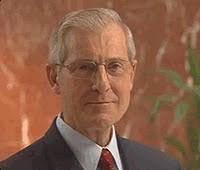
And John W Ritenbaugh wrote: “Ba erev means sunset.It is very specific. It includes no time before sunset. It is a period that begins whenever the edge of the sun hits the edge of the horizon. If you stood and watched how long ba erev takes, it takes about three to five minutes of time. It is very specific” (Passover, Part 3).
After discussing the meaning of Exodus 12:6, Frank W Nelte of South Africa, an ex-WCG minister, states: “The JPS translation of “between the two evenings” is AN ACKNOWLEDGMENT that dusk is bounded by “the two evening.” Frank emphasized further, “Now “duskis NEVER before sunset. Dusk is ALWAYS AFTER SUNSET!”

It follows that dusk can ONLY refer to a period of time at the very start of a day. Therefore this instruction to kill the Passover “at dusk” could only be at the very start of the 14th day. The word “dusk” does not allow for any other possibility. (The Meaning of ‘Between the two Evenings’)
As of this writing, a new “gender-sensitive version of the Jewish Publication Society (JPS) translation” is on promotion in their endeavour to adapt to the needs of the day. It’s a “largely gender-neutral God language” and a completely fresh translation of the Torah. This new translation will prove exceedingly useful not only for clergy and synagogue professionals, but also for anyone interested in Biblical learning, so they claimed.
The next challenge for Fred R Coulter and Frank W Nelte is to continue cutting off from the “bondage of Judaism” to attain their next level of spirituality; (John W Ritenbaugh died on May 28, 2023, on a Sunday, the Samaritan Pentecost).
~~~~~


