
Who wanted Nvidia’s Huang out?
Who wanted Nvidia’s Huang out?
RT World News • November 15, 2026 ~ IBTimes TheSun
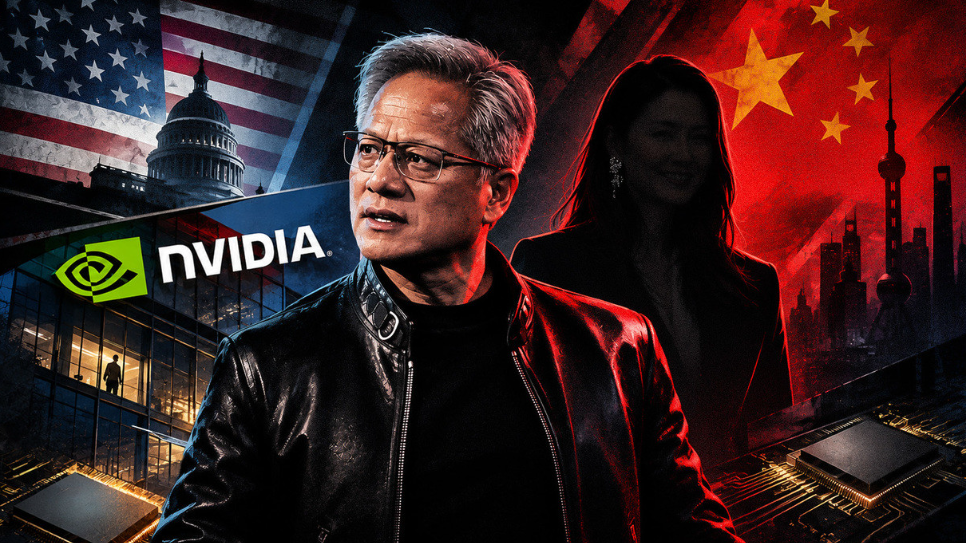
Jensen Huang’s exit removes a powerful opponent of US chip restrictions, exposing divisions in Washington over how to preserve America’s technological dominance
The downfall of Nvidia founder Jensen Huang in a scandal involving a suspected Chinese spy has raised a politically explosive question: who benefits from the removal of one of Washington’s most influential critics of chip restrictions on China?
Huang resigned on Thursday following revelations of extramarital affairs, including one with Chinese businesswoman Alice Huang, former head of Nvidia customer, Singapore-based Megaspeed International. Anonymous US intelligence officials reportedly suspect that she was recruited by Beijing to potentially influence the Nvidia CEO to push Washington to ease AI chip export restrictions.
The scandal came at a pivotal moment in the US-China technology war, just days before a planned summit between Presidents Donald Trump and Xi Jinping. With congressional hawks already pushing for tougher restrictions, the timing of Huang’s downfall has fueled questions about the political interests served by his resignation.
RT examines the intrigue surrounding Huang’s exit and the struggle for control of the global AI industry.
So who benefits from Huang’s departure?
Huang’s resignation removes one of Washington’s most prominent advocates of keeping China connected to American AI technology, potentially handing China hawks a major political advantage. The Nvidia founder repeatedly warned that cutting Beijing off from American technology would accelerate China’s push for independence. In a May interview with Fox Business, he pointed to Huawei’s growing influence: “They’re flourishing in our absence.”
His exit has immediately intensified congressional demands for tighter export controls and investigations into Nvidia’s China dealings.
Republican Representative John Moolenaar, who chairs the House Select Committee on China, has seized on the scandal to question whether whether Chinese intelligence had obtained sensitive information through Huang or influenced US technology policy.
“[Huang has] been one of the strongest proponents for not having export controls,” Moolenaar said. “This shines a whole new light on that discussion.”
House Foreign Affairs Committee Chairman Brian Mast has also pushed for stronger safeguards, including measures to prevent chip smuggling and restrict access to advanced semiconductor equipment.
Who benefits more – China hawks or AI rivals?
Huang’s abrupt exit has also raised questions over whether rival American technology firms could benefit from his downfall.
Independent journalist Lee Fang suggested rival US AI companies could gain, pointing to Huang’s support for cheaper Chinese open-source models that threaten established American competitors. He drew parallels with earlier campaigns targeting Huawei and TikTok.
Venice AI founder Erik Voorhees went further, calling Huang’s removal a “coup.”
Journalist Glenn Greenwald questioned whether extramarital affairs alone explained the removal of one of America’s most powerful technology executives.
“I don’t know who wanted Jensen Huang out but I know that whoever it was wields extreme levels of power,” he wrote on X.
The resignation also provoked a backlash across Silicon Valley. Binance founder Changpeng Zhao called it “a mistake,” Epic Games chief Tim Sweeney described it as “a sad day,” and Elon Musk said hiring Huang would be “an honor.”
“Dark, dark day. Horrible decision for the US and the western world,” wrote Andreessen Horowitz partner Martin Casado.
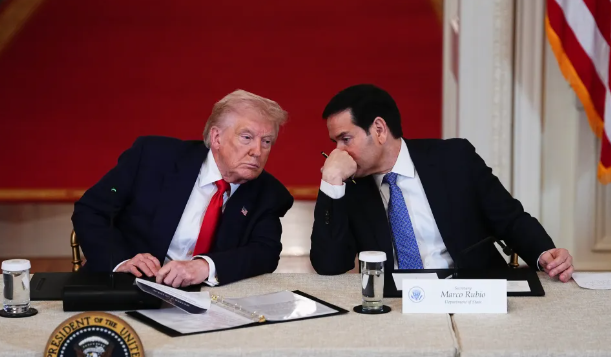
Marco Rubio reportedly used a CIA intelligence report to warn Donald Trump about Jensen Huang’s relationship with a woman suspected of having links to Chinese intelligence, potentially strengthening efforts to restrict Nvidia’s AI chip exports to China.
The intervention preceded Jensen Huang’s resignation and has intensified a Washington policy battle over access to advanced American technology.
According to The Washington Post, the US Secretary of State and national security adviser sent Trump a memo based on CIA reporting but presented its findings in stronger terms. A person familiar with the matter told the newspaper that Rubio recast the intelligence in “his own more assertive terms.”
The memo’s circulation brought renewed attention to Huang’s relationship with Alice Huang, a former executive at Singapore-based Megaspeed whom US intelligence officials reportedly suspect of having links to Chinese intelligence.
Could US chip restrictions hand China the advantage?
Washington’s campaign to contain China’s technological rise risks achieving the opposite: accelerating Beijing’s drive to build an AI industry beyond American control.
Chinese firms, including Huawei, are developing domestic alternatives to US processors, while Beijing is pushing for technological self-reliance.
In an August regulatory filing, Nvidia warned that US export controls, combined with Chinese restrictions, had effectively excluded it from China’s data-center computing market.
The company argued that its exclusion was allowing competitors to expand their developer and customer networks, potentially challenging American technology worldwide.
That was the central contradiction Huang repeatedly highlighted: cutting China off from Nvidia could weaken American influence while strengthening Chinese competitors.
Washington’s national security hawks argue the opposite – that selling powerful processors to Beijing risks advancing its military and technological capabilities.
Huang’s departure removes a prominent voice from that debate, but not the dilemma: could Washington’s efforts to preserve its technological supremacy ultimately help China escape American dominance?


