
Iran Extended Maritime Zone
Iran’s IRGC has established a new maritime control zone in the Strait of Hormuz. Meanwhile, Iran’s Foreign Ministry confirmed receiving a US counter-proposal via Pakistan to halt the conflict, though details remain under review due to “excessive demands.”
President Trump stated discussions are “very positive” but also rejected Iran’s latest proposal as “not acceptable.”
EconomicTimes • May 6, 2026 ~ AsiaNetNews aaj.tv IranMirror
Tehran: The Islamic Revolutionary Guard Corps has announced a new maritime control zone in the Strait of Hormuz, as per a report by Tasnim News Agency on Monday.
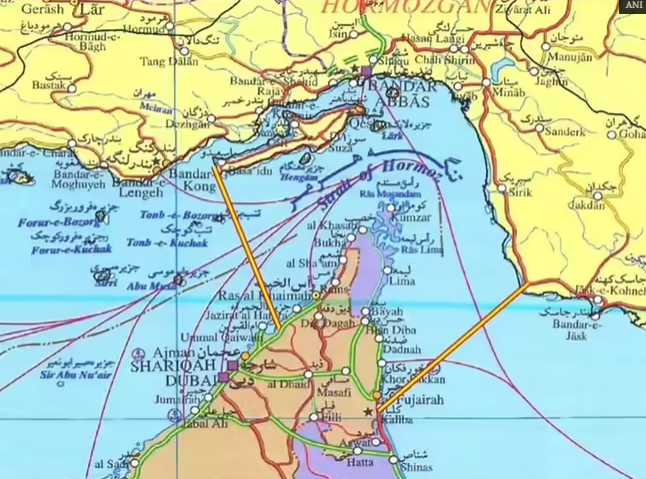
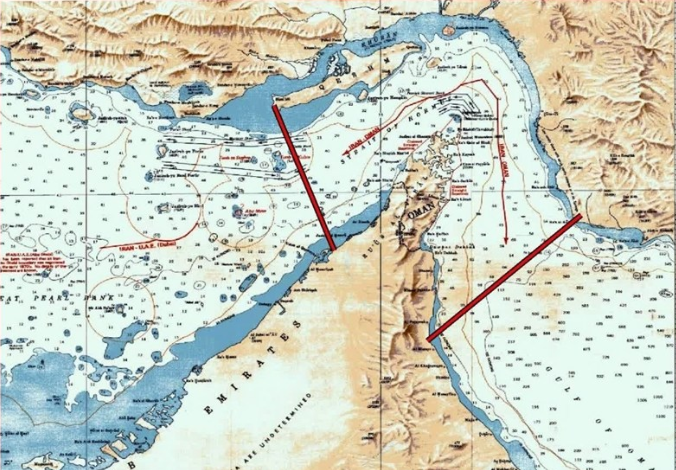
According to the Iranian state broadcaster, the IRGC declared a new maritime control area in the Strait of Hormuz. The new zone of “smart control” has the line between Mount Mobarak in Iran and south of Fujairah in the United Arab Emirates in the south, and the line between the end of Qeshm Island in Iran and Umm Al Quwain in the United Arab Emirates in the west.
Meanwhile, Iran’s Foreign Ministry spokesperson Esmail Baghaei has confirmed that officials are currently assessing a counter-proposal from the United States aimed at halting the ongoing conflict, according to a report by Al Jazeera.
Addressing a press conference, Baghaei noted that “the US message was received through Pakistan” and stated that he “will not discuss the details of the issues raised at this time, because these issues are still under review.”
The spokesperson highlighted the difficulties in the negotiation process, suggesting that the American approach of making “excessive and unreasonable demands” ensures the proposal “is not easy to review.”
Addressing recent media coverage regarding Tehran’s atomic ambitions, Baghaei dismissed reports concerning negotiations over its nuclear programme as being “mostly speculation.”
Earlier, a spokesman for the Iranian military said that all commercial ships and oil tankers should not move in the Strait of Hormuz without contacting Iran.
Iran has complete control over the Strait of Hormuz, and the US Navy should not even come close to it.
He warned that Iran would respond strongly to any threat to its sovereignty. Ebrahim Azizi said that US intervention in the Strait of Hormuz would be considered a violation of the ceasefire.
And lastly, who is Iran in biblical prophercies? Iran is a new name for ancient Persia. It was an empire ruling over a vast region 2700 years ago; but who are the lost house of Israel? For a detailed insight of the Lost Ten Tribes, we can dig deep into Ephraim and Manasseh:
Who are the posterity of biblical Jacob? And on the identities of Ephraim and Manasseh, see (1) The Irony of a Birthright (2) Ephraim preferred over Manasseh (3) Ephraim as the Thirteenth Tribe (4) Who is this lying Ephraim? (5) The Ox with horns of a Unicorn
Here are the key highlights of the 14-points memo the US imposes Iran to consider
- In its current form, the memorandum would declare an end to the war in the region.
- Start a 30-day period of negotiations on a detailed agreement to open Hormuz, limit Iran’s nuclear programme, and lift US sanctions.
- Iran’s restrictions on shipping through the strait and the US naval blockade would be gradually lifted during the 30-day period.
- If the negotiations collapsed, US forces would be able to restore the blockade or resume military action against Iran, a US official said.
- US is actively negotiating the duration of the moratorium on Iran’s uranium enrichment, with three sources saying it would be at least 12 years and one putting 15 as a likely landing spot.
- Iran proposed a 5-year moratorium on enrichment, while the US demanded a 20-year moratorium.
- Washington wants to insert a provision whereby any Iranian violation of enrichment would prolong the moratorium, the source said.
- Iran, however, would be able to enrich to the low level of 3.67% after the provision expires.
- Washington also seeks Tehran to commit to never seeking a nuclear weapon or conducting weaponisation-related activities.
- Further, a US official said that the two sides are also discussing a clause whereby Iran would commit not to operate underground nuclear facilities.
- Iran would also commit to an enhanced inspections regime, including snap inspections by UN inspectors, according to the US official.
- On Washington’s part, it would commit to a gradual lifting of the sanctions on Iran and the gradual release of billions of dollars in Iranian funds, frozen around the world.
- Two sources also claimed Tehran would agree to remove its highly enriched uranium from the country, with one source saying an option was being discussed to move the material to the US.
Trump has threatened renewed violence against Iran, writing on his Truth Social platform that if Iran did not agree to a deal “the bombing starts, and it will be, sadly, at a much higher level and intensity than it was before.”


