
The Targum, an Insight of Ezra (E)
(1) But there remained two of the men in the camp: the name of the one was Eldad, and the name of the other Medad. And the Spirit rested upon them; and they were of those who were written, but went not out unto the tabernacle; and they prophesied in the camp. Numbers 11:26
— but there remained two, Eldad and Medad, were Levites, Moses’ maternal half-brothers, of the seventy who were summoned, that came not out of the camp of Israel to the tabernacle when the rest did;
— what were prophesied were not specified, but the Targum reveals more, saying
And the Spirit of prophecy resting upon them,
Eldad prophesied, and said: Behold, Mosheh shall be gathered from the world; and Jehoshua bar Nun [Joshua], the minister of the camps, will be established after him, and will lead the people of the house of Israel into the land of Kenaan, and make it their inheritance.
Medad prophesied, and said: Behold, quails come up from the sea, and cover all the camp of Israel; but they will be to the people (a cause of) an offence.
And both of them prophesied together, and said: Behold, a king will arise from the land of Magog, at the end of the days, and will assemble kings crowned with crowns, and captains wearing armour, and him will all nations obey.
And they will set battle in array in the land of Israel against the children of the captivity; but already is it provided that in the hour of distresses all of them shall perish by the burning blast of the flame that cometh forth from beneath the Throne of Glory; and their carcases shall fall upon the mountains of the land of Israel, and the wild beasts of the field and the fowls of the sky shall come and consume their dead bodies.
And afterward will all the dead of Israel live (again), and be feasted from the ox which hath been set apart for them from the beginning, and they shall receive the reward of their works. And they were of the elders who stood in the registers among them; but they had not gone forth to the tabernacle, but had hidden to escape from the dignity; yet they prophesied in the camp. Numbers 11:26 Jonathan
— from this Targum translation, it could be established that Gog is a King, or title of a King, like Caesar, Czar or Agag (as in Numbers 24:7 in the Septuagint), a dynastic name for the kings of the Amalekites;
— and afterward will all the dead of Israel live (again); this establishes that the death of “Gog and Magog” is not before, but after, and then again, it may not be at once but “each in his own order” 1 Corinthians 15:23, indicating there are many orders, first at Christ’s coming, then throughout the Millennium.
(2) And there went forth a wind from the Lord, and brought quails from the sea, and let them fall by the camp, as it were a day’s journey on this side, and as it were a day’s journey on the other side round about the camp, and as it were two cubits high upon the face of the earth. Numbers 11:31
— God backed up Eldad and Medad prophecy by sending quails there, flying low, and when wearied with a long flight they flew only about breast-high;
— on the other hand, the more obvious interpretation of the words is that the quails were spread over the ground, and covered it in some places to the height of two cubits
— the Targum Jonathan reveals more details, saying
And the wind of a tempest went forth, and came violently from before the Lord, so as to have swept the world away, but for the righteousness of Mosheh and Aharon: and it blew over the Great Sea, and made the quails fly from the Great Sea, and settle wherever there was place in the camp, as a day’s journey northward and southward, and at the height as of two cubits; they flew upon the face of the ground, and went upon their bellies, so that (the people) were not wearied while they collected them. Numbers 11:31 Jonathan
(3) And Miriam and Aaron spoke against Moses because of the Ethiopian woman whom he had married, for he had married an Ethiopian woman. Numbers 12:1
— and Miriam and Aaron spoke against Moses; Miriam appears to have been the leader as her name occurs before that of Aaron in this insurrection against Moses;
— because of the Ethiopian woman, whom he had married, for he had married an Ethiopian woman; perhaps a daughter of a king of Ethiopia before he fled from Pharaoh, as the Targum of Jonathan indicates; Moses was forty when he fled so he could have married a princess, a queen in fact, of Ethiopia by then;
— the Targum Jonathan reveals more details, saying
“And Miriam and Aaron spoke against Moses words that were not fitting, concerning the matter of the Cushite woman whom the Cushites had given as a wife to Moses when he fled from before Pharaoh; and he had distanced himself [from her], because they had given the queen of Cush to him as a wife, and he had distanced himself from her.” Numbers 12:1 Jonathan
The Backstory: Moses as King of Cush
In the standard Masoretic Text, Numbers 12:1 simply states that Miriam and Aaron spoke against Moses because of the “Cushite woman he had married.” It leaves the identity of this woman and the circumstances of the marriage entirely ambiguous.
The Targum of Jonathan fills this gap by drawing on an ancient Jewish historical records (also found in the non-canonical Book of Jasher and referenced by the historian Josephus). According to this tradition:
- After Moses killed the Egyptian taskmaster, he fled Egypt (Exodus 2:15).
- Instead of going straight to Midian, he spent several decades in the land of Cush (ancient Ethiopia/Nubia).
- Moses became a great military commander and was eventually crowned King of Cush. As part of his royal ascension, he was given the widowed Queen of Cush (named Adonith in some texts) as his wife.
- However, because of his devotion to the God of his fathers, Moses refused to cohabit with her. He “distanced himself from her” (רָחִיק מִינָהּ), keeping the marriage purely political and unconsummated.
- Eventually, he left Cush, arrived in Midian, and married Zipporah.
Therefore, this Targum clarifies that Miriam and Aaron weren’t gossiping about Zipporah; they were discussing this past, unconsummated royal marriage from Moses’ time in Cush, using it to debate his ongoing marital choices and his status as a prophet.
(4) And while the children of Israel were in the wilderness, they found a man who gathered sticks upon the Sabbath day. — a man that gathered sticks upon the Sabbath day; this incident is evidently narrated as an instance of presumptuous sin.
33 And those who found him gathering sticks brought him unto Moses and Aaron and unto all the congregation. —to Moses and Aaron, and to the seventy elders, who might be at this time met together, to hear, try, and judge causes.
34 And they put him under guard, because it was not declared what should be done to him. — because it was not declared what should be done to him: that is, what kind of death he should die.
35 And the Lord said unto Moses, “The man shall be surely put to death. All the congregation shall stone him with stones outside the camp.”
— the man shall surely be put to death; for as no fire was to be made throughout their habitations on a Sabbath day, gathering sticks for such a purpose was a work that was a violation of the sabbath, punishable with death, Exodus 35:2.
36 And all the congregation brought him outside the camp and stoned him with stones, and he died, as the Lord commanded Moses. — and stoned him with stones, and he died: stoned him to death: as the Lord commanded Moses; Numbers 15:32-36
— and a clearer picture from the Targum – Numbers 15:32-36; And the congregation led him forth outside the camp, and stoned him with stones that he died, as the Lord had commanded Mosheh.
And while the sons of Israel were dwelling in the wilderness, the decree of the Sabbath was known to them, but the punishment (for the profanation) of the Sabbath was not known. And there arose a man of the house of Joseph, and said with himself: I will go and pull up wood on the Sabbath day;
And witnesses saw it, and told Mosheh; and Mosheh sought instruction from the presence of the Lord, that he might teach me judgment, and make known the discipline of all the house of Israel.
And the witnesses of the man who pulled up and collected wood came, and, after they had monished him, and he had wounded the witnesses who had found him pulling up wood, brought him to Mosheh and Aharon, and all the congregation . . . .
Therefore they put him in confinement, because they had not yet heard the explanation of the judgment they should execute upon him.
And the Lord said to Mosheh: The man shall be surely put to death; the whole congregation shall stone him with stones outside the camp; Numbers 15:32-36 Jonathan
(5) And when King Arad the Canaanite, who dwelt in the South, heard tell that Israel came by the way of the spies, then he fought against Israel and took some of them prisoners. Numbers 21:1
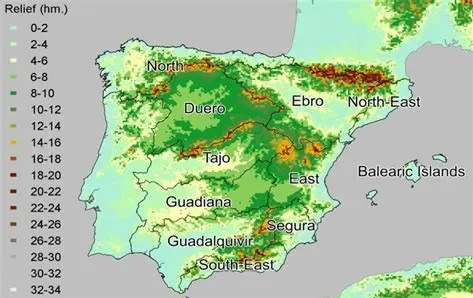
— as the famine in Canaan worsened, Jacob’s children were forced to seek survival in Egypt. During this time, a similar fate could have affected many of Esau’s descendants possibly moving to the Iberian Peninsula, with the name “Iber,” the river called the Ibēr or Ibēros which flows through northeastern Spain, perhaps marking their Hebraic roots. This would leave behind only the Amalekites then living in Negeb, the South;
— by the way of the spies, that is, from Rekem (the ancient Aramaic name for Kadesh-Barnea) backward to Moseroth—a distance spanning six encampments;
— these Canaanites were the Amalekites; for the Targum of Jonathan says “And Amalek, who had dwelt in the south, and … came and waged war against Israel, and captured some of them with a great captivity.”
“And Amalek, who was dwelling in the land of the south, heard; and he came and disguised himself, and he reigned in Arad, because Aaron had died and his soul had rested, and the Pillar of Cloud that was leading the people, the House of Israel, by his merit was removed.
“And [Amalek heard] that Israel was coming by the way of the spies (or: the path of the track-layers), the place where they had rebelled against the Lord of the world. For when the track-layers returned, the children of Israel were dwelling in Rekem, and they turned backward from Rekem unto Moseroth—six encampments—for forty years. They journeyed from Moseroth and returned to Rekem by the way of the track-layers, and they came to Mount Hor (Tauros Omanos), and Aaron died there. Therefore, [Amalek] came and waged war against Israel, and captured some of them with a great captivity.”
— all the forty years the children were travelling in the Wilderness, the Amalekites were getting ready to re-match the Israelites after their earlier defeat under Joshua, Exodus 17:8-16. Could this be a prophecy disguised as historic for the last days?
— why did the Amalekites suddenly feel confident enough to attack a nation of millions? The Targum explains that Israel’s supernatural defense mechanism—the Pillar of Cloud—was physically removed because it had only been granted in the merit of Aaron;
— the moment Aaron died, the cloud vanished, exposing the camp of Israel to its enemies for the first time in decades. Seeing Israel unprotected, Amalek disguised himself as a Canaanite king to launch a surprise strike, “and captured some of them with a great captivity.”
(6) He shall pour the water out of his buckets, and his seed shall be in many waters; and his king shall be higher than Agag, and his kingdom shall be exalted. Numbers 24:7
— the children of Jacob, and they shall inherit the richest blessings; and their kings shall be higher than Agag, the dynastic monarchy of the Amalekite kings;
— the ‘Agag’ in this verse is translated as “Gog” in the Septuagint; thus “Agag” is a dynastic name of the kings of Amalek, a grandson of Esau; just as Pharaoh was used as a dynastic name for the ancient Egyptians, Caesar of Rome; or of more modern times, the Czar of Russia;
There shall come a man out of his seed, and he shall rule over many nations; and the kingdom of Gog shall be exalted, and his kingdom shall be increased. Numbers 24:7 (Septuagint) “Agag” in the Masoretic; throughout history there is no concept of any “kingdom of Gog” but a “kingdom of Agag” could be conceptualized as the kingdom of the Amalekites.
— an important point to be noted: it arose from the Targum, the prophecy of Eldad and Medad (Number 11:27 Jonathan), which says, “a king will arise from the land of Magog, at the end of the days,” refering to endtime “Gog and Magog.” Thus this solidifies that Gog is a dynastic title of a king, a king of the Amalekite vigour in their hatred for Israel;
— the Targum of Jonathan says Israel to rule over many nations,
The first one who shall reign over them (Israel) will wage war against the House of Amalek, and he shall be exalted over Agag their king; but because he will have compassion upon him, his kingdom shall be taken away from him.”
“Their king shall arise from among them, and their redeemer shall be from them and within them; and their seed—the children of Jacob—shall rule over many nations.
(7) And now, behold, I go unto my people. Come therefore, and I will warn thee what this people shall do to thy people in the latter days.” Numbers 24:14
— what this people shall do to thy people in the latter days; not what the Moabites should do to the Israelites then, but what they shall do to the Israelites in future times; not in the times of David, by whom they were subdued, II Samuel 8:2 but in much later times;
— now this might be said to Balak to make him feel easy, that it would not be until the latter days, many hundreds of years hence, ere the people of Israel would fight with Moab, and subdue it; and therefore he needed not be concern, since he would meet with any trouble from them in his time, nor his people for years to come;
— this prophecy “in the latter days” wasn’t provided with much details in the Masoretic Text, but reveals far more in the Targum, especially in regards to an eventual fall of the house of Jacob, prophecies to unfold in the latter days, for our times!
— the Targum of Jonathan reveal their strategy to bring down the house of Jacob with great details, saying,
“And now, behold, I return to go to my people. Come, I will give thee counsel: Go, furnish tavern houses, and employ seductive women to sell food and drinks cheaply, and to bring this people together to eat and drink, and commit whoredom with them, that they may deny their God; then in a brief time will they be delivered into thy hand, and many of them will fall. Nevertheless, after this they will still have dominion over thy people at the end of days.”
(8) And the Lord said unto Moses, “Take all the heads of the people and hang them up before the Lord against the sun, that the fierce anger of the Lord may be turned away from Israel.” Numbers 25:4
— take all the heads of the people would be genocide for thee whole population; the “heads” should be as “chiefs” of the people or were chief in this transgression; before the Lord; for vindicating the honor of the true God;
— the Targum of Jonathan has this version:
And the Lord said to Mosheh, Take all the chiefs of the people, and appoint them for judges, and let them give judgment to put to death the people who have gone astray after Peor, and hang them before the Word of the Lord upon the wood over against the morning sun, and at the departure of the sun take them down and bury them and turn away the strong anger of the Lord from Israel.


