The Sopherim’s 134 Changes
~~~~
Over time, there were various changes made to the Scriptures by various groups:
(A) SOPHERIM
(Jewish Scribes); their work, under Ezra and Nehemiah, was to set the Text in order after the return from Babylon; and we read of it in Nehemiah 8:8; Ezra 7:6,11, the men of “the Great Synagogue” completed the work.
Sofer, also spelled Sopher (Hebrew “scribe”), plural Soferim, or Sopherim, any of a group of Jewish scholars who interpreted and taught biblical law and ethics from about the 5th century BC to about 200 BC.
Understood in this sense, the first of the soferim was the biblical prophet Ezra, even though the word previously designated an important administrator connected with the Temple but without religious status. Ezra and his disciples initiated a tradition of rabbinic scholarship that remains to this day a fundamental feature of Judaism.
The Sopherim, who in 134 (actually 133) places in the Bible, changed the word “יְהֹוָ֖ה” (YHVH) into “Adonai” from LORD to Lord (Bullinger: 1839-1913, an Anglican clergyman: Companion Bible appendix 32).
The overt reason for such action is: Out of extreme (but mistaken) reverence for the Ineffable Name “Jehovah” the ancient custodians of the Sacred Text substituted in many places “Adonai” (see Ap. 4. viii. 2).
These are mostly translated “Lord” in most versions, but in the KJV, these are reverted to “LORD,” but not all, unfortunately.
One strong reason why these sopherim made the changes is their lack of understanding that there exists a God the Father, and God the Son. Hence their convulsion to make these changes. Even today, this lack of understanding persits.
The official list given in the Massorah (§§ 107-115, Ginsburg’s edition) contains the 134 changes.
- Genesis 18:3, 27, 30, 32; 19:18; 20:4 (Abraham with יְהֹוָ֖ה the ‘Angels’ of the LORD, which includes angels, for Lot said to them, addressing them as YHVHs, 19:18). [Most JKV are restored but should also include Genesis 18:31]
- Exodus 4:10, 13; 5:22; 15:17; 34:9, 9 (the Sopherim tried to portray Moses as if he didn’t know whom he was speaking to; or portray Moses as if he was speaking to just an angel).
- Numbers 14:17 (many online KJV have restored YHVH (יְהֹוָ֖ה) to the original but not all).
- Joshua 7:8 (a non sensible change when Joshua knew he was talking to יְהֹוָ֖ה).
- Judges 6:15; 13:8 (Gideon and Manoah talking to יְהֹוָ֖ה. The Sopherim couldn’t believe that יְהֹוָ֖ה was sent by יְהֹוָ֖ה. Instances where Lord becomes LORD).
- 1 Kings 3:10, 15; 22:6 (a non sensible change when Solomon, and Jehoshaphat, knew they were talking, or were referring, to יְהֹוָ֖ה).
- 2 Kings 7:6; 19:23 (non sensible changes).
- Isaiah 3:17, 18; 4:4; 6:1, 8, 11; 7:14, 20; 8:7; 9:8, 17; 10:12; 11:11; 21:6, 8, 16; 28:2; 29:13; 30:20; 37:24; 38:14, 16; 49:14 (all non sensible changes).
- Ezekiel 18:25, 29; 21:13; 33:17, 29 (all non sensible changes).
- Amos 5:16; 7:7, 8; 9:1 (all non sensible changes).
- Zechariah 9:4 (a non sensible change).
- Micah 1:2 (a non sensible change).
- Malachi 1:12, 14 (all non sensible changes).
- Psalm 2:4 (eliminate יְהֹוָ֖ה YHVH and change to adonai); 16:2; 22:19, 30; 30:8;
35:3(none; obviously an error), 17, 22; 37:13 (not 12); 38:9, 15, 22; 39:7; 40:17; 44:23; 51:15; 54:4; 55:9; 57:9; 59:11; 62:12; 66:18; 68:11, 17, 19, 22, 26, 32; 73:20; 77:2, 7; 78:65; 79:12; 86:3, 4, 5, 8, 9, 12, 15; 89:49, 50; 90:1, 17; 110:5 (aliminating the second יְהֹוָ֖ה YHVH); 130:2, 3, 6 (all others are non sensible changes). - Daniel 1:2; 9:3, 4, 7, 9, 15, 16, 17, 19, 19, 19 (all non sensible changes).
- Lamentations 1:14, 15, 15; 2:1, 2, 5, 7, 18, 19, 20; 3:31, 36, 37, 58 (all non sensible changes).
- Ezra 10:3 (a non sensible change).
- Nehemiah 1:11; 4:14 (all non sensible changes).
- Job 28:28 (a non sensible change).
As there is none in Psalm 35:3, there seems to be an obvious error: but another change should be added to Genesis 18:31; the total remains at 134 changes.
Erasing the Evidence of the Son (LORD יְהֹוָ֖ה, one of the 134 changes to Adonai)
- Genesis 18:3, 27, 30, 32; 19:18; 20:4. The three LORD Beings who came to visit Abraham, informing him and followed through with the destruction of Sodom and Gomorrah.
Genesis 19:24 Then the LORD rained upon Sodom and upon Gomorrah brimstone and fire from the LORD out of heaven; (יְהֹוָ֖ה, KJV)
24 And the Lord caused to rain down upon Sodom and Gomorrah brimstone and fire, from the Lord, from heaven (Chabad Bible, even though the Hebrew has יְהֹוָ֖ה). This goes against their understanding of the Shema
“Hear, O Israel: the LORD our God, the LORD is one.”
2. Psalms 2:2 The kings of the earth set themselves, and the rulers take counsel together, against the LORD (The Father, YHVH) and against his anointed (Yeshua), saying,
3. Let us break their bands asunder, and cast away their cords from us.
4. He that sitteth in the heavens shall laugh: the LORD (YHVH, one of the 134 changes) shall have them in derision.
5. Then shall he speak unto them in his wrath, and vex them in his sore displeasure.
6 .Yet have I set my king upon my holy hill of Zion.
7. I will declare the decree: the LORD (YHVH) hath said unto me, Thou art my Son (Yeshua, the Son, but Rabbinic Jews say it’s Israel); this day have I begotten thee. The Father is speaking to his Son, Yeshua.
Proverbs 30:4 “Who hath ascended up into heaven, or descended? who hath gathered the wind in his fists? who hath bound the waters in a garment? who hath established all the ends of the earth? what is his name, and what is his son’s name, if thou canst tell?“
3. Psalm 110:1 The LORD (YHVH the Father) said unto my Lord (that is, David’s Lord – the Messiah. Compare Matthew 22:41-46). Sit thou at my right hand, until I make thine enemies thy footstool.
2 The LORD shall send the rod of thy strength out of Zion: rule thou in the midst of thine enemies.
3 Thy people shall be willing in the day of thy power, in the beauties of holiness from the womb of the morning: thou hast the dew of thy youth.
4 The LORD hath sworn, and will not repent, Thou art a priest for ever after the order of Melchizedek. — this Melchizedek is identified by most in the Christian world as Yeshua, our High Priest. Hebrews 7:3 describes Melchizedek as being “without father, without mother, without genealogy, having neither beginning of days nor end of life, but made like the Son of God, [and one who] remains a priest continually.” Melchizedek couldn’t have been the Father because he was the “priest of the Most High God.”
5 The LORD (one of the 134 changes to Adonai) at thy right hand shall strike through kings in the day of his wrath. — notice that the second Lord sitting on the right hand of the Father in verse 2 has become LORD in verse 5. By doing so, the Soferim blurred the evidence of another YHVH (one of the 134 changes).
6 He shall judge among the heathen, he shall fill the places with the dead bodies; he shall wound the heads over many countries.
7 He shall drink of the brook in the way: therefore shall he lift up the head. Psalm 110:1-7
By doing such edits, the Sopherim corrupted the Sacred Text, hence the Jews couldn’t find the second Being in the Godhead — He’s actually the anointed Son in Psalm 2:2, Psalm 110:5 and Proverbs 30:4.
Actually, there is only One Yehovah (and also one God) and many Scriptures testify to this, and that binding Scripture is found in Exodus 23:20 Behold, I send an Angel (or Messenger) before thee, to keep thee in the way, and to bring thee into the place which I have prepared.
“Beware of him, and obey his voice, provoke him not; for he will not pardon your transgressions: for my name is in him” Exodus 23:21.
So the numerous times the title LORD were mentioned in Psalm 110:1-5 and Genesis 18-19 were derivative. They were all carrying the message of the original Yehovah.
Yeshua testified He came in the Father’s name: John 5:43, “I am come in my Father’s name, and ye receive me not.”
Same thing with the one God concept. God the Father, God the Son, yet there is only one God. Jesus addresses the father as “the only true God” (John 17:3).
(B) THE MASORETES
Isaiah 9:6 “For unto us a Child is born, unto us a Son is given; and the government shall be upon His shoulder. And His name shall be called Wonderful, Counselor, The Mighty God, The Everlasting Father, The Prince of Peace” (KJ21).
The Tanakh 1917, 1985 Online:
5 For a child is born unto us, a son is given unto us; and the government is upon his shoulder; and his name is called Pele-joez-el-gibbor-Abi-ad-sar-shalom (translated as ‘the Everlasting Father’ – v5 in Chabad Bible); 6 That the government may be increased, and of peace there be no end, upon the throne of David, and upon his kingdom, to establish it, and to uphold it through justice and through righteousness from henceforth even for ever. The zeal of the LORD of hosts doth perform this; (comment: people who lies are prone to have multiple versions of their stories).
The Tanakh 1985 Hardcopy:
5 For a child is born to us, a son has been given us; and authority has settled on his shoulders; he has been named the Mighty God is planning grace, the Eternal Father, a peaceable ruler; 6 In token of abundant authority and of peace without limit, upon David’s throne and kingdom, that it may be firmly established, in justice and in equity, now and evermore. The zeal of the LORD of hosts shall bring this to pass.
Strange that this title, “everlasting Father” appears only in the Masoretic Text. Only those online could be changed, including the Chabad.Bible; and the OJB has translated the title as ‘possessor of eternality.’
The title “everlasting Father” is also not in the Septuagint, Targum nor Peshitta (Lamsa’s translation). Facts should be established on two or three witnesses (Deu 19:15; Matt 18:16; II Cor 13:1; I Tim 5:19) but this isn’t the case as nowhere were Christ, the Son, ever being described as the Everlasting Father.
In fact the Targum in Isaiah 9:5-6 clearly identify the personage spoken as the Messiah,
“The prophet says to the house of David, A child has been born to us, a son has been given to us; and he has taken the law upon himself to keep it, and his name has been called from of old, Wonderful counselor, Mighty God, he who lives forever, the Messiah, in whose days peace shall increase upon us” Isaiah 9:5 Targum Jonathan.
And the Septuagint hints he is the Messiah, although not explicitly stated,
“For a child is born to us, and a son is given to us, whose government is upon his shoulder: and his name is called the Messenger of great counsel: for I will bring peace upon the princes, and health to him.
“His government shall be great, and of his peace there is no end: it shall be upon the throne of David, and upon his kingdom, to establish it, and to support it with judgment and with righteousness, from henceforth and for ever. The zeal of the Lord of hosts shall perform this” Isaiah 9:5-6 Septuagint.
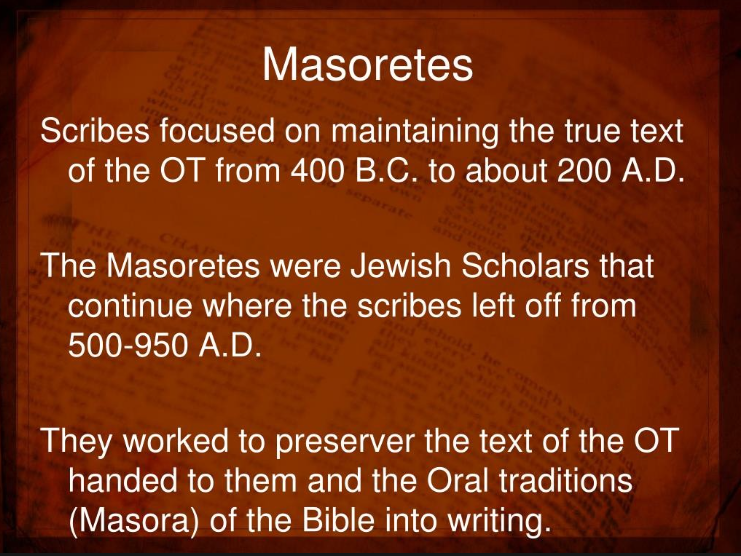
The Masoretes were comprised of scribes from the 6th-10th centuries CE, which culminated in two family lineages, the ben Asher family and the ben Naphtali family, who produced more or less standardized Hebrew texts. While the received Masoretic text in use today does not follow either one or the other completely, they nevertheless comprised the foundation of what would become the standard Hebrew Bible.
The Masoretes invented a system of vocalization, punctuation, and cantillation marks for the consonantal Hebrew text. In their transmission, their translation were influenced by their anti-Christian bias, hence they couldn’t understand their own confusion but henceforth added “the Everlasting Father” to the attributes of the Son the deepen the confusion which could not be found in any authoritative ancient texts — Septuagint or Targum.
(C) SOPHERIM Others
Genesis 18:22 “And the men (the 2 other men) turned their faces from thence, and went toward Sodom: but Abraham stood yet before the Lord” — of the three, this is the first יְהֹוָ֖ה
Rashi (1040-1105): and Abraham was still standing, etc: But is it not so that he did not go to stand before Him, but the Holy One, blessed be He, came to him and said to him (above verse 20): “Because the cry of Sodom and Gomorrah has become great, etc,” and it should have been written here: “and the Lord was still standing beside Abraham?” But this is a scribal emendation (Gen. Rabbah 49:7).
Bullinger (1837-1913), the main text on Genesis 18:22 of the Companion Bible says, “And the men turned their faces from hence, and went toward Sodom: but Jehovah stood yet before Abraham.”
Dr Ginsburg: according to Introduction to the Hebrew Bible, pg 352, it was altered by Ezra and Nehemiah, because it was the LORD who came down from heaven and stood before Abraham. And it was the LORD who departed from Abraham after the patriarch left of interceding with Him. To stand before another seems to indicate a stage of inferiority and homage; it seems derogatory to say that the Deity was standing before a man. — but why not, the Deity was standing before His spiritual baby.
Huan: From God’s point of view, Abraham was a spiritual baby; and parents usually stand before babies; not babies standing before parents! The Sovereign was making sure that His subject knew what the consequences are if they indulge in perversion and sin. Genesis 18:17 “And the LORD said, Shall I hide from Abraham that thing which I do,” so God was thinking what to teach Abraham. Genesis 18:19 “For I know him, that he will command his children and his household after him, and they shall keep the way of the LORD, to do justice and judgment; that the LORD may bring upon Abraham that which he hath spoken of him.” Also, God is giving assurance that Abraham would be protected if he continued to obey Him, “For thus saith the Lord of hosts; he that toucheth you toucheth the pupil of My eye,” Zechariah 2:8.
The rest of the story is how Yehovah was teaching Abraham about his law, about judgement, and about mercy:
Gen 18:23 And Abraham drew near, and said, Wilt thou also destroy the righteous with the wicked?
24 Peradventure there be fifty righteous within the city: wilt thou also destroy and not spare the place for the fifty righteous that are therein?
25 That be far from thee to do after this manner, to slay the righteous with the wicked: and that the righteous should be as the wicked, that be far from thee: Shall not the Judge of all the earth do right?
26 And the Lord said, If I find in Sodom fifty righteous within the city, then I will spare all the place for their sakes.
27 And Abraham answered and said, Behold now, I have taken upon me to speak unto the Lord, which am but dust and ashes:
28 Peradventure there shall lack five of the fifty righteous: wilt thou destroy all the city for lack of five? And he said, If I find there forty and five, I will not destroy it.
29 And he spake unto him yet again, and said, Peradventure there shall be forty found there. And he said, I will not do it for forty’s sake.
30 And he said unto him, Oh let not the Lord be angry, and I will speak: Peradventure there shall thirty be found there. And he said, I will not do it, if I find thirty there.
31 And he said, Behold now, I have taken upon me to speak unto the Lord: Peradventure there shall be twenty found there. And he said, I will not destroy it for twenty’s sake.
32 And he said, Oh let not the Lord be angry, and I will speak yet but this once: Peradventure ten shall be found there. And he said, I will not destroy it for ten’s sake. — comment: there were not even ten righteous then.
33 And the Lord went his way, as soon as he had left communing with Abraham: and Abraham returned unto his place. Genesis 18:23-33
(D) The “Eighteen Emendations” plus 8 more not in the official list of the Sopherim (Companion Bible appendix 33)
- Gen. 18:22 – “The LORD stood before Abraham.” Issue: Who is standing before whom at Sodom’s intercession. Why altered: To avoid the idea of God standing before a man in a posture that might seem subordinate. Original: Likely “the LORD stood before Abraham.” Emended: “Abraham stood yet before the LORD” — reversing the posture apparently to preserve divine dignity.
- Num. 11:15 – Moses’ despair. Issue: Moses asks to die rather than bear the burden of the people. Original (likely): Moses’ complaint may have been phrased more directly as “You are doing evil to me.” Why altered: To soften any implication that God is directly blamed for unbearable treatment. Nature of change: Slight wording shift so the focus is on Moses’ plea, not on God’s supposed harshness.
- Num. 12:12 – Miriam’s leprosy. Issue: Aaron begs that Miriam not be “as one dead.” Original (likely): Aaron’s plea may have implied Miriam was “dead by Your hand.” Why altered: To avoid language that might sound like God has made her irredeemably dead rather than chastened. Nature of change: Emendation likely refines the metaphor of death to reduce theological harshness.
- 1Sam. 3:13 – Eli’s sons. Issue: Judgment on Eli’s house for not restraining his sons. Original (likely): Could imply God caused or allowed Eli’s sons to blaspheme. Why altered: To soften the sense that God is portrayed as complicit in their sin by inaction. Nature of change: Emendation clarifies human responsibility rather than divine negligence.
- 2Sam. 12:14 – David’s sin and blasphemy. Issue: Nathan says David’s deed has given occasion to enemies to blaspheme. Original (likely): Nathan’s rebuke may have said David’s act caused blasphemy against God. Why altered: To avoid wording that might suggest God Himself is blasphemed in a way too direct or crude. Nature of change: Focus shifted from God as object of blasphemy to the scandal caused among men.
- 2Sam. 16:12 – Shimei’s cursing. Issue: David hopes God will look on his affliction and repay good for Shimei’s cursing. Original (likely): David may have said God “has cursed me.” Why altered: To soften the idea that God might be seen as endorsing the curse. Nature of change: Emendation nuances whether the curse is from God or merely permitted.
- 1Kings 12:16/2Chron 10:16 – Rebellion against Rehoboam. Issue: “What portion have we in David?” The northern tribes’ revolt. Original (likely): The revolt cry may have been framed as “The LORD has no portion in David.” Why altered: To avoid implying God is directly authoring rebellion against the Davidic line. Nature of change: Wording adjusted so the cry is clearly human political reaction, not divine directive.
- 1Kings 21:10/1Kings 21:13 – Naboth’s trial and death. Issue: False witnesses accuse Naboth of cursing God and the king. Original (likely): False witnesses accuse Naboth of “cursing God.” Why altered: To avoid a crude statement that God is cursed in a way that might be read as factual rather than slander. Nature of change: Emendation clarifies that this is accusation, not reality; sometimes shifting “God” to “Elohim” or adjusting syntax.
- Job 1:5 – “Curse God in their hearts.” Issue: Job fears his sons may have “cursed God” internally. Original (likely):
“Curse God.” Why altered: To avoid direct association of cursing with God in the narrative voice. Original vs. Emended: Original: Likely “curse God.” Emended: Often rendered “bless God,” with context showing it’s euphemistic—Massoretic tradition flags this. - Job 1:11/Job 2:5 – Satan’s challenge. Issue: Satan says Job will “curse You to Your face.” Original (likely): “Curse God.” Why altered: Same concern: explicit cursing of God in direct speech. Nature of change: “Bless” used as a reverential euphemism where the sense is clearly “curse.”
- Job 2:9 – Job’s wife. Issue: “Curse God and die.” Why altered: Again, direct incitement to curse God. Nature of change: Emended to “bless God and die,” with the Massorah noting the euphemism. Both YLT & DRA have revert to the original; including the Targum, “And Dinah his wife said to him: ‘Are you still holding fast to your integrity? Bless the Word of the Lord and die!'” Job 2:9 AramaicTargum. But the Septuagint: “And when much time had passed, his wife said to him, How long wilt thou hold out, saying, Behold, I wait yet a little while, expecting the hope of my deliverance? For, behold, thy memorial is abolished from the earth, even thy sons and daughters, the pangs and pains of my womb which I bore in vain with sorrows; and thou thyself sittest down to spend the nights in the open air among the corruption of worms, and I am a wanderer and a servant from place to place and house to house, waiting for the setting of the sun, that I may rest from my labours and my pangs which now beset me: but say some word against the Lord, and die” Job 2:9 LXX.
- Job 7:20 – “I have sinned… why have You set me as a mark?” Issue: Job complains of being God’s target. Original (likely): Job may have said God “has become my enemy.” Why altered: To soften the tone of accusation against God as persecutor. Nature of change: Subtle shift in pronouns or verbs to keep complaint but reduce theological offense.
- Job 32:3 – Elihu’s anger. Issue: Elihu is angry at Job’s friends for not finding an answer. Original (likely): Elihu’s anger may have implied the friends “condemned God.” Why altered: To avoid implying God is unjust or that the friends have condemned God. Nature of change: Clarifies that their failure is toward Job, not toward God’s justice.
- Ps. 10:3 – Boasting in desire. Issue: The wicked blesses the covetous, whom the LORD abhors. Original (likely): Could imply God “blesses the covetous.” Why altered: To avoid any reading where God appears to favor the wicked. Nature of change: Emendation tightens the contrast—wicked bless each other; God’s stance is clearly against them.
- Ps. 106:20 – “Exchanged their glory.” Issue: Israel trades the glory of God for an image of an ox. Original (likely): Israel “exchanged God’s glory” in a way that might imply God’s glory was diminished. Why altered: To avoid overly crude language about God’s “glory” being swapped. Nature of change: Wording refined so the loss is Israel’s, not a diminution of God.
- Ecc. 3:21 – “Who knows the spirit of man…?” Issue: Question about the fate of human and animal spirit. Original (likely): May have been phrased in a way implying God does not know the fate of spirits. Why altered: To avoid suggesting God is uncertain or that the text endorses skepticism about resurrection. Nature of change: Emendation shapes the verse as human questioning, not divine doubt.
- Jer. 2:11 – “Has a nation changed its gods?” Issue: Nations don’t change their gods, but Israel has changed its glory. Original (likely): May have implied foreign gods are real or stable. Why altered: To avoid implying other gods have real stability comparable to Israel’s God. Nature of change: Emendation stresses Israel’s betrayal, not the legitimacy of foreign gods.
- Lam. 3:20 – “My soul remembers.” Issue: Deep remembrance of affliction and wandering. Original (likely): May have implied God forgets or neglects. Why altered: To avoid language that might sound like God is the forgetful or cruel agent. Nature of change: Focus kept on human memory and suffering, not on God’s supposed neglect.
- Ezek. 8:17 – “They put the branch to their nose.” Issue: Obscure ritual gesture in idolatry. Original (likely): The ritual gesture may have been more obscene or directly connected to God’s sanctuary. Why altered: Possibly to avoid explicit description of obscene or offensive cultic acts in relation to God’s sanctuary. Nature of change: Emendation likely tones down the graphic or vulgar nuance.
- Hos. 4:7 – “As they increased, so they sinned against Me.” Issue: Priests multiply and sin; God changes their glory into shame. Original (likely): May have implied God shamed Israel arbitrarily. Why altered: To avoid any reading where God is seen as arbitrarily shaming rather than justly judging. Nature of change: Wording sharpened to emphasize cause‑and‑effect justice.
- Hab. 1:12 – “We shall not die.” Issue: Prophet’s confidence that God will not utterly destroy His people. Original (likely): Could be read as “You shall not die” addressed to God. Why altered: To avoid suggesting God Himself is mortal or subject to death. Original vs. Emended: Original: Could be read ambiguously about death. Emended: Clarifies that the people “shall not die,” preserving divine eternity.
- Zech. 2:8,12 – “He that touches you touches the apple of His eye.” Issue: Intimate metaphor of God’s care for Zion. Original (likely): May have implied someone could touch God’s eye literally. Why altered: To refine anthropomorphic imagery of God’s “eye” being touched. Nature of change: Emendation keeps the metaphor but may adjust pronouns or possessives to reduce crudeness.
- Mal. 1:13 – “You say, ‘What a weariness!’” Issue: Priests treat God’s service as burdensome. Original (likely): Could imply God is wearied. Why altered: To avoid wording that might sound like God Himself is wearied in a human sense. Nature of change: Emendation distinguishes human complaint from divine fatigue.
- Mal. 3:9 – “You are cursed with a curse.” Issue: Israel’s failure in tithes brings a curse. Original (likely): May have implied God curses vindictively. Why altered: To soften the sense of God as vindictive rather than just. Nature of change: Wording refined so the curse is clearly judicial consequence, not arbitrary malice.
Big-picture pattern across all these verses, the emendations:
Shift posture: God is not seen as standing “before” man, but man before God.
Euphemize cursing: “Curse God” becomes “bless God,” flagged by the Massorah as a reverential substitution.
Guard divine dignity: Where the text could be read as God being unjust, weak, forgetful, or crude, the wording is softened.
Preserve reverence while keeping the narrative intact.
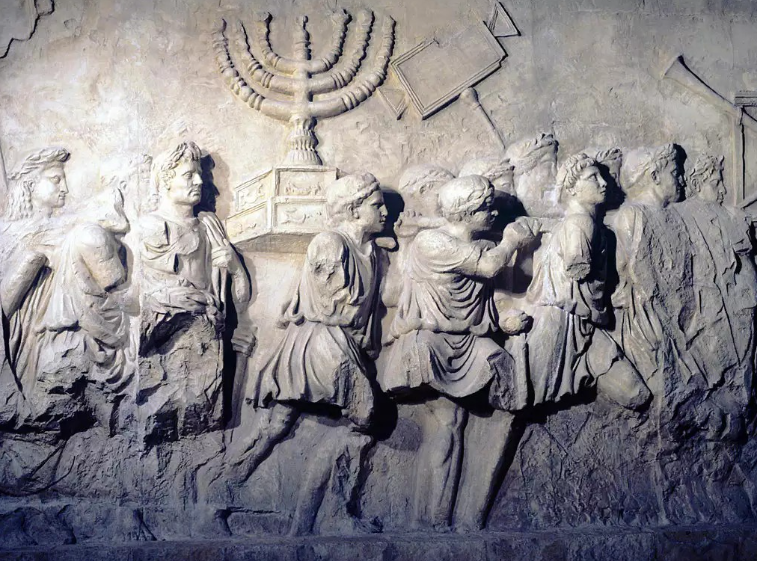
(E) Josephus reports that Titus took the Temple Scroll, or the “Torah of Jerusalem” or the “Severus Scroll” to Rome after the destruction of Jerusalem in AD 70.
Later, around AD 220, Emperor Severus (who was notoriously friendly toward the Jewish community) built a synagogue in Rome and gave one Scroll to the Jewish community. This synagogue was named after him, and the Scroll became known as the Severus Scroll. Although this Scroll itself was lost, the Massorah had preserved a list of 32 places where this Scroll differed from other manuscripts. These are listed in Appendix 34 of the Companian Bible.
| 1. Gen. 1:31 | 12. Gen. 45:8 | 23. Num. 30:12 |
| 2. Gen. 3:21 | 13. Gen. 46:8 | 24. Num. 31:12 |
| 3. Gen. 18:21 | 14. Gen. 48:7 | 25. Num. 36:1 |
| 4. Gen. 24:7 | 15. Ex. 12:37 | 26. Deu. 1:26 |
| 5. Gen. 25:33 | 16. Ex. 19:3 | 27. Deu. 1:27 |
| 6. Gen. 27:2 | 17. Ex. 26:27 | 28. Deu. 3:20 |
| 7. Gen. 27:7 | 18. Lev. 4:34 | 29. Deu. 22:6 |
| 8. Gen. 36:5 | 19. Lev. 14:10 | 30. Deu. 29:22 |
| 9. Gen. 36:10 | 20. Lev. 15:8 | 31. Deu. 29:22 |
| 10. Gen. 36:14 | 21. Num. 4:3 | 32. Deu. 32:26 |
| 11. Gen. 43:15 | 22. Num. 15:21 |
Q. Could the Romans, at a later date, have seized and reclaimed the Severus Scroll, especially after Emperor Constantine’s conversion to Christianity with the Edict of Milan in 313 CE, and now have it hidden away in one of the secret vaults beneath the Vatican?
If so, we could unpack what are the changes that have been made in the 32 verses listed above, so we could deepen our understanding of the Scriptures.