
A Critique of Fred Coulter’s Passover (16-18)
A Critique of Fred Coulter’s Passover (j-k)
Passover on the 14th or 15th?
Fred R. Coulter
Christian Biblical Church of God
Post Office Box 1442
Hollister California 95024-1442
This is a Critique of Fred Coulter’s The Christian Passover. The real question isn’t just whether the Passover falls on the early or late fourteenth of Nisan, but whether the ordinances is a composite festival. Quoted are Fred Coulter’s book, from an internet online PDF version. Most of his quotes are in block form, in PINK and indented. The Scriptures, in RED, must be our primary focus and guide.

Chapters 16 – 17
Chapter 16 from Fred Coulter’s The Christian Passover starts with the issue of how Deuteronomy 16 was different from other text, that Passover and Unleavened Bread should be distinct and separate, not a composite festival.
And that Deuteronomy 16 was edited by Ezra to make it as if it were a composite festival, confusing students and scholars by calling the festival by using either name.
The followings are from Chapter 14 of The Christian Passover, so it’s a bit of flashback:
The advocates of a 15th Passover claim that the commands of God in Deuteronomy 16 support the temple sacrifice of the Passover lambs. On the surface, it appears that these commands required the sacrificing of the Passover at the temple, and that the Passover and the first day of the Feast of Unleavened Bread were combined into one feast. (The Christian Passover, pg 159)
Why do the commands in Deuteronomy 16 appear to be in conflict with all other commands of God for keeping the Passover? (ibid)
Why does Deuteronomy 16:1 use the term “Passover” in the context of commemorating the Exodus? What is the reason for this apparent discrepancy between Deuteronomy 16:1 and other Scriptural references to leaving Egypt in the month Abib? (Pg 164)
Remember, the books of Genesis, Exodus, Leviticus and Numbers were mainly the words of God to His subjects — to Adam, Abraham, Jacob, on to Moses — but in Deuteronomy it was Moses speaking to the Israelites. Moses uses words and terms different from God’s so that the people could understand in a language the Israelites could understand.
When God was introducing a people Moses would be dealing with, He says
“And the Lord&nb sp;said unto Moses, “I have seen this people, and behold, it is a stiffnecked people” Exodus 32:9
When God was introducing his commandments, statutes and ordinances
“And the Lord&nb sp;said unto Moses, “Write thou these words, for according to the tenor of these words I have made a covenant with thee and with Israel” Exodus 34:27
When Moses wrote his introduction to Deuteronomy, he says:
“These are the words which Moses spoke unto all Israel on this side of the Jordan in the wilderness . . . ” Deuteronomy 1:1
Yes, Moses seemed to combine Passover and Unleavened Bread into one festival as the two feasts were used interchangeably in this book of Deuteronomy. In fact the two feasts were already combined right from the Exodus.
Moses wasn’t writing anything that conflicted with the Words of God—surely he wouldn’t dare to—but was instead clarifying them so the Israelites wouldn’t miss the combined nature of the feast.
Two millennia later, a second Moses, Ezra, emerged to make the Scriptures even clearer, and from this came the Targum. And he testify that the eating of the Passover sacrifice is to be on the fifteenth. But there isn’t any record that Ezra was being warned he would be dealing with a stiff-necked people. Maybe He forgot.
This composite character was already present in the original Exodus, but Moses explicitly combined these two feasts in Deuteronomy 16 to make sure even those slow to catch on could understand.
“In the first month, on the fourteenth day of the month at even (ba-erev), ye shall eat unleavened bread until the one and twentieth day of the month at even (ba-erev)” Exodus 12:18
“Thou shalt not offer the blood of My sacrifice with leaven, neither shall the sacrifice of the Feast of the Passover be left until the morning” Exodus 34:25
One heading and its explanation in chapter 16 of The Christian Passover:
The Exiles Could Not Keep the Passover
Moreover, during the entire seventy-year captivity, the Passover could not be kept. The word of God makes it absolutely clear that when the people were not in the land of Israel, they could not keep the Passover on the 14th day of the first month. Notice the instructions that God gave to Moses when the children of Israel were in the wilderness: “And they kept the Passover on the fourteenth day of the first month between the two evenings [ben ha arbayim] in the wilderness of Sinai. According to all that the LORD commanded Moses, the children of Israel did. (Pg 202)
Fred Coulter contradicts the Scriptural evidence again. The original Passover in Egypt wasn’t in the land of Israel, nor was the wilderness they traveled through considered theirs. It was only after crossing the Jordan River that the Israelites could claim the land they acquired as their own.
If the Passover was home-centered – a “domestic passover” – the Jews shouldn’t have any inhibition about keeping the Passover in Babylon, as were in Egypt and in the Sinai wilderness, but Fred Coulter says, “The word of God makes it absolutely clear that when the people were not in the land of Israel, they could not keep the Passover.”
Why didn’t he provide any Scriptures to back up his claim? Actually the Scriptures say the opposite. Goshen wasn’t in Israel, neither the Sinai Desert in Israel while wandering in the wilderness for the next forty years, yet they kept the Passover. Are his faithfuls still sleeping? Why such wretched writing and none of his are alert?

In fact the Scripture in Leviticus 17 commands that in any sacrifice to the Lord the blood must be brought to the tabernacle; or later, to the temple.
From verse 8, it says, “And thou shalt say unto them: ‘Whatsoever man there be of the house of Israel, or of the strangers who sojourn among you, who offereth a burnt offering or sacrifice (H2077 zebach), and bringeth it not unto the door of the tabernacle of the congregation to offer it unto the Lord, even that man shall be cut off from among his people” Leviticus 17:8-9
A Passover is a sacrifice. Its blood must be brought to the tabernacle before the Lord. And the priest shall sprinkle the blood upon the altar, at the door of the tabernacle. IT WAS THIS INABILITY TO BRING THE BLOOD TO THE ALTAR THAT DURING THE SEVENTY YEARS OF CAPTIVITY THE EXILES COULD NOT KEEP THE PASSOVER!
Below are further quotes from Fred Coulter:
That the Jews in exile could not observe the Passover is acknowledged by the Karaite Jews and recorded by Samuel Al-Magribi in 1484: “Today, however, by reason of our many sins, we are scattered over the four corners of the earth, we are dispersed in the lands of the Gentiles, we are soiled with their ritual uncleanness and unable to reach the House of the Lord, and our status is equivalent to that of persons ritually unclean or traveling far away. That is why this ordinance of the Passover sacrifice no longer applies to us, and the reason for this is our fathers’ exceeding disobedience to God and our own following in their sinful footsteps” (Nemoy, Karaite Anthology, p. 206) (Pg 203)
The quote above confirms that the Karaites understand that Passover couldn’t be kept other than at the Temple in Jerusalem. That the Jews were “unable to reach the House of the Lord” was because the Temple wasn’t in Babylon where the captives lived.
But who are the Karaites?
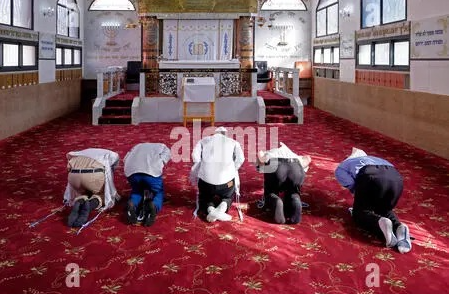
Anan ben David (715 – 795 or 811) is widely considered to be the founder of the Karaite movement, hence his followers were initially called Ananites; but now they are largely known as the Karaites.
These Karaites challenge the Rabbanite establishment as they do not believe the rabbinical oral law is divinely inspired. Thus when interpreting the Torah, Karaites strive to adhere to the plain or literal meaning of the text; much like the Sadducees that preceded them.
Hence Abraham Geiger, a 19th-century German scholar who founded Reform Judaism, posited a connection between the Karaites and the Sadducees, simply because many of their beliefs are from the same original source, the Samaritans.
When the Jews were in exile during the Babylonian captivity, they could not keep the Passover. This prohibition led to the replacement of the Passover with the Seder meal on the 15th day of the first month, the first day of the Feast of Unleavened Bread. To make their false substitute appear Scriptural, the Jews changed the name of the seven-day Feast of Unleavened Bread to “Passover.” By changing the name of this feast, the Seder meal on the night of the 15th became the “Passover” for those who were living in exile. (Pg 203)
Typical of Fred’s writing, he doesn’t provide any evidence why this “prohibition led to the replacement of the Passover with the Seder meal” during the Babylonian captivity. He could just concoct something from nothing. Magic. A touch of Simon Magus again.
On closer scrutiny, his writing is all over the place, contradicting himself later in Chapter Nineteen, saying:
“The Seder meal was adopted by the Pharisaic Jews after the destruction of the temple in AD 70,” (Pg 242).
Second, the terms “Passover” and the “Days of Unleavened Bread” had been established as a composite Festival right during the Exodus as was proven in the last few critiques.
“And this house was finished on the third day of the month Adar, in the sixth year of the reign of Darius the king. And the children of Israel, the priests, and the Levites, and the rest of the children of the captivity kept the dedication of this house of God with joy….And the children of the captivity kept the Passover on the fourteenth day of the first month. The priests and the Levites were purified together, all of them pure. And they killed the Passover lamb for all the children of the captivity, and for their brethren the priests, and for themselves. And the children of Israel ate the Passover lamb, all who had come again out of exile, and all such as had separated themselves to them from the uncleanness of the nations of the land in order to seek the LORD God of Israel. And they kept the Feast of Unleavened Bread seven days with joy, for the LORD had made them joyful…” (Ezra 6:15-16, 19-22). (Pg 204)
During the original Exodus, the Passover was killed in the evening by “the whole assembly of the congregation of Israel” but once the Levitical priesthood was established, most of the ordinances, especially the killing of the Passover, were carried out by the Levites and priests; for “all the children of the captivity, and for their brethren the priests, and for themselves.” And given that Ezra was a righteous scribe, what he did was righteous in the sight of God: “For Ezra had prepared his heart to seek the law of the Lord and to do it, and to teach in Israel statutes and judgments” Ezra 7:10:
And they set the priests in their divisions, and the Levites in their courses for the service of God, which is at Jerusalem, as it is written in the Book of Moses.19 And the children of the captivity kept the Passover upon the fourteenth day of the first month. 20 For the priests and the Levites were purified together; all of them were pure, and killed the Passover lamb for all the children of the captivity, and for their brethren the priests, and for themselves, (Ezra 6:18-20).
The Talmud has listed 613 mitzvot from the Torah but there is no command that the Passover should ONLY be killed by members of the congregation of Israel or only by the Levites and priests. That isn’t an issue. The important criteria is that the Levites and priests must be purified, be clean, only then could they killed Passover lamb on the fourteenth of the first month, at even (ben ha arbayim) Exodus 12:6.
The priests and Levites did as they “were purified together; all of them were pure,” on behalf of the Jewish Exiles who had returned to Jerusalem. If Ezra wasn’t a righteous scribe, he wouldn’t “seek the law of the Lord and to do it, and to teach in Israel statutes and judgments.”
Fred Coulter is a false accuser, along with Frank Nelte and John Ritenbaugh. Instead of upholding the Scriptures by stating that Ezra as a righteous man of God, these accusers are demeaning Ezra and the Scriptures. And just like the the Samaritans before them, they pretend to worship the God of Israel, but were idol-worshippers.
The Scriptures quoted above (Ezra 6:19-20) reaffirm the followings about keeping the Passover:
(1) the divisions and duties of both priests and Levites were reestablished at the Temple, “as it is written in the Book of Moses” (Ezra 6:18). The only reference hinting in Jerusalem was the statement “in the place which the Lord&nb sp;shall choose to place His name there.” Later it was established that in JERUSALEM would the sacrifice be offered, II Kings 21:4. A “domestic” Passover is only for those who are full of themselves.
(2) the priests and Levites “killed the Passover lamb for all the children of the captivity, and for their brethren the priests, and for themselves.” — contrary to what Fred hopes for, the common people didn’t do the killing, the priests and Levites did in this instance.
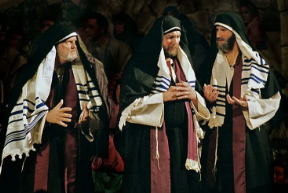
When God gave unto Moses the law in Mount Sinai, He also gave the interpretation of the law, commanding Moses to put the law into writing, but to deliver the interpretation only by word of mouth, to be preserved only in memories and be transmitted down from generation to generation orally; and from hence the former is called the Written Law and the latter the Oral Law. Sometimes later the Prophets came along and added more light on certain Laws. Ezekiel 45:21 and Ezra 6 are examples of further enlightenments.
As the account in the book of Ezra shows, the Levites themselves killed the Passover lambs at this observance. This was not a purely domestic observance, as was the Passover that the children of Israel observed in Egypt, and in the wilderness, and in their early years in the Promised Land. This Passover—the first recorded observance by the returned exiles—was centered at the newly dedicated temple and was kept according to the new Passover law that Ezra had instituted. Ezra’s new law was enacted primarily because of the apostate Jewish temples in Samaria and Elephantine, where unauthorized sacrifices were being made. The new Passover law enforced the Scriptural teaching that Jerusalem was the only city where God had placed His name and that the altar at the temple in Jerusalem was the only authorized place to offer sacrifices to God. Since the Jews of Ezra’s day were accustomed to observing a temple-centered Passover, those who lived near the apostate temples in Samaria and Elephantine would naturally have been tempted to observe the Passover at these sites. The majority of the Jews still lived in exile, and less than 60,000 lived in Judea. By restricting all Passover observance to the area of Jerusalem, Ezra hoped to prevent the exiles from falling prey to the counterfeit religions that were competing with the true worship of God at the temple in Jerusalem. (Pg 204-205)
Regardless of whether other temples had been established in Samaria or Elephantine, God’s law was instituted that the Passover sacrifice had to be done whereever the Sanctuary and altar were stationed, or later, at the Temple in Jerusalem.
Once King Solomon had finished building the Temple in Jerusalem, the Lord appeared to Solomon by night and said unto him: “I have heard thy prayer, and have chosen this place for Myself for a house of sacrifice” (II Chronicles 7:11-12).
What happened in Mount Gerizim or Elephantine had no consequence with what God had intended for those who would come to Jerusalem to offer sacrifices. Fred Coulter is continuing with his distortion.
And “this place” that God had intended is in Jerusalem:
“I (God) have chosen Jerusalem, that My name might be there” (II Chronicles 6:6).
And continue in other Scriptures:
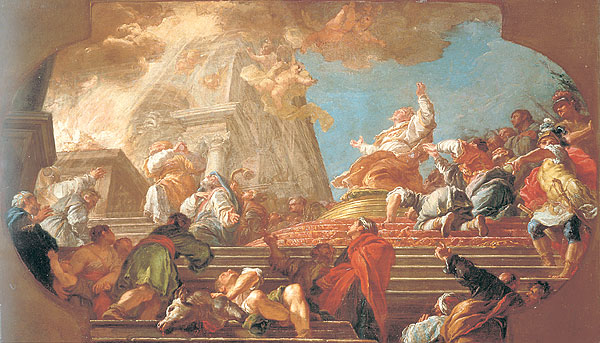
II Chronicles 7:1 Now when Solomon had made an end of praying, the fire came down from heaven and consumed the burnt offering and the sacrifices; and the glory of the Lord filled the house. 2 And the priests could not enter into the house of the Lord, because the glory of the Lord had filled the Lord’S house.
3 And when all the children of Israel saw how the fire came down and the glory of the Lord upon the house, they bowed themselves with their faces to the ground upon the pavement, and worshiped and praised the Lord, saying, “For He is good, for His mercy endureth for ever.”
4 Then the king and all the people offered sacrifices before the Lord.
5 And King Solomon offered a sacrifice of twenty and two thousand oxen, and a hundred and twenty thousand sheep; so the king and all the people dedicated the house of God. II Chronicles 7:1-5
I King 9:3 And the Lord said unto him, “I have heard thy prayer and thy supplication that thou hast made before Me. I have hallowed this house which thou hast built, to put My name there forever; and Mine eyes and Mine heart shall be there perpetually.
II Chronicles 7:12 And the Lord appeared to Solomon by night and said unto him: “I have heard thy prayer, and have chosen this place [Jerusalem] for Myself for a house of sacrifice.
I King 9:25 And three times in a year Solomon offered burnt offerings and peace offerings upon the altar which he built unto the Lord, and he burned incense upon the altar that was before the Lord. So he finished the house. — that house chosen by God is in Jerusalem: “I have chosen Jerusalem, that My name might be there,” II Chronicles 6:6,
God had His plan all worked out early. And those Scriptures quotes above are testimonies to the truth that the precinct around the the Temple in Jerusalem is the ONLY place to offer sacrifices. Again we should refer to what Fred Coulter wrote back in Chapter One: “Anyone who twists and distorts the Scriptures is “using the law unlawfully,” and will end up believing false, satanic doctrines,” (pg 13).
~~ 17 ~~
It takes blood to cover sin. Blood represents life.
“For the life of the flesh is in the blood, and I have given it to you upon the altar to make an atonement for your souls; for it is the blood that maketh an atonement for the soul” (Leviticus 17:11).
Only the blood of Jesus Christ, the Lamb of God, can atone for the sins of all humanity. So why wasn’t His blood recognized as being sprinkled on the altar? Why were all the other sacrificial blood offered at the altar, but not that of the Lamb of God. The blood of all the other sacrifices could never pay for the sins of anyone, yet they were offered and sprinkled at the altar. But not that of the Lamb of God?
Fred Coulter’s quotation from the Reform “authority” continues:
Hellenism was introduced by the Greeks in the days of Alexander the Great. The Greeks actively promoted their Hellenistic beliefs in the lands that they dominated. The spread of Hellenism among the Jews was curbed for a time by the influence of Simon the Just, who was high priest in the last years of the Great Assembly. As the last of the Sopherim—the great teachers of the law—Simon was held in high esteem by all Jews. With his death, the rule of 206 the Great Assembly came to a close, and Hellenism became the dominant influence in the lives of the people. Its impact on the Jewish community led to major changes in the teachings of the religious leaders. (Pg 206)
Dr. Lauterbach, a Jewish historian, describes the changes that occurred during this period: “Thus we see that after the death of Simon the Just, the conditions of the community and as a result thereof the activities of the teachers differed greatly from those that obtained in the times of the Soferim [the teachers of the Great Assembly]” (Rabbinic Essays, p. 200). (ibid)
Jacob Zallel Lauterbach (1873–1942), mentioned above, was an American Judaica scholar and author who served on the faculty of Hebrew Union College and composed responsa (written decisions and rulings) for the Reform Movement in America. His work, Rabbinic Essays, drew heavily from Abraham Geiger (1810 – 23 October 1874), known as the Father of the Reform Movement. And his other Works include contributing many articles to The Jewish Encyclopedia, another spinoff from the Reform Movement.
The Movement sought a more coherent ideological framework to justify innovations in the liturgy and religious practice. Originated in Germany, one characteristic of their progressive revelation that started the ball rolling was the institution of a “Second Sabbath” on Sunday, modeled on the Second Passover, as jobs were hard to come by and so they started crafting a way out.
The Reform Movement claims their Movement is in “a process of constant evolution” and this movement “rejects any fixed, permanent set of beliefs, laws or practices.” They stated that the old mechanisms of religious interpretation (meaning the Mishnah and the Talmud) were obsolete.
Today, Reform Judaism has two major objectives:
(1) Reform Jews are committed to the absolute equality of women in all areas of Jewish life. “We were the first movement to ordain women rabbis, invest women cantors, and elect women presidents of our synagogues.”
(2) Reform Jews are also committed to the full participation of gays and lesbians in synagogue life as well as society at large.
The book of Ezra records the first Passover to be observed after the dedication of the second temple. Although the Passover was centered at the temple, the lambs were slain at the beginning of the 14th and were eaten on the night of the 14th (Ezra 6:19-21).
It is important to understand that Ezra’s decree did not change the time for killing the Passover lambs. His Passover law did not in any way alter or contradict the Passover ordinances of God, as recorded in Scripture. The measures that Ezra enforced were aimed at protecting the true worship of God and upholding His laws—not changing or replacing them. His restriction of the Passover to the area of Jerusalem promoted a temple centered observance, but it did not replace or prohibit the domestic killing of the Passover within that area. (Pg 206)
A cluster of truths and lies. Although it’s correct to say the returned exiles kept the Passover on the fourteenth centered at the Temple, nothing in Ezra 6:19-21 was said the time the lamb was slain was “at the beginning of the fourteenth and were eaten on the night of the 14th.” If Fred wants to say that the lambs were slain at the beginning of the fourteenth, that’s okay, at least let us we know Fred says it, but to quote Ezra as saying it, it’s lying about his writing.

And this lie continues, sugarcoating about Ezra “upholding His laws” and yet “it did not replace or prohibit the domestic killing of the Passover within that area.” These continuous lyings are a presumptuous way of ascertaining “truth” — a deceitful way.
Although the temple sacrifice in the afternoon of the 14th became a widespread tradition, it did not wholly replace the domestic sacrifice of the lambs at the beginning of the 14th.
It is important to understand that Ezra’s decree did not change the time for killing the Passover lambs. His Passover law did not in any way alter or contradict the Passover ordinances of God, as recorded in Scripture. The measures that Ezra enforced were aimed at protecting the true worship of God and upholding His laws—not changing or replacing them. His restriction of the Passover to the area of Jerusalem promoted a temple centered observance, but it did not replace or prohibit the domestic killing of the Passover within that area. (Pg 206)
There is so much double-talk above. And just in case: “double-talk” is “a language that appears to be earnest and meaningful but in fact is a mixture of sense and nonsense.”
If the law and ordinances for a “domestic Passover” were still in force, then changing it to a temple-centered observance would be a violation, a sin, nor matter what the intention was. Second, if the law and ordinances were for the lamb to be slain at the beginning of the fourteenth, then moving it to the late fourteenth would also be another sin. The presentation is “a mixture of sense and nonsense.”
Ezra was accredited with the beginning of the synagogues system, where after the Babylonian captivity, the men of the Great Assembly formalized and standardized the language of the Jewish prayers and worship. For Ezra had prepared his heart to seek the law of the Lord and to do it, and to teach in Israel statutes and judgments.
We must be reminded that Ezra was a righteous scribe and a righteous high priest, one who “tenaciously studied, practiced, and taught the Eternal’s law to Israel” that he was regarded as the second Moses.
After the return of the Exile, the Jews were back in Jerusalem and the law was explained to the returning Exiles in the Aramaic language where they could understand that were originally written in Hebrew. Since most of the people, after 70 years of Exile, had lost the knowledge of the ancient Hebrew to such a degree that they need the Word of God, not only translated, but explained in the vernacular.
And Ezra blessed the Lord, the great God. . . and the Levites, caused the people to understand the law; and the people stood in their place. So they read in the book, in the law of God, distinctly, and gave the sense and caused them to understand the reading. (Nehemiah 8:6-8)
In order to give “the sense and caused them to understand the reading,” they need to understand the Scriptures in Aramaic, hence this gave rise to the origin of the Targum version of our modern Bible.
And the Targum says of the original Passover in Exodus 12:6-8
“And it (the lamb) shall be bound and reserved for you until the fourteenth day of this month, that you may not know the fear of the Mizraee (Egyptians) when they see it; and ye shall kill him according to the rite of all to congregation of the assembly of Israel, between the suns. And you shall take of the blood and set it upon the two posts and upon the upper board outside of the houses in which you eat and sleep. And you shall eat the flesh on that night, the fifteenth of Nisan” Exodus 12:6-8 Jonathan
It is clear and simple. The Targum says the instruction was to eat the flesh of the lamb on the fifteenth of Nisan. And this is confirmed by Deuteronomy 16:4, which commands us regarding the Passover Sacrifice: “and there shall not remain of the flesh [and bones] that you slaughter at evening on the first day until the morning.” — “first day” of course, refers to the seven days of unleavened bread earlier in the same verse.
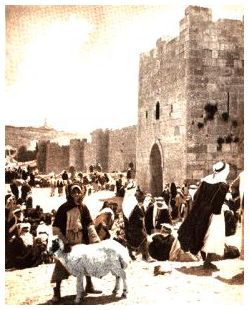
Josephus states that 256,500 lambs were killed for the Passover that year. To kill 256,500 Passover lambs at the temple, 85,500 lambs would have to be slain in each of the three courses. But the size of the sacrificial area limited the number of lambs in each course to less than 6,500. The number of lambs that Josephus records is thirteen times the maximum number that could have been killed in the three courses.
WE CAN CONCLUDE THE FOLLOWING: Far more lambs were sacrificed for the Passover than could possibly have been slain at the temple during the allotted courses. The only logical explanation is that most of the lambs were not slain at the temple! (Pg 219)
The Scriptures have provided such a scenario of people making sacrifices in Jerusalem, “inside or outside the camp,” at or beyond the Temple courtyard, so long as the blood from the sacrificial animals were collected and splinked by a priest on the altar, on pain of death.
In Leviticus 17 it says if one were to make a sacrifice, “in the camp or out of the camp,” the blood must be brought to the tabernacle, and the priest shall sprinkle the blood upon the altar. The critical performance of a sacrifice, any sacrifice, including the Passover sacrifice, is that “the priest shall sprinkle the blood upon the altar of the Lord at the door of the tabernacle” (verse 6).
So the 256,500 lambs mentioned by Josephus need not be sacrificed within the Temple courtyard. In fact, most of them could be sacrificed outside, but not too far, least during the trip to the altar in front of the Temple the blood collected in their bowls could set down, and they might coagulate before a priest could sprinkle the blood upon the altar before the Lord. So there is absolutely no doubt about the accuracy of Josephus’ testimony.
Second, the slaughtering of the Passover lamb needed not be done by a Levite or a priest. Any layman (hence the phrase “the whole congregation of Israel” – usually head of household – were allowed to kill the Passover lamb, provided they were ceremonially clean, otherwise the Levites or priests might have to do it for them (II Chronicles 30:1).
The whole assembly could kill their lamb, and most would have done so beyond the Temple courtyard, “without waiting for the priests” to kill for them as testified by Philo (Special Laws, II, XXVII). The requirements were that the ones who did the killing must have to be circumcised and be ceremonially clean. Second and most important, the blood must be taken to the Temple courtyard and only a priest could sprinkle upon the altar as commanded in Leviticus 17.
1 And the Lord spoke unto Moses, saying,
2 “Speak unto Aaron and unto his sons and unto all the children of Israel, and say unto them: ‘This is the thing which the Lord hath commanded, saying:
3 Whatsoever man there be of the house of Israel who killeth an ox or lamb or goat in the camp, or who killeth it out of the camp,
Rashi: Who slaughters an ox, a lamb, [or a goat]: Scripture is speaking of [slaughtering] holy sacrifices [not of slaughtering ordinary animals], for Scripture continues, “to offer up as a sacrifice” (next verse). – [Torath Kohanim 17:91]
Rashi: inside the camp: But outside the Courtyard. — [Torath Kohanim 17:89; Zev.107b]
4 and bringeth it not unto the door of the tabernacle of the congregation to offer an offering unto the Lord before the tabernacle of the Lord, blood shall be imputed unto that man: he hath shed blood. And that man shall be cut off from among his people, (Leviticus 17:1-4).
Any person offering a sacrifice inside or outside the Temple precinct but its blood not carried to the Temple be offered at the altar before the Lord risked being “cut off from among his people” (Leviticus 17:3-4); that man “is liable to the death penalty” (Rashi). It’s a serious charge, hence the Passover sacrifice couldn’t be practised in Galilee nor in Babylon but near Jerusalem. “Blood shall be reckoned to that man; he hath shed blood, and that man shall be destroyed from his people” (Targum).
If the symbolism is to be carried over to the New Testament period, Jesus Christ didn’t die within the Temple Courtyard, but outside, even outside the city walls — “outside the camp” — outside the Walls of Jerusalem. But could his blood had been brought inside?

What a parallel and an intriguing mystery!
The lastest record of the Ark was by Ezra in II Chronicles 35:3
and [Josiah] said unto the Levites who taught all Israel, who were holy unto the Lord, “Put the holy ark in the house which Solomon the son of David, king of Israel, built. It shall not be a burden upon your shoulders. Serve now the Lord your God and His people Israel, II Chronicles 35:3
~~~
Dr. Lauterbach, a Jewish historian, describes the changes that occurred during this period: “Thus we see that after the death of Simon the Just, the conditions of the community and as a result thereof the activities of the teachers differed greatly from those that obtained in the times of the Soferim [the teachers of the Great Assembly]” (Rabbinic Essays, p. 200).
The priests and Levites were no longer teaching the laws of God that had been so diligently upheld and enforced by the Sopherim of the Great Assembly. Under the domination of Hellenism, the priesthood had lost its authority. In the religious confusion that followed, a great number of lay teachers arose: “But when the authority of the High-Priest as the ruler of the community was gone, and the priestly teachers also lost their official authority….Since there was no official body of teachers to decide authoritatively all religious matters, the pious [lay] man who cared for the Law had to be his own religious authority….These new [lay] teachers soon claimed for themselves the religious authority which was formerly the prerogative of the priests” (Ibid, pp. 198-199).
These self-styled teachers had not been trained in the Scriptures and did not know how to accurately interpret the wording in the Hebrew text. As a result, they introduced so many different interpretations of the Law that a state of anarchy developed in the religious life of the Jews: “There prevailed a state of religious anarchy, wherein the practical life of the people was not controlled by the law of the fathers as interpreted by the religious authorities, nor were the activities of the teachers carried on in an official way by an authoritative body. This chaotic state of affairs lasted for a period of about eighty years…” (Ibid. p. 200). (The Christian Passover, pg 207)
Tampering with the Bible and its translation
A parable was tolds of three men competing in archery. The first lands most of his shots on the bullseye, with only a few misses. The second mostly hits outside the bullseye but manages a few perfect shots.
The third strikes a nearby tree trunk, then rushed over with a red marker to draw a bullseye around his arrow, insisting his friends’ shots were far off target. In this translation analogy, he claims all other translations were completely way off the target.
In this forging and mistranslation analogy, Fred Coulter has drawn inspirations from several renowned historical scholars: (a) Baruch Spinoza (1632–1677) who laid the philosophical and methodological groundwork for later biblical criticism that led Ernest Würthwein (1909-1996) to claim that Ezra, while compiling the Bible, had also edited and made alterations to Deuteronomy; (b) Julius Wellhausen (1844-1918), who argued that Deuteronomy 16 transformed Israelite worship from a series of local, family-centered customs scattered across the countryside into a singular, national, state-controlled system centered exclusively at the Jerusalem Temple; and (c) Dr Lauterbach (1873-1942) and Everett Fox (born 1947) are all from the Reform Movement and that the Movement should continue.
When Fred Coulter attended the now-defunct Ambassador College, he was told that Passover fell on the early fourteenth, and to him, that was right on target.
And after over 60 years of pastoring a church, he has published his bible, the Faithful version, ‘the Original Bible restored.’ His fellow colleague, Frank Nelte, went along, compiling a list of scriptures that were deemed erroneous, and how they should be translated.
With their focus on the new bullsyes on the tree trunk as their newfound truth, they assembled their work on the premise that the Jews from the synagogue of Satan were malicious all along.
For the rest of chapter 17, Fred Coulter went to quote or but more often misquote from many non-biblical sources. From experiences cited in previous critiques, his misquoting is obvious, blatant and a constant irritant that it’s not worth following him to — Dr. Lauterbach, John G. Wilkinson, Solomon Zeitlin, Philo, Josephus, Joachim Jeremias, Alfred Edersheim, etc. Besides, he is so spiteful of the Rabbinic interpretation that everything he quoted had to be twisted to suit his preconceived notion of an early fourteenth passover.
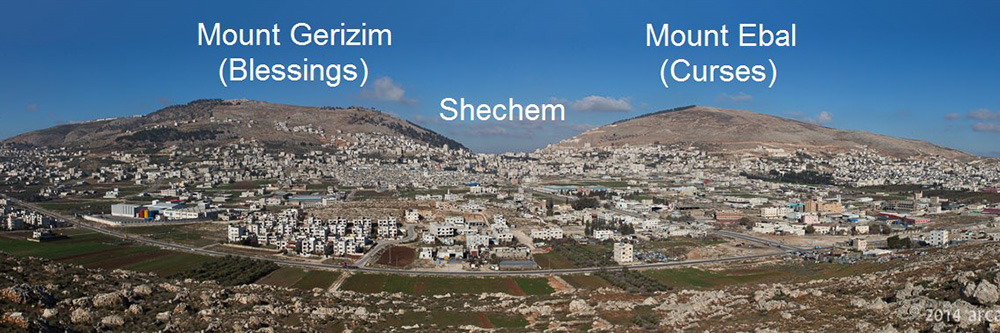
We will, instead, go back to a critical point about Deuteronomy 16 being edited or forged. Fred Coulter, Frank Nelte and John Ritenbaugh have all colluded that the text, especially verses 1 to 8 have been forged. They all meant it in the maligning sense, of course, their minds are vented on attacking a holy man of God, Ezra.
So back to chapter 15 of the Christian Passover. There were lots more to say:
Under Sanballat’s jurisdiction, a temple was built on Mount Gerizim, which was originally the Mount of Blessing for the children of Israel (Deut. 27:12). Now Samaria had a temple similar to the one in Jerusalem. Manasseh, a descendant of Aaron, was a high priest, and he had a whole corps of Levites as assistant priests. They were setting up a “Moses-like religion” that would compete with the true worship of God. For their Scriptural authority, they claimed and used the books of Moses, the first five books of the Bible, called the Torah. (See Josephus, Antiquities of the Jews, Book 11, Chapters 7 and 8.) They offered the commanded sacrifices, observed the Sabbath, festivals and holy days, and fulfilled all the requirements of the Torah—with the exception of the law against intermarriage. Because they had their own temple and their own priesthood, they did not have to comply with the law against intermarriage. They were now under Sanballat’s jurisdiction, where they were safe from any interference by Ezra and Nehemiah. Through their counterfeit religion, they could begin to influence Jews everywhere in the empire.
What an alarming turn of events! What an absolute disaster this could bring! Only sixty miles north of Jerusalem was a competing religion, a new Jewish/Samaritan religion, with authentic copies of the books of Moses, the first five books of the Bible. Because the founders of this religion had rebelled against the law of God, it was obvious that they did not respect His Word. They would not hesitate to alter the text to suit their own purposes. The Scriptures were in great danger of being corrupted. (Pg 181)
The narrative above is already self-contradictory – if they had “offered the commanded sacrifices, observed the Sabbath, festivals and holy days, and fulfilled all the requirements of the Torah” how could this same religion be a “counterfeit religion”?
First, they were the ones who initiated the early fourteenth Passover. Second, they established their temple on Mount Gerizim, going against God’s command to keep it in Jerusalem.
Third, if Ezra had forged the Scriptures, a comparison would show the difference with the Samaritans’ version: “with authentic copies of the books of Moses, the first five books of the Bible.” The Samaritan religion was established some 250 years before Ezra’s return to Jerusalem. They lived north of Jerusalem, since from around 720 BC. And since they have their original Samaritan version, “authentic copies” as Fred Coulter put it, any editing by Ezra, will show the difference.
Shortly after the northern Exile, in II Kings 17:
24 And the king of Assyria brought men from Babylon, and from Cuthah, and from Ava, and from Hamath, and from Sepharvaim, and placed them in the cities of Samaria instead of the children of Israel; and they possessed Samaria and dwelt in the cities thereof.
25 And so it was at the beginning of their dwelling there that they feared not the Lord; therefore the Lord sent lions among them, which slew some of them.
26 Therefore they spoke to the king of Assyria, saying, “The nations which thou hast removed and placed in the cities of Samaria know not the manner of the God of the land; therefore He hath sent lions among them, and behold, they slay them because they know not the manner of the God of the land.”
27 Then the king of Assyria commanded, saying, “Carry thither one of the priests whom ye brought from thence; and let them go and dwell there, and let him teach them the manner of the God of the land.”
28 Then one of the priests whom they had carried away from Samaria came and dwelt in Bethel, and taught them how they should fear the Lord.
29 However every nation made gods of their own and put them in the houses of the high places which the Samaritans had made, every nation in their cities wherein they dwelt. …
32 So they feared the Lord, and made unto themselves from the lowest of them priests of the high places, who sacrificed for them in the houses of the high places. II Kings 17:24-32
So “one of the priests whom ye brought from thence,” (verse 27) had been brought from among the northern Exile to teach the new settlers. It is with certainty he had some scrolls of the Torah with him, otherwise how could he teach the new settlers? By the time Ezra arrived, (around 440-480 BC), the Samaritan religion would have been around for about 250 years.
But for both versions — Deuteronomy 16:1-8 — evidence shows otherwise especially the Passover in verse 2: “of the flock and the herd” are exactly the same. And second, the usage of the terms “Passover and Days of Unleavened Bread” are similarly used interchangeably in both versions. Hence this proves conclusively that there were no editings and the composite characteristics of the festivals were established by Moses himself.
1“Observe the month of Abib, and keep the Passover unto the Lord thy God; for in the month of Abib the Lord thy God brought thee forth out of Egypt by night.
2 Thou shalt therefore sacrifice the Passover unto the Lord thy God, of the flock and the herd, in the place which the Lord shall choose to place His name there.
3 Thou shalt eat no leavened bread with it. Seven days shalt thou eat unleavened bread therewith, even the bread of affliction; for thou camest forth out of the land of Egypt in haste, that thou mayest remember the day when thou camest forth out of the land of Egypt all the days of thy life.
4 And there shall be no leavened bread seen with thee in all thy borders seven days, neither shall there anything of the flesh, which thou sacrificed the first day at evening, remain all night until the morning.
5 Thou mayest not sacrifice the Passover within any of thy gates which the Lord thy God giveth thee;
6 but at the place which the Lord thy God shall choose to place His name in, there thou shalt sacrifice the Passover at evening, at the going down of the sun, at the season that thou camest forth out of Egypt.
7 And thou shalt roast and eat it in the place which the Lord thy God shall choose, and thou shalt turn in the morning and go unto thy tents.
8 Six days thou shalt eat unleavened bread, and on the seventh day shall be a solemn assembly to the Lord thy God. Thou shalt do no work therein.
The Samaritan Pentateuch (translated by Aleksandr Sigalov)
1 Observe the month of Abib, and keep the passover unto the LORD thy God: for in the month of Abib the LORD thy God brought thee forth out of Egypt by night. 2 Thou shalt therefore sacrifice the passover unto the LORD thy God, of the flock and the herd, in the place which the LORD God of you shall choose to place his name there. 3 Thou shalt eat no leavened bread with it; seven days shalt thou eat unleavened bread therewith, even the bread of affliction; for thou camest forth out of the land of Egypt in haste: that thou mayest remember the day when thou camest forth out of the land of Egypt all the days of thy life. 4 And there shall be no leavened bread seen with thee in all thy coast seven days; neither shall there any thing of the flesh, which thou sacrificedst the first day between the even, remain all night until the morning. 5 And thou mayest not sacrifice the passover within any of thy gates, which the LORD thy God giveth thee: 6 But in the place which the LORD thy God shall choose to place his name there, there thou shalt sacrifice the passover at even, at the going down of the sun, at the season that thou camest forth out of Egypt. 7 And thou shalt roast and eat it in the place which the LORD thy God shall choose: and thou shalt turn in the morning, and go unto thy tents. 8 Six days thou shalt eat unleavened bread: and on the seventh day shall be a celebration to the LORD thy God: thou shalt not do any work of service therein. Deuteronomy 16:1-8 Samaritan
Even though the Samaritans consider the Feast of Passover and the Feast of Unleavened Bread as two distinct festivals, their Pentateuch remains much the same as the Masoretic Text in Deuteronomy 16:1-8. The difference, if any, is no more than the difference between the KJ21 and the NKJV, or between the KJV and the RSV.
Fred Coulter, Frank Nelte and John Ritenbaugh — these are all full of themselves and Blind Guides! Three wolves who had subjected themselves to lyings and deceits and come to believe in their own mischieves.
They came to study the Bible with a preconceived notion that the Passover is at the start of the fourteenth.
So when other Scriptures don’t fit into their preconceived notion, they attacked the Scriptures; attack King Hezekiah, attack King Josiah, where both conducted a centralised Feast of Tabernacle and Passover in Jerusalem; attack the people behind the Scriptures, singling out Ezra who is a righteous scribe as the main culprit in forging Deuteronomy 16:1-8.
Is there any wonder for us to wonder if the Sovereign God deems these Samaritan-influenced apostates as the three shepherds whom He hates?
~~~~~
Chapters 18
In earlier critiques, we have found that when Solomon had finished the Temple in Jerusalem the Lord appeared to the young king by night and said unto him as affirmed in II Chronicles 6:6, “I have chosen Jerusalem, that My name might be there,” as affirmed in II Chronicles 7:11-12 “I have heard thy prayer, and have chosen this place (Jerusalem) for Myself for a house of sacrifice.”
God Himself had chosen Jerusalem and these Scriptures run in contradiction to Fred’s heresy that “[b]oth Hezekiah’s and Josiah’s temple-centered Passover observances were the result of a personal commitment by these kings to restore apostate Israel and Judah to the true worship of God” (The Christian Passover, pg 220).
And three times in a year Solomon offered burnt offerings and peace offerings upon the altar which he built unto the Lord, and he burned incense upon the altar that was before the Lord. So he finished the house. (I King 9:25)
Adam Clarke: These three times were: (1) The passover (2) The feast of pentecost (3) The feast of tabernacles
Second, it was God and not Ezra who instituted the laws regarding the slaughtering of the Passover lamb not needed be done solely within the Temple courtyard – but “inside or outside the camp.” This runs contrary to another of Fred’s heresies that “[a]fter the Jews returned from the Babylonian captivity, Ezra promulgated the “new Passover law,” which designated Jerusalem and the surrounding festival area as the only place where the Passover could be observed” (ibid).
The principle requirements being that the blood had to be carried to the Temple courtyard for a priest to sprinkle upon the altar as commanded in Leviticus 17 – it wasn’t a “new Passover law,” and it wasn’t instituted “according to the commandment of the king” but a commandment of God.
Any person offering a sacrifice inside or outside the camp but its blood not carried to the Temple be offered at the altar before the Lord risked being “cut off from among his people” (Leviticus 17:3-4). It was God who instituted this commandment way back during the time of Moses.
Before we go into the Passover issue in the New Testament it is important to start with John the Baptist, the forerunner to the arrival of the Messiah. Note his prophecy:
Luke 3:3 And he (John the son of Zacharias) came into all the country about the Jordan, preaching the baptism of repentance for the remission of sins, as it is written in the book of the words of Isaiah the prophet, saying, “The voice of one crying in the wilderness: ‘Prepare ye the way of the Lord, make His paths straight. Every valley shall be filled, and every mountain and hill shall be brought low; and the crooked shall be made straight, and the rough ways shall be made smooth; and all flesh shall see the salvation of God.’”
7 Then said he to the multitude who came forth to be baptized by him, “O generation of vipers! Who hath warned you to flee from the wrath to come? Bring forth therefore fruits worthy of repentance, and begin not to say among yourselves, ‘We have Abraham as our father.’ For I say unto you, that God is able from these stones to raise up children unto Abraham. And now also the ax is laid unto the root of the trees. Every tree therefore which bringeth not forth good fruit is hewn down and cast into the fire (pyr g4442).” Luke 3:3-9
And further down, John prophesied about the Messiah:
Luke 3:16 John answered, saying unto them all, “I indeed baptize you with water; but One mightier than I cometh, the straps of whose shoes I am not worthy to unloose. He shall baptize you with the Holy Ghost and with fire (pyr g4442). His winnowing fan is in His hand, and He will thoroughly purge His floor and will gather the wheat into His garner; but the chaff He will burn with fire (pyr g4442) unquenchable.” Luke 3:16-17
The Greek word pŷr is “fire” literally or figuratively, especially lightning. A pyre in English is also known as a funeral pyre, which is a structure, usually made of wood, for burning a body as part of a funeral rite or execution. As a form of cremation, a body is placed upon or under the pyre, which is then set on fire.
John was a voice crying in the wilderness, and he said to make the crooked paths straight, he needed to hewn some trees and cast them into the fire (verse 9).
Then John said that the Messiah that comes after him, will have a winnowing fan in His hand, and will thoroughly purge His floor by gathering the chaff together and burn them with fire (verse 17). This story is so important that it is similarly recorded in Matthew 3:1-12.
Notice the consistency of “fire” is important. After the flood, God promised the world that whenever we see the rainbow it is a reminder of His promise not to similarly destroy the world by flood again. But about destroying by fire here are some of Jesus own warnings:
Matthew 7:19 Every tree that bringeth not forth good fruit is hewn down and cast into the fire.
Matthew 13:40 As therefore the tares are gathered and burned in the fire, so shall it be at the end of this world.
Matthew 13:50 and shall cast them into the furnace of fire: there shall be wailing and gnashing of teeth.”
Matthew 25:41 “Then shall He say also unto them on the left hand, ‘Depart from Me, ye cursed, into everlasting fire prepared for the devil and his angels.
Luke 12:49 “I am come to send fire on the earth, and what will I, if it be already kindled?
And destruction came in AD 70, roughly 40 years after Christ’s warning! The Romans, led by the future Emperor Titus, came and destroyed Jerusalem, killing more than 1.1 million, with another 97,000 enslaved. “O Brood of vipers!” warned John the Baptist, “Who warned you to flee from the wrath to come?” From all the chaos that took place, only a few Jews escaped.
Once the Roman started the fire, it spread quickly and was soon out of control. The Temple was captured and destroyed on 9/10 Tisha B’Av, around the end of August, and the flames spread into the residential sections of the city.
Josephus described some of the scenes:
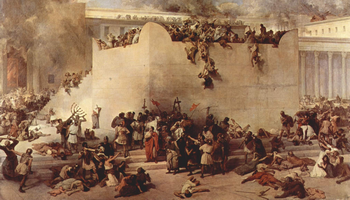
As the legions charged in, neither persuasion nor threat could check their impetuosity: passion alone was in command. Crowded together around the entrances many were trampled by their friends, many fell among the still hot and smoking ruins of the colonnades and died as miserably as the defeated. As they neared the Sanctuary they pretended not even to hear Caesar’s commands and urged the men in front to throw in more firebrands. The partisans were no longer in a position to help; everywhere was slaughter and flight. Most of the victims were peaceful citizens, weak and unarmed, butchered wherever they were caught. Round the Altar the heaps of corpses grew higher and higher, while down the Sanctuary steps poured a river of blood and the bodies of those killed at the top slithered to the bottom.
During the four years of war, the Romans had taken 97,000 prisoners. Thousands of them were forced to become gladiators and were killed in the arena, fighting wild animals or fellow gladiators. Some, who were known as criminals, were burned alive. Others were employed at Seleucia, where they had to dig a tunnel. But most of these prisoners were brought to Rome, where they were forced to build the Forum of Peace (a park in the heart of Rome) and the Colosseum. The Menorah and the Table were exhibited in the temple of Peace. (Full Details in Wars Bk 6)
But John wasn’t alone, earlier King David also saw this, more likely one for the end-time, even “he shall fill the places with the dead bodies . . . over many countries”: “The Lord at thy right hand (i.e. the Son, who came later as the Messiah) shall strike through kings in the day of his wrath. He shall judge among the heathen, he shall fill the places with the dead bodies; he shall wound the heads over many countries” (Psalm 110:5-6). Were these “baptised in fire” as warned by John the Baptist?
The foundation of Fred Coulter’s Passover on the early fourteenth of Nisan has been proven to be built on quicksand. Once this foundation is wacky, it shifts and moves and its consequence can be desperating. “The rain fell, and the floods came, and the winds blew and beat against that house, and it fell—and great was its fall,” (Matthew 7:24-27).
That’s right! The Worldwide Church of God was growing at some 30 percent each year for decades, but it was built on sand. Once its founder died, the organisation imploded, and it fell like a bang, and great was its noise, scattering into many splinters as a result. Because Fred Coulter’s belief is similarly built on a shaky foundation it will with certainty come with a desperating end. So we’ll proceed with him to the New Testament era.
But notice the following four verses during the New Testament time before we proceed. They show that the Feast of the Passover were well understood by the writers as the Feast of Unleavened Bread as a composite Festival, known by either name.
Matthew 26:17 Now on the first [day of the Feast] of Unleavened Bread, the disciples came to Jesus, saying unto Him, “Where wilt Thou that we prepare for Thee to eat the Passover?”
Mark 14:12 And on the first day of Unleavened Bread, when they killed the Passover lamb, His disciples said unto Him, “Where wilt Thou have us go and prepare, that Thou mayest eat the Passover?”
Luke 22:1 Now the Feast of Unleavened Bread drew nigh, which is called the Passover.
Luke 22:7 Then came the Day of Unleavened Bread when the Passover lamb must be killed.
Now another quote from The Christian Passover:
When we examine the Gospel accounts of Jesus’ last Passover, it is evident that Jesus and His disciples kept a domestic Passover at the beginning of the 14th, according to the commands of God in Exodus 12. On the other hand, the New Testament discloses that the Sadducees, scribes and Pharisees observed a 14/15 temple Passover, eating their Passover on the night of the 15th. This dichotomy makes it clear that the 14/15 controversy existed in New Testament times. We will have a better basis for understanding the observance of the Passover in the New Testament if we survey the terminology that is used in the Gospel accounts. (Pg 220)

There are many errors in the above paragraph. The Sadducees didn’t subscribe to a 14/15 Passover, only the Pharisees did. The Sadducees (and also the Samaritans), kept an early fourteenth Passover, because they also define erev as twilight, and ben ha arbayim (between the two evenings) as between sunset and dark.
Fred Coulter must be suffering from memory loss; for he wrote in
Chapter 10: “The Sadducees, including some high priests and their families, continued to practice the domestic killing of the Passover lambs at the beginning of the 14th,” (Pg 119).
Such oversight is glaring, his writing is all over the place. And where are all his team? — Carl and Jean Franklin, Philip Neal, Albert and Mela Cataga John, Hiedi and Sasha Vogele — all sleeping?
The Pharisees, and later the Rabbinics considered the time when the sun began to descend from its zenith to be called the First Evening and the Second Evening when the sun disappears from sight over the horizon. The time between the eve of the First Evening and eve of the Second Evening is “between the two evenings.” Only the Pharisees retained keeping the Passover during this time frame which is also known as a late fourteenth Passover.
Both Mark and Luke make a clear distinction between the Passover day and the Feast of Unleavened Bread in their accounts of the events leading to Jesus’ last Passover. On the other hand, in his narration of the early life of Jesus Christ, Luke includes the Feast of Unleavened Bread with the Passover day as a single feast called “the feast of Passover.” In this passage, Luke does not distinguish the Passover day from the Feast of Unleavened Bread, but records that Jesus and “… His parents went to Jerusalem every year at the feast of the Passover….[And] they departed after completing the days…” (Luke 2:41, 43). (Pg 221)
That’s right, the feast of the Passover involves several days. The gospel writers all well understood that the feast of the Passover and the days of Unleavened Bread were a composite feast. By separating the Passover from the days of Unleavened Bread can also mean we are separating our Messiah’s sacrifice from the redemption of His subjects. They are two components of a single cohesive unit.
Can we redeem ourselves from sin if or when we separate ourselves from the One who makes our redemption possible? Certainly not, but to argue otherwise is going against the spirit of the Scriptures, and the writings of Matthew, Mark and Luke. Unless, of course, Fred Coulter, Frank Nelte and John Ritenbaugh are holier and more righteous than Ezra, Matthew, Mark and Luke.
The Gospel accounts make it clear that Jesus did not follow the traditions of men. Jesus strongly denounced the traditions of the Jews—ALL OF THEM! (Pg 222)
All of them? Nar. Early in His life, Jesus went with his parents every year to keep the Passover according to the custom of the festival.
“Now His parents went to Jerusalem every year at the Feast of the Passover. And when He was twelve years old, they went up to Jerusalem according to the custom of the Feast” Luke 2:41-42
Now His parents went to Jerusalem every year at the Feast of the Passover. If these Galileans were to keep a domestic Passover, as Fred Coulter alleges, they would stay back to keep a “domestic Passover” in Galilee. Bad traditions are already well documented, so I won’t reiterate them, but good traditions are seldom mentioned. Here there are, as Paul says:
“I profited in the Jews’ religion beyond many of my equals in mine own nation, being more exceedingly zealous for the traditions of my fathers” Galatians 1:14.
“Therefore, brethren, stand fast and hold to the traditions which ye have been taught, whether by word or our epistle” II Thessalonians 2:15.
“Now we command you, brethren, in the name of our Lord Jesus Christ, that ye withdraw yourselves from every brother who walketh disorderly and not according to the tradition which you received from us” II Thessalonians 3:6.
And how come Jesus wore the tassels or ham, described as “edges”; a distinctively Jewish tallit (Matthew 9:20-22, 14:36; Mark 6:56)? Then Jesus went to Jerusalem for the Festival of Dedication (John 10:22), another Jewish tradition.
To say that Jesus rejects “ALL” the traditions of the Jews is a presumption that could only come from someone who has an inflated sense of self-importance, and it will come with a serious consequence. “And the man who will do presumptuously, and will not hearken unto the priest who standeth to minister there before the Lord thy God, or unto the judge, even that man shall die” Deuteronomy 17:12.
The Gospel of John shows how far the Jews had strayed from the worship that God desired. John records that the Jews were actually defiling the temple of God with their corrupt practices: “Now the Passover of the Jews was near, and Jesus went up to Jerusalem . . . (Pg 225)
Wasn’t a Jerusalem centred Passover an ordinance from God? Jerusalem was chosen by God as affirmed in II Chronicles 6:6, “I have chosen Jerusalem.” And the three annual feasts (Deuteronomy 16:5-6) were established in Jerusalem during Solomon’s reign, (I King 9:25).
Jesus, setting the best example, went to Jerusalem to keep the Passover of the Jews. He didn’t stay back in Galilee, in their own homes, to keep a “domestic Passover” as occurred in the original Exodus. Neither did He keep a Passover of the Samaritans at Mount Gerizim.
Yet Fred harps and moans over this “domestic Passover” all over the place. To the knowledgeable this is revolting. The original Passover had to be observed in a strict prescribed manner because of what God was going to achieve through Exodus. However, in later years it was a commemoration of the event, not the event itself.
For in Deuteronomy 16:16 it commands “Three times in a year shall all thy males appear before the Lord thy God in the place which he shall choose; in the feast of unleavened bread, and in the feast of weeks, and in the feast of tabernacles.” God had provided a provision where He will choose a place in the future where the Israelites are to worship him. And that place chosen by God is Jerusalem as affirmed in II Chronicles 6:6, “I have chosen Jerusalem, that My name might be there.”
And God’s prophets: Isaiah, Jeremiah, Joel, Zechariah, they all say the same thing. In Isaiah 2:3 And many people shall go and say, Come ye, and let us go up to the mountain of the Lord, to the house of the God of Jacob; and he will teach us of his ways, and we will walk in his paths: for out of Zion shall go forth the law, and the word of the Lord from Jerusalem; Isaiah 24:23
Then the moon shall be confounded, and the sun ashamed, when the Lord of hosts shall reign in mount Zion, and in Jerusalem, and before his ancients gloriously: Isaiah 28:14, Jeremiah 3:17, Joel 2:32, Joel 3:16, Amos 1:2, Micah 4:2, Zechariah 1:16,17, 2:12, 3:2, 8:3, 8:22, 12:10), and other follows identifying Jerusalem as God’s chosen city, but why is Fred Coulter still harping and whining about a “domestic Passover”?
Every year the Galilean Jews readily traveled to Jerusalemto celebrate the Passover. “Thou mayest not sacrifice the Passover within any of thy gates which the Lord thy God giveth thee” (Deuteronomy 16:5)
Now Jesus’ parents went to Jerusalem every year at the feast of the passover. And with Jesus along with them, they similarly went up to Jerusalem “after the custom of the feast,” rather than staying back in Galilee. Was Jesus misled? “Custom of the Feast,” that means to say, Jesus went to Jerusalem every year for Passover!
But Fred still groans about a “domestic Passover” all over. In Old Testament times, the old Jeroboam stopped his subjects from going to Temple-based Jerusalem during the Feast of Tabernacles; but here in modern times, a new Jeroboam living in Hollister also teaches against keeping Passover in a Temple-based Jerusalem. Amazing parallels!
In later chapters, John uses similar terminology when referring to the Jews’ observance of the Passover and the Feast of Unleavened Bread: “Now the Passover, a feast of the Jews, was near” (John 6:4). Again, John states, “Now the Passover of the Jews was near, and many went up from out of the country to Jerusalem before the Passover, so that they might purify themselves” (John 11:55). John’s repeated use of this terminology makes it clear that the Jews were not keeping these feast days as God intended them to be kept. (Pg 225-226)
Another work of high Satanic quality, so according to Fred, even Jesus and His disciples “were not keeping these feast days as God intended them to be kept!”
Among the Gospel writers, John lived the longest. He was there when there arose a revolting movement by the Gentiles to get rid of anything that had to do with being adhering to Mosaic Laws, anything considered as “Jewish.” With that in mind, John emphasized the Jewishness of those feasts by reiterating “Passover of the Jews” or “feast of the Jews.”
He also mentioned a Jewish feast of tabernacles too in John 7:2 “Now the Jews’ Feast of Tabernacles was at hand” which is also Jewish. Mosaic laws were considered among the Gentiles then and now as Jewish.
John emphasised their Jewishness simply because there was a real Samaritan counterfeit nearby: they practiced another version of the Passover, which were observed on a Samaritan calendar on the early fourteenth of Nisan, at twilight, on Mount Gerizim. Jewish and Samaritan rivalries were so intense and hence imbuled their perception that Samaritans were having a devil (John 8:48).
The animosity was well understood as Samaritans would often, among numerous devices, light bon-fires in order to deceive the Jews as to the tidings of the announcement of a new moon in Jerusalem, confusing and fooling them.
Being Galileans, John and the other disciples have to travel innumerable times passing Samaritan territories, including Jacob’s well in Shechem, which lies between Mount Ebal and Mount Gerizim in the hill-country of Ephraim, to come to Jerusalem to keep the three annual feasts. So bad and threatening to these Jewish faiths and practises since Ezra’s time that eventually the Jews have no dealings with the Samaritans, (John 4:9).
So when John was writing, he emphasized “of the Jews” as distinct from that of the Samaritan’s. And to put a sting to their Jewishness, John even recorded Jesus in Jerusalem for the Feast of Dedication (Hanukkah), which all the other Gospel writers ignored, for it says in John 10:22 “And it was at Jerusalem the Feast of Dedication,” where Jesus walked in the temple in Solomon’s Porch.
However, John writes differently when he refers to Jesus’ last Passover, which was observed on the night of the 14th, the time that God commanded. Notice that John does not use the phrase “of the Jews” to describe this Passover: “Now six days before the Passover, Jesus came to Bethany…” (John 12:1).
Again, John records, “Now before the feast of the Passover, knowing that His time had come to depart from this world to the Father…” (John 13:1). As the subsequent verses in John 13 show, John is referring to Jesus’ last Passover, which He ate with His disciples on the 14th day of the first month, as commanded by God. The different terminology that John uses makes a clear distinction between Jesus’ observance of the Passover and the Jews’ observance of their feast. (Pg 226)
“And the first day of unleavened bread, when they killed the passover, his disciples said unto him, Where wilt thou that we go and prepare that thou mayest eat the passover?” (Mark 14:12, KJV.)
Although the translators did not insert the words “feast of” before “unleavened bread,” this translation of Mark 14:12 gives the impression that the lambs were killed on the first day of the Feast of Unleavened Bread. Such a statement would be contrary to all records of Scripture and history.
The wording in Mark’s account causes confusion because it appears to contradict these facts, as does the wording in Luke’s account: “Then came the day of unleavened bread, when the passover must be killed” (Luke 22:7, KJV). (Pg 227)
Mark rightly didn’t incorporate the “feast of” before unleavened bread and credit should be attributable to him, not attacking him. This is a typical case of Fred having a preconceived notion of what the Scriptures say, and when it doesn’t fit, he attacks his own misconception: “If these verses are actually stating that the lambs were killed on the 15th, the first day of the Feast of Unleavened Bread, then we are confronted with gigantic problems.” And then he continues his attack with various “imaginary scenarios” (three in fact, on page 228) as he describes them.
Let’s recall what Fred Coulter wrote about sticking to the Scriptures on Chapter 1:
Fourteen Rules for Bible Study:
12) Do not allow your own personal assumptions or preconceived notions to influence your understanding and conclusions.
13) Do not form conclusions based on partial facts or insufficient information, or the opinions and speculations of others.
14) Opinions, regardless of how strongly you feel about them, don’t necessarily count. Scripture must be your standard and guide. (Pg 14-15)
Amazing! Fred Coulter has been making presumptions all the time. He doesn’t read that it was God who established Jerusalem where He put His name there for worship but keeps on harping that it was the commandment of the kings. And right here at the second paragraph of this chapter:
“When we examine the Gospel accounts of Jesus’ last Passover, it is evident that Jesus and His disciples kept a domestic Passover at the beginning of the 14th, according to the commands of God in Exodus 12,” (Pg 220)
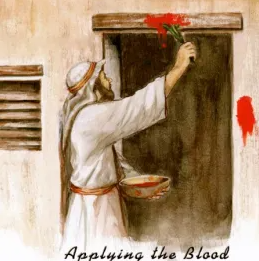
And the title for the next chapter, he already has his heading as,
“Chapter Nineteen – Jesus’ Last Passover—When and How Was It Observed?” (Pg 232)
He already had a preconceived notion that it was “Jesus’ Last Passover” before he began to prove it. Are these statements and headings not presumptuous? Are Fred’s faithfuls still adoring him? Are they not correctly described as “blind” “wretched” and “naked”?
The wording in Mark’s account causes confusion because it appears to contradict these facts, as does the wording in Luke’s account: “Then came the day of unleavened bread, when the passover must be killed” (Luke 22:7, KJV).
If these verses are actually stating that the lambs were killed on the 15th, the first day of the Feast of Unleavened Bread, then we are confronted with gigantic problems: (Pg 227)
No, there are nowhere considered as “gigantic problems.” Once the hybrid concept is understood, it won’t even be a blip. Exodus 12 confirms the opposite. Verse 18 says “In the first month, on the fourteenth day of the month at even (erev), ye shall eat unleavened bread until the one and blipwentieth day of the month at even (erev).”
Eating of unleavened bread starts BEFORE the beginning of the fifteenth. Unleavened bread is to be eaten “on the fourteenth day of the month at even (erev),” (Exodus 12:18).
As another testimony from Deuteronomy 16:1-8 shows, the full ordinances for Passover and the time for taking unleavened bread overlapped.
The Ezra-inspired Targum translates and explains the Sacred Hebrew Text into the vernacular, in very simple language and is extremely clear:
“And you shall eat the flesh on that night, the fifteenth of Nisan” Exodus 12:8 Jonathan.
~~~~~


