
When the day of Pentecost had fully come?
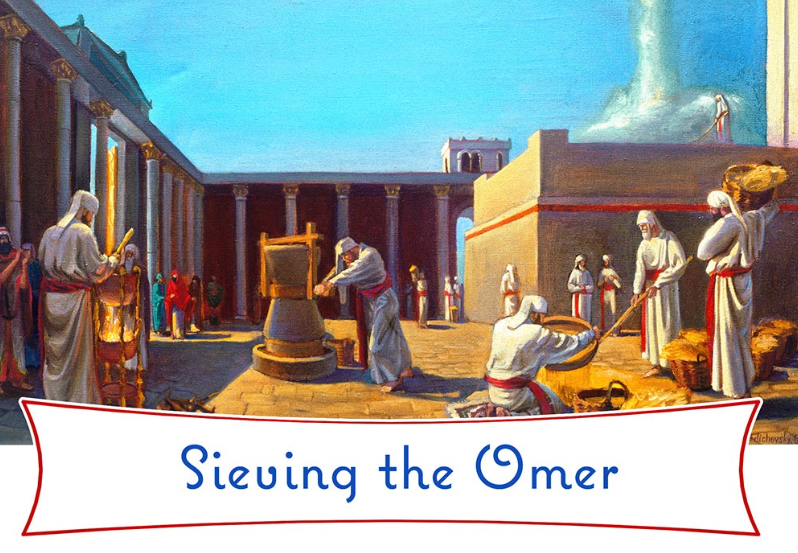
“And when the day of Pentecost had fully come, they were all together in one place,” Acts 2:1
A small nuance: the date of Shavuot was historically debated between different Jewish groups. The Pharisaic/Rabbinic tradition interprets “the day after the Sabbath” in Leviticus 23 as the day after the first day of Passover, leading always to 6 Sivan.
The Sadducees, the Essenes, the Karaites and some other groups had a different interpretation, all influenced by the Samaritans via Samballat (Nehemiah 2:10, 4:1–3) and his close associate, Tobiah (Nehemiah 6:17–19), an Ammonite; using their influence — even within some Jewish circles — to undermine Nehemiah’s leadership, leading some renegade Jews to interprete Shavuot always being observed on a Sunday instead of counting fifty days from Passover.
For the Rabbinic today, Shavuot as a one-day festival on Sivan 6. It is one of the three pilgrimage festivals along with Passover and Sukkot to be kept in Jerusalem.
But what does the phrase “when the day of Pentecost had fully come” mean?
The truth is, Pentecost (Shavuot) has 2 concepts
(1) the journey starting from the Wave sheaf offering and, counting seven weeks, on the morrow till Sivan 6; and
(2) on Sivan 6 itself, a holy convocation and a holy festival
Historically and textually, Shavuot is unique because it is defined by both of these concepts simultaneously. Here is a breakdown of why there exists between the process of the journey of the holy day and the arrival of the holy day itself.
Concept 1: The Linear Countdown (Process & Anticipation)
This concept is all about the journey. Unlike other biblical festivals that simply occur on a fixed calendar date (like Passover on Nisan 14), Shavuot is the only festival in the Torah that must be earned through an active, daily countdown.
- The Command: Leviticus 23:15–16 & Deuteronomy 16:9–10 command the counting of seven complete weeks—49 days—plus one day, totaling 50 days. Shavuot literally means “Weeks” because it comes after the seven-week count.
- The Spiritual/Agricultural Idea: This 50-day period binds Passover and Shavuot together as a single, unbroken unit. Passover is the physical liberation from Egypt, but the countdown shows that freedom is incomplete without the destination. Agriculturally, it tracks the exhausting, daily progression from the barley harvest to the wheat harvest.
Concept 2: Sivan 6 Itself (The Destination & The Event)
This concept focuses strictly on the arrival at the destination—the single, monumental day of the festival itself.
- The Fixed Date: In the standard, calculated calendar used today, the 50th day always lands precisely on the 6th of Sivan. On this specific day, the counting stops, and a sacred assembly is held.
- The Historical Event: While the 50-day count represents the journey through the wilderness, Sivan 6 represents the ultimate purpose of that journey: the arrival at Mount Sinai and the giving of the Torah (the Law). It is celebrated as a standalone, high holy day of rest, assembly, and reflection, and the offering of the two loaves of leavened bread at the Temple.
Summary
The two concepts are connected: the counting leads to the festival. The connection is inseparable as it reflects both the journey and the theological significance of the Holy Day and Festival.
| Concept | Nature | Focus | Theme |
| (1) The 50 Days / 7 Weeks | Active & Linear | The Journey & Transition | Physical Liberation to Spiritual Readiness |
| (2) Sivan 6 (One Day) | Static & Fixed | The Destination & Covenant | The Revelation of God’s Word at Sinai |
Without the 50-day countdown, Shavuot loses its context as the conclusion of Passover; without Sivan 6 itself, the countdown has no climax. They are two sides of the exact same coin.
~~~
Dig deeper into this concept further, the five events during the Spring Festival are actually closely connected. In fact, the Spring Festival is a single cohesive unit:
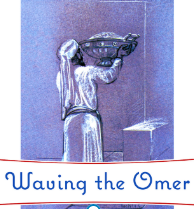
(1) on the fourteenth, the Passover, the Lamb was sacrificed, at even, (2) on the fifteenth, the partaking of the Passover where the Israelites were to eat and share in the sacrifice (3) on the sixteenth, the wave sheaf offering, the omer was waved by the high priest as firstfruits to be accepted before the Lord, and (4) the journey began to Pentecost, or Shavuot, and (5) fifty days later, on Sivan 6th, where “Pentecost has fully come,” it marks the end or culmination of the Spring journey.
To reinterprete the Scriptures by realigning the link, from the Sabbath to Sunday, to start the count, is to break a foundamental link. The new link meant that the firstfruits of humanity were to draw inspiration from the Sun-god instead of from the Passover Lamb.
The New Testament is built upon the Old Testament, not the Old Testament upon the New. Most pretending Christians read the Scriptures up-side-down; hence “in vain they do worship me, teaching for doctrines the commandments of men” Matthew 15:9.
~~~~~~
On Pentecost, or Shavuot, 13 animals were sacrificed: 7 male lambs (one year old), 1 young bull, 2 rams, 1 male goat (for sin offering), 2 additional male lambs (for peace offerings) Leviticus 23:15–22. For exposition, see EndQ13
For more, there is a five-part series on Wave Sheaf Offering, Pentecost or Shavuot
(1) A Critique of Frank Nelte’s Pentecost
(2) A Critique of Wade Cox’s Wave Sheaf Offering
(3) A Critique of UCG’s Pentecost
(4) A Critique of Fred Coulter’s Pentecost
(5) A Critique of John Ritenbaugh’s Pentecost


