The Targum, an Insight of Ezra (D)
The Targum, which originated in the Aramaic language and is strongly linked to the work of Ezra, holds significance for shedding light on biblical concepts. When the Masoretic Text can be vague, uncertain, or unclear, the Targum often offers clearer meaning, broader insight, and deeper understanding.
Yes, sometimes the Targum clarifies metaphors and interprets idioms or difficult passages instead of translating them literally, which often makes no sense. Such an endeavor should be highly commended rather than criticized.
For example, the Targum interprets natural imagery—like cedars, cypresses, oaks, forests, and fire—as metaphors for political political and social structures, especially kings, rulers, governors, and wealthy elites. Such imagery can be sweeping: forests laid waste, lions roaring as their habitat is destroyed, and power structures crumbling. Fire symbolizes divine punishment, sweeping through defenses and dismantling the very foundations of their power.
Translating such natural imagery literally could convey limited information or even distort it, but Ezra was determined to share their true meaning. He was a righteous man, for God had prepared his heart to seek the law of the Lord, to follow it, and to teach the statutes and judgments in Israel Ezra 7:10.
(1) And the Lord said unto Moses, “See, I have made thee a god to Pharaoh, and Aaron thy brother shall be thy prophet. Exodus 7:1
— a god ’ĕ·lō·hîm to Pharaoh; “a god” that is, he was to act in this business as God’s representative, God’s envoy, to act and speak in His name and to perform things beyond the ordinary course of nature;
— any messenger (mal·’āḵ) is also an angel; and God gives authority for an messenger to carry God’s name, “for My name is in him;”
“Behold, I send a messenger (mal·’āḵ) before thee to keep thee in the way, and to bring thee into the place which I have prepared;
Have regard for him, and obey his voice. Provoke him not, for he will not pardon your transgressions, for My name is in him. Exodus 23:20-21
— the Targum of Jonathan reveals another dimension, saying,
“And the Lord said to Moses: ‘Why are you afraid? Behold, I have already placed you as a terror to Pharaoh, as if you were his god; and Aaron your brother shall be your prophet.’” Exodus 7:1 Jonathan
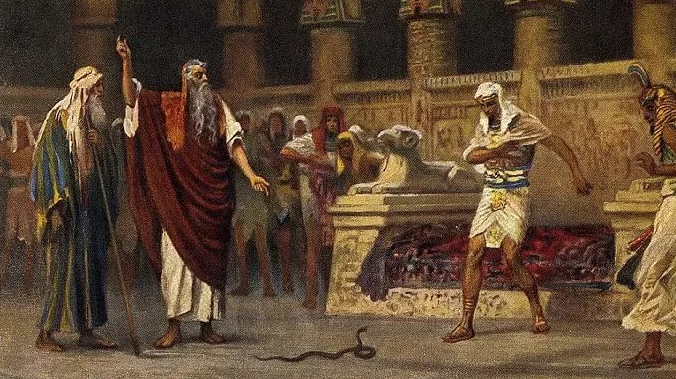
(2) Then Pharaoh also called the wise men and the sorcerers. Now the magicians of Egypt, they also did in like manner with their enchantments. Exodus 7:11
— the names of these magicians of Egypt, Janis and Jamberes, were already incorporated in the Targum of Jonathan
But Pharoh called the hachems and magicians; and they also, Janis and Jamberes, magicians of Mizraim, did the same by their burnings of divination. Exodus 7:11 Jonathan
— also being mentioned in Exodus 1:15 Jonathan, introduced as the chief of the magicians; but also picked up by Paul; that’s right, Paul also used the Targum for understanding deeper issues
“Now as Jannes and Jambres withstood Moses, so do these also resist the truth — men of corrupt minds, reprobate concerning the faith.” II Timothy 3:8
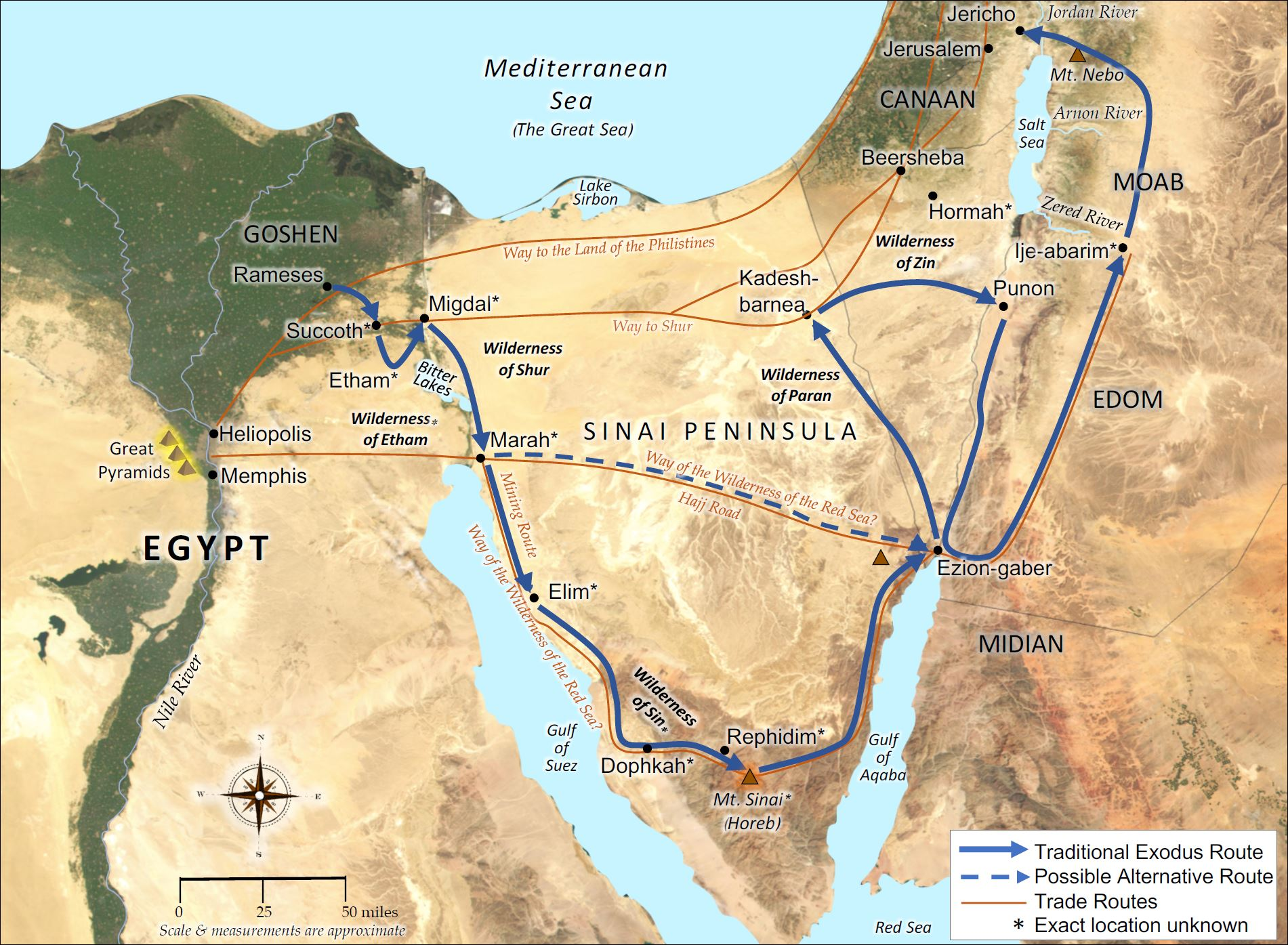
(3) And it came to pass, when Pharaoh had let the people go, that God led them not through the way of the land of the Philistines, although that was near; for God said, “Lest perhaps the people repent when they see war, and they return to Egypt.” Exodus 13:17
— when they see war; for the Philistines were viewed as one of the most warlike people of the time; as the Targum of Jonathan reveals an earlier misadventure by the tribe of Ephraim, saying
“And it was when Pharaoh released the people, that the Lord did not lead them by the way of the land of the Philistines, although it was near; for the Lord said, ‘Lest the people be dismayed when they see their brothers who died in battle—two hundred thousand armed men of the tribe of Ephraim, grasping shields, spears, and weapons of war.
“They went down to Gath to plunder the livestock of the Philistines; and because they transgressed against the decree of the Memra (Word) of the Lord and left Egypt thirty years before the [appointed] end, they were delivered into the hands of the Philistines, who killed them.
“These were the ‘dry bones’ that the Word of the Lord brought to life through the hand of Ezekiel the prophet in the Valley of Dura. If [the Israelites] see this, they will be afraid and return to Egypt.’” Exodus 13:17 Jonathan
— the details of this eposode was recorded by the Book of Jasher, Chapter 75, where after 180 years in Egypt, the tribe of Ephraim, thirty thousand valiant men on foot, who trusted in their own strength, who have come forth from Egypt to take the cattle of the Philistines before their appointed time; “but the Lord delivered the children of Ephraim into the hands of the Philistines,” leaving only ten men to report back what a disaster it had been;
— “And Ephraim their father mourned many days, and his brethren came to comfort him.” I Chronicles 7:22
(4a) “I am the Lord thy God, who have brought thee out of the land of Egypt, out of the house of bondage.” Exodus 20:2
— which have brought thee out of the land of Egypt: where they had been afflicted many years, and reduced to great distress, but were brought forth with an high hand;
— out of the house of bondage: where they had been servants and slaves, but now were made free, and were become a body politic, a kingdom of themselves, under their Lord, King, Lawgiver.
— the Targum of Jonathan reveals it isn’t just sound; it’s sparks, lightning and fire, saying
“And then it cried out and said: ‘My people, children of Israel, I am the Lord your God, who redeemed and brought you out redeemed from the land of the Egyptians, from the house of the bondage of slaves.’”
“The First Word (Commandment), when it went forth from the mouth of the Holy One—blessed be His name—was like sparks, and like lightnings, and like flames of fire. A lamp of light was at His right hand, and a lamp of fire at His left.
“It flew and soared through the air of the heavens, and returned and was seen over the camps of Israel. Then it returned and became engraved upon the Tablets of the Covenant that were placed in the hands of Moses, turning itself upon them from side to side.
(4b) “Thou shalt have no other gods before Me. — there shall not be to thee another god, or other gods, to wit, idols, which others have, esteem, and worship as gods;
— again, the Targum of Jonathan reveals there are sparks, lightning and fire, saying
“And then it cried out and said: ‘My people, House of Israel, you shall have no other god besides Me.’”
“The Second Word (Commandment), when it went forth from the mouth of the Holy One—blessed be His name—was like sparks, and like lightnings, and like flames of fire. A lamp of light was at His right hand, and a lamp of fire at His left.
“It flew and soared through the air of the heavens, returned and was seen over the camps of Israel, and returned and became engraved upon the Tablets of the Covenant, turning itself upon them from side to side.
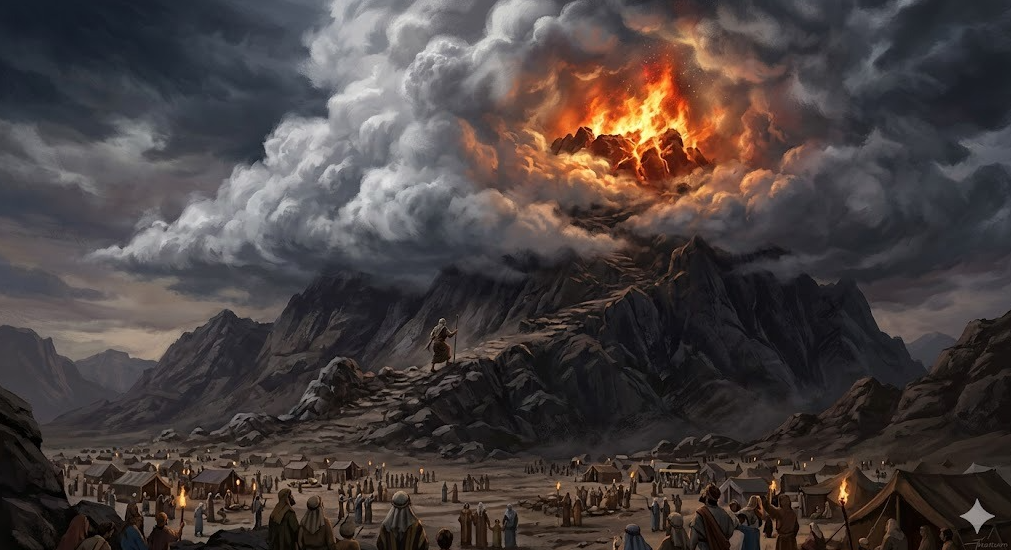
(5) And the Lord said unto Moses, “Come up to Me onto the mount, and be there; and I will give thee tablets of stone, and a law and commandments which I have written, that thou mayest teach them.” Exodus 24:12
— come up to me into the mount, and be there; for as yet Moses was not got up to the top of the mount, only up some part of it with the elders, though at some distance from the people: but now he is bid to come up higher;
— the Targum of Jonathan reveals the 613 laws were already identified during Moses time
“And the Lord said to Moses: ‘Ascend before Me to the mountain and be there; and I will give to you the tablets of stone, in which are hinted (alluded to) the rest of the words of the Torah, and the six hundred and thirteen commandments which I have written for their instruction.’”
(6) And thou shalt put in the breastplate of judgment the Urim and the Thummim; and they shall be upon Aaron’s heart, when he goeth in before the Lord: and Aaron shall bear the judgment of the children of Israel upon his heart before the Lord continually. Exodus 28:30
— the twelve stones into the breastplate were put in by the workmen, Exodus 39:10-21; the breastplate of Urim and Thummim dressed upon Aaron by Moses, Leviticus 8:1-8;
— this Urim and Thummim; signifing lights and integrity or perfections: by which the will of God would be made known in doubtful cases; and asking counsel of God in any emergency;
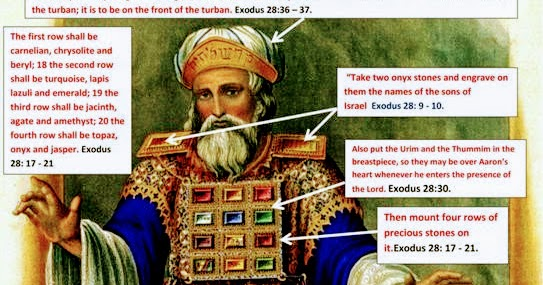
— the Targum Onkelos says the Urim and Thummim inside the Breastplate of Judgment
“And you shall place in the Breastplate of Judgment the Urim and the Thummim, and they shall be upon the heart of Aaron when he goes in before the Lord; and Aaron shall bear the judgment of the children of Israel upon his heart before the Lord continually.”
— the Targum of Jonathan reveals further hidden things of the Urim and Thummim, saying
“And you shall put in the Breastplate of Judgment the Urim, which illuminate their words and reveal the hidden things of the House of Israel; and the Thummim, which perfect their deeds for the High Priest who seeks instruction from before the Lord through them.
“For upon them is engraved and expressed the Great and Holy Name, by which three hundred and ten worlds were created. It is also engraved and expressed upon the Foundation Stone, with which the Master of the World sealed the mouth of the Great Deep from the beginning.
“And anyone who call upon that Holy Name in a time of distress is saved, and hidden things are revealed to them. And they shall be upon Aaron’s heart when he enters before the Lord; and Aaron shall bear the judgment of the children of Israel upon his heart before the Lord continually.”
— some observations from the Targum of Jonathan above
— Urim from Or (Light), they “illuminate” hidden truths, legal, moral and prophetic, of the House of Israel; a divine light exposes what is concealed;
— Thummim from Tam (Complete/Perfect); they give final, complete answers from the Lord to the High Priest’s questions;
— the “310 worlds” that are reserved as a reward for the righteous;
— by wearing the Urim and Thummim, Aaron carries the same “code” that keeps the universe stable; or a seal against chaos and maintains the cosmic order; and it highlights the High Priest’s role as a mediator carrying Israel’s judgment before God;
— the Holy Name of God isn’t just for the High Priest; it is a source of help and rescue for anyone who cried out in “a time of distress.” That is, it emphasizes the power of the Divine Name, “Whoever remembers that Holy Name in a time of distress is delivered.” His explicit Divine Name, is יהוה YHVH Yehovah.
— Cases in use
Or where there is no answer I Samuel 14, 37; “Lord, God of Israel, why haven’t you answered me today?” And the answer, if it could be considered an answer, is a forced one? I Samuel 14:40-42, Septuagint
If he were standing before the ark, he probably received instructions from off the mercy-seat, as Moses did, Exodus 25:22.
If he were at a distance from the ark, as David was when he inquired of the Lord through Abiathar (1 Samuel 23:1-12), then the answer was given either by a voice from heaven, or by an impulse upon the mind of the high-priest, or the inquirer.
(7) And the Lord said unto Moses, “Depart and go up hence, thou and the people whom thou hast brought up out of the land of Egypt, unto the land which I swore unto Abraham, to Isaac, and to Jacob, saying, ‘Unto thy seed will I give it.’ Exodus 33:1
— the land which I swore unto Abraham, Isaac and to Jacob; saying, unto thy seed will I give it: meaning the land between the two great rivers, which as he had promised with an oath to their fathers to give it to them, he would faithfully observe it, though they were unworthy of such a favour;
— the Targum of Jonathan reveals a specific psychological motivation for the command to leave, saying,
“And the Lord spoke with Moses: ‘Go, depart from here—lest My burning anger intensify against the people and I destroy them. Therefore, travel you and the people whom you brought up from the land of Egypt, to the land which I swore to Abraham, to Isaac, and to Jacob, saying: To your children I will give it.’”
— God shifts the “ownership” of the nation; He doesn’t call them “My people,” but rather “the people whom you brought up.” That is, even in anger, God remains faithful to the Covenant of the Patriarchs; because of His promise to Abraham, Isaac, and Jacob.
(8) And He said, “Behold, I make a covenant. Before all thy people I will do marvels such as have not been done in all the earth, nor in any nation; and all the people among whom thou art shall see the work of the Lord, for it is a fearsome thing that I will do with thee. Exodus 34:10
— following the Golden Calf, there was fear that God would “replace” Israel with another nation;
— but the Targum of Jonathan reveals God’s unwillingness to change his chosen people
“And He said: ‘Behold, I decree a covenant that I will not exchange this people for another people. However, from you shall go forth multitudes of righteous ones.
“In the presence of all your people, I will perform wonders for them at the time they go into captivity by the rivers of Babylon; I will bring them up from there and settle them within the River Sambatyon.
“Such wonders as these have not been created among all the inhabitants of the earth or among any of the nations. And all the people among whom you dwell shall see on that day the work of the Lord, for awesome is that which I am doing with you.’”
— the Targum, however, affirms the eternal nature of the bond, even in the face of sin as it looks far into the future, specifically addressing the exile and the fate of the “lost” parts of the nation, promising they shall bring “forth multitudes of righteous ones.”
(9) And it came to pass, when Moses came down from Mount Sinai with the two tablets of testimony in Moses’ hand, when he came down from the mount, that Moses knew not that the skin of his face shone while he talked with Him. Exodus 34:29
— Moses did not know his face shone, while he talked with him; this radiance was why Moses eventually has to wear a veil when speaking to the people, “for they were afraid to come near to him” Exodus 34:30–35;
— the Targum of Jonathan reveals that Moses had achieved the highest possible level of intimacy with the Divine that a human could survive, saying
“And it was, at the time of Moses’ descent from Mount Sinai, with the two Tablets of Testimony in the hand of Moses as he descended from the mountain, that Moses did not know that the splendor of the features of his face shone; which became his from the splendor of the Glory of the Shekhinah of the Lord, at the time of His speaking with him.”
— the Targum of Jonathan reveals Moses didn’t know that his face shone with the splendour which had come upon him from the brightness of the glory of the Lord’s Shekinah in the time of His speaking with him.
(10) And Moses said unto Aaron, “Go unto the altar, and offer thy sin offering and thy burnt offering, and make an atonement for thyself and for the people; and offer the offering of the people and make an atonement for them, as the Lord commanded.” Leviticus 9:7
— and Moses said unto Aaron; though he was now the duly-installed high priest, yet he did not approach the altar till he was solemnly called upon by Moses to do it;
— the Targum of Jonathan says
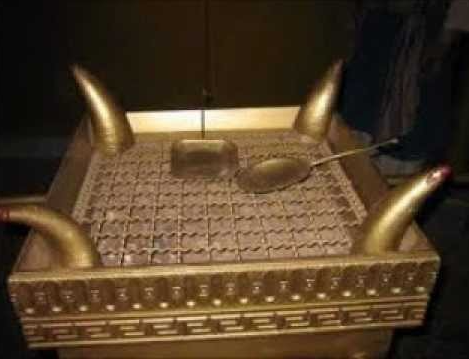
“And it happened, that when Aaron saw the altar, its horns appeared to him like the horns of a calf. He became afraid to approach it.
“Therefore, Moses said to him: ‘Strengthen your resolve (literally: “Enforce your mind/knowledge”) and draw near to the altar; do not be afraid. Perform your sin offering and your burnt offering, and atone for yourself and for the people; and perform the offering of the people and atone for them, just as the Lord has commanded.’”
— the Targum explains that Aaron was suffering from a guilty conscience: he saw the Golden Calf he had helped create at Sinai. To him, the altar looked like the very idol that had nearly led to the nation’s destruction;
— perhaps it was a Paralysis of Shame: Aaron felt unworthy; he felt that by approaching the altar, he was reminding God of his greatest failure. His fear wasn’t of the fire or the ritual, but of his own past.
— the Question is, why was the four corners embedded with four horns of a calf?