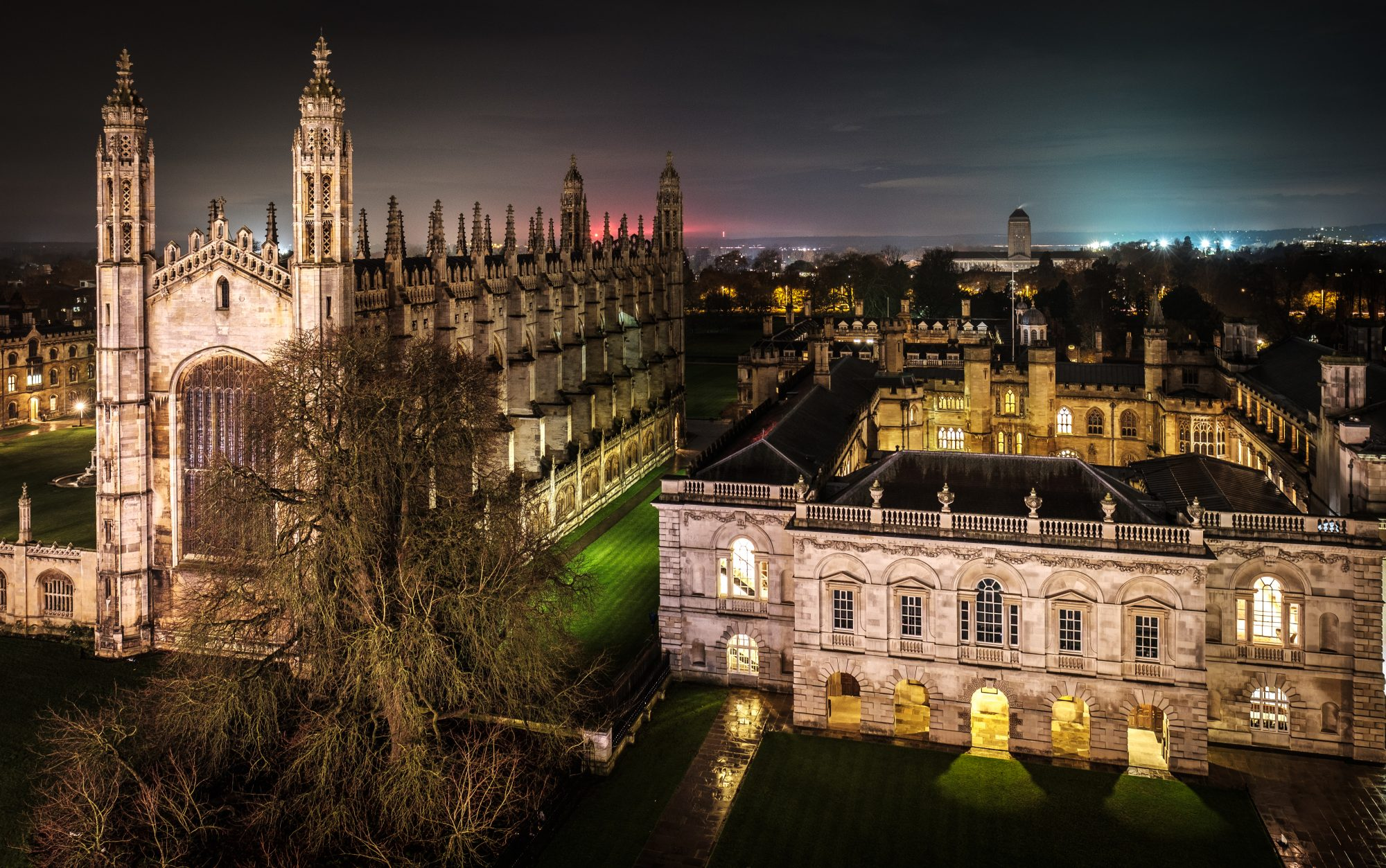
Europe made a ‘grave mistake’ on immigration

•October 17, 2023 • Leave a Comment

Europe made a ‘grave mistake’ on immigration – Kissinger

RT News • October 12, 2023 // Yahoo News

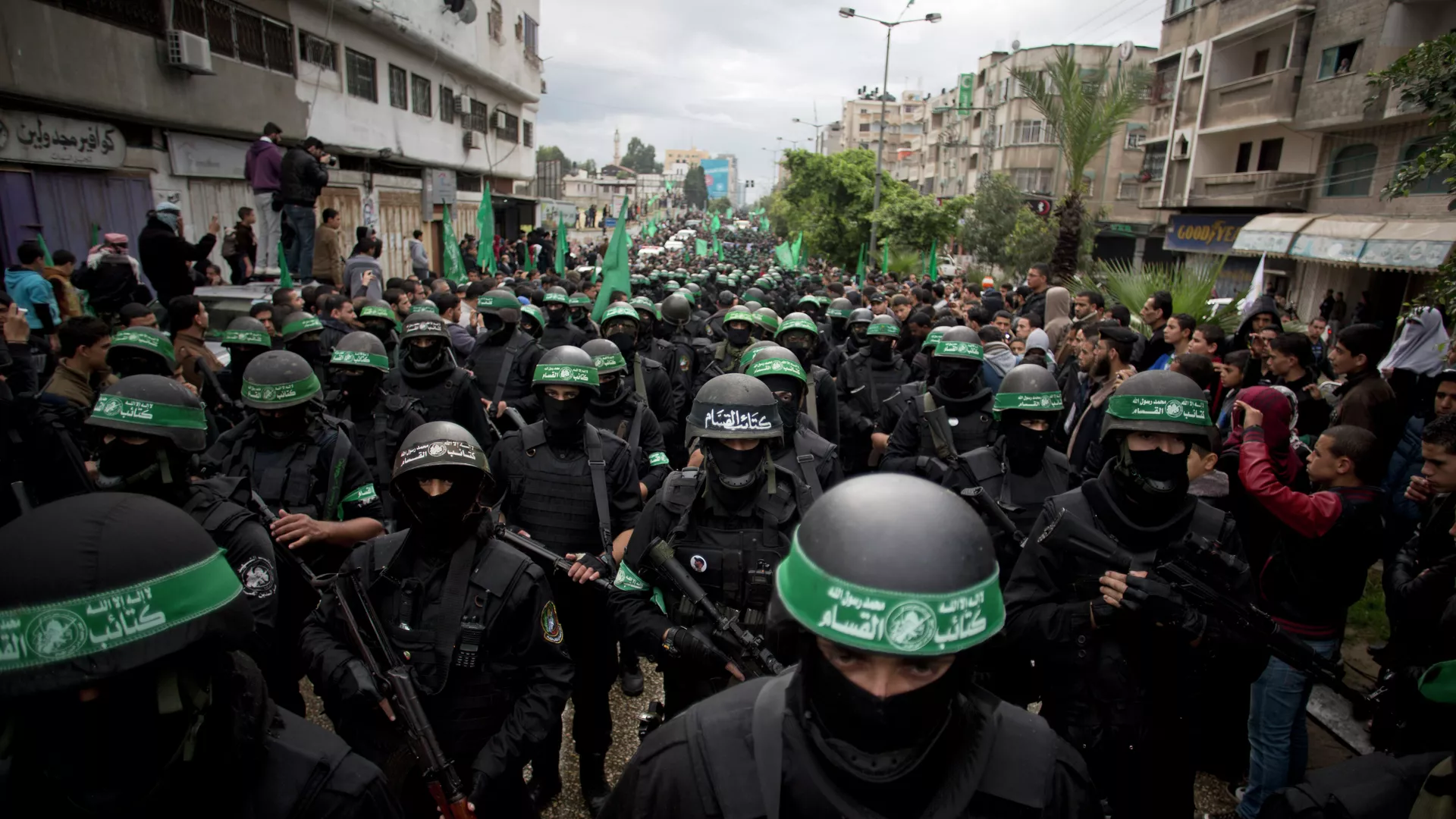
Hamas-cheering protesters pose a threat to Europeans, the former US secretary of state has suggested

Former US Secretary of State Henry Kissinger has said that nations in Europe were wrong to take in many people who are now supporting Hamas’ actions against Israel. Unless the militant group is punished for its hostage-taking, Europeans risk being targeted similarly, he warned.

In an interview published on Wednesday, Mathias Dopfner, the CEO of German media group Axel Springer, asked the veteran statesman about “Arabs celebrating” in the streets of Berlin after Hamas’ incursion into southern Israel last week.

Kissinger, a Jewish survivor of the Holocaust, said he found such gestures of support for criminal acts “painful.”

“It was a grave mistake to let in so many people of totally different cultural and religious concepts because it creates a pressure group inside each country that does that,” he noted.

Asked what Germany and the EU should do in the current situation, Kissinger said he expected “unconditional” political support for Israel – as well as military suppor if needed.

“There has to be some penalty; there has to be some serious limitation on their capability of taking this kind of action,” he said of Hamas tactics.

“I would say that every European nation has the same interest because the same attitude might erupt in the direction of Europe,” he warned.

Washington’s former top diplomat recalled peace talks that resolved the Yom Kippur War five decades ago, saying that Western nations and Israel were lucky to have an Arab leader “with a vision of the future” in Anwar Sadat, the former president of Egypt.

“I don’t think it is possible to find leaders among the Hamas group [with a similar vision],” he said, “I think Hamas should be excluded from a political role.”

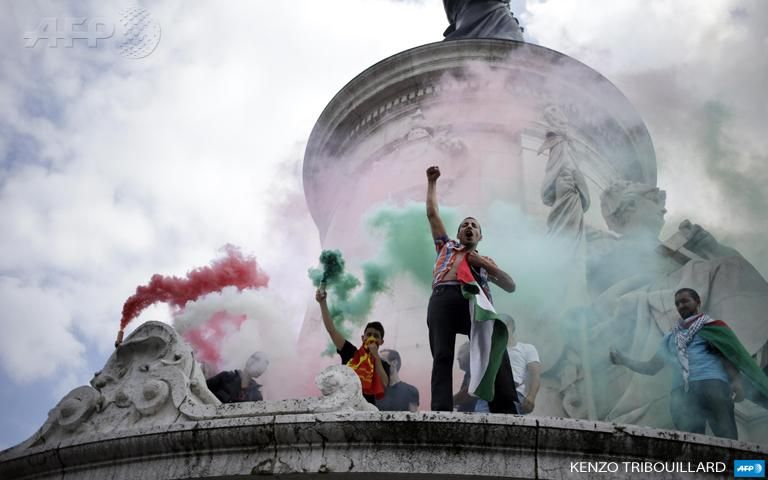
Pro-Palestinian rallies were held in multiple European cities amid the escalation in the Middle East. In Berlin, police broke down a spontaneous demonstration on Saturday, which was associated with the NGO Samidoun. The German law enforcement said the protesters posed an “immediate threat to public safety” due to “anti-Israel” chants “glorifying violence.”

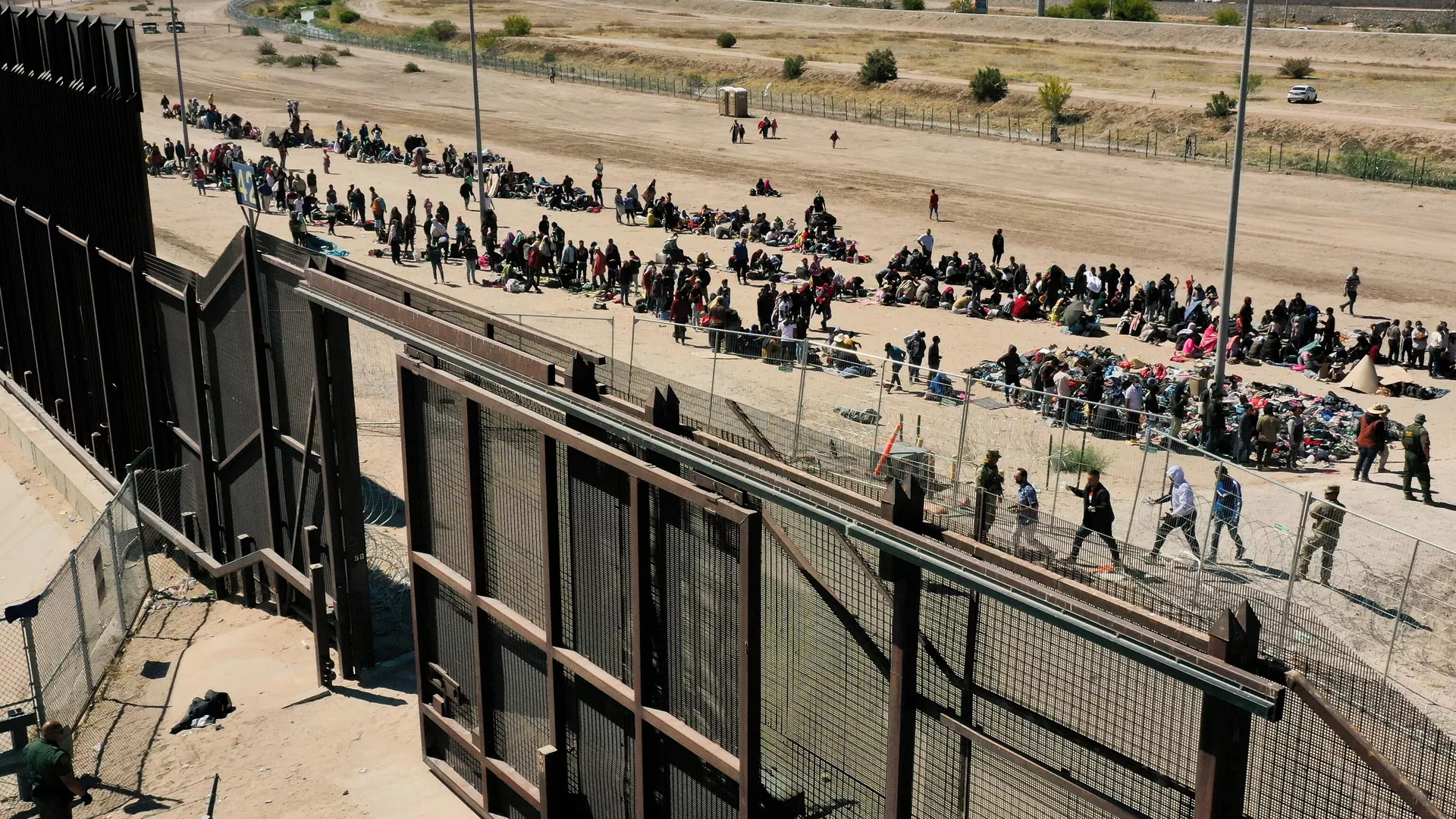
The German government was at the forefront of welcoming asylum-seekers during the 2015 influx, when some 1.3 million people arrived on the continent in just one year. Anti-migrant sentiments surged in many nations during the crisis, with some Eastern European members of the EU adopting policies to curb immigration.

A Study Index of the Life of Jesus

•October 16, 2023 • Leave a Comment

Jesus’ Life (a)

— pre-existence of the Messiah, the Son of God
— Isaiah 9 “Wonderful, Counselor, Mighty God, Prince of Peace”
— Isaiah 7 “Behold, a virgin shall conceive and bear a Son”
— “In the beginning was the Word
— and the Word was the Son of God”
— Proverbs 8 he might be “brought forth” the way Eve was

Jesus’ Life (b)

— ministers of the word; “word” means the gospel
— Luke’s letter addresses to “most excellent Theophilus”
— the lot on duty was the priest, Zacharias; he was “blameless”
— his wife, Elizabeth, barren, and both stricken in years
— the angel Gabriel appears to Zacharias and Elizabeth
— “For with God nothing shall be impossible”

Jesus’ Life (c)

— the angel Gabriel brought good news to Mary
— “Blessed art thou among women
— and blessed is the fruit of thy womb”
— “He that is mighty hath done to me great things”
— “He hath put down the mighty from their seats
— and exalted them of low degree”

Jesus’ Life (d)

— the angel Gabriel appears to Joseph
— a virgin shall bring forth a child as spoken by Isaiah
— the birth and circumcision of John the Baptist
— Zacharias’ mouth opens and he prophesied
— “to give light to them that sit in darkness
— and guide our feet into the way of peace”

Jesus’ Life (e)

— the birth of Jesus Christ
— a visit from the Shepherds
— circumcision and purification at the Temple
— the blessing of Simon
— “a light to lighten the Gentiles
— and the glory of thy people Israel”

Jesus’ Life (f)

— the genealogy of Jesus Christ
— Adam, Seth, Enos, Cainan, Mahalaleel, Jared, Enoch,
— Methuselah, Lamech, Noah, Shem, Arphaxad, Cainan, Shelah,
— Eber, Peleg, Reu, Serug, Nahor, Terah, Abraham,
— Isaac, Jacob, Judah, Perez, Hezron, Aram, Amminadab,
— Nahshon, Salmon, Boaz, Obed, Jesse, David, Nathan,
— Mattatha, Menan, Melea, Eliakim, Jonan, Joseph, Judah,
— Simeon, Levi, Matthat, Jorim, Eliezer, Jose, Er,
— Elmodam, Cosam, Addi, Melchi, Neri, Shealtiel, Zerubbabel,
— Rhesa, Joanna, Juda, Joseph, Semei, Mattathias, Maath, 
— Naggai, Esli, Nahum, Amos, Mattathias, Joseph, Janna,
— Melchi, Levi, Matthat, Heli, Joseph, Jesus 

Jesus’ Life (g)

— the blessing of prophetess Anna
— the visit of the wise men, offering gifts
— escape into Egypt before the slaughter by Herold
— return to Nazareth after being told in a dream
— at twelve kept the Passover in Jerusalem

Jesus’ Life (h)

— John baptizing in the wilderness of Judea
— a baptism of repentance for the remission of sins
— from Isaiah: “The voice of one crying in the wilderness:
— ‘Prepare ye the way of the Lord, make His paths straight’”
— John had his raiment of camel’s hair
— and a leather girdle about his loins
— and his meat was locusts and wild honey

Jesus’ Life (i)

— Jesus’ baptism at the Jordan River
— calling of his disciples
— “Behold the Lamb of God!”
— Andrew and Peter; Philip and Nathanael
— first miracle: turning water into wine
— fasting, no food nor water; and tempted after forty days

Jesus’ Life (j)

— Jesus went up to Jerusalem to keep the Jews’ Passover
— and he drove them all those trading out of the Temple
— “Destroy this temple, and in three days I will raise it up”
— Nicodemus, a Pharisees, came at Night at see him
— Jesus and his disciples baptized others
— encounters with the Samaritan woman and her kinsmen

Jesus’ Life (k)

— Jesus back in Galilee and Nazareth
— “This day is this scripture fulfilled in your ears”
— in Capernaum, he healed a man with an unclean spirit
— “Thou art Christ the Son of God”
— miracle of a big catch by the Lake of Gennesaret

Jesus’ Life (l)

— the Sermon on the Mount
— “Ye are the light and salt of the earth”
— how to pray and how to fast
— “Forgive, and ye shall be forgiven”
— “Thrive through the Narrow Gate”
— “Beware of False Prophets”

Jesus’ Life (m)

— “If Thou wilt, Thou canst make me clean”
— “Son, thy sins are forgiven thee”
— “the Son of Man is Lord even of the Sabbath”
— he ordained the twelve that they should go forth to preach
— and have power to heal sicknesses and cast out devils
— a woman in the city, brought an alabaster box of ointment
— and kissed his feet and anointed them with the ointment

Jesus’ Life (n)

— healing on the Sabbath near a pool called Bethesda
— “My Father worketh hitherto, and I work”
— and he spoke many things unto them in parables
— Why Speaking in Parables? so that seeing, they see not
— and hearing, they hear not, neither do they understand
— Jesus rebukes the Storm; even the winds of the sea obey Him!
— healing of Jairus’ Daughter and a woman with hemorrhage

Jesus’ Life (o)

— and from the twelve he send them forth two by two
— and them power over unclean spirits and cast out devils
— not Gentiles, but to the lost sheep of the house of Israel
— to preach, saying, ‘The Kingdom of Heaven is at hand’
— “Think not that I am come to send peace on earth
— I came not to send peace, but a sword”
— feeding the 5000, walking on water and the Tranfiguration

Jesus’ Life (p)

— a woman caught in adultery; “Go and sin no more”
— Ye of Abraham’s Seed;
— “Verily, I say unto you, before Abraham was, I am!”
— the Pharisees: “Are we blind also?”
— the true Shepherd; one that giveth his life for the sheep
— Offending the Little Ones; trangressions among brothers
— sending out two by two of the Seventy into every city
— the Good Samaritans; Martha and Mary; Power of Beelzebub?
— sign of Jonah; “I Come to Cast Fire” on the fig tree

Jesus’ Life (q)

— confronting the Pharisees; prepare to bear the Cross
— the lost sheep; the prodical son; serving two masters
— Lazarus and the rich man; only one gave thanks
— as in the Days of Noah; they ate, they drank,
— they married and were given in marriage
— raising of Lazarus; plotting his death; and to be betrayed
— Zacchaeus; and parable of the pounds

Jesus’ Life (r)

— anointed by Mary before entering Jerusalem
— he weeps for the Holy City; a Voice from Heaven
— more parables: a landlord afar; a wedding for his son
— a man not with the right garment
— the Sadducees, who do not believe life after death

Jesus’ Life (s)

— “the Scribes and Pharisees sit in Moses’ seat”
— “Woe unto you, Scribes and Pharisees, hypocrites!”
— Ye fools and blind! Blind Guides
— “Tell us, when shall be the sign of thy coming
— and of the end of the world?”
— “All these are the beginning of sorrows”
— the ten virgins; the ten talents
— the Sheep on his right and the Goats on the left

Jesus’ Life (t)

— two days before the Passover; anointed in Bethany
— 30 pieces of silver; preparing for the Passover
— when evening had come, he sat down with the twelve
— when supper being ended
— the devil entered into the heart of Judas Iscariot
— “If ye love Me, keep My commandments”
— they sang a hymn and left

Jesus’ Life (u)

— “I am the true vine, and My Father is the husbandman
— Ye are My friends if ye do whatsoever I command you”
— in Gethsemene to pray; praying for three hours
— “I have given them thy Word, and the world hath hated them
— because they are not of the world, even as I am not of the world”
— Sanctify them through Thy truth: Thy Word is truth

Jesus’ Life (v)

— and Judas also, who betrayed Him, led the way
— now the chief priests and elders and all the council
— sought false witness against Jesus to put Him to death
— and as soon as it was day, the elders, the chief priests
— and scribes came together and led him to their council
— then the whole multitude arose and led him unto Pilate
— then said Pilate to them, “I find no fault in this man”

Jesus’ Life (vv)

— but Pilate therefore took Jesus and scourged him
— and they cried out, saying, “Crucify him! Crucify him!”
— at sixth hour, Pilate said unto them, “Behold your king!”
— they cried out, “Away with him! Crucify him!”
— the next morning, Simon bears the cross for him
— the at the third hour they crucified him on the cross
— at the ninth hour Jesus cried out with a loud voice,
— saying, “Eloi, Eloi, lama sabachthani?” which is
— “My God, My God, why hast Thou forsaken Me?”
— after this, Joseph of Arimathea, being a disciple of Jesus,
— besought Pilate that he might take away the body for burial

Jesus’ Life (x)

— the next day, a High Sabbath, the day after Preparation
— the chief priests and Pharisees came together unto Pilate
— as it began to dawn toward the first day of the week
— Mary and the other ladies came to see the sepulcher
— “Touch Me not, for I am not yet ascended to My Father”
— two of them were going to a village called Emmaus

Jesus’ Life (y)

— Peter said to other disciples, “I am going fishing” 
— Jesus appeared to the disciples at the Sea of Tiberias
— the net caught great fishes, a hundred and fifty three
— and He said unto Peter, “Feed My sheep”
— to them He showed Himself by them forty days
— when He had spoken these things, while they beheld
— He was taken up and a cloud received Him out of their sight

What is the Best Bible Translation? Changing the Word

Total Onslaught, Episode 13 by Walter Veith

Dublin Review refers to: Dublin Review (Catholic), published in London 1836–1969

Will the US Be the Next Israel?

•October 15, 2023 • Leave a Comment

Will the United States Be the Next Israel?

Politico by Daniel DREZNER • October 12, 2023

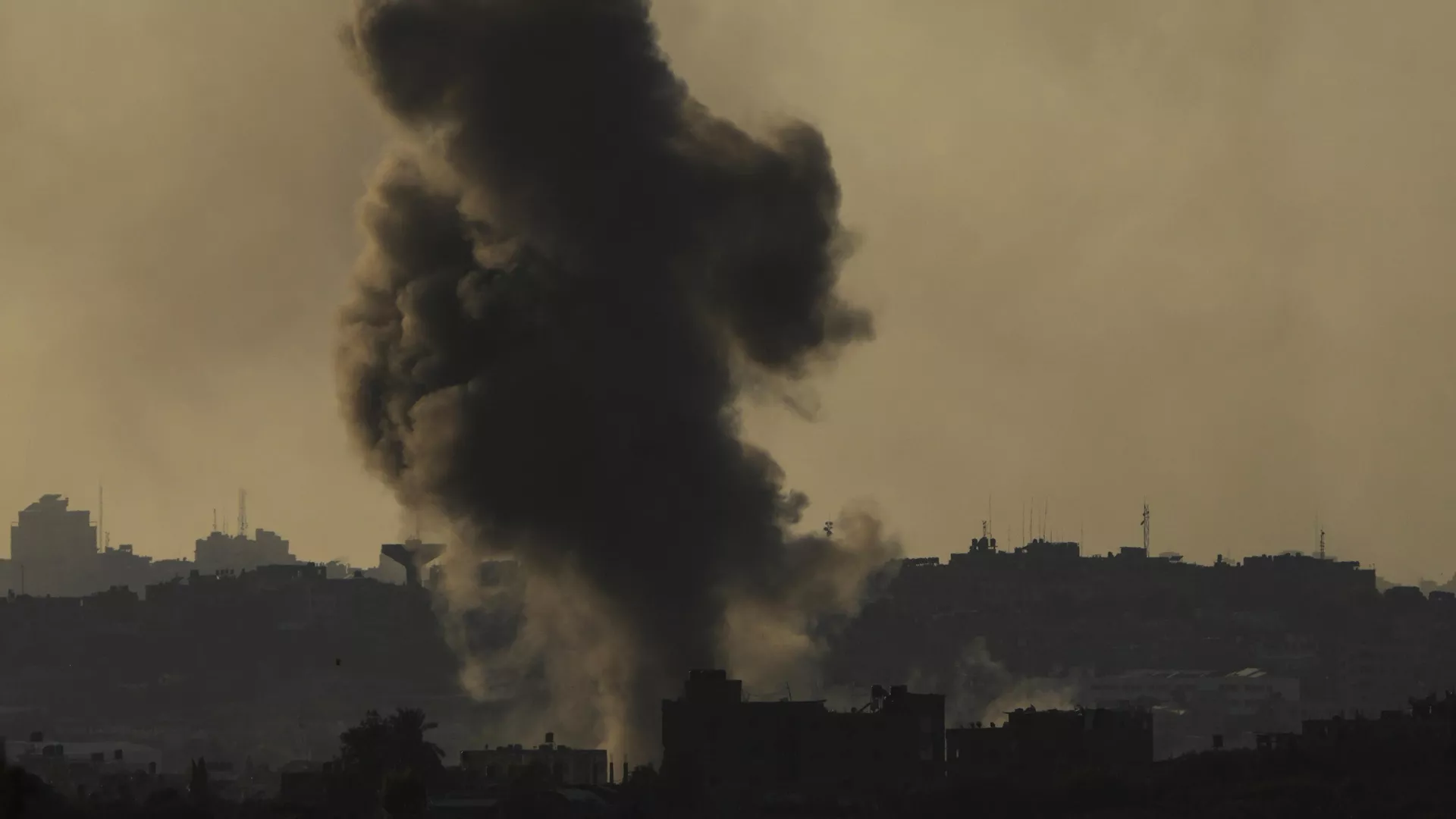
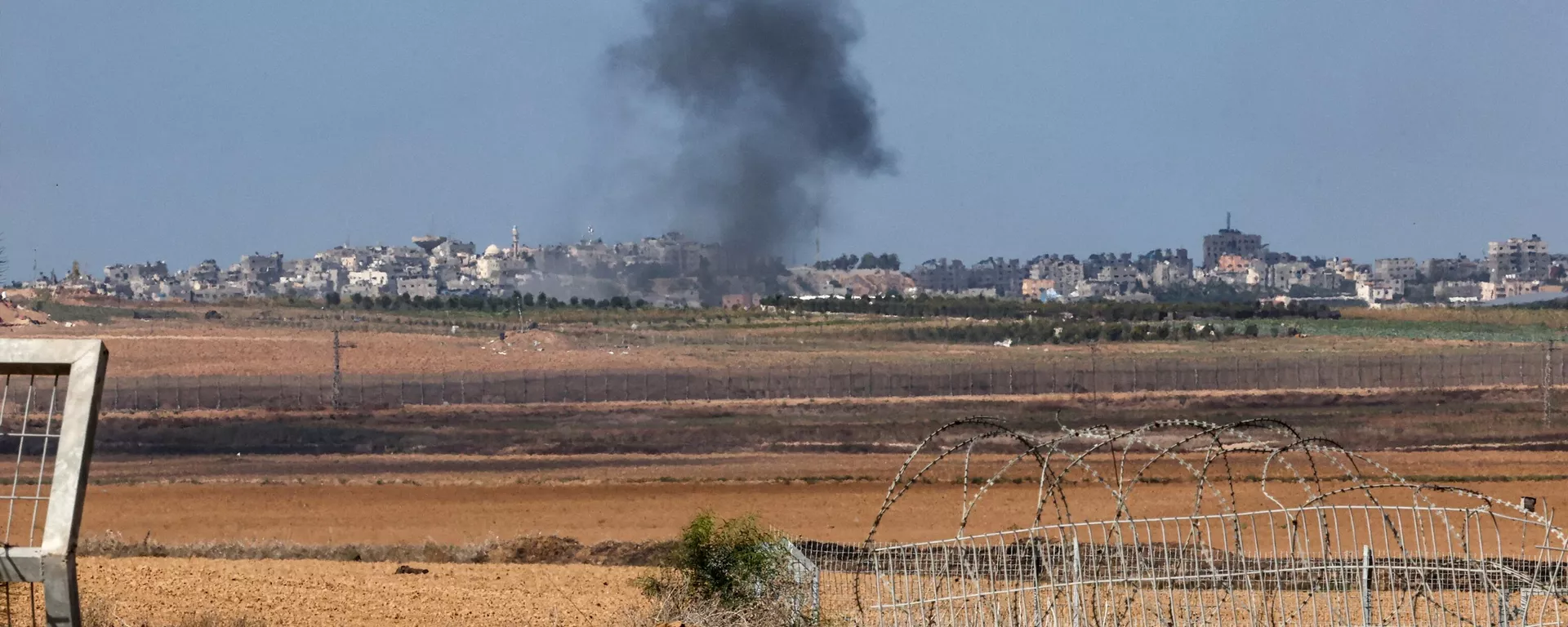
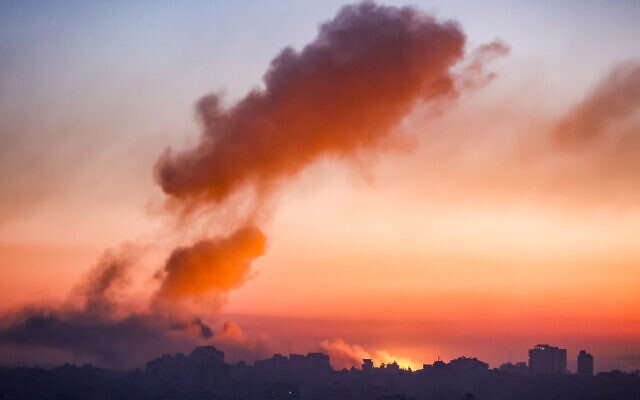
War in the Middle East is a warning of what can happen when politicians put their own ends above national security.Smoke rises after an Israeli airstrike in Gaza City, on October 13, 2023. (Atia Mohammed/Flash90)

Americans are watching the Hamas attacks on Israel and the ensuing war with horror, mourning the death of innocent civilians, thinking about their family and friends, and worrying that the violence in Gaza will trigger an even more violent conflagration in the Greater Middle East.

There’s another reason Americans should be worried.

What’s happening in Israel now is a disturbing example of what can happen when elected officials use partisan and personal motivations to warp national security. For years, Republicans in Congress have attempted to sabotage what they call the “Deep State.”

This includes placing holds on political nominees and castigating diplomats, officers and analysts employed in the government as captives to “Big Woke.” They might see it as political theater, necessary to boosting profiles and fundraising. But as this week shows, there can be a price.

Reporting suggests that the hardline elements of Benjamin Netanyahu’s governing coalition were openly hostile to warnings from the Israeli Defense Forces (IDF) and security agency Shin Bet that settler violence would increase the security threat to Israel.

One Likud member of parliament complained: “The ideology of the left has reached the top echelons of the Shin Bet. The deep state has infiltrated the leadership of the Shin Bet and the IDF.” Another Netanyahu coalition member stated, “We see there is confusion as to who is an enemy.”

Hamas’ surprise attack has highlighted further national security dysfunction within the Netanyahu government. There are confirmed reports that Egyptian intelligence directly warned Netanyahu that “something fierce will happen from Gaza.”

Allegedly, Netanyahu was indifferent to the warning, explaining that the IDF was “swamped” with terrorism threats in the West Bank. Israeli critics have stated that his coalition repeatedly ignored earlier warnings from Arab allies regarding rising levels of Palestinian frustration.

Haaretz editorialized this week that, “a prime minister indicted in three corruption cases cannot look after state affairs, as national interests will necessarily be subordinate to extricating him from a possible conviction and jail time.”

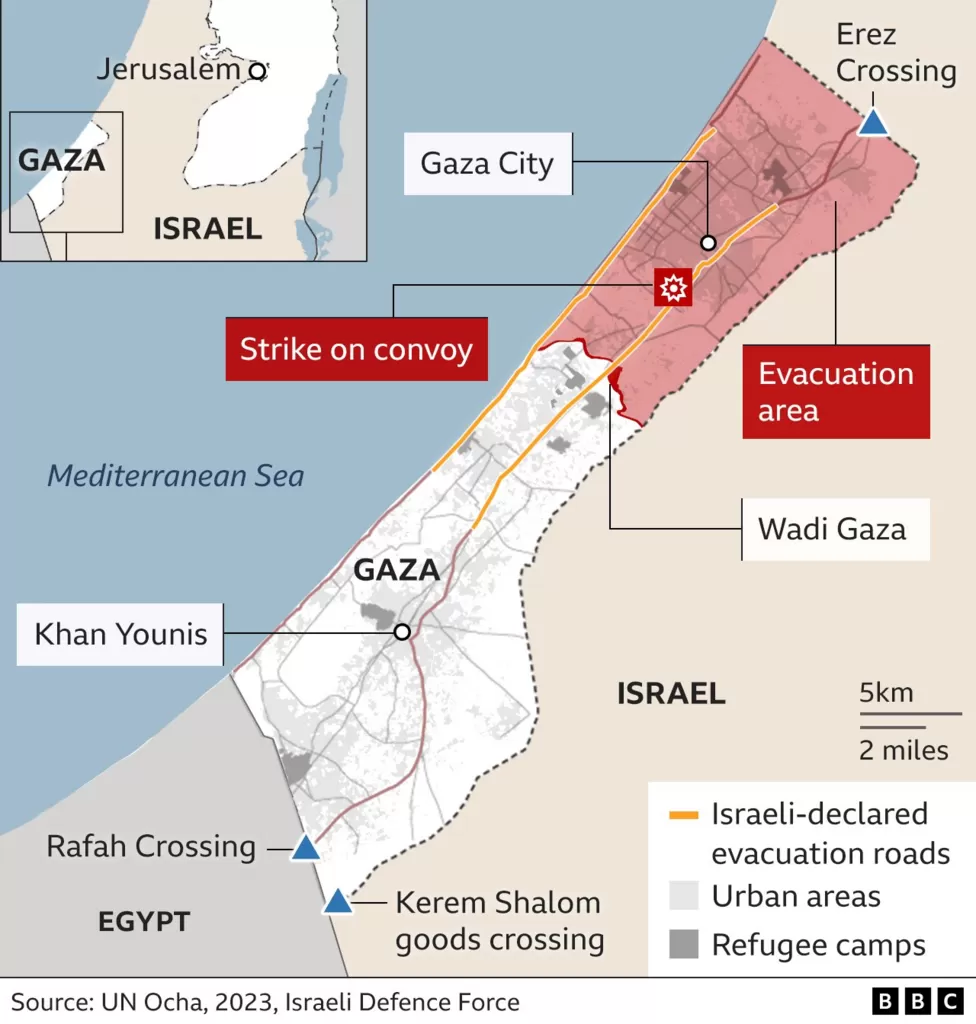
Israel is paying a steep price for its national security dysfunction right now in the form of hundreds deada planned siege of Gaza and an imminent ground invasion involving hundreds of thousands of Israeli soldiers that may accomplish little more than producing more bloodshed and grievance.

Here’s my question: Is Israel a harbinger for the United States? Are we getting a sneak preview of what will happen if Republicans succeed in their effort to exercise more control over the national security bureaucracy?


A Psalm 83 Prophecy?

•October 15, 2023 • Leave a Comment

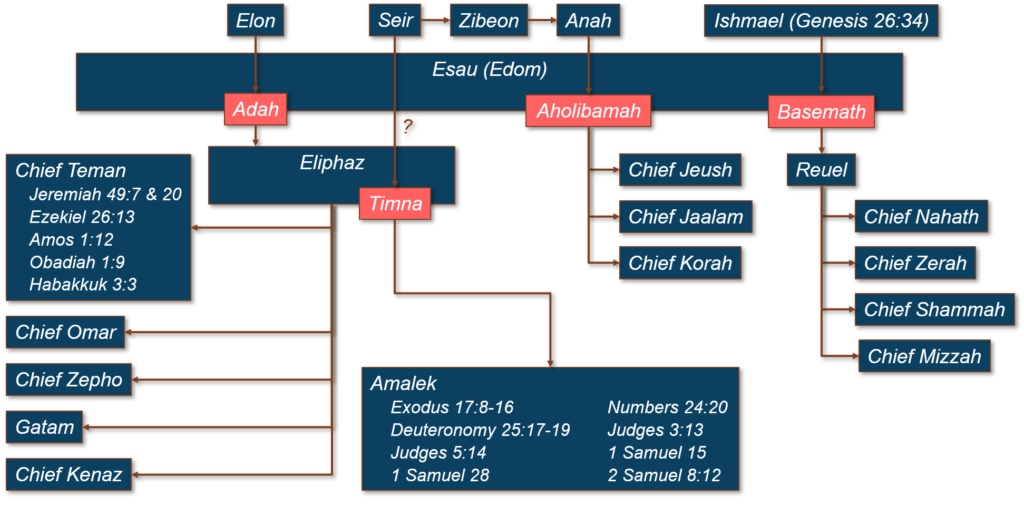
Psalm 83 tells us the Ishmaelites, Edom, Ammon, Amalek, Hagarenes, Tyre, Gebal and the Philistines wanting to attack Israel; for they have said, “Come, and let us cut them off from being a nation, that the name of Israel may be no more in remembrance.”

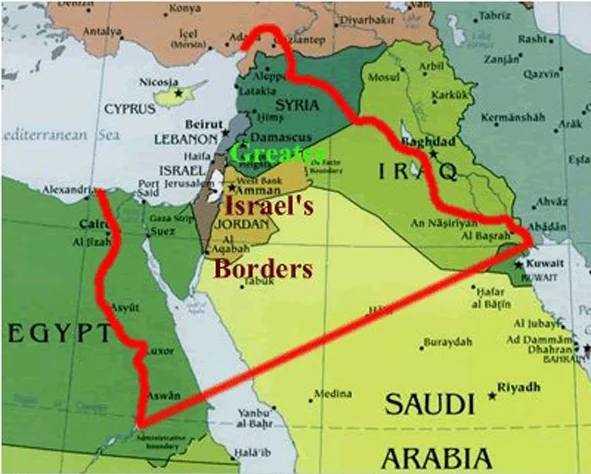
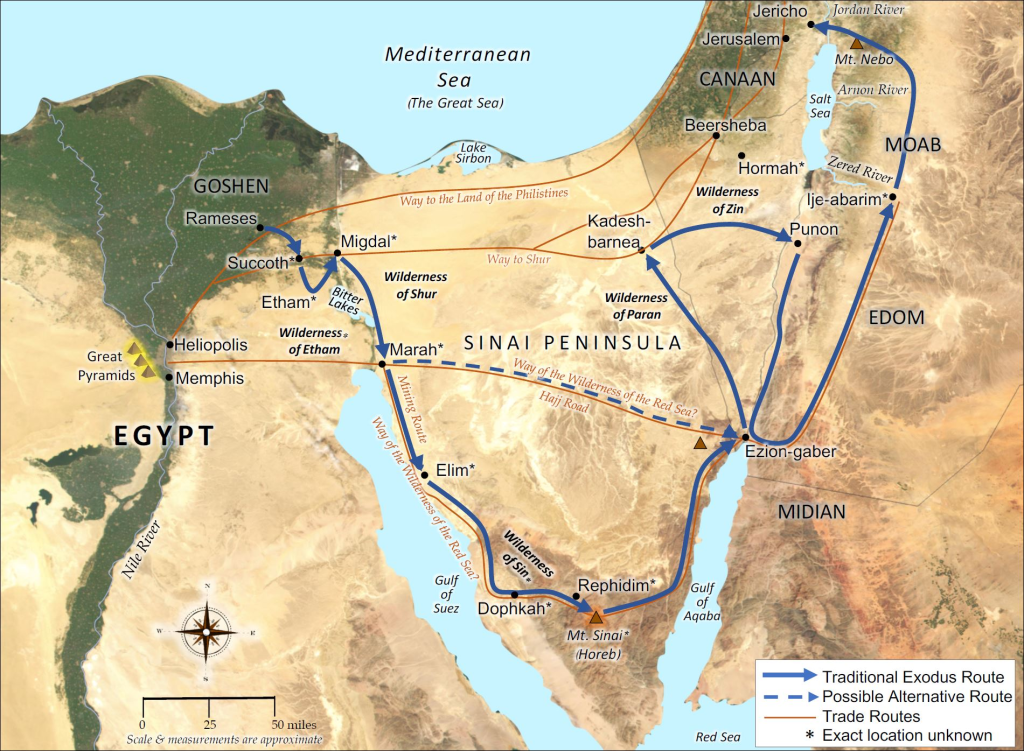
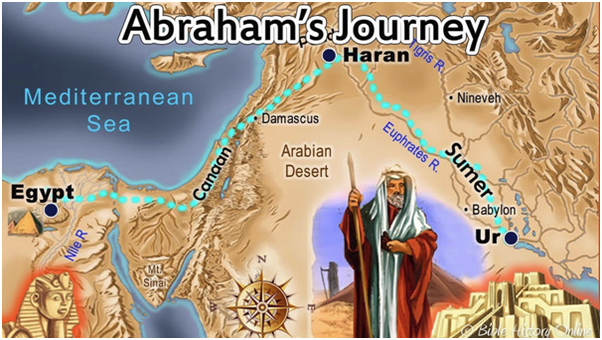
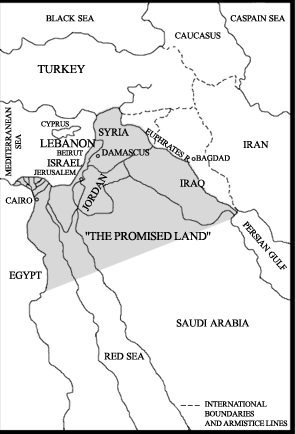
The Promise Land between two Great Rivers; the Nile and Euphrates

The most important question facing this Study is whether Psalm 83 is a prophecy of the past or is it one yet to come.

There are three possibilities: (1) of the Past, during David’s time; (2) of a “limited” prophecy, during the fall of the Ten tribes and carried away by the Assyrians; (3) of the future, still yet in the endtime future.

(1) If it was of the past that could had happened during the captivity of the northern Kingdom of Israel, when they were carried into captivity by the Assyrians. Psalm 83 fits perfectly with I Chronicles 18-19 where David’s army was in a major war with a large alliance that included Mesopotamians, Aramaeans, Ammonites and others.

The dominant power of Mesopotamia at that time was Assyria, or Asshur. All these nations are named in Psalm 83 as being in a war against David which wanted to wipe out the Israelites. Proponents further says there is no reference to (a) a latter day; (b) endtime or any time frame further into the future. Nothing in Psalm 83 identifies it as a latter day prophecy. 

(2) Perhaps it might have being a “limited” prophecy: that is, it was a prophecy some two hundred years later when phases of the Ten Tribes were exiled, carried away by the Assyrians, the last, by Sennaherib, was in 721 BC. These Ten Tribes are the tribes of Reuben, Simeon, Dan, Naphtali, Gad, Asher, Issachar, Zebulun, Manasseh and Ephraim.

The scriptural basis for the idea of the Lost Tribes is II Kings 17:6: “In the ninth year of Hoshea, the king of Assyria took Samaria, and carried Israel away unto Assyria, and placed them in Halah, and in Habor, on the river of Gozan, and in the cities of the Medes.”

(3) If this is of the future, this may be another rise of a group of Israel enemies at the endtime. Some assert that it might have an unstated latter day application because some true latter-day prophecies mention the number “ten” (as in Daniel 2’s mention of ten toes and the “seven heads and ten horns” of Revelation 17).

They claim that the ancient warlike Assyrians migrated into Europe along with many other Semitic peoples when the Parthian Empire fell and ultimately became the warlike Prussians. Prussia ceased to exist after World War II but dispersed and scattered westward throughout Germany to escape the Russian armies that occupied the former lands occupied by Prussia.

A strong case in their favor is found in Isaiah 10:

5 “Woe to the Assyrian, the rod of Mine anger, and the staff in their hand is Mine indignation! 6 I will send him against a hypocritical nation, and against the people of My wrath will I give him a charge, to take the spoil and to take the prey, and to tread them down like the mire of the streets. 7 Yet he meaneth not so, neither doth his heart think so; but it is in his heart to destroy and cut off nations not a few. Isaiah 10:5-7

Psalm 83:1 Keep Thou not silence, O God; hold not Thy peace, and be not still, O God.

2 For lo, Thine enemies make a tumult, and they that hate Thee have lifted up the head.

3 They have taken crafty counsel against Thy people, and consulted against Thy hidden ones.

4 They have said, “Come, and let us cut them off from being a nation, that the name of Israel may be no more in remembrance.”

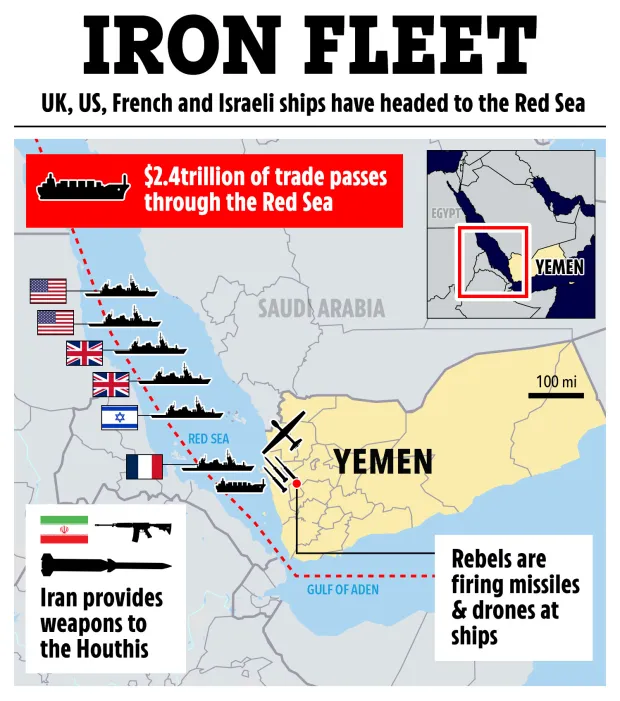
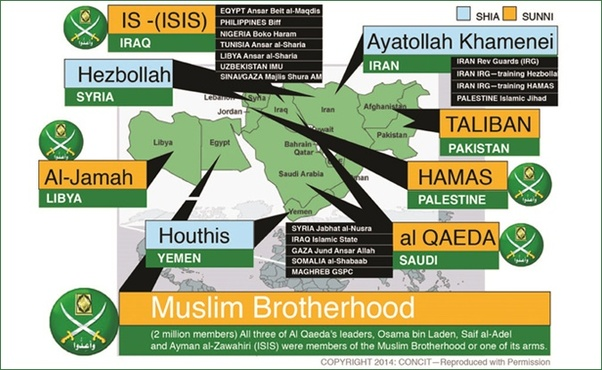
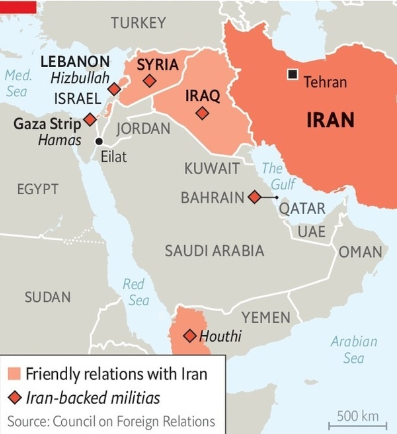
Today, a country like Iran (or its proxies: Hezbollah, Hamas, the Houties) would have said this, to drive the state of Israel into the sea; but “the head of the snake” Iran, or Persia or Elam by its ancient name, is conspiciously not listed among these nations wanting to to put an end to Israel.

Its absence speaks volumn! Nevertheless this could be a type that could re-emerge, in the form of “Gog and Magog” in Ezekiel 38-39 and again in Revelation 20:8.

5 For they have consulted together with one accord; they are confederate against Thee:

6 the tabernacles of Edom and the Ishmaelites, of Moab and the Hagarites, — the posterity of Edom is a long and complex subject. Needless to say, they migrated to Spain and then into the New World, and are further analysed in (1) Obadiah; and (2) A Sword from the South!

— second, the tent of Edom; this prophecy of Edom in Psalm 83 in the Old World could occur at the same time as the Sword and Fire emerge from the South in the New World: A Sword from the South!; that is, these two prophecies could run parallel to each other;

— the Moabites shouldn’t be distressed but when they pledged “Come, and let us cut them off from being a nation, that the name of Israel may be no more in remembrance,” they themselves lost the right to their name and land; see God’s earlier commitment till they lost it:

“And the Lord said unto me, ‘Distress not the Moabites, neither contend with them in battle; for I will not give thee of their land for a possession, because I have given Ar unto the children of Lot for a possession.’ Deuteronomy 2:8-9

And when we passed by from our brethren the children of Esau, who dwelt in Seir, through the way of the plain from Elath and from Eziongaber, we turned and passed by the way of the Wilderness of Moab;

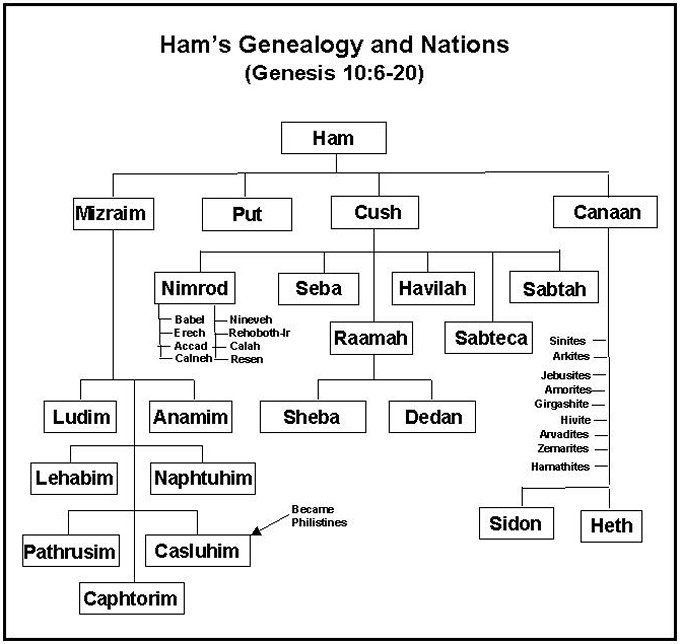
— many obervers believe the brown Semites of Saudi Arabia spring from lshmael; and Hagar, the Egyptian handmaid of Abraham’s wife Sarai (as an interesting aside, Hagar means flight; the flight of Muhammed to Medina is known as the Hagira); they are descended from the Mizraimites (Genesis 16:1-4, 15).

— the Ishmaelites, the Moabites and the Hagarite remained where they were, but the posterity of Esau or the Edomites later moved to Spain (except, perhaps, some of the Amalekites, who could have remained there and intermarried with the local inhabitants, especially the Philistines, over the centuries to be known as the Palestianians we come to know today), and many then spread over to Mexico and South America where they are today; for more about the posterity of Esau or the Edomites, see more in Obadiah

7 Gebal and Ammon and Amalek, the Philistines with the inhabitants of Tyre. — the inhabitants of Tyre; this parallels the destruction of Damascus in Isaiah 17; as commented above, some of the Amalekites could have remained there and intermarried with the the Philistines, and over the centuries became known as the Palestianians today.

8 Assyria also has joined with them; they have helped the children of Lot. Selah — the Assyrians are listed among them, and therefore are not likely the Germans as some believe;

9 Do unto them as unto the Midianites, as to Sisera, as to Jabin at the Brook of Kishon,

— the ancient tribes and countries mentioned in Psalm 83 are:

— notice that these tribes and countries mentioned above are largely the land bound by “between the rivers” that is, within the bound of God’s given land allocated from God to Abraham and then to the full House of Jacob (Genesis 15); this could be considered as the Inner Ring (in contrast to “Gog and Magog” known as the Outer Ring);

of Edom and the Ishmaelites, of Moab and the Hagarites (verse 6); Gebal and Ammon and Amalek, the Philistines with the inhabitants of Tyre (verse 7); Assyria also has joined with them; they have helped the children of Lot (verse 8); the Midianites, as to Sisera, as to Jabin at the Brook of Kishon (verse 9); their nobles like Oreb and like Zeeb, yea, all their princes as Zebah and as Zalmunna (verse 11);

10 who perished at Endor; they became as dung for the earth.

11 Make their nobles like Oreb and like Zeeb, yea, all their princes as Zebah and as Zalmunna,

12 who said, “Let us take to ourselves the houses of God in possession.”

Iran (or Persia or Elam) is not anywhere mentioned in Psalm 83 and is not bound “between the two great rivers,” but its proxies are

13 O my God, make them like a wheel, as the stubble before the wind.

14 As the fire burneth a wood, and as the flame setteth the mountains on fire,

15 so persecute them with Thy tempest, and make them afraid with Thy storm.

16 Fill their faces with shame, that they may seek Thy name, O Lord.

17 Let them be confounded and troubled for ever; yea, let them be put to shame and perish,

18 that men may know that Thou, whose name alone is Jehovah, art the Most High over all the earth.

Overall, a strong case could be for the “limited” prophecy. Foremost is that Iran “the head of the snake,” is not in the picture, which is inconceivable in today’s political environment; though many of its proxies (Hamas, Houthis, Hezbollah and other militias in Syria and Iraq) are there within the Inner Ring.

Second, no one could be cetain who the Assyrians are; some claim they are the Germans, but Germany hasn’t displayed any ambition to conquer Jerusalem; unless they change dramatically.

And finally, the book of Psalms, unlike Isaiah, Jeremiah, Ezekiel or Daniel, is not known to be a prophetic book for the endtime. Notwithstanding, this prophecy could be a type in the form of “Gog and Magog” to re-emerge again and again at the endtime.

Prophet Elon Musk: ‘Civil War’ in Europe

•October 14, 2023 • Leave a Comment

Prophet Musk predicts ‘civil war’ in Europe!

RT News • October 11, 2023

The billionaire seer has endorsed the notion that EU immigration policy is suicidal

Prophet Elon Musk has suggested that the European Union may face the prospect of civil war due to its immigrant-welcoming policies. Two weeks ago, he visited the US southern border, wading into the bitter debate over immigration in his adopted home country.

“If current trends continue, civil war in Europe is inevitable,” he claimed in a post on X (formerly Twitter) on Wednesday.

Clashes at banned pro-Palestinian during protest in Paris

Musk was responding to a thread by Moscow-born British satirist and political commentator Konstantin Kisin. He denounced what he called “people celebrating rape and murder by a proscribed terrorist organisation as the police stand and watch in major European cities.”

Kisin was referring to pro-Palestinian demonstrations in the wake of the deadly incursion by Hamas into southern Israel last week. Some residents of European nations focused on condemning Israel for mistreatment of people in the West Bank and Gaza rather than condemning the killings and kidnappings of Israelis by the Palestinian militant movement.

Demonstrators holding flags of Palestine during a rally in Berlin

“We import more people who think this way every day,” Kisin noted, decrying the lack of “a sensible immigration policy” screening for people with “cultural values that match our own.”

He was presumably referring to the EU rather than the UK, where Conservative governments have ramped up immigration controls since Brexit.

A pro-Palestinian demonstration in Milan, Italy, on October 10, 2023

Kisin concluded that British author Douglas Murray was correct when he argued that European civilization was committing suicide in his 2017 book ‘The Strange Death of Europe’.

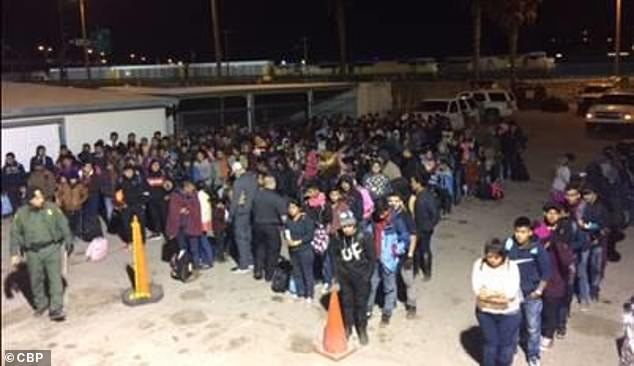
Immigration is a hot-button issue in the US as well, as critics of the administration of President Joe Biden accuse him of turning a blind eye to illegal border crossings for the sake of ideological and political goals. Musk weighed in on the debate in late September, when he visited the border city of Eagle Pass in Texas.

Pro-Palestinian supporters marched through downtown Sydney on Monday evening to the city’s iconic Opera House

The US should “smooth out legal immigration and stop a flow of people that is of such magnitude that we’re leading to a collapse of social services,” Musk urged at the time. He declared himself “extremely pro-immigrant,” citing his own status as a naturalized citizen.

And right on cue to what Prophet Elon Musk has said, the Palestinian Hamas terror group known as Hamas has called on Muslims worldwide to stage a “Day of Jihad,” or holy war, on Friday, October 13th — coincidentally, a date that resonates with horror movies and the upcoming Halloween holiday.

“We declare next Friday, ‘The Friday of the Al-Aqsa Flood,’ as a day of general mobilization in our Arab and Islamic world and among the free people of the world. It is a day to rally support, offer aid, and participate actively.

“It is a day to expose the crimes of the occupation, isolate it, and foil all its aggressive schemes. It is a day to demonstrate our love for Palestine, Jerusalem, and Al-Aqsa.

“It is a day for sacrifice, heroism, and dedication, and to earn the honor of defending the first Qibla of Muslims, the third holiest mosque, and the ascension of the trusted Messenger.”

5784 – Timeline of Jewish History

•October 14, 2023 • Leave a Comment

This Hebrew year starts September 16th 2023. A Hebrew year is 355 days long. On this day, September 16, 2023, using God’s lunar calendar, the Biblical year 5784 begins.

On the race toward the beginning of the seventh millenium, the Western calendar is already off by 24 years whereas the Jewish Calendar has still 216 years to run. Thus giving rise to a difference of 240 year! The Question is, where are the discrepancies?

And this year, according to the Jews, is 5784.


Creation of Heaven and Earth, and Adam and Eve

SECULAR YEARJEWISH YEAREVENT IN HISTORY
-37601Creation of Adam and Eve
-3631130Seth (son of Adam) was born
-3526235Enosh (son of Seth) was born
-3436325Keynan (son of Enosh) was born
-3366395Mehalalel (son of Keynan) was born
-3301460Yered (son of Mehalalel) was born
-3139622Chanoch (son of Yered) was born
-3074687Metushelach (son of Chanoch) was born
-2887874Lemech II (son of Metushelach) was born
-2831930Adam died
-27051056Noah (son of Lemech II) was born
-22251536Noah began the construction of the ark
-22051556Yaphet (son of Noah) was born
-22041557Cham (son of Noah) was born
-22031558Shem (son of Noah) was born
-21051656Metushelach died
-21051656The Great Flood covered the earth
-21031658Arpachshad (son of Shem) was born
-20681693Shelach (son of Arpachshad) born
-20381723Eber (son of Shelach) was born
-20041757Peleg (son of Eber) was born
-19741787Re’u (son of Peleg) was born
-19421819Serug (son of Re’u) was born
-19121849Nachor I (son of Serug) was born
-18831878Terah (son of Nachor I) was born

The Forefathers

SECULAR YEARJEWISH YEAREVENT IN HISTORY
-18131948Abraham (son of Terah) was born
-18031958Sarah (daughter of Haran) was born
-17881973Abraham married Sarah
-17651996Dispersion from Babel after building the tower
-17612000Terah left Ur Kasdim with his family
-17552006Noah died
-17432018The covenant (Brit Bein Habetarim) with Abraham
-17382023Abraham settled in Canaan
-17272034Ishmael (son of Abraham) was born
-17132048Abraham circumcised himself and Ishmael
-17132048Sodom and Gomorrah were destroyed
-17132048Isaac (son of Abraham) was born
-16772084The Akeda: Isaac brought on the altar by Abraham
-16772084Sarah died
-16532108Jacob and Esau were born
-16382123Abraham died
-16032158Shem (son of Noah) died
-15902171Isaac blessed Jacob instead of Esau
-15762185Jacob went to Haran
-15742187Eber (great-grandson of Shem) died
-15692192Jacob married Leah and Rachel
-15662195Levi (son of Jacob and Leah) was born
-15622199Joseph, son of Jacob and Rachel, was born
-15562205Jacob left Haran
-15532208Benjamin was born
-15452216Joseph was sold
-15332228Isaac died
-15322229Joseph became viceroy of Egypt
-15262235Kehot (son of Levi) was born
-15232238Jacob (and his family) went to Egypt

Living in Egypt

SECULAR YEARJEWISH YEAREVENT IN HISTORY
-15062255Jacob died
-14292332After Levi died, the enslavement in Egypt began
-13932368Moses was born
-13552406Joshua was born
-13142447Moses encountered the burning bush
-13132448The Jewish nation left Egypt

Traveling Through the Desert

SECULAR YEARJEWISH YEAREVENT IN HISTORY
-13132448The Jewish nation crossed the Red Sea
-13132448At Mount Sinai and the giving of the Torah
-13132448Moses broke the Tablets
-13122449Moshe came down Mount Sinai with the second Tablets
-13122449The Tabernacle was erected
-13122449The spies returned from Canaan with bad news
-12742487Aharon and Miriam died
-12732488Moses died

Judges and Early Prophets

SECULAR YEARJEWISH YEAREVENT IN HISTORY
-12732488The Jews crossed the Jordan into Canaan
-12582503The partition of the Land of Israel completed
-12452516Joshua died
-12282533Rule of Judges began with Othniel ben Kenaz
-11882573Ehud ben Gerah became leader
-11072654Shamgar ben Anath died
-11072654Deborah became leader
-10672694Gideon became leader
-10272734Abimelech, son of Gideon, became leader
-10242737Tola, son of Pua, became leader
-10032758Jair, the Gileadite, became leader
-9822779Jephtah (HaGil’adi) became leader
-9692792Elon (HaZevuloni) became leader
-9592802Abdon ben Hillel became leader
-9512810Samson became leader
-9312830Eli the Kohen became leader
-9072854David was born
-8902871Samuel became leader

Kings and the First Holy Temple

SECULAR YEARJEWISH YEAREVENT IN HISTORY
-8792882Saul was appointed king
-8772884David became king of Judah in Hebron
-8692892David became king of Israel in Jerusalem
-8372924Solomon became king
-8332928The building of the first Beit Hamikdash commenced
-8272935The first Beit Hamikdash was completed
-7972964Solomon died and his kingdom was divided
-7972964Rehabeam (son of Solomon) became king of Judah
-7972964Jeroboam ben Nevat became king over Israel
-7183043Elijah went up in a chariot of fire
-6773084Joash renovated the Beit Hamikdash
-6193142Isaiah began his prophecies
-5743187The first two of the Ten Tribes were exiled
-5663195Another two of the Ten Tribes were exiled
-5623199Hezekiah became king of Judah
-5563205The last of the Ten Tribes were exiled
-5483213Sennacherib invaded the Land of Judah and retreated
-5333228Menasseh (son of Hezekiah) became king of Judah
-4633298Jeremiah began his prophecies
-4583303Josiah renovated the Beit Hamikdash
-4423319Jerusalem conquered and Joiakim (Yehoyakim) exiled
-4403321Joiakim burned the Book of Lamentations by Jeremiah
-4343327Jerusalem conquered again and Jehoiachin exiled
-4303331Jeremiah persisted in prophesying calamity
-4293332Ezekiel prophesied in exile
-4253336The final Babylonian siege of Jerusalem
-4233338The walls of Jerusalem were penetrated
-4233338The sacrifices ceased in the Beit Hamikdash
-4233338The first Beit Hamikdash was destroyed

Exile in Babylon

SECULAR YEARJEWISH YEAREVENT IN HISTORY
-4233339Gedalyah ben Achikam was killed
-4213340Daniel interpreted Nebuchadnezzar dream
-4103352Ezekiel prophesied the future Beit Hamikdash
-3723389Daniel read the writing on the wall
-3723389Daniel was thrown into the lion’s den
-3713390Zerubabel led the return to the Land of Israel
-3703391Building of Second Beit Hamikdash commenced
-3663395Achashverosh II made his great banquet
-3623399Esther was taken to the palace
-3573404Esther took action against Haman’s decree
-3553406Mordechai proclaimed the celebration of Purim
-3533408Building of the second Beit Hamikdash resumed
-3493412The second Beit Hamikdash was completed

Building of the Second Holy Temple

SECULAR YEARJEWISH YEAREVENT IN HISTORY
-3483413Ezra led the second return to the Land of Israel
-3353426Nehemiah returned to rebuild walls of Jerusalem
-3133448Ezra died
-3133448Simon the Tzaddik met Alexander the Great
-3133449The Minyan Shtarot began

Greek Cultural Domination

SECULAR YEARJEWISH YEAREVENT IN HISTORY
-2733488Simon the Tzaddik died
-246351572 Elders translated the Torah into Greek (Septuagint)
-1403621The revolt of Mattityahu the Chashmona’i

Kingdom of Judea: Dynasty of the Chashmona’im

SECULAR YEARJEWISH YEAREVENT IN HISTORY
-1393622Judah the Maccabee ruled
-1393622The Second Beit Hamikdash was re-dedicated
-1383623Hannukah was declared a festival
-1333628Judah the Maccabee was killed in battle
-1333628Yonatan (son of Mattityahu) ruled
-1273634Shimon (son of Mattityahu) ruled
-1193642Yohanan Hyrkanos (son of Shimon) ruled
-933668Judah Aristoblus (son of Yochanan Hyrkanos) ruled
-913670Alexander Yannai (son of Yochanan Hyrkanos) ruled
-733688Salome Alexandra, wife of Alexander Yannai, ruled
-653696Aristoblus II (son of Alexander Yannai) ruled
-613700The Romans gained control of Judea
-613700Hyrkanos II (son of Alexander Yannai) ruled
-403721Antigonus (son of Aristoblus II) ruled

Roman Client Kings and Rulers: The Herodian Dynasty

SECULAR YEARJEWISH YEAREVENT IN HISTORY
-363725Herod I ruled, killing all the Chashmona’im
-333728Hillel became the leader of the Torah scholars
-193742Herod I rebuilding the second Beit Hamikdash
-113750Renovation of second Beit Hamikdash completed
13761Archelaus (son of Herod I) ruled
83768Hillel died
103770Archelaus was deposed by the Roman Emperor
213781Agrippa I (grandson of Herod I) ruled
283788Sanhedrin moved from the second Beit Hamikdash
443804Agrippa II (son of Agrippa I) ruled
503810Rabban Gamliel I, grandson of Hillel, died
663826Vespasian arrived in Judea to reassert Roman rule
693829The second Beit Hamikdash was destroyed

The Talmudic Era: The Mishnah

SECULAR YEARJEWISH YEAREVENT IN HISTORY
743834R Yohanan ben Zakkai died
863846Sanhedrin moved from place to place, R Gamliel II
1333893Betar fell and Bar Kochba revolt ended in tragedy
1343894Judaism was banned, and R Akiva was imprisoned
1893949R Judah Hanassi completed the Mishnah

The Talmudic Era: The Gemara

SECULAR YEARJEWISH YEAREVENT IN HISTORY
2193979Rav left the Land of Israel and settled in Bablyonia
2474007Shmuel was the Talmudic authority in Bablyonia
2544014R Yohanan was the leading Talmudic authority
2904050R Huna was the leading Talmudic authority
2984058R Yehudah was the leading Talmudic authority
3004060R Chisda was the leading Talmudic authority
3094069Rabbah was the leading Talmudic authority
3214081R Yosef was the leading Talmudic authority
3254085Abayey was the leading Talmudic authority
3384098Rava was the leading Talmudic authority
3594119Hillel II (the calendar) became Nassi
3924152R Ashi was the leading Talmudic authority
4274187R Ashi died after the compilation of the Gemara
4754235The Talmud was complete when Ravina II died

The Rabbanan

SECULAR YEARJEWISH YEAREVENT IN HISTORY
5514311Mar Zutra proclaimed Jewish self-rule in Babylonia

The Geonim

SECULAR YEARJEWISH YEAREVENT IN HISTORY
5894349The talmudic academy of Pumpedita was reconstituted
6094369The talmudic academy of Sura was reconstituted
6144374The Persians conquered the Land of Israel
6144374The Jews were allowed to return to Jerusalem
6294389The Byzantine Empire reconquered the Land of Israel
6364396R Yitzchak was the last gaon of Neharde’a
6374397The Arabs conquered the Land of Israel
6454405One of the “Takkkanot Hage’onim” enacted at this time
7554515R Achai Gaon left Iraq for the Land of Israel
7594519R Yehuda became gaon of Sura
7594519The Halachot Gedolot (BaHag) was written at this time
7884548Another of “Takkanot Hage’onim” enacted at this time
8584618R Amram (who wrote the Siddur) became gaon of Sura
9284688Rabbeinu Saadya was appointed gaon of Sura
9554715“Four Captives” were ransomed at around this time
9684728R Sherira became gaon of Pumpedita
9974757R Hai became (the last) gaon of Pumpedita
10384798R Hai died, and the academies of Babylon declined

The Early Rishonim: The Crusade Massacres

SECULAR YEARJEWISH YEAREVENT IN HISTORY
10404800Rabbeinu Gersom Me’or Hagola died
10884848The Rif arrived in Spain from Morocco
10964856The Crusaders destroyed Jewish communities
10994859Jerusalem was captured by the Crusaders
11034863The Rif died
11054865Rashi died, and the era of the Tosaphot began
11354895The Rambam (Maimonides) was born
11444904The first (recorded) blood libel took place
11474907The Crusaders attacked Jewish communities
11474907Rabbeinu Tam was captured by the Crusaders
11484908The Rambam’s and the Radak’s families left Cordova
11654925The Rambam visited the Land of Israel
11714931Rabbeinu Tam died
11754935The Rashbam died
11844944The young son of the Ri was killed
11874948Jews were allowed to return to Jerusalem
11894949R Yaakov D’Orleans was killed in London
11904950Jews were massacred in England in the third Crusade
11914951Rabbi David Kimchi, or “Radak” wrote his commentary
11944954The Ramban (Nachmanides) was born
11984959The Ra’avad died
12044965The Rambam died
12364996Rampaging mobs massacred Jews in France
12425002A massive burning of the Talmud took place in Paris
12445004Jerusalem was sacked by Egyptians and Turks
12525012The Inquisition began to use torture
12675027The Ramban left Spain and settled in the Land of Israel
12705030The Ramban died
12865046The Maharam MeRothenburg was imprisoned
12905050New works advanced the study of Kabbalah
12905050The era of the Tosaphot concluded at around this time

Later Rishonim: Persecutions and Expulsions

SECULAR YEARJEWISH YEAREVENT IN HISTORY
12905050All Jews were expelled from England
12935053The Maharam MeRothenburg died in prison
12985058The Rindfleisch massacres began
12985058Author of ‘Mordechai’ and Maimoniyot killed
13055065The Rashba placed a limited ban on philosophy
13055065The Rosh and his son, the Tur, arrived in Spain
13065066All Jews were expelled from France
13105070The Rashba died
13205080Jews were massacred by the Pastoureaux Crusaders
13275088The Rosh died
13365096German Jews were massacred by the Armleder bands
13385098The Ralbag wrote his commentary on the Bible
13495109The Black Death massacres swept across Europe
13675127Ran, Rivash, and other scholars in Spain imprisoned
13915151Spainish Jews massacred — many forced to convert
13915151The Rivash and Rashbatz left Spain
13945155The Final expulsion of Jews from France
14135173R Yosef Albo was in a forced debate with Christians
14215181Jews in Austria were massacred in the Wiener Gezera
14755235The invention of printing was used for Jewish books
14815241The Inquisition was established in Spain
14885248R Ovadiah De Bertinoro settled in Jerusalem
14915251Columbus consulted R. Avraham Zacuto for his travels
14925252All Jews were expelled from Spain and Sicily

The Great Scholars of the Shulchan Aruch and Torah Consolidation

SECULAR YEARJEWISH YEAREVENT IN HISTORY
14935253R Yitzchak Abarbanel arrived in Naples, from Spain
14965257All Jews were expelled from Portugal
15165276The Ein Yaakov was printed
15165276The Turks (Ottoman Empire) conquered Eretz Yisrael
15255285R Yosef Yoselman saved many Jews during Peasants’ War
15535314A mass burning of Jewish books took place in Rome
15635323The Shulchan Aruch was completed by R Yosef Karo
15705330Shulchan Aruch with supplements was published
15725332The Arizal died in Tzfat
15735333The Maharal came to Prague
15735334The Maharshal died
15755335R Yosef Karo died in Tzefat
15995359The Maharal returned to Prague again
16145374The Maharsha became rabbi in Lublin
16165377The Tosaphot Yom Tov commentary was concluded
16215382The Shaloh arrived in the Land of Israel
16295389R Yom Tov Lipman Heller was imprisoned in Prague
16405400R Yoel Sirkes, the Bach, died
16465406The Shach and Taz (on Shulchan Aruch) were printed
16485408Jews were massacred by Chmielnicki’s forces

Early Acharonim and East European Massacres

SECULAR YEARJEWISH YEAREVENT IN HISTORY
16545414The first Jews settled in New Amsterdam (New York)
16555415Jews killed in Russian and Swedish invasions of Poland
16565416Jews were permitted to live in England
16565416Baruch Spinoza was excommunicated
16735433The Magen Avraham (on Shulchan Aruch) was completed
16765437Shabtai Tzvi died as a Muslim
16895449The Beit Shmuel (on the Shulchan Aruch) was printed
16985458The Baal Shem Tov was born
17025463The Pnei Yehoshua’s family was killed in an explosion
17125472The Siftei Chachamim was arrested
17245484R Yaakov Culi (Me’am Lo’ez) arrived in Constantinople
17275487The Mishneh LeMelech died
17345494Jews were massacred by the Haidamack bands

Acharonim and Early Chassidim

SECULAR YEARJEWISH YEAREVENT IN HISTORY
17415501The Or HaChayim arrived in the Land of Israel
17475507R Moshe Chaim Luzzatto died in Acco (Acre)
17505510R Jonathan Eybeschutz became Rabbi in Hamburg
17545515R Yechezkel Landau became Rabbi in Prague
17575518The Frankists instigated mass burnings of the Talmud
17595519Frankists supported blood libel charges in a ‘debate’
17605520The Baal Shem Tov died
17645524The Council of Four Lands was discontinued
17685528Despite resistance, Haidamacks massacre thousands
17725532The Maggid of Mezeritsch died
17825542R Adler and Chatam Sofer visited the Noda BiYehuda
17865546R Elimelech of Lizensk died
17915551The Pale of Settlement was established in Russia
17935553Jews suffered in reign of terror of French Revolution
17975558The Vilna Gaon died
17985559Ba’al HaTanya was released from first imprisonment
17995559Napoleon led an army through the Land of Israel
18065566The Chida (R Chaim Yosef David Azulai) died
18065566The Chatam Sofer became rabbi in Pressburg
18095570R Levi Yitzchak of Berditchev died
18105571R Nachman of Breslov died
18145574R Akiva Eger became rabbi in Posen
18145575Kozhnitzer Maggid and Yehudi of Peshischa, died
18155575Chozeh of Lublin and R. Mendel of Rymanov, died
18195579Anti Jewish riots spread throughout Germany
18275587Russia began conscripting Jewish children to the army
18405600R Yisrael of Ruzhin was released from imprisonment

Later Acharonim and the Changing Society

SECULAR YEARJEWISH YEAREVENT IN HISTORY
18435603Tzemach Tzedek of Lubavitch was arrested in Russia
18465606Sir Moshe Montefiore visited Russia to help local Jews
18485609R Yisrael Salanter left Vilna
18515611R Shimshon Hirsch became rabbi in Frankfort am Main
18595619R Menachem Mendel of Kotzk died
18645624Malbim imprisoned, and then expelled from Rumania
18665626Chidushei HaRim, Tzemach Tzedek, died
18735633The Chafetz Chaim was published
18745634The Minchat Chinuch died
18785638Petah Tikvah agricultural settlement was established
18815641Jews began leaving Russia after a wave of pogroms
18865646R Shlomo Ganzfried died
18925652R Chaim (Brisker) became Rabbi in Brisk
19055665The Sfat Emet died
19055665Many Jews were killed in (official) Russian pogroms
19115671Chazon Ish was published
19145674Over 500,000 Jewish soldiers fought in World War I
19185678Over 60,000 Jews killed during the Russian Revolution
19235684The Daf HaYomi study cycle commenced
19275687Sixth Lubavitcher Rebbe released from Soviet prison
19385699Jews were attacked in the Kristallnacht (Germany)

The Holocaust

SECULAR YEARJEWISH YEAREVENT IN HISTORY
19395699Germany started World War II, and mass killing of Jews
19415701Nazi Germany unexpectedly invaded Russia
19415701200,000 Jews were killed at Babi Yar and Ponary
19425702400,000 Jews of Warsaw were sent to death camps
19435703Nazis’ massive losses in the battle of Stalingrad
19435703Remaining Jews in Warsaw staged a massive uprising
19435703Jewish uprisings at Treblinka, Sobibor, and Bialystock
19435703The Danish quietly rescued 93% of their Jews to safety
19445704300,000 Hungarian Jews were killed in 3 months
19445705Uprising in Auschwitz death camp just before freedom
19455705Nazi Germany was conquered, and World War II ended
194557056,000,000 Jews were killed by the Nazis during the war

The Modern State of Israel

SECULAR YEARJEWISH YEAREVENT IN HISTORY
19475707Publication of the Talmud Encyclopedia was commenced
19475708The United Nations divided Israel
19475708Arabs attacked Israel to gain territory
19485708The State of Israel was established
19485708Israel was invaded by many Arab countries
19495709The “War of Independence” in Israel ended
19505710All Jews left the ancient Jewish community of Iraq
19505710Almost all Jews of Yemen emigrated to Israel
19515711The Lubavitcher Rebbe accepts the mantle of leadership
19565717Jewish forces invaded Egypt and conquered the Sinai Desert
19675727The Lubavitcher Rebbe established the Tefillin Campaign
19675727Jerusalem re-united under Jewish rule in the Six Day War
197357342,500 Jewish soldiers were killed in the Yom Kippur War
19745734Lubavitcher Rebbe established the Shabbat Candle Campaign
19825742Massive enemy arsenals were discovered in Lebanon
19875746First international conference of Chabad Lubavitch emissaries
19935753A secret agreement signed in Oslo
19945754The Lubavitcher Rebbe passed away
20085767Deadly attack at Chabad House in Mumbai, India, kills six
20205780Israel signed “Abraham Accords,” normalizing relations with UAE and Bahrain, soon followed by Sudan and Morocco.

A “Greater Israel” Zionist Plan?

•October 13, 2023 • Leave a Comment

Shall a trumpet be blown in the city, and the people not be afraid? Shall there be evil in a city, and the Lord hath not done it? Amos 3:6

I form the light, and create darkness; I make peace, and create evil; I, the Lord, do all these things. Isaiah 45:7

~~~~

A “Greater Israel” the Zionist Plan for the Middle East?

Global Research by Israel Shahak and Prof Michel Chossudovsky • October 11, 2023

On October 7, 2023, Hamas launched “Operation Al-Aqsa Storm.” which was led by its Military Chief Mohammed Deif. On that same day, Netanyahu confirmed a so-called “State of Readiness For War.”

Israel has now (October 7, 2023) officially declared a new stage of its long war against the people of Palestine. Military operations are invariably planned well in advance (See Netanyahu’s January 2023 statement below). Was “Operation Al-Aqsa Storm” a “surprise attack” ?

US intelligence say they weren’t aware of an impending Hamas attack.

Did Netanyahu and his vast military and intelligence apparatus (Mossad et al) have foreknowledge of the Hamas attack which has resulted in countless deaths of Israelis and Palestinians.

Was a carefully formulated Israeli plan to wage an all out war against Palestinians envisaged prior to the launching by Hamas of “Operation Al-Aqsa Storm”? This was not a failure of Israeli Intelligence, as conveyed by the media. Quite the opposite.

Evidence and testimonies suggest that the Netanyahu government had foreknowledge of the actions of Hamas which have resulted in hundreds of Israeli and Palestinian deaths. And “They Let it Happen”:

“Hamas fired between 2-5 thousand rockets at Israel and hundreds of Israeli are dead, while dozens of Israelis were captured as prisoners of war. In the ensuing air response by Israel, hundreds of Palestinians were killed in Gaza.” (Stephen Sahiounie)

Following the Al Aqsa Storm Operation on October 7, Israel‘s defence minister described Palestinians as “human animals” and vowed to “act accordingly,” as fighter jets unleashed a massive bombing of the Gaza Strip” (Middle East Eye).

A complete blockade of the Gaza Strip was initiated on October 9, 2023 consisting in preventing and obstructing the importation of food, water, fuel, and essential commodities to 2.3 million Palestinians. It’s an outright crime against humanity.

Was “Operation Al-Aqsa Storm” a “surprise attack”? Did Netanyahu and his vast military and intelligence apparatus (Mossad et al) have foreknowledge of the Hamas attack? Was it a false flag?

Netanyahu’s “New Stage” of “The Long War” against Palestine

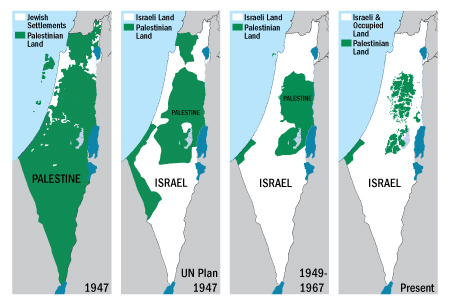
Netanyahu’s stated objective, which constitutes a new stage in the 75 year old war (since Nakba, 1948) against the people of Palestine is no longer predicated on “Apartheid” or “Separation.” This new stage –which is also directed against Israelis who want peace– consists in “total appropriation” as well as the outright exclusion of the Palestinian people from their homeland.

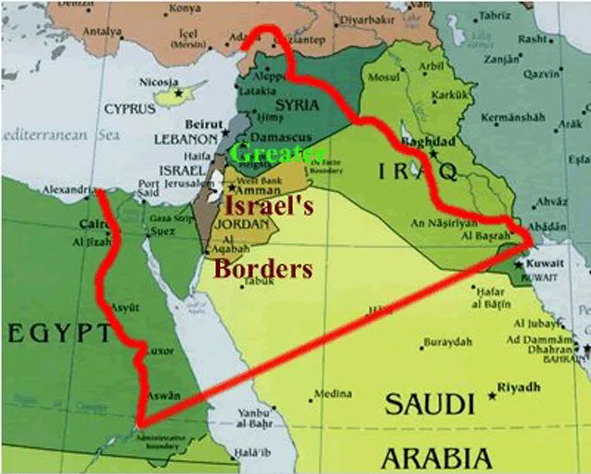
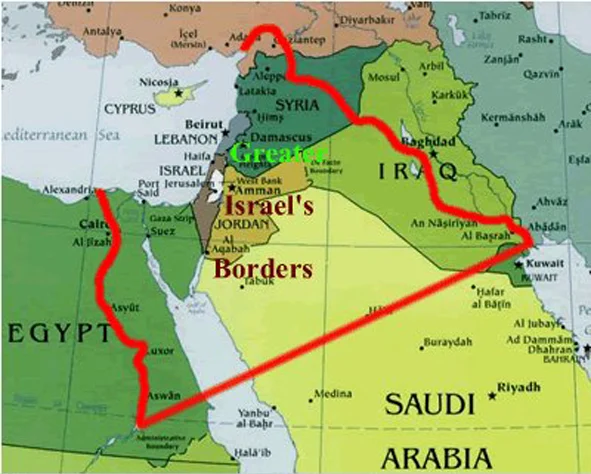
The current Netanyahu government is committed to the “Greater Israel” and the “Promised Land,” namely the biblical homeland of the Jews.

Benjamin Netanyahu is pressing ahead to formalize “Israel’s colonial project,” namely the appropriation of all Palestinian Lands.

His position defined below several months prior to the October 7, 2023 “State of Readiness For War” consists in total appropriation as well as the outright exclusion of the Palestinian people from their homeland:

“These are the basic lines of the national government headed by me: The Jewish people have an exclusive and unquestionable right to all areas of the Land of Israel. The government will promote and develop settlement in all parts of the Land of Israel — in the Galilee, the Negev, the Golan, Judea and Samaria.” (January 2023)

History: The Relationship between Mossad and Hamas
“Operation Al Acqsa Storm” (OAAS): Was Hamas acting on behalf of the People of Palestine?

What is the relationship between Mossad and Hamas? Is Hamas an “intelligence asset”? There is a long history.

Hamas (Harakat al-Muqawama al-Islamiyya) (Islamic Resistance Movement), was founded in 1987 by Sheik Ahmed Yassin. It was supported at the outset by Israeli intelligence as a means to weaken the Palestinian Authority:

“Thanks to Mossad, (Israel’s “Institute for Intelligence and Special Tasks”), Hamas was allowed to reinforce its presence in the occupied territories. Meanwhile, Arafat’s Fatah Movement for National Liberation as well as the Palestinian Left were subjected to the most brutal form of repression and intimidation.

Let us not forget that it was Israel, which in fact created Hamas. According to Zeev Sternell, historian at the Hebrew University of Jerusalem, “Israel thought that it was a smart ploy to push the Islamists against the Palestinian Liberation Organisation (PLO).” (L’Humanité, translated from French)

The links of Hamas to Mossad and US intelligence have been acknowledged by Rep Ron Paul in a statement to the US Congress: “Hamas Was Started by Israel”?

“You know Hamas, if you look at the history, you’ll find out that Hamas was encouraged and really started by Israel because they wanted Hamas to counteract Yasser Arafat… (Rep Ron Paul, 2011)

What this statement entails is that Hamas is and remains “an intelligence asset,” namely “an “asset” which serves the interests of intelligence agencies.

See also the WSJ (January 24, 2009) “How Israel helped to Spawn Hamas.”

Instead of trying to curb Gaza’s Islamists from the outset, says Mr Cohen, Israel for years tolerated and, in some cases, encouraged them as a counterweight to the secular nationalists of the Palestine Liberation Organization and its dominant faction, Yasser Arafat’s Fatah. (WSJ, emphasis added)

The Zionist Plan for the Middle East?

The Zionist Plan for the Middle East?

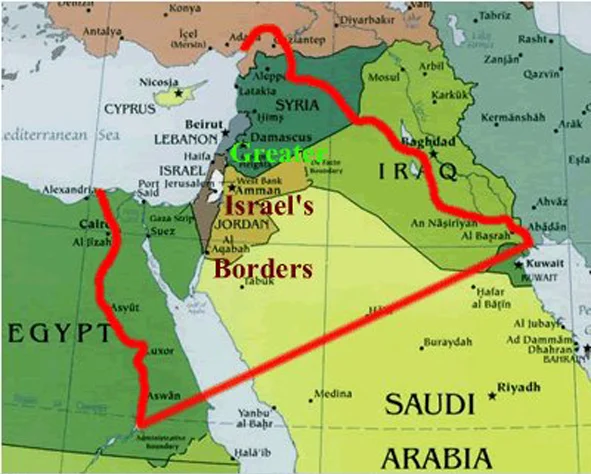
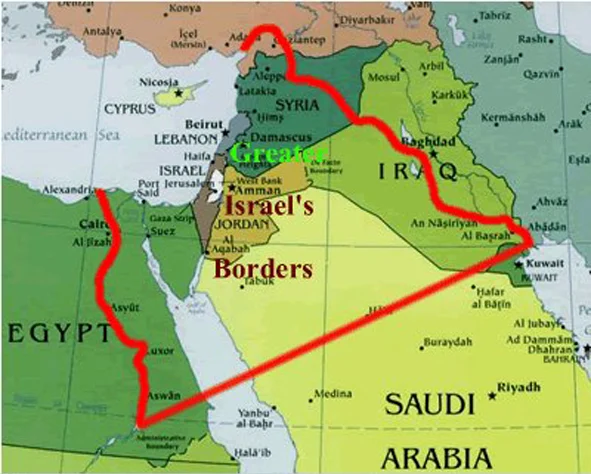
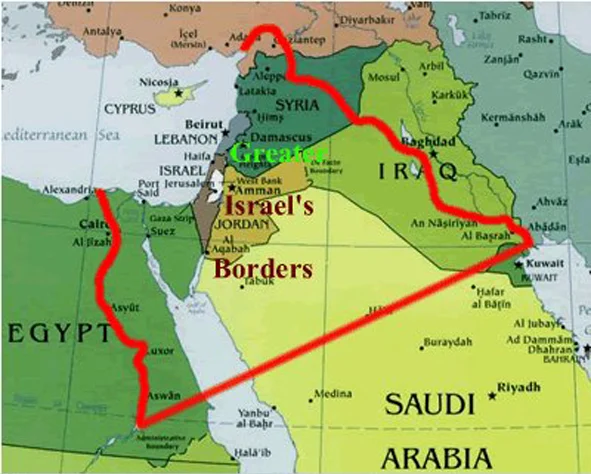
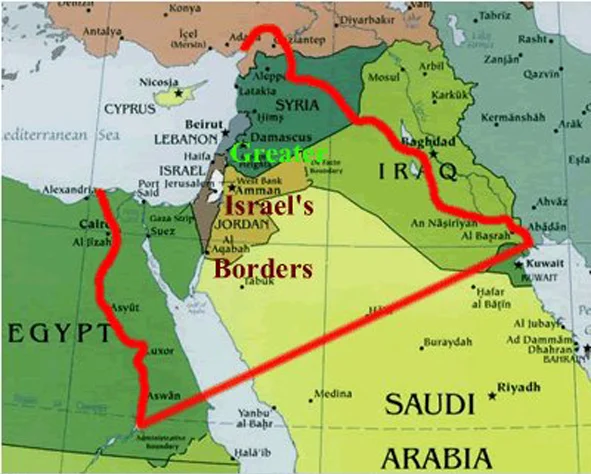
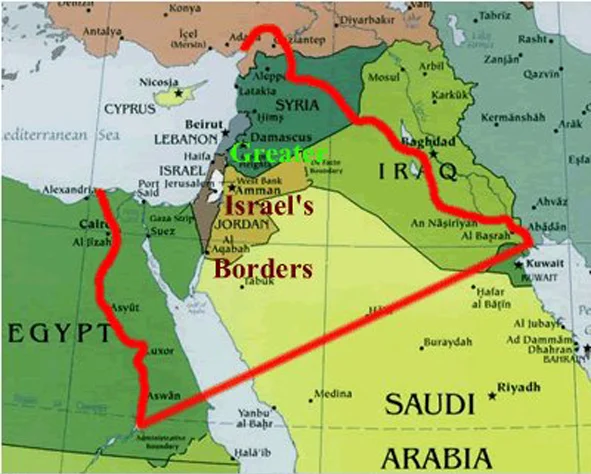
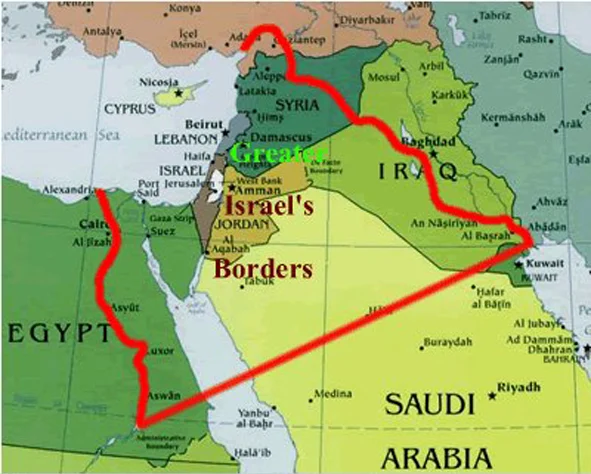
According to the founding father of Zionism Theodore Herzl, “the area of the Jewish State stretches: “From the Brook of Egypt to the Euphrates.” According to Rabbi Fischmann, “The Promised Land extends from the River of Egypt up to the Euphrates, it includes parts of Syria and Lebanon.”

When viewed in the current context, including the siege on Gaza, the Zionist Plan for the Middle East bears an intimate relationship to the 2003 invasion of Iraq, the 2006 war on Lebanon, the 2011 war on Libya, the ongoing wars on Syria, Iraq and Yemen, not to mention the political crisis in Saudi Arabia.

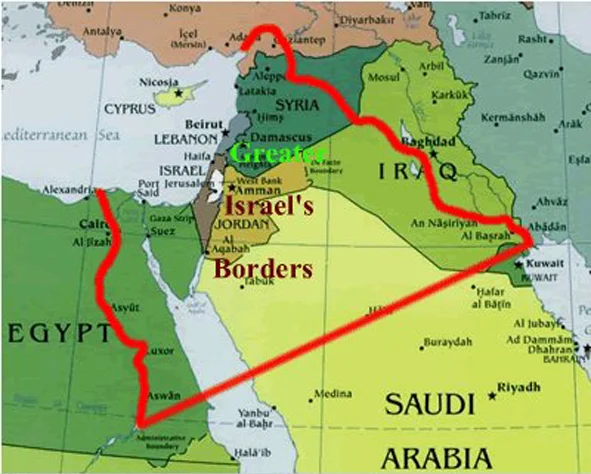
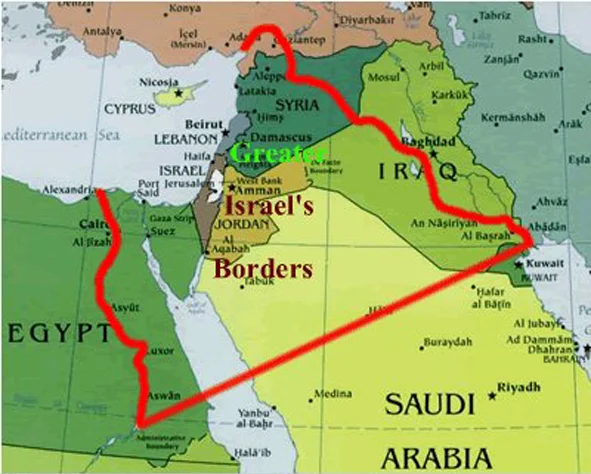
The “Greater Israel” project consists in weakening and eventually fracturing neighboring Arab states as part of a US-Israeli expansionist project, with the support of NATO and Saudi Arabia. In this regard, the Saudi-Israeli rapprochement is from Netanyahu’s viewpoint a means to expanding Israel’s spheres of influence in the Middle East as well as confronting Iran. Needless to day, the “Greater Israel” project is consistent with America’s imperial design.

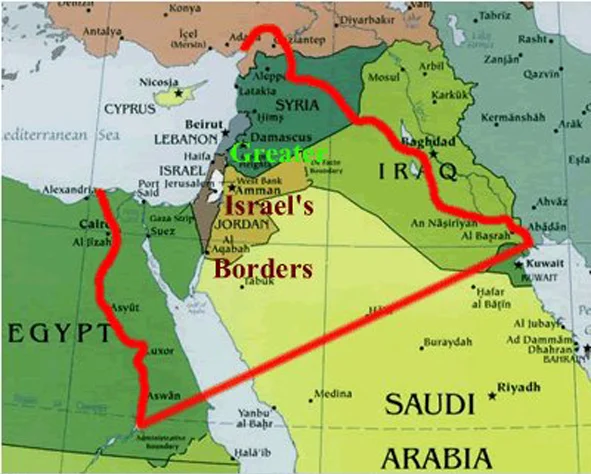
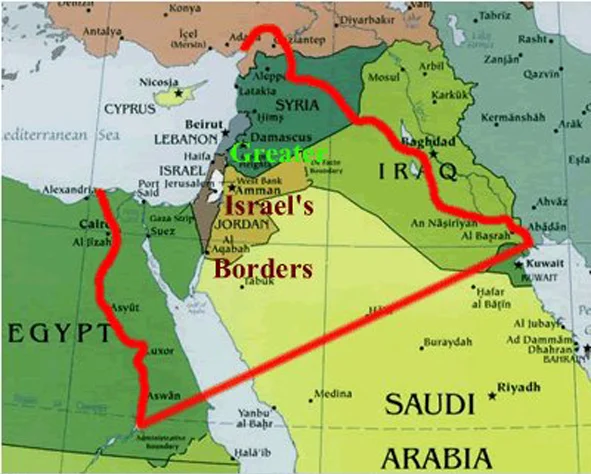
“Greater Israel” consists in an area extending from the Nile Valley to the Euphrates. According to Stephen Lendman,

“A near-century ago, the World Zionist Organization’s plan for a Jewish state included:

  • historic Palestine;
  • South Lebanon up to Sidon and the Litani River;
  • Syria’s Golan Heights, Hauran Plain and Deraa; and
  • control of the Hijaz Railway from Deraa to Amman, Jordan as well as the Gulf of Aqaba.

Some Zionists wanted more – land from the Nile in the West to the Euphrates in the East, comprising Palestine, Lebanon, Western Syria and Southern Turkey.”

“As in the days of thy coming out of the land of Egypt, will I show unto them marvelous things” Micah 7:15

The Zionist project has supported the Jewish settlement movement. More broadly it involves a policy of excluding Palestinians from Palestine leading to the annexation of both the West Bank and Gaza to the State of Israel.

The Project of “Greater Israel” is to create a number of proxy States, which could include parts of Lebanon, Jordan, Syria, the Sinai, as well as parts of Iraq and Saudi Arabia. (See map).

According to Mahdi Darius Nazemroaya in a 2011 Global Research article, The Yinon Plan was a continuation of Britain’s colonial design in the Middle East:

“[The Yinon plan] is an Israeli strategic plan to ensure Israeli regional superiority. It insists and stipulates that Israel must reconfigure its geo-political environment through the balkanization of the surrounding Arab states into smaller and weaker states.

Israeli strategists viewed Iraq as their biggest strategic challenge from an Arab state. This is why Iraq was outlined as the centerpiece to the balkanization of the Middle East and the Arab World.

In Iraq, on the basis of the concepts of the Yinon Plan, Israeli strategists have called for the division of Iraq into a Kurdish state and two Arab states, one for Shiite Muslims and the other for Sunni Muslims. The first step towards establishing this was a war between Iraq and Iran, which the Yinon Plan discusses.

The Atlantic, in 2008, and the US military’s Armed Forces Journal, in 2006, both published widely circulated maps that closely followed the outline of the Yinon Plan. Aside from a divided Iraq, which the Biden Plan also calls for, the Yinon Plan calls for a divided Lebanon, Egypt, and Syria.

The partitioning of Iran, Turkey, Somalia, and Pakistan also all fall into line with these views. The Yinon Plan also calls for dissolution in North Africa and forecasts it as starting from Egypt and then spilling over into Sudan, Libya, and the rest of the region.

“Greater Israel” would require the breaking up of the existing Arab states into small states.

“The plan operates on two essential premises. To survive, Israel must

1) become an imperial regional power, and

2) must effect the division of the whole area into small states by the dissolution of all existing Arab states.

Small here will depend on the ethnic or sectarian composition of each state. Consequently, the Zionist hope is that sectarian-based states become Israel’s satellites and, ironically, its source of moral legitimation…

This is not a new idea, nor does it surface for the first time in Zionist strategic thinking. Indeed, fragmenting all Arab states into smaller units has been a recurrent theme.” (Yinon Plan)

Viewed in this context, the US-NATO led wars on Syria and Iraq are part of the process of Israeli territorial expansion.

In this regard, the defeat of US sponsored terrorists (ISIS, Al Nusra) by Syrian Forces with the support of Russia, Iran and Hezbollah constitute a significant setback for Israel.

Jesus’ Life (y)

•October 13, 2023 • Leave a Comment

Matthew 28:16 Then the eleven disciples went away into Galilee onto a mountain where Jesus had appointed them.

17 And when they saw Him, they worshiped Him; but some doubted.

John 21

After these things Jesus showed Himself again to the disciples at the Sea of Tiberias, and in this way showed He Himself:

There were together Simon Peter, and Thomas called Didymus, and Nathanael of Cana in Galilee, and the sons of Zebedee, and two other of His disciples.

Back to Fishing

Simon Peter said unto them, “I am going fishing.” They said unto him, “We also go with thee.” They went forth and entered into a boat immediately; and that night they caught nothing.

But when the morning had now come, Jesus stood on the shore, but the disciples knew not that it was Jesus.

Then Jesus said unto them, “Children, have ye any meat?” And they answered Him, “No.”

And He said unto them, “Cast the net on the right side of the boat, and ye shall find.” They cast therefore, and now they were not able to draw it in for the multitude of fishes.

Therefore that disciple whom Jesus loved said unto Peter, “It is the Lord!” Now when Simon Peter heard that it was the Lord, he girded his fisher’s coat unto him (for he was naked) and cast himself into the sea.

And the other disciples came in a little boat (for they were not far from land, but, as it were, two hundred cubits), dragging the net with fishes.

As soon then as they had come to land, they saw a fire of coals there, and fish laid thereon and bread.

10 Jesus said unto them, “Bring of the fish which ye have now caught.”

153 Fishes

11 Simon Peter went up and drew the net to land, full of great fishes, a hundred and fifty three; and though there were so many, yet the net was not broken.

— broken into smaller numbers 3 X 3 X 17 = 153; or adding the numbers from 1 + 2 + 3 + 17 = 153; 

12 Jesus said unto them, “Come and dine.” And none of the disciples dared ask Him, “Who art Thou?” knowing that it was the Lord.

13 Jesus then came and took bread and gave it to them, and fish likewise.

14 This is now the third time that Jesus showed Himself to His disciples after He was risen from the dead.

15 So when they had dined, Jesus said to Simon Peter, “Simon, son of Jonah, lovest thou Me more than these?” He said unto Him, “Yea, Lord; Thou knowest that I love Thee.” He said unto him, “Feed My lambs.”

16 He said to him again the second time, “Simon, son of Jonah, lovest thou Me?” He said unto Him, “Yea, Lord; Thou knowest that I love Thee.” He said unto him, “Feed My sheep.”

17 He said unto him the third time, “Simon, son of Jonah, lovest thou Me?” Peter was grieved because He said unto him the third time, “Lovest thou Me?” And he said unto Him, “Lord, Thou knowest all things. Thou knowest that I love Thee.” Jesus said unto him, “Feed My sheep.

18 Verily, verily I say unto thee, when thou wast young, thou girded thyself and walked whither thou wouldest; but when thou shalt be old, thou shalt stretch forth thy hands, and another shall gird thee and carry thee whither thou wouldest not.”

19 This spoke He, signifying by what death he should glorify God. And when He had spoken this, He said unto him, “Follow Me.”

20 Then Peter, turning about, saw the disciple whom Jesus loved following, who also had leaned on His breast at supper, and said, “Lord, who is he that betrayeth Thee?”

21 Peter, seeing him, said to Jesus, “Lord, and what shall this man do?”

22 Jesus said unto him, “If I will that he tarry till I come, what is that to thee? Follow thou Me.”

23 Then this saying went abroad among the brethren, that that disciple should not die. Yet Jesus had not said unto him, “He shall not die,” but, “If I will that he tarry till I come, what is that to thee?”

24 This is the disciple who testifieth of these things and wrote these things, and we know that his testimony is true.

Mark 16:15 And He said unto them, “Go ye into all the world, and preach the Gospel to every creature.

16 He that believeth and is baptized shall be saved; but he that believeth not shall be damned.

17 And these signs shall follow them that believe: In My name shall they cast out devils; they shall speak with new tongues;

18 they shall take up serpents, and if they drink any deadly thing, it shall not hurt them. They shall lay hands on the sick, and they shall recover.”

Acts 1:3 To these also He showed Himself alive after His passion by many infallible proofs, being seen by them forty days, and speaking of the things pertaining to the Kingdom of God.

And being assembled together with them, He commanded them that they should not depart from Jerusalem, but wait for the promise of the Father, “which,” saith He, “ye have heard from Me;

for John truly baptized with water, but ye shall be baptized with the Holy Ghost not many days hence.”

When they therefore had come together, they asked of Him, saying, “Lord, wilt Thou at this time restore again the kingdom to Israel?”

And He said unto them, “It is not for you to know the times or the seasons which the Father hath put in His own power.

But ye shall receive power after the Holy Ghost is come upon you; and ye shall be witnesses unto Me both in Jerusalem, and in all Judea and in Samaria, and unto the uttermost part of the earth.”

And when He had spoken these things, while they beheld, He was taken up, and a cloud received Him out of their sight.

10 And while they looked steadfastly toward heaven as He went up, behold, two men stood by them in white apparel,

11 who also said, “Ye men of Galilee, why stand ye gazing up into heaven? This same Jesus, who is taken up from you into Heaven, shall so come in like manner as ye have seen Him go into Heaven.”

12 Then they returned unto Jerusalem from the mount called Olivet, which is from Jerusalem a Sabbath day’s journey.

Mark 16:19 So then after the Lord had spoken unto them, He was received up into Heaven, and sat at the right hand of God.

20 And they went forth and preached everywhere, the Lord working with them and confirming the Word with signs following. Amen.

John 21

25 And there are also many other things which Jesus did, which, if they should be written every one, I suppose that even the world itself could not contain the books that should be written. Amen.

Nature Index Top 100 Institutions 

•October 12, 2023 • Leave a Comment

2023 tables: Institutions – natural sciences – academic

The 2023 tables are based on Nature Index data from 1 January 2022 to 31 December 2022. Nature Index is generally based on output, whereas most other ranking are based on reputation and establishment.

Hence old established institutions, like Oxford, ranks highly in Times Higher Education  or QS University Rankings, but not in Nature Index Top 100 which is based on outputs, such as patents, publications and citations. Thus British institutions are relatively high in Times and OS rankings, but the country produces nothing worthy of mention in today’s tech race.

Nature Index Top 100

Institution Share 2021 Share 2022 Count 2022

1 Harvard University, United States
2 University of Chinese Academy of Sciences, China
3 University of Science and Technology of China, China
4 Nanjing University, China

1 Harvard University, United States

5 Stanford University, United States
6 Peking University, China
7 Tsinghua University, China
8 Massachusetts Institute of Technology, United States
9 Zhejiang University, China
10 Sun Yat-sen University, China
11 University of Cambridge, United Kingdom
12 Fudan University, China
13 Shanghai Jiao Tong University, China
14 The University of Tokyo, Japan
15 University of Oxford, United Kingdom
16 Swiss Federal Institute of Technology Zurich, Switzerland
17 University of California, Berkeley, United States
18 Nankai University, China
19 Yale University, United States
20 Sichuan University, China

2 University of Chinese Academy of Sciences, China

21 University of California, San Diego, United States
22 University of Pennsylvania, United States
23 University of California, Los Angeles, United States
24 Southern University of Science and Technology, China
25 Columbia University in the City, United States
26 University of Michigan, United States
27 Cornell University, United States
28 Wuhan University, China
29 Northwestern University, United States
30 Shandong University, China
31 Xiamen University, China
32 Johns Hopkins University, United States
33 Princeton University, United States
34 University of Toronto, Canada
35 Tianjin University, China
36 University of Washington, United States
37 Jilin University, China
38 Soochow University, China
39 Kyoto University, Japan
40 California Institute of Technology, United States
41 National University of Singapore, Singapore
42 The University of Texas at Austin, United States
43 The University of Chicago, United States
44 Swiss Federal Institute of Technology Lausanne, Switzerland
45 Imperial College London, United Kingdom
46 Huazhong University of Science and Technology, China
47 University of Illinois at Urbana-Champaign, United States
48 University of Wisconsin-Madison, United States
49 Washington University in St. Louis, United States
50 New York University, United States
51 South China University of Technology, China
52 Xi’an Jiaotong University, China
53 University of California, San Francisco, United States
54 Hunan University, China
55 Tongji University, China

11 University of Cambridge, United Kingdom

56 University College London, United Kingdom
57 Technical University of Munich, Germany
58 The Pennsylvania State University, United States
59 University of Minnesota, United States
60 Nanyang Technological University, Singapore
61 Central South University, China
62 Korea Advanced Institute of Science and Technology, South Korea
63 Lanzhou University, China
64 University of California, Santa Barbara, United States
65 Seoul National University, South Korea
66 Osaka University, Japan
67 Duke University, United States
68 Weizmann Institute of Science, Israel
69 Dalian University of Technology, China
70 Beijing Institute of Technology, China
71 Zhengzhou University, China
72 University of Copenhagen, Denmark
73 Harbin Institute of Technology, China
74 University of California, Irvine, United States
75 McGill University, Canada
76 The Ohio State University, United States
77 University of Colorado Boulder, United States
78 The University of Edinburgh, United Kingdom
79 The University of North Carolina at Chapel Hill, United States
80 Tohoku University, Japan

3 University of Science and Technology of China, China

81 The University of British Columbia, Canada
82 Texas A&M University, United States
83 Chongqing University, China
84 East China University of Science and Technology, China
85 Beijing University of Chemical Technology, China
86 Ludwig Maximilians University of Munich, Germany
87 East China Normal University, China
88 The University of Texas Southwestern Medical Center, United States
89 Beijing Normal University, China
90 University of Zurich, Switzerland
91 The University of Hong Kong, China
92 University of Pittsburgh, United States
93 Karlsruhe Institute of Technology, Germany
94 Rice University, United States
95 Purdue University, United States
96 Shenzhen University, China

96 Shenzhen University, China (established only 40 years ago, in 1983)

97 University of Maryland, College Park, United States
98 University of Southern California, United States
99 The Chinese University of Hong Kong, China
100 The University of Queensland, Australia

United States 38; China 37; United Kingdom 5; Japan 4; Canada 3; Germany 3; Switzerland 3; Singapore 2; South Korea 2; Australia 1; Denmark 1; Israel 1.

Notable absence are Institutions and Universities from: Spanish & Latin American Institutions, French Institutions, Russian Institutions, Indian Institutions, African and Islamic Institutions.

Israel: 260 Ravers Massacred

•October 11, 2023 • Leave a Comment

Shall a trumpet be blown in the city, and the people not be afraid? Shall there be evil in a city, and the Lord hath not done it? Amos 3:6

I form the light, and create darkness; I make peace, and create evil; I, the Lord, do all these things. Isaiah 45:7

~~~~

Hamas terrorists pile up bodies of 260 young ravers after horrific massacre in Israel

The Expressed October 9, 2023

Hamas terrorists have killed 260 young ravers at a music event as the militant group goes on a bloody rampage in southern Israel.

“And I will turn your feasts into mourning.”

Videos on social media showed men flying into the country via parachutes while 3,000-4,000 people attended the event.

Israeli authorities have estimated that 260 people were killed at the event. Overall, Hamas’ attacks have reportedly killed more than 700 people.

As of Sunday night, it is also believed that Hamas is holding more than 100 hostages.

Jesus’ Life (x)

•October 11, 2023 • Leave a Comment

“Think not that I am come to send peace on earth; I came not to send peace, but a sword” Matthew 10:34

“And I will turn your feasts into mourning and all your songs into lamentation; and I will bring up sackcloth upon all loins and baldness upon every head; and I will make it as the mourning for an only son, and the end thereof as a bitter day” Amos 8:10

~~~

Matthew 27:62 Now the next day, that following the Day of the Preparation, the chief priests and Pharisees came together unto Pilate,

The Next day, a High Sabbath — 15th Nisan, Thursday (9:00 AM) — 3rd hour

63 saying, “Sir, we remember that that deceiver said while he was yet alive, ‘After three days I will rise again.’

64 Command therefore that the sepulcher be made secure until the third day, lest his disciples come by night and steal him away, and say unto the people, ‘He is risen from the dead,’ so that the last error shall be worse than the first.”

65 Pilate said unto them, “Ye have a watch. Go your way, make it as secure as ye can.”

66 So they went and made the sepulcher secure, sealing the stone and setting up a watch.

Mark 16:1 And when the [annual] Sabbath [First Day of Unleavened Bread] was past, Mary Magdalene and Mary the mother of James, and Salome bought sweet spices, that they might come and anoint Him.

Luke 23:56 And they returned and prepared spices and ointments, and rested the [weekly] Sabbath day according to the commandment.

Matthew 28:21 At the end of the Sabbath, as it began to dawn toward the first day of the week, came Mary Magdalene and the other Mary to see the sepulcher. — in Hebrew reckoning, dawn of a new day begins at sunset, around 6 PM.

And behold, there was a great earthquake, for the angel of the Lord descended from Heaven, and came and rolled back the stone from the door, and sat upon it. — Mary and the other ladies could have slept near the sepulcher over the night.

His countenance was like lightning, and his raiment white as snow.

And for fear of him the guards shook and became as dead men.

John 20

1 On the first day of the week came Mary Magdalene early, when it was yet dark, unto the sepulcher and saw the stone taken away from the sepulcher.

Mark 16:3 And they said among themselves, “Who shall roll us away the stone from the door of the sepulcher?”

And when they looked, they saw that the stone was rolled away, for it was very large.

And entering into the sepulcher, they saw a young man sitting on the right side, clothed in a long white garment; and they were frightened.

— this “young man” is most likely the risen Jesus, appearing as the Son of Man, but they couldn’t recognize Him.

And he said unto them, “Be not afraid. Ye seek Jesus of Nazareth, who was crucified. He is risen! He is not here. Behold the place where they laid Him.

But go your way. Tell His disciples and Peter that He goeth before you into Galilee. There shall ye see Him, as He said unto you.”

Luke 24:8 And they remembered His words, 9 and returned from the sepulcher and told all these things unto the eleven and to all the rest. 10 It was Mary Magdalene and Joanna and Mary the mother of James, and other women who were with them

And they went out quickly and fled from the sepulcher, for they trembled and were amazed; neither said they any thing to any man, for they were afraid.

2 Then she ran and came to Simon Peter and to the other disciple, whom Jesus loved, and said unto them, “They have taken away the Lord out of the sepulcher, and we know not where they have laid Him!”

Peter therefore went forth, and that other disciple, and came to the sepulcher.

And they both ran together, and the other disciple outran Peter and came first to the sepulcher.

And stooping down and looking in, he saw the linen cloths lying, yet he went not in.

Then came Simon Peter following him, and went into the sepulcher and saw the linen cloths as they lay

and the napkin that had been about His head, not lying with the linen cloths, but wrapped together in a place by itself.

Then the other disciple, who came first to the sepulcher, went in also; and he saw, and believed.

For as yet they knew not the Scripture, that He must rise again from the dead.

10 Then the disciples went away again unto their own home.

11 But Mary stood outside at the sepulcher weeping, and as she wept she stooped down and looked into the sepulcher,

12 and saw two angels in white, sitting one at the head and the other at the feet where the body of Jesus had lain.

13 And they said unto her, “Woman, why weepest thou?” She said unto them, “Because they have taken away my Lord, and I know not where they have laid Him.”

14 And when she had thus said, she turned around and saw Jesus standing, and knew not that it was Jesus. — appearing as man, as the Son of Man;

15 Jesus said unto her, “Woman, why weepest thou? Whom seekest thou?” She, supposing Him to be the gardener, said unto Him, “Sir, if thou have borne Him hence, tell me where thou hast laid Him, and I will take Him away.”

16 Jesus said unto her, “Mary!” She turned herself and said unto Him, “Rabboni!” (which is to say, “Master”).

“Touch Me not.”

17 Jesus said unto her, “Touch Me not, for I am not yet ascended to My Father; but go to My brethren and say unto them, ‘I ascend unto My Father and your Father, and to My God and your God.’”

— “touch” represents a Greek word which means to “cling to,” to “fasten on,” to “grasp” an object. The tense is present, and the prohibition is, therefore, not of an individual act, but of a continuance of the act, of the habit, “Do not continue clinging to Me.”

18 Mary Magdalene came and told the disciples that she had seen the Lord, and that He had spoken these things unto her.

Matthew 28:11 Now when they were going, behold, some of the guards came into the city and reported unto the chief priests all the things that were done.

12 And when they were assembled with the elders and had taken counsel, they gave a large sum of money unto the soldiers,

13 saying, “Say ye, ‘His disciples came by night and stole him away while we slept.’

14 And if this come to the governor’s ears, we will persuade him and secure you.”

15 So they took the money, and did as they were taught; and this account is commonly reported among the Jews until this day.

Luke 24:13 And behold, two of them were going that same day to a village called Emmaus, which was from Jerusalem about seven miles.

14 And they talked together of all these things which had happened.

15 And it came to pass that while they communed and reasoned together, Jesus Himself drew near and went with them.

16 But their eyes were held, that they should not know Him.

17 And He said unto them, “What manner of communications are these that ye have one to another as ye walk and are sad?”

18 And one of them, whose name was Cleopas, answering said unto Him, “Art thou only a stranger in Jerusalem, and hast not known the things which have come to pass there in these days?”

19 And He said unto them, “What things?” And they said unto Him, “Concerning Jesus of Nazareth, who was a prophet mighty in deed and word before God and all the people;

20 and how the chief priests and our rulers delivered Him to be condemned to death and have crucified Him.

21 But we trusted that it had been He who should have redeemed Israel. And besides all this, today is the third day since these things were done.

22 Yea, and certain women also of our company, who were early at the sepulcher, made us astonished.

23 And when they found not His body, they came saying that they had also seen a vision of angels, who said that He was alive.

24 And certain of those who were with us went to the sepulcher and found it even so as the women had said, but Him they saw not.”

25 Then He said unto them, “O fools, and slow of heart to believe all that the prophets have spoken!

26 Ought not Christ to have suffered these things and to enter into His glory?”

27 And beginning with Moses and all the prophets, He expounded unto them in all the Scriptures the things concerning Himself.

28 And they drew nigh unto the village whither they were going, and He made as though He would have gone further.

29 But they constrained Him, saying, “Abide with us, for it is toward evening and the day is far spent.” And He went in to tarry with them.

30 And it came to pass, as He sat at meat with them, He took bread and blessed it, and broke and gave it to them.

31 And their eyes were opened and they knew Him. And He vanished out of their sight.

32 And they said to one another, “Did not our hearts burn within us while He talked with us on the way and while He opened to us the Scriptures?”

33 And they rose up that same hour and returned to Jerusalem, and found the eleven gathered together and those who were with them,

34 saying, “The Lord is risen indeed and hath appeared to Simon!”

35 And they told what things were done on the way, and how He was known to them in the breaking of bread.

Mark 16:12 After that, He appeared in another form unto two of them as they walked and went into the country.

13 And they went and told it unto the rest, but neither did they believe them.

John 20

19 Then the same day at evening, being the first day of the week, when the doors were shut where the disciples were assembled for fear of the Jews, came Jesus and stood in their midst and said unto them, “Peace be unto you.”

20 And when He had so said, He showed unto them His hands and His side. Then were the disciples glad when they saw the Lord.

21 Then said Jesus to them again, “Peace be unto you. As My Father hath sent Me, even so send I you.”

22 And when He had said this, He breathed on them and said unto them, “Receive ye the Holy Ghost.

23 Whosoever sins ye remit, they are remitted unto them; and whosoever sins ye retain, they are retained.”

24 But Thomas, one of the twelve, called Didymus, was not with them when Jesus came.

25 The other disciples therefore said unto him, “We have seen the Lord.” But he said unto them, “Unless I shall see in His hands the print of the nails, and put my finger into the print of the nails, and thrust my hand into His side, I will not believe.”

Luke 24:44 And He said unto them, “These are the words which I spoke unto you while I was yet with you, that all things must be fulfilled which were written in the Law of Moses and in the Prophets and in the Psalms concerning Me.”

45 Then opened He their understanding, that they might understand the Scriptures,

46 and said unto them, “Thus it is written, and thus it behooved Christ to suffer and to rise from the dead the third day,

47 and that repentance and remission of sins should be preached in His name among all nations, beginning at Jerusalem.

48 And ye are witnesses of these things.

John 20

26 And after eight days the disciples were again within, and Thomas was with them. Then came Jesus, the doors being shut, and stood in their midst and said, “Peace be unto you.”

27 Then said He to Thomas, “Reach hither thy finger and behold My hands, and reach hither thy hand and thrust it into My side: and be not faithless, but believing.”

28 And Thomas answered and said unto Him, “My Lord and my God!”

29 Jesus said unto him, “Thomas, because thou hast seen Me, thou hast believed. Blessed are they that have not seen and yet have believed.”

30 And many other signs truly did Jesus in the presence of His disciples, which are not written in this book.

31 But these are written, that ye might believe that Jesus is the Christ, the Son of God, and that believing, ye might have life through His name.

Crimes Committed By US Presidents

•October 10, 2023 • Leave a Comment

Let’s Examine Some Real Crimes Committed By US Presidents

MisesInstitute by Connor O’Keeffe

Former president Donald Trump is facing ninety-one criminal charges as he seeks to win back the White House in 2024. The indictments are the latest battle in a roughly six-year crusade against Trump that first sought to remove him from power through the Twenty-Fifth Amendment, then with espionage charges and impeachments, and that now aims to block him from becoming president again. The mantra we hear from those in politics and media who support these efforts is that nobody is above the law.

Let’s Examine Some Real Crimes Committed By Presidents

But there’s an entire class of people above the law. Or who at least act like they’re above the law—the political class. The hypocrisies of their effort to convict Trump and block him from holding office again reveal that the motivations are purely political—not born of some commitment to a higher moral or legal principle.

Two broad schools of thought make up Western legal philosophy. They are natural law theory and legal positivism. Natural law theory says that law exists regardless of the dictates of states. That justice is derived from nature and common to all humans. Simply put, natural law theorists argue that a crime is a crime regardless of what the state says. That makes killing another human with malice aforethought murder, for example, even when it’s done with the blessings of government officials.

Many libertarians, such as Murray Rothbard, ground their moral opposition to state power in appeals to natural law. There is no special status that someone can attain that allows them to commit crimes.

The idea that nobody, not even the president, is above the law is right in line with this view. But, taken to its logical Rothbardian conclusion, equality under the law is a denial of political authority. So, it’s bizarre to hear the political class use this slogan as a rallying cry when all their wealth, power, and status is built on political privilege. And they can’t rightfully go after Trump for how he used his political authority because that’s not unique to Trump.

The political class prefers legal positivism, which separates law from morality. According to legal positivists, law is what the sovereign political authority says it is. There may be just laws and unjust laws. But they are all valid laws in this view. Legal positivism enshrines the political class’s privileged legal status above the rest of us.

Therefore, the way to get Trump is not to show he did anything immoral or wrong but to prove he technically broke some rule made up by members of an earlier political class. That way he can be driven out of public life without threatening the regime’s authority. But the problem hasn’t been finding crimes committed by Trump but finding crimes unique to Trump. Because all recent presidents have broken the law.

President George H. W. Bush launched a war on Iraq without congressional authorization. That is illegal according to Article 1, Section 8, Clause 11 of the Constitution, the set of rules Bush swore an oath to uphold. President Bill Clinton did the same, overseeing illegal military operations in SomaliaSerbia, and Iraq.

President George W. Bush conducted warrantless surveillance on American citizens, which is illegal according to the Fourth Amendment, and committed torture, which is prohibited by Section 2340A of Title 18 of the United States Code. His administration also launched undeclared, and therefore illegal, wars in AfghanistanSomalia, and Iraq.

President Barack Obama conducted more illegal wars in LibyaSyriaPakistanMali, and Yemen. In many of those wars, Obama expanded George W. Bush’s policy of giving support to al-Qaeda, which is treason according to Article 3, Section 3 of the Constitution. Obama also ordered the assassination of an American citizen in Yemen who had not been tried or even convicted of a crime. The Sixth Amendment makes that illegal.

Combined, these illegal wars have killed millions of people. They are appalling crimes of which Trump is also guilty. His administration continued the wars in Syria, Iraq, Afghanistan, Somalia, and Yemen despite his running on a more isolationist foreign policy. Yet he’s not being charged for any of that. The crimes he’s facing charges for are far less serious, but they are more unique to Trump.

In New York, Trump is charged with mislabeling some business expenses during the 2016 election. In Georgia, he’s charged with conspiring to overturn an election prosecutors claim he knew he’d lost. Federally, he’s charged with claiming to have won an election he allegedly knew he’d lost, which prosecutors say incited the riot at the Capitol on January 6, 2021. He’s also charged with keeping classified documents after leaving office and conducting a “scheme to conceal” them from the federal government.

By refusing to bring charges against Trump that could also be brought against the presidents they like, the political class has shown that its aims are political. If they were committed to the rules that they swore an oath to uphold, they’d have to indict many of their own. And if they genuinely believed that nobody exists above the law, they’d have to give up a whole lot more.

A ‘Pearl Harbor’ Attack!

•October 9, 2023 • Leave a Comment

A ‘Pearl Harbor’ attack: Why didn’t Israel’s sophisticated border security anticipate Saturday’s attack?

Map showing the Hamas attack at multiple sites in Israel

HAMAS launched an all-out attack on Israel despite the country’s $1 billion Iron Dome defences in what experts are calling an “embarrassing intelligence failure.”

A day that began with air raid sirens blaring out in the early morning had by lunchtime turned into one of the most terrifying attacks Israel has known in the 75 years of its existence.

Assailants from Hamas, the Islamist militant group that controls the impoverished and densely populated Gaza Strip, had by nightfall killed hundreds of people and wounded hundreds more.

Gunmen chased young Israelis across the desert, shooting and snatching people to take back to Gaza as hostages.

Netanyahu says Israel is ‘at war’ as Hamas launches surprise air and ground attack from Gaza. Though Israel is no stranger to terrorist attacks, Saturday’s assault was unprecedented – not least because of the lack of warning.

Israel’s military on Saturday found itself caught off-guard, despite decades in which the country became a technology powerhouse that boasts one of the world’s most impressive armed forces and a premier intelligence agency

‘Butchered in cold blood’: nightmare at Israel music festival

The questions for Israeli authorities are legion. It has been more than 17 years since an Israeli soldier was taken as a prisoner of war in an assault on Israeli territory. And Israel has not seen this kind of infiltration of military bases, towns and kibbutzim since town-by-town fighting in the 1948 war of independence. How could a terror group from one of the world’s poorest enclaves manage to launch such a devastating attack?

“The entire system failed. It’s not just one component. It’s the entire defense architecture that evidently failed to provide the necessary defense for Israeli civilians,” said Jonathan Conricus, a former international spokesman for the Israel Defense Forces.

“This is a Pearl Harbor-type of moment for Israel, where there was reality up until today, and then there will be reality after today.”

In response, Israeli Prime Minister Benjamin Netanyahu said that the country will “return fire of a magnitude that the enemy has not known,” while the top official in charge of activities in the Palestinian territories, Maj. Gen. Ghassan Alian, said that Hamas had “opened the gates of hell.”

Conricus, the former IDF spokesman, said Saturday’s events will force Israel to back up that rhetoric and respond “in a way that it has never responded before.”

Gill: all that burden themselves with it shall be cut in pieces; all that attempt to unsettle and remove it shall be pressed down with the weight of it, and be utterly destroyed: or, “shall be torn to pieces” as men’s hands are cut and torn with rough and heavy stones.

Jesus’ Life (w)

•October 9, 2023 • Leave a Comment

John 19

Then Pilate therefore took Jesus and scourged Him.

And the soldiers plaited a crown of thorns and put it on His head, and they put on Him a purple robe

and said, “Hail, King of the Jews!” And they smote Him with their hands.

Pilate therefore went forth again and said unto them, “Behold, I bring him forth to you, that ye may know that I find no fault in him.”

Then came Jesus forth, wearing the crown of thorns and the purple robe. And Pilate said unto them, “Behold the man!”

When therefore the chief priests and the officers saw Him, they cried out, saying, “Crucify him! Crucify him!” Pilate said unto them, “Ye take him and crucify him, for I find no fault in him.”

The Jews answered him, “We have a law, and by our law he ought to die, because he made himself the Son of God.”

When Pilate therefore heard that saying, he was the more afraid.

And he went again into the judgment hall and said unto Jesus, “From whence art thou?” But Jesus gave him no answer.

10 Then said Pilate unto Him, “Speakest thou not unto me? Knowest thou not that I have power to crucify thee, and have power to release thee?”

11 Jesus answered, “Thou couldest have no power at all against Me, unless it were given thee from above. Therefore he that delivered Me unto thee hath the greater sin.”

12 And from thenceforth Pilate sought to release Him, but the Jews cried out, saying, “If thou let this man go, thou art not Caesar’s friend. Whosoever maketh himself a king speaketh against Caesar.”

13 When Pilate therefore heard that saying, he brought Jesus forth and sat down in the judgment seat in a place that is called the Pavement, but in Hebrew, Gabbatha.

14 And it was the Preparation of the Passover and about the sixth hour, and Pilate said unto the Jews, “Behold your king!”

— this sixth hour would be the same sixth hour where Jesus talked with the Samaritan woman at the well, established to be at NOON, when Jesus was wearied and needed a drink (John 4:6). To think that John suddenly popped up Roman time to suit a belief is just trying to be fanciful.

15 But they cried out, “Away with him, away with him! Crucify him!” Pilate said unto them, “Shall I crucify your king?” The chief priests answered, “We have no king but Caesar!”

16 Then he delivered Him therefore unto them to be crucified. And they took Jesus and led Him away.

Matthew 27:27 Then the soldiers of the governor took Jesus into the common hall, and gathered unto Him the whole detachment of soldiers.

28 And they stripped Him and put on Him a scarlet robe.

29 And when they had plaited a crown of thorns, they put it upon His head and a reed in His right hand, and they bowed their knees before Him and mocked Him, saying, “Hail, King of the Jews!”

30 And they spat upon Him, and took the reed and smote Him on the head.

31 And after they had mocked Him, they took the robe off from Him and put His own raiment on Him, and led Him away to crucify Him.

For more on the missing 16-18 hours of Christ, see THE MISSING HOURS OF CHRIST

Luke 23:26 [The next Day] And as they led Him away, they laid hold upon one Simon, a Cyrenian, coming out of the country, and on him they laid the cross, that he might bear it after Jesus.

27 And there followed Him a great company of people, and of women who also bewailed and lamented Him.

28 But Jesus, turning unto them, said, “Daughters of Jerusalem, weep not for Me, but weep for yourselves and for your children.

29 For behold, the days are coming in which they shall say, ‘Blessed are the barren, and the wombs that never bore and the breasts which never gave suck.’

30 Then shall they begin to say to the mountains, ‘Fall on us!’ and to the hills, ‘Cover us!’

31 For if they do these things in a green tree, what shall be done in the dry?”

Matthew 27:34 they gave Him vinegar to drink mingled with gall. And when He had tasted thereof, He would not drink.

John 19

23 Then the soldiers, when they had crucified Jesus, took His garments and made four parts, to every soldier a part, and also His coat. Now the coat was without seam, woven from the top throughout.

Mark 15:25 And it was the third hour (9 AM) when they crucified Him.

24 They said therefore among themselves, “Let us not rend it, but cast lots for it, whose it shall be,” that the Scripture might be fulfilled which saith, “They parted My raiment among them, and for My vesture did they cast lots.” These things therefore the soldiers did.

25 Now there stood by the cross of Jesus His mother and His mother’s sister, Mary the wife of Clopas, and Mary Magdalene.

26 When Jesus therefore saw His mother and the disciple standing by whom He loved, He said unto His mother, “Woman, behold thy son!”

27 Then said He to the disciple, “Behold thy mother!” And from that hour, that disciple took her unto his own home.

Mark 15:33 And when the sixth hour (12 NOON) had come, there was darkness over the whole land until the ninth hour (3 PM).

Luke 23:44 And it was about the sixth hour (12 NOON), and there was a darkness over all the earth until the ninth hour (3 PM)

John 19

31 The Jews therefore, because it was the Preparation, and so that the bodies should not remain upon the cross on the Sabbath day (for that Sabbath day was a high day), besought Pilate that their legs might be broken and that they might be taken away.

Mark 15:34 And at the ninth hour (3 PM) Jesus cried out with a loud voice, saying, “Eloi, Eloi, lama sabachthani?” which is, being interpreted, “My God, My God, why hast Thou forsaken Me?”

Luke 23:45 And the sun was darkened, and the veil of the temple was rent in the midst.

Matthew 27:51 And behold, the veil of the temple was rent in two from the top to the bottom, and the earth quaked and the rocks rent.

52 And the graves were opened; and many bodies of the saints who slept arose,

53 and came out of the graves after His resurrection, and went into the Holy City and appeared unto many.

54 Now when the centurion, and those who were with him watching Jesus, saw the earthquake and those things that were done, they feared greatly, saying, “Truly, this was the Son of God!”

32 Then came the soldiers and broke the legs of the first and of the other who was crucified with Him.

33 But when they came to Jesus and saw that He was dead already, they broke not His legs,

34 but one of the soldiers with a spear pierced His side, and forthwith there came out blood and water.

35 And he that saw it bore record, and his record is true, and he knoweth that he saith truly, that ye might believe.

36 For these things were done, that the Scripture should be fulfilled: “A bone of Him shall not be broken.”

37 And again another Scripture saith, “They shall look on Him whom they pierced.”

Matthew 27:55 And many women were there beholding afar off, who followed Jesus from Galilee, ministering unto Him,

56 among whom were Mary Magdalene, and Mary the mother of James and Joseph, and the mother of Zebedee’s children.

John 19

38 And after this, Joseph of Arimathea, being a disciple of Jesus, but secretly for fear of the Jews, besought Pilate that he might take away the body of Jesus; and Pilate gave him leave. He came therefore and took the body of Jesus.

39 And there came also Nicodemus, who at first came to Jesus by night, and brought a mixture of myrrh and aloes, about a hundred pounds in weight.

40 Then took they the body of Jesus and wound it in linen cloths with the spices, as is the manner of the Jews for burial.

41 Now in the place where He was crucified there was a garden, and in the garden a new sepulcher wherein was never man yet laid.

42 There they laid Jesus therefore because of the Jews’ Preparation Day, for the sepulcher was nigh at hand.

Matthew 27:60 and laid it in his own new tomb, which he [Joseph of Arimathea] had hewn out in the rock. And he rolled a great stone to the door of the sepulcher and departed.

61 And Mary Magdalene was there, and the other Mary, sitting opposite the sepulcher.

(For a more detailed Study, see THAT NIGHT COULDN’T BE THE FOURTEENTH!)

US Sanctions Have Failed

•October 8, 2023 • Leave a Comment

China AI & Semiconductors Rise: US Sanctions Have Failed

Semianalysis.com • September 12, 2023

As we approach the 1-year anniversary on the October 7th China sanctions, it is abundantly clear that the export controls are failing. The Biden Administration’s stated aim was to limit Chinese firms’ ability to manufacture the highest end chips including those in AI and other technologies that could be used for nefarious purposes by the Chinese Communist Party. See the US justification below.

The PRC is rapidly developing Exascale supercomputing capabilities and has announced its intent to become the world leader in AI by 2030.

These systems are being used by the PRC for its military modernization efforts to improve the speed and accuracy of its military decision making, planning, and logistics, as well as of its autonomous military systems, such as those used for cognitive electronic warfare, radar, signals intelligence, and jamming.

Furthermore, these advanced computing items and “supercomputers” are being used by the PRC to improve calculations in weapons design and testing including for WMD, such as nuclear weapons, hypersonics and other advanced missile systems, and to analyze battlefield effects.

In addition, advanced AI surveillance tools, enabled by efficient processing of huge amounts of data, are being used by the PRC without regard for basic human rights to monitor, track, and surveil citizens, among other purposes.

to limit the PRC’s ability to obtain advanced computing chips or further develop AI and “supercomputer” capabilities for uses that are contrary to U.S. national security and foreign policy interests.

US October 2022 Restrictions

However, the release of Huawei’s new flagship chip on SMIC’s N+2 (7nm) process, Chinese companies’ continued importation of billions of dollars of advanced semiconductor manufacturing equipment, and acquisition of hundreds of thousands of powerful NVIDIA H800 & A800 chips, it is abundantly clear that the Commerce Department’s standards were set at a level that will not ultimately inhibit China from breaking through the barriers set last fall.

In this report we’ll explore what the Huawei chip crystallizes about the trajectory of Chinese domestic semiconductor manufacturing and AI capabilities. We will be covering:

  • Huawei’s chip and its competitiveness with foreign chips.
  • The market share/ASP/revenue impact to Apple, Qualcomm, and MediaTek from Huawei’s insourcing of silicon.
  • SMIC’s N+2 (7nm) process technology, current capacity, and expansions plans
  • The lithography tools they use and why current restrictions are flimsy.
  • The potential of a future SMIC 5nm process node.
  • Domestic AI capabilities using externally produced chips from Nvidia
  • AI chips using domestic manufacturing
  • RF capabilities for drones and detecting F35’s
  • And finally, if the US and its allies are uncomfortable with this overall trajectory, a package of potential western responses to China related to front end equipment, chemicals, advanced packaging, and IP licensing that would totally shut out the CCP.

Huawei Kirin 9000S

Let’s jump right in with the talk of the town, Huawei’s Kirin 9000S produced by SMIC. The chip uses a custom Armv9 core, and a custom GPU architecture designed by Huawei. The ability to design leading architecture in China is a big deal.

While the US has stopped AMD and Intel from various CPU deals with China in the past, it has not done been able to do so with Arm. Partially this is due to the joint venture Arm has in China, which is not under their direct control.

Another reason is that the Armv9 instruction set is from Arm Cambridge. Additionally, they utilize Arm’s licensed A510 cores. The A510 core is designed in Arm’s Sophia France R&D center + Cambridge.

The chip is technically incredible. The performance and power consumption profile in a variety of tests bring it on par with 1 to 2-year-old Qualcomm chips (S888 & S8G1). The RF side of the chip is amazing, using an integrated modem that is on par with Qualcomm’s current best.

This is not surprising given Huawei was a bit ahead of Qualcomm before they were banned from using TSMC. The most important point is that the RF Front End chips are also domestically produced, which was a capability many thought China lacked.

The most shocking finding is that when direct comparisons are done on identical IP, the Arm A510 for Huawei’s Kirin 9000S built on SMIC’s N+2 (7nm) and 2022 Qualcomm’s S8G1 built on Samsung’s 4LPX process.

The performance and power consumption of the Arm A510 cores are effectively on par with each other despite the process technology gap, indicating SMIC N+2 is better than most in the west realize. Part of the reason these chips are so close to each other is Samsung’s poor yield and SMIC’s good yield.

Put simply, Kirin 9000S is a better designed chip than the West realizes. It has solid power and performance. Even with the lackluster export controls, this is a leading edge chip that would be near the front of the pack in 2021, yet was done with no access to EUV, no access to cutting edge US IP, and intentionally hampered. We cannot overstate how scary this is.

MediaTek, Qualcomm, and Apple Impact

Quantifying the impact to Apple is quite easy. They gained between ~35 to ~45 million units of iPhone sales as a direct result from the Huawei’s ban in late 2019. This is easily over $20B of annual revenue for Apple that could evaporate if Huawei is able to regain its old footing. That is just smartphones, the impact to tablets, smartwatches, and laptops will be even larger for Apple.

The impact for MediaTek and Qualcomm is even worse. Qualcomm and MediaTek were the main beneficiaries of the 190 million annual Huawei SoC units that evaporated from the market following their ban. From 2020 to now, this share shifted to other Chinese vendors such as Xiaomi, Oppo, and Vivo. If Huawei regains its form, we calculate as much as $7.6B of revenue impact to MediaTek and Qualcomm.

This of course was in a 1.4 billion unit smartphone market, the current run rate is under 1.2 billion units. A much more nuanced analysis of the above as well as the RFFE impact to Skyworks, Qorvo, Murata, Qualcomm, and others is available for our clients.

The ability of Huawei to regain form hinges primarily on SMIC’s manufacturing capabilities, which we believe are very strong.

SMIC N+2, A True 7nm, Good Yields

The process is a true 7nm process in terms of density. While the engineering decisions on specific pitches are different from TSMC’s 2018 7nm, it should be considered a similar process technology, and SMIC is at worst only a handful years behind TSMC.

One could argue that SMIC is at most only a few years behind Intel and Samsung despite restrictions. As SMIC is replicating what has been done elsewhere, the gap could be even narrower due to their excellent engineering pool from mainland China as well as many courted immigrants from Taiwan that were formerly employed by TSMC.

As mentioned earlier it is on par with Samsung’s 4LPX in performance and power. The big questions are yield and volume. While some pundits claim the yield is only 10%, we don’t believe that. In fact, we believe that SMIC’s process has good yield. There’s no definitive number here, but there are some data points that indicate this.

Why? We’ve heard a few soft remarks from our sources in China that yield is good. Allegedly their D0 is currently about ~0.14. For reference, TSMC’s N5 and N6 nodes are about half that.  TSMC of course is the gold standard, and Samsung/Intel “7nm” are closer although still ahead of what SMIC has achieved.

For more, see

Nature Index: China Surpassed US in Science Research

37/44: China leads US in emerging technology

Jesus’ Life (v)

•October 8, 2023 • Leave a Comment

Matthew 26

45 Then came He to His disciples and said unto them, “Sleep on now, and take your rest. Behold, the hour is at hand, and the Son of Man is betrayed into the hands of sinners.

46 Rise, let us be going. Behold, he is at hand that doth betray Me.”

John 18

1 When Jesus had spoken these words, He went forth with His disciples over the Brook Kidron, where was a garden into which He entered with His disciples.

Judas Iscariot

And Judas also, who betrayed Him, knew the place, for Jesus oftentimes resorted thither with His disciples.

Judas then, having received a band of men and officers from the chief priests and Pharisees, came thither with lanterns and torches and weapons.

Jesus therefore, knowing all things that should come upon Him, went forth and said unto them, “Whom seek ye?”

They answered Him, “Jesus of Nazareth.” Jesus said unto them, “I am He.” And Judas also, who betrayed Him, stood with them.

As soon then as He had said unto them, “I am He,” they went backward and fell to the ground.

Then asked He them again, “Whom seek ye?” And they said, “Jesus of Nazareth.”

Jesus answered, “I have told you that I am He. If therefore ye seek Me, let these go their way,”

that the saying might be fulfilled which He spoke, “Of those that Thou gavest Me, have I lost none.”

10 Then Simon Peter, having a sword, drew it and smote the high priest’s servant and cut off his right ear. The servant’s name was Malchus.

11 Then said Jesus unto Peter, “Put up thy sword into the sheath. The cup which My Father hath given Me, shall I not drink it?”

12 Then the band and the captain and officers of the Jews took Jesus and bound Him,

13 and led Him away to Annas first, for he was the father-in-law of Caiaphas, who was the high priest that same year.

14 Now it was Caiaphas who gave counsel to the Jews that it was expedient that one man should die for the people.

15 And Simon Peter followed Jesus, and so did another disciple. That disciple was known unto the high priest, and went in with Jesus into the palace of the high priest.

16 But Peter stood at the door outside. Then the other disciple, who was known unto the high priest, went out and spoke unto her who kept the door, and brought in Peter.

17 Then the damsel who kept the door said unto Peter, “Art not thou also one of this man’s disciples?” He said, “I am not.”

18 And the servants and officers stood there, who had made a fire of coals, for it was cold and they warmed themselves. And Peter stood with them, and warmed himself.

19 The high priest then asked Jesus about His disciples and about His doctrine.

20 Jesus answered him, “I spoke openly to the world; I ever taught in the synagogue and in the temple whither the Jews always resort, and in secret have I said nothing.

21 Why askest thou Me? Ask them that heard Me what I have said unto them. Behold, they know what I said.”

22 And when He had thus spoken, one of the officers who stood by struck Jesus with the palm of his hand, saying, “Answerest thou the high priest so?”

23 Jesus answered him, “If I have spoken evil, bear witness of the evil; but if well, why smitest thou Me?”

24 Now Annas had sent Him bound unto Caiaphas, the high priest.

Matthew 26:59 Now the chief priests and elders and all the council sought false witness against Jesus to put Him to death,

60 but found none. Yea, though many false witnesses came, yet found they none. At the last came two false witnesses,

61 and said, “This fellow said, ‘I am able to destroy the temple of God and to build it in three days.’”

62 And the high priest arose and said unto Him, “Answerest thou nothing? What is it which these witnesses say against thee?”

63 But Jesus held His peace. And the high priest answered and said unto Him, “I adjure thee by the living God that thou tell us whether thou be the Christ, the Son of God.”

64 Jesus said unto him, “Thou hast said; nevertheless I say unto you, hereafter shall ye see the Son of Man sitting at the right hand of Power, and coming in the clouds of heaven.”

65 Then the high priest rent his clothes, saying, “He hath spoken blasphemy! What further need have we of witnesses? Behold, now ye have heard his blasphemy!

66 What think ye?” They answered and said, “He is deserving of death!”

67 Then they spit in His face and buffeted Him, and others smote Him with the palms of their hands,

68 saying, “Prophesy unto us, thou Christ! Who is he that smote thee?”

69 Now Peter sat outside in the palace, and a damsel came unto him, saying, “Thou also wast with Jesus of Galilee.”

70 But he denied it before them all, saying, “I know not what thou sayest.”

71 And when he had gone out onto the porch, another maid saw him and said unto those who were there, “This fellow was also with Jesus of Nazareth.”

72 And again he denied with an oath, “I do not know the man!”

73 And after a while came unto him those who stood by, and said to Peter, “Surely thou also art one of them, for thy speech betrayeth thee.”

74 Then he began to curse and to swear, saying, “I know not the man!” And immediately the cock crowed.

75 And Peter remembered the word of Jesus, when He said unto him, “Before the cock crow, thou shalt deny Me thrice.” And he went out and wept bitterly.

The Hall of Judgment, the Praetorium

Luke 22:66 And as soon as it was day, the elders of the people and the chief priests and the scribes came together, and led Him into their council, saying, — “it was day“ — “it was daybreak.“ Day and daybreak mean the time is at least 6 AM in today’s reckoning!

67 “Art thou the Christ? Tell us.” And He said unto them, “If I tell you, ye will not believe.

68 And if I also ask you, ye will not answer Me nor let Me go.

69 Hereafter shall the Son of Man sit on the right hand of the power of God.”

70 Then said they all, “Art thou then the Son of God?” And He said unto them, “Ye say that I am.”

71 And they said, “What need we any further witness? For we ourselves have heard it from his own mouth.”

Luke 23:1 And the whole multitude of them arose and led Him unto Pilate.

And they began to accuse Him, saying, “We found this fellow perverting the nation and forbidding to give tribute to Caesar, saying that he himself is Christ, a king.”

And Pilate asked Him, saying, “Art thou the king of the Jews?” And He answered him and said, “Thou sayest it.”

Then said Pilate to the chief priests and the people, “I find no fault in this man.”

And they became the more fierce, saying, “He stirreth up the people, teaching throughout all Judea, beginning from Galilee to this place.”

When Pilate heard of Galilee, he asked whether the Man were a Galilean.

And as soon as he learned that He belonged unto Herod’s jurisdiction, he sent Him to Herod, who himself also was at Jerusalem at that time.

And when Herod saw Jesus he was exceedingly glad, for he had been desirous to see Him for a long time, because he had heard many things about Him, and he hoped to see some miracle done by Him.

Then he questioned Him with many words, but He answered him nothing.

10 And the chief priests and scribes stood and vehemently accused Him.

11 And Herod, with his men of war, treated Him with contempt and mocked Him, and arrayed Him in a gorgeous robe and sent Him again to Pilate.

12 And on the same day, Pilate and Herod were made friends together, for before that there was enmity between them.

13 And Pilate, when he had called together the chief priests and the rulers and the people,

14 said unto them, “Ye have brought this man unto me as one who perverteth the people. And behold, I, having examined him before you, have found no fault in this man concerning those things whereof ye accuse him.

15 No, nor yet Herod; for I sent you to him, and lo, nothing worthy of death is done unto him.

John 18

31 Then said Pilate unto them, “Take ye him and judge him according to your law.” The Jews therefore said unto him, “It is not lawful for us to put any man to death,”

32 that the saying which Jesus had spoken, signifying what death He should die, might be fulfilled.

33 Then Pilate entered into the judgment hall again, and called Jesus and said unto Him, “Art thou the King of the Jews?”

34 Jesus answered him, “Sayest thou this thing of thyself, or did others tell it thee of Me?”

35 Pilate answered, “Am I a Jew? Thine own nation and the chief priests have delivered thee unto me. What hast thou done?”

36 Jesus answered, “My Kingdom is not of this world. If My Kingdom were of this world, then would My servants fight, that I should not be delivered to the Jews. But now is My Kingdom not from hence.”

37 Pilate therefore said unto Him, “Art thou a king then?” Jesus answered, “Thou sayest that I am a king. To this end was I born, and for this cause came I into the world, that I should bear witness unto the truth. Every one that is of the truth heareth My voice.”

38 Pilate said unto Him, “What is truth?” And when he said this, he went out again unto the Jews, and said unto them, “I find in him no fault at all.

39 But ye have a custom that I should release unto you one at the Passover. Will ye therefore that I release unto you the King of the Jews?”

40 Then cried they all again, saying, “Not this man, but Barabbas!” Now Barabbas was a robber.

Matthew 27

Barabbas or Jesus

17 Therefore when they were gathered together, Pilate said unto them, “Whom will ye that I release unto you: Barabbas, or Jesus who is called Christ?”

18 For he knew that for envy they had delivered Him.

19 When he had sat down on the judgment seat, his wife sent unto him, saying, “Have thou nothing to do with that just man; for I have suffered many things this day in a dream because of him.”

20 But the chief priests and elders persuaded the multitude that they should ask for Barabbas and destroy Jesus.

21 The governor answered and said unto them, “Which of the two will ye that I release unto you?” They said, “Barabbas!”

22 Pilate said unto them, “What shall I do then with Jesus, who is called Christ?” They all said unto him, “Let him be crucified!”

23 And the governor said, “Why, what evil hath he done?” But they cried out the more, saying, “Let him be crucified!”

24 When Pilate saw that he could not prevail, but rather that a tumult was beginning, he took water and washed his hands before the multitude, saying, “I am innocent of the blood of this just person. See ye to it.”

25 Then answered all the people and said, “His blood be on us, and on our children!”

26 Then released he Barabbas unto them; and when he had scourged Jesus, he delivered Him to be crucified.

27 Then the soldiers of the governor took Jesus into the common hall, and gathered unto Him the whole detachment of soldiers.

28 And they stripped Him and put on Him a scarlet robe.

29 And when they had plaited a crown of thorns, they put it upon His head and a reed in His right hand, and they bowed their knees before Him and mocked Him, saying, “Hail, King of the Jews!”

30 And they spat upon Him, and took the reed and smote Him on the head.

31 And after they had mocked Him, they took the robe off from Him and put His own raiment on Him, and led Him away to crucify Him.

(For a more detailed Study, see THAT NIGHT COULDN’T BE THE FOURTEENTH!)

UC Berkeley-educated Chip Wizard Liang

•October 7, 2023 • Leave a Comment

Amazing Liang Mong Song help SMIC surpasses TSMC, driving China’s Tech Ambitions

When Asian makers make dramatic advances, there’s often a common semiconductor element: University of California Berkeley-educated Liang Mong Song.

After the US passed the Chip Act, US media began to dig into the reasons for the rapid progress of SMIC’s process, and reported Liang Mong Song in depth, saying that Liang is often behind all the great advances made by Asian semiconductor manufacturers.

Five years ago, Liang Mong Song began to serve as CEO of SMIC. In 2015, when South Korea’s Samsung Electronics announced that the company had successfully developed the world’s most advanced 14-nanometer process, it caused a shock in the technology world.

And this summer, China’s Semiconductor Manufacturing International Corporation made a splash in the same space, as news broke that the company had also made a huge leap.

TechInsights Inc, an industry analyst firm, said SMIC made chips on a 7-nanometer process for a bitcoin mining company. Both incidents involved a man named Liang Mong Song. He was a legendary engineer in the chip industry, but little known to the outside world.

UC Berkeley-educated and ex-TSMC Chip Wizard Liang at TSMC award ceremony in 2003

Liang Mong Song, 70, was the head of Samsung Electronics’ chip development business when it made a breakthrough, and now he is in charge of SMIC’s technology business in Shanghai. Earlier in his career, he was also one of the stars behind the rise of TSMC.

In 2003, TSMC successfully developed a 130-nanometer copper process a year earlier than IBM, ranking first in the world. TSMC listed Liang as the second engineer in charge at the press conference, after his then-boss Jiang Shangyi.

Liang Mong Song is a chip wizard with boundless mana, and he always has the magic to let the laggards win the championship. In today’s video, let’s get closer to the legendary life of TSMC’s Renegade Genius- Liang Mong Song.

Jesus’ Life (u)

•October 7, 2023 • Leave a Comment

John 15

1 “I am the true vine, and My Father is the husbandman.

Every branch in Me that beareth not fruit He taketh away; and every branch that beareth fruit, He purgeth it, that it may bring forth more fruit.

Now ye are clean through the Word which I have spoken unto you.

“Abide in Me, and I in you. As the branch cannot bear fruit of itself, unless it abide in the vine, no more can ye, unless ye abide in Me.

“I am the vine, ye are the branches. He that abideth in Me and I in Him, the same bringeth forth much fruit, for without Me ye can do nothing.

If a man abide not in Me, he is cast forth as a branch and is withered; and men gather them and cast them into the fire, and they are burned.

If ye abide in Me, and My words abide in you, ye shall ask what ye will, and it shall be done unto you.

Herein is My Father glorified, that ye bear much fruit; so shall ye be My disciples.

“As the Father hath loved Me, so have I loved you. Continue ye in My love.

10 If ye keep My commandments, ye shall abide in My love, even as I have kept My Father’s commandments, and abide in His love.

11 These things have I spoken unto you, that My joy might remain in you, and that your joy might be full.

12 “This is My commandment: that ye love one another, as I have loved you.

13 Greater love hath no man than this, that a man lay down his life for his friends.

Ye are My friends

14 Ye are My friends if ye do whatsoever I command you.

15 Henceforth I call you not servants, for the servant knoweth not what his lord doeth; but I have called you friends, for all things that I have heard of My Father, I have made known unto you.

16 Ye have not chosen Me, but I have chosen you and ordained you, that ye should go and bring forth fruit and that your fruit should remain, that whatsoever ye shall ask of the Father in My name, He may give it to you.

17 These things I command you, that ye love one another.

18 “If the world hate you, ye know that it hated Me before it hated you.

19 If ye were of the world, the world would love his own; but because ye are not of the world, but I have chosen you out of the world, therefore the world hateth you.

20 Remember the word that I said unto you: ‘The servant is not greater than his lord.’ If they have persecuted Me, they will also persecute you; if they have kept My saying, they will keep yours also.

21 But all these things will they do unto you for My name’s sake, because they know not Him that sent Me.

22 If I had not come and spoken unto them, they would not have sin, but now they have no cloak for their sin.

23 He that hateth Me hateth My Father also.

24 If I had not done among them the works which no other man did, they would not have had sin; but now they have both seen and hated both Me and My Father.

25 But this cometh to pass, that the word might be fulfilled that is written in their law: ‘They hated Me without a cause.’

26 “But when the Comforter is come, whom I will send unto you from the Father, even the Spirit of Truth who proceedeth from the Father, He shall testify of Me.

27 And ye also shall bear witness, because ye have been with Me from the beginning.

John 16

1 “These things have I spoken unto you, that ye should not lose faith.

They shall put you out of the synagogues; yea, the time cometh that whosoever killeth you will think that he doeth God service.

And these things will they do unto you, because they have not known the Father, nor Me.

But these things have I told you, that when the time shall come, ye may remember that I told you of them. “And these things I said not unto you at the beginning, because I was with you.

But now I go My way to Him that sent Me, and none of you asketh Me, ‘Whither goest Thou?’

But because I have said these things unto you, sorrow hath filled your heart.

The Truth

Nevertheless I tell you the truth. It is expedient for you that I go away, for if I go not away, the Comforter will not come unto you; but if I depart, I will send Him unto you.

And when He is come, He will reprove the world concerning sin, and concerning righteousness, and concerning judgment:

concerning sin, because they believe not in Me;

10 concerning righteousness, because I go to My Father and ye see Me no more;

11 concerning judgment, because the prince of this world is judged.

12 “I have yet many things to say unto you, but ye cannot bear them now.

13 However when He, the Spirit of Truth, is come, He will guide you into all truth; for He shall not speak from Himself, but whatsoever He shall hear, that shall He speak; and He will show you things to come.

14 He shall glorify Me, for He shall receive of Mine, and shall show it unto you.

15 All things that the Father hath are Mine; therefore I said that He shall take of Mine, and shall show it unto you.

16 A little while, and ye shall not see Me; and again a little while, and ye shall see Me, because I go to the Father.”

17 Then said some of His disciples among themselves, “What is this that He saith unto us, ‘A little while, and ye shall not see Me; and again a little while, and ye shall see Me,’ and, ‘because I go to the Father’?”

18 They said therefore, “What is this that He saith, ‘A little while’? We cannot tell what He saith.”

19 Now Jesus knew that they were desirous of asking Him, and said unto them, “Do ye inquire among yourselves of what I said, ‘A little while, and ye shall not see Me; and again a little while, and ye shall see Me’?

20 Verily, verily I say unto you that ye shall weep and lament, but the world shall rejoice; and ye shall be sorrowful, but your sorrow shall be turned into joy.

21 A woman when she is in travail hath sorrow, because her hour is come; but as soon as she is delivered of the child, she remembereth no more the anguish, for the joy that a man is born into the world.

22 And ye now therefore have sorrow; but I will see you again, and your heart shall rejoice, and your joy no man taketh from you.

23 And in that day ye shall ask Me nothing. Verily, verily I say unto you, whatsoever ye shall ask the Father in My name, He will give it to you.

24 Hitherto have ye asked nothing in My name. Ask and ye shall receive, that your joy may be full.

25 “These things have I spoken unto you in proverbs; but the time cometh when I shall no more speak unto you in proverbs, but I shall show you plainly of the Father.

26 In that day ye shall ask in My name, and I say not unto you that I will pray the Father for you;

27 for the Father Himself loveth you, because ye have loved Me and have believed that I came out from God.

28 I came forth from the Father, and am come into the world. Again, I leave the world and go to the Father.”

29 His disciples said unto Him, “Lo, now speakest Thou plainly and speakest no proverb.

30 Now are we sure that Thou knowest all things and needest not that any man should ask Thee. By this we believe that Thou camest forth from God.”

31 Jesus answered them, “Do ye now believe?

32 Behold, the hour cometh, yea, is now come, that ye shall be scattered, every man to his own, and shall leave Me alone. And yet I am not alone, because the Father is with Me.

33 These things I have spoken unto you, that in Me ye might have peace. In the world ye shall have tribulation, but be of good cheer: I have overcome the world.”

Matthew 26

36 Then Jesus came with them unto a place called Gethsemane, and said unto the disciples, “Sit ye here while I go and pray yonder.”

37 And He took with Him Peter and the two sons of Zebedee, and began to be sorrowful and very heavy.

38 Then He said unto them, “My soul is exceeding sorrowful, even unto death; tarry ye here and watch with Me.”

39 And He went a little farther, and fell on His face and prayed, saying, “O My Father, if it be possible, let this cup pass from Me; nevertheless, not as I will, but as Thou wilt.”

40 And He came unto the disciples and found them asleep, and said unto Peter, “What, could ye not watch with Me one hour?

41 Watch and pray, that ye enter not into temptation. The spirit indeed is willing, but the flesh is weak.”

42 He went away again the second time and prayed, saying, “O My Father, if this cup may not pass away from Me, unless I drink it, Thy will be done.”

43 And He came and found them asleep again, for their eyes were heavy.

44 And He left them and went away again, and prayed a third time, saying the same words.

John 17

1 These words spoke Jesus and lifted up His eyes to Heaven and said, “Father, the hour is come. Glorify Thy Son, that Thy Son also may glorify Thee,

as Thou hast given Him power over all flesh, that He should give eternal life to as many as Thou hast given Him.

And this is life eternal: that they might know Thee, the only true God, and Jesus Christ whom Thou hast sent.

I have glorified Thee on the earth; I have finished the work which Thou gavest Me to do.

And now, O Father, glorify Thou Me with Thine own Self with the glory which I had with Thee before the world was.

“I have manifested Thy name unto the men whom Thou gavest Me out of the world. Thine they were, and Thou gavest them to Me, and they have kept Thy Word.

Now they have known that all things whatsoever Thou hast given Me are of Thee.

For I have given unto them the Words which Thou gavest Me; and they have received them and have known surely that I came out from Thee, and they have believed that Thou didst send Me.

I pray for them; I pray not for the world, but for them whom Thou hast given Me, for they are Thine.

10 And all Mine are Thine, and Thine are Mine, and I am glorified in them.

11 And now I am no more in the world, but these are in the world, and I come to Thee. Holy Father, keep through Thine own name those whom Thou hast given Me, that they may be one, as We are.

I kept them in Thy Name

12 While I was with them in the world, I kept them in Thy name. Those that Thou gavest Me I have kept, and none of them is lost, but the son of perdition, that the Scripture might be fulfilled.

13 “And now come I to Thee, and these things I speak in the world, that they might have My joy fulfilled in themselves.

14 I have given them Thy Word, and the world hath hated them, because they are not of the world, even as I am not of the world.

15 I pray not that Thou shouldest take them out of the world, but that Thou shouldest keep them from the evil.

16 They are not of the world, even as I am not of the world.

17 Sanctify them through Thy truth: Thy Word is truth.

18 As Thou hast sent Me into the world, even so have I also sent them into the world.

19 And for their sakes I sanctify Myself, that they also might be sanctified through the truth.

20 “Neither pray I for these alone, but for them also who shall believe in Me through their word,

21 that they all may be one, as Thou, Father, art in Me and I in Thee, that they also may be one in Us, that the world may believe that Thou hast sent Me.

22 And the glory which Thou gavest Me I have given them, that they may be one, even as We are one:

23 I in them and Thou in Me, that they may be made perfect in one, and that the world may know that Thou hast sent Me and hast loved them, as Thou hast loved Me.

24 “Father, I will that they also, whom Thou hast given Me, be with Me where I am, that they may behold My glory which Thou hast given Me; for Thou loved Me before the foundation of the world.

25 “O righteous Father, the world hath not known Thee, but I have known Thee, and these have known that Thou hast sent Me.

26 And I have declared unto them Thy name, and will declare it, that the love wherewith Thou hast loved Me may be in them, and I in them.”

(For a more detailed Study, see THAT NIGHT COULDN’T BE THE FOURTEENTH!)

A Divided US needs an ‘ENEMY’

•October 6, 2023 • Leave a Comment

A divided US needs an ‘enemy’ like Beijing more than it ever did

Pearls and Irritations by Alex Lo • October 5, 2023

When something becomes too complicated, psychologists say we go for ‘rules of thumb’. In Washington today, that rule is ‘the China threat.’

America’s political elite are worried that domestic polarisation is undermining its ability to counter an “existential threat” like China, or as they prefer to call it nowadays, the Chinese Communist Party. They needn’t worry; they have got things – cause and effect – reversed.

By contrast, Beijing has steadfastly refused to publicly label the United States as a mortal threat, an enemy or a pacing challenge, even though it clearly is; there lies their fundamental political difference.

The more fractured American body politic becomes, the more it needs an enemy like China. The more stable and shared its political-social norms were – now a distant memory unlikely to return – the less America had needs for a common threat.

That’s why a polarised US on the verge of civil war will be more dangerous to the world than ever. It’s analogous to the last financial meltdown in the US, beginning with its real estate market collapse, which led to the global financial crisis.

It’s perhaps not by accident that two current articles in Foreign Policy and Foreign Affairs both address the same topic. Writing in Foreign Affairs, former secretary of defence Robert Gates argues that paralysis and infighting in Washington could not have come at a worse time.

As examples, he cites the just avoided government shutdown, a partisan impeachment inquiry against Joe Biden, and multiple felony charges across four criminal cases against Donald Trump, whose presidential election campaign will likely further fracture US politics.

There are longer-term problems he didn’t mention: race relations, gun violence, the migration crisis, the fentanyl and other drugs crises, the rise of the basically fascist alt-right.

Arguing in a similar vein in Foreign Policy, Raja Krishnamoorthi wrote that “the US cannot afford to lose a soft-power race with China.” Krishnamoorthi is a Democratic congressman and ranking member of the House Select Committee on the Strategic Competition Between the United States and the Chinese Communist Party.

A divided US needs an ‘enemy’ like Beijing more than it ever did

Note the committee’s ridiculously provocative title. These days, you don’t say China in Washington; always say the CCP. Watch the congressional hearing from last week on China’s “bullying with laser guns and water cannons” in the South China Sea; there was barely a sentence uttered without mentioning the CCP.

The state of the American Union is not well.

The more divided, confused and insecure people feel, the more having a common powerful enemy helps. Paradoxically, people retain a greater sense of certainty and control that way. That has been borne out by recent studies in social and political psychology.

By bombarding people with constantly threatening news about a powerful enemy such as al-Qaeda and now China, people’s sense of control is actually boosted as they think they understand the world around them.

The danger of misperception is obvious.

It’s hard for people to admit bad things happen for reasons too complicated to understand without serious study; far better is to train the public to blame it all on easy targets, whether they are Muslim extremists, Mexican cartels or Chinese communists.

Also, psychologists have confirmed what we all know from primary school: people are more likely to bond over a shared dislike than a common fondness of a third party. Denigrating or demonising an enemy can boost self-esteem, and a sense of common mission, by exaggerating your group’s goodness and virtue, or in America, freedom and democracy!

Meanwhile, the friend vs foe distinction is as old as Plato and Sun Tzu. When you have many formal allies, you must have many formal enemies to match. China has few formal allies and therefore prefers to have no formal enemies.

The opportunities and challenges presented by China are so multifaceted and complex they are well beyond the intellectually challenged state of US politics to handle. When things get too complicated, psychologists say we go for “rules of thumb.” Sadly in Washington today, that rule of thumb is “the China threat.”

Why China is not a threat: Sinophobia Unites Americans

Jesus’ Life (t)

•October 6, 2023 • Leave a Comment

Matthew 26

1 And it came to pass, when Jesus had finished all these sayings, He said unto His disciples,

“Ye know that after two days is the Feast of the Passover, and the Son of Man is betrayed to be crucified.” — the date in Hebrew reckoning would be the 12th of Nisan.

Then the chief priests and the scribes and the elders of the people assembled together unto the palace of the high priest, who was called Caiaphas,

and consulted that they might take Jesus by stealth and kill Him.

But they said, “Not on the feast day, lest there be an uproar among the people.”

Anointed In Bethany

Now when Jesus was in Bethany in the house of Simon the leper,

there came unto Him a woman having an alabaster box of very precious ointment, and poured it on His head as He sat at meat.

But when His disciples saw it, they were indignant, saying, “To what purpose is this waste?

For this ointment might have been sold for much and given to the poor.”

10 When Jesus perceived this, He said unto them, “Why trouble ye the woman? For she hath wrought a good work upon Me.

11 For ye have the poor always with you, but Me ye have not always.

12 For in that she hath poured this ointment on My body, she did it for My burial.

13 Verily I say unto you, wheresoever this Gospel shall be preached in the whole world, there shall also this, which this woman hath done, be told as a memorial of her.”

30 pieces of silver

14 Then one of the twelve, called Judas Iscariot, went unto the chief priests

15 and said unto them, “What will ye give me if I will deliver Him unto you?” And they covenanted with him for thirty pieces of silver.

16 And from that time he sought opportunity to betray Him.

Preparing for the Passover

17 Now on the first day (G4413 protos) of the Feast of Unleavened Bread, the disciples came to Jesus, saying unto Him, “Where wilt Thou that we prepare for Thee to eat the Passover?”

— the natural reading of this verse seems to suggest the disciples asked Jesus where to keep the Passover when Passover was already over. But G4413 protos in the Greek could be translated as ‘a time before’ as in John 1:15 John bare witness of him, and cried, saying, This was he of whom I spake, He that cometh after me is preferred before me: for he was before G4413 me.

Thus Matthew 26:17 should be translated as:

“Now before the Days of Unleavened Bread have arrived, the disciples came to Jesus, asking, Where shall we prepare for thee to eat the Passover?”

— the intention to eat the Passover was there, but the actual eating was yet to occur.

18 And He said, “Go into the city to a certain man and say unto him, ‘The Master saith, “My time is at hand; I will keep the Passover at thy house with My disciples.”’”

19 And the disciples did as Jesus had appointed them, and they made ready the Passover.

20 Now when the evening had come, He sat down with the twelve.

John 13

John 13

2 And supper being ended, and the devil having now put into the heart of Judas Iscariot, Simon’s son, to betray Him,

Jesus, knowing that the Father had given all things into His hands and that He had come from God and was going to God,

rose from supper and laid aside His garments, and took a towel and girded Himself.

After that He poured water into a basin, and began to wash the disciples’ feet and to wipe them with the towel wherewith He was girded.

Then came He to Simon Peter, and Peter said unto Him, “Lord, dost Thou wash my feet?”

Jesus answered and said unto him, “What I do thou knowest not now, but thou shalt know hereafter.”

Peter said unto Him, “Thou shalt never wash my feet.” Jesus answered him, “If I wash thee not, thou hast no part with Me.”

Simon Peter said unto Him, “Lord, not my feet only, but also my hands and my head.”

10 Jesus said to him, “He that is washed needeth not but to wash his feet, but is clean every whit. And ye are clean, but not all.”

11 (For He knew who would betray Him; therefore He said, “Ye are not all clean.”)

12 So after He had washed their feet and had taken His garments and had sat down again, He said unto them, “Know ye what I have done to you?

13 Ye call Me Master and Lord; and ye say well, for so I am.

14 If I then, your Lord and Master, have washed your feet, ye also ought to wash one another’s feet.

15 For I have given you an example, that ye should do as I have done to you.

16 Verily, verily I say unto you, the servant is not greater than his lord, neither he that is sent greater than he that sent him.

17 If ye know these things, happy are ye if ye do them.

21 And as they ate, He said, “Verily I say unto you, that one of you shall betray Me.”

22 And they were exceeding sorrowful, and began every one of them to say unto Him, “Lord, is it I?”

Judas Iscariot

23 And He answered and said, “He that dippeth his hand with Me in the dish, the same shall betray Me.

24 The Son of Man goeth as it is written of Him, but woe unto that man by whom the Son of Man is betrayed! It had been good for that man if he had not been born.”

25 Then Judas, who betrayed Him, answered and said, “Master, is it I?” He said unto him, “Thou hast said.”

John 13:24 Simon Peter therefore beckoned to him, that he should ask who it should be of whom He spoke.

25 He then, leaning on Jesus’ breast, said unto Him, “Lord, who is it?”

26 Jesus answered, “He it is to whom I shall give a sop when I have dipped it.” And when He had dipped the sop, He gave it to Judas Iscariot, the son of Simon.

27 And after the sop, Satan entered into him. Then Jesus said unto him, “What thou doest, do quickly.”

28 Now no man at the table knew with what intent He spoke this unto him.

29 For some of them thought, because Judas had the money bag, that Jesus had said unto him, “Buy those things that we have need of for the feast,” or that he should give something to the poor.

30 Judas then, having received the sop, went immediately out. And it was night.

31 Therefore when he had gone out, Jesus said, “Now is the Son of Man glorified, and God is glorified in Him.

32 If God be glorified in Him, God shall also glorify Him in Himself, and shall straightway glorify Him.

Matthew 26:26 And as they were eating, Jesus took bread and blessed it and broke it, and gave it to the disciples and said, “Take, eat; this is My body.”

27 And He took the cup and gave thanks, and gave it to them, saying, “Drink ye all of it;

28 for this is My blood of the new testament, which is shed for many for the remission of sins.

29 But I say unto you, I will not drink henceforth of this fruit of the vine until that day when I drink it new with you in My Father’s Kingdom.”

Luke 22:22 And truly the Son of Man goeth as it was determined; but woe unto that man by whom He is betrayed!”

23 And they began to inquire among themselves which of them it was that should do this thing.

24 And there was also a contention among them, which of them should be accounted the greatest.

25 And He said unto them, “The kings of the Gentiles exercise lordship over them, and they that exercise authority over them are called ‘benefactors.’

26 But ye shall not be so; but he that is greatest among you, let him be as the younger, and he that is chief, as he that doth serve.

27 For who is greater, he that sitteth at meat or he that serveth? Is it not he that sitteth at meat? But I am among you as He that serveth.

28 “Ye are they that have continued with Me in My temptations.

29 And I appoint unto you a Kingdom, as My Father hath appointed unto Me,

31 Therefore when he had gone out, Jesus said, “Now is the Son of Man glorified, and God is glorified in Him.

32 If God be glorified in Him, God shall also glorify Him in Himself, and shall straightway glorify Him.

30 that ye may eat and drink at My table in My Kingdom, and sit on thrones judging the twelve tribes of Israel.”

33 Little children, yet a little while I am with you. Ye shall seek Me; and as I said unto the Jews, ‘Whither I go ye cannot come,’ so now say I to you.

34 A new commandment I give unto you: that ye love one another, as I have loved you, that ye also love one another.

John 14

1 “Let not your heart be troubled. Ye believe in God; believe also in Me.

In My Father’s house are many mansions; if it were not so, I would have told you. I go to prepare a place for you.

And if I go and prepare a place for you, I will come again and receive you unto Myself, that where I am, there ye may be also.

And whither I go ye know, and the way ye know.”

Thomas said unto Him, “Lord, we know not whither Thou goest; and how can we know the way?”

Jesus said unto him, “I am the Way, the Truth, and the Life; no man cometh unto the Father, but by Me.

If ye had known Me, ye should have known My Father also; and from henceforth ye know Him, and have seen Him.”

Philip said unto Him, “Lord, show us the Father, and it sufficeth us.”

Jesus said unto him, “Have I been so long a time with you, and yet hast thou not known Me, Philip? He that hath seen Me hath seen the Father; and how sayest thou then, ‘Show us the Father’?

10 Believest thou not that I am in the Father, and the Father in Me? The words that I speak unto you I speak not of Myself; but the Father that dwelleth in Me, He doeth the works.

11 Believe Me that I am in the Father, and the Father in Me; or else believe Me for the very works’ sake.

12 Verily, verily I say unto you, he that believeth in Me, the works that I do he shall do also; and greater works than these shall he do, because I go unto My Father.

13 And whatsoever ye shall ask in My name, that will I do, that the Father may be glorified in the Son.

14 If ye shall ask anything in My name, I will do it.

15 “If ye love Me, keep My commandments.

16 And I will pray the Father, and He shall give you another Comforter, that He may abide with you for ever”

17 even the Spirit of Truth, whom the world cannot receive, because it seeth Him not, neither knoweth Him. But ye know Him, for He dwelleth with you, and shall be in you.

18 “I will not leave you comfortless; I will come to you.

19 Yet a little while and the world seeth Me no more, but ye see Me. Because I live, ye shall live also.

20 At that day ye shall know that I am in My Father, and you in Me, and I in you.

21 He that hath My commandments and keepeth them, he it is that loveth Me; and he that loveth Me shall be loved by My Father, and I will love him and will manifest Myself to him.”

22 Judas (not Iscariot) said unto Him, “Lord, how is it that Thou wilt manifest Thyself unto us, and not unto the world?”

23 Jesus answered and said unto him, “If a man love Me, he will keep My words; and My Father will love him, and We will come unto him and make Our abode with him.

24 He that loveth Me not, keepeth not My sayings. And the Word which you hear is not Mine, but the Father’s who sent Me.

25 “These things have I spoken unto you, being yet present with you.

26 But the Comforter, who is the Holy Ghost whom the Father will send in My name, He shall teach you all things and bring all things to your remembrance, whatsoever I have said unto you.

27 “Peace I leave with you; My peace I give unto you, not as the world giveth, give I unto you. Let not your heart be troubled, neither let it be afraid.

28 Ye have heard how I said unto you, ‘I go away and come again unto you.’ If ye loved Me, ye would rejoice because I said, ‘I go unto the Father,’ for My Father is greater than I.

29 And now I have told you before it come to pass, that when it is come to pass, ye might believe.

30 “Hereafter I will not talk much with you, for the prince of this world cometh, and hath nothing in Me.

31 But that the world may know that I love the Father, as the Father gave Me commandment, even so I do. Arise, let us go hence.

Luke 22:35 And He said unto them, “When I sent you without purse and pack and shoes, lacked ye anything?” And they said, “Nothing.”

36 Then said He unto them, “But now, he that hath a purse, let him take it and likewise his pack; and he that hath no sword, let him sell his garment and buy one.

37 For I say unto you that this that is written must yet be accomplished in Me: ‘And He was reckoned among the transgressors.’ For the things concerning Me have an end.”

38 And they said, “Lord, behold, here are two swords.” And He said unto them, “It is enough.”

Matthew 26:30 And when they had sung a hymn, they went out unto the Mount of Olives.

— if that night had been the Passover night, Jesus would had broken one of the ordinances according to Numbers 9:12:

“They shall leave none of it [food remains] unto the morning (boqer), nor break any bone of it. According to all the ordinances of the Passover they shall keep it.”

— No, they left early and if Jesus had broken any of the ordinances, the destiny of all humanity would have been flushed down the toilet.

— Second, if they had killed the lamb at sunset at 6 PM as the CoG and Samaritan Communities believe, it would be a miracle if they could have the lamb roasted and meal ready before 10 PM, but for this exercise, let’s start at 6 PM when supper was served, because that night could only be the thirteenth.

(For a more detailed Study, see THAT NIGHT COULDN’T BE THE FOURTEENTH!)

Jesus’ Life (s)

•October 5, 2023 • Leave a Comment

Matthew 23

1 Then spoke Jesus to the multitude and to His disciples,

Scribes and Pharisees

saying, “The scribes and the Pharisees sit in Moses’ seat.

All therefore whatsoever they bid you observe, that observe and do; but do ye not according to their works; for they say, and do not.

For they bind heavy burdens and grievous to be borne, and lay them on men’s shoulders, but they themselves will not move them with one of their fingers.

But all their works they do to be seen by men. They make broad their phylacteries, and enlarge the borders of their garments,

and love the uppermost places at feasts and the chief seats in the synagogues,

and greetings in the markets, and to be called by men, ‘Rabbi, Rabbi.’

But be not ye called ‘Rabbi,’ for One is your Master, even Christ; and all ye are brethren.

“And call no man your father upon earth, for One is your Father, who is in Heaven.

10 Neither be ye called masters, for One is your Master, even Christ.

11 But he that is greatest among you shall be your servant.

12 And whosoever shall exalt himself shall be abased, and he that shall humble himself shall be exalted.

Woe unto you, Scribes and Pharisees

13 “But woe unto you, scribes and Pharisees, hypocrites! For ye shut up the Kingdom of Heaven against men, for ye neither go in yourselves, neither suffer ye them that are entering to go in.

14 Woe unto you, scribes and Pharisees, hypocrites! For ye devour widows’ houses, and for a pretense make long prayers; therefore ye shall receive the greater damnation.

15 “Woe unto you, scribes and Pharisees, hypocrites! For ye compass sea and land to make one proselyte, and when he is made, ye make him twofold more the child of hell than yourselves.

16 “Woe unto you, ye blind guides, who say, ‘Whosoever shall swear by the temple, it is nothing; but whosoever shall swear by the gold of the temple, he is obligated.’

17 Ye fools and blind! For which is greater, the gold, or the temple that sanctifieth the gold?

18 And ye say, ‘Whosoever shall swear by the altar, it is nothing; but whosoever sweareth by the gift that is upon it, he is liable.’

Fools and Blind

19 Ye fools and blind! For which is greater, the gift, or the altar that sanctifieth the gift?

20 Whoso therefore shall swear by the altar, sweareth by it and by all things thereon.

21 And whoso shall swear by the temple, sweareth by it and by Him that dwelleth therein.

22 And he that shall swear by Heaven, sweareth by the throne of God and by Him that sitteth thereon.

23 “Woe unto you, scribes and Pharisees, hypocrites! For ye pay tithe of mint and anise and cummin, and have omitted the weightier matters of the law: judgment, mercy, and faith. These ought ye to have done and not to leave the other undone.

Blind Guides

24 Ye blind guides, who strain out a gnat and swallow a camel!

25 “Woe unto you, scribes and Pharisees, hypocrites! For ye make clean the outside of the cup and of the platter, but within they are full of extortion and excess.

26 Thou blind Pharisee, cleanse first that which is within the cup and platter, that the outside of them may be clean also.

27 “Woe unto you, scribes and Pharisees, hypocrites! For ye are like unto whited sepulchers, which indeed appear beautiful outwardly, but are within full of dead men’s bones and of all uncleanness.

28 Even so, ye also outwardly appear righteous unto men, but within ye are full of hypocrisy and iniquity.

29 “Woe unto you, scribes and Pharisees, hypocrites! Because ye build the tombs of the prophets and garnish the sepulchers of the righteous,

30 and say, ‘If we had been in the days of our fathers, we would not have been partakers with them in the blood of the prophets.’

31 Therefore ye are witnesses against yourselves, that ye are the children of them that killed the prophets.

32 Fill ye up, then, the measure of your fathers.

33 “Ye serpents, ye generation of vipers! How can ye escape the damnation of hell?

34 Therefore, behold, I send unto you prophets and wise men and scribes, and some of them ye shall kill and crucify, and some of them shall ye scourge in your synagogues and persecute them from city to city,

35 that upon you may come all the righteous blood shed upon the earth, from the blood of righteous Abel unto the blood of Zechariah, son of Barachias, whom ye slew between the temple and the altar.

36 Verily I say unto you, all these things shall come upon this generation.

37 “O Jerusalem, Jerusalem, thou that killest the prophets and stonest them that are sent unto thee, how often would I have gathered thy children together, even as a hen gathereth her chickens under her wings, and ye would not!

38 Behold, your house is left unto you desolate.

39 For I say unto you, ye shall not see Me henceforth till ye shall say, ‘Blessed is He that cometh in the name of the Lord!’”

Luke 21:1 And He looked up and saw the rich men casting their gifts into the treasury,

and He saw also a certain poor widow casting therein two mites.

And He said, “In truth I say unto you that this poor widow hath cast in more than they all.

For all these have of their abundance cast in unto the offerings of God, but she of her penury hath cast in all the living that she had.”

Matthew 24

1 And Jesus went out and departed from the temple, and His disciples came to Him to show Him the buildings of the temple.

And Jesus said unto them, “See ye not all these things? Verily I say unto you, there shall not be left here one stone upon another that shall not be thrown down.”

At the Mount of Olives

And as He sat upon the Mount of Olives, the disciples came unto Him privately, saying, “Tell us, when shall these things be? And what shall be the sign of Thy coming and of the end of the world?”

And Jesus answered and said unto them, “Take heed that no man deceive you;

for many shall come in My name, saying, ‘I am Christ,’ and shall deceive many.

And ye shall hear of wars and rumors of wars. See that ye be not troubled, for all these things must come to pass, but the end is not yet.

For nation shall rise against nation and kingdom against kingdom, and there shall be famines and pestilences and earthquakes in divers places.

All these are the beginning of sorrows.

Then shall they deliver you up to be afflicted and shall kill you, and ye shall be hated by all nations for My name’s sake.

10 And then shall many lose faith and shall betray one another and shall hate one another.

11 And many false prophets shall rise and shall deceive many.

12 And because iniquity shall abound, the love of many shall wax cold.

13 But he that shall endure unto the end, the same shall be saved.

14 And this Gospel of the Kingdom shall be preached in all the world for a witness unto all nations, and then shall the end come.

15 “When ye therefore shall see the abomination of desolation, spoken of by Daniel the prophet, standing in the holy place (whoso readeth, let him understand),

16 then let them that be in Judea flee unto the mountains.

17 Let him that is on the housetop not come down to take anything out of his house;

18 neither let him that is in the field return back to take his clothes.

19 And woe unto them that are with child, and to them that give suck in those days!

20 But pray ye that your flight be not in the winter, neither on the Sabbath day.

A Great Tribulation

21 For then shall be great tribulation, such as was not since the beginning of the world to this time, no, nor ever shall be.

22 And unless those days should be shortened, there should no flesh be saved; but for the elect’s sake, those days shall be shortened.

23 Then if any man shall say unto you, ‘Lo, here is Christ,’ or ‘there,’ believe it not.

24 For there shall arise false christs and false prophets and shall show great signs and wonders, insomuch that, if it were possible, they shall deceive the very elect.

25 Behold, I have told you before.

26 Therefore, if they shall say unto you, ‘Behold, He is in the desert!’ go not forth; or ‘Behold, He is in the secret chambers!’ believe it not.

27 For as the lightning cometh out of the east and shineth even unto the west, so shall also the coming of the Son of Man be.

28 For wheresoever the carcass is, there will the eagles be gathered together.

29 “Immediately after the tribulation of those days shall the sun be darkened and the moon shall not give her light, and the stars shall fall from heaven and the powers of the heavens shall be shaken,

30 and then shall appear the sign of the Son of Man in heaven. And then shall all the tribes of the earth mourn, and they shall see the Son of Man coming in the clouds of heaven with power and with great glory.

31 And He shall send His angels with a great sound of a trumpet, and they shall gather together His elect from the four winds, from one end of heaven to the other.

32 “Now learn a parable of the fig tree: When his branch is yet tender and putteth forth leaves, ye know that summer is nigh.

33 So likewise ye, when ye shall see all these things, know that it is near, even at the doors.

34 Verily I say unto you, this generation shall not pass till all these things be fulfilled.

My Words shall not Pass Away

35 Heaven and earth shall pass away, but My Words shall not pass away.

36 But of that day and hour, knoweth no man, no, not the angels of Heaven, but My Father only.

37 But as the days of Noah were, so shall also the coming of the Son of Man be.

38 For as in the days that were before the flood they were eating and drinking, marrying and giving in marriage, until the day that Noah entered into the ark

39 and knew not until the flood came and took them all away, so shall also the coming of the Son of Man be.

40 Then shall two be in the field; the one shall be taken and the other left.

41 Two women shall be grinding at the mill; the one shall be taken and the other left.

42 “Watch therefore, for ye know not what hour your Lord doth come.

43 But know this, that if the master of the house had known in what watch the thief would come, he would have watched and would not have suffered his house to be broken into.

44 Therefore be ye also ready, for in such an hour as ye think not, the Son of Man cometh.

45 “Who then is a faithful and wise servant, whom his lord hath made ruler over his household, to give them meat in due season?

46 Blessed is that servant whom his lord, when he cometh, shall find so doing.

47 Verily I say unto you, that he shall make him ruler over all his goods.

48 But if that evil servant shall say in his heart, ‘My lord delayeth his coming,’

49 and shall begin to smite his fellow servants and to eat and drink with the drunken,

50 the lord of that servant shall come in a day when he looketh not for him, and in an hour that he is not aware of,

51 and shall cut him asunder and appoint him his portion with the hypocrites: there shall be weeping and gnashing of teeth.

Matthew 25

The Ten Virgins

1 “Then shall the Kingdom of Heaven be likened unto ten virgins, who took their lamps and went forth to meet the bridegroom.

And five of them were wise, and five were foolish.

They that were foolish took their lamps and took no oil with them,

but the wise took oil in their vessels with their lamps.

While the bridegroom tarried, they all slumbered and slept.

And at midnight there was a cry made: ‘Behold, the bridegroom cometh; go ye out to meet him.’

Then all those virgins arose and trimmed their lamps.

And the foolish said unto the wise, ‘Give us of your oil, for our lamps are gone out.’

But the wise answered, saying, ‘Not so, lest there be not enough for us and you; but go ye rather to them that sell, and buy for yourselves.’

10 And while they went to buy, the bridegroom came, and they that were ready went in with him to the marriage, and the door was shut.

11 Afterward came also the other virgins, saying, ‘Lord, lord, open to us!’

12 But he answered and said, ‘Verily I say unto you, I know you not.’

13 Watch therefore, for ye know neither the day nor the hour wherein the Son of Man cometh.

The Ten Talents

14 “For the Kingdom of Heaven is as a man traveling into a far country, who called his own servants and delivered unto them his goods.

15 And unto one he gave five talents, to another two, and to another one, to every man according to his several ability, and straightway tookhis journey.

16 Then he that had received the five talents went and traded with the same, and made them another five talents.

17 And likewise he that had received two, he also gained another two.

18 But he that had received one went and dug in the earth and hid his lord’s money.

19 After a long time the lord of those servants came and reckoned with them.

20 And so he that had received five talents came and brought the other five talents, saying, ‘Lord, thou deliveredst unto me five talents. Behold, I have gained beside them five talents more.’

21 His lord said unto him, ‘Well done, thou good and faithful servant. Thou hast been faithful over a few things; I will make thee ruler over many things. Enter thou into the joy of thy lord.’

22 “He also that had received two talents came and said, ‘Lord, thou deliveredst unto me two talents; behold, I have gained two other talents beside them.’

23 His lord said unto him, ‘Well done, good and faithful servant. Thou hast been faithful over a few things; I will make thee ruler over many things. Enter thou into the joy of thy lord.’

24 “Then he that had received the one talent came and said, ‘Lord, I knew thee, that thou art a hard man, reaping where thou hast not sown, and gathering where thou hast not strewed.

25 And I was afraid, and went and hid thy talent in the earth. Lo, there thou hast what is thine.’

26 His lord answered and said unto him, ‘Thou wicked and slothful servant, thou knewest that I reap where I sowed not, and gather where I have not strewed.

27 Thou ought therefore to have placed my money with the exchangers, and then at my coming I should have received mine own with interest.

28 Take therefore the talent from him, and give it unto him that hath ten talents.

29 For unto every one that hath shall be given, and he shall have abundance; but from him that hath not, shall be taken away even that which he hath.

30 And cast ye the unprofitable servant into outer darkness: there shall be weeping and gnashing of teeth.’

31 “When the Son of Man shall come in His glory and all the holy angels with Him, then shall He sit upon the throne of His glory.

The Sheep and the Goats

32 And before Him shall be gathered all nations, and He shall separate them one from another as a shepherd divideth his sheep from the goats.

33 And He shall set the sheep on His right hand, but the goats on the left.

34 Then shall the King say unto them on His right hand, ‘Come, ye blessed of My Father, inherit the Kingdom prepared for you from the foundation of the world.

35 For I hungered, and ye gave Me meat; I was thirsty, and ye gave Me drink; I was a stranger, and ye took Me in;

36 naked, and ye clothed Me; I was sick, and ye visited Me; I was in prison, and ye came unto Me.’

37 Then shall the righteous answer Him, saying, ‘Lord, when saw we Thee hungering and fed Thee, or thirsty and gave Thee drink?

38 When saw we Thee a stranger and took Thee in, or naked and clothed Thee?

39 Or when saw we Thee sick, or in prison, and came unto Thee?’

40 And the King shall answer and say unto them, ‘Verily I say unto you, inasmuch as ye have done it unto one of the least of these My brethren, ye have done it unto Me.’

41 “Then shall He say also unto them on the left hand, ‘Depart from Me, ye cursed, into everlasting fire prepared for the devil and his angels.

42 For I hungered, and ye gave Me no meat; I was thirsty, and ye gave Me no drink;

43 I was a stranger, and ye took Me not in; naked, and ye clothed Me not; sick and in prison, and ye visited Me not.’

44 Then shall they also answer Him, saying, ‘Lord, when saw we Thee hungering or athirst or a stranger, or naked or sick or in prison, and did not minister unto Thee?’

45 Then shall He answer them, saying, ‘Verily I say unto you, inasmuch as ye did it not to one of the least of these, ye did it not to Me.’

46 And these shall go away into everlasting punishment, but the righteous into life eternal.”

Jesus’ Life (r)

•October 4, 2023 • Leave a Comment

John 11

55 And the Jews’ Passover was nigh at hand, and many went out of the country up to Jerusalem before the Passover to purify themselves.

56 Then they sought for Jesus and spoke among themselves as they stood in the temple, saying, “What think ye — that he will not come to the feast?”

57 Now both the chief priests and the Pharisees had given a command that if any man knew where He was, he should report it, that they might take Him.

John 12

1 Then Jesus, six days before the Passover, came to Bethany where Lazarus was, who had been dead and whom He had raised from the dead. — 6 days before Passover;

There they made Him a supper; and Martha served, but Lazarus was one of those who sat at the table with Him.

Anointed by Mary

Then Mary took a pound of ointment of spikenard, very costly, and anointed the feet of Jesus and wiped His feet with her hair; and the house was filled with the odor of the ointment.

Then one of His disciples, Judas Iscariot, Simon’s son who was to betray Him, said,

“Why was not this ointment sold for three hundred pence and given to the poor?”

This he said, not that he cared for the poor, but because he was a thief, and had the money bag and took what was put therein.

Then Jesus said, “Let her alone; against the day of My burying hath she kept this.

For the poor always ye have with you, but Me ye have not always.”

Many people of the Jews therefore knew that He was there. And they came not for Jesus’ sake only, but that they might see Lazarus also, whom He had raised from the dead.

10 But the chief priests consulted, that they might put Lazarus also to death,

11 because by reason of him many of the Jews went away and believed in Jesus.

Entry into Jerusalem

12 On the next day many people who had come to the feast, when they heard that Jesus was coming to Jerusalem, — 4 days before the Passover, the tenth of Nisan;

13 took branches of palm trees and went forth to meet Him and cried, “Hosanna! Blessed is the King of Israel that cometh in the name of the Lord!”

14 And Jesus, when He had found a young ass, sat thereon, as it is written:

15 “Fear not, daughter of Zion; behold, thy King cometh, sitting on an ass’s colt.”

16 These things His disciples understood not at first; but when Jesus was glorified, then they remembered that these things were written of Him, and that they had done these things unto Him.

17 The people therefore who were with Him, when He called Lazarus out of his grave and raised him from the dead, bore record.

18 For this cause the people also met Him, for they heard that He had done this miracle.

19 The Pharisees therefore said among themselves, “Perceive ye how ye prevail not at all? Behold, the world has gone after him!”

Luke 19

37 And when He had come nigh, even now at the descent of the Mount of Olives, the whole multitude of the disciples began to rejoice and praise God with a loud voice for all the mighty works that they had seen,

38 saying, “Blessed be the King that cometh in the name of the Lord! Peace in heaven and glory in the highest!”

39 And some of the Pharisees from among the multitude said unto Him, “Master, rebuke thy disciples.”

40 And He answered and said unto them, “I tell you that if these should hold their peace, the stones would immediately cry out.”

He Weeps for Jerusalem

41 And when He had come near, He beheld the city and wept over it,

42 saying, “If thou had known, even thou, at least in this thy day, the things which must be for thy peace! But now they are hid from thine eyes.

43 For the days shall come upon thee that thine enemies shall cast a trench about thee, and compass thee around, and keep thee in on every side.

44 And they shall lay thee even with the ground and thy children within thee; and they shalt not leave in thee one stone upon another, because thou knewest not the time of thy visitation.”

Mark 11

11 And Jesus entered into Jerusalem and into the temple. And when He had looked round about upon all things, as now the eventide had come, He went out unto Bethany with the twelve.

The Fig Tree

12 And on the morrow, when they had come from Bethany, He was hungry;

13 and seeing a fig tree afar off having leaves, He went to see if perhaps He might find any thing thereon. But when He came to it He found nothing but leaves, for the time for figs was not yet.

14 And Jesus spoke and said unto it, “Let no man eat fruit of thee hereafter for ever.” And His disciples heard it.

15 And they came to Jerusalem. And Jesus went into the temple, and began to cast out those who sold and bought in the temple, and overthrew the tables of the moneychangers and the seats of those who sold doves.

16 And He would not suffer that any man should carry any vessel through the temple.

17 And He taught, saying unto them, “Is it not written, ‘My house shall be called for all nations the house of prayer’? But ye have made it a den of thieves.”

18 And the scribes and chief priests heard it, and sought how they might destroy Him; for they feared Him, because all the people were astonished at His doctrine.

19 And when evening had come, He went out of the city.

20 And in the morning as they passed by, they saw the fig tree dried up from the roots.

21 And Peter, calling to remembrance, said unto Him, “Master, behold, the fig tree which Thou cursed is withered away.”

22 And Jesus answering, said unto them, “Have faith in God.

23 For verily I say unto you, that whosoever shall say unto this mountain, ‘Be thou removed, and be thou cast into the sea,’ and shall not doubt in his heart, but shall believe that those things which he saith shall come to pass, he shall have whatsoever he saith.

24 Therefore I say unto you, what things so ever ye desire when ye pray, believe that ye receive them, and ye shall have them.

25 And when ye stand praying, forgive if ye have aught against any, that your Father also who is in Heaven may forgive you your trespasses.

26 But if ye do not forgive, neither will your Father who is in Heaven forgive your trespasses.”

John 12

20 And there were certain Greeks among them, who came up to worship at the feast.

21 They came therefore to Philip, who was of Bethsaida of Galilee, and asked him, saying, “Sir, we would see Jesus.”

22 Philip went and told Andrew, and again Andrew and Philip told Jesus.

23 And Jesus answered them, saying, “The hour is come that the Son of Man should be glorified.

24 Verily, verily I say unto you, unless a grain of wheat fall into the ground and die, it abideth alone; but if it die, it bringeth forth much fruit.

25 He that loveth his life shall lose it, and he that hateth his life in this world shall keep it unto life eternal.

26 If any man serve Me, let him follow Me; and where I am, there shall also My servant be. If any man serve Me, him will My Father honor.

27 “Now is My soul troubled, and what shall I say? ‘Father, save Me from this hour’? But for this cause came I unto this hour.

A Voice from Heaven

28 Father, glorify Thy name.” Then there came a voice from Heaven, saying, “I Have Both Glorified It, And Will Glorify It Again.”

29 The people therefore who stood by and heard it said that it thundered. Others said, “An angel spoke to him.”

30 Jesus answered and said, “This voice came not because of Me, but for your sakes.

31 Now is the judgment of this world; now shall the prince of this world be cast out.

32 And I, if I be lifted up from the earth, will draw all men unto Me.”

33 This He said, signifying what death He should die.

The Light

34 The people answered Him, “We have heard from the law that Christ abideth for ever; and how sayest thou, ‘The Son of Man must be lifted up’? Who is this son of man?”

35 Then Jesus said unto them, “Yet a little while is the Light with you. Walk while ye have the Light, lest darkness come upon you; for he that walketh in darkness knoweth not whither he goeth.

36 While ye have Light, believe in the Light, that ye may be the children of Light.” These things spoke Jesus, and departed and hid Himself from them.

Quoting from Isaiah

37 But though He had done so many miracles before them, yet they believed not in Him,

38 that the saying of Isaiah the prophet might be fulfilled, which he spoke: “Lord, who hath believed our report? And to whom hath the arm of the Lord been revealed?”

39 Therefore they could not believe, because as Isaiah said again:

40 “He hath blinded their eyes and hardened their heart, that they should not see with their eyes, nor understand with their heart, and be converted, and I should heal them.”

41 These things said Isaiah when he saw His glory and spoke of Him.

Mark 11

27 And they came again to Jerusalem. And as He was walking in the temple, there came to Him the chief priests and the scribes and the elders,

28 and said unto Him, “By what authority doest thou these things? And who gave thee this authority to do these things?”

29 And Jesus answered and said unto them, “I will also ask of you one question; answer Me, and I will tell you by what authority I do these things.

30 The baptism of John: was it from Heaven, or of men? Answer Me.”

31 And they reasoned among themselves, saying, “If we shall say ‘From Heaven,’ he will say ‘Why then did ye not believe him?’

32 But if we shall say ‘Of men’” — they feared the people, for all men counted John that he was a prophet indeed.

33 And they answered and said unto Jesus, “We cannot tell.” And Jesus answering, said unto them, “Neither do I tell you by what authority I do these things.”

Matthew 21

28 “But what think ye? A certain man had two sons. And he came to the first and said, ‘Son, go work today in my vineyard.’

29 He answered and said, ‘I will not,’ but afterward he repented and went.

30 And he came to the second and said likewise. And he answered and said, ‘I go, sir,’ and went not.

31 Which of those two did the will of his father?” They said unto Him, “The first.” Jesus said unto them, “Verily I say unto you, that the publicans and the harlots go into the Kingdom of God before you.

32 For John came unto you in the way of righteousness, and ye believed him not; but the publicans and harlots believed him. And ye, when ye had seen it, repented not afterward, that ye might believe him.

A Landlord Afar

33 “Hear another parable: There was a certain householder who planted a vineyard, and hedged it round about, and dug a wine press in it, and built a tower, and let it out to husbandmen and went into a far country.

34 And when the time of the fruit drew near, he sent his servants to the husbandmen, that they might receive the fruits of it.

35 And the husbandmen took his servants, and beat one and killed another and stoned another.

36 Again, he sent other servants, more than the first; and they did unto them likewise.

37 But last of all he sent unto them his son, saying, ‘They will reverence my son.’

38 But when the husbandmen saw the son, they said among themselves, ‘This is the heir. Come, let us kill him, and let us seize on his inheritance.’

39 And they caught him and cast him out of the vineyard and slew him.

40 When therefore the lord of the vineyard cometh, what will he do unto those husbandmen?”

41 They said unto Him, “He will miserably destroy those wicked men, and will let out his vineyard unto other husbandmen, who shall render him the fruits in their seasons.”

42 Jesus said unto them, “Did ye never read in the Scriptures: ‘The stone which the builders rejected, the same is become the head of the corner. This is the Lord’s doing, and it is marvelous in our eyes’?

43 Therefore say I unto you, the Kingdom of God shall be taken from you and given to a nation bringing forth the fruits thereof.

44 And whosoever shall fall on this stone shall be broken; but on whomsoever it shall fall, it will grind him to powder.”

45 And when the chief priests and the Pharisees had heard His parables, they perceived that He spoke of them.

46 But when they sought to lay hands on Him, they feared the multitude, because they took Him for a prophet.

John 12

Many Believe in Him

42 Nevertheless, among the chief rulers also, many believed in Him, but because of the Pharisees they did not confess Him, lest they should be put out of the synagogue;

43 for they loved the praise of men more than the praise of God.

44 Jesus cried out and said, “He that believeth in Me, believeth not in Me, but in Him that sent Me.

45 And he that seeth Me, seeth Him that sent Me.

46 I am come a light into the world, that whosoever believeth in Me should not abide in darkness.

47 And if any man hear My words and believe not, I judge him not; for I came not to judge the world, but to save the world.

48 He that rejecteth Me and receiveth not My words, hath One that judgeth him; the Word that I have spoken, the same shall judge him in the Last Day.

49 For I have not spoken of Myself; but the Father who sent Me, He gave Me a commandment, what I should say and what I should speak.

50 And I know that His commandment is life everlasting. Whatsoever I speak therefore, even as the Father said unto Me, so I speak.”

Matthew 22

A Wedding for his Son

1 And Jesus answered and spoke unto them again in parables and said,

“The Kingdom of Heaven is like unto a certain king, who made a marriage for his son.

And he sent forth his servants to call them that were bidden to the wedding, and they would not come.

Again he sent forth other servants, saying, ‘Tell them that are bidden, “Behold, I have prepared my dinner; my oxen and my fatlings are killed, and all things are ready. Come unto the marriage.”’

But they made light of it and went their ways, one to his farm, and another to his merchandise,

and the remnant took his servants and treated them spitefully and slew them.

But when the king heard thereof he was wroth, and he sent forth his armies and destroyed those murderers and burned up their city.

Then said he to his servants, ‘The wedding is ready, but they that were bidden were not worthy.

Go ye therefore into the highways, and as many as ye shall find, bid to the marriage.’

10 So those servants went out into the highways, and gathered all together as many as they found, both bad and good, and the wedding was furnished with guests.

A Man not with Garment

11 And when the king came in to see the guests, he saw there a man who did not have on a wedding garment.

12 And he said unto him, ‘Friend, how camest thou in hither not having a wedding garment?’ And he was speechless.

13 Then said the king to the servants, ‘Bind him hand and foot and take him away, and cast him into outer darkness: there shall be weeping and gnashing of teeth.’

14 For many are called, but few are chosen.”

15 Then the Pharisees went and took counsel how they might entangle Him in His talk.

Taxes to Caesar?

16 And they sent out unto Him their disciples with the Herodians, saying, “Master, we know that thou art true and teachest the way of God in truth; neither carest thou for any man, for thou regardest not the person of men.

17 Tell us therefore, what thinkest thou? Is it lawful to give tribute unto Caesar, or not?”

18 But Jesus perceived their wickedness and said, “Why tempt ye Me, ye hypocrites?

19 Show Me the tribute money.” And they brought unto Him a penny.

20 And He said unto them, “Whose is this image and superscription?”

21 And they said unto Him, “Caesar’s.” Then said He unto them, “Render therefore unto Caesar the things which are Caesar’s, and unto God the things that are God’s.”

22 When they had heard these words, they marveled, and left Him and went their way.

The Sadducees

23 The same day the Sadducees, who say that there is no resurrection, came to Him and asked Him,

24 saying, “Master, Moses said, ‘If a man die, having no children, his brother shall marry his wife and raise up seed unto his brother.’

25 Now there were with us seven brethren. And the first, when he had married a wife, died; and having no issue, he left his wife unto his brother.

26 Likewise the second also, and the third, unto the seventh.

27 And last of all, the woman died also.

28 Therefore in the resurrection, whose wife shall she be of the seven? For they all had her.”

29 Jesus answered and said unto them, “Ye do err, not knowing the Scriptures, nor the power of God.

30 For in the resurrection they neither marry, nor are given in marriage, but are as the angels of God in Heaven.

31 But concerning the resurrection of the dead, have ye not read that which was spoken unto you by God, saying,

32 ‘I am the God of Abraham, and the God of Isaac, and the God of Jacob’? God is not the God of the dead, but of the living.”

33 And when the multitude heard this, they were astonished at His doctrine.

34 But when the Pharisees had heard that He had put the Sadducees to silence, they were gathered together.

A Lawyer

35 Then one of them, who was a lawyer, asked Him a question, tempting Him and saying,

36 “Master, which is the great commandment in the law?”

37 Jesus said unto him, “‘Thou shalt love the Lord thy God with all thy heart, and with all thy soul, and with all thy mind.’

38 This is the first and great commandment.

39 And the second is like unto it: ‘Thou shalt love thy neighbor as thyself.’

40 On these two commandments hang all the Law and the Prophets.”

The Pharisees

41 While the Pharisees were gathered together, Jesus asked them,

42 saying, “What think ye of Christ? Whose Son is He?” They said unto Him, “The son of David.”

43 He said unto them, “How then doth David in the Spirit call Him ‘Lord,’ saying,

44 ‘The Lord said unto my Lord, “Sit Thou on My right hand until I make Thine enemies Thy footstool”’?

45 If David then call Him ‘Lord,’ how is He his son?”

46 And no man was able to answer Him a word; neither dared any man from that day forth ask Him any more questions.

Luke 20

45 Then in the audience of all the people, He said unto His disciples,

46 “Beware of the scribes who desire to walk in long robes, and love greetings in the markets, and the highest seats in the synagogues, and the chief rooms at feasts;

47 who devour widows’ houses, and for a show make long prayers. The same shall receive greater damnation.”

Jesus’ Life (q)

•October 3, 2023 • Leave a Comment

Luke 14

1 And it came to pass, as He went into the house of one of the chief Pharisees to eat bread on the Sabbath day, that they watched Him.

And behold, there was a certain man before Him who had the dropsy.

Confronting the Pharisees

And Jesus answering, spoke unto the lawyers and Pharisees, saying, “Is it lawful to heal on the Sabbath day?”

But they held their peace. And He took him and healed him, and let him go.

And He answered them, saying, “Which of you shall have an ox or an ass fallen into a pit, and will not straightway pull him out on the Sabbath day?”

And again they could not answer Him concerning these things.

And He put forth a parable to those who were bidden, when He marked how they chose out the chief places, saying unto them,

“When thou art bidden by any man to a wedding, sit not down in the highest place, lest a more honorable man than thou be bidden by him,

and he that bade thee and him come and say to thee, ‘Give this man thy place,’ and thou begin with shame to take the lowest place.

10 But when thou art bidden, go and sit down in the lowest place, that when he that bade thee cometh, he may say unto thee, ‘Friend, go up higher.’ Then shalt thou have honor in the presence of them that sit at meat with thee.

11 For whosoever exalteth himself shall be abased, and he that humbleth himself shall be exalted.”

Feast for the Poor

12 Then said He also to him who bade Him, “When thou makest a dinner or a supper, call not thy friends nor thy brethren, neither thy kinsmen nor thy rich neighbors, lest they also bid thee again and a recompense be made to thee.

13 But when thou makest a feast, call the poor, the maimed, the lame, the blind,

14 and thou shalt be blessed, for they cannot recompense thee. For thou shalt be recompensed at the resurrection of the just.”

15 And when one of those who sat at meat with Him heard these things, he said unto Him, “Blessed is he that shall eat bread in the Kingdom of God.”

16 Then Jesus said unto him, “A certain man made a great supper and bade many.

17 And he sent his servant at suppertime to say to them that were bidden, ‘Come, for all things are now ready.’

18 And they all with one accord began to make excuses. The first said unto him, ‘I have bought a piece of ground, and I need to go and see it. I pray thee have me excused.’

19 And another said, ‘I have bought five yoke of oxen, and I go to test them. I pray thee have me excused.’

20 And another said, ‘I have married a wife, and therefore I cannot come.’

21 So that servant came and showed his lord these things. Then the master of the house, being angry, said to his servant, ‘Go out quickly into the streets and lanes of the city, and bring in hither the poor and the maimed and the halt and the blind.’

22 And the servant said, ‘Lord, it is done as thou hast commanded, and yet there is room.’

23 And the lord said unto the servant, ‘Go out into the highways and hedges and compel them to come in, that my house may be filled.

24 For I say unto you that none of those men who were bidden shall taste of my supper.’”

25 And there went great multitudes with Him, and He turned and said unto them,

Prepare to bear the Cross

26 “If any man come to Me and hate not his father and mother, and wife and children, and brethren and sisters, yea, and his own life also, he cannot be My disciple.

27 And whosoever doth not bear his cross and come after Me cannot be My disciple.

28 For which of you, intending to build a tower, sitteth not down first and counteth the cost, whether he have sufficient to finish it?

29 Lest it may happen, after he hath laid the foundation and is not able to finish it, all who behold it begin to mock him,

30 saying, ‘This man began to build and was not able to finish.’

31 Or what king, going to make war against another king, sitteth not down first and consulteth whether he be able with ten thousand to meet him that cometh against him with twenty thousand?

32 Or else, while the other is yet a great way off, he sendeth an envoy and desireth conditions of peace.

33 So likewise, whosoever he be of you that forsaketh not all that he hath, he cannot be My disciple.

34 “Salt is good; but if the salt have lost his savor, wherewith shall it be seasoned?

35 It is neither fit for the land, nor yet for the dunghill; but men cast it out. He that hath ears to hear, let him

Luke 15

1 Then drew near unto Him all the publicans and sinners to hear Him.

And the Pharisees and scribes murmured, saying, “This man receiveth sinners and eateth with them.”

The Lost Sheep

And He spoke this parable unto them, saying,

“What man of you, having a hundred sheep, if he lose one of them, doth not leave the ninety and nine in the wilderness, and go after that which is lost until he find it?

And when he hath found it, he layeth it on his shoulders, rejoicing.

And when he cometh home, he calleth together his friends and neighbors, saying unto them, ‘Rejoice with me, for I have found my sheep which was lost!’

I say unto you that likewise more joy shall be in Heaven over one sinner that repenteth, than over ninety and nine just persons who need no repentance.

“Or what woman, having ten pieces of silver, if she lose one piece, doth not light a candle and sweep the house and seek diligently until she find it?

And when she hath found it, she calleth her friends and her neighbors together, saying, ‘Rejoice with me, for I have found the piece which I had lost!’

10 Likewise I say unto you, there is joy in the presence of the angels of God over one sinner that repenteth.”

The Prodical Son

11 And He said, “A certain man had two sons.

12 And the younger of them said to his father, ‘Father, give me the portion of goods that falleth to me.’ And he divided unto them his estate.

13 And not many days after, the younger son gathered all together and took his journey into a far country, and there wasted his substance with riotous living.

14 And when he had spent all, there arose a mighty famine in that land, and he began to be in want.

15 And he went and joined himself to a citizen of that country, who sent him into his fields to feed swine.

16 And he would fain have filled his belly with the husks that the swine ate, and no man gave unto him.

17 And when he came to himself, he said, ‘How many hired servants of my father’s have bread enough and to spare, and I perish with hunger!

18 I will arise and go to my father and will say unto him, “Father, I have sinned against Heaven and before thee,

19 and am no more worthy to be called thy son. Make me as one of thy hired servants.”’

20 And he arose and came to his father. But when he was yet a great way off, his father saw him and had compassion, and ran and fell on his neck and kissed him.

21 And the son said unto him, ‘Father, I have sinned against Heaven and in thy sight, and am no more worthy to be called thy son.’

22 But the father said to his servants, ‘Bring forth the best robe and put it on him, and put a ring on his hand and shoes on his feet.

23 And bring hither the fatted calf and kill it, and let us eat and be merry;

24 for this my son was dead, and is alive again; he was lost, and is found.’ And they began to be merry.

25 “Now his elder son was in the field; and as he came and drew nigh to the house, he heard music and dancing.

26 And he called one of the servants and asked what these things meant.

27 And he said unto him, ‘Thy brother is come, and thy father hath killed the fatted calf, because he hath received him safe and sound.’

28 And he was angry and would not go in; therefore came his father out and entreated him.

29 And he answering said to his father, ‘Lo, these many years have I served thee, neither transgressed I at any time thy commandment; and yet thou never gavest me a kid, that I might make merry with my friends.

30 But as soon as this thy son was come who hath devoured thy living with harlots, thou hast killed for him the fatted calf.’

31 And he said unto him, ‘Son, thou art ever with me, and all that I have is thine.

32 It was meet that we should make merry and be glad; for this thy brother was dead, and is alive again; and was lost, and is found.’”

Luke 16

A Rich Man with a Steward

1 And He said also unto His disciples, “There was a certain rich man who had a steward, and the same was accused unto him that he had wasted his goods.

And he called him and said unto him, ‘How is it that I hear this of thee? Give an account of thy stewardship, for thou mayest be no longer steward.’

Then the steward said within himself, ‘What shall I do? For my lord taketh away from me the stewardship. I cannot dig; to beg I am ashamed.

I am resolved what to do, that when I am put out of the stewardship, they may receive me into their houses.’

So he called every one of his lord’s debtors unto him, and said unto the first, ‘How much owest thou unto my lord?’

And he said, ‘A hundred measures of oil.’ And he said to him, ‘Take thy bill, and sit down quickly and write fifty.’

Then said he to another, ‘And how much owest thou?’ And he said, ‘A hundred measures of wheat.’ And he said unto him, ‘Take thy bill and write fourscore.’

And the lord commended the unjust steward, because he had done wisely; for the children of this world are in their generation wiser than the children of light.

And I say unto you, make to yourselves friends of the mammon of unrighteousness, that when ye fail, they may receive you into everlasting habitations.

10 He that is faithful in that which is least, is faithful also in much; and he that is unjust in the least, is unjust also in much.

11 If therefore ye have not been faithful in the unrighteous mammon, who will commit to your trust the true riches?

12 And if ye have not been faithful in that which is another man’s, who shall give you that which is your own?

Serving Two Masters

13 No servant can serve two masters; for either he will hate the one and love the other, or else he will hold to the one and despise the other. Ye cannot serve God and mammon.”

14 And the Pharisees also, who were covetous, heard all these things, and they derided Him.

15 And He said unto them, “Ye are they who justify yourselves before men, but God knoweth your hearts. For that which is highly esteemed among men is abomination in the sight of God.

16 “The Law and the Prophets were until John. Since that time the Kingdom of God is preached, and every man presseth into it.

17 And it is easier for heaven and earth to pass away, than one tittle of the law to fail.

18 “Whosoever putteth away his wife and marrieth another committeth adultery; and whosoever marrieth her that is put away from her husband committeth adultery.

Lazarus and the Rich Man

19 “There was a certain rich man, who was clothed in purple and fine linen and fared sumptuously every day.

20 And there was a certain beggar named Lazarus, who was laid at his gate, full of sores

21 and desiring to be fed with the crumbs which fell from the rich man’s table. Moreover the dogs came and licked his sores.

22 And it came to pass that the beggar died, and was carried by the angels into Abraham’s bosom. The rich man also died, and was buried.

23 And in hell, being in torment, he lifted up his eyes and saw Abraham afar off and Lazarus in his bosom.

24 And he cried and said, ‘Father Abraham, have mercy on me, and send Lazarus that he may dip the tip of his finger in water and cool my tongue; for I am tormented in this flame.’

25 But Abraham said, ‘Son, remember that thou in thy lifetime received thy good things, and likewise Lazarus evil things; but now he is comforted and thou art tormented.

26 And besides all this, between us and you there is a great gulf fixed, so that they who would pass from here to you cannot; neither can they pass to us, that would come from there.’

27 Then he said, ‘I pray thee therefore, father, that thou wouldest send him to my father’s house,

28 for I have five brethren, that he may testify unto them lest they also come into this place of torment.’

29 Abraham said unto him, ‘They have Moses and the prophets; let them hear them.’

30 And he said, ‘Nay, father Abraham; but if one went unto them from the dead, they will repent.’

31 And Abraham said unto him, ‘If they hear not Moses and the prophets, neither will they be persuaded though one rose from the dead.’”

Luke 17

1 Then said He unto His disciples, “It is impossible but that offenses will come, but woe unto him through whom they come!

It were better for him that a millstone were hung about his neck and he cast into the sea, than that he should cause one of these little ones to fall.

“Take heed to yourselves. If thy brother trespass against thee, rebuke him; and if he repent, forgive him.

And if he trespass against thee seven times in a day, and seven times in a day turn again to thee, saying, ‘I repent,’ thou shalt forgive him.”

Increase our Faith

And the apostles said unto the Lord, “Increase our faith.”

And the Lord said, “If ye had faith as a grain of mustard seed, ye might say unto this sycamine tree, ‘Be thou plucked up by the root, and be thou planted in the sea,’ and it should obey you.

But which of you, having a servant plowing or feeding cattle, will say unto him by and by when he is come from the field, ‘Go and sit down to meat’?

But will you not rather say unto him, ‘Make ready wherewith I may sup, and gird thyself and serve me until I have eaten and drunk, and afterward thou shalt eat and drink’?

Doth he thank that servant because he did the things that were commanded him? I think not!

10 So likewise ye, when ye shall have done all those things which are commanded you, say, ‘We are unprofitable servants. We have done that which was our duty to do.’”

Going to Jerusalem

11 And it came to pass as He went to Jerusalem that He passed through the midst of Samaria and Galilee.

12 And as He entered into a certain village, there met Him ten men who were lepers, who stood afar off.

13 And they lifted up their voices and said, “Jesus, Master, have mercy on us!”

14 And when He saw them, He said unto them, “Go, show yourselves unto the priests.” And it came to pass that as they went, they were cleansed.

15 And one of them when he saw that he was healed, turned back and with a loud voice glorified God,

16 and fell down on his face at His feet, giving Him thanks; and he was a Samaritan.

Only One Gave Thanks

17 And Jesus answering said, “Were there not ten cleansed? But where are the nine?

18 There are none found that returned to give glory to God, save this stranger.”

19 And He said unto him, “Arise; go thy way. Thy faith hath made thee whole.”

20 And when the Pharisees had demanded of Him when the Kingdom of God should come, He answered them and said, “The Kingdom of God cometh not with outward show.

21 Neither shall they say, ‘Lo, it is here!’ or ‘Lo, it is there!’ For behold, the Kingdom of God is within you.”

22 And He said unto the disciples, “The days will come when ye shall desire to see one of the days of the Son of Man, and ye shall not see it.

23 And they shall say to you, ‘See, here!’ or ‘See, there!’ Go not after them, nor follow them.

24 For as the lightning that lighteneth one part under heaven shineth unto the other part under heaven, so shall also the Son of Man be in His day.

25 But first must He suffer many things and be rejected by this generation.

As in the Days of Noah

26 And as it was in the days of Noah, so shall it be also in the days of the Son of Man:

27 They ate, they drank, they married wives, they were given in marriage, until the day that Noah entered into the ark, and the flood came and destroyed them all.

28 “Likewise also as it was in the days of Lot: They ate, they drank, they bought, they sold, they planted, they built;

29 but the same day that Lot went out of Sodom, it rained fire and brimstone from heaven and destroyed them all.

30 “Even thus shall it be in the Day when the Son of Man is revealed.

31 In that Day, he that shall be upon the housetop, and his goods in the house, let him not come down to take them away. And he that is in the field, let him likewise not return back.

32 Remember Lot’s wife.

33 Whosoever shall seek to save his life shall lose it, and whosoever shall lose his life shall preserve it.

34 I tell you, in that night there shall be two men in one bed; the one shall be taken, and the other shall be left.

35 Two women shall be grinding together; the one shall be taken, and the other left.

36 Two men shall be in the field; the one shall be taken, and the other left.”

37 And they answered and said unto Him, “Where, Lord?” And He said unto them, “Wheresoever the body is, thither will the eagles be gathered together.”

Luke 18

1 And He spoke a parable unto them to this end, that men ought always to pray and not to faint,

saying, “There was in a city a judge who feared not God, neither regarded man.

And there was a widow in that city, and she came unto him, saying, ‘Avenge me on mine adversary.’

And for a while he would not, but afterward he said within himself, ‘Though I fear not God nor regard man,

yet because this widow troubleth me I will avenge her, lest by her continual coming she weary me.’”

And the Lord said, “Hear what the unjust judge saith.

And shall not God avenge His own elect, who cry day and night unto Him, though He bear long with them?

I tell you that He will avenge them speedily. Nevertheless when the Son of Man cometh, shall He find faith on the earth?”

And He spoke this parable unto certain ones who trusted in themselves that they were righteous, and despised others:

10 “Two men went up into the temple to pray, the one a Pharisee and the other a publican.

11 The Pharisee stood and prayed thus with himself, ‘God, I thank Thee that I am not as other men are: extortioners, unjust, adulterers, or even as this publican.

12 I fast twice in the week; I give tithes of all that I possess.’

13 And the publican, standing afar off, would not so much as lift up his eyes unto heaven, but smote upon his breast, saying, ‘God, be merciful to me a sinner!’

14 I tell you, this man went down to his house justified, rather than the other; for every one that exalteth himself shall be abased, and he that humbleth himself shall be exalted.”

John 11

1 Now a certain man was sick named Lazarus, of Bethany, the town of Mary and her sister Martha.

(It was that Mary who had anointed the Lord with ointment and wiped His feet with her hair, whose brother Lazarus was sick.)

Therefore his sisters sent unto Him, saying, “Lord, behold, he whom Thou lovest is sick.”

When Jesus heard that, He said, “This sickness is not unto death, but for the glory of God, that the Son of God might be glorified thereby.”

Now Jesus loved Martha and her sister and Lazarus.

Raising of Lazarus

When He heard therefore that Lazarus was sick, He stayed two days still in the same place where He was.

Then after that He said to His disciples, “Let us go into Judea again.”

His disciples said unto Him, “Master, the Jews of late sought to stone Thee, and goest Thou thither again?”

Jesus answered, “Are there not twelve hours in the day? If any man walk in the day he stumbleth not, because he seeth the light of this world.

10 But if a man walk in the night, he stumbleth because there is no light in him.”

11 These things said He, and after that He said unto them, “Our friend Lazarus sleepeth; but I go, that I may awaken him out of sleep.”

12 Then said His disciples, “Lord, if he sleep he shall do well.”

13 However Jesus spoke of his death, but they thought that He had spoken of the taking of rest in sleep.

14 Then Jesus said unto them plainly, “Lazarus is dead.

15 And I am glad for your sakes that I was not there, to the intent that ye may believe. Nevertheless let us go unto him.”

16 Then Thomas, who was called Didymus, said unto his fellow disciples, “Let us also go, that we may die with Him.”

17 Then when Jesus came, He found that he had lain in the grave four days already.

18 Now Bethany was nigh unto Jerusalem, about two miles away,

19 and many of the Jews came to Martha and Mary to comfort them concerning their brother.

20 Then Martha, as soon as she heard that Jesus was coming, went and met Him; but Mary sat still in the house.

21 Then Martha said unto Jesus, “Lord, if Thou hadst been here, my brother would not have died.

22 But I know that even now, whatsoever Thou wilt ask of God, God will give it Thee.”

23 Jesus said unto her, “Thy brother shall rise again.”

24 Martha said unto Him, “I know that he shall rise again at the resurrection on the Last Day.”

25 Jesus said unto her, “I am the resurrection and the Life. He that believeth in Me, though he were dead, yet shall he live;

26 and whosoever liveth and believeth in Me shall never die. Believest thou this?”

27 She said unto Him, “Yea, Lord, I believe that Thou art the Christ, the Son of God, who should come into the world.”

28 And when she had so said, she went her way and called Mary her sister secretly, saying, “The Master has come, and calleth for thee.”

29 As soon as she heard that, she arose quickly and came unto Him.

30 Now Jesus had not yet come into the town, but was in that place where Martha met Him.

31 The Jews then, who were with her in the house and comforting her, when they saw that Mary rose up hastily and went out, followed her, saying, “She goeth unto the grave to weep there.”

32 Then when Mary had come where Jesus was and saw Him, she fell down at His feet, saying unto Him, “Lord, if Thou hadst been here, my brother would not have died.”

33 When Jesus therefore saw her weeping, and the Jews also weeping who came with her, He groaned in the spirit and was troubled,

34 and said, “Where have ye laid him?” They said unto Him, “Lord, come and see.”

35 Jesus wept.

36 Then said the Jews, “Behold, how he loved him!”

37 And some of them said, “Could not this man, who opened the eyes of the blind, have caused that even this man should not have died?”

38 Jesus therefore again, groaning in Himself, came to the grave. It was a cave, and a stone lay against it.

39 Jesus said, “Take ye away the stone.” Martha, the sister of him that was dead, said unto Him, “Lord, by this time there is a stench, for he hath been dead four days.”

40 Jesus said unto her, “Said I not unto thee that if thou would believe, thou should see the glory of God?”

41 Then they took away the stone from the place where the dead was laid. And Jesus lifted up His eyes and said, “Father, I thank Thee that Thou hast heard Me.

42 And I knew that Thou hearest Me always, but because of the people who stand by I said it, that they may believe that Thou hast sent Me.”

43 And when He thus had spoken, He cried with a loud voice, “Lazarus, come forth!”

44 And he that was dead came forth, bound hand and foot with graveclothes, and his face was bound about with a napkin. Jesus said unto them, “Loose him, and let him go.”

45 Then many of the Jews who came to Mary and had seen the things which Jesus did, believed in Him.

Plotting His Death

46 But some of them went their ways to the Pharisees, and told them what things Jesus had done.

47 Then gathered the chief priests and the Pharisees a council and said, “What shall we do? For this man doeth many miracles.

48 If we let him thus alone, all men will believe in him, and the Romans shall come and take away both our place and nation.”

49 And one of them named Caiaphas, being the high priest that same year, said unto them, “Ye know nothing at all,

50 nor consider that it is expedient for us that one man should die for the people, and that the whole nation perish not.”

51 And he spoke this not of himself, but, being high priest that year, he prophesied that Jesus should die for that nation;

52 and not for that nation only, but that also He should gather together in one the children of God who were scattered abroad.

53 So from that day forth, they took counsel together to put Him to death.

54 Jesus therefore walked no longer openly among the Jews, but went thence unto a region near the wilderness into a city called Ephraim, and there continued with His disciples.

Matthew 19

1 And it came to pass that when Jesus had finished these sayings, He departed from Galilee and came into the region of Judea beyond the Jordan.

And great multitudes followed Him, and He healed them there.

Divorce?

The Pharisees also came unto Him, testing Him and saying unto Him, “Is it lawful for a man to put away his wife for every cause?”

And He answered and said unto them, “Have ye not read, that He that made them at the beginning made them male and female,

and said, ‘For this cause shall a man leave father and mother and shall cleave to his wife, and the two shall be one flesh’?

Therefore they are no more two, but one flesh. What therefore God hath joined together, let not man put asunder.”

They said unto Him, “Why did Moses then command to give a writing of divorcement and to put her away?”

He said unto them, “Moses, because of the hardness of your hearts, suffered you to put away your wives, but from the beginning it was not so.

And I say unto you, whosoever shall put away his wife, except it be for fornication, and shall marry another, committeth adultery; and whoso marrieth her who is put away doth commit adultery.”

10 His disciples said unto Him, “If the case of the man be so with his wife, it is not good to marry.”

11 But He said unto them, “All men cannot receive this saying, save they to whom it is given.

12 For there are some eunuchs who were so born from their mother’s womb, and there are some eunuchs who were made eunuchs by men, and there are eunuchs who have made themselves eunuchs for the Kingdom of Heaven’s sake. He that is able to receive it, let him receive it.”

Little Children

13 Then were there brought unto Him little children, that He should put His hands on them and pray. And the disciples rebuked them,

14 but Jesus said, “Suffer little children, and forbid them not to come unto Me,for of such is the Kingdom of Heaven.”

15 And He laid His hands on them and departed thence.

A Rich Man

16 And behold, one came and said unto Him, “Good Master, what good thing shall I do, that I may have eternal life?”

17 And He said unto him, “Why callest thou Me good? There is none good but One, that is, God. But if thou wilt enter into Life, keep the commandments.”

18 He said unto Him, “Which?” Jesus said, “‘Thou shalt do no murder; thou shalt not commit adultery; thou shalt not steal; thou shalt not bear false witness;

19 honor thy father and thy mother; and, thou shalt love thy neighbor as thyself.’”

20 The young man said unto Him, “All these things have I kept from my youth up. What lack I yet?”

21 Jesus said unto him, “If thou wilt be perfect, go and sell what thou hast and give to the poor, and thou shalt have treasure in Heaven; and come and follow Me.”

22 But when the young man heard that saying, he went away sorrowful, for he had great possessions.

23 Then said Jesus unto His disciples, “Verily I say unto you, that a rich man shall hardly enter into the Kingdom of Heaven.

24 And again I say unto you, it is easier for a camel to go through the eye of a needle, than for a rich man to enter into the Kingdom of God.”

25 When His disciples heard it, they were exceedingly amazed, saying, “Who then can be saved?”

26 But Jesus beheld them and said unto them, “With men this is impossible, but with God all things are possible.”

27 Then Peter answered and said unto Him, “Behold, we have forsaken all and followed Thee. What shall we have therefore?”

28 And Jesus said unto them, “Verily I say unto you, that ye that have followed Me, in the regeneration when the Son of Man shall sit on the throne of His glory, ye also shall sit upon twelve thrones, judging the twelve tribes of Israel.

29 And everyone that hath forsaken houses or brethren or sisters or father or mother or wife or children or lands, for My name’s sake, shall receive a hundredfold and shall inherit everlasting life.

30 But many that are first shall be last, and the last shall be first.

Matthew 20

A Vineyard

1 “For the Kingdom of Heaven is like unto a man that is a householder, who went out early in the morning to hire laborers into his vineyard.

And when he had agreed with the laborers for a penny a day, he sent them into his vineyard.

And he went out about the third hour and saw others standing idle in the marketplace,

and said unto them, ‘Go ye also into the vineyard, and whatsoever is right I will give you.’ And they went their way.

Again he went out about the sixth and the ninth hour and did likewise.

And about the eleventh hour he went out and found others standing idle, and said unto them, ‘Why stand ye here all the day idle?’

They said unto him, ‘Because no man hath hired us.’ He said unto them, ‘Go ye also into the vineyard, and whatsoever is right, that shall ye receive.’

So when evening had come, the lord of the vineyard said unto his steward, ‘Call the laborers and give them their hire, beginning from the last unto the first.’

And when they came that were hired about the eleventh hour, they received every man a penny.

10 But when the first came, they supposed they should have received more; and they likewise received every man a penny.

11 And when they had received it, they murmured against the master of the house,

12 saying, ‘These last have wrought but one hour, and thou hast made them equal unto us who have borne the burden and the heat of the day.’

13 But he answered one of them and said, ‘Friend, I do thee no wrong. Didst thou not agree with me for a penny?

14 Take that which is thine and go thy way. I will give unto this last, even as unto thee.

15 Is it not lawful for me to do what I will with mine own? Is thine eye evil, because I am good?’

16 So the last shall be first, and the first last. For many are called, but few are chosen.”

17 And Jesus, going up to Jerusalem, took the twelve disciples apart on the way and said unto them,

The Son of Man to be Betrayed

18 “Behold, we go up to Jerusalem; and the Son of Man shall be betrayed unto the chief priests and unto the scribes, and they shall condemn Him to death,

19 and shall deliver Him to the Gentiles to mock and to scourge and to crucify Him. And the third day, He shall rise again.”

20 Then came to Him the mother of Zebedee’s children with her sons, worshiping Him and desiring a certain thing of Him.

21 And He said unto her, “What wilt thou?” She said unto Him, “Grant that these my two sons may sit, the one on Thy right hand and the other on the left in Thy Kingdom.”

22 But Jesus answered and said, “Ye know not what ye ask. Are ye able to drink of the cup that I shall drink of, and to be baptized with the baptism that I am baptized with?” They said unto Him, “We are able.”

23 And He said unto them, “Ye shall drink indeed of My cup, and be baptized with the baptism that I am baptized with; but to sit on My right hand and on My left is not Mine to give, but it shall be given to them for whom it is prepared by My Father.”

24 And when the ten heard it, they were moved with indignation against the two brethren.

25 But Jesus called them unto Him and said, “Ye know that the princes of the Gentiles exercise dominion over them, and they that are great exercise authority upon them.

26 But it shall not be so among you; but whosoever will be great among you, let him be your minister;

27 and whosoever will be chief among you, let him be your servant,

28 even as the Son of Man came not to be ministered unto, but to minister, and to give His life as a ransom for many.”

Luke 18

A Blind Man

35 And it came to pass that as He was coming nigh unto Jericho, a certain blind man sat by the wayside begging.

36 And hearing the multitude pass by, he asked what it meant.

37 And they told him that Jesus of Nazareth was passing by.

38 And he cried, saying, “Jesus, Thou Son of David, have mercy on me!”

39 And those who went before rebuked him, that he should hold his peace, but he cried out all the more, “Thou Son of David, have mercy on me!”

40 And Jesus stood and commanded him to be brought unto Him. And when he had come near, He asked him,

41 saying, “What wilt thou that I shall do unto thee?” And he said, “Lord, that I may receive my sight.”

42 And Jesus said unto him, “Receive thy sight; thy faith hath saved thee.”

43 And immediately he received his sight and followed Him, glorifying God. And all the people, when they saw it, gave praise unto God.

Luke19

Zacchaeus

1 And Jesus entered and passed through Jericho. 

And behold, there was a man named Zacchaeus who was the chief among the publicans, and he was rich.

And he sought to see Jesus, who He was, but could not for the press of the crowd, because he was short in stature.

And he ran ahead and climbed up into a sycamore tree to see Him, for He was to pass that way.

And when Jesus came to the place, He looked up and saw him, and said unto him, “Zacchaeus, make haste and come down, for today I must abide at thy house.”

And he made haste and came down, and received Him joyfully.

And when they saw it, they all murmured, saying that He had gone to be the guest of a man who was a sinner.

And Zacchaeus stood and said unto the Lord, “Behold, Lord, the half of my goods I give to the poor; and if I have taken anything from any man by false accusation, I restore to him fourfold.”

And Jesus said unto him, “This day is salvation come to this house, in that he also is a son of Abraham.

10 For the Son of Man is come to seek and to save that which was lost.”

Matthew 20:29 And as they departed from Jericho, a great multitude followed Him.

Two Blind Men

30 And behold, two blind men were sitting by the wayside when they heard that Jesus was passing by, and they cried out, saying, “Have mercy on us, O Lord, Thou Son of David!”

31 And the multitude rebuked them, that they should hold their peace; but they cried out the more, saying, “Have mercy on us, O Lord, Thou Son of David!”

32 And Jesus stood still, and called them and said, “What will ye that I shall do unto you?”

33 They said unto Him, “Lord, that our eyes may be opened.”

34 So Jesus had compassion on them and touched their eyes, and immediately their eyes received sight, and they followed Him.

Luke 19

Parable of the Pounds

11 And as they heard these things, He added and spoke a parable, because He was nigh to Jerusalem and because they thought that the Kingdom of God should immediately appear.

12 He said therefore, “A certain nobleman went into a far country to receive for himself a kingdom, and to return.

13 And he called his ten servants and delivered them ten pounds, and said unto them, ‘Make use of it till I come.’

14 But his citizens hated him and sent a message after him, saying, ‘We will not have this man to reign over us.’

15 And it came to pass that when he had returned, having received the kingdom, then he commanded these servants to be called unto him, to whom he had given the money, that he might know how much every man had gained by trading.

16 Then came the first, saying, ‘Lord, thy pound hath gained ten pounds.’

17 And he said unto him, ‘Well done, thou good servant; because thou hast been faithful in a very little, have thou authority over ten cities.’

18 And the second came, saying, ‘Lord, thy pound hath gained five pounds.’

19 And he said likewise to him, ‘Be thou also over five cities.’

20 And another came, saying, ‘Lord, behold, here is thy pound, which I have kept laid away in a napkin.

21 For I feared thee, because thou art an austere man: thou takest up what thou layest not down, and reapest what thou did not sow.’

22 And he said unto him, ‘Out of thine own mouth will I judge thee, thou wicked servant. Thou knewest that I was an austere man, taking up what I laid not down and reaping what I did not sow.

23 Why then gavest not thou my money unto the bank, that at my coming I might have required mine own with interest?’

24 And he said unto them that stood by, ‘Take from him the pound and give it to him that hath ten pounds.’

25 (And they said unto him, ‘Lord, he hath ten pounds!’)

26 ‘For I say unto you, that unto every one that hath shall be given; and from him that hath not, even that which he hath shall be taken away from him.

27 But those mine enemies, who would not that I should reign over them, bring them hither and slay them before me.’”

28 And when Jesus had thus spoken, He went ahead, ascending up to Jerusalem.

China: the US is the true ’empire of lies’

•October 2, 2023 • Leave a Comment

The US is not only an ’empire of lies’ but also a house of deceit!

Evidence are below:

A 500-million-dollar America’s state-sponsored anti-China propaganda

Congress Proposes $500 Million for Negative News Coverage of China

RT News September 30, 2023 // Reuters

BEIJING has labeled Washington the “true empire of lies” as it dismissed allegations contained in a new report by the US State Department, which accused China of “global information manipulation.”

“Some in the US may think that they can prevail in the information war as long as they produce enough lies.

But the people of the world are not blind,” China’s Foreign Ministry said in a statement on Saturday. It added that “more and more people in the world” are seeing through America’s “ugly attempt to perpetuate its supremacy” with lies.

The US has a long history of manipulation and disinformation campaigns, the ministry continued, citing a number of examples spanning from the early Cold War period to the present day.

“From Operation Mockingbird, which bribed and manipulated news media for propaganda purposes in the Cold War era, to a vial of white powder and a staged video of the ‘White Helmets’ cited as evidence to wage wars of aggression in Iraq and Syria earlier this century, and then to the enormous lie made up to smear China’s Xinjiang policy, facts have proven time and again that the US is an ‘empire of lies’ through and through,” it stated.

“The US Department of State report is in itself disinformation, as it misrepresents facts and truth.”

The report in question was released by the State Department’s Global Engagement Center on Thursday. It alleged that Beijing has been spending billions each year to wage an elaborate misinformation campaign worldwide, while using “deceptive and coercive methods” to shape the global information agenda.

“Beijing uses false or biased information to promote positive views of the PRC and the Chinese Communist Party (CCP). At the same time, the PRC suppresses critical information that contradicts its desired narratives on issues such as Taiwan, its human rights practices, the South China Sea, its domestic economy, and international economic engagement,” according to the report.

However, Beijing’s alleged efforts have had only a limited impact worldwide, and China has experienced “major setbacks” while trying to target “democratic” countries, it claims. It attributed the purported failure of the alleged misinformation efforts to civil society and local media, which it said were well-developed in the “democratic” countries that were targeted.

Jesus’ Life (p)

•October 2, 2023 • Leave a Comment

John 8

1 Jesus went unto the Mount of Olives.

2 And early in the morning He came again into the temple, and all the people came unto Him; and He sat down and taught them.

A Woman caught in Adultery

3 And the scribes and Pharisees brought unto Him a woman taken in adultery. And when they had set her in the midst,

4 they said unto Him, “Master, this woman was taken in adultery, in the very act.

5 Now Moses in the law commanded us that such should be stoned but what sayest thou?”

6 This they said testing Him, that they might have cause to accuse Him. But Jesus stooped down and with His finger wrote on the ground, as though He heard them not.

7 So when they continued asking Him, He lifted Himself up and said unto them, “He that is without sin among you, let him first cast a stone at her.”

8 And again He stooped down and wrote on the ground.

Go and sin no more

9 And they who heard it, being convicted by their own conscience, went out one by one, beginning with the eldest even unto the last, and Jesus was left alone with the woman standing in the midst.

10 When Jesus had lifted Himself up and saw none but the woman, He said unto her, “Woman, where are those thine accusers? Hath no man condemned thee?”

11 She said, “No man, Lord.” And Jesus said unto her, “Neither do I condemn thee; go, and sin no more.”

12 Then spoke Jesus again unto them, saying, “I am the Light of the world. He that followeth Me shall not walk in darkness, but shall have the light of life.”

13 The Pharisees therefore said unto Him, “Thou bearest record of thyself; thy record is not true.”

14 Jesus answered and said unto them, “Though I bear record of Myself, yet My record is true, for I know whence I came and whither I go; but ye cannot tell whence I come and whither I go.

15 Ye judge according to the flesh; I judge no man.

16 And yet if I judge, My judgment is true; for I am not alone, but I and the Father that sent Me.

17 It is also written in your law that the testimony of two men is true.

18 I am One that bear witness of Myself, and the Father that sent Me beareth witness of Me.”

19 Then they said unto Him, “Where is thy father?” Jesus answered, “Ye neither know Me, nor My Father. If ye had known Me, ye should have known My Father also.”

20 These words spoke Jesus in the treasury as He taught in the temple, and no man laid hands on Him, for His hour was not yet come.

21 Then Jesus said again unto them, “I go My way, and ye shall seek Me, and shall die in your sins. Whither I go, ye cannot come.”

22 Then said the Jews, “Will he kill himself, because he saith, ‘Whither I go ye cannot come’?”

23 And He said unto them, “Ye are from beneath; I am from above. Ye are of this world; I am not of this world.

24 I said therefore unto you that ye shall die in your sins; for if ye believe not that I am He, ye shall die in your sins.”

25 Then they said unto Him, “Who art thou?” And Jesus said unto them, “Even the same that I said unto you from the beginning.

26 I have many things to say and to judge of you, but He that sent Me is true; and I speak to the world those things which I have heard of Him.”

27 They understood not that He spoke to them of the Father.

28 Then said Jesus unto them, “When ye have lifted up the Son of Man, then shall ye know that I am He, and that I do nothing of Myself; but as My Father hath taught Me, I speak these things.

29 And He that sent Me is with Me. The Father hath not left Me alone, for I do always those things that please Him.”

30 As He spoke those words, many believed in Him.

31 Then said Jesus to those Jews who believed in Him, “If ye continue in My Word, then are ye My disciples indeed.

The Truth shall make you Free

32 And ye shall know the truth, and the truth shall make you free.”

33 They answered Him, “We are Abraham’s seed, and were never in bondage to any man. How sayest thou, ‘Ye shall be made free’?”

34 Jesus answered them, “Verily, verily I say unto you, whosoever committeth sin is the servant of sin.

35 And the servant abideth not in the house for ever, but the Son abideth ever.

36 If the Son therefore shall make you free, ye shall be free indeed.

Ye of Abraham’s Seed

37 I know that ye are Abraham’s seed, but ye seek to kill Me, because My Word hath no place in you.

38 I speak that which I have seen with My Father, and ye do that which ye have seen with your father.”

39 They answered and said unto Him, “Abraham is our father.” Jesus said unto them, “If ye were Abraham’s children, ye would do the works of Abraham.

40 But now ye seek to kill Me, a Man that hath told you the truth, which I have heard from God: this did not Abraham.

41 Ye do the deeds of your father.” Then they said to Him, “We are not born of fornication; we have one Father, even God.”

42 Jesus said unto them, “If God were your Father, ye would love Me, for I proceeded forth and came from God; neither came I of Myself, but He sent Me.

43 Why do ye not understand My speech? Even because ye cannot hear My Word!

44 Ye are of your father the devil, and the lusts of your father ye will do. He was a murderer from the beginning, and abode not in the truth, because there is no truth in him. When he speaketh a lie, he speaketh of his own, for he is a liar and the father of it.

45 And because I tell you the truth, ye believe Me not.

They took up stones to cast at Him

46 Which of you convicteth Me of sin? And if I say the truth, why do ye not believe Me?

47 He that is of God heareth God’s words; ye therefore hear them not, because ye are not of God.”

48 Then the Jews answered and said unto Him, “Say we not well that thou art a Samaritan and hast a devil?”

49 Jesus answered, “I have not a devil, but I honor My Father, and ye do dishonor Me.

50 And I seek not Mine own glory; there is One that seeketh and judgeth.

51 Verily, verily I say unto you, if a man keep My saying, he shall never see death.”

52 Then said the Jews unto Him, “Now we know that thou hast a devil! Abraham is dead and the prophets; and thou sayest, ‘If a man keep my saying he shall never taste of death.’

53 Art thou greater than our father Abraham, who is dead? And the prophets are dead. Whom makest thou thyself?”

54 Jesus answered, “If I honor Myself, My honor is nothing. It is My Father that honoreth Me, of whom ye say that He is your God.

55 Yet ye have not known Him, but I know Him. And if I should say, ‘I know Him not,’ I shall be a liar like unto you. But I know Him and keep His saying.

56 Your father Abraham rejoiced to see My day; and He saw it and was glad.”

57 Then said the Jews unto Him, “Thou art not yet fifty years old, and hast thou seen Abraham?”

58 Jesus said unto them, “Verily, verily I say unto you, before Abraham was, I am!”

59 Then they took up stones to cast at Him; but Jesus hid Himself, and went out of the temple, going through the midst of them, and so passed by.

John 9

1 And as Jesus passed by, He saw a man who was blind from his birth.

2 And His disciples asked Him, saying, “Master, who sinned, this man or his parents, that he was born blind?”

3 Jesus answered, “Neither hath this man sinned nor his parents, but that the works of God should be made manifest in him.

4 I must work the works of Him that sent Me while it is day; the night cometh when no man can work.

5 As long as I am in the world, I am the Light of the world.”

6 When He had thus spoken, He spat on the ground and made clay with the spittle; and He anointed the eyes of the blind man with the clay

7 and said unto him, “Go, wash in the pool of Siloam” (which interpreted means, “Sent”). He went his way therefore and washed, and came back seeing.

8 The neighbors therefore, and those who before had seen that he was blind, said, “Is not this he that sat and begged?”

9 Some said, “This is he.” Others said, “He is like him.” But he said, “I am he!”

10 Therefore they said unto him, “How were thine eyes opened?”

11 He answered and said, “A man who is called Jesus made clay, and anointed mine eyes, and said unto me, ‘Go to the pool of Siloam and wash.’ And I went and washed, and I received sight.”

12 Then they said unto him, “Where is he?” He said, “I know not.”

The Pharisees

13 They brought to the Pharisees him that beforehand was blind.

14 And it was the Sabbath day when Jesus made the clay and opened his eyes.

15 Then again the Pharisees also asked him how he had received his sight. He said unto them, “He put clay upon mine eyes, and I washed and do see.”

16 Therefore some of the Pharisees said, “This man is not of God, because he keepeth not the Sabbath day.” Others said, “How can a man who is a sinner do such miracles?” And there was a division among them.

17 They said unto the blind man again, “What sayest thou of him, that he hath opened thine eyes?” He said, “He is a prophet.”

18 But the Jews did not believe concerning him that he had been blind and received his sight, until they called the parents of him that had received his sight.

19 And they asked them, saying, “Is this your son, who ye say was born blind? How then doth he now see?”

20 His parents answered them and said, “We know that this is our son and that he was born blind;

21 but by what means he now seeth we know not, or who hath opened his eyes we know not. He is of age; ask him. He shall speak for himself.”

22 These words spoke his parents, because they feared the Jews; for the Jews had agreed already that if any man confessed that He was Christ, he should be put out of the synagogue.

23 Therefore said his parents, “He is of age; ask him.”

“Are we blind also?”

24 Then they again called the man who was blind and said unto him, “Give God the praise! We know that this man is a sinner.”

25 He answered and said, “Whether he be a sinner or not, I know not. One thing I know, that whereas I was blind, now I see.”

26 Then said they to him again, “What did he do to thee? How opened he thine eyes?”

27 He answered them, “I have told you already, and ye did not hear. Why would ye hear it again? Will ye also be his disciples?”

28 Then they reviled him and said, “Thou art his disciple, but we are Moses’ disciples.

29 We know that God spoke unto Moses. As for this fellow, we know not from whence he is.”

30 The man answered and said unto them, “Why, herein is a marvelous thing: that ye know not from whence he is, and yet he hath opened mine eyes.

31 Now we know that God heareth not sinners, but if any man be a worshiper of God and doeth His will, him He heareth.

32 Since the world began it was not heard that any man opened the eyes of one who was born blind.

33 If this man were not from God, he could do nothing.”

34 They answered and said unto him, “Thou wast altogether born in sins, and dost thou teach us?” And they cast him out.

35 Jesus heard that they had cast him out. And when He had found him, He said unto him, “Dost thou believe in the Son of God?”

36 He answered and said, “Who is he, Lord, that I might believe in him?”

37 And Jesus said unto him, “Thou hast both seen Him, and it is He that talketh with thee.”

38 And he said, “Lord, I believe!” And he worshiped Him.

39 And Jesus said, “For judgment I am come into this world, that they that see not might see, and that they that see might be made blind.”

40 And some of the Pharisees who were with Him heard these words, and said unto Him, “Are we blind also?”

41 Jesus said unto them, “If ye were blind, ye should have no sin; but now ye say, ‘We see.’ Therefore your sin remaineth.

John 10

1 “Verily, verily I say unto you, he that entereth not by the door into the sheepfold, but climbeth up some other way, the same is a thief and a robber.

2 But he that entereth in by the door is the shepherd of the sheep.

3 To him the doorkeeper openeth, and the sheep hear his voice; and he calleth his own sheep by name and leadeth them out.

4 And when he putteth forth his own sheep, he goeth before them and the sheep follow him, for they know his voice.

5 And a stranger will they not follow, but will flee from him, for they know not the voice of strangers.”

6 This parable Jesus spoke unto them, but they understood not what things they were which He spoke unto them.

The True Shepherd

7 Then said Jesus unto them again, “Verily, verily I say unto you, I am the door of the sheep.

8 All that ever came before Me are thieves and robbers, but the sheep did not hear them.

9 I am the door; by Me if any man enter in, he shall be saved, and shall go in and out, and find pasture.

10 The thief cometh not but to steal and to kill and to destroy. I am come that they might have life, and that they might have it more abundantly.

11 I am the Good Shepherd; the Good Shepherd giveth His life for the sheep.

12 But he that is a hireling and not the shepherd, whose own the sheep are not, seeth the wolf coming and leaveth the sheep and fleeth; and the wolf catcheth them and scattereth the sheep.

13 The hireling fleeth because he is a hireling, and careth not for the sheep.

14 I am the Good Shepherd, and know My sheep and am known by Mine.

15 As the Father knoweth Me, even so know I the Father; and I lay down My life for the sheep.

16 And other sheep I have, which are not of this fold. Them also I must bring, and they shall hear My voice; and there shall be one fold and one Shepherd.

17 Therefore doth My Father love Me, because I lay down My life, that I might take it again.

18 No man taketh it from Me, but I lay it down of Myself. I have power to lay it down, and I have power to take it again. This commandment have I received from My Father.”

19 There was a division therefore again among the Jews for these sayings.

20 And many of them said, “He hath a devil and is mad. Why hear ye him?”

21 Others said, “These are not the words of him that hath a devil. Can a devil open the eyes of the blind?”

Matthew 17:24 And when they had come to Capernaum, those who collected the tribute money came to Peter and said, “Doth not your master pay tribute?”

25 He said, “Yes.” And when he had come into the house, Jesus preceded him, saying, “What thinkest thou, Simon? From whom do the kings of the earth take custom or tribute? From their own children, or from strangers?”

26 Peter said unto Him, “From strangers.” Jesus said unto him, “Then are the children free.

27 Notwithstanding, lest we should offend them, go thou to the sea and cast a hook, and take up the fish that first cometh up. And when thou hast opened his mouth, thou shalt find a piece of money. That take, and give unto them for Me and thee.”

Matthew 18

1 At the same time came the disciples unto Jesus, saying, “Who is the greatest in the Kingdom of Heaven?”

2 And Jesus called a little child unto Him, and set him in the midst of them,

3 and said, “Verily I say unto you, unless ye be converted and become as little children, ye shall not enter into the Kingdom of Heaven.

4 Whosoever therefore shall humble himself as this little child, the same is greatest in the Kingdom of Heaven.

5 And whoso shall receive one such little child in My name, receiveth Me.

Mark 9:38 And John answered Him, saying, “Master, we saw one casting out devils in Thy name, but he followeth us not, so we forbad him because he followeth not us.”

39 But Jesus said, “Forbid him not, for there is no man who shall do a miracle in My name that can lightly speak evil of Me.

40 For he that is not against us is on our side.

41 For whosoever shall give you a cup of water to drink in My name, because ye belong to Christ, verily I say unto you, he shall not lose his reward.

Offending the Little Ones

6 But whoso shall cause one of these little ones who believe in Me to fall, it were better for him that a millstone were hung about his neck, and that he were drowned in the depth of the sea.

7 “Woe unto the world because of offenses! For it must happen that offenses come, but woe to that man by whom the offense cometh.

8 Therefore if thy hand or thy foot cause thee to fall, cut them off and cast them from thee; it is better for thee to enter into life halt or maimed, rather than having two hands or two feet, to be cast into everlasting fire.

9 And if thine eye cause thee to fall, pluck it out and cast it from thee; it is better for thee to enter into life with one eye, rather than having two eyes, to be cast into hell fire.

10 “Take heed that ye despise not one of these little ones; for I say unto you that in Heaven their angels do always behold the face of My Father who is in Heaven.

11 “For the Son of Man is come to save that which was lost.

12 How think ye? If a man have a hundred sheep and one of them be gone astray, doth he not leave the ninety and nine, and goeth into the mountains and seeketh that which is gone astray?

13 And if it so be that he find it, verily I say unto you, he rejoiceth more over that sheep than over the ninety and nine which went not astray.

14 Even so it is not the will of your Father who is in Heaven that one of these little ones should perish.

Trangressions among Brothers

15 “Moreover, if thy brother shall trespass against thee, go and tell him his fault between thee and him alone. If he shall hear thee, thou hast gained thy brother.

16 But if he will not hear thee, then take with thee one or two more, that ‘in the mouth of two or three witnesses every word may be established.’

17 And if he shall neglect to hear them, tell it unto the church; but if he neglect to hear the church, let him be unto thee as a heathen man and a publican.

18 Verily I say unto you, whatsoever ye shall bind on earth shall be bound in Heaven; and so whatsoever ye shall loose on earth shall be loosed in Heaven.

19 “Again I say unto you, that if two of you shall agree on earth concerning anything that they shall ask, it shall be done for them by My Father who is in Heaven.

20 For where two or three are gathered together in My name, there am I in the midst of them.”

21 Then Peter came to Him and said, “Lord, how often shall my brother sin against me, and I forgive him? Until seven times?”

22 And Jesus said unto him, “I say not unto thee, until seven times, but until seventy times seven.

23 “Therefore is the Kingdom of Heaven likened unto a certain king who would settle accounts with his servants.

24 And when he had begun to reckon, one was brought unto him who owed him ten thousand talents.

25 But inasmuch as he could not pay, his lord commanded him to be sold, and his wife and children and all that he had, and payment to be made.

26 The servant therefore fell down and did homage to him, saying,‘Lord, have patience with me, and I will pay thee all.’

27 Then the lord of that servant was moved with compassion, and loosed him and forgave him the debt.

28 But the same servant went out and found one of his fellow servants who owed him a hundred pence. And he laid hands on him, and took him by the throat, saying, ‘Pay me what thou owest.’

29 And his fellow servant fell down at his feet, and besought him, saying, ‘Have patience with me, and I will pay thee all.’

30 And he would not, but went and cast him into prison till he should pay the debt.

31 So when his fellow servants saw what was done, they were very sorry and came and told unto their lord all that was done.

32 Then his lord, after he had called him, said unto him, ‘O thou wicked servant, I forgave thee all that debt, because thou desiredst me.

33 Shouldest not thou also have had compassion on thy fellow servant, even as I had pity on thee?’

34 And his lord was wroth, and delivered him to the tormentors till he should pay all that was due unto him.

35 So likewise shall My heavenly Father do also unto you, if ye from your hearts forgive not every one his brother’s trespasses.”

Luke 9

Through Samaria to Judea

51 And it came to pass, when the time had come that He should be received up, He steadfastly set His face to go to Jerusalem,

52 and He sent messengers before His face. And they went and entered into a village of the Samaritans to make ready for Him.

53 But they did not receive Him, because His face was set as though He would go to Jerusalem.

54 And when His disciples James and John saw this, they said, “Lord, wilt Thou that we command fire to come down from heaven and consume them, even as Elijah did?”

55 But He turned and rebuked them and said, “Ye know not what manner of spirit ye are of.

56 For the Son of Man is not come to destroy men’s lives, but to save them.” And they went to another village.

57 And it came to pass that, as they went along the way, a certain man said unto Him, “Lord, I will follow Thee whithersoever Thou goest.”

58 And Jesus said unto him, “Foxes have holes, and birds of the air have nests, but the Son of Man hath nowhere to lay His head.”

59 And He said unto another, “Follow Me.” But he said, “Lord, suffer me first to go and bury my father.”

60 Jesus said unto him, “Let the dead bury their dead, but go thou and preach the Kingdom of God.”

61 And another also said, “Lord, I will follow Thee, but let me first go bid those farewell who are at home at my house.”

62 And Jesus said unto him, “No man, having put his hand to the plow and looking back, is fit for the Kingdom of God.”

Luke 10

Two by Two of the Seventy

1 After these things the Lord appointed seventy others also, and sent them two by two ahead of Him into every city and place whither He Himself would come.

Therefore He said unto them, “The harvest truly is great, but the laborers are few; pray ye therefore the Lord of the harvest, that He would send forth laborers into His harvest.

Go your ways; behold, I send you forth as lambs among wolves,

carrying neither purse, nor pack, nor shoes; and salute no man by the way.

And into whatsoever house ye enter, first say, ‘Peace be to this house.’

And if the son of peace be there, your peace shall rest upon it; if not, it shall return to you again.

And in the same house remain, eating and drinking such things as they give, for the laborer is worthy of his hire. Go not from house to house.

And into whatsoever city ye enter and they receive you, eat such things as are set before you.

And heal the sick that are therein and say unto them, ‘The Kingdom of God is come nigh unto you.’

10 But into whatsoever city ye enter and they receive you not, go your ways out into the streets of the same and say,

11 ‘Even the very dust of your city, which cleaveth on us, we do wipe off against you. Notwithstanding, be ye sure of this: that the Kingdom of God is come nigh unto you.’

12 But I say unto you that it shall be more tolerable in that Day for Sodom than for that city.

13 “Woe unto thee, Chorazin! Woe unto thee, Bethsaida! For if the mighty works had been done in Tyre and Sidon, which have been done in you, they would have a great while ago repented, sitting in sackcloth and ashes.

14 But it shall be more tolerable for Tyre and Sidon at the Judgment than for you.

15 And thou, Capernaum, which art exalted to heaven, shall be thrust down to hell.

16 He that heareth you heareth Me, and he that despiseth you despiseth Me, and he that despiseth Me despiseth Him that sent Me.”

The Demons are Fallen

17 And the seventy returned again with joy, saying, “Lord, even the devils are subject unto us through Thy name.”

18 And He said unto them, “I beheld Satan as lightning fall from heaven.

19 Behold, I give unto you power to tread on serpents and scorpions and over all the power of the enemy, and nothing shall by any means hurt you.

20 Notwithstanding, in this rejoice not that the spirits are subject unto you; but rather rejoice because your names are written in Heaven.”

21 In that hour Jesus rejoiced in Spirit and said, “I thank Thee, O Father, Lord of Heaven and earth, that Thou hast hid these things from the wise and prudent, and hast revealed them unto babes. Even so, Father, for so it seemed good in Thy sight.

22 All things are delivered to Me by My Father, and no man knoweth who the Son is, but the Father; and who the Father is, but the Son and he to whom the Son will reveal Him.”

23 And He turned unto His disciples and said privately, “Blessed are the eyes which see the things that ye see.

24 For I tell you that many prophets and kings have desired to see those things which ye see, and have not seen them; and to hear those things which ye hear, and have not heard them.”

The Good Samaritans

25 And behold, a certain lawyer stood up and tested Him, saying, “Master, what shall I do to inherit eternal life?”

26 He said unto him, “What is written in the law? How readest thou?”

27 And he answering said, “‘Thou shalt love the Lord thy God with all thy heart, and with all thy soul, and with all thy strength, and with all thy mind, and thy neighbor as thyself.’”

28 And He said unto him, “Thou hast answered right; this do, and thou shalt live.”

29 But he, wanting to justify himself, said unto Jesus, “And who is my neighbor?”

30 And Jesus answering said, “A certain man went down from Jerusalem to Jericho and fell among thieves, who stripped him of his raiment and wounded him and departed, leaving him half dead.

31 And by chance there came down a certain priest that way. And when he saw him, he passed by on the other side.

32 And likewise a Levite, when he was at the place, came and looked on him and passed by on the other side.

33 But a certain Samaritan, as he journeyed, came to where he was. And when he saw him he had compassion on him,

34 and went to him and bound up his wounds, pouring on oil and wine; and he set him on his own beast, and brought him to an inn and took care of him.

35 And on the morrow when he departed, he took out two pence, and gave them to the host and said unto him, ‘Take care of him; and whatsoever thou spendest more, when I come again I will repay thee.’

36 Which now of these three, thinkest thou, was neighbor unto him that fell among the thieves?”

37 And he said, “He that showed mercy on him.” Then said Jesus unto him, “Go and do thou likewise.”

Martha and Mary

38 Now it came to pass, as they went, that He entered into a certain village; and a certain woman named Martha received Him into her house.

39 And she had a sister called Mary, who also sat at Jesus’ feet and heard His Word.

40 But Martha was encumbered with much serving, and came to Him and said, “Lord, dost Thou not care that my sister hath left me to serve alone? Bid her therefore that she help me.”

41 And Jesus answered and said unto her, “Martha, Martha, thou art anxious and troubled about many things.

42 But one thing is needful, and Mary hath chosen that good part, which shall not be taken away from her.”

Luke 11

1 And it came to pass that as He was praying in a certain place, when He ceased, one of His disciples said unto Him, “Lord, teach us to pray as John also taught his disciples.”

And He said unto them, “When ye pray, say: Our Father who art in Heaven, hallowed be Thy name. Thy Kingdom come. Thy will be done, as in Heaven, so on earth.

Give us day by day our daily bread.

And forgive us our sins, for we also forgive every one that is indebted to us. And lead us not into temptation, but deliver us from evil.”

And He said unto them, “Which of you shall have a friend and shall go unto him at midnight and say unto him, ‘Friend, lend me three loaves,

for a friend of mine in his journey is come to me, and I have nothing to set before him’;

and he from within shall answer and say, ‘Trouble me not; the door is now shut and my children are with me in bed, and I cannot rise and give to thee’?

I say unto you, though he will not rise and give to him because he is his friend, yet because of his importunity he will rise and give him as many as he needeth.

And I say unto you: ask, and it shall be given you; seek, and ye shall find; knock, and it shall be opened unto you.

10 For every one that asketh receiveth, and he that seeketh findeth, and to him that knocketh it shall be opened.

11 “If a son shall ask bread of any of you that is a father, will he give him a stone? Or if he ask a fish, will he for a fish give him a serpent?

12 Or if he shall ask for an egg, will he offer him a scorpion?

13 If ye then, being evil, know how to give good gifts unto your children, how much more shall your heavenly Father give the holy Spirit to them that ask Him?”

Power of Beelzebub?

14 And He was casting out a devil, and it was dumb. And it came to pass when the devil had gone out, the dumb one spoke; and the people wondered.

15 But some of them said, “He casteth out devils through Beelzebub, the chief of the devils.”

16 And others, testing Him, sought from Him a sign from Heaven.

17 But He, knowing their thoughts, said unto them, “Every kingdom divided against itself is brought to desolation; and a house divided against a house falleth.

18 If Satan also be divided against himself, how shall his kingdom stand — because ye say that I cast out devils through Beelzebub?

19 And if I by Beelzebub cast out devils, by whom do your sons cast them out? Therefore shall they be your judges.

20 But if I with the finger of God cast out devils, doubt not the Kingdom of God is come upon you.

21 When a strong man armed keepeth his palace, his goods are in peace.

22 But when one stronger than he shall come upon him and overcome him, he taketh from him all his armor wherein he trusted, and divideth his spoils.

23 He that is not with Me, is against Me; and he that gathereth not with Me, scattereth.

Seven Times Worse

24 “When the unclean spirit is gone out of a man, he walketh through dry places seeking rest; and finding none, he saith, ‘I will return unto my house whence I came out.’

25 And when he cometh, he findeth it swept and garnished.

26 Then he goeth and taketh to him seven other spirits more wicked than himself, and they enter in and dwell there; and the last state of that man is worse than the first.”

27 And it came to pass, as He spoke these things, a certain woman of the company lifted up her voice and said unto Him, “Blessed is the womb that bore Thee and the breasts which Thou hast sucked.”

28 But He said, “Yea rather, blessed are they that hear the Word of God and keep it.”

29 And when the people were gathered thick together, He began to say, “This is an evil generation. They seek a sign, and there shall no sign be given it, but the sign of Jonah the prophet.

Sign of Jonah

30 For as Jonah was a sign unto the Ninevites, so shall also the Son of Man be to this generation.

31 The queen of the south shall rise up in the Judgment with the men of this generation and condemn them, for she came from the utmost parts of the earth to hear the wisdom of Solomon; and behold, a greater than Solomon is here.

32 The men of Nineveh shall rise up in the Judgment with this generation and shall condemn it, for they repented at the preaching of Jonah; and behold, a greater than Jonah is here.

33 “No man, when he hath lighted a candle, putteth it in a secret place, neither under a bushel, but on a candlestick, that they that come in may see the light.

34 The light of the body is the eye. Therefore, when thine eye is single, thy whole body also is full of light. But when thine eye is evil, thy body also is full of darkness.

35 Take heed therefore that the light which is in thee be not darkness.

36 If thy whole body therefore be full of light, having no part dark, the whole shall be full of light, as when the bright shining of a candle doth give thee light.”

Dine with a Pharisee

37 And as He spoke, a certain Pharisee besought Him to dine with him. And He went in and sat down to meat.

38 And when the Pharisee saw it, he marveled that He had not first washed before dinner.

39 And the Lord said unto him, “Now do ye Pharisees make clean the outside of the cup and the platter, but your inward part is full of ravening and wickedness.

40 Ye fools! Did not He that made that which is without, make that which is within also?

41 But rather give alms of such things as ye have; and behold, all things are clean unto you.

42 “But woe unto you, Pharisees! For ye tithe mint and rue and all manner of herbs, and pass over judgment and the love of God. These ought ye to have done, and not left the other undone.

43 Woe unto you, Pharisees! For ye love the uppermost seats in the synagogues and greetings in the markets.

44 Woe unto you, scribes and Pharisees, hypocrites! For ye are as graves which appear not, and the men that walk over them are not aware of them.”

45 Then answered one of the lawyers and said unto Him, “Master, thus saying, thou reproachest us also.”

46 And He said, “Woe unto you also, ye lawyers! For ye laden men with burdens grievous to be borne, and ye yourselves touch not the burdens with one of your fingers.

47 Woe unto you! For ye build the sepulchers of the prophets, and your fathers killed them.

48 Truly ye bear witness that ye allow the deeds of your fathers; for they indeed killed them, and ye build their sepulchers.

49 “Therefore also said the wisdom of God: ‘I will send them prophets and apostles, and some of them they shall slay and persecute,’

50 that the blood of all the prophets, which was shed from the foundation of the world, may be required of this generation,

51 from the blood of Abel unto the blood of Zechariah, who perished between the altar and the temple. Verily I say unto you, it shall be required of this generation.

52 Woe unto you, lawyers! For ye have taken away the key of knowledge. Ye entered not in yourselves, and them that were entering in, ye hindered.”

53 And as He said these things unto them, the scribes and the Pharisees began to press Him vehemently and to provoke Him to speak of many things,

54 lying in wait for Him and seeking to catch something out of His mouth, that they might accuse Him.

Luke 12

1 In the meantime, when there were gathered together an innumerable multitude of people, insomuch that they trod one upon another, He began to say unto His disciples first of all, “Beware ye of the leaven of the Pharisees, which is hypocrisy.

For there is nothing covered that shall not be revealed, neither hid that shall not be known.

Therefore whatsoever ye have spoken in darkness shall be heard in the light; and that which ye have spoken in the ear in closets shall be proclaimed upon the housetops.

“And I say unto you, My friends, be not afraid of them that kill the body, and after that have no more that they can do.

To Fear God

But I will forewarn you whom ye shall fear: Fear Him that, after He hath killed, hath power to cast into hell; yea, I say unto you, fear Him!

Are not five sparrows sold for two farthings, and not one of them is forgotten before God?

But even the very hairs of your head are all numbered. Fear not therefore: ye are of more value than many sparrows.

“Also I say unto you, whosoever shall confess Me before men, him shall the Son of Man also confess before the angels of God.

But he that denieth Me before men shall be denied before the angels of God.

10 And whosoever shall speak a word against the Son of Man, it shall be forgiven him; but unto him that blasphemeth against the Holy Ghost, it shall not be forgiven.

11 “And when they bring you unto the synagogues, and unto magistrates and powers, take ye no thought how or what thing ye shall answer, or what ye shall say.

12 For the Holy Ghost shall teach you in the same hour what ye ought to say.”

13 And one of the company said unto Him, “Master, speak to my brother, that he divide the inheritance with me.”

14 And He said unto him, “Man, who made Me a judge or a divider over you?”

15 And He said unto them, “Take heed and beware of covetousness, for a man’s life consisteth not in the abundance of the things which he possesseth.”

16 And He spoke a parable unto them, saying, “The ground of a certain rich man brought forth plentifully.

17 And he thought within himself, saying, ‘What shall I do, because I have no room to store my fruits?’

18 And he said, ‘This will I do. I will pull down my barns and build greater, and there will I store all my fruits and my goods.

19 And I will say to my soul, Soul, thou hast much goods laid up for many years. Take thine ease; eat, drink, and be merry.’

20 But God said unto him, ‘Thou fool, this night thy soul shall be required of thee. Then whose shall those things be, which thou hast provided?’

21 So is he that layeth up treasure for himself and is not rich toward God.”

Seek the Kingdom First

22 And He said unto His disciples, “Therefore I say unto you, take no thought for your life, what ye shall eat; neither for the body, what ye shall put on.

23 The life is more than meat, and the body is more than raiment.

24 Consider the ravens: for they neither sow nor reap, they neither have storehouse nor barn, and God feedeth them. How much more are ye better than the fowls?

25 And which of you by taking thought can add to his stature one cubit?

26 If ye then be not able to do that thing which is least, why take ye thought for the rest?

27 Consider the lilies, how they grow: they toil not, they spin not; and yet I say unto you that Solomon in all his glory was not arrayed like one of these.

28 If then God so clothe the grass, which is today in the field and tomorrow is cast into the oven, how much more will He clothe you, O ye of little faith?

29 “And seek ye not what ye shall eat, or what ye shall drink, neither be ye of doubting mind.

30 For all these things do the nations of the world seek after, and your Father knoweth that ye have need of these things.

31 But rather seek ye the Kingdom of God, and all these things shall be added unto you.

32 “Fear not, little flock, for it is your Father’s good pleasure to give you the Kingdom.

33 Sell what ye have, and give alms. Provide yourselves purses which wax not old, a treasure in the heavens that faileth not, where no thief approacheth, neither moth corrupteth.

34 For where your treasure is, there will your heart be also.

35 “Let your loins be girded about and your lights burning;

Be Watchful

36 and ye yourselves like unto men that wait for their lord when he will return from the wedding, that when he cometh and knocketh, they may open unto him immediately.

37 Blessed are those servants whom the lord, when he cometh, shall find watching. Verily I say unto you, that he shall gird himself and make them to sit down to meat, and will come forth and serve them.

38 And if he shall come in the second watch, or come in the third watch and find them so, blessed are those servants.

39 And this know, that if the master of the house had known what hour the thief would come, he would have watched and not have suffered his house to be broken into.

40 Be ye therefore ready also, for the Son of Man cometh at an hour when ye think not.”

41 Then Peter said unto Him, “Lord, speakest Thou this parable unto us, or even to all?”

42 And the Lord said, “Who then is that faithful and wise steward, whom his lord shall make ruler over his household, to give them their portion of meat in due season?

43 Blessed is that servant whom his lord, when he cometh, shall find so doing.

44 In truth I say unto you, that he will make him ruler over all that he hath.

45 But if that servant say in his heart, ‘My lord delayeth his coming,’ and shall begin to beat the menservants and maidens, and to eat and drink and be drunken,

46 the lord of that servant will come in a day when he looketh not for him, and at an hour when he is not aware, and will cut him asunder and will appoint him his portion with the unbelievers.

47 And that servant, who knew his lord’s will and prepared not himself, neither did according to his will, shall be beaten with many stripes.

48 But he that knew not and committed things worthy of stripes, shall be beaten with few stripes. For unto whomsoever much is given, of him shall much be required; and to whom men have committed much, of him they will ask the more.

I Come to Cast Fire

49 “I am come to send fire on the earth, and what will I, if it be already kindled?

50 But I have a baptism to be baptized with, and how I am straitened till it be accomplished!

51 Suppose ye that I have come to give peace on earth? I tell you, nay, but rather division.

52 For from henceforth there shall be five in one house divided: three against two, and two against three.

53 The father shall be divided against the son and the son against the father; the mother against the daughter and the daughter against the mother; the mother-in-law against her daughter-in-law and the daughter-in-law against her mother-in-law.”

54 And He said also to the people, “When ye see a cloud rise out of the west, straightway ye say, ‘There cometh a shower’; and so it is.

55 And when ye see the south wind blow, ye say, ‘There will be heat’; and it cometh to pass.

56 Ye hypocrites! Ye can discern the face of the sky and of the earth, but how is it that ye do not discern this time?

57 “Yea, and why even for yourselves judge ye not what is right?

58 When thou goest with thine adversary to the magistrate, as thou art on the way, be diligent that thou mayest be delivered from him, lest he hale thee to the judge, and the judge deliver thee to the officer, and the officer cast thee into prison.

59 I tell thee, thou shall not depart thence till thou hast paid the very last mite.”

Luke 13

1 There were present at that season some who told Him of the Galileans whose blood Pilate had mingled with their sacrifices.

And Jesus answering said unto them, “Suppose ye that these Galileans were sinners above all the other Galileans, because they suffered such things?

I tell you, nay; but unless ye repent, ye shall all likewise perish.

Or those eighteen upon whom the tower of Siloam fell and slew them, think ye that they were sinners above all other men that dwelt in Jerusalem?

I tell you, nay; but unless ye repent, ye shall all likewise perish.”

The Fig Tree

He spoke also this parable: “A certain man had a fig tree planted in his vineyard, and he came and sought fruit thereon, and found none.

Then said he unto the keeper of his vineyard, ‘Behold, these three years I have come seeking fruit on this fig tree and find none. Cut it down. Why cumbereth it the ground?’

And he answering said unto him, ‘Lord, let it alone this year also, till I shall dig around it and dung it.

And if it bear fruit, well; and if not, then after that thou shalt cut it down.’”

10 And He was teaching in one of the synagogues on the Sabbath.

11 And behold, there was a woman who had a spirit of infirmity for eighteen years, and was bowed down and could in no way lift herself up.

12 And when Jesus saw her, He called her to Him and said unto her, “Woman, thou art loosed from thine infirmity.”

13 And He laid His hands on her, and immediately she was made straight, and glorified God.

14 But the ruler of the synagogue answered with indignation, because Jesus had healed on the Sabbath day, and said unto the people, “There are six days in which men ought to work; in them therefore come and be healed, and not on the Sabbath day.”

15 The Lord then answered him and said, “Thou hypocrite! Doth not each one of you on the Sabbath loose his ox or his ass from the stall and lead him away to watering?

16 And ought not this woman, being a daughter of Abraham, whom Satan hath bound, lo, these eighteen years, be loosed from this bond on the Sabbath day?”

17 And when He had said these things, all His adversaries were ashamed; and all the people rejoiced for all the glorious things that were done by Him.

The Mustard Seed

18 Then said He, “Unto what is the Kingdom of God like? And unto what shall I compare it?

19 It is like a grain of mustard seed, which a man took and cast into his garden; and it grew and waxed a great tree, and the fowls of the air lodged in the branches of it.”

20 And again He said, “Unto what shall I liken the Kingdom of God?

21 It is like leaven, which a woman took and hid in three measures of meal until the whole was leavened.”

Towards Jerusalem

22 And He went through the cities and villages, teaching and journeying toward Jerusalem.

23 Then said one unto Him, “Lord, are there few who are saved?” And He said unto them,

24 “Strive to enter in at the strait gate, for many, I say unto you, will seek to enter in and shall not be able.

25 When once the master of the house is risen up and hath shut the door, and ye begin to stand outside and to knock at the door, saying, ‘Lord, Lord, open unto us,’ and He shall answer and say unto you, ‘I know you not from whence ye are,’

26 then shall ye begin to say, ‘We have eaten and drunk in Thy presence, and Thou hast taught in our streets.’

27 But He shall say, ‘I tell you, I know you not from whence ye are. Depart from Me, all ye workers of iniquity.’

28 There shall be weeping and gnashing of teeth when ye shall see Abraham and Isaac and Jacob and all the prophets in the Kingdom of God, and you yourselves thrust out.

29 And they shall come from the east and from the west, and from the north and from the south, and shall sit down in the Kingdom of God.

30 And behold, there are last which shall be first, and there are first which shall be last.”

31 The same day there came certain of the Pharisees, saying unto Him, “Get thee out and depart hence, for Herod will kill thee.”

32 And He said unto them, “Go ye and tell that fox, ‘Behold, I cast out devils and I do cures today and tomorrow, and the third day I shall be perfected.’

33 Nevertheless I must walk today and tomorrow and the day following, for it cannot be that a prophet perish out of Jerusalem.

34 O Jerusalem, Jerusalem, which killest the prophets and stonest them that are sent unto thee, how often would I have gathered thy children together, as a hen doth gather her brood under her wings, and ye would not!

35 Behold, your house is left unto you desolate; and verily I say unto you, ye shall not see Me until the time come when ye shall say, ‘Blessed is He that cometh in the name of the Lord.’”

John 10

22 And it was at Jerusalem the Feast of the Dedication, and it was winter.

23 And Jesus walked in the temple in Solomon’s Porch.

24 Then came the Jews round about Him and said unto Him, “How long dost thou make us to doubt? If thou be the Christ, tell us plainly.”

25 Jesus answered them, “I told you, and ye believed not. The works that I do in My Father’s name, they bear witness of Me.

26 But ye believe not, because ye are not of My sheep, as I said unto you.

My Sheep hear My Voice

27 My sheep hear My voice, and I know them and they follow Me.

28 And I give unto them eternal life, and they shall never perish, neither shall any man pluck them out of My hand.

29 My Father, who gave them to Me, is greater than all; and no man is able to pluck them out of My Father’s hand.

30 I and My Father are one.”

31 Then the Jews took up stones again to stone Him.

32 Jesus answered them, “Many good works have I shown you from My Father. For which of those works do ye stone Me?”

33 The Jews answered Him, saying, “For a good work we stone thee not, but for blasphemy and because thou, being a man, makest thyself God.”

34 Jesus answered them, “Is it not written in your law, ‘I said “Ye are gods”’?

35 If He called them gods unto whom the Word of God came (and the Scripture cannot be broken),

36 do ye say of Him whom the Father hath sanctified and sent into the world, ‘Thou blasphemest,’ because I said, ‘I am the Son of God’?

37 If I do not the works of My Father, believe Me not.

38 But if I do, though ye believe not Me, believe the works, that ye may know and believe that the Father is in Me, and I in Him.”

39 Therefore they sought again to take Him, but He escaped out of their hand,

40 and went away again beyond the Jordan into the place where John had first baptized; and there He abode.

41 And many resorted unto Him and said that John did no miracle, but all things that John spoke of this Man were true.

42 And many believed in Him there.

Nature Index: China Surpassed US in Research

•October 1, 2023 • Leave a Comment

China had Surpassed the United States in High-Quality Natural-Science Research in 2022

Global Research by John V Walsh • September 29, 2023

“For the first time, China has overtaken the United States as the number one ranked country or territory for contributions to research articles published in the Nature Index of high-quality natural-science journals,” reported the journal Nature on findings for the year 2022.

Needless to say, such an assessment has profound implications in the face of American efforts to stifle Chinese scientific and technical development and to “decouple” Chinese from American science.

The contest over microchips is now in the limelight, but that is only a single skirmish in a larger competition. In the long term the achievements of Chinese science and the foundations on which it is built will determine how China fares.

China had Surpassed the US in Science Research

The Nature Index

The journal Nature, founded in 1869 and based in London is regarded by many as the world’s leading multidisciplinary journal of scientific research and is one of the most read, most cited and most respected.

Nature and Science, the journal of the AAAS (American Association of the Advancement of Science), are arguably the world’s two most prestigious multidisciplinary science journals. In a recent supplement to its weekly issues, Nature reported in detail on China’s top ranking for 2022.

The journal’s annual rating of a country’s standing in the natural sciences is based on all publications appearing in 82 of the most outstanding peer-reviewed scientific journals in the fields of biological sciences, chemistry, physical sciences, and earth and environmental sciences.

The very selective choice of the highest quality journals made by a panel of leading scientists is designed to give a measure of the amount of high-quality research. The assessment is not simply a measure of quantity. China overtook the US by that simple metric, the total number of science publications in 2017, according to the US National Science Foundation.

Using all the articles that appear in these 82 journals each calendar year, Nature computes its signature metric called the “Share.” The contribution of a country or an institution to all of these articles is the “Share.” The open database containing all the information used in this process is called the Nature Index.

Typically, at least two peer reviewers and an editor decide the fate of each of tens of thousands of articles in the Nature Index each year. In this way, a veritable international army of the best scientists are making judgements that contribute to the Share metric.

Consciously, they are judging the quality of each submission they examine for publication, but the sum of their judgements underlies the Share metric. It is a metric based not on citations but on acceptances resulting from highly demanding peer reviews. It amounts to an international self-evaluation by the scientists themselves to determine the overall quality and quantity of each nation and institution.

China’s Meteoric Rise in the Sciences

What are the Shares for each nation in the natural sciences for calendar year 2022?

  • China: 19,373
  • United States: 17,610

This finding is reinforced by another measure of high-quality science, the contribution to papers in the top 1% of most cited publications. Here too China surpassed the US in 2022 according to Japan’s National Institute of Science and Technology.

China’s has risen with breathtaking rapidity. The earliest Share ratings are for 2016, and there the standings of the US and China were reversed to a remarkable degree, with China’s Share only 37% that of the US.

For 2016 the Share was:

  • United States: 20,767
  • China: 7,676

But there is more to the story. From 2021 to 2022, China’s Share adjusted for overall global total grew by 21% whereas the US’s fell by 7%! This pattern of a US decline and a Chinese rise has held each year since it was first tracked in 2016.

At this point it is worth noting that the 82 journals in the Nature Index are published in the West! Given that fact, it is unlikely, to say the least, that a pro-China bias is at work in the calculations of Share.

Finally, China’s science is often stereotyped as imitative and unoriginal. However, the journals listed in the Nature Index strive to publish original, ground breaking research.

China’s high standing in the Shares rating is not consistent with the stereotype. This conclusion is bolstered by a study quoted in the Nature supplement which counted an article’s references to journals in other fields. This count of work crossing disciplinary lines is taken as an index of creativity.

Articles with at least one Chinese co-author were found to have more such references that span disciplines than other articles.

The Rise of Chinese Universities

A Share rating was also calculated by Nature Index for 500 Universities worldwide in 2022. Of the top ten, 7 were Chinese and 3 American. They are:

  1. Harvard University
  2. University of Chinese Academy of Sciences
  3. University of Science and Technology of China
  4. Nanjing University
  5. Stanford University
  6. Peking University
  7. Tsinghua University
  8. Massachusetts Institute of Technology
  9. Zhejiang University
  10. Sun Yat-sen University

Of the top 20, 11 were Chinese; 4 were American. The Share of the 11 Chinese had all risen since 2021; the others had all declined. [Or, 134 out of the top 500]

11. University of Cambridge
12. Fudan University
13. Shanghai Jiao Tong University
14. University of Tokyo
15. University of Oxford
16. Swiss Federal Institute of Technology Zurich
17. University of California, Berkeley
18. Nankai University
19. Yale University
20. Sichuan University

Chinese Universities in 2019 produced 49,498 STEM PhD’s as compared with 33,759 for the US. By 2025 it is projected that China will produce 77,179 STEM PhD’s, nearly double those of the US’s 39,959 then.

These PhDs constitute the human capital on which a sustainable, growing science endeavor depends. In turn the ability to turn out high quality PhD students depends on an educational system that develops students for University. And here too China does not disappoint.

In the OECD’s (Organization for Cooperation and Development) triennial test across 79 countries involving 600,000 15-year-olds, Chinese students “far out-stripped peers in every other country in a survey of reading, math and science ability” as Forbes reported.

This led Forbes to headline its coverage with “China’s Schoolkids Are Now Officially the Smartest in the World.”

The R&D Budgets of the US and China

Sustaining first rate R&D requires substantial expenditures as well as well-educated human talent. In 2022 the US R&D budget was $679.4 billion and China’s was $439 billion (3.08 trillion yuan). But this dollar value for China’s expenditures is calculated using the exchange rate.

If we translate this into Purchasing Power Parity by a correction factor, which I calculate to be 1.7 (i.e., the ratio of GDP-PPP/Nominal GDP for China) China’s expenditure is $746 billion. (For the US, PPP-GDP and GDP are the same; the ratio is 1.)

Additionally, the US R&D budget grew 5.5% from 2021 to 2022 whereas China’s growth rate was 10.4% and has exceeded 10% for seven consecutive years.

US Efforts to Decouple May Backfire

Beginning in 2011 with the “Pivot to Asia,” the US has sought to weaken China and to slow or reverse its development, the euphemism for which is “containment.”

The US effort is military as shown by the continuing buildup of US forces in the Western Pacific; economic as illustrated by US sanctions, tariffs and export restrictions; and scientific, most recently in the Chip sanctions and most notoriously in the China Initiative targeting Chinese American scientists which continues despite having had its name expunged for cosmetic purposes.

Most recently the Biden Administration moved to terminate the 43-year old US-China United States-China Protocol on Scientific and Technological Cooperation which drew a letter of protest to the President from two Stanford physicists signed by 1000 scientists.

This has been felt in the number of Chinese-American research collaborations which fell 15% from 2020 to 2022, coinciding with the first years of the Biden administration. On top of that, the strategy does not seem to be working since China’s collaborations with other leading research nations continue to grow.

Finally, given China’s leading role in research, it remains to be seen whether China or the US will suffer more damage from this competition which really ought to be a collaboration.

Clearly, the US motive is to hold back China by isolating it from the West, but it is a sad commentary on the US that it is willing to damage science, which benefits all of humanity, to advance its goal of global domination.

Jesus’ Life (o)

•October 1, 2023 • Leave a Comment

Mark 6

1 And He went out from thence and came into His own country, and His disciples followed Him.

2 And when the Sabbath day had come, He began to teach in the synagogue. And many hearing Him were astonished, saying, “From whence hath this man these things? And what wisdom is this which is given unto him, that even such mighty works are wrought by his hands?

3 Is not this the carpenter, the son of Mary, the brother of James and Joses, and of Judas and Simon? And are not his sisters here with us?” And they were offended at Him.

4 But Jesus said unto them, “A prophet is not without honor, save in his own country, and among his own kin, and in his own house.”

5 And He could do no mighty works there, except that He laid His hands upon a few sick folk, and healed them.

6 And He marveled because of their unbelief. And He went round about the villages teaching.

Two by Two Experience

7 And He called unto Him the twelve, and began to send them forth two by two, and gave them power over unclean spirits,

8 and commanded them that they should take nothing for their journey, save a staff only — no wallet, no bread, and no money in their purse,

9 but be shod with sandals, and not put on two coats.

10 And He said unto them, “In whatever place ye enter into a house, there abide until ye depart from that place.

11 And whosoever shall not receive you nor hear you, when ye depart thence, shake off the dust under your feet as a testimony against them. Verily I say unto you, it shall be more tolerable for Sodom and Gomorrah in the Day of Judgment than for that city.”

12 And they went out and preached that men should repent.

13 And they cast out many devils, and anointed with oil many who were sick, and healed them.

Matthew 10

1 And when He had called unto Him His twelve disciples, He gave them power against unclean spirits to cast them out, and to heal all manner of sickness and all manner of disease.

2 Now the names of the twelve apostles are these: the first, Simon, who is called Peter, and Andrew his brother; James the son of Zebedee, and John his brother;

3 Philip and Bartholomew; Thomas, and Matthew the publican; James the son of Alphaeus, and Lebbaeus, whose surname was Thaddaeus;

4 Simon the Canaanite, and Judas Iscariot, who also betrayed Him.

5 These twelve Jesus sent forth and commanded them, saying, “Go not into the way of the Gentiles, and into any city of the Samaritans enter ye not.

To the Lost Sheep of Israel

6 But go rather to the lost sheep of the house of Israel.

The term or word “Israel” has five (or even six) possible meanings:

(1) Israel in place of Jacob, since the angel gave Jacob a new name, Israel;

(2) Jacob said, “and let my name be named on them” Genesis 48:16; that is, the name “Israel” is to be installed to the children of Joseph: Ephraim and Manasseh;

(3) the children of Israel, or all the house of Israel as in Ezekiel 20:40 in the sense of all the progeny of Jacob, all twelve tribes; sometimes expressed as the “whole house of Israel;”

(4) the “two houses of Israel” in Isaiah 8:14 or “both houses of Israel” would mean the ‘first’ house of Israel as the house of 10-tribes Israel; and the ‘second’ house of Israel as the 2-tribes house of Judah;

(5) the ‘second’ house of Israel as the 2-tribes house of Judah; this happened during Rehoboam reign when the kingdom was broken into the house of Israel (north) and the house of Judah (south); in this context, the house of Israel could be the 2-tribes Israel as in Ezekiel 8:6,11,12 and Matthew 15:24;

(6) Israel, the modern state of Israel, established in 1917 by the Balfour declaration and gained independence in 1948.

7 And as ye go, preach, saying, ‘The Kingdom of Heaven is at hand.’

8 Heal the sick, cleanse the lepers, raise the dead, cast out devils. Freely ye have received; freely give.

9 Provide neither gold nor silver nor brass in your purses,

10 nor pack for your journey, neither two coats, neither shoes, nor yet staves; for the workman is worthy of his meat.

11 And into whatsoever city or town ye shall enter, inquire who in it is worthy, and there abide till ye go thence.

12 And when ye come into a house, salute it,

13 and if the house be worthy, let your peace come upon it; but if it be not worthy, let your peace return to you.

14 And whosoever shall not receive you, nor hear your words, when ye depart out of that house or city, shake off the dust of your feet.

15 Verily I say unto you, it shall be more tolerable for the land of Sodom and Gomorrah in the Day of Judgment than for that city.

16 “Behold, I send you forth as sheep in the midst of wolves. Be ye therefore wise as serpents and harmless as doves.

17 But beware of men, for they will deliver you up to the councils, and they will scourge you in their synagogues,

18 and ye shall be brought before governors and kings for My sake, for a testimony against them and the Gentiles.

19 But when they deliver you up, take no thought how or what ye shall speak, for it shall be given you in that same hour what ye shall speak.

20 For it is not ye that speak, but the Spirit of your Father who speaketh in you.

21 And the brother shall deliver up the brother to death, and the father the child; and the children shall rise up against their parents and cause them to be put to death.

22 And ye shall be hated by all men for My name’s sake, but he that endureth to the end shall be saved.

23 But when they persecute you in this city, flee ye into another; for verily I say unto you, ye shall not have gone through the cities of Israel till the Son of Man be come.

24 “The disciple is not above his master, nor the servant above his lord.

25 It is enough for the disciple that he be as his master, and the servant as his lord. If they have called the master of the house Beelzebub, how much more shall they call them of his household!

26 Fear them not therefore, for there is nothing covered that shall not be revealed, and hid that shall not be known.

27 What I tell you in darkness, that speak ye in light; and what ye hear in the ear, that preach ye upon the housetops.

Fear God, Not Man

28 And fear not them that kill the body, but are not able to kill the soul; but rather fear Him that is able to destroy both soul and body in hell.

29 “Are not two sparrows sold for a farthing? And one of them shall not fall on the ground without your Father.

30 But the very hairs of your head are all numbered.

31 Fear ye not, therefore; ye are of more value than many sparrows.

32 “Whosoever therefore shall confess Me before men, him will I confess also before My Father who is in Heaven.

33 But whosoever shall deny Me before men, him will I also deny before My Father who is in Heaven.

“Not Peace, but a Sword”

34 “Think not that I am come to send peace on earth. I came not to send peace, but a sword.

35 For I am come to ‘set a man at variance against his father, and the daughter against her mother, and the daughter-in-law against her mother-in-law.’

36 And ‘a man’s foes shall be they of his own household.’

37 He that loveth father or mother more than Me, is not worthy of Me. And he that loveth son or daughter more than Me, is not worthy of Me.

38 And he that taketh not his cross and followeth after Me, is not worthy of Me.

39 He that findeth his life, shall lose it; and he that loseth his life for My sake, shall find it.

40 “He that receiveth you, receiveth Me; and he that receiveth Me, receiveth Him that sent Me.

41 He that receiveth a prophet in the name of a prophet, shall receive a prophet’s reward. And he that receiveth a righteous man in the name of a righteous man, shall receive a righteous man’s reward.

42 And whosoever shall give to drink unto one of these little ones a cup of cold water only, in the name of a disciple, verily I say unto you, he shall in no wise lose his reward.”

Matthew 11:1 And it came to pass when Jesus had finished commanding His twelve disciples, He departed thence to teach and to preach in their cities.

Mark 6

14 And King Herod heard of Him, for His name was spread abroad. And he said, “John the Baptist has risen from the dead, and therefore these mighty works show forth themselves in him.”

15 Others said, “It is Elijah,” and others said, “It is a prophet, or like one of the prophets.”

16 But when Herod heard of it, he said, “It is John, whom I beheaded; he is risen from the dead.”

John the Batist Beheaded

17 For Herod himself had sent forth and laid hold upon John, and had bound him in prison for the sake of Herodias, his brother Philip’s wife; for he had married her.

18 For John had said unto Herod, “It is not lawful for thee to have thy brother’s wife.”

19 Therefore Herodias had an inward grudge against him and would have killed him, but she could not;

20 for Herod feared John, knowing that he was a just man and holy, and kept him safe. And when he heard him, he did many things, and heard him gladly.

21 And when a convenient day had come, when Herod on his birthday gave a supper for his lords, high officers, and chief officials of Galilee,

22 and when the daughter of the said Herodias came in and danced, and pleased Herod and those who sat with him, the king said unto the damsel, “Ask of me whatsoever thou wilt, and I will give it to thee.”

23 And he swore unto her, “Whatsoever thou shalt ask of me, I will give it to thee, unto the half of my kingdom.”

24 And she went forth and said unto her mother, “What shall I ask?” And Herodias said, “The head of John the Baptist.”

25 And she came back straightway with haste unto the king and asked, saying, “I will that thou give me at once on a charger the head of John the Baptist.”

26 And the king was exceedingly sorry, yet for his oath’s sake and for their sakes who sat with him, he would not reject her.

27 And immediately the king sent an executioner and commanded John’s head to be brought. And he went and beheaded him in prison,

28 and brought his head on a charger and gave it to the damsel; and the damsel gave it to her mother.

29 And when John’s disciples heard of it, they came and took up his corpse and laid it in a tomb.

Feeding the 5000

30 And the apostles gathered themselves together unto Jesus and told Him all things, both what they had done and what they had taught.

31 And He said unto them, “Come ye yourselves apart into a desert place, and rest a while.” For there were many coming and going, and they had no leisure, even so much as to eat.

32 And they departed into a desert place by boat privately.

33 And the people saw them departing, and many recognized Him and ran thither on foot out of all the cities and outdistanced them, and came together unto Him.

34 And Jesus, when He came out, saw many people and was moved with compassion toward them, because they were as sheep not having a shepherd; and He began to teach them many things.

35 And when the day was now far spent, His disciples came unto Him and said, “This is a desert place, and now the day is far spent.

36 Send them away, that they may go into the country round about and into the villages and buy themselves bread, for they have nothing to eat.”

37 He answered and said unto them, “Give ye them to eat.” And they said to Him, “Shall we go and buy two hundred pennyworth of bread and give them to eat?”

38 He said unto them, “How many loaves have ye? Go and see.” And when they knew, they said, “Five, and two fishes.”

39 And He commanded them to make all sit down by companies upon the green grass.

40 And they sat down in ranks, by hundreds and by fifties.

41 And when He had taken the five loaves and the two fishes, He looked up to Heaven, and blessed and broke the loaves, and gave them to His disciples to set before them; and He divided the two fishes among them all.

42 And they all ate and were filled.

43 And they took up twelve baskets full of the fragments and of the fishes.

44 And those who ate of the loaves were about five thousand men.

45 And straightway He constrained His disciples to get into the boat, and go to the other side before Him unto Bethsaida, while He sent away the people.

Up the Mountain to Pray

46 And when He had sent them away, He departed onto a mountain to pray.

47 And when evening had come, the boat was in the midst of the sea; and He was alone on the land.

Walking on Water

48 And He saw them toiling in rowing, for the wind was contrary unto them. And about the fourth watch of the night, He came unto them, walking upon the sea, and would have passed by them.

49 But when they saw Him walking upon the sea, they supposed it was a spirit and cried out,

50 for they all saw Him and were troubled. And immediately He talked with them, and said unto them, “Be of good cheer! It is I; be not afraid.”

51 And He went up unto them and into the boat, and the wind ceased. And they were sore amazed within themselves beyond measure and wondered,

52 for they had considered not the miracle of the loaves, as their hearts were hardened.

53 And when they had crossed over, they came into the land of Gennesaret, and drew to the shore.

54 And when they had come out of the boat, straightway the people recognized Him,

55 and ran through that whole region round about, and began to carry on beds those who were sick to where they heard He was.

56 And whithersoever He entered, into villages or cities or the country, they laid the sick in the streets, and besought Him that they might touch even the border of His garment. And as many as touched Him were made whole.

John 6

22 The day following, when the people who stood on the other side of the sea saw that there was no other boat there, save the one into which His disciples had entered, and that Jesus had not gone with His disciples into the boat, but that His disciples had gone away alone

23 (however there came other boats from Tiberias nigh unto the place where they had eaten bread after the Lord had given thanks)”

24 when the people therefore saw that Jesus was not there, neither His disciples, they also took boats and came to Capernaum, seeking for Jesus.

25 And when they had found Him on the other side of the sea, they said unto Him, “Rabbi, when camest thou hither?”

The Bread of Life

26 Jesus answered them and said, “Verily, verily I say unto you, ye seek Me, not because ye saw the miracles, but because ye ate of the loaves and were filled.

27 Labor not for the meat which perisheth, but for that meat which endureth unto everlasting life, which the Son of Man shall give unto you; for on Him hath God the Father set His seal.”

28 Then said they unto Him, “What shall we do, that we might work the works of God?”

29 Jesus answered and said unto them, “This is the work of God: that ye believe in Him whom He hath sent.”

30 They said therefore unto Him, “What sign showest thou then, that we may see and believe thee? What works dost thou do?

31 Our fathers ate manna in the desert; as it is written: ‘He gave them bread from heaven to eat.’”

32 Then Jesus said unto them, “Verily, verily I say unto you, Moses gave you not that bread from Heaven, but My Father giveth you the true bread from Heaven.

33 For the bread of God is He that cometh down from Heaven, and giveth life unto the world.”

34 Then they said unto Him, “Lord, evermore give us this bread.”

35 And Jesus said unto them, “I am the Bread of Life. He that cometh to Me shall never hunger, and he that believeth in Me shall never thirst.

36 But I said unto you that ye also have seen Me, and believe not.

37 All that the Father giveth Me shall come to Me, and him that cometh to Me I will in no wise cast out.

38 For I came down from Heaven, not to do Mine own will, but the will of Him that sent Me.

39 And this is the Father’s will who hath sent Me, that of all which He hath given Me I should lose nothing, but should raise it up again at the Last Day.

40 And this is the will of Him that sent Me: that every one who seeth the Son and believeth in Him may have everlasting life, and I will raise him up at the Last Day.”

The True Bread

41 The Jews then murmured at Him, because He said, “I am the Bread which came down from Heaven.”

42 And they said, “Is not this Jesus, the son of Joseph, whose father and mother we know? How is it then that he saith, ‘I came down from Heaven’?”

43 Jesus therefore answered and said unto them, “Murmur not among yourselves.

44 No man can come to Me unless the Father who hath sent Me draw him; and I will raise him up at the Last Day.

45 It is written in the Prophets: ‘And they shall all be taught by God.’ Every man therefore that hath heard and hath learned from the Father cometh unto Me.

46 Not that any man hath seen the Father, save He that is of God; He hath seen the Father.

47 Verily, verily I say unto you, He that believeth in Me hath everlasting life.

48 I am that Bread of Life.

49 Your fathers ate manna in the wilderness, and are dead.

50 This is the Bread which cometh down from Heaven, that a man may eat thereof and not die.

51 I am the living Bread which came down from Heaven. If any man eat of this Bread, he shall live for ever; and the Bread that I will give is My flesh, which I will give for the life of the world.”

52 The Jews therefore strove among themselves, saying, “How can this man give us his flesh to eat?”

53 Then Jesus said unto them, “Verily, verily I say unto you, unless ye eat the flesh of the Son of Man and drink His blood, ye have no life in you.

54 Whoso eateth My flesh and drinketh My blood hath eternal life, and I will raise him up at the Last Day.

55 For My flesh is meat indeed, and My blood is drink indeed.

56 He that eateth My flesh and drinketh My blood dwelleth in Me, and I in him.

57 As the living Father hath sent Me, and I live by the Father, so he that eateth Me, even he shall live by Me.

58 This is that Bread which came down from Heaven, not as your fathers ate manna and are dead; he that eateth of this Bread shall live for ever.”

59 These things said He in the synagogue as He taught in Capernaum.

Many Disciple Left Him

60 Many of His disciples therefore, when they had heard this, said, “This is a hard saying; who can hear it?”

61 When Jesus knew in Himself that His disciples murmured at it, He said unto them, “Doth this offend you?

62 What if ye shall see the Son of Man ascend up where He was before?

63 It is the Spirit that quickeneth; the flesh profiteth nothing. The words that I speak unto you, they are spirit, and they are life.

64 But there are some of you that believe not.” For Jesus knew from the beginning who they were who believed not and who should betray Him.

65 And He said, “Therefore said I unto you that no man can come unto Me, unless it were given unto him by My Father.”

66 From that time many of His disciples went back and walked no more with Him.

67 Then Jesus said unto the twelve, “Will ye also go away?”

68 Then Simon Peter answered Him, “Lord, to whom shall we go? Thou hast the words of eternal life,

69 and we believe and are sure that Thou art that Christ, the Son of the living God.”

70 Jesus answered them, “Have not I chosen you twelve, and one of you is a devil?”

71 He spoke of Judas Iscariot, the son of Simon, for he it was who should betray Him, being one of the twelve.

John 7:1 After these things, Jesus walked in Galilee, for He would not walk in Judea, because the Jews sought to kill Him.

Mark 7

1 Then came together unto Him the Pharisees and certain of the scribes, who came from Jerusalem.

2 And when they saw some of His disciples eat bread with defiled (that is to say, unwashed) hands, they found fault.

3 For the Pharisees and all the Jews do not eat, unless they wash their hands oft, holding to the tradition of the elders.

4 And when they come from the market, they eat not unless they wash; and there are many other customs which they have received and hold to, as the washing of cups, pots, brazen vessels and of tables.

5 Then the Pharisees and scribes asked Him, “Why walk not thy disciples according to the tradition of the elders, but eat bread with unwashed hands?”

6 He answered and said unto them, “Well hath Isaiah prophesied of you hypocrites, as it is written: ‘This people honoreth Me with their lips, but their heart is far from Me.

7 Therefore, in vain do they worship Me, teaching for doctrines the commandments of men.’

8 For laying aside the commandment of God, ye hold to the tradition of men, as the washing of pots and cups, and many other like things ye do.”

9 And He said unto them, “Full well ye reject the commandment of God, that ye may keep your own tradition.

10 For Moses said, ‘Honor thy father and thy mother,’ and, ‘Whoso curseth father or mother, let him die the death.’

11 But ye say that if a man shall say to his father or mother, ‘It is Corban’ (that is to say, a gift of whatsoever thou mightest have profited from me), he shall be freed;

12 and ye suffer him no more to do aught for his father or his mother,

13 thus making the Word of God of no effect through your tradition, which ye have delivered. And many like things do ye.”

Washing of Hands

14 And when He had called all the people unto Him, He said unto them, “Hearken unto Me every one of you, and understand:

15 There is nothing from outside a man that, entering into him, can defile him; but the things which come out of him, those are they that defile the man.

16 If any man have ears to hear, let him hear.”

17 And when He had entered into the house away from the people, His disciples asked Him concerning the parable.

18 And He said unto them, “Are ye so without understanding also? Do ye not perceive that whatsoever thing from outside entereth into a man, it cannot defile him,

19 because it entereth not into his heart, but into the belly and goeth out into the drain, thereby purging all meats?”

20 And He said, “That which cometh out of the man, that defileth the man.

21 For from within, out of the heart of men, proceed evil thoughts, adulteries, fornications, murders,

22 thefts, covetousness, wickedness, deceit, lasciviousness, an evil eye, blasphemy, pride, foolishness:

23 all these evil things come from within and defile the man.”

24 And from thence He arose and went into the region of Tyre and Sidon, and entered into a house, and would have no man know about it; but He could not be hid.

25 For a certain woman, whose young daughter had an unclean spirit, heard of Him, and came and fell at His feet.

26 The woman was a Greek, a Syrophoenician by nation, and she besought Him that He would cast forth the devil out of her daughter.

27 But Jesus said unto her, “Let the children first be filled, for it is not meet to take the children’s bread and to cast it unto the dogs.”

28 And she answered and said unto Him, “Yes, Lord, yet the dogs under the table eat of the children’s crumbs.”

29 And He said unto her, “For this saying go thy way; the devil is gone out of thy daughter.”

30 And when she had come to her house, she found the devil gone out, and her daughter laid upon the bed.

31 And again, departing from the coasts of Tyre and Sidon, He came unto the Sea of Galilee through the midst of the region of Decapolis.

32 And they brought unto Him one who was deaf and had an impediment in his speech, and they besought Him to put His hand upon him.

33 And He took him aside from the multitude and put His fingers into his ears, and He spat and touched his tongue.

34 And looking up to Heaven, He sighed and said unto him, “Ephphatha,” that is, “Be opened.”

35 And straightway his ears were opened, and the bond of his tongue was loosed and he spoke plainly.

36 And He charged them that they should tell no man. But the more He charged them, the more widely they proclaimed it

37 and were astonished beyond measure, saying, “He hath done all things well; he maketh both the deaf to hear and the dumb to speak.”

Matthew 15:29 And Jesus departed from thence and came nigh unto the Sea of Galilee, and went up onto a mountain and sat down there.

30 And great multitudes came unto Him, having with them those who were lame, blind, dumb, maimed, and many others, and cast them down at Jesus’ feet, and He healed them,

31 insomuch that the multitude wondered when they saw the dumb to speak, and the maimed to be whole, the lame to walk, and the blind to see. And they glorified the God of Israel.

Mark 8

1 In those days, the multitude being very great and having nothing to eat, Jesus called His disciples unto Him and said unto them,

2 “I have compassion on the multitude, because they have now been with Me three days and have nothing to eat.

3 And if I send them away fasting to their own houses, they will faint by the way; for divers of them came from afar.”

4 And His disciples answered Him, “From whence can a man satisfy these men with bread here in the wilderness?”

5 And He asked them, “How many loaves have ye?” And they said, “Seven.”

6 And He commanded the people to sit down on the ground. And He took the seven loaves and gave thanks and broke, and gave to His disciples to set before them; and they set them before the people.

7 And they had a few small fishes, and He blessed them and commanded to set them also before them.

8 So they ate and were filled; and they took up of the broken meat that was left, seven baskets.

9 And those who had eaten were about four thousand. And He sent them away.

Demanding Signs

10 And straightway He entered into a boat with His disciples and came into the region of Dalmanutha.

11 And the Pharisees came forth and began to question with Him, seeking from Him a sign from Heaven, testing Him.

12 And He sighed deeply in His spirit and said, “Why doth this generation seek after a sign? Verily I say unto you, there shall no sign be given unto this generation.”

13 And He left them and, entering into the boat again, departed to the other side.

14 Now the disciples had forgotten to take bread, neither had they in the boat with them more than one loaf.

15 And He charged them, saying, “Take heed, beware of the leaven of the Pharisees, and of the leaven of Herod.”

16 And they reasoned among themselves, saying, “It is because we have no bread.”

17 And when Jesus knew it, He said unto them, “Why reason ye, because ye have no bread? Do ye not yet perceive, nor understand? Have ye your heart yet hardened?

18 Having eyes, see ye not? And having ears, hear ye not? And do ye not remember?

19 When I broke the five loaves among five thousand, how many baskets full of fragments took ye up?” They said unto Him, “Twelve.”

20 “And when the seven among four thousand, how many baskets full of fragments took ye up?” And they said, “Seven.”

21 And He said unto them, “How is it that ye do not understand?”

Healing of Another Blind Man

22 And He came to Bethsaida, and they brought a blind man unto Him, and besought Him to touch him.

23 And He took the blind man by the hand, and led him out of the town. And when He had spit on his eyes and put His hands upon him, He asked him if he saw anything.

24 And he looked up and said, “I see men as trees, walking.”

25 After that He put His hands again upon his eyes and made him look up; and he was restored, and saw every man clearly.

26 And He sent him away to his house, saying, “Neither go into the town, nor tell it to any in the town.”

27 And Jesus went out with His disciples into the towns of Caesarea Philippi; and on the way He asked His disciples, saying unto them, “Who do men say that I am?”

28 And they answered, “John the Baptist; but some say Elijah, and others, one of the prophets.”

29 And He said unto them, “But whom say ye that I am?” And Peter answered and said unto Him, “Thou art the Christ.”

30 And He charged them that they should tell no man of Him.

Matthew 16:19 And I will give unto thee the keys of the Kingdom of Heaven. And whatsoever thou shalt bind on earth shall be bound in Heaven, and whatsoever thou shalt loose on earth shall be loosed in Heaven.”

20 Then He charged His disciples that they should tell no man that He was Jesus the Christ.

31 And He began to teach them that the Son of Man must suffer many things, and be rejected by the elders and by the chief priests and scribes, and be killed, and after three days rise again.

Rebukes Peter

32 And He spoke that saying openly. And Peter took Him and began to rebuke Him.

33 But when He had turned about and looked on His disciples, He rebuked Peter, saying, “Get thee behind Me, Satan; for thou savorest not the things that are of God, but the things that are of men.”

34 And when He had called the people unto Him with His disciples also, He said unto them, “Whosoever will come after Me, let him deny himself, and take up his cross, and follow Me.

35 For whosoever will save his life shall lose it; but whosoever shall lose his life for My sake and the Gospel’s, the same shall save it.

36 For what shall it profit a man if he shall gain the whole world, and lose his own soul?

37 Or what shall a man give in exchange for his soul?

38 Whosoever, therefore, shall be ashamed of Me and of My words in this adulterous and sinful generation, of him also shall the Son of Man be ashamed when He cometh in the glory of His Father with the holy angels.”

Mark 9

1 And He said unto them, “Verily I say unto you, that there are some of them that stand here who shall not taste of death till they have seen the Kingdom of God come with power.”

The Tranfiguration

2 And after six days Jesus took with Him Peter and James and John, and led them up onto a high mountain apart by themselves; and He was transfigured before them.

3 And His raiment became shining, exceeding white as snow, such as no fuller on earth could whiten them.

4 And there appeared unto them Elijah with Moses, and they were talking with Jesus.

5 And Peter spoke and said to Jesus, “Master, it is good for us to be here. Let us make three tabernacles: one for Thee, one for Moses, and one for Elijah—”

6 for he knew not what to say, for they were sore afraid.

7 And there was a cloud that overshadowed them; and a voice came out of the cloud, saying, “This Is My Beloved Son: Hear Him!”

8 And suddenly when they had looked round about, they saw no man anymore, save Jesus only with them.

9 And as they came down from the mountain, He charged them that they should tell no man what things they had seen, till the Son of Man were risen from the dead.

10 And they kept that saying to themselves, questioning one another what “rising from the dead” should mean.

11 And they asked Him, saying, “Why say the scribes that first Elijah must come?”

12 And He answered and told them, “Elijah verily cometh first and restoreth all things, and how it is written of the Son of Man that He must suffer many things and be set at nought.

13 But I say unto you that Elijah has indeed come, and they have done unto him whatsoever they pleased, as it is written of him.”

A Deaf and Dumb

14 And when He came to His disciples, He saw a great multitude about them and the scribes questioning with them.

15 And straightway all the people, when they beheld Him, were greatly amazed; and running to Him, they greeted Him.

16 And He asked the scribes, “What question ye with them?”

17 And one of the multitude answered and said, “Master, I have brought unto thee my son, who hath a dumb spirit.

18 And wheresoever he taketh him, he teareth him; and he foameth and gnasheth his teeth and pineth away. And I spoke to thy disciples that they should cast him out, and they could not.”

19 Jesus answered him and said, “O faithless generation, how long shall I be with you? How long shall I suffer you? Bring him unto Me.”

20 And they brought the boy unto Him. And when the spirit saw Him, straightway he tore the boy; and he fell on the ground and wallowed about foaming.

21 And He asked his father, “How long is it ago since this came unto him?” And he said, “From childhood.

22 And oftentimes it hath cast him into the fire and into the waters to destroy him; but if thou canst do any thing, have compassion on us and help us.”

23 Jesus said unto him, “If thou canst believe, all things are possible to him that believeth.”

24 And straightway the father of the child cried out and said with tears, “Lord, I believe; help Thou mine unbelief!”

25 When Jesus saw that the people came running together, He rebuked the foul spirit, saying unto him, “Thou dumb and deaf spirit, I charge thee, come out of him and enter no more into him.”

26 And the spirit cried, and rent the boy sorely and came out of him; and he was as one dead, insomuch that many said, “He is dead.”

27 But Jesus took him by the hand and lifted him up, and he arose.

28 And when He had come into the house, His disciples asked Him privately, “Why could not we cast him out?”

Only by Prayer and Fasting

29 And He said unto them, “This kind can come forth by nothing but by prayer and fasting.”

30 And they departed thence and passed through Galilee, and He would not that any man should know it.

31 For He taught His disciples and said unto them, “The Son of Man is delivered into the hands of men, and they shall kill Him; and after He is killed, He shall rise the third day.”

32 But they understood not that saying, and were afraid to ask Him.

John 7

2 Now the Jews’ Feast of Tabernacles was at hand. — in Jerusalem

3 His brethren therefore said unto Him, “Depart hence and go into Judea, that thy disciples also may see the works that thou doest.

4 For no man doeth anything in secret if he himself seeketh to be known openly. If thou do these things, show thyself to the world.”

5 For neither did His brethren believe in Him.

6 Then Jesus said unto them, “My time is not yet come, but your time is always ready.

7 The world cannot hate you, but Me it hateth, because I testify of it that the works thereof are evil.

8 Go ye up unto this feast. I go not up yet unto this feast, for My time is not yet fully come.”

9 When He had said these words unto them, He remained still in Galilee.

10 But when His brethren had gone up, then He also went up unto the feast, not openly but, as it were, in secret.

11 Then the Jews sought Him at the feast and said, “Where is he?”

12 And there was much murmuring among the people concerning Him. For some said, “He is a good man,” and others said, “Nay, for he deceiveth the people.”

13 Yet no man spoke openly of Him for fear of the Jews.

During the Feast at the Temple

14 Now about the midst of the feast, Jesus went up into the temple and taught.

15 And the Jews marveled, saying, “How knoweth this man letters, having never learned?”

16 Jesus answered them, “My doctrine is not Mine, but His that sent Me.

17 If any man will do His will, he shall know of the doctrine whether it be from God, or whether I speak from Myself.

18 He that speaketh from himself seeketh his own glory; but He that seeketh the glory of Him that sent Him, the same is true, and no unrighteousness is in Him.

19 Did not Moses give you the law, and yet none of you keepeth the law? Why go ye about to kill Me?”

20 The people answered and said, “Thou hast a devil. Who goeth about to kill thee?”

21 Jesus answered and said unto them, “I have done one work, and ye all marvel.

22 Moses therefore gave unto you circumcision (not because it is of Moses, but of the fathers), and ye on the Sabbath day circumcise a man.

23 If a man receive circumcision on the Sabbath day, that the Law of Moses should not be broken, are ye angry at Me because I have made a man every whit whole on the Sabbath day?

24 Judge not according to the appearance, but judge righteous judgment.”

25 Then said some of them from Jerusalem, “Is not this he whom they seek to kill?

26 But lo, he speaketh boldly, and they say nothing unto him. Do the rulers know indeed that this is the very Christ?

27 Yet we know from whence this man comes; but when Christ cometh, no man will know from whence He comes.”

28 Then Jesus cried out in the temple as He taught, saying, “Ye both know Me, and ye know from whence I am. And I am not come of Myself, but He that sent Me is true, whom ye know not.

29 But I know Him, for I am from Him, and He hath sent Me.”

30 Then they sought to take Him; but no man laid hands on Him, because His hour had not yet come.

31 And many of the people believed in Him and said, “When Christ cometh, will He do more miracles than these which this man hath done?”

32 The Pharisees heard that the people murmured such things concerning Him, and the Pharisees and the chief priests sent officers to take Him.

The Jews Sought Jesus

33 Then said Jesus unto them, “Yet a little while am I with you, and then I go unto Him that sent Me.

34 Ye shall seek Me, and shall not find Me; and where I am, thither ye cannot come.”

35 Then the Jews said among themselves, “Whither will he go that we shall not find him? Will he go unto the dispersed among the Gentiles, and teach the Gentiles?

36 What manner of saying is this that he said, ‘Ye shall seek me and shall not find me; and where I am, thither ye cannot come’?”

The Last Great Day

37 On the last day, that great day of the feast, Jesus stood and cried out, saying, “If any man thirst, let him come unto Me, and drink.

38 He that believeth in Me, as the Scripture hath said, out of his belly shall flow rivers of living water.”

39 (But this He spoke of the Spirit, whom those who believe in Him should receive; for the Holy Ghost was not yet given, because Jesus was not yet glorified.)

40 Many of the people therefore, when they heard this saying, said, “In truth this is the Prophet.”

41 Others said, “This is the Christ.” But some said, “Shall Christ come out of Galilee?

42 Hath not the Scripture said that Christ cometh out of the seed of David, and out of the town of Bethlehem where David was?”

43 So there was a division among the people because of Him.

44 And some of them would have taken Him, but no man laid hands on Him.

45 Then came the officers to the chief priests and Pharisees, who said unto them, “Why have ye not brought him?”

46 The officers answered, “Never did man speak like this man!”

47 Then the Pharisees answered them, “Are ye also deceived?

48 Have any of the rulers or of the Pharisees believed in him?

49 But this people, who knoweth not the law, are cursed.”

50 Nicodemus said unto them (he that came to Jesus by night, being one of them),

51 “Doth our law judge any man before it hear him and know what he doeth?”

52 They answered and said unto him, “Art thou also from Galilee? Search and look, for out of Galilee ariseth no prophet.”

53 And every man went unto his own house.

Crossing the deadly Darien’s Gap

•September 30, 2023 • Leave a Comment

Panama: Record number of migrants cross deadly Darien’s Gap. Along the journey through the Darien Gap are wild animals, thick jungle, rivers and criminal gangs who demand money to guide them.

DW News • September 29, 2023

The number of migrants crossing the treacherous Darien Gap — a jungle region linking Panama and Columbia — has hit a record high of 402,300 people in the year to September, official data released by Panama showed.

It is not clear how many migrants die trying to cross the Darien’s Gap

That is 62% more than the number of people who accessed it in all of 2022.

The United Nations, in April, had estimated that the total number of crossings through the Darien Gap for the entire year would be 400,000.

What is the Darien Gap?

Once thought to be nearly impossible to pass through, the 165-mile (265-kilometer) Darien Gap is full of wild animals, rivers and criminal gangs who demand money to guide people through the jungle.

Most migrants crossing it aim to get through Panama into Costa Rica and eventually to Mexico, before crossing into the US.

The lawless wilderness borders between Colombia and Panama

What do we know about the migrants?
An estimated 4,000 migrants have been crossing the perilous stretch each day.

Most of the migrants come from Venezuela, as well as Ecuador and Haiti, and several others, Panama’s security ministry said on Thursday.

The majority of those attempting the crossing were children and babies, Panama’s Public Security Minister Juan Pino said in a statement on Thursday. He added that September alone saw an increase over August, with the number of people crossing increasing by a fifth.

The flow is so great that Panama has set up aid centers for migrants in different parts of the country. Even then, Panama is overwhelmed, Pino said.

Lured to a land of milk and honey, all hopes lie ahead!

“We are making a superhuman effort,” he said.

It is not clear how many migrants die trying to cross this region.

Policies to control the borders

Earlier this month, Panama announced measures to stem the increasing number of migrants. Part of this policy is to deport more people with criminal records and decrease the number of days tourists are allowed to stay in the country.
The measures came after a two-month program launched by the US, Panama and Columbia in April to tackle undocumented immigration.

Costa Rica, another transit country north of Panama, declared a state of emergency earlier this week.

“We all know that there is a migration crisis throughout the entire American continent. We are fundamentally a country of passage for migrants, people who come, who pass through Costa Rica largely trying to reach the United States,” Costa Rican President Rodrigo Chaves said.

In May, the US rolled out a new policy to dissuade illegal crossing. It involves deporting migrants and banning re-entry for five years.

While the policies initially led to a 70% drop in border crossings, the number of migrants arriving at the US border with Mexico has begun to increase once more.

Migrants resting near the Darien Gap on their way in hopes of reaching the US.

Meanwhile, the UN’s Deputy Director of Operations for the International Organization for Migration acknowledged the need for international coordination on the record levels of migration, in an interview with the Associated Press on Thursday.

The Darién Gap is the only break in the 30,000-mile Pan American Highway

Speaking about the lack of funds to tackle the humanitarian needs, Ugochi Daniels said, “obviously, it’s not an issue that can be solved by any one country.”

“The unprecedented flows in the region require attention — international attention.”

Jesus’ Life (n)

•September 30, 2023 • Leave a Comment

John 5 — Healing on the Sabbath

1 After this there was a feast of the Jews, and Jesus went up to Jerusalem.

— John was very much aware there was or is another feast, a counterfeit feast, and that is the feast of the Samaritans, where they kept it at Mount Gerizim; hence he emphasizes “feast of the Jews!” where Jesus went up to Jerusalem.

2 Now there is in Jerusalem by the sheep market a pool, which is called in the Hebrew tongue Bethesda, having five porches.

3 In these lay a great multitude of invalid folk — blind, halt, withered — waiting for the moving of the water.

4 For an angel went down at a certain season into the pool and troubled the water. Whosoever then first stepped in, after the troubling of the water, was made whole of whatsoever disease he had.

5 And a certain man was there who had an infirmity for thirty and eight years.

6 When Jesus saw him lying there, and knew that he had been in that state a long time, He said unto him, “Wilt thou be made whole?”

7 The infirm man answered Him, “Sir, I have no man, when the water is troubled, to put me into the pool; but while I am coming, another steppeth down before me.”

8 Jesus said unto him, “Rise, take up thy bed, and walk.”

9 And immediately the man was made whole, and took up his bed and walked. Now it was the Sabbath on that day.

10 The Jews therefore said unto him that was cured, “It is the Sabbath day; it is not lawful for thee to carry thy bed.”

11 He answered them, “He that made me whole said unto me, ‘Take up thy bed and walk.’”

12 Then they asked him, “What man is that who said unto thee, ‘Take up thy bed and walk’?”

13 And he that was healed knew not who it was, for Jesus had removed Himself away, a multitude being in that place.

14 Afterward Jesus found him in the temple and said unto him, “Behold, thou art made whole. Sin no more, lest a worse thing come unto thee.”

15 The man departed, and told the Jews that it was Jesus who had made him whole.

16 And therefore did the Jews persecute Jesus and sought to slay Him, because He had done these things on the Sabbath day.

Given Power to Judge

17 But Jesus answered them, “My Father worketh hitherto, and I work.”

18 Therefore the Jews sought the more to kill Him, because He not only had broken the Sabbath, but said also that God was His Father, making Himself equal with God.

19 Then answered Jesus and said unto them, “Verily, verily I say unto you, the Son can do nothing of Himself, but what He seeth the Father do; for what things soever He doeth, these also doeth the Son likewise.

20 For the Father loveth the Son and showeth Him all things that He Himself doeth; and He will show Him greater works than these, that ye may marvel.

21 For as the Father raiseth up the dead and quickeneth them, even so the Son quickeneth whom He will.

22 For the Father judgeth no man, but hath committed all judgment unto the Son,

23 that all men should honor the Son, even as they honor the Father. He that honoreth not the Son honoreth not the Father who hath sent Him.

24 Verily, verily I say unto you, he that heareth My Word and believeth in Him that sent Me, hath everlasting life and shall not come into condemnation, but is passed from death unto life.

25 “Verily, verily I say unto you, the hour is coming and now is, when the dead shall hear the voice of the Son of God; and they that hear shall live.

26 For as the Father hath life in Himself, so hath He given to the Son to have life in Himself,

27 and hath given Him authority to execute judgment also, because He is the Son of Man.

28 Marvel not at this; for the hour is coming in which all that are in the graves shall hear His voice

29 and shall come forth — they that have done good, unto the resurrection of life, and they that have done evil, unto the resurrection of damnation.

30 “I can of Mine own self do nothing. As I hear, I judge; and My judgment is just, because I seek not Mine own will, but the will of the Father who hath sent Me.

31 If I bear witness of Myself, My witness is not true.

32 There is Another that beareth witness of Me, and I know that the witness which He witnesseth of Me is true.

33 “Ye sent unto John, and he bore witness unto the truth.

34 But I receive not testimony from man, but these things I say, that ye might be saved.

35 He was a burning and a shining light, and ye were willing for a season to rejoice in his light.

36 But I have greater witness than that of John; for the works which the Father hath given Me to finish, the same works that I do, bear witness of Me that the Father hath sent Me.

37 And the Father Himself, who hath sent Me, hath borne witness of Me. Ye have neither heard His voice at any time, nor seen His shape.

38 And ye have not His Word abiding in you; for Whom He hath sent, Him ye believe not.

Search the Scriptures

39 “Search the Scriptures, for in them ye think ye have eternal life; and it is they which testify of Me.

40 And ye will not come to Me, that ye might have life!

41 I receive not honor from men.

42 But I know you, that ye have not the love of God in you.

43 I have come in My Father’s name, and ye receive Me not; if another shall come in his own name, him ye will receive.

44 How can ye believe, who receive honor one from another, and seek not the honor that cometh from God only?

45 Do not think that I will accuse you to the Father. There is one that accuseth you, even Moses, in whom ye trust.

46 For had ye believed Moses, ye would have believed Me, for he wrote of Me.

47 But if ye believe not his writings, how shall ye believe My words?”

Luke 8

1 And it came to pass afterward that He went throughout every city and village, preaching and showing the glad tidings of the Kingdom of God. And the twelve were with Him,

2 and certain women who had been healed of evil spirits and infirmities: Mary called Magdalene, out of whom went seven devils,

3 and Joanna the wife of Chuza, Herod’s steward, and Susanna, and many others who ministered unto Him from their substance.

Matthew 13

1 The same day, Jesus went out of the house and sat by the seaside.

2 And great multitudes were gathered together unto Him, so that He went into a boat and sat, and the whole multitude stood on the shore.

3 And He spoke many things unto them in parables, saying, “Behold, a sower went forth to sow.

4 And when he sowed, some seeds fell by the wayside; and the fowls came and devoured them up.

5 Some fell upon stony places where they had not much earth; and forthwith they sprang up, because they had no deepness of earth.

6 And when the sun was up they were scorched, and because they had no root they withered away.

7 And some fell among thorns; and the thorns sprang up and choked them.

8 But others fell into good ground and brought forth fruit, some a hundredfold, some sixtyfold, some thirtyfold.

9 Who hath ears to hear, let him hear.”

Why Speaking in Parables?

10 And the disciples came and said unto Him, “Why speakest Thou unto them in parables?”

11 He answered and said unto them, “Because it is given unto you to know the mysteries of the Kingdom of Heaven, but to them it is not given.

12 For whosoever hath, to him shall be given, and he shall have more abundance. But whosoever hath not, from him shall be taken away even that which he hath.

13 Therefore speak I to them in parables, because seeing, they see not, and hearing, they hear not, neither do they understand.

14 And in them is fulfilled the prophecy of Isaiah, which saith, ‘By hearing ye shall hear, and shall not understand; and seeing ye shall see, and shall not perceive.

15 For this people’s heart has waxed gross, and their ears are dull of hearing, and their eyes they have closed; lest at any time they should see with their eyes, and hear with their ears, and should understand with their heart, and should be converted, and I should heal them.’

16 But blessed are your eyes, for they see; and your ears, for they hear.

17 For verily I say unto you, that many prophets and righteous men have desired to see those things which ye see, and have not seen them, and to hear those things which ye hear, and have not heard them.

Parable of the Sower

18 “Hear ye therefore the parable of the sower:

19 When any one heareth the Word of the Kingdom and understandeth it not, then cometh the wicked one and catcheth away that which was sown in his heart. This is he that received seed by the wayside.

20 But he that received the seed into stony places, the same is he that heareth the Word and at once with joy receiveth it;

21 yet hath he not root in himself, but endureth for a while. For when tribulation or persecution ariseth because of the Word, by and by he loses faith.

22 He also that received the seed among the thorns is he that heareth the Word; and the cares of this world and the deceitfulness of riches choke the Word, and he becometh unfruitful.

23 But he that received seed into the good ground is he that heareth the Word and understandeth it; who also beareth fruit and bringeth forth, some a hundredfold, some sixty, some thirty.”

Mark 4:21 And He said unto them, “Is a candle brought to be put under a basket or under a bed, and not to be set on a candlestick?

22 For there is nothing hid, which shall not be manifested; neither was anything kept secret, but that it should be revealed.

23 If any man have ears to hear, let him hear.”

24 And He said unto them, “Take heed what ye hear. With what measure ye mete it shall be measured to you; and unto you that hear shall more be given.

25 For he that hath, to him shall be given; and he that hath not, from him shall be taken even that which he hath.”

Matthew 13

24 Another parable put He forth before them, saying, “The Kingdom of Heaven is likened unto a man who sowed good seed in his field;

25 but while men slept, his enemy came and sowed tares among the wheat, and went his way.

26 But when the blades had sprung up and brought forth fruit, then appeared the tares also.

27 So the servants of the householder came and said unto him, ‘Sir, didst not thou sow good seed in thy field? From whence then hath come the tares?’

28 He said unto them, ‘An enemy hath done this.’ The servants said unto him, ‘Wilt thou then have us go and gather them up?’

29 But he said, ‘Nay, lest while ye gather up the tares, ye root up also the wheat with them.

30 Let both grow together until the harvest, and in the time of harvest I will say to the reapers, “Gather ye together first the tares, and bind them in bundles to burn them, but gather the wheat into my barn.”’”

Mark 4:26 And He said, “So is the Kingdom of God as if a man should cast seed into the ground,

27 and should sleep, and rise night and day, and the seed should spring up and grow, he knoweth not how.

28 For the earth bringeth forth fruit of herself: first the blade, then the ear, after that the full corn in the ear.

29 But when the fruit is brought forth, immediately he putteth in the sickle, because the harvest is come.”

30 And He said, “To what shall we liken the Kingdom of God? Or with what comparison shall we compare it?

31 It is like a grain of mustard seed which, when it is sown in the earth, is less than all the seeds that are in the earth.

32 But when it is sown, it groweth up and becometh greater than all herbs, and shooteth out great branches, so that the fowls of the air may lodge under the shadow of it.”

Matthew 13

33 Another parable spoke He unto them: “The Kingdom of Heaven is like unto leaven, which a woman took and hid in three measures of meal till the whole was leavened.”

34 All these things spoke Jesus unto the multitude in parables; and without a parable spoke He not unto them,

35 that it might be fulfilled which was spoken by the prophet, saying, “I will open My mouth in parables; I will utter things which have been kept secret from the foundation of the world.”

36 Then Jesus sent the multitude away and went into the house, and His disciples came unto Him, saying, “Explain unto us the parable of the tares of the field.”

37 He answered and said unto them, “He that soweth the good seed is the Son of Man.

38 The field is the world, the good seed are the children of the Kingdom, but the tares are the children of the wicked one.

39 The enemy that sowed them is the devil, the harvest is the end of the world, and the reapers are the angels.

40 As therefore the tares are gathered and burned in the fire, so shall it be at the end of this world.

41 The Son of Man shall send forth His angels, and they shall gather out of His Kingdom all things that offend and them that do iniquity,

42 and shall cast them into a furnace of fire: there shall be wailing and gnashing of teeth.

43 Then shall the righteous shine forth as the sun in the Kingdom of their Father. Who hath ears to hear, let him hear.

44 “Again, the Kingdom of Heaven is like unto treasure hid in a field, which, when a man hath found, he hideth; and for the joy thereof goeth and selleth all that he hath, and buyeth that field.

45 “Again, the Kingdom of Heaven is like unto a merchant man, seeking goodly pearls,

46 who, when he had found one pearl of great price, went and sold all that he had and bought it.

47 “Again, the Kingdom of Heaven is like unto a net that was cast into the sea, and gathered of every kind,

48 which, when it was full, they drew to shore, and sat down and gathered the good into vessels, but cast the bad away.

49 So shall it be at the end of the world: the angels shall come forth and sever the wicked from among the just,

50 and shall cast them into the furnace of fire: there shall be wailing and gnashing of teeth.”

51 Jesus said unto them, “Have ye understood all these things?” They said unto Him, “Yea, Lord.”

52 Then said He unto them, “Therefore every scribe who is instructed unto the Kingdom of Heaven is like unto a man that is a householder, who bringeth forth out of his treasure things new and old.”

53 And it came to pass that when Jesus had finished these parables, He departed thence.

Matthew 8

18 Now when Jesus saw great multitudes about Him, He gave commandment to depart unto the other side.

19 And a certain scribe came and said unto Him, “Master, I will follow Thee whithersoever Thou goest.”

20 And Jesus said unto him, “The foxes have holes, and the birds of the air have nests, but the Son of Man hath nowhere to lay His head.”

21 And another of His disciples said unto Him, “Lord, suffer me first to go and bury my father.”

22 But Jesus said unto him, “Follow Me, and let the dead bury their dead.”

Jesus rebukes the Storm

23 And when He had entered into a boat, His disciples followed Him.

24 And behold, there arose a great tempest on the sea, insomuch that the boat was covered with the waves; but He was asleep.

25 And His disciples came to Him and awoke Him, saying, “Lord, save us! We perish!”

26 And He said unto them, “Why are ye fearful, O ye of little faith?” Then He arose and rebuked the winds and the sea, and there was a great calm.

27 But the men marveled, saying, “What manner of man is this, that even the winds and the sea obey Him?”

Mark 5

Casting of the Legion

1 And they came over unto the other side of the sea, into the country of the Gadarenes.

2 And when He had come out of the boat, immediately there met Him from out of the tombs a man with an unclean spirit,

3 who had his dwelling among the tombs. And no man could bind him, no, not even with chains,

4 because he had been often bound with fetters and chains, and the chains had been rent asunder by him and the fetters broken in pieces; neither could any man tame him.

5 And always, night and day, he was in the mountains and in the tombs, crying out and cutting himself with stones.

6 But when he saw Jesus afar off, he ran and worshiped Him,

7 and cried with a loud voice, and said, “What have I to do with Thee, Jesus, Thou Son of the Most High God? I adjure Thee by God that Thou torment me not!”

8 For He had said unto him, “Come out of the man, thou unclean spirit.”

9 And Jesus asked him, “What is thy name?” And he answered, saying, “My name is Legion, for we are many.”

10 And he besought Him much that He would not send them away out of the country.

11 Now there was there nigh unto the mountains a great herd of swine feeding.

12 And all the devils besought Him, saying, “Send us into the swine, that we may enter into them.”

13 And forthwith Jesus gave them leave. And the unclean spirits went out and entered into the swine; and the herd ran violently down a steep place and into the sea (they were about two thousand), and were choked in the sea.

14 And those who fed the swine fled, and told it in the city and in the country. And the people went out to see what it was that had been done.

15 And they came to Jesus, and saw him that had been possessed by the devil and had the legion, sitting and clothed and in his right mind; and they were afraid.

16 And those who saw it told the people what had befallen him that was possessed by the devil, and also concerning the swine.

17 And they began to pray Him to depart from their borders.

18 And when He had gotten into the boat, he that had been possessed with the devil prayed Him that he might be with Him.

19 But Jesus suffered him not, and said unto him, “Go home to thy friends, and tell them what great things the Lord hath done for thee, and how He hath had compassion on thee.”

20 And he departed and began to proclaim in Decapolis what great things Jesus had done for him. And all men marveled.

21 And when Jesus had passed over again by boat unto the other side, many people gathered unto Him; and He was nigh unto the sea.

Jairus’ Daughter

22 And behold, there came one of the rulers of the synagogue, Jairus by name; and when he saw Him, he fell at His feet

23 and besought Him greatly, saying, “My little daughter lieth at the point of death. I pray Thee, come and lay Thy hands on her, that she may be healed, and she shall live.”

24 And Jesus went with him, and many people followed Him and thronged Him.

A Woman with Hemorrhage

25 And a certain woman who had an issue of blood twelve years,

26 and had suffered many things under many physicians, and had spent all that she had and was no better, but rather grew worse,

27 when she had heard of Jesus, came up behind Him in the press of the crowd and touched His garment;

28 for she said, “If I may touch but His clothes, I shall be whole.”

29 And straightway the fountain of her blood was dried up, and she felt in her body that she was healed of that plague.

30 And Jesus, immediately knowing in Himself that virtue had gone out of Him, turned about in the press of the crowd and said, “Who touched My clothes?”

31 And His disciples said unto Him, “Thou seest the multitude thronging Thee, and sayest Thou, ‘Who touched Me?’”

32 And He looked round about to see her who had done this thing.

33 But the woman, fearing and trembling, knowing what had been done in her, came and fell down before Him and told Him all the truth.

34 And He said unto her, “Daughter, thy faith hath made thee whole. Go in peace, and be whole of thy plague.”

Healing of Jairus’ Daughter

35 While He yet spoke, there came from the ruler of the synagogue’s house certain ones who said, “Thy daughter is dead; why troublest thou the master any further?”

36 As soon as Jesus heard the word that had been spoken, He said unto the ruler of the synagogue, “Be not afraid; only believe.”

37 And He suffered no man to follow Him, save Peter and James and John, the brother of James.

38 And He came to the house of the ruler of the synagogue, and saw the tumult and those who wept and wailed greatly.

39 And when He had come in, He said unto them, “Why make ye this ado and weep? The damsel is not dead, but sleepeth.”

40 And they laughed Him to scorn. But when He had put them all out, He took the father and the mother of the damsel and those who were with Him, and entered in where the damsel was lying.

41 And He took the damsel by the hand and said unto her, “Talitha cumi,” which is, being interpreted, “Damsel, I say unto thee, arise.”

42 And straightway the damsel arose and walked, for she was of the age of twelve years. And they were astonished with a great astonishment.

43 And He charged them strictly that no man should know about it, and commanded that something should be given her to eat.

Matthew 9:27 And when Jesus departed thence, two blind men followed Him, crying and saying, “Thou Son of David, have mercy on us!”

28 And when He had come into the house, the blind men came to Him, and Jesus said unto them, “Believe ye that I am able to do this?” They said unto Him, “Yea, Lord.”

29 Then He touched their eyes, saying, “According to your faith, be it unto you.”

30 And their eyes were opened, and Jesus strictly charged them, saying, “See that no man know it.”

31 But they, when they had departed, spread abroad His fame in all that country.

Dumb Man Healed

32 As they went out, behold, they brought to Him a man, dumb and possessed with a devil.

33 And when the devil was cast out, the dumb spoke; and the multitudes marveled, saying, “It was never so seen in Israel.”

34 But the Pharisees said, “He casteth out the devils through the prince of the devils.”

35 And Jesus went about all the cities and villages, teaching in their synagogues and preaching the Gospel of the Kingdom, and healing every sickness and every disease among the people.

36 But when He saw the multitudes, He was moved with compassion for them, because they were faint and were scattered abroad, as sheep having no shepherd.

37 Then said He unto His disciples, “The harvest truly is plenteous, but the laborers are few.

38 Pray ye therefore the Lord of the harvest, that He will send forth laborers into His harvest.”

Jesus’ Life (m)

•September 29, 2023 • Leave a Comment

The US Ambassador to Canada says “the Five Eyes intelligence alliance of the United States, the United Kingdom, Canada, Australia, and New Zealand supported Canadian Prime Minister Justin Trudeau’s claim that Nijjar was targeted by Indian agents.”

Matthew 8:1 When He had come down from the mountain, great multitudes followed Him.

Mark 1

40 And there came a leper to Him, beseeching Him and kneeling down to Him and saying unto Him, “If Thou wilt, Thou canst make me clean.”

41 And Jesus, moved with compassion, put forth His hand and touched him, and said unto him, “I will; be thou clean.”

42 And as soon as He had spoken, immediately the leprosy departed from him, and he was cleansed.

43 And He strictly charged him, and forthwith sent him away,

44 saying unto him, “See that thou say nothing to any man; but go thy way, show thyself to the priest, and offer for thy cleansing those things which Moses commanded, as a testimony unto them.”

45 But he went out and began to proclaim it much and to blaze abroad the matter, insomuch that Jesus could no more openly enter into the city, and was outside in desert places. And they came to Him from every quarter.

Mark 2

1 And again He entered into Capernaum some days later, and it was reported that He was in the house.

2 And straightway many were gathered together, insomuch that there was no room to receive them, no, not even about the door; and He preached the Word unto them.

3 And they came unto Him, bringing one sick with the palsy, who was borne by four.

4 And when they could not come nigh unto Him because of the throng, they uncovered the roof where He was. And when they had broken through, they let down the bed on which the one sick with the palsy lay.

5 When Jesus saw their faith, He said unto the one sick with the palsy, “Son, thy sins are forgiven thee.”

6 But there were certain of the scribes sitting there and reasoning in their hearts,

7 “Why doth this man thus speak blasphemies? Who can forgive sins but God only?”

8 And immediately, when Jesus perceived in His spirit that they so reasoned within themselves, He said unto them, “Why reason ye these things in your hearts:

9 whether it is easier to say to the sick with the palsy, ‘Thy sins are forgiven thee,’ or to say, ‘Arise, and take up thy bed and walk’?

10 But that ye may know that the Son of Man hath power on earth to forgive sins—” He said to the one sick with the palsy,

11 “I say unto thee, arise, and take up thy bed, and go thy way into thine house.”

12 And immediately he arose, took up the bed, and went forth before them all, insomuch that they all were amazed and glorified God, saying, “We never saw it in this fashion!”

Luke 5:26 And they were all amazed, and they glorified God and were filled with fear, saying, “We have seen strange things today.”

13 And He went forth again by the seaside; and all the multitude resorted unto Him, and He taught them.

14 And as He passed by, He saw Levi the son of Alphaeus sitting at the custom booth, and said unto him, “Follow Me.” And he arose and followed Him.

15 And it came to pass, as Jesus sat at meat at Levi’s house, that many publicans and sinners sat also together with Jesus and His disciples; for there were many, and they followed Him.

16 And when the scribes and Pharisees saw Him eating with publicans and sinners, they said unto His disciples, “How is it that he eateth and drinketh with publicans and sinners?”

17 When Jesus heard it, He said unto them, “They that are whole have no need of the physician, but they that are sick. I came not to call the righteous, but sinners to repentance.”

18 And the disciples of John and of the Pharisees used to fast; and they came and said unto Him, “Why do the disciples of John and of the Pharisees fast, but thy disciples fast not?”

19 And Jesus said unto them, “Can the attendants of the bridechamber fast while the bridegroom is with them? As long as they have the bridegroom with them, they cannot fast.

20 But the days will come when the bridegroom shall be taken away from them, and then shall they fast in those days.

21 “No man also seweth a piece of new cloth on an old garment, else the new piece that filled it up teareth away from the old, and the rent is made worse.

22 And no man putteth new wine into old wineskins, else the new wine doth burst the skins, and the wine is spilled and the skins will be marred. But new wine must be put into new wineskins.”

Matthew 12:1 At that time, Jesus went on the Sabbath day through the corn; and His disciples were hungry and began to pluck the ears of corn and to eat.

2 But when the Pharisees saw it, they said unto Him, “Behold, thy disciples do that which is not lawful to do upon the Sabbath day.”

3 But He said unto them, “Have ye not read what David did when he hungered and they that were with him:

4 how he entered into the house of God and ate the showbread, which was not lawful for him to eat, neither for those who were with him, but only for the priests?

5 Or have ye not read in the law how on the Sabbath days the priests in the temple profane the Sabbath and are blameless?

6 But I say unto you, that in this place is One greater than the temple.

7 But if ye had known what this meaneth, ‘I will have mercy and not sacrifice,’ ye would not have condemned the guiltless.

8 For the Son of Man is Lord even of the Sabbath day.”

9 And when He had departed thence, He went into their synagogue.

10 And behold, there was a man who had his hand withered. And they asked Him, saying, “Is it lawful to heal on the Sabbath days?” — that they might accuse Him.

11 And He said unto them, “What man shall there be among you that shall have one sheep, and if it fall into a pit on the Sabbath day, will not lay hold on it and lift it out?

12 How much then is a man better than a sheep? Therefore it is lawful to do well on the Sabbath days.”

13 Then He said to the man, “Stretch forth thine hand.” And he stretched it forth, and it was restored whole like the other.

14 Then the Pharisees went out and held a council against Him, how they might destroy Him.

15 But when Jesus knew of it, He withdrew Himself from thence. And great multitudes followed Him, and He healed them all.

16 And He charged them that they should not make Him known,

17 that it might be fulfilled which was spoken by Isaiah the prophet, saying,

18 “Behold My Servant whom I have chosen, My Beloved in whom My soul is well pleased: I will put My Spirit upon Him, and He shall show judgment to the Gentiles.

19 He shall not strive nor cry, neither shall any man hear His voice in the streets.

20 A bruised reed shall He not break, and smoking flax shall He not quench till He send forth judgment unto victory;

21 and in His name shall the Gentiles trust.”

22 Then was brought unto Him one possessed with a devil, blind and dumb; and He healed him, so that the blind and dumb both spoke and saw.

23 And all the people were amazed and said, “Is not this the Son of David?”

Mark 3

13 And He went up onto a mountain, and called unto Him whom He would have, and they came unto Him.

14 And He ordained twelve, that they should be with Him, and that He might send them forth to preach,

15 and to have power to heal sicknesses and to cast out devils:

16 Simon (He surnamed Peter);

17 and James the son of Zebedee, and John the brother of James (and He surnamed them Boanerges, which means The Sons of Thunder);

18 and Andrew, and Philip, and Bartholomew, and Matthew, and Thomas, and James the son of Alphaeus, and Thadaeus, and Simon the Canaanite,

19 and Judas Iscariot who also betrayed Him. And they went into a house;

Luke 6:17 And He came down with them and stood on the plain with the company of His disciples and a great multitude of people out of all Judea and Jerusalem, and from the seacoast of Tyre and Sidon, who came to hear Him and to be healed of their diseases,

18 and those who were vexed with unclean spirits; and they were healed.

19 And the whole multitude sought to touch Him, for there went virtue out of Him and healed them all.

Luke 7:2 And a certain centurion’s servant, who was dear unto him, was sick and ready to die.

3 And when he heard of Jesus, he sent the elders of the Jews unto Him, beseeching Him that He would come and heal his servant.

4 And when they came to Jesus they besought Him earnestly, saying that the one for whom He should do this was worthy,

5 “for he loveth our nation, and he hath built us a synagogue.”

6 And Jesus went with them. And when He was not far from the house, the centurion sent friends to Him, saying unto Him, “Lord, trouble not Thyself, for I am not worthy that Thou shouldest enter under my roof.

7 Therefore neither thought I myself worthy to come unto Thee. But say the word, and my servant shall be healed.

8 For I also am a man set under authority, having under me soldiers. And I say unto one, ‘Go’, and he goeth; and to another, ‘Come,’ and he cometh; and to my servant, ‘Do this,’ and he doeth it.”

9 When Jesus heard these things, He marveled at him, and turned about and said unto the people who followed Him, “I say unto you, I have not found so great a faith, no, not in Israel.”

10 And those who were sent, returning to the house, found the servant whole who had been sick.

Mark 3

20 and the multitude came together again, so that they could not so much as eat bread.

21 And when His friends heard of it, they went out to lay hold on Him; for they said, “He is beside himself.”

Matthew 12:24 But when the Pharisees heard it, they said, “This fellow doth not cast out devils, except by Beelzebub, the prince of devils.”

25 And Jesus knew their thoughts and said unto them, “Every kingdom divided against itself is brought to desolation, and every city or house divided against itself shall not stand.

26 And if Satan cast out Satan, he is divided against himself; how then shall his kingdom stand?

27 And if I by Beelzebub cast out devils, by whom do your children cast them out? Therefore they shall be your judges.

28 But if I cast out devils by the Spirit of God, then the Kingdom of God is come unto you.

29 Or else how can one enter into a strong man’s house and despoil his goods, unless he first bind the strong man? And then he will despoil his house.

30 “He that is not with Me is against Me, and he that gathereth not with Me scattereth abroad.

31 Therefore I say unto you, all manner of sin and blasphemy shall be forgiven unto men, but the blasphemy against the Holy Ghost shall not be forgiven unto men.

32 And whosoever speaketh a word against the Son of Man, it shall be forgiven him; but whosoever speaketh against the Holy Ghost, it shall not be forgiven him, neither in this world, neither in the world to come.

33 Either make the tree good and his fruit good, or else make the tree corrupt and his fruit corrupt; for the tree is known by his fruit.

34 “O generation of vipers, how can ye, being evil, speak good things? For out of the abundance of the heart the mouth speaketh.

35 A good man out of the good treasure of the heart bringeth forth good things; and an evil man out of the evil treasure bringeth forth evil things.

36 But I say unto you that every idle word that men shall speak, they shall give account thereof in the Day of Judgment.

37 For by thy words thou shalt be justified, and by thy words thou shalt be condemned.”

38 Then certain of the scribes and of the Pharisees answered, saying, “Master, we would see a sign from thee.”

39 But He answered and said unto them, “An evil and adulterous generation seeketh after a sign, and there shall no sign be given to it, but the sign of the prophet Jonah.

40 For as Jonah was three days and three nights in the whale’s belly, so shall the Son of Man be three days and three nights in the heart of the earth.

41 The men of Nineveh shall rise in the Judgment with this generation and shall condemn it, because they repented at the preaching of Jonah; and behold, a greater than Jonah is here.

42 The queen of the south shall rise up in the Judgment with this generation and shall condemn it, for she came from the uttermost parts of the earth to hear the wisdom of Solomon; and behold, a greater than Solomon is here.

43 “When the unclean spirit is gone out of a man, he walketh through dry places, seeking rest, and findeth none.

44 Then he saith, ‘I will return into my house from whence I came out.’ And when he is come, he findeth it empty, swept, and garnished.

45 Then goeth he, and taketh with himself seven other spirits more wicked than himself, and they enter in and dwell there; and the last state of that man is worse than the first. Even so shall it be also unto this wicked generation.”

46 While He yet talked to the people, behold, His mother and His brethren stood outside, desiring to speak with Him.

47 Then one said unto Him, “Behold, thy mother and thy brethren stand outside, desiring to speak with thee.”

48 But He answered and said unto him that told Him, “Who is My mother? And who are My brethren?”

49 And He stretched forth His hand toward His disciples and said, “Behold, My mother and My brethren!

50 For whosoever shall do the will of My Father who is in Heaven, the same is My brother, and sister, and mother.”

Luke 7:11 And it came to pass the day after, that He went into a city called Nain; and many of His disciples went with Him, and many people.

12 Now when He came nigh to the gate of the city, behold, there was a dead man being carried out, the only son of his mother, and she was a widow. And many people of the city were with her.

13 And when the Lord saw her, He had compassion on her and said unto her, “Weep not.”

14 And He came and touched the bier, and those who bore him stood still. And He said, “Young man, I say unto thee, arise.”

15 And he that was dead sat up and began to speak. And He delivered him to his mother.

16 And there came a fear on all, and they glorified God, saying, “A great prophet is risen up among us”; and, “God hath visited His people.”

17 And this report of Him went forth throughout all Judea and throughout all the region round about.

18 And the disciples of John told him of all these things.

19 And John, calling unto him two of his disciples, sent them to Jesus asking, “Art thou He that should come, or look we for another?”

20 When the men had come unto Him, they said, “John the Baptist hath sent us unto thee, asking, ‘Art thou He that should come, or look we for another?’”

21 And in that same hour He cured many of their infirmities and plagues and of evil spirits, and unto many who were blind He gave sight.

22 Then Jesus answering said unto them, “Go your way, and tell John what things ye have seen and heard: how the blind see, the lame walk, the lepers are cleansed, the deaf hear, the dead are raised, to the poor the Gospel is preached.

23 And blessed is he whosoever shall not be offended in Me.”

24 And when the messengers of John had departed, He began to speak unto the people concerning John: “What went ye out into the wilderness to see? A reed shaken with the wind?

25 But what went ye out to see? A man clothed in soft raiment? Behold, they that are gorgeously appareled and live luxuriously are in kings’ courts.

26 But what went ye out to see? A prophet? Yea, I say unto you, and much more than a prophet.

27 This is he, of whom it is written: ‘Behold, I send My messenger before Thy face, who shall prepare Thy way before Thee.’

28 For I say unto you, among those that are born of women, there is not a greater prophet than John the Baptist; but he that is least in the Kingdom of God is greater than he.”

29 And all the people that heard Him, and the publicans, justified God, being baptized with the baptism of John.

30 But the Pharisees and lawyers rejected the counsel of God against themselves, being not baptized by him.

31 And the Lord said, “Whereunto then shall I liken the men of this generation? And to what are they like?

32 They are like unto children sitting in the marketplace, and calling one to another and saying, ‘We have piped unto you, and ye have not danced; we have mourned to you, and ye have not wept.’

33 For John the Baptist came neither eating bread nor drinking wine, and ye say, ‘He hath a devil.’

34 The Son of Man is come eating and drinking, and ye say, ‘Behold, a gluttonous man and a winebibber, a friend of publicans and sinners!’

35 But wisdom is justified by all her children.”

Matthew 11:20 Then He began to upbraid the cities wherein most of His mighty works were done, because they repented not.

21 “Woe unto thee, Chorazin! Woe unto thee, Bethsaida! For if the mighty works which were done in you had been done in Tyre and Sidon, they would have repented long ago in sackcloth and ashes.

22 But I say unto you, it shall be more tolerable for Tyre and Sidon at the Day of Judgment than for you.

23 And thou, Capernaum, which art exalted unto heaven, shalt be brought down to hell; for if the mighty works which have been done in thee had been done in Sodom, it would have remained until this day.

24 But I say unto you, that it shall be more tolerable for the land of Sodom in the Day of Judgment than for thee.”

25 At that time Jesus answered and said, “I thank Thee, O Father, Lord of Heaven and earth, because Thou hast hid these things from the wise and prudent, and hast revealed them unto babes.

26 Even so, Father, for so it seemed good in Thy sight.

27 “All things are delivered unto Me by My Father, and no man knoweth the Son, but the Father; neither knoweth any man the Father, save the Son, and he to whomsoever the Son will reveal Him.

28 “Come unto Me all ye that labor and are heavy laden, and I will give you rest.

29 Take My yoke upon you and learn of Me, for I am meek and lowly in heart, and ye shall find rest unto your souls.

30 For My yoke is easy, and My burden is light.”

Luke 7:36 And one of the Pharisees desired Him that He would eat with him. And He went into the Pharisee’s house and sat down to meat.

37 And behold, a woman in the city, who was a sinner, when she learned that Jesus sat at meat in the Pharisee’s house, brought an alabaster box of ointment,

38 and stood at His feet behind Him weeping; and began to wash His feet with tears and wiped them with the hair of her head, and kissed His feet and anointed them with the ointment.

39 Now when the Pharisee who had bidden Him saw it, he spoke within himself, saying, “This man, if he were a prophet, would have known who and what manner of woman this is who toucheth him, for she is a sinner.”

40 And Jesus answering said unto him, “Simon, I have something to say unto thee.” And he said, “Master, say on.”

41 “There was a certain creditor that had two debtors. The one owed five hundred pence, and the other fifty.

42 And when they had nothing to pay, he freely forgave them both. Tell me therefore, which of them will love him most?”

43 Simon answered and said, “I suppose that he to whom he forgave most. And He said unto him, “Thou hast rightly judged.”

44 And He turned to the woman and said unto Simon, “Seest thou this woman? I entered into thine house: Thou gavest Me no water for My feet, but she hath washed My feet with tears and wiped them with the hair of her head.

45 Thou gavest Me no kiss, but this woman since the time I came in hath not ceased to kiss My feet.

46 My head with oil thou didst not anoint, but this woman hath anointed My feet with ointment.

47 Therefore I say unto thee, her sins, which are many, are forgiven, for she loved much. But to whom little is forgiven, the same loveth little.”

48 And He said unto her, “Thy sins are forgiven.”

49 And those who sat at meat with Him began to say within themselves, “Who is this that forgiveth sins also?”

50 And He said to the woman, “Thy faith hath saved thee. Go in peace.”

Migrants have overwhelmed cities

•September 28, 2023 • Leave a Comment

Migrants coming to the US have overwhelmed cities, including Chicago, New York and El Paso.

Former President Donald Trump said that if re-elected, he would “immediately” invoke a federal law, the Alien Enemies Act, granting himself the unilateral power to detain and deport non-citizens from the United States. If so, could such an action trigger a civil war?

Terry Collins, USA TODAY • September 26, 2023

Excerpts

From Staten Island to Chicago to San Diego and other points in between, Americans are getting frustrated with migrants arriving in their neighborhoods with few shelter and assistance options for them. Many said they want the federal government and local officials to do more to provide help to those who need it and find a better solution for future migrants hoping to enter the US.

For more about a prophecy of Esau or Edom, see Obadiah

The concern has been building, with the US seeing high levels of illegal crossings in recent years after the COVID-19 pandemic kept many migrants from entering the country in 2020. The latest wave of migrants means more people arriving in cities across the US, looking for a place to sleep at bus stops, outside airports and city halls.

“It’s wildly frustrating,” said Chicago Alderman Raymond Lopez, noting that Chicago has received more than 13,000 migrant asylum seekers, and counting, since August 2022. “There seems to be no end in sight.”

In New York City, Mayor Eric Adams has said the large influx of migrants since 2022, more than 110,000 and counting arriving from the US-Mexico border, will “destroy” his city. With more than 60,000 migrants still in the city’s care, according to the Department of Social Services, Adams blames a lack of federal aid and Republican Govs. Greg Abbott in Texas and Ron DeSantis in Florida, who’s also a GOP presidential candidate, for sending asylum seekers to northern states in recent months and causing a crisis.

For more about a prophecy of the South; Edom, see Obadiah

“It’s not just New York going through this,” said Desmond. “It’s chaos the way the federal government is just dropping off thousands of people in this county that is getting no coordinated help or aid.

“This is not just a Democrat issue, not just a Republican issue,” Desmond said. “This is a national issue.” 

Lopez, the Chicago alderman, a Democrat, also wants to see fewer migrants arriving in his community. “Every week, the city of Chicago sees new arrivals by bus or by plane, it’s a slow and steady march with no real action from Washington,” Lopez said.

On Wednesday, the Department of Homeland Security said it would grant Temporary Protected Status to an estimated 472,000 Venezuelans in the US as of July 31 to help ease a path to work authorization. That move is in addition to nearly 243,000 Venezuelans already qualified for the temporary status.

But that may do little help in Eagle Pass, Texas, where Mayor Rolando Salinas said about 2,000 migrants had crossed the border Thursday after officials shut down one of the city’s two international bridges to reroute agents elsewhere. About 9,000 asylum-seekers have crossed from Mexico within the last week.

The bridge shutdown in Eagle Pass came after the city declared an emergency declaration Tuesday because of a “severe undocumented immigrant surge.” The mayor said the order was issued to give the town “the ability to request financial resources to provide the additional services caused by the influx of the undocumented immigrants,” Salinas said in a press release.

For more on the enemy from the South, see A Sword from the South!

The following day, Abbott, the Texas governor, declared an “invasion” at the state’s border with Mexico.

Salinas said he fears more large migrant groups were going to arrive over the weekend. On Thursday, the Eagle Pass mayor told CNN that Biden should take some blame for the surge of migrants into his town.

“I will be honest with you. I believe 100% he does bear some responsibility for this crisis,” Salinas said. “I haven’t heard from anybody in the administration. The president hasn’t put out a statement, the vice president, I haven’t heard from anybody.”

Meanwhile in El Paso, Texas, about seven hours to the east of Eagle Pass, the city is entering its “fourth wave” of migrant surges since 2018, according to Laura Cruz-Acosta, an El Paso city spokeswoman.

The city has received more than 1,800 migrants a day crossing the border in the past week, the first major surge since the expiration in May of Title 42, a COVID-19 pandemic policy that allowed the US to cite fears of spreading the virus as a reason to expel migrants.

“It’s putting a strain on our city,” Acosta-Cruz said. “It is concerning that we’re seeing this ramp up very quickly.”

El Paso Mayor Oscar Leeser told reporters on Saturday “We have come to what we look at (as) a breaking point right now.”

Acosta-Cruz said what’s occurring in El Paso mirrors other border cities. Arrests at the US-Mexico border increased in July and August after an initial sharp decline in May and June after the Biden administration launched a new policy requiring migrants heading to the US border to first seek protection in Mexico. Biden adopted the rule after Title 42’s expiration.

But many migrants, many arriving from Venezuela, aren’t waiting for various reasons. “The type of migrant we see now are those who are leaving their communities they call home for humanitarian reasons, because of violence, poverty, political reasons economic and to try escaping human trafficking,” Acosta-Cruz said.

Border Patrol Chief Jason Owens told ABC News in an interview that aired Sunday the Mexican drug cartels are flooding the US border with illegal immigrants in part as a distraction so they can smuggle drugs, criminals and weapons into the country.

For more into another Captivity: see Ezekiel Timeline – 190/40 Years

“In terms of flow and the threats that we’re seeing with fentanyl and with the criminal organizations that are our adversary, it’s about as bad as I’ve ever seen it,” Owens said. “This isn’t sustainable. This is up-and-down the system, everybody is overwhelmed. Even the government of Mexico, which have been great partners for us, the US Border Patrol, a lot of times our facilities are already over capacity.”

On Friday, Mexican officials pledged to set up checkpoints to “depressurize” migrants from hopping freight trains from its northern cities which border El Paso, San Diego and Eagle Pass.

Acosta-Cruz, the El Paso city official, adds from what she’s seen, a lot of migrants are being “misled by the cartels so really it’s a lot of misinformation being shared with the migrants. They have this understanding they can just come in and flow through, but that’s not the case.”

There are currently about 1,000 migrants in nine hotels around town, with a recreation center ready to use, Acosta-Cruz said. Because El Paso handles its fair share of migrants, some of whom stay anywhere from 24- to 72 hours before moving on, the city and El Paso County receive FEMA funding and work collaboratively with nonprofits, churches and other local businesses to handle matters.

Former President Donald Trump said that if re-elected, he would “immediately” invoke a federal law, the Alien Enemies Act, granting himself the unilateral power to detain and deport non-citizens from the United States. If so, could such an action trigger a civil war?

Jesus’ Life (l)

•September 28, 2023 • Leave a Comment

Matthew 5

1 And seeing the multitudes, He went up onto a mountain; and when He was set, His disciples came unto Him.

The Sermon on the Mount

2 And He opened His mouth and taught them, saying,

3 “Blessed are the poor in spirit, for theirs is the Kingdom of Heaven.

4 Blessed are they that mourn, for they shall be comforted.

5 Blessed are the meek, for they shall inherit the earth.

6 Blessed are they that hunger and thirst after righteousness, for they shall be filled.

7 Blessed are the merciful, for they shall obtain mercy.

8 Blessed are the pure in heart, for they shall see God.

9 Blessed are the peacemakers, for they shall be called the children of God.

10 Blessed are they that are persecuted for righteousness’ sake, for theirs is the Kingdom of Heaven.

11 Blessed are ye when men shall revile you and persecute you, and shall say all manner of evil against you falsely for My sake.

12 Rejoice and be exceeding glad, for great is your reward in Heaven; for so persecuted they the prophets who were before you.

Luke 624 “But woe unto you that are rich, for ye have received your consolation.

25 Woe unto you that are full, for ye shall hunger. Woe unto you that laugh now, for ye shall mourn and weep.

26 Woe unto you when all men shall speak well of you, for so did their fathers to the false prophets.

The Salt and Light of the Earth

13 “Ye are the salt of the earth, but if the salt has lost his savor, wherewith shall it be salted? It is thenceforth good for nothing, but to be cast out and to be trodden under foot of men.

14 “Ye are the light of the world. A city that is set on a hill cannot be hid.

15 Neither do men light a candle and put it under a bushel, but on a candlestick, and it giveth light unto all that are in the house.

16 Let your light so shine before men, that they may see your good works, and glorify your Father who is in Heaven.

To Magnify and Fulfill the Law

17 “Think not that I am come to destroy the Law or the Prophets. I am not come to destroy, but to fulfill.

18 For verily I say unto you, till heaven and earth pass away, not one jot or one tittle shall in any wise pass from the law till all be fulfilled.

19 Whosoever therefore shall break one of these least commandments and shall teach men so, he shall be called the least in the Kingdom of Heaven; but whosoever shall do and teach them, the same shall be called great in the Kingdom of Heaven.

20 For I say unto you that unless your righteousness shall exceed the righteousness of the scribes and Pharisees, ye shall in no case enter into the Kingdom of Heaven.

21 “Ye have heard that it was said by them of old, ‘Thou shalt not kill,’ and ‘Whosoever shall kill shall be in danger of the judgment.’

22 But I say unto you, that whosoever is angry with his brother without a cause shall be in danger of the judgment; and whosoever shall say to his brother, ‘Raca,’ shall be in danger of the council; but whosoever shall say, ‘Thou fool,’ shall be in danger of hell fire.

23 Therefore if thou bring thy gift to the altar and there rememberest that thy brother hath aught against thee,

24 leave there thy gift before the altar, and go thy way. First be reconciled to thy brother, and then come and offer thy gift.

25 “Agree with thine adversary quickly while thou art on the way with him, lest at any time the adversary deliver thee to the judge, and the judge deliver thee to the officer, and thou be cast into prison.

26 Verily I say unto thee, thou shalt by no means come out thence until thou hast paid the uttermost farthing.

27 “Ye have heard that it was said by them of old, ‘Thou shalt not commit adultery.’

28 But I say unto you, that whosoever looketh on a woman to lust after her hath committed adultery with her already in his heart.

29 And if thy right eye cause thee to fall, pluck it out and cast it from thee; for it is profitable for thee that one of thy members should perish, and not that thy whole body should be cast into hell.

30 And if thy right hand cause thee to fall, cut it off and cast it from thee; for it is profitable for thee that one of thy members should perish, and not that thy whole body should be cast into hell.

31 “It hath been said, ‘Whosoever shall put away his wife, let him give her a writing of divorcement.’

32 But I say unto you, that whosoever shall put away his wife, except for the cause of fornication, causeth her to commit adultery; and whosoever shall marry her that is divorced committeth adultery.

33 “Again, ye have heard that it hath been said by them of old times, ‘Thou shalt not forswear thyself, but shalt perform unto the Lord thine oaths.’

34 But I say unto you, swear not at all: neither by Heaven, for it is God’s throne;

35 nor by the earth, for it is His footstool; neither by Jerusalem, for it is the city of the great King.

36 Neither shalt thou swear by thy head, because thou canst not make one hair white or black.

37 But let your communication be ‘yea, yea’ or ‘nay, nay’; for whatsoever is more than these cometh of evil.

38 “Ye have heard that it hath been said, ‘An eye for an eye, and a tooth for a tooth.’

39 But I say unto you that ye resist not evil, but whosoever shall smite thee on thy right cheek, turn to him the other also.

40 And if any man will sue thee at the law and take away thy coat, let him have thy cloak also.

41 And whosoever shall compel thee to go a mile, go with him two.

42 Give to him that asketh thee; and from him that would borrow of thee, turn not thou away.

Love Your Enemies

43 “Ye have heard that it hath been said, ‘Thou shalt love thy neighbor and hate thine enemy.’

44 But I say unto you, love your enemies, bless them that curse you, do good to them that hate you, and pray for them that despitefully use you and persecute you,

45 that ye may be the children of your Father who is in Heaven. For He maketh His sun to rise on the evil and on the good, and sendeth rain on the just and on the unjust.

46 For if ye love them that love you, what reward have ye? Do not even the publicans the same?

Luke 6:34 And if ye lend to them from whom ye hope to receive, what thanks have ye? For sinners also lend to sinners, to receive as much again.

36 Be ye therefore merciful, as your Father also is merciful.

47 And if ye salute your brethren only, what do ye more than others? Do not even the publicans so?

48 Be ye therefore perfect, even as your Father who is in Heaven is perfect.

Matthew 6

1 “Take heed that ye do not your almsgiving before men, to be seen by them; otherwise ye have no reward from your Father who is in Heaven.

2 Therefore when thou givest thine alms, do not sound a trumpet before thee, as the hypocrites do in the synagogues and in the streets, that they may have glory of men. Verily I say unto you, they have their reward.

3 But when thou givest alms, let not thy left hand know what thy right hand doeth,

4 that thine almsgiving may be in secret; and thy Father who seeth in secret, Himself shall reward thee openly.

How to Pray

5 “And when thou prayest, thou shalt not be as the hypocrites are. For they love to pray standing in the synagogues and on the corners of the streets, that they may be seen by men. Verily I say unto you, they have their reward.

6 But thou, when thou prayest, enter into thy closet, and when thou hast shut thy door, pray to thy Father who is in secret; and thy Father who seeth in secret shall reward thee openly.

7 But when ye pray, use not vain repetitions as the heathen do, for they think that they shall be heard for their much speaking.

8 Be not ye therefore like unto them, for your Father knoweth what things ye have need of before ye ask Him.

The Lord’s Prayer

9 In this manner therefore pray ye: Our Father who art in Heaven, hallowed be Thy name.

10 Thy Kingdom come. Thy will be done on earth, as it is in Heaven.

11 Give us this day our daily bread.

12 And forgive us our debts, as we forgive our debtors.

13 And lead us not into temptation, but deliver us from evil. For Thine is the Kingdom, and the power and the glory for ever. Amen.

14 For if ye forgive men their trespasses, your heavenly Father will also forgive you.

15 But if ye forgive not men their trespasses, neither will your Father forgive your trespasses.

How to Fast

16 “Moreover when ye fast, be not, as the hypocrites, of a sad countenance. For they disfigure their faces, that they may appear unto men to fast. Verily I say unto you, they have their reward.

17 But thou, when thou fastest, anoint thine head and wash thy face,

18 that thou appear not unto men to fast, but unto thy Father who is in secret; and thy Father, who seeth in secret, shall reward thee openly.

19 “Lay not up for yourselves treasures upon earth, where moth and rust doth corrupt, and where thieves break through and steal;

20 but lay up for yourselves treasures in Heaven, where neither moth nor rust doth corrupt, and where thieves do not break through nor steal.

21 For where your treasure is, there will your heart be also.

The Eye

22 “The light of the body is the eye. If therefore thine eye be single, thy whole body shall be full of light.

23 But if thine eye be evil, thy whole body shall be full of darkness. If therefore the light that is in thee be darkness, how great is that darkness!

24 “No man can serve two masters; for either he will hate the one and love the other, or else he will hold to the one and despise the other. Ye cannot serve God and mammon.

25 “Therefore I say unto you, take no thought for your life, what ye shall eat, or what ye shall drink; nor yet for your body, what ye shall put on. Is not the life more than meat, and the body than raiment?

26 Behold the fowls of the air, for they sow not, neither do they reap, nor gather into barns; yet your heavenly Father feedeth them. Are ye not much better than they?

27 “Which of you by taking thought can add one cubit unto his stature?

28 And why take ye thought for raiment? Consider the lilies of the field, how they grow. They toil not, neither do they spin,

29 and yet I say unto you that even Solomon in all his glory was not arrayed like one of these.

30 Therefore, if God so clothe the grass of the field, which today is, and tomorrow is cast into the oven, shall He not much more clothe you, O ye of little faith?

31 Therefore take no thought, saying, ‘What shall we eat?’ or ‘What shall we drink?’ or ‘Wherewith shall we be clothed?’

32 (For after all these things do the Gentiles seek.) For your heavenly Father knoweth that ye have need of all these things.

33 But seek ye first the Kingdom of God and His righteousness, and all these things shall be added unto you.

34 “Take therefore no thought for the morrow, for the morrow shall take thought for the things of itself. Sufficient unto the day is the evil thereof.

Matthew 7

Be of Good Judgement

1 “Judge not, that ye be not judged.

2 For with what judgment ye judge, ye shall be judged; and with what measure ye mete, it shall be measured to you again.

Luke 6:37b Forgive, and ye shall be forgiven.

38 Give, and it shall be given unto you: good measure, pressed down and shaken together and running over, shall men give into your bosom. For with the same measure that ye mete, therewith it shall be measured to you again.”

39 And He spoke a parable unto them: “Can the blind lead the blind? Shall they not both fall into the ditch?

40 The disciple is not above his master, but every one that is perfect shall be as his master.

3 And why beholdest thou the mote that is in thy brother’s eye, but considerest not the beam that is in thine own eye?

4 Or how wilt thou say to thy brother, ‘Let me pull out the mote out of thine eye,’ and behold, a beam is in thine own eye?

5 Thou hypocrite, first cast out the beam out of thine own eye, and then shalt thou see clearly to cast out the mote out of thy brother’s eye.

6 “Give not that which is holy unto the dogs, neither cast ye your pearls before swine, lest they trample them under their feet, and turn again and rend you.

7 “Ask, and it shall be given you; seek, and ye shall find; knock, and it shall be opened unto you.

8 For every one that asketh receiveth; and he that seeketh findeth; and to him that knocketh it shall be opened.

9 “Or what man is there among you whom, if his son ask for bread, will give him a stone?

10 Or if he ask for a fish, will give him a serpent?

11 If ye then, being evil, know how to give good gifts unto your children, how much more shall your Father who is in Heaven give good things to them that ask Him?

12 Therefore, all things whatsoever ye would that men should do to you, do ye even so to them; for this is the Law and the Prophets.

Thrive through the Narrow Gate

13 “Enter ye in at the strait gate, for wide is the gate and broad is the way that leadeth to destruction, and many there be who go in thereat.

14 Because strait is the gate, and narrow is the way which leadeth unto life, and few there be that find it.

Beware of False Prophets

15 “Beware of false prophets, who come to you in sheep’s clothing, but inwardly they are ravening wolves.

16 Ye shall know them by their fruits. Do men gather grapes from thorns, or figs from thistles?

17 Even so, every good tree bringeth forth good fruit, but a corrupt tree bringeth forth evil fruit.

18 A good tree cannot bring forth evil fruit, neither can a corrupt tree bring forth good fruit.

19 Every tree that bringeth not forth good fruit is hewn down and cast into the fire.

20 Therefore, by their fruits ye shall know them.

21 “Not every one that saith unto Me, ‘Lord, Lord,’ shall enter into the Kingdom of Heaven, but he that doeth the will of My Father who is in Heaven.

22 Many will say to Me in that Day, ‘Lord, Lord, have we not prophesied in Thy name, and in Thy name have cast out devils, and in Thy name done many wonderful works?’

23 And then will I profess unto them, ‘I never knew you: depart from Me, ye that work iniquity.’

24 “Therefore, whosoever heareth these sayings of Mine and doeth them, I will liken him unto a wise man, who built his house upon a rock.

25 And the rain descended and the floods came, and the winds blew and beat upon that house; and it fell not, for it was founded upon a rock.

26 And every one that heareth these sayings of Mine and doeth them not, shall be likened unto a foolish man, who built his house upon the sand;

27 and the rain descended, and the floods came, and the winds blew, and beat upon that house; and it fell, and great was the fall of it.”

28 And it came to pass, when Jesus had ended these sayings, the people were astonished at His doctrine;

29 for He taught them as one having authority, and not as the scribes.

Threats to other Sikhs

•September 27, 2023 • Leave a Comment

FBI warned prominent Sikhs of threats after murder of Hardeep Singh Nijjar in Canada. Others at risks: (1) Pritpal Singh, 69 (2) Amarjit Singh (70) of NY; (3) Moninder Singh.

“Citing a security video that captured the murder, the Washington Post reported that at least six masked gunmen in two vehicles were involved in Nijjar’s killing.”

Yahoo News • September 26, 2023 // The Guardian

The FBI warned at least three Americans active in the Sikh community that their lives were in danger in the immediate aftermath of the murder of a Sikh activist in Canada last June.

Canadian prime minister Justin Trudeau has blamed the apparent assassination on the Indian government, as assessment that has reportedly been backed by Canadian and US intelligence sources and has created a rupture in Ottawa’s relationship with Indian prime minister Narendra Modi’s government.

The shocking accusation that India carried out an extrajudicial murder on Canadian soil – an allegation that has been denied by India – has prompted a re-examination of threats against Sikh separatists around the world, as well as Sikh activists’ claims of suspicious deaths in the UK and Pakistan in the weeks before the murder.

Related: India-Canada row: Blinken calls on Delhi to cooperate in push for ‘accountability’ over killing

Pritpal Singh, a 69-year-old US citizen who serves as a coordinator for the American Sikh Caucus Committee, confirmed to the Guardian that he and two other associates were called by the FBI just days after the murder of Hardeep Singh Nijjar, the Canadian citizen who was ambushed on 18 June just outside his place of worship in Surrey, British Columbia.

The FBI, which must warn citizens if they learn that their lives are in danger under a legal protection known as a “duty to warn,” initially told Singh that it believed his life was under threat because of unspecified intelligence. A few days later, the FBI offered Singh more specific safety instructions. The Intercept first reported the case.

“Such intimidation of Americans is a form of transnational repression by the Indian government,” Singh said in a statement to the Guardian. “Transnational repression not only threatens individuals but also undermines our democratic institutions, curtails individual rights and freedoms, and challenges the national security and sovereignty of the United States.”

The FBI also warned another American named Amarjit Singh, a 70-year-old New York-based journalist and commentator who said he was first alerted of a possible threat against his life on 22 June.

Singh told the Guardian that he was contacted by the FBI as he was returning from a protest against Modi in Washington, during a state visit in which US president Joe Biden hailed the US-India relationship as “stronger, closer, and more dynamic than at any time in history.”

In an interview in which he publicly revealed details of the threat for the first time, Amarjit Singh said the initial call from the FBI was followed up a few weeks later by a longer in-person meeting, at which point he said it was obvious that authorities were warning against a possible threat on his life by India.

“It was a warning. They said no travel, just keep yourself safe,” he said. Amarjit Singh said he only decided to go public with his account after Trudeau revealed Canada’s conclusion about Nijjar’s murder.

New details emerged on Monday about the killing of Nijjar. Citing a security video that captured the murder, the Washington Post reported that at least six men and two vehicles were involved in Nijjar’s killing, in what the newspaper said was a larger and more organised assassination plot than has previously been reported. The assailants fired about 50 bullets, and 34 hit Nijjar.

Nijjar, who was 45, was a leader in the Khalistan movement in Canada, which has called for the creation of an independent Sikh state in the Punjab region of India. The movement has been outlawed in India in the wake of allegations of that supporters of the separatist movement are terrorists.

Media attention has focused largely on Trudeau’s accusation that India was behind the murder. But Canadian authorities are also facing questions about why more was not done to protect Nijjar.

Moninder Singh, a spokesperson for the British Columbia Gurdwaras Council, was one of five people – including Nijjar – who was warned by Canadian authorities in 2022 that their lives were at imminent risk.

“We were never told what the risk was or where it was coming from. But we assumed it was India, because of our activism and outspokenness,” he said. “We expect them to attack us in the media, or character assassination, so this was shocking.”

While he was told to leave his home to protect his young family, Moninder Singh said none of them were offered special protection. Weeks later, Singh was told that the threat against him had dissipated, but the threat against Nijjar – a close friend and mentor – remained.

“There was no other information shared,” Singh said. “While there is an appreciation of Trudeau’s statement, it’s a bit late.”

Jesus’ Life (k)

•September 27, 2023 • Leave a Comment

Jesus in Galilee

Luke 4

14 And Jesus returned in the power of the Spirit into Galilee: and there went out a fame of him through all the region round about.

15 And he taught in their synagogues, being glorified of all.

Jesus Back in Nazareth

16 And he came to Nazareth, where he had been brought up: and, as his custom was, he went into the synagogue on the sabbath day, and stood up for to read.

17 And there was delivered unto him the book of the prophet Esaias. And when he had opened the book, he found the place where it was written,

18 The Spirit of the Lord is upon me, because he hath anointed me to preach the gospel to the poor; he hath sent me to heal the brokenhearted, to preach deliverance to the captives, and recovering of sight to the blind, to set at liberty them that are bruised,

19 To preach the acceptable year of the Lord.

20 And he closed the book, and he gave it again to the minister, and sat down. And the eyes of all them that were in the synagogue were fastened on him.

21 And he began to say unto them, This day is this scripture fulfilled in your ears.

22 And all bare him witness, and wondered at the gracious words which proceeded out of his mouth. And they said, Is not this Joseph’s son?

23 And he said unto them, Ye will surely say unto me this proverb, Physician, heal thyself: whatsoever we have heard done in Capernaum, do also here in thy country.

24 And he said, Verily I say unto you, No prophet is accepted in his own country.

25 But I tell you of a truth, many widows were in Israel in the days of Elias, when the heaven was shut up three years and six months, when great famine was throughout all the land;

26 But unto none of them was Elias sent, save unto Sarepta, a city of Sidon, unto a woman that was a widow.

27 And many lepers were in Israel in the time of Eliseus the prophet; and none of them was cleansed, saving Naaman the Syrian.

28 And all they in the synagogue, when they heard these things, were filled with wrath,

29 And rose up, and thrust him out of the city, and led him unto the brow of the hill whereon their city was built, that they might cast him down headlong.

30 But he passing through the midst of them went his way,

In Capernaum, a Man with an unclean Spirit

31 And came down to Capernaum, a city of Galilee, and taught them on the sabbath days.

Matthew 4:13 And leaving Nazareth, He came and dwelt in Capernaum, which is upon the seacoast in the regions of Zebulun and Naphtali,

14 that it might be fulfilled which was spoken by Isaiah the prophet, saying,

15 “The land of Zebulun and the land of Naphtali, by the way of the sea, beyond the Jordan, Galilee of the Gentiles:

16 the people who sat in darkness saw a great Light; and to them that sat in the region and shadow of death, Light has sprung up.”

17 From that time Jesus began to preach and to say, “Repent, for the Kingdom of Heaven is at hand.”

32 And they were astonished at his doctrine: for his word was with power.

33 And in the synagogue there was a man, which had a spirit of an unclean devil, and cried out with a loud voice,

34 Saying, Let us alone; what have we to do with thee, thou Jesus of Nazareth? art thou come to destroy us? I know thee who thou art; the Holy One of God.

35 And Jesus rebuked him, saying, Hold thy peace, and come out of him. And when the devil had thrown him in the midst, he came out of him, and hurt him not.

36 And they were all amazed, and spake among themselves, saying, What a word is this! for with authority and power he commandeth the unclean spirits, and they come out.

37 And the fame of him went out into every place of the country round about.

38 And he arose out of the synagogue, and entered into Simon’s house. And Simon’s wife’s mother was taken with a great fever; and they besought him for her.

39 And he stood over her, and rebuked the fever; and it left her: and immediately she arose and ministered unto them.

40 Now when the sun was setting, all they that had any sick with divers diseases brought them unto him; and he laid his hands on every one of them, and healed them.

41 And devils also came out of many, crying out, and saying, Thou art Christ the Son of God. And he rebuking them suffered them not to speak: for they knew that he was Christ.

42 And when it was day, he departed and went into a desert place: and the people sought him, and came unto him, and stayed him, that he should not depart from them.

Mark 1:35 And in the morning, rising up a great while before day, He went out and departed into a solitary place, and there prayed.

36 And Simon and those who were with Him followed after Him.

37 And when they had found Him, they said unto Him, “All men seek for Thee.”

38 And He said unto them, “Let us go into the next towns, that I may preach there also; for therefore came I forth.”

43 And he said unto them, I must preach the kingdom of God to other cities also: for therefore am I sent.

44 And he preached in the synagogues of Galilee.

Miracle of a Big Catch

Luke 5

1 And it came to pass that, as the people pressed upon Him to hear the Word of God, He stood by the Lake of Gennesaret

2 and saw two boats standing by the lake, but the fishermen were gone out of them and were washing their nets.

3 And He entered into one of the boats, which was Simon’s, and asked him to put out a little from the land. And He sat down and taught the people from the boat.

4 Now when He was through speaking, He said unto Simon, “Launch out into the deep, and let down your nets for a draft.”

5 And Simon answering said unto Him, “Master, we have toiled all the night and have taken nothing. Nevertheless, at Thy word I will let down the net.”

6 And when they had done this, they enclosed a great multitude of fishes, and their net began to break.

7 And they beckoned unto their partners, who were in the other boat, that they should come and help them. And they came and filled both the boats, so that they began to sink.

8 When Simon Peter saw it, he fell down at Jesus’ knees, saying, “Depart from me, for I am a sinful man, O Lord.”

9 For he was astonished, and all those who were with him, at the draft of the fishes which they had taken;

10 and so also were James and John, the sons of Zebedee, who were partners with Simon. And Jesus said unto Simon, “Fear not. From henceforth thou shalt catch men.”

11 And when they had brought their boats to land, they forsook all and followed Him.

Jesus’ Life (j)

•September 26, 2023 • Leave a Comment

Begins His Ministry

John 2

13 And the Jews’ passover was at hand, and Jesus went up to Jerusalem.

— if this had been the Samaritan’s passover, they would have gone to Mount Gerizim.

14 And found in the temple those that sold oxen and sheep and doves, and the changers of money sitting:

15 And when he had made a scourge of small cords, he drove them all out of the temple, and the sheep, and the oxen; and poured out the changers’ money, and overthrew the tables;

16 And said unto them that sold doves, Take these things hence; make not my Father’s house an house of merchandise.

17 And his disciples remembered that it was written, The zeal of thine house hath eaten me up.

18 Then answered the Jews and said unto him, What sign shewest thou unto us, seeing that thou doest these things?

19 Jesus answered and said unto them, Destroy this temple, and in three days I will raise it up.

20 Then said the Jews, Forty and six years was this temple in building, and wilt thou rear it up in three days?

21 But he spake of the temple of his body.

22 When therefore he was risen from the dead, his disciples remembered that he had said this unto them; and they believed the scripture, and the word which Jesus had said.

23 Now when he was in Jerusalem at the passover, in the feast day, many believed in his name, when they saw the miracles which he did.

24 But Jesus did not commit himself unto them, because he knew all men,

25 And needed not that any should testify of man: for he knew what was in man.

Nicodemus Came at Night

John 3

1 There was a man of the Pharisees, named Nicodemus, a ruler of the Jews:

2 The same came to Jesus by night, and said unto him, Rabbi, we know that thou art a teacher come from God: for no man can do these miracles that thou doest, except God be with him.

3 Jesus answered and said unto him, Verily, verily, I say unto thee, Except a man be born again, he cannot see the kingdom of God.

4 Nicodemus saith unto him, How can a man be born when he is old? can he enter the second time into his mother’s womb, and be born?

5 Jesus answered, Verily, verily, I say unto thee, Except a man be born of water and of the Spirit, he cannot enter into the kingdom of God.

6 That which is born of the flesh is flesh; and that which is born of the Spirit is spirit.

7 Marvel not that I said unto thee, Ye must be born again.

8 The wind bloweth where it listeth, and thou hearest the sound thereof, but canst not tell whence it cometh, and whither it goeth: so is every one that is born of the Spirit.

9 Nicodemus answered and said unto him, How can these things be?

10 Jesus answered and said unto him, Art thou a master of Israel, and knowest not these things?

11 Verily, verily, I say unto thee, We speak that we do know, and testify that we have seen; and ye receive not our witness.

12 If I have told you earthly things, and ye believe not, how shall ye believe, if I tell you of heavenly things?

13 And no man hath ascended up to heaven, but he that came down from heaven, even the Son of man which is in heaven.

The Son of Man

14 And as Moses lifted up the serpent in the wilderness, even so must the Son of man be lifted up:

15 That whosoever believeth in him should not perish, but have eternal life.

16 For God so loved the world, that he gave his only begotten Son, that whosoever believeth in him should not perish, but have everlasting life.

17 For God sent not his Son into the world to condemn the world; but that the world through him might be saved.

18 He that believeth on him is not condemned: but he that believeth not is condemned already, because he hath not believed in the name of the only begotten Son of God.

19 And this is the condemnation, that light is come into the world, and men loved darkness rather than light, because their deeds were evil.

20 For every one that doeth evil hateth the light, neither cometh to the light, lest his deeds should be reproved.

21 But he that doeth truth cometh to the light, that his deeds may be made manifest, that they are wrought in God.

Jesus (and His Disciples) Baptized

22 After these things came Jesus and his disciples into the land of Judaea; and there he tarried with them, and baptized.

23 And John also was baptizing in Aenon near to Salim, because there was much water there: and they came, and were baptized.

24 For John was not yet cast into prison.

25 Then there arose a question between some of John’s disciples and the Jews about purifying.

26 And they came unto John, and said unto him, Rabbi, he that was with thee beyond Jordan, to whom thou barest witness, behold, the same baptizeth, and all men come to him.

27 John answered and said, A man can receive nothing, except it be given him from heaven.

28 Ye yourselves bear me witness, that I said, I am not the Christ, but that I am sent before him.

29 He that hath the bride is the bridegroom: but the friend of the bridegroom, which standeth and heareth him, rejoiceth greatly because of the bridegroom’s voice: this my joy therefore is fulfilled.

30 He must increase, but I must decrease.

31 He that cometh from above is above all: he that is of the earth is earthly, and speaketh of the earth: he that cometh from heaven is above all.

32 And what he hath seen and heard, that he testifieth; and no man receiveth his testimony.

33 He that hath received his testimony hath set to his seal that God is true.

34 For he whom God hath sent speaketh the words of God: for God giveth not the Spirit by measure unto him.

35 The Father loveth the Son, and hath given all things into his hand.

36 He that believeth on the Son hath everlasting life: and he that believeth not the Son shall not see life; but the wrath of God abideth on him.

The Pharisees

John 4

1 When therefore the Lord knew how the Pharisees had heard that Jesus made and baptized more disciples than John

2 (though Jesus Himself baptized not, but His disciples),

3 He left Judea and departed again into Galilee,

Encounters with the Samaritans

4 and He needed to go through Samaria.

5 Then came He to a city of Samaria, which is called Sychar, near to the parcel of ground that Jacob gave to his son Joseph.

6 Now Jacob’s well was there. Jesus therefore, being wearied with His journey, sat thus by the well; and it was about the sixth hour.

7 There came a woman of Samaria to draw water. Jesus said unto her, “Give Me to drink.”

8 (For His disciples had gone away unto the city to buy meat.)

9 Then said the woman of Samaria unto Him, “How is it that thou, being a Jew, askest a drink of me, who am a woman of Samaria?” For the Jews have no dealings with the Samaritans.

10 Jesus answered and said unto her, “If thou knewest the gift of God and who it is that saith to thee, ‘Give Me to drink,’ thou wouldest have asked of Him, and He would have given thee living water.”

11 The woman said unto Him, “Sir, thou hast nothing to draw with, and the well is deep. From whence then hast thou that living water?

12 Art thou greater than our father Jacob, who gave us the well and drank thereof himself, and his children and his cattle?”

13 Jesus answered and said unto her, “Whosoever drinketh of this water shall thirst again,

14 but whosoever drinketh of the water that I shall give him shall never thirst; but the water that I shall give him shall be in him a well of water springing up into everlasting life.”

15 The woman said unto Him, “Sir, give me this water, that I thirst not, neither come hither to draw.”

16 Jesus said unto her, “Go, call thy husband, and come hither.”

17 The woman answered and said, “I have no husband.” Jesus said unto her, “Thou hast well said, ‘I have no husband’;

18 for thou hast had five husbands, and he whom thou now hast is not thy husband. In that thou saidst truly.”

19 The woman said unto Him, “Sir, I perceive that thou art a prophet.

20 Our fathers worshiped on this mountain, and ye say that Jerusalem is the place where men ought to worship.”

21 Jesus said unto her, “Woman, believe Me, the hour cometh when ye shall neither on this mountain, nor yet at Jerusalem, worship the Father.

22 Ye worship ye know not what; we know what we worship, for salvation is of the Jews.

23 But the hour cometh and now is, when the true worshipers shall worship the Father in spirit and in truth; for the Father seeketh such to worship Him.

24 God is a Spirit, and they that worship Him must worship Him in spirit and in truth.”

25 The woman said unto Him, “I know that Messiah cometh, who is called Christ. When He has come, He will tell us all things.”

26 Jesus said unto her, “I that speak unto thee am He.”

27 And upon this came His disciples and marveled that He talked with the woman; yet no man said, “What seekest Thou?” or, “Why talkest Thou with her?”

28 The woman then left her waterpot, and went her way into the city and said to the men,

29 “Come, see a man who told me all things that ever I did. Is not this the Christ?”

30 Then they went out of the city and came unto Him.

31 Meanwhile His disciples entreated Him, saying, “Master, eat.”

32 But He said unto them, “I have meat to eat that ye know not of.”

33 Therefore the disciples said one to another, “Hath any man brought Him aught to eat?”

34 Jesus said unto them, “My meat is to do the will of Him that sent Me, and to finish His work.

35 Say not ye, ‘There are yet four months and then cometh the harvest’? Behold, I say unto you, lift up your eyes and look on the fields, for they are white already to harvest.

36 And he that reapeth receiveth wages and gathereth fruit unto life eternal, that both he that soweth and he that reapeth may rejoice together.

37 And herein is that saying true, ‘One soweth and another reapeth.’

38 I sent you to reap that whereon ye bestowed no labor; other men labored, and ye have entered into their labors.”

39 And many of the Samaritans of that city believed in Him because of the saying of the woman who testified, “He told me all that ever I did.”

40 So when the Samaritans had come unto Him, they besought Him that He would tarry with them; and He abode there two days.

41 And many more believed because of His own word,

42 and said unto the woman, “Now we believe, not because of thy saying, for we have heard Him ourselves and know that this is indeed the Christ, the Savior of the world.”

John Casts into Prison

Luke 3:19 But Herod the tetrarch, being reproved by him for Herodias his brother Philip’s wife, and for all the evils which Herod had done,

20 Added yet this above all, that he shut up John in prison.

Jesus Returns to Galilee

43 Now after two days He departed thence and went into Galilee.

44 For Jesus Himself testified that a prophet hath no honor in his own country.

45 Then when He had come into Galilee, the Galileans received Him, having seen all the things that He did at Jerusalem at the feast; for they also had gone to the feast.

46 So Jesus came again into Cana of Galilee where He had made the water wine. And there was a certain nobleman, whose son was sick at Capernaum.

47 When he heard that Jesus had come out of Judea into Galilee, he went unto Him and besought Him that He would come down and heal his son, for he was at the point of death.

48 Then Jesus said unto him, “Unless ye see signs and wonders, ye will not believe.”

49 The nobleman said unto Him, “Sir, come down ere my child die!”

50 Jesus said unto him, “Go thy way; thy son liveth.” And the man believed the word that Jesus had spoken unto him, and he went his way.

51 And as he was going down, his servants met him and told him, saying, “Thy son liveth!”

52 Then he inquired of them the hour when he began to be healed. And they said unto him, “Yesterday at the seventh hour the fever left him.”

53 So the father knew that it was at the same hour in which Jesus had said unto him, “Thy son liveth.” And he himself believed, and his whole house.

54 This is again the second miracle that Jesus did when He had come out of Judea into Galilee.

Jesus’ Life (i)

•September 25, 2023 • Leave a Comment

Jesus’ Baptism at the Jordan River

John 1

28 These things were done in Bethabara beyond the Jordan, where John was baptizing.

29 The next day John saw Jesus coming unto him, and said, “Behold, the Lamb of God, who taketh away the sin of the world!

30 This is He of whom I said, ‘After me cometh a Man who is preferred before me, for He was before me.’

31 And I knew Him not; but that He should be made manifest to Israel, therefore have I come baptizing with water.”

32 And John bore record, saying, “I saw the Spirit descending from Heaven like a dove, and It abode upon Him.

33 And I knew Him not. But He that sent me to baptize with water, the Same said unto me, ‘Upon whom thou shalt see the Spirit descending and remaining on Him, the Same is He that baptizeth with the Holy Ghost.’

34 And I saw and bore record that this is the Son of God.”

Matthew 3:13 Then came Jesus from Galilee to the Jordan unto John to be baptized by him.

14 But John forbad Him, saying, “I have need to be baptized by Thee, and comest Thou to me?”

15 And Jesus answering said unto him, “Suffer it to be so now, for thus it becometh us to fulfill all righteousness.” Then John suffered Him.

16 And Jesus, when He had been baptized, went up straightway out of the water. And lo, the heavens were opened unto Him, and He saw the Spirit of God descending like a dove and lighting upon Him.

17 And lo, a voice came from Heaven, saying, “This Is My Beloved Son, In Whom I Am Well Pleased.”

Andrew and Peter

35 Again the next day John stood with two of his disciples,

36 and looking upon Jesus as He walked, he said, “Behold the Lamb of God!”

37 And the two disciples heard him speak, and they followed Jesus.

38 Then Jesus turned and saw them following, and said unto them, “What seek ye?” They said unto Him, “Rabbi” (which is to say, being interpreted, “Master”), “where dwellest Thou?”

39 He said unto them, “Come and see.” They came and saw where He dwelt and stayed with Him that day, for it was about the tenth hour.

40 One of the two who heard John speak, and followed Him, was Andrew, Simon Peter’s brother.

41 He first found his own brother Simon and said unto him, “We have found the Messiah” (which is, being interpreted, “the Christ”).

42 And he brought him to Jesus. And when Jesus beheld him, He said, “Thou art Simon, the son of Jonah. Thou shalt be called Cephas” (which is by interpretation, “a stone”).

Philip and Nathanael

43 The day following, Jesus would go forth into Galilee, and found Philip and said unto him, “Follow Me.”

44 Now Philip was of Bethsaida, the city of Andrew and Peter.

45 Philip found Nathanael and said unto him, “We have found Him of whom Moses in the Law and the Prophets wrote: Jesus of Nazareth, the son of Joseph.”

46 And Nathanael said unto him, “Can any good thing come out of Nazareth?” Philip said unto him, “Come and see.”

47 Jesus saw Nathanael coming to Him, and said of him, “Behold, an Israelite indeed, in whom is no guile!”

48 Nathanael said unto Him, “How knowest Thou me?” Jesus answered and said unto him, “Before Philip called thee, when thou wast under the fig tree, I saw thee.”

49 Nathanael answered and said unto Him, “Rabbi, Thou art the Son of God; Thou art the King of Israel.”

50 Jesus answered and said unto him, “Because I said unto thee, ‘I saw thee under the fig tree,’ believest thou? Thou shalt see greater things than these.”

51 And He said unto him, “Verily, verily I say unto you, hereafter ye shall see heaven open, and the angels of God ascending and descending upon the Son of Man.”

Turning Water into Wine

John 2

1 And on the third day there was a marriage in Cana of Galilee, and the mother of Jesus was there;

2 and both Jesus and His disciples were called to the marriage.

3 And when they lacked wine, the mother of Jesus said unto Him, “They have no wine.”

4 Jesus said unto her, “Woman, what have I to do with thee? Mine hour is not yet come.”

5 His mother said unto the servants, “Whatsoever He saith unto you, do it.”

6 And there were set there six waterpots of stone, according to the manner of the purifying of the Jews, holding twenty to thirty gallons apiece.

7 Jesus said unto them, “Fill the waterpots with water.” And they filled them up to the brim.

8 And He said unto them, “Draw some out now, and bear it unto the governor of the feast.” And they took it.

9 When the ruler of the feast had tasted the water that was made wine, not knowing from whence it had come (but the servants who drew the water knew), the governor of the feast called the bridegroom

10 and said unto him, “Every man at the beginning doth set forth good wine, and when men have drunk well, then that which is worse; but thou hast kept the good wine until now.”

11 This beginning of miracles Jesus did in Cana of Galilee, and manifested forth His glory; and His disciples believed in Him.

12 After this He went down to Capernaum, He and His mother and His brethren and His disciples; and they continued there a few days.

Tempted for Forty Days

Luke 4

1 And Jesus being full of the Holy Ghost returned from Jordan, and was led by the Spirit into the wilderness,

2 Being forty days tempted of the devil. And in those days he did eat nothing: and when they were ended, he afterward hungered.

3 And the devil said unto him, If thou be the Son of God, command this stone that it be made bread.

4 And Jesus answered him, saying, It is written, That man shall not live by bread alone, but by every word of God.

5 And the devil, taking him up into an high mountain, shewed unto him all the kingdoms of the world in a moment of time.

6 And the devil said unto him, All this power will I give thee, and the glory of them: for that is delivered unto me; and to whomsoever I will I give it.

7 If thou therefore wilt worship me, all shall be thine.

8 And Jesus answered and said unto him, Get thee behind me, Satan: for it is written, Thou shalt worship the Lord thy God, and him only shalt thou serve.

9 And he brought him to Jerusalem, and set him on a pinnacle of the temple, and said unto him, If thou be the Son of God, cast thyself down from hence:

10 For it is written, He shall give his angels charge over thee, to keep thee:

11 And in their hands they shall bear thee up, lest at any time thou dash thy foot against a stone.

12 And Jesus answering said unto him, It is said, Thou shalt not tempt the Lord thy God.

13 And when the devil had ended all the temptation, he departed from him for a season.

NATO admits to Ukraine war

•September 24, 2023 • Leave a Comment

NATO admits that Ukraine war is a war of NATO expansion

Pearls and Irritations by Jeffrey D. Sachs • September 22, 2023

During the disastrous Vietnam War, it was said that the US government treated the public like a mushroom farm: keeping it in the dark and feeding it with manure. The heroic Daniel Ellsberg leaked the Pentagon Papers documenting the unrelenting US government lying about the war in order to protect politicians who would be embarrassed by the truth. A half century later, during the Ukraine War, the manure is piled even higher.

According to the US Government and the ever-obsequious New York Times, the Ukraine war was “unprovoked,” the New York Times’ favourite adjective to describe the war. Putin, allegedly mistaking himself for Peter the Great, invaded Ukraine to recreate the Russian Empire. Yet last week, NATO Secretary-General Jens Stoltenberg committed a Washington gaffe, meaning that he accidentally blurted out the truth.

In testimony to the European Union Parliament, Stoltenberg made clear that it was America’s relentless push to enlarge NATO to Ukraine that was the real cause of the war and why it continues today. Here are Stoltenberg’s revealing words:

“The background was that President Putin declared in the autumn of 2021, and actually sent a draft treaty that they wanted NATO to sign, to promise no more NATO enlargement. That was what he sent us. And was a pre-condition for not invade Ukraine. Of course, we didn’t sign that.

The opposite happened. He wanted us to sign that promise, never to enlarge NATO. He wanted us to remove our military infrastructure in all Allies that have joined NATO since 1997, meaning half of NATO, all the Central and Eastern Europe, we should remove NATO from that part of our Alliance, introducing some kind of B, or second-class membership. We rejected that. 

So, he went to war to prevent NATO, more NATO, close to his borders. He has got the exact opposite.” 

To repeat, he [Putin] went to war to prevent NATO, more NATO, close to his borders.

When Prof. John Mearsheimer, I, and others have said the same, we’ve been attacked as Putin apologists. The same critics also choose to hide or flatly ignore the dire warnings against NATO enlargement to Ukraine long articulated by many of America’s leading diplomats, including the great scholar-statesman George Kennan, and the former US Ambassadors to Russia Jack Matlock and William Burns.

Burns, now CIA Director, was US Ambassador to Russia in 2008, and author of a memo entitled “Nyet means Nyet.” In that memo, Burns explained to Secretary of State Condoleezza Rice that the entire Russian political class, not just Putin, was dead-set against NATO enlargement. We know about the memo only because it was leaked. Otherwise, we’d be in the dark about it.

Why does Russia oppose NATO enlargement? For the simple reason that Russia does not accept the US military on its 2,300 km border with Ukraine in the Black Sea region. Russia does not appreciate the US placement of Aegis missiles in Poland and Romania after the US unilaterally abandoned the Anti-Ballistic Missile (ABM) Treaty.

Russia also does not welcome the fact that the US engaged in no fewer than 70 regime change operations during the Cold War (1947-1989), and countless more since, including in Serbia, Afghanistan, Georgia, Iraq, Syria, Libya, Venezuela, and Ukraine. Nor does Russia like the fact that many leading US politicians actively advocate the destruction of Russia under the banner of “Decolonizing Russia.” That would be like Russia calling for the removal of Texas, California, Hawaii, the conquered Indian lands, and much else, from the US.

Even Zelensky’s team knew that the quest for NATO enlargement meant imminent war with Russia. Oleksiy Arestovych, former Advisor to the Office of the President of Ukraine under Zelensky, declared that “with a 99.9% probability, our price for joining NATO is a big war with Russia.”

Arestovych claimed that even without NATO enlargement, Russia would eventually try to take Ukraine, just many years later. Yet history belies that. Russia respected Finland’s and Austria’s neutrality for decades, with no dire threats, much less invasions. Moreover, from Ukraine’s independence in 1991 until the US-backed overthrow of Ukraine’s elected government in 2014, Russia didn’t show any interest in taking Ukrainian territory. It was only when the US installed a staunchly anti-Russian, pro-NATO regime in February 2014 that Russia took back Crimea, concerned that its Black Sea naval base in Crimea (since 1783) would fall into NATO’s hands.

Even then, Russia didn’t demand other territory from Ukraine, only fulfilment of the UN-backed Minsk II Agreement, which called for autonomy of the ethnic-Russian Donbas, not a Russian claim on the territory. Yet instead of diplomacy, the US armed, trained, and helped to organise a huge Ukrainian army to make NATO enlargement a fait accompli.

Putin made one last attempt at diplomacy at the end of 2021, tabling a draft US-NATO Security Agreement to forestall war. The core of the draft agreement was an end of NATO enlargement and removal of US missiles near Russia. Russia’s security concerns were valid and the basis for negotiations. Yet Biden flatly rejected negotiations out of a combination of arrogance, hawkishness, and profound miscalculation. NATO maintained its position that NATO would not negotiate with Russia regarding NATO enlargement, that in effect, NATO enlargement was none of Russia’s business.

The continuing US obsession with NATO enlargement is profoundly irresponsible and hypocritical. The US would object—by means of war, if needed—to being encircled by Russian or Chinese military bases in the Western Hemisphere, a point the US has made since the Monroe Doctrine of 1823. Yet the US is blind and deaf to the legitimate security concerns of other countries.

So, yes, Putin went to war to prevent NATO, more NATO, close to Russia’s border. Ukraine is being destroyed by US arrogance, proving again Henry Kissinger’s adage that to be America’s enemy is dangerous, while to be its friend is fatal. The Ukraine War will end when the US acknowledges a simple truth: NATO enlargement to Ukraine means perpetual war and Ukraine’s destruction. Ukraine’s neutrality could have avoided the war, and remains the key to peace. The deeper truth is that European security depends on collective security as called for by the Organisation for Security and Co-operation in Europe (OSCE), not one-sided NATO demands.

Jesus’ Life (h)

•September 24, 2023 • Leave a Comment

John’s Testimony of Christ

John 1

And the Light shineth in darkness, and the darkness comprehended it not.

There was a man sent from God, whose name was John.

The same came as a witness to bear witness of the Light, that all men through him might believe.

He was not that Light, but was sent to bear witness of that Light.

That was the true Light which lighteth every man that cometh into the world.

10 He was in the world, and the world was made by Him, and the world knew Him not.

11 He came unto His own, and His own received Him not.

12 But as many as received Him, to them gave He power to become the sons of God, even to those who believe in His name,

13 who were born not of blood, nor of the will of the flesh, nor of the will of man, but of God.

14 And the Word was made flesh, and dwelt among us (and we beheld His glory, the glory as of the only Begotten of the Father), full of grace and truth.

15 John bore witness of Him and cried, saying, “This was He of whom I spoke, ‘He that cometh after me is preferred before me, for He was before me.’”

16 And of His fullness have we all received, and grace for grace.

17 For the law was given by Moses, but grace and truth came by Jesus Christ.

18 No man hath seen God at any time; the only begotten Son, who is in the bosom of the Father, He hath declared Him.

John in the Wilderness

Matthew 3

1 In those days came John the Baptist, preaching in the wilderness of Judea

Luke 3:2 During the high priesthood of Annas and Caiaphas, the Word of God came unto John the son of Zacharias in the wilderness.

3 And he came into all the country about the Jordan, preaching the baptism of repentance for the remission of sins,

2 and saying, “Repent ye, for the Kingdom of Heaven is at hand.”

3 For this is he that was spoken of by the prophet Isaiah, saying, “The voice of one crying in the wilderness: ‘Prepare ye the way of the Lord, make His paths straight.’”

4 And the same John had his raiment of camel’s hair, and a leather girdle about his loins; and his meat was locusts and wild honey.

5 Then there went out to him Jerusalem and all Judea and all the region round about the Jordan.

6 And they were baptized by him in the Jordan, confessing their sins.

7 But when he saw many of the Pharisees and Sadducees coming to his baptism, he said unto them, “O generation of vipers, who hath warned you to flee from the wrath to come?

8 Bring forth therefore fruits meet for repentance,

9 and think not to say to yourselves, ‘We have Abraham as our father.’ For I say unto you that God is able from these stones to raise up children unto Abraham.

10 And now also the ax is laid unto the root of the trees; therefore every tree which bringeth not forth good fruit is hewn down and cast into the fire.

11 I indeed baptize you with water unto repentance, but He that cometh after me is mightier than I, whose shoes I am not worthy to bear. He shall baptize you with the Holy Ghost and with fire.

12 His fan is in His hand, and He will thoroughly purge His threshing floor and gather His wheat into the garner; but He will burn up the chaff with unquenchable fire.”

Luke 3:11 He answered and said unto them, “He that hath two coats, let him impart to him that hath none. And he that hath meat, let him do likewise.”

12 Then came also publicans to be baptized, and said unto him, “Master, what shall we do?”

13 And he said unto them, “Exact no more than that which is appointed you.”

14 And the soldiers likewise demanded of him, saying, “And what shall we do?” And he said unto them, “Do violence to no man, neither accuse any falsely; and be content with your wages.”

John 1:19 And this is the record of John, when the Jews sent priests and Levites from Jerusalem to ask him, “Who art thou?”

20 And he confessed and denied not, but confessed, “I am not the Christ.”

21 And they asked him, “What then? Art thou Elijah?” And he said, “I am not.” “Art thou that Prophet?” And he answered, “No.”

22 Then said they unto him, “Who art thou, that we may give an answer to those who sent us? What sayest thou of thyself?”

23 He said, “I am ‘the voice of one crying in the wilderness, “Make straight the way of the Lord,”’ as said the prophet Isaiah.”

24 And those who were sent were of the Pharisees.

25 And they asked him, and said unto him, “Why dost thou baptize then if thou art not that Christ, nor Elijah, neither that Prophet?”

26 John answered them, saying, “I baptize with water, but there standeth One among you whom ye know not.

27 He it is who, coming after me, is preferred before me, whose shoe’s strap I am not worthy to unloose.”

Luke 3:15 And as the people were in expectation, and all men mused in their hearts whether John was the Christ or not,

16 John answered, saying unto them all, “I indeed baptize you with water; but One mightier than I cometh, the straps of whose shoes I am not worthy to unloose. He shall baptize you with the Holy Ghost and with fire.

17 His winnowing fan is in His hand, and He will thoroughly purge His floor and will gather the wheat into His garner; but the chaff He will burn with fire unquenchable.”

18 And with many other exhortations he proclaimed the good news (gospel) unto the people.

China to develop EUV lithographic ‘cannon’

•September 23, 2023 • Leave a Comment

China sets out to develop its own EUV lithographic ‘cannon’

Long-haul plan is to build steady-state microbunching accelerator to create extreme-ultraviolet light source

AsiaTimes by Jeff Pao • September 19, 2023

China is exploring the use of a new extreme ultraviolet (EUV) light source in making its own lithography facility but technology experts said such an ambitious goal may take many years to achieve.

Over the past few days articles and videos have gone viral on the Internet in China claiming that Tsinghua University has made breakthroughs in steady-state microbunching (SSMB) technology, which can create an EUV light source with a power several times higher than that of ASML’s EUV lithography.

Stored electron bunches become ‘microbunched’ after one complete revolution in the storage ring and produce coherent radiation at its higher harmonics

They say the future launch of a SSMB accelerator, nicknamed “lithographic cannon,” will help China bypass the export controls of the United States and the Netherlands. 

These came after Huawei Technologies on August 29 commenced the sale of its flagship smartphone Mate60 Pro, which used a 7 nanometer chip produced with Semiconductor Manufacturing International Corp (SMIC) N+2 processing technology and ASML deep ultraviolet (DUV) lithography.

“We understand that it’s difficult to have more breakthroughs in chip-processing if we follow the current technological path,” a Chongqing-based writer says in an article published by the Huxiao Business Review on September 16. “It will be more feasible to walk on a new path.”

He says Tsinghua’s suggestion to use the SSMB technology in lithography can help China break the technological blockage of ASML. 

He adds that what Tsinghua proposes is not a lithography machine but a huge factory that involves a lot of land and workers – resources that China does not lack.

Bu Xiaotong, a Henan-based columnist, says in an article published on Sunday that China might not be able to make a lithography machine but it could make a lithography factory. 

“An article published by Acta Physica Sinica (a Chinese academic journal) has proposed to create SSMB-EUV lithography while Tsinghua’s research has already proved the feasibility of this idea,” he says.

A storage ring design for steady-state microbunching to generate EUV radiation

Citing news about China’s plan to build an SSMB facility in Xiongan New Area near Beijing, he says that with this project, if it’s successful, China can bypass the US sanctions.

Another writer says China should develop the SSMB technology because it can obtain neither the EUV lithography from ASML nor key parts needed such as lenses from German’s Zeiss and laser beam tools from the United States’ Cymer and German’s Trumpf.

How SSMB works

In 2010, Daniel Ratner and Alexander Chao, two scientists at Stanford University, first proposed the concept of SSMB. Their idea was that electrons circulating in a synchrotron are organized into small bunches that support the emission of coherent light. 

In 2016, Chao and scientists from Tsinghua University and Helmholtz-Zentrum Berlin jointly started a project to do SSMB experiments at the Metrology Light Source, a synchrotron in Berlin owned by the Physikalisch-Technische Bundesanstalt. 

In February 2021, Tsinghua’s Deng Xiujie and Tang Chuanxiang, Chao and other physicists jointly published an article with the title “Experimental demonstration of the mechanism of steady-state microbuching” in Nature Physics, an academic journal.

Professor Tang in the Department of Engineering Physics at Tsinghua University

They said their experiment represents a milestone towards the implementation of an SSMB-based high-repetition, high-power photon source.

In March 2022, Tang and Deng co-wrote an article with the title “Steady-state micro-bunching accelerator light source” in Acta Physica Sinica, saying that SSMB can be used to create EUV light source for lithography. 

“The realization of SSMB-EUV light source will help China’s EUV lithography achieve leapfrog development,” they say in the article. “It is expected that the SSMB accelerator light source will be used as a light source for the lithography industry and scientific research. Its performance will also continue to improve while its cost will gradually decrease.”

Currently, ASML’s EUV lithography is using a light source originating from a laser-produced plasma (LPP) source that has a maximum power of 500 watts. A ring-shaped SSMB accelerator can create an EUV light source with a power of about 1 kilowatt. Its circumference may range from 100 to 150 meters.

Another EUV light source comes from superconducting radio-frequency free electron laser (SRF-FEL), which can achieve maximum power of between 1 and 10 kW. Such a facility can stretch out for as long as 200 meters. More technological breakthroughs are needed to achieve this.

In general, the power of a laser beam should reach 250W for making 7nm chips, 350W for 5nm and 500W for 3nm. It needs 1kW to make 2nm chips.

37/44: China has a “stunning lead” over the US

Xiongan project

Last November, Pan Zhilong, a professor in the Department of Engineering Physics of Tsinghua University, said in a speech at the China Physics Society autumn meeting that the SSMB technology can be used in lithography. 

On February 23 this year, Pan and some Hebei officials and academics held a forum to discuss SSMB-EUV. They looked for a site to build such a facility in Xiongan.

All these long-term developments have recently caught the attention of Chinese netizens, who wish to see China move on to making its own EUV lithography after the successful launch of Mate60 Pro. 

However, some Chinese columnists say it’s too early to say that China can have its own EUV lithography. 

A Shanghai-based writer says that, even if China has a SSMB accelerator, it still needs a lot of efforts in making lenses and work platforms for lithography. He says SSMB for the moment would better be used for research on high-energy particle collisions. 

Jesus’ Life (g)

•September 23, 2023 • Leave a Comment

The Blessing of Anna

Luke 2

36 And there was one Anna, a prophetess, the daughter of Phanuel of the tribe of Asher. She was of great age and had lived with a husband seven years from her virginity,

37 and she was a widow of about fourscore and four years. She departed not from the temple, but served God with fastings and prayers night and day.

38 And she, coming in that instant, gave thanks likewise unto the Lord, and spoke of Him to all those who looked for redemption in Jerusalem.

The Visit of the Wise men

Matthew 2

1 Now when Jesus was born in Bethlehem of Judea in the days of Herod the king, behold, there came wise men from the East to Jerusalem,

2 saying, “Where is He that is born King of the Jews? For we have seen His star in the East and have come to worship Him.”

3 When Herod the king had heard these things, he was troubled, and all Jerusalem with him.

4 And when he had gathered all the chief priests and scribes of the people together, he demanded of them where Christ should be born.

5 And they said unto him, “In Bethlehem of Judea, for thus it is written by the prophet:

6 ‘And thou, Bethlehem, in the land of Judah, art not the least among the princes of Judah; for out of thee shall come a Governor, that shall rule My people Israel.’”

7 Then Herod, when he had privily called the wise men, inquired of them diligently what time the star appeared.

8 And he sent them to Bethlehem and said, “Go and search diligently for the young child, and when ye have found him, bring me word again, that I may come and worship him also.”

9 When they had heard the king, they departed; and lo, the star which they saw in the East went before them until it came and stood over where the young Child was.

10 When they saw the star, they rejoiced with exceeding great joy.

The Wise Men offers Gifts

11 And when they had come into the house, they saw the young Child with Mary His mother, and fell down and worshiped Him. And when they had opened their treasures, they presented unto Him gifts: gold and frankincense and myrrh.

12 And being warned by God in a dream that they should not return to Herod, they departed into their own country another way.

Escape into Egypt

13 And when they had departed, behold, the angel of the Lord appeared to Joseph in a dream, saying, “Arise, and take the young Child and His mother, and flee into Egypt, and be thou there until I bring thee word; for Herod will seek the young Child to destroy Him.”

14 When he arose, he took the young Child and His mother by night and departed into Egypt,

15 and was there until the death of Herod, that it might be fulfilled which was spoken of the Lord by the prophet, saying, “Out of Egypt have I called My Son.”

The Slaughter by Herold

16 Then Herod, when he saw that he was mocked by the wise men, was exceeding wroth, and sent forth and slew all the children who were in Bethlehem and in all the region thereof, from two years old and under, according to the time which he had diligently inquired of the wise men.

17 Then was fulfilled that which was spoken by Jeremiah the prophet, saying,

18 “In Ramah was there a voice heard, lamentation and weeping and great mourning, Rachel weeping for her children and would not be comforted, because they are no more.”

Return to Nazareth

19 But when Herod was dead, behold, an angel of the Lord appeared in a dream to Joseph in Egypt,

20 saying, “Arise, and take the young Child and His mother, and go into the land of Israel, for they are dead who sought the young Child’s life.”

21 And he arose and took the young Child and His mother, and came into the land of Israel.

22 But when he heard that Archelaus reigned in Judea in place of his father Herod, he was afraid to go thither. Notwithstanding, being warned by God in a dream, he turned aside into the region of Galilee.

23 And he came and dwelt in a city called Nazareth, that it might be fulfilled which was spoken by the prophets: “He shall be called a Nazarene.”

From Luke 2

39 And when they had performed all things according to the law of the Lord, they returned into Galilee to their own city, Nazareth.

40 And the Child grew and waxed strong in spirit, filled with wisdom, and the grace of God was upon Him.

Jesus kept the Passover in Jerusalem

41 Now His parents went to Jerusalem every year at the Feast of the Passover.

42 And when He was twelve years old, they went up to Jerusalem according to the custom of the Feast.

43 And when they had fulfilled the days, as they returned, the child Jesus tarried behind in Jerusalem; and Joseph and His mother knew not of it.

44 But they, supposing Him to have been in the company, went a day’s journey; and they sought Him among their kinsfolk and acquaintances.

45 And when they found Him not, they turned back again to Jerusalem, seeking Him.

46 And it came to pass that after three days they found Him in the temple, sitting in the midst of the doctors, both hearing them and asking them questions.

47 And all who heard Him were astonished at His understanding and answers.

48 And when they saw Him they were amazed, and His mother said unto Him, “Son, why hast Thou thus dealt with us? Behold, Thy father and I have sought Thee sorrowing.”

49 And He said unto them, “How is it that ye sought Me? Knew ye not that I must be about My Father’s business?”

50 And they understood not the saying which He spoke unto them.

51 And He went down with them and came to Nazareth, and was subject unto them. But His mother kept all these things in her heart.

52 And Jesus increased in wisdom and stature, and in favor with God and man.

China’s 232 greater capacities than US

•September 22, 2023 • Leave a Comment

Chinese shipbuilding capacity over 230 times greater than US, Navy intelligence says. “China has 13 naval shipyards, each with more capacity than all seven US naval shipyards combined.”

Fox News by Michael Lee • September 14, 2023

A US Office of Naval Intelligence (ONI) slide that was leaked online highlights concerns over a rapidly expanding Chinese navy and the country’s continued capability to produce ships at a faster rate than the United States.

“The Chinese see this decade as a strategic opportunity,” Brent Sadler, senior research fellow for naval warfare and advanced technology in the Center for National Defense at the Heritage Foundation, told Fox News Digital. “I don’t see any near-term bending of the curve where we actually start closing the gap with the Chinese.”

Sadler’s comments come after images of the unclassified Office of Naval Intelligence slide have been widely circulated around the internet. The image, which was picked up in a War Zone report, show China’s massive shipbuilding capacity as compared to the United States.

The slide’s authenticity was confirmed by a Navy spokesperson, who cautioned that it was not meant to be an in-depth analysis.

“The slide was developed by the Office of Naval Intelligence from multiple public sources as part of an overall brief on strategic competition,” the spokesperson told Fox News Digital. “The slide provides context and trends on China’s shipbuilding capacity. It is not intended as a deep-dive into the PRC (People’s Republic of China) commercial shipbuilding industry.”

The slide shows that Chinese shipyards have a capacity of about 23.2 million tons compared to less than 100,000 tons in the US, making Chinese shipbuilding capacity more than 232 times greater than that of the US.

The slide also shows the “battle force composition” of the countries’ two navies side-by-side, which includes “combatant ships, submarines, mine warfare ships, major amphibious ships, and large combat support auxiliary ships.” The ONI estimated that China had 355 such naval vessels in 2020 while the US had 296. The disparity is expected to continue to grow every five years until 2035, when China will have an estimated 475 naval ships compared to 305-317 US ships.

Another section of the slide provides an estimate on the percentage each country allocates to naval production in its shipyards, with China garnering roughly 70% of its shipbuilding revenue from naval production, compared to about 95% of American shipbuilding revenue.

However, that disparity is also concerning, Sadler said, who noted that China would gain a strategic advantage by having a robust commercial shipbuilding sector.

“Shipbuilding is a strategic industry, and they realized that a long time ago,” Sadler said of China. “The first part was build up your commercial shipbuilding sector … commercial shipbuilding really was the genesis for all of this massive capacity. It’s a lesson that you can’t have naval shipbuilding without a commercial shipbuilding sector and the Chinese have been doing that for 30 years.”

Because of China’s centrally planned economy, the country is able to control labor costs and provide subsidies to its shipbuilding infrastructure, allowing the Chinese to outbid most competitors around the world and dominate the commercial shipping industry, Sadler said.

On the military side, Sadler noted that the Chinese began to acquire technology from the Soviet Union, later Russia, and Ukraine, modeling many of their naval vessels after technology from those countries.

“Then you get more shipyard workers, and sometimes these commercial shipyards, one side’s building tankers, LNG ships and container ships, and right next door, they’re building cruisers and destroyers, sometimes with the same shipyard workers,” Sadler said.

Sadler argued that the US has not built a comparable shipbuilding infrastructure because builders only have the US government as a customer.

“The federal government is the sole customer … your biggest customer where you get your biggest margin of profit is building the big high-tech expensive naval ships,” Sadler said. “That’s the only show in town for us. And unfortunately, because that’s the case, no one’s looking to get competitive and building better container ships or the next generation commercial shipping vessel, which is what we really need to be doing.”

While much of the attention on China’s advantage in shipbuilding has been focused on the country’s naval capabilities, Sadler said that the Chinese advantage in commercial shipping also has large implications on US security and the economy.

“In peacetime, the everyday family is just trying to get diapers, baby formula, bottles of water, toilet paper, or during COVID, PPE, masks. A lot of that supply chain, the ships, the movement, the shippers, they’re tied to the Chinese market or they’re Chinese ships,” Sadler said.

“We had backlogs of containers in China because it was more profitable to hold cargo in China,” Sadler added. “It caused a backlog of supply. There were situations many people probably still recall of empty shelves. Part of the reason for that was an over reliance on this global supply chain overwhelmingly centered in China.”

That dominance in commercial shipping also plays out when it comes to a potential conflict, Sadler added, arguing that the over-reliance on Chinese shipping would allow China to “sanction us very effectively” in response to hypothetical US sanctions if they were to get more aggressive around Taiwan.

“The United States relies on 80,000-plus visits to keep its economy by foreign flag vessels, to keep the lights on … the stores and industries humming,” Sadler said. “So, if the Chinese basically deal themselves out of that market, we lose the ability to sustain our economy, and the shocks of that are really not fully appreciated.”

Reports this week by the South China Morning Post indicate that China may be closing in on building another giant warship, with online images showing workers at the Hudong-Zhonghua shipyard holding flags next to what appears to be a next-generation amphibious assault ship.

In a potential direct conflict with China, Sadler argued that the implications of shipbuilding disparity would be “even more dire,” pointing to possible rations similar to World War II. The consequences of the situation could also be felt in a battle at sea, where China would have the ability to produce, repair and replace naval vessels at a faster rate than the United States.

Despite the looming threat, Sadler said the US has not worked toward the goal of increasing the number of US naval vessels.

“Every budget for the last three years during the Biden administration … the long-range plans have all laid out a reduction in the size of the Navy when the danger is going in the other direction, it’s going up,” Sadler said.

According to an Association of the United States Navy report earlier this year, President Biden’s proposed fiscal year 2023 budget called for a reduction of 15 vessels from the Navy’s fleet. While the proposal allowed funding to build nine new vessels, it also proposed a decommission of 24 ships, leading to the overall reduction of the fleet.

Biden’s fiscal year 2024 budget also called for an elimination of 11 ships, a plan that was criticized by Sen. Roger Wicker, R-Miss., the ranking member on the Senate Armed Services Committee.

“We should rapidly work to expand our naval fleet,” Wicker said in a press release earlier this year. “As I said, China’s fleet size has eclipsed ours, and yet the Department of Defense proposes ship decommissionings. The Marine Corps was unable to assist victims of the earthquakes in Turkey just a few months ago because the Navy lacked enough amphibious ships.”

Wicker was at the center of a 2017 effort to set a goal of achieving a 355-ship naval fleet, a proposal that became law in the 2018 National Defense Authorization Act after it was signed by former President Donald Trump.

But budget proposals in the years since have fallen short of meeting those expectations, including Biden’s 2024 proposal that called for the 11-ship reduction.

Speaking to reporters about the proposed reduction earlier this year, Rear Adm John Gumbleton said eight of the 11 ships were being eliminated before their “end-of-service-life” as a result of the ships’ “material condition, life remaining, cost and then time to upgrade.”

“These six vessels did not pass that ROI analysis. In addition to the time and money saved with this divestment, we will also free up over 1,500 sailors to support higher-priority efforts,” Gumbleton said.

Asked about the Navy’s fleet continuing to hover below 300 ships during the same briefing, Under Secretary of the Navy Erik Raven told reporters that “readiness, modernization … and capacity, in that order, are the priorities that … drive this budget.”

“We are constantly working with our industrial partners to make sure that we are not only funding but taking delivery of ships on time and in an efficient manner,” Raven said.

The White House did not immediately respond to a Fox News request for comment.

According to Sadler, the failures of the US to adequately invest in its shipbuilding capacity have not been “a partisan issue.” He argued that “both parties’ political leaders have failed on this count.”

Sadler added that lawmakers need to “get serious about the threat” and “put plans and budgets that … grow the Navy.”

“We need consistency in the budgets,” Sadler said. “We need to find a way to regain a competitive edge so that there is a reason, a profitable market space for young Americans to want to join something that’s new, that’s exciting, and they can make a really good living in shipping in shipbuilding. Right now, that just doesn’t exist.”

“China is 232 times more than US”

Jesus’ Life (f)

•September 22, 2023 • Leave a Comment

The Genealogy of Jesus Christ

Matthew 1

1 The book of the generation of Jesus Christ, the Son of David, the Son of Abraham.

2 Abraham begot Isaac, and Isaac begot Jacob, and Jacob begot Judah and his brethren.

3 And Judah begot Perez and Zerah by Tamar, and Perez begot Hezron, and Hezron begot Aram,

4 and Aram begot Aminadab, and Aminadab begot Nahshon, and Nahshon begot Salmon,

5 and Salmon begot Boaz by Rahab, and Boaz begot Obed by Ruth, and Obed begot Jesse,

6 and Jesse begot David the king. And David the king begot Solomon by her that had been the wife of Uriah,

7 and Solomon begot Rehoboam, and Rehoboam begot Abijah, and Abijah begot Asa,

8 and Asa begot Jehoshaphat, and Jehoshaphat begot Joram, and Joram begot Uzziah,

9 and Uzziah begot Jotham, and Jotham begot Ahaz, and Ahaz begot Hezekiah,

10 and Hezekiah begot Manasseh, and Manasseh begot Amon, and Amon begot Josiah,

11 and Josiah begot Jechonias and his brethren, about the time they were carried away to Babylon.

12 And after they were brought to Babylon, Jechonias begot Salathiel, and Salathiel begot Zerubbabel,

13 and Zerubbabel begot Abiud, and Abiud begot Eliakim, and Eliakim begot Azor,

14 and Azor begot Zadok, and Zadok begot Achim, and Achim begot Eliud,

15 and Eliud begot Eleazar, and Eleazar begot Matthan, and Matthan begot Jacob,

16 and Jacob begot Joseph, the husband of Mary of whom was born Jesus, who is called Christ.

17 So all the generations from Abraham to David are fourteen generations, and from David until the carrying away into Babylon are fourteen generations, and from the carrying away into Babylon unto Christ are fourteen generations.

Genealogy from Luke 3

23 And Jesus Himself had become about thirty years of age, being (as was supposed) the son of Joseph, who was the son of Heli,

24 who was the son of Matthat, who was the son of Levi, who was the son of Melchi, who was the son of Janna, who was the son of Joseph,

25 who was the son of Mattathias, who was the son of Amos, who was the son of Nahum, who was the son of Esli, who was the son of Naggai,

26 who was the son of Maath, who was the son of Mattathias, who was the son of Semei, who was the son of Joseph, who was the son of Juda,

27 who was the son of Joanna, who was the son of Rhesa, who was the son of Zerubbabel, who was the son of Shealtiel, who was the son of Neri,

28 who was the son of Melchi, who was the son of Addi, who was the son of Cosam, who was the son of Elmodam, who was the son of Er,

29 who was the son of Jose, who was the son of Eliezer, who was the son of Jorim, who was the son of Matthat, who was the son of Levi,

30 who was the son of Simeon, who was the son of Judah, who was the son of Joseph, who was the son of Jonan, who was the son of Eliakim,

31 who was the son of Melea, who was the son of Menan, who was the son of Mattatha, who was the son of Nathan, who was the son of David,

32 who was the son of Jesse, who was the son of Obed, who was the son of Boaz, who was the son of Salmon, who was the son of Nahshon,

33 who was the son of Amminadab, who was the son of Aram, who was the son of Hezron, who was the son of Perez, who was the son of Judah,

34 who was the son of Jacob, who was the son of Isaac, who was the son of Abraham, who was the son of Terah, who was the son of Nahor,

35 who was the son of Serug, who was the son of Reu, who was the son of Peleg, who was the son of Eber, who was the son of Shelah,

36 who was the son of Cainan, who was the son of Arphaxad, who was the son of Shem, who was the son of Noah, who was the son of Lamech,

37 who was the son of Methuselah, who was the son of Enoch, who was the son of Jared, who was the son of Mahalaleel, who was the son of Cainan,

38 who was the son of Enos, who was the son of Seth, who was the son of Adam, who was the son of God.

“US at Grave Risk” by David Goldman

•September 21, 2023 • Leave a Comment

US at grave risk of China tech war retaliation. The US dependence on Chinese components means defense industry and critical infrastructure could soon be in the line of fire.

AsiaTimes by David Goldman • September 16, 2023

NEW YORK – America doesn’t have the factories or skilled labor to replace Chinese imports that support defense contractors and basic infrastructure, leaving the US economy vulnerable to harm in the event of an all-out trade war with China, corporate and government officials told Asia Times.

That’s why Biden administration officials are unlikely to heed calls from China hawks to completely cut off China’s semiconductor sector from US technology.

A group of 10 prominent House Republicans wrote to the US Commerce Department on September 14 demanding a shutoff of US exports of chip technology to China, claiming that the export controls imposed in October 2022 were ineffective.

The Republicans’ letter cited “recent reports that Huawei Technologies Co. (Huawei) has developed a smartphone containing 7-nanometer (nm) chips, capable of supporting 5G, produced by the Chinese state-owned Semiconductor Manufacturing International Corp. (SMIC).”

“We are extremely troubled and perplexed about the Bureau of Industry and Security’s (BIS) inability to effectively write and enforce export control rules against violators, especially China,” the letter added.

Semianalysis.com, a prominent chip industry website, declared, “US sanctions have failed. It called Huawei’s 7-nanometer chip “technically incredible,” and “a better designed chip than most in the West realize,” with capabilities similar to Nvidia’s and Qualcomm’s best AI processers. It noted the chip was produced with high yields, “with no access to cutting edge US intellectual property, and intentionally hampered.”

Nothing short of a complete export ban on every category of semiconductor equipment would halt China’s progress, the website concluded. “Half measures will not work, but a full-scale assault will make it so the cost of replicating the semiconductor supply chain domestically is neigh on impossible. While we aren’t advocating for any of these specifically, it is clear the west can still stop China’s rise if decisive action is taken,” it wrote.

The US can’t stop China from making high-end chips like the new Kirin 9000 processor unless it shuts down all semiconductor fabrication in China. That would entail massive disruption not only of the semiconductor industry but of dozens of industries that depend on it, with grave economic consequences.

It is far from clear that the US would be able to enlist allies like Japan, South Korea, and the Netherlands. The Biden administration gave into Korean demands to maintain their existing chip fabs in China.

Holland’s ASML, the leading maker of chip-making lithography machines, won’t sell its most advanced equipment to China, but continues to sell the Deep Ultraviolet (DUV) devices that SMIC used to make the new Huawei chip.

37/44: China leads US in emerging technology

Even if the US could persuade other countries to join in a total boycott of chip-making equipment to China, the US is not the only country that can wage economic war. The disruptive impact on the world economy would be incalculable and one possible upshot would be paralysis in US critical infrastructure.

Public discussion about possible Chinese retaliation against additional US export controls has focused on a possible ban on the use of Apple handsets by Chinese government officials. However, American vulnerability is evident in the form of thousands of critical components used in critical infrastructure and the US defense industry.

The US imported US$33 billion in capital goods from China for electricity generation and distribution in 2022, items that are no longer manufactured in the US.

Substituting domestic production for these items would entail long lead times and exorbitant costs, industrial officials say. In the event of a full-scale trade war, a Chinese ban on critical components could cripple basic US infrastructure.

“The vulnerability of supply chains for critical infrastructure is acute and self-inflicted. The US and its allies have allowed themselves to become captive to Chinese cartels that control production of electronic components, high-powered magnets, printed circuit boards, computers, drones, rare earth metals, wind turbines, solar cells, cellular phones and lithium batteries… In fact, nearly every element of the technology-based digital smart grid is dependent on Chinese-made components,” Brien Sheahan, a former top US energy regulatory official, wrote in April.

US defense contractors also depend heavily on China. In a June 19 interview with the Financial Times, Raytheon CEO Greg Hayes said his company had “several thousand suppliers in China and decoupling is impossible. We can de-risk but not decouple,” adding that he believed this to be the case “for everybody” in US manufacturing.

Raytheon CEO Hayes added, “Think about the $500 billion of trade that goes from China to the US every year. More than 95% of rare earth materials or metals come from, or are processed in, China. There is no alternative. If we had to pull out of China, it would take us many, many years to re-establish that capability either domestically or in other friendly countries.”

Raytheon makes Tomahawk cruise missiles, Maverick air-to-surface missiles, Javelin anti-tank missiles and other mainstays of the American arsenal.

Bill Gates Says US Won’t Be Able to Limit China’s Microchip Industry

Meanwhile, American attempts at reducing dependence on foreign supply chains for critical goods have stalled. Taiwan’s TSMC, the world’s top chip fabricator, accepted $15 billion in cash subsidies and tax credits from the Biden administration to build a fab in Arizona, but shortages of skilled labor have delayed the plant until 2025.

The same bottlenecks would hamper US efforts to replace Chinese components in critical infrastructure. The US faces an air pocket in skilled labor supply during the next two years.

“The fact is that 22% of existing skilled manufacturing workers will be retiring by the end of 2025. This could result in as many as 2 million to 3.5 million unfilled manufacturing jobs by 2025,” according to the consulting firm HBK.

America’s capital stock of manufacturing equipment has remained stagnant since 2000, according to Federal Reserve calculations.

US orders for manufacturing equipment have been steady at between $1.5 billion and $2 billion a month, roughly half the level before the 2008 recession.

It’s true that China still depends on the West for a wide variety of chip-making equipment, while the US depends on China for a vast number of capital goods inputs. Both are capable of hurting each other badly.

The question is whether they will. Biden administration officials are keenly aware of American vulnerabilities, and reluctant to push the tech war against China to the point of Chinese retaliation.

Even with an all-out mobilization, it would take the US several years to build out sufficient flexible manufacturing capacity to replace critical Chinese components.

Jesus’ Life (e)

•September 21, 2023 • Leave a Comment

The Birth of Jesus Christ

Luke 2

1 And it came to pass in those days that there went out a decree from Caesar Augustus that all the world should be taxed.

2 (And this taxing was first made when Cyrenius was governor of Syria.)

3 And all went to be taxed, every one into his own city.

4 And Joseph also went up from Galilee out of the city of Nazareth into Judea, unto the City of David which is called Bethlehem (because he was of the house and lineage of David)

5 to be taxed with Mary, his espoused wife, who was great with child.

6 And so it was that while they were there, the days were accomplished that she should be delivered.

7 And she brought forth her firstborn Son, and wrapped Him in swaddling clothes and laid Him in a manger, because there was no room for them in the inn.

A Visit from the Shepherds

8 And there were in the same country shepherds abiding in the field, keeping watch over their flock by night.

9 And lo, the angel of the Lord came upon them, and the glory of the Lord shone round about them, and they were sore afraid.

10 And the angel said unto them, “Fear not, for behold, I bring you good tidings of great joy, which shall be to all people.

11 For unto you is born this day in the City of David a Savior, who is Christ the Lord.

12 And this shall be a sign unto you: Ye shall find the Babe wrapped in swaddling clothes, lying in a manger.”

13 And suddenly there was with the angel a multitude of the heavenly host praising God and saying,

14 “Glory to God in the highest, and on earth peace, good will toward men!”

15 And it came to pass, when the angels were gone away from them into heaven, the shepherds said one to another, “Let us now go even unto Bethlehem and see this thing which has come to pass, which the Lord hath made known unto us.”

16 And they came with haste and found Mary and Joseph, and the Babe lying in a manger.

17 And when they had seen it, they made known abroad the saying which was told them concerning this Child.

18 And all those who heard it wondered at those things which were told them by the shepherds.

19 But Mary kept all these things and pondered them in her heart.

20 And the shepherds returned, glorifying and praising God for all the things that they had heard and seen, as it was told unto them.

Circumcision and Purification at the Temple

21 And when eight days were accomplished for the circumcising of the Child, His name was called Jesus, who was so named by the angel before He was conceived in the womb.

22 And when the days of her purification according to the Law of Moses were accomplished, they brought Him to Jerusalem to present Him to the Lord

23 (as it is written in the law of the Lord: “Every male that openeth the womb shall be called holy to the Lord”),

24 and to offer a sacrifice according to that which is said in the law of the Lord: “A pair of turtledoves or two young pigeons.”

The Blessing of Simon

25 And behold, there was a man in Jerusalem whose name was Simeon, and the same man was just and devout, waiting for the consolation of Israel; and the Holy Ghost was upon him.

26 And it was revealed unto him by the Holy Ghost that he should not see death before he had seen the Lord’s Christ.

27 And he came by the Spirit into the temple; and when the parents brought in the child Jesus to do for Him after the custom of the law,

28 then he took Him up in his arms, and blessed God and said,

29 “Lord, now lettest Thou Thy servant depart in peace, according to Thy word;

30 for mine eyes have seen Thy salvation,

31 which Thou hast prepared before the face of all people,

32 a light to lighten the Gentiles, and the glory of Thy people Israel.”

33 And Joseph and His mother marveled at those things which were spoken of Him.

34 And Simeon blessed them and said unto Mary His mother, “Behold, this Child is set for the fall and rising again of many in Israel, and for a sign which shall be spoken against

35 (yea, a sword shall pierce through thy own soul also), that the thoughts of many hearts may be revealed.”

China in Naval Competition with the US

•September 20, 2023 • Leave a Comment

China, innovation and competition with the US. “China has 13 naval shipyards, each with more capacity than all seven US naval shipyards combined.”

Pearls and Irritations by Paul Malone • September 15, 2023

Typically we read of the failures under Mao’s communism and the explosion of growth with the supposed introduction of capitalism after the death of Mao and the rise of Deng Xiaoping. Before Deng we are reminded of the failures of the great leap forward and the disastrous cultural revolution. Little or no credit is given to, for example, the communists’ achievement in land reform, or educating the population, two essential ingredients in modernising an economy.

And Western commentators repeatedly tell us that the Chinese economy is about to collapse. (See for example: Gordon Chang’s 2001 book, The Coming Collapse of China; hedge fund manager, Jim Chanos’ 2010 description of China as being “on a treadmill to hell”; George Soros’ 2014 observation that China’s growth model had “run out of steam”; Morgan Stanley’s and Ruchir Sharma’s 2016 pronouncement that China now faces “the curse of debt”; and finance journalist Dinny McMahon’s 2018 observation that the economy was becoming “increasingly dysfunctional.”)

Now a new book, The New China Playbook: Beyond Socialism and Capitalism by insider Keyu Jin provides real insights into how the Chinese economy actually works. Jin, an associate professor at the London School of Economics, was born in China and is the daughter of Jin Liqun, an economist who previously served as vice-minister of finance.

The growth of China challenges Western capitalism’s claim of economic superiority. Since the collapse of the Soviet Union it’s been an article of faith that the “free market” is superior to planned economic systems. American capitalism won the economic race that began in 1917 with the Russian revolution and the formation of the USSR in 1922. The race “proved” that capitalism generated innovation and faster economic growth, albeit with inequitable share of the spoils.

The Economist: Apple is only the latest casualty of the Sino-American tech war

But did it? Was it ever a fair race? Was it more a case of one competitor starting poor and crippled from the impact of war; having both legs broken along the way by a second war; and having post-war growth slowed by the burden of competing arms manufacture in its run to the finishing line?

In the next lane, the US started the race in the prime of its life; waited until the end of World War I before joining; suffered no World War II mainland invasion; and capitalised on the war’s destruction of Europe and Asia.

The end result was capitalists’ claim that “free markets” were superior to planned, or guided economies. Planned economies, it was said, simply could not compete.

The rise of China seriously challenges that claim. The bubble must surely be about to burst.

As the growth continues, Western commentators tell us that the Chinese system is oppressive and opaque: Xi Jinping and a small cabal of yes men dictate everything that happens in China.

Now Keyu Jin provide us with some insight into how the country actually works. She says the Politburo’s Standing Committee, which consists of the most important officials in the country, functions like a senior management team of a giant corporation. At the next level down, power splits into two branches, with the party on one side and the legislature and government on the other. Jin likens this structure to a double helix that converges at the top.

Municipal government has both a party secretary and a mayor, working closely together with the party secretary invariably ranking highest.

But unlike the centralised Soviet Union, local officials in China’s provinces and towns push their own agenda for local development and growth. The “Mayor Economy” has transformed fishing villages and backwaters into modern export hubs, manufacturing centres and high-tech economic zones. Local governments can give out licences, contracts, cheap land, and direct loans from local banks to firms they prefer. They can make new laws or sidestep the old and they can lobby the central government.

It is no accident that all three general secretaries of the Chinese Communist Party since Deng Xiaoping were once provincial leaders.

Since Deng’s reforms of the 1980s the structure of the economy has changed dramatically. Today the private sector employs around 80 per cent of the urban labour force.

Reforms initiated in the mid-nineties resulted in the shut-down, or privatisation of many state-owned firms and a consequent dramatic improvement in performance of those that survived. Large State-Owned Enterprises (SOEs) became profitable and productive.

Today the SOEs play an important role in the economy, not only acting on their own behalf but also in collaboration with the private sector. In 2019, 63 of China’s 100 largest corporations were state players and most interestingly every single one of them had a joint venture with a private company.

In times of crisis, SOEs have also proved most useful. In the wake of the 2008-9 financial crisis they were called upon to salvage the economy.

Jin tells us that regions compete with each other and that at times local officials have bent, or even broken rules and traditions. In the 1980s, for example, when private sector companies might bear the stigma of being seen as “capitalist” they could be dressed up as collective enterprises.

But as the population and the central government came to see, ‘rule bending’ can go too far. In 2013 Xi launched a sweeping anti-graft campaign, resulting in 2.3 million officials being punished for violating party rules, or state laws. Among them was Zhao Zhengyong, the former party secretary of Shaanxi Province, who built expensive villas on protected land.

Unlike the USSR, China is not seeking to push an international ideological agenda. The government is seeking to maintain stability and lift the population’s standard of living.

But increasingly politicians in the United States – always in need of a barbarian to generate fear – have demonised China.

The US/China rivalry reached a peak with the election of Donald Trump in 2016. Covid-19 was sneeringly called the China virus; US unemployment was due to unfair Chinese trading practices, requiring tariffs to protect American jobs; and US technology transfer must be stopped.

President Biden has followed Trump, imposing export controls to cut off China’s access to top AI chips made by US firms such as Nvidia, Advanced Micro Devices and Intel.

The real American terror is not that the Chinese economy will grow bigger than the American economy – if it is not already – but that the Chinese mixed economy model will prove superior to the rampant free-market, greed model US billionaires and peddlers promote.

Educated in China and the US, Jin appears to accept the argument that innovation requires a private sector generating huge financial rewards for innovators. She seems to be unaware that many of the “zero-to-one” early-stage discoveries in the West were made in government run, or funded, institutions.

The most obvious examples in the US are the Manhattan project and the NASA moon landing. Computers were not invented by Steve Jobs, or Bill Gates. The internet is not a Google or Meta creation. It emerged from action to enable government researchers to share information. Major breakthroughs in medicine, such the discovery of Penicillin, have come from salaried researchers, whose reward is the discovery itself and perhaps recognition of their achievement.

“If we are not able to manage differences, we will be destroyed,” Indonesian President Joko Widodo said in the East Asia Summit.

China now aims to achieve break-throughs in key technologies: the central government has outlined the plan and local governments have been called upon to deliver.

Jin says China is building a fully integrated incubation chain, linking key national labs, universities and high-tech parks. Researchers from abroad are returning to China.

It is not until the end of her book that Jin addresses the question of rising inequality. Around the world, labour’s share of national production is declining, while capital’s share is rising. With the world’s second-largest number of billionaires, China’s inequality is now approaching that of the United States.

Jin writes approvingly of China’s efforts to eliminate illicit income, but says that not all income inequality is unjust. The problem she avoids addressing is that of increasing wealth inequality. She disapproves of ideological solutions by which she really means Communist ideology, implicitly accepting American ideology.

At some point Socialism With Chinese Characteristics is going to have to tackle the inequity/billionaire problem. In time ‘legitimate’ billionaires and their heirs become as damaging as illegitimate billionaires, wielding undue influence, consuming excessive amounts of resources and, contrary to their own propaganda, proving no better at planning and distributing resources than salaried managers.

Around the world, over the years the extremely rich have shown no loyalty to their nations, shifting their wealth at the hint of any fair redistribution. Perhaps Chinese billionaires can be persuaded to voluntarily relinquish their billions; maybe effective gift and death duties can be introduced. But one way or another, this issue will have to be tackled.

US curbs on ex-TSMC Chip Wizard Liang?

•September 19, 2023 • Leave a Comment

US sanctions on ex-TSMC engineer Liang ‘won’t hurt SMIC’

AsiaTimes by Jeff Pao • September 15, 2023

Whether a Taiwanese chip engineer who led Semiconductor Manufacturing International Corp (SMIC) to make 7 nanometer chips for Huawei’s Mate60 Pro will be sanctioned by the United States has become a hot issue in Taiwan and mainland China.

After the unexpected debut of the Kirin 9000s processor inside Mate60 Pro on August 29, Liang Mong-Song, managing director of SMIC and a former engineer at TSMC and Samsung, is now praised as a hero in the chip industry in China, alongside Huawei founder Ren Zhengfei and SMIC founder Zhang Rujing.

After the US Commerce Department revealed on September 7 that it was gathering information on the Mate60 Pro’s purported 7nm chip, many Taiwanese news websites said Liang probably was being probed and would face sanctions. Scoop Taiwan News, a Taiwanese magazine, on Monday published an article with the title “The US is investigating Huawei’s new chip. A traitor of TSMC could be sanctioned.”

Ex-TSMC Chip Wizard Liang Mongsong at TSMC award ceremony in 2003

“Who led SMIC to make 7nm chips? Many people pointed fingers at Liang Mongsong, who had been accused by TSMC of leaking industrial secrets some years ago,” the article said. “People are interested to know whether he will be sanctioned by the US.”

“How can the US admit defeat now? It’s impossible,” former Taiwanese foreign policy planning chief Dale Jieh Wen-chieh told the media. “The US will definitely strengthen its sanctions against Huawei. This time it will focus on curbing SMIC.”

“The US may penalize Liang in accordance with federal law,” Jieh said. “If he does not visit the US, he won’t be affected. But if he has assets in the US, he will lose them.” 

“Since he joined SMIC, Liang must have already prepared for the likelihood that one day he would become an enemy of the chip industry players in Taiwan and the US,” said Julian Kuo, a former member of the Legislative Yuan and a high-profile commentator.

“Liang knows clearly what he is chasing after in this life,” Kuo said. “His annual salary was only US$1.53 million in 2021, which is quite low in his ranking. Since 2021, he has donated his salary to his educational fund and spent a lot of time grooming young talent.”

Kuo expressed doubt that Liang has a large amount of assets in the US. Besides, he said SMIC gave Liang a 22.5 million yuan (US$3.1 million) apartment, which allows him not to worry about where to live. 

“If Taiwan and the US think Liang is a villain because of the US-China technology war, mainland China calls him a hero,” he said. 

Hero or villain? 

video praising Liang’s contributions to China’s semiconductor industry has been widely circulated by Chinese netizens this week. 

An anchor says in the video that Liang will face sanctions if the US Commerce Department has evidence that he has personally violated the US export controls. The anchor says that, by sanctioning Liang, the US can send a signal to the world that whoever violates its export controls will suffer consequences. 

Other commentators point out that if Liang is sanctioned, he will lose the income generated from the 500 patents he is holding. Besides, some foreign chip engineers will become hesitant to work for Chinese chipmakers.

Some mainland commentators say it’s unreasonable to sanction Liang as the US curbs only forbid US nationals, not Taiwanese, from working for Chinese chipmakers. They also note that Liang didn’t join SMIC until 2017, eight years after he left TSMC. 

Born in 1953 in Taipei, Liang received his bachelor’s degree in electrical engineering from the National Cheng Kung University and continued his studies at the University of California, Berkeley. Guided by American electrical engineer David Hodges, he received his doctoral degree in 1988.

He then joined AMD and participated in the development of K6 and K7 central processing units. In 1992, he returned to Taiwan and joined TSMC. 

In 2000, Liang was dubbed as one of the “six knights” who helped TSMC develop a 130nm chip. In February 2009, he left TSMC after failing to get a promotion. After a two-year non-compete period expired, he joined Samsung with an annual salary of US$4 million. 

He was then sued by TSMC for leaking industrial secrets to Samsung. An analytical report commissioned by TSMC showed that Samsung’s 45, 32 and 28nm chips had used similar technologies as TSMC’s. Liang lost the lawsuit in 2015 and joined SMIC in 2017 with an initial annual salary of US$200,000.

In late 2020, he announced his resignation but later changed his mind after SMIC raised his salary to US$1.53 million and granted him an apartment. 

US sanctions on TSMC ex-engineer Liang ‘won’t hurt SMIC’

Future missions

Chip experts at Semianalysis.com write in an article published on Tuesday that SMIC made its 7nm chips by using a process similar to that used by TSMC in 2018. They say SMIC is “at worst only a handful” of years behind TSMC and “one could argue that SMIC is at most only a few years behind Intel and Samsung despite restrictions.”

They say the gap could prove to be even narrower as SMIC has an excellent engineering pool hired locally and from Taiwan. 

“Liang had contributed to the technological breakthroughs in the chip industry in Taiwan, South Korea and mainland China,” a Guangdong-based columnist says in an article published on September 7. “ASML’s lithography and Liang are the two prerequisites for China to make 5G chips.”

The writer says Liang has spent at least three years to help SMIC achieve the 7nm technology but it will take much longer to make 5nm chips, which require the use of extreme-ultraviolet (EUV) lithography. 

He says that, because the Dutch government banned the exports of ASML’s EUV lithography to China, Chinese chipmakers will have to wait for the launch of EUV lithography now being developed by Shanghai Micro Electronics Equipment (SMEE). 

SMEE’s most advanced lithography, SSA600/20, can make 90nm chips, according to the company’s website. Media reports say only one machine has so far been sold, for research use.

China’s Securities Times reported on July 26 that SMEE plans to deliver its first DUV lithography, which can make 28nm chips, by the end of this year. 

In fact, Liang had already said in 2021 that China had to face the reality that it cannot make 5nm chips without EUV lithography. He said then that it would be unrealistic to hope that the country could close its technological gap with the West suddenly.

Some commentators say any US curbs against Liang won’t make him quit SMIC but, rather, will help him gain reputation on the mainland. They say Liang’s coming missions are to help SMIC boost the yield of 7nm chips produced with DUV lithography and to pass his skills to younger engineers. 

Chinese ‘spy balloon’ wasn’t spying

•September 19, 2023 • Leave a Comment

Chinese ‘spy balloon’ wasn’t spying – admitted the US military chief

RT News • September 17, 2023 // CBS News

US intelligence agencies now believe that the mysterious craft really was blown off course, Mark Milley told ABC News

A so-called Chinese “spy balloon” shot down off the east coast of the US in February did not actually collect any intelligence, Chairman of the Joint Chiefs of Staff Gen. Mark Milley told CBS News on Sunday. Beijing insisted from the outset that the balloon was not a surveillance craft.

“The intelligence community, their assessment – and it’s a high-confidence assessment – [is] that there was no intelligence collection by that balloon,” Milley told the American broadcaster. 

The balloon in question appeared in the sky over Alaska in January, before drifting south and crossing the US. Its high-altitude flight ultimately ended when it was shot down off the coast of South Carolina in early February. Throughout its journey and for months afterwards, US officials claimed that the balloon was sent across the US to gather intelligence for Beijing.

In April, anonymous officials told NBC News that the balloon made “multiple passes” over US military sites to intercept electronic communications, before it “increased its speed” in an attempt “to get it out of US airspace as quickly as possible.” 

US Secretary of State Antony Blinken called the Chinese government “both unacceptable and irresponsible” for flying the balloon over US territory, and called off a planned visit to Beijing in response. China maintained that the balloon was a civilian craft that had been blown off course, an explanation that Milley now admits was possible.

Chinese ‘spy balloon’ wasn’t spying – admitted US military chief, Gen. Mark Milley

“Those winds are very high,” Milley said, referring to the currents above Hawaii that steered the balloon east across the US. “The particular motor on that aircraft can’t go against those winds at that altitude.”

Despite revealing that the balloon did not collect intelligence, Milley told ABC News that it was equipped with the necessary sensors and transmitters to do so. “I would say it was a spy balloon that we know with high degree of certainty got no intelligence, and didn’t transmit any intelligence back to China,” he said.

Jesus’ Life (d)

•September 19, 2023 • Leave a Comment

The angel Gabriel appears to Joseph

Matthew 1

18 Now the birth of Jesus Christ was in this way: When His mother Mary was espoused to Joseph, before they came together, she was found with child of the Holy Ghost.

— was espoused to Joseph; betrothal, among the Jews was a formal ceremony, the usual symbolic act being, from patriarchal times, the gift of a ring and other jewels (Genesis 24:53).

19 And Joseph her husband, being a just man and not willing to make her a public example, was minded to put her away privily.

— a public example; to expose her to public shame or infamy; adultery has always been considered a crime of a very heinous nature.

20 But while he thought on these things, behold, the angel of the Lord appeared unto him in a dream, saying, “Joseph, thou son of David, fear not to take unto thee Mary thy wife, for that which is conceived in her is of the Holy Ghost.

— In a dream; the angel appeared to Mary while awake, because faith and consent were required in her that she might conceive by the Holy Ghost; but Gabriel appeared to Joseph in a dream, because that was sufficient in his case, and Joseph could be made to believe.

21 And she shall bring forth a Son, and thou shalt call His name Jesus, for He shall save His people from their sins.”

— his name Jesus; the name Jesus is the same as Saviour, he shall save.

22 Now all this was done, that it might be fulfilled which was spoken of the Lord by the prophet, saying,

— that it might be fulfilled which was spoken of the Lord by the Prophet; that is, the Prophet Isaiah, and referred to and spoken by the prophet Isaiah

“Therefore the Lord himself shall give you a sign; Behold, a virgin shall conceive and bear a son, and shall call his name Immanuel” Isaiah 7:14

23 “Behold, a virgin shall be with child and shall bring forth a Son, and they shall call His name Emmanuel” (which being interpreted is, “God with us”).

— Emmanuel; as spoken by Isaiah, the name, like that of The Lord our Righteousness, applied by Jeremiah not only to the future Christ (Jeremiah 23:6), but to Jerusalem (Jeremiah 33:16),

24 Then Joseph, being raised from sleep, did as the angel of the Lord had bidden him, and took unto him his wife,

— took unto him his wife; these few words cover a great deal; they imply the formal ratification of the betrothal before witnesses; before a priest; the marriage-feast; the moving from her home to that of Joseph.

25 and knew her not until she had brought forth her firstborn Son. And he called His name Jesus.

— his name Jesus; this was given by divine appointment, Matthew 1:21. It was conferred upon him on the eighth day, at the time of his circumcision, Luke 2:21.

The birth and circumcision of John the Baptist

Luke 1:57-80

57 Now Elizabeth’s full time came that she should be delivered, and she brought forth a son.

— the angel told Mary, Luke 1:36, that it was then the sixth month with her; after this Mary was with her about three months, which made up her full time; so she was delivered, and brought forth a son;

58 And her neighbors and her kindred heard how the Lord had shown great mercy upon her, and they rejoiced with her.

— and her neighbours and her cousins; that lived in Hebron, and the parts adjacent, whether of the house of Aaron or of the tribe of Judah; to both which she was related and who dwelt near her, the priests in the city of Hebron, and the children of Judah in the places about it;

59 And it came to pass that on the eighth day they came to circumcise the child, and they called him Zacharias, after the name of his father.

— the law for circumcision, Genesis 17:12 Leviticus 12:3, was strictly to be performed the eighth day. We find nothing commanded in Scripture, either as to the person who was to perform the office of the circumciser or as to the place.

60 But his mother answered and said, “Not so, but he shall be called John.”

— shall be called John; this was the name which the angel had said should be given to him, of which Zechariah had probably informed Elizabeth by writing.

61 And they said unto her, “There is none of thy kindred that is called by this name.”

— there is none of thy kindred; the Jewish tribes and families were kept distinct. To do this, and to avoid confusion in their genealogical tables, they probably gave only those names which were found among their ancestors.

62 And they made signs to his father, how he would have him called.

— and they made signs to his father; who was deaf, as well as dumb; these signs were made by hands or head; for such used to be made to a dumb man.

63 And he asked for a writing tablet and wrote, saying, “His name is John.” And they marveled all.

— his name is John; there is something emphatic in the use of the present tense. It was not a question to be discussed; the name had already been given.

Zacharias’ mouth opens

64 And his mouth was opened immediately, and his tongue loosed, and he spoke and praised God.

— his mouth was opened; that is, he was enabled to speak. For nine months he had been mute, and it is probable that they supposed that he had been afflicted with a paralytic affection, and that he would not recover.

65 And fear came on all who dwelt round about them; and all these sayings were noised abroad throughout all the hill country of Judea.

— and fear came; the word “fear” often denotes ‘religious reverence.’ The remarkable circumstances attending the birth of John, and the fact that Zechariah was suddenly restored to speech, convinced them that God was there and filled their minds with awe and veneration.

66 And all those who heard them laid them up in their hearts, saying, “What manner of child shall this be?” And the hand of the Lord was with him.

— what manner of child; such were the remarkable circumstances of his birth that they apprehended that he would be distinguished as a prophet, or that great events would result from his life;

— the word “hand” is used to denote “aid, protection, favor.” We stretch out the hand to aid those whom we wish to help. The expression here means that God “aided” him, “protected” him, or showed him favor.

Zacharias’ prophecy

67 And his father Zacharias was filled with the Holy Ghost and prophesied, saying,

— and prophesied saying; the following things, relating to the Messiah, his Coming and redemption by him; to the accomplishing of the covenant, oath, promise and mercy of God to his people; and to his son, the forerunner of the Messiah:

68 “Blessed be the Lord God of Israel, for He hath visited and redeemed His people,

— Lord God of Israel; the ancient covenant God of the peculiar people; visited and redeemed his people; the word may be extended to all God’s deliverances of Israel, but it seemeth to be here more specially restrained by what followeth to the redemption by Christ.

69 and hath raised up a horn of salvation for us in the house of His servant David.

— horn of salvation; that is “strength of salvation,” or “mighty Salvation,” meaning the Saviour himself, whom Simeon calls “Thy Salvation” (Luke 2:30). The metaphor is taken from those animals whose strength is in their horns (Psalms 18:2; 75:10; 132:17).

70 As He spoke by the mouth of His holy prophets, who have been since the world began,

— as he spoke, by the mouth of his holy prophets; which shows not only the veracity and faithfulness of God in his promises, but the early intimations that were given by him concerning the Messiah:

71 that we should be saved from our enemies and from the hand of all that hate us,

— that we should be saved from our enemies; literally, salvation from our enemies, in apposition with “the horn of salvation” of Luke 1:69. The “enemies” present to the thoughts of Zacharias may have been the Roman conquerors of Judæa; the Idumæan house of Herod may have been among “those who hate.”

72 to perform the mercy promised to our fathers and to remember His holy covenant,

— his holy covenant; the covenant is clearly that made with Abraham in Genesis 15:18.

73 the oath which He swore to our father Abraham:

— God first gave Abraham his word, Genesis 18:10, then he confirmed it by his oath, Genesis 22:16.

74 that He would grant unto us that we, being delivered out of the hand of our enemies, might serve Him without fear,

— might serve him; might obey, honor and worship him. This was regarded as a “favor.” This was what was promised, and for this Zechariah praised God;

— without fear; fear of death, of spiritual enemies, or of external foes. In the sure hope of God’s “eternal” favor beyond the grave.

75 in holiness and righteousness before Him all the days of our life.

— in holiness and righteousness; “holiness” has special reference to man’s relations to God; “justice” to those which connect him with his fellow men; but, like all such words, they more or less overlap.

76 And thou, child, shalt be called the prophet of the Highest; for thou shalt go before the face of the Lord to prepare His ways,

— to prepare his ways; this is taken from Isaiah 40:3.

77 to give knowledge of salvation unto His people by the remission of their sins,

— to give knowledge of salvation; knowledge of the “way” of salvation: that it was provided, and that the author of salvation was about to appear.

78 through the tender mercy of our God, whereby the Dayspring from on high hath visited us,

— whereby the dayspring; the word “dayspring” means the morning light, the aurora, the rising of the sun. It is called the dayspring “from on high” because the light of the gospel shines forth from heaven.

79 to give light to them that sit in darkness and in the shadow of death, to guide our feet into the way of peace.”

— to give light to them that sit in darkness; the Messiah at his coming would enlighten with the knowledge of salvation to the nations, who had long lived in ignorance and wickedness, the cause of death.

80 And the child grew and waxed strong in spirit, and was in the deserts until the day of his appearing unto Israel.

— and the child grew; the years of John’s infancy expiring, he grew daily in wisdom and stature; and was in the deserts; during the whole course of his private life, he continued in the deserts, or hill-country of Judea, Luke 1:39, till his ministry commenced, about the thirtieth year of his age.

Mexico to a 81% increase in Military budget

•September 18, 2023 • Leave a Comment

Mexico’s President Andres Manuel Lopez Obrador proposes an 81% increase to the Mexican Armed Forces’s budget

Mexico Daily Post • September 13, 2023

Mexico’s armed forces are set to see an 81% increase under the Finance Ministry’s proposed budget for 2024.

The largest increase will go to the Defense Ministry, with an allocation of 259.4 billion pesos ($15 billion) more than doubling the 111.9 billion pesos that was approved for 2023 for the department. Next up is the Navy, with a 72% increase to its budget that takes it to 71.8 billion pesos ($4.2 billion), according to a draft submitted Friday and that is pending congressional approval.

Mexico’s armed forces set for a 81% budget increase for 2024

The budget proposal is the latest indication of President Andres Manuel Lopez Obrador’s increasing reliance on armed forces to carry out large infrastructure works and also tasks that used to be run by civilians. The Defense Ministry’s proposed budget includes work on the Maya Train and operating Lopez Obrador’s new state-owned airline, Mexicana. It also includes operating the Felipe Angeles airport near Mexico City.

Republicans push for War with Mexico

Mexican Cartels designated as Terrorists

The Navy, now in charge of administering the country’s ports and customs, also operates Mexico City’s Benito Juarez airport. The National Guard, which is officially not part of the military but has been run by the Defense Ministry under this president, is set to receive 70.7 billion pesos ($4.1 billion), a 4.3% increase from the previous year. A large part of its budget has made its way to the Defense Ministry in past years.

CIA bribed to forge a different Covid-19 conclusion

•September 17, 2023 • Leave a Comment

CIA bribed analysts into Covid-19 conclusion – whistleblower

RT News • September 12, 2023

Congress is investigating claims that spies were paid to declare the outbreak was natural

Six CIA analysts on the Covid Discovery Team were “given a significant monetary incentive” to report that the 2019 outbreak of the coronavirus did not originate at a laboratory, two committees of the US House of Representatives said on Tuesday, citing a whistleblower from within the spy agency.

The Select Subcommittee on the Coronavirus Pandemic and the House Permanent Select Committee on Intelligence (HPSCI) have received “new and concerning whistleblower testimony” regarding the CIA’s investigation into the origins of the pandemic, from a person described as “a multi-decade, senior-level, current Agency officer.” 

AND WE BRIBED

According to the whistleblower, six of the seven members of the team believed “the intelligence and science were sufficient to make a low confidence assessment” that the virus originated at the Wuhan Institute of Virology. Only one believed the virus came from an animal, but he was the most senior, according to a letter the two committees sent to CIA Director William Burns.

The six analysts were offered money to change their position so that the agency could arrive at “the eventual public determination of uncertainty,” the whistleblower told the committee. 

HPSCI chair Mike Turner and Coronavirus Subcommittee chair Brad Wenstrup, both Ohio Republicans, requested documents from Burns pertaining to the work of the team. They also asked the former CIA chief operating officer, Andrew Makridis, for a “voluntary interview” on September 26.

The US intelligence community said in June that its multiple agencies could not reach a consensus about where the pandemic originated, with four “elements” believing it was “most likely caused by natural exposure to an animal infected with it or a close progenitor virus,” while only one thought it was “a laboratory-associated incident.” The Office of the Director of National Intelligence (ODNI) said it judged the virus “was not developed as a biological weapon,” however.

The novel coronavirus, later dubbed SARS-CoV-2, was first detected in Wuhan, China in late 2019. Its exact origin and how it came to affect humans remain unknown. The World Health Organization dubbed the disease caused by the virus Covid-19 and declared it a pandemic in March 2020. According to the WHO, there have been more than 770 million cases of Covid-19 and over 6.9 million deaths from the virus since then.

Both the Chinese government and the US health authorities, which were involved in funding the research at the Wuhan Institute of Virology, categorically denied the possibility of a lab leak. Any mention of it was banned on most social media platforms as ‘misinformation’ until May 2021, when that policy was suddenly reversed. 

Jesus’ Life (c)

•September 17, 2023 • Leave a Comment

The angel Gabriel’s visit to Mary

Luke 1:26-56

26 And in the sixth month the angel Gabriel was sent from God unto a city of Galilee, named Nazareth,

— unto a city of Galilee, named Nazareth; a small city in the tribe of Zebulon, now reduced to a very low and contemptible condition, Matthew 2:23.

— Nazareth; the whole region of Galilee was mean and contemptible with the Jews: they observe, though through mistake, that no prophet arose out of it, John 7:52 and Nazareth particularly was exceeding despicable in their eye: hence those words of Nathanael, “can any good thing come out of Nazareth?” John 1:46.

Life of Jesus Christ: Mary’s Visit to Elizabeth

27 to a virgin espoused to a man whose name was Joseph, of the house of David; and the virgin’s name was Mary.

— a virgin; this word properly means a girl, maiden, virgin, a young woman who is unmarried, virgins “being covered and unknown to men;” the meaning that it does not differ from that word as used by us today;

— and the virgin’s name was Mary; a name frequent among the Jews, and the same with Miriam; of which name was the sister of Moses and Aaron;

— a sign fulfilled in Isaish 7:14; a pledge; a token; an evidence of the fulfillment of what is predicted. The word does not, of necessity, denote a miracle, and if it is so applied miraculously, it gives more legitimacy to the sign;

— to conceive a child, who is presently expressly called, “the Child, the Son, Wonderful, the mighty God,”(Isaiah 9:6).

28 And the angel came in unto her and said, “Hail, thou that art highly favored, the Lord is with thee; blessed art thou among women.”

— the angel Gabriel assured Mary that she had found favour with God, and would become the mother of a son whose name she should call Jesus, the Son of the Highest, one in a nature and perfection with the Lord God.

29 And when she saw him, she was troubled at his saying and cast about in her mind what manner of salutation this should be.

— troubled at his saying; disturbed or perplexed at what he said. It was so unexpected, so sudden, so extraordinary, and was so high an honor, that she was filled with anxious thoughts, and did not know what to make of it.

30 And the angel said unto her, “Fear not, Mary, for thou hast found favor with God.

— fear not, Mary; do not be alarmed at this appearance of an angel; he only comes to announce to you good tidings. Similar language was addressed by an angel to Joseph, Matthew 1:20.

31 And behold, thou shalt conceive in thy womb and bring forth a Son, and shalt call His name Jesus.

— and shalt call his name Jesus: the angel saith the same to Joseph, Matthew 1:21, and expounds it, adding, for he shall save his people from their sins; and thus the prophet expounds it, who saith, Isaiah 7:14, his name should be called Immanuel.

32 He shall be great and shall be called the Son of the Highest; and the Lord God shall give unto Him the throne of His father David,

— he shall be great. Isaiah had said, Isaiah 9:6, his name shall be called Wonderful, mighty both in words and deeds, Luke 24:19.

33 and He shall reign over the house of Jacob for ever; and of His Kingdom there shall be no end.”

— over the house of Jacob; the house of Jacob means the same as the family of Jacob, or the twelve tribes of Israel, that is, all the posterity of Jacob.

34 Then said Mary unto the angel, “How shall this be, seeing I know not a man?”

— Mary’s question shows that she understood the angel to speak of the birth as antecedent to her marriage, and she, accepting the words in faith, does not demand a sign, but reverently seeks to know the manner of their accomplishment.

35 And the angel answered and said unto her, “The Holy Ghost shall come upon thee, and the power of the Highest shall overshadow thee. Therefore also that Holy Being who shall be born of thee shall be called the Son of God.

— the Holy Ghost; who is also called here the power of the Highest, shall come upon thee;

36 And behold, thy cousin Elizabeth: she hath also conceived a son in her old age, and this is the sixth month with her, who was called barren.

— thy cousin Elizabeth; the case of Elizabeth is mentioned to inspire Mary with confidence, and to assure her that what was now promised would be fulfilled. It was almost as improbable that Elizabeth should have a child at her time of life, as it was that Mary should under the circumstances promised.

37 For with God nothing shall be impossible.”

— he is the Almighty, “There is nothing too hard for thee,” Jeremiah 32:17; otherwise he wouldn’t be Omnipotent;

38 And Mary said, “Behold the handmaid of the Lord; be it unto me according to thy word.” And the angel departed from her.

— and Mary said, Behold the handmaid; this was an expression of resignation to the will of God, and of faith in the promise; to be the “handmaid of the Lord” is to be submissive and obedient and is the same as saying, “I fully credit all that is said, and am perfectly ready to obey all the commands of the Lord.”

Elisabeth, saluted by Mary, prophesieth

39 And Mary arose in those days and went into the hill country with haste, into a city of Judah,

— the hill country, a city of Judah; the description is too vague to be identified with any certainty. The form of the proper noun is the same as that in “Bethlehem, of the land of Juda,” in Matthew 2:6.

40 and entered into the house of Zacharias and saluted Elizabeth.

— entered into the house of Zacharias, and saluted Elisabeth; no mention of Zacharias; either because he was not at home; or because he was deaf and dumb and could neither hear her salutation; or because it was not usual for women to salute men, nor men to salute women;

41 And it came to pass, when Elizabeth heard the salutation of Mary, that the babe leaped in her womb, and Elizabeth was filled with the Holy Ghost.

— Elizabeth was filled with God’s spirits; the evidence of this seems to be that she was filled with joy; with a prophetic spirit or a knowledge of the character of the child that should be born of her. All these were produced by the spirit from God.

42 And she spoke out with a loud voice and said, “Blessed art thou among women, and blessed is the fruit of thy womb.

— blessed art thou among women; here Mary repeated nearly the words of the angel Gabriel to her, esteeming it to be the highest honor among mothers to be the mother of the Messiah;

43 And why is it granted to me that the mother of my Lord should come to me?

— to be a mother of my Lord; the word “Lord” sometimes denotes “divinity,” and sometimes superior, master, teacher or governor.

— and whence such an honour is done to me, that besides being favoured with a child, the mother of my Lord should come to me?

44 For lo, as soon as the voice of thy salutation sounded in mine ears, the babe leaped in my womb for joy.

— Mary, animated by Elisabeth’s address, and being also under the influence of the Holy Spirits, broke out into awe, joy and gratitude.

45 And blessed is she that believed; for there shall be a fulfillment of those things which were told her from the Lord.”

— blessed is she that believed; that is, “Mary” who believed what the angel spoke to her. She was blessed not only in the act of believing, but because the thing promised would certainly be fulfilled.

Mary’s song of thanksgiving

46 And Mary said, “My soul doth magnify the Lord,

— my soul doth magnify the Lord; to “magnify” means to “make great,” and then to “extol,” to “praise,” to “celebrate.”

47 and my spirit hath rejoiced in God my Savior.

— and my spirit hath rejoiced in God my Saviour; which may be understood, either of God the Father, who was her Saviour, both as the God of nature and providence; so renders it, “in God that gives me life” and who had supported, maintained and preserved her life;

48 For He hath regarded the low estate of His handmaiden; for behold, from henceforth all generations shall call me blessed.

— all generations shall call me blessed; the words have of course, been partly instrumental in bringing about their own fulfilment; but what a vision of the future they must have implied then on the part of the village maiden who uttered them! Not her kinsman only, but all generations should join in that beatitude.

49 For He that is mighty hath done to me great things, and holy is His name.

— he that is mighty; beyond all our conceptions, even the Almighty God, to whom this strange event is not only possible, but easy; hath done to me great things — Miracles,

50 And His mercy is on them that fear Him, from generation to generation.

— those that “feared God” were to be found not only among the children of Abraham, but also among “every nation.”

51 He hath shown strength with His arm; He hath scattered the proud in the imagination of their hearts.

— they may have been the men of Jerusalem, who despised Galilee; or those of the other towns and villages of Galilee, who despised Nazareth; or though less probably, those of Nazareth itself, who despised the carpenter and his betrothed.

52 He hath put down the mighty from their seats, and exalted them of low degree.

— the mighty think to secure themselves by might in their seats, but he puts them down and overturns their seats; while, on the other hand, those of low degree, who despaired of ever advancing themselves, and thought of nothing else but being very low, are exalted.

53 He hath filled the hungry with good things, and the rich He hath sent empty away.

— he hath filled the hungry with good things; such as earnestly desired and longed after the coming of the Messiah, as old Simeon and Anna the prophetess; and those that looked for redemption in Israel;

54 He hath helped His servant Israel, in remembrance of His mercy,

— his servant Israel or his child Israel; he calleth Ephraim his dear son, his pleasant child, Jeremiah 31:20; but by Israel he meaneth believers, those of Abraham’s seed;

55 as He spoke to our fathers, to Abraham and to his seed for ever.”

— as he spake to our fathers; that is, he has dealt mercifully with the children of Israel, according as he promised Abraham, Isaac and Jacob.

56 And Mary abode with her about three months, and returned to her own house.

— this space of three months is a term of time fixed by the Jewish doctors to know whether a woman is with child or not, as in case of divorce or death;

— and returned to her own house at Nazareth in Galilee; and now it was, that Joseph, to whom she was betrothed, perceived she was with child; and suspecting evil, had a mind to put her away privately; but was informed by an angel of God, in a dream, of the whole matter; and was advised and encouraged to take her to wife, which he accordingly did; Matthew 1:18.

ECOWAS: Africa’s NATO?

•September 16, 2023 • Leave a Comment

Africa’s NATO? How ECOWAS becomes a tool for Western imperism

MintPress News • August 11, 2023

Niger is shaping up to be the surprising frontline of the new Cold War. Yesterday, the 15-member Economic Community of West African States (ECOWAS) ordered the “activation” and “deployment” of “standby” military forces to the country, an action that threatens to spark a major international war that could make Syria look minor by comparison.

ECOWAS MEMBERS

Benin Burkina Faso Cabo Verde Côte d’Ivoire The Gambia

Ghana Guinea Guinea Bissau Liberia Mali

Niger Nigeria Senegal Sierra Leone Togo

In this venture, ECOWAS has been fully supported by the United States and Europe, leading many to suspect it is being used as an imperial vehicle to stamp out anti-colonial projects in West Africa.

On July 26, a group of Nigerien officers overthrew the corrupt government of Mohamed Bazoum. The move, which the junta presents as a patriotic uprising against a Western puppet, is widely popular in the country, and many of Niger’s neighbors have declared that any attack on it will be considered an attack on all their sovereignty. The United States and France are also considering military action, while many in Niger are calling for Russian aid.

Consequentially, the world waits to see if the region will be engulfed in a war that promises to pull in many of the major global powers.

But what is ECOWAS? And why do so many in Africa consider the organization a tool of Western neocolonialism?

Africa is preparing for war

Even before the dust settled in Niger, ECOWAS sprung into action, imposing a no-fly zone and tough economic sanctions, including freezing Nigerien national assets and halting all financial sanctions. Nigeria suspended electricity to its northern neighbor.

The regional bloc also immediately came to the defense of Bazoum, releasing an ominous statement declaring that it would “take all necessary measures,” including “the use of force,” to restore the constitutional order.

ECOWAS also gave the new military government a deadline to stand down or face the consequences. That deadline has already passed, and ECOWAS troops are preparing for action.

Member states of ECOWAS may therefore be obliged to send their troops into Niger. Yet many nations are balking at the prospect. Nevertheless, the bloc still seems adamant that military action could come at any time.

“We are determined to stop it, but ECOWAS is not going to tell the coup plotters when and where we are going to strike. That is an operational decision that will be taken by the heads of state,” explained Abdel-Fatau Musah, the group’s commissioner for political affairs, peace and security.

Despite not yet acting, the threat of an invasion is far from an idle one. Since 1990, ECOWAS has launched military interventions in seven West African countries, the most recent being in the Gambia in 2017.

This response has disappointed many onlookers. Journalist Eugene Puryear, for example, described the bloc as “part of a corrupt cabal that is directly linked to Western imperial powers to keep Africans poor.”

Those Western powers immediately lined up behind ECOWAS’ position. “The United States welcomes and commends the strong leadership of ECOWAS Heads of State and Government to defend constitutional order in Niger, actions that respect the will of the Nigerien people and align with enshrined ECOWAS and African Union principles of ‘zero tolerance for unconstitutional change,’” read a State Department press release.

Deeming the coup “completely illegitimate,” the French government also said that it “supports with firmness and determination the efforts of ECOWAS to defeat this putsch attempt.” “The EU also associated itself with ECOWAS’ first response to the matter,” said Josep Borrell, the European Union’s High Representative for Foreign Affairs, thereby greenlighting an intervention.

US Acting Deputy Secretary Victoria Nuland also strongly hinted that the United States is considering invading Niger itself. “It is not our desire to go there, but they [the new military junta] may push us to that point,” Nuland said about her recent trip to Niger, where, she said, she had an “extremely frank and at times quite difficult” meeting with the new leadership.

A measure of how close ECOWAS is to the United States is the constant support Washington gives to the organization. Throughout 2022, the State Department issued statements backing ECOWAS’s position on Mali (another country where the military deposed an unpopular, Western-backed government).

“The United States commends the strong actions taken by ECOWAS in defense of democracy and stability in Mali,” the State Department wrote. It has also issued similar memos reaffirming its unwavering support for ECOWAS’ actions against military coups in Guinea and Burkina Faso. This has led to many critics seeing ECOWAS as little more than a pawn of the United States.

While Washington has presented the situation as ECOWAS defending democracy against authoritarianism, the reality is more complex. Firstly, many of its member states’ governments have decidedly shaky democratic credentials.

President Alassane Ouattara of Cote D’Ivoire, for example, violated the country’s term limit law and was controversially sworn in for a third term last year. Protests against his power grab were suppressed, leaving dozens dead. Meanwhile, Senegalese President Macky Sall’s government has banned the main opposition party and imprisoned its leader.

ECOWAS imposes strict, Western-approved economic measures on its member states, forcing them to obey neoliberal economic laws that make escaping the circle of debt and underdevelopment harder and helped make peaceful, democratic change harder to achieve and, ironically, spurred a flurry of military insurrections across the region.

The coup in Niger follows similar actions in Mali in 2020 and 2021, Burkina Faso (two in 2022) and Guinea (2021). All have positioned themselves as progressive, patriotic, anti-imperialist uprisings against a Western-created economic order. All four nations are currently suspended from ECOWAS.

A host of states have pushed back against the West/ECOWAS’ position. “The authorities of the Republic of Guinea dissociate themselves from the sanctions imposed by ECOWAS,” wrote the Guinean government, describing them as “illegitimate and inhuman” and “urg[ed] ECOWAS to return to better thinking.”

The governments of Mali and Burkina Faso went much further. In a joint communiqué, those nations welcomed Bazoum’s ouster, describing the event as Niger “tak[ing] its destiny into its own hand and to be accountable in the face of history for complete sovereignty.” Together, they denounced “regional organizations” [i.e., ECOWAS] for imposing sanctions that “increase the populations’ suffering and imperil the spirit of Pan-Africanism.”

Perhaps most importantly, however, they bluntly stated that they would come to Niger’s aid militarily if ECOWAS invaded. “Any military intervention against Niger would mean a declaration of war against Burkina Faso and Mali,” they wrote. Algeria, which shares a long border with Niger, has also warned that it would not stand idle if the West or its puppets attacked Niger.

Russia’s Role

While Russia is largely seen in the West as a nefarious, authoritarian regime that interferes in other nations, much of Africa views Moscow in a positive light. The Soviet Union generally supported African independence struggles, and the Russian Federation has not invaded any African nation.

Nearly every African state attended the Russia-Africa Summit in July, while only four African leaders participated in an official meeting with Ukrainian President Volodymyr Zelensky last year. The same “Economist” poll asked Nigeriens which foreign power they trusted the most. 60% chose Russia. Only around 1 in 10 chose the U.S., even fewer chose France, and none at all chose Great Britain.

Countries that have Military Agreement with Russia

Russian flags are now a common sight in Niamey, with many hoping for some sort of help from Moscow. Ousted President Bazoum, however, took to the pages of “The Washington Post” to ask the US for help, warning that “the entire central Sahel region could fall to Russian influence via the Wagner Group.”

Wagner has indeed been invited in by various African governments, including Mali, who see the Russian mercenary force as a counterweight to Western troops. Wagner leader Yevgeny Prigozhin recently spoke approvingly of the coup, although Moscow has been far more reluctant to take sides.

The great worry for many is that the strife in Niger will spark a wider war between West African nations that will no doubt ask for help from Europe and the United States. If this happens, the military governments of Mali, Burkina Faso and Niger will doubtless call for Russian aid, turning the situation into something resembling the Syrian Civil War but on a grander scale.

In the wake of Russia’s invasion of Ukraine, France shut off energy imports from Russia, making Nigerien uranium for its aging nuclear power plants more crucial. Yet any attempt at regime change in Niger to restart the uranium supply will anger Algeria, with which it recently signed a natural gas importation agreement. Thus, the French position is fraught with contradictions and complications.

As Western power diminishes, a multipolar world is beginning to be born. As part of that birth, the people of Western Africa are dreaming of a different future. Time will tell if the military coups will prove to be a liberatory force or actions that do nothing to help the oppressed people of the region.

One thing is clear, however: the United States and France are unhappy with the changes going on and will fight to maintain their control over Africa. To this end, ECOWAS has proved an important tool at their disposal. Yet with so many conflicting interests and so many forces unwilling to compromise, the situation in Niger threatens to boil over into an international war that will bring global attention to one of the world’s most overlooked regions.

The Messiah: Prophecies and Fulfilments

•September 16, 2023 • Leave a Comment

1 Messiah would be born of a woman. Genesis 3:15 Matthew 1:20 Galatians 4:4
2 Messiah would be born in Bethlehem. Micah 5:2 Matthew 2:1 Luke 2:4-6
3 Messiah would be born of a virgin. Isaiah 7:14 Matthew 1:22-23 Luke 1:26-31
4 Messiah would come from the line of Abraham. Genesis 12:3 Genesis 22:18 Matthew 1:1 Romans 9:5
5 Messiah would be a descendant of Isaac. Genesis 17:19 Genesis 21:12 Luke 3:34
6 Messiah would be a descendant of Jacob. Numbers 24:17 Matthew 1:2
7 Messiah would come from the tribe of Judah. Genesis 49:10 Luke 3:33 Hebrews 7:14
8 Messiah would be heir to King David’s throne. 2 Samuel 7:12-13 Isaiah 9:7 Luke 1:32-33 Romans 1:3
9 Messiah’s throne will be anointed and eternal. Psalm 45:6-7 Daniel 2:44 Luke 1:33 Hebrews 1:8-12
10 Messiah would be called Immanuel. Isaiah 7:14 Matthew 1:23
11 Messiah would spend a season in Egypt. Hosea 11:1 Matthew 2:14-15
12 A massacre of children would happen at Messiah’s birthplace. Jeremiah 31:15 Matthew 2:16-18
13 A messenger would prepare the way for Messiah. Isaiah 40:3-5 Luke 3:3-6
14 Messiah would be preceded by a forerunner. Malachi 3:1 Matthew 11:10
15 Messiah would be rejected by his own people. Psalm 69:8 Isaiah 53:3 John 1:11 John 7:5
16 Messiah would be a prophet. Deuteronomy 18:15 Acts 3:20-22
17 Messiah would be preceded by Elijah. Malachi 4:5-6 Matthew 11:13-14
18 Messiah would be declared the Son of God. Psalm 2:7 Matthew 3:16-17
19 Messiah would be called a Nazarene. Isaiah 11:1 Matthew 2:23
20 Messiah would bring light to Galilee. Isaiah 9:1-2 Matthew 4:13-16
21 Messiah would speak in parables. Psalm 78:2-4 Isaiah 6:9-10 Matthew 13:10-15, 34-35
22 Messiah would be sent to heal the brokenhearted. Isaiah 61:1-2 Luke 4:18-19
23 Messiah would be a priest after the order of Melchizedek. Psalm 110:4 Hebrews 5:5-6
24 Messiah would be called King. Psalm 2:6 Zechariah 9:9 Matthew 27:37 Mark 11:7-11
25 Messiah would enter Jerusalem on a donkey. Zechariah 11:12 Matthew 21:4-5
26 Messiah would be praised by little children. Psalm 8:2 Matthew 21:16
27 Messiah would be betrayed. Psalm 41:9 Zechariah 11:12-13 Luke 22:47-48 Matthew 26:14-16
28 Messiah’s price money would be used to buy a potter’s field. Zechariah 11:12-13 Matthew 27:9-10
29 Messiah would be falsely accused. Psalm 35:11 Mark 14:57-58
30 Messiah would be silent before his accusers. Isaiah 53:7 Mark 15:4-5
31 Messiah would be spat upon and struck. Isaiah 50:6 Matthew 26:67
32 Messiah would be hated without cause. Psalm 35:19 Psalm 69:4 John 15:24-25
33 Messiah would be crucified with criminals. Isaiah 53:12 Matthew 27:38 Mark 15:27-28
34 Messiah would be given vinegar to drink. Psalm 69:21 Matthew 27:34 John 19:28-30
35 Messiah’s hands and feet would be pierced. Psalm 22:16 Zechariah 12:10 John 20:25-27
36 Messiah would be mocked and ridiculed. Psalm 22:7-8 Luke 23:35
37 Soldiers would gamble for Messiah’s garments. Psalm 22:18 Luke 23:34 Matthew 27:35-36
38 Messiah’s bones would not be broken. Exodus 12:46 Psalm 34:20 John 19:33-36
39 Messiah would be forsaken by God. Psalm 22:1 Matthew 27:46
40 Messiah would pray for his enemies. Psalm 109:4 Luke 23:34
41 Soldiers would pierce Messiah’s side. Zechariah 12:10 John 19:34
42 Messiah would be buried with the rich. Isaiah 53:9 Matthew 27:57-60
43 Messiah would resurrect from the dead. Psalm 16:10 Psalm 49:15 Matthew 28:2-7 Acts 2:22-32
44 Messiah would ascend to heaven. Psalm 24:7-10 Mark 16:19 Luke 24:51
45 Messiah would be seated at God’s right hand. Psalm 68:18 Psalm 110:1 Mark 16:19 Matthew 22:44
46 Messiah would be a sacrifice for sin. Isaiah 53:5-12 Romans 5:6-8
47 Messiah would return a second time. Daniel 7:13-14 Revelation 19

Jesus’ Life (b)

•September 15, 2023 • Leave a Comment

Jesus’ Life in the Gospels

An angel appeareth to Zacharias, and promises him a son in his old age

Luke 1:1-25

1 Forasmuch as many have taken in hand to set forth in order a declaration of those things which are most surely believed among us,

— PHILLIPS

Dear Theophilus Many people have already written an account of the events which have happened among us, basing their work on the evidence of those whom we know were eye-witnesses as well as teachers of the message. I have therefore decided, since I have traced the course of these happenings carefully from the beginning, to set them down for you myself in their proper order, so that you may have reliable information about the matters in which you have already had instruction.

— MSG

So many others have tried their hand at putting together a story of the wonderful harvest of Scripture and history that took place among us, using reports handed down by the original eyewitnesses who served this Word with their very lives. Since I have investigated all the reports in close detail, starting from the story’s beginning, I decided to write it all out for you, most honorable Theophilus, so you can know beyond the shadow of a doubt the reliability of what you were taught.

2 even as they were delivered unto us by those who from the beginning were eyewitnesses and ministers of the Word,

— ministers of the word; the term “word” here means the “gospel;” to indicate the second Being of the God family. These eye-witnesses and ministers refer, doubtless, to the seventy disciples, to the original disciples/apostles, and perhaps to other preachers who had gone forth to proclaim the message.

3 it seemed good to me also, having had perfect understanding of things from the very first, to write unto thee in order, most excellent Theophilus,

— most excellent Theophilus; who “Theophilus” was is unknown, but the word Theophilus means “a friend of God,” or a pious man; and it has been supposed by some that Luke did not refer to any particular “individual,” but to a specific man that feared God;

4 that thou mightest know the certainty of those things wherein thou hast been instructed.

— ensuring that you might know the certainty of the things which you have been told.

5 There was in the days of Herod, the king of Judea, a certain priest named Zacharias, of the priestly course of Abijah; and his wife was of the daughters of Aaron, and her name was Elizabeth.

— there was in the days of Herod, the king of Judea; this was Herod, the son of Antipater, sometimes called Herod the Great, and is rightly here said to be the king of Judea;

6 And they were both righteous before God, walking blameless in all the commandments and ordinances of the Lord.

— they were righteous before God; their teachings were not polluted by the teachings of Sanballat and the influence of Tobiah, the Ammonite; nor Shemaiah, a self-prefessing prophet, nor Noadiah, a professed prophetess, in the house of God.

7 And they had no child because Elizabeth was barren, and they both were now well stricken in years.

— were now well stricken in years; God chooseth this woman, now barren and aged also, to be the mother of John the Baptist, therein working a double miracle; and it is observable in holy writ, that when God denied to any women children for some long time,

— and then opened their wombs, they were the mothers of eminent persons, whom God made great use of. Thus it was with Sarah, Rachel, the wife of Manoah, Hannah, 1 Samuel 1:1-28, and this Elisabeth.

8 And it came to pass that while he executed the priest’s office before God in the order of his course,

— in the order of his course; this was settled by rotation. Josephus tells us there were a thousand in a course in David’s time; but by the the of Christ, could be greatly reduced;

9 according to the custom of the priest’s office, his lot was to burn incense when he went into the temple of the Lord.

— the altar stood just in front of the veil that divided the outer sanctuary from the Holy of Holies;

— the Jews tell us that there were three priests employed about the service of the incense; one who carried away the ashes left on the altar at the preceding service; another who brought a pan of burning coals from the altar of sacrifice and, having placed it on the golden altar, departed; a third, who went in with the incense, sprinkled it on the burning coals, and, while the smoke ascended, made intercession for the people.

10 And the whole multitude of the people were praying outside at the time of incense.

— this shows that a more than ordinary concourse of the people was in the Temple on this occasion, from which we may infer that it was a Sabbath, or some high festival; for often on ordinary week-days, few of the people were present at the morning and evening sacrifices.

11 And there appeared unto him an angel of the Lord, standing on the right side of the altar of incense.

— and there appeared unto him an angel of the Lord; his name is Gabriel, the same angel that had appeared to Daniel, about the time of the evening sacrifice, near five hundred years before and gave him an account of the time of the Messiah’s coming, Daniel 9:21.

12 And when Zacharias saw him he was troubled, and fear fell upon him.

— he was troubled, he was alone in the presence of God; the appearance of the angel was sudden, unexpected and therefore fearful.

13 But the angel said unto him, “Fear not, Zacharias, for thy prayer is heard, and thy wife Elizabeth shall bear thee a son, and thou shalt call his name John.

— his name John; the shortened form for Jehochanan, “the grace of Yehovah.”

14 And thou shalt have joy and gladness, and many shall rejoice at his birth.

— and many shall rejoice at his birth; as the neighbours and cousins of his parents did; and not only they, but all others, who, afterwards had knowledge of him as prophet, and as the forerunner of the Messiah.

15 For he shall be great in the sight of the Lord, and shall drink neither wine nor strong drink, and he shall be filled with the Holy Ghost even from his mother’s womb.

— and shall drink neither wine nor strong drink; the child now promised was to grow up as a Nazarite (Numbers 6:4), and to keep that vow all his life, as the representative of those “separated,” of a consecrated life.

16 And many of the children of Israel shall he turn to the Lord their God.

— his great work is to go before the Messiah, and to prepare Israel for its King.

17 And he shall go before Him in the spirit and power of Elijah, to turn the hearts of the fathers to the children, and the disobedient to the wisdom of the just, to make ready a people prepared for the Lord.”

— in the spirit and power of Elias; not his miraculous power, for John did no miracle” but his power of “turning the heart,” or with like success in his ministry;

18 And Zacharias said unto the angel, “Whereby shall I know this? For I am an old man, and my wife well stricken in years.”

— for I am an old man; at least sixty years of age; for with the Jews, sixty years were reckoned, “for old age” and a man of these years, was accounted an old man.

19 And the angel answering said unto him, “I am Gabriel who stands in the presence of God, and am sent to speak unto thee and to show thee these glad tidings.

— I am Gabriel; we again shall meet with him again in Luke 1:26, six months after this, appearing to the virgin Mary, and telling her she should bring forth the Messiah;

— the Targum on Job 25:2 (“Dominion and fear are with Him; He maketh peace in His high places) paraphrases the words thus:

“Michael on the right hand, who is over fire; and Gabriel on the left hand, who is over water; and the holy creatures mingle fire and water, and by his dominion and fear, make peace in his heaven of heavens.

“Dominion” refers to Michael, and “fear” refers to Gabriel. Michael appears as the warrior of God. Gabriel, on the other hand, is the special messenger of good news.

— in the Book of Enoch we read of the names of the four great archangels, Michael, Gabriel, Uriel and Raphael.

20 And behold, thou shalt be dumb and not able to speak until the day that these things shall be performed, because thou believest not my words which shall be fulfilled in their season.”

— behold, thou shalt be dumb; the question was answered, the demand for a sign granted, but the demand had implied a lack of faith, and therefore the sign took the form of a penalty. The vision and the words of the angel, harmonising as they did with all Zechariah’s previous convictions, ought to have been enough for him.

21 And the people waited for Zacharias, and marveled that he tarried so long in the temple.

— marvelled, wondered; the priest, it is said, was not accustomed to remain in the Temple more than half an hour; having remained on this occasion a longer time, the people became apprehensive of his safety, and wondered what had happened to him.

22 And when he came out, he could not speak unto them, and they perceived that he had seen a vision in the temple; for he beckoned unto them and remained speechless.

— a vision; the look of awe, the strange gestures, the unwonted silence, all showed that he had come under the influence of some supernatural power.

23 And it came to pass that as soon as the days of his ministration were accomplished, he departed to his own house.

— as soon as the days of his ministration were accomplished; though he was both deaf and dumb, he was still able to burn incense, and perform the other duties of his office. He therefore continued at the temple till the time of his ministration was ended; when he returned to his house;

Zacharias’s wife Elisabeth conceives

24 And after those days his wife Elizabeth conceived, and hid herself five months, saying,

— hid herself; did not go forth into public, and concealed her condition. This might have been done that she might spend her time more entirely in giving praise to God for his mercies, and that she might have the fullest proof of the accomplishment of the promise before she appeared in public or spoke of the mercies of God.

25 “Thus hath the Lord dealt with me in the days wherein He looked on me, to take away my reproach among men.”

— to take away my reproach among men; the words express in almost their strongest form the Jewish feeling as to maternity. To have no children was more than a misfortune; it seemed to imply some secret sin which God was punishing with barrenness. So we have Rachel’s cry, “Give me children, or else I die” (Genesis 30:1); and Hannah’s “bitterness of soul” when “her adversary provoked her to make her fret” (1Samuel 1:6-10).

LEAKED: CIA Color Revolution in Indonesia?

•September 14, 2023 • Leave a Comment

LEAKED: CIA FRONT PREPARING COLOR REVOLUTION IN INDONESIA

MintPress News • September 6, 2023

Documents passed anonymously to MintPress News reveal the National Endowment for Democracy (NED), a notorious CIA front, is laying the foundations for a color revolution in Indonesia.

In February 2024, citizens will elect their President, Vice President, and both legislative chambers. Current maverick leader Joko Widodo, widely beloved by Indonesians, is ineligible for a third term, and NED is preparing to seize power in the wake of his departure.

This operation is conducted despite the leaks indicating Jakarta’s foremost intelligence agency has expressly warned US officials to stay put.

Documents reveal US Embassy staff had a direct hand in fomenting labor protests in a bid to undermine the Indonesia’s President

The paper trail is a stunning insight into how NED operates behind the scenes, from which obvious inferences can be drawn about its activities elsewhere, past and present. By the organization’s own reckoning, it operates in over 100 countries and disperses in excess of 2,000 grants every year.

In Indonesia, these sums have helped extend the Endowment’s tendrils into various NGOs, civil society groups, and, most crucially, political parties and candidates across the ideological spectrum.

This broad spread bet goes some way to ensuring US assets, one way or another, will emerge victorious next February. However, a veritable army of NED operatives on the ground is also primed to challenge, if not overturn, the results should the wrong people win.

Personal grants – in other words, bribes – from the Endowment have already secretly been distributed to Indonesians for staging anti-government protests.

What skullduggery NED has in store for election day isn’t certain, although sparks are assured to fly. At the very least, these documents amply reinforce what Endowment cofounder Allen Weinstein openly admitted in 1991:

“A lot of what we do today was done covertly 25 years ago by the CIA.”

“I was the CIA director. We lied, we cheated, we stole,” former CIA director and Secretary of State Mike Pompeo said on April 15, 2019 at a forum at Texas A&M University. “It was like – we had entire training courses. It reminds you of the glory of the American experiment.”
Interestingly, a Christian religious news broadcaster that described Pompeo’s words with such precision as follows: “that’s not the resume of the Secretary of State… that’s the resume of Satan.”

One of the leak’s most tantalizing excerpts is in a briefing note from June 28 this year. It records how IRI representatives met with high-ranking members of the US Embassy in Jakarta, including its Political Officer, Ted Meinhover.

He “conveyed US concerns” about the 2024 elections, in particular how Defense Minister Prabowo Subianto’s “electability” had “increased dramatically,” meaning he “stood the highest according to the polls.” Meanwhile, former Jakarta Governor Anies Baswedan’s ratings were “on the decline.”

Meinhover lamented how Indonesian law restricts parties with less than 20% of seats in parliament from fielding Presidential candidates. If that “threshold” were removed, “there will be more candidates in the election, and the US will have more options,” he declared.

Still, Washington “needs to maintain friendly relations with all parties to safeguard US interests in Indonesia, no matter how the election plays out.”

Meinhover added the Embassy had “been active in outreaching” leaders of the local Labor party and Indonesia’s Trade Union Confederation “to know about their plans to protest” a law on job creation recently signed by Widodo. Fearing the legislation will “dampen foreign investor enthusiasm” in the country, “the US firmly supports activities opposed to it.”

Accordingly, the Embassy secretly suggested to Labor party chiefs they could exploit “the opportunity” of Indonesia’s Independence Day on August 17 “to launch protests” against the job creation law and Meinhover’s hated “Presidential Threshold.”

Strikingly, a US diplomatic apparatchik present mentioned Jakarta’s State Intelligence Agency (BIN) had “recently warned” the Embassy “not to interfere” in the 2024 elections.

Meinhover said this had motivated the Embassy to “continuously support” IRI’s cloak-and-dagger activities to “further implement US policies while avoiding Indonesian regulations.”

So it was, a July 8 – 14 briefing noted, the Institute contacted Labor party leaders and a welter of Indonesian labor organizations – to which IRI “continuously provide small grants” – and discussed “plans to organize protests” against the job creation and Presidential threshold laws “in late July or early August.”

From Washington’s perspective, the importance of ensuring a pliant government is installed in Indonesia cannot be understated.

With US military chiefs openly discussing war with China in the very near future, the region must be populated with client states that can aid and abet that world-threatening effort.

Similar initiatives are undoubtedly underway across the entire Asia Pacific. As such, it has never been more critical that NED’s activities everywhere are scrutinized, if not outright banned.

US’s ATACMS missiles for Ukraine

•September 13, 2023 • Leave a Comment

Ensuring the US forever War, the Pentagon finds ‘surprise’ ATACMS missiles for Ukraine.

RT News • September 8, 2023 // Antiwar

Officials in Washington previously argued that sending these long-range weapons (up to 190 miles or 300 kilometers) to Kiev could provoke “a third world war!”

The US will likely provide Ukraine with long-range ATACMS missiles after finding a surplus in the Pentagon’s inventory, two anonymous officials told ABC News on Friday. Kiev has been demanding these missiles for more than a year, but the US has thus far held off for fear of instigating a wider conflict with Russia.

“They are coming,” one of the officials told ABC, while the other said that their transfer was still “on the table,” and would be subject to the final approval of US President Joe Biden.

Utilized by American forces in the Gulf and Iraq Wars, the MGM-140 Army Tactical Missile System has a range of up to 300 kilometers (190 miles) and can be fired from the M270 MLRS and M142 HIMARS platforms, which the US and UK have already sent to Ukraine.

The ATACMS’ range would allow Ukrainian forces to strike targets deeper behind Russia’s borders, including in Crimea. For this reason, the US has turned down Ukrainian requests for the missiles since last year, with National Security Advisor Jake Sullivan telling reporters last July that “while a key goal of the United States is to… support and defend Ukraine, another key goal is to ensure that we do not end up in a circumstance where we are heading down the road towards a third world war.”

White House and Pentagon officials also claimed that the US had too few of the missiles in its stockpiles to spare.

However, both officials told ABC News that “the US has found it has more ATACMS in its inventory than originally assessed,” in the network’s words. ABC described this discovery as “surprising.” While the quantity and condition of these missiles is unclear, the White House has also reportedly accepted their use to target Crimea.

“I think specific targets in Crimea would be command and control, logistics hubs – especially ammunition facilities – and air bases,” former CIA officer and Deputy Assistant Secretary of Defense Mick Mulroy told ABC.

However, Kiev has also used Western weapons to strike civilian targets in Crimea, including several bridges hit by British Storm Shadow cruise missiles this summer. The larger Crimean Bridge – which links the peninsula with the Russian mainland – has also been struck with a truck bomb and naval drones, with both attacks killing a combined five civilians.

Moscow has repeatedly warned that the West’s deliveries of more advanced weaponry to Ukraine could provoke a major escalation of hostilities. “Anything could happen. Nothing is ruled out amid such an intense proxy-standoff between NATO and Russia,” Moscow’s deputy envoy to the UN, Dmitry Polyansky, said on Friday. 

Huawei: Number ONE Again!

•September 12, 2023 • Leave a Comment

Huawei’s Mate 60 Pro Phone Shows Huge Step Toward Made-In-China Magics

Yahoo News • September 6, 2023 // CNN and Wall Street Journal

(Bloomberg) — Huawei Technologies Co’s Mate 60 Pro smartphone employs an unusually high proportion of Chinese parts, in addition to its main processor, a sign of the country’s progress in developing domestic tech capabilities.

HUAWEI was number one, and it will be number one again

The Huawei phone is powered by a 7-nanometer Kirin processor that was designed and manufactured in China, a breakthrough for the nation’s chipmaking sector, Bloomberg News reported this week. Yet Huawei also tapped Chinese companies for many of the other components within the device, according to the latest round of analysis from TechInsights’ teardown of the device for Bloomberg.

The phone has a radio frequency front-end module from Beijing OnMicro Electronics Co and a satellite communications modem from Hwa Create Co. Its RF transceiver is by Guangzhou Runxin Information Technology Co, the analysis showed.

These unheralded companies contributed to assembling a device that relies on little tech from overseas: the teardown has so far identified only SK Hynix Inc’s memory as a component of foreign origin, although not all of the parts have been scrutinized yet, including the display.

Shenzhen-based Huawei, which used to outsource its chip fabrication to Taiwan Semiconductor Manufacturing Co, was cut off from the market for advanced chips and chipmaking by US sanctions in 2020. Since then, the company’s been researching alternative means to produce the processors and wireless chips that it designs in-house. Its latest phone features the Kirin 9000s processor, fabricated by Shanghai-based Semiconductor Manufacturing International Corp.

“With a component lineup almost exclusively ‘Made in China’ – except for the SK Hynix LPDDR5 and NAND Flash memory — Huawei appears to have achieved the impossible, despite the adversities of the technological embargo,” said Radu Trandifir, a technical fellow at TechInsights.

Hard to-get-along Liang, the Chip Wizard at SMIC, Shanghai

Korean memory maker SK Hynix said in a statement on Thursday that it’s investigating how Huawei obtained its chips because it has not done business with the Chinese firm since US sanctions were imposed.

Before its blacklisting, Huawei relied on American suppliers, from Skyworks Solutions Inc to Qorvo Inc, for the most essential communications chips. The company kept its mobile business going over the past couple of years by releasing Qualcomm Inc-powered devices limited to 4G wireless speeds.

Now it has turned to domestic help, Huawei is relying on the likes of little-known chipmaker Runxin, based in China’s Guangdong province. The biggest shareholders of Runxin are backed by state capital, according to company registration database Tianyancha.

The Mate 60’s wireless speeds are on par with 5G devices, even while running on the locally made components. At the same time, the device isn’t draining its battery unusually soon, according to testing by Bloomberg News.

Another key feature touted by Huawei is the Mate 60 Pro’s ability to do calls via satellite, enabled by Beijing-based military equipment contractor Hwa Create. Hwa Create helps China develop technologies used in the Beidou satellite navigation system, radar systems and drones, according to a company filing.

Significant questions remain unanswered about Huawei’s new device, not least of which is whether its components can be produced at the volume and cost required for Huawei to compete with big names like Apple Inc and Samsung Electronics Co. Domestic rivals such as Xiaomi Corp and Oppo use Qualcomm 5G smartphone chips that are at least two generations ahead of Huawei’s latest and best.

The ongoing TechInsights teardown represents the most authoritative examination of the Mate 60 Pro since it was quietly introduced last week. In a highly unusual move, Huawei began selling the device without detailing key specifications, like the processor design or wireless connection speeds.

State media quickly trumpeted the company’s accomplishment, touting evidence that US efforts to restrict China’s access to advanced technologies had failed. The Mate debut came during a visit to China by US Commerce Secretary Gina Raimondo, whose agency imposed many of the key export controls on China.

Huawei Lets Controversial Phone Speak for Itself: Tech Daily

Jefferies analyst Edison Lee has estimated the device could cannibalize 38% of iPhone sales in China were Huawei to sell 5 million units. But supply could be constrained in the near term.

“Consensus now expects Huawei to ship anywhere from 10 million to 20 million units of Mate 60 series” over the rest of 2023 and 2024, UOB Kay Hian analyst Steven Leung said. “But we are unsure whether Huawei can overcome supply-side bottlenecks as N+2 process node should have a low production yield.”

It’s not yet clear how the US will react to Huawei’s efforts.

America is a noose hung around China

•September 11, 2023 • Leave a Comment

John Pilger: “America has hung a noose around the neck of China”

Pearls and Irritations by Caitlin Johnstone • September 8, 2023

In March of 2016 the renowned Australian journalist and filmmaker John Pilger published an article titled “A world war has begun. Break the silence.” which urgently warned of the US empire’s aggressive escalations against Russia and China. Re-reading parts of it in 2023 is like watching someone placing flags next to recently planted seeds that would eventually grow into the towering problems our world now faces.

It’s like listening to a time traveller warning people from the past about a grave mistake they were about to make. Pilger points to US provocations in Ukraine, NATO militarism, and the encirclement of China and warns of the surging risk of nuclear war, noting that nuclear warhead spending “rose higher under Obama than under any American president.”

“The Invisible Empire” — US Military Bases in the Indo-Pacific

“In the last eighteen months, the greatest build-up of military forces since World War Two — led by the United States — is taking place along Russia’s western frontier,” Pilger wrote. “Not since Hitler invaded the Soviet Union have foreign troops presented such a demonstrable threat to Russia.”

“Ukraine — once part of the Soviet Union — has become a CIA theme park,” wrote Pilger. “Having orchestrated a coup in Kiev, Washington effectively controls a regime that is next door and hostile to Russia: a regime rotten with Nazis, literally. Prominent parliamentary figures in Ukraine are the political descendants of the notorious OUN and UPA fascists. They openly praise Hitler and call for the persecution and expulsion of the Russian speaking minority.”

“In Latvia, Lithuania and Estonia — next door to Russia — the US military is deploying combat troops, tanks, heavy weapons,” Pilger said. “This extreme provocation of the world’s second nuclear power is met with silence in the West.”

“What makes the prospect of nuclear war even more dangerous is a parallel campaign against China,” Pilger continued. “The United States is encircling China with a network of bases, with ballistic missiles, battle groups, nuclear-armed bombers. This lethal arc extends from Australia to the islands of the Pacific, the Marianas and the Marshalls and Guam, to the Philippines, Thailand, Okinawa, Korea and across Eurasia to Afghanistan and India. America has hung a noose around the neck of China. This is not news. Silence by media; war by media.”

Pilger highlighted the way his home country Australia was being roped into Washington’s war preparations against China, a trend which has since grown much worse as the drums of war grow louder.

“In 2015, in high secrecy, the US and Australia staged the biggest single air-sea military exercise in recent history, known as Talisman Sabre,” he wrote. “Its aim was to rehearse an Air-Sea Battle Plan, blocking sea lanes, such as the Straits of Malacca and the Lombok Straits, that cut off China’s access to oil, gas and other vital raw materials from the Middle East and Africa.”

Pilger wrote all this while preparing to release his excellent film “The Coming War on China”, which would come out later that year. In it, he shows how the US has been surrounding China with war machinery in a way that would be considered an act of war if it was happening near American shorelines, and drives home the seriousness of the prospect of nuclear conflict.

Everything Pilger warned about turned out to be everything he said it was. A war in Ukraine has erupted from the spark of the US-backed coup in 2014 and Russia’s fear of an increasingly expansionist and militaristic NATO, while the US military encirclement of China has been rapidly increasing as hostilities between the two superpowers accelerate toward a breaking point, facilitated in no small part by the continent-sized military base known as Australia. What were only background stories in 2016 now dominate the headlines of today.

Chinese Military Base and Facilities Locations

I bring this up because I think it’s useful to show that we’ve been on this track toward global conflict between major powers for years, and it’s been unfolding in ways that some saw coming from miles away. Much of Pilger’s work could be called prophetic, but Pilger is no prophet — he’s just a journalist with an ear to the ground who’s been critically scrutinising the behaviour of the empire for decades. He was able to accurately mark the trajectory our world has been on earlier than most, and it has continued along that same trajectory with frightening speed ever since.

If you can see the trajectory that an object is on, you can determine where you need to stand in order to obstruct its path. The fact that we’ve been on a linear trajectory toward global conflict between nuclear-armed states all these years shows that opposing that trajectory is of existential importance for every living organism on this planet. And yet the media still want us focused on celebrity gossip and party politics and Donald Trump.

World war is still closing in on us. We still need to break the silence and oppose it. Our rulers have been steering us in this direction for a long time now, and they’re not going to turn away until we make them.

India verging towards Extremism

•September 10, 2023 • Leave a Comment

Turkey became Türkiye recently, now the media in India has decided that their country’s current name is an ‘abuse given to us by the British.’ This ancient civilization craves going back to its roots of extreme Hinduism.

RT News • September 5, 2023 // BBC

A formal G20 dinner invitation issued by President Droupadi Murmu that refers to her as the “President of Bharat” rather than India has increased speculation on Tuesday that the Asian country could begin the process of changing its name as early as this month, local media has reported.

Animal Headed Gods In Hindu Mythology

The invite, which has been widely cicrulated on social media along with the hashtag #PresidentOfBharat, has been issued to various world leaders to compel them to attend a dinner on Saturday at Bharat Mandapam convention center in New Delhi, the venue for the G20 summit on September 9 and 10.

Bharat is an ancient Sanskrit word which many historians believe dates back to early Hindu texts. The word also means India in Hindi. The use of Bharat in a diplomatic invitation has sparked concern that Prime Minister Narendra Modi’s Hindu-nationalist government plans to scrap the official use of the country’s English name.

Adding to this, the government called a five-day special session of parliament later this month to put forward a special resolution to give precedence to using the name Bharat.

“The word ‘India’ is an abuse given to us by the British whereas the word ‘Bharat’ is a symbol of our culture,” Harnath Singh Yadav of the Bharatiya Janata Party told the ANI news agency.

Cow piss drinking parties to ward off coronavirus

The speculation comes as India Today reported on Tuesday that a resolution to officially rename India as Bharat could be tabled by the government at a special parliamentary session scheduled for later this month. However, the agenda for the upcoming session has not yet been made public so it remains unclear if the proposal will be formally introduced.

The current language in its constitution refers to the country as “India, that is Bharat, shall be a union of states…” Some political figures have endorsed switching names, including Mohan Bhagwat of the right-wing nationalist Rashtriya Swayamsevak Sangh (RSS) political party, who has called on citizens to use the updated term.

The name Bharat is derived from Bharata; the name for India in several of the country’s languages, which itself comes from Hindu literature. Initially, Bharata referred to only a western region of the Gangetic Valley before it was more broadly used to describe the Indian subcontinent and the region of Greater India. The term Bharata was generally used interchangeably with ‘India.’

India is also sometimes known by a third name: Hindustan.

Indian doctors warn of health risks from using cow dung as COVID-19 cure

Other advocates for the switch have argued that the rumored constitutional change to a widely adopted, single indigenous name for the Asian country would bolster national pride, reinforce its heritage and distance itself from its history of colonial rule by Great Britain.

Critics, though, such as the Congress party leader Jairam Ramesh, have pushed back against the proposal, the saying that the move would in effect place India’s constitution “under assault.”

Jesus’ Life (a) Pre-Existence

•September 9, 2023 • Leave a Comment

The Son of God or Jesus’ Life was prophecised in the Old Testament. Scattered across the Old Testament, there were reference to this second Being, the Son, yet Jesus says no one knows the Son except the Father.

And in the book of Proverbs the Father offers a challenge to any doubter as to the existence of the two Beings, asking,

“Who hath ascended up into heaven or hath descended? Who hath gathered the wind in His fists? Who hath bound the waters in a garment? Who hath established all the ends of the earth? What is His name, and what is His Son’s name, if thou canst tell?” Proverbs 30:4.

The Being here, the Son, is spoken of as a Person distinct from the Father, though his name remains as yet secret. In Isaiah 7:14, it reveals the name ‘Immanuel’ that someday God will be with us; and when he was born, the name ‘Jesus’ indicates how that would be accomplished when God is being with us through his teachings and plan of redemption.

The Son’s name in Hebrew is actuallty Yeshua, not Jesus; since the letter J wasn’t around until only after the sixteenth century. But for simplicity and familiarity sake, both the names Jesus and Yehsua will be used in these commentaries. Also, other names with a J beginning will be retained, like John, James, Jude; together with those in the OT like Josiah, Jeremiah, Joel, Jonah.

In Isaiah 9

6 For unto us a Child is born, unto us a Son is given; and the government shall be upon His shoulder. And His name shall be called Wonderful, Counselor, The Mighty God, The Everlasting Father, The Prince of Peace. Isaiah 9:6

— for unto us a Child is born, unto us a Son is given, the eternal Word being made flesh for us, not only in our stead, but for our benefit, for the eternal salvation of all believers; and the government shall be upon his shoulder, the absolute and unlimited power, the divine authority in its fullest sense, rests upon him, he is, from his birth, in complete possession of the eternal power and Godhead;

— a Question for Jews for Judiasm: if a Rod shall spring forth out of the stem of Jesse (Isaiah 11), and a Branch shall grow out of his roots; why would he not start with as a child?

— and his name shall be called Wonderful, not only his birth, but his entire essence being a miracle, Counselor, for he not only knows the right and proper counsel in every difficulty of body and soul, he also carries out his plans for the benefit of men, the Mighty God, for the Messiah, true man as he is, is at the same time above all, God blessed forever, altogether identical with Yehovah;

— Orthodox Jews identify King Hezekiah as the Counselor, but from the record, King Hezekiah foolishly showed Merodach-baladan, the Babylonian king’s envoys to Hezekiah, of all his treasures and his armory, and Isaiah rebuked him for such foolishness, II Kings 20Isaiah 39; which they came later and carry all to Babylon; from such record, how could Hezekiah be consider a wise king or a Counselor?

— the Everlasting Father, this description isn’t in the Septuagint nor in the Targum; so what could we make of this? The Messiah, the Son of God has never been described as the Father anywhere else in the Scriptures. Is this not the lying pen (ESV) of the scribes as described in Jeremiah 8:8? Is this another one of the self-deceptions of rabbinical Judaism to keep themselves blinded (who claim that King Hezekiah fulfilled this prophecy)?

— the Prince of Peace, the true Shiloh, Genesis 49:10, who has restored the right relation between God and man, making peace by abolishing in his flesh the enmity which existed since the fall of man, Ephesians 2:14-15.

— the full Targum says,

“The prophet said to the house of David, For unto us a Child is born, unto us a Son is given, and He has taken the law upon Himself to keep it. His name is called from eternity, Wonderful, The Mighty God, who liveth to eternity, The messiah, whose peace shall be great upon us in His days”

— yes, the Targum identifies this verse confirming the Messiah had been prophesised but nothing about ‘the Everlasting Father’ and he was to be born, the Son and he was from eternity to eternity;

Remember: the Targum is an indispensable source of understanding the Bible. Started by Ezra for those returning Jews from Babylon and for these returnees they could only understand the Sacred Text in Aramaic; hence the Targum is as if Ezra is speaking to them in ancient times and to us today from the verses quoted.

In Isaiah 7

14 Therefore the Lord Himself shall give you a sign: Behold, a virgin (5959 הָעַלְמָ֗ה hā·‘al·māh) shall conceive and bear a Son, and shall call His name Immanuel.

— in a significant revelation of His almighty power, the Lord Himself shall give you a sign, cause a miracle to happen which would have abiding significance. Behold, an exclamation calling attention to the extraordinary prophecy now following, a virgin, literally, “the virgin,” that certain virgin whom the Lord had even now selected for this purpose, not merely an unwed woman of marriageable age as the Masoretic text says, but an undefiled maiden, Psalms 68:25Matthew 1:25,

— Rabbinic Jews such as Jews for Judiasm and Rabbi Tovia Singer say this “virgin” is a young maiden as the above verse show;

— the Septuagint says,

“Therefore the Lord himself shall give you a sign; behold, a virgin (παρθένος parthenos) shall conceive in the womb, and shall bring forth a son, and thou shalt call his name Emmanuel.”

— although the Greek word παρθένος (parthenos) could be translated as a “virgin” or simply a young woman, the Targum confirms the Septuagint:

“Therefore the Lord Himself shall give you a sign: Behold, a virgin shall conceive, and bear a son, and she shall call His name Immanuel.”

— the Targum identifies the woman as a VIRGIN; reaffirms what the Septuagint says. The Targum is an indispensable source of understanding the Scriptures. Started by Ezra for those returning Jews from Babylon and for these returnees they could only understand the Sacred Text in Aramaic; hence the Targum is as if Ezra is speaking to them in ancient times and to us today from the Sacred Text.

— shall conceive, without the carnal knowledge of man, and bear a son, the event being represented as happening now, in the everlasting present of the eternal God, and shall call His name Immanuel, which is correctly interpreted by Matthew as meaning, “God with us.” This name characterizes the person, the essence, and the work of the Messiah. The son of a virgin, conceived and born a true human being, yet without sin, is at the same time true, almighty, eternal God. It is the great mystery of godliness: God manifest in the flesh, the Messiah, the true Savior, Creator, Protector and Redeemer of all men;

— a young woman giving birth to a child has barren meaning, only if she is a virgin would it has any significance; this is an example of the lying pen of the scribes in Jeremiah 8:8, “How can you say, ‘We are wise, and the law of the Lord is with us’? But behold, the lying pen of the scribes has made it into a lie.’”

— together with Isaiah 9:6 (Everlastying Father) this could be another one of the 134 changes from “LORD (יְהוָ֨ה)” to Adonai listed by EW Bullinger in Appendix 32 of The Companion Bible; it should be “Virgin” as the Targum and the Septuagint say, (more at the end);

— to Rabbanic Jews and Rabbi Tovia Singer, this represents

“the two warring kings, Pekah and Rezin, will have been removed. In II Kings 15-16, it becomes clear that this prophecy was fulfilled contemporaneously, when both kings, Pekah and Retsin, were assassinated. It is clear from the context of Isaiah’s seventh chapter that the child born in Isaiah 7:14 is not Jesus or any future virgin birth. Rather, it is referring to the divine protection that King Ahaz and his people would enjoy during the Syro-Ephraimite War.”

— but the problem remains with Rabbi Tovia Singer as he nowhere identifies who the child in the days of Ahaz was. What is so great about this child? To define the child born as “the divine protection” would be too much of a stretch.

— this is an example of the lying pen of the scribes in Jeremiah 8:8, “How can you say, ‘We are wise, and the law of the Lord is with us’? But behold, the lying pen of the scribes has made it into a lie.’”

~~~~

For further indepth Study, see Textual Criticism of the Greek New Testament

~~~~

Reference of the Son of God in the New Testament

~~~

John 1:1-5

1 In the beginning was the Word, and the Word was with God, and the Word was God.

— with God; these words express the co-existence, but at the same time the distinction of another Being, the Son of God. The obvious reason why the Son is called the Word, seems to be, that as our words explain our minds to others, so was the Son of God sent in order to reveal his Father’s mind to the world.

2 The same was in the beginning with God.

— the same, that is, the Son of God; the Word who was also God, existed before any act of creation, and in that existence was a Divine Being distinct from God. This is spoken in allusion to the well-known passage in Proverbs, after a reference to Wisdom, where another Being is being introduced, in Proverbs 8, saying,

22 “The Lord possessed Me at the beginning of His way, before His works of old.
23 I was set up from everlasting, from the beginning, or ever the earth was.
24 When there were no depths I was brought forth, when there were no fountains abounding with water.
25 Before the mountains were settled, before the hills was I brought forth;

— he was “brought forth” whatever it means; some thought he was created; but it doesn’t say created;

— he might be “brought forth” the way Eve was brought forth out of Adam; but, again, this is a conjecture;

26 while as yet He had not made the earth, nor the fields, nor the first parts of dust of the world.
27 When He prepared the heavens, I was there; when He set a compass upon the face of the deep,
28 when He established the clouds above, when He strengthened the fountains of the deep,
29 when He gave to the sea His decree that the waters should not pass His commandment, when He appointed the foundations of the earth”
30 then I was by Him, as one brought up with Him, and I was daily His delight, rejoicing always before Him,
31 rejoicing in the habitable part of His earth; and My delights were with the sons of men. Proverbs 8:22-31

— some verses in Proverbs 8, refering to Wisdom, “I, wisdom, dwell with prudence, and disclose knowledge of learned thought,” has the link to the one “brought forth” – the Son of God, for he was also “called Wonderful, Counselor,” Isaiah 9:6. No one could be a counselor if he lacks wisdom! Hence the Son, a “Wonderful Counselor,” fulfiled the designation of being called Wisdom!

3 All things were made by Him, and without Him was not anything made that was made.

— all things that are in heaven and earth, visible and invisible; Moses calls, the heaven and the earth, Genesis 1:1, in the beginning, by Elohim (plural); two Beings, yet One Yehovah (more at the end);

— without him was not anything made that was made; nothing that was made, neither the heavens nor the earth, neither things visible nor invisible, were made without him.

4 In Him was life, and that life was the Light of men.

— in him was life; he was the Logos or “Word” the world was originally created. One part of that creation consisted “in breathing into man the breath of life,” Genesis 2:7. God is declared to be “life,” or the “living” God, because he is the source or fountain of life. This attribute is here ascribed to the Son of God. He not merely made the material worlds, but he also gave “life.”

5 And the Light shineth in darkness, and the darkness comprehended it not.

— this eternal Word, this true Light shines, but the ignorant, the wretched, the deaf, the blind and the wicked couldn’t comprehend it. “To him that overcometh, will I grant to sit with Me on My throne, even as I also overcame and am set down with My Father on His throne,” Revelation 3:21.

~~~

More than One יְהוָ֨ה Yehovah?

Actually, there is only One יְהוָ֨ה Yehovah (and also one God; yet God is in a plural form, Elohim) and many Scriptures testify to this, and this One יְהוָ֨ה or One God principle is found in Exodus 23:

20 Behold, I send an Angel (or messenger) before thee, to keep thee in the way, and to bring thee into the place which I have prepared.

21 Beware of him, and obey his voice, provoke him not; for he will not pardon your transgressions: for my name is in him. Exodus 23:20-21

Hence the God (Elohim) in Isaiah 9:6 (or the LORDs mentioned in Psalm 110:5 and Genesis 18-19) were derivative. They were all carrying the message of the original God or יְהוָ֨ה Yehovah, “for my name is in him.”

Yeshua, the Son, testifies He came in His Father’s name: “I am come in my Father’s name, and ye receive me not,” John 5:43.

Taiwan’s Claim of China

•September 9, 2023 • Leave a Comment

Ukrainization of Taiwan by US and the Obstacles to Peaceful Reunification

The Unz Review • September 4, 2023

The one-China wording in the ROC Constitution

It is important to note that the content of the ROC Constitution is still the same today as before the Nationalist government lost the internal war to the Communist Party and escaped to Taiwan Province in 1949. It is also important to note that all the incoming Taiwan Presidents and MPs have to be sworn in under the Constitution of The ROC before taking office.

So, what does the ROC Constitution say about the relation between the mainland of China and Taiwan island? The full text of the ROC’s Constitution is on the current Taiwan (Province) government’s official website. The following points shown that the ROC Constitution includes the entire mainland of China as its sovereign territory:

  • Point 4 of the Constitution: The territory of ROC based on its inherent boundaries, cannot be changed without a resolution of the National Assembly.
  • Point 6 refers to the design of the ROC flag used since 1928 (which is still in use today across Taiwan Province by whoever is in power);
  • Point 26: Outline the number of Representatives based on the population in an area/region for the National Assembly (with special mention of the Mongolia and Tibet regional representatives).
  • Point 64: About the makeup of representatives for law-making: this point also mentioned the minority population representative with special mention of Mongolia and Tibet regions.
  • Point 91: About the makeup of representatives in the Government Supervisory Body: again, Mongolia and Tibet regions are mentioned.

If we search for a map of the ROC, one will notice that the ROC territory in the map includes the People’s Republic of China (PRC) controlled mainland. That means the territory outlined in the Constitution of both the PRC and ROC includes Taiwan province and the Mainland of China. Both documents are the legal foundation of one-China. So:

  • Any Western media wording that suggests Taiwan province is not a part of China is without any legal foundation under both the ROC and the PRC Constitutions.
  • The Western media and politicians’ ongoing warning that “China is going to invade Taiwan” is preposterous because what they are warning is that China is about to invade itself.
  • America named the war between the South and the North (12 April 1861 to 26 May 1865) as the American Civil War revealing the double standard regarding the use of the term “invasion” to describe a possible future China reunification process through military action.

Therefore, the dispute between the PRC and ROC is a yet-to-settled historical event. It is purely a domestic issue between the 2 governments. Former Singapore Foreign Minister George Yao is right to point out in a recent interview that “China sees the Taiwan issue as a matter of historical justice;” he warns the Western powers about the danger of interfering in the reunification process.

Okinawa forced to allow new US military runways

•September 8, 2023 • Leave a Comment

Okinawa forced to allow new US military runways

RT News • September 4, 2023

A Tokyo court has ordered the prefecture to approve the new air strips despite public opposition

Japan’s Okinawa Prefecture will have to allow new US Marine Corps air strips to be built on its main island regardless of public opposition to Washington’s increasing military presence in the region, a Tokyo court has ruled.

The Japanese Supreme Court made its ruling against Okinawa on Monday, saying plans approved by the central government in Tokyo were valid. Construction of the new runways, which had been suspended during the legal dispute, must now be allowed to resume.

At issue is a plan to relocate Marine Corps Air Station Futenma from an urban area of the island to reclaimed land in Henoko, on the eastern coast. The central government began doing reclamation work in 2018, but plans had to be revised after most of the site was found to be on overly soft ground. The prefectural government rejected the new plans as insufficient, reflecting concerns that the project will damage the environment.

Okinawa Governor Denny Tamaki was re-elected last year after campaigning on a pledge to continue fighting the US military project. He has called for scrapping the plans in Henoko and immediately shutting down Air Station Futenma.

“The ruling is extremely disappointing because we had expected a fair and neutral judgment based on respect for the local government autonomy,” Tamaki told reporters on Monday. He said he was deeply concerned by the precedent of nullifying the local government’s independent decision and disregarding its constitutional right to autonomy.

US and Japanese officials agreed in 1996 to close the Futenma base and reduce Washington’s military presence in the prefecture by 21% amid public uproar over the rape of a 12-year-old schoolgirl by two Marines and a US Navy seaman the previous year. Tokyo has brushed off demands by Okinawan leaders to relocate the base outside the prefecture.

Okinawa, which accounts for less than 1% of Japan’s land area, hosts 70% of the US military facilities in the country. As much as one-third of the prefecture’s population was killed during the April 1945 US invasion of Okinawa in World War II.

The area has taken on increased geopolitical significance as Sino-US relations deteriorate. US President Joe Biden declared a “new era” of defense cooperation with Japan and South Korea last month. Those ties will include expanded joint military exercises in the region. Chinese and North Korean officials have decried Washington’s previous joint exercises with Japan and South Korea as destabilizing provocations. Biden has vowed to work together with Japan to counter China’s “dangerous behavior in the South China Sea.”

US eying Mongolian rare earths

•September 7, 2023 • Leave a Comment

US-Mongolia aviation pact as a rare earths hedge

AsiaTimes by Jeff Pao • August 8, 2023

China produced 210,000 tons of rare earths last year and remained the world’s largest exporter of the resources, according to Statista.com, with Chinese reserves amounting to about 44 million tons, followed by 22 million tons in Vietnam and 21 million tons each in China’s fellow BRICS members Brazil and Russia.

The US also has 2.3 million tons of rare earths but it has avoided exploring them due to environmental issues. This was thought to give Beijing some leverage in the current tech wars: Sanction China and we’ll whack your rare earths supply chain.

Mongolia has around 31 million tons of rare earths reserves, second to China

Enter Mongolia, the independent former Soviet-bloc country that borders China and Russia. A 2009 estimate by the US Geological Survey said Mongolia could have 31 million tons of rare earths reserves. The country has the potential to become a key rare earth exporter but it lacks the capital and equipment to explore them. 

And now Mongolia has signed an “open skies” agreement with the United States. Predictably the move is being criticized by many Chinese commentators, who say it will hurt Beijing’s plan to use rare earths export control to retaliate against Washington’s technology sanctions.

US Transportation Secretary Pete Buttigieg and Mongolia Road and Transport Development Minister Byambatsogt Sandag on August 4 signed an agreement that aims at “expanding options for travelers and shippers, and encouraging closer people-to-people ties” between the two countries.

Since the launch of its open skies policy in 1992, the US has liberalized international aviation markets with 132 foreign partners around the world. China and Russia are not on its list.

In an official visit to Washington, Mongolian Prime Minister Oyun-Erdene Luvsannamsrai met with US Vice President Kamala Harris at the White House on August 2.

Luvsannamsrai said Mongolia will strengthen its strategic “third neighbor” partnership with the US. Both countries agreed to explore the idea of mining Mongolia’s rare earths and critical minerals for use in US high-technology products.

Chinese pundits said Mongolia failed to take Beijing’s feelings into consideration as Luvsannamsrai arrived in the US on August 1, a day when China’s export restrictions of gallium and germanium compounds took effect.

Gallium and germanium are not defined as rare earths as they do not occur naturally in the earth’s crust but are created as byproducts from the aluminum and zinc refining streams, respectively. The restrictions were announced by China on July 3 to counteract the US curbs.

It was thought that rare earths could be next. Xie Feng, the Chinese ambassador to the US, said last month that China would retaliate if Washington imposed more sanctions on China. Since then, some commentators have been saying that export control of rare earths could be an option.

“The US and other countries urgently need to find new suppliers” of rare earths, says Jiang Fuwei, a Hainan-based military columnist, in an article published on Monday. “In this case, Mongolia, with its rich rare earths resources, has entered the sights of the West.”

Rare Earths Reserves

China – 44 million tons
Mongolia – 31 million tons
Vietnam – 22 million tons
Russia – 21 million tons
Brazil – 21 million tons

United States – 2.3 million tons

He adds that “Washington is now sparing no effort to win over Mongolia, which is adjacent to China in the south and Russia in the north and has the potential to become a strategic point against its neighbors. It also wants to disrupt the Power of Siberia-2 gas pipeline and other projects that are crucial to China and Russia.”

Jiang gives his imagination full rein, saying that China and Russia should pay attention to whether the US will use non-government organizations to infiltrate Mongolia, incite social unrest in the country and disrupt Mongolia-China-Russia projects. He says if the US pushes forward a “color revolution” in Mongolia, such political risks could spill over to China and Russia and threaten their national security.

He adds that it is a top mission for China and Russia to ensure that Mongolia will not lean towards the US, whether by forming economic ties with or asserting influence over the mineral-rich nation.

Ahead of more US curbs

Originally the Mongolian prime minister was set to meet US President Joe Biden but the president was away from Washington on vacation. Biden is expected to sign an executive order to restrict US companies and funds from investing in China’s semiconductor, artificial intelligence (AI) and quantum computing sectors later this month.

On August 4, US Secretary of State Antony Blinken and Luvsannamsrai signed the Economic Cooperation Roadmap for the strategic Third Neighbor Partnership between the Mongolian and the US governments. They said the roadmap will serve as the foundation for increased commercial and economic ties between the two countries in the coming years. 

A Shanxi-based writer published an article with the title “US and Mongolia plan to bypass China and Russia to ship rare earths by flights. Should they seek China’s approval?”

“Civil airplanes usually fly at a height between six and 12 kilometres while the internationally-recognized territorial airspace is 100 kms above the sea level,” says the writer. “It means that Mongolia’s rare earths transported by the US will enter China’s airspace. According to China’s aviation rules, foreign flying vehicles must apply to China and get approval before entering its airspace.”

The writer says Mongolia has suggested that it rent a 10-hectare site in Tianjin Port for half a century but China may not agree as this will directly connect Mongolia and the US, especially when the Mongolian side has no plan to pay China any transit fees. He says Mongolia can ship its rare earths to South Korea but they will also pass through territories of China and Russia.

“China does not want to stop Mongolia from making money,” he says. “But at this time, a rare earth cooperation between the US and Mongolia is, in a sense, putting pressure on China. The US hopes to get rid of its dependence on China’s rare earth supply chain with the help of Mongolia.”

“In the period when the competition between China and the US is becoming increasingly fierce, Mongolia’s move does not take into account China’s feelings and positions,” he says, adding that those in the West may be issuing empty checks while they are not good enough to replace China and Russia as Mongolia’s good neighbors.

’New Cold War’

After the Qing government collapsed in 1911, Mongolia became independent from the Republic of China. It had been politically influenced by the Soviet Union during the Cold War between 1947 and 1991. It has walked on a democratic path since the 1990s but suffered from serious corruption problems.

In recent years, the country has stepped up its anti-corruption fight in a bid to attract more foreign investments.

Luvsannamsrai told the media in the US last week that countries like Mongolia would suffer if the conflicts between the US and China escalated in a so-called new Cold War.

“I fear that the new Cold War will be very different and more difficult from the first Cold War,” he said. “We cannot bear a new Cold War situation.”

He said Mongolia hopes to maintain good relations with both China and the US. He also described the US as Mongolia’s “guiding Polar Star for our democratic journey.”

He said major powers should be responsible and avoid drastic negative effects on many countries around the world.

Harris said the US and Mongolia will work together on global challenges, including the climate crisis, will uphold democracy and human rights and will address threats to the international rules-based order. She said both countries will work together to strengthen their space cooperation.

Last month, some Chinese commentators criticized Mongolia for adopting SpaceX’s Starlink internet services, which they said would pose a potential military threat against China and provide Chinese people a possible way to get around Beijing’s strict censorship regime on perceived “harmful” foreign websites.

“Mongolia is willing to become a ‘pawn’ of the West against China and Russia, but at the same time, it continues to gain economic benefits from China and Russia,” a Sichuan-based columnist says. “Mongolia’s moves really make China feel sad.”

While some Chinese pundits and netizens said Beijing and Russia should punish Mongolia, Yan Zeyang, an assistant researcher at the Institute of Northeast Asian Studies, China Institutes of Contemporary International Relations, says in an article that people should have confidence in Sino-Mongolian relations, which will not be changed by Luvsannamsrai’s single trip to the US.

Yan says there is a long way to go before Mongolia can really produce rare earths a the country will eventually have to rely on China’s refinery and logistics services. He says China is willing to deepen its strategic partnership with Mongolia but it hopes the nation’s politicians will stand on the right side on major issues. 

The First Australian Voice

•September 6, 2023 • Leave a Comment

In Australia, the campaign for the referendum on the Voice is off and away.

ABC News • September 3, 2023

At issue in Australia is the inclusion in the constitution of 92 new words, which would recognise Aboriginal and Torres Strait Islander Australians as the first peoples of this nation, and install a new advisory body called the Aboriginal and Torres Strait Islander Voice.

Already, however, the public debate around those 92 words has grown like an invasive weed, generating ill-will and dispute over issues that are far removed from the question at hand. Here it is:

In recognition of Aboriginal and Torres Strait Islander peoples as the First Peoples of Australia:

i. there shall be a body, to be called the Aboriginal and Torres Strait Islander Voice;

ii. the Aboriginal and Torres Strait Islander Voice may make representations to the Parliament and the Executive Government of the Commonwealth on matters relating to Aboriginal and Torres Strait Islander peoples;

iii. the Parliament shall, subject to this Constitution, have power to make laws with respect to matters relating to the Aboriginal and Torres Strait Islander Voice, including its composition, functions, powers and procedures.

The referendum on October 14 is a yes/no vote on the above 92 words. All other disputes should be shut out. Incendiary allegations of racism or poor faith are irrelevant.

It’s about inserting those 92 words. It’s nothing to do with the date of Australia Day or charging people to go to the beach or proving that Australia isn’t racist.

A girl for the historic treaty that granted Māori people rights in New Zealand

Institute of Public Affairs Australia • 15 February 2023

Later this year, Australians will be asked whether or not they support the establishment of an Indigenous-only Voice to Parliament.

As we emerge from the summer holidays, it is fair to say not many of us have engaged in the debate over its much-vaunted merits to date.

But even if you were so inclined to pay attention over the summer, you would be forgiven for not being able to find much, if any, authoritative advice on the proposed Voice’s effects and consequences.

In 2020, now Prime Minister Anthony Albanese stated he wanted Australia to follow New Zealand’s lead on Indigenous reconciliation.

On February 6 2020, he posted to social media:

“We can learn a lot from our mates across the ditch about reconciliation with First Nations people. New Zealand has led the way. It’s time for Australia to follow.”

He concluded by saying: “It’s time to support the Uluru Statement from the Heart.”

The centrepiece of the Uluru Statement is having the proposed Voice to Parliament enshrined in the Australian constitution.

Therefore, it is critically important to consider what it will look like if we follow New Zealand’s lead as Mr Albanese desires.

The Institute of Public Affairs has undertaken a detailed analysis of New Zealand’s Maori Voice to Parliament, the Waitangi Tribunal, and how it might inform the operation of the proposed Voice to Parliament in Australia.

At the heart of New Zealand’s ‘reconciliation’ are the laws and rights built on the Treaty of Waitangi, an 1840 agreement establishing peace between New Zealand’s native Maori people and the British.

When the Waitangi Tribunal was established in 1975, its purpose was only to make recommendations to parliament about grievances arising from this treaty.

In other words, the Tribunal started as a Maori advisory body, something that proponents of the Australian Voice claim will also occur here.

However, in New Zealand’s equivalent to the Mabo case, the Lands Case of 1987, New Zealand’s highest court held that the Treaty of Waitangi was binding on the New Zealand government, in effect becoming New Zealand’s second constitution, although no New Zealand voter got a say in the matter.

The court held that: “If the Waitangi Tribunal finds merit in a claim and recommends redress, the Crown should grant at least some form of redress, unless there are grounds justifying … withholding it – which would be only in very special circumstances, if ever.”

Just like that, the advisory body was granted powers to interfere and demand changes in the law and public policy. Since then, the decisions of the Waitangi Tribunal have been driven by activists pushing race-based policies.

Some of the decisions of the Tribunal have included granting explicit Maori veto powers over legislation affecting land management and property rights.

The Waitangi Tribunal has even held that the government could not amend laws it had previously passed.

The scope of the Waitangi Tribunal has also greatly expanded over time. The Tribunal has involved itself in everything from international trade agreements to Covid-19 policies demanding Maoris get priority to vaccines rather than those who are in medical need, and to electoral laws allowing prisoners to vote to increase Maori electoral participation.

Some decisions have been downright dangerous and Orwellian. To reduce Maori incarceration rates, justice department officials must learn “Treaty-based thinking.”

There are serious lessons for Australia in the New Zealand experience. Some argue such outcomes are not possible here. The Prime Minister continues to assert, for example, that the Voice to Parliament would only be a source of advice, “not a third chamber, not a rolling veto, not a blank cheque.”

But the PM, and supporters of the Voice, simply cannot give these assurances. Once something is inserted into our constitution, it is the High Court that will determine its powers. All control is taken out of the hands of the Australian people.

Australia is no stranger to High Court judicial activism.

Former Australian High Court justice Ian Callinan has warned there could be a “decade or more of constitutional and administrative law litigation” as a result of a ‘yes’ vote for the Voice. The effect of which will be to stymie the already ineffective workings of Federal Government.

In an attempt to divert attention away from addressing critical questions about the proposed Voice to Parliament, supporters have stated its nothing more than a “modest request” in the name of reconciliation.

The great majority of Australians enthusiastically want a better life for our Indigenous communities, however, by refusing to be open and honest about the consequences of the Voice, its proponents may well end up being the biggest threat to reconciliation this century.

What the New Zealand experience shows is that the Voice to Parliament is not a modest request.

It is a dangerous demand which risks dividing our nation by race.

Brazil Displaces US As Corn-Exporter King

•September 5, 2023 • Leave a Comment

Brazil, a BRICS member, Displaces US As Corn-Exporter King As Trade Winds Shift; for more, see China expected to reduce US corn imports in favor of Brazil

ZeroHedge by Tyler Durden • September 2, 2023

It appears that a new world order is emerging, with BRICS and the Shanghai Cooperation Organization offering trade alternatives to the hegemonic West. The latest example of a multi-polar world is the US being displaced by BRICS country Brazil as the world’s top corn supplier. 

The US held the crown for fifty years as the world’s top corn exporter. A new Bloomberg report, citing data from the US Department of Agriculture (USDA), shows the five-decade reign is over:

In the 2023 harvest year, the US will account for about 23% of global corn exports, well below Brazil’s nearly 32%, US Department of Agriculture data show. Brazil is seen holding onto its lead in the 2024 planting year that begins Sept. 1, too.

Only once in data going back to the Kennedy administration did America drop out of first place before: for a single year in 2013 following a devastating drought. The US corn-exporting industry has never before spent two back-to-back years in second place — until now.

It’s not only corn. Brazil has also displaced American farmers in both soybean and wheat exports. Bloomberg explained more:

Losing its lead in corn exports may feel familiar to American farmers, who in the last decade have also relinquished the top spot in both soybean and wheat exports. Soy was the first to go, with Brazil definitively taking the lead in 2013.

The next year, the US lost its wheat dominance, too, with the European Union, then Russia, beginning to elbow out American farmers in the global market.

The export market share slide is troubling news for the domestic industry that exported $200 billion in farm products in 2022. Sliding dominance may suggest that farmer incomes may slide in the years ahead.

Stephen Nicholson, global grains and oilseeds sector strategist with Rabobank, an agricultural lender, told Reuters:

“When we look at US corn demand long term, we wonder where new demand is coming from.

“Brazil is likely taking a bigger share of the global market, ethanol has likely peaked and animal protein is likely not going to grow fast enough.”

The reason for the shift is a rejiggering of China’s ag trade away from the US to Brazil. China signed a deal with Brazil last year to increase gain purchases.

“Brazil has the ability to ramp that planting area up to meet Chinese demand in a way that the United States doesn’t,” said Matthew Roberts, senior grain analyst with consultancy Terrain.

Plus, the Chinese are steering clear of US trade because lawmakers on Capitol Hill have been in a frenzy to weaponize the dollar and trade against Beijing.

“The US reminds me of the frog being slowly boiled,” Ann Berg, an independent consultant and veteran trader who started her career at Louis Dreyfus Co. in 1974, told Bloomberg.

Berg said, “It’s lost its dominance, but it took 40 years.”

Not only a frog being slowly boiled; but also a moth!

Clarke – I will consume them [Ephraim] little by little, as a moth frets a garment.
Gill – which eats garments, penetrates into them, feeds on them privately, secretly, without any noise, and gradually and slowly consumes them; but at last utterly, that they are of no use and profit

A Study Index of Nehemiah

•September 4, 2023 • Leave a Comment

Chapter 1

— prayer of Nehemiah, the cup-bearer to the Persian king
— the remnant who are in Judea are in great affliction and reproach
— the wall of Jerusalem was broken down
— and the gates thereof are burnt with fire
— Remember, the word that Thou commanded Thy servant Moses
— saying, ‘If ye transgress, I will scatter you among the nations’

~ Chapter 2

— Nehemiah, seeking leave from the Persian court
— the king said unto him, “For what dost thou make request?”
— “If it please the king, let letters be given me to the governors
— that they may convey me over until I come into Judah
— when Sanballat and Tobiah heard of it, it grieved them exceedingly
— that a man had come to seek the welfare of the children of Israel
— and they despised and laughed at Nehemiah to scorn, and said,
— “What is this thing that ye do? Will ye rebel against the king?”

A Study of Chapters 1 and 2 HERE ~ —— ~

Chapter 3

— Eliashib the Jewish high priest, works against Ezra and Nehemiah
— the Jewish community built various section of the walls and gates
— but their nobles “put not their necks to the work of their Lord”
— the constant mention and identity of priests, Levites and Nethinim
— indicates concern with the sacerdotal quarter and Temple service
— Nethinim are Temple assistants in ancient Jerusalem
— sheep gate, dung gate, fish gate, water gate, horse gate, east gate

~ Chapter 4

— Sanballat was wroth and felt great indignation toward the Jews
— “What are these feeble Jews doing? Will they fortify themselves?
— Will they make sacrifice? Will they finish the sacrifice in a day?
— Will they revive the stones out of the rubbish which are burned?”
— and Tobiah added, “Indeed that which they build, if a fox go up
— even that fox could break down their stone wall”
— and Nehemiah prayed: “Hear, O our God, for we are despised

A Study of Chapters 3 and 4 HERE ~ —— ~

Chapter 5

— Nehemiah was very angry; hearing the people’s cry
— “We, our sons and our daughters are many
— therefore we take up corn for them, that we may eat and live”
— “We have mortgaged our lands, vineyards, and houses
— that we might buy corn because of the dearth”
— and Nehemiah rebuked the nobles and the rulers
— and said unto them, “Ye exact usury, every one from his brother”
— “Restore, I pray you, to them even this day what is theirs”

~ Chapter 6

— Sanballat, Tobiah, Geshem and the rest of their enemies, saying
— “Come, let us meet in one of the villages in the plain of Ono”
— and Shemaiah persisted, “Let us meet together in the house of God
— within the temple, and let us shut the doors of the temple”
— “My God, think Thou Tobiah and Sanballat according to their works
— prophetess Noadiah and other prophets who have put me in fear”

A Study of Chapters 5 and 6 HERE ~ —— ~

Chapter 7

— the wall was built and Nehemiah set up the doors
— and the gatekeepers, singers and Levites were appointed
— a register of genealogy of those nobles and rulers who came first
— the children of Tobiah; is this a case of the record being forged?
— some sought their genealogy among the priests
— but couldn’t be found; they couldn’t prove their ancestors as priests
— So the priests and the Levites, the gatekeepers and the singers
— and the Nethinim and all Israel, dwelt in their cities

~ Chapter 8

— the people gathered around the street before the Water Gate
— and Ezra brought out the Book of the Law of Moses to be read
— on a pulpit, Ezra read from morning until midday
— he blessed the Lord their God; and all the people responded, “Amen”
— and Ezra explained the Law of Moses before the congregation
— and the Levites caused the people to understand the Law in Aramaic
— this process of understanding of the Law gave rise to the Targum
— at first the Targum was remembered orally; later, it was written down

A Study of Chapters 7 and 8 HERE ~ —— ~

Chapter 9

— the re-establishment of the Feast of Tabernacles
— confessed their sins and iniquities of themselves and their fathers
— stood and read the Book of the Law for one fourth part of the day
— and another fourth they confessed and worshiped the Lord their God
— protection by a pillar of cloud by day and a pillar of fire by night
— revealed to them the holy Sabbath, its precepts, statutes and laws
— but they rebelled against Thee, cast Thy law down and do evil
— so God delivered them into their enemies; who vexed them

~ Chapter 10

— a register of genealogy in Judea and Jerusalem who were sealed
— and the rest of the people; perhaps those not sealed
— understood not signing by the laity, including priests and Levites
— sealed that we wouldn’t give their daughters unto the heathens
— nor take their daughters for our sons
— that they would not buy wares on the Sabbaths nor any Holy Festival
— continual burnt offering of the Sabbaths, new moons and the Feasts
— tithes and offerings of firstfruits, all manner of trees, wine and oil

A Study of Chapters 9 and 10 HERE ~ —— ~

Chapter 11

— surrounded by enemies, Jerusalem avoided by the returning Jews
— casting of lots to bring one in ten to dwell in the holy city
— the priests, Levites, Nethinim and the children of Solomon’s servants
— and the people blessed all the men that willingly offered themselves
— it was the king’s command that portion should be for the singers

~ Chapter 12

— a registry of priests and Levites who returned with Zerubbabel
— the name Ezra included, perhaps then he was at a very young age
— Seraiah; the high-priestly family name
— Eliashib included; he was of the priestly Seraiah line; betrayed Ezra
— name Shemaiah included; he was deemed a false prophet

~ Chapter 13

— they read in the Book of Moses; in the audience of the people
— Ammonite and Moabite shouldn’t come into the congregation of God
— but Eliashib, the high priest, was allied with Tobiah, an Ammonite
— Eliashib had prepared for Tobiah a great chamber in the house of God
— some sought their names among those reckoned as priests and Levites
— but their name were not found, deleted: forged from the priesthood
— Nehemiah asked: “What evil is this that ye profane the Sabbath day?
— Nehemiah purified the priests and Levites from anything forbidden

A Study of Chapters 11, 12 and 13 HERE ~ —— ~

Republicans push for War with Mexico

•September 3, 2023 • Leave a Comment

Republicans are now pushing for a Mexican-American war: Don’t rule it out!

“For the day of the Lord is near upon all the nations. As thou hast done, it shall be done unto thee: thy reward shall return upon thine own head” Obadiah 1:15

Pearls And Irratations by Mike Scrafton • Aug 30, 2023 // Mexican Daily Post

Former US Defence Secretary Mark Esper claims Donald Trump asked him to draw up battle plans for attacking Mexico. Apparently Trump is still “asking policy advisers for a range of military options aimed at taking on Mexican drug cartels.”

Former President Trump, Senators Tom Cotton, Lindsey Graham, John Kennedy and JD Vance have all voiced support for US military operations in Mexico!

The Trump camp are apparently attracted to the Wage War On Transnational Drug Cartels policy document written by Ken Cuccinelli, a former Deputy Secretary of Homeland Security under Trump.

Trump now has plenty of company among Republicans. Senators Tom Cotton, Lindsey Graham, John Kennedy and JD Vance have all voiced support for US military operations in Mexico.

At the first Republican primary debate Ron DeSantis declared he would send special forces into Mexico to combat drug cartels “on day one” of his presidency. Republicans have already introduced legislation into the House to authorise military action against Mexico.

These are the nine Mexican cartels to be designated as Foreign Terrorist Organizations:

Sinaloa Cartel
Jalisco New Generation Cartel
Gulf Cartel
Los Zetas
Northeast Cartel
Juarez Cartel
Tijuana Cartel
Beltran Leyva Cartel
La Familia Michoacana

Although the presidential election is still a long way off, current polling has Trump equal with or just shading Joe Biden. DeSantis remains the second Republican in the polls. The US Electoral College system means that a shift in a few tens of thousands of votes from the previous election could mean a radical shift in America’s foreign policy.

Opioid addiction in America is a complex and multifaceted crisis. According to the Drug Enforcement Agency enough of the synthetic opioid fentanyl was seized in 2022 to kill all 330 million residents of the US. Of the 106,000 Americans who died from an overdose in 2021 fentanyl accounted for two thirds.

Smuggling from Mexico is challenging American immigration, police, and health authorities. The scale of the drug trade continues to grow and attempts to stop the smugglers have been unsuccessful.

While the couriers are overwhelmingly American citizens, the fentanyl is manufactured by the Sinaloa and Jalisco Mexican drug cartels. Policymakers in America are frustrated by the apparent intractability of the problem; and with the inability of the Mexican government to deal with the cartels and the escalating violence. This has led to calls for radical action on the part of the US.

Spanish Empire designates the territories that were conquered and ruled by SPAIN

Perhaps as President Trump or DeSantis might try to justify a military intervention into Mexico on the basis that the Mexicans are unable to pacify and eliminate the drug cartels, and this presents a clear and present security threat to Americans.

It would be a difficult case to make as the International Criminal Court’s statutes determine that the crime of aggression involves the use of armed force by a State against the sovereignty, territorial integrity or political independence of another State and which by its character, gravity and scale, is inconsistent with or violates the Charter of the United Nations. Perhaps a Republican administration wouldn’t even bother to make a case in international law. They’ve shown no indication of doing so to date.

It goes without saying that an attack on the Mexican drug cartels would be resisted by Mexico and would severely damage America’s relations with its largest trading partner. But it would have wider consequences.

Military resources would be drawn away from the Asia-Pacific and Ukraine and the conflict might end in a cordon sanitaire, a semi-permanent militarised zone along their mutual border. America would be distracted from international affairs by the conflict. The implications for America’s force posture and the global balance of forces would be significant.

Among America’s allies there would be disarray and confusion. Maintaining the fiction that following America is about international law, and respect for sovereignty and territorial integrity, would become a very difficult story to sell to their citizens.

Nations that have greatly strengthened military cooperation with the United States, like Japan, South Korea and Australia, would need to worry about the level of commitment and the priorities of a Republican Administration that had invaded Mexico. Confidence in America’s leadership would be eroded.

The developing nations would be troubled by the invasion of a democratic state. Any credibility America had in the global south would be gone and opportunities would open up for China and Russia to build anti-American coalitions in Africa and Latin America. Moreover, an attack on Mexico by America could be the last nail in the coffin of the UN and the Security Council. The international order might never recover.

Of course when confronted with the realities of office a Republican president might retreat from these bellicose threats and claim they were merely opening gambits for negotiating with Mexico. All of America’s allies are probably hoping so.

But as it stands, the leading Republicans, and much of their base, are supportive of military action against Mexico. If this were to occur, the already cooling support for Ukraine would probably collapse. Republican sentiment is already turning against involvement in Ukraine. The Europeans must be deeply concerned.

Australian governments have gambled heavily on the alliance with America. Curiously however, little attention has been given in the media or public discourse to the significant risks to the alliance, and to AUKUS, posed by the American election.

The Americans have colonised Northern Australia, occupied Australian military bases and ports, established resupply and armaments industries in country, and infiltrated policy and intelligence institutions. Now they might turn inward. The Prime Minister and Defence Minister must be holding their collective breaths and hoping the bottom doesn’t fall out of Australia’s foreign and defence policies.

The Super Garuda Shield

•September 2, 2023 • Leave a Comment

Indonesian, US troops begin ‘Super Garuda Shield’ joint drills

The Jakarta Post • August 31, 2023 // The Star

Thousands of Indonesian and American troops began two weeks of joint exercises Thursday, joining allies from five countries in drills aimed at ensuring stability in the Asia-Pacific region.

The US and its Asian allies have expressed growing concern about China’s increasing assertiveness in the Pacific, but Washington has said the drills are not aimed at any country. The annual exercises known as Super Garuda Shield kicked off in Baluran, East Java, with more than 2,000 American troops taking part.

The Indonesian Military (TNI) said it deployed 2,800 troops to join the drills, which were opened at a Thursday morning ceremony by the country’s military chief, Admiral Yudo Margono.

“Super Garuda Shield 2023 builds on last year’s tremendous success,” General Charles Flynn, commanding general of US Army Pacific, said in a statement.

JAKARTA: Soldiers from the US, Indonesia; Australia, Japan, Singapore, the UK and France began their annual Garuda Shield training exercises

This joint, multinational training exercise displays our collective commitment and like-minded unity, allowing for a stable, secure, and more peaceful, free and open Indo-Pacific.”

The two-week exercise will be held at multiple training locations in East Java and is being joined by participants from Australia, Japan, Singapore, France and Britain.

Training will include expert academic exchanges and professional development workshops, a command and control simulation, an amphibious exercise, airborne operations, and a simulated airfield seizure.

There will also be a combined joint field training that culminates with a live-fire event, the US embassy said in a statement.

Last year’s exercises were held after Beijing staged unprecedented war games around Taiwan, which it claims as part of its territory.

Brazil, Canada, Germany, India, Malaysia, the Netherlands, the Philippines, South Korea, New Zealand, East Timor, Brunei and Papua New Guinea are participating in the exercise as observer nations.

Nehemiah (Ch 11-13)

•September 2, 2023 • Leave a Comment

For their wickedness and subsequent punishment of interrupting the building of God’s Temple in Jerusalem, and schemeing against His servant, Nehemiah, the Samaritans and their accomplices have to face the prophet’s imprecation (cursing) against them:

“Remember Tobiah and Sanballat, O my God, according to these things that they did, and also the prophetess Noadiah and the rest of the prophets who wanted to make me afraid” Nehemiah 6:14.

And thus here is what the Wikipedia says about the Samaritans (Community survival):

“There has been a history of genetic disorders within the group due to the small gene pool.”

Examples are such as high incidence of austisics and cripples within their community but of course they manage to deflect from admitting the consequence of God’s curses upon those who demonstrate hostilities to the rebuilding of the house of God in Jerusalem.

Nehemiah 11

1 And the rulers of the people dwelt at Jerusalem; the rest of the people also cast lots to bring one of ten to dwell in Jerusalem, the holy city, and nine parts to dwell in other cities. — one man in ten;

— the rest of the people; the rulers being already in the capital, Nehemiah ordered that one man in ten should be chosen by lot to transfer his family to dwell in Jerusalem;

— Jerusalem the holy city; the “separation” that had taken place (Nehemiah 9), and the recent covenant (Nehemiah 10), we see the solemnity of this epithet, “Then shall Jerusalem be holy, and no strangers shall pass through her any more (Joel 3:17).

2 And the people blessed all the men who willingly offered themselves to dwell at Jerusalem.

— the people blessed all the men that willingly offered themselves; besides those who were chosen by lot, it seems there were some that voluntarily chose to go and live there, whom the people highly commended, beseeching God to bless and prosper them.

3 Now these are the chief of the province who dwelt in Jerusalem; but in the cities of Judah dwelt every one in his possession in their cities, to wit: Israel, the priests, and the Levites, and the Nethinim, and the children of Solomon’s servants.

— Israel rather than Judah, partly because there were some of the other tribes now joined and incorporated with them; and partly because none of the tribes of Israel, except Judah and Benjamin, dwelt in Jerusalem, as appears from the sequel.

4 And at Jerusalem dwelt certain of the children of Judah and of the children of Benjamin. Of the children of Judah: Athaiah the son of Uzziah, the son of Zechariah, the son of Amariah, the son of Shephatiah,the son of Mahalaleel, of the children of Perez;

— the heads in Jerusalem: as compared with 1 Chronicles 9, by no means complete. Judah and Benjamin are represented, with priests and Levites and porters.

5 and Maaseiah the son of Baruch, the son of Colhozeh, the son of Hazaiah, the son of Adaiah, the son of Joiarib, the son of Zechariah, the son of Shiloni. — to dwell in Jerusalem;

6 All the sons of Perez who dwelt at Jerusalem were four hundred threescore and eight valiant men.

7 And these are the sons of Benjamin: Sallu the son of Meshullam, the son of Joed, the son of Pedaiah, the son of Kolaiah, the son of Maaseiah, the son of Ithiel, the son of Jeshaiah.

8 And after him Gabbai and Sallai, nine hundred twenty and eight. — to dwell in Jerusalem;

9 And Joel the son of Zichri was their overseer; and Judah the son of Senuah was second over the city. — writer of the book of Joel perhaps;

10 Of the priests: Jedaiah the son of Joiarib, Jachin. — even the priests had earlier avoided dwelling in Jerusalem;

11 Seraiah the son of Hilkiah, the son of Meshullam, the son of Zadok, the son of Meraioth, the son of Ahitub, was the ruler of the house of God.

— Seraiah; the high-priestly family name. Eliashib was the present occupant, who allowed Tobiah, an Ammonite and an ally of Sanballet, a Samaritan, to pollute the Sanctuary;

— Seraiah, or ‘Azariah the son of Meshullam.’ 1 Chronicles 9:11 – the same person may be intended? – the priesthood names corrupted or polluted? Nehemiah 7:64

— “And before this, Eliashib the priest, having the oversight of the chamber of the house of our God, was allied unto Tobiah,” Nehemiah 13:4.

Q. Could such groundwork and corrupt alliance give rise to Samaritan’s seedings within the Jewish community that gave rise to the Sadducees’ teachings similar to the Samaritans’ a few decades later?

It seems very obvious!

12 And their brethren who did the work of the house were eight hundred twenty and two; and Adaiah the son of Jeroham, the son of Pelaliah, the son of Amzi, the son of Zechariah, the son of Pashhur, the son of Malchijah,

13 and his brethren, chief of the fathers, were two hundred forty and two; and Amashai the son of Azareel, the son of Ahzai, the son of Meshillemoth, the son of Immer,

14 and their brethren, mighty men of valor, were a hundred twenty and eight; and their overseer was Zabdiel, the son of one of the great men.

15 Also of the Levites: Shemaiah the son of Hasshub, the son of Azrikam, the son of Hashabiah, the son of Bunni;

16 and Shabbethai and Jozabad, of the chief of the Levites, had the oversight of the outside business of the house of God.

17 And Mattaniah the son of Micha, the son of Zabdi, the son of Asaph, was the principal to begin the thanksgiving in prayer, and Bakbukiah the second among his brethren, and Abda the son of Shammua, the son of Galal, the son of Jeduthun.

18 All the Levites in the holy city were two hundred fourscore and four.

19 Moreover the gatekeepers, Akkub, Talmon, and their brethren who kept the gates, were a hundred seventy and two.

20 And the residue of Israel, of the priests, and the Levites, were in all the cities of Judah, every one in his inheritance.

21 But the Nethinim dwelt in Ophel; and Ziha and Gishpa were over the Nethinim.

22 The overseer also of the Levites at Jerusalem was Uzzi the son of Bani, the son of Hashabiah, the son of Mattaniah, the son of Micha. Of the sons of Asaph, the singers were over the business of the house of God.

23 For it was the king’s commandment concerning them, that a certain portion should be for the singers, due for every day.

24 And Pethahiah the son of Meshezabeel, of the children of Zerah the son of Judah, was at the king’s hand in all matters concerning the people.

25 And for the villages with their fields, some of the children of Judah dwelt at Kirjatharba and in the villages thereof, and at Dibon and in the villages thereof, and at Jekabzeel and in the villages thereof,

26 and at Jeshua, and at Moladah, and at Bethphelet,

27 and at Hazarshual and at Beersheba and in the villages thereof,

28 and at Ziklag and at Meconah and in the villages thereof;

29 and at Enrimmon and at Zorah and at Jarmuth,

30 Zanoah, Adullam, and in their villages; at Lachish and the fields thereof, at Azekah and in the villages thereof. And they dwelt from Beersheba unto the valley of Hinnom.

31 The children also of Benjamin from Geba dwelt at Michmash, and Aija and Bethel and in their villages,

32 and at Anathoth, Nob, Ananiah,

33 Hazor, Ramah, Gittaim,

34 Hadid, Zeboim, Neballat,

35 Lod, and Ono, the valley of craftsmen.

36 And of the Levites were divisions in Judah, and in Benjamin.

Nehemiah 12

1 Now these are the priests and the Levites who went up with Zerubbabel the son of Shealtiel, and Jeshua: Seraiah, Jeremiah, Ezra,

— the priests and Levites who came up with Zerubbabel; Ezra: either this was another Ezra, or if it were the same mentioned Ezra 7, he lived to a great age;

— Seraiah; the high-priestly family name again? see Nehemiah 11:11.

2 Amariah, Malluch, Hattush,

3 Shechaniah, Rehum, Meremoth,

4 Iddo, Ginnethoi, Abijah,

5 Mijamin, Maadiah, Bilgah,

6 Shemaiah and Joiarib, Jedaiah, — the name Shemaiah included; one of the priests or Levites, 1 Chronicles 24:6; he became a false prophet.

7 Sallu, Amok, Hilkiah, Jedaiah. These were the chief of the priests and of their brethren in the days of Jeshua.

8 Moreover the Levites: Jeshua, Binnui, Kadmiel, Sherebiah, Judah, and Mattaniah, who was over the psalms of thanksgiving, he and his brethren.

9 Also Bakbukiah and Unni, their brethren, were opposite them in the watches.

10 And Jeshua begot Joiakim, Joiakim also begot Eliashib, and Eliashib begot Joiada, — Eliashib??

11 and Joiada begot Jonathan, and Jonathan begot Jaddua.

12 And in the days of Joiakim were priests, the chief of the fathers: of Seraiah, Meraiah; of Jeremiah, Hananiah; — Seraiah??

13 of Ezra, Meshullam; of Amariah, Jehohanan;

14 of Melicu, Jonathan; of Shebaniah, Joseph;

15 of Harim, Adna; of Meraioth, Helkai;

16 of Iddo, Zechariah; of Ginnethon, Meshullam;

17 of Abijah, Zichri; of Miniamin, of Moadiah, Piltai;

18 of Bilgah, Shammua; of Shemaiah, Jehonathan;

19 and of Joiarib, Mattenai; of Jedaiah, Uzzi;

20 of Sallai, Kallai; of Amok, Eber;

21 of Hilkiah, Hashabiah; of Jedaiah, Nethaneel.

22 The Levites in the days of Eliashib, Joiada, and Johanan, and Jaddua, were recorded chief of the fathers; also the priests, until the reign of Darius the Persian. — Eliashib; the high-priestly family name??

23 The sons of Levi, the chief of the fathers, were written in the book of the Chronicles, even until the days of Johanan the son of Eliashib. — Eliashib; the high-priestly family name?

24 And the chief of the Levites: Hashabiah, Sherebiah, and Jeshua the son of Kadmiel, with their brethren opposite them, to praise and to give thanks, according to the commandment of David the man of God, watch opposite watch.

25 Mattaniah and Bakbukiah, Obadiah, Meshullam, Talmon, Akkub, were porters keeping the watch at the thresholds of the gates.

26 These were in the days of Joiakim the son of Jeshua, the son of Jozadak, and in the days of Nehemiah the governor, and of Ezra the priest, the scribe.

27 And at the dedication of the wall of Jerusalem they sought the Levites out of all their places, to bring them to Jerusalem to keep the dedication with gladness, both with thanksgivings and with singing, with cymbals, psalteries, and with harps.

— they sought the Levites; the dedication was to be processional and musical, as well as sacrificial: after the pattern of Solomon’s dedication of the Temple.

28 And the sons of the singers gathered themselves together, both out of the plain country round about Jerusalem and from the villages of the Netophathites,

29 also from the house of Gilgal, and out of the fields of Geba and Azmaveth; for the singers had built themselves villages round about Jerusalem.

30 And the priests and the Levites purified themselves, and purified the people and the gates and the wall.

31 Then I brought up the princes of Judah upon the wall, and appointed two great companies of those who gave thanks, whereof one went on the right hand upon the wall toward the Dung Gate;

32 and after them went Hoshaiah and half of the princes of Judah,

33 and Azariah, Ezra, and Meshullam, — ‘Azariah the son of Meshullam’ or of the priestly Seraiah line?

34 Judah, and Benjamin, and Shemaiah, and Jeremiah,

35 and certain of the priests’ sons with trumpets, namely, Zechariah the son of Jonathan, the son of Shemaiah, the son of Mattaniah, the son of Michaiah, the son of Zaccur, the son of Asaph;

36 and his brethren, Shemaiah, and Azarel, Milalai, Gilalai, Maai, Nethaneel, and Judah, Hanani, with the musical instruments of David the man of God, and Ezra the scribe before them.

37 And at the Fountain Gate, which was opposite them, they went up by the stairs of the City of David, at the going up of the wall, above the house of David, even unto the Water Gate eastward.

38 And the other company of those who gave thanks went opposite them, and I after them with half of the people upon the wall, from beyond the Tower of the Furnaces even unto the Broad Wall,

39 and from above the Gate of Ephraim and above the Old Gate, and above the Fish Gate and the Tower of Hananeel and the Tower of Meah, even unto the Sheep Gate; and they stood still at the Prison Gate.

40 So stood the two companies of those who gave thanks in the house of God, and I, and half of the rulers with me;

41 and the priests, Eliakim, Maaseiah, Miniamin, Michaiah, Elioenai, Zechariah, and Hananiah, with trumpets;

42 and Maaseiah, and Shemaiah, and Eleazar, and Uzzi, and Jehohanan, and Malchijah, and Elam, and Ezer. And the singers sang loud, with Jezrahiah their overseer.

43 Also that day they offered great sacrifices and rejoiced, for God had made them rejoice with great joy; the wives also and the children rejoiced, so that the joy of Jerusalem was heard even afar off.

44 And at that time some were appointed over the chambers of the treasuries for the offerings, for the firstfruits, and for the tithes, to gather into them out of the fields of the cities the portions appointed by the law for the priests and Levites; for Judah rejoiced for the priests and for the Levites who waited.

45 And both the singers and the gatekeepers kept the watch of their God and the watch of the purification, according to the commandment of David and of Solomon his son.

46 For in the days of David and Asaph of old there were chiefs of the singers, and songs of praise and thanksgiving unto God.

47 And all Israel in the days of Zerubbabel and in the days of Nehemiah gave the portions for the singers and the gatekeepers, every day his portion; and they sanctified holy things unto the Levites, and the Levites sanctified them unto the children of Aaron.

Nehemiah 13

1 On that day they read in the Book of Moses in the audience of the people, and therein was found written that the Ammonite and the Moabite should not come into the congregation of God, ever,

— the Ammonite and the Moabite should not come into the congregation of God for ever; that is, not be incorporated into the Israelitish kingdom, nor united in marriage relations with that people, Deuteronomy 23:3

“No Ammonite or Moabite or any of their descendants may enter the assembly of the LORD, even to the tenth generation.”

— but the Temple was corrupted as “And before this, Eliashib the priest, having the oversight of the chamber of the house of our God, was allied unto Tobiah,” Nehemiah 13:4. Tobiah was a Ammonite; influenced by Sanballat, a Samaritan;

— not only the Temple was corrupted, but their teachings, too (for more, see the Samaritans at the end).

2 because they met not the children of Israel with bread and with water, but hired Balaam against them, that he should curse them. However that be, our God turned the curse into a blessing.

3 Now it came to pass, when they had heard the law, that they separated from Israel all the mixed multitude.

4 And before this, Eliashib the priest, having the oversight of the chamber of the house of our God, was allied unto Tobiah.

— and before this; that is, before this separation was made; Eliashib the priest; “Eliashib the high priest” Nehemiah 3:1

— having the oversight of the chamber; of the chambers, (Nehemiah 13:9,) the high priest having the chief power over the house of God, and all the chambers belonging to it; was allied unto Tobiah, the Ammonite, and a violent enemy to God’s people;

— Tobiah had suffered his grandson to marry Sanballat’s daughter who was the fast friend of Tobiah and the great enemy of the Jews. This is mentioned as a great blot on Eliashib’s character and the cause of his other miscarriages, noticed Nehemiah 13:5. We read also in Ezra 10:18 that several of the priests had married strange wives; and among the rest some of the sons of the high priest;

— moreover, the fact that Eliashib’s leanings were towards the enemies of Nehemiah accounts for his disappearance from the history from Nehemiah 3:1 to Nehemiah 13:4. For such a hedious crime to take place right in the Temple, the name ‘Eliashib’ was probably wiped out from Jewish history;

— not only the Temple’s chambers were polutted but their heretic teachings, too (for more, see the Samaritan’s teachings at the end).

5 And he had prepared for him a great chamber, where previously they laid the meat offerings, the frankincense and the vessels and the tithes of the corn, the new wine and the oil, which were commanded to be given to the Levites and the singers and the gatekeepers, and the offerings of the priests.

— “A great chamber,” perhaps made so by throwing several chambers into one, as older expositors have inferred from Nehemiah 13:9,

— according to which Nehemiah, after casting out the goods and belongs of Tobiah, had the chambers (plural) cleansed. The statement also in Nehemiah 13:5, that there (in this great chamber) were aforetime laid up not only the meat-offerings (i.e., oil and flour, the materials for them), the incense and the sacred vessels, but also the tithe of the corn, the new wine, and the oil and the heave-offerings of the priests, seems to confirm this view;

— this tenth or tithes is designated as הלויּם מצות, the command of the Levites, that is, what was apportioned to the Levites according to the law, the legal dues for which משׁפּט is elsewhere usual; comp. Deuteronomy 18:3; 1 Samuel 2:13. The heave-offering of the priest is the tenth of their tenth which the Levites had to contribute, Nehemiah 10:39;

— the frankincense; for frankincense was a necessary ingredient in the incense which was offered twice a day on the “altar of incense” in the holy place (Exodus 30:34). As a rare foreign product, it had necessarily to be kept in store;

— the vessels; sacred vessels, basins and the like, not needed except on occasion of great festival gatherings; the offerings of the priests. The portion of the offerings which belonged to the priests – “the tithe of the tithes.”

6 But in all this time I was not at Jerusalem; for in the two and thirtieth year of Artaxerxes king of Babylon I came unto the king, and after certain days I obtained leave from the king.

— but in all this time when Nehemiah was not at Jerusalem, this gave Eliashib and Tobiah the opportunity of scheming such abominations; for unless Nehemiah had been absent, Eliashib and Tobiah would not have dared to do them.

— and after certain days Nehemiah obtained leave of the king to return to Jerusalem.

7 And I came to Jerusalem and learned of the evil that Eliashib had done for Tobiah in preparing him a chamber in the courts of the house of God.

— the evil Eliashib did in preparing him a chamber; “Tobiah had insinuated himself into the good opinion of many of the people, and especially those of note, by his making two alliances with families of this sort:

— for (a) Johanan his son had married the daughter of Meshullam, the son of Berechiah, (Nehemiah 6:18; Nehemiah 3:4,) who was one of the chief managers of the building of the wall of Jerusalem, and (b) Tobiah himself had married the daughter of Shechaniah, another great man among the Jews. By these means he had formed an alliance and was looked upon as a worthy man, though, being an Ammonite, he could not but bear a national hatred to all that were of the race of Israel;

— thus says Nehemiah 7:64 “These sought their register among those who were reckoned by genealogy, but it was not found; therefore they were as polluted, put from the priesthood.” — thus their register were polluted, put from the priesthood R.V. were they deemed polluted.

8 And it grieved me sore; therefore I cast forth all the household stuff of Tobiah out of the chamber. — it grieved me sore; the second time we read of Nehemiah’s deep emotion:

— first, because of the utter dissoluteness of which this was a token; and secondly, because it was a priestly desecration, having a stranger, an idolatrous Ammonite, and one of the worst of that people and that all this should be done by the permission and order of the high priest.

9 Then I commanded, and they cleansed the chambers; and thither I brought back the vessels of the house of God, with the meat offering and the frankincense.

— then Nehemiah commanded; and they cleansed the chambers which had been thus profaned and restored them to their former sanctity by the water of purification and such other means and rites as were then usual in such cases;

— and thither Nehemiah brought again the vessels of the house of God which had been cast out to make room for Tobiah; and commanded the chamber to be purified and the vessels of the house of God, the meat-offering and the frankincense and probably the tenths and heave-offerings also.

10 And I perceived that the portions for the Levites had not been given them; for the Levites and the singers who did the work had fled every one to his field.

— Nehemiah perceived that the portions of the Levites had not been given them: for the Levites … were fled; what he saw was that the Levites were absent and “the house of God forsaken” (verse 11). On inquiry, he found that the reason of their absence was the non-payment of the tithes.

11 Then I contended with the rulers and said, “Why is the house of God forsaken?” And I gathered them together, and set them in their place.

— then Nehemiah contended with the rulers; he sharply reproved those priests to whom the management of those things was committed, for the neglect of their duty and breach of their late solemn promise;

— why is the house of God forsaken? – so that there are few or no Levites or priests to attend there. They have not only injured men, in withholding their dues but you have occasioned the neglect of God’s house and service, insomuch that little or no public worship is maintained;

— and Nehemiah gathered them together; to Jerusalem from their several country possessions. And set them in their place; restored them to the exercise of their office. “A Levite in his field is out of his station: God’s house is his place, and there let him be found.

12 Then brought all Judah the tithe of the corn and the new wine and the oil unto the storehouses.

— the Levites had their portions not been given; they were gone to get livelihoods for themselves and their families for their profession would not maintain them; the temple services had ceased; all religious duties had fallen into neglect;

— the people, disgusted with the malversations of Eliashib, or the lax and irregular performance of the sacred rites, withheld the tithes, so that they were compelled for their livelihood to withdraw to their patrimonial possessions in the country. The money put into the sacred treasury had been squandered in the entertainment of an Ammonite heathen, an open and contemptuous enemy of God and his people. The return of Nehemiah as governor put an end to these disgraceful and profane proceedings.

13 And I made treasurers over the storehouses: Shelemiah the priest and Zadok the scribe, and of the Levites, Pedaiah; and next to them was Hanan the son of Zaccur, the son of Mattaniah; for they were counted faithful, and their office was to distribute unto their brethren.

— and Nehemiah made treasurers over the treasuries; new ones, since the others appointed were either dead or unfaithful to their trust, Nehemiah 12:44,

— Shelemiah the priest and Zadok the scribe, who also was a priest, perhap the ‘judicial’ priest as contrast to Temple priest, as Ezra was both scribe and priest; one that besides his office as a priest was expert in the law, and capable of instructing others: this implies that Ezra was dead and that Zadok had succeeded to his office;

— and that of Eliashib the chief priest and Tobiah the Ammonite were tossed out; never to be heard again; nar, they were still around and eventually gave rise to a sect known as the Sadducees;

— so in the NT times, these Sadducees emerged with their heretic teachings who claimed they were carrying the mantle of the Zadok the priest and that their name “Sadducees” was derived from Zadok the priest (although there was another Zadok the priest during the reign of King David who moved the ark to Jerusalem), and were allied with the Herodians and the Boethusaians.

14 Remember me, O my God, concerning this, and wipe not out my good deeds that I have done for the house of my God and for the offices thereof.

— remember me, O my God, Or “Think upon me, my God,” as the same words are translated in Nehemiah 5:19. Wipe not out my good deeds.

15 In those days I saw in Judah some treading of wine presses on the Sabbath, and bringing in sheaves and loading them on asses, as also wine, grapes, and figs, and all manner of burdens which they brought into Jerusalem on the Sabbath day. And I testified against them as to the day wherein they sold victuals.

— the desecration of the Sabbath is first brought into prominence among the sins of the Jewish people by Jeremiah, Jeremiah 17:21-27;

— it could have been hard to practise Sabbath keeping during the captivity when foreign masters were unlikely to have allowed the cessation of labor for one day in seven. On the return from the captivity, the sabbatical rest appears to have been one of the institutions most difficult to reestablish.

16 There dwelt men of Tyre also therein, who brought fish and all manner of wares, and sold on the Sabbath unto the children of Judah and in Jerusalem.

— merchants of Tyre; they brought timber for the building of the Temple and received food in payment Ezra 3:7;

— now they seem to have established themselves as a colony, and supplied fish; these would be the salted and dried fish from the Mediterranean. But their offence was trading this “on the sabbath unto the children of Judah and in Jerusalem.”

17 Then I contended with the nobles of Judah and said unto them, “What evil thing is this that ye do, and profane the Sabbath day?

— then Nehemiah contended with the nobles, in the desecration of the sabbath and in the non-payment of tithes; remarking in addition, “and ye are bringing more wrath upon Israel, profaning the Sabbath,”

— the nobles were the chief offenders, being at once luxurious and latitudinarian. They desired the freshest food for their feasts, and encouraged both foreigners and natives to break the law for the gratification of their carnal appetites.
18 Did not your fathers thus, and did not our God bring all this evil upon us and upon this city? Yet ye bring more wrath upon Israel by profaning the Sabbath.”

— did not your fathers thus; profane the sabbath in like manner? and did not our God bring all this evil upon us, and upon our city?

— suffered them to be carried captive into a strange land, and their city destroyed for their sins, and for this of sabbath breaking among the rest, see Jeremiah 17:21,

— yet ye bring more wrath upon Israel by profaning the Sabbath; additional judgements to those that had been already upon them for the same evil with others.

19 And it came to pass, when the gates of Jerusalem began to be dark before the Sabbath, that I commanded that the gates should be shut,and charged that they should not be opened until after the Sabbath; and some of my servants I set at the gates, that there should no burden be brought in on the Sabbath day.

— Nehemiah commanded that the gates should be shut. The gates would as a matter of course have been shut at sunset;

— Nehemiah required that the closing should take place some half-hour earlier, when the shadows were lengthening, and the day was drawing towards a close. He regarded it as a sort of desecration of the Sabbath to carry on secular work to the last allowable moment.

20 So the merchants and sellers of all kinds of wares lodged outside Jerusalem once or twice.

— the merchants lodged outside; the merchants could not leave their wares unguarded; and the wares not being admitted into the town, they were obliged to camp out.

21 Then I testified against them and said unto them, “Why lodge ye about the wall? If ye do so again, I will lay hands on you.” From that time forth they came no more on the Sabbath.

— why lodge ye about the wall? Nehemiah, in his capacity of governor, was able to put his foot down upon this evasion of his law. He threatened the traders that, if they hung about on the outskirts of the walls on the Sabbath, he would treat them as public enemies.

22 And I commanded the Levites that they should cleanse themselves, and that they should come and keep the gates, to sanctify the Sabbath day. Remember me, O my God, concerning this also, and spare me according to the greatness of Thy mercy.

— and Nehemiah commanded the Levites; that they should come and keep the gates; assigning the duty to his servants was probably a temporary arrangement;

— the permanent charge was committed to the Levites, who had been intrusted with the duty when the gates were first set up (Nehemiah 7:1). They were to “cleanse,” or purify, themselves, because the charge was considered a sacred one.

23 In those days also I saw Jews who had married wives of Ashdod, of Ammon, and of Moab;

— of Ashdodite, Ammon and of Moab; they had married strangers, though not long before they had most solemnly promised not to do so, Nehemiah 10:30. So hard a thing it is perfectly to root out tares, which will be continually springing up again.
24 and their children spoke half in the speech of Ashdod, and could not speak in the Jews’ language, but according to the language of each people.

— the speech of Ashdod is that of the Philistines which according to some experts belonged to the Indo-Germanic group. The languages, however, of the Moabites and Ammonites were undoubtedly Shemitic, but so dialectically different from the Hebrew that they might be regarded as foreign tongues.

25 And I contended with them and cursed them, and smote certain of them and plucked off their hair, and made them swear by God, saying, “Ye shall not give your daughters unto their sons, nor take their daughters unto your sons or for yourselves.

— and cursed them; assuring them to be excommunicated and cast out of the society and privileges of God’s people; this and the following punishments were justly inflicted upon them,

— because this transgression was contrary both to a very plain and express law of God and also to their own late solemn covenants and promises would come upon them, unless they repent;

— smote certain of them; caused to be beaten with stripes, according to the law, Deuteroomy 25:2, those whose faults were most aggravated by their quality or other circumstances; to whom he added this punishment over and besides the former.

— plucked off their hair, or shaved them. The hair was an ornament and ensign of liberty among the eastern nations; and baldness was a disgrace and token of slavery and sorrow. See Isaiah 3:24 Isaiah 15:2 Jeremiah 48:37 Ezekiel 29:18.

26 Did not Solomon king of Israel sin by these things? Yet among many nations was there no king like him, who was beloved of his God, and God made him king over all Israel: nevertheless even him did women from other lands cause to sin.

— did not Solomon king of Israel sin by these things? – by marrying strange wives, by whom he was drawn into idolatry, 1 Kings 11:3,

— yet among many nations was there no king like him; as not for grandeur and riches, so not for wisdom and yet was ensnared by his idolatrous wives.

27 Shall we then hearken unto you to do all this great evil, to transgress against our God in marrying foreign wives?”

— shall we then hearken unto you? Shall we give way to you and adopt the practice which you recommend, thus transgressing against God and provoking him to destroy us? Surely not. Solomon’s example is enough to deter us.

High Priest on Duty

28 And one of the sons of Joiada, the son of Eliashib the high priest, was son-in-law to Sanballat the Horonite; therefore I chased him from me.

— and one of the sons of Joiada, the son of Eliashib the high priest; a grandson of the high priest; for the high priest was Eliashib;

— son-in-law to Sanballat the Horonite; married a daughter of his, who was the avowed enemy of the Jewish nation; and earlier for whom, Sanballat obtained leave to build a temple on Mount Gerizim; but Eliashib seemed to have been tossed of as high priest, and now even his son Joiada, and much less Jaddua, a grandson of Joiada, still hang around trying other troubles:

— therefore Nehemiah chased and drove him from his court, suffered him not to come near at the altar nor the Temple; banished him from the city and even from the land of Jude;

— but nar, Tobiah and his family and their agents, through marriage and other alliances, were always around and penetrated the upper echelon of the Jewish judicial chambers, and years later, even the very high priesthood, namely Annas and his son-in-law, Caiaphas, clinging there like a leech!

29 Remember them, O my God, because they have defiled the priesthood and the covenant of the priesthood and of the Levites.

— they have defiled the priesthood and the covenant of the priesthood, and of the Levites; we look in vain for any distinct “covenant” which the priestly order broke by allying itself with the heathen, or indeed for any special law forbidding the priests to take foreign wives;

— and Nehemiah feels that this sin is worse in a priest than in one who is not a priest; that a priest who contracts a pollution “pollutes the priesthood;” and that there is a tacit covenant by which priests and Levites bind themselves to holiness of life more absolutely and definitely than others.

30 So I purified them from everything foreign and assigned specific duties to each of the priests and Levites.

— thus Nehemiah cleansed them. Rather, “And I cleansed them.” The process of cleansing probably resembled the process adopted by Ezra (Ezra 10:5-17). And appointed the wards. that is “assigned their offices to the various priests and Levites” (Nehemiah 11:11-24; Nehemiah 12:44; Nehemiah 13:13).

31 and for the wood offering at times appointed, and for the firstfruits. Remember me, O my God, for good.

— and for the wood offering, at times appointed; of which see Nehemiah 10:34. Levites were appointed to receive the wood that was brought at the times and by the persons fixed, and lay it up in its proper place, and carry it to the altar when wanted.

~~~

The Samaritans, whose heretic teachings were later adopted by the Sadducees and the Boethusians in the NT time. And today, such teaching are clinging to the Church of God like shit stuck to a shovel.

The Samaritans are adversaries to the returning Jews because of some teething differences:

(a) Samaritans consider Moses as the only prophet, and not recognising any of the other ‘Jewish’ Prophets of God, namely Isaiah, Jeremiah, Ezekiel, Daniel and the twelve ‘minor’ prophets;

(b) nor recognising any of the Oral Laws, or traditional developments, as authentic; hence they reject all the other Texts except the Samaritan version of the Pentateuch;

(c) the three annual feasts are to be kept on Mount Gerizim as the sacred mountain for worship, whereas Jews have their feasts in Jerusalem as the place in which He chose to put His name;

(d) difference in defining what time at ben ha’arbayim when the Pascha lamb should be killed: the Jewish definition of ben ha’arbayim “between the two evenings” is “after noon and until nightfall,” whereas the Samaritans is sunset or dusk, around 6 pm in modern reckoning;

(e) when is omer, which translated to English is rendered “wave sheaf” offering to be made: the Samaritans has it the day after the weekly Sabbath during the days of unleavened bread; whereas the Jewish definition has it on the annual Sabbath after Pascha;

(f) after counting seven weeks after the omer, on what day Shavuot is to be kept: the Samaritans always have it on a weekly Sabbath; whereas the Jews have it on Sivan 6th;

(g) once in roughly three years, or seven times in a nineteen years cycle, the Samaritan calendar starts one month later than the Jewish calendar.

For the punishment of interrupting the building and service of God’s Temple in Jerusalem, and schemeing against His servant, Nehemiah, and the prophet’s imprecation (cursing) against the Samaritans and their accomplices: here is what the Wikipedia says about the Samaritans (Community survival):

“There has been a history of genetic disorders within the group due to the small gene pool.”

And this is because of close interbreeding and possible degeneracy of their community, resulting such as high incidence of austisics and cripples within their community; but of course they manage to deflect from mentioning the consequence of God’s curses upon those with hedious crime of showing hostilities to God’s laws and to the rebuilding and services of the house of God in Jerusalem.

Nehemiah (Ch 9-10)

•September 1, 2023 • Leave a Comment

A summary of the prayers of the returning Jews led by the Levites (Nehemiah 9:4-38). When confessing their sins, they spoke as they were very moved by repentence, that they may be the more humbled and ashamed; and God responded with mercies and grace.

Let all remember that pride and obstinacy are sins which ruin the lives of humanity. Behold this sweet promise: a God ready to pardon! Instead of keeping away from God under a sense of unworthiness, let all come boldly to the throne of God, that all may obtain mercy, and find grace to help in time of need; he is a God ready to pardon.

Nehemiah 9

1 Now in the twenty and fourth day of this month the children of Israel were assembled with fasting and with sackcloth and earth upon them.

— now in the twenty and fourth day of the seventh month; the Feast of Tabernacles began on the fourteenth day, and ended on the twenty-second, all the time mourning had been forbidden as contrary to the nature of the feast, which was to be kept with joy.

— but now, on the twenty-fourth, the next day but one after the feast, their consciences having been fully awakened and their hearts filled with grief for their sins, which they were not allowed to express in that time of public joy, they resume their former thoughts and, recalling their sins to mind, set apart a day for solemn fasting and humiliation.

2 And the seed of Israel separated themselves from all strangers, and stood and confessed their sins and the iniquities of their fathers.

— the seed of Israel separated themselves from all strangers; it appears that the “strangers” are “the people of the lands,” or neighbouring heathen of whom there were at all times considerable numbers in Jerusalem; it was not fitting that these aliens should take part in a ceremony of which the main object was that the special people of God should renew their covenant with him;

— and stood and confessed their sins and the iniquities of their fathers: particularly their taking of strange wives, which their fathers had also done and set them a bad example which they had followed.

3 And they stood up in their place and read in the Book of the Law of the Lord their God for one fourth part of the day; and another fourth part they confessed and worshiped the Lord their God.

— one fourth part, namely, from midday to the time of the evening sacrifice; both day and night were divided into four parts;

— the reading occupied the morning and the worship the afternoon. It is the latter which is now made prominent, as the former had been prominent in the preceding chapter.

4 Then stood up upon the stairs of the Levites, Jeshua and Bani, Kadmiel, Shebaniah, Bunni, Sherebiah, Bani, and Chenani, and cried with a loud voice unto the Lord their God.

— upon the stairs, of the Levites; or upon an elevated platform or pulpits as the Levites used to stand upon when they taught the people;

— and cried with a loud voice unto the Lord their God; praying with great fervency, and making bitter lamentation for the sins of the people and their own.

5 Then the Levites, Jeshua and Kadmiel, Bani, Hashabniah, Sherebiah, Hodijah, Shebaniah, and Pethahiah, said: “Stand up and bless the Lord your God for ever and ever! And blessed be Thy glorious name, which is exalted above all blessing and praise!

— then the Levites said, Stand up and bless the Lord your God; if this prayer was uttered by all these Levites in common, it must have been prepared and adopted beforehand, perhaps, by Ezra; but it may only embody the substance of the confession and thanksgiving.

6 Thou, even Thou, art Lord alone; Thou hast made heaven, the heaven of heavens with all their host, the earth and all things that are therein, the seas and all that is therein; and Thou preservest them all; and the host of heaven worshipeth Thee.

— the host of heaven who worshipped God are the angels, as in Psalm 148:2; Psalm 103:21.

7 Thou art the Lord the God, who didst choose Abram, and broughtest him forth out of Ur of the Chaldees, and gavest him the name of Abraham;

— thou art the Lord who choose Abraham; here follows a compendious history of the Hebrews, which, it is likely composed by Ezra or Nehemiah in the form of a prayer, and delivered to the Levites, that they might pronounce it before the whole congregation;

8 and foundest his heart faithful before Thee, and madest a covenant with him to give the land of the Canaanites, the Hittites, the Amorites and the Perizzites, and the Jebusites and the Girgashites—to give it, I say, to his seed, and hast performed Thy words, for Thou art righteous”

— Canaanites, etc; the nations driven out were actually seven (Deuteronomy 7:1), but it is a common figure of speech to put the part for the whole;

9 and didst see the affliction of our fathers in Egypt, and heardest their cry by the Red Sea;

— and heard their cry by the Red sea; which was before them, and the rocks on both sides, with the host of Pharaoh behind, pressing upon them when he heard them trailing behind; but wrought salvation for them, Exodus 14:10,

10 and showedst signs and wonders upon Pharaoh and on all his servants and on all the people of his land. For Thou knewest that they dealt proudly against them. So didst Thou get Thee a name, as it is this day.

— this epitome of the history of the Plagues shows acquaintance with Deuteronomy 6:22, ‘And the Lord shewed signs and wonders, great and sore, upon Egypt, upon Pharaoh, and upon all his house.’

11 And Thou didst divide the sea before them, so that they went through the midst of the sea on the dry land; and their persecutors Thou threwest into the deep, as a stone into the mighty waters.

— the fulfilment of this word by the deliverance of Israel from Egypt, and their guidance through the wilderness to Canaan.

12 Moreover Thou leddest them in the day by a cloudy pillar, and in the night by a pillar of fire, to give them light in the way wherein they should go.

— moreover, thou leddest them in the day by a cloudy pillar; the Israelites, to shelter them from the heat of the sun in a dry and barren wilderness:

— and in the night by a pillar of fire, to give them light in the way wherein they should go; through a trackless desert, see Exodus 13:21.

13 Thou camest down also upon Mount Sinai and spokest with them from heaven, and gavest them right judgements and true laws, good statutes and commandments;

— and gavest them right judgements and true laws, good statutes and commandments; which were of excellent use to them in their civil and ecclesiastical polity; these were not spoken to Israel, but given to Moses on the mount, to be delivered to them.

14 and madest known unto them Thy holy Sabbath, and commandedst them precepts, statutes, and laws by the hand of Moses Thy servant;

— and madest known thy Sabbath Cf. Ezekiel 20:12. Apparently referring to the fourth Commandment (Exodus 20:8-11. Cf. Exodus 31:16); yearly Sabbaths; land Sabbaths and others;

— but it is to be noticed that the observance of the Sabbath is prescribed if not presupposed at the giving of the Manna (Exodus 16:23-30) before the arrival at Sinai. The stricter observance of the Sabbath (thy Sabbath) was a special feature of religious purity, reaffirmed by the teaching of Ezra and the Scribes, cf. Nehemiah 13:15 (Isaiah 56:2; Isaiah 58:13).

15 and gavest them bread from heaven for their hunger, and broughtest forth water for them out of the rock for their thirst, and promisedst them that they should go in to possess the land which Thou hadst sworn to give them.

— water for them out of the rock; Cf. Exodus 17:6. But a closer resemblance is afforded by Numbers 20:8, ‘And thou shalt bring forth to them water out of the rock.’ Psalm 105:41, ‘He opened the rock, and waters gushed out.’

16 “But they and our fathers dealt proudly, and hardened their necks and hearkened not to Thy commandments.

— dealt proudly; Cf. Nehemiah 9:10. In this verse and in Nehemiah 9:29 the word is used with reference to the children of Israel, as in Deuteronomy 1:43, ‘ye rebelled … and were presumptuous.’ Deuteronomy 17:13, ‘all the people shall hear and fear and do no more presumptuously.’

— hardened their necks R.V. neck. Cf. Nehemiah 9:17; Nehemiah 9:29. For the phrase ‘a stiff-necked people’ cf. Exodus 32:9; Exodus 33:3; Exodus 34:9; Deuteronomy 9:6; Deuteronomy 9:13. ‘To stiffen’ or ‘harden the neck’ is found in Deuteronomy 10:16, ‘Be no more stiff-necked,’ II Kings 17:14, ‘they would not hear, but hardened their neck, like to the neck of their fathers.’ Cf. Job 9:4.

17 And they refused to obey, neither were mindful of Thy wonders that Thou didst among them; but hardened their necks, and in their rebellion appointed a captain to return to their bondage. But Thou art a God ready to pardon, gracious and merciful, slow to anger and of great kindness, and forsookest them not. — reference to mercy and grace;

— in their rebellion they appointed a captain; based on Numbers 14:4, and perhaps representing a tradition that the words ‘And they said one to another, Let us make a captain, and let us return into Egypt’ were partially carried into effect.

18 Yea, when they had made them a molten calf and said, ‘This is thy God who brought thee up out of Egypt,’ and had wrought great provocations,

— molten calf … Egypt; the language is based on Exodus 32:4, ‘… made it a molten calf, and they said, These be thy gods, O Israel, which brought thee up out of the land of Egypt.’

19 yet Thou in Thy manifold mercies forsookest them not in the wilderness. The pillar of the cloud departed not from them by day, to lead them in the way; neither the pillar of fire by night, to show them light and the way wherein they should go.

20 Thou gavest also Thy good Spirit to instruct them, and withheldest not Thy manna from their mouth, and gavest them water for their thirst.

21 Yea, forty years didst Thou sustain them in the wilderness, so that they lacked nothing; their clothes waxed not old and their feet swelled not.

22 Moreover Thou gavest them kingdoms and nations, and didst divide them into corners; so they possessed the land of Sihon and the land of the king of Heshbon and the land of Og, king of Bashan.

23 Their children also did Thou multiply as the stars of heaven, and broughtest them into the land which Thou hadst promised to their fathers, that they should go in to possess it.

24 So the children went in and possessed the land, and Thou did subdue before them the inhabitants of the land, the Canaanites, and gavest them into their hands, with their kings and the people of the land, that they might do with them as they would.

— so the children went in and possessed the land; not the fathers of the Israelites that came out of Egypt, they died in the wilderness, all excepting two, but their children.

25 And they took strong cities and a fat land, and possessed houses full of all goods, wells dug out, vineyards and olive yards, and fruit trees in abundance. So they ate, and were filled, and became fat, and delighted themselves in Thy great goodness.

26 “Nevertheless they were disobedient and rebelled against Thee, and cast Thy law behind their backs, and slew Thy prophets who testified against them to turn them to Thee; and they wrought great provocations.

— nevertheless they cast thy law behind their backs; they neglected and despised thy laws, would not regard nor observe them;

— whereas they ought to have had them continually before their eyes, to direct and govern them in all their ways. The good things they enjoyed in the land which God had given them, made them wanton and forgetful of God and his commandments.

— slew thy prophets: ‘Jezebel cut off the prophets of the Lord,’ 1 Kings 18:4. Not many instances are recorded. But cf. Zechariah (II Chronicles 24; II Chronicles 20-22), Uriah the son of Shemaiah (Jeremiah 26:20-23). The martyrdoms of Isaiah and Jeremiah belong to Jewish tradition.

27 Therefore Thou deliveredst them into the hand of their enemies, who vexed them. And in the time of their trouble when they cried unto Thee, Thou heardest them from heaven; and according to Thy manifold mercies Thou gavest them saviors who saved them out of the hand of their enemies.

28 “But after they had rest, they did evil again before Thee. Therefore leftest Thou them in the hand of their enemies, so that they had the dominion over them; yet when they returned and cried unto Thee, Thou heardest them from heaven. And many times didst Thou deliver them according to Thy mercies,

— MSG

But then they mutinied, rebelled against you, threw out your laws and killed your prophets, The very prophets who tried to get them back on your side— and then things went from bad to worse. You turned them over to their enemies, who made life rough for them.

But when they called out for help in their troubles you listened from heaven; And in keeping with your bottomless compassion you gave them saviors: Saviors who saved them from the cruel abuse of their enemies. But as soon as they had it easy again they were right back at it—more evil. So you turned away and left them again to their fate, to the enemies who came right back.

They cried out to you again; in your great compassion you heard and helped them again. This went on over and over and over. You warned them to return to your Revelation, they responded with haughty arrogance: They brushed off your commands, spurned your rules —the very words by which men and women live!

They set their jaws in defiance, they turned their backs on you and didn’t listen. You put up with them year after year and warned them by your spirit through your prophets; But when they refused to listen you abandoned them to foreigners. Still, because of your great compassion, you didn’t make a total end to them. You didn’t walk out and leave them for good; yes, you are a God of grace and compassion.

29 and testifiedst against them, that Thou mightest bring them again unto Thy law. Yet they dealt proudly and hearkened not unto Thy commandments, but sinned against Thy judgements (which if a man do, he shall live in them), and withdrew the shoulder and hardened their neck and would not hear.

— which if a man do, he shall live in them; Quoted from Leviticus 18:5, as also in Ezekiel 20:11. Cf. Luke 10:28, ‘This do and thou shalt live.’

30 “Yet many years didst Thou forbear them, and testifiedst against them by Thy Spirit in Thy prophets. Yet would they not give ear; therefore gavest Thou them into the hand of the people of the lands.

— there was a continual succession of prophets from the time of Solomon to and through the captivity.

Q. but why were there no known prophets warning them of their impending Jerusalem inferno from AD 66 to 70?

31 Nevertheless for Thy great mercies’ sake Thou did not utterly consume them nor forsake them, for Thou art a gracious and merciful God.

— gracious and merciful; the same words in Heb. as Nehemiah 9:17 ‘gracious and full of compassion.’

32 “Now therefore, our God, the great, the mighty, and the fearsome God, who keepest covenant and mercy, let not all the trouble seem little before Thee that hath come upon us—on our kings, on our princes, and on our priests, and on our prophets, and on our fathers, and on all Thy people since the time of the kings of Assyria unto this day.

— our God, the great, the mighty, and the terrible God Cf. note on Nehemiah 1:5. See Deuteronomy 10:17, ‘the great God, the mighty and the terrible.’ Daniel 9:4.

33 Nevertheless, Thou art just in all that is brought upon us; for Thou hast done right, but we have done wickedly.

— done right; R.V. dealt truly. Literally ‘truth’ that is, Thou hast fulfilled thy word both in blessing and punishment: but we have been unfaithful to the covenant;

— Cf. Daniel 9:14, ‘For the Lord our God is righteous in all his works which he doeth, and we have not obeyed his voice.’ The pronoun ‘we’ is emphatic; the speakers pass from reference to their forefathers, in order to accept for themselves the responsibility of association with the nation’s guilt.

34 Neither have our kings, our princes, our priests, nor our fathers kept Thy law, nor hearkened unto Thy commandments and Thy testimonies, wherewith Thou didst testify against them.

— thou didst testify against them; concerning all that has befallen us; because their sins deserved punishment and God is only fulfilling His word upon the sinners. Here, it serves to emphasize the subject;

— in the enumeration of the different classes of the people, the prophets are here omitted, because, as God’s witnesses, they are not reckoned among these who had transgressed, though involved (Nehemiah 9:32) in the sufferings that have fallen on the nation.

35 For they have not served Thee in their kingdom, and in Thy great goodness that Thou gavest them, and in the large and fat land which Thou gavest before them, neither turned they from their wicked works.

— they have not served thee in their kingdom; “In their kingdom” means “while they had a kingdom of their own and were not subjects as now to a foreign power.”

— thy great goodness; the large and fat land. Compare Exodus 3:8. Although the limits of Palestine are narrow, yet the land which God flare to his people, extending as it did from the Euphrates to the river of Egypt (Genesis 15:18), might well he termed a “large” or “broad” land.

36 Behold, we are servants this day; and for the land that Thou gavest unto our fathers to eat the fruit thereof and the good thereof, behold, we are servants in it.

— we are servants this day; that is, we have now no kingdom, we are slaves – the Persians are our masters;

— as we would not be God’s servants, we are handed over to him (comp. II Chronicles 12:8, where “the service of God” and “the service of the kingdoms of the countries” are contrasted).

37 And it yieldeth much increase unto the kings whom Thou hast set over us because of our sins; also they have dominion over our bodies and over our cattle at their pleasure, and we are in great distress.

— we are in great distress; we must remember that this language of complaint at the severity of the foreign rule and exactions showed that the effects of the foreign taxation upon the condition of the middle and lower classes were felt very acutely.

38 “And because of all this, we make a sure covenant, and write it; and our princes, Levites, and priests set their seal unto it.”

— and our princes, Levites and priests, seal unto it; thus they either appended signatures as witnesses, or made marks to endorse the document and to testify to their approval, thus they would become witnesses against themselves if they dealt deceitfully;

— but prophets were not mentioned above; they often were used to warn of their sins and God’s impending judgements.

Nehemiah 10

1 Now those who sealed were: Nehemiah the governor, the son of Hachaliah, and Zedekiah (Zidkijah),

— sealed; Chabad: a treaty in writing on a scroll, and signed upon as a testimony;

— Nehemiah the Tirshatha, the son of Hachaliah; the governor of the Jews: and Zidkijah; who seems also to have been a prince, since, without, it could not be said it was sealed by their princes, Nehemiah 9:38;

— though some think both were priests, and then the princes must be supposed to be among the chief of the people, Nehemiah 10:14, from hence to the end of the twenty seventh their names follow;

— the names of the priests, Nehemiah 10:2, who were in all twenty one; no mention is made either of Eliashib the high priest, where some think he had not behaved well in his office; nor of Ezra the priest and scribe, who could have been either sick or returned to Babylon,

2 Seraiah, Azariah, Jeremiah,

— Seraiah; the family name of the high-priestly house to which Ezra and Eliashib belonged, one of whom—probably Ezra—affixed its seal.

3 Pashhur, Amariah, Malchijah,

4 Hattush, Shebaniah, Malluch,

5 Harim, Meremoth, Obadiah,

6 Daniel, Ginnethon, Baruch,

7 Meshullam, Abijah, Mijamin,

8 Maaziah, Bilgai, Shemaiah; these were the priests. — Shemaiah: of the priestly line, 1 Chronicles 24:18

9 And the Levites: both Jeshua the son of Azaniah, Binnui of the sons of Henadad, Kadmiel.

10 And their brethren: Shebaniah, Hodijah, Kelita, Pelaiah, Hanan,

11 Micha, Rehob, Hashabiah,

12 Zaccur, Sherebiah, Shebaniah,

13 Hodijah, Bani, Beninu.

14 The chief of the people: Parosh, Pahathmoab, Elam, Zattu, Bani,

15 Bunni, Azgad, Bebai,

16 Adonijah, Bigvai, Adin,

17 Ater, Hezekiah, Azzur,

18 Hodijah, Hashum, Bezai,

19 Hariph, Anathoth, Nebai,

20 Magpiash, Meshullam, Hezir,

21 Meshezabeel, Zadok, Jaddua,

22 Pelatiah, Hanan, Anaiah,

23 Hoshea, Hananiah, Hasshub,

24 Hallohesh, Pilha, Shobek,

25 Rehum, Hashabnah, Maaseiah,

26 and Ahijah, Hanan, Anan,

27 Malluch, Harim, Baanah.

28 And the rest of the people: the priests, the Levites, the gatekeepers, the singers, the Nethinim, and all those who had separated themselves from the people of the lands unto the law of God, their wives, their sons and their daughters, every one having knowledge and having understanding

— and the rest of the people; perhaps those not sealed; this may be understood to be the mass of the laity, as distinguished from their sealed priests and Levites, princes and elders, like ‘the people’ (Nehemiah 10:35), ‘the residue of Israel’ (Nehemiah 11:20), and ‘Israel’ (1 Chronicles 9:2);

29 they cleaved to their brethren, their nobles, and entered into a curse and into an oath to walk in God’s law, which was given by Moses the servant of God, and to observe and do all the commandments of the Lord our Lord, and His judgements and His statutes;

— and entered into a curse and into an oath to walk in God’s law, which was given by Moses the servant of God; they bound themselves with an oath that they would keep the law of God, and added a curse or imprecation on themselves to it should they break it;

— and to observe and do all the commandments of the Lord our God, and his judgements and his statutes; all the laws, moral, ceremonial and judicial; this they engaged to do in general; some particulars follow.

30 and that we would not give our daughters unto the people of the land, nor take their daughters for our sons;

— this prohibition of intermarriage with the people of the land had been strenuously upheld by Ezra 9:2; the difficulty of enforcing it appears from Nehemiah 13:23-28. The words of the prohibition seem to be based on Deuteronomy 7:3

‘Neither shalt thou make marriages with them; thy daughter thou shalt not give unto his son, nor his daughter shalt thou take unto thy son.’

31 and if the people of the land bring wares or any victuals on the Sabbath day to sell, that we would not buy it from them on the Sabbath or on the holy day; and that we would leave the seventh year and the exaction of every debt.

— that we would not buy it of them on the Sabbath, or on the holy day; any festival, as the feasts of the Passover, Pentecost and Tabernacles:

— and that we would leave the seventh year: the ground untilled in that year, the vines unpruned, and the fruits of the earth, which sprung of themselves, for the poor to gather, Leviticus 25:4,

32 Also we made ordinances for us to charge ourselves yearly with the third part of a shekel for the service of the house of our God:

— to charge ourselves; the origin of that annual rate for the general service of the Temple was lowered from half shekel, Exodus 30:13); due to the general poverty of the people, occasioned by war or captivity, this tribute was reduced to a third part of a shekel;

33 for the showbread, and for the continual meat offering, and for the continual burnt offering of the Sabbaths, of the new moons, for the set feasts, and for the holy things, and for the sin offerings to make an atonement for Israel, and for all the work of the house of our God.

— to provide the showbread for the table; the shewbread consisted of 12 unleavened cakes of fine meal, which were laid fresh every Sabbath in two rows of six upon the table in the Holy Place;

— two lambs for the daily offerings, four for the Sabbaths and more costly sacrifices for other festivals, occasional sin-offerings, and meat offerings and drink-offerings for them all, the charge of which was great and constant.

34 And we cast the lots among the priests, the Levites, and the people for the wood offering, to bring it into the house of our God according to the houses of our fathers, at times appointed year by year to burn upon the altar of the Lord our God, as it is written in the law;

— we cast the lots, to determine the time and order among the priests and the Levites in which each of them should take the care of the business;

— for the wood offering; Nehemiah 13:31. The supply of wood for the enormous number of sacrifices offered at the Temple of Jerusalem must have represented a large annual sum. The difficulty of procuring wood must have been very great: (1) the area of territory occupied by the Jewish community was small, (2) the trees in the neighbourhood must have suffered during the Chaldean invasion and siege.

35 and to bring the firstfruits of our ground and the firstfruits of all fruit of all trees, year by year, unto the house of the Lord;

— and to bring the firstfruits of our ground; not that they cast lots to do this, but they bound themselves with an oath to do it; this is the first of all the fruits of the earth, Exodus 23:19,

36 also the firstborn of our sons, and of our cattle (as it is written in the law) and the firstlings of our herds and of our flocks, to bring to the house of our God, unto the priests who minister in the house of our God;

— the firstborn of our sons; the firstborn of the children of Israel ‘from a month old’ were redeemed ‘for the money of five shekels, after the shekel of the sanctuary.’ Numbers 18:16; cf. Exodus 13:13; Exodus 34:20;

— of our cattle, as it is written in the law; the firstlings of oxen, sheep and goats were not redeemed; they were holy; their fat was offered as a burnt offering; the flesh was the portion of the priests. See Numbers 18:17-19.

37 and that we should bring the firstfruits of our dough, and our offerings, and the fruit of all manner of trees, of wine and of oil, unto the priests to the chambers of the house of our God, and the tithes of our ground unto the Levites, that the same Levites might have the tithes in all the cities of our tillage.

— that the Levites might have the tithes in all the cities of our tillage; that is, the tithes of all the fruits of the ground belonging to our several cities;

38 And the priest the son of Aaron shall be with the Levites when the Levites take tithes; and the Levites shall bring up a tenth of the tithes unto the house of our God, to the chambers, into the treasure house.

— and the priest, the son of Aaron, shall be with the Levites; as the people gave the tithe of their land to the Levites, so the Levites gave a tithe of their tithes to the priests;

— and it is here ordered that when the people brought them to the Levites, one of the priests should be present to inspect them, and to see that they tithed the tithes, that is, set apart the tenth of the tithes they had received for the priests, which were brought to the chambers of the house of God, wherein they were deposited for their use.

39 For the children of Israel and the children of Levi shall bring the offering of the corn, of the new wine, and the oil, unto the chambers where are the vessels of the sanctuary and the priests who minister and the gatekeepers and the singers. And we will not forsake the house of our God.

— the children of Israel and the children of Levi shall bring the offering; the priests were not to be troubled with the conveyance of any of the offerings; the firstfruits and other oblations of the people were to be brought to the Temple by the people themselves;

— and the “tithe of the tithe,’ which was the priests’ due, by the Levites. Thus the priests would not be drawn away from their duty of ministering in the Temple by secular employments and matters of mere worldly business;

— we will not forsake, or neglect, the house of our God. We will not suffer, that is, any interruption of the continual service of the Temple, we will not be parties to any neglect or slovenliness in the conduct of it.

— So far as we are concerned, everything shall be done to enable the priests and Levites to remain constantly at Jerusalem in full numbers, and to devote themselves wholly to their sacred duties in God’s house. With this emphatic declaration of their intentions the people concluded the engagements by which they voluntarily bound themselves.

JAPAN: Brink of a Pacific Catastrophe

•August 31, 2023 • Leave a Comment

Brink of catastrophe: Japan as a Pacific toxic polluter!

In 2011, Fukushima Nuclear Power Plant, roughly 250 kilometres north of Tokyo, was hit by a magnitude 9.0 quake and tsunami. Three reactors stopped immediately but the loss of electricity supply led in the days and months that followed to breakdown of the cooling system and to a series of hydrogen explosions and meltdowns of the cores of Reactors 1 to 3.

Pearls and Irritations by Gavan McCormack • August 30, 2023 // AsiaTimes

Prime Minster Kan Naoto feared for the worst. He faced the possible need to evacuate the whole Kanto region, including the Tokyo metropolitan area. Japan itself, its state and society, stood on the brink of catastrophe. That fate was only narrowly averted.

To this day the flow of water to cool the debris polluted with various forms of radioactivity has had to be maintained. Over the past twelve years some 1.34 million tons of water has accumulated and is being held in a vast array of over 1000 tanks along the coast of Fukushima prefecture.

Brink of a catastrophe: and a third part of the sea became blood!

Those tanks are about 98 per cent full, but the flow of contaminated water will have to be continued for at least the next three decades, or till such time as the site can be cleaned up. Nobody today can say with any confidence when that might be.

The polluted waters contain 64 radioactive elements, or radionuclides, of greatest concern being carbon-14, iodine-131, caesium-137, strontium-90, cobalt-60 and hydrogen-3, also known as tritium.

Some have short life and might already have ended, but others take longer to decay, with a half-life of more than 5,000 years in the case of carbon-14 (Nature, 29 June 2023).

Tritium, which focuses most attention, has a half-life of 12.3 years. Its concentrations may be low, but one hundred years will have to pass before its threat to humans and the ocean becomes truly negligible.

The government has yet to find additional sites for expansion, and each day it has to put about 90 tons of newly polluted water somewhere. And, while the people of Japan remain steadfast in opposing any return to the pre-2011 vision of a nuclear-powered, energy self-reliant, superpower Japan future, government and bureaucracy are increasingly open about their determination to pursue just such a goal.

In 2016, the Japanese government considered multiple methods of treating the water. Ruling out simple continuation of the status quo – more and more tanks along an already crowded sea-front – there seemed to be three options: ocean discharge, atmospheric discharge, and underground burial. The cost differential was estimated at 34.9 billion yen to release the problem materials as gas into the atmosphere, 24.3 billion to dig a deep hole and bury it, but just 3.4 billion to pour it out gradually into the sea.

The logic of such math was inescapable. The chosen option was the one that was cheaper by a factor of 7 or more. Time, and the recuperative, regenerative powers of the sea, would come to humanity’s rescue. The materials would be released into the ocean (channelled by giant pipes to a point about one kilometre offshore). That process began on 24 August 2023.

Each day Japan has to put another 90 tons of newly polluted water somewhere

Anxiety, alarm, and increasingly anger, spread, both within Japan (and especially in the Fukushima vicinity that bore the brunt of the initial 2011 disaster) and on the part of Japan’s Pacific neighbour states – China (including Hong Kong), Korea (north and south), Russia, Philippines, and the mini-states of the South Pacific (its 18 countries and regions).

In Japan just 44 per cent of people said they had “no worries” over the release, but about 75 per cent said the government had not properly explained what it was doing.

The Japanese government, having promised it would take no step without duly consulting all concerned parties, proceeded to ignore that principle both in regard to its own citizenry (especially those employed in its once vibrant fishing industry) and its Pacific neighbours, whose shores are washed by the same Pacific waters.

True, the IAEA (the UN’s International Atomic Energy Agency) has provided helpful cover for the Government of Japan (and the TEPCO power company) by taking the view that the environmental impact of discharge of polluted (but “processed” to remove most of the major radio-active materials) cooling water would be “negligible.” That, however, is neither surprising nor decisive.

The IAEA, founded in 1957, is an organisation devoted to the propagation of “safe” civil nuclear energy; the state of Japan is its second largest source of its funds; and the future of the global nuclear industry depends on there being seen to be a “final solution” to the problems posed by Fukushima.

Though given little attention in media coverage of the problem, a small but significant body of scientific opinion has begun to express severe criticism of IAEA for its failure to apply its own fundamental principles, being in some important respects “at least 10,000 times in error,” neglecting to give proper consideration to the non-dumping solutions, “grossly over-stating” well known facts in its “eagerness to assure the public that harm will be ‘negligible’.”

In this view, the IAEA should, starting with Japan, provide assistance to nuclear-possessing countries to stop dumping so that the oceans that have been much abused in so many ways for so long can at least have a chance to begin recovering.

When then Prime Minster Abe Shinzo told the world in September 2013 that Fukushima was “under control,” he lied. Till 2018, all attempts to locate the missing reactor cores, let alone to place them “under control,” had failed. Only in 2021 did it become possible at least to locate the debris in one reactor.

But knowing the location is but the start. Now we know where it is, we are no closer to knowing how to deal with it. The recovery effort for two of the reactors will not commence until 2024. If they succeed in locating the debris, estimated to be about 880 tons, it will then have to be extracted, gram-by-gram. Meanwhile, as of 2023, between 4,000 and 5,000 workers are mobilised each day to perform various (high-risk) tasks in the disaster zone.

To the peoples of the small states of the Pacific, serial victims of waves of nuclear testing, first American, then French, the blow coming from nuclear-victim country Japan was especially bitter. To the shock and harm caused by the initial massive radioactivity release of 2011 has now to be added that of the deliberate, premeditated dumping of nuclear wastes from 2023.

The “great powers” in the past had given Island peoples repeated assurances that there would be no risk to health or environment from testing or dumping. Those peoples watch sadly now as nuclear victim country Japan does likewise, engaging in intense propaganda efforts to line up regional states to endorse its wastewater dumping campaign.

Japanese words today rings as hollow to Pacific Island peoples as did once American or French words. Even the Japanese people themselves, when it comes to Fukushima wastewater dumping “have little trust in TEPCO or the Japanese Government.”

Japanese governments far into the future are to be bound now by the decisions taken by the current administration and by the process launched on 24 August. The support given Japan’s ocean dumping by prominent Western industrial countries strikes Pacific Islanders as hypocritical (Kalinga Seneviratne, “To the Pacific islands, the West’s support for Japan’s Fukushima nuclear waste ocean dumping is hypocrisy,” South China Morning Post, 20 July 2023,)

Motarilavoa Hilda Lini, chief of the Turaga nation of Pentacost Island, Vanuatu, and activist of the Nuclear Free and Independent Pacific (NFIP) movement, puts it this way, “We are people of the ocean. We must stand up and protect it.” She went on,

“We need to remind Japan and other nuclear states of our Nuclear Free and independent Pacific movement slogan: if it is safe, dump it in Tokyo, test it in Paris, and store it in Washington, but keep our Pacific nuclear-free” (Guardian, 26 April 2023).

Brushing aside the pleas of neighbour states, especially those of the long-suffering peoples of the Pacific Islands, Japan has pressed ahead to dump its nuclear wastes into the ocean, ensuring that in due course a third wave of nuclear pollution will wash over Pacific shores.

Nehemiah (Ch 7-8)

•August 31, 2023 • Leave a Comment

The Targum is an indispensable source of understanding the Bible, especially if certain text in the Masoretic are vague or uncertain. But why is the Targum indispensable?

Started by Ezra in ancient times for those returning Jews from Babylon and for these returnees they could only understand the Sacred Text in Aramaic; the Targum is as if Ezra is speaking to them from the Sacred Text in Aramaic:

“For Ezra had prepared his heart to seek the law of the Lord and to do it, and to teach in Israel statutes and judgements,” Ezra 7:10. “And the ears of all the people were directed to the law,” that is, the people listened attentively” Nehemiah 8:3.

This translation process gave birth to the Targum; initially only in oral form, but later written down in Aramaic; hence it is as if Ezra is speaking to them in ancient times and to us today from the Sacred Text in a language we can understand.

For more details about the Targum, why and how it started, see Nehemiah 8 below

Nehemiah 7

1 Now it came to pass, when the wall was built and I had set up the doors, and the gatekeepers and the singers and the Levites were appointed,

— now it came to pass when the wall was built and I had set up the doors; which was not done when Sanballat sent his first letter, but now was, Nehemiah 6:1,

— and the porters and the singers and the Levites were appointed; not to attend the doors of the gates of the wall but to return to their service in the Temple who had been employed in one thing or another, while the wall and gates were building and repairing; see Nehemiah 3:17.

2 that I gave my brother Hanani, and Hananiah the ruler of the palace, charge over Jerusalem, for he was a faithful man and feared God above many.

— that I, Nehemiah, gave my brother Hanani; who first brought him the melancholy account of the state of Jerusalem, Nehemiah 1:2,

— and Hananiah the ruler of the palace; the king’s palace, in which the viceroy of the king of Persia dwelt, and now Nehemiah; to these two men he gave charge over Jerusalem; committed it to their care during his absence, who may be supposed now to return to Persia, as he had promised, Nehemiah 2:6,

3 And I said unto them, “Let not the gates of Jerusalem be opened until the sun be hot; and while they stand by, let them shut the doors and bar them. And appoint watches of the inhabitants of Jerusalem, every one in his watch, and every one to be opposite his house.”

— and Nehemiah said unto them, let not the gates of Jerusalem be opened until the sun be hot; or until the heat of the day, or near noon; and shone out clearly that if any enemies were near or lying in wait they might be discovered and the inhabitants also up and ready to defend themselves:

4 Now the city was large and great, but the people were few therein, and the houses were not built.

— now the city was large and great; the circumference of it, all within the wall; for that was built on its old foundation, and enclosed as much ground as ever it did:

— but the people were few therein; in comparison of the place; for though there were 42,360 that came up at first with Zerubbabel and many more with Ezra yet a great number chose to settle in the country; Jerusalem being in such a desolate condition: and the houses were not builded; some were but they were few, many still in ruins.

5 And my God put into mine heart to gather together the nobles and the rulers and the people, that they might be reckoned by genealogy. And I found a register of the genealogy of those who came up at the first, and found written therein:

— and God put into Nehemiah’s heart; every good motion in him and whatever he thought of that was conducive to the good and welfare of Jerusalem, he always ascribed it to God;

— to gather together the nobles and the rulers and the people that they might be reckoned by genealogy; that their number might be known and of what families they were and in what cities they formerly dwelt; and this was not only of use for the present purpose of Nehemiah, but was of service hereafter to show the pedigree of families and that it might be clearly known from whence the Messiah sprung:

6 these are the children of the province who went up out of the captivity, of those who had been carried away, whom Nebuchadnezzar the king of Babylon had carried away and came again to Jerusalem and to Judah, every one unto his city,

— these are the children of the province that went up out of the captivity; who were of the province of Judea as it was now reduced and came up out of the captivity of Babylon through the edict of Cyrus; see Ezra 2:1, where the same preface is given to the list of names as here;

7 who came with Zerubbabel, Jeshua, Nehemiah, Azariah, Raamiah, Nahamani, Mordecai, Bilshan, Mispereth, Bigvai, Nehum, Baanah. The number, I say, of the men of the people of Israel was this:

— Jeshua, Nehemiah, etc; to the eleven names given by Ezra, Nehemiah adds one, “Nahamani,” the sixth. He gives the others in the same order as Ezra, but spells some of the names differently – e.g. “Azariah” for “Seraiah,” “Raamiah” for “Reelaiah,” “Mispereth” for “Mizpar,” and “Nehum” for “Rehum.”

8 the children of Parosh, two thousand a hundred seventy and two;

9 the children of Shephatiah, three hundred seventy and two;

10 the children of Arah, six hundred fifty and two;

11 the children of Pahathmoab, of the children of Jeshua and Joab, two thousand and eight hundred and eighteen;

12 the children of Elam, a thousand two hundred fifty and four;

13 the children of Zattu, eight hundred forty and five;

14 the children of Zaccai, seven hundred and threescore;

15 the children of Binnui, six hundred forty and eight;

16 the children of Bebai, six hundred twenty and eight;

17 the children of Azgad, two thousand three hundred twenty and two;

18 the children of Adonikam, six hundred threescore and seven;

19 the children of Bigvai, two thousand threescore and seven;

20 the children of Adin, six hundred fifty and five;

21 the children of Ater of Hezekiah, ninety and eight;

22 the children of Hashum, three hundred twenty and eight;

23 the children of Bezai, three hundred twenty and four;

24 the children of Hariph, a hundred and twelve;

25 the children of Gibeon, ninety and five;

26 the men of Bethlehem and Netophah, a hundred fourscore and eight;

27 the men of Anathoth, a hundred twenty and eight;

28 the men of Bethazmaveth, forty and two;

29 the men of Kirjathjearim, Chephirah, and Beeroth, seven hundred forty and three;

30 the men of Ramah and Geba, six hundred twenty and one;

31 the men of Michmas, a hundred and twenty and two;

32 the men of Bethel and Ai, a hundred twenty and three;

33 the men of the other Nebo, fifty and two;

34 the children of the other Elam, a thousand two hundred fifty and four;

35 the children of Harim, three hundred and twenty;

36 the children of Jericho, three hundred forty and five;

37 the children of Lod, Hadid, and Ono, seven hundred twenty and one;

38 the children of Senaah, three thousand nine hundred and thirty.

39 The priests: the children of Jedaiah, of the house of Jeshua, nine hundred seventy and three;

— the priests; it appears that only four of the courses of the priests returned from the captivity; and that the course of Abia (Lu 1:5) is not in the list. But it must be noticed that these four courses were afterwards divided into twenty-four, which retained the names of the original courses which David appointed.

40 the children of Immer, a thousand fifty and two;

41 the children of Pashhur, a thousand two hundred forty and seven;

42 the children of Harim, a thousand and seventeen.

43 The Levites: the children of Jeshua, of Kadmiel and of the children of Hodevah, seventy and four.

44 The singers: the children of Asaph, a hundred forty and eight.

45 The gatekeepers: the children of Shallum, the children of Ater, the children of Talmon, the children of Akkub, the children of Hatita, the children of Shobai, a hundred thirty and eight.

46 The Nethinim: the children of Ziha, the children of Hasupha, the children of Tabbaoth,

47 the children of Keros, the children of Sia, the children of Padon,

48 the children of Lebana, the children of Hagaba, the children of Shalmai,

49 the children of Hanan, the children of Giddel, the children of Gahar,

50 the children of Reaiah, the children of Rezin, the children of Nekoda,

51 the children of Gazzam, the children of Uzza, the children of Paseah,

52 the children of Besai, the children of Meunim, the children of Nephishesim,

53 the children of Bakbuk, the children of Hakupha, the children of Harhur,

54 the children of Bazlith, the children of Mehida, the children of Harsha,

55 the children of Barkos, the children of Sisera, the children of Tamah,

56 the children of Neziah, the children of Hatipha.

57 The children of Solomon’s servants: the children of Sotai, the children of Sophereth, the children of Perida,

— the children of Solomon’s servants; this section and the section which follows (verses 63-65) are nearly identical in Ezra and Nehemiah. A few names only are slightly different.

58 the children of Jaala, the children of Darkon, the children of Giddel,

59 the children of Shephatiah, the children of Hattil, the children of Pochereth of Zebaim, the children of Amon.

60 All the Nethinim, and the children of Solomon’s servants were three hundred ninety and two.

61 And these were the ones who went up also from Telmelah, Telharesha, Cherub, Addon, and Immer [these were names of some cities in the Babylonish empire]; but they could not show their father’s house nor their seed, whether they were of Israel.

— “And these” the natural reading indicates the “these” is indented to mean the “children of Delaiah, the children of Tobiah, the children of Nekoda” in the following up verse;

— “they could not show their father’s house and their seed, whether they were of Israel.”

62 The children of Delaiah, the children of Tobiah, the children of Nekoda, six hundred forty and two.

— contrast this with Ezra 2:60, “the children of Delaiah, the children of Tobiah, the children of Nekoda, six hundred fifty and two.” It might be that Ezra’s list was made in Babylon, some time before the final departure, and Nehemiah’s as made at Jerusalem, after the arrival of the exiles?

— Q. is this Tobiah different from one of the enemies of the Jews together with Sanballat the Horonite and Tobiah the servant the Ammonite Nehemiah 2:10?

— Or, is this a case of the record or registry being forged? The evidence is positively conclusive.

MSG

These are those who came from Tel Melah, Tel Harsha, Kerub, Addon, and Immer. They weren’t able to prove their ancestry, whether they were true Israelites or not: The sons of Delaiah, Tobiah, and Nekoda, 642.

Likewise with these priestly families: the sons of Hobaiah, Hakkoz, and Barzillai, who had married a daughter of Barzillai the Gileadite and took that name.

63 And of the priests: the children of Habaiah, the children of Koz, the children of Barzillai, who took one of the daughters of Barzillai the Gileadite for a wife, and was called after their name.

64 These sought their register among those who were reckoned by genealogy, but it was not found; therefore they were as polluted, put from the priesthood.

— were they (the three families of the sons of Habaiah, the sons of Hakkoz, the sons of Barzillai), as polluted, put from the priesthood R.V. were they deemed polluted and put, Heb. they were polluted from;

— Q1. Is the list polluated from the Samaritans? Were these names polluted or edited by Tobiah who had penatrated the Temple and altered the register? (for more see Tobiah in the Temple at the end)

— Q2. Did Tobiah entered his own posterity in verse 62 above as “the children of Tobiah?” The evidence is positively conclusive.

ERV

61 Some people came to Jerusalem from these towns of Tel Melah, Tel Harsha, Kerub, Addon, and Immer. But these people could not prove that their families really came from the Israelites: 62 the descendants of Delaiah, Tobiah, and Nekoda 642;

63 From the family of priests there were the descendants of Hobaiah, Hakkoz, and Barzillai. (If a man married a daughter of Barzillai from Gilead, he was counted as a descendant of Barzillai.)

64 These people searched for their family histories, but they could not find them. They could not prove that their ancestors were priests, so they could not serve as priests. Their names were not included in the list of priests.

65 And the governor said unto them that they should not eat of the most holy things until there stood up a priest with Urim and Thummim.

— they consulted the Urim and Thummim, appealing for God to sort out the forgery, if any. So was “the children of Tobiah” in verse 62 above forged? The Scripture is evidently conclusive. It is unusual that the name of an Ammonite is being adopted by a Jewish family; or an Ammonite adopting a Jewish name?

66 The whole congregation together was forty and two thousand three hundred and threescore,

— the whole congregation together was forty and two thousand three hundred and threescore. It makes against the view that Ezra’s list was made in Babylon, some time before the final departure, and Nehemiah’s as made at Jerusalem, after the arrival of the exiles, that the sum total is in each case the same (see Ezra 2:64).

67 besides their manservants and their maidservants, of whom there were seven thousand three hundred thirty and seven; and they had two hundred forty and five singing men and singing women.

68 Their horses, seven hundred thirty and six; their mules, two hundred forty and five;

69 their camels, four hundred thirty and five; six thousand seven hundred and twenty asses.

70 And some of the chief of the fathers gave unto the work. The governor gave to the treasury a thousand drams of gold, fifty basins, five hundred and thirty priests’ garments.

71 And some of the chief of the fathers gave to the treasury of the work twenty thousand drams of gold and two thousand and two hundred pounds of silver.

72 And that which the rest of the people gave was twenty thousand drams of gold, and two thousand pounds of silver, and threescore and seven priests’ garments.

73 So the priests, and the Levites, and the gatekeepers, and the singers, and some of the people, and the Nethinim, and all Israel, dwelt in their cities; and when the seventh month came, the children of Israel were in their cities.

Nehemiah 8

1 And all the people gathered themselves together as one man into the street that was before the Water Gate; and they spoke unto Ezra the scribe to bring the Book of the Law of Moses, which the Lord had commanded to Israel.

— and all the people spoke unto Ezra the scribe; also the priest and scribe of the law of God, written in Hebrew, and said to be a ready one, Ezra 7:6, who came to Jerusalem thirteen years before this time; but very probably returned to Babylon again, and was lately come from thence:

— to bring the book of the law of Moses, which the Lord had commanded to Israel; to observe what was commanded in it, and which he had ordered to be read, at the Feast of Tabernacles, Deuteronomy 31:10 which was now drawing near; hence some have thought this year was the sabbatical year; see Nehemiah 5:11.

2 And Ezra the priest brought the law before the congregation both of men and women, and all who could hear with understanding, upon the first day of the seventh month.

— and Ezra the priest brought the law before the congregation; having a perfect copy of it, which the people knew, and therefore desired him to bring it; he brought it either out of his own case or chest, or out of the Temple where it was laid;

— upon the first day of the seventh month; as the seventh was the most important month in a religious sense, so the first day, the Feast of Trumpets, was the most important new moon (Leviticus 23:24).

3 And he read therein before the street that was before the Water Gate from the morning until midday, before the men and the women and those who could understand; and the ears of all the people were attentive unto the Book of the Law.

— and he read therein; some passages in it, here and there, from early morning) till mid-day; therefore for about six hours daily;

— from Hebrew to Aramaic; which it was necessary the people should have understanding and knowledge of; for it can hardly be thought be began and read on just in the order in which it was: this he did, “And the ears of all the people were directed to the law,” that is, the people listened attentively;

— Ezra had others standing by to relieve him: the reading was also interrupted by exposition (verses 7 to 8). Hence this progress gave rise to the Targum translation.

4 And Ezra the scribe stood upon a pulpit of wood which they had made for the purpose. And beside him stood Mattithiah and Shema and Anaiah, and Urijah and Hilkiah and Maaseiah, on his right hand; and on his left hand, Pedaiah and Mishael and Malchijah, and Hashum and Hashbadana, Zechariah and Meshullam.

— pulpit of wood; literally, a tower of wood; to raise him higher than the people; that he might be better seen and heard by them all. Thirteen persons (perhaps representing thirteen tribes), however, were on what is afterwards called a platform, or stair, by his side.

5 And Ezra opened the book in the sight of all the people (for he was above all the people), and when he opened it all the people stood up.

— and Ezra opened the book in the sight of all the people (for he was above all the people); so plainly seen by them and what he did and the more easily heard for which purpose the pulpit was made for him to stand in:

— and, when he opened it, all the people stood up; that they might the better hear the law read as well as in honour and reverence of it; the Jews say (T. Bab. Megillah, fol. 21.1) that from the times of Moses to Rabban Gamaliel, they learned the law only standing;

— but after his death a disease came into the world, and they learned it sitting; and now it is a canon with them, that it is not necessary to stand at the reading of the law.

6 And Ezra blessed the Lord, the great God. And all the people answered, “Amen, Amen,” while lifting up their hands; and they bowed their heads, and worshiped the Lord with their faces to the ground.

— it is the custom with the Jews in their synagogues for the reader after he has opened the book and looked out the place he reads, to say this blessing,

“Blessed art thou, O Lord our God, King of the Universe, who hath chosen us out of all people, and hath given us his law; blessed art thou, O Lord, who hast given us the law; and all the people answer, Amen;”

— and all the people answered, Amen, Amen: repeating the word, to declare their hearty assent to what Ezra had expressed; the Jews have many rules concerning pronouncing the “Amen,” that it must not be too quick, curt, and short, nor with too high a voice:

— with lifting up their hands; a prayer gesture; and they bowed their heads and worshipped the Lord with their faces to the ground; expressing hereby the awful sense they had of the Divine Being, and their profound adoration of him.

7 Also Jeshua and Bani and Sherebiah, Jamin, Akkub, Shabbethai, Hodijah, Maaseiah, Kelita, Azariah, Jozabad, Hanan, Pelaiah, and the Levites, caused the people to understand the law; and the people stood in their place.

— the Levites caused the people to understand the law; as well the words, which, being Hebrew, needed to be translated into the Chaldee or Aramaic language, now the common language of the returnees;

— who, together with their religion had also in a great part lost their Hebrews; as also the meaning of them: they expounded the mind and will of God in what they read, and applied it to the people’s present condition;

— some think that Ezra read the law in pure Hebrew, while the Levites who assisted him translated it sentence by sentence into Chaldee, the vernacular dialect which the exiles spoke in Babylon. Others maintain that the duty of these Levites consisted in explaining to the people, many of whom had become very ignorant, what Ezra had read.

8 So they read in the book, in the law of God, distinctly, and gave the sense and caused them to understand the reading.

— distinctly; ‘or with an interpretation.’ On the word see note on Ezra 4:18. The rendering sometimes based on the supposition that the Jews had returned from Babylon speaking Chaldee or Aramaic and that in consequence the Hebrew of ‘the Law’ had to be ‘interpreted’ in the sense of ‘translated.’ This would have been necessary in Ezra’s time.

9 And Nehemiah, who is the governor, and Ezra the priest and scribe, and the Levites who taught the people, said unto all the people, “This day is holy unto the Lord your God; mourn not, nor weep.” For all the people wept when they heard the words of the law.

— said unto all the people, this day is holy unto the Lord your God; being both the new moon and the feast of blowing of trumpets:

— mourn not, nor weep; which was unsuitable to a festival, and especially such an one as this, in which trumpets were to be blown, and gladness to be shown, Numbers 10:10

— for all the people wept when they heard the words of the law; perceiving they had not kept it, but had broke it in many instances, and so liable to the wrath and judgment of God in case of disobedience.

10 Then he said unto them, “Go your way, eat the fat and drink the sweet, and send portions unto those for whom nothing is prepared, for this day is holy unto our Lord; neither be ye sorry, for the joy of the Lord is your strength.”

— notwithstanding the painful remembrances of their national sins which the reading of the law awakened, the people were exhorted to cherish the feelings of joy and thankfulness associated with a sacred festival;

— by sending portions of it to their poorer brethren (Deu 16:11, 14; Es 9:19), they would also enable them to participate in the public rejoicings.

11 So the Levites stilled all the people, saying, “Hold your peace, for the day is holy; neither be ye grieved.”

— so the Levites stilled all the people, made them quiet and easy, being backed by the governor: saying, hold your peace; refrain from weeping and mourning:

— for the day is holy; a festival, set apart for joy and gladness: neither be ye grieved; inwardly; as they were not to show any signs of sorrow outwardly, so they were not to cherish grief inwardly.

12 And all the people went their way to eat and to drink and to send portions and to make great mirth, because they had understood the words that were declared unto them.

13 And on the second day were gathered together the chief of the fathers of all the people, the priests, and the Levites, unto Ezra the scribe, even to understand the words of the law.

— and on the second day were gathered together; the second day of the month and of the new year, the day after the Feast of blowing of Trumpets, and after the law had been read and explained:

— unto Ezra the scribe, even to understand the words of the law; some things in it, which, upon reading the day before, they observed had some difficulty in them, and which they did not clearly understand before;

— and therefore Ezra, a scribe in the law, for better information might be deemed better able to teach the people; which was highly commendable in them.

14 And they found written in the law, which the Lord had commanded by Moses, that the children of Israel should dwell in booths in the feast of the seventh month;

— that the children of Israel should dwell in booths, in the feast of the seventh month: and this already past the second day of the same month; therefore the time was drawing near for keeping it; for it was to begin the fifteenth.

15 and that they should publish and proclaim in all their cities and in Jerusalem, saying, “Go forth unto the mount, and fetch olive branches and pine branches and myrtle branches, and palm branches and branches of thick trees to make booths, as it is written.”

— and they found written in the law that the Lord had commanded Moses, that the children of Israel should dwell in booths in the feast of the seventh month;

— and that they should publish and proclaim in all their cities, and in Jerusalem, saying: “Go forth to the mount, and fetch olive branches, etc. to make booths, as it is written.”

16 So the people went forth, and brought them and made themselves booths, every one upon the roof of his house, and in their courts and in the courts of the house of God, and in the street of the Water Gate and in the street of the Gate of Ephraim.

— so the people went forth, and brought them; went out of Jerusalem to the mountains adjacent, and fetched in branches of the said trees, one or another:

— and made themselves booths, everyone upon the roof of his house; which were flat, Deuteronomy 22:8, and they might be made anywhere, so be it they were open to the air: and in their courts, and in the courts of the house of God; the common people in the courtyards belonging to their houses, and the priests and Levites in the courts of the Temple, the yards or open places adjoining to them:

— and in the street of the watergate; which led to that, and seems to have been a very large street, in which many booths might be built, Nehemiah 3:26; and in the street of the gate of Ephraim; which led to the gate through which the road lay to the tribe of Ephraim, II Kings 14:13, none were erected without the walls of the city, for fear of the enemy.

17 And all the congregation of those who had come again out of the captivity made booths and sat under the booths; for since the days of Joshua the son of Nun unto that day had not the children of Israel done so. And there was very great gladness.

— and all the congregation of them that were come again out of captivity made booths; these came to Jerusalem, and made them booths there;

— and sat under the booths; there they dwelt during the seven days of it, in commemoration of their ancestors dwelling in booths in the wilderness, Leviticus 23:42

— for since the days of Joshua the son of Nun unto that day had not the children of Israel done so; Joshua observed it, when be had brought and settled the people of Israel in the land of Canaan; and it had been observed since, before this time, as appears from 1 Kings 8:2 Ezra 3:4; but not so, with such exactness,

— with such zeal and affection, with such a regard to the law of God, as to read it every day of the feast, as in the next verse, and with such joy and gladness; wherefore there is no reason to suspect a corruption in the text, as some learned men may say, who supposes that Joshua is put for Josiah:

— and there was very great gladness; that they were restored unto and settled in their land, had the book of the law and the knowledge of it and were directed and enabled to observe it.

18 Also day by day, from the first day unto the last day, he read in the Book of the Law of God. And they kept the feast seven days; and on the eighth day was a solemn assembly, according unto the manner.

— also day by day, from the first day unto the last day, he read in the book of the law of God; that is, Ezra; this was done by him every day during the feast, whereas only the first and last days were the holy convocations on which it seems to have been read:

— and they kept the feast seven days, and on the eighth day was a solemn assembly, according to the manner; prescribed in Leviticus 23:39.

~~~

Tobiah in the Temple – Nehemiah 13:4-9

4 And before this, Eliashib the priest, having the oversight of the chamber of the house of our God, was allied unto Tobiah.

5 And he had prepared for him a great chamber, where previously they laid the meat offerings, the frankincense and the vessels and the tithes of the corn, the new wine and the oil, which were commanded to be given to the Levites and the singers and the gatekeepers, and the offerings of the priests.

6 But in all this time I was not at Jerusalem; for in the two and thirtieth year of Artaxerxes king of Babylon I came unto the king, and after certain days I obtained leave from the king.

7 And I came to Jerusalem and learned of the evil that Eliashib had done for Tobiah in preparing him a chamber in the courts of the house of God.

8 And it grieved me sore; therefore I cast forth all the household stuff of Tobiah out of the chamber.

9 Then I commanded, and they cleansed the chambers; and thither I brought back the vessels of the house of God, with the meat offering and the frankincense.

There are four things mentioned in particular that show the backsliding of the people: the presence Tobiah in the courts of the Temple; the failure to provide adequately for the Levites; the desecration of the Sabbath; and the return to mixed marriages.

When Nehemiah came back to Jerusalem he saw something that must have both grieved and angered him. He found that the priest Eliashib had entered into an agreement with one of the men who had been at the forefront of the opposition to the wall rebuilding.

Not only was Tobiah personally a proven enemy of the people of God, he was an Ammonite, a part of the ‘mixed multitude’ put out of the temple years before. In chapter 6, Tobiah was exerting his influence from outside, and maintaining contact with some of the nobles within by letter. But now he was right inside! It is not at all surprising that Nehemiah was upset!

(a) The Temple rooms that Tobiah was occupying were supposed to be used for the storage of tithes and offerings for the priests and for the service of God’s sanctuary. It was unthinkable that rooms set apart for a holy purpose should be used by a pagan opponent of the work of God.

(b) Eliashib had failed as the spiritual leader of the people and had neglected to maintain the purity of the house of God. He had not recognised the danger of having an alliance with such a man. Possibly Eliashib thought the regulations for ‘separation’ and ‘no mixing’ were far too strict and uncharitable, but we ignore God’s commands at our peril!

Nehemiah was not just grieved but determined to take radical measures to solve the problem: he threw Tobiah and all his possessions out of the Temple; he restored the Temple rooms to their proper function. No doubt some would see his action as being harsh but like the Lord Jesus when he cleansed the Temple Nehemiah had the wisdom not to confuse ‘love’ with ‘being nice’!

Building BRICS by bricks

•August 30, 2023 • Leave a Comment

Resistance to Western geo-political order: building brick by BRICS. And “China has 13 naval shipyards, each with more capacity than all seven US naval shipyards combined.”

Pearls And Irratations by John Queripel • August 29, 2023

Excerpts

The Summit’s most momentous decision was the admission of six new nations to BRICS. The Bloc added Saudi Arabia, Iran, Ethiopia, Egypt, Argentina and UAE while leaving the door upon to further expansion.

BRICS adding Saudi Arabia, Iran, Ethiopia, Egypt, Argentina and UAE

‘We have consensus on the first phase of this expansion process and other phases will follow,’ Ramaphosa said at a media briefing.

The new members admitted include three of the world’s biggest oil producers: Saudi Arabia the UAE and Iran. This would appear to expand the influence of China and Russia in the Middle East. Recently China was able to bring to the table longstanding enemies, Iran and Saudi Arabia. Now they have both have been brought into BRICS.

BRICS adds Saudi Arabia, Iran, Ethiopia, Egypt, Argentina and UAE

The new candidates will be formally admitted 1st January 2024. Together, the 11 countries have a population of some 3.7 billion, almost half the global populace.

The long list of other nations who have expressed interest in joining include:

Afghanistan, Algeria, Angola, Bahrain, Bangladesh, Belarus, Comoros, Cuba, Democratic Republic of the Congo, Gabon, Guinea-Bissau, Honduras, Indonesia, Kazakstan, Mexico, Nicaragua, Nigeria, Pakistan, Senegal, Sudan, Syria, Thailand, Tunisia, Turkey, Uganda, Uruguay, Venezuela and Zimbabwe.

That interest seems to arise from BRICS representing an alternative to the current Western led global order, something clearly these nations view as not being in their interest.

One day, BRICS+ will recast itself into a counter NATO Alliance, less so with G7

IMF figures show the US dollar still accounts for about 88 percent of all international transactions and 59 percent of global foreign exchange reserves.

The BRICS bank already lends in Chinese yuan, with this Summit extending that to South African and Brazilian currencies.

Change is rapid. BRICS is often compared to the G7. In 2002, the G7 countries accounted for 42 percent of global GDP, but 20 years later, they represent just 30 percent. During the same period, BRICS members’ share of global GDP increased from 19 percent to 31 percent.

BRICS+ and other BRICS aspirants

Russia will assume chairing the group next year, including hosting a summit in Kazan during October 2024.

Enemies of Ezra and Nehemiah

•August 30, 2023 • Leave a Comment

“My God, think thou upon Tobiah and Sanballat according to these their works, and on the prophetess Noadiah, and the rest of the prophets, that would have put me in fear,” Nehemiah 6:14

Types of Enemies for Ezra and Nehemiah

(1) Sanballet: Who was Sanballat?

He was also called “the Horonite,” and was associated with Tobiah the Ammonite and Geshem the Arabian (Nehemiah 2:19; 4:7). But his home was evidently at Samaria, from whatever “Horon” he may have come. Sanballat was one of the chief opponents of Nehemiah when he was building the walls of Jerusalem and carrying out his reforms among the Jews: as the Jewish community was facing enemies from the Samaritans, the Ammonites, and the Arabs.

Nehemiah 2:10 When Sanballat the Horonite, and Tobiah the servant, the Ammonite, heard of it, it grieved them exceedingly that there was come a man to seek the welfare of the children of Israel.

When Nehemiah actually disclosed his intention of building the walls of Jerusalem they laughed him to scorn (Neh 2:19), and said, “Will ye rebel against the king?” 

Nehemiah 2:19 But when Sanballat the Horonite, and Tobiah the servant, the Ammonite, and Geshem the Arabian, heard it, they laughed us to scorn, and despised us, and said, What is this thing that ye do? will ye rebel against the king?

Nehemiah resented their insinuation, and gave them to understand that they had no right in Jerusalem, nor any interest in its affairs. As soon as Sanballat and his associates heard that Nehemiah and the Jews were actually building the walls, they were angry (Neh 4:1-3); 

Nehemiah 4:1 But it came to pass, that when Sanballat heard that we builded the wall, he was wroth, and took great indignation, and mocked the Jews.

2 And he spake before his brethren and the army of Samaria, and said, What do these feeble Jews? will they fortify themselves? will they sacrifice? will they make an end in a day? will they revive the stones out of the heaps of the rubbish which are burned?

3 Now Tobiah the Ammonite was by him, and he said, Even that which they build, if a fox goes up, he shall even break down their stone wall.

And Sanballat addressed the army of Samaria with a contemptuous reference to “these feeble Jews.” Tobiah appeased him by saying that a jackal climbing on the wall they were building would break it down.

Nehemiah and his builders, the Jews, vigorously hurried the work, while Sanballat and his associates organized their forces to fight against Jerusalem (Neh 4:8). Nehemiah prepared to meet the opposition and continued the work on the walls. Five different times Sanballat and his confederates challenged Nehemiah and the Jews to meet them in battle in the plain of Ono (Neh 6:1-7).


(2) Tobiah, Who was Tobiah?

Tobiah was an Ammonite who had infiltrated into the house of Judah and its Temple in Jerusalem

Tobiah in the Temple – Nehemiah 13:4-9

4 And before this, Eliashib the priest, having the oversight of the chamber of the house of our God, was allied unto Tobiah.

5 And he had prepared for him a great chamber, where previously they laid the meat offerings, the frankincense and the vessels and the tithes of the corn, the new wine and the oil, which were commanded to be given to the Levites and the singers and the gatekeepers, and the offerings of the priests.

6 But in all this time I was not at Jerusalem; for in the two and thirtieth year of Artaxerxes king of Babylon I came unto the king, and after certain days I obtained leave from the king.

7 And I came to Jerusalem and learned of the evil that Eliashib had done for Tobiah in preparing him a chamber in the courts of the house of God.

8 And it grieved me sore; therefore I cast forth all the household stuff of Tobiah out of the chamber.

9 Then I commanded, and they cleansed the chambers; and thither I brought back the vessels of the house of God, with the meat offering and the frankincense.

There are four things mentioned in particular that show the backsliding of the returning Jews: the presence Tobiah in the courts of the Temple; the failure to provide adequately for the Levites; the desecration of the Sabbath; and the return to mixed marriages.

When Nehemiah came back to Jerusalem he saw something that must have both grieved and angered him. He found that the priest Eliashib had entered into an agreement with one of the men who had been at the forefront of the opposition to the wall rebuilding.

Not only was Tobiah personally a proven enemy of the people of God, he was an Ammonite, a part of the ‘mixed multitude’ put out of the Temple years before. In chapter 6 Tobiah was exerting his influence from the outside, and maintaining contact with some of the nobles within by letter. But now he was right inside! It is not at all surprising that Nehemiah was upset!

(a) The Temple rooms that Tobiah was occupying were supposed to be used for the storage of tithes and offerings for the priests and for the service of God’s sanctuary. It was unthinkable that rooms set apart for a holy purpose should be used by a pagan opponent of the work of God.

(b) Eliashib had failed as the spiritual leader of the people and had neglected to maintain the purity of the house of God. He had not recognised the danger of having an alliance with such a man. Possibly Eliashib thought the regulations for ‘separation’ and ‘no mixing’ were far too strict and uncharitable, but we ignore God’s commands at his peril!

Nehemiah was not just grieved but determined to take radical measures to solve the problem: He threw Tobiah and all his possessions out of the Temple; He restored the Temple rooms to their proper function. No doubt some would see his action as being harsh but like the Lord Jesus when he cleansed the Temple Nehemiah had the wisdom not to confuse ‘love’ with ‘being nice’!

(3) Shemaiah, the son of Delaiah; who was Shemaiah?

Shemaiah was a self-prefessing prophet who prophecised against Nehemiah, he was probably one of the chief of the priests, 1 Chronicles 24:18; Ezra 2:60 (together with the forged record of the children of Tobiah?)

Jamieson-Fausset-Brown Bible Commentary; writing of Nehemiah:

10-14. Afterward I came unto the house of Shemaiah, &c.—This man was the son of a priest, who was an intimate and confidential friend of Nehemiah. The young man claimed to be endowed with the gift of prophecy.

Having been secretly bribed by Sanballat, he, in his pretended capacity of prophet, told Nehemiah that his enemies were that night to make an attempt upon his life. He advised him, at the same time, to consult his safety by concealing himself in the sanctuary, a crypt which, from its sanctity, was strong and secure.

But the noble-minded governor determined at all hazards to remain at his post, and not bring discredit on the cause of God and religion by his unworthy cowardice in leaving the temple and city unprotected.

This plot, together with a secret collusion between the enemy and the nobles of Judah who were favorably disposed towards the bad Samaritan in consequence of his Jewish connections (Ne 6:18), the undaunted courage and vigilance of Nehemiah were enabled, with the blessing of God, to defeat, and the erection of the walls thus built in troublous times (Da 9:25) was happily completed (Ne 6:15) in the brief space of fifty-two days.

So rapid execution, even supposing some parts of the old wall standing, cannot be sufficiently accounted for, except by the consideration that the builders labored with the ardor of religious zeal, as men employed in the work of God.

(4) Noadiah, a professed prophetess; but who was Noadiah?

Noadiah is mentioned only once in one of the prayers of Nehemiah. She was one that falsely pretended to possess the spirit of prophecy: to frighten Nehemiah with false prophecies.

The law of Moses enjoins the governors of the Jews to punish such as were proven to be false prophets; but because Nehemiah was prevented in a capacity to do so, as many rich and powerful Jews were protecting Noadish, he could only pray to God to remember and punish them.

Thus in his imprecation (cursing), Nehemiah said:

“Remember Tobiah and Sanballat, O my God, according to these things that they did, and also the prophetess Noadiah and the rest of the prophets who wanted to make me afraid” (Nehemiah 6:14).

It appears from this and many other passages that there were many among the Jews that pretended to be prophets but who had no divine commission, and often drew aside and deceived the people, who ought to have done as Nehemiah had intended.

Similarly, the Jewish community should have considered the spirit of these prophets, whether they spoke that which were agreeable to the divine laws. Further, they should have tried these prophets; and because they did not do so, they were, instead, led to hearken to them, for which they were severely rebuked and most probably punished.

But Nehemiah, having many powerful enemies surrounding him, was unable to accomplish his duty. Hence, no judgement or punishment were executed, but with only cursings from him; thus Nehemiah could only pray that God would remember to curse them.

Three dead in US’s Ospreys crash

•August 29, 2023 • Leave a Comment

Three dead in US military helicopter Osprey — dubbed ‘the Widowmaker’ crashed in Australia

Five wounded American marines were taken to the hospital in serious condition, the local authorities have said

RT News • August 27, 2023 // Sydney Morning Herald

A US military helicopter with 23 American marines aboard has crashed off the coast of Australia, leaving at least three service members dead and all others injured, local officials said on Sunday.

In a statement on Sunday, the Marine Rotational Force-Darwin said the incident involved an MV-22B Osprey aircraft which went down on Melville Island in the northern part of the country at around 9:30am local time. The crash occurred during the Predators Run drill as the helicopter was “transporting troops during a routine training exercise,” the department said.

There had been 16 crashes with ‘the Widowmaker’ since 2012, one report says

“Three have been confirmed deceased while five others were transported to Royal Darwin Hospital in serious condition,” it noted, adding that the investigation into the cause of the crash is ongoing.

The Predators Run drill 2023 involves more than 2,500 troops from Australia, the Philippines, Timor-Leste, and Indonesia, which began on August 21 and is slated to continue until September 8. It involves troops on land, in the sea and in the air.

In a statement quoted by Sky News, the Australian Defense Force said that preliminary data indicates that the incident involved only US troops. “At this critical early stage, our focus is on the incident response and ensuring the safety of those involved,” it added.

Later, the Northern Territory’s chief minister, Natasha Fyles, confirmed media reports that all those aboard were American service members, who she said sustained “a wide range of injuries.” ABC reported, citing local emergency services, that one of those who was injured is in critical condition.

Australian Prime Minister Anthony Albanese described the incident as “regrettable,” adding that Canberra officials remain in touch with their American counterparts.

According to Sky News, the Predators Run exercise will be temporarily suspended in light of the crash.

The incident came after the US and Australia agreed last month to expand Washington’s military footprint on the continent in a bid to deter China in the Pacific. The deepened cooperation included longer visits by American submarines and a regular rotation of US Army watercraft.

At the time, the two nations also held major military drills – Talisman Sabre – involving more than 34,000 personnel. The games, incidentally, were paused after an Australian MRH-90 Taipan helicopter crashed off the country’s northern coast, killing four soldiers.

Nehemiah (Ch 5-6)

•August 29, 2023 • Leave a Comment

The Jewish community were surrounded on all sides: Sanballat and the Samaritans on the north, the Ammonites and the Moabites on the east, the Edomites and Arabians on the south, and the Philistines (Ashdodites) on the west.

“Our God shall fight for us,” the Jews reminded themselves, against foes superior in numbers and strength. Their God shall fight for them; Exodus 15:3-6, ‘The Lord is a man of war … Thy right hand, O Lord, hath dashed in pieces the enemy;’ Exodus 14:14, ‘The Lord shall fight for you, and ye shall hold your peace …’

Nehemiah 5

1 And there was a great cry of the people and of their wives against their brethren the Jews.

— there was a great cry of the people; of the poor against their rich brethren, who had oppressed them; for though the people in general were cured of their idolatry by their captivity,

— yet they were not cured of their other sins, but loved strange women, and were so covetous that they oppressed the poor and needy; and this at a time when their enemies threatened the destruction of them all.

2 For there were those who said, “We, our sons and our daughters are many; therefore we take up corn for them, that we may eat and live.”

— for there were that said, we, our sons and our daughters, are many; not that they complained of the number of their children, for a numerous offspring was always reckoned a blessing with the Jews; but this they observed to show that their families, being large, required a considerable quantity of food to support them:

— therefore we take up corn for them, that we may eat and live; that is, they were obliged to take it at an exorbitant price, which is the thing complained of; or otherwise they must starve, the rich taking the advantage of their poverty and present dearth.

3 There were some also who said, “We have mortgaged our lands, vineyards, and houses, that we might buy corn because of the dearth.”

— because of the dearth; not long before this, there had been a great scarcity of corn through want of rain, which God had withheld as a punishment for the people’s taking more care to build their own houses than his Temple, as in Haggai 1:9-11.

— and in this time of scarcity the rich had no compassion for their poor brethren, who were forced to part with all they had for bread. And this dearth was now increased, from the multitude of the people in and near Jerusalem.

4 There were also those who said, “We have borrowed money for the king’s tribute, and that upon our lands and vineyards.

— we have borrowed money for the king’s tribute, and that upon our lands and vineyards; for though the priests, Levites, and Nethinims (Temple assistants in ancient Jerusalem), were exempted from it,

— yet not the people in common; and some of these were so poor, that they could not pay it without borrowing upon their estates, and paying large usury for it.

5 Yet now our flesh is as the flesh of our brethren, our children as their children; and lo, we bring into bondage our sons and our daughters to be servants, and some of our daughters are brought unto bondage already; neither is it in our power to redeem them, for other men have our lands and vineyards.”

— yet now our flesh is as the flesh of our brethren; we are of the same nature, nation and religion: our children as their children; are circumcised as they, and have a right to the same privileges in church and state:

— and some of our daughters are brought into bondage already; sold to be servants as they might in case of the poverty of parents, Exodus 21:7, and some were sometimes taken to be bond in payment of their parents’ debts, II Kings 4:1

6 And I was very angry when I heard their cry and these words.

— Nehemiah was very angry; his indignation was excited at the excessive usury, which his own brethren and servants required.

7 Then I consulted with myself, and I rebuked the nobles and the rulers and said unto them, “Ye exact usury, every one from his brother.” And I set a great assembly against them.

— and Nehemiah seek his own counsel and rebuked the nobles and the rulers: you exact usury, every one of his brothers where the Deuteronomic law forbids interest upon loans advanced to fellow Israelites, but permits them only with foreigners, Deuteronomy 23:19-20.

— this law treats only of dealing with Israelites and prohibits all idea of making gain out of assistance rendered to brethren in distress, Leviticus 25:35-37.

8 And I said unto them, “We, according to our ability, have redeemed our brethren the Jews who were sold unto the heathen. And will ye even sell your brethren? Or shall they be sold unto us?” Then they held their peace, and found nothing to answer.

— in this assembly Nehemiah reproached them with the injustice of their behaviour. “We” (said he) “have, after our ability, redeemed our brethren the Jews which were sold unto the heathen; yet ye would sell your brethren.”

— We (that is, Nehemiah and the Jews living in exile, who were like-minded with him) have bought, in contrast to ye sell. God had redeemed their Jewish brethren from the Persians yet they were later sold to the heathen.

9 Also I said, “It is not good what ye do. Ought ye not to walk in the fear of our God because of the reproach of the heathen, our enemies?

— it is not good that ye do; though you get money by it, you contract guilt, and expose yourselves to the displeasure of God; ought ye not to walk in the fear of our God?

— Certainly you ought, for you profess religion and relation to him; and if you do walk in his fear, you will neither be covetous of worldly gain, nor cruel toward your brethren. They that live in the fear of God will not dare to do an ill thing, because of the reproach of the heathen our enemies;

— who are round about you and are enemies to us, our God and our religion. They observe all your actions and will reproach both you for such barbarous usage of your brethren and religion for your sakes.

10 I likewise, and my brethren and my servants, might exact from them money and corn; I pray you, let us leave off this usury.

— let us leave off this usury; Nehemiah invites his hearers to join with him in abandoning a custom which had been productive of such evil results. ‘This usury,’ that is, requiring of interest or of pledges.

11 Restore, I pray you, to them even this day their lands, their vineyards, their oliveyards, and their houses, also the hundredth part of the money and of the corn, the wine, and the oil that ye exact from them.”

— restore, I pray you; Nehemiah demands immediate redress for the wrongs done to fellow-countrymen. He demands restoration of property and remission of interest on loans.

12 Then said they, “We will restore them, and will require nothing of them. So will we do as thou sayest.” Then I called the priests and took an oath from them, that they should do according to this promise.

— so will we do as thou sayest; they approved of his proposal, and readily agreed to it: then Nehemiah called the priests, and took an oath of them that they should do according to this promise; both in that the priests were delinquents, they were charged with issues of this kind;

— and second, that the priests were called to administer the oath to the nobles and rulers and rich men to oblige them the more to keep their word; an oath being sacred, priests in an holy office were made to give solemn pledge to keep them.

13 Also I shook my lap, and said, “So God shake out every man from his house and from his labor who performeth not this promise; even thus be he shaken out and emptied.” And all the congregation said, “Amen,” and praised the Lord. And the people did according to this promise.

— shook my lap; this symbolical act imprecated on every man who broke this covenant an appropriate penalty: that he be emptied of all his possessions, even as the fold of Nehemiah’s garment was emptied;

— shook it in the sight of all the people, so that anything which it might have before concealed would have been jerked violently from him. Even so, he says, may God cast forth from His protection and love, in home and work, the man who fails to abide by this oath.

14 Moreover, from the time that I was appointed to be their governor in the land of Judah, from the twentieth year even unto the two and thirtieth year of Artaxerxes the king (that is, twelve years), I and my brethren have not eaten the bread of the governor.

— have not eaten the bread of the governor; have not taken that allowance which, by the laws of God and nations, and of the king of Persia, the governors might require; that is, not living at the expense of the people under him.

15 But the former governors who had been before me were chargeable unto the people, and had taken from them bread and wine, besides forty shekels of silver. Yea, even their servants ruled over the people, but so did I not, because of the fear of God.

— the former governors that had been before me. Of these, two only are known to us, Zerubbabel and Ezra; were chargeable unto the people; the words should be rendered “had oppressed the people,“ had been heavy upon them;

— had taken of them bread and wine, beside forty shekels. Rather, “had taken from them, for bread and wine, above forty shekels.” It could be forty shekels a day from the whole people, or forty shekels a year from each person as some explain;

— even their servants bare rule; the oppression exercised by the domestics and other servants of rulers is often worse than their own. This is especially the case in ancient times where eunuchs and other domestics have been the most fearful tyrants. Haman under Xerxes, Sejanus under Tiberius, Narcissus under Nero, are examples;

— so did not Nehemiah; he neither exacted money nor allowed his servants to bear rule. Because of the fear of God. Because Nehemiah felt that it would be wrong, either absolutely or under the circumstances.

16 Yea, also I continued in the work of this wall, neither bought we any land; and all my servants were gathered thither for the work.

— yea, also Nehemiah continued in the work: overseeing, directing and encouraging the workmen, which was his whole business; and this at his own cost;

— neither bought we any land; of his poor brethren, whose necessities gave abundant opportunities of enriching himself by good bargains. And all his servants were gathered unto the work and received no pay for their labour.

17 Moreover there were at my table a hundred and fifty of the Jews and rulers, besides those who came unto us from among the heathen who are about us.

— a hundred and fifty of the Jews and rulers; the “hundred and fifty” were all “rulers.” Nehemiah means to say that he entertained continually at his table 150 of the Jewish chief men or “rulers” and also an indefinite number of foreign Jews, who came on short visits to Jerusalem.

18 Now that which was prepared for me daily was one ox and six choice sheep; also fowls were prepared for me, and once in ten days, a store of all sorts of wine; yet for all this I required not the bread of the governor, because the bondage was heavy upon this people.

— once in ten clays store of all sorts of wine. Literally “all sorts of wine in abundance.” Wine was probably drunk every day, but laid in every ten days.

— yet for all this; or “with all this” notwithstanding this great expenditure, Nehemiah took no allowance as governor. Because the bondage was heavy upon this people. The bondage intended must be that under the Persian crown, since neither the labour at the wall nor the oppression of the creditors lasted during the twelve years that Nehemiah was governor.

19 Think upon me, my God, for good, according to all that I have done for this people.

— think upon me, my God, for good, according to all that Nehemiah had done for this people, not expecting any recompence from the people, but from the Lord; and from him not in a way of merit, but of grace and good will, who forgets not what is done for his name’s sake.

Nehemiah 6

1 Now it came to pass, when Sanballat and Tobiah and Geshem the Arabian and the rest of our enemies heard that I had built the wall and that there was no breach left therein (though at that time I had not set up the doors upon the gates),

— as established in Nehemiah 2-4, ”for their adversaries were surrounding the Jewish community on all sides: Sanballat and the Samaritans on the north, Tobiah and the Ammonites on the east, Geshem the chief among the Arabians on the south, and the Philistines (Ashdodites) on the west;”

— though at that time Nehemiah had not set up the doors upon the gates; not upon all of them, though some might by the particular builders of them; and they all of them might be ready made, though not as yet put upon the hinges.

2 that Sanballat and Geshem sent unto me, saying, “Come, let us meet together in one of the villages in the plain of Ono.” But they thought to do me mischief.

— the wall-building was quite finished, but doors to the gates were as yet wanting to the complete fortification of the city. The enemies sent to Nehemiah, saying, Come, let us meet together (for a discussion) in the villages in the valley of Ono;

— in the plain of Ono; which was in the same tribe, 1 Chronicles 8:12, they might pretend a friendly meeting, to accommodate differences between them, or to converse together about the general interest of the king of Persia in those parts: but they thought to do me mischief; to kill him, or at least to confine him; this he either conjectured from their general character and behaviour, or he had intelligence of their design.

3 And I sent messengers unto them, saying, “I am doing a great work, so that I cannot come down. Why should the work cease, whilst I leave it and come down to you?”

— I am doing a great work: he tells them one, but not the only, nor the principal, reason of his refusal, because his coming might cause the work to cease, not only by the neglect of it during his absence, but by his death, which they by this means might compass, though he thought it not fit to express so much to them.

4 Yet they sent unto me four times in this manner, and I answered them in the same manner.

— and Nehemiah answered them after the same manner; every time as before, four times, he being as much bent on finishing the work as they were to divert him from it.

5 Then Sanballat sent his servant unto me in like manner the fifth time with an open letter in his hand,

— the fifth time, an open letter in his hand, ‘open,’ not sealed. The object of this was intended that the contents of the letter should become public. The servant himself and the adherents of Sanballat within the walls of Jerusalem (Nehemiah 6:17) would possess themselves of its contents long before it reached the hands of Nehemiah.

6 wherein was written: “It is reported among the heathen, and Geshem saith it, that thou and the Jews think to rebel; for which cause thou buildest the wall, that thou mayest be their king according to these words.

— that thou and the Jews think to rebel; that they had formed a scheme and were taking measures to raise a rebellion against the king of Persia and revolt from him:

— for which cause thou buildest the wall; the wall of Jerusalem for their security against any force that might be sent to quell them: that thou mayest be their king, according to these words; written in this epistle and reported among the heathens.

7 And thou hast also appointed prophets to preach of thee at Jerusalem, saying, ‘There is a king in Judah!’ And now shall it be reported to the king according to these words. Come now therefore, and let us take counsel together.”

— and thou hast also appointed prophets to preach of thee at Jerusalem; this he said to cover what he and Tobiah had been doing, tampering with, corrupting, and hiring the prophets to discourage him, and put him upon methods, whereby the work would cease:

— come now and let us take counsel together; if a false one, and to wipe off the reproach that is upon thee and may affect us; and thus partly terrifying him and partly pretending friendship to him, hoped to get him into his hands.

8 Then I sent unto him, saying, “There are no such things done as thou sayest, but thou feignest them out of thine own heart.”

— Nehemiah, however, saw through his stratagem and sent word to him by a messenger: “There are no such things done as thou sayest, but thou feignest them out of thine own heart,” – to invent, to feign, especially evil things.

9 For they all made us afraid, saying, “Their hands shall be weakened from the work, that it be not done.” Now therefore, O God, strengthen my hands.

— now, therefore, O God, strengthen my hands; and let them not have what they will, and hope for;

— these words are directed to Sanballat, that if he was a friend, as he pretended, that instead of weakening, he would strengthen his hands by a sincere reconciliation.

10 Afterward I came unto the house of Shemaiah the son of Delaiah the son of Mehetabeel, who was shut up; and he said, “Let us meet together in the house of God, within the temple, and let us shut the doors of the temple; for they will come to slay thee, yea, in the night will they come to slay thee.” — name not given, but of the house of Shemaiah;

— afterward Nehemiah came unto the house of Shemaiah the son of Delaiah, the son of Mehetabeel, who was shut up; either in his own house, or in a chamber in the Temple, as if he had given himself up to meditation, fasting and prayer;

— or, as he might suggest to Nehemiah, for his safety; however he was a person Nehemiah had a good opinion of and came to him on the letters sent to him by his enemies to consult with him and the rest since they had suggested that he had appointed prophets to speak of him as a king;

— for they will come to slay thee; meaning his enemies, Sanballat and his companions: yea, in the night they will come to slay thee; that very night and therefore no time should be lost in providing for his safety.

Jamieson-Fausset-Brown Bible Commentary: 10-14. Afterward I came unto the house of Shemaiah, &c.—This man was the son of a priest, who was an intimate and confidential friend of Nehemiah. The young man claimed to be endowed with the gift of prophecy.

Having been secretly bribed by Sanballat, he, in his pretended capacity of prophet, told Nehemiah that his enemies were that night to make an attempt upon his life. He advised him, at the same time, to consult his safety by concealing himself in the sanctuary, a crypt which, from its sanctity, was strong and secure.

But the noble-minded governor determined at all hazards to remain at his post, and not bring discredit on the cause of God and religion by his unworthy cowardice in leaving the temple and city unprotected.

This plot, together with a secret collusion between the enemy and the nobles of Judah who were favorably disposed towards the bad Samaritan in consequence of his Jewish connections (Ne 6:18), the undaunted courage and vigilance of Nehemiah were enabled, with the blessing of God, to defeat, and the erection of the walls thus built in troublous times (Da 9:25) was happily completed (Ne 6:15) in the brief space of fifty-two days.

So rapid execution, even supposing some parts of the old wall standing, cannot be sufficiently accounted for, except by the consideration that the builders labored with the ardor of religious zeal, as men employed in the work of God.

11 And I said, “Should such a man as I flee? And who is there that, being as I am, would go into the temple to save his life? I will not go in.”

— Nehemiah was not to be alarmed, but exclaimed: Should such a man as I flee? and what man like me could go into the holy place and live?

— I will not go in. This word is ambiguous; it may mean to save his life, or and save his life; probably Nehemiah used it in the latter sense, having in mind the command, Numbers 18:7, that the stranger that cometh nigh shall be put to death.

12 And lo, I perceived that God had not sent him, but that he pronounced this prophecy against me; for Tobiah and Sanballat had hired him. — of the house of Shemaiah;

— the existence of a party among the Jews, a betrayal, who sided with Sanballat and lent themselves to his schemes, is here for the first time indicated;

— the house of Shemaiah; this man was the son of a priest (Shemaiah, the son of Shechaniah, the keeper of the East Gate, Neh 3:29), who was an intimate and confidential friend of Nehemiah. The young man claimed to be endowed with the gift of prophecy. Having been secretly bribed by Sanballat, he, in his pretended capacity of prophet, told Nehemiah that his enemies were that night to make an attempt upon his life.

13 Therefore was he hired, that I should be afraid, and do so, and sin, and that they might have cause for an evil report, that they might reproach me.

— an evil report; Nehemiah perceived that not God, but Shemaiah himself, had uttered the prophecy “against me,” and that he was hired to bring the governor into discredit as a violator of law.

14 My God, think Thou upon Tobiah and Sanballat according to these their works, and on the prophetess Noadiah and the rest of the prophets who would have put me in fear. — a prophetess Noadiah!

— my God, think thou on Tobiah and Sanballat according to these their works; their wicked counsels and schemes, and not only confound and disappoint them but reward them as they deserve:

— the prophetess Noadiah; one that falsely pretended to have the Spirit of prophecy, to deceive and destroy Nehemiah. She has been supposed to have succumbed to a bribe, like Shemaiah; we only know that together with other prophets, she endeavoured to “put Nehemiah in fear.” It is clear that she was unsuccessful.

15 So the wall was finished in the twenty and fifth day of the month of Elul, in fifty and two days.

— Nehemiah built the wall, but earlier, Zerubbabel built the house of the Lord, the Temple (Ezra 3:8, 5:2).

16 And it came to pass that when all our enemies heard thereof, and all the heathen who were about us saw these things, they were much cast down in their own eyes; for they perceived that this work was wrought by our God.

— our enemies; the Samaritans, the Ammonites, the Ashdodites and the Arabians under Geshem are the special “enemies” here spoken of.

— the Phoenicians, Syrians, Moabites, etc are the other “heathen round about” the Jews. Even these last were unfriendly and disliked any increase of Jewish power and prosperity; they perceived that this work was wrought of our God;

— they could not but recognise a special Providence as befriending and protecting the Jews, who, after having been utterly crushed and rooted out by Nebuchadnezzar, were now reestablished in a commanding position back in Judea, and allowed to make their city once more an almost impregnable fortress.

17 Moreover in those days the nobles of Judah sent many letters unto Tobiah, and the letters of Tobiah came unto them. — Tobiah, an infiltrator of Samaritan’s perversions into Jewish teaching;

— the nobles of Judah sent many letters unto Tobiah; corresponding with him against Nehemiah, and against their own city and nation. So that, added to all the other wickedness of this people, there were false brethren among their great men, who favoured, aided, and abetted the designs of their enemies.

18 For there were many in Judah sworn unto him, because he was the son-in-law of Shechaniah the son of Arah, and his son Jehohanan had taken the daughter of Meshullam the son of Berechiah.

— for there were many in Judah sworn unto him; to Tobiah, who not only in a private manner corresponded with him by letters, but bound themselves by an oath to him to be true to his interest, and do as he should advise them:

— because he was the son in law of Shechaniah, the son of Arah; of a family that came up with Zerubbabel from the captivity, Ezra 2:5 and very probably of considerable note:

19 Also they reported his good deeds before me, and uttered my words to him. And Tobiah sent letters to put me in fear.

— also they reported his good deeds before me; recommended him as a very worthy man, deserving of respect and notice by Nehemiah, and to be taken into his friendship, and admitted to conversation with him, whose counsel and advice might be of service:

— and uttered my words to him; reported both what he said and did; for the word used signifies both words and actions: and Tobiah sent letters to put me in fear; perceiving, by the intelligence of his friends, that Nehemiah would have nothing to say to him, nor to do with him, he threatened him.

China’s next Carriers be Thorium-N Powered?

•August 28, 2023 • Leave a Comment

iMedia News • August 27, 2023

The world’s first thorium nuclear reactor operates in Gansu, now providing electricity to 1,000 households; later to 100,000 households; to be powered by a 373-megawatt reactor. Two thorium nuclear reactors would amount to 746 -megawatt.

China plans to build a 110,000 ton ‘super aircraft carrier’

Compare this with the most advanced American Carrier:

Two reactors will be installed on each Gerald R. Ford-class carrier, providing a power generation capacity at least 25% greater than the 550 MW (thermal) of the two A4W reactors in a Nimitz-class carrier.

Thus the power generated by the Gerald R. Ford-class carrier would amount to 687.5 MW (thermal).

Two thorium nuclear reactors for either of the China’s PLAN 004 or 005 aircraft carrier would power with 746 -megawatt; and would be more powerful than the two reactors installed on a Gerald R Ford-class carrier. So what is stopping China from installing their next carriers with thorium nuclear reactors?

~~~~

Three US marines killed!

ABC News • August 27, 2023 // RT News

Three US marines killed, five in hospital, after Osprey aircraft crash on Melville Island

Authorities have confirmed three US marines have died in an aircraft crash on the Tiwi Islands, north of Darwin, as recovery efforts continue.

A US military helicopter carrying 23 Marines crashed Sunday morning during an exercise in Australia’s Northern Territory

Key points:

  • Twenty-three US personnel were on board an MV-22B Osprey when it crashed 
  • A Defence spokesperson said the “aircraft incident” occurred during Exercise Predators Run, which has been paused
  • More than 2,500 troops from the US, Australia, Philippines, Timor-Leste and Indonesia are taking part in the exercise

Twenty-three personnel were on board an MV-22B Osprey when it crashed on the remote Melville Island, 60km off the coast from Darwin.

Five were taken to Royal Darwin Hospital in a serious condition.

The recovery efforts are ongoing.

“Those injured are 23 US Marine Corps [personnel] and we are doing everything we can to return them safely back to Darwin for treatment,” NT Police Commissioner Michael Murphy said. 

“Five marines have been returned to Darwin for treatment with the remaining being triaged at the scene. 

“Additional police and defence personnel have been deployed to Melville Island to support operations, triage injured people and return them to Darwin and also maintain the crash scene while investigations continue.”

Nehemiah (Ch 3-4)

•August 28, 2023 • Leave a Comment

When the Jewish community returned from Babylon they found were surrounded by enemies from all sides:

Sanballat and the Samaritans on the north,
the Ammonites and Moabites on the east,
the Arabians and the Edomites on the south,
and the Philistines (Ashdodites) on the west

Our God shall fight for us; the Jews reminded themselves, against foes superior in numbers and strength. Their God shall fight for them. See also Exodus 15:3-6, ‘The Lord is a man of war … Thy right hand, O Lord, hath dashed in pieces the enemy;’ Exodus 14:14, ‘The Lord shall fight for you, and ye shall hold your peace …’

Nehemiah 3

1 Then Eliashib the high priest rose up with his brethren the priests, and they built the Sheep Gate. They sanctified it and set up the doors of it; even unto the Tower of Meah they sanctified it, unto the Tower of Hananeel.

— Eliashib was the grandson of Joshua, the high priest contemporary with Zerubbabel; though he co-operated in the work of rebuilding the walls,

— his close connexion with Tobiah, as described in Nehemiah 13:4, shows that he compromised and did not fully in agreement with the policy of Ezra and Nehemiah in separating the Jews from any alliance or combination with other nations.

2 And next to him built the men of Jericho. And next to them built Zaccur the son of Imri.

— and next to Eliashib built the men of Jericho; that is, the posterity of the ancient inhabitants of Jericho (see Ezra 2:34);

— builded Zaccur the son of Imri; who probably was the chief of the men of Jericho; again, compromising and going against the policy of Ezra and Nehemiah in separating the Jews from any alliance or with other nations;

3 But the Fish Gate did the sons of Hassenaah build, who also laid the beams thereof and set up the doors thereof, the locks thereof and the bars thereof.

— the fish-gate did the sons of Senaah (or Hassenaah) build (see Ezra 2:35); these are of the house of Judah that returned from Babylon; they laid its beams, and set up its doors, bolts, and bars.

4 And next unto them repaired Meremoth the son of Urijah, the son of Koz. And next unto them repaired Meshullam the son of Berechiah, the son of Meshezabeel. And next unto them repaired Zadok the son of Baana.

— Meremoth the son of Uriah, the son of Koz or Hakkoz; the children of Hakkoz are mentioned in Ezra 2:61; that is, these are of the house of Judah that returned from Babylon;

— Meshullam … Meshezabeel, or Meshezabel; Meshullam the son of Berechiah appears from Nehemiah 6:18 to have been one of the leading nobles and like Eliashib the high-priest; he compromised in the restoration of the walls, to have been also a close ally of Tobiah, whose son, Jehohanan, married Meshullam’s daughter. He was therefore probably opposed to Nehemiah in general policy.

5 And next unto them the Tekoites repaired; but their nobles put not their necks to the work of their Lord.

— Tekoites; the men of Tekoa, who do not occur among those who returned with Zerubbabel (Ezra 2), who furnish the solitary instance of internal opposition to the building; and as terming the common work “the work of the Lord,”

— the expression “to bring the neck to service” that is, they refused to give any assistance to it with their purses or presence, but withdrew from it, as refractory oxen withdraw their necks from the yoke. This is observed to their disgrace, when the common people of their city were ready to work, and did, but they would not submit to it, either through pride or sloth or covetousness or secret compliance with the enemies of the Jews.

6 Moreover Jehoiada the son of Paseah and Meshullam the son of Besodeiah repaired the Old Gate; they laid the beams thereof, and set up the doors thereof and the locks thereof and the bars thereof.

— the individuals specified as the builders of this gate are not further known; that is, their names are not listed among the house of Judah that returned from Babylon.

7 And next unto them Melatiah the Gibeonite and Jadon the Meronothite, the men of Gibeon and of Mizpah, repaired unto the throne of the governor on this side of the river.

— again, these names are not listed among the house of Judah that returned from Babylon.

8 Next unto him Uzziel the son of Harhaiah, of the goldsmiths, repaired. Next unto him also repaired Hananiah the son of one of the apothecaries; and they fortified Jerusalem unto the Broad Wall.

— same, names not listed among the house of Judah that returned from Babylon.

9 And next unto them Rephaiah the son of Hur, the ruler of the half part of Jerusalem, repaired. — same

10 And next unto them Jedaiah the son of Harumaph repaired, even opposite his house. And next unto him Hattush the son of Hashabniah repaired. — same

11 Malchijah the son of Harim and Hashub the son of Pahathmoab repaired the other piece, and the Tower of the Furnaces. — same

12 And next unto him Shallum the son of Hallohesh, the ruler of the half part of Jerusalem, repaired — he and his daughters. — same

13 The Valley Gate was repaired by Hanun and the inhabitants of Zanoah; they built it and set up the doors thereof, the locks thereof and the bars thereof, and a thousand cubits on the wall unto the Dung Gate. — same

Dung Gate, Jerusalem

14 But Malchijah the son of Rechab, the ruler of part of Bethhaccerem repaired the Dung Gate; he built it and set up the doors thereof, the locks thereof and the bars thereof.

15 But the Gate of the Fountain Shallun the son of Colhozeh, the ruler of part of Mizpah, repaired; he built it and covered it, and set up the doors thereof, the locks thereof and the bars thereof, and the wall of the Pool of Shelah by the king’s garden and unto the stairs that go down from the City of David. — same

16 After him Nehemiah the son of Azbuk, the ruler of the half part of Bethzur, repaired unto the place opposite the sepulchers of David, and to the pool that was made and unto the House of the Mighty.

— this Nehemiah is not Nehemiah the son of Hachaliah (Nehemiah 1:1), the author of this book.

17 After him repaired the Levites, Rehum the son of Bani. Next unto him repaired Hashabiah, the ruler of the half part of Keilah, in his part.

— the constant mention of “priests,” and “Levites,” sufficiently indicates that the writer is concerned with the sacerdotal quarter, that concerned immediately about the Temple and the Lord’s service.

18 After him repaired their brethren, Bavai the son of Henadad, the ruler of the half part of Keilah.

19 And next to him Ezer the son of Jeshua, the ruler of Mizpah, repaired another piece opposite the ascent to the armory at the turning of the wall.

20 After him Baruch the son of Zabbai earnestly repaired the other piece, from the turning of the wall unto the door of the house of Eliashib the high priest.

— the wall from the angle to the place of the court of the prison by the king’s upper house; after him Baruch the son of Zabbai emulously repaired a second length of wall, from the angle to the door of the house of Eliashib the high priest.

21 After him Meremoth the son of Urijah the son of Koz repaired another piece, from the door of the house of Eliashib even to the end of the house of Eliashib.

22 And after him repaired the priests, the men of the plain.

23 After him repaired Benjamin and Hashub opposite their house. After him repaired Azariah the son of Maaseiah, the son of Ananiah, by his house.

24 After him Binnui the son of Henadad repaired another piece, from the house of Azariah unto the turning of the wall, even unto the corner.

25 Palal the son of Uzai made repairs opposite the turning of the wall, and the tower which lieth out from the king’s high house that was by the court of the prison; after him Pedaiah the son of Parosh.

26 Moreover the Nethinim dwelt in Ophel unto the place opposite the Water Gate toward the east, and the tower that lieth out. — Nethinim are Temple assistants in ancient Jerusalem

27 After them the Tekoites repaired another piece, opposite the great tower that lieth out, even unto the wall of Ophel.

— as in verse 5, the Tekoites; who do not occur among those who returned with Zerubbabel (Ezra 2), who furnish the solitary instance of internal opposition to the building; and as terming the common work “the work of the Lord.”

28 From above the Horse Gate repaired the priests, every one opposite his house.

29 After them Zadok the son of Immer repaired opposite his house. After him repaired also Shemaiah the son of Shechaniah, the keeper of the East Gate.

— Zadok the son of Immer; the head of the priestly family of Immer. See those returning from Babylon: Ezra 2:37.

— Shemaiah the son of Shechaniah is very possibly the descendant of David mentioned in 1 Chronicles 3:22. He must have been an old man, as his son, Hattush, had returned to Jerusalem with Ezra (Ezra 8:2, 3); but still he may have taken part in the work.

30 After him Hananiah the son of Shelemiah and Hanun the sixth son of Zalaph repaired another piece. After him repaired Meshullam the son of Berechiah opposite his chamber.

— the name of Meshullam the son of Berechiah occurs previously in Nehemiah 3:4; but the same individual can hardly be intended in the two verses.

31 After him Malchijah the goldsmith’s son repaired unto the place of the Nethinim and of the merchants, opposite the Gate Miphkad and to the ascent of the corner chamber.

— the proximity of their work of restoration suggests that both goldsmiths and merchants represented communities largely and closely interested in the transactions connected with Temple offerings;

— for apart from the supply and repair of vessels, furniture, and dress, required for the daily ministration, the dedication of precious things would create a constant traffic close to the Temple. The merchants would establish themselves at the main approaches to the Temple and expose their wares to the throngs of worshippers and sacrificers who collected about this spot.

32 And between the ascent of the corner unto the Sheep Gate repaired the goldsmiths and the merchants.

— the goldsmiths and the merchants were required to repair the piece of wall immediately to the south of the sheep gate, for which no individual had volunteered. Probably they had houses in the neighbourhood. They consented; and thus the entire wall was taken in hand, and the great work, which Nehemiah had conceived in his heart while still in Susa, was inaugurated.

Nehemiah 4

1 But it came to pass that when Sanballat heard that we were building the wall, he was wroth and felt great indignation and mocked the Jews.

— and mocked the Jews; pretending contempt in his words, when he had grief, anger, and vexation in his heart as the Samaritan faction was confined at first to scoffs and insults, showing their bitter animosity to the Jews on discovering the systematic design of refortifying Jerusalem;

— Sanballat vented his anger by ridiculing the Jews, saying before his brethren, that is, the rulers of his people, and the army of Samaria;

2 And he spoke before his brethren and the army of Samaria, and said, “What are these feeble Jews doing? Will they fortify themselves? Will they make sacrifice? Will they finish it in a day? Will they revive the stones out of the heaps of the rubbish which are burned?”

— and he spake before his brethren; before Tobiah, Geshem, and others, whom Nehemiah calls his brethren, because of their conjunction with him in office and interest;

— the rulers of his people, and the army of Samaria; in other words, saying publicly before his associates and subordinates, “What do these feeble Jews? will they leave it to themselves? will they sacrifice? will they finish the sacrifice today? will they revive the stones out of the heaps that are burned?”

— for mocking at Nehemiah and the Jews, here is what the Wikipedia says about the Samaritans: “There has been a history of genetic disorders within the group due to the small gene pool,” such as high incidence of austisics and cripples within their community for generations because of God’s curses upon those who show hostilities to the rebuilding of the house of God in Jerusalem.

3 Now Tobiah the Ammonite was by him, and he said, “Indeed that which they build, if a fox go up, even he shall break down their stone wall.”

— and standing near Sanballat, Tobiah the Ammonite said; in the like a contemptuous, mocking and scoffing manner:

— even that which they build, if a fox go up, he shall break down their stone wall; signifying not only that it was so weak that a fox could easily get up to it, or leap over it; but that the materials were so bad, and the work so poorly done, that the weight of a fox would break it down; of which creatures many were thereabout since Jerusalem was desolate, see Lamentations 5:18.

4 Hear, O our God, for we are despised; and turn their reproach upon their own head, and give them as a prey in the land of captivity.

— hear, O our God, for we are despised; here begins the prayer of Nehemiah, who had been informed of what these men said in contempt of him, and his builders, and to whom he sent no answer, but applied to God:

— and turn their reproach upon their own head; as they have despised and reproached us, let them be despised and reproached by their neighbours:

— give them for a prey in the land of captivity; let them be carried captive, as we have been, and become a prey and booty to their enemies.

Here is what Wikipedia says about the Samaritans: “There has been a history of genetic disorders within the group due to the small gene pool,” such as high incidence of austisics and cripples within their community but of course they manage to deflect from mentioning the truth of God’s curses upon those who show hostilities to the rebuilding of the house of God in Jerusalem.

5 And cover not their iniquity, and let not their sin be blotted out from before Thee; for they have provoked Thee to anger before the builders.

— and cover not their iniquity, and let not their sin be blotted out from before thee; let it not go unpunished, and even let it not be pardoned; and as a result, God had threatened the Moabites and Ammonites with utter destruction:

— for they have provoked thee to anger before the builders; by despising his people, and mocking at the work the Lord had called them to; and this they did publicly, and on purpose to discourage the workmen.

6 So built we the wall; and all the wall was joined together unto half its height, for the people had a mind to work.

— so built we the wall; they went on in building it, notwithstanding their scoffs and threats:

— and all the wall was joined together unto the half thereof; it was carried all round the city to half the height of it: for the people had a mind to work; their heart was in it, they had a good will to it, and they made haste to finish it.

7 But it came to pass that when Sanballat and Tobiah and the Arabians and the Ammonites and the Ashdodites heard that the walls of Jerusalem were being rebuilt, and that the breaches began to be stopped, then they were very angry.

— Sanballat … Ashdodites; here we have a complete list of the foes of Jerusalem. See notes on Nehemiah 2:10; Nehemiah 2:19. The Ammonites were the fellow-countrymen of Tobiah, the Arabians of Geshem (Nehemiah 2:19). With them are classed the dwellers by the coast (the Shephêlah) represented by the, Ashdodites or inhabitants of Ashdod. Ashdod was one of the principal Philistine cities (1 Samuel 5). It occupied a strong position near the sea;

— when these enemies heard that the walls of Jerusalem were bandaged, that is, that the breaches and damages in the wall were repaired, they were filled with wrath.

8 and conspired all of them together to come and to fight against Jerusalem and to hinder it.

— and conspired all of them together; all the above men and people entered into a confederacy and combination:

— to come and to fight against Jerusalem; to bring an army with them, and by force cause the Jews to desist; and to hinder it; the building of the walls of Jerusalem; or “to make a wandering for him” to cause them to stray from their work, to frighten them from it.

9 Nevertheless we made our prayer unto our God, and set a watch against them day and night, because of them.

— nevertheless, we made our prayer unto our God; spread their case before him in prayer, entreating direction and help from him:

— and set a watch against them day and night because of them; to give notice of their approach that they might prepare to defend themselves; though they prayed to God and trusted in him for deliverance, they did not neglect the use of means.

10 And Judah said, “The strength of the bearers of burdens is decayed, and there is much rubbish, so that we are not able to build the wall.”

— the placing of the watch day and night and the continuous labour must have pressed heavily upon the people;

— also being terrified by their enemies and wearied with continual labour, Judah said: “The strength of the bearers of burdens fails, and there is much rubbish; we are not able to build the wall.” That is to say, the labour is beyond our power, we cannot continue it.

11 And our adversaries said, “They shall not know, neither see, until we come in the midst among them and slay them and cause the work to cease.”

— they shall not know; as to the adversaries, their plan was evidently to watch and surprise, instead of making the threatened attack.

— or, their enemies resolved not to appear with an army before Jerusalem, but to march so secretly that the Jews should have no notice of their approach till they saw them in the city, armed and prepared to attack them suddenly, and put them to the sword.

12 And it came to pass that when the Jews who dwelt by them came, they said unto us ten times, “From all places whence ye shall return unto us, they will be upon you.”

— when therefore the Jews who dwelt near them, that is, in the neighbourhood of the adversaries and heard their words came to Jerusalem, “and said to us ten times (that is, again and again), that from all places ye must return to us;

— for their adversaries were surrounding the Jewish community on all sides: Sanballat and the Samaritans on the north, the Ammonites on the east, the Arabians on the south, and the Philistines (Ashdodites) on the west;

— MSG And all this time our enemies were saying, “They won’t know what hit them. Before they know it we’ll be at their throats, killing them right and left. That will put a stop to the work!” The Jews who were their neighbors kept reporting, “They have us surrounded; they’re going to attack!” If we heard it once, we heard it ten times.

13 Therefore set I [Nehemiah] men in the lower places behind the wall, and on the higher places; I even set the people by families with their swords, their spears, and their bows.

— in the lower places behind the wall; to stand by and within the walls where they were lowest, and therefore most liable to the enemy’s assault; perhaps should render, ‘And Nehemiah set the engines (or catapults) in the space behind the wall in well-protected positions.’

— on the higher places; upon the tops of the walls where they were finished, and the towers which were built here and there upon the wall; whence they might shoot arrows or throw stones against their enemies, when they made their approaches.

14 And I looked, and rose up, and said unto the nobles and to the rulers and to the rest of the people, “Be not ye afraid of them; remember the Lord, who is great and fearsome, and fight for your brethren, your sons and your daughters, your wives and your houses.”

— “And Nehemiah looked, and rose up, and said.” These words can only mean: When I saw the people thus placed with their weapons, I went to them, and said to the nobles, “Be not afraid of them (the enemies); remember the Lord, the great and the terrible,” who will fight for you against your enemies;

— their foes are banded together to compass the extermination of their race and name; their brotherhood, the blessings of family and home (sons and daughters), the ties of personal affection (wives) or cherished ancestral inheritance (house) were at stake. The enemy against whom they fought knew no pity.

15 And it came to pass, when our enemies heard that it was known unto us and God had brought their counsel to nought, that we returned all of us to the wall, every one unto his work.

— thus was the design of the enemy circumvented; the enemy, on hearing that Nehemiah was prepared to meet their attack, seem to have abandoned their intention of an immediate assault;

— and the Jews returned to their work on the wall, which they had forsaken to betake themselves to their weapons.

16 And it came to pass from that time forth, that the half of my servants wrought in the work, and the other half of them held both the spears, the shields and the bows and the jackets of mail; and the rulers were behind all the house of Judah.

— the manner in which they resumed their building work was, that one half held weapons, and the other half laboured with weapons in hand.

17 Those who built on the wall and those who bore burdens with those who loaded — every one with one of his hands wrought in the work and with the other hand held a weapon.

— just a reminder that the Jewish community were surrounded on all sides: Sanballat and the Samaritans on the north, the Ammonites and Moabites on the east, the Arabians and the Edomites on the south, and the Philistines (Ashdodites) on the west;

— they were to face God’s judgement in due time with utter destruction! For Nehemiah had prayed earlier: “Hear, O our God, for we are despised; and turn their reproach upon their own head, and give them as a prey in the land of captivity” Nehemiah 4:4.

VOICE Nehemiah: Do You hear this? Are You paying attention, our True God? We are worse than nothing to these men. Turn their curses back on them. Plunder them. Pillage them until they are captives in a foreign land.

18 For the builders, every one, had his sword girded by his side, and so built. And he that sounded the trumpet was by me.

— and he that sounded the trumpet was by me; these words imply that Nehemiah was the life and soul of the defence, and that he was untiring in moving from point to point in the wall, superintending the work and directing the disposition for their welbeings.

19 And I said unto the nobles and to the rulers and to the rest of the people, “The work is great and large, and we are separated upon the wall, one far from another.

— the work is great and large; the building of the wall all around the city of Jerusalem:

— and we are separated upon the wall one far from another; some at work on one part of it, and some at another, so that the distance between one another, at least in the further part, was very considerable.

20 In what place therefore ye hear the sound of the trumpet, resort ye thither unto us. Our God shall fight for us.”

— our God shall fight for us; the Jews shall fight, and even against foes superior in numbers and strength shall prevail. Their God shall fight for them. See also Exodus 15:3-6, ‘The Lord is a man of war … Thy right hand, O Lord, hath dashed in pieces the enemy;’ Exodus 14:14, ‘The Lord shall fight for you, and ye shall hold your peace …’ Cf. Deuteronomy 1:30; Deuteronomy 3:22; Deuteronomy 20:4; Deuteronomy 28:7.

21 So we labored in the work; and half of them held the spears from the rising of the morning until the stars appeared.

— So we laboured, or So we wrought. The word in the original being the same as that rendered ‘wrought’ in Nehemiah 4:16-17, it is best to adhere to the same English equivalent. ‘We:’ the pronoun is emphatic, that is, I, Nehemiah, and my servants.

— “So we continued to work; and one-half of my personal followers continued to keep watch, and to hold the spears.”

22 Likewise at the same time said I unto the people, “Let every one with his servant lodge within Jerusalem, that in the night they may be a guard to us, and labor in the day.”

— lodge within Jerusalem. i.e. “sleep” or “pass the night” there, instead of returning to their several villages or towns;

— that in the night they may be a guard to us. The very fact that they were in Jerusalem and known to be there would tend to prevent an attack; and if the enemy assaulted by night, they would be at hand and able to take their part in guarding the work. Nehemiah 4:22.

23 So neither I, nor my brethren, nor my servants, nor the men of the guard who followed me, none of us, put off our clothes, except that every one put them off for washing.

— saving that everyone put them off for washing; not for common washing, because dirty, but for washing on account of ceremonial uncleanness, which required washing both of bodies and garments.

Nehemiah (Ch 1-2)

•August 27, 2023 • Leave a Comment

Many of the prophecies in the Old Testament were meant for the endtime.

“But thou, O Daniel, shut up the words and seal the book, even to the time of the end. Many shall run to and fro, and knowledge shall be increased” Daniel 12:4

“The anger of the Lord shall not return, until He has executed and till He has performed the thoughts of His heart; in the latter days ye shall consider it perfectly” Jeremiah 23:20

Remember, the Scriptures are often shrouded in cryptic languages and our challenge is to decrypt them, especially as it relates to “the time of the end,” our days, or “the latter days.” Hence we, at the endtimes, should have better understanding of what and how those prophecies are meant to be understood and fulfilled.

Nehemiah 1

1 The words of Nehemiah the son of Hachaliah. And it came to pass in the month of Chislev, in the twentieth year, as I was in the palace at Shushan,

— according to Nehemiah 1:11, Nehemiah was cup-bearer to the Persian king, and was, at his own request, appointed for some time Pecha, that is, governor of Judah;

— the words of Nehemiah; or the word used often signifies; that is, the things which Nehemiah did;

— Shushan the palace, or Susa, was the ordinary residence of the Persian kings. “The palace” or acropolis was a distinct quarter of the city, occupying an artificial eminence.

2 that Hanani one of my brethren came, he and certain men of Judah; and I asked them concerning the Jews who had escaped, who were left behind from the captivity, and concerning Jerusalem.

3 And they said unto me, “The remnant who are left behind from the captivity there in the province are in great affliction and reproach. The wall of Jerusalem also is broken down, and the gates thereof are burned with fire.”

— and they said unto Nehemiah, the remnant that are left of the captivity there in the province; in Judea, now reduced to a province of the Persian empire: are in great affliction and reproach; harassed and distressed, calumniated and vilified by their enemies, the Samaritans:

— the wall of Jerusalem was broken down, and the gates thereof are burnt with fire; that is, its wall and gates were in the same condition in which Nebuchadnezzar had left them, for since his times as yet they had never been set up; for this is not to be understood of what was lately done by their adversaries, which is not at all probable.

4 And it came to pass when I heard these words, that I sat down and wept, and mourned certain days and fasted, and prayed before the God of heaven

— that Nehemiah sat down and wept, and mourned certain days; sat down upon the ground in dust and ashes, after the manner of mourners, and wept bitterly, and mourned in a most sorrowful manner; and fasted and prayed before the God of heaven; that made it, and dwells in it.

5 and said: “I beseech thee, O Lord God of heaven, the great and fearsome God, who keepeth covenant and mercy for those who love Him and observe His commandments,

— and said, I beseech thee. The opening of Nehemiah’s prayer follows so closely the thoughts and words of Daniel’s (Daniel 9:4).

6 let Thine ear now be attentive and Thine eyes open, that Thou mayest hear the prayer of Thy servant, which I pray before Thee now day and night for the children of Israel Thy servants, and confess the sins of the children of Israel which we have sinned against Thee. Both I and my father’s house have sinned.

— Nehemiah pray before thee now, day and night, for the children of Israel thy servants; this he had continued to do ever since he heard of their trouble and calamity:

— and confess the sins of the children of Israel, which we have sinned against thee: both I and my father’s house have sinned; he considered sin as the cause of all this evil that had befallen his people, and confesses it with sorrow and humiliation, and not their sins only, but his own personal and family sins.

7 We have dealt very corruptly against Thee, and have not kept the commandments, nor the statutes, nor the judgments which Thou commanded Thy servant Moses.

— we have dealt very corruptly against thee; corrupted his covenant, laws, and precepts, as well as themselves, ways, and works; all which were against the Lord, contrary to his nature, mind and will:

— and have not kept the commandments, nor the statutes, nor the judgements, which thou commandedst thy servant Moses; the laws, moral, ceremonial and judicial.

8 Remember, I beseech Thee, the word that Thou commanded Thy servant Moses, saying, ‘If ye transgress, I will scatter you abroad among the nations;

— remember, I beseech thee, the word that thou commandedst thy servant Moses; to declare to the children of Israel, Deuteronomy 28:64, saying, if ye transgress; the law of God:

— I will scatter you abroad among the nations; as now they had been among the Assyrians, Chaldeans, Medes, and Persians;

— and those at the endtime, to suffer Judgement by the sword, by famine, by pestilence and spending years in captivity to reflect and repent there (for more see Ezekiel 4 – 390/40 Years and A Sword from the South!).

9 but if ye turn unto Me, and keep My commandments and do them, though there were some of you cast out unto the uttermost part of the heaven, yet will I gather them from thence, and will bring them unto the place that I have chosen to set My name there.’

— though there were of you cast out unto the uttermost part of the heaven; that is, the most distant regions; so called, because at the extreme parts of the horizon, the heavens and earth touch each other;

— yet will I gather them from thence and will bring them unto the place that I have chosen to set my name there; that is to Jerusalem where the temple was built, and his name was called upon.

10 Now these are Thy servants and Thy people, whom Thou hast redeemed by Thy great power and by Thy strong hand.

— whom thou hast redeemed by thy great power, and by thy strong hand; touching and moving the heart of Cyrus to proclaim liberty to them.

11 O Lord, I beseech Thee, let now Thine ear be attentive to the prayer of Thy servant, and to the prayer of Thy servants who desire to fear Thy name; and prosper, I pray Thee, Thy servant this day, and grant him mercy in the sight of this man.” For I was the king’s cupbearer.

— and prosper, I pray thee, thy servant this day; meaning himself, who was to wait on the king of Persia that day, and, if he had opportunity, intended to lay the case of the Jews before him, and therefore entreats he might meet with success:

— for I was the king’s cupbearer; in the execution of which office he was often in the king’s presence, and hoped to have an opportunity of speaking to him in the behalf of the Jews; this with the Persians was reckoned a very honourable office.

Nehemiah 2

1 And it came to pass in the month of Nisan, in the twentieth year of Artaxerxes the king, that wine was before him; and I took up the wine and gave it unto the king. Now I had not before been sad in his presence.

— that wine was before the king; it was brought by Nehemiah as cup-bearer and set in a proper place, from whence it might be taken for his use:

— Nehemiah took the wine and gave it to the king; the Persians and Medes used to take the wine out of the vessels into the cup, and pour some of it into their left hand, and sup it up, that, if there was any poison in it, the king might not be harmed, and then he delivered it to him upon three fingers;

— now Nehemiah had not been before time sad in his presence; but always pleasant and cheerful, so that the sadness of his countenance was the more taken notice of.

2 Therefore the king said unto me, “Why is thy countenance sad, seeing thou art not sick? This is nothing else but sorrow of heart.” Then I was very sore afraid,

— the king asked, Why is thy countenance sad? – Nehemiah’s fasts, joined with inward grief, had made a sensible change in his countenance.

— then Nehemiah was sore afraid; it was an unusual and ungracious thing to come into the king of Persia’s presence with any token of sorrow. And he feared a disappointment, because his request was great and invidious, and odious to most of the Persian courtiers.

3 and said unto the king, “Let the king live for ever. Why should not my countenance be sad when the city, the place of my fathers’ sepulchers, lieth waste, and the gates thereof are consumed with fire?”

— and Nehemiah said unto the king, let the king live forever; which some think he said to take off the king’s suspicion of his having a design upon his life, though it seems to be a common salutation of the kings in those times, see Daniel 6:6,

— why should not my countenance be sad when the city, the place of my fathers’ sepulchres, lieth waste, and the gates thereof are consumed with fire? a man’s native place, and where his ancestors lie interred, being always reckoned near and dear, the king and his nobles could not object to his being concerned for the desolations thereof.

4 Then the king said unto me, “For what dost thou make request?” So I prayed to the God of heaven.

— the king said unto Nehemiah, Why is thy countenance sad? It was deemed highly unbecoming to appear in the royal presence with any weeds or signs of sorrow (Es 4:2);

— and hence it was no wonder that the king was struck with the dejected air of his cupbearer, while that attendant, on his part, felt his agitation increased by his deep anxiety about the issue of the conversation so abruptly begun;

— but the piety and intense earnestness of the man immediately restored Nehemiah to calm self-possession and enabled him to communicate, first, the cause of his sadness (Neh 2:3), and next, the patriotic wish of his heart to be the honored instrument of reviving the ancient glory of the city of his fathers.

5 And I said unto the king, “If it please the king, and if thy servant have found favor in thy sight, that thou wouldest send me unto Judah,unto the city of my fathers’ sepulchers, that I may build it.”

— and Nehemiah said unto the king; if it please the king, and if thy servant have found favour in thy sight; Nehemiah submits what he had to say wholly to the pleasure of the king, and puts it upon his unmerited favour, and not on any desert of his own:

— that thou wouldest send me unto Judah, unto the city of my fathers’ sepulchres, that I may build it; the wall of it, and the houses in it; the favour was, that he might have leave to go thither, and set about such a work, for which he was so much concerned.

6 And the king said unto me (the queen also sitting by him), “For how long shall thy journey be? And when wilt thou return?” So it pleased the king to send me, and I set him a time.

— and the king said unto me, accompanied by the queen; which it seems was not very common for the queens of Persia to dine with the kings their husbands; as for the providence of God in it, that she having a good respect for Nehemiah and the Jewish nation and forwarded the king in his grant to him:

— so it pleased the king to send me when he promised to return unto him, not in twelve years, which was the time of his government in Judea but perhaps a year at most, since in less than two months the wall of Jerusalem was finished; and it may be that he then returned to the king of Persia, who sent him again under the character of a governor, finding it was for his interest to have such a man in those parts.

7 Moreover I said unto the king, “If it please the king, let letters be given me to the governors beyond the river, that they may convey me over until I come into Judah,

— letters be given from Nehemiah to the governors beyond the river; the Persian empire at this time was of vast extent, reaching from the Indus to the Mediterranean. The Euphrates was considered as naturally dividing it into two parts, eastern and western.

8 also a letter unto Asaph the keeper of the king’s forest, that he may give me timber to make beams for the gates of the palace which appertained to the house, and for the wall of the city and for the house that I shall enter into.” And the king granted me, according to the good hand of my God upon me.

— the house that I shall enter into; the governor’s residence; Nehemiah assumes that the powers for which he asks involve his being appointed governor of Judaea;

— the king granted Nehemiah, according to the good hand of God upon him. Through God’s special favour towards him, the king was induced to grant his request.

9 Then I came to the governors beyond the river, and gave them the king’s letters. Now the king had sent captains of the army and horsemen with me.

— on his way to Jerusalem, Nehemiah would pass through the provinces of various Persian satraps and governors;

— to those beyond the Euphrates he carried letters, which he took care to deliver, though by doing so he aroused the hostility of Sanballat. Being accompanied by an escort of Persian soldiers, he experienced neither difficulty nor danger by the way, but effected his journey in about three months, Nehemiah 2:8.

10 When Sanballat the Horonite and Tobiah the servant the Ammonite heard of it, it grieved them exceedingly that there had come a man to seek the welfare of the children of Israel.

— Sanballat was evidently one of the leaders of the Samaritan community (see on Nehemiah 4:2); although Sanballat was the Horonite; so called, either from his family, or from the place of his birth or rule, which is supposed to be Horonaim, an eminent city of Moab, Isaiah 15:5 Jeremiah 48:3

— this Sanballat was the person who afterward instigated Alexander the Great to build the temple of Gerizim in order to sow discord among the Jews and their neighbours.

— and Tobiah the servant, the Ammonite; who was formerly a slave but now raised from a low mean estate to be governor in the land of Ammon, though still a vassal of the king of Persia:

— heard of it, it grieved them exceedingly that there came a man to seek the welfare of the children of Israel; to which the Moabites and Ammonites were always averse, and ever bore an hatred to Israel, and envied everything that tended to their happiness.

— Sanballat; according to Josephus, Sanballat was “satrap of Samaria” under the Persians, and by descent a Cuthaean, a Samaritan (‘Ant. Jud.,’ 11:7, § 2); whose aim was to corrupt the Jewish high priest by marriage: “

— so that he willingly gave his daughter, whose name was Nicaso (daughter of Sanballat) in marriage to Manasseh (grandson of high priest Eliashib), as thinking this alliance by marriage would be a pledge and security that the nation of the Jews should continue their good-will to him.” (more at the end)

11 So I came to Jerusalem and was there three days.

— after his arrival at Jerusalem, Nehemiah waited three days before taking any steps. Ezra had done the same (Ezra 8:32). It was necessary to rest after the journey, and to interchange the formalities of Eastern courtesy with the principal people of the city.

12 And I arose in the night, I and some few men with me. Neither told I any man what my God had put in my heart to do at Jerusalem; neither was there any beast with me, except the beast that I rode upon.

— Nehemiah went out ‘by night’ with only a few attendants. He did not wish to excite the curiosity of the people or to arouse the suspicion of his foes with respect to his intended project.

13 And I went out by night by the Gate of the Valley, even before the Dragon Well and to the dung port, and viewed the walls of Jerusalem which were broken down, and the gates thereof were consumed with fire.

— and Nehemiah viewed the walls of Jerusalem: in what condition they were, what was necessary to be wholly taken down, and where to begin to build: it must have been a moonlight night or he could not have taken a view; for to have carried torches or lamps with them would have discovered them:

— or he could not have taken a view; for to have carried torches or lamps with them would have discovered them: and the gates thereof were consumed with fire; nothing of them remained.

14 Then I went on to the Gate of the Fountain and to the King’s Pool, but there was no place for the beast that was under me to pass.

— but there was no place for the beast that was under me to pass; because of the heaps of rubbish that lay there; blocking the way. The animal could not proceed. Nehemiah therefore dismounted, and “in the night, dark as it was, pursued his way on foot.”

15 Then went I up in the night by the brook and viewed the wall, and turned back and entered by the Gate of the Valley, and so returned.

— by the brook; “The brook Kidron” which skirted the city on the east; from this he would be able to “look up at the eastern wall” along its whole length, and see its condition.

— Following the brook, he was brought to the north-eastern angle of the city; on reaching which he seems to have “turned back” towards the point from which he had started, and skirting the northern wall, to have re-entered by the gate of the valley.

16 And the rulers knew not whither I went or what I did; neither had I as yet told it to the Jews, nor to the priests, nor to the nobles, nor to the rulers, nor to the rest who did the work.

— and the rulers knew not whither I went, or what I did; the rulers of the city of Jerusalem, who seem to be officers of the king of Persia, since they are distinguished from Jewish rulers;

— neither had I as yet told it to the Jews; what he came about and designed to do: nor to the priests, nor to the nobles, nor to the rulers; the principal men among the Jews, both ecclesiastical and civil: nor to the rest that did the work; of building and repairing; neither those that were employed in it, nor those that overlooked it.

17 Then said I unto them, “Ye see the distress that we are in, how Jerusalem lieth waste, and the gates thereof are burned with fire. Come, and let us build up the wall of Jerusalem, that we be no more a reproach.”

— come, and let us build up the wall of Jerusalem that we be no more a reproach; to their neighbours about them, who scoffed at them as a defenceless people and frequently came in upon them, and spoiled and plundered them of their goods and substance.

18 Then I told them of the hand of my God which was good upon me, as also the king’s words that he had spoken unto me. And they said, “Let us rise up and build.” So they strengthened their hands for this good work.

— then I told them of the hand of my God which was good upon me; of the kind providence of God in exalting him in the court of the king of Persia, in giving him an opportunity of laying the sad case of Jerusalem before him, and in inclining his heart to show favour to him, and grant his request:

— as also the king’s words that he had spoken to me; what passed between them on this subject, the commission he gave him, and the letters he sent by him to his governors on this side the river: and they said, let us rise up and build; encouraged by this account of things, they proposed to set about the work immediately:

— so they strengthened their hands for this good work; animated and encouraged one another to proceed to it at once with cheerfulness, and to go on in it with spirit and resolution.

19 But when Sanballat the Horonite, and Tobiah the servant, the Ammonite, and Geshem the Arabian heard it, they laughed us to scorn and despised us, and said, “What is this thing that ye do? Will ye rebel against the king?”

— as established in Nehemiah 2-4, ”for their adversaries were surrounding the Jewish community on all sides: Sanballat and the Samaritans on the north, Tobiah and the Ammonites on the east, Geshem the chief among the Arabians on the south, and the Philistines (Ashdodites) on the west;”

— the enmity and hatred of serpent’s seed against the cause of God is confined to no age or nation; the application from then to the latter days are plain.

20 Then answered I them and said unto them, “The God of heaven, He will prosper us. Therefore we His servants will arise and build; but ye have no portion, nor right, nor memorial in Jerusalem.”

— you have no portion nor right; do not trouble yourselves about this matter, who have no possession among us, no authority over us, nor interest in our affairs or state; nor memorial in Jerusalem;

— no testimony or monument either of your relation to us by birth or religion, or of your kindness to us or to this place, but you are aliens from the children of Israel: therefore mind your own business and do not meddle with ours.

~~~

THE SAMARITANS

The Samaritans are adversaries to the returning Jews because of

(a) difference in defining what time at ben ha’arbayim when the Pascha lamb should be killed: the Jewish definition of ben ha’arbayim “between the two evenings” is “after noon and until nightfall,” whereas the Samaritans is sunset or dusk;

(b) when is omer, which translated to English is rendered “wave sheaf” offering to be made: the Jews definition has it on the annual Sabbath after Pascha, whereas the Samaritans has it the day after the weekly Sabbath during the days of unleavened bread;

(c) after counting seven weeks after the omer, on what day Shavuot is to be kept: the Jews have it on Sivan 6th, whereas the Samaritans always have it on a weekly Sabbath;

(d) the three annual feasts are to be kept in Jerusalem, whereas the Samaritans have their feasts on Mount Gerizim, which they consider a sacred mountain; and

(e) once in roughly three years, the Samaritan calendar starts one month later than the Jewish calendar.

Here is what Wikipedia says about the Samaritans: under the subtitle, Community survival, it says, “There has been a history of genetic disorders within the group due to the small gene pool,” such as high incidence of austisics and cripples within their community but of course they manage to deflect from mentioning the truth of God’s curses upon those who show hostilities to the rebuilding of the house of God in Jerusalem.

Wikipedia: Sanballat the Horonite

Elephantine papyri

In the Elephantine papyri Sanballat is said to have had two sons, Delaiah bar Sanballat and Shelemiah bar Sanballat. The Jews of Elephantine asked for the help of Sanballat’s sons in rebuilding the Jewish temple at Elephantine, which had been damaged or destroyed by rioters.

A Study Index of Ezra

•August 26, 2023 • Leave a Comment

Among the last of the Prophets, Zechariah’s writing is a prophecy of the coming Messiah, yet Jews pray everyday at the Wailing Wall for the coming of the Messiah. “Oh blind Guides!” Would God have any obligation to hear such prayers? Or, would he prefer to kindle a fire in the midst of them?

Chapter 1

— the decree of Cyrus the king, to make a proclamation
— charged by God to rebuild the Temple at Jerusalem
— Cyrus brought forth the vessels for the Temple of God
— thirty chargers of gold, a thousand chargers of silver

~ Chapter 2

— and children of Judah who came up out of the captivity
— this includes the children of Tobiah
— is this the same Tobiah, the Ammonite, in the Temple?
— an Ammonite or Moabite should never be in the Temple!

A Study of Chapters 1 and 2 HERE ~ —— ~

Chapter 3

— then stood up Jeshua or Joshua and Zerubbabel
— to build the altar of the God of Israel and offer burnt offerings
— even burnt offerings morning (bō·qer) and evening (ereb)
— they also kept the Feast of Tabernacles
— the new moons and all the set feasts of the Lord

~ Chapter 4

— then adversaries of Judah came to offer in the building the Temple
— Zerubbabel and Jeshua said unto them
— “Ye have nothing to do with us in building a house unto our God”
— the Samaritans instigated an order to prevent the building of the city
— and they on pretence also tried stopping the building of the Temple
— hence the rebuilding of the Temple was interrupted

A Study of Chapters 3 and 4 HERE ~ —— ~

Chapter 5

— Haggai and Zecharia the prophets prophesied in Jerusalem
— then arose Zerubbabel and Jeshua or Joshua
— began to build the house of God which is at Jerusalem
— the elders asked: ‘Who commanded you to build this house?’
— Sheshbazzar had laid the foundation of the house of God
— a decree had been made by Cyrus to build this Temple at Jerusalem

~ Chapter 6

— then Darius the king made a decree to search the rolls in Babylon
— thus they found the decree, “In the first year of Cyrus the king
— and the golden and silver vessels of the house of God
— even to exert tribute beyond the river for its expenses
— including young bullocks and lambs for the burnt offerings
— and they make a feast of dedication of the house of God with joy

A Study of Chapters 5 and 6 HERE ~ —— ~

Chapter 7

— Ezra, the son of Seraiah, a high priest killed by Nebuchadnezzar
— for Ezra had prepared his heart to seek the law of the Lord
— and to do it, and to teach in Israel statutes and judgements
— “Ezra the priest, a scribe of the law of the God of heaven”
— minded of their own free will to go up to Jerusalem
— returning of Temple’s treasures, plus some out of the king’s treasure
— re-establishment of various offerings for Temple services

~ Chapter 8

— genealogy of those who went up with Ezra from Babylon
— “The hand of our God is upon all those for good who seek Him
— but His power and His wrath is against all those who forsake Him”
— “Ye are holy unto the Lord; the vessels are holy also; and the silver
— and the gold are freewill offering unto the God of your fathers”

A Study of Chapters 7 and 8 HERE ~ —— ~

Chapter 9

— purging of those with mixed marriages continues
— the Canaanites, Hittites, Perizzites, Jebusites
— the Ammonites, Moabites, Egyptians and Amorites
— when Ezra heard this thing, he rent his garment and mantle
— and Ezra prayed during the evening (erev) sacrifice

~ Chapter 10

— following Ezra’s prayer, the people wept bitterly
— then arose Ezra, and made the chief priests, the Levites,
— and all Israel to swear that they should do according to this word
— and they made proclamation throughout Judah and Jerusalem
— and they make confession unto the Lord God of their fathers
— and separate themselves from their foreign wives

A Study of Chapters 9 and 10 HERE ~ —— ~


BRICS Expansion

•August 25, 2023 • Leave a Comment

Argentina, Iran, Saudi Arabia, Egypt, UAE and Ethiopia Get BRICS Membership

Pepe Escobar: BRICS 11: “At that fateful table in Johannesburg, Russia supported Egypt. China went all out for Persian Gulf magic: Iran, UAE and the Saudis. Of course: Iran-China are already deep into a strategic partnership, and Riyadh is already accepting payment for energy in yuan.

“Brazil and China supported Argentina, Brazil’s troubled neighbor, running the risk of having its economy fully dollarized, and also a key commodity provider to Beijing. South Africa supported Ethiopia.

“India, for a series of very complex reasons, was not exactly comfortable with 3 Arab/Muslim members (Saudi Arabia, UAE, Egypt). Russia assuaged New Delhi’s fears.”

  • Chinese Xi Jinping says ‘historic’ expansion will ‘bring new vigour’ to the bloc
  • The six countries will be admitted as full members in 2024

Sputnik International • August 24, 2023 // South China Morning Post

The Johannesburg-hosted BRICS summit is running from August 22 to 24, with the leaders of China, India, Brazil and South Africa in attendance. Russia is represented by Foreign Minister Sergey Lavrov, while Russian President Vladimir Putin is taking part in the event via videoconference.

Brics leaders will explore the use of trading in local currencies

The BRICS leaders have decided to invite Argentina, Egypt, Iran, Ethiopia, the UAE and Saudi Arabia to join the group, South African President Cyril Ramaphosa said on Thursday.

“We have decided to invite the Argentine Republic, the Arab Republic of Egypt, the Federal Democratic Republic of Ethiopia, the Islamic Republic of Iran, the Kingdom of Saudi Arabia, and the United Arab Emirates to become full members of BRICS. The membership will take effect from January 1, 2024,” Ramaphosa said at the BRICS summit in South Africa.

The leaders of the BRICS countries believe that the time has come to use local currencies and alternative payment systems, Cyril Ramaphosa said.

“There is global momentum to use of local currencies, alternative financial arrangements and alternative payment systems. As BRICS we are ready to explore opportunities for improving the stability, reliability and fairness of the global financial architecture,” Ramaphosa said at the BRICS Summit media briefing.

According to Ramaphosa, the admission of new members to the BRICS is the first phase of the group’s expansion process.

The BRICS leaders have adopted a final declaration following the Johannesburg summit, Ramaphosa added.

“This membership expansion is historic,” said Chinese Xi Jinping

Russian President Vladimir Putin said that the president of South Africa showed diplomatic skill when discussing issues of expanding. Adaptation of the final BRICS declaration was not easy, including on the issue of enlargement, Putin added.

“The issue of the single settlement currency is a complex issue, but we will move towards solving these problems one way or another,” Putin said at the BRICS summit in South Africa.

India welcomes the invitation of new countries to join BRICS and this will serve to strengthen the organization, Indian Prime Minister Narendra Modi said.

“India has always fully supported the expansion of BRICS membership. India has always believed that new members will further strengthen BRICS as an organization and give a new impetus to our common efforts…

“I am glad that our teams have jointly agreed on the guidelines, standards, criteria and procedures for expansion and based on this we have agreed to invite Argentina, Egypt, Ethiopia, Iran, Saudi Arabia and the UAE to BRICS. First of all, I would like to convey my most sincere congratulations to the leaders and peoples of these countries,” Modi said at the BRICS Summit media briefing.

The current expansion of BRICS is a historic events that shows the determination of the group to work with developing countries, Chinese President Xi Jinping said.

“The current expansion is historic and reflects the determination of the BRICS member states to cooperate with developing countries,” Xi said at the BRICS Summit media briefing.

“The decision to expand BRICS meets the expectations of the international community and the common interests of developing countries,” the Chinese president added.

Egypt highly appreciates the invitation of the country to join BRICS and looks forward to further cooperation, Egyptian President Abdel Fattah Sisi said on Thursday.

“I value the declaration by the BRICS group to invite Egypt to join its membership as of January 2024. We appreciate the confidence of all BRICS member states with whom we share robust relations.

“We look forward to cooperating and coordinating with them, and with the other countries invited to join the bloc, to achieve its goals toward strengthening economic cooperation among us and raise the voice of the Global South with regard to the various issues and development challenges we encounter in order to promote the developing countries’ rights and interests,” Sisi said in a statement published by the Egyptian Presidency.

The President of the United Arab Emirates, Sheikh Mohamed bin Zayed Al Nahyan, thanked the BRICS for approving his country’s application to join the group.

“We respect the vision of the BRICS leadership and appreciate the inclusion of the UAE as a member to this important group. We look forward to a continued commitment of cooperation for the prosperity, dignity and benefit of all nations and people around the world,” Nahyan said on X, formerly known as Twitter.

Ethiopian Prime Minister Abiy Ahmed congratulated the nation on the approval of its application to join the BRICS.

“Ethiopia’s bid to join the BRICS family endorsed this morning during the 15th BRICS Summit in Johannesburg, South Africa. Congratulations to all Ethiopians!” the office of the Prime Minister said on X, formerly known as Twitter.

Earlier, South African Foreign Minister Naledi Pandor said that BRICS had agreed on the issue of enlargement, and adopted a document outlining its principles.

BRICS unites the world’s largest developing economies with more than 40 having expressed interest in joining BRICS; and 23 had formally applied to join the club, which already represented a quarter of the global economy and 40 percent of the world’s population.

Some 50 other heads of state and leaders are attending the summit in South Africa, which concludes on Thursday.

Ezra (Ch 9-10)

•August 25, 2023 • Leave a Comment

Ezra started the translation process, from the Sacred Text to Aramaic, “For Ezra had prepared his heart to seek the law of the Lord and to do it, and to teach in Israel statutes and judgements,” Ezra 7:10. This process gave birth to the Targum. As a result;

The Targum is an indispensable source of understanding the Bible. Started by Ezra for those returning Jews from Babylon and for these returnees they could only understand the Sacred Text in Aramaic; hence the Targum is as if Ezra is speaking to them in ancient times and to us today from the Sacred Text.

Written in Aramaic, the Targum is not just an interpretation but also a paraphrased explanation of the Hebrew Scriptural text. These paraphrases or explanations are not meant to carry equal weight with the Word of God and initially it was forbidden to record them in writing, just to ensure that no one would equate them with the written Hebrew text.

But as time progressed, this rule was broken and the targumim were written down. In some instances where the wording in the Hebrew text are vague, the Targum offers an authoritative explanation. Today many rabbis and their followers have considered the targumim as authoritative and in some cases they put them as the Word of God.

Ezra 9

1 Now when these things were done, the princes came to me, saying, “The people of Israel and the priests and the Levites have not separated themselves from the people of the lands, doing according to their abominations, even of the Canaanites, the Hittites, the Perizzites, the Jebusites, the Ammonites, the Moabites, the Egyptians, and the Amorites.

— one chief disorder is mentioned, that of the mixed marriages (Ezra 9:2), which the new lawgiver evidently regarded as fatal to the purity of the Divine service, and to the design of God in separating for a season this peculiar people;

— doing according to their abominations; marrying promiscuously whomsoever they liked and imitating them in some of their wicked practices, into which they have been drawn by their heathen practices. To do abominations is an expression which generally means worshipping of idols; but here it seems only to signify imitating the heathen in promiscuous marriages with any nation whatsoever, a practice which, however, would soon have led them to commit idolatry.

2 For they have taken their daughters for themselves and for their sons, so that the holy seed have mingled themselves with the people of those lands; yea, the hand of the princes and rulers hath been chief in this trespass.”

— for they have taken of their daughters for themselves, and for their sorts; some that were widowers not only took wives to themselves of the above nations, either when they were of Babylon, where many of these nations also were, or rather since their return; but they took for their sons also; yea, some that had wives took heathen ones to them, see Malachi 2:13,

— so that the holy seed; such as the Lord had separated from other nations, chosen them to be an holy people above all others, and devoted them to his service and worship: have mingled themselves with the people of those lands; before mentioned by marrying with them:

— yea, the hand of the princes and rulers hath been chief in this trespass; they were the first that went into it, were ringleaders who should by their authority and example have restrained others; or they were in this first trespass; which was the first gross and capital one the people fell into after their return from the captivity.

3 And when I heard this thing, I rent my garment and my mantle, and plucked off the hair of my head and of my beard, and sat down stunned.

— when Ezra heard this thing, he rent his garment and mantle; both his inner and upper garment. This was a token, not only of his very great grief and sorrow, but of his sense of God’s displeasure at their conduct. For the Jews were wont to rend their clothes, when they apprehended God to be highly offended;

— and plucked off the hair of his head and of his beard; this was still a higher sign of exceeding great grief. For, in ordinary sorrow, they only neglected their hair, and let it hang down scattered in a careless manner; but this was used in bitter lamentations;

— and sat down astonied; through grief and shame at their sin, that they should be so ungrateful to God, who had so lately delivered them from captivity; and through an apprehension of some great and dreadful judgement befalling them, because of so open a violation of the divine law, the transgression of which had formerly proved their ruin.

4 Then were assembled unto me every one who trembled at the words of the God of Israel, because of the transgression of those who had been carried away; and I sat dismayed until the evening sacrifice.

— everyone that trembled at the words of the God of Israel, that is, those who stood in awe of God and of his word and feared to violate his commands; and trembled for fear of God’s judgements upon them, and upon the whole land for their sakes, as the following words imply. Compare Isaiah 66:2,

— because of the transgression of those that had been carried away; into Babylon, and were now returned, and which was an aggravation of their transgression:

— and Ezra sat astonished until the evening sacrifice: or until the ninth hour which was about three o’clock in the afternoon, at which time the evening sacrifice was offered; perhaps it was in the morning when Ezra first received his information from the princes.

5 And at the evening sacrifice I arose up from my heaviness; and having rent my garment and my mantle, I fell upon my knees and spread out my hands unto the Lord my God,

— here is where to get from the Orthodoxy the meaning of evening, from Exodus 29:41 (ben ha’arbayim): “And the other lamb thou shalt offer at evening, and shalt do thereto according to the meat offering of the morning and according to the drink offering thereof, for a sweet savor, an offering made by fire unto the Lord,” Exodus 29:41

— in Exodus 12:6 And ye shall keep it up until the fourteenth day of the same month, and the whole assembly of the congregation of Israel shall kill it in the evening (ben ha’arbayim).

— Rashi comments concerning even/evening in most English Bibles but is “afternoon”

— here is Rashi’s explanation quoted besides the Chabad Bible Exodus 12:6 And you shall keep it for inspection until the fourteenth day of this month, and the entire congregation of the community of Israel shall slaughter it in the afternoon:

in the afternoon: Heb. בֵּין הָעַרְבָּיִם From six hours [after sunrise] and onward is called בֵּין הָעַרְבַּיִם, literally, between the two evenings, for the sun is inclined toward the place where it sets to become darkened. It seems to me that the expression בֵּין הָעַרְבַּיִם denotes those hours between the darkening of the day and the darkening of the night. The darkening of the day is at the beginning of the seventh hour, when the shadows of evening decline, and the darkening of the night at the beginning of the night. עֶרֶב is an expression of evening and darkness. — [from Mechilta]

— but in Ezra 9:5, the Hebrew word for ‘evening’ is ereb; hence in this instance, ereb coinsides with ben ha’arbayim ‘between the eves of the two evenings’;

For more, see

What time is ben ha arbayim?

6 and said: “O my God, I am ashamed and blush to lift up my face to Thee, my God; for our iniquities are increased over our head, and our trespass is grown up unto the heavens.

— and said, O my God; here begins the prayer of Ezra, and that with faith in God as covenant God, even when he was about to make confession of sin, and repentance for it; that prayer is right which is put up in faith, and that repentance genuine which is accompanied with faith, and flows from it:

— Ezra’s prayer, as a confession of national sin, should be compared with the prayer of the Levites (Nehemiah 9:6-38), but more especially with the prayer of Daniel (Daniel 9:4-19). As in the confession of Daniel, the personality of the speaker is merged in that of the nation, The sin of the race no less than its shame and its punishment is acknowledged in the ‘we’, ‘our’, and ‘us’. The self-abnegation and love of Ezra as of Moses (Exodus 32:32), accept the obligations of nationality as the source of guilt as well as on privilege to the individual.

— the general plan of the confession resembles that of Daniel. It consists of (1) general confession, Ezra 9:6 (cf. Daniel 9:4-6), (2) the sins of former time, Ezra 9:7 (Daniel 9:7-8); (3) God’s mercy and goodness, Ezra 9:7-8 (Daniel 9:9); (4) Israel’s sin in the face of the Divine warning, Ezra 9:10-12 (Daniel 9:10-14); (5) the fresh guilt and final appeal, Ezra 9:13-15 (Daniel 9:15-19).

For more, see

(1) Ezra’s Prayer, a Critique; (2) Prayers: from 101 to 501

7 Since the days of our fathers we have been in a great trespass unto this day; and for our iniquities have we, our kings, and our priests, been delivered into the hand of the kings of the lands, to the sword, to captivity, and to a spoil, and to confusion of face, as it is this day.

— since the days of our fathers have we been in a great trespass unto this day; the sins they were guilty of had been long continued in, which was an aggravation of them:

— and for our iniquities have we, our kings, and our priests, been delivered into the hand of the kings of the lands; the ten tribes and their king into the hand of the king of Assyria, the kings of Judah, Jehoiakim, Jeconiah, and Zedekiah, into the hands of the king of Babylon, with the priests and people:

— to the sword, to captivity, and to a spoil; some were slain with the sword, others carried captive, and the houses of them all plundered and spoiled:

— and to confusion of face, as it is this day; being filled with shame when they reflected on their sins, the cause of those evils; and besides, the captivity of the ten tribes continued, and of many others, which exposed them to shame among their neighbours.

8 And now for a little space grace hath been shown from the Lord our God, to leave us a remnant to escape, and to give us a constant and sure abode in His holy place, that our God may lighten our eyes, and give us a little reviving in our bondage.

— the “little space” was above 60 years, counting from the second year of Darius Ezra 4:24, or about 80 years, counting from the first year of Cyrus Ezra 1:1. This does not seem to Ezra much in the “lifetime” of a nation;

— a remnant to escape; rather “a remnant that has escaped.” The “remnant” is the new community that has returned from the captivity.

9 For we were bondmen; yet our God hath not forsaken us in our bondage, but hath extended mercy unto us in the sight of the kings of Persia, to give us a reviving to set up the house of our God and to repair the desolations thereof, and to give us a wall in Judah and in Jerusalem.

— for we were bondmen; for we are bondmen. Ezra explains his words ‘in our bondage’. The bondage hadn’t gone past. The Jews were still bondmen then, in servitude to the king of Persia.

10 “And now, O our God, what shall we say after this? For we have forsaken Thy commandments,

— for we have forsaken thy commandments: particularly those which related to marriages with people of other nations. Q. Were the Jewish males to be circumcised too?

11 which Thou hast commanded by Thy servants the prophets, saying, ‘The land unto which ye go to possess it, is an unclean land with the filthiness of the people of the lands, with their abominations which have filled it from one end to another with their uncleanness.

— the land, unto which ye go to possess it, is an unclean land; these unclean and corrupt character of the surrounding nations were not given the Law of God, and those given, like the Samaritans, had perverted the Law with different interpretations; hence they were designate with special character of their “filthiness” and “abominations.”

12 Now therefore give not your daughters unto their sons, neither take their daughters unto your sons, nor seek their peace or their wealth for ever, that ye may be strong and eat the good of the land, and leave it for an inheritance to your children for ever.’

— now therefore give not your daughters unto their sons, nor take their daughters unto your sons; that is, in marriage, see Deuteronomy 7:3, where the prohibition is expressed in the same language;

— that ye may be strong and eat the good of the land and leave it for an inheritance to your children for ever; that they might be strengthened and established in the land into which they were brought and enjoy all the good things it produced and leave their children in the possession of it.

13 And after all that has come upon us for our evil deeds and for our great trespass, seeing that Thou our God hast punished us less than our iniquities deserve, and hast given us such deliverance as this,

— and after all that is come upon us for our evil deeds, and for our great trespass; as famine, sword, pestilence and captivity, for their idolatries and other heinous sins:

— seeing that our God hast punished us less than our iniquities deserve; for they deserved eternal punishment, whereas it was temporal punishment that was inflicted, and this moderate, and now stopped; or thou hast refrained thyself from exacting of us all our sins, and hast exacted of us beneath our sins (or less than they deserve), and hast not taken vengeance on us according to all our sins.

14 should we again break Thy commandments and join in affinity with the people of these abominations? Wouldest not Thou be angry with us until Thou hadst consumed us, so that there should be no remnant nor escaping?

— should we again break thy commandments, and join in affinity with the people of these abominations? – that are guilty of abominable idolatries and all uncleanness:

— wouldest thou not be angry with us till thou hadst consumed us; it might be justly expected: so that there should be no remnant nor escaping? any left or suffered to escape the wrath of but all consumed by it.

15 O Lord God of Israel, Thou art righteous, for we remain yet escaped, as it is this day. Behold, we are before Thee in our trespasses, for we cannot stand before Thee because of this.”

— O Lord God of Israel, thou art righteous; and would appear to be so, should Israel be entirely cut off, and utterly consumed for their iniquities:

— for we remain yet escaped, as it is this day; that they remained yet escaped out of captivity and escaped the wrath and vengeance of God, was not owing to any deserts of theirs but to the grace and mercy of God, who had not stirred up all his wrath, as their sins deserved:

— behold, we are before thee in our trespasses; to do with us as seems good in thy sight; we have nothing to plead on our behalf, but cast ourselves at thy feet, if so be unmerited favour may be shown us:

— for we cannot stand before thee because of this; this evil of contracting affinity with the nations; we cannot defend ourselves; we cannot plead ignorance of the divine commands; we have nothing to say for ourselves why judgement should not be passed upon us; we leave ourselves in thine hands, and at thy mercy.

Ezra 10

1 Now when Ezra had prayed, and when he had confessed, weeping and casting himself down before the house of God, there assembled unto him out of Israel a very great congregation of men and women and children; for the people wept very sorely.

— now when Ezra had prayed, and when he had confessed, weeping; had confessed the sins of the people in prayer and supplication, with many tears: and casting himself down before the house of God; in the outward court before the Temple, his face turned towards it, where he lay prostrate:

— there assembled to him out of Israel a very great congregation of men, and women and children; it was quickly spread abroad, both in Jerusalem and places adjacent, that such a great man, a commissioner from the king of Persia, and a priest of the Jews, was in the utmost distress, rending his garments, and plucking off his hair, and was crying and praying in a vehement manner; which brought a great concourse of people, who concluded some great sins were committed, and sore judgments were coming upon them:

— for the people wept very sore; being affected with his confessions, cries, and tears, and fearing wrath would come upon them for their sins.

2 And Shechaniah the son of Jehiel, one of the sons of Elam, answered and said unto Ezra, “We have trespassed against our God, and have taken foreign wives of the people of the land. Yet now there is hope in Israel concerning this thing.

3 Now therefore let us make a covenant with our God to put away all the wives and such as are born of them, according to the counsel of my lord and of those who tremble at the commandment of our God; and let it be done according to the law.

— according to the counsel of my Lord; either of Ezra, whom he honours with this title, being a ruler under the king of Persia; or of the Lord God, according to his will declared in his words, which is his counsel:

— and of those that tremble at the commandment of our God; feared to break it and dreaded the effect of such a breach; and who no doubt would follow the counsel of the Lord and join in their advice to act according to the proposal made:

4 Arise, for this matter belongeth unto thee; we also will be with thee. Be of good courage, and do it.”

— arise, for this matter belongeth unto thee; who hast perfect knowledge of the law and full power from the king of Persia to see every thing done according to it; and who hast most skill to manage this matter. We also will be with thee: be of good courage.

5 Then arose Ezra, and made the chief priests, the Levites, and all Israel to swear that they should do according to this word. And they swore.

— then arose Ezra and made the chief priests, to swear; he admonished them of their duty in the name of God and then persuaded them to take a solemn oath, which they did, to put away their strange wives.

6 Then Ezra rose up from before the house of God, and went into the chamber of Jehohanan the son of Eliashib. And when he came thither, he ate no bread nor drank water, for he mourned because of the transgression of those who had been carried away.

— at a private council of the princes and elders held there, under the presidency of Ezra, it was resolved to enter into a general covenant to put away their foreign wives and children; that a proclamation should be made for all who had returned from Babylon to repair within three days to Jerusalem, under pain of excommunication and confiscation of their property.

7 And they made proclamation throughout Judah and Jerusalem unto all the children of the captivity, that they should gather themselves together unto Jerusalem,

— throughout Judah and Jerusalem, unto all the children of the captivity; who were returned from it: that they should gather themselves together unto Jerusalem; within a time after mentioned.

8 and that whosoever would not come within three days, according to the counsel of the princes and the elders, all his substance should be forfeited, and himself separated from the congregation of those who had been carried away.

— and that whosoever would not come within three days; this was the space of time allowed, and which was decided upon for the quick dispatch of this affair to prevent any schemes that might be formed to obstruct it and lest those who had agreed to it and promised to assist in it should repent and go from their word:

— according to the counsel of the princes and of the elders; for though Ezra had a commission at large from the king of Persia to inquire into and reform all abuses, he chose not to act of himself, but to have the opinion and consent of the senate of the nation; this he prudently did to avoid their envy and that he might have less opposition and better success.

9 Then all the men of Judah and Benjamin gathered themselves together unto Jerusalem within three days. It was the ninth month, on the twentieth day of the month; and all the people sat in the street of the house of God, trembling because of this matter and because of the great rain.

— in the street of the house of God; in that street of the city which was next to the Temple, and within its view;

— so that they might be as in God’s presence, whereby they might be awed to a more faithful and vigorous prosecution of their work. And this place they might choose rather than the court of the people, because they thought it might be polluted by the delinquents, who were all to come thither;

— and for the great rain; which now fell and which they interpreted as a token of the divine displeasure: for though it was in winter time, yet not with them a time of rain, for the former rain had fallen a month before; so that this being unusual and unexpected, they understood it as betokening evil to them.

10 And Ezra the priest stood up, and said unto them, “Ye have transgressed and have taken foreign wives, to increase the trespass of Israel.

11 Now therefore make confession unto the Lord God of your fathers, and do His pleasure, and separate yourselves from the people of the land and from the foreign wives.”

— and separate yourselves from your strange wives; there being no mention made here of putting away their children but only their wives, it has been thought by some that they kept their children and by circumcision dedicated them to God.

12 Then all the congregation answered and said with a loud voice, “As thou hast said, so must we do.

— as thou hast said, so must we do; being convinced of their sin, they saw it was a duty incumbent on them to put away their strange wives and that there was a necessity of it to avert the wrath of God for them.

13 But the people are many, and it is a time of much rain, and we are not able to stand outside, neither is this a work of one day or two; for we are many who have transgressed in this thing.

— such an enquiry must be of a lengthy nature as the matter cannot be summarily disposed of; the people who have come in from a distance cannot in the rainy weather protract their stay in the city by living and sleeping in the open air, as they would have done had it been summer.

14 Let now our rulers of all the congregation stand, and let all those who have taken foreign wives in our cities come at appointed times, and with them the elders of every city and the judges thereof, until the fierce wrath of our God for this matter be turned from us.”

— let now our rulers of all the congregations stand; let the great Sanhedrim, or court of judicature at Jerusalem, be fixed and continued, and others:

— and let all them which have taken strange wives in our cities come at appointed times; to the court at Jerusalem, at certain and fixed known times of their sittings there for this purpose:

— and with the elders of every city and the judges thereof; the principal magistrates of it, who were to testify that upon search and inquiry those were the men and all the men in their city, that had taken strange wives, and that they had put them away according to the order of the princes and elders; and this they proposed to be done in every city, and the account to be brought to the Sanhedrim at Jerusalem, who were to sit at certain times till this affair was finished:

— until the fierce wrath of our God for this matter be turned from us: which it seems had broke out in some instances, and they feared would do yet more unless this step was taken whereby they hoped it would be averted.

15 Only Jonathan the son of Asahel and Jahaziah the son of Tikvah stood against this matter, and Meshullam and Shabbethai the Levite helped them.

— there are two views as to the correct rendering of the verse; the point of difference lies in the Hebrew words variously rendered ‘were appointed over’ and ‘stood up against’

— (1) The rendering of the AV ‘were employed about’, though less accurate, agrees with that of the RV margin ‘were appointed over’. The Hebrew literally translated is ‘stood over’; (a) it is noticeable that this verb to ‘stand’ is the same as that used in the previous Ezra 10:12 ‘Let now our rulers be appointed (Heb. stand)’.

— (2) The rendering of the RV ‘stood up against’ has greater probability. (a) It accounts for the use of the adversative ‘only’. (b) The use of the words to ‘stand over or against’ in a hostile sense is supported by 1 Chronicles 21:1, II Chronicles 20:23, Daniel 8:25, Daniel 11:14.

— except for this verse we have no record of any of the opposition which considering the extreme severity of the measures would be almost inevitable. It is indeed a reasonable objection that the mention of the opposition is very awkwardly inserted between the people’s declaration and the statement (in Ezra 10:16) of their action.

16 And the children of the captivity did so. And Ezra the priest, with certain chief of the fathers, were separated according to the house of their fathers, and all of them by their names. And they sat down on the first day of the tenth month to examine the matter,

17 and they made an end with all the men who had taken foreign wives by the first day of the first month.

— they made an end with all the men. They ran through the whole list of those who were accused of having taken strange wives, and adjudicated on every case, by the first day of the first month, Nisan.

18 And among the sons of the priests who had taken foreign wives (namely, of the sons of Jeshua the son of Jozadak and his brethren), there were found: Maaseiah, and Eliezer, and Jarib, and Gedaliah.

19 And they gave their hands that they would put away their wives; and being guilty, they offered a ram of the flock for their trespass.

— they offered a ram of the flock for their trespass; to make atonement for it, and thereby set an example to others to do the same.

20 And of the sons of Immer: Hanani and Zebadiah;

21 and of the sons of Harim: Maaseiah and Elijah, and Shemaiah, and Jehiel, and Uzziah;

22 and of the sons of Pashhur: Elioenai, Maaseiah, Ishmael, Nethaneel, Jozabad, and Elasah;

23 also of the Levites: Jozabad, and Shimei, and Kelaiah (the same is Kelita), Pethahiah, Judah, and Eliezer;

24 of the singers also: Eliashib; and of the gatekeepers: Shallum and Telem, and Uri;

25 moreover of Israel: of the sons of Parosh: Ramiah and Jeziah, and Malchiah, and Mijamin, and Eleazar, and Malchijah, and Benaiah;

26 and of the sons of Elam: Mattaniah, Zechariah, and Jehiel, and Abdi, and Jeremoth, and Eliah;

27 and of the sons of Zattu: Elioenai, Eliashib, Mattaniah, and Jeremoth, and Zabad, and Aziza;

28 of the sons also of Bebai: Jehohanan, Hananiah, Zabbai, and Athlai;

29 and of the sons of Bani: Meshullam, Malluch, and Adaiah, Jashub, and Sheal, and Ramoth;

30 and of the sons of Pahathmoab: Adna, and Chelal, Benaiah, Maaseiah, Mattaniah, Bezaleel, and Binnui, and Manasseh;

31 and of the sons of Harim: Eliezer, Ishijah, Malchiah, Shemaiah, Shimeon,

32 Benjamin, Malluch and Shemariah;

33 of the sons of Hashum: Mattenai, Mattattah, Zabad, Eliphelet, Jeremai, Manasseh, and Shimei;

34 of the sons of Bani: Maadai, Amram, and Uel,

35 Benaiah, Bedeiah, Chelluh,

36 Vaniah, Meremoth, Eliashib,

37 Mattaniah, Mattenai, and Jaasau,

38 and Bani, and Binnui, Shimei,

39 and Shelemiah, and Nathan, and Adaiah,

40 Machnadebai, Shashai, Sharai,

41 Azareel, and Shelemiah, Shemariah,

42 Shallum, Amariah, and Joseph;

43 of the sons of Nebo: Jeiel, Mattithiah, Zabad, Zebina, Jaddai, and Joel and Benaiah.

44 All these had taken foreign wives; and some of them had wives by whom they had children.

— the guilty persons, it would seem, were 113 in number. They comprised 4 members of the high priest’s family, 13 other priests, 10 Levites, and 86 lay Israelites belonging to at least 10 distinct families;

— and some of them had wives by whom they had children; no mention being made of the children being put away; it may be concluded they were not, but were taken care of, to be educated in the true religion and entered proselytes at a proper time; and the rather as Ezra gave no orders about their putting away, Ezra 10:11.

The Targum

•August 24, 2023 • Leave a Comment

Ezra started the translation process, from the Sacred Text to Aramaic, “For Ezra had prepared his heart to seek the law of the Lord and to do it, and to teach in Israel statutes and judgements,” Ezra 7:10. This process gave birth to the Targum. As a result;

The Targum is an indispensable source of understanding the Bible. Started by Ezra for those returning Jews from Babylon and for these returnees they could only understand the Sacred Text in Aramaic; hence the Targum is as if Ezra is speaking to them in ancient times and to us today from the Sacred Text.

Written in Aramaic, the Targum is not just an interpretation but also a paraphrased explanation of the Hebrew Scriptural text. These paraphrases or explanations are not meant to carry equal weight with the Word of God and initially it was forbidden to record them in writing, just to ensure that no one would equate them with the written Hebrew text.

But as time progressed, this rule was broken and the targumim were written down. In some instances where the wording in the Hebrew text are vague, the Targum offers an authoritative explanation.

Today many rabbis and their followers have considered the targumim as authoritative and in some cases they put them as the Word of God.

Example (1)

In Exodus 12:6 And ye shall keep it up until the fourteenth day of the same month, and the whole assembly of the congregation of Israel shall kill it in the evening (ben ha’arbayim). Most English Bibles translate this term ben ha’arbayim as “even, evening, sunset, twilight or dusk” taking the Samaritans view; but what is it?

The Targum says: You shall hold it in safekeeping until the fourteenth day of this month, they shall slaughter it—the entire community of Yisrael—between evenings [in the afternoon].

Rashi went on to explain what “in the afternoon” means:

in the afternoon: Heb. בֵּין הָעַרְבָּיִם From six hours [after sunrise] and onward is called בֵּין הָעַרְבַּיִם, literally, between the two evenings, for the sun is inclined toward the place where it sets to become darkened.

It seems to me that the expression בֵּין הָעַרְבַּיִם denotes those hours between the darkening of the day and the darkening of the night. The darkening of the day is at the beginning of the seventh hour, when the shadows of evening decline, and the darkening of the night at the beginning of the night.

Example (2)

In Leviticus 23:15 And ye shall count unto you from the morrow after the sabbath, from the day that ye brought the sheaf of the wave offering; seven sabbaths shall be complete:

16 Even unto the morrow after the seventh sabbath shall ye number fifty days; and ye shall offer a new meat offering unto the Lord.

“The morrow after the sabbath” has often been interpreted as the day after the weekly Sabbath, but in Hebrew it could be the day after the Passover, a high holy day, a day of rest.

Hence the Targum interpretes or paraphrases it this way:

You shall count for yourselves, from the day after the day of rest (Pesach) from the day on which you will bring the omer waveuplifted-offering, seven complete weeks they shall be,

Until the day after the seventh week, you shall count fifty days, and you shall bring a new meal-offering to [before] Adonoy.

Hence God’s own church, which has incorporated many critical Samaritan concepts, has been describes as “wretched, and miserable, and poor, and blind, and naked.”

Example (3)

In Isaiah 52:13, “Behold, my servant shall deal prudently, he shall be exalted and extolled, and be very high.”

This verse is the beginning or setting the context of the suffering servant of Isaiah 53; so who was he?

Jewish Orthodoxy says he is Israel, or Jacob; but the Targum says the servant was meant to be the Messiah:

Behold, my servant the Messiah shall prosper, he shall be exalted and extolled, and he shall be very strong.

Thus the blindness of the Jewish Orthodoxy (and most Christian Pretenders) remains blinded, deaf and dumb to this day!

“Hear, ye DEAF; and look, ye BLIND, that ye may see” Isaiah 42:18; “His watchmen are BLIND; they are all ignorant; they are all DUMB dogs, they cannot bark, sleeping, lying down, loving to slumber” Isaiah 56:10

Example (4)

In Isaiah 9:6, “For unto us a child is born, unto us a son is given: and the government shall be upon his shoulder: and his name shall be called Wonderful, Counsellor, The mighty God, The everlasting Father, The Prince of Peace.”

In this verse it is trying to convey that the Child, the Son, is “The everlasting Father” which is an imposibiity. By inserting “The everlasting Father” in the Masoretic text, the frauder tried to convery the message that this verse couldn’t be refering to Christ. The problem is obvious when it is compared to the Targum, which says:

The prophet said to the house of David, For unto us a child is born, unto us a son is given, and he has taken the law upon himself to keep it. His name is called from before Him who is wonderful in counsel, the mighty God who liveth to eternity — the Messiah whose peace shall be great upon us in his days.

But the Targum confirms the Child is the Messiah, prophesised to be born, and he is to live unto eternity, but nothing in the Targum says about ‘the Everlasting Father.’ This is obviously a case of the tampering of the Scriptures, a manifestation of “the lying pen of the scribes” Jeremiah 8:8.

The Orthodoxy believes this “Child” is refering to King Hezekiah, in the process this is trying to elevate a mere man to Divinity, “The mighty God,” which is an imposibility.

Hezekiah foolishly showed the men from Babylon the Temple treasures, gold and silver, who later came and looted them and carry them all to Babylon; hence it is foolish to assert that Hezekiah was a Wonderful Counsellor.

Finally, this is another case of the Othodoxy being blind: “Hear, ye DEAF; and look, ye BLIND, that ye may see” Isaiah 42:18; “His watchmen are BLIND; they are all ignorant; they are all DUMB dogs, they cannot bark, sleeping, lying down, loving to slumber” Isaiah 56:10.

China’s US nuke sub detection

•August 23, 2023 • Leave a Comment

China claims breakthrough in US nuke sub detection

Chinese scientists claim existing tech allows for detection of the nearly imperceptible tiny bubbles nuclear submarines produce

AsiaTimes by Gabriel Honrada • August 16, 2023 // South China Morning Post

China may have landed on a way to better detect stealth nuclear submarines, a development that could jeopardize US operations in the contested South China Sea and more significantly undermine the survivability of its underwater nuclear deterrent.

This month, South China Morning Post (SCMP) reported that researchers at the Chinese Academy of Sciences Fujian Institute of Research on the Structure of Matter discovered an ultra-sensitive submarine detector based on existing technologies that can detect traces of the most advanced submarine from great distances.

USS Seawolf submarine may be easier for China to detect in the future

The science team, led by Zou Shengnan, published their findings in the peer-reviewed Chinese Journal of Ship Research, run by the China Ship Scientific Research Center and noted for its history of being at the forefront of ship and ocean engineering developments.

SCMP notes that the Chinese science team used computer modeling to determine the possibility of detecting the near-imperceptible bubbles a nuclear submarine produces. It says that the extremely low frequency (ELF) signal generated by these bubbles could be many times stronger than the sensitivities of advanced magnetic anomaly detectors.

Extremely low frequency electromagnetic signal produced by speeding subs can be picked up by available devices, researchers say.

The almost imperceptible bubbles could give away the position of most advanced submarines, but more research is needed.

The bubbles form when a submarine cruises due to increased kinetic energy and a corresponding decrease in potential energy expressed as pressure. This happens because the system’s total energy remains constant but the balance between kinetic and potential energy shifts.

The SCMP report notes that this creates turbulence and can lead to an electromagnetic signature through the magnetohydrodynamic (MHD) effect, with computer models showing that electric field signals could be detected around different parts of the hull.

The researchers found that electromagnetic emissions produced by the cavitation bubbles fluctuate over time, generating a distinct signal in the ELF range from 49.94 Hz to 34.19 Hz.

Lead researcher Zou said that the findings could be used to provide a reference for selecting electromagnetic communication frequencies for high-speed submarines, as ELF signals can travel great distances, penetrate water and reach the ionosphere, which reflects them to the Earth’s surface.

Some suggest the discovery could be a game-changer for anti-submarine warfare (ASW) operations. In an August 2020 article for The Strategist, Sebastian Brixey-Williams notes that modern ASW uses active and passive sonar with magnetic anomaly detection (MAD) to extract submarine signals from ocean noise, noting the methods are expected to remain crucial for the foreseeable future.

Submarines are significant metallic anomalies moving in the upper portion of the water column, producing sound and changing the water’s physical, chemical, and biological properties, disturbing Earth’s magnetic field and unavoidably emitting radiation in the case of nuclear submarines.

Brixey-Williams notes that as sensor resolution, processing power and machine autonomy improve, the range of detectable signals will expand, making it possible to distinguish other previously indistinguishable signals.

Little bubbles could reveal the location of nuclear submarines

He also notes that non-acoustic detection techniques have been known for decades but only recently became exploitable due to faster computer processors, noting that oceanographic models can run in real-time.

Moreover, according to a March 2021 paper by the Nuclear Threat Initiative (NTI), the utilization of both commercial and open-source technologies such as commercial satellite imagery, synthetic aperture radar and social media disseminated tracking can enhance the identification of submarine fleets, track the development of submarines and submarine bases, and potentially gain insights into their patrol patterns and actions.

Given that, Roger Bradbury and other writers note in a March 2023 article that it’s very likely (90%) that oceans will become transparent by the 2050s, with at least a 75% chance in most modeled cases, with the software used in their analysis evaluating the estimates with a high certainty of above 70%.

They stress that despite advancements in stealth technologies, submarines, including nuclear-powered ones, can still be detected in the world’s oceans due to parallel progress in science and technology.

Such developments may complicate US plans to hunt down and detect Chinese nuclear ballistic missile submarines (SSBN) patrolling the South China Sea. US nuclear attack submarines (SSN) are known to be operating in the South China Sea, with USNI reporting on November 2021 about the collision of the USS Connecticut against an uncharted seamount in the hotly-disputed semi-enclosed body of water.

USNI notes that the USS Connecticut is one of the US Navy’s three Seawolf-class SSNs, initially designed to take on Soviet submarines in the open ocean during the Cold War and since upgraded and modified to carry out some of the US Navy’s most sensitive missions, including shadowing China’s SSBNs.

Asia Times reported in April 2023 that China now can mount round-the-clock SSBN patrols, keeping one of its six Type 094 SSBNs on patrol at all times.

Those SSBNs are potentially armed with the new JL-3 submarine-launched ballistic missile (SLBM), which has a 10,000-kilometer range and allows China to hit the continental US from newly-developed and highly-protected bastions in the South China Sea.

Although US SSBNs are considered highly survivable, the growing transparency of oceans and the possibility of China and Russia coming up with a breakthrough in submarine detection technology pose a rising threat to US dominance of the seas.

Despite those concerns, Matt Korda argues in a December 2020 article for Defense One that the US lead in submarine detection and stealth technology, favorable geographic position with no territorial chokepoints and the threat of US nuclear retaliation against an attack on its SSBNs ensures the continued relevance and survivability of US SSBNs as the country’s ultimate nuclear deterrent.

Ezra (Ch 7-8)

•August 23, 2023 • Leave a Comment

Earlier, the Samaritans (Ezra 4:20-22) had succeeded in alarming the Persian court by their representations of a danger to the empire of fortifying a city, Jerusalem, notorious for the turbulent character of its inhabitants and the prowess of its kings.

For their wickedness the punishment for these Samaritans proclaimed by Artaxerxes the king now requires them to be subjected to “a decree to all the treasurers who are beyond the river, that whatsoever Ezra the priest, the scribe of the law of the God of heaven, shall require of you, it be done speedily” Ezra 7:21.

Ezra 7

1 Now after these things, in the reign of Artaxerxes king of Persia, Ezra the son of Seraiah, the son of Azariah, the son of Hilkiah,

— now after these things; the finishing of the Temple and the dedication of it and keeping the Passover: in the reign of Artaxerxes king of Persia; in the seventh year of his reign, Ezra 7:7, who is the same with Darius in the preceding chapter;

— Ezra the son of Seraiah; that is, grandson or great-grandson. Seraiah was the high priest put to death by Nebuchadnezzar at Riblah (II King 25:18,21).

2 the son of Shallum, the son of Zadok, the son of Ahitub,

3 the son of Amariah, the son of Azariah, the son of Meraioth,

4 the son of Zerahiah, the son of Uzzi, the son of Bukki,

5 the son of Abishua, the son of Phinehas, the son of Eleazar, the son of Aaron the chief priest”

6 this Ezra went up from Babylon; and he was a ready scribe in the Law of Moses, which the Lord God of Israel had given. And the king granted him all his request, according to the hand of the Lord his God upon him.

7 And there went up some of the children of Israel, and of the priests and the Levites, and the singers and the gatekeepers, and the Nethinim, unto Jerusalem in the seventh year of Artaxerxes the king.

— as Artaxerxes began to reign in BC 464, his seventh year would be BC 458.

8 And he came to Jerusalem in the fifth month, which was in the seventh year of the king.

9 For upon the first day of the first month he began to go up from Babylon, and on the first day of the fifth month he came to Jerusalem, according to the good hand of his God upon him.

— according to the good hand of his God upon him; there was great reason to acknowledge the favour and protection of God, in conducting them safe to Jerusalem;

— for the journey was long and difficult, and they had many impediments, (going with wives and children, flocks and herds,) and were not without enemies, by whom they were in danger of being waylaid. These, however, Ezra did not fear, but relied on the divine protection, as he told the king, Ezra 8:2, being inspired with supernatural courage and fortitude;

10 For Ezra had prepared his heart to seek the law of the Lord and to do it, and to teach in Israel statutes and judgements.

— Ezra was a man of God; to “seek the law of the Lord and to do it, and to teach in Israel statutes and judgements,” yet he has formidable enemies today; namely, Fred F Coulter, Frank W Nelte and John W Ritenbaugh:

— these modern pretenders accuse Ezra of corrupting God’s Word (of forging Deuteronomy 16 in particular) and thus deemed for condemnation: “Whatever I command you, observe to do it. Thou shalt not add thereto nor diminish from it (Deuteronomy 12:32). Forging the Bible is a serious charge, risking eternal life (Revelation 22:18-19).

“For I testify unto every man that heareth the words of the prophecy of this book: If any man shall add unto these things, God shall add unto him the plagues that are written in this book.

“And if any man shall take away from the words of the book of this prophecy, God shall take away his part out of the Book of Life and out of the Holy City, and from the things which are written in this book,” Revelation 22:18-19.

— but if Ezra is indeed a man of God, who taught the statutes correctly, then these three men are identified to be condemned; for coincidently it says in Zechariah 11:8 “Three shepherds also I cut off in one month; and my soul loathed them and their soul also abhorred me.”

11 Now this is the copy of the letter that King Artaxerxes gave unto Ezra the priest, the scribe, even a scribe of the words of the commandments of the Lord and of His statutes to Israel:

— this is the copy of the letter that the King Artaxerxes gave unto Ezra; it can hardly be supposed, but that some more than ordinary means were used to obtain so great a favour from Artaxerxes, as this commission was upon which Ezra went.

12 “Artaxerxes, king of kings, unto Ezra the priest, a scribe of the law of the God of heaven. Perfect peace, and at such a time.

— Artaxerxes, the Persian monarchs inherited this proud and haughty “king of kings” title from the Babylonians (Daniel 2:37).

— Imperial Majesty Reza Pahlavi Aryamehr ascended the throne on September 1941, known by his people as Shahanshah; translated as King of Kings; fled to Egypt when a revolution in January 1979 overthrew his reign. He died in Cairo on July 27, 1980 due to “advanced cancer” at the age of only 60.

13 I make a decree that all those of the people of Israel and of his priests and Levites in my realm, who are minded of their own free will to go up to Jerusalem, go with thee.

— I make a decree, which, according to the laws of the Medes and Persians, when signed, could not be changed, Daniel 6:8,

14 Inasmuch as thou art sent by the king and by his seven counselors to inquire concerning Judah and Jerusalem, according to the law of thy God which is in thine hand,

— to inquire concerning Judah according to the law of thy God; to make inquiry into all abuses and deviations from your law, and to redress them;

— which is in thy hand; a copy which is now and always in thy hand, being the matter of thy daily study and exercise; which thou now carriest along with thee, the interpretation whereof belongeth unto thee.

15 and to carry the silver and gold which the king and his counselors have freely offered unto the God of Israel, whose habitation is in Jerusalem,

— and to carry the silver and gold for the Temple built there; for the service of which, either for purchasing and procuring vessels that were wanting in it, or for sacrifices to be offered in it, the king and his nobles had made a voluntary contribution, and intrusted and sent Ezra with it.

16 and all the silver and gold that thou canst find in all the province of Babylon, with the freewill offering of the people and of the priests, offering willingly for the house of their God which is in Jerusalem”

— that thou can find; or that thou shalt find. Permission is granted to Ezra to ask for contributions from the people of other province of Babylon.

17 thou mayest buy speedily with this money bullocks, rams, lambs, with their meat offerings and their drink offerings, and offer them upon the altar of the house of your God which is in Jerusalem.

— with their meat offerings, and their drink offerings; which always went along with the burnt offerings, according to the law of Moses; and which the king seemed to have a knowledge in any way that Ezra, acting under Divine guidance, might direct correctly in his court.

18 And whatsoever shall seem good to thee and to thy brethren to do with the rest of the silver and the gold, that do after the will of your God.

19 The vessels also that are given thee for the service of the house of thy God, those deliver thou before the God of Jerusalem.

20 And whatsoever more shall be needful for the house of thy God, which thou shalt have occasion to bestow, bestow it out of the king’s treasure house.

— bestow it out of the king’s treasure house; where the money collected by tribute, tax, and custom, was deposited; his exchequer, as it may be called.

21 “And I, even I Artaxerxes the king, do make a decree to all the treasurers who are beyond the river, that whatsoever Ezra the priest, the scribe of the law of the God of heaven, shall require of you, it be done speedily,

— and I, even I Artaxerxes the king, do make a decree to all the treasurers which are beyond the river; the receivers of his tribute, tax, and custom, beyond the river Euphrates, on the side towards the land of Israel, which includes the Samariatns; that whatsoever Ezra the priest, the scribe of the law of the God of heaven;

— shall require of you, it be done speedily; which seems at first a grant at large for whatsoever he should want or demand, but is limited and restrained by what follows.

22 up to a hundred talents of silver, and to a hundred measures of wheat, and to a hundred baths of wine, and to a hundred baths of oil, and salt without prescribing how much.

23 Whatsoever is commanded by the God of heaven, let it be diligently done for the house of the God of heaven. For why should there be wrath against the realm of the king and his sons?

— the phrase “the God of heaven” occurs twice, and the Persian king tries to avoid the risks of His wrath;

— for why should there be wrath against the realm of the king and his sons? – for the omission of any part of his worship, occasioned by the king’s neglect.

24 Also we inform you, that concerning any of the priests and Levites, singers, gatekeepers, Nethinim, or ministers of this house of God, it shall not be lawful to impose toll, tribute, or custom upon them.

— “We certify you,” perhaps he speaks in the name of himself and his successors; or possibly he means to say that in this matter he has asked and obtained the assent and consent of his council (compare verse 28).

25 “And thou, Ezra, according to the wisdom of thy God that is in thine hand, set magistrates and judges who may judge all the people who are beyond the river, all such as know the laws of thy God; and teach ye those who know them not.

— after the wisdom of thy God in thy hand; that is, which God hath put into thy heart, and which appears in the works of thy hand. Wisdom is sometimes ascribed to the hand, as Psalm 78:72. Or, by the wisdom of God, he means the law of God, which was said to be in his hand, Ezra 7:14.

— set magistrates and judges, which may judge all the people; all the Jews on that side of the river; all such as know the laws of thy God; all that professed the Jewish religion were to be under the jurisdiction of these judges; which intimates that they were exempt from the jurisdiction of heathen magistrates;

— it was a great favour to the Jews to have such magistrates of themselves, and especially of Ezra’s nomination. And teach ye them that know them not; they were to instruct in the laws of God those that were ignorant of them, whether Jews or others, which implies that he had no objection to their making proselytes to the Jewish religion.

26 And whosoever will not do the law of thy God and the law of the king, let judgement be executed speedily upon him, whether it be unto death or to banishment, or to confiscation of goods or to imprisonment.”

— this passage is very prophetic, that is, it would be the situation that those who disobey would be horsewhipped at the start of the Millennium;

— and whosoever will not do the law of thy God, and the law of the king; either the judge who delays judgement, or does not execute it according to the law of God, and of the king or the people, that do not obey the law of God in matters of religion, and the law of the king in civil things, Judea being now a province of the Persian empire; though some think the law of the king only refers to this law or decree of the king, which gave the Jews power to execute their own laws:

— let judgement be executed speedily upon him; horsewhipped immediately, without delay, according to the nature of his crime: whether it be unto death; if guilty of a capital crime, deserving death, let him be put to death: or to banishment; from his native country to a foreign distant land.

27 Blessed be the Lord God of our fathers, who hath put such a thing as this in the king’s heart, to beautify the house of the Lord which is in Jerusalem,

— blessed be the Lord God of our fathers; this is Ezra’s thanksgiving to God for the above decree: which hath put such a thing as this in the king’s heart; which he rightly took to be of God, who wrought in him to will and to do:

— to beautify the house of the Lord which is in Jerusalem; to provide for the ornamenting of it, for vessels in it, as well as for sacrifices; for as for the building of it, that was finished. People who could identify the Unspoken Word of God are blessed if they do them (for more, see The Unspoken Will of God or the end).

28 and hath extended mercy unto me before the king and his counselors, and before all the king’s mighty princes. And I was strengthened as the hand of the Lord my God was upon me, and I gathered together out of Israel chief men to go up with me.

— and hath extended mercy unto me, before the king and his counsellors, and before all the king’s mighty princes; before Artaxerxes, his seven counsellors, Ezra 7:14 and the nobles of his realm, in being appointed by them to carry their freewill offerings to Jerusalem, and the king’s commands to his treasurers, with leave to take as many of the Jews with him as were willing to go:

— and I was strengthened as the hand of the Lord my God was upon me; animated to undertake this work and execute this commission, being under the influence of divine favour and protection:

— and I gathered together out of Israel chief men to go up with me; he went about in the several parts where Israelites dwelt, and persuaded some of the principal men among them to go along with him to Jerusalem, showing them the king’s decree, which gave them leave; and their names and numbers are described in the next chapter.

Ezra 8

1 Now these are the chiefs of their fathers, and this is the genealogy of those who went up with me from Babylon in the reign of Artaxerxes the king.

— a list of the chief names, given by families, of those who accompanied Ezra; this is the genealogy; the names of the heads of houses is followed generally by that of the wider families they belonged to. With this list is to be compared the register of those who went up with Zerubbabel.

2 Of the sons of Phinehas, Gershom; of the sons of Ithamar, Daniel; of the sons of David, Hattush;

3 of the sons of Shecaniah, of the sons of Parosh, Zechariah; and with him were reckoned by genealogy of the males, a hundred and fifty.

— by genealogy of the males; though the males only be expressed, yet doubtless they carried the women along with them as they did the little ones, Ezra 8:21.

4 Of the sons of Pahathmoab, Elihoenai the son of Zerahiah, and with him two hundred males.

5 Of the sons of Shecaniah, the son of Jahaziel, and with him three hundred males;

6 of the sons also of Adin, Ebed the son of Jonathan, and with him fifty males;

7 and of the sons of Elam, Jeshaiah the son of Athaliah, and with him seventy males;

8 and of the sons of Shephatiah, Zebadiah the son of Michael, and with him fourscore males;

9 of the sons of Joab, Obadiah the son of Jehiel, and with him two hundred and eighteen males;

10 and of the sons of Shelomith, the son of Josiphiah, and with him a hundred and threescore males;

11 and of the sons of Bebai, Zechariah the son of Bebai, and with him twenty and eight males;

12 and of the sons of Azgad, Johanan the son of Hakkatan, and with him a hundred and ten males;

13 and of the last sons of Adonikam, whose names are these — Eliphelet, Jeiel, and Shemaiah — and with them threescore males;

14 of the sons also of Bigvai, Uthai and Zabbud, and with them seventy males.

15 And I gathered them together at the river that runneth to Ahava; and there abode we in tents three days. And I viewed the people and the priests, and found there none of the sons of Levi.

16 Then sent I for Eliezer, for Ariel, for Shemaiah, and for Elnathan, and for Jarib, and for Elnathan, and for Nathan, and for Zechariah, and for Meshullam, chief men; also for Joiarib and for Elnathan, men of understanding.

17 And I sent them with commandment unto Iddo the chief at the place Casiphia, and I told them what they should say unto Iddo and to his brethren the Nethinim at the place Casiphia, that they should bring unto us ministers for the house of our God.

18 And by the good hand of our God upon us, they brought us a man of understanding of the sons of Mahli, the son of Levi, the son of Israel, and Sherebiah, with his sons and his brethren, eighteen;

19 and Hashabiah, and with him Jeshaiah of the sons of Merari, his brethren and their sons, twenty;

20 also of the Nethinim, whom David and the princes had appointed for the service of the Levites, two hundred and twenty Nethinim; all of them were expressed by name.

21 Then I proclaimed a fast there at the river of Ahava, that we might humble ourselves before our God, to seek of Him a right way for us and for our little ones, and for all our substance.

— the little ones went along, though they may not be counted in the official total.

22 For I was ashamed to request of the king a band of soldiers and horsemen to help us against the enemy on the way, because we had spoken unto the king, saying, “The hand of our God is upon all those for good who seek Him, but His power and His wrath is against all those who forsake Him.”

— saying, the hand of our God is upon all them for good that seek him; that pray unto him, serve and worship him; his hand is open to them to bestow all needful good upon them, temporal and spiritual, and his power and providence are over them, to protect and defend them from all evil:

— but his power and his wrath is against all them that forsake him; his word, his ways and worship; his powerful wrath, or the strength and force of it, is exerted against them and they are sure to feel the weight and dreadful effects of it: and now all this being said to the king, after this, to desire a guard to protect them, it would look as if they had not that favour in the sight of God; therefore, rather than reflect any dishonour on God, they chose to expose themselves to danger, seeking his face and favour, and relying on his goodness and power.

23 So we fasted and besought our God for this; and He was entreated by us.

— so we fasted, and besought our God for this; sought the Lord by fasting and prayer for a good journey, and preservation in it: and he was entreated of us; accepted their prayer so that they came safe to Jerusalem.

24 Then I separated twelve of the chief of the priests —Sherebiah, Hashabiah, and ten of their brethren with them — of the Levites, the two names Sherebiah and Hashabiah are given as those of heads of houses, with whom ten other Levites were associated.

25 and weighed unto them the silver and the gold and the vessels, even the offering of the house of our God, which the king and his counselors and his lords and all Israel there present had offered.

— then I separated twelve of the chief of the priests; and weighed unto them the silver; the custody of the contributions and of the sacred vessels was, during the journey, committed to twelve of the chief priests, who, with the assistance of ten of their brethren, were to watch closely over them by the way, and deliver them into the house of the Lord in Jerusalem.

26 I even weighed unto their hand six hundred and fifty talents of silver, and silver vessels a hundred talents, and of gold a hundred talents;

27 also twenty basins of gold of a thousand drams, and two vessels of fine copper, precious as gold.

28 And I said unto them, “Ye are holy unto the Lord; the vessels are holy also; and the silver and the gold are a freewill offering unto the Lord God of your fathers.

— God said, Ye are holy unto the Lord; the vessels are holy also; men being consecrated to God’s service, they are bound, above all others, to be faithful in the discharge of their duty;

— especially being intrusted with holy things, which must be carefully delivered at Jerusalem, just as they were committed to their trust. Watch ye, and keep them, until ye weigh them; that they be not lost or embezzled, or mingled with other things, keep them together; keep them by themselves; keep them safe, till you weigh them in the temple, before the great men there.

29 Watch ye, and keep them until ye weigh them before the chief of the priests and the Levites, and chief of the fathers of Israel at Jerusalem, in the chambers of the house of the Lord.”

— until ye weigh them before the chief of the priests and the Levites, and chief of the fathers of Israel at Jerusalem, in the chambers of the house of the Lord: that is, until they had delivered them in full weight, as they had received them, in the presence of those persons as witnesses, and into their hands, in order to be laid up in the chambers and treasuries of the temple.

30 So the priests and the Levites took the weight of the silver and the gold and the vessels, to bring them to Jerusalem unto the house of our God.

— so the twelve priests and twelve Levites weight the silver and the gold, and the vessels to bring them to Jerusalem unto the house of our God; this they undertook to do, and did.

31 Then we departed from the river of Ahava on the twelfth day of the first month to go unto Jerusalem; and the hand of our God was upon us, and He delivered us from the hand of the enemy and from such as lay in wait by the way.

— and the hand of our God was upon them; guiding, directing and protecting them by his providence:

— and he delivered them from the hand of the enemy, and of such as lay in wait by the way; either by intimidating them, that their enemies like the Samaritans (who were to endure much curses later in their posterity) dared not attack them, or by directing them to take a different road, whereby they escaped them.

32 And we came to Jerusalem, and stayed there three days.

33 Now on the fourth day the silver and the gold and the vessels were weighed in the house of our God by the hand of Meremoth the son of Uriah the priest, and with him was Eleazar the son of Phinehas, and with them were the Levites, Jozabad the son of Jeshua, and Noadiah the son of Binnui.

— this was done by the hand of Meremoth the son of Uriah the priest, and with him was Eleazar the son of Phinehas; these were priests:

— and with them was Jozabad and Noadia; two priests and two Levites; for since there were of both that were charged with the above things, it was proper there should be some of both, when weighed, that they might be witnesses of their fidelity.

34 By number and by weight of every one, the weight of all was written down at that time.

— by number and by weight of everyone; they were delivered in by tale and weight, which exactly agreed to the number and weight in which they received them:

— and all the weight was written at that time; an account was taken in writing, and laid up, that it might not only be known hereafter what freewill offerings had been made in Babylon, but that it might be a voucher for the fidelity and integrity of those that brought them, should it ever be called in question.

35 Also the children of those who had been carried away, who had come out of the captivity, offered burnt offerings unto the God of Israel: twelve bullocks for all Israel, ninety and six rams, seventy and seven lambs, twelve hegoats for a sin offering; all this was a burnt offering unto the Lord.

— those that now came along with Ezra: they offered burnt offerings unto the God of Israel; by way of thankfulness for their deliverance from captivity, and for their safe journey:

— twelve bullocks for all Israel: according to the number of the tribes; and there might be some of every tribe that now came up: ninety and six rams, seventy and seven lambs; these and the bullocks were burnt offerings:

— twelve he goats for a sin offering; according to the number of the twelve tribes, also to make atonement for sins they had been guilty of: all this was a burnt offering unto the Lord; excepting the twelve he goats, which were a sin offering.

36 And they delivered the king’s commissions unto the king’s lieutenants, and to the governors on this side of the river; and they furthered the people and the house of God.

— and they delivered the king’s commissions unto the king’s lieutenants, and to the governors on this side the river; the governors of the provinces of Syria, Palestine, and Judea, which were on that side of Euphrates the land of Israel was: and they furthered the people, and the house of God;

— or “lifted them up” – eased them of all burdens, and freed them from all impediments, and assisted them and furnished them with everything, as the decree of Artaxerxes enjoined them; and provided everything as they required for ornamenting the temple, and for the sacrifices of it; all which is to be understood of the king’s lieutenants and governors, who obeyed his commands.

~~~

The Scriptures do not give any details about the Unspoken Will of God, but they are in the Oral Law:

The answer lies in the Four fasts of Zechariah:

“Thus saith the LORD of hosts: ‘The fast of the fourth month, and the fast of the fifth, and the fast of the seventh, and the fast of the tenth, shall be to the house of Judah joy and gladness and cheerful feasts. Therefore love the truth and peace.’ Zechariah 8:19

Seventeenth of Tammuz (Shiva Asar B’Tammuz, minor fast) — the breaching of the walls of Jerusalem before the destruction of the Second Temple in 70 AD. – July 6, 2023 (Thursday)

Ninth of Av (Tisha B’Av, full fast) — fall of Jerusalem on the same dates in 587 BC and 70 AD. – July 27, 2023 (Thursday)

Third of Tishrei: Fast of Gedalia (Tzom Gedalia, minor fast) — assassination of Gedaliah, the righteous governor of Judah (II Kings 25:22–26). – September 18, 2023 (Monday)

Tenth of Tevet (Asara B’Tevet, minor fast) — the siege of Jerusalem by Nebuchadnezzar II of Babylon. – December 22, 2023 (Friday)

Note that these fasts are mainly observe by the Jews today — the “house of Judah” — which will one day turn to be a joy and into “gladness and cheerful feasts.” How so, we may ask? God must have accepted their fasts and prayers and those who participate in them would be duly rewarded, their fasts will turn into joy!

Extra blessings await those who touches the heart of God; extra blessings! Why? These four fasts are all related to Jerusalem, God’s beloved city with its Temple where God initially told Moses to build a Sanctuary for Him to dwell; to be with men, but because of sin, it was destroyed – God’s Sanctuary was destroyed!

Ezra (Ch 5-6)

•August 22, 2023 • Leave a Comment

The Samaritans are adversaries to the returning Jews because of:

(a) difference in defining what time at ben ha’arbayim when the Pascha lamb should be killed: the Jewish definition of ben ha’arbayim “between the two evenings” is “after noon and until nightfall,” whereas the Samaritans is sunset or dusk;

(b) when is omer, which translated to English is rendered “wave sheaf” offering to be made: the Jews definition has it on the annual Sabbath after Pascha, whereas the Samaritans has it the day after the weekly Sabbath during the days of unleavened bread;

(c) after counting seven weeks after the omer, on what day Shavuot is to be kept: the Jews have it on Sivan 6th, whereas the Samaritans always have it on a weekly Sunday, hence Whitsunday;

(d) the three annual feasts are to be kept in Jerusalem, whereas the Samaritans have their feasts on Mount Gerizim, which they consider a sacred mountain; and (e) once in roughly three years, the Samaritan calendar starts one month later than the Jewish calendar.

Ezra 5

1 Then the prophets, Haggai the prophet and Zechariah the son of Iddo, prophesied unto the Jews who were in Judah and Jerusalem in the name of the God of Israel, even unto them. — the time and setting was for the returning Jews;

— prophesied unto the Jews that were in Judah and Jerusalem; this they both did in the second year of Darius; even “unto them” or “against them” reproving them for their sloth and neglect of building the Temple;

— when they were careful enough to raise up goodly houses for themselves to dwell in; and for being intimidated by the command of the king of Persia, which only forbid the building of the city, that is, the walls of it, but not the Temple any more than their own houses; and besides there was now a new king, from whom they had not so much to fear.

2 Then rose up Zerubbabel the son of Shealtiel, and Jeshua the son of Jozadak, and began to build the house of God which is at Jerusalem; and with them were the prophets of God helping them.

— and began to build the house of God which is at Jerusalem; to go on with the building of it; for they had laid the foundation before, and perhaps had carried it up to some little height, at least, before they ceased from it, Ezra 3:10;

— and with them were the prophets of God helping them; with words of counsel, comfort and exhortation, directing and encouraging them and promising them protection and success: these are the prophets before named.

Zerubbabel displays a plan of Jerusalem to Cyrus

3 At the same time came to them Tattenai, governor on this side of the river, and Shetharboznai and their companions, and said thus unto them: “Who hath commanded you to build this house, and to make up this wall?”

— governor on this side the river; Compare Ezra 4:10 – Tatnai was apparently satrap of Syria, which included the whole tract west of the Euphrates from Cilicia to the borders of Egypt. Zerubbabel must have been, to some extent, under his authority.

— Who hath commanded you to build? – there was no doubt a perceived illegality in the conduct of Zerubbabel and Jeshua: since all edicts of Persian kings continued in force unless revoked by their successors. But they felt justified in disobeying the decree of the Pseudo-Smerdis (see the Ezra 4:7), because the opposition between his religious views and those of his successor was matter of notoriety.

4 Then said we unto them in this manner: “What are the names of the men who make this building?”

— then said we unto them after this manner; in answer to their questions; namely, Ezra and other Jews replied; for though Ezra is said after this to come from Babylon in the seventh year of Artaxerxes, he might go thither on some business, and then return again at that time;

— what were the names of the men that did make this building; or employed them in it, namely, Zerubbabel, Jeshua, and the chief men of the Jews; they made no scruple of telling them who they were; neither ashamed of their masters nor of their work, nor afraid of any ill consequences following hereafter.

5 But the eye of their God was upon the elders of the Jews, that they could not cause them to cease until the matter came to Darius, and then they returned answer by letter concerning this matter.

— the eye of their God was over the elders of the Jews, that they should not restrain them (from building) till the matter came to Darius; and they should then receive a letter concerning this matter;

— that they could not cause them to cease, till the matter came to Darius; they were not intimidated by what the governor and those with him said to them, but went on in their work; nor did the governor attempt to interrupt them, they having referred him and their cause to Darius for the truth of what they had said, and for further information from him.

6 The copy of the letter that Tattenai, governor on this side of the river, and Shetharboznai, and his companions the Apharsachites, who were on this side of the river, sent unto Darius the king

— the copy of the letter that Tatnai, governor on this side the river, and Shetharboznai, and his companions the Apharsachites, which were on this side the river; which is thought by some to be one of the nations mentioned, Ezra 4:9 the name being pretty near alike to two of them; but perhaps might be a distinct colony in those parts Tatnai was governor of;

7 they sent a letter unto him, wherein was written thus: “Unto Darius the king, all peace.

8 Be it known unto the king that we went into the province of Judea to the house of the great God, which is built with great stones, and timber is laid in the walls, and this work goeth fast on and prospereth in their hands.

— which is built with great stones; marble stones; stones of rolling as it may be rendered; which were so large and heavy that they could not be carried, but were obliged to roll them:

— and timber is laid in the walls, cedar wood, for the beams, flooring and raftering; or rather is put upon the walls, for the lining and wainscoting of them, which was done with cedar wood:

9 Then asked we those elders, and said unto them thus: ‘Who commanded you to build this house, and to make up these walls?’

— hereupon the royal officials asked the elders of the Jews who had commanded them to build, and inquired concerning their names, that they might write to the king the names of the leading men, who act in the capacity of heads.

10 We asked their names also, to inform thee, that we might write the names of the men who were the chief of them.

— to certify that we might write the names of the men that were the chief of them; take the names of them in writing, that they might with certainty acquaint the king who they were, and that if it was necessary they might be called to an account for what they were doing.

11 And thus they returned us answer, saying, ‘We are the servants of the God of heaven and earth, and build the house that was built these many years ago, which a great king of Israel built and set up.

— which a great king of Israel built and set up; King Solomon who was a great king for wisdom, honour, riches, peace, prosperity and extent of his kingdom.

12 But after our fathers had provoked the God of heaven unto wrath, He gave them into the hand of Nebuchadnezzar the king of Babylon, the Chaldean, who destroyed this house and carried the people away into Babylon.

— a parallel Scripture in Daniel 9:11

“Yea, all Israel have transgressed Thy law, even by departing, that they might not obey Thy voice; therefore the curse is poured upon us, and the oath that is written in the Law of Moses the servant of God, because we have sinned against Him.”

13 But in the first year of Cyrus the king of Babylon, the same King Cyrus made a decree to build this house of God.

— but in the first year of Cyrus the king of Babylon; that is, the first year he was king of Babylon, having taken it, otherwise he was king of Persia many years before.

14 And the vessels also of gold and silver of the house of God, which Nebuchadnezzar took out of the temple that was in Jerusalem and brought them into the temple of Babylon, those did Cyrus the king take out of the temple of Babylon, and they were delivered unto one whose name was Sheshbazzar, whom he had made governor.

— they were given to one Sheshbazzar, is his name, i.e., to one of the name of Sheshbazzar, whom he had made governor. Zerubbabel is also called פּחה, Haggai 1:1, Haggai 1:14, and elsewhere.

15 And he said unto him, “Take these vessels; go, carry them into the temple that is in Jerusalem, and let the house of God be built in his place.”

— of which and of what is said concerning them and particularly of the delivery of them to Sheshbazzar, whom Cyrus made governor of Judah and ordered him to carry them to Jerusalem, and build the Temple there, and put them in it.

16 Then came the same Sheshbazzar, and laid the foundation of the house of God which is in Jerusalem. And since that time even until now hath it been in building, and yet it is not finished.’

— then came the same Sheshbazzar, and laid the foundation of the house of God which is in Jerusalem; which makes it clear, that by Sheshbazzar is meant Zerubbabel; for he it was that laid the foundation of the Temple, or at least by whose order it was laid, see Zechariah 4:9;

— “The hands of Zerubbabel have laid the foundation of this house; his hands shall also finish it. And thou shalt know that the Lord of hosts hath sent me unto you,” Zechariah 4:9.

17 Now therefore, if it seem good to the king, let there be search made in the king’s treasure house which is there at Babylon, whether it be so that a decree was made by Cyrus the king to build this house of God at Jerusalem; and let the king send his pleasure to us concerning this matter.”

— let there be search made at Babylon; they perhaps doubted whether proof of the decree of Cyrus remained in the archives. The decree was not found at Babylon, the most natural place for it, but in the provincial capital of Ecbatana, which Tatnai and his friends had not asked Darius to have searched (see Ezra 6:2).

Ezra 6

1 Then Darius the king made a decree, and search was made in the house of the rolls, where the treasures were laid up in Babylon.

— then Darius the king made a decree; to search the rolls in Babylon, where search was fairly made; but not finding the edict there, they searched in Achmetha, or Ecbatana, the royal city of the Medes and Persians and found it there;

— as Darius, the better to fortify his title to the crown, had married two of the daughters of Cyrus, he thought himself concerned to do every thing which might tend to the honour of that great prince, and therefore more readily confirmed the decree which he had granted to the Jews.

2 And there was found at Achmetha, in the palace that is in the province of the Medes, a scroll, and therein was a record thus written:

— at Achmetha; that is, Ecbatana, the Median capital of Cyrus. It is probable that the original roll of parchment had been destroyed at Babylon but a copy of it was found here, probably in a Chaldean transcript.

3 “In the first year of Cyrus the king, the same Cyrus the king made a decree concerning the house of God at Jerusalem: Let the house be built, the place where they offered sacrifices, and let the foundations thereof be strongly laid

— the height threescore cubits, breadth threescore cubits, height sixty cubits; which were thirty more than the height of Solomon’s Temple, 1 Kings 6:2 though sixty less than the height of the porch, which was one hundred and twenty, II Chronicles 3:4 and which some take to be the height of the whole house; and hence it may be observed what Herod said, that the Temple then in being wanted sixty cubits in height of that of Solomon’s:

— and the breadth thereof sixty cubits; whereas the breadth of Solomon’s Temple was but twenty, 1 Kings 6:2, but since it cannot reasonably be thought that the breadth should be equal to the height, and so very disproportionate to Solomon’s Temple; many learned men understand this of the extension of it as to length, which exactly agrees with the length of the former Temple, 1 Kings 6:2.

4 with three rows of great stones, and a row of new timber — and let the expenses be given out of the king’s house.

— let the expenses be given out of the king’s house; that is, “out of the Persian revenue,” a portion of the decree which was probably not observed during the later years of Cyrus and during the reign of Cambyses, and hence the burden fell upon the Jews themselves Ezra 2:68-69.

5 And also let the golden and silver vessels of the house of God, which Nebuchadnezzar took forth out of the temple which is at Jerusalem and brought unto Babylon, be restored and brought again unto the temple which is at Jerusalem, every one to his place, and place them in the house of God.

— and also let the golden and silver vessels; be restored; the desecration of these vessels by Belshazzar (Daniel 5:2-3) was thus to be expiated and redressed. Every word, including the triple twice repeats of “house of God” “Jerusalem” and “Temple” are most emphatic;

— emphatic? yea, because the Lord is concern about his abode with humanity: “Thus saith the LORD of hosts:

‘The fast of the fourth month, and the fast of the fifth, and the fast of the seventh, and the fast of the tenth, shall be to the house of Judah joy and gladness and cheerful feasts. Therefore love the truth and peace.’ Zechariah 8:19 (extra blessings await those who touches the heart of God; for more, see “The Unspoken Will of God”)

6 “Now therefore, Tattenai, governor beyond the river, Shetharboznai, and your companions the Apharsachites, who are beyond the river, be ye far from thence.

— who are beyond the river, be ye far from thence; keep at a distance from the Jews and give them no disturbance, nor interrupt them in their work of building of the Temple, but mind your own business and government.

7 Let the work of this house of God alone; let the governor of the Jews and the elders of the Jews build this house of God in his place.

— let the work of this house of God alone; suffer them to go on with it, and do not hinder them; it looks, by these expressions, as if he had some suspicion or hint given him that they were inclined to molest or persecute them with troubles;

— let the governor of the Jews and the elders of the Jews, build this house of God in his place; where it formerly stood; that is, go on with the building of it.

8 Moreover I make a decree what ye shall do for the elders of these Jews for the building of this house of God: that of the king’s goods, even of the tribute beyond the river, forthwith expenses be given unto these men, that they be not hindered.

— moreover, I make a decree, what ye shall do to the elders of these Jews, for the building of this house of God; this must be considered as an additional decree of Darius, which was peculiarly made by him, in which more was granted in favour of the Jews and as an encouragement to them to go on with the building of the Temple;

9 And that which they have need of — both young bullocks and rams and lambs for the burnt offerings of the God of heaven, wheat, salt, wine, and oil, according to the appointment of the priests who are at Jerusalem — let it be given them day by day without fail,

— and that which they have need of, both young bullocks, and rams, and lambs, for the burnt offerings of the God of heaven; all which were used for burnt offerings, Leviticus 1:2

— wheat, salt, wine, and oil; “wheat” or “fine flour” for the “minchah” or meat offering; “salt” for every offering; “wine” for the drink offerings; and “oil” to be put upon the meat offerings, Leviticus 2:1; according to the appointment of the priests which are at Jerusalem, let it be given them day by day without fail; for the daily sacrifice and the meat and drink offerings which attended it, Exodus 29:38.

10 that they may offer sacrifices of sweet savors unto the God of heaven, and pray for the life of the king and of his sons.

— that they may offer sacrifices, and pray for the life of the king; two ends are to be answered: the God of heaven is to be honoured, and the dynasty of Darius interceded for by the Jews.

11 Also I have made a decree, that whosoever shall alter this word, let timber be pulled down from his house, and being set up, let him be hanged thereon; and let his house be made a dunghill for this.

— whosoever shall alter this word; the warning was specially directed against the turbulent and fanatical Samaritans;

— the extremely favorable purport of this edict was no doubt owing in some measure to the influence of Cyrus, of whom Darius entertained a high admiration, and whose two daughters he had married. But it proceeded still more from the deep impressions made even on the idolatrous people of that country and that age, as to the being and providence of the God of Israel.

12 And the God who hath caused His name to dwell there, destroy all kings and people who shall put forth their hand to alter and to destroy this house of God which is at Jerusalem. I Darius have made a decree. Let it be done with speed.”

— the God that hath caused his name to dwell there; who hath willed that a Temple should be built there, called the Temple or house of God.

— destroy all kings and people that shall put to their hand to alter; Darius was touched with such a sense of the greatness of the God of the Jews, that he prays, that he who had all power in heaven and earth and was King of kings, would not only punish all those kings who went about to obstruct this work, but destroy both them and their people;

— though this Temple was at length most justly destroyed by the righteous hand of God, yet perhaps the Romans, who were the instruments of that destruction, felt the effects of this curse. For that empire sensibly declined ever after, till it was wholly destroyed.

13 Then Tattenai, governor on this side of the river, Shetharboznai and their companions, according to that which Darius the king had sent, so they did speedily.

— so they did speedily. Tatnai and Shethar-boznai showed no reluctance; they had lost their case against the Jews. Once clearly made known of the king’s wishes, they carried them out with apparent zeal, and its rapid completion of the Temple must be in part attributed to some goodwill.

14 And the elders of the Jews built, and they prospered through the prophesying of Haggai the prophet and Zechariah the son of Idd. And they built and finished it, according to the commandment of the God of Israel, and according to the commandment of Cyrus and Darius and Artaxerxes king of Persia.

— they prospered through the prophesying of Haggai; this is a seasonable blessing that this great and unexpected success was not to be ascribed to chance, or to the kindness or good-humour of Darius, but unto God only, who, by his prophets had required and encouraged them to proceed in the work and by his mighty power disposed Darius’s heart to such kind and noble purposes.

15 And this house was finished on the third day of the month of Adar, which was in the sixth year of the reign of Darius the king.

— the third day of the month Adar, which was in the sixth year; the event around which this part of the history revolves is dated with due care; it was on the third day of the last month of the ecclesiastical year, 516-515 BC;

— Haggai (Haggai 1:15) gives the exact date of the re-commencement: the time therefore was four years five months and ten days. But, dating from the first foundation (Ezra 3:10), no less than twenty-one years had elapsed.

16 And the children of Israel, the priests and the Levites, and the rest of the children of the captivity, kept the dedication of this house of God with joy,

— kept the feast of dedication; called in Greek Encænia (ἐγκαίνια, LXX.), and in Hebrew ‘Khanukah’

— the same word which gives its name to Feast of the Dedication, founded to commemorate the purification of the Temple after the pollution of Antiochus Epiphanes, cf. John 10:22. That festival was kept for eight days and began on 25th of Chislev (the 9th month).

17 and offered at the dedication of this house of God a hundred bullocks, two hundred rams, four hundred lambs, and for a sin offering for all Israel, twelve hegoats, according to the number of the tribes of Israel.

— twelve he goats; the people are not “Judah” or “Judah and Benjamin,” but “all Israel.” On the Day of Atonement, on the new moons, and on all the great feasts the kid was the sin-offering for the people. But only here is one offered for each tribe.

18 And they set the priests in their divisions, and the Levites in their courses for the service of God, which is at Jerusalem, as it is written in the Book of Moses.

— they set the priests in their divisions, and the Levites in their courses. The completion of the new Temple was naturally followed by an arrangement of the these courses corresponding to that which had been originally made by David, and afterwards adopted by Solomon, for the service of the old Temple (1 Chronicles 23:6-23; 1 Chronicles 24:1-19);

— this arrangement was based upon the ordinances of the law with respect to the respective offices of the two orders, as given in the Book of Numbers (Numbers 3:6-10; Numbers 8:6-26), and, so far, was according to the writing of the book of Moses. But the “courses” themselves were not established till David’s time.

19 And the children of the captivity kept the Passover upon the fourteenth day of the first month. — specially solemn Passovers were celebrated on special occasions; and these received special record at the hands of the sacred writers;

— of this kind are the Passover celebrated by Hezekiah in the year BC 726, recorded in II Chronicles 30, and that celebrated by Josiah in BC 624, recorded in II Chronicles 35. Both of these followed upon a cleansing of the Temple, and restoration of the Temple worship after a period of suspension.

20 For the priests and the Levites were purified together; all of them were pure, and killed the Passover lamb for all the children of the captivity, and for their brethren the priests, and for themselves.

— and killed the Passover for all the children of the captivity, and for their brethren the priests and for themselves; which seems to have been done by the Levites, for themselves and for the priests, and for all the people, who were not so pure as the priests and Levites; or otherwise they might have killed it themselves, Exodus 12:6.

21 And the children of Israel, who had come again out of captivity, and all such as had separated themselves unto them from the filthiness of the heathen of the land to seek the Lord God of Israel, ate,

— all such as had separated themselves; from the filthiness of the heathen of the land, that is, whose had given satisfactory evidence of being true proselytes by not only renouncing the impure worship of idolatry, but by undergoing the rite of circumcision, a condition indispensable to a participation of the Passover.

22 and kept the Feast of Unleavened Bread seven days with joy; for the Lord had made them joyful, and turned the heart of the king of Assyria unto them to strengthen their hands in the work of the house of God, the God of Israel.

— and kept the feast with joy: for the Lord had made them joyful; had given them both cause to rejoice, and hearts to rejoice;

— turned the heart of the king of Assyria unto them; that is, king of the Persian empire, which now included the possessions and had surpassed the glory, of Assyria. The favorable disposition which Darius had evinced towards the Jews secured them peace and prosperity and the privileges of their own religion during the rest of his reign.

China’s Monopoly of Rare Earth Elements

•August 21, 2023 • Leave a Comment

Rare Earth Elements And National Security: Reclaiming US Control Amid China’s Monopoly

ZeroHedge by Tyler Durden • August 20, 2023 // The Epoch Times

The CSIS on July 18 identified China’s control over gallium (a rare earth element) as a national security threat.

Rare earth elements (REEs) are crucial to the US military, but China holds the key. China possesses 36 percent of the world’s known rare earth reserves and controls 70 percent of the world’s extractive capacity and an astonishing 90 percent of the processing capacity. This dominance in extraction and processing gives China a commanding position in the global REE market, raising concerns about resource security and international dependency.

REEs are critical to defense technology as modern weapons can’t be built, repaired, or maintained without them. Everything from F-35 fighter aircraft to cellphones depends on rare earths, as do critical space technologies, electronics, and semiconductors. Of the 50 minerals designated as critical by the US Geological Survey, 17 are considered rare earths. Although the supply of REEs is sufficient to meet defense needs, extracting a small amount of rare earths requires mining a large quantity of waste materials.

In February 2022, the Biden White House issued a statement acknowledging how critical minerals provide the building blocks for many modern technologies and are essential to US national security and economic prosperity. The statement went on to outline steps that the administration was taking to secure the US supply chain. However, the problem remains unresolved.

One of the reasons why the United States and Western nations can’t compete with China in rare earth mining is environmental regulations. The necessity for permits and achieving environmental standards make mining REEs extremely difficult and expensive. The United States only has one REE mine, which is located in Mountain Pass, California.

In 2022, the White House granted $35 million to MP Materials to process REEs from Mountain Pass, but the company still sends its REE feedstock to China for advanced processing. Similarly, the United States provided funding to Australia’s Lynas Corporation for REE mining, but Lynas continues to outsource processing to China.

An apparent contradiction in the environmental regulations on mining REEs is that the same amount of pollution is being added to the Earth’s atmosphere, whether the REEs are mined and processed in the United States or China. Furthermore, green technologies are heavily dependent on REEs. Wind turbines, solar panels, and electric vehicle motors require REEs. Unless the United States and other nations dramatically increase their REE mining and processing, the world can never achieve the Paris Agreement’s climate change goals.

To meet emission reduction targets set by President Joe Biden, the United States will have to increase its electricity generation by 60 percent by 2030.

With the growing sales of electric cars and wind turbines, Boston Consulting Group estimates that demand for REE will increase to 466 kilotons by 2035 from 170 kilotons in 2022.

Given the size of the average REE project, 30 new projects would have to be put into operation by 2035. A shortfall will result in electricity outages and a reduction in the standard of living for most Americans.

It could take years for the United States to build sufficient REE mining and refining operations.

Under current regulations, it takes an average of 16 years for a permit to be awarded. Once greenlighted, REE projects are capital-intensive and take a great deal of time to turn a profit. Due to these difficulties and the uncertainty of earning a positive return, most established mining companies have steered away from the REE business. Boston Consulting Group estimates that keeping up with increasing demand would require an investment of $100 billion per year for the next 12 years.

Environmentalists suggest recycling REEs already above ground as a partial solution. The Heritage Foundation recommends that private industry and the US Department of Defense should stockpile processed and semi-processed REEs. To rebuild the US capacity to mine and process REEs, Congress must reduce the environmental restrictions. Federal and state agencies must also follow suit. Federal land where mining is prohibited should be reviewed and potentially reopened.

Furthermore, the United States should collaborate with its defense partners in Europe, Australia, North America, and Asia to establish mining and processing operations so allies could mitigate dependence on China. Finally, the Development Finance Corporation should be empowered to provide financing to US corporations and those of friendly nations to establish mining and processing operations.

For more, see Insider Monkey: Rare Earth Metals Production By Country: Top 10 Countries

Ezra (Ch 3-4)

•August 21, 2023 • Leave a Comment

The Samaritans are adversaries to the returning Jews because of:

(a) difference in defining what time at ben ha’arbayim when the Pascha lamb should be killed: the Jewish definition of ben ha’arbayim “between the two evenings” is “after noon and until nightfall,” whereas the Samaritans is sunset or dusk;

(b) when is omer, which translated to English is rendered “wave sheaf” offering to be made: the Jews definition has it on the annual Sabbath after Pascha, whereas the Samaritans has it the day after the weekly Sabbath during the days of unleavened bread;

(c) after counting seven weeks after the omer, on what day Shavuot is to be kept: the Jews have it on Sivan 6th, whereas the Samaritans always have it on a weekly Sunday, hence Whitsunday;

(d) the three annual feasts are to be kept in Jerusalem, whereas the Samaritans have their feasts on Mount Gerizim, which they consider a sacred mountain.

Ezra 3

1 And when the seventh month had come, and the children of Israel were in the cities, the people gathered themselves together as one man to Jerusalem.

— and when the seventh month was come; the month Tisri, when the Feast of Tabernacles was; or when it “was approaching” for before it was actually come some following things were done, the people met and an altar was built; for on the first day of it sacrifices were offered, Ezra 3:6,

— and the children of Israel were in the cities; their respective cities, settling their domestic affairs; the people gathered themselves together as one man to Jerusalem; the thing was universal and done with as much dispatch as if only one man was concerned; and it seems to imply as if they were under a divine impulse and came together without any consultation and without summons.

2 Then stood up Jeshua the son of Jozadak and his brethren the priests, and Zerubbabel the son of Shealtiel and his brethren, and built the altar of the God of Israel to offer burnt offerings thereon, as it is written in the law of Moses, the man of God.

— the name Jeshua is a mere variant of Joshua; his brethren the priests, as being all of them equally descended from Aaron, the priests were “brethren.”

— Zerubbabel; he was the chief or governor of the first band of returning exiles; accompanied by Joshua, the high priest and Nehemiah;

— and built the altar of the God of Israel; and to offer burnt offerings thereon, as it is written in the law of Moses.

3 And they set the altar upon his bases, for fear was upon them because of the people of those countries; and they offered burnt offerings thereon unto the Lord, even burnt offerings morning and evening.

— they set the altar upon his bases; they built the new altar upon the foundations of the old one, making it exactly conform to them. This was done, no doubt, to indicate that the religion which the exiles brought back from Babylon was in every respect identical with that which they had possessed before they were carried thither;

— for fear was upon them. Or, “though fear was upon them.” Notwithstanding their fear of the surrounding nations, they set up the altar; their neighbours were not Persians, but descendants of various idolatrous nations: Hamathites, Babylonians, Susianians, Elamites, Cuthaeans, who bitterly opposed to anything like a pure spiritual religion;

— they offered burnt offerings; morning and evening; it was their duty and they did not wait till the Temple should be rebuilt and dedicated; but at the outset they resumed the daily service prescribed by the law (Exodus 29:38,39, Leviticus 6:9,11), as well as observed the annual seasons of solemn observance.

4 They kept also the Feast of Tabernacles, as it is written, and offered the daily burnt offerings by number according to the custom, as the duty of every day required;

— it was the autumn or vintage feast, the most joyous of all the annual festivals, the Feast of Tabernacles as it is written; according to the rules prescribed for the observation of it in Leviticus 23:34 this began on the fifteenth day of the seventh month:

— and they offered burnt offerings unto the Lord, even burnt offerings, morning (at 9 AM) and evening (at 3 PM); the daily sacrifice, as directed in Exodus 29:38. The heretic Sun-worshipping Samaritans interpret evening (ben ha arbayim) as sunset or dusk, at 6 PM as the Sun began to set.

5 and afterward offered the continual burnt offering, both of the new moons and of all the set feasts of the Lord that were consecrated, and of every one who willingly offered a freewill offering unto the Lord.

— the new moons, the three feasts and the freewill offerings, added to the daily sacrifice, made up the essentials of the sacrifices; all being, like the arrangements in the Book of Leviticus, observed even before the Temple was built and afterwards continually.

— Q, was the new moons observed by the priests only or by all the people, and if observed by all the people, how?

6 From the first day of the seventh month they began to offer burnt offerings unto the Lord. But the foundation of the temple of the Lord was not yet laid.

— the altar service, with the daily morning and evening sacrifice, began on the first day of the seventh month; this daily sacrifice was regularly offered, according to the law.

7 They gave money also unto the masons and to the carpenters, and meat and drink and oil unto those of Sidon and to those of Tyre, to bring cedar trees from Lebanon to the sea at Joppa, according to the grant that they had from Cyrus king of Persia.

— they gave money also to the masons, and to the carpenters; to buy stone and timber with for the building of the Temple:

— and meat and drink and oil unto them of Zidon, and to them of Tyre; which were more agreeable to them than money because there was not plenty of such things in their country as in the land of Israel:

— to bring cedar trees from Lebanon to the sea of Joppa; as they did at the first building of the Temple by Solomon; they cut down cedars at Lebanon, which belonged to them and sent them by sea to Joppa, the nearest seaport to Jerusalem, about forty miles from it: see II Chronicles 2:16;

— according to the grant that they had of Cyrus king of Persia; for Tyre and Zidon being under his dominion as well as Judea, he not only gave leave to the Jews to get cedar wood from Lebanon, but gave orders to the Zidonians and Tyrians to furnish them with it, paying a valuable consideration for it; and so some render the word, “according to the commandment of Cyrus.”

8 Now in the second year of their coming unto the house of God at Jerusalem, in the second month, began Zerubbabel the son of Shealtiel, and Jeshua the son of Jozadak, and the remnant of their brethren, the priests and the Levites, and all those who had come out of the captivity unto Jerusalem; and they appointed the Levites from twenty years old and upward, to press forward the work of the house of the Lord.

— the building of the Temple was begun as soon as ever the season of the year would permit, and as soon as they had ended the solemnities of the Passover. They took little more than half a year for preparing the ground and materials; so much were their hearts upon the work;

— and appointed the Levites from twenty years old and upwards to set forward the work of the house of the Lord; to put men to work upon it, and direct them what to do, and urge them to attend closely to it; ever since David’s time the Levites were employed at twenty years of age, when before not till thirty, or twenty five; see 1 Chronicles 23:24.

9 Then stood Jeshua with his sons and his brethren, Kadmiel and his sons, the sons of Judah together, to supervise the workmen in the house of God: the sons of Henadad with their sons and their brethren the Levites.

10 And when the builders laid the foundation of the temple of the Lord, they set the priests in their apparel with trumpets, and the Levites the sons of Asaph with cymbals to praise the Lord, according to the ordinance of David king of Israel.

— after the ordinance of David, king of Israel; all goes back to earlier times. As the first offerings on the altar were according to what was “written in the law of Moses, the man of God,” so the musical ceremonial of this foundation is according to the precedent of David (see 1 Chronicles 16:25).

11 And they sang together by course, praising and giving thanks unto the Lord: “Because He is good, for His mercy endureth for ever toward Israel.” And all the people shouted with a great shout when they praised the Lord, because the foundation of the house of the Lord was laid.

12 But many of the priests and Levites and chief of the fathers who were elderly men who had seen the first house, when the foundation of this house was laid before their eyes, wept with a loud voice; and many shouted aloud for joy,

— but many of the priests and Levites, and chief of the fathers, who were ancient men; seventy or eighty years of age:

— that had seen the first house; the Temple built by Solomon, as they very well might, since then it had been destroyed but fifty two years; for the seventy years captivity are to be reckoned from the fourth of Jehoiakim, when it began, and which was eighteen years before the destruction of the Temple;

— that had seen the first house; not when first founded, for that was five hundred years ago, but in “its foundation” – they saw it standing upon its foundation, in all its glory, as the Septuagint version says;

— this house was before their eyes, wept with a loud voice; seeing what it was like to be by the foundation now laid, and was in their sight as nothing in comparison of the former; see Haggai 2:3,

13 so that the people could not discern the noise of the shout of joy from the noise of the weeping of the people; for the people shouted with a loud shout, and the noise was heard afar off.

— there was a remarkable mixture of emotions upon laying the foundation of the Temple. Those that only knew the misery of having no Temple at all, praised the Lord with shouts of joy;

— to them, even this foundation seemed great. We ought to be thankful for the beginnings of reinstatement, though it be not yet perfect. But those who remembered the glory of the first Temple and considered how far inferior this was likely to be, wept with a loud voice;

— for the people shouted with a loud shout and the noise was heard afar off; the shouting being of young people, whose voice was strongest, and their shouting prevailed over the noise of weeping; and it was heard further, and at a distance appeared more distinctly to be the noise of shouting, that of weeping not reaching so far; but Rashi is of opinion that the noise of weeping was heard further than the noise of shouting, which seems unlikely.

Ezra 4

1 Now when the adversaries of Judah and Benjamin heard that the children of the captivity were building the temple unto the Lord God of Israel,

— the adversaries; the Samaritans, so identified by Nehemiah (Ezra 4:10). These were a mixed race, the original Israelite element of which was nearly lost in the tribes imported into the northern part of the land by Sargon, Sennacherib, and Esar-haddon;

— the Samaritans are adversaries to the returning Jews because of:

(a) difference in defining what time at ben ha’arbayim when the Pascha lamb should be killed: the Jewish definition of ben ha’arbayim “between the two evenings” is “after noon and until nightfall,” whereas the Samaritans is sunset or dusk;

(b) when is omer, which translated to English is rendered “wave sheaf” offering to be made: the Jews definition has it on the annual Sabbath after Pascha, whereas the Samaritans has it the day after the weekly Sabbath during the days of unleavened bread;

(c) after counting seven weeks after the omer, on what day Shavuot is to be kept: the Jews have it on Sivan 6th, whereas the Samaritans always have it on a weekly Sunday, hence comes Whitsunday;

(d) the three annual feasts are to be kept in Jerusalem, whereas the Samaritans have their feasts on Mount Gerizim, which they consider a sacred mountain; and

(e) once in roughly three years, the Samaritan calendar starts one month later than the Jewish calendar.

— these adversaries, being not accepted in the building of the Temple with the Jews, endeavour to hinder it; their false and malicious letter to Artaxerxes, Ezra 4:7-16. Artexerxes’ decree: the building is hindered, Ezra 4:17-24.

2 then they came to Zerubbabel and to the chief of the fathers, and said unto them, “Let us build with you, for we seek your God as ye do; and we have done sacrifice unto Him since the days of Esarhaddon king of Assyria, who brought us up hither.”

— as ye do; indeed, “They feared the Lord, but worshipped their own gods” (II Kings 17:33): thus they came either in the spirit of hypocrites or with an intention to unite their own idolatries with the pure worship of Yehovah. In any case, they are counted enemies of the God of Israel.

3 But Zerubbabel and Jeshua, and the rest of the chief of the fathers of Israel said unto them, “Ye have nothing to do with us in building a house unto our God; but we ourselves together will build unto the Lord God of Israel, as King Cyrus the king of Persia hath commanded us.”

— you have nothing to do with us to build an house to our God; being neither of the same nation, nor of the same religion:

— but we ourselves together will build to the Lord God of Israel; we and we only, who are together as one man, united in one body of people, and in the same religious sentiments, being Israelites; we separately, without admitting strangers among us, will build a Temple to the God of Israel.

4 Then the people of the land weakened the hands of the people of Judah, and troubled them in building,

— every attempt to revive true religion will stir up the opposition by Satan; the adversaries were the Samaritans, who had been planted in the land of Israel, II King 17. It was plain that they did not mean to unite in the worship of the Lord, according to his word. Let those who discourage a good work, and weaken them that are employed in it, see whose pattern they follow.

5 and hired counselors against them to frustrate their purpose all the days of Cyrus king of Persia, even until the reign of Darius king of Persia.

— the Samaritans endeavored by every means to molest the workmen as well as obstruct the progress of the building; and, though they could not alter the decree which Cyrus had issued regarding it, yet by bribes and clandestine arts indefatigably plied at court, they labored to frustrate the effects of the edict.

— their success in those underhand dealings was great; for Cyrus, being frequently absent and much absorbed in his warlike expeditions, left the government in the hands of his son Cambyses, a wicked prince, and extremely hostile to the Jews and their religion. In consequence of the difficulties and obstacles thus interposed, for a period of twenty years, the progress of the work was very slow.

6 And in the reign of Ahasuerus, in the beginning of his reign, they wrote unto him an accusation against the inhabitants of Judah and Jerusalem.

— and wrote they unto him an accusation against the inhabitants of Judah and Jerusalem; full of hatred and enmity, spite and malice, charging them as a turbulent, disobedient, and rebellious people.

7 And in the days of Artaxerxes, Bishlam, Mithredath, Tabeel and the rest of their companions wrote unto Artaxerxes king of Persia; and the writing of the letter was written in the Syrian tongue, and interpreted in the Syrian tongue.

— and the writing of the letter was written in the Syrian tongue, and interpreted in the Syrian tongue; or Chaldee, of which Ezra gives a copy in the Chaldee language; the meaning either is, that it was written both in Syriac letters, and in the Syriac language; for sometimes words are written in one language and in the character of another.

8 Rehum the chancellor and Shimshai the scribe wrote a letter against Jerusalem to Artaxerxes the king of this sort:

9 Rehum the chancellor, and Shimshai the scribe, and the rest of their companions, the Dinaites, the Apharsathchites, the Tarpelites, the Apharsites, the Archevites, the Babylonians, the Shushanites, the Dehavites, and the Elamites,

— Rehum the chancellor; the lord of judgement, the counsellor of the Persian king, a conventional title of the civil governor.

10 and the rest of the nations whom the great and noble Osnapper brought over and set in the cities of Samaria, and the rest who are on this side of the river and at such a time:

— and the rest of the nations whom the great and noble Asnappar brought over, and set in the cities of Samaria, and the rest that are on this side the river, and at such a time;

— on this side the river – literally, “beyond the river,” a phrase used of Palestine by Ezra, Nehemiah, and in the Book of Kings, as designating the region west of the Euphrates.

11 (This is the copy of the letter that they sent unto him, even unto Artaxerxes the king.) “Thy servants, the men on this side of the river, and at such a time.

— this is the copy of the letter they sent unto him, even unto Artaxerxes the king, which Ezra brought with him from Babylon, and is contained in the five following verses: thy servants the men on this side the river, and at such a time; this was the inscription of the letter, or the beginning of it.

12 Be it known unto the king that the Jews who came up from thee to us have come unto Jerusalem, building the rebellious and the bad city, and have set up the walls thereof, and joined the foundations.

— be it known unto the king; the intent of this letter was, that it might be known to the king what follows: that the Jews which came up from thee to us are come unto Jerusalem;

— this they observe partly out of contempt of the Jews, having been lately captive in Babylon and partly to insinuate what ingratitude they were guilty of; that having got their liberty and come to Jerusalem, they made use of it to the king’s detriment;

— building the rebellious and bad city; as they suggest it had been to kings, even his predecessors, in former times, Ezra 4:15; and have set up the walls thereof, and joined the foundations, which was a falsehood; for the most they had done was setting up the walls of their houses in Jerusalem and laying the foundation of the Temple; as for the walls of the city, they had not as yet done anything unto them.

13 Be it known now unto the king that, if this city be built and the walls set up again, then they will not pay toll, tribute, and custom, and so thou shalt bring damage to the revenue of the kings.

— toll, tribute and custom; the first was a poll tax, the second was a property tax, the third the excise dues on articles of trade and merchandise;

— their letter and the edict that followed, commanding an immediate cessation of the work at the city walls, form the exclusive subject of narrative at Ezra 4:7-23.

14 Now because we have maintenance from the king’s palace, and it was not meet for us to see the king’s dishonor, therefore have we sent and certified this to the king,

— now because we have maintenance from the king’s palace; in the Hebrew it is, we are salted with the salt of the palace; that is, are sustained by the king’s munificence, or have a stipend from the king’s exchequer. In ancient times it appears usual to allow those who had deserved well and on that account were honourably provided for at the king’s charge, among other things, a daily quantity of salt; it being a thing very necessary in human life;

— and it was not meet for us to see the king’s dishonour; to see any thing done injurious to his crown and dignity, to his honour and revenues, when we are supported by him; this would be ungrateful as well as unjust;

— therefore have we sent and certified the king; of the truth of what is before related; and, for the further confirmation of it, refer him to the ancient records of the kingdom. What a hypocrite!

15 that search may be made in the book of the records of thy fathers. So shalt thou find in the book of the records and know that this city is a rebellious city, and hurtful unto kings and provinces, and that they have moved sedition within the same in old times, for which cause this city was destroyed.

— the book of the records of thy fathers; “the book of the records of the Chronicles” which in Esther 6:1 is “read before the king.” This extended beyond his own fathers back to the times of the predecessors of the Medes and Persians empire;

— so shalt thou find in the book of the records and know that this city is a rebellious city and hurtful unto kings and provinces and that they have moved sedition within the same of old time; against the king of Babylon, particularly in the times of Jehoiakim and Zedekiah: for which cause was this city destroyed; as it was by Nebuchadnezzar; see II Kings 24:1.

16 We certify to the king that if this city be built again, and the walls thereof set up, by this means thou shalt have no portion on this side of the river.”

— we certify the king, that if this city be rebuilt and the walls thereof set up; as it formerly was, and now attempted, as they suggest:

— by this means thou shalt have no portion on this side the river; the river Euphrates; intimating that the Jews would not only shake off his yoke, and refuse to pay tribute themselves, but would seize on all his dominions on that side the river, and annex them to their own.

17 Then sent the king an answer unto Rehum the chancellor, and to Shimshai the scribe, and to the rest of their companions who dwell in Samaria, and unto the rest beyond the river: “Peace, and at such a time.

— then sent the king an answer unto Rehum the chancellor, and to Shimshai the scribe; this affair, upon examination, being found to be of importance, the king of Persia thought fit to send an answer to the above letter, which was doing them an honour, and gave them the power and authority they wished to have:

— and to the rest of their companions that dwelt in Samaria; in the kingdom, province, and cities of Samaria: and unto the rest beyond the river; the river Euphrates, the rest of the nations before mentioned, Ezra 4:9.

18 The letter which ye sent unto us hath been plainly read before me.

— hath been plainly before the king by such that understood both the Syrian and Persian languages; the letter was written in the Syrian language, and the king being a Persian, it was necessary it should be interpreted and explained to him.

19 And I commanded, and search hath been made, and it is found that this city in old times hath made insurrection against kings, and that rebellion and sedition have been made therein.

— the archives of the Babylonian kingdom would contain accounts of the insurrections raised, or threatened, by Jehoiakim, Jehoiachin and Zedekiah II Kings 24:1, II Kings 24:10, II Kings 24:20. It does not appear that there had ever been any rebellion against Persia.

20 There have been mighty kings also over Jerusalem, who have ruled over all countries beyond the river; and toll, tribute, and custom were paid unto them.

— there have been mighty kings also over Jerusalem, which have ruled over all countries beyond the river; as David and Solomon, and the account of these they had in their records, see II Samuel 8:1,

— and toll, tribute, and custom, was paid unto them; as appears from the places referred to; and this served to strengthen the insinuation made to the king, that if these people were suffered to go on building, he would lose his tribute and taxes in those parts.

21 Give ye now command to cause these men to cease, and that this city be not built until another command shall be given from me.

— give ye now commandment to cause these men to cease; thus he suffered himself to be imposed upon by their fraud and falsehood, and took no care to examine the allegations of their petition concerning what the Jews were now doing;

— but took all they had asserted for matter of fact and therefore was very ready to gratify them with an order of council to stay proceedings. Until another commandment shall be given; so that perhaps he kept his ears open to further information; which if he should receive, different from theirs, he might give other orders.

22 Take heed now that ye fail not to do this. Why should damage grow to the hurt of the kings?”

— take heed now that ye fail not to do this; to put his orders into execution and at once, without any loss of time, oblige the Jews to desist from rebuilding the walls of their city, which he was told they were doing, though a great falsehood:

— why should damage grow to the hurt of the kings? of him and his successors to be deprived of their toll, tribute, and customs, and to have insurrections, mutinies and rebellions in the dominions belonging to them.

23 Now when the copy of King Artaxerxes’ letter was read before Rehum and Shimshai the scribe and their companions, they went up in haste to Jerusalem unto the Jews, and made them cease by force and power.

— and made them to cease by force and power; as they abused the king by their misinformations in the obtaining of this order so they abused him in the execution of it;

— instigated by the Samaritans, for the order was only to prevent the building of the city and its walls, but, having power in their hands, they on this pretence stopped the building of the Temple.

24 Then ceased the work of the house of God which is at Jerusalem. So it ceased unto the second year of the reign of Darius king of Persia.

— then ceased the work of the house of God, which is at Jerusalem; how far they had proceeded is not said, whether any further than laying the foundation of it; though probably, by this time, it might be carried to some little height;

— however, upon this it was discontinued: so it ceased unto the second year of the reign of Darius king of Persia; the suspension of the general enterprise—called “the work of the house of God which is at Jerusalem”—lasted nearly two years; but it must be remembered that the altar was still the centre of a certain amount of worship; which would carry the age of Zerubbabel, who both laid the foundation of the temple and finished it, Zechariah 4:9.

Will We Sacrifice DC and NY For Taiwan?

•August 20, 2023 • Leave a Comment

RealClearWire by Francis P Sempa • August 13, 2023

Last month, National Defense University professor Donald Stoker wrote a thought-provoking article for Real Clear Defense that examined China’s actions in the Korean and Vietnam Wars and concluded that it will be “exceedingly difficult to deter China in regard to Taiwan,” and that a successful American strategy of deterrence “requires strength, capability, credibility, and will.”

A grand strategy of deterrence affects the mind of the enemy–in this case, the mind of Chinese President Xi Jinping and the minds of Xi’s top advisers. The United States and its allies, Stoker writes, must “produce overwhelming doubt in the minds of China’s leaders” that they can take control of Taiwan “at an acceptable cost.”

China under Mao Zedong in the early 1950s in Korea was not deterred from fighting US forces there even though the United States possessed atomic weapons and China did not, and even though America had a much stronger and technologically advanced military than China did at the time. China, Stoker explains, was willing to “endure the risks of escalation, and pay enormous costs in blood and treasure” to protect what its leaders perceived as threats to their security.

China also had the advantage of geographical proximity to the conflict. In short, China was willing to risk atomic attack and to expend countless lives and treasure to ensure that the northern half of the Korean peninsula was ruled by a regime friendly to China’s interests.

Stoker notes that China was much less involved in the fighting in Vietnam than in Korea, but attributes that to the US decision not to invade North Vietnam. Stoker writes that Mao told Hanoi’s leaders that his armies would fight the Americans if they invaded northern territory.

If Mao was serious–and we have no reason to doubt that–Chinese forces would have intervened in North Vietnam, just as they did in Korea, had American forces crossed into northern territory with the express purpose (as in Korea) of uniting the country under non-communist, pro-American rule.

In both Korea and Vietnam, China had the same political goal–to maintain a friendly regime on its southern border. America’s atomic weapons and its superior military power were insufficient to deter China from achieving its political aims. China’s political goal with regard to Taiwan is to reunify the island under communist party rule.

It is the unfinished business of the Chinese Civil War. China’s leaders have been unambiguous about that goal. What will it take, Stoker asks, to deter China from achieving that political goal?

Will We Sacrifice DC and New York For Taiwan?

Stoker is not confident that China can be deterred regarding Taiwan. China views Taiwan as a “lost province.” Its value to China’s leaders, Stoker writes, “is exceedingly high,” higher in fact than the independence of North Korea and North Vietnam. The only object that China values more than Taiwan, Stoker writes, is “regime survival.”

Which means that to deter China from taking Taiwan the United States must hold at risk the survival of Chinese Communist Party (CCP) rule on the mainland. We must convince Chinese leaders that if they attempt to conquer Taiwan, we will not only successfully defend Taiwan but will force the CCP from power in China–regime change.

One aspect of US-China history that Stoker did not examine was the two Taiwan Strait crises of the 1950s. In the first crisis in 1954-55, China took control of offshore islands, shelled Quemoy and Matsu, and publicly called for the “liberation” of Formosa (Taiwan).

President Eisenhower persuaded Congress to pass a resolution authorizing him to employ the armed forces to protect Taiwan–the so-called Formosa Resolution. Secretary of State John Foster Dulles warned China that the US was prepared to use atomic weapons to defend Taiwan. By mid-1955, the crisis was over. Deterrence had worked.

Three years later, China again shelled Quemoy and Matsu, sent warplanes to bomb the islands, and imposed a naval blockade. Eisenhower dispatched the Seventh Fleet to the Taiwan Strait, increased the number of aircraft carriers and warplanes in the region, and let Chinese leaders know that he was prepared to use nuclear weapons to defend Taiwan. Once again, deterrence worked.

Why did deterrence work in the mid-to-late 1950s, but not in Korea and Vietnam? The answer is provided by Stoker at the end of his article: “a deterrent strategy requires strength, capability, credibility, and will.” Under President Eisenhower, the United States exuded “strength, capability, credibility, and will.”

We had overwhelming nuclear dominance over China (which had no nuclear weapons then) and significant nuclear superiority over China’s Soviet ally. We also had naval predominance in the western Pacific and a huge technological edge vis-a-vis China. In Eisenhower and John Foster Dulles, we had two statesmen whose will was unquestioned.

The situation today is much different. We no longer have significant nuclear superiority over China, especially in theater nuclear weapons. We no longer have naval predominance in the western Pacific. Unlike the 1950s when we projected strategic clarity on defending Taiwan, today we continue to adhere to a policy of “strategic ambiguity” that has long since outlived its purposes.

Finally, one suspects that even partisan Democrats will acknowledge that when it comes to assessing credibility and will, Joe Biden and Antony Blinken are no match for Eisenhower and Dulles, and Biden and Blinken are playing with a much weaker hand than Eisenhower and Dulles had in the 1950s.

China’s top leaders have not hidden their belief that China will replace the United States as the word’s leading power in the not so distant future. This is part of Xi’s “China Dream” that will put the final nail in the coffin of China’s century of humiliation.

China, unlike in the 1950s, is a peer competitor of the United States both economically and militarily. China is modernizing the PLA Navy and its nuclear weapons force. It has also formed a “strategic partnership” with a Russia that deploys a nuclear force that is at least equal to that of the United States. President Xi exudes confidence, while an aging President Biden exudes confusion.

Perhaps a better historical analogy than the Korean or Vietnam Wars is West Berlin during the Cold War. West Berlin was an “island” of freedom surrounded by the East German state and Soviet forces. The United States and its European allies could not have defended West Berlin in the event of a Soviet conventional assault. Yet West Berlin survived. It survived because Soviet leaders believed that the United States would sacrifice Washington and New York for West Berlin.

Presidents from Truman through Reagan projected strategic clarity about that, and in Reagan’s case added to that clarity by the deployment of intermediate range nuclear weapons and cruise missiles in West Germany in the 1980s in the face of massive protests in the US and the West, and a significant propaganda effort on the part of the Soviets to cancel the deployment of the missiles.

China will be successfully deterred from attacking Taiwan only if it believes that US leaders are willing to sacrifice Washington and New York for Taiwan. Strategic ambiguity must give way to strategic clarity. But strategic clarity must include more than words. Which brings us back to Stoker’s requirements: strength, capability, credibility, and will.

Ezra (Ch 1-2)

•August 20, 2023 • Leave a Comment

The decree of Cyrus: marking an epoch of very great importance and therefore repeated almost word for word from the end of Chronicles:

“Now in the first year of Cyrus king of Persia, that the word of the Lord spoken by the mouth of Jeremiah might be accomplished, the Lord stirred up the spirit of Cyrus king of Persia, so that he made a proclamation throughout all his kingdom and put it also in writing, saying,

“Thus saith Cyrus king of Persia: All the kingdoms of the earth hath the Lord God of heaven given me; and He hath charged me to build Him a house in Jerusalem, which is in Judah. Who is there among you of all His people? The Lord his God be with him, and let him go up” II Chronicles 36:22-23.

Ezra 1

1 Now in the first year of Cyrus king of Persia, that the word of the Lord by the mouth of Jeremiah might be fulfilled, the Lord stirred up the spirit of Cyrus king of Persia, that he made a proclamation throughout all his kingdom and put it also in writing, saying,

— by the first year of Cyrus is to be understood the first year of his sovereignty over the Jews, or 538 BC when he took Babylon from Belshazzar; because he was known to have became king of Persia twenty years earlier in BC 559;

2 “Thus saith Cyrus king of Persia: ‘The Lord God of heaven hath given me all the kingdoms of the earth; and He hath charged me to build Him a house at Jerusalem, which is in Judah.

— the Lord stirred up the spirit of Cyrus and charged him to build him an house at Jerusalem;

— that is, to give leave for the rebuilding of the Temple and to encourage to it and assist in it; and to secure the favour of those who presided over different territories.

3 Who is there among you of all His people? His God be with him, and let him go up to Jerusalem, which is in Judah, and build the house of the Lord God of Israel (He is the God), which is in Jerusalem.

— in conformity with the command of God, Cyrus not only invites the Jews to return to Jerusalem, and to rebuild the Temple, but also requires all his subjects to assist the returning Jews, and to give free-will offerings for the temple.

4 And whosoever remaineth in any place where he sojourneth, let the men of his place help him with silver and with gold, and with goods and with beasts, besides the freewill offering for the house of God that is in Jerusalem.’”

— and whosoever remaineth in any place where he sojourneth; is left behind and cannot go up through poverty, not having a sufficiency to bear his charges in his journey to Jerusalem:

— let the men of his place keep him with silver, gold, goods and with beasts; with money to bear the expenses of his journey, with goods to furnish his house, or trade with, when he came to Judea and with cattle to carry him and his goods, and to till the ground with, when he came thither;

— and the men exhorted to this are either the Gentiles that dwelt in the cities where these poor Jews were or the richer Jews who chose as yet not to go up until they saw how things would succeed; and are therefore called upon to assist their brethren who had a will, but no ability;

— besides the freewill offering for the house of God that is in Jerusalem: which they freely gave and sent by them for the rebuilding of the temple.

5 Then rose up the chief of the fathers of Judah and Benjamin, and the priests and the Levites, with all those whose spirit God had raised, to go up to build the house of the Lord which is in Jerusalem.

— only a portion of the Israelites took advantage of the permission of Cyrus. Many remained in Babylon, since they were disinclined to relinquish their property. They who returned were people whom God had especially stirred up to make sacrifices for His glory.

6 And all those who were about them strengthened their hands with vessels of silver, with gold, with goods, and with beasts, and with precious things, besides all that was willingly offered.

— strengthened their hands with vessels of silver, gold, goods and beasts and with precious things; which they either did of themselves at their own motion or by the direction and example of Cyrus, Ezra 1:4.

7 Also Cyrus the king brought forth the vessels of the house of the Lord, which Nebuchadnezzar had brought forth out of Jerusalem and had put them in the house of his gods;

— Cyrus brought forth the vessels of the house of the Lord; though it is said (II King 24:13) that these were cut in pieces, that would not be done to the large and magnificent vases; and if they had been divided the parts could be reunited. But it may be doubted whether the pieces is of further use in the temple.

8 even those did Cyrus king of Persia bring forth by the hand of Mithredath the treasurer, and counted them over to Sheshbazzar, the prince of Judah.

— Mithredath, or “Mithridates” the treasurer – this name which means “given by Mithra” or “dedicated to Mithra” whose birthday was on December 25, is an indication that the Sun-worship of the Persians was at least as old as the time of Cyrus.

9 And this is the number of them: thirty chargers of gold, a thousand chargers of silver, nine and twenty knives,

— large knives used in the killing of the sacrifices, which are here mentioned, because the hafts of them were made of or covered with gold or silver;

— nine and twenty knives; which, because the handles of them were of gold or silver, were valuable, and might be very large knives, and what the priests used in slaying and cutting up the sacrifices.

10 thirty basins of gold, four hundred and ten silver basins of a second sort, and other vessels a thousand.

— thirty basins of gold; cups or dishes with covers; but they could be vessels in which the blood of sacrifices was received and out of which it was sprinkled on the altar;

— silver basins of a second sort four hundred and ten; perhaps lesser than the other, however not so valuable, being of silver.

11 All the vessels of gold and of silver were five thousand and four hundred. All these did Sheshbazzar bring up with those of the captivity, who were brought up from Babylon unto Jerusalem.

— all these did Sheshbazzar bring up with them of the captivity, that were brought up from Babylon unto Jerusalem: of whom there is a large and particular account in the following chapter;

— Sheshbazzar, the prince of Judah; that is, Zerubbabel, son of Shealtiel (compare Ezra 3:8; 5:16). He was born in Babylon, and called by his family Zerubbabel, that is, stranger or exile in Babylon. Sheshbazzar, signifying “fire-worshipper,” was the name given him at court as other names were given to Daniel and his friends. He was recognized among the exiles as hereditary prince of Judah.

Ezra 2

1 Now these are the children of the province who came up out of the captivity, of those who had been carried away, whom Nebuchadnezzar the king of Babylon had carried away unto Babylon, and came again unto Jerusalem and Judah, every one unto his city,

— children of the province; that is, Judea (Ezra 5:8), so called as being now reduced from an independent and powerful kingdom to an obscure, servile, tributary province of the Persian empire; now they are “the children of the province” as distinct from those who remained in Babylonia and Persia;

— that went out of the captivity, of those which had been carried away, whom Nebuchadnezzar king of Babylon had carried away unto Babylon; who either in person or in their parents were carried captive by him and who were the tribes of Judah and Benjamin; and they are only mentioned because they were the principal that returned;

— came again unto Jerusalem and Judah, every one unto his city—either the city that had been occupied by his ancestors, or, as most parts of Judea were then either desolate or possessed by others, the city that was rebuilt and allotted to him now.

2 who came with Zerubbabel, Jeshua, Nehemiah, Seraiah, Reelaiah, Mordecai, Bilshan, Mispar, Bigvai, Rehum, Baanah. The number of the men of the people of Israel:

— which came with Zerubbabel; he was the chief or leader of the first band of returning exiles; conspicuous in the number are Jeshua, the high priest and Nehemiah.

3 the children of Parosh, two thousand a hundred seventy and two;

4 the children of Shephatiah, three hundred seventy and two;

5 the children of Arah, seven hundred seventy and five;

6 the children of Pahathmoab, of the children of Jeshua and Joab, two thousand eight hundred and twelve;

7 the children of Elam, a thousand two hundred fifty and four;

8 the children of Zattu, nine hundred forty and five;

9 the children of Zaccai, seven hundred and threescore;

10 the children of Bani, six hundred forty and two;

11 the children of Bebai, six hundred twenty and three;

12 the children of Azgad, a thousand two hundred twenty and two;

13 the children of Adonikam, six hundred sixty and six;

14 the children of Bigvai, two thousand fifty and six;

15 the children of Adin, four hundred fifty and four;

16 the children of Ater of Hezekiah, ninety and eight;

17 the children of Bezai, three hundred twenty and three;

18 the children of Jorah, a hundred and twelve;

19 the children of Hashum, two hundred twenty and three;

20 the children of Gibbar, ninety and five;

21 the children of Bethlehem, a hundred twenty and three;

22 the men of Netophah, fifty and six;

23 the men of Anathoth, a hundred twenty and eight;

24 the children of Azmaveth, forty and two;

25 the children of Kirjatharim, Chephirah, and Beeroth, seven hundred and forty and three;

26 the children of Ramah and Geba, six hundred twenty and one;

27 the men of Michmas, a hundred twenty and two;

28 the men of Bethel and Ai, two hundred twenty and three;

29 the children of Nebo, fifty and two;

30 the children of Magbish, a hundred fifty and six;

31 the children of the other Elam, a thousand two hundred fifty and four;

32 the children of Harim, three hundred and twenty;

33 the children of Lod, Hadid, and Ono, seven hundred twenty and five;

34 the children of Jericho, three hundred forty and five;

35 the children of Senaah, three thousand six hundred and thirty.

36 The priests: the children of Jedaiah, of the house of Jeshua, nine hundred seventy and three;

37 the children of Immer, a thousand fifty and two;

38 the children of Pashhur, a thousand two hundred forty and seven;

39 the children of Harim, a thousand and seventeen.

40 The Levites: the children of Jeshua and Kadmiel, of the children of Hodaviah, seventy and four.

41 The singers: the children of Asaph, a hundred twenty and eight.

42 The children of the gatekeepers: the children of Shallum, the children of Ater, the children of Talmon, the children of Akkub, the children of Hatita, the children of Shobai, in all a hundred thirty and nine.

43 The Nethinim: the children of Ziha, the children of Hasupha, the children of Tabbaoth,

44 the children of Keros, the children of Siaha, the children of Padon,

45 the children of Lebanah, the children of Hagabah, the children of Akkub,

46 the children of Hagab, the children of Shalmai, the children of Hanan,

47 the children of Giddel, the children of Gahar, the children of Reaiah,

48 the children of Rezin, the children of Nekoda, the children of Gazzam,

49 the children of Uzza, the children of Paseah, the children of Besai,

50 the children of Asnah, the children of Meunim, the children of Nephusim,

51 the children of Bakbuk, the children of Hakupha, the children of Harhur,

52 the children of Bazluth, the children of Mehida, the children of Harsha,

53 the children of Barkos, the children of Sisera, the children of Thamah,

54 the children of Neziah, the children of Hatipha.

55 The children of Solomon’s servants: the children of Sotai, the children of Sophereth, the children of Peruda,

56 the children of Jaalah, the children of Darkon, the children of Giddel,

57 the children of Shephatiah, the children of Hattil, the children of Pochereth of Zebaim, the children of Ami.

58 All the Nethinim and the children of Solomon’s servants were three hundred ninety and two.

59 And these were they who went up from Telmelah, Telharsa, Cherub, Addan, and Immer [these were names of some cities in the Babylonish empire]; but they could not show their father’s house and their seed, whether they were of Israel:

— “And these” the natural reading indicates the “these” is indented to mean the “children of Delaiah, the children of Tobiah, the children of Nekoda” in the following up verse;

— “they could not show their father’s house and their seed, whether they were of Israel.”

60 the children of Delaiah, the children of Tobiah, the children of Nekoda, six hundred fifty and two. — “the children of Tobias” in the Septuagint;

— contrast this with Nehemiah 7:62, “the children of Delaiah, the children of Tobiah, the children of Nekoda, six hundred fifty and two.” It might be that Ezra’s list was made in Babylon, some time before the final departure, and Nehemiah’s as made at Jerusalem, after the arrival of the exiles?

— Q. Is this name ‘Tobiah’ a coincidence or did Tobiah the Ammonite (Nehemiah 2:10,19; 4:3) corrupt the register by entering his own posterity as among the returning Jews here?

61 And of the children of the priests: the children of Habaiah, the children of Koz, the children of Barzillai, who took a wife of the daughters of Barzillai the Gileadite, and was called after their name.

62 These sought their register among those who were reckoned by genealogy, but they were not found; therefore were they as polluted, put from the priesthood.

— were they (the three families of the sons of Habaiah, the sons of Hakkoz, the sons of Barzillai), as polluted, put from the priesthood R.V. were they deemed polluted and put, Heb. they were polluted from;

— Q1. Is the list (their register) included those polluated from the Samaritans? Were these names polluted or edited by Tobiah who had penatrated the Temple and altered the register? (for more see Tobiah in the Temple at the end)

— Q2. Did Tobiah entered his own posterity as a returning Jew in verse 60 above as “the children of Tobiah?” The evidence is positively conclusive.

MSG

59-60 These are those who came from Tel Melah, Tel Harsha, Kerub, Addon, and Immer. They weren’t able to prove their ancestry, whether they were true Israelites or not: 61 Delaiah, Tobiah, and Nekoda, 652 in all.

62 Likewise with these priestly families: Hobaiah, Hakkoz, and Barzillai, who had married a daughter of Barzillai the Gileadite and took that name.

63 And the Tirshatha said unto them that they should not eat of the most holy things until there stood up a priest with Urim and with Thummim.

— with Urim and with Thummim; but without the ark nor the Temple, the people had not as yet that special presence of Yehovah before which the high priest could “inquire of the Lord by Urim and Thummim.”

— they consulted the Urim and Thummim, appealing for God to sort out the forgery, if any. So was “the children of Tobiah” in verse 60 above forged? The Scripture is conclusively positive. Besides, it seems unusual that the name of an Ammonite is being adopted by a Jewish family; or an Ammonite adopting a Jewish name?

64 The whole congregation together was forty and two thousand three hundred and threescore,

— the particular sums recited above come to only 29,818; unto whom are added in this total sum, 12,542; which either were not counted; perhaps they were children, representatives of all the other tribes or for some other unknown reasons.

65 besides their servants and their maids, of whom there were seven thousand three hundred thirty and seven; and there were among them two hundred singing men and singing women.

66 Their horses were seven hundred thirty and six, their mules two hundred forty and five,

67 their camels four hundred thirty and five, their asses six thousand seven hundred and twenty.

68 And some of the chief of the fathers, when they came to the house of the Lord which is at Jerusalem, offered freely for the house of God to set it up in his place.

69 They gave according to their ability to the treasury of the work, threescore and one thousand drams of gold, and five thousand pounds of silver, and one hundred priests’ garments.

70 So the priests and the Levites and some of the people, and the singers and the gatekeepers and the Nethinim, dwelt in their cities, and all Israel in their cities.

— in their cities; not in Jerusalem only but in the neighboring towns also, such as Bethlehem, Anathoth, Ramah, Gaba, Michmash, Bethel, Ai, Nebo and Jericho;

— all Israel; Ezra very determinately puts forward this aspect of the return, that it was participated in by representatives of all the other tribes (see 2:2; 3:1; 6:16, 17; 7:13; 8:29, 35, etc.). He does not, however, exclude the other aspect, that it was especially a return of Judah, or “Judah and Benjamin” (see Ezra 5:1; Ezra 10:9).

~~~

Tobiah, the Ammonite, in the Temple – Nehemiah 13:4-9

4 And before this, Eliashib the priest, having the oversight of the chamber of the house of our God, was allied unto Tobiah. 5 And he had prepared for him a great chamber, where previously they laid the meat offerings, the frankincense and the vessels and the tithes of the corn, the new wine and the oil, which were commanded to be given to the Levites and the singers and the gatekeepers, and the offerings of the priests.

6 But in all this time I [Nehemiah] was not at Jerusalem; for in the two and thirtieth year of Artaxerxes king of Babylon I came unto the king, and after certain days I obtained leave from the king. 7 And I came to Jerusalem and learned of the evil that Eliashib had done for Tobiah in preparing him a chamber in the courts of the house of God.

8 And it grieved me sore; therefore I [Nehemiah] cast forth all the household stuff of Tobiah out of the chamber. 9 Then I commanded, and they cleansed the chambers; and thither I brought back the vessels of the house of God, with the meat offering and the frankincense.

There are four things mentioned in particular that show the backsliding of the people: the presence of Tobiah in the courts of the Temple; the failure to provide adequately for the Levites; the desecration of the Sabbath; and the return to mixed marriages.

When Nehemiah came back to Jerusalem he saw something that must have both grieved and angered him. He found that the priest Eliashib had entered into an agreement with one of the men who had been at the forefront of the opposition to the wall rebuilding.

On that day they read in the Book of Moses in the audience of the people, and therein was found written that the Ammonite and the Moabite should not come into the congregation of God, ever, Nehemiah 13:1;

… and from the Torah, the Books of Moses:

An Ammonite or Moabite shall not enter into the congregation of the Lord; even to their tenth generation shall they not enter into the congregation of the Lord for ever, Deuteronomy 23:3

Not only was Tobiah personally a proven enemy of the people of God, he was an Ammonite, a part of the ‘mixed multitude’ put out of the Temple years before. In Nehemiah chapter 6, Tobiah was exerting his influence from outside and maintaining contact with some of the nobles within by letter. But now he was right inside! It is not at all surprising that Nehemiah was upset!

(a) The Temple rooms that Tobiah was occupying were supposed to be used for the storage of tithes and offerings for the priests and for the service of God’s sanctuary. It was unthinkable, in fact, inconceiable, that rooms set apart for a holy purpose should be used by a pagan opponent of the work of God.

(b) Eliashib had failed as the spiritual leader of the people and had neglected to maintain the purity of the house of God. He had not recognised the danger of having an alliance with such a man. Possibly Eliashib thought the regulations for ‘separation’ and ‘no mixing’ were far too strict and uncharitable, but we ignore God’s commands at our peril!

Nehemiah was not just grieved but determined to take radical measures to solve the problem: He threw Tobiah and all his possessions out of the temple; He restored the temple rooms to their proper function. No doubt some would see his action as being harsh but like the Lord Jesus when he cleansed the temple Nehemiah had the wisdom not to confuse ‘love’ with ‘being nice’!

But why was Tobiah, the Ammonite, performing Temple duties given such negative connotation? Well, it wasn’t just that he was an Ammonite, but that he was undered the influence of Samaritan practices under Sanballat their high priest in Mount Gerizim, thwarting Jewish teaching that Jerusalem is where Mount Zion and the Temple should be.

They were a thorn to the true worship of God by Ezra and the returning Jews. Later those that were influenced by Tobiah, the Ammonite and Sanballat the Samaritan’s high priest gave rise to a new sect call the Sadducees.

When the Greek conquerors came and invaded Judea and Jerusalem, this new sect, the Sadducees, merged with other compromising Jews to work with the invaders and new masters, collectively known a wicked men.

11 In those days certain renegades came out from Israel and misled many, saying, “Let us go and make a covenant with the nations around us, for since we separated from them many disasters have come upon us.” 12 This proposal pleased them,

13 and some of the people eagerly went to the king, who authorized them to observe the ordinances of the nations.

14 So they built a gymnasium in Jerusalem according to the customs of the nations, 15 and made foreskins for themselves, and abandoned the holy covenant. They joined with the nations and sold themselves to do evil. I Maccabees 1:11-15

To “made themselves uncircumcised” means to behave as if they were forsaking the laws and ordinances that God had given to Moses and acting like the heathens of the surrounding countries. But there were many that stood fast to what Ezra and others who had taught them. These emerged as a sect later known as the Pharisees:

39 Her sanctuary became desolate like a desert; her feasts were turned into mourning, her Sabbaths into a reproach, her honor into contempt. . . .

41 Then the king wrote to his whole kingdom that all should be one people 42 and that all should give up their particular customs. All the nations accepted the command of the king. 43 Many even from Israel gladly adopted his religion; they sacrificed to idols and profaned the Sabbath.

64 And there was great wrath upon Israel. I Maccabees 1:39, 41-43, 62-64

Thus the roots of the schism between the Sadducees and the Pharisees were taking places during the reign of the Greek empire, especially under Antiochus Epiphanes allowing some of the renegade Jews to thrive. Much of their rivalries were on display during the ministries of Jesus and later, Paul; and today, traces of their conflicts are still around!

A Parallel with Heaven

•August 19, 2023 • Leave a Comment

During the Millennium there wouldn’t be any change in the Temple Service from that of the Levitical priesthood during the Old Testament time. The same burnt offering and other sacrifices would still be offered before the Lord as were during the days of Moses when they were first instituted.

That is, there wouldn’t be any change in Temple Services as Temple services will continue during the Millennium in the same way as before.

So says the Lord about his Temple ordinances in Jerusalem during the Millennium in Jeremiah 33:

15 In those days and at that time will I cause the Branch of righteousness to grow up unto David; and He shall execute judgement and righteousness in the land.

17 “For thus saith the Lord: ‘David shall never be in want for a man to sit upon the throne of the house of Israel;

18 neither shall the priests, the Levites, be in want for a man before Me to offer burnt offerings, and to kindle meat offerings, and to do sacrifice continually.’” 

Only during the Millennium would a righteous branch of David, the Messiah, allows an atmosphere a Temple to be rebuilt, known as the Ezekiel Temple, and burnt offering and other sacrifices would be brought before the Lord.

And this promise is as steady and uncompromising as God’s covenant of the day: that there should be day and night in their season:

“Thus saith the Lord: ‘If ye can break My covenant of the day and My covenant of the night, and that there should not be day and night in their season,” Jeremiah 33:20

But such a challenge is a scene within a larger picture:

“Thus saith the Lord, who giveth the sun for a light by day, and the ordinances of the moon and of the stars for a light by night, who divideth the sea when the waves thereof roar; the Lord of hosts is His name:

“If those ordinances depart from before Me,” saith the Lord, “then the seed of Israel also shall cease from being a nation before Me for ever,” Jeremiah 33:35-36

That is, if any human could break any of the ordinances of the the stars, the sun, the moon and the earth, then only the conenant of God with Israel be broken. It is thus on such solid foundation that God’s covenants with Abraham, Isaac and Jacob were established.

Those who teach otherwise have their foundation built on sand. These are false shepherds, or wolves, masquerading as God’s pastors and ministers:

In short they are saying that God has failed in his project; they deny God’s overwhelming Omnipotence, declaring the end from the beginning, and from ancient times the things that are not yet done, saying, ‘My counsel shall stand, and I will do all My pleasure,’ Isaiah 46:10.

“Her princes in the midst thereof are like wolves ravening the prey, to shed blood and to destroy souls, to get dishonest gain; and her prophets have daubed them with untempered mortar, seeing vanity and divining lies unto them, saying, ‘Thus saith the Lord God,’ when the Lord hath not spoken,” Ezekiel 22:27-28.

A Parallel with Heaven

After coming out of Egypt, Moses was taken up to Mount Sinai to be with God; and while he was there, a pattern was given him of the tabernacle and in a mode, that is the mere emblem of the reality which exists in heaven; “and who serve unto the copy and shadow of heavenly things,” Heb 8:5a.

The reference is to the tabernacle, which was a mere “example” or “copy” of heaven. The word rendered here “example” means a “copy, likeness, or imitation.” The tabernacle was made after a pattern which was shown to Moses; it was made so as to have some faint resemblance to the reality in heaven.

Similarily, their service resembled to that in heaven; and therefore there wouldn’t be any change in the priesthood regarding the Levitical priests. During the OT administration, the Levites were chosen and gifted to Aaron the Levitical high-priest; so in the Heavenly administrations the saints are chosen and gifted to ‘Melchisdek’ the high-priest.

And Melchizedek King of Salem brought forth bread and wine: and he was the Priest of the Most High God, Genesis 14:18.

Speaking of the Son, the Father, the Lord hath sworn and will not repent: “Thou art a priest for ever, after the order of Melchizedek,” Psalm 110:4. The question remains, is Melchizedek the Son, or is he another Being? There are many attempts, but none seems clear or satisfactory answer to this question.

Assuming he is a different Being from the Son, he would remain in heaven to perform his heavenly duty as a high priest when Christ led his ‘army’ down to earth from heaven to establish the Millennium, Revelation 19.

The 24 Elders in Revelation

Who are the twenty-four Elders in Revelation?

Revelation 4

1 After this I looked, and, behold, a door was opened in heaven: and the first voice which I heard was as it were of a trumpet talking with me; which said, Come up hither, and I will shew thee things which must be hereafter.
2 And immediately I was in the spirit: and, behold, a throne was set in heaven, and one sat on the throne.
3 And he that sat was to look upon like a jasper and a sardine stone: and there was a rainbow round about the throne, in sight like unto an emerald.
4 And round about the throne were four and twenty seats: and upon the seats I saw four and twenty elders sitting, clothed in white raiment; and they had on their heads crowns of gold.

These 24 Elders are Saints, not angelic beings. First, the word or title “elder” is nowhere applied to angels, but only to humans, or once humans. Second, in Revelation 5:9, these 24 elders were redeemed by the Lamb’s blood.

The exact phase “and hast redeemed us (Strong’s 2248: hémas; our, us, we)” Only humans, not angels, were to be redeemed to God by Christ’s blood out of every kindred, tongue and nation.

The 24 Elders and144,000 as First-Fruits

These 24 elders are present at the throne prior to the opening of the first seal in Revelation 6:1, the Lord must have given them their crowns and have already brought them to His heavenly Throne in heaven.

They sang as if it were a new song before the throne, before the four living creatures, and the elders; and no one could learn that song except the hundred and forty-four thousand who were redeemed from the earth, Revelation 14:3.

As a flashback, these 144,000 could have been resurrected during Christ’s resurrection: Matthew says

“And behold, the veil of the temple was rent in two from the top to the bottom, and the earth quaked and the rocks rent.

“And the graves were opened; and many bodies of the saints who slept arose,

“and came out of the graves after His resurrection, and went into the Holy City and appeared unto many,” Matthew 27:51-53.

When John has his vision he saw the 24 elders among the four living creatures in heaven.

“And I heard the number of them that were sealed: there were sealed a hundred and fortyfour thousand of all the tribes of the children of Israel” Revelation 7:4.

“After this I beheld, and lo, a great multitude, which no man could number, of all nations and kindreds and people and tongues, stood before the throne and before the Lamb, clothed in white robes and with palms in their hands” Revelation 7:9.

In Revelation 7, the 144,000 were in heaven, before the throne of God, but there is no record that the Great Multitude were there. Perhaps they were redeemed but remains around the earth.

In Revelation 19

Revelation 19 records the preamble and the return of Christ to Jerusalem on earth starting with “a multitude of people in Heaven.” As a send-off fanfare, these multitude of people would compose the 24 Elders (verse 4) and would confidently include the 144,000 although not stated explicitly.

Those who follow Christ to earth include “the armies which were in Heaven, clothed in fine linen white and clean, followed Him upon white horses.” But nothing is said of the 24 Elders, the 144,000 or the Great Multitudes! Could they all have stayed back in heaven to perform priestly services at the heavenly Sanctuary? Or, perhaps the 144,000 remain with the 24 Elders in heaven but the Great Multitudes return with Christ on earth?

The Ezekiel Temple

Chapter 40 to 48 of Ezekiel are a continuation of the description and function of the Millennial Temple, known as the Ezekiel Temple, descripting where the Outer and Inner Courts, plus other details, and how they are used.

During the Millennium there would be an elaborate system of animal sacrifices and other burnt and sin offerings, along with the observance of New Moons and Sabbaths; to be conducted by one of the sons of Zadok, a seed from the original high priest during the reign of Kings David and Solomon; to enter and perform Temple services again: according to the revised Levitical laws of sacrifices.

“Yet they shall be ministers in My sanctuary, having charge at the gates of the house and ministering to the house. They shall slay the burnt offering and the sacrifice for the people, and they shall stand before them to minister unto them” Ezekiel 44:11

Ezekiel 45:15 Thus shall they prepare the lamb and the meat offering and the oil every morning for a continual burnt offering. — “every morning” or “morning by morning”

No mention is made of the evening sacrifice; while some think is included in the morning burnt offering, others think that the true reason is that Christ has appeared once in the evening of the world, and offered up himself; yea, it was literally in the evening, whereby he offered himself a type of the Passover lamb; hence no evening sacrifice is further needed.

The New Jerusalem

To those who are to be rewarded, there is a reward, an office, in the New Kingdom; a New Jerusalem that will come out of Heaven onto our earthly Jerusalem:

And I, John, saw the holy city, New Jerusalem, coming down from God out of Heaven, prepared as a bride adorned for her husband. Revelation 21:2

An earlier promise by Christ would shed more ideas how this will come about; he was acting on behald of the Father, and he would also has juridiction and power over the 24 Elders and the 144,000. Thus the Son of God could be directing the making of the Ezekiel Temple on Earth and the New Jerusalem in Heaven:

Him that overcometh will I make a pillar in the temple of My God, and he shall go out no more; and I will write upon him the name of My God, and the name of the city of My God, which is New Jerusalem, which cometh down out of heaven from My God, and I will write upon him My new name. Revelation 3:12

Just like the Saints are building the earthly Ezekiel Temple during the Millennium, those in Heaven could be building the Heavenly New Jerusalem. If so, this might be built by the 24 Elders and the 144,000?

None of these hypothesis written above are sealed in stone, but just some random thoughts outside the box!

China’s Laser in Space Dominance

•August 18, 2023 • Leave a Comment

China claims laser weapon gain on US space dominance

Asia Times by Gabriel Honrada • August 14, 2023 // Beijing Times

New cooling system may allow China’s ground-based laser weapons to paralyze US satellites in a Taiwan contingency

China has developed a new cooling system that allows high-energy lasers to operate infinitely without overheating, an innovation that could point a laser-sharp threat at US space dominance.  

South China Morning Post (SCMP) reported that scientists from China’s National University of Defense Technology at Changsha, Hunan province, developed a new cooling system that eliminates the harmful heat generated by high-powered lasers, reportedly solving the overheating problem that has limited their operating time and performance.

SCMP notes that a laser weapon generates a high-energy beam using stimulated emission, which involves exciting atoms or molecules in a crystal or gas gain medium to a higher energy state.

When those excited atoms or molecules return to their ground state, they emit photons amplified by optical feedback to create a high-power laser beam, with a highly-precise beam control system directing and controlling the laser typically using mirrors and lenses.

As the beam passes through the air, it heats the gas in its path, causing it to expand and create a turbulent flow, making the beam scatter and distort, reducing its effectiveness and accuracy.

The heated gas can contaminate the mirrors and lenses in the system, degrading its performance and lifespan. In addition, larger pollutant particles burning on the mirrors can result in cracking or damage, reducing the practicability of high-energy laser weapons.

The Chinese science team claimed to have developed an internal beam conditioner that cools down the weapon and improves gas cleanliness.

According to the SCMP report, the system utilizes an air source to provide cool, dry air that flows through a heat exchanger, with gas at the optimum temperature regulated by a gas flow control system and injected into the laser beam path before being removed.

SCMP also noted some design challenges the research team encountered, such as ensuring that the gas flow achieved the desired cooling and cleaning effects, making the device compact and efficient enough for practical applications, and properly building the device to prevent turbulence and vibration from affecting beam quality.

Beijing Times noted the invention has several implications for the battlefield, which include extended engagement durations, amplified range and damage, and reduced maintenance and repair costs. The report also touts other advantages of laser weapons, such as instantaneous hits, negligible cost per shot and possible anti-satellite applications.

The Beijing Times report claims that previous US attempts to make high-power lasers into practical weapons, such as the Mid-Infrared Advanced Chemical Laser (MIRACL), Tactical High Energy Laser (THEL) and Airborne Laser (ABL), were eventually scrapped due to their unwieldy size and weight, unsatisfactory destructive power and relatively short range.

China’s internal beam conditioner may be a game-changer for its laser weapons program, especially for ground-based anti-satellite weaponry. For one, ground-based lasers have size, coverage and power advantages over airborne and satellite-mounted weapons.

They can destroy satellites with scalability and plausible deniability, as it is difficult to attribute a blinding laser attack on a satellite orbiting hundreds of kilometers above Earth at thousands of meters per second, as the temporary outage of a satellite could be accidental or the result of hard-to-detect aggression.

Concept art of a space-based laser destroying a satellite

In May 2023, Asia Times reported that China may have built ground-based anti-satellite weaponry at its secretive Korla facility in Western Xinjiang, with such weapons intended to conceal sensitive military areas from spy satellites.

Satellite imagery of the Korla facility by US geospatial company BlackSky shows two laser gimbals mounted in hangars with retractable roofs that open around solar noon when foreign imaging satellites are most active.

The satellite imagery also shows huge anti-satellite lasers close to the size of ship-mounted weapons alongside domed structures, likely containing tanks for the gas required to operate the lasers.

Apart from the Korla site, China may have another such facility at Bohu in Xinjiang, with satellite imagery of the Bohu site showing fixed lasers for satellite ranging and mobile truck-mounted lasers for dazzling.

Apart from ground-based weapons, China may already have developed space-based laser weapons. Space-based weapons have several advantages over ground-based systems, such as the shorter distances between orbiting satellites and the lack of atmospheric distortion that degrades laser range and power.

Asia Times reported in March 2022 that China had developed a satellite-mountable solid-state pulse laser capable of generating a megawatt laser light and firing 100 times per second for half an hour without overheating in space.

It is reportedly capable of blinding satellite cameras or permanently blinding satellites. Upon testing, the device reportedly generated a five-nanosecond beam, but it was powerful enough to blind human beings or vaporize target surfaces permanently.

Recent advances in laser cooling technology, including a new cooling device made of copper and indium to absorb excess heat, reportedly made the weapon possible.

Despite those developments, China may still lag the US in other laser weapon areas. Asia Times noted in April 2023 that while China is adept at making smaller laser weapons, such as one possibly used in a February 2023 blinding laser attack against a Philippine Coast Guard (PCG) ship in the South China Sea, it lacks larger models that can intercept bigger targets such as missiles.

Both ground- and space-based laser weapons have drawbacks. Ground-based lasers require vast amounts of power to affect targets high in orbit and have atmospheric beam distortion and accuracy issues at great distances.

Space-based laser weapons face the challenge of developing a power source that is compact and powerful enough to be mounted on a satellite.

As such, China’s laser weapons program may be an asymmetric response to US space dominance, wherein the US exploits the space domain for strategic-level missile defense, intelligence and command and control, with its military and commercial satellites acting as early warning systems, eyes in the sky, or nerve centers for modern military operations.

The ongoing Ukraine war has vividly shown the decisive edge the US maintains in space dominance, with China possibly taking note for its Taiwan contingency plans.

Lamentations (Ch 3-5)

•August 18, 2023 • Leave a Comment

Ezra started the translation process, from the Sacred Text to Aramaic, “For Ezra had prepared his heart to seek the law of the Lord and to do it, and to teach in Israel statutes and judgements,” Ezra 7:10. This process gave birth to the Targum. As a result;

The Targum is an indispensable source of understanding the Bible. Started by Ezra for those returning Jews from Babylon and for these returnees they could only understand the Sacred Text in Aramaic; hence the Targum is as if Ezra is speaking to them in ancient times and to us today from the Sacred Text.

Written in Aramaic, the Targum is not just an interpretation but also a paraphrased explanation of the Hebrew Scriptural text. These paraphrases or explanations are not meant to carry equal weight with the Word of God and initially it was forbidden to record them in writing, just to ensure that no one would equate them with the written Hebrew text.

But as time progressed, this rule was broken and the targumim were written down. In some instances where the wording in the Hebrew text are vague, the Targum offers an authoritative explanation. Today many rabbis and their followers have considered the targumim as authoritative and in some cases they put them as the Word of God.

Lamentations 3

1 I am the man that hath seen affliction by the rod of His wrath.

2 He hath led me, and brought me into darkness, but not into light.

3 Surely against me is He turned; He turneth His hand against me all the day.

The Targum: א

1 I am that man who has seen affliction by the rod that chastises in his anger.
2 He has led and brought me to darkness, and not to light.
3 Indeed, against me he will turn, heaping upon me his blows all day.

4 My flesh and my skin hath He made old; He hath broken my bones.

5 He hath builded against me, and compassed me with gall and travail.

6 He hath set me in dark places, as they that are dead of old.

The Targum: ב

4 My flesh is worn out from beatings, my skin from the blow. He has shattered my bones.
5 He has built siege works and surrounded the city. He has uprooted the heads of the people and wearied them.
6 He has caused me to dwell in a dark prison like the dead who have gone to the other world.

7 He hath hedged me about, that I cannot get out; He hath made my chain heavy.

8 Also when I cry and shout, He shutteth out my prayer.

9 He hath enclosed my ways with hewn stone; He hath made my paths crooked.

The Targum: ג

7 He has locked me in so that I cannot go out from the prison. He has put heavy brass fetters on my feet.
8 Even when I cry out and pray the house of my prayer is blocked.
9 He has closed my paths with hewn marble stones. He has confounded my paths.

10 He was unto me as a bear lying in wait, and as a lion in secret places.

11 He hath turned aside my ways, and pulled me in pieces; He hath made me desolate.

12 He hath bent His bow, and set me as a mark for the arrow.

The Targum: ד

10 He is a bear lying in wait for me, a lion hiding in a hallow.
11 He has confounded my path and rent me. He has made me desolate.
12 He draws his bow and has set me as a target for the arrow.

13 He hath caused the arrows of His quiver to enter into my reins.

14 I was a derision to all my people, and their song all the day.

15 He hath filled me with bitterness; He hath made me drunken with wormwood.

The Targum: ה

13 He made the arrows of his quiver enter my vitals.
14 I have become a laughing stock to all the degenerate of my people; they mock me in song all day.
15 He has sated me with gall of snakes and made me drunk with wormwood.

16 He hath also broken my teeth with gravel stones; He hath covered me with ashes.

17 And Thou hast removed my soul far off from peace; I forgot prosperity.

18 And I said, “My strength and my hope are perished from the Lord,”

The Targum: ו

16 And he crushed my teeth with gravel; he has pressed me into ashes.
17 And my soul shrinks from asking for peace; I have forgotten goodness.
18 And I said, “My strength is destroyed and the goodness which I had longed for from before the Lord.

19 remembering mine affliction and my misery, the wormwood and the gall.

20 My soul hath them still in remembrance, and is humbled in me.

21 This I recall to my mind; therefore have I hope:

The Targum: ז

19 “Remember the affliction of my soul and how my foes embittered me and caused me to drink wormwood and the poison of snakes.”
20 My soul surely will remember and bow down within me due to affliction.
21 This consolation I call to mind, therefore I have hope:

22 It is through the Lord’S mercies that we are not consumed, because His compassions fail not.

23 They are new every morning; great is Thy faithfulness.

24 “The Lord is my portion,” saith my soul, “Therefore will I hope in Him.”

The Targum: ח

22 The goodness of the Lord, for his mercies do not end nor have they ceased.
23 He brings forth new wonders in the mornings; great is your faithfulness.
24 “The Lord is my portion,” says my soul; therefore I will hope in him.

25 The Lord is good unto them that wait for Him, to the soul that seeketh Him.

26 It is good that a man should both hope and quietly wait for the salvation of the Lord.

27 It is good for a man that he bear the yoke in his youth.

The Targum: ט

25 The Lord is good to those who hope for his salvation; to the soul who seeks his instruction.
26 It is good to wait and be silent until the salvation of the Lord comes.
27 It is good for a man to train his soul to bear the yoke of the commandments in his youth.

28 He sitteth alone and keepeth silence, because he hath borne it upon him.

29 He putteth his mouth in the dust; if so it be, there may be hope.

30 He giveth his cheek to him that smiteth him; he is filled full with reproach.

The Targum: י

28 Let him sit alone and be silent, bearing the corrections which have come upon him, for the sake of the unity of the name of the Lord, which have been sent to punish him for the minor sins which he has committed in this world, until he have mercy upon him and lift them from him so that he may receive him perfected in the world to come.
29 Let him put his mouth to the dust and prostrate himself before his master perhaps there is hope.
30 Let him turn his cheek to the one that smites, for the sake of the fear of the Lord, let him be filled with insult.

31 For the Lord will not cast off for ever.

32 But though He cause grief, yet will He have compassion according to the multitude of His mercies.

33 For He doth not afflict willingly, nor grieve the children of men.

The Targum: כ

31 For the Lord will not neglect his servants forever, giving them over into the hand of their enemy.
32 But first he breaks and afterwards he repents and has mercy on the righteous in the abundance of his goodness.
33 For since man did not afflict his soul nor removed arrogance from his heart, therefore he caused destruction to come upon the sons of men.

34 To crush under His feet all the prisoners of the earth,

35 to turn aside the right of a man before the face of the Most High,

36 to subvert a man in his cause—the Lord approveth not.

The Targum: ל

34 Humbling and subduing all the prisoners of the earth under his feet,
35 And perverting the justice of a poor man in the presence of the Most High,
36 Confounding a poor man in his quarrels; is it possible that this will not be revealed before the Lord?

37 Who is he that saith and it cometh to pass, when the Lord commandeth it not?

38 Out of the mouth of the Most High proceedeth not evil and good?

39 Why then doth a living man complain, a man for the punishment of his sins?

The Targum: מ

37 Who is the man who has spoken and an evil thing had been done in the world, unless because they did that which they were not commanded by the mouth of the Lord?
38 From the mouth of God Most High there does not issue evil, rather by the hint of a whisper, because of the violence with which the land is filled. But when he desires to decree good in the world it issues from the holy mouth.
39 What profit shall a man find who sins all the days of his life; a wicked man for his sins?

40 Let us search and try our ways, and turn again to the Lord.

41 Let us lift up our heart with our hands unto God in the heavens.

42 We have transgressed and have rebelled; Thou hast not pardoned.

The Targum: נ

40 Let us search and examine our ways; and turn in repentance before the Lord.
41 Let us lift our cleansed hearts and cast away theft and robbery from our hands. And let us repent before God the dwelling of whose Shekinah is in heaven above.
42 We have rebelled and been disobedient and since we did not return to you, you have not forgiven.

43 Thou hast covered Thyself with anger and persecuted us; Thou hast slain, Thou hast not pitied.

44 Thou hast covered Thyself with a cloud, that our prayer should not pass through.

45 Thou hast made us as the offscouring and refuse in the midst of the people.

The Targum: ס

43 You have covered us in anger and pursued us in exile. You have killed and have not pitied.
44 You have covered the heavens with your clouds of glory so that our prayers cannot cross to you.
45 You have made us like wanderers and vagabonds among the nations.

46 All our enemies have opened their mouths against us.

47 Fear and a snare have come upon us, desolation and destruction.

48 Mine eye runneth down with rivers of water for the destruction of the daughter of my people.

The Targum: ע

46 All our enemies have opened their mouths against us, to announce evil decrees against us.
47 Panic and fear have come upon us because of them, trembling and destruction have seized us.
48 Like streams of water my eyes flowed with tears because of the destruction of the Congregation of my people.

49 Mine eye trickleth down and ceaseth not, without any intermission,

50 till the Lord look down and behold from heaven.

51 Mine eye affecteth mine heart because of all the daughters of my city.

The Targum: פ

49 My eye weeps tears and does not cease from crying. There is no respite from my anguish or anyone to comfort me;
50 Until the Lord looks out and sees my humiliation from heaven.
51 The weeping of my eyes is the cause of the affliction of my soul over the destruction of the districts of my people and the humiliation of the daughters of Jerusalem, my city.

52 Mine enemies chased me sorely like a bird, without cause.

53 They have cut off my life in the dungeon, and cast a stone upon me.

54 Waters flowed over mine head; then I said, “I am cut off!”

The Targum: צ

52 My enemies, without cause, laid a trap for me like a bird.
53 They caused my life to pass in the pit and cast stones at me.
54 Waters flowed over my head. I said in my word, “I am cut off from the world.”

55 I called upon Thy name, O Lord, out of the low dungeon.

56 Thou hast heard my voice: “Hide not Thine ear at my breathing, at my cry.”

57 Thou drewest near in the day that I called upon Thee; Thou saidst, “Fear not.”

The Targum: ק

55 I prayed to your name, O Lord, from the depths of the pit.
56 You received my prayer at that time, and now do not cover your ears from receiving my prayer to give me relief because of my plea.
57 You brought the angel near to save me, in the day that I prayed to you. You said by your Memra, “Do not fear.”

58 O Lord, Thou hast pleaded the causes of my soul; Thou hast redeemed my life.

59 O Lord, Thou hast seen my wrong; judge Thou my cause.

60 Thou hast seen all their vengeance and all their imaginings against me.

The Targum: ר

58 You have fought, O Lord, against those who made a quarrel with my soul. You delivered my life from their hands.
59 You have seen, O Lord, the wrong by which they wronged me. Judge my case.
60 All their vengeance has been revealed before you, all their evil plans against me.

61 Thou hast heard their reproach, O Lord, and all their imaginings against me,

62 the lips of those that rose up against me, and their devices against me all the day.

63 Behold their sitting down and their rising up; I am their — music.

The Targum: ש

61 Their taunts were heard before you, O Lord, all their evil plans against me.
62 The lips of the enemies are against me and their mutterings are against me all day.
63 Look at their sitting and rising! I am [the object of] their taunt-songs.

64 Render unto them a recompense, O Lord, according to the work of their hands.

65 Give them sorrow of heart, Thy curse unto them.

66 Persecute and destroy them in anger from under the heavens of the Lord.

The Targum: ת

64 May you return to them evil recompense, O Lord, according to the works of their hands.
65 May you give them brokenness of heart and may your weariness wear them out.
66 Pursue them in anger and destroy them from under the high heaven of the Lord.

Lamentations 4

Lamentations 4:1-22. The sad capture of Jerusalem, the hope of Restoration, and the retribution awaiting Edom and Idumea for joining Babylon against Judea.

1 How the gold hath become dim! How the most fine gold hath changed! The stones of the sanctuary are poured out at the head of every street.

The Targum: א

1 How the gold of the Temple has dimmed, the choice gold leaf has changed! The sacred jewels are scattered at the head of every street.

2 The precious sons of Zion, comparable to fine gold, how they are esteemed as earthen pitchers, the work of the hands of the potter!

The Targum: ב

2 The precious sons of Zion which were comparable in their appearance to that of fine gold, how the unclean people brought them down near to their beds and stare at them, so that their wives might bear sons as beautiful as they and they are considered as [clay] vessels the work of the hands of the potter.

3 Even the seamonsters draw out the breast, they give suck to their young ones; but the daughter of my people has become cruel, like the ostriches in the wilderness.

The Targum: ג

3 Even the pampered daughters of Israel untie their breasts to the nations who are like the basilisk. And the young men of the Congregation of my people are handed over to cruel men and their mothers mourn over them like ostriches in the desert.

4 The tongue of the sucking child cleaveth to the roof of his mouth for thirst; the young children ask bread, and no man breaketh it unto them.

The Targum: ד

4 The tongue of the youth clings to his palate from thirst. Children ask for bread, but there is no one who offers it to them.

5 They that fed on delicacies are desolate in the streets; they that were brought up in scarlet embrace dunghills.

The Targum: ה

5 Those who used to eat delicacies were desolate in the markets. Those who were reared in the color crimson embrace dunghills.

6 For the punishment of the iniquity of the daughter of my people is greater than the punishment of the sin of Sodom, that was overthrown as in a moment, and no hands stayed on her.

The Targum: ו

6 The sin of the Congregation of my people is greater than the sin of Sodom that was overthrown in a moment. And no prophets were left in her to prophesy, to turn her back in repentance.

7 Her Nazirites were purer than snow, they were whiter than milk; they were more ruddy in body than rubies, their polishing was of sapphire.

The Targum: ז

7 Her Nazarites were purer than snow, smoother than milk. Their appearance was ruddier than crimson and their faces like sapphires.

8 Now their visage is blacker than coal; they are not known in the streets; their skin cleaveth to their bones, it is withered, it has become like a stick.

The Targum: ח

8 Their appearance was darker than the blackness of the exile; they were not recognized in the markets. Their skin clung to their bones; brittle as a twig.

9 They that are slain with the sword are better than they that are slain with hunger; for these pine away, stricken through for want of the fruits of the field.

The Targum: ט

9 Better were those who were slain by the sword than those who were slain by hunger, for those slain by the sword perished when pierced in their bellies because they ate of the gleanings of the field; and those who were bloated from hunger; their bellies burst from food.

10 The hands of the pitying women have sodden their own children; they were their meat in the destruction of the daughter of my people.

The Targum: י

10 The hands of women who were merciful towards the poor boiled their young, they became sustenance for them when the day of famine broke, when the Congregation of my people was destroyed.

11 The Lord hath accomplished His fury; He hath poured out His fierce anger, and hath kindled a fire in Zion, and it hath devoured the foundations thereof.

The Targum: כ

11 The Lord has finished his anger; he has poured out his fierce wrath upon Jerusalem and he has brought up a raging fire in Zion, and it consumed her foundations.

12 The kings of the earth, and all the inhabitants of the world, would not have believed that the adversary and the enemy should have entered into the gates of Jerusalem.

The Targum: ל

12 The kingdoms of the earth did not believe, nor did those who dwell in the world, that the wicked Nebuchadnezzar and Nebuzaradan the enemy would enter to slaughter the people of the House of Israel in the gates of Jerusalem.

13 For the sins of her prophets and the iniquities of her priests, that have shed the blood of the just in the midst of her,

The Targum: מ

13 The Attribute of Justice spoke up and said, “All this would not have happened but for the sins of her prophets who prophesied to her false prophesies and the iniquity of her priests who offered up burning incense to idols. They themselves caused the blood of the innocent to be shed in her midst.”

14 they have wandered as blind men in the streets; they have polluted themselves with blood, so that men could not touch their garments.

The Targum: נ

14 The blind wandered about in the markets, defiled with the blood of those slain by the sword and since they could not see they touched their clothes.

15 They cried unto them, “Depart ye; it is unclean! Depart, depart, touch not!” When they fled away and wandered, it was said among the heathen, “They shall no more sojourn there.”

The Targum: ס

15 “Turn away from the unclean!” cried the nations, “Turn away, turn away! Do not touch them!” For they quarreled, indeed they wandered. They said, when they were peacefully established among the nations, “They shall not continue to dwell [here].”

16 The anger of the Lord hath divided them; He will no more regard them; they respected not the persons of the priests, they favored not the elders.

The Targum: ע

16 They were dispersed from before the face of the Lord, he no longer regarded them. Therefore the wicked peoples did not respect the priests nor did they spare the elders.

17 As for us, our eyes as yet failed for our vain help: in our watching we have watched for a nation that could not save us.

The Targum: פ

17 Our eyes still fail to see our help which we expected to come from the Romans, but which turned to naught for us. In hope we watched for the Edomites who were a nation that could not save.

18 They hunt our steps, that we cannot go in our streets; our end is near, our days are fulfilled, for our end has come.

The Targum: צ

18 They prowled our paths so that we could not walk safely in our open places. We said, “Our end is near; our days are fulfilled,” for our end had come.

19 Our persecutors are swifter than the eagles of the heavens; they pursued us upon the mountains, they lay in wait for us in the wilderness.

The Targum: ק

19 Our pursuers were swifter than the eagles of the heavens; unto the mountains they chased us, in the desert they lay in wait for us.

20 The breath of our nostrils, the anointed of the Lord, was taken in their pits, of whom we said, “Under his shadow we shall live among the heathen.”

The Targum: ר

20 King Josiah, who was as dear to us as the breath of the spirit of life in our nostrils and was anointed with the anointing oil of the Lord, was entrapped in Egypt’s snare of corruption. It was he of whom we said, “In the shadow of his merit we will live among the nations.”

21 Rejoice and be glad, O daughter of Edom, that dwellest in the land of Uz. The cup also shall pass through unto thee; thou shalt be drunken and shalt make thyself naked.

The Targum: ש

21 Rejoice and be of good cheer Constantinople, city of wicked Edom, which is built in the land of Armenia with crowds from the people of Edom. Retribution is about to come upon even you, and the Parkevi will destroy you and the accursed cup shall pass to you and you shall become drunk and exposed.

22 The punishment of thine iniquity is accomplished, O daughter of Zion; He will no more carry thee away into captivity. He will visit thine iniquity, O daughter of Edom; He will uncover thy sins.

The Targum: ת

22 And after this your iniquity will be finished, O Congregation of Zion and you will be freed by the hands of the King Messiah and Elijah the High Priest and the Lord will no longer exile you. And at that time I will punish your iniquities, wicked Rome, built in Italy and filled with crowds of Edomites. And the Persians will come and oppress you and destroy you because your sins have been made known before the Lord.

The end of chapter 4 seems like a supplement to A Sword from the South in Ezekiel 20:45 to 21:5! It seems to offer the connection and reasons why events are to go off the way they would. Here again it is the children of Edom that shall be upon the neck of the children of Israel, “He will uncover thy sins.” If so, could this also tie in with Ezekiel 4 – 390/40 Years?

Lamentations 5

The Indented is from the Targum:

1 Remember, O Lord, what is come upon us; consider, and behold our reproach.

א Remember, [O Lord], what was decreed to befall us; look from heaven and see our disgrace.

2 Our inheritance is turned to strangers, our houses to aliens.

ב Our inheritance has been turned over to strangers; our house to foreign peoples.

3 We are orphans and fatherless, our mothers are as widows.

ג We have become like orphans who have no father, our mothers like widows whose husbands have gone into the cities of the sea and it is uncertain if they are alive.

4 We have paid money for water we drink; our wood is sold unto us.

ד We drink our water for money and our wood comes at a price.

5 Our necks are under persecution; we labor and have no rest.

ה Upon the bone of our necks we were laden when we went into exile. The wicked Nebuchadnezzar saw that the commanders of the Israelites were going without any load [and] he ordered that they sew Torah scrolls and make sacks out of them. And they filled them with pebbles from the edge of the Euphrates and they loaded them upon their necks. At that time we were tired and there was no rest for us.

6 We have given the hand to the Egyptians and to the Assyrians to be provided with bread.

ו We gave support to Egypt so that we might be sustained there and to Assyria so that we might have enough bread.

7 Our fathers have sinned, and are no more; and we have borne their iniquities.

ז Our fathers sinned and are no longer in the world, but we have borne their iniquities after them.

8 Servants have ruled over us; there is none that doth deliver us out of their hand.

ח The sons of Ham, who were given as slaves to the sons of Shem, ruled over us and there was no one to deliver us from their hands.

9 We got our bread with the peril of our lives, because of the sword of the wilderness.

ט At the risk of our lives we gather bread to sustain us from before the slaying sword that comes from across the wilderness.

10 Our skin was black like an oven because of the terrible famine.

י Our skin has become black like an oven, because of the exhaustion of starvation.

11 They ravished the women in Zion, and the maids in the cities of Judah.

כ Women who were married to men in Zion were raped by Romans and virgins in the cities of Judah by Chaldeans.

12 Princes are hanged up by their hand; the faces of elders were not honored.

ל Princes were impaled by their hands and the faces of the elders they did not respect.

13 They took the young men to grind, and the children fell under the wood.

מ The young men carried millstones; and the boys staggered under the beam of wood.

14 The elders have ceased from the gate, the young men from their music.

נ The elders ceased from the gates of the Sanhedrin; and the young men from their houses of music.

15 The joy of our heart is ceased; our dance is turned into mourning.

ס The joy of our hearts has ceased; our dancing has turned into mourning.

16 The crown is fallen from our head. Woe unto us that we have sinned!

ע The crown of our head has fallen; Woe to us! for we have sinned.

17 For this our heart is faint; for these things our eyes are dim.

פ Because of our Temple, which is desolate, our heart was weak. And because of these people of the House of Israel who went into exile from there our eyes have become dim.

18 Because of the mountain of Zion which is desolate, the foxes walk upon it.

צ Because of Mount Zion which is desolate; foxes prowled on it.

19 Thou, O Lord, remainest for ever, Thy throne from generation to generation.

ק You are the Lord. Forever your dwelling place is in the heavenly heights. Your glorious throne is from generation to generation.

20 Why dost Thou forget us for ever, and forsake us so long a time?

ר Will you forget us forever and forsake us for a long time?

21 Turn Thou us unto Thee, O Lord, and we shall be turned! Renew our days as of old!

ש Restore us, O Lord, to yourself and we will return in complete repentance. May you renew our days for good as the festival days of old.

22 But Thou hast utterly rejected us; Thou art very wroth against us.

ת For you have utterly loathed us; you have been extremely angry with us.

A History of US War Crimes

•August 17, 2023 • Leave a Comment

A History of US War Crimes: From Korea to Afghanistan

GlobalResearch by Lenora Foerstel and Brian Willson • August 12, 2023

Iraqi children: Victims of US War Crimes

The issue of War Crimes emerged after World War I at the Versailles Conference, but it was not until the end of World War II that a more comprehensive definition of what constitutes war crimes was developed.

First among new international conventions addressing war crimes was the 1950 Charter of the Nuremberg Tribunal. Its fundamental premise was that the conduct of war in violation of international treaties was a crime against peace.

Ill treatment of prisoners of war, killing hostages, plunder of public or private property, wanton destruction of cities, towns, or villages was a war crime. Crimes against humanity include murder, extermination, deportation, and prosecution based on political, racial or religious grounds.

The 1949 Geneva Convention gave recognition to the development of new technologies which exposed civilian life to greater threats of destruction. A 1977 addendum further emphasized the right of civilians to be protected against military operations. This included the protection of civilians against starvation as a method of warfare.

Article II of the Geneva Convention addressed the issue of genocide, defined as killing or causing serious bodily harm to individuals based on their nationality, ethnic, racial or religious group and with the intent to destroy that group.

China watching closely as US, Japan, South Korea aim for ‘de facto Asian Nato’

Since the Geneva Convention, a number of other significant international treaties addressing war and human rights have been drafted, but the United States has rejected almost all of them.

Among the treaties that the United States has refused to sign are the International Convention on Civil and Political Rights (1966); the Convention on Economic, Social and Cultural Rights (1966); the Convention on the Elimination of all forms of Racial Discrimination (1966), and the American Convention on Human Rights (1965).

The United States has been particularly reluctant to sign treaties addressing the “laws of war.” It has refused to sign The Declaration on the Prohibition of the Use of Thermo-Nuclear Weapons (1961); The Resolution on the Non-Use of Force in International Relations and Permanent Ban on the Use of Nuclear Weapons (1972); The Resolution on the Definition of Aggression (1974); Protocols Additional to the 1949 Geneva Convention (1977); and the Declaration on the Prohibition of Chemical Weapons(1989).

Equally disturbing was the US refusal to sign the Convention on Rights of the Child, introduced into the United Nations General assembly on November 20, 1989 and subsequently ratified by 191 countries.

The first use of atomic weapons against human beings occurred on August 6-9 1945, when the United States incinerated the Japanese cities of Hiroshima and Nagasaki during World War II, killing an estimated 110,000 Japanese citizens and injuring another 130,000. By 1950 another 230,000 died from injuries and radiation. Earlier in 1945 two fire bombing raids on Tokyo killed 140,000 citizens and injured a million more.

Since World War II the US has bombed twenty-three nations. [2001 figures] Author William Blum notes:

“It is sobering to reflect that in our era of instant world wide communications, the United States has, on many occasions, been able to mount a large or small scale military operation or undertake other equally blatant forms of intervention without the American public being aware of it until years later if ever.”

The growing primacy or aerial bombardment in the conduct of war has inevitably defined non-combatants as the preferred target of war. Indeed, the combination of American air power and occupation ground forces has resulted in massive civilian casualties around the world.

Sharp rise in American suicides – CDC

Korea:1943-1953

On August 15,1945, the Korean people, devastated and impoverished by years of brutality from Japanese occupation forces, openly celebrated their liberation and immediately formed the Committee for the Preparation of Korean Independence (CKPI).

By August 28, 1945, all Korean provinces on the entire Peninsula had established local people’s democratic committees, and on September 6, delegates from throughout Korea, north and south, created the Korean People’s Republic (KPR).

On September 7, the day after the creation of the KPR, General Douglas MacArthur, commander of the victorious Allied powers in the Pacific, formally issued a proclamation addressed “To the People of Korea.” The proclamation announced that forces under his command “will today occupy the Territory of Korea south of 38 degrees north latitude.”

The first advance party of US units, the 17th Regiment of the 7th Infantry Division, actually began arriving at Inchon on September 5th, two days before MacArthur’s occupation declaration. The bulk of the US occupation forces began unloading from twenty-one Navy ships (including five destroyers) on September 8 through the port at Inchon under the command of Lieutenant General John Reed Hodge.

Hundreds of black-coated armed Japanese police on horseback, still under the direction of Japanese Governor-General Abe Noabuyki, kept angry Korean crowds away from the disembarking US soldiers.

On the morning of September 9, General Hodge announced that Governor-General Abe would continue to function with all his Japanese and Korean personnel. Within a few weeks there were 25,000 American troops and members of “civil service teams” in the country.

Ultimately the number of US troops in southern Korea reached 72,000. Though the Koreans were officially characterized as a “semi-friendly, liberated” people, General Hodge regrettably instructed his own officers that Korea “was an enemy of the United States…subject to the provisions and the terms of the surrender.”

Tragically and ironically, the Korean people, citizens of the victim-nation, had become enemies, while the defeated Japanese, who had been the illegal aggressors, served as occupiers in alliance with the United States.

Indeed, Korea was burdened with the very occupation originally intended for Japan, which became the recipient of massive US aid and reconstruction in the post-war period. Japan remains, to this day, America’s forward military base affording protection and intelligence for its “interests” in the Asia-Pacific region.

Seventy-three-year-old Syngman Rhee was elected President of South Korea on May 10,1948 in an election boycotted by virtually all Koreans except the elite KDP and Rhee’s own right -wing political groups. This event, historically sealing a politically divided Korea, provoked what became known at the Cheju massacre, in which as many as 70,000 residents of the southern island of Cheju were ruthlessly murdered during a single year by Rhee’s paramilitary forces under the oversight of US officers.

Rhee took office as President on August 15 and the Republic of Korea (ROK) was formally declared. In response, three-and -a-half weeks later (on September 9, 1948), the people of northern Korea grudgingly created their own separate government, the Democratic People’s’s Republic of Korea (DPRK), with Kim II Sung as its premier.

Korea was now clearly and tragically split in two. Kim Il Sung had survived as a guerrilla fighter against the Japanese occupation in both China and Korea since 1932 when he was twenty years old. He was thirty-three when he returned to Pyongyang in October 1945 to begin the hoped-for era of rebuilding a united Korea free of foreign domination, and three years later, on September 9, 1948, he became North Korea’s first premier.

The Rhee/US forces escalated their ruthless campaign of cleansing the south of dissidents, identifying as a suspected “communist” anyone who opposed the Rhee regime, publicly or privately. In reality, most participants or believers in the popular movement in the south were socialists unaffiliated with outside “communist” organizations.

As the repression intensified, however, alliances with popular movements in the north, including communist organizations, increased. The Cheju insurgency was crushed by August 1949, but on the mainland, guerrilla warfare continued in most provinces until 1959-51.

In the eyes of the commander of US military forces in Korea, General Hodge, and new “President” Syngman Rhee, virtually any Korean who had not publicly professed his allegiance to Rhee was considered a “communist” traitor.

As a result, massive numbers of farmers, villagers and urban residents were systematically rounded up in rural areas, villages and cities throughout South Korea. Captives were regularly tortured to extract names of others. Thousands were imprisoned and even more thousands forced to dig mass graves before being ordered into them and shot by fellow Koreans, often under the watch of US troops.

The introduction of US/UN military forces on June 26,1950 occurred with no American understanding (except by a few astute observers such as journalist I.F Stone) that in fact they were entering an ongoing revolutionary civil war waged by indigenous Koreans seeking genuine independence after five years of US interference. The American occupation simply fueled Korean passions even more while creating further divisions among them.

In the Autumn of 1950, when US forces were in retreat in North Korea, General Douglas MacArthur offered all air forces under his command to destroy “every means of communication, every installation, factory, city and village ” from the Yalu River, forming the border between North Korea and China, south to the battle line.

The massive saturation bombing conducted throughout the war, including napalm, incendiary, and fragmentation bombs, left scorched cities and villages in total ruins. As in World War II, the US strategic bombing campaign brought mass destruction and shockingly heavy civilian casualties. Such tactics were in clear violation of the Nuremburg Charter, which had, ironically, been created after World War II, largely due to pressure from the US.

The Nuremburg Tribunal defined “the wanton destruction of cities, towns or villages” to be a war crime and declared that any inhumane acts against any civilian population” were a crime against humanity.

From that fateful day on September 8, 1945 to the present, a period of 56 years, US military forces (currently numbering 37,000 positioned at 100 installations) have maintained a continuous occupation in the south supporting de facto US rule over the political, economic and military life of a needlessly divided Korea.

This often brutal occupation and the persistent US support for the repressive policies of dictatorial puppets continues to be the single greatest obstacle to peace in Korea, preventing the inevitable reunification of the Korean Peninsula.

Until 1994, all of the hundreds of thousands of South Korean defense forces operated under direct US command. Even today, although integrated into the Combined Forces Command (CFC), these forces automatically revert to direct US control when the US military commander in Korea determines that there is a state of war.

Indonesia: (1958-1965)

After 350 years of colonialism, President Sukarno, with the cooperation of the communist party (PKI), sought to make Indonesia an independent socialist democracy. Sukarno’s working relationship with the PKI would not be tolerated by Washington.

Under the direction of the CIA, rebels in the Indonesian army were armed, trained and equipped in preparation for a military coup. The Indonesian army’s campaign against the PKI in 1965-66 brought the dictator Suharto to power. Under his rule, teachers, students, civil servants and peasants were systematically executed.

In Central and East Java alone, 60,000 were killed. In Bali, some 50,000 people were executed, and thousands more died in remote Indonesian villages. In some areas citizens were confined in Navy vessels which were then sunk to the bottom of the sea.

The most extensive killing were committed against suspected PKI supporters identified by US intelligence. Historian Gabriel Kollo states that the slaughter in Indonesia “ranks as a crime of the same type as the Nazi perpetrated.”

Recent revealed documents at George Washington University’s National Security Achive confirmed how effectively the Indonesian army used the US-prepared hit list against the Indonesian communist party in 1965-66.

Among the documents cited is a 1966 airgram to Washington sent by US ambassador Marshall Green stating that a list from the Embassy identifying top communist leaders was being used by the Indonesian security authorities in their extermination campaign.

For example, the US Embassy reported on November 13,1965 that information sent to Suharto resulted in the killing of between 50 to 100 PKI members every night in East and Central Java. The Embassy admitted in an April 15, 1966 airgram to Washington: “We frankly do not know whether the real figure for the PKI killed is closer to 100,000 or 1,000,000.”

The Indonesian military became the instrument of another counter revolutionary offensive in 1975 when it invaded East Timor. On September 7,1975, just 24 hours after the highest officials of the United States government, President Gerald Ford and Secretary of State Henry Kissinger, had been in Djakarta on a state visit, 30,000 Indonesian troops landed in East Timor.

Napalm, phosphorus bombs and chemical defoliants were delivered from US supplied planes and helicopters, resulting in the killing of tens of thousands of people, and the conflict continues to simmer.

Vietnam: (1954-1965)

President Harry Truman began granting material aid to the French colonial forces in Indochina as early as 1946, and the aid was dramatically increased after the successful Chinese revolution in 1949 and the start of the “hot” Korean War in June 1950. By the time of the French army was defeated in 1954, the US was paying nearly 80 percent of the French military expenditures and providing extensive air and logistical support.

The unilateral US military intervention in Vietnam began in 1954, immediately following the humiliating French defeat in early May 1954. The July 21, 1954 Geneva Agreement concluded the French war against the Vietnamese and promised them a unifying election, mandated for July 1956.

The US government knew that fair elections would, in effect, ensure a genuine democratic victory for revered Communist leader Ho Chi Minh. This was unacceptable.

In June 1954, prior to the signing of the historic Geneva agreement, the US began CIA-directed internal sabotage operations against the Vietnamese while setting up the puppet Ngo Dinh Diem (brought to Vietnam from the US) as “our” political leader.

No electrons were ever held. This set the stage for yet another war for Vietnamese independence — this time against US forces and their South Vietnamese puppets.

The significance of US intentions to interfere with independence movements in Asia cannot be underestimated. US National Security Council documents from 1956 declared that our national security would be endangered by communist domination of mainland Southeast Asia.

Secret military plans stated that nuclear weapons will be used in general war and even in military operations short of general war.

By March 1961, the Pentagon brass had recommended sending 60,000 soldiers to western Laos supported by air power that would include, if necessary, nuclear weapons, to assure that the Royal Laotian government would prevail against the popular insurgency being waged against it.

For the next ten years the US unleashed forces that caused (and continue to cause) an incomprehensible amount of devastation in Vietnam and the rest of Southeast Asia.

Eight million tons of bombs (four times the amount used by the US in all of World War II) were dropped indiscriminately, leaving destruction which, if laid crater to crater, would cover an area the size of the state of Maine.

Eighty percent of the bombs fell on rural areas rather than military targets, leaving ten million craters. Nearly 400,000 tons of napalm was dropped on Vietnamese villages. There was no pretense of distinguishing between combatants and civilians.

The callous designation of as much as three-fourths of South Vietnam as a “free fire zone” justified the murder of virtually anyone in thousands of villages in those vast areas. At the time, Defense Secretary Robert S McNamara cited a 1967 memo in which he estimated the number of Vietnamese civilians killed or seriously injured by US forces at 1000 per week.

The CIA’s Phoenix program alone killed as many as 70,000 civilians who were suspected of being part of the political leadership of the Viet Cong in the south.

There was a historically unprecedented level of chemical warfare in Vietnam, including the indiscriminate spraying of nearly 20 million gallons of defoliants on one-seventh the area of South Vietnam.

The vestigial effects of chemical warfare poisoning continue to plague the health of adult Vietnamese (and ex-GIs) while causing escalated birth defects. Samples of soil, water, food and body fat of Vietnamese citizens continue to reveal dangerously elevated levels of dioxin to the present day.

Today, Vietnamese officials estimate the continued dangerous presence of 3.5 million landmines left from the war as well as 300,000 tons of unexploded ordnance.

Tragically, these hidden remnants of war continue to explode when farmers plow their fields or children play in their neighborhoods, killing thousands each year. The Vietnamese report 40,000 people killed since 1975 by landmines and buried bombs. That means that each day, 4 or 5 Vietnamese civilians are killed day by US ordnance.

The US and its allies killed as many as 5 million Southeast Asian citizens during the active war years. The numbers of dead in Laos and Cambodia remain uncounted, but as of 1971, a congressional Research Service report prepared for the US Senate Foreign Relations Committee indicated that over one million Laotians had been killed, wounded, or turned into refugees, with the figure for Cambodia estimated two million.

More than a half million “secret” US bombing missions over Laos, begun in late 1964, devastated populations of ancient cultures there. Estimates indicate that around 230,000 tons of bombs were dropped over northern Laos in 1968 and 1969 alone. Increasing numbers of US military personnel were added to the ground forces in Laos during 1961, preparing for major military operations to come.

The “secret” bombing of Cambodia began in March 1969, and an outright land invasion of Cambodia was conducted from late April 1970 through the end of June, causing thousand of casualties. These raging US covert wars did not cease until August 14, 1973, by which time countless additional casualties were inflicted.

When the bombing in Cambodia finally ceased, the US Air Force had officially recorded the use of nearly 260,000 tons of bombs there. The total tonnage of bombs dropped in Laos over eight and a half years exceeded two million.

The consensus today is that more than 3 million Vietnamese were killed, with 300,000 additional missing in action and presumed dead.

In the process the US lost nearly 59,000 of her own men and women, with about 2,000 additional missing, while combatants from four US allies lost over 6,000 more. The South Vietnamese military accounted for nearly 225,000 dead.

All of this carnage was justified in order to destroy the basic rights and capacity of the Vietnamese to construct their own independent, sovereign society. None of the victims deserved to die in such a war. Vietnamese, Laotians, Cambodians, and US military “grunts” were all victims.

All of these corpses were created to perpetuate an incredible lie and to serve a “cause” that had been concocted by white male plutocrats in Washington, many of whom possessed Ph.Ds from prestigious universities.

Like most of their predecessors throughout US history, these politicians and their appointees, along with their profit-hungry arms makers/dealers, desired to assure the destruction of people’s democratic movements in East Asia that threatened the virtually unlimited American hegemony over markets, resources, and the profits to be derived therefrom.

But never did a small country suffer so much from an imperial nation as the Vietnamese did from the United States.

Iraq:1991-2001

The royal family in Kuwait was used by the United States government to justify a massive assault on Iraq in order to establish permanent dominion over the Gulf. The Gulf War was begun not to protect Kuwait but to establish US power over the region and its oil.

In 1990, General Schwarzkopf had testified before the Senate that it was essential for the US to increase its military presence in the Gulf in order to protect Saudi Arabia. However, satellite photos showed no Iraqi troops near the Saudi Border.

After Iraq announced that it was going to annex Kuwait, the United States began its air attacks on Iraq. For 42 days the US sent in 2000 sorties a day. By February 13,1991, 1,500 Iraqi citizens had been killed. President George Bush ordered the destruction of facilities essential to civilian life and economic production.

The Red Crescent Society of Jordan announced at the end of the war that 113,00 civilians were dead and sixty percent were women and children.

Some of the worst devastation was wrought by the US military’s use of Depleted Uranium (DU) on battlefields and in towns and cities across Iraq. It left a legacy of radioactive debris which has resulted in serious environmental contamination and health problems, particularly among Iraqi children.

Victims of US military’s use of Depleted Uranium in Iraq

Child mortality rates have risen by 380 percent. Between August 1990 and August 1997 some 1.2 million children in Iraq died due to environmental devastation and the harsh economic sanctions imposed in 1991.

Not satisfied with such havoc, the US and Britain have recently sought to tighten the blockade against Iraq by imposing so-called ”smart sanctions.” This would continue the aggression against northern and southern Iraq and lead to the deaths of more women, children and elderly.

Yugoslavia: (1991-1999)

The United States and Germany prepared plans for the dismemberment of Yugoslavia in the late 1980’s and have since reconfigured Yugoslavia into mini-states, with only Serbia and Montenegro remaining in the Yugoslav federation, a situation which has opened the way to the re-colonization of the Balkans.

In 1991, the European Community, with US involvement, organized a conference on Yugoslavia that called for the separation, sovereignty and independence of the republics of Yugoslavia.

President George Bush’s administration passed the 1991 Foreign Operations Act, which provided aid to the individual republics, but cut off all aid to Belgrade, the capitol of Yugoslavia. This stimulated the eventual secession of Slovenia, Croatia, Macedonia and Bosnia-Herzegovina.

With secession came civil wars. Ethnic Serbs living in Croatia had been loyal to that Yugoslav republic, but great power meddling now forced them to defend their region in Croatia known as Krajina. The US covertly provided arms, training, advisors, satellite intelligence and air power to the Croats in “Operation Storm” directed against the helpless Serbs in Krajina.

When the bombing began, the Krajina Serbs fled to Belgrade and Bosnia. Approximately 250,000 Serbs were thus ethnically cleansed from the Krajina and all evidence of Serb habitation was systematically destroyed. Civilians were executed, livestock slaughtered and houses were burnt to the ground.

To avoid a similar human catastrophe in Bosnia/Herzegovina, Bosnian Serbs consolidated Serb-owned lands, an area constituting about two thirds of Bosnia/Herzegovina.

Germany and the US quickly aided the military alliance of Bosnian Muslims and Croats against the Serbs, and, supported by American bombing and regular army forces from Croatia, the Muslim/Croat alliance soon swept the Serbs from the majority of Bosnia/Herzegovina. As in the Krajina, the conflict forced ethnic Serbs off of their lands, creating one hundred thousand Serb refugees.

Under the US-brokered Dayton Agreement, Bosnia/Herzegovina was divided into two parts, a Muslim-Croat Federation and Republica Srpska. The central government today is controlled by US/NATO forces, the IMF, and international NGOs.

With no history of independence, Bosnia/Herzegovina’s economic assets have been taken over by foreign investors who now own their energy facilities, water, telecommunication, media and transportation.

The effects of the Bosnian civil war on the city of Srebrenica were reported extensively in the western media. Reports claimed that 7,414 Bosnian Muslims were executed by the Serbian army. After years of searching, digging and extensive investigations, only seventy bodies were found, but the original charges of genocide are still circulated in the media.

Kosovo, an autonomous region of Serbia, is the site of the most recent, and perhaps most disastrous, US military intervention. Kosovo’s problems began after World War II when immigrants from Albania flooded into the region, sparking political confrontation between Albanians and Serbs escalated into military conflict.

The Kosovo Liberation Army, an Albanian terrorist/separatist group, escalated tensions by directing their violence against not only Serbian civilians, but Albanian who refused to join their cause. As the war intensified, a United Nations team of observers in the Kosovo village of Racak found 44 Albanian bodies.

The Serbs identified them as KLA fighters killed during one of the now frequent gun battles with police. William Walker, a US diplomat, who had earlier acted as an apologist for the death squads in El Salvador, led a group of journalists to view the bodies, and their subsequent claims of Serb war crimes made world-wide headlines.

President Clinton used this event to bring delegates from the contending forces in Bosnia to Rambouillet, and the proposed Ramboullet Accords served as a prelude to US intervention in Kosovo.

The accords, if accepted, would have allowed NATO forces complete access to all of Yugoslavia, a virtual foreign occupation, with all associated costs to be borne by the Yugoslav government. As the Ramboullet negotiations began to stall, US Secretary of State Madeline Albright ordered the bombing of Yugoslavia to begin.

On March 16, 1999, twenty three thousand missiles and bombs were dropped on a country of eleven million people. Thirty five thousand cluster bombs, graphite bombs and 31,000 rounds of depleted uranium weapons were used, the latter scattering radioactive waste throughout the Yugoslav countryside.

The 78 day bombing of the Federal Republic of Yugoslavia targeted schools, hospitals, farms, bridges, roads communication centers, and waterways. Because a large number of chemical plants and oil refineries bombed by US/NATO planes were located on the banks of the Danube river, the bombing of these industrial sites polluted the Danube, a source of drinking water for ten million people in the region.

The environmental damage done to the soil, water and air of Yugoslavia soon spread to Hungary, Bulgaria, Romania, Macedonia, Greece and Italy. Countries like Russia, Ukraine and Georgia, which border on the Black Sea, into which the Danube empties, also continue to face health hazards.

Afghanistan:(1979-2001)

“The Bush-Afghan war calls up memories of the Vietnam War in both actions and rhetoric, the massive use of superior arms heavily impacting civilians, deliberate food deprivation, wholesale terror allegedly combating ‘terrorism’, but always sincere regrets for collateral damages.”

The US war in Afghanistan began in 1979, ostensibly as a campaign to oust the ruling Taliban and apprehend the alleged terrorist Osama Bin Laden, who was assumed to be hiding in Afghanistan.

Ironically, the Taliban had received billions of dollars worth of weapons from the CIA to help it overthrow a progressive socialist government in Afghanistan, and Bin Laden regarded himself as an important CIA asset. Indeed, the CIA had been deeply involved in Afghanistan even before the Soviet Union intervened there in 1979 to defend the revolutionary government.

Since the September 11, 2001 terrorist attack on the World Trade Center in New York City, the US has waged a merciless war against the Afghan people, using chemical, biological and depleted uranium (DU) weapons.

The use of DU continues to spread radiation throughout large parts of Afghanistan and will affect tens of thousands of people in generations to come, causing lung cancer, leukemia and birth defects. DU was also used against Iraq and Yugoslavia, where the frequency of cancer has tripled.

The bombing of the Afghan population has forced thousands of civilians to flee to Pakistan and Iran, and seven to eight million civilians are facing starvation. UNICEF spokesman Eric Larlcke has stated, “As many as 100,000 more children will die in Afghanistan this winter unless food reaches them in sufficient quantities in the next six weeks.”

The racist underpinnings of the American world-view allows the American press and its political leaders to be silent on the mass killing of Third World children. Donald Rumsfeld, the US Secretary of Defense, has stated that the US is not looking to negotiate peace with the Taliban and Al-Quida in Afghanistan.

There is a clear indifference to the daily carnage in Afghanistan, where sixty percent of the casualties are women and children. Human rights organizations have expressed concern over reports of large-scale executions of would-be Taliban defectors in the city of Kunduz, and the United Nations has echoed human rights groups in demanding an investigation into the slaughter of prisoners at the Qala-i-Jhangi fort near Mazar-i-Sharif.

With more than 500 people dead and the fort littered with bodies, allegations of war crimes against the US and UK for ignoring the Geneva Convention on the treatment of prisoners of war have led the United Nations High Commissioner for Human Rights, Mary Robinson, to call for an urgent inquiry.

“Once we recognize the pattern of activity designed to simultaneously consolidate control over Middle Eastern and South Asian oil and contain and colonize the former Soviet Union, Afghanistan is exactly where they need to go to pursue that agenda.”

In his book The Grand Chessboard, Zbigniew Brezezinski writes that the Eurasian Balkans are a potential economic prize which hold an enormous concentration of natural gas and oil and important minerals as well as gold.

Brezezinski declares that the Central Asian region and the Caspian Sea basin are “known to contain reserves of natural gas and oil that dwarf those of Kuwait, the Gulf of Mexico, or the North Sea.”

Afghanistan will serve as a base of operations to begin the control over the South Asian Republic in order to build a pipeline through Turkmenistan, Afghanistan and Pakistan to deliver petroleum to the Asian market. This pipeline will serve as a bonanza of wealth for the US oil companies.

Conclusion:

An examination of the American conduct of its wars since World War II shows the US to be in violation of the Nuremberg Principles, the 1949 Geneva Convention relating to protection of civilian prisoners of war, the wounded and sick, and the amended Nuremberg Principles as formulated by the International Law Commission in 1950 proscribing war crimes and crimes against humanity.

The massive murder and destruction of civilian infrastructure through the use of biological, chemical and depleted uranium weapons violates not only international laws but the moral and humanitarian standards expected in modern civilization.

Lamentations (Ch 1-2)

•August 16, 2023 • Leave a Comment

BREAKING: Robert F Kennedy Jr tells Tucker Carlson we have biolabs in Ukraine “because we are developing bioweapons…” RT News

In the Hebrew Bible these elegies (a poem of serious reflection) of Jeremiah, five in number, are placed among the Chetuvim, or “Holy Writings” between Ruth and Ecclesiastes. But though in classification of compositions it belongs to the Chetuvim, it probably followed the prophecies of Jeremiah originally.

For this reason alone we can account this book inclusive of the minor prophetical books as enumerated by Josephus [Against Apion, 1.1.8] as thirteen.

The Jews read it in their synagogues on the ninth of the month Ab, which is a fast for the destruction of their holy city. As in II Ch 35:25, “lamentations” are said to have been “written” by Jeremiah on the death of Josiah, besides it having been made “an ordinance in Israel” that “singing women” should “speak” of that king in lamentations.

Lamentations 1

1 How doth the city sit solitary that was full of people! How she has become as a widow! She that was great among the nations and princess among the provinces, how she has become tributary!

— these are the words of Jeremiah; so the Targum introduces them, “Jeremiah the prophet and high priest said,” How doth the city sit solitary;

— Jerusalem is here represented as a weeping female, sitting solitary on the ground without any attendant or comforter, the multitude of her inhabitants being dispersed or destroyed;

— the description shows the miseries of the Jewish nation. Jerusalem became a captive and a slave, by reason of the greatness of her sins; and had no rest from suffering.

The Targum, as translated by CMM Brady:

Jeremiah the Prophet and High Priest said, “How was it decreed that Jerusalem and her people should be punished with banishment and that they should be mourned with ´ekah (lamentations).

Just as when Adam and Eve were punished and expelled from the Garden of Eden and the Master of the Universe mourned them with ´ekah?” The Attribute of Justice replied and said, “Because of the greatness of her rebellious sin that was within her, thus she will dwell alone as a man plagued with leprosy upon his skin who sits alone.

And the city that was full of crowds and many peoples has been emptied of them and she has become like a widow. She who was great among the nations and a ruler over provinces that had brought her tribute has become lowly again and gives head tax to them from thereafter.”

— the Targum is an indispensable source of understanding the Bible. Started by Ezra for those returning Jews from Babylon and for these returnees they could only understand the Sacred Text in Aramaic; hence the Targum is as if Ezra is speaking to them in ancient times and to us today from the Sacred Text.

2 She weepeth sorely in the night, and her tears are on her cheeks; among all her lovers she hath none to comfort her. All her friends have dealt treacherously with her; they have become her enemies.

— the prophet Jeremiah sometimes speaks in his own; at other times Jerusalem as a distressed female, is the speaker, or some of the Jews. The description shows the miseries of the Jewish nation. Jerusalem became a captive and a slave, by reason of the greatness of her sins; and had no rest from suffering;

— all her friends have dealt treacherously with her, they are become her enemies; those who pretended great friendship to her, and were in strict alliance with her, acted the treacherous part, and withdrew from her, leaving her to the common enemy; and not only so, but behaved towards her in a hostile manner themselves.

Targum:

When Moses the Prophet sent messengers to spy out the land, the messengers returned and gave forth a bad report concerning the land of Israel. This was the night of the ninth of Ab. When the people of the House of Israel heard this bad report which they had received concerning the land of Israel, the people lifted up their voice and the people of the House of Israel wept that night.

Immediately the anger of the LORD was kindled against them and he decreed that it should be so in that night throughout their generations over the destruction of the Temple.

When it was told through prophecy to Jeremiah the High Priest that Jerusalem would be destroyed at the hand of the wicked Nebuchadnezzar unless they repented, he immediately entered and rebuked the people of the House of Israel, but they refused to accept it. Therefore the wicked Nebuchadnezzar came and razed Jerusalem and set fire to the Temple on the ninth day in the month of Ab.

On that night, the Congregation of Israel wept bitterly and her tears flowed down her cheeks. There was no one to speak comfortingly to her heart from among all her idols after whom she loved to follow. As a result, all her friends were wicked to her; they turned against her and became her enemies.

3 Judah has gone into captivity because of affliction, and because of great servitude. She dwelleth among the heathen, she findeth no rest; all her persecutors overtook her in her straits.

— Judah is gone into captivity because of affliction; her miseries have received their finishing stroke in a total captivity among, and bondage to, heathen and infidels, because of the oppression exercised by her rulers and others, and the servitude to which they obliged their subjects and inferiors;

— and retaining them in a state of bondage after their seven years’ servitude, contrary to the law of God; for which they were threatened with captivity, Jeremiah 34:13; including keeping their servants beyond the year of jubilee, when they ought to have set them at liberty;

Targum:

The House of Judah went into exile because they were oppressing the orphans and the widows and because of the great servitude to which they were subjecting their brothers, the sons of Israel, who had been sold to them. And they did not declare freedom to their servants and handmaids who were of the seed of Israel.

As a result they themselves were delivered into the hand of the nations. And the Congregation of the House of Judah dwells among the nations and finds no rest from the hard labor to which they subject her. [All who pursued her overtook her] as she was hiding in the border regions and they persecuted her.

4 The highways of Zion do mourn, because none come to the solemn feasts; all her gates are desolate. Her priests sigh, her virgins are afflicted, and she is in bitterness.

— because none come to the solemn feasts; this of the sanctuary itself, because all Israel were supposed to convene there; and the Targum interprets it of the feasts, the three solemn feasts of the Passover, Pentecost and Tabernacles at which all the males in Israel were obliged to appear;

— all her gates are desolate; the gates of the temple; none passing through them into it to worship God, pray unto him, praise him or offer sacrifice; or the gates of the city, none going to and fro in them; nor the elders sitting there in council as in courts of judicature to try causes and do justice and judgement;

Targum:

All the while that Jerusalem was built, the sons of Israel refused to go up to be seen before the LORD three times a year. Because of Israel’s sins Jerusalem was destroyed and the roads to Zion are made mournful, for there is no one entering her at the time of the festivals.

All the gates are desolate and her priests groan because the sacrifices have ceased. Her virgins mourn because they have stopped going out on the fifteenth of Ab and on the Day of Atonement (which is on the tenth day of Tishri) to dance the dances. Therefore she too is very bitter in her heart.

5 Her adversaries are the master, her enemies prosper; for the Lord hath afflicted her. For the multitude of her transgressions, her children have gone into captivity before the enemy.

— her adversaries are their chief; or “for the head” or are the head as was threatened, Deuteronomy 28:44; and now fulfilled; the Chaldeans having got the dominion over the Jews, and obliged them to be subject to them:

— for the multitude of her transgressions: her children are gone into captivity before the enemy; that is, the inhabitants of Jerusalem and Judea were carried captive by the enemy, and drove before them as a flock of sheep, and that for the sins of the nation; and these not a few, but were very numerous, as Mordecai and Ezekiel, and others, who were carried captive young with Jeconiah, as well as many now;

The Targum:

Those who oppress her were appointed over her as leaders and her enemies were dwelling at ease since the LORD had broken her due to her great rebelliousness. Her children go before the oppressor into captivity.

6 And from the daughter of Zion, all her beauty is departed; her princes have become like harts that find no pasture, and they have gone without strength before the pursuer.

— and from the daughter of Zion all her beauty is departed; the kingdom removed; the priesthood ceased; the Temple, their beautiful house, burnt; the palaces of their king and nobles demolished; and everything in church and state that was glorious were now no more:

— her princes are become like harts that find no pasture; that are heartless and without courage, fearful and timorous, as harts are, especially when destitute of food. The Targum says, “her princes run about for food, as harts run about in the wilderness, and find no place fit for pasture:”

— and they are gone without strength before the pursuer; having no spirit nor courage to oppose the enemy, nor strength to flee from him, they fell into his hands, and so were carried captive; see Jeremiah 52:8.

The Targum:

All the glory of the Congregation of Zion has gone out from her. Her nobles were wandering for food, like stags who wander in the desert and find no suitable place for their pasture. They went out in great weakness and they had no strength to flee to safety (from) before the pursuer.

7 Jerusalem remembered in the days of her affliction and of her miseries all her pleasant things that she had in the days of old. When her people fell into the hand of the enemy and none did help her, the adversaries saw her, and mocked at her Sabbaths.

— remembered or rather “remembers” now in her afflicted state. In the days of her prosperity she did not appreciate, as she ought the favors of God to her. Now, awakening out of her past lethargy, she feels from what high privileges she has fallen;

— they have mocked at her sabbath-keepings; or sabbath-keepings, the cessation from labor every seventh day struck foreigners as something strange, mocked and provoked their ridicule by way of derision; Sabbaths (plural), including the three solemn feasts of the Passover, Pentecost and Tabernacles at which all the males in Israel were obliged to appear.

The Targum:

Jerusalem remembered the days of old, when she was surrounded by walled cities and strong open towns, rebelling and reigning over all the earth, and all her lovely things which she had in earlier times. But because of her sins, her people fell into the hands of the wicked Nebuchadnezzar and he oppressed them and there was no one to save her. The persecutors watched her go into captivity and they laughed because her good fortune had ceased from her.

8 Jerusalem hath grievously sinned; therefore she has become a wanderer. All that honored her despise her, because they have seen her nakedness; yea, she sigheth, and turneth backward.

— Jerusalem hath grievously sinned; in sinning hath sinned or hath sinned sin: that is, sinned wilfully and deliberately; hath sinned that sin which of all others is the abominable thing which the Lord hates, the sin of idolatry.

— because they have seen her nakedness; being stripped of all her good things she before enjoyed; and both her weakness and her wickedness being exposed to public view. The allusion is either to harlots, or to modest women when taken captive whose nakedness is uncovered by the brutish and inhuman soldiers: yea, she sighs and turns backward; being covered with shame because of the ill usage of her, as modest women would.

The Targum:

Jerusalem sinned a great sin, therefore she has become a wanderer. All the nations that had honored her in earlier times treat her with contempt for they have seen her nakedness. But she groans and shrinks back.

9 Her filthiness is in her skirts; she remembereth not her last end. Therefore she came down wondrously; she had no comforter. “O Lord, behold my affliction, for the enemy hath magnified himself!”

— her filthiness is in her skirts; her sin is manifest to all, being to be seen in her punishment. The allusion is to a menstruous woman, to whom she is compared, both before and after; whose blood flows down to the skirts of her garments, and there seen; by which it is known that she is in her separation;

— she remembers not her last end; she did not consider in the time of her prosperity what her sins would bring her to; what would be the issue of them; nay, though she was warned by the prophets and was told what things would come to at last, yet she laid it not to heart, nor did she lay it up in her mind or reflect upon it, but went on in her sinful courses;

The Targum:

The impurity of the menstrual blood in her skirts has not been cleansed from her. And she did not regret her sins, nor did she think of what would befall her in the end of days. And she went down and fell and was set aside. And there was no one to speak comfortingly to her. Look, O Lord and see for my enemies have exalted themselves over me.

10 The adversary hath spread out his hand upon all her pleasant things; for she hath seen that the heathen entered into her sanctuary, whom Thou didst command that they should not enter into Thy congregation.

— the enemy hath spread out his hands on all her pleasant things; not the wealth and riches or the rich furniture in their own houses,

— but the precious things in the house of God: the ark, the table, the altar, the priests garments and vessels of the sanctuary, and the gifts of the temple and everything valuable in it; these the enemy stretched out his hands and seized upon, and claimed them as his own; took them as a booty, prey, and plunder;

— for she hath seen that the heathens entered into her sanctuary; not into the land of Israel only, the holy land, but into the temple, the sanctuary of the Lord; but called hers, because it was built for her use, that the congregation of Israel might worship the Lord in it; into this with her own eyes, though forced to it, and sore against her will, and to her great grief and trouble, she saw the Chaldeans enter, and ravage and spoil it:

The Targum:

The wicked Nebuchadnezzar stretched out his hand and drew forth his sword and cut off all her lovely things. Indeed, the Congregation of Israel began to howl for she saw foreign nations go into her Temple; those about whom you commanded by Moses the prophet concerning Ammon and Moab, that they were not worthy to enter your assembly. [Deuteronomy 23:3]

11 All her people sigh, they seek bread; they have given their pleasant things for meat to relieve the soul. “See, O Lord, and consider, for I have become vile.”

— all her people sigh, not her priests only, Lamentations 1:4; but all the common people, because of their affliction, particularly for want of bread. So the Targum says, “all the people of Jerusalem sigh because of the famine;”

— they have given their pleasant things for meat to relieve the soul: or, “to cause the soul to return” to fetch it back when fainting and swooning away through famine; and therefore would give anything for food; part with their rich clothes, jewels and precious stones; with whatsoever they had that was valuable in their cabinets or coffers that they might have meat to keep from fainting and dying;

The Targum:

All the people of Jerusalem groan from hunger and search for bread to eat. They gave their precious things for the sustenance of bread in order to stay alive. Look O Lord and see for I have become voracious.

12 “Is it nothing to you, all ye that pass by? Behold and see if there be any sorrow like unto my sorrow, which is done unto me, wherewith the Lord hath afflicted me in the day of His fierce anger.

— Is it nothing to you, all ye that pass by? O ye strangers and travellers that pass by and see my distress, does it not at all concern you? does it not in the least affect you? can you look upon it, and have no commiseration?

— or is there nothing to be learned from hence by you, that may be instructive and useful to you? Some consider the words as deprecating; may the like things never befall you that have befallen me, O ye passengers; be ye who ye will; I can never wish the greatest stranger, much less a friend to suffer what I do; nay, I pray God they never may: others, as adjuring.

The Targum:

I adjure you, all who pass by on the road, turn around here. Look and see. Is there any pain like my pain, that which has been visited upon me because the Lord shattered me in the day of his great anger?

13 From above hath He sent fire into my bones, and it prevaileth against them. He hath spread a net for my feet, He hath turned me back; He hath made me desolate and faint all the day.

— from above; these words are probably figurative: the judgements that had fallen on Jerusalem were as a fire from heaven, piercing even to “the joints and marrow,” the innermost recesses of life;

— he hath spread a net for my feet; that is, God had brought me into a condition wherein I am entangled, and could not get out; to be the first cause of all the evil we suffered, and entitles God to our various kinds of afflictions, for the benefits of repentance;

The Targum:

From heaven he sent fire into my strong cities and conquered them. He spread a net for my feet. He caused me to shrink back before my enemies. He caused me to be desolate all day, unclean and weak.

14 The yoke of my transgressions is bound up by His hand; they are wreathed, and come up upon my neck. He hath made my strength to fall; the Lord hath delivered me into their hands, from whom I am not able to rise up.

— bound by his hand; as the plowman binds the yoke upon the neck of oxen so God compels Judah to bear the punishment of her sins;

— he hath made my strength to fall; by the weight of punishment laid upon her, which she could not stand up under, but sunk and fell: this may be understood of her strong and mighty men; her men of valour and courage, who yet stumbled and fell:

— the Lord hath delivered me into their hands, from whom I am not able to rise up; meaning the Chaldeans; nor were the Jews at last delivered from them by their own strength, but by the means of Cyrus the Persian conquering Babylon.

The Targum:

The yoke of my rebellion was heavy in his hand. Intertwined like the tendrils of a vine, they climbed upon my neck. My strength is weakened. The Lord has given me into the hands of one whom I cannot withstand.

15 The Lord hath trodden under foot all my mighty men in the midst of me; He hath called an assembly against me to crush my young men; the Lord hath trodden the virgin, the daughter of Judah, as in a wine press.

— the Lord hath trodden under foot all my mighty men in the midst of me; as a causeway is trodden; or as mire is trodden under foot in the streets; so were the mighty and valiant men, the soldiers and men of war, trodden under foot and destroyed by the Chaldeans in the streets of Jerusalem, and in the midst of Judea; the Lord so permitting it:

— he hath called an assembly against me to crush my young men; the army of the Chaldeans, which were brought against Jerusalem by a divine appointment and call; against whom the choicest and stoutest of them, even their young men, could not stand; but were crushed and broken to pieces by them. The word for “assembly” sometimes signifies an appointed time; a time fixed for solemn festivals, and for calling the people to them;

The Targum:

The Lord has crushed all my mighty ones within me; he has established a time against me to shatter the strength of my young men. The nations entered by the decree of the Memra of the Lord and defiled the virgins of the House of Judah until their blood of their virginity was caused to flow like wine from a wine press when a man is treading grapes and the wine of his grapes flows.

16 For these things I weep; mine eye, mine eye runneth down with water, because the Comforter that should relieve my soul is far from me. My children are desolate, because the enemy prevailed.”

— for these things I weep; the congregation of Judah, the godly among them, particularly Jeremiah, who represented them wept for the sins the people had been guilty of and for the punishment inflicted on them, or the sore calamities that were brought upon them;

— my children are desolate: those which should help and relieve her and be a comfort to her were destitute themselves: or were “destroyed” and were not and which was the cause of her disconsolate state, as was Rachel’s, Jeremiah 31:15;

The Targum:

Because of the infants who were smashed and the pregnant mothers whose bellies were ripped open, the Congregation of Israel said, “I weep and my eyes flow with tears, a spring of water, for far from me is any comforter to revive me and speak words of comfort for my soul. My sons are desolate for the enemy has become master over them.”

17 Zion spreadeth forth her hands, and there is none to comfort her. The Lord hath commanded concerning Jacob, that his adversaries should be round about him; Jerusalem is as a menstruous woman among them.

— Zion spreads forth her hands, either as submitting to the conqueror and imploring mercy; or rather as calling to her friends to help and relieve her. The Targum is, “Zion spreadeth out her hands through distress, as a woman spreads out her hands upon the seat to bring forth;”

— like a woman in labor-throes; menstruous woman, held unclean and shunned by all; separated from her husband and from the temple.

The Targum:

Zion spreads out her hands from anguish like a woman spread upon the birth stool. She screams but there is no one to speak comfortingly to her heart. The Lord commanded the House of Jacob to keep the commandments and Torah, but they transgressed the decree of his Memra. Therefore his oppressors completely encircle Jacob. Jerusalem is like an unclean woman amongst them.

18 “The Lord is righteous, for I have rebelled against His commandment. Hear, I pray you, all people, and behold my sorrow; my virgins and my young men are gone into captivity.

— for I have rebelled against his commandment; or “his mouth” – the word of his mouth which he delivered by word of mouth at Mount Sinai or by his prophets since; and therefore was righteously dealt with and justly chastised;

— my virgins and my young men are gone into captivity; in Babylon; being taken and carried thither by the Chaldeans; had it been only her ancient men and women, persons worn out with age that could have been of little use, and at most but of a short continuance, the affliction had not been so great; but her virgins and young men, the flower of the nation and by whom it might have been supported and increased; for these to be carried away into a strange land must be matter of grief and sorrow;

The Targum:

The Lord told the people of the House of Israel that they should not allow those who kill by the sword to pass through their land. Josiah the king went forth and drew his sword against Pharaoh the Lame on the plain of Megiddo, which he had not been commanded [to do] and he had not sought instruction from before the Lord.

Therefore archers shot arrows at King Josiah and he died there. Before his spirit left him he moved his lips and said, “The Lord is blameless for I have transgressed against his Memra.” Hear now all peoples, the lamentations that Jeremiah made over Josiah and see my affliction that has come upon me after his death. My virgins and young men have gone into exile.

19 I called for my lovers, but they deceived me; my priests and mine elders gave up the ghost in the city, while they sought their meat to relieve their souls.

— I called for my lovers, but they deceived me, either her idols with whom she had committed spiritual adultery, that is, idolatry; but these could not answer her expectations and help her: or the Egyptians that courted her friendship and with whom she was in alliance and in whom she trusted;

— and these in the times of her distress she called upon to make good their engagements, but they disappointed her and stood not to their covenant and promises, but left her to stand and fall by herself;

— my priests and mine elders gave up the ghost in the city; or died in the city of Jerusalem; not by the sword of the enemy but through famine;

The Targum:

Jerusalem said, when she was delivered into the hand of Nebuchadnezzar, “I called to my friends, the sons of the nations, with whom I had made treaties to come to my aid. But they deceived me and turned to destroy me. (These are the Romans who entered with Titus and the wicked Vespasian and they built siege works against Jerusalem.)

My priests and my elders within the city perish from hunger, because they searched for the sustenance of bread for themselves to eat, in order to preserve their souls.

20 “Behold, O Lord, for I am in distress; my bowels are troubled. Mine heart is turned within me, for I have grievously rebelled. Abroad the sword bereaveth; at home there is as death.

— behold, O Lord, for I am in distress, thus she turns from one to another; sometimes she addresses strangers; sometimes she calls to her lovers; and at other times to God which is best of all to have pity and compassion on her in her distress; and from whom it may be most expected, who is a God of grace and mercy:

— my bowels are troubled; as the sea agitated by winds which casts up mire and dirt; or as any waters moved by anything whatsoever, become thick and muddy; or like wine in fermentation; it signifies expressive of great disturbance, confusion and uneasiness:

The Targum:

“Look, O Lord, for I am in anguish. Therefore my bowels are piled up and my heart turns within me, for I have surely transgressed the decree of the Memra of the Lord. Consequently, outside the sword bereaves and inside the agony of starvation, like the Destroying Angel who is appointed over death.

21 They have heard that I sigh; there is none to comfort me. All mine enemies have heard of my trouble; they are glad that Thou hast done it! Thou wilt bring the day that Thou hast proclaimed, and they shall then be like unto me.

— they have heard that I sigh; the nations contiguous to me, Egypt and others that before pretended to be my friends and allies have been no strangers to my bitter afflictions which have forced sighs from me;

— but there is none to comfort me, none of them can or will relieve my distress, but abandon me as in a desperate situation. They are glad that thou hast done it; they have even expressed gladness at the calamities that have befallen me; and they please themselves with the thought that thou our God, of whose favour and protection we used to boast, should forsake us and give us up as a prey to our enemies.

The Targum:

“The nations heard that I am groaning and there is no one to comfort me. All my enemies heard of the evil that overcame me and were glad. For you Lord are the one who has done it. You have caused them to bring upon me a day of retribution. You have summoned against me a coalition to destroy me. May you summon against them that they may be made desolate like me.

22 Let all their wickedness come before Thee, and do unto them as Thou hast done unto me for all my transgressions; for my sighs are many, and my heart is faint.”

— let all their wickedness come before thee; the Targum adds, “in the day of the great judgement;”

— for my sighs are many, and my heart is faint; her sighs were many because of her afflictions, and her heart faint because of her sighing.

The Targum:

“May there enter before you on the great judgement day all their evil deeds which they have done to me. May you turn against them as you have turned against me because of my many rebellions, for my groans are many and my heart is weak.”

Lamentations 2

1 How the Lord hath covered the daughter of Zion with a cloud in His anger, and cast down from heaven unto the earth the beauty of Israel, and remembered not His footstool in the day of His anger!

— how hath the Lord covered the daughter of Zion with a cloud in his anger, by a pillar of cloud by day and a column of fire by night, as he did the Israelites at the Red sea, and in the wilderness, which he blots out as a thick cloud;

— and cast down from heaven unto the earth the beauty of Israel; all its glory, both in sanctuary and state; this was brought down from the highest pitch of its excellency and dignity to the lowest degree of infamy and reproach; particularly this was true of the Temple which was the beauty and glory of the nation, but now utterly demolished: and remembered not his footstool in the day of his anger; again referring to the house of the Lord or the Temple itself;

The Targum:

How the Lord has detested the Congregation of Zion in his fierce anger. He threw down from the heavens to the earth the glory of Israel and he did not remember the Temple that was his footstool nor did he spare it in the day of his fierce anger.

2 The Lord hath swallowed up all the habitations of Jacob, and hath not pitied; He hath thrown down in His wrath the strongholds of the daughter of Judah. He hath brought them down to the ground; He hath polluted the kingdom and the princes thereof.

— the Lord hath swallowed up all the habitations of Jacob, and hath not pitied; as he regarded not his own habitation the Temple nor the ark his footstool;

— it is no wonder he should be unconcerned about the habitations of the land of Judea and of Jerusalem, particularly of the king, his nobles and the great men; these the Lord swallowed up in an earthquake, or by invasion so as to be seen no more;

The Targum:

The Lord destroyed and did not spare any of the choice dwellings of the House of Jacob. In his anger he destroyed the Congregation of the House of Judah and brought them to the ground. He broke the kingdom, crushed her leaders.

3 He hath cut off in His fierce anger all the horn of Israel. He hath drawn back His right hand from before the enemy, and He burned against Jacob like a flaming fire, which devoureth round about.

— all the horn of Israel; the horn here as in elsewhere is the symbol of strength, aggressive or defensive and may therefore stand here for every element of strength, warriors, rulers, fortresses; the cutting off of every horn means the depriving Israel of all power of defence or warfare;

— he hath drawn back his right hand from before the enemy; either his own right hand, with which he had used to fight for his people, and protect them, but now withdrawing it, left them to the mercy of their enemies; or Israel’s right hand, which he so weakened, that they had no power to resist the enemy, and defend themselves:

The Targum:

In his fierce anger he cut off all the glory of Israel. He drew back his right hand and did not help his people from before the enemy and he burned in the House of Jacob like a searing fire which consumes on all sides.

— Note: if these lamentations were restricted to Jeremiah’s warnings against the house of Judah, then this verse shouldn’t have reference to JACOB; thus the reference to Jacob means it is a prophetic message to both the house of Israel and the house of Judah in the latter days, our days!

— Parallel Scriptures in

Isaiah 28:1 Woe to the crown of pride, to the drunkards of Ephraim, whose glorious beauty is a fading flower, which is on the head of the fat valleys of them that are overcome with wine!

— that is, the proud crown of the drunkards of Ephraim, the proud state and kingdom of the ten tribes. This pride is about Ephraim, the United States: “But if we have to use force, it is because we are America; we are the indispensable nation. We stand tall and we see further than other countries into the future, and we see the danger here to all of us,” Madeleine Albright; and the many and excellent vines among them, showing that the prophet’s work was not limited to Judah and Jerusalem, but extended to the northern kingdom, Israel;

— parallel Scriptures in Ezekiel 36, “the mountain of Israel” this prophecy is concerning the desolations of the United States, UK and France; “and to the hills, to the rivers and to the valleys” these are the hills: Ireland, Switzerland and the Scandinavian countries: Denmark, Norway, and Sweden, Finland and Iceland; and the valleys, the low countries: Belgium, the Netherlands and Luxembourg;

— shoot forth your branches; that is, the trees that grew upon them should; the vines, and the olive trees, planted on hills and mountains; these are their colonies: Canada, Australia, New Zealand, South Africa; American Samoa, Guam, the Northern Mariana Islands, Puerto Rico, and the Virgin Islands (US); Anguilla, Bermuda, Cayman Islands, Falkland Islands, Gibraltar, Virgin Islands (UK); Guadeloupe, Martinique, French Guiana, Mayotte, Réunion (France).

— is a fading flower; beauty (Isaiah 28:1) “whose glorious beauty or ornament is a fading flower” – the image of “drunkards” it was the custom at feasts to wreathe with flowers; so this indispensable Ephraim stood upon the head of the fertile valley,” that is, situated on a hill surrounded with the rich valleys as the best of a garland; but that garland is “fading,” and this intoxicated Ephraim is now close to ruin, not to be depended upon, soon to be destroyed and discarded away quickly.

— this maybe where Judah shall bear his iniquity for forty days: I have appointed thee a day for a year. Ezekiel 4:4-6 Septuagint. — after the start of the 10 tribes house of Israel and last for 150 years, the house of Judah shall join in for 40 years. (for more, see Ezekiel 4 – 390/40 Years)

4 He hath bent His bow like an enemy; He stood with His right hand as an adversary, and slew all that were pleasant to the eye in the tabernacle of the daughter of Zion; He poured out His fury like fire.

— he hath bent his bow like an enemy; God sometimes appears as if he was an enemy to his people, when he is not, by his conduct and behaviour; by his providence they take him to be so; he bends his bow, or treads it, for the bending or stretching the bow was done by the foot;

— he stood with his right hand as an adversary; with arrows in it, to put into his bow or with his sword drawn, as an adversary does. The Targum says, “he stood at the right hand of Nebuchadnezzar and helped him, when he distressed his people Israel:”

— and slew all that were pleasant to the eye; princes and priests, husbands and wives, parents and children, young men and maids; desirable to their friends and relations, both the house of Israel and the house of Judah, and even of the daughter of Zion;

The Targum:

He drew his bow and shot arrows at me like an enemy. He stood ready at the right of Nebuchadnezzar and aided him as if he were oppressing his people, the House of Israel. And he killed every young man and everything that was beautiful to see. In the tent of the Congregation of Zion he poured out his anger like a burning fire.

5 The Lord was as an enemy; He hath swallowed up Israel, He hath swallowed up all her palaces. He hath destroyed his strongholds, and hath increased in the daughter of Judah mourning and lamentation.

— the Lord was as an enemy; who formerly was on their side, their God and guardian, their protector and deliverer, but now against them; and a terrible thing it is to have God for an enemy, or even to be as one; this is repeated, as being exceeding distressing, and even intolerable;

— God had use Nebuchadnezzar to do his will as he was described as “Nebuchadnezzar the king of Babylon, My servant,” Jeremiah 25:9, 27:6, 43:10; and so was Cyrus, His anointed Isaiah 45:1; ‘He is My shepherd and shall perform all My pleasure,’ Isaiah 44:28.

The Targum:

The Lord has become like an enemy. He destroyed Israel. He destroyed all her forts and razed all her open cities. He has increased in the Congregation of the House of Judah mourning and grief.

6 And He hath violently taken away His tabernacle, as if it were of a garden; He hath destroyed His places of the assembly. The Lord hath caused the solemn feasts and Sabbaths to be forgotten in Zion, and hath despised in the indignation of His anger the king and the priest.

— and he hath violently taken away his tabernacle as if it were of a garden; the house of the sanctuary or the Temple, which was demolished at once with great force and violence and no more account made of it than of a cottage or lodge in a vineyard or garden, set up while the fruit was, either to shelter from the heat of the sun in the day, or to lodge in at night;

— the Lord hath caused the solemn Feasts and Sabbaths to be forgotten in Zion; there being neither places to keep them in, nor people to observe them: the weekly and annual Sabbaths: “If thou turn away thy foot from the Sabbath, from doing thy pleasure on My holy day, and call the Sabbath a delight, the holy of the Lord, honorable, and shalt honor Him, not doing thine own ways, nor finding thine own pleasure, nor speaking thine own words,” Isaiah 58:13.

The Targum:

He uprooted his Temple like a garden. He razed the place appointed for the atonement of his people. The Lord has caused the joy of the festival and the Sabbath to be forgotten and in his fierce anger he hates the king and high priest.

He (God) hates their kings and high priests:

— a) and the house of Israel is still indulging in idolatry; worshipping Easter, which is another form of worshipping Astarte, one of the titles of the Chaldean goddess, the queen of heaven, the ancient Mesopotamian goddess of war, fertility and sex. She is featured in the Epic of Gilgamesh, and the “Ishtar Gate” was part of Nebuchadnezzar’s Babylon;

— b) and Mithra or Mitra (the Sun-God whose birthday many drunks honor and celebrate on December 25th which they christianised as Christmas), Zeus and others; called “gods of the earth” in distinction from the god of heaven; and men shall worship these earthly gods, acknowledging their supremacy, everyone from his place today, Protestants or Catholics alike;

— and those who persist in their blindness will be more than horsewhipped! They would suffer Judgement by the sword, by famine, by pestilence and spending years in captivity to reflect and repent there (for more see Ezekiel 4 – 390/40 Years and A Sword from the South!)

7 The Lord hath cast off His altar; He hath abhorred His sanctuary. He hath given up into the hand of the enemy the walls of her palaces; they have made a noise in the house of the Lord, as in the day of a solemn feast.

— the Lord hath cast off his altar; whether of incense or of burnt offerings, the sacrifices of which used to be acceptable to him, but now the altar being cast down and demolished, there were no more offerings; nor did he show any desire of them, but the reverse:

— he hath abhorred his Sanctuary; the Temple, by suffering it to be profaned, pulled down and burnt, it looked as if he had an abhorrence of it, and the service in it;

The Targum:

The Lord has abandoned the house of his altar. He has trampled his Temple. He has handed over the walls of the forts to the enemy. They raised a shout in the Temple of the Lord like the shout of the people of the House of Israel praying in it on the day of Passover.

8 The Lord hath purposed to destroy the wall of the daughter of Zion; He hath stretched out a line, He hath not withdrawn His hand from destroying. Therefore He made the rampart and the wall to lament; they languished together.

— he hath stretched out a line; the phrase implies the systematic thoroughness of the work of destruction;

— he made the rampart; even the very stones of the walls of Zion are thought of as “crying out” and wailing over their own downfall;

The Targum:

The Lord resolved to destroy the wall of the Congregation of Zion. He swung the plummet and did not turn back his hand from destroying it. He caused the rampart and the wall to mourn; they were destroyed together.

9 Her gates are sunk into the ground; He hath destroyed and broken her bars. Her king and her princes are among the Gentiles; the law is no more; her prophets also find no vision from the Lord.

— her gates are sunk into the ground; so completely destroyed that one might suppose they had been swallowed up in an abyss;

— her king and her princes are among the Gentiles; Zedekiah, and the princes that were not slain by the king of Babylon, were carried captive thither; and there they lived, even among the heathens that knew not God, and despised his worship:

The Targum:

Her gates have sunk into the earth because they slaughtered a pig and brought its blood over them. He has destroyed and shattered her doorposts. Her king and rulers were exiled among the nations because they did not keep the decrees of Torah, as if they had not received it on Mount Sinai. Even her prophets had the holy spirit of prophecy withheld from them and they were not told a word of prophecy from before the Lord.

10 The elders of the daughter of Zion sit upon the ground and keep silence; they have cast up dust upon their heads. They have girded themselves with sackcloth; the virgins of Jerusalem hang down their heads to the ground.

— the elders of the daughter of Zion sit on the ground, and keep silence; who used to sit in the gate on thrones of judgement, and passed sentence in causes tried before them; or were to give advice and counsel, and were regarded as oracles, now sit on the ground, and dumb, as mourners; see Job 2:13;

— they have cast up dust upon their heads; on their white hairs and gray locks, which bespoke wisdom, and made them grave and venerable: they have girded themselves with sackcloth: after the manner of mourners; who used to be clothed in scarlet and rich apparel, in robes suitable to their office as civil magistrates:

— the virgins of Jerusalem hang down their heads to the ground: through shame and sorrow; who used to look brisk and gay, and walk with outstretched necks, and carried their heads high, but now low enough.

The Targum:

The Elders of the Congregation of Zion sit on the ground in silence. They throw wood ashes upon their heads. They gird sackcloth upon their bodies. The virgins of Jerusalem bow their heads to the dust of the earth.

11 Mine eyes do fail with tears, my bowels are troubled; my liver is poured upon the earth, because of the destruction of the daughter of my people, because the children and the sucklings swoon in the streets of the city.

— my bowels are troubled; all his inward parts were distressed: my liver is poured upon the earth; his gall bladder, which lay at the bottom of his liver, broke, and he cast it up, and poured it on the earth;

— because the children and sucklings swoon in the streets of the city; through famine, for want of bread, with those that could eat it; and for want of the milk of their mothers and nurses, who being starved themselves could not give it; and hence the poor infants fainted and swooned away; which was a dismal sight, and heart melting to the prophet.

The Targum:

My eyes are spent with tears, my bowels are piled up, my liver is spilt onto the ground because of the destruction of the Congregation of my people as youths and infants cried out in the open places of the cities.

12 They say to their mothers, “Where is corn and wine?” when they swooned as the wounded in the streets of the city, when their soul was poured out into their mothers’ bosom.

— they say to their mothers, where is corn and wine? Not the sucklings who could not speak, nor were used to corn and wine, but the children more grown;

— both are before spoken of, but these are meant, even the young men of Israel, as the Targum says; and such as had been brought up in the best manner, had been used to wine, and not water, and therefore ask for that as well as corn; both take in all the necessaries of life; and which they ask of their mothers, who had been used to feed them, and not knowing what was the reason of it, inquire after them, being pressed with hunger:

The Targum:

The young men of Israel ask their mother, “Where is the bread and wine?” as they thirst in the same way as one wounded by the sword [suffers] from thirst in the open places of the cities, as their life is poured out from hunger into their mother’s bosom.

13 What thing shall I take to witness for thee? What thing shall I liken to thee, O daughter of Jerusalem? What shall I equal to thee, that I may comfort thee, O virgin daughter of Zion? For thy breach is great like the sea. Who can heal thee?

— what thing shall I take to witness for thee? what can I bring forward as a witness to prove that others have sustained as grievous ills as thou? what can be called to convince thee, and make it a clear case to time that ever any people or nation was in such distress and calamity, what with sword, famine, pestilence, and captivity, as thou art?

— what thing shall I liken thee to, O daughter of Jerusalem? what kingdom or nation ever suffered the like? no example can be given, no instance that comes up to it; not the Egyptians, when the ten plagues were inflicted on them; not the Canaanites, when conquered and drove out by Joshua; not the Philistines, Moabites, Edomites and Syrians, when subdued by David; or any other people;

— for thy breach is great like the sea; as large and as wide as that: Zion’s troubles were a sea of trouble; her afflictions as numerous and as boisterous as the waves of the sea; and as salt, as disagreeable, and as intolerable, as the waters of it: or her breach was great, like the breach of the sea; when it overflows its banks, or breaks through its bounds, there is no stopping it, but it grows wider and wider:

The Targum:

What can I bring to bear witness to you? Or to what can I compare you, O Congregation of Jerusalem? How shall I befriend you that I may console you, O Virgin of the Congregation of Zion? For great is your breaking, as great as the breaking of the waves of the Great Sea during the season of their gales. And who is the doctor who can heal you of your affliction?

14 Thy prophets have seen vain and foolish things for thee; and they have not exposed thine iniquity, to return you from captivity, but have seen for thee false burdens and causes of banishment.

— thy prophets have seen vain and foolish things; the words are eminently characteristic of Jeremiah, whose whole life had been spent in conflict with the false prophets (Jeremiah 2:8; Jeremiah 5:13; Jeremiah 6:13; Jeremiah 8:10; Jeremiah 14:14; Jeremiah 28:9, and elsewhere), who spoke smooth things, and prophesied deceit. They did not call men to repent of their iniquity;

— and they have not exposed thine iniquities: they did not tell them of their sins; they took no pains to convince them of them, but connived at them; instead of reproving them for them, they soothed them in them; they did not “remove” the covering that was “over their iniquity” as it might be rendered;

Example of not exposing their iniquities are:

— a) indulging in idolatry; worshipping Easter, which is worshipping Astarte, one of the titles of the Chaldean goddess, the queen of heaven, the ancient Mesopotamian goddess of war, fertility and sex;

— b) worshipping Mithra or Mitra (the Sun-God whose birthday many drunks honor and celebrate on December 25th which they christianised as Christmas), everyone from his place today, Protestants or Catholics alike;

— c) more than 98.5 percent of Christians are worshipping the Sun by observing Sunday, worshipping on a pagan sabbath. They have “their backs toward the temple of the Lord and their faces toward the east; and they worshipped the SUN toward the east; whose Godly judgement is to be stoned to death (Deuteronomy 17:3-5) – ’till they die.

— and those who persist against the Law of Moses (Leviticus 26; Deuteronomy 28), they would suffer Judgement by the sword, by famine, by pestilence and spending years in captivity to reflect and repent there (for more see Ezekiel 4 – 390/40 Years and A Sword from the South!)

The Targum:

The false prophets within you, they have seen falsehood for you and there is no substance to their prophecies. Nor did they make known the punishment that would overtake you as a result of your sin, in order to make you turn back in repentance. Rather, they prophesied to you vain prophecies and erring words.

15 All that pass by clap their hands at thee; they hiss and wag their head at the daughter of Jerusalem, saying, “Is this the city that men call ‘The perfection of beauty, the joy of the whole earth’?”

— all that pass by clap their hands at thee; strangers and travellers (Gypsies included) that passed by, and saw Jerusalem in ruins, clapped their hands at it by way of rejoicing as well pleased at the sight;

— they hiss and wag their head at the daughter of Jerusalem; by way of scorn and derision; hereby expressing their contempt of her, and the pleasure and satisfaction they took in seeing her in this condition;

The Targum:

All those who passed by the way clapped their hands at you. They hissed with their lips and wagged their heads at the Congregation of Jerusalem. They said with their mouths, “Is this the city which our fathers and elders of old called the perfection of beauty and loveliness; the joy of all the earth’s inhabitants?”

16 All thine enemies have opened their mouth against thee; they hiss and gnash their teeth. They say, “We have swallowed her up. Certainly this is the day that we looked for; we have found, we have seen it.”

— all thine enemies have opened their mouth against thee; or “widened” them; stretched them out as far as they could, to reproach, blaspheme and insult; or like gaping beasts, to swallow up and devour:

— they hiss and gnash their teeth; hiss like serpents, and gnash their teeth in wrath and fury; all expressing their extreme hatred and abhorrence of the Jews, and the delight they took in their ruin and destruction;

— they say, we have swallowed her up; all her wealth and riches were corns into their hands, and were all their own; as well as they thought these were all their own doings, owing to their wisdom and skill, courage and strength; not seeing and knowing the hand of God in all this. These words seem to be the words of the Chaldeans particularly;

— certainly this is the day that we have looked for; we have found, we have seen it: this day of Jerusalem’s destruction, which they had long looked for, and earnestly desired; and now it was come; and they had what they so much wished for; and express it with the utmost pleasure.

The Targum:

All your enemies open their mouths at you. They hissed with their lips and gnashed their teeth and say, “We have destroyed! Surely this is the day we have waited for. We have found it; we have seen it.”

17 The Lord hath done that which He had devised; He hath fulfilled His word that He had commanded in the days of old. He hath thrown down, and hath not pitied; and He hath caused thine enemy to rejoice over thee; He hath set up the horn of thine adversaries.

— the Lord hath done that which he had devised; it was not so much the Chaldeans that did it, though they ascribed it to themselves; but it was the Lord’s doing, and what he had deliberately thought of, purposed and designed within himself; all whose purposes and devices certainly come to pass;

— God’s will was to use Nebuchadnezzar to do his will and three times he was described as “Nebuchadnezzar the king of Babylon, My servant,” Jeremiah 25:9, 27:6, 43:10; and so was Cyrus, His anointed Isaiah 45:1; ‘He is My shepherd and shall perform all My pleasure,’ Isaiah 44:28.

The Targum:

The Lord has done what he planned. He completed the Memra of his mouth that he commanded to Moses the prophet long ago: that if the children of Israel did not keep the commandments of the Lord he was going to punish them. He destroyed and had no mercy. He has caused the enemy to rejoice over you for he has exalted your oppressors.

18 Their heart cried unto the Lord. O wall of the daughter of Zion, let tears run down like a river day and night. Give thyself no rest; let not the apple of thine eye cease.

— their heart cried unto the Lord; the heart of the Jews in their distress, when they saw the walls of the city breaking down, they cried unto the Lord for help and protection;

— O wall of the daughter of Zion! this is an address of the prophet to the people of Jerusalem carried captive, which was now without houses and inhabitants, only a broken wall standing, some remains and ruins of that; which is mentioned to excite their sorrow and lamentation: let tears run down like a river, day and night; incessantly, for the destruction and desolation made;

The Targum:

The heart of Israel cried out before the Lord, to have mercy on them. O wall of the city of Zion, weep tears like a torrent day and night. Give no comfort to your sorrows, to slacken in the prayer that is yours. May your eyes not cease from weeping.

19 Arise, cry out in the night; in the beginning of the watches pour out thine heart like water before the face of the Lord. Lift up thy hands toward Him for the life of thy young children, that faint for hunger on top of every street.

— arise, cry out in the night; that is, O daughter of Zion, or congregation of Israel, as the Targum; who are addressed and called upon by the prophet to arise from their beds, and shake off their sleep, and sloth, and stupidity, and cry to God in the night season; and be earnest and importunate with him for help and assistance;

— pour out thine heart like water before the face of the Lord; use the utmost freedom with him; tell him, in the fullest manner thy whole case, fit thy complaints; unbosom thyself to him; keep nothing from him; speak out freely all lily soul needs; do all this publicly and in the most affectionate way and manner, thy soul melted in floods of tears, under a sense of sin, and pressing evils for it.

The Targum:

Arise, O Congregation of Israel dwelling in exile. Busy yourself with Mishnah in the night, for the Shekinah of the Lord is dwelling before you, and with the words of Torah at the beginning of the morning watch. Pour out like water the crookedness of your heart and turn in repentance. And pray in the synagogue before the face of the Lord. Raise your hands to him in prayer for the life of your children who thirst with hunger at the head of every open market.

20 Behold, O Lord, and consider to whom Thou hast done this. Shall the women eat their fruit, their children of a span long? Shall the priest and the prophet be slain in the sanctuary of the Lord?

— behold, O Lord, and consider to whom thou hast done this; on whom thou hast brought these calamities of famine and sword; not upon thine enemies but upon thine own people, that are called by thy name and upon theirs, their young ones who had not sinned as their fathers had;

— shall the priest and the prophet be slain in the sanctuary of the Lord? as very probably some were, who fled for safety when the city was broken up; but were not spared by the merciless Chaldeans who had no regard to their office and character; nor is it any wonder they should not, when the Jews themselves slew Zechariah, a priest and prophet, between the porch and the altar;

The Targum:

See, O Lord, and observe from heaven against whom you have turned. Thus is it right for the daughters of Israel to eat the fruit of their wombs due to starvation, the lovely boys wrapped in fine linen? The Attribute of Justice replied, and said, “Is it right to kill priest and prophet in the Temple of the LORD, as when you killed Zechariah son of Iddo, the High Priest and faithful prophet in the Temple of the Lord on the Day of Atonement because he admonished you not to do evil before the Lord?”

21 The young and the old lie on the ground in the streets; my virgins and my young men are fallen by the sword. Thou hast slain them in the day of Thine anger; Thou hast killed and not pitied.

— the young and the old lie on the ground in the streets; young men and old men, virgins and aged women; these promiscuously lay on the ground in the public streets, fainting and dying for want of food; or lay killed there by the sword of the enemy; the Chaldeans sparing neither age nor sex;

— my virgins and my young men are fallen by the sword; by the sword of the Chaldeans, when they entered the city: thou hast slain them in the day of thine anger: thou hast killed, and not pitied; the Chaldeans were only instruments; it was the Lord’s doing; it was according to his will; it was what he had purposed and decreed;

The Targum:

The young and the old who were accustomed to recline on pillows of fine wool and upon ivory couches were prostrate on the earth of the open markets. My virgins and youths have fallen, killed by the sword. You have killed in the day of your anger; you have slaughtered and shown no pity.

22 Thou hast called as in a solemn day my terrors round about, so that in the day of the Lord’S anger none escaped nor remained; those that I have swaddled and brought up hath mine enemy consumed.

— thou hast called, as in a solemn day, my terrors round about; terrible enemies, as the Chaldeans were; these came at the call of God, as soldiers at the command of their general; and in as great numbers as men from all parts of Judea flocked to Jerusalem on the solemn feasts of Passover, Pentecost and Tabernacles;

— so that in the day of the Lord’s anger none escaped or remained in the city of Jerusalem and in the land of Judea; either they were put to death, or were carried captive; so that there was scarce an inhabitant to be found, especially after Gedaliah was slain, and the Jews left in the land were carried into Egypt:

The Targum:

You will declare freedom to your people, the House of Israel, by the hand of King Messiah just as you did by the hand of Moses and Aaron on the day when you brought Israel up from Egypt. My children will gather all around, from every place to which they had been scattered in the day of your fierce anger, O Lord, and there was no escape for them nor any survivors of those whom I had wrapped in fine linen. And my enemies destroyed those whom I had raised in royal comfort.

China’s first thorium reactor in Gansu

•August 15, 2023 • Leave a Comment

The world’s first thorium nuclear reactor operates in Gansu, now providing electricity to 1,000 households, later to 100,000 households; to be powered by a 373-megawatt reactor. Two thorium nuclear reactors would amount to 746 -megawatt.

Compare this with the most advanced American Carrier:

Two reactors will be installed on each Gerald R. Ford-class carrier, providing a power generation capacity at least 25% greater than the 550 MW (thermal) of the two A4W reactors in a Nimitz-class carrier.

Thus the power generated by the Gerald R. Ford-class carrier would amount to 687.5 MW (thermal).

Two thorium nuclear reactors for either of the China’s PLAN 004 or 005 aircraft carrier would power with 746 -megawatt; and would be more powerful than the two reactors installed on a Gerald R Ford-class carrier. So what is stopping China from installing their next carriers with thorium nuclear reactors?

iMedia News • August 12, 2023

“Nature” magazine said that China may test the world’s first thorium nuclear reactor at the end of this month in Wuwei City, Gansu Province. Although the nuclear reactor has a power of only 2 megawatts, it can provide electricity for about 1,000 households.

China has further plan to build 450 of these Thorium Reactors

If the test results are satisfactory, China will build a 373-megawatt reactor of the same type that will provide electricity for 100,000 residents by 2030. This shows that China is the first country to try to commercialize this technology and will also become an exporter of this technology.

It is reported that the thorium-based molten salt reactor nuclear energy system project started construction on September 30, 2018. The main project has been basically completed in May 2021. The electromechanical installation will be completed by the end of August and the commissioning will start in September [2023].

China’s “Infinite” Laser Weapons

•August 14, 2023 • Leave a Comment

Chinese Military Says It’s Figured Out How to Build “Infinite” Laser Weapons

Yahoo News • August 13, 2023 // RT News

The Chinese military has announced what could be a major breakthrough in energy weapon tech — if it holds up.

As the South China Morning Post reports, representatives from the country’s National University of Defence Technology say they’ve developed a state-of-the-art cooling system that would allow high-energy lasers to remain powered up “infinitely” without getting too hot.

While laser technology has existed for decades, these high-energy beams generate so much excess heat that they often go haywire, hampering previous attempts at similar weapon systems around the world.

The new Chinese cooling system, according to the report, would use gas that blows through the weapon to remove excess heat and allow for weapons to shoot precise laser beams for an indefinite amount of time without losing power or getting distorted.

“High-quality beams can be produced not only in the first second, but also maintained indefinitely,” the team wrote in a new paper on the purported cooling tech, published in the Chinese-language journal Acta Optica Sinica.

Arms Race

The United States has, as the SCMP notes, often dabbled in similar tech. But these projects have largely failed to become mainstream weapons because, as the report suggests, they simply weren’t destructive enough.

In a tweet about the reports, former British military official Steve Weaver noted that if the news is true, it would put China ahead of the United States in more ways than one.

“If [Chinese scientists] have overcome the heating and distortion issues as claimed, in a (relatively) small enough unit for deployment,” Weaver wrote, “this is a big breakthrough considering the US failures in this area.”

Beijing reportedly intends to use such weapons against drones, missiles and aircraft. They also could be used to target satellites, disrupting enemy communications, navigation and surveillance capabilities.

Along with providing a supposedly cheaper alternative to old-school missile systems because it won’t need traditional munitions, these cool lasers could also be used to shoot down satellites like those provided by Elon Musk’s Starlink system, military scientists told the SCMP.

The claims should, of course, be taken with a grain of salt until we see the system in action — especially after the so-called room-temperature superconductor debacle.

Still, it’s not outside the realm of possibility — because really, why not?

A Study Index of Isaiah

•August 14, 2023 • Leave a Comment

Table of Contents

Chapter 1

— Hear, O heavens and earth! For the Lord hath spoken
— the Ox and the Ass know its owner, but not Israel
— Your country is desolate, your cities burned with fire
— strangers devour your country, land and cities
— Oh Sodom and Gomorrah, your sacrifices My soul hates

~ Chapter 2

— “Come ye, and let us go up to the God of Jacob
— And He shall judge among the nations
— swords into plowshares and spears into pruning hooks
— men shall go into the holes and caves of the earth
— when the Lord arises to shake the earth terribly”

A Study of Chapters 1 and 2 HERE ~ —— ~

Chapter 3

— for Jerusalem is ruined and Judah is fallen
— children to be their princes and babes rule over them
— “Woe unto the wicked! It shall be ill with him
— the Lord shall uncover their secret parts
— thy men shall fall by the sword, thy mighty in war”

~ Chapter 4

— in that day seven women shall take hold of a man
— the Branch of the Lord be beautiful and glorious
— a remnant that remains in Jerusalem shall be called holy
— the Lord shall wash away the filth of the daughters of Zion

A Study of Chapters 3 and 4 HERE ~ —— ~

Chapter 5

— Isaiah sing to his well-Beloved a song
— Woe unto them that join house to house
— Woe unto them that rise up early in the morning
— they may pursue strong drink; till wine inflame them!
— Woe unto them that call evil good and good evil

~ Chapter 6

— “Holy, holy, holy is the Lord of hosts
— the whole earth is full of His glory”
— “Whom shall I send, and who will go for Us?”
— then said Isaiah, “Here am I. Send me!”
— Go tell this people: Hear ye but understand not
— and see ye indeed but perceive not

A Study of Chapters 5 and 6 HERE ~ —— ~

Chapter 7

— “Syria is confederate with Ephraim”
— “Let us go up against Judah and vex it
— and the head of Ephraim is Samaria
— within sixty-five years Ephraim shall be broken
— behold, a virgin shall conceive and bear a Son”

~ Chapter 8

— behold, the Lord bringeth up the king of Assyria
— many among them shall stumble, fall and be broken
— and be snared and be taken
— to the law and to the testimony
— if they speak not according to this word
— it is because there is no light in them

A Study of Chapters 7 and 8 HERE ~ —— ~

Chapter 9

— beyond the Jordan, in Galilee of the nations
— people that walk in darkness have seen a great light
— the Everlasting Father: the Orthodoxy with lying pen
— bricks are fallen but we will build with hewn stones
— the prophets that teach lies, they are the tails
— Manasseh, Ephraim; and Ephraim, Manasseh

~ Chapter 10

— “Woe unto them that decree unrighteous decrees
— “Woe to the Assyrian, the rod of Mine anger
— a consuming, even determined, in the midst of Israel
— yet a remnant of them shall return
— the Assyrian army shall cut down thickets of the forest”

A Study of Chapters 9 and 10 HERE ~ —— ~

Chapter 11

— a Rod out of the stem of Jesse
— the Spirit of knowledge and the fear of the Lord
— He shall smite the earth with the rod of His mouth
— the wolf also shall dwell with the lamb
— and He shall assemble the outcasts of Israel
— and Judah from the four corners of the earth

~ Chapter 12

— behold, my God Is my Salvation
— for the Lord Yehovah is my Strength
— “Praise the Lord! Call upon His name!”
— God’s name in Hebrew is יהוה‎ YHVH Yehovah

A Study of Chapters 11 and 12 HERE ~ —— ~

Chapter 13

— the burden of Babylon, they come from afar
— Howl ye, those multitudes could be Russia and China!
— it shall come as a destruction from the Almighty
— behold, the day of the Lord cometh
— therefore I will shake the heavens
— and the earth shall remove out of her place

~ Chapter 14

— for the Lord will have mercy on Jacob
— “How art thou fallen from heaven, O Lucifer”
— “I will ascend into heaven
— I will be like the Most High”
— His hand shall stretch out upon all the nations

A Study of Chapters 13 and 14 HERE ~ —— ~

Chapter 15

— the burden of Moab
— they shall gird themselves with sackcloth
— everyone shall howl, weeping abundantly
— rejoice thou not, Palestina
— because the rod that smote thee is not broken

~ Chapter 16

— the burden from Sela to the wilderness
— Let Mine outcasts dwell with thee, Moab
— Moab shall howl for Moab, everyone shall howl
— the remnant of Moab shall remain small and feeble

A Study of Chapters 15 and 16 HERE ~ —— ~

Chapter 17

— the burden of Damascus, Syria
— the glory of Jacob shall be made thin
— yet gleaning grapes shall be left in it
— the harvest shall be a heap in the day of grief

~ Chapter 18

— Woe to the land beyond the rivers of Ethiopia
— the Lord said unto me: “I will take My rest”
— “they shall be left together for the fowls of the mountains
— the beasts of the earth; the fowls shall summer upon them
— and the beasts of the earth shall winter upon them”

A Study of Chapters 17 and 18 HERE ~ —— ~

Chapter 19

— the burden of Egypt
— the princes of Zoan “we are the sons of wise men”
— Gypsies in Hebrew, their name from the city of Zoan
— the princes of Zoan are become fools
— the Lord hath mingled a perverse spirit
— in the midst of the princes of Zoan

~ Chapter 20

— the burden of Egypt and Ethiopia
— Isaiah called to walk naked and barefooted
— “if the mighty could not delivered their souls
— how shall we, the weak, be delivered?”

A Study of Chapters 19 and 20 HERE~ —— ~

Chapter 21

— the burden of Babylon, Edom and Arabia
— the pain as the pangs of a woman that travails
— watch in the watchtower, eat, drink; arise
— a chariot of asses and a chariot of camels
— the whole army of the Medes and Persians

~ Chapter 22

— the burden of the Valley of Vision
— Elam, the Persians; and Kir, the Medes
— Medes and Persians; a composite army
— and He will uncover the covering of Judah
— “Surely this iniquity shall not
— be purged from you till ye die”
— Shebna, the fallen one; Eliakim, My servant

A Study of Chapters 21 and 22 HERE ~ —— ~

Chapter 23

— the burden of Tyre and Sidon
— a report concerning Egypt and the Nile
— ye ships of Tarshish is laid waste!
— “after the end of seventy years
— that the Lord will visit Tyre”

~ Chapter 24

— “the Lord makes the earth empty
— and turns it upside down”
— and few men are left
— “Woe unto me!”
— the earth shall reel to and fro like a drunkard

A Study of Chapters 23 and 24 HERE ~ —— ~

Chapter 25

— I will praise Thy name
— God’s name is יהוה‎ YHVH Yehovah
— Thou hast made of a fortified city a ruin
— Thou hast been a strength to the needy in distress
— and He will cast away the veil over all nations

~ Chapter 26

— a song be sung in the land of Judah
— a righteous nation that keeps the truth
— Thy name to the remembrance of Thee
— they are dead, they shall not live
— awake and sing, ye that dwell in dust

A Study of Chapters 25 and 26 HERE~ —— ~

Chapter 27

— the Leviathan that is in the sea
— “A vineyard of red wine!”
— Fury is not in Me
— He smote those that smote him
— the great trumpet shall be blown

~ Chapter 28

— “Woe to the crown of pride
— to the drunkards of Ephraim
— whose glorious beauty is a fading flower”
— “Whom shall he teach knowledge?
— And whom shall he make to understand doctrine?”
— for precept must be upon precept
— We have made a covenant with death and hell

A Study of Chapters 27 and 28 HERE ~ —— ~

Chapter 29

— Woe to Ariel, to Ariel: “the lion of God”
— a multitude of nations will fight against Ariel
— Cry ye out, they are drunken, but not with wine
— they stagger, but not with strong drink
— the words of a book that is sealed

~ Chapter 30

— Woe to the rebellious children that add sin to sin
— the strength of Pharaoh and princes be your shame
— for they were at Zoan, “the royal city of the Pharaohs”
— a remnant as a beacon and an ensign on a hill
— the moon shall be as the light of the sun
— the light of the sun shall as the light of seven suns

A Study of Chapters 29 and 30 HERE ~ —— ~

Chapter 31

— Woe to them that go down to Egypt for help
— yet God also is wise, and will bring evil
— everyman shall cast off his idols of silver and gold
— then shall the Assyrian fall by the sword,
— but not of a mighty man; nor of a lowly man

~ Chapter 32

— a King shall reign in righteousness
— and princes shall rule in judgement
— the rash shall understand knowledge
— and the stammerers shall speak plainly
— rise up, ye women that are at ease

A Study of Chapters 31 and 32 HERE~ —— ~

Chapter 33

— Woe to those that spoils
— your spoil shall be the gathering of caterpillar
— the earth mourns and languishes
— thine heart shall meditate terror
— the Lord is our judge, our lawgiver, our king

~ Chapter 34

— Come near, ye nations, to hear and hearken
— the indignation of the Lord is upon all nations
— and His fury upon all their armies
— for My sword shall be bathed in heaven
— the unicorns shall come down with the bulls

A Study of Chapters 33 and 34 HERE ~ —— ~

Chapter 35

— the wilderness and the solitary place shall be glad
— the desert shall rejoice and blossom as the rose
— Say to them that are of a fearful heart
— “Be strong, fear not”

~ Chapter 36

— king of Assyria sent Rabshakeh to Jerusalem
— then came Eliakim, who was over the house
— and Shebna the scribe
— they exhort and insinuate each other

A Study of Chapters 35 and 36 HERE ~ —— ~

Chapter 37

— King Hezekiah covered himself with sackcloth
— and went into the house of the Lord
— but Rabshakeh continues insinuating Hezekiah
— but his commandment was, “Answer him not”

~ Chapter 38

— Hezekiah was sick unto death
— “Remember now, O Lord, I beseech Thee”
— the sun returned ten degrees backward
— a writing of king Hezekiah’s confession
— the Lord was ready to save me

A Study of Chapters 37 and 38 HERE ~ —— ~

Chapter 39

— Hezekiah to show them his precious things
— the silver and the gold, the spices and ointment
— and all the house of his armor and all his treasures
— thy sons thou shalt beget shall be taken away
— and they shall be eunuchs for the king of Babylon

~ Chapter 40

— “Comfort ye, comfort ye My people”
— a voice of him that cries in the wilderness
— every valley shall be exalted
— and every mountain shall be made low
— He that sits upon the circle of the earth
— and the inhabitants as grasshoppers

A Study of Chapters 39 and 40 HERE~ —— ~

Chapter 41

— “Keep silence before Me, O islands
— “But thou, Israel, art My servant
— “Fear not; I will help thee
— “I, the God of Israel, will not forsake thee”

~ Chapter 42

— “Behold My Servant, whom I uphold
— Mine Elect, in whom My soul delight
— He shall not fail nor be discouraged
— till He hath set judgement in the earth
— and the isles shall wait for His law”

A Study of Chapters 41 and 42 HERE ~ —— ~

Chapter 43

— “Fear not, for I have redeemed thee
— “For I have created him for My glory
— “Let all the nations be gathered together
— and let the people be assembled
— “Ye are My witnesses”

~ Chapter 44

— “Yet now hear, O Jacob My servant
— Is there a God besides Me?
— the Lord, thy Redeemer, that makes all things
— that stretches forth the heavens alone
— Cyrus, he is My shepherd and My pleasure

A Study of Chapters 43 and 44 HERE ~ —— ~

Chapter 45

— the Lord saith to His anointed, to Cyrus
— and make the crooked places straight
— I have called thee by thy name and surnamed thee
— though thou hast not known Me
— Woe unto him that strive with his Maker!

~ Chapter 46

— “Hearken unto Me, O house of Jacob
— and all the remnant of the house of Israel
— Remember the former things of old; for I am God
— and there is none other
— I am God, and there is none like Me”

A Study of Chapters 45 and 46 HERE~ —— ~

Chapter 47

— O virgin daughter of Babylon
— O daughter of the Chaldeans
— Thy nakedness shall be uncovered
— yea, thy shame shall be seen
— sorceries, astrologers and soothsayers

~ Chapter 48

— Hear ye, O house of Jacob
— not in truth nor in righteousness
— Hearken unto Me, O Jacob and Israel
— I am the First, I am also the Last
— All ye, assemble yourselves and hear

A Study of Chapters 47 and 48 HERE ~ —— ~

Chapter 49

— Listen, O isles, unto Me, and hearken
— ye people from afar; the land of Sinim
— Sing, O heavens, and be joyful
— “Can a woman forget her sucking child
— “Behold, I will lift up Mine hand to the Gentiles”

~ Chapter 50

— “Where is the bill of your mother’s divorce
— I clothe the heavens with blackness
— and I make sackcloth their covering
— “Who among you fear the Lord
— that obey the voice of His Servant?”

A Study of Chapters 49 and 50 HERE ~ —— ~

Chapter 51

— “Hearken to Me, ye that seek the Lord
— Lift up your eyes to the heavens
— ye that know righteousness, whose heart is My law
— Awake, awake, O arm of the Lord
— “Awake, awake! Stand up, O Jerusalem
— who hast drunk the cup of His fury”

~ Chapter 52

— Awake, awake! Put on thy strength
— My people shall know My name
— the Lord hath hath redeemed Jerusalem
— “Behold, my servant the Messiah shall prosper”

A Study of Chapters 51 and 52 HERE ~ —— ~

Chapter 53

— He is despised and rejected of men
— He borne our griefs and carried our sorrows
— He was wounded for our transgressions
— by His stripes we are healed
— He was bruised for our iniquities
— He is brought as a lamb to the slaughter

~ Chapter 54

— “Sing, O Jerusalem, that didst not bear!
— Enlarge the place of thy tent
— the Lord of hosts is thy Redeemer
— In a little wrath I hid My face from thee
— Behold, they shall gather against thee”

A Study of Chapters 53 and 54 HERE ~ —— ~

Chapter 55

— “Ho, every one that thirst
— Hearken diligently unto Me
— Incline your ear, and come unto Me; hear
— Seek ye the Lord while He may be found
— “For My thoughts are not your thoughts
— neither are your ways My ways”

~ Chapter 56

— Blessed is the man who keeps the Sabbath
— the sons of strangers that join to serve the Lord
— my house a house of prayer for all people
— their watchmen are blind; they are all ignorant
— they are all dumb dogs, they cannot bark

A Study of Chapters 55 and 56 HERE ~ —— ~

Chapter 57

— The righteous perish, rest into peace
— ye sons of the sorceress
— Are ye not a seed of falsehood
— inflaming yourselves with idols
— behind the doors also and the posts
— the wicked are like the troubled sea that cannot rest

~ Chapter 58

— “Cry aloud, spare not; lift up thy voice like a trumpet!
— and show My people their transgression
— and the house of Jacob their sins”
— ‘Why have we fasted and Thou seest not?
— why have we afflict our soul and thou take no note?’

A Study of Chapters 57 and 58 HERE~ —— ~

Chapter 59

— Behold, the Lord’s hand is not shortened
— For your hands are defiled with blood
— and your fingers with iniquity; your lips have spoken lies
— your tongue hath muttered perverseness
— We grope for the wall like the blind
— and we grope as if we had no eyes

~ Chapter 60

— Arise, shine, for thy light is come
— and the glory of the Lord is risen upon thee
— And the Gentiles shall come to thy light
— for in My wrath I smote thee
— I the Lord, am thy Savior and thy Redeemer

A Study of Chapters 59 and 60 HERE ~ —— ~

Chapter 61

— “The Spirit of the Lord God is upon Me
— because He hath anointed Me to preach the good tidings
— To proclaim the acceptable year of the Lord
— and the day of vengeance of our God
— “For I, the Lord, love judgement
— I hate robbery for burnt offering”

~ Chapter 62

— the Gentiles shall see thy righteousness
— and all kings thy glory
— “I have set watchmen upon thy walls, O Jerusalem
— who shall never hold their peace day nor night”
— the Lord hath proclaimed unto the end of the world

A Study of Chapters 61 and 62 HERE ~ —— ~

Chapter 63

— Who is this that cometh from Edom
— with dyed garments from Bozrah
— Why art thou red in Thine apparel
— And I will tread down the people in Mine anger
— and make them drunk in My fury

~ Chapter 64

— But we are all as an unclean thing
— and all our righteousnesses are as filthy rags
— Thou art our Father; we are the clay
— and Thou our potter
— and we all are the work of Thy hand

A Study of Chapters 63 and 64 HERE~ —— ~

Chapter 65

— I spread out my hands unto a rebellious people
— Behold, it is written: I will not keep silence
— Therefore will I number you to the sword
— and ye shall all bow down to the slaughter
— because when I called, ye did not answer
— when I spoke, ye did not hear, but did evils

~ Chapter 66

— “The heaven is My throne
— and the earth is My footstool
— Hear the word of the Lord, and tremble at His word
— For behold, the Lord will come with fire
— and with His chariots like a whirlwind
— “And from one new moon and one Sabbath to another
— shall all flesh come to worship before Me”

A Study of Chapters 65 and 66 HERE ~ —— ~

China’s Plasma Electric Motor

•August 13, 2023 • Leave a Comment

China JUST SURPRISED The World with New Plasma Electric Motor • Aug 9, 2023

Even while air travel is an essential part of our day-to-day lives, it comes at a tremendous cost to our world in the form of carbon emissions that contribute to global warming and climate change. There is a rising worry about the environmental impact of air travel, but what if we could develop carbon emissions free air travel? well, we already have.

This remarkable accomplishment was done by China when it revealed its most recent innovation, a plasma electric engine that is destined to revolutionize the world of aviation. Air travel will no longer produce any carbon emissions thanks to this revolutionary new engine.

Join us as we dive into this astonishing discovery and find how it might transform the face of air travel forever.

China’s impressive plasma electric engine is paving the way for a more sustainable future, and in this video, we’ll study how it works and its possibilities in aviation.

The field of space exploration has been paying an increasing amount of attention in recent years to the research and development of plasma engines.

Plasma engines, also known as plasma thrusters, are a type of electric propulsion device that generate thrust by the utilization of plasma. Researchers believe that despite the fact that the technology is still in its infancy, it could be the key to making air travel free of carbon emissions.

“China is a sleeping giant . . . when she wakes up, it will shake the world” Napoleon.

“China’s leaders are much smarter than ours. It’s like taking the New England Patriots and Tom Brady and having them play your high school football team,” former President Trump.

Isaiah (Ch 65-66)

•August 13, 2023 • Leave a Comment

The last two chapters of Isaiah seem like a supplement to Sword from the South in Ezekiel 20:45 to 21:5! They seem to offer the reasons why events are to go off the way being prophesised.

Remember, the Scriptures are often shrouded in cryptic languages and our challenge is to decrypt them, especially as it relates to the latter days, our days.

Here a reason is given, “I also will choose their delusions, and will bring their fears upon them, because when I called, ye did not answer; when I spoke, ye did not hear.” If so, could this also tie in with Ezekiel 4 – 390/40 Years?

Isaiah 65

1 “I am sought of them that asked not for Me; I am found of them that sought Me not. I said, ‘Behold Me, behold Me,’ unto a nation that was not called by My name.

— God isn’t sought of them that asked not for him; also, that this is a prophecy of the calling and conversion of the Gentiles is not to be doubted;

— God said, behold me, behold unto a nation that was not called by my name; which describes the Gentiles, who formerly were not called the people of God, even those who now are, Hosea 2:23.

2 I have spread out my hands all the day unto a rebellious people, which walketh in a way that was not good, after their own thoughts;

— God has spread out his hands all the day unto a rebellious people; meaning both the house of Israel and the house of Judah;

— which walketh in a way that was not good, after their own thoughts; in their own way, of their own devising, choosing and approving and which was only but wickedness; and after their own imaginations and inventions; after their own doctrines and their own dogmas.

3 A people that provoketh Me to anger continually to My face, that sacrificeth in gardens and burneth incense upon altars of brick;

— that sacrifice in gardens; to idols placed there as the Targum says as they were under every green tree; or in groves, where idols were worshipped; sometimes this refers to their having their sepulchres in their gardens, where they consulted their deadly spirits.

4 who remain among the graves and lodge in the monuments, which eat swine’s flesh, and broth of abominable things is in their vessels;

— they remained among the graves, either there expecting revelations by dreams or there consulting with devils, who were thought to delight in such places; or to practise necromancy, all which were forbidden, Deuteronomy 18:11, Isaiah 8:19.

— and broth of abominable things is in their vessels; or “pots” – broth made of swine’s flesh and of other sorts of flesh which were unclean by the law. The Targum paraphrases both clauses, “who dwell in houses built of the dust of graves and lodge with the corpse of the children of men.”

5 who say, ‘Stand by thyself; come not near to me, for I am holier than thou!’ These are a smoke in My nose, a fire that burneth all the day.

— these are a smoke in my nose, a fire that burn all day: very offensive to the Divine Being, as smoke is to the eyes and nostrils; very abominable to him; and whose proud and vain conduct raised indignation in him, and kindled the fire of his anger, which was continually exercised on them; see Luke 16:15. The Targum says, “their vengeance is in hell, where the fire burns all the day.”

6 Behold, it is written before Me: I will not keep silence, but will recompense—even recompense into their bosom”

— behold, it is written; this account of their sins; it was in his sight and constant remembrance and punishment for them was determined by him, written in the book of his decrees:

— God will not keep silence; but threaten with destruction and not only threaten but execute; plead against them really, as well as verbally, with sore judgements: but will recompense, even recompense into their bosom; full and just recompence of punishment for all their transgressions;

— the Targum says, “I will recompense to them the vengeance of their sins, and deliver their bodies to the second death.” So the Targum recognises the concept of “the second death.”

7 your iniquities and the iniquities of your fathers together,” saith the Lord, “who have burned incense upon the mountains and blasphemed Me upon the hills; therefore will I measure their former work into their bosom.”

— both your iniquities and of your fathers together, saith the Lord; that is, the punishment for both; these being alike and continued from father to son and approved of and committed by one generation after another till the measure was filled up;

— and then the recompence of reward is given for all of them together at once: which have burnt incense upon the mountains and blasphemed me upon the hills; where they offered incense and other sacrifices to idols which was interpreted by the Lord as a blaspheming and reproaching of him; see Isaiah 57:7,

— therefore will I measure their former work into their bosom; punish them for their former sins as well as their latter ones and both together.

8 Thus saith the Lord, “As the new wine is found in the cluster, and one saith, ‘Destroy it not, for a blessing is in it,’ so will I do for my servants’ sakes, that I may not destroy them all.

— will I do for my servants’ sake, that I may not destroy them all; namely, for the sake of my servants, Abraham, Isaac and Jacob. I will bring a seed out of Jacob; a small number which shall be as a seed from whence others shall spring and out of Judah.

9 And I will bring forth a seed out of Jacob, and out of Judah an inheritor of My mountains; and Mine elect shall inherit it, and My servants shall dwell there. — a reference of the Messiah;

— God will bring forth a seed out of Jacob; no seed bears a proportion to the tree or plant that it produces but in comparison with that is very little; the blessings and promises of it, which is as a mountain, firm and immovable.

10 And Sharon shall be a fold of flocks, and the Valley of Achor a place for the herds to lie down in, for My people that have sought Me.

— Sharon was a place of great fruitfulness for pastures. David’s herds were kept there, 1 Chronicles 27:29. It was become like a wilderness, Isaiah 33:9.

11 “But ye are they that forsake the Lord, that forget My holy mountain, that prepare a table for that Gad, and that furnish the drink offering unto that Meni.

— ye are they that forsake the Lord, that is the way of the Lord; it is a phrase opposed to a walking with God. Our walking with God is in the way of his statutes, forsaking him signifies a declining or turning aside from that way.

12 Therefore will I number you to the sword, and ye shall all bow down to the slaughter; because when I called, ye did not answer; when I spoke, ye did not hear, but did evil before Mine eyes and did choose that wherein I delighted not.”

— therefore will I number you to the sword; there is an elegancy in the expression, alluding to Meni, that number, they furnished a drink offering for or trusted in; and since they did, God would number them or appoint a number of them to the sword;

— and ye shall all bow down to the slaughter; or suffer them to be slain in great numbers, even from one end of their land to another, Jeremiah 12:12, they should be numbered and hold out, or care taken that none of them should escape the sword of the Romans, or not be taken by them: and ye shall all bow down to the slaughter; be obliged to submit to the conqueror and lay down their necks to be sacrificed by him;

— these passages seem like another version of A Sword from the South! Here a reason is given, “because when I called, ye did not answer; when I spoke, ye did not hear.”

— if so, could this also tie in with Ezekiel 4 – 390/40 Years?

13 Therefore thus saith the Lord God, “Behold, My servants shall eat, but ye shall be hungry; behold, My servants shall drink, but ye shall be thirsty: behold, My servants shall rejoice, but ye shall be ashamed.

— but ye shall be ashamed; of their vain confidence; of their trust in their own righteousness;

— indulging in idolatry; worshipping Astarte; but call Easter, and Mithra or Mitra which they Christianise as Christmas where the drunks celebrate on December 25th; which are all our own righteousness.

14 Behold, My servants shall sing for joy of heart, but ye shall cry for sorrow of heart, and shall howl for vexation of spirit.

— but ye shall cry for sorrow of heart, and shall howl for vexation of spirit; under the sore judgements of God upon them, the sword and famine;

— and more especially during the siege of Jerusalem, and when wrath came upon them at a latter time, in the destruction of our cities and nations, and they fell into the hands of terrorists, who carried them captive by the Sword and dispersed them in various places; and as the wicked will in hell for a time where is nothing but weeping, wailing and gnashing of teeth.

15 And ye shall leave your name for a curse unto My chosen, for the Lord God shall slay thee and call His servants by another name,

— for the Lord God shall slay them; by the Sword of Edom and Idumea, and by his judgements, which continue upon them; the Targum says, with the second death:

— again, these passages seem like an addition to our understanding of A Sword from the South!

16 that he who blesseth himself in the earth shall bless himself in the God of truth, and he that sweareth in the earth shall swear by the God of truth, because the former troubles are forgotten, and because they are hid from Mine eyes.

— God of truth, or in the God of truth; not indulging in the fictitious deities from their neighbouring Gentiles, such as worshipping Astarte call Easter, and Mithra or Mitra which they call Christmas;

— worshipping God the Father, or God the Son, the only God as the Source of blessing; or swearing by that God who hath approved his truth and faithfulness by saving and delivering his people.

17 “For, behold, I create new heavens and a new earth; and the former shall not be remembered, nor come into mind.

— the entire existing state of things is to pass away. God will create a new heaven and a new earth and place his people therein; and the old conditions will all be changed and the old grounds of complaint disappear.

18 But be ye glad and rejoice for ever in that which I create; for behold, I create Jerusalem a rejoicing, and her people a joy.

— God create Jerusalem; from the prophet’s viewpoint as elsewhere, the earthly city, transformed and transfigured, occupies the central place in the new creation. In the Millenium the transfer of the promise to the unseen eternal city, Jerusalem, which is above.

19 And I will rejoice in Jerusalem, and joy in My people; and the voice of weeping shall be no more heard in her, nor the voice of crying.

— in the “new Jerusalem” there will be no sorrow, neither “weeping” nor “crying”

20 There shall be no more thence an infant of days, nor an old man that hath not filled his days; for the child shall die a hundred years old; but the sinner being a hundred years old shall be accursed.

— life will be greatly prolonged to a hundred years for everyone; and the sinner that dies a hundred years old without repentence shall be accursed, or cut off by the justice of God for his crime

21 And they shall build houses and inhabit them; and they shall plant vineyards and eat the fruit of them.

— and they shall plant vineyards and eat the fruit of them; they shall both live to dwell in their houses when built, and till their vineyards bring forth fruit and then eat of them;

— and they shall be preserved from enemies breaking in upon them and wasting their plantations; men will always enjoy the fruit of their labours and see their children grow up.

22 They shall not build and another inhabit; they shall not plant and another eat; for as the days of a tree are the days of My people, and Mine elect shall long enjoy the work of their hands.

— and mine elect shall long enjoy the work of their hands; what they have built and planted; they shall live long in their houses and for many years partake of the fruit of their vineyards. The blessing of long life is carried on with the promises of all other instances of outward happiness.

23 They shall not labor in vain, nor bring forth for trouble; for they are the seed of the blessed of the Lord, and their offspring with them.

— nor bring forth for trouble; for death, as the Targum says; or for a curse, as in the Septuagint: the tense is they shall not beget and bring forth children that shall immediately die by some distemper or another or be taken off by famine, sword or pestilence;

— to the great grief and trouble of their parents; but these shall live, and outlive their parents, so that their death will never be a trouble to them.

24 And it shall come to pass, that before they call, I will answer; and while they are yet speaking, I will hear.

— and while they are yet speaking, I will hear; while they are praying to him, he hears and answers, and grants their requests, and more, as he did Daniel.

— This shows the readiness of the Lord to help and assist his people in any time of trouble, or when they may fear an enemy; and is a great encouragement to attend constantly before the throne of God.

25 The wolf and the lamb shall feed together, and the lion shall eat straw like the bullock; and dust shall be the serpent’s meat. They shall not hurt nor destroy in all My holy mountain,” saith the Lord.”

— and all around will peace and harmony prevail, even in the animal world itself. “Wolf and lamb then feed together, and the lion eats chopped straw like the ox, and the serpent-dust is its bread.

Isaiah 66

1 Thus saith the Lord, “The heaven is My throne, and the earth is My footstool. Where is the house that ye build unto Me? And where is the place of My rest?

— the heaven is my throne; heaven is where God is having his seat or throne there; he speaks as a king; heaven is the place where he holds his court, from where he dispenses his commands, and from where he surveys all his works;

— but where is the house that ye build unto me? who can encompass the heavens and the earth with a house? Where is the place of my rest? or where is the place wherein I can be said to rest in a proper sense?

2 For all those things hath Mine hand made, and all those things have been,” saith the Lord. “But to this man will I look: even to him that is poor and of a contrite spirit, and trembleth at My word.

— for all those things hath mine hand made; the heavens and the earth which are his throne and footstool; and since he is the Creator of all things he must be immense, omnipresent, omnipotent and cannot be included in any space or place:

— speaking of the Son, he trembles at the Word of God; both at the wrath of any disobedience of it and have a holy reverence for the Word of the Father and receive it, not as the word of man, but as the Word of God:

— and to such the Lord looks; he looks on these poor ones, and feeds them; on these afflicted ones, and sympathizes with them; on these contrite ones and delights in their sacrifices and dwells with and among them;

— more on “trembleth at my word” see Isaiah 66:5Ezra 9:4Ezra 10:3.

3 “He that killeth an ox is as if he slew a man; he that sacrificeth a lamb, as if he cut off a dog’s neck; he that offereth an oblation, as if he offered swine’s blood; he that burneth incense, as if he blessed an idol— yea, they have chosen their own ways, and their soul delighteth in their abominations.

— he that killeth an ox is as if he slew a man; or ‘He that slayeth an ox, killeth a man.’

— or ‘He who sacrifices an ox is as if he slew a man.’ The Septuagint, in a very free translation, renders it, ‘The wicked man who sacrifices a calf, is as he who kills a dog; and he who offers to me fine flour, it is as the blood of swine.’

4 I also will choose their delusions, and will bring their fears upon them, because when I called, none did answer, when I spoke, they did not hear; but they did evil before Mine eyes and chose that in which I delighted not.”

— God also will choose their delusions; God will punish them in their own way and set those over them as teachers who shall govern them by their traditions instead of my word;

— Or in the NT era, false Christs and false prophets to deceive them, Matthew 24:24; John 5:43.

— and will bring upon them their fears; the things they feared; such as the sword, famine and pestilence; and into the latter days into another captivity, an enemy who, they will feared, would come and take away their place and nation;

— this “will bring their fears upon them” appears like a parallel text where the ‘Sword of the Lord’ is mentioned. Could this be a clear connection to the Sword from the South in Ezekiel 20:45 to 21:5?

5 Hear the word of the Lord, ye that tremble at His word: “Your brethren that hated you, that cast you out for My name’s sake, said, ‘Let the Lord be glorified, when He shall appear to your joy’; and they shall be ashamed.”

— your brethren that hated you; the term could also be applied to the known leaders of the Samaritan community, like Sanballat and Tobiah (Nehemiah 2:10), but might be largely mean men of doubtful Israelitish descent, the Sadducees and in part, probably other Jews who had been spared in the general deportation of the people.

6 A voice of noise from the city, a voice from the temple, a voice of the Lord that rendereth recompense to His enemies.

— a voice of noise from the city; from the city of Jerusalem, as the Targum says; so that in the days of the Messiah shall go out of Jerusalem the voice from the Temple, a voice of the Lord.

7 “Before she travailed, she brought forth; before her pain came, she was delivered of a man child.

— she was delivered of a man child; this is speaking of the Messiah; the Targum says, “before distress comes to her, she shall be redeemed; and before trembling comes upon her, her King shall be revealed.”

8 Who hath heard such a thing? Who hath seen such things? Shall the earth be made to bring forth in one day? Or shall a nation be born at once? For as soon as Zion travailed, she brought forth her children.

— or shall a nation be born at once? – Such an event never has occurred. A nation is brought into existence by degrees. Its institutions are matured gradually, and usually by the long process of years.

9 Shall I bring to birth and not cease to bring forth?” saith the Lord. “Shall I cause to bring forth, and shut the womb?” saith thy God.

— shall I bring to the birth? It is that God would certainly accomplish what he had here predicted and for which he had made ample arrangements and preparations; he would not commence the work and then abandon it.

10 “Rejoice ye with Jerusalem, and be glad with her, all ye that love her; rejoice for joy with her, all ye that mourn for her;

— rejoice ye with Jerusalem; the holy city is still thought of as a mother rejoicing in her new-born child; friends and neighbours, the nations friendly to Israel who had shown pity for her sufferings are now invited to participate in her joy.

11 that ye may suck, and be satisfied with the breasts of her consolations; that ye may milk out, and be delighted with the abundance of her glory.”

— Jerusalem is here set out as the mother of us all, as indeed she was; for out of Zion went forth the law and the word of the Lord from Jerusalem, Isaiah 2:3.

12 For thus saith the Lord, “Behold, I will extend peace to her like a river, and the glory of the Gentiles like a flowing stream; then shall ye suck, ye shall be borne upon her sides, and be dandled upon her knees.

— for thus saith the Lord, behold, I will extend peace to her like a river; as the river Euphrates so the Targum says;

— or as the Nile, which overflowed Egypt, and made it fruitful; or as any flowing river, large and spreading, continuing to flow and brings blessings with it where it comes; and so denotes the abundance of this peace, the perpetuity of it and its blessed effects.

13 As one whom his mother comforteth, so will I comfort you; and ye shall be comforted in Jerusalem.

— the Targum says, “my Word shall comfort you; and ye shall be comforted in Jerusalem.”

14 And when ye see this, your heart shall rejoice, and your bones shall flourish like an herb; and the hand of the Lord shall be known toward His servants, and His indignation toward His enemies.

— your heart shall rejoice; for nothing can be matter of greater joy than these; these cause an inward, hearty and sincere joy and not mere outward expressions:

— and your bones shall flourish like an herb; in a well watered garden, or on which the dew lies; which revives, lifts up its head, and is green and flourishing: so the hearts of God’s people are comforted and filled with joy, it renews their spiritual strength;

— the bones that were dried up with sorrow become fat and flourishing and like a garden of herbs, whose springs fail not.

15 For behold, the Lord will come with fire, and with His chariots like a whirlwind, to render His anger with fury and His rebuke with flames of fire.

— for, behold, the Lord will come with fire, either with material fire, with which mystical Babylon or Rome shall be burnt, Revelation 18:8, or with indignation and wrath, which shall be poured out like fire and be as intolerable and consuming as that:

— and with his chariots like a whirlwind; making a great noise and striking great terror; alluding to chariots in which men used formerly to fight:

— to render his anger with fury, and his rebuke with flames of fire; a heap of words to show the fierceness of his wrath and how severe his rebuke of enemies will be; which will be not a rebuke in love as of his own people but in a way of vindictive wrath;

— these passages seem like another version of A Sword from the South! Here it is described as “the Lord will come with fire, and with his chariots like a whirlwind.”

— and if so, could this also tie in with Ezekiel 4 – 390/40 Years?

16 For by fire and by His sword will the Lord plead with all flesh; and the slain of the Lord shall be many.

— for by fire and by his sword; the sword is an instrument by which punishment is executed; and the slain of the Lord shall be many; that is, those that will be slain by the Lord the number shall be immense.

17 “They that sanctify themselves and purify themselves in the gardens behind one tree in the midst, eating swine’s flesh and the abomination and the mouse, shall be consumed together,” saith the Lord.

— eating swine’s flesh and the abomination, and the mouse; the eating of swine’s flesh and the mouse, were forbidden by the law of Moses, Leviticus 11:7.

18 “For I know their works and their thoughts. It shall come that I will gather all nations and tongues, and they shall come and see My glory.

— for God know their works, and their thoughts, that is, their evil works and thoughts, which are known to God the discerner of the thoughts and intents of the heart, whose eyes are as a flame of fire to pierce and penetrate into them.

19 And I will set a sign among them, and I will send those of them who escape unto the nations: to Tarshish, Pul, and Lud who draw the bow, to Tubal, and Javan, to the isles afar off who have not heard My fame, neither have seen My glory; and they shall declare My glory among the Gentiles.

— Tarshish, Pul, Lud, Tubal and Javan are all sons of Japheth and perhaps, Ham; they are non-Israelites;

— this verse regarding a sign seems a bit odd coming toward the end of Isaiah; could it be that it is a sign that God will send the house of Jacob to the countries mentioned above? Especially after he had send a Sword from the South into Israel?

— It seems possible, perhaps Jacob’s posterity could be a suffering servant (Isaiah 52:13) as the Orthodoxy believes; or sharing the load of a suffering servant as the Messiah as identified in the Targum; we’ll have to wait and see.

20 And they shall bring all your brethren for an offering unto the Lord out of all nations, upon horses and in chariots and in litters, and upon mules and upon swift beasts, to My holy mountain Jerusalem,” saith the Lord, “as the children of Israel bring an offering in a clean vessel into the house of the Lord.

— they; that is, the Gentiles, out of all nations; the truth shall be proclaimed in all lands, and a vast accession shall be made from all parts of the world to the true teachings of God.

21 And I will also take of them for priests and for Levites,” saith the Lord.

— God will also take of them for priests; that is, even Gentile converts could be enrolled among the priests and Levites in the Temple of the new Jerusalem;

— non-Levites have been proven to be inducted into the priesthood as shown by the example of Samuel by adoption, who was most probably an Ephraimite, but certainly not from the Aaron priesthood where high priests were supposed to be drawn from.

22 “For as the new heavens and the new earth, which I will make, shall remain before me,” saith the Lord, “so shall your seed and your name remain.

— for as the new heavens and the new earth; that is, during the Millennium; although a great mass of the world of nations may perish; but the seed and name of Israel, shall continues for ever.

23 And it shall come to pass that from one new moon to another, and from one Sabbath to another, shall all flesh come to worship before Me,” saith the Lord.

— that keep one Sacred Sabbath to another; that means, from week to week, every Sabbath.

— a parallel prophecy of other Sabbaths occurs in Zechariah 14:16 : ‘And it shall come to pass, that every one that is left of all the nations which came up against Jerusalem, shall even go up from year to year to worship the King, the Lord of hosts, and to keep the feast of tabernacles.’

— these assemblies “from one new moon to another, and from one Sabbath to another” are the holy convocations on the seventh-day Sabbath, at the feasts of Passover, Pentecost, at the blowing of the Trumpets, on the day of Atonement and Tabernacles: Leviticus 23.

24 “And they shall go forth and look upon the carcasses of the men that have transgressed against Me; “for their worm shall not die, neither shall their fire be quenched; and they shall be an abhorring unto all flesh.”

— and they shall go forth; this verse evidently is that the pious and converted worshippers of God shall see the punishment which he will execute on his and their foes, or shall see them finally destroyed;

— this refers to the time when the kingdom of God shall be finally established and when all the mighty enemies of that kingdom shall be subdued and punished;

— the image is probably taken from a scene where a people whose lands have been desolated by mighty armies are permitted to go forth after a decisive battle to walk over the fields of the slain, and to see the dead and the bodies of their once formidable enemies.

~~ THE END ~~