
Judges (1-2)
Judges 1
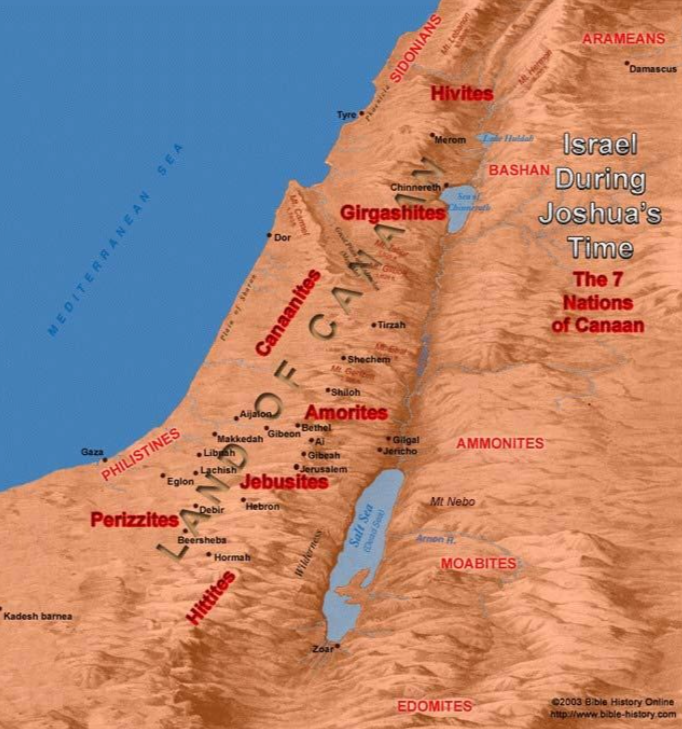
1 Now after the death of Joshua it came to pass that the children of Israel asked the Lord, saying, “Who shall go up for us against the Canaanites first, to fight against them?”
— asked the Lord; being assembled together at Shiloh, where the tabernacle was; and standing before the high priest, either Eleazar, or rather Phinehas his son, Eleazar being in all probability dead, they inquired of the high-priest by the Urim and the Thummim.
2 And the Lord said, “Judah shall go up. Behold, I have delivered the land into his hand.”
— Judah shall go up; not Judah in person, but the tribe of Judah; it was the will of the Lord that that tribe should engage first with the Canaanites, being the principal one, and the most numerous, powerful, and valiant.
3 And Judah said unto Simeon his brother, “Come up with me into my allotment, that we may fight against the Canaanites; and I likewise will go with thee into thy lot.” So Simeon went with him.
— both Judah and Simeon were sons of Leah; it was natural that the two tribes should help one another, because their lots were conterminous; indeed, the lot of the Simeonites is said to lie “within the inheritance of the children of Judah” (Joshua 19:1), and was given them “out of the portion of the children of Judah.”
4 And Judah went up; and the Lord delivered the Canaanites and the Perizzites into their hand, and they slew of them in Bezek ten thousand men.
— and Judah went up; under the leadership of Caleb (Joshua 14:6).
5 And they found Adonibezek in Bezek; and they fought against him, and they slew the Canaanites and the Perizzites.
— Adoni-bezek; this may not a proper name, but a title, meaning “lord of Bezek,” as Adoni-zedek, in Joshua 10:1, and perhaps Melchi-zedek, as in Genesis 14:18?
6 But Adonibezek fled; and they pursued after him and caught him, and cut off his thumbs and his great toes.
— found Adoni-bezek; that is, he was routed in a pitched battle, whence he fled; but being taken prisoner, he was treated with a severity unusual among the Israelites, for they “cut off his thumbs and great toes,” whereby he was disabled both for fighting and for fleeing.
7 And Adonibezek said, “Threescore and ten kings, having their thumbs and their great toes cut off, gathered their meat under my table. As I have done, so God hath requited me.” And they brought him to Jerusalem, and there he died.
— as I have done, so hath God requited me; this, as acknowledgment of God’s justice in his punishment, and the righteous judgment of God clearly appears in this instance;
“For the day of the Lord is near upon all the nations. As you have done, it shall be done to you; your dealings will return upon your own head” Obadiah 1:15.
8 Now the children of Judah had fought against Jerusalem, and had taken it and smitten it with the edge of the sword and set the city on fire.
— we learn from Judges 19:10-12 that Jerusalem was largely a Jebusite city in the lifetime of Phinehas, Judges 20:28, and it continued until the reign of David, II Samuel 5:6-9.
9 And afterward the children of Judah went down to fight against the Canaanites who dwelt in the mountain and in the South and in the valley.
— in the mountain, and in the south, and in the valley; these are three marked regions of Palestine: the “hill-country” (ha-Har, Joshua 9:1), in which were Hebron and Debir (Judges 1:10-11); the south or Negeb (Joshua 15:21).
10 And Judah went against the Canaanites who dwelt in Hebron (now the name of Hebron before was Kirjatharba), and they slew Sheshai and Ahiman and Talmai.
— now the name of Hebron, before was Kirjatharba: Joshua 14:15; in the first of which Caleb, drove out the three giants only, who afterwards got possession again, and in this put them to death;
— Sheshai, and Ahiman, and Talmai; the three sons of the Anak Joshua 15:14.
11 And from thence he went against the inhabitants of Debir (and the name of Debir before was Kirjathsepher).
12 And Caleb said, “He that smiteth Kirjathsepher and taketh it, to him will I give Achsah my daughter for a wife.”
— to him will I give Achsah, 1 Samuel 17:25; the victor was to gain the hand of Achsah: the city too (it appears) became his.
13 And Othniel the son of Kenaz, Caleb’s younger brother, took it; and he gave him Achsah his daughter for a wife.
— Othniel was “son of Kenaz and brother of Caleb” in which case he married his niece.
14 And it came to pass, when she came to him, that she moved him to ask of her father a field; and she alighted from her ass, and Caleb said unto her, “What wilt thou?”
— the Septuagint reads, “Othniel urged her to ask the field of her father.”
15 And she said unto him, “Give me a blessing, for thou hast given me a south land. Give me also springs of water.” And Caleb gave her the upper springs and the nether springs.
— the south land; the word also means “a dry and barren lan,” hence it was logical she asked for springs of water, a fertile land which lay at the foot of the mountain slope, or springs fromthe ground, if any; she showed herself less restrained than her husband.
16 And the children of the Kenite, Moses’ father-in-law, went up out of the city of palm trees with the children of Judah into the Wilderness of Judah, which lieth in the south of Arad; and they went and dwelt among the people.
— the children of the Kenite, Moses’ father-in-law, in the land of Midianites, and they went and dwelt among the people of the tribe of Judah, near some of the cities which were in the wilderness.
17 And Judah went with Simeon his brother, and they slew the Canaanites who inhabited Zephath and utterly destroyed it. And the name of the city was called Hormah.
— and Judah together with Simeon his brother, and they slew the Canaanites that inhabited Zephath, because Zephath or Hormah was in Simeon’s lot (Joshua 19:1-4).
18 Also Judah took Gaza with the regions thereof, and Ashkelon with the regions thereof, and Ekron with the region thereof.
— took Gaza, Askelon, and Ekron and their surrounding territories; three of the five Philistian lordships; and Ashdod with its territory.
19 And the Lord was with Judah; and he drove out the inhabitants of the mountain, but could not drive out the inhabitants of the valley because they had chariots of iron.
— chariots of iron; it mean “very strong chariots;” but the phrase means either “chariots with iron-bound wheels,” but this was no reason why they could not drive them out, if God was with them.
20 And they gave Hebron unto Caleb, as Moses said; and he expelled from thence the three sons of Anak.
— and there saw the giants, the sons of Anak; Sheshai, and Ahiman, and Talmai; Numbers 13:22.
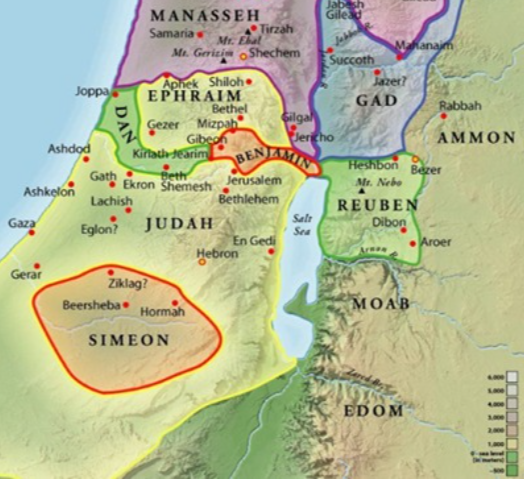
21 And the children of Benjamin did not drive out the Jebusites who inhabited Jerusalem, but the Jebusites dwell with the children of Benjamin in Jerusalem unto this day.
— the children of Benjamin did not drive out the Jebusites; but in Joshua 15:63 we find the same statement respecting the children of Judah, Judges 1:8. Because Jerusalem was on the borders of Judah and Benjamin.
22 And the house of Joseph, they also went up against Bethel; and the Lord was with them.
— Bethel, the position of this town on the “highway” is between Hebron and Shechem; but possibly, as in the case of Jerusalem, the border of Ephraim and Benjamin separated the upper from the lower town.
23 And the house of Joseph sent to descry Bethel. (Now the name of the city before was Luz.)
— to descry Bethel; the word perhaps to observe its passes and avenues, which were most accessible, and to examine the walls of it, and then to lay a siege.
24 And the spies saw a man come forth out of the city, and they said unto him, “Show us, we pray thee, the entrance into the city, and we will show thee mercy.”
— the spies said, Show us the entrance into the city, tthat is, the avenues to the city, and perhaps the weakest part of the walls.
25 And when he showed them the entrance into the city, they smote the city with the edge of the sword; but they let go the man and all his family.
— they smote the city with the edge of the sword; they got to the body of the army, who came up, entered the city, took it, and put all the inhabitants to the sword.
26 And the man went into the land of the Hittites and built a city, and called the name thereof Luz, which is the name thereof unto this day.
— the man whom they had permitted to go free, went with his family into the land of the Hittites, and there built a town, named it Luz.
27 Neither did Manasseh drive out the inhabitants of Bethshean and her towns, nor Taanach and her towns, nor the inhabitants of Dor and her towns, nor the inhabitants of Ibleam and her towns, nor the inhabitants of Megiddo and her towns; but the Canaanites would dwell in that land.
— neither did Manasseh, that is, that half of this tribe which dwelt in Canaan.
28 And it came to pass, when Israel was strong, that they put the Canaanites to tribute, and did not utterly drive them out.
— but only made them pay tributes, perhaps being influenced by sloth and covetousness; whereby they were enjoined to destroy or expel that people when they were able.
29 Neither did Ephraim drive out the Canaanites who dwelt in Gezer, but the Canaanites dwelt in Gezer among them.
— neither did Ephraim drive out the Canaanites that dwelt in Gezer; not so much as made them tributaries, but made a covenant with them, it is contrary to the express will of God.
30 Neither did Zebulun drive out the inhabitants of Kitron nor the inhabitants of Nahalol, but the Canaanites dwelt among them and became tributaries.
— Zebulun, Asher, Naphtali, were not strong enough to make any conquests, hence the Canaanites dwelt among them, and became tributaries probably for centuries.
31 Neither did Asher drive out the inhabitants of Acco, nor the inhabitants of Sidon, nor of Ahlab, nor of Achzib, nor of Helbah, nor of Aphik, nor of Rehob;
32 but the Asherites dwelt among the Canaanites, the inhabitants of the land, for they did not drive them out.
33 Neither did Naphtali drive out the inhabitants of Bethshemesh nor the inhabitants of Bethanath, but he dwelt among the Canaanites, the inhabitants of the land. Nevertheless the inhabitants of Bethshemesh and of Bethanath became tributaries unto them.
34 And the Amorites forced the children of Dan into the mountain, for they would not suffer them to come down to the valley.
— the Amorites; the condition of this tribe, Dan, was the worst of all, for they were forced into the mountain by the Amorites; and the Amorites stopped them from coming down to the valley.
35 But the Amorites would dwell in Mount Heres in Aijalon and in Shaalbim; yet the hand of the house of Joseph prevailed, so that they became tributaries.
— tributaries; not to Dan, but to their conquerors, the Ephraimites; so that the assistance offered by the house of Joseph to their weak brother was, at the best, somewhat selfish, hence the tribe of Dan moved to the north.
36 And the border of the Amorites was from the going up to Akrabbim, from the rock and upward.
— the border of the Amorites; the text describes a boundary line; but there was no boundary between the Israelites and the Amorites, that is, the old Canaanite population and the tribes of Jacob, they mixed around and occupied the same territory.
Judges 2
1 And an angel of the Lord came up from Gilgal to Bochim and said, “I made you to go up out of Egypt, and have brought you unto the land which I swore unto your fathers; and I said, ‘I will never break My covenant with you.
— an angel of the Lord as a messenger of the Lord, and does not introduce his words by, “Thus saith the Lord,” but speaks in the first person, “I will never break my covenant with you;” so, perhaps, he could be God the Son, who works closely with God the Father.
2 And ye shall make no league with the inhabitants of this land; ye shall throw down their altars.’ But ye have not obeyed My voice. Why have ye done this?
— ye shall make no league; these express and frequently-repeated commands of God they had disobeyed; wherefore he also warned, I will not drive them out; the Septuagint added “but ye shall destroy their graven images, ye shall pull down their altars: but ye hearkened not to my voice, for ye did these things.”
3 Therefore I also said, ‘I will not drive them out from before you; but they shall be as thorns in your sides, and their gods shall be a snare unto you.’”
— I will not drive them out from before you; the seven nations of the Canaanites entirely, and which accounts for the various instances related in the preceding chapter.
4 And it came to pass, when the angel of the Lord spoke these words unto all the children of Israel, that the people lifted up their voice and wept.
— when the angel of the Lord spoke these words, the people lifted up their voice and wept; “all the children of Israel” indicating it could be during either one of the three solemn feasts, when all the males appeared at the tabernacle of the Lord.
5 And they called the name of that place Bochim [that is, Weepers], and they sacrificed there unto the Lord.
— it could infer from this that Bochim could have been near the sanctuary at Bethel, Shechem, or Shiloh.
6 And when Joshua had let the people go, the children of Israel went every man unto his inheritance to possess the land.
— all these events were after the death of Joshua; but this refers to a meeting of Joshua and them before his death.
7 And the people served the Lord all the days of Joshua, and all the days of the elders who outlived Joshua, who had seen all the great works of the Lord that He did for Israel.
— if Joshua was about 80 at the entrance into Canaan, 30 years would bring us to the close of his life. The “elders” would be all that were old enough to take part in the wars of Canaan Judges 3:1-2.
8 And Joshua the son of Nun, the servant of the Lord, died, being a hundred and ten years old.
— a hundred and ten years old, the same age as Joseph (Genesis 1:26); Moses attained the age of 120 (Deuteronomy 34:7), Jacob, of 130 (Genesis 47:9), Isaac, of 180 (Genesis 35:28).
9 And they buried him in the border of his inheritance in Timnathheres, in the mount of Ephraim, on the north side of the hill Gaash.
— in the mount of Ephraim, on the north side of the hill Gaash, land allocated to Ephraim.
10 And also all that generation were gathered unto their fathers, and there arose another generation after them who knew not the Lord nor yet the works which He had done for Israel.
— which knew not the Lord; they proceed from evil to evil, and they know not me, saith the Lord.
11 And the children of Israel did evil in the sight of the Lord, and served the Baalim.
— “the Baalim;” Baal means “lord,” or “possessor,” and in its idolatrous sense was applied especially to the sun, that was worshipped as the great nature-power; or Baalzebul, “lord of the heavenly habitation.”
12 And they forsook the Lord God of their fathers, who brought them out of the land of Egypt, and followed other gods, the gods of the people who were round about them, and bowed themselves unto them, and provoked the Lord to anger.
— provoked the Lord to anger; which is a frequent expression in connection with idolatry, especially in Deuteronomy, in the Books of the Kings, and in Jeremiah.
13 And they forsook the Lord and served Baal and Ashtaroth.
— Ashtaroth; the plural of the feminine word Ash-tareth, or Astarte, “the goddess of the Sidonians” 1Kings 11:5.
14 And the anger of the Lord was hot against Israel; and He delivered them into the hands of despoilers who despoiled them, and He sold them into the hands of their enemies round about, so that they could not any longer stand before their enemies.
— the anger of the Lord was hot against Israel, and he delivered them into the hands of spoilers that spoiled them; adversities in close and rapid succession befell them: the Moabites, Midianites, Philistines and Ammonites.
15 Whithersoever they went out, the hand of the Lord was against them for evil, as the Lord had said, and as the Lord had sworn unto them; and they were greatly distressed.
— and they were greatly distressed; thus surely bringing upon them all the curses of the law; Deuteronomy 28:15.
16 Nevertheless the Lord raised up judges, who delivered them out of the hand of those who despoiled them.
— the Lord raised up judges; in the sense of magistrates or tribunal, for there were laws and statues as in our case.
17 And yet they would not hearken unto their judges, but they went a whoring after other gods, and bowed themselves unto them. They turned quickly out of the way which their fathers walked in, obeying the commandments of the Lord; but they did not so.
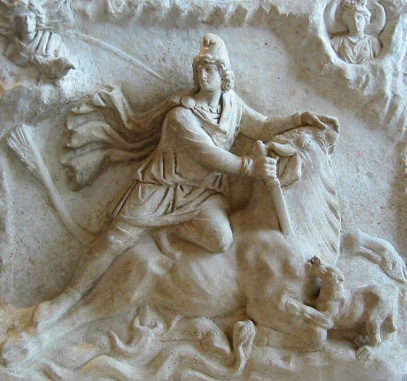
— but they went whoring after their gods, and bowed themselves unto them; committing idolatry, sharing Dec 25th birthday with Mithra, the Sun-god of the Persians.
18 And when the Lord raised them up judges, then the Lord was with the judge and delivered them out of the hand of their enemies all the days of the judge; for the Lord was moved to repent because of their groanings by reason of those who oppressed them and vexed them.
— it repented the Lord; that is, the Lord was grieved; he wish he could change their course and dealings with them.
19 And it came to pass, when the judge was dead, that they returned and corrupted themselves more than their fathers in following other gods, to serve them and to bow down unto them. They ceased not from their own doings nor from their stubborn way.
— their stubborn way, Heb. hard way; so he calls their way of wickedness, being obdurate and stiffnecked; and which, they would be hard, troublesome and bringing distress to themselves.
20 And the anger of the Lord was hot against Israel; and He said, “Because this people hath transgressed My covenant which I commanded their fathers, and have not hearkened unto My voice,
— during the time of the Judges, the nation of Israel made themselves as mean and miserable by forsaking God; their punishment was, that the Canaanites were spared, and so they were beaten from within by their own rod.
21 I also will not henceforth drive out any from before them of the nations which Joshua left when he died, and God determined not to destroy the nations which Joshua had left when he died.
— the judges who governed Israel were strictly God’s servants in the government of the people, he being the supreme ruler.
22 that through them I may test Israel, whether they will keep the way of the Lord to walk therein, as their fathers did keep it, or not.”
— that I may try and see whether Israel will be true and faithful to me, to try them whether they would keep his commandments, or whether they will suffer themselves to be corrupted by the counsels and examples of the nations around.
23 Therefore the Lord left those nations without driving them out hastily, neither delivered He them into the hand of Joshua.
— the word “hastily,” as to signify that the Lord would not exterminate any more of these nations so long as Israel persisted in its idolatry. Had Israel not forsaken the Lord its God so soon after Joshua’s death, the Lord would have exterminated the Canaanites who were left in the land much sooner than he did.


