
Joshua (23-24)
Joshua 23
1 And it came to pass, a long time after the Lord had given rest unto Israel from all their enemies round about, that Joshua waxed old and stricken in age.
— it is possible that we ought to translate thus: “It came to pass, a long time after the Lord had given rest, and after Joshua had grown old, advanced in days, that Joshua called.
2 And Joshua called for all Israel, and for their elders, and for their heads, and for their judges, and for their officers, and said unto them, “I am old and stricken in age.
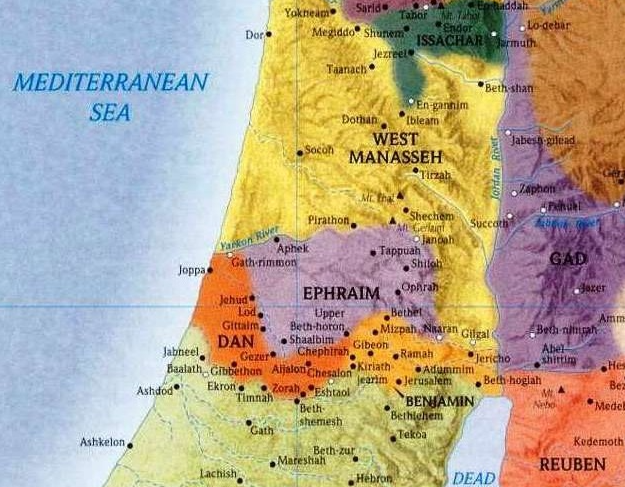
— for though he was ten years younger than Moses when he died, at 110 of age; again, the place of assembly was most probably Shiloh, the usual place of such assemblies; with their representatives, by their elders, heads, judges and officers.
3 And ye have seen all that the Lord your God hath done unto all these nations because of you, for the Lord your God is He that hath fought for you.
— as we have seen before; and as sometimes, the land is put for you, near the sea, where the Philistines, your most formidable adversarie; them and also their land I have given to you, and you shall undoubtedly destroy them, if you will proceed vigorously in your work; yet they survived.
4 Behold, I have divided unto you by lot these nations that remain to be an inheritance for your tribes, from the Jordan, with all the nations that I have cut off, even unto the Great Sea westward.
— to the Mediterranean sea, called the great sea in comparison to the little ones as the Dead sea, and the sea of Tiberias; and which great sea lay west to the land of Israel, or where the sun sets.
5 And the Lord your God, He shall expel them from before you and drive them from out of your sight; and ye shall possess their land, as the Lord your God hath promised unto you.
— very cautiously to endeavour that the heathen idolatry may be forgotten, so that “drive them from out of your sight” may never be achieved.
6 Be ye therefore very courageous to keep and to do all that is written in the Book of the Law of Moses, that ye turn not aside therefrom to the right hand or to the left;
— be ye therefore very courageous; for it would require great courage and resolution to execute all the commands of Moses, and particularly that of expelling and destroying the giants of the Canaanites.
7 that ye come not among these nations, these that remain among you, neither make mention of the name of their gods, nor cause any to swear by them, neither serve them nor bow yourselves unto them.
— come not among these nations, that is, avoid all familiar converse and contracts, especially marriages with them, neither make mention of the name of their gods.
8 But cleave unto the Lord your God, as ye have done unto this day.
— but cleave unto the Lord your God; to his word, laws, statutes and ordinances.
9 For the Lord hath driven out from before you great nations and strong; but as for you, no man hath been able to stand before you unto this day.
— for this reason the Lord had driven out great and strong nations before the Israelites, so that no one was able to stand before them.
10 One man of you shall chase a thousand; for the Lord your God, He it is that fighteth for you, as He hath promised you.
— One man of you shall chase a thousand; a quotation from the song of Moses (Deuteronomy 32:30).
11 Take good heed therefore unto yourselves, that ye love the Lord your God.
12 Or else, if ye do in any wise go back and cleave unto the remnant of these nations, even these that remain among you, and shall make marriages with them and go in unto them and they to you,
— and avoid attaching themselves to the remnant of these nations, made marriages with them, and entered into any fellowship with them, which the Lord had expressly forbidden.
13 know for a certainty that the Lord your God will no more drive out any of these nations from before you, but they shall be snares and traps unto you and scourges in your sides and thorns in your eyes, until ye perish from off this good land which the Lord your God hath given you.
— but if ye make marriages with them, the Lord your God will no more drive out, and they shall be thorns in your eyes, snares and traps to you.
14 “And behold, this day I am going the way of all the earth. And ye know in all your hearts and in all your souls that not one thing hath failed of all the good things which the Lord your God spoke concerning you: all have come to pass unto you, and not one thing hath failed thereof.
— that not one thing hath failed which the Lord your God hath spoken concerning you; particularly concerning the good land, and the Lord’s bringing them into it, removing the inhabitants, and settling them in their rooms.
15 Therefore it shall come to pass that, as all good things have come upon you which the Lord your God promised you, so shall the Lord bring upon you all evil things until He have destroyed you from off this good land which the Lord your God hath given you:
— so shall the Lord bring upon you all evil things; calamities and distresses, by his judgments of famine, sword, pestilence, evil beasts, and captivity, in case of disobedience to his commands; according to what Moses had prophecised: Leviticus 26 and Deuteronomy 28.
16 when ye have transgressed the covenant of the Lord your God which He commanded you, and have gone and served other gods and bowed yourselves to them, then shall the anger of the Lord be kindled against you, and ye shall perish quickly from off the good land which He hath given unto you.”
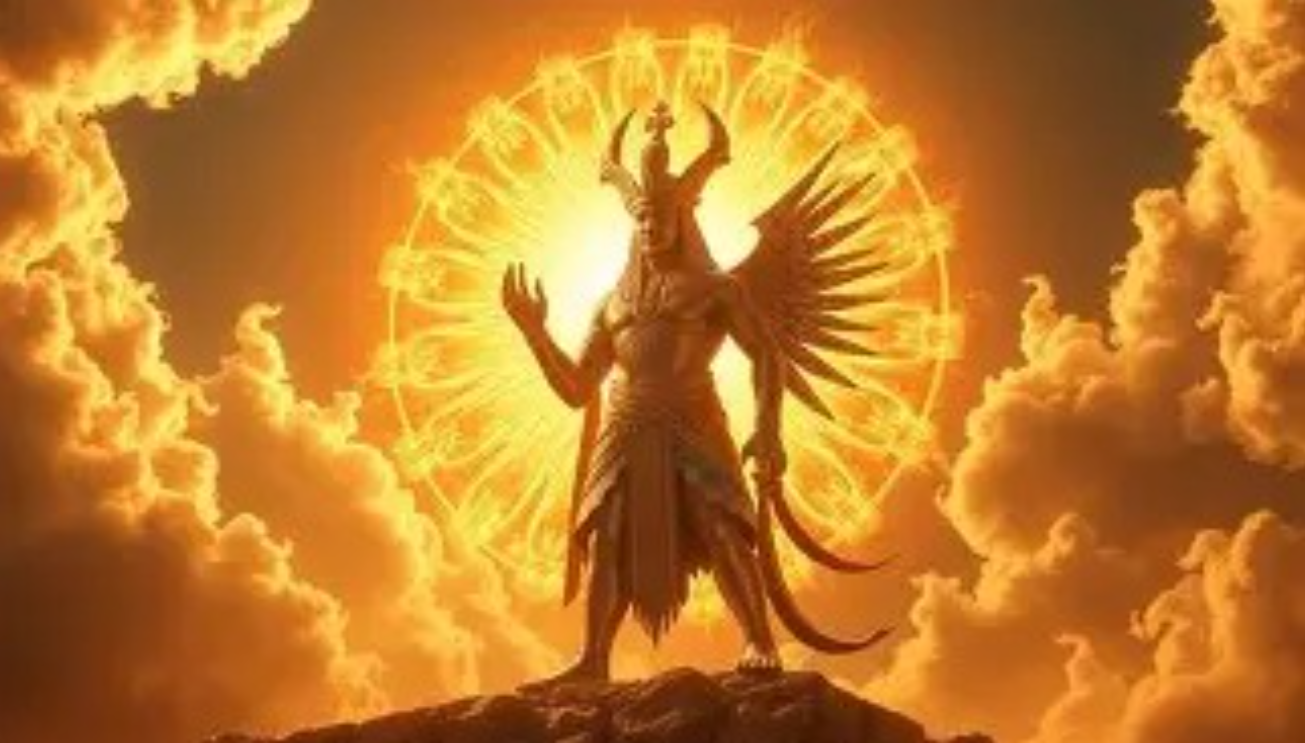
— and have gone and served other gods; and today Mithra, the Sun-god of the Persians, with brithday on December 25th, where a billion people today would pay homage to this day, but call it Christmas; and Shamash: the Sun-god in the Babylonian Cosmology.
Joshua 24
1 And Joshua gathered all the tribes of Israel to Shechem, and called for the elders of Israel and for their heads and for their judges and for their officers; and they presented themselves before God.
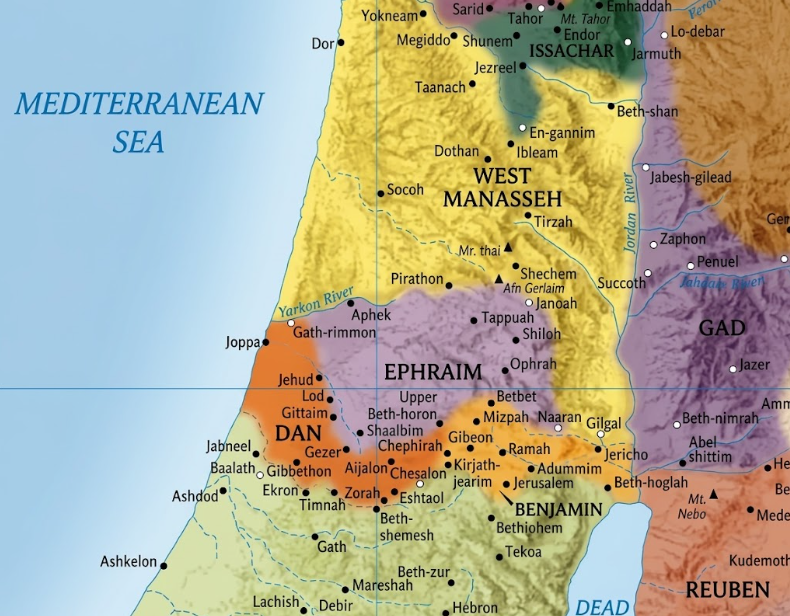
— the Ark of the Covenant was still in Shiloh, so why did they gather at Shechem, ten miles away? Shechem was a convenient choice, not only as a Levitical city and a city of refuge, but also because it lay between Mount Ebal and Mount Gerizim, places tied to the blessings and curses they had sworn earlier. For these reasons, Joshua summoned them there.
— the phase, “they presented themselves before God” that is, in God’s presence; thus it may indicates they could have moved the Ark over to Shechem for such an important ocassion, and together with it, the tabernacle; for a solemn renewing of their covenant with God.
2 And Joshua said unto all the people, “Thus saith the Lord God of Israel: ‘Your fathers dwelt on the other side of the river in old time, even Terah, the father of Abraham and the father of Nahor; and they served other gods.
— they served other gods; they, that is, Terah, father of Abraham, and Nachor, they served other gods on the other side of the Euphrates. Contrary to some commentators copying one another, Abraham himself didn’t serve any of the pagan gods.
3 And I took your father Abraham from the other side of the river and led him throughout all the land of Canaan, and multiplied his seed and gave him Isaac.
— Jewish tradition asserts that Abraham while in Ur of the Chaldees was persecuted for his abhorrence of idolatry, and hence, he was called away by God from his native land to the land of Canaan;
— and multiplied his seed, and gave him Isaac; and from whom, in the line of Jacob, sprung the twelve tribes of Israel, and which seed he would zoom in.
4 And I gave unto Isaac Jacob and Esau; and I gave unto Esau Mount Seir to possess it, but Jacob and his children went down into Egypt.
— I gave Esau Mount Seir, but during the time of famine, most of Esau’s posterity would have also migrated out of the land of Canaan; so that there would be no obstacle to the psoterity of Jacob when they returned from Egypt to reoccupy the land of Canaan, except only from the tribe of the Amalekites, who came from a grandson of Esau.
5 I sent Moses also and Aaron, and I plagued Egypt, according to that which I did among them; and afterward I brought you out.
6 And I brought your fathers out of Egypt; and ye came unto the sea, and the Egyptians pursued after your fathers with chariots and horsemen unto the Red Sea.
— as they came out of Egypt, from Pharaoh who pursued them with his army, giving especial prominence to the crying of the Israelites to the Lord in their distress, and their relief of that distress from the mighty hand of God.
7 And when they cried unto the Lord, He put darkness between you and the Egyptians, and brought the sea upon them and covered them. And your eyes have seen what I have done in Egypt; and ye dwelt in the wilderness a long season.
— your eyes hare seen what I have done in Egypt; He speaks this to the elders, but many of them would be very young; and as there were not sixty years past since the plagues were inflicted on Egypt.
8 And I brought you into the land of the Amorites, who dwelt on the other side of the Jordan. And they fought with you; and I gave them into your hand, that ye might possess their land, and I destroyed them from before you.
— and I brought you into the land of the Amorites, which dwelt on the other side Jordan; the kingdoms of Sihon and Og, and they fought with you; the two kings of them, and their armies.
9 Then Balak the son of Zippor, king of Moab, arose and warred against Israel, and sent and called Balaam the son of Beor to curse you.
— then Balak, the king of Moab, arose; being alarmed with what Israel had done to the two kings of the Amorites, and by their near approach to the borders of his kingdom; and he sent and called Balaam the son of Beor to curse you.
10 But I would not hearken unto Balaam. Therefore he blessed you still; so I delivered you out of his hand.
— by which means Balak hoped to prevail in battle, and get the victory over you; but not being able to bring this about, for God chose them not for their evil design upon the children of Israel.
11 And ye went over the Jordan and came unto Jericho; and the men of Jericho fought against you — the Amorites, and the Perizzites, and the Canaanites, and the Hittites, and the Girgashites, the Hivites, and the Jebusites. And I delivered them into your hand.
— the Amorites, the Perizzites, the Canaanites, the Hittites, the Girgashites, the Hivites and the Jebusites; the seven nations of Canaan; this they did at different times, and in different places; and I delivered them into your hand; these nations and their kings;
“I am thy shield! Unto thy seed have I given this land, from the river of Egypt unto the great river, the River Euphrates” Genesis 15
12 And I sent the hornet before you which drove them out from before you, even the two kings of the Amorites, but not with thy sword nor with thy bow.
— the two kings of the Amorites, namely, Sihon and Og; these were kings of the Amorites on both sides of Jordan.
13 And I have given you a land for which ye did not labor and cities which ye built not, and ye dwell in them. Of the vineyards and oliveyards which ye planted not do ye eat.’
— amble waves of vineyards and oliveyards, which you didn’t planted, yet you eat; thus an account is given of the many benefits they had been and were favoured with, and thus far were the words of the Lord by Moses; next follow the use and improvement Joshua made of them.
14 “Now therefore, fear the Lord, and serve Him in sincerity and in truth; and put away the gods which your fathers served on the other side of the river and in Egypt, and serve ye the Lord.
— now therefore fear the Lord, “Behold, the fear of the Lord, that is wisdom; and to depart from evil is understanding,” Job 28:28.
15 And if it seem evil unto you to serve the Lord, choose you this day whom ye will serve, whether the gods which your fathers served that were on the other side of the river, or the gods of the Amorites in whose land ye dwell. But as for me and my house, we will serve the Lord.”
— as for me and my house, we will serve the Lord; for Joshua himself the service of the Lord on earth was nearly over; thus he pledges his “house” to the same service.
16 And the people answered and said, “God forbid that we should forsake the Lord to serve other gods;
— the elders responded to this appeal by declaring, with an expression of horror at idolatry, their hearty resolution to serve the Lord, who would be their only God.
17 for the Lord our God, He it is that brought us up and our fathers out of the land of Egypt, from the house of bondage, and who did those great signs in our sight, and preserved us in all the way wherein we went and among all the people through whom we passed.
— and among all the people through whom we passed; after the miraculous passage of the Red Sea and the Jordan, through whose borders they passed, as the Edomites, Moabites, Ammonites and the Amorites.
18 And the Lord drove out from before us all the people, even the Amorites who dwelt in the land. Therefore will we also serve the Lord, for He is our God.”
— especially the Amorites, as others; those that lived on the other side Jordan, over whom Sihon and Og reigned.
19 And Joshua said unto the people, “Ye cannot serve the Lord, for He is a holy God; He is a jealous God; He will not forgive your transgressions nor your sins:
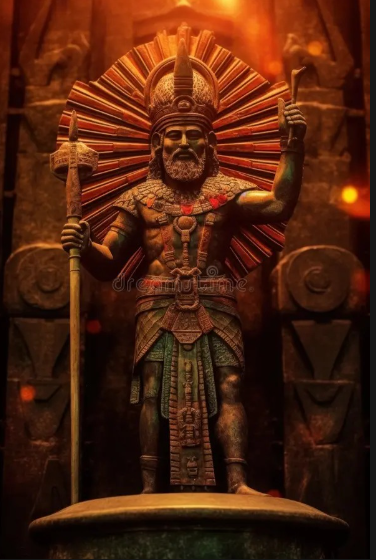
— he is a jealous God; he will not endure a co-rival or partner in his worship; you cannot serve him and idols together, as you will be inclined and tempted to do; yet today’s Christians compelled him to share it with Mithra, the Persian Sun-god on celebrating December 25 as his birthday.
20 if ye forsake the Lord and serve strange gods, then He will turn and do you hurt, and consume you after He hath done you good.”
21 And the people said unto Joshua, “Nay; but we will serve the Lord.”
22 And Joshua said unto the people, “Ye are witnesses against yourselves that ye have chosen for yourselves the Lord to serve Him.” And they said, “We are witnesses.”
— ye are witnesses against yourselves, clearly and unmistakeably the people had declared that, in the event of their falling away, they would condemn themselves by their own evidence, and would be obliged to admit that God has a right to punish them for their unfaithfulness.
23 “Now therefore put away,” said he, “the strange gods which are among you, and incline your heart unto the Lord God of Israel.”
— they embedded the Babylonian Sun-god into Christianity; hence they found they could pretend to follow Christ and yet having secret paganism within them without being seen as one too obvious.
24 And the people said unto Joshua, “The Lord our God will we serve, and His voice will we obey.”
— the history of Micah in Judges 17:5 is a proof of contrary to this, and it must be remembered that this history is still part of the time of Joshua’s reign.
25 So Joshua made a covenant with the people that day, and set them a statute and an ordinance in Shechem.
— now therefore fear the Lord, and serve him in sincerity and in truth; those bound for heaven must be willing to swim against the current, yet their followers often succumb to Babylonian influences.
26 And Joshua wrote these words in the Book of the Law of God, and took a great stone and set it up there under an oak that was by the sanctuary of the Lord.
— under an oak that was by the sanctuary, that is, near the place where the Ark and tabernacle then were; for they were forbidden to plant a grove of trees near unto the altar, Deuteronomy 16:21, as the Gentiles did.
27 And Joshua said unto all the people, “Behold, this stone shall be a witness unto us, for it hath heard all the words of the Lord which He spoke unto us. It shall be therefore a witness unto you, lest ye deny your God.”
— it hath heard, this stone shall be as sure a witness against you as if this stone had heard. This is a common figure, whereby the sense of hearing these stone ares often ascribed to the heavens and the earth, and other senseless creatures.
28 So Joshua let the people depart, every man unto his inheritance.
— Joshua then dismissed the people, each one to his land; he had done all that was in his power to establish the people in fidelity to the Lord.
29 And it came to pass after these things that Joshua the son of Nun, the servant of the Lord, died, being a hundred and ten years old. — (Joshua died in the Jewish year 2516).
— a hundred and ten years old; his work was now over, his work of war, and his work of peace; his age when he died was precisely that which Joseph reached (Genesis 50:26), a hundred and ten years (Jewish year 2516; secular year 1245 BC).
30 And they buried him in the border of his inheritance in Timnathserah, which is in Mount Ephraim, on the north side of the Hill of Gaash.
31 And Israel served the Lord all the days of Joshua, and all the days of the elders who outlived Joshua and who had known all the works of the Lord, that He had done for Israel.
— if Israel had served the Lord all the days of Joshua, then the story of Micah would have happened after Joshua’s death.
32 And the bones of Joseph, which the children of Israel brought up out of Egypt, buried they in Shechem, in a parcel of ground which Jacob bought from the sons of Hamor the father of Shechem for a hundred pieces of silver. And it became the inheritance of the children of Joseph.
— this piece of field, however, they chose for a burial-place for Joseph’s bones, not only because Jacob had purchased it, but in all probability chiefly because Jacob had sanctified it for his descendants by building an altar there.
33 And Eleazar the son of Aaron died; and they buried him in a hill that pertained to Phinehas his son, which was given him in Mount Ephraim.
— the death and burial of Eleazar, who stood by Joshua’s side in the guidance of the nation, are mentioned last of all; being Levites, they were given 48 cities in total and land surrounding it from all the other tribes;
— but being priests and buried in mount Ephraim seemed special. The inheritance of Phinehas as a priest should lie within the tribe of Judah or Benjamin (Joshua 21:13-19). The gift to Phinehas in Mount Ephraim, near the government’s seat at the time, appears to have been a special grant beyond his inheritance;
— and since the tabernacle was located at Shiloh or Shechem then, where they would be required to live and work, it made perfect sense that a residence and a burial place in Mount Ephraim should be provided for the priests in that area.


