
Joshua (17-18)
Joshua 17
1 There was also a lot for the tribe of Manasseh, for he was the firstborn of Joseph, to wit, for Machir the firstborn of Manasseh, the father of Gilead, because he was a man of war. Therefore he had Gilead and Bashan.
— the second lot was for Manasseh, although he was the firstborn of Joseph, yet Jacob had preferred Ephraim before him; and though Ephraim was to be more potent and numerous than Manasseh, their estates and cities were in some degree mixed together.
2 There was also a lot for the rest of the children of Manasseh by their families: for the children of Abiezer, and for the children of Helek, and for the children of Asriel, and for the children of Shechem, and for the children of Hepher, and for the children of Shemida. These were the male children of Manasseh the son of Joseph by their families.
— was a son of Gilead; for the children of Shechem, and of Hepher, and of Shemida; hence the families of the Jeezerites, Helekites, Asrielites, Shechemites, Hepherites and Shemidaites, mentioned in Numbers 26:30.
3 But Zelophehad the son of Hepher, the son of Gilead, the son of Machir, the son of Manasseh, had no sons but daughters; and these are the names of his daughters: Mahlah, and Noah, Hoglah, Milcah, and Tirzah.
— the daughters of Zelophehad was so given on condition of their marrying within the limits of their own tribe; and not be blotted out from the memory of his descendants.
4 And they came near before Eleazar the priest and before Joshua the son of Nun and before the princes, saying, “The Lord commanded Moses to give us an inheritance among our brethren.” Therefore according to the commandment of the Lord he gave them an inheritance among the brethren of their father.
— Zelophehad was dead, and that without sons, he had no portion; therefore his daughters were to receive several portions allotted to them. Hence according to the commandment of the Lord he transfered them an inheritance.
5 And there fell ten portions to Manasseh, besides the land of Gilead and Bashan, which were on the other side of the Jordan,
— ten portions, five for the sons, and five for the daughters; as for Hepher, both he and his son Zelophehad were dead, and that without sons; bso his daughters had several portions allotted to them.
6 because the daughters of Manasseh had an inheritance among his sons; and the rest of Manasseh’s sons had the land of Gilead.
— the posterity of Hepher, being all women, the five daughters of Zelophehad were also endowed each with an inheritance in land.
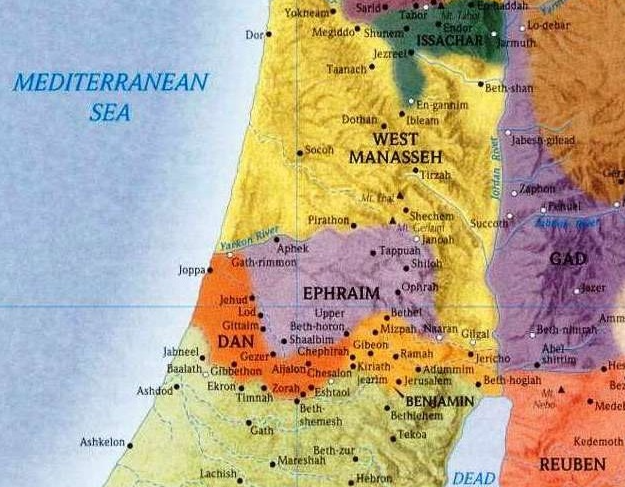
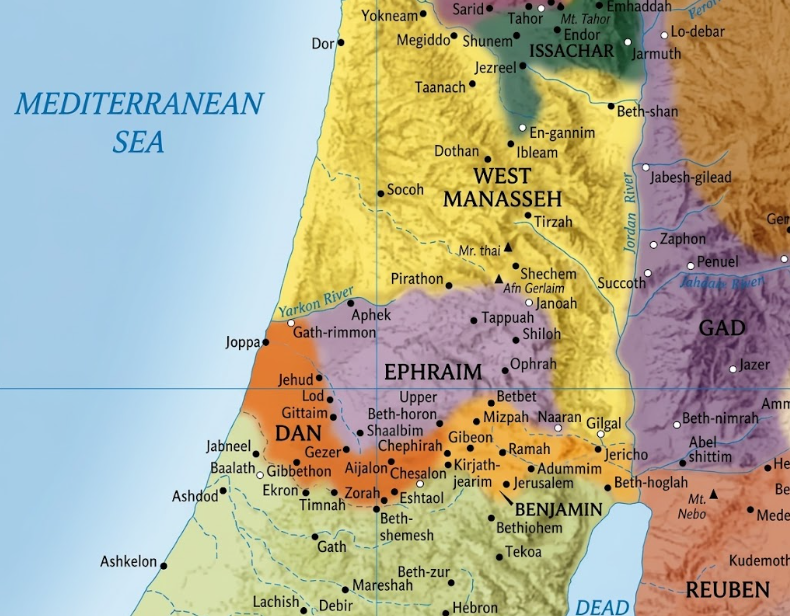
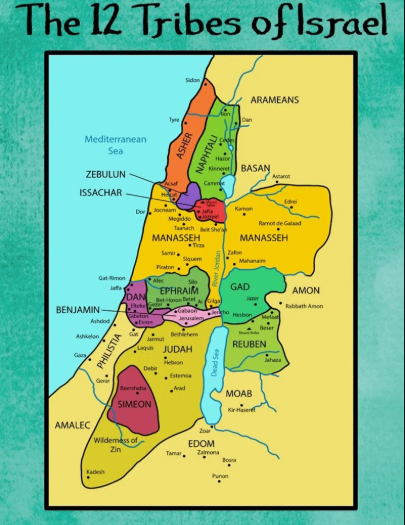
7 And the border of Manasseh was from Asher to Michmethath, that lieth before Shechem; and the border went along on the right hand unto the inhabitants of Entappuah.
— Shechem, situated between Gerizim and Ebal, on the border of Ephraim; and became an important city in the days of the Judges (Judges 9). It was also that Rehoboam went there to be crowned.
8 Now Manasseh had the land of Tappuah, but Tappuah on the border of Manasseh belonged to the children of Ephraim.
— the tribe of Ephraim is interlocked with the tribe of Manasseh; or the tribe of Manasseh is interlocked with the tribe of Ephraim because there were great communication between Manasseh and Ephraim.
9 And the border descended unto the River Kanah, southward of the river. These cities of Ephraim are among the cities of Manasseh. The border of Manasseh also was on the north side of the river, and the boundaries of it were at the sea.
— because they are close brothers, these cities of Ephraim are among the cities of Manasseh; interlacing with each other; as the cities which were upon the river, though all were within the limits of Manasseh’s possessions, were assigned partly to Ephraim, and partly to Manasseh.
10 Southward it was Ephraim’s, and northward it was Manasseh’s, and the sea is his border; and they met together in Asher on the north and in Issachar on the east.
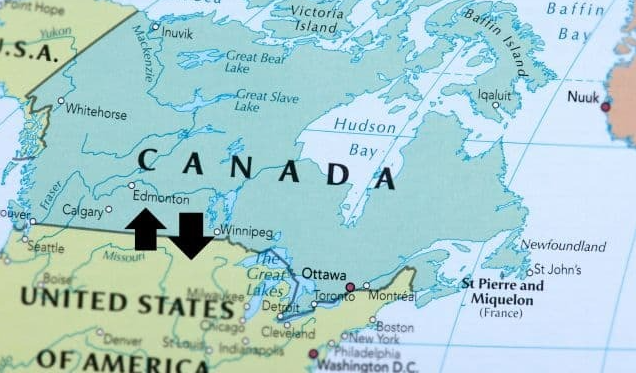
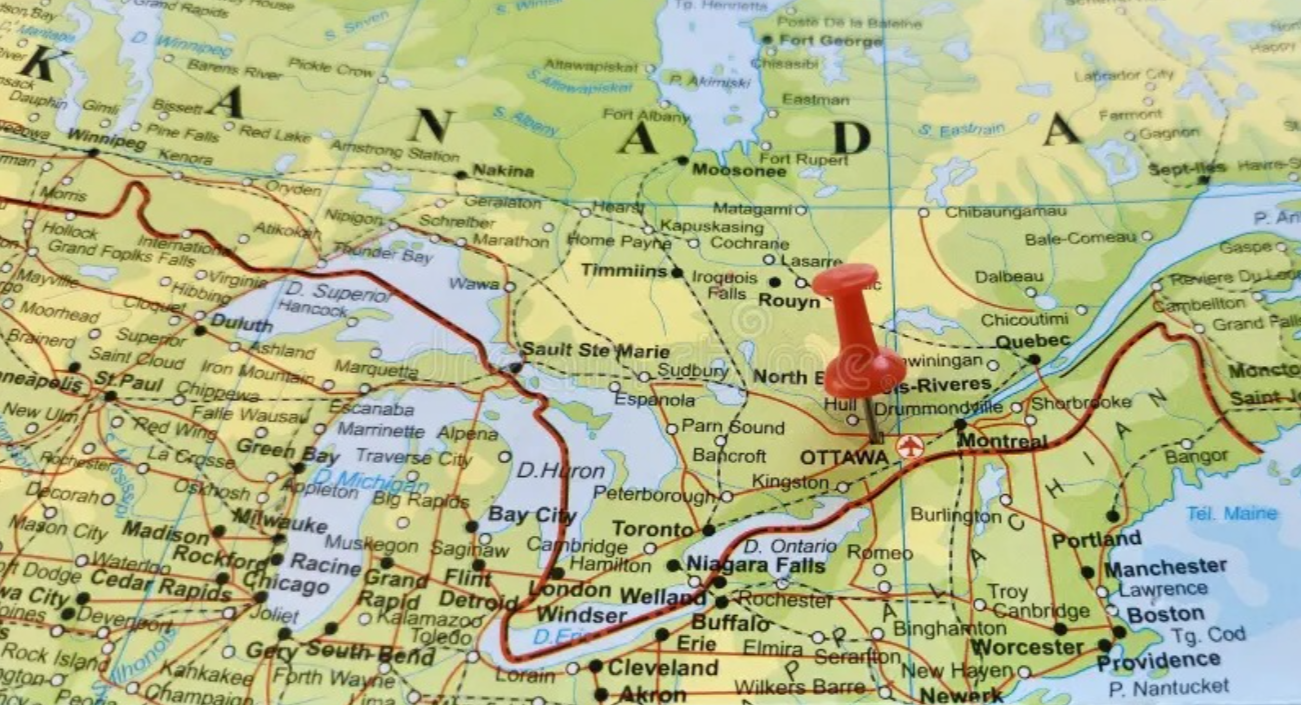
— there were no sea described as “and the sea is his border;” along the boundary of Ephraim and Manasseh; hence this is God’s prophetic teasing his readers if we are thinkking critically, as this seems more for the endtime scenario, as it looks like it is describing the Great Lakes as the seas spanning along the Canada–United States border;
— and on deeper thoughts, the comments above, “interlacing with each other; as the cities which were upon the river,” are more of a description where people between Canada and the United States are travelling back and forth between their border towns.
11 And Manasseh had in Issachar and in Asher Bethshean and her towns, and Ibleam and her towns, and the inhabitants of Dor and her towns, and the inhabitants of Endor and her towns, and the inhabitants of Taanach and her towns, and the inhabitants of Megiddo and her towns, even three countries.
— Manasseh had in Issachar and in Asher as its borders.
12 Yet the children of Manasseh could not drive out the inhabitants of those cities, but the Canaanites would dwell in that land.
— yet the children of Manasseh could not drive out the inhabitants of these cities; they had not strength at first to do it, or either were negligent and slothful, and suffered them to dwell among them.
13 Yet it came to pass, when the children of Israel waxed strong, that they put the Canaanites to tribute, but did not utterly drive them out.
— but did not utterly drive them out; for if they were able to make them pay tribute to them, they had power sufficient to drive them out, or destroy them, and therefore broke the commandment of God.
14 And the children of Joseph spoke unto Joshua, saying, “Why hast thou given me but one lot and one portion to inherit, seeing I am a great people, forasmuch as the Lord hath blessed me hitherto?”
— the children of Joseph; that is, of Ephraim and Manasseh spoke collectively, because they had but one lot, which was afterward divided by the arbitrators between them; or, because the land severally allotted to them was too small for both of them.
15 And Joshua answered them, “If thou be a great people, then get thee up to the wood country and cut down for thyself there in the land of the Perizzites and of the giants, if Mount Ephraim be too narrow for thee.”
— the wood country; to the mountain, where among some towns there is much wood-land, which thou may without much difficulty possess, and so get the more room in the land of the Perizzites, and of the giants; or Rephaim; the former of these were one of the seven nations of the Canaanites.
16 And the children of Joseph said, “The hill is not enough for us; and all the Canaanites who dwell in the land of the valley have chariots of iron, both those who are of Bethshean and her towns, and those who are of the Valley of Jezreel.”
— for their lack of faith and courage, they complained chariots of iron; which is not all made of iron but only armed with iron, not only for defence, but for offence also, having as it were scythes and swords fastened to them, to cut down all that stood in their way.
17 And Joshua spoke unto the house of Joseph, even to Ephraim and to Manasseh, saying, “Thou art a great people and hast great power. Thou shalt not have one lot only;
— and thou hast power to get more; which, if thou endeavourest to do, God will bless and give thee more: the mountain shall be thine.
18 but the mountain shall be thine, for it is a wood and thou shalt cut it down. And the boundaries of it shall be thine; for thou shalt drive out the Canaanites, though they have iron chariots and though they be strong.”
— by dispossessing the Canaanites, thou shalt double the portion of land at thy disposal.
Joshua 18
1 And the whole congregation of the children of Israel assembled together at Shiloh, and set up the tabernacle of the congregation there. And the land was subdued before them.
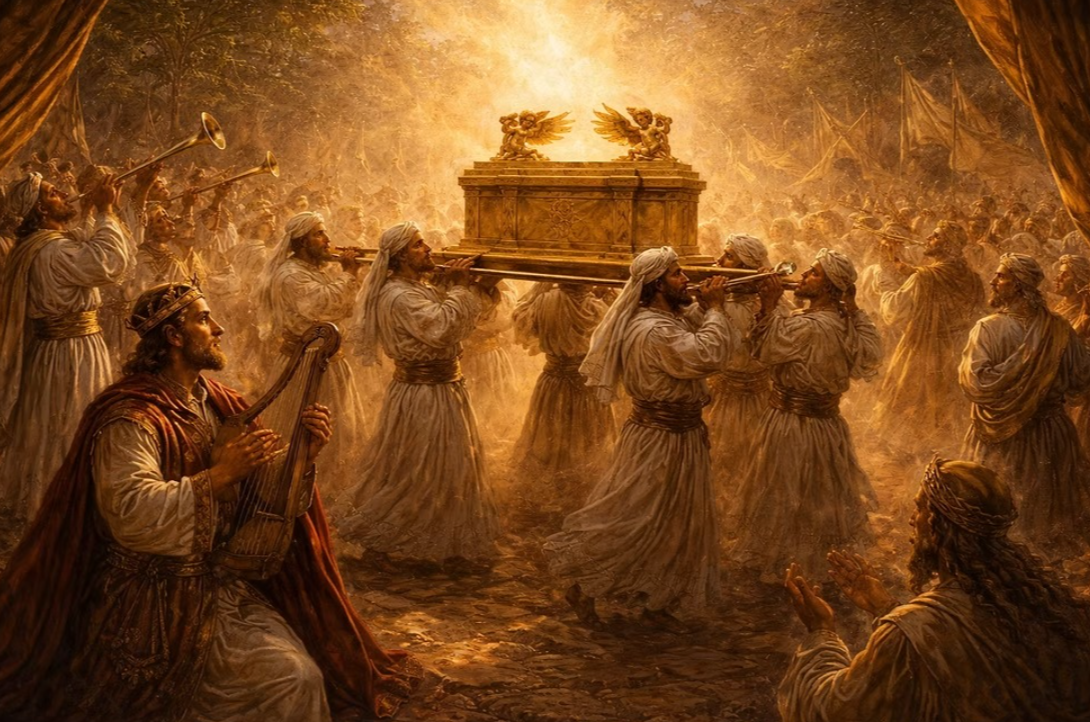
— at Shiloh; about ten miles due south of Shechem, in the territory of Ephraim; most probably Joshua had moved the Ark to Shiloh by now, and they inquired the Lord from there; as they “cast lots for you before the Lord in Shiloh, v8.”
— the inheritance of the tribe of Judah was determined in Gilgal; but the assignment of the central part of the country to Ephraim and Manasseh brought the leaders of Israel into Shiloh, and as soon as the position of Ephraim, Joshua’s own tribe, was settled, the Ark of tabernacle was set up there in Shiloh;
— Joshua, the governor of Israel, now headquartered and resided in Shiloh, Ephraim being his tribe; and also since Gilgal, on the borders of the land, was too far off for the people to resort to the tabernacle, and at Shiloh the tabernacle continued for above three hundred sixty nine years, even till Samuel’s days, 1 Samuel 1:3.
2 And there remained among the children of Israel seven tribes, which had not yet received their inheritance.
— and there remained seven tribes which had not yet received their inheritance, for whom no lot had been drawn at Gilgal; which were those of Benjamin, Simeon, Zebulun, Issachar, Asher, Naphtali and Dan.
3 And Joshua said unto the children of Israel, “How long are ye slack to go to possess the land which the Lord God of your fathers hath given you?
— how long are ye slack? it is probable, that being weary of war, and now having sufficient plenty of all things, they were unwilling to run into new hazards.
4 Appoint from among you three men for each tribe, and I will send them; and they shall rise and go through the land, and describe it according to the inheritance of them; and they shall come again to me.
— give out from among you three men for each tribe, that is, from each of the seven tribes,and go through the land of Canaan; not the whole of it, but that part which as yet was not disposed of.
5 And they shall divide it into seven parts: Judah shall abide in their border on the south, and the house of Joseph shall abide in their borders on the north.
— into seven parts; their business was to divide the remaining country into seven portions of equal extent or worth, and leave God to appoint which portion should fall to each tribe.
6 Ye shall therefore describe the land into seven parts and bring the description hither to me, that I may cast lots for you here before the Lord our God.
— the seven portions thus obtained they were to bring to Joshua, that he might then cast the lot for the seven tribes “before the Lord,” that is, before the tabernacle.
7 But the Levites have no part among you, for the priesthood of the Lord is their inheritance. And Gad and Reuben and half the tribe of Manasseh have received their inheritance beyond the Jordan on the east, which Moses the servant of the Lord gave them.”
— for the Levites and the priests, the Lord is his inheritance; not only the office, but what appertained to it, all the perquisites of it, the tithes, firstfruits, and parts of the sacrifices.
8 And the men arose and went away; and Joshua charged those who went to describe the land, saying, “Go, and walk through the land and describe it, and come again to me, that I may here cast lots for you before the Lord in Shiloh.”
— before the Lord in Shiloh; that is, for the seven tribes which they belonged to, and by whom they were chosen for this purpose.
9 And the men went and passed through the land and described it by cities into seven parts in a book, and came again to Joshua to the host at Shiloh.
— and came again to Joshua to the host at Shiloh; where the camp, as well as the people in common, and the tabernacle, were.
10 And Joshua cast lots for them in Shiloh before the Lord, and there Joshua divided the land unto the children of Israel according to their divisions.
— the land that was divided into seven parts, he distributed to the seven tribes, as the lot came up for them, and then divided these several parts according to the families and households in each tribe.
11 And the lot of the tribe of the children of Benjamin came up according to their families; and the borders of their lot came forth between the children of Judah and the children of Joseph.
— Jerusalem is always thought of as the capital of Judah; but that it was originally a Benjamite city. And we may add that no later writer than Joshua would be likely to have placed it in the territory of Benjamin, in an adherence to the throne of David, and the temple of Jerusalem.
12 And their border on the north side was from the Jordan; and the border went up to the side of Jericho on the north side, and went up through the mountains westward; and the boundaries thereof were at the Wilderness of Bethaven.
— and their border on the north side was from Jordan, which was the eastern boundary of the tribe, and hence proceeded from east to west, and formed its northern border, which is described in like manner as the lot of the children of Joseph.
13 And the border went over from thence toward Luz, to the side of Luz (which is Bethel), southward; and the border descended to Atarothadar, near the hill that lieth on the south side of the Nether Bethhoron.
14 And the border was drawn thence and compassed the corner of the sea southward, from the hill that lieth before Bethhoron southward; and the boundaries thereof were at Kirjathbaal, which is Kirjathjearim, a city of the children of Judah: this was the west quarter.
15 And the south quarter was from the end of Kirjathjearim, and the border went out on the west and went out to the well of waters of Nephtoah.
16 And the border came down to the end of the mountain that lieth before the Valley of the Son of Hinnom and which is in the Valley of the Giants on the north, and descended to the Valley of Hinnom, to the side of the Jebusites on the south, and descended to Enrogel;
— to the side of Jebusi; to that part where the Jebusites lived, which was to the south side of Jerusalem.
17 and was drawn from the north, and went forth to Enshemesh, and went forth toward Geliloth, which is over against the ascent of Adummim, and descended to the stone of Bohan the son of Reuben,
18 and passed along toward the side over against Arabah northward, and went down unto Arabah.
19 And the border passed along to the side of Bethhoglah northward; and the boundaries of the border were at the north bay of the Salt Sea at the south end of the Jordan: this was the south border.
— of the Salt Sea, later known as the Dead Sea.
20 And the Jordan was the border of it on the east side. This was the inheritance of the children of Benjamin by the borders thereof round about, according to their families.
21 Now the cities of the tribe of the children of Benjamin according to their families were Jericho, and Bethhoglah, and the Valley of Keziz,
22 and Betharabah, and Zemaraim, and Bethel,
— and Bethel; on the east side of Bethel; near to which Abraham built an altar, as did Jacob also, for which there could be another Bethel within the boundary of Joseph.
23 and Avim, and Parah, and Ophrah,
24 and Chepharhaammonai, and Ophni, and Gaba: twelve cities with their villages;
25 Gibeon, and Ramah, and Beeroth,
26 and Mizpeh, and Chephirah, and Mozah,
27 and Rekem, and Irpeel, and Taralah,
28 and Zelah, Eleph, and Jebus (which is Jerusalem), Gibeath, and Kirjath: fourteen cities with their villages. This is the inheritance of the children of Benjamin according to their families.
— and Jebusi, which is Jerusalem, where it is reckoned to the tribe of Judah; for both that tribe and Benjamin had an interest in it; that is, it belonged partly to the tribe of Judah, and partly to the tribe of Benjamin; Mount Zion belonged to Judah, and Moriah to Benjamin.


