
The Day of Atonement
The Day of Atonement or Yom Kippur is the holiest day of the sacred calendar. In the Old Testament, the high priest made an atoning sacrifice for the sins of the people on this Day of Atonement.
Yom Kippur is a holy day, a high Sabbath day. No work is done on this Sabbath day.
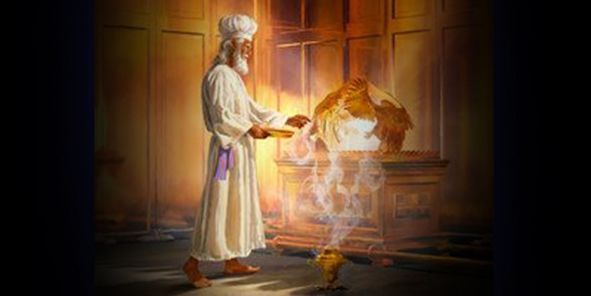
Continuing with Leviticus 23
And the Lord spoke unto Moses, saying, — this isn’t a law of Moses, but a Decree of God convey to the people through Moses.
27 “Also on the tenth day of this seventh month there shall be a Day of Atonement. It shall be a holy convocation unto you; and ye shall afflict your souls, and offer an offering made by fire unto the Lord.
— afflict your souls; from the evening of the ninth till the evening of the tenth, by resting from all work on pain of death, with fasting and bitter repentance for all, and especially their national sins, among which, no doubt, God would have them remember their sin earlier of the golden calf;
Examples of Fastings
(a) Jesus, before taking his mission, which is a major mission to inaugurated his public ministry, he went to fast for forty days and forty nights “And when He had fasted forty days and forty nights, He afterward hungered” Matthew 4:2
(b) Esther fasted, who asked her countrymen to fast for her: “Go, gather together all the Jews who are present in Shushan, and fast ye for me; and neither eat nor drink three days, night or day. I also and my maidens will fast likewise. And so will I go in unto the king, which is not according to the law; and if I perish, I perish” Esther 4:16
(c) Moses fasted: “When I went up the mountain to receive the tablets of stone, the tablets of the covenant that the Lord made with you, I remained on the mountain forty days and forty nights. I neither ate bread nor drank water” Deuteronomy 9:9
(d) Fasting is also in the New Testament: Now there were in the church at Antioch prophets and teachers, Barnabas, Simeon who was called Niger, Lucius of Cyrene, Manaen a lifelong friend of Herod the tetrarch, and Saul. While they were worshiping the Lord and fasting, the Holy Spirit said, “Set apart for me Barnabas and Saul for the work to which I have called them.” Then after fasting and praying they laid their hands on them and sent them off, Acts 13:1-3.
— the Targum of Jonathan says
“However, on the tenth day of this seventh month, it is the Day of Atonement; a holy convocation it shall be for you, and you shall afflict your souls from eating and from drinking, and from the pleasure of the bath-house, and from ointments, and from the use of the bed, and from the sandal; and you shall bring an offering before the Lord.” Leviticus 23:27 Jonathan
28 And ye shall do no work in that same day, for it is a Day of Atonement to make an atonement for you before the Lord your God.
29 For whatsoever soul it be that shall not be afflicted in that same day, he shall be cut off from among his people. — he shall be cut off from among his people; the Targum of Jonathan says, cut off by death from among his people.
30 And whatsoever soul it be that doeth any work in that same day, the same soul will I destroy from among his people. — any sort of work whatever; an untimely death by the hand of God; for, as before observed, it was to be kept even more strict than the weekly Sabbath.
31 Ye shall do no manner of work; it shall be a statute for ever throughout your generations in all your dwellings.
— it shall be a statute for ever, throughout your generations, in all your dwellings; unto the coming of the Messiah and even beyond, who, by the atoning sacrifice of himself, would answer to this law, and put an end to it.
32 It shall be unto you a sabbath of rest, and ye shall afflict your souls. On the ninth day of the month at evening, from evening unto evening, shall ye celebrate your sabbath.”
— and ye shall afflict your souls; having set forth in Leviticus 23:30-31, and in the first clause of this verse, the duty of abstaining from all work, and of celebrating this day as a day of solemn rest,
— the law giver repeats the second feature of the day, which is of great importance, namely, the fasting, lest some should think that doing the one and leaving the other undone would pass as having kept this law;
— in the ninth day of the month at even to that of the tenth; the fast was to begin at the close of the ninth day, and to continue to the end of the tenth.
More details from Leviticus 16
1 And the Lord spoke unto Moses after the death of the two sons of Aaron, when they offered before the Lord, and died;
— after the death of Nadab and Abihu, the two sons of Aaron; that is, after his two eldest sons had died, in consequence of having presumptuously entered the sanctuary in a profane manner, and playing with strange fire; they died by a flaming fire; or lightning?
2 and the Lord said unto Moses, “Speak unto Aaron thy brother, that he come not at any times into the Holy Place within the veil before the mercy seat which is upon the ark, that he die not; for I will appear in the cloud upon the mercy seat (ark cover Chabad).
— that he doesn’t come at any times; Moses is therefore to warn his brother Aaron, the high priest, that if he wishes to escape a similar fate, he is not to presume to enter the Holy of Holies except on one day of the year, the Day of Atonement;
— as Aaron here stands for all those who in future are to succeed him in the priesthood, so Moses, who teaches him, stands for his successors who are hereafter to impart instruction to the high priests on these most solemn occasions;
— during the second Temple the instruction and preparation of the high priest for his functions devolved upon the Sanhedrin, who prescribed most minute rules for his guidance. Seven days before the Day of Atonement he was separated from his wife, and lodged in a chamber in the Temple, lest he should contract defilement, which might unfit him for the performance of his pontifical duties;
— the elders or the representatives of the Sanhedrin read and expounded to him the ordinances contained in this chapter; which he had to practise in their [presence, so as to make sure that he could rightly perform all the ceremonies. This continued during the whole night previous to the Day of Atonement, where he was to be kept awake, so as to prevent any pollution arising from a dream or accident by night.
On the Day of Atonement
3 Thus shall Aaron come into the Holy Place: with a young bullock for a sin offering and a ram for a burnt offering.
— thus shall Aaron come; preparatory to his entering on this solemn service as the high-priest and to offer two sacrifices in general.
4 He shall put on the holy linen coat, and he shall have the linen breeches upon his flesh and shall be girded with a linen girdle, and with the linen miter shall he be attired. These are holy garments. Therefore shall he wash his flesh in water, and so put them on.
— and he shall wash or bathe his body every time when he changed his vestments, which were no less than five times on this day, and washes his hands and feet ten times on that day, and all are done in the holy place.
5 And he shall take from the congregation of the children of Israel two kids of the goats for a sin offering and one ram for a burnt offering.
— and make atonement for the children of Israel;
6 And Aaron shall offer his bullock of the sin offering which is for himself, and make an atonement for himself and for his house.
— thus shall Aaron come; preparatory to his entering on this solemn service the high-priest was to offer two sacrifices in behalf of himself and his family;
— and make atonement for himself and his house; for his own personal sins and for his family’s sins, those of his wife and children; and it may be extended to all the priests of the house of Aaron.
— he was to go into the holy of holies four times on the Day of Atoneme; first to offer incense, a second time to sprinkle the blood of the bullock, a third time to sprinkle the blood of the goat, and a fourth time to fetch out the censer; and if he entered a fifth time, he was worthy of death; yet Moses might at any time, and consult the Lord upon the mercy seat, Exodus 25:22;

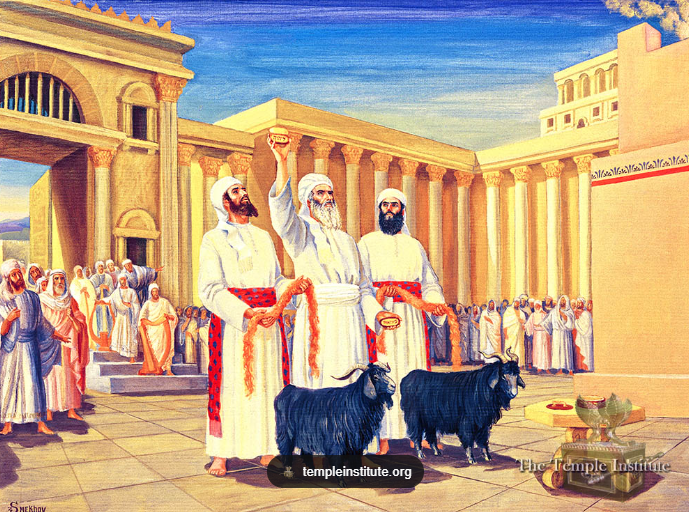
7 And he shall take the two goats and present them before the Lord at the door of the tabernacle of the congregation.
— both goats were presented for the Day of Atonement before the Lord at the door of the Sanctuary; they should be alike in colour, height, and quality,
— which may represent the two natures in Christ; his divine nature, as the Son of God, in which he is impassable, and lives for ever, which may be signified by the goat in which he suffered and died at the hand of the high-priest;
— and the second goat, and may be fitly represented by the goat that was alive, when it too was offered to the Lord, but let go; and in his human nature, as the Son of Man, in which he also suffered in the wilderness called Azazel, and died;
— or, perhaps another explanation is that the second goat is connected to the angel Azazel, who, in the Book of Enoch, repented and asked Enoch to intercede on his behalf?
8 And Aaron shall cast lots upon the two goats — one lot for the Lord and the other lot for Azazel.
— after the lot had been chosen, the two goats were distinguished from each other by having a piece of scarlet cloth tied;
— the first round its neck, the second round its horn. One lot for the Lord, and the other lot for Azazel, which is a wilderness about 12 miles from Jerusalem.
9 And Aaron shall bring the goat upon which the Lord’S lot fell, and offer him for a sin offering.
10 But the goat on which the lot fell to be for Azazel shall be presented alive before the Lord, to make an atonement with him and to let him go into the wilderness to Azazel.
— Jonathan says “by sending him to die in a place rough and hard in the rocky desert which is Beth-hadurey,”
— both goats were presented before the Lord; perhaps one to atone for human’s sin, the goat destined for Azazel to represent Azazel and the angel’s sin, to be the same as the angels in the Book of Enoch 8:1; 10:10; 13:1; while others as Satan; but Satan or any of his demons have never known to have repented, is it?

11 “And Aaron shall bring the bullock of the sin offering which is for himself, and shall make an atonement for himself and for his house, and shall kill the bullock of the sin offering which is for himself.
— and came to offer his bullock, to make atonement for himself and for his house: as a confession; and in the same words as in v6.
12 And he shall take a censer full of burning coals of fire from off the altar before the Lord, and his hands full of sweet incense beaten small, and bring it inside the veil.
— inside the veil, that is, into the holy of holies before the Lord Leviticus 16:2.
13 And he shall put the incense upon the fire before the Lord, that the cloud of the incense may cover the mercy seat that is upon the testimony, that he die not.
— putting the incense is to be done inside the holy of holies that he die not for any gross error committed in the highest acts of worship, and that by a high priest, whose knowledge and function was a great aggravation to his sin.
14 And he shall take of the blood of the bullock and sprinkle it with his finger upon the mercy seat eastward; and before the mercy seat shall he sprinkle of the blood with his finger seven times.
— and sprinkle it with his finger upon the mercy seat, eastward; with his right finger; and the blood sprinkled with it did not fall outside the mercy seat (ark cover Chabad).
15 Then shall he kill the goat of the sin offering that is for the people, and bring his blood within the veil, and do with that blood as he did with the blood of the bullock, and sprinkle it upon the mercy seat and before the mercy seat.
— having completed the atonement in the holy of holies on behalf of the priests, the high priest had now to do the same thing on behalf of the people;
— and again, sprinkle the blood of the first goat seven times upon the mercy seat, eastward; with his right finger.
16 And he shall make an atonement for the Holy Place, because of the uncleanness of the children of Israel and because of their transgressions in all their sins; and so shall he do for the tabernacle of the congregation that remaineth among them in the midst of their uncleanness.
— next he cleansed the tent of meeting, or the court of the sanctuary, where the Israelites were usually admitted; that is, the high priest sprinkled the court and the altar of burnt offering which was in it eight times with the mingled blood of the bullock and of the goat.
17 And there shall be no man in the tabernacle of the congregation when he goeth in to make an atonement in the Holy Place until he come out, and has made an atonement for himself and for his household and for all the congregation of Israel.
— and there shall be no man within the sanctuary; whilst the high priest was performing this process of cleansing, no one, whether priest or Israelite, was permitted to be present within the sanctuary.
18 And he shall go out unto the altar that is before the Lord and make an atonement for it, and shall take of the blood of the bullock and of the blood of the goat, and put it upon the horns of the altar round about.
— the order of the ceremony required that atonement should first be made for the most holy place with the mercy-seat, then for the holy place with the golden altar, and then for the altar in the court;
— the horns of the brazen altar were touched with the blood, the blood of the bullock and of the blood of the goat as they were in the ordinary sin-offerings.
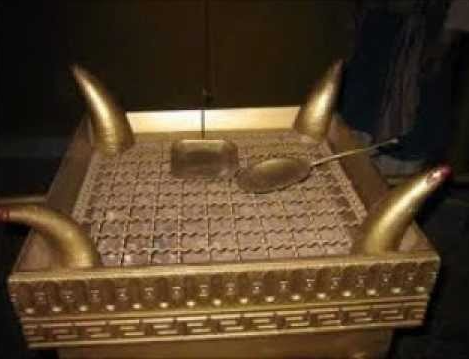
19 And he shall sprinkle of the blood upon it with his finger seven times, and cleanse it and hallow it from the uncleanness of the children of Israel.
— and he shall sprinkle of the blood upon it with his finger seven times; this was done with his right finger, or forefinger, and seven times, to indicate the perfect cleansing of the altar with it.
20 “And when he hath made an end of reconciling the Holy Place and the tabernacle of the congregation and the altar, he shall bring the live goat.
— he shall bring the remaining live goat; having already been presented before the Lord (Lev 16:10), it was now brought forward to the high priest;
— there remains much speculation as to what this second live goat represents; it it an atonement for (a) the children; or is it (b) for the rebellious angels headed by Azazel?

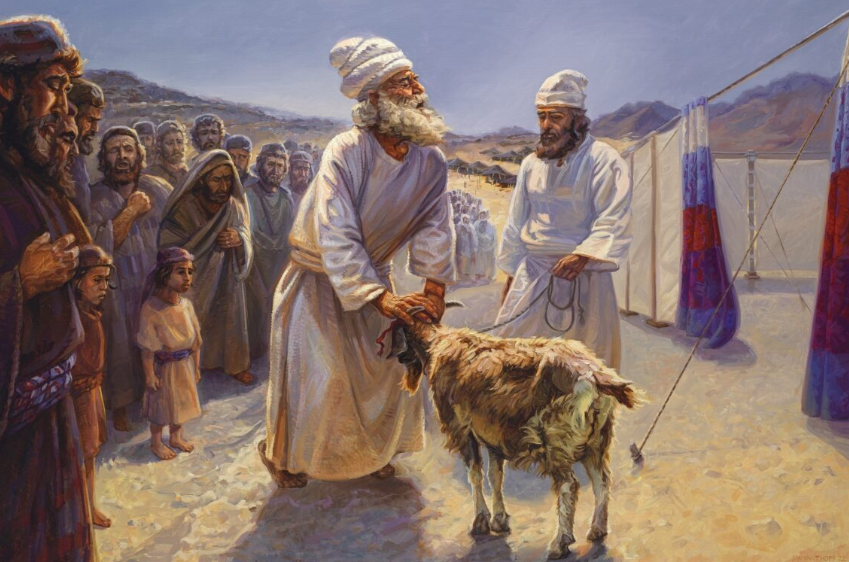
21 And Aaron shall lay both his hands upon the head of the live goat, and confess over him all the iniquities of the children of Israel and all their transgressions in all their sins, putting them upon the head of the goat, and shall send him away by the hand of a fit man into the wilderness.
— this is the ‘Azazel’ goat; but the confession is still upon the children of Israel; so this defeat the theme that the ‘Azazel’ goat is to atone the sins of the angels led by Azazel;
— the high priest, who, placing his hands upon its head, and “having confessed over it all the iniquities of the people of Israel, and all their transgressions in all their sins,” transferred them by this act to the goat as their substitute.
22 And the goat shall bear upon him all their iniquities unto a land not inhabited; and he shall let go the goat in the wilderness.
— it was then delivered into the hands of a person, who was appointed to lead him away into a distant, solitary, and desert place, “Azazel,” where he was led to a high rocky twelve miles from Jerusalem, and there, being thrust over the precipice, and was killed;
— what the ‘scape’ goat represent remains a mystey. SDAs believe the ‘scape’ goat represents Satan, who ultimately bears all the sins of humanity. Another theory put forward says the ‘scape’ goat also represents Christ as the first. Perhaps this could be if (a) the first goat represents Christ as the Son of God, and (b) the second goat represents Christ as the Son of man?
23 “And Aaron shall come into the tabernacle of the congregation, and shall put off the linen garments which he put on when he went into the Holy Place and shall leave them there;
— and Aaron shall put off the linen garments which he went into the holy place; the holy of holies, that is, after he had brought it (the censer) out, then he clothed himself with the golden garments for the daily evening sacrifice;
— and this was the order of the services (on the day of atonement); the daily morning sacrifice (was performed) in the golden garments; the service of the bullock and of the goat, and the incense of the censer, in the white garments; and his ram, and the ram of the people, and some of the additions, in the golden garments;
24 and he shall wash his flesh with water in the Holy Place and put on his garments, and come forth and offer his burnt offering and the burnt offering of the people, and make an atonement for himself and for the people.
— he shall wash in the holy place; that is, in the court of the tabernacle, where stood the altar of burnt-offering, and the sacred laver.
25 And the fat of the sin offering shall he burn upon the altar.
26 And he that let go the goat for Azazel shall wash his clothes and bathe his flesh in water, and afterward come into the camp.
— the wilderness name was Azazel; this name confirmed in the Targum;
“And he who led away the goat to Azazel shall wash his clothes, and bathe his flesh in forty seahs of water, and afterward he may enter the camp” Leviticus 16:26 Jonathan.
27 And the bullock for the sin offering and the goat for the sin offering, whose blood was brought in to make atonement in the Holy Place, shall one carry forth outside the camp; and they shall burn in the fire their skins and their flesh and their dung.
— shall one carry forth; shall be carried forth; during the second Temple four men carried the carcases upon two poles to the place set aside outside Jerusalem for burning. But why were these not burnt at the altar in the courtyard?
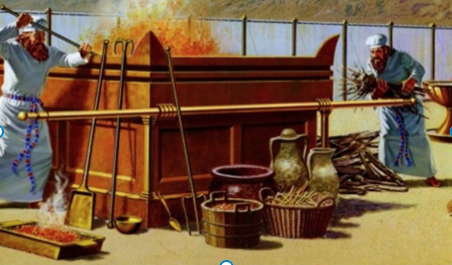
28 And he that burneth them shall wash his clothes and bathe his flesh in water, and afterward he shall come into the camp. — this been done because they had been defiled by the animals laden with sin, not to be presented before the Father; hence burnt outside the camp.
29 “And this shall be a statute for ever unto you: that in the seventh month on the tenth day of the month, ye shall afflict your souls and do no work at all, whether it be one of your own country or a stranger who sojourneth among you;
— seventh month, on the tenth day of the month of Tisri; being the seventh in the Sacred year; on the first day was celebrated the Feast of Trumpets, the tenth day was the Day of Atonement, and from the fourteenth day the Feast of Tabernacles commenced;
— a stranger that sojourneth among you; rather, the foreigner who dwelleth among you; meaning is, one of foreign blood, who dwelt with the Israelites, and had become familiarly known to his neighbors: the Kenites (Judges 4:11, etc.); the Gibeonites Joshua 9; and a considerable portion of the “mixed multitude” (compare Exodus 12:38, Exodus 12:48);
30 for on that day shall the priest make an atonement for you to cleanse you, that ye may be clean from all your sins before the Lord.
31 It shall be a sabbath of rest unto you and ye shall afflict your souls, by a statute for ever.
— it shall be a Sabbath of rest unto you; literally, a resting day of solemn reflection, a Sabbath of Sabbaths, that is, a day of complete and perfect rest.
32 And the priest, whom he shall anoint and whom he shall consecrate to minister in the priest’s office in his father’s stead, shall make the atonement, and shall put on the linen clothes, even the holy garments;
— and shall put on the linen clothes, even the holy garments: that is, on the Day of Atonement; in which clothes all the service peculiar to that day, as it was done by Aaron, so it was to be binding upon all his successors;
33 and he shall make an atonement for the Holy Sanctuary, and he shall make an atonement for the tabernacle of the congregation and for the altar, and he shall make an atonement for the priests and for all the people of the congregation.
34 And this shall be an everlasting statute unto you: to make an atonement for the children of Israel for all their sins once a year.” And he did as the Lord commanded Moses.
— these several atonements, for his family, for all the other priests, for all inside the Sanctuary, and for the children of Israel were separate and distinct, and did not hinder one another, or interfere with one another;
— the blood from the first goat that were presented before the Father upon the Mercy Seat would certainly represent Christ’s blood earlier on the day of Passover; but the Q and mystery remains what the second ‘scape’ goat sent to the wilderness named Azazel represent?


