
20 Cases where Targum is Superior
BACKGROUND: The Jewish captives, after seventy years in Babylon, could not speak the Hebrew language. They spoke Aramaic, the language of the captors, and had forgotten their original Hebrew.
Upon returning to their homeland they wanted to study the Sacred Scriptures, but they couldn’t understand Hebrew. Hence Ezra started the translation process, from the Hebrew to Aramaic:
“For Ezra had prepared his heart to seek the law of the Lord and to do it, and to teach in Israel statutes and judgements,” Ezra 7:10.
But often the Hebrew incorporates metaphors and idioms which were difficult even for these returnees to understand. For example, the Sacred Text incorporates natural imagery—like cedars, cypresses, oaks, forests, and fire—as metaphors for political political and social structures, especially kings, rulers, governors, and wealthy elites.
Ezra was a righteous man, and he was determined to translate and share their true meaning. For God had prepared his heart to seek the law of the Lord, to follow it, and to teach the statutes and judgments in Israel.
Written in Aramaic and inspired by Ezra, the Targum is not just an interpretation but also a paraphrased explanation of the Hebrew Scriptural text. These paraphrases or explanations are not meant to carry equal weight with the Word of God and initially it was forbidden to record them in writing, just to ensure that no one would equate them with the written Hebrew text. But later it was written down for our benefits.
The Targum is thus an indispensable source of understanding the Bible. Started by Ezra for those returning Jews from Babylon and for these returnees they could only understand the Sacred Text in Aramaic; hence the Targum is as if Ezra is speaking to them in ancient times and to us today from the Sacred Text.
In some instances where the wording in the Hebrew text are vague, the Targum offers an authoritative explanation. Today many rabbis and their followers have considered the Targum as authoritative and in some cases they put them as the Word of God; yet in others, they refused to.
Example (1)
Now to the creation of Eve from a rib of Adam
And the Lord God caused a deep sleep to fall upon Adam, and he slept; and He took one of his ribs, and closed up the flesh instead thereof. Genesis 2:21 KJ21
— this is a classic example of the Targum adding specific details that aren’t in the original Hebrew; the Targum of Jonathan specifies that it was Adam’s thirteenth rib of the right side,
And the Lord God threw a deep slumber upon Adam, and he slept. And He took one of his ribs, it was the thirteenth rib of the right side, and closed it up with flesh. Genesis 2:21 Jonathan
— according to Jewish thoughts, man was created with 13 ribs on each side, totaling 26. In Gematria (Jewish numerology), 26 is the numerical value of the Tetragrammaton (the four-letter name of God, YHVH). By taking one rib to create woman, the text suggests that the divine “wholeness” of the human being is achieved only when man and woman, each with 24 ribs, are joined back together.
Example (2)
And Enoch walked with God; and he was not, for God took him. Genesis 5:24
— the phrase “and he was not, for God took him” by itself is vague;
— the Targum of Jonathan clarifies that Enoch was withdrawn and ascended to another world;
“And Enoch served in truth before the Lord; and behold, he was not with the sojourners of the earth; for he was withdrawn, and he ascended to the firmament by the Word before the Lord, and he called his name Metatron, the Great Scribe.” Genesis 5:24 Jonathan
— besides being withdrawn and ascended, the Targum Jonathan adds another revelation: the title “Great Scribe” fits his role in divine administration and heavenly record‑keeping. Thus instead of the mournful refrain when one died, we have here an early removal into another world, suggesting Enoch, in this special case, may have the highest form of blessing.
Example (3)
And the whole earth was of one language, and of one speech. Genesis 11:1
— the whole earth; that is, all mankind at that time; and that language was, obviously, the Hebrew language;
— as the Targum of Jonathan says:
And all the earth was (of) one language, and one speech, and one counsel. In the holy language spake they, that by which the world had been created at the beginning.
— the Targum Jerusalem affirms, saying
And all the inhabiters of the earth were (of) one language, and of one speech, and one counsel: for they spake the holy language by which the world was created at the beginning.
Example (4)
The Targum reveals there was a struggle between Nimrod and Abraham (and more are revealed in the Book of Jasher (endosed in Joshua 10:13, II Samuel 1:18)
And Haran died before his father Terah in the land of his nativity, in Ur of the Chaldeans. Genesis 11:28
— the Targum of Jonathan reveals much more insight: that Haran hesitates, trying to hedge his bets: “If Nimrod wins, I’ll join him; if Abram wins, I’ll join him,”
And it was when Nimrod had cast Abram into the furnace of fire because he would not worship his idol, and the fire had no power to burn him, that Haran’s heart became doubtful, saying, If Nimrod overcome, I will be on his side: but if Abram overcome, I will be on his side.
And when all the people who were there saw that the fire had no power over Abram, they said in their hearts, Is not Haran the brother of Abram full of divinations and charms, and has he not uttered spells over the fire that it should not burn his brother?
Immediately (min yad, out of hand) there fell fire from the high heavens and consumed him; and Haran died in the sight of Terah his father, where he was burned in the land of his nativity, in the furnace of fire which the Kasdai had made for Abram his brother. Genesis 11:28 Jonathan
— fire falls from heaven and kills Haran, an unstable figure caught between them, exposing his wavering heart and punishing his opportunistic assumption. Contrast this with Abram: Abram’s unwavering refusal to worship idols is highlighted by Haran’s indecision.
Example (5)
After these things the word of the Lord came unto Abram in a vision, saying, “Fear not, Abram. I am thy shield and thy exceeding great reward.” Genesis 15:1
— the Targum of Jonathan sets the scene for Abraham’s personal worries after what happened with his war againt the four kings (the kings of Elam, of Tidal, of Shinar, and of Ellasar) in the previous chapter (v9), which prompt the Lord’s response, saying
‘Woe to me! Perhaps now I have received the reward for my appointments in this world, and I will have no portion in the World to Come.
Or perhaps the brothers and relatives of those whom I killed will go and join themselves into legions and come against me.
Or perhaps at that [previous] time some small merit was found with me and therefore they fell before me, but at another time merit will not be found with me and the Name of Heaven will begin judgment against me.’Then the word of the Lord came to Abram in a vision, saying:
‘Do not fear. Even though their warriors gather in legions and come against you, My Word will be your shield.
And even though they fell before you in this world, the reward of your good deeds is kept and prepared before Me for the world to come — very great.’”
Example (6)
And then the Lord asked Abraham to give him an offering:
And He said unto him, “Take Me a heifer of three years old, and a shegoat of three years old, and a ram of three years old, and a turtledove, and a young pigeon.”
10 And he took unto Him all these, and divided them in the midst and laid each piece one against another; but the birds divided he not.
11 And when the fowls came down upon the carcasses, Abram drove them away. Genesis 15:9-11
— the Targums reveals the symbolism, saying
And there came down idolatrous peoples which are like to unclean birds, to steal away the sacrifices of Israel; but the righteousness of Abram was a shield over them. Genesis 15:11 Jonathan — Onkelos reveals these fowls were birds of prey [vultures] descended upon the carcasses, but Abraham drove them away.
— in a standard sacrificial offering (Olah), the animals are slaughtered and burnt on an altar. However, here, Abraham cuts them in half and lays the pieces facing each other, but he does not light a fire;
— it’s worth noting that the Targums identify the fowls as birds of prey, or specifically the predatory vultures that came down, which symbolize their plundering neighbours, the “kingdoms of the earth.” Historically, these are: Assyria, Babylon, Persia, Greece, Rome and the Ottoman empire; but during the endtime would be others.
And it is important to note that it wasn’t God who drove the vultures away, but Abraham. And as the offering were not burnt and be accepted by God immediately, hence God’s initial promise of “Fear not, Abram. I am thy shield and thy exceeding great reward” is not quickly consumated.
Or, for another explanation, that God had promise the Shield protection initially, but Abraham’s lack of faith by asking for a sign for he reminded God of his lack of any seed to succeed him, and hence the burnt offering wasn’t consumated immediately.
And although the offering was not burnt and be accepted immediately, it should also be noted that later on, “a smoking furnace and a burning lamp passed between those pieces; v17” synifying that at the end, God did accept the sacrifices ultimately. But then, this happened later, after Abraham had to shoo off the birds of prey through his own effort.
Example (7)
The Targum reveal to Abraham the four kingdoms to arise, causing trouble for his posterity, or the house of Israel.
And when the sun was going down, a deep sleep fell upon Abram; and lo, a horror of great darkness fell upon him. Genesis 15:12
— the Targum Jonathan reveals further, but wasn’t definite who the fourth kingdom is,
“And it was when the sun was going down to set, a deep and pleasant sleep fell upon Abram; and behold, Abram saw the four kingdoms that were destined to rise to enslave his children: Dread—which is Babylon; Darkness—which is Media; Great—which is Greece; Falling—which is the kingdom of Persia (Rome/Edom), which is destined to fall and shall have no rising again for ever and ever.” Jonathan
— the Targum Jerusalem reveals the fourth kingdom; and that is Edom, and is Rome
“And when the sun was going to set, a sleep profound and sweet fell upon Abram. And, behold, Abram saw four kingdoms which should arise to bring his sons into subjection (and) Terror; the Greatness of Darkness Fell upon him: Terror, that is Bavel (Babylon); Darkness, that is Media (and Persia); Greatness, that is Greece; Fell, that is Edom (Rome), that fourth kingdom which is to Fall, and never to rise again for ever and ever.” Jerusalem
Example (8)
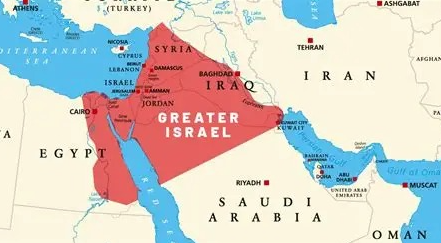
On the same day the Lord made a covenant with Abram, saying, “Unto thy seed have I given this land, from the river of Egypt unto the great river, the River Euphrates. Genesis 15:18 KJ21
— which ‘river of Egypt’ is not spelt out in the Masoretic Text. Is it just a brooke in the Sinai peninsula or the river Nile?
— but the Targum of Jonathan identifies the ‘river of Egypt’ as the river Nile specifically,
“On that day, the Lord made a covenant with Abram—[decreeing] not to judge his children in [Gehenna] and to redeem them from the [oppression of] kingdoms—saying: ‘To your children I give this land, from the Nile of Egypt unto the great river, the river Euphrates.’”
Example (9)
And Sarah saw the son of Hagar the Egyptian, whom she had borne unto Abraham, mocking. Genesis 21:9
— the Targum Jonathan reveals why Sarah was upset, realizing that Ismael was ‘mocking’ and fearing that it would have an influence or impact of her son, Isaac
“And Sarah saw the son of Hagar the Egyptian, whom she had borne to Abraham, mocking [with] foreign worship (idolatry) while bowing down to the Lord.” Jonathan
— according to tradition, Ishmael had begun to build altars and perform pagan rituals he had learned from his mother’s Egyptian heritage. In Sarah’s eyes, this was a spiritual idoltary, yet on Abraham’s order, he would bow to the Lord.
And the thing was very grievous in Abraham’s sight because of his son Genesis 21:11
— the Targum Jonathan reveals that Ismael was beginning with idol worship
“And the matter was very evil in the eyes of Abraham on account of Ishmael his son, because he [Ishmael] would practise strange foreign worship (idolatry).” Jonathan
Example (10)
The Scripture never has a scene for Abraham to formally bless Isaac, nothing like the way Jacob blessed his twelve sons, nor anything like the way Jacob stole the birthright from Esau.
And it came to pass after the death of Abraham, that God blessed his son Isaac; and Isaac dwelt by the well Lahairoi. Genesis 25:11
— the Targum of Jonatham reveals why this was the case, while adding some complexities about human nature to the story, saying:
And because Abraham had not designed (unwilling) to bless Ishmael, therefore he blessed not Isaac; for had he blessed Isaac and not Ishmael, it would have kept them in enmity.
But, after the death of Abraham, the Lord blessed Isaac; and Isaac dwelt near the well at which was revealed the glory of the Living and Eternal One, who seeth and is not seen.
— the Targum fills the silence by explaining Abraham’s dilemma. Abraham loved both sons; he knew the primary blessing belonged to Isaac, but he feared that a public formal blessing of Isaac would incite Ishmael’s enmity, a grudge or hatred. To maintain peace in the family while he was alive, Abraham refrained from blessing either.
Example (11)
(a) And now onto Rebekah’s pregnancy and the birth struggle of Esau and Jacob
And the children struggled together within her; and she said, “If it be so, why am I thus?” And she went to inquire of the Lord.
And the Lord said unto her, “Two nations are in thy womb, and two manner of people shall be separated from thy body; and the one people shall be stronger than the other people, and the elder shall serve the younger.” Genesis 25:22-23 KJ21
— the Targums of Jonathan adds the important criteria of keeping God’s commandments
“And the children struggled within her, and it was like men fighting. And she said, ‘If this is the distress of pregnancy, why do I desire children?’ So she went to the study hall of Shem the Great to seek mercy from before the Lord.”
“And the Lord said to her, ‘Two nations are in your womb, and two kingdoms will separate from your belly. One kingdom will be stronger than the other, and the elder will serve the younger if the descendants of the younger keep the commandments of the Torah.’” Genesis 25:22-23 Jonathan
— important to note that “the elder will serve the younger [only] if the descendants of the younger keep the commandments of the Law.”
(b) And when her days to be delivered were fulfilled, behold, there were twins in her womb.
And the first came out red, all over like a hairy garment; and they called his name Esau. Genesis 25:24-25
— the Targums of Jonathan says Esau was born as if he were already ‘complete’
And the two hundred and seventy days of her being with child were completed to bring forth; and, behold, twins were in her womb.
And the first came forth wholly red, as a garment of hair: and they called his name Esau, because he was born altogether complete, with the hair of the head, and the beard, and teeth, and grinders. Genesis 25:24-25 Jonathan
Example (12)
And by thy sword shalt thou live, and shalt serve thy brother; and it shall come to pass when thou shalt have the dominion, that thou shalt break his yoke from off thy neck.”
And Esau hated Jacob because of the blessing wherewith his father blessed him. And Esau said in his heart, “The days of mourning for my father are at hand. Then will I slay my brother Jacob.” Genesis 27:40-41 KJ21
— the Targum Jonathan reveals Esau’s delayed intent of killing his brother Jacob; in fact it is a latter-day prophecy for the house for Esau against the house of Jacob:
“And upon thy sword shalt thou depend, entering at every place: yet thou shalt be supple and credulous, and be in subjection to thy brother [Jacob]; but it will be that when his sons [the modern children of Israel] become evil, and fall from keeping the commandments of the law, thou shalt break his yoke of servitude from off thy neck….and then will I kill Jakob my brother, and will be found the killer and the heir” Genesis 27:40-41 Jonathan (abridged)
— or for a more modern translation:
“And by your sword shall you live, you will go to every place, and wander, and you will be subject to your brother. But if his descendants abandon the commandments of the Torah, then you will break his yoke from your neck.”
“And Esau harbored hatred in his heart against Jacob his brother because of the blessing with which his father had blessed him. And Esau said in his heart, ‘I will not do as Cain did, who killed Abel during their father’s lifetime and then their father had another son, Seth. Rather, I will wait until the days of mourning for my father have passed, and then I will kill Jacob my brother, and I will be the sole heir’” Genesis 27:40-41 Jonathan (unabridged).
— instead, Esau would delay the killing of Jacob until the death of Isaac, for if Isaac is dead, he would have no chance of fathering another son; so that when Jacob is killed after Isaac is dead, Esau will become the only son, hence the sole heir;
— and will be found the killer “and the sole heir;” that is, by delaying and waiting for Jacob’s killing, Esau hopes he would both be the killer and the only heir. Hence Esau harboured thoughts he would not do that immediately; but waits until they forget God’s law, until today’s hardcore “liberal democracies” that championed LGBTqia’s rights and wokeism have overwhelmed the children of Israel; and lost God’s protection.
Example (13)
And it came to pass, when Rachel had borne Joseph, that Jacob said unto Laban, “Send me away, that I may go unto mine own place and to my country. Genesis 30:25 KJ21
— the Targum of Jonathan reveals in greater depth how the posterity of Joseph, not any other tribes, were to be a yoke (Genesis 27:40) and a flame unto the house of Esau, saying
“And it was, when Rachel had given birth to Joseph, that Jacob said through the Holy Spirit that the House of Joseph is destined to be like a flame to consume the House of Esau. He said: ‘From now on, I am not afraid of Esau and his legions.’ And he said to Laban: ‘Send me away, that I may go to my own place and to my own land.’” Genesis 30:25 Jonathan
Jacob was afraid to return to Canaan because of his brother Esau; but this Jonathan version reveals that Jacob knew Esau was the “stubble,” but could only be defeated by the “flame” of Joseph (confirms in Obadiah 1:18). And so when Joseph was born, Jacob, feeling safe, asked Laban to be sent back to his own country:
“And the house of Jacob shall be a fire, and the house of Joseph a flame, and the house of Esau for stubble; and they shall kindle them and devour them. And there shall not be any remaining of the house of Esau, for the Lord hath spoken it” Obadiah 1:18
Example (14)
“Reuben, thou art my firstborn, my might, and the beginning of my strength, the excellency of dignity, and the excellency of power. Unstable as water, thou shalt not excel, because thou wentest up to thy father’s bed; then defiledst thou it; he went up to my couch. Genesis 49:3-4
— Reuben~France, as the firstborn by nature, has the first place in the benedictory address;
— the Targum of Jonathan reveals how Reuben lost his birthright
“Reuben, you are my firstborn, the head of my strength, the beginning of my service, and the start of the city of my thoughts.
“It was fitting for you to have the Birthright, the High Priesthood, and the Kingdom.
“But because you sinned, my son, the Birthright was given to Joseph, the Kingdom to Judah, and the Priesthood to Levi.” Genesis 49:3 Jonathan
— great honor and power; the birthright was yours, the priesthood was yours, the kingship was yours, but now that you sinned, the birthright was given to Joseph, the kingship to Judah, and the priesthood to Levi.
Example (15)
It is known that the Masoretic Text has an error in Exodus 12:40-41, where the text says Israel was in Egypt for 430 years.
40 Now the sojourning of the children of Israel who dwelt in Egypt was four hundred and thirty years.
41 And it came to pass at the end of the four hundred and thirty years, even on the selfsame day it came to pass, that all the hosts of the Lord went out from the land of Egypt. Exodus 12:40-41
The Targum says the Israelites in Egypt were only 210 years; and in Exodus 12 the Targum Jonathan explains why this differs from the Masoretic version of 430 years:
And the days of the dwelling of the sons of Israel in Mizraim were thirty weeks of years, (thirty times seven years,) which is the sum of two hundred and ten years. But the number of four hundred and thirty years (had passed away since) the Lord spake to Abraham, in the hour that He spake with him on the fifteenth of Nisan, between the divided parts, until the day that they went out of Mizraim. Exodus 12:40 Jonathan
The Septuagint clarifies that this 430 years in Egypt include time in Canaan; “And the sojourning of the children of Israel, while they sojourned in the land of Egypt and the land of Chanaan, was four hundred and thirty years. And it came to pass after the four hundred and thirty years, all the forces of the Lord came forth out of the land of Egypt by night.” Exodus 12:40-41 Septuagint
Example (16)
In a significant revelation of His almighty power, the Lord Himself shall give us a sign, cause a miracle to happen which would have abiding significance.
Behold, an exclamation calling attention to the extraordinary prophecy now following, a virgin, literally, “the virgin,” that certain virgin whom the Lord had even now selected for this purpose, not merely an unwed or young woman of marriageable age as the Masoretic text says, but an undefiled maiden, Psalms 68:25; Matthew 1:25.
But the Masoretic Text says she is just a young woman:
Therefore the Lord Himself shall give you a sign: behold, the young woman shall conceive, and bear a son, and shall call his name Immanuel. Isaiah 7:14 JPS
— but a young woman to give birth to a child doesn’t have much of a sign. The original Targum Jonathan identifies the woman as a VIRGIN;
“Therefore the Lord Himself shall give you a sign; Behold, a virgin shall conceive, and bear a son, and she shalt call his name Immanuel.” Isaiah 7:14 Targum Jonathan (Pauli)
— Rabbinic Jews such as Jews for Judaism (and even Sefaria in this case where their online could easily be changed) and Rabbi Tovia Singer say this “virgin” is a young maiden as other Rabbinic Jews say;
— the Septuagint confirms or reaffirms the Targum:
“Therefore the Lord himself shall give you a sign; behold, a virgin (παρθένος parthenos) shall conceive in the womb, and shall bring forth a son, and thou shalt call his name Emmanuel.” Esaias 7:14 Septuagint
— shall conceive, without the carnal knowledge of man, and bear a son, the event being represented as happening now, in the everlasting present of the eternal God, and shall call His name Emmanuel, which is correctly interpreted by Matthew as meaning, “God with us.”
A young woman giving birth to a child has only a barren meaning; only if she is a virgin would it has any significance. This is an example of the lying pen of the scribes expressed in Jeremiah 8:8, “How can you say, ‘We are wise, and the law of the Lord is with us’? But behold, the lying pen of the scribes has made it into a lie.’”
The King James versions would have lots to loose if they follow strictly to the Masoretic Text, hence they adopted the Targum version at times:
“Therefore the Lord Himself shall give you a sign: Behold, a virgin (5959 הָעַלְמָ֗ה hā·‘al·māh) shall conceive and bear a Son, and shall call His name Immanuel” Isaiah 7:14 KJ21
Example (17)
In Isaiah 9:6, “For unto us a child is born, unto us a son is given: and the government shall be upon his shoulder: and his name shall be called Wonderful, Counselor, The mighty God, The everlasting Father, The Prince of Peace.”
In this verse it is trying to convey that the Child, the Son, is “The everlasting Father” which is an impossibility. By inserting “The everlasting Father” in the Masoretic text, the frauder tried to convey the message that this verse couldn’t be referring to Christ. The problem is obvious when it is compared to the Targum, which says:
The prophet said to the house of David, For unto us a Child is born, unto us a Son is given, and He has taken the law upon Himself to keep it. His name is called from eternity, Wonderful, the Mighty God, who liveth to eternity, the Messiah whose peace shall be great upon us in His days. Isaiah 9:6 Jonathan (Pauli) — there is no “everlasting Father”
And this is supported by the Septuagint:
“For a child is born to us, and a son is given to us, whose government is upon his shoulder: and his name is called the Messenger of great counsel: for I will bring peace upon the princes, and health to him.
“His government shall be great, and of his peace there is no end: it shall be upon the throne of David, and upon his kingdom, to establish it, and to support it with judgment and with righteousness, from henceforth and for ever. The zeal of the Lord of hosts shall perform this” Isaiah 9:5-6 Septuagint
But the Targum confirms the Child is the Messiah, prophesied to be born, and he is to live unto eternity, but nothing in the Targum says about ‘the Everlasting Father.’ This is obviously a case of the tampering of the Scriptures, a manifestation of “the lying pen of the scribes” Jeremiah 8:8.
The Orthodoxy believes this “Child” is referring to King Hezekiah, in the process this is trying to elevate a mere man to Divinity, “The mighty God,” which is an impossibility.
Hezekiah foolishly showed the men from Babylon the Temple treasures, gold and silver, who later came and looted them and carry them all to Babylon; hence it is absurd to assert that Hezekiah was a Wonderful Counselor.
This is another case of the Orthodoxy being blind: “Hear, ye DEAF; and look, ye BLIND, that ye may see” Isaiah 42:18; “His watchmen are BLIND; they are all ignorant; they are all DUMB dogs, they cannot bark, sleeping, lying down, loving to slumber” Isaiah 56:10.
Both the Pauli and Sefaria versions identify him as the Messiah
“The prophet said to the house of David, For unto us a child is born, unto us a son is given, and he has taken the law upon himself to keep it. His name is called from before Him who is wonderful in counsel, the mighty God who liveth to eternity — the Messiah whose peace shall be great upon us in his days.
“The greatness of those who do the law shall be magnified, and to those, that preserve peace. There shall be no end to the throne of David, and of his kingdom, to establish it and to build it in judgment and in righteousness from henceforth, even for ever. By the Word of the Lord of hosts this shall be done” Isaiah 9:5-6 Sefaria
Example (18)
The Targum identifies the “suffering servant” in Isaiah 53 as the Messiah, only that the subject of the “suffering servant” starts two verses earlier in the previous chapter.
In Isaiah 52:13, “Behold, my servant shall deal prudently, he shall be exalted and extolled, and be very high.”
This verse is the beginning or setting the context of the suffering servant of Isaiah 53; so who was he?
Jewish Orthodoxy says he, my servant, is Israel, or Jacob; but the Targum says the servant was meant to be the Messiah:
“Behold, my servant the Messiah shall prosper, he shall be exalted and extolled, and he shall be very strong” Isaiah 52:13 Jonathan
Thus the blindness of the Jewish Orthodoxy (and most Christian Pretenders) remains blinded, deaf and dumb to this day!
“Hear, ye DEAF; and look, ye BLIND, that ye may see” Isaiah 42:18; “His watchmen are BLIND; they are all ignorant; they are all DUMB dogs, they cannot bark, sleeping, lying down, loving to slumber” Isaiah 56:10
Example (19)
And now on when the Passover lamb should be killed:
In Exodus 12:6 And ye shall keep it up until the fourteenth day of the same month, and the whole assembly of the congregation of Israel shall kill it in the evening (ben ha’arbayim). — most ancient English Bibles translate this term ben ha’arbayim as even, evening, some as sunset, twilight or dusk, taking the Samaritans or modern view; so what is it?
The Targum Onkelos says: You shall hold it in safekeeping until the fourteenth day of this month, they shall slaughter it—the entire community of Yisrael—between evenings [in the afternoon].
Rashi went on to explain, in further details, what “in the afternoon” means:
in the afternoon: Heb. בֵּין הָעַרְבָּיִם From six hours [after sunrise] and onward is called בֵּין הָעַרְבַּיִם, literally, between the two evenings, for the sun is inclined toward the place where it sets to become darkened.
It seems to me that the expression בֵּין הָעַרְבַּיִם denotes those hours between the darkening of the day and the darkening of the night. The darkening of the day is at the beginning of the seventh hour, when the shadows of evening decline, and the darkening of the night at the beginning of the night. Exodus 12:6 in Chabad
Example (20)
And concerning the counting towards Shavuot (Pentecost)
In Leviticus 23:15 And ye shall count unto you from the morrow after the sabbath, from the day that ye brought the sheaf of the wave offering; seven sabbaths shall be complete:
16 Even unto the morrow after the seventh sabbath shall ye number fifty days; and ye shall offer a new meat offering unto the Lord. Leviticus 23:15-16
“The morrow after the sabbath” has often been interpreted as the day after the weekly Sabbath, but in Hebrew it could be the day after the Passover, a high holy day, a day of rest.
Hence the Targum interprets or paraphrases it this way:
You shall count for yourselves, from the day after the day of rest (Pesach) from the day on which you will bring the omer waveuplifted-offering, seven complete weeks they shall be,
Until the day after the seventh week, you shall count fifty days, and you shall bring a new meal-offering to [before] Adonoy. Leviticus 23:15-16 Onkelos
The counting is to start “from the day after the day of rest (Pesach).” That is, the counting is to commence from the First day of Unleavened Bread, a high holy day.
Hence, most of God’s own church that incorporated many critical Samaritan concepts, has been describes as “wretched, and miserable, and poor, and blind, and naked” as they count blindly from the weekly Sabbath.
Example (21) And when the people complained, it displeased the Lord; and the Lord heard it, and His anger was kindled. And the fire of the Lord burned among them, and consumed those who were in the uttermost parts of the camp. Numbers 11:1 KJ21
And there went forth a wind from the Lord, and brought quails from the sea, and let them fall by the camp, as it were a day’s journey on this side, and as it were a day’s journey on the other side round about the camp, and as it were two cubits high upon the face of the earth.
32 And the people stood up all that day and all that night and all the next day, and they gathered the quails. He that gathered least gathered ten homers, and they spread them all abroad for themselves round about the camp.
33 And while the flesh was yet between their teeth, ere it was chewed, the wrath of the Lord was kindled against the people, and the Lord smote the people with a very great plague. Numbers 11:31-33 KJ21
— the Targum reveals that the wicked complained constantly, lacked faith, ate but without giving thanks, thus suffering a plague, resulting in many killed and buried right there.
And they who had been wanting in faith arose: and all that day, and all the night, and all the day that followed, they gathered the quails; even he who was lame and infirm gathered ten korin, and they spread them abroad round about the camps.
The wicked ate of the flesh, yet offered no thanksgiving to Him who had given it to them: but while the flesh was between their teeth, and not consumed, the anger of the Lord waxed strong against the evil people, and the Lord slew the people with a very great mortality.
And he called the name of that place, The Graves of the Desirers of Flesh; for there they buried the people who had desired flesh. Numbers 11:32-34 Jonathan


