
God the Son Carries the name of the Father
God the Son being “brought forth”
The Proverbs has a few very unusual yet revealing verses in the Old Testament:
(1) “I was brought forth,” Proverbs 8:22-24:
“The Lord possessed me at the beginning of His way, before His works of old.
“I was set up from everlasting, from the beginning, or ever the earth was.
“When there were no depths I was brought forth, when there were no fountains abounding with water” Proverbs 8:22-24 (KJ21).
Other translations:
Lamsa Peshitta: “The LORD created me as the first of his creation, before all of his works.”
TLB (Living Bible): The Lord formed me in the beginning, before he created anything else.
Others translate, “I was brought forth” as;
EXB (Expanded Bible), GW, GNT, HCSB, NET: I was born before there were oceans or springs overflowing with water,
JUV: I was begotten before the depths, before the existence of the fountains of many waters.
NIV: When there were no watery depths, I was given birth
WYC: I was conceived
(2) And in Proverb 30:4:
“Who hath ascended up into heaven or hath descended? Who hath gathered the wind in His fists? Who hath bound the waters in a garment? Who hath established all the ends of the earth? What is His name, and what is His Son’s name, if thou canst tell?” Proverb 30:4.
This is confirmed in the NT
“He is the image of the invisible God, the firstborn over all creation” Colossians 1:15. Many other translations translated the last part as “the firstborn of all creation.”
(3) And in Psalms 2:7-8
“I will declare the decree: The Lord hath said unto Me, ‘Thou art My Son; this day have I begotten Thee.
“Ask of Me, and I shall give Thee the heathen for Thine inheritance, and the uttermost parts of the earth for Thy possession” Psalms 2:7-8.
God was revealing about himself yet teasing his readers by asking what his name is, and what his Son’s name is.
The Father is the only true God, which the Son acknowledges; how this could happen is because the Son is carrying the name of the Father: for in John 17:3, it says, “And this is life eternal: that they might know Thee, the only true God, and Jesus Christ whom Thou hast sent.”
In Deuteronomy 6:4 it declares, “The LORD our God, the LORD is One,” the central monotheistic confession of Israel.
And in Isaiah 45:5, it says, “I am the Lord, and there is none else; there is no God besides Me.”‘
(4) But the key to understanding this apparent contradiction lies in a key Scripture in Exodus.
Speaking to Moses, God the Father, said:
“Behold, I (Father) send an Angel (his Son as the Messenger) before you to keep you in the way and to bring you into the place which I have prepared. Beware of Him (his Son, Yeshua) and obey His voice; do not provoke Him (Yeshua), for He will not pardon your transgressions; for My name is in Him Exodus 23:20-21; hence YHVH’s name is in his Son, Yeshua.
Another translation by the Targum Exodus 23:21-24; promising an “enemy of thy enemy.”
Behold, I will send an Angel before thee, to keep thee in the way, and to bring thee in to the place of My habitation which I have prepared.
Be circumspect before Him, and obey His word, and be not rebellious against His words; for He will not forgive your sins, because His word is in My Name.
For if thou wilt indeed hearken to His Word, and do all that I speak by Him, I will be the enemy of thy enemy, and will trouble them who trouble thee.
For My Angel shall go before thee, and bring thee to the Amoraee, and Pherizaee, and Kenaanaee, Hivaee, and Jebusaee; and I will destroy them. Exodus 23:20-24 Jonathan
Sames with Judges, where judges carries the authority and name of God. Exodus 22:8 If the thief is not found, then the master of the house shall be brought to the judges (H430 elohiym in the Hebrew, ‘God’ as in Genesis 1:1) to see whether he has put his hand into his neighbor’s goods. Exodus 22:28 “Thou shalt not revile God [or judges as in KJ21], nor curse the ruler of thy people.
A sense of Royalty: At times of Royal duty, Prince William carries all the authority of King Charles, his father. An egg thrown at him is as good as one thrown at the king.
Samuel was not just a high priest, but also a judge and a prophet of God.
Now it came to pass when Samuel was old that he made his sons judges over Israel. 2 The name of his firstborn was Joel, and the name of his second, Abijah; they were judges in Beersheba. 3 But his sons did not walk in his ways; they turned aside after dishonest gain, took bribes, and perverted justice.
4 Then all the elders of Israel gathered together and came to Samuel at Ramah, 5 and said to him, “Look, you are old, and your sons do not walk in your ways. Now make us a king to judge us like all the nations.”
6 But the thing displeased Samuel when they said, “Give us a king to judge us.” So Samuel prayed to the LORD. 7 And the LORD said to Samuel, “Heed the voice of the people in all that they say to you; for they have not rejected you, but they have rejected Me, that I should not reign over them. 1 Samuel 8:1-7.
If Samuel, a prophet, was already such a special envoy of God, how much more if His Son would be here!
(5) John 1:1 reads, “In the beginning was the Word (logos; λόγος), and the Word was with God, and the Word was God.” The Word existed “in the beginning” and, eventually, “became flesh and dwelt among us” as the Messiah (John 1:14). Yet John also notes that this Word “in the world” prior to the appearance of Yeshua (John 1:10), and those who “received” the Word before his transformation were called “sons of God.”
“But as many as received Him, to them gave He power to become the sons of God, even to those who believe in His name,” John 1:12.
So Q. when did the Word of God come into our world before the advent of the Messiah, and who received this Word according to the Scriptures?
(6) Answer. First time as in Genesis when the three ‘angels’ appeared before Abraham.
And when the Word stood before Abraham in Genesis 18:22 And the men turned their faces from thence, and went toward Sodom; but the Lord stood yet before Abraham (Bullinger): “Jehovah stood yet before Abraham.”
One of the “Eighteen Emendations” plus 8 more not in the official list of the Sopherim (Companion Bible appendix 33)
Genesis 18:22 – “The LORD stood before Abraham.” Issue: Who is standing before whom at Sodom’s intercession. Why altered: To avoid the idea of God standing before a man in a posture that might seem subordinate. Original: “The LORD stood before Abraham.” Emended: “Abraham stood yet before the LORD” — reversing the posture apparently to preserve divine dignity; but Abraham was a spiritual baby, as parents usually stand before babies; not babies standing before parents! Hence no harm the LORD appearing before Abraham to teach him.
(7) At first, Samuel thinks that Eli is calling him, but the priest tells him that it’s actually the voice of God (see 1 Sam 3:4-9). After three divine calls, God appeared physically to Samuel when “the Lord came (bo’; בוא), and stood (H3320 yatsab; יצב)” before the boy (1 Samuel 3:10).
Second times he appeared before Samuel. God’s interaction with the prophet Samuel is a good example of the Word in the Hebrew Bible. As the young Samuel serves as an apprentice under Eli the priest at the Temple in Shiloh, the Lord calls to him several times.
“And the Lord came and stood (before Samuel), and called as at other times, “Samuel, Samuel.” Then Samuel answered, “Speak, for Thy servant heareth” I Samuel 3:10. This happened because “the Word of the Lord (v7)” wasn’t yet revealed to him.
Just a few verses later, we learn that God makes these kinds of physical appearances through the Word: “The Lord continued to appear at Shiloh, for the Lord revealed himself to Samuel at Shiloh by the Word of the Lord.”
“And the Lord appeared again in Shiloh, for the Lord revealed Himself to Samuel in Shiloh by the Word of the Lord” 1 Samuel 3:21.
Thus, the meetings between God and Samuel support John’s claim that the Word came into the world of ancient Israel and that Israelites like Samuel received the Word. For John, it would be this same Word who would one day become flesh in Yeshua the Messiah.
The ending gave the clue that it was the Son appearing before Samuel on behalf of His Father.
Hence we have two instances (6) and (7) above, where the Word acting on behalf of the Father appeared before men: (a) when the Word appeared and stood before Abraham, Genesis 18:21-23; and (b) And the Lord appeared again in Shiloh, for the Lord revealed Himself to Samuel in Shiloh by the Word of the Lord, I Samuel 3:21.
~~~~~
Differences Between God the Son and God the Father
When the Son came to his home city of Nazareth, he read in the synagogue from Isaiah 61:1
“The Spirit of the Lord God is upon Me, because the Lord hath anointed Me to preach good tidings unto the meek. He hath sent me to bind up the brokenhearted, to proclaim liberty to the captives, and the opening of the prison to them that are bound,” Isaiah 61:1.
And he added “This day is this scripture fulfilled in your ears.” Yeshua had told the people that he was the Son, but they found it hard to believe. Did they not know Yeshua? Was he not the son of a common man named Joseph? There was no question among those who knew him in childhood that he was the son of Joseph. It was because of this knowledge that they wondered at his words, him being the son of a common man!
And this is eternal life, that they may know You, the only true God, and Jesus Christ whom You have sent. John 17:3
Q Why did Yeshua addressed the Father as the only true God?
(1) Yehovah the Father is everlasting — Yeshua, the Son, died
(a) 1 Timothy 1:17 “So to the King — eternal, imperishable and invisible, the only God there is — let there be honor and glory for ever and ever! Amen” (NET).
NLV: We give honor and thanks to the King Who lives forever. He is the One Who never dies and Who is never seen. He is the One Who knows all things. He is the only God. Let it be so.
(b) 1 Timothy 6:13 I urge you in the sight of God who gives life to all things, and before Christ Jesus who witnessed the good confession before Pontius Pilate, 14 that you keep this commandment without spot, blameless until our Lord Jesus Christ’s appearing, 15 which He will manifest in His own time, He who is the blessed and only Potentate, the King of kings and Lord of lords, 16 who alone has immortality, dwelling in unapproachable light, whom no man has seen or can see, to whom be honor and everlasting power. Amen. 1 Timothy 6:13-16
(c) 1 Corinthians 15:3 “…the Son died for our sins, in accordance with what the Tanakh says;”
(d) Romans 5:10 “For if we were reconciled with God through His Son’s death when we were enemies, how much more will we be delivered by his life, now that we are reconciled!
(2) Yehovah the Father is self sufficient — the Son is Yehovah-dependent
Verily, verily, I say unto you, The Son can do nothing of himself, but what he seeth the Father do… John 5:19
“…just as You [Yehovah the Father] gave him [the Son] authority over all people, so that he might give eternal life to all those You have given him.” John 17:2
“Also He [Yehovah the Father] has given him [the Son] authority to execute judgment, because he is the Son of Man.” John 5:27
And about the ninth hour Jesus cried out with a loud voice, saying, “Eli, Eli, lama sabachthani?” that is, “My God, My God, why have You forsaken Me?” Matt 27:46
“Therefore, let the whole house of Israel know beyond doubt that God has made him both Lord and Son — this Yeshua, whom you executed on a stake [tree]! Acts 2:36
“God has exalted this man at His right hand as ruler and savior, in order to enable Israel to do t’shuvah and have her sins forgiven.” Acts 5:31
“Moreover, he [the Son] has been exalted to the right hand of God; has received from the Father what He promised, namely, the Ruach HaKodesh [holy spirit]; and has poured out this gift, which you are both seeing and hearing.” Acts 2:33
“…on a day when God passes judgment on people’s inmost secrets. (According to the Good News as I proclaim it, He (Yehovah the Father] does this through the Son Yeshua)” Romans 2:16
“For although he [the Son] was executed on a stake [tree] in weakness, now he lives by God’s power. And we too are weak in union with him, but in dealing with you we will live with him by God’s power.” II Corinthians 13:4
(3) Yehovah the Father is eternal — the Son is begotten (that is, being brought into existence)
“…but when the appointed time arrived, God sent forth His Son. He was born from a woman, born into a culture in which legalistic perversion of the Torah was the norm…” Galatians 4:4
“This is the genealogy of Yeshua the Son, son of David, son of Avraham.” Matthew 1:1
“Look! You will become pregnant, you will give birth to a son, and you are to name him Yeshua.” Luke 1:31
“He will be great, he will be called Son of HaElyon, Adonai, God will give him the throne of his forefather David.” Luke 1:32
“For He [Yehovah the Father] has set a Day when He will judge the inhabited world, and do it justly, by means of a man whom He [Yehovah the Father] has designated. And He [Yehovah the Father] has given public proof of it by resurrecting this man from the dead.” Acts 17:31
“Everyone who believes that Yeshua is the Son has God as his father, and everyone who loves a father loves his offspring too.” 1 John 5:1
For the Father Himself loves you, because you have loved Me, and have believed that I came forth from God. 28 I came forth from the Father and have come into the world. John 16:27-18
(4) Yehovah the Father is invisible — the Son is visible
“No one has ever seen God; but the only and unique Son, who is identical with God and is at the Father’s side — he has made Him known.” John 1:18
“So to the King — eternal, imperishable and invisible, the only God there is — let there be honor and glory for ever and ever! Amen. 1 Timothy 1:17
(5) Yehovah the Father is holy — the Son carries the sins for all humanity
“On the contrary, following the Holy One [Yehovah the Father] who called you, become holy yourselves in your entire way of life; since the Tanakh says, ‘You are to be holy because I [Yehovah the Father] am holy.” 1 Peter 1:15-16
“For I the LORD am your God: you shall sanctify yourselves and be holy, for I am holy…” Leviticus 11:44
“God made this sinless man be a sin offering on our behalf, so that in union with him we might fully share in God’s righteousness.” II Corinthians 5:21
(6) Yehovah the Father is omnipotent and all-knowing — the Son is not.
God the Father is all seeing, all knowing, knowing the end from the beginning. He is omniscient (Psalm 147:5; Isaiah 40:28; 41:4,26; 42:9; Romans 11:33-34).
Christ the Son did not know when he would return (Matthew 24:36; Acts 1:7). Even when resurrected, he did not know everything. Revelation 1:1 states that God revealed these things to Christ who then gave them to John to write down.
“Shall any teach God knowledge, seeing He judgeth those that are high?” Job 21:22.
“He [Yehovah the Father] tells the number of the stars; to each He gave its name.” Psalm 147:4.
“He [the Son] answered, ‘You don’t need to know the dates or the times; the Father has kept these under His own authority'” Acts 1:7.
“However, when that day and hour will come, no one knows — not the angels in heaven, not the Son, just the Father.” Mark 13:32.
“His [the Son’s] talmidim [disciples] responded, ‘You see the people pressing in on you; and still you ask, “Who touched me?”‘ But he kept looking around to see who had done it” Mark 5:31-32 (The Son did not know who had touched him, Luke 8:45).
“The child [the Son] grew and became strong and filled with wisdom — God’s favor was upon him.” Luke 2:40.
“And Yeshua grew both in wisdom and in stature, gaining favor both with other people and with God.” Luke 2:52.
(7) The Son is a man — Yehovah the Father is not
“…every good act of giving and every perfect gift is from above, coming down from the Father who made the heavenly lights; with Him there is neither variation nor darkness caused by turning.” James 1:17.
“But Jesus answered him, saying, ‘It is written, “Man shall not live by bread alone, but by every word of God.”‘” Luke 4:4.
“They said, ‘Isn’t this Yeshua Ben-Yosef [Yeshua the son of Joseph]? We know his father and mother! How can he now say, “I have come down from heaven”‘?” John 6:42.
“Everyone was speaking well of him [the Son] and marveling that such appealing words were coming from his mouth. They were even asking, ‘Can this be Yosef’s [Joseph’s] son?'” Luke 4:22.
“Men of Israel! Listen to this! Yeshua from Natzeret [Nazareth] was a man demonstrated to you to have been from God [empowered by Yehovah] by the powerful works, miracles and signs that God performed through him in your presence.” Acts 2:22.
“The spirit of the LORD [Yehovah the Father] is upon me; therefore He [Yehovah the Father] has anointed [consecrated] me [the Son] to announce Good News to the poor…” Luke 4:18.
“…how God anointed Yeshua from Natzeret with the Ruach HaKodesh [holy spirit] and with power; how Yeshua went about doing good and healing all the people oppressed by the Adversary, because God was with him.” Acts 10:38.
“Here is My servant, whom I have chosen [from among men], My beloved, with whom I am well pleased; I will put My spirit on him, and he will announce justice to the Gentiles.” Matthew 12:18.
“For God is one; and there is but one Mediator between God and men, Yeshua the Son, himself human…” 1 Timothy 2:5.
(8) The Son prays to his GOD and Father
“At about three, Yeshua uttered a loud cry, ‘Eli! Eli! L’mah sh’vaktani? (My God! My God! Why have you deserted me?).” Matthew 27:46.
“You, therefore, pray like this: ‘Our Father in heaven! May Your Name be kept holy.” Matthew 6:9.
“Yeshua answered, ‘The most important is, ‘Sh’ma Israel, Adonai Eloheynu, Adonai echad [Hear O Israel, the LORD our God, the LORD is one].'” Mark 12:29.
(9) Yehovah the Father cannot be tempted — the Son was tempted
“No one being tempted should say, ‘I am being tempted by God.’ For God cannot be tempted by evil, and God Himself tempts no one.” James 1:13.
“Then Yeshua, filled with the Ruach HaKodesh [holy spirit], returned from the Yarden [Jordan] and was led by the spirit in the wilderness for forty days of testing [tempting] by the Adversary. During that time he ate nothing and afterwards he was hungry.” Luke 4:1-2.
(10) Yehovah the Father is the Almighty — the Son is the Son of God, servant, sent, appointed, anointed, approved, prophet, priest, and future king of Israel on David’s throne.
“‘Shalom aleikhem!’ Yeshua repeated. ‘Just as the Father sent me, I myself am also sending you.’ John 20:21.
“Then said Jesus to them again, Peace be unto you: as my Father hath sent me, even so send I you. John 20:21.20 But now Christ is risen from the dead, and become the firstfruits of those who slept.
21 For since by man came death, by Man came also the resurrection of the dead.
22 For as in Adam all die, even so in Christ shall all be made alive;
23 but every man in his own order: Christ the firstfruits; afterward those who are Christ’s at His coming.
24 Then cometh the end when He shall have delivered up the Kingdom to God, even the Father, when He shall have put down all rule, and all authority and power.
25 For He must reign until He hath put all enemies under His feet.
26 The last enemy that shall be destroyed is death,
27 for “He hath put all things under His feet.” But when He saith “all things” are put under Him, it is manifest that He is excepted, who did put all things under Him.
28 And when all things shall be subdued unto Him, then shall the Son Himself also be subject unto Him who put all things under Him, that God may be all in all. 1 Corinthians 15:20-28.
(11) Yehovah the Father has no God besides Him — the Son has a God
I am the LORD (YHVH), and there is none else, there is no God beside me: I girded thee, though thou hast not known me: That they may know from the rising of the sun, and from the west, that there is none beside me. I am the LORD (YHVH), and there is none else. Isaiah 45:5-6.
“God the Father of the Lord Yeshua — blessed be He forever — knows that I am not lying!” II Corinthians 11:31.
“Praised be Adonai, Father of our Lord Yeshua the Son, who in the Son has blessed us with every spiritual blessing in heaven.” Ephesians 1:3
“…and one God, the Father of all, who rules over all, works through all and is in all.” Ephesians 4:6.
“Praised be God, Father of our Lord Yeshua the Son, who, in keeping with His great mercy, has caused us, through the resurrection of Yeshua the Son from the dead, to be born again to a living hope…” 1 Peter 1:3.
“‘Stop holding onto me,’ Yeshua said to her, ‘because I haven’t yet gone back to the Father. But go to my brothers, and tell them that I am going back to my Father and your Father, to my God and your God.'” John 20:17.
(12) Power Derives from the Father and given to the Son
Then answered Jesus and said unto them, Verily, verily, I say unto you, The Son can do nothing of himself, but what he seeth the Father do: for what things soever he doeth, these also doeth the Son likewise. John 5:19.
I can of mine own self do nothing: as I hear, I judge: and my judgment is just; because I seek not mine own will, but the will of the Father which hath sent me. John 5:30.
Then said Jesus unto them, When ye have lifted up the Son of man, then shall ye know that I am he, and that I do nothing of myself; but as my Father hath taught me, I speak these things. John 8:28.
And Jesus came and spoke unto them, saying, All power is given unto me in heaven and in earth. Matthew 28:18.
I am the vine, ye are the branches: He that abideth in me, and I in him, the same bringeth forth much fruit: for without me ye can do nothing. John 15:5.
~~~~~
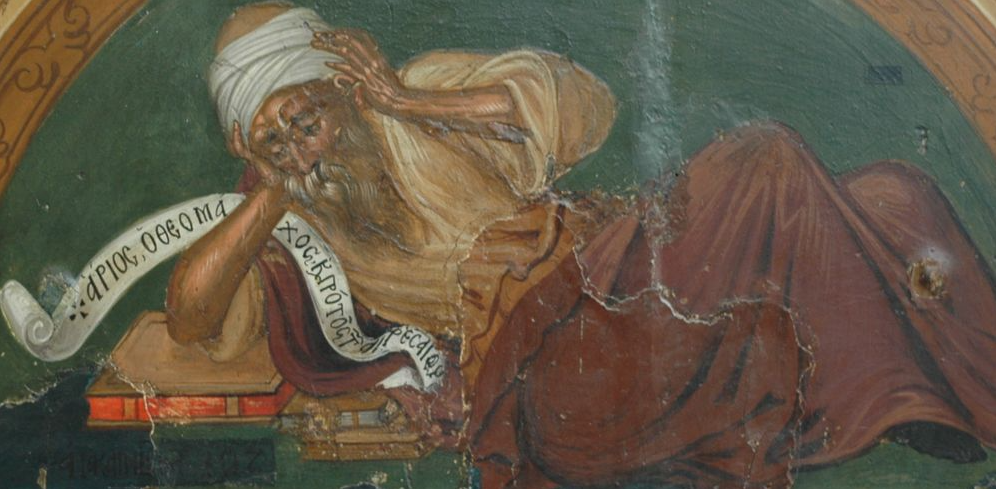
The Arian Controversy
The Arian controversy is named after its proponent Arius (250 or 256 – 336 AD) and is regarded as heretical by most modern mainstream branches of Christianity. Arius, a Christian presbyter who preached and studied in Alexandria, Egypt.
Arian theology holds that Jesus is the Son of God, who was begotten by God the Father, with the difference that the Son of God did not always exist but was begotten/made before time by God the Father. Therefore, Jesus was not coeternal with God the Father, but nonetheless Jesus began to exist after He was “brought forth.”
The major impetus for the calling of the Council of Nicaea arose in a theological dispute among the Christian clergy of Alexandria concerning the nature of Jesus, his origin, and relation to God the Father.
Before the Council of Nicaea in 325 AD
Arguments for Arianism
According to surviving accounts, the presbyter Arius argued for the supremacy of God the Father, and maintained that the Son of God was created as an act of the Father’s will, and therefore that the Son was a creature made by God, begotten directly of the infinite, eternal God. Arius’s argument was that the Son was God’s very first production, before all ages.
The position being that the Son had a beginning, and that only the Father has no beginning. And Arius argued that everything else was created through the Son. Thus, said the Arians, only the Son was directly created and begotten of God; and therefore there was a time that He had no existence.
Arius believed that the Son of God was capable of His own free will of right and wrong, and that “were He in the truest sense a son, He must have come after the Father, therefore the time obviously was when He was not, and hence He was a finite being,” and that He was under God the Father.
Therefore, Arius insisted that the Father’s divinity was greater than the Son’s. The Arians appealed to Scripture, quoting biblical statements such as “the Father is greater than I,” and also that the Son is “firstborn of all creation.”
Arguments against Arianism
This view stemmed from the idea that begetting the Son is itself in the nature of the Father, which is eternal. Thus, the Father was always a Father, and both Father and Son existed always together, eternally, coequally and consubstantially.
This contra-Arian argument thus stated that the Logos was “eternally begotten,” therefore with no beginning. Those in opposition to Arius believed that to follow the Arian view destroyed the unity of the Godhead, and made the Son unequal to the Father. They insisted that such a view was in contravention of such Scriptures as “I and the Father are one” and “the Word was God,” as such verses were interpreted.
They declared, as did Athanasius, that the Son had no beginning, but had an “eternal derivation” from the Father, and therefore was coeternal with him, and equal to God in all aspects.
Result of the debate
The Council of Nicaea declared that the Son was true God, coeternal with the Father and begotten from His same substance, arguing that such a doctrine best codified the Scriptural presentation of the Son as well as traditional Christian belief about him handed down from the Apostles.
This belief was expressed by the bishops in the Creed of Nicaea, which would form the basis of what has since been known as the Niceno-Constantinopolitan Creed.
In spite of his sympathy for Arius, Eusebius of Caesarea adhered to the decisions of the council, accepting the entire creed. The initial number of bishops supporting Arius was small. After a month of discussion, on June 19, there were only two left: Theonas of Marmarica in Libya, and Secundus of Ptolemais. Maris of Chalcedon, who initially supported Arianism, agreed to the whole creed. Similarly, Eusebius of Nicomedia and Theognis of Nice also agreed, except for certain statements.
The Emperor carried out his earlier statement: anybody who refused to endorse the Creed would be exiled. Arius, Theonas, and Secundus refused to adhere to the creed, and were thus exiled to Illyria, in addition to being excommunicated. The works of Arius were ordered to be confiscated and consigned to the flames, while his supporters were considered as “enemies of Christianity.”
Nevertheless, the controversy continued in various parts of the Roman empire; and even today, throughout various sects of the “Christian” World.


