
What is the number of Christians in China?
What is the number of Christians in China, both official and unofficial?

Determining the precise number of Christians in China is difficult due to government registration policies, differing measurement methods, and the clandestine nature of underground or “house” churches. Estimates range widely based on whether data comes from official state bodies, demographers, or independent ministry networks.
Official Government Numbers
According to the Chinese government’s official figures (released by the State Council Information Office):
- Total Official Christians: ~44 million
- Protestants: ~38 million registered under the state-sanctioned Three-Self Patriotic Movement (TSPM).
- Catholics: ~6 million registered under the state-sanctioned Chinese Catholic Patriotic Association (CCPA).
Unofficial & Independent Estimates
Because many believers worship in unregistered “house churches” (Protestant) or underground churches loyal to Rome rather than the state-approved association (Catholic), total demographic figures vary considerably:
- Pew Research Center / Demographic Surveys:
- Estimate: ~25 million to 40 million adults
- Independent, representative academic surveys in China (such as the Chinese General Social Survey and China Family Panel Studies) typically show that 2% to 3% of Chinese adults formally self-identify as Christian. However, if broader definitions are used—such as adults who believe in Jesus Christ/God or practice Christian customs without formally declaring a religious affiliation—the figure reaches around 70 million to 80 million.
- Global Christian & Advocacy Organizations:
- Estimate: ~70 million to 100+ million
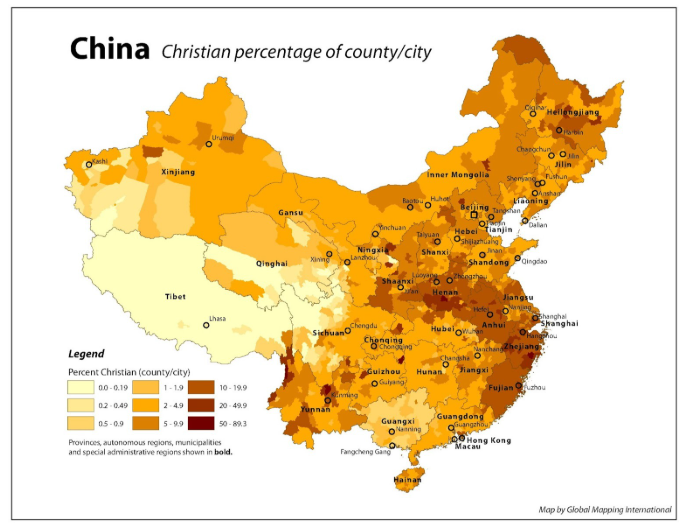
- Organizations such as Open Doors, ChinaAid, and Center for the Study of Global Christianity estimate that unregistered Christians outnumber registered ones. They place the total combined number of Christians between 70 million and 100 million (roughly 5% to 7% of China’s population), with some higher-end estimates reaching up to 130 million.
Why the Gap Exists
- Political Sensitivity: Under tightened state regulations and “Sinicization” policies, many believers choose not to self-report their faith to official survey takers due to fear of harassment, monitoring, or job loss (especially for government employees or Communist Party members).
- Definitional Differences: Academic surveys strictly measure formal self-identification (zongjiao xinyang), whereas ministry groups often count regular attendees, unbaptized seekers, children, or non-registered members.
- Fluidity of House Churches: Millions of believers attend small, informal home gatherings that are decentralized and unrecorded.


