
Why hasn’t EMP been used in Ukraine or Iran?
Why hasn’t EMP been used in wars, like in Ukraine or Iran?
Electromagnetic Pulse (EMP) weapons have not seen operational use in modern conflicts like those in Ukraine or the Middle East due to technological, strategic, and practical limitations.
Nuclear EMPs Risk Catastrophic Escalation
- Treated as Nuclear Strikes: Generating a wide-area, high-altitude EMP (HEMP) requires detonating a nuclear warhead in the upper atmosphere. Because detecting nations cannot distinguish between a high-altitude nuclear blast and a ground-targeted strike, launching a HEMP weapon against a nuclear-armed power or its allies risks triggering full-scale nuclear retaliation under mutual assured destruction (MAD).
- Indiscriminate and Uncontrollable: A nuclear EMP does not respect borders or military targets. Detonating one over Eastern Europe or the Middle East would blind friendly forces, destroy civilian infrastructure across neighboring neutral states, and render the attacker’s own communications, GPS, and electronic hardware unusable.
Non-Nuclear EMPs (NNEMP) Face Physics and Range Limits
- Rapid Power Decay: Non-nuclear EMP weapons rely on conventional explosives or high-power microwave generators (such as flux compression generators). Unlike nuclear blasts, their energy dissipates exponentially over short distances (inverse-square law).
- Point-Target Only: Non-nuclear EMP devices must be brought very close to a target—often within hundreds of meters—to inflict permanent damage. At that range, it is far more efficient, reliable, and cost-effective to use conventional high explosives or guided precision missiles to physically destroy the target.
Military Electronics are Already Hardened
- Hardening Standards: Modern front-line military systems—such as armored vehicles, command bunkers, fighter jets, and air defense systems—are built to MIL-STD specifications designed specifically to withstand electromagnetic interference and radiation.
- Inherent Protection: Basic protective steps like Faraday shielding (metal enclosures) or fiber-optic connections make critical equipment relatively resilient compared to unshielded civilian infrastructure.
Electronic Warfare (EW) is Cheaper and Reusable
- Jamming over Destruction: Rather than permanently frying circuits via an EMP, militaries rely on Electronic Warfare (EW) platforms. Systems deployed heavily in Ukraine and the Middle East continuously jam GPS, drone control frequencies, and radar signals across wide areas without destroying physical equipment.
- Flexibility: Directional EW jammers can be turned on or off, tuned to specific frequencies, and selectively target enemy units while keeping friendly communications operational.
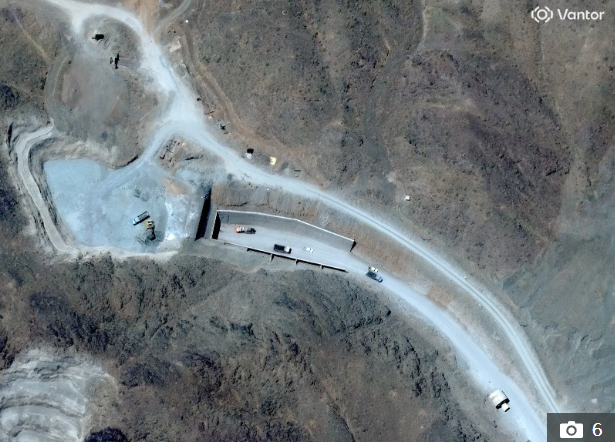
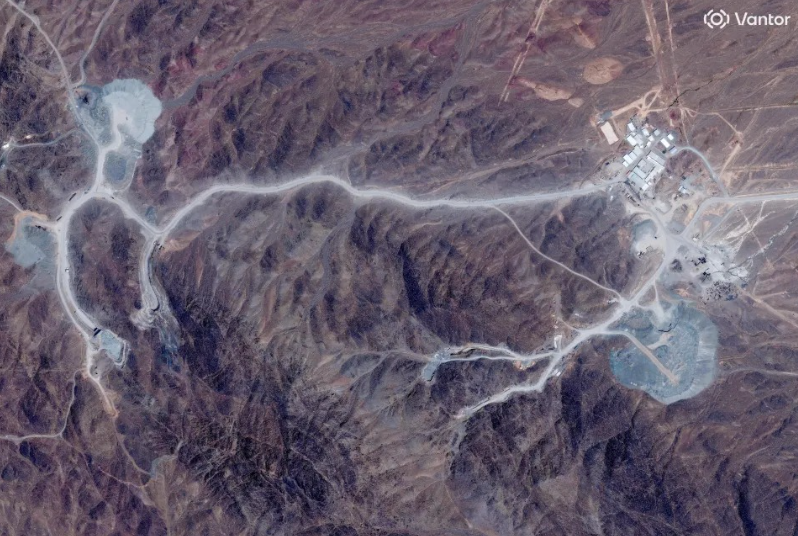
What stop a EMP strike over Pickaxe Mountain?
An electromagnetic pulse (EMP) strike—whether from a high-altitude nuclear detonation (HEMP) or non-nuclear high-power microwave (HPM) weapons—would be ineffective at disrupting or destroying the underground nuclear complex at Pickaxe Mountain (Kūh-e Kolang Gaz Lā, near Natanz, Iran) due to several physical and engineering factors:
1. Deep Earth and Rock Attenuation (Faraday Shielding)
- Geological Depth: The main halls and tunnel complexes inside Pickaxe Mountain are buried between 78 meters and over 100 meters (approx. 250 to 330+ feet) beneath dense granite bedrock.
- Electromagnetic Attenuation: High-frequency electromagnetic radiation decays rapidly as it penetrates solid earth and rock. Hundreds of feet of solid granite effectively act as a massive natural Faraday cage, blocking external radio frequency energy and high-voltage E1/E2 EMP waves from reaching the interior systems.
2. Hardened Infrastructure and Isolation
- Isolated Grid Systems: Underground military facilities of this caliber rely on internal, localized power generators (often isolated deep within the rock) rather than being fully reliant on exposed overhead civilian power lines, which are the main conduits that absorb EMP energy.
- Hardened Entrances: The tunnel portals at Pickaxe Mountain feature hardened concrete structures and heavy blast doors. These entrance points, along with ventilation shafts, are designed with attenuation filters and physical shielding to prevent radio frequency energy from traveling inside.
3. Inherent Inefficiency of EMPs Against Underground Bunkers
- Non-Nuclear EMP Range Limits: Non-nuclear EMP weapons (such as flux compression generators or directed energy devices) must be brought within very close range (hundreds of meters) to inflict damage. Even at close proximity, their energy cannot penetrate deep rock or reinforced subterranean concrete.
- Nuclear EMP Ineffectiveness Against Underground Targets: A high-altitude nuclear detonation produces a widespread pulse across thousands of square miles above ground, but its energy stays on the surface and along unshielded overhead wiring. It does not penetrate deep underground complexes.
4. Alternative Vulnerabilities Because an EMP cannot reach or damage the facility’s interior equipment, military strategists focus instead on conventional kinetic capabilities (such as heavy bunker-buster munitions like the GBU-57 MOP) or ground operations. Rather than trying to fry internal electronics with an EMP, attacks are typically aimed at sealing the tunnel entrances, destroying power supply yards, or blocking air ventilation shafts above ground to render the complex unusable.


