
The Targum, an Insight of Ezra (B-Moses)
The Targum, which originated in the Aramaic language and is strongly linked to the work of Ezra, holds significance for shedding light on biblical concepts. When the Masoretic Text can be vague, uncertain, or unclear, the Targum often offers clearer meaning, broader insight, and deeper understanding.
Yes, sometimes the Targum clarifies metaphors and interprets idioms or difficult passages instead of translating them literally, which often makes no sense. Such an endeavor should be highly commended rather than criticized.
For example, the Targum interprets natural imagery—like cedars, cypresses, oaks, forests, and fire—as metaphors for political political and social structures, especially kings, rulers, governors, and wealthy elites. Such imagery can be sweeping: forests laid waste, lions roaring as their habitat is destroyed, and power structures crumbling. Fire symbolizes divine punishment, sweeping through defenses and dismantling the very foundations of their power.
Translating such natural imagery literally could convey limited information or even distort it, but Ezra was determined to share their true meaning. He was a righteous man, for God had prepared his heart to seek the law of the Lord, to follow it, and to teach the statutes and judgments in Israel Ezra 7:10.
Exodus
(1) And the Lord said unto Moses, “See, I have made thee a god to Pharaoh, and Aaron thy brother shall be thy prophet. Exodus 7:1
— a god ’ĕ·lō·hîm to Pharaoh; “a god” that is, he was to act in this business as God’s representative, God’s envoy, to act and speak in His name and to perform things beyond the ordinary course of nature;
— any messenger (mal·’āḵ) is also an angel; and God gives authority for an messenger to carry God’s name, “for My name is in him;”
“Behold, I send a messenger (mal·’āḵ) before thee to keep thee in the way, and to bring thee into the place which I have prepared;
Have regard for him, and obey his voice. Provoke him not, for he will not pardon your transgressions, for My name is in him. Exodus 23:20-21
— the Targum of Jonathan reveals another dimension, saying,
“And the Lord said to Moses: ‘Why are you afraid? Behold, I have already placed you as a terror to Pharaoh, as if you were his god; and Aaron your brother shall be your prophet.’” Exodus 7:1 Jonathan
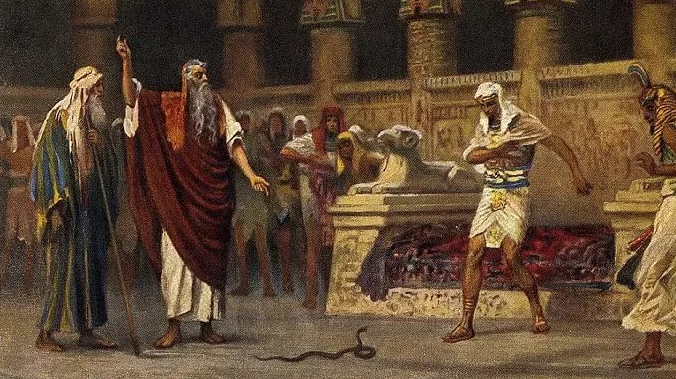
(2) Then Pharaoh also called the wise men and the sorcerers. Now the magicians of Egypt, they also did in like manner with their enchantments. Exodus 7:11
— the names of these magicians of Egypt, Janis and Jamberes, were already incorporated in the Targum of Jonathan
But Pharoh called the hachems and magicians; and they also, Janis and Jamberes, magicians of Mizraim, did the same by their burnings of divination. Exodus 7:11 Jonathan
— also being mentioned in Exodus 1:15 Jonathan, introduced as the chief of the magicians; but also picked up by Paul; that’s right, Paul also used the Targum for understanding deeper issues
“Now as Jannes and Jambres withstood Moses, so do these also resist the truth — men of corrupt minds, reprobate concerning the faith.” II Timothy 3:8
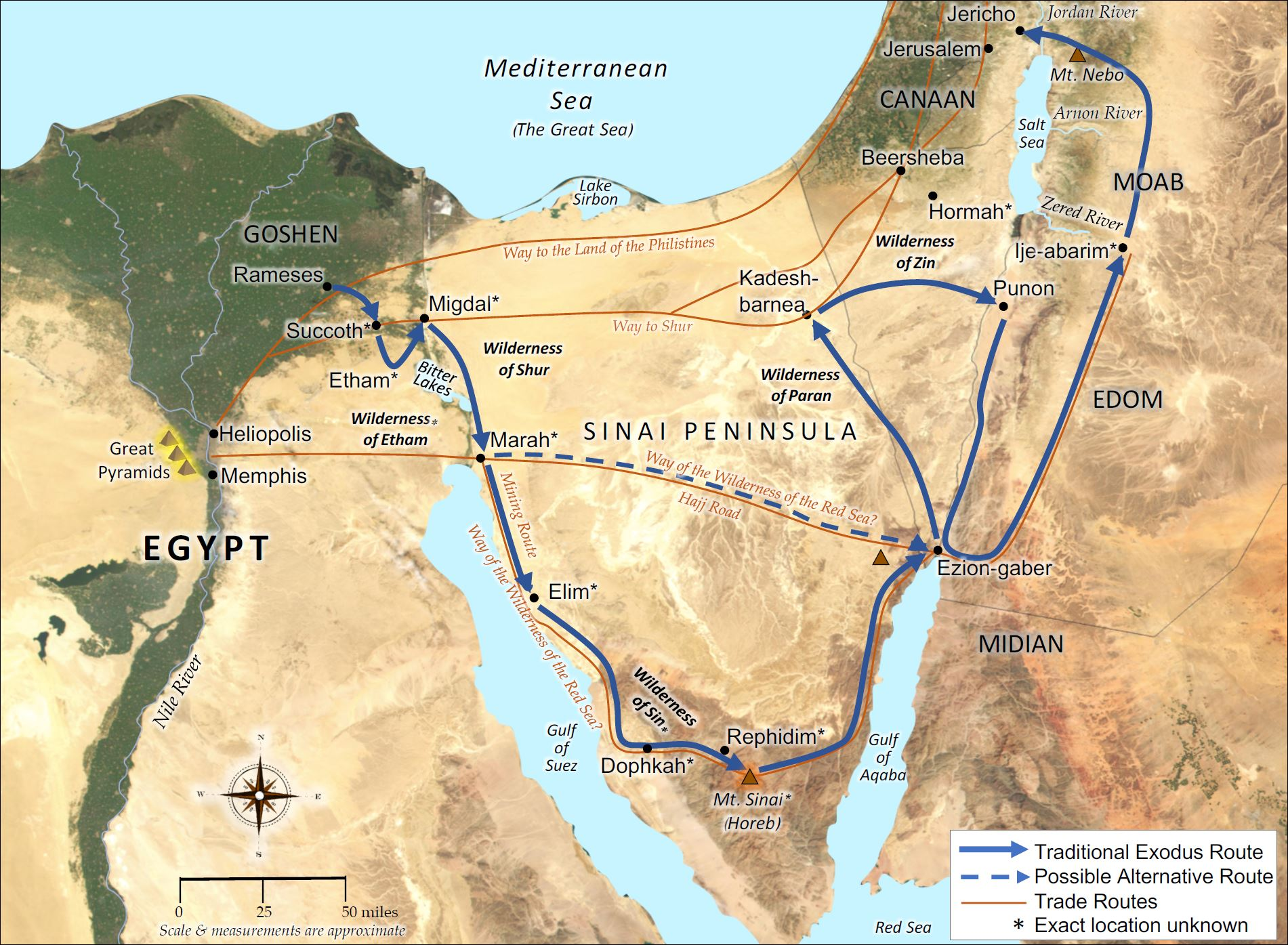
(3) And it came to pass, when Pharaoh had let the people go, that God led them not through the way of the land of the Philistines, although that was near; for God said, “Lest perhaps the people repent when they see war, and they return to Egypt.” Exodus 13:17
— when they see war; for the Philistines were viewed as one of the most warlike people of the time; as the Targum of Jonathan reveals an earlier misadventure by the tribe of Ephraim, saying
“And it was when Pharaoh released the people, that the Lord did not lead them by the way of the land of the Philistines, although it was near; for the Lord said, ‘Lest the people be dismayed when they see their brothers who died in battle—two hundred thousand armed men of the tribe of Ephraim, grasping shields, spears, and weapons of war.
“They went down to Gath to plunder the livestock of the Philistines; and because they transgressed against the decree of the Memra (Word) of the Lord and left Egypt thirty years before the [appointed] end, they were delivered into the hands of the Philistines, who killed them.
“These were the ‘dry bones’ that the Word of the Lord brought to life through the hand of Ezekiel the prophet in the Valley of Dura. If [the Israelites] see this, they will be afraid and return to Egypt.’” Exodus 13:17 Jonathan
— the details of this eposode was recorded by the Book of Jasher, Chapter 75, where after 180 years in Egypt, the tribe of Ephraim, thirty thousand valiant men on foot, who trusted in their own strength, who have come forth from Egypt to take the cattle of the Philistines before their appointed time; “but the Lord delivered the children of Ephraim into the hands of the Philistines,” leaving only ten men to report back what a disaster it had been;
— “And Ephraim their father mourned many days, and his brethren came to comfort him.” I Chronicles 7:22
(4a) “I am the Lord thy God, who have brought thee out of the land of Egypt, out of the house of bondage.” Exodus 20:2
— which have brought thee out of the land of Egypt: where they had been afflicted many years, and reduced to great distress, but were brought forth with an high hand;
— out of the house of bondage: where they had been servants and slaves, but now were made free, and were become a body politic, a kingdom of themselves, under their Lord, King, Lawgiver.
— the Targum of Jonathan reveals it isn’t just sound; it’s sparks, lightning and fire, saying
“And then it cried out and said: ‘My people, children of Israel, I am the Lord your God, who redeemed and brought you out redeemed from the land of the Egyptians, from the house of the bondage of slaves.’”
“The First Word (Commandment), when it went forth from the mouth of the Holy One—blessed be His name—was like sparks, and like lightnings, and like flames of fire. A lamp of light was at His right hand, and a lamp of fire at His left.
“It flew and soared through the air of the heavens, and returned and was seen over the camps of Israel. Then it returned and became engraved upon the Tablets of the Covenant that were placed in the hands of Moses, turning itself upon them from side to side.
(4b) “Thou shalt have no other gods before Me. — there shall not be to thee another god, or other gods, to wit, idols, which others have, esteem, and worship as gods;
— again, the Targum of Jonathan reveals there are sparks, lightning and fire, saying
“And then it cried out and said: ‘My people, House of Israel, you shall have no other god besides Me.’”
“The Second Word (Commandment), when it went forth from the mouth of the Holy One—blessed be His name—was like sparks, and like lightnings, and like flames of fire. A lamp of light was at His right hand, and a lamp of fire at His left.
“It flew and soared through the air of the heavens, returned and was seen over the camps of Israel, and returned and became engraved upon the Tablets of the Covenant, turning itself upon them from side to side.
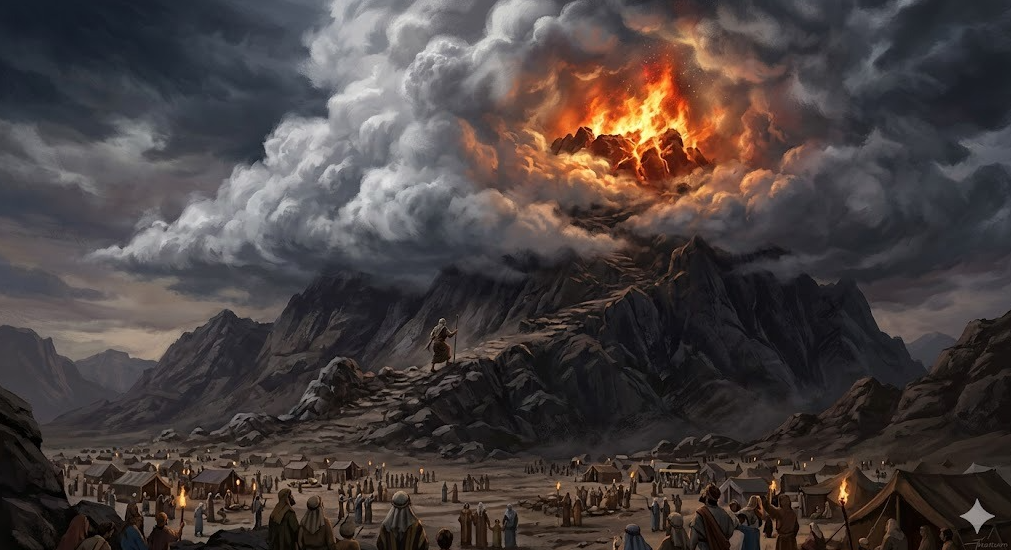
(5) And the Lord said unto Moses, “Come up to Me onto the mount, and be there; and I will give thee tablets of stone, and a law and commandments which I have written, that thou mayest teach them.” Exodus 24:12
— come up to me into the mount, and be there; for as yet Moses was not got up to the top of the mount, only up some part of it with the elders, though at some distance from the people: but now he is bid to come up higher;
— the Targum of Jonathan reveals the 613 laws were already identified during Moses time
“And the Lord said to Moses: ‘Ascend before Me to the mountain and be there; and I will give to you the tablets of stone, in which are hinted (alluded to) the rest of the words of the Torah, and the six hundred and thirteen commandments which I have written for their instruction.’”
(6) And thou shalt put in the breastplate of judgment the Urim and the Thummim; and they shall be upon Aaron’s heart, when he goeth in before the Lord: and Aaron shall bear the judgment of the children of Israel upon his heart before the Lord continually. Exodus 28:30
— the twelve stones into the breastplate were put in by the workmen, Exodus 39:10-21; the breastplate of Urim and Thummim dressed upon Aaron by Moses, Leviticus 8:1-8;
— this Urim and Thummim; signifing lights and integrity or perfections: by which the will of God would be made known in doubtful cases; and asking counsel of God in any emergency;
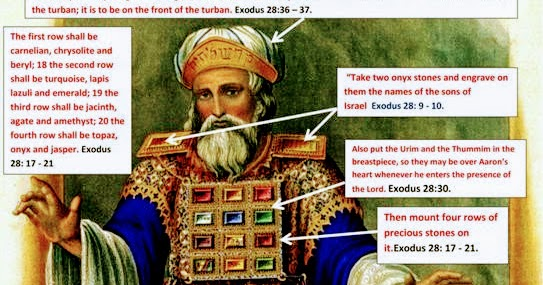
— the Targum Onkelos says the Urim and Thummim inside the Breastplate of Judgment
“And you shall place in the Breastplate of Judgment the Urim and the Thummim, and they shall be upon the heart of Aaron when he goes in before the Lord; and Aaron shall bear the judgment of the children of Israel upon his heart before the Lord continually.”
— the Targum of Jonathan reveals further hidden things of the Urim and Thummim, saying
“And you shall put in the Breastplate of Judgment the Urim, which illuminate their words and reveal the hidden things of the House of Israel; and the Thummim, which perfect their deeds for the High Priest who seeks instruction from before the Lord through them.
“For upon them is engraved and expressed the Great and Holy Name, by which three hundred and ten worlds were created. It is also engraved and expressed upon the Foundation Stone, with which the Master of the World sealed the mouth of the Great Deep from the beginning.
“And anyone who call upon that Holy Name in a time of distress is saved, and hidden things are revealed to them. And they shall be upon Aaron’s heart when he enters before the Lord; and Aaron shall bear the judgment of the children of Israel upon his heart before the Lord continually.”
— some observations from the Targum of Jonathan above
— Urim from Or (Light), they “illuminate” hidden truths, legal, moral and prophetic, of the House of Israel; a divine light exposes what is concealed;
— Thummim from Tam (Complete/Perfect); they give final, complete answers from the Lord to the High Priest’s questions;
— the “310 worlds” that are reserved as a reward for the righteous;
— by wearing the Urim and Thummim, Aaron carries the same “code” that keeps the universe stable; or a seal against chaos and maintains the cosmic order; and it highlights the High Priest’s role as a mediator carrying Israel’s judgment before God;
— the Holy Name of God isn’t just for the High Priest; it is a source of help and rescue for anyone who cried out in “a time of distress.” That is, it emphasizes the power of the Divine Name, “Whoever remembers that Holy Name in a time of distress is delivered.” His explicit Divine Name, is יהוה YHVH Yehovah.
— Cases in use
Or where there is no answer I Samuel 14, 37; “Lord, God of Israel, why haven’t you answered me today?” And the answer, if it could be considered an answer, is a forced one? I Samuel 14:40-42, Septuagint
If he were standing before the ark, he probably received instructions from off the mercy-seat, as Moses did, Exodus 25:22.
If he were at a distance from the ark, as David was when he inquired of the Lord through Abiathar (1 Samuel 23:1-12), then the answer was given either by a voice from heaven, or by an impulse upon the mind of the high-priest, or the inquirer.
(7) And the Lord said unto Moses, “Depart and go up hence, thou and the people whom thou hast brought up out of the land of Egypt, unto the land which I swore unto Abraham, to Isaac, and to Jacob, saying, ‘Unto thy seed will I give it.’ Exodus 33:1
— the land which I swore unto Abraham, Isaac and to Jacob; saying, unto thy seed will I give it: meaning the land between the two great rivers, which as he had promised with an oath to their fathers to give it to them, he would faithfully observe it, though they were unworthy of such a favour;
— the Targum of Jonathan reveals a specific psychological motivation for the command to leave, saying,
“And the Lord spoke with Moses: ‘Go, depart from here—lest My burning anger intensify against the people and I destroy them. Therefore, travel you and the people whom you brought up from the land of Egypt, to the land which I swore to Abraham, to Isaac, and to Jacob, saying: To your children I will give it.’”
— God shifts the “ownership” of the nation; He doesn’t call them “My people,” but rather “the people whom you brought up.” That is, even in anger, God remains faithful to the Covenant of the Patriarchs; because of His promise to Abraham, Isaac, and Jacob.
(8) And He said, “Behold, I make a covenant. Before all thy people I will do marvels such as have not been done in all the earth, nor in any nation; and all the people among whom thou art shall see the work of the Lord, for it is a fearsome thing that I will do with thee. Exodus 34:10
— following the Golden Calf, there was fear that God would “replace” Israel with another nation;
— but the Targum of Jonathan reveals God’s unwillingness to change his chosen people
“And He said: ‘Behold, I decree a covenant that I will not exchange this people for another people. However, from you shall go forth multitudes of righteous ones.
“In the presence of all your people, I will perform wonders for them at the time they go into captivity by the rivers of Babylon; I will bring them up from there and settle them within the River Sambatyon.
“Such wonders as these have not been created among all the inhabitants of the earth or among any of the nations. And all the people among whom you dwell shall see on that day the work of the Lord, for awesome is that which I am doing with you.’”
— the Targum, however, affirms the eternal nature of the bond, even in the face of sin as it looks far into the future, specifically addressing the exile and the fate of the “lost” parts of the nation, promising they shall bring “forth multitudes of righteous ones.”
(9) And it came to pass, when Moses came down from Mount Sinai with the two tablets of testimony in Moses’ hand, when he came down from the mount, that Moses knew not that the skin of his face shone while he talked with Him. Exodus 34:29
— Moses did not know his face shone, while he talked with him; this radiance was why Moses eventually has to wear a veil when speaking to the people, “for they were afraid to come near to him” Exodus 34:30–35;
— the Targum of Jonathan reveals that Moses had achieved the highest possible level of intimacy with the Divine that a human could survive, saying
“And it was, at the time of Moses’ descent from Mount Sinai, with the two Tablets of Testimony in the hand of Moses as he descended from the mountain, that Moses did not know that the splendor of the features of his face shone; which became his from the splendor of the Glory of the Shekhinah of the Lord, at the time of His speaking with him.”
— the Targum of Jonathan reveals Moses didn’t know that his face shone with the splendour which had come upon him from the brightness of the glory of the Lord’s Shekinah in the time of His speaking with him.
(10) And Moses said unto Aaron, “Go unto the altar, and offer thy sin offering and thy burnt offering, and make an atonement for thyself and for the people; and offer the offering of the people and make an atonement for them, as the Lord commanded.” Leviticus 9:7
— and Moses said unto Aaron; though he was now the duly-installed high priest, yet he did not approach the altar till he was solemnly called upon by Moses to do it;
— the Targum of Jonathan says
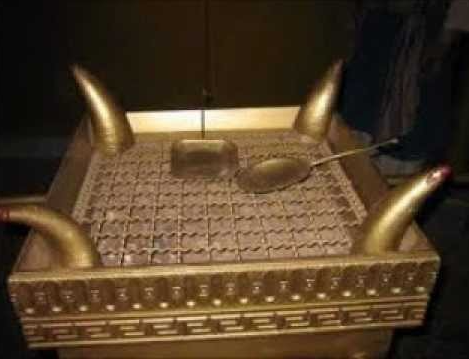
“And it happened, that when Aaron saw the altar, its horns appeared to him like the horns of a calf. He became afraid to approach it.
“Therefore, Moses said to him: ‘Strengthen your resolve (literally: “Enforce your mind/knowledge”) and draw near to the altar; do not be afraid. Perform your sin offering and your burnt offering, and atone for yourself and for the people; and perform the offering of the people and atone for them, just as the Lord has commanded.’”
— the Targum explains that Aaron was suffering from a guilty conscience: he saw the Golden Calf he had helped create at Sinai. To him, the altar looked like the very idol that had nearly led to the nation’s destruction;
— perhaps it was a Paralysis of Shame: Aaron felt unworthy; he felt that by approaching the altar, he was reminding God of his greatest failure. His fear wasn’t of the fire or the ritual, but of his own past.
— the Question is, why was the four corners embedded with four horns of a calf?
~~~~
Numbers
(1) But there remained two of the men in the camp: the name of the one was Eldad, and the name of the other Medad. And the Spirit rested upon them; and they were of those who were written, but went not out unto the tabernacle; and they prophesied in the camp. Numbers 11:26
— but there remained two, Eldad and Medad, were Levites, Moses’ maternal half-brothers, of the seventy who were summoned, that came not out of the camp of Israel to the tabernacle when the rest did;
— what were prophesied were not specified, but the Targum reveals more, saying
And the Spirit of prophecy resting upon them,
Eldad prophesied, and said: Behold, Mosheh shall be gathered from the world; and Jehoshua bar Nun [Joshua], the minister of the camps, will be established after him, and will lead the people of the house of Israel into the land of Kenaan, and make it their inheritance.
Medad prophesied, and said: Behold, quails come up from the sea, and cover all the camp of Israel; but they will be to the people (a cause of) an offence.
And both of them prophesied together, and said: Behold, a king will arise from the land of Magog, at the end of the days, and will assemble kings crowned with crowns, and captains wearing armour, and him will all nations obey.
And they will set battle in array in the land of Israel against the children of the captivity; but already is it provided that in the hour of distresses all of them shall perish by the burning blast of the flame that cometh forth from beneath the Throne of Glory; and their carcases shall fall upon the mountains of the land of Israel, and the wild beasts of the field and the fowls of the sky shall come and consume their dead bodies.
And afterward will all the dead of Israel live (again), and be feasted from the ox which hath been set apart for them from the beginning, and they shall receive the reward of their works. And they were of the elders who stood in the registers among them; but they had not gone forth to the tabernacle, but had hidden to escape from the dignity; yet they prophesied in the camp. Numbers 11:26 Jonathan
— from this Targum translation, it could be established that Gog is a King, or title of a King, like Caesar, Czar or Agag (as in Numbers 24:7 in the Septuagint), a dynastic name for the kings of the Amalekites;
— and afterward will all the dead of Israel live (again); this establishes that the death of “Gog and Magog” is not before, but after, and then again, it may not be at once but “each in his own order” 1 Corinthians 15:23, indicating there are many orders, first at Christ’s coming, then throughout the Millennium.
(2) And there went forth a wind from the Lord, and brought quails from the sea, and let them fall by the camp, as it were a day’s journey on this side, and as it were a day’s journey on the other side round about the camp, and as it were two cubits high upon the face of the earth. Numbers 11:31
— God backed up Eldad and Medad prophecy by sending quails there, flying low, and when wearied with a long flight they flew only about breast-high;
— on the other hand, the more obvious interpretation of the words is that the quails were spread over the ground, and covered it in some places to the height of two cubits
— the Targum Jonathan reveals more details, saying
And the wind of a tempest went forth, and came violently from before the Lord, so as to have swept the world away, but for the righteousness of Mosheh and Aharon: and it blew over the Great Sea, and made the quails fly from the Great Sea, and settle wherever there was place in the camp, as a day’s journey northward and southward, and at the height as of two cubits; they flew upon the face of the ground, and went upon their bellies, so that (the people) were not wearied while they collected them. Numbers 11:31 Jonathan
(3) And Miriam and Aaron spoke against Moses because of the Ethiopian woman whom he had married, for he had married an Ethiopian woman. Numbers 12:1
— and Miriam and Aaron spoke against Moses; Miriam appears to have been the leader as her name occurs before that of Aaron in this insurrection against Moses;
— because of the Ethiopian woman, whom he had married, for he had married an Ethiopian woman; perhaps a daughter of a king of Ethiopia before he fled from Pharaoh, as the Targum of Jonathan indicates; Moses was forty when he fled so he could have married a princess, a queen in fact, of Ethiopia by then;
— the Targum Jonathan reveals more details, saying
“And Miriam and Aaron spoke against Moses words that were not fitting, concerning the matter of the Cushite woman whom the Cushites had given as a wife to Moses when he fled from before Pharaoh; and he had distanced himself [from her], because they had given the queen of Cush to him as a wife, and he had distanced himself from her.” Numbers 12:1 Jonathan
The Backstory: Moses as King of Cush
In the standard Masoretic Text, Numbers 12:1 simply states that Miriam and Aaron spoke against Moses because of the “Cushite woman he had married.” It leaves the identity of this woman and the circumstances of the marriage entirely ambiguous.
The Targum of Jonathan fills this gap by drawing on an ancient Jewish historical records (also found in the non-canonical Book of Jasher and referenced by the historian Josephus). According to this tradition:
- After Moses killed the Egyptian taskmaster, he fled Egypt (Exodus 2:15).
- Instead of going straight to Midian, he spent several decades in the land of Cush (ancient Ethiopia/Nubia).
- Moses became a great military commander and was eventually crowned King of Cush. As part of his royal ascension, he was given the widowed Queen of Cush (named Adonith in some texts) as his wife.
- However, because of his devotion to the God of his fathers, Moses refused to cohabit with her. He “distanced himself from her” (רָחִיק מִינָהּ), keeping the marriage purely political and unconsummated.
- Eventually, he left Cush, arrived in Midian, and married Zipporah.
Therefore, this Targum clarifies that Miriam and Aaron weren’t gossiping about Zipporah; they were discussing this past, unconsummated royal marriage from Moses’ time in Cush, using it to debate his ongoing marital choices and his status as a prophet.
(4) And while the children of Israel were in the wilderness, they found a man who gathered sticks upon the Sabbath day. — a man that gathered sticks upon the Sabbath day; this incident is evidently narrated as an instance of presumptuous sin.
33 And those who found him gathering sticks brought him unto Moses and Aaron and unto all the congregation. —to Moses and Aaron, and to the seventy elders, who might be at this time met together, to hear, try, and judge causes.
34 And they put him under guard, because it was not declared what should be done to him. — because it was not declared what should be done to him: that is, what kind of death he should die.
35 And the Lord said unto Moses, “The man shall be surely put to death. All the congregation shall stone him with stones outside the camp.”
— the man shall surely be put to death; for as no fire was to be made throughout their habitations on a Sabbath day, gathering sticks for such a purpose was a work that was a violation of the sabbath, punishable with death, Exodus 35:2.
36 And all the congregation brought him outside the camp and stoned him with stones, and he died, as the Lord commanded Moses. — and stoned him with stones, and he died: stoned him to death: as the Lord commanded Moses; Numbers 15:32-36
— and a clearer picture from the Targum – Numbers 15:32-36; And the congregation led him forth outside the camp, and stoned him with stones that he died, as the Lord had commanded Mosheh.
And while the sons of Israel were dwelling in the wilderness, the decree of the Sabbath was known to them, but the punishment (for the profanation) of the Sabbath was not known. And there arose a man of the house of Joseph, and said with himself: I will go and pull up wood on the Sabbath day;
And witnesses saw it, and told Mosheh; and Mosheh sought instruction from the presence of the Lord, that he might teach me judgment, and make known the discipline of all the house of Israel.
And the witnesses of the man who pulled up and collected wood came, and, after they had monished him, and he had wounded the witnesses who had found him pulling up wood, brought him to Mosheh and Aharon, and all the congregation . . . .
Therefore they put him in confinement, because they had not yet heard the explanation of the judgment they should execute upon him.
And the Lord said to Mosheh: The man shall be surely put to death; the whole congregation shall stone him with stones outside the camp; Numbers 15:32-36 Jonathan
(5) And when King Arad the Canaanite, who dwelt in the South, heard tell that Israel came by the way of the spies, then he fought against Israel and took some of them prisoners. Numbers 21:1
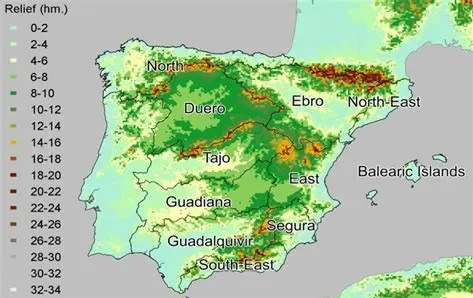
— as the famine in Canaan worsened, Jacob’s children were forced to seek survival in Egypt. During this time, a similar fate could have affected many of Esau’s descendants possibly moving to the Iberian Peninsula, with the name “Iber,” the river called the Ibēr or Ibēros which flows through northeastern Spain, perhaps marking their Hebraic roots. This would leave behind only the Amalekites then living in Negeb, the South;
— by the way of the spies, that is, from Rekem (the ancient Aramaic name for Kadesh-Barnea) backward to Moseroth—a distance spanning six encampments;
— these Canaanites were the Amalekites; for the Targum of Jonathan says “And Amalek, who had dwelt in the south, and … came and waged war against Israel, and captured some of them with a great captivity.”
“And Amalek, who was dwelling in the land of the south, heard; and he came and disguised himself, and he reigned in Arad, because Aaron had died and his soul had rested, and the Pillar of Cloud that was leading the people, the House of Israel, by his merit was removed.
“And [Amalek heard] that Israel was coming by the way of the spies (or: the path of the track-layers), the place where they had rebelled against the Lord of the world. For when the track-layers returned, the children of Israel were dwelling in Rekem, and they turned backward from Rekem unto Moseroth—six encampments—for forty years. They journeyed from Moseroth and returned to Rekem by the way of the track-layers, and they came to Mount Hor (Tauros Omanos), and Aaron died there. Therefore, [Amalek] came and waged war against Israel, and captured some of them with a great captivity.”
— all the forty years the children were travelling in the Wilderness, the Amalekites were getting ready to re-match the Israelites after their earlier defeat under Joshua, Exodus 17:8-16. Could this be a prophecy disguised as historic for the last days?
— why did the Amalekites suddenly feel confident enough to attack a nation of millions? The Targum explains that Israel’s supernatural defense mechanism—the Pillar of Cloud—was physically removed because it had only been granted in the merit of Aaron;
— the moment Aaron died, the cloud vanished, exposing the camp of Israel to its enemies for the first time in decades. Seeing Israel unprotected, Amalek disguised himself as a Canaanite king to launch a surprise strike, “and captured some of them with a great captivity.”
(6) He shall pour the water out of his buckets, and his seed shall be in many waters; and his king shall be higher than Agag, and his kingdom shall be exalted. Numbers 24:7
— the children of Jacob, and they shall inherit the richest blessings; and their kings shall be higher than Agag, the dynastic monarchy of the Amalekite kings;
— the ‘Agag’ in this verse is translated as “Gog” in the Septuagint; thus “Agag” is a dynastic name of the kings of Amalek, a grandson of Esau; just as Pharaoh was used as a dynastic name for the ancient Egyptians, Caesar of Rome; or of more modern times, the Czar of Russia;
There shall come a man out of his seed, and he shall rule over many nations; and the kingdom of Gog shall be exalted, and his kingdom shall be increased. Numbers 24:7 (Septuagint) “Agag” in the Masoretic; throughout history there is no concept of any “kingdom of Gog” but a “kingdom of Agag” could be conceptualized as the kingdom of the Amalekites.
— an important point to be noted: it arose from the Targum, the prophecy of Eldad and Medad (Number 11:27 Jonathan), which says, “a king will arise from the land of Magog, at the end of the days,” refering to endtime “Gog and Magog.” Thus this solidifies that Gog is a dynastic title of a king, a king of the Amalekite vigour in their hatred for Israel;
— the Targum of Jonathan says Israel to rule over many nations,
The first one who shall reign over them (Israel) will wage war against the House of Amalek, and he shall be exalted over Agag their king; but because he will have compassion upon him, his kingdom shall be taken away from him.”
“Their king shall arise from among them, and their redeemer shall be from them and within them; and their seed—the children of Jacob—shall rule over many nations.
(7) And now, behold, I go unto my people. Come therefore, and I will warn thee what this people shall do to thy people in the latter days.” Numbers 24:14
— what this people shall do to thy people in the latter days; not what the Moabites should do to the Israelites then, but what they shall do to the Israelites in future times; not in the times of David, by whom they were subdued, II Samuel 8:2 but in much later times;
— now this might be said to Balak to make him feel easy, that it would not be until the latter days, many hundreds of years hence, ere the people of Israel would fight with Moab, and subdue it; and therefore he needed not be concern, since he would meet with any trouble from them in his time, nor his people for years to come;
— this prophecy “in the latter days” wasn’t provided with much details in the Masoretic Text, but reveals far more in the Targum, especially in regards to an eventual fall of the house of Jacob, prophecies to unfold in the latter days, for our times!
— the Targum of Jonathan reveal their strategy to bring down the house of Jacob with great details, saying,
“And now, behold, I return to go to my people. Come, I will give thee counsel: Go, furnish tavern houses, and employ seductive women to sell food and drinks cheaply, and to bring this people together to eat and drink, and commit whoredom with them, that they may deny their God; then in a brief time will they be delivered into thy hand, and many of them will fall. Nevertheless, after this they will still have dominion over thy people at the end of days.”
(8) And the Lord said unto Moses, “Take all the heads of the people and hang them up before the Lord against the sun, that the fierce anger of the Lord may be turned away from Israel.” Numbers 25:4
— take all the heads of the people would be genocide for thee whole population; the “heads” should be as “chiefs” of the people or were chief in this transgression; before the Lord; for vindicating the honor of the true God;
— the Targum of Jonathan has this version:
And the Lord said to Mosheh, Take all the chiefs of the people, and appoint them for judges, and let them give judgment to put to death the people who have gone astray after Peor, and hang them before the Word of the Lord upon the wood over against the morning sun, and at the departure of the sun take them down and bury them and turn away the strong anger of the Lord from Israel.
Deuteronomy
(1) These are the words which Moses spoke unto all Israel on this side of the Jordan in the wilderness, in the plain opposite the Red Sea, between Paran, and Tophel, and Laban, and Hazeroth, and Dizahab. Deuteronomy 1:1
— the Targum of Jonathan introduces Moses speech by adding historical context in his warning:
These are the words of rebuke that Moses spoke with all Israel, assembling them unto himself when they were on the bank of the Jordan. He answered and said to them: ‘Was not the Torah given to you in the wilderness, at Mount Sinai, and explained to you in the plains of Moab?
How many miracles and wonders did the Holy One, blessed be He, perform for you from the time you crossed the shore of the Sea of Reeds—making for you a highway for each and every tribe!
Yet you strayed from after His Word, and you provoked anger before Him in Paran over the words of the spies, and you plastered false words upon Him, and you complained against the manna that He brought down for you white from heaven, and you demanded meat in Hazeroth.
And you were worthy of being eradicated from the world, were it not that He remembered for you the merit of your righteous ancestors, the Tabernacle of Meeting, the Ark of the Covenant, and the holy vessels, and that you saw refined gold—and He atoned for you for the sin of the golden calf.’ Jonathan
(2) Turn you and take your journey, and go to the mount of the Amorites and unto all the places nigh thereunto, in the plain, in the hills and in the vale, and in the South and by the seaside, to the land of the Canaanites and unto Lebanon, unto the great river, the River Euphrates. Deuteronomy 1:7
— the mount of the Amorites; where they and the Amalekites dwelt, in the south part of the land of Canaan, and which was the way the spies were sent, Numbers 13:17,
— the Targum of Jonathan interprets it,
“Turn and set out for yourselves to Arad and Hormah, and go up to the mountain of the Amorite, and to all the inhabitants of Ammon, Moab, and Gebal, in the plain of the forest, in the mountain, in the lowland, in the south, and along the seacoast—Ashkelon and Caesarea—the land of the Canaanites unto its strongholds, and Lebanon, the place of the mountain of the Sanctuary, unto the great river, the River Euphrates.”
(3) And I charged your judges at that time, saying, ‘Hear the causes between your brethren, and judge righteously between every man and his brother and the stranger who is with him. Deuteronomy 1:16
— the Targum elaborates further,
“And I instructed your judges at that time regarding the orders of judicial procedure, saying: ‘Hear out your brethren, so that one party does not speak all his words while the other cuts his words short; and once you have heard their words, it is impossible for you not to judge them, and you shall judge the case in truth and peaceful compromise between a man and his brother, and between one who hires up legal claims.'” Jonathan
(4) Ye shall not respect persons in judgment, but ye shall hear the small as well as the great. Ye shall not be afraid of the face of man, for the judgment is God’s. And the cause that is too hard for you, bring it unto me and I will hear it.’ Deuteronomy 1:17
— the Targum elaborates it,
“You shall not show partiality [recognize faces] in judgment; you shall hear the words of the small case just as the words of the great case, and you shall not be afraid before the rich man or ruler, for judgment belongs before the LORD, who sees all hidden things. And any matter that is too difficult for you, bring to me and I will hear it.” Jonathan
(5) save Caleb the son of Jephunneh; he shall see it, and to him will I give the land that he hath trodden upon, and to his children, because he hath wholly followed the Lord.’ Deuteronomy 1:36
— the Targum elaborates further,
“Except Caleb the son of Jephunneh—he shall see it, and to him will I give the good land, the land of Hebron through which he walked, and to his children, because he followed whole-heartedly after the fear of the LORD.” Jonathan
(6) And He declared unto you His covenant, which He commanded you to perform, even Ten Commandments; and He wrote them upon two tablets of stone.
— which he commanded you to perform, even the ten commandments; which is in Exodus 20:1, and in this book repeated, Deuteronomy 5:6; and he wrote them upon two tables of stone;
— and he wrote them upon two tables of stone; to denote the durableness of them; the Targum of Jonathan says on tables of sapphire.
“And He declared to you His covenant, which He commanded you to perform—the Ten Commandments [Ten Words]—and He wrote them upon sapphire tablets.” Jonathan

(7) For the Lord thy God is a consuming fire, even a jealous God. Deuteronomy 4:24
— a consuming fire; when God spoke to Israel at Sinai, his glory appeared “like devouring (consuming) fire on the top of the mount” (Exodus 24:17); and in allusion to this Moses here calls God “a consuming fire.”
“For the LORD your God—His Word is a consuming fire; He is a jealous God who exacts retribution in jealousy.” Jonathan
(8) Thou shalt not bow down thyself unto them, nor serve them; for I, the Lord thy God, am a jealous God, visiting the iniquity of the fathers upon the children unto the third and fourth generation of them that hate Me, Deuteronomy 5:9
— the Targum says
thou shalt not worship them or do service before them; for I am the Lord your God, a jealous and avenging God, taking vengeance in jealousy; remembering the sins of wicked fathers upon rebellious children to the third generation and to the fourth of them that hate Me, when the children complete to sin after their fathers; Jonathan
(9) and showing mercy unto thousands of them that love Me and keep My commandments.
but keeping mercy and bounty for a thousand generations of the righteous who love Me and keep My mandates and My laws, Jonathan
(10) “‘Thou shalt not kill. Neither shalt thou commit adultery. Neither shalt thou steal. Neither shalt thou bear false witness against thy neighbor.'” Deuteronomy 5:17-20
Sons of Israel, My people, you shall not murder, nor be companions or participators with those who do murder, nor shall there be seen in the congregations of Israel (those who have part) with murderers; that your children may not arise after you, and teach their own to have part with murderers; for because of the guilt of murder the sword cometh forth upon the world. Sons of Israel, My people, you shall not be adulterers, nor companions of, or have part with, adulterers; neither shall there be seen in the congregations of Israel (those who have part) with adulterers, and that your children may not arise after you, and teach theirs also to be with adulterers; for through the guilt of adulteries the plague cometh forth upon the world. Sons of Israel, My people, you shall not be thieves, nor be companions nor have fellowship with thieves, nor shall there be seen in the congregations of Israel (those who have part)with theives; for because of the guilt of robberies famine cometh forth on the world. Sons of Isreal, My people, you shall not bear false witness, nor be companions or have fellowship with the bearers of false testimony; neither shall there be seen in the congregations of Isreal those who (have part) with false witnesses; for because of the guilt of false witnesses the clouds arise, but the rain does not come down, and dearth cometh on the world. Jonathan
(11) “‘Neither shalt thou desire thy neighbor’s wife, neither shalt thou covet thy neighbor’s house, his field, or his manservant, or his maidservant, his ox, or his ass, or any thing that is thy neighbor’s.’ Deuteronomy 5:21
Sons of Israel, My people, you shall not be covetous, nor be companions or have fellowship with the covetous; neither shall there be seen in the congregations of Israel any who (have part) with the covetous; that your children may not arise after you, and teach their own to be with the covetous. Nor let any one of you desire his neighbour’s wife, nor his field, nor his servant, nor his handmaid, nor his ox, nor his ass, nor anything that belongeth to his neighbour; for because of the guilt of covetousness the government (malkutha) seizeth upon men’s property to take it away, and bondage cometh on the world. Jonathan
(12) And thou shalt write them upon the posts of thy house and on thy gates. Deuteronomy 6:9
— the Targum of Jonathan says, fix them in three places, over against the bed chamber, upon the posts of the house, and on the gate at the right hand of it.
(13) a people great and tall, the children of the Anakim, whom thou knowest and of whom thou hast heard say, ‘Who can stand before the children of Anak!’
— the children of Anakims, whom thou knowest; by report of having had an account by the spies; who described them as very large bodied men, and of a gigantic stature, the descendants of one Anak, a giant;
— and so the Targum of Jonathan says, “A people (are they) strong and tall as the giants whom you know, and of whom you have heard (say), Who can stand before the sons of the giants?”
(14) And it came to pass, at the end of forty days and forty nights, that the Lord gave me the two tablets of stone, even the tablets of the covenant. Deuteronomy 9:11
— the Targum Jonathan says “the two tables of marble, the tables of the covenant,” written with the finger of God;
(15) For I was afraid of the anger and hot displeasure wherewith the Lord was wroth against you to destroy you. But the Lord hearkened unto me at that time also. Deuteronomy 9:19
“At that same time, five angels of destruction were sent from before the LORD to destroy Israel: Wrath (Af), Burning Anger (Chemah), Wrath/Indignation (Ketsef), Destroyer (Mashchit), and Fierce Anger (Charon). As soon as Moses, the master [the Rabban] of Israel, heard this, he went and invoked the Great and Glorious Name, and raised Abraham, Isaac, and Jacob from their graves; and they stood in prayer before the LORD. Immediately, three of them [the angels] were restrained, and two remained—Af and Chemah. Moses sought mercy, and both of them were restrained as well. And he dug a pit in the land of Moab and buried them by the oath of the Great and Awesome Name. Therefore it is written: ‘For I was afraid of the anger and hot displeasure wherewith the LORD was wroth against you to destroy you; and the LORD accepted my prayer at that time also.'” Jonathan
— “he dug a pit in Moab and buried them by the oath of the Great Name,” Moses digs a trench or pit in the land of Moab, forces these two angels of destruction into it, and seals them inside using an oath invoked by the Great and Awesome Name of God; that is, calling out the Four-Letter Name of God (Y-H-V-H).
— To utter the Explicit Name in holiness gave a prophet direct authority over heavenly hosts, angels, and the elements. The power of the Name awe-struck the slumbering Patriarchs—Abraham, Isaac, and Jacob—compelling their souls/bodies to rise. The angels of destruction could ignore human arguments, but they could not overcome the combined merit of the Patriarchs backed by the authority of YHVH.
— After Moses forced the remaining two angels of destruction (Af and Chemah) into the pit in Moab, the Targum specifies that he buried/sealed them “by the oath of the Great Name.”
(16) And I took your sin, the calf which ye had made, and burned it with fire and stamped it and ground it very small, even until it was as small as dust; and I cast the dust thereof into the brook that descended out of the mount. Deuteronomy 9:21
— and burnt it with fire, and stamped it; with his feet after it was burnt, to bring it into small pieces: and ground it very small; or as the Targum of Jonathan says, “and crushed it well with crushing until I had bruised it into dust.”
(17) And the children of Israel took their journey from Beeroth of the children of Jaakan to Mosera. There Aaron died, and there he was buried; and Eleazar his son ministered in the priest’s office in his stead. Deuteronomy 10:6
“And the children of Israel journeyed from the villages of the wells of the children of Jaakan to Moserah. There Amalek waged war against them, disguised as the king of Arad, when he heard that Aaron had died and the Clouds of Glory had departed; and because of the distress upon Israel on account of that battle, they desired to return to Egypt, and retreated six encampments. The Levites pursued after them and killed eight families/clans of them, and brought them back; however, four families/clans of the Levites were also killed. They said to one another, ‘What caused this slaughter among us? Only because we were negligent in the mourning for Aaron the Pious!’ So all the children of Israel established a great lamentation there, as if Aaron had died and been buried there; and thereupon Eleazar his son ministered in his place.” Jonathan
(18) For if ye shall diligently keep all these commandments which I command you to do them — to love the Lord your God, to walk in all His ways, and to cleave unto Him— Deuteronomy 11:22
“For if you will diligently keep all this commandment which I command you to perform it—to love the LORD your God, to walk in all the paths that are right before Him, and to draw near to the fear of Him…” Jonathan
(19) But when ye go over the Jordan and dwell in the land which the Lord your God giveth you to inherit, and when He giveth you rest from all your enemies round about, so that ye dwell in safety, Deuteronomy 12:10
— but when ye go over Jordan; which lay between the place where they now were, and a sanctuary to be built;
“And you shall cross the Jordan and dwell in the land which the LORD your God causes you to inherit, and He will give you rest from all your enemies round about; and you shall build the Sanctuary, and after that you shall dwell in security.” Jonathan
(20) then there shall be a place which the Lord your God shall choose to cause His name to dwell there. Thither shall ye bring all that I command you: your burnt offerings and your sacrifices, your tithes and the heave offering of your hand, and all your choice vows which ye vow unto the Lord. Deuteronomy 12:11
— which the Lord your God shall choose, to cause his name to dwell there: and it was in Jerusalem where he himself would dwell, and where his name would be called, and he would be worshipped;
“And it shall be that the place which the Word of the LORD shall choose to cause His Shechinah to dwell there, thither shall you bring all that I command you: there you shall offer your burnt-offerings, and your consecrated sacrifices, and there you shall eat your tithes, and the separation of your hands, and all the choice of your vows which you shall vow before the LORD.” Jonathan
(21) Only thy holy things which thou hast, and thy vows, thou shalt take and go unto the place which the Lord shall choose. Deuteronomy 12:26
— only thy holy things which thou hast; which the Targums of Jonathan interprets of the tithe of their holy things, and their burnt offerings and peace offerings;
“Only the beasts of the tithe of your holy offerings which you shall have, and your vows, you shall take up and come to the place which the LORD shall choose.” Jonathan
(22) And this is the manner of the release: Every creditor who lendeth aught unto his neighbor shall release it. He shall not exact it from his neighbor or from his brother, because it is called the Lord’S release. Deuteronomy 15:2
— once every seven years, a release of debts, every poor Israelite who had borrowed money, and had not been able to pay it before, should this year be released from it;
— the Targum says as a son of Israel, “because the house of judgment, or the Sanhedrin, proclaimed it a release before the Lord.”
And this is the indication of the custom of the Release: Every man who is master of a loan, who lendeth to his neighbour, shall give remission. He shall not have power to coerce his neighbour in demanding his loan, nor of his brother, a son of Israel; because the beth din hath published the Release before the Lord. Jonathan
(23) Thou shalt therefore sacrifice the Passover unto the Lord thy God, of the flock and the herd, in the place which the Lord shall choose to place His name there. Deuteronomy 16:2
— thou shalt sacrifice the Passover; this was the paschal lamb; the feast of the Passover, which lasted seven days; the sheep (of the flock) and oxen (of the herd) here mentioned were additional sacrifices which were to be offered in the seven days of the paschal solemnity; the Targum of Jonathan says “the sheep and the bullocks”
“And you shall slaughter the Pesach offering before the LORD your God between the suns [bein ha-arbayim, “between the two evenings”], and sheep and oxen on the next day at the break of day for the joy of the festival, in the place which the LORD shall choose to cause His Shechinah to dwell there.” Jonathan
— if this is only a reference for the Passover proper, it would only be of the flock only, that is, one from the sheep; and none from the herd; but the herd is mentioned collectively, hence this is a reference to a composite feast, the feast of the Passover, which lasted seven days;
— and this composite Passover festival is described with more details in Numbers 28
“‘And on the fourteenth day of the first month is the Passover of the Lord.
“And on the fifteenth day of this month is the feast: seven days shall unleavened bread be eaten.
“On the first day shall be a holy convocation. Ye shall do no manner of servile work therein,
“but ye shall offer a sacrifice made by fire for a burnt offering unto the Lord: two young bullocks, and one ram, and seven lambs of the first year. They shall be unto you without blemish.” Numbers 28:16-19
(24) And there shall be no leavened bread seen with thee in all thy borders seven days, neither shall there anything of the flesh, which thou sacrificed the first day, at even, remain all night until the morning. Deuteronomy 16:4
— neither shall there be anything of the flesh, which thou sacrificedst on the fourteenth, the first day, at even, remain all night until the morning; which are the flesh of the passover lamb;
— at the start of “the first day, at even” no leavened bread shall be seen; hence unleavened bread starts on the fourteenth, at even; again proving this feast of the Passover is a composite fesitival.
“And you shall take heed prior to the Passover so that leaven shall not be seen among you in all your borders for seven days; nor shall any of the meat which you slaughter in the evening on the first day remain overnight until the morning.” Jonathan
(25) but at the place which the Lord thy God shall choose to place His name in, there thou shalt sacrifice the Passover at evening [bā·‘ā·reḇ], at the going down of the sun, at the season that thou camest forth out of Egypt. Deuteronomy 16:6
— but as the Targum says “in the place which the Lord your God will choose to make His Shekinah to dwell,” that is, wherever the Ark was stationed, later to be established in Jerusalem;
— the Passover at evening (bā·‘ā·reḇ) and later identified only in the city of Jerusalem were God had ultimately chosen;
“But in the place which the LORD your God shall choose to cause His Shechinah to dwell there, you shall slaughter the Passover offering; and in the evening, at the setting of the sun, you shall eat it until midnight, the time of the beginning of your redemption from Egypt.” Jonathan
(26) Six days thou shalt eat unleavened bread, and on the seventh day shall be a solemn assembly to the Lord thy God. Thou shalt do no work therein. Deuteronomy 16:8
— the Targum of Jonathan says, on the first day ye shall offer the sheaf (the firstfruits, terms coined by William Tyndale; ‘omer’ in the original), and for the six days which remain ye shall begin to eat the unleavened bread of the new corn; or unleavened bread of the new fruits;
“On the first day you shall offer the Omer, and you shall eat unleavened bread of the new produce; and the remaining six days you shall be permitted to eat unleavened bread of the new produce; and on that seventh day you shall gather together with praise before the LORD your God, you shall do no work.” Jonathan
(27) “Seven weeks shalt thou number unto thee: begin to number the seven weeks from such time as thou beginnest to put the sickle to the corn. Deuteronomy 16:9
“Seven weeks you shall count for yourselves; from the time you begin to put the sickle to harvest in the field—after the harvesting of the Omer—you shall begin to count seven weeks.” Jonathan
— begin to number the seven weeks from such time as thou beginnest to put the sickle to the corn; for the sheaf of the wave offering, as the first fruits of barley harvest, which was done on the morrow after the sabbath; Q is, which Sabbath?
— the Targum of Jonathen makes it clear in Leviticus 23
And he shall uplift the sheaf before the Lord to be accepted for you. AFTER THE FIRST FESTAL DAY OF PASCHA (OR, THE DAY AFTER THE FEAST‑DAY OF PASCHA) on the day on which you elevate the sheaf, you shall make (the sacrifice of a lamb of the year, unblemished a burnt offering unto the Name of the Lord . . . 15 and number to you AFTER THE FIRST FEAST DAY OF PASCHA . . . (Leviticus 23:11-15, Jonathan)
— false prophets abound, the Samaritan “Jews” and the latter-day Samaritan “Christians,” who follow the former, interprete this perversely: insisting that the day after the Sabbath to begin the count falls on the weekly Sunday;
— this change is significant, extremely significant, because by doing so, the firstruits, where the redemption of humanity were to be drawn upon the blood of the Lamb being sacrificed, is now being severed, and reattached to another ‘saviour.’
And just like in the days of old, when God told Adam and Eve not to eat from the Tree of the Knowledge of Good and Evil, Satan came along and said otherwise. In the same way, the redemption of humans as firstfruits was meant to be tied to Christ’s sacrifice at Passover, but Satan stepped in to break that link and turn our focus toward the Sun-god of Babylon.

(28) Neither shall he multiply wives to himself, that his heart turn not away; neither shall he greatly multiply to himself silver and gold. Deuteronomy 17:17
— neither shall he multiply wives to himself; as Solomon’s did; as well as the manner of other kings were, contrary to the design of God from the beginning;
“And he shall not multiply wives for himself beyond eighteen, so that they do not turn his heart astray; and silver and gold he shall not multiply for himself excessively, so that his heart does not become overly proud and he rebel against the God of heaven.” Jonathan
(29) “And it shall be, when he sitteth upon the throne of his kingdom, that he shall write him a copy of this law in a book from that which is before the priests the Levites. Deuteronomy 17:18
— upon the throne of his kingdom; when he is settled on it, and is even amidst all the pomp and glory of it: he shall write with his own hand; out of that which is before the priests;
— out of that original, which was carefully kept by the priests in the sanctuary, that it might be a perfect copy, and that it might have the greater influence upon him, coming to him as from the hand and presence of God;
“And it shall be, if he finds rest in the commandments of the Torah, he shall sit securely upon the throne of his kingdom; and the elders shall write for him this text of the Torah in a book, from before the priests who are from the tribe of Levi.” Jonathan
(30) or a charmer, or a consulter with familiar spirits, or a wizard, or a necromancer. Deuteronomy 18:11
— necromancer; or a necromancer that inquiries of the dead, to gain insight into the future; or seeks instruction from them,
“And they bind and tie [with spells] serpents and scorpions and all kinds of creeping things, and they consult the unclean fruit, and the bone of the Yid’oni [divining bone], and inquire of the dead.” Jonathan
(31) For these nations which thou shalt possess hearkened unto observers of times and unto diviners; but as for thee, the Lord thy God hath not suffered thee so to do. Deuteronomy 18:14
— though the heathen whom they exterminated before them hearkened to conjurers and soothsayers, the Lord their God had not allowed anything of the kind to them;
“For these nations, whom you are about to possess, listen to those who delude the eyes [soothsayers] and to diviners of divination; but you are not like them. Rather, you shall inquire of the priests through the Urim and Thummim, and a truthful prophet the Lord your God has given to you.” Jonathan
(32) And it shall come to pass that whosoever will not hearken unto My words which He shall speak in My name, I will require it of him. Deuteronomy 18:19
— whosoever will not hearken unto my words which he shall speak in my name, I will require it of him; the direful consequences of unbelief in his Son, the Christ, and disregard of his mission, the Jewish people have been experiencing during eighteen hundred years of exiles;
— I will require it of him; or, as the Targum of Jonathan says, “my Word shall require it of him, or take vengeance on him;” as Christ the Word of God did in the destruction of the Jewish nation, city, and even the Temple; Luke 19:27.
(33) But the prophet who shall presume to speak a word in My name which I have not commanded him to speak, or who shall speak in the name of other gods, even that prophet shall die.’ Deuteronomy 18:20
— but the prophet which shall presume to speak in my name; pretending a mission and commission from God, and yet was never sent by him, like the false prophets in Jeremiah 23:21,
— the Targum of Jonathan says:
But the false prophet who doeth wickedly in speaking a thing in My Name, when I have not commanded him to speak, or who shall speak in the name of the gods of the Gentiles, that prophet shall be slain with the sword.
(34) “One witness shall not rise up against a man for any iniquity or for any sin, in any sin that he sinneth. By the mouth of two witnesses or by the mouth of three witnesses shall the matter be established. Deuteronomy 19:15
— by the mouth of two or three witnesses, shall the matter be established; either for acquittance or condemnation;
“The testimony of a single witness shall not stand against a man for any offense of the soul, for any monetary debt, or for any sin that he may commit; except by the word of the Lord, to exact punishment for secret acts by the water, one witness may testify to contradict what is testified against her, but by the statement of two witnesses or three witnesses a matter shall be established.” Jonathan
(35) And thine eye shall not pity; but life shall go for life, eye for eye, tooth for tooth, hand for hand, foot for foot. Deuteronomy 19:21
— eye for eye, tooth for tooth, hand for hand, foot for foot; that is, the price of an eye an eye; practically, this is directed to the judges, a pecuniary compensation might be accepted for the offence;
“And your eye shall not pity: a life in place of a life, the monetary value of an eye in place of an eye, the monetary value of a tooth in place of a tooth, the monetary value of a hand in place of a hand, the monetary value of a foot in place of a foot.” Jonathan
(36) “When thou goest out to battle against thine enemies, and seest horses and chariots and a people more than thou, be not afraid of them; for the Lord thy God is with thee, who brought thee up out of the land of Egypt. Deuteronomy 20:1
— when thou goest out to battle against thine enemies; the land of Canaan to be gained by conquest, in a war of God’s special appointment; and the Israelites, after their settlement in it, being likely to be exposed to invasions from, or quarrels with the neighbouring nations;
— which brought thee out of the land of Egypt; who were reminded for the encouragement of their faith and confidence in him; for he that did that for them, what is it he cannot or will not do?
“When you go out to the lines of battle against your enemies, and you see horses and chariots, arrogant nations and mighty tyrants greater than you—do not fear them; for all of them are considered as a single horse and a single chariot before the Lord your God, Whose Word is your support, Who brought you out redeemed from the land of Egypt.” Jonathan
(37) “If one be found slain in the land which the Lord thy God giveth thee to possess it, lying in the field, and it be not known who hath slain him, then thy elders and thy judges shall come forth, and they shall measure the distance unto the cities which are round about him that is slain. Deuteronomy 21:1-2
— thy elders and thy judges near the cities, appointed by members of the great Sanhedrin at Jerusalem;
— so the Targum says, “then shall go out from the great Sanhedrin two of thy wise men, and three of thy judges.”
“If a male be found slain upon the ground, unburied, in the land which the Lord your God giveth you to inherit, lying down, and not hanged on a tree in the field, nor floating on the face of the water; and it be not known who did kill him: And there shall go forth from the Great Court two of your sages and three of your judges, and they shall measure from the four corners toward the cities that are surrounding the slain body.” Jonathan
(38) (“And if a man have committed a sin worthy of death, and he is to be put to death, and thou hang him on a tree), his body shall not remain all night upon the tree, but thou shalt in any wise bury him that day (for he that is hanged is accursed of God), that thy land be not defiled which the Lord thy God giveth thee for an inheritance. Deuteronomy 21:23
— accursed of God by this law, the touch of a dead body was defiling, therefore dead bodies must not be left hanging, as that would defile the land;
“You shall not leave the corpse of his body hanging overnight upon the tree, for you shall surely bury him on that day; for it is a disgrace before God to hang a person—except that his sins caused it for him—and because he was made in the image of God, you shall bury him at the setting of the sun, so that people do not despise him, and you shall not defile with the corpses of the guilty your land which the Lord your God is giving you as an inheritance.” Jonathan
(39) “Thou shalt not abhor an Edomite, for he is thy brother. Thou shalt not abhor an Egyptian, because thou wast a stranger in his land. Deuteronomy 23:7
— the Edomite, as descended from Esau, the nearest akin to each other of all the nations; and the Egyptian, as of that nation which had shown hospitality to Joseph and his brethren, and shouldn’t be objects of abhorrence;
“You shall not reject an Edomite who comes to convert, for he is your brother; you shall not reject an Egyptian who comes to convert, for you were dwellers in their land.” Jonathan
(40) “When the host goeth forth against thine enemies, then keep thyself from every wicked thing. Deuteronomy 23:9
— then keep thee from every wicked thing;
— the Targum of Jonathan adds, by way of explanation, “from strange worship, uncovering of nakedness, and from shedding innocent blood;” that is, from idolatry, uncleanness of every sort, and murder; and all other wickednesses ought to be abstained from all times and by all persons.
(41) And thou shalt write upon the stones all the words of this law very plainly.” Deuteronomy 27:8
— and thou shall write upon the stones all the words of this law; not upon the stones of the altar, but upon the first stones brought to Mount Ebal, and set up there before;
“And you shall write upon the stones all the words of this Law, a script engraved and clearly explained, read in one language [Hebrew] and translated into seventy languages.” Jonathan
(42) “‘Cursed be the man that maketh any graven or molten image, an abomination unto the Lord, the work of the hands of the craftsman, and putteth it in a secret place.’ And all the people shall answer and say, ‘Amen.’ Deuteronomy 27:15
— where the Masoretic Text is silent, the Targum specifies where the priests, the Levites and the Ark were when such blessings and curses were pronounced;
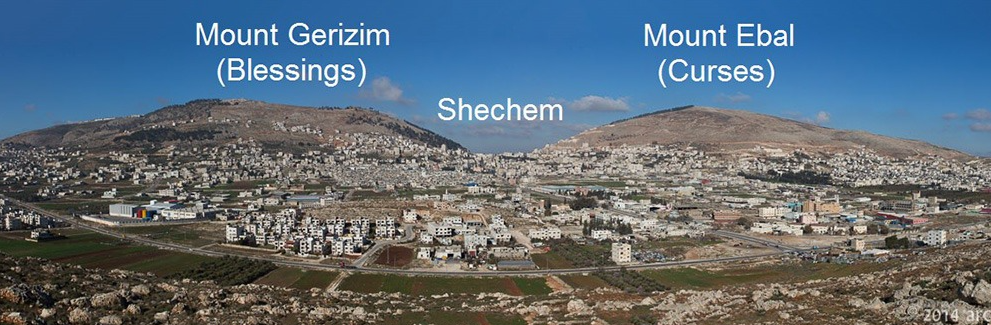
“Six tribes stood upon Mount Gerizim and six upon Mount Ebal, with the Ark, the priests, and the Levites in the middle.
When they were pronouncing the blessings, they turned their faces toward Mount Gerizim and said: ‘Blessed be the man who shall not make an idol, image, or any likeness of what is abominable before the Lord, the work of a craftsman’s hands, and shall not set it up in secret.’
When they were pronouncing the curses, they turned their faces toward Mount Ebal and said: ‘Cursed be the man who shall make an idol, image, or any likeness of what is abominable before the Lord, the work of a craftsman’s hands, and set it up in secret.’
And all of them would answer together and say: ‘Amen.’” Jonathan
(43) “‘Cursed be he that confirmeth not all the words of this law to do them.’ And all the people shall say, ‘Amen.’ Deuteronomy 27:26
— the Targum reveals more details
“The twelve tribes, each and every one, were saying the blessing in general and the curse in general.
When they were pronouncing the blessings, they all turned their faces for each and every matter toward Mount Gerizim and said: ‘Blessed be the man who shall establish the words of this Law to perform them.’
When they were pronouncing the curses, they all turned their faces toward Mount Ebal and said: ‘Cursed be the man who shall not establish the words of this Law to perform them.’
And all of them would answer together and say: ‘Amen.’
These words were stated at Sinai, repeated in the Tent of Meeting, and tripled in the plains of Moab—twelve words of the matter for each of the tribes, and for each and every commandment there were decreed upon it thirty-six covenants.” Jonathan
— thirty-six covenants: the Gemara explains that every single commandment carries 36 individual covenants binding each Jew—calculated by multiplying the 3 covenant events (Sinai; Ex 24; Tabernacle, Leviticus; Moab; Deu 29) by the general and detailed blessings/curses sworn by each of the 12 tribes.
(44) And all people of the earth shall see that thou art called by the name of the Lord, and they shall be afraid of thee. Deuteronomy 28:10
“And all the peoples of the earth shall see that the Name of the Lord is engraved [upon you] at the time when the Tefillin are upon you, and they shall be afraid of you.” Jonathan
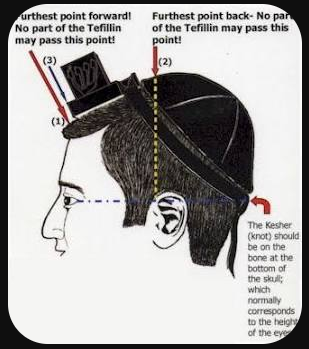
— Tefillin (phylacteries) are a pair of black leather boxes containing parchment scrolls inscribed with biblical verses, worn by Jewish men (and some women in non-Orthodox traditions) during weekday morning prayers (Shacharit).
The Four Biblical Passages, inside each box are hand-written scrolls containing four Torah sections commanding this ritual:
- Shema Yisrael (Deu 6:4–9): Affirmation of God’s unity and love
- VeHaya Im Shamoa (Deu 11:13–21): Promise of reward for keeping commandments
- Kadesh Li (Ex 13:1–10): Remembrance of the Exodus from Egypt
- VeHaya Ki Yevi’acha (Ex 13:11–16): Transmission of faith to future generations
(45) The Lord shall open unto thee His good treasure, the heaven to give the rain unto thy land in his season, and to bless all the work of thine hand; and thou shalt lend unto many nations, and thou shalt not borrow. Deuteronomy 28:12
“[Four keys are in the hand of the Lord of all the world…] of life [childbirth], and of the grave [resurrection], and of sustenance, and of rain.
And thus said Moses the prophet: Here the Lord will open for you His good treasury which is with Him in heaven, to give the rain of your land in its time—early rain [Bakkir/Yoreh] in Marchesvan and late rain [Lakish/Malkosh] in Nisan—and to bless all the work of your hands; and you shall lend to many nations, but you shall not need to borrow.” Jonathan
— and thou shall lend unto many nations, and thou shall not borrow; that is, thou shalt be in such affluent circumstances, as to be capable, out of thy superfluous wealth, to give aid to thy poorer neighbors. But the US is now some $40 trillions in debts.
(46) And the Lord shall make thee the head, and not the tail; and thou shalt be above only, and thou shalt not be beneath, if thou hearken unto the commandments of the Lord thy God which I command thee this day, to observe and to do them. Deuteronomy 28:13
— the head, to be kings, and not the tail; or subjects, give them dominion over others, and not make them subject to them; the head signifies rulers and governors, and the tail the common people that are subjects;
“And the Word of the Lord shall appoint you as kings and not as commoners, and you shall only be elevated and shall not be degraded; for you will receive the commandments of the Lord your God which I command you today, to observe and to perform.” Jonathan
(47) “But it shall come to pass, if thou wilt not hearken unto the voice of the Lord thy God, to observe to do all His commandments and His statutes which I command thee this day, that all these curses shall come upon thee and overtake thee: Deuteronomy 28:15
— that all these curses shall come upon thee; from the hand of God, certainly, suddenly and unexpectedly;
“When Moses the prophet opened his mouth to speak these words of rebuke, the earth quaked, the heavens trembled, the sun and moon grew dark, and the stars gathered in their shine. The patriarchs of the world cried out from their burial places, all creatures fell silent, and the trees did not shake their branches.
The patriarchs of the world spoke and said: ‘Woe upon our children when they sin and these curses reach them! How will they be able to bear them? Will He perhaps make a destruction of them, so that our merit will not shield them, and there will be no man to stand and pray on their behalf?’
A Heavenly Voice (Bat Kol) fell from the high heavens and said thus: ‘Do not fear, patriarchs of the world! For even if the merit of all generations should come to an end, your merit will never cease, and the covenant I established with you will not be annulled, but will shield them.’
Moses the prophet answered and said: ‘Even though I am rebuking you, I rebuke you only on condition—saying that if you do not accept the Word of the Lord your God to observe and perform all His commandments and statutes which I command you today, then all these curses will come upon you and overtake you.’” Jonathan
(48) “The Lord shall send upon thee cursing, vexation, and rebuke in all that thou settest thine hand unto to do until thou be destroyed and until thou perish quickly, because of the wickedness of thy doings whereby thou hast forsaken Me. Deuteronomy 28:20
— vexation; trouble, distress, and anguish of spirit: and rebuke; this may well be considered as a rebuke and correction for sins committed, to awaken to a sense and acknowledgment of them, and to repentance for them;
“The Word of the Lord will incite against you the curse—to curse your wealth, and confusion—to confuse your peace, and rebuke in every undertaking of your hand that you shall do, until you are destroyed and until you perish quickly, because of the wickedness of your deeds, for you have abandoned My fear.” Jonathan
(49) The Lord shall smite thee with a consumption, and with a fever, and with an inflammation, and with an extreme burning, and with the sword, and with blight, and with mildew; and they shall pursue thee until thou perish. Deuteronomy 28:22
— hard drugs such as methamphetamine, fentanyl and heroin, and they shall pursue thee until thou perish; coincided with an increase in violence, including gun crime, and come so close one after another upon them, until they are utterly destroyed;
— in 2021, more than 80,000 deaths in the United States were related to opioids, with nearly 71,000 linked with fentanyl; and approximately 76,516 drug overdose deaths for the twelve-month period ending in April 2025;
“The Word of the Lord will strike you with consumption [lung disease], and with fever, and with the fire of the bones that burns the brain, and with violent fits of phlegm that constrict the heart, and with the drawing of the sword, and with blight, and with mildew; and they shall pursue you upon your beds until you perish.” Jonathan
(50) And thy heaven that is over thy head shall be brass, and the earth that is under thee shall be iron. Deuteronomy 28:23
— thy heaven shall be brass; for its dryness and hardness, no moisture being in it, or passing through it; no showers of rain nor dew being let down from it;
— and the earth shall be as iron; or like iron, hard and impenetrable, into which the plough and spade will not enter; nor anything spring out of it, for want of rain and dew to moisten and soften it;
“And the heavens that are above you will be like copper that sweats—yet does not provide for you dew and rain; and the earth that is beneath you will be like iron that does not sweat—which does not moisten trees, aromatic/medicinal plants, sweet fruits, and vegetables.” Jonathan
(51) The Lord shall make the rain of thy land powder and dust; from heaven shall it come down upon thee until thou be destroyed. Deuteronomy 28:24
— powder and dust; the great desert, that is, instead of showers of rain in their season, to water, refresh, and enrich the earth, now a land of powder and dust; becoming a great desert, makes this only too possible;

— the Targum says:
After the rain which cometh down on the earth, the Lord will send a wind that shall drive dust and ashes upon the herbage of your fields; and calamity will fall upon you from the heavens, until you are consumed. Jonathan
(52) “The Lord shall cause thee to be smitten before thine enemies; thou shalt go out one way against them and flee seven ways before them, and shalt be removed into all the kingdoms of the earth. Deuteronomy 28:25
“The Word of the Lord will set you broken before your enemies; on one road you will go out to meet them in battle formation, and in seven roads—confused—you will turn [your back and] flee before them, and you will become an outcast to all the kingdoms of the earth.” Jonathan
(53) The Lord will smite thee with the boils of Egypt, and with the hemorrhoids, and with the scab, and with the itch, whereof thou canst not be healed. Deuteronomy 28:27
— the botch of Egypt; the “boil,” with which the Egyptians were plagued (Exodus 9:9); the “scab” and “itch” represent the various forms of the loathsome skin diseases;
“The Word of the Lord will strike you with the boils with which the Egyptians were smitten, and with hemorrhoids that blind the sight, and with scabies, and with an itch from which you will not be able to be healed.” Jonathan
(54) The Lord shall smite thee with madness, and blindness, and astonishment of heart; Deuteronomy 28:28
— and blindness; not of body, but of mind; with judicial blindness and hardness of heart: astonishment of heart; they shall be filled with wonder and horror, because of the strangeness and soreness of their calamities;
“The Word of the Lord will strike you with madness that dulls the brain, and with blindness, and with stupefaction of the heart.” Jonathan
(55) and thou shalt grope at noonday, as the blind gropeth in darkness, and thou shalt not prosper in thy ways. “And thou shalt be only oppressed and despoiled evermore, and no man shall save thee. Deuteronomy 28:29
“And you will be seeking good counsel to relieve your distress, but there will be no one among you to show the truth—just as a blind man gropes in the dark, who has no way to see so as to direct his path; and you will not make your ways successful, and you will be only oppressed and robbed all the days, with no one to deliver you.” Jonathan
(56) Thy sons and thy daughters shall be given unto another people, and thine eyes shall look and fail with longing for them all the day long; and there shall be no might in thine hand. Deuteronomy 28:32
“Your sons and your daughters will be handed over to a foreign nation, while your eyes look on and grow dark [with grief] over them all day long; yet you will have no good deeds in your hands to strengthen your hands in prayer before the Lord, your Father in heaven, that He might redeem you.” Jonathan
The Targum Jonathan on the Torah uses the phrase “Father in heaven” (אבוכון דבשמיא / אבוהון דבשמיא / אבונא דבשמיא) far more frequently than any other Targum—appearing approximately 15 to 20 times throughout.
Deuteronomy 32:6 (Song of Ha’azinu): Elaborates on the question “Is He not your Father?” by describing God’s paternal providence as “Our Father who is in heaven.”
(57) The Lord shall smite thee in the knees and in the legs with a sore boil that cannot be healed, from the sole of thy foot unto the top of thy head. Deuteronomy 28:35
“The Word of the Lord will strike you with severe boils upon the knees—because you bent them toward a matter of transgression, and upon the legs—which ran toward it; and if you do not return to the Torah, you will not be able to be healed, but rather you will be smitten with it from the soles of your feet unto the crown of your head.” Jonathan
(58) “The Lord shall bring thee and thy king whom thou shalt set over thee unto a nation which neither thou nor thy fathers have known, and there shalt thou serve other gods, wood and stone. Deuteronomy 28:36
— “a nation which neither thou nor thy fathers have known” seems very foreign; for they would have known the Assyrians, the Babylonians and even the Romans;
— and there shall thou serve other gods, of wood and stone; which they were obliged to do as were in Babylon, and they should be made to serve other gods, wood and stone seduced or compelled into idolatry as were in the Assyrian and Babylonish captivities;
“The Lord will exile you and your king whom you appoint over yourselves to a nation that you and your fathers have not known, and you will pay arnona taxes to those who worship idols of wood and stone.” Jonathan
(59) And thou shalt become an astonishment, a proverb, and a byword among all nations whither the Lord shall lead thee. Deuteronomy 28:37
— an astonishment, and would become an object of horror, a proverb, and a byword among the nations;
“And if your heart contemplates worshipping their idols, you will become a desolation, a proverb, and a mock-tale among the nations to where the Lord will scatter you.” Jonathan
(60) therefore shalt thou serve thine enemies whom the Lord shall send against thee, in hunger and in thirst and in nakedness and in want of all things; and He shall put a yoke of iron upon thy neck until He have destroyed thee. Deuteronomy 28:45
— and he shall put a yoke of iron upon thy neck; bring them into a state of subjection to their enemies, and they would not be able to free themselves, any more than to break an iron yoke; which, as were in the Babylonish captivity, and their subjection in that state;
“And you will serve your enemies, whom the Word of the Lord will incite against you, in hunger, in thirst, in nakedness, and in the lack of all good things; and they will place iron yokes upon your necks until the time He has destroyed you.” Jonathan
(71) The Lord shall bring a nation against thee from far, from the end of the earth, as swift as the eagle flieth, a nation whose tongue thou shalt not understand, Deuteronomy 28:49
— the Lord shall bring a nation against thee from far; the invasion of the Romans: “they came from far.” But more likely for the endtime, the Russians and the Chinese, would then be considered “the end of the earth.”
“The Word of the Lord will cause to fly against you a nation from afar, from the ends of the earth, swift as the eagle flies; a nation whose language you will not understand.” Jonathan
(72) And he shall besiege thee in all thy gates until thy high and fortified walls come down wherein thou trusted, throughout all thy land; and he shall besiege thee in all thy gates throughout all thy land which the Lord thy God hath given thee. Deuteronomy 28:52
“And they will besiege you in all your cities until the time your high and fortified walls fall—which you trusted in for deliverance throughout all your land; and they will besiege you in all your cities throughout all your land which the Lord your God has given you.” Jonathan
(73) “If thou wilt not observe to do all the words of this law that are written in this book, that thou mayest fear this glorious and fearful name, The Lord Thy God, then the Lord will make thy plagues wondrous, and the plagues of thy seed, even great plagues, and of long continuance, and sore sicknesses, and of long continuance. Deuteronomy 28:58-59
— and the plagues of thy seed; Covid-19, Ebola, Hantavirus, etc; for they were to continue, as they have done, with their posterity, age after age: even great plagues, and of long continuance; great as to quality and quantity;
“If you do not take care to perform all the commandments of this Torah that are written in this book, to fear this honored and awesome Name—the Lord your God…”
“And the Word of the Lord will conceal the Holy Spirit from you when they bring plagues upon you and plagues upon your children—great and enduring plagues that will not leave you, and evil and persistent diseases that attach themselves to your bodies.” Jonathan
(74) And ye shall be left few in number, whereas ye were as the stars of heaven for multitude, because thou wouldest not obey the voice of the Lord thy God. Deuteronomy 28:62
— and ye shall be left few in number, because thou wouldest not obey the voice of the Lord thy God; and his law, and by his prophets;
“And you will remain a diminished nation, instead of having been like the stars of the heavens for multitude; because you did not listen to the Word of the Lord your God.” Jonathan
(75) In the morning thou shalt say, ‘Would God it were evening!’ and at evening thou shalt say, ‘Would God it were morning!’ for the fear of thine heart wherewith thou shalt fear and for the sight of thine eyes which thou shalt see. Deuteronomy 28:67
— and so their hearts would fear and tremble, lest they should be the next that would be taken up and used in this manner; besides other severities and hard usages, with which their brethren were treated, and they in continual fear of;
“In the morning you will be saying, ‘If only it were evening!’—because troubles make the hours of the day feel long to you; and in the evening you will be saying, ‘If only it were morning!’—because troubles make the hours of the night feel long to you; due to the bewilderment of your heart that you will experience, and from the sight of your eyes as you witness retribution and fear.” Jonathan
(76) And the Lord shall bring thee into Egypt again with ships by the way whereof I spoke unto thee, ‘Thou shalt see it no more again.’ And there ye shall be sold unto your enemies for bondmen and bondwomen, and no man shall buy you.” Deuteronomy 28:68
— sold into Egypt again, either into a state of bondage and slavery, like that their fathers were in; he hath now so gloriously delivered thee, and the remembrance of what they endured in Egypt could not but make the thoughts of returning very terrible to them;
“And the Word of the Lord will exile you back to Egypt in ships through the midst of the Reed Sea, along the route of which I said to you: ‘You shall never see it again.’ And there you will be offered for sale at first to your enemies at high prices like skilled craftsmen; thereafter at cheap prices as slaves and maidservants, until you degrade yourselves to serve for free—and no one will even take you in.” Jonathan
(77) the great temptations which thine eyes have seen, the signs, and those great miracles. Deuteronomy 29:3
— thine eyes have seen the ten plagues which fell upon the Egyptians; the signs and those great miracles: as the plagues were such as were beyond the power of nature to produce;
“The Word of the Lord did not give you a heart to forget—but rather to know; nor eyes to wink in sin—but rather to see; nor ears to block—but rather to obey; yet you have forgotten the Torah from your heart, winked with your eyes, and blocked your ears unto this day.” Jonathan
(78) “Ye stand this day all of you before the Lord your God— your captains of your tribes, your elders, and your officers, with all the men of Israel, Deuteronomy 29:10
— ye stand before the Lord your God; at the tabernacle, from whence he delivered these words to them by the priests and Levites;
“Moses the Prophet said: Not in secret do I call you to witness, but rather as you stand prepared today, all of you, before the Lord your God: the heads of your Sanhedrin, the administrators of your tribes, your elders, and your officers, every man of Israel.” Jonathan
(79) “The secret things belong unto the Lord our God; but those things which are revealed belong unto us and to our children for ever, that we may do all the words of this law. Deuteronomy 29:29
— secret things belong unto the Lord our God; that is, the counsels and secrets of God concerning persons or nations; but those things which are revealed belong to us and to our children for ever; the things of nature and which are plain and manifest, are for our use and instruction; which are the revelation of his will, the doctrines and promises and the commandments of God;
“Secret matters are revealed before the Lord our God, and He will extract retribution for them; but open matters are handed over to us and to our children forever, to execute justice upon them, in order to fulfill all the words of this Torah.” Jonathan
(80) “And it shall come to pass, when all these things have come upon thee, the blessing and the curse which I have set before thee, and thou shalt call them to mind among all the nations whither the Lord thy God hath driven thee, Deuteronomy 30:1
— the returns from many nations, after the promises of blessings and cursings; an awakening among the people themselves must precede their restoration;
“And it shall be when all these words come upon you—the blessings and their opposites which I have set before you—and you take it to heart to return to My worship among all the exiles of the nations where the Lord has driven you…” Jonathan
(81) that then the Lord thy God will return thee from captivity and have compassion upon thee, and will return and gather thee from all the nations whither the Lord thy God hath scattered thee. Deuteronomy 30:3
— God will return thee from all the nations; not from Assyria, not from Babylon, not from Rome, but from “all the nations” that is, from the east, west, north, and south, where they are now dispersed;
— these are Prophecies of a sequence of Major events that will lead to the Return of the House of Israel, the Northern Lost 10-Tribes, back to the Promise Land that God had promised to Abraham, the land defined as the land between the two rivers;
— for more details written by the prophets Ezekiel, Isaiah and Jeremiah, see Sequence of Keystone Prophecies till the End.
“And His Word will accept your repentance with favor and have mercy upon you, and He will return and gather you from all the nations where the Lord your God has scattered you.” Jonathan
(82) And the Lord said unto Moses, “Behold, thy days approach that thou must die. Call Joshua, and present yourselves in the tabernacle of the congregation, that I may give him a charge.” And Moses and Joshua went and presented themselves in the tabernacle of the congregation. Deuteronomy 31:14
— that I may give him a charge; immediately from myself, for his great encouragement, and to gain him more authority with the people;
“Concerning three righteous men, the word ‘drawing near’ [to death] was stated upon their passing—because they did not reach the full lifespan of their forefathers, and each one of them appointed a leader [to succeed them] during his lifetime: Jacob our father, David the king, and Moses the prophet. For so it is written:
‘And the Lord said to Moses: Behold, your days draw near to die; call Joshua, and present yourselves in the Tent of Meeting, that I may commission him.’ And Moses and Joshua went and presented themselves in the Tent of Meeting.” Jonathan
The Midrashic Triad: Identifies the only three figures in Scripture whose death is described with the verb qarvu (“drew near”):
- 1. Jacob: “And the days of Israel drew near to die” (Gen. 47:29).
- 2. David: “And the days of David drew near to die” (1 Kings 2:1).
- 3. Moses: “Behold, your days draw near to die” (Deut. 31:14).
Each of these three leaders was privileged to officially appoint and hand over leadership (parnasa) to their successor while still alive: Jacob appointed Judah/Joseph. David anointed Solomon. Moses ordained Joshua.
(83) “Take this Book of the Law and put it in the side of the ark of the covenant of the Lord your God, that it may be there for a witness against thee; Deuteronomy 31:26
— the solemn delivery of the book of the law to the Levites, to be deposited in, or rather by the side, of the ark;
— the Targum of Jonathan says “Take the book of this law, and put it into a chest on the right side of the ark of the covenant of the Lord your God, that it may be for a testament to you.”
(84) “Give ear, O ye heavens, and I will speak; and hear, O earth, the words of my mouth. Deuteronomy 32:1
— the expression, “O earth” is expressed seven times throughout the OT, here by Moses, elsewhere by Job, Isaiah, Jeremiah and Micah, empahsizing that God, too, has a message for the whole of humanity;
— Give ear, O ye heavens; hear, O earth; by appealing, in this solemn manner, to the heavens and the earth, Moses intended to signify heaven and earth are for the inhabitants of all, angels and men: both will agree to declare his righteousness;
“Give ear—and it came to pass when the end of Moses the prophet drew near to be gathered from the midst of the world, he said in his heart: ‘I will not appoint as witnesses over this nation witnesses who taste death in this world; behold, I shall set over them witnesses who do not taste death in this world, whose ultimate fate is to be renewed for the World to Come.’
When Isaiah the prophet prophesied in the assemblies of Israel, he gave listening to the heavens and ear to the earth, because he was close to the earth and far from the heavens. But when Moses the prophet prophesied in the assemblies of Israel, he gave ear to the heavens and listening to the earth, because he was close to the heavens and far from the earth.
For so it is written: ‘Give ear, O heavens, and I will speak; and let the earth hear the words of my mouth.’” Jonathan
Isaiah said: “Hear, O heavens, and give ear, O earth” (Isaiah 1:2)—he was an earthly prophet speaking up toward heaven.
Moses said: “Give ear [Ha’azinu], O heavens, and let the earth hear” (Deuteronomy 32:1)—having ascended Sinai and spoken directly with God, Moses was “closer to heaven,” using the more intimate term (Ha’azinu—to listen closely/give ear) for the heavens.
Heaven & Earth as Witnesses; since heaven and earth were called as the official witnesses when the covenant was enacted: heaven opens its treasuries to yield timely rain (matar), and the earth faithfully releases its produce, grain, wine, and oil.
“I call heaven and earth to record this day against you that I have set before you life and death, blessing and cursing. Therefore choose life, that both thou and thy seed may live.” Deuteronomy 30:19
Moses represents the Law; his face radiants after encountering God on Mount Sinai receiving the Law (Exodus 34:29-35)
Elijah represents the Prophets; his departure from earth without experiencing death symbolizes the prophetic witness of God’s promise to redeem Israel (II Kings 2:11)
Moses’ and Elijah’s appearance in Jesus’ Transfiguration is recorded in Matthew 17:1-9, Mark 9:2-10, and Luke 9:28-36, where the Son’s divine glory is revealed to Peter, James and John.
Generally, the Orthodox neither believe in nor read the New Testament, while Christians usually don’t read the Targum, often dismissing the heavens and earth as if they were inanimate objects and interpreting the passages like poetry. Yet, when the two are combined, deeper truths are revealed; and without, both has less depth. Isn’t that ironic?
(85) My doctrine shall drop as the rain, my speech shall distill as the dew, as the small rain upon the tender herb, and as the showers upon the grass. Deuteronomy 32:2
— the Torah acts like a violent downpour that breaks and crushes; but for those who willingly accept instruction, the Torah acts like gentle dew, nourishing the soul without harm;
“May my teaching strike down upon the rebellious like heavy rain, but be received with favor upon those who accept instruction like dew. May my words be like rainstorms that sweep over the sprouts in the month of Marheshvan, and like droplets of late rain (leqesh) that saturate the plants of the earth in the month of Nisan.” Jonathan
(86) When the Most High divided to the nations their inheritance, when He separated the sons of Adam, He set the bounds of the people according to the number of the children of Israel. Deuteronomy 32:8
— as the chosen people of God, the sons of Jacob were to be his messengers to the nations, the Gentiles; the LXX translate the latter half of Deuteronomy 32:8, “He set the bounds of the peoples according to the number of the angels of God;”
“When the Most High gave the world as an inheritance to the nations that descended from the sons of Noah, when He separated scripts and languages for the children of men in the Generation of Dispersion—at that time, He cast lots with the seventy angels, the princes of the nations, who were revealed with Him to see the city [of Babel]. And at that time, He set the boundaries of the nations according to the sum of the number of seventy souls of Israel who went down to Egypt.” Jonathan
(87) For the Lord’S portion is His people; Jacob is the lot of His inheritance. Deuteronomy 32:9
— while the 70 nations were placed under 70 guardian angels, Israel was selected directly into God’s personal domain;
“And as soon as the holy nation fell into the lot (fitzta) of the Master of the World,
Gabriel opened his mouth in praise and said: ‘And the house of Jacob is the lot of His inheritance!’“
Michael opened his mouth and said: ‘For a good portion belonging to the Name of the Word [Memra] of the Lord is His people!’ Jonathan
(88) As an eagle stirreth up her nest, fluttereth over her young, spreadeth abroad her wings, taketh them, beareth them on her wings, Deuteronomy 32:11
— the eagle is observed by scientists to have a most tender affection to her young, and therefore the care of God over Israel is here well illustrated thereby;
“Like an eagle that awakens and rushes to its nest, hovering over its young, so His Divine Presence (Shechinah) awakens for the camps of Israel, protecting them under the shadow of His Shechinah. And just as an eagle spreads its wings over its young, bearing them and carrying them upon its pinions, so He bore them, carried them, and settled them upon the strong fortified cities of the Land of Israel.” Jonathan
(89) “But Jeshurun waxed fat and kicked; thou hast waxed fat, thou art grown thick, thou art covered with fatness. Then he forsook God who made him, and lightly esteemed the Rock of his salvation. Deuteronomy 32:15
— then he forsook God which made him; the worship of God, as the Targum says, giving into idolatry in times past; and the written word of God, by giving heed to neighbouring traditions of surrounding nations;
“But the house of Israel grew wealthy and reckless; they succeeded and acquired great strength of possessions. And they abandoned the worship of God who created them, and angered the Mighty One who redeemed them.” Jonathan
(90) They shall be burned with hunger, and devoured with burning heat and with bitter destruction; I will also send the teeth of beasts upon them, with the poison of serpents of the dust. Deuteronomy 32:24
— burned with hunger; from War, famine, pestilence; burning heat; with burning fevers; poison of serpents of the dust; could not escape falling into the hands of wild beasts, and of meeting with poisonous serpents that go upon their bellies, and feed on the dust of the earth;
“He exiled them into Media and Elam; out of the captivity of Babylon, those of the house of Agag distressed them—who are compared to hunger-swollen demons, and to damaging spirits that consume birds, and to noon-demons (tiharirei) crushed by evil spirits and lilin [night-demons], and those afflicted by evil winds. And the idolaters who bite with their teeth like the beasts of the field I will incite against them, and I will toss them into the hands of the Arameans, who are full of venom like the serpents of Chormana, the crawlers of the dust.” Jonathan
(91) The sword without and terror within shall destroy both the young man and the virgin, the suckling also with the man of gray hairs. Deuteronomy 32:25
— these are accompanied by the evils of war, which sweeps away the men outside in the slaughter itself by the sword, and the defenceless; all inclusive, the youths and maidens, sucklings and old men;
“The people who went into exile outside the Land of Israel shall be bereaved by the stroke of the sword; and those who remain in the Land of Israel, inside their bedchambers, I will incite against them the terror of death from here and from there. Both their young men and their maidens, their infants with their grown men and their elders, shall be completely destroyed!” Jonathan
(92) I said I would scatter them into corners, I would make the remembrance of them to cease from among men, Deuteronomy 32:26
— I would scatter them into corners, or rather, I would utterly disperse them to the end of the world; I would make their remembrance to cease; of the Amalekites, Moabites, Midianites, Edomites, Chaldeans, and others, whose names as well as nations are no more;
“I said in My Word (Memri): ‘I will consume them!’ Yet I will leave among them a small remnant of My Holy Spirit—like a man who harvests his field and leaves one patch of land—lest I erase the number of their lineage and the memory of man from them.” Jonathan
(93) For their rock is not as our Rock, even our enemies themselves being judges. Deuteronomy 32:31
— for their rock is not as our rock; that is, the gods of the heathens, the rock in which they trusted, are not like the God of Israel;
“For the idols of the nations are not like the Mighty One of Israel; for when Israel sins, their Mighty One brings retribution upon them, but when they spread out their hands in prayer, He answers and delivers them. But as for the idols of the idolaters, there is no use in them. And because we angered Him and did not return to His worship, our enemies have been made our witnesses and our judges!” Jonathan
(94) “For the Lord shall judge His people and repent for His servants, when He seeth that their power is gone and there is none shut up or left. Deuteronomy 32:36
— for the Lord shall judge his people; his chosen and covenant people; and there is none shut up or left; a phrase used to express the miserable state and condition of a people, when none are left, but all are carried off, or cut off, and destroyed, and there is none to help them;
“For the Word of the Lord shall judge the cause of His people Israel with mercy, and He will relent from the evil He decreed against His servants; for it is revealed before Him that at the time they sin, the stroke of the enemy will intensify against them, and support will be taken away from their hand, and the faithful will cease from performing good deeds, and they will be wandering and abandoned.” Jonathan
(95) “For the Lord shall judge His people and repent for His servants, when He seeth that their power is gone and there is none shut up or left. Deuteronomy 32:36
— for the Lord shall judge his people; his chosen and covenant people; and there is none shut up or left; a phrase used to express the miserable state and condition of a people, when none are left, but all are carried off, or cut off, and destroyed, and there is none to help them;
“For the Word of the Lord shall judge the cause of His people Israel with mercy, and He will relent from the evil He decreed against His servants; for it is revealed before Him that at the time they sin, the stroke of the enemy will intensify against them, and support will be taken away from their hand, and the faithful will cease from performing good deeds, and they will be wandering and abandoned.” Jonathan
(96) “‘See now that I, even I, am He, and there is no god besides Me. I kill, and I make alive; I wound, and I heal; neither is there any that can deliver out of My hand. Deuteronomy 32:39
— the repetition of “I” is emphatic: “I, even I, am He, I kill, and I make alive; I wound, and I heal” is expressive of his existence, eternity, immutability, and sovereignty;
“When the Word of the Lord shall be revealed to redeem His people, He shall say to all nations: ‘See now that I am He who WAS, and WAS [presently], and I am He who is DESTINED TO BE, and there is no other God beside Me! I, by My Word, bring death and give life; I struck the people of the house of Israel, and I will heal them at the end of days; and there is none who can rescue Gog and his armies from My hands when I arrange the lines of battle against them!’” Jonathan
“When the Word of the Lord shall reveal Himself to redeem His people, He will say to all the nations: Behold now, that I am He who Am, and Was, and Will Be, and there is no other God beside Me: I, in My Word, kill and make alive; I smite the people of the Beth Israel, and I will heal them at the end of the days; and there will be none who can deliver them from My hand, Gog and his armies whom I have permitted to make war against them.” JWEtheridge
(97) If I whet My glittering sword and Mine hand take hold on judgment, I will render vengeance to Mine enemies and will reward them that hate Me. Deuteronomy 32:41
— as to say, “As I live forever, if I whet my lightning sword, and my hand take hold on judgment, I will render vengeance to mine enemies, and repay them that hate me.”
“If I sharpen My sword like lightning, and My hand takes hold of judgment, I will return retribution to those who oppress My people, and to those who hate them I will repay the reward of their evil deeds!” Jonathan
(98a) “Get thee up into this mountain Abarim, unto Mount Nebo, which is in the land of Moab that is opposite Jericho, and behold the land of Canaan, which I give unto the children of Israel for a possession. Deuteronomy 32:49
— unto Mount Nebo; where Moses was to die; which is in the land of Moab; it formerly belonged to them, but was taken from the Moabites by Sihon, and now possessed by Israel.
“And when the Word of the Lord said to him: ‘Ascend this mountain of Avarim, this Mount Nebo,’ Moses thought in his heart, saying: ‘Perhaps this ascent is like the ascent of Mount Sinai?’ He said: ‘I will go and sanctify the people!’ The Word of the Lord said to him: ‘It is not so! Rather, ascend and view the land of Canaan which I am giving to the children of Israel as an inheritance.’” Jonathan
(98b) And die on the mount whither thou goest up, and be gathered unto thy people, as Aaron thy brother died on Mount Hor and was gathered unto his people, Deuteronomy 32:50
— as Aaron thy brother died in Mount Hor, and was gathered unto his people; of which Moses was an eyewitness; and which is observed, because there was a great likeness in their death;
“‘And die on the mountain which you are ascending, and be gathered to your people, just as Aaron your brother died on Mount Hor and was gathered to his people.’
Immediately, Moses opened his mouth in prayer, and said thus: ‘Lord of the Universe! I beg of You, let me not be compared to a man who had an only son who was taken captive. He went and redeemed him with much wealth, taught him wisdom and a trade, betrothed a wife to him, appointed a royal officer for him, built him a wedding house, prepared a bed for him, tied a bridal canopy inside it, invited groomsmen, baked his bread, slaughtered his cattle, and mixed his wine.
Just as the time arrived for his son to rejoice with his wife, and the groomsmen sought to break bread, that man was summoned to the court of law before the King, and a decree of death was passed against him—and they did not delay it for him so that he could see the joy of his son!
So have I labored with this people: I brought them out by Your Word from Egypt, I taught them Your Torah, I built them a Tabernacle for Your Name; and when the time arrived to cross the Jordan to inherit the Land, am I to be sentenced to die?! If it pleases You, defer it for me, that I may cross the Jordan and see the goodness of Israel—and after that, let me die!’” Jonathan
(99) And he [Moses] said: “The Lord came from Sinai, and rose up from Seir unto them. He shined forth from Mount Paran, and He came with ten thousands of saints; from His right hand went a fiery law for them. Deuteronomy 33:2
— the Targum explains why Seir (Edom) and Paran (Ishmael) came into the picture alongside Sinai:
“And he said: ‘The Lord was revealed from Sinai to give the Torah to His people, the house of Israel; and the radiance of the glory of His Shekhinah shone forth from Gebal [Seir] to give it to the sons of Esau, but they would not accept it. He appeared in the majesty of His glory from Mount Paran to give it to the sons of Ishmael, but they would not accept it. He returned and was revealed in holiness over His people, the house of Israel, and with Him were myriads of myriads of holy angels. His right hand wrote [the Torah], and from the midst of the flaming fire He gave the commandments to them!'” Deuteronomy 33:2 Jonathan.
— the Midrash explains that God asked Esau’s heirs dwelling in Mount Seir if they wanted the Torah; they asked what was written in it, and upon hearing “Thou shalt not kill,” they refused it. “Paran” identifies Mount Paran with the wilderness of Ishmael (Genesis 21:21); and upon hearing the command “Thou shalt not steal,” Ishmael’s descendants likewise rejected it.
The Philosophical Argument
Innate Character vs Commandments: Each nation rejected the Torah because its core prohibitions directly contradicted their national essence or inherited livelihood:
Esau: Isaac’s blessing: “By your sword you shall live” (Gen 27:40).
Ishmael: Prophecy about Ishmael: “His hand will be against everyone” (Gen 16:12), interpreted as a license for robbery.
Ammon & Moab: origins stemmed from incest (Gen 19:36–38), so they rejected moral boundaries on sexual conduct.
To settle the claim, God cites the historical offer made prior to Sinai (quoting the traditions found in the Mekhilta):
Rome (Esau): God offered them the Torah, but they asked, “What is written in it?” God answered: “Thou shalt not murder.” Rome replied, “The very essence of our ancestor was ‘By your sword you shall live’—we cannot accept it.”
Persia (Ishmael): God offered them the Torah. They asked what was written in it, and God replied: “Thou shalt not steal.” They responded that theft was central to their economic warfare and declined.
(100) And this is the blessing of Judah; and he said: “Hear, Lord, the voice of Judah, and bring him unto his people; let his hands be sufficient for him, and be Thou a help to him from his enemies.” Deuteronomy 33:7
— and this is the blessing of Judah, who are the Jews; the Targum adds, “Let his hand take vengeance on his enemies, and be Thou his help and support against his foes.”
— the Targum of Jonathan says in full, explaining that Moses implicitly combined Simeon’s blessing and territory into Judah’s
And this is the benediction of the tribe of Jehudah, conjoined with the portion and benediction of his brother Shemeon; and thus he spake: Receive, O Lord, the prayer of Jehudah when he goeth forth unto war, and bring Thou him back from war unto his people in peace. Let his hand take vengeance on his enemies, and be Thou his help and support against his foes.
“And this is the blessing for the tribe of Judah, and he joined Simeon his brother into his portion and into his blessing; and thus he said: ‘Accept, O Lord, the prayer of Judah when he goes out to the lines of battle, and bring him back in peace from the lines of battle to his people! Let his hands take vengeance for him upon his enemies, and be a support and a help to him against his haters!'” Jonathan
(101) And of Levi he said: “Let Thy Thummim and Thy Urim be with Thy holy one, whom Thou didst prove at Massah, and with whom Thou didst strive at the waters of Meribah, Deuteronomy 33:8
— and of Levi (later moved on with the Jews); next to Joseph, this tribe has the largest share in Moses’ last words, it being his own tribe. The character of the priest is the principal subject. The blessing may be thus paraphrased: “Let thy Thummim and thy Urim (the chief high-priestly ornaments) be ever with some saintly man of thine;
— the Targum of Jonathan says
“And to the tribe of Levi, Moses the prophet blessed and said: ‘The Thummim and Urim You put upon Aaron, the man who was found pious before You; whom You tested with trials and he was found perfect; whom You examined at the waters of strife of Reqam and he was found faithful.'”
(102) who said unto his father and to his mother, ‘I have not seen him’; neither did he acknowledge his brethren, nor knew his own children; for they have observed Thy word, and kept Thy covenant. Deuteronomy 33:9
— they kept thy covenant; while the rest broke their covenant with God by sin of idolatry, the priests and Levites kept themselves pure from that infection, and adhered to God and his worship.
— the Targum of Jonathan says:
The tribe of Levi go forth to the service of the tabernacle, and separate themselves from their dwellings, saying of their fathers and mothers, I have not regarded them and of their brethren, Since we were of thirty years we have not known them or their children, for that they abide twenty years in their charge according to Thy Word, and keep the service of the holy covenant.
(103) They shall teach Jacob Thy judgments and Israel Thy law; they shall put incense before Thee and whole burnt sacrifice upon Thine altar. Deuteronomy 33:10
— they shall teach Jacob thy statutes, and Israel thy law; the priests and Levites, being dispersed among each of the tribes, having cities in them allotted to them, taught the people the laws, statutes, and ordinances of the Lord.
— the Targum of Jonathan says:
“They are fit to teach the orders of Your judgments to the house of Jacob, and Your Torah to the house of Israel; their brethren, the priests, shall place incense of sweet spices upon the censers, and they shall consume the smoke [stop the plague] on the day of Your wrath, and offer a complete sacrifice (Korban Gmir) for acceptance upon Your altar!”
(104) Bless, Lord, his substance, and accept the work of his hands; smite through the loins of them that rise against him, and of them that hate him, that they rise not again.” Deuteronomy 33:11
— Bless, Lord, his substance; because the priests and Levites hath no inheritance of his own, and therefore wholly depends upon thy blessing;
— the Targum of Jonathan says:
Bless Lord, the sacrifice of the house of Levi, who give the tenth of the tenth; and the oblation of the hand of Elijah the priest, which he will offer on Mount Karmela, receive Thou with acceptance: break the lons of Achab his enemy, and the neck of the false prophets who rise up against him, that the enemies of Johanan the high priest may not have a foot to stand.
(105) And of Benjamin he said: “The beloved of the Lord shall dwell in safety by Him; and the Lord shall cover him all the day long, and he shall dwell between His shoulders.” Deuteronomy 33:12
— Benjamin is put next to Levi, because the temple, where the work of the Levites lay, was upon the edge of the lot of this tribe;
— Benjamin (some went off and became Norway and Iceland) was his father’s favourite child, and the imagery of this promise is throughout drawn from the relations between such a child and its father;
— the Targum of Jonathan says:
“And to the tribe of Benjamin, Moses the prophet blessed and said: ‘The beloved of the Lord shall dwell in safety upon Him; He shall be a shield over him all the days, and within his territory His Shekhinah dwells!'”
(106) And of Joseph he said: “Blessed of the Lord be his land, for the precious things of heaven, for the dew, and for the deep that coucheth beneath, Deuteronomy 33:13
— blessed of the Lord be his land; as the lands inherited by his sons were extremely fruitful, the countries of lead and Bashan by Manasseh, and the fields of Samaria by Ephraim;

— for the precious things of heaven; that is, the pleasant, precious, and excellent fruits, reproduced by the influence of the heavens, particularly showers of rain which descend from thence;
— and for the deep that coucheth beneath; that is, oil, coal, iron ore, tin, zinc and diamonds, beneath the earth, and breaks out upon it, and waters it, and makes it fruitful, which happiness the land of Joseph had, as well as the rain and dew of heaven: this is to be understood of springs and fountains that flow out of the earth to the enriching of it;
— the Targum of Jonathan says:
“And to the tribe of Joseph, Moses the prophet of the Lord blessed and said: ‘Blessed from before the Lord shall be the land of Joseph! From the goodness of the heavens it shall yield delicacies—from the dew and the rain that descend from above, and from the goodness of the springs of the deep that rise, flow, and saturate the plants from below!'”
(107) and for the precious fruits brought forth by the sun, and for the precious things put forth by the moon, Deuteronomy 33:14
— by the sun, which opens and warms the earth, cherisheth and improveth, and in due time ripeneth the seeds for all manner of fruits of the earth;
— by the moon, which by its moisture refreshes and promotes them; that onions, when the moon waxes old, increase, and flag when it is young, and at the increase of the moon all sort of corn grows bigger and larger. Hebrew, of the moons, or months, that is, which it bringeth forth in the several months or seasons of the year;
— the Targum of Jonathan says:
age and produce that the earth maketh perfect by the aid (bringing out) of the sun, and with the bounty of the firstfruits of the trees which the ground yieldeth in the beginning of month after month,
(108) and for the chief things of the ancient mountains, and for the precious things of the lasting hills, Deuteronomy 33:15
— and for the chief things of the ancient mountains; which were from the beginning of the world, and for which the land, possessed by the children of Joseph, Manasseh, and Ephraim, were famous;
— as the mountains of Gilead and Bashan, inherited by the former, and Mount Ephraim, and the mountains of Samaria, by the latter; which produced, besides great quantities of grass and corn, also vines, figs, olives, and more;
— the Targum of Jonathan says:
and with the goodness through the birthright ordained of the mountain tops, him at the beginning by the benediction of the fathers who resemble the mountains, and with the goodness of the hills whose produce faileth not, which was given him in heritage by the benedictions of the mothers of old, who resemble the hills;
(109) and for the precious things of the earth and fullness thereof, and for the good will of Him that dwelt in the bush. Let the blessing come upon the head of Joseph, and upon the top of the head of him that was separated from his brethren. Deuteronomy 33:16
— in the strength of this blessing, the tribe of Joseph would attain to such a development of power, that it would be able to tread down all brothers and all other nations;
— the Targum of Jonathan says:
“And from the goodness of the praise of the fruits of the land and its fullness, God will be pleased with him—He who was revealed in the glory of His Shekhinah unto Moses at the bush (Snaya)! May all these blessings gather together and become a crown of greatness upon the head of Joseph, and upon the crown of the head of the man who was great and ruler in the land of Egypt, yet was careful of the honor of his brothers!”
(110) His glory is like the firstling of his bullock, and his horns are like the horns of unicorns. With them he shall push the people together to the ends of the earth; and they are the ten thousands of Ephraim, and they are the thousands of Manasseh.” Deuteronomy 33:17
— his glory is like the firstling of his bullock; or the prime and fairest bullock of the herd. For things that excel in their kind are called firstborn in Scripture; his horns are like the horns of unicorns; a horn is a common Scripture emblem of power and force; as of the monoceros or rhinoceros;
— here also it ascribes to Ephraim ten thousands, and to Manasseh only thousands; thus foreshowing, that Ephraim the younger was to be the more numerous of the two, as Jacob had before prophesied of them;
— ten thousands of Ephraim and thousands of Manasseh; another view refers this to the ten thousands slain by Joshua, the Ephraimite leader, and the thousands slain by Gideon, who was of the tribe of Manasseh;
— the Targum of Jonathan says:
The birthright had belonged to Reuben, but was taken from him and given to Joseph at the beginning; from thence comes the splendour of his glory and praise.
For as it may not be that a man should work the ground with the firstling of his herd, so are not the children of Joseph to be reduced to servitude among the kingdoms; and as the reema pusheth with his horns the beasts of the wilderness, so will the sons of Joseph predominate together among the peoples in all the ends of the earth.
Myriads will be slain in Gulgela by Hoshea bar Nun who hath arisen from the house of Ephraim, and thousands of the Midyance by Gideon bar Yoash who will be of the tribe of Menasheh.
— refering to the posterity of Joseph should carry their conquests and spread their dominionin “among the peoples in all the ends of the earth” the Targum would refer such prophecy to the latter days, not just to the end of the land of Caanan during the days of Joshua and Gidean, which are only a forerunner;
— some translations have with “horns of a wild ox” not of a domestic buffalo; but with violence, lies and deceits; for more, see
(1) The Irony of a Birthright (2) Ephraim preferred over Manasseh (3) Ephraim as the Thirteenth Tribe (4) Who is this lying Ephraim? (5) The Ox with horns of a Unicorn
(111) And of Zebulun he said: “Rejoice, Zebulun, in thy going out, and, Issachar, in thy tents. Deuteronomy 33:18
— Rejoice, Zebulun; in thy going out; first, to war, as this phrase is often used; second to sea, in the way of traffic, because their portion lay near the sea;
— Zebulun (Holland) and Issachar (Finland) were united with Judah, in the leading division of Israel in the wilderness; the warlike character of the first and the more peaceful wisdom of the second, are illustrated by Judges 5:18 and 1Chronicles 12:32-33;
— Issachar (Finland) is a strong ass couching down between two burdens (Genesis 49:14); between East and West, between Russia and Nato; and “who were men that had understanding of the times,”
— the Targum of Jonathan indicates business people should support scholars for biblical studies:
“And to the tribe of Zebulun, Moses the prophet of the Lord blessed and said: ‘Rejoice, house of Zebulun, when you go out on your commercial trade expeditions, and house of Issachar, in the tents of your houses of study!'”
(102) They shall call the people unto the mountain; there they shall offer sacrifices of righteousness; for they shall suck of the abundance of the seas and of treasures hid in the sand.” Deuteronomy 33:19
— of the abundance of the sea; Holland shall grow rich by the traffic of the sea; and treasures of Finand are hidden in the sand; in which sometimes there is mixed a considerable quantity of gold, including iron, chromium, copper and nickel;
— the Targum of Jonathan identifies the treasures hidden in the sand, dye for blue thread for Tzitzit; and glass manufacturing:
“Many nations shall pray at the mountain of the Sanctuary, and there they shall offer true sacrifices! For they dwell by the coast of the Great Sea, and they shall delight in the Tarita fish; they shall catch the Chilzon snail and dye with its blood the blue thread for the fringes of their garments; and from the sand they shall produce mirrors and glassware vessels—for the hidden treasures of the deep are revealed to them!”
(103) And of Gad he said: “Blessed be he that enlargeth Gad; he dwelleth as a lion and teareth the arm with the crown of the head. Deuteronomy 33:20
— and of Gad (Switzerland) he dwelleth as a lion; bold and courageous, secure, and without fear of any of his enemies, though near him, on his borders;
— the Targum of Jonathan says:
“And to the tribe of Gad, Moses the prophet of the Lord blessed and said: ‘Blessed is He who broadens the border of Gad! He dwells at ease like a lion; and when he goes out to the battle lines against his enemies, he slays kings along with rulers, and his slain are recognizable above all other slain—for he shears off the arm together with the crown of the head!'”
(104) And he provided the first part for himself, because there, in a portion of the lawgiver, was he seated. And he came with the heads of the people; he executed the justice of the Lord and His judgments with Israel.” Deuteronomy 33:21
— the first part; the first territory conquered by Moses was distributed between Reuben and Gad, and the half tribe of Manasseh; he executed the justice of the Lord, and his judgments with Israel;
— that is, either he justly and truly fulfilled all his promises and engagements, on condition of which he was placed on the other side; or he, together with the rest of the Israelites, executed the righteous judgment of God upon the Canaanites, in the expulsion and destruction of them;
— the Targum of Jonathan says:
Gad saw a good land and chose his portion at the very beginning, for there—in a place adorned with precious stones and pearls—for there is the place where Moses the prophet is hidden. Just as Moses led the nation in this world, so too will he lead them in the World to Come, because he performed righteousness before the Lord and taught His order of laws to the house of Israel.
This explains why Gad’s land was deemed sacred. Moses was buried on Mount Nebo in Transjordan (Deuteronomy 34:5–6), within the territory allotted to Gad or Reuben.

(105) And of Dan he said: “Dan is a lion’s whelp; he shall leap from Bashan.” Deuteronomy 33:22
— Dan (Ireland and Denmark) is a lion’s whelp; the lion of the tribe of Dan is not like the lion of the tribe of Judah; Jacob in Genesis 49:17 compared him to a serpent and an adder;
— the Targum of Jonathan says:
“And to the tribe of Dan, Moses the prophet of the Lord blessed and said: ‘The tribe of Dan is likened to a lion’s cub; his land drinks from the streams that flow from Mathnan [Bashan], and his border reaches unto Butnaye [Bashan]!'”
(106) And of Naphtali he said: “O Naphtali, satisfied with favor and full with the blessing of the Lord, possess thou the west and the south.” Deuteronomy 33:23
— O Naphtali (Sweden), satisfied with favour; with the favour of men; and of Naphtali; Genesis 49:21 says Naphtali is a hind let loosed indicating sexual immorality and promiscuity; this best describes modern Sweden;
— the Targum of Jonathan says:
“And to the tribe of Naphtali, Moses the prophet of the Lord blessed and said: ‘Naphtali is satisfied with favor and rejoices in the fish of the sea that fall into his portion; he is full of blessings from the fruits of the Plain of Gennesaret which were given to him from before the Lord! The Sea of Sufni [Sufnei / Northern Kinneret] and the Sea of Tiberias [Southern Kinneret] he shall inherit!'”
(107) And of Asher he said: “Let Asher be blessed with children; let him be acceptable to his brethren, and let him dip his foot in oil. Deuteronomy 33:24
— and of Asher (Belgium) be blessed with children; he shall have numerous, strong, and healthful children;
— the Targum of Jonathan says:
“And to the tribe of Asher, Moses the prophet of the Lord blessed and said: ‘Blessed above the sons of Jacob shall Asher be! He shall be pleasing to his brothers, and shall supply them with food during the Sabbatical years (Shmitah); his territory shall grow abundant olives that produce so much oil it is sufficient for him to dip his feet in it!'”
(108) Thy shoes shall be iron and brass; and as thy days, so shall thy strength be. Deuteronomy 33:25
— thy shoes shall be iron and brass; perhaps it should be read, thy bars shall be iron and brass; or Iron and brass be thy castle; and as the days of thy life let thy rest continue;
— the Targum of Jonathan says:
“Clear and refined (bririn) are the men of the tribe of Asher; like iron and strong as copper are their feet, to tread upon the sharp peaks of the rocks! And as in the days of their youth, so shall they be mighty in their old age!”
(109) “There is none like unto the God of Jeshurun, who rideth upon the heaven to thy help and in His excellency on the sky. Deuteronomy 33:26
— there is none like unto the God of Jeshurun; or Israel; for this is one of the names of the God of Israel;
— the Targum of Jonathan says:
“There is no God like the God of Israel, who placed His Shekhinah and His chariot in the heavens—He shall be your help, and He who sits upon His glorious throne in His majesty is in the highest skies of the heights!”
(110) The eternal God is thy refuge, and underneath are the everlasting arms; and He shall thrust out the enemy from before thee, and shall say, ‘Destroy them.’ Deuteronomy 33:27
— and shall say, destroy them; the Canaanites: to do which the people of Israel had an order from the Lord, Deuteronomy 7:1
— the Targum of Jonathan says:
“The dwelling place of God was from ancient times, and beneath the arm of His power the world is sustained! He shall scatter your enemies from before you, and shall say by His Word to destroy them!”
(111) Israel then shall dwell in safety alone; the fountain of Jacob shall be upon a land of corn and wine; also his heavens shall drop down dew. Deuteronomy 33:28
— Israel then shall dwell in safety; that is, in confidence and security;
— the Targum of Jonathan says:
“And Israel dwelt in safety from the very beginning, according to the blessing wherewith Jacob their father blessed them—for through his merit he caused them to inherit a good land that produces grain and wine! Moreover, the heavens above them support them with drops of blessing and rains of favor!”
(112) Happy art thou, O Israel! Who is like unto thee, O people saved by the Lord, the shield of thy help, and who is the sword of thy excellency! And thine enemies shall be found liars unto thee, and thou shalt tread upon their high places.” Deuteronomy 33:29
— be found liars unto thee; or “shall lie unto thee” or be in such dread and fear as to tell lies to save themselves, perhaps even, “cringe before thee.”
— the Targum of Jonathan says:
“Happy are you, O Israel! Who is like you among all the nations—a people redeemed in the Name of the Word of the Lord! He is the shield of your help, and His sword is the strength of your glory! Your enemies shall lie deceivingly before you out of fear, and you shall tread upon the necks of their kings!”
(113) and all Naphtali, and the land of Ephraim, and Manasseh, and all the land of Judah unto the utmost sea, Deuteronomy 34:2
— the Lord shewed him all the land of Gilead, unto Dan, and all Naphtali . . . unto the utmost sea; that is, the Mediterranean;
— and the land of Ephraim and Manasseh: which lay in the midland part of the country; and he showed him all the land which was to be given to these several tribes; and all the land of Judah; which lay to the south;
— another explanation for “unto the utmost sea” offered by the Targum of Jonathan is “who would have dominion in the land until the latter sanctuary should be destroyed” of which “the latter sanctuary” is further explained by Rashi:
Do not understand the verse as stating הַיָּם הָאַחֲרוֹן, but read it as though it had said הַיּוֹם הָאַחֲרוֹן, “until the very last day,” meaning that the Holy One, blessed is He, showed him all the incidents that were destined to happen to Israel [until “the last day,” namely,] until the time that the dead would return to life. — [Sifrei 33:31]
— which means, Moses was shown by God all the days till the end of this age: the fall of the “latter” sanctuary, the Sword and Flaming Fire from the South; the Psalm 83 Prophecy; a Greater than the Egyptian “Exodus” and the coming Gog and Magog; for more, see Sequence of Prophecies till the Return of Israel.
(114) and the South, and the plain of the Valley of Jericho, the city of palm trees, as far as Zoar. Deuteronomy 34:3
— and the Desert of the “South,” that is, the Negeb; and the plain and valley of Jericho which lay before him;
“And [the Lord showed Moses] the king of the South who joins together with the king of the North to destroy the inhabitants of the earth; and the Ammonites and Moabites, inhabitants of the plain, who oppress Israel; and the exile of the disciples of Elijah who were exiled from the Valley of Jericho; and the exile of the disciples of Elisha who were exiled from the City of Date Palms [Jericho] at the hand of their brethren, the House of Israel—two hundred thousand men; and the distress of every single generation; and the retribution of Armalgos [Armilus] the wicked; and the battle lines of Gog; and in that time of great distress, Michael shall arise with power to redeem!” Jonathan
Two hundred thousand men: the Fratricidal War: refers to the tragic civil war recorded in II Chronicles 28:8–15, where King Pekah of Northern Israel captured 200,000 Judeans and brought them toward Samaria and Jericho before the prophet Oded convinced them to return the captives.
Battle lines of Gog War of Gog and Magog: the final apocalyptic assault against Jerusalem foretold in Ezekiel 38–39.
Michael shall arise to redeem: the Archangel Michael: explicitly cites Daniel 12:1 “And at that time shall Michael stand up, the great prince who stands for the children of thy people,” promising that Israel’s guardian angel will intervene to bring about the final redemption.
(115) So Moses the servant of the Lord died there in the land of Moab, according to the word of the Lord. Deuteronomy 34:5
— the land of Moab; belonged to Moab, was taken from them by Sihon king of the Amorites, and now in the possession of Israel,and Moses dies there,
— on a mountain in this land Moses died; and is buried on Pisgah, and Joshua steps into his place, but no man knoweth of his sepulcher unto this day;
“On the seventh day of the month of Adar, Moses, the teacher of Israel, was born, and on the seventh day of the month of Adar, he was gathered from the world. A heavenly voice fell from heaven and thus declared: ‘Come, all who enter the world, and behold the sorrow of Moses, the teacher of Israel—who laboured and derived no personal enjoyment [from entering the Land]! Yet he was exalted with four magnificent crowns:
The Crown of Torah: Which was his, for he captured it from the high heavens, when the glory of the Lord’s Shekhinah was revealed to him amidst twenty thousand thousands of angels and forty-two thousand chariots of fire;
The Crown of Priesthood: Which was his during the seven days of consecration;
The Crown of Kingship: Inherited by him from Heaven—he drew no sword, bound no horse, and mustered no army [yet ruled as king];
The Crown of a Good Name: Which he acquired through good deeds and his profound humility!’
Therefore, Moses, the servant of the Lord, was gathered there in the land of Moab, by the kiss of the Word of the Lord!” Jonathan
Four Crowns: expansion of Pirkei Avot: expands the classic Mishnah (Avot 4:13—”There are three crowns: Torah, Priesthood, Kingship; but the Crown of a Good Name exceeds them all” to attribute all four crowns uniquely to Moses:
Crown of Torah; ascended Mount Sinai (Shabbat 88b) and brought the Torah down amidst angelic hosts. Crown of Priesthood; served as High Priest during the Seven Days of Consecration of the Tabernacle (Leviticus 8, Talmud Zevachim 102a). Crown of Kingship; functioned as king over Israel (Deuteronomy 33:5—”He was king in Jeshurun”) without conventional military aggression or worldly apparatus. Crown of a Good Name; achieved through his supreme humility (Numbers 12:3—”Now the man Moses was very humble, above all the men.”
(116) And He buried him in a valley in the land of Moab, over against Bethpeor; but no man knoweth of his sepulcher unto this day. Deuteronomy 34:6
— and God buried him; Moses is alone in this honour: the Son of God was buried by sinful men, but Moses was buried by Yehovah himself;
— but no man knoweth of his sepulchre; men have always believed that the contention between Michael and the devil about the body of Moses (Jude 1:9) was in fact, a struggle for his body; bearing in mind the appearance of Moses at the Transfiguration Matthew 17:1-10, and what is said by Jude (Jude 1:9),
— we may conjecture that Moses after death passed into the same state with Enoch and Elijah; and that his grave could not be found because he was shortly translated (transported) from there.
“Blessed be the Name of the Master of the World, who taught us His righteous ways!
He taught us to clothe the naked, for He clothed Adam and Eve;
He taught us to unite bridegrooms and brides, for He paired Eve with Adam;
He taught us to visit the sick, for the manifestation of His Word was revealed to Abraham when he was sick from the circumcision;
He taught us to comfort mourners, for He was revealed again to Jacob on his return from Padan at the place where his mother died;
He taught us to feed the poor, for He brought down bread from heaven for the children of Israel;
He taught us to bury the dead, through Moses—for He was revealed to him in His Word, and with Him were companies of ministering angels!
Michael and Gabriel spread out a golden couch, set with topazes, emeralds, and beryls, adorned with fine woolen coverings, purple draperies, and white linens. Metatron, Yofiel, Uriel, and Yefifyah—the masters of wisdom—placed him upon it, and by His Word he was borne four miles, and He buried him in the valley opposite Beth-Peor. For whenever Peor rises to recall Israel’s sins, it looks toward the burial site of Moses and is subdued—and no human being knows his grave unto this day!” Jonathan
(117) And Moses was a hundred and twenty years old when he died; his eye was not dim nor his natural force abated. Deuteronomy 34:7
— his age may be divided into three equal periods, forty years in Pharaoh’s court, forty years in Midian, and forty in the care and government of Israel, in Egypt and in the wilderness;
— Moses was a hundred and twenty years old when he died; but though he lived the full length of human life, and to an age which, in others that live up to it, is accompanied with many diseases and infirmities, yet this had made little or no alteration in him;
And Moses was a hundred and twenty years old when he died; the orbs of his eyes had not grown dim, and the molars of his jaw had not fallen out. Jonathan
(118) And the children of Israel wept for Moses in the plains of Moab thirty days; so the days of weeping and mourning for Moses were ended. Deuteronomy 34:8
— the children of Israel wept for Moses thirty days; as they did for Aaron, his brother (Numbers 20:29);
— the Targum of Jonathan adds more details:
And the children of Israel wept for Moses in the plains of Moab for thirty days, and the days of the weeping of the mourning for Moses were completed on the eighth of Nisan. And on the ninth of Nisan, the people of the House of Israel prepared their gear and arranged their livestock, and they crossed the Jordan on the tenth of Nisan. And the Manna ceased for them on the sixteenth of Nisan; thus it was found that they ate the Manna through the merit of Moses for thirty-seven days after he died. Jonathan
— “And the manna ceased for them on the sixteenth of Nisan” this being the fact that from the moment (morning) of the “wave sheaf” offering, the children of Israel were then allowed to eat the new grain; adding another proof that the wave sheaf was waved on the sixteenth of Nisan (and not at the end of that week).
— for numerous Issues and Critiques of Pentecost and Wave Sheaf Offering, see
(120) and in all that mighty hand, and in all the great terror which Moses showed in the sight of all Israel. Deuteronomy 34:12
— and in all that great terror which Moses showed in the sight of all Israel; meaning the terror the Egyptians upom them in the sight of all Israel,
— when he publicly and before them wrought the wonders he did in the land of Egypt, which threw them into a panic, especially the thunders and lightning, the three days darkness, and the slaying of their firstborn;
— the Targum of Jonathan adds more details of the content that were later deposited inside the Ark, especially “the two tables of sapphire stone:”
And for all the mighty power of the hand—how he bore the staff whose weight was forty se’ah and split the sea and struck the rock; and for all the great fearfulness which Moses wrought when he received the two tables of sapphire stone, weighing forty se’ah, and bore them in his two hands in the sight of all Israel. Jonathan
(121) (122)
Then certain of the scribes and of the Pharisees said to him, asking, “Master, we want to see a sign from thee.”
39 But He answered and said unto them, “An evil and adulterous generation seeketh after a sign, and there shall no sign be given to it, but the sign of the prophet Jonah.
40 For as Jonah was three days and three nights in the whale’s belly, so shall the Son of Man be three days and three nights in the heart of the earth. Matthew 12:38-40
Jesus replied them because the scribes and Pharisees did not believe in Him, nor did they believe that His works of healing were done by the power of God. When they challenged Him to perform a miraculous sign in their presence, Jesus did not do so. Instead, the only sign He gave them was the sign of Jonah the prophet. The fulfillment of this sign was a testimony not only to that generation but to all future generations that He was the Messiah.
The vast majority of Christians today believe that Jesus was crucified and laid in the tomb on a Friday, and He was resurrected on Sunday morning. Thus, He was not in the tomb for three days and three nights, as He had prophesied, but for two nights and one full day. This traditional in terpretation of Jesus’ death and resurrection is completely contrary to the Gospel accounts.
Jesus Himself verified that the day portion is about twelve hours long when He said, “Are there not twelve hours in the day?” (John 11:9.)
Jesus’ prophecy that He would be in the grave for three days and three nights is a direct reference to Jonah 1:17, which speaks of Jonah’s symbolic entombment in the belly of a great fish: “And the LORD had prepared a great fish to swallow up Jonah. And Jonah was in the belly of the fish three days and three nights.”
The presence of the Hebrew waw (the conjunction “and”) between “days” and “nights” makes the meaning of the text even more emphatic, limiting the duration of time to the exact number of days and nights that are specified.
By the Scriptural method of reckoning time, it takes an “evening” and a “morning” to complete one full day (Gen. 1:5). Just as “the evening and the morning” in Genesis 1 denote a whole day of twenty-four hours, so the term “a day and a night” denotes a full day of twenty-four hours. In the same way also, the expression “three days and three nights” denotes three whole days of
twenty-four hours each.
The Hebrew text leaves no room to interpret the expression “three days and three nights” in Jonah 1:17 in a broad or general sense. The use of this same Hebrew expression in I Samuel 30:12 demonstrates that it is a lit eral period of three 24-hour days: “… for he had eaten no bread nor drunk water for three days and three nights.” The following verse in I Samuel 30 uses the expression “three days agone” in reference to the period of three days and three nights.
Since this word is not used to describe the duration of time in Jonah 1:17 and I Samuel 30:12, it is evident that the Hebrew text is describing complete units of time—three 12-hour days and three 12-hour nights. By testifying that Jonah was in the belly of the fish “three days and three nights,” the Scriptures reveal that a full 72 hours had elapsed before Jonah was cast out on the shore.
Jesus was fully aware of this fact of Scripture when He declared to the Jews, “… in like manner the Son of man shall be in the heart of the earth three days and three nights” (Matt. 12:40).


