
Deuteronomy (27-28)
Deuteronomy 27
1 And Moses with the elders of Israel commanded the people, saying, “Keep all the commandments which I command you this day.
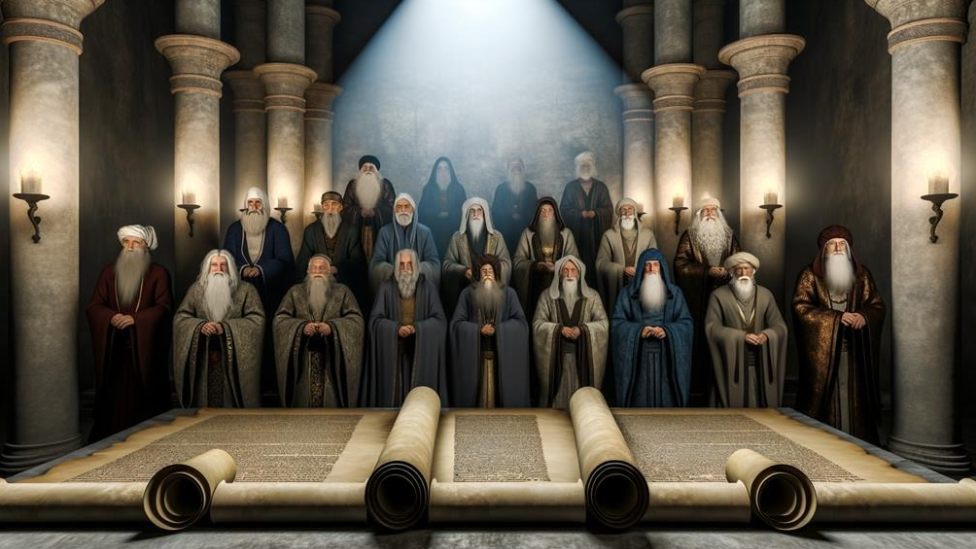
— Moses with the elders; having in discourses at several times repeating the principal parts of the laws, Moses called the council together, the seventy elders, at the head of whom was Moses, which made the great Sanhedrin, or council of the nation;
— keep all the commandments which I command you this day; not in his own name, as being the supreme legislator, but in the name of the Lord, whom they acknowledged to be their God and King.
2 And it shall be on the day when ye shall pass over the Jordan unto the land which the Lord thy God giveth thee, that thou shalt set thee up great stones, and plaster them with plaster.
— they were ordered to take twelve stones, and did; but then they were set up in a different place, and for a different purpose; and plaster them with plaster: that so words might be written upon them, and be more conspicuous, and more easily read.
3 And thou shalt write upon them all the words of this law when thou art passed over, that thou mayest go in unto the land which the Lord thy God giveth thee, a land that floweth with milk and honey, as the Lord God of thy fathers hath promised thee.
— thou shalt write upon them all the words of this law; it might be, as some think, the Decalogue; but a greater probability is that it was “the blessings and curses,” which comprised in fact an epitome of the law (Joshua 8:34).
4 Therefore it shall be when ye have gone over the Jordan, that ye shall set up these stones, which I command you this day, on Mount Ebal, and thou shalt plaster them with plaster.
— in Mount Ebal; a mountain near Shechem in Samaria, the mount of cursing. Here the law is written, to signify that a curse was due to its violators.
5 And there shalt thou build an altar unto the Lord thy God, an altar of stones. Thou shalt not lift up any iron tool upon them. — there shalt thou build an altar; of whole stones; these stones were to be in their natural state.
6 Thou shalt build the altar of the Lord thy God of whole stones, and thou shalt offer burnt offerings thereon unto the Lord thy God. — whole stones; rough, not hewn, nor polished, whereby all manner of imagery was avoided.
7 And thou shalt offer peace offerings, and shalt eat there, and rejoice before the Lord thy God. — and thou shall offer peace offerings; part of which belonged to God,
— part of which was to be burnt on the altar, and part to the priest that offered them; and the rest to the owner that brought them, which he eat of with his friends.
8 And thou shalt write upon the stones all the words of this law very plainly.” — and thou shall write upon the stones all the words of this law; not upon the stones of the altar, but upon the first stones brought to Mount Ebal, and set up there before;
“And you shall write upon the stones all the words of this Law, a script engraved and clearly explained, read in one language [Hebrew] and translated into seventy languages.” Jonathan
9 And Moses and the priests, the Levites, spoke unto all Israel, saying, “Take heed and hearken, O Israel: This day thou art become the people of the Lord thy God.
— this day thou art become the people of the Lord thy God; they were his people before; he had redeemed them out of Egypt; led them through the wilderness, and provided for them and protected them there;
— and had given them laws and statutes to observe to walk in; all which showed them to be his peculiar people: but now in a very formal and solemn manner they were vouched and declared by him to be his people.
10 Thou shalt therefore obey the voice of the Lord thy God, and do His commandments and His statutes which I command thee this day.”
— thou shalt therefore obey the voice of the Lord thy God; in whatsoever he directs in his word, and by his prophets, his Son, eminently called the Word of the Lord: and do his commandments and his statutes, which I command thee.
11 And Moses charged the people the same day, saying,
12 “These shall stand upon Mount Gerizim to bless the people when ye have come over the Jordan: Simeon, and Levi, and Judah, and Issachar, and Joseph, and Benjamin. — the 12 tribes were divided on Gerizim and Ebal;
— on Mount Gerizim were stationed the descendants of Simeon, Levi, Judah, Issachar, Joseph and Benjamin.
13 And these shall stand upon Mount Ebal to curse: Reuben, Gad, and Asher, and Zebulun, Dan, and Naphtali.
— on the twin hill of Ebal were placed the posterity of the bond-women, of the two secondary wives, Zilpah and Bilhah, with those of Reuben, who had lost the primogeniture, and Zebulun, Leah’s youngest son that the numbers might be equal.
14 And the Levites shall speak, and say unto all the men of Israel with a loud voice: — with a loud voice; so as they might be heard by a great number of the people, by whom the rest were informed and directed by some signal when they should answer.
15 “‘Cursed be the man that maketh any graven or molten image, an abomination unto the Lord, the work of the hands of the craftsman, and putteth it in a secret place.’ And all the people shall answer and say, ‘Amen.’
— where the Masoretic Text is silent, the Targum specifies where the priests, the Levites and the Ark were when such blessings and curses were pronounced;
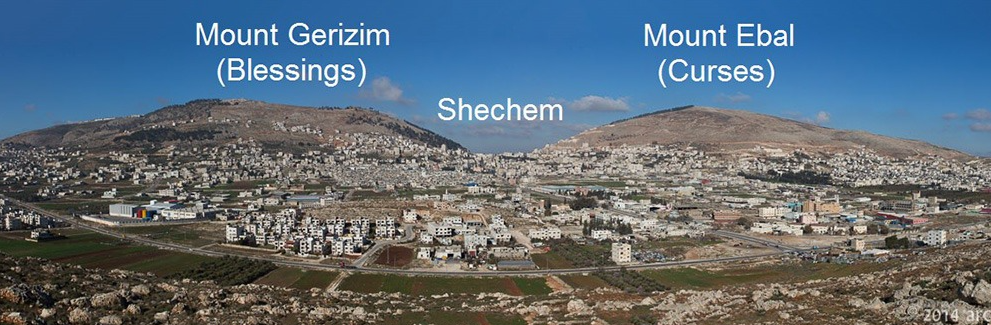
“Six tribes stood upon Mount Gerizim and six upon Mount Ebal, with the Ark, the priests, and the Levites in the middle.
When they were pronouncing the blessings, they turned their faces toward Mount Gerizim and said: ‘Blessed be the man who shall not make an idol, image, or any likeness of what is abominable before the Lord, the work of a craftsman’s hands, and shall not set it up in secret.’
When they were pronouncing the curses, they turned their faces toward Mount Ebal and said: ‘Cursed be the man who shall make an idol, image, or any likeness of what is abominable before the Lord, the work of a craftsman’s hands, and set it up in secret.’
And all of them would answer together and say: ‘Amen.’” Jonathan
16 “‘Cursed be he that treateth lightly his father or his mother.’ And all the people shall say, ‘Amen.’ — cursed be he that setteth light by his father, or his mother; that secretly despises them in his heart, and by looks and gestures mocks at them in a private manner.
17 “‘Cursed be he that removeth his neighbor’s landmark.’ And all the people shall say, ‘Amen.’ — cursed be he that removeth his neighbour’s landmark; removes it forward, and steals ground, this is commonly done secretly; Deuteronomy 19:14.
18 “‘Cursed be he that maketh the blind to wander out of the way.’ And all the people shall say, ‘Amen.’ — cursed be he that maketh the blind to wander out of the way; by directing him wrong knowingly, or laying a stumbling block in his way, Leviticus 19:14,
— the Targum of Jonathan says, “that maketh a traveller wander out of the way, who like a blind man;” who knows his way no more than a blind man does.
19 “‘Cursed be he that perverteth the judgment of the stranger, fatherless, and widow.’ And all the people shall say, ‘Amen.’ — there follow twelve curses; the fifth against those who pervert the right of strangers, orphans and widows.
20 “‘Cursed be he that lieth with his father’s wife, because he uncovereth his father’s skirt.’ And all the people shall say, ’Amen.’ — the sixth against incest with a mother.
21 “‘Cursed be he that lieth with any manner of beast.’ And all the people shall say, ‘Amen.’ — the seventh against unnatural vices (Leviticus 18:23).
22 “‘Cursed be he that lieth with his sister, the daughter of his father or the daughter of his mother.’ And all the people shall say, ‘Amen.’ — the eighth and ninth against incest with a sister or a mother-in-law (Leviticus 18:9,17).
23 “‘Cursed be he that lieth with his mother-in-law.’ And all the people shall say, ‘Amen.’
24 “‘Cursed be he that smiteth his neighbor secretly.’ And all the people shall say, ‘Amen.’ — the tenth against secret murder (Exodus 20:13; Numbers 35:16).
25 “‘Cursed be he that taketh reward to slay an innocent person.’ And all the people shall say, ‘Amen.’ — the eleventh against judicial murder (“he that taketh reward to slay a soul, namely, innocent blood” Exodus 23:7-8).
26 “‘Cursed be he that confirmeth not all the words of this law to do them.’ And all the people shall say, ‘Amen.’
— the Targum reveals more details
“The twelve tribes, each and every one, were saying the blessing in general and the curse in general.
When they were pronouncing the blessings, they all turned their faces for each and every matter toward Mount Gerizim and said: ‘Blessed be the man who shall establish the words of this Law to perform them.’
When they were pronouncing the curses, they all turned their faces toward Mount Ebal and said: ‘Cursed be the man who shall not establish the words of this Law to perform them.’
And all of them would answer together and say: ‘Amen.’
These words were stated at Sinai, repeated in the Tent of Meeting, and tripled in the plains of Moab—twelve words of the matter for each of the tribes, and for each and every commandment there were decreed upon it thirty-six covenants.” Jonathan
— thirty-six covenants: the Gemara explains that every single commandment carries 36 individual covenants binding each Jew—calculated by multiplying the 3 covenant events (Sinai; Ex 24; Tabernacle, Leviticus; Moab; Deu 29) by the general and detailed blessings/curses sworn by each of the 12 tribes.
Deuteronomy 28
1 “And it shall come to pass, if thou shalt hearken diligently unto the voice of the Lord thy God to observe and to do all His commandments which I command thee this day, that the Lord thy God will set thee on high above all nations of the earth;
— if thou hearken diligently; the foregoing blessings and curses being appointed to be pronounced in so solemn a manner, Moses takes occasion from thence to enlarge upon both of them, to show the Israelites what they and their posterity had to expect at the hands of God;
2 and all these blessings shall come on thee and overtake thee, if thou shalt hearken unto the voice of the Lord thy God:
— all these blessings shall overtake thee; the blessings which others greedily follow after, and never overtake, shall follow after thee, and shall be thrown into thy lap by special kindness.
3 “Blessed shalt thou be in the city, and blessed shalt thou be in the field. — blessed shalt thou be in the city; not only in the city of Jerusalem, where the temple would be built, and there be blessed with the service, worship, and ordinances of God, but in all other cities of the land;
— where they should dwell in title, large, and spacious houses, and their cities should be walled and fenced, and be very populous; yet should enjoy health, and have plenty of all sorts of provisions brought unto them, as well as prosper in all kinds of merchandise there.
4 Blessed shall be the fruit of thy body, and the fruit of thy ground, and the fruit of thy herds, the increase of thy cattle, and the flocks of thy sheep.
— blessed shall be the fruit of thy body; their children, of which they should have many, and these live; be healthful, thrive, and arrive to manhood, and increase and perpetuate their families;
— and the fruit of thy ground; of their gardens, orchards, and fields; grass for the cattle, and the wheat, barley, vines, figs, pomegranates, olives, and dates for their use for food: and the fruit of thy cattle; which being distinguished from oxen and sheep.
5 Blessed shall be thy basket and thy stores. — blessed shall be thy basket; which the Targums of Jonathan and Jerusalem restrain to the basket of firstfruits, and the cake of the first of their dough;
— but it intends any and every vessel never be empty of them, and that they should always have a sufficiency: and thy store; and was laid up in their barns, cellars, and storehouses, for future use, or in proper places for seed.
6 Blessed shalt thou be when thou comest in, and blessed shalt thou be when thou goest out. — in all their business and employments of life whether within doors or outside;
— in the administration of every office, whether public or private; and in all their journeys going out and coming home; and particularly when they went out to war, and returned, all should be attended with success.
7 “The Lord shall cause thine enemies who rise up against thee to be smitten before thy face; they shall come out against thee one way, and flee before thee seven ways. — flee before thee seven ways, that is, in various directions, as always happens in a rout.
8 “The Lord shall command the blessing upon thee in thy storehouses and in all that thou settest thine hand unto; and He shall bless thee in the land which the Lord thy God giveth thee.
— in thy storehouses: barns, granaries, and cellar, where their corn, wine, and oil, were laid up; by preserving the corn from being devoured by vermin, and the casks of wine and oil from bursting and running out.
9 “The Lord shall establish thee a holy people unto Himself, as He hath sworn unto thee, if thou shalt keep the commandments of the Lord thy God and walk in His ways.
— an holy people unto himself, that is, shall confirm and establish his covenant with thee, by which he separated thee to himself as a holy and peculiar people, and shall publicly own thee for such.
10 And all people of the earth shall see that thou art called by the name of the Lord, and they shall be afraid of thee. — compare this to Jeremiah 33:9 “And they shall fear and tremble for all the goodness and for all the prosperity, that I provide unto it.”
“And all the peoples of the earth shall see that the Name of the Lord is engraved [upon you] at the time when the Tefillin are upon you, and they shall be afraid of you.” Jonathan
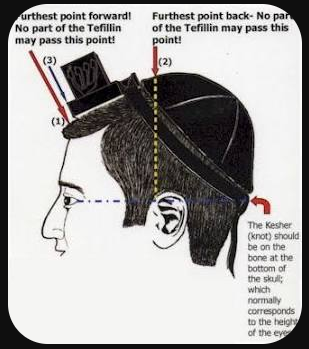
— Tefillin (phylacteries) are a pair of black leather boxes containing parchment scrolls inscribed with biblical verses, worn by Jewish men (and some women in non-Orthodox traditions) during weekday morning prayers (Shacharit).
11 And the Lord shall make thee plenteous in goods, in the fruit of thy body, and in the fruit of thy cattle, and in the fruit of thy ground, in the land which the Lord swore unto thy fathers to give thee.
— in the land which the Lord sware unto thy fathers to give thee; the land of Canaan, often thus described; it evidence shows it is also true in the land of exile.
12 The Lord shall open unto thee His good treasure, the heaven to give the rain unto thy land in his season, and to bless all the work of thine hand; and thou shalt lend unto many nations, and thou shalt not borrow.
“[Four keys are in the hand of the Lord of all the world…] of life [childbirth], and of the grave [resurrection], and of sustenance, and of rain.
And thus said Moses the prophet: Here the Lord will open for you His good treasury which is with Him in heaven, to give the rain of your land in its time—early rain [Bakkir/Yoreh] in Marchesvan and late rain [Lakish/Malkosh] in Nisan—and to bless all the work of your hands; and you shall lend to many nations, but you shall not need to borrow.” Jonathan
— and thou shall lend unto many nations, and thou shall not borrow; that is, thou shalt be in such affluent circumstances, as to be capable, out of thy superfluous wealth, to give aid to thy poorer neighbors. But the US is now some $40 trillions in debts.
13 And the Lord shall make thee the head, and not the tail; and thou shalt be above only, and thou shalt not be beneath, if thou hearken unto the commandments of the Lord thy God which I command thee this day, to observe and to do them.
— the head, to be kings, and not the tail; or subjects, give them dominion over others, and not make them subject to them; the head signifies rulers and governors, and the tail the common people that are subjects;
“And the Word of the Lord shall appoint you as kings and not as commoners, and you shall only be elevated and shall not be degraded; for you will receive the commandments of the Lord your God which I command you today, to observe and to perform.” Jonathan
14 And thou shalt not go aside from any of the words which I command thee this day, to the right hand or to the left, to go after other gods to serve them. — ‘liberal democracies’ is a god, a false god, to them;
— to the right hand or to the left, to go after other gods to serve them; which to do was to break the first and principal table of the law, than which nothing was more abominable and provoking to God.
15 “But it shall come to pass, if thou wilt not hearken unto the voice of the Lord thy God, to observe to do all His commandments and His statutes which I command thee this day, that all these curses shall come upon thee and overtake thee:
— that all these curses shall come upon thee; from the hand of God, certainly, suddenly and unexpectedly;
“When Moses the prophet opened his mouth to speak these words of rebuke, the earth quaked, the heavens trembled, the sun and moon grew dark, and the stars gathered in their shine. The patriarchs of the world cried out from their burial places, all creatures fell silent, and the trees did not shake their branches.
The patriarchs of the world spoke and said: ‘Woe upon our children when they sin and these curses reach them! How will they be able to bear them? Will He perhaps make a destruction of them, so that our merit will not shield them, and there will be no man to stand and pray on their behalf?’
A Heavenly Voice (Bat Kol) fell from the high heavens and said thus: ‘Do not fear, patriarchs of the world! For even if the merit of all generations should come to an end, your merit will never cease, and the covenant I established with you will not be annulled, but will shield them.’
Moses the prophet answered and said: ‘Even though I am rebuking you, I rebuke you only on condition—saying that if you do not accept the Word of the Lord your God to observe and perform all His commandments and statutes which I command you today, then all these curses will come upon you and overtake you.'” Jonathan
16 “Cursed shalt thou be in the city, and cursed shalt thou be in the field. — in these curses are specified and delivered out in form, as the reverse of the blessings in Deuteronomy 28:3.
17 Cursed shall be thy basket and thy stores. — if under the curse, which, in summary, includes all misery, as the blessing comes with all happiness.
18 Cursed shall be the fruit of thy body, and the fruit of thy land, the increase of thy cattle, and the flocks of thy sheep. — cursed shall be the fruit of thy body, and the fruit of thy land;
— the Targum of Jonathan says “Accursed the children of your wombs, the fruits of your ground, the oxen of your herds, and the sheep of your flocks.”
19 Cursed shalt thou be when thou comest in, and cursed shalt thou be when thou goest out. — in all their business and employments of life whether within doors or outside;
— in the administration of every office, whether more public or private; and in all their journeys going out and coming home; and particularly when they went out to war, and returned, all should be attended with success.
20 “The Lord shall send upon thee cursing, vexation, and rebuke in all that thou settest thine hand unto to do until thou be destroyed and until thou perish quickly, because of the wickedness of thy doings whereby thou hast forsaken Me.
— vexation; trouble, distress, and anguish of spirit: and rebuke; this may well be considered as a rebuke and correction for sins committed, to awaken to a sense and acknowledgment of them, and to repentance for them;
“The Word of the Lord will incite against you the curse—to curse your wealth, and confusion—to confuse your peace, and rebuke in every undertaking of your hand that you shall do, until you are destroyed and until you perish quickly, because of the wickedness of your deeds, for you have abandoned My fear.” Jonathan
21 The Lord shall make the pestilence cleave unto thee until He have consumed thee from off the land whither thou goest to possess it.
— pestilence; some fatal epidemic, like Covid-19, Ebola, or Hantavirus; there is no reason to think that the plague, which is the great scourge worldwide, is not referred to.
22 The Lord shall smite thee with a consumption, and with a fever, and with an inflammation, and with an extreme burning, and with the sword, and with blight, and with mildew; and they shall pursue thee until thou perish.
— hard drugs such as methamphetamine, fentanyl and heroin, and they shall pursue thee until thou perish; coincided with an increase in violence, including gun crime, and come so close one after another upon them, until they are utterly destroyed;
— in 2021, more than 80,000 deaths in the United States were related to opioids, with nearly 71,000 linked with fentanyl; and approximately 76,516 drug overdose deaths for the twelve-month period ending in April 2025;
“The Word of the Lord will strike you with consumption [lung disease], and with fever, and with the fire of the bones that burns the brain, and with violent fits of phlegm that constrict the heart, and with the drawing of the sword, and with blight, and with mildew; and they shall pursue you upon your beds until you perish.” Jonathan
23 And thy heaven that is over thy head shall be brass, and the earth that is under thee shall be iron. — thy heaven shall be brass; for its dryness and hardness, no moisture being in it, or passing through it; no showers of rain nor dew being let down from it;
— and the earth shall be as iron; or like iron, hard and impenetrable, into which the plough and spade will not enter; nor anything spring out of it, for want of rain and dew to moisten and soften it;
“And the heavens that are above you will be like copper that sweats—yet does not provide for you dew and rain; and the earth that is beneath you will be like iron that does not sweat—which does not moisten trees, aromatic/medicinal plants, sweet fruits, and vegetables.” Jonathan
24 The Lord shall make the rain of thy land powder and dust; from heaven shall it come down upon thee until thou be destroyed.
— powder and dust; the great desert, that is, instead of showers of rain in their season, to water, refresh, and enrich the earth, now a land of powder and dust; becoming a great desert, makes this only too possible;

— the Targum of Jonathan says:
After the rain which cometh down on the earth, the Lord will send a wind that shall drive dust and ashes upon the herbage of your fields; and calamity will fall upon you from the heavens, until you are consumed.
25 “The Lord shall cause thee to be smitten before thine enemies; thou shalt go out one way against them and flee seven ways before them, and shalt be removed into all the kingdoms of the earth.
— the Lord shall cause thee to be smitten fore thine enemies; and by them, as they sometimes were by the Philistines and others, before their utter destruction, when they sinned against the Lord; and by the Assyrians, Babylonians, and Romans;
— thou shall go out one way against them, and flee seven ways before them; march out against them in a body, promising themselves victory, but be utterly routed; so that they shall flee every way they can for their safety; Deuteronomy 28:7,
— and shall be removed; the ten tribes, when taken captive by Shalmaneser, were not carried into all the kingdoms of the earth, neither were the Jews; only to some particular places; but this prophecy is yet for the endtime: “into all the kingdoms of the earth”
— for a close parallel, see Jeremiah 23 (A Greater “Out of Egypt” Exodus)
“Therefore, behold, the days come,” saith the Lord, “that they shall no more say, ‘The Lord liveth who brought up the children of Israel out of the land of Egypt,’
“but, ‘the Lord liveth who brought up and who led the seed of the house of Israel out of the north country, and from all countries whither I had driven them.’ And they shall dwell in their own land” Jeremiah 23:7-8
“The Word of the Lord will set you broken before your enemies; on one road you will go out to meet them in battle formation, and in seven roads—confused—you will turn [your back and] flee before them, and you will become an outcast to all the kingdoms of the earth.” Jonathan
26 And thy carcass shall be meat unto all fowls of the air and unto the beasts of the earth, and no man shall frighten them away. — it was to be a very grievous calamity, where their carcasses lying unburied; and as this have never happened, this prophecy is yet for the endtime.
27 The Lord will smite thee with the boils of Egypt, and with the hemorrhoids, and with the scab, and with the itch, whereof thou canst not be healed.
— the botch of Egypt; the “boil,” with which the Egyptians were plagued (Exodus 9:9); the “scab” and “itch” represent the various forms of the loathsome skin diseases;

“The Word of the Lord will strike you with the boils with which the Egyptians were smitten, and with hemorrhoids that blind the sight, and with scabies, and with an itch from which you will not be able to be healed.” Jonathan
28 The Lord shall smite thee with madness, and blindness, and astonishment of heart;
— and blindness; not of body, but of mind; with judicial blindness and hardness of heart: astonishment of heart; they shall be filled with wonder and horror, because of the strangeness and soreness of their calamities;
“The Word of the Lord will strike you with madness that dulls the brain, and with blindness, and with stupefaction of the heart.” Jonathan
29 and thou shalt grope at noonday, as the blind gropeth in darkness, and thou shalt not prosper in thy ways. “And thou shalt be only oppressed and despoiled evermore, and no man shall save thee.
— thou shalt grope at noonday, a general description of the painful uncertainty in which they would live; and thou shall not prosper in thy ways;
— in any steps they may take to extricate themselves out of their difficulties, distresses, and calamities; they would be miserable, poor and wretched, mean and despicable;
“And you will be seeking good counsel to relieve your distress, but there will be no one among you to show the truth—just as a blind man gropes in the dark, who has no way to see so as to direct his path; and you will not make your ways successful, and you will be only oppressed and robbed all the days, with no one to deliver you.” Jonathan
30 Thou shalt betroth a wife, and another man shall lie with her. Thou shalt build a house, and thou shalt not dwell therein. Thou shalt plant a vineyard, and shalt not gather the grapes thereof.
— thou shall betroth a wife, and another man shall lie with her; espouse a woman in order to make her his wife, and before he can take her home, and consummate the marriage, some calamity or another would come upon them;
— thou shall build an house, and thou shall not dwell therein; being, before it is quite finished, or however before he is got into it, carried captive, or obliged to flee to a distant place.
31 Thine ox shall be slain before thine eyes, and thou shalt not eat thereof. Thine ass shall be violently taken away from before thy face, and shall not be restored to thee. Thy sheep shall be given unto thine enemies, and thou shalt have none to rescue them.
— thine ox shall be slain before thine eyes, and thou shalt not eat thereof; shall be taken from the owner, and out of the field or stall, by the enemy, and killed for the soldiers to feed on, and not the least part of it given to them;
— thine ass shall be violently taken away from before thy face, and shall not be restored unto thee; thy sheep shall be given unto thine enemies, and thou shall have none to rescue them; not given them by themselves, but they should be suffered to fall into their hands, and they should never be able to get them out again;
“Your oxen will be slaughtered while you look on, but you will not eat of them; your donkeys will be forcibly seized from before you and will not be returned to you; your sheep will be handed over to your enemies, and you will have no savior.” Jonathan
32 Thy sons and thy daughters shall be given unto another people, and thine eyes shall look and fail with longing for them all the day long; and there shall be no might in thine hand.
— thy sons and thy daughters shall be given unto another people; this also was not true in the Babylonish captivity; for then their sons and daughters went with them, and continued with them, and returned again;
— but has been oftentimes verified on their captivity by the Romans; their sons and daughters taken from them by force, to be brought up in another religion, by the edicts of kings and popes, and by the canons of councils, and particularly of the fourth council of Toledo, in attendance by all the bishops of Hispania;
— but onone had happened with the lost 10 tribes; for then their sons and daughters went with them in captivity, and continued with them, though they never returned;
“Your sons and your daughters will be handed over to a foreign nation, while your eyes look on and grow dark [with grief] over them all day long; yet you will have no good deeds in your hands to strengthen your hands in prayer before the Lord, your Father in heaven, that He might redeem you.” Jonathan
Targum Jonathan on the Torah (frequently designated by scholars as Targum Pseudo-Jonathan) uses the phrase “Father in heaven” (אבוכון דבשמיא / אבוהון דבשמיא / אבונא דבשמיא) far more frequently than any other Targum—appearing approximately 15 to 20 times throughout.
Deuteronomy 32:6 (Song of Ha’azinu): Elaborates on the question “Is He not your Father?” by describing God’s paternal providence as “Our Father who is in heaven.”
33 The fruit of thy land and all thy labors shall a nation which thou knowest not eat up; and thou shalt be only oppressed and crushed always,
— “a nation which thou knowest not” wouldn’t be Assyria, who took the 10 tribes, nor Babylon, who took the Jews; as they were neighbouring countries; nor Rome; more likely “a nation against thee from far” and “a nation whose tongue thou shalt not understand” verse 49, it could be Russia or China at the endtimes;
— and thou shall be oppressed and crushed; this seems best to agree with their present case, or future tense; for in their former captivities they were not always oppressed and crushed;
34 so that thou shalt be mad for the sight of thine eyes which thou shalt see. — thou shalt be mad, for the sight of thine eyes that thou shall see; on account of the shocking things they saw, their dreadful calamities, oppressions and persecutions.
35 The Lord shall smite thee in the knees and in the legs with a sore boil that cannot be healed, from the sole of thy foot unto the top of thy head.
— the Lord shall smite thee in the knees, the legs, with a sore botch, that cannot be healed; this as being a disease of such a nature, that it would render it utterly impossible for those who were afflicted with it either to stand or walk, and then heightens the threat by adding the words, “from the sole of the foot to the top of the head.”
“The Word of the Lord will strike you with severe boils upon the knees—because you bent them toward a matter of transgression, and upon the legs—which ran toward it; and if you do not return to the Torah, you will not be able to be healed, but rather you will be smitten with it from the soles of your feet unto the crown of your head.” Jonathan
36 “The Lord shall bring thee and thy king whom thou shalt set over thee unto a nation which neither thou nor thy fathers have known, and there shalt thou serve other gods, wood and stone.
— “a nation which neither thou nor thy fathers have known” seems very foreign; for they would have known the Assyrians, the Babylonians and even the Romans;
— and there shall thou serve other gods, of wood and stone; which they were obliged to do as were in Babylon, and they should be made to serve other gods, wood and stone seduced or compelled into idolatry as were in the Assyrian and Babylonish captivities;
“The Lord will exile you and your king whom you appoint over yourselves to a nation that you and your fathers have not known, and you will pay arnona taxes to those who worship idols of wood and stone.” Jonathan
37 And thou shalt become an astonishment, a proverb, and a byword among all nations whither the Lord shall lead thee. — an astonishment, and would become an object of horror, a proverb, and a byword among the nations.
“And if your heart contemplates worshipping their idols, you will become a desolation, a proverb, and a mock-tale among the nations to where the Lord will scatter you.” Jonathan
38 “Thou shalt carry much seed out into the field and shalt gather but little in, for the locust shall consume it. — consumption of corn by locusts and of grapes by worms, and casting of olives; for the locust shall consume it; which is a great destroyer of the fruits of the earth.
39 Thou shalt plant vineyards and dress them, but shalt neither drink of the wine nor gather the grapes, for the worms shall eat them.
— even in their own land the curse would fall upon every kind of labour and enterprise; much seed would give little to reap, because the locust would devour them; the planting and dressing of the vineyard would furnish no wine to drink, because the worm would devour the vine.
40 Thou shalt have olive trees throughout all thy borders, but thou shalt not anoint thyself with the oil, for thine olive shall cast his fruit.
— thou shalt have olive trees throughout thy borders, but thou shalt not anoint thyself with the oil; nor any other relations, friends, guests, as were at entertainments.
41 Thou shalt beget sons and daughters, but thou shalt not enjoy them, for they shall go into captivity. — thou shalt beget sons and daughters, but thou shall not enjoy them; for “they shall not be thine” being taken from them into captivity, and given to others.
42 All thy trees and fruit of thy land shall the locust consume. — the locust, a creature that not only consumes grass, and herbs, and the corn of the field, but all green trees.
43 The stranger that is within thee shall get up above thee very high, and thou shalt come down very low. — the stranger that is within thee shall get up above thee very high; in wealth and riches, in power and authority, in honour and dignity;
— and thou shall come down, very low; into a very mean condition, to be in great subjection, a vassal and a slave.
44 He shall lend to thee, and thou shalt not lend to him. He shall be the head, and thou shalt be the tail.
— he shall lend to thee, and thou shall not lend to him; the stranger, or one of another nation, shall be in a capacity of lending to the Israelite, when the Israelite would not be able to lend to the Gentile.
45 Moreover all these curses shall come upon thee, and shall pursue thee and overtake thee till thou be destroyed, because thou hearkened not unto the voice of the Lord thy God, to keep His commandments and His statutes which He commanded thee.
— and shall pursue thee, and overtake thee till thou be destroyed; which though they would endeavour to flee from and escape, should not be able, since they would follow them so closely and swiftly, and overtake them, and seize upon them.
46 And they shall be upon thee for a sign and for a wonder, and upon thy seed for ever.
— and they shall be upon thee for a sign and for a wonder; and what follow, should rest and remain upon them, continue with them, and be very visible on them; so as to be observed by others, as a sign of the wrath and displeasure of God.
47 “Because thou served not the Lord thy God with joyfulness and with gladness of heart for the abundance of all things,
— with joyfulness and gladness of heart, for the abundance of all things; which they enjoyed in the land of Canaan, a land that abounded with all good things; which laid them under great obligations to serve the Lord;
48 therefore shalt thou serve thine enemies whom the Lord shall send against thee, in hunger and in thirst and in nakedness and in want of all things; and He shall put a yoke of iron upon thy neck until He have destroyed thee.
— and he shall put a yoke of iron upon thy neck; bring them into a state of subjection to their enemies, and they would not be able to free themselves, any more than to break an iron yoke; which, as were in the Babylonish captivity, and their subjection in that state;
“And you will serve your enemies, whom the Word of the Lord will incite against you, in hunger, in thirst, in nakedness, and in the lack of all good things; and they will place iron yokes upon your necks until the time He has destroyed you.” Jonathan
49 The Lord shall bring a nation against thee from far, from the end of the earth, as swift as the eagle flieth, a nation whose tongue thou shalt not understand,
— the Lord shall bring a nation against thee from far; the invasion of the Romans: “they came from far.” But more likely for the endtime, the Russians and the Chinese, would then be considered “the end of the earth.”
“The Word of the Lord will cause to fly against you a nation from afar, from the ends of the earth, swift as the eagle flies; a nation whose language you will not understand.” Jonathan
50 a nation of fierce countenance, which shall not regard the person of the old nor show favor to the young. — a nation of fierce countenance; the Russians had lost 20 millions to the Nazis; the Chinese a similar amount to the Japanese, all had toughened themselves.
51 And he shall eat the fruit of thy cattle and the fruit of thy land until thou be destroyed; he also shall not leave thee either corn, wine, or oil, or the increase of thy cattle, or flocks of thy sheep until he have destroyed thee.
— and your enemy shall eat the fruit of thy cattle, oxen and sheep, as their calves and lambs, and kids of the goat, and the fruit, wheat, barley, figs, grapes, pomegranates, olives, and dates, of thy land until thou be destroyed.
52 And he shall besiege thee in all thy gates until thy high and fortified walls come down wherein thou trusted, throughout all thy land; and he shall besiege thee in all thy gates throughout all thy land which the Lord thy God hath given thee.
— and he, a modern type of Shalmaneser, Sennacherib, and Nebuchadnezzar, shall besiege thee in all thy gates until thy high and fortified walls come down wherein thou trusted;
“And they will besiege you in all your cities until the time your high and fortified walls fall—which you trusted in for deliverance throughout all your land; and they will besiege you in all your cities throughout all your land which the Lord your God has given you.” Jonathan
53 And thou shalt eat the fruit of thine own body, the flesh of thy sons and of thy daughters, which the Lord thy God hath given thee, in the siege and in the extremity wherewith thine enemies shall distress thee,
— thou shalt eat the fruit of thine own body; this been confirmed during the siege of Samaria by the Syrians (II Kings 6:26-29; but also in Deuteronomy 28:56), and also in Jerusalem when besieged by Nebuchadnezzar (Lamentations 2:20; 4:10)
— during the siege of Samaria by the Syrians:
26 And as the king of Israel was passing by upon the wall, there cried a woman unto him, saying, “Help, my lord, O king!”
27 And he said, “If the Lord do not help thee, from whence shall I help thee? Out of the barn floor or out of the wine press?”
28 And the king said unto her, “What aileth thee?” And she answered, “This woman said unto me, ‘Give thy son, that we may eat him today, and we will eat my son tomorrow.’
29 So we boiled my son and ate him. And I said unto her on the next day, ‘Give thy son, that we may eat him’; and she hath hid her son.” II Kings 6:26-29
— and from the MSG version:
26 One day the king of Israel was walking along the city wall. A woman cried out, “Help! Your majesty!”
27 He answered, “If God won’t help you, where on earth can I go for help? To the granary? To the dairy?”
28-29 The king continued, “Tell me your story.”
She said, “This woman came to me and said, ‘Give up your son and we’ll have him for today’s supper; tomorrow we’ll eat my son.’ So we cooked my son and ate him. The next day I told her, ‘Your turn—bring your son so we can have him for supper.’ But she had hidden her son away” II Kings 6:26-28,
54 so that the man that is tender among you and very delicate, his eye shall be evil toward his brother, and toward the wife of his bosom, and toward the remnant of his children whom he shall leave,
— his eye shall be evil towards his brother, and towards the wife of his bosom, and towards the remnant of his children which he shall leave;
— that is, he shall begrudge his brother, who is so nearly related to him, the least bit of food; yea, his wife, he dearly loved, and is one flesh with him, his other self, and even his children, which are parts of himself, such of them as were left not eaten by him; or his eye should be evil upon then, he should look with an evil eye on them, determining within himself to kill and eat them next.
55 so that he will not give to any of them of the flesh of his children whom he shall eat, because he hath nothing left him in the siege and in the extremity wherewith thine enemies shall distress thee in all thy gates.
— so that he will not give to any of them of the flesh of his children whom he shall eat; neither give to a brother, nor to a wife, nor to any of his remaining children, the least bit of the flesh of a child he has killed and dressed for his own food;
— because he hath nothing left him in the siege, and in the straitness wherewith thine enemies shall distress thee in all thy gates; every creature being eaten up, dogs, cats, anything dung of beasts, and whatsoever else could be any ways made food of.
56 The tender and delicate woman among you, who would not venture to set the sole of her foot upon the ground for delicateness and tenderness, her eye shall be evil toward the husband of her bosom, and toward her son and toward her daughter,
— the stress being so immensed, character changed for fear of taking cold, or defiling her feet, her eye shall be evil towards the husband of her bosom, and towards her son, and towards her daughter; begrudge them every bit they eat, and restrain food from them as much as in her lies, and even snatch it out of their mouths;
57 and toward her young one who cometh out from between her feet, and toward her children whom she shall bear; for she shall eat them secretly for want of all things in the siege and extremity wherewith thine enemy shall distress thee in thy gates.
— and toward her young one that cometh out from between her fee; for she shall eat them for want of all things secretly in the siege and straitness wherewith thine enemy shall distress thee in thy gates.
58 “If thou wilt not observe to do all the words of this law that are written in this book, that thou mayest fear this glorious and fearful name, The Lord Thy God, — that thou mayest fear this glorious and fearful name of the Lord thy God;
— or that it might appear that the fear of God was before their eyes, and in their hearts, by their obedience to his law; that they had a proper awe and reverence of him, who is glorious in his titles and attributes, and whose name is Yehovah;
59 then the Lord will make thy plagues wondrous, and the plagues of thy seed, even great plagues, and of long continuance, and sore sicknesses, and of long continuance. — then the Lord will make thy plagues wonderful; visible, remarkable, distinguishable, and astonishing to all that see them;
— and the plagues of thy seed; Covid-19, Ebola, Hantavirus, etc; for they were to continue, as they have done, with their posterity, age after age: even great plagues, and of long continuance; great as to quality and quantity.
“If you do not take care to perform all the commandments of this Torah that are written in this book, to fear this honored and awesome Name—the Lord your God…”
“And the Word of the Lord will conceal the Holy Spirit from you when they bring plagues upon you and plagues upon your children—great and enduring plagues that will not leave you, and evil and persistent diseases that attach themselves to your bodies.” Jonathan
60 Moreover He will bring upon thee all the diseases of Egypt which thou wast afraid of, and they shall cleave unto thee.
— and would bring all the diseases and pestilences of Egypt; which thou wast afraid of; when living among them, and they shall cleave unto thee; not only should come upon them, but continue with them; they should not get rid of, or be cured.
61 Also every sickness and every plague which is not written in the book of this law, them will the Lord bring upon thee until thou be destroyed.
— every plague which is not written in the book of this law; now Covid-19 variants, bird flu; whatsoever sickness or disease that could be thought of or named.
62 And ye shall be left few in number, whereas ye were as the stars of heaven for multitude, because thou wouldest not obey the voice of the Lord thy God.
— whereas ye were as the stars of heaven for multitude; and, as it is sometimes said, as the sand of the sea, as was promised to Abraham, Genesis 15:5; and was partly fulfilled in the days of Solomon 1 Kings 4:20;
— and ye shall be left few in number, because thou wouldest not obey the voice of the Lord thy God; and his law, and by his prophets;
“And you will remain a diminished nation, instead of having been like the stars of the heavens for multitude; because you did not listen to the Word of the Lord your God.” Jonathan
63 “And it shall come to pass that as the Lord rejoiced over you to do you good and to multiply you, so the Lord will rejoice over you to destroy you and to bring you to nought; and ye shall be plucked from off the land whither thou goest to possess it.
— rejoice over you to destroy you; his just indignation against them will be so great, that it will be a pleasure to him to take vengeance on them;
— the Emperor Adrian, to prevent their insurrections and rebellions, which had given him a great deal of trouble, ordered by an edict that no Jew should come into Jerusalem, nor into the land of Judea, or be seen; by which means the country had them cleared.
64 And the Lord shall scatter thee among all people, from the one end of the earth even unto the other; and there thou shalt serve other gods, which neither thou nor thy fathers have known, even wood and stone.
— and the Lord shall scatter thee among all people, from the one end of the earth even to the other; which refers to their current situation, in all parts of the world: east, west, north, and south.
65 And among these nations shalt thou find no ease, neither shall the sole of thy foot have rest; but the Lord shall give thee there a trembling heart and failing of eyes and sorrow of mind.
— but the Lord shall give thee there a trembling heart; being always in fear lest their persons should be seized on, their children taken from them, and their goods confiscated; hence the epithet of “trembling.”
66 And thy life shall hang in doubt before thee; and thou shalt fear day and night, and shalt have no assurance of thy life.
— and thou shalt fear day and night; being in continual dread of being killed: and shalt have none assurance of thy life; of its being continued a moment scarcely, but live in constant fear and expectation of its being taken away.
67 In the morning thou shalt say, ‘Would God it were evening!’ and at evening thou shalt say, ‘Would God it were morning!’ for the fear of thine heart wherewith thou shalt fear and for the sight of thine eyes which thou shalt see.
— in the morning thou shalt say, would God it were even; wishing they might get through the day well, fearing their life would be taken away before night, or some sad calamity befall them before the day could past;
— for the fear of thine heart wherewith thou shalt fear, and for the sight of thine eyes which, thou shalt see; often beholding such dreadful sights, as their countrymen put upon the rack, and cruelly tortured, and then burnt alive;
— and so their hearts would fear and tremble, lest they should be the next that would be taken up and used in this manner; besides other severities and hard usages, with which their brethren were treated, and they in continual fear of;
“In the morning you will be saying, ‘If only it were evening!’—because troubles make the hours of the day feel long to you; and in the evening you will be saying, ‘If only it were morning!’—because troubles make the hours of the night feel long to you; due to the bewilderment of your heart that you will experience, and from the sight of your eyes as you witness retribution and fear.” Jonathan
68 And the Lord shall bring thee into Egypt again with ships by the way whereof I spoke unto thee, ‘Thou shalt see it no more again.’ And there ye shall be sold unto your enemies for bondmen and bondwomen, and no man shall buy you.”
— sold into Egypt again, either into a state of bondage and slavery, like that their fathers were in; he hath now so gloriously delivered thee, and the remembrance of what they endured in Egypt could not but make the thoughts of returning very terrible to them;
— no man shall buy you; that is, no one shall venture even to employ you as slaves, regarding you as accursed of God, and to be shunned in everything;
— in archaic English, the Targum of Jonathan says:
And the Word of the Lord will bring you captive to Mizraim in ships through the Sea of Suph, by the way you passed over, of which I said to you, No more shall you see it. And there will you be sold to your enemies, at the beginning for a dear price, as artificers, and afterward at a cheap price, as servants and handmaids, until you be worthless and (be consigned) to unpriced labour, and there be none who will take you.
“And the Word of the Lord will exile you back to Egypt in ships through the midst of the Reed Sea, along the route of which I said to you: ‘You shall never see it again.’ And there you will be offered for sale at first to your enemies at high prices like skilled craftsmen; thereafter at cheap prices as slaves and maidservants, until you degrade yourselves to serve for free—and no one will even take you in.” Jonathan


