
The Struggles of Ezra
Ezra 7:10 summarizes: “For Ezra had prepared his heart to seek the law of the Lord, and to do it, and to teach in Israel statutes and judgments.”
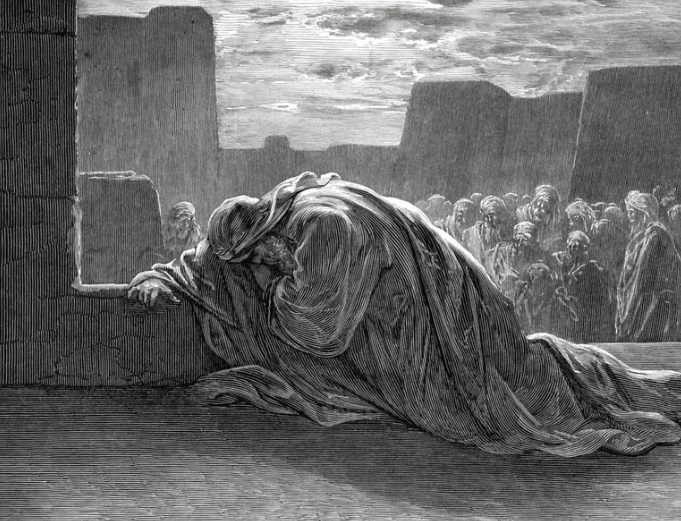
Ezra faced many challenges in life, one of the biggest being his conflict with the Samaritans, who sought to alter the Word of God and elevate Mount Gerizim over the status of Jerusalem as the rightful place for the Temple where they should worship.
Nehemiah, sent to be governor over Judea, assisted Ezra in restoring the true worship in Judea. These two men summoned all the Jewish leaders together to sign a special covenant that they would obey the laws of God (Nehemiah 10:28-39).
However, the high priest Eliashib, who had already being compromised by the Samaritans, would not attend the gathering.
This meeting established the government mechanism in Judea known as the Great Assembly. Headed by Ezra, it included Nehemiah and all the principal priests and elders of Judea. Its 120 members also convened to establish which books were to be canonized.
For some years, they assisted Ezra in this final canonization, including dividing the Old Testament’s 22 books into three major divisions. After Ezra’s death, the high priest was to preside over the Great Assembly.
Eliashib, who never met with the assembly, disagreed with Ezra and the assembly. He had other allegiances (Nehemiah 13:4-7). The special covenant required those who married gentile wives to put them away. Eliashib’s grandson, Manasseh, married to a Samaritan princess, refused to end his religious-political alliance between the top families of Samaria and Judea.
Excommunicated from Judea, Manasseh relocated to Samaria, where Samballat (his wife’s father) made him high priest of the Samaritans. This began the Samaritan religion, and the antagonism that later developed between Samaritans and Jews. Manasseh built a temple on Mount Gerizim (to counterfeit God’s Temple on Mount Zion), and rejected the Hebrew Scriptures except for the Pentateuch—the five books of the Law.
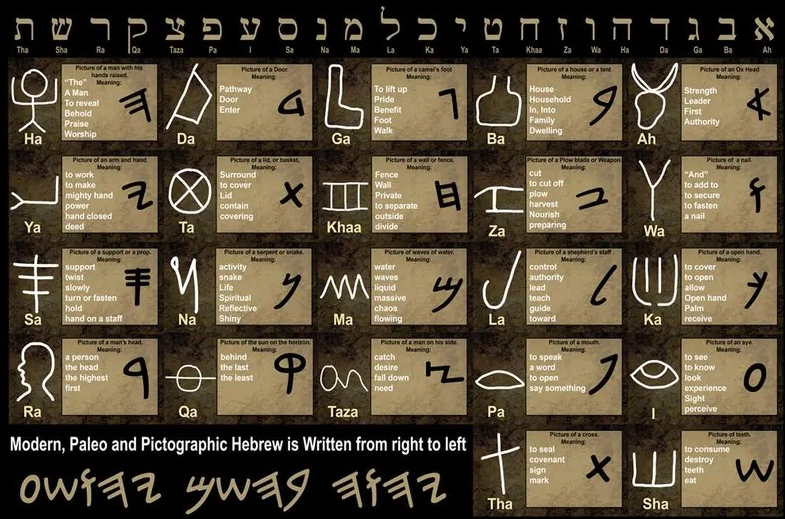
For Jews to distinguish Samaritan counterfeit writings, Ezra changed the Jewish script to square script, as the originals were all in paleo Hebrew. Eventually all copies of the Temple Scriptures were changed to square script.
Incidentally, since the Samaritans had also corrupted the Sacred Calendar, Ezra changed the names of the months to the names of those the Jews learned in Babylon. Thus, Abib became Nisan, Zif became Iyar, etc. The Babylonian names for the months of the calendar have been retained to this day.
Isaiah had long before written the Book of Kingdoms (or Samuel/Kings). Written from a priestly perspective, Ezra wrote Chronicles, emphasizing throughout that Jerusalem had always been the headquarters of God’s government. This was to show that the Samaritans were falsely claiming they were the center of God’s Way.
Ezra references at least 15 secular sources to validate his claim, while Samuel/Kings uses few outside sources. Ezra and Nehemiah countered the deceitful tactics of the Samaritans in part by canonizing the Hebrew Scriptures. In fact, it was actually the Samaritans’ descendants, under Simon Magus, who counterfeited the New Testament, and attempted to have it canonized—without success.
There has always been a battle by the devil’s forces to overthrow the accuracy, force and effect of God’s Word. Secular sources today have not let up.
How do we know that today’s Hebrew Scriptures are exactly what Ezra canonized? After the destruction of the Temple in Jerusalem in AD 70, preservation became the responsibility of Jewish religious leaders instead of the state. Several Jewish sects made sure others did not change the text. Some of the Jews were trying to introduce illegitimate copies.
In the 6th century, to clarify discrepancies and “transmit to future generations the authentic Word of God” (Encyclopaedia Britannica), officials restored the old authoritative manuscripts handed down since pre-Roman days. These were made into the standard text—called the Masoretic Text. This is the same one used today, and the same Scriptures Ezra canonized.
Some of the details are below:
The Law of Moses (5 books):
Genesis, Exodus, Leviticus, Numbers and Deuteronomy
Note that in this first section of the Law, the order is not changed. The radical changes appear in the second (the Prophets) and third sections (the Psalms or Writings).
Now, we list the original order of the Prophets. Note how books are divided and sub-divided:
The Former Prophets (2 books):
Joshua and Judges (combined into one), I-II Samuel and I-II Kings (all four combined into one)
The Latter Prophets (4 books):
Three major prophets: Isaiah, Jeremiah and Ezekiel (one book each); “The Twelve” prophets (consisting of 12 prophetic books again combined into one): Hosea, Joel, Amos, Obadiah, Jonah, Micah, Nahum, Habakkuk, Zephaniah, Haggai, Zechariah and Malachi
Finally, the third division known as the Psalms. This division is also known as the Writings. It is divided into three parts:
The Former Poetic Books (3 books):
Psalms, Proverbs and Job
The Megillot or Festival Books (5 books):
Song of Solomon, Ruth, Lamentations, Ecclesiastes and Esther
The Latter Restoration Books (3 books):
Daniel, Ezra-Nehemiah (combined into one), I-II Chronicles (combined into one)
This original order is completely chronological. This will be better appreciated later when we study canonization.
The Significance of the Numbers
There is another aspect of the significance of the number 22. There are 22 Hebrew letters, in which all that can be said and written are comprehended, so there are 22 books in which are contained all there can be known and uttered of divine things.
With the significance of the 22 books (or scrolls) of the Hebrew Scriptures and the 22 letters of the Hebrew alphabet, a type of an alphabetical “acrostic” most likely paralleled the 22 books. An acrostic exists when 22 verses each begin with a word spelled with a different letter of the Hebrew alphabet. Each letter (beginning with the first) continues in order all through the alphabet in sequence.
In other words, the first letter of the alphabet corresponds with the first letter of the first verse. Then the second letter of the alphabet corresponds with the first letter of the second verse, and so on. The parts of an acrostic can be single verses each, or sets of verses, or possibly chapters or even books.
For more, see Enemies of Ezra and Nehemiah


