Leviticus (23-Q13)
Question: the priesthood bestored upon the Levites, to operate in God’s Temple; the scepter and kingship belong to Judah, to rule and uphold God’s laws, statutes and ordinances; the birthright bestored upon Joseph, but what is the posterity of Joseph supposed to do? Just eat, sleep and indulge in gluttony? Or be self-glorifying, narcissistic and jingoistic?
Joseph’s descendants were to be a great nation and a company of nations (Gen 48:19); they are to be as numerous the stars of heaven and the sands of the seashore, and they shall control the gates of its enemies (Gen 22:17). But what are their collective duties as his co-heirs have to do? Should they resign themselves to the stupor of mindless gluttony, or pivot to the frantic histrionics of naked nationalism?
Perhaps some elements of Manifest Destiny and Monroe Doctrine could indicate a clue.
(a) Manifest Destiny, the city on a hill mimics the stars in heaven; the idea of American exceptionalism; to let the nations see the great light (Matthew 5:14), the stars of heaven that were promised to Abraham, to light the paths for the Gentiles, so they could similarly see the great way of life from God, his laws, statues and ordinances.
“I, the Lord, have called Thee in righteousness, and will hold Thine hand, and will keep Thee, and give Thee for a covenant of the people, for a light to the Gentiles” Isaiah 42:6; or ‘a light to the nations’ (go-yim);
“And He said: ‘It is a light thing that Thou shouldest be My servant to raise up the tribes of Jacob and to restore the preserved of Israel. I will also give Thee for a light to the Gentiles (go-yim), that Thou mayest be My salvation unto the end of the earth’” Isaiah 49:6.
(b) Monroe Doctrine, a Big Stick approach needed for those nations stubbornly and persistently refused to obey God; context shows this will be fully enforced during the Millennium; some nations like “Gog and Magog” would still be similarly stiff-necked.
“And if the family of Egypt go not up and come not, upon whom there is no rain, there shall be the plague (leprosy during biblical times, but could be Covid-19, or Hantavirus, or Ebola; or a new disease you have never heard before) wherewith the Lord will smite the nations who come not up to keep the Feast of Tabernacles” Zechariah 14:18.
The strategy works in two parts. It starts with the “City on a Hill” approach—an olive branch meant to inspire and lead by example. If that doesn’t work, the “Big Stick” steps in, using the Arrow method of gunboat diplomacy to keep order. It’s this push and pull between the beacon and the blade that influences how nations act around the world.
And now we have arrived at Leviticus 23 which culminates how all the nations of the world would come to know all the festivals of God and how to observe them.
Leviticus 23
1 And the Lord spoke unto Moses, saying, — this isn’t a law of Moses, but a Command of God convey to all the Israelites through Moses; thus it is a Command of God as “it shall be a statute for ever throughout your generations (v14).”
2 “Speak unto the children of Israel and say unto them: ‘Concerning the feasts of the Lord, which ye shall proclaim to be holy convocations, even these are My feasts.
— as the festivals discussed here were to be solemnly kept by the children of Israel, Moses is ordered to address these regulations to them;
— concerning the feasts of the Lord; better, these are festivals of the Lord which ye shall proclaim as holy convocations, these are my festivals; that is, the following festivals God claims as His, on which solemn assemblies are to be held in the sanctuary and in the land of Israel.
3 “‘Six days shall work be done, but the seventh day is the Sabbath of rest, a holy convocation. Ye shall do no work therein; it is the Sabbath of the Lord in all your dwellings.
— the weekly Sabbath: six days shall work be done; recurring every week, and being the most important as well as the oldest of all festivals, the Sabbath introduces the holy seasons.
4 “‘These are the feasts of the Lord, even holy convocations, which ye shall proclaim in their seasons.
— these are the annual feasts of the Lord; because the following are the festivals proper as distinguished from the Sabbath (Leviticus 23:37-38), and because they are now enumerated in their regular order, the introductory heading is here repeated.
5 On the fourteenth day of the first month at evening is the Lord’S Passover. — at even; or in the evening, as renders this phrase in the parallel passage (Exodus 12:6), literally, this is between the two evenings;
— the interpretation of this expression constituted one of the differences between the Sadducees and the Pharisees during the second Temple period, and they debated about the time for killing the paschal lamb and the evening sacrifices;
— according to the Sadducees, who followed the Samaritans, it is the time between the setting of the sun and the moment when the stars become visible, or when darkness sets in, that is, roughly between six and seven o’clock, a space of about one hour and twenty minutes;
— according to the Pharisees, however, “between the two evenings” means from the moment after the zenith of the sun at noon, to the disappearing of the sun. The first even is from the time when the sun begins to decline towards the west, to sun set; while the second even is when it goes down and until midnight;
— for the Pharisees, this is the reason why the paschal lamb in the evening sacrifice began to be killed and the blood sprinkled from 12.30 pm onward; as a longer period of time is needed for a large number of sacrifices (together with the evening sacrifices) on this day;
— for an indepth Study on the Passover, see Passover Controversies.
6 And on the fifteenth day of the same month is the Feast of Unleavened Bread unto the Lord; seven days ye must eat unleavened bread. — the Feast of Unleavened Bread was instituted at the same time with the Feast of the Passover;
“Thou shalt not offer the blood of My sacrifice with leaven, neither shall the sacrifice of the Feast of the Passover be left until the morning” Exodus 34:25 — the moment the lamb was killed, the ordinance of unleavened bread should also be observed;
“In the first month, on the fourteenth day of the month at even, ye shall eat unleavened bread … ” Exodus 12:18 — the moment the lamb was killed is also the moment unleavened bread should be observed. That is, the Feast of Unleavened Bread is instituted at the same time as the Passover.
— in fact, Passover and the Feast of Unleavened Bread is a composite Feast; the whole festival is made of eight days, called indifferently the Feast of the Passover, Passover, or the Feast of Unleavened Bread. It is a hybrid festival.
7 On the first day ye shall have a holy convocation; ye shall do no servile work therein. — the first day of unleavened bread, which commenced after the even of the 14th; in other words, the 15th Abib, ye shall have a holy convocation.
8 But ye shall offer an offering made by fire unto the Lord seven days. On the seventh day is a holy convocation; ye shall do no servile work therein.’” — in the seventh day or the last day is an holy convocation, ye shall do no servile work therein; an holy convocation same as on the first day.
9 And the Lord spoke unto Moses, saying, — that is, this isn’t a law of Moses, but a Command of God convey to all the Israelites through Moses.
10 “Speak unto the children of Israel and say unto them: ‘When ye come into the land which I give unto you and shall reap the harvest thereof, then ye shall bring a sheaf of the firstfruits of your harvest unto the priest.
— ye shall bring the first-fruit omer of your harvest; the omer had to be from the best and ripest standing corn of a field near Jerusalem.
11 And he shall wave the sheaf before the Lord to be accepted for you; on the morrow after the Sabbath the priest shall wave it.
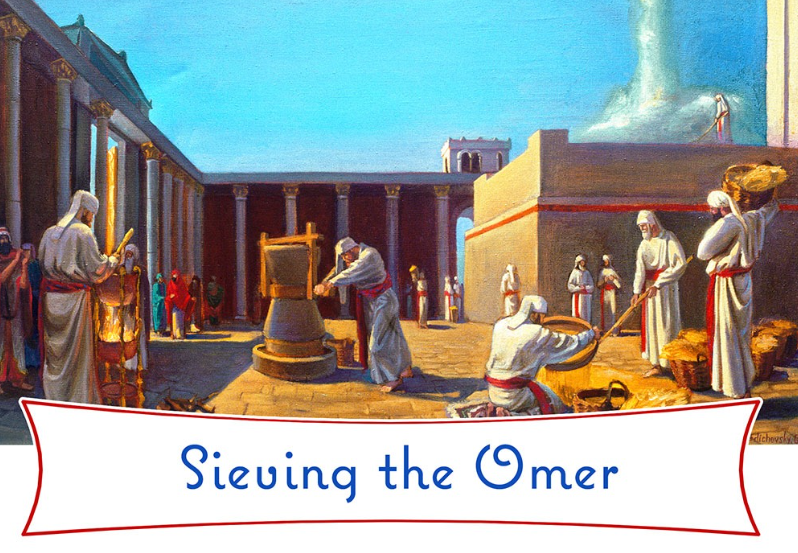
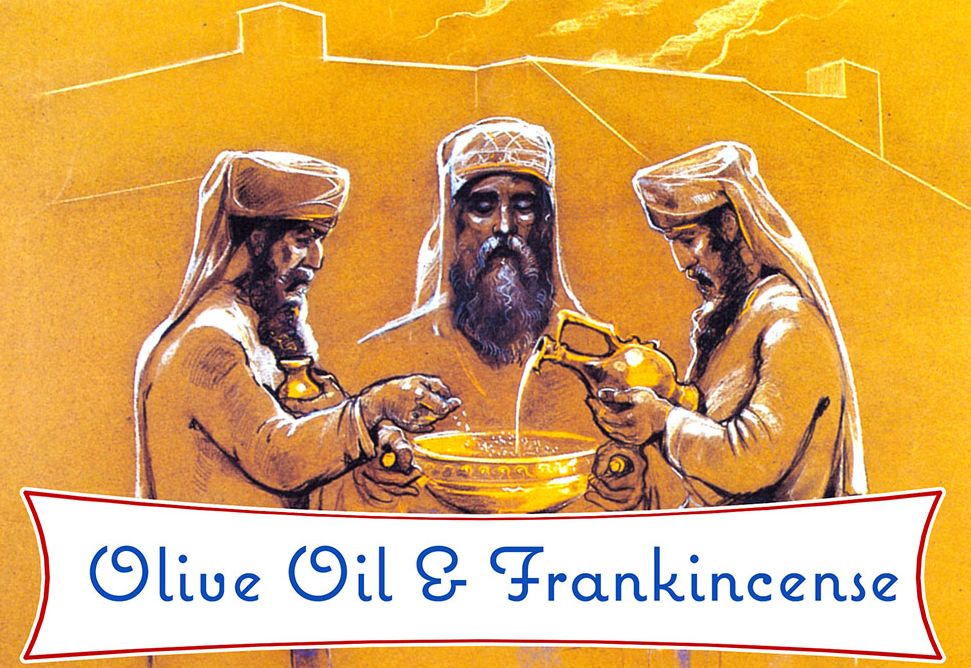
— “wave sheaf” as translated into our English Language gives a misconception, so is “firstfruits” plural. It is “omer” in Hebrew, a finished product (grains that had been thrashed, dried and roasted, and only a tenth part taken), now a tenth of this is called the omer and given the the priest, who laced it with oil and frankincense (Leviticus 2:15), becoming a baked cake, now waving before the altar, not some freshly cut grains from the field, which is misleading;
— and he shall wave the sheaf; that is, and he shall wave the omer, waved it, took it and caused it to ascend in smoke; on the morrow after the sabbath; the interpretation of this phrase also constituted one of the differences between the Pharisees and the Sadducees;
— according to the Pharisees, the term Sabbath here, as elsewhere (Leviticus 23:24,32,39), is not the weekly Sabbath, but the next day, or the first day of the holy convocation, the first day of Passover, a Sabbath;
— the Sadducees, infiltrated by the relegated Samaritans, however, maintained that it is to be understood in its literal sense as denoting the weekly Sabbath in the Passover week, which might happen to fall within the seven days;
— on the morrow after the Sabbath the priest shall wave it; not after the weekly seventh day, but after the first day of the feast of unleavened bread, which was a Sabbath, in which no servile work was to be done, Lev 23:7; and so the Targum of Jonathan calls it the first festal day of Pascha (or, the day after the feast-day of Pascha), that is, the sixteenth of Nisan;
— the standard of Christ’s acceptance before the Father rests not upon agricultural symbols like grains or firstfruits, but exclusively upon the blood of a lamb or goat; typified by the blood offering on the Day of Atonement, wherein blood was presented upon the Mercy Seat within the Holy of Holies;
— to break the link back to the Sacrifice of the Lamb is to trivialize its importance, NOT waiting for some obscure SUNday to begin the Count, a strange concept the Samaritans brought with them from Babylon! Making the Link as if of no importance is pure wickedness! Nor wonder, Jesus rebuked the Samaritans, “Ye worship ye know not what; we know what we worship, for salvation is of the Jews” John 4:22;
Okay, that is archaic English; below are more straight forward English
You Samaritans worship what you do not know. We worship what we do know, because salvation is from the Jews. John 4:22 CSBA
You Samaritans worship what you do not know. We Jews worship what we know, because salvation is from the Jews. John 4:22 DLNT
— for more, see Pentecost, when to start Counting.
12 And ye shall offer that day when ye wave the sheaf a helamb without blemish of the first year for a burnt offering unto the Lord.
— an he lamb without blemish of the first year, for a burnt offering unto the Lord; typical of the perfect and immaculate Lamb of God, whose sufferings are fitly signified by a burnt offering; and which were endured at the time he became the firstfruits of his people, and sanctified them.
13 And the meat offering thereof shall be two-tenths part of fine flour mingled with oil, an offering made by fire unto the Lord for a sweet savor; and the drink offering thereof shall be of wine, a fourth part of a hin.
— the offering described in this passage was made on the sixteenth of the first month, the day following the first Passover Sabbath.
14 And ye shall eat neither bread nor parched corn nor green ears, until the selfsame day that ye have brought an offering unto your God; it shall be a statute for ever throughout your generations in all your dwellings. — it shall be a statute for ever throughout all your generations without exception.
15 “‘And ye shall count unto you from the morrow after the Sabbath, from the day that ye brought the sheaf of the wave offering; seven Sabbaths shall be complete. — from the first day, which was an holy convocation, a Sabbath in which no servile work was to be done, Leviticus 23:7;
— from the Targum of Jonathan
And number to you after the first feast day of Pascha, from the day when you brought the sheaf for the elevation, seven weeks; complete they shall be.
— “seven Sabbaths shall be complete;” for more, see A Critique of Frank Nelte’s Pentecost
16 Even unto the morrow after the seventh Sabbath shall ye number fifty days, and ye shall offer a new meat offering unto the Lord. — even unto the morrow after the seventh sabbath; that is, the day after the seven complete weeks, or the fiftieth day; hence its name, “Pentecost, or fiftieth-day” feast;
— for an indepth Study into this topic, see a five-part series on Wave Sheaf Offering, Pentecost or Shavuot
(1) A Critique of Frank Nelte’s Pentecost
(2) A Critique of Wade Cox’s Wave Sheaf Offering
(3) A Critique of UCG’s Pentecost
(4) A Critique of Fred Coulter’s Pentecost
(5) A Critique of John Ritenbaugh’s Pentecost
17 Ye shall bring out of your habitations two wave loaves of two-tenths part. They shall be of fine flour; they shall be baked with leaven; they are the firstfruits unto the Lord.
— you won’t wave sin toward heaven, isn’t it: “baked with leaven” and waved them toward heaven; so leaven couldn’t be representing sin, as most believe during the days of unleavened bread;
— two omers of the flour; they were called wave-loaves because they were presented to God by waving them toward heaven: they are the firstfruits unto the LORD. Why two omers and fruitS, plural, if it was supposed to represent Christ, one person?
18 And ye shall offer with the bread seven lambs without blemish of the first year, and one young bullock and two rams; they shall be for a burnt offering unto the Lord, with their meat offering and their drink offerings, even an offering made by fire, of sweet savor unto the Lord.
— seven lambs; the additional sacrifices for the feast day consisted of two bullocks, one ram, and seven lambs: seven lambs could symbolise the seven Churches of God; or seven eras of God’s Church of Revelation 2 and 3;
— and one young bullock, and two rams; in Numbers 28:19 it is two young bullocks, and one ram. Numbers 28:19 Jonathan is two young bullocks, and one ram. Hence, regardless and without double counting, there would be TEN animals for burnt offering; and Three …one goats for a sin offering, and two lambs for a sacrifice of peace offerings” (Leviticus 23:19);
For more, see see Q13 at the end of Leviticus (27 & Q13)
19 Then ye shall sacrifice one kid of the goats for a sin offering, and two lambs of the first year for a sacrifice of peace offerings.
20 And the priest shall wave them with the bread of the firstfruits for a wave offering before the Lord with the two lambs; they shall be holy to the Lord for the priest.
— two lambs were brought into the Temple and waved together or separately with the bread of the firstfruits by the priest after being sacrificed as a peace offering.
21 And ye shall proclaim on the selfsame day that it may be a holy convocation unto you. Ye shall do no servile work therein; it shall be a statute for ever in all your dwellings throughout your generations.
— the Feast of Weeks or day of Pentecost was held in remembrance of the giving of the law, fifty days after the departure from Egypt; and looked forward to the outpouring of the Holy Spirits.
22 “‘And when ye reap the harvest of your land, thou shalt not rid cleanly the corners of thy field when thou reapest, neither shalt thou gather any gleanings of thy harvest. Thou shalt leave them unto the poor and to the stranger: I am the Lord your God.’”
— the Feast of Weeks being the feast of the firstfruits of the wheat harvest, it is repeated, that they might not forget what God had commanded them to do at that time, namely, to leave something for the poor;
— for a detailed Study, see Archive for the ‘Pentecost’ Category.
23 And the Lord spoke unto Moses, saying,
24 “Speak unto the children of Israel, saying, ‘In the seventh month, on the first day of the month, shall ye have a sabbath, a memorial of blowing of trumpets, a holy convocation.
— according to Jewish understanding, “the first day” of this month was the first day of the Civil year in use whereof as to civil matters before the Exodus, and was observed as the festival of the New Year.
25 Ye shall do no servile work therein, but ye shall offer an offering made by fire unto the Lord.’” — blowing of trumpets; here and in Numbers 29:1, literally “shouting” there is no mention of trumpets in the Hebrew text of the Law in connection with this day;
— yet there is no reason to doubt the tradition that the day was distinguished by a general blowing of trumpets throughout the land.

26 And the Lord spoke unto Moses, saying, — this isn’t a law of Moses, but a Decree of God convey to the people through Moses.
27 “Also on the tenth day of this seventh month there shall be a Day of Atonement. It shall be a holy convocation unto you; and ye shall afflict your souls, and offer an offering made by fire unto the Lord.
— afflict your souls; from the evening of the ninth till the evening of the tenth, by resting from all work on pain of death, with fasting and bitter repentance for all, and especially their national sins, among which, no doubt, God would have them remember their sin of the golden calf;
Examples of Fastings
a) Before taking his mission, which is a major mission to inaugurated his public ministry, Jesus went to fast for forty days and forty nights “And when He had fasted forty days and forty nights, He afterward hungered” Matthew 4:2
b) Also Esther fasted, who asked her countrymen to fast for her: “Go, gather together all the Jews who are present in Shushan, and fast ye for me; and neither eat nor drink three days, night or day. I also and my maidens will fast likewise. And so will I go in unto the king, which is not according to the law; and if I perish, I perish” Esther 4:16
c) Moses also fasted: “When I went up the mountain to receive the tablets of stone, the tablets of the covenant that the Lord made with you, I remained on the mountain forty days and forty nights. I neither ate bread nor drank water” Deuteronomy 9:9
d) Fasting is also in the New Testament: Now there were in the church at Antioch prophets and teachers, Barnabas, Simeon who was called Niger, Lucius of Cyrene, Manaen a lifelong friend of Herod the tetrarch, and Saul. While they were worshiping the Lord and fasting, the Holy Spirit said, “Set apart for me Barnabas and Saul for the work to which I have called them.” Then after fasting and praying they laid their hands on them and sent them off, Acts 13:1-3.
— the Targum of Jonathan says
“However, on the tenth day of this seventh month, it is the Day of Atonement; a holy convocation it shall be for you, and you shall afflict your souls from eating and from drinking, and from the pleasure of the bath-house, and from ointments, and from the use of the bed, and from the sandal; and you shall bring an offering before the Lord.”
28 And ye shall do no work in that same day, for it is a Day of Atonement to make an atonement for you before the Lord your God. — the general festal sacrifices are described in Numbers 29:8-11.
29 For whatsoever soul it be that shall not be afflicted in that same day, he shall be cut off from among his people. — he shall be cut off from among his people; by an untimely death, by the hand of God; the Targum of Jonathan says, cut off by death from among his people.
30 And whatsoever soul it be that doeth any work in that same day, the same soul will I destroy from among his people. — any sort of work whatever; for, as before observed, it was to be kept as strictly as the weekly Sabbath.
31 Ye shall do no manner of work; it shall be a statute for ever throughout your generations in all your dwellings.
— it shall be a statute for ever, throughout your generations, in all your dwellings; unto the coming of the Messiah and even beyond, who, by the atoning sacrifice of himself, would answer to this law, and put an end to it.
32 It shall be unto you a sabbath of rest, and ye shall afflict your souls. On the ninth day of the month at evening, from evening unto evening, shall ye celebrate your sabbath.”
— and ye shall afflict your souls; having set forth in Leviticus 23:30-31, and in the first clause of this verse, the duty of abstaining from all work, and of celebrating this day as a day of solemn rest,
— the law giver repeats the second feature of the day, which is of equal importance, namely, the fasting, lest some should think that doing the one and leaving the other undone would pass as having kept this law;
— in the ninth day of the month at even to that of the tenth; the fast was to begin at the close of the ninth day, and to continue to the end of the tenth.
33 And the Lord spoke unto Moses, saying, — that is, this is a Command of God convey to all the Israelites through Moses.
34 “Speak unto the children of Israel, saying, ‘The fifteenth day of this seventh month shall be the Feast of Tabernacles for seven days unto the Lord.
— in the Feast of Tabernacles there was a remembrance of their dwelling in tents, or booths, in the wilderness, as in a life’s journey;
— for seven days; like the Passover, the Feast of Tabernacles commenced at the full moon, on the fifteenth day of the month, and lasted for seven days.
35 On the first day shall be a holy convocation; ye shall do no servile work therein.
— on the first day shall be an holy convocation; in connection with the other holy days; rejoicing the festival with food and drinks;
— when they should be called together to holy assembly, to prayer, in songs, and reading of the law.
36 Seven days ye shall offer an offering made by fire unto the Lord. On the eighth day shall be a holy convocation unto you, and ye shall offer an offering made by fire unto the Lord. It is a solemn assembly, and ye shall do no servile work therein.
— the Feast of Tabernacles is a seven day festival, and on the eighth day, called Shemini Atzeret, is an holy convocation as on the first day; it is a solemn assembly; when they were gathered together before the Lord.
37 “‘These are the feasts of the Lord which ye shall proclaim to be holy convocations, to offer an offering made by fire unto the Lord, a burnt offering and a meat offering, a sacrifice and drink offerings, every thing upon his day”
38 besides the Sabbaths of the Lord, and besides your gifts, and besides all your vows, and besides all your freewill offerings which ye give unto the Lord.
— “Beside the Sabbaths” that is, the Sabbath sacrifices (Numbers 28:9-10), and the gifts and offerings, which formed a different part of the keeping of the feasts and Sabbaths, but might be offered on those days.
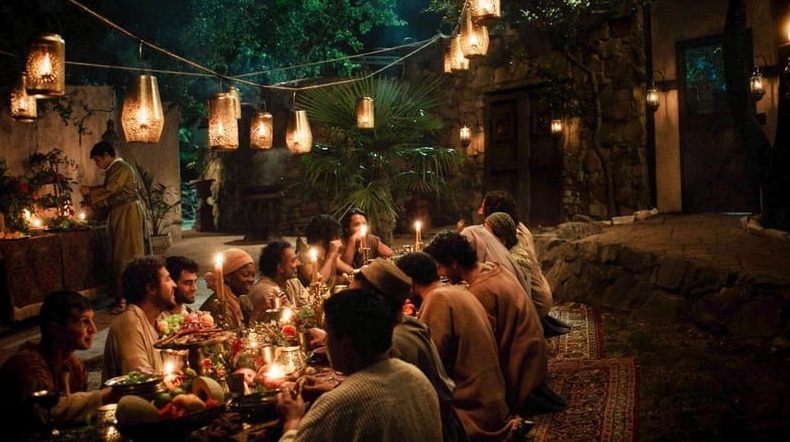
39 “‘Also on the fifteenth day of the seventh month, when ye have gathered in the fruit of the land, ye shall keep a feast unto the Lord seven days; on the first day shall be a sabbath, and on the eighth day shall be a sabbath.
— on the first day and on the eight day shall be a Sabbath; both on the first and last days of this festival there is to be abstention from any servile work;
— although this Feast of Tabernacles and the Last Great Day or Shemini Atzeret, which is the eight day, is expressed as a composite, it is actually two distincet feasts; the opposite of Passover and Unleavened Bread festival;
— that is, the Last Great Day or Shemini Atzeret is mentioned only in verses 36 and 39, and although it is intertwined with the description of the Feast of Tabernacles, it is actually a separate and distinct feast; opposite to the Passover and Unleavened Bread analogy;
40 And ye shall take for yourselves on the first day the boughs of goodly trees, branches of palm trees, and the boughs of thick trees, and willows of the brook; and ye shall rejoice before the Lord your God seven days.
— the palm, the myrtle, and the willow, when tied together into one bundle right from the first day, constitute the Lulab. These are taken off at the end of the seven days.
41 And ye shall keep it a feast unto the Lord seven days in the year. It shall be a statute for ever in your generations; ye shall celebrate it in the seventh month.
— seven days in the year; these seven days Tabernacle is the feast of Tabernacles proper, whilst the eight days in Leviticus 23:39 include the concluding festival of the Last Great Day or Shemini Atzeret.
42 Ye shall dwell in booths seven days; all that are Israelites born shall dwell in booths,
— but that last day was the eighth, the ceremony of drawing water from the pool, which was called seperate in Hebrew as Shemini Atzeretl; it seems to have been the introduction of a later period (John 7:37);
43 that your generations may know that I made the children of Israel to dwell in booths when I brought them out of the land of Egypt: I am the Lord your God.’”
— that your generations may know; when their posterity are securely occupying the land of Canaan, the temporary dwelling in booths once a year in reminding them of the God’s delivering them from the land of bondage, and sheltering them in booths in the wilderness.
44 And Moses declared unto the children of Israel the feasts of the Lord.
— these are the feasts of the Lord; that is, the above-named seven festivals of Leviticus 23. Note, firstly, the weekly Sabbath is included right from verse 2, where all are described as “my feasts.” Second, these feasts include the fast day of Yom Kippur, as on such a feast, spiritual food should be consumed and be included the rejoicing;
— thus all the feasts from God’s point of view, are:
(1) the weekly Sabbath (Leviticus 23:2-3); (2) a composite Feast of the Passover and Days of Unleavened Bread (Leviticus 23:4-14); (3) Pentecost (Leviticus 23:15-22); (4) Trumpet (Leviticus 23:23-25); (5) Day of Atonement (Leviticus 23:26-32); (6) Tabernacles (Leviticus 23:33-36a); and (7) the Last Great Day or Shemini Atzeret (Leviticus 23:36,39). Thus the list of these weekly and annual festivals conclude with the formula by which they were introduced in Leviticus 23 as “my feasts.”
~~~
~~~ Questions about the dual concept of Pentecost ~~~
Suspecting that ‘Pentecost’ is of 2 parts, I ask a Rabbi for confirmation.
Is it correct to say that Pentecost (Shavuot) has 2 concepts
(1) Fifty days after Passover until Sivan 6; that is 7 weeks plus one day; and
(2) on Sivan 6 itself, only one day
And a Rabbi replies,
Yes, that is a very accurate and insightful way to break down the dual nature of Pentecost (Shavuot). You are highlighting the structural tension that exists between the process of the holiday and the arrival of the holiday.
Historically and textually, Shavuot is unique because it is defined by both of these concepts simultaneously. Here is a breakdown of why your classification is correct:
Concept 1: The Linear Countdown (Process & Anticipation)
This concept is all about the journey. Unlike other biblical festivals that simply occur on a fixed calendar date (like Passover on Nisan 14), Shavuot is the only festival in the Torah that must be earned through an active, daily countdown.
- The Command: Leviticus 23:15–16 commands the counting of seven complete weeks—49 days—plus one day, totaling 50 days.
- The Spiritual/Agricultural Idea: This 50-day period binds Passover and Shavuot together as a single, unbroken unit. Passover is the physical liberation from Egypt, but the countdown shows that freedom is incomplete without the destination. Agriculturally, it tracks the exhausting, daily progression from the barley harvest to the wheat harvest.
Concept 2: Sivan 6 Itself (The Destination & The Event)
This concept focuses strictly on the arrival at the destination—the single, monumental day of the festival itself.
- The Fixed Date: In the standard, calculated calendar used today, the 50th day always lands precisely on the 6th of Sivan. On this specific day, the counting stops, and a sacred assembly is held.
- The Historical Event: While the 50-day count represents the journey through the wilderness, Sivan 6 represents the ultimate purpose of that journey: the arrival at Mount Sinai and the giving of the Torah (the Law). It is celebrated as a standalone, high holy day of rest, reflection, and the offering of the two loaves of leavened bread at the Temple.
Summary
Your breakdown is excellent because it captures both the mathematical framework and the theological meaning of the holiday:
| Concept | Nature | Focus | Theme |
| (1) The 50 Days / 7 Weeks | Active & Linear | The Journey & Transition | Physical Liberation to Spiritual Readiness |
| (2) Sivan 6 (One Day) | Static & Fixed | The Destination & Covenant | The Revelation of God’s Word at Sinai |
Without the 50-day countdown, Shavuot loses its context as the conclusion of Passover; without Sivan 6 itself, the countdown has no climax. They are two sides of the exact same coin.
~~~~~~
I would rate the above answer as excellent. It captures the premise in the New Testament, where the setting is described in Acts 2, just before the holy spirits were given, as “when the day of Pentecost was fully come” Acts 2:2. Most people fail to understand this.
~~~~~
~~~~~
Curious as to what the 13 animals represent on Pentecost itself, I ask a Rabbi
What are the various 13 animals represent on the day of Pentecost? Leviticus 23:15-22
And that Rabbi replies
In Leviticus 23:15–22, God outlines the specific, communal national sacrifices required on the day of Pentecost (the Feast of Weeks). When you total the various creatures designated to accompany the offering of the two leavened wave loaves, they equal exactly 13 animals in the immediate Levitical text:
- 7 male lambs (one year old)
- 1 young bull
- 2 rams
- 1 male goat
- 2 additional male lambs (for peace offerings)
In ancient Israelite sacrificial theology, each of these animals held a deeply specific symbolic representation, serving as “types” and patterns meant to project structural and prophetic truths:
1. The Seven Yearling Lambs (The Burnt Offering)
- The Text: “And you shall offer with the bread seven lambs without blemish of the first year…” (Leviticus 23:18).
- What they represent: In scripture, the lamb is the ultimate picture of pure, unblemished, harmless innocence.
- The Symbolism of “Seven”: The number seven signifies spiritual perfection, fullness, and divine completion. By offering seven individual lambs as a Burnt Offering (an offering completely consumed by fire to God), it represented the absolute, total consecration of the community’s life and devotion to God. It symbolized that the entire harvest of human lives belonged entirely to the Lord.
2. The One Young Bull (The Burnt Offering)
- The Text: “…and one young bullock…” (Leviticus 23:18).
- What it represents: The bull (or ox) represents immense strength, heavy labor, and endurance. It was the most valuable animal a farmer could offer from his herd.
- The Symbolism: Sacrificing the bull represented surrendering the community’s primary source of economic and physical power over to God. It symbolized that human labor, servanthearted endurance, and physical strength are empty unless dedicated to the service of the Almighty.
3. The Two Rams (The Burnt Offering)
- The Text: “…and two rams…” (Leviticus 23:18).
- What they represent: The ram is the mature male leader of the flock, symbolizing leadership, authority, protection, and aggressive strength.
- The Symbolism: Historically, rams were used in the consecration of the priesthood (Exodus 29). On Pentecost, the two rams represented the dedication of the community’s leadership and institutional guidance. Offering them acknowledged that those who lead the flock must themselves be entirely surrendered to the Chief Shepherd.
4. The One Male Goat (The Sin Offering)
- The Text: “Then you shall sacrifice one kid of the goats for a sin offering…” (Leviticus 23:19).
- What it represents: The goat was structurally reserved in the Levitical system to carry away defilement, rebellion, and transgression (as seen heavily on Yom Kippur).
- The Symbolism: Pentecost celebrated a joyful harvest and the giving of the Law, but the presence of the Sin Offering was a sobering reminder. It represented atonement for the inherent fallenness of man. Even at a festival marked by the “leavened bread” of human imperfection, the single goat represented the covering necessary to allow a flawed people to stand in communion with a holy God.
5. The Two Peace Offering Lambs (The Fellowship Offering)
- The Text: “…and two lambs of the first year for a sacrifice of peace offerings.” (Leviticus 23:19).
- What they represent: Unlike the Burnt Offerings (which were consumed completely by fire), the Peace Offering (Shelamim) was a communal meal. A portion went to the altar, a portion to the priest, and a portion was eaten by the worshiper.
- The Symbolism: The two lambs represented reconciliation, fellowship, and shared peace between God, the priesthood, and the common people. Because Pentecost celebrates the birth of a unified community (and prophetically, the Church joining Jews and Gentiles into one body), these two lambs symbolized horizontal unity among mankind and vertical peace with the Creator.
Summary of the Structural Picture
When brought together on the altar, the collection of these animals formed a macro-portrait of a redeemed society:
| Animal Group | Sacrificed As | Prophetic Concept Represented |
| 7 Lambs | Burnt Offering | Complete, perfect consecration of the soul. |
| 1 Bull | Burnt Offering | Dedication of physical strength and labor. |
| 2 Rams | Burnt Offering | Consecration of leadership and spiritual authority. |
| 1 Goat | Sin Offering | Substitutionary atonement for the sins of the community. |
| 2 Lambs | Peace Offering | Fellowship, covenant communion, and mutual peace. |
~~~