
Genesis (47-48)
~~~~~

Genesis 47
1 Then Joseph came and told Pharaoh, and said, “My father and my brethren, and their flocks and their herds and all that they have, have come out of the land of Canaan; and behold, they are in the land of Goshen.”
— behold, they have already arrived in the land of Goshen; though Joseph had all along wished this to be the dwelling-place of his brethren, yet it was necessary to obtain Pharaoh’s permission; and at present Joseph only mentions that they had halted there;
— the Targum Onkelos says
Yoseif came and told Pharaoh, and he said, My father, and my brothers, their sheep, their cattle, and all their possessions, have come from the land of Canaan, and they are now in the land of Goshen.
2 And he took some of his brethren, even five men, and presented them unto Pharaoh.
— the Targum Onkelos says
From among his brothers, he took five men, and he presented them to Pharaoh.
— the Targum of Jonathan identifies the five men as “Zebulon, Dan, Naphtali, Gad, and Asher”
3 And Pharaoh said unto his brethren, “What is your occupation?” And they said unto Pharaoh, “Thy servants are shepherds, both we and also our fathers.”
— the Targum Onkelos says
Pharaoh said to his brothers, What is your occupation? They said to Pharaoh, Your servants are shepherds, we and our fathers.
4 They said moreover unto Pharaoh, “To sojourn in the land have we come, for thy servants have no pasture for their flocks; for the famine is sore in the land of Canaan. Now therefore, we pray thee, let thy servants dwell in the land of Goshen.”
— the Targum Onkelos says
They said to Pharaoh, We have come to live in the land temporarily, since there is no pasture for your servant’s flocks, because the famine is severe in the land of Canaan. Now then, please let your servants [now] settle in the land of Goshen.
5 And Pharaoh spoke unto Joseph, saying, “Thy father and thy brethren have come unto thee.
— the Targum Onkelos says
Pharaoh said to Yoseif, Your father and your brothers have come to you.
6 The land of Egypt is before thee. In the best of the land make thy father and brethren to dwell; in the land of Goshen let them dwell; and if thou knowest any industrious men among them, then make them rulers over my cattle.”
— and if thou knowest any men of activity among them, then make them rulers over my cattle; Pharaoh offered to employ them as shepherds, provided they were active men; also, of body or mind, fit for royal employment of flocks and herds;
— the Targum Onkelos says
The land of Egypt is before you. In the best of the land, settle your father and your brothers. Let them settle in the land of Goshen. If you know of capable men among them, appoint them livestock officers over my [herds.]
7 And Joseph brought in Jacob his father, and set him before Pharaoh; and Jacob blessed Pharaoh. — Jacob blessed Pharaoh;
— the patriarch’s grateful return for Pharaoh’s great kindness and generosity toward him and his house, which is repeated below, Genesis 47:10, as being a circumstance very remarkable;
— the Targum Onkelos says
Yoseif [then] brought in Yaakov, his father, and presented him to Pharaoh; and Yaakov blessed Pharaoh.
8 And Pharaoh said unto Jacob, “How old art thou?” — how many are the days of the years of thy life?
— and Jacob replied Pharaoh, the days of the years of my pilgrimage (literally, of my sojournings, wanderings to and fro without any settled condition) are an hundred and thirty years;
— the Targum Onkelos says
Pharaoh said to Yaakov, How many are the years of your life?
9 And Jacob said unto Pharaoh, “The days of the years of my pilgrimage are a hundred and thirty years. Few and evil have the days of the years of my life been, and have not attained unto the days of the years of the life of my fathers in the days of their pilgrimage.”
— Jacob’s life till now is fell short of that of his ancestors in respect of duration (witness the 175 years of Abraham, and the 180 of Isaac)
— the Targum Onkelos says
Yaakov said to Pharaoh, The years of my temporary residence are one hundred and thirty years. Few and troublesome have been the days of my life. I have not attained the years of my father’s lives, in the days of their temporary residence.
10 And Jacob blessed Pharaoh, and went out from before Pharaoh.
— the Targum Onkelos says
Yaakov blessed Pharaoh, and left Pharaoh’s presence.
11 And Joseph placed his father and his brethren, and gave them a possession in the land of Egypt, in the best of the land, in the land of Rameses, as Pharaoh had commanded. — the land of Rameses; “best of the land” this description of the land of Goshen appears only here;
— the Targum Onkelos says
Yoseif settled his father and his brothers, and gave them a possession in the land of Egypt, in the best part of the land, in the land of Ramseis, as Pharaoh had ordered.
12 And Joseph nourished his father and his brethren and all his father’s household with bread, according to their families. — the famine still continuing,
— during which time Joseph, as a dutiful and affectionate son, and as a kind brother, supplied them with all necessary provision, signified by bread;
— the Targum Onkelos says
Yoseif provided his father, his brothers, and all his father’s household with bread according to [the needs of] the children.
13 And there was no bread in all the land; for the famine was very sore, so that the land of Egypt and all the land of Canaan fainted by reason of the famine.
— there was no bread in all the land; this probably refers to the second year of the famine when any little stores of individuals or families were exhausted and when the people had become universally dependent on the government;
— the Targum Onkelos says
There was no bread in all the land, for the famine was very severe. The [the people of the] land of Egypt, and Canaan were worn out because of the famine.
14 And Joseph gathered up all the money that was found in the land of Egypt and in the land of Canaan for the corn which they bought; and Joseph brought the money into Pharaoh’s house.
— and Joseph brought the money into Pharaoh’s house: into his repository, as the Targum of Jonathan, into his treasury, not into his own house or coffers, in which he acted the faithful servant of Pharaoh;
— the Targum Onkelos says
Yoseif gathered up all the money that was to be found in the land of Egypt, and in the land of Canaan, through the purchases [grain] they made. Yoseif brought the money to the house of Pharaoh.
15 And when money failed in the land of Egypt and in the land of Canaan, all the Egyptians came unto Joseph and said, “Give us bread; for why should we die in thy presence? For the money faileth.”
— all the Egyptians came unto Joseph, and said, give us bread; freely, for nothing, since they had no money to buy any with;
— the Targum Onkelos says
When the money was used up in the land of Egypt, and in the land of Canaan, all [the people of] Egypt came to Yoseif, saying, Give us bread; why should we die in your presence, [just] because there is no money?
16 And Joseph said, “Give your cattle; and I will give to you for your cattle, if money fail.” — and I will give you for your cattle, if money fail; that is, corn or wheat for cattle, if they had no money to give;
— the Targum Onkelos says
Yoseif said, Bring your livestock, and I will give you [food] [in exchange] for your livestock if there is no more money.
17 And they brought their cattle unto Joseph; and Joseph gave them bread in exchange for horses and for the flocks, and for the cattle of the herds and for the asses; and he fed them with bread for all their cattle for that year.
— the Targum Onkelos says
They brought their livestock to Yoseif, and Yoseif gave them bread [in exchange] for their horses, their flocks of sheep, their herds of cattle and their donkeys. He tended [sustained] them with bread in exchange for all their livestock, in that year.
18 When that year was ended, they came unto him the second year, and said unto him, “We will not hide it from my lord that our money is spent; my lord also hath our herds of cattle. There is not anything left in the sight of my lord but our bodies and our lands.
— the seventh year is now come; their silver and cattle are now gone. Nothing remains but their lands, and with these themselves as serfs orr slaves of the Pharaoh;
— the Targum Onkelos says
That year came to an end. They came to him in the second year, and they said to him, We are holding nothing back from my master, for the money is used up, and the herds of cattle belong to my master. There is nothing left before my master except our bodies and our land.
19 Why shall we die before thine eyes, both we and our land? Buy us and our land for bread, and we and our land will be servants unto Pharaoh; and give us seed, that we may live and not die, that the land be not desolate.”
— all the desperate Egyptians cried before their Pharaoh, willing to serve as his slaves;
— the Targum Onkelos says
Why should we die before your eyes, both we and our land? Buy us and our land [in exchange] for bread. We and our land will become slaves to Pharaoh. Give us seed grain, let us live and not die, and let the land not become desolate [uncultivated].
20 And Joseph bought all the land of Egypt for Pharaoh; for the Egyptians sold every man his field, because the famine prevailed over them; so the land became Pharaoh’s.
— and we and our land will be servants unto Pharaoh; both should be his; they would hold their land of him, and be tenants to him;
— the Targum Onkelos says
Yoseif bought all the land of Egypt for Pharaoh, for every Egyptian sold his field, because the famine was severe upon them. Thus the land became Pharaoh’s [property.]
21 And as for the people, he removed them to cities, from one end of the borders of Egypt even to the other end thereof. — in the cities, the people would be sure of nourishment only if they were in the immediate neighbourhood of the food;
— the Targum Onkelos says
He [Yoseif] then transferred the people to cities [from city to city], from one end of the border of Egypt to the other.
22 Only the land of the priests bought he not; for the priests had a portion assigned them by Pharaoh, and ate their portion which Pharaoh gave them. Therefore they sold not their lands. — it was then the custom in Egypt for the priests to have a daily allowance of cooked food;
— the Targum Onkelos says
But the land of the priests he did not buy, because the priests had an allotment from Pharaoh. They ate the allotment that Pharaoh gave them, and therefore they did not sell their land.
23 Then Joseph said unto the people, “Behold, I have bought you this day and your land for Pharaoh. Lo, here is seed for you, and ye shall sow the land.
— the Targum Onkelos says
Yoseif said to the people, Behold, I have today purchased you and your lands for Pharaoh. Here is seed, plant [it in] the soil.
24 And it shall come to pass in the harvest, that ye shall give a fifth part unto Pharaoh, and four parts shall be your own for seed of the field and for your food, and for those of your households and for food for your little ones.”
— the fifth part unto Pharaoh; a fifth part or 20% of their production;
— the Targum Onkelos says
When it produces [the produce is gathered] you must give a fifth to Pharaoh. Four parts shall be yours for seed for your fields and for your food, and for those [the people] of your households, and for food for your little ones.
25 And they said, “Thou hast saved our lives. Let us find grace in the sight of my lord, and we will be Pharaoh’s servants.” — we will be Pharaoh’s servants; signifying, that they esteemed it a great favour to be so on the foot of the bargain made with them;
— the Targum Onkelos says
They said, You have saved our lives. May we find favor in the eyes of my master, and we will be slaves to Pharaoh.
26 And Joseph made it a law over the land of Egypt unto this day, that Pharaoh should have a fifth part, except the land of the priests only, which became not Pharaoh’s.
— the Targum Onkelos says
Yoseif enacted a statute over the land of Egypt to this day, that a fifth belongs [they should give a fifth] to Pharaoh. Except the land of the priests alone, did not belong to Pharaoh.
27 And Israel dwelt in the land of Egypt, in the country of Goshen; and they had possessions therein, and grew and multiplied exceedingly. — in the country of Goshen or in the land of Rameses, hence this land is the same;
— the Targum Onkelos says
Yisrael lived in the land of Egypt, in the land of Goshen. They acquired property there. They were fruitful and [their population] increased greatly.
28 And Jacob lived in the land of Egypt seventeen years; so the whole age of Jacob was a hundred forty and seven years. — Jacob’s life now is 147, still short of that of his ancestors: 175 years of Abraham, and the 180 of Isaac;
— the Targum Onkelos says
Yaakov lived in the land of Egypt seventeen years. The days of Yaakov, the years of his life were one hundred and forty seven years.
29 And the time drew nigh that Israel must die, and he called his son Joseph and said unto him, “If now I have found grace in thy sight, put, I pray thee, thy hand under my thigh, and deal kindly and truly with me: bury me not, I pray thee, in Egypt.
— Joseph retained his power and place near Pharaoh after the fourteen years of special service were completed; hence, Jacob looks to him for the accomplishment of his wishes concerning the place of his burial;
— “Put thy hand under my thigh” Genesis 24:2; that is, swear to me; this binds Joseph by a solemn asseveration to carry his mortal remains to the land of promise;
— the Targum Onkelos says
The days of Yisrael’s death drew near, and he called for his son Yoseif, and said to him, If I have found favor in your eyes, please [now], place your hand under my thigh; that you will deal kindly [with goodness] and truthfully with me. Please [Now], do not bury me in Egypt.
30 But I will lie with my fathers, and thou shalt carry me out of Egypt and bury me in their burying place.” And he said, “I will do as thou hast said.”
— bury me not, I pray thee, in Egypt; not choosing to lie among idolaters at death, with whom he cared not to have any fellowship in life;
— the Targum Onkelos says
For I will lie with my fathers. Carry me out of Egypt, and bury me in their grave. He [Yoseif said], I will do as you say.
31 And he said, “Swear unto me.” And he swore unto him. And Israel bowed himself upon the bed’s head. — and Jacob asked from Joseph; “Swear unto me”
— the right of primogeniture, the right, by law or custom, of the firstborn legitimate child, has been forfeited by Reuben; the double portion in the inheritance is now transferred to Joseph;
— the Targum Onkelos says
He [Yaakov] said, Swear to me, and he swore to him. Yisrael prostrated himself at the head of the bed.
Genesis 48
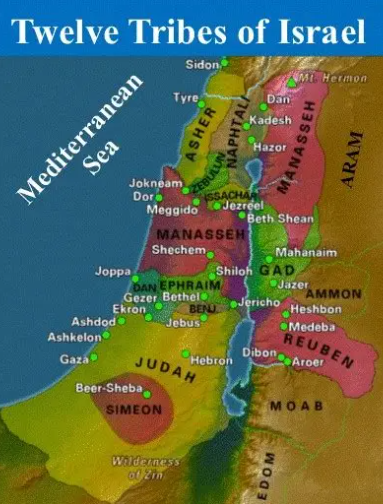
1 And it came to pass after these things that one told Joseph, “Behold, thy father is sick”; and he took with him his two sons, Manasseh and Ephraim. — Joseph’s two sons Manasseh and Ephraim destined to be fathers of two tribes in Israel, Genesis 48:5,6
— Rashi Gen 48:1 that Ephraim was accustomed to study with Jacob, and when Jacob became ill in the land of Goshen, Ephraim went to his father to tell him;
— the Targum Onkelos says
After these events, someone said to Yoseif, Behold your father is [lying] ill. He took his two sons with him, Menasheh and Ephraim.
2 And one told Jacob and said, “Behold, thy son Joseph cometh unto thee”; and Israel strengthened himself and sat upon the bed. — and Israel strengthened himself, and sat upon his bed; his spirits revived, his strength renewed, he got fresh vigour on hearing his son Joseph was coming;
— the Targum Onkelos says
It was told to Yaakov, saying, Behold, your son, Yoseif, has come to you. Yisrael gathered his strength and sat up in bed.
3 And Jacob said unto Joseph, “God Almighty appeared unto me at Luz in the land of Canaan, and blessed me
— the Targum Onkelos says
Yaakov said to Yoseif, Almighty Shaddai appeared [became revealed] to me in Luz, in the land of Canaan, and He blessed me.
4 and said unto me, ‘Behold, I will make thee fruitful and multiply thee; and I will make of thee a multitude of people, and will give this land to thy seed after thee for an everlasting possession.’
— and I will make of thee a multitude of people; a large nation, consisting of many tribes, even a company of nations, as the twelve tribes of Israel were;
— the Targum Onkelos says
He said to me, Behold, I will make you fruitful and numerous, and I will make you into an assembly of nations [tribes]. I will give this land to your descendants after you for an everlasting possession.
5 And now thy two sons, Ephraim and Manasseh, who were born unto thee in the land of Egypt before I came unto thee into Egypt, are mine; as Reuben and Simeon, they shall be mine.
— thy two sons, Ephraim and Manasseh; it was the intention of the aged patriarch to adopt Joseph’s sons as his own;
— the Targum Onkelos says
And now your two sons, who were born to you in the land of Egypt before I came to you to Egypt, are mine. Ephraim and Menasheh, like Reuvein and Shimon, shall be mine [before me].
6 And thy issue whom thou begettest after them shall be thine, and shall be called after the name of their brethren in their inheritance. — but should be called either the children of Ephraim, or the children of Manasseh;
— the Targum Onkelos says
But your progeny that will be born after them shall be yours. They shall be called by their brother’s name with regard to their inheritance.
7 And as for me, when I came from Padan, Rachel died beside me in the land of Canaan on the way, when yet there was but a little way to come unto Ephrath; and I buried her there on the way to Ephrath” (the same is Bethlehem).
— Rachel died by me; this circumstance he mentions here, partly because the sight of Joseph and his children brought his beloved Rachel, Joseph’s mother, to his remembrance; and partly that he might assign a reason for transferring the right of the firstborn to Joseph;
— the Targum Onkelos says
And I, when I came from Padan, Rochel died unto me in the land of Canaan, on the road, when there was yet a stretch of land, before coming to Ephros. I buried her there on the road to Ephros, which is Beis Lechem.
8 And Israel beheld Joseph’s sons, and said, “Who are these?”
— the Targum Onkelos says
Yisrael saw Yoseif’s sons, and he said, Who are these?
— and said, who are these? whose sons are they? the Targum of Jonathan says, “from whom were these born to thee?”
9 And Joseph said unto his father, “They are my sons, whom God hath given me in this place.” And he said, “Bring them, I pray thee, unto me, and I will bless them.” — that I may bless them, not with a common, but with a paternal, and patriarchal, and prophetical blessing;
— the Targum Onkelos says
Yoseif said to his father, These are my sons, whom Elohim has given me in this [place] [here]. He [Yaakov] said, Please Take [Now bring] them [near] to me, and I will bless them.
10 (Now the eyes of Israel were dim with age, so that he could not see.) And he brought them near unto him; and he kissed them and embraced them.
— and he brought them near unto Jacob; that he might have a better sight of them and bless them: and he kissed them, and embraced them: as a token of his affection for them;
— the Targum Onkelos says
Yisrael’s eyes were heavy with age, and he could not see. He [Yoseif] brought them near to him, and he kissed them and hugged them.
11 And Israel said unto Joseph, “I had not thought to see thy face; and lo, God hath shown me also thy seed.” — God hath showed me also thy seed; it was an additional favour to see his offspring;
— the Targum Onkelos says
Yisrael said to Yoseif, I have never thought to see your face, and behold Elohim has even allowed me to see your offspring.
12 And Joseph brought them out from between his knees, and he bowed himself with his face to the earth. — he bowed himself, testifying thereby his reverence to his father, he had now showed his humble and earnest request for his blessing upon them;
— the Targum Onkelos says
Yoseif brought them out from between his knees [before him], and he prostrated himself with his face to the ground.
13 And Joseph took them both, Ephraim in his right hand toward Israel’s left hand, and Manasseh in his left hand toward Israel’s right hand, and brought them near unto him.
— the Targum Onkelos says
Yoseif took the two [of them]—Ephraim in his right [hand], toward Yisrael’s left, and Menasheh in his left, toward Yisrael’s right—and he brought them near to him.
14 And Israel stretched out his right hand and laid it upon Ephraim’s head, who was the younger, and his left hand upon Manasseh’s head, guiding his hands wittingly; for Manasseh was the firstborn.
— the Targum Onkelos says
Yisrael stretched out his right [hand] and placed it on the head of Ephraim, [although] he was the younger, and his left [hand] on the head of Menasheh. He deliberately placed his hands so, even though Menasheh was the firstborn.
15 And he blessed Joseph and said, “God, before whom my fathers Abraham and Isaac walked, the God who fed me all my life long unto this day,
— the Targum Onkelos says
He blessed Yoseif and said, Elohim before whom my fathers walked [served], Avraham, and Yitzchok, Elohim who was my shepherd [sustainer] from my inception until this day—
16 the Angel who redeemed me from all evil, bless the lads; and let my name be named on them, and the name of my fathers Abraham and Isaac; and let them grow into a multitude in the midst of the earth.”
— the Targum Onkelos says
The Angel who redeemed me from all evil, should bless the lads, and let my name be called on them, together with the name of my fathers, Avraham and Yitzchok. May they be like fish [of the sea], multiplying within [amongst people upon] the land.
17 And when Joseph saw that his father laid his right hand upon the head of Ephraim, it displeased him; and he held up his father’s hand to remove it from Ephraim’s head unto Manasseh’s head.
— the Targum Onkelos says
Yoseif saw that his father placed his right hand on Ephraim’s head, and it was bad in his eyes. He held up his fathers hand, to remove it from Ephraim’s head [and to place it] on Menasheh’s head.
18 And Joseph said unto his father, “Not so, my father, for this is the firstborn. Put thy right hand upon his head.”
— Jacob’s preference for Ephraim wasn’t out of the blue. Ephraim had Jacob’s right-hand blessing because Ephraim was accustomed to studying the Torah under Jacob (Rashi Genesis 48:1), while Manasseh, the firstborn was picked by Joseph to succeed him by being an assistant in governing Egypt;
— from a critical verse in Deuteronomy 33:17
His glory is like the firstling of his bullock, and his horns are like the horns of unicorns. With them he shall push the people together to the ends of the earth; and they are the ten thousands of Ephraim, and they are the thousands of Manasseh.” Deuteronomy 33:17
— the Targum Onkelos says
Yoseif said to his father, Not so, my father, for this one is the firstborn, place your right hand on his head.
19 And his father refused and said, “I know it, my son, I know it. He also shall become a people, and he also shall be great; but truly his younger brother shall be greater than he, and his seed shall become a multitude of nations.”
— the Targum Onkelos says
His father refused, and he said, I know my son, I know. He too will become a people, he too will become great; however his younger brother will be greater than he, and [the fame] of his descendants will fill [rule] the nations.

20 And he blessed them that day, saying, “In thee shall Israel bless, saying, ‘God make thee as Ephraim and as Manasseh.’” And he set Ephraim before Manasseh.
— the Targum Onkelos says
He blessed them on that day saying: Through you shall [the People of] Israel bless saying; May Elohim make you as Ephraim and Menasheh. He placed Ephraim ahead of Menasheh.
21 And Israel said unto Joseph, “Behold, I die; but God shall be with you, and bring you again unto the land of your fathers.
— the Targum Onkelos says
Yisrael said to Yoseif, Behold I am dying. [The Word of] Elohim will be with you [your support], and He will bring you back to the land of your fathers.
22 Moreover I have given to thee one portion above thy brethren, which I took out of the hand of the Amorite with my sword and with my bow.”
— the Targum Onkelos says
I have given you one share more than your brothers, which I took from the hand of the Amorite with my sword [prayer] and with my bow [plea].
— the Targum of Jonathan reveals the house of Joseph to inherit the city of Shechem
“And I, behold, I have given to you the city of Shechem, one portion as a gift, more than your brothers; which I took from the hands of the Amorites at the time that you entered into it, and I arose and assisted you with my sword and with my bow.”
— “extra gift” in Jewish law, the firstborn receives a double portion. By giving Joseph “one portion more than his brothers,” Jacob is effectively confirming that the Birthright has been transferred from the eldest (Reuben) to Joseph;
— the Targum Jerusalem says
“And I, behold, I have given to you one portion more than your brothers: the garment of Adam the first [man].
“Abraham, the father of my father, took it from the hands of Nimrod the Wicked; and he gave it to Isaac my father; and Isaac my father gave it to Esau.
“But I took it from the hands of Esau my brother—not with my sword and not with my bow, but through my merit and my good deeds.”
— Ephraim before Manasseh! Who symbolises the Bullock and who is the Unicorn?
If Great Britain were truly Ephraim, then why does their Royal Standard bear the clear representation of the Unicorn – the symbol or sign of the tribe of Manasseh? The Unicorn of Great Britain identifies the British as primarily of the tribe of Manasseh. And if the unicorn is the symbol of Manasseh and the United States is “Manasseh” – why doesn’t the United States have this symbol in their national emblems and symbols?
The beginning of the story of America is the saga of the search for freedom to worship God without having to conform to the authority of a religious tyranny emanating from Europe. Today, as a whole, America remains a religious nation.
Among advanced industrialized countries, the United States is easily the most religious. Some 60 percent of its citizens say religion is very important to their lives, about six times the percentage of the French. But the divine looms even larger in most Americans’ hearts than those figures suggest. Some 90 percent say they believe in God – 94 percent if you add those who revere a ‘universal spirit’ – while less than 1 percent call themselves atheists or agnostics.
The United States was originally founded largely by Puritans, called Pilgrims, a break-away group of devout Christians who were known as Separatists, because they separated from the Church of England to follow the precepts of the Bible. Because of intense persecution, they sailed for the New World to establish a country where they could worship God in peace.
More on the identities of Ephraim and Manasseh (1) The Birthrights (2) Ephraim and Manasseh (3) Ephraim as the Thirteenth Tribe (4) Who is this lying Ephraim? (5) The Ox with horns of a Unicorn


