Destined to be Caught in a Snare, how this Prophecy is to be Fulfilled: And notice a Composite Message of Sweetness and Bitterness! “You only have I known of all the families of the earth; therefore I will punish you for all your iniquities” Amos 3:2
Amos (Ch 5-6)
This prophecy of Amos is a lamentation to Ephraim, of the house of Israel, in which the prophet warns of an impending judgement, beginning with the ancient house of Israel, the northern kingdom; then Israel’s surrounding neighbors, then briefly resting for a moment upon the house of Judah, and by way of climax describing the prophetic utter ruin and devastation of the endtime house of the Five Eyes.
And God says to Ezekiel, “Son of man, what is that proverb that ye have in the land of Israel, saying, the days are prolonged, and every vision faileth? The vision that he seeth is for many days, and he prophesieth of the times far off” Ezekiel 12:22, Ezekiel 12:27.
1 Hear ye this word which I take up against you, even a lamentation, O house of Israel: — hear ye the word which God take up against you; and which was not Amos’ word but the word of the Lord;
— and which he took up by God’s heavy burden as some prophecies are called, and though against them, a reproof for their sins and was to be heard; for every word of God is pure and to be hearkened to, whether for us or against us; since the whole is profitable. It may be rendered, “which I take up concerning you” or “over you;”
— even a lamentation, O house of Israel; a mournful ditty, an elegiac song over the house of Israel, now expiring and as it were dead. This word was like Ezekiel’s scroll, in which were written “lamentation and mourning and woe,” Ezekiel 2:10; full of mournful matter, misery and distress.
2 The virgin of Israel is fallen; she shall no more rise. She is forsaken upon her land; there is none to raise her up. — the virgin of Israel is fallen; the kingdom of Israel, so called, because it had never been subdued or become subject to a foreign power since it was a nation;
— or because considered in its ecclesiastic state it had been espoused to the Lord as a chaste virgin; and perhaps this may be ironically spoken and refers to its present adulterate and degenerated state worshipping the calves at Dan and Bethel;
— she shall no more rise; and become a nation again as it never has as yet since the ten tribes were carried away captive by Shalmaneser king of Assyria to which calamity this prophecy refers; the Targum says, “shall not rise again this year.”
3 For thus saith the Lord God: “The city that went out by a thousand shall be left a hundred, and that which went forth by a hundred shall be left ten to the house of Israel.”
— the city that went out by a thousand shall leave an hundred; that is, the city in which there were a thousand going in and out; or caused to go out, or furnished, a thousand men upon occasion for war had only a hundred left;
— and on the house of Israel again; that which went forth by an hundred shall leave ten; or which sent out a hundred men to the army to fight their battles had now only ten remaining; or not a number sufficient to raise up Israel to its former state and glory.
4 For thus saith the Lord unto the house of Israel: “Seek ye Me, and ye shall live; — for thus saith the Lord unto the house of Israel in a last attempt to save its people from themselves, Seek ye Me, in sincere worship of the one true God and ye shall live;
— the Targum sharpens this into a call to seek the fear of God; that is, not just his presence, but reverence expressed through obedience and humility.
5 but seek not Bethel, nor enter into Gilgal, and pass not to Beersheba; for Gilgal shall surely go into captivity, and Bethel shall come to nought.
— but seek not Bethel as Israel pretended to seek God there; the place where one of Jeroboam’s calves was set up and worshipped, to consult the oracle, idols and priests there; or to perform religious worship, which will be your ruin, if not prevented by another course of living:
— nor enter into Gilgal; another city of great idolatry, a place where God will not be sought nor found by you: see Hosea 4:15; another place of idolatry where idols were set up and where Israel played the harlot.
6 Seek the Lord, and ye shall live; lest He break out like fire in the house of Joseph, and devour it, and there be none to quench it in Bethel — lest he break out like fire in the house of Joseph, and devour it; that is, lest his wrath and fury break out against the house of the Five Eyes like fire;
— and there be none to quench it in Bethel; the calf worshipped there, and the priests that officiated, would not be able to avert the stroke of divine vengeance or turn back the enemy and save the land from ruin. The Targum says, “Seek the fear of the Lord, and you shall live.”
7 ye who turn judgement to wormwood, and leave off righteousness in the earth. — ye who turn judgement to wormwood; or into something bitter and poisonous, as the word here used is translated, Amos 6:12. Ye judges and rulers that pervert the law that was designed to protect innocence, and under colour of it exercise the greatest oppression.
8 Seek Him that maketh the seven stars and Orion, and turneth the shadow of death into the morning, and maketh the day dark with night, who calleth for the waters of the sea and poureth them out upon the face of the earth: The Lord is His name,
— the creator of Pleaides and Orion; these great constellations, the first dominating the spring and summer months and the second the months of fall and winter were known to the ancients; and, “They are referred to in the Old Testament (Job 9:9; 38:31) as demonstrations of God’s creative power;
— the Lord is His name; He, the One Self-existent Unchangeable God, the Lord isn’t his name, the Lord is a title; Yehovah is his name (more at the end)
9 who strengtheneth the despoiled against the strong, so that the despoiled shall come against the fortress. — that strengtheneth the spoiled against the strong; God empowers those who are vulnerable so they can prevail over the strong;
— the Targum says, “that strengthens the weak against the strong” or causes the weak to prevail over the strong; so that the spoiled shall come against the fortress: lay siege to it and take it in which the spoiler thought himself secure with the spoil and substance he had taken from the spoiled.
10 They hate him that rebuketh in the gate, and they abhor him that speaketh uprightly. — they hate him that rebuketh in the gate; openly and publicly in the courts of judicature: wicked judges hated the prophets of the Lord;
— they hate such as Amos who faithfully reproved them for the perversion of justice even when they were upon the bench: or the people were so corrupt and degenerate that they hated those faithful judges who reproved them for their vices in the open courts of justice when they came before them;
— the Targum says, “they hate the one who reproves them in the gates of the courts with words of the Torah; and they distort the words of one who speaks uprightly.”
11 Forasmuch therefore as your treading is upon the poor, and ye take from him burdens of wheat, ye have built houses of hewn stone, but ye shall not dwell in them; ye have planted pleasant vineyards, but ye shall not drink wine from them.
— forasmuch, therefore, as your treading is upon the poor in the oppression which was then so generally practiced and ye take from him; burdens of wheat, exacting such gifts by methods of violence:
— ye have built houses of hewn stone, costly dwellings, but ye shall not dwell in them; because of their ill-gotten gains; also, ye have planted pleasant vineyards with their unlawful gains but ye shall not drink wine of them;
— for Ahab, as an example of not to take possession of what was their own; who by murderous plot from his wife, Jezebel, possessed himself of Naboth’s vineyard, forfeited his throne and his life; 1 Kings 21:21; yet Ahab repented not upon hearing of his sin from Elijah, but repented only after hearing what punishment had bestored upon him in days to come.
12 For I know your manifold transgressions and your mighty sins: they afflict the just, they take a bribe, and they turn aside the poor at the gate from their right. — for God know their manifold transgressions and mighty sins, outstanding even in the midst of a nation steeped in wickedness; like the story of Ahab, Naboth and Jezebel;
— they afflict the just, making life a burden for others, they take a bribe causing such bribe money to be paid in order that men might buy their freedom from the oppression of these same rulers;
— and they turn aside the poor in the gate where the courts of justice were held from their right. Thus the poor were without champions of their right and were obliged to bow to the mighty, a condition which still prevails almost universally.
13 Therefore the prudent shall keep silence in that time; for it is an evil time. — therefore the prudent shall keep silence at that time; not the prophets of the Lord whose business it was at all times to reprove and not hold their peace, let the consequence be known;
— or the sense is, they would not speak to God on the behalf of these wicked men, knowing that even while he speaks, the prophet feels that his reproof is useless; and therefore the prudent shall keep silence in that time;
— the Targum says, “Therefore, the wise at that time will keep silent before the wicked,” as the wise choosing not to speak out in the presence of corrupt rulers or oppressors, “For the time is evil.”
14 Seek good and not evil, that ye may live; and so the Lord, the God of hosts, shall be with you, as ye have spoken. — seek good, turn to the law of God, study it, that ye may do the good it requireth in works of piety, justice, and charity; and not evil that ye may live for lies the way to true life; and so the Lord shall be with you by following his will.
15 Hate the evil, and love the good, and establish judgement in the gate. It may be that the Lord God of hosts will be gracious unto the remnant of Joseph. — hate the evil, love the good and establish judgement in the gate so that justice would truly be administered in all cases brought to trial;
— it may be that the Lord God of hosts in that event will be gracious unto the remnant of Joseph, which symbolizes the northern tribes (Ephraim and Manasseh) to the few of the house of Five Eyes who would be left after the judgement now impending;
— the house of Joseph; Israel was represented by Ephraim, the leading tribe; for more, see Ephraim and Manasseh, or The Ox without the Unicorn; (more from Ezekiel 12 at the end); this is where the prophecy of Amos is directed at the Five Eyes of Joseph;
16 Therefore the Lord, the God of hosts, the Lord saith thus: “Wailing shall be in all streets, and they shall say in all the highways, ‘Alas! Alas!’ And they shall call the husbandman to mourning, and such as are skillful in lamentation to wailing.
— therefore the Lord, foreseeing their obstinacy, proceeds in denouncing judgments against them: thus saith the Lord; wailing shall be in all streets, mourning which has come upon them for ignoring the warnings of the prophet; and they shall say in all the highways, expressing their grief in open lamentations;
— Alas! Alas! And they shall call the husbandman to mourning to join in the death-wail over some relative and such as are skilful of lamentation from the professional wailing women, so that the entire country would resound with cries of grief.
17 And in all vineyards shall be wailing, for I will pass through thee,” saith the Lord. — and in all vineyards shall be wailing, instead of the shouts of joy formerly heard there; for God will pass through thee, with his visitation of wrath.
18 Woe unto you that desire the day of the Lord! To what end is it for you? The day of the Lord is darkness, and not light:
— woe unto you that desire the day of the Lord! or the Lord’s day (which isn’t Sunday, Revelation 1:10); believing that their external redemption with the Lord’s people would save them from God’s judgement; which was to judge and strike the nations;
— to what end is it for you? What result would it have for them? What good would it bring to them? The day of the Lord is darkness and not light; it would bring to willful sinners destruction and not deliverance;
19 as if a man fled from a lion, and a bear met him; or went into the house and leaned his hand on the wall, and a serpent bit him. — as if a man did flee from a lion, and a bear met him, so it would be with those who desired the day of the Lord’s judgement,
— or went into the house and leaned his hand on the wall, and a serpent bit him, hoping to escape the one calamity, these wicked Israelites would be overtaken by another.
20 Shall not the day of the Lord be darkness, and not light? Even very dark, and no brightness in it? — the day of the Lord, or the Lord’s day, shall be a day of darkness and not light; full of tribulation and misery;
— is darkness and not light; it would bring no deliverance to those who trample justice beneath their feet; even very dark, and no brightness in it? not a ray for the willful transgressors;
— the Targum says, “Surely, the day that is to come from before the Lord will be darkness, and not light. It will be gloom and it will not shine for them.” The day of the Lord, or the Lord’s day, isn’t Sunday, Revelation 1:10).
21 “I hate, I despise your feast days, and I will not smell the scent in your solemn assemblies. — God hate and despise their feast-days, as the Lord calls out to them: (a) Easters (Jeremiah 44:17-25); (b) Christmas (Ezekiel 8:15-16); and I will not smell in your solemn assemblies, by taking pleasure in the odor of the offerings brought by them;
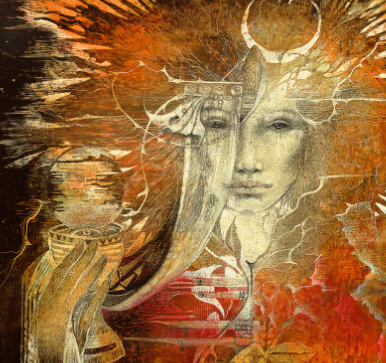
(a) Easters, a celebration of the Queen of heaven: Ishtar, the Assyrian and Babylonian goddess of fertility and sex. Her symbols (like the egg and bunny) were and still are fertility and sex symbols; and to those who actually think eggs and bunnies have something to do with the resurrection; Jeremiah 7:18 the women knead their dough to make cakes to the Queen of heaven; in Egypt, Jeremiah 44:17-19, 25, this is Ishtar: pronounced ‘Easter.’
Easters, a celebration of the Queen of heaven, Ishtar
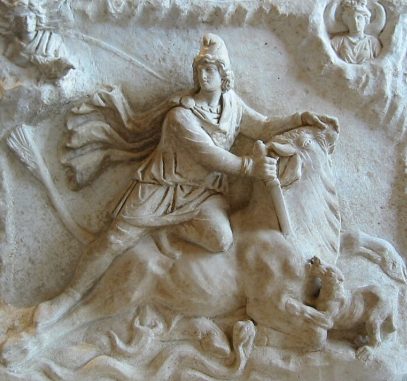
(b) Christmas; Ezekiel 8:16 five and twenty men with their backs toward the temple; their faces toward the east; and they worshiped the sun toward the east; Christmas, which honor Mithraism, birthday on December 25th – a form of nature worship based on the Sun-Goddess Mithra who on the darkest night of the year (December 20/21), gives birth to “Light” causing each day thereafter to grow longer until the Summer solstice.
Christmas, which honor Mithraism, birthday on December 25th
— the Targum reaffirms the Masoretic Text: “I have rejected your festivals, and I will not accept the offerings of your gatherings;” and the Septuagint: “I hate, I reject your feasts, and I will not smell your meat-offerings in your general assemblies.”
22 Though ye offer Me burnt offerings and your meat offerings, I will not accept them; neither will I regard the peace offerings of your fat beasts.
— though ye offer burnt offerings and meat-offerings, or as you appear church services, as they continued to do in their effort to have the Lord accept their outward worship, he will not accept them; they are rejected since their entire services are idolatory and hypocrisy;
— the Targum reaffirms the Masoretic Text: “Even if you present burnt offerings and sacrifices, they will not be pleasing, and your holy gifts will not be accepted;” and the Septuagint: “Wherefore if ye should bring me your whole-burnt-sacrifices and meat-offerings, I will not accept them: neither will I have respect to your grand peace-offerings.”
23 Take thou away from Me the noise of thy songs, for I will not hear the melody of thy viols. — take thou away from me the noise of thy songs as he contemptuously calls their congregational singing; for God will not hear the melody of thy viols (family of string instruments) of the harps and other instrumental music;
— the Targum reaffirms the Masoretic Text: “Take away from before Me the tumult of your songs; the music of your lyres I will not listen to;” and the Septuagint: “Remove from me the sound of thy songs, and I will not hear the music of thine instruments.”
24 But let judgement run down like waters, and righteousness as a mighty stream. — but let just justice and punishment of the Lord run down like a powerful falls;
— in a great and consuming flood and righteousness as a mighty stream, like a mighty torrential rain pouring down, overwhelm and destroy all before it, righteousness should surge like a flood, overwhelming injustice; even against any transgressors in Israel.
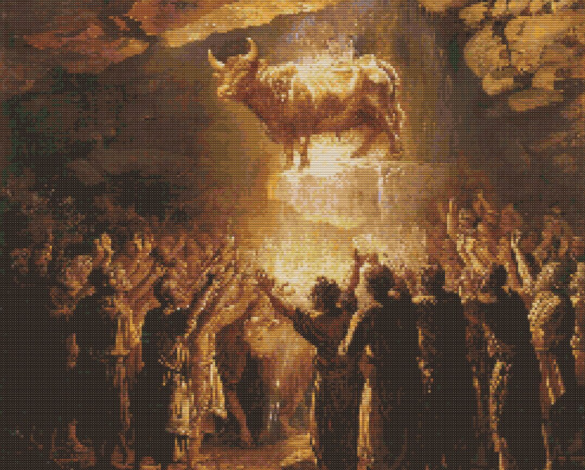
25 “Have ye offered unto Me sacrifices and offerings in the wilderness forty years, O house of Israel? — have ye offered unto me sacrifices and offerings; no; they were not offered to God, but to the golden calf and to other host of heaven; and to the devils, as their fathers did;
— in the wilderness forty years; where Passover and sacrifices were omitted during that time, it being about thirty eight years; and these their children were imitators of them and offered sacrifice to idols too, and therefore deserved punishment as they: even ye,
— O house of Israel? the ten tribes who are here particularly charged and warned; particularly when Jeroboam their king repeated the calves worshipping at Dan and Bethel.
26 But ye have borne the tabernacle of your Moloch and Chiun your images, the star of your god which ye made for yourselves. — but ye have borne the tabernacle of your Moloch, the war-god of the Moabites and Ammonites;
— and Chiun, which in the Arabic and Persian languages is the name of Saturn, a star-divinity; your images, the star of your god, which ye made to yourselves. Even in the wilderness the children of Israel did not quite discard their idolatry but carried their idol-pictures along with them and thus provoked the Lord.
27 Therefore will I cause you to go into captivity beyond Damascus,” saith the Lord, whose name is The God of Hosts. — therefore the God of Hosts will send you into captivity; far beyond Damascus; the chief city of Syria; and which lay to the north of the land of Israel, and was a very strong and fortified place;
— as Syria being in alliance with Israel, the Israelites might think of fleeing there for refuge in the time of their distress; but they are told here that they should be taken captive and be carried to places far more remote than that.
Ezekiel 12:16 But I will leave a few men of them from the sword, from the famine and from the pestilence, that they may declare all their abominations among the nations whither they come; and they shall know that I am the Lord.” — “that they may declare all their abominations among the nations;” this explains why a few from “the remnants of Joseph” (Amos 5:15) are left to survive;
— if they have hidden in some secret hideouts, they won’t be able to “declare all their abominations among the nations” whither they come; who, observing their calamities, and distresses, could deserve and a need to know, and hear those who are well-versed to explain their sins, abominations and judgement to the nations;
— those remnants who survive would explain to the nations that they have been guilty of great enormities, so that their punishment was a visible and standing declaration and warning to the nations of the abominable sins they, of the house of Israel, had been guilty of; and not to repeat them in their own nations.
Amos 6
1 Woe to them that are at ease in Zion, and trust in the mountain of Samaria, who are named chief of the nations, to whom the house of Israel came! — woe to them that dwell comfortably in the Churches of God, given to a false security and trust in the doctrines of the Samaritans, where the Pascha was killed on the fourteenth night and the wave sheaf on Sundays;
— or, the chief of the nations refer to the United States, the United Kingdom and France; those who are apparently the upper classes in Samaria, where they consider themselves safe, rich and respected who are the chief of the nations;
— the Targum says, “that trust in the fortress of Samaria;” that is, in modern term, the United States, the UK and France, with all have wealth, power and nuclear weapons; described as the ‘notable men, which, in modern language, are looked to as authorities and leaders, whether in political, commercial or social life.
‘Ye mountains of Israel, hear the word of the Lord God. Thus saith the Lord God to the mountains and to the hills, to the rivers and to the valleys: Behold I, even I, will bring a sword upon you, and I will destroy your high places; — this message to the “mountains of Israel” these refer to the United States, the UK and France;
“and to the hills, to the rivers and to the valleys;” the hills: Ireland, Switzerland and the Scandinavian countries: Denmark, Norway, and Sweden, Finland, and Iceland; and the valleys, the low countries: Belgium, the Netherlands, and Luxembourg.
2 Pass ye unto Calneh, and see; and from thence go ye to Hamath the great; then go down to Gath of the Philistines. Are they better than these kingdoms? Or their border greater than your border?
— pass ye unto Calneh, a city in Babylonia, on the east bank of river Tigris, and see, and from thence go ye to Hamath, the great, a district and city of Syria; so that they would visit some of the most powerful of the neighboring nations;
— are these two or three kingdoms mentioned above in better condition in dignity or grandeur, in wealth or strength than Judah and Israel, or their border greater than your border? Israel thus ranking at that time among the first of the nations, unexcelled by any of their neighbors.
3 Ye that put far away the evil day, and cause the seat of violence to come near, — ye that deny any wrong doing, pushing away the day of judgement, one of the evil days;
— that is, refusing to believe that a day of reckoning is near and cause the seat of violence to come near, so that violence and oppression come ever nearer to them; ignoring the Lord and his judgement was apparent particularly in their luxurious feasting.
4 that lie upon beds of ivory and stretch themselves upon their couches, and eat the lambs out of the flock and the calves out of the midst of the stall; — the elites that lie upon beds of luxurious ivory, on costly couches, inlaid with ivory;
— and stretch themselves upon their couches, reclining in self-indulgence on the sofas of their dining-rooms; and eat the lambs out of the flock and the calves out of the midst of the stall, in either case the choicest animals;
— or else these this luxury imagery of gluttonous judges and rulers eat the best lambs, not of their own, but out of poor oppressed men’s flocks.
5 that chant to the sound of the viol, and invent for themselves instruments of music, like David; — that chant to the sound of the viol in quavering and silly songs and invent to themselves instruments of music for the gratification of their own vanity and sensuality, instead of for the glory of God as David did;
— by invoking David, the text highlights a distortion—what was once holy (music for worship) has become profane (secular and self-serving, that is, music for indulgence).
6 that drink wine in bowls, and anoint themselves with the chief ointments— but they are not grieved for the affliction of Joseph. — that drink wine in bowls; Joseph, members of the Five Eyes drink wine not in small cups or glasses but in large bowls and that they might drink freely, even to drunkenness;
— hence we read of the drunkards of Ephraim or the drunkeness of the Anglosphere, Isaiah 28:1; and they “drink in bowls of wine”; which is much to the same sense. The Targum says, “that drink wine in silver phials;” – a phial is a small cylindrical glass bottle;
— and anoint themselves with the chief ointments, using only the finest grades for their purpose; but they are not grieved for the affliction of Joseph, literally, “the breach of Joseph,” that is, the impending calamity, the looming destruction of the house of the Anglosphere; they indulge in wanton luxury even while their country is hastening to its national debts, inflations, civil unrests and declines.
7 Therefore now shall they go captive with the first that go captive, and the banquet of them that stretched themselves shall be removed.
— therefore now shall they, those who indulged themselves in drinking while their country was getting ready for dissolution, go into captivity with the first that go captive, this being said in bitter irony concerning the position of the rulers in the procession of captives,
— and the banquet of them that stretched themselves upon couches, reclining in careless ease shall be removed so that they could no more indulge in feasts and drinking-bouts;
“Therefore now they shall go into exile at the head of the exiles, and the revelry of those who stretch themselves shall pass away.”
8 The Lord God hath sworn by Himself; saith the Lord the God of hosts: “I abhor the pretensions of Jacob, and hate his palaces; therefore will I deliver up the city with all that is therein.” — the Lord God couldn’t hath sworn anything higher, but by himself, a most solemn oath;
— I abhor the excellency of Jacob, or “the pride of Jacob” of the ten tribes, remarkable for their pride; the prosperous West, or “the pride of Jacob” where church attendance is dwindling, with “mountains of cheese and lakes of wine” hence called the crown of pride, the pride which they exhibited regarding their prosperity and power;
— today, instead of “the pretensions of Jacob,” we have pretending Christians; and they make up much of what passes for Christianity today.
9 And it shall come to pass, if there remain ten men in one house, that they shall die. — and it shall come to pass, if there remain ten men in one house, suggesting that even a group of ten (a symbolic number of completeness or community) will not escape;
— that they shall all die, that is, no matter how large the number who are not already carried captive or destroyed by the sword; not one would escape but would die.
10 And a man’s kinsman shall take him up, and he that burneth him, to bring the bones out of the house, and shall say unto him that is by the side of the house, “Is there yet any with thee?” And he shall say, “No.” Then shall he say, “Hold thy tongue, for we may not make mention of the name of the Lord.”
— and a man’s uncle shall take him up and he that burneth him, literally, “his cousin and his burier,” that is, a near relative who had the duty of providing for his burial to bring out the bones out of the house and shall say unto him that is by the sides of the house, a last survivor hiding in the innermost recesses of the house;
— is there yet any with thee? And he shall say, No. Then shall he say, Hold thy tongue, quickly cautioning him not to say any more; for we may not make mention of the name of the Lord, he should not utter Yehovah’s name, lest by doing so he call the Lord’s attention and bring down judgement upon them.
11 For behold, the Lord commandeth, and He will smite the great house with breaches, and the little house with clefts. — for, behold, the Lord will smite the great house with breaches so that it would become a total ruin;
— also strongly supports the probability that the “ten men left in one house” in those verses (Amos 5:3, 6:9) has reference to one of those great palatial establishments for which “Samaria” was famous for, each having an occupancy of a hundred or so, including domestics, servants and retainers;
— and the little house with clefts; so that it shall fall to ruin; that is, he shall smite the houses both of great and small of the princes and of the common people either with an earthquake so that they shall part asunder and fall or being left without inhabitants shall of course become desolate, there being none to repair their breaches;
— the judgement for the “great house” the ten tribes of Israel, is the greater, for 190 years; and judgement for the “little house” the two tribes of Judah and Benjamin, is for 40 years; to which the Targum seems to incline, “he will smite the great kingdom with a mighty stroke and the little kingdom with a weak stroke,”
12 Shall horses run upon the rock? Will one plow there with oxen? For ye have turned judgement into gall, and the fruit of righteousness into hemlock, — shall horses run upon the rock? Will one plow there with oxen? as little as either feat is possible, so little it is possible that one by perverting right and justice into the opposite can bring deliverance to himself and his country;
— there is a spiritual and moral order in the house of Joseph that is just as impossible to ignore as the natural order; it is as senseless to pervert justice as it is to expect horses to run on the rocks or for oxen to plow on rock;
— for ye have turned judgement into gall, justice into poison; into a hemlock, which is a dangerous plant containing toxic alkaloids that can be fatal even in small amounts; injustice and oppression rule the day.
13 ye that rejoice in a thing of nought, who say, “Have we not taken to us horns by our own strength?” — ye which rejoice in trusting in our wealth and riches or our own ingenuity or power which are things that are not permanent, except in our own imagination because of our own folly;
— which say, Have we not taken to us horns by our own strength? trusting in the strength of our armies and weapons by which we hoped to overcome all enemies. Horns are well-known symbol of strength which repels and tosses away what opposes it.
14 “But, behold, I will raise up against you a nation, O house of Israel,” saith the Lord the God of hosts; “and they shall afflict you from the entrance of Hemath unto the river of the wilderness.” — “I will raise up against you a nation” is it Russia? or is it China?
— it should always be remembered in studying this prophecy that it was exactly and terribly fulfilled just as God had promised. Both the Sacred Scriptures and the testimony of the archeologist testify to the overwhelming destruction of Israel within some thirty years after Amos wrote this prophecy; but that was just a preamble;
“The kingdom of Israel was destroyed in the year 722 by Sargon in the first month of his reign when Samaria was taken after a siege which was begun by his predecessor, Shalmanezer IV, and had lasted three years.”
— the enemy is not random; God Himself “raises up” the nation, making the oppression an instrument of divine justice; and they shall afflict you; by battles, sieges, forages, plunders and burning of cities and towns and putting the inhabitants to the sword.
Again, the Question remains: is it Russia? or is it China? Or even someone else?
God’s name is the four-letter Hebrew word יהוה YHVH Yehovah, which are embedded in the Masoretic text over 6000 times, yet when translated into our English language most had been translated as Lord, or LORD, which are titles, but not his name. His name is יהוה Yehovah, or YEHOVAH (but there are no capital letters in Hebrew).
It wasn’t until 1524 that Gian Giorgio Trissino, an Italian Renaissance grammarian, invented the letter ‘J’ that this new letter started to take a hold in the writings of western Europe, including our English language. Even in 1611 when the first edition English Bible, the King James was published, the prophet Jeremiah was known as Ieremiah. Similarly, the name Jehovah is a very late comer.
But the Orthodox Jews have gone overboard, so holy is his name, they believe, thus they refrain from even calling his name, referring to him as Hashem, that is, “The Name,” which isn’t his name; just pointing, saying somewhat ‘you know what name I mean.’ His name is Yehovah, and is also not Yahweh, which is the Samaritan counterfeit version.
It is the same as the name Jesus we used today; if his name was used in his time two thousand years ago, he would have been known as Yeshua instead of Jesus. But never mind, as had often been the case, the essence is more important than the form.
His name Yehovah is specifically stated and should be used. The following verses translated as the LORD erred in translation. Titles are okay, but sometimes He asked us pointedly to call on His name:
I am the LORD; that is My name. And My glory will I not give to another, neither My praise to graven images. Isaiah 42:8
And it shall come to pass, that whosoever shall call on the name of the LORD shall be delivered; for in Mount Zion and in Jerusalem shall be deliverance, as the LORD hath said, and in the remnant whom the LORD shall call. Joel 2:32
“I am sought of them that asked not for Me; I am found of them that sought Me not. I said, ‘Behold Me, behold Me,’ unto a nation that was not called by My name. Isaiah 65:1
When we call our God, the LORD, we err, because his name is not the LORD, which is a title. His name is YEHOVAH! May We all ask for his forgiveness, and may Our merciful God forgive us all.
~ Come to my parlour ~ the spider says to the butterfly: “Hear, ye deaf; and look, ye blind, that ye may see.”
"Who is blind, but My servant? Or deaf, as My messenger that I sent? Who is blind as he that is perfect, and blind as the Lord’s servant?” Isaiah 42:18-19
"Where two sit together to study the Torah, the Shekinah rests between them."
“Cry aloud, spare not; lift up thy voice like a trumpet! And show My people their transgression and the house of Jacob their sins" Isaiah 58:1
“Son of man, I have made thee a watchman unto the house of Israel; therefore hear the word out of My mouth, and give them warning from Me.
18 When I say unto the wicked, ‘Thou shalt surely die,’ and thou givest him not warning, nor speakest to warn the wicked from his wicked way to save his life, the same wicked man shall die in his iniquity; but his blood will I require at thine hand.
19 Yet if thou warn the wicked, and he turn not from his wickedness nor from his wicked way, he shall die in his iniquity; but thou hast delivered thy soul" Ezekiel 3:17-19
Now, consider this PROPHECY:
“And upon thy sword shalt thou depend, entering at every place: yet thou shalt be supple and credulous, and be in subjection to thy brother [Jacob]; but it will be that when his sons [the children of Israel] become evil, and fall from keeping the commandments of the law, thou shalt break his yoke of servitude from off thy neck…. and then will I kill Jakob my brother,” Genesis 27:41-42 the Targum of Jonathan
“Speak thou also unto the children of Israel, saying, ‘Verily My Sabbaths ye shall keep; for it is a sign between Me and you throughout your generations, that ye may know that I am the Lord who doth sanctify you'" Exodus 31:13
ISRAEL, today as in the past, has many BLIND shepherd, for it was prophesied:
“His watchmen are BLIND; they are all ignorant; they are all DUMB dogs, they cannot bark, sleeping, lying down, loving to slumber” Isaiah 56:10
The mission here is to provide research ARTICLES that are ENLIGHTENING and EASY TO UNDERSTAND using SCRIPTURES to help improve our knowledge and make our life better.
“I have seen a horrible thing in the house of ISRAEL; there is the whoredom of EPHRAIM, Israel is defiled” Hosea 6:10
“Shall a TRUMPET be blown in the city, and the people not be afraid? Shall there be evil in a city, and the LORD hath not done it?” Amos 3:6
“Hear, ye DEAF; and look, ye BLIND, that ye may see” Isaiah 42:18
Hence the RESEARCH produced here are to help us UNDERSTAND and hopefully WE all could learn together.
There's nothing special about me, except perhaps, since I was younger, I had an inner struggle between my heart and my head, hence this blog.
I produce articles that I would understand and hopefully you could too.
Please SUBSCRIBE for more will come.
You may contact me on: eqlunn@gmail.com




 Joel
Joel A Prophecy of Esau and Jacob