
The Feast of Tabernacles
The Feast of Tabernacles is one of the three major pilgrimage festivals commanded in the Bible, occurring on the 15th day of the Hebrew month of Tishrei, usually in September or October, lasting seven days with an additional sacred assembly on the first and eighth day.
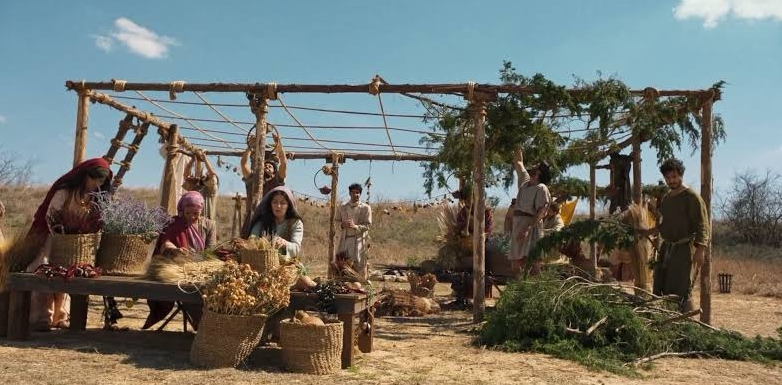
Continuing with Leviticus 23
33 And the Lord spoke unto Moses, saying, — that is, this is a Command of God convey to all the Israelites through Moses.
34 “Speak unto the children of Israel, saying, ‘The fifteenth day of this seventh month shall be the Feast of Tabernacles for seven days unto the Lord.
— in the Feast of Tabernacles there was a remembrance of their dwelling in tents, or booths, in the wilderness, as in a life’s journey;
— for seven days; like the Passover, the Feast of Tabernacles commenced at the full moon, on the fifteenth day of the month, and lasted for seven days.
35 On the first day shall be a holy convocation; ye shall do no servile work therein.
— on the first day shall be an holy convocation; in connection with the other holy days; rejoicing the festival with food and drinks;
— when they should be called together to holy assembly, to prayer, in songs, and reading of the law.
36 Seven days ye shall offer an offering made by fire unto the Lord. On the eighth day shall be a holy convocation unto you, and ye shall offer an offering made by fire unto the Lord. It is a solemn assembly, and ye shall do no servile work therein.
— the Feast of Tabernacles is a seven day festival, and on the eighth day, which in Hebrew is called Shemini Atzeret, is also an holy convocation as on the first day; both are a solemn assembly when they were gathered together before the Lord.
37 “‘These are the feasts of the Lord which ye shall proclaim to be holy convocations, to offer an offering made by fire unto the Lord, a burnt offering and a meat offering, a sacrifice and drink offerings, every thing upon his day”
38 besides the Sabbaths of the Lord, and besides your gifts, and besides all your vows, and besides all your freewill offerings which ye give unto the Lord.
— beside the Sabbaths, that is, the Sabbath sacrifices (Numbers 28:9-10), and the gifts and offerings, which formed a different part of the keeping of the feasts and Sabbaths, but might be offered on those days.
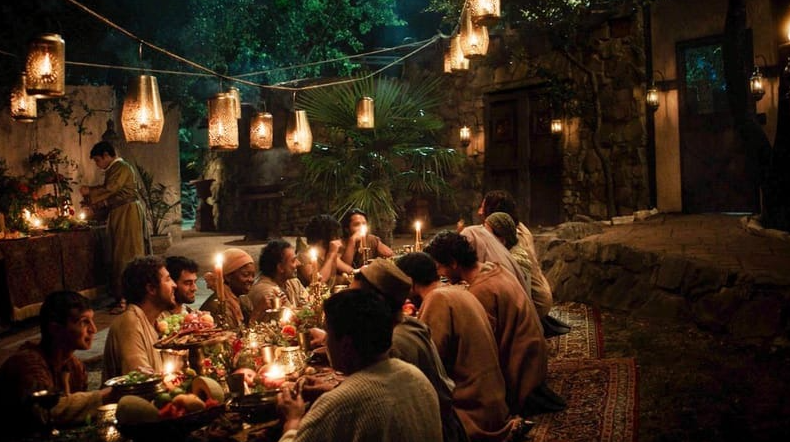
39 “‘Also on the fifteenth day of the seventh month, when ye have gathered in the fruit of the land, ye shall keep a feast unto the Lord seven days; on the first day shall be a sabbath, and on the eighth day shall be a sabbath.
— on the first day and on the eight day shall be a Sabbath; both on the first and last days of this festival period, there is to be abstention from any servile work;
— although this Feast of Tabernacles and the Last Great Day or Shemini Atzeret, which is on the eightth day, is expressed as a composite, it is actually two distincet feasts; the opposite of the Passover and Unleavened Bread festival;
— that is, the Last Great Day or Shemini Atzeret is mentioned only in verses 36 and 39, and although it is intertwined with the description of the Feast of Tabernacles, it is actually a separate and distinct feast; the opposite to the Passover and Unleavened Bread analogy;
40 And ye shall take for yourselves on the first day the boughs of goodly trees, branches of palm trees, and the boughs of thick trees, and willows of the brook; and ye shall rejoice before the Lord your God seven days.
— the palm, the myrtle, and the willow, when tied together into one bundle right from the first day, constitute the Lulab. These are taken off at the end of the seven days.
41 And ye shall keep it a feast unto the Lord seven days in the year. It shall be a statute for ever in your generations; ye shall celebrate it in the seventh month.
— seven days in the year; these seven days Tabernacle is the feast of Tabernacles proper, whilst the eight days in Leviticus 23:39 include the concluding festival of the Last Great Day or Shemini Atzeret.
42 Ye shall dwell in booths seven days; all that are Israelites born shall dwell in booths,
— they need only to dwell in booths for only seven days, but that last day which was the eighth, the ceremony of drawing water from the pool, on Shemini Atzeretl; it seems to have been the introduction of a later period (John 7:37);
43 that your generations may know that I made the children of Israel to dwell in booths when I brought them out of the land of Egypt: I am the Lord your God.’”
— that your generations may know; when their posterity are securely occupying the land of Canaan, the temporary dwelling in booths once a year in reminding them of the God’s delivering them from the land of bondage, and sheltering them in booths in the wilderness.
44 And Moses declared unto the children of Israel the feasts of the Lord.
— these are the feasts of the Lord; that is, the above-named seven festivals of Leviticus 23. Note, firstly, the weekly Sabbath is included right on and from verse 2, where all are described as “my feasts.” Second, these feasts include the fast day of Yom Kippur, as on such a feast, spiritual food should be consumed instead of physical food and be included together with the rejoicing and celebration, thus setting carnal thoughts and reasoning aside;
— hence all the feasts from God’s point of view, are:
(1) the weekly Sabbath (Leviticus 23:2-3); (2) a composite Feast of the Passover and Days of Unleavened Bread (Leviticus 23:4-14); (3) Pentecost (Leviticus 23:15-22); (4) Trumpet (Leviticus 23:23-25); (5) Day of Atonement (Leviticus 23:26-32); (6) Tabernacles (Leviticus 23:33-36a); and (7) the Last Great Day or Shemini Atzeret (Leviticus 23:36,39). Thus the list of these weekly and annual festivals conclude with the formula by which they were introduced in Leviticus 23 as “my feasts.”
~~~


