
What are the percentages of each currency in global trade?
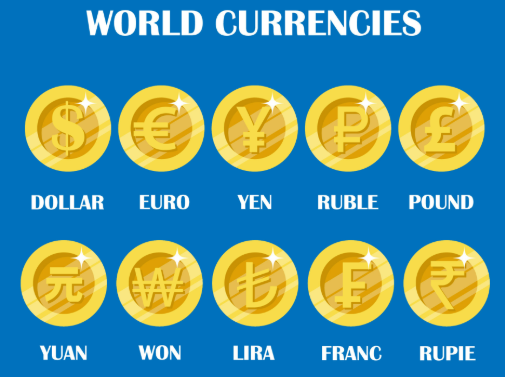
According to the latest data from the Bank for International Settlements (BIS) Triennial Survey and SWIFT data trackers, the US dollar maintains a massive, asymmetric dominance over both fields.
1. Global Foreign Exchange (FX) Market Share
The FX market handles an astonishing $9.6 trillion per day. In this metric, the percentages sum up to 200% because every single foreign exchange transaction requires two currencies (e.g., swapping USD for EUR).
2. Actual Global Trade Settlement (SWIFT Invoicing)
If you strip away speculative trading, investment flows, and central bank reserve management, the picture changes slightly when looking strictly at commercial trade invoicing—paying for cross-border goods like machinery, electronics, and food.
According to the SWIFT Global Currency Tracker, the breakdown of actual cross-border settlement values is roughly:
- US Dollar (USD): ~47% to 54% The ultimate “vehicle currency.” Even if a Brazilian merchant sells coffee to a South Korean roaster, they will usually price and settle the invoice in US dollars because it has the deepest liquidity and lowest conversion fees. Furthermore, global commodities like crude oil and gold are priced exclusively in USD.
- Euro (EUR): ~22% to 24% The Euro strongly dominates intra-European trade. Because Europe trades intensely within its own border-free economic bloc, the Euro easily locks down the number two spot.
- Chinese Renminbi (CNY / Yuan): ~4.5% to 5.2% The Chinese Yuan has seen the fastest structural growth of any currency over the last several years. Driven by Beijing’s alternative cross-border infrastructure (CIPS) and expanding trade networks in Asia, the Middle East, and commodity markets, its share of global trade settlements has steadily climbed, though strict domestic capital controls prevent it from overtaking the Euro or Dollar.
- British Pound (GBP): ~3.5% to 4.2% Remains incredibly relevant due to London’s status as a premier global clearing hub for legal, financial, and insurance contracts.
- Japanese Yen (JPY): ~1.5% to 2.2% Mainly utilized for trade directly touching Japanese manufacturing exports or heavy regional Asian corporate supply chains.
- All Other Currencies combined: ~15% This encompasses the Canadian Dollar, Australian Dollar, Swiss Franc, and dozens of emerging market currencies (like the Indian Rupee or Mexican Peso) that are heavily utilized within their own localized borders but rarely used as a generic intermediary tool by third-party countries.
What portion of global trade takes place outside the SWIFT system?
The overwhelming majority of global trade still relies on the SWIFT (Society for Worldwide Interbank Financial Telecommunication) network. However, geopolitical friction and the weaponization of Western financial sanctions have accelerated the growth of parallel networks.
Roughly 10% to 15% of global trade value now takes place partially or entirely outside the primary SWIFT framework.
This non-SWIFT architecture is not a unified system, but a fragmented landscape composed of isolated nations, emerging digital ledgers, and regional sovereign networks.
1. The True Scale of Non-SWIFT Infrastructure
The push to bypass SWIFT is led predominantly by China and Russia, alongside nations seeking to insulate themselves from US dollar-denominated sanctions.
- China’s CIPS (Cross-Border Interbank Payment System): CIPS is the most successful alternative, handling over $24 trillion in transaction volume annually. While impressive, its overall share of global trade settlements sits at roughly 4.5% to 5.2%. Furthermore, CIPS is not completely independent; it still relies on SWIFT’s messaging rails for over 80% of its international communications.
- Russia’s SPFS (System for Transfer of Financial Messages): Developed after Russia was disconnected from SWIFT, SPFS handles nearly all of Russia’s domestic financial traffic and connects to about 24 allied nations.
- The Russia-China Corridor: This is the most glaring example of a completely closed, non-SWIFT loop. Up to 90% of bilateral trade between China and Russia is settled directly in Yuan and Rubles via SPFS and CIPS, bypassing Western banking entirely.
2. The Rise of “De-Dollarized” Trade Contracts
A significant portion of trade bypasses SWIFT because the underlying currency is no longer the US dollar. When countries trade using local currencies, they often use direct, bilateral central bank mechanisms instead of the traditional global clearinghouses:
- India and Russia: Settling oil shipments in Indian Rupees or UAE Dirhams.
- China and Saudi Arabia: Initiating crude oil trades settled in Chinese Yuan.
- Sanctioned Trade Blocks: It is estimated that 60% to 70% of Russia’s total foreign trade agreements now operate in alternative financial structures explicitly insulated from Western influence.
3. Emerging Alternatives: CBDCs and Stablecoins
The newest leak in the SWIFT ecosystem comes from digital financial engineering. Rather than just changing the message system, these networks change the railroad itself.
Project mBridge
A highly watched initiative run by the Bank for International Settlements alongside the central banks of China, Thailand, the UAE, Saudi Arabia, and Hong Kong. It utilizes a multi-central bank digital currency (CBDC) platform.
- How it bypasses SWIFT: Instead of routing a payment through correspondent banks in New York or London over several days, mBridge allows a bank in the UAE to trade directly with a bank in China using digital tokens. The transaction completes in seconds without interacting with SWIFT or the US banking system.
Commodity Stablecoins
A small but growing fraction of international trade—particularly in sanctioned or gray-market commodities like Venezuelan oil or Iranian infrastructure components—is settled using private stablecoins like Tether (USDT). These transactions bypass the banking sector entirely, moving directly from one digital wallet to another across public blockchains.
The Structural Reality
While the alternative ecosystem is growing rapidly, SWIFT remains an entrenched utility, connecting more than 11,500 financial institutions across 200+ countries.
The 10% to 15% of trade occurring outside of it represents a “firewall” being built by the BRICS bloc and sanctioned states. They are not yet trying to destroy SWIFT; they are ensuring that if they are cut off from the global grid, their domestic economies can continue to breathe.
How much of global trade is currently being paid through CIPS?
To figure out exactly how much global trade is being paid through China’s CIPS (Cross-Border Interbank Payment System), we have to look closely at a common point of confusion: the difference between a country’s domestic currency usage and its global market share.
CIPS has experienced massive, record-breaking growth recently, but its overall share of total global trade remains a single-digit percentage.
Here is exactly how the numbers break down:
1. The Global Percentage Share: ~4% to 5.5%
When measuring all global trade invoices and cross-border commercial settlements, CIPS processes roughly 4% to 5.5% of the global total value.
While this sounds small, it represents a monumental structural shift. A few years ago, the Renminbi (Yuan) accounted for less than 2% of global trade settlements. Driven heavily by the de-dollarization efforts of the BRICS bloc, expanding bilateral trade agreements, and energy commodities being priced in Yuan (the “Petroyuan”), it has securely locked itself into the number three spot globally, trailing only the US Dollar and the Euro.
2. The Raw Volume: ~$26.4 Trillion Annually
Instead of looking at percentages, looking at the absolute volume reveals CIPS’s massive scale.
- In 2024, CIPS processed roughly 175.5 trillion yuan (~$24.4 trillion).
- In 2025, that volume expanded to 180.2 trillion yuan (roughly $26.4 trillion USD).
- The Recent Surge: In early 2026, geopolitical friction in the Middle East and renewed tariff/sanction threats pushed CIPS to all-time highs. In March 2026, the system shattered its single-day record, processing 1.22 trillion yuan ($178.5 billion) in a single 24-hour window.
3. The China Centric Reality: >54% of Internal Trade
Where CIPS is truly dominant is within China’s own border walls. For the first time, more than 54% of China’s own cross-border transactions are settled in Yuan through CIPS rather than in US dollars.
If a country is trading directly with China—whether it is Brazil selling soybeans, Russia selling oil, or African nations exporting minerals—there is a greater than 50% chance that payment is routing natively through CIPS.
The CIPS vs. SWIFT Reality Check
Despite internet narratives about the immediate “death of the dollar,” CIPS is not currently structured to completely destroy SWIFT. There are two primary technical reasons why:
- The Footprint Disparity: SWIFT connects over 11,500 financial institutions across 200+ countries. By comparison, CIPS has roughly 193 direct participants (mostly major global clearing banks) and 1,573 indirect participants.
- The “Invisible” Interdependence: CIPS is primarily a clearing and settlement engine (it physically moves the money), whereas SWIFT is a messaging network (it securely sends the instructions). Because CIPS does not have a completely pervasive global communication network yet, CIPS actually relies on SWIFT messaging infrastructure to execute roughly 80% of its transactions.
Right now, rather than a total replacement, CIPS functions as a highly successful “parallel rail.” It handles the vast majority of Russia-China bilateral trade, an increasing chunk of global energy deals, and serves as an ironclad financial insurance policy for nations looking to insulate themselves from Western financial sanctions.


