
Iran imposes rules in Strait of Hormuz
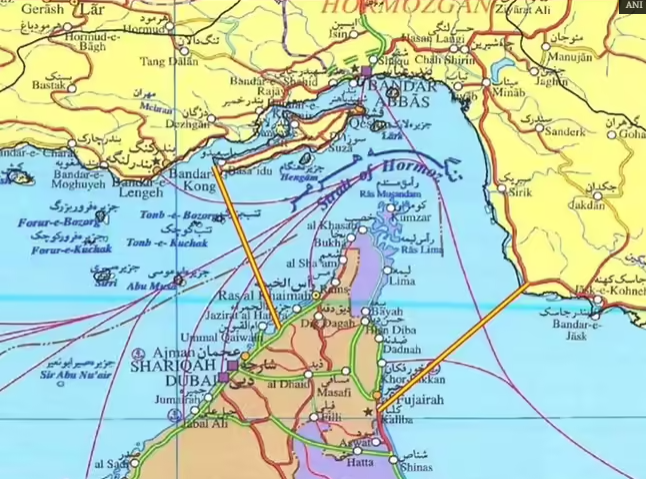
Iran to impose strict passage rules in Strait of Hormuz with a new map
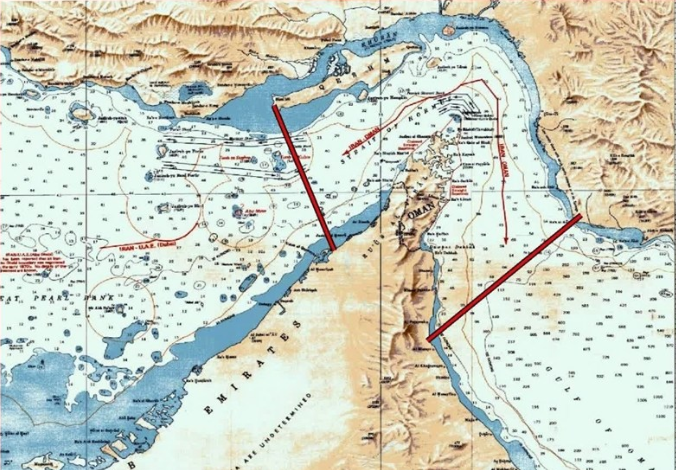
- The newly defined area stretches westward from the westernmost tip of Iran’s Qeshm Island to the United Arab Emirates’ Umm al Quwain emirate.
- In the east, it extends from Iran’s Mount Mobarak to the UAE’s Emirate of Fujairah, a critical pathway for global oil shipments.
CNN • May 12, 2026 ~ Gulf News
Iran is moving to formalise control over the Strait of Hormuz with new legislation requiring all vessels to obtain permission, imposing tolls, and banning ships from adversary states.
The law, part of the ‘Strait of Hormuz Security Plan,’ comes amid a US-led naval blockade and heightened tensions following the US-Israel-Iran war. The move threatens to further disrupt global oil and gas flows through the strategic waterway.
Iran formalises control over key oil route through parliament
Iranian lawmakers are advancing the ‘Strait of Hormuz Security Plan,’ a law mandating prior authorisation for all vessels, banning Israeli ships outright, and demanding war reparations from ‘enemy states.’
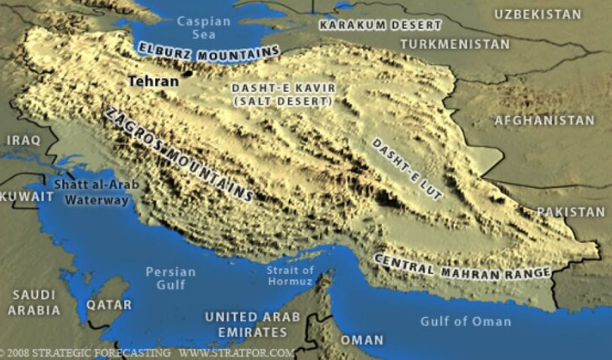
Fees will be collected in multiple currencies, with future payments in Iranian rials via digital systems. Officials say the measure, once passed, will be binding and enforced by both the IRGC and the national army across nearly 2,000 km of coastline.
“At present, Iran’s Islamic Revolution Guard Corps in the west and the country’s army in the east are controlling the strait with power, and no ship, friend or foe, will have the right to pass without the permission and authorization of our forces.”
Before the US and Israeli campaign against Iran began at the end of February, the strait was free for any vessel of any origin to navigate. But since the conflict began, Iran has threatened to strike any ship passing through Hormuz without permission from the Islamic Revolutionary Guard Corps (IRGC) navy.
A number of vessels have come under attack, but the vast majority of ship owners and operators have opted not to take the risk of sending their vessels through in defiance of Iran.
The move to set up an authority for the strait underscores Iran’s determination to cement control over what it sees as a spoil of war, despite repeated US and regional warnings.
Dominance of the waterway, through which one-fifth of the world’s oil and liquefied natural gas flows, would hand the Islamic Republic immense leverage over its neighbors and the global economy.
“Payments to the government of Iran or the Islamic Revolutionary Guard Corps (IRGC), directly or indirectly, for safe passage through the Strait of Hormuz would not be authorized for US persons, including US financial institutions, or for US-owned or -controlled foreign entities,” it said.
Iran has previously said it would deny passage through the waterway to vessels linked to the US or Israel, while other vessels may only transit with Iranian consent. India and Pakistan are among governments that have negotiated with Iran to secure passage of their flagged vessels.
“There is growing evidence that Iran may seek to retain strategic control of the strait for as long as possible. At the same time, the US may tolerate this outcome,” according to Matt Wright at Kpler, a marine intelligence firm.
US officials have repeatedly said they wouldn’t accept Iranian control of the chokepoint.
Wright estimates that should Tehran be able to control the waterway, transits would not exceed half of the pre-war average, with profound consequences for the global oil and gas markets.
“Under a long-term Iranian control scenario, transits could rise to 40-50% of export capacity, but normalization is not achievable,” Wright added.
And lastly, who is Iran in biblical prophercies? Iran is a new name for ancient Persia. It was an empire ruling over a vast region 2700 years ago; but who are the lost house of Israel? For a detailed insight of the Lost Ten Tribes, we can dig deep into Ephraim and Manasseh:
Who are the posterity of biblical Jacob? And on the identities of Ephraim and Manasseh, see (1) The Irony of a Birthright (2) Ephraim preferred over Manasseh (3) Ephraim as the Thirteenth Tribe (4) Who is this lying Ephraim? (5) The Ox with horns of a Unicorn


