
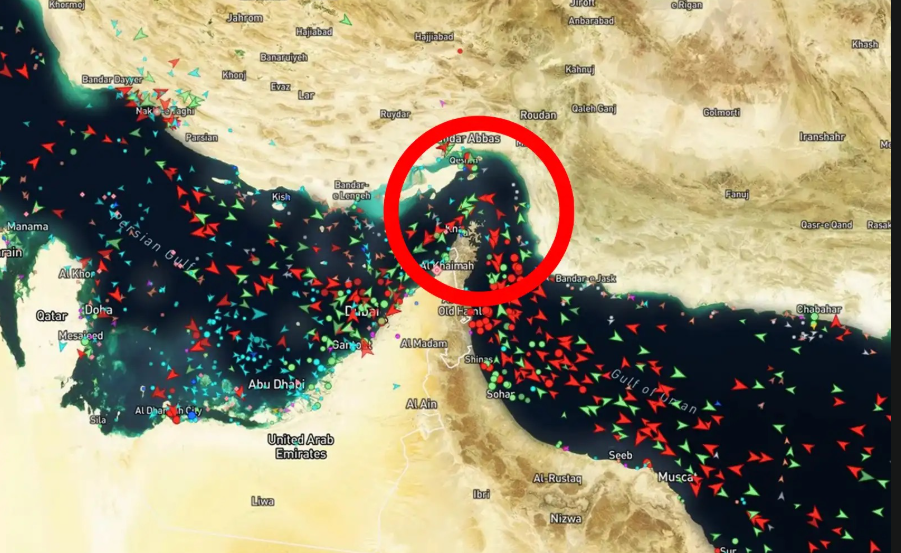
Iran has choked off the Strait of Hormuz
Briefly, as President Trump claimed Iran has being “totally obliterated” and demands unconditional surrounder, Iran counters with closing the Strait of Hormuz and would only agree to a ceasefire if three major conditions are met:
(1) That the United States withdraw all military forces, weapons and personnel from Saudi Arabia, Iraq, Kuwait, UAE, Qatar, Bahrain, Jordan, Oman and Syria within 30 days;
(2) That all trade; oil and financial sanctions against Iran must all be lifted since 1979 within 60 days;
(3) That the United States pay $800 billion in reparations for the damage they suffered over the last 40 years of sanctions; $500 billion within the next ten years.
In practice, Iran’s IRGC allows a limited number of tankers to pass the Strait of Hormuz if the ships are Chinese owned, or that its oil or LPG cargo have been bought by using Yuan.
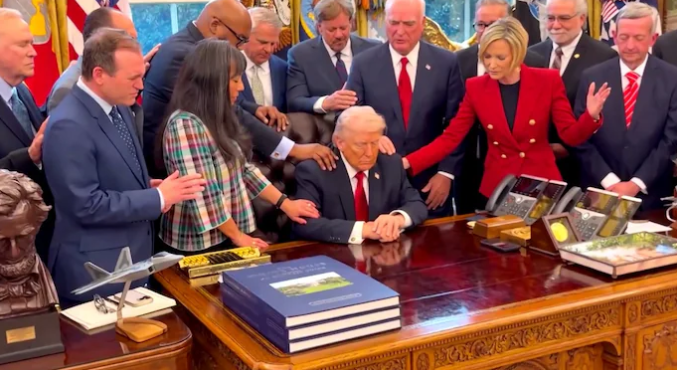
Paralysed, President Trump, beliving in his divine calling, has already sent USS Tripoli to the Gulf from the Western Pacific. Together, the United States military is preparing a Ground Invasion requiring 200,000 Marines and foot soldiers, with potential casualties estimated at 15,000.
And from the start, following the murder of children as a result of the American Tomahawk strike at a girls’ school in southern Iran, and as its Supreme Leader, the Ayatollah Ali Khamenei, had also offered himself as a martyr on the first day of the Gulf War, such sacrifice and martyrdom would be expected to continue.
Shia Islam places strong emphasis on sacrifice for the nation and thrives on martyrdom. Iran 90 percent strong Shias believe Ali ibn Abi Talib, the successor to prophet Muhammad, was the first martyr.
Such martyrdom continued through Ali’s sons, Hasan and Husayn, after which Shia holy sites include the shrine of Ali in Najaf, the shrine of Husayn in Karbala, and other mausoleums of the ahl al-bayt.
Later events, such as Husayn’s martyrdom in the Battle of Karbala, further influenced the development of Shia Islam, contributing to the formation of a distinct religious sect with its own rituals and shared collective memory.
Today, Shia Muslims form a majority of the population in Iran, Iraq, and Azerbaijan, as well as about half of the citizen population of Bahrain. Islamic apocalyptic traditions describe major conflicts happening before this era, including the Malhama al-Kubra – a great battle sometimes interpreted as a confrontation with Western powers.
And as Iran has stated that US and Israeli forces have bombed nearly 10,000 civilian sites in the country and killed more than 1,300 civilians since the war began on February 28, Shia Islam galvanises strong emphasis on sacrifice and thrives on martyrdom for the nation.
With such deep-rooted beliefs on both sides, it’s clear the conflict will keep on going.


 Joel
Joel A Prophecy of Esau and Jacob