
Deuteronomy (33-34)
Deuteronomy 33
1 And this is the blessing wherewith Moses the man of God blessed the children of Israel before his death.— the blessing wherewith Moses blessed Israel; Moses, the prophet of the Lord, called upon upon Israel by foretelling the blessings which God would confer upon them in the latter days;
2 And he said: “The Lord came from Sinai, and rose up from Seir unto them. He shined forth from Mount Paran, and He came with ten thousands of saints; from His right hand went a fiery law for them.
— the Lord came; under a beautiful metaphor, borrowed from the dawn and progressive splendor of the sun, the Majesty of God is sublimely described as a divine light which appeared in Sinai and scattered its beams on all the adjoining region in directing Israel’s march to Canaan;
— ten thousands of saints, that is, with a a great company of holy angels, Psalm 68:17 Daniel 7:10, which attended upon him in this great and glorious work of giving the law;
— the Targum of Jonathan adds that both the sons of Esau and Ishmael rejected the law:
And he said: The Lord was revealed at Sinai to give the law unto His people of Beth Israel, and the splendour of the glory of His Shekinah arose from Gebal to give itself to the sons of Esau: but they received it not.
It shined forth in majesty and glory from mount Pharan, to give itself to the sons of Ishmael; but they received it not.
It returned and revealed itself in holiness unto His people of Beth Israel, and with Him ten thousand times ten thousand holy angels. He wrote with His own right hand, and gave them His law and His commandments, out of the flaming fire. Deuteronomy 33:2 Targum
3 Yea, He loved the people; all His saints are in Thy hand; and they sat down at Thy feet; every one shall receive of Thy words. — all God’s saints or holy ones, that is, his people, were in thy hand, that is, under God’s care, to protect, direct, and govern them;
— and from MSG
Moses, man of God, blessed the People of Israel with this blessing before his death. He said, God came down from Sinai, he dawned from Seir upon them; He radiated light from Mount Paran, coming with ten thousand holy angels And tongues of fire streaming from his right hand.
Oh, how you love the people, all his holy ones are palmed in your left hand. They sit at your feet, honoring your teaching, The Revelation commanded by Moses, as the assembly of Jacob’s inheritance. Thus God became king in Jeshurun as the leaders and tribes of Israel gathered. Deuteronomy 33:1-5 MSG
4 Moses commanded us a law, even the inheritance of the congregation of Jacob. — the Law, both Written and Oral, is Jacob’s inheritance, because the obligation to observe it was hereditary, passing from parents to their children, and because this was the best part of their inheritance, the greatest of all those gifts which God bestowed upon the children of Israel;
— this command to study the law by the house of Jacob is one example worth studying further from Sanhedrin, the Talmud:
And Rabbi Yoḥanan says: A Gentile who engages in Torah study is liable to receive the death penalty; as it is stated: “Moses commanded us a law [torah], an inheritance of the congregation of Jacob” (Deu 33:4), indicating that it is an inheritance for us, and not for them. Sanhedrin 59a
— to Rabbi Yoḥanan, God want the children of Israel to study the Torah, which is true, but he doesn’t want Gentiles to study and know the Scriptures; which is untrue, for God want “all people, nations, and languages should serve Him:” How could one serve God without an understanding of serving Him?
— for a more detailed analysis, see The Talmud: true or fake?
5 And He was king in Jeshurun, when the heads of the people and the tribes of Israel were gathered together. — He was king; that is, not Moses but the Lord became king. —

6 “Let Reuben live, and not die, and let not his men be few.” — Reuben (France), identified by most CoG Communities as France. Despite having gone to his father’s bed, let Reuben live, and not die. Yet no judge, prophet, or national hero arose out of this tribe. Napoleon might be an exception, but he ended in Waterloo with a defeat!
the Targum of Jonathan says
Let Reuben live in this world, nor die the second death which the wicked die in the world to come; and let his youths be numbered with the young men of his brethren of Beth Israel.
7 And this is the blessing of Judah; and he said: “Hear, Lord, the voice of Judah, and bring him unto his people; let his hands be sufficient for him, and be Thou a help to him from his enemies.” — and this is the blessing of Judah, who are the Jews; the Targum of Jonathan adds, “Let his hand take vengeance on his enemies, and be Thou his help and support against his foes.”
— the Targum of Jonathan says in full
And this is the benediction of the tribe of Jehudah, conjoined with the portion and benediction of his brother Shemeon; and thus he spake: Receive, O Lord, the prayer of Jehudah when he goeth forth unto war, and bring Thou him back from war unto his people in peace. Let his hand take vengeance on his enemies, and be Thou his help and support against his foes.
8 And of Levi he said: “Let Thy Thummim and Thy Urim be with Thy holy one, whom Thou didst prove at Massah, and with whom Thou didst strive at the waters of Meribah,
— and of Levi (the Jews); next to Joseph, this tribe has the largest share in Moses’ last words, it being his own tribe. The character of the priest is the principal subject. The blessing may be thus paraphrased: “Let thy Thummim and thy Urim (the chief high-priestly ornaments) be ever with some saintly man of thine;
— the Targum of Jonathan says
And Mosheh the prophet blessed the tribe of Levi, and said, With Perfections and Lights hast Thou robed Aharon, the man whom Thou didst find devout before Thee, whom Thou didst try in the temptation, and he was sincere, and didst prove at the Contention Waters in Rekem, and he was found faithful.
9 who said unto his father and to his mother, ‘I have not seen him’; neither did he acknowledge his brethren, nor knew his own children; for they have observed Thy word, and kept Thy covenant. — they kept thy covenant; while the rest broke their covenant with God by sin of idolatry, the priests and Levites kept themselves pure from that infection, and adhered to God and his worship.
— the Targum of Jonathan says:
The tribe of Levi go forth to the service of the tabernacle, and separate themselves from their dwellings, saying of their fathers and mothers, I have not regarded them and of their brethren, Since we were of thirty years we have not known them or their children, for that they abide twenty years in their charge according to Thy Word, and keep the service of the holy covenant.
10 They shall teach Jacob Thy judgments and Israel Thy law; they shall put incense before Thee and whole burnt sacrifice upon Thine altar. — they shall teach Jacob thy statutes, and Israel thy law; the priests and Levites, being dispersed among each of the tribes, having cities in them allotted to them, taught the people the laws, statutes, and ordinances of the Lord.
— the Targum of Jonathan says:
Apt are they in teaching the orders of Thy judgments to them of Beth Jakob, and Thy law to them of Beth Israel. Their brethren the priests put incense on the censers to restrain the plague in the day of Thy wrath, and offer up the burnt sacrifice with acceptance at Thy altar.
11 Bless, Lord, his substance, and accept the work of his hands; smite through the loins of them that rise against him, and of them that hate him, that they rise not again.” — Bless, Lord, his substance; because the priests and Levites hath no inheritance of his own, and therefore wholly depends upon thy blessing;
— the Targum of Jonathan says:
Bless Lord, the sacrifice of the house of Levi, who give the tenth of the tenth; and the oblation of the hand of Elijah the priest, which he will offer on Mount Karmela, receive Thou with acceptance: break the lons of Achab his enemy, and the neck of the false prophets who rise up against him, that the enemies of Johanan the high priest may not have a foot to stand.
12 And of Benjamin he said: “The beloved of the Lord shall dwell in safety by Him; and the Lord shall cover him all the day long, and he shall dwell between His shoulders.” — Benjamin is put next to Levi, because the temple, where the work of the Levites lay, was upon the edge of the lot of this tribe;
— Benjamin (Norway and Iceland) was his father’s favourite child, and the imagery of this promise is throughout drawn from the relations between such a child and its father;
— the Targum of Jonathan says:
Mosheh the prophet blessed the tribe of Benjamin, and said: The beloved of the Lord shall abide in safety with Him, He will protect him all the days, and His Shekinah will dwell within his borders.
13 And of Joseph he said: “Blessed of the Lord be his land, for the precious things of heaven, for the dew, and for the deep that coucheth beneath, — blessed of the Lord be his land; as the lands inherited by his sons were extremely fruitful, the countries of lead and Bashan by Manasseh, and the fields of Samaria by Ephraim;

— for the precious things of heaven; that is, the pleasant, precious, and excellent fruits, reproduced by the influence of the heavens, particularly showers of rain which descend from thence;
— and for the deep that coucheth beneath; that is, oil, coal, iron ore, tin, zinc and diamonds, beneath the earth, and breaks out upon it, and waters it, and makes it fruitful, which happiness the land of Joseph had, as well as the rain and dew of heaven: this is to be understood of springs and fountains that flow out of the earth to the enriching of it;
— the Targum of Jonathan says:
And Mosheh the prophet of the Lord blessed the tribe of Joseph, and said: The land of Joseph shall be blessed from before the Lord. From the bounty of the heavens shall it have goodly fruit, from the dew and the rain that come down from above, and from the bounty of the founts of the deep which rise up and flow and with good fruitage to water the herbage from beneath,
14 and for the precious fruits brought forth by the sun, and for the precious things put forth by the moon, — by the sun, which opens and warms the earth, cherisheth and improveth, and in due time ripeneth the seeds for all manner of fruits of the earth;
— by the moon, which by its moisture refreshes and promotes them; that onions, when the moon waxes old, increase, and flag when it is young, and at the increase of the moon all sort of corn grows bigger and larger. Hebrew, of the moons, or months, that is, which it bringeth forth in the several months or seasons of the year;
— the Targum of Jonathan says:
age and produce that the earth maketh perfect by the aid (bringing out) of the sun, and with the bounty of the firstfruits of the trees which the ground yieldeth in the beginning of month after month,
15 and for the chief things of the ancient mountains, and for the precious things of the lasting hills, — and for the chief things of the ancient mountains; wWhich were from the beginning of the world, and for which the land, possessed by the children of Joseph, Manasseh, and Ephraim, were famous;
— as the mountains of Gilead and Bashan, inherited by the former, and Mount Ephraim, and the mountains of Samaria, by the latter; which produced, besides great quantities of grass and corn, also vines, figs, olives, and more;
— the Targum of Jonathan says:
and with the goodness through the birthright ordained of the mountain tops, him at the beginning by the benediction of the fathers who resemble the mountains, and with the goodness of the hills whose produce faileth not, which was given him in heritage by the benedictions of the mothers of old, who resemble the hills;
16 and for the precious things of the earth and fullness thereof, and for the good will of Him that dwelt in the bush. Let the blessing come upon the head of Joseph, and upon the top of the head of him that was separated from his brethren. — in the strength of this blessing, the tribe of Joseph would attain to such a development of power, that it would be able to tread down all brothers and all other nations;
— the Targum of Jonathan says:
and with the goodness of the excel- lent fruits of the earth and its fulness and the favour towards him of Eloah who revealed Himself to Mosheh at the bush in the glory of His Shekinah: let all these blessings be combined, and be made a diadem of grandeur for the head of Joseph, and for the brow of the man who was chief and ruler in the land of Mizraim, and was the glory and honour of his brethren.
17 His glory is like the firstling of his bullock, and his horns are like the horns of unicorns. With them he shall push the people together to the ends of the earth; and they are the ten thousands of Ephraim, and they are the thousands of Manasseh.”
— his glory is like the firstling of his bullock; or the prime and fairest bullock of the herd. For things that excel in their kind are called firstborn in Scripture; his horns are like the horns of unicorns;a horn is a common Scripture emblem of power and force; as of the monoceros or rhinoceros;
— here also it ascribes to Ephraim ten thousands, and to Manasseh only thousands; thus foreshowing, that Ephraim the younger was to be the more numerous of the two, as Jacob had before prophesied of them;
— ten thousands of Ephraim and thousands of Manasseh; another view refers this to the ten thousands slain by Joshua, the Ephraimite leader, and the thousands slain by Gideon, who was of the tribe of Manasseh;
— the Targum of Jonathan says:
The birthright had belonged to Reuben, but was taken from him and given to Joseph at the beginning; from thence comes the splendour of his glory and praise.
For as it may not be that a man should work the ground with the firstling of his herd, so are not the children of Joseph to be reduced to servitude among the kingdoms; and as the reema pusheth with his horns the beasts of the wilderness, so will the sons of Joseph predominate together among the peoples in all the ends of the earth.
Myriads will be slain in Gulgela by Hoshea bar Nun who hath arisen from the house of Ephraim, and thousands of the Midyance by Gideon bar Yoash who will be of the tribe of Menasheh.
— refering to the posterity of Joseph should carry their conquests and spread their dominionin “among the peoples in all the ends of the earth” the Targum would refer such prophecy to the latter days, not just to the end of the land of Caanan during the days of Joshua and Gidean, which are only a forerunner;
— for more, see (1) Ephraim / The United States (2) The Ox without the Unicorn (3) Jacob prefers Ephraim over Manasseh
18 And of Zebulun he said: “Rejoice, Zebulun, in thy going out, and, Issachar, in thy tents. — Rejoice, Zebulun; in thy going out; first, to war, as this phrase is often used; second to sea, in the way of traffic, because their portion lay near the sea;
— Zebulun (Holland) and Issachar (Finland) were united with Judah, in the leading division of Israel in the wilderness; the warlike character of the first and the more peaceful wisdom of the second, are illustrated by Judges 5:18 and 1Chronicles 12:32-33;
— Issachar (Finland) is a strong ass couching down between two burdens (Genesis 49:14); between East and West, between Russia and Nato;
— the Targum of Jonathan says:
And Mosheh the prophet blessed the tribe of Zebulon, and said: Rejoice, O house of Zebulon, in your going forth for your commerce, and you, O house of Issakar, in the tabernacles of your schools.
19 They shall call the people unto the mountain; there they shall offer sacrifices of righteousness; for they shall suck of the abundance of the seas and of treasures hid in the sand.”
— of the abundance of the sea; Holland shall grow rich by the traffic of the sea; and treasures of Finand are hidden in the sand; in which sometimes there is mixed a considerable quantity of gold, including iron, chromium, copper and nickel;
— the Targum of Jonathan says:
Many peoples shall pray at the mountain of the sanctuary, thither will they bring their oblations of truth: for they dwell by the side of the great sea, they are nourished with (its) dainties; and they take the shell-fish and dye with its blood in purple the threads of their vestments; and from the sands make mirrors and vessels of glass; for the treasures of their coasts are discovered to them.
20 And of Gad he said: “Blessed be he that enlargeth Gad; he dwelleth as a lion and teareth the arm with the crown of the head. — and of Gad (Switzerland) he dwelleth as a lion; bold and courageous, secure, and without fear of any of his enemies, though near him, on his borders;
— the Targum of Jonathan says:
Mosheh the prophet of the Lord blessed the tribe of Gad, and said: Blessed be He who hath made wide the border of Gad. He reposeth as a lion in his habitation; but when he goeth out to battle against his adversaries, he slayeth kings and rulers, and his slaughtered ones are known from all the slain, for he striketh off the arm with the crown (of the head).
21 And he provided the first part for himself, because there, in a portion of the lawgiver, was he seated. And he came with the heads of the people; he executed the justice of the Lord and His judgments with Israel.” — the first part; the first territory conquered by Moses was distributed between Reuben and Gad, and the half tribe of Manasseh;
— he executed the justice of the Lord, and his judgments with Israel; that is, either he justly and truly fulfilled all his promises and engagements, on condition of which he was placed on the other side; or he, together with the rest of the Israelites, executed the righteous judgment of God upon the Canaanites, in the expulsion and destruction of them;
— the Targum of Jonathan says:
And he saw that the land was good, and took his portion among the first; for there was a place strown with precious stones and pearls; for there is the place where Mosheh the prophet is hidden, who, as he went in and out at the head of the people in this world, will go in and out in the world that cometh; because he wrought righteousness before the Lord, and taught the orders of the judgments to the house of Israel his people.
22 And of Dan he said: “Dan is a lion’s whelp; he shall leap from Bashan.” — Dan (Ireland and Denmark) is a lion’s whelp; the lion of the tribe of Dan is not like the lion of the tribe of Judah; Jacob in Genesis 49:17 compared him to a serpent and an adder;
— the Targum of Jonathan says:
And Mosheh the prophet of the Lord blessed the tribe of Dan, and said: The tribe of Dan is like a lion’s whelp, his land is watered by the streams that flow from Mathnan, and his border cometh unto Batania.
23 And of Naphtali he said: “O Naphtali, satisfied with favor and full with the blessing of the Lord, possess thou the west and the south.” — O Naphtali, satisfied with favour; with the favour of men; and of Naphtali (Sweden); Genesis 49:21 says Naphtali is a hind let loosed indicating sexual immorality and promiscuity; this best describes modern Sweden;
— the Targum of Jonathan says:
And Mosheh the prophet of the Lord blessed the tribe of Naphtali, and said: {Naphtali is satisfied with favour, and hath delight in the fishes of the sea which falleth within his portion; and he will be replete with blessings in the fruits of the vale of Genesareth which hath been given him from the Lord; he shall inherit the water of Sopheni, and the sea of Tebaria.}
24 And of Asher he said: “Let Asher be blessed with children; let him be acceptable to his brethren, and let him dip his foot in oil. — and of Asher (Belgium) be blessed with children; he shall have numerous, strong, and healthful children;
— the Targum of Jonathan says:
{And Mosheh the prophet of the Lord blessed the tribe of Asher, and said:} Blessed is Asher of the sons of Jakob. He will be acceptable to his brethren, and will supply them with provender in the years of release: his border will produce many olives yielding oil, enough for him to bathe in it even his feet.
25 Thy shoes shall be iron and brass; and as thy days, so shall thy strength be. — thy shoes shall be iron and brass; perhaps it should be read, thy bars shall be iron and brass; or Iron and brass be thy castle; and as the days of thy life let thy rest continue;
— the Targum of Jonathan says:
The tribe of Asher be sound as iron, and their feet-strong as brass in walking on the stony rocks; and as the days of their youth so shall they be strong in their age.
26 “There is none like unto the God of Jeshurun, who rideth upon the heaven to thy help and in His excellency on the sky. — there is none like unto the God of Jeshurun; or Israel, as all the three Targums say; for this is one of the names of the God of Israel;
— the Targum of Jonathan says:
There is no God like the God of Israel, whose Shekinah and Chariot dwell in the heavens. He will be your helper. He sitteth on His glorious throne in His majesty, in the expanse of the heavens above.
27 The eternal God is thy refuge, and underneath are the everlasting arms; and He shall thrust out the enemy from before thee, and shall say, ‘Destroy them.’ — and shall say, destroy them; the Canaanites: to do which the people of Israel had an order from the Lord, Deuteronomy 7:1
— the Targum of Jonathan says:
The habitation of Eloha is from eternity; by the arm of His power beneath the world is upborne. He will scatter your adversaries before you, and will say by His Word, Destroy them.
28 Israel then shall dwell in safety alone; the fountain of Jacob shall be upon a land of corn and wine; also his heavens shall drop down dew. — Israel then shall dwell in safety; that is, in confidence and security;
— the Targum of Jonathan says:
And Israel shall dwell safely as of old according to the benediction with which Jakob their father did bless them, for whose righteousness sake He will cause them to inherit the good land that yieldeth corn and wine; the heavens also above them will drop with the dews of blessing, and the rains of lovingkindness.
29 Happy art thou, O Israel! Who is like unto thee, O people saved by the Lord, the shield of thy help, and who is the sword of thy excellency! And thine enemies shall be found liars unto thee, and thou shalt tread upon their high places.” — be found liars unto thee; or “shall lie unto thee” or be in such dread and fear as to tell lies to save themselves, perhaps even, “cringe before thee.”
— the Targum of Jonathan says:
Happy are you, O Israel: who of all the nations are like you, a people saved in the Name of the Word of the Lord? He is the shield of your help, and His sword, the strength of your excellency. And your enemies shall be found liars against you from terror, and you shall tread upon the necks of their kings.
Deuteronomy 34
~~~~

1 And Moses went up from the plains of Moab unto the mountain of Nebo, to the top of Pisgah, that is opposite Jericho. And the Lord showed him all the land of Gilead as far as Dan, — Moses went up; when he knew the place of his death, he cheerfully mounted the hill to come to it;
2 and all Naphtali, and the land of Ephraim, and Manasseh, and all the land of Judah unto the utmost sea, — the Lord shewed him all the land of Gilead, unto Dan, and all Naphtali . . . unto the utmost sea; that is, the Mediterranean;
— and the land of Ephraim and Manasseh: which lay in the midland part of the country; and he showed him all the land which was to be given to these several tribes; and all the land of Judah; which lay to the south;
— another explanation for “unto the utmost sea” offered by the Targum of Jonathan is “who would have dominion in the land until the latter sanctuary should be destroyed” of which “the latter sanctuary” is further explained by Rashi:
Do not understand the verse as stating הַיָּם הָאַחֲרוֹן, but read it as though it had said הַיּוֹם הָאַחֲרוֹן, “until the very last day,” meaning that the Holy One, blessed is He, showed him all the incidents that were destined to happen to Israel [until “the last day,” namely,] until the time that the dead would return to life. — [Sifrei 33:31]
— which means, Moses was shown by God all the days till the end of this age: the fall of the “latter” sanctuary, the Sword and Flaming Fire from the South; the Psalm 83 Prophecy; a Greater than the Egyptian “Exodus” and the coming Gog and Magog; for more, see Sequence of Prophecies till the Return of Israel
3 and the South, and the plain of the Valley of Jericho, the city of palm trees, as far as Zoar. — and the Desert of the “South,” that is, the Negeb; and the plain and valley of Jericho which lay before him;
4 And the Lord said unto him, “This is the land which I swore unto Abraham, unto Isaac, and unto Jacob, saying, ‘I will give it unto thy seed.’ I have caused thee to see it with thine eyes, but thou shalt not go over thither.”
— this is the land which I sware unto Abraham, unto Isaac, and unto Jacob, saying, I will give it unto thy seed; to Abraham, Genesis 15:18 “from the river of Egypt unto the great river, the River Euphrates:” to Isaac, Genesis 26:3; to Jacob, Genesis 28:13,
5 So Moses the servant of the Lord died there in the land of Moab, according to the word of the Lord. — the land of Moab; which formerly belonged to Moab, and was taken from them by Sihon king of the Amorites, and now in the possession of Israel:and Moses dies
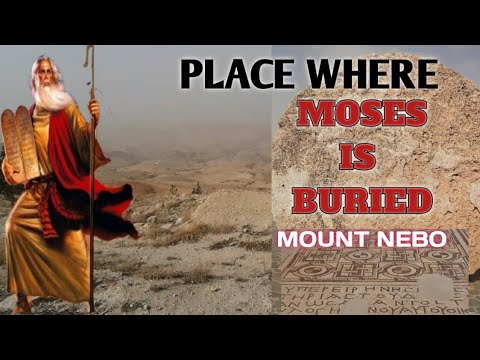
— here on a mountain in this land Moses died; according to the decree of the Lord; and is buried on Pisgah, and Joshua steps into his place, but no man knoweth of his sepulcher unto this day;
6 And He buried him in a valley in the land of Moab, over against Bethpeor; but no man knoweth of his sepulcher unto this day. — and he buried him; Moses is alone in this honour: the Son of God was buried by sinful men, but Moses was buried by Yehovah himself;
— but no man knoweth of his sepulchre; men have always believed that the contention between Michael and the devil about the body of Moses (Jude 1:9) was in fact, a struggle for his body; bearing in mind the appearance of Moses at the Transfiguration Matthew 17:1-10, and what is said by Jude (Jude 1:9), we may conjecture that Moses after death passed into the same state with Enoch and Elijah; and that his grave could not be found because he was shortly translated (transported) from it.
7 And Moses was a hundred and twenty years old when he died; his eye was not dim nor his natural force abated. — his age may be divided into three equal periods, forty years in Pharaoh’s court, forty years in Midian, and forty in the care and government of Israel, in Egypt and in the wilderness;
— Moses was a hundred and twenty years old when he died; but though he lived the full length of human life, and to an age which, in others that live up to it, is accompanied with many diseases and infirmities, yet this had made little or no alteration in him;
8 And the children of Israel wept for Moses in the plains of Moab thirty days; so the days of weeping and mourning for Moses were ended. — the children of Israel wept for Moses thirty days; as they did for Aaron, his brother (Numbers 20:29);
— the Targum of Jonathan adds more details:
And the children of Israel wept for Mosheh in the plains of Moab thirty days; and the days of weeping in the mourning for Mosheh were completed on the eighth of the month of Nisan.
And on the ninth of Nisan the people of Beth Israel prepared their vessels and set their cattle in order, and passed over the Jordan on the tenth of Nisan.
And the manna ceased for them on the sixteenth of Nisan. They found manna to eat thirty seven days after the death of Mosheh, for the sake of his righteousness.
— “And the manna ceased for them on the sixteenth of Nisan” this being the fact that from the moment (morning) of the “wave sheaf” offering, the children of Israel were then allowed to eat the new grain; adding another proof that the wave sheaf was waved on the sixteenth of Nisan (and not at the end of that week).
— for numerous Issues and Critiques of Pentecost and Wave Sheaf Offering, see (1) Archive for the ‘Pentecost’ Category (2) Archive for the ‘Wave Sheaf Offering’ Category
9 And Joshua the son of Nun was full of the spirit of wisdom, for Moses had laid his hands upon him. And the children of Israel hearkened unto him, and did as the Lord commanded Moses.
— Joshua was full of the spirit of wisdom; as wisdom is mentioned as being most necessary for the government to which he was now called; for Moses had laid his hands upon him; which was a symbol of the government being committed to him;
10 And there arose not a prophet since in Israel like unto Moses, whom the Lord knew face to face, — there arose not a prophet since in Israel; such words like these can only indicate have been written some time later after the death of Moses;
11 in all the signs and the wonders which the Lord sent him to do in the land of Egypt, to Pharaoh and to all his servants and to all his land, — in all the signs and the wonders which the Lord sent him to do; which the Lord sent him to do; ‘for he it was that appeared to him in the bush, and sent him to Egypt to work miracles, which he did by him;
— in the land of Egypt, to Pharaoh, and to all his servants, and to all his land; to whom they were visible, and who were all affected by the ten plagues inflicting upon all the Egyptians;
12 and in all that mighty hand, and in all the great terror which Moses showed in the sight of all Israel. — and in all that great terror which Moses showed in the sight of all Israel; meaning either the terror the Egyptians were struck with by him, in the sight of all Israel,
— when he publicly and before them wrought the wonders he did in the land of Egypt, which threw them into a panic, especially the thunders and lightning, the three days darkness, and the slaying of their firstborn;
— the Targum of Jonathan adds more details of the content that were later deposited inside the Ark, especially “the two tables of sapphire stone:”
and in all the strength of the Mighty Hand by which he bare the rod whose weight was forty savin and that divided the sea, and smote the rock; and in all the solemn things which Mosheh did when he received the two tables of sapphire stone, whose weight was forty savin, and carried both of them in his hands in the sight of all Israel.


 Joel
Joel A Prophecy of Esau and Jacob