
Exodus (13-14)
~~~~

A parallel Exodus would reoccur during the endtime, which would far exceed that of the original Exodus led by Moses.
Therefore will I cast you out of this land into a land that ye know not, neither ye nor your fathers; and there shall ye serve other gods day and night, where I will not show you favor.’
“Therefore behold, the days come,” saith the Lord, “that it shall no more be said, ‘The Lord liveth who brought up the children of Israel out of the land of Egypt,’
but, ‘the Lord liveth who brought up the children of Israel from the land of the north, and from all the lands whither He had driven them.’ And I will bring them back into their land that I gave unto their fathers. Jeremiah 16:13-15.
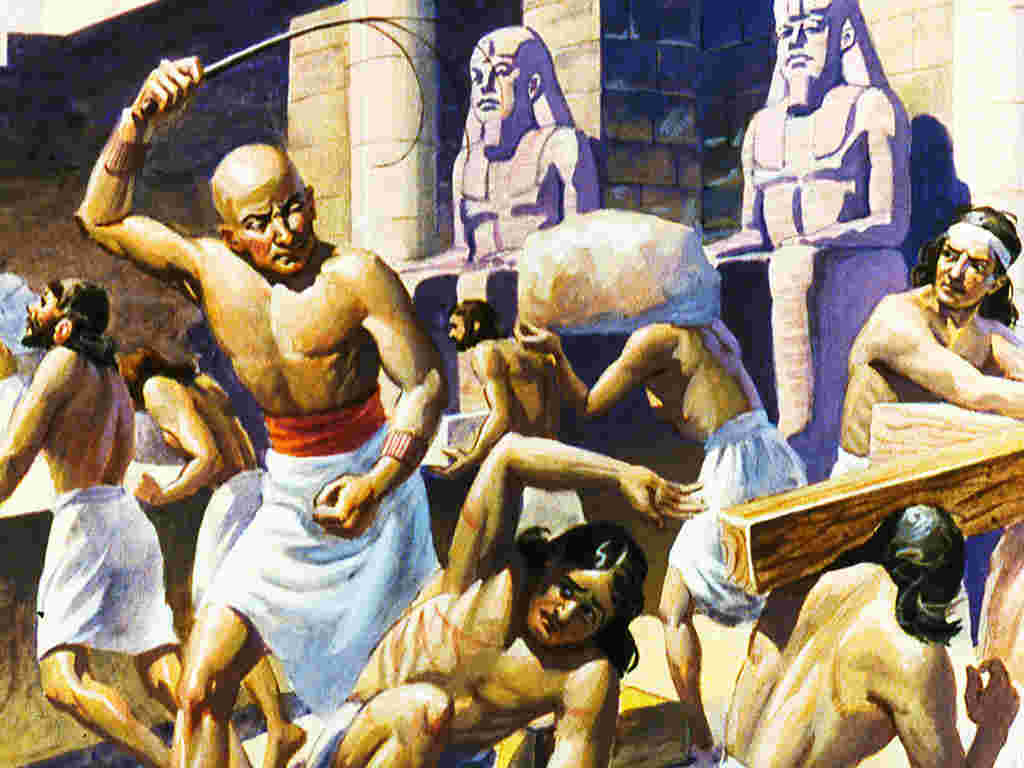
So severe shall be their bondage that their deliverance from it shall be a far greater Deliverance than that out of Egypt where they spent 210 years in slavery under their Egyptian taskmasters!
For more see,
For more into another Captivity: see Ezekiel Timeline – 190/40 Years
For more about the South, a prophecy of Esau or Edom, see Obadiah
For more on the enemy from the South, see A Sword from the South!
Exodus 13
1 And the Lord spoke unto Moses, saying, — God spoke to Moses on the day of the Exodus, at the first station, namely, Succoth;
2 “Sanctify unto Me all the firstborn, whatsoever openeth the womb among the children of Israel, both of man and of beast; it is Mine.” — sanctify unto me all the firstborn; that is, of males, as the Targum of Jonathan adds, for those, and not females, were desinated to be either sacrificed or redeemed;
3 And Moses said unto the people, “Remember this day in which ye came out from Egypt, out of the house of bondage; for by strength of hand the Lord brought you out from this place. There shall no leavened bread be eaten. — Remember this day; the 15th of Abib in which ye came out of Egypt,
4 This day came ye out, in the month Abib. — this day came ye out of Egypt, on the fifteenth of Nisan, as the Targum of Jonathan says;
5 “And it shall be when the Lord shall bring thee into the land of the Canaanites and the Hittites and the Amorites and the Hivites and the Jebusites, which He swore unto thy fathers to give thee, a land flowing with milk and honey, that thou shalt keep this service in this month.
— the full number of the Canaanitish nations was seven, five of which are enumerated here; the other two were the Perizzites and the Girgashites, which seem to have been the least important.
6 Seven days thou shalt eat unleavened bread, and in the seventh day shall be a feast to the Lord. — and in the seventh day shall be a feast to the Lord; an holy convocation, in which no work was to be done, except what was necessary for preparing food to eat, Exodus 12:16.
7 Unleavened bread shall be eaten seven days; and there shall no leavened bread be seen with thee, neither shall there be leaven seen with thee in all thy quarters.
— they begin before the passover, with all the diligence and care they can, to put away any leaven, or anything that hath had leaven in it, out of their houses; searching all their cupboards and bins.
8 And thou shalt show thy son in that day, saying, ‘This is done because of that which the Lord did unto me when I came forth out of Egypt.’
— thou shalt show thy son; when you shall be come into the land of Canaan, you shall instruct your children in the meaning of your killing the lamb, and abstaining from leaven, that so you and they may be excited to gratitude to God for his goodness.
9 And it shall be as a sign unto thee upon thine hand, and for a memorial between thine eyes, that the Lord’S law may be in thy mouth; for with a strong hand hath the Lord brought thee out of Egypt.
— the use of phylacteries among them, pieces of parchment inscribed with sentences of their law, which they bound upon their left hand, and placed upon their foreheads between their eyes.
10 Thou shalt therefore keep this ordinance in his season from year to year. — this ordinance the Israelites were to keep למועדהּ, “at its appointed time” (that is, from the 15th to the 21st Abib), – “from days to days,” in this season, spring, from year to year.
11 “And it shall be when the Lord shall bring thee into the land of the Canaanites, as He swore unto thee and to thy fathers, and shall give it to thee, — the land of the Canaanites, under which general name all the other nations are contained, as being all the children of Canaan.
12 that thou shalt set apart unto the Lord all that openeth the womb, and every firstling that cometh from a beast which thou hast; the males shall be the Lord’S.
— the males shall be the Lord’s; which explains what sort of firstborn of man and beast were to be set apart for his use, not females, though the first that opened the womb; but males.
13 And every firstling of an ass thou shalt redeem with a lamb; and if thou wilt not redeem it, then thou shalt break his neck; and all the firstborn of man among thy children shalt thou redeem. — break its neck; unless redeemed, it could not be retained for use by its owner;
— it was not to be killed by shedding of blood, because in old Israel ‘the slaughter of an animal in the ordinary way implied a sacrifice, which was impossible in the case of an ass;
14 And it shall be when thy son asketh thee in time to come, saying, ‘What is this?’ that thou shalt say unto him, ‘By strength of hand the Lord brought us out from Egypt, from the house of bondage.
— which is added to teach parents in all succeeding ages, that it is their duty to instruct their children in the word and works of God, and in the nature and reasons of every particular kind or part of God’s worship and service.
15 And it came to pass, when Pharaoh would hardly let us go, that the Lord slew all the firstborn in the land of Egypt, both the firstborn of man and the firstborn of beast; therefore I sacrifice to the Lord all that openeth the womb, being males; but all the firstborn of my children I redeem.’
— firstborn of man; the price of redemption was fixed at five shekels of the sanctuary: Numbers 3:47;
16 And it shall be as a token upon thine hand, and as frontlets between thine eyes; for by strength of hand the Lord brought us forth out of Egypt.” — it shall be for a token upon thine head, and for frontlets between thine eyes;
— these laws setting apart the firstlings of their beasts, the redemption of the firstbon, will be as easily and as clearly discerned as anything upon a man’s forehead may be seen by another;
17 And it came to pass, when Pharaoh had let the people go, that God led them not through the way of the land of the Philistines, although that was near; for God said, “Lest perhaps the people repent when they see war, and they return to Egypt.”
— when they see war; for the Philistines were viewed as one of the most warlike people of the time; while the Israelites after two centuries of slavery would have been an ill match for the Philistines;
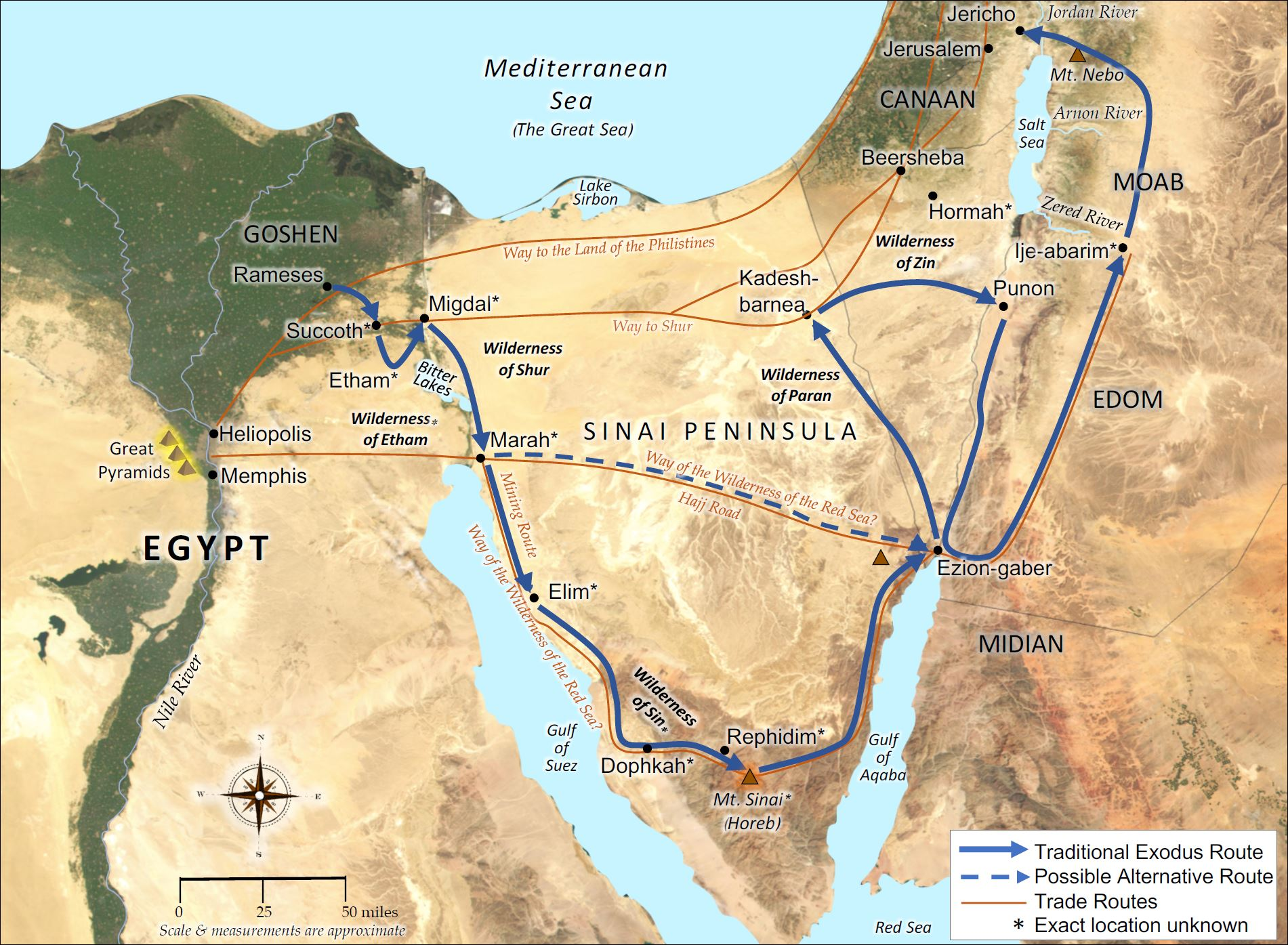
18 But God led the people about, through the way of the wilderness of the Red Sea; and the children of Israel went up by five in a rank out of the land of Egypt.
— through the wilderness of the Red sea; perhaps indicative of the countries of Edom (“red”); including the gulf of Akaba;
19 And Moses took the bones of Joseph with him; for he had strictly sworn the children of Israel, saying, “God will surely visit you, and ye shall carry up my bones away hence with you.” — Moses took the bones of Joseph; Joseph’s body had been embalmed according to the Egyptian fashion;
— Rashi thinks that the bones of all the tribes, or of the sons of Jacob, were carried with them, but that does not appear from the text;
20 And they took their journey from Succoth, and encamped in Etham on the edge of the wilderness. — they took their journey from Succoth, and encamped in Etham;
— the exact positions of both Succoth and Etham are uncertain, and can only be conjectured; but they probably lay to the southeast of Tanis, between that city and the Bitter Lakes.
21 And the Lord went before them by day in a pillar of a cloud to lead them the way, and by night in a pillar of fire to give them light, to go by day and night. — by day in a pillar of a cloud, to lead them the way; through the Red sea, and the wilderness, at the edge of which they now were, which was untrodden, and trackless;
— and by night in a pillar of fire, to give them light; whenever they travelled by night, and in those hot countries it maybe refleshing; and this pillar of fire gave them light when the moon wasn’t shining, and showing the direction they ought to go.
22 He took not away the pillar of the cloud by day nor the pillar of fire by night from before the people. — the Lord went before them; by a visible token of His presence, the Shekinah, in a majestic cloud.
Exodus 14
1 And the Lord spoke unto Moses, saying, — and the Lord spake unto Moses; perhaps out of the pillar of the cloud in which he went before them;
2 “Speak unto the children of Israel, that they turn and encamp before Pihahiroth, between Migdol and the sea, opposite Baalzephon; before it shall ye encamp by the sea. — at Pi-hahiroth, Pharaoh and his servants repent for letting the people go; pursue and intend to overtake the Israelites;
3 For Pharaoh will say of the children of Israel, ‘They are entangled in the land, the wilderness hath shut them in.’ — Pharaoh will say they are entangled; presuming that they are hemmed in between the rocks and the sea.
4 And I will harden Pharaoh’s heart, that he shall follow after them; and I will be honored above Pharaoh, and above all his host, that the Egyptians may know that I am the Lord.” And they did so.
— while Pharaoh gratified his malice and revenge, he furthered the bringing to pass God’s counsels concerning him. Though with the greatest reason he had let Israel go, yet now he was angry with himself for it.
5 And it was told the king of Egypt that the people fled; and the heart of Pharaoh and of his servants was turned against the people, and they said, “Why have we done this, that we have let Israel go from serving us?”
— God makes the envy and rage of men against his people, thus “Pharaoh and of his servants was turned against the people” a torment to themselves.
6 And he made ready his chariot and took his people with him, — he made ready his chariot; his preparations for an immediate and hot pursuit are here described;
7 and he took six hundred chosen chariots and all the chariots of Egypt and captains over every one of them. — a difference is made between “the chosen chariots” and “the chariots of Egypt.”
— the first evidently composed the king’s guard, amounting to six hundred chariots, and they are called “chosen,” literally, “third men”; three men being allotted to each chariot, the charioteer and two warriors, hence totally 1800 personel;
— as to “the chariots of Egypt,” the common cars contained only two persons, one for driving and the other for fighting; sometimes only one person was in the chariot, the driver lashed the reins round his body and fought; and of course, foot soldiers;
8 And the Lord hardened the heart of Pharaoh king of Egypt, and he pursued after the children of Israel; and the children of Israel went out with a high hand. — and the Lord hardened the heart of Pharaoh king of Egypt; as he said he would;
— with an high hand; confidently, boldly, perhaps somewhat proudly, as having brought the Egyptians to entreat them to take their departure.
9 But the Egyptians pursued after them, all the horses and chariots of Pharaoh, and his horsemen and his army, and overtook them encamping by the sea beside Pihahiroth, before Baalzephon. — and overtook them encamping by the sea, beside Pihahiroth, before Baalzephon; where they had pitched their camp by divine appointment;
10 And when Pharaoh drew nigh, the children of Israel lifted up their eyes, and behold, the Egyptians marched after them; and they were sore afraid; and the children of Israel cried out unto the Lord.
— and they were sore afraid; being an unarmed people, though numerous, and so unable to defend themselves against armed and disciplined troops;
11 And they said unto Moses, “Because there were no graves in Egypt, hast thou taken us away to die in the wilderness? Why hast thou dealt thus with us, to carry us forth out of Egypt?
— because there were no graves in Egypt; spoken in bitter irony, doubtless, but scarcely with any conscious reference to Egypt as “a land of tombs.” They meant simply to say: “Might we not as well have died there as here?”
12 Is not this the word that we told thee in Egypt, saying, ‘Let us alone, that we may serve the Egyptians’? For it had been better for us to serve the Egyptians, than that we should die in the wilderness.”
— let us alone; this is a gross exaggeration, yet not without a semblance of truth: for although the Israelites welcomed the message of Moses at first, they gave way completely at the first serious trial.
13 And Moses said unto the people, “Fear ye not. Stand still, and see the salvation of the Lord, which He will show to you today; for the Egyptians whom ye have seen today, ye shall see them again no more for ever. — fear ye not, stand still; let not your hearts fail, or sink or stagger, through unbelief: but with quiet minds look up to God.
14 The Lord shall fight for you, and ye shall hold your peace.” — and ye shall hold your peace; be still and quiet, and easy in your minds, and forbear saying or doing anything;
15 And the Lord said unto Moses, “Why criest thou unto Me? Speak unto the children of Israel, that they go forward. — speak unto the children of Israel, that they go forward; a little further until they were come to the sea shore.
16 But lift thou up thy rod, and stretch out thine hand over the sea and divide it; and the children of Israel shall go on dry ground through the midst of the sea. — with his rod, he hearkened to it, and touched the water with it, and so it divided, as it is said it did;
17 And I, behold, I will harden the hearts of the Egyptians, and they shall follow them; and I will get Myself honor above Pharaoh and above all his host, above his chariots and above his horsemen.
— and I will get me honour upon Pharaoh, and upon all his host, upon his chariots, and upon his horsemen: by the utter destruction of them, in just retaliation for the many innocent infants that had been drowned by them in the river Nile.
18 And the Egyptians shall know that I am the Lord when I have gotten Myself honor above Pharaoh, above his chariots, and above his horsemen.”
— when I have gotten me honour upon Pharaoh, upon his chariots, and upon his horsemen; by casting them into the sea, and drowning them there, thereby showing himself to be mightier than he.
19 And the angel of God, who went before the camp of Israel, removed and went behind them; and the pillar of the cloud went from before their face and stood behind them.
— and the pillar of the cloud went from before their face, and stood behind them; the Targum adds, “because the Mizraee (Egyptians) threw darts and stones at the Israelites, but the Cloud intercepted them;” whereby the Israelites were protected from receiving any injury from them.
20 And it came between the camp of the Egyptians and the camp of Israel; and it was a cloud and darkness to them, but it gave light by night to these, so that the one came not near the other all the night.
— it was a cloud and darkness to the Egyptians, to whom it brought their former horrible darkness to mind, and did both exceedingly affright them, and altogether hinder them from motion or action, as that also did for three days; but it gave light by night to the Israelites, as the opposition showeth.
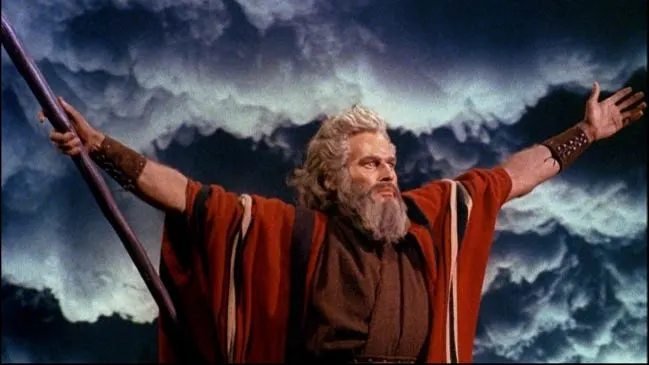
21 And Moses stretched out his hand over the sea; and the Lord caused the sea to go back by a strong east wind all that night and made the sea dry land, and the waters were divided. — the waters were divided;
— the waters of the Bitter Lakes were for a time separated completely from those of the Red Sea. By gradual elevation and desiccation the channel over which the Israelites passed has probably now become dry land.
22 And the children of Israel went into the midst of the sea upon the dry ground, and the waters were a wall unto them on their right hand and on their left. — some Jewish writers say that the tribe of Judah went in first, and then the other tribes followed;
23 And the Egyptians pursued, and went in after them to the midst of the sea, even all Pharaoh’s horses, his chariots, and his horsemen.
— the Egyptians went in after them into the midst of the sea; they thought, Why might they not venture where Israel did? They were more advantageously provided with chariots and horses, while the Israelites were on foot.
24 And it came to pass that in the morning watch the Lord looked unto the host of the Egyptians through the pillar of fire and of the cloud, and troubled the host of the Egyptians. — the Lord looked through the cloud, and troubled them; with the most terrible and prodigious winds, and rains, and lightnings, and both claps and bolts of thunder;
25 And He took off their chariot wheels, that they drove them heavily, so that the Egyptians said, “Let us flee from the face of Israel, for the Lord fighteth for them against the Egyptians.” — and the Lord took off their chariot wheels;
— Rashi renders it “And He removed the wheels of their chariots: With the fire the wheels were burned, and the chariots dragged, and those sitting in them were moved to and fro, and their limbs were wrenched apart.”
26 And the Lord said unto Moses, “Stretch out thine hand over the sea, that the waters may come again upon the Egyptians, upon their chariots, and upon their horsemen.”
— that the waters may come again upon the Egyptians, upon their chariots, and upon their horsemen; the waters which stood upright as a wall, on the right and left, might be no longer kept in such a position, but fall down upon the Egyptians, their chariots and horsemen.
27 And Moses stretched forth his hand over the sea, and the sea returned to his strength when the morning appeared. And the Egyptians fled against it, and the Lord overthrew the Egyptians in the midst of the sea.
— and the Lord overthrew the Egyptians in the midst of the sea; or shook them “off” or “out” out of their chariots, blew them out with the wind;
28 And the waters returned, and covered the chariots and the horsemen and all the host of Pharaoh that came into the sea after them. There remained not so much as one of them. — there remained not so much as one of them;
— wherefore it must be a falsehood which is related by some, that Pharaoh himself was preserved, and afterwards reigned in Nineveh, since not one was saved; they all perished;
29 But the children of Israel walked upon dry land in the midst of the sea, and the waters were a wall unto them on their right hand and on their left. — but the children of Israel walked upon dry land in the midst of the sea; the bottom of it becoming so through the strong east wind, which blew all night until they came to the opposite shore;
30 Thus the Lord saved Israel that day out of the hand of the Egyptians, and Israel saw the Egyptians dead upon the seashore. — saw their dead bodies floating upon the waters; it is likely, however, that the bodies of some were cast on shore, and became food to the beasts and birds of prey that frequent the wilderness;
31 And Israel saw that great work which the Lord did upon the Egyptians; and the people feared the Lord, and believed the Lord and His servant Moses.
— and the people feared the Lord; had an awe of his power and greatness upon their minds, and a sense of his goodness to them upon their hearts, which influenced their fear of him, and caused them to fear him with a filial and godly fear.
~~~~
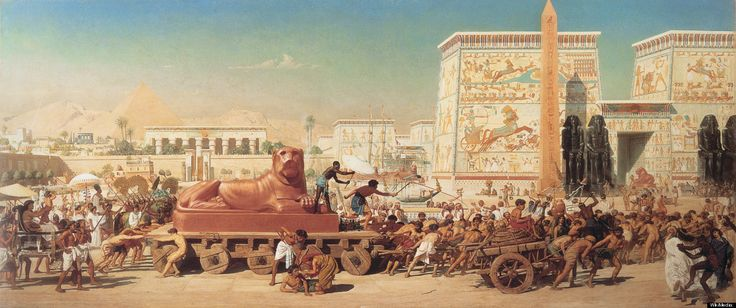
A parallel Exodus would reoccur during the endtime, which would far exceed that of the original Exodus led by Moses.
Therefore will I cast you out of this land into a land that ye know not, neither ye nor your fathers; and there shall ye serve other gods day and night, where I will not show you favor.’
“Therefore behold, the days come,” saith the Lord, “that it shall no more be said, ‘The Lord liveth who brought up the children of Israel out of the land of Egypt,’
but, ‘the Lord liveth who brought up the children of Israel from the land of the north, and from all the lands whither He had driven them.’ And I will bring them back into their land that I gave unto their fathers. Jeremiah 16:13-15; so emphatic is such a scene that it is repeated in Jeremiah 23:6-8.
So severe shall be their bondage that their deliverance from it shall be a far greater Deliverance than that out of Egypt where they spent 210 years in slavery under their Egyptian taskmasters!
For more see,
For more into another Captivity: see Ezekiel Timeline – 190/40 Years
For more about the South, a prophecy of Esau or Edom, see Obadiah
For more on the enemy from the South, see A Sword from the South!


