
Ezekiel (Ch 31-32)
Four chapters (29 to 32) are allocated to Egypt, indicating its importance, but why so if it wasn’t related somehow to the house of Israel?
Chapter 31 opens with the Lord speaking to the Pharaoh of Egypt, giving him an example of Assyria, and to anyone else, as a warning of what could happen to them (or us) too.
Ezekiel 31
1 And it came to pass in the eleventh year, in the third month, on the first day of the month, that the word of the Lord came unto me, saying, — the beginning of a new oracle; again, this is directed against Pharaoh king of Egypt.
2 “Son of man, speak unto Pharaoh king of Egypt and to his multitude: “‘Whom art thou like in thy greatness? — and to his multitude; the multitude of his subjects, in whom the Pharaoh trusted and of which he boasted;
— the Targum says,
“Son of man, speak to Pharaoh, king of Egypt, and to his multitude: To whom are you compared in your strength?”
3 Behold, the Assyrian was a cedar in Lebanon with fair branches, and with a shadowing shroud, and of a high stature; and his top was among the thick boughs.
— behold, the king of Assyria is compared to a large and flourishing cedar, for the extent of his dominions, the prosperous state of his empire, and his exaltation above all other princes, which drew upon him their envy;
— here grew the tallest, most stately, broad and flourishing ones; and in its branches all the birds of the heaven made their nests, and under its boughs all the beasts of the field brought forth, and in its shadow sat great nations of all kinds;
— the Targum says,
“Behold, the Assyrian was like a cedar in Lebanon, whose branches were beautiful and whose boughs gave shade, and it was lofty in height, and its roots were sent out over the springs of water.”
4 The waters made him great, the deep set him up on high with her rivers running round about his plants, and sent out her little rivers unto all the trees of the field.
— the waters made the king of Assyria great; the waters of the river Tigris, near to which stood the city of Nineveh, the metropolis of the Assyrian monarchy; the traffic brought by which river made it rich and great, and the whole empire, and its king;
— the Targum says,
“Therefore its height was raised above all the kings of the nations, and its armies became many, and its rulers grew strong because of the assistance of many people, which (God) gave to it to strengthen it.”
5 Therefore his height was exalted above all the trees of the field, and his boughs were multiplied, and his branches became long because of the multitude of waters when he shot forth. — his height was exalted; his majesty, grandeur, power, glory and his pride too ran up on high;
— the Targum says,
“Therefore he was exalted in his strength above all the kings of the earth; and his armies became many, and his supporters prevailed over many people in his prevailing.”
6 All the fowls of heaven made their nests in his boughs, and under his branches did all the beasts of the field bring forth their young; and under his shadow dwelt all great nations.
— and under the Assyrian dwelt all great nations; under his protection, care, and government, many large kingdoms and states were; yea, all were either subject to him, or sought to be his friends and allies: this explains the figurative expressions above;
— the Targum says, “he prevailed in his strength through the multitude of his mighty men; for his terror was upon many nations.”
7 Thus was he fair in his greatness, in the length of his branches, for his root was by great waters. — and it became beautiful in its stature, in the length of its tendrils, for its roots were upon abundant waters;
— the Targum says,
“With his armies he conquered all the fortified cities, and under his rulers he subjected all the provinces of the earth, and in the shadow of his kingdom dwelt all the many nations.”
8 The cedars in the garden of God could not hide him; the fir trees were not like his boughs, and the chestnut trees were not like his branches, nor any tree in the garden of God was like unto him in his beauty.
— the cedars; kings, the greatest and most magnificent, are from the Assyrian; the fir trees; the chestnut, are emblem of lesser kings and kingdoms;
— the Targum says,
“Mighty kings could not prevail against him, because of the strength of the power that was with him from before the Lord; rulers could not stand before his armies, and mighty men could not endure his supporters, because of the strength of the power that was with him from before the Lord; none was like him in his strength.”
9 I have made him fair by the multitude of his branches, so that all the trees of Eden that were in the garden of God envied him.
— so that all the trees of Eden, that were in the garden of God, envied him, the Pharaoh king of Egypt; all the kings of the earth, though they dared not openly speak against him, or oppose him; yet they inwardly grieved at and secretly grudged his grandeur and majesty, superior to theirs;
— the Targum says,
“I have made him beautiful by the multitude of his mighty ones; and all the kings of the east trembled before him, because of the strength of his power, which he had from the Lord.”
10 “‘Therefore thus saith the Lord God: Because thou hast lifted up thyself in height, and he hath shot up his top among the thick boughs, and his heart is lifted up in his height, — speaking of the Pharaoh king of Egypt;
— the Targum says,
“Therefore, thus says the Lord God: Because you have grown tall in height, and he set his dominion over the kingdoms, and his heart became proud in his strength;”
11 I have therefore delivered him into the hand of the mightiest of the nations. He shall surely deal with him. I have driven him out for his wickedness. — speaking of the Pharaoh king of Egypt; delivered into “the mightiest of the nations,” for which Nebuchadnezzar is also known for;
— the Targum says,
“And I will deliver him into the hand of the mighty one of the nations; he shall surely take retribution from him; because of his guilt, I have driven him out.”
12 And strangers, the terrible of the nations, have cut him off and have left him. Upon the mountains and in all the valleys his branches are fallen, and his boughs are broken by all the rivers of the land; and all the people of the earth are gone down from his shadow and have left him.
— by this is signified the destruction of the power of the Egyptians by the Babylonians;
— the Targum says,
“And strangers, the mighty of the nations, destroyed him and cast him down; upon the mountains and in all the valleys his armies fell, and his supporters were scattered in all the crevices of the earth; and all the peoples of the earth went down from the shadow of his kingdom and abandoned him.”
13 Upon his ruin shall all the fowls of the heaven remain, and all the beasts of the field shall be upon his branches, — fowls and beasts are all “his multitude” verse 2 above;
— the Targum says,
“Upon the carcass of his slain, all the birds of the heaven dwelt; and upon the corpses of his armies, all the beasts of the field rested.”
14 to the end that none of all the trees by the waters exalt themselves for their height, neither shoot up their top among the thick boughs, neither their trees stand up in their height—all that drink water. For they are all delivered unto death, to the nether parts of the earth, in the midst of the children of men, with them that go down to the pit.
— for they, all “his multitude,” are delivered unto death in the nether parts of the earth; they are mortal as other men; who will not spare them because of their crowns and sceptres; and when they will be laid in the grave, in the lowest parts of the earth, who used to sit upon elevated thrones of state;
— the Targum says,
“To the end that all the kings of the East should not be exalted in their strength, and should not set their dominion over the kingdoms, and that all who exercise power should not pride themselves in their strength; for they are all delivered to death, to the lower earth, in the midst of the children of men, with those who go down to the pit, the house of destruction.”
15 “‘Thus saith the Lord God: In the day when he went down to the grave I caused a mourning. I covered the deep for him, and I restrained the floods thereof, and the great waters were stayed; and I caused Lebanon to mourn for him, and all the trees of the field fainted for him.
— speaking of the Pharaoh king of Egypt; all “his multitude” to mourn for him;
— the Targum says,
“Thus says the Lord God: On the day when I brought him down to Sheol, they mourned for him; distress covered the world, and the provinces were laid waste, and many nations trembled; the faces of kings were darkened because of him, and all the kings of the nations clapped their hands over him (in grief).”
16 I made the nations to shake at the sound of his fall, when I cast him down to hell with them that descend into the pit; and all the trees of Eden, the choice and best of Lebanon, all that drink water, shall be comforted in the nether parts of the earth.
— speaking of the Pharaoh king of Egypt; and all the trees of Eden, the choice and best of Lebanon, all that drink water; the greatest kings and potentates of the world, the chief and principal of the Assyrian empire; all that ruled over multitudes of people, and partook of their wealth and riches, and were supported in grandeur and dignity; who had been in the state of the dead before this time;
— the Targum says,
“At the sound of his fall, I made the nations tremble, when I brought him down to Sheol with those who go down to the pit, the house of destruction; and all the kings of the East, the rulers and the wealthy of property, all who exercise power, were comforted in the lower earth.”
17 They also went down into hell with him unto them that are slain with the sword, and they that were his arm, that dwelt under his shadow in the midst of the nations. — all “his multitude” will go down into hell with the Pharaoh king of Egypt;
— the Targum says,
“They also went down with him to Sheol, with those slain by the sword; and his rulers were broken, their strength (shattered) in the midst of the kingdom.”
18 To whom art thou thus like in glory and in greatness among the trees of Eden? Yet shalt thou be brought down with the trees of Eden unto the nether parts of the earth. Thou shalt lie in the midst of the uncircumcised with them that are slain by the sword. “‘This is Pharaoh and all his multitude, saith the Lord God.’”
— this is Pharaoh, and all his multitude, saith the Lord God; this account represents Pharaoh, his grandeur, his pride, and his ruin; this shows what will be the end of him, and of his numerous subjects. The Septuagint renders it, “so will be Pharaoh” in like manner will he fall, and all his people with him for the Lord God has said it, and it shall assuredly come to pass.
— the Targum says,
“To whom are you like thus in glory and greatness among the kings of old? Yet you shall be brought down with the kings of old to the lower earth; in the midst of the wicked you shall lie with those slain by the sword. This is Pharaoh and all his multitude, says the Lord God.”
Ezekiel 32
Chapter 32 continues with a prophecy against either Egypt or the Pharaoh from chapter 29; making four chapters in all, which is about 10 percent of the book of Ezekiel, which is of significance to take note of, but why?
This chapter opens with a lamentation for the Pharaoh of Egypt, giving him a warning of being carried away by Babylon.
1 And it came to pass in the twelfth year, in the twelfth month, on the first day of the month, that the word of the Lord came unto me, saying, — in the twelfth year; that is, of Jehoiachin’s captivity, about which time this prophecy is focused on;
— the Targum says,
“And it came to pass in the twelfth year, in the twelfth month, on the first of the month, that the word of prophecy from before the Lord was with me, saying:”
2 “Son of man, take up a lamentation for Pharaoh king of Egypt and say unto him, “‘Thou art like a young lion of the nations, and thou art as a whale in the seas; and thou camest forth with thy rivers, and troubled the waters with thy feet and fouled their rivers.
— Son of man, raise a lamentation over Pharaoh the king of Egypt; a “young lion” would be more appropriately applied to Judah, Genesis 49:8-9; by comparison, Egypt would an old lion, if he is also an lion;
— whale; rather, any monster of the waters; here, the crocodile of the Nile; but as a lion on dry land, a crocodile in the waters; that is, an object of terror everywhere;
— the Targum says,
“Son of man, take up a lamentation for Pharaoh king of Egypt, and say to him: You were mighty among the nations, and you are like a monster in the seas; and you came forth with your armies, and you made the nations tremble with your supporters, and you laid waste to their provinces.”
3 “‘Thus saith the Lord God: I will therefore spread out My net over thee with a company of many people; and they shall bring thee up in My net. — the king of Egypt is compared to a large fish taken in a net; so would Judah, so with Ephraim;
— and there is a prophesied snare for all people and nations of the earth;
Fear and the pit and the snare are upon thee, O inhabitant of the earth. And it shall come to pass that he who fleeth from the noise of the fear shall fall into the pit, and he that cometh up out of the midst of the pit shall be taken in the snare; for the windows from on high are open, and the foundations of the earth do shake. Isaiah 24:17-18
— the Targum says,
“Thus says the Lord God: I will spread My net over you with a company of many nations, and you shall be caught in My snare.”
4 Then will I leave thee upon the land; I will cast thee forth upon the open field and will cause all the fowls of the heaven to remain upon thee, and I will fill the beasts of the whole earth with thee. — God will bring the king of Egypt to land, and left dead to be the prey of the fowls of the air and beasts of the field for food;
— the Targum says,
“And I will cast you upon the land; upon the open field I will throw your carcass; and I will cause all the birds of the heaven to dwell upon you, and I will sate the beasts of all the earth with you.”

5 And I will lay thy flesh upon the mountains, and fill the valleys with thy height.
— and fill the valleys with thy height; his huge army, and with which he prided and lifted up himself, and thought himself safe in; which should fall in such great numbers as to cover the plains and valleys where the battle was fought;
— the Targum says,
“And I will lay the flesh of your slain upon the mountains, and the valleys shall be filled with the corpses of your armies.”
6 I will also water with thy blood the land wherein thou swimmest, even to the mountains; and the rivers shall be full of thee.
— and the rivers shall be full of the carcasses and blood of his army; they should lie on mountains and valleys, on the land and in the rivers; as the rivers of Egypt of old were;
— the Targum says,
“And I will drench the land of your pleasures with your blood upon the mountains; and the watercourses shall be filled from you.”
7 And when I shall put thee out, I will cover the heaven and make the stars thereof dark; I will cover the sun with a cloud, and the moon shall not give her light. — the “heaven” being an emblem of a kingdom itself; the “sun” of an emperor or king, or kingly power; the “moon” of the queen, or of the priesthood; the “stars” of nobles, princes, counsellors;
— the Targum says,
“And distress shall cover you when I extinguish the brightness of the glory of your kingdom from the heavens; they shall become few, along with your armies which were as numerous as the stars; a king with his armies shall cover you like a cloud that rises and covers the sun, and like the moon in the daytime, its light shall not shine.”
8 All the bright lights of heaven will I make dark over thee, and set darkness upon thy land, saith the Lord God. — the Targum says, “tribulation as darkness shall cover thy land.”
9 “‘I will also vex the hearts of many people when I shall bring thy destruction among the nations, into the countries which thou hast not known. — I will also downgrade the status of your nation; the expression intensify the bitterness of the downfall;
— into countries which thou hast not known; at a distance from Egypt, and which had no commerce nor communication with them, nor were their friends and allies;
— the Targum says,
“And I will agitate the heart of many peoples when I bring the broken (survivors) of your war among the nations, to provinces which you have not known.”
10 Yea, I will make many people amazed at thee, and their kings shall be horribly afraid for thee when I shall brandish My sword before them; and they shall tremble at every moment, every man for his own life, in the day of thy fall.
— amazed; astonished and puzzled, not knowing what resolutions to take, what advice to follow, or what to do;
— they shall tremble; be greatly afraid, least an enemy like Nebuchadnezzar, who was used as God’s sword, should smite them in the day of thy fall; not kings for their subjects, nor subjects for their kings, but every man for himself;
— the Targum says,
“And I will make many peoples desolate because of you, and their kings shall be astonished at you with great astonishment when I bring upon you those who kill with the sword while they are watching; and they shall tremble for their own lives, each man for himself, on the day of the fall of your slain.”
11 “‘For thus saith the Lord God: The sword of the king of Babylon shall come upon thee; — three times Nebuchadnezzar was described as “Nebuchadnezzar the king of Babylon, My servant,” (Jeremiah 25:9, 27:6, 43:10);
— a savaging Nebuchadnezzar was just an instrument being used by God to horse-whipped Israel into shape; and now, to horse-whipped Egypt; and the same with Cyrus, ‘He is My shepherd and shall perform all My pleasure,’ even saying to Jerusalem, ‘Thou shalt be built,’ and to the temple, ‘Thy foundation shall be laid,’ (Isaiah 44:28);
— the Targum says,
“For thus says the Lord God: The slayers of the sword of the King of Babylon shall come upon you.”
12 by the swords of the mighty will I cause thy multitude to fall, the terrible of the nations, all of them. And they shall despoil the pomp of Egypt, and all the multitude thereof shall be destroyed. — “thy multitude” this is not talking of the Pharaoh but as a type for the Israelites and her alliance;
— the Targum says,
“By the swords of the mighty I will cast down your armies—the powerful ones of the nations, all of them; and they shall plunder the strength of Egypt, and all her multitude shall be destroyed.”
13 I will destroy also all the beasts thereof from beside the great waters; neither shall the foot of man trouble them any more, nor the hoofs of beasts trouble them.
— there should so few remain of men and beasts, that the waters of the rivers would not be disturbed, either by men passing over them, and doing any business upon them, or by beasts drinking at them;
— the Targum says,
“And I will destroy all her cattle from beside the many waters; and the feet of man shall no longer disturb them, and the hooves of cattle shall not disturb them.”
14 Then will I make their waters deep, and cause their rivers to run like oil, saith the Lord God. — like oil; emblem of quietness; no longer shall they descend violently on other countries as the overflowing Nile, but shall be still and sluggish in action;
— the Targum says, “there will I cause the people to rest, and I will lead their kings quietly, saith the Lord God.”
15 When I shall make the land of Egypt desolate, and the country shall be destitute of that whereof it was full, when I shall smite all them that dwell therein, then shall they know that I am the Lord.’
— “then shall they know that I am the Lord” indicates they wouldn’t be put to an end, but come to know that God eventually is known for his justice and good judgement;
— the Targum says,
“When I make the land of Egypt a desolation, and the land shall be desolate of all that fills it, when I bring a strike upon all who dwell in it; then they shall know that I am the Lord.”
16 “This is the lamentation wherewith they shall lament her. The daughters of the nations shall lament her; they shall lament for her, even for Egypt, and for all her multitude, saith the Lord God.”
— the daughters of the nations: this tells us who they are that shall lament Egypt, the provinces and cities of their neighbouring nations; or literally, the daughters, the tender-hearted virgins and women abroad;
— the Targum says,
“The prophet said: This prophecy is a lamentation, and it shall be for a lamentation; the villages of the nations shall wail it; over Egypt and over all her multitude they shall wail it, says the Lord God.”
17 It came to pass also in the twelfth year, on the fifteenth day of the month, that the word of the Lord came unto me, saying, — the month itself is not mentioned, but since the previous prophecy was in the twelfth, or last month of the year, this could be in the same;
— the Targum says,
“And it came to pass in the twelfth year, on the fifteenth of the month, that the word of prophecy from before the Lord was with me, saying:”
18 “Son of man, wail for the multitude of Egypt and cast them down, even her and the daughters of the famous nations, unto the nether parts of the earth with them that go down into the pit.
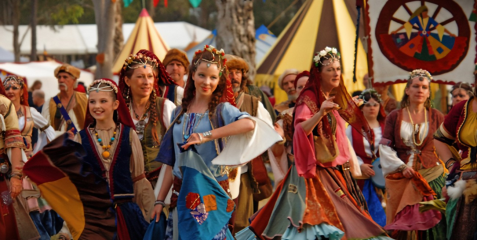
— “wail for the multitude of Egypt and cast them down; unto the nether parts of the earth” ~ the Gypsies, have been cast down as an itinerant people scattered across various parts of central Europe and the Balkans (Romania, Bulgaria, Serbia, Montenegro, Macedonia, Croatia, Bosnia and Herzegovina, Slovenia, the Czech and Slovak republics, and Hungary) and Southern France, as well as Turkey;
— but allegedly to have originated from northern India, yet only scanty evidence are given and none seems to be living there today. In fact all evidence point to the fact that they have originated from Egypt, and scattered around various countries;
— “And I will make the land of Egypt desolate in the midst of the countries that are desolate, and her cities among the cities that are laid waste shall be desolate forty years; and I will scatter the Egyptians among the nations and will disperse them through the countries” Ezekiel 29:12
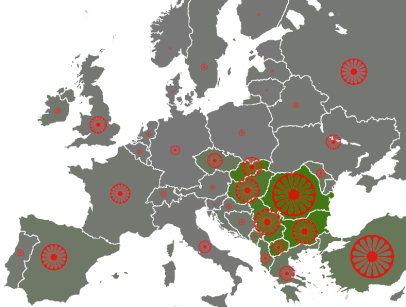
— today, Gypsies are known as Roma, but in Hebrew, their name is derived from the Egyptian city of Zoan, known as “the royal city of the Pharaohs” or Tanis (as the Targum says), at one time the royal and capital of the country; and this is from Wikipedia (Romani people):
Hebrew: צוענים, romanized: Tzoanim. Derives either from the biblical Egyptian city of Zoan, or from the linguistic root צ־ע־נ, meaning “wander”
The English term Gypsy (or Gipsy) originates from the Middle English gypcian, short for Egipcien.
— and from the French and others’ entries:
French: gitan/tsigane, English gypsy, gipsy / dʒɪpsiː/, Irish: giofóg, Spanish/Catalan/Italian gitano, Basque: ijito, Turkish: çingene, all from Greek: Αἰγύπτιος, romanized: Aigýptios “Egyptian” (corrupted form: Γύφτος, Gýftos), and Hungarian: fáraónépe from Greek: φαραώ, romanized: pharaó “pharaoh” referring to their Egyptian provenance. And the medieval French referred the Romanies as Égyptiens;
— the Targum says,
“Son of man, prophesy over the multitude of Egypt and bring her down—her and the villages of the mighty nations; prophesy that they shall be delivered to the lower earth, with those who go down to the pit of the house of destruction.”
19 ‘Whom dost thou pass in beauty? Go down, and be thou laid with the uncircumcised.’
— instead of “the nations” it is the uncircumcised used 10 times with a pejorative connotation in this chapter alone; so why such a change? Perhaps the true message of these admonition is directed against Israel, and only using Egypt as a type!
— go down, and be thou laid with the uncircumcised; go down to the grave, and take thy place, and lie there among the wicked and most profligate of mankind, and such as might be most despised by the Egyptians, since they were already of the un-circumcision;
— the Targum says, “Whom do you surpass in strength? Go down and sleep with the guilty.”
20 They shall fall in the midst of them that are slain by the sword. She is delivered to the sword; draw her and all her multitudes. — by the sword; either of one another in civil war, or of their neighbours they invaded, or of Babylonians that invaded them;
— the Targum says,
“In the midst of those slain by the sword they shall be cast; to the sword they shall be delivered, to destroy them and all their multitude.”
21 The strong among the mighty shall speak to him out of the midst of hell with them that help him: ‘They are gone down; they lie uncircumcised, slain by the sword.’
— again, this subtle shift from heathen or ‘Egypt’ to the uncircumcised seems unnatural; unless this prophecy is an encrypted message concerning the destiny for both houses of Judah and Israel, where they were expected to be circumcised?
— second, the phrase “slain by the sword” or a small variant of it, are used nine times on this chapter alone; this seems to add weight that this is an encrypted message concerning the destiny for both houses of Israel and Judah during their 190/40 years of captivity for their iniquity in Ezekiel 4!
— the Targum says,
“The strongest of the mighty shall speak with him from the midst of Sheol, with his helpers; they have gone down, they lie there—the guilty ones, those slain by the sword.”
22 “Assyria is there and all her company; his graves are about him, all of them slain, fallen by the sword,
— Ashur is there, and all her company; in the state of the dead, or in a most desolate and ruinous condition; the great Assyrian monarchy, their kings, their princes, nobles, generals, soldiers and the vast subjects in all their dominions;
— the Targum says,
“There is Assyria and all her armies; all around them are their graves; all of them slain, who were killed by the sword.”
23 whose graves are set in the sides of the pit and her company is round about her grave; all of them slain, fallen by the sword, which caused terror in the land of the living. — “all of them slain, fallen by the sword” similar to “slain by the sword”
— also “the land of the living” is continuous repeated from verse 23 to 27, and then again verse 32? But why so many repeats? Could this tied in with The Sword and Flaming Fire from the South!
— the Targum says,
“Whose graves were delivered to the sides of the pit of the house of destruction, and their armies were all around their graves; all of them slain, who were killed by the sword, who were delivered to breaking because they ruled [harshly] in the Land of Israel.”
24 “There is Elam and all her multitude round about her grave, all of them slain, fallen by the sword, who are gone down uncircumcised into the nether parts of the earth, who caused their terror in the land of the living; yet have they borne their shame with them that go down to the pit.
— Elam was consequently renamed Persia; “all of them slain, fallen by the sword” and “uncircumcised” repeated;
— the Targum says,
“There is Elam and all her multitude, all around them are their graves; all of them slain, who were killed by the sword, who descended as guilty ones to the lower earth, who were delivered to breaking because they ruled [harshly] in the Land of Israel; and they have received their humiliation with those who go down to the pit of the house of destruction.”
25 They have set her a bed in the midst of the slain with all her multitude. Her graves are round about him, all of them uncircumcised, slain by the sword. Though their terror was caused in the land of the living, yet have they borne their shame with them that go down to the pit. He is put in the midst of them that are slain.
— “all of them uncircumcised, slain by the sword” ~ surely this is talking of both houses of Judah and Israel instead of Egypt!
— the Targum says,
“In the midst of the slain, a place of their rest was appointed for them with all their multitude; all around them are their graves. All of them are guilty ones, slain by the sword, who were delivered to breaking because they ruled [harshly] in the Land of Israel; and they received their humiliation with those who go down to the pit of the house of destruction; in the midst of the slain they were delivered.”
26 “There is Meshech, Tubal, and all her multitude. Her graves are round about him, all of them uncircumcised, slain by the sword, though they caused their terror in the land of the living.
— again, “all of them uncircumcised, slain by the sword” continuous repeats with small variation. Also “the land of the living” is continuous repeated from verse 23 to 27, and then again verse 32? But why so many repeats?
— the Targum says,
“There are Meshech and Tubal and all their armies; all around them are their graves. All of them are guilty ones, slain by the sword, who were delivered to breaking because they ruled [harshly] in the Land of Israel.”
27 And they shall not lie with the mighty that are fallen of the uncircumcised, who are gone down to hell with their weapons of war; and they have laid their swords under their heads, but their iniquities shall be upon their bones, though they were the terror of the mighty in the land of the living.
— “with the mighty that are fallen of the uncircumcised, who are gone down to hell” repeats with small variation; also “the land of the living” is continuous repeated from verse 23 to 27, and then again verse 32? But why so many repeats unless they are meant to be for both houses of Judah and Israel?
— the Targum says,
“And they shall not lie with the mighty who were killed from among the guilty, who went down to Sheol with their weapons of war; and they placed their swords under their heads, and their sins were upon their bones; because the mighty were delivered to breaking because they ruled [harshly] in the Land of Israel.”
28 Yea, thou shalt be broken in the midst of the uncircumcised, and shalt lie with them that are slain with the sword.
— the word “sword” is used 16 times, mostly about being slain or fell by the sword in this chapter along, showing much emphasis about how their fate lies. Also, “in the midst of the uncircumcised, and shalt lie with them that are slain with the sword” ~ a variant of the same;
— the Targum says,
“And you, in the midst of the guilty you shall be broken, and you shall lie with those slain by the sword.”
29 “There is Edom, her kings and all her princes, who with their might are laid by them that were slain by the sword. They shall lie with the uncircumcised and with them that go down to the pit.
— Edom; the posterity of Esau, the name of the country too in which they dwelt, “shall lie with the uncircumcised and with them that go down to the pit” ~ another variant;
— the Targum says,
“There is Edom, her kings and all her princes, who were delivered in their might with those slain by the sword; they shall lie with the guilty and with those who go down to the pit of the house of destruction.”
30 “There are the princes of the north, all of them, and all the Sidonians, who are gone down with the slain. With their terror they are ashamed of their might, and they lie uncircumcised with them that are slain by the sword, and bear their shame with them that go down to the pit.
— there are here six nations, Asshur, Elam, Meshech, Tubal, Edom, Sidon, which added to Egypt make up seven, “they lie uncircumcised with them that are slain by the sword” ~ another variant;
— the Targum says,
“There are the princes of the north, all of them, and all the Sidonians, who descended with the slain; in their being broken from their might, they are ashamed; and they lie as guilty ones with those slain by the sword, and they have received their humiliation with those who go down to the pit of the house of destruction.”
31 “Pharaoh shall see them, and shall be comforted over all his multitude, even Pharaoh and all his army slain by the sword, saith the Lord God. — Pharaoh and all his army are slain with the sword, “slain by the sword,” repeated;
— the Targum says,
“Pharaoh shall see them and be comforted over all his multitude; those slain by the sword—Pharaoh and all his armies, says the Lord God.”
32 For I have caused My terror in the land of the living; and he shall be laid in the midst of the uncircumcised with them that are slain with the sword, even Pharaoh and all his multitude, saith the Lord God.”
— even Pharaoh and all his multitude, “laid in the midst of the uncircumcised with them that are slain with the sword” ~ another variant; also “the land of the living”
— Egypt was described as “the great dragon that lieth in the midst of his river” (Ezekiel 29:3) are now being “are slain with the sword, even Pharaoh and all his multitude.” What a drastic fall! But is this talking of the house of Israel at the endtime? The United States has eleven fleets roaming up and down the five oceans around the world today!
Under “Romani people” from Wikipedia:
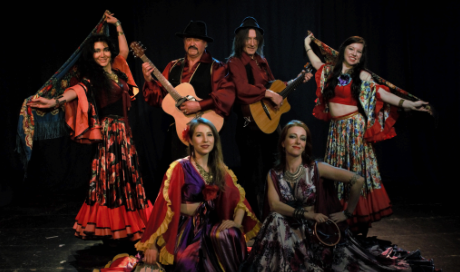
The English term Gypsy (or Gipsy) originates from the Middle English gypcian, short for Egipcien. The Spanish term Gitano and French Gitan have similar etymologies. They are ultimately derived from the Greek Αιγύπτιοι (Aigyptioi), meaning Egyptian, via Latin.
This designation owes its existence to the belief, common in the Middle Ages, that the Romani, or some related group (such as the Middle Eastern Dom people), were itinerant Egyptians. This belief appears to be derived from verses in the Biblical Book of Ezekiel (29:6 and 12–13) which refer to the Egyptians being scattered among the nations by an angry God.
In his book The Zincali: an account of the Gypsies of Spain, George Borrow notes that when they first appeared in Germany, it was under the character of Egyptians doing penance for their having refused hospitality to Mary and her son. As described in Victor Hugo’s novel The Hunchback of Notre Dame, the medieval French referred to the Romanies as Egyptiens.
As Gypsies, these Egyptians endured God’s judgment, being deprived of a homeland, scattered throughout the nations, and despised by every towns and villages they encountered. Yet, they were not regarded as known by God, which were a special term reserved only for both houses of Israel.
Notice the composite message of sweetness and bitterness to the house of Israel below!
“You only have I known of all the families of the earth; therefore I will punish you for all your iniquities” Amos 3:2
“And the Lord shall scatter thee among all people, from the one end of the earth even unto the other; and there thou shalt serve other gods, which neither thou nor thy fathers have known, even wood and stone” Deuteronomy 28:64
Hence, could what these Gypsies have been going through were to provide a glimpse of what the house of Israel would be going through?
And speaking of a rebellious house, that this, the house of Israel:
14 And I will scatter toward every wind all who are about him to help him, and all his troops; and I will draw out the sword after them.
15 And they shall know that I am the Lord, when I shall scatter them among the nations and disperse them in the countries.
16 But I will leave a few men of them from the sword, from the famine and from the pestilence, that they may declare all their abominations among the nations whither they come; and they shall know that I am the Lord.” Ezekiel 12:14-16
— the Targum says,
“For the mighty were delivered to breaking because they ruled [harshly] upon the earth; and they shall lie in the midst of the guilty with those slain by the sword—Pharaoh and all his multitude, says the Lord God.”


 Joel
Joel A Prophecy of Esau and Jacob