
The Targum, an Insight of Ezra (A)
The Targum, which originated in the Aramaic language and is strongly linked to the work of Ezra, holds significance for shedding light on biblical concepts. When the Masoretic Text can be vague, uncertain, or unclear, the Targum often offers clearer meaning, broader insight, and deeper understanding.
Yes, sometimes the Targum clarifies metaphors and interprets idioms or difficult passages instead of translating them literally, which often makes no sense. Such an endeavor should be highly commended rather than criticized.
For example, the Targum interprets natural imagery—like cedars, cypresses, oaks, forests, and fire—as metaphors for political political and social structures, especially kings, rulers, governors, and wealthy elites. Such imagery can be sweeping: forests laid waste, lions roaring as their habitat is destroyed, and power structures crumbling. Fire symbolizes divine punishment, sweeping through defenses and dismantling the very foundations of their power.
Translating such natural imagery literally could convey limited information or even distort it, but Ezra was determined to share their true meaning. He was a righteous man, for God had prepared his heart to seek the law of the Lord, to follow it, and to teach the statutes and judgments in Israel Ezra 7:10.
(1) Lamentations 1:2 She weepeth sorely in the night, and her tears are on her cheeks; among all her lovers she hath none to comfort her. All her friends have dealt treacherously with her; they have become her enemies.
When Moses the Prophet sent messengers to spy out the land, the messengers returned and gave forth a bad report concerning the land of Israel. This was the night of the ninth of Ab. When the people of the House of Israel heard this bad report which they had received concerning the land of Israel, the people lifted up their voice and the people of the House of Israel wept that night.
Immediately the anger of the LORD was kindled against them and he decreed that it should be so in that night throughout their generations over the destruction of the Temple.
When it was told through prophecy to Jeremiah the High Priest that Jerusalem would be destroyed at the hand of the wicked Nebuchadnezzar unless they repented, he immediately entered and rebuked the people of the House of Israel, but they refused to accept it. Therefore the wicked Nebuchadnezzar came and razed Jerusalem and set fire to the Temple on the ninth day in the month of Ab.
On that night, the Congregation of Israel wept bitterly and her tears flowed down her cheeks. There was no one to speak comfortingly to her heart from among all her idols after whom she loved to follow. As a result, all her friends were wicked to her; they turned against her and became her enemies. Lamentations 1:2 Aramaic
— the revelation of the ninth of Ab as the date (1) the people wept bitterly, distrusting God, when Moses received a bad report after sending them to spy out the land; and (2) Nebuchadnezzar sent the Babylonian army to destroyed Jerusalem and set fire to God’s Temple are two such details where the Targum provides greater clarity that both catastrophes occured on the same ninth day of Ab.
(2) Lamentations 1:3-4 Judah has gone into captivity because of affliction, and because of great servitude. She dwelleth among the heathen, she findeth no rest; all her persecutors overtook her in her straits. 4 The highways of Zion do mourn, because none come to the solemn feasts; all her gates are desolate. Her priests sigh, her virgins are afflicted, and she is in bitterness.
The House of Judah went into exile because they were oppressing the orphans and the widows and because of the great servitude to which they were subjecting their brothers, the sons of Israel, who had been sold to them. And they did not declare freedom to their servants and handmaids who were of the seed of Israel. As a result they themselves were delivered into the hand of the nations. And the Congregation of the House of Judah dwells among the nations and finds no rest from the hard labor to which they subject her. All who pursued her overtook her as she was hiding in the border regions and they persecuted her. Lamentations 1:3 Aramaic
All the while that Jerusalem was built, the sons of Israel refused to go up to be seen before the LORD three times a year. Because of Israel’s sins Jerusalem was destroyed and the roads to Zion are made mournful, for there is no one entering her at the time of the festivals. All the gates are desolate and her priests groan because the sacrifices have ceased. Her virgins mourn because they have stopped going out on the fifteenth of Ab and on the Day of Atonement (which is on the tenth day of Tishri) to dance the dances. Therefore she too is very bitter in her heart. Lamentations 1:4 Aramaic
— the revelation as to why the House of Judah went into Captivity is another example above where the Targum provides wider insight where the Masoretic Text is less precise. Here it is stated that eventually, the house of Judah also didn’t go to keep God’s solemn feasts in Jerusalem, spelt out as the three times a year in God’s presence, that God sent them into Captivity.
(3) Ephraim is oppressed and broken in judgement, because he willingly walked after the commandment [of man]. Hosea 5:11
“The nobles of the house of Ephraim are subdued in their judgments, for their judges turned aside to pursue false money.” Hosea 5:11 Jonathan
— the verse above is another example, which clears up the uncertainty regarding the cause of their calamity; by the tyranny of their kings or nobles, and the injustice of their judges, who looked only for monetary gains, not God’s commandment. The original Masoretic is uncertain, and the English King James version doesn’t make sense until enlightened and elucidated by the Targum.
(4) Therefore have I hewn them by the prophets; I have slain them by the words of My mouth; and thy judgements are as the light that goeth forth. Hosea 6:5
“Therefore, because I warned you by the mission of the prophets and you did not return, I brought upon you killers, for you transgressed against the word of My will; and My judgment goes forth like a river.” Hosea 6:5 Jonathan
— the Targum reveals the consequence of rejecting God’s prophets is another example where it offers greater clarity and deeper insight where the Masoretic Text is subject to ambiguities.
(5) The days of visitation have come, the days of recompense have come; Israel shall know it. The prophet is a fool; the man of the spirit is mad because of the multitude of thine iniquity and great hatred. Hosea 9:7
— the Masoretic Text is disjointed, its meaning unclear: why the prophet is a fool isn’t explained. The Targum provides a much better flow of thoughts.
“The days of punishment have come, the days of requital for sins have arrived. The house of Israel shall know that true prophets were prophesying to them, but they treated them as fools, and false prophets they considered delightful—because your sins multiplied and your transgressions grew strong.” Hosea 9:7 Jonathan
(6) Israel is an empty vine; he bringeth forth fruit unto himself. According to the multitude of his fruit he hath increased the altars; according to the goodness of his land they have made goodly images. Hosea 10:1
— the people of Israel are often compared to a vine, but “empty ” in the English translation is ambigious; Israel is an empty, or perhaps a luxuriant vine; and such an one from whence fruit might be expected, planted in good soil, pouring out much fruits, emptying itself;
— the Septuagint understands it in a positive sense, rendering it, “a flourishing vine, her fruit is abundant” putting forth branches, leaves and fruit; Hosea 10:1 Septuagint
— but the Targum renders it posiviely initially and in reverse eventually:
“Israel is a luxuriant vine, established by its practice of Torah. But the fruit of their deeds brought exile. When I increased their prosperity, they increased idol worship. When I brought goodness to their land, they built altars before their images.” Hosea 10:1 Jonathan
— although Israel is likened positively to a “luxuriant vine” the fruit of their deeds caused them to be yielding unrighteousness, their abundance should bring blessing, more fruit or material wealth, the better the harvests, but it soon brings more altars to their gods; the more the obelisks or pillars to pagan gods;
— and in the context of this chapter, the Targum rendering is more complete and correct, as the text below says Israel’s hearts are divided between God and their idols, as in Ahab’s time between God and Baal; or for today, between God and the world; rather than wholly belonging to God.
(7) I will not execute the fierceness of Mine anger, I will not return to destroy Ephraim; for I am God, and not man, the Holy One in the midst of thee; and I will not enter into the city. Hosea 11:9
— the phase “and I will not enter into the city” is vague; but the Targum enlightens it with wider insight,
“I will not act with the full force of My anger, nor will My word return to destroy the house of Israel. For I am God, My word endures forever, and My deeds are not like the deeds of flesh that dwell upon the earth. Thus I have decreed by My word that My holy Presence shall be among you, and I will not exchange it for another city besides Jerusalem.” Hosea 11:9 Jonathan
(8) That which the palmer worm hath left hath the locust eaten; and that which the locust hath left hath the cankerworm eaten; and that which the cankerworm hath left hath the caterpillar eaten. Joel 1:4
“And I will restore to you the years that the locust hath eaten, the cankerworm and the caterpillar and the palmer worm, My great army which I sent among you. Joel 2:25
— locust … cankerworm … caterpiller … palmer worm—the reverse order from Joel 1:4, where God will restore not only what has been lost by the full-grown consuming locust, but also what has been lost by the less destructive licking locust, and swarming locust, and gnawing locust;
— Jamieson-Fausset: four stages of locusts, rather than four species of locusts: (1) the gnawing locust; (2) the swarming locust; (3) the licking locust; (4) the consuming locust;
— and the Lord will restore to you, that is, for the house of Jacob, make up the years that the locust hath eaten your crops, the canker-worm and the caterpillar and the palmer-worm, his great army which he sent among you, the insects of Joel 1:4 being named in the reverse order;
— the Targum reveals this was God talking, not of literal locusts, but locusts symbolic of foreign oppressors, of a succession of an invading foreign human army instead:
“I will repay you with good years in place of the years stolen from you by idol-worshippers, nations, tongues, rulers, and kingdoms, through the punishment of the great army I sent against you.” Joel 2:25 Jonathan
(9) “And I also have given you cleanness of teeth in all your cities, and want of bread in all your places; yet have ye not returned unto Me,” saith the Lord,” Amos 4:6
— this is confusing, what is the cleanness of teeth? although it is hinted the “want of bread in all your places;”
— the Targum explains the idiom, “clean teeth” to mean it’s a curse: there was no food to dirty them:
“And I also gave you cleanness of teeth in all your cities and lack of food in all your places. Yet you did not return to My worship, says the Lord,” Amos 4:6 Jonathan
(10) In that day shall one take up a parable against you, and lament with a doleful lamentation and say, ‘We are utterly despoiled; He hath changed the portion of my people. How hath He removed it from me! Turning away, He hath divided our fields.’” Micah 2:4
— in the day of judgment, people will compose a parable and a lament about the corrupt elites; they will lament and declare that they have been completely plundered; the land that belonged to God’s people has been taken from them and handed to others; they would be expelled from their inheritance and their portion is divided among those who hate them;
— the Targum expresses how this parable becomes a proverb by intensifing the moral and emotional weight of the Masoretic text: that is, emphasizing those who plundered will have themselves utterly plundered:
“At that time a proverb and a lament will be taken up about you, and in the lament it will be said: ‘We have been plundered—utterly plundered! The portion of my people has been taken away and given to others; from their inheritance they are driven out; their portion is divided to those who hate them.’” Micah 2:4 Jonathan
— the people who once exploited others will themselves be plundered, their inheritance lost, and their land divided among outsiders. It is a prophetic reversal: the oppressors become the oppressed, and their downfall becomes proverbial.
(11) The burden of Nineveh. The book of the vision of Nahum the Elkoshite. Nahum 1:1
— the burden of Nineveh; but why was this given wasn’t given, Jonah had earlier being sent to this city to warn them with ruin for their sins; at that time the king and all his people humbled themselves and repented and the threatened destruction was averted;
— but the Targum clears this up: that they soon relapsed to their former iniquities, and that Nahum prophesied after Jonah a considerable time, perhaps a hundred to a hundred and fifty years later; they reverted to sinning again;
The burden of the cup of cursing which Nineveh is to be made to drink. First Jonah, son of Amitti, of Gath Hepher, proph[e]sied against her, and she turned from her sins; and now that she sinned again, Nahum from the house of Koshi prophesied against her again, according as it is written in this record. Nahum 1:1 Jonathan
(12) Thus saith the Lord: “Though they be quiet and likewise many, yet thus shall they be cut down when he shall pass through. Though I have afflicted thee, I will afflict thee no more; Nahum 1:12
— thus saith the Lord, Though the enemies be quiet and likewise many, yet shall they be cut down when he, the king from the Assyrians, shall pass through, but it’s not clear where or over what the passage is meant to be, making the text vague and ambiguous;
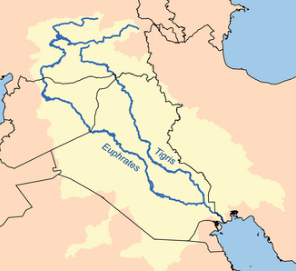
— however, the Targum clarifies this ambiguities by adding that the passing through are the crossing of the Tigris and the Euphrates.
Thus saith Jehovah: Though perfect in counsel and great in number be the peoples who are assembled to afflict thee, O Jerusalem, and they cross the Tigris and pass over the Euphrates and come to afflict thee, though I have made thee serve, I will not make thee serve again. Nahum 1:12 Jonathan
— and this seems to parallel a familiar scene in Revelation:
“Loose the four angels who are bound in the great river Euphrates . . . And the number of the army of horsemen was two hundred thousand thousand, and I heard the number of them.” Revelation 9:14,16
(13) Art Thou not from everlasting, O Lord my God, mine Holy One? We shall not die. O Lord, Thou hast ordained them for judgement; and, O mighty God, Thou hast established them for correction. Habakkuk 1:12 — O Lord God, you’re from eternity, aren’t you?
Q (1) If thou art from everlasting, we are not going to die, are we? O Lord, you have appointed them, a nation more wicked than Judah, for judgement; and you, O Rock, have established them for correction.
— the Targum recognizes God’s justice but struggles with the paradox of using such a violent nation as His instrument, says
“Are You not, O Lord, the one who created the world from the beginning? You are God, the true Judge over all Your creatures; holy in works of faithfulness; your word endures forever. O Lord, You have established him (the Chaldean) to execute judgment; and You have made him strong to bring punishment.” Habakkuk 1:12 Jonathan
(14) A prayer of Habakkuk the prophet upon “Shigionoth.”
O Lord, I have heard Thy speech and was afraid; O Lord, revive Thy work in the midst of the years. In the midst of the years make it known; in wrath remember mercy. Habakkuk 3:1-2
— the Targum provides great insight of allowing time for the wicked to repent, says,
“A prayer that Habakkuk the prophet prayed when it was revealed to him about the length of time given to the wicked—that if they return to the Torah with a whole heart, they will be forgiven, and all the sins they committed before Him will be pardoned. This is the prayer.”
“O Lord, I have heard the report of Your strength and I was in awe. O Lord, great are Your works: You give an extension of time to the wicked—if they return to Your Torah, they will be forgiven; but if they do not return, they provoke You during the years of life You granted them.
Therefore You are destined to make Your strength known in the years when You have said You will renew the world, to exact punishment from the wicked who transgressed Your word, and to remember the righteous who do Your will with mercy.” Habakkuk 3:1-2 Jonathan
(15a) Now Joshua was clothed with filthy garments, and stood before the Angel. Zechariah 3:3 — “Joshua the High Priest” he was wearing filthy garments:
— the Masoretic Text is ambigious, not explaining why he was filthy; but the Targum explains
“And Joshua had sons who had taken wives not fit for the priesthood, and he was standing before the angel.” Zechariah 3:3 Jonathan
Ordinary priests may NOT marry:
- a divorced woman
- a zonah (a woman who had prohibited sexual relations)
- a ḥalalah (a woman born from an invalid priestly union)
These categories are not moral judgments — they are legal statuses that determine whether a woman may enter the priestly family.
The High Priest has even stricter rules:
He may marry only a virgin, and may not marry:
- a widow
- a divorcee
- a previously sexually active woman
- any woman with a disqualifying status
And I said, “Let them set a clean miter upon his head.” So they set a clean miter upon his head, and clothed him with garments. And the angel of the Lord stood by.
(15b) And He answered and spoke unto those who stood before Him, saying, “Take away the filthy garments from him.” And unto him He said, “Behold, I have caused thine iniquity to pass from thee, and I will clothe thee with change of raiment.” Zechariah 3:4
— or as the Targum says
“And he answered and said to those who minister before him, saying; and they said to him, ‘Remove the women who are not fit for the priesthood from his house.’ And he said to him, ‘See, I have removed your sin from you, and I will clothe you in pure garments.’” Zechariah 3:4 Jonathan
— saying, Take away the filthy garments from him, this signifying the removal of the people’s guilt, their wives not authorised to be married; and unto him He said, Behold, I have caused thine iniquity to pass from thee, that is, by an act of complete forgiveness, and I will clothe thee with change of raiment.
(15c) And I said, “Let them set a clean miter upon his head.” So they set a clean miter upon his head, and clothed him with garments. And the angel of the Lord stood by. Zechariah 3:5
— the Targum explains with further insight
“And I said, ‘Set a pure turban on his head,’ and they set a pure turban on his head, and they brought to him a woman who is fit for the priesthood, and the angel of the Lord stood by.” Zechariah 3:5 Jonathan
(16a) Who art thou, O great mountain? Before Zerubbabel thou shalt become a plain; and he shall bring forth the headstone thereof with shoutings, crying, ‘Grace, grace unto it!’” Zechariah 4:7
The Targum paraphrases the words thus,
“What do you think this foolish kingdom is before Zerubbabel? Behold, it is like a plain and he shall reveal his Anointed (the Messiah), whose name was spoken beforehand and he shall rule over all kingdoms.”
— thus the Targum testifies that Zerubbabel is prophetically the Messiah, the Son whose name is said from eternity. A man like Cyrus or Josiah may be anointed, but neither of their names could have come from eternity, nor could any of these men rule all nations, except the Son of God. (Ezra, the one who inspires the translationof the Sacred Text into the Targum, also knows about Zerubbabel being the Messiah!).
— who art thou, 0 great mountain? The construction of the Temple being a monstrous obstacle, but before Zerubbabel thou shalt become a plain, he would easily overcome all the difficulties connected with the completion of this momentous work;
— and the angel shall bring forth the headstone thereof, the uppermost stone of its walls, the headstone or the corner stone in the building up of his church, fulfilled only by the Messiah;
— with shoutings, crying, Grace, grace unto it! that is, May God grant grace to this stone and to the building which it represents, so that it may stand forever!
(16b) “The hands of Zerubbabel have laid the foundation of this house; his hands shall also finish it. And thou shalt know that the Lord of hosts hath sent me unto you” Zechariah 4:9
— the Targum paraphrases in this sense,
“The hands of Zerubbabel began to build this house and his hands shall complete it, and you shall know that the Lord of Hosts has sent me to prophesy to you.”
— thus together with Zechariah 4:7 Targum it testifies that Zerubbabel is one sent from God, the Father; hence Zerubbabel is the Son of God, the Messiah;
— the hands of Zerubbabel, the Messiah, have laid the foundation of this house during his first coming, his hands shall also finish it, whence it follows that the entire situation has a deeper significance than that of a mere earthly Temple, namely, that the Lord, in the Word that was made flesh, was coming to complete the Temple of the Kingdom of God;
Remember, laying side by side along with the Masoretic Text, the Targum is another source of the Bible. Started by Ezra for those returning from Babylon and Persia, these returnees they could only understand in Aramaic; hence the Targum is as if Ezra is speaking to them in ancient times and to us today from the Hebrew Text quoted.
(17) The burden of the word of the Lord in the land of Hadrach and Damascus, shall be the rest thereof, when the eyes of man, as of all the tribes of Israel, shall be toward the Lord. Zechariah 9:1 — the location of Hadrach in the Masoretic Text is unknown,
— the land of Hadrach is a cryptic name; but the Targum interprets “the land of Hadrach” as “the southern land,” a geographic land where Esau once lived; and thus as well as the land of Damascus in the north shall be returned to the Lord;
— the Targum says in full,
“The oracle of the word of the Lord in the southern land, and Damascus shall be turned to be from the land of His Presence, for before the Lord the deeds of human beings are revealed, and He is revealed over all the tribes of Israel.”
— when the eyes of man as of all the tribes of Israel shall be drawn toward the Lord, both the house of Israel and the house of Judah being directed to the Lord and both will return to the land of Promise, taking over both the land of the Syrians with Damascus in the north and Negev in the south.
(18) Out of him came forth the corner, out of him the nail, out of him the battle bow, out of him every oppressor together. — the phase “out of him” wasn’t established clearly; was it the shepherd or house of Judah? and what came forth the corner? Zechariah 10:4
— the Targum says,
“From him [Judah] will come his king, from him his Messiah (anointed one), from him the strength of his warfare, and from him all his leaders shall arise together.”
— that is, “cornerstone” by which is meant a king or ruler, the corner-stone on which the entire building of the new Kingdom rests; out of him the nail; the Targum says, “out of him his anointed one (Messiah)” the pegs of the wall, from which the household utensils were suspended, types of the dependable men in a state;
(19) The burden of the word of the Lord to Israel by the hand of Malachi. Malachi 1:1
— the burden of the word of the Lord to Israel; by which is meant the prophecy of this book, so called because it is heavy, burdensome and distressful, either for the prophet to carry or the people to bear;
— but the Targum interprets the book not as the prophecy of a figure named Malachi, which has been assumed to be a pseudonym, but as a message delivered by or through Ezra, whom it identifies as the prophetic “messenger;”
— the Targum says
“A divine message of the LORD about Israel, delivered by the hand of His messenger, who is called Ezra the Scribe.” Malachi 1:1 Jonathan
— the Septuagint says the same: that “the word of the Lord to Israel by the hand of his messenger.” That is, there is no mention of a prophet named Malachi; although it fell short of naming who the author was.
This would also explain why Ezra (nor any other prophets or books) does not refer to a prophet named Malachi, while he did refer to other prophets such as Haggai and Zechariah (Ezra 5:1, 6:14);
Second, this identification is plausible, because book of Malachi reprimands the people for the same things Ezra did, such as marrying foreign pagan women;
Third, “Malachi” focuses heavily on corrupt priests, as Ezra, a priest himself, urged the people to follow the law; thus Ezra (and Ezekiel) held the office of both priest and scribe;
Finally, besides being a Priest and a Scribe, Ezra was here established also as a Prophet; hence in Rabbinic tradition, Ezra’s status is elevated to a level nearly equal to that of Moses; or as some would say, a second Moses.
(20) If ye will not hear, and if ye will not lay it to heart to give glory unto My name,” saith the Lord of hosts, “I will even send a curse upon you, and I will curse your blessings. Yea, I have cursed them already, because ye do not lay it to heart. Malachi 2:2
— if ye will not hear and if ye will not lay it to heart, if they persisted in your callousness over against God’s commands, to give glory unto my name, saith the Lord of hosts, by a worship in agreement with His commands;
— why the deaf ear turns into a curse upon you, and I will curse your blessings, both upon priests and people; those that bring the bad offerings, such as their corn, wine and oil; yea, God have cursed you already because you do not lay it to heart, presenting an indifferent front to the Lord’s admonitions;
— the Targum provides deeper insight by repeating that the fear of the Lord is lacking,
“If you do not accept this command, and if you do not set My fear upon your heart to give honor to My name, says the Lord of Hosts, then I will send a curse upon you, and I will turn your blessing into a curse—indeed, I have already cursed it—because you are not placing My fear upon your heart.” Malachi 2:2 Jonathan


 Joel
Joel A Prophecy of Esau and Jacob