
Ezekiel (Ch 1-2)
Ezekiel experienced his visions while living among the captives in Chaldea, whereas Jeremiah had begun prophesying long before that period of exile. For this reason, the book of Ezekiel was placed after Jeremiah. The name Ezekiel is commonly understood to mean “the strength of God” or “strengthened by God.”
Since Ezekiel was regarded as a major prophet, the events he recorded carry significant meaning. Although these events were historical, they hold implications for our time, particularly concerning the end times.
Ezekiel’s main message wasn’t just for the house of Judah, but also for the house of Israel, whose captivity took place about 135 years before Judah’s. So, we should try to understand the prophetic meaning behind all those historical settings.
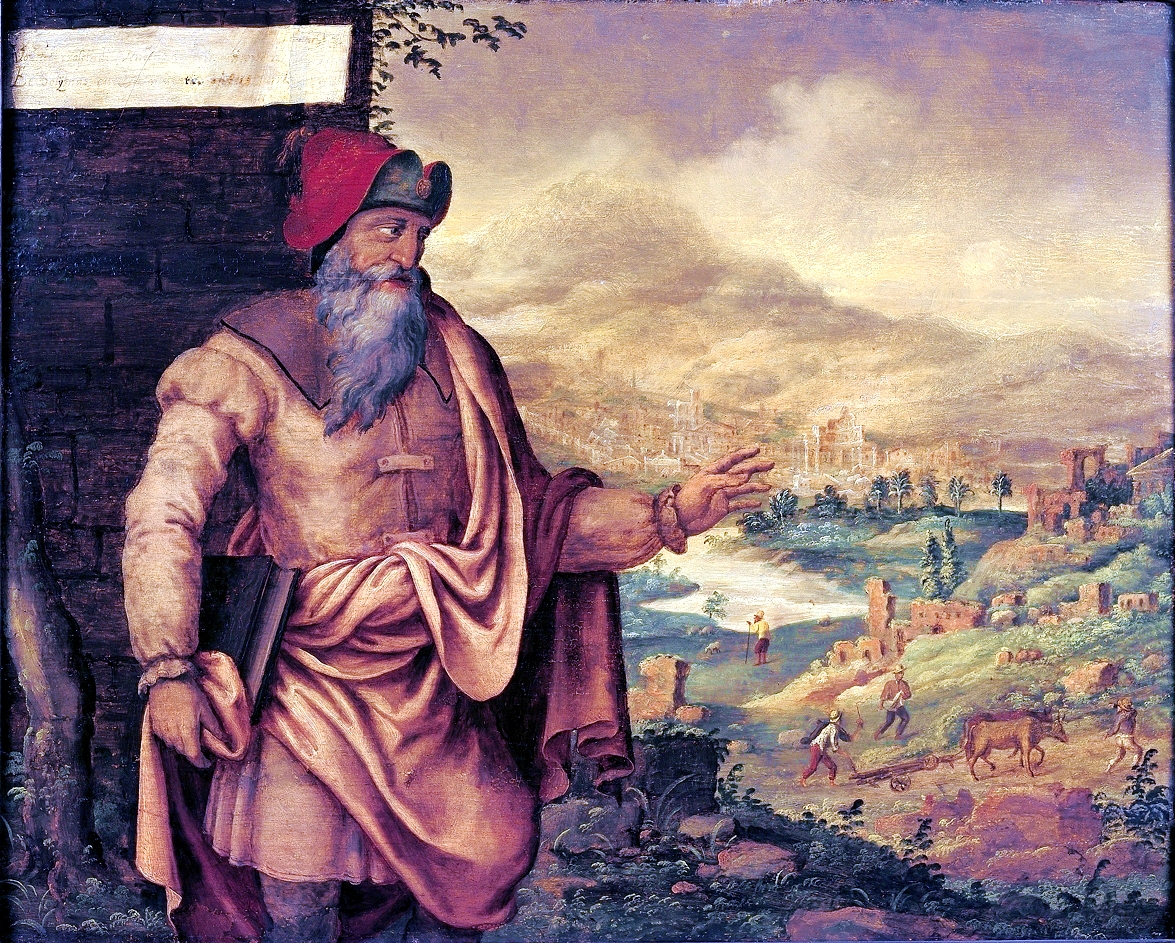
Nobody seems to grasp the various symbols and riddles in the book of Ezekiel well enough to piece them together into a clear and cohesive picture. The Jews couldn’t see how the house of Israel still had any relevance since their exile, while Christians have self-righteously convinced themselves they had replaced the Israelites and claimed God’s promises of eternity for themselves. Both perspectives are serious misunderstandings.
Hence, shepherds who think they know it all are severely reprimanded by God.
Then the Lord said unto me, ‘The prophets prophesy lies in My name. I sent them not, neither have I commanded them, neither spoke unto them. They prophesy unto you a false vision and divination, and a thing of nought and the deceit of their heart’” Jeremiah 14:14
“His watchmen are BLIND; they are all ignorant; they are all DUMB dogs, they cannot bark, sleeping, lying down, loving to slumber” Isaiah 56:10
Thus saith the Lord God: Behold, I am against the shepherds; and I will require My flock at their hand and cause them to cease from feeding the flock, neither shall the shepherds feed themselves any more. For I will deliver My flock from their mouth, that they may not be meat for them. Ezekiel 34:10
The secret is out when God revealed its timing to Ezekiel:
“Son of man, behold, they of the house of Israel say, ‘The vision that he seeth is for many days to come, and he prophesieth of the times that are far off’ (Ezekiel 12:27). Or as the RSV has it: “The vision that he sees is for many days hence, and he prophesies of times far off.”
That’s right, God had inspired the house of Israel to say that its timing was a great distance into the future, into our time and the message is primarily and principally for Ephraim, the head of the northern tribes, the United States of America and, secondarily, its European allies.
For understanding who the modern tribes of Judah and Joseph are, the best book to have expounded this subject is “Judah’s Sceptre and Joseph’s Birthright” by JH Allen (1847-1930).
For an overview for each of the thirteen Tribes: Who are the posterity of biblical Jacob?
Further, you may like to know who Ephraim and Manasseh are:
For detailed studies, see (1) The Birthrights (2) Ephraim and Manasseh (3) Ephraim as the Thirteenth Tribe (4) Who is this lying Ephraim? (5) The Ox with horns of a Unicorn
Ezekiel 1
1 Now it came to pass in the thirtieth year, in the fourth month, on the fifth day of the month, as I was among the captives by the River of Chebar, that the heavens were opened and I saw visions of God.
— the Targum, whose origin in the Aramaic language could be traced to Ezra, paraphrases the words thus, “and it was in the thirtieth year after Hilkiah the high priest found the Torah scroll in the Temple, in the court under the porch, in the middle of the night, after the moon had risen, in the days of Josiah son of Amon king of Judah;”
— Ezekiel was among the captives by the river Chebar in Chaldea; some thought it was the river Euphrates, others a distributary. Ezekiel was among the captives and this was around the year 587/586 BC, resulting in the exile of the inhabitants of Jerusalem to Babylon. The northern Kingdom Israel was taken as captives earlier around 721 BC (ie about 135 years earlier), hence the significance is that Ezekiel’s visions are prophetic;
— “and I saw visions of God.” And so at the end: “And I saw, and behold, a storm wind, etc.” — a similar case like John in Revelation when he was in visions;
— in his introduction to Ezekiel, John Gill wrote that there were already synagogues in Babylon; he states: “the account R Benjamin Tudelensis is that there is a synagogue of the Prophet Ezekiel by the river Euphrates; and over against the synagogue sixty towers; and between every tower a synagogue. In the court of the synagogue is a library;” ~ this means there were numerous synagogues while the Jews were in Babylon.
2 On the fifth day of the month (which was the fifth year of King Jehoiachin’s captivity),
3 the word of the Lord came expressly unto Ezekiel the priest, the son of Buzi, in the land of the Chaldeans by the River Chebar; and the hand of the Lord was there upon him. — Ezekiel (1:3) was a priest; in the Jerusalem Targum, the Prophet Ezekiel is called the son of Jeremiah the prophet (Gill);
— the Targum indicates Ezekiel could have started prophesying in the land of Israel before coming into Babylon, says
“The prophetic word came from before the Lord to Ezekiel son of Buzi, the priest, in the land of Israel — again, a second time — and it was spoken with him in the land of the Chaldeans, by the River Kebar; and there the spirit of prophecy rested upon him from before the Lord.”
4 And I looked, and behold, a whirlwind came out of the north, a great cloud, and a fire infolding itself; and a brightness was about it, and out of the midst thereof as the color of amber, out of the midst of the fire. — “A whirlwind came out of the north;” Nebuchadnezzar, whose land, Babylonia, lay north of Judea. Chaldea was denominated by Jeremiah prophecy;
— from the north, see also Jeremiah 1:14-15; Jeremiah 4:6; Jeremiah 6:1; it was from that direction that the Assyrian and the Chaldæan conquerors were accustomed to descend upon the Holy Land;
— the Targum says
“And I saw, and behold: a storm‑wind was coming from the north, a great cloud, and a blazing fire, and a radiance surrounded it; and from within the cloud and the storm‑wind there was something like the appearance of ḥashmal emerging from within the fire.”
— ḥashmal is a mysterious term—often described as a blinding, unendurable brilliance associated with the appearance of the divine likeness on the throne (v 27).

5 Also out of the midst thereof came the likeness of four living creatures. And this was their appearance: they had the likeness of a man. — out of the midst of that same whirlwind from the north (v4) came “the likeness of four living creatures.”
— the Targum says
“And from within it, the likeness of four creatures; and this was their appearance: they had the likeness of a human being.”
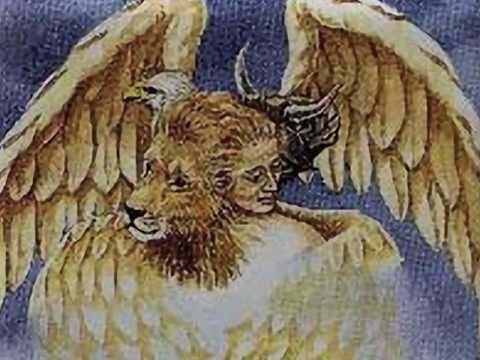
6 And every one had four faces, and every one had four wings. — as in Ezekiel 10:21, each cherub has four wings, or two elsewhere (Exodus 25:20; in the Temple overshadowing the mercy-seat, or in the garden of Eden keeping the way of the tree of life, always indicate the immediate presence of God). But in Isaiah 6:2, each seraphim has six wings;
— Rabbi Rashi (1040-1105 France): and each one had four faces: “Each one” means that the human countenance had four faces, as did that of the lion, the eagle, and the ox, totaling sixteen [faces] to one living being. It was thus for each living being, and four wings for each of the faces, totaling sixty-four wings for each living being. This is [why] Jonathan paraphrased: two hundred fifty-six wings;
— in the Targum, whose origin in the Aramaic language of understanding the Scriptures could be traced to Ezra; multiplies the faces in a strange monstrous manner, paraphrasing the words thus, “each had four faces, and there were four faces to everyone “of them”, and every creature had sixteen faces; the number of the faces of the four creatures was sixty and four.”
— the Targum says
“Each creature had four faces, and each one had four faces, making sixteen faces for a single creature. The total number of faces for the four creatures was sixty‑four.
Each creature also had four wings, and each one had four wings, giving sixteen wings for each face and sixty‑four wings for a single creature. The total number of wings for the four creatures was two hundred and fifty‑six.”
7 And their feet were straight feet, and the soles of their feet were like the sole of a calf’s foot; and they sparkled like the color of burnished brass.
— the Targum says
“Their legs were straight, and the hoof of their feet was like the hoof of a rounded calf. As they moved, they shook the world, and they gleamed like burnished bronze.”
8 And they had the hands of a man under their wings on their four sides; and all four had their faces and their wings.
— the Targum says
“Human‑like hands were set beneath their wings on all four sides, so that they could take coals of fire from between the cherubim, beneath the firmament above their heads, and place them into the hands of the fiery beings to scatter over the place of the wicked, destroying those guilty of transgressing His word. And their faces and their wings were the same for all four of them.”
9 Their wings were joined one to another. They turned not when they went; they went every one straight forward.
— the Targum says
“They were arranged facing one another; their wings did not turn as they moved, and each creature went straight forward in the direction of its face.”
10 As for the likeness of their faces, all four had the face of a man, and the face of a lion on the right side, and all four had the face of an ox on the left side; all four also had the face of an eagle.
— the Targum says
“Their faces had the likeness of a human face; all four also had a lion’s face on the right, an ox’s face on the left, and an eagle’s face as well.”

North: DAN (Eagle); East: JUDAH (Lion); South: REUBEN (Man): West: EPHRAIM (Ox)
11 Thus were their faces. And their wings were stretched upward; two wings of every one were joined one to another, and two covered their bodies.
— the Targum says
“Their faces and their wings were spread upward, with two wings directed toward one another, while the other two wings covered their bodies.”
12 And they went every one straight forward; whither the spirit was to go, they went, and they turned not when they went.
— the Targum says
“The creature moved straight in the direction of its face; wherever it was willed for them to go, they went, and they did not turn as they moved.”
13 As for the likeness of the living creatures, their appearance was like burning coals of fire and like the appearance of lamps; it went up and down among the living creatures, and the fire was bright, and out of the fire went forth lightning.
— the Targum says
“The appearance of the creatures was like burning coals of fire, like the look of blazing torches; fire flared up between the creatures, the fire shone brightly, and lightning came forth from the fire.”
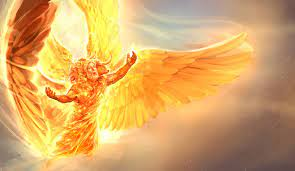
14 And the living creatures ran and returned, like the appearance of a flash of lightning. — not only was the appearance of the cherubim thus glittering, but also their speed as they “ran and returned” was liked that of lightning.
— the Targum says
“The creatures went forth to carry out the will of their Master, whose Presence rests above them in the heights. Their many‑eyed faces see in every direction, and they encircle and cover the world. The creatures move and return as one, swift as lightning.”
15 Now as I beheld the living creatures, behold, a wheel was upon the earth by each of the living creatures with his four faces.
— the Targum says
“And I looked at the creature, and behold, a single wheel was positioned upright, reaching upward toward the height of heaven, beside the creature, corresponding to its four faces.”
16 The appearance of the wheels and their work was like unto the color of beryl, and all four had the same likeness; and their appearance and their work was, as it were, a wheel in the middle of a wheel.
— the Targum says
“The wheels and their construction looked like a precious stone; all four had the same form, and their appearance and workmanship were like the structure of a wheel set inside another wheel.”
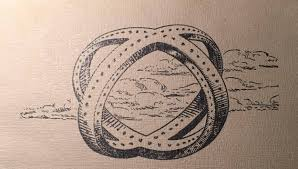
17 When they went, they went upon their four sides; and they turned not when they went.
— the Targum says
“They moved on all four of their sides, and as they went, they did not turn in their movement.”
18 As for their rims, they were so high that they were dreadful; and their rims were full of eyes round about the four.
— the Targum says
“Their upper surfaces were set facing the firmament, and they were tall and awe‑inspiring; and their backs were filled with eyes all around, on all four of them.”
19 And when the living creatures went, the wheels went beside them; and when the living creatures were lifted up from the earth, the wheels were lifted up.
— the Targum says
“When the creatures moved, the wheels moved in correspondence with them; and when the creatures rose upward toward the height of heaven, the wheels rose together with them.”
20 Whithersoever the spirit was to go, they went; thither was their spirit to go: and the wheels were lifted up opposite them, for the spirit of the living creature was in the wheels.
— the Targum says
“Wherever it was willed for them to go, they went; to whatever place the will directed them, they went. And the wheels rose together with them, for the spirit of the creatures was within the wheels.”
21 When those went, these went; and when those stood, these stood; and when those were lifted up from the earth, the wheels were lifted up opposite them, for the spirit of the living creature was in the wheels.
— the Targum says
“When the creatures move, they move; when they stand, they stand; and when they rise upright toward the height of heaven, the wheels rise together with them, for the spirit of the creatures is in the wheels.”

22 And the likeness of the firmament upon the heads of the living creatures was as the color of the terrible crystal, stretched forth over their heads above.
— the Targum says
“Over the heads of the creatures there appeared a firmament, resembling strong, gleaming ice, stretched out above them.”
23 And under the firmament were their wings straight, the one toward the other; every one had two which covered on this side, and every one had two which covered on that side of their bodies.
— the Targum says
“Beneath the firmament, their wings were arranged facing one another; each had two wings covering them, and each had two wings covering their bodies.”
24 And when they went, I heard the noise of their wings like the noise of great waters, as the voice of the Almighty, the voice of speech as the noise of a host. When they stood, they let down their wings;
— “as the voice of the Almighty;” like distant thunder, with hailstones and coals of fire, sometimes lightning flashes; for this is termed the voice of God, Psalms 18:13; Exodus 9:23; Exodus 9:28-29; Exodus 20:18.
— the Targum says
“I heard the sound of their wings, like the roar of many waters, like a voice from before the Almighty; in their movement it was like the sound of speech, as they praised and blessed their eternal Master, the King of the worlds. It was like the sound of the heavenly angelic hosts. But when the divine voice spoke, they stilled their wings.”
25 and there was a voice from the firmament that was over their heads when they stood and had let down their wings.
— the Targum says
“When it was His will to make His word heard by His servants, the prophets of Israel, a voice was heard from above the firmament, from between the cherubim beneath the firmament over their heads; and in their places the creatures stilled their wings before the divine speech.”
26 And above the firmament that was over their heads was the likeness of a throne, with the appearance of a sapphire stone; and upon the likeness of the throne was the likeness in appearance of a man above upon it.
— the Targum says
“Above the firmament over their heads there appeared something like a precious stone in the form of a throne, and upon that throne was a figure with the appearance of a human, high above.”

27 And I saw as the color of amber, with the appearance of fire round about within it. From the appearance of His loins even upward and from the appearance of His loins even downward, I saw, as it were, the appearance of fire, and it had brightness round about.
— the Targum says
“I saw something like the radiance of ḥashmal, like the appearance of fire within it all around—an overwhelming brilliance that no eye could look upon. Above it was a splendor too intense to behold, and below it I saw the appearance of fire, with brightness surrounding it.”
28 As the appearance of the rainbow that is in the cloud in the day of rain, so was the appearance of the brightness round about. This was the appearance of the likeness of the glory of the Lord. And when I saw it, I fell upon my face, and I heard a voice of One who spoke.
— this was the appearance of the likeness of the glory of God: of the divine Shekinah; His omnipotence and omniscience; the same BEING that dwelled in the Temple in Jerusalem, now manifested Himself to Prophet Ezekiel showing him events that are set to come, far into their future.
— the Targum says
“Like the appearance of a rainbow in the cloud on a rainy day, so was the radiance surrounding Him. This was the appearance of the likeness of the glory of the Lord. When I saw it, I fell on my face, and I heard a voice speaking.”
Ezekiel 2
1 And He said unto me, “Son of man, stand upon thy feet, and I will speak unto thee.” — the Most High said unto Ezekiel; “Son of man” emphasizes Ezekiel’s insignificance as mere human; it’s applied to Daniel only once (Daniel 8:17), while to Ezekiel it is used over ninety times; both were prophets during captivity in Babylon;
— the Targum says
“Then He said to me: ‘Human being, stand up on your feet, so that I may speak with you.’”
2 And the spirit entered into me when He spoke unto me, and set me upon my feet, so that I heard Him who spoke unto me. — this is the spirit of God that entered Ezekiel and spoke to him;
— the Targum says
“A spirit entered into me as He spoke, and it lifted me to my feet, and I was able to hear the One speaking to me.”

3 And He said unto me, “Son of man, I send thee to the children of Israel, to a rebellious nation (H1471 goy) that hath rebelled against Me. They and their fathers have transgressed against Me, even unto this very day;
— “I send thee to the children of Israel;” this targeted nation (H1471 goy) couldn’t be Judah, which were already in captivity, and not the Israel of old, the northern kingdom either, since it was already exiled by the Assyrians some 135 years earlier;
— connecting Scripture:
“Son of man, behold, they of the house of Israel say, ‘The vision that he seeth is for many days to come, and he prophesieth of the times that are far off’ Ezekiel 12:27. So the message has to be meant for the endtime, to the endtime house of Israel, “a rebellious nation (goy single; that is, collectively, a nation) that hath rebelled against Me.”
— the Targum also refers to the children of Israel, says
“He said to me: ‘Human being, I am sending you to the children of Israel — to a rebellious people who have defied My word. They and their fathers have rebelled against Me right up to this very day.’”
4 for they are impudent children and stiffhearted. I send thee unto them; and thou shalt say unto them, ‘Thus saith the Lord God.’ — “for they are impudent children and stiffhearted: hard-hearted; elsewhere stiffnecked: impudent—literally, “hard-faced” (Ezekiel 3:7,9);
— And the Lord said unto Moses, “I have seen this people, and behold, it is a stiffnecked people,” Exodus 32:9; showing no respect; obstinate, stubborn, with hearts that were like an adamant stone, and harder than the nether millstone; impenitent, obdurate, and inflexible;
— the Targum says
“The children of Israel are brazen‑faced and hard‑hearted, yet I am sending you to them. You must say to them: ‘Thus says the Lord God.’”
5 And they, whether they will hear or whether they will forbear (for they are a rebellious house), yet shall know that there hath been a prophet among them.
— John Gill: “yet shall know that there hath been a prophet among them; so that they were left without excuse, which was the purpose of the prophet being sent unto them; although there was little or no hope of reclaiming them; but, however, by such a step taken, they could not say that they had no prophet sent to reprove them for their sins, and warn them of their danger; had they, they would have listened to him, and so have escaped the evils that would come upon them.”
— the Targum says
“Whether they accept the teaching or refuse to turn from sin—since they are a rebellious people—they will nevertheless know that a prophet has been among them.”
6 “And thou, son of man, be not afraid of them, neither be afraid of their words, though briers and thorns be with thee and thou dost dwell among scorpions. Be not afraid of their words nor be dismayed at their looks, though they be a rebellious house.
— be not afraid of their words; as before; with which they are like briers, thorns and scorpions, being very grievous, defamatory and mischievous: as if “thou dwellest in the midst of a people whose works are like to scorpions.”
— the Targum says
“And you, human being — do not fear them or their words. They are rebellious and stubborn toward you, and you dwell among people whose deeds are like scorpions. Do not fear what they say and do not be intimidated by them, for they are a rebellious people.”

7 And thou shalt speak My words unto them, whether they will hear or whether they will forbear, for they are most rebellious. — “And they, whether they will hear or whether they will forbear (for they are a rebellious house), yet shall know that there hath been a prophet among them,” Ezekiel 2:5
— the Targum says
“Proclaim My prophetic words to them — whether they accept the teaching or refuse to turn from sin — for they are a rebellious people.”
8 But thou, son of man, hear what I say unto thee. Be not thou rebellious like that rebellious house. Open thy mouth, and eat what I give thee.”
— “Open thy mouth, and eat what I give thee” ~ this means Ezekiel was to hear it and internalize the message, then the people to whom such messages of God may come should also hear it read, mark, learn, and inwardly digest it, and be warned of this message;
— the Targum says
“And you, human being—receive what I am speaking to you. Do not be rebellious like that rebellious people. Submit yourself and accept what I am giving you.”
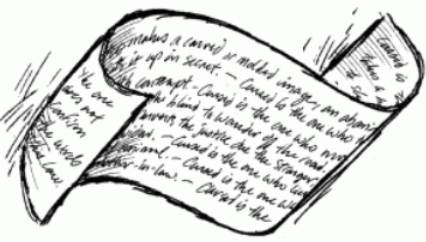
9 And when I looked, behold, a hand was sent unto me; and lo, a scroll of a book was therein. — behold a hand was sent unto me; a hand stretched out toward me.
— the Targum says
“I looked, and I saw something like a hand stretched out toward me, and in it was a scroll.”
10 And He spread it before me; and it was written within and without, and there were written therein lamentations and mourning and woe.
— “it was written within and without;” that is and it was written on the front and back, contrary to the state of rolls in general, which are written on the inside only, but this was also written on the outside, perhaps indicating a message of unusual urgency;
— in Chabad Bible, “lamentations” are interpreted as retribution of the righteous in this world; “mourning” are gift of reward to the righteous, over which they will sing in the world to come; and “woe” are of the punishments of the wicked in the world to come. Gill, quoted the Targum says, “if the house of Israel transgress the law, the people shall rule over them; but, if they keep the law, lamentation, and mourning, and sorrow, shall cease from them.”
— the Targum says
“He spread the scroll out before me, and I saw that it was written on the front and on the back — recording what had happened from the beginning and what would occur in the end. It said that if the house of Israel transgress the Torah, the nations will rule over them; but if they obey the Torah, calamity, suffering, and sighing will cease from them.”
— this verse seems like what is in Zechariah 5: a scroll written on the front and back
~~~~
For more about Ephraim and Manasseh, see
(1) The Birthrights (2) Ephraim and Manasseh (3) Ephraim as the Thirteenth Tribe (4) Who is this lying Ephraim? (5) The Ox with horns of a Unicorn


 Joel
Joel A Prophecy of Esau and Jacob