
CHINA’S QUANTUM RADAR!
China claims new anti-stealth radars can detect US F-35s, nuclear submarines, drones.
The radar technology at the World Radar Expo shows that China is investing in countering one of the US military’s biggest advantages: stealth.

Interesting Engineering • May 19, 2025 ~ AsiaTimes
China has taken a major step in countering the technological edge of US stealth platforms by unveiling next-generation anti-stealth radar systems.
These systems were showcased at the 11th World Radio Detection and Ranging Expo (World Radar Expo), which opened on Saturday in Hefei, Anhui Province.
The expo highlighted radar technologies that pose significant threats to US stealth fighter jets, unmanned aerial vehicles (UAVs), and even nuclear-powered submarines, platforms long considered the cornerstone of American strategic dominance.
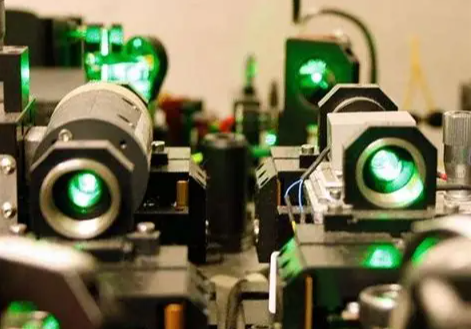
Anti-stealth radars
The JY-27V high-mobility meter-wave air surveillance radar was at the forefront of the exhibition.
The state-owned China Electronics Technology Group Corporation (CETC) developer describes the system as a “master artist” in detecting stealth targets.
Utilizing a low-frequency band, high-power aperture, and intelligent signal-processing algorithms, the JY-27V can pierce through the cloaking measures of stealth aircraft, China’s state-run Global Times reported.
It can effectively render platforms such as the F-22 Raptor, F-35 Lightning II, and B-2 Spirit bomber vulnerable to detection and targeting.
The JY-27V’s design includes a large antenna array with a significant spread-retract ratio, allowing for rapid setup and withdrawal within ten minutes, enhancing battlefield survivability and responsiveness.
According to CETC, this system can track stealth aircraft that usually avoid higher-frequency radars. This means a threat that was hard to detect can now be tracked.

2D phased scanning
The YLC-8E is an advanced radar that can detect stealth technology. It was highlighted at the event and raises important concerns for military analysts in the West.
Operating on the UHF band, the YLC-8E is mounted on a single vehicle and features a fully digital phased array system.
It’s 2D phased scanning and directional mechanical scanning, along with high-efficiency digital transmit-receive modules, provide long-range early warning against stealth platforms.
The YLC-8E’s design emphasizes mobility, resistance to jamming, and high operational reliability, qualities that increase its operational utility in fixed and mobile defense networks.
CETC claims that the radar significantly enhances China’s ability to detect and track stealth fighters and UAVs within and beyond its airspace.
Challenging US stealth
Another notable system on display was the SLC-7, a fourth-generation multifunctional radar dubbed the “all-around champion.”
It features adaptive anti-jamming capabilities and simultaneous multi-target tracking, which are critical in high-intensity conflict zones.
The SLC-7 can identify and track stealth and conventional aircraft, helicopters, drones, artillery shells, and even short-range ballistic projectiles.
Of particular interest to Western defense observers is the radar’s potential to detect stealth drones, such as the RQ-170 Sentinel, and maritime stealth platforms, including US nuclear submarines operating near the surface or deploying UAVs.
New systems like the SLC-7 use high data rates and advanced signal processing, which may undermine the invisibility of US naval and air assets in areas like the South China Sea and Western Pacific.
The radar technology at the World Radar Expo shows that China is investing in countering one of the US military’s biggest advantages: stealth.
These new systems could change the balance of air power and control at sea in future conflicts.
As US forces depend on stealth technology for their strategic reach, China’s expanding network of anti-stealth radar poses a serious challenge on today’s battlefield.
“The children of Ephraim, being armed and carrying bows, turned back in the day of battle” Psalm 78:9


 Joel
Joel A Prophecy of Esau and Jacob