
China displays new weapons in military parade
What new weapons did China has on display during its massive military parade?
CBS News • September 3, 2025 ~ ABC News Independent Diplomat IrishTimes
China showed off a range of weapons and military hardware with a massive parade on Wednesday, staged in front of President Xi Jinping and 20 other heads of state, including Russian President Vladimir Putin and North Korean leader Kim Jong Un.
Here’s a look at some of the weapons that were on display, including some the world had not seen previously:
Drones, AI and lasers
China’s LY-1 laser weapon was displayed during the parade for the first time, mounted on top of armored trucks. Defense analyst Alexander Neill told the BBC that the powerful device is believed to have the ability to disable electronics or blind pilots.
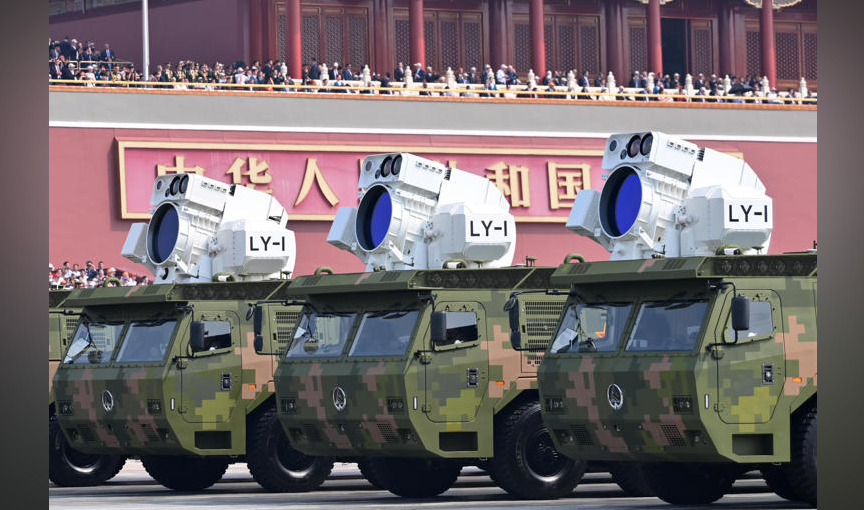
There were a number of conventional drones on display, as well as some AI-powered ones.
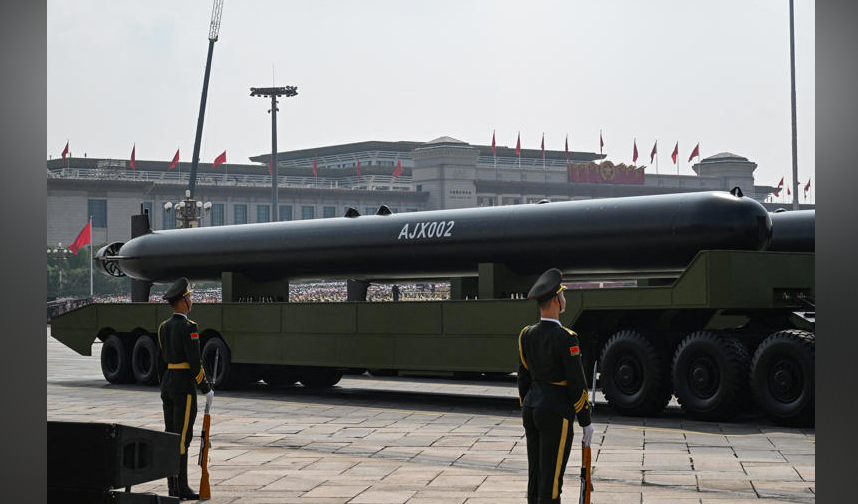
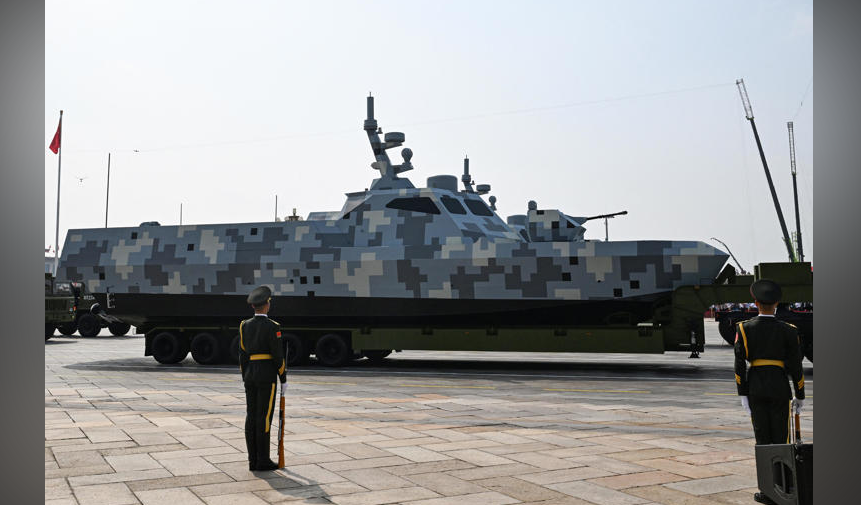
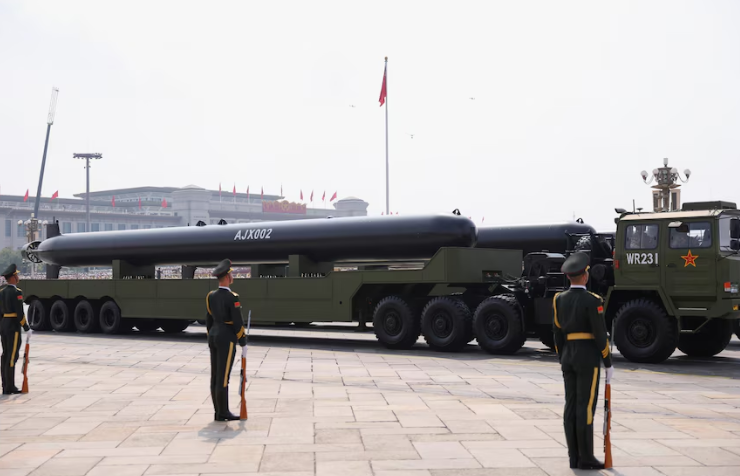
One that drew particular attention was the AJX002 giant submarine drone, which measures approximately 65 feet long, or 20 meters.
Also known as an extra-large uncrewed underwater vehicle, it could carry out reconnaissance or surveillance missions.
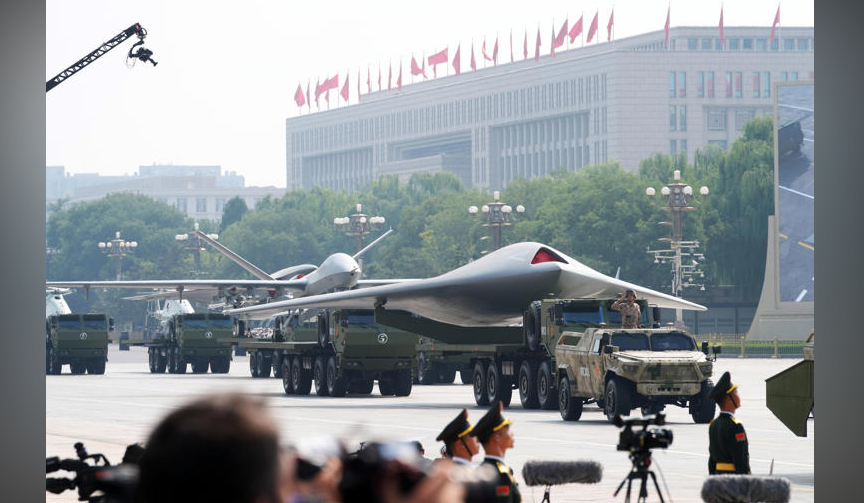
China also showed off stealth attack drones in the parade, including the GJ-11, which is capable of flying alongside manned fighter jets and aiding them in their missions.
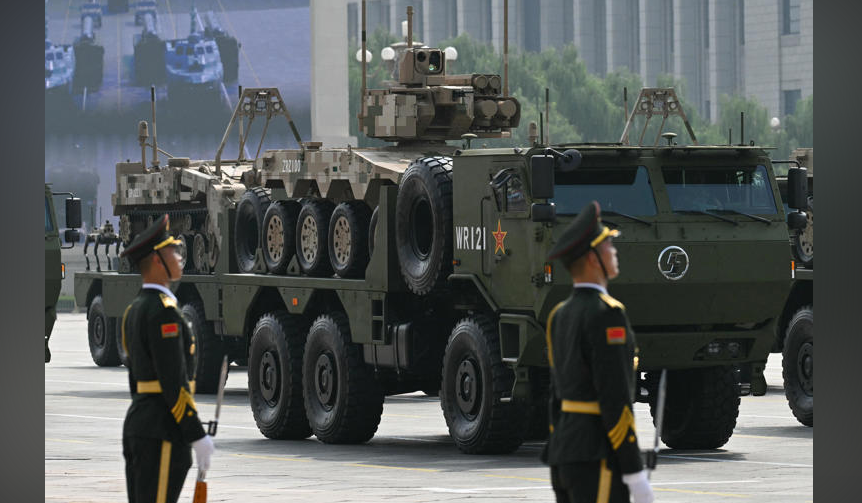
“Robotic wolves” were also on display. Experts say the four-legged, walking robots could be used for numerous operations, such as sweeping for mines, reconnaissance missions or hunting down enemy troops.
New nuclear-capable, long-range missiles
A new version of China’s Dongfeng-5 nuclear-capable intercontinental ballistic missile, the DF-5C, was unveiled for the parade. It is said to have a longer range than previous variants, Neill told the BBC. He said the missile can also carry up to 12 warheads on a single mission.
The new missile is silo-based, launched from underground facilities, and is meant to be a strategic deterrent, Neill said.
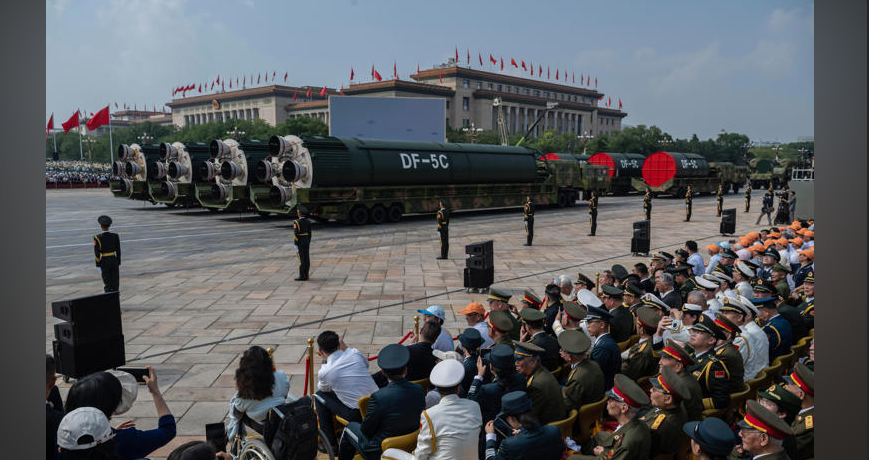
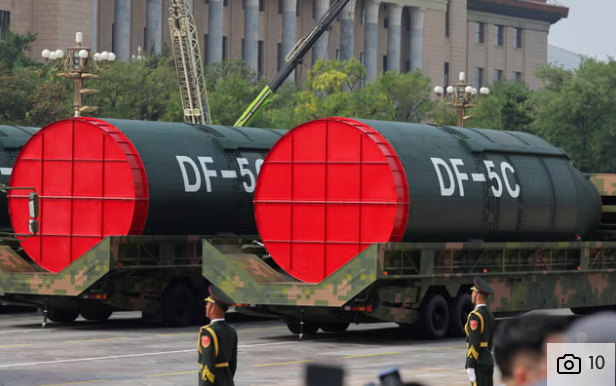
According to The Associated Press, the DF-5C has an estimated range of about 12,400 miles, which makes it easily capable of reaching any part of the United States from mainland China.
A number of other nuclear-capable missiles were rolled down central Beijing’s Chang-an (“Eternal Peace”) Avenue, including the DF-61. Like the DF-5C, it is an intercontinental ballistic missile, but the DF-61 can be fired from a mobile launcher. Little is known about the new weapon, but the previous model has a range of more than 7,500 miles, and it can also carry multiple warheads.
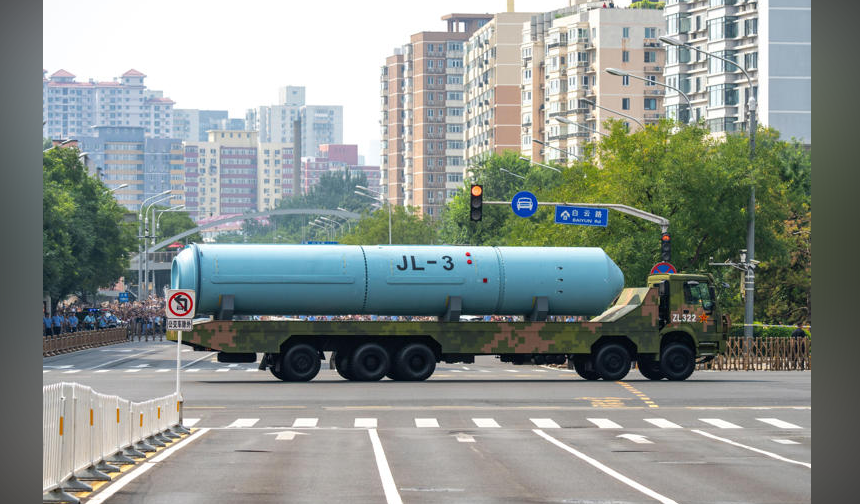
The AP said China’s parade also featured the JL-1 and JL-3 nuclear-capable long-range missiles, the first of which is launched from aircraft and the second from vessels at sea.
China wants to “replace traditional structures”
“China not only wants to augment, but replace traditional structures,” defense analyst Michael Raska told CBS News partner network BBC News, adding that it seems to have taken lessons from Russia’s war in Ukraine, where a strategy has been to “throw drones at the enemy” to wear down their defenses.
While some countries are concerned about incorporating artificial intelligence into their military systems, China appears to be plowing ahead and “believe they can control AI,” Raska told the BBC. “They are going all the way to integrate it into their systems.”
The parade showed that China has the resources to build up a significant arsenal, but Raska said the US still maintains the edge operationally.
The US is more agile in battle because it has a “bottom-up” culture, where decisions can be made and adapted on the ground in response to evolving situations, Raska said. China, on the other hand, “can have flashy platforms and systems but they will not move a finger until they receive an order from the top,” Raska told the BBC.
“The Chinese think it’s technology that creates deterrence. They believe that will deter the US…. but at the operational level, there have been instances which show they may not be as good as they say they are,” Raska said.
The 30 meters long AJX002 presents a long, slender profile — a stretched torpedo — with public estimates of roughly 18–20 meters in length and about 1–1.5 meters in diameter.
ABC News
China has unveiled a new “triad” of nuclear missiles, drones and lasers at the country’s largest ever military parade.
Nukes that can be launched from anywhere
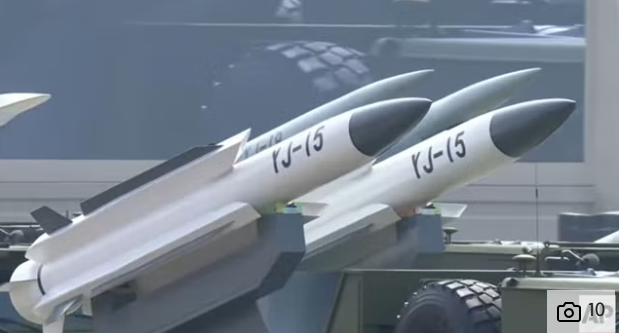
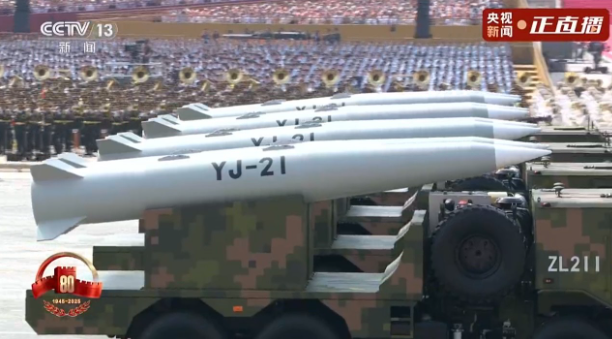
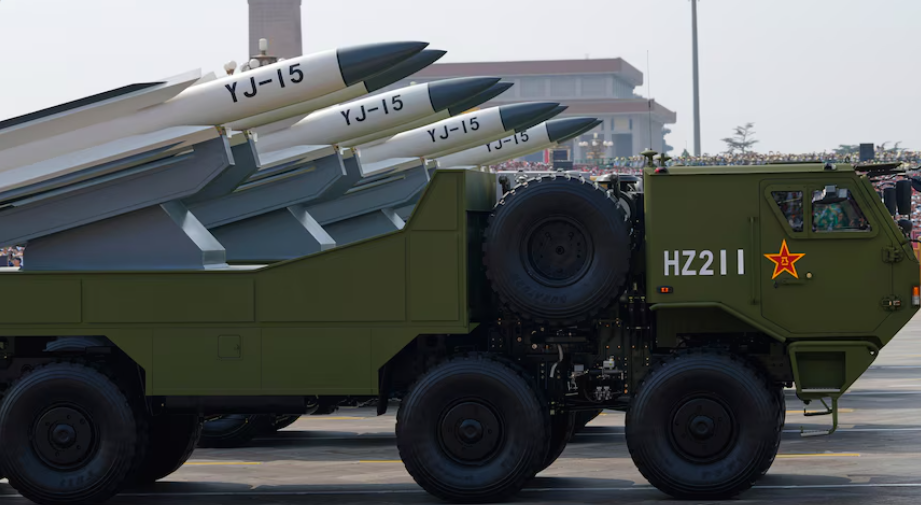
China for the first time showed off its triad of nuclear-capable missiles that can be launched from sea, land and air.
State news outlet Xinhua said the missiles were China’s strategic “ace” power to safeguard the country’s sovereignty and dignity.
Among the new missiles revealed at the parade was the Dongfeng-5C, or DF-5C, an intercontinental strategic nuclear missile with a “global reach,” according to Xinhua.
Drones underwater and in the sky
China has advanced underwater drones and Ms Parker said it appeared there were two new types on display in the parade.
One was an intelligence, surveillance and reconnaissance model and the other would be used for offensive purposes.
“It’s probably got explosives in the front of it, or the ability to deploy explosives,” Ms Parker told the ABC.
She said they could be a concern, particularly to Western forces in the Pacific.
“[China] seems to be ahead of other countries,” Ms Parker said.
“They seem to be accelerating the ability to integrate offensive capabilities — mines, torpedoes, explosives — into them.”
However, she stressed that just because they had been seen on the back of a truck at a parade, it didn’t mean the underwater drones’ capabilities had been proven.
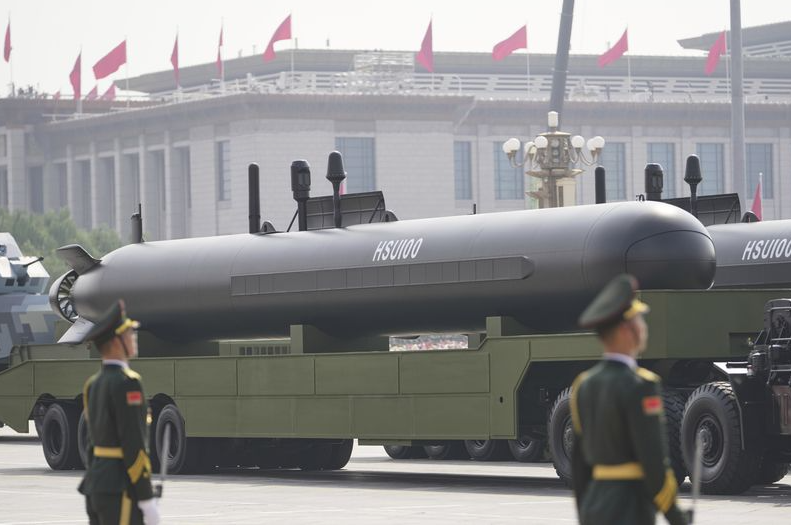
Ms Parker said it was clear from what was seen at the parade that China had been focusing on uncrewed aerial, underwater and ground vehicles.
China has been talking up AI integration, and its aerial drones’ ability to operate with fighter aircraft piloted by humans.
“We don’t know if that’s true, you can’t tell that from the back of a truck, but clearly they are investing in uncrewed capabilities,” she said.
The parade also featured unmanned helicopters designed to be launched from ships.
Why is China showing these weapons?
The key themes Ms Parker noticed from the weapons displayed was the focus on uncrewed drones and the ranges and variety of missiles.
“It demonstrates an advanced capability,” she said.
“[It’s about] showing a technologically advanced military and this second message of ‘by the way, you don’t necessarily know what we have.'”
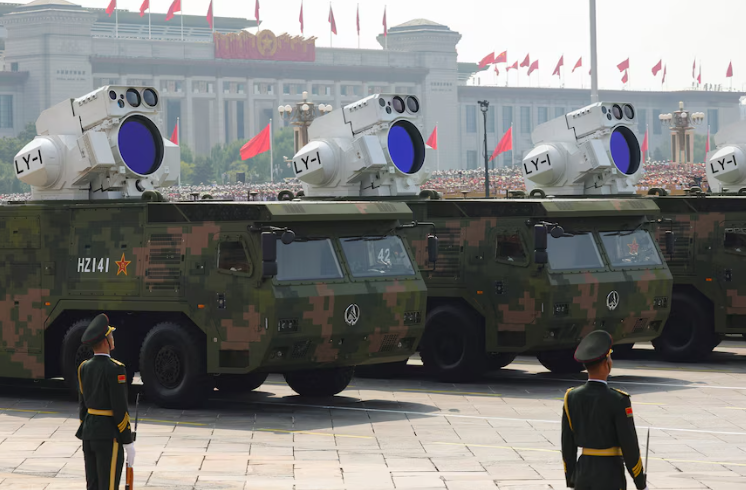
UNSW China expert Guangyi Pan told the ABC the new weapons demonstrated the PLA’s vision for future warfare.
“Undoubtedly, the greatest enhancement is in information warfare and electronic warfare, where the PLA will gain significant advantages,” he told the ABC.
He said the speed at which the new weapons had been developed showed “China’s leading position in both technological advancement (quality) and industrial manufacturing scale (quantity).”
Edward Chan, from the ANU’s College of Asia & the Pacific, told the ABC the parade signaled a significant leap in China’s military capability.
He said the broad spectrum of new military assets on display, including satellites, missile systems and drones, have been central to China’s military modernisation over the past decade.
“[They] reflect greater preparedness for potential conflicts in the Western Pacific,” Dr Chan said.
Space defence system
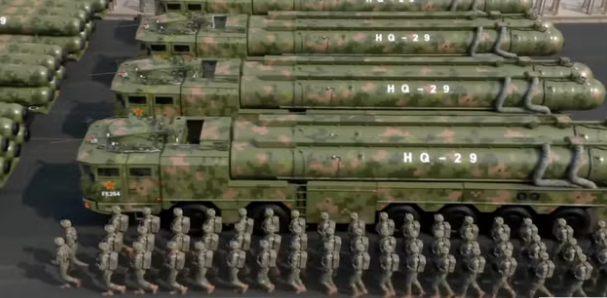
The HQ-29 space defence system, capable of taking down foreign satellites, was displayed for the first time at the parade in a prominent display of aerial power.
While not much is known about its exact capabilities, the large size implies an extreme range similar to the US Navy’s SM-3 Block IIA, which can be launched from land or ship.
Robot Dogs / Wolves
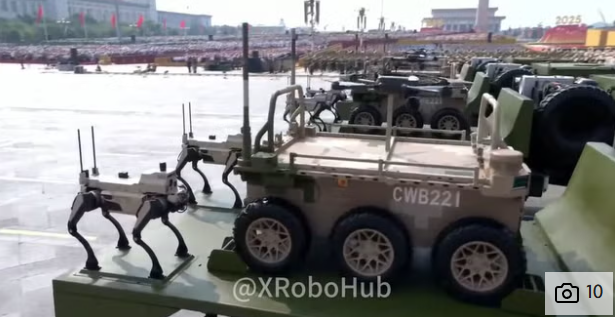
China displayed a legion of robot dogs or wolves, highlighting Beijing’s growing emphasis on what it describes as “intelligentised warfare.” The robots, paraded on top of armoured vehicles, could be utilised in the battlefield or weaponised and used in direct combat.
Since at least 2020, US intelligence assessments and Chinese sources have pointed to new ICBMs under designations such as DF-45 or DF-51, with speculative claims of ranges beyond 15,000 kilometers and payloads of up to 14 warheads. However, none of these figures has been confirmed.
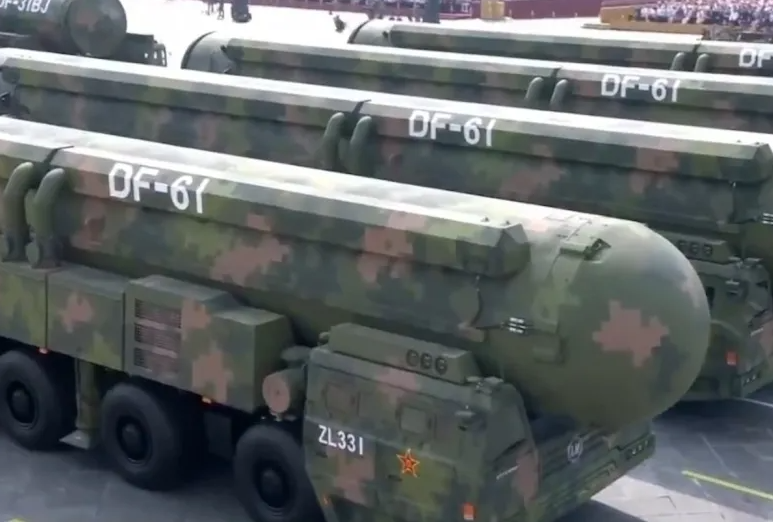
The DF-61 is widely seen as part of China’s ongoing nuclear buildup, which the US Department of Defense (DoD) estimates surpassed 600 operational warheads in mid-2024 and could exceed 1,000 by 2030.
As the nuclear standoff intensifies, China’s mobile DF-61 and the US’s silo-based arsenal raise a crucial question: in the next great deterrent contest, will survival depend on mass or mobility?
“The children of Ephraim, being armed and carrying bows, turned back in the day of battle” Psalm 78:9


 Joel
Joel A Prophecy of Esau and Jacob