Destined to be Caught in a Snare, how this Prophecy is to be Fulfilled: And notice a Composite Message of Sweetness and Bitterness! “You only have I known of all the families of the earth; therefore I will punish you for all your iniquities” Amos 3:2
Isaiah (Ch 47-48)
God claims that the house of Jacob, or rather, its shepherd, doesn’t know Him:
“For Jacob My servant’s sake, and Israel Mine elect, I have even called thee by thy name; I have surnamed thee, though thou hast not known Me.
“I am the Lord, and there is none else; there is no God besides Me. I girded thee, though thou hast not known Me,” Isaiah 45:4-5
Contrast those who don’t know to ones who know:
“And I will give thee the treasures of darkness and hidden riches of secret places, that thou mayest know that I, the Lord, who call thee by thy name, am the God of Israel” Isaiah 45:3
Isaiah 47
1 “Come down and sit in the dust, O virgin daughter of Babylon; sit on the ground. There is no throne, O daughter of the Chaldeans! For thou shalt no more be called tender and delicate.
— Babylon is represented under the emblem of a woman deeply in distress. She was to be degraded and endure sufferings; and is represented sitting on the ground, grinding at the handmill, the lowest and most laborious service.
2 Take the millstones and grind meal; uncover thy locks, make bare the leg, uncover the thigh, pass over the rivers.
— uncover thy locks; the picture of suffering is heightened by the fact that the female slave has to wade unveiled, and bare-legged, all sense of shame outraged;
“Receive this calamity and go into servitude; put away the glory of thy kingdom, thy princes are overthrown, the people of thy armies are scattered, they have vanished away like waters of the river.”
3 Thy nakedness shall be uncovered; yea, thy shame shall be seen; I will take vengeance, and I will not meet thee as a man.”
— thy nakedness shall be uncovered, yea, thy shame shall be seen; not only stripped of your garments and have nothing to cover your naked bodies, being spoiled of all by your enemy soldiers; but should have nothing to cover those parts which women are most ashamed to view.
4 As for our Redeemer, the Lord of hosts is His name, the Holy One of Israel.
— the prophet exults in the Lord of hosts, YEHOVAH, as the Redeemer and Holy One of Israel. God often permits wicked men to prevail against his people; but those who cruelly oppress them will be punished.
5 “Sit thou silent, and get thee into darkness, O daughter of the Chaldeans; for thou shalt no more be called the Lady of Kingdoms.
— for thou shalt no more be magnificence, splendor, beauty and power, called the lady of kingdoms; which have given occasion to this appellation and which have led the nations by common consent to give it to thee shall be entirely and forever removed.
6 I was wroth with My people, I have polluted Mine inheritance and given them into thine hand. Thou didst show them no mercy; upon the ancient hast thou very heavily laid thy yoke.
— the sin of Babylon was that she had gone beyond her commission as the chastiser of Israel, casting off all reverence for age and making even the old men do the hard tasks of bond-slaves (Lamentations 4:16, 5:12; Zechariah 1:15).
7 And thou saidst, ‘I shall be a lady for ever,’ so that thou didst not lay these things to thy heart, neither didst remember the latter end of it.
— and thou said, I shall be a lady forever; this describes the pride and over-confidence of Babylon; she was false confident in her wealth and splendour, the faked strength of her gates and walls; and in her misguided faith of abundant resources to resist an enemy or sustain a siege.
8 “Therefore hear now this, thou that art given to pleasures, who dwellest carelessly, who sayest in thine heart, ‘I am, and none else besides me; I shall not sit as a widow, neither shall I know the loss of children.’
— that dwell carelessly in misguided security, without any consciousness of external danger.
9 But these two things shall come to thee in a moment in one day: the loss of children, and widowhood. They shall come upon thee in their perfection for the multitude of thy sorceries, and for the great abundance of thine enchantments.
— but the loss of children and widowhood shall come to thee suddenly, at once, at one and the same time;
— the destruction of Babylon was swift, catching the city off guard before its inhabitants even realized it, as the king and his nobles indulged in a feast. that very night Belshazzar was slain and Darius the Mede took the kingdom.
10 For thou hast trusted in thy wickedness; thou hast said, ‘None seeth me.’ Thy wisdom and thy knowledge, it hath perverted thee; and thou hast said in thine heart, ‘I am, and none else besides me.’
— for thou has trusted in thy wickedness; ‘wickedness’ here refers doubtless to the pride, arrogance, ambition and oppressions of Babylon.
11 Therefore shall evil come upon thee; thou shalt not know from whence it riseth. And mischief shall fall upon thee; thou shalt not be able to put it off. And desolation shall come upon thee suddenly, which thou shalt not know.
— and desolation shall come upon thee suddenly, which thou shalt not know; that is, before hand, neither the persons nor the time when it shall come;
— notwithstanding their astrologers and soothsayer, pretending to tell what would come to pass; but not being able by their craftsmanship to give the least hint of Babylon’s destruction as to either time or means, the Chaldeans were in great security, ignorant of their ruin at hand as will the destruction of a modern mystical Babylon.
12 “Stand now with thine enchantments and with the multitude of thy sorceries, wherein thou hast labored from thy youth; if so be thou shalt be able to profit, if so be thou mayest prevail.
— stand now with thine enchantments; a scornful challenge to Babylon’s magicians to show whether they can defend their city.
13 Thou art wearied in the multitude of thy counsels. Let now the astrologers, the stargazers, the monthly prognosticators stand up and save thee from these things that shall come upon thee.
— thou art wearied in the multitude of thy counsels; speaking of astrologers, magicians and soothsayers; who were never able to give any satisfactory answers to questions put to them, as appears from Nebuchadnezzar’s consultation with them about his dream; and Belshazzar’s about the handwriting upon the wall.
14 Behold, they shall be as stubble; the fire shall burn them; they shall not deliver themselves from the power of the flame; there shall not be a coal to warm at, nor fire to sit before it.
— they shall not deliver themselves from the power of the flame; from those dreadful calamities that shall come upon them like flames of fire; and if they cannot deliver themselves by their art and skill, how should they deliver others?
15 Thus shall they be unto thee with whom thou hast labored, even thy merchants, from thy youth; they shall wander every one to his quarter. None shall save thee.
— thy merchants or they with whom thou has traded from thy youth shall wander everyone to his own quarter. None shall save thee; they shall all leave thee and flee speedily to their countries and habitations.
Isaiah 48
1 “Hear ye this, O house of Jacob, which are called by the name of Israel and have come forth out of the waters of Judah, who swear by the name of the Lord and make mention of the God of Israel, but not in truth nor in righteousness;
— hear this, O house of Jacob; his descendants and posterity; come forth out of the waters of Judah; that is, those of the seed of Judah;
— but not in truth, nor in righteousness; not according to the complete will and truth of God; so what are their problems?
— 1a) the house of Judah hasn’t come to term with what the Godhead is; it is composed of God the Father and God the Son, hence in Genesis, Elohim (God in the plural) created the heavens and the earth; but the Jews couldn’t identify the Son which is all over in the Scriptures, especially the Torah and later, the Prophets;
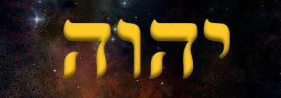
God the Father has shared His name יהוה with His Son Exodus 23:21
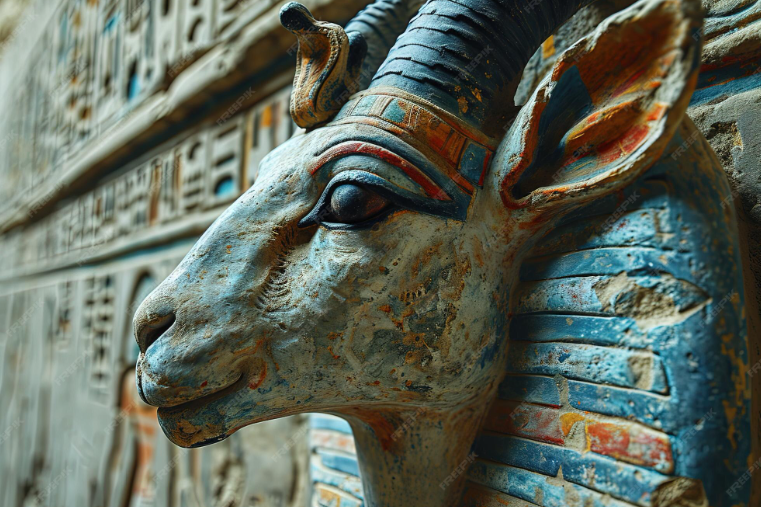
— 1b) the lamb for Pascha is a symbol of the death of the Messiah, our Moshiach, Savior, and Redeemer; however, the Orthodox view it solely as an act of defiance against the Egyptians, who considered the lamb a minor deity. The Scriptures do not mention this, as it is merely a figment of Jewish imagination;
Why Orthodox are so fascinated with a pagan god is a deep Mystery!
— 2a) and the house of Israel is still indulging in idolatry; worshipping Easter, which is another form of worshipping Astarte, one of the titles of the Chaldean goddess, the queen of heaven, the ancient Mesopotamian goddess of war, fertility and sex. She is featured in the Epic of Gilgamesh, and the “Ishtar Gate” was part of Nebuchadnezzar’s Babylon;
Astarte, the queen of heaven, one of the Chaldean goddess
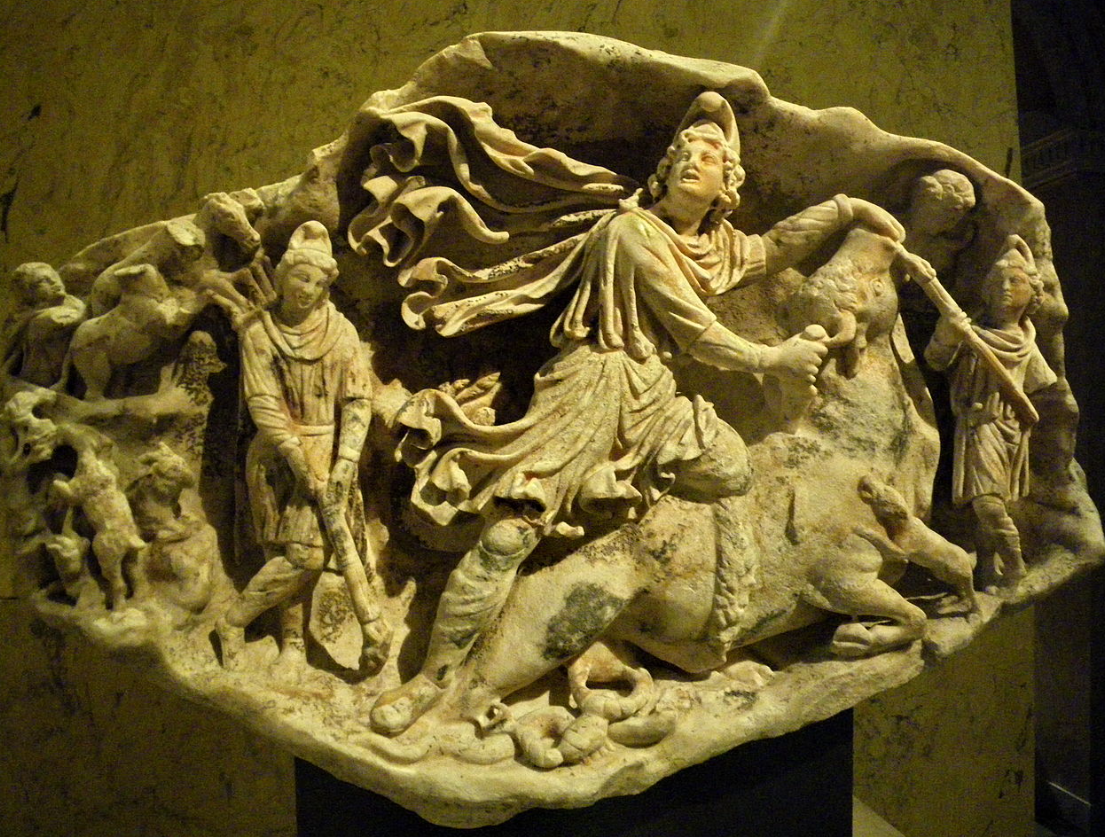
— 2b) and Mithra or Mitra (the Sun-God whose birthday many drunks honor and celebrate on December 25th which they christianised as Christmas), Zeus and others; called “gods of the earth” in distinction from the god of heaven; and men shall worship these earthly gods, acknowledging their supremacy, everyone from his place today, Protestants or Catholics alike;
Mithra, birthday on December 25th, christianised today as Christmas
— and those who persist in their blindness will be horsewhipped! Nar, those who resist would suffer Judgement by the sword, by famine, by pestilence and spending years in captivity to reflect and repent there (for more see Ezekiel 4 – 390/40 Years Timeline and The Flaming Sword and Fire from the South!)
2 for they call themselves of the holy city and stand themselves upon the God of Israel—the Lord of Hosts is His name: — although they call themselves of the holy city, they do not worship God in sincerity and truth;
— Jerusalem was called ‘the holy city,’ because the temple, the ark and the divine presence were there, and it was the place where God was worshipped.
3 I have declared the former things from the beginning; and they went forth out of My mouth, and I showed them; I did them suddenly, and they came to pass.
— God have declared the former things; that is, in former times he had predicted future events by the prophets which have come to pass as they were foretold. Though the fulfillment might have appeared to be long delayed, yet it came to pass at the very time.
4 Because I knew that thou art obstinate, and thy neck is an iron sinew and thy brow brass,
— thou art obstinate; they were obstinate and intractable, an expression probably taken from a bullock which refuses to bow down to receive the yoke; or move left or right.
5 I have even from the beginning declared it to thee; before it came to pass I showed it thee, lest thou shouldest say, ‘Mine idol hath done them, and my graven image, and my molten image hath commanded them.’
— my idols and molten images had not foretold these events and when they came to pass, it could not, therefore, be pretended that they had been produced by idols;
— by predicting them, Yehovah kept up the proof that he was the true God and demonstrated that he alone was worthy of their worship.
6 Thou hast heard; see all this, and will not ye declare it? I have shown thee new things from this time, even hidden things, and thou didst not know them.
— even hidden things; events which are so concealed that they could not be conjectured by any human understanding or by any contemplation of natural causes. They are, as it were, laid up in dark treasure houses and they can be known only by him to whom ‘the darkness shineth as the day;
7 They are created now and not from the beginning, even before the day when thou heardest them not, lest thou shouldest say, ‘Behold, I knew them.’
— even before the day when thou heard them they were in the heart of God, kept and reserved in his mind and therefore they are God’s hidden things before the Israelites heard anything of them.
8 Yea, thou heardest not; yea, thou knewest not, yea, from that time that thine ear was not opened; for I knew that thou wouldest deal very treacherously and wast called a transgressor from the womb.
— yea, thou hear not; not only that these events could not have been foreseen by them but that when they were actually made known to them they were still ignorant, dull and sceptical.
9 “For My name’s sake will I defer Mine anger, and for My praise will I refrain for thee, that I cut thee not off.
— for my own name’s sake I will defer mine anger; and although thou dost justly deserve my hottest anger and most dreadful judgements, which if thou repent not, I will in time inflict thee into captivity; yet at present I will spare thee, not for thy sake, but for the vindication of my own name and glory.
10 Behold, I have refined thee, but not with silver; I have chosen thee in the furnace of affliction.
— in the furnace of affliction; referring particularly to their trials in Babylon and perhaps another one in the future. Afflictions are often likened to fire; from the fact that fire is used to purify metals and afflictions have the same object in reference to the people of God.
11 For Mine own sake, even for Mine own sake, will I do it; for how should My name be polluted? And I will not give My glory unto another.
— for how should my name be polluted? blasphemed and evil spoken of among the house of Jacob; who would be ready to say that either the Lord did not love his people and was not mercifully disposed towards them; or that he could not save them and that their hands or their gods were mightier than he.
12 “Hearken unto Me, O Jacob and Israel, My called: I am He; I am the First, I also am the Last.
— hearken unto me, O Jacob and Israel; called out of Egypt, out of Babylon, and out of the world who had the name of God called upon them; so such who are called with a holy calling according to the purpose of God.
13 Mine hand also hath laid the foundation of the earth, and My right hand hath spanned the heavens; when I call unto them, they stand up together.
— mine hand also hath laid; I am the Creator of all things, and I have all power and am abundantly able to deliver you from all your foes.
14 “All ye, assemble yourselves and hear. Who among them hath declared these things? The Lord hath loved him; He will do His pleasure on Babylon, and His arm shall be on the Chaldeans.
— who among them hath declared these things? that are future, that concern the redemption and salvation of Israel? which of all the idols among the nations whom the children of Israel were prone to listen to that could foretell things to come?
— the Lord hath loved him; that is, Israel, as the Targum says, whom the Lord loved but would raise Cyrus to do his pleasure in Babylon as he does; and whom he distinguished from others by bestowing excellent qualifications on him;
— he will do his pleasure on Babylon through Cyrus, and his arm shall be on the Chaldeans; he shall do as he pleases with Babylon and with his army destroy the Chaldeans.
15 I, even I, have spoken; yea, I have called him; I have brought him, and he shall make his way prosperous.
— I, even I, have spoken; the word ‘I’ is repeated to give emphasis; to furnish the utmost security that it should be certainly accomplished. It means, that Yehovah and he alone had declared this and that it was entirely by his power that Cyrus had been raised up and had been made prosperous.
16 “Come ye near unto Me; hear ye this: I have not spoken in secret from the beginning; from the time that it was, there am I; and now the Lord God and His Spirit hath sent Me.”
— God have not spoken in secret; he had foretold the raising up of both Cyrus and later, the Messiah, in delivering his people in terms so plain that it could not be pretended that it was conjectured, and so clear that there was no ambiguity.
17 Thus saith the Lord, thy Redeemer, the Holy One of Israel: “I am the Lord thy God who teacheth thee to profit, who leadeth thee by the way that thou shouldest go.
18 O that thou hadst hearkened to My commandments! Then had thy peace been as a river and thy righteousness as the waves of the sea.
— as a river; ‘that is, in abundance like a full flowing river that fills the banks and that conveys fertility and blessedness through a land; as the waves of the sea; large, abundant, infinite, persistent and continual.
19 Thy seed also had been as the sand, and the offspring of thy loins like the gravel thereof; his name should not have been cut off nor destroyed from before Me.”
— as the sand; this is often used to indicate a great and indefinite number, for multitude according to his promise made to Abraham.
20 Go ye forth from Babylon! Flee ye from the Chaldeans! With a voice of singing declare ye; tell this, utter it even to the end of the earth; say ye, “The Lord hath redeemed His servant Jacob.”
— say ye, the Lord hath deemed his servant Jacob; referring both the house of Israel and the house of Judah.
21 And they thirsted not when He led them through the deserts; He caused the waters to flow out of the rock for them; He cleaved the rock also, and the waters gushed out.
— he caused the waters to flow out of the rock for them; the allusions are that before this happen, they;
— (1) let them hear and say, “It is truth” (Isaiah 43:9) indicating there is no truth before that; and (2) “thou hast not known Me” (Isaiah 45:4-5) indicating that both houses of Israel and Judah today have not known God;
— second, this also promised that much more truth would be revealed.
22 “There is no peace,” saith the Lord, “unto the wicked.”
— there is no peace to the wicked beyond the grave. “A sinner can have no peace at the judgement bar of God; he can have no peace in hell.”
— In the entire future world, there is nowhere he can find peace or rest, and whatever this life may be, even if it be a life of prosperity and external comfort, yet to him there will be no prosperity in the future world and no external or internal peace there.
~ Come to my parlour ~ the spider says to the butterfly: “Hear, ye deaf; and look, ye blind, that ye may see.”
"Who is blind, but My servant? Or deaf, as My messenger that I sent? Who is blind as he that is perfect, and blind as the Lord’s servant?” Isaiah 42:18-19
"Where two sit together to study the Torah, the Shekinah rests between them."
“Cry aloud, spare not; lift up thy voice like a trumpet! And show My people their transgression and the house of Jacob their sins" Isaiah 58:1
“Son of man, I have made thee a watchman unto the house of Israel; therefore hear the word out of My mouth, and give them warning from Me.
18 When I say unto the wicked, ‘Thou shalt surely die,’ and thou givest him not warning, nor speakest to warn the wicked from his wicked way to save his life, the same wicked man shall die in his iniquity; but his blood will I require at thine hand.
19 Yet if thou warn the wicked, and he turn not from his wickedness nor from his wicked way, he shall die in his iniquity; but thou hast delivered thy soul" Ezekiel 3:17-19
Now, consider this PROPHECY:
“And upon thy sword shalt thou depend, entering at every place: yet thou shalt be supple and credulous, and be in subjection to thy brother [Jacob]; but it will be that when his sons [the children of Israel] become evil, and fall from keeping the commandments of the law, thou shalt break his yoke of servitude from off thy neck…. and then will I kill Jakob my brother,” Genesis 27:41-42 the Targum of Jonathan
“Speak thou also unto the children of Israel, saying, ‘Verily My Sabbaths ye shall keep; for it is a sign between Me and you throughout your generations, that ye may know that I am the Lord who doth sanctify you'" Exodus 31:13
ISRAEL, today as in the past, has many BLIND shepherd, for it was prophesied:
“His watchmen are BLIND; they are all ignorant; they are all DUMB dogs, they cannot bark, sleeping, lying down, loving to slumber” Isaiah 56:10
The mission here is to provide research ARTICLES that are ENLIGHTENING and EASY TO UNDERSTAND using SCRIPTURES to help improve our knowledge and make our life better.
“I have seen a horrible thing in the house of ISRAEL; there is the whoredom of EPHRAIM, Israel is defiled” Hosea 6:10
“Shall a TRUMPET be blown in the city, and the people not be afraid? Shall there be evil in a city, and the LORD hath not done it?” Amos 3:6
“Hear, ye DEAF; and look, ye BLIND, that ye may see” Isaiah 42:18
Hence the RESEARCH produced here are to help us UNDERSTAND and hopefully WE all could learn together.
There's nothing special about me, except perhaps, since I was younger, I (L Siaw) had an inner struggle between my heart and my head, hence this blog.
I produce articles that I would understand and hopefully you could too.
Please SUBSCRIBE for more will come.
You may contact me on: eqlunn@gmail.com





 Joel
Joel A Prophecy of Esau and Jacob