
“In 5 to 6 Weeks, There’ll Be a Serious Crisis!”
“In 5 to 6 Weeks, There’ll Be a Serious Crisis!” China’s Possession of Rare Earths Could Wreck Europe’s Car Production
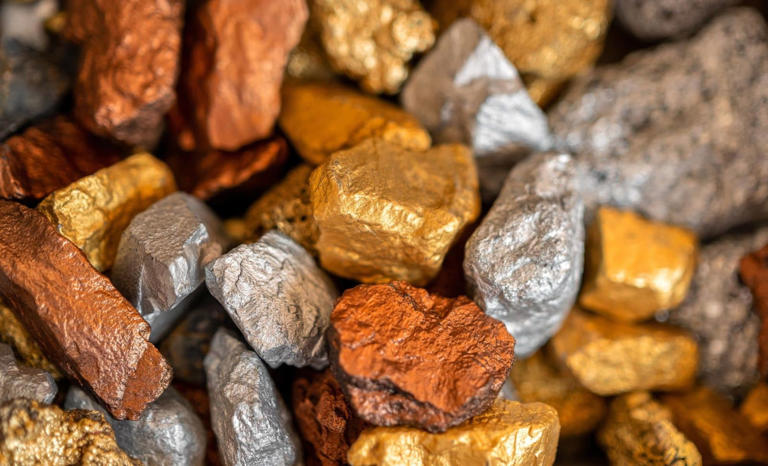
MSN by Juliette Dubois • May 26, 2025
In the shadow of escalating trade tensions between Beijing and Washington, a critical supply chain rupture is brewing that could strike at the heart of Europe’s electric vehicle industry. With just weeks of rare earth supplies left, analysts are warning that production lines across the continent may grind to a halt by mid-June.
A Strategic Chokehold on Electric Mobility
According to a report from the consulting firm Berylls by AlixPartners, European and American suppliers of rare earth elements are operating on a precariously narrow margin. Key materials—such as neodymium, vital for the permanent magnets found in electric motors—are in dangerously short supply. With stockpiles expected to run dry within five to six weeks, the warning is stark: “If supply doesn’t resume quickly, some assembly lines could stop by mid-June.”
The warning comes in the wake of new export restrictions imposed by China, which has long dominated the rare earths market. According to Supply Chain World magazine, Beijing has required special permits for the export of several high-demand minerals since April, including neodymium, in a move widely seen as retaliation against US trade policies. Although the restrictions are ostensibly aimed at Washington, the ripple effects are being felt across Europe’s tightly woven manufacturing networks.
A Supply Chain Without a Plan B
China controls about 90 percent of global rare earth extraction and virtually 100 percent of its processing, giving it unrivaled leverage in this sector. That grip has now become a chokehold. “There is no viable short-term alternative,” Berylls analysts say, underscoring how deeply the European automotive sector depends on a single, foreign-dominated source.
The consequences are severe and wide-ranging. Permanent magnets made from rare earths are not only essential to EV motors but are also used in power steering systems, audio devices, climate control systems, and even wind turbines. As exports from China have slowed to a crawl over the past month, the availability of these components has become more pressing than their price, despite recent surges of 40 to 50 percent in cost.
Quiet Factories, Quiet Executives
Automakers, who would be expected to raise alarms, have largely remained silent. While some industry observers attribute this to caution, the absence of a coordinated response from leading European manufacturers has raised concerns. Many facilities operate on a just-in-time logistics model, meaning even short disruptions in supply can bring entire production lines to a standstill.
The gravity of the situation is drawing comparisons to the semiconductor shortage that crippled global manufacturing in the early 2020s. Then, too, an invisible component brought powerful industries to their knees. Now, it is a set of obscure but irreplaceable minerals threatening to do the same.
Political Paralysis in Brussels
European governments have begun floating emergency options, including tapping into strategic reserves or easing import routes from countries like Japan. But as of late May, no concrete actions have been announced. The European Union was similarly slow to respond last December, when China imposed restrictions on the export of gallium, germanium, and antimony. That earlier episode failed to trigger the kind of contingency planning that might have buffered the current crisis.
China’s new export licensing rules allow it to block shipments without offering explanations, tightening its grip on a global industry just as the West moves to accelerate its energy transition. For the EU, the implications extend far beyond electric cars, affecting the broader vision of a decarbonized economy heavily reliant on clean technologies that use rare earths.
Without swift and decisive action, European manufacturers may soon find themselves at the mercy of a supply chain they cannot control—and a trade war they did not start.
“Ephraim shall be desolate in the day of rebuke; among the tribes of Israel have I made known that which shall surely be” Hosea 5:9
For I will be unto Ephraim as a lion, and as a young lion to the house of Judah; I, even I, will tear and go away; I will take away, and none shall rescue him. Hosea 5:14


 Joel
Joel A Prophecy of Esau and Jacob