
CJ-1000 engine soon be tested on China’s C919
Home-grown CJ-1000 engine to soon be tested on China’s C919 passenger jet
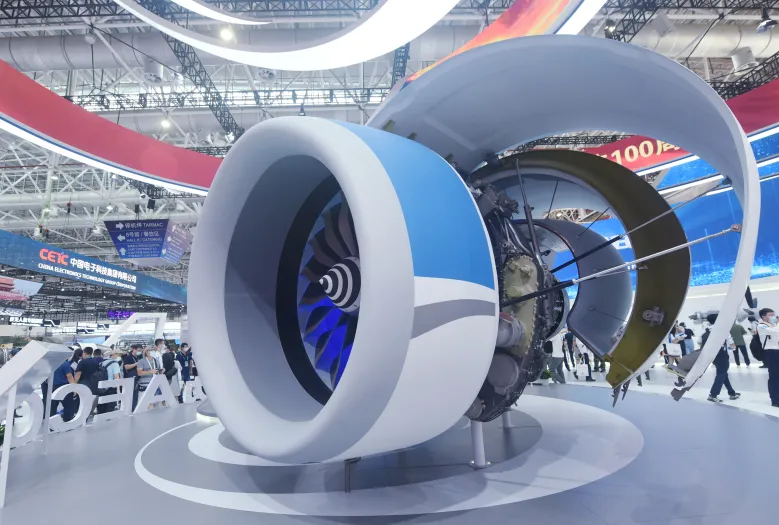
SCMP • March 31, 2025 ~ Pakistan Defence
Development of Chinese engine to make C919 truly home-grown ‘progressing well’
Aviation forum hears that engine’s performance in trial runs exceeds ‘most optimistic expectations.’
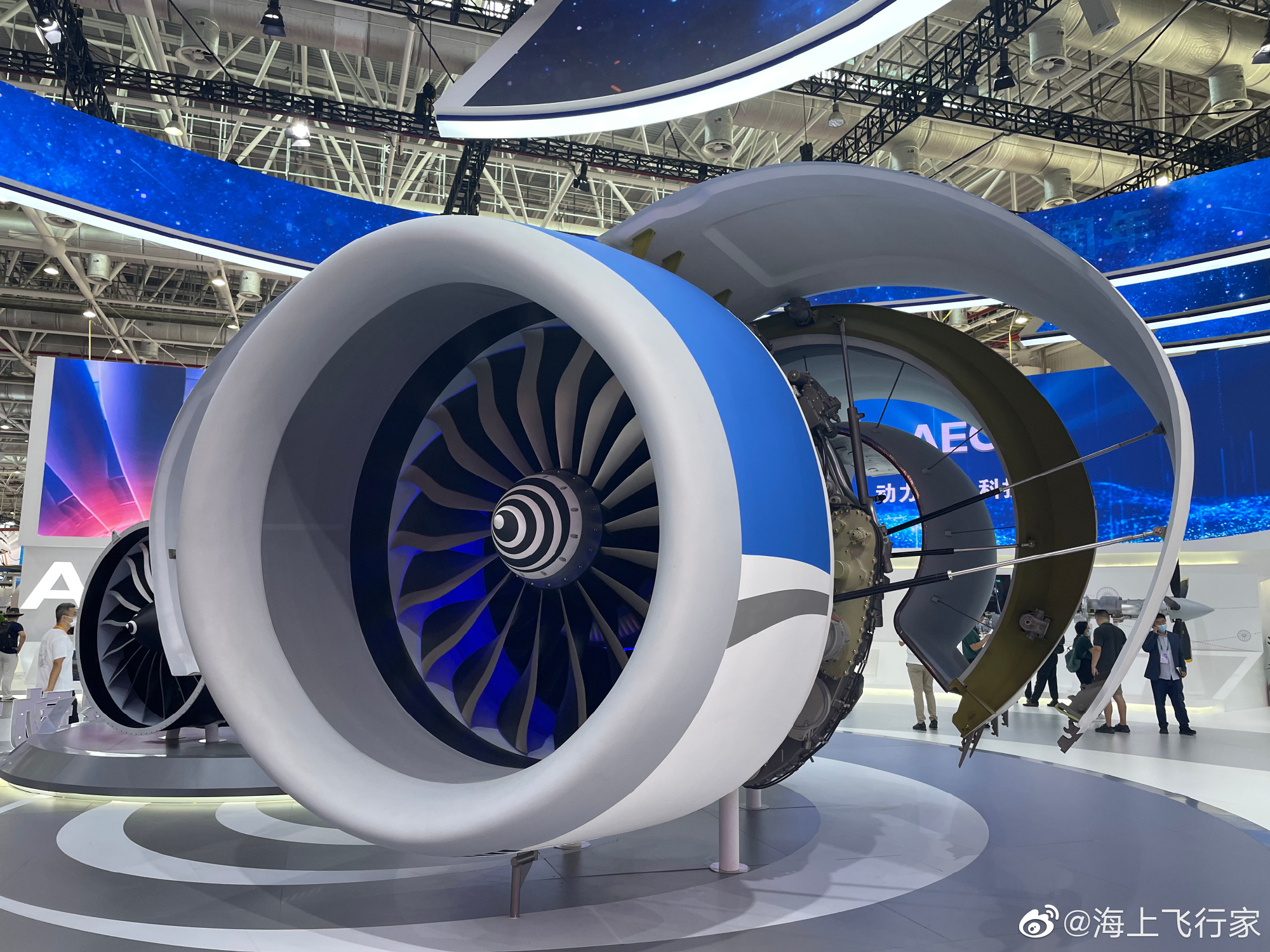
The development of a home-grown turbofan engine for China’s C919 narrowbody passenger jet has been “progressing well” in recent trials, experts and top executives from Aero Engine Corporation of China (AECC) told an aviation forum.
“The CJ-1000 engine is in trial runs and it fared better than my most optimistic expectations,” Shi Jianzhong, honorary president of the Shanghai Society of Aeronautics and a former deputy general manager of Commercial Aircraft Corporation of China (Comac), the C919’s manufacturer, said at the forum in Taicang, Jiangsu province.
Amid a battle with the West for technological supremacy, Shi said on Thursday that “the engine’s success will exemplify China’s supply chain resilience.”
The high-bypass engine, the first of its kind to be produced in China, is designed to be a domestic alternative to the state-of-the-art Leap engine that Comac currently imports from CFM International – a joint venture between America’s GE Aerospace and France’s Safran.
Wu Guowei, the deputy general manager of AECC Chengdu Engine, confirmed to the Post that the CJ-1000 would be able to power a C919 on verification flights “soon,” following tests on the Y-20 large military transport aircraft.
Pictures have been circulating on Chinese social media since 2023 showing the CJ-1000 on a Y-20 test bed.
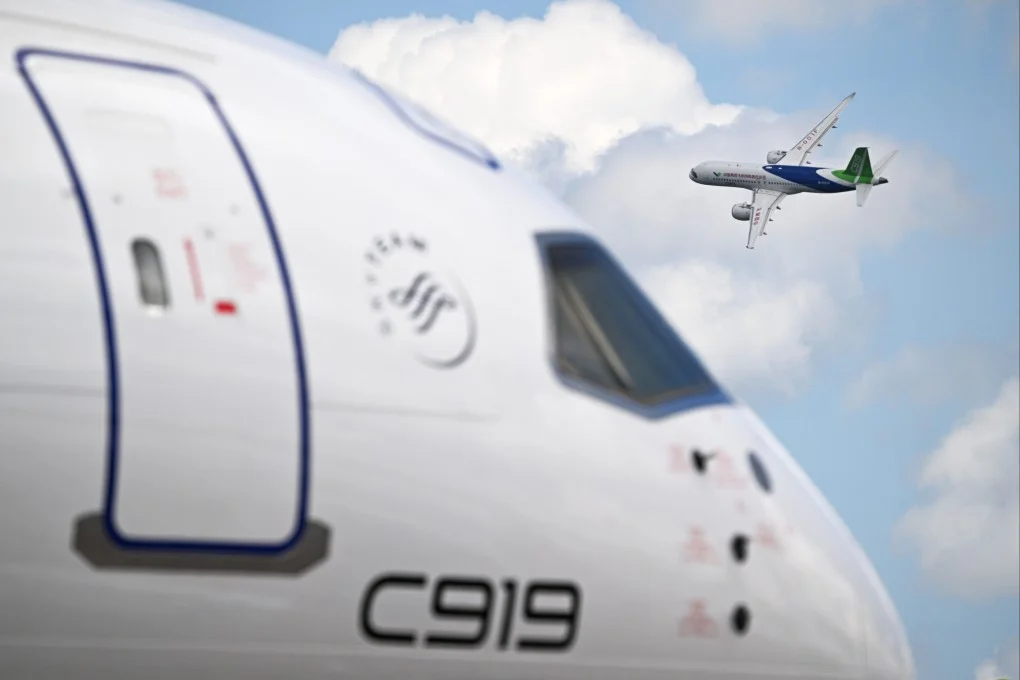
But Wu said it would be unrealistic to swap out all Leap engines for domestically produced alternatives. “The CJ-1000 is intended for self-reliance and for offering one more option,” he said.
China, the world’s second-largest economy and one of the largest aviation markets, is attempting to develop a reliable, commercially viable engine as a signature project of its self-reliance drive.
But the country’s low level of aircraft engine manufacturing expertise and inexperience in testing and assembly have been among the hurdles causing delays.
That means the C919 single-aisle jet is still reliant on Western technology to get airborne despite more than a decade of development.
That reliance on Western suppliers is seen as a vulnerability, because geopolitical turbulence and potential export curbs could threaten to clip the wings of the C919 and future Chinese passenger jets, including the C929 widebody.
In his first term, United States President Donald Trump considered blocking the sale of the Leap engine to Comac, the Wall Street Journal reported in 2020.
Some AECC affiliates have been designated as military end users by the US Bureau of Industry and Security in recent years, limiting their access to American technology as Washington grows wary of Beijing’s civil-military fusion strategy.
Meanwhile, AECC Commercial Aircraft Engine general manager Mei Qing told the Taicang forum that his company aims to harness artificial intelligence (AI) to supercharge development, while cautioning that challenges abound.
“It remains difficult for general AI algorithms to adapt to highly sophisticated engine development,” he said. “More advanced algorithms are needed in tackling complex engineering tasks like configuration design and high-precision simulation of multi-physical fields.”
Computing power was another constraint, Mei added.
“Centralised data centre-backed AI is inadequate to handle massive parallel computing for high-precision simulation and real-time test flight monitoring and analysis,” he said. “There’s an urgent need to build a computing power support system using cloud computing and edge computing to truly accelerate engine design and testing.”
With the Chinese engine maker looking to use more AI tools to catch up to the Western manufacturers that dominate the market, Mei also warned of the risks of Western tech containment efforts and called on Beijing to cultivate a pool of interdisciplinary talent.
“To break the West’s tech blockade, we need domestic intelligent industrial software and a dedicated AI framework and tool chain that suit engine development,” he said.
“China also faces a shortage of talent with knowledge in both aerospace engineering and AI. That can only be solved through better cooperation between educational institutions and enterprises through applied courses and joint training programmes.”


 Joel
Joel A Prophecy of Esau and Jacob