
Nature Index 2024 Research Leaders

The Nature Index
The journal Nature, founded in 1869 and based in London is regarded by many as the world’s leading multidisciplinary journal of scientific research and is one of the most read, most cited and most respected.
The journal’s annual rating of a country’s standing in the natural sciences is based on all publications appearing in 82 of the most outstanding peer-reviewed scientific journals in the fields of biological sciences, chemistry, physical sciences, and earth and environmental sciences.
Nature Index 2024 Research Leaders: Chinese institutions dominate the top spots
Seven out of the leading ten institutions this year are based in China, while Stanford University drops out of the top ranks for the first time.
Chinese institutions are increasingly taking the top positions, while Stanford University has slipped out of the top ten. These are among the most striking trends in the Nature Index 2024 Research Leaders — previously known as Annual Tables — which features some unusually large leaps and falls in the upper ranks of the institutional table.
The top ten institutions, which are ranked according to their contributions to the natural- and health-sciences journals tracked by the Nature Index database, feature seven Chinese institutions.
The Chinese Academy of Sciences (CAS) — the world’s largest scientific organization, comprising more than 100 institutes across China — is peerless in its scale, something reflected in its Share, a metric that measures the contribution of countries, territories and institutions to papers in the Nature Index database.
At 2,243.22, CAS’s Share for the 2023 calendar year is almost double that of Harvard University (1,143.43), in second place. Similarly, Harvard’s strength is demonstrated by its gap to Germany’s Max Planck Society, in third place with a Share of 642.83.
The dominance of CAS has been a continual feature of the Nature Index Research Leaders, but the presence of so many Chinese institutions in the top ten has not.
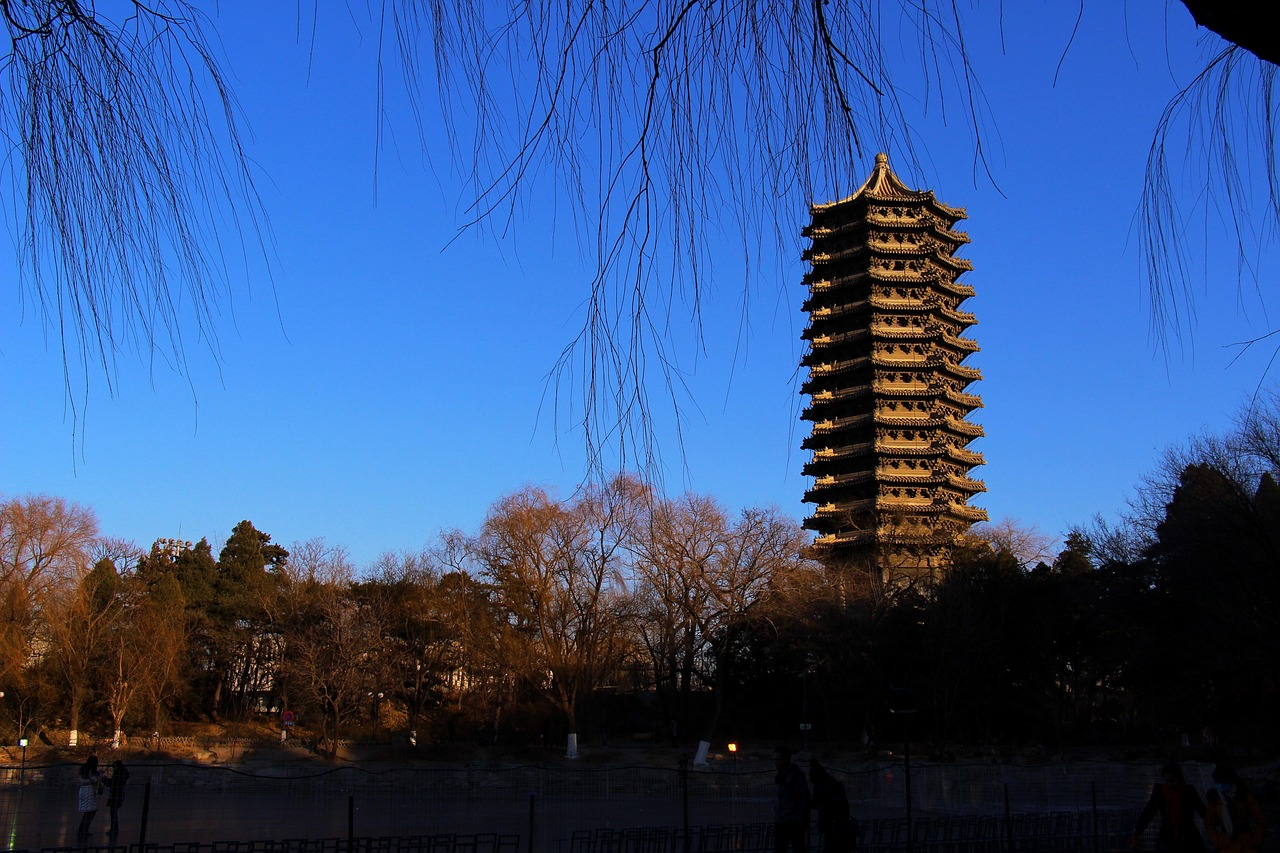
In 2015, the first year for which calendar-year tables were released, CAS was the only Chinese institution in the top ten, alongside three US institutions, two UK, two German, one French, and one Japanese institution. This year, only the United States, Germany and France are represented in the top ten, and by a single institution each.
This dynamic is made clear by the leading institutions’ change in adjusted Share, a metric that takes account of annual fluctuations in the number of Nature Index articles each year. In the top ten, all Chinese institutions recorded a jump between 2022 and 2023 of more than 5%. All three non-Chinese institutions failed to improve on the previous year’s output (although the French National Centre for Scientific Research (CNRS) did only fall by 0.7%).
Institution ranking: Nature Index 2024 Research Leaders
Institutions are ranked by article Share in 2023. Also listed are each institution’s article Count in 2023 and percentage change in adjusted Share from 2022 to 2023. Adjusted Share is calculated by adjusting Share values to 2023 levels.
| Rank | Institution | Country | Share 2023 | Count 2023 | Change in adjusted Share 2022–23 (%) |
|---|---|---|---|---|---|
| 1 | Chinese Academy of Sciences | China | 2,243.22 | 7,554 | 6.30% |
| 2 | Harvard University | United States of America | 1,143.43 | 3,763 | -3.10% |
| 3 | Max Planck Society | Germany | 642.83 | 2,572 | -8.90% |
| 4 | University of Chinese Academy of Sciences | China | 635.81 | 3,227 | 5.20% |
| 5 | University of Science and Technology of China | China | 631.20 | 1,858 | 6.70% |
| 6 | Peking University | China | 617.17 | 2,349 | 8.80% |
| 7 | French National Centre for Scientific Research | France | 613.90 | 4,400 | -0.70% |
| 8 | Nanjing University | China | 609.45 | 1,448 | 6.80% |
| 9 | Zhejiang University | China | 595.37 | 1,540 | 23.10% |
| 10 | Tsinghua University | China | 593.45 | 1,946 | 11.20% |
Jostling for position
Institution ranking: Nature Index 2024 Research Leaders
Among the top 100 institutions, Stanford University recorded the biggest drop in adjusted Share (-20.7%) from 2022 to 2023, causing it to tumble from sixth place in 2022 to 15th in 2023, with a Share of 474.13. The third-ranked US institution, Stanford has maintained a strong position in the overall Nature Index list to this point, placing 5th each year from 2015 to 2021.
Among the subjects tracked by the Nature Index, Stanford is losing the most ground in the biological sciences, dropping from a Share of 280.11 in 2022 to a Share of 183.42 in 2023.
The reason for Stanford’s steep fall in the rankings is not immediately clear, and it seems that the gains of other institutions, particularly Chinese institutions, would only partially explain it.
For other institutions, however, China’s gains are their loss — the Nature Index database is a zero-sum game: if one institution makes rapid gains, others must drop.
Institution ranking: Nature Index 2024 Research Leaders
Institutions are ranked by article Share in 2023. Also listed are each institution’s article Count in 2023 and percentage change in adjusted Share from 2022 to 2023. Adjusted Share is calculated by adjusting Share values to 2023 levels.
| Rank | Institution | Country | Share 2023 | Count 2023 | Change in adjusted Share 2022–23 (%) |
|---|---|---|---|---|---|
| 11 | Helmholtz Association of German Research Centres | Germany | 531.05 | 2,752 | 2.20% |
| 12 | Sun Yat-sen University | China | 492.47 | 1,266 | 11.70% |
| 13 | Shanghai Jiao Tong University | China | 488.94 | 1,449 | 10.20% |
| 14 | Massachusetts Institute of Technology | United States of America | 484.86 | 2,032 | 0.10% |
| 15 | Stanford University | United States of America | 474.13 | 1,929 | -20.70% |
| 16 | Fudan University | China | 461.26 | 1,333 | 6.40% |
| 17 | Sichuan University | China | 413.63 | 768 | 25.20% |
| 18 | National Institutes of Health | United States of America | 394.48 | 1,112 | -12.60% |
| 19 | The University of Tokyo | Japan | 389.36 | 1,239 | -3.20% |
| 20 | University of Oxford | United Kingdom | 388.22 | 1,625 | -9.10% |
In 2023, China is the only leading country in the Index to increase its number of institutions in the top 100 ranking between 2022 and 2023.
In 2022, China had 31 institutions in the top 100; in 2023, it had 38. By comparison, in 2022, there were 38 US institutions in the top 100; in 2023, there were 35.
China’s strongest performers in the Nature Index 2024 Research Leaders include the University of Chinese Academy of Sciences (Share of 635.81), in Beijing, and University of Science and Technology of China (631.20), in Hefei, which secured the fourth and fifth ranks, respectively, pushing the CNRS (613.90) down from fourth to seventh place.

Peking University, in Beijing, moved from ninth to sixth place with a Share of 617.17, and Zhejiang University, in Hangzhou, secured ninth place from 13th (595.37).
Germany’s Helmholtz Association of German Research Centres, the fourth-ranked non-Chinese institution, held on to 11th place for the second year in a row, with a Share of 531.05, after dropping five ranks from sixth place in 2021.
The Massachusetts Institute of Technology (MIT), in Cambridge, the United States’s second-strongest institution in the Nature Index and the fifth-ranked non-Chinese institution, has had a similar trajectory, falling from 7th place in 2021 to 12th in 2022 and 14th in 2023, with a Share of 484.86 (although notably its adjusted Share did increase slightly, by 0.1%, from 2022 to 2023).
The fact that leading institutions outside China are struggling to keep their position in the Nature Index Research Leaders tables shows how the capacity of Chinese research institutions to produce high-quality science is moving from strength to strength. The question going into next year will be whether these institutions can continue to improve, and what that will mean for their peers around the world.


 Joel
Joel A Prophecy of Esau and Jacob