
China’s underwater wireless transmission
Chinese researchers boast of a world record underwater wireless transmission range of 30 kilometers, eclipsing NATO’s best tech

Yahoo News by Christoper Harper • August 26, 2024 ~ SCMP
Researchers from China’s Xiamen University working with the 92150 unit of the People’s Liberation Army used Huawei’s “polar code” data encoding and an underwater microphone (hydrophone) to confirm a new world record underwater wireless transmission range of 30 kilometers, or 18.6 miles, reports the South China Morning Post.
As the source points out, this eclipses the JANUS protocol used by NATO, which has a maximum range of 28 kilometers, or 17.4 miles. It also beats China’s previous best record of 14 kilometers, or 8.7 miles. The major downside in play is that this data stream still only operates at 4,000 bits per second (or 4 kilobits per second — not even larger kilobytes), but the stability of the signal and the integrity of the data is what matters most in this use case.

The gains enjoyed by the researchers compared to JANUS were made possible by the use of Huawei’s polar code implementation, also called higher-order polarization weight (HPW). JANUS uses an OFDM method that is considered outdated by Chinese officials due to higher power requirements and greater issues with noise and signal deterioration at range.
Compared to OFDM, HPW seems to be more powerful and cohesive at longer ranges, though, and polar codes are also commonplace with things like modern 5G networking.
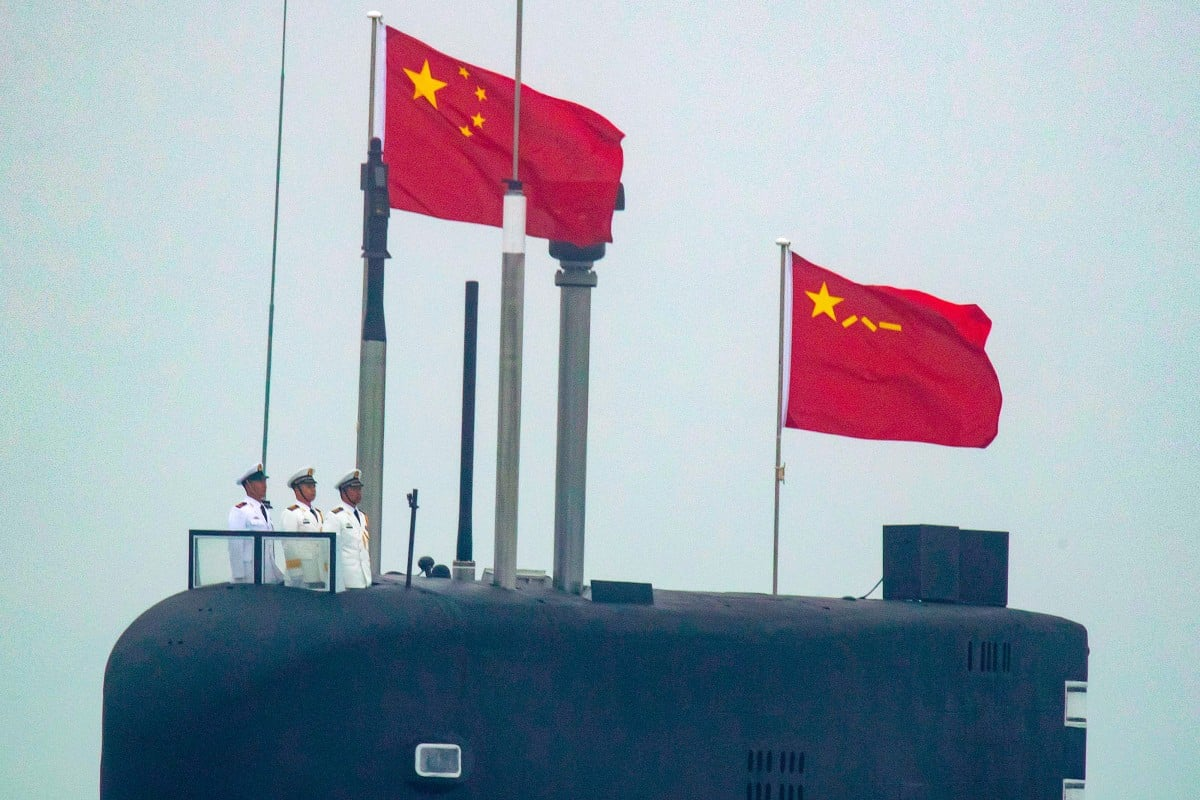
As highlighted by the SCMP and this story’s military involvement, there are actually some significant forces and concerns at play here beyond simply improving underwater communications. Namely, these advancements are framed as being made in the context of NATO becoming more hostile to China and its interests, and may one day prove mission-critical for naval defense.
Additionally, these wireless transmissions are technically acoustic. As it turns out, sound (and data encoded therein) can travel through water without much issue until you reach long distances. These are still a better option than extreme low-frequency (ELF) radio waves, though, and that is why these test results were achieved with a submerged hydrophone receiving signals from a boat about 19 miles away.
Benefiting from the booming telecommunications industry, China’s advantage in wireless communication technology is expanding from the air to the sea. These advanced technologies can support the large-scale application of underwater drones powered by artificial intelligence, and they could have a profound impact on future military and geopolitical power struggles.
This includes China’s response to Nato’s expansion.


 Joel
Joel A Prophecy of Esau and Jacob