
Genesis (19-20)
“We must through much tribulation enter into the Kingdom of God,” Acts 14:22
Genesis 19
1 And there came two angels to Sodom at evening, and Lot sat in the gate of Sodom. And Lot, seeing them, rose up to meet them, and he bowed himself with his face toward the ground; — here came two angels; that is, two of the three that had just before been with Abraham, the two angels, who were now sent to execute God’s purpose concerning Sodom;
2 and he said, “Behold now, my lords, turn in, I pray you, into your servant’s house and tarry all night, and wash your feet, and ye shall rise up early and go on your ways.” And they said, “Nay, but we will remain in the street all night.”
— they said, Nay, but we will abide in the street all night; so they said, not only to give Lot an opportunity of evincing the sincerity and cordiality of his invitation, but because it was their real intention to abide in the street, to manifest the great difference between Lot and the barbarous Sodomites.
3 And he pressed upon them greatly, and they turned in unto him and entered into his house; and he made them a feast and baked unleavened bread, and they ate. — Lot’s invitation; at first declined, is at length accepted; and they entered his house.
4 But before they lay down, the men of the city, even the men of Sodom — both young and old, all the people from every quarter —compassed the house around. — here were the old and young, all vile and from every quarter; for practices too shameful to be mentioned!
5 And they called unto Lot and said unto him, “Where are the men who came in to thee this night? Bring them out unto us, that we may know them.”
— bring them out unto us, that we may know them; not who they were, or from whence they came, or what their business was; nor did they pretend anything of this kind to hide and cover their design from Lot, but they were open and impudent, and declared their sin without shame and blushing;
6 And Lot went out at the door unto them, and shut the door after him — and Lot went out at the door unto them, and shut the door after him;
7 and said, “I pray you, brethren, do not so wickedly. — Lot pleaded, do not so wickedly; as to use ill a man’s guests, to abuse strangers, to break the laws and rules of hospitality, and especially to commit that unnatural sin they were bent upon.
8 Behold now, I have two daughters who have not known a man. Let me, I pray you, bring them out unto you, and do ye to them as is good in your eyes. Only unto these men do nothing, for therefore came they under the shadow of my roof.”
— I have two daughters; this was unadvisedly and unjustifiably offered, probably through the great discomposure and perturbation which his mind was in.
9 And they said, “Stand back.” And they said again, “This one fellow came in to sojourn, and he will become a judge! Now will we deal worse with thee than with them.” And they pressed sore upon the man, even Lot, and came near to break the door.
— and they said, stand back; turn on one side, get away from the door, that we may come to it;
— this one fellow came in to sojourn, and he will needs be a judge; this one man, and he a stranger and sojourner, not a citizen of this city, sets himself against the whole body of the inhabitants, and takes upon himself to be judge what is right and wrong;
10 But the men put forth their hands, and pulled Lot into the house to them, and shut the door. — but the men, who were the two angels who had met Abraham, put forth their hand; they came to the door, and opened it, and put out their hands, one on one side the door, and the other on the other;
11 And they smote the men who were at the door of the house with blindness, both small and great, so that they wearied themselves to find the door. — again the men, who were the two angels, smote the others with blindness;
12 And the men said unto Lot, “Hast thou here any besides? Soninlaw, and thy sons, and thy daughters, and whomsoever thou hast in the city — bring them out of this place. — the men said; these were the angels who had met Abraham earlier;
13 For we will destroy this place, because the cry of them has waxed great before the face of the Lord, and the Lord hath sent us to destroy it.” — again, the “we” are the two angels; who said “we will destroy this place”
— might be clearer from the Message Bible:
10-11 But the two men reached out and pulled Lot inside the house, locking the door. Then they struck blind the men who were trying to break down the door, both leaders and followers, leaving them groping in the dark.
12-13 The two men said to Lot, “Do you have any other family here? Sons, daughters—anybody in the city? Get them out of here, and now! We’re going to destroy this place. The outcries of victims here to God are deafening; we’ve been sent to blast this place into oblivion.” Genesis 19:10-12 MSG
14 And Lot went out and spoke unto his sons-in-law, who married his daughters, and said, “Up, get ye out of this place; for the Lord will destroy this city!” But he seemed as one who mocked unto his sons-in-law. — Lot spoke to his sons-in-law; it is a possibilty that these sons-in- law had married other daughters of Lot;
— according to Jewish sources, Lot had two other daughters that perished in Sodom; but according to Josephus (Antiquities. l. 1. c. 11. sect. 4) were espoused to men in the city, but not yet married; and on account of such espousals, as were usual in the eastern countries, Lot calls them his sons-in-law;
15 And when the morning arose, then the angels hastened Lot, saying, “Arise, take thy wife and thy two daughters who are here, lest thou be consumed in the iniquity of the city.” — when the morning arose; Lot had thus the night for making his preparations, part of this he spent in his visits to his sons-in-law;
16 And while he lingered, the men laid hold upon his hand, and upon the hand of his wife and upon the hand of his two daughters, the Lord being merciful unto him; and they brought him forth and set him outside the city.
— while he lingered; he did not make so much haste as the case required, and this would have been fatal to him, if the angels had not laid hold on his hand, and brought him forth. Herein the Lord was merciful to him; and if God had not been merciful to them, their lingering had been their ruin;
17 And it came to pass, when they had brought them forth outside, that he said, “Escape for thy life! Look not behind thee, neither stay thou in all the plain. Escape to the mountain, lest thou be consumed!” — look not behind thee; they must not loiter by the way; stay not in all the plain;
— for it would all be made into one dead sea; he must not take up short of the place of refuge appointed him; escape to the mountain; such are the commands given to those who are delivered out of a sinful state: first, return not to sin and second, rest not in the world, for that is staying in the plain.
18 And Lot said unto them, “Oh, not so, my lord. — oh, not so, my Lord; that is, let me not be obliged to go so far as to the mountain;
19 Behold now, thy servant hath found grace in thy sight, and thou hast magnified thy mercy, which thou hast shown unto me in saving my life; and I cannot escape to the mountain, lest some evil take me, and I die.
— lest some evil take me, and I die; or “that evil” the burning of Sodom, and the cities of the plain, lest that should overtake him before he got to the mountain;
— thus Lot had some distrust of the power of God to strengthen him to go thither, who had appeared so wonderfully for him in his present deliverance; and he might have assured himself, that he that brought him out of Sodom would never suffer him to perish in the destruction of it.
20 Behold now, this city is near enough to flee unto, and it is a little one. Oh, let me escape thither, (is it not a little one?) and my soul shall live.” — the MSG version says:
But Lot protested, “No, masters, you can’t mean it! I know that you’ve taken a liking to me and have done me an immense favor in saving my life, but I can’t run for the mountains—who knows what terrible thing might happen to me in the mountains and leave me for dead.
Look over there—that town is close enough to get to. It’s a small town, hardly anything to it. Let me escape there and save my life—it’s a mere wide place in the road.” Genesis 19:19-21 MSG
21 And he said unto him, “See, I have accepted thee concerning this thing also, that I will not overthrow this city for which thou hast spoken. — the MSG version says:
“All right, Lot. If you insist. I’ll let you have your way. And I won’t stamp out the town you’ve spotted. But hurry up. Run for it! I can’t do anything until you get there.” That’s why the town was called Zoar, that is, Smalltown. Genesis 19:19-21 MSG
22 Hasten thee, escape thither; for I cannot do any thing till thou hast come thither.” Therefore the name of the city was called Zoar. — therefore the name of the city was called Zoar; in later times, and probably first by Lot, from his use of the word “little” which was his request, which Zoar signifies; called Bela, see Genesis 14:2
23 The sun had risen upon the earth when Lot entered into Zoar. — in haste; the ruin of Sodom was suspended till he was secure.
24 Then the Lord rained upon Sodom and upon Gomorrah brimstone and fire, from the Lord out of heaven; — the Lord rained upon Sodom and upon Gomorrah brimstone and fire; the Lord (Yehovah יְהוָ֖ה);
— from the Lord (Yehovah יְהוָ֖ה) out of heaven; this destruction was brought upon them by Yehovah the Son of God, who had appeared to Abraham in an human form, and gave him notice of it, and heard all he had to plead for those cities, and then departed from him to Sodom,
— and the Son, who was the author of this catastrophe; this amazing shower of fire and brimstone was re-inforced and rained by him from Yehovah his Father, out of heaven; as the Targums of Jonathan and Jerusalem both call him, the Word of the Lord;
25 and He overthrew those cities, and all the plain and all the inhabitants of the cities, and that which grew upon the ground. — and he overthrew those cities; of Sodom, Gomorrah, Admah, and Zeboiim: very probably at the same time that this fiery tempest was from the heavens; and all the plain; the plain of Jordan, and the cities on it, all but Zoar;
26 But his wife looked back from behind him, and she became a pillar of salt. — but his wife looked back from behind him; herein she disobeyed an express command; according to the Targums of Jonathan and Jerusalem, she was a native of Sodom; hence menories of her kinmen and sons-in-law; and she became a pillar of salt;
27 And Abraham got up early in the morning to the place where he stood before the Lord; — stood before the Lord, and he looked toward Sodom; he has an extensive view spread out before him which would be the Dead Sea.
28 and he looked toward Sodom and Gomorrah, and toward all the land of the plain, and beheld. And lo, the smoke of the country went up as the smoke of a furnace. — the violence of the fire is indicated by the last word, which is not the ordinary word for a furnace, but means a kiln, such as that used for burning chalk into lime, or for melting ores of metal;
— the smoke of a furnace; after the fiery shower was over, and the cities burnt down, the smoke ascended toward heaven, as the smoke of mystical Babylon will do, Revelation 19:3; like the reek of a boiling cauldron; or like the smoke of a lime kiln always burning.
29 And it came to pass, when God destroyed the cities of the plain, that God remembered Abraham, and sent Lot out of the midst of the overthrow when He overthrew the cities in which Lot dwelt. — the prayer or promise made by Abraham, Genesis 18:23-32, who doubtless in his promise for Sodom would not forget Lot;
30 And Lot went up out of Zoar and dwelt on the mountain, and his two daughters with him, for he feared to dwell in Zoar; and he dwelt in a cave, he and his two daughters. — for he feared to dwell in Zoar; probably he found it as wicked as Sodom; and therefore concluded it could not survive long;
— and dwelt in the mountain; which the Lord had directed him to go to before, but was unwilling, and chose Zoar, and his two daughters with him; and they dwelt in a cave;
31 And the firstborn said unto the younger, “Our father is old, and there is not a man on the earth to come in unto us after the manner of all the earth. — the whole earth; for they thought the same deluge of fire which destroyed the four cities, and all other places;
32 Come, let us make our father drink wine, and we will lie with him, that we may preserve seed of our father.” — and we will lie with him, that we may preserve the seed of our father; have children by him, and propagate and preserve the human species; this incestuous copulations, they might think lawful;
33 And they made their father drink wine that night, and the firstborn went in and lay with her father; and he perceived not when she lay down, nor when she arose. — he perceived not; wherein there is nothing strange, it being usual with drunken men to do many things in that condition, which, when they come to themselves, they perfectly forget.
~~~~
34 And it came to pass on the morrow that the firstborn said unto the younger, “Behold, I lay yesternight with my father. Let us make him drink wine this night also, and go thou in and lie with him, that we may preserve seed of our father.”
— the firstborn said to the younger, behold, I lay last night with my father; informed her, that what they had contrived succeeded according to her wish, and therefore, with her encouragement to go on, proposes to take the same method again;
35 And they made their father drink wine that night also. And the younger arose and lay with him; and he perceived not when she lay down, nor when she arose. — and the younger arose, and lay with him following the bad example of her sister; and he perceived not when she lay down, nor when she arose;
36 Thus were both the daughters of Lot with child by their father. — Lot’s daughters had so little feeling of shame in connection with their conduct, that they gave names to the sons they bore, which have immortalized their paternity;
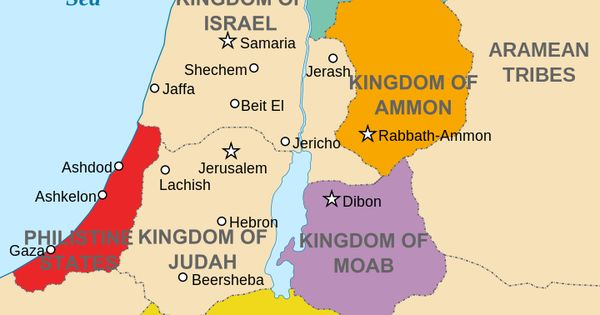
37 And the firstborn bore a son and called his name Moab; the same is the father of the Moabites unto this day. — his name Moab; the Moabites, who originally inhabited the country northeast of the Dead Sea, and afterward, they occupied the district east of the Salt Sea;
38 And the younger, she also bore a son and called his name Benammi; the same is the father of the children of Ammon unto this day. — the Ammonites dwelt to the northeast of Moab, where they had a capital called Rabbah; they both ultimately merged into the more general class of the Arabs;
— and according to Deuteronomy 2:9, Deuteronomy 2:19, Israel was ordered not to touch the territory of either of these tribes because of their descent from Lot, Abraham’s nephew.
Genesis 20
~~~~
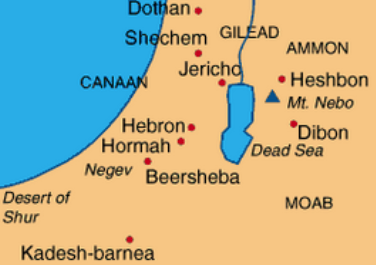
1 And Abraham journeyed from thence toward the south country, and dwelt between Kadesh and Shur and sojourned in Gerar. — and Abraham sojourned in Gerar; in the southern border of Canaan which were occupied by the Philistines. We are not told upon what occasion he removed;
2 And Abraham said of Sarah his wife, “She is my sister.” And Abimelech king of Gerar sent and took Sarah. — she is my sister; twenty years before, Abraham had acted in the same way in Egypt, and Pharaoh had rebuked him; she was now ninety years of age, yet her naturally beauty had not faded.
3 But God came to Abimelech in a dream by night, and said to him, “Behold, thou art but a dead man, because of the woman whom thou hast taken; for she is a man’s wife.”
— God came to Abimelech in a dream by night; put fear into his mind, by which he cautioned him against taking Sarah to be his wife; so careful was the Lord that no wrong should be done to such a godly and virtuous person, to which she was exposed through the weakness of her husband;
— and said unto him, behold, thou art but a dead man, for the woman which thou hast taken; that is, God would punish him with death, unless he restored the woman, whom he had taken, to her husband;
4 But Abimelech had not come near her; and he said, “Lord, wilt Thou slay also a righteous nation? — “Thou wilt die,” the point of death if he persisted; wilt thou also slay a righteous nation?
— he probably referred to the late destruction of Sodom and the cities of the plain, which, no doubt, must have caused great consternation; and or he knew that this had been usual for people to suffer for the crimes of their governors, or kings, if they sin;
5 Said he not unto me, ‘She is my sister’? And she, even she herself said, ‘He is my brother.’ In the integrity of my heart and innocency of my hands have I done this.” — in the integrity of my heart; not only does Abimelech assert this, but God himself (Genesis 20:6) admits the plea.
6 And God said unto him in a dream, “Yea, I know that thou didst this in the integrity of thy heart, for I also withheld thee from sinning against Me. Therefore I suffered thee not to touch her. — without any adulterous design in my heart, or outward actions tending to it, being wholly ignorant of what thou now informest him.
7 Now therefore restore the man his wife; for he is a prophet, and he shall pray for thee, and thou shalt live. And if thou restore her not, know thou that thou shalt surely die, thou and all that are thine.” — for he is a prophet; of course he is a true prophet of God;
— to whom he communicates his secrets; is able to foretell things to come, as well as to interpret the mind of God, that he might pray for him and save his life, and threatened him with certain death to himself and all belonging to him in case he should refuse;
— a prophet is God’s spokesman, who speaks with authority the things of God Exodus 7:1; Exodus 4:15. This implies two things: first, the things of God are known only to him, and therefore must be communicated by him; secondly, the prophet must be enabled of God to announce in correct terms the things made known to him.;
— these things refer not only to the future, but in general to all such matters as fall within the purpose and procedure of God, like Moses and Aaron in Exodus 7:1. They may even include things otherwise known or knowable by man, so far as these are necessary to the exposition of the divine will. Now Abraham has heretofore received numerous communications from God; this, also constitutes him a prophet;
8 Therefore Abimelech rose early in the morning, and called all his servants, and told all these things in their hearing; and the men were sore afraid. — and the men were sore afraid; lest they should be struck with death; and perhaps they might call to mind the burning of Sodom and Gomorrah for their sins, they had lately heard of, and might fear that some such calamity would befall them.
9 Then Abimelech called Abraham and said unto him, “What hast thou done unto us? And how have I offended thee, that thou hast brought on me and on my kingdom a great sin? Thou hast done deeds unto me that ought not to be done.” — thou hast done deeds unto me that ought not to be done; in saying Sarah was his sister, and persuading her to say the same;
10 And Abimelech said unto Abraham, “What sawest thou, that thou hast done this thing?” — that thou hast done this thing? he desires to know what he had observed, either in him or his people, that gave him any reason to conclude that they were a lustful people, lest they should kill him for his wife’s sake.
11 And Abraham said, “Because I thought surely the fear of God is not in this place, and they will slay me for my wife’s sake. — surely the fear of God is not in this place; this is a certain truth, which he thought might be depended upon, and taken for granted, since it was everywhere;
12 And yet indeed she is my sister: she is the daughter of my father, but not the daughter of my mother, and she became my wife. — and yet indeed she is my sister; in the same sense as Lot was his brother; for she was sister to Lot, and both were the children of Haran, the brother of Abraham;
13 And it came to pass, when God caused me to wander from my father’s house, that I said unto her, ‘This is thy kindness which thou shalt show unto me: at every place whither we shall come, say of me, “He is my brother.”’”
— at every place whither we shall come, say of me; or for the sake of me, in order to save me from the hands of wicked men, whom he feared would slay him for her sake: he is my brother; and so he hoped, instead of being ill used or killed, he should meet with favour and friendship on her account;
14 And Abimelech took sheep and oxen, and menservants and womenservants, and gave them unto Abraham, and restored to him Sarah his wife. — the Philistine gives atoning presents on restoring Sarah, and grants her husband permission to dwell in his land wherever it pleased him; this also implies that he had done Abraham a wrong.
15 And Abimelech said, “Behold, my land is before thee. Dwell where it pleaseth thee.” — and Abimelech said, behold, my whole land is before thee; instead of bidding him be gone, and sending him away in haste out of his country, as the king of Egypt did;
16 And unto Sarah he said, “Behold, I have given thy brother a thousand pieces of silver; behold, he is to thee a covering of the eyes unto all who are with thee and with all other.” Thus she was reproved. — behold, he is to thee a covering of the eyes, unto all that are with thee; a protection of her chastity: so an husband, in our language, is said to be a cover to his wife, or that she is under a cover;
17 So Abraham prayed unto God. And God healed Abimelech, and his wife and his maidservants; and they bore children, — and God healed Abimelech, and his wife, and his maidservants: who by reason of some disease were rendered unfit for and incapable of cohabitation with their husbands, and they with them;
— and they bare children; cohabited and conceived, bare and brought forth children, all which are comprehended in this expression.
18 for the Lord had closed up fast all the wombs of the house of Abimelech because of Sarah, Abraham’s wife. — for the Lord had fast closed up all the wombs of the house of Abimelech; with large tumours probably, so that they could not cohabit with their husbands and conceive.


 Joel
Joel A Prophecy of Esau and Jacob