
Deuteronomy (17-18)
Deuteronomy 17
1 “Thou shalt not sacrifice unto the Lord thy God any bullock or sheep wherein is blemish or any evilfavoredness, for that is an abomination unto the Lord thy God. — thou shalt not sacrifice; any bullock, or sheep, which is blemish;
— having spoken of the principal services and offerings prescribed in the law for preventing the Israelites from idolatrous practices, Moses interposes a caution against neglect in their own worship of God; which might be committed by offering any beast to him that had a disease, blemish, or defect in it;
— the only time mentioned in the Scriptures when the sacrifice of imperfect creatures is complained of to any great extent is the time of the prophet Malachi (Malachi 1:7-14). The laxity of the priests in his time called forth the prophecy that “in every place incense should be offered to God’s name and a pure offering.”
2 “If there be found among you, within any of thy gates which the Lord thy God giveth thee, man or woman who hath wrought wickedness in the sight of the Lord thy God in transgressing His covenant, — who hath wrought wickedness; a man or a woman who does evil; doing what is wrong in God’s eyes, breaking his covenant;
— in transgressing his covenant; that is, his law, and particularly the table of the commands, which respects divine worship, and which is in the nature of a marriage contract or covenant; which, as that is transgressed by adultery committed by either party, so the covenant between God and Israel was transgressed by idolatry;
3 and hath gone and served other gods and worshiped them, either the sun or moon or any of the host of heaven, which I have not commanded, — the host of heaven; either the sun, or moon, or any of the host of heaven; which I have not commanded; to do would be an abomination to the Lord; —
4 and it be told thee, and thou hast heard of it and inquired diligently, and behold, it be true and the thing certain that such abomination is wrought in Israel,
5 then shalt thou bring forth that man or that woman who has committed that wicked thing unto thy gates, even that man or that woman, and shalt stone them with stones till they die. — and it be told thee, and thou hast heard of it, and inquired diligently; a report of this kind was not to be neglected; though it was not to be concluded upon as certain by hearsay,
— it was to be looked into, within the gates of the Sanhedrin and the persons that brought it thoroughly examined; so the Targum of Jonathan says, “and inquired the witnesses fairly,” what proof and evidence they could give of the fact, who the persons were, when and where, and in what manner the sin was committed;
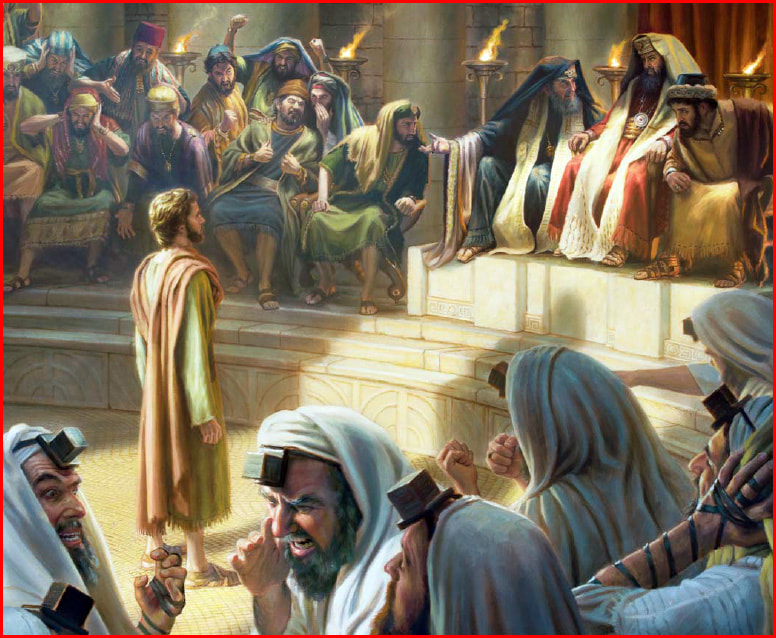
6 At the mouth of two witnesses or three witnesses shall he that is worthy of death be put to death, but at the mouth of one witness he shall not be put to death.
— at the mouth of two witnesses, or three witnesses, shall he that is worthy of death be put to death; the idolater found guilty was to be stoned; two witnesses were sufficient to prove a fact, if three the better, but, on the testimony of one, sentence might not be pronounced.
7 The hands of the witnesses shall be first upon him to put him to death, and afterwards the hands of all the people. So thou shalt put the evil away from among you. — the hands of the witnesses shall be first upon him to put him to death; of everyone of them; they were to cast the first stone at him;
— so thou shall put the evil away from among you; both the evil man and the evil committed by him, which by this means would be prevented from spreading, seeing by his death others would be deterred from following his example;
8 “If there arise a matter too hard for thee in judgment, between blood and blood, between plea and plea, and between stroke and stroke, being matters of controversy within thy gates, then shalt thou arise and get thee up into the place which the Lord thy God shall choose,
— too hard for thee; he speaks to the lower-ranked magistrates, who were erected in outlying cities, as appears by those at Jerusalem. If, saith he, no the necessary or confidence to determine so weighty and difficult a cause;
— between blood and blood, that is, in capital causes in matter of bloodshed, whether it be wilful or casual murder, whether punishable or pardonable by those laws;
— between plea and plea; in civil causes or suits between plaintiffs and defendants to decide which is in the right and which is in the wrong; or about words, contracts or estates; whether in capital or pecuniary cases; it chiefly if not solely respects civil things in controversy;
— and between stroke and stroke; blow or wound which one man received from another, and for which he commences a suit of law upon it, Exodus 21:18 or for assault of blows and bruises;
9 and thou shalt come unto the priests, the Levites, and unto the judge who shall be in those days, and inquire; and they shall show thee the sentence of judgment. — unto the priests; that is, unto the great council, which consisted chiefly of the priests and Levites, as being the best expositors of the laws of God, by which all those controversies were to be decided;
— by judges, here, seems to be meant those supreme judges of the nation, whom God raised up when the Israelites were oppressed by their enemies, such as Gideon, Jephthah, Samson, Samuel: such judges were, by their office, invested with the highest authority, civil as well as military;
— the Sanhedrin, the Supreme court, Deuteronomy 17:9, consisted partly of priests, and partly of wise and learned persons of other tribes, is referred to in very general terms as sitting similarily as Jerusalem at “the place which the Lord thy God shall choose,” the Sanctuary Deuteronomy 17:8

10 And thou shalt do according to the sentence, which they of that place which the Lord shall choose shall show thee; and thou shalt observe to do according to all that they inform thee.
— and thou shalt do according to the sentence which they of that place which the Lord shall choose shall show thee; the judges of the lower courts were to return and proceed on the difficult case according to the judgment of the highest court at Jerusalem, and follow the directions and instructions they should give them;
— and thou shalt observe to do according to all that they inform thee; not only observe and take notice of what they say, but put it in practice, and not in some things and some circumstances only, but in all and everything they should give them information about relating to the case in question.
11 According to the sentence of the law which they shall teach thee and according to the judgment which they shall tell thee, thou shalt do. Thou shalt not decline from the sentence which they shall show thee to the right hand nor to the left.
— according to the sentence of the law which they shall teach thee; for they were not to make any new law, but to teach the law of God, and so far as their sense and opinion of things agreed with that law they were to be regarded;
— and according to the judgment which they shall tell thee, thou shalt do; what were law and justice, what were fit and right to be done, according to the will of God, which they should declare unto them, that was carefully to be done by them;
— thou shalt not decline from the sentence they shall show thee, to the right hand nor to the left; by setting up after, all their own judgments against theirs to whom they had applied for information and direction, which to have done would have been very insolent and affronting;
12 And the man who will do presumptuously, and will not hearken unto the priest who standeth to minister there before the Lord thy God, or unto the judge, even that man shall die; and thou shalt put away the evil from Israel. — who will do presumptuously, he who will acted proudly and obstinately oppose the sentence given against him;
— even that man shall die; and thou shalt put away the evil from Israel; the Targum of Jonathan affirms “that man shall be put to death; so shalt you put down the doer of evil from Israel,”
13 And all the people shall hear, and fear, and do no more presumptuously. — and all the people shall hear, and fear; all the people of Israel in their own cities, and particularly the judges in those cities;
— they shall hear of what is done to the obstinate and disobedient elder, and shall be afraid to commit the like offence, lest they should come into the same punishment.
14 “When thou art come unto the land which the Lord thy God giveth thee, and shalt possess it and shalt dwell therein, and shalt say, ‘I will set a king over me like all the nations that are about me,’ — this is a pophecy; and thou shalt say, I will set a king over me, like as all the nations that are round about me;
— which was what would and did lead them to such a thought and resolution; observing that the neighbouring nations had kings over them, they were desirous of being like them as to the form of their civil government, and have a king as they had.
15 thou shalt in any wise set him king over thee whom the Lord thy God shall choose. One from among thy brethren shalt thou set as king over thee; thou mayest not set a stranger over thee, who is not thy brother.
— whom the Lord thy God shall choose; approve of, or appoint. So it was in Saul and David ny annointing. God reserved to himself the nomination both of the family and of the person.
16 But he shall not multiply horses to himself, nor cause the people to return to Egypt to the end that he should multiply horses, forasmuch as the Lord hath said unto you, ‘Ye shall henceforth return no more that way.’
— horses were not anciently used for purposes of agriculture or traveling, but ordinarily for war and as a symbol and embodiment strength and might;
17 Neither shall he multiply wives to himself, that his heart turn not away; neither shall he greatly multiply to himself silver and gold. — neither shall he multiply wives to himself; as Solomon’s did; as well as the manner of other kings were, contrary to the design of God from the beginning.
18 “And it shall be, when he sitteth upon the throne of his kingdom, that he shall write him a copy of this law in a book from that which is before the priests the Levites. — upon the throne of his kingdom; when he is settled on it, and is even amidst all the pomp and glory of it: he shall write with his own hand; out of that which is before the priests;
— out of that original, which was carefully kept by the priests in the sanctuary, that it might be a perfect copy, and that it might have the greater influence upon him, coming to him as from the hand and presence of God. He shall read therein; diligently and constantly: neither the greatness of his place, nor the weight and multitude of his business, shall excuse or hinder him; all the days of his life;
— it is not enough to have Bibles, but we must use them, yea, use them daily. Our souls must have constant meals of that manna, which, if well digested, will afford them true nourishment and strength.
19 And it shall be with him, and he shall read therein all the days of his life, that he may learn to fear the Lord his God, to keep all the words of this law and these statutes, to do them, — and it shall be with him; always, when at home or abroad, sitting on his throne or lying down, or wherever he went;
— and he shall read therein all the days of his life; every day of his life; meditate on it night and day, that he may learn to, fear the Lord his God; to serve and worship him both internally and externally; having the fear of God always before his eyes, and on his heart, which the holy law of God directs to and instructs in;
— to keep all the words of this law, and these statutes, to do them; not only such as concerned him as a king, but all others that concerned him as a man, a creature subject to the Lord,
20 that his heart be not lifted up above his brethren, and that he turn not aside from the commandment to the right hand or to the left, to the end that he may prolong his days in his kingdom, he and his children, in the midst of Israel.
— that his heart be not lifted up above his brethren; on account of his office, the dignity of it, considering that he was subject to the law of God, and accountable to the Lord for all his actions;
— and that he turn not aside from the commandment, to the right hand or to the left; not in the least deviate from the law of God in the whole of his conduct, and particularly in the exercise of his kingly office;
— he and his children in the midst of Israel; this shows, that if his son was fit for the kingdom, he was to be preferred to any other man; for though it was elective, yet to be continued in the same family, provided they walked in the ways of the Lord, and observed his laws.
Deuteronomy 18
1 “The priests, the Levites, and all the tribe of Levi, shall have no part nor inheritance with Israel; they shall eat the offerings of the Lord made by fire, and His inheritance.
— the priests, the Levites, and all the tribe of Levi; this is the office of the priests and the Levites: they are said, “to stand before the congregation to minister unto them” (Numbers 16:9); in the Sanctuary and throughout their cities;
2 Therefore shall they have no inheritance among their brethren; the Lord is their inheritance, as He hath said unto them.
— therefore shall they have none inheritance among their brethren; neither of the field, nor of the vineyard, because provision was made for them otherwise, and especially because the Lord is their inheritance;
3 “And this shall be the priest’s due from the people, from those who offer a sacrifice, whether it be ox or sheep; and they shall give unto the priest the shoulder and the two cheeks and the maw. — and this shall be the priest’s due from the people, from them that offer sacrifice; not from the priests, but from those that bring the sacrifices to the priests;
— and they shall give unto the priest the shoulder, and the two cheeks, and the maw; the first of these designs the upper part of the arm that joins to the neck and back, and the next the two cheeks with the tongue.
4 The firstfruit also of thy corn, of thy wine, and of thine oil, and the first of the fleece of thy sheep, shalt thou give him. — and the first of the fleece of thy sheep shall thou give him: and they give white wool, and not defiled, enough to make it into fine garment to minister in; or enough garment fit for a priest to minister in is a girdle.
5 For the Lord thy God hath chosen him out of all thy tribes to stand to minister in the name of the Lord, him and his sons for ever.
6 “And if a Levite come from any of thy gates out of all Israel where he sojourned, and come with all the desire of his mind unto the place which the Lord shall choose, — and if a Levite come; the Levites with the priests were to receive forty-eight cities in Israel, with the suburbs, Numbers 35:7
— for the Lord thy God hath chosen him out of all thy tribes; that is, has chosen the tribe of Levi out of all the other tribes of Israel;
7 then he shall minister in the name of the Lord his God as all his brethren the Levites do, who stand there before the Lord. — then he shall minister in the name of the Lord his God, as every priest and every sacrifice were: he was to be allowed to officiate, though it was not his course or turn.
8 They shall have like portions to eat, besides that which cometh from the sale of his patrimony. — they shall have like portions to eat, beside that; the Levite thus dedicated was to have the same allowance from tithes as the rest who served at the tabernacle;
— beside that which cometh of the sale of his patrimony; though he have an estate whereby he may subsist raised by the sale of his flock or herd, or other movables, yet you shall not upon this ground either deny or diminish their part of your share of maintenance.
9 “When thou art come into the land which the Lord thy God giveth thee, thou shalt not learn to do according to the abominations of those nations.
— thou shall not learn to do after the abominations of these nations; the seven nations which before inhabited it; they might learn to know how corrupt their works were, and to show to their children, that they might not do so.

10 There shall not be found among you any one who maketh his son or his daughter to pass through the fire, or who useth divination, or an observer of times, or an enchanter, or a witch, — there shall not be found among you anyone that maketh his son or his daughter to pass through the fire, see Leviticus 18:21
11 or a charmer, or a consulter with familiar spirits, or a wizard, or a necromancer. — necromancer; or a necromancer that inquiries of the dead, or seeks instruction from them, as the Targum of Jerusalem; as Saul did: 1 Samuel 28:8, Isaiah 8:19
— four of the above practices are ascribed to king Manasseh in II Chronicles 33:6. It is hardly possible that all of them were mere imposture and deceit.
12 For all who do these things are an abomination unto the Lord, and because of these abominations the Lord thy God doth drive them out from before thee.
— thou shalt not learn to do after the abominations of those nations; that whoever does any of them, including the Israelites themselves, all such persons shall be removed from their land; and because of these abominations the Lord thy God doth drive them out from before thee; —
13 Thou shalt be perfect with the Lord thy God. — thou shalt be perfect with the Lord thy God; the Israelites being wholly his, seeking him and cleaving to him, and to his word alone, faithfully adhere to his word, laws, statutes, and ordinances, and walk uprightly before him; and therefore abhorring all commerce and conversations with devils.
14 For these nations which thou shalt possess hearkened unto observers of times and unto diviners; but as for thee, the Lord thy God hath not suffered thee so to do. — though the heathen whom they exterminated before them hearkened to conjurers and soothsayers, the Lord their God had not allowed anything of the kind to them.
15 “The Lord thy God will raise up unto thee a Prophet from the midst of thee, from thy brethren, like unto me. Unto Him ye shall hearken, — the Lord thy God will raise up unto thee a Prophet; namely, Him of whom Peter spoke in Acts 3:22-26. “Unto you first; God, having raised up His son Jesus, sent Him to bless you,”
16 according to all that thou desired of the Lord thy God in Horeb in the day of the assembly, saying, ‘Let me not hear again the voice of the Lord my God, neither let me see this great fire any more, that I die not.’
— according to all that thou desiredst of the Lord thy God at Horeb; this was promised them, in answer to their request at Horeb or Mount Sinai, when the law was delivered to them in the terrible manner it was;
— saying, let me not hear again the voice of the Lord my God; which was attended with so much terror, that they that heard entreated the word might not be spoken to them any more; neither let me see this great fire any more, that I die not; out of which the Lord spoke; the congregation of Israel is here represented speaking as if a single person.
17 And the Lord said unto me: ‘They have well spoken that which they have spoken. — they have spoken in the name of the Lord, for the purpose of enforcing obedience with all the greater emphasis.
18 I will raise them up a Prophet from among their brethren like unto thee, and will put My words in His mouth; and He shall speak unto them all that I shall command Him. — here was the Father, promising concerning Christ, that there should come a Prophet, that his Son, great above all the prophets;
— and I, the Father, will put my word in his mouth; the doctrines of the Gospel, which come from the Father, and are the words of truth, faith, righteousness, peace, pardon, life, and salvation; and which Christ says were not his own, as man and Mediator, but his Father’s, which he gave unto him, and put into his mouth;
19 And it shall come to pass that whosoever will not hearken unto My words which He shall speak in My name, I will require it of him.
— whosoever will not hearken unto my words which he shall speak in my name, I will require it of him; the direful consequences of unbelief in his Son, the Christ, and disregard of his mission, the Jewish people have been experiencing during eighteen hundred years of exiles;
— I will require it of him; or, as the Targum of Jonathan says, “my Word shall require it of him, or take vengeance on him;” as Christ the Word of God did in the destruction of the Jewish nation, city, and even the Temple; see Luke 19:27.
20 But the prophet who shall presume to speak a word in My name which I have not commanded him to speak, or who shall speak in the name of other gods, even that prophet shall die.’ — but the prophet which shall presume to speak in my name; pretending a mission and commission from God, and yet was never sent by him, like the false prophets in Jeremiah 23:21,
— the Targum of Jonathan says:
But the false prophet who doeth wickedly in speaking a thing in My Name, when I have not commanded him to speak, or who shall speak in the name of the gods of the Gentiles, that prophet shall be slain with the sword.
21 And if thou say in thine heart, ‘How shall we know the word which the Lord hath not spoken?’ — that is, how shall we know the word which the Lord hath not spoken? What marks, signs, and criterions are those by which it may be known that it is not a word that comes from the Lord?
22 when a prophet speaketh in the name of the Lord, if the thing follow not nor come to pass, that is the thing which the Lord hath not spoken, but the prophet hath spoken it presumptuously; thou shalt not be afraid of him. — if the thing follow not; which he gives as a sign of the truth of his prophecy. He means the prediction of some strange and wonderful event, and doesn’t come true;
— the Lord hath not spoken: the falsehood of his prediction shows him to be a false prophet, though the truth and accomplishment of his prediction had not proved him to be a true prophet; presumptuously; impudently ascribing his own vain and lying fancies to be the God of truth;
— thou shall not be afraid of him; not only to reprove him for his wickedness, but also to punish him for it; showing no regard to the high character he assumes; we should not be afraid of his predictions or threats, so as to be scared from doing thy duty in bringing him to deserved punishment.


 Joel
Joel A Prophecy of Esau and Jacob